MILES AXLE Translation. Region: Russian Federation –
Source: State University of Management – Official website of the State –
The Institute of Marketing of the State University of Management took part in raising funds to help the SVO, which were donated to the Charitable Foundation “Revival of the Native Land”, created by the industrial partner of the State University of Management, the Production Association “FORENERGO”.
The Revival of the Native Land Foundation is an initiative aimed at supporting and restoring our territories, preserving cultural heritage and developing local communities. With the start of the special operation in Ukraine, one of the priority areas of the foundation’s work has become supporting military personnel and their families.
The choice of this particular fund is not accidental. The founder of the fund is the industrial partner of the Institute of Marketing – PO FORENERGO. The fund has been operating for over 10 years and has proven in practice that its true mission is to help people and develop regions.
All funds raised will be used to support military personnel and residents of the new territories.
Subscribe to the TG channel “Our GUU” Date of publication: 10/14/2024
Please note: This information is raw content directly from the source of the information. It is exactly what the source states and does not reflect the position of MIL-OSI or its clients.
Please note; This information is raw content directly from the information source. It is accurate to what the source is stating and does not reflect the position of MIL-OSI or its clients.
The number of research studies published globally has risen exponentially in the past decades. AP Photo/Frank Augstein, file
Millions of scientific papers are published globally every year. These papers in science, technology, engineering, mathematics and medicine present discoveries that range from the mundane to the profound.
He warned that the world would soon deplete its resources and talent pool for research. He imagined this would lead to a decline in new discoveries and potential crises in medicine, technology and the economy. At the time, scholars widely accepted his prediction of an impending slowdown in scientific progress.
Faulty predictions
In fact, science has spectacularly defied Price’s dire forecast. Instead of stagnation, the world now experiences “global mega-science” – a vast, ever-growing network of scientific discovery. This explosion of scientific production made Price’s prediction of collapse perhaps the most stunningly incorrect forecast in the study of science.
Unfortunately, Price died in 1983, too early to realize his mistake.
So, what explains the world’s sustained and dramatically increasing capacity for scientific research?
Factors such as economic growth, warfare, space races and geopolitical competition have undoubtedly spurred research capacity. But these factors alone cannot account for the immense scale of today’s scientific enterprise.
The education revolution: Science’s secret engine
In many ways, the world’s scientific capacity has been built upon the educational aspirations of young adults pursuing higher education.
Funding from higher education supports a large part of the modern scientific enterprise. AP Photo/Paul Sancya
Over the past 125 years, increasing demand for and access to higher education has sparked a global education revolution. Now, more than two-fifths of the world’s young people ages 19-23, although with huge regional differences, are enrolled in higher education. This revolution is the engine driving scientific research capacity.
External research funding is still essential for specialized equipment, supplies and additional support for research time. But the day-to-day research capacity of universities, especially academics working in teams, forms the foundation of global scientific progress.
Even the most generous national science and commercial research and development budgets cannot fully sustain the basic infrastructure and staffing needed for ongoing scientific discovery.
The past few decades have also seen a surge in global scientific collaborations. These arrangements leverage diverse talent from around the world to enhance the quality of research.
International collaborations have led to millions of co-authored papers. International research partnerships were relatively rare before 1980, accounting for just over 7,000 papers, or about 2% of the global output that year. But by 2010 that number had surged to 440,000 papers, meaning 22% of the world’s scientific publications resulted from international collaborations.
This growth, building on the “collaboration dividend,” continues today and has been shown to produce the highest-impact research.
Universities tend to share academic goals with other universities and have wide networks and a culture of openness, which makes these collaborations relatively easy.
Today, universities also play a key role in international supercollaborations involving teams of hundreds or even thousands of scientists. In these huge collaborations, researchers can tackle major questions they wouldn’t be able to in smaller groups with fewer resources.
Supercollaborations have facilitated breakthroughs in understanding the intricate physics of the universe and the synthesis of evolution and genetics that scientists in a single country could never achieve alone.
The IceCube collaboration, a prime example of a global megacollaboration, has made big strides in understanding neutrinos, which are ghostly particles from space that pass through Earth. Martin Wolf, IceCube/NSF
The role of global hubs
Hubs made up of universities from around the world have made scientific research thoroughly global. The first of these global hubs, consisting of dozens of North American research universities, began in the 1970s. They expanded to Europe in the 1980s and most recently to Southeast Asia.
Scientists at these universities have often transcended geopolitical boundaries, with Iranian researchers publishing papers with Americans, Germans collaborating with Russians and Ukrainians, and Chinese scientists working with their Japanese and Korean counterparts.
The COVID-19 pandemic clearly demonstrated the immense scale of international collaboration in global megascience. Within just six months of the start of the pandemic, the world’s scientists had already published 23,000 scientific studies on the virus. These studies contributed to the rapid development of effective vaccines.
With universities’ expanding global networks, the collaborations can spread through key research hubs to every part of the world.
Is global megascience sustainable?
But despite the impressive growth of scientific output, this brand of highly collaborative and transnational megascience does face challenges.
On the one hand, birthrates in many countries that produce a lot of science are declining. On the other, many youth around the world, particularly those in low-income countries, have less access to higher education, although there is some recent progress in the Global South.
Sustaining these global collaborations and this high rate of scientific output will mean expanding access to higher education. That’s because the funds from higher education subsidize research costs, and higher education trains the next generation of scientists.
De Solla Price couldn’t have predicted how integral universities would be in driving global science. For better or worse, the future of scientific production is linked to the future of these institutions.
David Baker receives funding from the U.S. National Science Foundation, U.S. National Institutes of Health, Fulbright, FNR
Luxembourg, and the Qatar Nation Research Fund.
Justin J.W. Powell has received funding for research on higher education and science from Germany’s BMBF, DFG, and VolkswagenStiftung; Luxembourg’s FNR; and Qatar’s QNRF.
Many of those appraisals are based on examples of people who tried to establish communism. Communists have launched revolutions in many places including Russia and China. In five countries – China, North Korea, Laos, Cuba and Vietnam – communist parties control the current governments. The economic and political systems in those countries are not fully communist, but some might be working to transition from capitalism to communism.
In part because the U.S. has difficult relationships with these countries, many Americans have negative views of communists and communism. To evaluate those countries and to decide your own opinions about communism in general, it is important to first be clear about what the principles of communism are.
Communists believe that people should share wealth so that no one is too poor, no one is too rich, and everyone has enough to survive and have a good life.
A communist might be a member of a Communist party, which is a political party, or a member of a group of people who want to play a role in government.
The opening of the 2014 convention of the Communist Party of the United States of America.
In communism, people work together to produce and distribute the things they need to live, such as food, clothing and entertainment. That does not mean that everything is shared at all times.
In a communist society, individuals might still live in their own homes and have their own food, clothing and personal items such as televisions and cellphones. However, the places where these items were produced, such as factories and farms, would be owned by everyone.
Similarly, a person might still create artistic products such as works of literature or craftsmanship on their own. The goal would not be to make money, though, but instead to share for everyone to enjoy.
Communists support some form of collective ownership. Ownership by everyone would ensure that all members of society have equal rights to the products from the factories and farms because they would all be part owners of the enterprises.
In such a society, everyone would also have equal political rights and would participate in governance together. Theoretically, communism should entail some form of democracy.
Throughout history, there have been many different views on what communism is, how it should be organized and how it might be achieved. The most famous theories about communism are probably the ones that were developed by a German philosopher named Karl Marx. His ideas are often called Marxism.
Marx studied history and observed that the way people produced goods and services was closely related to who held power. For example, in farming societies, those who owned the land had more power than those who did not.
Marx also noticed that people with less power had often risen up, usually violently, to overthrow the powerful people. He called this concept class struggle. He believed this process was how societies developed from one system of government and economy to another. He claimed that class struggle led societies through a progression toward greater efficiency in the production of goods and services, higher levels of technology and wider distribution of social and political power.
When Marx was alive in the 1800s, an economic and political system called capitalism had developed in many countries. In capitalist societies, the economy centered on factories. Factory owners had significant political and economic influence.
Marx observed that in countries such as Germany, England and the United States, factory owners hired laborers who worked long hours producing goods such as shirts or tables. While the factory owners sold these products at high prices, they paid the workers very little. As a result, the factory owners became richer, while many workers struggled to afford the goods they produced or even to provide food for their families.
Marx believed that this inequality would eventually lead to a worker uprising. During their revolution, Marx predicted, the workers would seize control of the factories, begin running them more fairly, and this would lead to a new political system, known as socialism.
Where does socialism fit in?
A campaign poster from 1976, spotlighting the candidates from the Communist Party of the United States of America. Library of Congress
Of course, if the workers staged a revolution, the factory owners would fight back. Marx thought that, immediately after the revolution, the workers would first need to create a strong government to prevent the owners from reestablishing capitalism. During that phase, which Marx called socialism, the workers would run the government while they continued moving away from capitalism and trying to create a more equal society.
Marx thought people would eventually see that socialism was much better than capitalism because socialism would end exploitation while still allowing a society to continue moving toward better economic and political practices, but without inequality. Once that happened, a government would no longer be necessary.
The society would become communist. There would still be governance, but not a government that was separated from the people. Rather, in a communist society, the people would govern together, and everyone would do some of the work and receive what they needed.
There are Communist parties in many places, and many are currently working to move their countries toward communism. At this time, no country has yet made the transition to full communism, but many people still hope that transition will happen somewhere, sometime. Those people are communists. Communists are optimistic that humans can one day create a more fair and equal society.
Hello, curious kids! Do you have a question you’d like an expert to answer? Ask an adult to send your question to CuriousKidsUS@theconversation.com. Please tell us your name, age and the city where you live.
And since curiosity has no age limit – adults, let us know what you’re wondering, too. We won’t be able to answer every question, but we will do our best.
Aminda Smith does not work for, consult, own shares in or receive funding from any company or organization that would benefit from this article, and has disclosed no relevant affiliations beyond their academic appointment.
Amy Lieberman, a politics and society editor at The Conversation U.S., spoke with Boris Heersink, a scholar of voters’ behavior after a natural disaster, to better understand if and how the recent hurricanes could shift the results of the 2024 presidential election.
How can hurricanes create complications ahead of an election?
A massive hurricane disrupts people’s lives in many important ways, including affecting people’s personal safety and where they can live. Ahead of an election, there are a lot of practical limitations about how an election can be executed – like if a person can still receive mail-in ballots at home or elsewhere, or if it is possible to still vote in person at their polling location if that building was destroyed or damaged.
Another issue is whether people who have just lived through a natural disaster and will likely be dealing with the aftermath for weeks to come are focused on politics right now. Some might sit out the election because they simply have more important things to worry about.
Beyond practical concerns, how else can a natural disaster influence an election?
The other side of the equation, which is what political scientists like myself are mostly focusing on, is whether people take the fact that a natural disaster happened into consideration when they vote.
Two scholars, Christopher Achen and Larry Bartels, have argued that sometimes voters are not great at figuring out how to incorporate bad things that happened to them into a voting position. In some cases, it is entirely fair to hold an elected official responsible for bad outcomes that affect people’s lives. But at other moments, bad things can happen to us without that being the fault of an incumbent president or governor. And voters should ideally be able to balance out these different types of bad things – those it is fair to punish elected officials for, and those for which it isn’t fair to hold them responsible.
After all, a devastating hurricane is terrible, but it is not Kamala Harris’ fault that it happened. But Achen and Bartels argue that voters frequently still punish elected officials for random bad events like this.
Their most famous example is the consequences of a series of shark attacks off the New Jersey coast in the summer of 1916. As a result of those attacks, the New Jersey tourism industry saw a major decline. While these findings are still being debated, Achen and Bartels argue that Jersey shore voters subsequently voted against Woodrow Wilson in the 1916 presidential election at a higher rate than they would have had the shark attacks not happened. They argue that voters did this even though Wilson had no involvement in the shark attacks.
Kamala Harris visits a Hurricane Helene donation drop-off site for emergency supplies in Charlotte, N.C., on Oct. 5, 2024. Mario Tama/Getty Images
How else do voters consider bad events when they vote?
Scholars like John Gasper and Andrew Reeves argue that voters mostly care whether elected officials respond appropriately to a disaster. So, if the president does a good job reacting, voters do not actually punish them at all in the next election. However, voters can punish elected officials if they feel like the response is not correct.
The fact that Hurricane Katrina hit Louisiana in 2005 was not the fault of then-President George W. Bush. But the perceived slowness of the government response is something a voter could have held him responsible for.
How do voters’ political affiliations affect where and how they lay the blame?
We looked at both the effects of Superstorm Sandy on the 2012 presidential election and natural disasters’ impact on elections more broadly from 1972 through 2004. One core finding is that when presidents reject state officials’ disaster declaration requests, they lose votes in affected counties – but only if those counties were already more supportive of the opposite party.
If there is a strong positive government response, the incumbent president or their party can actually gain votes or lose voters affected by a disaster. So, Republicans affected by the hurricanes could become more inclined to vote against Harris if they feel like they are not getting the help they need. But it could also help Harris if affected Democrats feel like they are getting enough aid.
The major takeaway is that if the government responds really effectively to a natural disaster or other emergency, there is not a huge electoral penalty – and there could even be a small reward.
That is not irrelevant in a close election. If Republicans in affected areas in North Carolina feel the government response has been poor and it inspires them to turn out in higher numbers to punish Harris, that could matter. But if they feel like the response has been adequate, research suggests either no real effect on their support for Harris – or possibly even an increase in Harris voters.
Donald Trump speaks with owners of a furniture store that was damaged during Hurricane Helene on Sept. 30, 2024, in Valdosta, Ga. Michael M. Santiago/Getty Images
How much influence can a politician have on people assessing a government response?
So, the question now is whether voters affected by these hurricanes will respond based on their actual lived experiences, or how they are told they are living their experience.
Boris Heersink receives funding from the Russell Sage Foundation.
Source: The Conversation – USA – By Joseph Patrick Kelly, Professor of Literature and Director of Irish and Irish American Studies, College of Charleston
Supporters gather at a campaign rally for Donald Trump in Butler, Pa., on Oct. 5, 2024.Jeff Swensen/Getty Images
Lying about Black people is nothing new in political campaigning.
Despite the thorough debunking of false rumors that Haitian immigrants were eating cats and dogs in Springfield, Ohio, former President Donald Trump and his GOP allies insist on repeating the lies.
While many political observers believe that these lies have, as The New York Times columnist Lydia Polgreen described, finally “crossed a truly unacceptable line,” in fact, white politicians have told brazen, fearmongering, racist lies about Black people for over the past 100 years.
One of the more notorious lies occurred in 1908 in another Springfield, this one in Illinois. As a historian who studies the impact of racism on democracy, it’s my belief that what happened there and in other cities helps to clarify what Trump and Vance are trying to do in Springfield, Ohio, today.
Lying when everyone knows you’re lying seems to be the point.
New target, old message
Springfield, Illinois, Abraham Lincoln’s home town, was, in 1908, a working-class city of just under 50,000 people – about the same size as its modern counterpart in Ohio.
Because of the city’s manufacturing industries, Springfield was also an attractive place to live and work for Black men and women escaping the social oppression of the Deep South.
The Black population of Springfield had been growing by about 4% annually, and by 1908, roughly 2,500 Black people were living there to work in the city’s manufacturing plants. As the wealth of some Black families rose, so too did racist fears among whites that Black migrants were taking their jobs.
Rumors spread through false newspaper reports among white residents that a Black man had raped a white woman.
As the story went, a Black man broke through the screen door of a modest house in a white neighborhood. He supposedly dragged a 21-year-old white woman by her throat into the backyard, where he raped her. Or so the woman said.
A couple of weeks after the incident, the woman admitted she lied. There was no Black man. There was no rape. But by then, telling the truth was too late. The rumor had triggered a wave of anti-Black violence.
William English Walling, a white, liberal journalist from Kentucky, reported that Springfield’s white folks launched “deadly assaults on every negro they could lay their hands on, to sack and plunder their houses and stores, and to burn and murder.”
For two days, the violence raged, while white “prosperous businessmen looked on” in complicit approval, Walling wrote. Several blocks in Black neighborhoods were burned, and at least eight Black men were killed.
One of the men killed was William K. Donnegan. The 84-year-old died after his white attackers slit his throat and then hanged him with a clothesline from a tree near his home.
As a dozen different rioters told Walling: “Why, the n—–s came to think they were as good as we are!”
Telling the truth about racist tropes
At the turn of the 19th century, racial tensions were most often expressed in sexual terms – Black men having sex with white women.
That sexual anxiety was part of what cultural historians call a “master narrative,” a symbolic story that dramatizes white nationalism and the belief that citizenship and its benefits were preserved for one racial group at the expense of all others.
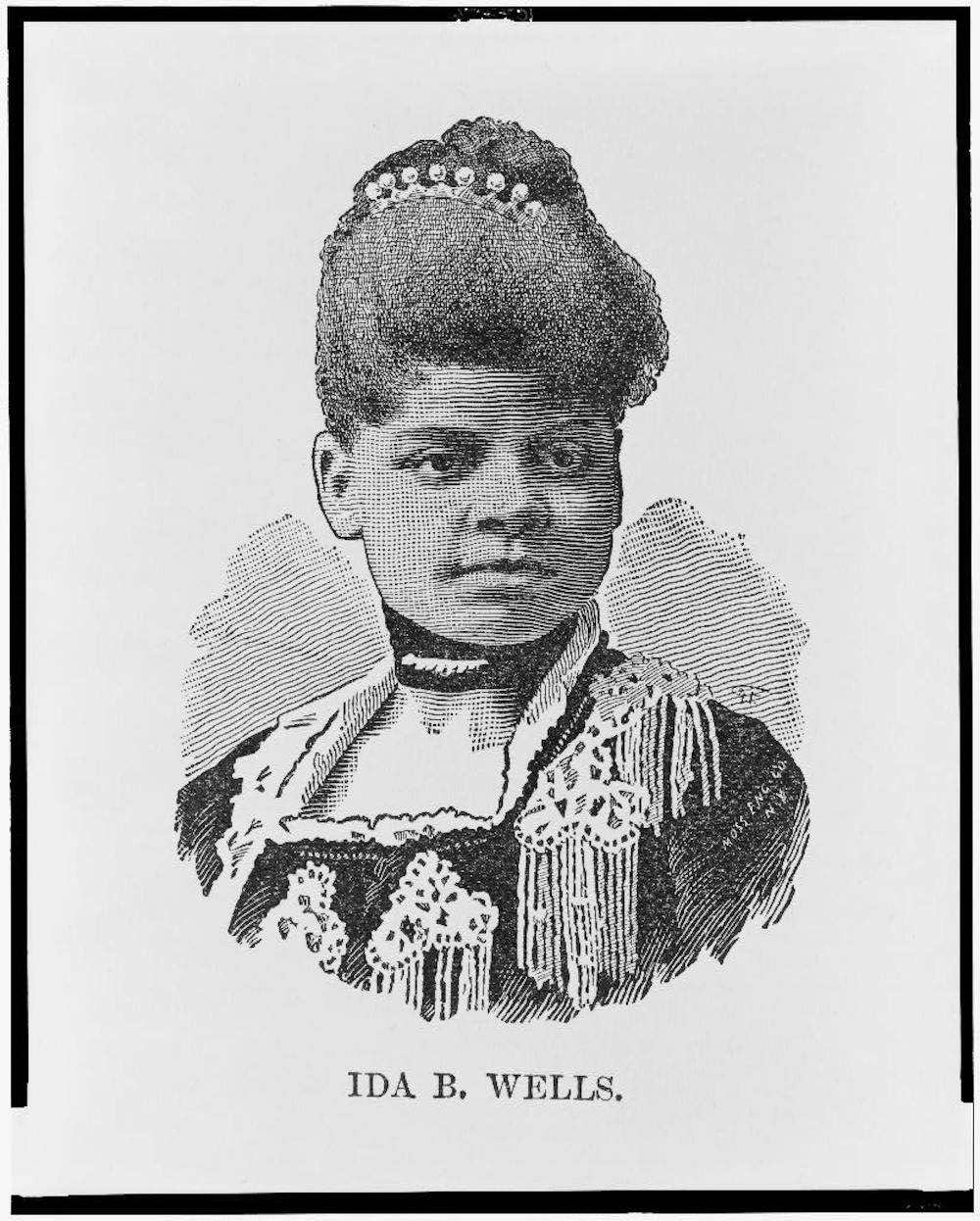
One of the first to debunk this rape fantasy was Ida B. Wells, the Black editor and owner of the weekly “Memphis Free Press.”
In 1892, a white mob lynched one of her good friends, Thomas Moss, and two others associated with his cooperative Peoples’ Grocery store. The Appeal Avalanche, a white Memphis newspaper, wrote that the lynching “was done decently and in order.”
In her May 21, 1892, editorial about Moss’ death, Wells told a different story about “the same old racket – the new alarm about raping a white woman.”
Wells explained that she worried that people who lived outside of the Deep South might believe the lies about Black people.
“Nobody in this section of the country,” she wrote, not even the demagogues spreading rumors, “believe the old thread bare lie that Negro men rape white women.”
Political fearmongering
What happened in Wilmington, North Carolina, in 1898 was based on a deliberate, cynical election strategy of lies.
At the turn of the 20th century, North Carolina’s disaffected, poor working-class white Populists joined forces with Black Republicans to form what were known as the Fusionists.
In Wilmington, then the largest city in North Carolina, the Fusionists were able to vote out the white-nationalist Democratic Party in the early 1890s and became a symbol of hope for a democratic South and racial equality.
They also became a target for Democrats seeking to regain power and restore white nationalism.
The spark came in the summer of 1898 when Rebecca Felton, the wife of a Georgia congressman and a leading women’s rights advocate, gave an address to Georgia’s Agricultural Society on Aug. 11 that sought to protect the virtue of white women.
“If it needs lynching,” she said, “to protect a woman’s dearest possession from the ravening of beasts – then I say lynch; a thousand times a week if necessary.”
In response, Alexander Manly, the Black editor of The Daily Record, in Wilmington, followed the lead of Ida B. Wells and attacked the myths of Black men. Manly pointed out in his August 1898 editorial that poor white women “are not any more particular in the matter of clandestine meetings with colored men than are the white men with colored women.”
Democrats bent on stoking racial fears circulated Manly’s editorial throughout North Carolina before the November 1898 elections, decrying the “Outrageous Attack on White Women!” by “the scurrilous negro editor.”
If that wasn’t enough to stir up North Carolina Democrats, party officials sent the Red Shirts, their white nationalist militia, to Wilmington to overthrow the city’s biracial government, install all white officials and restore white rule.
To that end, a white mob destroyed Manly’s newspaper office, chased him and other Black leaders into exile, rampaged through Black neighborhoods and killed an untold number of Black men.
It was a white nationalist coup d’etat.
The great white protector
In his modern-day attempt to divide working-class white people from working-class Black people, Vance has urged his supporters to ignore “the crybabies” in the mainstream media.
“Keep the cat memes flowing!” he posted on X.
An estimated 67 million people watched the U.S. presidential debate on ABC and heard Trump angrily proclaim: “They’re eating the dogs. They’re eating the cats. They’re eating … the pets of the people that live there.”
Once again, the old narrative is resurrected.
Joseph Kelly is not affiliated with any political party. In the past, he has been a volunteer with the Charleston County (SC) Democratic Party.
It’s 2016 all over again. And 2020, for that matter. Democrats are staring at what looks to be another coin flip election between their party’s nominee and Donald Trump.
In an election that could come down to a few hundred thousand votes in a handful of states, every voter matters – no matter how you reach them. With that in mind, Democrats are communicating not just on matters of policy, but matters of pop culture.
Tim Walz cited his experience as a football coach and mentioned Swift in the vice presidential debate.
Democratic challenger and former NFLer Colin Allred, who is running to unseat GOP Sen. Ted Cruz of Texas, has put out ads in which he appears moments from taking to the gridiron.
But how much does pop culture campaigning, if you will, matter? Does trying to link a campaign to a sport, or a culture, or a style of music actually influence elections? Looking to five different election campaigns in the past can give a sense of the effects, or lack thereof, of such campaigning.
An ad for Texas Democrat Rep. Colin Allred, a former NFL player, stresses his football past in his bid to unseat GOP Sen. Ted Cruz.
Reagan and Springsteen
Any discussion of the embrace of pop culture by candidates should probably start with Ronald Reagan’s Bruce Springsteen era.
Reagan, attempting to reach beyond his base, viewed 1984 as a vibes-based election and cited Springsteen as an exemplar of the hope his campaign wished to inspire. Springsteen rejected a request from Reagan’s camp to use his often-misunderstood “Born in the U.S.A.” on the campaign trail. The song’s lyrics describe a down-on-his-luck Vietnam War veteran, but if you don’t listen carefully to the lyrics, the song can sound like a celebration of veterans and being American.
While Reagan went on to win 49 states in that year’s election, perhaps the biggest long-term impact of his courtship of Springsteen fans was to turn Springsteen from a relatively apolitical performer to a staunch supporter of the Democratic Party.
In this way, Springsteen’s transformation mirrors that of Taylor Swift, with Marsha Blackburn, the Tennessee Republican senator, serving as her Reagan – the person who pushed the performer into the political arena after years on the sidelines.
Springsteen and Kerry
Springsteen’s foray into politics eventually led him to back Democratic presidential nominee John Kerry in 2004 with a series of concerts called the “Vote for Change”“ tour.
Democratic presidential candidate John Kerry greets the crowd with musician Bruce Springsteen while campaigning in Columbus, Ohio, on Oct. 28, 2004. AP Photo/Laura Rauch
Kerry, meanwhile, undertook his own efforts at cultural turf claiming. His attempts to demonstrate his bona fides as a sports-loving everyman went awry at times, when he flubbed the name of “Lambeau Field,” home of Wisconsin’s Green Bay Packers, and referred to a nonexistent Boston Red Sox player, “Manny Ortez.” The ill-fated sports references arguably didn’t hurt his campaign – he won Wisconsin and Massachusetts – but he was ridiculed for a photo-op hunting trip late in the campaign and went on to lose rural Midwestern voters decisively – as well as the election.
Kerry’s dabbling with hunting imagery was perhaps an attempt to dull President George W. Bush’s advantage in perceived strength of leadership, which was in part burnished by his adoption of a cowboy persona.
Harding, Jolson and the Cubs
While Reagan’s attempt to woo 1980s rock fans is one of the best-known attempts to campaign on a mantra of popular culture, it was far from the first.
Harding’s strategy probably better serves as a template for things to come than a decisive move in the 1920 election: His victory with over 60% of the popular vote suggests no celebrity could have saved Democrat James Cox.
Bill Clinton and MTV
As the Harris-Walz campaign tries to draw votes from Swift’s young fans, parallels can be drawn to Democratic Arkansas Gov. Bill Clinton’s attempts to embrace youth culture in the 1992 presidential election. Among other appearances, Clinton took questions from young voters on MTV and played saxophone on “The Arsenio Hall Show.”
While the direct effect of Clinton’s forays into youth culture is difficult to measure, he did surge among young voters relative to Democrat Michael Dukakis’ 1988 presidential campaign.
In his 1992 campaign, Bill Clinton went on MTV to answer young people’s questions, which included ‘If you had it to do over again, would you inhale?’
Ford and football
Any discussion of politicians embracing football culture would be incomplete without a discussion of the American president best at playing football, Gerald Ford, the vice president who became the nation’s 38th president in 1974, when Richard Nixon resigned during the Watergate scandal.
But the votes of football fans were apparently not enough to keep Ford in the White House for long. He lost the 1976 election to Democrat Jimmy Carter.
Potentially fruitful pickups
Will the Harris-Walz strategy of recruiting voters through pop culture be successful? Swift’s fans are largely young, suburban women, and NFL fans are strewn across the political spectrum. There are potentially fruitful pickups in both camps. The candidates certainly think it matters: Walz said he “took football back” from Republicans, a claim disputed by Trump.
Stressing pop culture credentials can also provide attention to a campaign, regardless of persuasion. Clinton’s pop culture appearances generated coverage beyond the appearances themselves and were cost-effective for a campaign short on funds.
This type of pop culture campaigning generates coverage, then, even if voters aren’t moved by thinking a candidate shares their love of football or pop music.
Matt Harris does not work for, consult, own shares in or receive funding from any company or organization that would benefit from this article, and has disclosed no relevant affiliations beyond their academic appointment.
Unlike other big tech companies, OpenAI is a nonprofit with a for-profit subsidiary that is overseen by a nonprofit board of directors. Since its founding in 2015, OpenAI’s official mission has been “to build artificial general intelligence (AGI) that is safe and benefits all of humanity.”
By late September 2024, The Associated Press, Reuters, The Wall Street Journal and many other media outlets were reporting that OpenAI plans to discard its nonprofit status and become a for-profit tech company managed by investors. These stories have all cited anonymous sources. The New York Times, referencing documents from the recent funding round, reported that unless this change happens within two years, the $6.6 billion in equity would become debt owed to the investors who provided that funding.
The Conversation U.S. asked Alnoor Ebrahim, a Tufts University management scholar, to explain why OpenAI’s leaders’ reported plans to change its structure would be significant and potentially problematic.
How have its top executives and board members responded?
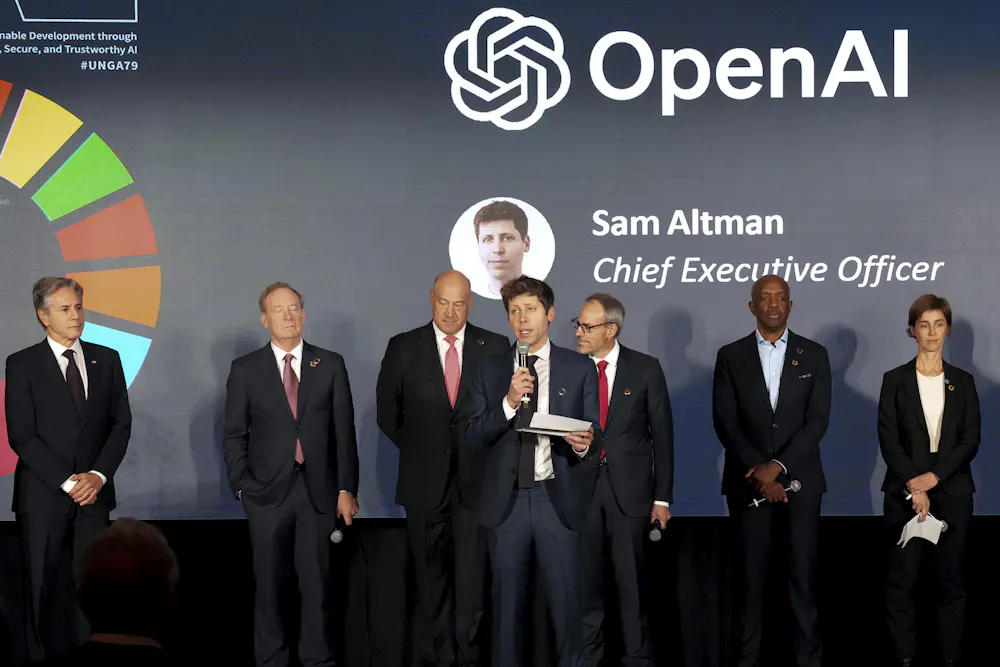
There has been a lot of leadership turmoil at OpenAI. The disagreements boiled over in November 2023, when its board briefly ousted Sam Altman, its CEO. He got his job back in less than a week, and then three board members resigned. The departing directors were advocates for building stronger guardrails and encouraging regulation to protect humanity from potential harms posed by AI.
OpenAI’s deep-pocketed investors cannot own shares in the organization under its existing nonprofit governance structure, nor can they get a seat on its board of directors. That’s because OpenAI is incorporated as a nonprofit whose purpose is to benefit society rather than private interests. Until now, all rounds of investments, including a reported total of $13 billion from Microsoft, have been channeled through a for-profit subsidiary that belongs to the nonprofit.
The current structure allows OpenAI to accept money from private investors in exchange for a future portion of its profits. But those investors do not get a voting seat on the board, and their profits are “capped.” According to information previously made public, OpenAI’s original investors can’t earn more than 100 times the money they provided. The goal of this hybrid governance model is to balance profits with OpenAI’s safety-focused mission.
Becoming a for-profit enterprise would make it possible for its investors to acquire ownership stakes in OpenAI and no longer have to face a cap on their potential profits. Down the road, OpenAI could also go public and raise capital on the stock market.
Altman reportedly seeks to personally acquire a 7% equity stake in OpenAI, according to a Bloomberg article that cited unnamed sources.
That arrangement is not allowed for nonprofit executives, according to BoardSource, an association of nonprofit board members and executives. Instead, the association explains, nonprofits “must reinvest surpluses back into the organization and its tax-exempt purpose.”
What kind of company might OpenAI become?
The Washington Post and other media outlets have reported, also citing unnamed sources, that OpenAI might become a “public benefit corporation” – a business that aims to benefit society and earn profits.
It’s more typical that a for-profit business – not a nonprofit – becomes a benefit corporation, according to the B Lab, a network that sets standards and offers certification for B Corps. It is unusual for a nonprofit to do this because nonprofit governance already requires those groups to benefit society.
Boards of companies with this legal status are free to consider the interests of society, the environment and people who aren’t its shareholders, but that is not required. The board may still choose to make profits a top priority and can drop its benefit status to satisfy its investors. That is what online craft marketplace Etsy did in 2017, two years after becoming a publicly traded company.
In my view, any attempt to convert a nonprofit into a public benefit corporation is a clear move away from focusing on the nonprofit’s mission. And there will be a risk that becoming a benefit corporation would just be a ploy to mask a shift toward focusing on revenue growth and investors’ profits.
But I think OpenAI has a possible workaround: It could try to dilute the nonprofit’s control by making it a minority shareholder in a new for-profit structure. This would effectively eliminate the nonprofit board’s power to hold the company accountable. Such a move could lead to an investigation by the office of the relevant state attorney general and potentially by the Internal Revenue Service.
What could happen if OpenAI turns into a for-profit company?
If OpenAI, an industry leader, begins to focus more on earning profits than ensuring AI’s safety, I believe that these dangers could get worse. Geoffrey Hinton, who won the 2024 Nobel Prize in physics for his artificial intelligence research, has cautioned that AI may exacerbate inequality by replacing “lots of mundane jobs.” He believes that there’s a 50% probability “that we’ll have to confront the problem of AI trying to take over” from humanity.
And even if OpenAI did retain board members for whom safety is a top concern, the only common denominator for the members of its new corporate board would be their obligation to protect the interests of the company’s shareholders, who would expect to earn a profit. While such expectations are common on a for-profit board, they constitute a conflict of interest on a nonprofit board where mission must come first and board members cannot benefit financially from the organization’s work.
The arrangement would, no doubt, please OpenAI’s investors. But would it be good for society? The purpose of nonprofit control over a for-profit subsidiary is to ensure that profit does not interfere with the nonprofit’s mission. Without guardrails to ensure that the board seeks to limit harm to humanity from AI, there would be little reason for it to prevent the company from maximizing profit, even if its chatbots and other AI products endanger society.
Regardless of what OpenAI does, most artificial intelligence companies are already for-profit businesses. So, in my view, the only way to manage the potential harms is through better industry standards and regulations that are starting to take shape.
California’s governor vetoed such a bill in September 2024 on the grounds it would slow innovation – but I believe slowing it down is exactly what is needed, given the dangers AI already poses to society.
Alnoor Ebrahim does not work for, consult, own shares in or receive funding from any company or organization that would benefit from this article, and has disclosed no relevant affiliations beyond their academic appointment.
“The fates of those who survived the infernos of Hiroshima and Nagasaki were long concealed and neglected,” the Nobel committee noted in its announcement. Local groups of nuclear survivors created Nihon Hidankyo in 1956 to fight back against this erasure.
Atomic bomb survivor Masao Ito, 82, speaks at the park across from the Atomic Bomb Dome in Hiroshima in May 15, 2023. Richard A. Brooks/AFP via Getty Images
Around the same time that Nihon Hidankyo was formed, Japan produced another warning: a towering monster who topples Tokyo with blasts of irradiated breath. The 1954 film “Godzilla” launched a franchise that has been warning viewers to take better care of the Earth for the past 70 years.
By 1954, Japan had survived almost a decade of nuclear exposure. In addition to the bombings of Hiroshima and Nagasaki, the Japanese people were affected by a series of U.S. nuclear tests in the Bikini Atoll.
When the U.S. tested the world’s first hydrogen bomb in 1954, its devastation reached far outside the expected damage zone. Though it was far from the restricted zone, the Lucky Dragon No. 5 Japanese fishing boat and its crew were doused with irradiated ash. All fell ill, and one fisherman died within the year. Their tragedy was widely covered in the Japanese press as it unfolded.
The Castle Bravo hydrogen bomb test on March 1, 1954, produced an explosion equivalent to 15 megatons of TNT, more than 2.5 times what scientists had expected. It released large quantities of radioactive debris into the atmosphere.
This event is echoed in a scene at the beginning of “Godzilla” in which helpless Japanese boats are destroyed by an invisible force.
“Godzilla” is full of deep social debates, complex characters and cutting-edge special effects for its time. Much of the film involves characters discussing their responsibilities – to each other, to society and to the environment.
This seriousness, like the film itself, was practically buried outside of Japan by an alter ego, 1956’s “Godzilla, King of the Monsters!” American licensors cut the 1954 film apart, removed slow scenes, shot new footage featuring Canadian actor Raymond Burr, spliced it all together and dubbed their creation in English with an action-oriented script they wrote themselves.
While “King of the Monsters!” traveled the world, “Godzilla” spawned dozens of Japanese sequels and spinoffs. Godzilla slowly morphed from a murderous monster into a monstrous defender of humanity in the Japanese films, which was also reflected in the later U.S.-made films.
In 1971, a new, younger creative team tried to define Godzilla for a new era with “Godzilla vs. Hedorah.” Director Yoshimitsu Banno joined the movie’s crew while he was promoting a recently completed documentary about natural disasters. That experience inspired him to redirect Godzilla from nuclear issues to pollution.
World War II was fading from public memory. So were the massive Anpo protests of 1959 and 1960, which had mobilized up to one-third of the Japanese people to oppose renewal of the U.S.-Japan security treaty. Participants included housewives concerned by the news that fish caught by the Lucky Dragon No. 5 had been sold in Japanese grocery stores.
The Chisso Corp. released toxic methylmercury into Minamata Bay from 1932 to 1968, poisoning tens of thousands of people who ate local seafood.
“Godzilla vs. Hedorah” is about Godzilla’s battles against Hedorah, a crash-landed alien that grows to monstrous size by feeding on toxic sludge and other forms of pollution. The film opens with a woman singing jazzily about environmental apocalypse as young people dance with abandon in an underground club.
This combination of hopelessness and hedonism continues in an uneven film that includes everything from an extended shot of an oil slick-covered kitten to an animated sequence to Godzilla awkwardly levitating itself with its irradiated breath.
After Godzilla defeats Hedorah at the end of the film, it pulls a handful of toxic sludge out of Hedorah’s torso, gazes at the sludge, then turns to stare at its human spectators – both those onscreen and the film’s audience. The message is clear: Don’t just lazily sing about imminent doom – shape up and do something.
Official Japanese trailer for ‘Godzilla vs. Hedorah’
“Godzilla vs. Hedorah” bombed at the box office but became a cult hit over time. Its positioning of Godzilla between Earth and those who would harm it resonates today in two separate Godzilla franchises.
One line of movies comes from the original Japanese studio that produced “Godzilla.” The other line is produced by U.S. licensors making eco-blockbusters that merge the environmentalism of “Godzilla” with the spectacle of “King of the Monsters.”
A meltdown of public trust
The 2011 Fukushima disaster has now become part of the Japanese people’s collective memory. Cleanup and decommissioning of the damaged nuclear plant continues, amid controversies around ongoing releases of radioactive water used to cool the plant. Some residents are allowed to visit their homes but can’t move back there while thousands of workers remove topsoil, branches and other materials to decontaminate these areas.
The first Japanese “Godzilla” film released after the Fukushima disaster, “Shin Godzilla” (2016), reboots the franchise in a contemporary Japan with a new type of Godzilla, in an eerie echo of the damages of and governmental response to Fukushima’s triple disaster. When the Japanese government is left leaderless and in disarray following initial counterattacks on Godzilla, a Japanese government official teams up with an American special envoy to freeze the newly named Godzilla in its tracks, before a fearful world unleashes its nuclear weapons once again.
Their success suggests that while national governments have an important role to play in major disasters, successful recovery requires people who are empowered to act as individuals.
The authors do not work for, consult, own shares in or receive funding from any company or organization that would benefit from this article, and have disclosed no relevant affiliations beyond their academic appointment.
I came of age in the 1990s and lived through the heavily gendered pop culture of Spice Girls and All Saints, Oasis and Blur, of lads and ladettes outdoing each other in heavy drinking and sexual exploits.
Now in my 40s, I thought this brash and overtly sexist culture had faded out. It appeared to have been replaced by a socially progressive and inclusive generation focused on body and sex positivity, gender and sexual fluidity. And so I was surprised to see my generation Z research participants romanticise the 1990s as a belle epoque.
First it was Sex and the City, then lad’s mag Loaded and now Oasis. Popular culture from the 1990s is having a moment in the mid-2020s. The 90s have been a stylistic and cultural influence on youth culture for the best part of a decade, with large amounts of money invested in big-name reboots and reunions.
I began researching young adults’ sexual politics and their relationship to popular culture back in 2016. It was clear from my observations of the clothing, social media and references back then that the 90s were a major cultural influence. I remember being surprised by the popularity of the TV shows like Friends and musicians including Shaggy, Oasis and Suede from my own youth.
Every generation has a romanticised nostalgia for the fashion, music and attitudes of the previous. When I was a teenager, my friends and I held a romanticised nostalgia for the music, fashion and sense of freedom we believed characterised the 60s and 70s. This view, however, did not align with my parents’ and their peers’ recollections of that time.
What is most interesting here is the apparent contradiction in values. The objectification of women at the heart of 90s pop culture does not gel with what we think of as the sexually open, progressive politics of generation Z. But having studied the intersection of pop culture and gender, I see this current resurgence as part of a misogynistic backlash to feminist progress – something that feminist scholars have highlighted as a typical pattern for years.
Much of 90s popular culture is inherently misogynistic. Loaded and other now-defunct lads’ mags were infamous for their brutal objectification of women, including advice on how to get women into bed by almost any means. The celebrated lad culture epitomised by the likes of Oasis encouraged “men to be men”, with all the macho aggression and limited emotional range that implied.
A damning 2012 National Union of Students report on sexual harassment and assault on university campuses made explicit links to the prevalence of lad culture in UK higher education. It argued lad culture at best objectifies and is dismissive of women, and at worst glamorises sexual assault.
Gen Z is widely considered a generation of social activists, having grown up in the shadow of movements like #MeToo and the Women’s March that emerged in protest of the election of Donald Trump as US president. These cultural touchpoints in this generation’s upbringing highlight intersections of sex and power.
Some young consumers have acknowledged this mismatch, describing Sex and the City as “outdated” and “cringey”. And incoming Loaded editor Danni Levy seems aware of it too, saying the relaunch is necessary because of the “world gone PC mad”.
Why is 90s culture popular now?
I argue the resurgence of 90s popular culture is actually part of a backlash against the progressive understandings of gender and sexuality associated with generation Z.
Research indicates that gen Z men are less likely to support feminism than baby boomers. Young men and boys are increasingly being influenced by figures like self-proclaimed misogynist Andrew Tate, who faces charges of rape and human trafficking among other offences.
While enjoying 90s television of course doesn’t mean you hold the same misogynistic views as Tate, I believe some popular culture is central to a continuum of backlash against feminist progress.
To explain this, I suggest turning to feminist scholars – including one of my own 90s favourites, Susan Faludi’s excellent 1992 book Backlash: The undeclared war against women. In this work, Faludi details multiple periods of backlash against women’s liberation dating from 195BC. Each of these is linked to repeated “crises of masculinity”.
Much feminist writing details how the very notion of masculinity depends on a subordinate femininity. And so, Faludi argues, advances in feminism equal a crisis of masculinity. Progress begets backlash, and popular culture is a key site where this takes place.
Through my research I work to detail the subtle and nuanced ways this happens. I am currently researching how popular culture interprets and remixes progressive ideas like sex and gender positivity.
At first glance, songs, films and shows may seem to be supportive of women’s sexual liberation, but on closer inspection they can reinforce traditional ideas of what it is to be a woman, or what it is to be attractive. Katy Perry’s recent music video Woman’s World is a classic example of this. Its lyrical appropriation of feminist messages of empowerment is delivered in an outdated visual style that adheres to the male gaze.
Perry and her dancers strut around in swimwear costumes adapted to mimic various “masculine” professions. Critiqued for its lack of authenticity, Perry’s video represents a male sexual dreamworld that is inconsistent with the feminist politics it links itself to.
There is often, in examples like this, a blurring of feminist and anti-feminist ideas – where it seems as though feminism is so commonsense it is no longer necessary, and is therefore neutralised.
A multitude of literature on female sexual desire has emerged in the last few years. It is wide-ranging and imaginative. And yet, much of 90s popular culture flattens this complexity, painting female desire as only a desire to be desired by men.
It prioritises male pleasure and advocates for their sexual dominance over women, reverting to understandings of “acceptable” sex as heterosexual, monogamous and male-led. Despite years of feminist progress, popular culture continues to teach us that women are objects of male sexual fantasy.
Julie Whiteman does not work for, consult, own shares in or receive funding from any company or organisation that would benefit from this article, and has disclosed no relevant affiliations beyond their academic appointment.
Source: The Conversation – UK – By Helen McCarthy, Doctoral Researcher in Criminology and Sociology, York St John University
According to some conspiracy theorists posting on alternative, uncensored social media networks, Mpox is another “scamdemic”, created by a powerful elite to cull populations and generate profit for “big pharma”. According to these social media users, anyone who takes the Mpox vaccine inevitably faces heart attack and death.
Other Mpox conspiracies target hate at LGBTQ+ people.
Through my PhD research into anti-vaccination misinformation, I’ve collected thousands of social media posts, videos, images and links from anti-vaccination Telegram channels, Substack newsletters and Gab groups. Gab Social is a social networking site known for hosting right-wing political content. These platforms are unique in their permissive approach to moderation. Users can post virtually anything they want without restraint.
According to 2023 research, platforms like Gab have become the home of many “alt-right” content creators who have been de-platformed from mainstream social media channels like Facebook and Instagram. Mpox misinformation is thriving in these online locations.
Sexuality and stigma
In the early days of the COVID pandemic, a study identified that misinformation on social media platforms like Facebook, X (formerly known as Twitter) and YouTube frequently blamed specific social groups for infection surges. Now, it’s MPox’s turn.
One Substack creator, for example, considers gay and bisexual men engaging in “high-risk sexual behaviour” a threat to the heterosexual population. He argues abstinence is the only solution – but only for men who have sex with men.
As well as accusing gay and bisexual men of having a “perverted lifestyle that goes against nature and God’s laws”, some anti-vaxx content creators stigmatise people with Mpox as a hidden enemy, who could be “teaching in schools and indoctrinating children”.
One common anti-vaxx conspiracy theory is “vaccine shedding”. This is the idea that vaccinated people can harm the unvaccinated through any kind of contact. One online conspiracy states the Mpox vaccine is particularly prone to shedding. Gay and bisexual men, then, are portrayed as dangerous whether they’re vaccinated or not.
Mpox is routinely characterised by conspiracy theorists as a virus for immoral people. As a result, some anti-vaxx perspectives are shockingly callous – one commenter claims they wouldn’t care at all if “the gays and communists” died from the Mpox vaccine.
Misinformation surrounding Mpox and the vaccine is peppered with such homophobic narratives of infection and contamination – and it’s familiar territory. People suffering from HIV and Aids in the 1980s and 1990s were relentlessly stigmatised as a dangerous other.
While online conspiracy theories present those with Mpox as a menace, in reality, there have only been a small number of mild Mpox cases identified in the UK since 2022. Though the majority of confirmed cases of Mpox in the UK have been in gay and bisexual men – and Mpox can be transmitted through close sexual contact – people can also become infected if they’re exposed to coughing and sneezing, or share clothing, bedding and towels with an infected person.
Moderation and misinformation
In August 2024, a new strain of Mpox was identified in the Democratic Republic of the Congo and some neighbouring countries. An estimated 10 million vaccines are needed to meet demand in affected African nations. In September 2024, the UK government ordered 150,000 doses of an Mpox vaccine to be distributed among gay and bisexual men and healthcare and humanitarian workers who may be exposed.
Just as many of us might check a reliable, verified medical source to find out more about Mpox, so alternative social media users look to the sources they trust. This commonly includes doctors blowing the whistle on alleged vaccine injury, conspiracy theory “news” sites and prominent right wing figures like Tucker Carlson. People selling alternative remedies and products promising miraculous detox are never far away to profit from vaccine misinformation.
Users share these sources across Gab groups, comment threads and Telegram channels, layering their own beliefs on top. This generates even more views and shares, which is one of the reasons why social media is such a good incubator for conspiracy theories and misinformation.
Another reason is the lack of content moderation on alternative social media sites. Substack describes itself as “a place for independent writing”. Users are not supposed to share any content which incites violence, contains sex or nudity, or illegal activity. Telegram takes a similar approach. Gab also draws the line at illegal content, but mainly encourages users to hide content they don’t want to see or ignore it.
The arguments for or against unrestrained free speech on the internet are complex. But sites like Gab reveal what an unmoderated internet can look like – hate of every variety can find a home here if that’s what the users choose to post. Mpox is just another topic to generate even more shareable content.
Helen McCarthy does not work for, consult, own shares in or receive funding from any company or organisation that would benefit from this article, and has disclosed no relevant affiliations beyond their academic appointment.
Sally Rooney’s new novel, Intermezzo, is finally here – and nearly everyone I know seems to be reading it. It’s almost like the pre-streaming days, when everyone would settle on the sofa at the same time to watch the new hit TV series. The sense that we were all part of the same unfolding experience of a story was part of the joy.
Not many authors can achieve that in this era of the digital kaleidoscope, when myriad creative experiences can be accessed at the touch of a button. Rooney’s cult status has led to her being described as the “voice of a generation”. The label generally refers to an author whose work particularly resonates with people in their 20s and 30s. But why have Rooney’s books had this effect? And who were the literary voices of previous generations?
Logically, of course, the phrase is inaccurate when applied to any single writer. Generations include vastly different cohorts and people from diverse backgrounds, and no authorial voice can actually represent them all. Rooney couldn’t, even if everyone on the planet were reading Intermezzo right now – which they’re not. At least, not quite. And yet, as a phrase used to describe a writer whose work has had a notably greater impact than most others, it is worth interrogating.
No one’s 20s and 30s look the same. You might be saving for a mortgage or just struggling to pay rent. You could be swiping dating apps, or trying to understand childcare. No matter your current challenges, our Quarter Life series has articles to share in the group chat, or just to remind you that you’re not alone.
To be the person crowned with this label – to have to embody “the voice of a generation” – must feel simultaneously like an honour and a burden. Rooney herself has outwardly rejected it. In 2018 she told the Guardian: “I certainly never intended to speak for anyone other than myself. Even myself I find it difficult to speak for.”
And yet she invariably speaks persuasively and cogently in public events about her books: an ability which no doubt stems from her background as a champion debater.
Rooney speaks about Palestine during the launch of her new novel, Intermezzo.
This ability also brings a rare clarity to her writing. Rooney has a knack for describing with precision, and also with lyricism, the textural experience of being a young person in the world, particularly an intelligent yet lonely young person. Her characters feel almost as strongly about big ideas as they do about their animal desires.
It’s a hard time to be young. Rooney understands and engages with the high cost of living, precarious jobs, stark social inequality and the climate crisis in her novels. Yet these ideas and political concerns never subsume the specific human characters, in specific Irish settings, that lie at the heart of each story. These are surely some of the intersecting reasons why her fiction has resonated so widely with the under 30s.
Intermezzo can be distinguished from Rooney’s previous two novels in its interrogation of intimate relationships that are perceived to be highly unconventional, and exploring how the characters negotiate that social tension. I like to think that’s why it has sparked so much interest – but I may well be biased, since my forthcoming novel, The Unexpected, does the same thing, albeit with a co-parenting angle.
Voices of generations past
Looking back a generation, Zadie Smith’s novel White Teeth, published in 2000 when she was in her early 20s, sparked a comparable reading fever, and prompted the same “voice of a generation” label.
Smith broke new ground back then with the fresh, funny and profound quality of her writing about the multicultural community of north-west London, particularly through her sparkling dialogue. Like Rooney’s fiction, Smith’s addresses pressing political issues, notably relating to race, class and migration, and yet those concerns never overpower the vivid individuality of her characters.
Like Rooney, Smith is a compelling public speaker, articulating her ideas with directness and wit. Her clear public “voice” surely helped the “voice of a generation” label to adhere. Yet Smith similarly rejected the idea that she had ever sought to represent any generation or group through her fiction. Conversely, she has denied even having a singular “voice” that might be linked to arbitrary aspects of her autobiography. Instead, she describes always having had multiple voices in her head, arguing that good fiction actually stems from a productive self-doubt, combined with a sense of compassion and curiosity about other people and the world.
Turning the dial back further, into the 20th century, the so-called “voices of a generation” that come to mind are mostly white men. Brett Easton Ellis and J.D. Salinger, for instance, in the US; and Martin Amis and Ian McEwan in the UK.
It is heartening that fiction is no longer so dominated by male writers, especially when fiction readers remain predominantly female. And over the last two decades, it has been great to witness the championing of more diverse authors in the publishing industry: a shift which has been long overdue.
Still, as the real world appears to become increasingly divided through social media bubbles and extremist politics, it seems more important than ever to hold onto the vital role of fiction. Not as a loudspeaker for authorial “voices” that are assumed to represent neatly defined groups of people, but as a portal to imagined voices that reveal how unique yet interconnected we all are. Fiction is a force that can draw us together, regardless of our backgrounds, and increase our empathy for one another.
If a single writer can spark as many people as Rooney has to engage collectively in deep appreciation for their works of fiction, then it seems important to find a shorthand to capture that. If “the voice of a generation” is too exclusive, perhaps “a voice for a generation” is a more nuanced alternative.
Looking for something good? Cut through the noise with a carefully curated selection of the latest releases, live events and exhibitions, straight to your inbox every fortnight, on Fridays. Sign up here.
Ellen Wiles is the author of the new novel, The Unexpected – out on 21 November 2024 from HQ (HarperCollins).
In 1991, Douglas Coupland’s novel Generation X supposedly made him the “voice of” that generation. Looking further back, J.D. Salinger’s first and only novel, Catcher in the Rye (1951), seemed to capture the voice of a generation at the time, and has resonated with successive generations of awkward and disaffected teenagers ever since.
What’s behind this phenomenon is generational thinking. It seems to be everywhere at the moment, providing the media with easy taglines, spreading cliches and unnecessarily sowing division. But its history goes back far beyond even the baby-boomers.
In the 19th century, after the radical upheavals of the Enlightenment , the “age of revolutions” and the Industrial Revolution, some people wondered if perhaps they could reject tradition completely. Groups of young artists began to rebel against a model of discipleship that required them to learn from their elders.
Instead of following the art world’s top-down, paternalistic apprenticeship model, these fraternities and brotherhoods (yes, they were mainly men) declared that were innovating a new dawn in art.
The Pre-Raphaelite Brotherhood, for example, now viewed as quaint, were definitely Victorian radicals, as were the impressionists 25 years later. These tight-knit groups of artists had a strong sense of generational identity, rebelling against their predecessors.
In one important way, however, they were different from the modern “voice of a generation” figures because these groups also saw themselves as rebelling against their own peers. We now might see them as iconic of their generation, but at the time, they were rejects, though elite ones – bohemian in the original sense. Crucially, they were honest about their oddity. They knew they were unusual, so they didn’t claim to be speaking for everyone.
This paradox highlights one of the challenges of history: that we’re understandably most captivated by people who were “ahead of their time”, but these people are therefore probably not representative of their time.
The idea of generations as self-conscious group identities came into being with the trauma and upheaval of the first world war. Over the next couple of decades, writers who had come of age during the war narrated how it had decimated and traumatised their generation.
These stories all express an angry sense of having been “lions led by donkeys”. They envisage an unbridgeable divide between their own front-line generation, sacrificing its youth, and an older generation of complacent army commanders.
They also trace a second divide between themselves and the slighter younger generation who came of age after the war’s end and didn’t want to think about it. Brittain poignantly describes how this new fresh-faced generation experienced her grief as passé.
These first world war writers did consciously speak as the voice of a specific “lost generation”. But like any such label, this also obscures a more complex reality.
Not all first world war soldiers were in the first flush of youth like Wilfred Owen, Robert Graves, Remarque and Sherriff. In fact, men were recruited up to the age of 41 in Britain, 43 in Russia, 48 in France and 50 in Austria-Hungary.
This complexity highlights one of the tricky things about the generations concept. It refers both to relationships within families (parents and children) and to commonalities beyond the family, among contemporaries across society. Sometimes these two dimensions align neatly, as in the “lost generation”, but sometimes they don’t, like for those older soldiers who don’t fit inside that label.
Why generational labels matter
My research has shown that generational ideas are real and do matter – but need to be handled with care.
Generation talk all too often slips into generalisation, which can then be used to sow division. The word “generationalism” has been coined by researchers to highlight this issue.
To counteract this, a network of researchers and third sector colleagues, led by myself and sociologist Jennie Bristow, have worked together to produce a guide entitled Talking About Generations: 5 Questions to Ask Yourself, which encourages people working with the concept of generation to pause and check their motivations and meaning before using the term.
Labels like “the voice of a generation” always depend on speculating about what other people are thinking and feeling. This risks flattening and homogenising generational experience – not all millennials are Sally Rooneys, after all.
Rooney herself has said in an interview: “I certainly never intended to speak for anyone other than myself.” Any “voice of a generation” needs, in practice, to be plural “voices”.
Looking for something good? Cut through the noise with a carefully curated selection of the latest releases, live events and exhibitions, straight to your inbox every fortnight, on Fridays. Sign up here.
Helen Kingstone has received funding from Wellcome: it funded the research behind the guide for ‘Talking about Generations’.
A large-scale exhibition celebrating the work of local artist, Maurice Wade, has opened to the public for the first time.
Visitors will get a rare glimpse of his North Staffordshire-inspired landscapes featuring many well-known locations including Etruria Hall, Burslem, Longport and the local canal network – now on show at the Potteries Museum & Art Gallery.
Born in Burslem in 1917, Maurice Wade trained during the 1930s at the Burslem School of Art and went on to teach at a local boys school in the 1960s.
The critically acclaimed artist exhibited at the Royal Academy, Paris Salon and The Royal Society of British Artists. His works feature in a number of public collections, including the Potteries Museum & Art Gallery and the Government Art Collection. Today, Wade is extremely collectable and his paintings are highly regarded by art lovers.
Councillor Jane Ashworth, leader of Stoke-on-Trent City Council, said: “It is great that we are being able to highlight the work of this important artist, who was born right here in Stoke-on-Trent, in their home city.
“We should all be really proud that our city’s unique landscape features in these paintings and was the inspiration behind most of Maurice Wade’s work, especially as we are gearing up to celebrate our Centenary next year.
“The exhibition is on until January 2025, so there’s plenty of time to go along and enjoy this fantastic display.”
Maurice Wade felt a growing compulsion to paint when he returned to the Potteries in 1951, after serving in the army during the Second World War.
Following Wade’s death in 1991, his work was seemingly forgotten however over the last few years, there has been a renewed interest in the artist and a growing recognition of his important contribution to contemporary British art in the 20th century.
This special display will bring together over 90 paintings from Wade’s private collections, for the very first time.
The exhibition will highlight Wade’s fascination with North Staffordshire and will be accompanied by a fully illustrated book edited by Petr Hajek, with contributions by David Powell.
Dr Samantha Howard, Curator of Arts at the Potteries Museum & Art Gallery, said: “Maurice Wade – A Painter from No. 57 is a truly not-to-be missed opportunity to see so many wonderful paintings brought together from private collections that showcase the breadth and depth of the artist’s practice over 30 years”.
Maurice Wade – A Painter from No. 57 will until Sunday 26 January. Tickets are £6, £4 (concessions) and under 16s go free.
Given the rapid integration of AI into human resource management across many organizations, it’s important to raise awareness about the complex ethical challenges it presents.(Shutterstock)
A public interest group filed a U.S. federal complaint against artificial intelligence hiring tool, HireVue, in 2019 for deceptive hiring practices. The software, which has been adopted by hundreds of companies, favoured certain facial expressions, speaking styles and tones of voice, disproportionately disadvantaging minority candidates.
Similarly, Amazon stopped using its AI recruitment tool, as reported in 2018, after discovering it was biased against women. The algorithm, trained on male-dominated resumes submitted over 10 years, favoured male candidates by downgrading applications that included the word “women’s” and penalizing graduates of women’s colleges. Engineers tried to address these biases, but could not guarantee neutrality, leading to the project’s cancellation.
As companies increasingly rely on algorithms to make critical hiring decisions, it’s crucial to be aware of the following ways AI can create bias in hiring:
1. Bias in training data. AI systems rely on large datasets — referred to as training data — to learn patterns and make decisions, but their accuracy and fairness are only as good as the data they are trained on. If this data contains historical hiring biases that favour specific demographics, the AI will adopt and reproduce those same biases. Amazon’s AI tool, for example, was trained on resumes from a male-dominated industry, which led to gender bias.
2. Flawed data sampling. Flawed data sampling occurs when the dataset used to train an algorithm is not representative of the broader population it’s meant to serve. In the context of hiring, this can happen if training data over-represents certain groups —typically white men — while under-representing marginalized candidates.
For example, AI might disproportionately value graduates from prestigious universities, which have historically been attended by people from privileged backgrounds. Or, it might prioritize work experiences that are more common among certain demographics.
Bias in hiring algorithms raises serious ethical concerns and demands greater attention toward the mindful, responsible and inclusive use of AI. (Shutterstock)
4. Lack of transparency. Many AI systems function as “black boxes,” meaning their decision-making processes are opaque. This lack of transparency makes it difficult for organizations to identify where bias might exist and how it affects hiring decisions.
Without insight into how an AI tool makes decisions, it’s difficult to correct biased outcomes or ensure fairness. Both Amazon and HireVue faced this issue; users and developers struggled to understand how the systems assessed candidates and why certain groups were excluded.
5. Lack of human oversight. While AI plays an important role in many decision-making processes, it should augment, rather than replace, human judgment. Over-reliance on AI without adequate human oversight can lead to unchecked biases. This problem is exacerbated when hiring professionals trust AI more than their own judgment, believing in the technology’s infallibility.
Overcoming algorithmic bias in hiring
To mitigate these issues, companies must adopt strategies that prioritize inclusivity and transparency in AI-driven hiring processes. Below are some key solutions for overcoming AI bias:
2. Conduct regular bias audits. Frequent and thorough audits of AI systems should be conducted to identify patterns of bias and discrimination. This includes examining the algorithm’s outputs, decision-making processes and its impact on different demographic groups.
It is important to actively involve human judgment in AI-driven decisions, particularly when making final hiring choices. (Shutterstock)
3. Implement fairness-aware algorithms. Use AI software that incorporates fairness constraints and is designed to consider and mitigate bias by balancing outcomes for underrepresented groups. This can include integrating fairness metrics such as equal opportunity, modifying training data to show less bias and adjusting model predictions based on fairness criteria to increase equity.
4. Increase transparency. Seek AI solutions that offer insight into their algorithms and decision-making processes to make it easier to identify and address potential biases. Additionally, make sure to disclose any use of AI in the hiring process to candidates to maintain transparency with your job applicants and other stakeholders.
5. Maintain human oversight. To maintain control over hiring algorithms, managers and leaders must actively review AI-driven decisions, especially when making final hiring choices. Emerging research highlights the critical role of human oversight in safeguarding against the risks posed by AI applications. However, for this oversight to be effective and meaningful, leaders must ensure that ethical considerations are part of the hiring process and promote the responsible, inclusive and ethical use of AI.
Bias in hiring algorithms raises serious ethical concerns and demands greater attention toward the mindful, responsible and inclusive use of AI. Understanding and addressing the ethical considerations and biases of AI-driven hiring is essential to ensuring fairer hiring outcomes and preventing technology from reinforcing systemic bias.
Mehnaz Rafi does not work for, consult, own shares in or receive funding from any company or organisation that would benefit from this article, and has disclosed no relevant affiliations beyond their academic appointment.
Developing clear policies and principles that are communicated with audiences should be an essential part of any newsroom’s AI practice.(Shutterstock)
When it comes to artificial intelligence (AI) and news production, Canadian news consumers want to know when, how and why AI is part of journalistic work. And if they don’t get that transparency, they could lose trust in news organizations.
News consumers are so concerned about how the use of AI could impact the accuracy of stories and the spread of misinformation, a majority favour government regulation of how AI is used in journalism.
These are some of our preliminary findings after surveying a representative sample of 1,042 Canadian news consumers, most of whom accessed news daily.
This research is part of the Global Journalism Innovation Lab which researches new approaches to journalism. Those of us on the team at Toronto Metropolitan University are particularly interested in looking at news from an audience perspective in order to develop strategies for best practice.
The industry has high hopes that the use of AI could lead to better journalism, but there is still a lot of work to be done in terms of figuring out how to use it ethically.
Not everyone, for example, is sure the promise of time saved on tasks that AI can do faster will actually translate into more time for better reporting.
We hope our research will help newsrooms understand audience priorities as they develop standards of practice surrounding AI, and prevent further erosion of trust in journalism.
AI and transparency
We found that a lack of transparency could have serious consequences for news outlets that use AI. Almost 60 per cent of those surveyed said they would lose trust in a news organization if they found out a story was generated by AI that they thought was written by a human, something also reflected in international studies.
The overwhelming majority of respondents in our study, more than 85 per cent, want newsrooms to be transparent about how AI is being used. Three quarters want that to include labelling of content created by AI. And more than 70 per cent want the government to regulate the use of AI by news outlets.
Organizations like Trusting News, which helps journalists build trust with audiences, now offer advice on what AI transparency should look like and say it’s more than just labelling a story — people want to know why news organizations are using AI.
Audience trust
Our survey also showed a significant contrast in confidence in news depending on the level of AI used. For example, more than half of respondents said they had high to very high trust in news produced just by humans. However, that level of trust dropped incrementally the more AI was involved in the process, to just over 10 per cent for news content that was generated by AI only.
In questions where news consumers had to choose a preference between humans and AI to make journalistic decisions, humans were far preferred. For example, more than 70 per cent of respondents felt humans were better at determining what was newsworthy, compared to less than six per cent who felt AI would have better news judgement. Eighty-six per cent of respondents felt humans should always be part of the journalistic process.
As newsrooms struggle to retain fractured audiences with fewer resources, the use of AI also has to be considered in terms of the value of the products they’re creating. More than half of our survey respondents perceived news produced mostly by AI with some human oversight as less worth paying for, which isn’t encouraging considering the existing reluctance to pay for news in Canada.
This result echoes a recent Reuters study, where an average of 41 per cent of people across six countries saw less value in AI-generated news.
Concerns about accuracy
In terms of negative impacts of AI in a newsroom, about 70 per cent of respondents were concerned about accuracy in news stories and job losses for journalists. Two-thirds of respondents felt the use of AI might lead to reduced exposure to a variety of information. An increased spread of mis- and disinformation, something recognized widely as a serious threat to democracy, was of concern for 78 per cent of news consumers.
Using AI to replace journalists was what made respondents most uncomfortable, and there was also less comfort with using it for editorial functions such as writing articles and deciding what stories to develop in the first place.
There was far more comfort with using it for non-editorial tasks such as transcription and copy editing, echoing findings in previous research in Canada and other markets.
We also gathered a lot of data unrelated to AI to get a sense of how Canadians are tapping into news and the news they’re tapping into. Politics and local news were the two most popular types of news, chosen by 67 per cent of respondents, even though there is less local news to consume due to extensive cuts, mergers and closures.
A lot of people in our sample of Canadians, around 30 per cent, don’t actively look for news. They let it find them, something called passive consumption. And although this is proportionally higher in news consumers under 35, this isn’t just a phenomenon seen in the younger demographic. More than half of those who reported letting news find them were over 35 years old.
Although smartphones are increasingly becoming the likely access points of news for many consumers, including almost 70 per cent for those 34 and under and about 60 per cent of those between 35 and 44, television is where most news consumers in our study reported getting their journalism.
Respondents in our survey were asked to select all of their points of news access. More than 80 per cent of participants chose some form of TV, with some respondents picking two TV formats, for example, cable TV and smart TV. Surprisingly to us, half of 18-24 year olds reported TV as an access point for news. For those 44 and under, it was more often through a smart TV, though. As shown in other Canadian studies, TV news still plays an important role in the media landscape.
This is just a broad look at the data we have collected. Our analysis is just beginning. We’re going to dig deeper into how different demographics feel about the use of AI in journalism and how the use of AI might impact audience trust.
We will also soon be launching our survey with research partners in the United Kingdom and Australia to find out if there are differences in perceptions of AI in the three countries.
Even these initial results provide a lot of evidence that, as newsrooms work to survive in a destabilized market, using AI could have detrimental effects on the perceived value of their journalism. Developing clear policies and principles that are communicated with audiences should be an essential part of any newsroom’s AI practice in Canada.
Nicole Blanchett receives funding from the Social Sciences and Humanities Research Council of Canada (SSHRC) and The Creative School at Toronto Metropolitan University.
Charles H. Davis receives funding from the Social Sciences and Humanities Research Council of Canada (SSHRC) and has received funding from Toronto Metropolitan University.
Mariia Sozoniuk works with the Explanatory Journalism Project which is supported by funding from The Creative School at Toronto Metropolitan University and the Social Sciences and Humanities Research Council of Canada (SSHRC).
Sibo Chen receives funding from the Social Sciences and Humanities Research Council of Canada (SSHRC) and The Creative School at Toronto Metropolitan University.
Source: The Conversation – Canada – By Deinera Exner-Cortens, Associate Professor of Psychology and Tier 2 Canada Research Chair (Childhood Health Promotion), University of Calgary
Educators can help kids understand the difference between using power negatively and positively, and encourage its positive use to build respectful environments. (Allison Shelley/The Verbatim Agency for EDUimages), CC BY-NC
Being at school among peers and friends can be exciting and positive for many children and youth. But, too many kids in Canada face the reality of being bullied because of some aspect of who they are.
This type of bullying — known as identity-based or bias-based bullying — is extremely harmful to kids’ sense of belonging at school, and has negative effects on their physical and mental health, their academic achievement and their social well-being.
As psychology researchers and directors of the Promoting Relationships and Eliminating Violence Network (PREVNet), we developed accessible learning modules for educators so they can learn to recognize identity-based bullying, and intervene to stop it.
While explicitly developed with education settings in mind, these may also be helpful for parents or other caring adults in situations of influence for children’s peer relations. These modules will be available in French by the end of the year.
Bullying is unwanted, aggressive behaviour that is often repeated over time. These behaviours can be verbal, social, physical, sexual and/or cyber in nature.
It happens in relationships where there is a power imbalance. In other words, the child who bullies holds more power than the child who experiences the bullying. In the case of identity-based bullying, this power imbalance is rooted in the types of power differences we see at a larger societal level.
Bullying behaviours can be verbal, social, physical or sexual, and can take place in person or online. (Shutterstock)
But why? Put simply, these experiences of discrimination are rooted in Canada’s settler-colonial history, which institutionalized racialized, class-based and colonial norms and forms of social privilege. These institutionalized forms of privilege resulted in greater political, social and economic power being granted to groups as they more closely aligned with these norms, with the greatest power allotted to those at the top of this “civilized” ideal: people who are white (western European), Christian, wealthy, cisgender, heterosexual, settler men.
Groups who have been granted unearned power and privilege through these systems work to maintain their power through things like stigma, discrimination and other forms of oppression, while groups marginalized as “other” — less aligned with these dominant norms — continue to experience and hold less power across the socio-political-economic spectrum.
And, youth who hold more than one socially marginalized identity often experience even greater discrimination.
Schools as societal institutions
Since schools are societal institutions, the discrimination and other forms of oppression that are used by dominant groups to maintain power in larger society are mirrored within schools through identity-based bullying.
With identity-based bullying, the power imbalance that is a key feature of bullying behaviour is rooted in these larger social power imbalances.
Because we all hold multiple social identities, a social power perspective also explains how these identities interact. Take, for example, a situation where a white, queer student is bullying a Black, queer student. Although both students are marginalized based on their queer identities, the white student still benefits from the power and privilege afforded to whiteness. So, this situation still reflects a power dynamic based on social identities.
Identity-based bullying is likely an issue in your neighbourhood school. In data we collected from 1,200 youth across Canada in 2023, one in three reported identity-based bullying because of their body weight, race or skin colour, disability, religion, sexual orientation and/or gender identity.
Second, identity-based bullying impacts kids’ experiences at school. For example, a recent study from the United States found that youth who experienced multiple forms of identity-based bullying were the most likely to report avoiding class or activities. This study also found that if these same students felt more supported by adults at their school, they reported less school avoidance. This means caring educators are a protective factor for youth experiencing identity-based bullying.
Our research has proposed ways educators specifically can prevent identity-based bullying in their schools:
1) Educators (or other adults engaged in a school community) could examine their school board policy on bullying, and make sure it specifically mentions the role of social identities. If it doesn’t, educators can work to change it. A great example of naming identities when defining bullying can be seen in the Northwest Territories’ Education Act.
2) Be self-reflective and aware. As a first step, educators can explore their own unconscious biases and reflect on how they may be influencing the classroom climate.
3) Be a positive role model. Students look to adults about how to behave. Celebrate the strengths of all students and role model how to be respectful and inclusive. Also role model how to helpfully intervene when harmful behaviour occurs.
4) Actively create opportunities for positive peer dynamics in the classroom. Be intentional about creating groups to ensure that students who are excluded are given the opportunity to interact and work with students who are kind and prosocial, and who may have similar interests and abilities.
Educators can teach strategies that help all students learn how to be positive allies. (Shutterstock)
5) Empower all students to intervene safely and effectively. Actively educate students on how to recognize identity-based bullying and provide strategies that will help all students to be positive allies.
6) Work at classroom, school and community levels to create a welcoming, inclusive environment for all children. For educators, this can include things like conducting curriculum review, actively incorporating learning about power, privilege and oppression, creating and supporting clubs like gay-straight alliances and working to create a trauma-informed classroom.
These strategies can be consolidated and deepened through engaging with our new anti-bullying training modules, which focus specifically on identity-based bullying.
In these ways, educators and other caring adults can help kids understand the difference between using power negatively and positively, and encourage its positive use to build inclusive, respectful and safe environments for all.
Deinera Exner-Cortens receives funding from the Public Health Agency of Canada and the Canada Research Chairs program. She is also the director of PREVNet Inc, a registered charitable organization in Canada.
Elizabeth (Liz) Baker receives funding from the Public Health Agency of Canada and Alberta’s Children Services. She is affiliated with PREVNet as Executive Director.
Wendy Craig receives funding from Public Health Agency of Canada. She is the Scientific Co-Director of PREVNet (Promoting Healthy Relationships and Eliminating Violence Network.
Flu shots are recommended for most Canadians over six months old.(Shutterstock)
As the fall months settle in, Canadians are being urged to take precautions against the upcoming flu season.
Flu season in Canada typically peaks between December and February, but the virus can circulate much earlier. Public health officials are advocating for early vaccination, emphasizing that the annual flu vaccine is the most effective way to protect against infection and reduce the severity of illness.
Influenza, commonly known as the flu, is a respiratory illness caused by influenza viruses that spread easily from person to person. These viruses mainly affect the nose, throat and lungs. Flu symptoms typically include fever, chills, muscle aches, cough, congestion, runny nose, headaches and fatigue.
Unlike the common cold, which often develops slowly, the flu tends to hit suddenly and can lead to severe complications like pneumonia, bronchitis and even death, particularly in high-risk groups such as young children, seniors over 65, pregnant individuals, and those with chronic conditions like asthma, diabetes or heart disease.
Influenza spreads mainly through droplets when an infected person coughs, sneezes or talks. These droplets can land in the mouths or noses of people nearby, or they can linger on surfaces where the virus can survive for up to 48 hours. Preventive measures such as handwashing, mask-wearing and staying home when symptomatic help reduce the spread of the virus.
How the flu vaccine works
Each year, flu vaccines are updated to protect against the influenza viruses that research indicates will be most common during the upcoming season. The flu shot contains inactivated or weakened influenza viruses, which cannot cause the flu but help the immune system develop antibodies. These antibodies protect against infection when exposed to live flu viruses.
The vaccine typically takes about two weeks after administration for immunity to build up, which is why public health officials recommend getting vaccinated in the fall, before flu rates start to rise. This gives individuals enough time to develop immunity before influenza becomes more widespread.
Can you get flu and COVID-19 vaccines together?
Each year, flu vaccines are updated to protect against the influenza viruses that research indicates will be most common during the upcoming season. (Shutterstock)
One of the key benefits of flu vaccination is that it significantly reduces the risk of severe illness, hospitalization and death from the flu. While flu vaccines aren’t 100 per cent effective at preventing infection, they greatly lessen the severity of the illness and reduce the spread of the virus in the community. This is especially important for protecting high-risk groups like seniors, children, pregnant people and individuals with chronic health conditions.
Additionally, widespread flu vaccination helps prevent the health-care system from becoming overwhelmed, especially in a year when other respiratory viruses like respiratory syncytial virus (RSV) and COVID-19 are still circulating. By reducing the overall number of flu-related hospitalizations, vaccines also free up health-care resources for other urgent needs.
Why get vaccinated every year?
One of the unique challenges of influenza is that the virus mutates constantly. Because of these frequent changes, immunity from last year’s vaccine won’t provide full protection this season. This is why the flu vaccine is updated annually to match the most prevalent strains of the virus.
Even if a person received a flu shot the previous year, it’s important to get vaccinated again to stay protected against new viral strains circulating in the population. Flu vaccines are reformulated each year based on global surveillance data collected by organizations like the World Health Organization (WHO) and the U.S. Centers for Disease Control and Prevention (CDC).
Misconceptions about the flu vaccine
Despite clear benefits, misconceptions about the flu shot continue to contribute to low vaccination rates.
Some people believe that the flu vaccine can cause the flu, but this is a myth. The inactivated viruses in the flu vaccine cannot cause illness. After receiving the vaccine, some people may experience mild side-effects like soreness at the injection site or a low-grade fever, but these symptoms are short-lived and far less severe than a full-blown flu infection.
Another misconception is that the flu shot is not necessary for healthy adults. While healthy people may have a lower risk of severe flu complications, they can still spread the virus to more vulnerable individuals, such as young children, seniors or immunocompromised family members. Getting vaccinated helps protect both the individual and the community through herd immunity.
Jennifer Guthrie does not work for, consult, own shares in or receive funding from any company or organisation that would benefit from this article, and has disclosed no relevant affiliations beyond their academic appointment.
MILES AXLE Translation. Region: Russian Federation –
Source: State University of Management – Official website of the State –
On October 8, 2024, the network of resource educational and methodological centers for the training of people with disabilities and individuals with limited health capabilities (RUMC VO) held a webinar on the topic: “Organizational and methodological aspects of psychological and pedagogical support for first-year students with disabilities and disabilities during their adaptation to the university environment.” The event was attended by more than 380 specialists and representatives of universities from all over the country, including from the State University of Management.
The participants were addressed with a welcoming speech by Deputy Director of the Department of State Youth Policy and Educational Activities of the Ministry of Science and Higher Education of the Russian Federation Anna Braines and Deputy Director of the Department of Personnel Policy of the Ministry of Education of the Russian Federation Sergey Antonov.
“It is very important to share already developed practices and scale up positive experiences that will help effectively adapt students with disabilities to the educational environment,” said Anna Brynes.
“Universities are creating all the necessary conditions for the successful education of students with disabilities. But it is important not only to create a barrier-free environment, but also to provide full support at all stages of adaptation,” noted Sergey Antonov.
The key topics of the webinar were:
Psychological, pedagogical and social aspects of adaptation of first-year students with disabilities; Barriers and psychological mechanisms of adaptation; Comprehensive diagnostics of students at the stage of primary adaptation; Mentoring and inclusive volunteering; Social integration of students with disabilities.
Webinar speakers: experts from leading Russian universities, including representatives of the State University of Management, Minin University, Cherepovets State University, Southern Federal University, North Caucasus Federal University and others, shared their experience and methods of supporting students with disabilities.
The webinar ended with an active question and answer session, during which support was given to the proposal to publish a collection of best practices for the adaptation of students with disabilities next year.
Subscribe to the TG channel “Our GUU” Date of publication: 10/14/2024
Please note: This information is raw content directly from the source of the information. It is exactly what the source states and does not reflect the position of MIL-OSI or its clients.
Please note; This information is raw content directly from the information source. It is accurate to what the source is stating and does not reflect the position of MIL-OSI or its clients.
The Foster Portsmouth team and ‘Steve’ the seagull completed a first last week with an exciting tuk tuk tour of Southsea seafront.
The tour, on Thursday 10 October, took in a number of local businesses along Southsea seafront who offered support in raising vital awareness of the need for additional foster carers in the Portsmouth area.
The eye-catching, all-electric and environmentally friendly rickshaw tuk tuk, which was funded by the Arts Council England as part of its Libraries Improvement Fund, usually tours the city with a small collection of books available to browse and borrow.
Foster Portsmouth was thrilled to be able to utilise the tuk tuk on one of its days off to showcase our mission to find more loving foster homes for the city’s vulnerable children and young people.
Cllr Suzy Horton, Cabinet Member for Children, Families and Education at Portsmouth City Council, said:
“This tour is another great way of utilising our libraries’ tuk tuk. It is vital that we continue to draw attention to the need for additional foster carers in the Portsmouth area, and what better way than ‘Steve’ the seagull taking a tour with the Foster Portsmouth team along our city’s seafront.”
“I’d like to thank the five local businesses who have jumped on board our tuk tuk tour and allowed us to raise the profile of children from our city who find themselves in need of a loving home.”
The tour provided an opportunity for those in and around Southsea to discover more about the rewards fostering can bring, and to get answers to any questions they may have from our experienced team.
Our foster carers come from Portsmouth itself or the immediate surrounding areas, from Emsworth and Rowlands Castle to Gosport and Fareham, and Waterlooville and Petersfield to Havant and Hayling Island.
MILES AXLE Translation. Region: Russian Federation –
Source: State University of Management – Official website of the State –
Representatives of the State University of Management took part in the final of the All-Russian network competition of student projects “Professional Tomorrow” with the participation of students with disabilities, which was held at the Novosibirsk State Technical University NETI.
In 2024, the competition had two stages: correspondence and in-person. In total, students from 178 Russian universities from 71 regions took part, 115 students made it to the in-person stage.
The State University of Management was among the universities that submitted the largest number of applications.
33 students, including those with disabilities and health limitations, took part in the correspondence stage of the Competition from the RUC GUU and its partner universities in the assigned territories. Three projects became Laureates of the Competition and passed to the face-to-face stage.
As part of the three-day program, the Institute of Social Technologies of NSTU NETI held defenses of competition works in six nominations: “Professionally Oriented Project”, “Scientific Article”, “Useful Invention”, “Professional Startup”, “Social Advertising and Inclusive Blogging”, and “Social Project”.
The contestants were also offered a cultural, leisure and educational program, including field trips around Novosibirsk, master classes and motivational lectures.
Tatyana Beregovskaya, coordinator of the RUC GUU, took part in the business program dedicated to the development of higher inclusive education.
According to the results of the final, 4th year student of the Institute of Personnel Management, Social and Business Communications of the State University of Management Almira Valitova took 3rd place in the nomination “Professional Startup”, presenting a project aimed at creating a career guidance chatbot for schoolchildren with disabilities.
Let us recall that the inclusive student competition has been held since 2018 by a network of resource educational and methodological centers for training people with disabilities and individuals with limited health capabilities together with the Ministry of Science and Higher Education of the Russian Federation.
Subscribe to the TG channel “Our GUU” Date of publication: 10/14/2024
Please note: This information is raw content directly from the source of the information. It is exactly what the source states and does not reflect the position of MIL-OSI or its clients.
Please note; This information is raw content directly from the information source. It is accurate to what the source is stating and does not reflect the position of MIL-OSI or its clients.
Tolentino (Agenzia Fides) – “In the footsteps of Tommaso da Tolentino and Father Matteo Ricci” is the title of the opening session of the international conference “Travel Notes: Marco Polo and the Franciscans in the East in the 13th and 14th centuries”, which will take place next Friday and Saturday in the Italian city of Tolentino. The initiative, which is part of the official program of the celebrations for the 700th anniversary of Marco Polo’s death, is being scientifically supported by the Pontifical “Antonianum” University in Rome, the University “Ca’ Foscari” in Venice and the University of Macerata. With the contributions of renowned speakers from Italian and foreign universities, the conference aims to highlight travel as a form of exchange and encounter between different cultures and religions in dialogue with each other.Many cities in the Marche region of Italy have maintained relations with Venice for centuries, especially across the Adriatic: merchants and mendicants, such as the Franciscan Tommaso da Tolentino, set out in 1290 to reach first Armenia, then Persia, India and perhaps China, almost always travelling on Venetian merchant ships. On Friday afternoon, Gianni Valente, Director of Fides, will give a conference on the “Primum Concilium Sinense” that took place in Shanghai 100 years ago, between May and June 1924, to kick off the work in the church of San Catervo, which will be introduced by greetings from the Bishop of Macerata, Nazzareno Marconi, and Father Simone Giampieri, Provincial of the Franciscans. The documents of this Council – says the Director of Fides – express “the urgency of freeing the Catholic presence and works in China from everything that could make the Church appear as a para-colonial entity enslaved by foreign potentates”.On Saturday 19 October, the Nicola Vaccaj Theatre will host a three-day conference, which will begin with the greetings of the civil and religious authorities, followed by a long day of work on the theme that gives the entire conference its title. The chairman of the “Committee for the celebrations in memory of Blessed Tommaso da Tolentino”, the architect Franco Casadidio, stresses: “The aim of the conference is to enhance the centenary by highlighting the historical figure of Marco Polo from the perspective of the journeys he undertook, which link him to the routes of some important Franciscan figures who crossed Sino-Mongolian Asia and India for reasons related to evangelization and for purely diplomatic reasons. These itineraries represent an inexhaustible source of information at a religious, anthropological, geopolitical and cultural-historical level, and the choice of the title is intended to highlight the study of the typology of diary-chronicle sources, of which “Il Milione” (by Marco Polo) is an excellent example. Another section is dedicated to the travels of other non-Franciscan figures, such as monks and travelers, or to local chronicles of journeys and itineraries in this particular historical period”. (EG) (Agenzia Fides, 14/10/2024)
Seoul (Agenzia Fides) – The spirit is one of going out, of communicating the Gospel “ad gentes”. Fifty years after its foundation, the “Korea Mission Society” (KMS) continues to practice this missionary spirit and reaffirms its commitment to sending missionaries, priests, religious and lay people to countries and particular Churches that need support for the apostolate. Currently, 85 missionaries have been sent outside Korea to nine countries, including Papua New Guinea, Taiwan and Hong Kong, as well as others in Africa and America. “We go where we are needed,” explained Father Choi Kang, Vice President of the Korea Mission Society, describing the activities and reflections that the 50th anniversary of the founding of the missionary community founded in 1975 will bring.The spirit is that of the origins, the spirit of a “community on the move,” explained Father Choi Kang, announcing a symposium to be held on October 19 at the Catholic University of Korea.”We will study, with academic knowledge, the meaning and influence that this missionary impulse has had on the Korean Church over the past 50 years, with reports from each diocese,” he stresses. On February 26, 2025, the exact date of the founding anniversary, a commemorative Mass will be held at Myeongdong Cathedral in Seoul, while seminars and meetings are planned for missionaries, but also for all believers interested in delving into the experience of the first proclamation and the “missio ad gentes.” “In this sense,” the priest stressed, “the agreement signed with Catholic Peace Broadcasting to produce a series of multimedia services and documentaries that can illustrate the history and missionary commitment of Korean Catholics over the past 50 years, but also in the past, will be useful.” Father Doo-young Jeong, President of the KMS, added: “I hope that this anniversary can be an opportunity for the Korean Church to deepen its essence as a ‘sharing Church’ and to extend the mission to the whole world.” An important aspect today are the lay missionaries who are associate members of the Society: their “rich experience” is a great help to the mission of the Korean Church, it is said. The Korea Mission Society (KMS) was founded in 1975 by the Bishop Emeritus of Busan, Bishop John A. Choi Jae-seon, and recognized by the Korean Bishops’ Conference. Founded about 22 years after the end of the Korean War (1953), the KMS has played a key role in making the Korean Church a “giving Church,” it says. The Society currently has 87 members, including missionary priests and lay people, and is now a diocesan Society of Apostolic Life under the responsibility of the Archdiocese of Seoul. The Society also manages a “Mission School” open to all those interested in missionary work in Korea, to prepare the faithful for pastoral work abroad. It is “open to the whole world, wherever there is a need for missionaries,” emphasizes the Korea Mission Society, with a particular focus on Asia. (PA) (Agenzia Fides, 14/10/2024)
Share:
NEW YORK, Oct. 14, 2024 (GLOBE NEWSWIRE) — Solomon Partners, a leading financial advisory firm and independent affiliate of Natixis, announced the appointment of James Butcher as a Managing Director in the Technology group. Based in New York, he will focus on advising companies in the Information Services and Business-to-Business (B2B) sectors and will further enhance Solomon’s Software, Data & Analytics coverage.
Mr. Butcher joined Solomon from Moelis & Company, where he served as a Managing Director. During his 13-year tenure, he worked with clients in the Media & Technology sector, acting as a trusted advisor to large corporations and mid-market companies, as well as financial sponsors, on a variety of transactions.
Craig Muir, who joined Solomon in 2023 to build out the Technology practice, noted that Mr. Butcher’s addition to the team expands the range of companies Solomon can serve in the sector.
“James brings a wealth of experience and expertise in the Information Services and B2B sectors,” Mr. Muir said. “This will be invaluable as we continue to expand our capabilities and deliver exceptional service to our clients.”
Mr. Butcher commented, “I am excited to be joining Solomon Partners and the Technology group, both of which have significant momentum. I have been impressed by the caliber of the bankers and the firm’s commitment to providing our clients with unrivaled advice and creative solutions. I am looking forward to working with Craig and the team to continue to grow the Technology group and to expand our coverage of the Information Services and B2B sectors.”
Mr. Butcher earned a BA from University College London and is a Chartered Accountant (FCA).
To learn more, read a Q&A with Solomon CEO Marc Cooper and Mr. Butcher here.
About Solomon Partners
Founded in 1989, Solomon Partners is a leading financial advisory firm with a legacy as one of the oldest independent investment banks. Our difference is unmatched industry knowledge in the sectors we cover, creating superior value with unrivaled wisdom for our clients. We advise clients on mergers, acquisitions, divestitures, restructurings, recapitalizations, capital markets solutions and activism defense across a range of industries. These include Business Services, Consumer Retail, Distribution, Financial Services & FinTech, Financial Sponsors, Healthcare, Grocery, Pharmacy & Restaurants, Industrials, Infrastructure, Power & Renewables, Media and Technology. Solomon Partners is an independently operated affiliate of Natixis, part of Groupe BPCE. For further information, visit solomonpartners.com.
This week York will host an opportunities event for young people with Special Educational Needs or Disabilities (SEND), their families and carers.
Approximately 30 employers, education providers and support services from across the region will be exhibiting at the SEND Opportunities Event at Askham Bryan College on Wednesday (16 October) from 3.30 – 6.30pm.
The event is for young people in Year 9 or above, with Special Educational Needs and/or Disabilities who live in York, Leeds and North Yorkshire, as well as their parents and carers, to explore various post-16 options.
Exhibitors include Ad Astra, Aldwark Manor Estate, Askham Bryan College, Better Connect, Blueberry Academy, Choose 2 Youth, JCT600, Lighthouse Futures Trust, NHSE Choices College, North Yorkshire Council, Prospects/Shaw Trust, Simpson, Tang Hall Smart, York College, York Learning Routes2Success, United Response and more.
Information and advice will also be available from the City of York Council’s Preparation for Adulthood and Specialist Learning and Employment Advisers. DWP Disability Services will also be there covering areas such as Access to Work, Personal Independence Payment (PIP) and Disability Living Allowance (DLA) for children.
Supported Internships, Green Screen Effects and Digital Skills sessions will also be running throughout the event plus one-to-one careers advice and guidance sessions.
Councillor Bob Webb, the council’s Executive Member for Children and Young People, said:
We know that for children and families thinking about next steps, trying new things and growing up can be daunting.
York’s annual Opportunities event gives young people and their parents and carers the chance to find out about local post-16 options directly from providers and local businesses. This is a great way to help young people start to plan the right path for them.”
In Plant City, 20 miles inland from Tampa, at least 35 people had been rescued by dawn, City Manager Bill McDaniel said. While the storm wasn’t as extreme as feared, McDaniel said his city had flooded in places and to levels he had never seen. Traffic signals were out. Power lines and trees were down. The sewage plant had been inundated, affecting the public water supply.
Evacuating might seem like the obvious move when a major hurricane is bearing down on your region, but that choice is not always as easy as it may seem.
Evacuating from a hurricane requires money, planning, the ability to leave and, importantly, a belief that evacuating is better than staying put.
I recently examined years of research on what motivates people to leave or seek shelter during hurricanes as part of a project with the Federal Emergency Management Agency and the Natural Hazards Center. I found three main reasons that people didn’t leave.
Evacuating can be expensive
Evacuating requires transportation, money, a place to stay, the ability to take off work days ahead of a storm and other resources that many people do not have.
With 1 in 9 Americans facing poverty today, many have limited evacuation options. During Hurricane Katrina in 2005, for example, many residents did not own vehicles and couldn’t reach evacuation buses. That left them stranded in the face of a deadly hurricane. Nearly 1,400 people died in the storm, many of them in flooded homes.
Two days ahead of landfall, Milton was a Category 5 hurricane. About 5 million people were under evacuation orders, and highways were crowded.
Gas shortages and traffic jams can leave people stranded on highways and unable to find shelter before the storm hits. This happened during Hurricane Floyd in 1999 as 2 million Floridians tried to evacuate.
People who experienced past evacuations or saw news video of congested highways ahead of Hurricane Milton might not leave for fear of getting stuck.
Health, pets and being physically able to leave
The logistics of evacuating are even more challenging for people who are disabled or in nursing homes. Additionally, people who are incarcerated may have no choice in the matter – and the justice system may have few options for moving them.
Evacuating nursing homes, people with disabilities or prison populations is complex. Many shelters are not set up to accommodate their needs. In one example during Hurricane Floyd, a disabled person arrived at a shelter, but the hallways were too narrow for their wheelchair, so they were restricted to a cot for the duration of their stay. Moving people whose health is fragile, and doing so under stressful conditions, can also worsen health problems, leaving nursing home staff to make difficult decisions.
At least 700 people stayed in chairs or on air mattresses at River Ridge Middle/High School in New Port Richey, Fla., during Hurricane Milton. AP Photo/Mike Carlson
But failing to evacuate can also be deadly. During Hurricane Irma in 2017, seven nursing home residents died in the rising heat after their facility lost power near Fort Lauderdale, Florida. In some cases, public water systems are shut down or become contaminated. And flooding can create several health hazards, including the risk of infectious diseases.
In a study of 291 long-term care facilities in Florida, 81% sheltered residents in place during the 2004 hurricane season because they had limited transportation options and faced issues finding places for residents to go.
Some shelters allow small pets, but many don’t. This high school-turned-shelter in New Port Richey, Fla., had 283 registered pets. AP Photo/Mike Carlson
People with pets face another difficult choice – some choose to stay at home for fear of leaving their pet behind. Studies have found that pet owners are significantly less likely to evacuate than others because of difficulties transporting pets and finding shelters that will take them. In destructive storms, it can be days to weeks before people can return home.
Risk perception can also get in the way
People’s perceptions of risk can also prevent them from leaving.
If people have experienced a hurricane before that didn’t do significant damage, they may perceive the risks of a coming storm to be lower and not leave.
Video from across Florida after Hurricane Milton shows flooding around homes, trees down and other damage. At least 12 people died in the storm, and more than 3 million homes lost power.
People had fears about safety and whether shelter environments could meet their needs. For example, religious minorities were not sure whether shelters would be clean, safe, have private places for religious practice, and food options consistent with faith practices. Diabetics and people with young children also had concerns about finding appropriate food in shelters.
How to improve evacuations for the future
There are ways leaders can reduce the barriers to evacuation and shelter use. For example:
Building more shelters able to withstand hurricane force winds can create safe havens for people without transportation or who are unable to leave their jobs in time to evacuate.
Arranging more shelters and transportation able to accommodate people with disabilities and those with special needs, such as nursing home residents, can help protect vulnerable populations.
Opening shelters to accommodate pets with their owners can also increase the likelihood that pet owners will evacuate.
Public education can be improved so people know their options. Clearer risk communication on how these storms are different than past ones and what people are likely to experience can also help people make informed decisions.
Being prepared saves lives. Many areas would benefit from better advance planning that takes into account the needs of large, diverse populations and can ensure populations have ways to evacuate to safety.
This article has been updated with additional details about Hurricane Milton’s damage.
Carson MacPherson-Krutsky works for the Natural Hazards Center (NHC) at the University of Colorado Boulder. She receives grant and contract funding for her work at NHC through the National Science Foundation, the U.S. Army Corps of Engineers, the Federal Emergency Management Agency, and other funders.
HERNDON, Va., Oct. 14, 2024 (GLOBE NEWSWIRE) — ManTech, a leading provider of AI and mission-focused technology solutions, has named Michael Biddick Vice President of Enterprise Program Management, Standards and Quality Assurance.
Biddick joins ManTech with a distinguished, two-decade career focused on client satisfaction and technology consulting. At ManTech he will accelerate enterprise-wide excellence in program execution and quality assurance aligned with strategy and technology, including digital transformation, AI/ML, cybersecurity and IT.
“With a 25-year track record of proven expertise in tech consulting and entrepreneurship, Michael excels at building high-performing teams leveraging technology-enabled capabilities, software tools, effective performance measures and indicators to support client and program requirements,” said ManTech Executive Vice President & Chief Performance Officer Bonnie Cook.
Prior to ManTech, Biddick worked at Gartner, Inc., as the Vice President and Managing Partner leading the national security consulting business, overseeing the growth and delivery of applied research solutions across the community. Prior to Gartner, Biddick founded and served as CEO of Fusion PPT, an award-winning IT consulting company. He also served as Chief Technology Officer of Windward, a successful IT consulting startup venture, and as Strategic Enterprise Network Consultant at Booz Allen Hamilton.
Biddick holds a Master’s degree from the Johns Hopkins University Cary Business School and an undergraduate degree in Political Science and African American Studies from the University of Wisconsin.
About ManTech ManTech provides mission-focused technology solutions and services for U.S. Defense, Intelligence and Federal Civilian agencies. In business for more than 55 years, we are a leading provider of AI solutions that power full-spectrum cyber, data collection & analytics, enterprise IT, high-end engineering and software application development solutions that support national and homeland security. Additional information on ManTech can be found at http://www.mantech.com.
Media Contact: Jim Crawford ManTech Executive Director, External Communications (M) 703-498-7315 James.Crawford2@ManTech.com
MILES AXLE Translation. Region: Russian Federation –
Source: Peter the Great St Petersburg Polytechnic University – Peter the Great St Petersburg Polytechnic University –
On October 7, at the opening of the second stream of the “Leaders of the Future St. Petersburg” program, the organizers and graduates spoke, sharing their thoughts and experiences.
The goal of the program is to help students not only gain important knowledge, but also develop creative thinking and the ability to build a strategic vision, which is essential in any field, be it entrepreneurship or working in a large corporation.
The Leaders of Tomorrow program has already established itself as a successful educational project, providing students with the necessary tools to create their own projects and prepare for career challenges.
As noted by the Vice-Rector for Continuing and Pre-University Education Dmitry Tikhonov, the success of the program is directly related to the involvement of the participants. Despite the length and complexity of the program “Leaders of the Future. Petersburg”, the participants of the first stream successfully reached the presentation of the final projects.
Entrepreneurship is a state of mind, and it can be developed in any status and work team. The main thing is to think creatively and see the value of your business, – Dmitry Vladimirovich emphasized.
The program also helps students understand that leadership is not only about being responsible for a team, but also about being able to see your project through to the end, despite obstacles. Konstantin Mashyanov, a graduate of the first cohort of the program and a Master’s student at the Institute of Mechanical Engineering, Materials and Transport, gave new participants advice on the importance of useful projects: You need to create and implement not just ideas, but real tools that can benefit a company, society or a specific person.
The assembled audience has already demonstrated a high interest in the program and is ready to take an active part in its implementation. The organizers promise intensive training with practical tasks and the opportunity to work on real projects.
The program provides knowledge and develops skills that can be used in any professional activity. We help students develop leadership and entrepreneurial qualities, as well as create communities and projects aimed at improving life around them, – shared the organizer of the program Anastasia Davydova.
Please note: This information is raw content directly from the source of the information. It is exactly what the source states and does not reflect the position of MIL-OSI or its clients.
Please note; This information is raw content directly from the information source. It is accurate to what the source is stating and does not reflect the position of MIL-OSI or its clients.
LAS VEGAS and HOLMDEL, N.J., Oct. 14, 2024 (GLOBE NEWSWIRE) — BIO-key® International, Inc. (NASDAQ: BKYI), an innovative provider of workforce and customer identity and access management (IAM) solutions featuring phoneless, tokenless, passwordless and phish-resistant authentication solutions, announced the company will sponsor, speak, and exhibit at ISC2 Security Congress 2024, in Las Vegas on October 14 – 16, 2024. BIO-key will be hosting a session on Passkeys. Passkeys and zero trust are core enabling concepts of the National Institute of Standards and Technology (NIST) guidance on cybersecurity for digital identities. Passkeys are identified as aiding adherence to NIST Authentication Assurance Levels (AAL) standards in the NIST 800-63B Passkey Supplementary Guidelines released in May 2024.
Passkeys have historically been stored or secured by phones, personal laptops or hardware tokens but many enterprise users work in phone-free, roving user environments. The cost of hardware tokens for thousands of users becomes a drain on critical security budgets. BIO-key’s core differentiator in the authentication category is allowing users to take advantage of a biometric passwordless authentication solution that does not require the use of phones or tokens. This unique capability fills a crucial business use case gap that traditional MFA overlooks – roving users working without phones, providing a secure authentication experience that reduces the total cost of ownership and provides the highest levels of usability and security. BIO-key’s award-winning unified IAM platform, PortalGuard®, has helped organizations of all sizes balance risk with flexibility and productivity for users and identity administrators. The company’s newest offering, Passkey:YOU brings a phoneless, tokenless, passwordless experience to any IdP via a managed passkey secured by a touch of a fingerprint or any door badge.
The ISC2 Security Congress, themed “Boldly Forward,” brings together thousands of cybersecurity professionals and inspires attendees from all stages of the cybersecurity profession to elevate their careers, providing the opportunity to acquire new strategies, skills, and expertise to overcome the industry’s most pressing challenges.
“Continuous Education is vital for security professionals to stay ahead of innovative threat actors,” states BIO-key’s Director of Marketing, Mary Roark, CISSP. “Conferences such as this provide attendees with interactive sessions where everyone can learn something new and put it into practice as soon as they return to the office.”
Attendees are encouraged to stop by booth 716 or join the virtual conference to learn about BIO-key’s IAM solutions and the new Passkey: YOU. If you plan to attend the event, we invite you to our live speaking session: “Introducing Passkey:YOU – a Passwordless Authentication Solution that Checks All the Boxes.” Join us on Monday, October 14, from 12:45 to 1:10 PM PT in Theatre 1.
“From shared workstations to remote access, to users prohibited from having phones or tokens, enterprises face a complex and ever-changing landscape of access requirements,” said Galen Rodgers, VP of North America Sales & Channel. “Traditional authentication methods are insufficient, so security leaders attending ISC2 are exploring solutions that can offer flexibility to accommodate the needs of diverse users and use cases while maintaining the highest level of security. BIO-key is confident that adding passkeys and biometric authentication will accelerate their zero trust strategies.”
About BIO-key International, Inc. (http://www.BIO-key.com) BIO-key is revolutionizing authentication and cybersecurity with biometric-centric, multi-factor identity and access management (IAM) software securing access for over thirty-five million users. BIO-key allows customers to choose the right authentication factors for diverse use cases, including phoneless, tokenless, and passwordless biometric options. Its hosted or on-premise PortalGuard IAM solution provides cost-effective, easy-to-deploy, convenient, and secure access to computers, information, applications, and high-value transactions.
BIO-key Safe Harbor Statement
All statements contained in this press release other than statements of historical facts are “forward-looking statements” as defined in the Private Securities Litigation Reform Act of 1995 (the “Act”). The words “estimate,” “project,” “intends,” “expects,” “anticipates,” “believes,” and similar expressions are intended to identify forward-looking statements. Such forward-looking statements are made based on management’s beliefs, as well as assumptions made by, and information currently available to, management pursuant to the “safe-harbor” provisions of the Act. These statements are not guarantees of future performance or events and are subject to risks and uncertainties that may cause actual results to differ materially from those included within or implied by such forward-looking statements. These risks and uncertainties include, without limitation, our history of losses and limited revenue; our ability to raise additional capital to satisfy working capital needs; our ability to continue as a going concern; our ability to protect our intellectual property; changes in business conditions; changes in our sales strategy and product development plans; changes in the marketplace; continued services of our executive management team; security breaches; competition in the biometric technology industry; market acceptance of biometric products generally and our products under development; our ability to convert sales opportunities to customer contracts; our ability to expand into Asia, Africa and other foreign markets; our ability to integrate the operations and personnel of Swivel Secure into our business; fluctuations in foreign currency exchange rates; delays in the development of products, the commercial, reputational and regulatory risks to our business that may arise as a consequence the restatement of our financial statements, including any consequences of non-compliance with Securities and Exchange Commission (“SEC”) and Nasdaq periodic reporting requirements; our temporary loss of the use of a Registration Statement on Form S-3 to register securities in the future; any disruption to our business that may occur on a longer-term basis should we be unable to remediate during fiscal year 2024 certain material weaknesses in our internal controls over financial reporting, and statements of assumption underlying any of the foregoing as well as other factors set forth under the caption “Risk Factors” in our Annual Report on Form 10-K for the year ended December 31, 2023 and other filings with the SEC. Readers are cautioned not to place undue reliance on these forward-looking statements, which speak only as of the date made. Except as required by law, we undertake no obligation to disclose any revision to these forward-looking statements, whether as a result of new information, future events, or otherwise.
DOZENS of tenants are now making themselves at home in a new housing development bought by Dundee City Council from a private developer.
Residents in Kirkton Road and Downfield Place have been moving in over recent weeks since finishing touches were completed to their homes earlier this year. More than 20 new homes, built by H&H Properties on the site of the former St Columba’s Primary School, were purchased by the council in a deal late last year. Among those who have recently been handed their keys is 44 year-old Vicky Reid and her three children.
Speaking from her two-storey three-bedroom semi-detached home she said: “I am loving it! The house is just fab.”
Vicky, who also has two other grown-up children who live nearby, was told to quit her private rented house more than a year ago and has spent the past 12 months wondering how she was going to keep a roof over her family’s heads.
The Kirkton native added: “We spoke to the homeless prevention team at the council who were really good and helped us fill in all the relevant forms and guided us through the whole way.
“We kept driving past these houses when they were getting built and looking at them and thinking how great it would be to have one of these, but we were all prepared to have to go into temporary accommodation, when we got offered this! “It was bit like magic and we couldn’t believe it.”
The family are now settling into their new home after a process, which although stressful and difficult at times, Vicky says has been “amazing”.
Mark Flynn, convener of Dundee City Council’s neighbourhood regeneration, housing and estate management committee said: “The demand for good-quality rented accommodation in the city remains high, so it is vital that we do everything in our power to take action to address it.
“This type of agreement, which we are already replicating elsewhere in the city, is an innovative way of continuing to face the demand and a clear demonstration that we are working towards meeting our commitment to making more affordable new-build housing available for rent in Dundee.”
Lynne Short, the committee’s deputy convener added: “When you see Vicky and her family in this house, and experience for yourself the hugely positive effect that having a secure tenancy in a warm, easy to heat house has on people’s lives, it brings home how we are meeting the needs of our communities and delivering better outcomes for everyone.”
The 21 houses in Kirkton, a mixture of two-storey, three-bedroom, detached and two-storey, three-bedroom, semi-detached homes are being allocated to their new tenants in phases.
We are currently assessing how this will impact our schools and Early Learning and Childcare (ELC) settings and are not able to complete this yet due to school closures for the October holidays.
Our priority is always the safety of our children and young people. This means we will close schools and ELC settings where we do not think there will be enough staff to ensure the safety of pupils. This may also mean that we have to close Intensive Support Provisions (ISPs) in some schools even if the school itself is not closed.
It is likely many primary schools and ELC settings will have to close and we would ask parents/carers to plan for alternative arrangements for the two weeks of industrial action in case their school cannot open. If this is the case then before and after school care (Kids Clubs and Wraparound Care) will also be closed. It may be possible to partially or fully open some primary schools/ELC settings but the position could change on a day-to-day bases once industrial action is underway.
Whilst we cannot yet confirm at this stage, we are aiming to open all secondary schools.
Fairview School has currently been assessed as needing to be closed on the Monday (October 21) and possibly other days next week once more information is available.
Parents should make alternative arrangements.
Remote learning will be provided when schools are closed to pupils as teachers are not taking part in the industrial action.
We thank parents, carers and pupils for their understanding.
We appreciate the impact the industrial action will have on families and so are sharing details of the current situation to help plan for the first two weeks of term.
Please be aware the situation may change as we get closer to the start of term and we will continue to post updates on our social media channels and website when they are available.