Category: Energy

  • MIL-OSI USA: Household heating expenditures expected to remain about the same or less than last winter

    Source: US Energy Information Administration

    In-brief analysis

    October 8, 2024

    Data source: U.S. Energy Information Administration, Winter Fuels Outlook


    As we explain in our October 2024 Winter Fuels Outlook, we expect that most U.S. households are likely to spend about the same or less on energy than they did last winter, depending on a household’s main space heating fuel and the region where they live. We expect that lower prices this winter will be offset by colder temperatures, resulting in relatively little change in expenditures.

    Tomorrow, EIA Administrator Joe DeCarolis will present our Winter Fuels Outlook forecasts during a webinar, and a panel of EIA experts will answer questions from attendees. This event is open to the public, but you must register.

    Because weather is a significant source of uncertainty in our forecast, the Winter Fuels Outlook includes two side cases where all U.S. regions are either 10% colder or 10% warmer than the base forecast.

    The Winter Fuels Outlook explains our expectations for residential energy consumption, prices, and expenditures for the upcoming winter season as well as our analysis of market conditions for the four most common residential space heating fuels: natural gas, electricity, propane, and heating oil.

    Energy consumption and expenditures depend on the size and energy efficiency of individual homes, their heating equipment and operating conditions, and weather. Differences in the housing populations (such as geographic distribution and size) across fuels complicate direct comparisons. For these reasons, readers should not assume that switching to another fuel with lower average energy expenditures—as presented in this report—would necessarily result in less spending for their household.

    Winter Fuels Outlook webinar details
    Date: October 9
    Time: 11:00 a.m.–11:45 a.m. eastern time
    Venue: Microsoft Teams
    Registration: Open to the public, but registration is required

    Principal contributor: Owen Comstock

    MIL OSI USA News

  • MIL-OSI Banking: 4 foundational ways that AI is transforming government

    Source: Microsoft

    Headline: 4 foundational ways that AI is transforming government

    Of the many ways you might measure the potential value of AI on governments, one statistic jumps out. According to Gartner®, 2027 spend on AI software by use case, digital government services, is projected to reach USD41.8 billion in 2027. That tops all other industry sectors, with banking coming in second at USD28.2 billion.1 This represents a significant shift in priorities, as governments recognize the potential of AI to enhance public sector efficiency, transparency, and citizen engagement.

    As Microsoft’s global government lead, I am inspired that so many agencies and organizations are not hedging their bets with AI, as was sometimes the case with prior waves (cloud computing and the rise of mobility come to mind). Instead, many governments are taking thoughtful early steps to explore AI and invest in early innovation.

    Microsoft for Government

    Achieve your mission with Microsoft.

    How AI is transforming government IT

    At Microsoft for Government, our job is to help governments make the most of their AI investments with best-in-class solutions that are tailored to their unique needs and brought to life through our global network of technology partners. Since the advent of generative AI in late 2022, we have worked closely with a wide array of agencies and organizations to develop targeted use cases designed to improve everything from citizen services to cybersecurity.

    This level of innovation is even more impressive considering the unique pressures facing governments. Leaders must deliver results within constrained budgets and limited resources, respond to shifts in societies and workforces, and protect some of the most heavily cyber-attacked data and systems in the world.

    Here’s a brief look at four essential areas where AI is helping to empower customers and reshape the impact of government around the world.

    1. Delivering personalized experiences

    Unproductive interactions with automated call centers and outdated websites are the bane of many constituents’ relationships with their government agencies. Well-intended at the core, too many of these services fail to connect with constituents, recognize their needs, and deliver useful information in a timely way.

    Generative AI is revolutionizing these resources with self-service portals and contact centers that provide modern, user-friendly digital experiences. The combination of natural language processing (which enables machines to understand and generate human language), and semantic search (which goes beyond simple keyword matching to comprehend the meaning of a query) makes it possible to readily create chatbots and agents that interact smoothly with people and reason over vast amounts of data to instantly provide solutions.

    An amazing example is a chatbot in India called Jugalbandi, built on Microsoft Azure OpenAI Service. Jugalbandi has bridged the nation’s vast linguistic divide by understanding spoken and typed questions, then responding in the user’s local language, all on widely used mobile devices. By covering 10 of India’s 22 official languages and 171 government programs (so far), it makes important information more accessible and reduces cost and friction for constituents and employees alike.

    2. Empowering the government workforce

    Ensuring that employees can focus on meaningful work is key to government success. In public service, many people are motivated by the opportunity to help others and solve important societal challenges. When subpar technology solutions create inefficiencies and cause unintended problems, productivity and morale suffer.

    Government workers, like employees everywhere, welcome services and solutions that reduce friction, keep them connected, and make them more productive. Solutions that use generative AI’s unique predictive analytics and forecasting capabilities can help employees improve their decision-making and overall efficiency.

    In the United Arab Emirates, the Dubai Electricity and Water Authority (DEWA) DWEA) built a new Business Requirement Document Generator using Microsoft Azure AI Services that enables employees to enter minimal information and easily generate important documents. Trained on 500 billion parameters, it proactively suggests required information and fills in gaps and other important information. What used to take one week can now be done in one day, including reviews. Complementing the solution, the Authority also boosted productivity by adopting Microsoft 365 Copilot, which is proving invaluable in helping employees to work faster and effectively, notably on research tasks.

    3. Modernizing government operations

    In many organizations and agencies, the journey to cloud computing has been hindered by important considerations unique to government, including cost, security, and a reliance on legacy systems which are often regarded as so critical that they can’t be modernized, despite being slow, complex, and vulnerable. As cloud and AI solutions become more mature and available, however, the barriers to modernization are dropping, while the price of inaction only rises.

    Generative AI’s code generation capabilities (which empower non-developers to readily create AI applications) make it possible to manage critical workloads in the cloud, while gaining new benefits in flexibility, scalability, and resilience across agencies. This can unlock critical data stuck in silos and drive better decision-making for officials who, for example, can make more informed decisions on proposed legislation. Likewise, for citizens, it can turn the process of obtaining a building permit into a productive interaction with a helpful virtual agent, rather than a gauntlet of arcane rules and regulatory snags.

    When Gamle Oslo realized that a district manager needed to log into 25 different systems to find relevant data for the city’s kindergarten services, they decided to build a unified data platform using Microsoft Fabric. The solution collects and analyzes all of the district’s data on housing, employment, health care, and public services, which had formerly been disconnected. Unified data with Fabric has improved many processes and opened the door to new benefits and insights, including setting the stage for new AI innovation.

    4. Securing data and protecting resources

    More than any other industry sector, governments are prime targets for cyberattacks. According to Microsoft’s Digital Defense Report for 2023, 53% of attacks worldwide focused on government organizations and critical infrastructure2. Over the last 18 months, public sector organizations have seen a 150% increase in cyberattacks3 due to the combination of escalating geo-political conflicts and increasing financial motivations.

    This dangerous threat landscape urgently requires governments to improve their ability to safeguard critical systems, enhance data protection, and maintain compliance with a host of regulations. Making the challenge even more difficult for governments is the growing demand for skilled cybersecurity staff. Worldwide, there is a shortage of 4 million cybersecurity professionals4, and the problem can be worse for governments, who often struggle to attract and retain talent.

    Cloud and AI technology can help level the cybersecurity playing field in a number of important ways. First, the Microsoft Cloud platform provides built-in security and resilience, reflecting our commitment to making security and compliance our top priority. Also, our comprehensive security offerings help an organization craft its own strategy using end-to-end products and tools. And finally, Microsoft Copilot for Security uses generative AI to empower security analysts to rapidly assess an organization’s security posture and create actionable insights and solutions at much greater speed than current approaches.

    When the Dominican Republic’s National Cybersecurity Center (CNCS) recognized increases in both frequency and sophistication of cyberattacks, they responded by modernizing the government’s information system and in national critical infrastructure. Their comprehensive approach included adopting a variety of Microsoft solutions to monitor, analyze, manage, and respond to cyber threat cases across the country. The benefits of modern cybersecurity were soon evident, as the event correlation system running on Microsoft Sentinel established relationships between indicators of compromise four times faster than earlier approaches.

    See AI in government for yourself

    Beyond these transformational benefits, the explosion of AI innovation in government is also advancing the move to modern cloud and data platforms, which is not only essential for enabling AI but also delivers broader benefits in efficiency, productivity, and security.

    The insights and examples shared here only just scratch the surface of what our customers are creating and learning. We’re discovering new and amazing things on a daily basis, and we invite you to become engaged.

    To see for yourself and learn more:

    • Attend the Microsoft AI Tour—a free, one-day event with experts, industry leaders, and peers to explore how AI can drive growth and create lasting value. Events are happening worldwide through March 2025.
    • Visit us at Smart City Expo World Congress in Barcelona, Spain, November 5–7, 2024. I will present on the topic of “Next-Gen Tech Leading the New Urban Era​,” and other Microsoft for Government sessions will be presented by Kathleen Mitford, Kirk Arthur, Jeremy Goldberg, Doug Priest, and Hannah Prior.
    • To discover how the city of Madrid is innovating to become a smarter, more sustainable city, download the new SmartCitiesWorld City Profile. And for a discussion of the new profile, including a new AI-driven virtual assistant, register for a SmartCitiesWorld webinar on October 22, 2024.

    Sources:

    1Gartner, Compare AI Software Spending in the Government Industry, 2023-2027, By Daniel Snyder, James Ingham, Inna Agamirzian, 27 March 2024. GARTNER is a registered trademark and service mark of Gartner, Inc. and/or its affiliates in the U.S. and internationally and is used herein with permission. All rights reserved.

    2Microsoft Digital Defense Report 2023

    3Statista, December 2023

    4ISC2 Cybersecurity Workforce Study, November, 2023

    MIL OSI Global Banks

  • MIL-OSI Global: Flooded industrial sites and toxic chemical releases are a silent, growing threat in hurricanes like Milton and Helene

    Source: The Conversation – USA – By James R. Elliott, Professor of Sociology, Rice University

    An industrial storage tank overturned by Hurricane Helene in Asheville, N.C., shows the power of fast-moving floodwater. Sean Rayford/Getty Images

    Hundreds of industrial facilities with toxic pollutants are in Hurricane Milton’s path as it heads toward Florida, less than two weeks after Hurricane Helene flooded communities across the Southeast.

    Milton, expected to make landfall as a major hurricane late on Oct. 9, is bearing down on boat and spa factories along Florida’s west-central coast, along with the rubber, plastics and fiberglass manufacturers that supply them. Many of these facilities use tens of thousands of registered contaminants each year, including toluene, styrene and other chemicals known to have adverse effects on the central nervous system with prolonged exposure.

    Farther inland, hundreds more manufacturers that use and house hazardous chemicals onsite lie along the Interstate 4 and Interstate 75 corridors and their feeder roads. And many are in the path of the storm’s intense winds and heavy rainfall.

    Black dots indicate facilities in EPA’s 2022 Toxic Release Inventory within Hurricane Milton’s projected impact zone.
    Rice University Center for Coastal Futures and Adaptive Resilience, CC BY-ND

    Helene’s heavy rainfall in late September 2024 flooded industrial sites across the Southeast. A retired nuclear power plant just south of Cedar Key, Florida, was flooded by Helene’s storm surge.

    In disasters like these, the industrial damage can unfold over days, and residents may not hear about releases of toxic chemicals into water or the air until days or weeks later, if they find out at all.

    Yet pollution releases are common.

    After Hurricane Ian broadsided Florida’s western coast in 2022, runoff that included hazardous materials from damaged storage tanks and local fertilizer mining facilities, in addition to millions of gallons of wastewater, was visible from space, spilling across the coastal wetlands into the Gulf of Mexico. A year earlier, Hurricane Ida triggered more than 2,000 reported chemical spills.

    During Hurricane Harvey in 2017, floodwater surrounded chemical facilities near Houston. Some caught fire as cooling systems failed, releasing huge volumes or pollutants into the air. Emergency responders and residents, who didn’t know what risks they might face, blamed the chemicals for causing respiratory illnesses.

    Many types of toxic material can spread, settle and change the long-term health and environmental safety of surrounding communities – often with little notice to residents. Our team of environmental sociologists and anthropologists has mapped hazardous industrial sites across the country and paired them with hurricanes’ projected impact maps to help communities hold nearby facilities accountable.

    Major polluters on Gulf Coast at high risk”

    The risks from industrial facilities are most obvious along the U.S. Gulf Coast, where many major petrochemical complexes are clustered in harm’s way. These refineries, factories and storage facilities are often built along rivers or bays for easy shipping access.

    But those rivers can also bring storm surge flooding that can raise the ocean by several feet during hurricanes. The storm surge from Helene was over 10 feet above ground level in Florida’s Big Bend and over 6 feet in Tampa Bay. With Milton, forecasters warning of a 10- to 15-foot storm surge at Tampa Bay.

    A boom surrounds flooded railcars to try to contain leaks at a chemical plant in Braithwaite, La., after Hurricane Isaac in 2012.
    AP Photo/David J. Phillip

    A recent study found evidence of two to three times more pollution releases during hurricanes in the Gulf of Mexico than during normal weather from 2005 to 2020.

    The effects of these pollution releases fall disproportionately on low-income communities and people of color, further exacerbating environmental health risks.

    Why residents may not hear about toxic releases

    The statistics are disconcerting, yet they get little attention. That is because hazardous releases remain largely invisible due to limited disclosure requirements and scant public information. Even emergency responders often don’t know exactly which hazardous chemicals they are facing in emergency situations.

    The U.S. Environmental Protection Agency requires major polluters to file only very general information about chemicals and on-site risks in their risk management plans. Some large-scale fuel storage facilities, such as those holding liquefied natural gas, are not even required to do that.

    These risk management plans outline “worst-case” scenarios and are supposed to be publicly accessible. But, in reality, we and others have found them difficult to access, heavily redacted and housed in federal reading rooms with limited access. The reason local officials and national scientific review panels often give for the secrecy is to protect the facilities from terrorist attack.

    Oil storage tanks and industrial facilities line the Houston Ship Channel, which is vulnerable to storm surge from Gulf of Mexico hurricanes.
    AP Photo/David J. Phillip

    Adding to this opacity is the fact that many states – including those along the Gulf – suspend restrictions on pollution releases during emergency declarations. Meanwhile, real-time incident notifications from the National Response Center – the federal government’s repository for all chemical discharges into the environment – typically lag by a week or more,

    We believe this limited public information on rising chemical threats from our changing climate should be front-page news every hurricane season. Communities should be aware of the risks of hosting vulnerable industrial infrastructure, particularly as rising global temperatures increase the risk of extreme downpours and powerful hurricanes.

    Mapping the risks nationwide to raise awareness

    To help communities understand their risks, our team at Rice University’s new Center for Coastal Futures and Adaptive Resilience investigates how industrial communities in flood-prone areas nationwide can better adapt to such threats, socially as well as technologically.

    Our interactive map shows where elevated future flood risks threaten to inundate major polluters that we identify using the EPA’s Toxic Release Inventory.

    The U.S. has several hot spots with clusters of flood-prone polluters. Houston’s Ship Channel, Chicago’s waterfront steel industries and the harbors at Los Angeles and New York/New Jersey are among the biggest.

    Three of the biggest hot spots, where large numbers of industrial facilities with toxic materials face elevated future flood risks, are in the Northeast, the northwestern Gulf Coast and the southern end of the Great Lakes.
    Rice University Center for Coastal Futures and Adaptive Resilience, CC BY-ND

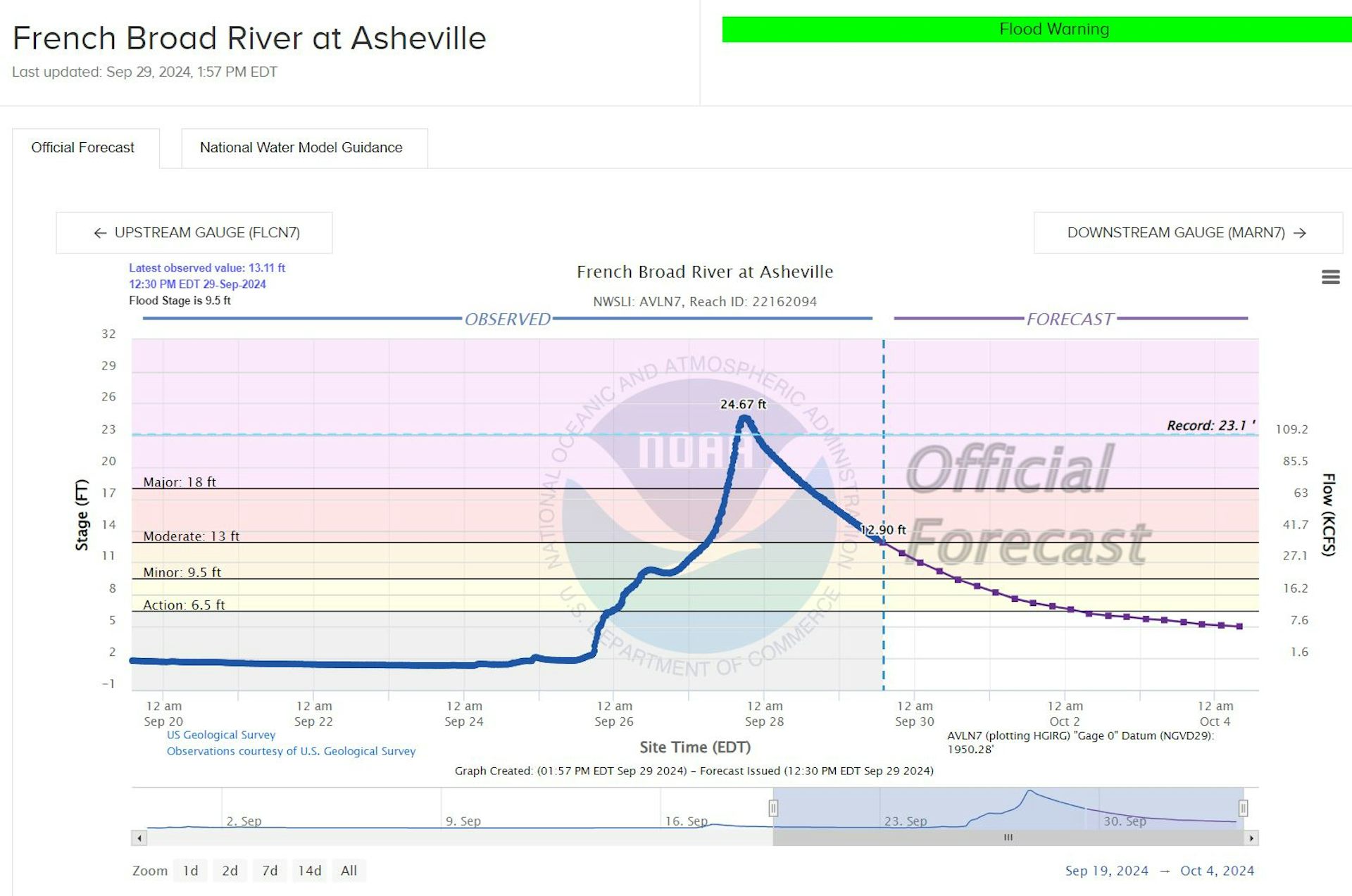
    But, as Helene revealed, there can also be great concern in less obvious spots. Inland, particularly in the mountains, runoff can quickly turn normally tame rivers into fast-rising torrents. The French Broad River at Asheville, North Carolina, rose about 12 feet in 12 hours during Helene and set a new flood stage record.

    When hurricanes and tropical storms are headed for the U.S., our interactive maps show where major polluters are located in the storm’s projected cone of impact. The maps identify hazardous flood-prone facilities down to the address, anywhere in the country.

    Knowledge is the first step

    Knowing where these sites are located is only the first step. Often, it’s up to communities themselves, many of them already overexposed and historically underserved, to raise concerns and demand strategies for mitigating the health, economic and environmental risks that industrial sites at risk of flooding and other damage can pose.

    These discussions can’t wait until a disaster is on the way. By knowing where these risks may be, communities can take steps now to build a safer future.

    This article, originally published Sept. 30, has been updated with Hurricane Milton.

    James R. Elliott receives funding from the National Science Foundation and the National Renewable Energy Lab.

    Dominic Boyer receives funding from the National Science Foundation, NOAA and Texas Sea Grant.

    Phylicia Lee Brown has nothing to disclose.

    ref. Flooded industrial sites and toxic chemical releases are a silent, growing threat in hurricanes like Milton and Helene – https://theconversation.com/flooded-industrial-sites-and-toxic-chemical-releases-are-a-silent-growing-threat-in-hurricanes-like-milton-and-helene-239977

    MIL OSI – Global Reports

  • MIL-OSI: Jackery Offers Exclusive Amazon Prime Day Special on the E2000v2 Solar Generator – the Lightest, Smallest 2kWh LFP Battery Backup Power of its Class

    Source: GlobeNewswire (MIL-OSI)

    FREMONT, Calif., Oct. 08, 2024 (GLOBE NEWSWIRE) — Jackery, the global leader in solar generators and portable energy solutions, is gearing up for Amazon Prime Day with an unbeatable offer on its latest innovation, the Jackery Explorer 2000v2, starting October 8. This compact, next-generation solar generator is now available for a special low price, with exclusive bundles and a free gift opportunity for early shoppers.

    During Amazon’s Prime Day from October 8 to October 9, those in the market for reliable and green backup power can take advantage of the following exclusive deals on Jackery’s E2000v2 series:

    • E2000v2: $999 (down from $1,499), delivering incredible value for home essential backup or outdoor use.
    • E2000v2 with two 200W Solar Panels: Bundle available for just $1599, providing a complete renewable power solution for emergency preparedness or off-grid adventures.

    With the winter season fast approaching, the E2000v2 solar generator is an ideal choice for anyone looking to safeguard against potential power outages. No installation is required, making it a hassle-free backup power solution that can be deployed instantly during emergencies.

    The Jackery Explorer 2000v2 Highlights:

    • Lightest, Smallest LFP 2kWh Power Station: the E2000v2 is the most compact solution of its class, featuring a robust 2200W output and a 4400W surge capacity, perfect for high-demand appliances like refrigerators, microwaves, or power tools.
    • Enhanced Charging Speed: With the capability to recharge in just two hours, the E2000v2 offers convenience and reliability, ensuring you stay powered during emergencies or on the go.
    • Versatile Power Options: Featuring multiple outlets and USB-A/USB-C ports, the E2000v2 can power everything from vital home electronics to smaller devices, making it a flexible solution for any situation.
    • Eco-Friendly: Unlike traditional gas generators, the E2000v2 can be paired with solar panels to harness clean, renewable energy, perfect for both outdoor use and indoor backup power needs.

    Don’t miss out on Jackery’s best deals of the year. For more details, visit Jackery.com and be on the lookout for additional deals on Jackery’s Amazon Storefront from October 8-9, 2024.

    About Jackery
    Founded in California in 2012, Jackery is the world’s leading provider of innovative solar generators and off-grid green energy solutions. As a global top-selling solar generator brand, Jackery is driven by its mission to “Bring Green Energy to All.” By integrating with Geneverse in 2024, Jackery has expanded its product offerings and is able to deliver a comprehensive range of energy solutions, from portable solar generators for outdoor use to whole-home backup systems, furthering its commitment to making green energy accessible for all. Jackery has consistently fulfilled its social responsibility on a global scale, maintaining long-term partnerships with global public welfare organizations such as WWF, NFF, and IRC. Through these collaborations, Jackery continues to contribute to global sustainable development and other public welfare initiatives, reinforcing its dedication to creating a greener, more sustainable future.

    Jackery@icrinc.com

    A photo accompanying this announcement is available at https://www.globenewswire.com/NewsRoom/AttachmentNg/0f058dae-9741-49d1-ba73-89e1bed05246

    The MIL Network

  • MIL-OSI USA: NSF Growing Convergence Research awards advance innovation across disciplines

    Source: US Government research organizations

    The U.S. National Science Foundation Growing Convergence Research (NSF GCR) awards are fostering deep integration across disciplines and pushing the boundaries of current research paradigms. The awards bring together experts from multiple science, technology, engineering and mathematics fields to tackle complex challenges across various topics, including national security, energy and STEM education.  

    “These awards require that researchers work across traditional disciplinary boundaries and leverage the expertise of different fields to drive innovation and discovery,” said Alicia J. Knoedler, head of the NSF Office of Integrative Activities. “Learning and practicing collaboration between and among disciplines are critical skills that investigators and teams need to develop. NSF’s investments through these awards reinforce the importance of capacity building to perform convergence in research and training.”  

    The NSF GCR program supports high-risk, cutting-edge research and helps to cultivate a new generation of interdisciplinary scientists. Projects are inspired by a societal grand challenge or a fundamental research question at the forefront of STEM. By growing novel collaborations and cross-disciplinary training, these awards will empower researchers to think outside the box and develop innovative approaches to scientific inquiry. This advances the frontiers of knowledge and paves the way for breakthroughs that can benefit society. 

    The awardees and short descriptions are listed below:  

    • Rooted in Nature: Bioinspired Design of Sustainable Seeding Methods to Improve Forest Regeneration University of California, Berkeley, Cornell University, Syracuse University and The Pennsylvania State University 

      Forest regeneration is essential for combating climate change. Challenges like limited seed availability and time-consuming seedling cultivation hinder forest restoration efforts. This project will integrate expertise in material science, engineering, ecology and other areas to create biodegradable, self-burying seed carriers for efficient, lower-cost aerial seeding. The researchers will investigate seed carrier designs applicable to different ecosystems. The team will also develop new ways of evaluating and improving the effectiveness of the seeding techniques. This research will boost forest restoration, providing economic advantages and enhancing ecological resilience. 
       

    • Non-Equilibrium Electrochemical Plasma Catalysis for Distributed Electrified Ammonia Synthesis Princeton University, Duke University and Rutgers University–Newark 

      Ammonia is a fuel for green power generation and a medium for energy storage and transport. It is also vital to food production as a key agricultural fertilizer. Traditional ammonia synthesis is energy-intensive and produces carbon dioxide. It also relies on fossil fuels and high-pressure catalysis. This project aims to advance the development of new electrified reactors that produce green ammonia with renewable electricity from atmospheric nitrogen and water. These reactors can help decarbonize chemical plants and address challenges in renewable energy storage. The project team will use novel integration across disciplines to create a nonequilibrium electrochemical plasma catalysis system for ammonia synthesis from water, nitrogen and electricity. Its success will be an innovation in nonequilibrium green chemical manufacturing. 
       

    • Engineering, SocioEconomic and Environmental Convergence of Ocean Wave Energy Research for Remote Coastal Communities University of Michigan – Ann Arbor, Virginia Tech, East Carolina University and University of North Carolina at Chapel Hill 

      In some rural coastal and island areas, electricity must be transported over long distances, and the supply is less robust, creating a challenge that hinders socioeconomic growth. Ocean waves along U.S. coastlines offer abundant energy resources, and over 200 concepts have been proposed for generating electricity from wave energy. Researchers from this project will examine which of the proposed concepts are most practical for island and coastal communities from engineering and socioeconomic perspectives. They will validate the most promising concepts through community engagement and ocean tests. The project integrates engineering, environmental and social sciences experts and an external advisory board with community end users and commercial developers to implement a convergent, community-engaged approach to this research challenge. 
       

    • Mineral Detection of Dark Matter Virginia Tech, University of Michigan – Ann Arbor and University of North Florida 

      Dark matter plays an important role in the formation of galaxies and the universe’s evolution, but it has proven very difficult to detect directly. This project will integrate engineering, physics, geoscience and materials science to establish whether evidence of interactions between dark matter and ordinary matter can be found through “mineral detection.” Researchers will explore whether crystals in rocks can be used to look for evidence of interactions with dark matter over geological timescales. The team aims to develop a new path for advancing understanding of what dark matter is. 
       

    • Towards a Physics-Inspired Approach to Computation on Encrypted Data Boston University, University of Central Florida and Cornell University 

      Harnessing the wealth of electronically stored data for applications with societal value raises security and privacy concerns that are likely to hinder progress and return on investment in an artificial intelligence-powered economy. This project will combine ideas and tools from physics, mathematics and computer science to explore a new paradigm for circuit obfuscation in cryptography and establish the security and efficiency of encrypted operator computing. The research team aims to accelerate the development of trusted, low-overhead tools that enable computation directly on encrypted data so that, for example, confidential data can be shared with an untrusted party who can extract insights from the data without having access to the unencrypted data. 
       

    • The Other Plastic Problem: Quantifying and Predicting Impacts of Plastic Additives Across Levels of Biological and Social Organization Duke University and The Pennsylvania State University 

      Plastic pollution is widespread and harms various species. One major gap in knowledge is the combined biological impact of the many chemicals added to plastics to tailor their properties. Plastic additives are chemicals that are included within plastic polymers to enhance function. These additives include over ~10,000 chemicals and include known endocrine disruptors, pro-inflammatory agents and mutagens. Addressing this research challenge requires integrating expertise across molecular and cell biology, environmental chemistry and toxicology, materials science, policy and other fields. This project will allow an integrated research team to develop and employ novel approaches for analyzing the effects of plastic additives on cells, organisms and ecological communities; ground-truth product use and additive exposures; and evaluate mitigation strategies. The project also aims to engage stakeholders to reduce plastic pollution and empower underrepresented students in STEM to take action. 
       

    • GCR: Towards a Convergent Understanding of the Dynamics of Uncertainty in Individuals and Groups with a Focus on STEM Education Tufts University 

      Developing a systematic understanding of how people manage ambiguity, uncertainty and confusion (AU&C) is a complex challenge. This project integrates social sciences, data sciences and engineering to build new capabilities for studying AU&C management in the context of STEM learning. This will allow researchers to understand how to enable students to productively engage with AU&C in STEM. The research team will develop novel methods for collecting and analyzing student data using a multimodal approach, including behavioral, linguistic and physiological sensing. Using these methods, researchers will investigate the individual and group dynamics of AC&U within STEM learning environments, with the long-term goal of producing new educational practices that embrace complexity and uncertainty. In this, the project aims to bridge the disconnect between how science is taught and the practice of STEM professionals. 

    MIL OSI USA News

  • MIL-OSI USA: Rep. Gabe Vasquez Delivers Critical Federal Funding to Strengthen Public Safety, Community Development and Energy Resilience in Southwestern New Mexico

    Source: United States House of Representatives – Representative Gabe Vasquez’s (NM-02)

    LORDSBURG, N.M. – On Monday, October 7, U.S. Representative Gabe Vasquez (N.M.-02) spent the day meeting with officials from Lordsburg and Deming to deliver critical funding for southwestern New Mexico’s communities. Vasquez secured federal investments for the Luna County Mobile Command Center, Lordsburg Community Center and the Southline Transmission Project to strengthen public safety, community development and energy resilience. 

    “After listening to constituents and local leaders, I’m proud to deliver these investments to ensure the safety, well-being and future prosperity of our communities,” said Vasquez. “From improving public safety with the Luna Mobile Command Center, to providing a hub for families in Lordsburg, to modernizing our energy infrastructure with the Southline Transmission Project, we are building a stronger, more resilient New Mexico. In Congress, I’ll continue to fight for the federal support our district deserves to grow and thrive.”

    Vasquez secured $500,000 for the Luna Mobile Command Center Project, a crucial investment in public safety that will directly support law enforcement and first responders. The new command center will ensure that emergency personnel have access to better equipment and communication tools to respond swiftly and effectively. This project underscores Vasquez’s commitment to strengthening public safety initiatives, ensuring that local agencies are fully equipped to protect the community and manage emergencies with the highest level of coordination and efficiency.

    “We are so appreciative of Representative Gabe Vasquez, who has always been a good neighbor. I’ve seen him down here countless times and he is always in contact with us. And when it comes to public safety, this is not just a county mobile command unit for the county, but also for state police and Deming police. Without this funding from Representative Vasquez, we could not afford something like this. When you get $500,000, it just shows you the tremendous support we’ve got from Representative Vasquez,” said Luna County Manager Chris Brice.

    “I am really appreciative that Luna County was awarded $500,000 to help provide upgrades for law enforcement and the incident command unit. It’s time for an upgrade, and I appreciate Congressman Vasquez for getting this money down to Luna County,” said Luna County Commissioner Ray Trejo.

    In Lordsburg, Vasquez also delivered a $500,000 check for the renovation of the Lordsburg Community Center, a key investment in supporting families and strengthening rural communities. The renovated center will provide expanded recreational opportunities for local families and youth, offering a safe and welcoming space for children. It will also serve as a hub for community gatherings and events, creating new opportunities for residents to come together. This project reflects Vasquez’s commitment to enhancing quality of life in rural New Mexico. 

    “I want to commend Representative Gabe Vasquez and the City of Lordsburg for taking the initiative to make some community improvements here. In rural New Mexico it seems like we are always forgotten. When we have someone like Representative Vasquez looking out for our small community, we know that we’ll see some economic growth here,” said Hidalgo County Manager Tisha Green.

    Vasquez was also joined by leaders for the Southline Transmission Project to highlight a significant step forward for New Mexico’s clean energy future. Last week, the Department of Energy (DOE) announced that the Southline Transmission Project has been chosen as one of five recipients as part of a $1.5 billion commitment to improve the electric grid nationwide. With this funding, Southline will construct the second phase of its project to deliver 1,000 megawatts of new capacity between Hidalgo County and Las Cruces, lowering utility bills for New Mexicans. As one of his first acts in office, Vasquez wrote to DOE in support of the Southline Transmission Project to bring high-paying jobs to rural communities and invest in New Mexico’s renewable energy future.

    “I’m very appreciative of Representative Vasquez and our Congressional Delegation for doing the work to bring money back to rural New Mexico. The Transmission Siting and Economic Development grant program is going to create great economic opportunities for the city of Lordsburg and the residents of Hidalgo County through infrastructure improvement, downtown revitalization and entrepreneur training. We’re excited to have this here in Lordsburg and ready to get started,” saidEmily Gojkovich, Lordsburg Economic Development Specialist.

    Since serving New Mexico in Congress, Vasquez has been fighting for our district’s fair share of funding. Each year, Congress is responsible for passing Appropriations legislation to fund federal agencies. After hearing directly from constituents about what the federal budget should prioritize, Vasquez submitted 15 proposals for Community Project Funding each year on an array of issues ranging from supporting families to public safety investments to infrastructure improvements. 

    ###

    MIL OSI USA News

  • MIL-OSI: TC Energy announces pricing of cash tender offers

    Source: GlobeNewswire (MIL-OSI)

    CALGARY, Alberta, Oct. 08, 2024 (GLOBE NEWSWIRE) — News Release – TC Energy Corporation (TSX, NYSE: TRP) (“TC Energy”) today announced that TransCanada PipeLines Limited (the “Company”), a wholly-owned subsidiary of TC Energy, has released the pricing terms of its previously announced separate offers (the “Offers”) to purchase for cash up to US$1,750,000,000 aggregate principal amount of its outstanding notes of the series listed in the table below (collectively, the “Notes”).

    The Offers are made upon the terms and subject to the conditions set forth in the Offer to Purchase dated Oct. 1, 2024 relating to the Notes (the “Offer to Purchase”) and the notice of guaranteed delivery attached as Appendix A thereto (the “Notice of Guaranteed Delivery” and, together with the Offer to Purchase, the “Tender Offer Documents”). Capitalized terms used but not defined in this announcement have the meanings given to them in the Offer to Purchase.

    Set forth in the table below is the applicable Total Consideration for each series of Notes, as calculated as of 2 p.m. (Eastern time) today, Oct. 8, 2024, in accordance with the Offer to Purchase.

    Acceptance
    Priority
    Level(1)
    Title of Notes(2) Principal
    Amount
    Outstanding (in
    millions)
    CUSIP / ISIN
    Nos. (2)
    Reference
    Security(4)
    Reference Yield Bloomberg
    Reference
    Page(4)
    Fixed Spread (Basis Points)(4) Total Consideration(3)(4)
    1 2.500% Senior Notes due 2031 US$1,000 89352HBC2 / US89352HBC25 3.875% U.S. Treasury due Aug.15, 2034 4.031% FIT1 +35 $887.76
    2 5.000% Senior Notes due 2043 US$625 89352HAL3 / US89352HAL33 4.125% U.S. Treasury due Aug. 15, 2044 4.387% FIT1 +90 $965.85
    3 4.875% Senior Notes due 2048 US$1,000 89352HAY5 / US89352HAY53 4.625% U.S. Treasury due May 15, 2054 4.316% FIT1 +100 $941.07
    4 5.100% Senior Notes due 2049 US$1,000 89352HAZ2 / US89352HAZ29 4.625% U.S. Treasury due May 15, 2054 4.316% FIT1 +95 $977.29
    5 4.750% Senior Notes due 2038 US$500 89352HAX7 / US89352HAX70 3.875% U.S. Treasury due Aug. 15, 2034 4.031% FIT1 +110 $963.02
    6 4.250% Senior Notes due 2028 US$1,400 89352HAW9 / US89352HAW97 3.50% U.S. Treasury due Sept. 30, 2029 3.857% FIT1 +55 $994.82
    7 4.875% Senior Notes due 2026 US$850 89352HAT6 / US89352HAT68 3.875% U.S. Treasury due Jan. 15, 2026 4.140% FIT4 +45 $1,003.36

    _____________

    (1) Subject to the satisfaction or waiver of the conditions of the Offers described in the Offer to Purchase, if the Maximum Purchase Condition is not satisfied with respect to every series of Notes, the Company will accept Notes for purchase in the order of their respective Acceptance Priority Level specified in the table above (with 1 being the highest Acceptance Priority Level and 7 being the lowest Acceptance Priority Level). It is possible that a series of Notes with a particular Acceptance Priority Level will not be accepted for purchase even if one or more series with a higher or lower Acceptance Priority Level are accepted for purchase.

    (2) No representation is made as to the correctness or accuracy of the CUSIP numbers or ISINs listed in this News Release or printed on the Notes. They are provided solely for convenience.

    (3) For each series of Notes in respect of which a par call date is indicated, the calculation of the applicable Total Consideration (as defined below) has been performed to either the maturity date or such par call date, in accordance with standard market convention.

    (4) The total consideration for each series of Notes (such consideration, the “Total Consideration”) payable per each US$1,000 principal amount of such series of Notes validly tendered for purchase has been based on the applicable Fixed Spread specified in the table above for such series of Notes, plus the applicable yield based on the bid-side price of the applicable U.S. Treasury reference security as specified in the table above, as quoted on the applicable Bloomberg Reference Page as of 2 p.m. (Eastern time) today, Oct. 8, 2024. See “Description of the Offers—Determination of the Total Consideration” in the Offer to Purchase. The Total Consideration does not include the applicable Accrued Coupon Payment (as defined below), which will be payable in cash in addition to the applicable Total Consideration.

    The Offers will expire at 5 p.m. (Eastern time) on Oct. 8, 2024, unless extended or earlier terminated (such date and time with respect to an Offer, as the same may be extended with respect to such Offer, the “Expiration Date”). Notes may be validly withdrawn at any time at or prior to 5 p.m. (Eastern time) on Oct. 8, 2024, unless extended with respect to any Offer.

    For Holders who deliver a Notice of Guaranteed Delivery and all other required documentation at or prior to the Expiration Date, upon the terms and subject to the conditions set forth in the Tender Offer Documents, the deadline to validly tender Notes using the Guaranteed Delivery Procedures (as defined in the Offer to Purchase) will be the second business day after the Expiration Date and is expected to be 5 p.m. (Eastern time) on Oct. 10, 2024, unless extended with respect to any Offer (the “Guaranteed Delivery Date”).

    Settlement for all Notes tendered prior to the Expiration Date or pursuant to a Notice of Guaranteed Delivery will be four business days after the Expiration Date and two business days after the Guaranteed Delivery Date, respectively, which is expected to be Oct. 15, 2024, unless extended with respect to any Offer (collectively, the “Settlement Date”).

    Upon the terms and subject to the conditions set forth in the Offer to Purchase, Holders whose Notes are accepted for purchase in the Offers will receive the applicable Total Consideration for each US$1,000 principal amount of such Notes in cash on the Settlement Date.

    In addition to the applicable Total Consideration, Holders whose Notes are accepted for purchase will receive a cash payment equal to the accrued and unpaid interest on such Notes from and including the immediately preceding interest payment date for such Notes to, but excluding, the Settlement Date (the “Accrued Coupon Payment”). Interest will cease to accrue on the Settlement Date for all Notes accepted in the Offers. Under no circumstances will any interest be payable because of any delay in the transmission of funds to Holders by The Depository Trust Company (“DTC”) or its participants.

    The Offers are subject to the satisfaction of certain conditions as described in the Offer to Purchase. The Company reserves the right, subject to applicable law, to waive any and all conditions to any Offer. If any of the conditions is not satisfied, the Company is not obligated to accept for payment, purchase or pay for, and may delay the acceptance for payment of, any tendered notes, in each event subject to applicable laws, and may terminate or alter any or all of the Offers. The Offers are not conditioned on the tender of any aggregate minimum principal amount of Notes of any series (subject to minimum denomination requirements as set forth in the Offer to Purchase).

    The Company has retained Deutsche Bank Securities Inc., J.P. Morgan Securities LLC, Morgan Stanley & Co. LLC, and RBC Capital Markets, LLC to act as the dealer managers (the “Dealer Managers”) for the Offers. Questions regarding the terms and conditions for the Offers should be directed to Deutsche Bank Securities Inc. at (866) 627-0391 (toll-free) or (212) 250-2955 (collect), J.P. Morgan Securities LLC at (866) 834-4666 (toll-free) or (212) 834-4818 (collect), Morgan Stanley & Co. LLC at (800) 624-1808 (toll-free) or (212) 761-1057 (collect), or RBC Capital Markets, LLC at (877) 381-2099 (toll-free) or (212) 618-7843 (collect).

    D.F. King & Co., Inc. will act as the Information and Tender Agent for the Offers. Questions or requests for assistance related to the Offers or for additional copies of the Offer to Purchase may be directed to D.F. King & Co., Inc. in New York by telephone at +1 (212) 269-5550 (for banks and brokers only) or +1 (866) 620-9554 (for all others toll-free), or by email at TCEnergy@dfking.com. You may also contact your broker, dealer, commercial bank, trust company or other nominee for assistance concerning the Offers. The Tender Offer Documents can be accessed at the following link: http://www.dfking.com/transcanada.

    If the Company terminates any Offer with respect to one or more series of Notes, it will give prompt notice to the Information and Tender Agent, and all Notes tendered pursuant to such terminated Offer will be returned promptly to the tendering Holders thereof. With effect from such termination, any Notes blocked in DTC will be released.

    Holders are advised to check with any bank, securities broker or other intermediary through which they hold Notes as to when such intermediary would need to receive instructions from a beneficial owner in order for that Holder to be able to participate in, or withdraw their instruction to participate in the Offers before the deadlines specified herein and in the Offer to Purchase. The deadlines set by any such intermediary and DTC for the submission and withdrawal of tender instructions will also be earlier than the relevant deadlines specified herein and in the Offer to Purchase.

    This announcement is for informational purposes only. This announcement is not an offer to purchase or a solicitation of an offer to sell any Notes or any other securities of TC Energy, the Company, or any of their subsidiaries. The Offers are being made solely pursuant to the Offer to Purchase. The Offers are not being made to Holders of Notes in any jurisdiction in which the making or acceptance thereof would not be in compliance with the securities, “blue sky” or other laws of such jurisdiction. In any jurisdiction in which the securities laws or “blue sky” laws require the Offers to be made by a licensed broker or dealer, the Offers will be deemed to have been made on behalf of the Company by the Dealer Managers or one or more registered brokers or dealers that are licensed under the laws of such jurisdiction.

    No action has been or will be taken in any jurisdiction that would permit the possession, circulation or distribution of either this announcement, the Offer to Purchase or any material relating to us or the Notes in any jurisdiction where action for that purpose is required. Accordingly, neither this announcement, the Offer to Purchase nor any other offering material or advertisements in connection with the Offers may be distributed or published, in or from any such country or jurisdiction, except in compliance with any applicable rules or regulations of any such country or jurisdiction.

    Forward-looking Statements

    This news release contains certain forward-looking information and forward-looking statements as defined in applicable securities laws (collectively referred to as “forward-looking statements”). Forward-looking statements include: statements regarding the terms and timing for completion of the Offers, including the acceptance for purchase of any Notes validly tendered and the expected Expiration Date and settlement dates thereof; and the satisfaction or waiver of certain conditions of the Offers.

    Forward-looking statements involve known and unknown risks, uncertainties and other factors, which may cause the actual results, performance or achievements of TC Energy to be materially different from any future results, performance or achievements expressed or implied by the forward-looking statements. Factors that may cause actual results to vary include, but are not limited to, conditions in financial markets, investor response to the Offers, and other risk factors as detailed from time to time in TC Energy’s reports filed with Canadian securities administrators and the U.S. Securities and Exchange Commission.

    Readers are cautioned against unduly relying on forward-looking statements. Forward-looking statements are made as of the date of the relevant document and, except as required by law, TC Energy undertakes no obligation to update publicly or otherwise revise any forward-looking statements, whether as a result of new information or future events or otherwise.

    About TC Energy

    We’re a team of 7,000+ energy problem solvers working to safely move, generate and store the energy North America relies on. Today, we’re delivering solutions to the world’s toughest energy challenges – from innovating to deliver the natural gas that feeds LNG to global markets, to working to reduce emissions from our assets, to partnering with our neighbours, customers and governments to build the energy system of the future. It’s all part of how we continue to deliver sustainable returns for our investors and create value for communities.

    TC Energy’s common shares trade on the Toronto (TSX) and New York (NYSE) stock exchanges under the symbol TRP. To learn more, visit us at TCEnergy.com.

    -30-

    Media Inquiries:
    Media Relations
    media@tcenergy.com
    403-920-7859 or 800-608-7859

    Investor & Analyst Inquiries:
    Gavin Wylie / Hunter Mau
    investor_relations@tcenergy.com
    403-920-7911 or 800-361-6522

    PDF available: http://ml.globenewswire.com/Resource/Download/382e93bc-3de4-4251-b8e5-d81e89cb81a1

    The MIL Network

  • MIL-OSI Europe: JOINT MOTION FOR A RESOLUTION on strengthening Moldova’s resilience against Russian interference ahead of the upcoming presidential elections and a constitutional referendum on EU integration – RC-B10-0072/2024

    Source: European Parliament

    Siegfried Mureşan, Andrzej Halicki, Michael Gahler, Sebastião Bugalho, David McAllister, Željana Zovko, Nicolás Pascual De La Parte, Isabel Wiseler‑Lima, Antonio López‑Istúriz White, Wouter Beke, Krzysztof Brejza, Daniel Caspary, Jan Farský, Rasa Juknevičienė, Sandra Kalniete, Ondřej Kolář, Andrey Kovatchev, Andrius Kubilius, Miriam Lexmann, Vangelis Meimarakis, Ana Miguel Pedro, Davor Ivo Stier, Michał Szczerba, Ingeborg Ter Laak, Matej Tonin, Milan Zver, Ioan‑Rareş Bogdan, Daniel Buda, Gheorghe Falcă, Mircea‑Gheorghe Hava, Dan‑Ştefan Motreanu, Virgil‑Daniel Popescu, Adina Vălean, Loránt Vincze, Iuliu Winkler
    on behalf of the PPE Group
    Yannis Maniatis, Nacho Sánchez Amor, Sven Mikser, Thijs Reuten, Dan Nica, Victor Negrescu, Gheorghe Cârciu, Mihai Tudose, Adrian‑Dragoş Benea, Gabriela Firea, Maria Grapini, Claudiu Manda, Vasile Dîncu, Ştefan Muşoiu
    on behalf of the S&D Group
    Joachim Stanisław Brudziński, Adam Bielan, Mariusz Kamiński, Cristian Terheş, Alexandr Vondra, Roberts Zīle, Ivaylo Valchev, Carlo Fidanza, Rihards Kols, Sebastian Tynkkynen, Michał Dworczyk, Assita Kanko, Małgorzata Gosiewska, Maciej Wąsik, Veronika Vrecionová, Georgiana Teodorescu, Adrian‑George Axinia, Ondřej Krutílek, Tobiasz Bocheński, Alberico Gambino, Gheorghe Piperea, Aurelijus Veryga, Şerban‑Dimitrie Sturdza, Claudiu‑Richard Târziu, Charlie Weimers
    on behalf of the ECR Group
    Dan Barna, Petras Auštrevičius, Helmut Brandstätter, Benoit Cassart, Olivier Chastel, Veronika Cifrová Ostrihoňová, Bernard Guetta, Ľubica Karvašová, Ilhan Kyuchyuk, Nathalie Loiseau, Urmas Paet, Marie‑Agnes Strack‑Zimmermann, Eugen Tomac, Hilde Vautmans, Lucia Yar, Dainius Žalimas
    on behalf of the Renew Group
    Reinier Van Lanschot
    on behalf of the Verts/ALE Group
    Jonas Sjöstedt
    on behalf of The Left Group

    European Parliament resolution on strengthening Moldova’s resilience against Russian interference ahead of the upcoming presidential elections and a constitutional referendum on EU integration

    (2024/2821(RSP))

    The European Parliament,

     having regard to its previous resolutions on the Republic of Moldova,

     having regard to the Association Agreement between the European Union and the European Atomic Energy Community and their Member States, of the one part, and the Republic of Moldova, of the other part[1], which includes a Deep and Comprehensive Free Trade Area,

     having regard to the Republic of Moldova’s application for EU membership of 3 March 2022, and the European Council’s consequent granting of candidate country status on 23 June 2022,

     having regard to the convening of the first Intergovernmental Conference on Moldova’s accession to the EU, held in June 2024,

     having regard to Articles 2 and 49 of the Treaty on European Union,

     having regard to the joint statement of 13 June 2024 by the US, Canada and the UK on exposing Russia’s subversive activity and electoral interference targeting Moldova,

     having regard to Rules 136(2) and (4) of its Rules of Procedure,

    A. whereas on 20 October 2024, the Republic of Moldova is scheduled to hold a presidential election and a constitutional referendum on EU integration, amid ongoing Russian interference and attempts to destabilise the political situation and electoral process in the country;

    B. whereas the Russian Federation has been using economic blackmail, provocation, disinformation, illegal funding of political parties, cyberattacks and other hybrid means to undermine the stability, sovereignty, constitutional order and democratic institutions of the Republic of Moldova; whereas Russia’s subversive activities in Moldova seek to undermine popular support for the European path chosen by the people of Moldova and to incite destabilisation; whereas the active measures envisaged include establishing and promoting front organisations disguised as non-governmental organisations and ‘cultural centres’, disseminating online and offline disinformation, establishing strong pro-Russian political and societal constituencies and returning the Republic of Moldova to a state of dependency on Russian hydrocarbons;

    C. whereas in 2023, the EU imposed sanctions on key Moldovan oligarchs and pro-Russian actors, such as Ilan Shor, Vladimir Plahotniuc, Igor Ceaika, Gheorghe Cavaliuc and Marina Tauber, on the basis of a recently established sanctions regime targeting persons responsible for actions aimed at destabilising, undermining or threatening the sovereignty and independence of the Republic of Moldova; whereas allies of Mr Shor have reportedly actively recruited, arranged logistics for and provided financial compensation to individuals to join their protests; whereas on 3 October 2024, a large-scale electoral fraud operation was uncovered, financed by pro-Russian oligarch Ilan Shor, revealing that over USD 15 million had been transferred in September 2024 to over 130 000 Moldovan citizens involved in this voter bribery scheme; whereas on 18 September 2024, two close allies of Ilan Shor – deputy Marina Tauber and the Governor (Bashkan) of Gagauzia, Evghenia Guțul – met with the spokesperson of the Russian Foreign Ministry, Maria Zakharova, and subsequently gave false information about the EU and the Republic of Moldova’s future within it;

    D. whereas one of the tools used by the Russian state is the state-funded RT network (formerly Russia Today), which has moved beyond media activities, becoming actively involved in cyber operations, covert influence, military procurement and information warfare across various regions; whereas in June 2024, the US, together with the UK and Canada, exposed Russia’s efforts to engage in subversive activities and electoral interference targeting the Republic of Moldova;

    E. whereas in September 2024, the US imposed sanctions on three entities and two individuals for their involvement in Russia’s destabilising actions abroad, including in the Republic of Moldova; whereas these covert efforts have included RT personnel providing direct support to fugitive Moldovan oligarch Ilan Shor, the key perpetrator of the 2014 USD 1 billion bank fraud scandal; whereas, according to the US State Department, RT and its employees, including editor-in-chief Margarita Simonyan, have directly coordinated with the Kremlin to support Russian Government efforts to influence the Moldovan presidential election of October 2024, with the apparent aim of inciting unrest in the Republic of Moldova;

    F. whereas the Security and Intelligence Service of the Republic of Moldova has reported an unprecedented level of intensity in Russia’s actions aimed at anchoring Moldova within its sphere of influence; whereas this hybrid threat is targeted at democratic processes and undermines European integration by amplifying radical separatist tendencies in the south of the country, particularly in Gagauzia (UTAG), using propaganda, manipulating the information space, interfering in the electoral process and conducting subversive operations; whereas Moldova’s national security services have stated that Russia is funding the ‘no’ campaign, with around EUR 100 million for pro-Russian political groups, and spreading disinformation on social media to sow doubt about the legitimacy of the electoral process; whereas in 2023, Ukrainian intelligence reported that it had intercepted a plan by Russia to stage a coup and oust Moldovan President Maia Sandu;

    G. whereas the Republic of Moldova has taken steps to combat Russian interference, including by banning pro-Russian political parties that are operating outside the law, sanctioning oligarchs, suspending media outlets that spread disinformation, and increasing customs controls; whereas Moldova’s updated national security strategy attributes disinformation campaigns and other hybrid attacks to Russia;

    H. whereas the unprovoked, unjustified and illegal war of aggression launched by the Russian Federation against Ukraine profoundly affects regional security and stability, endangering the Republic of Moldova’s macroeconomic situation, financial stability, democratic development and social cohesion, while further increasing the incidence and severity of poverty, inflation and emigration; whereas the Russian Federation, in cooperation with domestic Russia-sponsored actors, galvanises and uses the resultant widespread economic, geopolitical and security uncertainty to delegitimise and foster opposition to the Moldovan Government’s pro-European policies;

    I. whereas despite the dramatic effects of the war on Ukraine and these destabilisation attempts, the Republic of Moldova has managed to significantly consolidate its democracy, continue its reform trajectory and develop its relations with the EU; whereas the improvements in the country’s democratic system have been reflected in its progress on various international indexes; whereas the Moldovan Government’s enhanced implementation of current agreements demonstrates its commitment to closer cooperation with and integration into the EU;

    J. whereas the Republic of Moldova is a close and valued partner of the EU; whereas its application for EU membership, and the European Council’s decision to grant candidate country status to the Republic of Moldova on the understanding that nine steps are taken, demonstrates a strong joint ambition for swift EU integration; whereas through the Association Agreement and the Deep and Comprehensive Free Trade Area, in force since 2016, the EU and Moldova have committed to promoting political association and achieving economic integration;

    K. whereas on 3 March 2022, the Republic of Moldova applied for EU membership, and on 23 June 2022, was granted candidate country status by unanimous agreement of all 27 EU Member States; whereas the EU opened accession negotiations with the Republic of Moldova during the first accession conference at ministerial level, held in Luxembourg on 25 June 2024, following the European Council’s decision of 14-15 December 2023 to open accession negotiations with Moldova, and the Council’s approval of the negotiating framework for these negotiations on 21 June 2024; whereas EU accession remains a merit-based process that requires the fulfilment of the EU membership criteria;

    L. whereas every sovereign state has the inherent right to defend itself and to invest in its defence and resilience capabilities, and such actions are consistent with the Republic of Moldova’s status of neutrality;

    M. whereas the Council has adopted assistance measures worth EUR 137 million for the benefit of the Armed Forces of the Republic of Moldova under the European Peace Facility since 2021;

    N. whereas on 24 April 2023, the EU set up the Partnership Mission in the Republic of Moldova (EUPM Moldova) under the common security and defence policy, with the objective of enhancing the security sector’s resilience in the areas of crisis management, hybrid threats, including cybersecurity and countering foreign information manipulation and interference; whereas on 21 May 2024, Moldova became the first country to sign a Security and Defence Partnership with the EU, which will help strengthen cooperation on security and defence policy between the EU and Moldova;

    O. whereas, according to several reports, many priests from the Metropolis of Moldova have travelled to Russia, where they received funds with the intention of using them for electoral purposes in the Republic of Moldova;

    1. Stands in solidarity with the people of the Republic of Moldova and reiterates its unwavering support for the independence, sovereignty and territorial integrity of the Republic of Moldova within its internationally recognised borders;

    2. Strongly condemns the escalating malicious activities, interference and hybrid operations by the Russian Federation, pro-Russian oligarchs and Russian-sponsored local actors aimed at undermining the electoral processes, security, sovereignty and democratic foundations of the Republic of Moldova, fostering divisions within Moldovan society and derailing the country’s pro-European trajectory, ahead of the upcoming presidential election and the constitutional referendum on EU integration;

    3. Reiterates its call on the Russian authorities to respect the Republic of Moldova’s independence, sovereignty and territorial integrity, and to cease its provocations and attempts to destabilise the country and undermine its constitutional order and democratic institutions; reiterates its calls on Russia to withdraw its military forces and equipment from the territory of the Republic of Moldova, to ensure the full destruction of all ammunition and equipment in the Cobasna depot under international oversight and to support a peaceful resolution to the Transnistrian conflict, in line with the principles of international law and the 1999 Istanbul Summit Declaration of the Organization for Security and Co-operation in Europe;

    4. Calls for the EU and its Member States to ensure that all necessary assistance is provided to the Republic of Moldova to strengthen its institutional mechanisms and its ability to respond to hybrid threats; calls for increased EU support for Moldova in countering disinformation, hybrid threats and cyberattacks; underlines that this should entail boosting Moldova’s capacity to combat disinformation, strengthen its cybersecurity infrastructure and enhance resilience against external malign influences; emphasises the particular importance of countering false Russian narratives, while underscoring their malign interference in the Republic of Moldova and the ways in which they are used to justify Russia’s war of aggression against Ukraine;

    5. Calls on the Council to adopt additional targeted sanctions listings against individuals and entities responsible for supporting or carrying out actions which undermine or threaten the Republic of Moldova’s sovereignty and independence, as well as the country’s democracy, stability or security, and the rule of law; calls for the EU and national authorities to make sure those sanctions are duly implemented; reiterates its call on the respective hosting states and territories to extradite Ilan Shor, Vladimir Plahotniuc and other individuals sought for trial in the Republic of Moldova;

    6. Highlights the important role played by the EU Partnership Mission in the Republic of Moldova (EUPM Moldova); calls for the EU and its Member States to ensure that EUPM Moldova performs to the best of its ability, taking stock of progress and adapting its operations if necessary to make it as efficient as possible, while proposing to further extend its mandate beyond May 2025, adapt its scope and increase the mission’s resources; calls for the EU and its Member States to increase their support for Moldova’s Center for Strategic Communication and Combating Disinformation; calls on the Commission to report on the results of the EU support package for Moldova of June 2023, particularly the stated aim of countering foreign information manipulation and interference, and building capacity for independent media, civil society and youth;

    7. Applauds the Republic of Moldova’s steadfast support for Ukraine since the start of Russia’s war of aggression; commends the Republic of Moldova for welcoming 1.5 million Ukrainian refugees throughout the war, of which an estimated 125 000 remain in the country; calls for the EU and its Member States to ensure continued support for Moldova and its people in addressing the challenges facing the country as a consequence of Russia’s war of aggression against Ukraine, including large numbers of refugees, inflation, threats to its energy supplies and violations of its airspace;

    8. Reaffirms its commitment to the Republic of Moldova’s future membership of the EU; believes that its membership in the EU would constitute a mutually beneficial investment in a united and strong Europe; welcomes the widespread support in the Republic of Moldova for its European integration; stresses that the Republic of Moldova’s European integration represents not only a path towards greater economic prosperity, but also a safeguard for political stability and security in the face of external threats;

    9. Calls for the acceleration of the screening process and the timely organisation of subsequent intergovernmental conferences, where negotiations on Cluster 1 on Fundamentals should be initiated; calls for the EU to adequately support accession-related reforms by developing robust and adaptable financial instruments tailored to the Republic of Moldova’s specific needs with a view to effectively addressing its economic and structural challenges, and ensuring the country remains resilient and capable of implementing the necessary reforms throughout its EU accession process; urges the acceleration of Moldova’s gradual integration into the EU and the single market by allowing participation in new initiatives and EU programmes, which will deliver tangible socio-economic benefits in specific areas even before the country formally joins the EU; reiterates its call, in this regard, for the EU to take swift and significant steps towards the permanent liberalisation of its tariff-rate quotas;

    10. Calls for more consistent support for the Republic of Moldova in its EU accession process, including increased technical assistance by sending additional EU advisors to the Moldovan authorities, as a contribution to strengthening capacity-building;

    11. Calls for the adoption of a new growth plan for the Republic of Moldova so as to adequately finance and support Moldova in achieving economic convergence with the EU; believes that this plan should finance investments in infrastructure, human capital and the digital and green transitions, facilitating sustainable economic growth;

    12. calls on the Commission, in this regard, to include the Republic of Moldova in the Instrument for Pre-accession Assistance and to prioritise funding for candidate countries in its proposal for the next multiannual financial framework (2028-2034), ensuring the path towards EU membership;

    13. Welcomes the Republic of Moldova’s significant progress in implementing EU accession-related reforms and encourages the Moldovan authorities to continue the ambitious reforms on democracy and the rule of law; calls for the EU and its Member States to prioritise and allocate additional resources to efforts to support the rule of law and anti-corruption reforms in the Republic of Moldova in order to address vulnerabilities, including those related to corruption in the security sector, justice system, public administration and media, which could enable Russian interference and disinformation; encourages the Moldovan Government to continue working with all stakeholders towards a sustainable and comprehensive justice and anti-corruption reform, in line with EU and Venice Commission recommendations;

    14. Underlines the importance of advancing the country’s reform process in order to improve living standards, particularly for vulnerable groups, and to provide the younger generations with attractive prospects for life and work in the country, thereby increasing societal resilience to hybrid attacks and reducing the number of citizens seeking better living conditions elsewhere in Europe; highlights the need for the social acquis to be better represented in the Commission’s assessments and recommendations;

    15. Reiterates its support for stronger cooperation on security and defence policy between the EU and the Republic of Moldova; commends the Republic of Moldova for becoming the first country to sign a security and defence partnership with the EU and calls for this partnership to be put into practical action; calls for the EU to progressively include the Republic of Moldova in upcoming legislative initiatives and programmes relating to European security and defence; supports the continued work under the High-Level Political and Security Dialogue between the EU and the Republic of Moldova to enhance cooperation on foreign and security policy;

    16. Calls on the Member States to increase the European Peace Facility’s funding for the Republic of Moldova to further enhance the country’s defence capabilities;

    17. Reiterates its call for the EU and its Member States to continue supporting the efforts of the Moldovan authorities to maintain macroeconomic stability and enhance its energy security by supporting the construction of new electricity interconnections with neighbouring countries; calls for the EU and its Member States to financially support energy efficiency and renewable energy projects as a clean and sustainable way of reducing Moldova’s energy demand and diversifying its supply, while ensuring energy affordability, in particular for the most vulnerable groups;

    18. Urges the EU and its Member States to further strengthen cooperation with Moldova through targeted measures in order to enhance the country’s resilience to hybrid threats, including by improving strategic communications about the EU, supporting journalists and civil society in countering disinformation, promoting independent Russian-language media content and enhancing public information literacy; calls for additional resources and technical know-how to assist the Moldovan Government’s strategic communications, internal coordination and capacity-building against hybrid attacks and disinformation; commends the efforts of Moldovan civil society in supporting the Moldovan Government’s fight against disinformation and promoting democratic values; calls on the Commission and the Member States to continue supporting media literacy and media independence, as well as the strengthening of Moldova’s critical digital infrastructure, including through the replacement of Russian-origin information and communications technology systems; calls for the EU and its Member States to expand and intensify their direct engagement with Moldovan citizens by including them in various EU and bilateral programmes and projects, such as citizen consultations, and to foster people-to-people connections;

    19. Calls on the Commission to assist the Moldovan Government in putting pressure on social media platforms to address disinformation effectively;

    20. Instructs its President to forward this resolution to the Council, the Commission, the Vice-President of the Commission / High Representative of the Union for Foreign Affairs and Security Policy, the governments and parliaments of the Member States, the President, Government and Parliament of the Republic of Moldova, the United Nations, the Organization for Security and Co-operation in Europe, the Council of Europe and the Russian authorities.


    MIL OSI Europe News

  • MIL-OSI Europe: JOINT MOTION FOR A RESOLUTION on the democratic backsliding and threats to political pluralism in Georgia – RC-B10-0070/2024

    Source: European Parliament

    Rasa Juknevičienė, Michael Gahler, Andrzej Halicki, Sebastião Bugalho, David McAllister, Željana Zovko, Nicolás Pascual De La Parte, Isabel Wiseler‑Lima, Antonio López‑Istúriz White, Wouter Beke, Daniel Caspary, Jan Farský, Sandra Kalniete, Ondřej Kolář, Andrey Kovatchev, Andrius Kubilius, Miriam Lexmann, Vangelis Meimarakis, Ana Miguel Pedro, Davor Ivo Stier, Michał Szczerba, Ingeborg Ter Laak, Matej Tonin, Milan Zver
    on behalf of the PPE Group
    Yannis Maniatis, Nacho Sánchez Amor, Sven Mikser
    on behalf of the S&D Group
    Joachim Stanisław Brudziński, Adam Bielan, Mariusz Kamiński, Rihards Kols, Reinis Pozņaks, Sebastian Tynkkynen, Carlo Fidanza, Veronika Vrecionová, Michał Dworczyk, Ondřej Krutílek, Małgorzata Gosiewska, Alberico Gambino, Assita Kanko
    on behalf of the ECR Group
    Urmas Paet, Petras Auštrevičius, Dan Barna, Helmut Brandstätter, Benoit Cassart, Olivier Chastel, Veronika Cifrová Ostrihoňová, Bernard Guetta, Ilhan Kyuchyuk, Nathalie Loiseau, Marie‑Agnes Strack‑Zimmermann, Hilde Vautmans, Lucia Yar, Dainius Žalimas
    on behalf of the Renew Group
    Reinier Van Lanschot
    on behalf of the Verts/ALE Group
    Jonas Sjöstedt, Hanna Gedin

    European Parliament resolution on the democratic backsliding and threats to political pluralism in Georgia

    (2024/2822(RSP))

    The European Parliament,

     having regard to its previous resolutions on Georgia,

     having regard to the statement by the High Representative and the Commissioner for Neighbourhood and Enlargement of 17April 2024 on the adoption of the ‘transparency of foreign influence’ law,

     having regard to the statement by the High Representative of 18 September 2024 on the Georgian law on ‘family values and protection of minors’ ,

     having regard to the statement by the European External Action Service Spokesperson of 4 April 2024 on the draft law on ‘transparency of foreign influence’,

     having regard to the European Council conclusions of 14 and 15 December 2023 and of 27 June 2024,

     having regard to the Commission communication of 8 November 2023 entitled ‘2023 Communication on EU Enlargement Policy’ (COM(2023)0690),

     having regard to Resolution 2561 (2024) of the Parliamentary Assembly of the Council of Europe entitled ‘Challenges to democracy in Georgia’,

     having regard to the Bucharest Declaration adopted by the Parliamentary Assembly of the Organization for Security and Co-operation in Europe (OSCE) at the thirty-first annual session from 29 June to 3 July 2024,

     having regard to the Association Agreement between the European Union and the European Atomic Energy Community and their Member States, of the one part, and Georgia, of the other part[1],

     having regard to the International Covenant on Civil and Political Rights,

     having regard to the European Convention on Human Rights (ECHR),

     having regard to the joint statement by the Chair of the Committee on Foreign Affairs, the Chair of the Delegation for relations with the South Caucasus and the European Parliament’s Standing Rapporteur on Georgia of 18 April 2024 on the reintroduction of the draft law on ‘transparency of foreign influence’ in Georgia,

     having regard to Rule 136(2) and (4) of its Rules of Procedure,

    A. whereas the past months have seen significant attacks on democracy in Georgia, which have been characterised by the hasty adoption of anti-democratic legislation criticised by the UN, the Venice Commission and the EU, concurrent with attacks on civil society and independent media, prolonged mass protests and the subsequent violent suppression of those peaceful protests, and deep political and societal tensions and polarisation;

    B. whereas the exercise of freedom of opinion, expression, association and peaceful assembly is a fundamental right enshrined in the Georgian Constitution;

    C. whereas Georgia, as a signatory to the Universal Declaration of Human Rights and the European Convention on Human Rights, as well as a member of the Council of Europe and the Organization for Security and Co-operation in Europe, has committed itself to the principles of democracy, the rule of law and respect for fundamental freedoms and human rights;

    D. whereas Article 78 of the Georgian Constitution provides that ‘the constitutional bodies shall take all measures within the scope of their competence to ensure the full integration of Georgia into the European Union and the North Atlantic Treaty Organization’;

    E. whereas the EU expects Georgia, a candidate country for EU accession, to abide fully by the Association Agreement and other international commitments it has made and, in particular, to fulfil the conditions and take the steps set out in the Commission’s recommendation of 8 November 2023; whereas the European Council decided to grant candidate status to Georgia solely on the understanding that these steps would be taken, including combating disinformation and interference against the EU and its values, engaging opposition parties and civil society in governance, and ensuring freedom of assembly and expression, as well as meaningfully consulting civil society and involving it in legislative and policymaking processes and ensuring that it can operate freely;

    F. whereas civil society in Georgia has traditionally been very vibrant and active and played a pivotal role in soliciting and promoting democratic changes in the country, as well as in safeguarding and watching over their implementation;

    G. whereas on 20 February 2024, the Parliament of Georgia passed amendments to the Electoral Code changing the procedure for the election of chair and so-called professional members of the Central Election Commission and abolishing the post of deputy chair, which is filled by a representative of the opposition;

    H. whereas on 4 April 2024, less than a year before the elections, the Georgian Parliament adopted amendments to the country’s Electoral Code that modified fundamental aspects of the country’s electoral legislation, abolishing mandatory parliamentary quotas for women, which required that at least one out of four candidates on a party list be of a different gender than the majority;

    I. whereas on 28 May 2024, the Georgian Parliament adopted the so-called transparency of foreign influence law, after overriding the veto of President Salome Zourabishvili and despite mass protests by Georgian citizens and repeated calls from Georgia’s European partners to withdraw the draft law which, in spirit and content, contradicts EU norms and values; whereas adopting this law has effectively frozen Georgia’s accession process and led to the suspension of EU financial assistance for Georgia;

    J. whereas the law was adopted in a procedure which, according to the Venice Commission, left no space for genuine discussion and meaningful consultation, in open disregard for the concerns of large parts of the Georgian population; whereas the restrictions set by that law to the rights to freedom of expression and freedom of association and the right to privacy are incompatible with the strict test set out in Articles 8(2), 10(2), and 11(2) of the ECHR and Article 17(2), 19(2) and 22(2) of the International Covenant on Civil and Political Rights as they do not meet the requirements of legality, legitimacy, necessity and proportionality in a democratic society, and they are also incompatible with the principle of non-discrimination set out in Article 14 of the ECHR;

    K. whereas this legislation comes at a time of increasing and ongoing attacks against civil society in Georgia in a seeming effort to narrow civic space by starving independent groups of funds; whereas this legislation is modelled on the foreign agent legislation in Russia;

    L. whereas on 6 June 2024, the US imposed visa restrictions on dozens of Georgian officials over the adoption of the ‘foreign agents law’;

    M. whereas the European Council, in its conclusions of 27 June 2024, called on Georgia’s authorities to ‘clarify their intentions by reversing the current course of action which jeopardises Georgia’s EU path, de facto leading to a halt of the accession process’;

    N. whereas on 11 July 2024, the US Congress Committee on Foreign Affairs adopted Georgia sanctions legislation known as the Megobari Act, which imposes sanctions against Georgian officials responsible for undermining the country’s democratic system;

    O. whereas on 17 September 2024, the Georgian Parliament passed a law on ‘family values and the protection of minors’, which aims to ban reliable information about sexual orientation and gender identity;

    P. whereas the Georgian authorities have not taken into account a single recommendation of the Venice Commission regarding the annulment or modification of the above-mentioned laws on ‘transparency of foreign influence’ and ‘family values and the protection of minors’, the abolition of gender quotas in local and parliamentary elections, and the formation of the Central Election Commission;

    Q. whereas there is growing anti-Western and hostile rhetoric from the ruling Georgian Dream party against Georgia’s democratic partners, as well as promotion of Russian disinformation, manipulation and conspiracy theories; whereas that hostile rhetoric also targets Ukraine, as the ruling party uses despicable political banners depicting Ukrainian cities destroyed by Russia, thus capitalising on the suffering of brave Ukrainians; whereas the Georgian Dream party is pursuing a narrative of the West as a ‘global war party’ which is trying to push Georgia back into a war with Russia;

    R. whereas an increasing number of incidents indicate that Georgia is experiencing an insecure media environment, which poses a threat to its democracy; whereas Reporters Without Borders’ annual index on press freedom ranks Georgia 103rd out of 180 countries, a drop of 26 places from the previous year;

    S. whereas on 28 August 2024, the leader of Georgian Dream, Bidzina Ivanishvili, at the inauguration of his party’s electoral campaign, spoke of his intention to ban democratic opposition parties; whereas he was seconded by the Prime Minister, Irakli Kobakhidze, who stated that, if the party received a majority in the Georgian Parliament, it would ban certain opposition parties, and referred to the opposition as a ‘criminal political force’;

    T. whereas the Russian Foreign Minister’s statement expressing his readiness to help Georgia normalise its relations with ‘the neighbouring … states of Abkhazia and South Ossetia’ was praised by the leaders of the ruling party, demonstrating the Georgian Government’s departure from its policy of non-recognition of the occupied regions of Georgia;

    U. whereas parliamentary elections will take place in Georgia on 26 October 2024; whereas the law on ‘transparency of foreign influence’ has effectively blocked the requirement to have domestic observers, whose presence, according to OSCE Office for Democratic Institutions and Human Rights principles, would contribute to an increase in the transparency of and trust in the electoral process;

    1. Expresses its deep concern about the democratic backsliding in Georgia, which has occurred exponentially throughout this year and especially ahead of the parliamentary elections on 26 October 2024; strongly condemns the adoption of the law on ‘transparency of foreign influence’ and the law on ‘family values and protection of minors’, as well as the changes to the Electoral Code; considers that the above are tools used by the government to violate freedom of expression, censor media, impose restrictions on critical voices in civil society and the NGO sector or to discriminate against vulnerable people; underscores that the foregoing are also incompatible with EU values and democratic principles, run against Georgia’s ambitions for EU membership, damage Georgia’s international reputation and endanger the country’s Euro-Atlantic integration; strongly underlines that unless the above-mentioned legislation is rescinded, progress cannot be made in Georgia’s relations with the EU; regrets that Georgia, once a champion of democratic progress with Euro-Atlantic aspirations, has been in a democratic backsliding free fall for a considerable period;

    2. Calls on the Commission and the Member States to investigate the consequences of the democratic backsliding that these laws represent for their donor role in Georgia and to communicate this possible impact to the Government and Parliament of Georgia; calls for all EU funding provided to the Georgian Government to be frozen until the above-mentioned undemocratic laws are repealed and for strict conditions to be placed on the disbursement of any future funding to the Georgian Government;

    3. Expresses its concern about the climate of hatred and intimidation fuelled by statements by Georgian Government representatives and political leaders, as well as by the government’s attacks on political pluralism; condemns comments by oligarch Bidzina Ivanishvili and leading figures of the government threatening to ban opposition parties and referring to the opposition as a ‘criminal political force’; notes that such intimidation seriously undermines the political process and the freedom of expression, and contributes to an environment of fear;

    4. Calls on the Georgian Bureau of Investigation to conduct a thorough investigation of police brutality against peaceful protestors during the spring protests against the law on ‘transparency of foreign influence’ in Georgia;

    5. Reiterates its calls on the Commission to promptly assess how Georgia’s ‘transparency of foreign influence’ and ‘family values and protection of minors’ laws, its abolition of gender quotas and other changes in its electoral legislation, the implementation of the Venice Commission’s recommendations in general and the conduct of the elections in line with accepted international standards, affect Georgia’s continuous fulfilment of the visa liberalisation benchmarks, in particular the fundamental rights benchmark, which is a crucial component of the EU visa liberalisation policy;

    6. Reiterates its unwavering support for the Georgian people’s legitimate European aspirations and their wish to live in a prosperous country, free from corruption, that fully respects fundamental freedoms, protects human rights and guarantees an open society and independent media; underlines that the decision to grant Georgia EU candidate country status was motivated by the wish to acknowledge the achievements and democratic efforts of Georgia’s civil society, as well as the overwhelming support for EU accession among its citizens, with over 80 % of the Georgian people consistently in favour; appreciates the efforts made by Georgia’s President Salome Zourabishvili to return Georgia to the democratic and pro-European path of development;

    7. Deplores the personal role played by Georgia’s oligarch Bidzina Ivanishvili, who returned to active politics on 30 December 2023 when he became ‘honorary chairman’ of the Georgian Dream party, in the current political crisis and in yet another attempt to undermine the Euro-Atlantic orientation of the country in favour of pivoting towards Russia; reiterates its call on the Council and the EU’s democratic partners to impose immediate and targeted personal sanctions on Ivanishvili for his role in the deterioration of the political process in Georgia;

    8. Calls for the EU and its Member States to hold to account and impose personal sanctions on all those responsible for undermining democracy in Georgia, who are complicit in the violence committed against political opponents and peaceful protesters and who spread anti-Western disinformation; welcomes the personal sanctions imposed by the US on Georgian Dream officials;

    9. Expresses concern about the fact that many recent legislative proposals adopted by the Georgian Dream majority in the Georgian Parliament betray the aspirations of the large majority of the Georgian people to live in a democratic society, continue democratic and rule of law reforms, pursue close cooperation with Euro-Atlantic partners and commit to a path towards EU membership;

    10. Emphasises that the rights to freedom of expression and assembly and to peaceful protest are fundamental freedoms and must be respected under all circumstances, particularly in a country aspiring to join the EU;

    11. Underlines that the public watchdog role exercised by civil society and independent media is essential to a democratic society and crucial in advancing EU accession-related reforms and therefore calls on the Georgian authorities to do their utmost to guarantee an enabling environment in which civil society and independent media can thrive;

    12. Recalls that the European Council of 14 and 15 December 2023 granted Georgia candidate country status on the understanding that the relevant steps set out in the Commission recommendation of 8 November 2023 would be taken; stresses that recently adopted legislation clearly goes against this ambition and has effectively put on hold Georgia’s integration into the EU;

    13. Reiterates its call on the Vice-President of the Commission / High Representative of the Union for Foreign Affairs and Security Policy, the Commissioner for Neighbourhood and Enlargement and the President of the Commission to remind the Georgian Government of the commitments it made and the values and principles it subscribed to when it applied for EU membership;

    14. Reiterates the tangible opportunities that Georgia would take advantage of once the accession negotiations begin, such as pre-accession assistance that would improve the standard of living of Georgian citizens, as well as support the institutions, infrastructure and social services;

    15. Urges the Georgian authorities to ensure that the upcoming parliamentary elections in October 2024 adhere to the highest international standards, guaranteeing a transparent, free and fair process that reflects the democratic will of the people; presses for the abolition of the ingrained practice of misusing public resources and administrative capacity for the benefit of the ruling party; urges the Georgian authorities to take all necessary measures to ensure that all respected civil society organisations involved in election observation can observe these elections without hindrance or interference in their work;

    16. Shares the concerns raised by the Venice Commission about the adoption of amendments to the legal framework for elections in Georgia and the Electoral Code, agreeing that these changes to the Electoral Code will have a major impact on the stakeholders’ perceptions of and trust in the impartiality and fairness of the election administration;

    17. Expresses alarm at the decision to open only a limited number of polling stations abroad, despite numerous requests from the Georgian diaspora, thereby depriving the majority of Georgians living abroad of the right to vote; is deeply concerned by reports that the Government of Georgia is creating obstacles for the coalition of 30 NGOs and Transparency International Georgia in their efforts to conduct the ‘Go Out and Vote’ campaign; considers these obstacles to be an attempt to undermine democracy in the country;

    18. Notes that, amid significant international backlash questioning the legitimacy of the upcoming elections, the Prime Minister of Georgia ‘recommended’ that the Anti-Corruption Bureau (ACB) revoke its decision of 24 September 2024 designating Transparency International Georgia as having ‘declared electoral goals’ which the ACB did on 2 October 2024; recalls that the initial decision, if enforced and not revoked, would deprive one of Georgia’s leading civil society organisations of access to foreign funding, severely hindering its ability to continue operations, including election observation, as well as raise concerns about the political neutrality of the ACB;

    19. Deplores the use by Georgian Dream of violent images of the war in Ukraine as a means of manipulating opinions and spreading disinformation and pro-Russian and anti-Ukrainian sentiment in its campaign ahead of the October 2024 elections;

    20. Expects Georgian Dream to respect the will and free choice of the Georgian people in the upcoming parliamentary elections and ensure a peaceful transfer of power; demands that Georgian Dream and its leaders immediately stop the violence, intimidation, hate speech, persecution and repression that it is committing against the opposition, civil society and independent media;

    21. Strongly believes that the upcoming elections will be decisive in determining Georgia’s future democratic development and geopolitical choice, as well its ability to make progress with its EU member state candidacy; recognises that it is still possible to consolidate Georgia’s democratic future as an EU candidate country with a young, engaged generation of leaders, which was exemplified by the spontaneous protests against the foreign agent law that took place during 2024;

    22. Expresses deep concern about the increased influence of Russia in Georgia, including increased immigration from Russia, increased trade ties with Russia and Georgia’s willingness to pursue reconciliation with Russia despite Russia’s war in Ukraine and its occupation of a fifth of Georgian sovereign territory; calls on the Government of Georgia to impose sanctions against Russia in response to its war of aggression against Ukraine, continue its previous policy of non-recognition of the occupied territories and honour its commitment to enforce effective measures to avoid the circumvention of European sanctions; encourages the Government of Georgia to align fully with the EU’s foreign policy and the EU’s strategy towards Russia;

    23. Strongly reiterates its urgent demand for the immediate and unconditional release of former President Mikheil Saakashvili on humanitarian grounds for the purpose of seeking medical treatment abroad; emphasises that the Georgian Government bears full and undeniable responsibility for the life, health, safety and well-being of former President Mikheil Saakashvili and must be held fully accountable for any harm that befalls him;

    24. Notes that the Georgian Government has further worsened access to public information, including Soviet-era archives, using the EU General Data Protection Regulation to falsely justify draconian restrictions to archive access, and that some of Georgia’s most important Soviet-era archives (including the archives of the former KGB and the former Central Committee of the Communist Party) have been completely closed since October 2023 without any explanation; highlights Russia’s manipulation and falsification of history, including Soviet history, as part of its war of aggression against Ukraine and its military threats against other countries; regrets the growing cult of Stalin and the related increase in Soviet nostalgia in Georgia, supported by the ruling government, which underscores its closer alignment with Russia;

    25. Instructs its President to forward this resolution to the Vice-President of the Commission / High Representative of the Union for Foreign Affairs and Security Policy, the Council, the Commission, the governments and parliaments of the Member States, the Council of Europe, the Organization for Security and Co-operation in Europe and the President, Government and Parliament of Georgia.




    MIL OSI Europe News

  • MIL-OSI USA: All aboard! More clean buses and trains coming to California’s communities most affected by pollution

    Source: US State of California 2

    Oct 8, 2024

    What you need to know: The state is awarding $206 million in new funding to expand bus and rail services in disadvantaged communities, which face disproportionate impacts from pollution. 

    SACRAMENTO — Governor Gavin Newsom today announced that Caltrans will award $206 million for 149 local, clean transportation projects to reduce pollution, especially in disadvantaged communities across the state. The funding announced today brings the state’s total investment in these projects to more than $1 billion in the last decade.

    “Thanks to California’s cap-and-trade program, more clean transit is coming to communities impacted most by pollution. With more than $1 billion invested in clean transit in our communities, we’re bettering the health and day-to-day lives of countless Californians.”

    Governor Gavin Newsom

    This funding is possible through the California Climate Investment funds in the Low Carbon Transit Operation Program (LCTOP), funded by the state’s cap-and-trade program. Over the last decade, LCTOP has provided over $1 billion for over 1,400 projects which expanded bus or rail service, helped transit agencies purchase zero emission vehicles, funded zero emission infrastructure projects, and supported free or reduced transit fare programs. About 96% of this funding has gone to disadvantaged and low-income communities.

    “Caltrans is investing in transit services and infrastructure improvements to enhance and increase travel options in local, disadvantaged communities and help combat climate change,” said Caltrans Director Tony Tavares. “The program exemplifies our commitment to ensuring a transportation network that respects the environment and serves all Californians.”

    LCTOP is funded by the Greenhouse Gas Reduction fund and is part of California Climate Investments, a statewide program that allocates billions of cap-and-trade dollars to reduce greenhouse gas emissions, strengthen the economy, and improve public health and the environment — particularly in disadvantaged communities. 

    Some of the projects that will benefit from LCTOP funding this year include:

    • Los Angeles County Metropolitan Transportation Authority – Metro E-Line Operations: $51.3 million for operations benefitting Metro’s E Line light rail service. The new and expanded transit line serves 29 stations and operates 7 days a week
    • San Francisco Municipal Transportation Agency – Free Muni for seniors, people with disabilities and youth: $18 million to operate the Free Muni program that reduces or eliminates Muni fares for seniors, people with disabilities and youth
    • Orange County Transportation Authority (OCTA) – 40 Hydrogen Fuel Cell Electric Bus Project: $10.3 million to purchase 40 Hydrogen Fuel Cell Electric Buses in support of OCTA’s transition to a zero-emission fleet

    A full list of projects can be found here.

    For more information about California’s transportation investments, visit RebuildingCA.ca.gov and build.ca.gov.

    Press Releases, Recent News

    Recent news

    News In total, California has deployed 284 highly specialized personnel to support hurricane response efforts in recent weeksSACRAMENTO – With Hurricane Milton expected to make landfall in Florida this week as a Category 5 hurricane, Governor Gavin Newsom today…

    News What you need to know: Governor Newsom’s Advisory Council and Million Coaches Challenge are joining forces to train 25,000 youth coaches in California by 2025, setting a new standard for positive youth development and equity in sports. Sacramento, California –…

    News SACRAMENTO – Governor Gavin Newsom today issued the following statement marking one year since the October 7, 2023 attack by Hamas on Israel:“Today marks the somber anniversary of the horrific massacre of more than 1,200 innocent people — men, women, and children…

    MIL OSI USA News

  • MIL-OSI USA: Rep. Carbajal Celebrates Launch of Federal Home Energy Rebate Program, Encourages Central Coast Families to Utilize New Cost-Savings to Lower Utility Bills and Energy Costs

    Source: United States House of Representatives – Representative Salud Carbajal (CA-24)

    Today, Congressman Salud Carbajal (CA-24) is celebrating the launch of the first phase of California’s first federal Home Energy Rebates program to help lower utility bills and home energy costs for Central Coast residents.

    The rebate program launching today will make it cheaper for California residents to install energy cost-saving measures such as heat pumps, electrical panels, and insulation.

    The rebate program is made possible by the Inflation Reduction Act, the landmark climate law that Rep. Carbajal helped get signed into law in his previous term.

    “My number one priority in Congress is lowering the cost of living for Central Coast residents. That’s why I worked in 2022 to pass a landmark cost-savings law, the Inflation Reduction Act, to provide both tax incentives and direct rebates for Central Coast families looking to lower their energy costs,” said Rep. Carbajal. “We are already seeing the impact these incentives are having on the Central Coast, and the new programs launching today will help more families not only bring down their monthly bills, but also improve their quality of life and cut harmful pollution while they’re at it.”

    These rebates are projected by the U.S. Department of Energy to save American households up to $1 billion annually in energy costs and support an estimated 50,000 U.S. jobs in residential construction, manufacturing, and other sectors.

    California’s Home Energy Rebate Programs 

    California’s Home Electrification and Appliance Rebates (HEAR) program—one of two Federal Home Energy Rebate programs—will be overseen by the California Energy Commission, and the first phase will be implemented by TECH Clean California.

    Available now: Eligible owners of multifamily buildings can save up to $14,000 per dwelling unit, including up to:  

    • $8,000 for an ENERGY STAR-certified heat pump HVAC. 
    • $4,000 for an electrical panel. 
    • $2,500 for electrical wiring. 
    • $1,750 for an ENERGY STAR-certified heat pump water heater. 
    • $840 for an ENERGY STAR-certified electric stove, cooktop, range, or oven.
    • $840 for an ENERGY STAR-certified electric heat pump clothes dryer. 

    To apply for the HEAR multifamily program, Californian building owners should visit  https://techcleanca.com/heehrarebates/  

    “California has long been at the vanguard of combating climate change and advancing energy efficiency,” said U.S. Deputy Secretary of Energy David M. Turk. “DOE is thrilled to provide nearly $300 million to California through the HEAR program. This investment will build upon California’s strong foundation, helping thousands of additional residents enjoy lower energy bills and cleaner air while strengthening our collective fight against climate change.”   

    “Home energy rebates for clean and energy-efficient appliances and upgrades are good for the planet because they help cut pollution, but more importantly, they are good for Californians because they will save money by lowering energy bills,” said John Podesta, Senior Advisor to the President for International Climate Policy. “Congratulations to California for making these game-changing Inflation Reduction Act incentives available to their residents.” 

    “California has led the way on saving people money while taking climate action,” said California Governor Gavin Newsom. “With the help of the Biden-Harris Administration and the historic Inflation Reduction Act, Californians can now get up to thousands of dollars to make the switch to energy efficient appliances. Saving money and fighting the climate crisis has never been easier.” 

    “Electrifying and upgrading appliances is not just good for consumers’ wallets, but also for our planet,” said U.S. Senator Alex Padilla. “Thanks to the historic Inflation Reduction Act, the Home Electrification and Appliance Rebates program will help working families switch to sustainable, energy-efficient appliances — from home HVAC systems to water heaters — lowering their electric costs, improving indoor air quality, and reducing harmful emissions.” 

    “This program from DOE and CEC will make sure that California families can afford energy efficient appliances that will save them money on energy bills, reduce greenhouse gas emissions, and improve the air quality in their homes,” said U.S. Senator Laphonza Butler. “I applaud the Biden-Harris Administration’s investment in making sure that families are equipped to adapt to our changing climate.” 

    More rebates available soon: 

    Thanks to the Inflation Reduction Act, eligible owners of single-family homes will be able to save up to the following amounts on ENERGY STAR-certified heat pump HVAC units:  

    • $8,000 for low-income households (i.e., those earning less than 80% of their area’s median income). 
    • $4,000 for middle-income households (i.e., those earning between 80-150% of their area’s median income). 

    There also is a second Home Energy Rebates program that California will launch in 2025. Under the Home Efficiency Rebates program, eligible Californians can save money on retrofits that reduce whole-home energy consumption.  

    Information on California’s first phase of the HEAR program can be found at the TECH Clean California website

    For more information, visit http://www.energy.gov/save

    MIL OSI USA News

  • MIL-OSI USA: MATSUI APPLAUDS LAUNCH OF CALIFORNIA HOME ENERGY REBATE PROGRAM

    Source: United States House of Representatives – Congresswoman Doris Matsui (D-CA)

    Funded by the Inflation Reduction Act, Rebate Program Will Save Californians up to $14,000

    SACRAMENTO, CA – Today, Congresswoman Doris Matsui (CA-07) released the following statement after California launched the first phase of its federal Home Energy Rebate programs to help lower families’ utility bills. California is implementing the Home Electrification and Appliance Rebates (HEAR) portion of the rebate program—enabling savings on energy efficiency improvements.

    “The Inflation Reduction Act is a generational piece of legislation that is delivering on its promise to lower costs for everyday Americans while aggressively fighting the climate crisis. From clean manufacturing to more sustainable transportation, we’re making huge investments in a greener, more resilient economy,” said Congresswoman Matsui. “The Home Energy Rebate programs empower American families by putting money in people’s pockets while also enabling them to lead the clean energy transition and fight the climate crisis.”

    On August 16, 2022, President Biden signed the landmark Inflation Reduction Act, which provides nearly $8.8 billion for Home Energy Rebate programs.California was awarded $292,738,760 of funding for their HEAR rebate program that will be overseen by the California Energy Commission.

    The first phase will be implemented by TECH Clean California, an existing state program that offers single-family and multifamily rebates on heat pumps for space heating and cooling (i.e., heat pump HVACs), heat pump water heaters, and more.TECH Clean California is launching its HEAR program in phases, with the affordable multifamily program launching first. The single-family program will follow at a later date.

    Eligible owners of multifamily buildings can save up to $14,000 per dwelling unit, including up to:

    • $8,000 for an ENERGY STAR-certified heat pump HVAC.
    • $4,000 for an electrical panel.
    • $2,500 for electrical wiring.
    • $1,750 for an ENERGY STAR-certified heat pump water heater.
    • $840 for an ENERGY STAR-certified electric stove, cooktop, range, or oven.
    • $840 for an ENERGY STAR-certified electric heat pump clothes dryer.

    Available soon:

    Eligible owners of single-family homes will be able to save up to the following amounts on ENERGY STAR-certified heat pump HVAC units:

    • $8,000 for low-income households (i.e., those earning less than 80% of their area’s median income).
    • $4,000 for middle-income households (i.e., those earning between 80-150% of their area’s median income).

    # # #

    MIL OSI USA News

  • MIL-OSI USA: PHOTOS AVAILABLE: Governor Cooper, FEMA Administrator Criswell Meet with Military Leaders in Western North Carolina

    Source: US State of North Carolina

    Headline: PHOTOS AVAILABLE: Governor Cooper, FEMA Administrator Criswell Meet with Military Leaders in Western North Carolina

    PHOTOS AVAILABLE: Governor Cooper, FEMA Administrator Criswell Meet with Military Leaders in Western North Carolina
    mseets

    Today, Governor Roy Cooper and FEMA Administrator Deanne Criswell met with U.S. Northern Command Commander General Gregory Guillot and Dual Status Commander Brigadier General Wes Morrison in Western North Carolina. More than 2,500 Soldiers and Airmen are now working in Western North Carolina with approximately 500 more on their way.

    After the meeting, Governor Cooper traveled to Chimney Rock and Lake Lure to thank volunteers and assess damage from Hurricane Helene. While in Chimney Rock, Governor Cooper met with Mayor Peter O’Leary and walked through Main Street to survey damage of the area. The Governor also visited the fire department where he thanked first responders. In Lake Lure, Governor Cooper and Mayor Carol Pritchett stopped at the Lake Lure Inn before touring damage of the area.

    “Today, I visited with military personnel and traveled to Chimney Rock and Lake Lure to talk with people there and see firsthand the devastation caused by Hurricane Helene,” said Governor Cooper. “These communities are home to family-owned businesses and neighbors who are helping one another. We will continue to work with Western North Carolina to respond and recover from this catastrophic storm.”

    Photos from today’s visit can be found here.

    North Carolina National Guard and Military Response

    More than 2,500 Soldiers and Airmen are now working in Western North Carolina area with approximately 500 more on their way. Joint Task Force- North Carolina, the task force led by the North Carolina National Guard is made up of Soldiers and Airmen from 12 different states, two different XVIII Airborne Corps units from Ft. Liberty, a unit coming from Ft. Campbell’s 101st Airborne Division, and numerous civilian entities are working side-by-side to get the much-needed help to the citizens in western North Carolina.

    National Guard and military personnel are operating more than 40 helicopters and more than 1,100 specialized vehicles in Western North Carolina to facilitate these missions. The U.S. Army Corps of Engineers is helping to assess water and wastewater plants and dams. Residents can track the status of the public water supply in their area through a website launched on Saturday.

    FEMA Assistance

    More than $33 million in FEMA Individual Assistance funds have been paid so far to Western NC disaster survivors and more than 109,000 people have registered for Individual Assistance. Nearly 2,111 people are now housed in hotels through FEMA’s Transitional Sheltering Assistance. Federal partners have delivered more than 9.36 million liters of water and more than 7.06 million meals in North Carolina to support both responders and people living in the affected communities.

    More than 800 FEMA staff are in the state to help with the western North Carolina relief effort. In addition to search and rescue and providing commodities, they are meeting with disaster survivors in shelters and neighborhoods to provide rapid access to relief resources. They can be identified by their FEMA logo apparel and federal government identification.

    The Major Disaster Declaration requested by Governor Cooper and granted by President Biden now includes 27 North Carolina counties (Alexander, Alleghany, Ashe, Avery, Buncombe, Burke, Caldwell, Catawba, Clay, Cleveland, Gaston, Haywood, Henderson, Jackson, Lincoln, Macon, Madison, McDowell, Mecklenburg, Mitchell, Polk, Rutherford, Swain, Transylvania, Watauga, Wilkes and Yancey) and the Eastern Band of Cherokee Indians.

    North Carolinians can apply for Individual Assistance by calling 1-800-621-3362 from 7am to 11pm daily or by visiting www.disasterassistance.gov, or by downloading the FEMA app. FEMA may be able to help with serious needs, displacement, temporary lodging, basic home repair costs, personal property loss or other disaster-caused needs.

    Help from Other States

    More than 1,300 responders from 35 state and local agencies have performed 107 missions supporting the response and recovery efforts through the Emergency Management Assistance Compact (EMAC). This includes public health nurses, emergency management teams supporting local governments, veterinarians, teams with search dogs and more.

    Beware of Misinformation

    North Carolina Emergency Management and local officials are cautioning the public about false Helene reports and misinformation being shared on social media. NCEM has launched a fact versus rumor response webpage to provide factual information in the wake of this storm. FEMA also has a rumor response webpage.

    Food, Water and Commodity Points of Distribution

    Efforts continue to provide food, water and basic necessities to residents in affected communities, using both ground resources and air drops from the NC National Guard. More than 20,000 hot meals a day are being prepared and served by mobile kitchens. Food, water and commodity points of distribution are open throughout western North Carolina. For information on these sites in your community, visit your local emergency management and local government social media and websites or visit ncdps.gov/Helene.

    Missing Persons

    To report a missing person or request non-emergency support, please call NC 211 or 1-888-892-1162 if calling from out-of-state. NC 211 also has a registry page for missing persons and welfare check requests.

    Shelters

    A total of 19 shelters are open in Western North Carolina and Saturday night served more than 780 people and 95 pets.

    Storm Damage Cleanup

    If your home has damages and you need assistance with clean up, please call Crisis Cleanup for access to volunteer organizations that can assist you at 844-965-1386.

    Power Outages

    Across Western North Carolina, approximately 139,000 customers remained without power, down from a peak of more than 1 million. Overall power outage numbers will fluctuate up and down as power crews temporarily take circuits or substations offline to make repairs and restore additional customers.

    Road Closures

    Travel remains dangerous, with approximately 650 roads closed. More than 100 of those roads are primary routes connecting the region. As connectivity and reporting measures improve, these number may increase.

    NCDOT is asking people to avoid unnecessary travel to or in Western North Carolina. NCDOT has posted at ncdot.gov an interstate detour map for travelers to avoid western N.C. NCDOT currently has more than 2,050 employees and 1,100 pieces of equipment working on more than 4,100 damaged road sites.

    Fatalities

    Seventy-seven storm-related deaths have been confirmed in North Carolina by the Office of Chief Medical Examiner. We expect that this number will continue to rise over the coming days. The North Carolina Office of the Chief Medical Examiner will continue to confirm numbers twice daily. If you have an emergency or believe that someone is in danger, please call 911. To report that you have been unable to reach a person in Western North Carolina, please call 211.

    Volunteers and Donations

    Due to dangerous road conditions and the need to maintain open routes for emergency operations, travel to Western North Carolina is strongly discouraged. Instead, consider the following options for donations and volunteer opportunities:

    • If you would like to donate to the North Carolina Disaster Relief Fund, visit nc.gov/donate. Donations will help to support local nonprofits working on the ground.
    • For information on volunteer opportunities, please visit nc.gov/volunteernc

    Additional Assistance

    There is no right or wrong way to feel in response to the trauma of a hurricane. If you have been impacted by the storm and need someone to talk to, call or text the Disaster Distress Helpline at 1-800-985-5990. Help is also available to anyone, anytime in English or Spanish through a call, text or chat to 988. Learn more at 988Lifeline.org.

    If you are seeking a representative from the North Carolina Joint Information Center, please email ncempio@ncdps.gov or call 919-825-2599.

    For general information, access to resources, or answers to frequently asked questions, please visit ncdps.gov/helene.

    If you are seeking information on resources for recovery help for a resident impacted from the storm, please email IArecovery@ncdps.gov.

    ###

    Oct 7, 2024

    MIL OSI USA News

  • MIL-OSI Submissions: Energy Sector – Equinor acquires a 9.8% minority stake in Ørsted

    Source: Equinor

    07 OCTOBER 2024 – Equinor ASA has acquired 41,197,344 shares in Ørsted A/S (“Ørsted”), corresponding to 9.8% of the shares and votes in the company.

    The transaction establishes Equinor as the second largest shareholder in Ørsted, after the Danish State, which holds a controlling stake in the company.

    “Equinor has a long-term perspective and will be a supportive owner in Ørsted. This is a counter-cyclical investment in a leading developer, and a premium portfolio of operating offshore wind assets. The exposure to producing assets complements Equinor’s operated offshore wind portfolio of large projects under development”, says Anders Opedal, CEO of Equinor.

    Equinor is supportive of Ørsted’s strategy and management, and is not seeking board representation.

    “This investment is in line with Equinor’s strategy of value driven growth in renewables. The offshore wind industry is currently facing a set of challenges, but we remain confident in the long-term outlook for the sector, and the crucial role offshore wind will play in the energy transition”, says Opedal.

    Ørsted has a net renewable generation capacity of around 10.4 GW, and a gross portfolio of offshore wind projects in execution of around 7 GW. The company’s ambition is to achieve a gross installed renewable capacity of around 35 to 38 GW by 2030. (1)

    Equinor’s ownership position has been built over time, through a combination of market purchases and a block trade.

    The current market value of Equinor’s holding in Ørsted is around USD 2.5bn, based on a closing price Friday 4 October of DKK 418 per share and a USD/DKK exchange rate of 6.8.

    Subject to obtaining regulatory approvals under applicable Foreign Direct Investment regulations, Equinor intends to increase its ownership to 10%. There are currently no plans to further increase the stake.

    The transaction will be executed within Equinor’s communicated financial framework.

    * * *

    (1) Net renewable generation capacity refers to the company’s equity share of offshore wind, onshore wind and solar generation capacity. Offshore wind projects in execution and the 2030 ambition are gross (100%) numbers. The ambition also includes onshore renewable energy, power-to-X and bioenergy. Source: Ørsted’s Q2-24 presentation and asset book.

    This information is subject to the disclosure requirements pursuant to Section 5-12 of the Norwegian Securities Trading Act

    MIL OSI – Submitted News

  • MIL-OSI Submissions: Energy Sector – Equinor reports on Norwegian development projects

    Source: Equinor

    07 OCTOBER 202422:14(GMT+13) – Equinor is the operator of 19 projects currently under development in Norway. In the proposed National Budget for 2025, the Ministry of Energy listed the status of 13 Equinor-operated projects currently under development or recently completed.

    The projects in question have a total investment framework of 198 billion kroner, from commencement to commissioning.

    “Equinor has a good portfolio of profitable projects being developed in Norway, which will contribute to long-term security of supply of oil and gas to Europe. In 2023, our developments contributed to high activity and 25 billion kroner to the Norwegian supplier industry. Together with our partners and the industry, we have completed six projects during the past year,” says Trond Bokn, head of project development in Equinor.

    The reported projects have seen a cost increase of 6.5 billion 2024-NOK over the past year, which is about 3 per cent. The overall increase since the plans for development and operation (PDOs) is 32.9 billion 2024-NOK. Currency effects account for 12.4 billion of this. If the Johan Castberg project and currency effects are omitted, the cost increase for the reported projects is around 3 percent since PDOs.

    Two of the projects, Johan Castberg and Oseberg gas compression and partial electrification, have experienced a post-PDO increase of more than 20 percent, and are therefore mentioned specifically in the proposed national budget.

    Johan Castberg

    The production ship is now anchored at the field and Johan Castberg is on track for start-up towards the end of the year.

    The cost increase in the project is 2.2 billion 2024-NOK since last year. This is due to a longer stay than estimated at Aker Solutions at Stord, currency effects and a general cost increase. Of this, almost NOK 800 million is currency effects. Since the PDO, estimated costs have grown by 25.7 billion 2024-NOK. Currency effects account for 8.1 billion of this.

    Oseberg gas phase 2 and power from shore (OGP)

    OGP is composed of partial electrification of the Oseberg Field Centre and Oseberg sør, as well as installation of a new compressor module at the field centre.

    The cost increase over the past year is 1.2 billion 2024-NOK. Since the PDO, the cost increase is about NOK 2.5 billion in 2024-NOK. Since the PDO, estimated costs have grown by around 2.5 billion 2024-NOK. This is a result of longer delivery times for new transformers that were destroyed in a fire at Hitachi’s factory in Vaasa in 2023, as well as delays related to increased complexity. Planned commissioning has been postponed from 2026 to late 2027.

    Snøhvit Future

    Snøhvit Future encompasses onshore compression and electrification of Hammerfest LNG on Melkøya. Since the PDO, the cost increase is 1.9 billion 2024-NOK. More than 500 million of this relates to currency effects.

    One of the main reasons for the higher costs is the joint venture’s decision to change the design of an electric boiler as a result of safety considerations.

    Projects included in the National Budget overview

    Breidablikk
    Gina Krog alternative oil export
    Halten Øst
    Johan Castberg
    Kristin Sør phase 1
    Oseberg gas phase 2 and power from shore
    Sleipner power from shore
    Troll Vest electrification
    Irpa
    Verdande
    Snøhvit Future
    Njord Electrification
    Eirin

    Completed projects

    Breidablikk
    Sleipner power from shore
    Kristin Sør phase 1
    Troll Vest electrification
    Gina Krog alternative oil export
    Northern Lights.

    MIL OSI – Submitted News

  • MIL-OSI New Zealand: Renewable Energy Sector – Lake Pūkaki – back in black and on the right track

    Source: Meridian Energy

    The level of New Zealand’s largest hydro storage lake – Lake Pūkaki – is above the 91-year average for the first time since May.

    “All the rain we missed from April to August finally arrived in September,” says Meridian GM Wholesale Chris Ewers.

    “We’ve been managing our hydro lakes extremely carefully for months now, but there’s nothing like a helping hand from Mother Nature.”

    Lake Pūkaki had been below average for more than 150 days, and at historically low levels as recently as mid-August, before weeks of heavy rain and snowfall changed the outlook. Over the last week Pūkaki rose 715mm to just over 525m above sea level – 102% of average for this time of year.

    “The last few weeks have more than exceeded our expectations.”

    “September felt wet, and it was. The Waitaki catchment, which feeds Lake Pūkaki and the Waitaki Hydro Scheme, had its fourth wettest September on record,” says Chris Ewers.

    But it’s not just water in the lakes that’s welcome. In the mountains above the Waitaki catchment, snow storage is now sitting at 117% of average.

    “That’s great news for later in the season as that snow melts and feeds the lakes throughout the warmer months. After a challenging winter, we couldn’t have asked for a better start to spring.”

    The historical average level of Lake Pūkaki changes over the course of the year, and spring is generally when levels are at their lowest due to high demand for electricity and less rainfall throughout winter.

    The ongoing favourable conditions continue to ensure wholesale prices (also known as spot prices) are kept in check. The average North Island price was down $5 to $78 per megawatt hour and the average South Island price was down $5 to $69.

    MIL OSI New Zealand News

  • MIL-Evening Report: Manawanui sinking: an expert explains why a speedy cleanup will be crucial – and the main challenges ahead

    Source: The Conversation (Au and NZ) – By Christopher Battershill, Professor in Coastal Science, University of Waikato

    HMNZS Manawanui arrives at Devonport Naval Base in 2019 still bearing its original Norwegian name,
    Edda Fonn.
    Getty Images

    Speed will be of the essence as salvage crews attempt to stop fuel leaking from the sunken New Zealand naval ship off the coast of Samoa.

    The HMNZS Manawanui ran aground last weekend on a reef about one nautical mile off the south coast of Upolu, Samoa’s most populated island. The specialist dive and hydrographic vessel was on its third deployment, conducting a reef survey, when it caught fire and sank.

    Manawanui listing on the reef, October 6.
    Samoa Fire and Emergency Services Authority via Facebook

    The ship has come to rest at a depth of up to 150 metres, which means it may be relatively undisturbed even during storms. Any hull cracks from the impact should not be exacerbated.

    But depth makes the salvage operation challenging. Crew may need decompression chambers, and there’s only a narrow window of time to seal any fuel leaks – and, ideally, pipe out more than 900 tonnes of marine diesel the ship carries.

    Fuel leaks the first priority

    The Manawanui’s sinking is a marine disaster. But it arguably poses a lesser risk than the oil spill caused by the container ship MV Rena, which ran aground near the Astrolabe Reef off Tauranga in 2011.

    The Rena was loaded with 1,368 containers, some of which contained hazardous materials, as well as 1,700 tonnes of heavy fuel oil. It also carried thousands of tonnes of dairy products, which effectively fertilised the ocean and caused massive algal blooms, visible from space.

    The fuel oil on board the Manawanui is lighter. Its most toxic short-chain hydrocarbons will likely evaporate with wave action. But if the remaining slick washes up on beaches, it will be harder to remove. During low tides, it will be running onto the reef, likely killing off corals and fish in a swath moving inshore or driven by wind and currents.

    The salvage crew’s first focus will probably be on mitigating fuel leaks. But they will also need to clean up any crushed coral and contaminated sediment around the reef and wreck as quickly as possible, as it may have been exposed to the ship’s anti-fouling paint. In calm weather this would be possible as it’s shallow on the reef crest.

    Ships in the past have been painted with the anti-fouling paint Tributylin. It has now been banned because of its toxicity, but many ships simply painted over it with modern paints. Any damage to the hull could expose old layers. Without a thorough cleanup, this could preclude coral recovery.

    My experience, and that of colleague’s both in New Zealand and in tropical Australia, shows a speedy cleanup can make all the difference for the environmental recovery after ships ground on reefs and sometimes sink.

    When the Malaysian-flagged container ship Bunga Teratai Satu ran into the Sudbury Reef in the Great Barrier Reef in 2001, the vessel was refloated without losing any cargo or fuel. But it had scraped against the reef, spreading tributyltin-coated fragments. The salvage operation cleaned up the toxic material and the coral was on a recovery trajectory within four years.

    In contrast, the sinking of the Shen Neng 1 in 2010 flattened 8,000 square metres of reef east of Great Keppel Island on Queensland’s Capricorn coast. While the ship was also refloated and removed, there was no cleanup and no signs of coral recovery a decade after the disaster.

    Should oil dispersants be used?

    All 75 crew and passengers have been taken off the Manawanui by life rafts and other boats that came to the rescue. A Court of Inquiry is under way to establish exactly what caused the sinking.

    Rescued crew and passengers from Manawanui on Upolu’s southern coast.
    Samoa Fire and Emergency Services Authority via Facebook

    The focus is now on mitigating environmental impacts.

    At this point, there are no signs of oil on the beaches where the vessel sank, but locals are reporting an oil-like substance in the water around the wreck.

    Should fuel oil spill ashore, locals will have to find ways of harnessing the public for the beach cleanup. When the oil slick from the Rena contaminated local beaches, thousands of volunteers helped with the recovery operation.

    Locals will likely also face decisions about using oil dispersants, which break up oil into smaller droplets into the water column.

    At the time of the Rena operation, there was a public outcry against the use of dispersants because they spread the pollution further into the marine environment, and the chemical combination of oil and dispersant can be more toxic than either alone.

    The use of dispersants makes sense however, if an oil spill threatens turtle nesting areas for example, as it did when the cargo ship Pacific Adventurer was caught in a cyclone off Queensland in 2009 and 270 tonnes of oil created a 5.5 kilometre long slick.

    The reef where the Manawanui struck is well known for its large population of sea turtles, which come to feed in the area. They are likely to sense the pollution and eventually stay away, as will pelagic fish.

    Given the area is the local villagers’ food basket and a tourist destination, any deleterious effects on the coastal environment and coral reefs will be keenly felt. As in Aotearoa, the intimate bond between people and the sea is profound. Drawing on past experiences will empower speedy action and hasten ecological restoration.

    Christopher Battershill received funding from the Ministry for the Environment to examine the environmental effects of the MV Rena ship wreck. He is affiliated with the Oil Pollution Advisory Committee and has previously worked with the Australian Institute of Marine Science.

    ref. Manawanui sinking: an expert explains why a speedy cleanup will be crucial – and the main challenges ahead – https://theconversation.com/manawanui-sinking-an-expert-explains-why-a-speedy-cleanup-will-be-crucial-and-the-main-challenges-ahead-240775

    MIL OSI AnalysisEveningReport.nz

  • MIL-OSI NGOs: COP29: States must press Azerbaijani authorities to end assault on civil society

    Source: Amnesty International –

    In the leadup to next month’s COP29 climate summit in Baku, states must exert pressure on the Azerbaijani authorities to reverse their clampdown on civil society, release those detained solely for peacefully exercising their right to freedom of expression, and ensure participants including activists and journalists can engage freely and fully in the event, Amnesty International said today.

    Since Azerbaijan was announced as the host of COP29 last December, the authorities have intensified their crackdown on the rights to freedom of expression, association and peaceful assembly. Independent civil society organizations have been closed and critics locked up under politically motivated charges, or forced into exile, in a haunting echo of previous crackdowns documented by Amnesty International around other major international events hosted by Azerbaijan, including Eurovision 2012 and the 2015 European Games.

    “Azerbaijan is hosting an international conference on climate justice while actively undermining the main pillars of climate activism – repressing all forms of critical expression and protests and dismantling local civil society. The Azerbaijani authorities have locked up hundreds of people on politically motivated charges for daring to speak out. The list includes journalists, activists and human rights defenders critical of the government who remain in arbitrary detention, in violation of due process and with no guarantee of fair trials,” said Agnès Callamard, Amnesty International’s Secretary General.

    “The authorities are also subjecting dissenters’ relatives to reprisals, while passing repressive laws to inhibit the work of NGOs and the media. The Azerbaijani government’s attempt to hide its abysmal human rights record behind a global climate summit is blatant greenwashing.”

    Azerbaijan is hosting an international conference on climate justice while actively undermining the main pillars of climate activism – repressing all forms of critical expression and protests and dismantling local civil society.

    Agnès Callamard, Amnesty International’s Secretary General

    Azerbaijani human rights defenders estimate that approximately 300 people remain in detention on politically motivated charges. These include human rights defenders, journalists, and environmental, political and other activists prosecuted under fabricated and/or politically motivated charges in retaliation for their criticism of the authorities. For example, prominent human rights defender and climate advocate Anar Mammadli has been in pre-trial detention since 30 April 2024 on bogus charges of conspiracy to bring illegal foreign currency into the country.

    Economist and political activist Gubad Ibadoghlu was moved to house arrest on 22 April 2024 after 274 days in detention. Opposition figure Tofig Yagublu has been in pre-trail detention since 15 December 2023 on spurious fraud and forgery charges. Also among the detained are: Ulvi Hasanli, Ilhamiz Guliyev, Mahammad Kekelov, Sevinj Vagifgyzy, Elnara Gasimova, Nargiz Absalamova Hafiz Babali, Imran Aliyev, Shamo Eminov, Teymur Karimov, Arshad Ibrahimov, Ibrahim Humbatov, Alasgar Mammadli, Mushfig Jabbar, Akif Gubanov, Ruslan Izzatli, Ramil Babayev Ali Zeynalov, Afiaddin Mammadov and Bakhtiyar Hajiyev.

    MIL OSI NGO

  • MIL-OSI United Kingdom: Marine Pollution Incident Resilience workshop begins in Honiara

    Source: United Kingdom – Executive Government & Departments

    It brings together key stakeholders to enhance local and regional collaboration, communication and strengthen environmental response capabilities.

    Group photo with the Supervising Minister of Environment for Solomon Islands, Hon. Rexon Ramofafia and British High Commissioner to Solomon Islands H.E Thomas Coward.

    A four-day workshop on “Strengthening Marine Pollution Incident Resilience in the Pacific begins in Honiara, Solomon Islands today.

    It is funded by the Ocean Country Partnership Programme (OCPP) an Official Development Assistance (ODA) programme under the UK’s Blue Planet Fund, in collaboration with the Secretariat of the Pacific Regional Environment Programme (SPREP).

    The objective is to bring together key stakeholders to enhance local and regional collaboration, communication and strengthen environmental response capabilities for marine pollution emergency incidents in the Pacific.

    It hopes to increase awareness and education around the risks and threats of pollution from marine activities in the Pacific (including Potentially Polluting Wrecks) by sharing global best practice, guidance, and knowledge.

    Other workshop outcomes include enhancing knowledge and bridge gaps in contingency planning to respond to a marine incident and increase the capacity for local stakeholders to engage, assess and monitor potentially polluting wrecks.

    Exploring actions to empower communities to further value and protect the marine environment and ensure participation in future actions on wrecks and marine pollution emergency response also forms part of the workshop outcomes.

    It is also expected to enhance communication and collaboration between key stakeholders in the Pacific.

    Delivered by OCPP, SPREP and Major Projects Foundation with support from the British High Commission in Honiara, a range of topics will be discussed.

    They include from national contingency planning, roles and responsibilities, oil 7 chemical fate and transport modelling, vessel traffic analysis, risks and impacts from spills and potentially polluting wrecks and a table top exercise are among the various topics that will be covered.

    PacPlan Project Officer, Paul Irving said:

    SPREP is very proud to partner and work with the OCPP to assist Solomon Islands and other Pacific Island nations build marine pollution response preparedness and capability. The Pacific Marine Oil Pollution Contingency Plan (PacPlan) strongly encourages multilateral practical support like this workshop. Participants will leave better informed, and more capable to lead preparedness, response and recovery, should a marine emergency occur.

    Held from 8 to 11 October at the Nahona conference, Heritage Park Hotel, the workshop will feature comprehensive discussions, knowledge sharing sessions, presentations and exercises.

    Participants will be invited to exchange knowledge and ideas during the workshop exercises to encourage effective collaboration between stakeholders, the sharing of data, expertise and tools to bring together experiences, knowledge and expertise to learn together on how to better prepare for marine pollution incidents in the region.

    Government, non-government, industry and academia are expected to attend including those who are involved in marine pollution emergency response or have an interest in the subject.

    Delegates from Solomon Islands, Vanuatu, Fiji, Kiribati, Australia, Samoa and the United States are expected to attend the four days’ workshop in the capital.

    Updates to this page

    Published 8 October 2024

    MIL OSI United Kingdom

  • MIL-OSI: TGS Q3 2024 Operational Update

    Source: GlobeNewswire (MIL-OSI)

    OSLO, Norway (8 October 2024) – TGS, a leading global provider of energy data and intelligence routinely publishes a quarterly operational update six working days after quarter-end.

    The table below shows TGS’s normalized Ocean Bottom Node (OBN) crew count:  


    2022


    2023


    2024

    Q1 Q2 Q3 Q4 Q1 Q2 Q3 Q4 Q1 Q2 Q3
    Normalized crewcount1  

    2.9


    3.2


    3.2


    2.3


    2.6


    3.2


    3.2


    1.9


    1.9


    2.7


    3.8

    1) The table shows average number of crews in operation when assuming a normalized crew size. In Q3 2024 all crews were used for contract work. If crews are used for multi-client in the future that will be disclosed.
      
    The table below shows TGS’s streamer vessel allocation:

    Allocation of active seismic 3D vessel capacity2  


    2022


    2023


    2024

      Q1 Q2 Q3 Q4 Q1 Q2 Q3 Q4 Q1 Q2 Q3
    Contract 39% 41% 60% 63% 51% 34% 16% 25% 36% 28% 20%
    Multi-client 16% 24% 28% 12% 23% 41% 70% 31% 30% 36% 57%
    Steaming 8% 14% 8% 16% 11% 13% 6% 18% 7% 14% 6%
    Yard 6% 9% 3% 3% 2% 10% 4% 14% 6% 6% 2%
    Stacked/Standby 31% 12% 1% 6% 13% 2% 4% 12% 21% 16% 15%
    Number of vessels 6 6 6 6 6 6 7 7 7 6 6

    2) The statistics include only active seismic 3D vessels (capacity working on New Energy Solutions projects are excluded). The Ramform Victory was brought into operation in Q3 2023, and the Ramform Vanguard was converted to a dual-purpose seismic and offshore wind vessel in Q2 2024. The two cold-stacked vessels are excluded from the statistics.

    Based on a preliminary financial review TGS expects Q3 2024 multi-client investment to be approximately USD 132 million.

    The table below shows pro-forma multi-client investment:

    In USD million  

    2022


    2023


    2024

      Q1 Q2 Q3 Q4 Q1 Q2 Q3 Q4 Q1 Q2 Q3
    Multi-client investment  

    60


    70


    129


    90


    163


    125


    181


    106


    106


    92


    132

    Kristian Johansen, CEO at TGS, commented: “I am very pleased to see strong utilization of our OBN crews in Q3, where we had one crew in West Africa, two crews in the Gulf of Mexico and one crew in Europe. Demand for our OBN services continues to be strong and we achieved a solid order inflow during the quarter. Our seismic streamer vessel utilization in Q3 ended at 77%, a sequential increase, but still below the approximately 85% level we consider full utilization, when adjusting for steaming and yard time. Active tenders for streamer contract work have increased significantly over the summer. We expect that higher contract bidding activity in combination with the synergy effects of a larger multi-client project portfolio, will improve our streamer vessel utilization going forward.”

    TGS will release its Q3 2024 results at 07:00 a.m. CEST on 24 October 2024. CEO Kristian Johansen and CFO Sven Børre Larsen will present the results at 09:00 a.m. CEST during a live presentation and webcast. The presentation will take place at House of Oslo, Ruseløkkveien 34, 0251 Oslo and is open to the public.

    The webcast can be followed live via this link:
    https://channel.royalcast.com/landingpage/hegnarmedia/20241024_5/

    For more information, visit TGS.com (http://www.tgs.com) or contact:

    Bård Stenberg, VP IR & Communication
    Tel.: +47 992 45 235
    E-mail: investor@tgs.com

    About TGS
    TGS provides advanced data and intelligence to companies active in the energy sector. With leading-edge technology and solutions spanning the entire energy value chain, TGS offers a comprehensive range of insights to help clients make better decisions. Our broad range of products and advanced data technologies, coupled with a global, extensive and diverse energy data library, make TGS a trusted partner in supporting the exploration and production of energy resources worldwide. For further information, please visit http://www.tgs.com (https://www.tgs.com/).

    Forward Looking Statement
    All statements in this press release other than statements of historical fact are forward-looking statements, which are subject to a number of risks, uncertainties and assumptions that are difficult to predict and are based upon assumptions as to future events that may not prove accurate. These factors include volatile market conditions, investment opportunities in new and existing markets, demand for licensing of data within the energy industry, operational challenges, and reliance on a cyclical industry and principal customers. Actual results may differ materially from those expected or projected in the forward- looking statements. TGS undertakes no responsibility or obligation to update or alter forward-looking statements for any reason.

    The MIL Network

  • MIL-OSI: Clean Energy Technologies, Inc. Collaborates with True North Computing to Deliver Advanced Microgrid Solutions for Cryptocurrency Mining Operations

    Source: GlobeNewswire (MIL-OSI)

    Irvine, CA., Oct. 08, 2024 (GLOBE NEWSWIRE) — Clean Energy Technologies, Inc. (“CETY”) (Nasdaq: CETY), a clean energy manufacturing and services company offering eco-friendly green energy solutions, clean energy fuels, and alternative electric power for small and mid-size projects in North America, Europe, and Asia, has signed a memorandum of understanding with True North Computation, Inc. (TNC), a premier bitcoin mining company, to deliver advanced microgrid solutions for their datacenters and cryptocurrency mining operations.

    TNC is a well-established leader in the cryptocurrency mining sector, recognized for its focus on efficiency and environmental sustainability. This collaboration will empower TNC to optimize its energy consumption and improve the environmental impact of its mining operations by integrating CETY’s advanced microgrid solutions. CETY’s technology will reduce TNC’s energy costs through fully integrated power generation, energy storage, heat recovery, and energy management systems, delivering long-term savings in a 20MW microgrid application within the U.S. CETY and its affiliates will provide comprehensive engineering, procurement, and management services for this project.

    CETY’s solutions offer the following key benefits to crypto mining operations:

    • Reduce emissions from mining activities.
    • Increase uptime and ensure continuous, reliable operations.
    • Utilize an advanced energy management system to boost efficiency and lower operational costs.
    • Lower overall maintenance costs, contributing to long-term operational savings.

    “We are thrilled to partner with True North Computing to provide tailored microgrid solutions that meet the unique demands of crypto mining,” said Kam Mahdi, CEO of Clean Energy Technologies, Inc. “This partnership reflects our commitment to delivering innovative and environmentally friendly energy solutions that support the growth and productivity of high-energy-demand industries like cryptocurrency mining.”

    Microgrids are transforming the way energy is managed, particularly for high-demand operations such as AI datacenters and Bitcoin mining. These innovative systems provide localized power generation that can operate independently or alongside the main grid, ensuring uninterrupted power and increased operational resilience. With CETY’s advanced microgrid technologies, TNC will benefit from tailored solutions that not only enhance energy efficiency and reliability but also reduce operational costs and environmental impact.

    “We are excited to collaborate with Clean Energy Technologies, Inc. to enhance the energy efficiency and sustainability of our mining operations,” said Bruno Lauducer, CEO of TNC. “CETY’s expertise in microgrid solutions will enable us to achieve greater operational efficiency and reduce our environmental impact.”

    About True North Computation Group

    True North Computation Group (TNC) is a leading cryptocurrency mining company dedicated to achieving operational excellence and sustainability. TNC leverages cutting-edge technology and innovative strategies to maintain its position at the forefront of the bitcoin mining industry.

    For more information, visit https://www.tncgroup.ca

    About Clean Energy Technologies, Inc. (CETY)

    Headquartered in Irvine, California, Clean Energy Technologies, Inc. (CETY) is a rising leader in the zero-emission revolution by offering eco-friendly green energy solutions, clean energy fuels and alternative electric power for small and mid-sized projects in North America, Europe, and Asia. We deliver power from heat and biomass with zero emission and low cost. The Company’s principal products are Waste Heat Recovery Solutions using our patented Clean CycleTM generator to create electricity. Waste to Energy Solutions convert waste products created in manufacturing, agriculture, wastewater treatment plants and other industries to electricity and BioChar. Engineering, Consulting and Project Management Solutions provide expertise and experience in developing clean energy projects for municipal and industrial customers and Engineering, Procurement and Construction (EPC) companies.

    CETY’s common stock is currently traded on the Nasdaq Capital Market under the symbol “CETY.” For more information, visit http://www.cetyinc.com.

    For more information, visit http://www.cetyinc.com.

    Follow CETY on our social media channels: Twitter | LinkedIn | Facebook

    This summary should be read in conjunction with the Company’s quarterly report on Form 10-Q for the quarterly period ended March 31, 2024 and other periodic filings made pursuant to Section 13 or 15(d) of the Securities Exchange Act of 1934, as amended, which contain, among other matters, risk factors and financial footnotes as well as a discussions of our business, operations and financial matters located on the website of the Securities and Exchange Commission at http://www.sec.gov.

    Safe Harbor Statement

    This news release may include forward-looking statements within the meaning of section 27A of the United States Securities Act of 1933, as amended, and Section 21E of the United States Securities and Exchange Act of 1934, as amended, with respect to achieving corporate objectives, developing additional project interests, the Company’s analysis of opportunities in the acquisition and development of various project interests and certain other matters. These statements are made under the “Safe Harbor” provisions of the United States Private Securities Litigation Reform Act of 1995 and involve risks and uncertainties which could cause actual results to differ materially from those in the forward-looking statements contained herein. Forward-looking statements are neither historical facts nor assurances of future performance. Instead, they are based only on the Company’s current beliefs, expectations and assumptions regarding the future of CETY’s business, future plans and strategies, projections, anticipated events and trends, the economy and other future conditions. Because forward-looking statements relate to the future, they are subject to inherent uncertainties, risks and changes in circumstances that are difficult to predict and many of which are outside of the Company’s control. Therefore, you should not rely on any of these forward-looking statements. Forward-looking statements can be identified by words such as: “anticipate,” “plan,” “expect,” “estimate,” “strategy,” “future,” “likely,” “may,” “should,” “will” and similar references to future periods. Any forward-looking statement made by the Company in this press release is based only on information currently available to us and speaks only as of the date on which it is made. The Company undertakes no obligation to publicly update any forward-looking statement, whether written or oral, that may be made from time to time, whether as a result of new information, future developments or otherwise.

    Clean Energy Technologies, Inc.

    Investor and Investment Media inquiries:

    949-273-4990

    ir@cetyinc.com

    Source: Clean Energy Technologies, Inc.

    The MIL Network

  • MIL-OSI New Zealand: Defence News – RNZN divers assess sunken ship in Samoa

    Source: New Zealand Defence Force

    HMNZS Manawanui is in water about 30m deep and a light oil sheen from its initial capsize is being dispersed by wind and waves, Maritime Component Commander Commodore Shane Arndell says.

    Royal New Zealand Navy (RNZN) divers were on the water at first light today to assess the wreckage of the ship, which ran on to a reef south of Upolu on Saturday night and sunk on Sunday morning.

    “The dive team has begun assessing the area where HMNZS Manawanui sank to better understand the environmental impacts and clean-up efforts required in Samoa,” Commodore Arndell said.

    A number of government agencies are involved in supporting the Samoan Government’s response to the incident, Experts from Maritime New Zealand and other agencies are also assisting with understanding the environmental impacts and initiating clean-up actions. Wildlife experts from Massey University have been assisting with the response and the New Zealand Defence Force, which has 28 personnel in Samoa, is working closely with the Samoan Government.

    A range of equipment was sent to Samoa with New Zealand Defence Force personnel (NZDF) to assist with the initial response and help address environmental impacts to the area.

    Equipment includes remotely operated vehicles used to establish the debris field, and also Maritime NZ spill response equipment, which can be used both in the water and on the land.

    “Our personnel have begun clearing flotsam from the beach area and environmental assessments and clean up activities are under way,” Commodore Arndell said.

    “A light oil sheen from the ship’s initial capsizing is being dispersed by wind and waves.”

    Maritime NZ responders are working closely with Samoan authorities, and NZDF personnel on the ground, to develop plans around how to support the environmental response.

    The Royal Navy’s HMS Tamar is helping provide security and logistical support in the immediate area.

    “As more information is gathered from the responders on the ground, NZDF will bring further equipment from New Zealand to support the response,’’ Commodore Arndell said.

    The site of the sunken vessel – which is lying about 30m deep – had been declared a “prohibited area” by Samoan officials.

    Late on Monday night, 72 of the 75 crew and passengers rescued from Manawanui arrived back in New Zealand on board a RNZAF C-130J Hercules.

    They were being provided welfare support and were re-uniting with families this afternoon.

    The three other members from another government agency were due to return today on a commercial flight.

    HMNZS Manawanui Commanding Officer Commander Yvonne Gray said the incident was when her “very worst imagining became a reality”.

    “However, my team responded in exactly the way I needed them to. They acted with commitment, with comradeship and, above all, with courage.”

    BACKGROUND INFORMATION:

    • The group of NZDF personnel in Samoa includes members of the Navy’s specialist hydrography and dive unit.
    • Maritime NZ’s response team currently includes six staff.
    • Two expert wildlife maritime incident responders from Massey University are supporting the response, and have specialist equipment, including wildlife medication and cleaning facilities.
    • HMNZS Manawanui carried several marine standard chemicals on-board for use with ships husbandry e.g. cleaning products. There were no hazardous chemicals on-board beyond those that would be carried by most commercial ships.
    • The ship carried about 950 tonnes of Automotive Gas Oil for this deployment. This is a light oil commercial diesel commonly used by both commercial and military vessels.

    MIL OSI New Zealand News

  • MIL-OSI USA: Kugler, The Global Fight Against Inflation

    Source: US State of New York Federal Reserve

    Thank you, Isabel, and thank you for the opportunity to speak here at the ECB today.1 I am particularly pleased to be part of this year’s conference because the theme you have chosen has, for some time now, also been a theme of my career as an academic and public servant. Every day, of course, central bankers must bridge science and practice, drawing on the insights that research provides, specifically, because the economy and the world are continuously subject to new circumstances. We must do so, and put those insights into practice, because everyone in the United States, and in Europe, and around the world, depends on a healthy and growing economy, and depends on policymakers making the right decisions to help keep it that way.

    But well before I came to the Federal Reserve, I was also bridging science and practice. First, as a labor economist, when, for example, I was exploring how employment, productivity, and earnings are influenced not only by educational attainment and experience, but also by policies. Later, as chief economist at the Department of Labor, I brought science to bear in carrying out its mission of supporting workers. As the U.S. representative at the World Bank, economic science was likewise crucial in deciding how to best direct the institution’s resources to where they were needed the most. In each of these roles, I have learned a bit more about the need to balance rigorous scientific understanding of the problems that people face with the real-world experiences of those people, which sometimes do not fit so neatly into an economic theorem or principle.
    Most recently, my colleagues and I on the Federal Open Market Committee (FOMC) have been focused on the very practical task of reducing inflation while keeping employment at its maximum level. To understand the recent experience of high inflation in the United States, it is helpful to consider how inflation behaved around the world after the advent of the COVID-19 pandemic. In the remainder of my remarks, I will discuss the global dimensions of the recent bout of high inflation in different economies, both comparing similarities and contrasting differences, with a special emphasis on the factors that enabled the United States to achieve disinflation while having stronger economic activity relative to its peers. I will then conclude with some comments on the U.S. economic outlook and the implications for monetary policy.
    Starting with the similarities in our inflationary experiences, in early 2020, a worldwide pandemic disrupted the global economy and ultimately caused a surge of inflation around the world. Global goods production was hobbled, transportation and other aspects of supply chains became entangled, and there were significant labor shortages, all combining to cause a severe imbalance between supply and demand in much of the world. Sharp increases in commodity prices were exacerbated by Russia’s invasion of Ukraine. The result was a global escalation of inflation. As you can see by the black line on slide 2, a measure of world headline inflation in 26 economies accounting for 60 percent of global gross domestic product (GDP) rose to a degree that had not been experienced since the early 1980s.
    This worldwide increase of inflation was synchronized and widespread across advanced and emerging economies. To measure the synchronization and breadth of this inflationary period, Federal Reserve Board researchers have employed a dynamic factor model to estimate a common component of inflation across these 26 economies.2 As you can see by the blue line on slide 2, the estimated global component accounts for a large share of the variation of headline inflation among these economies after inflation began rising sharply in 2021. This evidence is consistent with the familiar story of widespread lockdowns, shutdowns of manufacturing plants in different parts of the world, disrupted logistic networks, increases in shipping costs, and longer delivery times. In the recovery, we also saw globally higher demand for commodities, intermediate inputs, and final goods and services, with demand exceeding a still-constrained supply.
    Indeed, one important contributor to the recent co-movement in inflation across the world has been food and energy prices. As you know, most of the time variations in inflation are heavily influenced by food and energy prices, which tend to be more volatile than the prices for other goods and services. Because many food and energy commodities are traded internationally, retail prices paid by consumers also tend to have some degree of global synchronization. Thus, as you would expect, the black line in the left chart on slide 3 shows that food and energy inflation faced by consumers around the world—here called noncore inflation—rose substantially in the recent inflationary episode. Moreover, world noncore inflation is largely accounted for by its global component in yellow, thus also showing a high degree of global synchronization.
    Another thing we can say about the recent worldwide escalation of inflation is how widely diffused it was across different price categories. Core inflation excludes food and energy prices, and it includes many categories more exposed to domestic conditions such as housing and medical services. Yet, as shown by the black and red lines in the right chart on slide 3, the recent rise in core inflation showed a high degree of global synchronization, with the global component accounting for a large share of the post-pandemic inflation. Looking back in history, this is the first time since the 1970s that we saw a rise in core inflation so widespread across such a large number of countries. Moreover, underlying this rise in core inflation in the United States and other advanced economies, research carried out by Federal Reserve Board economists shows that there was a widespread rise in prices across the whole range of categories within the core basket.3
    Academics and policymakers have debated about the possible reasons explaining the recent co-movement of inflation around the world. The COVID-19 pandemic was a global phenomenon and had effects on supply and demand that were similar in many countries. On the supply side, businesses closed, affecting goods production and the provision of services. There were labor shortages due to illness, social distancing, early retirements, and declines in immigration, with all of these factors making it harder to produce goods and services.4 Production disruptions and labor shortages propagated around the world due to long and intricate supply chains forged over several decades of growing globalization in trade. The imbalance between supply and demand widened as consumers switched their spending from services to goods, straining transportation capacity that further disrupted supply chains.5 This re-allocation of demand from services to goods also strained the ability of firms to produce, as they struggled to find qualified workers due to the needed re-allocation of workers across sectors.6 This demand was also likely fueled by the fiscal response to COVID-19 in 2020 and 2021. All of these factors drove up costs, and there were others. Russia’s war on Ukraine intensified the increases in energy and food commodity prices during the recovery from the pandemic. And the interaction of these different forces also likely played a role.7 For example, as Asia increased production to meet higher demand for goods in the U.S., this may have driven up wages and other input costs in Asia, increasing demand for imports from other places and, in turn, raising costs there, and so on. My assessment is that both supply and demand contributed to the recent global inflationary episode, including in the United States, with international trade of goods, including commodities, and services playing an important role in disseminating these forces around the world.
    One salient aspect of past inflationary episodes is the observation that core inflation typically falls more slowly than it increases. As we can see by the red lines on slide 4, world core inflation rose more quickly than it decreased in the three most recent episodes of significant inflation and disinflation—from a trough in 1972 to a new trough in 1978; from 1978 to a trough in 1986; and then the recent episode, from the end of 2020 through the first quarter of 2024. In these episodes, the escalation of four-quarter core inflation increased by an average of 7/10 percentage point per quarter to its peak, while it decreased by an average of only 3/10 percentage point per quarter to the trough.8
    Still, it is important that central bankers not only compare similarities across economies in the recent inflation fight, but also contrast the differences. Notably, another important feature of the last three inflation and disinflation periods is that though the share of core inflation explained by the common component increases when inflation rises, this share decreases when inflation falls, as can be seen by the black shaded areas of the three panels on slide 4. This suggests that while the reasons underlying the co-movement of inflation across the world—such as global supply disruptions and commodity price shocks—may have been important when prices were increasing, they have been less important when prices have decreased. This evidence indicates that factors that vary from economy to economy become more relevant in the disinflationary period.
    Economic researchers have raised several possible explanations for the different inflation trajectories experienced by different economies during this post-pandemic period. For example, some point to differences in the magnitudes of the demand and supply imbalances driven by the shutdown and reopening of each economy, with this imbalance possibly playing a larger role on inflation in the euro area relative to the United States.9 While noting that differences in the size of fiscal stimulus in different countries were likely important, the targeting of that stimulus also differed, in some cases with a greater emphasis on addressing supply disruptions.10 Global factors also affect various economies differently, with studies showing that the exposures to fluctuations in commodity prices are an important issue.11 For instance, Europe was heavily affected by natural gas shortages related to Russia’s war on Ukraine, while gas supplies in the United States were more plentiful during this period. Also, supply chains were untangled at different speeds in different parts of the world, with, for instance, low water levels in the Panama Canal and attacks in the Red Sea by Houthi rebels affecting different shipping routes differently around the world. And, last but not least, differences in labor market tightness very likely played a role, with evidence pointing to its importance in the United States in driving up nominal wage growth, a factor that likely helped keep employment and economic activity at healthy levels.12
    Researchers at the Board of Governors also find that differences in the pace of disinflation across countries have been largely driven by different trajectories of services price inflation.13 As shown on slide 5, they find that the dispersion of inflation across countries peaked in 2023 and has been declining since then for headline and core goods, but not so much for core services inflation, with housing developments helping to account for the differences in services inflation. Other cross-country research suggests that wage developments help explain services inflation dynamics.14 Indeed, services inflation from both the United States and the euro area have been elevated. Still, while U.S. housing services inflation has been running higher than the wage-driven nonhousing component, the reverse is true in the euro area.
    While the cross-country differences during the recent bout of high inflation have emerged more prominently during the disinflationary period, economic growth has been very heterogenous since the onset of the COVID-19 pandemic. Generally speaking, the U.S. has experienced a significantly stronger recovery than other advanced economies. As we can see in the left panel on slide 6, real GDP has grown substantially more in the United States since 2021. This is also the case with respect to the larger components of GDP, such as consumption and investment, shown in the right two panels.
    In explaining why the U.S. has managed to bring down inflation and experience strong economic activity, I believe that the combination of restrictive monetary policy together with convex supply curves can help explain these developments.15 In addition, there are three supply-related factors that have also made significant contributions to the combination of rapid disinflation together with continued and resilient growth.
    First, there are important factors that have affected total factor productivity differently across countries. For instance, the U.S. has seen greater business dynamism, as reflected in a higher rate of new business formation, shown in the left panel on slide 7. This is important because while most new firms fail, a small share of those that survive grow rapidly and make significant contributions to aggregate productivity.16 Moreover, the pandemic-era business creation surge has been particularly strong in high-tech sectors, such as computer systems design as well as research and development services.17 In fact, we have also seen greater growth in total factor productivity in the U.S. relative to other advanced economies, as shown in the right figure on slide 7. In addition, while the artificial intelligence (AI) technology is still in its nascency, U.S. businesses across different sectors of the economy are investing in and adopting AI. According to the Business Trends and Outlook Survey of the Census, more than 20 percent of companies in 15 sectors have adopted AI.18 It may be too early to tell, but additional productivity gains may be coming from tasks that are enhanced by AI through process improvements.19
    Second, we have seen a stronger rate of labor productivity growth in the United States as shown in the left panel on slide 8.20 The economic policy response to the pandemic in the U.S. was robust, but it was different from the response in many other advanced economies. In other economies, the emphasis was on maintaining employment, and specifically keeping workers employed in their existing firms when the pandemic arrived. This was the case, for example, in the euro area, and the middle panel indeed shows that the unemployment rate peaked several times higher in the United States. This approach minimized euro-area job losses, but it may have limited the flow of workers to more-productive sectors of the economy, which is supported by Federal Reserve Board research showing substantially more sectoral re-allocation of workers in the United States compared to the euro area, as seen in the right figure on slide 8.21
    Third, the U.S. labor supply has grown in the post-pandemic period. The labor force participation rate increased solidly, especially from the beginning of 2021 through the middle of 2023, and the U.S. population increased strongly because of high levels of immigration. While recent immigration flows into some European countries have been comparable in proportion to those into the U.S., as seen in the left figure on slide 9, new immigrants may have contributed relatively more to U.S. growth because they often integrate more quickly into the labor force, as seen in the right figure.22
    Finally, and turning our focus to monetary policy, this stronger economic performance, with falling inflation, has allowed the FOMC to be patient about the timing in reducing our policy rate. This performance gave us time to strongly focus on the inflation side of our mandate. And this, together with the bump in inflation early this year, helps explain why we began to ease monetary policy to less-restrictive levels only after other central banks of advanced economies had done so. But now, the combination of significant ongoing progress in reducing inflation and a cooling in the labor market means that the time has come to begin easing monetary policy, and I strongly supported the decision by the FOMC in our September meeting to cut the federal funds rate by 50 basis points.
    Looking ahead, while I believe the focus should remain on continuing to bring inflation to 2 percent, I support shifting attention to the maximum-employment side of the FOMC’s dual mandate as well. The labor market remains resilient, but I support a balanced approach to the FOMC’s dual mandate so we can continue making progress on inflation while avoiding an undesirable slowdown in employment growth and economic expansion. If progress on inflation continues as I expect, I will support additional cuts in the federal funds rate to move toward a more neutral policy stance over time.
    Still, my approach to any policy decision will continue to be data dependent and to rely on multiple and diverse sources of data to form my view of how the economy is evolving. For instance, I am closely monitoring the economic effects from Hurricane Helene and from geopolitical events in the Middle East, since these could affect the U.S. economic outlook. If downside risks to employment escalate, it may be appropriate to move policy more quickly to a neutral stance. Alternatively, if incoming data do not provide confidence that inflation is moving sustainably toward 2 percent, it may be appropriate to slow normalization in the policy rate.
    As I have described, the escalation of inflation unleashed by the pandemic was global in scope, and the fight to reduce inflation has also been global. Each of our economies faces its own unique mixture of challenges, but by comparing our similarities and contrasting our differences, I believe we can learn from each other’s experiences.
    In conclusion, let me thank those of you in this room who contribute to bridging science and practice. For those working on the policy side, thank you for the hard work you do each day to analyze the economic data that allows not only policymakers like me, but also consumers and businesses to gain a better understanding of ongoing developments in the global economy. On the academic side, thank you for your creativity and ingenuity in asking policy-relevant questions and pushing the boundaries of our understanding of an ever-changing economic landscape.

    1. The views expressed here are my own and are not necessarily those of my colleagues on the Federal Reserve Board or the Federal Open Market Committee. Return to text
    2. See Danilo Cascaldi-Garcia, Luca Guerrieri, Matteo Iacoviello, and Michele Modugno (2024), “Lessons from the Co-Movement of Inflation around the World,” FEDS Notes (Washington: Board of Governors of the Federal Reserve System, June 28). Return to text
    3. I refer to updated estimates from the following works: Hie Joo Ahn and Matteo Luciani (2020), “Common and Idiosyncratic Inflation,” Finance and Economics Discussion Series 2020-024 (Washington: Board of Governors of the Federal Reserve System, March; revised August 2024); and Eli Nir, Flora Haberkorn, and Danilo Cascaldi-Garcia (2021), “International Measures of Common Inflation,” FEDS Notes (Washington: Board of Governors of the Federal Reserve System, November 5). Return to text
    4. See Danilo Cascaldi-Garcia, Musa Orak, and Zina Saijid (2023), “Drivers of Post-Pandemic Inflation in Selected Advanced Economies and Implications for the Outlook,” FEDS Notes (Washington: Board of Governors of the Federal Reserve System, January 13). Return to text
    5. See Gianluca Benigno, Julian di Giovanni, Jan J.J. Groen, and Adam I. Noble (2022), “The GSCPI: A New Barometer of Global Supply Chain Pressures,” Staff Reports 1017 (New York: Federal Reserve Bank of New York, May). Return to text
    6. See Francesco Ferrante, Sebastian Graves, and Matteo Iacoviello (2023), “The Inflationary Effects of Sectoral Reallocation,” Journal of Monetary Economics, vol. 140, supplement (November), pp. S64–S81. Return to text
    7. See Paul Ho, Pierre-Daniel Sarte, and Felipe Schwartzman (2022), “Multilateral Comovement in a New Keynesian World: A Little Trade Goes a Long Way (PDF),” Working Paper Series 22-10 (Richmond: Federal Reserve Bank of Richmond, November). Return to text
    8. For the 1972–78 period, we define the inflation ascent path as 1972:Q3 to 1974:Q4, while its descent path is 1975:Q1 to 1978:Q2. For the 1978–86 period, we define the inflation ascent path as 1978:Q3 to 1980:Q2, while its descent path is 1980:Q3 to 1986:Q2. For the 2020–24 period, we define the inflation ascent path as 2021:Q1 to 2022:Q4, while its descent path is 2023:Q1 to 2024:Q1 because it is the latest available data. Return to text
    9. See Domenico Giannone and Giorgio Primiceri (2024), “The Drivers of Post-Pandemic Inflation,” NBER Working Paper Series 32859 (Cambridge, Mass.: National Bureau of Economic Research, August). Return to text
    10. For the economic effects on the size of fiscal stimuli, see Oscar Jorda and Fernanda Nechio (2023), “Inflation and Wage Growth since the Pandemic,” European Economic Review, vol. 156, 104474. Return to text
    11. See Christiane Baumeister, Gert Peersman, and Ine Van Robays (2010), “The Economic Consequences of Oil Shocks: Differences across Countries and Time (PDF),” in Renee Fry, Callum Jones, and Christopher Kent, eds., Inflation in an Era of Relative Price Shocks (Sydney: Reserve Bank of Australia), pp. 91–128; and Andrea De Michelis, Thiago Ferreira, and Matteo Iacoviello (2020), “Oil Prices and Consumption across Countries and U.S. States,” International Journal of Central Banking, vol. 16 (March), pp. 3–43. Return to text
    12. For the effects of labor market tightness on price and wage inflation, see Olivier J. Blanchard and Ben S. Bernanke (2022), “What Caused the U.S. Pandemic-Era Inflation?” NBER Working Paper Series 31417 (Cambridge, Mass.: National Bureau of Economic Research, June); Olivier J. Blanchard and Ben S. Bernanke (2024), “An Analysis of Pandemic-Era Inflation in 11 Economies,” NBER Working Paper Series 32532 (Cambridge, Mass.: National Bureau of Economic Research, May). Return to text
    13. See Maria Aristizabal-Ramirez, Dylan Moore, and Eva Van Leemput (forthcoming), “What Goes Up Together Must Not Come Down Together: An Analysis of Services Disinflation,” Forthcoming as an International Finance Discussion Paper (Washington: Board of Governors of the Federal Reserve System). Return to text
    14. See Pongpitch Amatyakul, Deniz Igan, and Marco Jacopo Lombardi (2024), “Sectoral Price Dynamics in the Last Mile of Post-COVID-19 Disinflation,” BIS Quarterly Review, March, pp. 45–57. Return to text
    15. See Adriana D. Kugler (2024), “Disinflation without a Rise in Unemployment? What Is Different This Time Around,” speech delivered at the 2024 Stanford Institute for Economic Policy Research Economic Summit, Stanford University, Stanford, Calif., March 1. Return to text
    16. See Titan Alon, David Berger, Robert Dent, and Benjamin Pugsley (2018), “Older and Slower: The Startup Deficit’s Lasting Effects on Aggregate Productivity Growth,” Journal of Monetary Economics, vol. 93 (January), pp. 68–85; and Ryan Decker, John Haltiwanger, Ron Jarmin, and Javier Miranda (2014), “The Role of Entrepreneurship in U.S. Job Creation and Economic Dynamism,” Journal of Economic Perspectives, vol. 28 (Summer), pp. 3–24. Return to text
    17. See Ryan Decker and John Haltiwanger (2024), “High Tech Business Entry in the Pandemic Era,” FEDS Notes (Washington: Board of Governors of the Federal Reserve System, April 19). Return to text
    18. In data released September 23, 2024, the share of firms reporting the use of AI to perform tasks previously done by employees in producing goods or services was 27 percent. Return to text
    19. See Lisa D. Cook (2024), “Artificial Intelligence, Big Data, and the Path Ahead for Productivity,” speech delivered at “Technology-Enabled Disruption: Implications of AI, Big Data, and Remote Work,” a conference organized by the Federal Reserve Banks of Atlanta, Boston, and Richmond, Atlanta, October 1. Return to text
    20. See Francois de Soyres, Joaquin Garcia-Cabo Herrero, Nils Goernemann, Sharon Jeon, Grace Lofstrom, and Dylan Moore (2024), “Why Is the U.S. GDP Recovering Faster than Other Advanced Economies?” FEDS Notes (Washington: Board of Governors of the Federal Reserve System, May 17). Return to text
    21. See Joaquin García-Cabo, Anna Lipińska, and Gaston Navarro (2023), “Sectoral Shocks, Reallocation, and Labor Market Policies,” European Economic Review, vol. 156 (July), 104494. Return to text
    22. See Courtney Brell, Christian Dustmann, and Ian Preston (2020), “The Labor Market Integration of Refugee Migrants in High-Income Countries,” Journal of Economic Perspectives, vol. 34 (Winter), pp. 94–121. Return to text

    MIL OSI USA News

  • MIL-OSI Russia: Project “AtomPro”: foreign students of SPbPU learned about advanced technologies of Rosatom

    MILES AXLE Translation. Region: Russian Federation –

    Source: Peter the Great St Petersburg Polytechnic University – Peter the Great St Petersburg Polytechnic University –

    Experts from the company “Rusatom – International Network” Polytechnic and held an expert meeting within the framework of the “AtomPro” project for foreign students of the Institute of Energy, dedicated to advanced technologies of water treatment, water purification and desalination.

    The meeting was attended by students from Afghanistan, Turkey, Egypt, Algeria, China, Nigeria, Cameroon, Kenya, Iraq, Madagascar, Zambia, Ghana, Pakistan, Sudan, Paraguay, Cambodia, Rwanda. The AtomPro project is aimed at popularizing knowledge about Russian nuclear technologies through a series of expert lectures by representatives of businesses of the Rosatom State Corporation with foreign students of flagship universities.

    The meeting discussed key areas of Rosatom’s activities in the field of water treatment, desalination and environmental safety.

    Anna Belyakova, Senior Manager of Product Development Management at Rusatom International Network, touched upon several areas of the corporation’s work in this area. Modern desalination systems can be integrated with nuclear power plants. This allows for the efficient use of their heat and electricity to obtain fresh water, making the process more economical. Autonomous desalination plants were also presented, which are especially important for remote regions where access to water is limited.

    Representatives of the private institution “RMS” shared their experience of implementing water purification technologies at international facilities, emphasizing the importance of reusing water in industry to reduce its consumption. These solutions not only save resources, but also help minimize the impact on the environment, reducing environmental risks.

    Particular attention was paid to hybrid desalination technologies that combine evaporation and membrane filtration methods, which increases the reliability and efficiency of the process. At the end of the meeting, an interactive business game was held for foreign students. The best team received memorable prizes.

    The expert meeting became part of the developing cooperation between the university and Rosatom, aimed at popularizing Russian scientific and engineering thought among foreign students. Such an alliance in the international arena helps not only to attract students, but also creates a comfortable environment for development and adaptation both in education and in a professional career.

    Please note: This information is raw content directly from the source of the information. It is exactly what the source states and does not reflect the position of MIL-OSI or its clients.

    Please note; This information is raw content directly from the information source. It is accurate to what the source is stating and does not reflect the position of MIL-OSI or its clients.

    https://vvv.spbstu.ru/media/nevs/partnership/project-atompro-foreign-students-spbpo-learned-about-advanced-technologies-rosatom/

    EDITOR’S NOTE: This article is a translation. Apologies should the grammar and or sentence structure not be perfect.

    MIL OSI Russia News

  • MIL-OSI United Kingdom: Delight at Wrightbus success

    Source: Traditional Unionist Voice – Northern Ireland

    Statement from TUV North Antrim MP Jim Allister:
    “I warmly welcome news that Wrightbus has secured the largest deal in its proud history after landing an order to build over 1,000 buses – a contract worth over half a billion.
    “The three year deal with Go-Ahead not only sees the jobs in Ballymena secure but will support an additional 1,500 across the UK in terms of the supply chain.
    “When one considers the grave situation in which Wrightbus found itself just a few short years ago, this deal is a huge credit to the management and workforce who have turned things around and ensured that world leading buses will continue to be produced in Ballymena in massive numbers.”
    Local MLA Timothy Gaston added:

    “When Jim and I met with Wrightbus a few weeks ago, it was clear to me that this was a company on the up. All credit to that goes to the hard work of the owners, management team and employees of a firm which is a backbone of the local economy in North Antrim. That said, it is incumbent on all local politicians to do what they can to ensure that government and officialdom does all within its power to ensure that business thrives in the area and I am happy to commit our TUV team across local government, Stormont and Westminster to work to that end.”

    MIL OSI United Kingdom

  • MIL-OSI USA: Reeling In Marine Energy Data with Expanded Analysis Tools

    Source: US National Renewable Energy Laboratory

    Software Pinpoints Way To Generate Maximum Electricity From Waves, Tides, and Currents


    Marine energy devices have the potential to deliver gigantic amounts of power―if they can survive the ocean’s punishing conditions. Innovative system designs are needed to convert wave movements into electricity, but the sea is vast and complex, and deployment in these remote locations is expensive.

    Created by the U.S. Department of Energy’s (DOE’s) National Renewable Energy Laboratory (NREL), Pacific Northwest National Laboratory (PNNL), and Sandia National Laboratories (Sandia), the Marine and Hydrokinetic Toolkit (MHKiT) can save time and money in the assessment of breakthrough technologies in marine renewable energy (MRE) and their performance under a wide range of aquatic conditions.

    [embedded content]

    NREL research involving MHKiT and other tools is helping maximize the amount of renewable marine energy captured from the ocean and other bodies of water. Video by NREL. Text version

    How can researchers and developers overcome obstacles and harness the full potential of MRE, a small fraction of which could provide enough electricity to power approximately 22 million U.S. homes? Part of the solution lies with the measurement of waves and ocean currents, as well as power production, using real-world and modeled data. MHKiT supplies the data validation and standardized analysis tools needed to make informed decisions and maximize the potential clean power generated from this abundant supply.

    Recent updates to the version of MHKiT built for the MATLAB programming platform (MHKiT-MATLAB), which is used extensively by industry engineers and university researchers, allow users to model extreme sea states and visualize theoretical river flow and turbulence. Parallel updates to the version of MHKiT built for the Python programming platform (MHKiT-Python) include additional support for multidimensional data commonly generated by authorities such as the Coastal Data Information Program (CDIP) and the National Oceanic and Atmospheric Administration (NOAA).

    A wave energy converter device preparing for ocean deployment at the Coastal Studies Institute, East Carolina University Outer Banks Campus. Photo by Andrew Simms, NREL

    “New functionality in MHKiT-MATLAB gives more developers the ability to standardize their measurement data, which not only can tell us the amount of energy and turbulence found at each site,” MHKiT-MATLAB Developer and NREL Data Scientist Andrew Simms said. “It also lets us explore site conditions in more in-depth ways, hopefully leading to tidal turbines that can operate reliably for a long time into the future.”

    Both versions of the toolkit provide code needed to maximize the potential of MRE systems. One set of features helps researchers model severe ocean conditions, such as unusually strong and large waves and swells. Other modules make it possible to analyze river and tidal flow data based on acoustic Doppler current profiler measurements. The software helps researchers analyze how new technologies stack up against power performance, power quality, mechanical load, and resource specifications of the International Electrotechnical Commission, as well as the demands of specific marine sites and conditions.

    MHKiT’s reproducible code examples guide users at every stage, from raw measurements to standardized analysis. The free, open-source suite of software gives users full access to MHKiT tools, allowing developers to process their data in a standardized way while gaining a comprehensive understanding of each step of analysis and contributing feedback along the way.

    Going With the Flow of Two Major Programming Platforms

    With recent updates to the toolkit, the large number of researchers, designers, and developers who work in MATLAB-based environments can now use MHKiT to support more areas of their MRE modeling and analysis efforts, as well as contribute to ongoing tool refinement. New MHKiT-MATLAB (v0.5.0) features provide support for modeling extreme ocean conditions and generating river turbine visualizations with Delft3D modeling.

    More extensive enhancements and additions to MHKiT-Python (v0.8.2) offer improved identification and analysis of significant wave events, including crests and crossings, as well as calculations of individual wave heights. The Doppler Oceanography Library for pYthoN (DOLfYN) module adds altimeter support, better handling of data collected on the Nortek software that is standard for CDIP and NOAA, and more robust support for raw data interface (RDI) files. Other updates augment the processing and analysis of dimensional data (NetCDF) while streamlining the overall Python-based development process.

    Lifting Performance With a Rising Tide of Collaboration

    Developers of this hydraulic and electric reverse osmosis wave energy converter are using MHKiT to perform standardized power performance calculations from data collected in the ocean off Nags Head, North Carolina. Photo by Andrew Simms, NREL

    “Yes, MHKiT is a powerful tool, with standardized, validated code, software, and data that make it possible to control analysis quality,” NREL MHKiT-MATLAB Developer Chris Ivanov said. “But its real strengths lie in ongoing contributions of the collaborative community. Partners across the country and around the world help identify areas for future functionality and put modules through their paces in exploring new scenarios and ever-evolving system designs.”

    Since the launch of MHKiT in 2020, the toolkit has been downloaded more than 29,000 times, with more than 30 collaborators contributing features and documentation to shape its functionality. Recently, this extended team has focused on unit testing, continuous integration, and code reviews to keep the software up to date while maintaining its effectiveness and reliability.

    Unit testing ensures that each component of the toolkit functions correctly, while continuous integration automatically evaluates and integrates changes. Regular code reviews help identify and address issues, improving overall code quality.

    Scanning the Horizon for the Next Wave

    Funded by DOE’s Water Power Technologies Office, MHKiT data and software tools are supplemented with clear and comprehensive examples of how to perform many different analysis tasks. In future Python and MATLAB versions, MHKiT developers plan to expand and improve these example notebooks, as well as build modules for acoustic monitoring and continue to refine overall functionality and performance. 

    “Before, most MRE developers were forced to build their own tools for data processing and analysis,” Simms said. “Now, MHKiT gives everyone a head start on data analysis. If we can make analysis as easy and painless as possible, developers can spend more of their time building better devices.”

    Learn more about MHKiT, NREL’s marine energy research and tools, and the laboratory’s leadership in powering the blue economy. And subscribe to the NREL water power newsletter, The Current, for the latest news on NREL’s water power research.

    MIL OSI USA News

  • MIL-OSI Submissions: Energy Tech – 1MW community-owned battery could generate up to $250K/ year revenues in Australia

    Source: GridBeyond

    Energy battery storage are critical for the decarbonisation of the electricity grid and the transition from a centralised generation model to a decentralised one, allowing the integration of more renewables in the energy system. In the Australian Energy Markets, community-owned batteries offer a sustainable and cost-effective solution that not only benefits the community but also the environment.

    According to The Australian Energy Market Operator (AEMO) if consumer batteries are efficiently coordinated, AEMO estimates that they could help reduce costs for all consumers by offsetting the need for an additional $4.1B in grid-scale investments. But in addition a 1MW community owned battery enrolled in an FCAS (Frequency Control Ancillary Services)  programme could generate $250K/year revenues for its community owners, according to the latest GridBeyond White Paper: Community Battery 101 – Australia. Community-scale storage could also achieve significant net value through stacking multiple services, earning the operators a valuable income stream and realising attractive payback and return on investment opportunities.

    Against rising electricity costs, community batteries provide a solution by empowering communities to take control of their energy. Community batteries can reduce energy costs, by storing excess energy when it’s cheap and using it during peak hours. They can make community less reliant on traditional energy providers and they are also more sustainable as they maximise the use of renewable energy sources like solar and wind and can provide a reliable source of energy even during grid outages.

    But for community batteries to be commercially viable, an intelligent energy storage management system (ESMS) platform must be interoperable between a grid operator’s system, grid edge control layer, and energy market interfaces. The ESMS must be able to co-optimise across value streams to deliver benefits across the entire energy stakeholder ecosystem.

    “It’s exciting to see the Australian Government supporting the rolling out community batteries to lower power bills and boost electricity reliability. Community batteries are a great opportunity for everyone as everyone can benefit from those. Energy storage batteries can help the government to reach its decarbonisation goal, they generate savings and can help communities to even benefiting financially through an intelligent energy storage management system” said Scott Berrie, Asset Development Director at GridBeyond.

    About GridBeyond 

    GridBeyond began commercially trading in 2010 and is home to the world’s first hybrid battery and demand network. Now a global player in the energy transition, GridBeyond provides a powerful combination of technological excellence, consultative approach and unrivalled expertise that enables its partners and clients have future-proof access to energy services, while supporting the wider electricity grid integrate more volatile renewables and make the leap to a greener future. All without impacting operations.

    GridBeyond delivers energy services, new revenues, enhanced savings, strengthened operations and sustainability to over 900 I&C sites worldwide, including some of the planet’s best-loved brands.

    MIL OSI – Submitted News

  • MIL-OSI Security: IAEA Experts Find Evidence of Microplastic Pollution in Antarctica from NUTEC Plastics Research Mission

    Source: International Atomic Energy Agency – IAEA

    The NUclear TEChnology for Controlling Plastic Pollution (NUTEC Plastics) initiative uses nuclear-derived tools and technology to fight global plastic pollution on two fronts: at point of source, by introducing new technologies to improve plastic upcycling; and to monitor plastic pollution in the ocean, where the bulk of plastic waste ends up. IAEA NUTEC experts work for and with countries to address this growing threat and ensure that they have the knowledge and capacity they need to assess, monitor and mitigate plastic pollution.

    Sharing preliminary findings at a side event of the 68th IAEA General Conference last week, NUTEC Plastics experts informed the delegates about the process of developing protocols and analysing these microplastic particles.

    “While microplastics have been studied for a few years now, we are now addressing the presence of microplastics even smaller than what previous research has been able to analyse. As the techniques and protocols have never been harmonized for microplastics of this size, it can take significant time to test or develop these methods and ultimately apply them”, said IAEA Research Scientist Marc Metian. “Preparation and analysis can take up to twenty days for just one sample.”

    Preliminary results show that every sample analysed to date, contained microplastics, namely Teflon, polyvinyl chloride (PVC), polypropylene (PP) and polyethylene terephthalate (PET). Once the analysis of all samples collected will have been completed, the results will be published and shared with the Scientific Committee for Antarctic Research, an interdisciplinary body of the International Science Council which provides scientific advisory to the Antarctic Treaty.

    Speaking at the side event, Argentine Foreign Minister Diana Mondino said: “Our country’s commitment to the Antarctic environment, as well as to international and scientific cooperation, is clearly demonstrated. We believe that the NUTEC Portal will be a valuable and effective tool to support the IAEA’s efforts to address shared challenges through the peaceful applications of nuclear energy”.

    (From right) Deputy Director General Najat Mokhtar, IAEA Director General Rafael Mariano Grossi, Argentine Minister of Foreign Affairs H Diana Mondina and Director Luis Longoria Gandara attend the side event “NUTEC Plastics Outlook and the Antarctic Mission” at the 68th General Conference of the IAEA in Vienna, Austria, 16 September 2024.  (Photo: D. Calma/IAEA)

    Representatives of Australia, Malaysia, Peru and the United States of America also made speeches. IAEA experts shared progress made in both aspects of NUTEC, including an updated roadmap for upscaling regional and national capacity to use irradiation technology for recycling and a revamped NUTEC portal for Member States to access up-to-date information.

    The Antarctic mission is part of the IAEA’s ongoing action to build capacity in laboratories worldwide to generate information on plastic pollution levels and sources of plastic pollution through marine microplastic monitoring, and is a key step in advancing an overarching goal of developing a global marine monitoring network.

    MIL Security OSI

  • MIL-OSI United Nations: Consolidating North Macedonia’s institutional framework for circular economy transition

    Source: United Nations Economic Commission for Europe

    8:30 – 9:00

    Registration

    9:00 – 9:20

    Opening

    • H.E. Mr. Kire Ilioski, Ambassador, Director for Multilateral Relations, Ministry of Foreign Affairs and Foreign Trade, North Macedonia
    • Mr. Blerim Zllatku, State Advisor, Ministry of Economy and Work, North Macedonia
    • Ms. Rita Columbia, Resident Coordinator, United Nations Resident Coordination Office, North Macedonia

    9:20 – 10:25

    North Macedonia’s development landscape: National reforms and future challenges

    • Trade Facilitation

    Mr. Marjan Tasevski, Director of Sector for Customs System, Customs Administration, North Macedonia

    • Environmental sustainability

    Ms. Ana Karanfilova Maznevska, Head of Waste Department, Ministry of Environment, North Macedonia

    • Energy sustainability

    Ms. Valentina Stardelova, Ministry of Energy, Mining and Mineral Resources, North Macedonia

    • Quality Infrastructure

    Ms. Neriman Xheladini, Head of Department Single Market, Ministry of Economy and Work, North Macedonia

    • Construction

    Mr. Toni Arangelovski, Professor, Civil Engineering Faculty, Ss. Cyril and Methodius University in Skopje, North Macedonia (UKIM)

    10:25 – 10:40

    Unpacking the concept of the circular economy: Principles and business models

    • Ms. Hana Daoudi, Economic Affairs Officer, Economic Cooperation and Trade Division, UNECE

    10:40 – 11:00

    Upscaling the textile industry’s circular practices: the role of traceability

    • Ms. Claudia Di Bernardino, Lawyer and UN/CEFACT (United Nations Centre for Trade Facilitation and Electronic Business) project expert, UNECE Team of Specialists on Environmental, Social and Governance (ESG) Traceability of Supply Value Chains

    11:00 – 11:15

    Coffee Break

    11:15 – 11:50

    Circular stories from North Macedonia’s textiles industry

    • Ms. Natasha Sivevska, Executive Director, Textile Trade Association, North Macedonia
    • Ms. Evgenija Najdska, Manager, Waste Management, Comfy Angel, North Macedonia
    • Ms. Sirma Zheleva, Head of Sustainable Solutions Textile Recovery Solutions, TexCycle, Republic of Bulgaria 

    11:50 – 12:10

    From farm to fork: Circular innovations in the food industry

    • Mr. Shane Ward, Professor Emeritus of Biosystems Engineering, School of Biosystems and Food Engineering, University College Dublin

    12:10 – 13:00

    Circular stories from North Macedonia’s food industry

    • Mr. Petar Georgievski, President, Rural Development Network of the North Macedonia
    • Mr. Abdulezel Dogani, Chief Executive Officer, Vezë Sharri, North Macedonia
    • Mr. Jana Klopcevska, Associate Professor, Department of Food and Biotechnology, Ss. Cyril and Methodius University in Skopje, North Macedonia (UKIM)
    • Mr. Ismail Ferati, Assistant Professor, Faculty of Food Technology and Nutrition, University of Tetova, North Macedonia
    • Ms. Irena Djimrevska, Advisor and Project Coordinator, Deutsche Gesellschaft fürInternationale Zusammenarbeit (GIZ) GmbH

    13.00 – 13.20

    Questions and answers

    13:20 – 14:20

    Lunch Break

    14:20 – 14:40

    Closing the loop: Best practices in waste management for circularity

    • Mr. Gergely Hankó, Managing Director, Hungarian Association of Environmental Enterprises (HAEE)

    14:40 – 15:40

    Circular stories from North Macedonia’s waste treatment industry

    • Mr. Filip Ivanov, Deputy President, Macedonian Solid Waste Association
    • Mr. Filip Ivanovski, Managing Director, Pakomak, North Macedonia
    • Mr. Ljubomir Pejovski, Environment Manager, Makstil AD, North Macedonia
    • Mr. Vlado Momirovski, Manager, Ekocentar 97, North Macedonia 
    • Ms. Angelina Taneva-Veshoska, Institute for Research in Environment, Civil Engineering and Energy (IEGE)
    • Ms. Tamara Todorovska, Deputy Chief of Party/ Public-Private Dialogue Lead, USAID Partnerships for Economic Growth, North Macedonia

    15:40 – 15:55

    Questions and answers

    15:55 – 16:25

    Researching circularity: academic perspectives on the transition

    • Mr. Dejan Mirakovski, Rector, Goce Delcev University of Štip, North Macedonia
    • Ms. Emilija Fidanchevski, Full Professor, Faculty of Technology and Metallurgy, Ss. Cyril and Methodius University in Skopje, North Macedonia (UKIM)
    • Ms. Aleksandra Martinovska Stojcheska, Full Professor, Faculty of Agricultural Sciences and Food at the Ss. Cyril and Methodius University in Skopje (UKIM)

    16:25 – 16:40

    Coffee Break

    16:40 – 17:30

    Supporting circular economy practices among enterprises: the experience of North Macedonia’s Chamber of Commerce and Industry

    • Ms. Daniela Mihajlovska, Manager, Centre for Circular Economy, Economic Chamber of North Macedonia
    • Mr. Edvard Sofevski, President, Small Business Chamber of Commerce, North Macedonia
    • Ms. Elena Miloshevska Jovanovska, Country Representative, Swiss Import Promotion Program (SIPPO), North Macedonia
    • Mr. Goran Damovski, Team Leader, Swiss Agency for Development and Cooperation (SDC) Increasing Market Employability (IME) Program, North Macedonia
    • Ms. Irina Janevska, President, Organization for Social Innovation (ARNO), North Macedonia

    17:30 – 17:45

    Financing the circular transition

    • Delegation of the European Union to North Macedonia

    17:45 – 18.00

    Questions and answers

    18:00 – 18:15

    Closing remarks: Mapping future cooperation with UNECE

    • Mr. Blerim Zllatku, State Advisor, Ministry of Economy and Work, North Macedonia
    • Mr. Ariel Ivanier, Chief, Market Access Section, Economic Cooperation and Trade Division, UNECE

    MIL OSI United Nations News

  • MIL-OSI: Lindsay Grider Joins Braemont Capital as Partner and Head of Capital Partnerships

    Source: GlobeNewswire (MIL-OSI)

    DALLAS, Oct. 08, 2024 (GLOBE NEWSWIRE) — Braemont Capital (“Braemont” or the “Firm”), a relationship-driven investment firm that partners with exceptional companies at growth inflection points, today announced that Lindsay Grider has joined the Firm as Partner and Head of Capital Partnerships. Ms. Grider will lead Braemont’s capital formation, fundraising, and investor engagement initiatives, as well as continued strategy development.

    Ms. Grider comes to Braemont with nearly two decades of experience building fundraising and investor relations programs as well as developing fund formation and strategy initiatives. She previously served as Global Head of Fundraising and Investor Relations at Levine Leichtman Capital Partners (“LLCP”) where she led investor engagement, capital raising and strategic marketing efforts. Prior to joining LLCP, Ms. Grider was Head of Investor Relations for Tailwater Capital and Director of Investor Relations at NGP Energy Capital Management.

    Robert Covington, Founder and Managing Partner, said, “Lindsay is one of the most respected investor relations professionals in our industry and will bring a wealth of experience, insight and innovation to both our capital raising and the strategic leadership of our firm. Lindsay brings a long track record of serving as a trusted partner to investors all over the world and her addition furthers Braemont’s commitment to serving as the preferred partner for families and founders and for our investors for years to come. We are delighted to welcome her to the Firm.”

    Ms. Grider commented, “I am thrilled to join Robert and the Braemont team at such an exciting time. Braemont is known for its distinct investing approach and commitment to its partners, and I continue to be impressed with what the team has been able to achieve in such a short period. I look forward to working closely with the Firm’s network to execute fundraising and co-investment strategies to support our investments and drive excellent outcomes for all our partners.”

    Ms. Grider previously worked as Director at Sterling Stamos and began her career at Citigroup and Wachovia Securities in their investment banking divisions. She serves as a Senior Advisor to 3P Energy Capital and has served on the boards of several industry and charitable organizations at a local and national level. She holds a B.A. in International Commerce from Vanderbilt University.

    About Braemont Capital
    Braemont Capital is a relationship-driven investment firm focused on partnering with founders, families and ownership-minded management teams to invest in exceptional companies at growth inflection points. Our firm is differentiated by the combination of an experienced team, extensive industry partner network and a flexible, long-term capital base. We are growth-oriented and seek to generate superior outcomes through entrepreneurial business-building initiatives. Our capital base enables us to be flexible in structuring and holding investments to execute these initiatives and create enduring value. For more information, please visit: http://www.Braemont.com or http://www.linkedin.com/company/braemont-capital.

    The information contained herein has been prepared solely for informational purposes and is not an offer to buy or sell or a solicitation of an offer to buy or sell any securities or to participate in any investment strategy and may not be used or relied upon in connection with any offer or sale of securities. Past performance is not indicative of future results. Braemont Capital Management, LLC is an investment adviser registered with the U.S. Securities and Exchange Commission.

    For Braemont media inquiries, please contact:
    Gagnier Communications
    Dan Gagnier
    Braemont@gagnierfc.com

    The MIL Network