Category: Energy

  • MIL-OSI Submissions: South Africa’s 36.1% electricity price hike for 2025: why the power utility Eskom’s request is unrealistic

    Source: The Conversation – Africa – By Steven Matome Mathetsa, Senior Lecturer at the African Energy Leadership Centre, Wits Business School, University of the Witwatersrand

    South Africa’s state-owned electricity company, Eskom, has applied to the National Energy Regulator of South Africa to approve a 36.1% electricity price hike from April 2025, a 11.8% price increase in 2026 and an 9.1% increase in 2027. Steven Mathetsa teaches and researches sustainable energy systems at the University of the Witwatersrand’s African Energy Leadership Centre. He explains some of the problems with the planned tariff increase.

    Why such a big hike?

    Eskom says the multi-year price increase is because of the need to move closer a cost-reflective tariff that reflects the actual costs of supplying electricity.

    However, Eskom’s electricity tariff increases have been exorbitant for several years – an 18% increase in 2023 and a 13% increase in 2024. This is a price increase far above inflation, which is currently at 4.4%.

    Some companies have installed their own generation capacity, and individuals have moved to rooftop solar systems. As a result electricity sales have fallen by about 2% , resulting in a drop in revenue.

    There’s a knock on effect for municipalities, the biggest distributors of electricity, which have also been forced to hike tariffs in line with Eskom’s increases.

    All these costs are passed onto the consumers.

    What will the impact be on South Africans?

    If the hike is approved it will certainly worsen the economic difficulties facing
    South Africa. One of the most unequal countries in the world, South Africa has an extremely high unemployment rate – 33.5%at the last count.

    Economic growth is also very slow, at a mere 0.6% in 2023. The cost of living is high.

    Exorbitant increases in electricity costs aggravate these problems.

    South Africans and businesses in the country have little choice about where they source their energy. Eskom is still the sole supplier for nearly all the country’s electricity needs. This means that ordinary citizens are likely to continue relying on electricity supplied by Eskom, irrespective of the costs.

    The high costs affect businesses negatively. Large industrial and small, medium, and micro enterprises have all highlighted that costs associated with utilities, mainly electricity, are affecting their sustainability.


    Read more:
    Competition in South Africa’s electricity market: new law paves the way, but it won’t be a smooth ride


    The Electricity Regulation Amendment Act implementation will make major changes to Eskom. The reforms establish an independent Transmission Systems Operator tasked with connecting renewable energy providers to the grid. This will allow the creation of a competitive market where renewable energy providers can sell power to the grid.

    But it’s not yet clear if these changes will address the issue of exorbitant electricity price rises.

    What are the problems?

    The country’s energy frameworks are drafted on the basis of the World Energy Trilemma Index. The index promotes a balanced approach between energy security, affordability, and sustainability. In other words, countries must be able to provide environmentally friendly and reliable electricity that their residents can afford.

    South Africa is currently unable to meet these goals because of different energy policies that do not align, a lack of investment in electricity and dependency on coal-fired power. Electricity is increasingly becoming unaffordable in the country. Although there’s been a recent reprieve from power cuts, security of supply is still uncertain.


    Read more:
    South Africa’s new energy plan needs a mix of nuclear, gas, renewables and coal – expert


    Furthermore, over 78% of the country’s electricity is produced by burning coal. This means South Africa is also far from attaining its 2015 Paris Agreement greenhouse gas reduction goals.

    Compounding this problem is that Eskom is financially unstable – it needed R78 billion from the government in debt relief in 2024. For years, there was a lack of effective maintenance on the aging infrastructure.

    The country has made some inroads into improving security of supply. To date, recent interventions have resulted in over 200 days without power cuts. This should be commended. The same focus must be placed on ensuring that electricity remains affordable while giving attention to meeting the goals of the Paris Agreement.

    What needs to change?

    South Africa’s 1998 Energy Policy White Paper and the new Electricity Regulation Amendment Act promote access to affordable electricity. However, they’ve been implemented very slowly. Affordable electricity needs to be taken seriously.

    The question is whether the country’s electricity tariff methodology is flexible enough to accommodate poor South Africans, especially during these challenging economic times.

    In my view, it is not. In its current form, vulnerable communities continue to foot the bill for various challenges confronting Eskom, including financial mismanagement, operational inefficiencies, municipal non-payment, and corruption.

    I believe the following steps should be taken.

    Firstly, South Africa should revise its tariff application methodologies so that consumers, especially unemployed and impoverished people, are protected against exorbitant increases.

    Secondly, the National Energy Regulator of South Africa should strengthen its regulations to ensure its compliance and enforcement systems are effective. For example, Eskom should be held accountable when it does not deliver efficient services or mismanages funds, and be transparent about costs associated with its processes. Municipalities should also be held accountable for non-payment and other technical issues they regularly struggle with. Both affect the revenue of the power utility.


    Read more:
    South Africa’s economic growth affected by mismatch of electricity supply and demand


    Thirdly, the government must make sure that price increases are affordable and don’t hurt the broader economy. It can do this by adjusting its policies to make sure that increases in electricity tariffs are in line with the rate of inflation.

    Fourthly, communities can play a vital role in saving electricity at a household level. This will reduce the country’s overall energy consumption. Furthermore, both small and large businesses should continue to consider alternative energy technologies while implementing energy saving technologies.

    Lastly, the level of free-basic electricity is not sufficient for poor households. Subsidy policies should also be reviewed to allow users access to affordable electricity as their financial situation changes negatively.

    Steven Matome Mathetsa does not work for, consult, own shares in or receive funding from any company or organisation that would benefit from this article, and has disclosed no relevant affiliations beyond their academic appointment.

    ref. South Africa’s 36.1% electricity price hike for 2025: why the power utility Eskom’s request is unrealistic – https://theconversation.com/south-africas-36-1-electricity-price-hike-for-2025-why-the-power-utility-eskoms-request-is-unrealistic-240941

    MIL OSI

  • MIL-OSI Submissions: How do coconuts get their water?

    Source: The Conversation – Africa (2) – By Gaston Adoyo, Lecturer and researcher, Jomo Kenyatta University of Agriculture and Technology

    Coconut trees are iconic plants found across the world’s tropical regions. They’re called “nature’s supermarket” or the “tree of life” in several cultures because every part of the coconut tree is used. Its leaves can be used to thatch homes, its heart can be eaten and its roots have medicinal uses.

    The refreshing liquid found within a young green coconut is a highly prized component of the coconut palm. Coconuts are unique in the world of fruits because they have a large internal cavity filled with water. Other fruits typically store water within individual cells or pulp.

    I’m a food scientist who has carried out research on the properties of coconuts.

    All coconut palms produce water, though some, like tall varieties, will produce more than others, like dwarf varieties. The water is sourced from the trees’ immature, green coconuts. As the coconut matures, the developing white flesh absorbs the water, resulting in less liquid in a fully ripe brown coconut.

    So, how is this water reservoir created, and what factors influence it?

    A coconut’s structure

    To better understand how coconut water is formed, it is essential to grasp its anatomical structure. The coconut fruit is classified as a drupe, meaning it has three layers: the exocarp (the smooth, green outer layer seen in unripe coconuts), the mesocarp (a fibrous husk beneath the exocarp), and the endocarp (the hard, woody inner shell that protects the white flesh inside).

    Within the endocarp, there are two components: the flesh (endosperm, a soft, jelly-like material in immature coconut that hardens as it matures) and the clear coconut water that fills the cavity. This water is a nutritive fluid nourishing the developing seed and is formed naturally during the development of the coconut fruit.

    The water is a filtered sap that’s drawn up from the roots and transported through the tree’s vascular system (its water and nutrient transport system), specifically the xylem tissue.

    The coconut tree’s extensive root system, ranging from 1 to 5 metres deep, absorbs groundwater – with dissolved nutrients – from the surrounding soil. The absorbed water is then transported upwards through the trunk and branches and finally to the fruit.

    The fruit retains this water, stored in the cavity of the coconut. The accumulated water, with its rich nutrients, provides food to the developing endosperm (white flesh).

    Therefore, coconut water is neither rainwater nor seawater stored inside, but carefully filtered and nutrient-rich clear liquid formed by the tree itself.

    What is coconut water made of?

    About 95% of coconut water is simply water, making it an excellent hydrating fluid.

    The rest of the water is made up of various components, which are useful for us too.

    Minerals (like sodium, potassium, magnesium and calcium) nourish human nerves and muscles; proteins (amino acids and enzymes) can help in metabolism in both the tree and humans; sugars (fructose and glucose) are responsible for the light sweetness and there are trace amounts of vitamins (vitamin C and B vitamins).


    Read more:
    Is coconut water good for you? We asked five experts


    Coconut water levels

    Many factors can influence the amount and quality of water in a coconut.

    The age of the coconut is a critical determining factor. Immature, green coconuts (six to eight months) are usually full of water: between 300 millilitres and 1 litre. Mature coconuts (12 months and older) have low water levels as the liquid is partially absorbed by the endosperm.

    High rainfall encourages greater accumulation of water, while drought conditions reduce the amount of water that can be transported to the fruit.

    Healthy soils packed with minerals lead to high-quality and nutrient-rich coconut water. Poor or salty soils, lacking in minerals that can travel up the coconut tree to the fruit, will lead to low quality water.

    Finally, unhealthy or diseased trees produce smaller-sized coconuts with little water.

    Protecting coconuts

    Coconut trees and coconut water are important to tropical economies across south-east Asia, the Pacific, and the Caribbean Sea territories, as well as the coastlines of central America and Africa.

    Conserving the trees and their environment is therefore essential.

    Sustainable farming practices, like soil management – including soil testing and organic composting – should be implemented to maintain the proper nutrient profile, which results in high-quality coconut water.


    Read more:
    The end of coconut water? The world’s trendiest nut is under threat of species collapse


    Additionally, protecting freshwater aquifers from saltwater intrusion along coastlines where coconuts grow is crucial for preserving the quality of this refreshing fluid. Drip irrigation and mulching can help maintain soil moisture for the required coconut water production.

    Pest and disease management techniques (like intercropping coconuts with bananas or legumes), as well as integrated pest management, can contribute to healthy trees that produce large coconuts with ample water.

    Gaston Adoyo does not work for, consult, own shares in or receive funding from any company or organisation that would benefit from this article, and has disclosed no relevant affiliations beyond their academic appointment.

    ref. How do coconuts get their water? – https://theconversation.com/how-do-coconuts-get-their-water-252673

    MIL OSI

  • MIL-OSI Submissions: AI policies in Africa: lessons from Ghana and Rwanda

    Source: The Conversation – Africa (2) – By Thompson Gyedu Kwarkye, Postdoctoral Researcher, University College Dublin

    Artificial intelligence (AI) is increasing productivity and pushing the boundaries of what’s possible. It powers self-driving cars, social media feeds, fraud detection and medical diagnoses. Touted as a game changer, it is projected to add nearly US$15.7 trillion to the global economy by the end of the decade.

    Africa is positioned to use this technology in several sectors. In Ghana, Kenya and South Africa, AI-led digital tools in use include drones for farm management, X-ray screening for tuberculosis diagnosis, and real-time tracking systems for packages and shipments. All these are helping to fill gaps in accessibility, efficiency and decision-making.

    However, it also introduces risks. These include biased algorithms, resource and labour exploitation, and e-waste disposal. The lack of a robust regulatory framework in many parts of the continent increases these challenges, leaving vulnerable populations exposed to exploitation. Limited public awareness and infrastructure further complicate the continent’s ability to harness AI responsibly.

    What are African countries doing about it?
    To answer this, my research mapped out what Ghana and Rwanda had in place as AI policies and investigated how these policies were developed. I looked for shared principles and differences in approach to governance and implementation.

    The research shows that AI policy development is not a neutral or technical process but a profoundly political one. Power dynamics, institutional interests and competing visions of technological futures shape AI regulation.

    I conclude from my findings that AI’s potential to bring great change in Africa is undeniable. But its benefits are not automatic. Rwanda and Ghana show that effective policy-making requires balancing innovation with equity, global standards with local needs, and state oversight with public trust.

    The question is not whether Africa can harness AI, but how and on whose terms.

    How they did it

    Rwanda’s National AI Policy emerged from consultations with local and global actors. These included the Ministry of ICT and Innovation, the Rwandan Space Agency, and NGOs like the Future Society, and the GIZ FAIR Forward. The resulting policy framework is in line with Rwanda’s goals for digital transformation, economic diversification and social development. It includes international best practices such as ethical AI, data protection, and inclusive AI adoption.

    Ghana’s Ministry of Communication, Digital Technology and Innovations conducted multi-stakeholder workshops to develop a national strategy for digital transformation and innovation. Start-ups, academics, telecom companies and public-sector institutions came together and the result is Ghana’s National Artificial Intelligence Strategy 2023–2033.

    Both countries have set up or plan to set up Responsible AI offices. This aligns with global best practices for ethical AI. Rwanda focuses on local capacity building and data sovereignty. This reflects the country’s post-genocide emphasis on national control and social cohesion. Similarly, Ghana’s proposed office focuses on accountability, though its structure is still under legislative review.

    Ghana and Rwanda have adopted globally recognised ethical principles like privacy protection, bias mitigation and human rights safeguards. Rwanda’s policy reflects Unesco’s AI ethics recommendations and Ghana emphasises “trustworthy AI”.

    Both policies frame AI as a way to reach the UN’s Sustainable Development Goals. Rwanda’s policy targets applications in healthcare, agriculture, poverty reduction and rural service delivery. Similarly, Ghana’s strategy highlights the potential to advance economic growth, environmental sustainability and inclusive digital transformation.

    Key policy differences

    Rwanda’s policy ties data control to national security. This is rooted in its traumatic history of identity-based violence. Ghana, by contrast, frames AI as a tool for attracting foreign investment rather than a safeguard against state fragility.

    The policies also differ in how they manage foreign influence. Rwanda has a “defensive” stance towards global tech powers; Ghana’s is “accommodative”. Rwanda works with partners that allow it to follow its own policy. Ghana, on the other hand, embraces partnerships, viewing them as the start of innovation.

    While Rwanda’s approach is targeted and problem-solving, Ghana’s strategy is expansive, aiming for large-scale modernisation and private-sector growth. Through state-led efforts, Rwanda focuses on using AI to solve immediate challenges such as rural healthcare access and food security. In contrast, Ghana looks at using AI more widely – in finance, transport, education and governance – to become a regional tech hub.

    Constraints and solutions

    The effectiveness of these AI policies is held back by broader systemic challenges. The US and China dominate in setting global standards, so local priorities get sidelined. For example, while Rwanda and Ghana advocate for ethical AI, it’s hard for them to hold multinational corporations accountable for breaches.

    Energy shortages further complicate large-scale AI adoption. Training models require reliable electricity – a scarce resource in many parts of the continent.

    To address these gaps, I propose the following:

    Investments in digital infrastructure, education and local start-ups to reduce dependency on foreign tech giants.

    African countries must shape international AI governance forums. They must ensure policies reflect continental realities, not just western or Chinese ones. This will include using collective bargaining power through the African Union to bring Africa’s development needs to the fore. It could also help with digital sovereignty issues and equitable access to AI technologies.

    Finally, AI policies must embed African ethical principles. These should include communal rights and post-colonial sensitivities.

    Thompson Gyedu Kwarkye does not work for, consult, own shares in or receive funding from any company or organisation that would benefit from this article, and has disclosed no relevant affiliations beyond their academic appointment.

    ref. AI policies in Africa: lessons from Ghana and Rwanda – https://theconversation.com/ai-policies-in-africa-lessons-from-ghana-and-rwanda-253642

    MIL OSI

  • MIL-OSI USA: Congressman Valadao Works to Lower Central Valley Energy Costs

    Source: United States House of Representatives – Congressman David G. Valadao (California)

    WASHINGTON – Congressman David Valadao (CA-22) sent a letter alongside Reps. Vince Fong (CA-20), Doug LaMalfa (CA-01), and Tom McClintock (CA-05) to applaud the Bureau of Land Management’s (BLM) decision to rescind the 2012 Memorandum of Understanding (MOU) between the California Geologic Energy Management Division (CalGEM) and BLM.

    “Rescinding CalGem’s memorandum of understanding with BLM is a critical step toward restoring domestic oil production in the Central Valley,” said Congressman Valadao. “Kern County alone has lost hundreds of millions of dollars in local revenue and thousands of good-paying jobs because Sacramento bureaucrats refuse to issue permits in a timely and transparent way. By getting rid of this unnecessary red tape, we can get production back on track, lower energy costs for Valley families, and bring much-needed investment back to our communities.”

    “It is critical that the 2012 MOU between CalGEM and Bureau of Land Management be rescinded as a vital step toward restoring California’s energy production,” said Congressman Fong. “This decision removes barriers to needed energy production, reduces costs for families, strengthens economic stability, and reaffirms our commitment to American energy dominance. By streamlining permits and restoring the Bureau of Land Management’s authority over federal lands, we can unlock California’s energy potential, support good-paying jobs, and ensure affordable energy for families across our state.”

    “Under Governor Newsom, California has waged a war on oil production, hurting the economy in Kern County and threatening our ability to have affordable and reliable energy,” said Congressman LaMalfa. “Under the 2012 MOU between CalGEM and BLM, the state has been able to obstruct oil and gas production on Federal lands. This is completely unacceptable. Luckily, Interior Secretary Doug Burgum understands how this MOU is an obstacle to achieving energy dominance. I want to thank him for rescinding this MOU and allowing California’s oil and gas business to operate on Federal lands without interference from Governor Newsom.”

    Background:

    Oil production on federal land managed by the Bureau of Land Management (BLM) plays a key role in California’s energy supply. While BLM continues to approve new drilling permits, CalGem now insists on a second, state-level permitting process, even though federal law does not give them authority over federal land. Over the last 15 years, BLM has gradually allowed CalGem to delay and influence permits through informal agreements—not through official law or policy change. This was accomplished through informal practices and agreements, not through statutory changes. As a result, more than 100 BLM-approved permits are now stuck, waiting for unnecessary approval from CalGEM.

    Read the full letter here.

    ###

    MIL OSI USA News

  • MIL-OSI Submissions: Indonesia can expand its gastrodiplomacy via plant-based meals in Europe: Research

    Source: The Conversation – Indonesia – By Meilinda Sari Yayusman, Researcher in International Relations and European Studies, Badan Riset dan Inovasi Nasional (BRIN)

    Raw vegetable and lettuce salad with Indonesian fried tempeh. Gekko Gallery/Shutterstock

    Gastrodiplomacy as the practice of a country’s diplomacy by promoting its cuisine, is now gaining popularity in several countries across the globe, including South Korea and Thailand.

    South Korea, for example, has introduced its so-called “Kimchi Diplomacy” in the world for the past years as part of the country’s soft power in promoting culinary culture. Thailand, meanwhile, has been spreading the influence of Thai food and expanding Thai restaurants around the globe, attracting the global communities to eat authentic Thai cuisine.

    Indonesia, with diverse food and beverages as well as indigenous spices, has also started to resort to this strategy to promote the country in the global forum.

    Our unpublished observation based on fieldwork in May 2023 and literature reviews since mid-2021 resulted in a recommendation for the Indonesian government to take advantage of its diverse menu for its gastrodiplomacy agenda.

    We recommend Indonesia emphasise plant-based dishes for its gastrodiplomacy strategy in Europe, given the region’s rising trend of plant-based food consumption.

    Why plant-based food

    A growing number of people are increasingly considering plant-based food as a dietary alternative to maintain their health following global concerns on the negative impacts of processed foods on health, society and the environment.

    Gado-gado (Indonesian authentic salad with peanut dressing).
    Endah Kurnia P/Shutterstock

    Indonesia has a lot of ingredients and spices to create plant-based menus that have met global healthy standards.

    Among them are tempeh, a traditional Indonesian food made from fermented soybeans. The fermentation increases its nutritional quality. Tempeh has been known in the Netherlands and already has consumers in Europe. However, it is not widespread yet in the whole continent.

    Gado-gado, the famous Indonesian salad with its authentic peanut butter dressing, has also seen an emerging popularity in the global market. From our fieldwork, we have learned that almost all Indonesian restaurants worldwide, such as in The Hague and Amsterdam, the Netherlands, usually have gado-gado on their menus.

    Other plant-based cuisines that have potential to gain popularity abroad are asinan (fruit salad preserved with vinegar) and gudeg (jackfruit stewed in coconut milk).

    However, our observation shows that Indonesian vegan menus have yet to be widely known in Europe and other continents. Indonesia should promote them in the global market.

    Why Europe

    Plant-based food trend has been currently growing in many industrialised countries, especially in Europe.

    Gudeg, a traditional Javanese dish from Indonesia’s Yogyakarta, is made from young unripe jack fruit stewed for several hours with palm sugar, and coconut milk.
    Ricky_herawan/Shutterstock

    In Europe, the value of plant-based food sales increased by 49% between 2018 and 2020. This includes an expansion in the market for plant-based substitutes for meat and dairy.

    In the Netherlands, for example, sales rose by 50% during the same period. Germany and Poland have also witnessed a notable surge in the sales of plant-based food products, with an increase of 97% and 62%, respectively.

    With the change in people’s food consumption habits, Europe can be a significant, promising market for Indonesia to expand the promotion of its plant-based food products.

    Taking advantage of current presence

    The fact that Indonesia’s culinary presence in Europe is already evident, particularly in the Netherlands, should benefit Indonesia.

    Based on our finding, no less than 392 Indonesian restaurants are operating in West and South Europe, majority of which (295) is in the Netherlands. They have become popular since the 1970s.

    For hundreds of years, the Netherlands colonised parts of what is now Indonesia. The colonial history between the two nations has created a sense of romanticism, including what and how they ate in the past.

    Many Indonesian citizens living in European countries own Indonesian cuisine restaurants, and recently, they have started to develop plant-based menus in their kitchens.

    The Netherlands offers a promising hub for introducing Indonesian foods and establishing Indonesian restaurants in other parts of Europe.

    Tofu is an Indonesian traditional food made from soybean.
    Erly Damayanti/Shutterstock

    As part of our observation, we visited some Indonesian restaurants in the Netherlands that are developing plant-based menus in their kitchens for vegans and vegetarians, in response to the rising popularity of plant-based food in European society.

    Among them were De Vegetarische Toko, Toko Kalimantan, Bali Brunch 82 and Praboemoelih. They serve gado-gado, variants of tempeh and tofu and tumis buncis (vegetable stir-fry).

    De Vegetarische Toko, for example, has creatively transformed some authentic Indonesian foods into vegan and vegetarian-friendly versions. They replace the meats in menus like rendang (slow-cooked beef stew in coconut milk and spices) and semur (beef stew) with tempeh, tofu, beans and peanuts.

    With these creative innovations, these restaurants may have an excellent opportunity to extend and promote Indonesian plant-based meals more widely to other parts of Europe, thus supporting Indonesia’s gastrodiplomacy.

    More support needed

    Indonesia has acknowledged its gastrodiplomacy potential through several programs.

    In 2021, Indonesia launched “Indonesia Spice Up the World”. It becomes the country’s first-ever concrete initiative to promote Indonesian cuisine and attract investment opportunities in local spices and herbs.

    The initiative aims to increase Indonesian spice exports to US$2 billion, launch approximately 4,000 Indonesian restaurants abroad by 2024 and make Indonesia a culinary destination in the future.

    To support this kind of initiative, the Indonesian government should regularly and intensively communicate with all stakeholders involved in the Indonesian culinary industry. The partnership should aim to support Indonesian diaspora entrepreneurs looking to start businesses in the food sector abroad.

    One example is offering soft loans to these food entrepreneurs.
    Bank BNI, Indonesia’s fourth-largest bank, has begun offering this kind of loan.

    It is time for Indonesia to strengthen its international existence through gastrodiplomacy by taking advantage of the rising consumption of plant-based meals among global communities. Tempeh, gado-gado, asinan and gudeg can become a powerful weapon of Indonesia’s soft diplomacy on the global stage.

    Meilinda Sari Yayusman receives funding by the Institute of Social Sciences and Humanities, National Research and Innovation Agency (BRIN), Indonesia.

    Andika Ariwibowo receives funding by the Institute of Social Sciences and Humanities, National Research and Innovation Agency (BRIN), Indonesia.

    Prima Nurahmi Mulyasari receives funding by the Institute of Social Sciences and Humanities, National Research and Innovation Agency (BRIN), Indonesia.

    Ahmad Nuril Huda tidak bekerja, menjadi konsultan, memiliki saham, atau menerima dana dari perusahaan atau organisasi mana pun yang akan mengambil untung dari artikel ini, dan telah mengungkapkan bahwa ia tidak memiliki afiliasi selain yang telah disebut di atas.

    ref. Indonesia can expand its gastrodiplomacy via plant-based meals in Europe: Research – https://theconversation.com/indonesia-can-expand-its-gastrodiplomacy-via-plant-based-meals-in-europe-research-209193

    MIL OSI

  • MIL-OSI Submissions: Why relying on technology to keep ASEAN’s coal plants running is risky

    Source: The Conversation – Indonesia – By Lay Monica, Researcher, Center of Economic and Law Studies (CELIOS)

    shutterstock

    A recent ASEAN Centre for Energy (ACE) report emphasised that to contribute in tackling climate change, ASEAN countries don’t need to immediately phase out all of their coal fleet.

    The report asserted that coal will continue to be an essential part of the energy transition. It also stated that by allowing ASEAN countries more time to improve electricity grids to accommodate more renewables could help smooth the transition to cleaner energy. Put the two together, and it strongly hinted that coal might be squeezed in to buy said time.

    In order to reduce damage from coal, ACE urged ASEAN member states to use clean coal technologies in coal-fired power plants. It also recommended to use carbon capture and storage (CCS) or carbon capture, utilisation and storage (CCUS) to replace “old, inefficient, and unabatable coal plants”.

    Interestingly, this is also a view promoted by the World Coal Association — now Future Coal – the international coal lobbying group.

    At first glance, this plan seems promising. However, relying heavily on technology oversimplifies potential risks and assumes full delivery of promises without thorough risk assessments. In this article, we provide evidence that ACE’s chosen pathway is not as good as it seems and could face significant problems in the future.

    False solution

    The first “clean coal technology” proposed by ACE – termed “high efficiency, low emissions (HELE)” – is mostly supercritical coal power plant. This means it uses less coal while producing more energy. This is why they’re claimed to be more environmentally friendly than sub-critical or “regular” coal power plants.

    But using supercritical technology doesn’t guarantee the emission problem is solved; it has varying degrees of success in reducing coal emissions.

    For example, a 2019 Australian paper found supercritical coal power plants underperformed against regular power plants with higher breakdown rates, leading to frequent electricity price spikes during 2018-2019. This was a decade after the technology was first launched in 2007.

    Failing to deliver steady electricity supplies would contradict ACE’s stated goal to prevent energy shortage and provide smoother transitions towards renewable energy.

    Risks of carbon capture

    Another technology that ACE advocates is carbon capture and storage (CCS), which captures carbon emissions from power plants and stores them underground.

    However, CCS appears to replicate past project failures. Opponents of CCS often suggest its success rate is relatively small.

    The industry claims the technology can capture 95% carbon from each project. Yet, the 2023 reports from the Institute for Energy Economics and Financial Analysis (IEEFA) found that no current project has consistently managed to capture more than 80% of carbon emissions. Some of them only succeeded in capturing 15% of carbon emissions.

    Leakage from captured carbon underground is the other risk we might bear. This will have tremendous consequences not only by netting off the so-called mitigated emissions but also by contaminating groundwater and risking communities nearby.

    According to carbon capture proponents, when done properly, the risk of leakage is minuscule. Even when it occurs, they claim it will not be catastrophic.

    However, a big enough leak is still possible. The margin of safety is very narrow: even a mere 1% leakage every ten years could pose serious consequences in the long-run, mainly rises in temperature. Keeping the “safe level of leakage rate” requires a rigorous monitoring and supervision. Therefore, the risks could be higher in developing countries like Indonesia, which has chronic problems with regulatory governance.

    Some other evidence suggests that CCS is not economically viable. One of the strongest arguments against CCS is probably the diminishing returns. As one of the leading experts in carbon capture claims:

    The closer a CCS system gets to 100% efficiency, the harder and more expensive it becomes to capture additional carbon dioxide.

    This implies potential future costs for bigger equipment, additional time, and additional energy for CCS to achieve that efficiency level.

    More importantly, chasing increasingly expensive CCS technology merely prolongs the life of coal-fired power plants, which pose significant environmental risks. The same money and effort could be used to build more renewable energy infrastructure such as wind turbines or solar panels.

    In addition to its potential high costs, captured carbon must be sold in the market – for various uses ranging for oil extraction to food preservation – to increase its economic viability.

    However, other than CO₂ conversion to fuels, there is a strictly limited usage of CO₂. Commercial use of CO₂ is less than 1% of the global CO₂ emmissions from energy usage. On the other hand, converting CO₂ back to fuels requires carbon-free energy sources.

    The conversion will also result in approximately 25-35% of energy losses. Although there have been more research on how to improve the efficiency of the process, CO₂ utilisation has yet to be scalable.

    Why the half measure?

    ACE must be wary of its reliance on technological solutions. Instead, the centre should consider a double-down on less-risky and less-capital-intensive solutions with many positive impacts, such as setting up community-based renewable energy, aggressive reforestation, or even better, significant halt of deforestation.

    Community-based renewable energy offers to help people in energy-poor areas to build their own energy sources. Moreover, people living in close geographical proximity can share costs and resources to install and maintain off grid renewables, encouraging more widespread adoption of cleaner energy sources with minimum problem of land use.

    On the other hand, in contrast to CCUS, aggressive reforestation does not require heavy machinery or specialised knowledge and skills to operate complex technology to achieve the same goals of storing emissions. Again, it is an established scientific fact that forests and soil currently store 30% of emissions. Unlike CCS that only stores emissions from sites where it is installed, forests and soil absorb atmospheric carbon emissions. Even well-planned city forests could have more capacity to effectively absorb CO2 than we thought.

    ACE can also reconsider replacing the “old, inefficient, and unabatable coal plants” with renewables, such as solar and wind, especially those for non-industrial electricity facilities. Those electricity generation costs have been falling rapidly for years.

    As most of the ASEAN member states are developing countries, they must carefully select the most suitable technologies to adopt. With limited fiscal capacity, rashly importing an advanced technology that will require substantial startup costs potentially becomes a costly effort, yielding limited benefits.

    It is puzzling why we should replace our old coal plants with new ones. It is like when we are replacing our old mobile phone with a slightly better mobile phone – instead of jumping straight to a smartphone. Why the half-measure?

    Para penulis tidak bekerja, menjadi konsultan, memiliki saham atau menerima dana dari perusahaan atau organisasi mana pun yang akan mengambil untung dari artikel ini, dan telah mengungkapkan bahwa ia tidak memiliki afiliasi di luar afiliasi akademis yang telah disebut di atas.

    ref. Why relying on technology to keep ASEAN’s coal plants running is risky – https://theconversation.com/why-relying-on-technology-to-keep-aseans-coal-plants-running-is-risky-234918

    MIL OSI

  • MIL-OSI Submissions: AI applications are producing cleaner cities, smarter homes and more efficient transit

    Source: The Conversation – Canada – By Mohammadamin Ahmadfard, Postdoctoral Fellow, Mechanical & Industrial Engineering, Toronto Metropolitan University

    Artificial intelligence (AI) is quietly transforming how cities generate, store and distribute energy, acting as the invisible conductor that orchestrates cleaner, smarter and more resilient cities.

    By integrating renewables — from solar panels and wind turbines to geothermal grids, hydrogen plants, electric vehicles and batteries — AI can enable cities to manage diverse energy sources as a single, intelligent system.

    One striking example is the Oya Hybrid Power Station in South Africa. Here, AI-driven controls seamlessly co-ordinate solar, wind and battery storage to deliver reliable power to up to 320,000 households. Using AI makes this kind of integration not only possible, but dramatically more efficient.

    Recent research shows AI can also optimize how batteries, solar and the grid interact in buildings. A 2023 study found that deep learning and real-time data helped a boarding school in Turin, Italy increase low-cost energy purchases and cut its electricity bill by more than half.

    Cleaner, smarter energy grids

    AI models are increasingly able to predict weather with greater precision. These predictions allow electric grid operators to plan hours ahead, storing excess energy in batteries or adjusting supply to meet demand before a storm or heatwave hits.

    Using AI to respond strategically to weather is a game-changer. In Cambridge, England, a system called Aardvark uses satellite and sensor data to generate rapid, accurate forecasts of sun and wind patterns.

    Unlike traditional supercomputer-driven weather models, Aardvark’s AI can deliver precise local forecasts in minutes on an ordinary computer. This makes advanced weather prediction more accessible and affordable for cities, utilities and even smaller organizations — potentially transforming how communities everywhere plan for and respond to changing weather.

    AI models are increasingly able to predict weather with greater precision, allowing electric grid operators to plan ahead, storing excess energy in batteries or adjusting supply to meet demand before a storm or heat wave hits.
    (Shutterstock)

    AI for smarter district heating and cooling

    In Munich, Germany, AI is improving geothermal district heating by using underground sensors to monitor temperature and moisture levels in the ground.

    The collected data feeds into a digital simulation model that helps optimize network operations. In more advanced versions, during winter cold snaps, such systems can suggest lowering flow to underused spaces like half-empty offices and boosting heat where demand is higher, such as in crowded apartments.

    This intelligent, self-optimizing approach extends the life of equipment and delivers more warmth with the same energy input.

    This is a breakthrough with enormous potential for cities in cold climates with established geothermal networks, such as Winnipeg in Canada and Iceland’s Reykjavik.

    Although these cities have not yet adopted AI-driven monitoring systems, they could benefit from AI’s real-time improvements in efficiency, comfort and energy savings during harsh winters — a principle that holds true wherever geothermal district heating and cooling exists.

    Inside the home, AI-managed smart climate systems can factor in how many people are in each room, which appliances are in use, how much natural sunlight each space receives.
    (Shutterstock)

    Smart buildings

    Inside the home, AI-managed smart climate systems can factor in how many people are in each room, which appliances are in use, how much natural sunlight each space receives and how much electricity or heat a home’s solar panels generate throughout the day.

    Based on this, AI determines how to heat or cool rooms efficiently, and can transfer energy from one space to another, balancing comfort with minimal energy use.

    Coastal cities and those in wind-heavy regions are using AI in other creative ways. In Orkney, Scotland, excess wind and tidal energy are converted into green hydrogen. Instead of letting that surplus power go to waste, an AI system called HyAI controls when to generate hydrogen based on wind forecasts, electricity prices and how full the hydrogen storage tanks are.

    When winds are strong at night and electricity is cheap, the AI can divert surplus power to produce hydrogen and store it for later use. On calmer days, that stored hydrogen can power fuel cells or buses.

    Energy storage

    AI is transforming energy storage into a smart, revenue-generating force. In Finland, a startup called Capalo AI has developed Zeus VPP, an AI-powered virtual power plant that aggregates distributed batteries from homes, businesses and other sites.

    Zeus VPP uses advanced forecasting and AI algorithms to decide when batteries should charge or discharge, factoring in energy prices, local consumption and weather forecasts. This enables battery owners to earn revenue by participating in electricity markets, while also supporting grid stability and making better use of renewable energy.

    Utility companies are also using AI to monitor everything from high-voltage transmission lines to neighbourhood transformers, dramatically increasing reliability.

    AI-powered dynamic line rating adjusts how much electricity a line can carry in real time, boosting capacity by 15 to 30 per cent when conditions allow. This helps utilities maximize the use of existing infrastructure instead of relying on costly upgrades.

    At the local level, AI analyzes smart metre data to predict which transformers are overheating due to rising EV and heat pump use.

    By forecasting these stress points, utilities can proactively upgrade equipment before failures happen — a shift from reactive to predictive maintenance that makes the grid stronger and cities more resilient.

    AI-powered public transit and mobility

    Transportation innovation is becoming part of the energy solution, with AI at the centre of this transformation. In New York City, energy company Con Edison has installed major battery storage systems to help manage peak electricity demand and reduce reliance on polluting peaker plants, which supply energy only during high-demand periods.

    More broadly, Con Edison is deploying advanced AI-powered analytics software across its electric grid — optimizing voltage, enhancing reliability and enabling predictive maintenance. Together, these efforts show how combining energy storage and AI-driven analytics can make even the world’s busiest cities more resilient and efficient.

    AI is also powering “vehicle-to-grid” innovations in California, where an AI-driven platform manages electric school buses that can supply stored energy back to the grid during periods of high demand.

    By carefully managing when buses charge and discharge, these systems help keep the grid reliable and ensure vehicles are ready for their daily routes. As this technology expands, parked electric vehicles could serve as valuable backup resources for the electricity system.

    Transportation innovation is becoming part of the energy solution.
    (Shutterstock)

    AI for clean energy initiatives

    AI is rapidly transforming cities by revolutionizing how energy is used and managed. Google, for example, has slashed cooling energy at its data centres by up to 40 per cent using AI that fine-tunes fans, pumps and windows more efficiently than any human operator.

    Organizations like the Electric Power Research Institute (EPRI), in collaboration with NVIDIA, Microsoft and others, have launched the Open Power AI Consortium, which is creating open-source AI tools for utilities worldwide.

    These tools will enable even the most resource-constrained cities to deploy advanced AI capabilities, without having to start from scratch, helping to level the playing field and accelerate the global energy transition.

    The result is not just cleaner air and lower energy bills, but a path to fewer blackouts and more resilient homes.

    Mohammadamin Ahmadfard receives funding from the Natural Sciences and Engineering Research Council of Canada (NSERC) and Mitacs Inc. for his postdoctoral research at Toronto Metropolitan University.

    ref. AI applications are producing cleaner cities, smarter homes and more efficient transit – https://theconversation.com/ai-applications-are-producing-cleaner-cities-smarter-homes-and-more-efficient-transit-256291

    MIL OSI

  • MIL-OSI Submissions: AI is consuming more power than the grid can handle — nuclear might be the answer

    Source: The Conversation – Canada – By Goran Calic, Associate Profesor of Strategy and Entrepreneurship Leadership Chair, McMaster University

    New partnerships are forming between tech companies and power operators — ones that could reshape decades of misconceptions about nuclear energy.

    Last year, Meta (Facebook’s parent company) put out a call for nuclear proposals, Google agreed to buy new nuclear reactors from Kairos Power, Amazon partnered with Energy Northwest and Dominion Energy to develop nuclear energy and Microsoft committed to a 20-year deal to restart Unit 1 of the Three Mile Island nuclear plant.

    At the centre of these partnerships is artificial intelligence’s voracious appetite for electricity. One Google search uses about as much electricity as turning on a household light for 17 seconds. Asking a Generative AI model like ChatGPT a single question is equivalent to leaving that light on for 20 minutes.


    Read more:
    AI is bad for the environment, and the problem is bigger than energy consumption


    Having GenAI generate an image can draw about 6,250 times more electricity, roughly the energy of fully charging a smartphone, or enough to keep the same light bulb on for 87 consecutive days.

    The hundreds of millions of people now using AI have effectively added the equivalent of millions of new homes to the power grid. And demand is only growing. The challenge for tech companies is that few sources of electricity are well-suited to AI.

    The grid wasn’t ready for AI

    AI requires vast amounts of computational power running around the clock, often housed in energy-intensive data centres.

    Renewable energy sources such as solar and wind provide intermittent energy, meaning they don’t guarantee the constant power supply these data centres require. These centres must be online 24/7, even when the sun isn’t shining and the wind isn’t blowing.

    Fossil fuels can run continuously, but they carry their own risks. They have significant environmental impacts. Fuel prices can be unpredictable, as exemplified by the gas price spikes due to the war in Ukraine, and the long-term availability of fossil fuels is uncertain.

    Major tech companies like Google, Amazon and Microsoft say they are committed to eliminating CO2 emissions, making fossil fuels a poor long-term fit for them.

    This has pushed nuclear energy back into the conversation. Nuclear energy is a good fit because it provides electricity around the clock, maximizing the use of expensive data centres. It’s also clean, allowing tech companies to meet their low CO2 commitments. Lastly, nuclear energy has very low fuel costs, which allows tech companies to plan their costs far into the future.

    However, nuclear energy has its own set of problems that have historically been hard to solve — problems that tech companies may now be uniquely positioned to overcome.

    Is nuclear energy making a comeback?

    Nuclear power has long been considered too costly and too slow to build. The estimated cost of a 1.1 gigawatt nuclear power facility is about US$7.77 billion, but can run higher. The recently completed Vogtle Units 3 and 4 in the state of Georgia, for example, cost US$36.8 billion combined.

    Historically, nuclear energy projects have been hard to justify because of their high upfront costs. Like solar and wind power, nuclear energy has relatively low operating costs once a plant is up and running. The key difference is scale: unlike solar panels, which can be installed on individual rooftops, the kind of nuclear reactors tech companies require can’t be built small.

    Yet this cost is now more palatable when compared to the expense of AI data centres, which are both more costly and entirely useless without electricity. The first phase of OpenAI and SoftBank’s Stargate AI project will cost US$100 billion and could be entirely powered by a single nuclear plant.

    Nuclear power plants also take a long time to build. A 1.1 gigawatt reactor takes, on average, 7.5 years in the U.S. and 6.3 years globally. Projects with such long timelines require confidence in long-term electricity demand, something traditional utilities struggle to predict.

    To solve the problem of long-range forecasting, tech companies are incentivizing power providers by guaranteeing they’ll purchase electricity far into the future.

    These companies are also literally and financially moving closer to nuclear power, either by acquiring nuclear energy companies or locating their data centres next to nuclear power plants.

    Destigmatizing nuclear energy

    One of the biggest challenges facing nuclear energy is the perception that it’s dangerous and dirty. Per gigawatt-hour of electricity, nuclear produces only six tonnes of CO2. In comparison, coal produces 970, natural gas 720 and hydropower 24. Nuclear even has lower emissions than wind and solar, which produce 11 and 53 tonnes of CO2, respectively.

    Nuclear energy is also among the safest energy sources. Per gigawatt-hour, it causes 820 times fewer deaths than coal, 43 times fewer than hydropower and roughly the same as wind and solar.

    Still, nuclear energy remains stigmatized, largely because of persistent misconceptions and outdated beliefs about nuclear waste and disasters. For instance, while many public concerns remain about nuclear waste, existing storage solutions have been used safely for decades and are supported by a strong track record and scientific consensus.

    Similarly, while the Fukushima disaster in Japan displaced thousands of people and was extremely costly (total costs of the disaster are expected at about US$188 billion), not a single person died of radiation exposure after the accident, a United Nations Scientific Committee of 80 international experts found.


    Read more:
    With nuclear power on the rise, reducing conspiracies and increasing public education is key


    For decades, there was little effort to correct public perceptions about nuclear fears because it wasn’t seen as necessary or profitable. Coal, gas and renewables were sufficient to meet the demand required of them. But that’s now changing.

    With AI’s energy needs soaring, Big Tech has classified nuclear energy as green and the World Bank has agreed to lift its longstanding ban on financing nuclear projects.

    Big Tech’s billion-dollar bet on nuclear

    The world has long lived with two nuclear dilemmas. The first is that, despite being one the safest and cleanest form of energy, nuclear was perceived as one the most dangerous and dirtiest.

    The second is that upgrading the power grid requires large-scale investments, yet money had been funnelled into small, distributed sources like solar and wind, or dirty ones like coal and natural gas.

    Now tech companies are making hundred-billion-dollar strategic bets that they can solve both nuclear dilemmas. They are betting that nuclear can offer the kind of steady, clean power their AI ambitions require.

    This could be an unexpected positive consequence of AI: the revitalization of one of the safest and cleanest energy sources available to humankind.

    Michael Tadrous, an undergraduate student and research assistant at the DeGroote School of Business at McMaster University, co-authored this article.

    Goran Calic does not work for, consult, own shares in or receive funding from any company or organisation that would benefit from this article, and has disclosed no relevant affiliations beyond their academic appointment.

    ref. AI is consuming more power than the grid can handle — nuclear might be the answer – https://theconversation.com/ai-is-consuming-more-power-than-the-grid-can-handle-nuclear-might-be-the-answer-258677

    MIL OSI

  • MIL-OSI Submissions: Israel bombed an Iraqi nuclear reactor in 1981 − it pushed program underground and spurred Saddam Hussein’s desire for nukes

    Source: The Conversation – Global Perspectives – By Jeffrey Fields, Professor of the Practice of International Relations, USC Dornsife College of Letters, Arts and Sciences

    The Osirak nuclear power research station in 1981. Jacques Pavlovsky/Sygma via Getty Images

    Israel, with the assistance of U.S. military hardware, bombs an adversary’s nuclear facility to set back the perceived pursuit of the ultimate weapon. We have been here before, about 44 years ago.

    In 1981, Israeli fighter jets supplied by Washington attacked an Iraqi nuclear research reactor being built near Baghdad by the French government.

    The reactor, which the French called Osirak and Iraqis called Tammuz, was destroyed. Much of the international community initially condemned the attack. But Israel claimed the raid set Iraqi nuclear ambitions back at least a decade. In time, many Western observers and government officials, too, chalked up the attack as a win for nonproliferation, hailing the strike as an audacious but necessary step to prevent Iraqi dictator Saddam Hussein from building a nuclear arsenal.

    But the reality is more complicated. As nuclear proliferation experts assess the extent of damage to Iran’s nuclear facilities following the recent U.S. and Israeli raids, it is worth reassessing the longer-term implications of that earlier Iraqi strike.

    The Osirak reactor

    Iraq joined the landmark Nuclear Non-Proliferation Treaty in 1970, committing the country to refrain from the pursuit of nuclear weapons. But in exchange, signatories are entitled to engage in civilian nuclear activities, including having research or power reactors and access to the enriched uranium that drives them.

    The International Atomic Energy Agency is responsible through safeguards agreements for monitoring countries’ civilian use of nuclear technology, with on-the-ground inspections to ensure that civilian nuclear programs do not divert materials for nuclear weapons.

    But to Israel, the Iraqi reactor was provocative and an escalation in the Arab-Israeli conflict.

    Israel believed that Iraq would use the French reactor – Iraq said it was for research purposes – to generate plutonium for a nuclear weapon. After diplomacy with France and the United States failed to persuade the two countries to halt construction of the reactor, Prime Minister Menachem Begin concluded that attacking the reactor was Israel’s best option. That decision gave birth to the “Begin Doctrine,” which has committing Israel to preventing its regional adversaries from becoming nuclear powers ever since.

    Israeli Prime Minister Menachem Begin addresses the press after the 1981 attack on the Osarik nuclear reactor.
    Israel Press and Photo Agency/Wikimedia Commons

    In spring 1979, Israel attempted to sabotage the project, bombing the reactor core destined for Iraq while it sat awaiting shipment in the French town of La Seyne-sur-Mer. The mission was only a partial success, damaging but not destroying the reactor.

    France and Iraq persisted with the project, and in July 1980 – with the reactor having been delivered – Iraq received the first shipment of highly enriched uranium fuel at the Tuwaitha Nuclear Research Center near Baghdad.

    Then in September 1980, during the initial days of the Iran-Iraq war, Iranian jets struck the nuclear research center. The raid also targeted a power station, knocking out electricity in Baghdad for several days. But a Central Intelligence Agency situation report assessed that “only secondary buildings” were hit at the nuclear site itself.

    It was then Israel’s turn. The reactor was still unfinished and not in operation when on June 7, 1981, eight U.S.-supplied F-16s flew over Jordanian and Saudi airspace and bombed the reactor in Iraq. The attack killed 10 Iraqi soldiers and a French civilian.

    Revisiting the ‘success’ of Israeli raid

    Many years later, U.S. President Bill Clinton commented: “Everybody talks about what the Israelis did at Osirak in 1981, which I think, in retrospect, was a really good thing. You know, it kept Saddam from developing nuclear power.”

    But nonproliferation experts have contended for years that while Saddam may have had nuclear weapons ambitions, the French-built research reactor would not have been the route to go. Iraq would either have had to divert the reactor’s highly enriched uranium fuel for a few weapons or shut the reactor down to extract plutonium from the fuel rods – all while hiding these operations from the International Atomic Energy Agency.

    As an additional safeguard, the French government, too, had pledged to shut down the reactor if it detected efforts to use the reactor for weapons purposes.

    In any event, Iraq’s desire for a nuclear weapon was more aspirational than operational. A 2011 article in the journal International Security included interviews with several scientists who worked on Iraq’s nuclear program and characterized the country’s pursuit of a nuclear weapons capability as “both directionless and disorganized” before the attack.

    Iraq’s program begins in earnest

    So what happened after the strike? Many analysts have argued that the Israeli attack, rather than diminish Iraqi desire for a nuclear weapon, actually catalyzed it.

    Nuclear proliferation expert Målfrid Braut-Hegghammer, the author of the 2011 study, concluded that the Israeli attack “triggered a nuclear weapons program where one did not previously exist.”

    In the aftermath of the attack, Saddam decided to formally, if secretively, establish a nuclear weapons program, with scientists deciding that a uranium-based weapon was the best route. He tasked his scientists with pursuing multiple methods to enrich uranium to weapons grade to ensure success, much the way the Manhattan Project scientists approached the same problem in the U.S.

    In other words, the Israeli attack, rather than set back an existing nuclear weapons program, turned an incoherent and exploratory nuclear endeavor into a drive to get the bomb personally overseen by Saddam and sparing little expense even as Iraq’s war with Iran substantially taxed Iraqi resources.

    From 1981 to 1987, the nuclear program progressed fitfully, facing both organizational and scientific challenges.

    As those challenges were beginning to be addressed, Iraq invaded Kuwait in 1990, provoking a military response from the United States. In the aftermath of what would become Operation Desert Storm, U.N. weapons inspectors discovered and dismantled the clandestine Iraqi nuclear weapons program.

    The Tammuz nuclear reactor was hit again during the 1991 Gulf War.
    Ramzi Haidar/AFP via Getty Images

    Had Saddam not invaded Kuwait over a matter not related to security, it is very possible that Baghdad would have had a nuclear weapon capability by the mid-to-late 1990s.

    Similarly to Iraq in 1980, Iran today is a party to the Nuclear Non-Proliferation Treaty. At the time President Donald Trump withdrew U.S. support in 2018 for the Joint Comprehensive Plan of Action, colloquially known as the Iran nuclear deal, the International Atomic Energy Agency certified that Tehran was complying with the requirements of the agreement.

    In the case of Iraq, military action on its nascent nuclear program merely pushed it underground – to Saddam, the Israeli strikes made acquiring the ultimate weapon more rather than less attractive as a deterrent. Almost a half-century on, some analysts and observers are warning the same about Iran.

    Jeffrey Fields receives funding from the Carnegie Corporation of New York and Schmidt Futures.

    ref. Israel bombed an Iraqi nuclear reactor in 1981 − it pushed program underground and spurred Saddam Hussein’s desire for nukes – https://theconversation.com/israel-bombed-an-iraqi-nuclear-reactor-in-1981-it-pushed-program-underground-and-spurred-saddam-husseins-desire-for-nukes-259618

    MIL OSI

  • MIL-OSI USA: Schatz: Republicans Are Ripping People Off, Plunging Country Into Energy Crisis To Cut Taxes For Billionaires

    US Senate News:

    Source: United States Senator for Hawaii Brian Schatz

    WASHINGTON – During a debate on the Republican tax bill, U.S. Senator Brian Schatz (D-Hawai‘i) condemned the bill’s provisions to gut clean energy which will raise people’s energy bills by more than a hundred dollars starting next year and make blackouts and power outages more common across the country.

    “This is the worst piece of legislation for the planet in the history of our country, and it’s not even close. Republicans are effectively codifying Big Oil’s wish list into law, without exception. They are killing clean energy. They are subsidizing coal. They are dramatically expanding oil and gas leasing. They’re purposely jacking up energy prices and creating shortages and creating shortages,” said Senator Schatz. “And for what? It’s to find enough savings to shovel tens, if not hundreds, of thousands of dollars into the pockets of individual billionaires.”

    Senator Schatz continued, “This bill will kill 300,000 jobs in wind and solar per year. We’re going to lose out on $450 billion in capital as thousands of projects go under. And because of that, we’re going to generate about 500GW less energy in the next decade. We are going to have energy shortages as a result of this legislation.”

    A transcript of Senator Schatz’s remarks is below. Video is available here.

    There are a lot of people in this chamber and across the country who, on a non-ideological basis, want a consistent tax code so that businesses can invest with certainty and predictability. So let’s look at some of the numbers here in terms of the impact of this bill. This bill will kill 300,000 jobs in wind and solar per year. We’re going to lose out on $450 billion in capital as thousands of projects go under. And because of that, we’re going to generate about 500GW less energy in the next decade.

    Now, there was a time, and I lived through it as a politician, there was a time when people who wanted to take climate action had to argue for that climate action because it is a planetary emergency and there were tradeoffs. And people on the other side said, “look, as we try to take action to deal with this planetary crisis, we can’t create shortages, we can’t increase prices, we can’t impede economic progress.” All that has flipped.

    This bill will create shortages. This bill will impede economic progress. This bill will increase prices. The 500GW less energy in the next decade is pretty much exactly the amount of energy that we’re going to need to meet rising demand. We are going to have energy shortages as a result of this legislation.

    And you don’t have to love clean energy or be an environmentalist. And I love clean energy, and I’m an environmentalist. But you don’t have to care about the climate. I think you should. You don’t have to care about the climate to understand that this is a basic question of supply and demand. Energy demand is soaring for the first time in decades, largely not exclusively, but largely because of AI data centers. And our best chance of meeting it in the next few years is with wind and solar, not oil and gas, even nuclear and geothermal are going to take a while.

    That is not just a political talking point or a preference of mine. It’s just a fact that gas turbines are stuck in a years-long backlog. It’s also a fact that 80 percent of the new capacity on the grid last year came from solar and storage. It’s growing, it’s cheap, it works. And there are hundreds more projects that are in the pipeline waiting to be hooked up.

    So the idea that we’re going to kill the only energy that can be brought online in the short run, the very same week that half the country was meeting, melting in a record heat wave which left tens of thousands without power is beyond absurd.

    Let’s talk about how this bill does all of this damage. Specifically, it creates an impossible deadline for projects to be operational in order to claim the clean energy tax credits. Remember, these clean energy tax cuts are federal law. They’re on the books. So when you have a federal statute, it is not unreasonable as an investor to say, look, I got this tax credit. I’m going to get X number, X percent back for my initial investment. And you do the pro forma, you do the underwriting. And you figure out that the thing pencils out. And now what they’re saying is that you got to be operational in 60 days. If anyone has even built a deck in their front yard or tried to do an extension – nothing gets built in 60 days. Certainly not a clean energy project, and it has to be placed in service. What does placed in service mean? It means not only do you have to have the thing built, you have to have a power purchase agreement through your public service commission or public utilities commission. You have to have a deal in place in the next 60 days after enactment, or you get nothing.

    So imagine you’re a company investing in a solar battery storage project. You’ve already put money down, you’ve secured land and a power purchase agreement, and you’re working on permits. And when you started the project, the tax code said you could claim a credit to cover the upfront costs. Now, unless you are fully operational, you’re out of luck. On average, a project takes four years to go through the full process. So even if you’ve already started that progress, you now have very, very little time to get it done. We are going to strand hundreds of billions of dollars in capital. And so the impact on price is going to be crazy. The impact on jobs is going to be crazy. But the impact on America as an investable proposition is the most dangerous part of this. I don’t know that we’ve ever, through federal law, made a big subsidy, made a big bet on a certain industry. And then halfway through that process, said, never mind. We didn’t mean that. You’re stuck.

    According to the Edison Electric Institute. And by the way, I can guarantee you this is the first and maybe last time I will ever, ever quote the Edison Electric Institute. That’ll cost people, not companies, people, ratepayers $60 billion in this decade alone. Your electric bills are about to go up. A representative of a solar company in Hawaii put it this way. It is really unclear in the current version of the bill what the renewable energy industry even looks like, if it were passed today.

    An owner of a solar company in Montana, worried that the credits disappearing would force them to lay off half of his workers. He says, “Montana is deeply red, but it’s also a very practical place. And so green energy renewables became a taboo phrase somehow. The practical energy needs are undeniable, so we can get past our disagreements and about phraseology. We realize that electrons, watts, amps, it’s all cheaper.” A representative of a wind turbine company in Colorado said, “I don’t look at what we do as green or blue or red. An electron doesn’t have a color.” And that’s the point. Electrons don’t have color. Wanting cheap, abundant energy is not woke. Wanting a livable planet for today and for future generations is not radical and wanting reliable power and to avoid blackouts and brownouts is not a leftist project. But even if you set all of that aside for a minute, the states that have benefited the most from these investments are Republican states.

    According to estimates, nearly three quarters of clean energy manufacturing facilities are located in Republican states. It means that Republicans are going to pay more for energy. It means Republicans will lose jobs in clean energy because of a Republican bill. It means Republicans are going to have more blackouts in their homes and businesses. Gutting clean energy is not somehow owning the libs, and at least some Republicans in the Senate and House understand that even if their votes have not manifested to say otherwise.

    Here’s a letter from 21 House Republicans earlier this year, “As our conference has long believed, and all of the above energy approach combined with a robust, advanced manufacturing sector will help support the United States position as a global energy leader. Countless American companies are utilizing sector wide energy tax credits, many of which have enjoyed broad support in Congress to make major investments in domestic energy production and infrastructure for traditional and renewable sources alike.” And it goes on, “As energy demand continues to skyrocket. Any modifications that inhibit our ability to deploy new energy production risks sparking an energy crisis risks sparking an energy crisis.” 21 House Republicans are worried about an energy crisis imposed by the Republican Congress. It goes on. “This is especially true for energy credits with direct pass through benefit to ratepayers, where such repeals would increase utility bills the very next day – would increase utility bills the very next day.”

    This is not me, progressive Senator from the state of Hawai‘i, who has made a career out of fighting climate change. This is 21 House Republicans saying, like, “we’re going to create a crisis here. Maybe we shouldn’t pass this thing. A lot of this stuff benefits us. If we’re all out here talking about all of the above. Why are we cutting off our nose to spite our face?” Just because someone wants a talking point? People are literally going to lose their jobs immediately upon enactment. America is going to become a very challenging place to make major investments in, immediately upon enactment. The AI industry may move abroad immediately upon enactment, and prices will go up pretty much right away as well.

    A group of 175 mayors and local leaders wrote, “For the first time, state and local governments, as well as essential nonprofit community organizations such as houses of worship, hospitals and schools, can access the same clean energy tax credits as the private sector through elective pay. This has led to major projects in our communities, like solar installations for town halls, alternative fueling infrastructure, and charging stations for local government fleets. After one year of direct pay implementation, over 1200 organizations, including 500 state and local governments are already accessing these incentives. We are excited about these projects and the benefits that they will bring to our communities. However, as local leaders, we are concerned that repealing these tax credits would create economic uncertainty in our communities as it would prevent us from accessing those important benefits.”

    You know, I grew up to understand Republicans were for avoiding unintended consequences. Republicans were against radical change too quickly. Republicans wanted a solid business environment that people could rely upon. This is literally none of that. This is ideology manifesting itself as energy policy. And what’s going to happen is people are going to lose their jobs and pay tons more for electricity.

    The building trades unions called this bill “the biggest job killing bill in the history of this country.”  And they go on. “Simply put, it is the equivalent of terminating more than 1000 Keystone XL pipeline projects.” I’ve been here for a while. Keystone XL was a big deal to our friends in labor. I had some very tough conversations with my friends and labor about how important that project was to them, and how it was in tension with some of our climate goals.

    But listen to what they say. It is the equivalent of terminating 1,000 Keystone XL pipeline projects. These guys are not me or Jeff Merkley or Eddie Markey, or Sheldon Whitehouse, or Martin Heinrich, or Rep Ocasio-Cortez, or any climate advocate. This is the building trades, and they’re saying this is the biggest job killer, perhaps, perhaps in American history. We actually don’t have to do this.

    The impetus behind this bill was essentially border spending and preventing the Trump tax cuts from expiring. And then a bunch of stuff got added on because that’s what happens. And we were there for our own version of this, our own BBB, our own Build Back Better. And everybody in your party piles on with something new. And then the thing becomes a really challenging thing to pass, because everybody’s got their hobbyhorse and somebody’s hobbyhorse is not just to have an all of the above energy strategy, but to go out of your way to kill clean energy.  It doesn’t matter that it’s going to raise prices. It doesn’t matter that it’s going to kill jobs.

    People at all levels, in the public and private sectors across the political spectrum are all saying the same thing, which is this is a bad bill for regular people, for the economy and for the planet. One of the great things about our climate Bill was that it made what was good for the planet also good for the economy. Clean energy become became eminently profitable for businesses and widely accessible to consumers. And we made a choice there because some in our party didn’t like the basic premise. They were attached to the idea of personal political, economic sacrifice because the planet is in peril.

    And I understand that instinct. I understand that instinct. But we’ve paved a new path, and we decided, look, there’s enough technology out there. There are abundant energy sources out there that we can actually solve our planetary crisis and create jobs and lower prices, and we can do it in such a way that blue states and red states, urban rural, suburban all benefit. Republicans are on the verge of undoing all of that, even though it will hurt their constituents. And in doing so, we’re virtually guaranteeing China’s dominance in clean energy for decades to come. Because if you’re a China, you cannot believe your luck. Your biggest competitor is willingly forfeiting the fight over who controls the energy technologies of the future because Donald Trump is too busy trying to get us back to the pre-industrial age.

    This is the worst piece of legislation for the planet in the history of our country, and it’s not even close. Republicans are effectively codifying Big Oil’s wish list into law, without exception. They are killing clean energy. They are subsidizing coal. They are dramatically expanding oil and gas leasing. They’re purposely jacking up energy prices and creating shortages and creating shortages. And for what? Partially, it’s to find enough savings to shovel tens, if not hundreds of thousands of dollars into the pockets of individual billionaires. But even kicking more than 16 million people off of health care coverage, denying food to the poor, and adding almost $5 trillion to the national debt was not enough.

    People voted for Donald Trump for all sorts of reasons, but no one voted for higher energy bills. No one voted for more frequent blackouts and brownouts and dirtier air and water. No one, whether you’re a Democrat or a Republican or independent, wants that. I want to be clear this fight is far from over. This fight over this bill is far from over.

    But even if this bill passes, it will set us back. But the fight for the planet is bigger than any one bill or vote, and that includes the big climate bill that we passed in the previous administration. And as any movement that has successfully mobilized and made changes knows, progress is not linear. Progress always has setbacks and frustrations, and progress is not assured.

    States like Hawai‘i will continue to do everything that they can to protect our environment, and the rest of the world will move on without us, because doing nothing in the face of this worsening crisis is simply not an option. But make no mistake, what Congress is doing today will cost all of us in the years and decades to come.

    MIL OSI USA News

  • MIL-OSI Canada: Provinces seek changes on federal policy failures

    Source: Government of Canada regional news (2)

    MIL OSI Canada News

  • MIL-OSI USA News: Fact Sheet: President Trump Is Delivering Historic Permitting Wins Across the Federal Government

    Source: US Whitehouse

    ACCOMPLISHING PERMITTING REFORM IN RECORD TIME:  Today, President Donald J. Trump delivered on his promise to fix a broken permitting system, ensuring that burdensome Federal environmental reviews cannot be weaponized to stall the growth of the American economy or halt energy infrastructure construction.

    • The White House, through the Council on Environmental Quality (CEQ), coordinated a historic effort to dramatically reduce the burdens of National Environmental Policy Act (NEPA) compliance across the Federal government so that America can get back to building again.
    • In consultation with CEQ, the Department of Agriculture, the Department of Commerce (including the National Oceanic and Atmospheric Administration), the Department of the Interior, the Department of Energy, the Federal Energy Regulatory Commission, the Department of Transportation, the Department of Defense, and the U.S. Army Corps of Engineers updated their respective NEPA implementing procedures to  simplify this overly burdensome process and ensure efficient and timely environmental reviews.
    • These historic reforms:
      • Implement deadlines and page limits on environmental reviews required under recent amendments to NEPA, in order to expedite infrastructure development and reduce costs.
      • Provide clarification that NEPA does not apply to every action that a Federal agency takes, but only to Federal actions where the agency has sufficient control and discretion to take environmental effects into account.
      • Ensure simple and expeditious processes to create categorical exclusions (CEs), adopt other agencies’ CEs to minimize repetitive NEPA analyses, and focus their attention on actions with truly significant environmental effects.

    CUTTING UNNECESSARY RED TAPE: All three branches of the Federal government have recently directed reforms to the NEPA process: President Trump, in his Unleashing American Energy Executive Order; the United States Congress, in its BUILDER Act amendments as part of the 2023 Fiscal Responsibility Act; and the United States Supreme Court in its recent landmark decision in Seven County Infrastructure Coalition v. Eagle County.

    • NEPA directs all agencies to maintain their own, agency-level NEPA implementing procedures.
    • Most of those procedures had not been modernized to reflect any of the recent reforms. Some agencies were still using outdated NEPA regulations from the 1980s.
    • Under President Trump’s leadership, the endless cycle of regulatory back-and-forth and excessive environmental reviews that produced little benefit for the American people has come to a halt.
    • Federal agencies are cutting unnecessary layers of bureaucracy in record time by implementing the unmistakable direction from all three branches of the Federal government. 

    BUILDING ON PAST SUCCESS: The Trump Administration has taken decisive action to reform, modernize, and expedite the Federal environmental review, eliminating unnecessary delays that are holding back the growth of secure and reliable infrastructure projects across the Nation.

    • On January 20, 2025, President Trump signed the Executive Order, Unleashing American Energy, which called for unleashing American energy dominance through efficient permitting.
      • The E.O. directed CEQ to provide guidance on implementing NEPA to expedite and simplify the permitting process – and propose rescinding CEQ’s regulations.
      • CEQ responded to President Trump’s direction by rescinding its NEPA regulations, creating a clear path for agencies to expeditiously reform their own NEPA procedures and allow America to build again.
      • President Trump’s action to restore CEQ to its core statutory mission of coordinating and consulting, providing guidance to Federal agencies as they revise their NEPA procedures, will ensure timely reviews and consistency across agencies and enable CEQ to coordinate this monumental deregulatory effort.

    MIL OSI USA News

  • MIL-OSI USA: Wyden, Colleagues Demand Explanation from Big Oil Corporations Lobbying for Tax Breaks at the Expense of American Families

    US Senate News:

    Source: United States Senator Ron Wyden (D-Ore)
    June 30, 2025
    Senate Republicans included a $1 trillion loophole for Big Oil in the big, bad reconciliation bill that would allow massive corporations to avoid paying federal taxes
    Washington, D.C. – U.S. Senator Ron Wyden, D-Ore., said today he is demanding an explanation from Big Oil companies on their efforts to win a $1.1 billion tax loophole in the Republican budget reconciliation bill that would leave middle-class families in Oregon and nationwide with higher energy costs. 
    Senate Republicans are paying for this handout by cutting clean energy tax credits and vital energy programs. The reconciliation bill would add a loophole to the corporate alternative minimum tax (CAMT) for ConocoPhillips and Ovintiv Inc. (Ovintiv). This provision would reduce or eliminate tax liabilities for oil and gas companies under the corporate alternative minimum tax, allowing some to pay no federal income taxes whatsoever.
    “The rationale for CAMT was simple: for far too long, massive corporations had taken advantage of loopholes in the tax code to avoid paying their fair share, sometimes paying zero federal taxes despite earning billions in profits,” Wyden and three other senators wrote the oil companies. “CAMT imposed a minimum tax on annual income that billionaire companies reported to their shareholders and is expected to raise over $200 billion over ten years from some of the largest and most profitable companies in the world.”
    Experts say the Republican bill would contribute to “higher electricity costs for consumers,” adding to already skyrocketing utility bills. Households are at risk of losing more than $2,200 in savings per year on utility bills.
    “Adding this tax break for Big Oil to the reconciliation package is especially insulting since Senate Republicans are trying to pay for this handout with cuts to other programs that would end up raising energy prices for everyday Americans,” the senators continued. “Congress should not raise energy prices for working families to deliver handouts to Big Oil.”
    In addition to Wyden, the letter is led by Senators Elizabeth Warren, D-Mass., Sheldon Whitehouse, D-R.I., and Senate Democratic Leader Chuck Schumer, D-N.Y.
    The senators are pushing ConocoPhillips and Ovintiv Inc. for answers to the following questions by July 9, 2025.
    How much has ConocoPhillips spent, and how much does it expect to spend in total on lobbying expenses on Republicans’ tax legislation in 2025?
    In the past 12 months, how much money has ConocoPhillips donated, whether directly or through other vehicles for political donations, to federal elected officials who are advocating for tax cuts for your company?
    How much of a reduction in tax liability would ConocoPhillips receive if Section 70523 of the Senate reconciliation package became law?
    A full text of the letter is here.

    MIL OSI USA News

  • MIL-OSI USA: ICYMI: In Senate Floor Speech Ahead of Reconciliation Vote, Shaheen Decries Republican Megabill as “Largest Transfer of Wealth from the Poor to the Rich in a Single Bill in History”, Urges Colleagues to Vote No

    US Senate News:

    Source: United States Senator for New Hampshire Jeanne Shaheen
    (Washington, DC) – U.S. Senator Jeanne Shaheen (D-NH), a senior member of the U.S. Senate Appropriations Committee, spoke on the Senate floor tonight to highlight the devastating impacts the Republican reconciliation bill will have on families in New Hampshire and across America. In her speech, Shaheen condemned the “Big Beautiful Bill” for ripping away health care and food assistance from millions of Americans, raising household energy costs, adding to the national debt and more in order to cut taxes for billionaires – labeling it the largest transfer of wealth from the poor to the rich in a single bill in history. Click here to view Senator Shaheen’s remarks in full. 
    Key Quotes from Senator Shaheen:
    “This bill is the largest cut to health care in American history. […] Because of these cuts, more than 300 rural hospitals could close; more than 500 nursing homes could close. These are core programs and services that benefit our seniors, children, veterans, people living with disabilities and working families. […]Over the past several weeks, past couple of months, I’ve toured New Hampshire. I’ve heard from countless constituents who are deeply anxious about what this bill means for them and their families. Again and again, they say plainly: without Medicaid or the ACA, they wouldn’t be here today.” 
    “During this time of high food prices of increasing food insecurity, it’s particularly critical for families to be able to rely on SNAP to help them keep food on the table. One of the ways this bill cuts the program is by requiring states to pay higher costs. Now, as the former governor of New Hampshire, I can tell you how much of a burden this is on our state’s budget.” 
    “For families concerned about energy costs, this bill only offers more pain. […] This bill cuts off long-standing tax credits for consumers—for average, everyday Americans—to make energy saving improvements to their homes or to add rooftop solar to take control of their own energy bills. After countless promises to lower peoples’ energy bills, this legislation would do just the opposite.” 
    “You know, I was first elected to the New Hampshire State Senate more than 30 years ago. This bill that we’re considering today would do more harm to more people than any other law I have seen in my entire time in public office. This bill makes having a family more expensive by raising the cost of energy, health care and education. This bill takes food and health care away from seniors and families, and it does all of that—it does all of that—to give trillions of dollars more to corporations and to the wealthiest. And it explodes our deficit in the process.” 
    Full Remarks as Delivered:
    Mr. President, I’m really here on the floor to oppose the reconciliation bill that we’re considering today.
    It would be the largest transfer of wealth from the poor to the rich in a single bill in our history.
    This legislation would take away health care from millions of Americans. It would cut food aid for millions more. It would raise household energy and health care bills and it would add trillions to the debt, all to give the top, not just 1%, but the top .1% of people who make more than $2.5 million a year, an extra $250,000 a year. 
    At a moment when Americans are struggling with the high cost of living, this bill will take money out of the pockets of working people, the average household making less than $50,000. That’s 30% of Americans. So 30% of Americans will lose about $700 a year from this bill.
    Now, here are some of the ways that it hurts middle class Americans—the people who I’m very proud to represent in New Hampshire. Somehow the Senate took a bad bill, or what I thought was a bad bill from the House, and they made it much, much worse.
    This bill is the largest cut to health care in American history. In total, the bill proposes more than $1 trillion, $1 trillion, in cuts to Medicaid and the Affordable Care Act. $930 billion of that is Medicaid alone. And because of these cuts, more than 300 rural hospitals could close. More than 500 nursing homes could close.
    These are core programs and services that benefit seniors, children, veterans, people living with disabilities and working families.
    The Congressional Budget Office estimates that 17 million Americans, including 43,000 Granite Staters, will lose their health insurance.
    Now, over the past several weeks, past couple of months, I’ve toured New Hampshire. I’ve heard from countless constituents who are deeply anxious about what this bill means for them and for their families.
    Again and again, they have said plainly: without Medicaid, without the Affordable Care Act, they would not be here today.
    I heard from Danielle in Dalton, the northern part of New Hampshire. Danielle is a proud mother of three sons, two of whom have autism. Danielle’s sons rely on Medicaid for their health coverage and for their home care.
    Danielle is not only their full time caregiver, but she receives a stipend from Medicaid to provide for their care. And thanks to Medicaid, both of her sons are able to work part time. They’re able to live at home with their mom, and they’re able to remain active in the community.
    This bill would put all of that at risk. Danielle says her sons could have difficulty qualifying for Medicaid under these new rules, and losing Medicaid would be catastrophic for her family because it would likely force her sons out of work, out of her home and into a group home or institution.
    And so it’s going to cost a lot more if that happens. Her boys are now contributing members of society, and this bill threatens not only their livelihood and their independence and their future, it threatens their dignity.
    I heard from Sean in Claremont. Sean shared with me his story of addiction to alcohol, cocaine and heroin, and his long road to recovery. After several near-death experiences, he found stability in a sober living home and enrolled in Medicaid. With access to treatment, he was able to hold a job and get his life back on track.
    He eventually opened his own sober living home, Hope to Freedom, where he now helps others suffering from addiction so that they can enroll in Medicaid and begin their own journey to sobriety.
    I heard from Carla in Exeter. Carla has twin three year old boys, one of whom had serious medical complications at birth. Now, she was able to have health insurance with her job, but as her family’s medical bills piled up, she enrolled her son in Medicaid to ensure that he got the care that her family could not afford and her employee sponsored health insurance wouldn’t pay for. He still needs extensive care to this day, and losing her coverage would put her family into devastating medical debt.
    Probably the story that I heard that touched me as much as any was from a man in Berlin, in northern New Hampshire. He had had a number of substance misuse issues, mental health challenges, he said, without Medicaid, without the center—we were at a center where Medicaid helped pay to support people who needed help—he said, without this, I would just give up. I would commit suicide because there would be nothing for me.
    These are just a handful of the countless stories I’ve heard these past few months. They’re about real people. This bill isn’t just words on a page. It’s a direct attack on not only their health and their economic security, but their very dignity, their ability to have fulfilling lives and to contribute back to their communities and to society. We owe them better than this.
    This bill would also make catastrophic cuts to food assistance that’s provided by the Supplemental Nutrition Assistance Program, also known as SNAP.
    During this time of high food prices of increasing food insecurity, it’s particularly critical for families to be able to rely on SNAP to help them keep food on the table.
    One of the ways this bill cuts the program is by requiring states to pay higher costs.
    Now, as the former governor of New Hampshire, I can tell you how much of a burden this is on our state’s budget. And there are all kinds of provisions in this bill that are nothing but massive cost shifts to states, and this is one area.
    The bill puts food assistance at risk for families with teenage children, as well as older adults, veterans and individuals experiencing homelessness.
    In New Hampshire, an estimated 1,000 older adults could lose SNAP access.
    These cuts will mean increased hunger across the country.
    You know, we talk a lot about kitchen table issues here. Passing this bill is an explicit vote to take food off of families’ kitchen tables.
    I heard from Rachel. She’s a care coordinator at a behavioral health center in Claremont, which is in the western part of New Hampshire.
    She told me, and I’m quoting here, “SNAP is not just a program, it’s a lifeline. For the parents I work with, it means being able to send their children to school with full stomachs and functioning minds. For caregivers struggling to make ends meet, it provides some peace of mind knowing there will be something on the table each night. And for children, many of whom are navigating mental health challenges, SNAP supports stability, dignity and health during formative years. Without SNAP, the strain on these already vulnerable families would increase exponentially”.
    And she goes on to say, finally, “SNAP is not a handout. It’s a step forward for families working hard to survive and succeed against overwhelming odds”.
    And on the energy front, for families concerned about energy costs, this bill only offers more pain.
    In addition to cutting off tremendously successful incentives for electricity that are adding reliable, affordable and clean energy to the grid at a record pace, this bill cuts off longstanding tax credits for consumers, for average everyday Americans to make energy saving improvements to their homes, or to add rooftop solar to take control of their own energy bills.
    After countless promises to lower people’s energy bills, this legislation would do just the opposite.
    Last year, 2.3 million families took advantage of the Home Energy efficiency tax credit and cut an average $130 off of their yearly energy bills.
    Now, that may not sound like a lot to the Mar-A-Lago crowd, but it makes a big difference for families in New Hampshire who worry about how they’re going to heat their homes.
    American households are expected to pay an extra $170 billion in energy bills over the next ten years thanks to misplaced priorities in this bill.
    And add to that 1.5 million good jobs that are likely to go away. And it makes you wonder if supporters of this bill have actually read it, or if they actually care about American energy dominance.
    And on taxes. This bill spends more than $4 trillion on tax cuts, including nearly $1 trillion in new tax breaks for the biggest corporations.
    But for taxpayers earning less than $30,000 a year, they would see an average tax increase—let me say that again, because I didn’t say that quite right with the right emphasis—for taxpayers earning less than $30,000 a year, they would see an average tax increase in 2029.
    And these are the same families who are going to be harmed most by extreme cuts to Medicaid and SNAP.
    Families making under $50,000 are likely to be worse off, and some could lose more than $1,500 a year under this bill.
    So if you add to that the effects of Trump’s tariffs, which raise the cost of living for a typical family by $2,000 a year, this makes it even worse for families.
    So the bottom 80% of households, those making less than $175,000, will be worse off on average under this bill.
    Now, I’ve talked about how this bill makes families pay more for health care, for energy and food in order to give more money to billionaires, but there are few other things that people should know.
    First, because of the trillions of dollars this bill would add to the debt, interest rates are likely to go up. That adds more than $1,000 a year for a typical mortgage.
    This bill makes it harder for students to afford the cost of college, and it removes debt protections for students who have been defrauded by their schools.
    And this bill actually tries to prohibit states from regulating AI for the next ten years, making it that much harder to keep our kids safe online and to protect jobs from being lost to the use of this technology.
    You know, I was first elected to the New Hampshire State Senate more than 30 years ago. This bill that we’re considering today would do more harm to more people than any other law I have seen in my entire time in public office.
    This bill makes having a family more expensive by raising the cost of energy, health care and education.
    This bill takes food and health care away from seniors and families, and it does all of that—it does all of that to give trillions of dollars more to corporations and to the wealthiest. And it explodes our deficit in the process.
    That’s not what the people of New Hampshire are asking for, and it’s not what Americans deserve.
    And to my colleagues in the Senate, I say this: At a moment when Americans are feeling squeezed by the cost of living, we should be doing something about that.
    Instead of gutting health care to pay for tax cuts, we should be expanding access to affordable, quality care.
    Instead of turning our backs on working parents, we should be making housing more affordable, and we should ensure that every child has access to high quality, affordable early education.
    Instead of cutting nutrition programs, let’s make sure that no child in America goes hungry.
    Instead of driving up food and energy prices, let’s invest in the programs that help American families succeed.
    President Trump calls this the “Big Beautiful Bill”, but it is a big betrayal of the American people.
    There’s nothing beautiful about taking away health care and food from working families to give more money to billionaires.
    So I intend to vote against this legislation, and I urge all of my colleagues to do the same.
    I yield the floor.

    MIL OSI USA News

  • MIL-OSI USA: Energy Secretary Announces Updated NEPA Procedures to End Permitting Paralysis and Unleash American Energy

    Source: US Department of Energy

    WASHINGTON— The U.S. Department of Energy (DOE) today announced new updates to the Department’s National Environmental Policy Act (NEPA) procedures, fixing the broken permitting process and delivering on President Trump’s pledge to unleash American energy dominance and accelerate critical energy infrastructure. As part of a government-wide effort to restore common sense to permitting, DOE published an interim final rule rescinding all NEPA regulations and published new NEPA guidance procedures for the Department of Energy.

    “President Trump promised to break the permitting logjam, and he is delivering,” said Energy Secretary Chris Wright. “America can and will build big things again, but we must cut the red tape that has brought American energy innovation to a standstill and end this era of permitting paralysis. These reforms replace outdated rules with clear deadlines, restore agency authority, and put us back on the path to energy dominance, job creation, and commonsense action. Build, baby, build!”

    “This overhaul restores NEPA to the role originally envisioned by Congress—informing agency decision makers, not needlessly obstructing the development of critical infrastructure,” said Deputy Energy Secretary James Danly. “We’re eliminating the accretion of decades of unnecessary procedure and reestablishing a legally sound permitting regime that is disciplined, predictable, and fast. Agencies finally have the authority to conduct reviews efficiently, avoid duplicative reviews, and deliver timely decisions consistent with the law.”

    With President Trump’s leadership, the Council on Environmental Quality coordinated a historic, interagency effort to simplify NEPA compliance, lower construction costs, eliminate years-long delays, and ensure environmental reviews can no longer be used to stall American energy production and infrastructure development. Today’s action fulfils President Trump’s Executive Order 14154, Unleashing American Energy, and implementing reforms enacted by Congress under the 2023 BUILDER Act.

    Background:

    This effort builds on President Trump’s January 2025 action to rescind CEQ’s outdated NEPA regulations and return the agency to its statutory role of coordinating reform across the federal government, empowering agencies to make timely, lawful permitting decisions. Altogether, these reforms will enable the deployment of more efficient technologies and the better environmental outcomes that they provide.

    Key reforms include:

    • Eliminating outdated agency procedures, many of which had not been revised since the 1980’s, while maintaining world class environmental standards and allowing America to build again!
    • Reducing the maximum Environmental Assessment through Environmental Impact Statement report completion time limitations from three years to two years.
    • Requiring the designation of a “lead agency” and empowers the lead agency to clarify responsibilities of all parties involved, requires coordination amongst the agencies, and requires the agencies collaborate on the development of a single environmental document.
    • Implementing strict deadlines and page limits. This will provide certainty necessary for investment in American infrastructure and end past practices of paralysis by analysis.
    • Providing clear direction that agencies should use common sense, relying only on verified scientific studies that already exist and not contemplating wildly unfathomable scenarios that they do not have legal authority to address.
    • Increasing transparency and allowing project sponsors to participate in the process.
    • Directing agencies to maximize the use of a streamlined process known as “categorical exclusions” for activities that are regularly conducted and widely understood to not impact the environment.

    Additionally, DOE’s NEPA Procedures include discussion of the recent Supreme Court decision in Seven County, which limits requirements for agencies to analyze upstream and downstream Greenhouse Gas (GHG) effects and curtails radical climate change analysis associated with activities outside agency jurisdiction. DOE NEPA analysis should not consider environmental effects of separate projects, especially those over which DOE does not exercise regulatory authority.

    DOE’s updated procedures identify specific actions excluded from NEPA review, including issuance of emergency Orders pursuant to section 202(c) of the Federal Power Act and Presidential Permits, and authorizations to import natural gas from any country and to export natural gas to free-trade agreement countries.

    DOE’s Interim Final Rule will publish in the Federal Register on Tuesday, July 1, 2025. A PDF of the IFR is available here.

    DOE’s updated NEPA guidance documents are available here.

    MIL OSI USA News

  • MIL-OSI Economics: Five years already! 

    Source: – Press Release/Statement:

    Headline: Five years already! 

    The Canadian Renewable Energy Association celebrates 5th anniversary.

    Ottawa, June 30, 2025—The Canadian Renewable Energy Association (CanREA) is proud to celebrate its fifth anniversary on July 1, 2025. CanREA launched on July 1, 2020, during the global pandemic, as the merger of Canada’s wind and solar industry associations (CanWEA and CanSIA), with the important addition of energy storage to the mandate. 

    Created to provide a unified voice for solar energy, wind energy, and energy storage in Canada, CanREA has since grown to a total of more than 330 members, with seven member Networks (federal, BC, Alberta, Saskatchewan & Manitoba, Ontario, Quebec and Atlantic Canada) and three national Programs (Operators, BTM Solar & Storage, and Utility GRID Integration), as well as four successful annual Summits, nearly 30 staff members, 10 annual networking events, an ongoing series of industry webinars, and the second-largest social media community of all the Canadian trade associations in any sector. 

    “I want to thank our members for their support over the past five years, which has enabled our advocacy work and helped secure many key successes for the industry so far. This five-year milestone is an occasion to look back and see how far we have come, but more importantly, to look ahead. CanREA is committed to advancing the Canadian wind, solar and energy storage industries for the next five years, and for many more years to come,” said Vittoria Bellissimo, CanREA’s President and CEO.   

    CanREA is marking the anniversary by launching a new Awards Program, and other activities throughout the year.  

    Top 5 priorities for 2025-26  

    As we enter our new fiscal year on July 1, 2025, CanREA has defined five ambitious new strategic objectives to guide our priorities. These include: 

    Executing a comprehensive advocacy plan to effectively respond to evolving government mandates; 

    Optimizing outcomes for ongoing procurement processes in Ontario, BC and Quebec;  

    Executing on our new BTM strategy;  

    Building strategic alliances to enhance key messaging, collect information on project economics, and advocate for infrastructure and other support initiatives, including energy corridors opportunities; 

    All the while providing excellent membership value for all our members. 

    Top 10 accomplishments: Annual report card 2024-25 

    Looking back on the past year, there is a lot for CanREA—and the industry—to celebrate. Here is a recap of Top Ten accomplishments of 2024-5, starting with the most recent items: 

    Advocacy in Ontario: CanREA successfully worked to reduce barriers and improve clarity for access to agricultural land and Crown land, shaping the LT2 contracts and RFPs that were launched in late June. This is the first time in a decade the industry can bid on new wind and solar projects in Ontario!

    Advocacy in Manitoba: CanREA expanded the Saskatchewan Network to include Manitoba this year and devoted a Policy Director to this mandate. CanREA’s recommendations to Manitoba’s Minister of Finance were reflected in Manitoba Hydro’s 600 MW Call for Power for Indigenous Majority-Owned Wind, for which the Request for Expressions of Interest (REOI) was issued in June.  

    Indigenous engagement: This year, CanREA’s new Director of Indigenous Engagement led efforts to enhance Indigenous cultural awareness for the staff and Board of Directors, develop the outline for CanREA’s Indigenous Reconciliation Action Roadmap, expand the Indigenous Business Pavilion at ETC, and collaborate with Indigenous Clean Energy (ICE) to present CanREA’s Manitoba Wind Energy Indigenous Equity Summit in June.

    Advocacy in BC: CanREA expanded its presence to BC this year, with a new BC Director, a new BC Network, and a MOU with Clean Energy BC. CanREA is now working with BC Hydro to support the integration of renewables into the grid in its new Call for Power, announced in May, and its two new requests for expressions of interest relevant to energy storage, announced in June. 

    Advocacy in Quebec: CanREA successfully worked to optimize the ongoing procurement process in Quebec. One highlight: in May, Hydro-Québec launched a 300 MW solar energy tender. This milestone represents the first major solar procurement in Quebec, part of a broader objective to develop 3,000 MW of solar capacity by 2035.  

    Utilities: CanREA launched a new Utility GRID Integration program in May. Evolving from CanREA’s NRCan-funded Electricity Transition Hub, the program helps members integrate clean, affordable and reliable electricity into Canada’s power grids.    

    Go Solar Guide 2025: In March, CanREA’s new BTM Solar and Storage Program launched a new and improved edition of our annual Go Solar Guide, encouraging more Canadians to generate their own solar energy at home and work, and listing of all CanREA’s solar installer members. Now available as a web portal, the information is free and accessible to all.  

    Advocacy in Atlantic Canada: CanREA is building momentum in Atlantic Canada, enabled by a new, full-time Policy Manager based in New Brunswick. Our renewed advocacy efforts have led to policy wins across the region, including the Nova Scotia Green Choice Program RFP, which awarded 625 MW of wind in January, nearly double the original call for 350 MW. 

    ITCs: CanREA successfully advocated with the federal government to optimize and accelerate the Investment Tax Credits (ITCs) in Canada, as the Clean Tech ITC was implemented into law in the fall.

    Procurement calendar: In October, CanREA launched a new Clean Energy Procurement Calendar, which we continue to monitor and update as new procurements get announced or come online across the nation. 

    Quotes 

    “I want to thank our members for their support over the past five years, which has enabled our advocacy work and helped secure many key successes for the industry so far. This five-year milestone is an occasion to look back and see how far we have come, but more importantly, to look ahead. CanREA is committed to advancing the Canadian wind, solar and energy storage industries for the next five years, and for many more years to come.”  

    —Vittoria Bellissimo, President and CEO, Canadian Renewable Energy Association (CanREA) 

    For media inquiries or interview opportunities, please contact:  

    CommunicationsCanadian Renewable Energy Associationcommunications@renewablesassociation.ca

    About CanREA  

    The Canadian Renewable Energy Association (CanREA) is the voice for wind energy, solar energy and energy storage solutions that will power Canada’s energy future. We work to create the conditions for a modern energy system through stakeholder advocacy and public engagement. Our diverse members are uniquely positioned to deliver clean, low-cost, reliable, flexible and scalable solutions for Canada’s energy needs. For more information on how Canada can use wind energy, solar energy and energy storage to help achieve its net-zero commitments, consult “Powering Canada’s Journey to Net-Zero: CanREA’s 2050 Vision.” Follow us on Bluesky and LinkedIn here. Learn more at renewablesassociation.ca.   

    –30–   
    The post Five years already!  appeared first on Canadian Renewable Energy Association.

    MIL OSI Economics

  • MIL-OSI Russia: IMF Executive Board Concludes the 2025 Article IV Consultation with the Republic of Serbia and Completes the First Review Under the Policy Coordination Instrument

    Source: IMF – News in Russian

    June 30, 2025

    • Serbia’s prudent macroeconomic policies have supported economic resilience in an uncertain global environment. After a brief slowdown in early 2025, growth is expected to reaccelerate in 2026 and 2027.
    • The authorities are maintaining fiscal discipline and implementing macro-critical structural reforms under the Policy Coordination Instrument, having completed the first review. While Serbia faces domestic and external uncertainties, it has built strong buffers to withstand potential shocks.
    • Reinvigorating reforms to improve the business environment and governance would help sustain Serbia’s strong growth over the medium term.

    Washington, DC: The Executive Board of the International Monetary Fund (IMF) concluded the 2025 Article IV Consultation with the Republic of Serbia and completed the first review of Serbia’s performance under the Policy Coordination Instrument (PCI).[1] The authorities have consented to the publication of the Staff Report prepared for the consultation and the review.[2]

    Serbia’s macroeconomic performance remains resilient amid a challenging global environment. IMF staff projects real GDP growth at 3 percent in 2025, rising to 4 percent in 2026 and 4.5 percent in 2027. Headline inflation has returned to National Bank of Serbia’s target band (3 percent +/-1.5 percentage points), driven by declining energy prices and moderating core inflation. The monetary policy stance is appropriately restrictive.

    Despite increased public investment, the fiscal deficit remains under control due to strong revenue performance and prudent management of current spending. While the current account deficit has widened, reflecting higher imports supporting the public investment drive and weak external demand, international reserves remain ample.

    Fiscal structural reforms are progressing, including in further strengthening public financial management and public investment management. Energy sector reforms are also advancing but more remains to be done to ensure financial sustainability and operational efficiency in state-owned energy enterprises. Reinvigorating reforms to strengthen the business environment and improve governance is important for supporting Serbia’s growth rates over the medium term.

    Downside risks to the outlook are elevated. A global slowdown and further geoeconomic fragmentation could weigh on exports and foreign direct investment. Domestically, heightened political tensions could erode consumer and investor confidence. But Serbia is well-positioned to manage potential shocks— international reserves and government deposits are high, public debt is declining, and banks are well-capitalized and liquid.

    At the conclusion of the Board discussion on the Republic of Serbia, Ms. Gita Gopinath, First Deputy Managing Director, made the following statement:

    “Serbia’s prudent macroeconomic policies and strong engagement with the IMF have delivered impressive results. Growth has been resilient, and fiscal and external buffers have strengthened. Reflecting these accomplishments, Serbia received its first-ever investment grade sovereign rating in 2024. Under the Policy Coordination Instrument (PCI), the Serbian authorities have continued their commitment to sound economic policies and structural reforms.

    “In light of easing inflation and heightened domestic and external challenges, the planned fiscal expansion focused on growth-enhancing investment, can help cushion the near-term slowdown while boosting medium-term growth. Fiscal policy anchored to the deficit target, which safeguards hard-earned fiscal credibility and contains pressures on current spending, is critical. As the current investment cycle winds down, gradual fiscal consolidation is needed to rebuild buffers against external shocks. Advancing fiscal structural reforms remains essential, particularly to strengthen public financial management, enhance governance and transparency in public investment management, and address emerging fiscal risks.

    “A restrictive monetary policy stance remains appropriate until disinflation is firmly sustained. While banks have been resilient and systemic risks remain contained, financial intermediation would benefit from additional improvements in regulatory and supervisory frameworks, including by closer alignment with EU standards. Continued progress on strengthening AML/CFT is also important.

    “Further energy reforms remain crucial for securing sustainable and stable energy supplies. Increases in grid fees and electricity tariffs would improve cost recovery and the financial strength of energy state-owned enterprises and allow for investment in a more diversified and less carbon-intensive energy mix.

    “Serbia faces medium-term challenges including from population aging. Enhancing productivity will be critical to sustaining income convergence with advanced economies. This will require structural and governance reforms to attract higher value-added FDI and domestic private investment to support growth. Improving the business environment will require measures to enhance commercial judicial frameworks, foster innovation, and strengthen governance.”


    Executive Board Assessment[3]

    Executive Directors agreed with the thrust of the staff appraisal. They commended Serbia’s prudent macroeconomic policies and strong commitment to reforms and welcomed the satisfactory performance under the Policy Coordination Instrument. Noting the heightened domestic and external risks to the outlook, Directors emphasized the importance of sustaining fiscal discipline, rebuilding buffers to shocks, and increasing productivity to support more sustainable growth.

    Directors underscored that a fiscal deficit of 3.0 percent of GDP or lower would allow for priority investment spending, while preserving hard won credibility. They recognized the authorities’ commitment to adhere to the wage and pension special fiscal rules, which should help to keep public debt firmly on a downward path and support investor confidence. Directors welcomed the focus on ensuring transparent, accountable, and efficient government operations. Measures to improve public financial and investment management and fiscal risk management will help to maintain fiscal discipline, while ensuring the delivery of quality public investment. Directors also underscored the need to strengthen tax administration capacity. They welcomed the authorities’ commitment to addressing domestic arrears and preventing the accumulation of new arrears.

    Directors agreed on the need to maintain a monetary policy tightening bias to achieve sustained disinflation. While noting that the banking sector has been resilient and systemic risks remain contained, Directors stressed the need for continued efforts to enhance regulatory and supervisory frameworks, including through closer alignment with EU standards. Continued efforts to strengthen AML/CFT frameworks are also important.

    Directors highlighted that energy sector reforms remain essential to secure sustainable and stable energy supplies and support decarbonization. Accordingly, they welcomed the authorities’ commitment to strengthen the financial viability of energy state owned enterprises and support investment in a more diversified energy mix. In this regard, ensuring cost recovery through increased household electricity tariffs is important.

    Directors agreed that ambitious structural and governance reforms are critical to achieving strong and sustainable medium term growth. Noting the impact of the aging population, Directors stressed the need to enhance employment opportunities for women and youth and to ensure better matching of skills with evolving labor market demands. They also supported intensified efforts to improve the business environment, including by enhancing commercial judicial frameworks, fostering innovation, and improving governance. Continued efforts to reduce corruption are important.

    It is expected that the next Article IV consultation with the Republic of Serbia will be held on the 24-month cycle.

    Serbia:  Selected Economic and Social Indicators, 2024–27

    2024

    2025

    2026

    2027

    Est.

    PCI Request

    Proj.

    PCI Request

    Proj.

    PCI Request

    Proj.

    Output

    Real GDP growth (%)

    3.8

    4.2

    3.0

    4.2

    4.0

    4.5

    4.5


    Employment


    Unemployment rate (labor force survey) (%)

    8.6

    8.5

    8.5

    8.4

    8.4

    8.3

    8.3


    Prices


    Inflation (%), end of period

    4.3

    3.4

    3.3

    3.3

    3.2

    3.2

    3.2


    General Government Finances


    Revenue (% GDP)

    40.9

    41.2

    40.9

    40.9

    40.4

    40.9

    40.1

    Expenditure (% GDP)

    42.9

    44.2

    43.9

    43.9

    43.4

    43.9

    43.1

    Fiscal balance (% GDP)

    -2.0

    -3.0

    -3.0

    -3.0

    -3.0

    -3.0

    -3.0

    Public debt (% GDP)

    47.5

    47.7

    46.8

    46.9

    46.5

    46.4

    46.4


    Money and Credit


    Broad money, eop (% change)

    13.6

    8.0

    7.8

    7.8

    8.0

    8.3

    8.8

    Credit to the private sector, eop (% change) 1/

    8.5

    7.9

    9.3

    5.7

    9.6

    9.2

    10.5


    Balance of Payments


    Current account (% GDP)

    -4.7

    -5.1

    -5.4

    -5.2

    -5.6

    -5.5

    -4.5

    FDI (% GDP)

    5.6

    5.1

    4.4

    4.8

    4.8

    4.7

    4.4

    Reserves (months of prospective imports)

    7.3

    6.6

    7.0

    6.3

    6.5

    5.9

    6.5

    External debt (% GDP)

    61.9

    60.3

    61.3

    58.7

    59.3

    55.9

    54.8


    Exchange Rate


    REER (% change)

    2.3


     Sources: Serbian authorities and IMF staff estimates.

     1/ Calculated at a constant exchange rate to exclude the valuation effects. 

    [1] Under Article IV of the IMF’s Articles of Agreement, the IMF holds bilateral discussions with members, usually every year. A staff team visits the country, collects economic and financial information, and discusses with officials the country’s economic developments and policies. On return to headquarters, the staff prepares a report, which forms the basis for discussion by the Executive Board.

    [2] Under the IMF’s Articles of Agreement, publication of documents that pertain to member countries is voluntary and requires the member consent. The staff report will be shortly published on the www.imf.org/Serbia page.

    [3] At the conclusion of the discussion, the Managing Director, as Chairman of the Board, summarizes the views of Executive Directors, and this summary is transmitted to the country’s authorities. An explanation of any qualifiers used in summings up can be found here: http://www.IMF.org/external/np/sec/misc/qualifiers.htm.

    IMF Communications Department
    MEDIA RELATIONS

    PRESS OFFICER: Camila Perez

    Phone: +1 202 623-7100Email: MEDIA@IMF.org

    https://www.imf.org/en/News/Articles/2025/06/30/pr-25228-serbia-imf-concludes-2025-art-iv-consult-completes-1st-rev-policy-coor-instrument

    MIL OSI

    MIL OSI Russia News

  • MIL-OSI USA News: Fact Sheet: President Donald J. Trump Ensures Efficient Funding Processes and Decisions for Energy and Critical Mineral Projects

    Source: US Whitehouse

    STREAMLINING FUNDING APPLICATIONS AND ENSURING EFFICIENT USE OF TAXPAYER FUNDS FOR ENERGY AND CRITICAL MINERAL PROJECTS: Today, President Donald J. Trump signed a Presidential Memorandum that fosters interagency coordination when funding energy and critical mineral projects to better prioritize the use of taxpayer funds and end wasteful duplicative processes.

    • The Memorandum encourages agencies to share information with the National Energy Dominance Council (NEDC) regarding both pending applications for funding and existing funding commitments for energy, critical mineral, or critical material-related projects.
      • This gives the NEDC insight as to whether funds across the Federal government are utilized appropriately and where they are most needed, without redundancies, and the ability to communicate suggestions on fund deployment to agencies.
      • This also enables the NEDC to serve a coordinating function between agencies that are evaluating potential funding recipients, eliminating the need for duplicative diligence workstreams across agencies.
    • The Memorandum further directs the development of a common application for Federal funding opportunities in the energy and critical mineral space to allow for applicants to apply simultaneously to multiple funding programs using one streamlined application.

    CUTTING BUREAUCRATIC RED TAPE: This Memorandum fulfills President Trump’s broader commitment to make government more efficient and support our domestic energy industries.

    • Agencies currently engage in duplicative diligence processes when reviewing funding applications for energy infrastructure and critical mineral and critical material projects.
    • Applicants are burdened with requirements to complete multiple, complex, and substantially similar applications. Agencies conduct substantially the same diligence redundantly in order to make funding decisions.
    • Streamlining this application process and increasing information-sharing across agencies will enable the Federal government to make faster, better funding decisions.

    UNLEASHING AMERICAN ENERGY: President Trump is cutting red tape to unleash American energy.

    • On Day One, President Trump declared a National Energy Emergency to eliminate bureaucratic barriers, unleash innovation, and restore America’s position as the world’s leading energy producer.
    • He established the NEDC to advise on strategies for improving the processes for permitting, production, generation, distribution, regulation, and transportation across all forms of American energy.
    • His Administration has cut down significant regulatory barriers in the energy space already by reforming NEPA, deregulating under the Endangered Species Act, granting regulatory relief under the Clean Air Act, and more.

    MIL OSI USA News

  • MIL-OSI USA News: Presidential Permit Authorizing Steel Reef US Pipelines LLC To Operate and Maintain Pipeline Facilities at Burke County, North Dakota, at the International Boundary Between the United States and Canada

    Source: US Whitehouse

    class=”has-text-align-left”>By virtue of the authority vested in me as President of the United States of America (the “President”), I hereby grant this Presidential permit, subject to the conditions herein set forth, to Steel Reef US Pipelines LLC (the “permittee”).  The permittee is a limited liability company organized under the laws of the State of Delaware and owned by affiliates of Steel Reef Infrastructure Corp., a Canadian privately held corporation organized under the laws of Canada.  Permission is hereby granted to the permittee to operate and maintain existing pipeline Border facilities, as described herein, at the international border of the United States and Canada at Burke County, North Dakota, for the export from the United States into Canada of natural gas liquids, but not including natural gas subject to section 3 of the Natural Gas Act, as amended (15 U.S.C. 717b).

    This permit does not affect the applicability of any otherwise-relevant laws and regulations.  As confirmed in Article 2 of this permit, the Border facilities shall remain subject to all such laws and regulations.

    The term “Facilities” as used in this permit means the portion in the United States of the international pipeline project associated with the permittee’s February 23, 2022, application for an amendment to its existing permit, and any land, structures, installations, or equipment appurtenant thereto.

    The term “Border facilities” as used in this permit means those parts of the Facilities consisting of an 8.625-inch diameter pipeline in existence at the time of this permit’s issuance extending from the international border between the United States and Canada at Burke County, North Dakota, to and including the first mainline shut-off valve or pumping station in the United States, and any land, structures, installations, or equipment appurtenant thereto.

    This permit is subject to the following conditions:

    Article 1.  The Border facilities herein described, and all aspects of their operation, shall be subject to all the conditions, provisions, and requirements of this permit and any subsequent Presidential amendment to it.  The permittee shall make no substantial change in the Border facilities, in the location of the Border facilities, or in the operation authorized by this permit unless the President has approved the change in an amendment to this permit or in a new permit.  Such substantial changes do not include, and the permittee may make, changes to the average daily throughput capacity of the Border facilities to any volume of products that is achievable through the Border facilities, and to the directional flow of any such products.

    Article 2.  The standards for, and the manner of, operation and maintenance of the Border facilities shall be subject to inspection by the representatives of appropriate Federal, State, and local agencies.  Officers and employees of such agencies who are duly authorized and performing their official duties shall be granted free and unrestricted access to the Border facilities by the permittee.  The Border facilities, including the operation and maintenance of the Border facilities, shall be subject to all applicable laws and regulations, including pipeline safety laws and regulations issued or administered by the Pipeline and Hazardous Materials Safety Administration of the U.S. Department of Transportation.  The permittee shall obtain requisite permits from relevant State and local governmental entities, and relevant Federal agencies.

    Article 3.  Upon the termination, revocation, or surrender of this permit, unless otherwise decided by the President, the permittee, at its own expense, shall remove the Border facilities within such time as the President may specify.  If the permittee fails to comply with an order to remove, or to take such other appropriate action with respect to, the Border facilities, the President may direct an appropriate official or agency to take possession of the Border facilities — or to remove the Border facilities or take other action — at the expense of the permittee.  The permittee shall have no claim for damages caused by any such possession, removal, or other action.

    Article 4.  When, in the judgment of the President, ensuring the national security of the United States requires entering upon and taking possession of any of the Border facilities or parts thereof, and retaining possession, management, or control thereof for such a length of time as the President may deem necessary, the United States shall have the right to do so, provided that the President or his designee has given due notice to the permittee.  The United States shall also have the right thereafter to restore possession and control to the permittee.  In the event that the United States exercises the rights described in this article, it shall pay to the permittee just and fair compensation for the use of such Border facilities, upon the basis of a reasonable profit in normal conditions, and shall bear the cost of restoring the Border facilities to their previous condition, less the reasonable value of any improvements that may have been made by the United States.

    Article 5.  Any transfer of ownership or control of the Border facilities, or any part thereof, or any changes to the name of the permittee, shall be immediately communicated in writing to the President or his designee, and shall include information identifying any transferee.  Notwithstanding any such transfers or changes, this permit shall remain in force subject to all of its conditions, permissions, and requirements, and any amendments thereto.

    Article 6.  (1)  The permittee is responsible for acquiring any right-of-way grants or easements, permits, and other authorizations as may become necessary or appropriate.

    (2)  The permittee shall hold harmless and indemnify the United States from any claimed or adjudged liability arising out of construction, connection, operation, or maintenance of the Border facilities, including environmental contamination from the release, threatened release, or discharge of hazardous substances or hazardous waste.

    (3)  To ensure the safe operation of the Border facilities, the permittee shall maintain them and every part of them in a condition of good repair and in compliance with applicable law.

    Article 7.  The permittee shall file with the President or his designee, and with appropriate agencies, such sworn statements or reports with respect to the Border facilities, or the permittee’s activities and operations in connection therewith, as are now, or may hereafter, be required under any law or regulation of the United States Government or its agencies.  These reporting obligations do not alter the intent that this permit be operative as a directive issued by the President alone.

    Article 8.  Upon request, the permittee shall provide appropriate information to the President or his designee with regard to the Border facilities.  Such requests could include information concerning current conditions or anticipated changes in ownership or control, construction, connection, operation, or maintenance of the Border facilities.

    Article 9.  This permit is not intended to, and does not, create any right or benefit, substantive or procedural, enforceable at law or in equity by any party against the United States, its departments, agencies, or entities, its officers, employees, or agents, or any other person.

    IN WITNESS WHEREOF, I have hereunto set my hand this thirtieth day of June, in the year of our Lord two thousand twenty-five, and of the Independence of the United States of America the two hundred and forty-ninth.

    DONALD J. TRUMP

    MIL OSI USA News

  • MIL-OSI USA News: Presidential Permit: Authorizing Junction Pipeline Company, LLC to Construct, Connect, Operate, and Maintain Pipeline Facilities at Toole County, Montana, at the International Boundary Between the United States and Canada

    Source: US Whitehouse

    class=”has-text-align-left”>By virtue of the authority vested in me as President of the United States of America (the “President”), I hereby grant this Presidential permit, subject to the conditions herein set forth, to Junction Pipeline Company, LLC (the “permittee”).  The permittee is a limited liability company, organized under the laws of the State of Texas.  Permission is hereby granted to the permittee to construct, connect, operate, and maintain pipeline Border facilities, as described herein, at the international border of the United States and Canada at Toole County, Montana, for the import from Canada into the United States of crude oil and petroleum products of every description, refined or unrefined (inclusive of, but not limited to, naphtha, liquefied petroleum gas, natural gas liquids, jet fuel, gasoline, kerosene, and diesel), but not including natural gas subject to section 3 of the Natural Gas Act, as amended (15 U.S.C. 717b).

    This permit does not affect the applicability of any otherwise-relevant laws and regulations.  As confirmed in Article 2 of this permit, the Border facilities shall remain subject to all such laws and regulations.

    The term “Facilities” as used in this permit means the portion in the United States of the international pipeline project associated with the permittee’s April 8, 2021, application for an amendment to its existing permit, and any land, structures, installations, or equipment appurtenant thereto.

    The term “Border facilities” as used in this permit means those parts of the Facilities consisting of a 30-inch diameter pipeline extending from the international border between the United States and Canada at Toole County, Montana, to and including the first mainline shut-off valve or pumping station in the United States located approximately one quarter of a mile from the international border, and any land, structures, installations, or equipment appurtenant thereto.

    This permit is subject to the following conditions:

    Article 1.  The Border facilities herein described, and all aspects of their operation, shall be subject to all the conditions, provisions, and requirements of this permit and any subsequent Presidential amendment to it.  The permittee shall make no substantial change in the Border facilities, in the location of the Border facilities, or in the operation authorized by this permit unless the President has approved the change in an amendment to this permit or in a new permit.  Such substantial changes do not include, and the permittee may make, changes to the average daily throughput capacity of the Border facilities to any volume of products that is achievable through the Border facilities, and to the directional flow of any such products.

    Article 2.  The standards for, and the manner of, construction, connection, operation, and maintenance of the Border facilities shall be subject to inspection by the representatives of appropriate Federal, State, and local agencies.  Officers and employees of such agencies who are duly authorized and performing their official duties shall be granted free and unrestricted access to the Border facilities by the permittee.  The Border facilities, including the construction, connection, operation, and maintenance of the Border facilities, shall be subject to all applicable laws and regulations, including pipeline safety laws and regulations issued or administered by the Pipeline and Hazardous Materials Safety Administration of the U.S. Department of Transportation.  The permittee shall obtain requisite permits from relevant State and local governmental entities, and relevant Federal agencies.

    Article 3.  Upon the termination, revocation, or surrender of this permit, unless otherwise decided by the President, the permittee, at its own expense, shall remove the Border facilities within such time as the President may specify.  If the permittee fails to comply with an order to remove, or to take such other appropriate action with respect to, the Border facilities, the President may direct an appropriate official or agency to take possession of the Border facilities — or to remove the Border facilities or take other action — at the expense of the permittee.  The permittee shall have no claim for damages caused by any such possession, removal, or other action.

    Article 4.  When, in the judgment of the President, ensuring the national security of the United States requires entering upon and taking possession of any of the Border facilities or parts thereof, and retaining possession, management, or control thereof for such a length of time as the President may deem necessary, the United States shall have the right to do so, provided that the President or his designee has given due notice to the permittee.  The United States shall also have the right thereafter to restore possession and control to the permittee.  In the event that the United States exercises the rights described in this article, it shall pay to the permittee just and fair compensation for the use of such Border facilities, upon the basis of a reasonable profit in normal conditions, and shall bear the cost of restoring the Border facilities to their previous condition, less the reasonable value of any improvements that may have been made by the United States.

    Article 5.  Any transfer of ownership or control of the Border facilities, or any part thereof, or any changes to the name of the permittee, shall be immediately communicated in writing to the President or his designee, and shall include information identifying any transferee.  Notwithstanding any such transfers or changes, this permit shall remain in force subject to all of its conditions, permissions, and requirements, and any amendments thereto.

    Article 6.  (1)  The permittee is responsible for acquiring any right-of-way grants or easements, permits, and other authorizations as may become necessary or appropriate.

    (2)  The permittee shall hold harmless and indemnify the United States from any claimed or adjudged liability arising out of construction, connection, operation, or maintenance of the Border facilities, including environmental contamination from the release, threatened release, or discharge of hazardous substances or hazardous waste.

    (3)  To ensure the safe operation of the Border facilities, the permittee shall maintain them and every part of them in a condition of good repair and in compliance with applicable law.

    Article 7.  The permittee shall file with the President or his designee, and with appropriate agencies, such sworn statements or reports with respect to the Border facilities, or the permittee’s activities and operations in connection therewith, as are now, or may hereafter, be required under any law or regulation of the United States Government or its agencies.  These reporting obligations do not alter the intent that this permit be operative as a directive issued by the President alone.

    Article 8.  Upon request, the permittee shall provide appropriate information to the President or his designee with regard to the Border facilities.  Such requests could include information concerning current conditions or anticipated changes in ownership or control, construction, connection, operation, or maintenance of the Border facilities.

    Article 9.  This permit is not intended to, and does not, create any right or benefit, substantive or procedural, enforceable at law or in equity by any party against the United States, its departments, agencies, or entities, its officers, employees, or agents, or any other person.

         IN WITNESS WHEREOF, I have hereunto set my hand this thirtieth day of June, in the year of our Lord two thousand twenty-five, and of the Independence of the United States of America the two hundred and forty-ninth.

                                  DONALD J. TRUMP

    MIL OSI USA News

  • MIL-OSI: Ellomay Capital Reports Results for the Three Months Ended March 31, 2025

    Source: GlobeNewswire (MIL-OSI)

    TEL-AVIV, Israel, June 30, 2025 (GLOBE NEWSWIRE) — Ellomay Capital Ltd. (NYSE American; TASE: ELLO) (“Ellomay” or the “Company”), a renewable energy and power generator and developer of renewable energy and power projects in Europe, USA and Israel, today reported its unaudited interim consolidated financial results for the three month period ended March 31, 2025.

    Financial Highlights

    • Total assets as of March 31, 2025 amounted to approximately €721.2 million, compared to total assets as of December 31, 2024 of approximately €677.3 million.
    • Revenues for the three months ended March 31, 2025 were approximately €8.9 million, compared to revenues of approximately €8.2 million for the three months ended March 31, 2024.
    • Profit for the three months ended March 31, 2025 was approximately €6.8 million, compared to loss of approximately €4.9 million for the three months ended March 31, 2024.
    • EBITDA for the three months ended March 31, 2025 was approximately €2.9 million, compared to EBITDA of approximately €1.6 million for the three months ended March 31, 2024. See below under “Use of Non-IFRS Financial Measures” for additional disclosure concerning EBITDA.

    Financial Overview for the Three Months Ended March 31, 2025

    • Revenues were approximately €8.9 million for the three months ended March 31, 2025, compared to approximately €8.2 million for the three months ended March 31, 2024. The increase in revenues mainly results from revenues generated from our 19.8 MW and 18.1 MW Italian solar facilities that were connected to the grid in February-May 2024 and in January 2025, respectively.
    • Operating expenses were approximately €4.6 million for the three months ended March 31, 2025, compared to approximately €4.6 million for the three months ended March 31, 2024. Depreciation and amortization expenses were approximately €4.2 million for the three months ended March 31, 2025, compared to approximately €4.1 million for the three months ended March 31, 2024.
    • Project development costs were approximately €1 million for the three months ended March 31, 2025, compared to approximately €1.4 million for the three months ended March 31, 2024. The decrease in project development costs is mainly due to projects that reached “ready to build” status, which results in the commencement of the capitalization of expenses related to such projects into fixed assets.
    • General and administrative expenses were approximately €1.7 million for the three months ended March 31, 2025, compared to approximately €1.6 million for the three months ended March 31, 2024.
    • The Company’s share of profits of equity accounted investee, after elimination of intercompany transactions, was approximately €1.2 million for the three months ended March 31, 2025, compared to approximately €1.3 million for the three months ended March 31, 2024.
    • Other income was approximately €0.2 million for the three months ended March 31, 2025, compared to €0 for the three months ended March 31, 2024. The income during the three months ended March 31, 2025 was recognized based on insurance compensation in connection with the fire near the Talasol and Ellomay Solar facilities in Spain in July 2024 due to loss of income in 2025.
    • Financing income, net, were approximately €7.2 million for the three months ended March 31, 2025, compared to financing expenses of approximately €3.3 million for the three months ended March 31, 2024. The change in financing expenses, net, was mainly attributable to higher income resulting from exchange rate differences that amounted to approximately €10.7 million for the three months ended March 31, 2025, compared to loss from exchange rate differences of approximately €0.6 million for the three months ended March 31, 2024, an aggregate change of approximately €11.3 million. The exchange rate differences were mainly recorded in connection with the New Israeli Shekel (“NIS”) cash and cash equivalents and the Company’s NIS denominated debentures and were caused by the 5.9% devaluation of the NIS against the euro during the three months ended March 31, 2025, compared to a revaluation of 0.8% during the three months ended March 31, 2024. The increase in financing income for the three months ended March 31, 2025 was partially offset by an increase in financing expenses of approximately €0.9 million in connection with derivatives and warrants for the three months ended March 31, 2025, compared to the three months ended March 31, 2024.
    • Tax benefit was approximately €0.9 million for the three months ended March 31, 2025, compared to tax benefit of approximately €0.8 million for the three months ended March 31, 2024.
    • Loss from discontinued operation (net of tax) was €0 for the three months ended March 31, 2025, compared to a loss from discontinued operation (net of tax) of approximately €0.3 million for the three months ended March 31, 2024.
    • Profit for the three months ended March 31, 2025 was approximately €6.8 million, compared to loss of approximately €4.9 million for the three months ended March 31, 2024.
    • Total other comprehensive loss was approximately €4.9 million for the three months ended March 31, 2025, compared to total other comprehensive income of approximately €12 million in the three months ended March 31, 2024. The change in total other comprehensive income (loss) is primarily as the result of foreign currency translation adjustments due to the change in the NIS/euro exchange rate and by changes in fair value of cash flow hedges, including a material decrease in the fair value of the liability resulting from the financial power swap that covers approximately 80% of the output of the Talasol solar plant (the “Talasol PPA”). The Talasol PPA experienced a high volatility due to the substantial change in electricity prices in Europe. In accordance with hedge accounting standards, the changes in the Talasol PPA’s fair value are recorded in the Company’s shareholders’ equity through a hedging reserve and not through the accumulated deficit/retained earnings. The changes do not impact the Company’s consolidated net profit/loss or the Company’s consolidated cash flows.
    • Total comprehensive income was approximately €1.9 million for the three months ended March 31, 2025, compared to total comprehensive income of approximately €7.1 million for the three months ended March 31, 2024.
    • EBITDA was approximately €2.9 million for the three months ended March 31, 2025, compared to approximately €1.6 million for the three months ended March 31, 2024.
    • Net cash from operating activities was approximately €0.3 million for the three months ended March 31, 2025, compared to approximately €1.2 million for the three months ended March 31, 2024.
    • On February 16, 2025, the Company issued in an Israeli public offering an aggregate principal amount of NIS 214,479,000 of newly issued Series G Debentures, due December 31, 2032. The net proceeds of the offering, net of related expenses such as consultancy fee and commissions, were approximately NIS 211.7 million (approximately €56.7 million as of the issuance date).

    CEO Review for the First Quarter of 2025

    In the first quarter, the Company’s revenues amounted to €8.9 million, an increase of approximately 9% in revenues compared to the corresponding quarter last year. These revenues do not include the Company’s share of Dorad’s revenues. The Company presented an increase of approximately 81% in EBITDA compared to the corresponding quarter last year (€2.9 million compared to €1.6 million in the corresponding quarter last year). The Company’s first quarter is a winter quarter and is characterized by low production and revenues compared to the other quarters of the year.

    In the first half of 2025, the Company recorded significant progress in the start of construction and connection to the grid of new projects, which are expected to contribute to revenue growth in the near future.

    In Italy – Financing agreements were signed for solar projects with a total capacity of 198 MW (of which 38 MW are already connected to the electricity grid), and a transaction was signed and consummated with Clal Insurance to enter as a partner (49%) in the aforementioned 198 MW. Construction work on 160 MW has begun and construction is progressing as planned. The remainder of the portfolio held by the Company (100%) is approximately 264 MW solar, of which 124 MW have received construction permits and the rest are expected to receive permits in the near future. These 264 MW are scheduled to begin construction in the last quarter of 2026.

    In the US – The Company is advancing additional solar projects with a capacity of approximately 50 MW (beyond the existing portfolio (49 MW) which has completed construction), which are expected to begin construction during 2025. The intention is that these projects will be able to enjoy the full tax benefit currently in effect. The addition of battery storage to each of the projects is also under planning.

    In the Netherlands – the Company received, after March 31, 2025, a license to increase production at the GGG facility by 64%. Licenses to increase production at the two additional facilities are in advanced stages. The new regulation for the obligation to blend green gas with fossil gas will commence according to the law in January 2027 (a delay of one year), but the targets for the first year have increased. Agreements have been signed for the sale of green certificates issued under the new regulation at a price of approximately €1 per certificate. The blending obligation is expected to significantly increase the profitability of operations in the Netherlands at current production capacity. The expected increase in production capacity from 16 million cubic meters of gas per year to around 24 million cubic meters of gas per year is expected to add significantly beyond that.

    In Israel – the Company is in negotiations with the Israeli Electricity Authority for compensation for delays and war damage to the Manara project. Ellomay Luzon (50% owned) provided a notice of exercise of its right of first refusal on the Zorlu-Phoenix transaction for the sale of Dorad’s shares. Ellomay Luzon and another shareholder exercised their right of first refusal with respect to all of the shares offered (15% of Dorad’s shares), and, subject to the timely fulfillment of the conditions to closing, Ellomay Luzon and the other shareholder are expected to share these shares in equal parts.

    In Spain – The Company’s development activity in Spain focuses on battery storage, due to the high volatility in electricity prices in Spain, which stems from an excess of renewable energy during the transition seasons and causes damage to the stability of the grid. In the Company’s assessment, the solution is a significant increase in storage capacity, which is currently at very low levels in Spain. Regulation in Spain is also starting to move in this direction.

    Use of Non-IFRS Financial Measures

    EBITDA is a non-IFRS measure and is defined as earnings before financial expenses, net, taxes, depreciation and amortization. The Company presents this measure in order to enhance the understanding of the Company’s operating performance and to enable comparability between periods. While the Company considers EBITDA to be an important measure of comparative operating performance, EBITDA should not be considered in isolation or as a substitute for net income or other statement of operations or cash flow data prepared in accordance with IFRS as a measure of profitability or liquidity. EBITDA does not take into account the Company’s commitments, including capital expenditures and restricted cash and, accordingly, is not necessarily indicative of amounts that may be available for discretionary uses. Not all companies calculate EBITDA in the same manner, and the measure as presented may not be comparable to similarly-titled measure presented by other companies. The Company’s EBITDA may not be indicative of the Company’s historic operating results; nor is it meant to be predictive of potential future results. The Company uses this measure internally as performance measure and believes that when this measure is combined with IFRS measure it add useful information concerning the Company’s operating performance. A reconciliation between results on an IFRS and non-IFRS basis is provided on page 17 of this press release.

    About Ellomay Capital Ltd.

    Ellomay is an Israeli based company whose shares are registered with the NYSE American and with the Tel Aviv Stock Exchange under the trading symbol “ELLO”. Since 2009, Ellomay focuses its business in the renewable energy and power sectors in Europe, USA and Israel.

    To date, Ellomay has evaluated numerous opportunities and invested significant funds in the renewable, clean energy and natural resources industries in Israel, Italy, Spain, the Netherlands and Texas, USA, including:

    • Approximately 335.9 MW of operating solar power plants in Spain (including a 300 MW solar plant in owned by Talasol, which is 51% owned by the Company) and 51% of approximately 38 MW of operating solar power plants in Italy;
    • 9.375% indirect interest in Dorad Energy Ltd., which owns and operates one of Israel’s largest private power plants with production capacity of approximately 850MW, representing about 6%-8% of Israel’s total current electricity consumption;
    • Groen Gas Goor B.V., Groen Gas Oude-Tonge B.V. and Groen Gas Gelderland B.V., project companies operating anaerobic digestion plants in the Netherlands, with a green gas production capacity of approximately 3 million, 3.8 million and 9.5 million Nm3 per year, respectively;
    • 83.333% of Ellomay Pumped Storage (2014) Ltd., which is involved in a project to construct a 156 MW pumped storage hydro power plant in the Manara Cliff, Israel;
    • 51% of solar projects in Italy with an aggregate capacity of 160 MW that commenced construction processes;
    • Solar projects in Italy with an aggregate capacity of 134 MW that have reached “ready to build” status; and
    • Solar projects in the Dallas Metropolitan area, Texas, USA with an aggregate capacity of approximately 27 MW that are connected to the grid and additional 22 MW that are awaiting connection to the grid.

    For more information about Ellomay, visit http://www.ellomay.com.

    Information Relating to Forward-Looking Statements

    This press release contains forward-looking statements that involve substantial risks and uncertainties, including statements that are based on the current expectations and assumptions of the Company’s management. All statements, other than statements of historical facts, included in this press release regarding the Company’s plans and objectives, expectations and assumptions of management are forward-looking statements. The use of certain words, including the words “estimate,” “project,” “intend,” “expect,” “believe” and similar expressions are intended to identify forward-looking statements within the meaning of the Private Securities Litigation Reform Act of 1995. The Company may not actually achieve the plans, intentions or expectations disclosed in the forward-looking statements and you should not place undue reliance on the Company’s forward-looking statements. Various important factors could cause actual results or events to differ materially from those that may be expressed or implied by the Company’s forward-looking statements, including changes in electricity prices and demand, regulatory changes increases in interest rates and inflation, changes in the supply and prices of resources required for the operation of the Company’s facilities (such as waste and natural gas) and in the price of oil, the impact of the war and hostilities in Israel and Gaza and between Israel and Iran, the impact of the continued military conflict between Russia and Ukraine, technical and other disruptions in the operations or construction of the power plants owned by the Company, inability to obtain the financing required for the development and construction of projects, inability to advance the expansion of Dorad, increases in interest rates and inflation, changes in exchange rates, delays in development, construction, or commencement of operation of the projects under development, failure to obtain permits – whether within the set time frame or at all, climate change, and general market, political and economic conditions in the countries in which the Company operates, including Israel, Spain, Italy and the United States. and general market, political and economic conditions in the countries in which the Company operates, including Israel, Spain, Italy and the United States. These and other risks and uncertainties associated with the Company’s business are described in greater detail in the filings the Company makes from time to time with Securities and Exchange Commission, including its Annual Report on Form 20-F. The forward-looking statements are made as of this date and the Company does not undertake any obligation to update any forward-looking statements, whether as a result of new information, future events or otherwise.

    Contact:
    Kalia Rubenbach (Weintraub)
    CFO
    Tel: +972 (3) 797-1111
    Email: hilai@ellomay.com

    Ellomay Capital Ltd. and its Subsidiaries
    Condensed Consolidated Statements of Financial Position
      March 31,   December 31,   March 31,
    2025   2024   2025
    Unaudited   Audited   Unaudited
    € in thousands
      Convenience Translation
    into US$ in thousands*
    Assets          
    Current assets:          
    Cash and cash equivalents 35,148   41,134   38,021
    Short term deposits 36,301     39,268
    Restricted cash 656   656   710
    Intangible asset from green certificates 195   178   211
    Trade and revenue receivables 5,911   5,393   6,394
    Other receivables 15,518   15,341   16,786
    Derivatives asset short-term 650   146   703
      94,379   62,848   102,093
    Non-current assets          
    Investment in equity accounted investee 40,107   41,324   43,385
    Advances on account of investments 547   547   592
    Fixed assets 487,100   482,747   526,914
    Right-of-use asset 41,276   34,315   44,650
    Restricted cash and deposits 15,569   17,052   16,842
    Deferred tax 8,525   9,039   9,222
    Long term receivables 13,882   13,411   15,017
    Derivatives 19,855   15,974   21,478
      626,861   614,409   678,100
               
    Total assets 721,240   677,257   780,193
               
    Liabilities and Equity          
    Current liabilities          
    Current maturities of long-term bank loans 20,761   21,316   22,458
    Current maturities of other long-term loans 5,866   5,866   6,345
    Current maturities of debentures 47,233   35,706   51,094
    Trade payables 9,928   8,856   10,738
    Other payables 8,913   10,896   9,642
    Current maturities of derivatives 40   1,875   43
    Current maturities of lease liabilities 733   714   793
    Warrants 1,740   1,446   1,882
      95,214   86,675   102,995
    Non-current liabilities          
    Long-term lease liabilities 32,673   25,324   35,344
    Long-term bank loans 242,177   245,866   261,972
    Other long-term loans 29,578   30,448   31,996
    Debentures 186,691   155,823   201,951
    Deferred tax 2,652   2,609   2,869
    Other long-term liabilities 950   939   1,028
    Derivatives 135   288   146
      494,856   461,297   535,306
    Total liabilities 590,070   547,972   638,301
               
    Equity          
    Share capital 25,613   25,613   27,707
    Share premium 86,275   86,271   93,327
    Treasury shares (1,736)   (1,736)   (1,878)
    Transaction reserve with non-controlling Interests 5,697   5,697   6,163
    Reserves 7,381   14,338   7,984
    Accumulated deficit (3,567)   (11,561)   (3,859)
    Total equity attributed to shareholders of the Company 119,663   118,622   129,444
    Non-Controlling Interest 11,507   10,663   12,448
    Total equity 131,170   129,285   141,892
    Total liabilities and equity 721,240   677,257   780,193

    * Convenience translation into US$ (exchange rate as at March 31, 2025: euro 1 = US$ 1.082)


    Ellomay Capital Ltd. and its Subsidiaries
    Condensed Consolidated Interim Statements of Profit or Loss and Other Comprehensive Income (Loss)
      For the three months
    ended March 31,
    For the year
    ended
    December 31,
      For the three
    months ended
    March 31,
      2025   2024   2024   2025
      Unaudited
      Audited   Unaudited
      € in thousands (except per share data)
      Convenience Translation into US$*
    Revenues 8,860   8,243   40,467   9,584
    Operating expenses (4,627)   (4,563)   (19,803)   (5,005)
    Depreciation and amortization expenses (4,238)   (4,055)   (15,887)   (4,584)
    Gross profit (loss) (5)   (375)   4,777   (5)
                   
    Project development costs (1,045)   (1,415)   (4,101)   (1,130)
    General and administrative expenses (1,662)   (1,620)   (6,063)   (1,798)
    Share of profits of equity accounted investee 1,189   1,286   11,062   1,286
    Other income 198     3,409   214
    Operating profit (loss) (1,325)   (2,124)   9,084   (1,433)
                   
    Financing income 11,483   631   2,495   12,422
    Financing income (expenses) in connection with derivatives and warrants, net (376)   536   1,140   (407)
    Financing expenses in connection with projects finance (1,375)   (1,501)   (6,190)   (1,487)
    Financing expenses in connection with debentures (1,741)   (1,711)   (6,641)   (1,883)
    Interest expenses on minority shareholder loan (476)   (554)   (2,144)   (515)
    Other financing expenses (294)   (713)   (8,311)   (318)
    Financing income (expenses), net 7,221   (3,312)   (19,651)   7,812
    Profit (loss) before taxes on income 5,896   (5,436)   (10,567)   6,379
    Tax benefit 922   828   1,424   997
    Profit (loss) from continuing operations 6,818   (4,608)   (9,143)   7,376
    Profit (loss) from discontinued operation (net of tax)   (312)   137  
    Profit (loss) for the period 6,818   (4,920)   (9,006)   7,376
    Profit (loss) attributable to:              
    Owners of the Company 7,994   (3,613)   (6,524)   8,647
    Non-controlling interests (1,176)   (1,307)   (2,482)   (1,271)
    Profit (loss) for the period 6,818   (4,920)   (9,006)   7,376
                   
    Other comprehensive income items              
    That after initial recognition in comprehensive income were or will be transferred to profit or loss:              
    Foreign currency translation differences for foreign operations (9,538)   1,124   8,007   (10,318)
    Foreign currency translation differences for foreign operations that were recognized in profit or loss     255    
    Effective portion of change in fair value of cash flow hedges 4,264   10,461   5,631   4,613
    Net change in fair value of cash flow hedges transferred to profit or loss 337   457   (813)   365
    Total other comprehensive income (4,937)   12,042   13,080   (5,340)
                   
    Total other comprehensive income (loss) attributable to:              
    Owners of the Company (6,957)   6,656   10,039   (7,526)
    Non-controlling interests 2,020   5,386   3,041   2,186
    Total other comprehensive income (loss) (4,937)   12,042   13,080   (5,340)
    Total comprehensive income for the period 1,881   7,122   4,074   2,036
                   
    Total comprehensive income for the period attributable to:              
    Owners of the Company 1,037   3,043   3,515   1,121
    Non-controlling interests 844   4,079   559   915
    Total comprehensive income for the period 1,881   7,122   4,074   2,036
                   

    * Convenience translation into US$ (exchange rate as at March 31, 2025: euro 1 = US$ 1.082)

    Ellomay Capital Ltd. and its Subsidiaries
    Condensed Consolidated Interim Statements of Profit or Loss and Other Comprehensive Income (Loss) (cont’d)
      For the three months
    ended March 31,
    For the year
    ended
    December 31,
      For the three months
    ended March 31,
    2025   2024   2024   2025
    Unaudited
      Audited   Unaudited
    € in thousands (except per share data)
      Convenience Translation into US$*
                   
    Basic profit (loss) per share 0.62   (0.28)   (0.51)   0.67
    Diluted profit (loss) per share 0.62   (0.28)   (0.51)   0.67
                   
    Basic profit (loss) per share continuing operations 0.62   (0.31)   (0.52)   0.67
    Diluted profit (loss) per share continuing operations 0.62   (0.31)   (0.52)   0.67
                   
    Basic profit (loss) per share discontinued operation   (0.02)   0.01  
    Diluted profit (loss) per share discontinued operation   (0.02)   0.01  

    * Convenience translation into US$ (exchange rate as at March 31, 2025: euro 1 = US$ 1.082)

    Ellomay Capital Ltd. and its Subsidiaries
    Condensed Consolidated Interim Statements of Changes in Equity
              Attributable to shareholders of the Company
      Non- controlling   Total
                                    Interests   Equity
    Share capital   Share premium   Accumulated Deficit   Treasury shares   Translation reserve from
    foreign operations
      Hedging Reserve   Interests Transaction reserve with
    non-controlling Interests
      Total        
    € in thousands
                                           
    For the three months                                      
    ended March 31, 2025 (unaudited):                                      
    Balance as at January 1, 2025 25,613   86,271   (11,561)   (1,736)   8,446   5,892   5,697   118,622   10,663   129,285
    Profit for the period     7,994           7,994   (1,176)   6,818
    Other comprehensive income for the period         (9,329)   2,372     (6,957)   2,020   (4,937)
    Total comprehensive income for the period     7,994     (9,329)   2,372     1,037   844   1,881
    Transactions with owners of the Company, recognized directly in equity:                                      
    Share-based payments   4             4     4
    Balance as at March 31, 2025 25,613   86,275   (3,567)   (1,736)   (883)   8,264   5,697   119,663   11,507   131,170
                                           
    For the three months                                      
    ended March 31, 2024 (unaudited):                                      
    Balance as at January 1, 2024 25,613   86,159   (5,037)   (1,736)   385   3,914   5,697   114,995   10,104   125,099
    Loss for the period     (3,613)           (3,613)   (1,307)   (4,920)
    Other comprehensive income for the period         1,088   5,568     6,656   5,386   12,042
    Total comprehensive income (loss) for the period     (3,613)     1,088   5,568     3,043   4,079   7,122
    Transactions with owners of the Company, recognized directly in equity:                                      
    Share-based payments   30             30     30
    Balance as at March 31, 2024 25,613   86,189   (8,650)   (1,736)   1,473   9,482   5,697   118,068   14,183   132,251
    Ellomay Capital Ltd. and its Subsidiaries
    Condensed Consolidated Interim Statements of Changes in Equity (cont’d)
              Attributable to shareholders of the Company
      Non- controlling   Total
                                    Interests   Equity
    Share capital   Share premium   Accumulated Deficit   Treasury shares   Translation reserve from
    foreign operations
      Hedging Reserve   Interests Transaction reserve with
    non-controlling Interests
      Total        
    € in thousands
    For the year ended                                      
    December 31, 2024 (audited):                                      
    Balance as at January 1, 2024 25,613   86,159   (5,037)   (1,736)   385   3,914   5,697   114,995   10,104   125,099
    Loss for the year     (6,524)           (6,524)   (2,482)   (9,006)
    Other comprehensive income for the year         8,061   1,978     10,039   3,041   13,080
    Total comprehensive income (loss) for the year     (6,524)     8,061   1,978     3,515   559   4,074
    Transactions with owners of the Company, recognized directly in equity:                                      
    Share-based payments   112             112     112
    Balance as at December 31, 2024 25,613   86,271   (11,561)   (1,736)   8,446   5,892   5,697   118,622   10,663   129,285
    Ellomay Capital Ltd. and its Subsidiaries
    Condensed Consolidated Interim Statements of Changes in Equity (cont’d)
              Attributable to shareholders of the Company
      Non- controlling
    Interests
      Total
    Equity
                                         
    Share capital   Share premium   Accumulated Deficit   Treasury shares   Translation reserve from
    foreign operations
      Hedging Reserve   Interests Transaction reserve with
    non-controlling Interests
      Total        
    Convenience translation into US$ (exchange rate as at March 31, 2025: euro 1 = US$ 1.082)
    For the three months                                      
    ended March 31, 2025 (unaudited):                                      
    Balance as at January 1, 2025 27,707   93,323   (12,506)   (1,878)   9,136   6,374   6,163   128,319   11,533   139,852
    Loss for the period     8,647           8,647   (1,271)   7,376
    Other comprehensive income for the period         (10,092)   2,566     (7,526)   2,186   (5,340)
    Total comprehensive income for the period     8,647     (10,092)   2,566     1,121   915   2,036
    Transactions with owners of the Company, recognized directly in equity:                                      
    Share-based payments   4             4     4
    Balance as at March 31, 2025 27,707   93,327   (3,859)   (1,878)   (956)   8,940   6,163   129,444   12,448   141,892
    Ellomay Capital Ltd. and its Subsidiaries
    Condensed Consolidated Interim Statements of Cash Flow
      For the three months
    ended March 31,
    For the year
    ended
    December 31,
      For the three months
    ended March 31,
    2025   2024   2024   2025
    Unaudited
      Audited   Unaudited
    € in thousands
      Convenience
    Translation into US$*
    Cash flows from operating activities              
    Profit (loss) for the period 6,818   (4,920)   (9,006)   7,376
    Adjustments for:              
    Financing expenses (income), net (7,221)   3,167   19,247   (7,812)
    Loss from settlement of derivatives contract     316  
    Impairment losses on assets of disposal groups classified as held-for-sale   601   405  
    Depreciation and amortization expenses 4,238   4,084   15,935   4,584
    Share-based payment transactions 4   30   112   4
    Share of profit of equity accounted investees (1,189)   (1,286)   (11,062)   (1,286)
    Payment of interest on loan from an equity accounted investee      
    Change in trade receivables and other receivables   6,178   (2,342)   (8,824)   6,683
    Change in other assets (496)     3,770   (537)
    Change in receivables from concessions project   315   793  
    Change in trade payables 1,267   (68)   (31)   1,371
    Change in other payables (5,538)   2,796   4,455   (5,796)
    Tax benefit (922)   (805)   (1,429)   (997)
    Income taxes refund (paid)   564   623  
    Interest received 351   907   2,537   380
    Interest paid (3,408)   (1,892)   (9,873)   (3,687)
      (6,556)   6,071   16,974   (7,093)
    Net cash from operating activities 262   1,151   7,968   283
                   
    Cash flows from investing activities              
    Acquisition of fixed assets (18,550)   (9,020)   (72,922)   (20,066)
    Interest paid capitalized to fixed assets (876)     (2,515)   (948)
    Proceeds from sale of investments     9,267  
    Advances on account of investments     (163)  
    Proceeds from advances on account of investments     514  
    Investment in settlement of derivatives, net   14   (316)  
    Proceed from restricted cash, net 1,307   1,153   689   1,414
    Proceeds from investment in short-term deposits (39,132)   (28)   1,004   (42,331)
    Net cash used in investing activities (57,251)   (7,881)   (64,442)   (61,931)
                   
    Cash flows from financing activities              
    Issuance of warrants   3,735   2,449  
    Cost associated with long term loans (658)   (638)   (2,567)   (712)
    Payment of principal of lease liabilities (372)   (299)   (2,941)   (402)
    Proceeds from long-term loans 306   380   19,482   331
    Repayment of long-term loans (1,792)   (2,357)   (11,776)   (1,938)
    Repayment of debentures     (35,845)  
    Proceeds from issuance of debentures, net 56,729   36,450   74,159   61,366
    Net cash from financing activities 54,213   37,271   42,961   58,645
                   
    Effect of exchange rate fluctuations on cash and cash equivalents (3,210)   1,667   3,092   (3,472)
    Increase (decrease) in cash and cash equivalents (5,986)   32,208   (10,421)   (6,475)
    Cash and cash equivalents at the beginning of year 41,134   51,555   51,127   44,496
    Cash from disposal groups classified as held-for-sale   (1,041)   428  
    Cash and cash equivalents at the end of the period 35,148   82,722   41,134   38,021

    * Convenience translation into US$ (exchange rate as at March 31, 2025: euro 1 = US$ 1.082)

    Ellomay Capital Ltd. and its Subsidiaries
    Operating Segments
      Italy   Spain
      USA   Netherlands   Israel
      Total        
        Subsidized   28 MV                       reportable       Total
    Solar   Plants   Solar   Talasol   Solar   Biogas   Dorad   Manara   segments   Reconciliations   consolidated
    For the three months ended March 31, 2025
    € in thousands
                                               
    Revenues 945   786   406   3,246     3,477   15,061     23,921   (15,061)   8,860
    Operating expenses (435)   (105)   (84)   (1,024)   (305)   (3,206)   (11,693)     (16,851)   12,224   (4,627)
    Depreciation expenses (225)   (229)   (252)   (2,839)     (676)   (1,268)     (5,489)   1,251   (4,238)
    Gross profit (loss) 313   452   84   (617)   (305)   (405)   2,100     1,623   (1,628)   (5)
                                               
    Adjusted gross profit (loss) 313   452   84   (617)   (305)   (405)   2,100     1,623   (1,628)   (5)
    Project development costs                                         (1,045)
    General and administrative expenses                                         (1,662)
    Share of loss of equity accounted investee                                         1,189
    Other income, net                                         198
    Operating profit                                         (1,325)
    Financing income                                         11,483
    Financing income in connection                                          
    with derivatives and warrants, net                                         (376)
    Financing expenses in connection with projects finance                                         (1,375)
    Financing expenses in connection with debentures                                         (1,741)
    Interest expenses on minority shareholder loan                                         (476)
    Other financing expenses                                         (294)
    Financing expenses, net                                         7,221
    Loss before taxes on income                                         5,896
                                               
    Segment assets as at March 31, 2025 87,185   13,242   19,475   223,844   60,458   32,801   108,858   180,504   726,366   (5,126)   721,240  
    Ellomay Capital Ltd. and its Subsidiaries
    Reconciliation of Profit (Loss) to EBITDA
      For the three months
    ended March 31,
    For the year
    ended
    December 31,
      For the three months
    ended March 31,
    2025   2024   2024   2025
    € in thousands
      Convenience Translation
    into US$*
    Net profit (loss) for the period 6,818   (4,920)   (9,006)   7,376
    Financing expenses (income), net (7,221)   3,312   19,651   (7,812)
    Tax benefit (922)   (828)   (1,424)   (997)
    Depreciation and amortization expenses 4,238   4,055   15,887   4,584
    EBITDA 2,913   1,619   25,108   3,151

    * Convenience translation into US$ (exchange rate as at March 31, 2025: euro 1 = US$ 1.082)

    Ellomay Capital Ltd. and its Subsidiaries
    Information for the Company’s Debenture Holders

    Financial Covenants

    Pursuant to the Deeds of Trust governing the Company’s Series C, Series D, Series E, Series F and Series G Debentures (together, the “Debentures”), the Company is required to maintain certain financial covenants. For more information, see Items 4.A and 5.B of the Company’s Annual Report on Form 20-F submitted to the Securities and Exchange Commission on April 30, 2025, and below.

    Net Financial Debt

    As of March 31, 2025, the Company’s Net Financial Debt, (as such term is defined in the Deeds of Trust of the Company’s Debentures), was approximately €170 million (consisting of approximately €3031 million of short-term and long-term debt from banks and other interest bearing financial obligations, approximately €241.42 million in connection with (i) the Series C Debentures issuances (in July 2019, October 2020, February 2021 and October 2021), (ii) the Series D Convertible Debentures issuance (in February 2021), (iii) the Series E Secured Debentures issuance (in February 2023), (iv) the Series F Debentures issuance (in January, April, August and November 2024) and (v) the Series G Debentures issuance (in February 2025)), net of approximately €71.4 million of cash and cash equivalents, short-term deposits and marketable securities and net of approximately €3033 million of project finance and related hedging transactions of the Company’s subsidiaries).

    Discussion concerning Warning Signs

    Upon the issuance of the Company’s Debentures, the Company undertook to comply with the “hybrid model disclosure requirements” as determined by the Israeli Securities Authority and as described in the Israeli prospectuses published in connection with the public offering of the company’s Debentures. This model provides that in the event certain financial “warning signs” exist in the Company’s consolidated financial results or statements, and for as long as they exist, the Company will be subject to certain disclosure obligations towards the holders of the Company’s Debentures.

    One possible “warning sign” is the existence of a working capital deficiency if the Company’s Board of Directors does not determine that the working capital deficiency is not an indication of a liquidity problem. In examining the existence of warning signs as of March 31, 2025, the Company’s Board of Directors noted the working capital deficiency as of March 31, 2025, in the amount of approximately €0.96 million. The Company’s Board of Directors reviewed the Company’s financial position, outstanding debt obligations and the Company’s existing and anticipated cash resources and uses and determined that the existence of a working capital deficiency as of March 31, 2025, does not indicate a liquidity problem. In making such determination, the Company’s Board of Directors noted the following: (i) the execution of the agreement to sell tax credits in connection with the US solar projects, which is expected to contribute approximately $19 million during the next twelve months, (ii) the Company’s positive cash flow from operating activities during 2023 and 2024, and (iii) funds received from the investment transaction with Clal Insurance Company Ltd. that was consummated in June 2025.


    Ellomay Capital Ltd.
    Information for the Company’s Debenture Holders (cont’d)


    Information for the Company’s Series C Debenture Holders

    The Deed of Trust governing the Company’s Series C Debentures (as amended on June 6, 2022, the “Series C Deed of Trust”), includes an undertaking by the Company to maintain certain financial covenants, whereby a breach of such financial covenants for two consecutive quarters is a cause for immediate repayment. As of March 31, 2025, the Company was in compliance with the financial covenants set forth in the Series C Deed of Trust as follows: (i) the Company’s Adjusted Shareholders’ Equity (as defined in the Series C Deed of Trust) was approximately €116.6 million, (ii) the ratio of the Company’s Net Financial Debt (as set forth above) to the Company’s CAP, Net (defined as the Company’s Adjusted Shareholders’ Equity plus the Net Financial Debt) was 59.3%, and (iii) the ratio of the Company’s Net Financial Debt to the Company’s Adjusted EBITDA,4 was 6.3.

    The following is a reconciliation between the Company’s profit and the Adjusted EBITDA (as defined in the Series C Deed of Trust) for the four-quarter period ended March 31, 2025:

        For the four-quarter period
    ended M
    arch 31, 2025
      Unaudited
      € in thousands
    Profit for the period   2,274
    Financing expenses, net   9,118
    Taxes on income   (1,641)
    Depreciation and amortization expenses   16,651
    Share-based payments   86
    Adjustment to revenues of the Talmei Yosef PV Plant due to calculation based on the fixed asset model   484
    Adjusted EBITDA as defined the Series C Deed of Trust   26,972

    The Series C Debentures were fully repaid on June 30, 2025 in accordance with their terms. 

    Ellomay Capital Ltd.
    Information for the Company’s Debenture Holders (cont’d)

    Information for the Company’s Series D Debenture Holders

    The Deed of Trust governing the Company’s Series D Debentures includes an undertaking by the Company to maintain certain financial covenants, whereby a breach of such financial covenants for the periods set forth in the Series D Deed of Trust is a cause for immediate repayment. As of March 31, 2025, the Company was in compliance with the financial covenants set forth in the Series D Deed of Trust as follows: (i) the Company’s Adjusted Shareholders’ Equity (as defined in the Series D Deed of Trust) was approximately €116.6 million, (ii) the ratio of the Company’s Net Financial Debt (as set forth above) to the Company’s CAP, Net (defined as the Company’s Adjusted Shareholders’ Equity plus the Net Financial Debt) was 59.3%, and (iii) the ratio of the Company’s Net Financial Debt to the Company’s Adjusted EBITDA5 was 6.1.

    The following is a reconciliation between the Company’s profit and the Adjusted EBITDA (as defined in the Series D Deed of Trust) for the four-quarter period ended March 31, 2025:

        For the four-quarter period
    ended M
    arch 31, 2025
      Unaudited
      € in thousands
    Loss for the period   2,274
    Financing expenses, net   9,118
    Taxes on income   (1,641)
    Depreciation and amortization expenses   16,651
    Share-based payments   86
    Adjustment to revenues of the Talmei Yosef PV Plant due to calculation based on the fixed asset model   484
    Adjustment to data relating to projects with a Commercial Operation Date during the four preceding quarters6   899
    Adjusted EBITDA as defined the Series D Deed of Trust   27,871
    Ellomay Capital Ltd.
    Information for the Company’s Debenture Holders (cont’d)


    Information for the Company’s Series E Debenture Holders

    The Deed of Trust governing the Company’s Series E Debentures includes an undertaking by the Company to maintain certain financial covenants, whereby a breach of such financial covenants for the periods set forth in the Series E Deed of Trust is a cause for immediate repayment. As of March 31, 2025, the Company was in compliance with the financial covenants set forth in the Series E Deed of Trust as follows: (i) the Company’s Adjusted Shareholders’ Equity (as defined in the Series E Deed of Trust) was approximately €116.6 million, (ii) the ratio of the Company’s Net Financial Debt (as set forth above) to the Company’s CAP, Net (defined as the Company’s Adjusted Shareholders’ Equity plus the Net Financial Debt) was 59.3%, and (iii) the ratio of the Company’s Net Financial Debt to the Company’s Adjusted EBITDA7 was 6.1.

    The following is a reconciliation between the Company’s profit and the Adjusted EBITDA (as defined in the Series E Deed of Trust) for the four-quarter period ended March 31, 2025:

        For the four-quarter period
    ended March 31, 2025
      Unaudited
      € in thousands
    Profit for the period   2,274
    Financing expenses, net   9,118
    Taxes on income   (1,641)
    Depreciation and amortization expenses   16,651
    Share-based payments   86
    Adjustment to revenues of the Talmei Yosef PV Plant due to calculation based on the fixed asset model   484
    Adjustment to data relating to projects with a Commercial Operation Date during the four preceding quarters8   899
    Adjusted EBITDA as defined the Series E Deed of Trust   27,871
         

    In connection with the undertaking included in Section 3.17.2 of Annex 6 of the Series E Deed of Trust, no circumstances occurred during the reporting period under which the rights to loans provided to Ellomay Luzon Energy Infrastructures Ltd. (formerly U. Dori Energy Infrastructures Ltd. (“Ellomay Luzon Energy”)), which were pledged to the holders of the Company’s Series E Debentures, will become subordinate to the amounts owed by Ellomay Luzon Energy to Israel Discount Bank Ltd.

    As of March 31, 2025, the value of the assets pledged to the holders of the Series E Debentures in the Company’s books (unaudited) is approximately €40.1 million (approximately NIS 161.3 million based on the exchange rate as of such date).

    Ellomay Capital Ltd. and its Subsidiaries
    Information for the Company’s Debenture Holders (cont’d)

    Information for the Company’s Series F Debenture Holders

    The Deed of Trust governing the Company’s Series F Debentures includes an undertaking by the Company to maintain certain financial covenants, whereby a breach of such financial covenants for the periods set forth in the Series F Deed of Trust is a cause for immediate repayment. As of March 31, 2025, the Company was in compliance with the financial covenants set forth in the Series F Deed of Trust as follows: (i) the Company’s Adjusted Shareholders’ Equity (as defined in the Series F Deed of Trust) was approximately €115.9 million, (ii) the ratio of the Company’s Net Financial Debt (as set forth above) to the Company’s CAP, Net (defined as the Company’s Adjusted Shareholders’ Equity plus the Net Financial Debt) was 59.4%, and (iii) the ratio of the Company’s Net Financial Debt to the Company’s Adjusted EBITDA9 was 6.1.

    The following is a reconciliation between the Company’s profit and the Adjusted EBITDA (as defined in the Series F Deed of Trust) for the four-quarter period ended March 31, 2025:

        For the four-quarter period
    ended March 31, 2025
      Unaudited
      € in thousands
    Profit for the period   2,274
    Financing expenses, net   9,118
    Taxes on income   (1,641)
    Depreciation and amortization expenses   16,651
    Share-based payments   86
    Adjustment to revenues of the Talmei Yosef PV Plant due to calculation based on the fixed asset model   484
    Adjustment to data relating to projects with a Commercial Operation Date during the four preceding quarters10   899
    Adjusted EBITDA as defined the Series F Deed of Trust   27,871
         
    Ellomay Capital Ltd. and its Subsidiaries
    Information for the Company’s Debenture Holders (cont’d)


    Information for the Company’s Series G Debenture Holders

    The Deed of Trust governing the Company’s Series G Debentures includes an undertaking by the Company to maintain certain financial covenants, whereby a breach of such financial covenants for the periods set forth in the Series G Deed of Trust is a cause for immediate repayment. As of March 31, 2025, the Company was in compliance with the financial covenants set forth in the Series G Deed of Trust as follows: (i) the Company’s Adjusted Shareholders’ Equity (as defined in the Series G Deed of Trust) was approximately €115.9 million, (ii) the ratio of the Company’s Net Financial Debt (as set forth above) to the Company’s CAP, Net (defined as the Company’s Adjusted Shareholders’ Equity plus the Net Financial Debt) was 59.4%, and (iii) the ratio of the Company’s Net Financial Debt to the Company’s Adjusted EBITDA11 was 6.1.

    The following is a reconciliation between the Company’s profit and the Adjusted EBITDA (as defined in the Series G Deed of Trust) for the four-quarter period ended March 31, 2025:

        For the four-quarter period ended March 31, 2025
      Unaudited
      € in thousands
    Profit for the period   2,274
    Financing expenses, net   9,118
    Taxes on income   (1,641)
    Depreciation and amortization expenses   16,651
    Share-based payments   86
    Adjustment to revenues of the Talmei Yosef PV Plant due to calculation based on the fixed asset model   484
    Adjustment to data relating to projects with a Commercial Operation Date during the four preceding quarters12   899
    Adjusted EBITDA as defined the Series G Deed of Trust   27,871
         

    ____________________________
    1 The amount of short-term and long-term debt from banks and other interest-bearing financial obligations provided above, includes an amount of approximately €4.5 million costs associated with such debt, which was capitalized and therefore offset from the debt amount that is recorded in the Company’s balance sheet.

    2 The amount of the debentures provided above includes an amount of approximately €6.7 million associated costs, which was capitalized and discount or premium and therefore offset from the debentures amount that is recorded in the Company’s balance sheet. This amount also includes the accrued interest as at March 31, 2025 in the amount of approximately €0.8 million.

    3 The project finance amount deducted from the calculation of Net Financial Debt includes project finance obtained from various sources, including financing entities and the minority shareholders in project companies held by the Company (provided in the form of shareholders’ loans to the project companies).

    4 The term “Adjusted EBITDA” is defined in the Series C Deed of Trust as earnings before financial expenses, net, taxes, depreciation and amortization, where the revenues from the Company’s operations, such as the Talmei Yosef solar plant, are calculated based on the fixed asset model and not based on the financial asset model (IFRIC 12), and before share-based payments. The Series C Deed of Trust provides that for purposes of the financial covenant, the Adjusted EBITDA will be calculated based on the four preceding quarters, in the aggregate. The Adjusted EBITDA is presented in this press release as part of the Company’s undertakings towards the holders of its Series C Debentures. For a general discussion of the use of non-IFRS measures, such as EBITDA and Adjusted EBITDA see above under “Use of NON-IFRS Financial Measures.”

    5 The term “Adjusted EBITDA” is defined in the Series D Deed of Trust as earnings before financial expenses, net, taxes, depreciation and amortization, where the revenues from the Company’s operations, such as the Talmei Yosef PV Plant, are calculated based on the fixed asset model and not based on the financial asset model (IFRIC 12), and before share-based payments, when the data of assets or projects whose Commercial Operation Date (as such term is defined in the Series D Deed of Trust) occurred in the four quarters that preceded the relevant date will be calculated based on Annual Gross Up (as such term is defined in the Series D Deed of Trust). The Series D Deed of Trust provides that for purposes of the financial covenant, the Adjusted EBITDA will be calculated based on the four preceding quarters, in the aggregate. The Adjusted EBITDA is presented in this press release as part of the Company’s undertakings towards the holders of its Series D Debentures. For a general discussion of the use of non-IFRS measures, such as EBITDA and Adjusted EBITDA see above under “Use of NON-IFRS Financial Measures.”

    6 The adjustment is based on the results of solar plants in Italy that were connected to the grid and commenced delivery of electricity to the grid during the year ended December 31, 2024 (two plants) and the three months ended March 31, 2025 (one plant). The Company recorded revenues and only direct expenses in connection with these solar plants from the connection to the grid and until PAC (Preliminary Acceptance Certificate – reached with respect to two of the three plants during the fourth quarter of 2024). However, for the sake of caution, the Company included the expected fixed expenses in connection with these solar plants in the calculation of the adjustment.

    7 The term “Adjusted EBITDA” is defined in the Series E Deed of Trust as earnings before financial expenses, net, taxes, depreciation and amortization, where the revenues from the Company’s operations, such as the Talmei Yosef PV Plant, are calculated based on the fixed asset model and not based on the financial asset model (IFRIC 12), and before share-based payments, when the data of assets or projects whose Commercial Operation Date (as such term is defined in the Series E Deed of Trust) occurred in the four quarters that preceded the relevant date will be calculated based on Annual Gross Up (as such term is defined in the Series E Deed of Trust). The Series E Deed of Trust provides that for purposes of the financial covenant, the Adjusted EBITDA will be calculated based on the four preceding quarters, in the aggregate. The Adjusted EBITDA is presented in this press release as part of the Company’s undertakings towards the holders of its Series E Debentures. For a general discussion of the use of non-IFRS measures, such as EBITDA and Adjusted EBITDA see above under “Use of NON-IFRS Financial Measures.”

    8 The adjustment is based on the results of solar plants in Italy that were connected to the grid and commenced delivery of electricity to the grid during the year ended December 31, 2024 (two plants) and the three months ended March 31, 2025 (one plant). The Company recorded revenues and only direct expenses in connection with these solar plants from the connection to the grid and until PAC (Preliminary Acceptance Certificate – reached with respect to two of the three plants during the fourth quarter of 2024). However, for the sake of caution, the Company included the expected fixed expenses in connection with these solar plants in the calculation of the adjustment.

    9 The term “Adjusted EBITDA” is defined in the Series F Deed of Trust as earnings before financial expenses, net, taxes, depreciation and amortization, where the revenues from the Company’s operations, such as the Talmei Yosef PV Plant, are calculated based on the fixed asset model and not based on the financial asset model (IFRIC 12), and before share-based payments, when the data of assets or projects whose Commercial Operation Date (as such term is defined in the Series F Deed of Trust) occurred in the four quarters that preceded the relevant date will be calculated based on Annual Gross Up (as such term is defined in the Series F Deed of Trust). The Series F Deed of Trust provides that for purposes of the financial covenant, the Adjusted EBITDA will be calculated based on the four preceding quarters, in the aggregate. The Adjusted EBITDA is presented in this press release as part of the Company’s undertakings towards the holders of its Series F Debentures. For a general discussion of the use of non-IFRS measures, such as EBITDA and Adjusted EBITDA see above under “Use of Non-IFRS Financial Measures.”

    10 The adjustment is based on the results of solar plants in Italy that were connected to the grid and commenced delivery of electricity to the grid during the year ended December 31, 2024 (two plants) and the three months ended March 31, 2025 (one plant). The Company recorded revenues and only direct expenses in connection with these solar plants from the connection to the grid and until PAC (Preliminary Acceptance Certificate – reached with respect to two of the three plants during the fourth quarter of 2024). However, for the sake of caution, the Company included the expected fixed expenses in connection with these solar plants in the calculation of the adjustment.

    11 The term “Adjusted EBITDA” is defined in the Series G Deed of Trust as earnings before financial expenses, net, taxes, depreciation and amortization, where the revenues from the Company’s operations, such as the Talmei Yosef PV Plant, are calculated based on the fixed asset model and not based on the financial asset model (IFRIC 12), and before share-based payments, when the data of assets or projects whose Commercial Operation Date (as such term is defined in the Series G Deed of Trust) occurred in the four quarters that preceded the relevant date will be calculated based on Annual Gross Up (as such term is defined in the Series G Deed of Trust). The Series G Deed of Trust provides that for purposes of the financial covenant, the Adjusted EBITDA will be calculated based on the four preceding quarters, in the aggregate. The Adjusted EBITDA is presented in this press release as part of the Company’s undertakings towards the holders of its Series G Debentures. For a general discussion of the use of non-IFRS measures, such as EBITDA and Adjusted EBITDA see above under “Use of Non-IFRS Financial Measures.”

    12 The adjustment is based on the results of solar plants in Italy that were connected to the grid and commenced delivery of electricity to the grid during the year ended December 31, 2024 (two plants) and the three months ended March 31, 2025 (one plant). The Company recorded revenues and only direct expenses in connection with these solar plants from the connection to the grid and until PAC (Preliminary Acceptance Certificate – reached with respect to two of the three plants during the fourth quarter of 2024). However, for the sake of caution, the Company included the expected fixed expenses in connection with these solar plants in the calculation of the adjustment.

    The MIL Network

  • MIL-OSI Africa: Niger’s Prime Minister Joins African Energy Week (AEW) 2025 as Country Eyes Increased Oil Exports

    Mahamane Lamine Zeine, Prime Minister of the Republic of Niger, has joined the African Energy Week (AEW): Invest in African Energies 2025 conference as a speaker. During the event – which takes place September 29 to October 3 in Cape Town – Zeine is expected to share insight into the country’s oil and gas projects, detailing initiatives being implemented to increase production and crude exports.

    As the largest event of its kind in Africa, AEW: Invest in African Energies represents a strategic platform for African countries to not only promote their respective energy opportunities but foster cross-border collaboration and regional ties. Niger has been leveraging regional relations in recent months to advance oil exports, with infrastructure projects such as the Niger-Benin pipeline. The 100,000 barrel-per-day pipeline started operations in 2024, with oil successfully reaching the town of Sémè Kraké in Benin. The pipeline spans 1,950km and connects Niger’s Agadem oilfields to the Atlantic Ocean. During AEW: Invest in African Energies 2025, Zeine is expected to highlight the impact of the pipeline and how the project will support future oil and gas developments by providing a direct route to export markets.

    AEW: Invest in African Energies is the platform of choice for project operators, financiers, technology providers and government, and has emerged as the official place to sign deals in African energy. Visit www.AECWeek.com for more information about this exciting event.

    With the start of operations of the Niger-Benin pipeline, Niger is well-positioned to increase crude production. The country is currently promoting new investments in exploration blocks, with several milestones achieved in several months. Algeria’s national oil company (NOC) Sonatrach – in partnership with Niger’s NOC Sonidep – announced plans to revive exploration activities in the country. The companies signed a memorandum of understanding (MoU) in 2024, committing to exploring opportunities for cooperation. The agreement paves the way for the companies to form partnerships in exploration, production, refining, petrochemicals and petroleum product distribution. Sonatrach is currently engaged in the country’s Kafra block in northern Niger. The block has featured two exploration wells – KFR-1 and KFRN-1 -, with the discovery of 168 million barrels and 100 million barrels of proven and probably oil reserves, respectively.

    Sonatrach is also looking at constructing a refinery and petrochemical complex in Dosso, situated in southwestern Niger. The refinery will have an initial capacity of 30,000 bpd, with potential expansion to 100,000 bpd. Following its completion, the refinery is expected to offer low-cost fuel products for the domestic market. Meanwhile, under the terms of a signed agreement, Sonatrach will provide specialized training program for Nigerien engineers and technicians at Algerian refineries, supporting skills development in Niger.  

    Niger currently produces approximately 20,000 bpd of crude from the Agadem Rift Basin. In 2024, China National Petroleum Corporation signed a deal worth $400 million for the sale of crude from the Agadem oilfield. This signals new opportunities for crude exports and comes as players in the country make strides towards increasing production. Notably, oil and gas company Savannah Energy is a key player in Niger’s hydrocarbon sector. The company plans to increase production to 5,000 bpd through the development of recently-discovered oil blocks. Savannah’s hydrocarbon license interests cover approximately 13,655 km² – representing 50% of the country’s main petroleum basin, the Agadem Rift Basin. The company has identified 35 million barrels of gross 2C resources across its R3 East discoveries, with an additional 90 million barrels of gross unrisked prospective resources identified from five prospects and leads within tie-in distance to the planned R3 East facilities. With five wells drilled and five discoveries to date, Savannah Energy has witnessed significant success in Niger.

    “Niger has significant potential to become a major crude exporter, with projects such as the Niger-Benin pipeline poised to play an instrumental part in getting Nigerien crude to global markets. To unlock the true potential of this project, Niger requires significant investment across the upstream sector. Insights shared at AEW: Invest in African Energies 2025 will support future deal-signing and exploration,” states NJ Ayuk, Executive Chairman, African Energy Chamber.

    Distributed by APO Group on behalf of African Energy Chamber.

    MIL OSI Africa

  • MIL-OSI Canada: Joint Statement of the G7 Foreign Ministers on Iran and the Middle East

    Source: Government of Canada News

    June 30, 2025 – Ottawa, Ontario – Global Affairs Canada

    We the G7 Foreign Ministers of Canada, France, Germany, Italy, Japan, the United Kingdom and the United States of America, and the High Representative of the European Union, met in The Hague on June 25, 2025, where we discussed recent events in the Middle East.

    We reiterate our support for the ceasefire between Israel and Iran announced by U.S. President Trump, and urge all parties to avoid actions that could further destabilize the region.

    We appreciate Qatar’s important role in facilitating the ceasefire and express our full solidarity to Qatar and Iraq following the recent strikes by Iran and its proxies and partners against their territory. We welcome all efforts in the region towards stabilization and de-escalation.

    We reaffirm that the Islamic Republic of Iran can never have nuclear weapons, and urge Iran to refrain from reconstituting its unjustified enrichment activities. We call for the resumption of negotiations, resulting in a comprehensive, verifiable and durable agreement that addresses Iran’s nuclear program.

    In order to have a sustainable and credible resolution, we call on Iran to urgently resume full cooperation with the International Atomic Energy Agency (IAEA) as required by its safeguards obligations and to provide the IAEA with verifiable information about all nuclear material in Iran, including by providing access to IAEA inspectors. We condemn calls in Iran for the arrest and execution of IAEA Director General Grossi

    We underscore the centrality of the Nuclear Non-Proliferation Treaty (NPT) as the cornerstone of the global nuclear non-proliferation regime. It is essential that Iran remains party to and fully implements its obligations under the Treaty.

    We reiterate our commitment to peace and stability in the Middle East. In this context, we reaffirm that Israel has a right to defend itself. We reiterate our support for the security of Israel.

    MIL OSI Canada News

  • MIL-OSI: Enphase Energy Board of Directors Affirms Re-election of Thurman John Rodgers as Director of the Board

    Source: GlobeNewswire (MIL-OSI)

    FREMONT, Calif., June 30, 2025 (GLOBE NEWSWIRE) — Enphase Energy, Inc. (NASDAQ: ENPH), a global energy technology company and the world’s leading supplier of microinverter-based solar and battery systems, today announced that its Board of Directors, excluding Thurman John (T.J.) Rodgers, unanimously voted to retain Mr. Rodgers as a member of the Board of Directors. The decision followed a recommendation of the Nominating and Corporate Governance Committee of the Board, also conducted without Mr. Rodgers’ participation, in accordance with Enphase Energy’s Corporate Governance Guidelines.

    Based upon data analysis and discussion and input from investors, the Board believes that Mr. Rodgers received less than 50% of the votes cast in the recent stockholder meeting primarily due to proxy voting guidelines related to over-boarding policies at several of Enphase Energy’s largest institutional stockholders. Following a thorough review, the Board unanimously reaffirms its strong support for Mr. Rodgers, who has served with distinction on the Board since 2017. Mr. Rodgers is an indispensable force on the Board, as demonstrated by the following:

    • Significant domain expertise: deep knowledge across semiconductors, batteries, and power electronics – disciplines critical to Enphase’s continued innovation and leadership
    • Unique technical and industry experience: founder and long-time CEO of Cypress Semiconductor
    • Direct solar and battery storage experience: former Director of SunPower, FTC Solar, Inc., and Bloom Energy Corporation; current Director of Enovix Corporation; and current CEO and Director of Complete Solaria, Inc.
    • Strategic and operational impact: unmatched technical network and strategic acumen
    • Alignment with stockholders: personal investment and significant equity stake in Enphase Energy
    • Commitment: perfect attendance at all Board and Committee meetings since 2024; 97% since 2017
    • Location synergy: efficient board oversight resulting from the three companies on which Mr. Rodgers serves on the Board being headquartered in the same city

    “T.J. has been a cornerstone of our Board since 2017, bringing unmatched strategic depth, technical insight, and a relentless focus on execution,” said Steve Gomo, chair of the board at Enphase Energy. “His leadership has helped guide Enphase Energy through pivotal periods of transformation and growth. The Board and I are confident that his continued service is critical as we advance our mission, expand globally, and deliver lasting value to our stockholders.”

    “T.J. combines deep technical expertise with strategic clarity and operational discipline,” said Badri Kothandaraman, president and CEO of Enphase Energy. “He is a trusted advisor and a key contributor to many of our most important decisions. As we continue to innovate and scale, his experience and commitment will be vital to driving long-term value for our customers and stockholders.”

    The Board remains committed to strong governance and ensuring that Enphase Energy benefits from experienced, engaged, and forward-thinking leadership. With T.J. Rodgers’ continued service, Enphase Energy believes it is well-positioned to navigate current market challenges and its next phase of innovation and global growth, while continuing to deliver exceptional value to its customers, partners, and stockholders over the long term.

    About Enphase Energy, Inc.

    Enphase Energy, a global energy technology company based in Fremont, CA, is the world’s leading supplier of microinverter-based solar and battery systems that enable people to harness the sun to make, use, save, and sell their own power – and control it all with a smart mobile app. The company revolutionized the solar industry with its microinverter-based technology and builds all-in-one solar, battery, and software solutions. Enphase has shipped approximately 81.5 million microinverters, and approximately 4.8 million Enphase-based systems have been deployed in over 160 countries. For more information, visit https://investor.enphase.com.

    ©2025 Enphase Energy, Inc. All rights reserved. Enphase Energy, Enphase, the “e” logo, IQ, and certain other marks listed at https://enphase.com/trademark-usage-guidelines are trademarks or service marks of Enphase Energy, Inc. in the U.S. and other countries. Other names are for informational purposes and may be trademarks of their respective owners.

    Forward-Looking Statements

    This press release may contain forward-looking statements, including statements related to its continued innovation, scale, long-term value and global growth. These forward-looking statements are based on Enphase Energy’s current expectations and inherently involve significant risks and uncertainties. Actual results and the timing of events could differ materially from those contemplated by these forward-looking statements as a result of such risks and uncertainties including those risks described in more detail in Enphase Energy’s most recently filed Annual Report on Form 10-K, and other documents filed by Enphase Energy from time to time with the SEC. Enphase Energy undertakes no duty or obligation to update any forward-looking statements contained in this release as a result of new information, future events or changes in its expectations, except as required by law.

    Contact:

    Zach Freedman
    Enphase Energy, Inc.
    Investor Relations
    ir@enphaseenergy.com

    This press release was published by a CLEAR® Verified individual.

    The MIL Network

  • MIL-OSI: Zeo Energy Corp. Joins Russell Microcap® Index

    Source: GlobeNewswire (MIL-OSI)

    NEW PORT RICHEY, Fla., June 30, 2025 (GLOBE NEWSWIRE) — Zeo Energy Corp. (Nasdaq: ZEO) (“Zeo”, “Zeo Energy”, or the “Company”), a leading Florida-based provider of residential solar and energy efficiency solutions, today announced that it has joined the Russell Microcap® Index following the conclusion of the 2025 Russell US Indexes annual reconstitution, effective after the US market open on June 30.

    The annual Russell US Indexes reconstitution captures the 4,000 largest US stocks as of Wednesday, April 30, ranking them by total market capitalization. Membership in the Russell Microcap® Index, which remains in place for one year, means automatic inclusion in the appropriate growth and value style indexes. FTSE Russell determines membership for its Russell indexes primarily by objective, market-capitalization rankings, and style attributes.

    “Zeo’s inclusion in the Russell Microcap® Index marks an important milestone in our nascent journey as a public company,” said CEO Tim Bridgewater. “Over the past year, we’ve significantly enhanced our operational capabilities and continued to expand our scale through accretive acquisition. We expect our inclusion in this respected index to bring increased exposure to the broader investment community as we work to deliver long-term value to our shareholders.”

    Russell indexes are widely used by investment managers and institutional investors for index funds and as benchmarks for active investment strategies. Russell’s US indexes serve as the benchmark for about $10.6 trillion in assets as of June 2024. Russell indexes are part of FTSE Russell, a leading global index provider.

    For more information on the Russell Microcap® Index and the Russell indexes reconstitution, go to the “Russell Reconstitution” section on the FTSE Russell website.

    About Zeo Energy Corp.
    Zeo Energy Corp. is a Florida-based regional provider of residential solar, distributed energy, and energy efficiency solutions. Zeo focuses on high-growth markets with limited competitive saturation. With its differentiated sales approach and vertically integrated offerings, Zeo, through its Sunergy business, serves customers who desire to reduce high energy bills and contribute to a more sustainable future. For more information on Zeo Energy Corp., please visit www.zeoenergy.com.

    About FTSE Russell
    FTSE Russell is a leading global provider of benchmarking, analytics, and data solutions for investors, giving them a precise view of the market relevant to their investment process. A comprehensive range of reliable and accurate indexes provides investors worldwide with the tools they require to measure and benchmark markets across asset classes, styles, or strategies.

    FTSE Russell index expertise and products are used extensively by institutional and retail investors globally. For over 30 years, leading asset owners, asset managers, ETF providers, and investment banks have chosen FTSE Russell indexes to benchmark their investment performance and create ETFs, structured products, and index-based derivatives.​​​​​

    FTSE Russell is focused on applying the highest industry standards in index design and governance, employing transparent rules-based methodology informed by independent committees of leading market participants. FTSE Russell fully embraces the IOSCO Principles, and its Statement of Compliance has received independent assurance. Index innovation is driven by client needs and customer partnerships, allowing FTSE Russell to continually enhance the breadth, depth, and reach of its offering.

    FTSE Russell is wholly owned by London Stock Exchange Group.

    For more information, visit https://www.lseg.com/en/ftse-russell.

    Forward-Looking Statements
    This news release contains certain forward-looking statements within the meaning of section 27A of the Securities Act of 1933, as amended (the “Securities Act”), and Section 21E of the Exchange Act of 1934, as amended, that are based on beliefs and assumptions and on information currently available to the Company. Such statements may include, but are not limited to, statements that refer to projections, forecasts, or other characterizations of future events or circumstances, including any underlying assumptions. The words “anticipate,” “intend,” “plan,” “goal,” “seek,” “believe,” “project,” “estimate,” “expect,” “strategy,” “future,” “likely,” “may,” “should,” “will,” and similar references to future periods may identify forward-looking statements, but the absence of these words does not mean that a statement is not forward-looking. Forward-looking statements may include, for example, statements about the future financial performance of the Company; the ability to effectively consolidate the assets of Lumio and produce the expected results; changes in the Company’s strategy, future operations, financial position, estimated revenues and losses, projected costs, prospects, the ability to raise additional funds, and plans and objectives of management. These forward-looking statements are based on information available as of the date of this news release, and current expectations, forecasts, and assumptions, and involve a number of judgments, risks, and uncertainties. Accordingly, forward-looking statements should not be relied upon as representing the Company’s views as of any subsequent date, and the Company does not undertake any obligation to update such forward-looking statements to reflect events or circumstances after the date they were made, whether as a result of new information, future events, or otherwise, except as may be required under applicable securities laws. You should not place undue reliance on these forward-looking statements. As a result of a number of known and unknown risks and uncertainties, the Company’s actual results or performance may be materially different from those expressed or implied by these forward-looking statements. Some factors that could cause actual results to differ include: (i) the outcome of any legal proceedings that may be instituted against the Company or others; (ii) the Company’s success in retaining or recruiting, or changes required in, its officers, key employees, or directors; (iii) the Company’s ability to maintain the listing of its common stock and warrants on Nasdaq; (iv) limited liquidity and trading of the Company’s securities; (v) geopolitical risk and changes in applicable laws or regulations, including tariffs or trade restrictions; (vi) the possibility that the Company may be adversely affected by other economic, business, and/or competitive factors; (vii) operational risk; (viii) litigation and regulatory enforcement risks, including the diversion of management time and attention and the additional costs and demands on the Company’s resources; (ix) the Company’s ability to effectively consolidate the assets of Lumio and produce the expected results; and (x) other risks and uncertainties, including those included under the heading “Risk Factors” in the Company’s Annual Report on Form 10-K filed with the U.S. Securities and Exchange Commission (the “SEC”) for the year ended December 31, 2024 and in its subsequent periodic reports and other filings with the SEC.

    In light of the significant uncertainties in these forward-looking statements, you should not regard these statements as a representation or warranty by the Company, its respective directors, officers or employees or any other person that the Company will achieve its objectives and plans in any specified time frame, or at all. The forward-looking statements in this news release represent the views of the Company as of the date of this news release. Subsequent events and developments may cause that view to change. However, while the Company may elect to update these forward-looking statements at some point in the future, there is no current intention to do so, except to the extent required by applicable law. You should, therefore, not rely on these forward-looking statements as representing the views of the Company as of any date subsequent to the date of this news release.

    Zeo Energy Corp. Contacts
    For Investors:
    Tom Colton and Greg Bradbury
    Gateway Group
    ZEO@gateway-grp.com

    For Media:
    Zach Kadletz
    Gateway Group
    ZEO@gateway-grp.com

    The MIL Network

  • MIL-OSI Africa: Chevron Eyes Expanded Gas Capacity in Angola, Joins Angola Oil & Gas (AOG) 2025 as Sponsor

    Energy major Chevron has joined the Angola Oil & Gas (AOG) conference and exhibition – taking place September 3-4 in Luanda – as a Champion Sponsor. With a commitment to increasing Angolan gas development and supporting LNG production, Chevron plays an instrumental part in diversifying the country’s economy. Chevron’s sponsorship reflects the company’s long-term vision for the country as it strives to unlock deepwater oil opportunities while strengthening LNG exports.

    Chevron has been at the forefront of Angola’s natural gas development, with projects such as the Sanha Lean Gas Connection project and the company’s non-operated interest in the Angola LNG plant (ALNG) – the country’s sole LNG facility. The Sanha Lean Gas Connection project achieved first gas production in December 2024, serving as a key step towards increasing feedstock for the ALNG plant. Spearheaded by Chevron’s Angolan subsidiary Cabinda Gulf Oil Company (CABGOC), the project supplies natural gas from Block 0 to Soyo power plants and ALNG, with an initial capacity of 80 million standard cubic feet per day (mmscf/d). A second phase will add a further 220 mmscf/d through the commissioning of the Booster Compression module. The project seeks to increase ALNG feedstock by a total 300 mmscf/d, bringing the total amount to 600 mmscf/d.

    Beyond the Sanha Lean Gas Connection project, Chevron is working towards first production at Angola’s first non-associated gas project. Developed by the New Gas Consortium – comprising Azule Energy as operator, CABGOC, Sonangol E&P and TotalEnergies -, the project is on track to begin operations by late-2025 or early-2026. The project features the development of the Quiluma and Maboqueiro (Q&M) shallow water gas fields, set to increase ALNG feedstock while creating diversified gas opportunities for the country. As of February 2025, the consortium completed the Q&M platforms. The Quiluma deck was loaded out and sailed away from the Ambriz Petromar Yard. The project is expected to lay the foundation for non-associated gas development in Angola, attracting new investments while boosting LNG export capacity.

    In the oil sector, Chevron has been expanding its presence in deepwater basins. In 2024, the company signed Risk Service Contracts (RSC) for ultra-deepwater Block 49 and Block 50, located in Angola’s Lower Congo Basin. The company was awarded the blocks in January 2024, with the RSCs paving the way for seismic studies across the two blocks. Chevron’s other assets in Angola include Block 0 and Block 14. The company’s AOG 2025 sponsorship reflects its commitment to strengthening oil and gas production in Angola, paving the way for future collaborations and deals.

    Distributed by APO Group on behalf of African Energy Chamber.

    MIL OSI Africa

  • MIL-OSI Europe: Answer to a written question – Closure of mines and lignite-fired power stations in Western Macedonia: a great cause of suffering for the people – E-001603/2025(ASW)

    Source: European Parliament

    The EU Green Deal and its underlying legislative framework, in particular the ‘Fit for 55 Package’ were adopted by the co-legislators.

    As part of the Green Deal, the Just Transition Mechanism (JTM) mobilises ca. EUR 55 billion to support the most affected regions from the energy transition from 2021 to 2027. Western Macedonia is one of the regions receiving support under the JTM.

    Moreover, the Social Climate Fund will provide funding of up to EUR 86,7 billion from 2026 to 2032. The support measures and investments aim to address the social impact of the inclusion of greenhouse gas emissions from buildings and road transport within the scope of the Emission Trading System, for example by increasing energy efficiency and decarbonisation of heating and cooling of buildings, specifically targeting and benefiting vulnerable households, micro-enterprises and transport users.

    To tackle high energy prices and support those suffering from them, the Commission adopted the Affordable Energy Action Plan on 26 February 2025[1].

    The measures set out in the plan aim at fostering energy efficiency and renewable energy deployment, accelerating permitting, grid deployment, boosting storage and electrification and reducing systems costs, helping to bring down energy costs and support both industry and households.

    • [1] https://energy.ec.europa.eu/strategy/affordable-energy_en.
    Last updated: 30 June 2025

    MIL OSI Europe News

  • MIL-OSI Europe: REPORT on the security of energy supply in the EU – A10-0121/2025

    Source: European Parliament

    MOTION FOR A EUROPEAN PARLIAMENT RESOLUTION

    on the security of energy supply in the EU

    (2025/2055(INI))

    The European Parliament,

     having regard to the Treaty on the Functioning of the European Union, and in particular Article 194 thereof,

     having regard to Council Directive 2009/119/EC of 14 September 2009 imposing an obligation on Member States to maintain minimum stocks of crude oil and/or petroleum products[1] (Oil Stocks Directive),

     having regard to the Commission communication of 28 May 2014 entitled ‘European Energy Security Strategy’ (COM(2014)0330),

     having regard to Regulation (EU) 2017/1938 of the European Parliament and of the Council of 25 October 2017 concerning measures to safeguard the security of gas supply and repealing Regulation (EU) No 994/2010[2],

     having regard to Directive (EU) 2019/944 of the European Parliament and of the Council of 5 June 2019 on common rules for the internal market for electricity and amending Directive 2012/27/EU[3],

     having regard to Regulation (EU) 2019/943 of the European Parliament and of the Council of 5 June 2019 on the internal market for electricity[4],

     having regard to Regulation (EU) 2019/941 of the European Parliament and of the Council of 5 June 2019 on risk-preparedness in the electricity sector and repealing Directive 2005/89/EC[5],

     having regard to the Commission communication of 11 December 2019 entitled ‘The European Green Deal’ (COM(2019)0640),

     having regard to the Commission communication of 8 July 2020 entitled ‘Powering a climate-neutral economy: An EU Strategy for Energy System Integration’ (COM(2020)0299),

     having regard to Regulation (EU) 2021/1153 of the European Parliament and of the Council of 7 July 2021 establishing the Connecting Europe Facility and repealing Regulations (EU) 1316/2013 and (EU) No 283/2014[6],

     having regard to Regulation (EU) 2021/1119 of the European Parliament and of the Council of 30 June 2021 establishing the framework for achieving climate neutrality and amending Regulations (EC) No 401/2009 and (EU) 2018/1999 (‘European Climate Law’)[7],

     having regard to Regulation (EU) 2022/869 of the European Parliament and of the Council of 30 May 2022 on guidelines for trans-European energy infrastructure, amending Regulations (EC) No 715/2009, (EU) 2019/942 and (EU) 2019/943 and Directives 2009/73/EC and (EU) 2019/944, and repealing Regulation (EU) No 347/2013[8],

     having regard to the joint communication from the Commission and the High Representative of the Union for Foreign Affairs and Security Policy of 18 May 2022 entitled ‘EU external energy engagement in a changing world’ (JOIN(2022)0023),

     having regard to the Commission communication of 18 May 2022 entitled ‘REPowerEU Plan’ (COM(2022)0230),

     having regard to the Commission communication of 18 October 2022 entitled ‘Digitalising the energy system – EU action plan’ (COM(2022)0552),

     having regard to the final assessment report on the EU-NATO Task Force on the resilience of critical infrastructure, published in June 2023,

     having regard to Directive (EU) 2023/1791 of the European Parliament and of the Council of 13 September 2023 on energy efficiency and amending Regulation (EU) 2023/955 (recast)[9] (Energy Efficiency Directive),

     having regard to the Euratom Supply Agency Annual Report 2023,

     having regard to Directive (EU) 2023/2413 of the European Parliament and of the Council of 18 October 2023 amending Directive (EU) 2018/2001, Regulation (EU) 2018/1999 and Directive 98/70/EC as regards the promotion of energy from renewable sources, and repealing Council Directive (EU) 2015/652 (the Renewable Energy Directive)[10],

     having regard to Directive (EU) 2024/1788 of the European Parliament and of the Council of 13 June 2024 on common rules for the internal markets for renewable gas, natural gas and hydrogen, amending Directive (EU) 2023/1791 and repealing Directive 2009/73/EC (recast)[11],

     having regard to Regulation (EU) 2024/1789 on the internal markets for renewable gas, natural gas and hydrogen, amending Regulations (EU) No 1227/2011, (EU) 2017/1938, (EU) 2019/942 and (EU) 2022/869 and Decision (EU) 2017/684 and repealing Regulation (EC) No 715/2009 (recast)[12],

     having regard to Regulation (EU) 2024/1787 of the European Parliament and of the Council of 13 June 2024 on the reduction of methane emissions in the energy sector and amending Regulation (EU) 2019/942[13],

     having regard to Directive (EU) 2024/1711 of the European Parliament and of the Council of 13 June 2024 amending Directives (EU) 2018/2001 and (EU) 2019/944 as regards improving the Union’s electricity market design[14],

     having regard to Regulation (EU) 2024/1747 of the European Parliament and of the Council of 13 June 2024 amending Regulations (EU) 2019/942 and (EU) 2019/943 as regards improving the Union’s electricity market design (Electricity Market Design (EMD) Regulation)[15],

     having regard to its resolution of 14 November 2024 on EU actions against the Russian shadow fleets and ensuring a full enforcement of sanctions against Russia[16],

     having regard to the report by Sauli Niinistö entitled ‘Safer Together – Strengthening Europe’s Civilian and Military Preparedness and Readiness’ (Niinistö report), published on 30 October 2024,

     having regard to European Court of Auditors Special Report 09/2024 entitled ‘Security of the supply of gas in the EU’[17],

     having regard to the Commission communication of 29 January 2025 entitled ‘A Competitiveness Compass for the EU’ (COM(2025)0030),

     having regard to the joint communication from the Commission and the High Representative of the Union for Foreign Affairs and Security Policy of 21 February 2025 entitled ‘EU Action Plan on Cable Security’ (JOIN(2025)0009),

     having regard to the Commission communication of 26 February 2025 entitled ‘Action Plan for Affordable Energy’ (COM(2025)0079),

     having regard to the joint communication from the Commission and the High Representative of the Union for Foreign Affairs and Security Policy of 26 March 2025 on the European Preparedness Union Strategy (JOIN(2025)0130),

     having regard to Rule 55 of its Rules of Procedure,

     having regard to the report of the Committee on Industry, Research and Energy (A10-0121/2025),

    A. whereas energy security is a key building block of a resilient, sustainable and competitive economy; whereas reliable and affordable energy supplies are essential for economic growth, industrial productivity and societal well-being;

    B. whereas in the context of a general security crisis and the need for preparedness against defence challenges, securing energy supply constitutes a priority;

    C. whereas despite the potential for developing domestic clean and renewable energy sources, the EU imports more than 60 % of its energy, including 90 % of its gas and 97 % of its oil[18], leaving it vulnerable to potential energy supply disruptions;

    D. whereas the EU has the potential to develop renewable resources, and since the publication of the Commission’s last Energy Security Strategy in 2014, the production of home-grown renewable energy has grown substantially – wind power by 98 %, solar photovoltaic by 314 %, solar thermal by 22 % and ocean energy by 244 %; whereas, over the same period, the EU’s domestic fossil fuel production has declined, with coal production falling by 53 %, oil by 31 % and gas by 73 %;

    E. whereas with a renewable energy-dominated grid, Europe will need to secure over 100 GW of new clean firm power capacity by 2035 to ensure reliability, energy security and lower costs[19];

    F. whereas the gap between energy production and EU demand negatively affects the EU’s trade balance, with energy imports amounting to EUR 427 billion in 2024 – down from a peak of EUR 602 billion in 2022 – for coal, oil and gas[20];

    G. whereas EU nuclear production has declined by 24 % since 2014[21]; whereas a number of Member States are demonstrating their commitment to expanding nuclear energy as a pillar of their energy strategies and advancing their nuclear power projects;

    H. whereas the diversification of energy sources contributes to the EU’s open strategic autonomy, energy security and resilience against external supply disruptions;

    I. whereas applying renewable and clean domestic energy production, energy efficiency and energy saving measures across the entire value chain decreases reliance on external energy sources and enhances the security of energy supply; whereas EU energy efficiency policies have yielded structural results, with energy demand peaking in 2006 and declining by 20 % in 2023[22], highlighting energy efficiency as the most cost-effective way to reduce emissions, enhance competitiveness, make energy consumption more affordable and improve energy security;

    J. whereas Member States differ in terms of natural and geographical characteristics, energy supply, security, sources and policies;

    K. whereas the Russian Federation has for decades weaponised its supplies of oil, coal, nuclear power and gas to the EU in order to create division among Member States and, since the summer of 2021, to fuel inflation and weaken Europe’s resolve to support Ukraine in its just fight for freedom; whereas Russia’s war against Ukraine started in 2014; whereas Russia has been carrying out an illegal, unprovoked and unjustified full-scale war of aggression against Ukraine since 24 February 2022; whereas Member States agreed in the Versailles Declaration[23] to reassess how to ensure the security of their energy supplies and to phase out their dependency on Russian gas, oil and coal imports ‘as soon as possible’ by, among other means, speeding up the development of renewables and the production of their key components and accelerating the reduction of overall EU reliance on fossil fuels, taking into account national circumstances and Member States’ energy mix choices; whereas the REPowerEU plan put forward a set of actions to stop importing Russian fossil fuels by 2027 at the latest;

    L. whereas while most Russian oil and coal imports have been sanctioned, Russian gas and nuclear imports have regrettably remained outside of the EU’s sanctions regime amid concerns over security of supply;

    M. whereas the share of Russian pipeline gas, both liquefied natural gas (LNG) and pipeline, in the EU’s total energy imports significantly decreased from 45 % in 2021 to approximately 19 % in 2024; whereas EU imports of Russian fossil fuels in the third year of the invasion have surpassed the EU financial aid sent to Ukraine in the same period (EUR 18.7 billion in 2024)[24]; whereas since the beginning of the war, Russia has earned a total of EUR 206 billion in revenue from fossil fuel exports to the EU; whereas global fossil fuel exports constitute the single largest source of revenue for Russia, amounting to EUR 250 billion per year[25] – equivalent to 160 % of the Russian military budget for this year[26];

    N. whereas among the 100 reactors operating in the EU, 18 are located in five EU countries and are of Russian or Soviet-design, each with varying levels of built-in reliance on Rosatom, which poses a particular risk to European energy security; whereas in 2024, Russia met around 23 % of the EU’s total demand for uranium conversion services and 24 % for uranium enrichment services;

    O. whereas Russia has been circumventing sanctions through its shadow fleet, which transports oil to willing buyers under false flags or without flags and which poses serious environmental risks; whereas Member States have yet to implement the effective measures adopted by the Council in the 15th sanctions package against sanctions evasion through the shadow fleet;

    P. whereas in its November 2024 resolution, Parliament called for the EU and its Member States to ban all imports of Russian energy, including LNG and nuclear, to require that ships exporting LNG from Russia be banned from entering EU ports and to refrain from concluding any new agreements with Rosatom or its subsidiaries;

    Q. whereas the absence of an updated robust EU energy security strategy is adversely affecting businesses, industries and households; whereas, among other contributing factors, this has led to a sharp rise in energy poverty with nearly one in ten households (10.6 %) unable to adequately heat their homes in 2023[27], an increase from 6.9 % in 2021[28];

    R. whereas attacks against critical energy infrastructure can lead to a loss of power affecting several Member States simultaneously and substantial economic damage, undermine public security and have implications for the EU’s defence capabilities; whereas Europe’s energy sector has been inundated with cyberattacks since Russia’s invasion of Ukraine; whereas the Baltic Sea’s critical energy infrastructure is under regular attack from Russia; whereas the growing number of perimeter harassment incidents against offshore energy infrastructure poses a serious concern;

    S. whereas NATO’s role in energy security was first defined at the 2008 Bucharest Summit and has since been strengthened; whereas NATO is strengthening the security of critical infrastructure to prevent sabotage, including through the recently launched Baltic Sentry initiative; whereas NATO is supporting national authorities in enhancing their resilience against energy supply disruptions that could affect national and collective defence;

    T. whereas the integration of the Baltic states’ electricity systems into the continental European network in February 2025 was a critical step towards enhancing their energy security, as it eliminated reliance on the Russian-controlled grid, thereby reducing geopolitical vulnerabilities and strengthening the resilience of the Baltic region;

    A new vision for energy security in a changing global landscape

    1. Recalls that the European Environment Agency defines energy security as ‘the availability of energy at all times in various forms, in sufficient quantities, and at reasonable and/or affordable prices’; considers that a comprehensive approach to energy security should take into account the physical infrastructure dimension, the availability, reliability, stability and affordability of supplies and their sustainability, and should place emphasis on the geopolitical and climate dimensions;

    2. Stresses that energy security is a cross-sectoral issue that underpins the functioning of all critical sectors, making it indispensable for economic stability, public safety and national resilience; underlines that integrating energy security considerations into relevant policies and their underlying impact assessments is crucial for enhancing the coherence, consistency and overall effectiveness of EU policymaking;

    3. Emphasises that the current geopolitical situation and continued perilous energy supply dependencies underscore the need to revise the understanding of energy security and recognises that the resilience of energy systems, understood as the ability to anticipate, withstand, adapt to, and quickly recover from possible disruptions, is now a strategic imperative;

    4. Stresses that as the energy system continues to decarbonise, the share of renewables increases and electrification advances, a well-functioning and integrated energy market, energy efficiency, the integration of flexibility sources (electricity and heat storage, hydrogen, comprehensively developed and resilient infrastructure, demand response, etc.), and sufficient dispatchable capacity will be crucial to successfully manage the intermittency of renewable energy sources and unlock the full potential of the energy transition;

    5. Highlights that energy security cannot work without adequacy; notes that ‘the scarcity issues tend to shift from the peripheral areas of Europe in 2025 to the central parts of the continent by 2033’[29]; believes that capacity remuneration mechanisms play a structural role in securing dispatchable backup capacity to ensure adequacy during peak times or periods of supply shortages and in helping to incentivise the necessary investments in generating capacity that market signals, relying solely on infrequent scarcity price hours, may fail to justify; underlines the need to ensure that the mechanisms are open to different types of resources (such as demand side, energy savings, aggregation, storage units and cross-border resources) capable of providing the necessary services, such as flexibility, do not create undue market distortions or limit cross-zonal trade, and reflect compatibility with a future decarbonised electricity system, including through coherence with defined emission limits as set out in Article 22 of the EMD Regulation; recalls that remuneration for capacity mechanisms only covers their availability; stresses the urgent need to simplify and streamline their approval processes, as requested by the EMD revision, while giving due consideration to the specific problems of the electricity market in the respective Member States in the Commission’s approval process; notes the Commission report on the assessment of possibilities of streamlining and simplifying the process of applying a capacity mechanism[30] and the ongoing works on the Clean Industrial Deal State Aid Framework with concrete proposals to accelerate the approval process; notes that while the balancing market provides essential short-term services, it is not yet investment-friendly and calls therefore on the Commission to develop incentives to build the flexible assets that balancing markets urgently need;

    6. Stresses that decarbonisation should take into account the specificities of Member States and their regions, including Europe’s outermost territories and Just Transition Fund regions and their level of access to different types of clean energy sources, the needs of their industries and the vulnerability of their citizens in order to ensure a just transition that maintains energy security by creating synergies between climate ambitions, geographical and natural conditions, and social and economic realities;

    7. Notes the need for a broader approach to non-fossil flexibility and energy storage that incorporates molecules and heat; highlights the potential of district heating systems that can use thermal storage to reduce the temperature of the loop and incorporate waste heat, solar, geothermal and other renewable sources, where appropriate, using natural gas and biomass in a transition period; draws attention to the important role that the optimal use of high-efficiency cogeneration, in line with the Energy Efficiency Directive, can play in contributing to balancing the electricity grid and to the competitiveness of some industrial sectors, especially those that do not have alternative ways of producing affordable heat in their industrial processes; stresses the need to modernise and expand district heating grids to this end;

    8. Emphasises that technological neutrality plays a key role in enhancing the security of energy supply while avoiding lock-in effects and fostering sustainability, economic efficiency and a just transition; recalls the need to invest in a diverse portfolio of clean technologies that allow regions to adopt technologies best suited to their needs in a cost-effective way, making energy more affordable and accessible;

    9. Notes that the Draghi report[31] highlights that a reduction in dependency on fossil fuel imports would enhance EU competitiveness and the affordability and security of supply; notes that natural gas is currently a component of the EU’s energy security, with demand of 320 bcm in 2024, and notes the International Energy Agency (IEA) forecasts indicating a moderate demand of 260 bcm annually by 2035[32], while a REpowerEU scenario projected a possible demand reduction of 184 bcm by 2030, implying an approximate 50 % slash in natural gas demand in less than five years, compared to demand of 356 bcm in 2022; recalls Draghi’s proposal to establish a comprehensive strategy for natural gas, managing its role during the transition and securing its supply, that should guide infrastructure choices, international partnerships and legislation; notes, with concern, that inconsistent policies on natural gas have weakened the trading position of EU companies, leaving them exposed to global spot market prices and potentially creating a gap between what the EU has contractually secured and what will be imported over time;

    10. Stresses that the development of nuclear energy remains a national prerogative in the framework of EU law; notes that for the Member States that choose to have nuclear power in their energy mix, it can have an important role to play in an integrated energy system with increasing penetration of renewables; notes that a number of Member States see a need to support the development and deployment of both existing and a new generation of nuclear technologies, as well as the entire nuclear fuel cycle, that will contribute to building a competitive technological supply chain in the EU so as to ensure open strategic autonomy; stresses the importance of assessing the full cost of the entire nuclear energy life cycle, including construction, operation, security, environmental and health impacts, waste management and decommissioning; notes the existing and ongoing reliance on foreign providers, with approximately 97 % of the EU’s natural uranium supply in 2022 coming from oversea sources[33] and stresses the need to diversify  uranium and nuclear fuel supply sources and to follow the Euratom Supply Agency’s recommendation in developing reliable supply chains to meet the growing demand for nuclear and new nuclear technologies; notes, in this regard, the European Investment Bank’s recent decision to renew its support for strengthening European uranium enrichment capacities; underlines that small modular reactors (SMRs) and advanced modular reactors (AMRs) have the potential to enhance energy security by providing low-carbon power; notes, however, that the technology is not yet fully developed; welcomes the announced assessment of the possibility of streamlining licensing practices for new nuclear energy technologies such as SMRs;

    11. Recognises that renewable energy constitutes an enabler of energy autonomy and long-term security of supply; stresses that renewables are essential in delivering energy security as they already constitute the main source of home-grown energy for the EU; highlights the importance of maximising the use of existing renewable capacities, particularly by tackling the issue of curtailment, as grid congestion in the EU curtailed over 12 TWh of renewable electricity in 2023, resulting in an additional 4.2 million tons of CO₂ emissions[34]; notes that renewables have already helped to reduce EU dependence on Russian gas as they accounted for 25 % of the energy and 45 % of the electricity consumed in the EU in 2023; reaffirms the importance of sustained EU support for the development and deployment of established renewable technologies, such as solar, wind power, geothermal and heat pumps; reiterates the necessity of policy and investment support for less developed or emerging sectors in order to accelerate the deployment of renewable technologies that are the most relevant given their national and local circumstances, such as innovative geothermal technologies, biomethane, solar thermal, marine energy, tidal energy, osmotic energy and concentrated solar power; expresses concern that, without targeted support policies, some innovative technologies may fail to reach commercialisation in a timely manner, and therefore calls on the Member States to support their research, demonstration, market adoption and scale-up; calls on the Commission to present an investment plan for these renewable technologies;

    12. Notes, in particular, the potential of geothermal energy, estimated to reach 510 GW by 2035 at a capacity factor of 80-90 %; highlights the vast untapped resources in certain EU regions and calls on the Commission to deliver on Parliament’s call to support the development of geothermal energy, including through the establishment of risk mitigation instruments;

    13. Asks the IEA to conduct an analysis to assess the possibilities for using EU natural gas resources; notes that domestic EU natural gas production dropped by more than a third between 2020 and 2023 and that this decline is expected to continue with no significant near-term increase in the production of green gases, including biogas and biomethane, in the EU; notes that Draghi’s report highlights that while progressively decarbonising and moving to hydrogen and green gases in line with RED III and REPowerEU as a transitional measure, domestic natural gas production – where deemed justified by individual Member States – could also play a role in contributing to security of supply and avoiding exposure to negative geopolitical developments;

    14. Highlights that diversification is vital to mitigate the risk of supplier dominance in a changing geopolitical context; believes the EU needs to strengthen international partnerships with reliable suppliers of energy, raw materials and clean-tech components in all regions of the world, and, in particular, with European Economic Area countries;

    15. Underlines that enhancing energy security requires a holistic approach, notably through improving energy efficiency in key end-use energy sectors, such as buildings and industry, promoting energy savings, boosting investment in research and development, and ensuring meaningful citizen participation, all of which are essential to achieving a resilient, sustainable and inclusive energy system;

    16. Calls on the Commission to be mindful of future military capability and mobility needs in the development of the EU’s energy system; notes, with concern, that the EU is highly import-dependent for crude oil and petroleum products; calls on the Commission to prepare a comprehensive strategy on liquid fuels in order to ensure their readily available access for the military in a crisis situation, and to reduce dependencies on vulnerable import chains and unreliable producers, particularly thorough the development of advanced synthetic fuels (such as sustainable aviation fuels and e-fuels) in Europe;

    17. Draws attention to the Niinistö report’s recommendation on the need for further work on priority dual-use transport corridors for civilian and defence-related logistical needs, and on the expansion of fuel supply chains for the armed forces along these corridors, as well as stockpiling and strategic reserves of energy, that could be particularly useful for the regions with insufficiently developed pipeline infrastructure and fuel storage; calls, in this respect, on the Commission to review the Oil Stocks Directive in the light of recent geopolitical shifts and the military readiness needs in order to strengthen energy security and resilience against emerging military risks;

    18. Acknowledges the rapidly accelerating energy demand driven by the digital sector, particularly the substantial energy requirements of data centres and artificial intelligence systems; stresses that this trend highlights the urgent need for robust energy efficiency policies and underscores the importance of the EU proactively pursuing sustainable, forward-looking solutions to meet this growing demand while safeguarding the resilience of its energy system;

    A resilient energy infrastructure

    19. Notes that infrastructure bottlenecks impede the benefits of sector integration and aggravate the threats to energy security; underlines the importance of investing in new energy networks, including cross-border interconnectors and offshore grids, and optimising existing infrastructure to increase capacity using grid-enhancing technologies (GETs) while reducing new infrastructure needs, in order to enable the integration of renewables and other new generation facilities, close price gaps, improve the overall system efficiency and foster solidarity among the Member States in the event of an energy crisis; emphasises the need for technically sound infrastructure planning that takes into account geographical and natural characteristics while ensuring long-term viability and avoiding the creation of stranded assets;

    20. Calls on the Commission to urgently assess areas where interconnectors are insufficient so as to achieve the current 15 % interconnection target as set out in Regulation (EU) 2018/1999[35]; stresses the importance of Projects of Common Interest (PCIs) in facilitating the efficient and secure flow of electricity across Member States and regions, thereby strengthening cross-border integration and energy solidarity within the EU; acknowledges the role of the Connecting Europe Facility for Energy (CEF-E) in completing the above investments and reiterates its call for its funding to be significantly increased when proposing the next multiannual financial framework;

    21. Calls on the Member States to accelerate permitting procedures for electricity installations and networks; notes that excessively long permitting procedures could create legal uncertainty, undermining resource adequacy by delaying the implementation of critical projects – whether for repowering or revamping existing generation sites, or for developing transmission, distribution, or storage infrastructure; welcomes the positive progress made regarding provisions adopted in the latest revision of the Renewable Energy Directive and the Emergency Regulation on Permitting[36] to accelerate, streamline and simplify permit-granting procedures;

    22. Recalls that climate change continues to worsen, placing increasing stress on the energy system due to extreme weather events, such as heat waves, that lead to thermal power plant shutdowns, droughts that reduce generation output, and severe storms, floods and fires that damage electricity grids and gas pipelines; stresses that the impact of climate change on generation assets, networks and consumption patterns should be better integrated into the modelling and preparedness of energy infrastructure; emphasises the need for resilient energy system planning, incorporating climate-adaptive strategies such as advanced cooling technologies, grid flexibility, decentralised renewable generation and strengthened infrastructure protections; highlights the importance of integrating a climate-proofing plan, grounded in an initial risk-based assessment, into energy projects from the earliest stages of development;

    23. Calls on the Commission to build on Directive (EU) 2022/2557[37] on the resilience of critical entities by facilitating its full and harmonised implementation through the provision of best practices, guidance materials and methodologies, and cross-border training activities and exercises to support Member States, competent authorities and critical energy entities;

    24. Emphasises the need to invest in the protection and resilience of energy infrastructure against human-caused threats, such as military, hybrid and cyber attacks; expresses concern about recent sabotage incidents in the Baltic Sea and calls for stronger EU-level action to protect the EU’s critical energy infrastructure, including cross-border connections with non-EU countries, such as subsea pipelines and cables, offshore wind farms and interconnections, designed to support the most impacted Member States, and to complement national measures; welcomes, in this regard, the joint communication on the EU Action Plan on Cable Security;

    25. Notes that the decentralisation of the energy system, that both strengthens resilience and facilitates the energy transition, and increased diversity of sources and autonomy, reduce reliance on centralised power plants, minimise outage risks, enhance grid stability, and enable quicker recovery from disruptions; emphasises at the same time that the increased number of remote and dispersed sources of energy, energy storage and new connections require enhanced measures to ensure robust infrastructure protection;

    26. Calls on the Commission to draw on the lessons learned from the war in Ukraine, particularly the critical role of electricity interconnection, microgrids, distributed solar power, wind power and battery storage in ensuring greater resilience of the electricity grid against military attacks, including cyberattacks, drones and missiles; commends Ukraine’s sustained efforts to maintain the functionality and safety of its energy system in the face of Russia’s war of aggression, and underscores that supporting Ukraine also entails helping to safeguard the soundness of its national electrical grid;

    27. Notes, with concern, that small distributed energy resources (DERs) connected to the internet, such as inverters, are not covered by appropriate conformity assessment procedures under cybersecurity legislation, such as the Cyber Resilience Act[38], and since they can be remotely controlled and their software updated by the manufacturer, which, in many cases, are non-trusted vendors, they could give these non-trusted vendors control over EU electricity grids; urges the Commission to establish mandatory risk assessments for DERs based on the country of origin, ensuring that devices controlled from jurisdictions with potential security concerns are subject to strict oversight and localisation requirements; calls for enhanced resilience in European supply chains by promoting EU-based manufacturing of DERs and fostering alliances with trusted international partners; highlights the need for an adequate number of professionals specialised in cybersecurity and close coordination among Member States to address these vulnerabilities;

    28. Calls on energy companies that manage critical infrastructure to work closely with the EU Agency for Cybersecurity and equip themselves with the most advanced cybersecurity tools; considers that cooperation with NATO in the field of cybersecurity should be strengthened in order to counter hybrid threats to Europe’s energy security;

    29. Notes that the Member States need to do their utmost to increase their resilience, which encompasses the ability to prevent, protect against, respond to, resist, mitigate, absorb, accommodate and recover from incidents, taking into full account the interdependence of the EU energy market and the potential domino effect that infrastructure failures in one country may have across the Union; underlines, in particular, the need to strengthen the recovery aspect, which could be achieved through an efficient European repair and response mechanism and national and regional operational plans, which could serve as an important element of the EU’s deterrence strategy; notes the importance of EU solidarity in responding to potential infrastructure incidents, ensuring coordinated action and mutual support among Member States;

    30. Recalls that energy infrastructure constitutes a particularly sensitive sector in need of protection against foreign interests; urges the Member States and the Commission to address security risks associated with foreign investment in and acquisitions of energy infrastructure; expresses concern about a series of potentially sensitive foreign investments, particularly in grids; welcomes, in this regard, the ongoing revision of the Foreign Investment Screening Regulation[39] as a timely step towards adopting a stringent strategic approach to the development and oversight of European energy infrastructure;

    31. Stresses that energy security should include the supply of key clean technologies, components and critical raw materials and notes the need for their diversified sourcing; calls for increased support for the EU’s grid manufacturing industry as a strategic pillar of the energy transition, with particular emphasis on ensuring a fair and competitive regulatory environment for European manufacturers, while exploring the potential for local content requirements to strengthen energy security, supply chain resilience and industrial competitiveness; calls for an update of the Public Procurement Framework to simplify and reduce the administrative burden for grid operators to access the needed grid technologies;

    32. Emphasises the importance of integrating circularity principles into the design of critical infrastructure and equipment, and calls for increased support for their implementation, with the goal of reducing the EU’s dependence on imports of foreign raw materials and enhancing resource efficiency;

    Phase out of Russian energy supplies

    33. Highlights that the challenges posed by a lack of solidarity in the EU and by some Member States prioritising particular interests have made the whole continent aware of the dangers of dependence on an unreliable energy supplier weaponising energy exports; underlines that the lessons learned from Russia’s war of aggression against Ukraine need to be at the core of future EU actions, particularly highlighting the critical importance of a united European response in order to eliminate perilous dependencies in energy supplies;

    34. Underlines that the EU has made advances in reducing its energy dependence thanks largely to the REPowerEU plan and the 16 sanctions packages, leading to a decline in imports of Russian gas (pipeline and LNG) from 45 % of total EU gas imports in 2021 to 19 % as of 2024;

    35. Expresses deep concern that the EU still maintains its reliance on Russian gas and, moreover, has recently seen an increase, with imports rising by 18 % in 2024 and continuing to grow in 2025[40]; notes that in 2024 alone, Member States purchased an estimated EUR 7 billion worth of Russian LNG, and since Russia’s invasion of Ukraine, the EU has imported EUR 200 billion worth of Russian oil and gas – totally[41] fuelling Russia’s war machine;

    36. Welcomes the publication of a roadmap for phasing out Russian energy imports, which must pave the way for their definitive end as soon as possible;

    37. Welcomes the stepwise prohibition of Russian gas imports proposed by the Commission; stresses the need to introduce an EU-wide ban on all Russian natural gas imports by 2027 at the latest, and on new contracts and existing spot contracts by the end of 2025; insists that the Member States, including those currently benefiting from targeted derogations for Russian oil imports, should ultimately phase out these imports by 2027 at the latest; welcomes the upcoming legislative proposals in this regard and calls on the Commission to explore the use of all available transitional instruments that could lead to the end of Russian fossil fuel imports by 2027, such as the introduction of a regular quota system for Russian gas imports into the EU and the introduction of a ceiling price for Russian LNG, following an assessment of market and price impacts; calls on the Commission to provide EU companies with effective and legally sound toolkits to facilitate their efforts to get out of long-term contracts with Russian suppliers without incurring penalties;

    38. Calls on the Member States to include gas deliveries to the EU from the Yamal LNG and Arctic LNG 2 terminals in the scope of EU sanctions and the respective sanctioning of the singular fleet of ice-class LNG carriers linked to the Yamal LNG project; notes that sanctioning LNG carriers would be highly effective, as there is a limited number of ice-class LNG carriers in the world; stresses that the above actions would require adequate assessments of the legal and economic impacts on the European companies concerned and to ensure their ability to exit contracts;

    39. Commends the inclusion of the nuclear supply chain in the roadmap; notes, with concern, that Russian nuclear fuel remains present in the EU market, including through indirect supply chains, and that in 2023, 23.5 % of the uranium consumed in the EU came from Russia and 30.1 % of the uranium used in the EU’s nuclear fleet was enriched by Russia; notes that while domestic providers are ramping up capacity in their European facilities to meet increased demand, as utilities proactively move away from Russian supply, clear policy decisions are urgently required at EU and national level to address the above vulnerabilities in the nuclear supply chain; calls therefore for support for projects within the Union that contribute to greater autonomy and security of nuclear fuel supply;

    40. Expresses concern that official data does not provide a complete picture of Russian energy imports and their final destination, as relabelled Russian oil and gas continue to enter the EU market; notes with regret that this, in some cases, occurs with the acquiescence of the state actors involved;

    41. Agrees that an adequate assessment of the amount of Russian energy imports is a prerequisite for phasing out this dependence; regrets the continued whitewashing of Russian energy imports and stresses the need for greater transparency in the EU energy market; calls on the Member States to publish data on the origin of imported, exported and consumed Russian gas, and urges the application of all measures against the whitewashing of Russian energy imports; notes that relevant reporting obligations laid down under Regulation (EU) 2024/1787 on methane emissions reduction in the energy sector can contribute to achieving this goal;

    42. Welcomes the upcoming proposals for transparency, monitoring and traceability mechanisms, as the effective implementation of sanctions depends on compatible control mechanisms in all Member States; underscores the urgent need to develop a legal mechanism to ensure the transparency and traceability of natural gas originating in Russia and exported to the EU as liquefied natural gas and by pipeline, and eventually to cover oil imports; stresses that this mechanism should be extended to energy imports from other destinations in the future; considers that the mechanism would require cooperation between various services, including EU competition services, the Agency for the Cooperation of Energy Regulators (ACER) and national customs authorities; asks the Member States to consider strengthening the criminal investigation powers of national customs authorities to ensure the effectiveness of the above mechanism and introducing sufficient deterrent measures and fines, such as adequate financial penalties for sanctions evasion;

    43. Stresses the need to adopt a legal framework for diversification, requiring each Member State to prepare, in a coordinated manner and through the appropriate competent authorities, an exit plan for Russian energy sources and to support and oversee the preparation and implementation of specialised exit plans at the level of undertakings active in their respective energy sectors; considers that these plans should include domestic production and demand reduction dimensions;

    44. Strongly condemns the calls for a return to Russian energy imports as part of the peace settlement in Ukraine; firmly rejects the idea of the possible certification of the Nord Stream 2 pipeline and insists on the complete decommissioning of Nord Stream pipelines; warns against the EU falling back into dependency on an unreliable supplier and calls on the Commission and the Member States to develop safeguards against this, such as a countersignature by the Commission on any potential contracts with Russia or the mandatory use of the AggregateEU platform for this type of purchase;

    45. Recalls that energy is a fundamental necessity; emphasises that the phase out of Russian energy imports must be a collective effort, ensuring that no Member State, company or household is left behind; emphasises that Member States are not equally positioned to phase out Russian energy imports in the same manner, and therefore urges strong solidarity among them, alongside appropriate support measures from the Commission to ensure a fair and coordinated transition;

    46. Notes that, in the near-term, there is the need to replace phased out Russian energy imports with reliable non-EU sources and urges the Commission therefore to propose measures that ensure their sufficient substitution from trusted partners; stresses, however, that Russian energy supplies should not be replaced by new dependencies in supplies, and therefore that, in the long term, energy imports should be progressively reduced through effective measures to support decarbonisation, electrification and energy efficiency and savings in the sectors where it is possible and cost-efficient, as well as through the development of domestic energy production in line with the REPowerEU plan;

    47. Emphasises that energy dependence on Russia also should not be replaced by new dependencies on individual suppliers of energy technologies, components or critical raw materials;

    Revision of security of supply framework

    48. Welcomes the upcoming revision of the Security of Supply architecture including the Gas Security of Supply Regulation and the Electricity Risk Preparedness Regulation, and other relevant legislation; considers that the new EU security of supply architecture should reflect such fundamental shifts as increasing cross-sectoral integration of the energy system, the new geopolitical landscape, the profound changes in supply routes, the impact of climate change, as well as changes in the maturity of energy technologies reflected in shifts of levelised costs of energy and the opportunities this presents for the energy transition;

    49. Highlights that energy efficiency plays a critical role in enhancing the security of energy supply by reducing overall energy demand, lowering dependency on energy imports and increasing system resilience; considers that the new security of supply framework should be broadened to reflect a new way of looking at the security of energy supply, based not only on energy sources, but also on the energy efficiency first principle, energy savings, cost efficiency, as well as the ability to produce different types of energy domestically; notes that, in the near-term, the Union should concentrate on effective and solid weaning of Russian energy imports without loopholes, including through securing alternatives supplies from reliable partners and better use of existing infrastructure, while in parallel continuing to develop domestic alternatives to imported energy products, where possible; stresses, nevertheless, the imperative to develop a future-proof security of supply architecture that systematically reduces dependence on external actors, notably by advancing energy efficiency, promoting energy savings, enhancing circularity and ensuring the sustained growth of home-grown clean energy production and well-protected decentralised energy infrastructure;

    50. Emphasises the need to prioritise the resilience of energy infrastructure, drawing on the lessons learned from Russia’s war of aggression against Ukraine, the targeted attacks on its energy systems and the benefits of decentralised energy systems; considers that new energy assets should be ‘resilient by design’, including to possible military threats and extreme weather events;

    51. Stresses the need for greater cooperation among all actors on the resilience of energy infrastructure to both climate impacts and human-caused threats; insists that the protection of this infrastructure requires greater involvement of governments, including through public-private partnerships; welcomes, in this regard, the Niinistö report recommendation to engage with the private sector in institutionalising de-risking efforts, cross-sector stress tests and proactive security measures; asks the Commission to ensure that such cooperation is reflected in plans covering incident management and recovery, and is subject to regular exercises; notes that the Union’s preparedness strategy includes actions to strengthen public-private partnerships and calls on the Commission to further develop relevant specific measures for the energy sector in the review of the security of supply architecture;

    52. Notes the need to accommodate in the security of supply architecture the integration of renewable and low-carbon gases, such as biomethane and hydrogen; recalls that the Hydrogen Strategy already recognised the role that renewable and low-carbon hydrogen production can play in providing flexibility and storage in an integrated energy system with a high share of renewables; calls on the Commission to recognise the complementarities between hydrogen and electricity in the future Electrification Action Plan, in line with energy sector integration, and to set clear conditions for the ramp-up of hydrogen to contribute to the energy transition, particularly in hard-to-abate sectors;

    53. Stresses the need to include affordability risks in national risk assessments; calls for transparency on the implementation of national risk-preparedness measures to increase trust between the Member States; notes the advantages of greater coherence on protected consumer categories (consistent categories and gradation of disconnection priority for grid users) to allow coordinated consumer load-shedding plans to be defined, including plans to support vulnerable households affected by, or at risk of, energy poverty during an energy crisis;

    54. Highlights the need for a unified, resilient and strategically coordinated energy policy; emphasises that as the EU energy markets become more integrated, energy security is increasingly becoming a shared responsibility of the Member States, thus requiring solidarity and coordination in order to prevent unilateral actions that could undermine the security of the entire EU; warns that a unilateral decision by a single actor to enter into a harmful energy agreement with a non-EU country could expose the whole EU to renewed energy crises, price volatility and geopolitical pressure;

    55. Notes the need for stronger coordination between the Member States on the decommissioning of ageing generation units with cross-border impact, as well as on withdrawal from the system of generation capacity in order to ensure that alternative installations have been completed and are in operation, as this affects the availability and affordability of energy in neighbouring countries;

    56. Underlines that data-driven technologies should positively impact energy security management; recognises the importance of comprehensive energy information and data in identifying and responding to evolving energy security threats and in infrastructure planning, and calls for improved coordination in the collection of such information and data;

    57. Calls on the Commission to include in the security of supply proposal technical provisions for the standardisation and interoperability of critical components of the EU’s energy system, particularly electrical transformers, to ensure that a lack of standardisation does not hinder European solidarity;

    58. Welcomes the establishment by the European Network of Transmission System Operators for Electricity (ENTSO-E) of a new Task Force on the Security of Critical Infrastructure, aimed at analysing and proposing recommendations on the topic of security of critical infrastructure; stresses the importance of incorporating lessons learned from Ukraine’s experience, including the valuable expertise of the dedicated unit within the Ukrainian Transmission System Operator (TSO) tasked with identifying and mitigating threats to critical infrastructure; calls on the Commission to collaborate closely with ENTSO-E in delivering a comprehensive and systemic assessment of threats to the EU electricity grid, to be completed by 2026;

    °

    ° °

    59. Instructs its President to forward this resolution to the Council and the Commission.
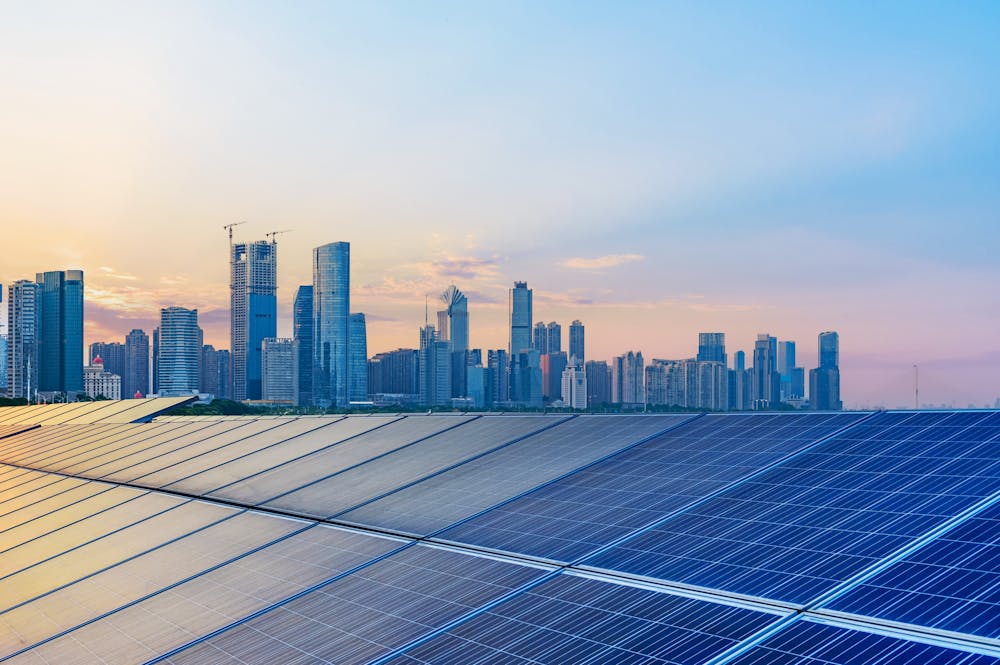
     

    MIL OSI Europe News

  • MIL-OSI Europe: Germany: Largest EIB financing for EWE – over 2,600 km of new underground power lines and more than 1,100 substations for Lower Saxony’s energy transition

    Source: European Investment Bank

    EIB

    The European Investment Bank (EIB) and EWE AG announced the largest EIB loan that EWE has ever received at a ceremony marking the 25th anniversary of the EIB’s Berlin office today.

    A long-term credit facility of up to €450 million was finalised at an event attended by German federal government ministers, project partners and stakeholders.

    This will support investment totalling more than €700 million between 2025 and 2028. The programme includes the laying of more than 2,600 kilometres of new underground power lines and the construction and modernisation of over 1,100 substations, constituting another major step forward for energy infrastructure and energy security in northern Germany.

    EWE Chief Financial Officer Frank Reiners said:

    “We are pleased to further develop our partnership with the EIB. This financing will help supercharge our investments in grid expansion and digitalisation. This will enable us to rapidly and securely integrate more renewable energy into the power grid and strengthen the security of supply in our regions, thereby making them more attractive for new industrial developments.”

    EIB Vice-President Nicola Beer added:

    “What many people do not know is that the most important energy-transition investments are often right under our feet. With over 2,600 km of new underground power lines and more than 1,100 new and modernised substations, we are working with EWE to build a hidden backbone for a more secure energy supply and expanded use of renewable energy throughout northern Germany. Today’s signature of the EIB’s largest-ever financing for EWE at the 25th anniversary event for our Berlin office – attended by high-ranking representatives from politics and business – sends a strong signal for the future of energy supply in Germany. 2024 was a record year for EIB support for the energy grid and this project shows how we are actively shaping Europe’s green future.”

    Hidden infrastructure – the backbone of the energy transition

    Investing in power grids is at the heart of the European energy transition. The massive expansion of renewable energy makes high-performance, flexible grids vital to adding new wind and solar power systems, switching to electrical power for heat and transport and ensuring secure, reliable supply for households and industry. Around 95% of the electricity fed into EWE’s power grid in Lower Saxony comes from renewable sources. The investments will enable an additional 3 gigawatts (GW) of renewable generation capacity to be connected by 2028, representing an important contribution to German and European climate targets.

    2024: A record year for EIB power grid investment

    2024 was a record year for EIB support for power-grid investment across Europe. As the EU climate bank, the EIB has a long track record of financing key energy infrastructure projects making decarbonisation, economic growth and energy-security possible. In recent years, the EIB has financed grid modernisation and expansion in Germany, France, Spain, Italy, Poland and many other EU Member States, laying the foundations for a sustainable, interconnected European energy market.

    Contributing to national and EU objectives

    EWE’s investment programme is fully aligned with Germany’s national energy and climate plan, which foresees an 80% share of renewable energy in electricity use by 2030. It also supports the REPowerEU initiative by expanding clean-energy integration, cutting emissions and strengthening energy supply. A total of 40% Sof the investments will go to cohesion regions, promoting economic and social cohesion.

    The EIB – a reliable partner for Europe’s energy transition

    The EIB’s long-term, flexible financing provides a stable basis on which EWE can implement its investment plans, diversifies sources of funding and sends a positive signal to capital markets. As an anchor investor, the EIB is mobilising additional public and private capital for critical infrastructure projects.

    Background information

    EIB

    The European Investment Bank is the world’s largest multilateral lender for climate action projects, supporting initiatives that promote sustainable growth, innovation and social cohesion in the European Union and beyond.

    EWE

    EWE AG is one of Germany’s leading energy and infrastructure companies, operating electricity, gas, water supply and telecommunications networks in Lower Saxony and beyond.

    MIL OSI Europe News

  • MIL-OSI Europe: Written question – Who will benefit from ETS2 and the Energy Performance of Buildings Directive? – E-002526/2025

    Source: European Parliament

    Question for written answer  E-002526/2025
    to the Commission
    Rule 144
    Erik Kaliňák (NI)

    The Energy Performance of Buildings Directive and the ETS2 emissions trading system are raising serious concerns on account of their significant negative impact on ordinary EU citizens. The problems include both the mandatory building renovations required by the Directive and the increase in energy and fuel prices that ETS2 will bring. Both of these regulations will significantly increase the cost of living, leaving low-income households and small businesses hardest hit. These measures are not necessary, but rather a kind of ‘stunt’ from the desk of Brussels bureaucrats. Their positive impact is questionable, as these measures are only being imposed on EU Member States which have a negligible impact on a global scale. This is one of the reasons why there are growing calls from both ordinary citizens and businesses for both regulations to be repealed.

    In the light of the foregoing:

    • 1.Does the Commission plan to listen to the voices of EU citizens and review or, better still, repeal the Energy Performance of Buildings Directive in order not to artificially increase the financial burden on citizens?
    • 2.How does the Commission plan to respond to calls for the abolition of ETS2, given its impact on energy prices and the cost of living?
    • 3.How does the Commission feel about the fact that these and other similar measures are being imposed only on EU Member States, meaning that their effectiveness is minimal on a global scale?

    Submitted: 24.6.2025

    Last updated: 30 June 2025

    MIL OSI Europe News