Category: Energy

  • MIL-OSI United Kingdom: York’s climate leadership recognised

    Source: City of York

    York has once again been recognised on the global stage for its work to tackle climate change — retaining an ‘A’ rating from the independent CDP (formerly Carbon Disclosure Project) for a third time.

    The rating places York among only 112 cities worldwide to achieve the top grade, highlighting the city’s climate leadership and transparency.

    This accolade isn’t just about international recognition — it reflects the real, practical changes being delivered across the city.  From lower energy bills to warmer homes, greener transport options to community energy partnerships, the council’s work is making an everyday difference to those living and working in the city.

    One of the city’s key tools in supporting that progress is YorEnergy — a free advice service helping people across York find ways to cut energy bills and reduce emissions.  More information is available at yorenergy.co.uk.

    Samantha Mills, who’s Heworth home has benefitted from the YorEnergy scheme, explained:

    We’ve had some really important work on our home through the YorEnergy scheme and already we’ve seen a difference.

    “Bills were higher and the house didn’t stay warm, but with our new insulation things have changed.

    “The process to get these improvements done was really easy too, with someone on hand to guide us through the whole process.”

    The council is actively working with York Community Energy to expand solar rooftop projects to reduce costs across the city’s schools, with ten school’s already completed and another in the pipeline.  Alongside this, citywide upgrades to LED street lighting are saving energy and reducing costs for council taxpayers.

    York’s longer-term ambition is reflected in major infrastructure investments, such as a proposed developments at the former Harewood Whin landfill site. The council is also exploring new heat networks and commercial partnerships as part of its Local Area Energy Plan — helping lay the groundwork for a more resilient, sustainable energy future.
    In council housing, the ongoing insulation programme is improving comfort and affordability for tenants.

    City of York Council Executive Member for Environment and Climate Emergency, Cllr Jenny Kent, said:

    This is independent recognition for the third year running that CYC is ahead of the curve, making real headway and building a healthier, energy secure, resilient York.

    “We should all be very proud that we are one of only 112 cities globally to be recognised as top ranking for our efforts.

    “It reflects the continued hard work of our dedicated staff in obtaining external funding for projects that reduce energy costs and emissions for residents, businesses, and council taxpayers alike. This includes making more people’s homes comfortable and affordable, helping improve air quality, expanding our tree planting, and supporting active travel and investment in supporting bus services.”

    To hear more about the city’s climate initiatives and other resident news, sign up for updates at york.gov.uk/EmailUpdates.

    MIL OSI United Kingdom

  • MIL-OSI: BGX Outlines Strategy for Expansion

    Source: GlobeNewswire (MIL-OSI)

    VANCOUVER, B.C., June 26, 2025 (GLOBE NEWSWIRE) — BGX – Black Gold Exploration Corp. (the “Company” or “BGX”) (CSE: BGX) (OTCQB: BGXCF) (FRA: BLGX) is pleased to announce another significant development in its strategic partnership (the “JV”) with LGX Energy Corp. (“LGX”). Through the Company’s 10% interest in the Fritz 2-30 well and surrounding 210-acre Area of Mutual Interest (“AMI”), the Company will be able to participate up to 10% in the drilling and development of an estimated 20 to 25 additional wells in the prolific Illinois Basin.

    A Blueprint for Scalable Development

    The AMI encompasses a strategically defined corridor of oil-bearing leases and prospects within the Illinois Basin. Utilizing 3D seismic technology, the JV has accurately mapped subsurface structures, leading to the successful identification and targeting of high-potential drilling locations. This analysis, combined with the analysis of new data from the now producing Fritz 2-30 well, has led to the expectation of the development of another estimated 20 to 25 wells within the AMI. The Fritz 2-30 will serve as a template for this multi-well development strategy, having validated the seismic analysis.

    From Exploration to Production

    The Fritz 2-30 well produced over 500 barrels within the first 10 days of production. Normalized production of the well has not yet been established as production is temporarily brought offline for further drilling to access the additional pay zones that have been identified. The Company expects to provide a more detailed update once it receives its first payout from this well, which is expected next quarter.

    From Production to Scaled Field Development

    Per the terms of the JV, BGX is able to participate in up to 10% of each new well developed in the AMI. Based on current estimates, the Company anticipates that the drilling and development of each new well will cost the Company between $25,000 and $45,000 (USD) depending on the formation and depths required. The Company and LGX are aiming to bring the 20+ wells online by the end of 2026. The Company expects to fund its portion of the developments through additional capital raises.

    On behalf of the Company,
    Francisco Gulisano
    236-266-5174
    Chief Executive Officer

    About BGX

    BGX is an oil and gas exploration and production company dedicated to creating shareholder value in the Illinois Basin. For more information visit https://www.bgxcorp.com.

    Forward-Looking Statements

    The information in this news release includes certain information and statements about management’s view of future events, expectations, plans, and prospects that constitute forward-looking statements. These statements are based upon assumptions that are subject to risks and uncertainties. It should be noted that there are inherent risks and uncertainties in oil and gas exploration. Forward- looking statements in this news release include, but are not limited to statements respecting: (i) the Company’s expectation that it will be able to participate in the drilling and development of 20+ additional wells in the prolific Illinois Basin; (ii) the Fritz 2-30 well serving as a template for the Company’s multi-well development strategy; (iii) the Company’s plan to use existing infrastructure to create a very capital-efficient multi-well development; (iv) the stacked pay architecture at the Fritz 2-30 well providing the basis for a repeatable, full-cycle development program with minimal geological risk and high operational confidence; (v) the Company and LGX putting together the framework for a full field development program; (vi) the Company’s strategy being not only a scalable and capital efficient, but also being a template for value creation for shareholders; (vii) the Company’s ability to receive payment next quarter; and (viii) the Company’s ability to raise the capital required to participate in the development of future wells. The Company notes that the development of each additional well will be based on the analysis of the JV partner, the success of the drilling campaigns and subject to the normal permitting requirements. Although the Company believes that the expectations reflected in forward-looking statements are reasonable, it can give no assurances that the expectations of any forward-looking statement will prove to be correct. Except as required by law, the Company disclaims any intention and assumes no obligation to update or revise any forward-looking statements to reflect actual results, whether as a result of new information, future events, changes in assumptions, changes in factors affecting such forward-looking statements, or otherwise. For a comprehensive overview of all risks that may impact the Company, please see the Company’s continuous disclosure documents filed on SEDAR+.

    Neither the CSE nor the CSE’s Regulation Services Provider (as that term is defined in the policies of the CSE) accept responsibility for the accuracy of this release.

    SUITE 2400 | 1055 WEST GEORGIA STREET | VANCOUVER, BC | V6E 3P3 | TEL. +1 (236) 266-5174 | info@bgxcorp.com | bgxcorp.com

    The MIL Network

  • MIL-OSI: BGX Outlines Strategy for Expansion

    Source: GlobeNewswire (MIL-OSI)

    VANCOUVER, B.C., June 26, 2025 (GLOBE NEWSWIRE) — BGX – Black Gold Exploration Corp. (the “Company” or “BGX”) (CSE: BGX) (OTCQB: BGXCF) (FRA: BLGX) is pleased to announce another significant development in its strategic partnership (the “JV”) with LGX Energy Corp. (“LGX”). Through the Company’s 10% interest in the Fritz 2-30 well and surrounding 210-acre Area of Mutual Interest (“AMI”), the Company will be able to participate up to 10% in the drilling and development of an estimated 20 to 25 additional wells in the prolific Illinois Basin.

    A Blueprint for Scalable Development

    The AMI encompasses a strategically defined corridor of oil-bearing leases and prospects within the Illinois Basin. Utilizing 3D seismic technology, the JV has accurately mapped subsurface structures, leading to the successful identification and targeting of high-potential drilling locations. This analysis, combined with the analysis of new data from the now producing Fritz 2-30 well, has led to the expectation of the development of another estimated 20 to 25 wells within the AMI. The Fritz 2-30 will serve as a template for this multi-well development strategy, having validated the seismic analysis.

    From Exploration to Production

    The Fritz 2-30 well produced over 500 barrels within the first 10 days of production. Normalized production of the well has not yet been established as production is temporarily brought offline for further drilling to access the additional pay zones that have been identified. The Company expects to provide a more detailed update once it receives its first payout from this well, which is expected next quarter.

    From Production to Scaled Field Development

    Per the terms of the JV, BGX is able to participate in up to 10% of each new well developed in the AMI. Based on current estimates, the Company anticipates that the drilling and development of each new well will cost the Company between $25,000 and $45,000 (USD) depending on the formation and depths required. The Company and LGX are aiming to bring the 20+ wells online by the end of 2026. The Company expects to fund its portion of the developments through additional capital raises.

    On behalf of the Company,
    Francisco Gulisano
    236-266-5174
    Chief Executive Officer

    About BGX

    BGX is an oil and gas exploration and production company dedicated to creating shareholder value in the Illinois Basin. For more information visit https://www.bgxcorp.com.

    Forward-Looking Statements

    The information in this news release includes certain information and statements about management’s view of future events, expectations, plans, and prospects that constitute forward-looking statements. These statements are based upon assumptions that are subject to risks and uncertainties. It should be noted that there are inherent risks and uncertainties in oil and gas exploration. Forward- looking statements in this news release include, but are not limited to statements respecting: (i) the Company’s expectation that it will be able to participate in the drilling and development of 20+ additional wells in the prolific Illinois Basin; (ii) the Fritz 2-30 well serving as a template for the Company’s multi-well development strategy; (iii) the Company’s plan to use existing infrastructure to create a very capital-efficient multi-well development; (iv) the stacked pay architecture at the Fritz 2-30 well providing the basis for a repeatable, full-cycle development program with minimal geological risk and high operational confidence; (v) the Company and LGX putting together the framework for a full field development program; (vi) the Company’s strategy being not only a scalable and capital efficient, but also being a template for value creation for shareholders; (vii) the Company’s ability to receive payment next quarter; and (viii) the Company’s ability to raise the capital required to participate in the development of future wells. The Company notes that the development of each additional well will be based on the analysis of the JV partner, the success of the drilling campaigns and subject to the normal permitting requirements. Although the Company believes that the expectations reflected in forward-looking statements are reasonable, it can give no assurances that the expectations of any forward-looking statement will prove to be correct. Except as required by law, the Company disclaims any intention and assumes no obligation to update or revise any forward-looking statements to reflect actual results, whether as a result of new information, future events, changes in assumptions, changes in factors affecting such forward-looking statements, or otherwise. For a comprehensive overview of all risks that may impact the Company, please see the Company’s continuous disclosure documents filed on SEDAR+.

    Neither the CSE nor the CSE’s Regulation Services Provider (as that term is defined in the policies of the CSE) accept responsibility for the accuracy of this release.

    SUITE 2400 | 1055 WEST GEORGIA STREET | VANCOUVER, BC | V6E 3P3 | TEL. +1 (236) 266-5174 | info@bgxcorp.com | bgxcorp.com

    The MIL Network

  • MIL-OSI Russia: Energy-saving equipment of the NRG system is being tested at the State University of Management

    Translation. Region: Russian Federal

    Source: State University of Management – Official website of the State –

    The State University of Management continues to develop partnerships with business representatives and technology companies. Currently, innovative equipment of the Universal Energy Saving System NRG, developed by AERO LLC, is being tested on the university premises.

    At the initiative of the company OOO “Center of Complex Engineering” and jointly with OOO “AERO”, a test connection of equipment to the internal electrical network with a voltage of 0.4 kV was organized in the State University of Management. This allows us to evaluate the efficiency of the new system in real conditions and record the technical parameters of its operation in the current environment.

    The NRG system is the latest, patented (Patent RU 2 731 258 C1) development in the field of energy saving and energy efficiency for any consumers of electrical energy, such as private apartments, houses, shops, production sites, large industrial enterprises and any other consumers using alternating electric current.

    “We welcome the interest of companies in cooperation with the university. It is important for us to be an open platform for innovation, especially in the field of sustainable development and energy efficiency. Such projects help improve the conditions for studying and living for students, and help employees become more familiar with modern technological solutions,” said Vitaly Lapshenkov, Vice-Rector of the State University of Management.

    Effects of using the NRG system:

    Reduction of energy consumption by 7–20%; Reduction of the effect of harmful electromagnetic waves; Increased service life of equipment in the electrical network; Reduction of temperature, noise and vibration during equipment operation; Release of additional capacity due to energy savings.

    Testing is carried out in a technical mode, with compliance with all safety standards, under the supervision of specialists from the Center for Complex Engineering LLC and employees of the State University of Management. Based on its results, conclusions will be drawn on the possibility of large-scale use of such solutions in educational and administrative infrastructure.

    Please note: This information is raw content directly from the source of the information. It is exactly what the source states and does not reflect the position of MIL-OSI or its clients.

    MIL OSI Russia News

  • MIL-OSI Africa: Committee on Electricity Calls for Watertight Procurement Policies to Strengthen Accountability

    Source: Africa Press Organisation – English (2) – Report:

    Download logo

    The Portfolio Committee on Electricity and Energy received a briefing yesterday from the Department of Electricity and Energy on the Battery Energy Storage System Independent Power Producer Procurement Programme from the Minister of the department, Dr Kgosientsho Ramokgopa.

    The Minister told the committee that the engagement with the committee was to ensure accountability and transparency especially in the light of the recent allegations concerning conflicts of interest and procurement irregularities that have been levelled by the Umkhonto weSizwe (MKP) Party regarding the Battery Energy Storage Independent Power Producer Procurement Programme.

    The Minister stated that the department had nothing to hide hence it agreed to appear before the committee and brief it as per the request of the MKP that brought the allegations. The Minister said: “We welcome the scrutiny from both the members of the committee and the public regarding the procurement process for the Battery Energy Storage System (BESS).”

    He stressed the department’s commitment to ensuring that the procurement processes are upheld with the utmost integrity and fairness. “Our commitment to transparency is paramount. We must ensure that public resources are managed responsibly and that all stakeholders are held accountable,” said Dr Ramokgopa.

    The Minister and the senior departmental officials and the Independent Power Producer (IPP) officials provided a comprehensive overview of the BESS procurement process. The presentation outlined the objectives of the program, which includes enhancing energy security, promoting Black Economic Empowerment (BEE), and ensuring transparency in the procurement of private sector generation capacity.

    A key point of discussion amongst some committee members was the involvement of the former Chief Operating Officer of Eskom, who has been awarded a tender under the current IPP procurement process. Some committee members expressed concerns regarding the appropriateness of awarding contracts to an individual with such a recent history in a senior position at Eskom, questioning whether this could potentially lead to perceptions of favouritism or conflict of interest.

    Members of the committee highlighted the importance of maintaining public trust in the procurement process and said that stringent measures should be implemented to prevent any appearance of impropriety. The committee stressed that it is vital for the integrity of the procurement process to be upheld and for public confidence in the decisions made by the Department of Electricity and Energy to be restored.

    Members of the committee sought clarification on the governance mechanisms in place to verify declarations made by bidders, emphasising the need for due diligence beyond mere declarations to ensure compliance with BEE commitments. The committee questioned whether the procurement process had adequately considered the implications of awarding contracts to individuals with recent ties to Eskom.
    In response to these concerns, Dr Ramokgopa reiterated the government’s commitment to fostering a diverse and competitive energy market. He said: “We acknowledge that while we have made progress, there is still much work to be done to ensure that the benefits of these projects are shared equitably among all South Africans, particularly those from historically disadvantaged backgrounds.”

    Regarding the BESS procurement process the committee expressed concerns about the slow pace of the current IPP processes, questioning their effectiveness in contributing to industrialisation and economic growth in South Africa. In addition, members of the committee highlighted the perceived failure of the IPP process to create genuine long-term and sustainable transformation, particularly regarding the BEE within communities.

    – on behalf of Republic of South Africa: The Parliament.

    MIL OSI Africa

  • MIL-OSI Russia: Nuclear emergency exercise concludes to test international response to simulated reactor accident

    Translation. Region: Russian Federal

    Source: International Atomic Energy Agency –

    The International Atomic Energy Agency (IAEA), in cooperation with more than 75 countries and 10 international organizations, successfully completed a 36-hour exercise that tested global preparedness and response arrangements for a severe nuclear accident scenario at the Cernavoda NPP in Romania. The ConvEx-3 (2025) exercise started on 24 June and concluded at 17:45 CET on 25 June.

    Such exercises are conducted every three to five years and are based on simulated events at a nuclear facility in the host IAEA member state.

    The exercise simulated a significant release of radioactive material, requiring participating countries and organizations to make decisions in real time, exchange information, inform the public and coordinate protective measures, including aspects of medical response and cross-border logistics.

    “ConvEx-3 (2025) demonstrated the power of international cooperation in nuclear emergency preparedness,” said Carlos Torres Vidal, Director of the IAEA Incident and Emergency Centre. “By working together under realistic scenarios, we are strengthening our collective capacity to protect people and the environment.”

    Among the main innovations in this year’s exercise program were the following.

    Enhanced regional cooperation: Recognizing the cross-border consequences of severe nuclear accidents, neighbouring countries Bulgaria and the Republic of Moldova coordinated protective measures to ensure a coherent cross-border response. Integrating nuclear security scenarios: Simulations also included tests related to physical security and cybersecurity threats, reflecting new and evolving risks. Enhanced crisis communication testing: An enhanced social media simulator was used to evaluate and improve public communication strategies. Deploying international assistance missions: As part of the IAEA Response and Assistance Network (RANET) Expert groups from Bulgaria, Canada, Lithuania, Moldova, the United States, Sweden and France carried out a number of joint operations, including the use of air and ground-based radiation monitoring equipment.

    The exercise highlighted the importance of timely information sharing, accurate assessments and forecasts, and effective public communication in the event of nuclear emergencies.

    ConvEx-3 exercises are conducted every three to five years to evaluate and strengthen emergency response mechanisms established in accordance with Convention on Early Notification of a Nuclear Accident And Convention on Assistance in the Case of a Nuclear Accident or Radiological Emergency.

    In the coming weeks, the IAEA will gather feedback from all participants to identify good practices and areas for improvement, contributing to the continued strengthening of global nuclear emergency preparedness. The final report of the exercise will be taken into account in preparation for the upcoming International Conference “Nuclear and Radiological Emergencies”, which is scheduled for December this year in Riyadh, Saudi Arabia.

    A selection of photos from the ConvEx3 exercise is available at this link.

    Please note: This information is raw content directly from the source of the information. It is exactly what the source states and does not reflect the position of MIL-OSI or its clients.

    MIL OSI Russia News

  • MIL-OSI Analysis: Israel-Iran war recalls the 2003 US invasion of Iraq – a war my undergraduate students see as a relic of the past

    Source: The Conversation – USA – By Andrea Stanton, Associate Professor of Islamic Studies & Faculty Affiliate, Center for Middle East Studies, University of Denver

    American troops topple a statue of Saddam Hussein on April 9, 2003, in Baghdad. Gilles Bassignac/Gamma-Rapho via Getty Images

    After 12 days of trading deadly airstrikes, Israel and Iran confirmed on June 24, 2025, that a ceasefire is in effect, one day after President Donald Trump proclaimed the countries reached a deal to end fighting. Experts are wondering how long the ceasefire, which does not contain any specific conditions, will hold.

    Meanwhile, Republicans and Democrats alike have debated whether the Trump administration’s decision to bomb Iran’s three nuclear facilities on June 22 constituted an unofficial declaration of war – since Trump has not asked Congress to formally declare war against Iran.

    The United States’ involvement in the fighting between Iran and Israel, which Israel started on June 12, has also sparked concerned comparisons with the eight-year war the U.S. waged in Iraq, another Middle Eastern country.

    The U.S. invaded Iraq more than 20 years ago in March 2003, claiming it had to disarm the Iraqi government of weapons of mass destruction and end the dictatorial rule of President Saddam Hussein. U.S. soldiers captured Saddam in December 2003, but the war dragged on through 2011.

    A 15-month search by U.S. and United Nations inspectors revealed in 2004 that Iraq had no weapons of mass destruction to seize.

    The Trump administration, bolstered by the Israeli government, has claimed that Iran’s development of nuclear weapons represents an imminent, dangerous threat to Western countries and the rest of the world. Iran says that its nuclear development program is for civilian use. While the International Atomic Energy Agency, an independent organization that is part of the United Nations, monitors Iran and other countries’ nuclear development work, Iran has not complied with recent IAEA requests for information about its nuclear program.

    Trump has also called for regime change in Iran, writing on his Truth Social media platform on June 22 that he wants to “Make Iran Great Again”, though he has since walked back that plan. The case of U.S. involvement in Iraq might offer some lessons in this current moment.

    The start and cost of the Iraq War

    The conflict between Western powers and Iraq dragged on until 2011. More than 4,600 American soldiers died in combat – and thousands more died by suicide after they returned home.

    More than 288,000 Iraqis, including fighters and civilians, have died from war-related violence since the invasion.

    The war cost the U.S. over $2 trillion.

    And Iraq is still dealing with widespread political violence between rival religious-political groups and an unstable government.

    Most of these problems stem directly or indirectly from the war. The 2003 U.S. invasion of Iraq and the war that followed are defining events in the histories of both countries – and the region. Yet, for many young people in the United States, drawing a connection between the war and its present-day impact is becoming more difficult. For them, the war is an artifact of the past.

    I am a Middle East historian and an Islamic studies scholar who teaches two undergraduate courses that cover the 2003 invasion and the Iraq War. My courses attract students who hope to work in politics, law, government and nonprofit groups, and whose personal backgrounds include a range of religious traditions, immigration histories and racial identities.

    The stories of the invasion and subsequent war resonate with them in the same way that stories of other past events do – they’re eager to learn from them, but don’t see them as directly connected to their lives.

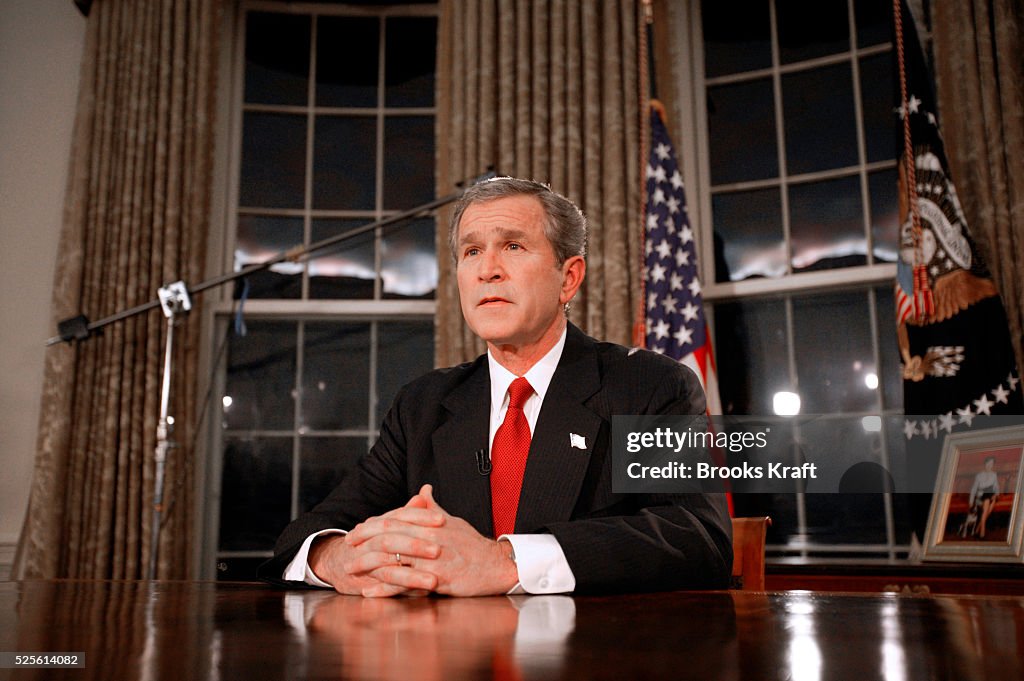
    Former President George W. Bush formally declared war on Iraq in a televised address on March 19, 2003.
    Brooks Kraft LLC/Corbis via Getty Images

    A generational shift

    Since I started teaching courses related to the Iraq War in 2010, my students have shifted from millennials to Generation Z. The latter were born between the mid-1990s and early 2010s. There has also been a change in how these students understand major early 21st-century events, including the U.S. invasion of Iraq.

    I teach this event by showing things like former President George W. Bush’s March 19, 2003, televised announcement of the invasion.

    I also teach it through the flow of my lived experience. That includes remembering the Feb. 15, 2003, anti-war protests that took place in over 600 cities around the world as an effort to prevent what appeared to be an inevitable war. And I show students aspects of material culture, like the “Iraqi most wanted” deck of playing cards, distributed to deployed U.S. military personnel in Iraq, who used the cards for games and to help them identify key figures in the Iraq government.

    The millennial students I taught around 2010 recalled the U.S. invasion of Iraq from their early teen years – a confusing but foundational moment in their personal timelines.

    But for the Gen-Z students I teach today, the invasion sits firmly in the past, as a part of history.

    Why this matters

    Since the mid-2010s, I have not been able to expect students to enroll in my course with personal prior knowledge about the invasion and war that followed. In 2013, my students would tell me that their childhoods had been defined by a United States at war – even if those wars happened far from U.S. soil.

    Millennial students considered the trifecta of 9/11, the war in Afghanistan and the war in Iraq to be defining events in their lives. The U.S. and its allies launched airstrikes against al-Qaida and Taliban targets in Afghanistan on Oct. 7, 2001, less than a month after the Sept. 11 terrorist attacks. This followed the Taliban refusing to hand over Osama bin Laden, the architect of 9/11.

    By 2021, my students considered Bush’s actions with the same level of abstract curiosity that they had brought to the class’s earlier examination of the 1957 Eisenhower Doctrine, which said that a country could request help from U.S. military forces if it was being threatened by another country, and was used to justify U.S. military involvement in Lebanon in 1958.

    On an educational level, this means that I now provide much more background information on the first the Gulf War, the 2000 presidential elections, the Bush presidency, the immediate U.S. responses to 9/11 and the Afghanistan invasion than I had to do before. All of these events help students better understand why the U.S. invaded Iraq and why Americans felt so strongly about the military action – whether they were for or against the invasion.

    The Iraq invasion lost popularity among Americans within two years. In March 2003, 71% of Americans said that the U.S. made the right decision to use military force in Iraq.

    That percentage dropped to 47% in 2005, following the revelation that there were no weapons of mass destruction. Yet those supporters continued to strongly endorse the invasion in later polls.

    In 2018, just over half of Americans believed that the U.S. failed to achieve its goals, however those goals might have been defined in Iraq.

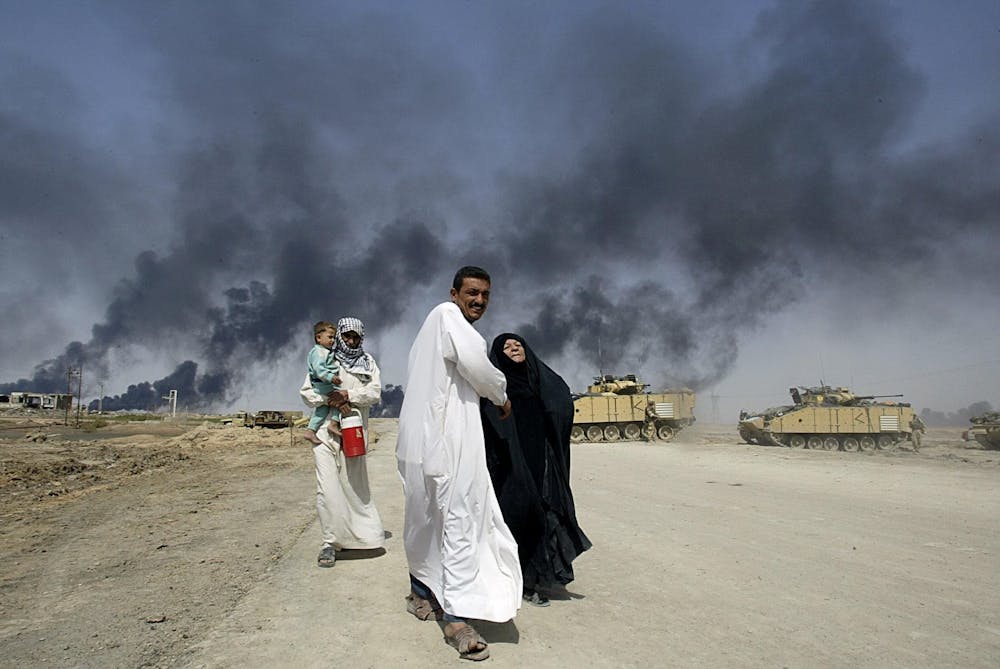
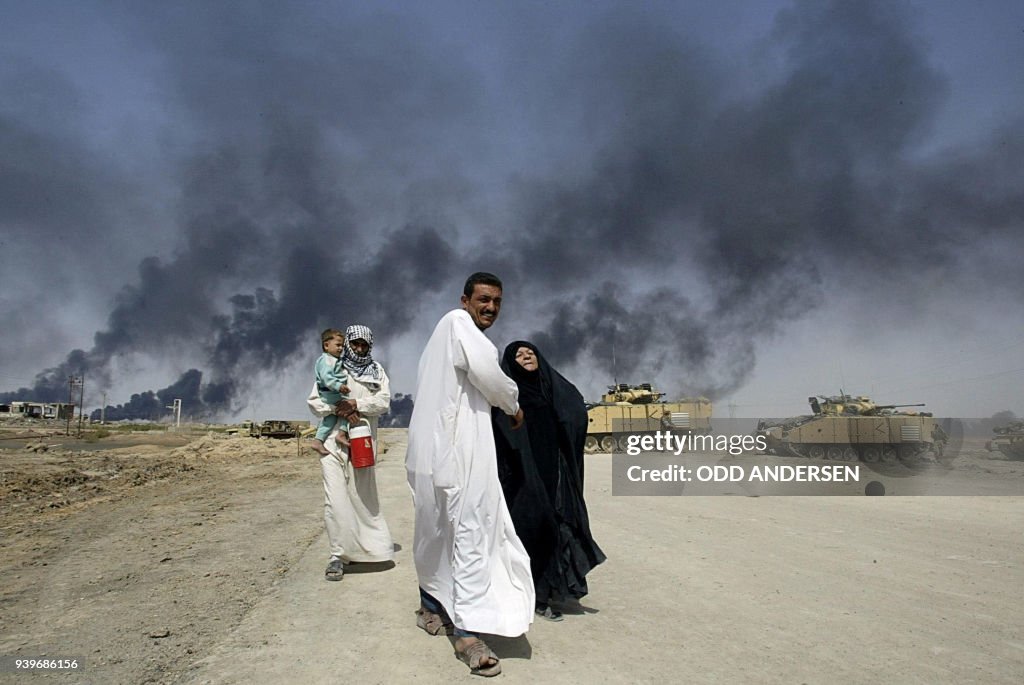
    An Iraqi family flees past British tanks from the city of Basra in March 2003.
    Odd Andersen/AFP via Getty Images

    A new set of priorities

    Older Americans age 65 and up are more likely than young people to prioritize foreign policy issues, including maintaining a U.S. military advantage.

    Younger Americans – age 18 to 39 – say the top issues that require urgency are providing support to refugees and limiting U.S. military commitments abroad, according to a 2021 Pew research survey.

    Generation Z members are also less likely than older Americans to think that the U.S. should act by itself in defending or protecting democracy around the world, according to a 2019 poll by the think tank Center for American Progress.

    They also agree with the statement that the United States’ “wars in the Middle East and Afghanistan were a waste of time, lives, and taxpayer money and they did nothing to make us safer at home.” They prefer that the U.S. use economic and diplomatic means, rather than military intervention, to advance American interests around the world.

    Israel’s conflict with Iran may not flare again and give way to more airstrikes and violence. If the countries resume fighting, however, their conflict threatens to draw in Lebanon, Qatar and other countries in the Middle East, as well as likely the U.S. – and to drag on for a long time.

    This is an update from a story originally published on March 15, 2023.

    Andrea Stanton does not work for, consult, own shares in or receive funding from any company or organization that would benefit from this article, and has disclosed no relevant affiliations beyond their academic appointment.

    ref. Israel-Iran war recalls the 2003 US invasion of Iraq – a war my undergraduate students see as a relic of the past – https://theconversation.com/israel-iran-war-recalls-the-2003-us-invasion-of-iraq-a-war-my-undergraduate-students-see-as-a-relic-of-the-past-259652

    MIL OSI Analysis

  • MIL-OSI Analysis: Israel bombed an Iraqi nuclear reactor in 1981 − it pushed program underground and spurred Saddam Hussein’s desire for nukes

    Source: The Conversation – Global Perspectives – By Jeffrey Fields, Professor of the Practice of International Relations, USC Dornsife College of Letters, Arts and Sciences

    The Osirak nuclear power research station in 1981. Jacques Pavlovsky/Sygma via Getty Images

    Israel, with the assistance of U.S. military hardware, bombs an adversary’s nuclear facility to set back the perceived pursuit of the ultimate weapon. We have been here before, about 44 years ago.

    In 1981, Israeli fighter jets supplied by Washington attacked an Iraqi nuclear research reactor being built near Baghdad by the French government.

    The reactor, which the French called Osirak and Iraqis called Tammuz, was destroyed. Much of the international community initially condemned the attack. But Israel claimed the raid set Iraqi nuclear ambitions back at least a decade. In time, many Western observers and government officials, too, chalked up the attack as a win for nonproliferation, hailing the strike as an audacious but necessary step to prevent Iraqi dictator Saddam Hussein from building a nuclear arsenal.

    But the reality is more complicated. As nuclear proliferation experts assess the extent of damage to Iran’s nuclear facilities following the recent U.S. and Israeli raids, it is worth reassessing the longer-term implications of that earlier Iraqi strike.

    The Osirak reactor

    Iraq joined the landmark Nuclear Non-Proliferation Treaty in 1970, committing the country to refrain from the pursuit of nuclear weapons. But in exchange, signatories are entitled to engage in civilian nuclear activities, including having research or power reactors and access to the enriched uranium that drives them.

    The International Atomic Energy Agency is responsible through safeguards agreements for monitoring countries’ civilian use of nuclear technology, with on-the-ground inspections to ensure that civilian nuclear programs do not divert materials for nuclear weapons.

    But to Israel, the Iraqi reactor was provocative and an escalation in the Arab-Israeli conflict.

    Israel believed that Iraq would use the French reactor – Iraq said it was for research purposes – to generate plutonium for a nuclear weapon. After diplomacy with France and the United States failed to persuade the two countries to halt construction of the reactor, Prime Minister Menachem Begin concluded that attacking the reactor was Israel’s best option. That decision gave birth to the “Begin Doctrine,” which has committing Israel to preventing its regional adversaries from becoming nuclear powers ever since.

    Israeli Prime Minister Menachem Begin addresses the press after the 1981 attack on the Osarik nuclear reactor.
    Israel Press and Photo Agency/Wikimedia Commons

    In spring 1979, Israel attempted to sabotage the project, bombing the reactor core destined for Iraq while it sat awaiting shipment in the French town of La Seyne-sur-Mer. The mission was only a partial success, damaging but not destroying the reactor.

    France and Iraq persisted with the project, and in July 1980 – with the reactor having been delivered – Iraq received the first shipment of highly enriched uranium fuel at the Tuwaitha Nuclear Research Center near Baghdad.

    Then in September 1980, during the initial days of the Iran-Iraq war, Iranian jets struck the nuclear research center. The raid also targeted a power station, knocking out electricity in Baghdad for several days. But a Central Intelligence Agency situation report assessed that “only secondary buildings” were hit at the nuclear site itself.

    It was then Israel’s turn. The reactor was still unfinished and not in operation when on June 7, 1981, eight U.S.-supplied F-16s flew over Jordanian and Saudi airspace and bombed the reactor in Iraq. The attack killed 10 Iraqi soldiers and a French civilian.

    Revisiting the ‘success’ of Israeli raid

    Many years later, U.S. President Bill Clinton commented: “Everybody talks about what the Israelis did at Osirak in 1981, which I think, in retrospect, was a really good thing. You know, it kept Saddam from developing nuclear power.”

    But nonproliferation experts have contended for years that while Saddam may have had nuclear weapons ambitions, the French-built research reactor would not have been the route to go. Iraq would either have had to divert the reactor’s highly enriched uranium fuel for a few weapons or shut the reactor down to extract plutonium from the fuel rods – all while hiding these operations from the International Atomic Energy Agency.

    As an additional safeguard, the French government, too, had pledged to shut down the reactor if it detected efforts to use the reactor for weapons purposes.

    In any event, Iraq’s desire for a nuclear weapon was more aspirational than operational. A 2011 article in the journal International Security included interviews with several scientists who worked on Iraq’s nuclear program and characterized the country’s pursuit of a nuclear weapons capability as “both directionless and disorganized” before the attack.

    Iraq’s program begins in earnest

    So what happened after the strike? Many analysts have argued that the Israeli attack, rather than diminish Iraqi desire for a nuclear weapon, actually catalyzed it.

    Nuclear proliferation expert Målfrid Braut-Hegghammer, the author of the 2011 study, concluded that the Israeli attack “triggered a nuclear weapons program where one did not previously exist.”

    In the aftermath of the attack, Saddam decided to formally, if secretively, establish a nuclear weapons program, with scientists deciding that a uranium-based weapon was the best route. He tasked his scientists with pursuing multiple methods to enrich uranium to weapons grade to ensure success, much the way the Manhattan Project scientists approached the same problem in the U.S.

    In other words, the Israeli attack, rather than set back an existing nuclear weapons program, turned an incoherent and exploratory nuclear endeavor into a drive to get the bomb personally overseen by Saddam and sparing little expense even as Iraq’s war with Iran substantially taxed Iraqi resources.

    From 1981 to 1987, the nuclear program progressed fitfully, facing both organizational and scientific challenges.

    As those challenges were beginning to be addressed, Iraq invaded Kuwait in 1990, provoking a military response from the United States. In the aftermath of what would become Operation Desert Storm, U.N. weapons inspectors discovered and dismantled the clandestine Iraqi nuclear weapons program.

    The Tammuz nuclear reactor was hit again during the 1991 Gulf War.
    Ramzi Haidar/AFP via Getty Images

    Had Saddam not invaded Kuwait over a matter not related to security, it is very possible that Baghdad would have had a nuclear weapon capability by the mid-to-late 1990s.

    Similarly to Iraq in 1980, Iran today is a party to the Nuclear Non-Proliferation Treaty. At the time President Donald Trump withdrew U.S. support in 2018 for the Joint Comprehensive Plan of Action, colloquially known as the Iran nuclear deal, the International Atomic Energy Agency certified that Tehran was complying with the requirements of the agreement.

    In the case of Iraq, military action on its nascent nuclear program merely pushed it underground – to Saddam, the Israeli strikes made acquiring the ultimate weapon more rather than less attractive as a deterrent. Almost a half-century on, some analysts and observers are warning the same about Iran.

    Jeffrey Fields receives funding from the Carnegie Corporation of New York and Schmidt Futures.

    ref. Israel bombed an Iraqi nuclear reactor in 1981 − it pushed program underground and spurred Saddam Hussein’s desire for nukes – https://theconversation.com/israel-bombed-an-iraqi-nuclear-reactor-in-1981-it-pushed-program-underground-and-spurred-saddam-husseins-desire-for-nukes-259618

    MIL OSI Analysis

  • MIL-OSI Analysis: Oil shocks in the 1970s drove rapid changes in transport. It could happen again if Middle East tensions continue

    Source: The Conversation – Global Perspectives – By Hussein Dia, Professor of Future Urban Mobility, Swinburne University of Technology

    The Image Bank/Getty

    As the world watches the US–Iran situation with concern, the ripple effect from these events are reaching global oil supply chains – and exposing their fragility.

    If Iran closes the Strait of Hormuz as it is considering, it would restrict the global oil trade and trigger energy chaos.

    Petrol in some Australian cities could hit A$2.50 a litre according to some economists. As global instability worsens, other experts warn price spikes are increasingly likely.

    What would happen next? There is a precedent: the oil shocks of the 1970s, when oil prices quadrupled. The shock drove rapid change, from more efficient cars to sudden interest in alternative energy sources. This time, motorists would likely switch to electric vehicles.

    If this crisis continues or if another one flares up, it could mark a turning point in Australia’s long dependence on foreign oil.

    What would an oil shock mean?

    Australia currently imports 80% of its liquid fuels, the highest level on record. If the flow of oil stopped, we would have about 50 days worth in storage before we ran out.

    Our cars, buses, trucks and planes run overwhelmingly on petrol and diesel. Almost three-quarters (74%) of these liquid fuels are used in transport, with road transport accounting for more than half (54%) of all liquid fuels. Australia is highly exposed to global supply shocks.

    The best available option to reduce dependence on oil imports is to electrify transport.

    How does Australia compare on EVs?

    EV uptake in Australia continues to lag behind global leaders. In 2024, EVs accounted for 9.65% of new car sales in Australia, up from 8.45% in 2023.

    In the first quarter of 2025, EVs were 6.3% of new car sales, a decline from 7.4% in the final quarter of 2024.

    Norway remains the global leader, with battery-electric passenger cars making up 88.9% of sales in 2024. The United Kingdom also saw significant growth – EVs hit almost 20% of new car registrations in 2024.

    In China, EVs made up 40.9% of new car sales in 2024. The 12.87 million cars sold represent three-quarters of total EV sales worldwide.

    One reason for Australia’s sluggishness is a lack of reliable public chargers. While charging infrastructure is expanding, large parts of regional Australia still lack reliable access to EV charging.

    Until recently, Australia’s fuel efficiency standards were among the weakest in the OECD. Earlier this year, the government’s new standards came into force. These are expected to boost EV uptake.

    Could global tensions trigger faster action?

    If history is any guide, oil shocks lead to long-term change.

    The 1970s oil shocks triggered waves of energy reform.

    When global oil prices quadrupled in 1973–74, many nations were forced to reconsider where they got their energy. A few years later, the 1979 Iranian Revolution caused another major supply disruption, sending oil prices soaring and pushing much of the world into recession.

    Huge increases in oil prices drove people to look for alternatives during the 1970s oil shocks.
    Everett Collection/Shutterstock

    These shocks drove the formation of the International Energy Agency in 1974, spurred alternative energy investment and led to advances in fuel-efficiency standards.

    Much more recently, Russia’s invasion of Ukraine pushed the European Union to face up to its reliance on Russian gas and find alternatives by importing gas from different countries and accelerating the clean energy shift.

    Clearly, energy shocks can be catalysts for long-term structural change in how we produce and consume energy.

    The new crisis could do the same, but only if policy catches up.

    If fuel prices shot up and stayed there, consumer behaviour would begin to shift. People would drive less and seek alternate forms of transport. Over time, more would look for better ways to get around.

    But without stronger support such as incentives, infrastructure and fuel security planning, shifting consumer preferences could be too slow to matter.

    A clean-energy future is more secure

    Cutting oil dependency through electrification isn’t just good for the climate. It’s also a hedge against future price shocks and supply disruptions.

    Transport is now Australia’s third-largest source of greenhouse gas emissions. Now that emissions are falling in the electricity sector, transport will be the highest emitting sector emissions source as soon as 2030.

    Building a cleaner transport system also means building a more resilient one. Charging EVs on locally produced renewable power cuts our exposure to global oil markets. So do biofuels, better public transport and smarter urban planning.

    Improving domestic energy resilience isn’t just about climate targets. It’s about economic stability and national security. Clean local energy sources reduce vulnerability to events beyond our control.

    What can we learn from China?

    China offers a compelling case study. The nation of 1.4 billion faces real oil security challenges. In response, Beijing has spent the past decade building a domestic clean energy ecosystem to reduce oil dependency and cut emissions.

    This is now bearing fruit. Last year, China’s oil imports had the first sustained fall in nearly two decades. Crude oil imports fell 1.5%, while oil refinery activity also fell due to lower demand.

    China’s rapid uptake of EVs has clear energy security benefits.
    pim pic/Shutterstock

    China’s green energy transition was driven by coordinated policy, industrial investment and public support for clean transport.

    China’s rapid shift to EVs and clean energy shows how long-term planning and targeted investment can pay off on climate and energy security.

    What we do next matters

    The rolling crises of 2025 present Australian policymakers a rare alignment of interests. What’s good for the climate, for consumers and for national security may now be the same thing.

    Real change will require more than sustained high petrol prices. It demands political will, targeted investment and a long-term vision for clean, resilient transport.

    Doing nothing has a real cost – not just in what we pay at the service station, but in how vulnerable we remain to events a long way away.

    Hussein Dia receives funding from the Australian Research Council, the iMOVE Australia Cooperative Research Centre, Transport for New South Wales, Queensland Department of Transport and Main Roads, Victorian Department of Transport and Planning, and Department of Infrastructure, Transport, Regional Development, Communications and the Arts.

    ref. Oil shocks in the 1970s drove rapid changes in transport. It could happen again if Middle East tensions continue – https://theconversation.com/oil-shocks-in-the-1970s-drove-rapid-changes-in-transport-it-could-happen-again-if-middle-east-tensions-continue-259670

    MIL OSI Analysis

  • MIL-OSI United Kingdom: Growth and local jobs top of the agenda as Cardiff Capital Region Investment Zone advances

    Source: United Kingdom – Government Statements

    Press release

    Growth and local jobs top of the agenda as Cardiff Capital Region Investment Zone advances

    Investment Zone to drive innovation and growth in advanced manufacturing, digital and technology sectors

    • Zone will develop semiconductor hub in Newport and science and tech park in Cardiff as part of the government’s transformative Industrial Strategy announced today
    • Expected to attract £500m private sector investment and create 4000 new jobs as part of the government’s Plan for Change

    The Cardiff Capital Region Investment Zone has taken a major step forward with the announcement of its industrial and key sites, giving a huge boost to regional investment and job creation.

    The Investment Zone – a joint initiative between the UK and Welsh Governments – will drive innovation and growth across the advanced manufacturing and digital and technology sectors, with a focus on the region’s world-class compound semiconductor cluster. 

    Backed by £160m of UK Government funding, the Zone will develop the semiconductor hub in Newport, where key businesses including KLA, IQE and Vishay are located, and develop a science and technology park to become the focus point for R&D activity and investment in Cardiff. 

    The Investment Zone – one of two planned for Wales – is expected to attract £500m of private sector investment, create 4000 new jobs and unlock 3m square feet of manufacturing, R&D and innovation capacity. 

    UK Minister for Building Safety, Fire and Local Growth Alex Norris said: 

    Unleashing the potential of our cities and regions is at the heart of the Industrial Strategy and the Plan for Change. 

    The Cardiff Capital Region Investment Zone Investment Zone, which we’re backing with £160m of funding, will build on the region’s industrial strengths to shape an exciting future for local people – creating new skilled jobs and driving economic growth locally and across Wales.

    Welsh Secretary Jo Stevens said:

    This step forward for the Cardiff Capital Region Investment Zone is a huge boost for the world-class business and industry within the area.

    It will drive growth, create 4,000 jobs and build on the talent and expertise that already exists in this part of Wales.

    Working alongside Welsh Government we are building the economy of the future and delivering for working people across the country.

    Welsh Government Cabinet Secretary for Economy, Energy and Planning, Rebecca Evans, said: 

    The Cardiff and Newport Investment Zone marks a transformative step forward for South East Wales and demonstrates our firm commitment to establishing the region as a global powerhouse in compound semiconductors.

    We will continue working closely with the South East Wales Corporate Joint Committee and the UK Government to build on the region’s strengths, attract significant private investment, strengthen regional partnerships and deliver real benefits that people across Wales will feel in their everyday lives.

    Cllr Mary Ann Brocklesby, Leader, Monmouthshire Council, and Chair, Cardiff Capital Region said: 

    This is a tremendous step forward for the Investment Zone. We look forward to building upon our strong industrial base and world-class research in semiconductors to drive innovation in emerging technologies, and fast-growing markets, whilst working together with UK and Welsh Government.

    By aligning our efforts with the region’s unique assets and fostering collaboration across sectors, we aim to create a dynamic environment where new ideas thrive, investment is attracted, and meaningful impact is delivered to people and places across the region.

    The news comes as part of the Industrial Strategy announcement today (Monday).

    As set out in the strategy, advanced manufacturing and digital and technology are two key growth-driving sectors.

    The news follows the confirmation of the industrial and geographic focuses of two Investment Zones in Scotland earlier this month, and the Wrexham and Flintshire Investment Zone earlier this year.

    ENDS

    Updates to this page

    Published 26 June 2025

    MIL OSI United Kingdom

  • MIL-OSI Russia: Saudi Arabia: Concluding Statement of the 2025 Article IV Mission

    Source: IMF – News in Russian

    June 26, 2025

    A Concluding Statement describes the preliminary findings of IMF staff at the end of an official staff visit (or ‘mission’), in most cases to a member country. Missions are undertaken as part of regular (usually annual) consultations under Article IV of the IMF’s Articles of Agreement, in the context of a request to use IMF resources (borrow from the IMF), as part of discussions of staff monitored programs, or as part of other staff monitoring of economic developments.

    The authorities have consented to the publication of this statement. The views expressed in this statement are those of the IMF staff and do not necessarily represent the views of the IMF’s Executive Board. Based on the preliminary findings of this mission, staff will prepare a report that, subject to management approval, will be presented to the IMF Executive Board for discussion and decision.

    Washington, DC: Saudi Arabia’s economy has demonstrated strong resilience to shocks, with non-oil economic activities expanding, inflation contained, and unemployment reaching record-low levels. While lower oil proceeds and investment-linked imports led to the emergence of twin deficits, external and fiscal buffers remain ample. A higher-than-budgeted fiscal stance in 2025 remains appropriate to prevent procyclicality that could exacerbate the growth impact of lower oil prices. Addressing strong credit growth and associated funding pressures will be crucial in mitigating risks to systemic financial stability. Given the current heightened global uncertainty, continued efforts on structural reform are essential to sustain non-oil growth and drive economic diversification.

    RECENT ECONOMIC DEVELOPMENTS[1]

    Saudi Arabia’s economy has been resilient to shocks. In 2024, non-oil real GDP grew by 4.2 percent, primarily driven by private consumption and non-oil private investment, with retail, hospitality, and construction leading growth. Repeated extensions of the OPEC+ production cuts have kept oil output at 9 million barrels per day (mb/d)—the lowest level since 2011— resulting in a 4.4 percent decline in oil GDP and an overall real growth rate of 1.8 percent. The composite PMI indicates sustained activity in Q1 2025, with the latest Q1 GDP estimate showing non-oil activities expanding by 4.9 percent year-on-year.

    The labor market’s strong momentum continues. The unemployment rate for Saudi nationals has declined to a record low of 7 percent in 2024, surpassing the original Vision 2030 target, which has now been revised down to 5 percent. The improvement is broad-based, with both youth and female unemployment halved over a four-year period. Private sector employment surged by 12 percent on average in 2024, while public sector hiring continued to slow, reflecting a redeployment to non-government entities.

    Inflation is contained as rent inflation decelerates. Despite a small pick-up to 2.3 percent in April 2025, headline inflation remains low, helped by high real interest rates. Declining prices for transport and communication helped offset housing rent inflation, which has decelerated for the 6th consecutive month to 8.1 percent y-o-y (the lowest annual rise since February 2023). Real wages have remained stable, albeit with some pickup for highly skilled workers.   

    The current account shifted to a narrow deficit, transitioning from a surplus of 2.9 percent of GDP in 2023 to a deficit of 0.5 percent of GDP in 2024. This shift mainly reflects a decline in oil export proceeds, higher imports of machinery and equipment, and stronger remittance outflows—factors that more than offset a surge in tourism inflows. The current account deficit has been financed through external borrowing and reduced FX asset accumulation. As a result, the Saudi Central Bank’s (SAMA) net foreign assets (NFA) holdings stabilized at $415 billion by end-2024—equivalent to 15 months of imports and 187 percent of the IMF’s reserve adequacy metric. 

    While spending overruns increased the overall fiscal deficit, the fiscal stance—as measured by the non-oil primary balance—showed a slight improvement in 2024. Additional expenditures related to project financing—partly linked to an accelerated implementation of Vision 2030—and flat oil revenue widened the overall fiscal deficit to 2.5 percent of GDP, approximately 0.8 percentage points above the budgeted target. However, driven by stronger non-oil revenue, the non-oil primary deficit improved, decreasing by 0.6 percentage points of GDP in 2024 compared to 2023. Central government debt rose to 26.2 percent of GDP as Saudi Arabia became the largest emerging market dollar debt issuer in 2024. However, Saudi Arabia remains amongst the lowest indebted nation globally and net debt is relatively low at approximately 17 percent of GDP.

    ECONOMIC OUTLOOK AND RISKS

    Robust domestic demand—including from government-led projects—will continue to drive growth despite heightened global uncertainty and a weakened commodity price outlook. Non-oil real GDP growth is projected at 3.4 percent in 2025, about 0.8 percentage points lower than in 2024. This reflects the continued implementation of Vision 2030 projects through public and private investment, as well as strong credit growth, which would help sustain domestic demand and mitigate the impact of lower oil prices. The direct impact of rising global trade tensions is limited, as oil products—comprising 78 percent of Saudi Arabia’s goods exports to the U.S. in 2024—are exempt from U.S. tariffs, while non-oil exports to the U.S. only account for 3.4 percent of Saudi Arabia’s total non-oil exports. Over the medium term, domestic demand—including momentum ahead of Saudi Arabia’s hosting of large-scale international events—is expected to push non-oil growth closer to 4 percent in 2027 before stabilizing at 3.5 percent by 2030. Supported by the OPEC+ production cut phase-out schedule, overall GDP growth will accelerate to 3.5 percent in 2025 and 3.9 percent in 2026 before stabilizing at approximately 3.3 percent over the medium term.

    Inflation would remain anchored around 2 percent, supported by a credible peg to the U.S. dollar, domestic subsidies, and an elastic supply of expatriate labor, notwithstanding a projected moderate positive output gap over the medium term. Imported inflation from increased tariffs worldwide is expected to remain contained.

    The external position will weaken. Investment-linked imports and remittance outflows from an expanding expatriate labor force are expected to widen the current account deficit, which is projected to peak at about 3.9 percent of GDP by 2027 before converging to about 3.4 percent of GDP in 2030. Rising non-oil exports and robust inbound tourism will have a partial offsetting effect. The deficit will be increasingly financed through deposit drawdowns, less FX asset accumulation abroad, and external borrowing. International reserve coverage would remain adequate at about 11-12 month import coverage over the medium term, with foreign assets held by the Public Investment Fund (PIF) and other government-related entities offering strong additional buffers.

    Risks to the outlook are mainly to the downside. Weaker oil demand, driven by heightened uncertainty, an escalation of global trade tensions, and deepening geoeconomic fragmentation could dampen oil proceeds. This, in turn, would lead to higher fiscal deficits and debt and costlier financing. An abrupt decrease in spending by the government (including projects recalibration below its baseline) or a slowdown in reform implementation in response to lower oil prices could further hinder private investment growth. Conversely, higher-than-expected oil production/prices and accelerated implementation of reforms could yield stronger or earlier-than-expected growth dividends.

    POLICIES

    Fiscal Policy

    The 2025 fiscal stance—resulting in a deficit twice the budget target—remains appropriate. Given past overruns and the ongoing transformational projects tied to Vision 2030, staff anticipates higher current expenditures than budgeted. Combined with lower oil prices and minimal performance-linked dividends from Aramco, this will bring the overall fiscal deficit to 4.3 percent of GDP. However, this outcome still represents a 3.6 percentage points of non-oil GDP improvement in the non-oil primary balance, effectively frontloading part of the adjustment required by 2030 to uphold intergenerational equity. Given the upfront adjustment and ample fiscal buffers available, staff believes that additional spending restraint in 2025—triggered by lower-than-budgeted oil prices—is not necessary as it would make fiscal policy procyclical and exacerbate the impact on growth.

    Over the medium term, the overall fiscal deficit is expected to narrow. After peaking at 4.3 percent of GDP in 2025, it will decline to approximately 3.3 percent of GDP by 2030, driven by ongoing wage bill containment and spending efficiency measures. Under this baseline scenario, the non-oil primary deficit would shrink by about 4.2 percent of non-oil GDP from 2025 to 2030. The fiscal deficit would primarily be financed by borrowing, including through debt issuances, syndicated loans or facilities from export credit agencies, leading to an increase in the public debt-to-GDP ratio to about 42 percent by 2030.

    A gradual fiscal consolidation will remain necessary over the medium term to achieve intergenerational equity. To avoid disruptive adjustments and build buffers, an additional 3.3 percent of non-oil GDP must be generated over the 2026-30 period, mainly through:

    • Non-oil revenue mobilization. Plans to increase the tax rate on underdeveloped land, introduce a tax on vacant land, and broadening the VAT base (e.g., for e-commerce transactions) are welcome. Additional efforts—including through new tax policy measures and continued efforts to strengthen revenue administration—would be needed. The temporary tax penalty waiver introduced repeatedly since Covid, should not be renewed when it expires in June as it fuels moral hazard and could undermine compliance.
    • Removing energy subsidies. Staff welcomes the ongoing energy price adjustments—including a doubling of diesel prices since January 2024—which combined with lower international oil prices have reduced fuel subsidies to 3½ percent of GDP (down from 5½ percent in 2022). With retail fuel prices closer to international oil prices and the envisaged scaling up of the well-targeted Damaan social support program, efforts should be accelerated to reduce energy subsidies, including by removing the cap on gasoline prices.
    • Rationalizing other spending. The mission welcomes ongoing spending reviews—including recent assessments on project execution by various government entities—to identify areas for potential savings and efficiency gains. Further rationalization should prioritize reducing current expenditures with a low fiscal multiplier, while preserving medium-term, growth-enhancing infrastructure plans. Greater transparency on how spending prioritization and recalibration aligns with the authorities’ announced investment plans will support investor confidence.

    Given the high global uncertainty, staff welcomes the authorities’ contingency planning to safeguard fiscal sustainability in the event of a severe shock. In a scenario where oil prices decline significantly, a more aggressive fiscal consolidation strategy would be necessary. Identifying and prioritizing projects that can be extended or cut, if further adjustments are required, represents a prudent approach to maintaining fiscal sustainability. Staff recommends a partial drawdown of fiscal buffers in the event of a temporary oil price shock, which would help smooth the transition to a steady state and mitigate the impact of short-term oil price fluctuations.

    Sustaining the authorities’ ongoing efforts to strengthen fiscal institutions will be crucial in supporting the fiscal adjustment and Saudi Arabia’s Vision 2030 objectives. Enhancing the Medium-Term Fiscal Framework remains a priority, particularly through better integration of its multiyear projections into annual budget preparations to align spending ceilings with fiscal forecasts, including commitments from multi-year contracts. Operationalizing and ensuring compliance with an expenditure-based fiscal rule would help anchor the fiscal stance over the medium term.

    Prudent debt management and a proper sovereign asset liability management (SALM) framework becomes increasingly important in a lower oil price environment. The mission encourages the authorities to assess the complex trade-offs between making greater use of central government deposits (currently at around 9¼ percent of GDP) and new bond issuances. The mission also supports the ongoing efforts toward operationalizing a comprehensive SALM framework to enhance the oversight of sovereign balance sheet exposures, which publication alongside the budget statement would support the drive for greater transparency and provide additional tools for fiscal policy analysis and formulation. Additionally, contingent liabilities—such as financing obligations for giga projects, debt guarantees, and Public-Private Partnerships—should be closely monitored.

    Monetary and Exchange Rate Policy

    SAMA has continued to refine its liquidity management framework to help reduce  overall liquidity volatility. Bank funding conditions in Saudi Arabia are influenced by persistently strong double-digit credit growth, with periodic spikes in the SAIBOR-SOFR spread reflecting episodes of liquidity pressures. SAMA’s standard market-based monetary operations should continue to remain focused on smoothing short-term liquidity imbalances without fueling asset/credit growth. The recent data-sharing arrangement between SAMA and the Ministry of Finance regarding expected government transactions is anticipated to improve the accuracy of liquidity forecasting and should be effectively implemented. Additionally, further enhancements to the reserve requirement framework would strengthen effective liquidity management and monetary policy transmission.

    The currency peg to the U.S. dollar remains appropriate. It has provided a credible anchor for monetary policy and is backed by ample external buffers. With an open capital account, it is essential that SAMA’s policy rate continues to align with the Fed’s policy rate.

    Financial Sector Policies

    The banking sector remains resilient, demonstrating strong capitalization and profitability despite rising funding costs. As of end-2024, the sector’s solvency ratio stood at 19.6 percent. Despite higher funding costs—driven by the increasing share of time and saving deposits—bank profitability is high, with an average return on assets of 2.2 percent in 2024. Non-performing loans have reached their lowest levels since 2016, reinforcing overall financial stability. Liquidity indicators are adequate and within regulatory thresholds, although the ratio of liquid assets to short-term liabilities has been declining, and the regulatory loan-to-deposit ratio has been on an upward trend.

    Strong credit growth is leading to funding pressures and a change in the funding mix of Saudi banks. As credit growth—mostly to corporates and for mortgages—outpaces deposit growth, banks diversify their liabilities by increasing reliance on other forms of financing, especially external borrowings in the form of bonds, bilateral or syndicated loans, and certificates of deposit. High external borrowing turned banks’ Net Foreign Assets (NFA) negative in 2024 for the first time since 1993. This trend is expected to continue in the near term as several banks are in the process of securing additional external funding. However, banks’ exposure to foreign exchange risk remains low.

    Addressing strong credit growth and associated funding pressures would help mitigate risks to systemic financial stability. The mission welcomes SAMA’s ongoing efforts to review its existing prudential toolkits to counter risks stemming from persistent double-digit credit growth amid a credit-to-deposit growth gap and the increased resort to short-term external wholesale funding. As loan demand is expected to remain high relative to deposit-based funding, setting prudential requirements commensurate with the evolving risks is essential. In that regard, the mission welcomes the introduction in May 2025 of a 100 basis points countercyclical capital buffer, which will be effective within a year. Vulnerabilities would be further mitigated by: (i) narrowing loan-to-value and debt burden ratios, which remain elevated relative to international standards; and (ii) tightening loan-to-deposit ratio to discourage excessive short-term foreign exchange funding. The mission welcomes SAMA’s proactive approach to monitoring the Liquidity Coverage Ratio and Net Stable Funding Ratio in foreign currency and encourages consideration of setting these ratios as regulatory requirements, should circumstances warrant.

    SAMA’s continued efforts to enhance regulatory and supervisory frameworks are commendable. The new Banking Law has been submitted for legislative approval, a risk-based supervisory framework is being refined, and a monitoring system has been introduced for large construction and infrastructure projects. Additionally, SAMA’s bank resolution function is being operationalized. The authorities have also made good progress in establishing a crisis management framework that includes an emergency liquidity assistance framework, which should be completed without undue delay. Furthermore, improvements in enhancing the effectiveness of AML/CFT supervision—including through thematic inspections—are welcome.

    Deepening the capital market is essential to help diversify funding and reduce reliance on bank financing. Although the capital market remains dominated by the large government-related issuers and the trading volumes are low, the recent and ongoing initiatives, such as the Investment Law that came into effect in February 2025 and the ongoing pension and savings reforms, should improve market liquidity and increase foreign participation in the Saudi capital markets. Greater use of asset-backed securities will create a new asset class and contribute to expanding funding in the banking system. The deepening of the domestic capital markets would also help improve the monetary policy transmission mechanism.

    Structural Policies

    The current environment of heightened uncertainty underscores the importance of continued structural reform efforts to sustain non-oil growth and economic diversification. Since 2016, Saudi Arabia has implemented significant and wide-ranging reforms, particularly in business regulations, governance, labor and capital markets. Several new laws that took effect in 2025—including the updated Investment Law, Labor Law amendments, and the new Commercial Registration Law—will enhance contractual certainty for investors and businesses, while also supporting productivity gains.

    The reform momentum should continue irrespective of oil price developments. Ongoing work to strengthen the anti-corruption framework—including by building on the recent Ultimate Beneficial Ownership Rules and By Laws of Nazaha—remains crucial. Equally important is enhancing human capital by aligning the skills of Saudi nationals with evolving labor market needs, improving access to finance and fostering digitalization, all of which are key to advancing the Kingdom’s economic diversification goals that are further enhanced with the integration of AI in government services. In addition to stronger fiscal institutions, pursuing these reforms will help Saudi Arabia build further resilience to oil price volatility.

    Targeted interventions through industrial policies should complement—not replace— structural reforms and must avoid crowding out private sector investment. Interventions by the PIF and public entities should continue to focus on areas where private investment is limited, market failures exist, or where they can play a catalytic role in attracting private capital, rather than potentially displacing domestic and foreign investors.  Industrial Policies should have clear exit criteria, claw-back mechanisms, and sunset clauses, to ensure they do not remain in place beyond their intended objective.

    **************************

    The mission team would like to thank the Saudi Arabian authorities and the people they met outside the government sector for their close collaboration, candid and informative discussions, and warm hospitality.

    [1] Numbers referred in percent of GDP are based on the authorities’ new rebasing GDP published in May 2025. The new methodological update is generally consistent with international best practices and the UN’s system of national accounts,

    IMF Communications Department
    MEDIA RELATIONS

    PRESS OFFICER: Wafa Amr

    Phone: +1 202 623-7100Email: MEDIA@IMF.org

    https://www.imf.org/en/News/Articles/2025/06/25/saudi-arabia-concluding-statement-of-the-2025-article-iv-mission

    MIL OSI

    MIL OSI Russia News

  • MIL-OSI: Upexi Announces Intent to List SEC-Registered Shares On-Chain via Superstate’s Opening Bell

    Source: GlobeNewswire (MIL-OSI)

    TAMPA, Fla., June 26, 2025 (GLOBE NEWSWIRE) — Upexi, Inc. (NASDAQ: UPXI) (the “Company” or “Upexi”), a brand owner specializing in the development, manufacturing, and distribution of consumer products with diversification into the cryptocurrency space, today announced its intention to tokenize its SEC-registered shares using Opening Bell, an on-chain issuance platform from financial technology firm Superstate.

    Opening Bell enables companies to tokenize public equity via blockchain infrastructure, making shares tradable on-chain. This announcement expands upon Upexi’s existing Nasdaq listing and upon official listing may introduce key investor benefits, including:

    • 24/7 trading and real-time settlement via crypto-native wallets
    • Global liquidity and broadened investor access without impacting existing shareholder rights
    • Programmable equity compatible with DeFi tools such as staking, automation, and tokenized governance

    “Tokenizing Upexi’s shares on Opening Bell reflects our strong conviction in the future of the Solana ecosystem and our commitment to expanding shareholder access through transformative on-chain technology,” said Allan Marshall, CEO of Upexi. “Partnering with Superstate, a leading SEC-registered transfer agent, gives us the trusted foundation to harness Solana’s unmatched speed and scalability for our shares – unlocking new opportunities and driving long-term value for our investors.”

    Upexi is the largest Solana treasury company, with a stated mission to acquire and hold as much SOL as possible. Backed by 15 leading digital asset venture firms and led by Allan Marshall, founder of XPO Logistics, Upexi brings deep expertise and strong relationships across both digital assets and traditional finance. As a digital asset treasury platform underpinned by Solana, the leading high-performance blockchain, Upexi seeks to create long-term shareholder value through intelligent capital markets strategies while supporting the broader Solana ecosystem through increased institutional visibility and adoption.

    Opening Bell, launched by Superstate in May 2025, is a regulated on-chain issuance platform enabling companies to issue tokenized public equity via blockchain infrastructure making shares available on-chain, initially utilizing Solana. It allows compliant, programmable equity to participate in digital finance ecosystems.

    Upexi also today provided an update regarding its SOL holdings. As of June 24, Upexi holds 735,692 SOL, up 8% from the previously disclosed 679,677 SOL on May 28.

    About Upexi, Inc.
    Upexi is a brand owner specializing in the development, manufacturing, and distribution of consumer products. The Company has entered the cryptocurrency industry and cash management of assets through a cryptocurrency portfolio. For more information on Upexi’s treasury strategy and future developments, visit www.upexi.com.

    Follow Upexi on X – https://twitter.com/upexitreasury
    Follow CEO, Allan Marshall, on X – https://x.com/marshall_a22015
    Follow CSO, Brian Rudick, on X – https://x.com/thetinyant

    About Superstate
    Superstate is a financial technology firm reshaping public capital markets. They connect financial assets with crypto capital markets to expand access, improve liquidity, and advance capital formation through on-chain public listings and tokenized investment products. Their offerings include Opening Bell, a platform for compliant on-chain equity listings; USTB, a tokenized fund backed by US Treasuries; and USCC, a tokenized fund optimized for crypto basis exposure. Learn more at superstate.com.

    Forward Looking Statements
    This news release contains “forward-looking statements” as that term is defined in Section 27A of the United States Securities Act of 1933 and Section 21E of the Securities Exchange Act of 1934. Statements in this press release which are not purely historical are forward-looking statements and include any statements regarding beliefs, plans, expectations, or intentions regarding the future. For example, the Company is using forward looking statements when it discusses the anticipated use of proceeds. Actual results could differ from those projected in any forward-looking statements due to numerous factors. Such factors include, among others, the inherent uncertainties associated with business strategy, potential acquisitions, revenue guidance, product development, integration, and synergies of acquiring companies and personnel. These forward-looking statements are made as of the date of this news release, and we assume no obligation to update the forward-looking statements, or to update the reasons why actual results could differ from those projected in the forward- looking statements. Although we believe that the beliefs, plans, expectations, and intentions contained in this press release are reasonable, there can be no assurance that such beliefs, plans, expectations or intentions will prove to be accurate. Investors should consult all of the information set forth herein and should also refer to the risk factors disclosure outlined in our annual report on Form 10-K and other periodic reports filed from time-to-time with the Securities and Exchange Commission.

    Company Contact
    Brian Rudick, Chief Strategy Officer
    Email:brian.rudick@upexi.com
    Phone: (216) 347-0473

    Media Contact:
    Gasthalter & Co.
    Upexi@gasthalter.com

    Investor Relations Contact:
    KCSA Strategic Communications
    Valter Pinto, Managing Director
    (212) 896-1254
    Upexi@KCSA.com

    The MIL Network

  • MIL-OSI Africa: World Bank loan ‘aligned with National Treasury’s principles’

    Source: South Africa News Agency

    The recently announced US$1.5 billion Development Policy Loan Agreement signed between the South African government and the World Bank will be used to unlock infrastructure bottlenecks in South Africa.

    This according to Minister in the Presidency Khumbudzo Ntshavheni who held a post-Cabinet media briefing in Cape Town on Thursday.

    National Treasury announced the loan agreement in a statement on Monday.

    “Cabinet was updated on the US$1.5 billion Development Policy Loan Agreement signed between the South African government and the World Bank that will be used to ensure inclusive economic growth and job creation. 

    “The loan is aligned with the National Treasury’s principles that forms part of the government’s broader efforts to implement structural reforms and will be used to unlock key infrastructure bottlenecks, particularly in the energy and freight transport sectors.

    “The loan support is anchored on three pillars of structural reforms: improving energy security, enhancing the efficiency and competitiveness of freight transport services and supporting South Africa’s transition toward a low carbon economy, which are the backbone of government’s priority of inclusive growth and job creation,” she said.

    Turning to the South African Renewable Energy Masterplan (SAREM), Cabinet has welcomed its launch.

    The masterplan was launched earlier this month and is aimed at driving localised manufacturing, skills development and job creation.

    “SAREM which was approved by Cabinet in March this year, aims to support the local demand for renewable energy and drive industrial development while ensuring a just energy transition,” Ntshavheni noted.

    Foot and mouth disease vaccines

    Cabinet has also welcomed the arrival of “much-needed vaccines, sourced from Botswana, to combat the foot and mouth disease (FMD) outbreak in certain parts of the country”.

    “The vaccines are being distributed and administered free of charge to the affected areas, especially in KwaZulu-Natal (KZN) and those farms in other provinces where the disease has been identified. 

    “A second batch of vaccines is on order with the Botswana Vaccine Institute,” Ntshavheni said. – SAnews.gov.za

    MIL OSI Africa

  • MIL-OSI Africa: Can Zero Tariffs Drive Real Change? China’s New Trade Policy and Africa’s Energy-Led Future

    China’s zero-tariff policy for African goods has expanded rapidly in recent years, with 53 of the continent’s countries now eligible to export their taxable goods to the Chinese market duty-free. Promoted as a vehicle for deeper Sino-African cooperation and shared prosperity, the policy has gained attention for its potential to open access to one of the world’s largest consumer markets. But as the continent looks to secure long-term development and industrial transformation, a central question arises: will trade preferences like this serve as a catalyst for Africa’s economic evolution, or simply reinforce its role as a low-value commodity supplier?

    Eswatini – one of the few African countries that maintains diplomatic ties with Taiwan – was excluded from the tariff breaks, underscoring that access to China’s market remains conditional. The expanded duty-free and tax incentives also appear as a counter to the Trump-era tariffs, placing Africa in the throes of the China-U.S. trade war.

    As African Energy Week (AEW) 2025: Invest in African Energies prepares to convene in Cape Town from September 29 to October 3, the broader question for the continent is whether these expanding trade policies can deliver tangible, scalable benefits. Africa’s ability to meet its development and energy access goals will depend not only on increased trade, but on how effectively such policies translate into investment in infrastructure, energy, and industrial growth.

    The Promise and Limits of Zero-Tariff Access

    On paper, zero-tariff access is a welcome opportunity. For African countries seeking to diversify export destinations and boost agricultural, mineral and energy-based trade, the initiative offers a cost advantage that could help expand trade volumes. For oil and gas producers, there may be openings to increase exports of refined products, petrochemicals or fertilizers, if the necessary processing capacity exists.

    But therein lies the challenge. Most African countries lack the industrial and energy infrastructure to capitalize on such preferences. Many exports continue to be raw or semi-processed materials with limited value retention on the continent. Tariff-free access does little to change that if non-tariff barriers, unreliable power supply or inadequate transport logistics continue to undermine competitiveness.

    Energy sits at the core of that equation. Africa’s path to economic sovereignty depends on its ability to convert natural resources into industrial products – a process that begins with investment in upstream development and extends through midstream logistics and downstream transformation. Whether it’s building pipelines and LNG infrastructure, electrifying industrial corridors or developing fertilizer and plastics manufacturing hubs, Africa’s energy systems must evolve to support trade ambitions.

    Africa’s Path to Integrated Energy and Industrial Growth

    Several countries are already moving in that direction. Nigeria is pushing forward with its gas commercialization strategy; Mozambique is scaling up LNG; Senegal and Mauritania are emerging as cross-border gas hubs. These projects not only generate export revenue, but create the foundation for broader economic diversification, from petrochemical industries to power generation for local factories.

    Meanwhile, the African Continental Free Trade Area provides the framework to harmonize standards, reduce internal tariffs and build common infrastructure, such as pipelines, ports and refineries, thereby enabling economies of scale and intra-African trade. If combined with external access like China’s zero-tariff policy, this dual approach could allow African nations to integrate vertically and horizontally, moving from fragmented markets to unified production ecosystems.

    Still, risks remain. Trade with China remains heavily skewed toward raw materials, with manufactured imports often undercutting local industries. Without targeted support for African manufacturing, technology transfer and local content, tariff preferences risk entrenching the continent’s supplier status rather than overturning it. African governments must therefore ensure that policies – both trade- and energy-related – are designed to channel benefits inward, not just extract them outward.

    “That is the true promise of AEW 2025. As leaders, investors and institutions gather in Cape Town, the conference will not only facilitate deals and investment flows, but ask complex questions about how Africa can seize agency in its global partnerships. Energy security, industrialization and trade access must be viewed not in silos, but as interconnected levers for long-term prosperity,” says NJ Ayuk, Executive Chairman, African Energy Chamber.

    AEW: Invest in African Energies is the platform of choice for project operators, financiers, technology providers and government, and has emerged as the official place to sign deals in African energy. Visit www.AECWeek.com for more information about this exciting event.

    Distributed by APO Group on behalf of African Energy Chamber.

    MIL OSI Africa

  • Global energy CO2 emissions reached record high last year, report says

    Source: Government of India

    Source: Government of India (4)

    Global carbon dioxide emissions from the energy sector hit a record high for the fourth year running last year as fossil fuel use kept rising even as renewable energy reached a record high, the Energy Institute’s annual statistical review of world energy showed on Thursday.
     
    The report’s figures highlight the challenge of trying to wean the world economy off fossil fuels at a time when conflict in Ukraine has redrawn oil and gas flows from Russia and fighting in the Middle East raises concern about security of supplies.
     
    Last year was the hottest year on record, with global temperatures exceeding 1.5 C (34.7 F) above the pre-industrial era for the first time.
     
    The world saw a 2% annual rise in total energy supply in 2024, with all sources of energy such as oil, gas, coal, nuclear, hydro and renewable energy registering increases, which last occurred in 2006, the report said.
     
    This led to carbon emissions increasing by around 1% in 2024 and exceeding the record level set the previous year at 40.8 gigatonnes of carbon dioxide equivalent.
    Of all the global fossil fuels, natural gas saw the biggest increase in generation, growing 2.5%. Meanwhile, coal grew by 1.2% to remain the largest source of generation globally, while oil growth was under 1%.
     
    Wind and solar energy expanded by 16% in 2024, nine times faster than total energy demand, the report showed.
     
    Industry body the Energy Institute, which comprises energy professionals across levels, together with consultancies KPMG and Kearney, took over from BP (BP.L), opens new tab last year to author the report.
     
    Analysts tracking progress have said the world is not on course to meet a global goal of tripling renewable energy capacity by 2030 despite record amounts being added.
     
    “Last year was another turning point for global energy, driven by rising geopolitical tensions,” Romain Debarre of consultancy Kearney, one of the authors of the report, said in a release.
     
    “COP28 set out a bold vision to triple global renewables by 2030, but progress is proving uneven and despite the rapid growth we have seen globally we are still not at the pace required,” said Wafa Jafri, a partner at KPMG.
     
    COP28 was the United Nations Climate Change Conference that took place in Dubai in 2023, at which countries signed a pact to transition away from fossil fuels in energy systems to achieve net-zero emissions by 2050.
     
    (Reuters)
  • Sensex surges 1,000 points; banking and heavyweight stocks gain

    Source: Government of India

    Source: Government of India (4)

    The Indian stock markets closed on a strong note on Thursday, with benchmark indices Sensex and Nifty surging over 1 per cent each, led by gains in banking and heavyweight stocks.

    The benchmark index reflected strong investor confidence, underpinned by the apparent stability of the Middle East ceasefire, which has eased concerns over potential supply chain disruptions.

    The Sensex jumped 1,000.36 points, or 1.21 per cent, to settle at 83,755.87. During the session, the index touched an intra-day high of 83,812.09 and a low of 82,816.26.

    The Nifty also gained 304.25 points, or 1.21 per cent, to close at 25,549.00. It hit an intra-day high of 25,565.30 and a low of 25,259.90 during the day.

    “Nifty has given a decisive move above the recent consolidation on the daily chart, indicating growing optimism among traders and investors,” Rupak De of LKP Securities said.

    “Now that the index has broken above the consolidation zone, we continue to maintain our bullish view going forward,” he added.

    Among the Nifty stocks, Shriram Finance, Tata Steel, Bharti Airtel and Hindalco Industries were the top gainers, rising between 2.48 and 3.69 per cent.

    On the other hand, Dr Reddy’s Laboratories, Tech Mahindra, Wipro, SBI, and Hero MotoCorp were the top laggards, slipping between 0.45 and 1.31 per cent.

    In the broader markets, the Nifty Midcap100 and Nifty Smallcap100 indices ended lower, falling 0.59 per cent and 0.42 per cent, respectively, indicating some pressure in mid- and small-cap stocks.

    Banking stocks also witnessed strong buying. The Bank Nifty index touched an intra-day high of 57,263.45 and closed at 57,206.70, up 1.03 per cent.

    Among sectoral indices, all major indices except Realty, IT, and Media ended in the green.

    Nifty Metal was the top performer, gaining 2.31 per cent. This was followed by gains in Nifty Private Bank, Financial Services, and Oil & Gas indices, each rising over 1 per cent.

    Meanwhile, Rupee gained over 33 paise to settle at 85.75, buoyed by a sharp drop in the dollar index below the 97.00 mark.

    “Falling crude prices and a weaker dollar provided strong support to the rupee. With global risk sentiment improving and the potential for continued fund inflows, the rupee may head towards 85.25 in the coming days,” Jateen Trivedi of LKP Securities mentioned.

    “Gold remained range-bound as dollar index weakness provided support, while the Federal Reserve’s stance of no immediate rate cuts weighed on sentiment,” Trivedi stated.

    He added that MCX Gold is expected to trade within a range of Rs 95,500 to Rs 98,500 in the near term.

    (IANS)

  • Sensex surges 1,000 points; banking and heavyweight stocks gain

    Source: Government of India

    Source: Government of India (4)

    The Indian stock markets closed on a strong note on Thursday, with benchmark indices Sensex and Nifty surging over 1 per cent each, led by gains in banking and heavyweight stocks.

    The benchmark index reflected strong investor confidence, underpinned by the apparent stability of the Middle East ceasefire, which has eased concerns over potential supply chain disruptions.

    The Sensex jumped 1,000.36 points, or 1.21 per cent, to settle at 83,755.87. During the session, the index touched an intra-day high of 83,812.09 and a low of 82,816.26.

    The Nifty also gained 304.25 points, or 1.21 per cent, to close at 25,549.00. It hit an intra-day high of 25,565.30 and a low of 25,259.90 during the day.

    “Nifty has given a decisive move above the recent consolidation on the daily chart, indicating growing optimism among traders and investors,” Rupak De of LKP Securities said.

    “Now that the index has broken above the consolidation zone, we continue to maintain our bullish view going forward,” he added.

    Among the Nifty stocks, Shriram Finance, Tata Steel, Bharti Airtel and Hindalco Industries were the top gainers, rising between 2.48 and 3.69 per cent.

    On the other hand, Dr Reddy’s Laboratories, Tech Mahindra, Wipro, SBI, and Hero MotoCorp were the top laggards, slipping between 0.45 and 1.31 per cent.

    In the broader markets, the Nifty Midcap100 and Nifty Smallcap100 indices ended lower, falling 0.59 per cent and 0.42 per cent, respectively, indicating some pressure in mid- and small-cap stocks.

    Banking stocks also witnessed strong buying. The Bank Nifty index touched an intra-day high of 57,263.45 and closed at 57,206.70, up 1.03 per cent.

    Among sectoral indices, all major indices except Realty, IT, and Media ended in the green.

    Nifty Metal was the top performer, gaining 2.31 per cent. This was followed by gains in Nifty Private Bank, Financial Services, and Oil & Gas indices, each rising over 1 per cent.

    Meanwhile, Rupee gained over 33 paise to settle at 85.75, buoyed by a sharp drop in the dollar index below the 97.00 mark.

    “Falling crude prices and a weaker dollar provided strong support to the rupee. With global risk sentiment improving and the potential for continued fund inflows, the rupee may head towards 85.25 in the coming days,” Jateen Trivedi of LKP Securities mentioned.

    “Gold remained range-bound as dollar index weakness provided support, while the Federal Reserve’s stance of no immediate rate cuts weighed on sentiment,” Trivedi stated.

    He added that MCX Gold is expected to trade within a range of Rs 95,500 to Rs 98,500 in the near term.

    (IANS)

  • MIL-OSI Asia-Pac: FS attends 10th Annual Meeting of Board of Governors of Asian Infrastructure Investment Bank in Beijing (with photos/video)

    Source: Hong Kong Government special administrative region

         The Financial Secretary, Mr Paul Chan, attended the 10th Annual Meeting of the Board of Governors of the Asian Infrastructure Investment Bank (AIIB) in Beijing today (June 26). He also held separate meetings with the Minister of Finance, Mr Lan Fo’an, and the President of the AIIB, Mr Jin Liqun.
     
         Mr Chan participated in the opening ceremony of the annual meeting and joined the subsequent Governors’ Official Session.
     
         During the meeting, he witnessed the signing of a strategic partnership agreement between the Hong Kong Monetary Authority (HKMA) and the AIIB.  Under the partnership agreement, the HKMA will collaborate closely with the AIIB to support venture capital in emerging Asia to jointly support the emerging economies in the region to drive green transformation and development of infrastructure through scientific and commercial innovation.
     
         Speaking about the agreement, Mr Chan said, “Energy transition and infrastructure development of the Global South require substantial financial investment and support from technological applications in various fields. This collaboration combines and leverages the knowledge, experience, networks, and strengths of the HKMA and the AIIB. It supports emerging Asian economies in accelerating their development towards more prosperous and inclusive growth through innovation and technology. Additionally, it aids in building a more vibrant venture capital and innovation ecosystem within the region and further reinforces Hong Kong’s status as an international financial, innovation and technology centre.”
     
         Mr Chan later met with the President of the AIIB, Mr Jin Liqun. He expressed Hong Kong’s willingness to further enhance collaboration with the AIIB amid the ongoing reshaping of the global economic landscape and the development challenges faced by emerging economies. Such initiatives can include issuing bonds in more currencies and of various tenors, advancing investment co-operation in infrastructure loan securitisation and catastrophe bonds, and mobilising private capital to support Asia’s green and sustainable development projects and relevant technological proposals. He also reiterated Hong Kong’s support for the AIIB to establish an office in Hong Kong and said he looks forward to the proposal’s early implementation.
     
         Subsequently, Mr Chan called on the Minister of Finance, Mr Lan Fo’an, where both parties exchanged in-depth views on the economic and social development of the Mainland and Hong Kong. Mr Chan briefed Mr Lan on Hong Kong’s latest developments in financial markets, innovation and technology, and public finance. He highlighted that, with Hong Kong’s financial market advancing steadily and international investors’ confidence strengthening, the Hong Kong Special Administrative Region Government will continue to fully support the issuance of RMB Sovereign Bonds in Hong Kong. Efforts will also be made to enrich investment products and risk management tools, enhance RMB liquidity, and improve financial infrastructure to build a more prosperous offshore RMB business ecosystem.
     
         Mr Chan concluded his visit to Beijing today and will return to Hong Kong in the evening.

    MIL OSI Asia Pacific News

  • MIL-OSI Africa: Climate change takes centre stage at G20 Sherpa meeting 

    Source: South Africa News Agency

    South Africa’s Group of 20 (G20) Presidency is placing climate resilience and the Just Energy Transition (JET) at the heart of its global agenda, highlighting the escalating environmental challenges facing developing nations.

    In an interview with the media, South Africa’s Permanent Representative to the United Nations, Ambassador Mathu Joyini, empha
    sised the critical importance of disaster resilience, using recent national experiences as a stark illustration of global climate vulnerabilities. 

    “If you look at the flooding that happened in the Eastern Cape a few weeks ago, it exactly shows the relevance of the G20 discussions to our national situation. You can extrapolate it into a country, in the African continent, or the developing south, you do realise that there is no ready capacity or enough resources to deal with disaster resilience,“ he said. 

    “I mean, if you look at KwaZulu-Natal, for example, it’s almost like we are expecting a natural disaster, climate-related, weather-related disaster to come.” 

    According to recent reports, the death toll in the Mthatha, Eastern Cape floods, now stands at 101, as rescue operations are continuing. 

    While specific commitments were not detailed, he said the talks signalled a growing recognition that climate action requires a fundamental reimagining of global economic and environmental policies.

    The G20 Sherpa meeting, which kicked off yesterday, underscored a fundamental shift in approach, recognising that climate change is no longer a future threat but a present reality, particularly for developing countries. 

    The third Sherpa meeting of the G20 kicked off on Wednesday at the Sun City Resort, focusing on global collaboration, sustainable development, and addressing new international challenges.

    Joyini told journalists that South Africa’s Presidency is pushing for a comprehensive strategy that goes beyond traditional environmental discussions, integrating climate action with economic development.

    Meanwhile, the Ambassador stated that critical minerals have emerged as a key focal point, with the delegation advocating for a transformative approach to resource extraction. 

    “We want to stop the old model of exporting raw materials,” he said. 

    “Our goal is to ensure African countries can benefit from the minerals crucial to green energy transitions, particularly for electric vehicles and renewable technologies.”

    The attendees also highlighted the JET as a priority, reflecting a nuanced approach that balances environmental protection with economic development.

    This strategy, he said, aims to create sustainable pathways for countries in the Global South to address climate challenges while maintaining economic growth.

    The meeting also addressed the disproportionate impact of climate change on developing nations, with discussions focusing on how the G20 – representing 85% of global gross domestic product (GDP) – can provide meaningful support to the most vulnerable regions. – SAnews.gov.za

    MIL OSI Africa

  • MIL-OSI Africa: G20 Sherpa meeting highlights global development challenges

    Source: South Africa News Agency

    South Africa’s Group of 20 (G20) Presidency convened its third Sherpa meeting this week, focusing on critical global challenges, including sustainable development and geopolitical tensions.

    Speaking to the media, South Africa’s Permanent Representative to the United Nations, Ambassador Mathu Joyini, stressed the urgency of achieving Sustainable Development Goals (SDGs), noting that the G20 represents 85% of global GDP and has a crucial role in advancing the 2030 agenda.

    “We are now five years away from the date set for achieving the SDGs and this is worrisome,” the diplomat stated. 

    He said the 20 largest economies in the world, which come from various regions, have a significant role in fostering the development agenda. “The G20 has a responsibility to push hard during these remaining years.”

    He told journalists that Wednesday’s Sherpa meeting of the G20 at the Sun City Resort addressed complex geopolitical issues, with participants discussing conflicts ranging from the Democratic Republic of Congo to Gaza and Ukraine. 

    However, the approach focused on principles of achieving “just peace” rather than diving into specific conflict details.

    Joyini said South Africa outlined four key priorities for its Presidency, which include disaster resilience, debt sustainability, critical minerals, and the Just Energy Transition (JET). 

    The Ambassador, meanwhile, highlighted the importance of transforming Africa’s mineral extraction model. “We do not want raw materials to be just taken from Africa. We want African countries to have space for beneficiation and manufacturing.”

    The meeting also noted the absence of the United States, with officials expressing openness to continued engagement and emphasising the continuity of the G20 agenda.

    Joyini believed that the gathering signalled South Africa’s commitment to advancing Global South priorities and building on the legacies of previous presidencies from Indonesia, India, and Brazil. 

    Meanwhile, Joyini explained the continuity of priorities, such as the Global Alliance Against Hunger and Poverty from Brazil. “Our task force on food security that we are creating is focusing on the regional level and at the global level.” – SAnews.gov.za
     

    MIL OSI Africa

  • MIL-OSI United Kingdom: Cases of Salmonella and Campylobacter highest in a decade

    Source: United Kingdom – Executive Government & Departments

    News story

    Cases of Salmonella and Campylobacter highest in a decade

    Both Campylobacter and Salmonella cases show a 17.1% increase from 2023 to 2024.

    The latest UK Health Security Agency (UKHSA) annual data shows a significant rise in Campylobacter and Salmonella infections in England compared to the previous year. UKHSA is reminding people to take precautionary measures against catching these bacteria, which are common causes of food poisoning. Young children, elderly adults and those with weakened immune systems should take extra care as they are at higher risk of developing severe illness.  

    Campylobacter cases have increased by 17.1% from 60,055 in 2023 to 70,352 in 2024, reaching 121.9 reports per 100,000 population. This represents the highest number of cases recorded in the past decade. Adults aged 50 to 79 years account for 44% of all reports. Similarly, Salmonella infections reached a decade high, with a 17.1% increase from 2023, rising from 8,872 cases in 2023 to 10,388 cases in 2024. Children under 10 years old were particularly affected, accounting for 21.5% of cases.  

    Campylobacter and Salmonella infections are usually caught by eating contaminated food, including poultry, meat, eggs, raw fruit or vegetables, and unpasteurised milk products. Infection may also occur through close contact with people with the infection – particularly in household settings – and by cross-contamination in the kitchen, for example when utensils are used for both cooked and uncooked foods.  

    UKHSA and Food Standard Agency (FSA) experts are investigating further with partner agencies to understand the reasons behind this increase in Salmonella and Campylobacter cases. 

    Cases of the parasite Cryptosporidium decreased by 16.4% compared to 2023, with 5,708 cases reported in 2024, although this was the second highest number of cases reported in the past decade. The number of infections in April 2024 were unusually high, associated with large outbreaks linked to lambing events and petting farm venues, and an outbreak in South Devon associated with mains water.

    The 2023 data for Shiga toxin-producing Escherichia coli (STEC) shows a slight decrease of 2.2% compared to 2022 overall. The higher rate in 2022 was likely explained by a large STEC O157 outbreak. In 2023, even if the overall number of STEC cases decreased slightly, the number of STEC non-O157 cases increased by 14% (from 1,988 cases in 2022 to 2,260 cases in 2023). This was likely attributable to an increase in the number of diagnostic laboratories using Polymerase Chain Reaction (PCR) in recent years, which lead to a significant increase in the detection of non-O157 STEC in England. 

    Both Cryptosporidium and STEC can be transmitted through direct or indirect contact with animals or their environments, contact with faeces (such as, during nappy changing), consumption or handling of contaminated food or water, and person-to-person contact.  

    All these gastrointestinal infections can cause similar symptoms, including diarrhoea (sometimes bloody), stomach pains and cramps, vomiting and mild fever. Whilst most people recover within one to two weeks of infection, young children, the elderly and those with weakened immune systems face higher risks of developing serious illness or complications. In severe cases, STEC can cause haemolytic uraemic syndrome (HUS), a serious and potentially life-threatening condition primarily affecting the kidneys.   

    Dr Gauri Godbole, Deputy Director, Gastrointestinal infections at UKHSA said:  

    Our extensive surveillance is showing high levels of gastrointestinal infections in England. We continue to work closely with partners to detect, investigate and halt the spread of infections.

    These infections spread in many ways, including through contaminated food or water, contact with an infected person as well as contact with an infected animal or their environment. Washing hands thoroughly with soap and water, particularly after using the toilet or handling raw meat, before meals and after contact with animals or farms can prevent infections. Additionally, anyone experiencing diarrhoea or vomiting should avoid handling or preparing food for others. Do not return to work, and children should not attend school or nursery, until at least 48 hours after symptoms have subsided.

    Dr James Cooper, Deputy Director of Food Policy at the FSA, said:  

    Public safety is our highest priority. The FSA works closely with UKHSA and other partners to monitor and assess the latest foodborne disease data. We are working together to understand the reasons behind the rise in Campylobacter and Salmonella cases, as well as trends in other pathogens. This analysis will help us take the necessary action to protect public health.   

    We’ve launched a new campaign to help people stay safe – find out more on food.gov.uk. We’re also working with industry and local authorities to support businesses to meet their legal responsibility to make sure food is safe. Consumers can further protect themselves by checking Food Hygiene Ratings on food.gov.uk.   

    When preparing food at home, people can reduce their risk of food poisoning by following good hygiene practices and by following advice on the 4Cs of food hygiene: chilling, cleaning, cooking, and avoiding cross-contamination.

    Following good food hygiene and the 4Cs when preparing food can help protect you and others from food poisoning: 

    • cook food correctly by following the guidance on time and temperature on product labels 

    • chill your food below 5 degrees, this will stop or significantly slow the growth of bacteria 

    • clean food equipment and surfaces thoroughly, this helps to stop harmful bacteria and viruses from spreading onto food 

    • avoid cross-contamination which might lead to bacteria passing from raw foods to ready-to-eat foods via things like re-usable shopping bags, knives and chopping boards, cloths and work surfaces 

    • use food and drink by the ‘use by’ date on the label, even if it looks and smells fine – eating food after this date could put your health at risk as you can not smell or taste bacteria which make you ill 

    • good personal hygiene is essential when you’re preparing food, this will help ensure that bacteria you may have come into contact with isn’t passed to your friends, family and neighbours in their food 

     For more details, please visit: Food Standards Agency: Food safety and hygiene at home .

    Updates to this page

    Published 26 June 2025

    MIL OSI United Kingdom

  • MIL-OSI: Beam Global and Platinum Group UAE Sign Joint Venture Agreement Creating Beam Middle East LLC

    Source: GlobeNewswire (MIL-OSI)

    SAN DIEGO, June 26, 2025 (GLOBE NEWSWIRE) — Beam Global, (Nasdaq: BEEM), a leading provider of innovative and sustainable infrastructure solutions for the electrification of transportation and energy security, today announced that it has entered into a joint venture agreement with the Platinum Group LLC, based in the United Arab Emirates (UAE). Chaired by His Royal Highness, Sheikh Mohammed Sultan Bin Khalifa Al-Nahyan, the Platinum Group UAE is recognized for its well-established and trusted relationships across government and industry.

    Beam Global and the Platinum Group will form a new entity, Beam Middle East LLC, which will sell and manufacture Beam Global’s patented sustainable infrastructure solutions for transportation electrification, energy storage, energy security, and smart city development across the Middle East and African regions. This joint venture supports Beam Global’s strategy of geographic diversification by opening new markets and creating opportunities for revenue growth outside the United States. Beam Global, Beam Europe, and now Beam Middle East will each sell and manufacture the company’s full portfolio of patented sustainable technology solutions.

    “The Platinum Group is an organization of the highest reputation, influence and relationships in Abu Dhabi and the surrounding region. They are a perfect partner to accelerate Beam Global’s growth in the Middle East and Africa,” said Desmond Wheatley, CEO of Beam Global. “With planned spending on sustainable infrastructure in the region projected to reach $75.6 billion by 2030, we believe that Beam Global’s patented technology combined with Platinum’s unrivalled position should create a platform for growth which we are uniquely able to leverage. Platinum’s relationships with the best companies in the region and their government contacts, including at the highest level in the UAE and with entities like Masdar City, will allow Beam Middle East to secure direct audiences with top decision makers. Our technology is ideal for the region’s current and future plans, but this is a region where relationships matter just as much as products and solutions. That is why our joint venture with Platinum is so ideal – Beam’s tried and tested clean-technology solutions and Platinum’s influence and relationships form a combination that ticks all the boxes and is without rivals.”

    “The Platinum Group seeks out the highest quality, most timely and relevant companies in each of the industries we target. Beam Global’s unique and patented products are ideally suited to provide value to governments and businesses, as the Gulf region and beyond transitions to clean and sustainable technologies,” said Dr Ali Nasser Sultan Al Yahbouni Al Daheri, CEO of Platinum Group. “We are looking forward to ensuring that our new joint venture with Beam Global, forming Beam Middle East, is a highly successful enterprise with wins in the Middle East and increasingly in Africa. With abundant sunshine and fast-growing adoption of electric vehicles (EVs), renewables, and energy storage, the region is perfect for Beam Global’s solutions. Energy security and Smart Cities solutions like those offered by Beam Middle East are at the forefront of government planning. Our timing is right, and our partnership is formed on mutual benefit from growth and success. We are delighted to have Beam Global as part of our growing family of businesses.”

    Middle East Market Overview Across Five Key Markets: UAE, Saudi Arabia, Qatar, Oman, and Jordan

    • The number of EVs in the region is projected to grow from approximately 69.0 thousand in 2024 to approximately 1.5 million by 2030 (Table 1), representing a compound annual growth rate (CAGR) of 66.6%.
    • Assuming a 5.0% share of regional chargers using EV ARC™ units, the addressable revenue could reach $516.5 million by 2030.
    • If eBikes account for just 5.0% of total EV volume and follow the same growth trajectory (Table 2), BeamBike™ units could represent a $245.0 million revenue opportunity in the region by 2030.

    Middle East Market Overview: Abu Dhabi Case Study

    • The UAE eBike market is projected to reach $443.8 million by 2030. Assuming 15.0% of that spend goes toward charging infrastructure, and that Abu Dhabi accounts for 35.0% of the national market based on population, the addressable eBike charger market for BeamBike™ in Abu Dhabi is approximately $23.3 million.
    • A streetlight-to-population ratio based on New York City, applied to Abu Dhabi’s estimated 3.8 million residents (Table 3), suggests BeamSpot™ units could represent a potential revenue opportunity of approximately $322.1 million assuming a market penetration of 5.0%.
    • Using Abu Dhabi’s population and a comparable U.S. Police motorcycle fleet ratio (Table 4), the opportunity to electrify local law enforcement fleets with BeamPatrol™ units is estimated at approximately $2.4 million.
    • With over 5.8 million annual hotel guests, Abu Dhabi also offers a strong use case for BeamSkoot™ at resorts, both for logistics and recreational purposes. Assuming adoption rates of 10.0% (Table 5), the potential revenue opportunity for BeamSkoot™ units could reach approximately $10.0 million.

    The above scenarios are estimates only, based upon market data taken from internet resources. Beam Global believes these case studies can be replicated in other markets across the Middle East and Africa.

    Key Terms of the Agreement
    Beam Middle East LLC will be a 50/50 joint venture between Beam Global and Platinum Group UAE, incorporated in Abu Dhabi. Beam Global will license its proprietary technologies to the joint venture and support it with incoming opportunities, training, marketing materials, and procurement assistance. Platinum Group will leverage its existing relationships at the highest levels, coordinate local sales, provide experienced and influential business development professionals, and establish manufacturing capabilities efficiently and inexpensively. Both parties will collaborate on the development of a regional manufacturing facility for the products. Beam Middle East will be headquartered in Masdar City, a pioneering sustainable urban community and world-class business and technology hub, where Platinum Group has recently signed an agreement. Masdar City is located in Abu Dhabi, the capital of the UAE, strategically positioned at the center of the country’s drive toward a net-zero future by 2050.

    About Platinum Group UAE
    Platinum Group UAE is a diversified, multi-billion-dollar conglomerate operating in energy, real estate, finance and investing, healthcare, information technology, sports and entertainment, food services and legal services in the Emirate of Abu Dhabi, United Arab Emirates. Chaired by His Royal Highness Sheikh Mohammed Sultan Bin Khalifa Al-Nahyan, son of the former ruler of Abu Dhabi, the Group is recognized for its well-established and trusted relationships across government and industry. Platinum Group UAE is headquartered in Abu Dhabi, with offices in Dubai and Sharjah. For more information visit, PlatinumGroupUAE.com.

    About Beam Global
    Beam Global is a clean technology innovator which develops and manufactures sustainable infrastructure products and technologies. We operate at the nexus of clean energy and transportation with a focus on sustainable energy infrastructure, rapidly deployed and scalable EV charging solutions, safe energy storage and vital energy security. With operations in the U.S. and Europe, Beam Global develops, patents, designs, engineers and manufactures unique and advanced clean technology solutions that power transportation, provide secure sources of electricity, save time and money and protect the environment. Beam Global is headquartered in San Diego, CA with facilities in Broadview, IL and Belgrade and Kraljevo, Serbia. Beam Global is listed on Nasdaq under the symbol BEEM. For more information visit, BeamForAll.comLinkedInYouTube, Instagram and X (formerly Twitter).

    Forward-Looking Statements
    This press release includes forward-looking statements within the meaning of the U.S. Private Securities Litigation Reform Act of 1995. Forward-looking statements may be identified by words such as “believe,” “expect,” “anticipate,” “plan,” “intend,” “estimate,” “potential,” “will,” “would,” “could,” “should,” “may,” or similar expressions. These statements include, but are not limited to, statements regarding the expected benefits, market potential, and future operations of Beam Middle East LLC; anticipated revenue opportunities in the Middle East and African regions; projections regarding electric vehicle and infrastructure market growth; and strategic goals and international expansion plans of Beam Global.

    These forward-looking statements are based on current assumptions and expectations that are subject to risks and uncertainties that may cause actual results to differ materially from those expressed or implied in the statements. Factors that may cause such differences include, among others, risks associated with entering new markets and joint ventures, including regulatory and operational challenges; risks relating to the adoption of EV technologies and infrastructure in foreign jurisdictions; the ability to develop and scale manufacturing capabilities in the region; the effectiveness of partnerships; and general economic, political, and business conditions in the Middle East and Africa. Additional risks and uncertainties are detailed in Beam Global’s filings with the U.S. Securities and Exchange Commission, including its most recent Annual Report on Form 10-K and Quarterly Reports on Form 10-Q.

    Beam Global disclaims any obligation to update or revise these forward-looking statements, except as required by law.

    Media Contact
    Andy Lovsted
    +1 858-327-9123
    Press@BeamForAll.com

    Investor Relations
    Luke Higgins
    +1 858-261-7646
    IR@BeamForAll.com

    Appendix 1 – Sources for Middle East Market Overview Sections

    Table 1 – Projected Growth of EV Adoption in the Middle East

      Number of EVs in 2024 Number of EVs in 2030
    Countries:    
    UAE 28,000 42,000
    Saudi Arabia 23,170 1,300,000
    Qatar 5,624 75,167
    Oman 2,200 13,500
    Jordan 10,000 45,000
         
    Total Number of EVs: 68,994 1,475,667

    Table 2 – Projected Growth of eBike Adoption in the Middle East Assuming 5% EV Market Share

      Number of eBikes in 2024 Number of eBikes in 2030
    Countries:    
    UAE 1,400 2,100
    Saudi Arabia 1,159 50,000
    Qatar 281 3,758
    Oman 110 675
    Jordan 500 2,250
         
    Total Number of eBikes: 3,450 58,783


    Table 3 – Estimated Number of Streetlights in Abu Dhabi Based on New York City’s Streetlight-to-Population Ratio

    Population of NYC 8,258,000
    Number of Street Lights 400,000
    Number of Street Lights per Person 21
    Population of Abu Dhabi 3,800,000
    Number of Street Lights approx. 180,952

    Table 4 – Estimated Size of Abu Dhabi Police Motorcycle Fleet Based on a Comparable U.S. Ratio

    Population of NYC 8,258,000
    Number of Police Motorcycles 115
    Number of People per Motorcycle 71,809
    Population of Abu Dhabi 3,800,000
    No. of Police Motorcycles approx. 53

    Table 5 – Estimated eScooter Demand in Abu Dhabi Based on Annual Number of Hotel Guests

    No. Hotel Guests in Abu Dhabi Annually: 5,811,000
       
    Scenario:  
    Number of Tourists Renting Annually (10%) 581,100
    Rentals per day 1,592
    Average Rentals per Scooter per Day 4
    eScooters Required 398

    The MIL Network

  • MIL-OSI: Beam Global and Platinum Group UAE Sign Joint Venture Agreement Creating Beam Middle East LLC

    Source: GlobeNewswire (MIL-OSI)

    SAN DIEGO, June 26, 2025 (GLOBE NEWSWIRE) — Beam Global, (Nasdaq: BEEM), a leading provider of innovative and sustainable infrastructure solutions for the electrification of transportation and energy security, today announced that it has entered into a joint venture agreement with the Platinum Group LLC, based in the United Arab Emirates (UAE). Chaired by His Royal Highness, Sheikh Mohammed Sultan Bin Khalifa Al-Nahyan, the Platinum Group UAE is recognized for its well-established and trusted relationships across government and industry.

    Beam Global and the Platinum Group will form a new entity, Beam Middle East LLC, which will sell and manufacture Beam Global’s patented sustainable infrastructure solutions for transportation electrification, energy storage, energy security, and smart city development across the Middle East and African regions. This joint venture supports Beam Global’s strategy of geographic diversification by opening new markets and creating opportunities for revenue growth outside the United States. Beam Global, Beam Europe, and now Beam Middle East will each sell and manufacture the company’s full portfolio of patented sustainable technology solutions.

    “The Platinum Group is an organization of the highest reputation, influence and relationships in Abu Dhabi and the surrounding region. They are a perfect partner to accelerate Beam Global’s growth in the Middle East and Africa,” said Desmond Wheatley, CEO of Beam Global. “With planned spending on sustainable infrastructure in the region projected to reach $75.6 billion by 2030, we believe that Beam Global’s patented technology combined with Platinum’s unrivalled position should create a platform for growth which we are uniquely able to leverage. Platinum’s relationships with the best companies in the region and their government contacts, including at the highest level in the UAE and with entities like Masdar City, will allow Beam Middle East to secure direct audiences with top decision makers. Our technology is ideal for the region’s current and future plans, but this is a region where relationships matter just as much as products and solutions. That is why our joint venture with Platinum is so ideal – Beam’s tried and tested clean-technology solutions and Platinum’s influence and relationships form a combination that ticks all the boxes and is without rivals.”

    “The Platinum Group seeks out the highest quality, most timely and relevant companies in each of the industries we target. Beam Global’s unique and patented products are ideally suited to provide value to governments and businesses, as the Gulf region and beyond transitions to clean and sustainable technologies,” said Dr Ali Nasser Sultan Al Yahbouni Al Daheri, CEO of Platinum Group. “We are looking forward to ensuring that our new joint venture with Beam Global, forming Beam Middle East, is a highly successful enterprise with wins in the Middle East and increasingly in Africa. With abundant sunshine and fast-growing adoption of electric vehicles (EVs), renewables, and energy storage, the region is perfect for Beam Global’s solutions. Energy security and Smart Cities solutions like those offered by Beam Middle East are at the forefront of government planning. Our timing is right, and our partnership is formed on mutual benefit from growth and success. We are delighted to have Beam Global as part of our growing family of businesses.”

    Middle East Market Overview Across Five Key Markets: UAE, Saudi Arabia, Qatar, Oman, and Jordan

    • The number of EVs in the region is projected to grow from approximately 69.0 thousand in 2024 to approximately 1.5 million by 2030 (Table 1), representing a compound annual growth rate (CAGR) of 66.6%.
    • Assuming a 5.0% share of regional chargers using EV ARC™ units, the addressable revenue could reach $516.5 million by 2030.
    • If eBikes account for just 5.0% of total EV volume and follow the same growth trajectory (Table 2), BeamBike™ units could represent a $245.0 million revenue opportunity in the region by 2030.

    Middle East Market Overview: Abu Dhabi Case Study

    • The UAE eBike market is projected to reach $443.8 million by 2030. Assuming 15.0% of that spend goes toward charging infrastructure, and that Abu Dhabi accounts for 35.0% of the national market based on population, the addressable eBike charger market for BeamBike™ in Abu Dhabi is approximately $23.3 million.
    • A streetlight-to-population ratio based on New York City, applied to Abu Dhabi’s estimated 3.8 million residents (Table 3), suggests BeamSpot™ units could represent a potential revenue opportunity of approximately $322.1 million assuming a market penetration of 5.0%.
    • Using Abu Dhabi’s population and a comparable U.S. Police motorcycle fleet ratio (Table 4), the opportunity to electrify local law enforcement fleets with BeamPatrol™ units is estimated at approximately $2.4 million.
    • With over 5.8 million annual hotel guests, Abu Dhabi also offers a strong use case for BeamSkoot™ at resorts, both for logistics and recreational purposes. Assuming adoption rates of 10.0% (Table 5), the potential revenue opportunity for BeamSkoot™ units could reach approximately $10.0 million.

    The above scenarios are estimates only, based upon market data taken from internet resources. Beam Global believes these case studies can be replicated in other markets across the Middle East and Africa.

    Key Terms of the Agreement
    Beam Middle East LLC will be a 50/50 joint venture between Beam Global and Platinum Group UAE, incorporated in Abu Dhabi. Beam Global will license its proprietary technologies to the joint venture and support it with incoming opportunities, training, marketing materials, and procurement assistance. Platinum Group will leverage its existing relationships at the highest levels, coordinate local sales, provide experienced and influential business development professionals, and establish manufacturing capabilities efficiently and inexpensively. Both parties will collaborate on the development of a regional manufacturing facility for the products. Beam Middle East will be headquartered in Masdar City, a pioneering sustainable urban community and world-class business and technology hub, where Platinum Group has recently signed an agreement. Masdar City is located in Abu Dhabi, the capital of the UAE, strategically positioned at the center of the country’s drive toward a net-zero future by 2050.

    About Platinum Group UAE
    Platinum Group UAE is a diversified, multi-billion-dollar conglomerate operating in energy, real estate, finance and investing, healthcare, information technology, sports and entertainment, food services and legal services in the Emirate of Abu Dhabi, United Arab Emirates. Chaired by His Royal Highness Sheikh Mohammed Sultan Bin Khalifa Al-Nahyan, son of the former ruler of Abu Dhabi, the Group is recognized for its well-established and trusted relationships across government and industry. Platinum Group UAE is headquartered in Abu Dhabi, with offices in Dubai and Sharjah. For more information visit, PlatinumGroupUAE.com.

    About Beam Global
    Beam Global is a clean technology innovator which develops and manufactures sustainable infrastructure products and technologies. We operate at the nexus of clean energy and transportation with a focus on sustainable energy infrastructure, rapidly deployed and scalable EV charging solutions, safe energy storage and vital energy security. With operations in the U.S. and Europe, Beam Global develops, patents, designs, engineers and manufactures unique and advanced clean technology solutions that power transportation, provide secure sources of electricity, save time and money and protect the environment. Beam Global is headquartered in San Diego, CA with facilities in Broadview, IL and Belgrade and Kraljevo, Serbia. Beam Global is listed on Nasdaq under the symbol BEEM. For more information visit, BeamForAll.comLinkedInYouTube, Instagram and X (formerly Twitter).

    Forward-Looking Statements
    This press release includes forward-looking statements within the meaning of the U.S. Private Securities Litigation Reform Act of 1995. Forward-looking statements may be identified by words such as “believe,” “expect,” “anticipate,” “plan,” “intend,” “estimate,” “potential,” “will,” “would,” “could,” “should,” “may,” or similar expressions. These statements include, but are not limited to, statements regarding the expected benefits, market potential, and future operations of Beam Middle East LLC; anticipated revenue opportunities in the Middle East and African regions; projections regarding electric vehicle and infrastructure market growth; and strategic goals and international expansion plans of Beam Global.

    These forward-looking statements are based on current assumptions and expectations that are subject to risks and uncertainties that may cause actual results to differ materially from those expressed or implied in the statements. Factors that may cause such differences include, among others, risks associated with entering new markets and joint ventures, including regulatory and operational challenges; risks relating to the adoption of EV technologies and infrastructure in foreign jurisdictions; the ability to develop and scale manufacturing capabilities in the region; the effectiveness of partnerships; and general economic, political, and business conditions in the Middle East and Africa. Additional risks and uncertainties are detailed in Beam Global’s filings with the U.S. Securities and Exchange Commission, including its most recent Annual Report on Form 10-K and Quarterly Reports on Form 10-Q.

    Beam Global disclaims any obligation to update or revise these forward-looking statements, except as required by law.

    Media Contact
    Andy Lovsted
    +1 858-327-9123
    Press@BeamForAll.com

    Investor Relations
    Luke Higgins
    +1 858-261-7646
    IR@BeamForAll.com

    Appendix 1 – Sources for Middle East Market Overview Sections

    Table 1 – Projected Growth of EV Adoption in the Middle East

      Number of EVs in 2024 Number of EVs in 2030
    Countries:    
    UAE 28,000 42,000
    Saudi Arabia 23,170 1,300,000
    Qatar 5,624 75,167
    Oman 2,200 13,500
    Jordan 10,000 45,000
         
    Total Number of EVs: 68,994 1,475,667

    Table 2 – Projected Growth of eBike Adoption in the Middle East Assuming 5% EV Market Share

      Number of eBikes in 2024 Number of eBikes in 2030
    Countries:    
    UAE 1,400 2,100
    Saudi Arabia 1,159 50,000
    Qatar 281 3,758
    Oman 110 675
    Jordan 500 2,250
         
    Total Number of eBikes: 3,450 58,783


    Table 3 – Estimated Number of Streetlights in Abu Dhabi Based on New York City’s Streetlight-to-Population Ratio

    Population of NYC 8,258,000
    Number of Street Lights 400,000
    Number of Street Lights per Person 21
    Population of Abu Dhabi 3,800,000
    Number of Street Lights approx. 180,952

    Table 4 – Estimated Size of Abu Dhabi Police Motorcycle Fleet Based on a Comparable U.S. Ratio

    Population of NYC 8,258,000
    Number of Police Motorcycles 115
    Number of People per Motorcycle 71,809
    Population of Abu Dhabi 3,800,000
    No. of Police Motorcycles approx. 53

    Table 5 – Estimated eScooter Demand in Abu Dhabi Based on Annual Number of Hotel Guests

    No. Hotel Guests in Abu Dhabi Annually: 5,811,000
       
    Scenario:  
    Number of Tourists Renting Annually (10%) 581,100
    Rentals per day 1,592
    Average Rentals per Scooter per Day 4
    eScooters Required 398

    The MIL Network

  • MIL-OSI Economics: Lease Sale 262 Moves Forward – A Strong Step for American Offshore Energy

    Source: National Ocean Industries Association – NOIA

    Headline: Lease Sale 262 Moves Forward – A Strong Step for American Offshore Energy

    For Immediate Release: Wednesday, June 25, 2025NOIA .org
    Lease Sale 262 Moves Forward – A Strong Step for American Offshore Energy
    Washington, D.C. – National Ocean Industries Association (NOIA) President Erik Milito issued the following statement after the Department of the Interior issued the Proposed Notice of Sale for Gulf of America Lease Sale 262:
    “This is welcome news and a timely step that reaffirms America’s commitment to offshore energy leadership. It underscores the vital role the Gulf of America plays in providing affordable, reliable energy, supporting hundreds of thousands of good-paying jobs, and reinforcing our national security.
    “We commend Secretary Burgum and the administration for advancing this process and restoring much-needed predictability to the offshore leasing program. This action sets the stage for continued investment, innovation, and responsible development in one of the world’s most strategic energy regions. We look forward to working with policymakers to ensure the Gulf’s continued contributions to U.S. energy strength for generations to come.”
    ##
    About NOIA The National Ocean Industries Association (NOIA) represents and advances a dynamic and growing offshore energy industry, providing solutions that support communities and protect our workers, the public and our environment.

    MIL OSI Economics

  • MIL-OSI: Altcoin Season Officially Begins With Bitcoin Solaris: The Bitcoin Alternative Creating a New Wealthy Class

    Source: GlobeNewswire (MIL-OSI)

    TALLINN, Estonia, June 26, 2025 (GLOBE NEWSWIRE) — crypto world has seen its fair share of trends, seasons, and tokens that promised to change the financial landscape. But this time, something feels different. Investors are not just chasing hype. They’re analyzing architecture, technology, and long-term sustainability. As altcoin season kicks off again, one name is echoing louder across communities, forums, and influencer breakdowns: Bitcoin Solaris. It is not a meme coin. It’s not a pump-and-dump. It is the foundation of what could be crypto’s next generational wealth movement.

    Engineered for the Future: Bitcoin Solaris as a Scalable Financial Platform

    Bitcoin Solaris is designed from the ground up to meet the demands of today’s digital economy. Built for speed, efficiency, and accessibility, it aims to power a new era of decentralized finance and utility-driven crypto engagement.

    With native support for smart contracts, seamless scalability, and an energy-efficient framework, Bitcoin Solaris empowers everyday users and seasoned investors alike. Whether through mining, staking, or application deployment, the platform delivers real-world usability that aligns with long-term adoption goals.

    By focusing on innovation, inclusion, and sustainability, Bitcoin Solaris opens a new economic path for those seeking reliable blockchain infrastructure and meaningful participation in the crypto economy.

    Why Bitcoin Solaris Is Leading This Altcoin Season

    Bitcoin Solaris (BTC-S) isn’t climbing the charts by chance. It is engineered for performance, adoption, and wealth distribution. The upcoming Solaris Nova App is a breakthrough move, letting anyone mine from their mobile phone or laptop without needing expensive gear or deep technical knowledge. This isn’t theoretical. Through the exciting release of the app, Bitcoin Solaris is shifting the mining landscape into something accessible and instantly rewarding.

    But accessibility is just the beginning. Behind BTC-S lies a double-layered engine:

    • The Base Layer uses Proof of Work (PoW) combined with Proof of Contribution (PoC) to ensure rock-solid decentralization.
    • The Application Layer utilizes Proof of History (PoH) and Proof of Time (PoT), allowing 10,000 transactions per second with a finality speed of just 2 seconds.

    This dual-consensus approach gives Bitcoin Solaris unmatched versatility and scalability.

    • Network processes 10,000+ TPS with near-instant settlement.
    • Smart contracts are programmable across multiple use cases, including DeFi, gaming, and payments.
    • Energy efficiency is enhanced by design, reducing unnecessary consumption.
    • Validator rotation ensures fairness and network resilience.

    All of this is powered by a limited 21 million token supply, echoing Bitcoin’s iconic scarcity principle while improving every other layer of functionality.

    Mining as a Path to Wealth

    Mining Bitcoin Solaris doesn’t require a warehouse of GPUs or sky-high electricity bills. Thanks to its design, mining is directly tied to holding BTC-S, which reduces sell pressure and strengthens the network. This circular model means that the more engaged the community, the more sustainable the system.

    Anyone can estimate their potential profits using the Bitcoin Solaris mining calculator, which gives real-time insights based on token holdings and participation.

    This user-centric mining approach has already gained massive interest. Influencer breakdowns, like the detailed review from Crypto Show, highlight how BTC-S bridges the gap between decentralization, accessibility, and profitability.

    The Explosive Rise of the Presale

    The current phase of the Bitcoin Solaris presale is causing serious waves. With the price now at $9 and less than 6 weeks left before the launch at $20, urgency is in the air. Over 12,300 users have already joined the movement. It’s not just one of the most talked-about presales in 2025. It is shaping up to be one of the most explosive in crypto history.

    Newcomers entering now can still lock in an 7 percent bonus. Early-stage buyers have already seen remarkable growth. The momentum keeps building as funds raised surpass $5 million, and the Bitcoin Solaris presale continues attracting the kind of FOMO most projects only dream of. You can learn more and join the growing ecosystem via the official Bitcoin Solaris website.

    The Referral Program: A Wealth Accelerator

    Bitcoin Solaris has also structured one of the smartest community-driven campaigns through its referral system. Referrers earn a 5 percent BTC-S bonus on every purchase through their link, while the invited participants also receive a 5 percent bonus on their purchase. It’s a double-reward design that encourages growth and inclusivity.

    Add to that the daily mini games introduced by bitcoin solaris for holders to earn free prizes on a daily basis, the earning potential is just limitless.

    Long-Term Strength: Audits, Ecosystem, and Stability

    Bitcoin Solaris is not flying under the radar. The platform has passed full security audits by both Cyberscope and Freshcoins, which adds confidence in its code and operations. Meanwhile, its Telegram and X channels keep users connected and informed, giving BTC-S the transparency needed for long-term engagement.

    Another reason this project is becoming a pillar of altcoin season is how carefully it was structured post-launch. Its price stability model includes:

    • A mining-first token distribution, with over 66 percent of tokens reserved for long-term contributors.
    • A fixed 21 million supply that mimics Bitcoin while rewarding network participants.
    • Controlled exchange listings to prevent fragmentation and maintain liquidity.

    All these aspects contribute to one thing: Bitcoin Solaris isn’t trying to be the next meme. It is focused on building the next financial infrastructure layer.

    Final Verdict

    Bitcoin Solaris is positioned at the intersection of accessibility, innovation, and community. As the altcoin season unfolds, its presale success, user-focused mining app, and strong technical foundation are making it one of the most compelling opportunities of 2025.

    Whether you’re new to crypto or a seasoned investor, Bitcoin Solaris offers a gateway to the next era of decentralized wealth-building.

    Learn More and Join the Movement
    Website: https://www.bitcoinsolaris.com/
    Telegram: https://t.me/Bitcoinsolaris
    X: https://x.com/BitcoinSolaris

    Media Contact:
    Xander Levine
    press@bitcoinsolaris.com
    Press Kit: Available upon request

    Disclaimer: This content is provided by Bitcoin Solaris. The statements, views, and opinions expressed in this content are solely those of the content provider and do not necessarily reflect the views of this media platform or its publisher. We do not endorse, verify, or guarantee the accuracy, completeness, or reliability of any information presented. We do not guarantee any claims, statements, or promises made in this article. This content is for informational purposes only and should not be considered financial, investment, or trading advice.Investing in crypto and mining-related opportunities involves significant risks, including the potential loss of capital. It is possible to lose all your capital. These products may not be suitable for everyone, and you should ensure that you understand the risks involved. Seek independent advice if necessary. Speculate only with funds that you can afford to lose. Readers are strongly encouraged to conduct their own research and consult with a qualified financial advisor before making any investment decisions. However, due to the inherently speculative nature of the blockchain sector—including cryptocurrency, NFTs, and mining—complete accuracy cannot always be guaranteed.Neither the media platform nor the publisher shall be held responsible for any fraudulent activities, misrepresentations, or financial losses arising from the content of this press release. In the event of any legal claims or charges against this article, we accept no liability or responsibility.Globenewswire does not endorse any content on this page.

    Legal Disclaimer: This media platform provides the content of this article on an “as-is” basis, without any warranties or representations of any kind, express or implied. We assume no responsibility for any inaccuracies, errors, or omissions. We do not assume any responsibility or liability for the accuracy, content, images, videos, licenses, completeness, legality, or reliability of the information presented herein. Any concerns, complaints, or copyright issues related to this article should be directed to the content provider mentioned above.

    Photos accompanying this announcement are available at:

    https://www.globenewswire.com/NewsRoom/AttachmentNg/c59a561a-ef05-40c3-893e-24adcf9e9cca

    https://www.globenewswire.com/NewsRoom/AttachmentNg/85b0aa6d-27cc-4fc3-bc04-0a61402742a8

    https://www.globenewswire.com/NewsRoom/AttachmentNg/5cbe5ba3-bf57-4692-8426-2eb8dba166da

    https://www.globenewswire.com/NewsRoom/AttachmentNg/dd4a2bf0-23e7-40fb-8b8d-da80618ea174

    The MIL Network

  • MIL-OSI: Altcoin Season Officially Begins With Bitcoin Solaris: The Bitcoin Alternative Creating a New Wealthy Class

    Source: GlobeNewswire (MIL-OSI)

    TALLINN, Estonia, June 26, 2025 (GLOBE NEWSWIRE) — crypto world has seen its fair share of trends, seasons, and tokens that promised to change the financial landscape. But this time, something feels different. Investors are not just chasing hype. They’re analyzing architecture, technology, and long-term sustainability. As altcoin season kicks off again, one name is echoing louder across communities, forums, and influencer breakdowns: Bitcoin Solaris. It is not a meme coin. It’s not a pump-and-dump. It is the foundation of what could be crypto’s next generational wealth movement.

    Engineered for the Future: Bitcoin Solaris as a Scalable Financial Platform

    Bitcoin Solaris is designed from the ground up to meet the demands of today’s digital economy. Built for speed, efficiency, and accessibility, it aims to power a new era of decentralized finance and utility-driven crypto engagement.

    With native support for smart contracts, seamless scalability, and an energy-efficient framework, Bitcoin Solaris empowers everyday users and seasoned investors alike. Whether through mining, staking, or application deployment, the platform delivers real-world usability that aligns with long-term adoption goals.

    By focusing on innovation, inclusion, and sustainability, Bitcoin Solaris opens a new economic path for those seeking reliable blockchain infrastructure and meaningful participation in the crypto economy.

    Why Bitcoin Solaris Is Leading This Altcoin Season

    Bitcoin Solaris (BTC-S) isn’t climbing the charts by chance. It is engineered for performance, adoption, and wealth distribution. The upcoming Solaris Nova App is a breakthrough move, letting anyone mine from their mobile phone or laptop without needing expensive gear or deep technical knowledge. This isn’t theoretical. Through the exciting release of the app, Bitcoin Solaris is shifting the mining landscape into something accessible and instantly rewarding.

    But accessibility is just the beginning. Behind BTC-S lies a double-layered engine:

    • The Base Layer uses Proof of Work (PoW) combined with Proof of Contribution (PoC) to ensure rock-solid decentralization.
    • The Application Layer utilizes Proof of History (PoH) and Proof of Time (PoT), allowing 10,000 transactions per second with a finality speed of just 2 seconds.

    This dual-consensus approach gives Bitcoin Solaris unmatched versatility and scalability.

    • Network processes 10,000+ TPS with near-instant settlement.
    • Smart contracts are programmable across multiple use cases, including DeFi, gaming, and payments.
    • Energy efficiency is enhanced by design, reducing unnecessary consumption.
    • Validator rotation ensures fairness and network resilience.

    All of this is powered by a limited 21 million token supply, echoing Bitcoin’s iconic scarcity principle while improving every other layer of functionality.

    Mining as a Path to Wealth

    Mining Bitcoin Solaris doesn’t require a warehouse of GPUs or sky-high electricity bills. Thanks to its design, mining is directly tied to holding BTC-S, which reduces sell pressure and strengthens the network. This circular model means that the more engaged the community, the more sustainable the system.

    Anyone can estimate their potential profits using the Bitcoin Solaris mining calculator, which gives real-time insights based on token holdings and participation.

    This user-centric mining approach has already gained massive interest. Influencer breakdowns, like the detailed review from Crypto Show, highlight how BTC-S bridges the gap between decentralization, accessibility, and profitability.

    The Explosive Rise of the Presale

    The current phase of the Bitcoin Solaris presale is causing serious waves. With the price now at $9 and less than 6 weeks left before the launch at $20, urgency is in the air. Over 12,300 users have already joined the movement. It’s not just one of the most talked-about presales in 2025. It is shaping up to be one of the most explosive in crypto history.

    Newcomers entering now can still lock in an 7 percent bonus. Early-stage buyers have already seen remarkable growth. The momentum keeps building as funds raised surpass $5 million, and the Bitcoin Solaris presale continues attracting the kind of FOMO most projects only dream of. You can learn more and join the growing ecosystem via the official Bitcoin Solaris website.

    The Referral Program: A Wealth Accelerator

    Bitcoin Solaris has also structured one of the smartest community-driven campaigns through its referral system. Referrers earn a 5 percent BTC-S bonus on every purchase through their link, while the invited participants also receive a 5 percent bonus on their purchase. It’s a double-reward design that encourages growth and inclusivity.

    Add to that the daily mini games introduced by bitcoin solaris for holders to earn free prizes on a daily basis, the earning potential is just limitless.

    Long-Term Strength: Audits, Ecosystem, and Stability

    Bitcoin Solaris is not flying under the radar. The platform has passed full security audits by both Cyberscope and Freshcoins, which adds confidence in its code and operations. Meanwhile, its Telegram and X channels keep users connected and informed, giving BTC-S the transparency needed for long-term engagement.

    Another reason this project is becoming a pillar of altcoin season is how carefully it was structured post-launch. Its price stability model includes:

    • A mining-first token distribution, with over 66 percent of tokens reserved for long-term contributors.
    • A fixed 21 million supply that mimics Bitcoin while rewarding network participants.
    • Controlled exchange listings to prevent fragmentation and maintain liquidity.

    All these aspects contribute to one thing: Bitcoin Solaris isn’t trying to be the next meme. It is focused on building the next financial infrastructure layer.

    Final Verdict

    Bitcoin Solaris is positioned at the intersection of accessibility, innovation, and community. As the altcoin season unfolds, its presale success, user-focused mining app, and strong technical foundation are making it one of the most compelling opportunities of 2025.

    Whether you’re new to crypto or a seasoned investor, Bitcoin Solaris offers a gateway to the next era of decentralized wealth-building.

    Learn More and Join the Movement
    Website: https://www.bitcoinsolaris.com/
    Telegram: https://t.me/Bitcoinsolaris
    X: https://x.com/BitcoinSolaris

    Media Contact:
    Xander Levine
    press@bitcoinsolaris.com
    Press Kit: Available upon request

    Disclaimer: This content is provided by Bitcoin Solaris. The statements, views, and opinions expressed in this content are solely those of the content provider and do not necessarily reflect the views of this media platform or its publisher. We do not endorse, verify, or guarantee the accuracy, completeness, or reliability of any information presented. We do not guarantee any claims, statements, or promises made in this article. This content is for informational purposes only and should not be considered financial, investment, or trading advice.Investing in crypto and mining-related opportunities involves significant risks, including the potential loss of capital. It is possible to lose all your capital. These products may not be suitable for everyone, and you should ensure that you understand the risks involved. Seek independent advice if necessary. Speculate only with funds that you can afford to lose. Readers are strongly encouraged to conduct their own research and consult with a qualified financial advisor before making any investment decisions. However, due to the inherently speculative nature of the blockchain sector—including cryptocurrency, NFTs, and mining—complete accuracy cannot always be guaranteed.Neither the media platform nor the publisher shall be held responsible for any fraudulent activities, misrepresentations, or financial losses arising from the content of this press release. In the event of any legal claims or charges against this article, we accept no liability or responsibility.Globenewswire does not endorse any content on this page.

    Legal Disclaimer: This media platform provides the content of this article on an “as-is” basis, without any warranties or representations of any kind, express or implied. We assume no responsibility for any inaccuracies, errors, or omissions. We do not assume any responsibility or liability for the accuracy, content, images, videos, licenses, completeness, legality, or reliability of the information presented herein. Any concerns, complaints, or copyright issues related to this article should be directed to the content provider mentioned above.

    Photos accompanying this announcement are available at:

    https://www.globenewswire.com/NewsRoom/AttachmentNg/c59a561a-ef05-40c3-893e-24adcf9e9cca

    https://www.globenewswire.com/NewsRoom/AttachmentNg/85b0aa6d-27cc-4fc3-bc04-0a61402742a8

    https://www.globenewswire.com/NewsRoom/AttachmentNg/5cbe5ba3-bf57-4692-8426-2eb8dba166da

    https://www.globenewswire.com/NewsRoom/AttachmentNg/dd4a2bf0-23e7-40fb-8b8d-da80618ea174

    The MIL Network

  • MIL-OSI Africa: Democratic Republic of Congo’s (DRC) Minister of Hydraulic Resources, Electricity Joins African Mining Week


    Download logo

    Teddy Lwamba, Minister of Hydraulic Resources and Electricity of the Democratic Republic of Congo (DRC), has confirmed his participation as a speaker at African Mining Week (AMW), taking place from October 1–3, 2025, in Cape Town under the theme, From Extraction to Beneficiation: Unlocking Africa’s Mineral Wealth.

    Minister Lwamba will join the panel, Powering Africa’s Mining Operations with Renewables, highlighting the DRC’s efforts to integrate renewable energy and modern infrastructure into its mining value chain.

    AMW serves as a premier platform for exploring the full spectrum of mining opportunities across Africa. The event is held alongside the African Energy Week: Invest in African Energies 2025 conference from October 1-3 in Cape Town. Sponsors, exhibitors and delegates can learn more by contacting sales@energycapitalpower.com.

    The event provides a strategic platform for Minister Lwamba to emphasize growing collaboration between the mining and power sectors, aimed at unlocking the DRC’s estimated $24 trillion in untapped mineral wealth. The DRC is currently the world’s leading cobalt producer, accounting for over 70% of global supply, and Africa’s largest copper producer.

    In June 2025, the DRC began construction of the 64 MW Katende Hydroelectric Power Plant (http://apo-opa.co/3FY1EQV), set to power key mining areas including Kananga, Bunkonde, Tshimbulu and Mbuji-Mayi. In partnership with the African Development Bank’s Mission 300 energy access initiative, the DRC aims to triple GDP by expanding electricity access for residential, industrial, and mining users. Through the $340 million Moyi Power Metro-Grids project (http://apo-opa.co/4ehPCOS), the government will also deliver reliable electricity to over one million people and businesses in Bumba, Isiro and Gemena.

    Further advancing the country’s energy ecosystem, a $634 million government-backed program (http://apo-opa.co/4eFqxhf) – supported by the World Bank and Green Climate Fund – was launched in March 2025 to expand generation capacity and rehabilitate transmission networks across 14 towns.

    Under Minister Lwamba’s leadership, the Ministry has also fostered an enabling environment for private investment. Canadian mining firm Ivanhoe Mines (http://apo-opa.co/4erkLQa) has committed $200 million to stabilize the southern DRC grid, while mining firms including CMOC and ERG are investing in dedicated on-site generation and transmission infrastructure.

    AMW 2025 presents a timely opportunity for Minister Lwamba to engage with key energy and mining stakeholders and forge new partnerships to scale up infrastructure and drive sectoral growth. His participation also reinforces the DRC’s commitment to sustainable resource development and regional energy cooperation.

    Distributed by APO Group on behalf of Energy Capital & Power.

    MIL OSI Africa

  • MIL-OSI Europe: Written question – Commission guidance on the compensation models for electricity demand response through aggregation – E-002465/2025

    Source: European Parliament

    Question for written answer  E-002465/2025
    to the Commission
    Rule 144
    Bruno Tobback (S&D)

    The Commission has announced that a white paper on electricity market integration will be published in late 2025. It will address governance issues while also exploring flexibility compensation.

    With regard to electricity demand response through aggregation, European legislation[1] establishes that countries ‘may require electricity undertakings or participating final customers to pay financial compensation to other market participants or to the market participants’ balance responsible parties, if those market participants or balance responsible parties are directly affected by demand response activation’. At the same time, this financial compensation must not create a barrier to market entry for market participants who are engaged in aggregation, nor a barrier to flexibility. However, when this is read in conjunction with the proposed Article 55A of the Electricity Balancing Regulation[2], within the newly proposed draft network code on demand response, it is unclear which model should be used to ensure correct compensation. This has raised issues in countries such as France, where direct compensation models have created barriers to market access.

    Will the Commission publish guidance on compensation models so that countries can fulfil their obligations under Article 17(4) of Directive (EU) 2019/944?

    Submitted: 18.6.2025

    • [1] Article 17(4) of Directive (EU) 2019/944 of the European Parliament and of the Council of 5 June 2019 on common rules for the internal market for electricity and amending Directive 2012/27/EU (OJ L 158, 14.6.2019, p. 125, ELI: http://data.europa.eu/eli/dir/2019/944/oj).
    • [2] Commission Regulation (EU) 2017/2195 of 23 November 2017 establishing a guideline on electricity balancing (OJ L 312, 28.11.2017, p. 6, ELI: http://data.europa.eu/eli/reg/2017/2195/oj).
    Last updated: 26 June 2025

    MIL OSI Europe News

  • MIL-OSI Europe: Press release – European Parliament Press Kit for the European Council of 26 – 27 June 2025

    Source: European Parliament

    European Parliament President Roberta Metsola will represent the European Parliament at the summit, where she will address the heads of state or government at 11.00 and hold a press conference after her speech.

    When: Press conference at around 11.45 on 26 June

    Where: European Council press room and via Parliament’s webstreaming or EbS.

    At their meeting in Brussels, the heads of state or government will focus on ways to bolster EU competitiveness. They will also discuss how the EU can continue supporting Kyiv against Russia’s aggression – with Ukrainian President Volodymyr Zelenskyy, how to strengthen the EU’s defence capabilities, and the EU’s response to the escalation in the Middle East. Leaders will also discuss migration and the situation in the Western Balkans.

    Competitiveness

    In a resolution, adopted on Thursday 19 June in response to the European Commission’s Clean Industrial Deal plan, Parliament stresses the need to combine climate action with industrial competitiveness. It underscores the importance of the EU’s newly established industrial decarbonisation bank, which MEPs consider vital for scaling up investment in clean technologies. The resolution addresses the importance of regulatory simplification and the need to streamline permitting procedures to support the transition and innovation efforts of small businesses. MEPs also support the action plan for affordable energy and want measures to boost cross-border energy infrastructure and to complete the energy union.

    On 18 June, MEPs adopted a resolution highlighting the stabilising effect of the Recovery and Resilience Facility (RRF) at a time of significant economic uncertainty in Europe. They note that the RRF prevented the fragmentation of the EU internal market and promoted economic recovery in member states. MEPs are concerned that the short timeframe for the implementation of outstanding RRF funding poses challenges to the completion of key reforms, large-scale investments and innovative projects, as well as the 70% of milestones and targets that have still to be reached. They urge the Commission to set up new programmes, which should be flexible and reactive to changing circumstances and guarantee predictability. MEPs also demand an 18-month extension for ongoing mature projects.

    In a keynote speech at the event “Europe at the crossroads” on 13 May, Parliament President Roberta Metsola outlined her vision for a smarter, stronger and safer Europe. The President argued “the time of hypothetical crossroads is over. There is only one path left: forward and together”. She called for a different Europe, which is more realistic, more self-critical and supportive of its industries, with less regulation and more innovation. On the need to cut back regulation, she said: “Europe’s simplification agenda needs to signal the start of a new Europe and with the upcoming MFF, trigger an economic boom.”

    Further reading

    Clean Industrial Deal must marry industrial competitiveness with climate action

    National recovery plans should add to EU resilience and strategic autonomy

    Metsola calls to “re-launch Europe as a global power”

    MEPs call for a more competitive EU that respects social and labour standards

    Russia’s war of aggression against Ukraine

    On 16 June, Parliament debated the human cost of Russia’s war against Ukraine and the urgent need to end Russian aggression, the situation of illegally detained civilians and prisoners of war, and the continued bombing of civilians. You can watch the debate here. Parliament ill vote on a resolution on 9 July.

    On 17 June, MEPs agreed to update the EU-Ukraine road transport agreement and extend it until the end of 2025, to continue facilitating the movement of goods in and out of the country. Concluded in June 2022, the agreement has facilitated the transport of vital goods such as fuel and humanitarian aid into Ukraine, and enabled Ukrainian exports such as grain, ore, and steel to reach the EU and beyond. Set to expire in June 2024, its application continued provisionally pending formal backing by MEPs and the EU Council of its extension until the end of 2025.

    On 22 May, MEPs backed increased tariffs on fertilisers and certain Russian and Belarusian agricultural goods, seeking to reduce EU dependency on those imports. Plenary has endorsed the Commission proposal to increase by 50% EU tariffs on agricultural products from Russia and Belarus that were not yet subject to extra customs duties. The aim is to reduce EU dependence on the two countries still further. Products targeted by the new tariffs include sugar, vinegar, flour and animal feed.

    In a resolution adopted on 8 May, MEPs strongly condemn Russia’s “genocidal strategy”, with the support of Belarus, designed to erase Ukrainian identity. The forced transfer and deportation of Ukrainian children, their illegal adoption, their assassination, and the forced Russification and militarisation must stop. Russia must report the identities and whereabouts of all deported Ukrainian children and ensure their well-being and safe and unconditional return. The Russian authorities must also, MEPs say, allow international organisations, such as the International Committee of the Red Cross, the Office of the UN High Commissioner for Human Rights and UNICEF, access to all deported Ukrainian children.

    On 8 May, MEPs voted to renew the suspension of import duties and quotas for certain imports from Ukraine, such as iron and steel, due to expire on 5 June 2025.With the adoption of the Autonomous Trade Measures (ATM) Regulation, the EU liberalised trade with Ukraine by suspending trade defence measures on 4 June 2022. MEPs have now approved the proposed prolongation of these trade liberalisation measures, which focus steel, to provide Ukraine with vital export revenues

    On 7 May, Parliament discussed with Commission President von der Leyen and Polish Minister for EU Affairs Szłapka how the EU can contribute to achieving a just, sustainable, and comprehensive peace deal for Ukraine. The debate focussed on the EU’s political, financial and military support for Ukraine, and its role in efforts to secure a peace settlement that preserves Ukraine’s sovereignty and territorial integrity and is based on international law.

    Further reading

    European Parliament backs extension of EU-Ukraine road transport agreement

    Parliament approves new tariffs on Russian and Belarussian agricultural goods

    Parliament backs extension of trade liberalisation measure for Ukrainian imports

    The EU must contribute to robust security guarantees for Ukraine

    Joint statement on the third anniversary of Russia’s invasion of Ukraine

    EP Conference of Presidents’ statement on EU support for Ukraine

    How the EU is supporting Ukraine

    EU stands with Ukraine


    European defence and security

    On 18 June, MEPs outlined their expectations for the 24 – 26 June NATO summit in The Hague, Netherlands, in a debate with EU foreign policy chief Kaja Kallas.

    On 24 April, the Committees on Industry, Research and Energy and Security and Defence have adopted their position on the proposed creation of a European defence industry programme (EDIP), designed to strengthen Europe’s defence industry, ramp up defence product manufacturing and provide more support for Ukraine. More specifically, MEPs backed measures to boost Europe’s defence technological and industrial base (EDTIB), to strengthen EU defence and integrate the EU defence industry. They want the new programme to focus on improving the supply of weapons, ammunition and other crisis-relevant products, boosting manufacturing capacities and ensuring their ramp-up, reducing lead times for production and delivery, and increasing stockpiles. MEPs and Council are now negotiating the final shape of the law.

    In a resolution adopted on 12 March, Parliament calls on the EU to act urgently and ensure its own security. This will mean, MEPs say, strengthening relationships with like-minded partners, and strongly diminishing reliance on non-EU countries. The EU needs “truly ground-breaking efforts” and actions “close to those of wartime”, say MEPs, who welcomed the recently tabled ReArm plan. To achieve peace and stability in Europe, the EU must support Ukraine and become more resilient itself, MEPs argue. The resolution says “Europe is today facing the most profound military threat to its territorial integrity since the end of the Cold War”. It calls on member states, international partners, and NATO allies to lift all restrictions on the use of Western weapons systems delivered to Ukraine against military targets on Russian territory.

    Further reading

    MEPs push for a more ambitious European defence industry programme

    MEPs urge the EU to ensure its own security

    “We cannot afford to depend on others to keep us safe”, Metsola tells EU leaders

    “Europe must be responsible for its own security”, Metsola tells EU leaders

    MEPs call on Europe to strengthen its defence capacity

    Rutte to MEPs: “We are safe now, we might not be safe in five years”


    Middle East

    On 17 June, MEPs and EU foreign policy chief Kaja Kallas debated the situation in the Middle East. The debate focussed on the risk of further instability in the Middle East following the Israel-Iran military escalation, the review of the EU-Israel Association Agreement, and the ongoing humanitarian crisis in Gaza.

    On 17 June, the King of Jordan, His Majesty Abdullah II bin Al-Hussein, addressed MEPs at a formal sitting in Strasbourg. Welcoming King Abdullah II of Jordan to the hemicycle, European Parliament President Roberta Metsola said: “The European Parliament appreciates Jordan’s critical efforts in reducing regional tensions, in pushing for a ceasefire in Gaza and for the return of hostages whilst also facilitating so much urgently needed humanitarian aid, as well as for the unwavering support for Palestinian and Syrian refugees and a two-State solution as a path to lasting peace.”

    The King outlined two essential areas for action: first, supporting development, because a thriving Middle East creates opportunities that benefit us all; and second, strong, coordinated action to ensure global security. “Our mutual security won’t be assured until our global community acts, not only to end the three-year war in Ukraine, but also the world’s longest and most destructive flashpoint, the eight-decade-long Palestinian-Israeli conflict.” King Abdullah II added: “Palestinians, like all people, deserve the rights to freedom, sovereignty, and, yes, statehood (…) The path to peace has been walked before. It can be again, if we have the courage to choose it, and the will to walk it together.”

    On 21 May, Parliament discussed the EU’s response to the Israeli government’s plan to seize the Gaza Strip, ensuring effective humanitarian support and the liberation of hostages.

    Further reading

    King Abdullah II of Jordan: “A shameful version of humanity is unfolding in Gaza”

    The EU must support the political transition and reconstruction of Syria


    Western Balkans

    In a vote on 24 June, the Foreign Affairs Committee backed North Macedonia’s EU path and called for bold reforms. Skopje must introduce constitutional changes, strengthen rule of law and fight corruption, MEPs say. The report underlines that EU accession is ultimately a matter of political will—both in enacting reforms and adopting constitutional amendments. MEPs call on all political parties in North Macedonia to engage in constructive dialogue to reach the required consensus, which would strengthen the country’s multi-ethnic character and accelerate EU progress.

    In two reports adopted on 18 June, MEPs welcomed Montenegro´s objective to join the EU in 2028 and praised Moldova’s EU membership efforts. Parliament is calling for political stability in Montenegro and substantial progress regarding electoral and judicial reforms as well as the fight against organised crime and corruption. MEPs stress that Montenegro remains the leading candidate in the EU enlargement process and point to the overwhelming support of its citizens and the majority of political actors for joining the EU in 2028. Parliament welcomes the country’s full alignment with the EU’s common foreign and security policy, including EU sanctions against Russia, and commends Montenegro for its support for the international rules-based order at the United Nations.

    Praising Moldova’s exemplary commitment to advancing its progress towards EU membership, Parliament recognises that EU-Moldova relations have entered a new phase. Cooperation has intensified alongside sustained efforts by the government in Chișinău to align Moldova’s laws with those of the EU (the so-called “EU acquis”). Despite significant internal and external challenges, such as the effects of Russia’s continuing war against neighbouring Ukraine and Moscow’s interference in Moldova’s democratic processes, MEPs are encouraged by the Moldovan government’s progress on meeting the EU’s enlargement requirements and the country’s ambition to open negotiations on more enlargement-related issues.

    In a report adopted on 4 June, the Foreign Affairs Committee has praised Albania’s steadfast commitment to EU accession. MEPs highlight Albania’s broad political consensus and strong public support for joining the EU, alongside full alignment with the EU’s foreign and security policy. While welcoming Albania’s aim to complete accession talks by 2027 and the progress already made, MEPs stress the urgent need to intensify reforms. Key priorities include strengthening judicial independence, combating corruption and organised crime, and protecting fundamental rights. Enhancing media pluralism and transparency remains crucial to building public trust. Plenary will vote on the report on 9 July.

    The Foreign Affairs Committee called urgently for reform and unity in Bosnia and Herzegovina to advance EU accession and tackle corruption and division, in a report adopted on 4 June. MEPs reaffirm their strong support for BiH’s EU accession bid, emphasising a merit-based process aligned with the Copenhagen criteria and grounded in the country’s unity, sovereignty, territorial integrity, and in equality among all citizens. Welcoming the European Council’s decision to open accession negotiations with BiH amid the changing geopolitical landscape following Russia’s full-scale invasion of Ukraine, the committee acknowledged key reforms but expressed concern over stalled progress and weak implementation. The vote in plenary is scheduled for 9 July.

    On 7 May, Parliament adopted two resolutions, saying Kosovo needs to accelerate its EU-related reforms and that Serbia must do more to protect the rule of law and media freedom and to fight corruption.

    Kosovo has made notable strides in its electoral reforms, economic resilience, and the protection of fundamental rights, say MEPs. However, challenges remain regarding judicial reforms, media freedom, public administration efficiency, and the digitalisation of public services. Continued commitment to comprehensive reforms and inclusive governance is essential for Kosovo to make progress on its European integration pathway, they stress.

    Despite some progress in negotiations, Serbia still has major hurdles to overcome, according to MEPs. Belgrade needs to improve its internal political dialogue, protect the rule of law, and make anti-corruption reforms. It also has to work on reaching a comprehensive normalisation agreement with Kosovo, and fully align with EU foreign policy. Parliament calls on Serbia’s authorities to ensure the independence of key institutions, including media regulators such as the country’s Regulatory Authority for Electronic Media.

    Further reading

    European Parliament backs North Macedonia’s EU path, calls for bold reforms

    Montenegro and Moldova: MEPs applaud EU membership progress

    MEPs call on Albania to accelerate reforms and strengthen democratic institutions

    Support for Bosnia and Herzegovina’s EU accession amid urgent calls for reform

    Parliament encourages Kosovo and Serbia to advance their EU accession reforms


    Migration

    On 18 June, Civil Liberties Committee MEPs backed proposals to give Europol and EU authorities more tools to fight migrant-smuggling and human trafficking. The proposed law would give the EU’s police agency Europol new tools to combat and investigate migrant-smuggling and human trafficking by coordinating the actions of EU national authorities. A European Centre Against Migrant Smuggling (ECAMS) would be formally established within Europol to support cross-border investigations. . Parliament and Council are now negotiating on the final shape of the law.

    On 19 May, Parliament and Council reached an agreement on gradually rolling out the Entry-Exit System (EES) at the EU’s external borders. Once operational, the system will register the data, including biometric data such as facial images and fingerprints, of third‑country nationals entering and leaving the Schengen area on short‑stay visas. The aim is to improve security, speed up the border check process, and reduce queues. The idea behind the gradual implementation over 180 days is to prevent a simultaneous launch in all countries from compromising the system. During the roll-out period, the launch could be temporarily suspended if waiting times become too long or there are technical issues. The vote in plenary will take place on 8 July.

    On 15 January, the Working Group on Asylum-Implementation of the Pact/CEAS (Common European Asylum System), formed by MEPs of all EP political groups, started to monitor the implementation of the EU Pact on Asylum and Migration. Chaired by Birgit Sippel (S&D, Germany), the Working Group will focus on scrutinising and monitoring the Common European Asylum System and the implementation of the Pact on Asylum and Migration.

    Further reading

    Migrant-smuggling: new resources and a stronger role for Europol

    Border security: agreement on gradual roll-out of Entry-Exit System

    MEPs kick off scrutiny work of the Asylum and Migration Pact
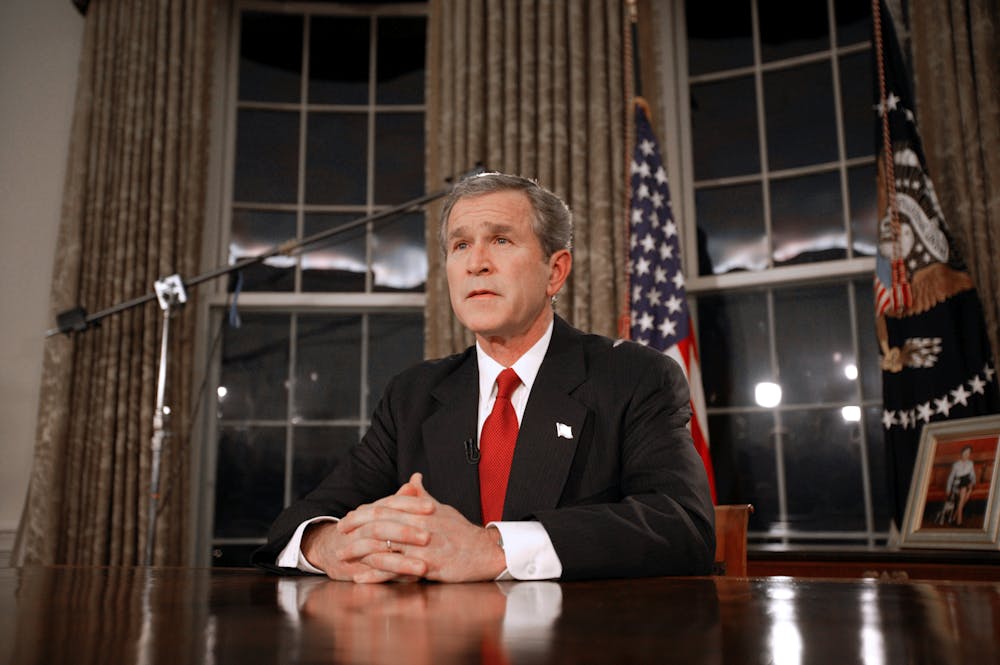
    MIL OSI Europe News

  • MIL-OSI Europe: Where climate change and your energy bills meet

    Source: European Investment Bank

    In 2020, the European Investment Bank signed a €20 million loan to help the Polish city of Szczecin build and refurbish residential buildings for energy efficiency and comfort. This project is part of larger urban regeneration programme in the historic part of the city that limits vehicle traffic, encourages cycling and aims to attract more retailers.

    Grażyna Szotkowska, president of the board for one of two housing agencies in Szczecin that used some of the funding from this loan, says the city is a leader in cutting emissions in housing. That’s because many of its big residential buildings are connected to the city’s central heating, rather than having small boilers in every apartment.

    “We also are adding thick layers of insulation to many social housing buildings,” Szotkowska says. “Most importantly, they are getting triple-glazed windows, which are highly efficient in terms of energy loss but also block road noise. Better insulation and windows also mean lower energy consumption, which reduces the costs for the tenants.”

    Lower expenses for homeowners, tenants and building owners is a topic energy experts always mention.

    “Energy improvements are one of the main advantages of housing upgrades, as they help reduce energy bills for households while also cutting carbon emissions,” says Gladys Sevilla, an EIB loan officer who works on housing projects.

    In other words, governments may like energy efficiency because it cuts carbon emissions or because it reduces the need to build new homes to beat the housing crisis. Residents like energy efficiency because it saves them money and increases the value of their homes.

    MIL OSI Europe News