NewzIntel.com

    • Checkout Page
    • Contact Us
    • Default Redirect Page
    • Frontpage
    • Home-2
    • Home-3
    • Lost Password
    • Member Login
    • Member LogOut
    • Member TOS Page
    • My Account
    • NewzIntel Alert Control-Panel
    • NewzIntel Latest Reports
    • Post Views Counter
    • Privacy Policy
    • Public Individual Page
    • Register
    • Subscription Plan
    • Thank You Page

Category: Energy

  • MIL-Evening Report: What’s the difference between food poisoning and gastro? A gut expert explains

    Source: The Conversation (Au and NZ) – By Vincent Ho, Associate Professor and Clinical Academic Gastroenterologist, Western Sydney University

    Andrey_Popov/Shutterstock

    If you’ve got a dodgy tummy, diarrhoea and have been vomiting, it’s easy to blame a “tummy bug” or “off food”.

    But which is it? Gastro or food poisoning?

    What’s the difference anyway?

    What’s gastroenteritis?

    Gastroenteritis, or gastro for short, is a gut infection caused by a virus, bacterium or other microbe.

    The gut is teeming with cells including healthy microbes and the cells lining the gut. But when viruses, bacteria and other microbes start to invade your gut, they colonise, build up in large numbers and eventually cause the cells lining the gut to inflame. The “-itis” at the end of gastroenteritis means inflammation.

    Gastroenteritis is extremely common. In Australia there are an estimated 17.2 million cases a year.

    So where do these gastro-causing microbes come from? Eating contaminated food is often the source.

    However you can acquire these microbes in other ways. For example, if you touch a surface where someone sick from viral gastroenteritis had vomited on, that virus could transfer to your hands. And if your hands touched your mouth, you in turn could contract viral gastroenteritis.

    What’s food poisoning?

    Food poisoning refers to getting sick from eating food contaminated with chemicals, microbes or toxins.

    For example if you ate food contaminated with insecticides or methyl alcohol (methanol) that would count as food poisoning. If you ate puffer fish or poisonous mushrooms that would count too. But food poisoning doesn’t include the effects of eating a food you’re allergic to.

    The vast majority of food poisonings are as a result of food contaminated by microbes and their toxins. When you eat or drink them it’s like a missile strike. The toxins in particular can rapidly cause inflammation and damage the lining of the gut.

    To add to the confusion, food poisoning is often referred to as foodborne gastroenteritis.

    Food poisoning (or foodborne gastroenteritis) is also common in Australia. It accounts for about one-third of all cases of gastroenteritis or an estimated 5.4 million cases every year.

    How can we tell the two apart?

    Both gastroenteritis and food poisoning have symptoms such as diarrhoea, vomiting, nausea, abdominal cramps, fever and headaches. But these symptoms can come on in different ways.

    Viral gastroenteritis, such as with norovirus, usually causes symptoms 24–48 hours after exposure, which can last for one to two days.

    But food poisoning after eating microbial toxins can come on very quickly. For example, toxins from the bacterium Staphylococcus aureus can cause symptoms within 30 minutes of eating contaminated food, such as undercooked meat. Fortunately, symptoms usually get better within 24 hours.

    Symptoms don’t always come on so quickly in all cases of bacterial food poisoning. For example, it can take as long as 70 days between exposure to Listeria and symptoms occurring, although, on average it’s about three weeks. This long incubation period can make it difficult to work out if a particular food is responsible for someone getting sick.

    As a general guide food poisoning occurs quite quickly (within hours of eating contaminated food) while gastroenteritis can take a day or more after eating to get sick. But there is no hard and fast rule.

    It can take weeks from eating soft cheese contaminated with Listeria before you have symptoms.
    In Green/Shutterstock

    How do I prevent them?

    The same precautions when handling food apply to preventing both gastroenteritis and food poisoning. These steps not only lower your risk of being affected in the first place, they lower your risk of you infecting others.

    Wash your hands thoroughly with soap and water before preparing food. Use separate cutting boards and utensils for raw and cooked foods to help avoid cross-contamination. Cook food thoroughly and store it at safe temperatures.

    Gastroenteritis can involve transmission of microbes through means other than food, for instance, via poo on your hands if you don’t wash your hands after using the toilet or after changing a child’s nappy. So wash your hands afterwards.

    To prevent others from becoming sick, make sure you quickly disinfect contaminated surfaces thoroughly after someone vomits or has diarrhoea. First, put on gloves and wash surfaces with hot water and a detergent. Then disinfect using household bleach containing 0.1% hypochlorite.

    How can I get better?

    Treating both gastroenteritis and food poisoning focuses on preventing dehydration and relieving symptoms.

    To avoid dehydration, drink plenty of fluids. For moderate or severe cases, you can buy commercial oral rehydration solution from a pharmacy.

    You can also make your own oral rehydration solution by adding 6 teaspoons of sugar, ½ teaspoon of salt and ½ teaspoon of sodium bicarbonate to a litre of water. You can splash in some cordial for taste.

    If symptoms are severe or persist you should see your GP or go to the emergency department.


    Read more:
    Got gastro? Here’s why eating bananas helps but drinking flat lemonade might not


    Vincent Ho does not work for, consult, own shares in or receive funding from any company or organisation that would benefit from this article, and has disclosed no relevant affiliations beyond their academic appointment.

    – ref. What’s the difference between food poisoning and gastro? A gut expert explains – https://theconversation.com/whats-the-difference-between-food-poisoning-and-gastro-a-gut-expert-explains-252730

    MIL OSI Analysis – EveningReport.nz –

    June 18, 2025
  • MIL-OSI Global: US and Iran have a long, complicated history, spanning far beyond Israel’s strikes on Tehran

    Source: The Conversation – USA – By Jeffrey Fields, Professor of the Practice of International Relations, USC Dornsife College of Letters, Arts and Sciences

    People observe fire and smoke from an Israeli airstrike on an oil depot in Tehran, Iran, on June 15, 2025. Stringer/Getty Images

    Relations between the United States and Iran have been fraught for decades – at least since the U.S. helped overthrow a democracy-minded prime minister, Mohammed Mossadegh, in August 1953. The U.S. then supported the long, repressive reign of the Shah of Iran, whose security services brutalized Iranian citizens for decades.

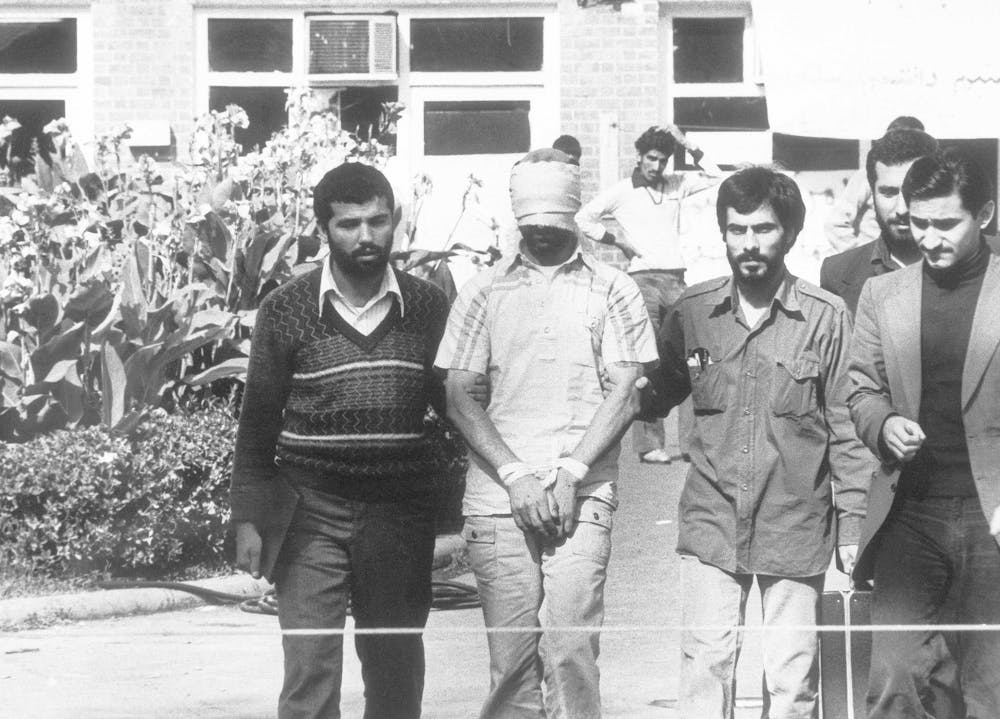
    The two countries have been particularly hostile to each other since Iranian students took over the U.S. Embassy in Tehran in November 1979, resulting in economic sanctions and the severing of formal diplomatic relations between the nations.

    Since 1984, the U.S. State Department has listed Iran as a “state sponsor of terrorism,” alleging the Iranian government provides terrorists with training, money and weapons.

    Some of the major events in U.S.-Iran relations highlight the differences between the nations’ views, but others arguably presented real opportunities for reconciliation.

    1953: US overthrows Mossadegh

    Mohammed Mossadegh.
    Wikimedia Commons

    In 1951, the Iranian Parliament chose a new prime minister, Mossadegh, who then led lawmakers to vote in favor of taking over the Anglo-Iranian Oil Company, expelling the company’s British owners and saying they wanted to turn oil profits into investments in the Iranian people. The U.S. feared disruption in the global oil supply and worried about Iran falling prey to Soviet influence. The British feared the loss of cheap Iranian oil.

    President Dwight Eisenhower decided it was best for the U.S. and the U.K. to get rid of Mossadegh. Operation Ajax, a joint CIA-British operation, convinced the Shah of Iran, the country’s monarch, to dismiss Mossadegh and drive him from office by force. Mossadegh was replaced by a much more Western-friendly prime minister, handpicked by the CIA.

    Demonstrators in Tehran demand the establishment of an Islamic republic.
    AP Photo/Saris

    1979: Revolutionaries oust the shah, take hostages

    After more than 25 years of relative stability in U.S.-Iran relations, the Iranian public had grown unhappy with the social and economic conditions that developed under the dictatorial rule of Shah Mohammad Reza Pahlavi.

    Pahlavi enriched himself and used American aid to fund the military while many Iranians lived in poverty. Dissent was often violently quashed by SAVAK, the shah’s security service. In January 1979, the shah left Iran, ostensibly to seek cancer treatment. Two weeks later, Ayatollah Ruhollah Khomeini returned from exile in Iraq and led a drive to abolish the monarchy and proclaim an Islamic government.

    Iranian students at the U.S. Embassy in Tehran show a blindfolded American hostage to the crowd in November 1979.
    AP Photo

    In October 1979, President Jimmy Carter agreed to allow the shah to come to the U.S. to seek advanced medical treatment. Outraged Iranian students stormed the U.S. Embassy in Tehran on Nov. 4, taking 52 Americans hostage. That convinced Carter to sever U.S. diplomatic relations with Iran on April 7, 1980.

    Two weeks later, the U.S. military launched a mission to rescue the hostages, but it failed, with aircraft crashes killing eight U.S. servicemembers.

    The shah died in Egypt in July 1980, but the hostages weren’t released until Jan. 20, 1981, after 444 days of captivity.

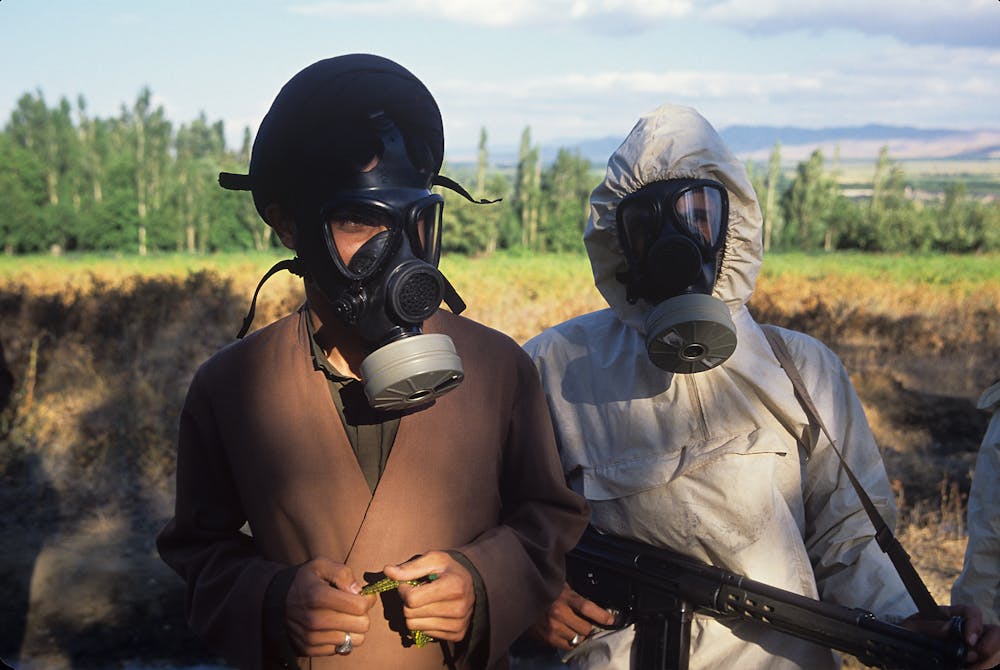
    An Iranian cleric, left, and an Iranian soldier wear gas masks to protect themselves against Iraqi chemical-weapons attacks in May 1988.
    Kaveh Kazemi/Getty Images

    1980-1988: US tacitly sides with Iraq

    In September 1980, Iraq invaded Iran, an escalation of the two countries’ regional rivalry and religious differences: Iraq was governed by Sunni Muslims but had a Shia Muslim majority population; Iran was led and populated mostly by Shiites.

    The U.S. was concerned that the conflict would limit the flow of Middle Eastern oil and wanted to ensure the conflict didn’t affect its close ally, Saudi Arabia.

    The U.S. supported Iraqi leader Saddam Hussein in his fight against the anti-American Iranian regime. As a result, the U.S. mostly turned a blind eye toward Iraq’s use of chemical weapons against Iran.

    U.S. officials moderated their usual opposition to those illegal and inhumane weapons because the U.S. State Department did not “wish to play into Iran’s hands by fueling its propaganda against Iraq.” In 1988, the war ended in a stalemate. More than 500,000 military and 100,000 civilians died.

    1981-1986: US secretly sells weapons to Iran

    The U.S. imposed an arms embargo after Iran was designated a state sponsor of terrorism in 1984. That left the Iranian military, in the middle of its war with Iraq, desperate for weapons and aircraft and vehicle parts to keep fighting.

    The Reagan administration decided that the embargo would likely push Iran to seek support from the Soviet Union, the U.S.’s Cold War rival. Rather than formally end the embargo, U.S. officials agreed to secretly sell weapons to Iran starting in 1981.

    The last shipment, of anti-tank missiles, was in October 1986. In November 1986, a Lebanese magazine exposed the deal. That revelation sparked the Iran-Contra scandal in the U.S., with Reagan’s officials found to have collected money from Iran for the weapons and illegally sent those funds to anti-socialist rebels – the Contras – in Nicaragua.

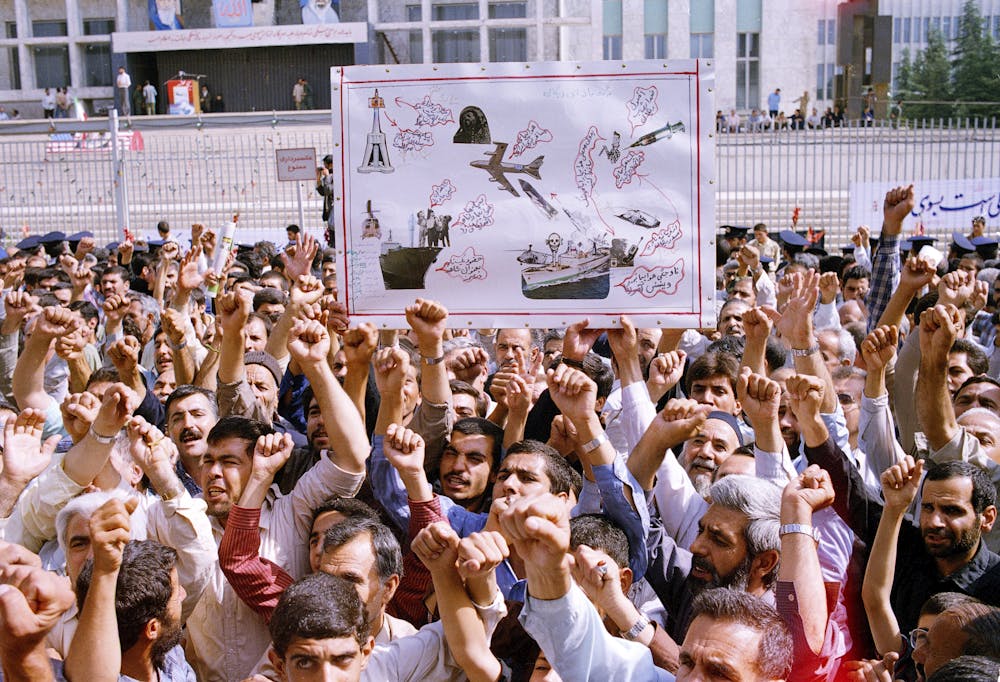
    At a mass funeral for 76 of the 290 people killed in the shootdown of Iran Air 655, mourners hold up a sign depicting the incident.
    AP Photo/CP/Mohammad Sayyad

    1988: US Navy shoots down Iran Air flight 655

    On the morning of July 8, 1988, the USS Vincennes, a guided missile cruiser patrolling in the international waters of the Persian Gulf, entered Iranian territorial waters while in a skirmish with Iranian gunboats.

    Either during or just after that exchange of gunfire, the Vincennes crew mistook a passing civilian Airbus passenger jet for an Iranian F-14 fighter. They shot it down, killing all 290 people aboard.

    The U.S. called it a “tragic and regrettable accident,” but Iran believed the plane’s downing was intentional. In 1996, the U.S. agreed to pay US$131.8 million in compensation to Iran.

    1997-1998: The US seeks contact

    In August 1997, a moderate reformer, Mohammad Khatami, won Iran’s presidential election.

    U.S. President Bill Clinton sensed an opportunity. He sent a message to Tehran through the Swiss ambassador there, proposing direct government-to-government talks.

    Shortly thereafter, in early January 1998, Khatami gave an interview to CNN in which he expressed “respect for the great American people,” denounced terrorism and recommended an “exchange of professors, writers, scholars, artists, journalists and tourists” between the United States and Iran.

    However, Supreme Leader Ayatollah Ali Khamenei didn’t agree, so not much came of the mutual overtures as Clinton’s time in office came to an end.

    In his 2002 State of the Union address, President George W. Bush characterized Iran, Iraq and North Korea as constituting an “Axis of Evil” supporting terrorism and pursuing weapons of mass destruction, straining relations even further.

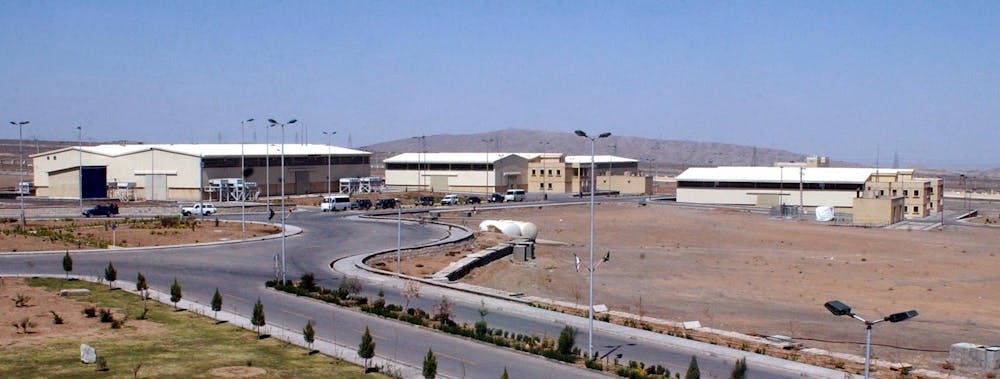
    Inside these buildings at the Natanz nuclear facility in Iran, technicians enrich uranium.
    AP Photo/Vahid Salemi

    2002: Iran’s nuclear program raises alarm

    In August 2002, an exiled rebel group announced that Iran had been secretly working on nuclear weapons at two installations that had not previously been publicly revealed.

    That was a violation of the terms of the Nuclear Nonproliferation Treaty, which Iran had signed, requiring countries to disclose their nuclear-related facilities to international inspectors.

    One of those formerly secret locations, Natanz, housed centrifuges for enriching uranium, which could be used in civilian nuclear reactors or enriched further for weapons.

    Starting in roughly 2005, U.S. and Israeli government cyberattackers together reportedly targeted the Natanz centrifuges with a custom-made piece of malicious software that became known as Stuxnet.

    That effort, which slowed down Iran’s nuclear program was one of many U.S. and international attempts – mostly unsuccessful – to curtail Iran’s progress toward building a nuclear bomb.

    2003: Iran writes to Bush administration

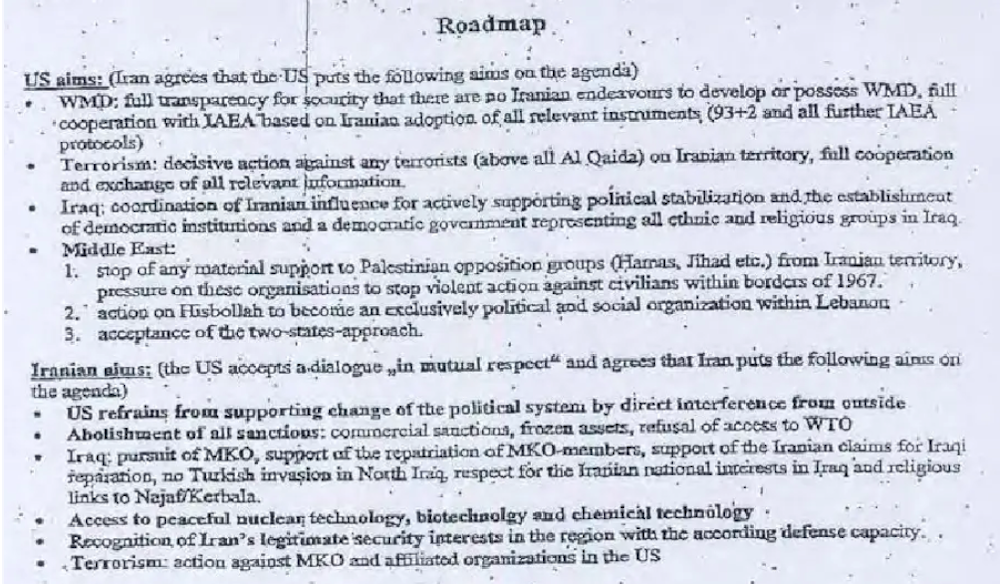
    An excerpt of the document sent from Iran, via the Swiss government, to the U.S. State Department in 2003, appears to seek talks between the U.S. and Iran.
    Washington Post via Scribd

    In May 2003, senior Iranian officials quietly contacted the State Department through the Swiss embassy in Iran, seeking “a dialogue ‘in mutual respect,’” addressing four big issues: nuclear weapons, terrorism, Palestinian resistance and stability in Iraq.

    Hardliners in the Bush administration weren’t interested in any major reconciliation, though Secretary of State Colin Powell favored dialogue and other officials had met with Iran about al-Qaida.

    When Iranian hardliner Mahmoud Ahmadinejad was elected president of Iran in 2005, the opportunity died. The following year, Ahmadinejad made his own overture to Washington in an 18-page letter to President Bush. The letter was widely dismissed; a senior State Department official told me in profane terms that it amounted to nothing.

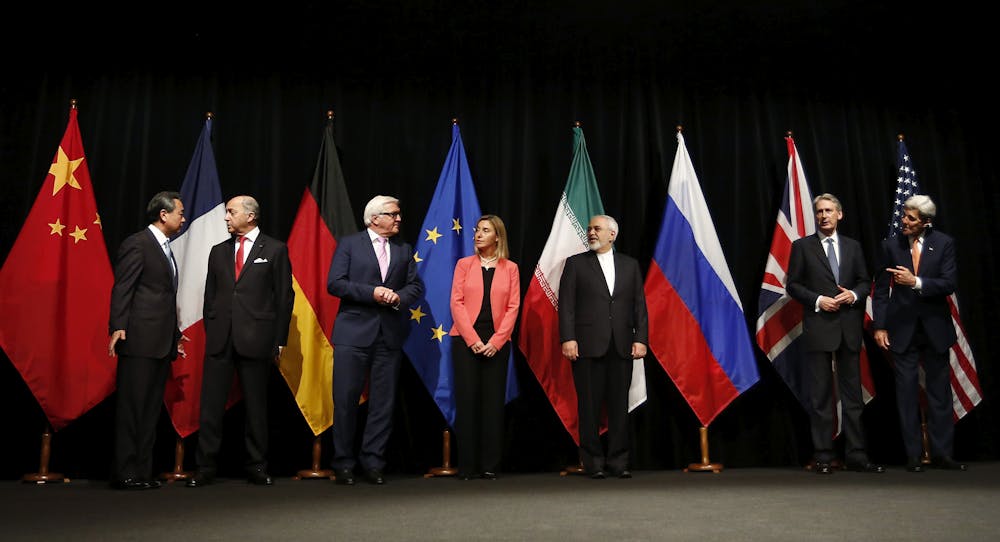
    Representatives of several nations met in Vienna in July 2015 to finalize the Iran nuclear deal.
    Austrian Federal Ministry for Europe, Integration and Foreign Affairs/Flickr

    2015: Iran nuclear deal signed

    After a decade of unsuccessful attempts to rein in Iran’s nuclear ambitions, the Obama administration undertook a direct diplomatic approach beginning in 2013.

    Two years of secret, direct negotiations initially bilaterally between the U.S. and Iran and later with other nuclear powers culminated in the Joint Comprehensive Plan of Action, often called the Iran nuclear deal.

    Two years of secret, direct negotiations conducted bilaterally at first between the U.S. and Iran and later with other nuclear powers culminated in the Joint Comprehensive Plan of Action, often called the Iran nuclear deal.

    Iran, the U.S., China, France, Germany, Russia and the United Kingdom signed the deal in 2015. It severely limited Iran’s capacity to enrich uranium and mandated that international inspectors monitor and enforce Iran’s compliance with the agreement.

    In return, Iran was granted relief from international and U.S. economic sanctions. Though the inspectors regularly certified that Iran was abiding by the agreement’s terms, President Donald Trump withdrew from the agreement in May 2018.

    2020: US drones kill Iranian Maj. Gen. Qassem Soleimani

    An official photo from the Iranian government shows Maj. Gen. Qassem Soleimani, who was killed in a Jan. 3 drone strike ordered by President Donald Trump.
    Iranian Supreme Leader Press Office/Anadolu Agency via Getty Images

    On Jan. 3, 2020, an American drone fired a missile that killed Maj. Gen. Qassem Soleimani, the leader of Iran’s elite Quds Force. Analysts considered Soleimani the second most powerful man in Iran, after Supreme Leader Ayatollah Khamenei.

    At the time, the Trump administration asserted that Soleimani was directing an imminent attack against U.S. assets in the region, but officials have not provided clear evidence to support that claim.

    Iran responded by launching ballistic missiles that hit two American bases in Iraq.

    2023: The Oct. 7 attacks on Israel

    Hamas’ brazen attack on Israel on Oct. 7, 2023, provoked a fearsome militarized response from Israel that continues today and served to severely weaken Iran’s proxies in the region, especially Hamas – the perpetrator of the attacks – and Hezbollah in Lebanon.

    2025: Trump 2.0 and Iran

    Trump saw an opportunity to forge a new nuclear deal with Iran and to pursue other business deals with Tehran. Once inaugurated for his second term, Trump appointed Steve Witkoff, a real estate investor who is the president’s friend, to serve as special envoy for the Middle East and to lead negotiations.

    Negotiations for a nuclear deal between Washington and Tehran began in April, but the countries did not reach a deal. They were planning a new round of talks when Israel struck Iran with a series of airstrikes on June 13, forcing the White House to reconsider is position.

    Jeffrey Fields receives funding from the Carnegie Corporation of New York and Schmidt Futures.

    – ref. US and Iran have a long, complicated history, spanning far beyond Israel’s strikes on Tehran – https://theconversation.com/us-and-iran-have-a-long-complicated-history-spanning-far-beyond-israels-strikes-on-tehran-259240

    MIL OSI – Global Reports –

    June 18, 2025
  • MIL-OSI USA: Padilla, Schiff Condemn Trump Administration Decision to Terminate $3.7 Billion in Clean Energy Grants, Urge DOE to Reinstate Them

    US Senate News:

    Source: United States Senator Alex Padilla (D-Calif.)

    Padilla, Schiff Condemn Trump Administration Decision to Terminate $3.7 Billion in Clean Energy Grants, Urge DOE to Reinstate Them

    Senators Padilla and Schiff: “These unlawful terminations represent a significant setback for American energy independence, and they undermine California and America’s leadership in the globally competitive clean energy industry.”

    “These grants were provided through legally binding contract agreements between recipients and the federal government and, therefore, cannot be canceled on a political whim.”

    WASHINGTON, D.C — Today, U.S. Senators Alex Padilla and Adam Schiff (both D-Calif.) condemned the Trump Administration’s decision to terminate $3.7 billion in federal funding for clean energy projects across the country, including $845 million in California, and called on the Administration to reinstate them. In the letter to U.S. Department of Energy (DOE) Chris Wright, the Senators note that these grants were previously awarded through legally binding contract agreements between recipients and the federal government and cannot be canceled on a political whim.

    The projects targeted include the National Cement Company of California which lost $500 million for their Lebec Net-Zero Project to focus on carbon capture and the development of carbon-neutral cement, a manufacturing process that is notoriously emissions-intensive, $270 million for implementing carbon capture at a natural gas power plant in Yuba City, and $75 million for a project focused on testing new technology at Gallo Glass Company furnaces in Modesto.  

    “These grants were provided through legally binding contract agreements between recipients and the federal government and, therefore, cannot be canceled on a political whim. DOE claims that the agency evaluated the investments “on a case-by-case basis to identify waste of taxpayer dollars,” and yet your agency has not provided any information to Congress detailing waste of any kind,” wrote the Senators.

    “DOE’s attacks on cutting-edge clean energy projects run counter to our shared interest in boosting energy production, innovation, and economic vitality. The United States cannot afford to halt our progress and hinder American companies’ efforts to move beyond outdated technologies if we hope to remain competitive and truly energy dominant around the globe. These irrational cancellations will increase energy prices, hamper innovation, and set us backwards as we strive toward a clean energy future. We ask that you reinstate the $3.7 billion in canceled OCED funding so that we may bolster American energy production and maintain our competitive edge,” concluded the Senators.  

    A list of DOE awards terminated is available here.  

    Full text of the letter is available here and below:    

    Dear Secretary Wright: 

    We write with deep concern regarding the U.S. Department of Energy’s (DOE) terminations of energy projects in California that were supported by the Office of Clean Energy Demonstrations (OCED). These unlawful terminations represent a significant setback for American energy independence, and they undermine California and America’s leadership in the globally competitive clean energy industry.  We urge you to work with recipients to reinstate their grant awards.    

    On May 30, DOE canceled $3.7 billion in funding for 24 clean energy projects around the country, including in Alabama, Arizona, California, Illinois, Kentucky, Louisiana, Massachusetts, Michigan, Nevada, New York, Ohio, Texas, Washington, and Wyoming. In California alone, DOE terminated $845 million in project funding. These terminations are unnecessarily harmful to California’s industries, who often push the cutting edge of innovation forward.    

    One of the largest cancellations targeted the National Cement Company of California Inc., which lost $500 million for their Lebec Net-Zero Project to focus on carbon capture and the development of carbon-neutral cement, a manufacturing process that is notoriously emissions-intensive.  Not only would this project have accelerated decarbonization efforts, but it would have also created hundreds of local jobs in construction and plant operations. Another canceled project in California was $270 million for implementing carbon capture at a natural gas power plant in Yuba City. This project, which supported the same traditional sources of energy that the Trump DOE claims to support, would have helped reduce 95 percent of CO2 emissions from the plant and provided Northern California with more low-carbon electricity. DOE canceled another $75 million for a project focused on testing new technology at Gallo Glass Company furnaces in Modesto.  This project would have reduced natural gas use by 70 percent and would have used union labor to produce glass for California’s wine industry.   

    These grants were provided through legally binding contract agreements between recipients and the federal government and, therefore, cannot be canceled on a political whim.  DOE claims that the agency evaluated the investments “on a case-by-case basis to identify waste of taxpayer dollars,” and yet your agency has not provided any information to Congress detailing waste of any kind.  These terminations follow your agency’s May 15 announcement that DOE would review 179 awards totaling over $15 billion for projects dedicated to updating power grids and supporting the domestic manufacture of batteries, which has created significant chaos and uncertainty in America’s energy and manufacturing sectors. 

    Additionally, it has been reported that DOE may be planning to close OCED, which has contributed to more than 70 percent of staff in that office departing the agency.  In 2021, Congress directed the establishment of OCED in the bipartisan Infrastructure Investment and Jobs Act. OCED’s mission is to advance large-scale demonstration projects to accelerate the deployment and market adoption of energy technologies like clean hydrogen, carbon management, advanced nuclear reactors, and long-duration energy storage.  Until recently, these were bipartisan initiatives.    

    DOE’s attacks on cutting-edge clean energy projects run counter to our shared interest in boosting energy production, innovation, and economic vitality. The United States cannot afford to halt our progress and hinder American companies’ efforts to move beyond outdated technologies if we hope to remain competitive and truly energy dominant around the globe. These irrational cancellations will increase energy prices, hamper innovation, and set us backwards as we strive toward a clean energy future. We ask that you reinstate the $3.7 billion in canceled OCED funding so that we may bolster American energy production and maintain our competitive edge.     

    Thank you and we look forward to your response.

    MIL OSI USA News –

    June 18, 2025
  • MIL-OSI Analysis: What is uranium enrichment and how is it used for nuclear bombs? A scientist explains

    Source: The Conversation – Global Perspectives – By Kaitlin Cook, DECRA Fellow, Department of Nuclear Physics and Accelerator Applications, Australian National University

    Uranium ore. RHJPhtotos/Shutterstock

    Late last week, Israel targeted three of Iran’s key nuclear facilities – Natanz, Isfahan and Fordow, killing several Iranian nuclear scientists. The facilities are heavily fortified and largely underground, and there are conflicting reports of how much damage has been done.

    Natanz and Fordow are Iran’s uranium enrichment sites, and Isfahan provides the raw materials, so any damage to these sites would limit Iran’s ability to produce nuclear weapons.

    But what exactly is uranium enrichment and why does it raise concerns?

    To understand what it means to “enrich” uranium, you need to know a little about uranium isotopes and about splitting the atom in a nuclear fission reaction.

    What is an isotope?

    All matter is made of atoms, which in turn are made up of protons, neutrons and electrons. The number of protons is what gives atoms their chemical properties, setting apart the various chemical elements.

    Atoms have equal numbers of protons and electrons. Uranium has 92 protons, for example, while carbon has six. However, the same element can have different numbers of neutrons, forming versions of the element called isotopes.

    This hardly matters for chemical reactions, but their nuclear reactions can be wildly different.

    The difference between uranium-238 and uranium-235

    When we dig uranium out of the ground, 99.27% of it is uranium-238, which has 92 protons and 146 neutrons. Only 0.72% of it is uranium-235 with 92 protons and 143 neutrons (the remaining 0.01% are other isotopes).

    For nuclear power reactors or weapons, we need to change the isotope proportions. That’s because of the two main uranium isotopes, only uranium-235 can support a fission chain reaction: one neutron causes an atom to fission, which produces energy and some more neutrons, causing more fission, and so on.

    This chain reaction releases a tremendous amount of energy. In a nuclear weapon, the goal is to have this chain reaction occur in a fraction of a second, producing a nuclear explosion.

    In a civilian nuclear power plant, the chain reaction is controlled. Nuclear power plants currently produce 9% of the world’s power. Another vital civilian use of nuclear reactions is for producing isotopes used in nuclear medicine for the diagnosis and treatment of various diseases.

    What is uranium enrichment, then?

    To “enrich” uranium means taking the naturally found element and increasing the proportion of uranium-235 while removing uranium-238.

    There are a few ways to do this (including new inventions from Australia), but commercially, enrichment is currently done with a centrifuge. This is also the case in Iran’s facilities.

    Centrifuges exploit the fact that uranium-238 is about 1% heavier than uranium-235. They take uranium (in gas form) and use rotors to spin it at 50,000 to 70,000 rotations per minute, with the outer walls of the centrifuges moving at 400 to 500 metres per second.

    This works much like a salad spinner that throws water to the sides while the salad leaves stay in the centre. The heavier uranium-238 moves to the edges of the centrifuge, leaving the uranium-235 in the middle.

    This is only so effective, so the spinning process is done over and over again, building up the percentage of the uranium-235.

    Most civilian nuclear reactors use “low enriched uranium” that’s been enriched to between 3% and 5%. This means that 3–5% of the total uranium in the sample is now uranium-235. That’s enough to sustain a chain reaction and make electricity.

    What level of enrichment do nuclear weapons need?

    To get an explosive chain reaction, uranium-235 needs to be concentrated significantly more than the levels we use in nuclear reactors for making power or medicines.

    Technically, a nuclear weapon can be made with as little as 20% uranium-235 (known as “highly enriched uranium”), but the more the uranium is enriched, the smaller and lighter the weapon can be. Countries with nuclear weapons tend to use about 90% enriched, “weapons-grade” uranium.

    According to the International Atomic Energy Agency (IAEA), Iran has enriched large quantities of uranium to 60%. It’s actually easier to go from an enrichment of 60% to 90% than it is to get to that initial 60%. That’s because there’s less and less uranium-238 to get rid of.

    This is why Iran is considered to be at extreme risk of producing nuclear weapons, and why centrifuge technology for enrichment is kept secret.

    Ultimately, the exact same centrifuge technology that produces fuel for civilian reactors can be used to produce nuclear weapons.

    Inspectors from the IAEA monitor nuclear facilities worldwide to ensure countries are abiding by the rules set out in the global nuclear non-proliferation treaty. While Iran maintains it’s only enriching uranium for “peaceful purposes”, late last week the IAEA board ruled Iran was in breach of its obligations under the treaty.

    Kaitlin Cook receives funding from the Australian Research Council.

    – ref. What is uranium enrichment and how is it used for nuclear bombs? A scientist explains – https://theconversation.com/what-is-uranium-enrichment-and-how-is-it-used-for-nuclear-bombs-a-scientist-explains-259031

    MIL OSI Analysis –

    June 18, 2025
  • MIL-OSI Analysis: Australia could become the world’s first net-zero exporter of fossil fuels – here’s how

    Source: The Conversation – Global Perspectives – By Frank Jotzo, Professor, Crawford School of Public Policy and Director, Centre for Climate and Energy Policy, Australian National University

    Photo by Jie Zhao/Corbis via Getty Images

    Australia is among the world’s top three exporters of LNG and second-largest exporter of coal. When burned overseas, these exports result in 1.1 billion tonnes of carbon dioxide emissions a year – almost three times Australia’s domestic emissions.

    Emissions embedded in Australia’s exports do not count towards our national emissions targets. But they contribute to climate change – and they’re the reason for Australia’s international reputation as a fossil-fuel economy.

    On the bright side, Australia boasts huge potential for low-cost renewable energy and a knack for resource industries.

    We can, and should, become a “renewable energy superpower”. This term refers to the potential for Australia to use its bountiful renewable energy resources to make commodities such as iron, ammonia and other products and fuels in “green” or low-emissions ways.

    So how does Australia give salience to this idea on the global stage, while our fossil fuel exports continue? The solution could be a new net-zero target for Australia, in which emissions from green exports are tallied up against those from fossil fuel exports.

    Australia can become a renewable energy superpower.
    Brook Mitchell/Getty Images

    Reinvigorating Australia’s climate policy

    If the clean energy transition eventuates, green exports from Australia will rise over time. This will help reduce the use of coal, gas and oil elsewhere in the world.

    Meanwhile, coal exports – and later, gas exports – will fall. This will happen irrespective of Australia’s policies, as the world economy decarbonises and demand for fossil fuels slows.

    At some point, we can expect emissions avoided by our green commodity exports to surpass those from remaining coal and gas exports. Australia would then reach what could be termed “net-zero export emissions”.

    Adopting this net-zero target as a national policy would give a concrete yardstick to Australia’s green-export ambitions. It could also invigorate Australia’s climate policy and boost investor confidence.

    A different approach would be to set targets only for green exports, and this could be how we get started. Ultimately, a net-zero target wrapping up both green and fossil-fuel exports would speak most directly to the goal of tackling climate change, and is likely to have more impact on the international stage.

    A net-zero export target would give a concrete yardstick to Australia’s ambition to develop green export industries.
    Brook Mitchell/Getty Images

    Getting to net-zero exports

    The below chart shows an illustrative decline in emissions embedded in Australia’s coal and LNG (liquified natural gas) exports, out to 2050.*


    Authors’ calculations based on Australian Energy Update 2024, Australian National Greenhouse Accounts Factors 2024, IEA World Energy Outlook 2024

    It’s hard to pin down when Australia might reach net-zero exports. It depends on several factors. How quickly will the cost of clean energy and green-commodity technologies fall? How competitively can Australia produce green goods compared to other nations? What policies will be adopted in Australia and overseas – and will they work?

    The magnitudes are sobering. Take iron, for example. Australia currently exports 900 million tonnes of iron ore a year. This is processed overseas to about 560 million tonnes of iron.

    To fully compensate for emissions currently embedded in Australia’s coal and gas exports, Australia would need to process about the same amount of green iron – around 550 million tonnes – on home soil every year.

    To reach this figure, we assume 0.1 tonnes of CO₂-equivalent is created per tonne of green iron, compared to about 2.1 tonnes of CO₂-equivalent per tonne of iron resulting from conventional blast furnace production.

    Achieving this would require keeping iron ore production at current levels and processing it all in Australia, which is unlikely to be realistic.

    Thankfully, the task of reaching net-zero export emissions will be smaller in future, as global coal and gas demand falls. But exactly how this will translate to Australian exports is highly uncertain.

    Let’s suppose Australia’s exports evolved on the same trajectory as they might under current climate policies and pledges for the global coal and gas trade.

    In this case, embedded emissions from Australia’s coal and gas exports would be about 360 million tonnes in 2050. This includes about 120 million tonnes from LNG exports – much of it locked in by the extension to Woodside’s North West Shelf project off Western Australia.

    Hypothetically, the 360 million tonnes of emissions could be negated by a mix of green exports. They include 102 million tonnes of green iron (saving 204 million tonnes of CO₂), and 11 million tonnes of green ammonia (saving about 23 million tonnes of CO₂), and the remainder covered by a combination of green aluminium, silicon, methanol and transport fuels.

    Judgement calls would be needed about which commodities to include in the target. The composition of green exports suggested above is akin to assumptions about Australia’s potential global market share outlined by The Superpower Institute.

    Importantly, it’s hard to predict with certainty the greenhouse gas emissions displaced elsewhere in the world by Australia’s green exports. So, the estimates should be understood as broad illustrations, and not as exact as the accounting used to calculate countries’ domestic emissions.

    The precise year chosen for reaching a net-zero target for export emissions may well be less important than the commitment that, at some point, Australia’s green energy exports will exceed fossil fuel exports. This would establish the notion that Australia has the capacity and willingness to help the world decarbonise.

    At some point, Australia’s green energy exports will exceed fossil fuel exports.
    David Gray/Getty Images

    A positive agenda for change

    The export target could be part of Australia’s updated emissions pledge due to be submitted to the United Nations by September this year. The pledge, known as a Nationally Determined Contribution (NDC), is required by signatories to the Paris Agreement.

    Each nation is expected to detail its national emissions target for 2035. But nations can make additional pledges towards the world’s climate change effort. You could call it an “NDC+”.

    So Australia could outline an indicative goal for net-zero exports – perhaps alongside other pledges such as leveraging climate change finance for developing countries, or helping our Pacific neighbours adapt to climate change impacts.

    As a large fossil fuels exporter, Australia would earn kudos for showing it has a positive agenda for change.

    And if Australia wins the bid to host the COP31 climate conference next year, a plan to reduce export emissions could be a major rallying point.


    * Underlying data for the chart showing an expected decline in future emissions embedded in Australia’s coal and LNG exports:

    Exports in 2022–23: coal, 9.6 exajoules (EJ); LNG, 4.5 EJ, from Australian Energy Update. This was multiplied by an emissions factor 90.2 for coal (MtCO₂-e/EJ) and 51.5 for LNG (MtCO₂-e/EJ), as drawn from the Australian National Greenhouse Accounts Factors

    Exports for 2035 and 2050: this assumes a trend aligned with the IEA’s Announced Pledges Scenario, as outlined in the World Energy Outlook 2024. Note the percentage changes from 2023 to 2035 and 2050 for coal (-45% and -73% respectively) and for LNG (+9% and -47% respectively.) These figures do not distinguish between steam coal for power and metallurgical coal.

    Frank Jotzo leads research projects on climate, energy and industry policy. He is a commissioner with the NSW Net Zero Commission and chairs the Queensland Clean Economy Expert Panel.

    Annette Zou works on research projects on climate policy and decarbonisation and has previously worked with The Superpower Institute

    – ref. Australia could become the world’s first net-zero exporter of fossil fuels – here’s how – https://theconversation.com/australia-could-become-the-worlds-first-net-zero-exporter-of-fossil-fuels-heres-how-259037

    MIL OSI Analysis –

    June 18, 2025
  • MIL-OSI Submissions: Energy Sector – Equinor secures exploration acreage in Brazil

    Source: Equinor

    18 JUNE 2025 – Equinor has today been awarded a new exploration opportunity in Brazil, providing the potential for deepening the company’s position in the country.

    Equinor has deepened its position in the Santos basin after winning the S-M-1617 block during Brazil’s 5th Open Permanent Concession bid round.

    “We are pleased with our success in today’s bidding round, securing a new exploration opportunity in Brazil – a core country in our international portfolio. The license is in close proximity to the S-M-1378 block we already own, an area with strong potential that we can leverage to reinforce our position in the Santos basin. This award provides us with longevity options for Brazil and demonstrates our continuous commitment and appetite to grow in the country,” says Veronica Coelho, Senior Vice President and Brazil Country Manager.

    The S-M-1617 license in Brazil was secured by Equinor on a 100% basis with a total signature bonus of around 30.5 million Brazilian Real (around 5.5 MUSD).

    The block is located 60 kilometers away from the S-M-1378 block already owned by Equinor. This is an addition to our existing opportunity set in Brazil and demonstrates the company’s continued commitment and growth ambition in the country. Equinor will now work to conduct necessary geological and geophysical assessments for future exploration activities.

    Facts about Brazil:

    Equinor as an international operator has been present in Brazil for more than two decades and sees the country as a core area for long-term growth.
    The S-M-1617 license is located in the Santos basin, 400 kilometres off the coast, in water depths up to 2600 metres.
    Equinor is progressing as an operator of the Bacalhau and Raia projects, in the Santos and Campos basins respectively.
    Beyond oil and gas, Equinor is expanding investments into renewable energy with onshore assets already in operation and more projects under development through its subsidiary Rio Energy.

    MIL OSI – Submitted News –

    June 18, 2025
  • MIL-OSI: Topnotch Crypto Launches Free Cloud Mining App to Simplify Access to Digital Asset Mining

    Source: GlobeNewswire (MIL-OSI)

    London, United Kingdom, June 18, 2025 (GLOBE NEWSWIRE) — Topnotch Crypto, a global player in the cloud mining sector, has officially launched its free cloud mining mobile application. Designed to simplify digital asset mining for everyday users, the new app leverages artificial intelligence and renewable energy to deliver efficient, 24/7 automated mining without the need for hardware or technical expertise.

    The application aims to make digital asset mining more accessible by offering a streamlined, mobile-first experience. Built with a focus on energy efficiency, the app runs on 100% green power sourced from Nordic wind and solar infrastructure. Its AI-based computing system dynamically allocates resources to optimize performance and reduce energy costs.

    “We developed this app to lower the barrier of entry into digital asset mining,” said a spokesperson from Topnotch Crypto. “With just a smartphone, users can now participate in the growing digital economy in a secure and sustainable way.”

    Why do more than 8 million users around the world favor Topnotch Crypto?

    Key Features of the New App:

    • Hardware-Free Mining: No mining rigs required. All operations are cloud-based.
    • Green Energy Integration: Fully powered by renewable sources to reduce carbon footprint.
    • Multi-Currency Support: Enables mining across 12 major cryptocurrencies including BTC, ETH, and FIL.
    • Security-Centric Design: ISO 27001 certified with 98% of user assets stored in cold wallets.
    • AI Optimization: Automated computing resource allocation for greater efficiency and uptime.

    Click to download the free app, both iOS and Android versions are available.

    The app also allows users to monitor mining performance, manage digital assets, and access support directly from their mobile device. It is available on both Android and iOS platforms.

    This launch comes at a time when the global cloud mining industry is projected to grow rapidly. According to Bloomberg New Energy Finance, the market is expected to see a compound annual growth rate of approximately 47% between 2025 and 2028. Solutions that combine cloud infrastructure, AI, and green energy are increasingly seen as foundational to the next era of digital mining.

    About Topnotch Crypto

    Topnotch Crypto was legally established in 2020 under British supervision. With “zero threshold, low risk, and high transparency” as its core advantages, it has built a new channel to crypto assets for global users.

    Visit https://topnotchcrypto.com to register now and share the stable passive income and unlimited growth opportunities under the wave of digital gold with 8 million users around the world!

    Application download: https://topnotchcrypto.com/download/

    Disclaimer: The information provided in this press release does not constitute an investment solicitation, nor does it constitute investment advice, financial advice, or trading recommendations. Cryptocurrency mining and staking involve risks and the possibility of financial loss. You are strongly advised to perform due diligence before investing or trading in cryptocurrencies and securities, including consulting a professional financial advisor.

    The MIL Network –

    June 18, 2025
  • MIL-OSI NGOs: G7 leaders fail to stand up and propel climate action

    Source: Greenpeace Statement –

    Toronto, Canada, G7 leaders have failed to deliver outcomes that advance bold climate action, as the shadow of a stand-off with the US held back urgently needed progress.

    Tracy Carty, Climate Politics Expert, Greenpeace International said: “As G7 leaders grapple with how to de-escalate multiple conflicts they can ill afford to ignore another threat to global stability – the worsening climate emergency.” 

    “But even before the latest intensification in the Middle East, the climate had already been sidelined, as the G7 – under Canada’s leadership – tiptoed around Trump’s climate denialism. The leaders of these nations – among the most responsible for global emissions – cannot retreat and hide.”

    “The G7 must urgently work towards bold action to cut emissions, hold the fossil fuel industry accountable, and ensure big polluters pay their fair share for the climate damage already unfolding across the globe.”

    Keith Stewart, Senior Energy Strategist, Greenpeace Canada said: “Canada is literally a country on fire, but despite wanting to discuss an improved joint response to wildfires, it allowed the summit to end with a statement on the issue that included no mention of tackling the climate crisis fuelling the latest disaster.”

    “This was a wasted opportunity as Canada ducked away from a confrontation with Trump. But true leadership requires standing up to climate denialists and fostering cooperation instead of deepening climate culpability. The G7 cannot abdicate its responsibility to lead the charge for bold, urgent global action to cut emissions and the time to act is now.”

    ENDS

    Contacts:

    Aaron Gray-Block, Climate Politics Communications Manager, Greenpeace International, [email protected]

    Gaby Flores, Communications Coordinator, Greenpeace International, +1 214 454 3871, [email protected]

    Greenpeace International Press Desk, +31 (0)20 718 2470 (available 24 hours), [email protected]

    MIL OSI NGO –

    June 18, 2025
  • MIL-OSI United Kingdom: New plans to supercharge UK cyber sector

    Source: United Kingdom – Executive Government & Departments

    Press release

    New plans to supercharge UK cyber sector

    The UK’s growing cyber security sector will be boosted by millions in new investment and a new Cyber Growth Action Plan, as part of the government’s Plan for Change.

    • New Cyber Growth Action Plan to boost jobs and innovation, growing the UK’s £13.2 billion cyber sector. 
    • Up to £16 million in new funding to turn cutting edge innovation into new business, and boost cyber startups 
    • Cyber experts from defence and big tech set to advise government on public sector cybersecurity, amid growing threats.

    The UK’s growing and cutting edge cyber security sector will be boosted by millions in new investment and a roadmap for growth, as part of the Plan for Change. 

    The government has today [Wednesday 18 June] set out the Cyber Growth Action Plan that will chart a course for the UK’s thriving cyber industry, including the technologies, processes, and services designed to protect digital systems, to continue to grow – with the sector already generating £13.2 billion in annual revenue and supporting over 67,000 jobs in 2024.   

    Led by independent experts at University of Bristol and Imperial College London’s Centre for Sectoral Economic Performance, the Plan will examine the strengths of the UK’s cyber sector and provide a roadmap for its future growth. This will culminate with a set of recommendations later this summer for government to plot out what steps can be taken to deliver maximum impact. 

    On top of this, up to £16 million in new investment has been announced in 2 cyber sector programmes to kickstart growth. Up to £10 million in additional funding will be invested in the CyberASAP programme over the next 4 years, which will support the UK’s cutting edge academic cyber sector to turn their research into commercial companies. The programme has already supported the creation of 34 spin-out companies which have raised over £43 million in investment. The new funding aims to generate a further 25 spin-outs by 2030 and attract £30 million in additional investment. 

    To build on the work of the government’s current cyber accelerator Cyber Runway, up to £6 million will be also allocated to support cyber startups and SMEs – helping firms scale, access new markets through trade missions, and strengthen the UK’s wider cyber ecosystem. By backing researchers and entrepreneurs, these programmes will ensure the UK remains a global leader in cyber innovation and growth. This investment will unlock more jobs, support innovation, and bolster Britain’s cyber security. 

    Cyber Security Minister Feryal Clark said:  

    Cyber security is essential to our economic strength and national resilience. Today’s announcement is backed by investment showing we’re serious about making the UK a global leader in cyber innovation and protection.

    Through our Plan for Change, we’re backing the sector to create high-quality jobs through the Cyber Growth Action Plan and ensuring our public services are built on secure foundations with the expert support of the Government Cyber Advisory Board.

    Chancellor of the Duchy of Lancaster Pat McFadden said:

    Today’s investment will help to turn innovative ideas into successful businesses up and down the country, and the new research will support our mission to grow the economy.  

    Recent cyber attacks show just how important it is we foster the development of the sector – delivering the double dividend of high paying jobs as well as strengthening the country’s cyber security.

    The Growth Action Plan is due to report later this summer and will feed into the forthcoming National Cyber Strategy, ensuring the UK remains resilient and competitive in an increasingly interconnected world. This is central to the government’s Plan for Change, aimed at driving innovation, creating high-quality jobs and securing long-term economic resilience.  

    The review is set to cover the supply and demand of cyber goods and services such as protective monitoring and encryption, to understand opportunities for growth. The research will aim to spot new trends and potential areas to capitalise on – as well as explore emerging technologies including AI and Quantum, and identify opportunities to strengthen Britain’s competitive edge. This will in turn protect our digital economy and the new growth which is fundamental to the government’s Plan for Change.  

    Simon Shiu, Professor of Cyber Security at the University of Bristol and leading the project, said:  

    The UK Cyber Sector is successful and growing, but so too are the challenges as demonstrated by recent events which have affected businesses and consumers. Based on input from all parts of the Cyber Sector, this project will make independent recommendations to accelerate growth in Cyber, but also to increase cyber-resilience in the other sectors critical to UK security, industry, and prosperity.

    Professor Nigel Brandon, Dean of the Faculty of Engineering at Imperial, said:  

    The Centre for Sectoral Economic Performance (CSEP) at Imperial is uniquely placed to work with the University of Bristol on this important work in a rapidly growing and key sector for the UK economy. This work is aligned with our ambition to help drive economic growth by boosting the UK’s innovation capacity, productivity and competitiveness.

    Senior cybersecurity experts from defence, big tech companies, AI labs, academia and more are also advising the government on public sector cybersecurity. Cyber leaders from BAE Systems, Santander, Amazon Web Services, Microsoft, and Google DeepMind will form the new iteration of the Government Cyber Advisory Board, which will play a key role in supporting the government’s goal to strengthen the public sector’s cyber resilience. This aligns with the government Cyber Security Strategy and underpins the delivery of secure digital services across government. 

    The cyber sector will be a key focus of the upcoming Industrial Strategy – becoming a central pillar of the government’s Plan for Change to kick-start growth and put more money in people’s pockets across the UK. Cyber security has become a central part of the government’s plans to secure the economy and drive growth across the country as part of its Plan for Change.   

    Earlier this year, the Technology Secretary set out his ambition for the forthcoming Cyber Security and Resilience Bill which includes proposals to protect the UK’s supply chains, critical national services, and IT service providers and suppliers and is expected to be introduced to Parliament later this year.   

    As part of the new measures, hospitals and energy suppliers are set to boost their cyber defences, protecting public services and safeguarding growth.

    Notes to editors

    You can find the Terms of Reference for the growth review here.

    The new board members of the Government Cyber Advisory Board include:  

    • Daniel Cuthbert (co-chair), Global Head of Cyber Security Research, Santander   
    • Bella Powell (co-chair), Government Cyber Director, Government Digital Service  
    • Daniel Card, Cyber Security Consultant 
    • Cate Pye, Global Partner Lead for Digital Trust and Cyber Security, PA Consulting   
    • Heather Bedson, Head of Information Security, BPP 
    • Jeff Moss, President of DEF CON Communications Inc 
    • Jen Ellis, Cyber Security Consultant
    • Asif Matadar, CEO and Founder, cyberwargames.ai 
    • Dr Simon Parkinson, Professor of Cyber Security, University of Huddersfield 
    • Julia Spain, Partner, Ashurst Risk Advisory
    • Nicole Fowler, Chief Information Security Officer, Bank of Ireland UK 
    • Thomas Harvey, Chief Information Security Officer (CISO), Santander UK   
    • Richard Palk, Managing Director Security, Accenture UK
    • Sam Kirby-French, Group CISO, BAE Systems 
    • Phil Legg, Professor in Cyber Security, University of the West of England
    • Mark Evans, Principal Security Strategist, Amazon Web Services
    • Sarah Armstrong-Smith, Chief Security Advisor, Microsoft
    • Ian Thompson, Senior Government Cyber Advisor, Middle East and North Africa, Google 
    • Eleanor Sim, Director Security Strategy and Architecture, Chief Security Architect, Bupa   
    • Euan Birch, Head of Cyber Security Operations, SP Energy Networks 
    • Vijay Bolina, Chief Information Security Officer, Head of Cybersecurity Research, DeepMind  

    Daniel Cuthbert (industry co-chair):

    It is an honour to co-chair the UK Government Cyber Advisory Board (GCAB). Our strength comes from the close partnership between public and private sector experts, drawing on a wide range of experience to help protect the UK. As cyber threats continue to evolve, strong cyber security is essential to safeguarding our economy, protecting public services, and supporting everyday life. The diversity of expertise on the board plays a vital role in ensuring the UK remains resilient, innovative and secure.

    Ian Thompson:

    The Government Cyber Advisory Board plays a vital role in bringing together expertise from across government and a wide set of industry sectors. This cross-sector collaboration not only accelerates the sharing of best practices and experience but also ensures balanced perspectives and mutual learning — something I’m personally finding invaluable.

    Sarah Armstrong-Smith:

    From laggards to leaders – in an era where cyber-attacks are coming thick and fast, GCAB has the opportunity to take a commanding role, setting the right path and principles for how the UK should respond to this systemic threat. This requires a whole-of-society approach to build collective resilience that inspires confidence in times of uncertainty.

    Cate Pye:

    I’m delighted to be part of the GCAB, it is a really pivotal part of making sure that the whole of the UK contribute to our cyber security as this becomes increasingly essential to the way we live and work.  It is also an exemplar of how government and industry can work as one team to really change the way both government and the private sector pragmatically address cyber challenges together, building trust and competency in both.

    Asif Matadar:

    It has been an absolute honour to serve as an inaugural member of the Government Cyber Advisory Board. This initiative has already delivered concrete improvements in how government organisations anticipate and mitigate cyber threats, embedding best practice across government. I am therefore delighted that my term has been extended for a further year, during which I will continue to apply my expertise in incident response, cyber skills development and emerging technologies to support the UK government’s mission of building a world‑class, resilient cyber estate by 2030.

    Euan Birch:

    GCAB reflects the best of trusted public-private partnerships, embedding strategic collaboration and shared responsibility at the heart of government. As a member, I value the opportunity to support government in its mission to strengthen the UK’s resilience to cyber attacks and help secure its position as a global leader.

    Heather Bedson:

    Being part of the GCAB is an opportunity to drive change and improve the Government’s cyber resilience by using expertise from a wide range of industries. I enjoy being part of the GCAB, as it’s an opportunity to share my experiences while collaborating with colleagues across the sector who I might not have otherwise met.

    DSIT media enquiries

    Email press@dsit.gov.uk

    Monday to Friday, 8:30am to 6pm 020 7215 3000

    Share this page

    The following links open in a new tab

    • Share on Facebook (opens in new tab)
    • Share on Twitter (opens in new tab)

    Updates to this page

    Published 18 June 2025

    MIL OSI United Kingdom –

    June 18, 2025
  • MIL-OSI Canada: Update 5: Alberta wildfire update (June 17, 3 p.m.)

    Source: Government of Canada regional news (2)

    MIL OSI Canada News –

    June 18, 2025
  • MIL-Evening Report: Australia could become the world’s first net-zero exporter of fossil fuels – here’s how

    Source: The Conversation (Au and NZ) – By Frank Jotzo, Professor, Crawford School of Public Policy and Director, Centre for Climate and Energy Policy, Australian National University

    Photo by Jie Zhao/Corbis via Getty Images

    Australia is the world’s third largest exporter of gas and second largest exporter of coal. When burned overseas, these exports result in 1.1 billion tonnes of carbon dioxide emissions a year – almost three times Australia’s domestic emissions.

    Emissions embedded in Australia’s exports do not count towards our national emissions targets. But they contribute to climate change – and they’re the reason for Australia’s international reputation as a fossil-fuel economy.

    On the bright side, Australia boasts huge potential for low-cost renewable energy and a knack for resource industries.

    We can, and should, become a “renewable energy superpower”. This term refers to the potential for Australia to use its bountiful renewable energy resources to make commodities such as iron, ammonia and other products and fuels in “green” or low-emissions ways.

    So how does Australia give salience to this idea on the global stage, while our fossil fuel exports continue? The solution could be a new net-zero target for Australia, in which emissions from green exports are tallied up against those from fossil fuel exports.

    Australia can become a renewable energy superpower.
    Brook Mitchell/Getty Images

    Reinvigorating Australia’s climate policy

    If the clean energy transition eventuates, green exports from Australia will rise over time. This will help reduce the use of coal, gas and oil elsewhere in the world.

    Meanwhile, coal exports – and later, gas exports – will fall. This will happen irrespective of Australia’s policies, as the world economy decarbonises and demand for fossil fuels slows.

    At some point, we can expect emissions avoided by our green commodity exports to surpass those from remaining coal and gas exports. Australia would then reach what could be termed “net-zero export emissions”.

    Adopting this net-zero target as a national policy would give a concrete yardstick to Australia’s green-export ambitions. It could also invigorate Australia’s climate policy and boost investor confidence.

    A different approach would be to set targets only for green exports, and this could be how we get started. Ultimately, a net-zero target wrapping up both green and fossil-fuel exports would speak most directly to the goal of tackling climate change, and is likely to have more impact on the international stage.

    A net-zero export target would give a concrete yardstick to Australia’s ambition to develop green export industries.
    Brook Mitchell/Getty Images

    Getting to net-zero exports

    The below chart shows an illustrative decline in emissions embedded in Australia’s coal and LNG (liquified natural gas) exports, out to 2050.*


    Authors’ calculations based on Australian Energy Update 2024, Australian National Greenhouse Accounts Factors 2024, IEA World Energy Outlook 2024

    It’s hard to pin down when Australia might reach net-zero exports. It depends on several factors. How quickly will the cost of clean energy and green-commodity technologies fall? How competitively can Australia produce green goods compared to other nations? What policies will be adopted in Australia and overseas – and will they work?

    The magnitudes are sobering. Take iron, for example. Australia currently exports 900 million tonnes of iron ore a year. This is processed overseas to about 560 million tonnes of iron.

    To fully compensate for emissions currently embedded in Australia’s coal and gas exports, Australia would need to process about the same amount of green iron – around 550 million tonnes – on home soil every year.

    To reach this figure, we assume 0.1 tonnes of CO₂-equivalent is created per tonne of green iron, compared to about 2.1 tonnes of CO₂-equivalent per tonne of iron resulting from conventional blast furnace production.

    Achieving this would require keeping iron ore production at current levels and processing it all in Australia, which is unlikely to be realistic.

    Thankfully, the task of reaching net-zero export emissions will be smaller in future, as global coal and gas demand falls. But exactly how this will translate to Australian exports is highly uncertain.

    Let’s suppose Australia’s exports evolved on the same trajectory as they might under current climate policies and pledges for the global coal and gas trade.

    In this case, embedded emissions from Australia’s coal and gas exports would be about 360 million tonnes in 2050. This includes about 120 million tonnes from LNG exports – much of it locked in by the extension to Woodside’s North West Shelf project off Western Australia.

    Hypothetically, the 360 million tonnes of emissions could be negated by a mix of green exports. They include 102 million tonnes of green iron (saving 204 million tonnes of CO₂), and 11 million tonnes of green ammonia (saving about 23 million tonnes of CO₂), and the remainder covered by a combination of green aluminium, silicon, methanol and transport fuels.

    Judgement calls would be needed about which commodities to include in the target. The composition of green exports suggested above is akin to assumptions about Australia’s potential global market share outlined by The Superpower Institute.

    Importantly, it’s hard to predict with certainty the greenhouse gas emissions displaced elsewhere in the world by Australia’s green exports. So, the estimates should be understood as broad illustrations, and not as exact as the accounting used to calculate countries’ domestic emissions.

    The precise year chosen for reaching a net-zero target for export emissions may well be less important than the commitment that, at some point, Australia’s green energy exports will exceed fossil fuel exports. This would establish the notion that Australia has the capacity and willingness to help the world decarbonise.

    At some point, Australia’s green energy exports will exceed fossil fuel exports.
    David Gray/Getty Images

    A positive agenda for change

    The export target could be part of Australia’s updated emissions pledge due to be submitted to the United Nations by September this year. The pledge, known as a Nationally Determined Contribution (NDC), is required by signatories to the Paris Agreement.

    Each nation is expected to detail its national emissions target for 2035. But nations can make additional pledges towards the world’s climate change effort. You could call it an “NDC+”.

    So Australia could outline an indicative goal for net-zero exports – perhaps alongside other pledges such as leveraging climate change finance for developing countries, or helping our Pacific neighbours adapt to climate change impacts.

    As a large fossil fuels exporter, Australia would earn kudos for showing it has a positive agenda for change.

    And if Australia wins the bid to host the COP31 climate conference next year, a plan to reduce export emissions could be a major rallying point.


    * Underlying data for the chart showing an expected decline in future emissions embedded in Australia’s coal and LNG exports:

    Exports in 2022–23: coal, 9.6 exajoules (EJ); LNG, 4.5 EJ, from Australian Energy Update. This was multiplied by an emissions factor 90.2 for coal (MtCO₂-e/EJ) and 51.5 for LNG (MtCO₂-e/EJ), as drawn from the Australian National Greenhouse Accounts Factors

    Exports for 2035 and 2050: this assumes a trend aligned with the IEA’s Announced Pledges Scenario, as outlined in the World Energy Outlook 2024. Note the percentage changes from 2023 to 2035 and 2050 for coal (-45% and -73% respectively) and for LNG (+9% and -47% respectively.) These figures do not distinguish between steam coal for power and metallurgical coal.

    Frank Jotzo leads research projects on climate, energy and industry policy. He is a commissioner with the NSW Net Zero Commission and chairs the Queensland Clean Economy Expert Panel.

    Annette Zou works on research projects on climate policy and decarbonisation and has previously worked with The Superpower Institute

    – ref. Australia could become the world’s first net-zero exporter of fossil fuels – here’s how – https://theconversation.com/australia-could-become-the-worlds-first-net-zero-exporter-of-fossil-fuels-heres-how-259037

    MIL OSI Analysis – EveningReport.nz –

    June 18, 2025
  • MIL-OSI USA: House Democrats Defend NIH Grants Against Trump Administration’s Unlawful Termination

    Source: United States House of Representatives – Congressman Hakeem Jeffries (8th District of New York)

    Washington, D.C. — Today, the Litigation and Response Task Force led 152 House Democrats in filing an amicus brief challenging the Trump Administration’s illegal and devastating cuts to life-saving medical research grants at the National Institutes of Health (NIH). The brief defends Congress’s Article I authority to appropriate federal funds and speaks up for every American who relies on crucial life-saving biomedical and public health research conducted at universities, medical schools, research hospitals, and other scientific institutions across the country. 

    House Democrats’ amicus brief was filed in the consolidated cases Commonwealth of Massachusetts v. NIH, Association of American Medical Colleges v. NIH, and Association of American Universities v. Department of Health and Human Services, all currently before the U.S. Court of Appeals for the First Circuit. These cases challenge the Trump Administration’s unlawful and unconstitutional efforts to reduce indirect cost reimbursements for projects funded by the NIH.

    In early February, the Trump Administration arbitrarily slashed the NIH reimbursement rate for indirect research costs. Without fair reimbursement for indirect costs, more than 300,000 scientists and researchers at 2,500 institutions that receive NIH funding will face devastating impacts, and Americans could be left without access to lifesaving and life-extending treatments. The ramifications would also ripple through global collaboration and the development of our future scientific leadership and workforce, limiting our ability to enhance health and reduce illness and disability in the future.

    The full brief is available HERE.  

    The effort was led by Task Force Co-Chair Joe Neguse and Judiciary Committee Ranking Member Jamie Raskin, House Democratic Leader Hakeem Jeffries, and Ranking Members of the Appropriations and Energy and Commerce Committees, Representatives Rosa DeLauro and Frank Pallone. 

    See what they had to say below: 

    “The unconstitutional decision by the Trump administration to gut the NIH should shock the conscience. Donald Trump and Elon Musk are illegally destroying our public health infrastructure and canceling research programs—including pediatric cancer research—in order to hand massive tax breaks to billionaires,” said Leader Hakeem Jeffries. “Congress appropriated these funds and only Congress has the power to claw them back. House Democrats will continue to push back on this blatant disregard of science and the Constitution, and I thank Reps. Neguse, Raskin, DeLauro and Pallone and the Rapid Response Task Force and Litigation Working Group for their leadership.”

    “The Trump Administration’s reckless and illegal cuts to NIH grants, funded through congressionally appropriated dollars, not only violate Congress’s Article I powers, but also represent an affront to Americans across the country who are left reeling without access to lifesaving and life-extending treatments. This directive has upended critical medical research at our nation’s leading labs, hospitals, research centers, and scientific institutions—and has immediate consequences, including canceled clinical trials and patients losing access to treatments,” said Assistant Democratic Leader Joe Neguse. “In filing this brief, House Democrats are pushing back against the harm being inflicted on everyday Americans and reinforcing the constitutional authority of Congress.”

    “Trump’s latest attack on science is dangerous, cruel, and unconstitutional,” said Ranking Member Jamie Raskin. “By slashing NIH grant funding appropriated by Congress, the Trump Administration is jeopardizing lifesaving research conducted by scientists across the country and all the patients who depend on it. He’s also trampling Congress’s clear constitutional authority over federal spending. As president, Trump’s job is to faithfully execute the laws enacted by Congress, not rewrite them and not impound them. Therefore, NIH funds must be delivered exactly as directed by Congress. I’m proud to join my colleagues in defending both the Constitution and the future of essential American biomedical progress.”

    “Once again, President Trump and OMB Director Russ Vought are acting in direct violation of the law. In this case, they are causing irreparable damage to ongoing research to develop cures and treatments for cancer, Alzheimer’s disease and related dementias, ALS, Diabetes, Mental Health disorders, opioid abuse, genetic diseases, rare diseases, and other diseases and conditions affecting American families. The Trump Administration is stealing critical funds promised to scientific research institutions funded by the NIH, despite an explicit legal prohibition against this action. By taking an axe to our efforts to find cures to diseases and disorders that are tearing apart families across the country, President Trump and Russ Vought are risking lives and putting the United States on a path to decline,” said Ranking Member Rosa DeLauro. 

    “The Trump Administration’s NIH grant funding cuts are not only illegal, they’re also incredibly harmful to the American people,” said Ranking Member Frank Pallone, Jr. “Stealing these funds that support research will further interrupt clinical trials and patient care, delay medical research for new cures and treatments, and undermine America’s scientific research institutions. Democrats are fighting to ensure this critical funding is restored and to protect Americans’ access to lifesaving treatment and innovations.”

    Background on the Litigation and Rapid Response Task Force:

    The Litigation and Rapid Response Task Force first took the unprecedented step of filing a trial court amicus brief to defend American consumers from predatory lenders and bad actors. They were successful in this case after a federal judge blocked efforts to dismantle the CFPB, citing the group’s argument multiple times throughout the 112-page ruling. The Task Force was also able to effectively prevent the Trump Administration from dismantling the Department of Education, filing another such brief that led to a federal court demanding the immediate rehiring of unlawfully terminated staff. House Democrats have so far filed nine amicus briefs in cases against Administration lawlessness. 

    For more information on House Democrats efforts to protect Americans against the unlawful actions of the Trump Administration, visit litigationandresponse.house.gov. 

    ###

    MIL OSI USA News –

    June 18, 2025
  • MIL-OSI USA: Booker, Padilla, Reed, Huffman, Pallone, Castor Lead Charge to Block Trump’s Dangerous Offshore Drilling Plan

    US Senate News:

    Source: United States Senator for New Jersey Cory Booker

    WASHINGTON, D.C. – Today, U.S. Senators Cory Booker (D-NJ), Alex Padilla (D-CA), and Jack Reed (D-RI) along with U.S. House Natural Resources Committee Ranking Member Jared Huffman (D-CA), U.S. House Energy and Commerce Ranking Member Frank Pallone (D-NJ), and Representative Kathy Castor (D-FL) led 40 Democratic Colleagues in the Senate and House to submit formal comments to the Bureau of Ocean Energy Management (BOEM), opposing any new or expanded offshore oil and gas leasing in the Trump administration’s proposed updates to the Outer Continental Shelf (OCS) oil and gas leasing program. 

    In their letter to Interior Secretary Doug Burgum, the lawmakers warned that more offshore drilling would threaten our national security, coastal communities, marine life, and local economies – all while handing more giveaways to an industry already sitting on millions of acres of unused leases. They urged the agency to exclude any new leasing in the final program. 

    “New or expanded oil and gas leasing poses risks to the health and livelihoods of our constituents, jeopardizes our tourism, fishing, and recreational economies, and threatens the marine life that inhabits our coastlines” the members wrote. “New, unnecessary lease sales will lock in decades more of pollution and climate impacts from an industry that already holds more than 2,000 offshore leases covering more than 12 million acres of federal water, of which only 469 leases are currently producing oil and gas. The United States is already the number one producer of oil and gas in the world. There is no need for increased leasing, especially when oil and gas companies continue to impose environmental and climate consequences, public health risks, and billions of dollars in cleanup costs on the American people.”

    Members also reminded the Secretary of the long-standing legal restrictions that prevent the administration from offering lease sales in protected areas. 

    “We remind the agency that it cannot offer sales in areas permanently protected under Section 12(a) of OCSLA, including areas off the Atlantic coast, the Pacific off the coast of California, Oregon, and Washington, the Eastern Gulf of Mexico, and portions of the Arctic Ocean, including the Beaufort Sea and Chukchi Sea planning areas. In 2017, during his first term, President Trump attempted to reverse President Obama’s Arctic and Atlantic withdrawals, but Judge Sharon Gleason for the District Court of Alaska determined that Section 12(a) does not give the president authority to revoke prior withdrawals. President Trump does not have the authority to reverse the Obama and Biden withdrawals, and his Executive Order of January 2025, which attempts to do so, is unlawful,” the members continued.

    During his first term, the Trump administration proposed 47 lease sales over five years, covering nearly every U.S. coastline. Fortunately, this program was never finalized due to litigation and strong bipartisan opposition. But now, with the Biden administration’s leasing plan under review and Secretary Burgum signaling that protections may be on the chopping block, lawmakers are raising the alarm once again.

    At a budget hearing last week, Secretary Burgum refused to commit to protecting Florida’s Gulf Coast from new oil and gas leasing, saying only that “the administration may be considering opportunities.” This region has long been protected by both bipartisan legislation and administrative withdrawals – protections that are now under threat. 

    To read the full text of the letter, click here.

    MIL OSI USA News –

    June 18, 2025
  • MIL-OSI Banking: Why Canada’s largest battery project is an energy gamechanger

    Source: – Press Release/Statement:

    Headline: Why Canada’s largest battery project is an energy gamechanger

    “Being able to move energy from times of surplus to times of need is a real asset,” says Vittoria Bellissimo, president and CEO of the Canadian Renewable Energy Association. “What you need to run a reliable, clean, affordable electricity system is a diversified set of supply resources but also demand resources.” Read more.
    The post Why Canada’s largest battery project is an energy gamechanger appeared first on Canadian Renewable Energy Association.

    MIL OSI Global Banks –

    June 18, 2025
  • MIL-OSI Economics: Kyrgyz Republic: Fiscal Risks from State-owned Enterprises

    Source: International Monetary Fund

    Summary

    State-owned enterprises (SOEs) in the Kyrgyz Republic play a significant role in the economy but also present potential fiscal risks. This paper assesses these risks through both aggregate and firm-level lenses. At the aggregate level, the total amount of liabilities of largest SOEs liabilities amounted to approximately 25 percent of GDP, raising concerns about contingent fiscal liabilities. The firm-level assessment based on key financial indicators – profitability, solvency, and liquidity- confirms vulnerabilities, particularly among large SOEs in the energy sector, where low profitability largely reflects tariffs set below cost-recovery levels. These findings underscore the importance of strengthening SOE oversight, financial transparency, and advancing reforms to mitigate fiscal risks.

    Subject: Asset and liability management, Contingent liabilities, Debt financing, Economic and financial statistics, Economic sectors, Energy sector, External debt, Financial sector policy and analysis, Financial statistics, Fiscal risks, Liquidity, Liquidity management, Public enterprises, Public financial management (PFM), Solvency

    Keywords: Contingent liabilities, Debt financing, Energy sector, Financial statistics, Fiscal risks, Fiscal Risks, Kyrgyz Republic, Liquidity, Liquidity management, Public enterprises, SOEs, SOEs’ financial performance, Solvency, State-Owned Enterprises

    MIL OSI Economics –

    June 18, 2025
  • MIL-OSI USA: Congresswoman Tenney Leads Resolution Supporting Israel’s Strikes to End Iran’s Nuclear Capabilities

    Source: United States House of Representatives – Congresswoman Claudia Tenney (NY-22)

    Washington, DC – Congresswoman Claudia Tenney (NY-24), alongside Congressman Brad Sherman (CA-32), introduced a resolution reaffirming the United States’ steadfast support for Israel as it works to dismantle the Islamic Republic of Iran’s nuclear enrichment capabilities and defends its citizens from ongoing Iranian attacks.

    Additional cosponsors of this resolution include Representatives Don Bacon (NE-2), Jeff Van Drew (NJ-5), Josh Gottheimer (NJ-10), Mike Lawler (NY-17), Juan Ciscomani (AZ-6), Chris Smith (NJ-4), Scott Fitzgerald (WI-5), Randy Feenstra (IA-4), Tom Barrett (MI-7), Brian Fitzpatrick (PA-1), Maria Salazar (FL-27), Shri Thanedar (MI-13), Robert Aderholt (AL-4), and Elise Stefanik (NY-21). The resolution was also supported by FDD Action, JINSA, AJC, AIPAC, and Democratic Majority for Israel (DMFI).

    For decades, the Islamic Republic of Iran has actively pursued a nuclear weapons program in direct violation of international agreements while funding terrorism, threatening the existence of Israel, and fueling instability throughout the Middle East. Despite bipartisan diplomatic efforts across multiple U.S. administrations, Iran has consistently obstructed inspections, expelled international monitors, and advanced its uranium enrichment to levels dangerously close to weapons-grade. On Friday, June 13th, the International Atomic Energy Agency declared Iran in breach of its obligations under the Non-Proliferation Treaty.

    This resolution underscores the United States’ full support for Israel’s recent targeted actions to degrade the Islamic Republic of Iran’s nuclear infrastructure,  which protects not only Israel but also the United States and the free world. It reaffirms the vital importance of the U.S.-Israel alliance and makes clear that the pursuit of a nuclear-armed Iran will not be tolerated.

    “This bipartisan resolution reaffirms the United States’ unwavering support for Israel’s right to self-defense and for its bold, courageous efforts to dismantle Iran’s nuclear program once and for all. The U.S.-Israel partnership remains unshakable, and this resolution sends a clear and unified message: we will work together to ensure the Iranian regime is never able to obtain a nuclear weapon,” said Congresswoman Tenney.

    The Islamic Republic of Iran has made clear time and time again its intent to ‘annihilate’ Israel and attack the United States and has funded direct military attacks on Israel and the United States for decades. It’s regrettable that Iran’s decades of violation of the Nuclear Non-Proliferation Treaty (NPT) which it signed has led us to a point where this is necessary. The only thing more dangerous than this war is an Ayatollah with access to nuclear weapons. Israel could not wait until Iran had a stockpile of nuclear weapons ready to be launched,” said Congressman Sherman.

    ###

    MIL OSI USA News –

    June 18, 2025
  • MIL-OSI USA: Attorney General Bonta Joins Coalition in Submitting a Comment Letter Opposing Offshore Oil, Gas Drilling

    Source: US State of California

    Tuesday, June 17, 2025

    Contact: (916) 210-6000, agpressoffice@doj.ca.gov

    OAKLAND – California Attorney General Rob Bonta joined a coalition of 10 attorneys general in filing a comment letter with the U.S. Department of the Interior’s Bureau of Ocean Energy Management opposing offshore oil and gas drilling in the Atlantic and Pacific Oceans. In the letter, the coalition urges the federal government to exclude all planning areas in the Atlantic and Pacific Oceans from the upcoming 11th National Outer Continental Shelf Oil and Gas Leasing Program. The final program will determine which ocean areas could be opened to lease sales for oil and gas activity during the current five-year planning period, which covers the period 2024-2029. 

    “President Trump is once again taking action to line the pockets of his Big Oil friends. This time, he’s expanding oil and gas development by attempting to drill in our coastal communities,” said Attorney General Bonta. “We won’t stand idly by as the President continues to ignore science. That’s why I, alongside attorneys general nationwide, are calling on the federal government to consider the environmental and public health risks of offshore oil and gas drilling and protect our coastal communities.” 

    There is no compelling need to risk our marine and coastal resources for the limited supplies of fossil fuels off of our coasts. The United States already produces more oil and gas than any other country and exports more than it uses. Demand for gasoline has been dropping since 2019, especially on the East and West coasts. As the comment letter states: “Existing uses of these marine and coastal areas are essential parts of our state economies, national energy needs do not require drilling in these environmentally important areas, and drilling would be inconsistent with laws passed by our state opposing offshore oil and gas activity and promoting reductions in greenhouse gas emissions.” 

    The coalition’s comment letter also further details the devastating impacts of past oil spills, including the Deepwater Horizon disaster that killed 11 workers, spilled 134 million gallons of oil into the Gulf of Mexico, and caused billions of dollars of losses to fishing and tourism industries along the Gulf, as well as oil spills in California that resulted in massive losses of wildlife and harm to local fisheries. Currently, California’s law prohibits offshore drilling in state waters and holds drilling companies strictly liable for spills.

    Attorney General Bonta joins the attorneys general of Delaware, Maine, Maryland, Massachusetts, New Jersey, New York, Oregon, Rhode Island, and Washington in submitting this comment letter. 

    A copy of the comment letter can be found here.

    # # #

    MIL OSI USA News –

    June 18, 2025
  • MIL-OSI Europe: Answer to a written question – Response to blackouts in the power grid – P-001760/2025(ASW)

    Source: European Parliament

    The Commission has closely followed the incident and is continuously in touch with national authorities to support where needed. According to EU law[1], an investigation by an independent panel composed of Transmission System Operators, the Agency for the Cooperation of Energy Regulators ( ACER) and national regulatory authorities has started.

    Moreover, the Risk Preparedness Regulation[2] requires Spain and Portugal to submit a report within three months describing the event, its economic impact and possible lessons, among others. The Commission will analyse and take into considerations the findings of the investigation.

    The Commission will put forward a Grids Package by end 2025 with measures to, among others, achieve a more efficient use of existing infrastructure, ensure cross-border integrated planning and delivery of projects, and better protection of critical energy infrastructure.

    Furthermore, to ensure energy security, the EU needs a well-integrated, interconnected energy network that provides stability. By supporting the construction of the necessary infrastructure, the EU is helping to better integrate Iberian peninsula to the EU power system as stated in the Affordable Energy Action Plan.

    The Commission is working[3] with Member States, Transmission System Operators and National Regulatory Authorities to accelerate the implementation of interconnection priority projects in the region[4].

    The Commission has not received information on structural damages resulting from the incident.

    • [1] Guideline on electricity transmission system operation, Commission Regulation (EU) 2017/1485, OJ L 220, 25.8.2017, p. 1-120.
    • [2] Regulation (EU) 2019/941 of the European Parliament and of the Council of 5 June 2019 on risk-preparedness in the electricity sector, OJ L 158, 14.6.2019, p. 1-21.
    • [3] In the framework of the High-Level Group on Interconnections for South-West Europe.
    • [4] As an example, interconnectivity between France and Spain will double with the commissioning in 2028 of the Biscay Bay project, which is under construction and progressing well in both countries.
    Last updated: 17 June 2025

    MIL OSI Europe News –

    June 18, 2025
  • MIL-OSI Africa: Africa Finance Corporation (AFC), United Nations Industrial Development Organization (UNIDO) and partners enter new alliance leveraging Islamic and Arab finance for economic transformation

    Today, Africa Finance Corporation (AFC) (www.AfricaFC.org), UNIDO, the Accounting and Auditing Organization for Islamic Financial Institutions (AAOIFI) and the Union of Arab Banks (UAB), formalized new strategic partnerships under the Islamic and Arab Finance for Economic Transformation in Africa, the Arab Region and Beyond (IFETAA) Programme.

    Access to finance remains one of the most significant barriers to SME growth and economic transformation, particularly in Africa, the Middle East and South Asia. Only one in five African firms has access to credit, and those that do often face prohibitively high interest rates averaging 25 percent, compared to just 5 percent in Europe. Islamic finance, with over US$4 trillion in assets, offers a largely untapped opportunity to address this gap by directing capital stored in monetary markets into the real economy.

    IFETAA represents a new alliance that will drive capital and capacity towards MSME development, resilience and growth across low- and lower middle-income countries. The signing ceremonies of the 3 Memorandum of Understanding (MoU) took place ahead of a high-level roundtable at the Hofburg Palace in Vienna, held on the margins of the OPEC Fund Development Forum, and marked the formalization of the programme.

    “As traditional development funding continues to decline, Islamic and Arab financial institutions are emerging as key partners in driving industrialization and sustainable development”, said UNIDO Director General Gerd Müller. “Through this programme, we are building a powerful new alliance to support small and medium-sized businesses, increase productivity and resilience, and accelerate economic transformation in developing countries”.

    “The IFETAA Programme will unlock urgently needed capital for Africa’s economic transformation and AFC is proud to bring its unique expertise in both conventional and Islamic finance to mobilise funding at scale,” said Banji Fehintola, Board Member and Head of Financial Services at AFC. “As an issuer, guarantor, and investor, we are committed to delivering innovative, Shariah-compliant solutions that drive inclusive and resilient economic growth, whilst contributing to strengthening the south-south cooperation required to advance our shared development goals”.

    H.E. Shaikh Ebrahim Bin Khalifa Al Khalifa, Chairman of AAOIFI and the International Center for Entrepreneurship and Innovation announced that “AAOIFI is proud to contribute to this transformative partnership, which aligns Islamic finance with global development priorities and encourages Islamic financial institutions to voluntarily dedicate at least 20% of their financing – over US$1 trillion – to MSME development. We will work on developing a Shariah-compliant finance programme enriched with technical assistance, regulatory support, and capacity building. IFETAA will also leverage UNIDO’s globally recognized Enterprise Development and Investment Promotion model (EDIP)”.

    By integrating Islamic finance with proven entrepreneurship and business counseling interventions, IFETAA will empower MSMEs to become bankable, resilient, and key drivers of inclusive economic growth.

    Dr. Wissam Fattouh, Secretary General of the Union of Arab Banks, stated: “IFETAA is more than a programme – it is a call to action. The Union of Arab Banks is proud to unite Islamic and Arab financial power to serve sustainable development and economic sovereignty. We are mobilizing capital not just to fund growth, but to shape the future of our region. This is about empowering MSMEs, restoring trust in financial systems, and building resilient, inclusive economies”.

    IFETAA is a direct outcome of the commitments made at UNIDO’s A World Without Hunger conference in Addis Ababa in 2024. There, AAOIFI pledged to mobilize 20 percent of Islamic Financial Institutions’ loans and advancements towards MSME development, while UAB reaffirmed its commitment to channel US$1 trillion from its member banks towards the Sustainable Development Goals (SDGs). AFC, a close partner to UNIDO, expressed its support through its financial mechanisms and expertise. IFETAA will facilitate access to finance by developing a pipeline of bankable MSME projects, establish financial and non-financial de-risking mechanisms, and support host governments in strengthening regulatory frameworks to expand Islamic and conventional bank lending.

    UNIDO has committed US$500,000 to support the preparation of the IFETAA programme and its initial implementation, which is co-led by the UNIDO Task Force on Islamic and Arab Financing and UNIDO’s Investment and Technology Promotion Office in Bahrain.

    Each of the partner institutions brings unique strengths to the programme. AAOIFI, headquartered in Bahrain, is the world’s leading standard-setting body for Islamic finance and plays a critical role in ensuring Shariah compliance and supporting regulators and financial institutions globally. Beirut-based UAB represents over 300 Arab banks and financial institutions while serving as a regional platform for aligning Arab banking practices with global trends, including Islamic finance, ESG, and digital transformation. AFC is a pan-African multilateral financial institution specializing in infrastructure development. It has been expanding its use of Islamic finance instruments, recently closing a US$400 million Shariah-compliant Commodity Murabaha facility. AFC made history in 2017 by issuing a US$230 million Sukuk, the first-ever by an African supranational institution.

    Distributed by APO Group on behalf of Africa Finance Corporation (AFC).

    For more information, please contact:
    a.ahmed@unido.org
    h.hussein@unido.org

    MIL OSI Africa –

    June 18, 2025
  • MIL-OSI USA: Read More (Rep. Steube: Hold South Africa Accountable for Antisemitism)

    Source: United States House of Representatives – Congressman Greg Steube (FL-17)

    June 17, 2025 | Press ReleasesWASHINGTON, D.C. — U.S. Representative Greg Steube (R-Fla.) today introduced the Addressing Hostile and Antisemitic Conduct by the Republic of South Africa Act of 2025.  This bill would suspend direct assistance to South Africa while imposing targeted sanctions on political leaders responsible for their government’s antagonism towards the United States and its allies, lawfare against Israel at the International Court of Justice, and aligning with Iranian economic and military interests. “It is clear as day that the Government of South Africa is unfairly targeting the State of Israel and inciting hostility towards the United States and our allies,” said Rep. Steube. “South Africa’s purported grievances against Israel are nothing more than antisemitism wrapped in a bad-faith interpretation of international law. America has no business engaging with a corrupt government that weaponizes its political system against the Jewish people while jeopardizing our national security interests by indulging terrorist organizations and their sponsors. That is why I have proposed cutting off all direct assistance to South Africa and sanctioning their leaders until they stop abusing international institutions and catering to Iran and its terrorist proxies.”Background:

    The Government of South Africa has aligned itself with enemies of the United States, including Iran and the terrorist organization Hamas. Only ten days after the October 7th attacks, South Africa’s foreign minister expressed support for Hamas in a phone call with representatives of the terrorist organization.
    Two months following the October 7th attacks, Hamas sent a senior delegation to South Africa for the Fifth Global Convention of Solidarity with Palestine. Shortly thereafter, the ruling African National Congress (ANC) of South Africa welcomed representatives of Hamas for formal meetings in Johannesburg.
    In 2023, Iran and South Africa signed a cooperation agreement expanding economic ties between their two nations, including the development of five oil refineries in South Africa by the Iranian Oil Ministry. 
    While the Government of South Africa has used lawfare to accuse the State of Israel of genocide before the International Court of Justice, it has repeatedly turned a blind eye to the atrocities committed by Hamas and Iran against Israel and the United States.
    By suspending direct assistance to the Government of South Africa and imposing targeted sanctions on its political leadership, the Addressing Hostile and Antisemitic Conduct by the Republic of South Africa Act of 2025 would help codify provisions of President Trump’s Exec. Order No. 14204 (2025), Addressing Egregious Actions of the Republic of South Africa.

    Read the full bill text here.

    MIL OSI USA News –

    June 18, 2025
  • MIL-OSI USA: Middletown Finishes Downtown Revitalization Initiative Projects

    Source: US State of New York

    overnor Kathy Hochul today announced the completion of Mt. Olive Senior Manor, an affordable housing development for seniors that builds on the State’s historic $50 million investment in Buffalo’s East Side. Developed in partnership between Mt. Olive Development Corporation and People Inc., the new building creates 65 apartments for adults aged 55 and older, including 20 apartments with supportive services for individuals struggling with homelessness, on an underutilized parcel adjacent to the Mt. Olive Baptist Church. Under Governor Hochul’s leadership, New York State Homes and Community Renewal has financed more than 11,000 affordable homes in Erie County. Mt. Olive Senior Manor continues this effort and complements Governor Hochul’s $25 billion five-year housing plan, which is on track to create or preserve 100,000 affordable homes statewide.

    “Through strong partnerships with faith-based organizations like Mt. Olive Baptist Church, we are transforming underutilized spaces into vibrant, affordable homes for New York’s seniors,” Governor Hochul said. “Mt. Olive Senior Manor reflects our commitment to delivering safe, supportive housing that meets the unique needs of the East Side’s residents, advancing our bold vision to create and preserve 100,000 affordable homes across New York.”

    The three-story development is constructed on land next door to the Mt. Olive Baptist Church that has undergone brownfield remediation. All apartments are affordable to households earning up to 50 percent of the Area Median Income.

    Twenty apartments are set aside for seniors in need of supportive services to live independently. Services and rental subsidies are funded by the Empire State Supportive Housing Initiative and administered by the New York State Department of Health. The service provider is People Inc.

    Residential amenities include a community room with kitchen, laundry facilities, bicycle storage area, management office, support service offices, multipurpose room, a lounge area, and an enclosed courtyard with walkable space and a patio. To support residents as they age, the building’s design includes features such as grab bars, low-reach shelving and cabinets, lever-style door handles, under cabinet lighting, and zero transition showers.

    The development was designed to meet the Environmental Protection Agency’s Energy Star Multifamily New Construction – Energy Rating Index compliance path. The highly energy efficient, all-electric development features include electric vehicle charging stations, Energy Star appliances and lighting, low flow plumbing fixtures, and high efficiency mechanical equipment.

    State financing for Mt. Olive Senior Manor includes support from HCR’s Federal Low-Income Housing Tax Credit Program that generated more than $13 million in equity, as well as $3.6 million in subsidy. The New York State Office of Temporary and Disability Assistance is providing $4 million through the Homeless Housing and Assistance Program. Additionally, the site participated in the New York State Department of Environmental Conservation’s successful Brownfield Cleanup Program and became eligible for $3.6 million in tax credits administered by the New York State Department of Taxation and Finance. The Buffalo Urban Renewal Agency awarded $2 million in HOME funds. NYSERDA’s New Construction – Housing Program contributed $260,000 in incentives.

    New York State Homes and Community Renewal Commissioner RuthAnne Visnauskas said, “Mt. Olive Senior Manor exemplifies New York State’s commitment to creating affordable, supportive housing, including in partnership with faith-based organizations, that uplifts residents and strengthens communities like East Buffalo. This $27 million investment not only provides safe, modern homes and vital services that seniors deserve, but allows 65 households to stay and thrive in the community they love. Under Governor Hochul’s leadership, we will continue to create more housing opportunities for New Yorkers of every age and income level.”

    New York State Office of Temporary and Disability Assistance Commissioner Barbara C. Guinn said, “The 20 supportive housing units created as part of this development will help older adults in Erie County who have experienced homelessness by providing a safe, stable home and access to support services that will enable them to age in place. Congratulations to Mt. Olive Baptist Church, People Inc., and all of our state and local partners on the successful completion of Mt. Olive Senior Manor.”

    New York State Department of Environmental Conservation Commissioner Amanda Lefton said, “Everyone should have access to environmentally safe and affordable housing. For more than two decades, the State’s Brownfield Cleanup Program has played a critical role in cleaning up formerly contaminated sites, returning them to productive use, and supporting local revitalization efforts. DEC is proud to oversee this critical program and its contribution to achieving Governor Hochul’s affordable housing goals in communities like Buffalo, including the Mt. Olive Senior Housing Development, while supporting DEC’s mission to protect public health and the environment for all.”

    NYSERDA President and CEO Doreen M. Harris said, “Projects like Mt. Olive Senior Manor are helping shape a cleaner, more modern future for every New Yorker. Integrating the latest clean energy technology into affordable housing not only provides access to healthier, more comfortable living spaces for Western New York’s older adults, but helps improve the quality of life for many living in a historically underserved community.”

    State Senator April N. M. Baskin said, “This type of collaboration is meaningful on many levels: it’s a successful partnership between Mt. Olive and the leading human services agency in our region, People Inc.. This project also reimagines an underutilized parcel, turning it into a beautiful space benefiting our older East Side residents. Mt. Olive Baptist Manor is a safe and affordable place to call home, enabling our elders to live their best life in a way they surely deserve.”

    Erie County Legislator St. Jean Tard said, “It is an honor to celebrate the opening of Mt. Olive Senior Manor, a development that brings both hope and stability to our community. This project represents more than new construction—it’s a commitment to the well-being of our seniors, especially those who have faced the hardships of homelessness. Transforming a long-vacant site into a place of safety, care, and opportunity is a powerful reflection of what can be achieved through meaningful collaboration. I extend my sincere thanks to Mt. Olive Development Corp., People Inc., and all the partners who brought this vision to life.”

    Buffalo Common Council Member Zeneta Everhart said, “The newly constructed Mt. Olive Senior Manor located in the Masten District is an essential facility to meet the needs of our seniors and people struggling with homelessness. Thanks to major investments from the state and the Buffalo Urban Renewal Agency, what was once a vacant brownfield is now a great and affordable home for dozens of our older neighbors. I am grateful to Governor Hochul and the New York State Homes and Community Renewal for investing in our community and prioritizing the needs of vulnerable residents.”

    People Inc. President and CEO Anne McCaffrey said, “We are extremely proud to join Mt. Olive Development Corp., federal, state and local government officials in unveiling this impactful housing complex,” said Anne McCaffrey, People Inc. president and CEO. “We are providing more than just new housing. We are creating life-changing opportunities for living that are invigorating communities and meeting a critical regional need. Mt. Olive Senor Manor will help people live their best lives, which is central to People Inc.’s mission and vision for the communities we serve.”

    Governor Hochul’s Housing Agenda

    Governor Hochul is dedicated to addressing New York’s housing crisis and making the State more affordable and more livable for all New Yorkers. As part of the FY25 Enacted Budget, the Governor secured a landmark agreement to increase New York’s housing supply through new tax incentives, capital funding, and new protections for renters and homeowners. Building on this commitment, the FY26 Enacted Budget includes more than $1.5 billion in new State funding for housing, a Housing Access Voucher pilot program, and new policies to improve affordability for tenants and homebuyers. These measures complement the Governor’s five-year, $25 billion Housing Plan, included in the FY23 Enacted Budget, to create or preserve 100,000 affordable homes statewide, including 10,000 with support services for vulnerable populations, plus the electrification of an additional 50,000 homes. More than 60,000 homes have been created or preserved to date.

    The FY25 and FY26 Enacted Budgets also strengthened the Governor’s Pro-Housing Community Program — which allows certified localities exclusive access to up to $750 million in discretionary State funding. Currently, more than 300 communities have received Pro Housing certification, including Buffalo.

    MIL OSI USA News –

    June 18, 2025
  • MIL-OSI: The Ministry for Digital Transformation and Public Administration of the Government of Spain has announced an investment of €19.6M in Quantix to Establish a Cybersecurity and Microelectronics Center in the Region of Murcia

    Source: GlobeNewswire (MIL-OSI)

    The Ministry for Digital Transformation and Public Administration of the Government of Spain has announced an investment of €19.6M in Quantix to Establish a Cybersecurity and Microelectronics Center in the Region of Murcia

    The Ministry for Digital Transformation and Public Administration announced its participation in Quantix Edge Security through the Spanish Society for Technological Transformation (SETT), alongside Murcia-based companies OdinS and TProtege, Swiss-based company WISeKey, and France-based company SEALSQ

    Geneva, Switzerland, June 17, 2025 – WISeKey International Holding Ltd (“WISeKey”) (SIX: WIHN, NASDAQ: WKEY), a leading global cybersecurity, blockchain, and IoT company, today announces that the Government of Spain has announced its investment of €19.6M in Quantix to Establish a Cybersecurity and Microelectronics Center in the Region of Murcia.   WISeKey expects to issue a press-release detailing the project shortly.

    A free translation of the Spanish language announcement by the Spanish Ministry for Digital Transformation and Public Administration is set forth below.

    “The Council of Ministers announced today, the launch of Quantix, an ambitious public-private joint venture with a total investment of €40M. The venture includes OdinS, a spin-off from the University of Murcia, Murcia-based TProtege, and Switzerland-based WISeKey and France-based SEALSQ, both listed on NASDAQ. Quantix will develop a Semiconductor Design and Personalization Center in the Region of Murcia with advanced capabilities in cybersecurity, post-quantum technology, AI, and RISC-V systems.

    The investment, driven by the Ministry for Digital Transformation and Public Administration, exceeds €19.6 million and will be managed through SETT (Spanish Society for Technological Transformation), a recently established public entity created by the Government of Spain to invest in and support strategic and emerging projects that advance Spain’s technological transformation.

    This project, which began gaining public traction in February 2024, has now culminated with the approval of the Spanish Government’s financial backing. Quantix represents a strategic international public-private alliance aligned with the European Union’s digital transformation and technological sovereignty plans, addressing the critical challenge of cybersecurity in an ultra-connected world.

    Quantix projects the creation of 40 jobs in the first two years, 70 in the third year, and 152 by the fifth year, with a goal of reaching 250 employees by the eighth year. The initiative aims to foster high-quality employment, research, and technology in the Region of Murcia, with a plan to attract both regional and international talent.

    The establishment of Quantix Edge Security will centralize part of the value chain in a single location in the Region of Murcia, reducing reliance on non-European suppliers for microchip design and manufacturing.

    Due to cybersecurity regulations being standardized by national agencies, Quantix’s target market focuses on post-quantum-resistant products, which, by 2030, will be essential for governmental applications such as passports and defense, as well as sensitive private-sector applications.

    This project has been supported from its inception by María González Veracruz in her various roles, both at the Secretary of State for Telecommunications and Digital Infrastructures and currently at the Secretary of State for Digitalization and Artificial Intelligence. She has repeatedly emphasized the importance of aligning this project with the financial instruments of the Strategic Project for Economic Recovery and Transformation in Microelectronics and Semiconductors (PERTE Chip), promoted by the Government of Spain.

    José Trigueros, founder and CEO of OdinS and TProtege, celebrates the launch of Quantix, an ambitious project that aims to position the Region of Murcia as a benchmark for innovation, microelectronics, and technological sovereignty, establishing the region as a new international hub for the development of secure microchips. This will lead the transition toward a resilient digital ecosystem that minimizes external dependencies in a shifting geopolitical landscape.

    Carlos Moreira, Founder and CEO of WISeKey and SEALSQ, stated: “I extend my heartfelt congratulations to the Government of Spain and the Region of Murcia for this ambitious and strategic initiative, which not only strengthens national cybersecurity capabilities but also positions the region as a European leader in the development of key technologies such as post-quantum semiconductors.”

    Both leaders agree that the challenge ahead is immense, but so is the positive impact they aim to achieve. “We will create jobs, attract talent, develop cutting-edge technology, and place Murcia and Spain on the European map for semiconductors and cybersecurity,” they affirmed.

    Collaborations with research centers, technology hubs, and regional universities, particularly the University of Murcia (UMU), which has extensive experience in cybersecurity and has participated in numerous security projects over the past two decades, strengthen the scientific capacity of the proposed ecosystem.

    SEALSQ and WISeKey bring robust international expertise in cybersecurity and post-quantum semiconductor projects, developing advanced solutions for strategic sectors such as defense, healthcare, IoT, and aerospace. SEALSQ designs quantum-resistant microcontrollers and ASICs, integrating NIST-standard post-quantum algorithms such as Kyber, Dilithium, and Falcon, and collaborates with excellence centers like Mines Saint-Étienne in France. It is one of the few companies worldwide producing semiconductors specifically designed to withstand quantum threats, with its technologies embedded in over 1.75 billion devices globally. WISeKey complements this capability with its global digital identity and PKI (Public Key Infrastructure) infrastructure, including post-quantum trust roots, secure electronic voting systems, IoT devices, and certified blockchain platforms. Together, both companies have created a comprehensive and sovereign digital security ecosystem capable of protecting critical infrastructure against emerging quantum threats, offering end-to-end solutions from chip to cloud, including authentication, encryption, identity, and data protection.

    It is worth noting that OdinS, alongside WISeKey International Holding and SEALSQ, is involved in various international initiatives, such as European (ETSI EN 303 645) and U.S. (NIST IR 8425) regulations, which mandate digital identity for connected devices, as well as IoT lifecycle security management systems and certification processes for system security.

    The latest projects by OdinS in RISC-V, SEALSQ in post-quantum chips, and WISeKey in secure elements and trust roots will enhance technological and commercial synergies, combining two decades of expertise in IoT and cybersecurity.

    About Odin Solutions

    Odin Solutions (OdinS), founded in June 2014, is accredited as an innovative ICT company (EIBT) by MINECO and ANCES. OdinS specializes in IPv6 Internet of Things, Big Data, and Security. Its team has extensive experience and strong research, innovation, and technological development capabilities in integrated IoT systems and Big Data platforms for water/energy efficiency, security, and remote infrastructure management. OdinS holds several patents in monitoring and telecontrol systems. The company offers open, flexible, and interoperable products capable of connecting infrastructures and mobile platforms for Smart Cities, infrastructure, defense, and Smart Agriculture. Since its inception, OdinS has focused on IoT system security certification solutions and, more recently, on developing RISC-V-based systems, a cutting-edge European technology for open systems aligned with the new requirements set by European initiatives such as NIS2 and the Cyber Resilience Act (CRA).

    OdinS’s multidisciplinary and entrepreneurial team works daily to address the challenges of an increasingly connected and technological society. OdinS is a member of the International IoT Forum and AIOTI (Alliance for Internet of Things Innovation) and actively participates in standardization working groups on Smart Cities, Architectures, and Standards. Specifically, OdinS collaborates with ETSI (European Telecommunications Standards Institute) in the ISG CIM (Cross-Sector Context Information Management) industry standardization group to design interoperable interfaces between IoT devices and Big Data platforms. OdinS views collaborative R&D projects as the best investment for achieving more competitive products and solutions. For more information, visit www.odins.es.

    About TProtege

    TProtege has a significant regional presence in the security and control systems market, with a strong focus on applying the latest technologies to deliver tailored solutions and superior customer service. It aspires to be a benchmark for integrated ICT solutions in the audiovisual sector, particularly in security and control. TProtege is a leader in technology-based systems, offering audiovisual engineering, surveillance, environmental monitoring, access control, and logistics security services. For more information, visit www.tprotege.es.”

    About SEALSQ:
    SEALSQ is a leading innovator in Post-Quantum Technology hardware and software solutions. Our technology seamlessly integrates Semiconductors, PKI (Public Key Infrastructure), and Provisioning Services, with a strategic emphasis on developing state-of-the-art Quantum Resistant Cryptography and Semiconductors designed to address the urgent security challenges posed by quantum computing. As quantum computers advance, traditional cryptographic methods like RSA and Elliptic Curve Cryptography (ECC) are increasingly vulnerable.

    SEALSQ is pioneering the development of Post-Quantum Semiconductors that provide robust, future-proof protection for sensitive data across a wide range of applications, including Multi-Factor Authentication tokens, Smart Energy, Medical and Healthcare Systems, Defense, IT Network Infrastructure, Automotive, and Industrial Automation and Control Systems. By embedding Post-Quantum Cryptography into our semiconductor solutions, SEALSQ ensures that organizations stay protected against quantum threats. Our products are engineered to safeguard critical systems, enhancing resilience and security across diverse industries.

    For more information on our Post-Quantum Semiconductors and security solutions, please visit www.sealsq.com.

    About WISeKey

    WISeKey International Holding Ltd (“WISeKey”, SIX: WIHN; Nasdaq: WKEY) is a global leader in cybersecurity, digital identity, and IoT solutions platform. It operates as a Swiss-based holding company through several operational subsidiaries, each dedicated to specific aspects of its technology portfolio. The subsidiaries include (i) SEALSQ Corp (Nasdaq: LAES), which focuses on semiconductors, PKI, and post-quantum technology products, (ii) WISeKey SA which specializes in RoT and PKI solutions for secure authentication and identification in IoT, Blockchain, and AI, (iii) WISeSat AG which focuses on space technology for secure satellite communication, specifically for IoT applications, (iv) WISe.ART Corp which focuses on trusted blockchain NFTs and operates the WISe.ART marketplace for secure NFT transactions, and (v) SEALCOIN AG which focuses on decentralized physical internet with DePIN technology and house the development of the SEALCOIN platform.

    Each subsidiary contributes to WISeKey’s mission of securing the internet while focusing on their respective areas of research and expertise. Their technologies seamlessly integrate into the comprehensive WISeKey platform. WISeKey secures digital identity ecosystems for individuals and objects using Blockchain, AI, and IoT technologies. With over 1.6 billion microchips deployed across various IoT sectors, WISeKey plays a vital role in securing the Internet of Everything. The company’s semiconductors generate valuable Big Data that, when analyzed with AI, enable predictive equipment failure prevention. Trusted by the OISTE/WISeKey cryptographic Root of Trust, WISeKey provides secure authentication and identification for IoT, Blockchain, and AI applications. The WISeKey Root of Trust ensures the integrity of online transactions between objects and people. For more information on WISeKey’s strategic direction and its subsidiary companies, please visit www.wisekey.com.

    Disclaimer
    This communication expressly or implicitly contains certain forward-looking statements concerning WISeKey International Holding Ltd and its business. Such statements involve certain known and unknown risks, uncertainties and other factors, which could cause the actual results, financial condition, performance or achievements of WISeKey International Holding Ltd to be materially different from any future results, performance or achievements expressed or implied by such forward-looking statements. WISeKey International Holding Ltd is providing this communication as of this date and does not undertake to update any forward-looking statements contained herein as a result of new information, future events or otherwise.

    This press release does not constitute an offer to sell, or a solicitation of an offer to buy, any securities, and it does not constitute an offering prospectus within the meaning of the Swiss Financial Services Act (“FinSA”), the FinSa’s predecessor legislation or advertising within the meaning of the FinSA. Investors must rely on their own evaluation of WISeKey and its securities, including the merits and risks involved. Nothing contained herein is, or shall be relied on as, a promise or representation as to the future performance of WISeKey.

    Press and Investor Contacts

    WISeKey International Holding Ltd
    Company Contact: Carlos Moreira
    Chairman & CEO
    Tel: +41 22 594 3000
    info@wisekey.com 
    WISeKey Investor Relations (US) 
    The Equity Group Inc.
    Lena Cati
    Tel: +1 212 836-9611
    lcati@theequitygroup.com

    The MIL Network –

    June 18, 2025
  • MIL-OSI NGOs: This hurricane season Greenpeace USA helps deliver Uncle Sam’s disturbing message to America

    Source: Greenpeace Statement –

    Greenpeace USA deployed a banner at the Federal Emergency Management Agency (FEMA) headquarters to assist in making Uncle Sam’s message to the country crystal clear: this hurricane season, you are on your own. It was in esponse to the Trump Administration’s recent gutting of federal emergency response capacity.
    © Tim Aubry / Greenpeace

    WASHINGTON, DC (June 17, 2025) –  Tuesday, Greenpeace USA deployed banners at FEMA headquarters to assist in making Uncle Sam’s message to the country crystal clear: this hurricane season, you are on your own. 

    Photos and videos are available here.

    In response to the Trump Administration’s recent gutting of federal emergency response capacity, Greenpeace USA Deputy Climate Director John Nöel said: 

    “At this point, it’s not even shocking, but it still bears repeating: the Trump Administration can’t just get rid of critical infrastructure to address natural disasters – and then declare hurricanes extinct. But that’s exactly what it’s trying to do. On the heels of NOAA (another agency being dismantled) saying this hurricane season could be especially intense – and possibly more deadly – The Trump White House now wants to scrap FEMA, the agency that could help Americans survive it. This agency has long served as a lifeline for communities recovering from natural disasters – but even prior to cuts, it was struggling to keep up with worsening disasters and an administration that’s been tying aid to political alignment. 

    “Without federal support, states will have to raise taxes on working people and businesses in order to fill budget gaps created by extreme weather. While Americans face increasingly deadly hurricanes and floods Trump is firing the staff from agencies that track and coordinate emergency response while carrying out Big Oil’s wishlist that slashes climate funding when communities need it most. This only ensures Americans pay with not just the cost of their lives, businesses, and homes, but also higher energy bills, disaster relief taxes, and skyrocketing insurance premiums.

    “As the Trump administration abandons its responsibility to protect Americans, it is time for governors to step up and make polluters, specifically oil and gas corporations, pay for the crisis they’ve created instead of your constituents.” 


    Contact: Madison Carter, Greenpeace USA National Press Secretary, [email protected]

    Greenpeace USA is part of a global network of independent campaigning organizations that use peaceful protest and creative communication to expose global environmental problems and promote solutions that are essential to a green and peaceful future. Greenpeace USA is committed to transforming the country’s unjust social, environmental, and economic systems from the ground up to address the climate crisis, advance racial justice, and build an economy that puts people first. Learn more at www.greenpeace.org/usa.

    MIL OSI NGO –

    June 18, 2025
  • MIL-OSI Europe: Chemical and biological weapons – Centennial of the Geneva Protocol (June 17, 2025)

    Source: Republic of France in English
    The Republic of France has issued the following statement:

    Today we celebrate the 100th anniversary of the Protocol for the Prohibition of the Use in War of Asphyxiating, Poisonous or other Gases, and of Bacteriological Methods of Warfare, signed on June 17, 1925. France is the depositary of this Protocol.

    On this occasion, as we recall the determination to prevent a repetition of WWI atrocities, France reaffirms its unwavering commitment to strengthening norms against the use of these weapons “that are an affront to the human conscience.”

    The Protocol’s primary goal was to establish a taboo against the use of chemical and biological weapons. It was the first step toward a wider ban, with the signing of conventions prohibiting the production, stockpiling and use of these weapons in the late 20th century.

    Despite the adoption of the conventions banning chemical and biological weapons, recent experience has shown that this principle, which we believed to be inviolable, could be challenged in actual fact. These weapons were used numerous times over the past decade, both in wartime and against civilians.

    Now that a historic opportunity has arisen to destroy what remains of the chemical weapons program developed in Syria under the Assad regime, we applaud the work carried out by OPCW inspectors and stress that it is crucial for nations to remain committed to preventing their use.

    MIL OSI Europe News –

    June 18, 2025
  • MIL-OSI Africa: African Development Bank project restores electricity in Zimbabwean communities following devastating Cyclone Idai

    In March 2019, Cyclone Idai tore through Zimbabwe’s eastern districts with unprecedented fury, leaving behind a trail of devastation. Among the hardest hit regions were Chimanimani and Chipinge, where the lifelines of modern life—electricity, roads, and water systems—were severed in a matter of hours.

    The 155-kilometer powerline stretching from Middle Sabi to Charter, once the backbone of energy supply for Manicaland Province, lay in ruins, plunging over 300,000 people into darkness. For more than two agonizing months, industries ground to a halt, hospitals operated without reliable power for life-saving equipment, and school computer labs stayed closed.

    “The cyclone brought operations to a near standstill, recalls Witness Teteni, engineering foreman at Charter Sawmills, a facility employing 320 workers. “We experienced numerous power faults that severely disrupted our work. We had to rely on generators, which are expensive to run and not environmentally friendly.

    The African Development Bank stepped forward with a $24.7 million Post-Cyclone Idai Emergency Recovery Project (PCIREP), implemented through the United Nations Office for Project Services (UNOPS), the United Nations agency dedicated to implementing humanitarian and development projects, in partnership with the Government of Zimbabwe.

    The goal was not just to restore what had been lost, but to provide a better, stronger, and more resilient replacement.

    A beacon of light and hope

    The electricity component of PCIREP, representing $3.7 million in strategic investment, focused on reinforcing 155 kilometers of 33kV overhead power lines and constructing a new 12-kilometer 33kV distribution line in Chipinge to separate the two districts’ power supplies.

    It also included infrastructure upgrades such as replacing wooden poles with steel, using installation techniques that help these poles better withstand extreme weather conditions. The project also saw the supply of essential equipment, including vehicles and tools, to the state-owned Zimbabwe Electricity Distribution Company (ZETDC).

    The African Development Bank-supported project has helped restore power to over 300,000 people. “We have significantly reduced the number of faults in the system,” explains engineer Selina Mudzinganyama, who oversaw the rehabilitation. “Maintenance costs have also gone down because the upgraded design is built to withstand harsher conditions. Clinics, schools, and households now enjoy reliable power, and businesses can operate without constant interruptions.”

    Echoing this, Andreas Moyo, development engineer for ZETDC’s Eastern Region, says, “We now have just our normal faults. The safety, especially for these lines that we reinforced, has improved a lot. We only experience small faults now—one hour, and it’s sorted, whereas before we could easily go quite a long time without resolution.”

    In Chimanimani’s health facilities, the impact has been life changing. Clinical nurse Patricia Chikandi describes the transformation: “Reliable electricity has been a game-changer for us. During emergencies, we no longer worry about power cuts, and our vaccines are stored safely in temperature-controlled refrigerators. It has improved the quality of care we provide.”

    Farai Ndlovu, a student at Chipinge High School, says, “With electricity back, we can use computers in the lab and study after dark. This is helping us prepare better for exams and giving us skills we wouldn’t have access to otherwise.”

    For agriculture workers, it means more earnings. “Before the power line was restored, our irrigation systems were unreliable, and we often lost crops,” says smallholder farmer Tsitsi Mutswairo. “Now, with consistent electricity, our yields have improved significantly, and we’re earning more from our produce.”

    It’s a similar story for Leonard Nyamukondiwa, an agro-processor in Chipinge. “Before the rehabilitation, we couldn’t meet our targets because of constant outages. Now, we’re able to process more produce, and our profits have increased.”

    Electricity equals entrepreneurship

    Perhaps nowhere is the project’s impact more visible than in Jacob Mukunukuji’s workshop in Marimauta Village.

    Before the power line restoration, Jacob’s business was severely constrained by the high cost of diesel generators. Now, with access to reliable three-phase industrial power, his small workshop has become a hub for skills development, training apprentices from local vocational centers, and creating a ripple effect of opportunity throughout the community.

    “Having electricity is very, very important because I can make whatever I want,” Jacob explains, gesturing toward his creations—rip saw tables, grinding mills, and maize processing equipment that serve farmers across the region.

    He points to Paul, whom he trained and now employs as a welder in his workshop. “He is part of the fourth batch I am training. One of my first graduates, Danmore Majuta has his own copper workshop at Rusitu. Another female apprentice is manufacturing window frames and building materials for general local housing maintenance.”

    A model for sustainable development

    Today, the lights are on in Chimanimani and Chipinge. Community elder and farmer Jeremiah Mutasa highlights the transformation: “The power lines have brought hope back to our region. We have electricity for our homes, our farms, and our schools. It’s more than just power; it is the light that keeps our community alive.”

    The project, which aligns with Zimbabwe’s National Development Strategy (NDS1), demonstrates how targeted infrastructure investments can transform entire regions.

    As the African Development Bank’s Power Engineer, Seaga Molepo sums it up: “The electricity infrastructure interventions under this project exemplify the critical intersection of disaster recovery and sustainable development. The successful collaboration between the Bank, the Government of Zimbabwe, and UNOPS proves that when we align our efforts with clear strategic priorities – particularly ‘Lighting and Powering Africa’ – we can deliver transformative results that improve the quality of life for the people we serve.”

    Distributed by APO Group on behalf of African Development Bank Group (AfDB).

    About the African Development Bank Group:
    The African Development Bank Group is Africa’s premier development finance institution. It comprises three distinct entities: the African Development Bank (AfDB), the African Development Fund (ADF) and the Nigeria Trust Fund (NTF). On the ground in 41 African countries with an external office in Japan, the Bank contributes to the economic development and the social progress of its 54 regional member states. For more information: www.AfDB.org

    MIL OSI Africa –

    June 18, 2025
  • MIL-OSI Canada: Technology transforming tailings ponds

    [. Yet, for decades, operators have been forced to store most of the water they use on site, leading to billions of litres now contained largely in tailings ponds.

    Alberta is investing $50 million from the industry-funded TIER system to help develop new and improved technologies that make cleaning up oil sands mine water safer and more effective. Led by Emissions Reduction Alberta, the new Tailings Technology Challenge will help speed up work to safely reclaim the water in oil sands tailing ponds and eventually return the land for use by future generations.

    “Alberta’s government is taking action by funding technologies that make treating oil sands water faster, effective and affordable. We look forward to seeing the innovative solutions that come out of this funding challenge, and once again demonstrate Alberta’s global reputation for sustainable energy development and environmental stewardship.”

    Rebecca Schulz, Minister of Environment and Protected Areas

    “Tailings and mine water management remain among the most significant challenges facing Alberta’s energy sector. Through this challenge, we’re demonstrating our commitment to funding solutions that make water treatment and tailings remediation more affordable, scalable and effective.”

    Justin Riemer, CEO, Emissions Reduction Alberta

    As in other mines, the oil sands processing creates leftover water called tailings that need to be properly managed. Recently, Alberta’s Oil Sands Mine Water Steering Committee brought together industry, academics and Indigenous leaders to identify the best path forward to safely address mine water and reclaim land.

    This new funding competition will support both new and improved technologies to help oil sands companies minimize freshwater use, promote responsible ways to manage mine water and reclaim mine sites. Using technology for better on-site treatment will help improve safety, reduce future clean up costs and environmental risks, and speed up the process of safely addressing mine water and restoring sites so they are ready for future use.

    “Innovation has always played an instrumental role in the oil sands and continues to be an area of focus. Oil sands companies are collaborating and investing to advance environmental technologies, including many focused on mine water and tailings management. We’re excited to see this initiative, as announced today, seeking to explore technology development in an area that’s important to all Albertans.”

    Kendall Dilling, president, Pathways Alliance 

    Quick facts

    • All mines produce tailings. In the oil sands, tailings describe a mixture of water, sand, clay and residual bitumen that are the byproduct of the oil extraction process.
    • From 2013 to 2023, oil sands mine operations reduced the amount of fresh water used per barrel by 28 per cent. Recycled water use increased by 51 per cent over that same period.
    • The Tailings Technology Challenge is open to oil sands operators and technology providers until Sept. 24.
    • The Tailings Technology Challenge will invest in scale-up, pilot, demonstration and first-of-kind commercial technologies and solutions to reduce and manage fluid tailings and the treatment of oil sands mine water.
    • Eligible technologies include both engineered and natural solutions that treat tailings to improve water quality and mine process water.
    • Successful applicants can receive up to $15 million per project, with a minimum funding request of $1 million.
    • Oil sands operators are responsible for site management and reclamation, while ongoing research continues to inform and refine best practices to support effective policy and regulatory outcomes.

    Related information

    • Emissions Reduction Alberta
    • Using science and technology to tackle tailings ponds (June 12, 2025)

    Multimedia

    • Watch the news conference

    MIL OSI Canada News –

    June 18, 2025
  • MIL-OSI: Orca Announces Results of the Annual Meeting of Shareholders

    Source: GlobeNewswire (MIL-OSI)

    TORTOLA, British Virgin Islands, June 17, 2025 (GLOBE NEWSWIRE) — Orca Energy Group Inc. (“Orca” or the “Company”) (TSX-V: ORC.A, ORC.B) is pleased to announce the voting results from its annual meeting of shareholders held on June 17, 2025 (the “Meeting“). The results for each of the resolutions set forth in the Company’s management proxy circular dated June 17, 2025 are set forth below:

    1.  Fixing the Number of Directors

    By ordinary resolution passed via ballot, the number of directors to be elected at the Meeting was fixed at five members. The results of the ballot were as follows:

        Percentage of Votes Cast at the Meeting (%)
    Class   For   Against
    A   100%   0%
    B   99.64%   0.36%
             

    2.  Election of Directors

    By ordinary resolution passed via ballot, all of the nominees proposed as directors were duly elected as directors of Orca to serve until the next annual meeting or until their successors are duly appointed or elected. The results of the ballot were as follows:

            Percentage of Votes Cast at the Meeting (%)
    Name of Nominee   Class   For     Withheld
    David Ross   A
    B
      100%
    99.51%
      0%
    0.49%
    Jay Lyons   A
    B
      100%
    99.13%
      0%
    0.87%
    Linda Beal   A
    B
      100%
    99.36%
      0%
    0.64%
    Dr. Frannie Léautier   A
    B
      100%
    99.36%
      0%
    0.64%
    Lisa Mitchell   A
    B
      100%
    99.13%
      0%
    0.87%
                 

    3.  Appointment of Auditors

    By ordinary resolution passed via ballot, KPMG LLP, Chartered Professional Accountants, were appointed as auditors of the Company until the next annual meeting or until their successors are duly appointed and the directors were authorized to fix their remuneration. The results of the ballot were as follows:

        Percentage of Votes Cast at the Meeting (%)
    Class   For   Withheld
    A   100%   0%
    B   99.93%   0.07%
             

    About Orca Energy Group Inc.

    Orca is an international public company engaged in natural gas exploration, development and supply in Tanzania through its subsidiary PanAfrican Energy Tanzania Limited. Orca trades on the TSX Venture Exchange under the trading symbols ORC.A and ORC.B.

    Neither the TSX Venture Exchange nor its Regulation Services Provider (as that term is defined in the policies of the TSX Venture Exchange) accepts responsibility for the adequacy or accuracy of this release.

    The MIL Network –

    June 18, 2025
  • MIL-OSI Analysis: Brazil’s ‘bill of devastation’ pushes Amazon towards tipping point

    Source: The Conversation – Global Perspectives – By Philip Fearnside, Biólogo e pesquisador titular (Departamento de Ecologia), Instituto Nacional de Pesquisas da Amazônia (INPA)

    A bill essentially abolishing Brazil’s environmental licensing system is just days away from likely passage by the country’s National Congress. Despite the environmental discourse of President Luiz Inácio “Lula” da Silva, what is known as the “bill of devastation” (PL 2159/2021) apparently has his tacit approval. Even if Lula vetoes the bill, anti-environmental voting blocks in the National Congress have more than the 60% in each house needed to override a veto.

    The “bill of devastation” has been promoted as relieving “low impact” projects of unnecessary bureaucracy, but it is very much more than this. First, it is for both “low” and “medium” impact projects, two categories that are vaguely defined, allowing projects with major impacts to be benefitted. The bill applies to licensing at both the state and federal levels, and at the state level there is expected to be a “race to the bottom” as states compete to attract investments by loosening environmental restrictions.

    The “medium impact” category is a misnomer, as it includes most mining projects such as the mine tailings dams that broke in 2015 at Mariana and in 2019 at Brumadinho to create two of Brazil’s worst environmental disasters.

    Under the bill, these “low” and “medium” impact projects would be licensed by what is known as “self-licensing,”. This eliminates the need for an environmental impact assessment, public hearings and specification of compensatory measures in the event of accidents or other impacts. Basically, this self-declared statement consists of checking a series of boxes on an online form.

    Bypassing any public or committee debate, at the last minute before the Senate’s plenary vote the bill was modified with an amendment that increased its environmental impact even more. The amendment created a “Special Environmental License” that would allow any project considered to be “strategic” to have an accelerated approval process, regardless of the magnitude of its impacts.

    The amendment is believed to be specifically intended to facilitate the controversial mouth-of-the-Amazon oil project, which has major potential impacts both from potentially uncontrollable oil spills and from its impact on climate change.

    Brazil’s imminent climate disaster

    Global climate and the Amazon forest are both approaching tipping points where the process of collapse escapes from human control. These imminent disasters are intertwined: if the Amazon forest were to collapse it would release more than enough greenhouse gases to push global temperatures beyond the point where human society loses the option to contain climate change by cutting emissions to zero, and if global temperatures rise uncontrollably, it would soon push the Amazon forest to collapse.

    The Amazon forest is on the verge of tipping points in terms of temperature, the ongoing increase in dry season length, the percentage of forest cleared and a combination of various climatic and direct anthropogenic impacts.

    The loss of the Amazon forest that would result from crossing any of these tipping points would, among other impacts, sacrifice the forest’s vital role in recycling water.

    A volume of water greater than the Amazon River’s total flow is released as water vapor by the leaves of the trees, providing rainfall that not only maintains Amazon forest but also maintains agriculture and city water supplies in other parts of Brazil and in neighboring countries. The water vapor is transported by winds known as “flying rivers” to São Paulo, the World’s fourth largest city, which depends on this water supply.

    Amazon destruction

    Given these catastrophic prospects, Brazil’s government should be acting decisively to halt the country’s greenhouse gas emissions and to lead the World in combatting climate change. These necessities are interrelated, as effective leadership is done through example and Brazil cannot continue to merely exhort other countries to reduce their emissions when its domestic decisions are acting to increase global warming. This includes the “bill of devastation”.

    Rapidly phasing out fossil fuel use is fundamental to containing global warming. The amount by which human society must reduce its emissions and the trajectory in time that this reduction must follow are determined by analysis of the best available data and climate models.

    The “Global Stocktake” by the Climate Convention, released at COP-28 in 2023, showed that anthropogenic emissions must decline by 43% by 2030 compared to 2023, and by 84% by 2050 to stay within the limit currently agreed under the Paris Agreement of 1.5 ºC above the pre-industrial average global temperature.

    This limit represents a tipping point both for the global climate system and for the Amazon forest. Above this point there is a sharp increase in the annual probability of uncontrollable feedbacks driving the system to a catastrophic shift or collapse.

    The mouth-of-the-Amazon project is critical. A massive auction of drilling rights, both onshore and offshore, is scheduled for 17 June, including 47 blocks in the mouth of the Amazon River.

    Environmental approval of the first “experimental” well (FZA-M-59) is viewed as the key to international oil companies being willing to bid on these blocks. The head of the Brazilian licensing agency (IBAMA) has been under intense pressure to approve the project.

    Oil project

    Within the licensing debate, the focus is almost entirely on whether Petrobras has the infrastructure and personnel to mount a rescue operation for marine wildlife in the event of an oil spill, rather than the more basic question of whether a leak could be plugged if it should occur.

    Unfortunately, there are strong indications that a leak could not be plugged for months or years, as the site has double the 1.5-km water depth at the Deepwater Horizon well in the Gulf of Mexico that spilled uncontrollably for five months in 2010, and the ocean currents are much stronger and more complex in the mouth of the Amazon.

    Petrobras constantly brags about its long experience with offshore oil extraction, but neither Petrobras nor any other company has plugged a leak at a location with the depth and complexity of the mouth-of-the-Amazon site.

    Containing global warming is inconsistent with opening new oil fields due to the economic logic of these projects, which is different from the economics of continued extraction of existing oilfields. This is what led the International Energy Agency (IEA) to recommend that no new oil or gas fields be opened anywhere in the World.

    In the case of the mouth of the Amazon project, the expectation is that it would take five years to begin commercial production and another five years to pay for the investment; since no one will want to stop with zero profit, the project implies extracting petroleum for many years after that – far beyond the time when the World must stop using oil as fuel.

    Petrobras claims that the mouth-of-the-Amazon project and other planned new oilfields are needed for Brazil’s “energy security” to guarantee that Brazilians will not lack fuel for their vehicles.

    The falsity of this argument is obvious from the fact that Brazil currently exports over half of the oil it extracts, and this percentage is expected to rise with the planned expansion. The reserves in Brazil’s existing oilfields are far greater than what the country can consume before fossil-fuel use must cease. In other words, the expansion of oil extraction is purely a matter of money.

    Another argument promoted by Petrobras and by President Lula is that the oil revenue is needed to pay for Brazil’s energy transition. While the energy transition must indeed be paid for, it should have a guaranteed place in Brazil annual budget, like health and education, and not be treated as something optional that depends on windfall financial gains.

    President Lula’s sleepwalk

    President Lula apparently lacks understanding of Brazil’s suicidal course towards a climate catastrophe. He has surrounded himself with proponents of projects with enormous climatic consequences, such as his minister of transportation who presses for Highway BR-319 and his minister of mines and energy and the president of Petrobras who push for the mouth-of-the-Amazon and other new oil and gas projects.

    Clearly, Lula does not listen to his minister of environment and climate change on these issues. He lives in a “disinformation space,” to use the term coined by Ukrainian President Volodymyr Zelinski to describe Donald Trump. The question of whether President Lula will awake from his sleepwalk before COP-30 in November is critical, as this is his opportunity to assume global leadership on climate change. Although there is no indication that this is likely, efforts to penetrate his disinformation space must continue.

    Philip Fearnside receives funding from the National Council for Scientific and Technological Development (CNPq), the Amazonas State Research Support Foundation (FAPEAM), and the Brazilian Research Network on Global Climate Change (Rede Clima).

    – ref. Brazil’s ‘bill of devastation’ pushes Amazon towards tipping point – https://theconversation.com/brazils-bill-of-devastation-pushes-amazon-towards-tipping-point-259027

    MIL OSI Analysis –

    June 18, 2025
  • MIL-OSI: Reliance Global Group Signs Letter of Intent to Sell Fortman Insurance for $5 Million in Cash

    Source: GlobeNewswire (MIL-OSI)

    LAKEWOOD, NJ, June 17, 2025 (GLOBE NEWSWIRE) — Reliance Global Group, Inc. (Nasdaq: RELI) (“Reliance,” “we,” “us,” “our” or the “Company”) today announced it has signed a non-binding Letter of Intent (LOI) to sell Fortman Insurance Agency (“Fortman”), a wholly owned subsidiary for $5 million in cash. The contemplated sale price represents a meaningful premium over the original acquisition cost, underscoring the Company’s ability to acquire, improve, and opportunistically monetize assets to drive shareholder value.

    Since acquiring Fortman, Reliance has implemented operational enhancements, upgraded internal systems, and established a strong leadership team. As a result, Fortman has evolved into a well-capitalized, efficiently run agency with a growing customer base and enhanced market presence.

    Ezra Beyman, CEO of Reliance, commented, “The potential sale of Fortman demonstrates our disciplined capital allocation strategy and commitment to value creation. We acquired Fortman at a compelling valuation, strengthened its operations, and are now positioned to realize a meaningful return. This contemplated transaction reflects our ability to execute and supports our broader goal of building a highly profitable and focused organization. Not only does the sale price represent a premium to what we paid for Fortman, but it also adds substantial cash to our balance sheet—an especially notable achievement in light of our current market capitalization. We believe that this highlights the substantial underlying value embedded across our broader portfolio.”

    Proceeds from the sale are expected to support Reliance’s planned acquisition of Spetner Associates (“Spetner”), a rapidly growing and synergistic insurance platform. As highlighted in previous announcements, Spetner has experienced robust growth in recent years and is expected to generate strong cash flow at both the subsidiary and parent company levels. The Company believes Spetner will integrate seamlessly into Reliance’s operations under the OneFirm strategy.

    “By monetizing Fortman at a premium, we are building internal cash reserves that are intended to advance the Spetner acquisition,” added Beyman. “This strategy reflects our commitment to enhancing shareholder value while pursuing transformative and accretive growth opportunities. We believe replacing our Fortman subsidiary with Spetner aligns with our long-term vision for scale, synergy, and sustained cash flow generation.”

    The LOI is non-binding and subject to customary due diligence and negotiation of definitive documentation. The Company will provide additional updates as the transaction progresses.

    About Reliance Global Group, Inc.

    Reliance Global Group, Inc. (NASDAQ: RELI) is an InsurTech pioneer, leveraging artificial intelligence (AI), and cloud-based technologies, to transform and improve efficiencies in the insurance agency/brokerage industry. The Company’s business-to-business InsurTech platform, RELI Exchange, provides independent insurance agencies an entire suite of business development tools, enabling them to effectively compete with large-scale national insurance agencies, whilst reducing back-office cost and burden. The Company’s business-to-consumer platform, 5minuteinsure.com, utilizes AI and data mining, to provide competitive online insurance quotes within minutes to everyday consumers seeking to purchase auto, home, and life insurance.  In addition, the Company operates its own portfolio of select retail “brick and mortar” insurance agencies which are leaders and pioneers in their respective regions throughout the United States, offering a wide variety of insurance products. Further information about the Company can be found at https://www.relianceglobalgroup.com.

    Forward-Looking Statements

    This press release contains “forward-looking statements” within the meaning of the Private Securities Litigation Reform Act of 1995. You can identify these statements by terminology such as “may,” “should,” “could,” “would,” “will,” “expect,” “anticipate,” “intend,” “plan,” “believe,” “estimate,” “continue,” “potential,” and similar expressions. Forward-looking statements in this press release include, without limitation, statements regarding:

    • Our ability to complete the non-binding Letter of Intent to sell Fortman Insurance Agency for $5 million and to realize the contemplated premium over our original acquisition cost;
    • Our plans to deploy the proceeds from the Fortman sale for the proposed acquisition of Spetner Associates, Inc.;
    • Our expectation that the Spetner acquisition will close on commercially reasonable terms and receive any required regulatory and shareholder approvals;
    • Our objectives to continue acquiring, improving and opportunistically monetizing agency-level assets to drive shareholder value;
    • Our intentions to pursue disciplined, accretive growth opportunities in the InsurTech and insurance agency industries; and
    • Other statements of our plans, objectives, expectations and intentions with respect to future operations, financial results, products and services.

    These forward-looking statements are based on a number of assumptions, including the assumptions that: the LOI will not be terminated prior to execution of definitive purchase agreements; due diligence and documentation negotiations will proceed without material adverse findings; the Fortman sale and the Spetner acquisition will both close as expected; our revenue and EBITDA projections for Spetner are attainable; integration risks will be managed successfully; and there will be no material adverse changes in market, economic or regulatory conditions affecting our businesses. There can be no assurance that any of these assumptions will prove correct.

    There are numerous risks and uncertainties that may cause actual results or performance to differ materially from those expressed or implied by these forward-looking statements. These include, among others: the risk that the Fortman buyer may withdraw or renegotiate the terms of the LOI; delays or failure to complete either the Fortman sale or the Spetner acquisition; unanticipated liabilities or integration challenges in connection with Spetner; our inability to realize the projected revenue or EBITDA benefits; competition in the InsurTech and agency brokerage industry; changes in insurance regulation or Nasdaq listing requirements; general economic or financial market conditions; and the other risks and uncertainties described in the “Risk Factors” section of our Registration Statement on Form S-1 and our periodic reports filed with the Securities and Exchange Commission.

    You should carefully review our Annual Report on Form 10-K for the year ended December 31, 2024, as amended, and the other reports we have filed or will file with the SEC for a more complete discussion of risks and uncertainties. Except as required by law, Reliance Global Group, Inc. disclaims any obligation to update or revise any forward-looking statements, whether as a result of new information, future events or otherwise.

    Contact:
    Crescendo Communications, LLC
    Tel: +1 (212) 671-1020
    Email: RELI@crescendo-ir.com 

    The MIL Network –

    June 18, 2025
  • MIL-OSI Canada: Canada-Italy Joint Statement

    Source: Government of Canada – Prime Minister

    Today in Kananaskis, Alberta, Prime Ministers Mark Carney and Giorgia Meloni met on the margins of the G7 Summit and reaffirmed the vitality and strategic value of the Canada-Italy partnership and their fruitful cooperation within the UN, NATO and the G7 to foster global peace, the rule of law, economic growth and prosperity and strong international institutions.

    The Prime Ministers took stock of the implementation of the Italy-Canada Roadmap for Enhanced Collaboration, including the launch of a Joint Advisory Group on Artificial Intelligence, a Joint Statement on Critical Minerals and Critical Raw Materials Cooperation, actions to enhance cooperation in defence, outer space, science, technology and innovation, and mutual economic prosperity. As agreed during Prime Minister Carney’s recent visit to Rome, a Canada-Italy Energy Dialogue will be launched in the coming months to enhance cooperation on critical minerals, conventional and clean energies, and hydrogen.

    Acknowledging the unprecedented challenges facing the world since the Roadmap was launched last year, and the need to seize on new opportunities, Prime Ministers Carney and Meloni announced additional cooperation between Canada and Italy the following areas:

    Prosperity and Innovation

    Building on the strong foundation enabled by the Canada-EU Comprehensive Economic and Trade Agreement, the Leaders committed to deepening commercial ties and diversifying trade between Canada and Italy. This would include organizing high level business and investment trade missions, aimed at foster greater engagement between respective industry and private capital stakeholders, in priority sectors such as energy, life sciences, defence and infrastructure.

    Noting also the recent high tempo of interaction between Canadian and Italian researchers and industrial stakeholders on artificial intelligence, quantum computing, clean technologies, nuclear and photonics, the Prime Ministers encouraged the pursuit of further opportunities for cooperation between Italian and Canadian organizations in areas such as nuclear energy and medical isotopes, hydrogen, AI and supercomputing and quantum. They likewise looked forward to proposals for future work by the Joint Advisory Group on Artificial Intelligence on AI for Health and AI for Science.

    Security and Defence

    The two Leaders signaled the importance of closer collaboration as NATO Allies, including through information exchange and high-level dialogue to address current and future security challenges. They also recognized the opportunities for increased engagement and expanded commercial ties in the defence sector, as both countries seek to enhance their respective industrial defence bases.

    Finally, the two leaders expressed appreciation for the continuity of priorities and results between their respective G7 Presidencies and signaled the importance of close coordination on key global challenges, including in the lead up to the upcoming NATO Summit in The Hague.

    Associated Link

    MIL OSI Canada News –

    June 18, 2025
←Previous Page
1 … 84 85 86 87 88 … 358
Next Page→
NewzIntel.com

NewzIntel.com

MIL Open Source Intelligence

  • Blog
  • About
  • FAQs
  • Authors
  • Events
  • Shop
  • Patterns
  • Themes

Twenty Twenty-Five

Designed with WordPress