Category: Energy

  • MIL-OSI Security: Led by IAEA, International Team Samples Treated Water under Additional Measures at Fukushima Daiichi Nuclear Power Station

    Source: International Atomic Energy Agency – IAEA

    The International Atomic Energy Agency (IAEA) led a team of international experts to collect samples today of ALPS treated water stored at Japan’s Fukushima Daiichi Nuclear Power Station (FDNPS) prior to the water’s dilution with seawater and its discharge to the sea.

    The sampling mission is the fourth under the additional measures, which focus on expanding international participation and transparency. These measures permit third parties to independently verify that water discharge which Tokyo Electric Power Company Holdings (TEPCO) – operator of the FDNPS – began in August 2023 continues to be consistent with international safety standards.

    International experts from Belgium, the People’s Republic of China, the Republic of Korea, the Russian Federation and Switzerland, along with IAEA staff, conducted hands-on sampling of the water stored in tanks designated for the 14th batch of ALPS-treated water to be discharged.

    The IAEA initiated the first practical steps of the additional measures in October last year. This fourth mission follows the mission in April which sampled diluted water just prior to its discharge into the sea, and a mission in February when IAEA Director General Grossi presided over the additional measures to  collect seawater samples in the vicinity of FDNPS.

    The samples collected in today’s mission will be analysed by the participating laboratories – the Belgian Nuclear Research Centre, the China Institute of Atomic Energy, the Korean Institute for Nuclear Safety, the Institute for Problems of Environmental Monitoring of the Research and Production Association “Typhoon” in Russia and the Spiez Laboratory in Switzerland – as well as by the IAEA’s laboratory and TEPCO in Japan. All laboratories are members of the IAEA’s Analytical Laboratories for the Measurement of Environmental Radioactivity (ALMERA) network, which are selected for their high level of expertise and analytical proficiency.

    MIL Security OSI

  • MIL-OSI Security: Nuclear Techniques Make Waves at UN Ocean Conference

    Source: International Atomic Energy Agency – IAEA

    IAEA Director General Rafael Grossi during the high-level event on combatting marine pollution at the United Nations Conference in Nice, France  (Photo: E. McDonald/IAEA)

    The IAEA highlighted the role of nuclear science in protecting our oceans at the 2025 United Nations Oceans Conference held last week in Nice, France.

    Co-hosted by France and Costa Rica, the conference convened over 10,000 participants, including scientists, diplomats and politicians, to address the triple planetary crisis of climate change, biodiversity loss and pollution. It aimed to accelerate progress towards SDG14, Life Below Water, through innovative technologies and action. The IAEA took center stage at the event to share how nuclear technology is boosting ocean health and tackling critical threats such as marine plastic pollution.

    The IAEA organized and participated in more than a dozen events at the conference, and on research vessels in the Port of Nice. Experts from the IAEA’s Marine Environment Laboratories in Monaco highlighted how isotopic tools can help monitor and reduce plastic pollution in the ocean.

    Plastic waste is not only infiltrating our oceans, but also the human body in the form of microplastics. Without urgent action, the amount of plastic entering the ocean each year could reach 37 million metric tons by 2040, according to UN estimates, becoming a threat to marine and human life.

    Plastic pollution featured prominently throughout the conference, with a focus on the ongoing negotiations for the development of an internationally legally binding instrument to end plastic pollution, including in the marine environment. The negotiations for the United Nations Environment Programme (UNEP)-led treaty are expected to conclude later this year in Geneva, following five previous sessions.

    At the conference, IAEA Director General Rafael Grossi spoke about the IAEA’s work to combat plastic pollution and emphasized the need to share data data between scientists, policymakers and environmental agencies.

    “Four years ago, at the last UN Ocean Conference, I announced NUTEC Plastics, an initiative that gives countries the tools they need to address the issue of marine microplastic pollution. Today, I am delighted to report that we have made significant progress with 99 countries involved, and we have been equipping more than 100 Member State laboratories all over the world. We are building the capacity that countries need to translate data into policies and action.”

    NUTEC Plastics is an IAEA flagship initiative that supports countries in researching microplastics and using nuclear techniques to improve recycling techniques.

    Director of the IAEA Marine Environment Laboratories Florence Descroix-Comanducci (left), highlighted the work of the IAEA’s Marine environment laboratories at the 2025 UN Ocean Conference in France (Photo: E.McDonald/IAEA)

    “Nuclear and isotopic techniques add incredible value to boost ocean health,” said Florence Descroix-Comanducci, Director of the IAEA Marine Environment Laboratories. “Our laboratories in Monaco support Member States in the implementation and use of these techniques, and to develop harmonized methods to generate globally comparable data, especially in light of the forthcoming plastics treaty.”

    At events organized by the IAEA, panelists highlighted the need to address the top of the plastic life cycle to prevent further pollution, employing a “source to sea approach” to reduce marine litter and, by extension, marine plastic pollution. “Our metrics on marine litter are moving in the right direction,” said Martin Adams, Head of the Environment Department at the European Environment Agency. “Timely and relevant data are increasingly important, but we don’t need to know everything. We just need to know enough to act.” Other events organized by the IAEA focused on ocean-based carbon dioxide removal, ocean acidification, IAEA support for Small Island Developing States (SIDS), and nuclear energy and ocean health.

    The IAEA’s unique expertise in nuclear applications is contributing to both mitigations, by using radiation technology for waste recycling, and monitoring, by using isotopic techniques to monitor and assess impacts of microplastic pollution. Through the NUTEC Plastics initiative, 99 countries are participating in marine monitoring of microplastics, and 52 around the world are developing innovative recycling technology.

    The International High-Level Forum on NUTEC Plastics, organized by the IAEA on 25–26 November 2025, in Manila, Philippines, will highlight the progress achieved to date, address current challenges, and chart course to strengthen regional and international cooperation in the sustainable management of plastic waste through innovative nuclear technologies.

    MIL Security OSI

  • MIL-OSI USA: Congressmen Harris, Perry, Van Drew, and Smith Send Joint Letter to Assistant Secretary of Labor in Response to the Tragic Death of a Mariner Working on Offshore Wind Project

    Source: United States House of Representatives – Congressman Andy Harris (MD-01)

    Washington, D.C. – Congressmen Andy Harris, M.D., (MD-01), Scott Perry (PA-10),  Jeff Van Drew (NJ-02), and Chris Smith (NJ-04), sent a letter to the Assistant Secretary of Labor for Occupational Safety and Health concerning the tragic death of a mariner that, at the time of his death, was working on the Empire Wind construction project. 

    Specifically, the lawmakers wrote to request that the Occupational Safety and Health Administration (OSHA) issue a notice of imminent danger, as authorized under section 13(a) of the OSH Act, and seek a temporary restraining order to halt all construction operations for Empire Wind immediately. 
    The industrialization of offshore wind adversely affects each district represented in the letter. 

    Statement From the Congressmen:

    “We are saddened by the tragic death of a mariner who lost his life from the dangerous conditions on the Empire Wind construction project. All work on the Empire Wind project must immediately be halted until OSHA can conduct a thorough investigation to ensure the safety of all involved workers is guaranteed. Furthermore, this pause must remain in place until all construction-related safety hazards are remedied by Equinor,” said the lawmakers.

    “We have been sounding the alarm on the harmful effects of these projects for many years. They are a hazard to the environment, to our national security, to local coastal economies, and now they have proven to be a hazard to those tasked with their construction. A stop work order must go into effect to ensure this tragedy does not repeat itself.”

    The letter can be read HERE.

    For media inquiries, please contact Anna Adamian at Anna.A@mail.house.gov

    MIL OSI USA News

  • MIL-OSI USA: Neal Statement on Trump Administration Terminating Clean Energy Grants

    Source: United States House of Representatives – Congressman Richard Neal (D-MA)

    Congressman Richard E. Neal released the following statement after the Trump Administration terminated $3.7 billion in grants issued by the U.S. Department of Energy’s Office of Clean Energy Demonstrations. This includes an $87 million grant issued to Sublime Systems, whose low-carbon cement manufacturing plant is scheduled to open in Holyoke in 2027.


    “The Trump Administration’s decision to kill critical clean energy projects is deeply irresponsible and is a betrayal of American innovation, workers, and the fight against climate change. Scrapping funding for projects for innovators like Sublime Systems in Holyoke undercuts years of progress in decarbonizing heavy industry, and it jeopardizes good-paying jobs and economic development in communities that need it most.

    “The Inflation Reduction Act was written in the Ways and Means Committee during my time as chairman, representing the largest investment in combatting climate change in our nation’s history. I can say unequivocally that this was not the intention of the bill; it was designed to accelerate the clean energy transition through innovation, not stall it.

    “This isn’t just about climate— it’s about global competitiveness and leadership. Turning away from American-made clean technologies in favor of outdated fossil fuel priorities is shortsighted and will be disastrous for our economy and environment, all while giving the upper hand to our competitors around the world. I urge the Trump Administration to reverse course and recommit to a forward-looking energy strategy that supports innovators and benefits our communities, economy, and planet.”

    ###

    MIL OSI USA News

  • Iran claims strike on Mossad headquarters as conflict enters fifth day

    Source: Government of India

    Source: Government of India (4)

    Iran’s Islamic Revolutionary Guard Corps (IRGC) claimed successful strikes on Israeli intelligence facilities in Tel Aviv, including a Mossad operational center, as the military conflict between Iran and Israel intensified into its fifth day. The IRGC reported that its ballistic missile attacks targeted two major intelligence facilities, with explosions confirmed in Herzliya, Ramat HaSharon, and Ra’anana. Israeli media reported at least five missiles hit the Tel Aviv metropolitan area, with images indicating damage to a significant command center or warehouse facility.

    The strikes are part of Iran’s “Operation True Promise 3,” which the IRGC described as delivering “precise and painful blows” in retaliation for Israeli airstrikes on Iranian cities and infrastructure. The IRGC’s Aerospace Force announced that a “ninth wave of combined drone and missile attacks” began and will continue until dawn, declaring all Israeli cities and facilities as legitimate military targets.

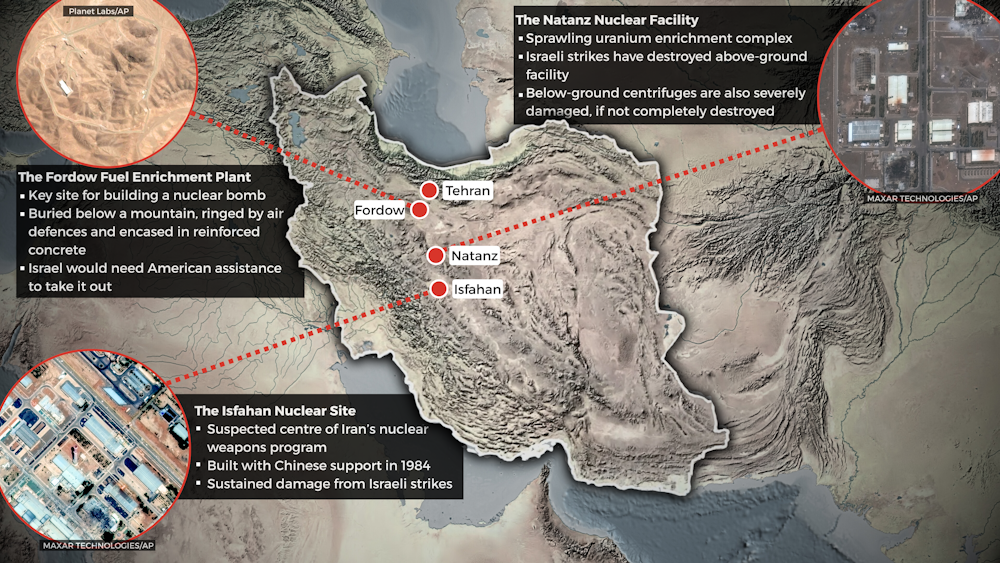
    In response, Israel has intensified airstrikes on Iran, targeting nuclear and military infrastructure around Tehran. The Israeli military claimed it is close to destroying ten additional nuclear targets in the capital, with a focus on the Fordow uranium enrichment facility. However, the International Atomic Energy Agency (IAEA) reported damage only at Iran’s Natanz nuclear site, with no changes noted at the Fordow or Esfahan facilities based on satellite imagery analysis following Friday’s attacks.

    Tensions escalated after Israel rejected Iran’s overnight diplomatic efforts to halt the conflict. The IRGC issued evacuation warnings for Israeli-occupied territories, followed by precision strikes. Conversely, Israeli authorities and U.S. President Donald Trump urged approximately 330,000 residents of central Tehran to evacuate due to the threat of large-scale Israeli attacks. Israel’s air force has reportedly destroyed about one-third of Iran’s ballistic missile stockpiles and launchers, targeting air defenses protecting nuclear sites. Iran has launched over 370 missiles and numerous drones, though most have been intercepted by Israeli air defenses.

    The United States has bolstered its military presence in the region, deploying the USS Nimitz carrier strike group and additional air assets. Nuclear talks between the U.S. and Iran, mediated by Oman, were canceled after Tehran refused to negotiate amid ongoing attacks. President Trump demanded that Iran halt its nuclear program, stating compliance could end the conflict. Israeli Prime Minister Benjamin Netanyahu claimed the strikes have significantly delayed Iran’s nuclear program, though he noted that additional targets remain.

    The Israeli strikes represent the most serious threat to the Iranian regime since 1979, potentially pressuring Tehran to reconsider its nuclear ambitions. As warnings of further attacks persist, civilians in Tehran are fleeing, and expatriate communities are being evacuated, raising fears of a widening regional conflict.

  • MIL-OSI Russia: The Power of Siberia 2 project remains relevant – Deputy Prime Minister of the Russian Federation A. Novak

    Translation. Region: Russian Federal

    Source: People’s Republic of China in Russian – People’s Republic of China in Russian –

    Source: People’s Republic of China – State Council News

    Moscow, June 17 /Xinhua/ – China’s rapid economic development also implies an increase in gas consumption as a more environmentally friendly alternative to coal. Russia is one of the main suppliers of this fuel to China. Therefore, the Power of Siberia 2 project remains relevant. This was stated by Deputy Prime Minister of the Russian Federation Alexander Novak in an interview with the Vedomosti newspaper.

    “China is one of the largest energy consumers in the world, and its rapid economic development, industrial growth and urbanization contribute to the constant increase in energy demand. Particularly noticeable is the growing role of natural gas, which is used as a more environmentally friendly alternative to coal,” A. Novak said.

    “The role of renewable energy sources has also increased significantly in China’s energy sector in recent years – the country is the undisputed leader in terms of installed solar and wind power generation capacity,” he noted, adding that the growth in the use of renewable energy sources does not mean abandoning natural gas. Gas is expected to be used as a “balancing” fuel in cases of insufficient electricity generation from renewable sources and will remain a guarantor of China’s energy security.

    Russia, which is the leader in natural gas reserves, remains one of the main suppliers of this fuel to China. “In this regard, the Power of Siberia 2 project undoubtedly remains relevant,” A. Novak emphasized. –0–

    MIL OSI Russia News

  • MIL-OSI Canada: Increasing productivity among Quebec SMEs: Nearly $8.5M for Cotech to Expand and Automate its L’Isle-Verte Plant

    Source: Government of Canada News

    L’Isle-Verte, Quebec, June 17, 2025 –  The Member for Rivière-du-Loup–Témiscouata–Les Basques, Amélie Dionne, on behalf of the Minister of Economy, Innovation and Energy and Minister Responsible for Regional Economic Development, Christine Fréchette, the Minister of Industry and Minister responsible for Canada Economic Development for Quebec Regions (CED), the Honourable Mélanie Joly, as well as Investissement Québec announce that a total of $8,440,000 in investments have been made in Cotech, a manufacturer specializing in agricultural, snow removal and excavation equipment. This funding has enabled the business to expand its plant in L’Isle-Verte and acquire automated equipment to increase its productivity.

    In addition to creating jobs, this project, valued at approximately $18 million, will help Cotech increase its efficiency and continue to thrive. In the current geopolitical context, it is more necessary than ever to invest in the growth and productivity of businesses to make them more attractive and competitive in strategic sectors such as manufacturing.

    Quotes

    “Thanks to its innovative products, Cotech has been recognized as a leader in its field for over 25 years. I am proud it set up shop in L’Isle-Verte, right here in our riding of Rivière‑du-Loup–Témiscouata–Les Basques, thereby creating wealth and jobs to the benefit of our community. Congratulations to the team on this visionary project to expand, which will help to further dynamize our region!”

    Amélie Dionne, Member for Rivière-du-Loup–Témiscouata–Les Basques

    “A priority of the Government of Canada is to ensure our communities prosper and, with this in mind, SMEs are essential to the country’s economic growth. That is why CED is proud to invest in this project, which will help increase Cotech’s productivity and production capacity and have positive spin-offs for the entire Bas-Saint-Laurent region.”

    The Honourable Mélanie Joly, Minister of Industry and Minister responsible for CED

    “Fostering productivity is an effective way to protect our SMEs and our economy. These investments will enable Cotech to accelerate its shift to automation to enhance its performance even further in its line of business. With these kinds of forward-looking projects, we can consolidate the presence of our SMEs and Quebec as a whole on the North American market.”

    Christine Fréchette, Minister of Economy, Innovation and Energy and Minister Responsible for Regional Economic Development

    “By placing automation at the heart of its strategic priorities, Cotech is able to pursue growth and deepen its roots in the Bas-Saint-Laurent region. Investissement Québec, as a frontline player in supporting this kind of initiative, salutes this new milestone, which will enable the business to increase its production capacity while remaining at the cutting edge of technology.”

    Bicha Ngo, President and CEO, Investissement Québec

    “This project is a direct response to the sustained increase in the demand for our products and reflects our willingness to better serve our clients, while also maintaining the highest quality standards. This investment ensures our competitiveness on the North American market. It is also a strong gesture that demonstrates our long-term commitment to our region, our employees and the future of our sector.”

    Etienne Côté, President, Cotech

    Quick facts

    • For over 25 years, Cotech has been manufacturing agricultural, snow removal and excavation equipment. The business designs and manufactures innovative accessories of superior quality adapted to small and medium capacity equipment such as snowplows, excavator and wheel loader buckets, and pallet and agricultural forks.
    • The funding includes a loan of $4,500,000 through the ESSOR program, administered by Investissement Québec as the government’s representative; a loan of $2,440,000 provided from Investissement Québec capital funds; and a repayable contribution of $1,500,000 from CED granted under the Regional Economic Growth through Innovation program.
    • The ESSOR program aims to support investment projects in Quebec with a view to increasing competitiveness and productivity, creating jobs and boosting sustainable development.
    • CED’s Regional Economic Growth through Innovation program targets entrepreneurs leveraging innovation to grow their businesses and enhance their competitiveness, as well as regional economic stakeholders helping to create an entrepreneurial environment conducive to innovation and growth for all, across all regions.

    Stay connected

    Ministère de l’Économie, de l’Innovation et de l’Énergie on social media:

    Investissement Québec on social media:

    Follow CED on social media
    Consult CED’s news

    Sources

    Amélie Martineau
    Press Secretary
    Riding Office of the Member for Rivière-du-Loup–Témiscouata–Les Basques
    Tel.: 418-551-0975

    Catherine Pelletier
    Press Secretary
    Office of the Minister of Economy, Innovation and Energy, Minister Responsible for Regional Economic Development and Minister Responsible for the Metropolis and the Montréal Region
    Cell: 450-204-5158

    Véronique Simard
    Director of Operations and Acting Director of Communications
    Office of the Minister of Industry and Minister responsible for Canada Economic Development for Quebec Regions
    Email: veronique.simard2@ised-isde.gc.ca

    Information

    Jean-Pierre D’Auteuil
    Head of Media Relations
    Communications Branch
    Ministère de l’Économie, de l’Innovation et de l’Énergie
    Cell: 418-559-0710
    Email: relationsmedias@economie.gouv.qc.ca

    Samuel Bergeron
    Advisor – Media and Government Affairs
    Investissement Québec
    Tel.: 263-999-8144
    Email: samuel.bergeron@invest-quebec.com

    Media Relations
    Canada Economic Development for Quebec Regions
    Email: media@dec-ced.gc.ca

    MIL OSI Canada News

  • MIL-OSI: ReconAfrica Announces Closing of C$19 Million Underwritten Offering, Including the Full Exercise of the Over-Allotment Option

    Source: GlobeNewswire (MIL-OSI)

    **NOT FOR DISSEMINATION IN THE UNITED STATES OR FOR DISTRIBUTION TO UNITED STATES NEWS WIRE SERVICES**

    CALGARY, Alberta, June 17, 2025 (GLOBE NEWSWIRE) — Reconnaissance Energy Africa Ltd. (the “Company” or “ReconAfrica”) (TSXV: RECO) (OTCQX: RECAF) (Frankfurt: 0XD) (NSX: REC) is pleased to announce that it has completed its previously announced and upsized underwritten public offering (the “Offering”) of units of the Company (the “Units”) at a price of C$0.50 per Unit, including the full exercise of the over-allotment option, for aggregate gross proceeds of approximately C$19 million.

    The Offering was led by Research Capital Corporation as the lead underwriter and sole bookrunner, on behalf of a syndicate of underwriters, including Canaccord Genuity Corp. and Haywood Securities Inc. (collectively, the “Underwriters”).

    BW Energy Limited (“BW Energy”) (OSE: BWE), directors and management of ReconAfrica and certain other investors, participated in the Offering for approximately C$4.7 million. The Units purchased by BW Energy are subject to a six-month lock-up agreement.

    Each Unit is comprised of one common share of the Company (“Common Share”) and one Common Share purchase warrant of the Company (“Warrant”). Each Warrant entitles the holder thereof to purchase one Common Share at an exercise price of C$0.60‎ until June 17, 2027. The Warrants will commence trading on the TSX Venture Exchange (“TSXV”) under the symbol “RECO.WT.A” on or about June 24, 2025, subject to final TSXV acceptance.

    The net proceeds from the Offering will be used for exploration activities, working capital and general corporate purposes. The primary exploration activity to be funded with net proceeds from the Offering will be the drilling of Prospect I, which has been named the Kavango West 1X well. Work on the access road and drill site is currently being completed while the Company awaits receipt of the remaining requisite permits. The rig mobilization to the Kavango West 1X location is scheduled in late June, with drilling to begin thereafter.

    Kavango West 1X – High Potential Exploration Well

    The Kavango West 1X exploration well will be the second test in the expansive Damara Fold Belt play. The prospect is a large fold identified on modern 2D seismic data which extends over 20 kilometers long by 5 kilometers wide and is expected to penetrate a thick Otavi carbonate reservoir section, which is the primary target in the play. The Kavango West 1X well will be drilled to a planned total depth of approximately 3,800 metres (12,500 feet) and is targeting 346 million barrels of gross unrisked (30 million barrels of gross risked) prospective light/medium crude oil resources on a 100% working interest basis, 312 million barrels(1,2) net unrisked (27 million barrels net risked) to ReconAfrica’s 90% working interest as at the date of the NSAI report or 1,839 billion cubic feet of gross unrisked (133 Bcf risked) prospective natural gas resources on 100% working interest basis, 1,655 billion cubic feet(1,2) unrisked net (120 Bcf net risked) to ReconAfrica’s 90% working interest as at the date of the NSAI report), based on the most recent prospective resources report prepared by Netherland, Sewell & Associates, Inc. (“NSAI”) as at December 31, 2024, filed on SEDAR+ at www.sedarplus.ca (the “NSAI Report”)(1)(2).

    Damara Fold Belt Play Across 11.5 Million Acres in Namibia and Angola

    The Damara fold belt trend is identified in the subsurface by a grid of 2D seismic data, and the Company has mapped 19 prospects and 4 leads on the Namibia side of the play. The Namibia area is estimated to hold 2.6 billion barrels(1,2) of unrisked prospective light/medium crude oil resources and 157 million barrels(1,2) of risked prospective light/medium crude oil resources from the Damara Fold Belt play prospects on PEL 73.

    1. There is no certainty that any portion of the resources will be discovered. If discovered, there is no certainty that it will be commercially viable to produce any portion of the resources. Prospective resources are those quantities of oil estimated, as of a given date, to be potentially recoverable from undiscovered accumulations by application of future development projects. Prospective resources have both an associated chance of discovery and a chance of development. Prospective resources are the arithmetic sum of multiple probability distributions. Unrisked prospective resources are estimates of the volumes that could reasonably be expected to be recovered in the event of the discovery and development of these prospects.
    2. Not reflective of ReconAfrica’s current working interest of 70% of PEL 73.

    Recently, the Company has entered a Memorandum of Understanding (MOU) with National Agency for Petroleum, Gas and Biofuels of Angola (ANPG) ‎for a joint exploration project in the Etosha-Okavango basin, located onshore in southeastern Angola. This agreement is a strategic addition to the Company’s asset portfolio, which creates an opportunity for early entry into onshore Angola at a low cost, with minimal work commitments. It complements ReconAfrica’s activities in Namibia and highlights the potential of the Damara Fold Belt and Rift Basin by adding 5.2 million contiguous acres in Angola to the existing 6.3 million acres in Namibia in the Damara Fold Belt and Rift Basin exploration plays.

     
    Damara Fold Belt (Namibia)
    Best Estimate (2U) Prospective Light & Medium Crude Oil Resources (MMbbl)‎(1)(2)(3)
     
        Unrisked
      Risked
                             
                             
    Play Area/Subclass   Gross
    (100%)
      Company
    Gross
    (1)(2)(3)
      Net(1)(2)(3)   Gross
    (100%)
      Company
    Gross
    (1)(2)(3)
      Net(1)(2)(3)
    Damara                        
    Prospects   2,566.1   2,309.5   2,194.0   156.5   140.9   133.8
    Leads   123.2   110.9   105.3   4.1   3.7   3.5
                             

    Notes:

    1. The “Company Gross” and “Net” figures in the table above are as set out in the Resource Report (as defined below) and have not been adjusted for the 20% working interest acquired by BW Energy from ReconAfrica pursuant to the strategic farm down that closed January 29, 2025. As of December 31, 2024 (and the effective date of the Resource Report, ReconAfrica owned a 90% working interest in PEL 73. ‎As of the date hereof, ReconAfrica holds a 70% working interest in PEL 73 (with BW Energy Limited holding a 20% working interest and the National Petroleum Corporation of Namibia ‎‎holding a ‎‎10% carried participating interest). “Net” includes a 5% deduction for royalties.
    2. ReconAfrica engaged Netherland, Sewell & Associates, Inc. (“NSAI”), an independent qualified reserves ‎evaluator, to provide an updated prospective resource report ‎dated March 26, 2025 (with an effective ‎date of December 31, 2024) relating to the Company’s prospective resources (the “Resource Report”). ‎The ‎Resource Report focused solely on the Company’s interest in certain prospects and leads located in ‎the Damara Fold and Thrust Belt (Damara) play area and the Karoo Rift play area of PEL 73‎. ‎The preparation date of the Updated Report is ‎January 1‎, 2025. Prospective resources are the arithmetic sum of multiple probability distributions‎. See “Disclosure of Oil and Gas Information” for further information.
    3. There is no certainty that any portion of the prospective resources will be discovered. If they are ‎discovered, there is no certainty that it will be commercially viable to develop and produce any portion of ‎the prospective resources.‎

    Additional Details on the Offering

    The Offering was completed by way of a prospectus supplement to the Company’s short form base shelf prospectus dated February 29, 2024, filed in all of the provinces and territories of Canada, and the Units were sold outside of Canada on a private placement basis. Copies of the prospectus supplement and the base shelf prospectus are available under the Company’s profile on SEDAR+ at www.sedarplus.ca.

    Directors and officers of the Company participated in the Offering and were issued an aggregate of 687,400 Units. Such participation in the Offering constitutes a “related party transaction” as defined in Multilateral Instrument 61-101 – Protection of Minority Security Holders in Special Transactions (“61-101”). The Offering is exempt from the formal valuation and minority shareholder approval requirements of 61-101 as neither the fair market value of the securities issued to related parties nor the consideration for such securities exceed 25% of the Company’s market capitalization. The Company did not file a material change report 21 days prior to closing of the Offering as the participation of insiders of the Company in the Offering had not been confirmed at that time and the shorter time period was necessary in order to permit the Company to close the Offering in a timeframe consistent with usual market practice for transactions of this nature.

    The Underwriters received a cash commission equal to 7.0% of the gross proceeds of the Offering (other than from the sale of Units to BW Energy and purchasers on the president’s list, for which a 3.0% cash commission was paid), for an aggregate of C$1,124,936. In addition, the Underwriters were issued an aggregate of 2,124,472 broker warrants (the “Broker Warrants”), equal to 7.0% of the number of Units sold under the Offering (other than with respect to those sold to BW Energy and purchasers on the president’s list, for which no Broker Warrants were issued). In addition, the Underwriters received an advisory fee of C$95,000 (plus GST) and 121,380 advisory broker warrants on the same terms as the Broker Warrants. Each Broker Warrant entitles the holder to acquire one Common Share at a price of C$0.50 until June 17, 2027.

    This press release is not an offer to sell or the solicitation of an offer to buy the securities in the United States or in any jurisdiction in which such offer, solicitation or sale would be unlawful prior to qualification or registration under the securities laws of such jurisdiction. The securities being offered have not been, nor will they be, registered under the U.S. Securities Act and such securities may not be offered or sold within the United States or to, or for the account or benefit of, U.S. persons absent registration or an applicable exemption from the registration requirements of the U.S. Securities Act and applicable U.S. state securities laws.

    TSXV Final Approval of Certain Warrant Extensions

    The TSXV has approved the application for extension of certain previously issued unlisted warrants announced by the Company in a news release on May 21, 2025. The warrants with an original expiry date of September 1, 2025, and an exercise price of C$1.40 per Common Share will be extended to March 1, 2027. The warrants with an original expiry date of July 18, 2025, and an exercise price of C$1.35 per Common Share will be extended to January 18, 2027. Warrant holders will not have to take any action in connection with the extensions. The exercise prices remain unchanged.

    About BW Energy

    BW Energy is a growth E&P company with a differentiated strategy targeting proven offshore oil and gas reservoirs through low risk phased developments. The Company has access to existing production facilities to reduce time to first oil and cashflow with lower investments than traditional offshore developments. The Company’s assets are 73.5% of the producing Dussafu Marine licence offshore Gabon, 100% interest in the Golfinho and Camarupim fields, a 76.5% interest in the BM-ES-23 block in, a 95% interest in the Maromba field in Brazil and a 95% interest in the Kudu field in Namibia, all operated by BW Energy.

    BW Energy, 74% owned by BW Group Ltd., was created as the E&P arm of Oslo listed BW Offshore, a company with more than four decades of experience in operating advanced offshore production solutions and executing complex projects. Since its origin, BW Offshore has executed 40 FPSO and FSO projects.

    About ReconAfrica

    ReconAfrica is a Canadian oil and gas company engaged in the exploration of the Damara Fold Belt and Kavango Rift Basin in the Kalahari Desert of northeastern Namibia, southeastern Angola and northwestern Botswana, where the Company holds petroleum licences comprising ~13 million contiguous acres. In all aspects of its operations, ReconAfrica is committed to minimal disturbance of habitat in line with international standards and implementing environmental and social best practices in its project areas.

    Neither the TSXV nor its Regulation Services Provider (as that term is defined in policies of the TSXV) accepts responsibility for the adequacy or accuracy of this release.

    For further information contact:
    Brian Reinsborough, President and Chief Executive Officer
    Mark Friesen, Managing Director, Investor Relations & Capital Markets

    Email: admin@reconafrica.com
    IR Inquiries Email: investors@reconafrica.com
    Media Inquiries Email: media@reconafrica.com

    Tel: +1-877-631-1160

    Cautionary Note Regarding Forward-Looking Statements:

    Certain statements contained in this press release constitute forward-looking information under applicable Canadian, United States and other applicable securities laws, rules and regulations, including, without limitation, statements with respect to the expected use of proceeds from the Offering, the anticipated listing of the Warrants on the TSXV, spudding of the Kavango West 1X well following final completion of the access road and drill site preparation, receipt of all required permits and the rig being moved to the drilling location, which has been scheduled for late June 2025, the well being drilled to a planned total depth of approximately 3,800 metres (12,500 feet) and targeting 255 million barrels of unrisked prospective oil resources or 1,350 billion cubic feet of unrisked prospective natural gas resources, and the Company’s commitment to minimal disturbance of habitat, in line with best international standards and its implementation of environmental and social best practices in its project areas. These statements relate to future events or future performance. The use of any of the words “could”, “intend”, “expect”, “believe”, “will”, “projected”, “estimated” and similar expressions and statements relating to matters that are not historical facts are intended to identify forward-looking information and are based on ReconAfrica’s current belief or assumptions as to the outcome and timing of such future events. There can be no assurance that such statements will prove to be accurate, as the Company’s actual results and future events could differ materially from those anticipated in these forward-looking statements as a result of the factors discussed in the “Risk Factors” section in the Company’s annual information form (“AIF”) dated April 29, 2025 for the financial period ended December 31, 2024, available under the Company’s profile at www.sedarplus.ca. Actual future results may differ materially. Various assumptions or factors are typically applied in drawing conclusions or making the forecasts or projections set out in forward-looking information. Those assumptions and factors are based on information currently available to ReconAfrica. The forward-looking information contained in this release is made as of the date hereof and ReconAfrica undertakes no obligation to update or revise any forward-looking information, whether as a result of new information, future events or otherwise, except as required by applicable securities laws. Because of the risks, uncertainties and assumptions contained herein, investors should not place undue reliance on forward-looking information. The foregoing statements expressly qualify any forward-looking information contained herein.

    Disclosure of Oil and Gas Information:

    The Resource Report and the prospective resource estimates contained therein and in this press release were prepared by NSAI, an independent qualified reserves evaluator. The Resource Report was prepared in accordance with the definitions and guidelines of the Canadian Oil and Gas Evaluation Handbook maintained by the Society of Petroleum Evaluation Engineers (Calgary Chapter)‎ and National Instrument 51-101 — Standards of Disclosure for Oil and Gas Activities.

    Prospective resources are those quantities of petroleum estimated, as of a given date, to be potentially ‎recoverable from undiscovered accumulations by applying future development projects. Prospective ‎resources have both an associated chance of discovery and a chance of development. Prospective ‎resources are further categorized according to the level of certainty associated with recoverable ‎estimates assuming their discovery and development and may be subclassified based on project ‎maturity. The prospective resources included in Resource Report and in this press release should not be construed as reserves or ‎contingent resources; they represent exploration opportunities and quantify the development potential in ‎the event a petroleum discovery is made. A geologic risk assessment was performed for these ‎prospects and leads, as discussed in the Form 51-101F1 — Statement of Reserves Data and Other Oil and Gas Information (“Form 51-101F1”) dated April 29, 2025 and effective as of December 31, 2024‎, available under the Company’s profile at www.sedarplus.ca. The Resource Report is also available under the Company’s profile at www.sedarplus.ca

    The Resource Report does not include ‎economic analysis for these prospects and leads. Based on analogous field developments, it appears ‎that, assuming a discovery is made, the unrisked best estimate prospective resources in the Resource ‎Report have a reasonable chance of being economically viable. There is no certainty that any portion of ‎the prospective resources will be discovered. If they are discovered, there is no certainty that it will be ‎commercially viable to develop and produce any portion of the prospective resources.‎

    For additional information concerning the risks and the level of uncertainty associated with recovery of the prospective resources detailed herein and in the Resource Report, the significant positive and negative factors relevant to the prospective resources estimates detailed herein and in the Resource Report and a description of the project to which the prospective resources estimates detailed herein and in the Resource Report applies are contained within the Form 51-101F1.

    The prospective resources shown herein and in the Resource Report have been estimated using probabilistic methods and are dependent on a petroleum discovery being made. If a discovery is made and development is undertaken, the probability that the recoverable volumes will equal or exceed the unrisked estimated amounts is 90 percent for the low estimate, 50 percent for the best estimate, and 10 percent for the high estimate. Low estimate and high estimate prospective resources have not been included in the Resource Report. For the purposes of the Resource Report, the volumes and parameters associated with the best estimate scenario of prospective resources are referred to as 2U. The 2U prospective resources have been aggregated beyond the prospect and lead level by arithmetic summation; therefore, these totals do not include the portfolio effect that might result from statistical aggregation. Statistical principles indicate that the arithmetic sums of multiple estimates may be misleading as to the volumes that may actually be recovered.

    The MIL Network

  • MIL-OSI Russia: Interview with Alexander Novak for Vedomosti newspaper

    Translation. Region: Russian Federal

    Source: Government of the Russian Federation – An important disclaimer is at the bottom of this article.

    Alexander Novak: The main factors of economic development are within our country.

    Question: One of the key tracks of the upcoming SPIEF is: “The World Economy – a New Platform for Global Growth”. Over the past few months, the world economy has experienced not just a series of shocks, but real tectonic shifts. In your opinion, is global growth, in the context of a general movement, possible or is the world steadily moving towards regionalization?

    A. Novak: Global economic growth will continue to some extent until 2030. However, the dynamics of its growth will depend on new challenges and threats that primarily affect global trade flows. This primarily concerns the increasing economic fragmentation of global markets – when trade, investment, exchange of services and technologies are subject to the logic of “mine” and “others”. As a result, investment activity and the well-being of the world’s population are declining.

    These processes did not begin yesterday. Since the early 2000s, the economic center of the world has been shifting from the West to the East. Developing countries, primarily China, are gaining a much greater role in the global economy. Of course, this situation does not suit those who are used to dictating their terms. And we increasingly see how, in order to counteract the growing influence of developing countries on the world economy, Western countries are making active attempts to maintain the status quo on the world stage and preserve their leadership.

    As a consequence, the strengthening of protectionism in the national economy and the revision of the existing results of globalization come to the fore. The main steps in this direction were the actual destruction of the multilateral mechanisms of the WTO, unilateral tariff and non-tariff restrictions on developing countries under the pretext of “threats to national interests”, and the introduction of various sanctions against competitors.

    The current escalation of tariff restrictions is also, of course, another consequence of the confrontation between the West and the rest of the world. The desire to maintain dominant positions in the global economy is happening by “pushing” bilateral agreements instead of multilateral ones. And such steps obviously lead to a new round of regionalization, observed since 2022, and the consolidation of countries within “blocs”.

    In the current conditions, the priority for us is to ensure the implementation of the national development agenda and the construction of sustainable partnerships with friendly countries with their own infrastructure to ensure the interests of these partnerships. This concerns the economic, financial and technological sovereignty of the Russian Federation, which, in the context of involvement in global value chains, requires, first of all, a reconfiguration of foreign economic relations with trading partners.

    I would like to remind you that we took into account the trends of regionalization of the global economy when preparing the Strategy for Foreign Economic Activity adopted by the government at the beginning of last year, therefore, relations with trading partners are built and developed taking into account the influence of geo-economic fragmentation and the opportunities opening up for Russia.

    Question: One of the undisputed leaders of destabilization has become the new US tariffs, which with a high degree of probability will lead to a redrawing of trade flows. What is this primarily for Russia – a risk or an opportunity? How many percent or percentage points of Russia’s GDP can a global trade war take away?

    A. Novak: Subtract or add? No, seriously, from the point of view of forecasting, the situation in world trade is currently the largest zone of uncertainty. There are a great many development options, their implementation depends on a large number of external and internal factors.

    The world is wider than individual Western countries and their circle of partners. Most likely, the situation with trade wars will not be universal. Some commodity flows will be redirected, as usually happens in trade wars.

    At the same time, there will be no repetition of the pandemic situation, when global trade stopped and trade flows collapsed. Therefore, the baseline forecast scenario approved by the government assumes that the growth rate of global trade will slow down, but will not go into recession.

    You are right, for us there are really two sides to the coin: risks and opportunities. The risks are related to the overall slowdown of the global economy, as well as demand and prices for traditional Russian export goods. On the other hand, this is a possible reduction in logistics costs, the opening of new niches, the substitution of Russian products for goods that will leave certain markets. From the point of view of imports, risks arise for our domestic market and domestic producers.

    And yet, no matter how the situation in the world develops, the main factors of the development of the Russian economy are not outside, but inside our country. The main one, with all the importance of the proactive work of the government and the Bank of Russia, is private entrepreneurial initiative. The flexibility and adaptive capacity of national business is the key to the stability of our economy in recent years. The main task of the authorities is to develop and support these qualities in every possible way.

    However, when you think about all the changes that you said were caused by “destabilizing US tariffs,” it is important to understand that tariffs are just a tool, and the goal is not to redirect trade flows. The goal, apparently, is to return key production chains to the native territory of the United States, to return production, competencies, infrastructure. Localization of value chains is what the Trump administration wants to achieve. What level of tariffs is needed to deploy investment? This is an interesting question. I think 10-15% of the final tariff, given how many times goods cross customs borders in the modern world, will be quite enough to create incentives to redirect investment flows. And the current 50% or 100% tariffs are nothing more than a negotiating position from which negotiating tactics have begun to form.

    Question: Is the government considering measures to stimulate investment activity of Russians? Can more active attraction of citizens’ funds to the stock market help businesses solve the problem of lack of financing?

    A. Novak: Yes, of course, measures to stimulate investment activity are being taken, including, as you know, within the framework of the national project “Efficient and Competitive Economy” and the federal project “Development of the Financial Market” included in it. Also, separate support measures of the federal projects “SME” and “Technology” are aimed at the development of SMEs and small technology companies by attracting funds from the financial market, respectively.

    In the context of achieving the “May decree” indicators, our citizens have the opportunity to invest in long-term instruments. For example, one of them is the Long-Term Savings Program, LTS. It involves the state creating conditions for the formation of long-term savings, which are formed both from personal funds and from the pension savings of citizens.

    This program is a new universal savings product that will allow everyone, with the stimulating support of the state, to form capital for their priority goals. PDS is especially relevant for families seeking to provide for the future of their children, create a financial safety net, purchase housing or pay for education. Together with banks, we are trying to actively inform citizens about the availability of such programs and the opportunities they provide.

    Another tool for stimulating investment is more active attraction of citizens’ funds to the stock market, which can have a significant impact on solving the problem of lack of financing for businesses. Firstly, attracting citizens’ funds will help diversify sources of financing for businesses. This will reduce companies’ dependence on bank loans and allow them to more easily adapt to changing economic conditions.

    In addition, active participation of citizens in the stock market can contribute to increasing the financial literacy of the population. Educated investors better understand the risks and opportunities, and accordingly, they make more informed investment decisions. This, in turn, creates a healthier investment environment and promotes economic growth.

    Of course, we understand that the designated incentives will work much better with a reduction in deposit rates. This applies to interest rates on both deposits and loans. According to our estimates, a gradual, correct cooling of the economy is already underway. Citizens will eventually withdraw from deposits and consider the possibility of diversifying their savings.

    Question: What drivers do you think the capital market might have in the current geopolitical and economic conditions?

    A. Novak: There are several such incentives or drivers now. The main “driver” is macroeconomic stability. Reducing inflation expectations, consistent and predictable economic policy contribute to the growth of investor confidence in the stock and bond market.

    Controlling inflation helps reduce investment risks and increases the attractiveness of assets in the capital market.

    In the context of sanctions pressure and limited access to international financial markets, Russian companies are seeking to find new sources of financing within the country. As a result, there is demand for financial instruments such as bonds and shares, and this can contribute to the growth of the stock market. An increase in the number of issuers and an expansion of the range of financial products offered also contribute to the development of the capital market.

    The development of infrastructure for attracting investment can also be an important driver. Authorities and financial institutions can introduce new mechanisms to support business, such as tax incentives for investors, programs to improve the financial literacy of the population, and the creation of more convenient conditions for entering the stock market. This will not only increase the number of investors, but also increase their confidence in financial instruments.

    In addition, in my opinion, digitalization and the development of financial technologies, digital platforms give a significant boost to the capital market. Another plus in this regard is that digital technologies contribute to the growth of liquidity and the reduction of transaction costs.

    Question: At the recent government strategy session on the National Model of Target Conditions for Doing Business, you specifically emphasized that by 2030, Russia should be among the top 20 countries in terms of the investment climate, as assessed by the World Bank B-READY rating. This rating will be discussed at the SPIEF. What do you see as the key priorities for improving the business climate in Russia? In what aspects are there the largest “development zones” today?

    A. Novak: First of all, I would like to clarify that the World Bank’s international rating of the business and investment climate is one of the bases for the formation of the National Model of Target Conditions for Doing Business, along with Russia’s national development goals and the rating of the state of the investment climate.

    When analyzing the data of the pilot study of the business climate in Russia, conducted by the Agency for Strategic Initiatives, “development zones” were identified. Within the areas of engineering infrastructure, labor standards, taxation, dispute resolution, businesses have the most difficulties with the effectiveness of law enforcement of public services, even taking into account the well-developed regulatory framework in the country. We have formed working groups that are currently developing initiatives to improve indicators, such as reducing the number of hours for preparing and submitting tax reports. We are talking about reporting, which currently amounts to about 160 hours per year. Another example: the implementation of initiatives to develop alternative forms of dispute resolution, primarily through arbitration courts and mediation.

    The opposite situation has developed in the areas of business registration, financial services, and bankruptcy procedures. The assessment shows the need to improve regulatory and legal acts in Russian legislation. For example, such initiatives as the development and adoption of norms on restructuring, on pre-trial debt restructuring in order to reduce the period of bankruptcy of companies. In addition, norms are being discussed that change the process of asset sales and asset replacement in bankruptcy proceedings.

    Focusing, among other things, on the international rating, we plan to present the key priorities and results of the formation of the National Model at the St. Petersburg Forum; we are open and will be glad to have as many interested parties as possible participate in the discussion.

    Question: Does the government have a scenario for economic development in which sanctions against Russia are relaxed? If so, which restrictions do you think would be the most realistic to lift?

    A. Novak: Such a scenario is among many forecasts developed by the Ministry of Economic Development, but it is not the main one. The basic forecast scenario approved by the government does not include any drastic changes in terms of sanctions pressure.

    Question: Oil prices are now also under the control of geopolitics. In your opinion, can we say that we are once again entering an “era of low prices”? Is OPEC’s decision to accelerate production growth relevant in this context? Is its adjustment being discussed?

    A. Novak: Global oil prices have historically been under pressure from both political factors and the balance of supply and demand. The key factor of volatility in recent years has been the situation in the Middle East and the risks of supply restrictions through the Strait of Hormuz, as well as the ongoing recovery of the global economy and the risks associated with trade wars unleashed by the United States.

    Historically, affordable prices provoke additional demand for oil while global fuel competition continues. And in general, the world is experiencing a need for additional volumes of raw materials. We believe that OPEC objectively assesses the situation regarding the prospects for global oil demand, and we highly appreciate the competence of OPEC experts.

    As for the issue of adjustment, OPEC countries are in constant contact, monitor the market situation and are ready to respond flexibly and promptly to any changes in the market situation. If necessary, the parameters of the deal can be adjusted in the future to ensure an optimal balance between supply and demand.

    And in the short term, oil prices are always under the power of geopolitics. For example, the current aggravation of the Israeli-Iranian conflict. The key questions that good economists ask in such cases of external shocks are whether the shock is temporary (short-term) or permanent (permanent) and from which side is it – demand or supply? And from these options, the scenario and development of optimal policy occurs.

    Question: The SPIEF is planning to discuss the balance of interests of producers and consumers in the global fuel and energy market. You personally participated in the formation of the current architecture of balance, which allowed the markets to be stabilized. Today, do you see risks of disruption of the balance of supply and demand in the oil market in the medium term?

    A. Novak: The data show that in April, the demand for oil in the world was about 103.1 mbps with supply at 103.7 mbps. Given the current state of the oil market and its overall balance, as well as the traditionally high demand season in the summer, it is extremely important for each country to fulfill its obligations.

    The radical change in the external economic environment (I mean the growing sanctions pressure, the unstable geopolitical situation in the Middle East, as well as the high volatility in the global oil market) confirms that the current mechanism for implementing the agreement is the most effective tool. It ensures maximum efficiency of oil production and state revenues. Thus, OPEC plays and will continue to play a coordinating role in the market, as it has been for the past five years.

    Question: SPIEF is traditionally a platform for international dialogue. In your opinion, what are the most important factors that will determine future relations between energy producing and consuming countries, and how can Russia contribute to strengthening cooperation and stability in this dynamic environment?

    A. Novak: We are witnessing a transformation of the energy market, where, against the backdrop of accelerating energy consumption, accelerated growth is observed in all types of energy resources, both traditional ones – oil, gas, coal, and renewable energy sources. A renaissance in demand for the development of nuclear power plants is observed.

    The key drivers have already become the growth of the population in developing countries and the extensive development of data processing systems. And all this against the backdrop of the introduction of artificial intelligence.

    The recent major power outages in Spain and Portugal show that it is important to provide the population with electricity at economically feasible prices. Also, in addition to domestic generation and the choice of the optimal source in the conditions of inter-fuel competition, it is very important to ensure the possibility of delivering primary resources at acceptable prices.

    In this regard, I cannot help but state the obvious. Russia is a key supplier of energy resources around the world. And not only oil, gas and LNG, but also coal, which in the context of growing demand is an important competitive advantage. Russia is also a reliable partner in the supply of its energy resources, all contract terms are observed, and, given the current realities in the world, only long-term contracts and responsible relationships can become guarantors of a stable supply of energy resources.

    Question: In your opinion, in connection with recent geopolitical events, does the recently approved Energy Strategy need to be adjusted, or does it already take into account all possible risks?

    A. Novak: When developing the Energy Strategy until 2050, a pool of scenarios was considered that assumed various internal and external prerequisites and results of the development of Russian energy. In particular, the Energy Strategy until 2050 takes into account the stress scenario, which assumes a significant decrease in the production indicators of the fuel and energy complex industries against the background of a reduction in export opportunities and a general deterioration in external operating conditions.

    The calculation of quantitative indicators within the framework of the strategy’s stress scenario made it possible to identify the main challenges for the Russian energy sector in each of its sectors and to develop special measures to mitigate the consequences if such a scenario is implemented.

    But, of course, in case of significant changes not taken into account in the wide range of strategy scenarios, adjustments can be made to it. However, the main areas of work will remain the same.

    Question: Is the Power of Siberia 2 project still relevant in the current conditions? Have you managed to reach an agreement with your colleagues from China on the cost of gas? If so, when can a contract be signed for the project and what volume of supplies is currently being discussed?

    A. Novak: China is one of the largest energy consumers in the world, and its rapid economic development, industrial growth and urbanization contribute to a constant increase in energy demand. Particularly noticeable is the growing role of natural gas, which is used as a cleaner alternative to coal. In 2024, gas demand in China amounted to about 430 billion cubic meters, compared to 373 billion cubic meters in 2021, that is, an increase of 15%.

    In recent years, the role of renewable energy sources has also increased significantly in China’s energy sector – the country is the undisputed leader in terms of installed solar and wind generation capacity. If in 2021 the figure was 636 GW, then by 2024 it reached about 1400 GW. However, the growth in the use of renewable energy sources does not mean abandoning natural gas. Gas is expected to be used as a “balancing” fuel in cases of insufficient electricity generation from renewable energy sources and will remain the guarantor of China’s energy security. According to the forecast of the International Energy Agency, in the scenario of current policies, China will increase gas consumption throughout the forecast period, until 2050. By this time, gas demand in China is expected to increase by more than 30% compared to 2023.

    Russia, which is the leader in natural gas reserves (currently 63.4 trillion cubic meters), remains one of the main suppliers of this fuel to China. In this regard, the Power of Siberia 2 project undoubtedly remains relevant. As for the rest, more detailed information directly on the project itself is the subject of commercial negotiations.

    Question: Are there plans to build an oil pipeline to China parallel to Power of Siberia 2? You spoke about the possibility of delivering up to 30 million tons of oil per year through it. Has China confirmed its interest in this project? In what time frame could such a pipeline be built? Is there a preliminary estimate of its cost?

    A. Novak: I repeat: since the implementation of the project is the responsibility of the specialized companies, the details of the agreements are classified as a commercial secret and were not made public. However, I will add that, according to OPEC forecasts, China’s demand for oil in 2023-2050 will grow by an average of 2.5% per year. Against this background, the implementation of new infrastructure projects appears to be an important part of the sphere of interests of China’s fuel and energy sector.

    Question: Are there any risks for the National Welfare Fund due to the reduction in oil and gas budget revenues? The Ministry of Finance is already considering the possibility of adjusting the cutoff price under the budget rule. In this case, what are the prospects for the Russian “piggy bank”? Do you think it is important to continue accumulating the National Welfare Fund?

    A. Novak: Today, the cutoff price according to the budget rule is $60/bbl, and the average Urals FOB in January–April 2025 fluctuates in the range of $59–60/bbl.

    But current world oil prices are a short-term consequence of the current market situation, taking into account the growing factor of trade wars and geopolitical tensions, and do not suit most key oil producers. Therefore, oil prices will be adjusted as the effect of “market shocks” is leveled out and will take on an upward trend.

    As for the National Welfare Fund, it is certainly important to continue to accumulate it. The fund not only allows for the implementation of social projects and the maintenance of the well-being of citizens, but also promotes the development of industry and infrastructure in Russia.

    Question: Is there a need to replace the export of raw materials and first-stage products with new high-tech goods? Are new mechanisms of support from the state needed for this?

    A. Novak: In the context of increased sanctions pressure on the Russian fuel and energy complex, active import substitution is taking place. In parallel, work is actively underway to complete the modernization of oil refineries to improve the quality of manufactured products. The volume of oil and gas engineering currently exceeds 500 billion rubles, and by 2030 it is planned to import-substitute critical equipment by 100%.

    If we look at it from the point of view of petrochemistry, then by 2030 it is planned to increase the volume of production of large-tonnage plastics several times – up to 14 million tons. The development of oil refining will allow to fully provide the domestic market at reasonable prices. In implementing all import substitution projects, Russia is ready to start exporting services and supplying energy on a turnkey basis, that is, from raw materials to the construction of processing complexes in other countries.

    Thus, key measures to support both mechanical engineering and secondary product manufacturing are already being implemented in our country. New measures and mechanisms of support from the state require working out the effects and assessing the impact on the industry.

    Question: The key topic of SPIEF: common values are the basis for growth in a multipolar world. At the beginning of our conversation, we already discussed economic regionalization, but no less important is the division by value orientations. Until recently, carbon neutrality seemed to be a common goal for all countries: programs were adopted, significant budgets were allocated to solve these problems. But Trump’s rise to the presidency of the United States violated the status quo. He said that too much emphasis on renewable energy sources threatens the security of the United States. Do you see in this a general reversal and a paradigm shift in public and political consciousness? In your opinion, how can we maintain a balance between the world of the present and the world of the future, taking into account the priorities of all generations?

    A. Novak: Look what we see today? The aggressive policy of achieving carbon neutrality to the detriment of economic efficiency and the trend towards global replacement of traditional energy sources with renewable energy sources is gradually shifting to a more pragmatic direction. Many countries are adapting their energy policies towards an economically balanced approach to choosing energy sources.

    According to BloombergNEF’s annual report, global energy transition investment in 2024 grew by 11%, exceeding $2 trillion for the first time. However, the growth rate was lower than in the previous three years, when investment grew by 24-29% per year. Thus, to achieve carbon neutrality and net-zero emissions goals by mid-century, global energy transition investment in 2025-2030 will need to average $5.6 trillion per year.

    But investors pulled more than $30 billion out of climate-focused funds last year, ending a four-year boom that saw the value of assets increase sevenfold to $541 billion. Despite a six-fold increase in energy transition investment over the past 10 years, it is still only 37% of what is needed to achieve carbon neutrality. China was the largest such market, with $818 billion in investment.

    Factors that significantly limit the possibilities for large-scale implementation of renewable energy sources include insufficient transmission capacity of electrical networks, the expansion of which significantly reduces the economic efficiency of such generation. There are also limitations associated with the dependence of production on weather conditions. And all this against the background of a low level of maturity of energy storage technologies.

    The recent energy crisis in Spain and Portugal further confirms that today it is the grid complex that is the least prepared element of the energy system to operate in the conditions of the energy transition. Therefore, in the conditions of the current level of development of energy systems and the risks caused by this, it is necessary, first of all, to ensure a balance between economic efficiency, reliability of energy supply and the level of greenhouse gas emissions.

    Source – Vedomosti newspaper

    Please note: This information is raw content directly from the source of the information. It is exactly what the source states and does not reflect the position of MIL-OSI or its clients.
    MIL OSI Russia News

  • MIL-OSI Africa: Nigeria’s President Tinubu to Bring Bold Energy Reforms to African Energy Week (AEW) 2025 Stage


    Download logo

    African Energy Week (AEW) 2025: Invest in African Energies is proud to announce that Bola Ahmed Tinubu, President of the Federal Republic of Nigeria, will address delegates at Africa’s premier energy event in Cape Town. President Tinubu’s participation comes as Nigeria undergoes one of the most ambitious reform drives in its oil, gas and broader energy sectors – a drive that is reshaping the country’s investment climate and unlocking multi-billion-dollar opportunities across the value chain.

    Since assuming office, President Tinubu has spearheaded a wide-ranging program to reposition Nigeria as a top-tier destination for energy investment. In May 2025, he signed an Executive Order on Oil & Gas Reforms, aimed at overhauling project delivery frameworks and significantly reducing costs across the industry. The Order introduces streamlined contracting processes, tax incentives and the removal of regulatory and local content compliance bottlenecks, with a target of cutting upstream project costs by up to 40%. Such reforms are designed to make Nigeria’s operating environment globally competitive and unlock billions of dollars in new investments.

    In the past year, Nigeria has secured over $8 billion in deepwater oil and gas final investment decisions, signaling a renewed appetite among international investors. ExxonMobil, for example, has committed $1.5 billion to new deepwater field developments. Shell is also strengthening its position in deepwater and integrated gas – recently increasing its stake in OML 118, which includes the prolific deepwater Bonga field – while Chevron is expanding operations at the Agbami field, one of Nigeria’s largest deepwater discoveries. 

    Meanwhile, Petrobras has declared its interest in returning to deepwater exploration in Nigeria, seeking frontier acreage as a result of improved regulatory clarity and investor-friendly reforms. The country has also unveiled major new initiatives to promote local content and industrial growth, with multi-billion-dollar investments directed at building domestic capacity in fabrication, engineering and services. This includes the “Naira for Crude” initiative, which aims to promote local refining, enhance energy security and reduce reliance on foreign currency in the domestic oil market.

    Beyond upstream developments, Nigeria is advancing its gas monetization strategy and reviving refining capacity to enhance energy security and drive industrialization. The ongoing operational ramp-up of the 650,000-bpd Dangote refinery – the largest on the continent – is set to begin nationwide distribution of petrol and diesel later this year. The refinery, along with new investments in petrochemical plants, storage facilities and pipeline infrastructure, is expected to help end Nigeria’s decades-long reliance on gasoline imports, a trade valued at $17 billion. The U.S., European and global investor community is increasingly engaging with Nigeria as a strategic partner for energy supply diversification and clean energy integration, further solidifying the country’s position as a leading force in Africa’s energy landscape.

    “Nigeria under President Tinubu is showing the world how decisive policy reforms can directly translate into investor confidence and tangible project commitments,” said NJ Ayuk, Executive Chairman of the African Energy Chamber. “What’s happening in Nigeria today is a case study for other African producers: it demonstrates that by cutting red tape, streamlining processes and providing fiscal certainty, countries can attract capital on a large scale while creating real value for their people. We are honored to welcome President Tinubu to AEW 2025 to share this important success story.”

    President Tinubu’s address at AEW 2025: Invest in African Energies will provide a unique opportunity for African and global stakeholders to gain insights into Nigeria’s evolving oil and gas sector, the government’s strategy for long-term energy security and the country’s vision for sustainable industrial development. His leadership is setting a benchmark for how resource-rich nations can balance competitiveness, local value creation and inclusive growth.

    AEW: Invest in African Energies is the platform of choice for project operators, financiers, technology providers and government, and has emerged as the official place to sign deals in African energy. Visit www.AECWeek.com for more information about this exciting event. 

    Distributed by APO Group on behalf of African Energy Chamber.

    MIL OSI Africa

  • MIL-OSI Africa: Mauritania roundtable raises US$2 billion pledge from the Arab Coordination Group in development funding

    Mauritania’s national development program will see a strong boost with a US$2 billion pledge made by the Arab Coordination Group (ACG) (www.TheACG.org) at a high-level roundtable held in Vienna, Austria. The event was chaired by the President of Mauritania, Mohamed Ould Cheikh El Ghazouani, and was hosted by the OPEC Fund for International Development in the framework of the Annual Meeting of the ACG Heads of Institutions.

    OPEC Fund President Abdulhamid Alkhalifa said: “We are strongly committed to play an active role in the implementation and success of Mauritania’s ambitious development program. With our pledge we are mobilizing our collective capabilities to translate ambition into action and bring about positive change in the lives of the people of our partner country Mauritania.”

    Speaking on behalf of the Arab Coordination Group, the President of the Islamic Development Bank (IsDB), H.E Dr. Muhammed Al Jasser, said: “Our funding will be directed to vital priority sectors, including energy, water, transportation and digital infrastructure, in order to stimulate economic growth and achieve comprehensive and sustainable development in the country.”

    The pledge followed an opening address by President El Ghazouani who reaffirmed Mauritania’s commitment to institutional reform, enhanced transparency and improved governance. He noted that these efforts, combined with macroeconomic stability and modernized public administration, are laying the foundation for long-term, inclusive growth. The President also underscored the country’s ambition to become a competitive investment destination through streamlined investment procedures and strengthened national security.

    During the roundtable, the government of Mauritania presented a portfolio of priority investment projects. Among them was an initiative to hybridize thermal power plants and enhance existing hybrid facilities with advanced energy storage solutions. Two strategic water infrastructure projects were also featured: one at the Taraf Al-Mahroud site and another in the Karakoro Basin. In the transport sector, the rehabilitation of the Nouakchott–Nouadhibou and Rosso–Boghé corridors was highlighted as vital to improving trade and connectivity.

    The ACG pledge will cover the period 2025-2030. Delivery will be “closely coordinated with the government and international partners,” IsDB President Al Jasser announced. The roundtable preceded the OPEC Fund Development Forum on June 17, where Mauritania’s President El Ghazouani will deliver an opening address as guest of honor.

    OPEC Fund President Alkhalifa underscored the institution’s commitment to supporting Mauritania. During a visit to the country in January he signed a Country Partnership Framework Agreement for the period 2025-2027. Under this strategic cooperation, the OPEC Fund will focus on key sectors such as renewable energy, water, food security, transport and clean cooking. The President said: “To be successful, development needs to attract investment. To be sustainable, however, development also needs to generate tangible results for the people. The government’s strategy prudently links both.”

    The Arab Coordination Group is the world’s second-largest development finance group, united around shared values of South-South cooperation and solidarity. Last year, the ACG extended US$19.6 billion collectively to fund nearly 650 operations in more than 90 countries.

    Distributed by APO Group on behalf of Arab Coordination Group (ACG).

    About the Arab Coordination Group (ACG):
    The Arab Coordination Group (ACG) is a strategic alliance that provides a coordinated response to development finance. Since its establishment in 1975, ACG has been instrumental in developing economies and communities for a better future, providing more than 13,000 development loans to over 160 countries around the globe. Comprising ten development funds, ACG is the second-largest group of development finance institutions in the world and works across the globe to support developing nations and create a lasting, positive impact.

    The Group comprises the Abu Dhabi Fund for Development, the Arab Bank for Economic Development in Africa, the Arab Fund for Economic and Social Development, the Arab Gulf Programme for Development, the Arab Monetary Fund, the Islamic Development Bank, the Kuwait Fund for Arab Economic Development, the OPEC Fund for International Development, the Qatar Fund for Development and the Saudi Fund for Development.

    MIL OSI Africa

  • MIL-OSI Africa: RelyEZ to Showcase Full-Lifecycle Energy Solutions at Africa Energy Forum (AEF) 2025, Following Commissioning of 1.5GWh in China

    Fresh off the successful commissioning of four landmark energy storage projects totalling 1.5 GWh in Yunnan Province, China, RelyEZ (www.RelyEZ.com) is bringing its global expertise and proprietary technology to Africa. At Africa Energy Forum (AEF) 2025, the Tier 1 energy storage leader will showcase its advanced battery energy storage systems (BESS) and AI-powered energy management platforms, underscoring its commitment to powering Africa’s clean energy transition.

    The Yunnan projects—located in Yao’an, Yongde, Nanhua, and Xundian—mark a significant engineering feat. Completed by the end of May 2025, these four large-scale BESS installations were delivered fully in-house, from early-stage development and investment structuring, to engineering design, manufacturing, installation, and commissioning. RelyEZ’s vertically integrated execution model gave the company full control over quality, cost, and schedule, even in some of China’s most complex terrains and grid environments.

    At the heart of these projects are RelyEZ’s flagship products: the GridUltra5016 liquid-cooled BESS cabins and the EnergyHub Energy Management System (EMS). These technologies enabled enhanced system efficiency, safety, and grid adaptability—demonstrating RelyEZ’s unique ability to deliver high-impact, bankable energy storage solutions at scale.

    “These projects prove that full-lifecycle execution isn’t just a vision—it’s how we operate,” said Ms. Naomi Zhang, CEO of RelyEZ. “We believe that Africa is the next frontier where this proven project approach, powered by our proprietary technologies, can deliver real impact.”

    Proven Impact in Africa

    RelyEZ’s presence in Africa already includes key installations such as a 2 MW/6.4 MWh solar-diesel-storage microgrid in Chad and a 5 MW/10 MWh national green energy project in Côte d’Ivoire—each engineered for weak-grid or off-grid scenarios where reliability and adaptability are essential.

    At AEF 2025, RelyEZ will present its full-spectrum capabilities, including:

    • Proven Hardware: The GridUltra5016 BESS with advanced liquid cooling for thermal safety and performance in harsh environments.
    • AI-Powered Optimization: The EnergyHub EMS and cloud-based EnergyCloud platform, enabling predictive maintenance, intelligent dispatch, and lifecycle extension.
    • Turnkey Execution: All-in-house project delivery—from design to commissioning—with a proven track record in both emerging and mature markets.

    Visit RelyEZ at Booth E20

    AEF attendees are invited to Booth E20 to connect with RelyEZ’s commercial and technical teams, discuss regional project opportunities, and explore how RelyEZ’s integrated product and project approach can support Africa’s clean energy goals. CEO Ms. Naomi Zhang will also speak during the forum to share lessons learned from global deployments and insights into future trends in energy asset management.

    Distributed by APO Group on behalf of RelyEZ.

    About RelyEZ:
    Founded in 2019, RelyEZ is a global leader in integrated energy storage solutions with over 13 GWh of capacity delivered across 200+ projects worldwide. Recognized by BloombergNEF as a Tier 1 global energy storage provider and named an S&P Global Top 10 Original BESS Manufacturer, RelyEZ designs and develops all critical system components in-house, including its PCS, BMS, EMS, and EnergyCloud platform. The company is committed to “making reliable clean energy accessible to everyone,” delivering safe, intelligent, and efficient solutions to power a sustainable world. For more information, please visit: www.RelyEZ.com

    MIL OSI Africa

  • MIL-OSI Africa: Qatar Calls for Negotiations to Reach Diplomatic Resolution to Iranian Nuclear Program-related Issues

    Source: Government of Qatar

    Vienna, June 16, 2025

    The State of Qatar has called for calm, de-escalation, exercising maximum self-restraint, and carrying on with negotiations to reach a diplomatic solution to the issues pertaining to the Iranian nuclear program.

    The State of Qatar added that facts have shown that there is no alternative to dialogue and diplomacy to ensure peace and stability and to spare the region and the world further catastrophes.

    This came in a statement delivered by HE Ambassador and Permanent Representative of the State of Qatar to the United Nations and international organizations in Vienna Jassim bin Yacoub Al Hammadi at the emergency meeting of the International Atomic Energy Agency’s (IAEA) Board of Governors in Vienna.

    His Excellency urged the Director General of the IAEA to engage with the Iranian side to facilitate technical discussions and diplomatic solutions to the nuclear issues concerning Iran.

    His Excellency also reiterated the State of Qatar’s strong condemnation and deep denunciation of the Israeli attack on the territory of the Islamic Republic of Iran, calling on the international community to assume its legal and moral responsibility to urgently stop such violations.

    The Ambassador and Permanent Representative of the State of Qatar to the United Nations and international organizations in Vienna stressed the State of Qatar’s rejection of the use of force outside the framework of the United Nations Charter, pointing out that Israel’s claim that its attack on Iran was a preemptive act of self-defense lacks any legal basis. His Excellency added that respecting state sovereignty and banning the use of force without UN Security Council authorization or in self-defense under Article 51 of the Charter are peremptory norms in international law and the UN Charter.

    He said that the international community and the UN Security Council under its mandate, must firmly uphold these principles and prevent their violation, as doing otherwise creates chaos in international relations and leads to the law of the jungle.

    His Excellency also noted that an armed attack on nuclear facilities under IAEA safeguards is a condemned act, potentially causing wide-scale harm to people and the environment, with serious implications for nuclear safety and security.

    HE Ambassador and Permanent Representative of the State of Qatar to the United Nations and international organizations in Vienna Jassim bin Yacoub Al Hammadi praised IAEA Director General Rafael Grossi’s statement before the UN Security Council on June 13, in which he reaffirmed the IAEA General Conference’s resolutions stating: “Any armed attack on and threat against nuclear facilities devoted to peaceful purposes constitutes a violation of the principles of the United Nations Charter, international law and the Statute of the Agency,” and stating: “An armed attack on a nuclear installation could result in radioactive releases with grave consequences within and beyond the boundaries of the State which has been attacked.”

    MIL OSI Africa

  • MIL-OSI Africa: Minister of State at Ministry of Foreign Affairs Holds Phone Call with IAEA Director General

    Source: Government of Qatar

    Doha, June 17, 2025

    HE Minister of State at the Ministry of Foreign Affairs Dr. Mohammed bin Abdulaziz bin Saleh Al Khulaifi held a phone call Tuesday with HE Director General of the International Atomic Energy Agency (IAEA) Rafael Mariano Grossi.

    During the call, they discussed the latest developments related to the recent Israeli attacks on nuclear facilities in the Islamic Republic of Iran, as well as means to enhance the security of nuclear installations and ensure they are not exposed to any threats that could undermine regional and international security.

    HE the Minister of State at the Ministry of Foreign Affairs pointed out during the call that targeting nuclear facilities constitutes a serious threat to regional and international peace and security, stressing that the State of Qatar is making strenuous efforts with its partners to return all parties to the path of dialogue to address outstanding issues and consolidate security and peace in the region and the world.

    His Excellency reiterated the State of Qatar’s strong condemnation of the Israeli attack on Iranian territory, describing it as a blatant violation of Iran’s sovereignty and security and a clear breach of the rules and principles of international law.

    MIL OSI Africa

  • MIL-OSI Analysis: Israeli aggression and Iranian nuclear brinkmanship made this confrontation all but inevitable

    Source: The Conversation – UK – By Matthew Moran, Professor of International Security, King’s College London

    In the early hours of June 13, Israel launched its largest-ever attack on Iran. Airstrikes involving more than 200 aircraft targeted nuclear and missile facilities, as well as key figures in the Iranian military and nuclear programme leadership. The attack, codenamed “Operation Rising Lion”, appears to have been supported on the ground by Israeli agents operating drones positioned deep within Iranian territory.

    In one sense, this attack has been a long time coming. Over the past 15 years, Israel has repeatedly threatened to attack Iran, arguing that Tehran harbours nuclear weapons aspirations that pose an existential threat to the Israeli state. Israel’s prime minister, Benjamin Netanyahu, said as much in a televised address announcing the same-day military operation in which he placed the nuclear issue front and centre: “We struck at the heart of Iran’s nuclear weaponisation program.” But why has Israel chosen to act now?

    Clearly, we are looking at a dynamic situation from the outside in, but there are some important points worth considering. First, events over the past 12 months or so have undermined Iran’s ability to deter adversaries, which has left the regime exposed. Israel’s response to an Iranian missile attack in October, for example, seriously degraded Iran’s air defences as well as missile production capabilities. This created weaknesses that Israel has since exploited in its renewed military campaign.

    Looking more broadly, the fallout from the October 7 attack by Hamas on Israel has decimated the proxies that Iran spent decades cultivating in the Middle East. The brutal war in Gaza has decimated Hamas, while to the north, Hezbollah is severely degraded after its own 14-month war with Israel.


    Get your news from actual experts, straight to your inbox. Sign up to our daily newsletter to receive all The Conversation UK’s latest coverage of news and research, from politics and business to the arts and sciences.


    Add to this the fall of the Assad regime in Syria, and it is clear that Iran’s so called “axis of resistance”, a key pillar of the country’s deterrence posture, is now a dramatically reduced force. Israel has been emboldened by these events. It now clearly sees a unique opportunity to further degrade a major adversary – and potentially bring about regime change.

    What’s more, Iran’s nuclear programme has continued to advance since Donald Trump withdrew the US in 2018 from the joint comprehensive plan of action (JCPOA). This was the 2015 deal negotiated during Barack Obama’s presidency that rolled back the country’s nuclear capabilities in return for a relaxation of harsh sanctions against Iran.

    In March, the Washington-based – but non-partisan – Institute for Science and International Security reported that Iran could convert its current stock of 60% enriched uranium into enough weapons-grade uranium for seven nuclear weapons at the Fordow fuel enrichment plant. This could be done in as little as three weeks.

    At the same time, the US director of national intelligence, Tulsi Gabbard, told the Senate intelligence committee on March 27 that the intelligence community “continues to assess that Iran is not building a nuclear weapon”.

    So this raises the question of whether the Israeli government had intelligence that the Iranians were moving forward with weaponisation. It is possible that Iran was preparing to make a dash for the bomb, crossing an Israeli red line and triggering action – although there is currently no evidence to support this theory. What is clear, however, is that Iran’s brinkmanship around its effort to hedge its bets on a nuclear option meant it was always operating in a dangerous space.

    Was the Israeli attack inevitable?

    At first sight, the answer to this seems obvious. For years now, Israel has been very clear that it will not accept a nuclear armed Iran. Yet Tehran has insisted on a nuclear programme that appears to go well beyond what is required for civil nuclear purposes. On June 12, the International Atomic Energy Agency declared that Iran was not complying with its nuclear safeguards obligations.

    By most estimates, Iran is not far from the bomb and Israel has finally taken action – ostensibly on this basis.

    Had Iran curbed its nuclear advancement and continued to comply with its IAEA obligations, Israel would have found it more challenging to justify any military action politically. In the same vein, if Iran had made quicker and greater progress in its nuclear talks with the Trump administration on reaching some form of new deal, this would also have made it more difficult for Israel to act.

    The combination of the IAEA declaration and the lack of acceptable progress in talks with the US clearly influenced Israeli decision making. So why did the Iranian regime not take more concrete steps in this direction?

    Iran’s nuclear ‘hedging’

    The answer goes to the heart of Iran’s deterrence posture. Alongside its conventional forces and its infamous axis of resistance, Iran has sought to leverage its nuclear programme for influence.

    Nearly ten years ago, we argued that Iran was engaged in a strategy of “nuclear hedging”. The value of this approach lies in the potential for a state to position itself relatively close to the bomb without incurring all the negative – including potentially military – consequences of a fully-fledged nuclear weapons programme, where the goal is to cross the threshold as quickly as possible.

    Yet hedging is a delicate balancing act that requires plausible deniability of weapons intent. A step too far can undermine any idea that the nuclear development is for civilian use, instead inviting military intervention.

    Conversely, too few steps towards a credible breakout capability and hedging has little value. For any coercive or deterrent benefit to be obtained, a state must be perceived by others as relatively close to having the bomb.

    With the deterioration of Iran’s regional power over the past year, the value to Tehran of its nuclear programme has become much greater. This may help to explain why Iran did not take firm steps to reduce external concerns about its nuclear intentions.

    Tehran is likely to have factored the cost of being seen to give in to external pressure on its nuclear programme. At home there is the risk that the regime’s hold on power could be weakened by capitulation to external pressure from the US, and Israel in particular. Regionally, the power costs would include losing valuable influence over other states across the Middle East.

    At the same time, the US government has changed its stance since the JCPOA deal was struck during Obama’s presidency in 2015, allowing Iran some small degree of enrichment capacity. The first Trump administration pulled the US out of the JCPOA in 2018 depicting it as a flawed agreement.

    In Donald Trump’s second term, his administration has continued to take a hard line, pushing for Iran to give up enrichment. From an Iranian perspective, the benefits of rolling back its capabilities failed to materialise.

    This is a rapidly evolving situation. But even at this early stage, this case demonstrates clearly the risks associated with Iran’s strategy of nuclear hedging.

    The authors do not work for, consult, own shares in or receive funding from any company or organisation that would benefit from this article, and have disclosed no relevant affiliations beyond their academic appointment.

    ref. Israeli aggression and Iranian nuclear brinkmanship made this confrontation all but inevitable – https://theconversation.com/israeli-aggression-and-iranian-nuclear-brinkmanship-made-this-confrontation-all-but-inevitable-259024

    MIL OSI Analysis

  • MIL-OSI United Kingdom: UK turns the screw on Putin as allies unite behind Ukraine

    Source: United Kingdom – Executive Government & Departments

    Press release

    UK turns the screw on Putin as allies unite behind Ukraine

    The Prime Minister has ramped up economic pressure on Russia with a raft of new sanctions.

    • 30 new UK sanctions hit Russian finance, military and energy targets
    • Prime Minister ramps up pressure at G7 Summit as Putin continues to avoid peace.
    • Comes after further devastating Russian attacks on Kyiv in the last few hours

    The Prime Minister has ramped up economic pressure on Russia with a raft of new sanctions, as he galvanises support behind Ukraine at the G7 Summit in Canada today.  

    The 30 targets strike across Russia’s financial, military and energy sectors in response to Putin’s continued aggression. His repeated refusals to engage seriously in peace has redoubled the UK’s resolve to apply a stranglehold on the Russian economy. 

    The new sanctions crack down further on Putin’s shadow fleet, targeting 20 of his oil tankers. The UK is also tightening the net around those who enable Putin’s illicit oil trade, sanctioning Orion Star Group LLC and Valegro LLC-FZ, for their role in crewing and managing shadow fleet vessels.  

    Today’s action also targets Russia’s military capabilities, hitting the military agency leading the development of Russia’s underwater intelligence gathering operations (GUGI), protecting the UK from attacks on subsea infrastructure, restricting Putin’s war machine and increasing our security at home. 

    In addition, two UK residents Vladimir Pristoupa and Olech Tkacz operating a shadowy network of shell companies, have now been sanctioned for collectively funnelling over $120 million of electronics, many of which are on the Common High Priority goods list, to Russia. 

    These individuals, who live and own businesses in the UK, are responsible for supplying Russia with high tech electronics which are crucial to Putin’s war effort. The UK will not tolerate those who enable Putin to wage his illegal war, and today’s sanctions demonstrate there is nowhere to hide. 

    Prime Minister Keir Starmer said:

    “These sanctions strike right at the heart of Putin’s war machine, choking off his ability to continue his barbaric war in Ukraine. 

    “We know that our sanctions are hitting hard, so while Putin shows total disregard for peace, we will not hesitate to keep tightening the screws.

    “The threat posed by Russia cannot be underestimated, so I’m determined to take every step necessary to protect our national security and keep our country safe and secure.”

    Foreign Secretary, David Lammy said: 

    “With his continued attacks and needless bloodshed, it is clear that Putin has no interest in peace. 

    “Today’s sanctions show we will systematically dismantle his dangerous shadow fleet, starve his war machine, and support Ukraine to defend itself.     

    “The UK and our allies will not sit idly by whilst Putin’s cowardly inaction continues to cost lives.”  

    The UK also plans to move with partners to tighten the Oil Price Cap to hurt Russia’s oil revenues, while ensuring stability of the energy market.  

    We are determined to hit Putin where it hurts by striking at his oil revenues – the single most important source of funding for his barbaric war.

    Additional infomation

    • GUGI is the common name for the Main Directorate of Deep-Sea Research within Russia’s Ministry of Defence. 

    • A full list of today’s targets can be found here

    Updates to this page

    Published 17 June 2025

    MIL OSI United Kingdom

  • MIL-OSI USA: Preserving Energy Ties with Canada

    Source: US State of New York

    arlier today, Governor Kathy Hochul participated in an economic development roundtable with Northeastern Governors and Canadian Premiers in Boston, Massachusetts.

    VIDEO: The event is available to stream on YouTube here and TV quality video is available here (h.264, mp4).

    AUDIO: The Governor’s remarks are available in audio form here.

    PHOTOS: The Governor’s Flickr page will post photos of the event here.

    A rush transcript of the Governor’s remarks is available below:

     First of all, thank you to Governor Maura Healey for inviting us here to the beautiful Massachusetts State House and convening the Northeastern Governors as well as the Eastern Canadian Premiers and Representatives. It’s an important conversation, and perhaps it should have started at the outset because we’re reminding ourselves of the shared interests, the common bond that exists between all of us.

    It’s not just the tourism or the industries that the governor just spoke of — it’s our neighbors. These are relationships that have now been damaged because of rhetoric out of Washington as well as tariffs. Which, how do you spell tariff? It is nothing more than a T-A-X — tax. And Americans need to know that this is a tax on everything they buy, and it hurts our competitiveness and we stand to lose hundreds of thousands of jobs if these truly go into effect as envisioned.

    So I always want to call out what this is all about as well as condemning the insults to our Canadian friends, and we want them to come back to our country, but we understand the anger that they feel. But I’m worried about families in New York State and the additional cost that they’re going to spend on everything, including energy.

    Energy is now becoming a huge cost driver for our homes, and we have great relationships. Next year, we’ll power over one million homes with hydroelectric power from Quebec. That starts because you have a friendship, a relationship of trust and I’m very excited about announcing that I launched it in my very first days as Governor.

    The electric grid is so important because we’re bringing Micron, we’re bringing semiconductor manufacturers, we’re bringing artificial intelligence companies that are going to be huge consumers of power. And I want to make sure that we continue being as competitive as we can.

    But we have to use that, and Canada has been a friend of ours in providing this, so I don’t want any more rhetoric, tariffs or anything that’s going to set our relationship further back than it already has been. Now it’s time to start healing and having our own individual relationships between New York, our own states and the various provinces to secure our energy future regardless of what happens in Washington.

    We have to operate as independent actors in this space and think of ourselves because clearly Washington is not, and I apologize. I have to get back to the great State of New York because it’s always complicated — something’s always complicated.

    MIL OSI USA News

  • Kharif sowing rises to 89.29 lakh hectares in 2025, up by 1.48 lakh hectares from 2024

    Source: Government of India

    Source: Government of India (4)

    The Ministry of Agriculture & Farmers’ Welfare released data on Monday on the progress of area coverage under kharif crops as of June 13, 2025, indicating a slight increase compared to the previous year. The total area sown for kharif crops in 2025 stands at 89.29 lakh hectares, up by 1.48 lakh hectares from 87.81 lakh hectares in 2024.

    According to the data, rice cultivation has seen a positive trend, with 4.53 lakh hectares sown in 2025 compared to 4.00 lakh hectares in 2024, marking an increase of 0.53 lakh hectares. The normal area for rice, based on the average from 2019-20 to 2023-24, is 403.09 lakh hectares. Pulses have also recorded a rise, with the sown area increasing to 3.07 lakh hectares in 2025 from 2.60 lakh hectares in 2024, a gain of 0.47 lakh hectares. Among pulses, urd bean and moong bean showed notable increases of 0.24 lakh hectares and 0.17 lakh hectares, respectively, while arhar saw a slight decline of 0.11 lakh hectares.

    The area under coarse cereals, including Shri Anna, remained nearly stable at 5.89 lakh hectares in 2025, marginally lower than 5.90 lakh hectares in 2024. Bajra cultivation surged significantly, with 0.86 lakh hectares sown compared to just 0.03 lakh hectares last year, an increase of 0.83 lakh hectares. However, maize and ragi witnessed declines of 0.68 lakh hectares and 0.29 lakh hectares, respectively.

    Oilseeds recorded a positive shift, with the sown area rising to 2.05 lakh hectares in 2025 from 1.50 lakh hectares in 2024, driven largely by a 0.66 lakh hectare increase in soybean cultivation. Groundnut, however, saw a slight decrease of 0.13 lakh hectares. Sugarcane cultivation remained robust, with 55.07 lakh hectares sown in 2025, slightly up from 54.88 lakh hectares in 2024. Cotton and jute & mesta, on the other hand, experienced minor declines of 0.09 lakh hectares and 0.17 lakh hectares, respectively.

    The data reflects the normal area coverage for kharif crops, calculated as an average from 2019-20 to 2023-24, totaling 1096.64 lakh hectares. The marginal increase in sown area this year highlights steady progress in kharif sowing, with notable variations across specific crops. The Ministry continues to monitor agricultural trends to support farmers and ensure food security as part of its ongoing initiatives.

  • MIL-OSI: Founder Group Signs Memorandum of Understanding with GCL Systems Integration Technology Co., Ltd. to Cooperate on Renewable Energy Projects Valued at up to USD $220 Million

    Source: GlobeNewswire (MIL-OSI)

    KUALA LUMPUR, Malaysia, June 17, 2025 (GLOBE NEWSWIRE) — Founder Group Limited (NASDAQ: FGL) (“Founder Group” or the “Company”), a leading engineering, procurement, construction, and commissioning (EPCC) solutions provider for solar photovoltaic systems in Malaysia, is pleased to announce the signing of a memorandum of understanding (MOU) with GCL Systems Integration Technology Co. Ltd. (GCL). The companies have agreed to cooperate and work together to explore, identify, assess and undertake projects focused on the Renewable Energy industry across Malaysia and other ASEAN countries with an estimated value of up to USD $220 million.

    GCL Systems Integration Technology Co., Ltd. is a publicly traded company listed on the Shenzhen Stock Exchange. Founded in 2003, GCL has grown into a world-leading one-stop smart PV and storage system integrator. GCL emphasizes technological innovation and excellence by providing high-quality, efficient and differentiated products. Leveraging on their powerful technical research and development strength and excellent system solution design capability, GCL has secured a leading position in intelligent PV and storage energy solutions after 20 years of unremitting efforts. As of today, their product range includes high efficiency cells, PV modules and energy storage systems. Furthermore, GCL offers diversified service modules such as integrated financial services and intelligent operation and maintenance management, aiming to deliver efficient, intelligent and integrated energy solutions alongside outstanding service experiences to global customers.

    Under the agreement, FGL and GCL will employ various methods to achieve their objectives, including exchanging information, proposing and implementing specific actions, and periodically evaluating the effectiveness of their collaboration. Additionally, both companies commit to contributing technical expertise and proficiency to support the collaboration on identified projects.

    Each entity will take essential steps to carry out proper procedures professionally and diligently to identify and procure the projects. If any projects are secured, a separate definitive agreement will be executed outlining each company’s commitments, including providing necessary assistance, relevant information and documents required by the other party. Upon execution of the MOU, both entities will utilize internal resources to source and secure potential projects, analyze tender documents, prepare business plans, and develop proposals.

    “We are proud to announce our collaboration with GCL Systems Integration Technology on future Renewable Energy projects. Leveraging GCL’s strong global reputation and expertise in manufacturing and supply of solar PV modules and storage will be an integral part of this cooperation to advance our capabilities to support Malaysia and the surrounding countries’ renewable energy goals and promote a greener environment for our customers. Additionally, we anticipate significant revenue opportunities as we work to establish sustainable projects that will drive top-line growth as well as margin and income expansion which we expect will result in substantial gains in shareholder value,” said Lee Seng Chi, Chief Executive Officer of Founder Group Limited.

    About Founder Group Limited

    Founder Group Limited is a pure-play, end-to-end EPCC solutions provider for solar PV facilities in Malaysia. The company’s primary focus is on two key segments: large-scale solar projects and commercial and industrial (C&I) solar projects. The company’s mission is to provide customers with innovative solar installation services, promote eco-friendly resources and achieve carbon neutrality.

    For more information on the Company, please visit https://www.founderenergy.com.my/.

    About GCL System Integration Technology Co., Ltd.

    GCL System Integration Technology Co., Ltd. strives to be the world’s leading integrator of comprehensive energy systems. The company closely follows the new stage development in the 14th Five Year Plan and new opportunities of the “Double Carbon Goals”, actively seizes the historical opportunity period, and provides customers with high-quality clean energy one-stop services following the strategic guidance of technological, digital and green GCL.

    For more information on the Company, please visit https://en.gclsi.com/about_us.

    Safe Harbor Statement

    This press release contains forward-looking statements that reflect our current expectations and views of future events. Known and unknown risks, uncertainties and other factors, including those listed under “Risk Factors” in the Company’s filings with the U.S. Securities and Exchange Commission, may cause our actual results, performance or achievements to be materially different from those expressed or implied by the forward-looking statements. You can identify some of these forward-looking statements by words or phrases such as “may,” “will,” “expect,” “anticipate,” “aim,” “estimate,” “intend,” “plan,” “believe,” “is/are likely to,” “potential,” “continue” or other similar expressions. We have based these forward-looking statements largely on our current expectations and projections about future events that we believe may affect our financial condition, results of operations, business strategy and financial needs. These forward-looking statements involve various risks and uncertainties. Except as required by law, we undertake no obligation to update or revise publicly any forward-looking statements, whether as a result of new information, future events or otherwise, after the date on which the statements are made or to reflect the occurrence of unanticipated events. We qualify all of our forward-looking statements by these cautionary statements.

    CONTACT INFORMATION:

    For media queries, please contact:

    Founder Group Limited
    info@founderenergy.com.my

    Investor Relations Inquiries:

    Skyline Corporate Communications Group, LLC
    Scott Powell, President
    1177 Avenue of the Americas, 5th Floor
    New York, New York 10036
    Office: (646) 893-5835
    Email: info@skylineccg.com

    The MIL Network

  • MIL-OSI Africa: Built for Africa: Trinasolar Showcases Weather-Resilient Solar + Storage Solutions at Africa Energy Forum

    With over 1 gigawatt of solar equipment supplied in South Africa in the past year, Trinasolar (www.Trinasolar.com) returns to the Africa Energy Forum (AEF) reaffirming its position as a long-term partner in Africa’s clean energy journey. At this year’s event in Cape Town, the company is spotlighting its next-generation solar and battery storage solutions, designed to withstand extreme weather, harsh environmental conditions, and evolving grid demands across the continent.

    “As the energy crisis and climate volatility continue to impact South Africa and the broader African region, Trinasolar is focused on delivering real solutions that enable long-term energy security,” said Vincent Wu, Global Sales Vice President and MEA MU Head at Trinasolar. “Our high-efficiency PV modules and advanced energy storage systems are engineered to meet the challenging realities on the ground. Through our presence at AEF, we’re reinforcing our commitment to supporting Africa’s transition to a greener, more stable energy future; one built on innovation, resilience, and strategic collaboration.”

    Taking centre stage is the launch of the Vertex N 630W (NED19RC.20), Trinasolar’s newest ultra-durable solar module. Tailored for Africa’s diverse and often unpredictable conditions, the module features reinforced mechanical design, anti-dust and corrosion-resistant components, and a record-breaking 55 mm hail resistance rating, which is more than double the industry standard.

    Certified for fire safety and built to perform in environments rich in salt, ammonia, and sand, the module delivers a maximum power output of 630W and up to 23.3% efficiency. Its low-voltage, high-string design is compatible with leading inverters, while reducing system costs and installation time for commercial and utility-scale developers.

    “We’re seeing strong momentum across the region, especially in the commercial, industrial, and utility-scale sectors where innovation and ease of installation matter,” said Zaheer Khan, Regional Director for South Africa, Trinasolar MEA. “Installers and partners are drawn to solutions like the Vertex N 630W, not just for its performance, but because it addresses real operational challenges in tough environments.

    “In just the past year, Trinasolar has delivered over a gigawatt of technology solar equipment in South Africa alone,” Khan added. “It’s a milestone that reflects our growing footprint, trusted relationships, and long-term commitment to the region. And we’re just getting started.”

    Trinasolar’s growing Africa portfolio includes solar modules, smart tracker systems, energy storage solutions, and floating PV technologies. These offerings are designed to meet the continent’s diverse energy needs with quality, flexibility, and integration at the core. With local presence in Johannesburg and Cape Town, and warehouse facilities in Durban that maintain 10–20 megawatts of stock for quick nationwide delivery, Trinasolar supports rapid deployment across the region. Its expanding footprint includes commercial engagement in Kenya, Nigeria, Morocco, and other strategic markets.

    Over the past decade, Trinasolar has played a key role in shaping South Africa’s solar market—driving utility-scale projects, enabling C&I growth, and supporting the country’s path toward decentralisation and clean energy. As Africa’s energy transition accelerates, Trinasolar remains focused on scaling integrated systems, expanding local talent and operations, and collaborating closely with governments, utilities, and private sector partners to deliver long-term energy resilience.

    Trinasolar will be exhibiting at Booth B15 at the Africa Energy Forum in Cape Town from 17–20 June, where its senior team will be available for business meetings and stakeholder discussions.

    Distributed by APO Group on behalf of Trinasolar.

    For media inquiries please contact:
    Mariam Agag – PR Manager, Trinasolar MEA
    Email: mariam.agag@trinasolar.com

    Lojayne Mohsen – Senior Consultant, Fekra Communications
    Email: lojayne.mohsen@fekracomms.com

    David Gyampo, Account Manager – Razor PR
    Email: david.gyampo@razorpr.co.za

    About Trinasolar (688599. SH):
    Founded in 1997, Trinasolar Co Ltd (stock symbol: Trinasolar; stock code: 688599) is engaged mainly in PV products, PV systems and smart energy. PV products include R&D, production and sales of PV modules. PV systems consist of power stations and system products. Smart energy comprises mainly PV power generation and operations and maintenance, smart solutions for energy storage, smart microgrid, and development and sales of multi-energy systems. We are committed to leading the way in smart PV and energy storage solutions and facilitating the transformation of new power systems for a net-zero future.

    On June 10, 2020, Trinasolar was listed on the Science and Technology Innovation Board (STAR Market) of the Shanghai Stock Exchange (SSE). It was the first PV and energy storage company to go public on the STAR Market providing PV products and systems, as well as smart energy. For more information, please visit www.Trinasolar.com.

    MIL OSI Africa

  • MIL-OSI United Kingdom: Kyoto Fusioneering and Astral Systems join Culham fusion hub

    Source: United Kingdom – Executive Government & Departments

    Press release

    Kyoto Fusioneering and Astral Systems join Culham fusion hub

    UKAEA’s Culham Campus welcomes Kyoto Fusioneering and Astral Systems as its latest tenants.

    Culham Campus site in Oxfordshire – Image Credit: United Kingdom Atomic Energy Authority

    Two pioneering companies, Kyoto Fusioneering and Astral Systems, have joined the growing cluster of fusion technology and AI organisations at United Kingdom Atomic Energy Authority’s (UKAEA) Culham Campus.

    The arrival of Kyoto Fusioneering and Astral Systems marks another significant step in the evolution of Culham Campus as a community of like-minded people. The site has organisations across sectors including fusion energy, robotics, autonomous vehicles, and computing, supporting the UK’s ambition to lead the global quest for commercial fusion energy.

    Kyoto Fusioneering, a leading developer of fusion technologies, and Astral Systems, a leader in compact fusion innovations, bring cutting-edge capability to Culham, enhancing the dynamic ecosystem of science and technology tenants already based on site.

    Tim Bestwick, Deputy CEO, UKAEA, said:

    We are delighted to welcome Kyoto Fusioneering and Astral Systems to Culham Campus. Their presence demonstrates the growing momentum in the UK’s fusion technology sector and the strength of our innovation ecosystem. Culham is not just the home of the UK’s fusion programme – it is the UK’s first AI Growth Zone and is fast becoming the go-to location for industry, academia and investors focusing on high technology innovation.

    Richard Pearson, Co-founder and Chief Innovator at Kyoto Fusioneering, added:

    Being part of the Culham Campus community is an important milestone for Kyoto Fusioneering. Culham represents a world-class environment for fusion innovation, and we are excited to contribute our expertise and collaborate with the brilliant minds here to help realise a fusion-powered future.

    Talmon Firestone, Co-founder and CEO, Astral Systems, said:

    Securing space at Culham Campus marks another important step in deepening our relationship with UKAEA. With its world-class facilities and collaborative environment, Culham is the ideal home for our work on the Small-Scale Experiment for Tritium Breeding (SSETB) and future Fusion Futures initiatives. We’re excited to grow our presence here and continue contributing to the UK’s fusion ecosystem.

    Updates to this page

    Published 17 June 2025

    MIL OSI United Kingdom

  • MIL-OSI United Kingdom: Great British Energy Lands Deal to Deliver Offshore Wind Jobs

    Source: United Kingdom – Government Statements

    Press release

    Great British Energy Lands Deal to Deliver Offshore Wind Jobs

    Britain’s workers in industrial heartlands such as Teesside, Scotland, South Wales and East Anglia to benefit from a deal for the country’s industrial renewal.

    • Britain’s workers and industries supported as Energy Secretary and Great British Energy announce a major public-private deal to drive investment into offshore wind jobs.
    • Great British Energy’s initial investment of £300 million to catalyse a further £700 million from industry and The Crown Estate, taking the total pot to £1 billion as part of the Industrial Strategy.
    • Comes as Clean Industry Bonus allocations are confirmed, as government turbocharges delivery of clean energy jobs and growth through the Plan for Change.

    Britain’s workers in industrial heartlands such as Teesside, Scotland, South Wales and East Anglia are set to benefit from a major deal crowding in investment for the country’s industrial renewal.

    The government and Great British Energy, the UK’s publicly owned clean power company, have today (17 June) joined forces with industry and The Crown Estate to invest £1 billion in offshore wind supply chains. This will secure Britain’s renewal through manufacturing facilities and skilled well-paid jobs, delivering on government’s mission to make the UK a clean energy superpower.

    Investment comes after the Spending Review confirmed the biggest programme of investment in homegrown energy in history and forms part of the government’s Industrial Strategy – which will include clean energy industries – sending a clear signal to the world to ‘Build it in Britain’.

    This investment will power the next generation of offshore wind in Britain, supporting British innovation from blueprint to blade. By backing the manufacturing of turbines, floating platforms, HVDC cables, and cutting-edge technologies, alongside upgrading vital port infrastructure from Leith and Teesside to Great Yarmouth and Port Talbot. This investment will unlock thousands of jobs, kickstarting growth in coastal communities and industrial towns, and secure a cleaner, more independent energy future for Britain.

    The funding is made up of:

    • £300 million announced by Great British Energy in April, which provides upfront public investment to crowd in funding from the private sector into Britain’s industrial regions.
    • £400 million from The Crown Estate, intended to support new infrastructure, including ports, supply chain manufacturing and research and testing facilities.
    • £300 million being developed by the offshore wind industry to match fund government through the Industrial Growth Plan, to deliver new investments into supply chains such as advanced turbines technologies and foundations and substructures.

    This takes the pot to £1 billion, building the industries of the future in Britain, such as floating offshore wind, and securing the UK as an attractive investment destination for international investors and existing UK companies. 

    Funding will support thousands of additional jobs – from the electricians manufacturing the turbines and blades to the engineers responsible for the construction and maintenance of wind farms. The government is giving long-term industrial certainty to hardworking British people as part of the Plan for Change.

    Energy Secretary Ed Miliband said:

    This is an unprecedented collaboration between public and private investors with Great British Energy crowding in millions of private sector investment from industry and The Crown Estate, to ensure that British companies and workers win the global race for clean energy.

    We are witnessing the coming of age of Britain’s green industrial revolution as we build this new era of clean energy abundance, helping deliver new jobs, energy security and lower household’s bills through our Plan for Change.

    Great British Energy Chief Executive Dan McGrail said:

    Today’s announcement highlights the unique role Great British Energy can play in the market. By providing state-backed, catalytic investment, we can deliver on our remit to crowd-in investment, giving much needed certainty to developers and investors in the clean energy sector. GBE will continue to support domestic supply chains, driving sustainable economic growth for all corners of the UK.

    RenewableUK’s Deputy Chief Executive Jane Cooper said:

    A concerted focus from industry and Government on growing the offshore wind industry’s supply chain in the UK could deliver an extra 10,000 jobs between now and 2035, boosting the UK’s economy by £25 billion. Our sector is stepping up, working closely with the Energy Secretary and the Crown Estate to create new opportunities for manufacturing high-value goods like turbine towers, blades, foundations and cables, and providing high quality jobs building, operating and maintaining offshore wind farms.

    Our ambition is to transform quaysides around our coastline into clusters of global excellence in offshore wind, bringing new jobs and investment to communities which often badly need economic renewal.

    Richard Sandford, Chair of the Offshore Wind Industry Council, said;

    Growing our supply will avoid the kind of bottlenecks that push up costs and cause delays, so it is good for developers, consumers and our Clean Power Mission. We are working to match the Government’s funding to support a homegrown supply chain, and drive long-term sector growth. It’s vital that industry and Government keep working together to remove barriers so that we can get more capacity through clean power auctions and more funding to the supply chain.

    Gus Jaspert CMG, Managing Director, Marine at The Crown Estate, said:

    The power of offshore wind is not just in secure, green energy, but also in the opportunity to create jobs, investment and support economic growth across the country.  As our ambition on renewable energy grows, so too does our ambition to grow the UK’s supply chain and infrastructure.  Scaling up investment in our domestic supply chain will propel the UK towards its clean energy goals and take our world-leading sector to the next level, supporting thousands more jobs and creating an increasingly attractive environment for investors.

    The funding comes as Great British Energy have announced that leading public finance and investment institutions have come together to accelerate the deployment of funding, supporting domestic supply chain development for offshore wind projects.

    Great British Energy will bring together the National Wealth Fund, The Scottish National Investment Bank, The Crown Estate, Crown Estate Scotland and The Development Bank of Wales, agreeing to develop a unified public finance ‘ecosystem’ to build Britain’s offshore wind supply chains.

    The government will also allocate up to £544 million from its Clean Industry Bonus, which provides funding to offshore wind developers for prioritising their investment into some of Britain’s most deprived communities, and in cleaner supply chains. 

    Funding will go to developers investing in regions such as Scotland, the North East and the East Anglia. Subject to the outcome of this year’s renewables auction, industry estimates this could support up to 14,000 jobs, and drive up to £9 billion of private funding into these communities over the next four years.  For every £1 spent on the bonus, it is estimated to crowd in £17 of private investment.

    This means unlocking private sector investment into manufacturers of electrical equipment, heavy steel products, upgraded port facilities and the high-tech components needed to build floating and fixed offshore wind farms.

    This will support good jobs for British people in these regions – delivering the government’s mission to become a Clean Energy Superpower and Plan for Change.

    Notes to editors: 

    Offshore wind supply chains:

    • The funding comes as Great British Energy today have announced that leading public finance and investment institutions have come together to accelerate the deployment of funding, supporting domestic supply chain development for offshore wind projects.
    • Great British Energy, The National Wealth Fund, The Scottish National Investment Bank, The Crown Estate, Crown Estate Scotland and The Development Bank of Wales have each agreed to develop a unified, integrated public finance ecosystem to support the growth of the UK’s offshore wind sector.
    • Developers are set to contribute to the pot once they have secured a Contracts for Difference in the next auction round (AR7).

    Clean Industry Bonus:

    • Industry applied for Clean Industry Bonus in their numbers, with hundreds of bids, in a major vote of confidence for the Prime Minister’s mission to become a Clean Energy Superpower.   
    • Up to £200 million has been allocated to invest in clean energy facilities in the North East, unlocking up to an additional £4 billion private sector investment into manufacturers such as electrical equipment and heavy steel products.     
    • Up to £185 million has been allocated to Scotland, unlocking up to £3.5 billion private sector investment in ports and high-tech components needed to build floating and fixed offshore wind farms.    
    • The East of England has been allocated up to £20 million and Northern Ireland has up to £25 million to develop clean energy manufacturing capacity. 

    Offshore wind developers will now go on to bid for contracts to deliver their projects, as part of the next Contracts for Difference renewables round. This means there will be some attrition in winning CIB bids. Those project that win CfD contracts can then finalise the above investments into factories, with any unsuccessful projects in the main auction able to bid again next year.

    Updates to this page

    Published 17 June 2025

    MIL OSI United Kingdom

  • MIL-OSI USA: UConn to Host 57th North American Power Symposium (NAPS)

    Source: US State of Connecticut

    The University of Connecticut has been selected to host the 57th North American Power Symposium (NAPS), an annual conference mainly sponsored by the Institute of Electrical and Electronics Engineers (IEEE) and the National Science Foundation (NSF). The event will be held in October 2025 at Hartford Marriott Downtown, and for the first time will be co-organized with the Clean Energy Summit, an annual gathering organized by UConn’s Eversource Energy Center in partnership with Eversource Energy.

    The selection of UConn as the host institution was the result of a competitive proposal process in 2022, completed by Professor Zongjie Wang, associate director from the Eversource Energy Center, who will serve as the general chair for NAPS 2025. She will be joined by Professor Diego Cerrai, the interim director of the Eversource Energy Center, who will serve as co-chair.

    Zongjie Wang, associate director, Eversource Energy Center, will serve as the general chair for NAPS 2025 (UConn Photo)

    “NAPS has always been a student-centered conference, and for 2025 we are expanding that mission with new undergraduate-focused awards and international student engagement,” says Wang. “In past years, we have successfully supported many UConn undergraduate students to attend NAPS, where some have won Best Paper and Best Presentation awards.”

    Wang says she has seen, firsthand, how influential and valuable this platform is in shaping student careers.

    “Whether by building confidence, showcasing their research, or opening doors to internships and job offers in the energy sector, this conference provides great value for UConn and our students,” Wang adds. “As the general chair of NAPS 2025, I am committed to further expanding these opportunities by introducing additional undergraduate awards and building stronger academic/industry connections to attract a broader and more diverse pool of future power engineers.”

    Founded in 1969, NAPS is one of the longest-running power engineering conferences in North America, drawing students, faculty, and professionals from across the United States, Canada, and abroad. It serves as a launchpad for emerging scholars and a convening ground for frontier research in power systems, electric grid operations, renewable energy integration, and distribution-transmission coordination. The 2025 NAPS in Hartford will feature paper presentations, poster sessions, panel discussions, technical tutorials, and industry networking opportunities.

    NAPS 2025 will maintain its core academic focus on power systems research while creating stronger bridges to industry. UConn’s College of Engineering (CoE) enhances student experiences through new networking opportunities, career panels, and mentorship sessions involving local, regional, and national partners. The Clean Energy Summit component will showcase innovations in grid modernization, grid resilience, and workforce development, highlighting Connecticut’s leadership in energy policy and utility engagement.

    According to Emmanouil Anagnostou, executive director of UConn Tech Park, integrating the Clean Energy Summit with NAPs further establishes UConn’s key role as a leader in promoting energy conservation, utilization and research.

    “This combined event reflects UConn’s growing role as a regional hub for clean-energy research and workforce development through the Eversource Energy Center, which serves as a bridge between academic research and practical deployment across New England’s energy infrastructure,” Anagnostou says. “The summit will feature the third cohort of students participating in the Eversource-sponsored Clean Energy and Sustainability Innovation Program (CESIP). As part of this program, students research and design solutions centered around a UConn campus-focused initiative or to assist a Connecticut municipality reach their sustainable energy goals.”

    Further details—including speaker announcements, program schedule, and registration—will be posted at the official NAPS 2025 website: Summary – 57th North American Power Symposium 2025. Registration is now open.

    MIL OSI USA News

  • MIL-OSI Global: Why is there so much concern over Iran’s nuclear program? And where could it go from here?

    Source: The Conversation – Global Perspectives – By Benjamin Zala, Senior Lecturer, Politics & International Relations, Monash University

    Maxar satellite imagery overview of the Fordow enrichment facility located southwest of Tehran. Maxar/Contributor/Getty Images

    Conflict between Israel and Iran is intensifying, after Israeli airstrikes on key nuclear sites and targeted assassinations last week were followed by counter-strikes by Iran on Israel.

    These attacks have come at a moment of growing concern over Iran’s nuclear program, and have prompted larger questions over what this means for the global non-proliferation regime.

    The short answer: it’s not good.

    Where was uranium being enriched in Iran?

    There are two main enrichment sites: one at Natanz and one at Fordow. There’s also a facility at Isfahan, which, among other things, is focused on producing important materials for the enrichment process.

    Natanz has a hall of centrifuges, which are cylindrical devices that spin incredibly quickly to enrich uranium for creating either the fuel for a nuclear power program or the key ingredient for a nuclear weapon.

    Much the same is happening at Fordow, as far as we know. It is a smaller facility than Natanz but much of it is buried deep under a mountain.

    To make it weapons grade, uranium ought to be close to 90% purity. It is possible to create a bomb with uranium enriched to a lower level, but it is a much less efficient method. So around 90% is the target.

    The key nuclear sites being targeted by Israel.
    Maxxar Technologies/AP, Planet Labs/AP, The Conversation, CC BY-NC

    The Obama-era Joint Comprehensive Plan of Action Iran signed in 2015 (in exchange for the US lifting sanctions) limited Iran’s enrichment capacities and its stockpile of enriched uranium. But Trump ripped up that deal in 2018.

    Iran remained in compliance for a while, even while the US resumed its economic sanctions, but in recent years, has started to enrich to higher levels – up to about 60%. We know Iran still hasn’t got weapons-grade enriched uranium, but it’s a lot closer than it was to being able to build a bomb.

    And worse, much of their stockpile of enriched uranium will now be effectively unaccounted for because of the strikes by Israel. There are no inspections by the International Atomic Energy Agency (IAEA) happening there now and probably won’t be for some time.

    Iran could also say some of its stockpile was destroyed in the strikes – and we’ve got no way of knowing if that’s true or not.

    Both Natanz and Fordow have extensive, hardened, underground facilties. The above-ground facility at Natanz, at least, appears to have been badly damaged, based on satellite photos.

    Rafael Grossi, the head of the IAEA, said the centrifuges at Natanz were likely to have been “severely damaged if not destroyed altogether”. This was likely caused by power cuts, despite the fact the underground facility was not directly hit.

    Grossi said there was no visible damage to the underground facilities at Fordow, which is hidden some 80–90 metres beneath a mountain.

    Unlike the United States, Israel doesn’t have the very deep penetrating ordinance that can totally destroy such deeply buried structures.

    So a key question is: has Israel done enough damage to the centrifuges inside? Or have Iran’s efforts at fortifying these facilities been successful? We may not know for some time.

    Was Iran trying to hide its activities?

    In the past, Iran had a clandestine nuclear weapons program laying out the foundation of how it would build a bomb.

    We know that because, as part of the diplomatic process associated with the previous nuclear deal that Trump killed off, the IAEA had issued an assessment confirming that Iran previously had this plan in breach of the Treaty on the Non-Proliferation of Nuclear Weapons (NPT).

    Iran hadn’t actually built weapons or done a test, but it had a plan. And that plan, Project AMAD, was shelved in 2003. We also know that thanks to Israel. In 2018, Israeli special forces undertook a raid in downtown Tehran and stole secret documents revealing this.

    When the Obama administration managed to negotiate the Joint Comprehensive Plan of Action in 2015, part of the deal was Iran had to accept greater oversight of its nuclear facilities. It had to accept restrictions, limit the number of centrifuges and couldn’t maintain large stockpiles of enriched uranium. This was in exchange for the US lifting sanctions.

    These restrictions didn’t make it impossible for Iran to build a weapon. But it made it extremely difficult, particularly without being detected.

    What did the IAEA announce last week and why was it concerning?

    Last week, the IAEA Board of Governors passed a resolution saying that Iran was in breach of its obligations under the NPT.

    This related to Iran being unable to answer questions from inspectors about nuclear activities being undertaken at undeclared sites.

    That’s the first time in 20 years the IAEA has come to this finding. This is not why Israel attacked Iran. But it helps explain the exact timing. It gives Israel a degree of cover, perhaps even legitimacy. That legitimacy is surely limited however, given that Israel itself is not a signatory of the NPT and has maintained its own nuclear arsenal for more than half a century.

    In response to the IAEA announcement last week, Iran announced it would plan to build a third enrichment site in addition to Fordow and Natanz.

    Can a militarised approach to counter-proliferation backfire?

    Yes.

    When Israel hit the Osirak nuclear reactor in Iraq in 1981, it put Iraq’s nuclear program back by a few years. But the Iraqis redoubled their efforts. By the end of that decade, Iraq was very close to a fully-fledged nuclear weapons program.

    Presumably, Israel’s thinking is it will have to redo these strikes – “mowing the grass”, as they say – in an effort to hinder Iran’s attempts to reconstitute the program.

    Overnight, Iranian lawmakers also drafted a bill urging Iran to withdraw from the NPT. That is entirely legal under the treaty. Article X of the treaty allows that if “extraordinary events” jeopardise a state party’s “supreme interests” then there’s a legal process for withdrawal.

    Only one state has done that since the NPT was opened for signature in 1968: North Korea. Now, North Korea is a nuclear-armed state.

    Iran seems likely to withdraw from the treaty under this article. It has experienced a full-scale attack from another country, including strikes on key infrastructure and targeted assassinations of its top leaders and nuclear scientists. If that doesn’t count as a risk to your supreme interests, then I don’t know what does.

    Iran’s withdrawal would pose a significant challenge to the wider non-proliferation regime. It may even trigger more withdrawals from other countries.

    If Iran withdraws from the NPT, the next big questions are how much damage has Israel done to the centrifuge facilities? How quickly can Iran enrich its uranium stockpile up to weapons grade?

    And, ultimately, how much damage has been done to the ever-fragile nuclear non-proliferation regime based around the NPT?

    Benjamin Zala has received funding from the Stanton Foundation, a US philanthropic group that funds nuclear research. He is an honorary fellow at the University of Leicester on a project that is funded by the European Research Council.

    ref. Why is there so much concern over Iran’s nuclear program? And where could it go from here? – https://theconversation.com/why-is-there-so-much-concern-over-irans-nuclear-program-and-where-could-it-go-from-here-259052

    MIL OSI – Global Reports

  • MIL-OSI United Kingdom: Iran-Israel conflict: Foreign Secretary’s statement

    Source: United Kingdom – Executive Government & Departments 3

    Oral statement to Parliament

    Iran-Israel conflict: Foreign Secretary’s statement

    The Foreign Secretary made a statement to the House of Commons on 16 June 2025, updating on the Israel-Iran conflict.

    With permission, Mr Speaker, I will remind the House that the Foreign Office has been responding to 2 crises this past week.

    My Honourable Friend, Minister Falconer, will update on the Government’s extensive efforts to assist those who lost loved ones in Thursday’s devastating Air India plane crash.

    Just 9 days ago, I was in Delhi, strengthening our friendship. Our nations are mourning together. My thoughts are with all those suffering such terrible loss.

    With permission, Madam Deputy Speaker, I will now turn to the Middle East. Early last Friday morning, Israel launched extensive strikes across Iran. Targets including military sites, including the Iranian enrichment facility at Natanz, and key commanders and nuclear scientists.

    The last 72 hours has seen Iranian ballistic missile and drone strikes across Israel, killing at least 21 Israelis and injuring hundreds more. And Israeli strikes have continued, including on targets in Tehran, with the Iranian authorities reporting scores of civilian casualties. 

    Prime Minister Netanyahu has said his operations will “continue for as many days as it takes to remove the threat”. Supreme Leader Khameini has said Israel “must expect severe punishment”.

    Madam Deputy Speaker, in such crisis our first priority is of course the welfare of British nationals. On Friday, we swiftly stood up a crisis team in London and the region, and yesterday I announced that we now advise against all travel to Israel as well as our long-standing travel of not travelling to Iran.

    Madam Deputy Speaker, today I can update the House that we are asking all British nationals in Israel to register their presence with the FCDO, so that we can share important information on the situation and leaving the country.

    And I can announce today that we are further updating our Travel Advice to signpost border crossing points, and sending Rapid Deployment Teams to Egypt and Jordan to bolster our consular presence near the border with Israel, which has already been supporting British nationals on the ground.

    Israel and Iran have closed their airspace until further notice, and our ability therefore to provide support in Iran is extremely limited. British nationals in the region should closely monitor our Travel Advice for further updates.

    Madam Deputy Speaker, the situation remains fast-moving. We expect more strikes in the days to come. This is a moment of grave danger for the region.

    I want to be clear, the United Kingdom was not involved in the strikes against Iran. This is a military action conducted by Israel.

    It should come as no surprise that Israel considers the Iranian nuclear programme an existential threat. Khameini said in 2018 that Israel was a “cancerous tumour” that should be “removed and eradicated”.

    We have always supported Israeli security – that’s why Britain has sought to prevent Iran obtaining a nuclear weapon through extensive diplomacy. We agree with President Trump when he says negotiations are necessary and must lead to a deal.

    That has long been the view, Mr Speaker, of the so-called ‘E3’ – Britain, France and Germany – with whom we have worked so closely on this issue. The view of all of the G7 who have backed the efforts of President Trump’s envoy, Steve Witkoff. And for more than 2 decades, the cross-party view in this House.

    Lord Cameron of Chipping Norton and Lord Hague of Richmond led diplomatic efforts on the issue. Baroness May of Maidenhead and the former Right Honourable Member for Uxbridge did too, and this Government has continued to pursue negotiations, joining France and Germany in 5 rounds of talks with Iran this year alone.

    Ours is a hard-headed realist assessment of how best to tackle this grave threat. Fundamentally, no military action can put and end to Iran’s nuclear capabilities.

    Madam Deputy Speaker, just last week, the International Atomic Energy Agency Board of Governors passed a non-compliance resolution against Iran, the first such IAEA finding in 14 years.

    The Director-General’s Comprehensive Report details Iran’s failure to declare nuclear materials. Iran remains the only state without nuclear weapons accumulating uranium at such dangerously high levels. Its total enriched stockpile is now 40 times the limit in the JCPoA, and their nuclear programme is part of a wider pattern of destabilising activity.

    The Government has taken firm action in response. When they transferred ballistic missiles for use in Russia’s illegal war in Ukraine, we imposed extensive sanctions including against Iran Air, and cancelled our bilateral air services agreement.

    In the face of unacceptable IRGC threats here in the UK – with some 20 foiled plots since 2022 – the CPS has for the first time charged Iranian nationals under the National Security Act, and we have placed the Iranian state, including the IRGC, on the enhanced tier of the new Foreign Influence Registration Scheme.

    Madam Deputy Speaker, a widening war would have grave and unpredictable consequences, including for our partners in Jordan and the Gulf. The horrors of Gaza worsening, tensions in Lebanon, Syria and Iraq rising, the Houthi threat continuing.

    That’s why the Government’s firm view, as it was last October in the ballistic missile attack on Israel, is that further escalation in the Middle East is not in Britain’s interests, nor the interests of Israel, Iran or the region.

    There are hundreds of thousands of British nationals living in the region. And with Iran a major oil producer, and one fifth of total world oil consumption flowing through the Straits of Hormuz, escalating conflict poses real risks for the global economy.

    As missiles rain down, Israel has a right to defend itself and its citizens. But our priority now is de-escalation.

    Our message to both Israel and Iran is clear. Step back. Show restraint. Don’t get pulled ever deeper into a catastrophic conflict, whose consequences nobody can control.

    Madam Deputy Speaker, the Prime Minister chaired COBR on the situation last Friday and spoke to PM Netanyahu, President Trump and Saudi Crown Prince Mohammed bin Salman. He is now at the G7 Summit in Canada, discussing with our closest allies how to ease tensions.

    And the Government has deployed additional assets to the region, including jets for contingency support to UK forces and potentially our regional allies concerned about the escalating conflict.

    In the last 72 hours, my Honourable Friend the Minister for the Middle East and I have been flat out trying to carve out space for diplomacy. I have spoken to both Israeli Foreign Minister Sa’ar and Iranian Foreign Minister Araghchi, underlining Britain’s focus on de-escalation.

    I have also met Saudi Foreign Minister Prince Faisal. I’ve had calls with US Secretary Rubio, EU High Representative Kallas and my counterparts from France and Germany, the United Arab Emirates, Qatar, Oman, Jordan, Turkey and Iraq. These conversations are part of a collective drive to prevent a spiralling conflict.

    Madam Deputy Speaker, this new crisis has arisen as the appalling situation in Gaza continues. This weekend, hospitals in Gaza reported over 50 people were killed and more than 500 injured while trying to access food.

    This Government will not take our eye off the humanitarian catastrophe in Gaza. We will not stop calling for aid restrictions to be lifted and an immediate ceasefire. We will not forget about the hostages.

    This morning, I met Yocheved Lifschitz and her family, whose courage and dignity in the face of Hamas’ barbarism was a reminder of the plight of those still cruelly held in Gaza. We will not stop striving to free the hostages and end that war.

    Madam Deputy Speaker, our vision remains unchanged. An end to Iran’s nuclear programme and destabilising regional activity. Israel, secure in its borders and at peace with its neighbours. A sovereign Palestinian state, as part of the two-state solution.

    Diplomacy is indispensable to each of these goals. Britain will keep pressing all sides to choose a diplomatic path out of this crisis.

    I commend this statement to the House.

    Updates to this page

    Published 16 June 2025

    MIL OSI United Kingdom

  • MIL-OSI Economics: W&T Announces Settlement Agreement with Majority of Surety Providers

    Source: W & T Offshore Inc

    Headline: W&T Announces Settlement Agreement with Majority of Surety Providers

    HOUSTON, June 17, 2025 (GLOBE NEWSWIRE) — W&T Offshore, Inc. (NYSE: WTI) (“W&T” or the “Company”) today announced that it has come to a settlement agreement with two of its largest surety providers which calls for the dismissal of a previously filed lawsuit. The settlement agreement requires the surety providers to withdraw their current collateral demands, and further provides that the surety providers may not make additional collateral demands or increase premiums through December 31, 2026.

    Key highlights for the settlement agreement include:

    • Dismissal of all claims by the applicable party in the lawsuit, without prejudice;
    • Two participating surety providers, together with W&T’s other major surety provider who did not attempt to increase premiums or call for collateral, represent nearly 70% of W&T’s surety bond portfolio;
    • Premium rates for all existing bonds provided by the two surety providers will be locked in at W&T’s historical rates without increase through December 31, 2026, representing a prolonged rate lock in excess of “ordinary course” rate negotiations, thereby providing consistency and predictability in W&T’s premium expense;
    • W&T is not required to provide any collateral to the applicable sureties, and the applicable surety providers will immediately withdraw all demands for collateral;
    • Surety providers may not make demands for collateral through December 31, 2026, outside certain limited circumstances involving unlikely events of default; and
    • Parties retain the right to negotiate and establish new surety bonds at rates to be determined in the ordinary course.

    Tracy W. Krohn, W&T’s Chairman and Chief Executive Officer stated, “We are pleased with the agreement that we have reached with two of our largest surety providers, and we believe that the objectives achieved in this outcome illustrate the strength of the legal position that W&T has aggressively advanced since the beginning of these unnecessary surety lawsuits. This outcome is very positive for W&T overall, as we will not acquiesce to unjustified collateral demands made by the applicable sureties and we have locked in our historical premium rates through the end of 2026. We believe the entry into these settlement agreements vindicates our resolve to stand up to surety providers’ unjustified demands on independent oil and gas operators, such as W&T. For the past 40 plus years, W&T has reliably plugged and abandoned assets, paid its negotiated premiums and operated responsibly in the Gulf of America. We demand fairness and transparency for all oil and natural gas producers in the Gulf of America and will continue to pursue the pending litigation against our other surety providers that have unlawfully colluded and decided to not deal fairly with W&T and other independent oil and gas producers.”

    “This agreement, coupled with the promising developments in the regulatory environment driven by the White House’s directives, alleviates some of the uncertainty that has unnecessarily and artificially suppressed our stock price and we expect that this will allow us to deliver more value to our shareholders. Since the start of the year, we have strengthened our balance sheet, and we have a solid cash position with sufficient liquidity to enable us to continue to evaluate growth opportunities, both organically and inorganically. Operationally and financially, our start to 2025 has been strong, and we expect production to continue to increase thus driving more value creation. We are well-positioned to succeed and believe that the future is bright for W&T.”

    About W&T Offshore

    W&T Offshore, Inc. is an independent oil and natural gas producer with operations offshore in the Gulf of America and has grown through acquisitions, exploration and development. As of March 31, 2025, the Company had working interests in 52 fields in federal and state waters (which include 45 fields in federal waters and seven in state waters). The Company has under lease approximately 634,700 gross acres (496,900 net acres) spanning across the outer continental shelf off the coasts of Louisiana, Texas, Mississippi and Alabama, with approximately 487,200 gross acres on the conventional shelf, approximately 141,900 gross acres in the deepwater and 5,600 gross acres in Alabama state waters. A majority of the Company’s daily production is derived from wells it operates. For more information on W&T, please visit the Company’s website at www.wtoffshore.com.

    Forward-Looking and Cautionary Statements

    This press release contains forward-looking statements within the meaning of Section 27A of the Securities Act of 1933, as amended, and Section 21E of the Securities Exchange Act of 1934, as amended. All statements other than statements of historical facts included in this release, including those regarding the potential outcome of the litigation, the impact of the settlement on the Company, potential growth opportunities, and the Company’s future production are forward-looking statements. When used in this release, forward-looking statements are generally accompanied by terms or phrases such as “estimate,” “project,” “predict,” “believe,” “expect,” “continue,” “anticipate,” “target,” “could,” “plan,” “intend,” “seek,” “goal,” “will,” “should,” “may” or other words and similar expressions that convey the uncertainty of future events or outcomes, although not all forward-looking statements contain such identifying words. Items contemplating or making assumptions about actual or potential future production and sales, prices, market size, and trends or operating results also constitute such forward-looking statements.

    These forward-looking statements are based on the Company’s current expectations and assumptions about future events and speak only as of the date of this release. While management considers these expectations and assumptions to be reasonable, they are inherently subject to significant business, economic, competitive, regulatory and other risks, contingencies and uncertainties, most of which are difficult to predict and many of which are beyond the Company’s control. Accordingly, you are cautioned not to place undue reliance on these forward-looking statements, as results actually achieved may differ materially from expected results described in these statements. The Company does not undertake, and specifically disclaims, any obligation to update any forward-looking statements to reflect events or circumstances occurring after the date of such statements, unless required by law.

    Forward-looking statements are subject to risks and uncertainties that could cause actual results to differ including, among other things, the regulatory environment, including availability or timing of, and conditions imposed on, obtaining and/or maintaining permits and approvals, including those necessary for drilling and/or development projects; the impact of current, pending and/or future laws and regulations, and of legislative and regulatory changes and other government activities, including those related to permitting, drilling, completion, well stimulation, operation, maintenance or abandonment of wells or facilities, managing energy, water, land, greenhouse gases or other emissions, protection of health, safety and the environment, or transportation, marketing and sale of the Company’s products; inflation levels; global economic trends, geopolitical risks and general economic and industry conditions, such as the global supply chain disruptions and the government interventions into the financial markets and economy in response to inflation levels and world health events; volatility of oil, NGL and natural gas prices; the global energy future, including the factors and trends that are expected to shape it, such as concerns about climate change and other air quality issues, the transition to a low-emission economy and the expected role of different energy sources; supply of and demand for oil, NGLs and natural gas, including due to the actions of foreign producers, importantly including OPEC and other major oil producing companies (“OPEC+”) and change in OPEC+’s production levels; disruptions to, capacity constraints in, or other limitations on the pipeline systems that deliver the Company’s oil and natural gas and other processing and transportation considerations; inability to generate sufficient cash flow from operations or to obtain adequate financing to fund capital expenditures, meet the Company’s working capital requirements or fund planned investments; price fluctuations and availability of natural gas and electricity; the Company’s ability to use derivative instruments to manage commodity price risk; the Company’s ability to meet the Company’s planned drilling schedule, including due to the Company’s ability to obtain permits on a timely basis or at all, and to successfully drill wells that produce oil and natural gas in commercially viable quantities; uncertainties associated with estimating proved reserves and related future cash flows; the Company’s ability to replace the Company’s reserves through exploration and development activities; drilling and production results, lower–than–expected production, reserves or resources from development projects or higher–than–expected decline rates; the Company’s ability to obtain timely and available drilling and completion equipment and crew availability and access to necessary resources for drilling, completing and operating wells; changes in tax laws; effects of competition; uncertainties and liabilities associated with acquired and divested assets; the Company’s ability to make acquisitions and successfully integrate any acquired businesses; asset impairments from commodity price declines; large or multiple customer defaults on contractual obligations, including defaults resulting from actual or potential insolvencies; geographical concentration of the Company’s operations; the creditworthiness and performance of the Company’s counterparties with respect to its hedges; impact of derivatives legislation affecting the Company’s ability to hedge; failure of risk management and ineffectiveness of internal controls; catastrophic events, including tropical storms, hurricanes, earthquakes, pandemics and other world health events; environmental risks and liabilities under U.S. federal, state, tribal and local laws and regulations (including remedial actions); potential liability resulting from pending or future litigation; the Company’s ability to recruit and/or retain key members of the Company’s senior management and key technical employees; information technology failures or cyberattacks; and governmental actions and political conditions, as well as the actions by other third parties that are beyond the Company’s control, and other factors discussed in W&T Offshore’s most recent Annual Report on Form 10-K and subsequent Quarterly Reports on Form 10-Q found at www.sec.gov or at the Company’s website at www.wtoffshore.com under the Investor Relations section.

         
    CONTACT: Al Petrie Sameer Parasnis
      Investor Relations Coordinator Executive VP and CFO
      investorrelations@wtoffshore.com sparasnis@wtoffshore.com
      713-297-8024 713-513-8654

    Source: W&T Offshore, Inc.

    MIL OSI Economics

  • MIL-OSI Europe: Answer to a written question – Nuclear energy in the European Union – E-000320/2025(ASW)

    Source: European Parliament

    The Commission acknowledges the role of nuclear energy in contributing to energy security and decarbonisation. All zero and low carbon energy solutions are needed to decarbonise the energy system[1].

    Projections show that decarbonised sources will generate over 90% of electricity in the EU in 2040[2], primarily from renewables complemented by nuclear energy.

    The choice of the energy sources in the energy mix, including the decision to use or not use nuclear energy, remains within the remit of each Member State in accordance with the provisions of the EU Treaties[3]. The Commission does not intervene in such decisions.

    The EU and the European Atomic Energy Community (Euratom) legal frameworks do not empower the Commission to make any recommendations towards the decommissioning of nuclear power plants. The EU supports and co-finances nuclear decommissioning programmes in Bulgaria, Lithuania and Slovakia.

    • [1] Communication from the Commission to the European Parliament, the Council, the European Economic and Social Committee and the Committee of the Regions: ‘Securing Europe’s 2040 climate target and path to climate neutrality by 2050 building a sustainable, just and prosperous society’ (https://eur-lex.europa.eu/legal-content/EN/TXT/?uri=COM%3A2024%3A63%3AFIN).
    • [2] https://eur-lex.europa.eu/legal-content/EN/TXT/?uri=COM%3A2024%3A63%3AFIN.
    • [3] Article 194 of the Treaty on Functioning of the European Union (TFEU).
    Last updated: 17 June 2025

    MIL OSI Europe News

  • World oil demand to keep growing this decade despite 2027 China peak, IEA says

    Source: Government of India

    Source: Government of India (4)

    Global oil demand will keep growing until around the end of this decade despite peaking in top importer China in 2027, as cheaper gasoline and slower electric vehicle adoption in the United States support consumption, the International Energy Agency said on Tuesday.

    The IEA, which advises industrialised countries, did not change its prediction that demand will peak by 2029, but sees China demand peaking earlier due to growth in electric vehicles.

    Its view that global demand will peak in a few years sharply contrasts with that of producer group the Organization of the Petroleum Exporting Countries (OPEC) which says consumption will keep growing and has not forecast a peak.

    Oil demand will peak at 105.6 million barrels per day (bpd) by 2029 and then fall slightly in 2030, a table in the Paris-based IEA’s annual report shows. At the same time, global production capacity is forecast to rise by more than 5 million bpd to 114.7 million bpd by 2030.

    A conflict between Israel and Iran has highlighted the risk to Middle East supplies, helping send oil prices up 5% to above $74 a barrel on Friday. Still, the latest forecasts suggest ample supplies through 2030 if there are no major disruptions, the IEA said.

    “Based on the fundamentals, oil markets look set to be well-supplied in the years ahead,” said IEA Executive Director Fatih Birol in a statement. “But recent events sharply highlight the significant geopolitical risks to oil supply security,” Birol said.

    In a separate report on Tuesday, which included a commentary on the market impact of the Israel-Iran conflict, the IEA said the world market looks well supplied this year in the absence of a major disruption as growth in supply exceeds that of demand.

    World demand will rise by 720,000 bpd this year, the IEA said, down 20,000 bpd from last month’s forecast. Supply will increase by 1.8 million bpd, up 200,000 bpd from last month, partly due to OPEC+ increasing output.

    CHINA PEAK

    After decades of leading global oil demand growth, China’s contribution is sputtering as it faces economic challenges as well as making a big shift to EVs.

    The world’s second-largest economy is set to see its oil consumption peak in 2027, following a surge in EV sales and the deployment of high-speed rail and trucks running on natural gas, the IEA said. In February, it predicted China’s demand for road and air transport fuels may have already peaked.

    China’s total oil consumption in 2030 is now set to be only marginally higher than in 2024, the IEA said, compared with growth of around 1 million bpd forecast in last year’s report.

    By contrast, lower gasoline prices and slower EV adoption in the United States, the world’s largest oil consumer, have boosted the 2030 oil demand forecast by 1.1 million bpd compared with the previous prediction, the IEA said.

    U.S. electric vehicles are now expected to account for 20% of U.S. total car sales in 2030, down from 55% assumed last year, the report said.

    Since returning to office, U.S. President Donald Trump has demanded OPEC lower oil prices and has taken aim at EVs through steps such as signing resolutions approved by lawmakers barring California’s EV sales mandates.

    (Reuters0

  • MIL-OSI Russia: Essay: Feeling the Vitality of Green Development on the Banks of the Turgusun River

    Translation. Region: Russian Federal

    Source: People’s Republic of China in Russian – People’s Republic of China in Russian –

    Source: People’s Republic of China – State Council News

    ALMATY/WUHAN, June 17 (Xinhua) — In the northern Altai Mountains of Kazakhstan’s hilly East Kazakhstan region, coniferous forests stretch along forested slopes. The Turgusun River flows wildly amid the greenery.

    “It is now the flood season, and this is the time when the Turgusun hydroelectric power station generates the most energy,” Sun Peng, deputy director general of the Kazakhstan branch of China International Water and Energy Corporation, told Xinhua.

    The Turgusun hydroelectric power station was built under the leadership of this corporation. Construction began in January 2017, and the station was put into operation in July 2021. This is an important cooperation project between China and Kazakhstan, implemented within the framework of the Belt and Road Initiative. As part of this project, Sun Peng and his colleagues worked in this hard-to-reach mountainous area for four and a half years.

    “The installed capacity is 24.9 MW, the average annual electricity generation is 79.8 million kWh, the hydroelectric power station allows us to reduce carbon dioxide emissions by an average of 72 thousand tons annually,” Sun Peng, who was the head of the engineering department during the construction of the hydroelectric power station, is well versed in numbers. “The Turgusun hydroelectric power station has covered half of the electricity deficit in the Altai region of the East Kazakhstan region and has significantly contributed to the region’s transition to low-carbon development.”

    As Sun Peng spoke, a bee flew past him and landed on a wild flower. Bees are very sensitive to ecology, and their appearance often indicates clean air, clean water, and dense vegetation. The East Kazakhstan region is famous for its honey production, and there are many beekeepers living around the hydroelectric power station.

    “It /hydroelectric power station/ contributes not only to economic and social development, but also to the environmental friendliness of the East Kazakhstan region,” says Asset Maksut, director of the Turgusun company. “The hydroelectric power station helps reduce carbon dioxide emissions into the atmosphere. We implemented this project as part of the program of the government of the Republic of Kazakhstan for the development of green energy.”

    Thanks to the strict environmental standards of the Chinese-Kazakh construction team, rare species of cold-water fish continue to live in the Turgusun River.

    From environmental protection to promoting technological cooperation, the Turgusun HPP has demonstrated the importance of cross-border cooperation and has become a model for other clean energy projects. Sun Peng said that China International Water and Energy Corporation will continue to deepen cooperation with its Kazakh partners and work on other hydropower projects in the East Kazakhstan region, continuing to support the energy transition.

    “Kazakhstan is one of the priority markets for our overseas business development. For 20 years, we have been working hand in hand with the Kazakh side, overcoming all difficulties together, constantly strengthening cooperation in the energy sector, improving the well-being of the population, deepening mutual understanding between cultures and jointly promoting the prosperity and development of the region. In the future, we will continue to use our professional advantages in the fields of hydropower, electric power and clean energy to make new, even more significant contributions to building a more cohesive community with a shared future for China and Central Asia,” says Wan Qizhou, Chairman of the Board of Directors of China International Water and Energy Corporation.

    Here, on the banks of the Turgusun River, new hydropower projects are being developed, turning the idea of clean energy into reality. Thus, cooperation between China and Kazakhstan continues to develop, spreading to new areas. The story of green development of this land continues. –0–

    MIL OSI Russia News

  • MIL-OSI Russia: Construction of China-Mongolia Cross-Border Railway Bridge Begins

    Translation. Region: Russian Federal

    Source: People’s Republic of China in Russian – People’s Republic of China in Russian –

    Source: People’s Republic of China – State Council News

    BEIJING, June 17 (Xinhua) — The second China-Mongolia cross-border railway project began construction on Sunday, according to a report on the website of China’s CHN Energy Corporation.

    On June 15, at the Gantsmod checkpoint on the border between China and Mongolia, construction workers from both sides simultaneously launched piling equipment to install the first pile, marking the start of construction of the cross-border railway bridge support.

    The length of the section of the said bridge within China is approximately 760 m. A total of 34 bridge supports and 358 piles will be installed for its construction.

    The new railway will connect Gantsmod Port in Bayan Nur City of Inner Mongolia Autonomous Region and Gashuunsukhait Port in Mongolia. The project aims to expand bilateral trade in energy and resources, which is of great significance to promoting China-Mongolia economic cooperation and high-quality joint construction of the Belt and Road.

    Let us recall that the only operating Chinese-Mongolian railway, which passes through the checkpoints of Ereen-Hoto /China/ and Zamyn-Uud /Mongolia/, was built about 70 years ago.

    Chinese and Mongolian construction workers are reportedly in close contact to ensure that the cross-border railway construction work is completed on schedule. -0-

    MIL OSI Russia News