Source: Hong Kong Government special administrative region
The Government gazetted today (January 28) the Chief Executive’s appointment of Professor Desmond Hui Cheuk-kuen as the Chairman of the Antiquities Advisory Board (AAB), the appointment of nine new members and the reappointment of 10 incumbent members to the AAB for a term of two years with effect from January 1, 2025.
The new members are Miss Chan Ka-man, Ms Amy Cheung Yi-mei, Mr Chiu Kam-kuen, Mr Donald Choi Wun-hing, Dr Samantha Kong Wing-man, Professor Sunnie Lau Sing-yeung, Ms Christina Maisenne Lee, Mr Lee Tsz-leung, and Mr Donald Man Ka-ho.
The appointments and reappointments were made under section 17(1) of the Antiquities and Monuments Ordinance (Cap. 53).
The Secretary for Development, Ms Bernadette Linn, welcomed the appointments and reappointments. She said, “The AAB has made substantial contributions to heritage conservation, providing invaluable advice on the grading assessment of historic buildings and related conservation proposals over the years. Professor Hui was previously the Chairman of the Advisory Committee on Built Heritage Conservation. With Professor Hui’s extensive experience and new members from various fields and professions on board, I am confident that this new composition will bring in valuable insight for the work of the AAB. I look forward to working with the new Board.”
Ms Linn thanked the outgoing Chairman, Professor Douglas So Cheung-tak, who has served as a member of the Board since 2017, and assumed the Board’s chairmanship in 2019. She said, “Under Professor So’s exemplary leadership, the AAB has provided valuable advice to the Government. His contributions to promoting the work of the AAB and heritage conservation are widely acknowledged and appreciated.”
Ms Linn also expressed gratitude to the 10 outgoing members, Ms Vanessa Cheung Tih-lin, Professor Chu Hoi-shan, Mr Ho Kui-yip, Dr Tony Ip Chung-man, Dr Jane Lee Ching-yee, Professor Phyllis Li Chi-miu, Mr Shum Ho-kit, Mr Brian Tsang Chiu-tong, Miss Theresa Yeung Wing-shan and Ms Alice Yip Ka-ming for their remarkable service on the AAB.
The AAB is a statutory body established under the Antiquities and Monuments Ordinance to advise the Antiquities Authority (i.e. the Secretary for Development) on matters relating to antiquities and monuments. The new term of the AAB comprises 20 members (including the Chairman), who are all appointed in their personal capacity.
The membership of the AAB in its new term is as follows:
Chairman ———— Professor Desmond Hui Cheuk-kuen*
Members ———– Professor Selina Chan Ching Mr Vincent Chan Chun-hung Miss Chan Ka-man* Professor Cheung Sui-wai Ms Amy Cheung Yi-mei* Mr Chiu Kam-kuen* Mr Donald Choi Wun-hing* Mr Ivan Fu Chin-shing Dr Samantha Kong Wing-man* Professor Lam Weng-cheong Professor Sunnie Lau Sing-yeung* Ms Christina Maisenne Lee* Mr Lee Tsz-leung* Mr Donald Man Ka-ho* Ms Salome See Sau-mei Mr Albert Su Yau-on Mr Caspar Yam Ming-ho Professor Frankie Yeung Wai-shing Mr Edward Yuen Siu-bun
The 2025 Legislative Session is officially underway! On Monday, January 13, the Georgia General Assembly reconvened under the Gold Dome, marking the start of this year’s legislative session and the beginning of a new biennium. This legislative session, I am once again fighting for policies that create a more equitable and inclusive Georgia.
I am honored to now serve the residents of Senate District 17 after previously serving the residents of Senate District 44. I want to extend a warm greeting to my new constituents in Henry County and my longstanding constituents in Clayton County. It is my privilege to serve as your senator, and I am committed to addressing the issues and concerns of our communities at the state level.
I am pleased to continue serving on the Senate Committees on Appropriations, State Institutions and Property, Natural Resources and the Environment, Retirement and the Metropolitan Atlanta Rapid Transit Overview Committee this legislative session.
The first week of a new biennium is always filled with important events and meaningful connections. This year was no exception, with highlights including the annual Eggs & Issues Breakfast and Governor Kemp’s ‘State of the State’ address, where we accounted for the perspectives of our local businesses and citizens. These gatherings remind us of the collaborative spirit needed to address our communities’ challenges.
On Thursday, January 16, Governor Brian P. Kemp delivered his annual State of the State address to a joint session of the Senate and House chambers. While I welcome some of his proposals, including pay raises for teachers, state employees, and first responders and efforts to strengthen our healthcare workforce, I believe we must go further. We must ensure every Georgian has access to affordable healthcare, expand opportunities for quality public education, invest in renewable energy solutions and tackle the growing need for affordable housing across the state. These priorities are essential for creating a Georgia where every family can thrive.
I am proud to have co-sponsored several resolutions and bills during our first week, including Senate Bill 19, sponsored by Senator David Lucas (D–Macon). The Brady Law Regulations would create a ten-day waiting period for the purchase or transfer of firearms and address the gun violence epidemic in recent legislation.
The second week of our Legislative Session was quite unconventional due to a winter storm that halted operations across our entire state for nearly the entire week. Leaders from state agencies will instead present their budgetary needs to legislators in the weeks to come before our House and Senate Appropriations Chairmen help lead the decision-making process on how funding is allocated for the next year.
Budget Week is not just about providing funding; it’s about best serving the state of Georgia through state programs like public education, health services, and infrastructure repairs. This is our chance to advocate for funding that reflects the needs of working families, invests in underserved communities and ensures every Georgian has the resources they need to build a better future.
Speaking of our future, I want to invite students between 12 and 18 to serve as Senate Page. This opportunity allows students to participate in the state legislative process at our State Capitol for a day. Interested students may apply for the program by following the link here.
Thank you for trusting me to represent you under the Gold Dome. Your voice matters, and I encourage you to share your ideas and concerns as we work together to build a stronger, fairer Georgia.
# # # #
Sen. Gail Davenport represents the 17th Senate District which includes portions of Clayton and Henry County. She may be reached by phone at 404.463.5260 or by email at Gail.Davenport@senate.ga.gov
For all media inquiries, please reach out to SenatePressInquiries@senate.ga.gov
NEW ORLEANS, LOUISIANA – United States Attorney Duane A. Evans announced that FEI WANG “WANG,” age 38, pled guilty on January 24, 2025 to violating the Act to Prevent Pollution from Ships (APPS) and for obstructing proceedings, and was sentenced during the same proceeding to 3 months in prison, 3 years of supervised release and payment of a $200 mandatory special assessment fee.
WANG, a Chinese national, was the Chief Engineer of the M/V ASL Singapore, a Chinese-owned bulk carrier registered in Liberia and engaged in trade in the United States. The ASL Singapore arrived in New Orleans on February 26, 2024. The U.S. Coast Guard conducted an inspection, which included review of the vessel’s Oil Record Books. In his plea, WANG acknowledged presenting these books to the Coast Guard knowing they contained fraudulent entries and omitted information about discharging oily bilge water directly overboard before arriving in the United States. The falsified logs were intended to conceal the fact that since at least October 2023, when WANG boarded the vessel, the crew had dumped oily bilge water overboard directly from the bilge holding tank and was not complying with international treaties regulating oil pollution from ships.
According to court documents and statements, the crew used a portable pump and flexible hose—a so-called “magic pipe”—to dispose of oily bilge water in violation of MARPOL (the International Convention for the Prevention of Pollution from Ships), and without the use of the appropriate pollution prevention equipment and monitoring. This was done prior to WANG boarding the vessel and continued while he was Chief Engineer, in charge of all engine room operations. The vessel’s Oily Water Separator was never properly used during WANG’s time as Chief Engineer.
“Today’s sentencing highlights the commitment of the Coast Guard Investigative Service (CGIS) to hold individuals accountable for violations of MARPOL, particularly in cases involving the discharge of oily waste,” stated Damon J. Youmans, Special Agent in Charge, U.S. Department of Homeland Security, Coast Guard Investigative Service, Gulf Field Office. “CGIS will continue to collaborate with our partners from the Department of Justice’s Environmental Crimes Division, the U.S. Attorney’s Office, and the United States Coast Guard, Sector New Orleans to enforce environmental laws and investigate these offenses.”
The Coast Guard Investigative Service and the EPA Criminal Investigations Division investigated the case with assistance from U.S. Coast Guard Sector New Orleans. Assistant U.S. Attorneys Christine M. Calogero of the General Crimes Unit, and G. Dall Kammer, Chief of the General Crimes Unit, are prosecuting the case.
Source: United States Senator for Alabama Tommy Tuberville
WASHINGTON – U.S. Senator Tommy Tuberville (R-AL) was announced as Chairman of the Senate Armed Services Subcommittee on Personnel. As the leader of this subcommittee, Sen. Tuberville will lead the charge on staffing key Department of Defense (DOD) military and civilian personnel, policies, compensation and benefits, and military nominations. He will provide oversight on a wide range of military budget accounts and various DOD offices and agencies. His work will ensure servicemembers are taken care of both while in service and in the years following.
Alabama is home to over 13,000 active-duty military members, over 25,000 National Guard and reserve members, nearly 400,000 veterans, and five military bases. As Chairman, he will be an advocate for these servicemembers by ensuring they have the best resources and care possible.
Sen. Tuberville made the following statement about his appointment as Chairman of the Subcommittee on Personnel:
“As Alabama’s voice on the Senate Armed Services Committee, I’m honored to be the Chairman of the Subcommittee on Personnel. As the son of a World War II veteran, I know firsthand the sacrifices that our men and women in uniform make for our country. I will see to it that military personnel are well-compensated and get the benefits they deserve—it’s the least we can do. As Pete Hegseth assembles his team at the Pentagon, we will work tirelessly to make sure they have the support and personnel they need to implement President Trump’s America First agenda and restore peace through strength. As Chairman, I will be laser-focused on enhancing the quality of life for our brave military personnel both during and after their time in service so we can ensure our military remains the most lethal fighting force in the world.”
Subcommittee on Sea Power:
As a member of the Subcommittee on Seapower, Sen. Tuberville will continue his work to restore America’s naval superiority and promote Alabama’s shipbuilding and maritime industries. The United States Constitution charges Congress with providing and maintaining a Navy, which our founders saw as critical to the nation’s economic power and the freedoms we enjoy.
Sen. Tuberville’s position on these subcommittees will enable him to work on these Alabama-related issues:
Bolstering Alabama’s maritime investment in the Port of Mobile.
Advancing his work to build our Navy fleet to compete with foreign adversaries.
Utilizing key shipbuilding industries like Austal in Mobile.
Subcommittee on Strategic Forces:Since the Subcommittee on Strategic Forces has jurisdiction over U.S. Space Command (SPACECOM), retaining his role on this subcommittee was one of Sen. Tuberville’s top priorities. Sen. Tuberville has led calls for the U.S. Air Force to act on its recommendation to place SPACECOM at Redstone Arsenal in Huntsville, and he is well-positioned to lead the entire Alabama delegation in supporting a smooth transition. This subcommittee also oversees America’s Missile Defense Agency, a responsibility Sen. Tuberville will leverage to protect every American.
Responsibilities: Nuclear and strategic forces; arms control and non-proliferation programs; space programs; Department of Energy defense nuclear and defense environmental management programs; and ballistic missile defense.
Oversight of budget accounts: Procurement and RDT&E for DOD nuclear and strategic forces, missile defense, space systems, Department of Energy defense and non-proliferation programs.
Oversight of DOD and DOE officials: Assistant Secretary of Defense for Nuclear and Chemical and Biological Defense Programs; National Nuclear Security Administration; and Assistant Secretary of Energy (Environmental Management).
Oversight of agencies, commands, and activities: U.S. Strategic Command; U.S. Space Command, U.S. Space Force as well as other components of the military departments; Space Development Agency; Missile Defense Agency; National Nuclear Security Administration; Defense Nuclear Facilities Safety Board; and Defense Threat Reduction Agency.
Sen. Tuberville’s service on all three subcommittees will be crucial in empowering Alabama’s military installations across the state.
Senator Tommy Tuberville represents Alabama in the United States Senate and is a member of the Senate Armed Services, Agriculture, Veterans’ Affairs, HELP, and Aging Committees.
DENVER – Today, Colorado Governor Jared Polis and British Consul General Richard Hyde signed a Memorandum of Understanding (MOU) between Colorado and the United Kingdom (U.K.) to foster cooperation on economic relations, trade, and investment. This exciting new partnership will develop and promote shared opportunities between Colorado and the U.K. in clean energy, climate smart agriculture, quantum technologies, space technology, tourism, and artificial intelligence – all important economic drivers for both economies.
“In Colorado we are focused on saving people money and increasing affordability. Solidifying and strengthening our long-standing relationship with the United Kingdom helps create more pathways for investments into Colorado businesses, expands good jobs in Colorado’s key economic sectors, and establishes a strong and lasting trade partnership with our friends in the U.K.,” said Governor Polis.
“This agreement marks a great step forward in our trade relationship with Colorado. We’re unlocking investment for businesses, creating new job opportunities and strengthening the bonds of friendship and cooperation between the U.K. and Colorado,” said Consul General Hyde.
The Governor welcomed Consul General Hyde at the Colorado State Capitol in Denver for a bilateral meeting and MoU signing ceremony. Following the signing, the State of Colorado and the U.K. will form a steering committee to oversee the implementation of the partnership, which will highlight opportunities to reduce barriers to trade and investment between the two regions and elevate new business development opportunities.
The MoU builds on a strong economic partnership between the two regions. In 2023, Colorado exported $214 million in goods to the U.K., while importing $260 million. The U.K. is also Colorado’s number one source of foreign investment. Over the last five years, British companies invested $1.5 billion in capital expenditures and provided an estimated 19,400 jobs in Colorado. Also over the last five years, Colorado companies invested an estimated $1.3 billion in capital expenditure and created an estimated 3,765 jobs in the U.K.
The state also routinely welcomes British business delegations interested in Colorado’s business ecosystem in areas such as aerospace, agriculture, quantum technology, and renewable energy. Additionally, the British Government keeps an office in Denver to facilitate trade and investment. The Colorado Department of Agriculture, the Colorado Department of Health and Environment, the Colorado Energy Office (CEO) and the Colorado Office of Economic Development and International Trade (OEDIT) supported the development of the MoU.
“The U.K is a top economic partner for Colorado. We are thrilled to strengthen this relationship and work together to identify new trade and investment opportunities that benefit Colorado businesses and create jobs in some of our state’s leading industries, including clean energy, quantum, space technology and tourism,” said Eve Lieberman, OEDIT Executive Director.
“Colorado and agricultural organizations in the UK have many shared goals and areas of common interest. From research opportunities to climate smart initiatives, and from helping small businesses to co-manufacturing collaboration, we look forward to continuing our close relationship that this signing has memorialized,” said Colorado Commissioner of Agriculture Kate Greenberg.
“International partnerships such as this are essential to ensure the quick and affordable adoption of clean energy technologies to achieve global climate goals. As Colorado moves closer to achieving our own state goals of 100% clean energy by 2040 and net-zero emissions by 2050, we are pleased to collaborate with our U.K. partners to share lessons learned and help advance the market for clean energy around the world,” said CEO Executive Director Will Toor.
“This agreement underscores the critical importance of international collaboration in addressing shared challenges like climate change and advancing public health initiatives. By partnering with the U.K., Colorado is poised to leverage innovative solutions in clean energy, climate-smart agriculture, and technology to create healthier communities and a more sustainable future. We are excited to support this partnership and look forward to the opportunities it will bring for both our state and global progress,” said Jill Hunsaker Ryan, Executive Director of CDPHE:
About OEDIT’s Global Business Development Division
Global Business Development (GBD) is a division of the Colorado Office of Economic Development and International Trade. GBD supports Colorado businesses and communities by using a data-driven approach to recruit, support, and retain businesses that contribute to a robust and diversified economy. We align our portfolio of programs, services, and incentives with industries that benefit Colorado companies and elevate the state’s national and international competitiveness. GBD also hosts foreign delegations and participates in trade and investment missions around the world to strengthen global awareness of Colorado. With a highly educated and motivated workforce, a thriving innovation economy, and nation-leading entrepreneurial spirit, Colorado is a top market for business development.
About the Colorado Office of Economic Development and International Trade
The Colorado Office of Economic Development and International Trade (OEDIT) works to empower all to thrive in Colorado’s economy. Under the leadership of the Governor and in collaboration with economic development partners across the state, we foster a thriving business environment through funding and financial programs, training, consulting and informational resources across industries and regions. We promote economic growth and long-term job creation by recruiting, retaining, and expanding Colorado businesses and providing programs that support entrepreneurs and businesses of all sizes at every stage of growth. Our goal is to protect what makes our state a great place to live, work, start a business, raise a family, visit and retire—and make it accessible to everyone. Learn more about OEDIT.
HONG KONG, Jan. 27, 2025 (GLOBE NEWSWIRE) — Diginex Limited (“Diginex Limited” or the “Company”), incorporated in the Cayman Islands, is an impact technology business that helps organizations to address the some of the most pressing Environmental, Social and Governance (“ESG”), climate and sustainability issues, utilizing blockchain, machine learning and data analysis technology to lead change and increase transparency in corporate social responsibility and climate action, today announced that on January 27, 2025, the underwriters of its previously announced initial public offering (the “Offering”) have exercised their over-allotment option (the “Over-Allotment Option”) in full and purchased an additional 337,500 ordinary shares of the Company at the public offering price of $4.10 per share, resulting in additional gross proceeds of $1.38 million. After giving effect to the full exercise of the Over-Allotment Option, the total number of ordinary shares sold by the Company in the Offering increased to 2,587,500 ordinary shares and the gross proceeds increased to $10.61 million, before deducting underwriting discounts and other related expenses. The Company’s ordinary shares began trading on the Nasdaq Capital Market under the symbol “DGNX” on January 22, 2025.
The Offering was conducted on a firm commitment basis. The Company intends to use the proceeds from the Offering for working capital and general corporate purposes.
Dominari Securities, LLC acted as the representative of the underwriters to the Offering, and Revere Securities LLC was a co-underwriter. Loeb & Loeb LLP acted as U.S. and Hong Kong counsel to the Company, and Robinson & Cole LLP acted as U.S. counsel to Dominari Securities LLC and Revere Securities LLC in connection with this Offering.
A registration statement on Form F-1 (File No. 333-282027) was filed with the Securities and Exchange Commission (“SEC”) and was declared effective by the SEC on December 20, 2024. A final prospectus relating to the Offering was filed with the SEC on January 23, 2025 and available on the SEC’s website at www.sec.gov. Electronic copies of the final prospectus relating to this Offering may be obtained from Dominari Securities LLC, 725 5th Ave, 23rd Floor, New York, NY 10022, Telephone: (212) 393-4500; Email: investmentbanking@dominarisecurities.com.
Before you invest, you should read the registration statement (including the post-effective amendment) and the preliminary prospectus contained therein, the final prospectus and other documents the Company has filed or will file with the SEC for more complete information about the Company and the Offering. This press release shall not constitute an offer to sell or the solicitation of an offer to buy these securities, nor shall there be any sale of these securities in any state or jurisdiction in which such offer, solicitation, or sale would be unlawful prior to registration or qualification under the securities laws of any such state or jurisdiction.
About Diginex Limited
Diginex Limited is a Cayman Islands exempted company incorporated under the laws of the Cayman Islands in 2024, with subsidiaries located in Hong Kong, United Kingdom and United States of America. Diginex Limited conducts operations through its wholly owned subsidiary Diginex Solutions (HK) Limited, a Hong Kong corporation (“DSL”) and DSL is the sole owner of (i) Diginex Services Limited, a corporation formed in the United Kingdom and (ii) Diginex USA LLC, a limited liability company formed in the State of Delaware. DSL commenced operations in 2020, is headquartered in Hong Kong, and is a software company that empowers businesses and governments to streamline ESG, climate, and supply chain data collection and reporting. DSL is an impact technology business that helps organizations to address the some of the most pressing ESG, climate and sustainability issues, utilizing blockchain, machine learning and data analysis technology to lead change and increase transparency in corporate social responsibility and climate action.
Diginex’s products and services solutions enable companies to collect, evaluate and share sustainability data through easy-to-use software For more information, please visit the Company’s website: https://www.diginex.com/.
Forward-Looking Statements
Certain statements in this announcement are forward-looking statements, including, but not limited to, the Company’s Offering and the use of proceeds. These forward-looking statements involve known and unknown risks and uncertainties and are based on the Company’s current expectations and projections about future events that the Company believes may affect its financial condition, results of operations, business strategy and financial needs, including the expectation that the Offering will be successfully completed. Investors can identify these forward-looking statements by words or phrases such as “approximates,” “believes,” “hopes,” “expects,” “anticipates,” “estimates,” “projects,” “intends,” “plans,” “will,” “would,” “should,” “could,” “may” or other similar expressions. The Company undertakes no obligation to update or revise publicly any forward-looking statements to reflect subsequent occurring events or circumstances, or changes in its expectations, except as may be required by law. Although the Company believes that the expectations expressed in these forward-looking statements are reasonable, it cannot assure you that such expectations will turn out to be correct, and the Company cautions investors that actual results may differ materially from the anticipated results and encourages investors to review other factors that may affect its future results in the Company’s registration statement and other filings with the SEC.
Source: United States Senator for Arkansas – John Boozman
WASHINGTON––Haas Hall Academy student Mia Al Ansari traded in the halls of her school’s Northwest Arkansas campus for the opportunity to navigate our nation’s capital and the corridors of Congress as a U.S. Senate Page for the last several months.
Al Ansari, appointed by U.S. Senator John Boozman (R-AR), served as one of 28 Senate Pages from September 2024 through January 24, 2025. As a Page, she helped prepared the U.S. Senate chamber for daily business by distributing documents to senators’ desks, assisting in the cloakrooms, supporting chamber staff, and – when the body was in session – sitting near the dais waiting to aid members delivering remarks or casting votes.
She also performed administrative duties and worked on projects in Boozman’s office during the month of October while Congress was in recess ahead of the fall elections. The Fayetteville teen and her fellow Pages went on to participate alongside Members of Congress in the Electoral College vote count and certification of the 2024 presidential election results in January.
“It has been an incredible honor and privilege to be able to serve as a United States Senate Page. Having the opportunity to work on the Senate floor and interact with senators on a daily basis has been the greatest and most educational experience of my life. Being able to also work directly in Senator Boozman’s office during October with his amazing staff was a phenomenal experience that gave me new insight on the inner workings of United States Senate offices. Both working on the Senate floor and in the office gave me invaluable experiences I will never forget. I am so grateful for this experience and I will always look back on my time as a United States Senate Page fondly and with gratitude,” Al Ansari said.
The high school junior earned her appointment to the position from Boozman, who has longed promoted the program for Arkansas youth interested in civics and public service.
“Mia did an excellent job supporting the day-to-day activity of the Senate while observing legislative processes and procedures firsthand. I am confident that serving as a Page will inspire her to continue exploring her interests in civics and public service. Our entire state can be proud of how she represented us in this prestigious program,” Boozman said.
Al Ansari was also selected as the yearbook editor for the fall 2024 Senate Page class. Back home, she was appointed Environmental and Sustainability Chair of The City of Fayetteville’s Youth Advisory Council. She is also a member of Haas Hall Academy’s mock trial team, where she was one of five participants to win an award at the state competition from the Arkansas Bar Association, and serves as Social Media Manager for her local Project Prevent Youth Coalition chapter promoting anti-drug and alcohol efforts among Natural State teens.
Al Ansari is the daughter of Teresa Farah.
The Senate Page program started in 1829 when Senator Daniel Webster appointed the first Senate Page. Today, the program is a unique, highly selective opportunity for high school juniors with a strong academic standing to learn firsthand about the institution often referred to as “the world’s greatest deliberative body.”
Senate Page Mia Al Ansari and Senator John Boozman.
Question for written answer E-000198/2025 to the Commission Rule 144 Raffaele Topo (S&D), Irene Tinagli (S&D), Pina Picierno (S&D), Giuseppe Lupo (S&D), Annalisa Corrado (S&D), Elisabetta Gualmini (S&D), Antonio Decaro (S&D)
Part of the environmental rehabilitation and urban regeneration programme for the Bagnoli-Coroglio Site of National Interest, ‘Upgrading the Arena San Antonio (ASA) wastewater collector and its coastal sewage outfall points’ is a project which will double the collector’s capacity and will consequently also provide for the opening of new coastal bypass outlets located within the Special Area of Conservation ‘Fondali marini di Gaiola e Nisida’ (IT8030041), which is part of the Natura 2000 Network.
Managed by Invitalia, this project was approved by the Italian Ministry of the Environment and is being funded by the National Recovery and Resilience Plan.
Though the Coroglio wastewater pre-treatment plant’s bypass outlet has been contaminating the local waters for years, a positive impact assessment has been annexed to the Ministry’s project. In total, 88 negative opinions – half of which authored by biologists and specialists – have been issued concerning the project. A number of citizens, associations and other bodies also oppose the plan to increase the ASA collector’s capacity for the reasons we have outlined.
In view of the above, what steps will the Commission take to check that the project approved by the Italian Ministry of the Environment is not in breach of the Habitats Directive 92/43/EEC?
Heat pump is a key technology to decarbonise the heating and cooling sector[1]. In the building sector, replacing a boiler by a heat pump in the EU allows to reduce the gas consumption by 95% or more and has thus been identified in the REPowerEU plan[2] as one of the means to reduce fossil fuel consumption, gas in particular.
The Commission is working on reducing the environmental impacts of heat pumps beyond their effect on gas consumption and on their CO2 emission reduction and will present in that direction revised ecodesign requirements for space heaters, including heat pumps, in 2025.
Environmental impacts and circularity of wind turbines are extensively studied and covered in Commission’s reports[3]. A sustainability assessment is given in the Annex 2 of the Clean Energy Technology Observatory (CETO)[4].
As regards cars, a study on the life-cycle assessment of conventional and alternatively fuelled vehicles showed that battery electric vehicles score best for most of the environmental impact categories[5].
The Commission is working on the development of a methodology for the assessment and the consistent data reporting of the full life-cycle CO2 emissions of passenger cars and light commercial vehicles under Regulation (EU) 2019/631[6].
The Commission evaluated the REPowerEU plan in 2024[7]. Over the past 2 years, it has helped the EU save energy (including 18% natural gas savings), diversify its supplies, reduce energy prices, produce clean energy and smartly combine investments and reforms.
[4] European Commission, Joint Research Centre, Mc Govern, L., Tapoglou, E., Georgakaki, A., Mountraki, A., Letout, S., Ince, E., Gea Bermudez, J., Schmitz, A. and Grabowska, M., Clean Energy Technology Observatory: Wind Energy in the European Union — 2024 Status Report on Technology Development, Trends, Value Chains and Markets, Publications Office of the European Union, Luxembourg, 2024, https://data.europa.eu/doi/10.2760/0882709, JRC139320.
[5] European Commission: Directorate-General for Climate Action, Hill, N., Amaral, S., Morgan-Price, S., Nokes, T. et al., Determining the environmental impacts of conventional and alternatively fuelled vehicles through LCA — Final report, Publications Office of the European Union, 2020, https://data.europa.eu/doi/10.2834/91418
[6] Regulation (EU) 2019/631 of the European Parliament and of the Council of 17 April 2019 setting CO2 emission performance standards for new passenger cars and for new light commercial vehicles .
We are now well beyond the 24 hours that Donald Trump had promised it would take him to secure an end to the Russian war of aggression against Ukraine. But Trump’s first week since his inauguration on January 20, 2025, has nonetheless been a busy one regarding Ukraine.
In his inauguration address, Trump only made a passing and indirect reference to Ukraine, criticising his predecessor Joe Biden of running “a government that has given unlimited funding to the defence of foreign borders but refuses to defend American borders”.
Trump’s first more substantive statement on Ukraine was a post on his TruthSocial network, threatening Russia taxes, tariffs and sanctions if his Russian counterpart doesn’t agree to make a deal soon. He reiterated this point on January 23 in comments at the World Economic Forum in Davos, adding that he “really would like to be able to meet with President Putin”.
Donald Trump/Truth Social
Trump’s nominee for treasury secretary, Scott Bessent, had already backed Trump’s approach during his Senate confirmation hearing on January 16. Like Trump, Bessent specifically emphasised increasing sanctions on Russian oil companies “to levels that would bring the Russian Federation to the table”.
The following day, Putin responded by saying that he and Trump should indeed meet to discuss Ukraine and oil prices. But this was far from a firm commitment to enter into negotiations, and particularly not with Ukraine.
Putin alluded to an October 2022 decree by Ukraine’s president, Volodymyr Zelensky, banning any negotiations with the Kremlin after Russia formally annexed four regions of Ukraine. Zelensky has since clarified that the decree applies to everyone but him, thus signalling that he would not stand in the way of opening direct talks with Russia.
Yet, Putin is likely to continue playing for time. The most likely first step in a Trump-brokered deal will be a ceasefire freezing the line of contact at the time of agreement. With his forces still advancing on the ground in Ukraine, every day of fighting brings Putin additional territorial gains.
Nor are there any signs of waning support from Russian allies. Few and far between as they may be, China, Iran and North Korea have been critical in sustaining the Kremlin’s war effort. Moscow now has added a treaty on a comprehensive strategic partnership with Iran to the one it had sealed with North Korea in June 2024.
Meanwhile, the Russia-China no-limits partnership of 2022, further deepened in 2023, shows no signs of weakening. And with Belarusian president Alexander Lukashenko winning a seventh consecutive term on January 26, Putin is unlikely to be too worried about additional US sanctions.
Zelensky, like Putin, may play for time. Trump’s threat of sanctions against Russia is likely an indication of some level of frustration on the part of the US president that Putin seems less amenable to cutting a deal. Russia may continue to make territorial gains in eastern Ukraine, but it has not achieved any strategic breakthrough.
War of attrition
A significant increase in US military assistance to Ukraine since September 2024, as well as commitments from European allies, including the UK, have likely put Kyiv into a position that it can sustain its current defensive efforts through 2025.
Ukraine may not be in a position to launch a major offensive but could continue to keep costs for Russia high. On the battlefield, these costs are estimated at 102 casualties per square kilometre of Ukrainian territory captured. Beyond the frontlines, Ukraine has also continued its drone campaign against targets inside Russia, especially the country’s oil infrastructure.
This is not to say that Trump is going to fail in his efforts to end the fighting in Ukraine. But there is a big difference between a ceasefire and a sustainable peace agreement. And while a ceasefire, at some point, may be in both Russia’s and Ukraine’s interest, sustainable peace is much more difficult to achieve.
Putin’s vision of total victory is as much an obstacle here as western reluctance to provide credible security guarantees for Ukraine.
The two options most regularly raised: Nato membership for Ukraine or a western-led peacekeeping force that could act as a credible deterrent, both appear unrealistic at this point. It is certainly inconceivable that Europe could muster the 200,000 troops that Zelensky envisaged as a deployment in Ukraine to guarantee any deal with Putin. But a smaller force, led by the UK and France, might be possible.
Kyiv and Moscow continue to be locked in a war of attrition and neither Putin nor Zelensky have blinked so far. It is not clear yet whether, and in which direction, Trump will tilt the balance and how this will affect either side’s willingness to submit to his deal-making efforts.
So far, Trump’s moves are not a gamechanger. But this is the first serious attempt in nearly three years of war to forge a path towards an end of the fighting. It remains to be seen whether Trump, and everyone else, has the imagination and stamina to ensure that this path will ultimately lead to a just and secure peace for Ukraine.
Stefan Wolff is a past recipient of grant funding from the Natural Environment Research Council of the UK, the United States Institute of Peace, the Economic and Social Research Council of the UK, the British Academy, the NATO Science for Peace Programme, the EU Framework Programmes 6 and 7 and Horizon 2020, as well as the EU’s Jean Monnet Programme. He is a Trustee and Honorary Treasurer of the Political Studies Association of the UK and a Senior Research Fellow at the Foreign Policy Centre in London.
The Scottish Government’s Resilience Room (SGORR) met this afternoon to hear about further progress to reconnect power and reopen rail lines and schools following Storm Éowyn.
It heard:
5,900 properties are without power, with the vast majority expected to be reconnected in the course of today or tomorrow
Network Rail has restored enough infrastructure to allow around 75% of services to resume, and is working at pace to open up the remaining lines
At least two schools are confirmed to be closed tomorrow
Justice and Home Affairs Secretary Angela Constance said:
“Three days after the worst of Storm Éowyn, we can see how the sheer scale of the damage continues to impact Scotland’s return to normal. I want to thank everyone who is playing their part, day and night, to get services back up and running.
“Utilities companies are working as fast as possible, in often challenging in weather conditions, and have reconnected over 280,000 properties. Around 5,900 properties are still without power and companies are in touch with those households to estimate restoration times and offer welfare or other support.
“While trunk roads and ferries are largely operating as normal, the railway continues to recover and Network Rail has experienced over 500 incidents. ScotRail were scheduled to operate 50% of services today but this has increased to around 73% over the course of today. We can however expect continued disruption on some lines to last until later this week, so I would ask passengers to be patient and check ScotRail and Network Rail information before they travel.
“A very small number of schools will be closed tomorrow and relevant councils will be in touch with parents and pupils where appropriate.”
Background
SGoRR was chaired by Justice and Home Affairs Secretary Angela Constance and attended by Transport Secretary Fiona Hyslop, Education Secretary Jenny Gilruth, Rural Affairs and Islands Secretary Mairi Gougeon and Minister for Agriculture and Connectivity Jim Fairlie. They were joined by representatives from the Met Office, Police Scotland, Transport Scotland, SEPA, transport and utilities companies and resilience partners.
A woodland restoration project has received a boost after a Teesside company paid £290,000 to Tees Valley Wildlife Trust for breaching its Environmental Permit.
An area of cleared woodland.
The Lazenby Bank Woodland Restoration Project includes improvements to 215 acres of woodland near Wilton International industrial complex at Teesside.
It comes after Sembcorp Utilities (UK) Ltd, which operates a biomass power station at Wilton, breached its environmental permit by wrongly classifying hazardous waste as non-hazardous during its disposal at landfill.
It submitted an Enforcement Undertaking to the Environment Agency proposing a charitable donation to Tees Valley Wildlife Trust of £290,000. It’s also introduced new operating procedures to ensure waste is disposed of correctly in future.
An Enforcement Undertaking is a voluntary offer made by companies or individuals to make amends for their offending, and usually includes a payment to an environmental charity to carry out environmental improvements in the local area.
Work carried out on the site, next to Wilton International, includes:
Clearing unmanaged coniferous woodland to restore habitats where ancient woodland is present – a high priority nationally for conservation.
Seeding and re-planting with a greater variety of native trees to improve wildlife biodiversity and diversity of woodland, delivering long-term carbon sequestration.
Improved access to the area through new and improved access gates, footpaths and tracks to improve community access to the natural environment in what is an urban area.
Community engagement to encourage volunteers to get involved in tree planting as well as training placements with young people from the community to reduce anti-social behaviour.
The image shows an example of improved natural woodland.
The Trust will also use the funds to carry out river channel management over three years at nearby Coatham Marsh nature reserve to maintain good habitat conditions for wildlife.
Ian Preston, Installations Team Leader at the Environment Agency in the North East, said:
We always consider enforcement options on a case by case basis and Enforcement Undertakings allow companies to put right what went wrong and contribute to environmental improvements and outcomes.
In this case the payment has allowed a planned and important community project to be delivered at pace – an environmental investment that has enhanced the local area for people and wildlife.
Tom Harman, Chief Executive of Tees Valley Wildlife Trust, added:
It’s vital to see funds like this being reinvested into protecting our landscapes for people and wildlife.
Lazenby Bank Woodland and Coatham Marsh are incredible nature assets for our communities in the Tees Valley. The project will help restore nationally important habitats for priority species and secure improvements for public access.
Image shows an example of improved natural woodland. Credit: Tees Valley Wildlife Trust.
Waste was misclassified
In September 2019 the Environment Agency carried out an audit into Sembcorp’s disposal of Incinerator Bottom Ash (IBA), which is a product of the incineration process.
Enquiries revealed Sembcorp had classified all its IBA as non-hazardous and disposed of it at a non-hazardous landfill.
But data showed that its IBA contained concentrations of lead, copper, zinc and nickel – waste that should be classified as hazardous.
Data supplied from 2015 onwards showed the misclassification had been taking place since at least that date.
An independent report from a company instructed by Sembcorp concluded that while the IBA should have been classified as hazardous, there was no significant risk to human health or the environment as a result of the wrong disposal. Environment Agency specialists agreed with this conclusion.
Sembcorp accepted responsibility for the misclassification and set out all the steps it had taken to prevent it happening in the future. As soon as the issue had been identified the company started disposing of its IBA at a hazardous landfill facility.
Good news from the Ministry of Environment’s aquatic invasive species (AIS) monitoring program: in 2024, no invasive zebra or quagga mussels or spiny waterflea were found in Saskatchewan waters. Last year, the program tested more than 450 water samples from waterbodies all across the province.
“Our surveys confirm that Saskatchewan’s efforts to protect our lakes and rivers from AIS have been successful,” Environment Minister Travis Keisig said. “Collaborating with our partners, the ministry will continue to implement a robust AIS prevention program that includes monitoring, roadside watercraft inspections and decontamination, and public awareness and education, to ensure that success continues.”
In 2024, the ministry inspected more than 3,500 watercraft across the province. Ministry staff intercepted and decontaminated six watercraft carrying invasive zebra or quagga mussels and decontaminated more than 250 watercraft coming to Saskatchewan from high-risk areas infested with AIS that were not properly cleaned, drained or dried. The AIS program also focused on several species of invasive fish, including goldfish, koi and Prussian carp, as well as flowering rush, an invasive aquatic plant that can quickly outcompete native plants in our waterways.
Invasive mussels continue to spread in many waters across North America, including waterbodies in Manitoba, Ontario and Quebec, as well as in 34 states including North Dakota and Minnesota. AIS such as invasive mussels pose a serious threat to Saskatchewan. Once established, these organisms are nearly impossible to eliminate. They can significantly affect aquatic habitat and fisheries and can cost the province millions of dollars each year to manage.
In the fight against AIS, partnerships are key. The ministry works closely with Saskatchewan’s AIS Task Force, which includes other government agencies, researchers and conservation organizations. The province also partners with Canada Border Services Agency and other federal, provincial and territorial governments to co-ordinate prevention efforts across Western Canada.
Watercraft users also have an important part to play in reducing the spread of AIS:
Carefully follow the clean-drain-dry protocols for watercraft and gear that comes in contact with the water, before moving between waterbodies.
Stop at roadside watercraft inspection stations or risk a $500 fine, plus $80 surcharge.
Remove drain plugs on all watercraft during transport, as required by law.
For more information, visit the AIS page on saskatchewan.ca.
NEW YORK – New York Attorney General Letitia James and the Central Pine Barrens Joint Planning and Policy Commission (Pine Barrens Commission) today filed a lawsuit against Long Island developer David Roberts and his company, Roberts Premier Development, LLC (Roberts Premier), for removing trees and vegetation to construct a commercial cabinetry and woodworking business on protected Pine Barrens land without proper approval. The Pine Barrens are located on top of Long Island’s largest source of drinking water, and their preservation is necessary to ensure residents’ access to clean water. Roberts damaged 13,000 square feet of this land by clearing natural vegetation and grading soil to build a 5,500 square foot commercial barn without authorization from the Pine Barrens Commission, harming the Pine Barrens’ delicate ecosystem. With this lawsuit, Attorney General James and the Pine Barrens Commission seek to require Roberts to remove the barn and associated infrastructure, restore the property to its previous state, and pay civil penalties for the destruction he caused.
“Long Island’s Pine Barrens are one of New York’s most precious environmental treasures, and we are committed to protecting it,” said Attorney General James. “Preserving this land is critical to the health of Long Island’s drinking water. Any bad actor that takes action to harm our protected lands must be held accountable. I am grateful to the Commission for their partnership and look forward to continuing our work together to ensure the Pine Barrens are preserved for generations to come.”
“We’re happy to partner with Attorney General James in this action against Roberts Premier Development. There’s a reason the Long Island Pine Barrens Protection Act included a Comprehensive Land Use Plan that has for three decades guided land use in this spectacular region,” said Central Pine Barrens Commission Executive Director Judith Jakobsen. “It’s because there’s a place for development in the Central Pine Barrens and a place for ecological preservation. When someone breaks the rules, they should suffer the consequences.”
The Long Island Central Pine Barrens is a 106,000-acre natural area in Suffolk County that is home to some of New York’s greatest ecological diversity, including many endangered or threatened animal and plant species. In 1993, New York adopted the Long Island Pine Barrens Protection Act, which established the Pine Barrens Commission to safeguard the Pine Barrens and develop and oversee a comprehensive land use plan for the area. The Act designated 55,000 acres of the Pine Barrens as a core preservation area and specified that any entity seeking to engage in development activities such as clearing, excavation, or construction in the area must apply for and receive a waiver from the Pine Barrens Commission.
Roberts Premier acquired a four-acre Pine Barrens property in Brookhaven, Suffolk County in July 2022. The property falls within a residential zoning district that strictly prohibits any non-residential use of land. In August 2022, Roberts applied for a permit from the town to build a new 5,500 square foot barn but did not apply for any waiver from the Pine Barrens Commission for its planned clearing, excavation, and construction on protected Pine Barrens land. Before hearing back from the town on his building permit application, Roberts moved forward with the project, clearing vegetation, grading the land, and fully constructing a new barn. Roberts was issued a building permit on November 28, 2022.
In March 2023, the town alerted the Pine Barrens Commission that approximately 13,000 square feet of natural vegetation had been removed from Roberts’ property and that a new barn had been constructed in its place. By this time, Roberts Premier had added storage containers, which are not permitted in residential districts, and set up parking areas and paved roadways on the protected land. The Commission discovered in June 2023 that a custom cabinetry and millwork business, Green Leaf Cabinet Corp., had set up a website citing the Pine Barrens property as its business address and included a map directing potential customers to the newly constructed barn.
The compound built by Roberts Premier on protected Pine Barrens land.
In April 2023, the Pine Barrens Commission issued a Notice of Violation to Roberts and Roberts Premier, stating that the company had engaged in prohibited conduct by building the new barn for non-residential use and clearing Pine Barrens land without authorization. In June 2023, the Commission inspected the property and found extensive evidence that Roberts was conducting a commercial carpentry business on the property, including industrial-grade manufacturing woodworking equipment and machinery, commercial-grade power supply, construction equipment, and industrial-grade HVAC equipment.
The lawsuit filed today seeks to mandate the removal of the unauthorized structure and associated infrastructure and require the development and implementation of a restoration plan for the affected land under the Commission’s supervision. Attorney General James is also seeking civil penalties of up to $25,000 per violation and $1,000 for each day the violations persist. The lawsuit follows unsuccessful attempts to negotiate a resolution with Roberts Premier and Roberts.
This matter was handled for the Pine Barrens Commission by Executive Director Judith Jakobsen, Pine Barrens Manager Julie Hargrave, Enforcement Officer Frank Carbone, and Counsel John C. Milazzo.
This matter was handled for OAG by Assistant Attorney General Abigail Katowitz-Liu and Section Chief Elizabeth Morgan of the Environmental Protection Bureau under the supervision of Deputy Bureau Chief Monica Wagner. The Environmental Protection Bureau is led by Bureau Chief Lemuel M. Srolovic and is part of the Division for Social Justice, which is led by Chief Deputy Attorney General Meghan Faux and overseen by First Deputy Attorney General Jennifer Levy.
There is a palpable sense of fear among environmentalists and those concerned about climate change following Trump’s re-election. His “drill baby drill” support for fossil fuels in the U.S. and frequent criticisms of renewable energy suggest that the world can expect to see a U.S. government that is far less interested in addressing climate change.
In addition to leaving the Paris deal, Trump is likely to peel back the climate change elements of former president Joe Biden’s Inflation Reduction Act (IRA) and disempower the Environmental Protection Agency (EPA). Trump’s nominee to head the EPA, Lee Zeldin, has promised to “pursue energy dominance.” Meanwhile, Chris Wright, Trump’s choice for energy secretary, is the CEO of Liberty Energy, a fracking company.
Despite the challenges a second Trump administration is likely to bring, Canada can continue to address climate change by working with sub-national leadership in the U.S.
Donald Trump signs an executive order withdrawing from the Paris climate agreement.
U.S. states still making progress
There are clear indications that Trump will move to dismantle key environmental policies. A dominant Trump adviser, Tesla CEO Elon Musk, has indicated his support for removing US$7,500 tax credits for the purchase of electric vehicles (EVs), apparently viewing it as a way to undermine Tesla competitors.
Canada must accelerate its own transition to a low-carbon economy by supporting renewable energy initiatives in engineering, construction, transportation and carbon sequestration.
Renewable energy opportunities that align with U.S. interests exist, and can be pursued irrespective of Trump’s policies. For example, Canada has an opportunity, jointly with the U.S., to expand our mutual critical mineral industry.
Electrification is set to proceed apace regardless of the political leanings of governments, and the transformation of transportation from fossil fuels to electricity and battery power will require vast amounts of lithium, a mineral Canada has in large quantities. It will also require large investments in cutting-edge battery technology, which is a key limitation to green electrification.
Considering both the need for these minerals and how tightly integrated the auto industry is in North America, such integration of supply chains fits within Trump’s general goal of reducing reliance on China. Canada can leverage this role to try to ensure it captures key portions of the supply chain that will create good jobs, particularly as oil demand inevitably winds down.
Canada could also be a key partner in expanding nuclear energy production. We understand the resistance many have to this suggestion, but it’s worth reconsidering given the intermittency of renewable energy such as wind and solar.
By taking these steps, Canada could make significant contributions to helping tackle climate change both in North America and around the world.
Andy Hira is the Director of the Clean Energy Research Group based at Simon Fraser University. The group has received funding from the Willow Grove Foundation and SFU.
John J Clague does not work for, consult, own shares in or receive funding from any company or organisation that would benefit from this article, and has disclosed no relevant affiliations beyond their academic appointment.
Source: United Kingdom – Executive Government & Departments
A study published in Nature Medicine estimates heat and cold related deaths in Europe as a result of climate change.
Dr Garyfallos Konstantinoudis, Lecturer at the Grantham Institute – Climate Change and the Environment, Imperial College London, said:
Is this good quality research? Are the conclusions backed up by solid data?
“The study is of high quality, offering a thorough assessment of future scenarios regarding net changes in temperature-related mortality, factoring in various climate, demographic, and adaptation scenarios. Its conclusions are strongly supported by solid data. However, it’s important to note that the applicability of these results is primarily limited to European urban settings.”
What does this study add to our understanding of heat/cold deaths after climate change? Was there doubt before now that on balance deaths would increase in Europe with warmer temperatures?
“Previous estimates based on historical data have suggested that for every heat-related death, there are roughly 10 cold-related deaths. This raises important questions about the net impact of temperature changes due to anthropogenic climate change. This new study underscores a crucial point: without any adaptation to temperature, projections suggest that temperature-related deaths are likely to increase overall, with heat-related deaths surpassing cold-related ones. A related study in Europe also highlighted the significance of mitigation efforts in shaping this net effect, noting that in the most extreme scenarios, mitigation could lead to a positive outcome, balancing the impact of temperature change (https://www.thelancet.com/journals/lanplh/article/PIIS2542-5196(21)00150-9/fulltext).”
What does the study tell us about excess heat deaths even under relatively optimistic scenarios?
“In the most optimistic scenario—warming is kept below 2°C—while assuming no adaptation to heat, heat-related deaths are projected to outnumber cold-related deaths by 12 per 100,000 person years in 2050-2054. By the end of the century, this gap is expected to widen, with heat-related deaths potentially exceeding cold-related deaths by 50 per 100,000 person years.
“It is clear a hotter world is a more dangerous world. With every fraction of a degree of warming, we will also face increased spread of mosquito-transmitted disease and more intense extreme weather, among other threats to human health.”
Dr Luke Parsons, Applied Climate Modeling Scientist, Global Science, The Nature Conservancy, said:
“I appreciate that this study used different temperature-mortality relationships for different age groups, because we know that different age groups in different locations can respond differently to temperature extremes.
“Additionally, these researchers derived local temperature-mortality relationships and did not extrapolate spatially to grossly different geographies- for example, many studies have tried to estimate global temperature-related mortality changes under warming, but we these studies often lack data for most of Africa (outside of South Africa) and many other countries, so studies often have to make very broad assumptions about how people will react to temperatures without concrete local health data to validate form relationships.
“Despite these strengths, something I worry about that I didn’t see addressed in this paper:
“Heat waves are often associated with increases in deaths, but many studies also find increased deaths in cold times of year, concluding that cold season deaths are due to colder temperatures; therefore, as the globe warms and the cold season becomes warmer, we should see decreases in deaths. However, a variety of other factors could lead to cold-season deaths (such as respiratory infections during the cold season)- if we are indeed over-counting cold-season deaths and their potential reductions in a warmer world, the net impacts of increasing temperatures could result in even larger numbers of early deaths than studies like this estimate. However, we also don’t know how humans will react to the heat- as far as I can tell, these studies don’t take into account migration (for example, do people leave exceedingly hot areas in southern Europe in a warmer world?) or other possible factors- although they do try to account for potential adaptation.
“Additionally, as the authors acknowledge, the health data are aggregated to the city level, and within cities, people can respond quite differently in disparate neighborhoods to temperature extremes depending on social networks, income, housing, and other factors. We have this problem with health data in the US often as well- to keep data anonymous, it is often aggregated, but then we lose really important local information about how more and less vulnerable areas within cities are being impacted by climate change.”
Dr Matthew Maley, Lecturer in Environmental Ergonomics at Loughborough University, said:
Is this good quality research? Are the conclusions backed up by solid data?
“The study should be commended for accounting for variations in demographics (i.e. age) whilst presenting various future climate change scenarios in various adaptation scenarios.”
What does this study add to our understanding of heat/cold deaths after climate change? Was there doubt before now that on balance deaths would increase in Europe with warmer temperatures?
“This study confirms a consistent trend of increasing heat-related deaths, particularly under high-warming scenarios. The study also extends what we know by including European regions not included in previous studies.”
The study focuses on a relatively low mitigation and adaptation scenario – (SSP3-7.0) – can you comment on this? How likely/unlikely is it considered to be?
“It’s certainly a pessimistic scenario but one that could be our reality given current emission trajectories and failure to achieve our international climate change goals.”
What does the study tell us about excess heat deaths even under relatively optimistic scenarios?
“The more optimistic scenarios (SSP1-2.6 and SSP2-4.5) predict an increase in heat-related deaths, though to a lesser extent than SSP3-7.0. This emphasises that adaptation measures must accompany mitigation efforts to manage heat-related health impacts effectively.”
The study suggests that a significant amount of these deaths could be reduced with adaptation. In the cities where the largest death tolls are predicted (Barcelona, Rome, Naples, Madrid, Milan, Athens), what kinds of adaptation measures would be most effective?
“Effective adaptation measures for these Mediterranean cities could include:
Increase green space to enhance urban ventilation and implement reflective building materials.
Develop early warning systems akin to storm warning systems.
Targeted interventions for vulnerable populations (e.g. older adults).
Encourage behaviour change (e.g. advise to not go outdoors in peak temperatures).”
Dr Christopher Callahan, Postdoctoral Scholar in Earth System Science, Stanford University, said:
“This study is an impressive synthesis of heat- and cold-related mortality across Europe. While climate change may reduce cold-related deaths in winter, these results are unambiguous that increased heat-related mortality will outweigh these potential benefits, with an escalating death toll for every degree of global warming.
“One limitation of this study is that their numbers only account for about 40% of the population of the countries analyzed. The total death toll of climate change in these countries is likely substantially greater than these numbers indicate.
“One of the scenarios the authors examine is SSP3-7.0, which is a scenario of relatively high warming. While the most extreme emissions scenarios appear less likely today than previously, we should not discount the potential for very high levels of warming even given current climate policy. Many countries are on track to miss their stated emissions targets, and the rise of the second Trump administration in the United States may impede further progress on emissions reductions.”
Dr Raquel Nunes, Assistant Professor in Health and Environment at the University of Warwick Medical School, said:
“The findings of this study have serious implications for public health. As climate change leads to more extreme heat events, the number of heat-related deaths is expected to rise, putting additional pressure on healthcare systems. Vulnerable groups, such as older adults, those with chronic illnesses, and low-income communities, will be at the highest risk. Without strong adaptation measures, public health systems could struggle to cope with the increased demand for emergency services and hospital admissions.
“To protect public health, governments and policymakers need to invest in early warning systems, public education campaigns, and infrastructure improvements to help individuals stay cool and safe. Health professionals must also be trained to recognise and respond to heat-related illnesses. Additionally, social policies that provide support for vulnerable populations, such as access to cooling centres and affordable healthcare, will be essential in reducing the impact of extreme temperatures.
“This study highlights the urgent need for a coordinated public health response to climate change, focusing on prevention, preparedness, and adaptation to reduce future health risks. A significant proportion of current and future heat-related illnesses and deaths is preventable. What is essential now is the development and implementation of policies and actions aimed at minimising both morbidity and mortality.”
Prof Tim Osborn, Director of the Climatic Research Unit, University of East Anglia (UEA), said:
“Cold weather and hot weather kill tens of thousands of people across Europe every year. Climate change is bringing less severe cold weather but more frequent hot weather, but it isn’t yet known if that means more or fewer people will die from temperature-related deaths in future. The clear finding of this new research is that the net effect of climate change will be more temperature-related deaths in future. Put bluntly, the increase in hot weather will kill more people than the decrease in cold weather will save.”
“While this new study isn’t the final say on the matter, and more research will certainly refine and could still change the overall prediction of future temperature-related deaths, it does break new ground by scrutinizing people’s vulnerability to extreme temperatures by age and by city to a much better level of detail than previous work. This extra level of detail ought to make the new study’s results more reliable.”
“This study also confirms two more general features about climate change. First, the harm from climate change impacts people very unevenly (in this case, with far greater increases in temperature-related deaths predicted for southern Europe than for northern Europe, where milder winters may even reduce the number of deaths). Second, we can greatly reduce the harm from climate change by adaptation — making changes that increase our resilience to extreme weather — but these adaptations are far more successful if we also limit the amount of climate change that we are faced with by accelerating the move away from fossil fuels as our primary energy source.”
Prof Simon Gosling, Professor of Climate Risks & Environmental Modelling at University of Nottingham, said:
“This is a high quality study that uses established modelling methods. It shows an increase in the overall number of deaths from temperature due to future global warming could be avoided if society makes big adaptations to heat. However, we are talking about a really big level of adaptation here – a level where the risk of dying from the heat is half of what it is nowadays. The models aren’t specific about how such a high level of adaptation could be achieved in reality. The way that this might be seen in the real world is through a combination of societal adjustments – in our cities, our homes, public services and work environments. Examples include increasing the amount of green spaces in our cities to help keep them cool, providing cooling centres where people can get relief from the heat, changing our work environments and work policies so that people are at less risk from heat stress at work, and by ensuring the people most vulnerable to heat are cared for and protected. There are some great examples of how this is starting to happen, but it’s a challenge that society has to rise to and achieve at scale, because this study very clearly shows that without high levels of adaptation, we are looking at an overall increase in deaths due to temperature in the future. Reducing global warming is also really important – lowering greenhouse gas emissions will help to significantly lessen the blow on society if we don’t achieve the high levels of adaptation needed to avoid an increase in deaths in the future.”
‘Estimating future heat-related and cold-related mortality under climate change, demographic and adaptation scenarios in 854 European cities’ by Pierre Masselot et al. was published in Nature Medicine at 16:00 UK time on Monday 27 January 2025.
DOI: 10.1038/s41591-024-03452-2
Declared interests
Professor Tim Osborn: No interests to declare.
For all other experts, no reply to our request for DOIs was received.
Navy Medicine and Readiness Training Command (NMRTC) Rota is dedicated to fostering professional development and recruitment in military medicine.
The small overseas command, collocated with Naval Hospital Rota, offers training and shadowing opportunities for service members, enhancing retention and operational readiness in line with Navy Medicine’s strategic objectives. The training also supports those seeking career progression.
Because Naval Hospital Rota is a forward deployed shore command, many of its Sailors will be assigned to sea rotations or operational units after their tours. Preparing these Sailors to provide healthcare in a non-hospital setting, or as part of an expeditionary medicine (EEXMED) team, helps with skill sustainment, retention, and resiliency.
Capt. William Scouten, the hospital’s director and the NMRTC Commanding Officer, stressed the importance of training. “Training builds individual competence and high-functioning teams ready for rapid response. As we prepare for the most likely contingencies, teams validate lines of communication and reinforce command and control relationships that may become blurred during combat operations,” he said.
One such training opportunity includes candidates from within the Medical Enlisted Commissioning Program (MECP), with non-medical backgrounds, who partner with the hospital’s Emergency Department and Multiservice Wards to shadow nurses and receive mentorship.
Lt. Serena Yesenofski, Rota’s MECP Coordinator said, “This program offers a unique opportunity for junior Sailors to earn a nursing degree and a commission. We are committed to supporting their full potential in service to others.”
Additionally, officers in the Medical Service Corps (MSC) support the Medical Service Corps Interservice Procurement Program (MSC-IPP), which offers commissioning pathways and educational opportunities. “MSCs take pride in mentoring candidates who may one day serve alongside us,” said Cmdr. Aaron Eckard, Director for Administration. “This is how we invest and develop our future officers.”
NMRTC Rota has also hosted senior-year Naval Reserve Officers Training Corps (NROTC) Nurse Corps Midshipmen for immersive rotations, enhancing their readiness for future assignments.
“I am very excited that Rota has been able to offer this opportunity. NROTC is an incredible way of building leadership skills and truly helps prepare nurses for a successful career in the Navy,” said Cmdr. Jenny Paul, Director for Public Health Services.
Within the past year, Preventive Medicine Technicians have trained 28 junior Sailors, preparing them for operational roles, while new initiatives like a Hearing Conservation Technician course aim to bolster mission readiness.
NMRTC Rota engages in an ongoing professional development series and has recently initiated Thursday afternoon training evolutions to ensure enlisted, officer and civilian staff are provided dedicated time for knowledge, skill and ability training and contingency operation preparations.
During this training time the commands directorate and senior enlisted leaders leverage the expertise of the command and local clinical and administrative experts to provide lunch and learn and afternoon training sessions. These evolutions highlight changes in clinical practice guidelines, review capabilities, and provide staff hands-on clinical practice for new or war-time critical skills.
NMRTC Rota’s strategic location in the Iberian Peninsula makes it a critical asset in supporting global medical missions throughout Europe, Africa, and the Middle East, ensuring readiness and expertise for any contingency.
Navy Medicine – represented by more than 44,000 highly-trained military and civilian health care professionals – provides enduring expeditionary medical support to the warfighter on, below, and above the sea, and ashore.
Chief Secretary Chan Kwok-ki and other principal officials of the Government met different families on the third day of their year-end caring visits across Hong Kong’s 18 districts in celebration of the upcoming Lunar New Year.
While visiting elderly singleton and doubleton grassroots families living in Po Lam Estate, Mr Chan chatted with them and celebrated the festive joy together.
Over in Kennedy Town, Secretary for Justice Paul Lam visited seniors living there to learn about their daily lives and needs and presented them with Chinese New Year blessing bags.
Deputy Financial Secretary Michael Wong visited elderly couples, grassroots and ethnic-minority households living in Lei Muk Shue Estate.
Meantime, other principal officials toured Kwun Tong, Yuen Long, Sham Shui Po, Eastern, North, Wan Chai and Tai Po districts to meet grassroots families, seniors and people with disabilities.
Secretary for Environment & Ecology Tse Chin-wan, Secretary for Commerce & Economic Development Algernon Yau, Secretary for Housing Winnie Ho, Secretary for the Civil Service Ingrid Yeung, Secretary for Transport & Logistics Mable Chan, Secretary for Culture, Sports & Tourism Rosanna Law and Acting Secretary for Labour & Welfare Ho Kai-ming also joined the event.
They were accompanied by the district council members and representatives from the District Services & Community Care Team.
Water that comes straight from natural sources, dubbed “raw water,” is gaining popularity. Raw water advocates reject public water supplies, including tap water, because they don’t enjoy the taste or believe it’s unsafe and depleted of vital minerals.
On the surface, raw water might seem alluring – the natural surroundings may look beautiful, and the water may look clean and taste refreshing. But unlike tap or commercially bottled water, raw water is not evaluated for safety. This leaves the people who drink it vulnerable to infectious microbes or potentially other toxic contaminants.
I’m a microbiology researcher studying infectious diseases. From a public health perspective, clarifying misconceptions about tap water and the health hazards of raw water can protect consumers and curtail the spread of infectious diseases.
A short history of public drinking water
Archaeological evidence suggests that humans have long associated dirty water with negative health outcomes. As early as 1500 BCE, ancient Egyptians added a binding agent to their water to clump contaminants together for easy removal.
Two major developments in the mid-1800s showed why impure water is dangerous. First, physician John Snow traced a deadly cholera outbreak to contaminated water from London’s Broad Street pump. Second, Louis Pasteur advanced the germ theory of disease, which postulated that microbes can cause illness. Pasteur established that consumable liquids like raw water and milk can harbor disease-causing pathogens.
Physician John Snow’s 1854 map of cholera cases in London, highlighted in black, clustered around a contaminated pump. John Snow/Wellcome Collection
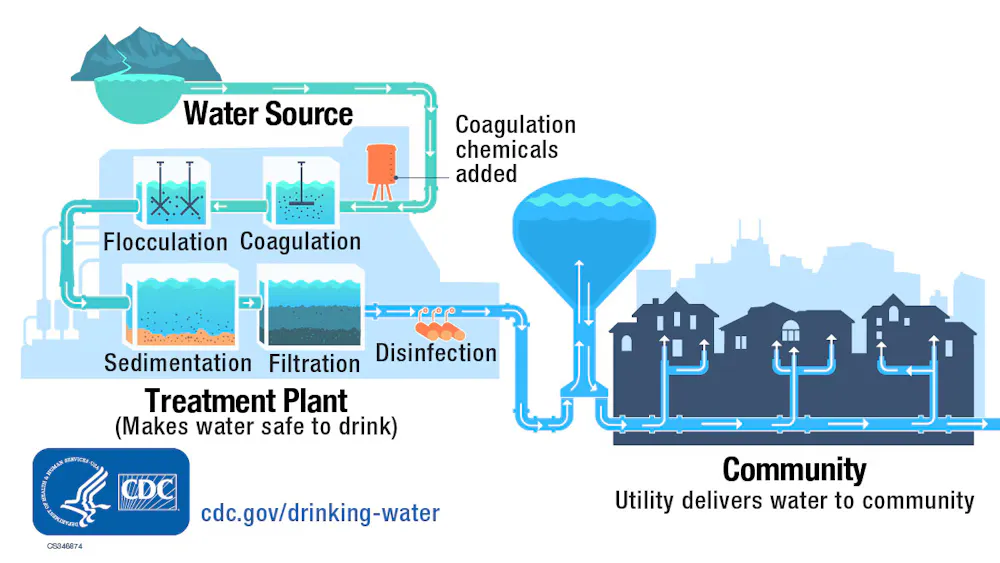
Today, the process of cleaning water begins with the same steps employed by the ancient Egyptians, followed by extensive filtration to get rid of debris as well as most germs and chemicals. Chlorine is added to kill lingering pathogens, including those that may reside in the service pipes carrying the water to the faucet. Beginning in the 1940s, a small amount of fluoride was added as an inexpensive, safe and effective means to improve dental health.
People who champion raw water claim it has health benefits, such as essential minerals and beneficial bacteria called probiotics, that are stripped from tap water. Let’s unpack each of these claims.
Water dissolves bits of soil and rock at its source; therefore, its mineral content depends on the local geology. Areas with a lot of limestone, like the Midwest, have water that is higher in calcium. Water from deeper in the ground may have higher mineral content since it passes through more rock on its way to the surface.
The idea that tap water is depleted of essential minerals is not true, as these nutrients are too small to be excluded by the filtration process. Test kits can determine the mineral content of your water, and if you find it lacking, mineral supplements can be added. Experts suggest, however, that most minerals you need come from your diet, not water.
Some also claim that raw water contains probiotics that are removed from tap water. The amount of probiotics in water would also vary by location, and the notion that health-promoting bacteria reside in raw water has not been proved.
There are no studies associating raw water with any health benefit. Anecdotal claims about smoother skin or increased energy are likely to be placebo effects. Even the idea that raw water tastes better might be more psychological than physiological – a 2018 study showed that most people preferred tap water over bottled water in a blind taste test.
Risks of drinking raw water
Raw water carries the risk of serious gastrointestinal infection from a wide variety of pathogens.
Tap water undergoes several treatment steps before it reaches your faucet. CDC
Carriers of diarrheal infections can transmit them to others if they swim in public pools or fail to properly wash their hands before touching others or preparing food. Norovirus is particularly durable and can survive on surfaces for days, increasing chances of it infecting someone else.
Raw water can also contain algae that release toxins causing abdominal issues and damage to the brain and nervous system.
The Environmental Protection Agency routinely screens for nearly 100 contaminants to ensure tap water is safe. In contrast, raw water remains untested, unregulated and untreated, leaving its safety to drink in question. In terms of risks and benefits, there are no demonstrated health benefits from drinking raw water, but clear evidence that you may be exposing yourself to harmful infectious and toxic contaminants.
Bill Sullivan receives funding from the National Institutes of Health.
When I drive my car on weekends, I emit greenhouse gases – but not enough to change the global climate on my own. But when I, my neighbours and hundreds of millions of other people drive, fly, eat meat and embark on countless other activities that generate greenhouse gas emissions, we raise the Earth’s temperature.
This is what we might call a collective harm problem, where the acts of many together lead to harmful outcomes, but no discrete act by any one person can solve it. Debates on how to fight climate change generally settle on the need for collective action ~ but does that make personal efforts inconsequential, even pointless?
If a single pro-environment lifestyle change – like one person giving up their SUV or cutting out meat in favour of plant-based foods – will not turn the tide of global climate change on its own, it’s reasonable to feel there is little that “doing your bit” can achieve. This mindset is disempowering.
Fortunately, it is not the only way of responding to the challenge. African philosophers have a different way of looking at it.
Individual contributions are not pointless
Studies assessing public willingness to contribute to climate action show that people will act even at a personal cost, given the right motivations. The urgent task for philosophers and environmentalists is to provide them with those motivations. This is where African philosophy is helpful.
By African philosophy, I mean critical reflections on basic questions about the world – spanning the nature of knowledge, existence, morality, meaning and truth, from the perspective of African philosophers.
I am a philosopher who studies the problem of what appear to be collectively insignificant individual actions. There is a concept from African philosophy that I think is helpful to understand this: “complementarity”.
Complementarity denotes a relationship of interdependence among all entities – plants, animals, rivers, humans – in an interconnected community of living and non-living things. As a framework for understanding the world, it holds that everything within the human and non-human environment exists in a relationship of mutual dependence. Everything is connected to everything else. No entity can exist and flourish in isolation.
To that extent, the flourishing of one person depends on and influences the flourishing of other things in the world – including other people and animals as companions, the plants and soil which provide food for survival, rivers and oceans that are a source of water, and the Sun which gives the energy that sustains life on Earth.
Complementarity has been used by African philosophers like Jonathan Chimakonam, Aïda Terblanché-Greeff, Diana-Abasi Ibanga and Kevin Gary Behrens to develop environmental philosophies based on shared relationships. According to these philosophers, a view of the world based on complementarity neither foregrounds nor diminishes humans. Rather, it sketches a relationship of equals defined by the mutual participation of all.
This thinking is averse to hierarchy. No individual can claim to have more value than another. Anything that exists serves as an important part of the environment and matters equally, whether alone or collectively. Complementarity holds that the relationships that unite individual things can extend to prove the value of every contribution, no matter its size.
And so, complementarity rejects the argument that anything you do to help the climate is pointless. Driving my car is not an action that exists in isolation. My emissions are interconnected with other aspects of the environment.
Similarly, individual climate-positive actions occur in relation to others taken globally, so it is a mistake to assume such actions are pointless. Rather, their relation to other actions makes them not just practically useful but necessary, to make a difference at the level of communities and globally.
According to this African concept, the race to reduce greenhouse gas emissions is a complementary effort. And so, do not be discouraged from taking your own step in this direction.
Patrick Effiong Ben receives funding from the AHRC North West Consortium Doctoral Training Partnership (NWCDTP).
Forbion’s BioEconomy Fund I has raised €164.5 million to date, exceeding its €150 million target in just over a year, since launching in November 2023.
Institutional investors, include KfW Capital, Novo Holdings, Rentenbank, Aurae Impact and most recently ABN AMRO Bank and EIFO.
The fund focuses on biotech-enabled, B2B solutions that deliver sustainability at price parity or better across Food, Agriculture, Materials, and Environmental Technologies.
NAARDEN, The Netherlands, Jan. 27, 2025 (GLOBE NEWSWIRE) — Forbion, a leading venture capital firm with deep biotech expertise in Europe and the US, announces that its BioEconomy Fund I has raised €164.5 million. This exceeds the fund’s €150 million target, underscoring growing investor interest in the commercial potential of biotech innovations that address global sustainability challenges.
BioEconomy Fund I is supported by top-tier institutional investors, including KfW Capital, Novo Holdings, Rentenbank, and Aurae Impact, alongside new backers ABN AMRO Bank and EIFO. The BioEconomy Fund I anticipates a final close at or close to the hard cap of €200 million, demonstrating the growing confidence in biotech innovations that address global sustainability challenges.
Launched in November 2023, the Forbion BioEconomy Fund I is a planetary health fund that targets business-to-business (B2B) solutions that replace unsustainable products with scalable, cost-effective alternatives. A key pillar of the fund’s strategy is ensuring these innovations achieve price parity with incumbent solutions, enabling wide-scale adoption across the fund’s four target sectors: Food, Agriculture, Materials, and Environmental Technologies industries.
Sander Slootweg, Managing Partner and co-founder of Forbion, stated, “Exceeding €150 million in just over a year reflects the strength of our team and strategy and the confidence our investors have in our ability to execute. Their support for BioEconomy Fund I demonstrates the growing demand for scalable, cost-competitive biotech solutions that deliver both sustainability and strong returns.”
Alex Hoffmann, General Partner, added, “Investors recognize the transformative potential of scalable biotech solutions to meet the needs of industries seeking to adopt sustainable practices. Their support empowers us to help companies scale and deliver meaningful change.”
About Forbion BioEconomy Fund I BioEconomy Fund I’s focus on using biotechnology and green chemistry to deliver sustainable B2B solutions in Food, Agriculture, Materials, and Environmental Technologies is best exemplified by its initial investments in Solasta Bio and Novameat. These portfolio companies illustrate Forbion’s commitment to scalable, biotech-enabled innovation. Solasta Bio develops sustainable insect control solutions as alternatives to chemical insecticides, while Novameat advances plant-based meat production with proprietary technology designed for scalability and high-quality texture. By building on Forbion’s expertise in biotechnology, the fund aligns its investments with UN Sustainable Development Goals, including SDG 9 (industry, innovation, and infrastructure), SDG 12 (responsible consumption and production), and SDG 13 (climate action). Forbion BioEconomy Fund I aims to deliver strong financial returns while driving impactful solutions to pressing planetary challenges. Forbion announced the first close of BioEconomy Fund I at €75 million on 20 June 2024.
About Forbion Forbion is a leading global venture capital firm with deep expertise in Europe and the US with offices in Naarden, The Netherlands, Munich, Germany and Boston, USA. Forbion invests in innovative biotech companies, managing approximately €5 billion across multiple fund strategies that cover all stages of (bio-) pharmaceutical drug development. In addition, Forbion leverages its biotech expertise beyond human health to address ‘planetary health’ challenges through its BioEconomy fund strategy, which invests in companies developing sustainable solutions in food, agriculture, materials, and environmental technologies. Forbion’s team consists of over 30 investment professionals that have built an impressive performance track record since the late nineties with 128 investments across 11 funds. Forbion’s record of sourcing, building and guiding life sciences companies has resulted in many approved breakthrough therapies and valuable exits. Forbion typically selects impactful investments that will positively affect the health and well-being of people and the planet, as well as meet its financial return objectives. The firm is a signatory to the United Nations Principles for Responsible Investment. Forbion operates a joint venture with BGV, the manager of seed and early-stage funds, especially focused on Benelux and Germany.
For more information, please contact:
Forbion Investor Relations Email: Robbert.van.de.Griendt@forbion.com General Partner IR & Impact
Forbion Communications Email: laura.asbjornsen@forbion.com Head of Communications
Source: Hong Kong Government special administrative region
Batch II of Funding Scheme for Public Engagement Projects of Built Heritage Conservation Fund approves four projects Batch II of Funding Scheme for Public Engagement Projects of Built Heritage Conservation Fund approves four projects ******************************************************************************************
The Development Bureau announced today (January 27) that four projects were approved under Batch II of the Funding Scheme for Public Engagement Projects of the Built Heritage Conservation Fund, involving a total amount of about $7.2 million. Centred on the themes of “Looking After Our Historic Buildings”, “Engaging Young People in Heritage Conservation” and “Our Built Heritage and Our Community: Education, Religion and Heritage”, a variety of activities will be organised under the four funded projects to raise public awareness of built heritage in several schools and their surrounding communities, historic buildings in the Causeway Bay area, the conservation of chapels and historic village houses on the Sai Kung Peninsula, and the use of aerial photographs in historic building research and conservation. The Government launched Batch I of the Funding Scheme as a pilot initiative in 2017 to provide financial support for public education, community involvement and publicity activities pertaining to built heritage conservation. Applications were invited from professional institutes closely involved in the conservation of built heritage, and the approved projects have been completed. The eligibility for Batch II of the Funding Scheme has been extended to local non-profit-making organisations with experience in built heritage conservation, with a maximum funding of $2 million per project. Details of the approved projects are available on the website of the Commissioner for Heritage’s Office (www.heritage.gov.hk).
DOC Wildfire Manager Brent Swanson says it’s crucial people check whether fires are allowed in the area, and the fire status for the region, before lighting fires in the outdoors.
“The day you head out on your trip, go to the Check It’s Alright website first to follow the fire safety advice and check the local fire danger level. This tool will tell you whether it’s ok to light a fire.”
Brent says there are already very dry conditions in some places this season. There have already been several significant fires, including on conservation land, such as the December blaze in Craigieburn, Canterbury. The eastern parts of the country in particular are expected to have a high fire risk.
“Conservation land is always in a restricted or prohibited fire season, depending on the fire risk, and some areas have a year-round total fire ban.
“Although all conservation land is in a restricted fire season, people may light fires at a campsite’s designated fireplace, or in the backcountry according to specific conditions outlined on the DOC website. Care should be taken to thoroughly extinguish any campfires before leaving a site.
“If it’s a prohibited fire season, it means there is a fire ban and no fires can be lit, though fireplaces inside huts can still be used.
“There may also be useful fire safety information on the DOC webpage about the specific track, hut, or campsite being visited.”
Brent says disposing of hot ashes outside can start devastating wildfires, so ashes from hut fireplaces should be put into the metal bins provided at huts and then soaked with water.
“Gas cookers and enclosed liquid fuel stoves can usually be used at any time, but extra care should be taken if the fire risk is high. Set them up in an area that’s at least 3m clear of any vegetation on a stable, level surface, and be careful when balancing heavy pots on top as they could tip the cooker over.
“Another thing to think about is where to park the car at the start of a trip, as a hot exhaust in long grass can start a fire.”
“Fires on conservation land are often accidentally caused by people. No one wants to see native ecosystems, recreation assets, or heritage and cultural sites destroyed because of a fire, so we’re asking people to stay fire safe in the outdoors this summer.”
Public conservation land is always in a Restricted or Prohibited fire season:
Restricted fire season – means you may light fires at a campsite’s designated fireplace, and in the backcountry according to the specific conditions
Prohibited fire season – means there is a fire ban and you can not light any fires on public conservation land (you can still use fireplaces inside DOC huts).
You can light campfires at DOC campsites or day amenity areas only if:
there is no fire ban in place, and
you use the designated fireplaces/fire pits.
You can light campfires in the backcountry only if:
there is no fire ban in place
there are no notices prohibiting fires there
the fire is at least 3 metres away from trees and anything that could catch fire, and
the fire is smaller than 0.5 m in width and in height.
Backcountry refers to areas that are more than an hour’s walk from the nearest road end.
Perhaps you know your Daffy from your Donald, your Huey from your Louie and Dewey, but do you really know your ducks?
Communications and Media Advisor Krysia Nowak takes a duck-dive into the shallows for a quick wade around the ducks of Aotearoa.
This is the final episode, friends, with a focus on the fantastically fabulous whio. Found only in Aotearoa New Zealand (unless you happen to take a $10 note overseas), whio are more threatened than some species of kiwi – it’s time we showed them some love!
Adult whio | William Harland CC BY-ND 4.0
What’s in a name?
As Shakespeare almost once said, ‘a blue duck by any other name would still be blue’. Except these aren’t, really. At a stretch they might be a steel blue, but my personal opinion is that the name came about because ‘grey duck’ was already taken (See Ducktales Episode 1: Quacking the case on mallards and grey ducks). A more accurate name, then, is the te reo Māori ‘whio’, or ‘kowhiowhio’, said to resemble the whistling sound the males make.
Whistling you say? That’s right, no generic quacking for our whio whānau. Males have a piercing whistle, synonymous with out backcountry river soundscape, while the females utter a purring sort of growl.
You may be used to ducks living on still water, perhaps gently flowing water, a pond, a stream, a lowland river. Not so the whio; they’re thrill-seekers. Instead, picture these hardy ducks on rapids we’d usually associate with rafting and adventure sports. Even the ducklings can handle strong currents with ease, thanks to their oversized ‘umbrella-like’ feet.
Umbrella feet
Whio are only distantly related to our other ducks, as they separated from other species a long time ago. They’ve specialised in this fast-flowing environment, in fact, they’re one of only four species of duck in the world adapted to live in ‘torrent’ environments!
To give an example of their specialisation, I once saw a whio family on the pond at Tongariro National Trout Centre (they pop in occasionally, a holiday from the river I guess). I had the privilege of watching one of the adult whio chasing a mallard around the pond. Swimming near each other the differences were stark – whio with their streamlined bodies racing through the water, next to the dingy-like mallard at a relaxed pace. Needless to say, the mallard ceded the pond, and the whio emerged victorious.
Clean, clear, and cold
Whio need clean, clear, cold water to survive. Well…mostly so they can eat. Visual hunters, they peruse the current and under rocks for tasty insects and worms (with a cool beak!). They can handle the occasional flood muddying the water, but permanently silty environments kill their kai, and their ability to find it.
A whio surveying its domain | Michael Hayward CC BY-ND 4.0
So why clean and cold? Well not a whole lot of things like to live in pollution (except humans, apparently), and whio food is no exception. Prime whio fodder like mayflies, caddis, and stoneflies have high oxygen needs. Pollution uses up oxygen, and warm water holds less oxygen, so clean and cold is where it’s at.
Stoatally uncool
Imagine whio back before mammalian predators were introduced, when threats came from other birds like harriers and black-backed gulls. Birds are visual, and most (with a couple of notable exceptions) don’t have a good sense of smell. So, the ultimate whio defence strategy was born: look like a rock. People unfamiliar with whio spotting often fail to spot the ‘slightly animated rocks’ that betray a stealthy whio. Ducklings are a black and white combination that somehow disappears completely in the rapids.
Try and count whio ducklings on the move. Go on, I dare you.
Black and white whio ducklings are hard to track in the rapids | Bradley Shields CC BY-ND 4.0
Enter mammalian predators, like stoats, with an excellent sense of smell to tell boulder from bird. Suddenly, whio are *ahem* sitting ducks. Whio aren’t completely defenceless; they’re feisty and can often fight off predators, but they have no way to hide from predators who can sniff them out, and it’s difficult to fight a stoat and keep your eggs alive at the same time. If a stoat finds a female whio sitting on her nest, it’s only a matter of time before it either kills her or drives her off and eats the eggs. All the while, the male whio is diligently watching the river and sky for threats, not realising the real threat now comes from the land (this breaks my heart).
By the time conservationists realised there was a problem, there were estimated to be less than 2500 whio left in the entire country.
Whio Forever?
So, how can we stop the decline of whio? Partner up!
If we control stoats in whio habitat, we give whio their best chance of resilience in the face of other threats like climate change. We’re pretty fortunate here at DOC to have a partnership with Genesis, and with their support we’ve been able to protect more than 1,500 kilometres of river in whio habitat in locations across New Zealand.
Stoats aren’t the only threat to whio though, many of our rivers aren’t as healthy as they used to be, so habitat loss is right up there, along with climate change. Helping to keep our rivers healthy (don’t litter, plant trees, wash your car on the grass, etc), and reducing our greenhouse gas emissions (you know the drill) are actions that can help the wider picture for fabulous whio.
Whio live year-round on fast flowing rivers and streams | DOC
Well, I’m all out of ducks, and you’ve made it to the end of the ducktales blogs; well done you! Now you get to go on and share all these new facts at your Christmas parties. You’re welcome; you can thank me by being decent to ducks:
Union Minister for Environment, Forest and Climate Change Shri Bhupender Yadav Inaugurates Advanced Facility for Pashmina Certification and Next Generation DNA Sequencing Facility at Wildlife Institute of India, Dehradun New Wildlife Research Facility a ‘Game-Changer’ for Biodiversity Conservation, says Union Minister Shri Bhupender Yadav
Posted On: 21 DEC 2024 7:09PM by PIB Delhi
Union Minister for Environment, Forest and Climate Change Shri Bhupender Yadav, today inaugurated the Advanced Facility for Pashmina Certification and Next Generation DNA Sequencing Facility at the Wildlife Institute of India (WII), Dehradun, in the presence of Minister of State for Environment, Forest and Climate Change, Shri Kirti Vardhan Singh. These new facilities are built on the foundation laid last year, when the Minister inaugurated the Pashmina Certification Centre (PCC) and issued its first unique ID barcode and certificate.
Next Generation Sequencing Facility (NGS):
Next-Generation Sequencing (NGS) is a revolutionary technology that enables the rapid and high-throughput decoding of entire genomes, analyzing millions of DNA sequences simultaneously. This allows researchers to gain deeper insights into genetic diversity, evolutionary relationships, and population health. In wildlife conservation, NGS plays a pivotal role in identifying population genetic health with respect to genetic diversity, information on genetic barriers and their effect on populations, unique adaptations and species with unique evolutionary histories, understanding disease outbreaks, detecting illegal wildlife trade, and studying the effects of climate change on biodiversity. This cutting-edge NGS facility positions the Wildlife Institute of India as a leading centre for molecular and genetic research in wildlife conservation, enabling advanced studies in areas such as biodiversity genomics, population genetics, and disease surveillance.
Speaking on the occasion, Union Minister Shri Bhupender Yadav said, “This facility is a game-changer for wildlife research in India. It empowers scientists with the latest tools to decode the genetic mysteries of our biodiversity and create science-based solutions to protect it. India, as a megadiverse country, needs such advanced capabilities to ensure the survival of our precious wildlife for generations to come.”
A Self-Sustaining Model
The PCC represents a unique, self-sustaining initiative within a government organization, generating revenue while creating employment opportunities for budding professionals under the PPP model.
Shri Bhupender Yadav lauded the Wildlife Institute of India and the EPCH for their collaborative efforts in establishing this world-class facility. He reiterated the government’s commitment to preserving India’s rich cultural heritage while promoting sustainable development and biodiversity conservation.
Advanced Facility for Pashmina Certification
In the year since its establishment, the PCC has certified over 15,000 shawls, ensuring their authenticity and the absence of mixing of other fibers, thus enabling seamless trade of genuine Pashmina products in both national and international markets. The upgraded Advanced Facility for Pashmina Certification now includes a dedicated Scanning Electron Microscope (SEM) with Energy Dispersive Spectroscopy (EDS), which enhances the precision and reliability of wool testing and certification.
A Milestone in Atmanirbhar Bharat
The PCC, established under a Public-Private Partnership (PPP) model through a Memorandum of Understanding (MoU) between WII and the Export Promotion Council for Handicrafts (EPCH), exemplifies the government’s commitment to supporting artisans, weavers, and traders while fostering self-reliance in traditional handicrafts.
The upgraded facility offers:
Advanced Fiber Analysis: SEM-EDS technology to accurately identify and authenticate Pashmina fibers.
Streamlined Certification: Unique ID tagging and e-certificates for traceability and quality assurance.
Global Trade Facilitation: Hassle-free movement of certified products, eliminating delays and financial losses due to fibre scrutiny at exit points.
Supporting Artisans and Conservation Efforts
Pashmina is a cornerstone of livelihood for the artisan and weaver communities of Jammu & Kashmir. The PCC plays a vital role in promoting their industry by certifying genuine products, enhancing their credibility in global markets, and ensuring fair trade practices. Additionally, the facility discourages the use of prohibited fibers, indirectly contributing to the conservation of the Tibetan antelope (Chiru), whose habitat was previously threatened by illegal trade in Shahtoosh wool.
Minister of State for Environment, Forests, and Climate Change, Shri Kirti Vardhan Singh highlighted the facility’s potential, stating: “With the Next-Generation Sequencing facility, we are equipping ourselves to address modern conservation challenges with precision and innovation. Developing indigenous capacity to handle such modern technologies, and to build capacity in advancements is critical to take our country forward. “
The NGS facility is expected to bolster ongoing projects and enable new research avenues, including the study of genetic adaptation to climate change, pathogen-host interactions, and the development of conservation strategies for endangered species such as tigers, elephants, riverine dolphins, and other endangered species.
Minister for Environment, Forest and Climate Change, Shri Bhupender Yadav released the ‘India State of Forest Report 2023 (ISFR 2023) today at Forest Research Institute, Dehradun. The ISFR is brought out by the Forest Survey of India (FSI) on a biennial basis since 1987. FSI carries out in-depth assessment of the forest and tree resources of the country based on interpretation of Remote Sensing satellite data and field based National Forest Inventory (NFI), and the results are published in the ISFR. The India State of Forest Report 2023 is 18th such report in the series.
The report contains information on forest cover, tree cover, mangrove cover, growing stock, carbon stock in India’s forests, instances of forest fire, Agroforestry, etc. To present a detailed picture of the forest health at country level, special thematic information on forest cover and important characteristics of forests have been reported in the ISFR. As per the present assessment, the total Forest and Tree cover is 8,27,357sq km, which is 25.17 percent of the geographical area of the country. The Forest Cover has an area of about 7,15,343sq km (21.76%) whereas the Tree Cover has an area of 1,12,014 sq km (3.41%).
The Minister expressed happiness over the fact that as compared to 2021, there is an increase of 1445 sq km in the total forest and tree cover of the country. He also highlighted the near real time fire alerts and forest fire services provided by FSI using advance technology.
*****
MAJOR FINDINGS
● The Forest and Tree cover of the country is 8,27,357 sq km which is 25.17 percent of the geographical area of the country, consisting of 7,15,343 sq km (21.76%) as forest cover and 1,12,014 sq km (3.41%) as tree cover.
● As compared to assessment of 2021, there is an increase of 1445 sq km in the forest and tree cover of the country which includes 156 sq km increase in the forest cover and 1289 sq km increase in tree cover.
Top four states showing maximum increase in forest and tree cover are Chhattisgarh (684 sq km) followed by Uttar Pradesh (559 sq km), Odisha (559 sq km) and Rajasthan (394 sq km).
Top three states showing maximum increase in forest cover are Mizoram (242 sq km) followed by Gujarat (180 sq km) and Odisha (152 sq km).
Area wise top three states having largest forest and tree cover are Madhya Pradesh (85,724 sq km) followed by Arunachal Pradesh (67,083 sq km) and Maharashtra (65,383 sq km).
● Area wise top three states having largest forest cover are Madhya Pradesh (77,073 sq km) followed by Arunachal Pradesh (65,882 sq km) and Chhattisgarh (55,812 sq km).
In terms of percentage of forest cover with respect to total geographical area, Lakshadweep (91.33 percent) has the highest forest cover followed by Mizoram (85.34 percent) and Andaman & Nicobar Island (81.62 percent).
The present assessment also reveals that 19 states/UTs have above 33 percent of the geographical area under forest cover. Out of these, eight states/UTs namely Mizoram, Lakshadweep, A & N Island, Arunachal Pradesh, Nagaland, Meghalaya, Tripura, and Manipur have forest cover above 75 percent.
● The total mangrove cover is 4,992 sq km in the country.
The total growing stock of India’s forest and trees outside forests is estimated as 6430 million cum, of which 4479 million cum is inside the forests and 1951 million cum outside the forest area. There is an increase of 262 million cum of total growing stock as compared to the previous assessment which includes an increase of 91 million cum inside the forest and 171 million cum outside the forest area.
The extent of bamboo bearing area for the country has been estimated as 1,54,670sq km. As compared to the last assessment done in 2021 there is an increase of 5,227 sq km in bamboo area.
The total annual potential production of timber from trees outside forest has been estimated as 91.51 million cum.
In the present assessment total carbon stock in country’s forest is estimated to be 7,285.5 million tonnes. There is an increase of 81.5 million tonnes in the carbon stock of country as compared to the last assessment.
Regarding status on achievement of target under NDC related to carbon sequestration, the current assessment shows that India’s carbon stock has reached 30.43 billion tonnes of CO2 equivalent; which indicates that as compared to the base year of 2005, India has already reached 2.29 billion tonnes of additional carbon sink as against the target of 2.5 to3.0 billion tonnes by 2030.
Besides providing vital information for monitoring the country’s forest and tree resources, the data given in the ISFR serves as a useful source of information for the policy makers, planners, State Forest Departments, research organisation, line agencies involved in various developmental works, academicians, civil society and others interested in natural resource conservation and management.
Source: New Zealand ParliamentThe Foreign Affairs, Defence and Trade Committee is calling for public submissions on the International treaty examination of the Agreement Under the United Nations Convention on the Law of the Sea on the Conservation and Sustainable Use of Marine Biological Diversity of Areas Beyond National Jurisdiction. MIL OSI
Source: Hong Kong Government special administrative region
Situation of two months after adaptation period of regulation on disposable plastic products Situation of two months after adaptation period of regulation on disposable plastic products ******************************************************************************************
The six-month adaptation period of the new regulation on disposable plastic products has been concluded for two months since October 21 this year. The Environmental Protection Department (EPD) will continue to promote going “plastic-and-disposable-free” and follow up incompliant cases, to join hands with different sectors of the community to promote green and low-carbon living culture in Hong Kong. A spokesman for the EPD said today (December 23) that since the implementation of the new regulation, the trade has generally complied with the law and adapted to the new regulatory requirements by making corresponding changes in their businesses. Over the past two months, the EPD has continued its publicity and educational efforts, followed up on complaints and handled the small number of cases that are still incompliant. To date, the EPD has received 62 relevant complaints and reportings about non-compliance, all of which have been investigated, and 33 of them were still incompliant and had not taken specific actions to rectify after rounds of promotion and education. The EPD has issued written warnings requiring the persons-in-charge to make improvements within 10 working days; otherwise, a fixed penalty notice will be issued. The EPD has followed up 15 cases which written warnings had been issued more than 10 working days and two catering premises were still found persistently incompliant, and the EPD staff have issued fixed penalty notices of $2,000 each to the persons-in-charge. The EPD will follow up other cases again timely. The spokesman reiterated, “Having reviewed the data in these two months after the adaptation period, most of the non-compliance had been rectified within a short period of time, and only two cases with repeated non-compliance records required the issuance of fixed penalty notices at present. The EPD reminds the trade once again that the adaptation period has concluded for two months. The EPD will on one hand continue our publicity and educational efforts, and on the other hand seriously follow up on incompliant cases with a view to working with the trade and the public to further promote the ‘plastic-and-disposable-free’ culture in the society.”
Headline: 【Global News】#PanasonicForTheWorld Campaign Creating Awareness Around Environment Social Governance (ESG) Efforts to Encourage a Sustainable Tomorrow
New Delhi, India – Panasonic Life Solutions India (PLSIND) – Environmental, Social, and Governance (ESG) principles lie at the heart of Panasonic’s mission, shaping the way we do business and leaving a meaningful legacy. The #PanasonicForTheWorld campaign intends to raise awareness about ESG by showcasing the breadth of efforts that Panasonic in India is making, thereby strengthening its commitment further to make a larger impact in this space and encouraging others to drive towards a sustainable future.
The campaign was kickstarted on social media channels of Panasonic Life Solutions India (PLSIND) on World Environment Day—it started with a focus on efforts around Environment, followed by Social and Governance.
Here are some highlights of the ESG efforts that were showcased as part of the #PanasonicForTheWorld campaign:
Environmental Commitments: Toward a Net Zero Future
As part of Panasonic Green Impact, Panasonic has undertaken a goal to reduce over 300 million tons of CO2 emissions by 2050. Initiatives such as the “Push for Change” campaign, powered by Generative AI, illustrated the dire consequences of inaction, encouraging individuals to pledge for sustainability. Each pledge led to tangible actions, such as planting trees. Further, group companies of Panasonic in India are making strides towards a greener tomorrow through campaigns such as Diwali Wali Safai, Tree plantation/eco-restoration projects, Harit Umang (Joy of Green) program, distribution of solar kits/lanterns, to name a few.
Social Commitments: Empowering the Next Generation
With an aim to nurture talent and create opportunities for underprivileged communities, initiatives like the Navjeevan School provide free education to over 110 underprivileged children, the Evening Learning Centre has helped 62 students prepare for 10th-grade exams. The Ratti Chhatr Scholarship has supported 240 students in completing their education at premier institutes like IITs. The campaign also focused on other projects that supported communities with better sanitation and hygiene.
Leading with Transparency
Panasonic is committed to high benchmarks in ethical business practices. The campaign focused on the following priorities:
Transparent, consent-based data collection.
Enhanced data security measures to prevent breaches.
Grievance redressal mechanisms to ensure employees and stakeholders have a voice.
These practices, to name a few, not only enhance trust but also inspire the broader industry to adopt similar standards.
#PanasonicForTheWorld campaign was well received and organically received over 3 million impressions, 7.3K engagements, and heartfelt positive reaction from more than 4,000 individuals. Further, by collaborating with relevant sustainability influencers, the campaign reached 110,323 people including key influential voices and key opinion leaders, igniting meaningful conversations and positive support for the efforts. Key media publications also covered this campaign.
Together, let us drive transformative change and shape a greener, more inclusive future for generations to come.
This photo shows a view in the Qingcheng Palace complex in Beijing, capital of China, Dec. 21, 2024. (Xinhua/Chen Zhonghao)
The Qingcheng Palace complex, located within the Altar of the God of Agriculture, opened to the public for the first time on Saturday.
It is the second area within the altar — part of the “Beijing Central Axis: A Building Ensemble Exhibiting the Ideal Order of the Chinese Capital”, which is on the UNESCO World Heritage List — to open to the public this year, following the Divine Granary on April 18.
First constructed in 1458 during the Ming Dynasty (1368-1644), the palace was initially named Zhaigong (Temple of Abstinence), where emperors conducted ritualistic fasting before worshipping the God of Agriculture.
In 1755, during the reign of Emperor Qianlong of the Qing Dynasty (1644-1911), the complex was refurbished into its current layout. It was renamed Qingcheng Palace and served as a celebratory venue where emperors convened with officials after worship ceremonies.
“The Qingcheng Palace is the highest-ranking complex within the Altar of the God of Agriculture,” said Xue Jian, director of the Beijing Ancient Architecture Museum, which manages the altar.
“It features a four-sided hipped roof, the highest-grade form in imperial architecture,” he added. “The roof uses green glazed tiles, second only to yellow glazed tiles in the hierarchy. The dragon patterns painted below the eaves further signify the structure’s elevated status.”
According to Xue, the complex only recently opened because the area has become a residential neighborhood. Conservation efforts for the Beijing Central Axis, especially since 2023, have helped relocate residents, demolish non-heritage buildings and restore the site, allowing the complex to be brought back into public view.
Visitors to the Qingcheng Palace can enjoy an exhibition showcasing the preservation efforts of the Beijing Central Axis, which led to its World Heritage List inscription on July 27. Additional exhibitions highlight the history and architectural features of the palace and include a digital display introducing the rituals of worshipping the God of Agriculture.
As the Qingcheng Palace is located in the outer area of the altar and is temporarily not connected to the inner area where the Beijing Ancient Architecture Museum is situated, visitors with museum tickets can access the Qingcheng Palace complex following a separate ticket check.
Zhang Lixin, director of the Beijing Municipal Cultural Heritage Bureau, stated that the palace’s opening marks a new milestone in the altar’s history. The Beijing government has mandated that heritage sites along the Beijing Central Axis make maximum efforts to open to the public, enabling more people to experience the beauty of ancient architecture and traditional Chinese culture.
“Now, the palace serves as a demonstration of the preservation achievements of the Beijing Central Axis, with active participation and support from the public,” Zhang said. “In the future, the palace will become a cultural reception hall for Beijing, fostering cultural exchange and mutual learning.”