Category: Europe

  • MIL-OSI Europe: Minister Burke welcomes €23m in Shared Island Development Tourism funding

    Source: Government of Ireland – Department of Jobs Enterprise and Innovation

    • The Government’s Shared Island initiative aims to harness the full potential of the Good Friday Agreement to enhance cooperation, connection and mutual understanding on the island and engage with all communities and traditions to build consensus around a shared future.
    • Fáilte Ireland, Tourism Northern Ireland and Tourism Ireland continue to build on the strong relationships already developed with the local authorities in both jurisdictions.

    Minister for Enterprise, Tourism and Employment, Peter Burke, today welcomed funding of up to €23m for three Shared Island Tourism Destination projects. 

    Carlingford Lough: A network of trailheads, trails and water access points will be delivered across the region; increasing connectivity between tourism assets and complemented by delivery of a Destination Experience Strategy to promote the region. The investment will harness the benefits of the Narrow Water Bridge as a lynchpin for sustainable tourism and recreation activity around the whole Carlingford Lough area.

    Cuilcagh Lakelands UNESCO Global Geopark: The trail network will be developed to link existing trails North and South of the border; enhancing and further linking the regional tourism offering at Cuilcagh and the wider cross-border UNESCO Global Geopark. Trail development will provide connectivity between the Marble Arch Caves, Cuilcagh Boardwalk and on to Cavan Burren Park and include interpretation, wayfinding and infrastructure, including a community-based interpretative centre at Glangevlin village.

    Sliabh Beagh: Extensive connected walking, cycling, equestrian cross-border trails around Sliabh Beagh Mountain will be developed along the border, with the inclusion of trailheads and gateways. Trail development will also include interpretation, wayfinding and other facility development.

    Minister Burke said:

    “I welcome the announcement of this significant funding, which will boost the all-island economy and benefit communities north and south of the border. These projects have the potential to deliver sustained economic, social and environmental benefits across counties in both jurisdictions.  Communities on either side of the border Ireland continue to collaborate in creating a place that they are proud to share with others, delivering a warm welcome and the promise of a memorable holiday.” 

    ENDS

    MIL OSI Europe News

  • MIL-OSI Security: Readout of Vice Chairman of the Joint Chiefs of Staff Adm. Christopher W. Grady’s Phone Call with France’s Chief of the Defence Staff Gen. Thierry Burkhard

    Source: US Defense Joint Chiefs of Staff


    Office of the Chairman of the Joint Chiefs of Staff Public Affairs

    February 25, 2025

    WASHINGTON, D.C. — Joint Staff Spokesperson Navy Capt. Jereal Dorsey provided the following readout:

    Vice Chairman of the Joint Chiefs of Staff Adm. Christopher W. Grady spoke with France’s Chief of the Defence Staff Gen. Thierry Burkhard yesterday by phone.

    Adm. Grady and Gen. Burkhard shared perspectives on the latest developments in Syria, as well as the Gaza and Lebanon ceasefire agreements. Additionally, the military leaders discussed ongoing deliberations regarding Ukraine.

    The long-standing military alliance between the U.S. and France is essential to peace and stability around the world.

    For more Joint Staff news, visit: www.jcs.mil.
    Connect with the Joint Staff on social media: 
    FacebookTwitterInstagramYouTube,
    LinkedIn and Flickr.

    MIL Security OSI

  • MIL-OSI Security: Mexican Drug Cartel Leader Extradited to Georgia to Face Federal Charges

    Source: Office of United States Attorneys

    ATLANTA – Omar Cuenca-Marino, 41, of Guerrero, Mexico, has been arraigned before Chief United States Magistrate Judge Russell G. Vineyard on federal charges of conspiracy to possess with the intent to distribute, and unlawful import of, methamphetamine, cocaine, and heroin into the United States, and conspiracy to commit money laundering.  Cuenca-Marino, who was the alleged leader of the Los Rojos Mexican Drug Cartel, was indicted by a federal grand jury on December 21, 2016.  

    “Robust law enforcement partnerships, tenacious investigators, and a resilient determination to eliminate cartels that import deadly drugs into our communities culminated in the charges and recent extradition of this alleged drug cartel leader,” said Acting United States Attorney Richard S. Moultrie, Jr. “This prosecution sends a strong message to the cartels and their leadership, no matter where they reside: you will face justice.”

    “The arrest and extradition of Omar Cuenca-Marino, the alleged Los Rojos cartel leader, marks a significant success for the ongoing U.S. efforts to dismantle drug trafficking cartels and secure our borders,” said Steven N. Schrank, Special Agent in Charge of HSI Atlanta, which covers Georgia and Alabama. “As part of our commitment to combating the opioid crisis and transnational crime, we are leveraging every available resource to disrupt cross border criminal operations. This case sends a clear message that we, alongside our law enforcement partners, will not tolerate those who seek to profit from the distribution of dangerous narcotics.”

    “The success of this investigation demonstrates DEA will use all of its resources to destroy drug distribution networks that are endangering our communities,” said Jae W. Chung, Acting Special Agent in Charge of the DEA Atlanta Division.

    “Drug cartels have caused the death of many people in the United States and Mexico through violence and the distribution of illegal drugs,” said Special Agent in Charge Demetrius Hardeman, IRS Criminal Investigation, Atlanta Field Office. “Once identified by the Organized Crime Drug Enforcement Task Forces, IRS Criminal Investigation special agents investigate these cartels finances and their involvement with narcotics to help bring them down.”

    According to Acting U.S. Attorney Moultrie, the charges, and other information presented in court: An investigation by law enforcement authorities identified a drug cartel based in Mexico that, between approximately 2013 and 2016, was responsible for importing large, distribution quantities of heroin, methamphetamine, and cocaine from Mexico into the United States.  The investigation identified Cuenca-Marino as the alleged Mexico-based leader of the cartel who oversaw the preparation of thousands of kilograms of cocaine, methamphetamine, and heroin in Mexico and arranged to have the drugs smuggled into the United States, using buses and tractor-trailers.  In addition, Cuenca-Marino allegedly directed the collection of millions of dollars of drug proceeds for transport from the United States back to Mexico.

    For instance:

    • On October 11, 2013, a law enforcement operation in Vinings and Hiram, Georgia led to the seizure of approximately 75 kilograms of methamphetamine, 23 kilograms of heroin, and 47 kilograms of cocaine.  Cuenca-Marino allegedly directed the smuggling of these drugs into the United States for distribution in the Atlanta-metro area.
    • On November 20, 2015, law enforcement seized 76 packages of cocaine from a vehicle in a parking lot in Duluth, Georgia.  The investigation revealed that Cuenca-Marino had relayed the phone number of the Atlanta-based trafficker who was about to take possession of the drugs.
    • On February 9, 2016, law enforcement stopped a vehicle traveling on Interstate 44 in Phelps County, Missouri and found $425,900 in drug proceeds.  The driver, who was enroute to Mexico, allegedly contacted Cuenca-Marino the following day to report that the vehicle had been in an “accident.”

    Members of the public are reminded that the indictment only contains charges.  The defendant is presumed innocent of the charges, and it will be the government’s burden to prove the defendant’s guilt beyond a reasonable doubt at trial.

    The investigation and prosecution of this case is led by the U.S. Immigration and Customs Enforcement’s Homeland Security Investigations, Drug Enforcement Administration, and Internal Revenue Service Criminal Investigation, with valuable assistance from the U.S. Marshals Service, the Cobb County Police Department, Cobb County Sheriff’s Office, Marietta Police Department, Powder Springs Police Department, Henry County Police Department, Clayton County Sheriff’s Office, Georgia Bureau of Investigation, DeKalb County Police Department, Alabama Drug Task Force, Newnan Police Department, Conyers Police Department, Gwinnett County Judicial Task Force, United States Customs and Border Protection, and the Georgia State Patrol.

    Assistant U.S. Attorney Michael Herskowitz is prosecuting the case.  Former Assistant U.S. Attorneys Nicholas Hartigan and Michael J. Brown, as well as the U.S. Department of Justice, Criminal Division’s Office of International Affairs and Office of Enforcement Operations, provided valuable assistance in the investigation. Also, the Department of Justice’s Office of International Affairs coordinated with law enforcement partners in Mexico to secure the arrest and extradition Cuenca-Marino.

    This prosecution is part of an Organized Crime Drug Enforcement Task Forces (OCDETF) Strike Force Initiative, which provides for the establishment of permanent multi-agency task force teams that work side-by-side in the same location. This co-located model enables agents from different agencies to collaborate on intelligence-driven, multi-jurisdictional operations to eliminate the most significant drug traffickers, money launderers, gangs, and transnational criminal organizations.

    The specific mission of the David G. Wilhelm Atlanta OCDETF Strike Force (Atlanta Strike Force) is to eliminate transnational organized crime syndicates and major drug trafficking and money laundering organizations in the Atlanta metropolitan area and the Northern District of Georgia. To accomplish this mission, the Atlanta Strike Force will target these organizations’ leaders, focusing on targets designated as Consolidated Priority Organization Targets, Regional Priority Organization Targets, and their associates.  The Atlanta Strike Force is comprised of agents and officers from ATF, DEA, FBI, HSI, USMS, USPIS, and IRS, as well as numerous state and local agencies; and the prosecution is being led by the Office of the United States Attorney for the Northern District of Georgia.

    For further information please contact the U.S. Attorney’s Public Affairs Office at USAGAN.PressEmails@usdoj.gov or (404) 581-6280.  The Internet address for the U.S. Attorney’s Office for the Northern District of Georgia is http://www.justice.gov/usao-ndga.

    MIL Security OSI

  • MIL-OSI Russia: Dmitry Chernyshenko sent greetings to participants of the Talent Summit forum in Abu Dhabi

    Translartion. Region: Russians Fedetion –

    Source: Government of the Russian Federation – An important disclaimer is at the bottom of this article.

    Previous news Next news

    Scientific and educational forum “Talent Summit” in Abu Dhabi

    Deputy Prime Minister of Russia Dmitry Chernyshenko welcomed the guests and organizers of the scientific and educational forum “Talent Summit” in Abu Dhabi.

    In his greeting, the Deputy Prime Minister emphasized the importance of cooperation between Russia and the United Arab Emirates in the fields of science, education and technology, noting the significant achievements of the Sirius educational center.

    “I thank the organizers of the summit – the leadership of Sirius and the Ministry of Education of the United Arab Emirates – a country that is a reliable partner of Russia in cooperation in the field of science, education and technology.

    It is gratifying that Sirius, created on the initiative of President Vladimir Vladimirovich Putin, shares its experience at the international level. Over ten years, the educational center has trained 80 thousand talented graduates in a variety of fields. Every year, Sirius’ educational programs cover more than 5 million schoolchildren, students, and teachers. More than 100 companies are now residents of its innovative scientific and technological center.

    Experienced Sirius engineers introduced the summit guests to breakthrough Russian solutions, including in the field of genetics and information technology. I am confident that the forum will serve to develop the talents of young people in Russia and the United Arab Emirates and will play a key role in strengthening friendly relations between our countries. I wish you fruitful work, interesting meetings and discussions,” the address says.

    The bilateral scientific and educational forum “Talent Summit” is being held for the first time in Abu Dhabi from February 23 to 25. It has become a platform for exchanging experiences and ideas between leading specialists from Russia and the UAE. Bilateral meetings allowed participants to discuss prospects for cooperation in key areas: education, science, innovation and culture.

    Please note: This information is raw content directly from the source of the information. It is exactly what the source states and does not reflect the position of MIL-OSI or its clients.

    MIL OSI Russia News

  • MIL-OSI Russia: The Academic Council of the State University of Management summed up the results of the winter session

    Translartion. Region: Russians Fedetion –

    Source: State University of Management – Official website of the State –

    On February 25, 2025, the State University of Management held a regular meeting of the Academic Council. The agenda included 14 items, including reporting on educational activities, approval of curricula and plans, as well as increased scholarships.

    According to tradition, the meeting began with a ceremony to award university employees for their work achievements and congratulate them on their birthdays, which was conducted by the Vice-Rector of the State University of Management Dmitry Bryukhanov.

    The working program was opened by the Head of the Electronic Dean’s Office of the University Natalia Tymchuk with a report on the results of the winter examination session of the 2024/2025 academic year. The session was attended by 5,247 full-time bachelor’s degree students, and 80% of them successfully completed the midterm assessment. Of the 835 full-time master’s degree students, 269 people passed the session with excellent marks, exceeding all other categories in their number. In the correspondence forms of bachelor’s and master’s degrees, 96% of students successfully passed the session, and only one student in the master’s degree program was left in arrears. In general, the number of successful students in all forms of study at SUM has increased compared to the same period last year.

    The Director of the Institute of Personnel Management, Social and Business Communications Alexey Chudnovsky spoke about the results of the implementation of work plans for 2024 and the development prospects for 2025. At the beginning of his speech, the speaker noted the continuing effectiveness of traditional methods of attracting applicants – open days, master classes and presentations. And this is despite the fact that work in this area in social networks is carried out in accordance with the spirit of the times. Then the professor reported on the functioning of additional professional education programs, which accept participants in a special military operation and veterans of the Russian Guard.

    Alexey Danilovich outlined the broad geography of the institute’s international activities – the formation of an educational cluster with universities in Turkey, Iran, China, India, Egypt, Morocco, South Africa, the UAE and other countries. He also noted the activities of the BRICS Higher School, which conducts three educational programs in English and works with the support of Rossotrudnichestvo and law enforcement agencies that facilitate the recruitment of students. The director of the Institute of Postgraduate Studies and the History of the Broadcasting System also mentioned the work of the Department of Foreign Languages, which is highly valued by students and partners from the Ministry of Economic Development of the Russian Federation.

    Reporting on the project work of the institute’s students, Aleksey Chudnovsky pointed out the high academic performance in this area – 11 projects by IUPSiBK students made it to the finals (27% of the total number of finalists), and 3 projects won prizes (a quarter of the total number of places).

    Vice-Rector of the State University of Management Maria Karelina put to a vote the issue of creating a department of scientific and technical information and coordination of dissertation councils and approving its Regulations. As a result of the restructuring, the new division will include employees of the departments of statistics, dissertation councils and postgraduate studies with the preservation of jobs. This decision will increase the efficiency of work and the speed of communications in the designated areas of the university’s activities.

    The report by Natalia Starkova, Director of the Department of Academic Policy and Implementation of Educational Programs, on the approval of higher education programs for the 2025–2026 academic year aroused keen interest among the members of the Academic Council. Vadim Dikikh, Director of the Department of Digital Development and Admission of Applicants, joined the discussion and explained the technical features of the new state electronic system for registering educational programs.

    Deputy Director of the Department of Academic Policy and Implementation of Educational Programs Olga Zhuravleva put to a vote the issue of approving the amounts of increased state academic scholarships from February 1, 2025. The scholarships will be increased compared to the previous period. The Academic Council also approved scholarships for sports achievements, which will be issued subject to excellent studies, also from February 1.

    At the end of the meeting, at the suggestion of the Chairperson of the Student Council of the State University of Management, Valeria Burlakova, the Academic Council decided to provide significant discounts on tuition in the current semester to three students whose fathers are taking part in a special military operation.

    Subscribe to the TG channel “Our GUU” Date of publication: 02/25/2025

    Please note: This information is raw content directly from the source of the information. It is exactly what the source states and does not reflect the position of MIL-OSI or its clients.

    MIL OSI Russia News

  • MIL-OSI: Data443 Announces Product Launch – ClassiForAI (CAFAI)

    Source: GlobeNewswire (MIL-OSI)

    RESEARCH TRIANGLE PARK, N.C., Feb. 25, 2025 (GLOBE NEWSWIRE) — Data443 Risk Mitigation, Inc. (OTCPK: ATDS) (“Data443” or the “Company”), an AI data security and privacy software company for “All Things Data Security,” today announced new capabilitis for its data classificaiton and governance product line – ClassiForAI (CAFAI). This offering leverages the companies’ significant and ongoing investments in Machine Learning to accelerate customer adoption of AI & LLMs.

    The product capabilty includes access to their new datacenter facilitities in the heart of Research Triangle Park and Data LLM Training engineering. The capability enables customers to come with their own AI engine of choice (Amazon, Microsoft, HuggingFace, ChatGPT, etc.) and have their internal corporate documents form the foundation for a very accurate, safe and confidential AI model for end users, advanced analytics, and of course – to train new AIs. Most importantly, Data443’s capability includes identification of extremely sensitive content that is not allowed to be generally exposed in any way by the AIs.

    “As we spoke to analysts about our approach, the result was the same – ‘Customers are struggling with what do to, don’t trust the public cloud, and really do not have the capabilities inside their own business. Plus, they are nervous about disclosure of sensitive content to employees and customers. Customers have no way of separating this data.”, stated Jason Remillard, CEO and Founder of Data443.

    The methology that Data443 applies is simplistic and focussed on fast results and high accuracy. A known issue with AI engines is that if you train it on too much data, mixed use data or data that is not specific enough – you end up with unreliable models which are prone to problems of hallucianation and unsourced content. Data443’s ClassiForAI utilizes its existing capabiltiy of classifying content with over 1,400 policies in 43 languages. The company can scan a massive content repository (of almost any kind in legal, finiance, defence, government) and produce reference examples of extremely high confidence datasets that match the policy – for example – (Personal Privacy Information) and language (German).

    ‘We’ve been offering our classification engine for different use cases for years, and the feedback is always the same – your policy frameworks are unique and on target. By leveraging our ecosystem (including physical hosting of the models) Data443 is able to provide full lifecycle services for AI accuracy, and reverse train negative outputs for usage in security and disclosure environments. To truely garner the benefits of AI, it isn’t useful if it is inaccurate, making up informtation, or its capabilities degrade over time. Our solutions are designed to be a full life cycle implementation – with continues subscriptions in place to continuously refine models, execute data transactions with them and in some cases, host the hardware and softare components on behalf of the customers”.

    The acquisition coincides with significant market validation of AI-powered email security solutions, evidenced by Abnormal Security’s anticipated IPO and growing enterprise demand for intelligent security platforms like Sailpoint. This strategic move positions Data443 to capture an expanding share of the email security market, which is experiencing rapid growth driven by the increasing sophistication of cyber threats and its recent acquisitions of Cyren.

    The announcement today will deliver immediate benefits to Data443’s customers:

    • Offline and live training of AI LLMs
    • Rental of Data443’s AI hardware, including NVidia, Tenstorrent, AMD, Cerebras Systems.
    • Secured facilites in its new USA-based data center.
    • High power draw capabilities for certain physical premises
    • Continuous leasing of AI engines for continuous data analysis while it is being used for training or queries.
    • Identification and removal of extremely sensitive content as defined by the customer.
    • Reducing exposure of content by LLM’s in chatbots, emails and other distribution types

    “This offering has been a long time in coming as the industry continues to iterate. Much like our investments with Ripple XRP, these long term plays differentiates us from others as we have mature technology, usually with 1-2 decades of runtime, with actual customers. The startup space has much excitement and investment dollars – which we appreciate. We like our position as recognized experts in data center management and classification,” added Remillard. “Like our recent acquisition of Breezemail.ai – we will continue to share with the industry as we win customer engagements.”

    Interested parties may review the offering at the website: https://data443.com/classi-for-ai-cafai/

    About Data443 Risk Mitigation, Inc.

    Data443 Risk Mitigation, Inc. (OTCPK: ATDS) provides software and services to enable secure data across devices and databases, at rest and in flight/in transit, locally, on a network or in the cloud. We are All Things Data Security™. With over 10,000 customers in over 100 countries, Data443 provides a modern approach to data governance and security by identifying and protecting all sensitive data regardless of location, platform or format. Data443’s framework helps customers prioritize risk, identify security gaps and implement effective data protection and privacy management strategies.

    Forward-Looking Statements 

    This press release contains forward-looking statements. These statements are made under the “safe harbor” provisions of the U.S. Private Securities Litigation Reform Act of 1995. Forward-looking statements may be identified by use of terms such as “expect,” “believe,” “anticipate,” “may,” “could,” “will,” “should,” “plan,” “project,” “intend,” “estimate,” “predict,” “potential,” “pursuant,” “target,” “continue” or the negative of these words or other comparable terminology. Statements in this press release that are not historical statements, including statements regarding Data443’s plans, objectives, future opportunities for Data443’s services, future financial performance and operating results, and any other statements regarding Data443’s future expectations, beliefs, plans, objectives, financial conditions, assumptions or future events or performance, or regarding the anticipated consummation of any transaction, are forward-looking statements. These statements are not guarantees of future performance and are subject to numerous risks, uncertainties and assumptions, many of which are difficult to predict or are beyond Data443’s control. These risks, uncertainties and assumptions could cause actual results to differ materially from the results expressed or implied by the statements. They may relate to the outcome of litigation, settlements and investigations; actions by third parties, including governmental agencies; volatility in customer spending; global economic conditions; inability to hire and retain personnel; loss of, or reduction in business with, key customers; difficulty with growth and integration of acquisitions; product liability; cybersecurity risk; anti-takeover measures in the Company’s charter documents; and the uncertainties created by global health issues, such as the ongoing outbreak of COVID, and political unrest and conflict, such as the invasion of Ukraine by Russia. These and other important risk factors are described more fully in the Company’s reports and other documents filed with the Securities and Exchange Commission (“the SEC”), including in Part I, Item 1A of the Company’s Annual Report on Form 10-K filed with the SEC on April 17, 2024, and subsequent filings with the SEC. Undue reliance should not be placed on the forward-looking statements in this press release, which are based on information available to the Company on the date hereof. Except as otherwise required by applicable law, Data443 undertakes no obligation to publicly update or revise any forward-looking statements, whether because of new information, future events or otherwise.

    “DATA443” is a registered trademark of Data443 Risk Mitigation, Inc.

    All product names, trademarks and registered trademarks are property of their respective owners. All company, product and service names used in this press release are for identification purposes only. Use of these names, trademarks and brands does not imply endorsement.

    For further information:        
    Follow us on LinkedIn: https://www.linkedin.com/company/data443-risk-mitigation-inc/
    Follow us on YouTube: https://www.youtube.com/channel/UCZXDhJcx-XgMBhvE9aFHRdA
    Sign up for our Investor Newsletter: https://data443.com/investor-email-alerts/

    To learn more about Data443, please watch the Company’s video introduction on its YouTube channel: https://youtu.be/1Fp93jOxFSg

    Investor Relations Contact:
    Matthew Abenante
    ir@data443.com
    919.858.6542

    The MIL Network

  • MIL-OSI United Kingdom: Recovered appeal: land located to the south-east of Bottesford (ref: 3340258 – 25 February 2025)

    Source: United Kingdom – Executive Government & Departments

    Correspondence

    Recovered appeal: land located to the south-east of Bottesford (ref: 3340258 – 25 February 2025)

    Decision letter and Inspector’s Report for a recovered appeal.

    Applies to England

    Documents

    Details

    Decision letter and Inspector’s Report for a recovered appeal for the construction of a solar farm, together with all associated work, equipment and necessary infrastructure. Land located to the south-east of Bottesford, comprising land to the south of the A52, to the west of Easthorpe Lane and Muston village, to the north of the Grantham Canal, to the east of the Winter Beck, and accessed from, and including land to the east of, Castle View Road.

    Updates to this page

    Published 25 February 2025

    Sign up for emails or print this page

    MIL OSI United Kingdom

  • MIL-OSI United Kingdom: Prestigious LGC Awards 2025 shortlists Salford City Council for Net Zero and Innovation

    Source: City of Salford

    • Shortlisted for Net Zero – Building a fairer, greener and healthier Salford for all
    • Shortlisted for Innovation with IEG4 – Revolutionising planning with AI
    • Winners will be announced at a ceremony on 11 June

    Recognising the valued difference local government makes to communities and celebrating the dedication of teams and individuals, Salford City Council is delighted to have been shortlisted in two categories at the Local Government Chronicle (LGC) Awards 2025.

    With almost 1,000 entries for this year’s awards, Salford City Council has been shortlisted as finalists for the positive impact it has made towards a greener future for the city and fostering a culture of innovation with groundbreaking Artificial intelligence (AI) technology.

    The Net Zero award nomination recognises that the city is setting the sustainability bar nationally with delivery of exemplar residential and office schemes that place communities and quality at the heart. The council’s vision to building a fairer, greener and healthier Salford for all has been showcased by:

    • Completion of the Eden building at New Bailey, which has the largest living wall in Europe and is one of the UK’s most sustainable office building to run. 
    • Affordable homes in response to the growing number of people on housing waiting lists, which also benefit from Passivhaus standards to make them extremely energy efficient and reducing energy bills significantly for residents. 
    • Decarbonisation of the council’s own estate and fleet reflecting the commitment of becoming carbon neutral by 2038.
    • Completion of the city’s first two-megawatt solar farm in Little Hulton, connected to the national grid and set to provide electricity to around 800 homes.

    The Innovation award nomination recognises how the council, in partnership with software company IEG4, has revolutionised planning services with the AI Planning Validator, resulting in: 

    • Automation and optimisation during the validation process for planning applications.
    • A reduction in validation times by 60%, enabling staff to focus on complex cases.
    • Enhanced consistency and more accurate, cost-effective outcomes. 

    Salford City Mayor, Paul Dennett added: “I’m delighted that we have been shortlisted for these two prestigious national awards, which demonstrates the pride and passion of people across the council. Each nomination category highlights the importance of the work that we’ve set out within our ‘This is our Salford’ Corporate Plan that is driven by our commitment to support our communities and make a positive environmental impact that contribute to building a fairer, greener, healthier and more inclusive city for all.”

    Interim Chief Executive, Melissa Caslake at Salford City Council said: “Being shortlisted for these awards is a fantastic achievement that recognises the incredible work and enthusiasm of everyone at the council to achieve our vision.

    “We’re proud that our initiatives are making a huge difference from new opportunities being created in the city. With more people than ever choosing Salford as a place to live, work, invest, study and visit, we remain committed to finding new and innovative ways to deliver our priorities and continue the progress that has been made.”

    The council will join other leading local authorities in England, with shortlisted councils presenting to a panel of judges on Wednesday 11 June before the final awards ceremony at Grosvenor House, London.

    Share this


    Date published
    Tuesday 25 February 2025

    Press and media enquiries

    MIL OSI United Kingdom

  • MIL-OSI United Kingdom: Free breakfast clubs to be rolled out

    Source: City of Plymouth

    Five primary schools in Plymouth have been chosen to pilot free breakfast clubs early as part of the government initiative.

    The government have announced the first 750 schools who are taking part in the programme starting from April, and this is the first phase of a national roll out which will see free breakfast clubs in every primary school in the country in due course.

    Free breakfast clubs give children a supportive start to the day, ensuring they are ready to learn.

    Schools that offer breakfast clubs report improvements in behaviour, attendance and learning.

    The schools in Plymouth that have been chosen are:

    • St Josephs Catholic Primary School
    • St Peter’s Church of England Primary School 
    • Widey Court Primary School
    • Pilgrim Primary Academy
    • Pennycross Primary School.

    Councillor Sally Cresswell, Cabinet Member for Education, Skills and Apprenticeships, said:  “This is brilliant news to hear that five of our schools in the city have been chosen for the pilot out of 750 across the country, this will make the introduction across Plymouth schools much smoother when the initiative officially begins. As a former primary school teacher, I know how important the right start to the school day is for children and their teachers.

    “These breakfast clubs will support children to achieve and thrive.  A nutritious breakfast, constructive activities, and positive interaction with other children and grownups will ensure a gentle and calm start to the day.  Ensuring children are ready to learn and teachers can confidently teach.

    “In essence breakfast clubs will feed hungry tummies and so fuel hungry minds.  Parents and carers can feel confident that their children will be happy and secure and ready to enjoy their school day.  While also knowing that the scheme effectively puts £450 per year back into their own pockets.  It really is a win win.”

    MIL OSI United Kingdom

  • MIL-OSI United Kingdom: Study links air pollution with lower risk of skin cancer

    Source: Anglia Ruskin University

    By Justin Stebbing, Anglia Ruskin University

    Air pollution might protect against the most dangerous type of skin cancer, melanoma, a new study finds. However, it’s crucial to approach these results with caution and consider the broader context of air pollution’s effects on human health.

    At first glance, the study’s conclusion is surprising. It showed that higher levels of particulate matter (PM), so-called PM10 and PM2.5 with the numbers 10 and 2.5 referring to the size of the actual air pollutant, may have a protective effect against melanoma.

    The researchers found that increased exposure to these air pollutants was associated with a decreased risk of developing melanoma. It’s important, though, to understand the limitations of this study and why we shouldn’t rush to embrace air pollution as a potential shield against skin cancer.

    One of the main issues with this study is its observational design which can only show associations, not prove causation. This means that while there might be a link between higher particulate matter levels and lower melanoma risk, we can’t say for certain that air pollution is directly causing this effect.

    It was also undertaken in one area of Italy, and there weren’t many participants compared to other studies of this type. While it’s possible that higher PM levels might block out exposure to ultraviolet (UV) radiation, the primary environmental risk factor for melanoma, this doesn’t mean that air pollution is good for our health overall.

    It’s crucial to emphasise that air pollution is extremely harmful to human health in numerous ways. Particulate matter, especially the fine particles (PM2.5), can penetrate deep into our lungs and even enter our bloodstream. This exposure has been linked to a wide range of serious health problems, including respiratory diseases.

    Air pollution can cause or exacerbate conditions like asthma, chronic obstructive pulmonary disease (COPD) and lung cancer. Exposure to particulate matter increases the risk of heart attacks, strokes and other cardiovascular problems. Additionally, a lot of recent research has shown links between air pollution and cognitive decline, dementia, and other neurological disorders.

    The list is very long here and air pollution has even been associated with low birth weight, preterm birth and other adverse pregnancy outcomes. In fact, long-term exposure to air pollution is estimated to cause millions of premature deaths worldwide each year, even at lower amounts of PM.

    While this study focused on melanoma, air pollution has been linked to increased risk of other types of skin problems, including premature ageing, hyperpigmentation (a skin condition that causes patches of skin to darken) and exacerbation of dermatological conditions like atopic dermatitis and psoriasis.

    It’s also worth noting that the potential reduction in UV exposure due to air pollution doesn’t make it a safe or desirable alternative to proper sun protection. There are much healthier ways to protect ourselves from harmful UV radiation, such as using sunscreen, wearing protective clothing and seeking shade during peak sunlight hours. Prevention is, after all, better than treatment or a cure.

    Risks far outweigh the benefits

    Although this study provides an interesting perspective on the complex relationship between environmental factors and melanoma risk, it should not be interpreted as evidence that air pollution is beneficial for our health. To the researchers’ credit, they do mention some of the limitations and issues with their own work in the paper.

    The potential slight reduction in melanoma risk, if confirmed by further research in larger studies and in other locations, would be far outweighed by the numerous and severe health risks associated with exposure to air pollution.

    It’s important that we all continue to advocate for cleaner air and support policies that reduce air pollution. The overall benefits of clean air for our health, the environment and quality of life are immense and well established. At the same time, we should maintain good sun protection habits to reduce our risk of skin cancer, including melanoma.

    Future research may help us better understand the complex interactions between environmental factors and cancer risk, but for now, the message is clear: clean air is crucial for our health, and there are no shortcuts when it comes to protecting ourselves from both air pollution and UV radiation.

    Justin Stebbing, Professor of Biomedical Sciences, Anglia Ruskin University

    This article is republished from The Conversation under a Creative Commons license. Read the original article.

    The opinions expressed in VIEWPOINT articles are those of the author(s) and do not necessarily reflect the views of ARU.

    If you wish to republish this article, please follow these guidelines: https://theconversation.com/uk/republishing-guidelines

    MIL OSI United Kingdom

  • MIL-OSI United Kingdom: Council launches new funding pilot scheme to support sustainable building projects in Oxford

    Source: City of Oxford

    A new pilot initiative has launched in Oxford, aiming to match small and medium sized businesses (SMEs) and community groups that want to reduce their carbon footprint with funders who can support their projects – helping Oxford’s local businesses and communities on the route to net zero.

    The Local Carbon Oxford Project (LCOP) is a pilot project from Oxford City Council and Low Carbon Hub. It aims to matchmake small and medium sized businesses and community groups (‘developers’) with larger businesses to fund energy efficiency projects across Oxford.

    With buildings responsible for approximately 60% of Oxford’s carbon emissions, enhancing energy efficiency is crucial to achieving the city’s 2040 net zero target. In addition, energy efficiency improvements help create better environments for staff, customers and the community. However, finance can often be a key barrier for many smaller organisations wanting to make changes.

    Local Carbon Oxford aims to resolve this issue by matching small and medium sized businesses and community groups (local charities, community buildings, social enterprises) looking for funding with larger businesses that want to support climate action in Oxford while pursuing their own corporate social responsibility and environmental objectives.

    Eligible projects include LED lighting upgrades, insulation, heat pumps, solar panels, heating controls, and more.

    The project is funded by Innovate UK’s Net Zero Living programme, and is running until 30 June 2025. The Council will act as a broker between businesses and retrofitting projects to ensure that the process is transparent and robust.

    More information about the project, including how to apply can be found on the Local Carbon Oxford webpage.

    Get involved

    Oxford City Council will be holding workshops for project funders and project developers who want to learn more about the initiative:

    Comment

    “The Local Carbon Oxford Project not only supports local businesses with their own energy efficiency projects, but is also helping Oxford’s business community to work together toward a sustainable future.

    “By connecting small and medium businesses with funders, we can help them to overcome financial barriers to making their operations more sustainable, while also helping larger businesses with their corporate social responsibility. If you are interested in becoming a funder or developer, then please get in touch.”

    Councillor Anna Railton, Deputy Leader and Cabinet Member for Zero Carbon Oxford, Oxford City Council

    “Small businesses need all the help they can get to become more resilient and future-proofed. This new funding opportunity will help support new energy efficiency projects in Oxford while also benefiting businesses and local not-for-profits who want to reduce their carbon emissions.”

    Alison Grunewald, Business Relationships Manager, Low Carbon Hub

    MIL OSI United Kingdom

  • MIL-OSI United Kingdom: My Tomorrow Football Tournament Celebrated for Aspiring Birmingham Young Girls

    Source: City of Birmingham

    Birmingham’s aspiring young footballers have praised the impact of the game on their lives following the success of a high-profile girls’ football tournament held in the city.

    The football tournament took place at Tally Ho Grounds, the West Midlands Police training headquarters on Sunday 23 February, which bought together more than 230 young female players to showcase their talent and highlight the importance of grassroots football. Organised by Birmingham City Council, Community Safety Team and West Midlands Police, the tournament aimed to break down barriers that often side-line girls in football.

    As part of the youth-led My Tomorrow campaign, the tournament highlighted the value of football in empowering women and girls while inspiring the next generation of players. Attendees were thrilled to see the prestigious UEFA European Championship trophy on display, and young Lionesses Teyah Goldie, Ashanti Akpan, Ruby Grant and Olivia McLoughlin who is originally from Birmingham, all provided encouragement and motivation to all the players.                                                                                                                              

    Layla Warren was one of the girls who took part in the tournament and currently plays for a boys’ team, said; “Football has always been my escape, my therapy, and my source of confidence. No matter what was going on in my life, stepping onto the pitch made everything disappear. The game gave me a sense of purpose and control, especially during tough times.”

    Multiple trophies and prizes were awarded to outstanding players, and all participants had the unique opportunity to impress talent scouts from local football clubs. Clubs including Aston Villa, Birmingham City FC, and West Bromwich Albion, alongside the Premier League and The Football Association, played a key role in supporting the event’s success.

    Sara Feenan, who also played in the tournament, said: “We often face discrimination due to deeply rooted stereotypes and unequal opportunities within the sporting world. I think the My Tomorrow campaign will help the young girls that have been discouraged by the stereotypes. My gender doesn’t define the football I play; football is in my blood.”

    Councillor Nicky Brennan, Cabinet Member for Social Justice, Community Safety and Equalities, said: “This tournament has been a fantastic example of how sport can transform lives. Football is more than just a game – it’s a powerful tool for confidence, inclusion, and opportunity. Seeing so many talented young women take to the pitch and showcase their skills has been truly inspiring.

    We are committed to continuing our support for initiatives like this that empower our young people and build a brighter future for our communities.”

    Police and Crime Commissioner for the West Midlands, Simon Foster, said the day was about so much more than football. “Football and sport in general can teach a whole range of life lessons. Learning how to deal with winning and losing, success and failure, the importance of hard work and practice and learning to look after yourself physically and mentally. We need to ensure that all girls have exactly the same access to football and sport as boys, whether at school or in clubs.  

    “I hope the girls left feeling empowered, encouraged, supported and inspired. I know many came as individuals and left as part of a team which is a fantastic legacy for the tournament.”

    Inspector Jemma Connor-Iommi, who manages the GB Police National Team, said: “The success of this tournament stands as a testament to the power of football in transforming lives, building confidence, and creating pathways for young girls to thrive both on and off the pitch.”

    MIL OSI United Kingdom

  • MIL-OSI United Kingdom: Leeds Anchors open doors for supplier networking event

    Source: City of Leeds

    ***** Issued on behalf of the Leeds Anchors Network *****

    A network of mainly large public sector organisations in Leeds that make up the Leeds Anchors Network are hosting a free networking event for local businesses next month.

    With a key focus on facilities management, construction and repairs sectors, the event offers a direct opportunity for businesses of all sizes to connect to key decision makers and buyers who, as part of their involvement in the Leeds Anchors Network have committed to spending more locally.

    The 13 organisations that make up the Leeds Anchor Network have a combined procurement spend of over 2 billion pounds, with an ambition to spend over half of that locally. The network is currently sitting at £820million spent in Leeds and £1billion when including West Yorkshire (2022/23).

    The event will offer businesses the chance to learn more about public sector procurement. Employers including the council, NHS Trusts, universities, colleges, cultural institutions and utilities companies will be attending to share insights into the processes and requirements for working with organisations within the Leeds Anchor Network, as well as the chance to network with other local suppliers from the city.

    The event will take place on Tuesday 4 March from 5 – 7 pm at the University of Leeds. For more information and to book a place visit –  Leeds Anchor Network Supplier Event Tickets, Tue 4 Mar 2025 at 17:00 | Eventbrite

    Chair of the Leeds Anchors Network and Vice Chancellor for Leeds Beckett University, Professor Peter Slee said:

    “All anchor partners recognise and value the role that local businesses play in the city, through employment and their contribution to Leeds’ economy.

    “We’re committed to working with local suppliers and look forward to welcoming businesses to this event, where they can find out more about the partnership and discover how they can work with us to make positive contributions to the economic and inclusive growth of the city and wider region.”

    About the Leeds Inclusive Anchors Network:

    The Leeds Anchor Network was formed in 2018 and brings together 13 of the city’s largest employers – including the council, NHS trusts, higher and further education, culture, and utilities.

    Together they focus on areas where they can make a key difference for the people of Leeds either as an employer, through their procurement, through service delivery or as a civic partners. For more information visit Leeds Anchors | Inclusive Growth Leeds 

    MIL OSI United Kingdom

  • MIL-OSI United Kingdom: Lifting ban on Irish in our courts wrong on three fronts

    Source: Traditional Unionist Voice – Northern Ireland

    TUV leader Jim Allister MP said:

    “The repeal of the ban on Irish in our courts is a regressive move in terms of equality, justice and finances.

    “The change will result in the legal profession becoming more a cold house for the Unionist community who are already underrepresented in the sector.

    “Importantly it will also negatively impact on the delivery of justice. Often in a court setting how someone says something is just as important as what they say. If a jury can only understand someone in the dock through an interpreter important nuances in tone of voice and even hesitations will be lost. This will impact on the ability of our courts to deliver justice.

    “Finally, this unnecessary move will add to the cost of delivering justice and result in delays in the system due to the growth in a need for translators for people who already adequately speak and understand English.”

    MIL OSI United Kingdom

  • MIL-OSI Europe: War in Ukraine: Three Years of Commitment at Sciences Po

    Source: Universities – Science Po in English

    Three years ago, on 24 February 2022, Russia’s invasion of Ukraine shook Europe and the world.

    From the very first days of the conflict, Sciences Po mobilised to support students, researchers, and teachers affected by the war:

    Having dealt with the urgent matter of repatriating and ensuring the safety of the Sciences Po students of various nationalities who were on academic exchange or completing internships in Ukraine or Russia at the time of the invasion, from March 2022 onwards, Sciences Po began hosting Ukrainian students forced to flee their home country.

    Since then, 68 Ukrainian refugee students have been studying on the different Sciences Po campuses, principally the Dijon, Paris, Reims and Nancy Campuses. They come from our partner universities: the National University of Kyiv-Mohyla Academy (NaUKMA) and Taras Shevchenko University.

    The European Commission, through its Erasmus+ programme, made it possible for our institution to welcome those students by providing near 350,000 euros of scholarships.

    The tuition fees for students enrolled in Master’s degree programmes are fully funded by our donors.

    In addition, the university has assisted a dozen Ukrainian students who were enrolled at Sciences Po at the time of the invasion. An exceptional Master’s admissions procedure was introduced, with substantial financial aid made available for these students.

    Among our generous contributors: the Stanton Foundation, the Fondation Vinci pour la Cité, Eurazeo and numerous individual donors… We would like to thank this massive wave of solidarity and the mobilisation of donors, companies, and foundations.

    In 2022, Sciences Po welcomed, as part of the institutional programme PAUSE, the Ukrainian researcher Ievgeniia Gubkina, and provided her an academic affiliation to the Urban School, urgent housing (for her daughter and herself), and administrative support.

    These courses have been given on a voluntary basis by our professors from autumn 2023, at the request of our partner, the National University of Kyiv-Mohyla Academy (NaUKMA). We would like to thank the professors for their commitment.

    Since the Russian invasion, Sciences Po has expanded its partnership network in Ukraine with the signing of exchange partnership agreements with Taras Shevchenko University (2022) and the Kyiv School of Economics (2024).

    As a founding member of CIVICA, the European University of Social Sciences, which brings together ten higher education institutions as a pilot European university, Sciences Po is a participant in the “CIVICA for Ukraine” project, launched in December 2022, with five Ukrainian universities: Kyiv School of Economics (KSE), Kyiv National Economic University (KNEU), National University of Kyiv Mohyla Academy (NaUKMA), Ukrainian Catholic University in Lviv (UCU), and Vasyl’ Stus Donetsk National University (Vasyl’ Stus DonNU).

    “CIVICA for Ukraine” provides a framework for cooperation whose aim is to protect Ukraine’s academic potential and support its higher education in view of an increased collaboration with EU universities after the war. This initiative allows the students and faculty members at Ukrainian partner universities to access the activities of the CIVICA alliance at all degree levels (Bachelor’s, Master’s and PhD). It also has a research component.

    At the start of the 2024 academic year, Dmytro Kuleba, former Ukrainian Foreign Minister, joined Sciences Po as an Adjunct Professor and Harvard University as a Senior Fellow.

    Since January 2025, Dmytro Kuleba has been teaching a course on wartime diplomacy at the Sciences Po Paris School of International Affairs (PSIA) to students enrolled in the Master International Security and the Master International Governance & Diplomacy.

    Three years on, we remain committed to supporting the Ukrainian academic community, and our researchers continue to study this conflict from an academic perspective.

    > Access all articles related to the war in Ukraine and international conflicts.

    MIL OSI Europe News

  • MIL-OSI Global: 500 years ago, German peasants revolted – but their faith that the Protestant Reformation stood for freedom was dashed by Martin Luther and the nobility

    Source: The Conversation – USA – By Michael Bruening, Professor of History, Missouri University of Science and Technology

    A sketch of groups of peasants wandering around the countryside during the German Peasants’ War. Warwick Press via Wikimedia Commons.

    Five hundred years ago, in the winter of 1524-1525, bands of peasants roamed the German countryside seeking recruits. It was the start of the German Peasants’ War, the largest uprising in Europe before the French Revolution. The peasants’ goal was to overturn serfdom and create a fairer society grounded on the Christian Bible.

    For months, they seized their landlords’ monasteries and castles. By March 1525, the peasant armies had grown to encompass tens of thousands of peasants from Alsace to Austria and from Switzerland to Saxony.

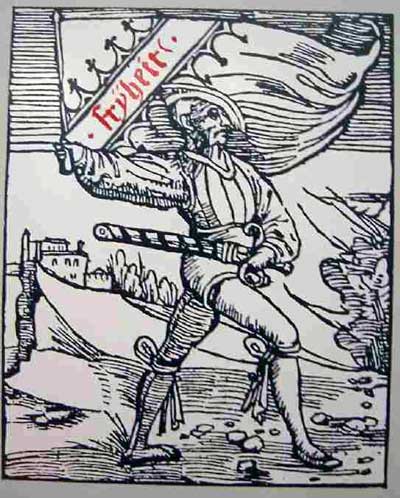
    The peasants had economic grievances, to be sure, but they also drew inspiration from the message of freedom, or “Fryheit” in German, being preached by theologian Martin Luther, who had recently launched the Protestant Reformation.

    Luther’s rejection of the peasants’ cause, however, would help lead to their crushing defeat.

    I am a scholar of the Reformation, and I included the peasants’ list of demands in my book on the debates of the era. The question of the legitimacy of the peasants’ uprising was one of the most consequential debates of the era.

    Luther’s message of freedom

    In 1517, eight years before the German Peasants’ War, Luther launched the Reformation with his 95 Theses. The theses reflected Luther’s belief that the pope and the Catholic Church were preying on the poor by selling them indulgences, taking their money for a false promise that their sins would be forgiven.

    Luther taught instead that God freely forgives the sins of believers. In one of his most famous early treatises, “The Freedom of a Christian,” written in 1520, Luther argued that because they are saved or “justified” by faith alone, Christians are entirely free from the need to do works to merit salvation. This included fasting, going on pilgrimages and buying indulgences.

    Luther’s attacks on the Catholic Church, clergy and monks quickly grew more vehement. He and his allies lambasted them for fleecing the peasants and the poor through usury, a practice of lending money at high rates of interest. Since the Bible provided no support for such practices, they argued, the poor should be free of them.

    The Twelve Articles

    In her 2025 book “Summer of Fire and Blood,” Reformation scholar Lyndal Roper argues that the religious element of the peasants’ war was central. The German peasants were among the first to try to unlock the revolutionary potential of Reformation teachings to fight social and economic injustice.

    The peasants’ efforts to do so can be seen in the most important statement of their demands: The Twelve Articles. The articles are rooted in Reformation ideas and demanded, among other things, each village’s right to elect its own pastor and to be exempt from payments and duties not found in the Bible.

    A pamphlet that peasants distributed with their Twelve Articles in 1525.
    Otto Henne am Rhyn: Cultural History of the German People, via Wikimedia Commons

    Most important was the message of freedom in the third article: “Considering that Christ has delivered and redeemed us all, without exception … it is consistent with Scripture that we should be free.” It was a cry for equality based on Christ’s redemption of all, rich and poor alike.

    The Twelve Articles were hugely successful, going through 25 printings in just two months. Since the vast majority of peasants were illiterate, this was an astounding number.

    For the lower classes, the Reformation promised to break up not just the spiritual monopoly held by the Catholic Church but the entrenched feudal system that kept them oppressed. Their desire for freedom was at the same time a denunciation of serfdom.

    The peasants were willing to take up arms to secure their freedom. In winter 1524-1525, the peasants were able to capture castles and monasteries without much bloodshed. But starting in the spring of 1525, the uprising became increasingly violent. On Easter Sunday, the peasants shockingly slaughtered two dozen knights in the city of Weinsberg, Germany. A torrent of bloodshed would follow.

    Luther’s rejection of the peasants

    Although Luther may have provided the initial inspiration for the peasants, he denounced their revolt in the harshest terms. In his treatise “Admonition to Peace,” Luther complained that the peasants had made “Christian liberty an utterly carnal thing,” which “would make all men equal … and that is impossible.”

    Responding to the revolt, Luther produced a tract entitled “Against the Murdering and Robbing Hordes of Peasants.” “Let everyone who can,” he infamously wrote, “smite, slay, and stab” the rebellious peasants. The rulers did just that.

    The nobility had been slow to react to the peasants’ initial incursions, but when they finally organized their own armies, the peasants didn’t stand a chance. On the battlefield, the nobles’ cavalry and superior artillery brutally cut down the rebels. Many who escaped the battlefield were hunted down and executed.

    The exact number of those killed are not known, but estimates place the number at around 100,000. As Roper notes, “this was slaughter on a vast scale.”

    Consequences for the Reformation

    English historian A. G. Dickens famously described the Reformation as an “urban event”, meaning that the movement’s important developments took place in cities. The German Peasants’ War shows the idea to be wrong.

    In its first years, the Reformation galvanized the hopes and dreams of Germans in both town and country. To peasants and townsfolk, it seemed to promise the chance for a complete reordering of an unjust society.

    Luther’s rejection of the peasants had important long-term consequences. His decision to side with the princes transformed the Reformation from a grassroots movement into an act of state. Everywhere the Protestant reformers went, they sought to work with the proper authorities. The close cooperation of Christian leaders and secular authorities would last for centuries.

    For their part, the European peasantry grew wary of the Christian leaders who seemed to have abandoned them. Social uprisings over the next centuries lost the religious character of the 1525 conflict and would climax in the decidedly secular French Revolution.

    Michael Bruening does not work for, consult, own shares in or receive funding from any company or organization that would benefit from this article, and has disclosed no relevant affiliations beyond their academic appointment.

    ref. 500 years ago, German peasants revolted – but their faith that the Protestant Reformation stood for freedom was dashed by Martin Luther and the nobility – https://theconversation.com/500-years-ago-german-peasants-revolted-but-their-faith-that-the-protestant-reformation-stood-for-freedom-was-dashed-by-martin-luther-and-the-nobility-246378

    MIL OSI – Global Reports

  • MIL-OSI Global: Butchers, bakers, candlestick-makers − and prostitutes: The women working behind the scenes in papal Avignon

    Source: The Conversation – USA – By Joelle Rollo-Koster, Professor of Medieval History, University of Rhode Island

    The papal palace in Avignon, where the pope’s court was based for much of the 14th century. Jean-Marc Rosier from http://www.rosier.pro/Wikimedia Commons, CC BY-SA

    In the medieval church, women’s roles were limited – usually some form of enclosure and celibacy, such as becoming an anchoress walled up alone for life, or a nun in a classic convent. On the other extreme were a few dramatic examples of women who made history for the church while flying in the face of gender norms: heroes such as Joan of Arc.

    The full truth, though, is more complicated. Medieval women were there all along, even in priests’ own houses. In her book “The Manly Priest,” historian Jennifer Thibodeaux reminds us that while celibacy was always the church’s ideal, it was not truly enforced until later in the Middle Ages. At least until the 11th century, some priests had wives and children who were not considered illegitimate. Even after the 14th-century Black Death, clerical households with wives and children thrived in Italy.

    As the church’s notions of illicit sex and illegitimacy hardened, however, its attitudes toward women did, too. Medieval scholars – all men – defined women’s temperament in negative terms: Women were libidinous, frivolous, unfaithful, capricious, unpredictable and easily tempted. They required constant surveillance and were kept away from clerics, at least in theory. They certainly could not hold overt positions in the pope’s court unless they were his mother or sister.

    Still, another reality emerges. The church may not have seen women as equals, but nevertheless, their work was key to the workings and finances of the papal court and its surroundings. The fact is made obvious in the archives by simply following the money. It was hardly glamorous work but necessary for the functioning of the papal court.

    A page from a 15th-century edition of ‘The Decameron’ shows a laundress working on the beach.
    Bibliothèque de l’Arsenal via Wikimedia Commons

    Vatican payroll

    The Vatican Archives’ account registers make it possible to trace who was paid and for what at the medieval papal court in Avignon, where the papacy was based for most of the 14th century. Amid the tedious task of deciphering various medieval shorthand systems, which organize expenses into categories such as “extraordinary wages,” “liturgical ornaments,” “war expenses” or “wax account,” I encountered surprises: Women appear in the lists of salaried employees at the medieval papal court.

    Furthermore, they were involved in tasks that “touched” the leader of the church. Even a pope’s clothes need making, mending and washing. Women crafted an ornate style highly appreciated by the pontiffs – glorifying them with pure white linen and gold embroidery. The Vatican Apostolic Archives’ Introitus and Exitus, medieval financial records, provide substantial evidence that women made sacerdotal ornaments and garments.

    Between 1364-1374, the registers recorded the pope’s launderesses – women otherwise lost to history. Among them were Katherine, the wife of one Guillaume Bertrand; Bertrande of St. Spirit, who washed all the papal linens upon his election; and Alasacie de la Meynia, the wife of Peter Mathei, who did the pope’s laundry for the Christmas festivities of 1373 and is mentioned again in 1375.

    These women were all wives of officers at the papal court. Records identified them by their full name, which was not the case for everyone on the pope’s payroll. This is important: The records gave them real presence, unlike most female laborers.

    A woman doing laundry appears in the Codices Palatini germanici, a German medieval manuscript.
    Heidelberg University Library

    Later records were less clear. Between the 1380s and 1410s, liturgical garments were made and washed by various women, including the unnamed wife of Peter Bertrand, a doctor of law; Agnes, wife of Master Francis Ribalta, a physician of the pope; another Alasacie, wife of carpenter John Beulayga; and the unnamed wife of the pope’s head cook, Guido de Vallenbrugenti – alias Brucho.

    Only one woman, Marie Quigi Fernandi Sanci de Turre, appears without a male relative. As time progressed, women’s names were not systematically recorded.

    Most of these later women, too, were married to curial officers who maintained rank at court by working in trade, medicine or the military. Women were never paid directly; their husbands collected their salaries. Still, this was not “unseen” labor but a salaried occupation, explicitly recorded.

    A 15th-century painting of the papal palace in Avignon, from the artist workshop of Maître de Boucicaut.
    Bibliothèque Nationale via Wikimedia Commons

    Working day – and night

    Many other women immigrated to work in Avignon. According to a partial survey of the city’s heads of households in 1371, about 15% were women. Most had traveled far and wide – from elsewhere in present-day France, as well as Germany and Italy – to reach the papal court and a chance at employment.

    Of the total female heads of household, 20% declared an occupation. The range of these women’s trades is staggering. There were fruit-sellers, tailoresses, tavern-keepers, butchers, candlemakers, carpenters and stonecutters. Women in Avignon worked as fish-sellers, goldsmiths, glove-makers, pastry-bakers, spice merchants and chicken-sellers. They were sword-makers, furriers, booksellers, bread-resellers and bath-keepers.

    An illustration from ‘Theatrum sanitatis,’ a 13th-century Latin manuscript by Giovannino de Grassi.
    De Agostini Picture Library/Getty Images

    Bathhouses, the “stews,” were often brothels. Prostitution was considered a legal occupation in Avignon and controlled by the church. Marguerite de Porcelude, known as “the Huntress,” paid an annual tax to the diocese for her lodging. Several prostitutes rented tenements from the convent of St. Catherine, and Marguerite Busaffi, daughter of a prominent banker, owned a brothel in the city.

    In 1337, the marshal of the Roman court – the highest secular judicial officer – taxed prostitutes and procurers two sols per week. Pope Innocent VI, scandalized by the practice, annulled it in 1358.

    Still, because of the general taint associated with the sex trade, the church attempted to reform prostitutes and convert them into nuns. The Avignon popes locked them up in a special convent, the Repenties, set up far from the center of town.

    A brothel scene illustrated by Maïtre François in a 15th-century edition of St. Augustine’s book ‘City of God.’
    National Library of the Netherlands via Wikimedia Commons

    Eventually, the establishment became a form of prison for “unruly” women – those who were pregnant out of wedlock. But for some hundred years, groups of ladies of the night took vows and lived as nuns there, controlling the affairs of their own convent with an iron fist.

    In the 1370s, Pope Gregory XI offered the nuns and their donors a plenary indulgence, a forgiveness of sins. They followed a rule emphasizing that regardless of their pasts, abstinence and continence could make them spiritually “chaste.”

    The ladies of the convent left detailed records of the properties they acquired. In 1384, its leaders petitioned the papal treasury, demanding arrears they were owed from a priest’s donation – and received what was due. Few medieval women had the chutzpah to petition a court for past dues, much less the pope’s. The Repenties did.

    Joelle Rollo-Koster does not work for, consult, own shares in or receive funding from any company or organization that would benefit from this article, and has disclosed no relevant affiliations beyond their academic appointment.

    ref. Butchers, bakers, candlestick-makers − and prostitutes: The women working behind the scenes in papal Avignon – https://theconversation.com/butchers-bakers-candlestick-makers-and-prostitutes-the-women-working-behind-the-scenes-in-papal-avignon-249345

    MIL OSI – Global Reports

  • MIL-OSI United Kingdom: Prime Minister’s Oral Statement to the House of Commons: 25 February 2025

    Source: United Kingdom – Government Statements

    Oral statement to Parliament

    Prime Minister’s Oral Statement to the House of Commons: 25 February 2025

    The Prime Minister’s Oral Statement to the House of Commons.

    Mr. Speaker, three years since Russia launched its vile assault on Ukraine, I would like to address the international situation and the implications for Britain’s national security. 

    Mr. Speaker, in my first week as Prime Minister, I travelled to the NATO summit in Washington with a simple message. 

    That NATO and our allies could trust this Government would fulfil Britain and indeed the Labour Party’s historic role to put our collective security first. 

    I spoke of my great pride, Mr Speaker, to lead the party that was a founding member of NATO, the inheritor of the legacy of Clement Attlee and Ernest Bevin – who not only stood behind Winston Churchill in wartime but ‘won the peace’ by establishing the great post-war order here and abroad. 

    Mr. Speaker, it is a proud legacy but in a world like ours it is also a heavy one. Because the historical load we must carry to fulfil our duty is not as light as it once was. 

    We must bend our backs across this House because these times demand a united Britain, and we must deploy all of our resources to achieve security. 

    Mr. Speaker, as a young man, I vividly remember the Berlin Wall coming down. It felt as if we were casting off the shackles of history, continent united by freedom and democracy. If you had told me then, that in my lifetime we would see Russian tanks rolling into European cities again I would not have believed you. 

    Yet here we are, in a world where everything has changed. Because three years ago that is exactly what happened. 

    Britain can be proud of our response. British families opened their doors to fleeing Ukrainian citizens, the ‘yellow and light blue’ fluttering on town halls and churches, the length and breadth of this country.

    And the party opposite, in Government was robust in our response. I supported that in opposition; I applaud them for it now.

    And we have built on that, bringing our support for Ukraine to a record level this year. 

    Mr. Speaker, we should not pretend that any of this has been easy. 

    Working people have already felt the cost of Russian actions through rising prices and bills.  

    Nonetheless, one of the great lessons of our history is that instability in Europe will always wash up on our shores, and that tyrants like Putin only respond to strength. 

    Russia is a menace in our waters, in our airspace and on our streets. They have launched cyber-attacks on our NHS – only seven years ago, a chemical weapons attack on the streets of Salisbury. 

    We must stand by Ukraine – because if we do not achieve a lasting peace, then the economic instability, the threats to our security, they will only grow. 

    And so, as the nature of that conflict changes, as it has in recent weeks, it brings our response into sharper focus. 

    A new era that we must meet, as we have so often in the past, together – and with strength. 

    Mr. Speaker, the fundamentals of British strategy are unchanged. 

    I know that the current moment is volatile, but there is still no good reason why they cannot endure.  

    So let me spell out to the House exactly how we will renew them for these times. 

    First, NATO is the bedrock of our security – and will remain so. 

    It has brought peace for 75 years. It is as important today as the day on which it was founded.  

    Putin thought he would weaken NATO; he has achieved the exact opposite. 

    And it remains the organisation which receives the vast bulk of our defence effort, in every domain, and that must continue.  

    Second, we must reject any false choice between our allies, between one side of the Atlantic or the other. That is against our history – country and party – because it is against our fundamental national interest. 

    The US is our most important bilateral alliance. It straddles everything from nuclear technology, to NATO, to Five Eyes, AUKUS and beyond.

    It has survived countless external challenges in the past. We’ve fought wars together; we’re the closest partners in trade, growth and security.

    So this week when I meet President Trump I will be clear. I want this relationship to go from strength to strength. 

    But Mr. Speaker, strength in this world also depends on a new alliance with Europe. 

    As I said in Paris last week, our commitment to European defence and security is unwavering. But now is the time to deepen it. 

    So we will find new ways to work together on our collective interests and threats, protecting our borders, bringing our companies together, seeking out new opportunities for growth. 

    Third, Mr Speaker, we seek peace not conflict, and we believe in the power of diplomacy to deliver that end. 

    That, of course, is most pressing in Ukraine. Nobody in this House or this country wants the bloodshed to continue – nobody.

    And Mr. Speaker, I have seen the devastation in Ukraine first-hand. 

    What you see in places like Bucha – that never leaves you. 

    But for peace to endure in Ukraine and beyond, we need deterrence.  

    I know that this House will endorse the principle of winning peace through strength. 

    So we will continue to stand behind the people of Ukraine. We must ensure they negotiate their future and we will continue to put them in the strongest position for a lasting peace. 

    Fourth, Mr. Speaker, we must change our national security posture. 

    Because a generational challenge requires a generational response. 

    That will demand some extremely difficult and painful choices. 

    And through those choices, as hard as they are, we must also seek unity.

    A whole society effort that will reach into the lives, the industries and the homes of the British people. 

    I started this statement by recalling the era of Attlee and Bevin, and, of course, this year we will mark many anniversaries of that greatest generation. 

    We must find courage in our history. Courage in who we are as a nation because courage is what our own era now demands of us. 

    So, starting today, I can announce this Government will begin the biggest sustained increase in defence spending since the end of the Cold War. 

    We will deliver our commitment to spend 2.5% of GDP on defence but we will bring it forward so that we reach that level in 2027. 

    And we will maintain that for the rest of this Parliament.

    Let me spell that out, Mr Speaker. That means spending £13.4 billion more on defence every year from 2027. 

    But Mr. Speaker, we also face enemies that are sophisticated in cyber-attacks, sabotage, even assassination.

    And so our intelligence and security services are an increasingly vital part of protecting both us and our allies. 

    So on top of the funding of 2.5% that I have just announced, going forward, we will recognise the incredible contribution of our intelligence and security services to the defence of the nation, which means, taken together, we will be spending 2.6% on defence by 2027.

    But Mr. Speaker, we must go further still. 

    I have long argued that in the face of ongoing, generational challenges, all European allies must step up and do more for our own defence. 

    So, subject to economic and fiscal conditions, and aligned with our strategic and operational needs, we will also set a clear ambition for Defence spending to rise to 3% of GDP in the next Parliament. 

    Mr Speaker, I want to be very clear, the nature of warfare has changed – significantly. That is clear from the battlefield in Ukraine, and so we must modernise and reform our capabilities as we invest. 

    I equally want to be very clear that like any other investment we make we must seek value for money.

    And that’s why we’re putting in place a new Defence Reform and Efficiency Plan, jointly led by my Right Honourable Friends the Chancellor and the Defence Secretary.

    This investment means that the UK will strengthen its position, as a leader in NATO and in the collective defence of our continent, and we should welcome that role. 

    It is good for our national security. It is also good for the defining mission of this government to restore growth to our economy.  And we should be optimistic of what it can deliver in those terms. 

    But Mr. Speaker, in the short-term, it can only be funded through hard choices. 

    And in this case, that means we will cut our spending on development assistance, moving from 0.5% of GNI today to 0.3% in 2027 fully funding our increased investment in Defence.  

    I want to be clear to the House, that is not an announcement I am happy to make.  

    I am proud of our pioneering record on overseas development, and we will continue to play a key humanitarian role in Sudan, in Ukraine and in Gaza, tackling climate change, supporting multinational efforts on global health and challenges like vaccination.  

    In recent years the development budget was redirected towards asylum backlogs, paying for hotels. So, as we are clearing that backlog at a record pace there are efficiencies that will reduce the need to cut spending on our overseas programmes. 

    But nonetheless, it remains a cut – and I will not pretend otherwise.

    We will do everything we can to return to a world where that is not the case and rebuild our capacity on development.

    But at times like this, the defence and security of the British people must always come first. That is the number one priority of this Government.  

    But Mr. Speaker, it is not just about spending. Our whole approach to national security must now change. 

    We will have to ask British industry, British universities, British businesses, and the British people to play a bigger part; use this to renew the social contract of our nation, the rights and responsibilities that we owe one another.  

    The first test of our defence policy is, of course, whether it keeps our country safe. But the second should be whether it improves the conditions of the British people, does it help provide the economic security that working people need.

    Because ultimately, as Attlee and Bevin knew, that is fundamental to national security as well. 

    We will use this investment as an opportunity.

    We will translate defence spending into British growth, British jobs, British skills, British innovation; we will use the full powers of the Procurement Act to rebuild our industrial base. 

    And, Mr. Speaker, as the Strategic Defence Review is well underway and across Government we are conducting a number of other reviews relevant to national security, it is obvious that these reviews must pull together. 

    So before the NATO summit in June, we will publish a single National Security Strategy and we will bring it to this House. 

    Because Mr. Speaker, as I said earlier, that is how we must meet the threats of our age – together and with strength.  

    A new approach to defence. A revival of our industrial base. A deepening of our alliances. 

    The instruments of our national power brought together, creating opportunity, assuring our allies, delivering security for our country. 

    Mr. Speaker, at moments like these in our past, Britain has stood up to be counted. It has come together, and it has demonstrated strength.  

    That is what the security of our country needs now, and it is what this Government will deliver. 

    And I commend this statement to the House.

    Updates to this page

    Published 25 February 2025

    MIL OSI United Kingdom

  • MIL-OSI United Kingdom: Seasonal farm workers deserve proper protections

    Source: Scottish Greens

    Migrant workers are key to our farming industries – they must be treated as such.

    The Scottish Greens have welcomed an extension of the seasonal worker scheme for farmers, but have urged the UK Government to review their ambitions to taper it off too soon.

    Rural affairs spokesperson Ariane Burgess MSP is concerned that what is being proposed could have a lasting negative effect on Scotland’s agriculture industry that relies heavily on migrant workers annually. 

    Ms Burgess said:

    “It will be a sigh of relief for farmers knowing they will have workers to harvest their crops, fruit and veg. But they should not have been in this position in the first place, it is one of the many destructive legacies of Brexit on our agriculture and economy.

    “I have serious concerns about some of the government’s goals for the scheme, including lowering the number of visas granted, and its aim to replace workers with technology like robots for harvesting. 

    “While machines are continuing to get smarter, the act of picking strawberries and raspberries grown here in Scotland is a gentle handed one. 

    “Lowering visa numbers could create further problems and dangerous working situations for those who are working on our farms. 

    “While seasonal worker visas are necessary for farming here in Scotland, there are very real risks of exploitation and modern slavery, and there must be more protections offered to avoid workers being subjected to this.

    “One solution we would support is to introduce a Scottish visa as an alternative. This would be a fairer way to give migrant workers more rights on our own terms and to keep our rural and agricultural sectors thriving, without exploitative practice happening below the radar.”

    MIL OSI United Kingdom

  • MIL-OSI United Kingdom: Starmer slashes international aid budget in Trump charm offensive

    Source: Scottish Greens

    The Scottish Greens stand for bairns not bombs.

    Labour Prime Minister Keir Starmer has announced that the UK will increase military spending, with funding coming from a brutal cut to international aid.

    Scottish Greens External Affairs spokesperson Patrick Harvie MSP said:

    “Keir Starmer plans to withhold life-saving support from some of the most marginalised people and give it to some of the world’s wealthiest arms companies. It is utterly shameful and it seems inevitable that people will die as a result.

    “There is a strong case for Europe taking more responsibility for its own security instead of continuing to cooperate with a far-right US Government. But just like other areas of vital public services, that should be funded by fair taxation on the wealthy, not by sacrificing the lives of the poorest.

    “This is a disgraceful decision, and it sends a very worrying signal about how easily Keir Starmer will roll over and what position he will take when Donald Trump puts pressure on his government. 

    “He should be standing up to this far right White House, not kowtowing to them and making some of the world’s most vulnerable people pay the price.”

    MIL OSI United Kingdom

  • MIL-OSI Russia: Marat Khusnullin: Regions will be able to change the territorial planning approved by federal authorities

    Translartion. Region: Russians Fedetion –

    Source: Government of the Russian Federation – An important disclaimer is at the bottom of this article.

    Prime Minister Mikhail Mishustin signed a resolution that grants regions the authority to change and cancel territorial planning documentation (TPD) that was previously approved by federal executive bodies for holding major international events.

    These include the 2020 UEFA European Football Championship, the 2018 FIFA World Cup, the 2017 FIFA Confederations Cup, the 2014 Olympic and Paralympic Winter Games and the 2012 Asia-Pacific Economic Cooperation Forum.

    “The territory planning documentation determines the development of one or several blocks. In essence, it solves strategic problems – what, where and when will be built there. Often, the territory planning that the federal authorities determined for holding international events several years ago no longer meets the current needs of settlements and their residents. Previously, only local governments could make changes to such documentation, but their powers do not extend to objects of regional significance. Now the regions will be able to independently make decisions on the development of such territories taking into account current tasks and priorities, which, of course, will contribute to the most effective creation of comfortable living conditions for people. In addition, the adopted changes will significantly reduce the time it takes to prepare the DPT for the construction of objects of regional significance,” said Deputy Prime Minister Marat Khusnullin.

    This measure will affect Moscow, St. Petersburg, Krasnodar and Primorsky Krais, Kaliningrad, Nizhny Novgorod, Volgograd, Rostov, Sverdlovsk, Samara regions, and the republics of Mordovia and Tatarstan.

    Please note: This information is raw content directly from the source of the information. It is exactly what the source states and does not reflect the position of MIL-OSI or its clients.

    MIL OSI Russia News

  • MIL-OSI Russia: Students of SPbGASU were told about financial instruments of the money market

    Translartion. Region: Russians Fedetion –

    Source: Saint Petersburg State University of Architecture and Civil Engineering – Saint Petersburg State University of Architecture and Civil Engineering –

    On February 24, third-year students of the Faculty of Economics and Management of SPbGASU listened to a lecture on “Financial Instruments of the Money Market”. The event took place in the office of SRO A “Association of Builders of St. Petersburg”.

    First Deputy General Director Boris Lysich introduced the speakers – employees of Uralsib Bank: Director of Development and Mentoring from the Premium Bank Department Milana Semikopenko and financial consultant Dmitry Koveshnikov. Boris Ivanovich informed the students about the opportunity to do an internship at the bank, as well as to choose a topic for their diploma work that is close to the banking sector.

    During the lecture, students learned what shares are for, what denomination Russian bonds have, whether it is worth buying yuan, and much more.

    “A very useful lecture! We had heard about financial instruments, but we were not familiar with them in such detail,” shared her opinion Daria Pilyugina.

    “I liked everything. Complex things were explained in simple language,” said Sergei Kotov.

    As Associate Professor of the Department of Management in Construction Alexandra Prikhodko explained, the lecture was held within the framework of the topic “The Economic Essence of Benchmarking” in the course “Benchmarking in Construction”.

    According to Alexandra Nikolaevna, the importance of such events is in immersing students in professional topics and the opportunity to personally communicate with professionals representing real market segments: “Working to improve students’ financial literacy is an important task both in general and in the context of each discipline related to management practices. A modern manager must have complete knowledge, including in the field of financial instruments. And the experience of leading construction companies, their ups and downs, is invaluable material that must be learned from and conclusions drawn. This will certainly help our guys in their professional careers. In addition, the example of young and successful specialists who come to the SRO site to meet with students, such as our guests today, inspires and serves as an excellent example.”

    Please note: This information is raw content directly from the source of the information. It is exactly what the source states and does not reflect the position of MIL-OSI or its clients.

    MIL OSI Russia News

  • MIL-OSI Russia: The State University of Management will host an acting master class from the star of the TV series “Ranetki”

    Translartion. Region: Russians Fedetion –

    Source: State University of Management – Official website of the State –

    Yes, that’s right! Actress from the cult TV series “Ranetki” Margarita Ivanova will hold a master class this Friday at the Student Theater of the State University of Management, where she will share the secrets of artistry on stage and in front of the camera, and give valuable advice to those who are just starting their path to success.

    Margarita Ivanova played the role of drummer Tonya Petrova in Ranetki. The actress’s filmography also includes the series: Real Boys, Son of the Father of Nations, The Fool Herself and others. In the theater, she played Juliet in the famous play by Shakespeare, as well as in productions by Chekhov, Lermontov, Moliere, Vampilov and other famous playwrights. Margarita is the author and performer of her own songs. She was the soloist of the group Grani Ruma. She has published three books of her own poetry, two of which are for children. She voices children’s fairy tales.

    When: February 28 Time: 19:00 Place: A-124

    The master class is open to everyone who wants to feel like a real actor, immerse themselves in the atmosphere of art and learn something new.

    Subscribe to the tg channel “Our State University” Announcement date: 02/25/2025

    Please note: This information is raw content directly from the source of the information. It is exactly what the source states and does not reflect the position of MIL-OSI or its clients.

    MIL OSI Russia News

  • MIL-OSI: 21Shares AG (the “Company”) – Official Notice regarding updates to the Final Terms and Information on its Exchange Traded Products listed on London Stock Exchange (“LSE”)

    Source: GlobeNewswire (MIL-OSI)

    ETP: 21Shares Bitcoin ETP

    ISIN: CH0454664001

    TIDM: ABTC / BTCU

    ETP: 21Shares Ethereum Staking ETP

    ISIN: CH0454664027

    TIDM: AETH / ETHU

    ETP: 21Shares Bitcoin Core ETP

    ISIN: CH1199067674

    TIDM: CBTC / CBTU 

    ETP: 21Shares Ethereum Core Staking ETP

    ISIN: CH1209763130

    TIDM: ETHC/ CETU

    (hereinafter referred to as the “Products”)

    Name, registered office and address of the Company: 21Shares AG is a stock corporation under the laws of Switzerland. It has its registered office and address at Pelikanstrasse 37, 8001 Zurich.

    1. Technical corrections to earlier releases as for the Tranches

    The Company has updated its Final Terms, specifically concerning sections “(iii) Tranche” and “(v) Aggregate Number of Products Represented by This Tranche.”

    Since 24 May 2024, the Company has been considering all shares of the Products issued within a single tranche and has aggregated the number of shares represented by each Final Terms as the total number of shares in issue. This methodology has now been amended as follows:

    (a) The Company will implement tranche numbers in all Final Terms moving forward. As a result, the previous approach of designating all issuances as “Tranche Number 1” will be discontinued.

    For the affected Products, the following tranches and corresponding Final Terms have been issued since their inception and as of the dates specified below: 

    ETP: 21Shares Bitcoin ETP

    ISIN: CH0454664001

    Date: 15 January 2025

    Number of Tranches: 39

    ETP: 21Shares Ethereum Staking ETP

    ISIN: CH0454664027

    Date: 14 January 2025

    Number of Tranches: 37

    ETP: 21Shares Bitcoin Core ETP

    ISIN: CH1199067674

    Date: 15 January 2025

    Number of Tranches: 40

    ETP: 21Shares Ethereum Core Staking ETP

    ISIN: CH1209763130

    Date: 9 December 2024

    Number of Tranches: 20

    (b) Additionally, the Company will no longer present the total number of outstanding shares of the Products under section “(v) Aggregate Number of Products Represented by This Tranche” of its Final Terms. Instead, this section will now display only the additional shares issued for the  Products corresponding to the respective tranche.

    The updates to the Final Terms regarding tranche numbers have now been implemented and will be reflected in the Company’s Final Terms issued from February 26, 2025 onwards.

    1. Information on the total amount of outstanding shares for the Products

    The Company further informs the public of the total number of outstanding shares for its Products as of the dates specified below: 

    ETP: 21Shares Bitcoin ETP

    ISIN: CH0454664001

    Date: 15 January 2025

    Number of shares outstanding: 26’152’500

    ETP: 21Shares Ethereum Staking ETP

    ISIN: CH0454664027

    Date: 14 January 2025

    Number of shares outstanding: 12’325’000

    ETP: 21Shares Bitcoin Core ETP

    ISIN: CH1199067674

    Date: 15 January 2025

    Number of shares outstanding: 13’155’000

    ETP: 21Shares Ethereum Core Staking ETP

    ISIN: CH1209763130

    Date: 9 December 2024

    Number of shares outstanding: 2’510’000

    Contact Details:

    21Shares AG, attn. Mr. Eric Baumgartner, Pelikanstrasse 37, 8001 Zurich, Switzerland, email: legal@21.co 

    Further Information: 

    For further information, please refer to the Programme and UK Base Prospectus dated May 22, 2024, and the respective Final Terms. This official notice neither constitutes a prospectus nor advertisement within the meaning of the Swiss Financial Services Act. Copies of the prospectus and any supplements thereto, if any, as well as copies of all transaction documents are available free of charge at 21Shares AG, Zurich (email: etp@21shares.com).

    The MIL Network

  • MIL-OSI: 20-Year Industry Veteran, Most Recently with Affinity Home Lending, Heads to Rate in Atlanta

    Source: GlobeNewswire (MIL-OSI)

    CHICAGO, Feb. 25, 2025 (GLOBE NEWSWIRE) — Rate, a leader in fintech mortgage solutions, announced today that top mortgage originator Darrell Beaudoin has joined the company in Atlanta. With over two decades of experience, most recently with Affinity Home Lending, Darrell is widely recognized in the competitive Atlanta mortgage market for delivering superior service to homebuyers and referral partners.

    “As a 20+ year mortgage veteran, I’ve always known Guaranteed Rate as a first-class operation,” said Darrell Beaudoin. “I also knew Rate’s ability to scale my business would be unmatched. The reputation and scale were my main reasons for making the jump, but what truly impressed me was the next-level technology and incredible people. That combination will 10X my business while delivering an unparalleled client experience.”

    Darrell’s decision to join Rate underscores the company’s ability to draw top industry talent by offering a powerful platform designed to accelerate business growth – and its commitment to serving these leaders in the marketplace as they serve their customers. Rate’s cutting-edge technology, unparalleled support, and national scale enable loan originators to expand their reach and elevate client experiences.

    “We are happy to welcome Darrell to the Rate Family,” said Victor Ciardelli, CEO of Rate. “Darrell is renowned in the Atlanta community for delivering exceptional experiences to his customers and referral client partners. With Darrell’s extensive industry experience and the capabilities of the Rate platform, we are confident that this partnership will only further enhance his remarkable and successful career.”

    Darrell earned his MBA in Finance from Georgia Tech and has been an active partner with the National Association of Real Estate Brokers (NAREB), demonstrating his commitment to advancing homeownership opportunities in diverse communities.

    For more information, visit Rate.com.

    About Rate

    Rate Companies is a leader in mortgage lending and digital financial services. Headquartered in Chicago, Rate is the #2 retail mortgage lender in the U.S., with over 850 branches across all 50 states and Washington, D.C. Since its launch in 2000, Rate has helped more than 2 million homeowners with home purchase loans and refinances. The company has cemented itself as an industry leader by introducing innovative technology, offering low rates, and delivering unparalleled customer service.

    Honors and awards include:
    Best Mortgage Lender for First-Time Homebuyers by NerdWallet (2023)
    HousingWire’s Tech100 award for FlashClose℠ (2020), MyAccount (2022), and Language Access Program (2023)
    #2 ranking in Scotsman Guide’s 2022 list of Top Retail Mortgage Lenders
    Most Scotsman Guide Top Originators for 11 consecutive years
    Chicago Agent Magazine’s Lender of the Year for seven consecutive years
    Chicago Tribune’s Top Workplaces list for seven straight years

    Visit rate.com for more information.

    Press Contact

    press@rate.com

    A photo accompanying this announcement is available at https://www.globenewswire.com/NewsRoom/AttachmentNg/c6414d69-dc45-4eaa-bfe2-4604edb5acc1

    The MIL Network

  • MIL-OSI: Data Storage Corporation’s CloudFirst Completes Major Cloud Upgrade for Leading Food Distributor

    Source: GlobeNewswire (MIL-OSI)

    MELVILLE, N.Y., Feb. 25, 2025 (GLOBE NEWSWIRE) — Data Storage Corporation (Nasdaq: DTST) (“DSC” and the “Company”), a leading provider of multi-cloud hosting, managed cloud services, disaster recovery, cybersecurity, and IT automation, that integrates with AWS, Microsoft Azure, and Google Cloud, today announced that its CloudFirst subsidiary has successfully completed a major on-premise infrastructure upgrade for a leading food distributor and long-time enterprise customer, reinforcing its position as a trusted partner for complex IT transformations.

    The migration involved moving the customer to the latest processors with significantly higher performance, reliability, and scalability to support the demands of enterprise-scale operations. This upgrade delivers scalability and efficiency while ensuring seamless integration with leading cloud providers, including AWS, Microsoft Azure, and Google Cloud to enhance and optimize their multi-cloud environment.

    The project was very complex due to the customer’s older OS, reliance on older processors, and they faced growing operational challenges, including system performance limitations, capacity constraints, and increasing IT costs. CloudFirst conducted a comprehensive assessment and determined that moving them to its most advanced processing environment would eliminate bottlenecks, provide the scalability needed for future growth, and enhance backup and disaster recovery capabilities.

    By leveraging its deep experience with IBM power systems and working closely with the customer’s IT team, CloudFirst executed the transition with minimal disruption, ensuring continuous business operations. The upgrade also enables the customer to leverage CloudFirst’s deep integration with hyperscale cloud providers, allowing for greater flexibility, workload optimization, and long-term cost efficiencies.

    Chuck Piluso, CEO of Data Storage Corporation, commented, “CloudFirst has a precision approach and commitment to excellence allowing them to continue to earn the trust of enterprise customers who are navigating complex IT. This project highlights our expertise in delivering strategic solutions that seamlessly integrate with hyperscale environments, ensuring reliability, security, and scalability.”

    About Data Storage Corporation

    Data Storage Corporation (Nasdaq: DTST) through its subsidiaries is a leading provider of multi-cloud hosting, fully managed cloud services, disaster recovery, cybersecurity, IT automation, and voice & data solutions. Recognizing that data migration is a critical step in transitioning from on-premises systems to the cloud, DTST provides comprehensive migration services to ensure seamless, secure, and efficient data transfer, minimizing downtime and optimizing performance.

    Through its CloudFirst platform, built on IBM Power Cloud infrastructure, DTST delivers high-performance, scalable, and secure cloud solutions with interoperability across its infrastructure partners, AWS, Microsoft Azure, and Google Cloud.

    With data centers supporting cloud platform deployments across the United States, Canada, and the United Kingdom, DTST provides mission-critical cloud services to a diverse clientele, including Fortune 500 companies, government agencies, educational institutions, and healthcare organizations.

    As a leader in the multi-billion-dollar cloud hosting and business continuity market, DTST is recognized for its expertise in cloud infrastructure, IT modernization, and data migration, enabling clients to transition to the cloud with confidence and operational continuity.

    For more information, please visit www.dtst.com or follow us on X @DataStorageCorp.

    Safe Harbor Provision
    This press release contains “forward-looking statements” within the meaning of the Private Securities Litigation Reform Act of 1995, as amended, that are intended to be covered by the safe harbor created thereby. Forward-looking statements are subject to risks and uncertainties that could cause actual results, performance or achievements to differ materially from any future results, performance or achievements expressed or implied by such forward-looking statements. Statements preceded by, followed by or that otherwise include the words “believes,” “expects,” “anticipates,” “intends,” “projects,” “estimates,” “plans” and similar expressions or future or conditional verbs such as “will,” “should,” “would,” “may” and “could” are generally forward-looking in nature and not historical facts, although not all forward-looking statements include the foregoing. Although the Company believes that the expectations reflected in such forward-looking statements are reasonable, it can provide no assurance that such expectations will prove to have been correct. These forward-looking statements are based on management’s expectations and assumptions as of the date of this press release and are subject to a number of risks and uncertainties, many of which are difficult to predict that could cause actual results to differ materially from current expectations and assumptions from those set forth or implied by any forward-looking statements. Important factors that could cause actual results to differ materially from current expectations include the Company’s ability to grow its presence in Europe. These risks should not be construed as exhaustive and should be read together with the other cautionary statements included in the Company’s Annual Report on Form 10-K, subsequent Quarterly Reports on Form 10-Q and Current Reports on Form 8-K filed with the Securities and Exchange Commission. Any forward-looking statement speaks only as of the date on which it was initially made. Except as required by law, the Company assumes no obligation to update or revise any forward-looking statements, whether as a result of new information, future events, changed circumstances or otherwise.

    Contact:
    Crescendo Communications, LLC
    212-671-1020
    DTST@crescendo-ir.com

    The MIL Network

  • MIL-OSI: CoinShares announces block transaction by shareholder

    Source: GlobeNewswire (MIL-OSI)

    Tuesday, 25 February 2025 | SAINT HELIER, Jersey – CoinShares International Limited (“CoinShares” or the “Company“) (Nasdaq Stockholm Market: CS; US OTCQX: CNSRF), a global investment firm specializing in digital assets, today announced that it has agreed to enter a block transaction with a shareholder to acquire 200,000 ordinary shares in the capital of the Company.

    Subject to completion of the block transaction, the Company will repurchase from the selling shareholder a total 200,000 ordinary shares at a price per share equal to SEK 75 resulting in total consideration of SEK 15,000,000. The Company expects the block transaction to settle via cash and to complete before 28 February 2025.

    CoinShares’ decision to repurchase its shares is consistent with the Board’s stated intent regarding the buyback program and for the purposes of reducing the capital of the Company.

    The total number of shares in the Company at the date of this press release is 66,678,210. Following completion of the block transaction, the Company will hold a total of 200,000 own shares.

    About CoinShares

    CoinShares is a leading global investment company specialising in digital assets, that delivers a broad range of financial services across investment management, trading and securities to a wide array of clients that includes corporations, financial institutions and individuals. Focusing on crypto since 2013, the firm is headquartered in Jersey, with offices in France, Sweden, Switzerland, the UK and the US. CoinShares is regulated in Jersey by the Jersey Financial Services Commission, in France by the Autorité des marchés financiers, and in the US by the Securities and Exchange Commission, National Futures Association and Financial Industry Regulatory Authority. CoinShares is publicly listed on the Nasdaq Stockholm under the ticker CS and the OTCQX under the ticker CNSRF.

    For more information on CoinShares, please visit: https://coinshares.com
    Company | +44 (0)1534 513 100 | enquiries@coinshares.com
    Investor Relations | +44 (0)1534 513 100 | enquiries@coinshares.com

    This information is information that CoinShares International Limited is obliged to make public pursuant to the EU Market Abuse Regulation (596/2014). The information in this press release has been published through the agency of the contact persons set out above, at 14:00 GMT on Tuesday, 25 February 2025.

    The MIL Network

  • MIL-OSI: Fuse Vectors secures $5.2m to advance cell-free gene therapy technology, led by HCVC

    Source: GlobeNewswire (MIL-OSI)

    Copenhagen, Feb. 25, 2025 (GLOBE NEWSWIRE) — Gene therapy’s biggest obstacle isn’t science – it’s manufacturing. While the field races forward with breakthrough treatments, production remains stuck in the 1980s, relying on unpredictable cell-based methods that make therapies costly and slow to develop. Today, Fuse Vectors announces $5.2 million in pre-seed financing led by HCVC to revolutionize gene therapy development with its cell-free viral vector technology

    The funding will accelerate the development of Fuse’s technology platform and pipeline of novel gene therapies. With its breakthrough approach, Fuse Vectors aims to be the universal solution for AAV gene therapy development, delivering unmet patient needs and expanding the accessibility of gene therapy to a wider range of indications.

    Fuse Vectors founders: (L to R) Jordan Turnbull, Henrik Stage and Benjamin Blaha.

    The Fuse Vectors story began with two bioprocess scientists who saw firsthand the limitations of current drug development technologies. Despite the complexity of viral vectors, the industry had been relying on retrofitted manufacturing technologies from the 1980s and 1990s. Benjamin Blaha and Jordan Turnbull watched as these outdated methods produced therapies that were costly, slow to develop, and often low in quality. As the founders describe it, traditional methods are like “tossing LEGO bricks into a tumble dryer and hoping houses emerge.”

    Recognizing this critical gap, they asked a radical question: “What if everything about this process is wrong?” The industry’s major players lacked both the bandwidth and remit to overhaul these outdated methods, so Blaha and Turnbull took the leap – leaving their jobs to rethink viral vector development from the ground up. Their efforts led to a breakthrough: a controlled, cell-free approach that assembles viral vectors with unprecedented precision.

    “Fuse Vectors’ cell-free Fuse Technology offers significant improvements, reducing production time and costs while enhancing vector quality to meet patients’ unmet needs,” said Benjamin Blaha, co-founder of Fuse Vectors. “The enzymatic AAV capsid filling process eliminates cell-based AAV production, using efficient technologies storing components in a module library. This allows on-demand, controlled biocatalytic reactions to fill capsids and works across all serotypes.”

    Instead of relying on living cells’ unpredictable behavior, Fuse’s technology assembles viral vectors through controlled biochemical reactions. This innovative approach allows for unprecedented precision, achieving over 99% filled capsids synthesized in hours rather than weeks. Partners simply provide a gene sequence, and Fuse’s streamlined process packages it into an AAV vector – enabling faster, higher-quality development with minimal setup.

    The platform’s modular nature enables rapid optimization through multi-parallel prototyping, making it significantly more efficient than traditional methods.

    Fuse Vectors team. 

    “This investment from HCVC is a pivotal step for Fuse Vectors, bringing our pre-seed financing to 5 million EUR,” said Henrik Stage, co-founder and Executive Chair of Fuse Vectors. “We are excited to work towards our vision of making gene therapy more efficient, cost-effective, and accessible, and are grateful for the early support and financing received from BioInnovation Institute, EIFO and Innovation Fund during our ideation and start-up phase.”

    Currently in alpha testing, Fuse Vectors is collaborating with over half a dozen partners – from academic research groups to leading pharmaceutical companies. The company plans two commercialization strategies: partnering with pharmaceutical companies, biotech firms, and academic institutions to optimize drug candidates using their Fuse Technology and Optimization Engine, while also developing their own pipeline of therapeutic candidates.

    “Fuse Vectors’ approach to gene therapy has the potential to make gene therapy much more interesting for the Industry to develop as well as increase accessibility to patients,” stated Trine Bartholdy, CBO of BioInnovation Institute. “Their start-up development exemplifies BII’s commitment to empowering innovative platform technologies based on world-class scientific research to grow into successful companies capable of making meaningful impact on the future of gene therapy and human health.”

    “We are thrilled to support Fuse Vectors in their mission to revolutionize gene therapy,” said Alexis Houssou, Managing Partner of HCVC. “With their unique cell-free viral vector solution, expert founding team and strong business model, Fuse Vectors has the potential to overcome significant challenges in the field, and we believe in their ability to bring transformative treatments to patients.”

    The technology comes at a crucial time for gene therapy. With thousands of genetic diseases still lacking treatments, drug developers struggle to create safe, effective, and accessible therapies. By fundamentally reimagining how viral vectors are made, Fuse Vectors aims to unlock the full potential of gene therapy – bringing it closer to the patients who need it most.

    Ends

    Media images can be found here

    About Fuse Vectors 
    FuseVectors is a biotech start-up revolutionizing gene therapy with its cell-free viral vector technology. Traditional AAV development relies on cell-based methods, which are poorly controlled, leading to variable purity and reduced therapeutic efficacy and safety. Fuse Vectors’ cell-free technology combines component module libraries with on-demand biocatalytic AAV capsid filling processes. This eliminates cell-based production and offers significant improvements, reducing production time and costs while enhancing vector quality to meet patients unmet needs. Morespecifically, FuseTechnology offers:

    • Clinically Relevant Viral Vector Titers: Increasing titers by orders of magnitude
    • Exceptionally high capsid filling: >99% filled capsids
    • Rapid Production: Viral vectors synthesized in hours.
    • Optimization Feasibility: Rapid multi-parallel prototyping facilitates optimizing drug development across serotypes and constructs.
    • Fully scalable process: Smooth transition from research to commercial stages.

    Fuse Vectors plans to commercialize its business through a two-branched model: i) developing its own pipeline of drug candidates for selected indications, progressing these candidates into proof-of-concepts in patients and ii) leveraging the Fuse Technology and Optimization Engine through collaborations with pharma, biotech, and academia. The company aims to establish partner agreements on a gene-by-gene basis, collaborating on finding optimized drug candidates and granting licenses under Fuse IP for research, development, manufacturing, and commercialization of AAVs made with the Fuse Technology. Currently, Fuse Vectors is working on various undisclosed projects, benchmarking Fuse AAVs with the genes of interest provided by partners against traditional technologies.

    About HCVC
    HCVC is an early-stage deep tech venture capital firm that backs founders on a mission to industrialize scientific and technological progress. HCVC invests in pre-seed and seed-stage companies across Europe and the US, with offices in Paris, London, and the Bay Area. The portfolio spans transformative sectors like frontier biotech, defense, AI infrastructure, robotics, climate, and space. Learn more at https://www.hcvc.co/

    About BioInnovation Institute
    The BioInnovation Institute foundation (BII) is an international non-profit foundation supported by the Novo Nordisk Foundation. BII operates an incubator to accelerate world-class life science innovation, driving the development of new solutions by early life science start-ups for the benefit of people and society. BII offers state-of-the-art labs, vibrantofficefacilities, business development, start-up business incubation, access to high-level mentoring, and international networks, plus unique funding opportunities. Read more on https://bii.dk

    About EIFO
    TheExport & Investment Fund (EIFO) isDenmark’s sovereign fund that invests in innovative life science start-ups and specialized funds with the potential to transform and strengthen the country’s position as one of Europe’s leading health innovation hubs. Our mission is to shape the future of health by supporting breakthrough science, technologies, and companies that address the most pressing health challenges. The current life science portfolio includesmore than 40 companies spanning digital health, medical devices, and therapeutics. Learn more at www.eifo.dk/en/

    The MIL Network

  • MIL-OSI: Jade Power Announces Stock Option Grant

    Source: GlobeNewswire (MIL-OSI)

    TORONTO, Feb. 25, 2025 (GLOBE NEWSWIRE) — Jade Power Trust (“Jade Power” or the “Trust”) (TSXV – NEX:JPWR.H) announces that effective February 24, 2025, it has granted 889,194 incentive stock options (the “Options”) to directors of the Trust pursuant to the Trust’s stock option plan. The Options have an exercise price of $0.135 per share and an expiry date of February 24, 2030.

    For further information please contact:

    David Barclay
    Chief Executive Officer
    +1 954-895-7217
    david.barclay@bellsouth.net

    About Jade Power

    The Trust, through its direct and indirect subsidiaries in Canada, the Netherlands and Romania, was formed to acquire interests in renewable energy assets in Romania, other countries in Europe and abroad that can provide stable cash flow to the Trust and a suitable risk-adjusted return on investment. All material information about the Trust may be found under Jade Power’s issuer profile at www.sedarplus.ca.

    Forward-Looking Statements

    This news release contains forward-looking statements within the meaning of securities legislation in Canada and which are based on the expectations, estimates and projections of management of the parties as of the date of this news release unless otherwise stated. Forward-looking statements are generally identifiable by use of the words “expect”, “anticipate”, “continue”, “estimate”, “objective”, “ongoing”, “may”, “will”, “project”, “should”, “could”, “believe”, “plans”, “intends” or the negative of these words or other variations on these words or comparable terminology. Such forward-looking statements involve known and unknown risks, uncertainties and other factors which may cause actual results, performance or achievements to be materially different from any future results, performance or achievements expressed or implied by the forward-looking statements.

    Details of the risk factors relating to Jade Power and its business are discussed under the heading “Business Risks and Uncertainties” in the Trust’s annual Management’s Discussion & Analysis for the year ended December 31, 2023, a copy of which is available on Jade Power’s SEDAR+ profile at www.sedarplus.ca. Most of these factors are outside the control of the Trust. Investors are cautioned not to put undue reliance on forward-looking information. These statements speak only as of the date of this press release. Except as otherwise required by applicable securities statutes or regulation, Jade Power expressly disclaims any intent or obligation to update publicly forward-looking information, whether as a result of new information, future events or otherwise.

    Neither the TSXV nor its regulation services provider (as that term is defined in the policies of the TSXV) accepts responsibility for the adequacy or accuracy of this release.

    The MIL Network

  • MIL-OSI Global: Germany’s chancellor-in-waiting prioritizes ‘real’ independence from the US − but what does that mean and is it achievable?

    Source: The Conversation – USA – By Garret Martin, Senior Professorial Lecturer, Co-Director Transatlantic Policy Center, American University School of International Service

    Germany’s presumptive new chancellor, Friedrich Merz, faces challenges both at home and overseas following his conservative alliance’s election victory on Feb. 23, 2025.

    A strong showing from the hard-right Alternative for Germany (AfD) – which Merz, in line with other mainstream German parties, refuses to countenance as a coalition party as part of an unofficial “firewall” against extremism – will make forming a functioning government tricky.

    But in the moments after the election results, it was the future of the European Union and its relationship with America that was his immediate focus: “My absolute priority will be to strengthen Europe as quickly as possible so that, step by step, we can really achieve independence from the USA.”

    To understand why that is such a concern for Germany now and what “real independence” from Washington means, The Conversation U.S. turned to Garret Martin, an expert on U.S.-Europe relations at American University, for answers.

    What prompted Merz’s ‘real independence’ line?

    Presumably it was a response to a series of recent announcements and actions by the Trump administration that have shocked the German political establishment. This includes the sudden revelation that the U.S. would negotiate directly with Russia to end the war in Ukraine, but seemingly without the Europeans or Ukrainians involved. That development went down like a lead balloon in Berlin, especially considering Germany’s significant financial support of Kyiv since 2022.

    Moreover, the German establishment has also frowned at a series of recent declarations by members of the Trump administration. Vice President JD Vance’s speech at the Munich Security Conference, in which he harshly criticized Europe for allegedly undermining freedom of expression, provoked clear pushback from German leaders. Trump, for his part, hardly endeared himself to his German allies when he denounced Ukrainian President Volodymyr Zelenskyy as a “dictator.”

    And, of course, Elon Musk’s interference in the German elections – as well as his open support for the far-right Alternative for Germany – provoked a fierce response from Merz. The then-candidate promised that Musk would need to be prepared for legal consequences for his meddling.

    Elon Musk addresses, via videolink, the election campaign launch rally of the far-right Alternative for Germany on Jan. 25, 2025.
    Sean Gallup/Getty Images

    How would this ‘real independence’ be achieved?

    Defining what “real independence” means and being able to implement such a drastic change in transatlantic relations will be a tall order. If by “real independence” Merz means that Germany would no longer rely on the U.S. for its security, then that would require several major steps.

    Merz would first need to convince his likely coalition partners, the Social Democrats, that this is the right goal. After all, German governments are bound by very detailed coalition agreements. Second, Merz would need to significantly increase German defense spending. As it stands, Germany’s annual defense budget is slightly over US$90 billion, or 2% of its GDP. But a recent study by the economic think tank Bruegel suggests Berlin would need to increase its budget by $145 billion annually to defend Europe without the assistance of the U.S.

    But to achieve this, Merz will likely need to increase defense spending by such a level that it will contravene the country’s “debt brake.” This 2009 constitutional rule essentially caps the annual deficit that the government can take on. But overturning this mechanism would require a two-thirds majority in both chambers of the German Parliament. Merz’s Christian Democratic Union/Christian Social Union party won 28.6% of the vote – and even with the support of the country’s main center-left party, the Social Democrats, Merz will fall short of the parliamentary votes needed.

    Finally, “real independence” would also require convincing other European Union partners to join him down that path. Assuming that the Trump administration continues its current trajectory and further undermines NATO, the EU would have to step in to become a more prominent security actor for the continent. It might also require, as Merz hinted, that the United Kingdom and France be ready to share their nuclear weapons, since the U.S. may not be trusted anymore to defend NATO countries.

    All of these steps would cover “real independence” only in the security sphere and not touch other crucial policy areas, such as trade and energy. And that would be an equally tall order given the level of economic ties binding Germany to the U.S., as well as the looming threat of tariffs.

    What does this mean for German-US relations?

    Merz’s “real independence” statement would have been noteworthy coming from any German chancellor. But it is even more striking when one considers the fact that Merz is a committed transatlanticist who deeply admires the U.S. and counts Ronald Reagan as one of his role models.

    At 69, Merz came of age during the final years of the Cold War, when the U.S. played a key role in enabling German reunification. He worked for years for Atlantik-Brücke, a lobbying group pushing for closer transatlantic ties. And he has, by his own account, traveled more than 100 times to the U.S.

    Independence will not likely mean a complete divorce between the U.S. and Germany – the ties binding the two countries, whether economic, cultural or political, run too deep. However, we can expect that Berlin will not hesitate to take a more combative approach toward Washington when necessary, so to protect German and European interests. As Merz pointed out, it is clear that the Trump administration does “not care much about the fate of Europe.”

    What does this signal for Merz’s view of Germany’s position in the EU?

    Merz’s win will certainly lead to important shifts in Germany’s position in the EU, and could be a major boost for a union in need of leadership. His predecessor, Olaf Scholz, was hampered by a weak economy, divisions within his coalition and indecisive leadership in Europe. Moreover, poor relations with French President Emmanuel Macron also stalled the Franco-German partnership, normally a key engine of leadership in the EU.

    Merz certainly plans to take a very distinct approach toward the EU than his predecessor. His calls for “real independence” will certainly be very welcome in France, which has long called for Europe to be more responsible for its own security. As such, it opens up the possibility of far closer ties between Paris and Berlin than we saw in recent years. Moreover, Merz, with his more hawkish position toward Russia, could be counted on to provide greater support for Ukraine.

    Garret Martin receives funding from the European Union for the Transatlantic Policy Center, which he co-directs.

    ref. Germany’s chancellor-in-waiting prioritizes ‘real’ independence from the US − but what does that mean and is it achievable? – https://theconversation.com/germanys-chancellor-in-waiting-prioritizes-real-independence-from-the-us-but-what-does-that-mean-and-is-it-achievable-250708

    MIL OSI – Global Reports