Category: Europe

  • MIL-OSI United Kingdom: Community Council Interim Elections results

    Source: Scotland – Highland Council

    Issued on behalf of the Returning Officer

    Following the deadline for nominations, The Highland Council can confirm that the following community councils have received sufficient nominations and will form uncontested:  

    • Carrbridge Community Council 
    • Kilmuir and Logie Easter 
    • Portree and Braes 
    • Resolis 
    • Sinclairs Bay 
    • Tannach and District 

    Unfortunately, the following four Community Councils failed to form:

    • Bower 
    • Conon Bridge 
    • Lochalsh 
    • Smithton 

    There will another opportunity to try and form these in August 2025 when the next Notice of Election will be published.  A copy of the timetable is available here

    Further information is available on the Council’s website at www.highland.gov.uk/ccelections  

    17 Feb 2025

    MIL OSI United Kingdom

  • MIL-OSI United Kingdom: Key Milestones Reached in Inverness Castle Transformation Project

    Source: Scotland – Highland Council

    Issued by High Life Highland

    The Inverness Castle Experience has reached two key milestones: the completion of glazing on the new link building and the installation of the fully refurbished Rose Window in the South Tower Story Room. These achievements mark significant progress as the attraction prepares to open later this year.

    The contemporary link building, now wind and watertight, will house the Saltire Bistro, offering visitors a unique space to enjoy Highland hospitality. Designed by the renowned LDN Architects in collaboration with NARRO structural engineers, the structure draws inspiration from the Scottish Saltire, a proud emblem of national identity. Its elegant, interwoven roof beams, influenced by the expressed ceiling structures within the historic castle interiors, span the length of the building and sit between large glass roof lights, which bathe the space in natural light.

    The glazing, meticulously crafted and installed by specialist contractors, has been delivered to the highest standards under the supervision of Bancon Construction, the project’s main contractor.

    Adding to the sense of achievement, the stunning Rose Window, a cherished historic feature, has been fully refurbished and now takes centre stage in the South Tower Story Room. Suspended from the ceiling within a bespoke steel frame, the intricate window has been restored to showcase its original craftsmanship, creating a breathtaking focal point in the room where visitors will immerse themselves in the stories of the Highlands.

    Cllr Ian Brown, Leader of Inverness City and Area and Co-chair of the Inverness Castle Project Delivery Group, said: “We are delighted to celebrate these major milestones for the Inverness Castle Experience.”

    “The completion of glazing on the link building and the restoration and installation of the Rose Window highlight the project’s balance between contemporary design and respect for the Highlands’ heritage. Visitors will be able to savour the unique atmosphere of the Saltire Bistro in the new building, and marvel at the beautifully restored Rose Window as part of their journey through the experience in the South Tower.”

    Watch Jason Kelman, Principle Project Manager at The Highland Council give an update here.

    The Inverness Castle Experience project, opening later this year, will benefit from £30m investment to support its redevelopment from the Scottish and UK Governments, The Highland Council, Highlands and Islands Enterprise and a range of other partners.

    The Inverness Castle project is part of the Inverness and Highland City-Region Deal, which is a joint initiative supported by up to £315m investment from the UK and Scottish governments, The Highland Council, Highlands and Islands Enterprise and University of the Highlands and Islands, aimed at stimulating sustainable regional economic growth.

    MIL OSI United Kingdom

  • MIL-OSI Europe: Written question – Inclusion of Israel and human rights criteria in the FP10 – E-000488/2025

    Source: European Parliament

    Question for written answer  E-000488/2025
    to the Commission
    Rule 144
    Lynn Boylan (The Left), Kathleen Funchion (The Left), Rima Hassan (The Left), Anthony Smith (The Left)

    The next Framework Programme for Research and Innovation (FP10) succeeding Horizon Europe is currently under consideration. There has been significant controversy regarding the inclusion of Israel in Horizon – particularly given the extensive links and collaboration between Israeli universities and the Israeli arms industry and military infrastructure.

    Will the Commission:

    • 1.Ensure that Israel is not permitted to participate in the FP10?
    • 2.Ensure that human rights criteria are stringently applied to funding granted under the FP10?
    • 3.Ensure that funding under the FP10 cannot be used for research with a military or dual-use purpose?

    Submitted: 4.2.2025

    Last updated: 17 February 2025

    MIL OSI Europe News

  • MIL-OSI Europe: At a Glance – Fact-checking and content moderation – 17-02-2025

    Source: European Parliament

    Fact-checking of content on online platforms has so far played an important role in protecting democracy, by verifying statements and making sure trustworthy sources are used. Many social media platforms use fact-checkers to help them enforce content moderation policies, with the aim of protecting their users from harm. The EU’s Digital Services Act – a binding legal instrument – strengthens content moderation obligations for online platforms, while the voluntary EU Code of Practice on Disinformation encourages signatories to use fact-checking services consistently. However, some major platforms have recently challenged this approach.

    MIL OSI Europe News

  • MIL-OSI Europe: Written question – New own resources – E-000475/2025

    Source: European Parliament

    Question for written answer  E-000475/2025
    to the Commission
    Rule 144
    Jean-Marc Germain (S&D)

    The coming months will be decisive for the future of the EU. Faced with multiple threats to our continent, our only choice is a strong Europe. However, we cannot achieve that without substantial financial resources.

    The 2020 Interinstitutional Agreement covered new own resources, but the proposals have remained on the table ever since. With June 2025 being the deadline set in the agreement, now, more than ever, is the time to deliver on our promises. It is up to Member States, under the Polish Presidency of the Council, to bring this work to fruition.

    During his hearing, Commissioner Serafin expressed his wish to take up the 2023 Commission proposal. On the other hand, the Polish Prime Minister, Donald Tusk, in his speech to Parliament, questioned the relevance of greenhouse gas emission trading schemes, which are a key part of new own resources.

    What measures does the Commission intend to take to facilitate Council discussions and clear the way for an agreement between Member States on new own resources, given that an agreement is vital if we are to meet the challenges we face at this make-or-break moment at the start of this year?

    Submitted: 4.2.2025

    Last updated: 17 February 2025

    MIL OSI Europe News

  • MIL-OSI Europe: Written question – Follow-up questions to the question ‘EU Pact on Migration with Tunisia, Mauritania and Morocco – allegations of serious human rights violations’ (P-002453/2024) – P-000621/2025

    Source: European Parliament

    Priority question for written answer  P-000621/2025
    to the Commission
    Rule 144
    Friedrich Pürner (NI)

    In, respectively, the fifth and seventh paragraphs of its answer to question P-002453/2024,[1] the Commission states the following: ‘[…] the contractual clauses entitle the Commission to suspend or terminate any contract if it has evidence that, or needs to verify whether, the beneficiary has breached any of its obligations.’ and ‘Work is ongoing in Tunisia to strengthen existing monitoring mechanisms and tools.’.

    • 1.What specific criteria must be met as regards type and volume of evidence, breaches of obligations and verifications, with level of priority being given in each case, for the above statement to apply?
    • 2.Why are the monitoring mechanisms and tools referred to being strengthened? What specific mechanisms, tools and actors are involved?

    Submitted: 11.2.2025

    • [1] https://www.europarl.europa.eu/doceo/document/P-10-2024-002453-ASW_EN.html
    Last updated: 17 February 2025

    MIL OSI Europe News

  • MIL-OSI Europe: Written question – Decoupling electricity prices from gas prices – E-000465/2025

    Source: European Parliament

    Question for written answer  E-000465/2025
    to the Commission
    Rule 144
    Dan-Ştefan Motreanu (PPE)

    Despite significant progress in reducing dependence on natural gas and scaling up investments in clean energy, the EU’s electricity market rules continue to tie renewable and nuclear energy prices to volatile fossil fuel costs. As a result, consumers are unable to fully benefit from the lower costs of renewable energy.

    At the height of the 2022 energy crisis, natural gas set electricity prices 63 % of the time, despite accounting for only 20 % of the EU’s electricity mix. This structural issue means that fluctuations in fossil fuel prices continue to disproportionately affect electricity costs across the market.

    Long-term contracting mechanisms, such as power purchase agreements and contracts for difference, could help mitigate this dependence by stabilising prices and shielding consumers from fossil fuel volatility. However, these mechanisms remain underdeveloped in Europe, limiting the economic benefits of expanding renewable energy capacity.

    What concrete steps does the Commission intend to take to accelerate the decoupling of electricity prices from gas prices and ensure a fairer, more stable pricing system for consumers?

    Submitted: 3.2.2025

    Last updated: 17 February 2025

    MIL OSI Europe News

  • MIL-OSI Europe: Written question – Hate speech and threats against Armenia by the President of Azerbaijan – E-000527/2025

    Source: European Parliament

    Question for written answer  E-000527/2025/rev.1
    to the Vice-President of the Commission / High Representative of the Union for Foreign Affairs and Security Policy
    Rule 144
    Vasile Dîncu (S&D)

    President Ilham Aliyev of Azerbaijan has made hostile remarks and threats against the territorial integrity of Armenia on numerous occasions, including claims on Armenian sovereign territory and the use of inflammatory rhetoric that could incite hatred and violence, according to various reports from international organisations and mass media.

    These remarks are made in the light of the current tensions along the Armenia-Azerbaijan border relating to Azerbaijan’s recent military actions in Nagorno-Karabakh. Such rhetoric not only contradicts the principles of peaceful conflict resolution, but also raises serious concerns about regional stability and the safety of Armenian civilians.

    Given that the EU has repeatedly called for peaceful dialogue between Armenia and Azerbaijan, and Armenia is a partner country within the EU’s Eastern Partnership framework, I would like to ask the Commission:

    What particular actions is the Commission taking to counter President Aliyev’s provocative statements and threats towards Armenia and how does it intend to use its economic and diplomatic leverage to stop the situation from getting worse?

    Submitted: 5.2.2025

    Last updated: 17 February 2025

    MIL OSI Europe News

  • MIL-OSI Europe: Answer to a written question – Flawed Albanian census supported by EU funding – E-001733/2024(ASW)

    Source: European Parliament

    In its 2023 Report on Albania[1], the Commission called on Albania to conduct the 2023 national population and housing census in line with the relevant international standards and recommendations, including those issued by the Council of Europe and the Organisation for Security and Cooperation in Europe.

    In the 2024 Report on Albania[2], the Commission noted that the national population and housing census was completed in October 2023, and the preliminary results, including as regards self-declared ethnic identity, were published in June 2024.

    In addition, in the statistic chapter (Chapter 18) of the 2024 Report on Albania, the Commission noted the results in regard to the decline in population and increase in its age and called on Albania to publish detailed data and a thematic analysis of the population and housing census following the initial data release in June 2024.

    The Commission is not directly involved in assessing the census procedure or in validating the census data. Furthermore, ethnic minorities are not part of the EU acquis on population censuses under Chapter 18 — Statistics.

    The conduct of the census will be reviewed by the competent international organisations, including as part of regular monitoring of rights of people belonging to minorities.

    In the 2024 report on Albania , the Commission noted that the legal framework for the protection of minorities is generally aligned with European standards.

    In December 2024 Albania adopted the remaining implementing legislation on the crucial issues of free self-identification of national minorities and the use of minority languages.

    The Commission provided EUR 4.8 million for technical and logistical assistance in support of the census, which is subject to the standard expenditure verification and audit provisions for this type of support.

    So far, no irregularity on the use of the EU funds has been reported to or detected by the Commission.

    • [1] https://neighbourhood-enlargement.ec.europa.eu/document/download/ea0a4b05-683f-4b9c-b7ff-4615a5fffd0b_en?filename=SWD_2023_690%20Albania%20report.pdf
    • [2] SWD(2024) 690 final , https://neighbourhood-enlargement.ec.europa.eu/document/download/a8eec3f9-b2ec-4cb1-8748-9058854dbc68_en?filename=Albania%20Report%202024.pdf

    MIL OSI Europe News

  • MIL-OSI Europe: Written question – Why did the Pfizer/BionTech agreement waive serialisation? – P-000624/2025

    Source: European Parliament

    Priority question for written answer  P-000624/2025
    to the Commission
    Rule 144
    Christine Anderson (ESN)

    The unredacted Advance Purchase Agreement (APA) for the development, production, priority-purchasing options and supply of a successful COVID-19 vaccine for EU Member States has now been published online[1].

    I quote from Annex I (Vaccine Order Form), Article I(4), page 49: ‘Further, to the extent applicable, the Participating Member State acknowledges that the Vaccine shall not be serialized’.

    The term ‘serialise’ typically refers to the process of uniquely identifying each vaccine dose or package with a distinct identifier, such as a serial number, barcode or QR code.

    By waiving the serialisation of the vaccine, the APA, as negotiated by the Commission, has made it impossible to uniquely identify each dose and track it from production to delivery and eventual administration.

    • 1.What is the reason for this, other than to create obstacles to being able to hold Pfizer liable in the event of sub-standard vaccines?
    • 2.How is this compliant with the Falsified Medicines Directive[2], which mandates the serialisation of medicinal products?
    • 3.Did the Commission not see how not serialising the vaccine would create difficulties for tracking, tracing and monitoring vaccine distribution and administration, managing inventory levels, gathering and sharing information, ensuring accountability, and recalling the product, especially in the light of the fact that this was a largely untested product that was destined to be administered to hundreds of millions of EU citizens?

    Submitted: 11.2.2025

    • [1] https://archive.org/details/contract_03.
    • [2] Directive 2011/62/EU of the European Parliament and of the Council of 8 June 2011 amending Directive 2001/83/EC on the Community code relating to medicinal products for human use, as regards the prevention of the entry into the legal supply chain of falsified medicinal products, OJ L 174, 1.7.2011, p. 74, ELI: http://data.europa.eu/eli/dir/2011/62/oj.
    Last updated: 17 February 2025

    MIL OSI Europe News

  • MIL-OSI Europe: Written question – Sale of Meteor missiles to Türkiye – E-000419/2025

    Source: European Parliament

    Question for written answer  E-000419/2025/rev.1
    to the Commission
    Rule 144
    Loucas Fourlas (PPE)

    According to intelligence, Türkiye has reached an agreement for the supply of Meteor missiles from France. At the very same time, Türkiye’s President Erdoğan, is making public statements that question European borders, claiming that his country’s borders extend to Cyprus and Thessaloniki. Such revisionist positions, combined with Türkiye’s procurement of advanced European weapons, raise serious concerns. It is noted that France had stopped arms sales to Türkiye since the 1970s, but it now appears to be allowing them again, at the very moment that the Turkish leadership is adopting more extreme rhetoric than ever.

    In view of the above:

    • 1.Does the Commission have information at its disposal regarding the sale of Meteor missiles to Türkiye, and if so, which EU Member States have been involved in this transaction?
    • 2.How does the Commission assess the provision of advanced European weapons to Türkiye, given the increasingly aggressive rhetoric of the Turkish leadership towards EU Member States?
    • 3.Will the Commission consider imposing restrictions on exports of military equipment to Türkiye to ensure that the European defence industry does not support destabilising policies?

    Submitted: 30.1.2025

    Last updated: 17 February 2025

    MIL OSI Europe News

  • MIL-OSI Europe: Written question – Russian gas imports into the EU – P-000637/2025

    Source: European Parliament

    Priority question for written answer  P-000637/2025
    to the Commission
    Rule 144
    Liudas Mažylis (PPE)

    After Russia launched its full-scale war against Ukraine in 2022, the EU set itself the objective of stopping all imports of Russian fossil fuels by 2027 as part of its sustainability efforts. However, imports from Russia were higher in 2024 than in 2023, and imports of natural gas, including liquefied natural gas (LNG), continued to grow in 2025. The European Parliament has made clear its political will not to finance the Russian war machine, in particular through the purchase of LNG.

    Could the Commission answer the following questions:

    • 1.How does the Commission intend to address the problem of increasing Russian gas imports into the EU, and what specific measures does it intend to take in this regard?
    • 2.Does the Commission not feel that LNG trade restrictions should be included in a regular sanctions package against Russia?

    Submitted: 11.2.2025

    Last updated: 17 February 2025

    MIL OSI Europe News

  • MIL-OSI Europe: Answer to a written question – Lack of protection for Italian investments in Colombia and obligations under the EU-Colombia trade agreement – E-002753/2024(ASW)

    Source: European Parliament

    The EU-Colombia trade agreement[1] does not include investment protection commitments that could provide a basis for EU investors to request arbitration or other related dispute settlement procedure.

    At present such procedures are only available to French and Spanish investors under bilateral investment treaties concluded by their respective Member States with Colombia.

    The Commission has not been made aware of similar difficulties faced by Italian investors, although affected investors may choose not to disclose such information.

    The Commission expects that Colombia will treat EU investors fairly, so that both sides can reap the maximum benefits of the EU-Colombia trade agreement.

    The EU Delegation in Bogota in cooperation with national authorities is closely monitoring the situation of protection of Member States’ investments in Colombia.

    • [1] Trade agreement between the EU and Colombia of 26 June 2012, published in the Official Journal of the European Union on 24 December 2016 (L 356), https://eur-lex.europa.eu/legal-content/EN/TXT/?uri=OJ%3AL%3A2016%3A356%3ATOC
    Last updated: 17 February 2025

    MIL OSI Europe News

  • MIL-OSI Europe: Written question – Legitimacy of the European Democracy Shield – E-000447/2025

    Source: European Parliament

    Question for written answer  E-000447/2025
    to the Commission
    Rule 144
    Pascale Piera (PfE), Markus Buchheit (ESN), Elisabeth Dieringer (PfE), Julie Rechagneux (PfE), Tiago Moreira de Sá (PfE), Milan Uhrík (ESN), Stephen Nikola Bartulica (ECR), Ondřej Knotek (PfE), Aleksandar Nikolic (PfE), Alexander Sell (ESN), Gilles Pennelle (PfE), Marie-Luce Brasier-Clain (PfE), Fabrice Leggeri (PfE), Filip Turek (PfE), Anna Bryłka (PfE), Gerolf Annemans (PfE), France Jamet (PfE), Thierry Mariani (PfE), Philippe Olivier (PfE), Fernand Kartheiser (ECR), Christophe Bay (PfE), Jean-Paul Garraud (PfE), Anna Zalewska (ECR), Angéline Furet (PfE), Laurence Trochu (ECR), Barbara Bonte (PfE), Virginie Joron (PfE), Silvia Sardone (PfE), André Rougé (PfE), András László (PfE), Branko Grims (PPE), Tomasz Froelich (ESN), Csaba Dömötör (PfE), Sarah Knafo (ESN), Julien Sanchez (PfE), Petar Volgin (ESN), Valérie Deloge (PfE)

    On 18 December 2024, the European Parliament voted in favour of setting up a ‘Special Committee on the European Democracy Shield’.

    This special committee follows on from the Commission’s work on the European Democracy Shield, an initiative announced by Ursula von der Leyen on 14 May 2024 during her campaign for the presidency. The special committee’s tasks will include tackling ‘malicious interference’ by state or non-state actors and ensuring the ‘resilience of the Union’ in democratic processes[1].

    Parliament therefore endorses the Commission’s desire to regulate the contours of democracy and to impede the sovereignty of the Member States.

    • 1.Does the unelected Commission have the legitimacy to submit such legislative proposals, in disregard of the Treaties and national competences?
    • 2.What legal bases allow it to intervene in the internal affairs of Member States or third countries?
    • 3.What legal definition underpins the nebulous concepts of ‘malicious actors’ and ‘like-minded partners’?

    Supporters[2]

    Submitted: 30.1.2025

    • [1] European Parliament decision of 18 December 2024 on setting up a special committee on the European Democracy Shield, and defining its responsibilities, numerical strength and term of office.
    • [2] This question is supported by Members other than the authors: Julien Leonardelli (PfE), Pál Szekeres (PfE)

    MIL OSI Europe News

  • MIL-OSI Europe: Written question – Commission funding to environmental NGOs to condition the views of Members of the European Parliament – E-000357/2025

    Source: European Parliament

    Question for written answer  E-000357/2025
    to the Commission
    Rule 144
    Carlo Fidanza (ECR), Nicola Procaccini (ECR), Antonella Sberna (ECR), Daniele Polato (ECR), Mariateresa Vivaldini (ECR), Francesco Torselli (ECR), Marco Squarta (ECR), Michele Picaro (ECR), Alessandro Ciriani (ECR), Ruggero Razza (ECR), Chiara Gemma (ECR), Sergio Berlato (ECR), Denis Nesci (ECR), Stefano Cavedagna (ECR), Carlo Ciccioli (ECR), Giovanni Crosetto (ECR), Pietro Fiocchi (ECR), Elena Donazzan (ECR), Mario Mantovani (ECR), Alberico Gambino (ECR), Paolo Inselvini (ECR), Lara Magoni (ECR), Giuseppe Milazzo (ECR), Francesco Ventola (ECR), Georgiana Teodorescu (ECR), Assita Kanko (ECR), Mariusz Kamiński (ECR), Gheorghe Piperea (ECR), Jaak Madison (ECR), Rihards Kols (ECR), Bert-Jan Ruissen (ECR), Aurelijus Veryga (ECR), Diego Solier (ECR), Bogdan Rzońca (ECR), Jadwiga Wiśniewska (ECR), Nora Junco García (ECR), Adrian-George Axinia (ECR), Adam Bielan (ECR), Marion Maréchal (ECR), Veronika Vrecionová (ECR), Ondřej Krutílek (ECR), Dominik Tarczyński (ECR), Alexander Sell (ESN), Tomasz Froelich (ESN), Erik Kaliňák (NI), Ondřej Knotek (PfE), Katarína Roth Neveďalová (NI), Friedrich Pürner (NI), Susanna Ceccardi (PfE), Anna Maria Cisint (PfE), Gerolf Annemans (PfE), Paolo Borchia (PfE), Raffaele Stancanelli (PfE), Céline Imart (PPE), Aldo Patriciello (PfE), Fernand Kartheiser (ECR), Sarah Knafo (ESN), António Tânger Corrêa (PfE), Jorge Martín Frías (PfE), Hermann Tertsch (PfE), Sebastian Tynkkynen (ECR), Margarita de la Pisa Carrión (PfE), Juan Carlos Girauta Vidal (PfE), Juan Ignacio Zoido Álvarez (PPE), Alexandr Vondra (ECR)

    According to Dutch press sources, the previous Commission – under the influence of former Vice-President Frans Timmermans – spent at least EUR 700 000 on funding NGOs promoting green policies, with the explicit aim of lobbying MEPs and influencing their freedom of expression.

    On 22 January 2025, Commissioner Serafin declared that ‘it was inappropriate for some services in the Commission to enter into agreements that oblige NGOs to lobby members of the European Parliament’, acknowledging a serious breach of fairness, transparency and loyal cooperation.

    An additional EUR 15 million may have been allocated by other agencies for the same purpose.

    We therefore ask the Commission:

    • 1.Will it disclose a complete list of the NGOs involved, the funds earmarked for lobbying, related expense reports, beneficiaries, and a complete list of officials overseeing these activities?
    • 2.Will it provide complete lists of the legislative measures targeted, the MEPs approached or those who were earmarked to be approached, the intended outcomes of the lobbying, and what actions the Commission plans to take – including referrals to the European Anti-Fraud Office or the European Public Prosecutor’s Office – to investigate and sanction any irregularities in the work of the Commission, the EU agencies or their officials?
    • 3.Is it aware of similar lobbying initiatives, particularly in relation to environmental, agricultural or migration policies?

    Submitted: 27.1.2025

    MIL OSI Europe News

  • MIL-OSI Video: Noon Briefing Guest Tomorrow, Secretary-General/African Union & other topics – Daily Press Briefing

    Source: United Nations (Video News)

    Noon Briefing by Stéphane Dujarric, Spokesperson for the Secretary-General.

    – Noon Briefing Guest Tomorrow
    – Secretary-General/African Union
    – Security Council

    NOON BRIEFING GUEST/TOMORROW
    Tomorrow, noon briefing guest will be Muhannad Hadi, the UN Deputy Special Coordinator for the Middle East Peace Process, Resident Coordinator and Humanitarian Coordinator. He will join virtually from Jerusalem and will brief reporters on the situation in Gaza.

    SECRETARY-GENERAL/AFRICAN UNION
    The Secretary-General is back in New York after attending the African Union summit in Addis Ababa.
    In a press conference as he departed on Saturday, the Secretary-General said that over three days in Addis Ababa, he had met many leaders from across the continent to discuss challenges across the spectrum. And he emphasizes that despite the many tests facing Africa, we start from a position of strength. 
    At the same time, the Secretary-General drew attention to a United Nations Security Council where Africa still inexplicably lacks permanent representation and an international financial architecture where the power and place of Africa is not fairly at the table.

    SECURITY COUNCIL
    This morning, the Security Council held a briefing on threats to international peace and security. Briefing Council members, Miroslav Jenča, the Assistant Secretary-General for Europe, Central Asia, and the Americas, noted that in one week, we will mark three tragic years since Russia’s full-scale invasion of Ukraine, launched in violation of the UN Charter and international law. In this context, Mr. Jenča said, today’s ten-year anniversary of Security Council resolution 2202 – that called for the full implementation of the now defunct Minsk agreements – is an opportunity to recall past diplomatic efforts towards de-escalation and a peaceful settlement of the conflict.
    He noted that the Secretary-General has underlined, time and again, that any peaceful settlement must respect the sovereignty, independence and territorial integrity of Ukraine, in line with the UN Charter, international law and resolutions of the General Assembly. Mr. Jenča said that the UN encourages dialogue among all stakeholders and welcomes all genuine efforts and initiatives, with the full participation of Ukraine and the Russian Federation, that would alleviate the impact of the war on civilians and de-escalate the conflict.

    Full Highlights: https://www.un.org/sg/en/content/noon-briefing-highlight?date%5Bvalue%5D%5Bdate%5D=17%20February%202025

    https://www.youtube.com/watch?v=l-n3KMw0ysQ

    MIL OSI Video

  • MIL-OSI United Kingdom: Delivering Social Care reform

    Source: Scottish Government

    Changes proposed to reflect people’s needs.

    Plans to transform the way social care is delivered are being progressed as part of the Scottish Government’s commitment to improve the experience of everyone who accesses social care, social work and community health services.

    Ahead of Stage 2 proceedings of the National Care Service Bill later this month, a number of amendments have been lodged, all of which are subject to Parliament’s agreement.

    As the National Care Service will now be established through both legislative and non-legislative means, with reform of social care at the centre it is proposed the Bill will be known as the “Care Reform (Scotland) Bill”.

    If agreed by Parliament, as amended, the Bill will also bring forward significant reforms to social care, including:  

    • Anne’s Law being enshrined into legislation to uphold the rights of people living in adult care homes to see loved ones and identify an essential care supporter
    • ensuring all those working in or supplying services to the health and social care sector follow the same information standards allowing easier communication
    • the creation of a National Chief Social Work Advisor post, in statute, to bring strategic leadership at a national level.

    The Bill will also retain measures to establish a legal right to breaks for unpaid carers. Ahead of the legislation, the Scottish Government has identified an additional £5 million in the draft 2025-26 Budget to support 15,000 carers to take short breaks from their caring responsibilities.

    Ministers announced in January that legislation to set up a new public body to oversee national improvements would no longer go ahead. However, work to establish a National Care Service Advisory Board is progressing and it is due to meet for the first time in March.

    Social Care Minister Maree Todd said: 

    ”Social care has the power to transform people lives, that is why it is so important that those accessing services receive the highest quality care, delivered consistently across Scotland.

    “The amendments lodged in Parliament offer us the best opportunity to urgently get to work to reform the system and have a transformative impact on people’s lives.

    “Positive progress is being made on establishing an advisory board that puts people with experience of the social care system at the heart of it, helping deliver the changes we all want to see.”

    Background

    • An essential care supporter is someone, for example close relatives or friends, who plays a vital role in providing their loved ones with regular care and support alongside staff. This includes companionship, personal support and advocacy.
    • Additional funding for Short Breaks Fund – gov.scot

    MIL OSI United Kingdom

  • MIL-OSI United Nations: Mr. Jens Wandel of Denmark – Special Adviser to the Secretary-General on Reforms

    Source: United Nations MIL-OSI 2

    nited Nations Secretary-General António Guterres announced today the appointment of Jens Wandel of Denmark as Special Adviser to the Secretary-General on Reforms.  He was previously appointed to this function from 2018 to 2020 during the implementation phase of the reforms. 

    The Secretary-General has tasked Special Adviser Wandel with delivering an internal review of the progress made and remaining gaps implementing the reforms.  Working within and across all three reform streams (Sustainable Development, Peace & Security and Management), the Special Adviser will work to deepen the impact of the three reforms, including by recommendations to the Secretary-General for the key departments, the United Nations Sustainable Development Group, and the United Nations High-level Committee on Management.

    Mr. Wandel has had a distinguished service within the United Nations.  He served as the United Nations Office for Project Services (UNOPS) Executive Director (ad interim), the Secretary-General’s Designate for the COVID-19 Response and Recovery Fund, and the United Nations Development Programme (UNDP) Assistant Administrator, Director of the Bureau of Management.  He also held various positions at the country level, including as Resident Coordinator and UNDP Resident Representative in Turkmenistan and other UNDP positions in Kyrgyzstan and Viet Nam.  He brings a wide range of experience across operational, programmatic and policy matters, which is critical for implementing the key outstanding elements of the reforms.

    Mr. Wandel holds a Master of Arts equivalent in political science (development and public management) from the University of Aarhus, Denmark.  He is fluent in English and Danish.

    MIL OSI United Nations News

  • MIL-OSI: Change in the composition of Capgemini’s Board of Directors proposed to the 2025 Shareholders’ Meeting

    Source: GlobeNewswire (MIL-OSI)

    Media relations:
    Victoire Grux
    Tel.: +33 6 04 52 16 55
    victoire.grux@capgemini.com

    Investor relations:
    Vincent Biraud
    Tel.: +33 1 47 54 50 87
    vincent.biraud@capgemini.com

    Change in the composition of Capgemini’s Board of Directors
    proposed to the 2025 Shareholders’ Meeting

    Paris, February 17, 2025 – The Board of Directors of Capgemini SE, meeting on February 17, 2025, deliberated, based on the report of the Ethics & Governance Committee, on the change in its composition to be proposed to the next Shareholders’ Meeting of May 7, 2025.

    The Board of Directors decided to propose to the 2025 Shareholders’ Meeting, i) the renewal of the terms of office of Messrs. Patrick Pouyanné and Kurt Sievers and ii) the appointment of Mr. Jean-Marc Chéry as member of the Board of Directors, for a term of four years. This proposal is in line with the Board’s ambition to enrich the diversity of its profiles and deepen its industry expertise.

    Mr. Jean-Marc Chéry, a French national, is the President and Chief Executive Officer of STMicroelectronics, a global semiconductor company at the heart of the Intelligent Industry, committed to manufacturing sustainable technologies and offering its customers innovative solutions. He would also bring to the Board his expertise in technology, artificial intelligence, and industry knowledge, particularly in the automotive and energy sectors.

    The Board considers Mr. Jean-Marc Chéry to be independent pursuant to the criteria of the AFEP-MEDEF Code to which the Company refers.

    Assuming the adoption of these resolutions by the Shareholders’ Meeting of May 7, 2025, the composition of the Board of Directors would therefore count 15 directors, including two directors representing employees and one director representing employee shareholders. 83% of its members would be independent1, 40% would have international profiles and 42% would be women1.

    BIOGRAPHY
    Mr. Jean-Marc Chéry

    Mr. Jean-Marc Chéry is STMicroelectronics’ (ST) President of the Managing Board and Chief Executive Officer and has held this position since May 2018.

    Mr. Jean-Marc Chéry is a graduate of the École Nationale Supérieure d’Arts et Métiers (ENSAM) in Paris.

    He began his career in the Quality department of Matra, the French engineering group. In 1986, he joined Thomson Semiconducteurs, which subsequently became ST, and held various management positions in product planning and manufacturing, rising to lead ST’s silicon wafer manufacturing plant in Tours, France, and later in Rousset, France. In 2005, Mr. Chéry successfully led the company-wide 6-inch wafer-manufacturing restructuring program before taking charge of ST’s Front-End Manufacturing operations in Asia Pacific. In 2008, he was promoted to Chief Technology Officer and assumed additional responsibilities for Manufacturing and Quality (2011) and the Digital Product sector (2012). In 2014, he was appointed ST’s Chief Operating Officer responsible for Technology and Manufacturing operations. In July 2017, Mr. Chéry was appointed Deputy CEO with overall responsibility for Technology and Manufacturing, as well as for Sales and Marketing operations.

    He has sat on the Board of Directors of Legrand since 2021 and has chaired its Commitment & CSR Committee since 2023. He is also a member of France Industrie. He has been chair of the Board of Directors at the Global Semiconductor Alliance (GSA) since December 2024. He has served as Chairman of the France – Malaysia Business Council at Medef International since 2018.

    About Capgemini
    Capgemini is a global business and technology transformation partner, helping organizations to accelerate their dual transition to a digital and sustainable world, while creating tangible impact for enterprises and society. It is a responsible and diverse group of 340,000 team members in more than 50 countries. With its strong over 55-year heritage, Capgemini is trusted by its clients to unlock the value of technology to address the entire breadth of their business needs. It delivers end-to-end services and solutions leveraging strengths from strategy and design to engineering, all fueled by its market leading capabilities in AI, cloud and data, combined with its deep industry expertise and partner ecosystem. The Group reported 2023 global revenues of €22.5 billion.
    Get The Future You Want | www.capgemini.com


    1         The Directors representing employees and employee shareholders are not taken into account in calculating this percentage, in accordance with the provisions of the AFEP-MEDEF Code and the French Commercial Code.

    Attachment

    The MIL Network

  • MIL-OSI United Kingdom: Portsmouth residents urged to have their say on Government’s Devolution plans

    Source: City of Portsmouth

    We’re urging Portsmouth residents to have their say on the Government’s proposals to establish a new Mayoral Strategic Authority for Portsmouth, Southampton, Hampshire, and the Isle of Wight.

    The Government consultation can be accessed here Hampshire and the Solent Devolution – GOV.UK until Sunday 13 April 2025.

    On 5 February, the Government announced six areas on to its Devolution Priority Programme (DPP) Those six areas are: Hampshire and the Solent, Cumbria, Cheshire and Warrington, Norfolk and Suffolk, Greater Essex, and Sussex and Brighton.

    The new authority for Hampshire and the Solent will focus on economic growth, investment in infrastructure, skills, strategic transport and planning and will bring significant additional funding and powers from central Government departments to Portsmouth and the region.

    If approved, elections for the new regional Mayor for Hampshire and the Solent will be held in May 2026.

    Additionally, there will be a local election in Portsmouth in 2026; no elections have been postponed in Portsmouth because of the Devolution Priority Programme.

    Leader of Portsmouth City Council, Cllr Steve Pitt, said: “Devolution brings big change for the area and has the potential to provide new opportunities for Portsmouth, with significant decisions around economic growth, infrastructure and transport being made locally, instead of by central Government.

    “It’s hugely important that our residents and businesses are involved in the Devolution process and have their say. We’d encourage residents and businesses to go to the Government’s website to find out more and take part in their consultation to help shape the proposed arrangements for Portsmouth and the region, to benefit our local community.”

    The Government’s Devolution plan is a separate process to their Local Government Reorganisation proposal, which is for neighbouring councils to join to create councils with a population of 500,000 of more.

    Accessing the consultation

    The full consultation document can be found online at the GOV.UK page: https://www.gov.uk/government/consultations/hampshire-and-the-solent-devolution.

    Responses will be collected through citizenspace using the following link: https://consult.communities.gov.uk/lggc/hampshire-and-the-solent-devolution-consultation.

    Government has yet to notify us of any in-person consultation events in our area.

    MIL OSI United Kingdom

  • MIL-OSI Security: Three charged following shooting in Croydon

    Source: United Kingdom London Metropolitan Police

    Police have charged three teenagers over a shooting in Croydon that left a 17-year-old male with life-changing injuries.

    At around 19:40hrs on Monday, 10 February, officers responded to reports of a shooting in Park Street. Upon arrival, they found the victim, who had been shot in the leg.

    Three teenagers were arrested on Tuesday, 11 February, and Thursday, 13 February, and later charged.

    Dontae Dillon, 19 (26.05.05), of Platinum Way, Burgess Hill, was charged with attempted murder and possession of a firearm.

    A 16-year-old boy from Burgess Hill, who cannot be named for legal reasons, was charged with the same offences.

    A 15-year-old boy from Croydon, who also cannot be named for legal reasons, was charged with attempted murder.

    The 15-year-old boy appeared before Croydon Magistrates’ Court on Thursday, 13 February. Dillon and the 16-year-old boy appeared before the same court on Saturday, 15 February.

    All three will appear at the Old Bailey on Thursday, 13 March.

    MIL Security OSI

  • MIL-OSI United Nations: Remarks by UNFPA Executive Director Dr. Natalia Kanem to the Committee on the Elimination of Discrimination against Women (CEDAW)

    Source: United Nations Population Fund

    Ms. Nahla Haider, Chair of the Committee on the Elimination of Discrimination against Women, 

    Distinguished Members of the Committee, 

    Delegates, experts, friends,

    Greetings of peace! 

    We enter CEDAW deliberations on General Recommendation 41 on Gender Stereotypes at a moment of grave import for the human rights of women and girls and, indeed, their very bodily autonomy. 

    There is powerful pushback against the rights of women, in all their diversities, and particularly their reproductive rights. Across the globe, we discern fierce opposition that threatens decades of progress. 

    And what progress! 

    • Maternal mortality down by one third since the year 2000. 
    • Adolescent births have also dropped by a third over the same period.
    • More than 160 countries have passed laws to address domestic violence. 

    Yet within the halls of the United Nations, previously agreed longstanding language on gender equality, diversity and sexual and reproductive health and reproductive rights comes under attack with increasing frequency. In this game of diplomatic chess, women and girls are the disposable pawns.

    That’s not hyperbole. Gender stereotypes are not merely societal nuisances; they are deep-rooted causes of discrimination that affect women and girls in profound ways.

    The effects show in stories we at UNFPA constantly hear from girls our programmes support, like Amina. 

    Amina was a bright girl who excelled in her studies. She dreamed of becoming a doctor. Yet when she was 13, her parents told her she was to be married. In her village, girls were expected to marry young and raise children. 

    It’s a familiar story – one that plays out day after day, year in, year out, in communities around the world. Not all will have happy endings. Indeed, failure to act upon harmful gender stereotypes can mean a death sentence for a girl coerced into marriage or forced to bear children before her mind and her body are ready.

    Fortunately, Amina’s story took a good turn when UNFPA helped her find her voice, stand up for her rights and return to school. Now, she is inspiring other girls in her village to imagine a different future and pursue their dreams.

    In this context, thank goodness for the Convention on the Elimination of Discrimination against Women. CEDAW is a fundamental safeguard in our shared commitment to advancing gender equality. 

    Gender stereotypes remain an impediment to human progress. Stereotyping constrains women’s and girls’ access to sexual and reproductive health and rights by controlling their bodies, denying them autonomy in healthcare decisions, and perpetuating stigma and shame around their sexuality.

    Harmful stereotypes pose significant risks to economic, social and political stability. 

    They limit the participation of women in the workforce, contribute to the gender wage gap, restrict leadership opportunities and decrease productivity.  

    Women still earn just 77 cents for every $1 dollar paid to men, not to mention their unpaid labor in the home. Is it any wonder that poverty so often wears a woman’s face?

    Stereotypes increase all forms of gender-based violence. Now, with the rise of unregulated technology, they are being amplified and weaponized. Biased algorithms and toxic online interactions add yet another layer of disadvantage, discrimination and often violence, severely limiting the opportunities, potential and participation of women and girls. This must change.

    The ripple effects of these pernicious stereotypes touch every aspect of our lives and our societies.

    They drive political polarization, fracture communities and undermine the very foundations of democracy. By reinforcing harmful divisions, fueling bitter conflicts and exacerbating inequality, stereotypes contribute to a more fractured and unstable world, where progress and peace become ever more elusive.

    Gender equality is a fundamental human right. Yet gender discrimination persists, and factors such as age, race, class, disability and sexual orientation intersect to compound challenges for women and girls. 

    What more must be done to end the stereotyping of women of African descent and other ethnic minorities, which remains so pervasive in popular culture?

    This flattening of identities and experiences can have deadly consequences. A Black woman is told by her doctor that he is uncomfortable treating her with adequate pain medicine. Even though the woman is herself a doctor, and familiar with all the protocols, she is denied life-saving care.

    What happens when systems fail to truly ‘see’ a woman with disabilities in all her complexity? When we fail to see that she, too, has needs and desires?

    I am reminded of Mary, a young woman in Uganda with a physical disability. She has dreams for her life but tells us that she always feels invisible. Healthcare providers often overlook her sexual and reproductive health needs, assuming that she’s not sexually active.

    A local organization, supported by UNFPA, provided Mary with accessible information about her body, reproductive health and healthy relationships. We also trained healthcare workers to provide the inclusive, non-judgmental care all women, regardless of their abilities, deserve.

    Empowered with knowledge and confident in her rights, Mary has become an advocate for other women with disabilities, challenging the stigma and stereotypes that so often limit their right to make informed choices about their bodies and lives.

    The gender stereotypes that CEDAW aims to dislodge are deeply woven into the fabric of our societies, perpetuated by everyone from governments and the media to schools and healthcare systems.

    And let us remember, stereotypes don’t just harm women and girls. They affect everyone. That’s why I expect men to step up. 

    Men need to be willing to step away from roles that privilege their power and choices over women’s. Gender stereotypes affect them, too – how they express or suppress their emotions, the interests and jobs they pursue, their financial responsibilities and their recourse to violence and aggression. This in turn shapes laws, policies and many aspects of life, ranging from healthcare to employment.

    At UNFPA, we are tackling harmful gender stereotypes head on.

    We fight for laws that protect women and girls. We work with communities to shift harmful social and gender norms, and we support comprehensive sexuality education to help young people develop healthy attitudes and behaviours and to empower girls to become leaders. Education is transformative.

    Technology, too, can transform lives. Together with partners, UNFPA is working to create a digital world that is safe and accessible to all. We are taking the lead in demanding that big tech respect women and girls and make the digital space gender bias–free.

    We also work with boys and men, so that they become allies in the fight for gender equality and are not themselves trapped by harmful gender norms.

    Fathers’ Schools in Armenia, Azerbaijan, Belarus, Georgia, Moldova and Ukraine, funded by the European Union and implemented by UNFPA and UN Women, are encouraging men to embrace their roles as engaged fathers while also creating pathways for women to thrive in the workforce.

    By shining a light on gender stereotypes as a grave human rights issue, setting clear international standards and holding States accountable, CEDAW, through this General Recommendation, can help drive societal change.

    Drawing on this General Recommendation, and in response to national demands, UNFPA will continue to support legislation, policies, and programmes that aim to eliminate discriminatory practices and social norms.

    Quoting Dr. bell hooks:

    “Stereotypes abound when there is distance. They are an invention, a pretense that one knows when the steps that would make real knowing possible cannot be taken or are not allowed.”

    Quoting Audre Lorde:

    “For the master’s tools will never dismantle the master’s house.”

    People of CEDAW,

    Continue to formulate processes that give a woman her own money – that’s power, beyond empowerment. Wallet autonomy.

    Continue to deliver self-agency, self-determination and bodily autonomy. That’s part of human dignity.

    Fashion changes to match the female face of healthcare and caregiving, and also adapt to the female face of logistics, of shipping and other industries that are newly big employers of women.

    From menarche through menopause and across a woman’s life course, hopefully, to healthy longevity – break stereotypes and allow people to speak to what matters.

    Distinguished Delegates,

    In this uncertain moment, don’t fail to stand with women – all women – unapologetically, without reservation.

    The nature of your noble mandate calls you to be selfless, but allow me to add that you also need to look after your own self, with kindness.

    Sisters, I encourage you to renew your personal commitment to Article 24 of the Universal Declaration of Human Rights: Women absolutely have the right to rest and leisure. 

    In closing, I urge each of you, whatever your role—whether in government, civil society, academia, United Nations agencies or other stakeholders—to engage actively in the development of this General Recommendation.

    This is not the time to roll back the clock on women’s rights and choices. Yes, compromise will be necessary. Yet set the essential boundaries. Hold fast to long-standing international norms. Stand up for women and stay inspired. 

    The pendulum swings. So, again, seek what inspires you. Because the march continues. And your work saves and transforms lives.

    Let us keep moving forward – together.

    Thank you.

    MIL OSI United Nations News

  • MIL-OSI Global: YouTube at 20: how it transformed viewing in eight steps

    Source: The Conversation – UK – By Alex Connock, Senior Fellow, Said Business School, University of Oxford

    Chay Tee

    The world’s biggest video sharing platform, YouTube, has just turned 20.

    It was started inauspiciously in February 2005 by former PayPal employees Chad Hurley, Steve Chen and Jawed Karim – with a 19-second video of Karim exploring San Diego Zoo.

    That year, YouTube’s disruption of the media timeline was minimal enough for there to be no mention of it in The Guardian’s coverage of TV’s Digital Revolution at the Edinburgh TV Festival.

    Twenty years on, it’s a different story.

    YouTube is a massive competitor to TV, an engagement beast, uploading as much new video every five minutes as the 2,400 hours BBC Studios produces in a whole year. The 26-year-old YouTube star Mr Beast earned US$85 million (£67 million) in 2024 from videos – ranging from live Call of Duty play-alongs to handing out 1,000 free cataract operations.

    As a business, YouTube is now worth some US$455 billion (2024 Bloomberg estimate). That is a spectacular 275 times return on the US$1.65 billion Google paid for it in 2006. For the current YouTube value, Google could today buy British broadcaster ITV about 127 times.

    YouTube has similar gross revenue (US$36.1 billion in 2024) to the streaming giant Netflix – but without the financial inconvenience of making shows, since most of the content is uploaded for free.

    YouTube’s first video: a 19-second look at the elephants of San Diego Zoo.

    YouTube has 2.7 billion monthly active users, or 40% of the entire global population outside China, where it is blocked. It is also now one of the biggest music streaming sites, and the second biggest social network (to Facebook), plus a paid broadcast channel for 100 million subscribers.

    YouTube has built a video Library of Babel, its expansive shelves lined eclectically with Baby Shark Dance, how to fix septic tanks, who would win a shooting war between Britain and France … and quantum physics.

    The site has taken over global children’s programming to the point where Wired magazine pointed out that the future of this genre actually “isn’t television”. But there are flaws, too: it has been described as a conduit for disinformation by fact checkers.

    So how did all that happen? Eight key innovations have helped YouTube achieve its success.

    1. How new creativity is paid for

    Traditional broadcast and print uses either the risk-on, fixed cost of hiring an office full of staff producers and writers, or the variable but risky approach of one-off commissioning from freelancers. Either way, the channel goes out of pocket, and if the content fails to score with viewers, it loses money.

    YouTube did away with all that, flipping the risk profile entirely to the creator, and not paying upfront at all. It doesn’t have to deal with the key talent going out clubbing all night and being late to the set, not to mention other boring aspects of production like insurance, cash flow or contracts.

    2. The revenue model of media

    YouTube innovated by dividing any earnings with the creator, via an advertising income split of roughly 50% (the exact amount varies in practice). This incentivises creators to study the science of engagement, since it makes them more money. Mr Beast has a team employed just to optimise the thumbnails for his videos.

    3. Advertising

    Alongside parent company Google/Alphabet, and especially with the introduction (March 2007) of YouTube Analytics and other technologies, the site adrenalised programmatic video advertising, where ad space around a particular viewer is digitally auctioned off to the highest buyer, in real time.

    That means when you land on a high-rating Beyoncé video and see a pre-roll ad for Grammarly, the advertiser algorithmically liked the look of your profile, so bid money to show you the ad. When that system works, it is ultra efficient, the key reason why the broad, demographics-based broadcast TV advertising market is so challenged.

    4. Who makes content

    About 50 million people now think they are professional creators, many of them on YouTube. Influencers have used the site to build businesses without mediation from (usually white and male) executives in legacy media.

    This has driven, at its best, a major move towards the democratisation and globalisation of content production. Brazil and Kenya both have huge, eponymous YouTube creator economies, giving global distribution to diverse voices that realistically would been disintermediated in the 20th century media ecology.

    5. The way we tell stories

    Traditional TV ads and films start slow and build to a climax. Not so YouTube videos – and even more, YouTube Shorts – which prioritise a big emotive hit in the first few seconds for engagement, and regular further hits to keep people there. Mr Beast’s leaked internal notes describe how to do sequential escalation, meaning moving to more elaborate or extreme details as a video goes on: “An example of a one thru three minute tactic we would use is crazy progression,” he says, reflecting his deep homework. “I spent basically five years of my life studying virality on YouTube.”

    6. Copyright

    Back in 2015, if someone stole your intellectual property – say, old episodes of Mr Bean – and re-broadcast it on their own channel, you would call a media lawyer and sue. Now there is a better option – Content ID – to take the money instead. Through digital rights monetisation (DRM), owners can algorithmically discover their own content and claim the ad revenue, a material new income stream for producers.

    7. Video technicalities

    Most technical innovations in video production have found their way to the mainstream via YouTube, such as 360-degree, 4k, VR (virtual reality) and other tech acronyms. And now YouTube has started to integrate generative AI into its programme-producing suite for creators, with tight integration of Google’s Veo tools.

    These will offer, according to CEO Neal Mohan, “billions of people around the world access to AI”. This is another competitive threat to traditional producers, because bedroom creators can now make their own visual effects-heavy fan-fiction episodes of Star Wars.

    8. News

    YouTube became a rabbit hole of disinformation, misinformation and conspiracy, via a reinforcement-learning algorithm that prioritises view time but not editorial accuracy. Covid conspiracy fans got to see “5G health risk” or “chemtrail” videos, because the algorithm knew they might like them too.

    How can the big, legacy media brands respond? Simple. By meeting the audience where the viewers are, and putting their content on YouTube. The BBC has 14.7 million YouTube subscribers. ITV is exploiting its catalogue to put old episodes of Thunderbirds on there. Meanwhile in February 2025, Channel 4 also announced success in reaching young viewers via YouTube. Full episode views were “up 169% year-on-year, surpassing 110 million organic views in the UK”.

    Alex Connock has worked or consulted for BBC, Channel 4, ITV and Meta.

    ref. YouTube at 20: how it transformed viewing in eight steps – https://theconversation.com/youtube-at-20-how-it-transformed-viewing-in-eight-steps-250083

    MIL OSI – Global Reports

  • MIL-OSI Global: Europe left scrambling in face of wavering US security guarantees

    Source: The Conversation – UK – By Stefan Wolff, Professor of International Security, University of Birmingham

    European leaders are scrambling to respond to what looks like the end of reliable US protection of the continent. It is unclear what the “main European countries” (which includes the UK) might be able to agree at a hastily convened meeting in Paris on Monday February 17. But individual countries, including the UK and Germany, have come forward to put concrete offers on the table for Ukraine’s security, which could include putting their troops on the ground.

    This unusual circling of the wagons was triggered by the 2025 Munich Security Conference, which ended the previous day. It brought to a close a week of remarkable upheaval for Europe, leaving no doubt that two already obvious trends in the deteriorating transatlantic relationship accelerated further.

    What the world saw was unabashed US unilateralism when it comes to the war in Ukraine. Ominously, there was also a clear indication of the extent of American intentions to interfere in the domestic political processes of European countries – most notably the upcoming German parliamentary elections on February 23.

    None of this should have come as a surprise. But the full-force assault by Donald Trump’s envoys to Europe was still sobering – especially once all its implications are considered. What was, perhaps, more surprising was that European leaders pushed back and did so in an unusually public and unequivocal way.

    Over the course of just a few days, two of the worst European fears were confirmed. First, the Trump administration is pushing ahead with its idea of a US-Russia deal to end the war in Ukraine. And all the signs are that Washington plans to leave Ukraine and the EU out of any negotiations and to their own devices when it comes to post-ceasefire security arrangements.

    On February 12, the US president announced he had spoken at length with Russian president Vladimir Putin, and subsequently informed Ukraine’s president Volodymyr Zelensky of the conversation. The same day, US defence secretary Pete Hegseth, confirmed at a press conference after a meeting of Nato defence ministers in Brussels that direct negotiations between Russia and the US would begin immediately. They will not include any European or Ukrainian officials, he said.

    Hegseth also poured cold water on any hopes that there would be robust US security guarantees for Ukraine. He explicitly ruled out US troops for any peacekeeping forces deployed by other Nato members, or that any attack on those forces would be considered an attack on the whole alliance under article 5 of the Nato treaty.

    The European response was swift and, at least on paper, decisive. Right after Hegseth’s comments in Brussels, the Weimar+ group (Germany, France, Poland + Italy, Spain, the United Kingdom, the EU’s diplomatic service and the European Commission) issued a joint statement reiterating their commitment to enhanced support in defence of Ukraine’s independence, sovereignty and territorial integrity.

    On February 14, the EU’s top officials – European council president António Costa and European Commission president Ursula von der Leyen – met with Zelensky on the margins of the conference. They assured him of the EU’s “continued and stable support to Ukraine until a just, comprehensive and lasting peace is reached”.

    The following day, Costa’s speech in Munich reiterated this commitment. Similar to earlier comments by Nato’s secretary general, Mark Rutte, Costa underlined Europe’s determination to “to act better, stronger and faster in building the Europe of defence”.

    But these declarations of the EU’s determination to continue supporting Ukraine do not reflect consensus inside the Union on such a position. Weimar+ only includes a select number of EU member states, institutions and the UK, underlining the continuing difficulties in achieving unanimity on critical security and defence issues. Unsurprisingly, Hungary’s prime minister, Viktor Orbán, issued a scathing condemnation of the Weimar+ statement as a “sad testament of bad Brusselian leadership”.

    Orbán’s comments play right into many Europeans’ fears about another dark side of Trump’s agenda when it comes to transatlantic relations. As foreshadowed in the influential Project 2025 report by a coalition of conservative US thinktanks, the Trump administration is intent on weakening European unity. This will include preventing the UK from slipping “back into the orbit of the EU” and “developing new allies inside the EU – especially the Central European countries”.

    Opening up divides

    The US vice-president, J.D. Vance, used his speech in Munich to claim that the real threat to European security was not coming from Russia or China, but rather “from within”. He went on to chide “EU commissars” and insinuated that Europe’s current leaders had more in common with the “tyrannical forces on this continent” who lost the cold war.

    In Romania, where presidential elections were cancelled after evidence of massive Russian election interference emerged, opposition parties revelled in Vance’s comments that the move had been based on the “flimsy suspicions of an intelligence agency and enormous pressure from its continental neighbours”. The vice-president has further exacerbated political divisions in a key European and Nato ally right on the border with Ukraine.

    Vance subsequently sought out Alice Weidel, the co-leader of the right-wing Alternative for Germany (AfD). The pair reportedly discussed the war in Ukraine, German domestic politics and the so-called brandmauer. This is the agreement between centre-right and left-wing parties in Germany to form a “firewall” to prevent extreme right-wing parties from joining coalitions, which has recently been weakened.

    Their meeting was widely criticised as yet another American attempt for the party to boost its chances at Germany’s upcoming parliamentary elections on February 23. Referring to Germany’s historical experience with Nazism, the German chancellor, Olaf Scholz defended the need to hold the line against far-right political parties like the AfD.

    Polar shift

    There have been many watershed moments and wake-up calls for Europe in the past. What is different now is that a new multipolar order is emerging – and Europe is not one of its poles. Equally importantly, given the determination of this US administration to upend the existing international order, Europe is not a part of any pole anymore either.

    Simultaneously at stake are European unity and the transatlantic relationship. These are the two key pillars that have ensured European security, democracy and prosperity since the end of the second world war. Out of necessity, Europe will most likely have to adjust to a much-weakened transatlantic relationship. But the European project will not survive without unity.

    This is a critical juncture for Europe. The continent needs to define its future place and role in the dysfunctional love triangle of Trump, Putin and Xi, a triumvirate that will shape and dominate the new global order.

    Stefan Wolff is a past recipient of grant funding from the Natural Environment Research Council of the UK, the United States Institute of Peace, the Economic and Social Research Council of the UK, the British Academy, the NATO Science for Peace Programme, the EU Framework Programmes 6 and 7 and Horizon 2020, as well as the EU’s Jean Monnet Programme. He is a Trustee and Honorary Treasurer of the Political Studies Association of the UK and a Senior Research Fellow at the Foreign Policy Centre in London.

    ref. Europe left scrambling in face of wavering US security guarantees – https://theconversation.com/europe-left-scrambling-in-face-of-wavering-us-security-guarantees-249978

    MIL OSI – Global Reports

  • MIL-OSI Global: A short history of the separation of powers: from Cicero’s Rome to Trump’s America

    Source: The Conversation – UK – By Vittorio Bufacchi, Senior Lecturer, Department of Philosophy, University College Cork

    Studies in democracy: Cicero, left, and Donald Trump. Capitoline Museum/Mary Harrsch and EPA-EFE/Will Oliver, CC BY-SA

    In the four weeks since he was inaugurated for his second term as US president, Donald Trump has issued dozens of executive orders – many of which are now the subject of legal challenges on the grounds they exceed his authority under the US constitution. As a result, some will inevitably end up in front of the US Supreme Court.

    What the court rules – and how the Trump administration responds to its judgments – will tell us a great deal whether the separation of powers still works as US founding fathers intended when they drafted the constitution.

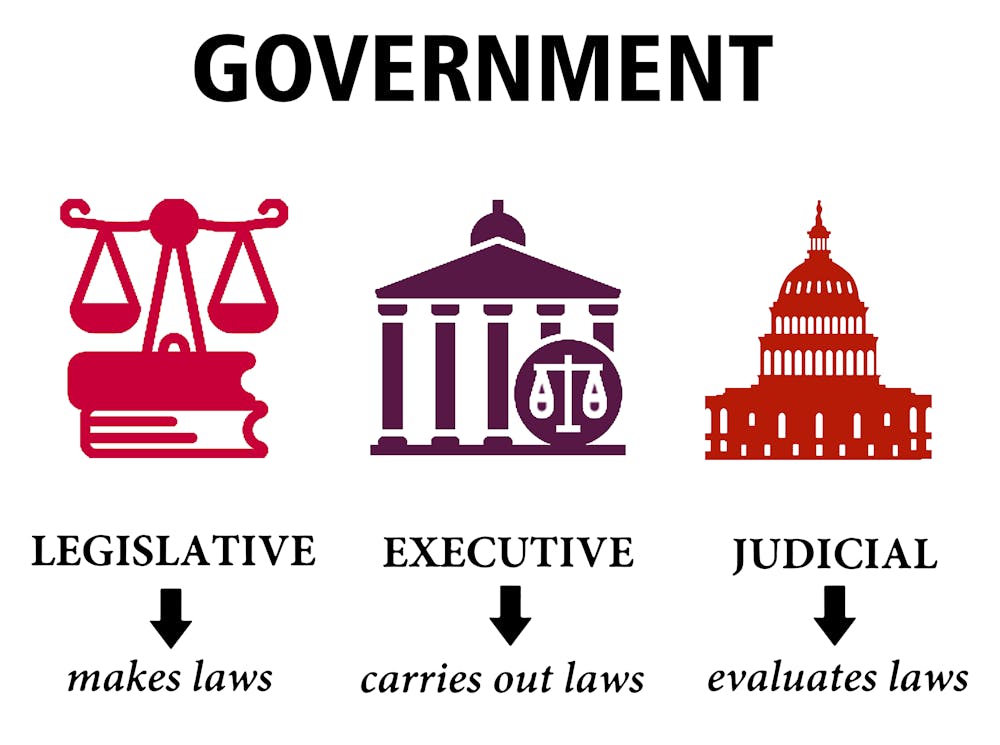
    The concept of separation of powers is incorporated into just about every democratic constitution. It rests on the principle of the separation of powers between the three fundamental branches of government: executive, legislature and judiciary.

    It’s what enables the political ecosystem of checks and balances to create the conditions for democracy to exist and freedom to flourish. But if one of the three branches of government dominates the other two, the equilibrium is shattered and democracy collapses.

    We owe this idea of constitutional democracy as a tripartite division of power to an 18th-century French political philosopher, Charles de Montesquieu. He was the author of one of the most influential books to come out of the Enlightenment period, The Spirit of the Laws.

    Published in 1748, this work gradually reshaped every political system in Europe, and had a powerful influence on America’s Founding Fathers. The 1787 US constitution was drafted in the spirit of Montesquieu’s recommendations.

    Modern democracies are more complex than those of the 18th century – and new institutions have developed to keep up with the times. These include specialised tribunals, autonomous regulatory agencies, central banks, audit bodies, ombudsmen, electoral commissions and anti-corruption bodies.

    What all these institutions have in common is that they operate with a considerable degree of independence from the three aforementioned arms of government. In other words, more checks and balances.

    Notwithstanding his immense influence, the idea of a separation of powers at the heart of democracy predates Montesquieu by many centuries. One of the earliest formulations of this idea can be found in Aristotle’s work, the Politics. This includes the argument that “the best constitution is made up of all existing forms”. By this Aristotle meant a mixed government of monarchy, aristocracy and democracy.

    But it was the Romans who developed a working model of checks and balances. The constitution of the Roman republic was characterised by the separation of powers between the tribune of the plebs, the senate of the patricians, and the elected consuls.

    The consuls held the highest political office, akin to a president or prime minister. But since the Romans did not trust anyone to have too much power, they elected two consuls at a time, for a period of 12 months. Each consul had veto power over the actions of the other consul. Checks and balances.

    The greatest advocate of the Roman republic and its constitutional mechanisms, was the Roman philosopher, lawyer and statesman Marcus Tullius Cicero. It was Cicero who inspired Montesquieu’s work – as well as influencing John Adams, James Madison and Alexander Hamilton in the US.

    The Roman republic had lasted for approximately 500 years but came to an end following the violent death of Cicero in 43BC. He had devoted his life resisting authoritarian populists from undermining the Roman republic and establishing themselves as sole despots. His death (on top of the assassination of Julius Ceasar the previous year) are seen as key moments in Rome’s transition from republic to empire.

    Democracy under threat

    Today our democracies are facing the same predicament. In many different parts of the world this simple institutional mechanism has come under increasing attack by individuals hell-bent on curbing the independent power of the judiciary and the legislative.

    In Europe, following in the footsteps of Hungarian prime minister Viktor Orbán, the Italian far-right premier Giorgia Meloni has been pushing for constitutional reforms that reinforce the executive branch of government at the expense of the other two branches.

    Checks and balances: the three branches of government.
    TREKPix/Shutterstock

    The assault on the system of checks and balances has also been identified in Washington. The use and abuse of presidential executive orders is an indication of this growing political cancer.

    During his time as 46th US president, from January 2021 to January 2025, Joe Biden signed 162 executive orders – an average of 41 executive orders per year. By comparison, during his first term Donald Trump’s annual average was 55 executive orders. Barack Obama before him was 35.

    In his first 20 days since returning to the White House Donald Trump has already signed 60 executive orders. This has included pardoning some 1,500 people who were involved in the January 6 insurrection at the US capitol.

    But of much greater concern is the Trump administration’s veiled threats to overturn the landmark decision of the US Supreme Court from 1803, Marbury v. Madison, the case that established the principle that the courts are the final arbiters of the law.

    In recent weeks Trump has openly criticised federal judges who have tried to block some of his most executive orders. He’s been supported by his vice-president, J.D. Vance, who has been quoted as saying that “judges aren’t allowed to control the executive’s legitimate power”.

    Meanwhile the president’s senior advisor, Elon Musk, accused a judge’s order to temporarily block the newly formed Department of Government Efficiency from accessing confidential treasury department data of being “a corrupt judge protecting corruption”.

    So democracy’s delicate balancing act is under serious pressure. If the separation of powers does not hold, and the checks and balances prove to be ineffective, democracy will be threatened.

    The next few months and years will determine whether the rule of law will be displaced by the rule of the strongest. At the moment the odds don’t look good for Cicero, Montesquieu and Madison.

    It takes a brave person to bet on democracy to win this contest, but we live in hope that America will remain the land of the free and the home of the brave.

    Vittorio Bufacchi is affiliated with the Labour Party in Ireland.

    ref. A short history of the separation of powers: from Cicero’s Rome to Trump’s America – https://theconversation.com/a-short-history-of-the-separation-of-powers-from-ciceros-rome-to-trumps-america-249819

    MIL OSI – Global Reports

  • MIL-OSI United Kingdom: The UK condemns attacks on displaced civilians in Sudan: UK statement at the UN Security Council

    Source: United Kingdom – Executive Government & Departments

    Explanation of vote by Ambassador Barbara Woodward, UK Permanent Representative to the UN, following the vote on the UN Security Council resolution renewing the mandate of the 1591 Committee Panel of Experts.

    We voted in favour of this resolution renewing the 1591 Panel of Experts and we thank the US for leading the negotiations.

    I’ll make two points. 

    First, I want to highlight the catastrophic situation currently faced by thousands of displaced people at Zamzam Camp in Darfur. 

    We’ve seen reports that the Rapid Support Forces have launched a further assault contrary to this council’s demands in Resolution 2736. 

    There are harrowing accounts of shelling and targeting of civilians. 

    It’s reported that at least 40 civilians have been killed and shelters have been razed to the ground. 

    These are people who were already facing devastating levels of humanitarian need, including famine. 

    So we condemn these attacks. 

    We underscore the need for the protection of civilians in line with international law and the commitments made by the warring parties in the 2023 Jeddah Declaration. 

    The situation underscores the continued importance of the Panel’s reporting to support the Council’s work on Sudan. 

    And once again, we call on all Member States to refrain from external interference, which foments conflict and instability, and instead to support mediation efforts for a durable peace. 

    Second, we note that while the UK welcomes the renewal of the Panel’s mandate for a further 12 months, we would have preferred to maintain previous language which, among other things, called for the parties to the conflict to cease violations of international humanitarian law and abuses and violations of international human rights law, and strongly condemned attacks against civilians, including sexual and gender based violence. 

    President, it is vital that this Council remain focused on protecting civilians in Sudan given the violence being committed against so many. 

    The UK will continue to press for a much more urgent and more effective international response to the crisis, including a reinvigorated mediation process.

    Updates to this page

    Published 17 February 2025

    MIL OSI United Kingdom

  • MIL-OSI United Nations: Sovereignty and territorial integrity of Ukraine paramount, Security Council hears

    Source: United Nations 2

    Peace and Security

    A senior UN political affairs official on Monday reaffirmed that any peace deal in Ukraine must respect the country’s sovereignty, independence, and territorial integrity, in accordance with the UN Charter and international law.

    Briefing ambassadors in the Security Council ahead of the third anniversary of Russia’s full-scale invasion of Ukraine, Miroslav Jenča, Assistant Secretary-General for Europe in the political and peacebuilding department (DPPA), stressed diplomatic efforts must focus on securing a just and lasting peace.

    Full participation of Ukraine, Russia

    “The United Nations encourages dialogue among all stakeholders and welcomes all genuine efforts and initiatives, with the full participation of Ukraine and the Russian Federation, that would alleviate the impact of the war on civilians and de-escalate the conflict,” he said.

    He also reiterated Secretary-General António Guterres’ position that “any peaceful settlement must respect the sovereignty, independence and territorial integrity of Ukraine, in line with the UN Charter, international law and resolutions of the General Assembly.”

    The Security Council session coincided with the 10th anniversary of resolution 2202, which endorsed the now-defunct Minsk agreements of 2015 signed by the representatives of European security pact, the OSCE, Russia, Ukraine and leaders of the pro-Russian separatists in the occupied east of Ukraine following Russia’s annexation of Crimea.

    The unanimously adopted resolution included a “package of measures” as its annex, including an immediate and comprehensive ceasefire in the Donetsk and Luhansk regions of Ukraine, as well as the withdrawal of all heavy weapons by both sides by equal distances to create a security zone.

    A stark reminder

    Mr. Jenča noted that the anniversary serves as a stark reminder of past diplomatic efforts to de-escalate tensions and as an opportunity to reflect on the consequences of failing to forge a peace through international diplomacy.

    He commended the OSCE Special Monitoring Mission for its eight years of work in tracking ceasefire violations and facilitating dialogue, noting that the experience offers key lessons for future diplomatic efforts.

    The Minsk agreements have taught us that agreeing on a ceasefire or the signing of an agreement alone do not ensure a durable end to the violence,” Mr. Jenča said.

    “Ensuring that the conflict does not reoccur and does not escalate will require genuine political will and understanding of its multi-dimensional complexity, for Ukraine and for the region.”

    More to follow…

    MIL OSI United Nations News

  • MIL-OSI United Kingdom: UK Government to Invest £2.6 Million in V&A Dundee

    Source: United Kingdom – Government Statements

    Scottish Secretary confirms £2.6 million for V&A Dundee – investment on top of £20 million for Dundee regeneration projects.

    V&A Dundee is to receive £2.6 million in UK Government capital funding. The investment, to remodel and extend the Scottish Design Galleries, was announced today [17 February 2025] by the Scottish Secretary on a visit to Scotland’s design museum. 

    Speaking after his visit, Scottish Secretary Ian Murray said: 

    It’s fantastic news that the UK Government is investing £2.6 million in V&A Dundee. It is a great attraction, right at the heart of Dundee’s waterfront, bringing great benefits to the city. This funding will help the museum celebrate the very best of Scottish design and make the experience for visitors even better. 

    We have taken the necessary steps to mend our public finances in order to provide this funding and a record settlement for the Scottish Government, and I am very pleased that we are delivering this investment in this important national institution.  

    At the Autumn Budget the Chancellor also confirmed £20 million for regeneration and growth projects in Dundee. In all, the UK Government is investing £1.4 billion in dozens of important local growth projects across Scotland over the next 10 years. This is a key part of the UK Government’s Plan for Change, growing our economy and improving living standards in all parts of the UK.

    Director of V&A Dundee, Leonie Bell, said

    We are delighted the UK Government has confirmed £2.6 million of funding for V&A Dundee, Scotland’s design museum, to undertake a bold transformation of the Scottish Design Galleries that will bring design to life for visitors, enabling even more people to engage with Scotland’s innovative design history and its continuing influence around the world. 

    V&A Dundee is an incredible resource for people living in Dundee and Scotland, drawing visitors to the region, championing design and designers and helping to change the face of the city and contributing to economic, cultural and social growth.   

    This new funding means we can expand the story of design from Scotland and celebrate the worldwide influence of Scottish design and designers, further enhancing the visitor experience at V&A Dundee.

    The Scottish Design Galleries are the heart of V&A Dundee. They feature more than 300 objects spanning around 500 years, telling the story of Scottish design’s enduring influence around the world. This additional investment, ahead of the museum’s 10-year anniversary in 2028, will help V&A Dundee boost its contribution to local economic growth, supporting jobs and driving visitors to Tayside.

    In 2023 Dundee welcomed 1.35 million visits, an increase of more 50 per cent since before V&A Dundee opened. V&A Dundee is engaging with every school in the city and welcomed its two millionth visitor in 2024. The museum has created very significant economic impacts for the city.

    Updates to this page

    Published 17 February 2025

    MIL OSI United Kingdom

  • MIL-OSI USA News: Remarks by President Trump After Air Force One Arrival

    Source: The White House

    class=”has-text-align-center”>Palm Beach International Airport

    West Palm Beach, Florida

    (February 16, 2025)

    4:00 P.M. EST

         THE PRESIDENT:  So, Daytona was fantastic.  The crowd was amazing.  The people love that sport, and they’re wonderful people that run it.  And they had a little rain delay, but we’ll go home and watch it, I guess — or some of you will.  And others will try and create peace throughout the world.

         Do you have any questions, please?

         Q    Sir, did you speak to Secretary Rubio this morning?

         THE PRESIDENT:  I did.

         Q    What is the latest with the negotiations in Saudi Arabia?  What’s he taki- —

         THE PRESIDENT:  We’re moving along.  We’re trying to get a peace with Russia-Ukraine, and we’re working very hard on it.  It’s a war that should have never started.

         Q    Do you expect Zelenskyy to be involved in these conversations?  What will his role be?

         THE PRESIDENT:  Yeah, I do.  I do.  He will be involved, yes.

         Q    Mr. President, would you allow the Europeans to buy U.S.-made weapons for Ukrainians?

         THE PRESIDENT:  Yeah, I would.

         Q    Sir, Zelenskyy said today that Russia is going to wage war on NATO.  Do you — do you agree with that?  Do you have any concerns about —

         THE PRESIDENT:  No, I don’t agree.  I don’t agree with that.  Not even a little bit.

         Q    Vice President Vance said that the United States would potentially take military action against Russia if they won’t come to an agreement.  Do you agree with that stance?

         THE PRESIDENT:  I don’t know if that’s what he said.  I don’t think he said that.

         Q    Sir, based on your conversations — based on your conversations with President Putin, what do you think he wants, ultimately, in Ukraine?

         THE PRESIDENT:  I think he wants to stop fighting.  I see that.  We spoke long and hard.  Steve Witkoff was with him for a very extended period, like about three hours.  I think he wants to stop fighting.

         They have a big, powerful machine.  You understand that.  And they defeated Hitler, and they defeated Napoleon.  You know, they’ve been fighting a long time.  They’ve done it before and — but I think he would like to stop fighting.

         Q    Do you think he wants the whole of Ukraine, or just a pa- — like, what do you think he wants in terms territory?

         THE PRESIDENT:  No, I think he wants to stop.  That was my question to him.  Because if he’s going to go on, that would have been a big problem for us, and that would have caused me a big problem, because you just can’t let that happen. 

         I think he wants to end it, and they want to end it fast — both of them.  And Zelenskyy wants to end it too.

         Q    Sir, when do you think that could actually happen?  When do you think the fighting can stop?

         THE PRESIDENT:  Well, we’re working to get it done.  I mean, you know, it’s too bad it started.  It would have been a lot easier to end it before it started.  Right?  But it started because we had an incompetent president that — he didn’t know what he was doing.  That should have never started.

         That war was so easy to stop.  Remember this: that under Bush, they took a lot.  Under Obama, they took a lot.  Under Biden, they’re trying to take the whole thing.  And under Trump, they took nothing — nothing.  Nothing was gone, not even a little bit.  So, it’s too bad.  It’s really too bad. 

         A lot of people are dead right now that should be alive, and a lot of cities are destroyed that can never come back like they were.  Those beautiful golden domes and all of the multi-colored domes that were 1,000 years old, they’re all laying in — you know, just shattered.  So, it’s very sad.  They ruined a culture.

         Q    They’re beginning phase two — they’re beginning phase two of the ceasefire deal —

         THE PRESIDENT:  Yeah.

         Q    — between Israel and Hama- — Hamas.  What is — what’s going on there?  Have you been briefed on the latest relating to that?

         THE PRESIDENT:  Well, I told you — I have been briefed.  I told Bibi, “You do whatever you want.”  Because, you know, my statement was, “They got to come back now.”  The reason I made that statement: because they said they weren’t going to deliver — they were not going to deliver the people that they said they were going to deliver, that they agreed to deliver.  And they did agree to do that, but they broke that agreement.  When I made the statement, they delivered everybody, plus an American.

         Now, the good news is, they look like they’re in pretty good shape, because the people from the week before didn’t look like they were in good shape.  They looked like Holocaust survivors, frankly — horrible.  Whatever happened to them was horrible.
        
         But that will be up to Israel what the next step is, in consultation with me.

         Q    Sir, what would the — what are they supposed to use these weapons for that you’ve now allowed to be shipped?  Given the fact that there’s a ceasefire supposed to be in effect, why ship those big bombs now?

         THE PRESIDENT:  Peace through strength.  You understand that, right?  It’s called peace through strength.  You know, they contracted for those weapons a long time ago, in the Biden administration, and then Biden wouldn’t deliver the weapons.

         But I look at it differently.  I say “peace through strength.”  They were sitting there.  Nobody knew what to do with them.  They bought them.  But I believe in that very strongly.

         Q    On the EU —

         Q    Sir, do you have an update on your —

         Q    Sir, on the EU.  The — the European Union is talking about banning food imports from the U.S., kind of along the lines of your reciprocal tariffs.

         THE PRESIDENT:  Why is that?  Why?

         Q    They says it’s like the reciprocal tariffs.  They don’t like the (inaudible) —

         THE PRESIDENT:  That’s all right.  I don’t mind.  Let them do it.  Let them do it.  They’re just hurting themselves if they do that.  I can’t imagine it, but doesn’t matter.

         We’re having reciprocal tariffs.  Whatever they charge, we charge.  Very simple.

         If a certain country, like India, which is very high tariff — if they charge us X dollars, we charge them X dollars.  It’s all right.  It’s a fair — it’s a fair thing to do.  Even the media said it was fair.  And it’s going to be very good for the United States.

         Q    Do you have an update on your timing of your meeting with Putin in Saudi Arabia?

         THE PRESIDENT:  No, we — there’s no time set, but it could be very soon.

         Q    Like this — this month or —

         THE PRESIDENT:  Well, it’ll be soon.  We’ll see what happens.  But they’re meeting right now, and that’s more — I mean, this should have been done four years ago — three years ago, before it started.  But it should have been done immediately after it started, as opposed to now, three years later.

         Q    Sir, egg prices have reached an all-time high.  What’s your administra- —

         THE PRESIDENT:  Which is?  What?

         Q    Egg prices have reached an all-time high.

         THE PRESIDENT:  Well, there’s the flu.  And it was a long — before I ever got here, it was at an all-time — this didn’t st- — remember, I’ve been here for three weeks.  And when you saw the inflation numbers, I’ve been here for three weeks.  I have had nothing to do with inflation.  This was caused by Biden.
        
         I had four years of virtually no inflation.  So, I’m just taking over.

         But I’ll tell you what, this country has made more progress in the last three weeks than it’s made in the last four years, and we’re respected again as a country.

         Thank you very much.  Thank you.

                                  END                    4:07 P.M. EST

    MIL OSI USA News

  • MIL-OSI: Baltic Horizon Fund consolidated unaudited results for Q1-Q4 2024

    Source: GlobeNewswire (MIL-OSI)

    Management Board of Northern Horizon Capital AS has approved the unaudited financial results of Baltic Horizon Fund (the Fund) for the twelve months of 2024.

    Our strategic ambitions
    In 2024, the Fund’s management team made the strategic decision to implement key performance indicators (KPIs) as a means to effectively measure and track performance. This decision stems from the recognition that clear and measurable benchmarks are essential for evaluating progress towards the Fund’s objectives. By defining specific KPIs, the team aims to enhance transparency, accountability, and facilitate decision-making processes.

    The focus of the Fund management team is and will be on these major objectives:

    • Portfolio occupancy of at least 95% by end of June 2025;
    • Loan-to-Value target at 50% or lower;
    • To consider disposing of non-strategic assets over the next 18 months;
    • Clear ESG and refurbishment strategy for the next 1-2 years with an aim to reach the portfolio’s NOI potential of EUR 18 million by 2027;
    • Maintaining 100% BREEAM or LEED certified portfolio;
    • Achieving not less than 4 stars from GRESB assessment.

    As we recap our goals for 2024, we can report the following achievements:

    We have successfully achieved 100% portfolio certification.

    Despite receiving a 3-star GRESB rating in 2024, we have thoroughly analysed the assessment results and developed an action plan to secure a 4-star GRESB rating in 2025.

    Although we did not reach our target of 90% portfolio occupancy by the end of 2024, we made significant progress, achieving an 86.5% occupancy rate based on lease signing date.

    We have recently announced our disposal strategy to reduce LTV level to the target level. Several disposal processes have already commenced as of February 2025, with the closing of transactions planned for later in the year.

    Looking ahead to 2025, we will continue with the same solid strategy and goals that will stabilize the Fund’s financial position and maximize the potential of its portfolio.

    Leasing performance

    In a challenging environment characterized by increasing real estate market vacancies across all Baltic states in recent periods, the Fund also faced outflows of some tenants, however it has demonstrated its adaptability and the attractiveness of its properties by renewing a significant amount of existing leases and signing a substantial number of new leases in 2024. This success was primarily attributable to significant deals with prominent anchor tenants such as Narbutas in Meraki (3,200 sq. m) and Apollo Group in Coca-Cola Plaza (2,200 sq. m), International School of Riga in S27 (3,680 sq. m) and significant leases in Galerija Centrs  signed with My Fitness (2,000 sq. m) and Expo GROUP (2,000 sq. m).

    The Fund team has been diligently negotiating with current tenants to extend lease agreements, while also actively engaging with new tenants to fill the vacancies.  These efforts have resulted in lease renewals of approximately 23,800 sq. m and a net lease inflow of approximately 4,800 sq. m

    During 2024, the Fund signed new leases for 22,743 sq. m, securing an annual rental income of EUR 2,945 thousand for future periods. Furthermore, 61 new tenants have been attracted to our buildings, while 69 existing tenants have decided to continue their cooperation with us.

    By the end of December 2024, the occupancy of the portfolio increased to 82.1%. Calculating based on the lease signing date, the occupancy already exceeds 86%. Signed premises will be handed over to tenants in 2025.

    Notably, less than 20% of the leases are set to expire during 2025, while the vast majority expire in 2026 and later. We aim to spread our lease terms evenly so that no more than 20% of our leases expire each year.  Recent successful leasing activity is reflected in the increase in the weighted average unexpired lease term until the first break option, which was 3.3 years as of 31 December 2024 (compared to 2.9 years as of 31 December 2023).

    Outlook
    In 2025 the Fund will focus on flexible and sustainable solutions to meet tenant demands and market conditions.

    Our key goals are increasing the occupancy of the portfolio and decreasing the LTV by way of repaying part of the bonds.

    In 2025, the Baltic commercial real estate market is anticipated to navigate both considerable challenges and emerging opportunities. Persisting economic uncertainty is expected to keep demand for commercial spaces subdued. Key factors influencing this trend include evolving consumer preferences, the continued expansion of e-commerce, and the sustained shift toward remote work, all of which are reshaping the need for office and retail properties.

    While economic forecasts cautiously suggest potential market stabilization in the coming year, a rapid recovery remains unlikely due to geopolitical uncertainties and evolving tenant and consumer needs. Recognizing these challenges, the Fund’s management strives to enhance financial stability by reducing leverage through partial bond repayment. This strategy aims to alleviate financial pressure, positioning the Fund for more sustainable financial performance.

    As part of this initiative, the Fund has announced a strategic plan to divest select assets, with the objective of reducing the LTV ratio to below 50% and fostering a more stable recovery. Up to three assets have been identified for potential disposal based on their life cycle, optimization potential, and alignment with the Fund’s long-term strategy. Among these, the Postimaja and CC Plaza complex in Tallinn has been introduced to the market, following the Fund’s successful achievement of 100% occupancy and WALT exceeding five years. Given limited opportunities for further value enhancement beyond its development potential—an avenue the Fund does not intend to pursue in the short term—the asset has been prioritized for sale. To facilitate the divestment process, the Fund has engaged Newsec Advisers UAB and Redgate Capital AS as financial advisors. The sales process was commenced in February, with the aim of closing later in the year.

    As of the date of release of this report, the Fund has a Letter of Intent (LOI) with a potential buyer and DD is in progress with Meraki property. According to LOI, the transaction would be finalized in spring 2025. At the end of 2024, the property had an occupancy of 86% and WAULT of 4.3 years. Due to anticipated vacancies in the office sector and an increasing supply, the Fund has decided not to proceed with the development of a second tower, for which the permit remains valid. The current market conditions, characterized by recovering investor activity, present an improved opportunity to sell the property. Potential buyers have also shown preliminary interest in Lincona and Pirita Center.

    If the divestment plan proceeds as anticipated, the Fund will be positioned to repay a significant portion of its bonds while continuing to invest in its remaining property portfolio. This will enable the Fund to concentrate on its core assets in alignment with its strategic objectives, providing a solid foundation for future growth.

    To achieve our goal of increasing portfolio occupancy, we are adapting to the evolving needs of our tenants and customers. The rise of e-commerce and online shopping has transformed the traditional concept of shopping centres. Visitors now seek not only to try on and purchase goods but also to enjoy entertainment and experiences.

    This trend is evident in the success of our food courts, such as Burzma and Dialogai, as well as the interactive exhibition Kosmopark, which attracted a significant number of visitors in Europa and now operates in Galerija Centrs. Following this success, we have signed a new 3-year lease with an entertainment operator to open a Danger Park on the second floor of Europa shopping centre in May 2025. We are also considering various entertainment concepts for Galerija Centrs. Additionally, we will continue to offer the community a variety of events and temporary pop-ups in both shopping centres.

    In line with our strategic goal to increase occupancy, we are reviewing the concept in Europa and seeking the best tenant mix. We are currently negotiating a lease with a 700 sq m. anchor fashion leader and have advanced discussions with several coworking operators who find the shopping centre and its location ideal for their concept, one of them has already signed a LOI for 1,300 sq m. We believe that the combination of entertainment and a wide range of catering options, which will expand from the food court to a newly planned restaurant zone on the first floor facing Konstitucijos Avenue, along with strategic changes to the tenant mix on the second and third floors, will maximize visitor flow and fully exploit the potential of the shopping centre.

    While the traditional shopping centre concept remains effective for Galerija, as evidenced by increasing foot flow and turnover, we are exploring additional concepts for currently vacant premises to complement our existing tenants and expand the range of services offered to visitors.

    Office tenants are currently looking not just for a place to work during the day, but rather for hybrid working spaces or built-to-suit solutions with increased expectation over ESG, workplace wellbeing features and easily reachable services, which become increasingly important. During the last year, we witnessed a higher demand for mixed-use projects that combine commercial spaces with services, including catering, medical clinics and fitness centres. We believe, that in the upcoming years demand for such concepts will grow further and will add value to the properties.

    We continue to adapt to market demands by diversifying our office tenant mix beyond traditional occupiers, integrating catering operators, medical clinics, and even kindergartens into our office buildings. This approach not only enhances tenant diversification but also meets the needs of both our customers and the surrounding communities.

    In the office sector, our primary challenge and focus in 2025 will be addressing the remaining vacancies in S27 and Upmalas. A significant milestone in 2024 was securing a lease agreement for approximately 3,680 sq. m. in S27 with the International School of Riga, a leading provider of international education serving students from preschool through high school, set to open at the end of 2025. Even in the current market conditions we are confident that the International School of Riga coming into the building together with the renovation and improvements that are being done will enable us to attract new tenant segments that recognise the value of synergy.

    Our commitment to supporting existing and prospective tenants, along with our ability to tailor office spaces to individual requirements, positions us well to lease the remaining areas in North Star and Meraki in the coming quarters.

     Our investments in green energy projects remain a key priority, and from Q1 2025, all our properties in Latvia and Lithuania will transition to using energy from remote solar panels. In Estonia, we are actively exploring solutions in our properties to reduce the reliance to gas. Additionally, we are evaluating new technologies and sustainability initiatives that align with our ESG strategy while enhancing energy efficiency, optimizing property performance, and reducing operational costs.

    Simultaneously, to reinforce its financial position, the Fund is committed to improving its debt service ratio and reducing loan-to-value levels. By focusing on increasing occupancy rates and optimizing property concepts, we aim to enhance asset performance and maximize net operating income. Adaptive leasing strategies, property repositioning, and targeted investments in high-demand segments will remain key priorities. These initiatives are designed to create long-term value for investors while ensuring the Fund remains resilient in a dynamic market environment.

    Baltic Horizon achieves a 100% BREEAM certified portfolio
    In 2025, we will continue advancing our social and environmental commitments. All our assets have been BREEAM-certified, and by the end of 2024, we achieved 98% green leases across our portfolio, with a target to further increase this share in the coming year.

    GRESB benchmarking
    Recently, we announced a 3-star GRESB rating of 80 points, falling 1.5 points short of the 4-star threshold. This decline, compared to previous years, reflects increasing industry-wide commitments, heightened requirements, and evolving best practices. The management team has conducted a thorough analysis of the assessment results and developed an action plan aimed at restoring the Fund’s 4-star rating in 2025.

    Net result and net rental income
    In 2024, the Group recorded a net loss of EUR 16.8 million compared with a net loss of EUR 23.0 million for 2023. The result was mainly driven by the property valuation loss. Earnings per unit for 2024 were negative at EUR 0.13 (2023: negative at EUR 0.19).

    The Group earned consolidated net rental income of EUR 11.6 million in 2024 (2023: 14.6 million). The results for 2023 include two months’ net rental income of the Domus Pro Retail and Office property (EUR 0.3 million) and five months’ net rental income of the Duetto properties (EUR 1.2 million), which were sold in February and May 2023, respectively.

    On an EPRA like-for-like basis, the portfolio net rental income in 2024 was 11.8% lower than in 2023, mainly due to vacancies in office properties in Latvia due to the expiry of the agreement with the main tenant in Upmalas Biroji BC and 100% vacancy of S27, as well as lower rental income in Europa due to the new anchor tenant IKI equipping the premises and opening in March.

    Portfolio properties in the retail segment contributed 53.3% (like-for-like 2023: 43.6%) of net rental income in 2024, followed by the office segment with 41.7% (like-for-like 2023: 50.9%) and the leisure segment with 5.0% (2023: 5.5%). 
    Retail assets located in the central business districts (Postimaja, Europa and Galerija Centrs) accounted for 42.2% of total portfolio net rental income in 2024. Total net rental income attributable to neighbourhood shopping centres was 11.1% in 2024.

    In 2024, investment properties in Latvia and Lithuania contributed 44.4% (like-for-like 2023: 41.8%) and 22.8% (like-for-like 2023: 31.1%) of net rental income, respectively, while investment properties in Estonia contributed 32.8% (like-for-like 2023: 27.1%).

    Investment properties
    At the end of Q4 2024, the Baltic Horizon Fund portfolio consisted of 12 cash flow generating investment properties in the Baltic capitals. The fair value of the Fund’s portfolio was EUR 241.2 million at the end of December 2024 (31 December 2023: EUR 250.4 million) and incorporated a total net leasable area of 118.3 thousand sq. m. The change in portfolio value was mainly driven by the changes in exit yields and upward adjustments of the weighted average cost of capital (WACC). During 2024 the Group invested approximately EUR 6.0 million in tenant fit-outs.

    Gross Asset Value (GAV)
    As of 31 December 2024, the Fund’s GAV was EUR 256.0 million (31 December 2023: EUR 261.1 million). The decrease compared to the prior year was mainly related to the negative revaluation of the Fund’s investment properties of approx. EUR 9.5 million and was partly offset by the private placement of new units which took place in September and resulted in a cash increase of approx. EUR 6.29 million.

    Net Asset Value (NAV)
    As of 31 December 2024, the Fund’s NAV was EUR 98.1 million (31 December 2023: EUR 109.5 million). The NAV decrease was mainly due to the revaluation of investment properties. At the end of September 2024 new units were issued resulting in approx. EUR 6.29 million of new equity. As of 31 December 2024, IFRS NAV per unit amounted to EUR 0.6833 (31 December 2023: EUR 0.9156), while EPRA net tangible assets and EPRA net reinstatement value were EUR 0.7267 per unit (31 December 2023: EUR 0.9546). EPRA net disposal value was EUR 0.6797 per unit (31 December 2023: EUR 0.9122).

    Interest-bearing loans and bonds
    As of 31 December 2024, interest-bearing loans and bonds (excluding lease liabilities) were EUR 149.0 million (31 December 2023: EUR 143.5 million). Annual loan amortisation accounted for 1.5% of total debt outstanding. In July 2024, the Fund successfully signed the Meraki loan with Bigbank for a total amount of EUR 10.3 million. A major part of the loan was used to repay short term bonds in the amount of EUR 8.0 million maturing in July 2024.

    As of 31 December 2024, the Fund’s consolidated cash and cash equivalents amounted to EUR 10.1 million (31 December 2023: EUR 6.2 million).

    Cash flow
    Cash inflow from core operating activities in 2024 amounted to EUR 9.9 million (2023: cash inflow of EUR 11.4 million).  Cash inflow from core operating activities decreased mainly due to the sale of Duetto and Domus Pro properties in H1 2023 and higher vacancies, mostly in S27 and Upmalas Biroji. Cash outflow from investing activities was EUR 7.0 million due to investments in existing properties and transaction costs (2023: cash inflow of EUR 19.9 million due to sales of assets). Cash inflow from financing activities was EUR 1.0 million (2023: cash outflow of EUR 30.5 million). In Q4 2024, the Fund prepaid loans in the amount of EUR 2.7 million and paid regular amortisation and interest on bank loans and bonds.

    Key earnings figures 

    EUR ‘000 Q1-Q4 2024 Q1-Q4 2023 Change (%)
    Net rental income 11,588 14,617 (20.7%)
    Administrative expenses (2,373) (2,617) (9.3%)
    Net other operating income 18 44 (59.1%)
    Losses on disposal of investment properties (863) (4,047) (78.7%)
    Valuation gains (losses) on investment properties (15,581) (21,876) (28.8%)
    Operating profit (loss) (7,211) (13,879) (48.0%)
    Net financial expenses (10,344) (9,750) 6.1%
    Profit (loss) before tax (17,555) (23,629) (25.7%)
    Income tax 774 656 18.0%
    Net profit (loss) for the period (16,781) (22,973) (27.0%)
           
    Weighted average number of units outstanding (units) 143,562,514 119,635,429 20.0%
    Earnings per unit (EUR) (0.12) (0.19) (39.1%)

    Key financial position figures

    EUR ‘000 31.12.2024 31.12.2023 Change (%)
    Investment properties 241,158 250,385 (3.7%)
    Gross asset value (GAV) 256,048 261,138 (1.9%)
           
    Interest-bearing loans and bonds 148,989 143,487 3.8%
    Total liabilities 157,953 151,606 4.2%
           
    IFRS NAV 98,095 109,532 (10.4%)
    EPRA NRV 104,333 114,205 (8.6%)
           
    Number of units outstanding (units) 143,562,514 119,635,429 20.0%
    IFRS NAV per unit (EUR) 0.6833 0.9156 (25.4%)
    EPRA NRV per unit (EUR) 0.7267 0.9546 (23.9%)
           
    Loan-to-Value ratio (%) 61.8% 57.3%
    Average effective interest rate (%) 6.7% 5.2%

    During Q4 2024, the average actual occupancy of the portfolio was 81.0% (Q3 2024: 80.1%). The occupancy rate increased to 82.1% as of 31 December 2024 (30 September 2024: 80.5%).

    Overview of the Fund’s investment properties as of 31 December 2024

    Property name Sector Fair value1 NLA Direct property yield Net initial yield Occupancy rate
    (EUR ‘000) (sq. m) 20242 20243
    Vilnius, Lithuania            
    Europa SC Retail 35,946 17,092 2.3% 2.8% 80.6%
    North Star Office 19,548 10,734 6.5% 7.0% 91.8%
    Meraki Office 16,3804 7,833 1.2% 1.5% 86.3%
    Total Vilnius   71,874 35,659 3.0% 3.6% 85.2%
    Riga, Latvia            
    Upmalas Biroji BC Office 19,224 11,203 3.7% 4.2% 64.1%
    Vainodes I Office 15,900 8,128 8.8% 8.8% 100.0%
    S27 Office 11,360 7,303 (0.6%) (0.9%)
    Sky SC Retail 4,900 3,260 8.6% 8.5% 100.0%
    Galerija Centrs Retail 60,020 19,423 3.2% 4.1% 84.7%
    Total Riga   111,404 49,317 3.7% 4.5% 71.0%
    Tallinn, Estonia            
    Postimaja & CC Plaza complex Retail 21,800 9,232 3.7% 6.7% 100.0%
    Postimaja & CC Plaza complex Leisure 13,190 7,869 4.8% 4.3% 97.7%
    Lincona Office 13,100 10,767 6.4% 7.4% 88.5%
    Pirita SC Retail 9,790 5,425 6.7% 9.2% 97.1%
    Total Tallinn   57,880 33,293 4.9% 6.7% 95.3%
    Total active portfolio   241,158 118,269 3.8% 4.7% 82.1%
    1. Based on the latest valuation as of 31 December 2024 and recognised right-of-use assets.  
    2. Direct property yield (DPY) is calculated by dividing annualized NOI by the acquisition value and subsequent capital expenditure of the property.
    3. The net initial yield (NIY) is calculated by dividing annualized NOI by the market value of the property.
    4. Meraki value measured at disposal price. Market value according to independent property valuators Newsec is EUR 17,490,000.

    CONSOLIDATED STATEMENT OF PROFIT OR LOSS AND OTHER COMPREHENSIVE INCOME

    EUR ‘000 01.10.2024 01.10.2023 01.01.2024 01.01.2023
    31.12.2024 – 31.12.2023 – 31.12.2024 – 31.12.2023
    Rental income 3,779 3,755 15,136 17,743
    Service charge income 1,145 1,487 4,744 6,008
    Cost of rental activities (2,205) (2,348) (8,292) (9,134)
    Net rental income 2,719 2,894 11,588 14,617
             
    Administrative expenses (644) (631) (2,373) (2,617)
    Other operating income (expenses) 3 29 18 44
    Losses on disposal of investment properties (245) (237) (863) (4,047)
     Valuation losses on investment properties (3,052) (7,250) (15,581) (21,876)
    Operating profit (loss) (1,219) (5,195) (7,211) (13,879)
             
    Financial income 169 29 196 104
    Financial expenses (2,789) (2,538) (10,540) (9,854)
    Net financial expenses (2,620) (2,509) (10,344) (9,750)
             
    Profit (loss) before tax (3,839) (7,704) (17,555) (23,629)
    Income tax charge 457 (53) 774 656
    Profit (loss) for the period (3,382) (7,757) (16,781) (22,973)
           
    Other comprehensive income that is or may be reclassified to profit or loss in subsequent periods
    Net gain (loss) on cash flow hedges (446) (759) (1,003) (1,273)
    Income tax relating to net gain (loss) on cash flow hedges 1 64 52 123
    Other comprehensive income (expense), net of tax, that is or may be reclassified to profit or loss in subsequent periods (445) (695) (951) (1,150)
             
    Total comprehensive income (expense) for the period, net of tax (3,827) (8,452) (17,732) (24,123)
             
    Basic earnings per unit (EUR) (0.02) (0.06) (0.13) (0.19)
    Diluted earnings per unit (EUR) (0.12)
                 

    CONSOLIDATED STATEMENT OF FINANCIAL POSITION

    EUR ‘000 31.12.2024 31.12.2023
    Non-current assets    
    Investment properties 241,158 250,385
    Intangible assets 4 11
    Property, plant and equipment 5 4
    Derivative financial instruments 1 295
    Other non-current assets 1,225 647
    Total non-current assets 242,393 251,342
         
    Current assets    
    Trade and other receivables 2,800 2,591
    Prepayments 802 402
    Derivative financial instruments 621
    Cash and cash equivalents 10,053 6,182
    Total current assets 13,655 9,796
    Total assets 256,048 261,138
         
    Equity    
    Paid in capital 151,495 145,200
    Cash flow hedge reserve (420) 531
    Retained earnings (52,980) (36,199)
    Total equity 98,095 109,532
         
    Non-current liabilities    
    Interest-bearing loans and borrowings 98,491 64,158
    Deferred tax liabilities 1,898 2,774
    Other non-current liabilities 1,446 1,079
    Total non-current liabilities 101,835 68,011
         
    Current liabilities    
    Interest-bearing loans and borrowings 50,736 79,584
    Trade and other payables 4,473 3,343
    Income tax payable 14 6
    Other current liabilities 895 662
    Total current liabilities 56,118 83,595
    Total liabilities 157,953 151,606
    Total equity and liabilities 256,048 261,138

    For additional information, please contact:

    Tarmo Karotam
    Baltic Horizon Fund manager
    E-mail tarmo.karotam@nh-cap.com
    www.baltichorizon.com

    The Fund is a registered contractual public closed-end real estate fund that is managed by Alternative Investment Fund Manager license holder Northern Horizon Capital AS. 

    Distribution: GlobeNewswire, Nasdaq Tallinn, Nasdaq Stockholm, www.baltichorizon.com

    To receive Nasdaq announcements and news from Baltic Horizon Fund about its projects, plans and more, register on www.baltichorizon.com. You can also follow Baltic Horizon Fund on www.baltichorizon.com and on LinkedIn, FacebookX and YouTube.

    This announcement contains information that the Management Company is obliged to disclose pursuant to the EU Market Abuse Regulation. The information was submitted for publication, through the agency of the above distributors, at 19:30 EET on 17 February 2024.

    Attachment

    The MIL Network