Category: Europe

  • MIL-Evening Report: An ‘earthquake swarm’ is shaking Santorini. It could persist for months

    Source: The Conversation (Au and NZ) – By Dee Ninis, Earthquake Scientist, Monash University

    Greece’s government has just declared a state of emergency on the island of Santorini, as earthquakes shake the island multiple times a day and sometimes only minutes apart.

    The “earthquake swarm” is also affecting other nearby islands in the Aegean Sea. It began gradually with numerous very minor (less than magnitude 3) and mostly imperceptible earthquakes in late January. However, at the start of February, the seismic activity intensified as the quakes became larger and more frequent.

    So far, several thousand quakes have been recorded in the last two weeks. As many as 30 a day have been above magnitude 4.0 – most of them at less than 10km depth, which is large and shallow enough to be felt by people living on local islands.

    These larger earthquakes have resulted in rock falls along the islands’ coastal cliffs, as well as minor damage to vulnerable buildings. The largest earthquake so far was magnitude 5.1 on February 6, which was also felt in the capital city, Athens, as well as in Crete and in parts of Turkey more than 240km away.

    Usually a popular tourist destination, Santorini is now virtually empty. Over the past week, some 11,000 holidaymakers and locals have left the island, with many fearing the seismic activity may presage a volcanic eruption.

    So how exactly does an “earthquake swarm” happen? And what might happen in the coming days and weeks?

    No stranger to earthquakes

    This area of the world is no stranger to earthquakes. Greece is one of the most seismically active regions in Europe.

    The current seismic activity is located near Anydros, an uninhabited islet about 30km northeast of Santorini. This region lies within the volcanic arc of the “Hellenic subduction zone”, where the African tectonic plate is slowly sliding beneath the Eurasian plate (and specifically the Aegean microplate). The region hosts volcanoes as well as numerous weak zones in the crust – what earth scientists often call “faults”.

    Santorini itself is a mostly submerged caldera – a crater formed as a result of volcanic activity over the past 180,000 years, with its last eruption in the 1950s. Earthquakes can be connected to volcanic activity – specifically, the movement of magma beneath the surface.

    However, this earthquake sequence is not located beneath Santorini. And local scientists monitoring Santorini have reported no change to indicate the current seismic activity is a forerunner of another Santorini eruption. Instead, the earthquakes appear to align with faults lying between Santorini and the neighbouring island Amorgos.

    Nearby faults are known to have produced earthquakes before. For example, in 1956, a 7.8 magnitude earthquake here also produced a damaging tsunami and was soon followed by a magnitude 7.2 aftershock. More than 53 people died as a result of this earthquake and the aftershock and tsunami. Many more were injured.

    Earthquakes, shown as coloured circles, of the January-February 2025 Anydros swarm, near Santorini, Greece (Source: seismo.auth.gr) and known active faults, depicted as black lines (Source: https://zenodo.org/records/13168947).
    Dee Ninis & Konstantinos Michailos

    No single stand-out event

    Tectonic earthquakes occur when accumulating stress in Earth’s crust is suddenly released, causing a rupture along a fault and releasing energy in the form of seismic waves.

    Typically, moderate to major earthquakes (known as mainshocks) are followed by smaller quakes (known as aftershocks) that gradually diminish in magnitude and frequency over time. This is what seismologists call the mainshock–aftershock sequence.

    Some sequences behave differently and do not exhibit a single stand-out event. Instead, they involve multiple earthquakes of a similar size that take place over days, weeks, or even months. These types of sequences are what seismologists call “earthquake swarms”.

    The 1956 earthquake was a mainshock–aftershock sequence, with aftershocks lasting at least eight months after the mainshock. However, the current ongoing seismic activity near Santorini, at least as of February 7, features thousands of earthquakes, many with magnitudes ranging between 4.0 and 5.0.

    This suggests it is most likely an earthquake swarm.

    Earthquake swarms are often associated with fluid movement in the earth’s crust and the resulting seismic activity is usually less dramatic than the sudden movement of a strong mainshock.

    Seismologists are interested in distinguishing between mainshock–aftershock sequences and earthquake swarms as it can help them better understand the processes that drive these phenomena.

    A larger quake is still possible

    We cannot predict exactly what will come from the earthquake activity near Santorini. Global observations of earthquakes tell us that only a small fraction (about 5%) of earthquakes are foreshocks to larger earthquakes.

    That said, there could still be a possibility that a larger and potentially damaging earthquake could occur there soon.

    Although swarms typically involve earthquakes of lower magnitudes, they can last for days to weeks, or persist for months. They can even slow down, and then intensify again, unsettling locals with intermittent ground shaking.

    Dee Ninis works at the Seismology Research Centre, is Vice President of the Australian Earthquake Engineering Society, and a Committee Member for the Geological Society of Australia – Victoria Division.

    Konstantinos Michailos does not work for, consult, own shares in or receive funding from any company or organisation that would benefit from this article, and has disclosed no relevant affiliations beyond their academic appointment.

    ref. An ‘earthquake swarm’ is shaking Santorini. It could persist for months – https://theconversation.com/an-earthquake-swarm-is-shaking-santorini-it-could-persist-for-months-249278

    MIL OSI AnalysisEveningReport.nz

  • MIL-OSI Russia: Japan: Staff Concluding Statement of the 2025 Article IV Mission

    Source: IMF – News in Russian

    February 7, 2025

    A Concluding Statement describes the preliminary findings of IMF staff at the end of an official staff visit (or ‘mission’), in most cases to a member country. Missions are undertaken as part of regular (usually annual) consultations under Article IV of the IMF’s Articles of Agreement, in the context of a request to use IMF resources (borrow from the IMF), as part of discussions of staff monitored programs, or as part of other staff monitoring of economic developments.

    The authorities have consented to the publication of this statement. The views expressed in this statement are those of the IMF staff and do not necessarily represent the views of the IMF’s Executive Board. Based on the preliminary findings of this mission, staff will prepare a report that, subject to management approval, will be presented to the IMF Executive Board for discussion and decision.

    Washington, DC – February 7, 2025[1]:

    After three decades of near-zero inflation, there are signs that Japan’s economy can sustainably converge to a new equilibrium. Inflation has surpassed the Bank of Japan’s 2-percent target for over two years and a tight labor market is delivering the strongest wage growth since the 1990s. But Japan continues to face challenges from its aging population and high public debt. Policy priorities are to re-anchor inflation expectations, rebuild fiscal buffers, and advance labor market reforms to support potential growth.

    RECENT DEVELOPMENTS, OUTLOOK, AND RISKS

    The economy contracted in the first half of 2024 due to temporary supply disruptions but gained momentum in the rest of the year. Domestic demand, private consumption in particular, has strengthened, while net external demand has been sluggish. Both headline and core inflation (excluding fresh food and energy) remain above the BoJ’s 2-percent headline inflation target. Goods inflation has been boosted by energy and food prices, while services price growth is relatively weaker and below 2 percent. Inflation expectations are becoming increasingly aligned with the inflation target, though some measures remain below that target. The yen-dollar exchange rate has experienced sizable swings, largely driven by shifts in interest rate differentials (which reflect broader macroeconomic developments), but also amplified by the build-up and subsequent unwinding of yen carry-trade positions. The pass-through to inflation is estimated to have been relatively mild so far. Wages are growing at their highest rate since the 1990s amid labor shortages and strong inflation, but they have remained lackluster in real terms.

    Growth is expected to accelerate in 2025, with private consumption strengthening further, as above-inflation wage growth will boost households’ disposable income. Private investment is also expected to remain strong, supported by high corporate profits and accommodative financial conditions. The output gap is estimated to be closed, and growth is expected to converge to its potential of 0.5 percent in the medium term. Headline and core inflation are expected to converge to the BoJ’s 2-percent headline inflation target in late 2025, helped by a moderation in commodity prices for oil and food. The current account surplus is expected to moderate in 2025 as the income balance narrows, with the trade balance remaining in deficit. The external position is assessed as broadly in line with the level implied by medium-term fundamentals and desirable policies.

    Risks to growth are tilted to the downside. On the external side, these include a slowdown in the global economy, deepening geoeconomic fragmentation and increasing trade restrictions, and more volatile food and energy prices. On the domestic side, the main downside risk is weak consumption if real wages do not pick up. Another domestic risk to the outlook is a possible decline in confidence in fiscal sustainability that leads to a tightening of financial conditions in the context of high public debt and gross financing needs. If downside risks materialize, it could result in Japan reverting to an effective-lower-bound constrained environment given the still-low level of the policy rate. 

    Risks to inflation are broadly balanced. On the downside, inflation expectations may stall below the headline inflation target following Japan’s prolonged experience with low inflation. Upside risks stem from rising food and energy prices, and from stronger-than-expected wages in the upcoming spring wage negotiations. Higher barriers to trade and cost pressures in major trading partners could spill over to Japan but the impact on domestic prices would be ambiguous given lower economic activity.

    ECONOMIC POLICIES

    Fiscal Policy

    The estimated fiscal deficit in 2024 is smaller than expected at the time of the 2024 Article IV. Tax revenues have been boosted by high corporate profits, and expenditures to support the economic recovery (such as transfers to households and SMEs) have been partly phased out. The fiscal deficit is projected to increase slightly in 2025, with additional spending planned for defense, children-related measures, and industrial policies (IP). There is a significant risk that the deficit will widen further, given the political demands on the minority government. This should be avoided as fiscal space remains limited: any expansionary measure should be offset by higher revenues or expenditure savings elsewhere in the budget.

    Public debt, as a share of GDP, is expected to decline in the near term, as nominal GDP growth is projected to exceed the effective interest rate on public debt. Public debt will remain high, however, and is estimated to start rising by 2030, driven by a higher interest bill and expenditure pressures related to spending on health and long-term care for an aging population. A clear consolidation plan is needed even in the near term to fully offset these pressures, ensure debt sustainability, and increase fiscal space needed to respond to shocks (including from natural disasters). This will require elaborating concrete and credible expenditure and revenue measures in the context of a robust medium-term fiscal framework:

    • The composition of public spending should be more growth-friendly, including by eliminating poorly targeted subsidies, notably energy subsidies, while preserving expenditure on high-quality public investment. Enhancing the targeting and efficiency of social security spending is critical to containing rising costs while preserving quality.
    • On the revenue side, options include strengthening financial income taxation for high-income earners, lowering exemptions and broadening the taxable valuation base under the property tax, streamlining income tax deductions, and unifying and eventually increasing the consumption tax rate. The PIT reform to the income deduction limit that is currently under consideration would need to be financed by additional revenues or savings elsewhere in the budget.
    • The repeated use, and incomplete execution of supplementary budgets undermines efficient resource allocation, budget transparency, and fiscal discipline. The use of supplementary budgets should be limited to responding to large, unexpected shocks that overwhelm automatic stabilizers, which would also avoid providing unwarranted stimulus in normal times. All medium-term spending commitments—including on IP and green transformation—should be incorporated into the regular budget process.

    As interest rates rise, the cost of servicing the large public debt is expected to double by 2030, putting a premium on a robust debt management strategy. In the face of rising gross financing needs and a shrinking BoJ balance sheet, government bond issuance will need to rely on additional demand from foreign investors and domestic institutions.

    Monetary and Exchange Rate Policies

    The current accommodative monetary policy stance is appropriate and will ensure inflation expectations rise sustainably to the 2-percent inflation target. Accommodation should continue to be withdrawn gradually if the baseline forecast bears out, under which we expect the policy rate would reach a neutral level by end-2027. High domestic and external uncertainty underscore the need for the BoJ to maintain its data-dependent and flexible approach and clear communications to anchor market expectations.

    The BOJ’s ongoing reduction in the size of its balance sheet has been clearly communicated, is appropriately modest in pace, and is proceeding smoothly. The BoJ should stand ready to modify the pace of its purchases should disorderly bond market conditions arise or if financial conditions become inconsistent with the desired monetary policy stance.

    Japan’s large stock of outstanding government debt and sizable net international investment position provide an important transmission channel for monetary policy to spill over into asset prices abroad. Clear communication and gradualism can limit adverse asset price reactions and outward spillovers.

    The authorities’ continued commitment to a flexible exchange rate regime is welcome. Exchange rate flexibility should continue to help absorb external shocks and support monetary policy’s focus on price stability. At the same time, it will also help maintain an external position in line with fundamentals.

    Financial Stability

    Japan’s financial system remains broadly resilient, supported by strong capital and liquidity buffers. Banks’ revenues have generally increased as credit costs remain low, the rise in interest rates has been gradual, and the yen has depreciated. Major banks continue to manage interest rate risks proactively through portfolio rebalancing and diversifying their funding sources. Financial intermediation remains stable supported by continued demand for loans from both corporate and household sectors. The insurance sector is well-capitalized and profitable, despite challenges from market volatility and demographic shifts.

    While the financial system remains generally resilient, systemic risk has risen slightly since the 2024 Article IV consultation, reflecting a combination of rising macroeconomic uncertainty, risk of faster than expected interest rates increases or unrealized losses, and rising bankruptcies among SMEs. Rising global macroeconomic uncertainty could impact Japanese banks’ investments. While gradually rising interest rates have helped bank profitability, faster-than-expected increases in interest rates or sudden changes in global financial conditions could amplify financial market volatility and interact with three persisting vulnerabilities identified in the 2024 FSAP: large securities held under mark-to-market accounting, significant foreign currency exposures—particularly through US dollar funding instruments—and signs of overheating in some areas of real estate. A faster-than-expected tightening of financial conditions could also disrupt the JGB market, amplifying interest rate risks for banks with larger exposures. Less-capitalized domestic banks are more vulnerable to rate hikes, facing heightened risks from unrealized losses and higher funding costs. Corporate defaults among smaller SMEs have been increasing, albeit from a low base, and could pose risks for regional banks with high SME loan exposure. 

    Strengthening systemic risk monitoring and the macroprudential policy framework is needed to better mitigate risks in the financial system. Ongoing efforts to expand data collection, enhance analytical capacity, and improve coordination between the FSA and BOJ are welcome. To further enhance systemic risk analysis, closing remaining data gaps and advancing analytical tools for a more comprehensive assessment of systemic vulnerabilities, including those related to foreign currency exposure, remain key priorities. Assigning a formal mandate to the Council for Cooperation on Financial Stability would reinforce the institutional framework, while expanding the macroprudential policy toolkit with targeted borrower-based measures would help mitigate vulnerabilities in the real estate sector.

    Further strengthening financial sector oversight is essential to bolster stability and resilience against emerging risks and vulnerabilities. While progress has been made in expanding staffing resources in certain areas, additional allocations are needed to reinforce financial supervision. The authorities should continue to enhance risk-based supervision to respond flexibly to an evolving banking system. Strengthening the Early Warning System with more forward-looking indicators, especially for credit and liquidity risks, and establishing minimum liquidity requirements for domestic banks would enhance stability. Supervisors should also have the authority to adjust bank capital ratios above minimum requirements based on individual risk profiles and financial conditions.

    The authorities should remain prepared to address market strains as they arise. The liquidity and functioning of the JGB market have improved since April but experienced temporary deterioration in early August amid a spike in market volatility. Rising foreign market volatility could impact domestic liquidity conditions, potentially triggering spillover effects. To mitigate these risks the central bank should closely monitor liquidity conditions and funding rates in money markets, while paying particular attention to the uneven distribution of liquidity among banks as well as the growth in repo transactions driven by demand from financial dealers and foreign investors. The scope of institutions eligible to receive emergency liquidity assistance could be expanded to nonbank financial institutions, prioritizing central counterparties. Recovery and Resolution Planning should be gradually expanded to all banks that could be systemic at failure, requiring more banks to maintain a minimum amount of loss-absorbing capacity tailored to their resolvability needs.

    Structural Policies

    Japan’s total factor productivity growth has been slowing for a decade and has fallen further behind the United States. A steady decline in allocative efficiency since the early 2000s has been a drag on productivity, and likely reflects an increase in market frictions. In addition, Japan’s ultra-low interest rates may have allowed low-productivity firms to survive longer than they otherwise would have, delaying necessary economic restructuring. Reforms aimed at improving labor mobility across firms would help improve Japan’s allocative efficiency and boost productivity.

    Japan’s labor market is expected to witness a significant transformation driven by population aging and advances in artificial intelligence (AI). Japan is aging rapidly—a trend that is expected to continue over coming decades—and has been at the forefront in labor-saving automation to alleviate labor shortages. Policies can play a crucial role in mitigating the impact of aging on labor supply and facilitating mobility needed to benefit from AI adoption:

    • Thanks to government efforts, Japan’s seniors already have a relatively high labor force participation rate compared to other OECD countries. But policy frictions such as an income threshold that triggers a loss of pension benefits may be inducing seniors to work fewer hours than they otherwise would.
    • Japan has made significant progress in increasing female labor force participation during the last decade. Further supporting women’s ability to fully participate in the labor force will require continuing to expand childcare resources and facilitate fathers’ contribution to home/childcare, and further encouraging the use of flexible working arrangements.
    • Training programs are crucial to enhance the complementarity of AI with the labor force and improve the productivity of senior workers.
    • Improving mobility and reducing barriers to job switching are essential to address labor shortages due to aging and the potential job displacement impact of AI. Subsidized training programs that are targeted to in-demand occupations could help reskill and upskill the labor force and facilitate occupational mobility.

    While AI may help to address some of Japan’s labor shortages, and since upskilling/reskilling the labor force takes time, attracting foreign workers could help alleviate labor shortages. Government programs have led to a tripling of the number of foreign workers in Japan during the past decade. However, foreigners continue to play a much smaller role in the Japanese labor force than they do in other OECD economies.

    Similar to other G20 economies, Japan has increased its adoption of industrial policies. Japan’s industrial policies aim to advance several objectives, including economic security, resilience, inclusive growth, and green and digital transformation (the latter including support for the semiconductor industry). Under this umbrella, multi-year envelopes of 20 trillion and 10 trillion yen have been identified for green transformation and the semiconductor/AI industries, respectively. Given Japan’s limited fiscal space and the unclear growth impact of past IP, industrial policy schemes should be subjected to a comprehensive cost-benefit analysis. Going forward, IP should be narrowly targeted to specific objectives when externalities or market failures exist, to minimize distortions. It should avoid favoring domestic products over imports or creating incentives that lead to a fragmentation of the global system for trade and investment, in line with Japan’s commitment to multilateral economic cooperation.

    Japan remains committed to green transformation, and further progress on policies would enable reaching its targets. Notable ongoing efforts—such as the issuance of climate transition bonds to finance government green investment, and the implementation of carbon credits trading—are in line with international practices and previous staff advice. Nevertheless, without further policy changes, Japan is likely to fall short of its targets. To help meet its green commitments while boosting growth, a combination of policies is needed. Options include the removal of energy subsidies, the expansion of carbon pricing, feebates and tradable performance standards. Carbon pricing would need to be accompanied by targeted cash transfers to protect the vulnerable from adverse distributional effects.

    The IMF team would like to thank the authorities and other interlocutors in Japan for the frank and open discussions.

    Table 1. Japan: Selected Economic Indicators, 2021-26

    Nominal GDP: US$ 4,213 billion (2023)

    GDP per capita: US$ 33,849 (2023)

    Population: 124 million (2023)

    Quota: SDR 30.8 billion (2023)

    2021

    2022

    2023

    2024

    2025

    2026

    Est.

    Proj.

    (In percent change)

    Growth

      Real GDP

    2.7

    0.9

    1.5

    -0.2

    1.1

    0.8

      Domestic demand

    1.7

    1.5

    0.4

    0.2

    1.2

    0.8

        Private consumption  

    0.7

    2.1

    0.8

    -0.3

    0.9

    0.6

        Gross Private Fixed Investment

    1.3

    1.6

    1.5

    0.6

    1.1

    0.8

        Business investment  

    1.7

    2.6

    1.5

    1.3

    1.2

    0.9

        Residential investment  

    -0.3

    -2.7

    1.5

    -2.4

    0.8

    0.4

        Government consumption   

    3.4

    1.4

    -0.3

    1.0

    1.3

    1.2

        Public investment   

    -2.6

    -8.3

    1.5

    -1.2

    0.3

    0.0

        Stockbuilding

    0.5

    0.2

    -0.3

    0.1

    0.1

    0.0

      Net exports

    1.0

    -0.5

    1.0

    -0.2

    0.0

    0.1

        Exports of goods and services

    11.9

    5.5

    3.0

    0.7

    2.9

    2.0

        Imports of goods and services

    5.2

    8.3

    -1.5

    2.0

    2.9

    1.8

    Output Gap

    -1.6

    -0.9

    0.2

    0.1

    0.2

    0.0

    (In percent change, period average)

    Inflation

      Headline CPI

    -0.2

    2.5

    3.2

    2.8

    2.4

    2.0

      GDP deflator  

    -0.2

    0.4

    4.1

    3.0

    2.3

    2.1

    (In percent of GDP)

    Government

        Revenue  

    36.3

    37.5

    36.8

    36.9

    36.8

    36.8

        Expenditure  

    42.5

    41.8

    39.1

    39.4

    39.4

    39.7

        Overall Balance  

    -6.2

    -4.3

    -2.3

    -2.5

    -2.6

    -2.9

        Primary balance

    -5.6

    -3.9

    -2.1

    -2.1

    -2.2

    -2.2

    Structural primary balance

    -4.9

    -3.8

    -2.2

    -2.1

    -2.3

    -2.2

        Public debt, gross

    253.7

    248.3

    240.0

        237.0

    232.7

    230.0

    (In percent change, end-of-period)

    Macro-financial

    Base money

    8.5

    -5.6

    6.4

    -1.0

    2.2

    2.2

    Broad money

    2.9

    2.3

    2.2

    1.1

    2.1

    2.1

    Credit to the private sector

    2.3

    3.6

    4.2

    3.1

    1.8

    1.6

    Non-financial corporate debt in percent of GDP

    157.1

    161.2

    156.7

    159.8

    160.2

    161.3

    (In percent)

    Interest rate   

      Overnight call rate, uncollateralized (end-of-period)

    0.0

    0.0

    0.0

      10-year JGB yield (end-of-period)

    0.1

    0.4

    0.6


    (In billions of USD)

    Balance of payments    

    Current account balance   

    196.2

    89.9

    158.5

    179.4

    166.7

    162.2

            Percent of GDP   

    3.9

    2.1

    3.8

    4.5

    4.1

    3.8

        Trade balance

    16.4

    -115.8

    -48.2

    -31.5

    -26.2

    -24.1

            Percent of GDP   

    0.3

    -2.7

    -1.1

    -0.8

    -0.6

    -0.6

          Exports of goods, f.o.b.  

    749.2

    752.5

    713.7

    691.6

    705.5

    720.9

          Imports of goods, f.o.b.  

    732.7

    868.3

    761.9

    723.1

    731.7

    745.0

    Energy imports

    127.8

    195.5

    152.9

    145.2

    135.9

    122.5

    (In percent of GDP)

    FDI, net

    3.5

    3.0

    4.1

    4.8

    4.2

    4.1

    Portfolio Investment

    -3.9

    -3.3

    4.7

    5.5

    0.9

    0.9

    (In billions of USD)

    Change in reserves   

    62.8

    -47.4

    29.8

    -74.7

    11.5

    11.5

    Total reserves minus gold (in billions of US$)             

    1356.2

    1178.3

    1238.5

    (In units, period average)

    Exchange rates                

      Yen/dollar rate    

    109.8

    131.5

    140.5

      Yen/euro rate    

    129.9

    138.6

    152.0

      Real effective exchange rate (ULC-based, 2010=100)       

    73.5

    61.8

    56.1

      Real effective exchange rate (CPI-based, 2010=100)

    70.7

    61.0

    58.1


    (In percent)

    Demographic Indicators

    Population Growth

    -0.3

    -0.3

    -0.5

    -0.5

    -0.5

    -0.5

    Old-age dependency

    48.7

    48.8

    48.9

    49.2

    49.7

    50.1

    Sources: Haver Analytics; OECD; Japanese authorities; and IMF staff estimates and projections.


    [1] An IMF mission, led by Nada Choueiri and including Kohei Asao, Yan Carrière-Swallow, Andrea Deghi, Shujaat Khan, Gene Kindberg-Hanlon, Haruki Seitani, Danila Smirnov and Ara Stepanyan, conducted meetings in Japan during January 23-February 6, 2025. The mission met with senior officials at the Ministry of Finance, Bank of Japan, and other ministries and government agencies, along with representatives of labor unions, the business community, financial sector, and academics.

    IMF Communications Department
    MEDIA RELATIONS

    PRESS OFFICER: Randa Elnagar

    Phone: +1 202 623-7100Email: MEDIA@IMF.org

    https://www.imf.org/en/News/Articles/2025/02/07/mcs-020725-japan-staff-concluding-statement-of-the-2025-article-iv-mission

    MIL OSI

    MIL OSI Russia News

  • MIL-OSI Security: Former Federal Juror Sentenced to 30 Days for Contempt of Court

    Source: Office of United States Attorneys

    Hagatña, Guam – SHAWN N. ANDERSON, United States Attorney for the Districts of Guam and the Northern Mariana Islands, announced that defendant, Gregorio Concepcion Tyquienco, age 72, was sentenced on February 4, 2025, in the District Court of Guam to 30 days imprisonment followed by one year of supervised release for Contempt of Court, in violation of 18 U.S.C. § 401(3).  The Court ordered Tyquiengco to pay $1,537.04 as restitution (representing the fees and mileage paid to him as a juror during a trial), a $2,000 fine, and a mandatory $25 special assessment fee.

    Tyquienco was a juror in the trial of United States vs. Raymond John Martinez and Juanita Marie Quitugua Moser in the District Court of Guam.  Between October 11, 2018, and December 27, 2018, Tyquienco knowingly disobeyed the Court’s instruction not to discuss the case with anyone outside of the jury’s deliberative process.  During the trial, and prior to jury deliberation, Tyquienco discussed what verdict he would render with brothers William Topasna Mantanona and John T. Mantanona, aka “Boom.”  Tyquienco knew Boom was working as a member of the defense team.  He knew Boom previously but did not disclose the association to the Court.  Tyquienco was asked by William and Boom to be the jury foreman and to issue a “Not Guilty” verdict regardless of the evidence.  These discussions violated the clear and specific daily orders of the Honorable Frances Tydingco-Gatewood, Chief Judge, District Court of Guam.  After a mistrial was declared, Boom met with Tyquiengco and gave him $1,100 in cash.

    “Jury tampering is an affront to the Rule of Law,” stated United States Attorney Anderson.  “Our citizens and the accused expect fair legal proceedings that result in justice.  Jurors and witnesses make great sacrifices to fulfil this important civic duty.  This case sends a message that the Department of Justice will hold accountable those who violate this public trust.”

    “The integrity and impartiality of jurors and their deliberations are essential to our criminal justice system,” said FBI Honolulu Special Agent in Charge David Porter. “Those who tamper with this important civic responsibility attempt to deny our communities the justice they deserve. As reflected by this investigation, the FBI is committed to protecting our legal processes and will bring to justice those who act to corrupt it.”

    The case was investigated by the Federal Bureau of Investigation and prosecuted by Assistant United States Attorney Rosetta L. San Nicolas in the District of Guam.

    MIL Security OSI

  • MIL-OSI Global: An ‘earthquake swarm’ is shaking Santorini. It could persist for months

    Source: The Conversation – Global Perspectives – By Dee Ninis, Earthquake Scientist, Monash University

    Greece’s government has just declared a state of emergency on the island of Santorini, as earthquakes shake the island multiple times a day and sometimes only minutes apart.

    The “earthquake swarm” is also affecting other nearby islands in the Aegean Sea. It began gradually with numerous very minor (less than magnitude 3) and mostly imperceptible earthquakes in late January. However, at the start of February, the seismic activity intensified as the quakes became larger and more frequent.

    So far, several thousand quakes have been recorded in the last two weeks. As many as 30 a day have been above magnitude 4.0 – most of them at less than 10km depth, which is large and shallow enough to be felt by people living on local islands.

    These larger earthquakes have resulted in rock falls along the islands’ coastal cliffs, as well as minor damage to vulnerable buildings. The largest earthquake so far was magnitude 5.1 on February 6, which was also felt in the capital city, Athens, as well as in Crete and in parts of Turkey more than 240km away.

    Usually a popular tourist destination, Santorini is now virtually empty. Over the past week, some 11,000 holidaymakers and locals have left the island, with many fearing the seismic activity may presage a volcanic eruption.

    So how exactly does an “earthquake swarm” happen? And what might happen in the coming days and weeks?

    No stranger to earthquakes

    This area of the world is no stranger to earthquakes. Greece is one of the most seismically active regions in Europe.

    The current seismic activity is located near Anydros, an uninhabited islet about 30km northeast of Santorini. This region lies within the volcanic arc of the “Hellenic subduction zone”, where the African tectonic plate is slowly sliding beneath the Eurasian plate (and specifically the Aegean microplate). The region hosts volcanoes as well as numerous weak zones in the crust – what earth scientists often call “faults”.

    Santorini itself is a mostly submerged caldera – a crater formed as a result of volcanic activity over the past 180,000 years, with its last eruption in the 1950s. Earthquakes can be connected to volcanic activity – specifically, the movement of magma beneath the surface.

    However, this earthquake sequence is not located beneath Santorini. And local scientists monitoring Santorini have reported no change to indicate the current seismic activity is a forerunner of another Santorini eruption. Instead, the earthquakes appear to align with faults lying between Santorini and the neighbouring island Amorgos.

    Nearby faults are known to have produced earthquakes before. For example, in 1956, a 7.8 magnitude earthquake here also produced a damaging tsunami and was soon followed by a magnitude 7.2 aftershock. More than 53 people died as a result of this earthquake and the aftershock and tsunami. Many more were injured.

    Earthquakes, shown as coloured circles, of the January-February 2025 Anydros swarm, near Santorini, Greece (Source: seismo.auth.gr) and known active faults, depicted as black lines (Source: https://zenodo.org/records/13168947).
    Dee Ninis & Konstantinos Michailos

    No single stand-out event

    Tectonic earthquakes occur when accumulating stress in Earth’s crust is suddenly released, causing a rupture along a fault and releasing energy in the form of seismic waves.

    Typically, moderate to major earthquakes (known as mainshocks) are followed by smaller quakes (known as aftershocks) that gradually diminish in magnitude and frequency over time. This is what seismologists call the mainshock–aftershock sequence.

    Some sequences behave differently and do not exhibit a single stand-out event. Instead, they involve multiple earthquakes of a similar size that take place over days, weeks, or even months. These types of sequences are what seismologists call “earthquake swarms”.

    The 1956 earthquake was a mainshock–aftershock sequence, with aftershocks lasting at least eight months after the mainshock. However, the current ongoing seismic activity near Santorini, at least as of February 7, features thousands of earthquakes, many with magnitudes ranging between 4.0 and 5.0.

    This suggests it is most likely an earthquake swarm.

    Earthquake swarms are often associated with fluid movement in the earth’s crust and the resulting seismic activity is usually less dramatic than the sudden movement of a strong mainshock.

    Seismologists are interested in distinguishing between mainshock–aftershock sequences and earthquake swarms as it can help them better understand the processes that drive these phenomena.

    A larger quake is still possible

    We cannot predict exactly what will come from the earthquake activity near Santorini. Global observations of earthquakes tell us that only a small fraction (about 5%) of earthquakes are foreshocks to larger earthquakes.

    That said, there could still be a possibility that a larger and potentially damaging earthquake could occur there soon.

    Although swarms typically involve earthquakes of lower magnitudes, they can last for days to weeks, or persist for months. They can even slow down, and then intensify again, unsettling locals with intermittent ground shaking.

    Dee Ninis works at the Seismology Research Centre, is Vice President of the Australian Earthquake Engineering Society, and a Committee Member for the Geological Society of Australia – Victoria Division.

    Konstantinos Michailos does not work for, consult, own shares in or receive funding from any company or organisation that would benefit from this article, and has disclosed no relevant affiliations beyond their academic appointment.

    ref. An ‘earthquake swarm’ is shaking Santorini. It could persist for months – https://theconversation.com/an-earthquake-swarm-is-shaking-santorini-it-could-persist-for-months-249278

    MIL OSI – Global Reports

  • MIL-OSI United Kingdom: £35.709 million green light for major A647/A6120 Dawsons Corner Stanningley Bypass scheme

    Source: City of Leeds

    Today the Department for Transport has given the green light of £35.709 million funding to enable Leeds City Council to make improvements to the Dawsons Corner junction and complete joint replacement work on the Stanningley Bypass.

    This forms part of a £42.679 million total package with the West Yorkshire Combined Authority of £6.970m and contribution from the council.

    Changes to the junction will reduce congestion and delays helping to support economic growth across Leeds and Bradford. The reduction in congestion will also lead to a better environment in terms of improved air quality. Improvements are also planned to see better traffic flow, with bus journey times also reduced and improved safer crossing facilities for cyclists and pedestrians.

    The scheme was granted planning permission in October 2022 and business case was submitted in March 2024 with preparatory ground investigation work underway and the safety critical repair works to Stanningley ByPass have been on-going since May 2021. 

    All the third party land required to build the scheme has been purchased. Subject to contractor approvals the main works are planned to start later this year take up to 15 months to complete.

    The scheme will:-

    • Provide pedestrian and cycling facilities at the Dawsons Corner junction linking in with the Leeds Bradford Cycle Superhighway
    • Improved bus facilities with dedicated bus lanes on the A647 Bradford Road
    • Widen the carriageway on the A6120 Ring Road to improve the junction and accommodate a shared pedestrian / cycle route
    • Widen the A647 Stanningley Bypass to accommodate additional traffic lanes
    • Replace joints on the A647 Stanningley Bypass to mitigate potential road traffic collisions thereby enabling the current 50mph speed limit to be kept; and
    • Provide landscape mitigation for the enlarged site at Dawsons Corner.

    Councillor Jonathan Pryor, Leeds City Council’s deputy leader and executive member for economy, transport and sustainable development, said: “I am delighted with the news that the Department for Transport £35.709 million funding has been granted. The need to improve Dawsons Corner junction has been a major priority for some time. It’s important not only to improve traffic flow and air quality, but also support essential links to future housing growth and developments and for people to be able to access jobs more easily with consistent travel times.

    “Alongside the recent junction improvements to Fink Hill, Dyneley Arms, the Armley Gyratory and A6120 routes, together with the M621 National Highways works that remain vital for keeping our city moving and directing traffic away from the city centre.”

    The Future of Roads Minister, Lilian Greenwood, said: “Road users in Leeds and Bradford have experienced slow speeds on the A647 for too long,  discouraging people from using local buses on the road.

    “We’re giving this vital scheme the green light, and providing £35m, which will improve local journeys in Yorkshire and boost the economy beyond.”

    Cllr Peter Carlill, Deputy Chair of the West Yorkshire Combined Authority Transport Committee, said: “It’s great to support this scheme and see it secure further funding to help improve transport so that people can get around more easily.

    “This will help us create a greener, better-connected region through improved walking and cycling routes, cleaner air, safer roads, and reduced traffic congestion.”

    Katie Day, Deputy Chief Executive at Transport for the North, said: “We welcome this investment which will deliver vital maintenance work, improving safety and reliability for people and businesses using Dawsons Corner and Stanningley bypass.

    “As every journey involves a road at some point, our highways need to be safe, resilient and efficient to enable economic growth.”


    MIL OSI United Kingdom

  • MIL-OSI New Zealand: Seventy-three graduate in first police wing for 2025

    Source: New Zealand Police (National News)

    Commissioner Richard Chambers, the Minister of Police, Hon Mark Mitchell, Associate Minister of Police Casey Costello and Wing Patron, Glenn Dunbier ONZM congratulated the 73 graduating constables from wing 381 today.
    Families and friends joined the newly attested constables at Te Rauparaha Arena, Porirua this morning to watch them parade out from their initial police training course.

    Constable Brent Edwards, Ngāti Awa, recipient of the Minister’s Award for top recruit of the wing, who was previously a police officer is pleased to be back on the front line; “I missed the job and the sense of satisfaction you get from helping people and holding offenders to account.  There is no other job like it.   But the main reason I’ve returned is the people, the organisation is full of good people, who are doing things for the right reasons.  It is great to be part of it again.”

    The Commissioner’s Award for Leadership and the Patron’s award was awarded to Constable Aleksandar Banjac. “This recognition is not a reflection of my individual efforts, but a testament to the hard work and commitment of the entire wing. This award is a shared achievement, and I accept it with deep respect and gratitude to my peers for the nominations.  I would like to thank everyone involved with their continued support in this journey.”

    All Awards:
    Minister’s Award recognising top student: Constable Brent Edwards, Ngāti Awa, posted to Tasman District. 
    Commissioner’s Award for Leadership and the Patron’s Award for second in wing, recognising second top student: Constable Aleksandar Banjac , posted to Auckland City District.
    Driver Training and Road Policing Practice Award: Constable Lucas Lowe posted to Bay of Plenty District.
    Physical Training and Defensive Tactics Award: Constable Eli Marsters, Ngāti Whanaunga,  posted to Bay of Plenty District.
    Firearms Award: Constable Michael Tooley, posted to Wellington District.

    Deployment:
    The new constables will start their first day of duty in their Police districts on Monday 17 February 2025 and will continue their training on the job as probationary constables.
    Northland 6, Tāmaki Makaurau a total of 23 and broken down as follows: Auckland – 5, Waitematā – 5, Counties Manukau – 13, Waikato – 4, Bay of Plenty – 8, Eastern – 9, Central – 3, Wellington – 9, Tasman – 2, Canterbury – 4, Southern – 5.

    Demographics:
    23.3 percent are female, 76.7 percent are male. New Zealand European make up 58.9 percent of the wing, with Māori 16.4 percent, Pasifika 8.2 percent, Asian 11.0 percent, LAAM 1.4 percent and Other is 4.1 percent.

    381 Wing Patron
    Former Deputy Commissioner Dunbier joined Police in 1985. He has worked across frontline, investigative, covert policing, and numerous leadership roles. He was appointed Area Commander for Eastern Waikato in 2006, District Commander for Bay of Plenty in 2010, then promoted to Deputy Commissioner in 2014. He served as lead police liaison officer in Turkey, coordinating the tri-lateral Australia – New Zealand – Turkey commemorations for the Anzac centenary of Gallipoli in 2015.
    Following a three-year secondment to the Australian Department of Defence in 2017, he became deputy commissioner of operations in early 2020, with responsibility for more than 10,000 New Zealand Police staff. Dunbier led the police response to the Covid-19 pandemic, which included the policing of lockdown restrictions, staffing and managing the managed isolation and quarantine facilities across the country and operating the alert level boundary checkpoints. In 2022, he was made an Officer of the New Zealand Order of Merit (ONZM) for services to New Zealand Police and the community.  Glenn retired from New Zealand Police in 2023.  He now volunteers with two organisations – one dedicated to combatting food poverty/food waste and the other caring for the aged, as well as participating on boards and committees.

    Watch out for our Ten One story coming soon with more images and stories.

    ENDS

    Issued by Police Media Centre

    MIL OSI New Zealand News

  • MIL-OSI Economics: Samsung Galaxy S25 Series Arrives Worldwide

    Source: Samsung

    Samsung Electronics today announced the global availability of the new Galaxy S25 series. Together with One UI 7, Gemini is officially available at launch in 46 languages,1 making it easier than ever to perform seamless interactions across Samsung and Google apps.
     
    ▲ New York 500 Broadway, Galaxy Experience Space
     
    “The Galaxy S25 series is a fundamental shift in how we interact with our phones,” said TM Roh, President and Head of Mobile eXperience Business at Samsung Electronics. “We are thrilled to see how our users will enjoy this true AI companion that offers seamless and intuitive solutions in their daily lives.”
     
    ▲ Dubai The Bay Festival City Mall, Galaxy Experience Space
     
    On the Galaxy S25 series, AI agents with multimodal capabilities are integrated within the One UI 72 platform to perform complex tasks seamlessly across apps and enable natural user interactions through speech, text, videos and images. Now Brief3 provides tailored suggestions to guide through the day and Now Bar4 offers a new hub for ongoing activities. From enhanced productivity with Writing Assist to limitless creativity unleashed by Drawing Assist,5 the expanded capabilities of Galaxy AI6 continue to empower users in every aspect of their daily lives.
     
    Interactions with the Galaxy S25 series are also more intuitive. With just a single command, Gemini7 can effortlessly find a user’s favorite sports team’s schedule and add it to Samsung Calendar. Additionally, Google’s enhanced Circle to Search8 now gives users more helpful information with AI Overviews and one-tap actions.
     
    ▲ Vietnam Ho Chi Minh City, Galaxy AI Sai Gon Terminal
     
    The Galaxy S25 series further refines and enhances the core capabilities that define the Galaxy experience. Powering the Galaxy S25 series globally, the Snapdragon® 8 Elite Mobile Platform for Galaxy fuels on-device processing for more responsive AI experiences. With unique customizations for Galaxy, including ProScaler9 and Samsung’s mobile Digital Natural Image engine (mDNIe), the Galaxy S25 series boasts enhanced AI image processing and display power efficiency. The newly introduced 50MP ultrawide camera sensor for the Galaxy S25 Ultra delivers epic shots from every range in exceptional clarity, while professional grade controls like Virtual Aperture and Samsung Log turn any photo or video into the ultimate visual experience.

     
    ▲ Indonesia Jakarta Kota Kasablanka, Galaxy Experience Space
     
    The Galaxy S25 series is the industry’s first smartphone lineup to support Content Credentials, based on the open technical standard from the Coalition for Content Provenance and Authenticity (C2PA). Samsung has also joined the C2PA as a member, alongside industry leaders including Adobe, Microsoft, OpenAI, Google, Publicis Groupe and more, all collaborating to establish Content Credentials as the universal standard for digital content provenance. In line with its commitment to responsible mobile AI innovation, Samsung adopted this standard to enhance transparency for content created and edited with generative AI.
     
    Starting February 7, the Galaxy S25 series will be widely available through carriers and retailers and on Samsung.com. Galaxy S25 Ultra is available in Titanium Silverblue, Titanium Black, Titanium Whitesilver and Titanium Gray. Galaxy S25 and Galaxy S25+ come in Navy, Silver Shadow, Icyblue and Mint. More unique color options are also available exclusively at Samsung.com,10 including Titanium Pinkgold, Titanium Jetblack and Titanium Jadegreen for Galaxy S25 Ultra as well as Blueblack, Coralred and Pinkgold for Galaxy S25+ and Galaxy S25.
     
    All Galaxy S25 devices will come with six months of Gemini Advanced and 2TB of cloud storage at no extra cost. Gemini Advanced comes with Samsung’s most capable AI models and priority access to the newest features like Gems, custom AI experts for any topic, and Deep Research, which acts as a personal AI research assistant.
     
    For more information about Galaxy S25 series, please visit: Samsung Newsroom, Samsungmobilepress.com and Samsung.com.
     
    ▲ Mexico City Santa Fe Mall, Galaxy Experience Space
     
    ▲ Brazil Sao Paulo, Galaxy S25 launch event
     
    ▲ Germany Berlin, Galaxy Experience Space
     
     
    1 Supported languages include Arabic, Bengali, Bulgarian, Chinese (Simplified / Traditional), Croatian, Czech, Danish, Dutch, English, Estonian, Farsi, Finnish, French, German, Greek, Gujarati, Hebrew, Hindi, Hungarian, Indonesian, Italian, Japanese, Kannada, Korean, Latvian, Lithuanian, Malayalam, Marathi, Norwegian, Polish, Portuguese, Romanian, Russian, Serbian, Slovak, Slovenian, Spanish, Swahili, Swedish, Tamil, Telugu, Thai, Turkish, Ukrainian, Urdu and Vietnamese.2 The official One UI 7 release will commence with the latest Galaxy S series devices. The update is expected to gradually roll out to other Galaxy devices.3 Now Brief feature requires Samsung Account login. Service availability may vary by country, language, device model, or apps. Some features may require a network connection.4 Availability of functions supported within the apps may vary by country. Some functional widgets may require a network connection and/or Samsung Account login.5 Drawing Assist feature requires a network connection and Samsung Account login. A visible watermark is overlaid on the image output upon saving in order to indicate that the image is generated by AI. The accuracy and reliability of the generated output is not guaranteed.6 Samsung Account login may be required to use certain Samsung AI features. Samsung does not make any promises, assurances or guarantees as to the accuracy, completeness or reliability of the output provided by AI features. Availability of Galaxy AI features may vary depending on the region / country, OS / One UI version, device model and phone carrier. Some function availability may vary by device model. Galaxy AI service may be limited for minors in certain regions with age restrictions over AI usage. Galaxy AI features will be provided for free until the end of 2025 on supported Samsung Galaxy devices. Different terms may apply for AI features provided by third parties.7 Gemini Extensions feature availability varies based on content. Internet connection, Android device, and set up required. Language availability varies. Results for illustrative purposes and may vary. Check responses for accuracy.8 Sequences shortened and simulated. Results for illustrative purposes only. Service availability may vary by country, language, or device model. Requires internet connection. Users may need to update Android and Google app to the latest version. Results may vary depending on visual or audio matches. Accuracy of results is not guaranteed. Works on compatible apps and surfaces, and with ambient music only. Will not identify music coming through headphones or if phone volume is off.9 ProScaler feature is supported on Galaxy S25+ and Ultra models. Image quality can be enhanced up to QHD+, depending on the screen resolution setting of the device.10 Availability of colors may vary by market and network provider.

    MIL OSI Economics

  • MIL-OSI Security: South Lake Tahoe Man Sentenced to over 2 Years in Prison for Impersonating Federal Officers

    Source: Office of United States Attorneys

    SACRAMENTO, Calif. — Anton Andreyevich Iagounov, 38, of South Lake Tahoe, was sentenced today by U.S. District Judge Daniel J. Calabretta to two years and three months in prison for four counts of impersonating a federal officer, Acting U.S. Attorney Michele Beckwith announced.

    According to court documents, and evidence presented at a three-day trial in July 2024, Iagounov pretended to be a federal law enforcement agent by creating and sending counterfeit investigative documents, which he signed in the name of a fictional federal agent, seeking highly protected information from the Department of Defense.

    “The defendant impersonated federal officers and tried multiple times to obtain protected information using fake court documents,” said Acting U.S. Attorney Beckwith. “Many federal agencies including NASA have devoted law enforcement officers, and we will not tolerate federal officers being illegally impersonated.”

    “Mr. Iagounov’s attempt to undermine public trust in order to obtain sensitive government information posed a significant risk, potentially endangering national security and the integrity of NASA and government operations,” said Michael Graham, Acting Assistant Inspector General for Investigations. “This sentencing demonstrates the commitment of NASA OIG, the USAO, and our law enforcement partners to safeguarding Federal assets and holding accountable those who undermine justice.”

    “The defendant impersonated a federal law enforcement officer and took advantage of the trust that exists between federal agencies,” said Acting Special Agent in Charge Jeremy N. Schwartz of the FBI Las Vegas Division. “All officers carry badges and credentials that are used to verify their identity. If you believe someone is impersonating an officer, you may ask their agency to confirm their official business. This sentencing demonstrates the excellent work achievable through partnerships.”

    On July 5, 2022, Iagounov sent a search warrant he had created to the U.S. Capitol Police, falsely claiming it was signed by a Special Agent of NASA Office of Inspector General (NASA‑OIG) and appearing to be authorized by a U.S. District Court judge for the District of Columbia. The Capitol Police investigated the document, determined it was fake, and referred it to NASA-OIG for further investigation.

    On July 11, 2022, Iagounov again pretended to be the same fictional NASA-OIG agent and sent the warrant to the U.S. District Court for the Central District of California. This time, he sent it without a judge’s signature, indicating it was for an “emergency filing” and required a judge’s signature. He sent it from an email address designed to look like it was from a United States government agency, but which Iagounov owned and had named to look like a government agency’s internet domain.

    On July 18, 2022, Iagounov again sent the fake search warrant, purporting to be signed by the same fictitious NASA-OIG agent. He sent it to the U.S. Bankruptcy Court for the Middle District of Georgia, again indicating that it was for an emergency filing and needed a judge’s signature immediately.

    Finally, on July 24, 2022, Iagounov faxed a letter, under the name of a real NASA-OIG supervising agent, to the U.S. District Court for the Northern District of Florida. In that letter, he claimed to be following up on the warrant, stating that an “exigent circumstance” required a judge’s signature immediately. The faxed letter included an anonymous email address for the agent that actually belonged to Iagounov. Several days earlier, on July 15, Iagounov had sent his warrant to the U.S. Bankruptcy Court for the Northern District of Florida but had received no response.

    In each case, given the apparently sensitive nature of the materials Iagounov’s warrant sought, the receiving personnel for the Courts referred the matter to NASA-OIG for review and investigation.

    This case was the product of an investigation by the Federal Bureau of Investigation and NASA Office of Inspector General, with assistance by the South Lake Tahoe Police Department and the Carson City Sheriff’s Office. Assistant U.S. Attorneys James Conolly and Audrey Hemesath prosecuted the case. 

    MIL Security OSI

  • MIL-OSI USA: Sullivan, Cramer Introduce IRON DOME Act to Defend Against Chinese, Russian Missile Threats

    US Senate News:

    Source: United States Senator for Alaska Dan Sullivan
    02.06.25
    Legislation Complements President Trump’s “Iron Dome” Executive Order
    WASHINGTON—U.S. Senators Dan Sullivan (R-Alaska) and Kevin Cramer (R-N.D.), members of the Senate Armed Services Committee (SASC), today introduced the Increasing Response Options and Deterrence of Missile Engagements (IRON DOME) Act, legislation to strengthen and expand the U.S. missile defense system to protect the entire country from increasing nuclear missile threats posed by America’s adversaries. The IRON DOME Act will enhance domain awareness, the eyes and ears of missile defense architecture; bolster U.S. missile defense capacity to meet peer and near-peer threats; and accelerate the development of new capabilities to counter future threats. The legislation is intended to work in concert with President Trump’s executive order, “Iron Dome for America.”
    “For decades, American missile defense strategy has focused on protecting our country from ballistic missile threats posed by rogue nations or accidental launches from a peer nation,” said Sen. Sullivan. “We’ve made significant progress in recent years to strengthen this capability, notably through the implementation of my bipartisan 2017 Advancing America’s Missile Defense Act. But the proliferation of new hypersonic and cruise missile threats from our adversaries demands that we change this paradigm. Senator Cramer and I are introducing legislation to build a homeland missile defense system that can protect our country from the intensifying threats and growing arsenals of China and Russia. The IRON DOME Act dovetails with and reinforces President Trump’s historic ‘Iron Dome for America’ EO and builds upon a number of the recommendations from the 2022 Missile Defense Review. Specifically, our legislation invests billions of dollars to develop new capabilities, like space-based sensors and new intercept technologies, significantly expand and modernize existing infrastructure, like the ground-based missile interceptor fields at Alaska’s Fort Greely and North Dakota’s PARCS radar system, and integrate all aspects of U.S. missile defense, including Aegis. I urge my colleagues to join us in this initiative to meet the evolving missile threats on the horizon and deliver greater security for all Americans.”
    “Now more than ever, we have to ensure the United States is properly equipped to address the pressing threats that are posed by our very capable adversaries,” said Sen. Cramer. “Protecting the homeland is obviously our first Constitutional duty. The IRON DOME Act forces modernization of our missile defense systems from Alaska to North Dakota to Maine to Florida to California and back up to Alaska. This will ensure that we’re never caught off guard from a modern missile attack on our homeland.” 
    Among other provisions, the IRON DOME Act would authorize:
    $12 billion to expand missile interceptor fields at Fort Greely in Alaska with new Next Generation Interceptors
    $1.4 billion for the Terminal High Altitude Area Defense (THAAD) system
    $1.5 billion for PAC-2 and PAC-3 munitions and MM-104 Patriot batteries
    $1 billion to build Aegis Ashore ballistic missile defense infrastructure in Alaska and on the East Coast
    $900 million to research and develop space-based missile defense
    $750 million to modernize terrestrial-based domain awareness radars
    $500 million to research and develop directed energy or missile interception capabilities across all military departments
    $250 million to complete and certify Hawaii’s Aegis Ashore system
    $100 million for the procurement and fielding of dirigibles
    $60 million to develop space-based satellite sensors
    $63.1 million to build a Missile Defense Complex and Fire Team Readiness Facility
    $25 million for Missile Defense Agency planning and design activities for an East Coast-based missile defense interceptor site at Fort Drum, New York
    Most of Sen. Sullivan’s 2017 legislation, the Advancing America’s Missile Defense Act, was included as an amendment to the FY 2018 National Defense Authorization Act (NDAA), which significantly bolstered America’s homeland missile defense system and became law in December 2017.

    MIL OSI USA News

  • MIL-OSI USA: Senator Coons leads Democratic colleagues in resolution reaffirming USAID’s role in safeguarding U.S. national security

    US Senate News:

    Source: United States Senator for Delaware Christopher Coons

    WASHINGTON – U.S. Senator Chris Coons (D-Del.) introduced a resolution reaffirming that the U.S. Agency for International Development (USAID) is essential for advancing the national security interests of the United States in the wake of President Trump’s efforts to halt U.S. foreign assistance operations and dismantle USAID. The resolution is cosponsored by Senators Brian Schatz (D-Hawaii), Mark Warner (D-Va.), and 40 other members of the Senate Democratic Caucus. 

    Senator Coons went to the Senate floor Monday evening to introduce and ask for unanimous consent on the resolution; U.S. Senator Jim Risch (R-Idaho) objected. You can watch his full remarks here.

    “President Donald Trump’s unprecedented attacks on USAID and our entire foreign aid apparatus weaken our standing in the world, create power vacuums for our adversaries to fill, and put American lives in danger,” said Senator Coons. “For less than one percent of the federal budget, USAID and foreign aid stop pandemics before they reach America, prevent terrorism, human trafficking and organized crime from finding footholds, and prevent Chinese and Russian disinformation from spreading. Congress created USAID as an independent agency and only Congress can reverse that. I’m glad to see so many of my colleagues standing with me to defend the separation of powers and our foreign aid programs.”

    “There will be suffering all over the world because of Trump and Musk’s illegal steps to dismantle USAID,” said Senator Schatz, Ranking Member of the Senate Appropriations Subcommittee on State and Foreign Operations. “Right now, families are waiting for medicine and food that’s already been paid for, including food produced by American farmers, and Musk just cut them off. The law is on our side, but in the meantime, the Trump administration is illegally fueling chaos that will lead to death across the world and make America less safe.”

    “For a small fraction of the overall U.S. budget, USAID promotes global health and stability, fights terrorism, and strengthens U.S. relationships abroad. As Vice Chairman of the Senate Intelligence Committee, I want to be clear: The latest attempt by the Trump administration to freeze U.S.-funded foreign aid assistance and punish the men and women who are working at the agency is a gift to our adversaries that will make us less safe. No one is more delighted that the United States is retreating from its global leadership role than the Communist Party of China,” said Senator Warner.

    The resolution is a direct response to the efforts by President Donald Trump and Elon Musk to eliminate USAID and pause the vast majority of U.S. foreign assistance programs, including reports that President Trump would sign an executive order folding the agency into the State Department— moves that are illegal without congressional approval. Senator Coons and his Senate Democratic colleagues are demanding clarity amid purges of USAID’s top personnel, aid freezes, and chaos. 

    Accounting for less than one percent of the federal budget, our foreign assistance programs, many of which are led by USAID, play an indispensable role in promoting global stability and protecting our nation. Examples include the agency’s vital humanitarian assistance work during global conflicts, efforts to combat infectious diseases before they spread to the United States, to counter terrorism recruitment worldwide and to reduce the number of children pulled into gangs supporting organized crime and human trafficking.

    In addition to Senators Coons, Schatz, and Warner, this resolution is cosponsored by Senators Jeanne Shaheen (D-N.H.), Tammy Baldwin (D-Wis.) Michael Bennet (D-Colo.), Richard Blumenthal (D-Conn.) Lisa Blunt Rochester, (D-Del.), Cory Booker (D-N.J.), Catherine Cortez Masto (D-Nev.), Tammy Duckworth (D-Ill.), Dick Durbin (D-Ill.), Maggie Hassan (D-N.H.), Martin Heinrich (D-N.M.), John Hickenlooper (D-Colo.), Mazie Hirono (D-Hawaii), Ruben Gallego (D-Ariz.), Kirsten Gillibrand (D-N.Y.), Tim Kaine (D-Va.), Mark Kelly (D-Ariz.), Andy Kim (D-N.J.), Amy Klobuchar (D-Minn.), Angus King (I-Maine), Ben Ray Luján (D-N.M.), Ed Markey (D-Mass.), Jeff Merkley (D-Ore.), Chris Murphy (D-Conn.), Patty Murray, (D-Wash.), Alex Padilla (D-Calif.), Gary Peters (D-Mich.), Jack Reed (D-R.I.), Jacky Rosen (D-Nev.), Bernie Sanders (I-Vt.), Adam Schiff (D-Calif.), Chuck Schumer (D-N.Y.), Elissa Slotkin (D-Mich.), Tina Smith (D-Minn.), Chris Van Hollen (D-Md.), Ron Wyden (D-Ore.), Elizabeth Warren (D-Mass.), Raphael Warnock (D-Ga.), Sheldon Whitehouse (D-R.I.), and Jon Ossoff (D-Ga.).

    The full text of the resolution is available here. 

    MIL OSI USA News

  • MIL-OSI USA: Crapo: Greer Capable and Qualified to be USTR

    US Senate News:

    Source: United States Senator for Idaho Mike Crapo

    Washington, D.C.–At a U.S. Senate Finance Committee hearing to consider the nomination of Jamieson Greer to be the United States Trade Representative (USTR), Chairman Mike Crapo (R-Idaho) praised Mr. Greer’s extensive trade experience and secured his commitment to expand global market access for American producers and manufacturers. 

    Chairman Crapo and Mr. Greer discussed agricultural exports, where Greer pledged to defend Idaho’s more-than 24,000 farms and ranches from unfair trade practices and grow global access for their products.  They also discussed U.S. digital trade leadership, and the need for transparency and timely communication between USTR and Congress.  Mr. Greer assured members of the Committee that he would “follow the law to a T,” adding that he is “convinced that American workers, farmers, ranchers and service providers can compete with anyone else in the world—in this market and beyond—so long as they have a level playing field.”

    Crapo concluded the hearing by telling the nominee, “I think you’ve done a phenomenally good job.  You have shown that you are completely capable and qualified for this job.  I look forward to working with you and making sure that we get your nomination confirmed as soon as possible.”

    Watch Chairman Crapo’s opening statement here, and the question-and-answer portion with Mr. Greer here.

    On agricultural exports:

    Crapo:

    Agriculture is important to many Committee members and members of the Senate as a whole.  Idaho’s 24,000 farms and ranches produce 185 commodities, and Idaho leads the nation in potato, barley and hay production and is the third largest producer of milk and cheese.  We have not opened up any new markets for our farmers in the last four years.  Farmers are also concerned that they may become the target of retaliation if we use tariffs to pressure other countries to change their ways.  How will you support the interests of America’s farmers and ranchers once you’re confirmed as our nation’s chief trade negotiator?

    Greer:

    . . . In my view, American agricultural producers are the most competitive in the world, and they need to have markets commensurate with that competitiveness.  To me, that means that we need to go and gain market access where things have been closed until now.  For many decades, we have had a trading system where the United States opens its market over and over again, and others do not.  In India, for example, their average bound tariff rate on agricultural products is 39 percent; in Turkey, it’s 39.8 percent.  These are markets where they need to open to the United States, and I think we need to use all the tools at our disposal to do so.

    On digital trade:

    Crapo:

    We lost ground during the last Administration because we turned our back on digital trade rules, including promoting data flows, combating forced technology transfer and promoting nondiscrimination.  A number of jurisdictions, including the European Union and South Korea, utilize that opportunity to advance measures that target U.S. technology companies with special requirements or taxes while accepting their domestic companies or even Chinese companies.  Do you agree that ensuring U.S. technological leadership means that we need to confront these types of measures?

    Greer:

    Yes, Chairman, I strongly believe that we need to do that.  Again, this is an area where the United States is very competitive, and I understand that we are having a domestic conversation about how to regulate digital trade and technology companies, etc.  My view is that is where the conversation should be happening.  We should not be outsourcing our regulation to the European Union or Brazil or anyone else, and they can’t discriminate against us and won’t it be tolerated.

    On Congressional oversight:

    Crapo:

    The law states that the USTR reports directly to the President and Congress, though my colleagues and I may disagree on policy, occasionally, we are united in defending this Committee’s jurisdiction.  If confirmed, do you commit to provide timely and thorough briefings on trade negotiations and to share proposals with this Committee in advance of sharing them with foreign governments?

    Greer:

    Chairman Crapo, we certainly expect to follow the law to the T with respect to consultations with Congress.  I agree with you exactly that the statute directs me to report directly to the President and to you, and that includes all of these consultation requirements, including before we approach foreign governments with serious offers that we need to come to you and talk about it so we can be on the same page.

    Crapo:

    Thank you, and will you also keep us apprised and consider our input with respect to USTR led investigations and reports in the January 20th America First Trade Policy Memorandum?

    Greer: Yes

    On reporting trade barriers:

    Crapo:

    Finally, with regard to trade reporting on trade barriers.  By law, the USTR is required to issue an annual report called the National Trade Estimate that identifies foreign barriers of U.S. exports of goods and service or services.  The last Administration decided it would not list a barrier if the Administration agreed with the foreign government’s ideology for enacting the barrier in the first place.  If confirmed, this year’s National Trade Estimate may be one of the very first things you review.  Do you agree that the USTR report should, as statutorily required, identify the full range of discriminatory barriers to U.S. trade, regardless of what agenda or excuse our trading partners may offer?

    Greer:

    I agree with that, Chairman.

    MIL OSI USA News

  • MIL-OSI United Kingdom: Local public health services given £200 million boost

    Source: United Kingdom – Executive Government & Departments

    Local communities to receive funding for family and school nurses, sexual health clinics and other public health services.

    • Funds will drive key health services, from smoking cessation to addiction recovery and children’s health  

    • Public Health Grant, which funds health services and other interventions via local authorities, expands to £3.858 billion, an uplift of 5.4%   

    • Part of the government’s Plan for Change to help build an NHS fit for the future.  

    Local communities up and down the country will receive funding for family and school nurses, sexual health clinics and other public health services in their areas, thanks to a nearly £200 million boost in funding announced today (Friday 7 February).  

    As part of government plans to improve health outcomes across the country and build healthier communities, local public health services will be given more money to deliver prevention programmes, tailored to their residents.  

    This investment is a key part of the government’s Plan for Change, shifting the focus from hospital to community and from sickness to prevention to build a more sustainable, fit for future NHS.  

    The funding for public health will power essential services such as smoking cessation programs, addiction recovery, family and school nurses, sexual health clinics, local health protection services and public health support for local NHS services. 

    The boost represents a significant turning point for local health services, marking the biggest real-terms increase after nearly a decade of reduced spending between 2016 and 2024. 

    Minister for Public Health and Prevention, Andrew Gwynne, said:  

    Lord Darzi’s investigation into the NHS found that children are sicker today than a decade ago, and adults are falling into ill-health earlier in life. 

    Prevention is better than cure. If we can reach people earlier and help them stay healthy, this extra investment will pay for itself several times over in reduced demand on the NHS and by keeping people in work.  

    Whether it’s supporting people to quit smoking, giving children a healthy start to life, or providing addiction recovery services, this investment as part of the government’s Plan for Change will make a real difference in communities across the country.   

    After a decade of cuts to public health, this government is committed to shifting the focus of healthcare from sickness to prevention, and we’re putting our money where our mouth is.

    Funding for public health grants will be increased to £3.858 billion – a 5.4% cash uplift (3.0% in real terms) on last year’s funding. This investment will tackle the root causes of ill health, and build stronger, healthier communities nationwide.  

    Helping people live better for longer will aid in relieving pressure on the NHS and support the Plan for Change in ending hospital backlogs.

    Updates to this page

    Published 7 February 2025

    MIL OSI United Kingdom

  • MIL-OSI United Kingdom: Millions to see faster journeys as government green lights £90 million for 4 essential road schemes across England

    Source: United Kingdom – Executive Government & Departments

    Government is investing in vital schemes to improve journey times in Wiltshire, Leeds, Essex and Buckinghamshire.

    • government gives the green light for 4 transformative road schemes, speeding up journey times for cars and buses, reducing pollution and improving safety 
    • part of the government’s commitment to prioritise value for money road schemes while renewing our national infrastructure
    • £90 million for all 4 schemes, as the government’s Plan for Change delivers better living standards across the country

    Drivers across Wiltshire, Leeds, Essex and Buckinghamshire will see faster journeys thanks to £90 million of government funding to upgrade 4 major road schemes in England.

    The schemes approved today are:

    • A350 Chippenham Bypass phases 4 and 5 in Wiltshire
    • A647 Dawsons Corner and Stanningley Bypass in Leeds
    • South East Aylesbury Link Road (SEALR) in Aylesbury, Buckinghamshire
    • A127/A130 Fairglen Interchange in Essex

    Schemes are expected to significantly speed up journeys, boosting the local economy, as well as improving links between the east and the west. They will also save businesses and road users hundreds of hours off journeys every week and deliver the government’s Plan for Change to improve living standards across the country.

    The A350 Chippenham Bypass, one of the most important routes connecting the South West with the Midlands and South East, is expected to see journey times reduced by up to a quarter, with 2 sections of the road to be dualled and improvements made to the roundabout.

    Local residents will benefit from reduced traffic on more local routes as well as better road safety and better access to jobs in the area. Businesses are expected to save time and money, as goods can travel more freely with improved access to a key part of the UK’s road freight network.

    A total of £90 million for the 4 schemes is being contributed by the government, expected to generate millions more to the UK economy. This is part of the government’s Plan for Change to renew infrastructure and raise living standards across the UK

    The government is determined to speed up the delivery of infrastructure across the UK, which includes improving the UK’s road network for economic growth. As well as faster journeys, drivers are also set to benefit from improved road surfaces, thanks to a recently announced record £1.6 billion investment to fill the equivalent of 7 million potholes and repair roads.

    The Future of Roads Minister, Lilian Greenwood, said:

    The UK’s roads are the backbone of a growing economy, which is why we’re giving these vital schemes the go ahead, helping deliver our Plan for Change.

    Economic growth has been stunted for too long, so we’re giving the green light and investing in vital schemes to help people get from A to B more easily however they choose to travel.

    The area around the A647 Dawsons Corner and Stanningley Bypass in Leeds has seen high traffic levels worsen over the years, impacting bus services in particular. The replacement of the roundabout and structural renewal of the bypass is expected to increase the number of bus passengers, speeding up traffic for all modes of road transport.

    Upgrades to the SEALR scheme will reduce air pollution in the town centre, link up new developments in the area and create more walking and cycling options, with a new 1.2 kilometre 2-lane dual carriageway link road. This scheme is also essential in enabling further housing development, which could see up to 1,000 homes added to the local area.

    Drivers in Essex will also see faster journeys, as well as improved safety on the A127/A130 Fairglen Interchange. The scheme will see enhancements to the interchange and surrounding roundabouts, serving thousands of drivers every day. Basildon and Southend town centres are expected to see growth and the scheme will also improve capacity for the route serving London Southend Airport.

    A significant milestone for drivers in Essex, the Future of Roads Minister, Lilian Greenwood has visited the Fairglen Interchange in Essex to mark the approval of the scheme and learn how it will benefit the local economy.

    Michelle Gardner, Deputy Director – Policy, Logistics UK, said:

    80% of UK freight travels on roads at some point on its journey to the end user and an efficient road network is critical to enable business to drive growth across the whole economy. 

    Congestion makes journey planning highly unpredictable which increases business costs through factors such as missed deliveries, unnecessary overtime, increased fuel consumption and inefficient fleet utilisation.

    The schemes given the go-ahead today show how even smaller-scale strategic upgrades can have a dramatic impact across the whole network. Upgrading the national infrastructure in this way makes supply chains more resilient and enables logistics providers to ensure that the right goods are in the right place at the right time – whether that is a factory, office, hospital or doorstep.

    Roads media enquiries

    Media enquiries 0300 7777 878

    Switchboard 0300 330 3000

    Updates to this page

    Published 7 February 2025

    MIL OSI United Kingdom

  • MIL-OSI United Kingdom: Warm homes and cheaper bills as government accelerates Plan for Change

    Source: United Kingdom – Executive Government & Departments

    Households across the country are set to benefit from cheaper bills and warmer homes as the government accelerates its Plan for Change.

    • Up to half a million households could be lifted out of fuel poverty by 2030 in major boost to standards in the private rental sector
    • Tenants in poor energy performance properties to be hundreds of pounds better off as part of government’s Plan for Change
    • Energy saving measures to be installed in properties to cut the cost of bills and protect the pounds in renters’ pockets

    Families have faced rocketing energy bills as a direct consequence of an overreliance on international gas markets, while at the same time thousands of tenants have been left exposed to cold, draughty homes, pushing bills up even higher.

    The government is now calling time on this inheritance by consulting on bold new plans, which could save private renters £240 per year on average on their energy bills, with all private landlords in England and Wales mandated to meet higher energy performance ratings in their properties by 2030.

    While 48% of private rented homes in England are already Energy Performance Certificate C or above, ministers now want to ensure this good practice is extended to all properties in the sector, making sure landlords are not undercut, while protecting tenants.

    As of 2030 all private landlords will be required to meet a higher standard of Energy Performance Certificate (EPC) C or equivalent in their properties – up from the current level of EPC E.

    This will deliver on the priorities of working people, in line with the Prime Minister’s Plan for Change, by requiring landlords to invest in measures such as loft insulation, cavity wall insulation or double glazing, ensuring homes are warmer and more affordable for tenants.

    Deputy Prime Minister and Housing Secretary Angela Rayner said:

    For far too long we have seen too many tenants plagued by shoddy and poor conditions in their homes and this government is taking swift action to right the wrongs of the past.

    Through our Plan for Change we are driving up housing standards, improving quality of life, and slashing energy bills for working people and families.

    Today is just one of many steps we are taking to deliver on our promise to transform the lives of millions of renters across the country, so families can put down roots and raise their children in secure and healthy homes.

    Energy Secretary Ed Miliband said:

    For years tenants have been abandoned and forgotten as opportunities to deliver warm homes and lower energy bills have been disregarded and ignored.

    As part of our Plan for Change, these new changes could save renters £240 a year by raising the efficiency of homes to cut the cost of bills.

    These plans will also make sure that all private landlords are investing in their properties, building on the good work of many to upgrade their homes to Energy Performance Certificate C or higher already.

    The government is now seeking views from tenants and landlords on the proposals to boost living standards in the private rented sector and cut the cost of energy bills, which include:

    • offering landlords a choice over how to meet energy efficiency standards. This will require them to meet a fabric standard through installing measures such as loft insulation, cavity wall insulation or double glazing, before moving on to a range of other options including batteries, solar panels and smart meters
    • a maximum cap of £15,000 per property for landlords, with support currently available from the Boiler Upgrade Scheme, and Warm Homes: Local Grant which begins delivery this year
    • an affordability exemption, which would lower the cost cap to £10,000 and could be applied based on lower rents or council tax band
    • requiring all landlords to meet the new standard by 2030 at the latest, providing an extra 2 years compared with previous proposals. Homes that are already rated A-C before the introduction of new Energy Performance Certificates would be considered compliant until they expire

    The government is also consulting on a revised fuel poverty strategy, which will focus on improving the energy performance of homes, supporting low-income households with energy affordability and protecting them from high prices.

    Today’s steps mark further progress to deliver the government’s Plan for Change, putting more money in people’s pockets and rebuilding Britain.

    This follows planned reforms to empower Ofgem, the energy regulator, to become a strong consumer champion, upgrading up to 300,000 homes through the Warm Homes Plan this financial year, and driving a new era of clean energy through the Clean Power Action Plan.

    Stakeholder reaction

    Rt Hon Caroline Flint, Chair of the Committee on Fuel Poverty, said:

    Private rented sector tenants have far greater risk of being in fuel poverty particularly in low-cost older homes. The lack of investment by some landlords to end the scandal of cold homes has gone on for too long.

    In the last 5 years the efforts to reduce fuel poverty flatlined. I welcome the focus on improving standards in the private rented sector and the opportunity to reset and re-energise England’s Fuel Poverty Strategy.

    Adam Scorer, Chief Executive of National Energy Action said:

    Alleviating fuel poverty means ensuring everyone can afford to keep their homes warm and healthy. It is about addressing high energy bills and inefficient homes, but it also contributes to other government missions, supporting efforts to reach net zero, preventing ill-health and tackling child poverty. A more vigorous, ambitious approach is very welcome to get back on track to lift millions out of the daily despair of a cold home and unaffordable bills.

    Millions of households are struggling to pay their bills. A disproportionate number of these live in privately rented properties. Working towards stronger energy efficiency standards for landlords is the level of ambition needed to meet legal fuel poverty commitments. The private rented sector includes some of the worst quality housing, lived in by some of the most vulnerable people. We hope that these steps signal an end to fuel poor renters enduring in cold, leaky homes.

    The UK government must now seize the opportunity that this new strategy and regulations bring, fortifying them with new spending to improve the homes of fuel poor households.

    Charles Wood, Deputy Director at Energy UK, said:

    This announcement marks a welcome recommitment from the government to improving energy efficiency standards in rented properties by strengthening Energy Performance Certificate (EPC) requirements. The most affordable energy is the energy we don’t use – yet too many households still lose money and warmth due to inefficient homes. With some of the least energy-efficient housing in Western Europe, there are serious financial and health consequences, particularly for renters who have little control over improving their homes.

    With energy bills remaining high, it’s vital that the government prioritises measures that bring real savings to households and give clarity to the market to ramp up supply chains and training. Boosting energy efficiency is the most effective way to lower energy bills and system costs, and to create warmer, healthier homes for everyone.

    Ben Twomey, Chief Executive at Generation Rent, said:

    One in four private renters live in fuel poverty, the highest rate of any tenure. If we can’t afford to heat our homes properly that makes us vulnerable to ill-health and other problems in the home like damp and mould. Therefore, we encourage renters across the country to respond to this consultation to make sure the benefits of the Warm Homes plan are felt by tenants.

    Madeleine Gabriel, director of sustainable future at Nesta, said:

    Private renters too often face steep energy bills without a clear way to make their home more energy efficient. Private rented properties have worse energy efficiency ratings than both owner-occupied and social rented homes, while private renters are less confident taking energy efficiency measures like turning down boiler flow temperature than homeowners. The government is right to set a clear target for improving energy efficiency in the private rented sector and provide landlords with flexibility to achieve this.

    Stew Horne, Head of policy at Energy Saving Trust, said;

    With energy bills still high, it’s great to see the publication of the much anticipated consultation to get England closer to making the homes of private renters warmer and more affordable to heat.

    With almost a fifth of homes across England being privately rented and around a quarter of these households living in fuel poverty, improving the energy efficiency of these properties is key to supporting a fair transition to a low carbon society. It will also be important to facilitate the changes landlords can make to upgrade private rented homes, including providing access to attractive green finance options.

    We look forward to helping to shape the Warm Homes Plan so it encourages the retrofit of the private rented sector, creating more comfortable homes and lowering bills for renters.

    Notes to editors

    The average cost to landlords of complying with the proposals to upgrade their properties is estimated to be between £6,100 and £6,800 by 2030.

    The consultation on increasing minimum energy efficiency standards in the private rented sector will be available later today.

    The consultation on a new fuel poverty strategy will be available later today.

    Updates to this page

    Published 7 February 2025

    MIL OSI United Kingdom

  • MIL-OSI USA: Volcano Watch — An assembly of volcano scientists to gather in Hilo

    Source: US Geological Survey

    Volcano Watch is a weekly article and activity update written by U.S. Geological Survey Hawaiian Volcano Observatory scientists and affiliates. Today’s article is by HVO geologist Kendra J. Lynn.

    This cartoon schematic depicts the Kīlauea 2018 lower East Rift Zone eruption and coincident summit collapse. It is the logo for the American Geophysical Union Chapman Meeting on Caldera-Forming Eruptions at Basaltic Volcanoes, to be held in Hilo, Hawaii, from February 9-14, 2025. More info: https://www.agu.org/chapman-basaltic-caldera-forming-eruptions.

    Next week, during February 9-14, volcano scientists from around the world are gathering in Hilo, united by the common goal of understanding caldera-forming eruptions at basaltic volcanoes. 

    The occasion for the assembly is the American Geophysical Union Chapman Conference on Caldera-forming Eruptions at Basaltic Volcanoes: Insights and Puzzles from Kīlauea 2018 and Beyond. The meeting is directly aligned with the U.S. Geological Survey’s Volcano Hazards Program mission—“to enhance public safety and minimize social and economic disruption from volcanic unrest and eruption.”

    Basaltic caldera-forming rift eruptions, like the 2018 eruption of Kīlauea, represent an underappreciated hazard for many global communities, but also a chance to better understand some of Earth’s most active volcanoes. A handful of these eruptions have been documented globally in the last half-century, including at Miyakejima (Japan), Piton de la Fournaise (La Réunion), and Bárðarbunga (Iceland). Kīlauea’s 2018 eruption was its most impactful in centuries, was documented in remarkable detail, and it involved more than one cubic kilometer of basaltic lava flows, a magnitude-6.9 flank earthquake, and a major summit collapse. 

    Observations from Kīlauea and similar eruptions around the globe offer an unprecedented opportunity to understand calderas and associated rift systems and the dynamics of their interplay, but a community-driven synthesis has been lacking, and numerous fundamental scientific questions remain. The experts who will gather on the Island of Hawaiʻi will assess current understanding, share insights, and map out work on critical outstanding issues. Resulting insights should prove valuable when the next large basaltic caldera collapse takes place somewhere on Earth.

    This conference will bring together an interdisciplinary assembly of volcano scientists to contrast observations from historic global caldera-rift eruptions, establish the state-of-the-art understanding, identify important questions, and initiate lasting new research efforts. We will address the causes of these eruptions, the dynamics of basaltic caldera collapses, the interaction between summit calderas and rift zones, the geometry and physical properties of magma storage, and the challenges in forecasting associated hazards. 

    A significant investment in research and monitoring of Hawaii’s volcanoes was made through the Additional Supplemental Appropriations for Disaster Relief Act of 2019 (H.R. 2157), which provided Supplemental funding to USGS for recovery and rebuilding activities in the wake of the 2018 Kīlauea eruption. Results from recent large-scale science experiments at Kīlauea supported by this funding will be shared and discussed at the Chapman. Field trips will give participants an opportunity to visit important sites on the volcano. Finally, teams will be formed to discuss science questions in detail and establish priorities for additional work following the meeting.

    The conference is being organized by U.S. Geological Survey and academic volcano researchers, bringing over 150 scientists together for presentations, discussions, workshops, and field trips. Participants represent 15 countries outside the United States and will include presentations about volcanoes around the world. Roughly 25% of presenters are undergraduate or graduate students, representing a new generation of volcano scientists tackling our field’s biggest challenges. We are very excited that several University of Hawai‘i at Hilo and Mānoa students will be presenting their research at the meeting. Additionally, partners from Hawai‘i County Civil Defense, Hawai‘i Volcanoes National Park, the Hawaiian Volcano Education & Resilience Institute, the Pacific Tsunami Museum, and the Pacific Tsunami Warning Center will participate. 

    During the week of the conference, winning art and haiku submissions from the USGS Hawaiian Volcano Observatory (HVO) Volcano Awareness Month competition will be on display. In addition, a public After Dark in the Park presentation by Icleandic Meteorological Office scientist Gro Pederson will summarize the ongoing volcanic crisis on Reykjanes Peninsula, Southwest Iceland on February 6 in the Kīlauea Visitor Center Auditorium in Hawai‘i Volcanoes National Park. Dr. Pederson is a former USGS HVO volunteer, and her presentation will highlight parallels between Hawaiian and Icelandic volcanoes and their hazards to our communities. 

    We look forward to a productive week learning from our colleagues and partners. E komo mai to the assembly of volcanologists that is soon to arrive!

    Volcano Activity Updates

    Kīlauea is not erupting. Its USGS Volcano Alert level is WATCH.

    The summit eruption at Kīlauea volcano that began in Halemaʻumaʻu crater on December 23 continued over the past week, with one eruptive episode. Episode 8 was active from the evening of February 3 until the evening of February 4. Kīlauea summit has been inflating since episode 8 ended. Resumption of eruptive activity is possible between February 8-11 if summit inflation continues at current rate. Sulfur dioxide emission rates are elevated in the summit region during active eruption episodes. No unusual activity has been noted along Kīlauea’s East Rift Zone or Southwest Rift Zone. 

    Mauna Loa is not erupting. Its USGS Volcano Alert Level is at NORMAL.

    No earthquakes were reported felt in the Hawaiian Islands during the past week.

    HVO continues to closely monitor Kīlauea and Mauna Loa.

    Please visit HVO’s website for past Volcano Watch articles, Kīlauea and Mauna Loa updates, volcano photos, maps, recent earthquake information, and more. Email questions to askHVO@usgs.gov.

    MIL OSI USA News

  • MIL-OSI Economics: IMF Press Briefing Transcript – Julie Kozack

    Source: International Monetary Fund

    February 6, 2025

    INTERNATIONAL MONETARY FUND PRESS BRIEFING

    Washington, D.C. Thursday, February 6, 2025

    P R O C E E D I N G S

    1. KOZACK: Good morning, everyone. It’s great to see you all, here in person and online. Welcome to the first IMF press briefing for 2025. I’m Julie Kozak, Director of the Communication Department. As usual, this briefing is embargoed until 11:00 a.m. U.S. Eastern Time. I’ll start with a few announcements and then I’ll move to take your questions in person, on WebEx, and via the Press Center.

       First, Managing Director Kristalina Georgieva will travel to Ethiopia, the United Arab Emirates, and Saudi Arabia. The Managing Director will visit Ethiopia on February 8th and 9th to meet Prime Minister Abiy and his team, and this visit will take stock of the economic reforms and progress that is being made by the country. She will also meet with stakeholders, including representatives of the private sector.

    The Managing Director will also travel to the United Arab Emirates to participate in the Arab Fiscal Forum on February 10th and the World Government Summit on February 11th where she will deliver keynote remarks. On February 16th and 17th, the Managing Director will participate in a two-day conference in Saudi Arabia on building resilience of emerging market economies. The conference is co-organized by the IMF and the Saudi Finance Ministry.

    The First Deputy Managing Director Gita Gopinath will travel to Japan to join the Article IV mission. She will participate in meetings with the authorities and hold a press conference on February 7th at 10:30 a.m. Tokyo time.

    Finally, Deputy Managing Director Okamura will travel to Japan to participate in a jointly organized IMF-JICA conference on Economic and Fiscal Policy Challenges and Prospects for Asia. And this is scheduled for February 12 and 13.

    And with that I will now open the floor for your questions. For those connecting virtually, please do turn on both your camera and the microphone when speaking. Let’s get started.

    QUESTIONER: Hi,I was just wondering, you mentioned Ethiopia. How concerned are you about sort of countries with large IMF programs which also receive a substantial amount of support from USAID, considering the recent executive order, countries like Ethiopia and Ukraine, for example. Thanks.

    KOZACK: Thanks very much. So with respect to your question, you know we are closely following the announcements and developments regarding USAID. At this stage it’s too early to gauge the precise impact on the countries that it supports. We’ll wait for clarity on the next steps, including any changes to the scope of the work of USAID.

    QUESTIONER: So, the IMF mission is going to start working in Ukraine this month. Could you specify please what main issues will the Fund plan to focus on during the Seventh Review of the EFF program. And the second question is about the pension reform in Ukraine. Ukrainian government committed to starting this reform this year. Could you elaborate on what key changes the IMF expects from Ukraine on this area? Thank you.

    KOZACK: Are there any other questions on Ukraine?

    QUESTIONER: So, according to latest information, the review of the EFF is scheduled to begin this month. When the decision on the disbursement is going to be made and what amount of funds are going to be provided with this fund? And the follow-up, how much money is left in the EFF according to the current situation? Are there any plans to expand this program? Thank you.

    QUESTIONER: Just to follow up on the question about Ethiopia. Obviously, the USAID cuts also affect Ukraine pretty significantly. And I wonder, you know, both in those cases and in all cases involving USAID funding, whether you are working with the US ED here and sort of sending a message about the impact. So, whether you’ve kind of figured it out across the enterprise and across all the countries that the IMF works with as well. Thanks.

    KOZACK: Anything else on Ukraine online? Okay. So, on Ukraine, just to remind everyone of the context. So, on December 20th, the IMF’s Executive Board approved the Sixth Review of the EFF program. That enabled the disbursement of $1.1 billion and that brought total disbursements under the program to $9.8 billion. And the total size of the program, I believe, was $15.6 billion. So, the difference between those two is what would be remaining. At that time, the Board assessed that program performance remained strong. The authorities had met all of the benchmarks and prior actions for the review.

    With respect to the next mission, the technical work for the upcoming review is underway. The mission dates are in the process of being finalized, and once we have them, we’ll be sure to communicate that. During this upcoming mission, the IMF staff will engage with the authorities on fiscal policy, including progress on revenue mobilization, monetary policies for 2025, and also progress in ensuring that debt sustainability and fiscal sustainability are restored. Staff will also be reviewing governance reforms, which remain a key pillar for the program. Based on the approved calendar of disbursements, subject to completion of the next review and, of course, subject to Board approval, Ukraine would have access to about $900 million for that next review.

    With respect to pension reform, the government has committed to launch pension reforms this year in 2025, and they would be spearheaded by the Ministry of Social Policy. And those reforms are supported by external partners, notably the World Bank. What I can also add is that the authorities are in the process of developing a comprehensive set of proposals for pension reforms, but it’s too early to tell exactly what will be included in those proposals and what the changes may be.

    And on the second question, I don’t really have much to add to what I already said, other than obviously we’re paying close attention and we’re awaiting further details.

    QUESTIONER: Hi, good morning. Thank you for taking my question. Just on Syria, can you give us an update if the IMF has made any contact with the new government and if there are any plans to provide a loan package to the country? Thank you.

    KOZACK: We’re closely monitoring, obviously, the situation in Syria, and we stand ready to support the international community’s efforts to assist Syria’s reconstruction as needed and when conditions allow. With respect to our engagement, we have not had a meaningful engagement with Syria since 2009, which was the time of the last Article IV Consultation, and this has been due to the difficult security situation in the country.

    QUESTIONER: I have two questions, and they’re Caribbean-related questions. Can you provide a breakdown of the growth projections for the Caribbean region, more specifically, focusing on St. Kitts and Nevis, and what factors are driving the projected growth or decline outlook for the region, more specifically, the Caribbean region?

    KOZACK: Okay. All right, let me step back and give a little bit of an overview of where we stand, what our view is on the Caribbean. So, following the rapid recovery after the Pandemic, real GDP growth in the region has normalized in recent years. Average GDP growth for the region, and this is excluding Guyana and Haiti, is estimated at 2.2 percent for 2023, 2.4 percent for 2024. And growth, our projection is for growth to remain relatively stable at 2.4 percent in 2025.

    Broadly speaking, there are sort of two groups of countries in the Caribbean. So, we look at tourism-dependent economies, and there we see that growth in tourism economies has slowed as tourism arrivals have returned to pre-Pandemic levels. And then for commodity-exporting countries, they have faced challenges in the energy sector but have overall benefited from robust performance in their non-energy sector, and that has been driven by supportive and economic policies.

    I can also add that inflation in most Caribbean countries has moderated significantly over the past few years, and the decline was due to lower global commodity prices and easing of supply chain disruptions. And we expect inflation to remain moderate in the years to come.

    QUESTIONER: My question is on the comment by Managing Director Georgieva in Davos. MD mentioned in Davos clearly that more cooperation in the regional levels might be needed in the future in such a fragmented world and IMF would support such a movement. And could you give me some more detailed plans?

    KOZACK: Thanks very much for the question. What the Managing Director noted in Davos is that we are seeing shifting patterns in global cooperation, in trade, and in other areas, including financial and capital flows. And of course, as a global institution, what will be important for us is as we engage with our membership, right, to take all of this into account to ensure that we can give our members the best policy advice within our mandate of economic and financial stability.

    QUESTIONER: Thanks so much, Julie. I wanted to ask you very broadly about the changes that are happening in the United States and the tariffs that President Trump has announced. Now the implementation of the tariffs on Canada and Mexico has been delayed to March 1st. And, you know, it’s not clear what will happen there exactly. But one of the, you know, the tariffs on China have stayed in place. China has now announced tariffs that will kick in on February 10th. The IMF has warned repeatedly against rising protectionism and also kind of cataloged the thousands of trade restrictions that have been put in place and growing over time since COVID. Can you just walk us through what your perception is right now? The markets have been really all over the place, you know, sort of up and down depending on the day’s mood. Do you see this period of trade uncertainty that you warned about in the WEO, kind of really affecting and dampening global growth prospects? Thanks.

    KOZACK: Thanks very much. Let me see if anyone else has questions on this broad topic.

    QUESTIONER: Thank you. Yeah, I was just wondering, just to follow on the previous question, how you sort of think about the unpredictability of of these tariffs or the discussions around the tariffs, the uncertainty that that kind of brings up, and potentially how that could affect monetary policy. We’ve seen a lot of analysts talking about how they no longer expect the Fed to cut, or they expect the Fed to cut maybe only once this year. I’m just sort of wondering how you’re kind of in real time or as close to real time as you can, sort of taking on board that unpredictability when you think about the U.S. economy and the impacts for global growth. Thanks.

    KOZACK: Great. And you also had a question.

    QUESTIONER: Yes. Just following up with my colleagues. What sort of study, if any, has the IMF undertaken to better understand the global ramifications of these tariffs? We know they’re on pause for another 30 days or so or less. And what sort of impact would small states that are heavily dependent on the United States feel going forward?

    KOZACK: And let me go online to see if anyone online has a question along these lines.

    QUESTIONER: It is very similar. Just wondering the fact that it’s not just tariffs that have imposed on China, but the threat of tariffs on countries across the EU, Canada, and Mexico, and what effect that has on the global outlook. Thank you.

    KOZACK: Okay. Thank you. Anyone else online want to come in on this topic? Okay. So, what I can say on this issue is we’re following the announcements by the U.S. with respect to tariffs on Chinese goods and potentially Canadian and Mexican goods. We’re following these announcements. We believe that it’s in the interest of all to find a constructive way forward to resolve this issue.

    With respect to the assessment, assessing the full impact of these measures of tariffs, it’s actually going to depend on several factors, and let me lay those out. One of those factors is going to be the responses of the countries concerned. Another factor will be how firms and consumers react. And finally, how the measures evolve over time will also have an impact.

    So, at this stage, that’s what I can share with you. We will, of course, have more information over time and in due course as the situation evolves.

    QUESTIONER: Julie, I’m sorry, I think the question is, like, can you say something about what uncertainty does to the global economy? I mean, you’ve talked about this in WEO’s before, but do you see this as a period of heightened uncertainty now that Trump has taken office? And, you know, what is the impact of that uncertainty on things like investment and all this, you know, the sort of categories of economic indicators that we look at?

    KOZACK: So, I think what I can say is, of course, I would refer you to the WEO for some of those analysis. And again, assessing the full impact of this will include all of the factors that I just laid out. And we would take into account issues related to uncertainty, market reactions, et cetera, in an assessment that we will ultimately undertake as the situation evolves and once we have more information.

    Let me now go online. I see a couple of hands up. So, if you’re online, please go ahead and jump in.

    QUESTIONER: Hi, good morning. Thank you for taking my question. Well, has the letter of intent between the IMF and Argentina been prepared? Or let me ask in a different way. Are the negotiations between Argentina and the IMF already in the final stage?

    KOZACK: Thanks. Other questions on Argentina?

    QUESTIONER: Could you give me any updates on the negotiations of the new agreement and what are the most challenging issues they are facing right now? And also yesterday, Minister Luis Caputo said a new agreement will not imply a devaluation of the peso or the exit of the exchange restrictions the next day. Does the IMF agree with this statement?

    KOZACK: Thanks. Others on Argentina?

    QUESTIONER: Hi, Julie. I was wondering also if you could give some input regarding the meetings that the mission in Buenos Aires had, if they have only been talking to government officials or if they are also contacting unions and other opposition representatives. And also, the new crawling peg of 1 percent has started this February. I was wondering if that was a matter of discussion between the staff and the government.

    KOZACK: Thanks, other questions?

    QUESTIONER: Yes, thank you, Julie. So, my question is also on the crawling peg. So, is the IMF concerned about the greater exchange rate delay generated by this reduction of the crawling peg from 2 percent to 1 percent started the 1st of February?

    KOZACK: Any other questions on Argentina? Okay, I hear two more. Please go ahead.

    QUESTIONER: Hi, Julie, I wanted to know if Argentina has already paid a debt due on February 1st or when is it expected to do so? And if there is a meeting plan between Argentina authorities and the IMF network staff in Washington.

    KOZACK: Thank you. Next.

    QUESTIONER: Good morning. The question is if Argentina and the IMF comes to a new agreement, should it be like we are talking here in Argentina about $5 million? It will be for anything special, for example, to leave what we call cepo, or it depends on the Argentine authorities.

    KOZACK: Any other questions on Argentina? Okay, I do not see anyone coming in.

    So, on Argentina, what I can share is first that, as the Managing Director highlighted after her meeting with President Milei last month, we recognize Argentina’s tremendous progress in reducing inflation, stabilizing the economy, returning to growth, and with poverty finally starting to decline. We continue to engage constructively with the Argentine authorities. And a staff mission did recently visit Buenos Aires to advance discussions on a new program. The new program will aim to build on the gains that have been achieved so far, while also addressing the remaining challenges that the country faces. Constructive and frequent discussions continue, and we will provide further details on next steps when we have them.

    I can also just add that to sustain early gains, there is a shared recognition between the Fund staff and the Argentine authorities about the need to continue to adopt a consistent set of fiscal, monetary, and foreign exchange policies while furthering growth-enhancing reforms. I also know that you have a lot of interest, and there were a lot of detailed questions here, but given that the discussions are continuing and there has been good progress so far, we do want to ensure that there is space for staff and the authorities to continue these constructive discussions. And of course, we will communicate more when we have further details.

    Okay, let us go online because I see a few hands up.

    QUESTIONER: My question is, when do we expect Board of Directors to discuss Egypt Fourth Review?

    KOZACK: Do we have other questions on Egypt?

    QUESTIONER: Hi, I’d like to ask, in addition to that, when the board does discuss Egypt’s Fourth Review, will it also be discussing an additional RSF for Egypt? There have been some reports that Egypt is in line to receive as much as $1 billion.

    KOZACK: Other questions?

    QUESTIONER:  I just wanted to ask, in terms of the assessment of Egypt, but also other countries in the region, to what extent you are calculating additional costs and spending needs that have to do with Gaza and with the potential absorption of Palestinian refugees that has been proposed.

    KOZACK: Okay, any other questions on Egypt? I see I have two questions that have come through the press center, which I will read aloud. So, the first is when will the IMF’s Executive Board complete the Fourth Review of the Extended Arrangement under the Extended Fund Facility for Egypt?

    The second question is regarding the Executive Board’s approval of the Fourth Review of Egypt’s program, could it be this month? Does the IMF have updates on your projections for Egypt’s economy in light of regional updates?

    Let me share with you where we are on Egypt. On December 24, the IMF staff and the Egyptian authorities reached a staff-level agreement on the Fourth Review of the EFF. This review is subject to approval of our Executive Board and subject to that approval, Egypt would have access to about $1.2 billion. Preparations for Board consideration are underway, and the Board meeting is expected to take place in the coming weeks.

    In light of the difficult external conditions and challenging domestic environment, the IMF staff and the Egyptian authorities agreed to recalibrate the fiscal consolidation path, and this was agreed in December, I would highlight, to create fiscal space for critical social programs benefiting vulnerable groups and the middle class while ensuring debt sustainability.

    Looking forward, reform priorities comprise lowering inflation, sustaining exchange rate flexibility, and liberalized access to foreign exchange. In addition, the program aims to boost domestic revenues. It aims to improve the business environment. It aims to accelerate disinvestment or divestment rather and leveling [of] the playing field between state-owned enterprises and the private sector. And of course, it also aims to enhance governance and transparency.

    With respect to the question on the RSF, a policy package of reforms will be considered by the Fund’s Executive Board along with the Fourth Review of Egypt’s program.

    And lastly, there is no connection at the moment between some of the announcements in Gaza and the and the Egypt program.

    QUESTIONER: Hi, I wonder if I can just clarify. On the RSF, you say a policy package of reforms that also presumably comes with some additional funding. Can you confirm whether the amount of up to $1 billion is accurate?

    KOZACK: I can’t confirm now the precise amount of the RSF, but of course as we have more information, we will provide that.

    QUESTIONER: Thank you so much.

    KOZACK: Let us go online. I see another hand online and then we will come back. Just one follow up, a follow up. Go ahead.

    QUESTIONER: You cannot confirm the amount of the RSF. So just so we are clear, are you confirming that there are discussions around an RSF? Thanks.

    KOZACK: Yes, there’s discussions on an RSF and the intention is to present the RSF with its package of reforms to our Executive Board at the same time as we present the Fourth Review of the EFF.

    QUESTIONER: Question about Rwanda and Eastern Congo. I wanted to know, I know that the IMF has programs with both Rwanda and the DRC. And I wanted to know, you know, given the M23 incursion, the fall of Goma, how the programs can react to it, if there is anything you can say about that. And also, obviously, in El Salvador, they changed their cryptocurrency law, but it is also reported that they recently bought 50 bitcoins. So, some people are for the kind of national treasury. Some people are confused in terms of what the contours of the limitations put on. And I wonder if you could comment on that. Thanks a lot.

    KOZACK: Okay, thank you. Any other questions on these countries? DRC, Rwanda, El Salvador?

    Okay, let me start with DRC and I want to start by saying that, you know, we are deeply saddened by the loss of lives and the humanitarian crisis in the Eastern part of DRC. We are closely monitoring the situation, including its potential impact on neighboring countries and the region. And of course, we are also closely monitoring with respect to potential impact on our program.

    With respect to Rwanda, what I can say on Rwanda is simply that the country continues to demonstrate a robust commitment to advancing policy reforms. And In December of 2024, our Executive Board concluded the Fourth Review of Rwanda’s programs.

    With respect to El Salvador, just to step back and remind, IMF staff and the Salvadorian authorities reached a staff-level agreement on December 18th for a new arrangement, a new EFF arrangement. The arrangement would be for about $1.4 billion to support the government’s reform agenda, and this agreement is subject to approval by the IMF’s Executive Board.

    I can also add that as explained in the press release that we issued following the staff-level agreement, the new Fund supported program aims to reduce the potential risks of the bitcoin project. Once in place, purchases of bitcoin will be confined under the program as agreed.

    QUESTIONER: Thank you, Julie. Good morning, everyone. A few things. In Zimbabwe, when you expect a deal for the Staff Monitored Program? And on Lebanon, have you had any contact with the new government? Are there any signs that you are going to be able to work with them? Also on Senegal, can you give us any update on the resolution of the suspension of the financing program there? And lastly, are there any concerns of a drop in the commitment of funding from the U.S.? The 2025 project calls for the U.S. to stop putting money into the World Bank and the IMF. So, are you guys concerned about that?

    KOZACK: Okay, thanks. Starting with Zimbabwe, I do not have an update for you for today on Zimbabwe, but we will come back to you bilaterally.

    On Lebanon, what I can share is that, you know, we welcome the election of General Aoun as president of Lebanon, and we look forward to working with him and his new government to address the challenges facing the Lebanese economy. And just to remind, Lebanon continues to face profound economic challenges, and the conflict had exacerbated an already fragile macroeconomic and social situation. The election of the president, the formation of a new government, as well as the ceasefire, are critical to support policy actions and reforms that would allow the gradual return to the normalization of economic activity in Lebanon.

    And what I can share on Senegal is that we are actively engaged in discussions with the authorities on addressing the misreporting case. Senegal’s Court of Auditors is expected to issue its final report this month. In parallel, IMF staff are working closely with the authorities to identify their capacity development needs and to implement corrective measures needed to address the root causes of the misreporting. These efforts are aimed at enhancing transparency, strengthening accountability, and preventing a recurrence of similar misreporting in the future.

    And I think, on your final question, all I can say here is that the United States is the IMF’s largest shareholder, and it plays an extremely valuable role in helping ensure global financial stability. We have a long history of working with successive U.S. administrations, and we look forward to continuing to do so.

    QUESTIONER: Thanks, Julie. Thank you for taking my question. When do you think we can expect the Executive Board’s approval on the next tranche for the Island Nation? And if there is any delay, what sort of reason is there? Is there more for the government to do? And secondly, the budget for the country is expected in a few weeks. Has the IMF given any input on preparing this budget, given the fact that the country is still in the EFF program?

    KOZACK: Thanks. So, your question was on Sri Lanka? And yes, I see you nodding. So, if anyone else has questions on Sri Lanka, I can take them now. Okay. If not, let me go ahead with Sri Lanka.

    So, on Sri Lanka on November 23rd, IMF staff and the Sri Lankan authorities reached a staff-level agreement on the Third Review of Sri Lanka’s EFF program. Once approved by the IMF’s Executive Board, Sri Lanka will have access to about $333 million in financing. And we expect the Board meeting to take place in the coming weeks.

    Here, I would also just like to take the opportunity to emphasize that Sri Lanka’s ambitious reform agenda is delivering commendable outcomes. The economy expanded by 5.5 percent in the fourth — third quarter of 2024. Average headline and core inflation remain contained well below the target during the fourth quarter of 2024. And international reserves increased to $6.1 billion at the end of 2024.

    With respect to the specific question on the budget, what I can share is that the staff-level agreement that I mentioned, which was reached in November, will be presented to the Executive Board or is subject to Executive Board approval, but it’s also contingent upon, among other things, implementation by the authorities of prior actions, including submission of the 2025 budget that is consistent with parameters identified under the program.

    QUESTIONER: Most of the questions we had have been touched upon, and I would just reinforce as well what colleagues had said earlier about trying to get a sense of what all this uncertainty around tariffs will mean. I know there is a tendency to talk about the policies once they are implemented and the impact. But given the fact that policies get announced and withdrawn and swung around, it seems like the uncertainty has more of the impact than the actual policy. But all that seems to be covered. I will get to — actually, the only outstanding question we have now is if you could update us on the status of the Mozambique program and if there is a risk to that program’s existence right now, given what is going on. That is for our Africa colleagues. Everything else was covered. Thank you so much. I appreciate it.

    1. KOZACK: Thank you very much. So, on Mozambique, what I can share is that the Article IV Consultation and the Fourth Review of the Extended Credit Facility, or ECF, were completed back in July of 2024. An IMF team will visit Maputo in the coming weeks to engage with the new government. We do remain engaged to support the country’s efforts toward remaining macroeconomic stability, accelerating growth and making growth more inclusive, in line with the arrangements. But given that there is a mission in the coming weeks, we will have more to report toward the end of that engagement.

    QUESTIONER: Julie, regarding Russia, are there any developments concerning the postponed mission to Russia to evaluate progress in economy that was stopped in September due to necessity to gather additional information and make additional analysis. Anything we should expect this year, probably? Thank you.

    KOZACK: Unfortunately, I don’t yet have an update for you or a timeline for the Article IV.

    QUESTIONER: One final question. Thank you. Sorry, Julie, I’m going to try again with a sort of a similar question. But, you know, we are seeing a fundamental shift in the global and potentially in the support that is available for developing countries. The United States has ended foreign assistance. It has frozen funding for the World Food Program. It is pulling out of and talking about pulling out of the World Health Organization. These are institutions that are part, writ large, of the Bretton Woods system in which the IMF is such a key player.

    So, I do not think it’s unfair of us to be asking for some guidance from you about how you at an institution like the IMF are approaching this period of time that is marked by uncertainty, not just for the markets or for global trade, but also for the institutions themselves. And, you know, we have seen some initial reports that Elon Musk’s DOGE employees or people who work with DOGE are starting to look at the World Bank and other institutions.

    And I, you know, so I guess we want to hear something from you that is a little bit broader about the time that we’re in and what it means, because it obviously has implications for other countries, too, if they’re going to fill the gap in the developing thing. And, you know, you have been warning for years that the developing economies face a kind of perfect storm of different difficult circumstances. This seems like it adds to, to it. Thanks.

    KOZACK: Thanks very much. Look, what I can say now is really what I’ve been saying. I really do not have much to add other than that we are a global institution. We have a clearly defined mandate to support economic and financial stability globally and just ultimately support growth and employment in the world economy. We are continuing as an institution to remain laser-focused, of course, on that mandate. And we, as a global institution, take our responsibility to serve our membership very, very seriously. And we will continue to do everything that we need to do to serve our membership in the best possible way. You know, we do, as I said, have a long history of working with successive U.S. administrations, and we look forward to continuing to do so as an institution for which the U.S. is our largest shareholder.

    And with this, I’m going to bring this press briefing to an end. Thank you all for your participation today. As a reminder, this briefing is embargoed until 11:00 a.m. Eastern Time today. A transcript will be made available later on IMF.org, and as usual, in case of clarifications, additional queries, or anything else, please reach out to my colleagues at media@mf.org.

    This does conclude our first press briefing of the year. I wish everyone a wonderful day and I do look forward to seeing you next time. Thank you all so much for joining, and please be safe given the weather outside here in D.C. Thank you, everyone.

    * * * * *

    IMF Communications Department
    MEDIA RELATIONS

    PRESS OFFICER:

    Phone: +1 202 623-7100Email: MEDIA@IMF.org

    MIL OSI Economics

  • MIL-OSI USA: Duckworth Holds Senate Floor to Protest Project 2025 Architect Russell Vought’s Cabinet Nomination and Trump’s Illegal Power Grabs That Are Harming the Middle Class and Our National Security

    US Senate News:

    Source: United States Senator for Illinois Tammy Duckworth

    February 06, 2025

    [WASHINGTON, D.C.] – Today, U.S. Senator Tammy Duckworth (D-IL) joined Senate Democrats’ 30-hour protest opposing Project 2025 architect Russell Vought’s nomination to serve as the Director of the Office of Management and Budget (OMB) under President Donald Trump. Holding the floor, Duckworth delivered an impassioned speech slamming Trump and unelected billionaire Elon Musk’s ongoing illegal power grabs—including his unlawful federal grant freeze and his shuttering of USAID—that are inflicting pain on middle-class Americans and endangering our national security. Video of Duckworth’s opening remarks can be found on the Senator’s YouTube and her full speech can be found on the Senator’s Twitter/X and Facebook.

    Key quotes:

    • “Decades before I ever considered a career in politics, when I was just starting out in the Army, I raised my right hand and took an oath. I swore to support and defend the Constitution of the United States. I vowed to protect our nation against all enemies—foreign and domestic. And in this moment, at this precipice for our country, I need to make good on that promise. Because in the just 18 days since Donald Trump was inaugurated, we have witnessed an all-out assault on the system of checks and balances that our government was founded upon. We have seen the President both overreach and underdeliver: proving through executive orders and Twitter marching orders that he cares more about the billionaires who belong to Mar-a-Lago than the middle-class folks he pretended to care for on the campaign trail.”
    • “Last week, news broke that Trump had declared a blanket freeze on all federal grants. Ignoring the fact that Congress had already appropriated those funds. Ignoring that he point-blank did not have the authority to do so. Ignoring that his action would—and already has—hurt countless folks who rely on these grants for their most basic needs… He manufactured a crisis that has left that single mom working a double shift in a Southside nursing home unsure whether her Medicaid will be stripped away in the dark of the night. He’s created a crisis that has left Veterans wondering if they’ll be able to access the benefits they earned with the blood they were brave enough to shed for our country. He’s fabricated a nightmarish reality where homeless shelters might have to close their doors and turn back onto the streets the at-risk teenagers who rely on their care.”
    • “Elon Musk is unelected, unvetted and unqualified—he does not have the legal authority to dismantle entire agencies. Yet in Trump’s America, the size of his bank account and how far he is willing to bend the knee is enough for our President to bestow on him unchecked power. Musk is willing to bow down to Trump’s throne made of fool’s gold and false promises. So in return, Elon gets to run wild, run rampant. He for some reason gets to have full access to Americans’ social security numbers and Veterans’ personal information—for what reason, no one knows and all of us should fear. He gets to hijack our systems to enrich himself rather than the middle class. He gets to stomp on those in need, then fire anyone who dares stand up for what’s right—or what’s legal…They aren’t making America great. They’re making it authoritarian.”

    Duckworth’s opening remarks as prepared below:

    I take the verbal baton from Senator King after hours and hours of arguments from my Democratic colleagues, not because I woke up this morning with a strong desire to hear my own voice for as long as I could on the Senate floor, but because decades before I ever considered a career in politics—when I was just starting out in the Army—I raised my right hand and took an oath. I swore to support and defend the Constitution of the United States. I vowed to protect our nation against all enemies—foreign and domestic.

    And in this moment, at this precipice for our country, I need to make good on that promise.

    Because in the just 18 days since Donald Trump was inaugurated, we have witnessed an all-out assault on the system of checks and balances that our government was founded upon.

    We have seen the President both overreach and underdeliver—proving through executive orders and Twitter marching orders that he cares more about the billionaires who belong to Mar-a-Lago than the middle-class folks he pretended to care for on the campaign trail.

    Look, 250 years ago this April, a few brave patriots grabbed their muskets and risked their lives at Lexington and Concord, sacrificing for a country that was still more of an idea, more of an ideal, than reality.

    They did so because they could no longer stand living under a tyrannical leader. 

    They did so because they had dreamt up the notion of a government of, by and for the people—and they knew that a system based on checks and balances was the best way to keep this new nation’s leaders from turning into the kind of tyrant they’d fled England to escape.  A system of checks and balances.

    Well, two weeks into Trump’s America, the only checks I see are the ones going into the pockets of Trump’s rich friends. The only balance I see is Trump’s balancing act between ripping off the middle class and endangering our national security.

    Our system of government is being eroded before our eyes. It is being perverted to work for the few—the billionaires—rather than the many, the people.

    And it is sickening to see so many of my colleagues on the other side of the aisle put their hands over their eyes and pretend they don’t see what’s happening, refusing to speak up as our President turns into more of a despot every day, as his power-grabs get more extreme, more insidious, more cruel. 

    Even if we took the full 30 hours of debate on this nomination, I don’t think we could get through all the ways that Trump’s absolute disregard for the rule of law over the past two weeks has already harmed America—and Americans. But let me use my time to try.

    Last week, news broke that Trump had declared a blanket freeze on all federal grants. Ignoring the fact that Congress had already appropriated those funds. Ignoring that he point-blank did not have the authority to do so. Ignoring that his action would—and already has—hurt countless folks who rely on these grants for their most basic needs.

    President Trump may think that he “owned the Libs” by causing havoc in our federal government. But what he’s really done is create a reality where his own voters who depend on groups like Meals on Wheels aren’t sure how they’re going to put food on the table next week.

    He may think he “destroyed woke culture” with this freeze. But no. No, he didn’t. Instead, he manufactured a crisis that has left that single mom working a double shift in a Southside nursing home unsure whether her Medicaid will be stripped away in the dark of the night.

    He’s created a crisis that has left Veterans wondering if they’ll be able to access the benefits they earned with the blood they were brave enough to shed for our country.

    He’s fabricated a nightmarish reality where homeless shelters might have to close their doors and turn back onto the streets the at-risk teenagers who rely on their care.

    Listen, when I was in high school, my family struggled. We had no money and some days had no food. I still remember going to the grocery store and counting out our last five one-dollar food stamps to buy as much bread and bologna as possible—then praying we’d have enough to last the week. I still remember the hours my dad spent walking from payphone to payphone, hoping to find just 50 cents so my brother and I could buy lunch at school the next afternoon. A lot of times, that hot lunch at school was the only meal I could count on.

    So as a former hungry kid, and now as a mom of two little girls, I cannot imagine the pain of parents who rely on school meals to feed their own kids and who are now terrified that Trump’s vanity project of a federal freeze will force their five-year-old to go hungry as the grants that fund cafeteria meal programs may now get gutted.

    Shame on Donald Trump. And shame on the Republicans who can’t seem to find the ounce of courage necessary to stand up and say what all of us in this Chamber so obviously know: That this is wrong. That this is outrageous. And that this is a wild, unlawful abuse of power.

    But Trump didn’t stop with the grant freeze. Last weekend, he gave Elon Musk—the world’s richest person—the power to cut off aid from the world’s most vulnerable people. He gave him the authority to dismantle an entire agency in one illegal, fell swoop. Together, they are now actively gutting USAID, completely undermining the United States’ national security and global standing—knowingly, intentionally—jeopardizing the safety of countless innocent people worldwide who rely on the organization for humanitarian assistance.

    Now, bad actors in the PRC and Russia will be able to step in to fill the leadership vacuum that Trump created—forcing folks in need across the world to turn to our adversaries, not us, for help.

    Let me be clear: USAID is an organization dedicated to doing good around the globe—but the good that it does also has a direct, tangible impact on the safety and economic security of families here at home.

    It is an organization that helps allies detect fentanyl—in part so we can stop it before it comes across our own borders.

    It’s an organization that help feeds starving families worldwide—but it does so using 2 billion dollars of food purchased from American farmers, with the paychecks going into their red, white and blue pockets so they can keep their family farms for another generation.

    It is an organization that helps stop global pandemics. And it’s an organization that works to make sure the poorest children in the poorest countries don’t die from drinking dirty water—a mission that also happens to be critical to our national strength, as when countries experience water insecurity, they’re more likely to undergo political instability as well, increasing the odds that their governments fail and power falls into the wrong hands—a sequence of events that often leads to the kind of immigration crisis we’re already facing at our border.

    I know there is waste, fraud and abuse in our government—and I am all for rooting that out. In fact, I’ve written and passed legislation to do just that.  But eliminating an entire agency with such a vital mission is not the way to go about this.

    USAID makes up just 1% of our federal budget. And these short-sighted cuts will end up costing the American taxpayer even more in the long term, as there will be more global instability, more migrations crises, more pandemics to contend with as a result of this frankly idiotic decision.

    It’s ironic. The guy charged with making our government more efficient is making it more costly and more chaotic. Case in point: He’s threatening to use American troops to bring home USAID workers if they don’t leave their overseas posts in the next 30 days—a move that in itself would cost Americans an estimated 100 million dollars.

    Elon Musk is unelected, unvetted and unqualified—he does not have the legal authority to dismantle entire agencies. Yet in Trump’s America, the size of his bank account and how far he is willing to bend the knee is enough for our President to bestow on him unchecked power.

    Musk is willing to bow down to Trump’s throne made of fool’s gold and false promises. So in return, Elon gets to run wild, run rampant.

    He for some reason gets to have full access to Americans’ social security numbers and Veterans’ personal information—for what reason, no one knows and all of us should fear.

    He gets to hijack our systems to enrich himself rather than the middle class.

    He gets to stomp on those in need, then fire anyone who dares stand up for what’s right—or what’s legal.

    Trump and Musk are not bringing back the good ole days of Ronald Reagan. Reagan believed in international aid. He is the one whose name is on the front of USAID’s building.

    They aren’t making America great. They’re making it authoritarian. And we should all be asking ourselves—if we let them gut USAID, then what’s next?

    The answer is the Department of Education. And then your Social Security. Your Medicaid. The things you and your families need to get by are right behind.

    Look, Trump ran his campaign on the idea of lowering costs for the middle class. He said he’d reverse inflation on day one. Well, day one has come and gone. So has day two, three, four.

    Here we are, weeks in, and all he’s done is take actions that have hurt everyday Americans to help his rich buddies afford another private jet. Under his wise stewardship, egg prices have skyrocketed. Inflation remains sky-high. A needless trade war seems to be getting closer every day, which could raise the price of gas and groceries even further. And all of us are in greater danger from bad actors the world-over.

    Enough is enough. Enough was enough a very long time ago. Donald Trump is unchecked. The scales of our government have become unbalanced. Every day those scales tip more and more away from serving the needs of the working class and toward feeding the greed of the billionaires who pal around with the President on the golf course.

    It was Ronald Reagan who once said, quote: “[T]he genius of our constitutional system is its recognition that no one branch of government alone could be relied on to preserve our freedoms… The great safeguard of our liberty is the totality of the constitutional system, with no one part getting the upper hand.”

    Reagan also described the Constitution as a “covenant” — a covenant that, quote: “[W]e have made not only with ourselves, but with all of mankind.”

    Today, I am asking my Republican colleagues to honor the covenant so cherished by their own conservative hero, Ronald Reagan. I am asking them to heed his words. To heed his warning. To heed his plea to us all.

    Under Donald Trump, our government is not of, by or for the people. It is of, by and for the people with the deepest pockets. “E pluribus unum,” “out of many one,” is supposed to signify the strength of our union—the solidarity of our nation.

    Do not let Donald Trump pervert it to mean that out of the many people, he is the only one who matters.

    To my colleagues on the other side of the aisle: All I am asking of you today is to do the jobs you were elected to do. 

    All I am begging for is that you make good on the oath you took when you were first sworn into this chamber: To support and defend our Constitution.

    Trump is acting as if he believes that the Constitution is just an old, yellowing piece of paper that he can crumble up at his will. My colleagues, you know better. And you know your constituents deserve better. 

    Please, find the courage to stand up and say so. It’s the least each of us can do for the country that we are lucky enough to have been elected to protect.

    You can do that, today, by voting no on Trump’s latest unqualified, unfit cabinet nominee, Russell Vought:

    A man who doesn’t even care to hide that he will happily rubber-stamp Trump’s worst instincts. 

    -30-

    MIL OSI USA News

  • MIL-OSI United Kingdom: The First Minister’s open letter to care experienced people

    Source: Scottish National Party

    To: The care experienced community

    From: First Minister John Swinney

    It is five years since Scotland made its Promise, that we, as a nation, will do all that we can to improve how we support you and ensure you have access to all the opportunities you need to thrive.

    A lot has happened in those five years across Scotland and undoubtedly within your own lives. One thing that hasn’t changed is our commitment to keep The Promise. I want to let you know that I stand by the promise made by me and by politicians across the Scottish Parliament, to ensure young people with care experience grow up loved, safe, and respected.

    As First Minister I am very aware that there is so much more we need to do to change the complex challenges that still exist in our care system. I also know that every person with care experience has a different journey and care can come in many different forms – from foster care to kinship care.

    That means keeping The Promise must touch on many different parts of our lives, from health to education, to justice and housing. The Minster for Children, Young People and The Promise, Natalie Don-Innes, as well as all the members of my Cabinet, are committed to playing our part in making sure the opportunities that are open to you in life are positive and allow you to reach your goals.

    Since becoming First Minister, and in my previous roles in the Scottish Government, I have met and spoken to so many wonderful people and I have had the opportunity to visit a wide range of programmes and projects supporting The Promise across Scotland. I feel privileged to continue to do this and I look forward to hearing more from you and sharing your ambitions for the future.

    In the last five years there has been a lot of work carried out, and we hope you agree and can feel that progress has been made. As a Government we are continuing to invest in helping families to stay together; and we have introduced a number of changes in justice, in education and in health to support you and the people across Scotland who work with you.

    However, there is a long way to go, and I know that in some areas we must work harder and faster to bring the changes required. You have my full commitment to continue to lead this work. I am determined to see the changes that are needed and to ensure we have a care system in Scotland that responds to you and your experiences.

    I am not alone of course and there is lots of work underway by corporate parents including councils, local services, health boards, the Police and by all organisations who care for and support you. Each of them have an important role to play in making the improvements that you have told us you need to see happen.

    Some of this requires changes to the law. To help with this I will introduce legislation that will help to do this. I know that many of you have been involved in consultation and engagement activity that has happened across Scotland to help inform this. Your voices were at the heart of the Independent Care Review and they continue to guide our way forward with The Promise. Thank you for your involvement, for sharing your experiences so honestly, and for being so open with your ideas.

    Together we can make the changes we need and I am honoured to be on this journey with you.

    MIL OSI United Kingdom

  • MIL-OSI Russia: IMF Press Briefing Transcript – Julie Kozack

    Source: IMF – News in Russian

    February 6, 2025

    INTERNATIONAL MONETARY FUND PRESS BRIEFING

    Washington, D.C. Thursday, February 6, 2025

    P R O C E E D I N G S

    1. KOZACK: Good morning, everyone. It’s great to see you all, here in person and online. Welcome to the first IMF press briefing for 2025. I’m Julie Kozak, Director of the Communication Department. As usual, this briefing is embargoed until 11:00 a.m. U.S. Eastern Time. I’ll start with a few announcements and then I’ll move to take your questions in person, on WebEx, and via the Press Center.

       First, Managing Director Kristalina Georgieva will travel to Ethiopia, the United Arab Emirates, and Saudi Arabia. The Managing Director will visit Ethiopia on February 8th and 9th to meet Prime Minister Abiy and his team, and this visit will take stock of the economic reforms and progress that is being made by the country. She will also meet with stakeholders, including representatives of the private sector.

    The Managing Director will also travel to the United Arab Emirates to participate in the Arab Fiscal Forum on February 10th and the World Government Summit on February 11th where she will deliver keynote remarks. On February 16th and 17th, the Managing Director will participate in a two-day conference in Saudi Arabia on building resilience of emerging market economies. The conference is co-organized by the IMF and the Saudi Finance Ministry.

    The First Deputy Managing Director Gita Gopinath will travel to Japan to join the Article IV mission. She will participate in meetings with the authorities and hold a press conference on February 7th at 10:30 a.m. Tokyo time.

    Finally, Deputy Managing Director Okamura will travel to Japan to participate in a jointly organized IMF-JICA conference on Economic and Fiscal Policy Challenges and Prospects for Asia. And this is scheduled for February 12 and 13.

    And with that I will now open the floor for your questions. For those connecting virtually, please do turn on both your camera and the microphone when speaking. Let’s get started.

    QUESTIONER: Hi,I was just wondering, you mentioned Ethiopia. How concerned are you about sort of countries with large IMF programs which also receive a substantial amount of support from USAID, considering the recent executive order, countries like Ethiopia and Ukraine, for example. Thanks.

    KOZACK: Thanks very much. So with respect to your question, you know we are closely following the announcements and developments regarding USAID. At this stage it’s too early to gauge the precise impact on the countries that it supports. We’ll wait for clarity on the next steps, including any changes to the scope of the work of USAID.

    QUESTIONER: So, the IMF mission is going to start working in Ukraine this month. Could you specify please what main issues will the Fund plan to focus on during the Seventh Review of the EFF program. And the second question is about the pension reform in Ukraine. Ukrainian government committed to starting this reform this year. Could you elaborate on what key changes the IMF expects from Ukraine on this area? Thank you.

    KOZACK: Are there any other questions on Ukraine?

    QUESTIONER: So, according to latest information, the review of the EFF is scheduled to begin this month. When the decision on the disbursement is going to be made and what amount of funds are going to be provided with this fund? And the follow-up, how much money is left in the EFF according to the current situation? Are there any plans to expand this program? Thank you.

    QUESTIONER: Just to follow up on the question about Ethiopia. Obviously, the USAID cuts also affect Ukraine pretty significantly. And I wonder, you know, both in those cases and in all cases involving USAID funding, whether you are working with the US ED here and sort of sending a message about the impact. So, whether you’ve kind of figured it out across the enterprise and across all the countries that the IMF works with as well. Thanks.

    KOZACK: Anything else on Ukraine online? Okay. So, on Ukraine, just to remind everyone of the context. So, on December 20th, the IMF’s Executive Board approved the Sixth Review of the EFF program. That enabled the disbursement of $1.1 billion and that brought total disbursements under the program to $9.8 billion. And the total size of the program, I believe, was $15.6 billion. So, the difference between those two is what would be remaining. At that time, the Board assessed that program performance remained strong. The authorities had met all of the benchmarks and prior actions for the review.

    With respect to the next mission, the technical work for the upcoming review is underway. The mission dates are in the process of being finalized, and once we have them, we’ll be sure to communicate that. During this upcoming mission, the IMF staff will engage with the authorities on fiscal policy, including progress on revenue mobilization, monetary policies for 2025, and also progress in ensuring that debt sustainability and fiscal sustainability are restored. Staff will also be reviewing governance reforms, which remain a key pillar for the program. Based on the approved calendar of disbursements, subject to completion of the next review and, of course, subject to Board approval, Ukraine would have access to about $900 million for that next review.

    With respect to pension reform, the government has committed to launch pension reforms this year in 2025, and they would be spearheaded by the Ministry of Social Policy. And those reforms are supported by external partners, notably the World Bank. What I can also add is that the authorities are in the process of developing a comprehensive set of proposals for pension reforms, but it’s too early to tell exactly what will be included in those proposals and what the changes may be.

    And on the second question, I don’t really have much to add to what I already said, other than obviously we’re paying close attention and we’re awaiting further details.

    QUESTIONER: Hi, good morning. Thank you for taking my question. Just on Syria, can you give us an update if the IMF has made any contact with the new government and if there are any plans to provide a loan package to the country? Thank you.

    KOZACK: We’re closely monitoring, obviously, the situation in Syria, and we stand ready to support the international community’s efforts to assist Syria’s reconstruction as needed and when conditions allow. With respect to our engagement, we have not had a meaningful engagement with Syria since 2009, which was the time of the last Article IV Consultation, and this has been due to the difficult security situation in the country.

    QUESTIONER: I have two questions, and they’re Caribbean-related questions. Can you provide a breakdown of the growth projections for the Caribbean region, more specifically, focusing on St. Kitts and Nevis, and what factors are driving the projected growth or decline outlook for the region, more specifically, the Caribbean region?

    KOZACK: Okay. All right, let me step back and give a little bit of an overview of where we stand, what our view is on the Caribbean. So, following the rapid recovery after the Pandemic, real GDP growth in the region has normalized in recent years. Average GDP growth for the region, and this is excluding Guyana and Haiti, is estimated at 2.2 percent for 2023, 2.4 percent for 2024. And growth, our projection is for growth to remain relatively stable at 2.4 percent in 2025.

    Broadly speaking, there are sort of two groups of countries in the Caribbean. So, we look at tourism-dependent economies, and there we see that growth in tourism economies has slowed as tourism arrivals have returned to pre-Pandemic levels. And then for commodity-exporting countries, they have faced challenges in the energy sector but have overall benefited from robust performance in their non-energy sector, and that has been driven by supportive and economic policies.

    I can also add that inflation in most Caribbean countries has moderated significantly over the past few years, and the decline was due to lower global commodity prices and easing of supply chain disruptions. And we expect inflation to remain moderate in the years to come.

    QUESTIONER: My question is on the comment by Managing Director Georgieva in Davos. MD mentioned in Davos clearly that more cooperation in the regional levels might be needed in the future in such a fragmented world and IMF would support such a movement. And could you give me some more detailed plans?

    KOZACK: Thanks very much for the question. What the Managing Director noted in Davos is that we are seeing shifting patterns in global cooperation, in trade, and in other areas, including financial and capital flows. And of course, as a global institution, what will be important for us is as we engage with our membership, right, to take all of this into account to ensure that we can give our members the best policy advice within our mandate of economic and financial stability.

    QUESTIONER: Thanks so much, Julie. I wanted to ask you very broadly about the changes that are happening in the United States and the tariffs that President Trump has announced. Now the implementation of the tariffs on Canada and Mexico has been delayed to March 1st. And, you know, it’s not clear what will happen there exactly. But one of the, you know, the tariffs on China have stayed in place. China has now announced tariffs that will kick in on February 10th. The IMF has warned repeatedly against rising protectionism and also kind of cataloged the thousands of trade restrictions that have been put in place and growing over time since COVID. Can you just walk us through what your perception is right now? The markets have been really all over the place, you know, sort of up and down depending on the day’s mood. Do you see this period of trade uncertainty that you warned about in the WEO, kind of really affecting and dampening global growth prospects? Thanks.

    KOZACK: Thanks very much. Let me see if anyone else has questions on this broad topic.

    QUESTIONER: Thank you. Yeah, I was just wondering, just to follow on the previous question, how you sort of think about the unpredictability of of these tariffs or the discussions around the tariffs, the uncertainty that that kind of brings up, and potentially how that could affect monetary policy. We’ve seen a lot of analysts talking about how they no longer expect the Fed to cut, or they expect the Fed to cut maybe only once this year. I’m just sort of wondering how you’re kind of in real time or as close to real time as you can, sort of taking on board that unpredictability when you think about the U.S. economy and the impacts for global growth. Thanks.

    KOZACK: Great. And you also had a question.

    QUESTIONER: Yes. Just following up with my colleagues. What sort of study, if any, has the IMF undertaken to better understand the global ramifications of these tariffs? We know they’re on pause for another 30 days or so or less. And what sort of impact would small states that are heavily dependent on the United States feel going forward?

    KOZACK: And let me go online to see if anyone online has a question along these lines.

    QUESTIONER: It is very similar. Just wondering the fact that it’s not just tariffs that have imposed on China, but the threat of tariffs on countries across the EU, Canada, and Mexico, and what effect that has on the global outlook. Thank you.

    KOZACK: Okay. Thank you. Anyone else online want to come in on this topic? Okay. So, what I can say on this issue is we’re following the announcements by the U.S. with respect to tariffs on Chinese goods and potentially Canadian and Mexican goods. We’re following these announcements. We believe that it’s in the interest of all to find a constructive way forward to resolve this issue.

    With respect to the assessment, assessing the full impact of these measures of tariffs, it’s actually going to depend on several factors, and let me lay those out. One of those factors is going to be the responses of the countries concerned. Another factor will be how firms and consumers react. And finally, how the measures evolve over time will also have an impact.

    So, at this stage, that’s what I can share with you. We will, of course, have more information over time and in due course as the situation evolves.

    QUESTIONER: Julie, I’m sorry, I think the question is, like, can you say something about what uncertainty does to the global economy? I mean, you’ve talked about this in WEO’s before, but do you see this as a period of heightened uncertainty now that Trump has taken office? And, you know, what is the impact of that uncertainty on things like investment and all this, you know, the sort of categories of economic indicators that we look at?

    KOZACK: So, I think what I can say is, of course, I would refer you to the WEO for some of those analysis. And again, assessing the full impact of this will include all of the factors that I just laid out. And we would take into account issues related to uncertainty, market reactions, et cetera, in an assessment that we will ultimately undertake as the situation evolves and once we have more information.

    Let me now go online. I see a couple of hands up. So, if you’re online, please go ahead and jump in.

    QUESTIONER: Hi, good morning. Thank you for taking my question. Well, has the letter of intent between the IMF and Argentina been prepared? Or let me ask in a different way. Are the negotiations between Argentina and the IMF already in the final stage?

    KOZACK: Thanks. Other questions on Argentina?

    QUESTIONER: Could you give me any updates on the negotiations of the new agreement and what are the most challenging issues they are facing right now? And also yesterday, Minister Luis Caputo said a new agreement will not imply a devaluation of the peso or the exit of the exchange restrictions the next day. Does the IMF agree with this statement?

    KOZACK: Thanks. Others on Argentina?

    QUESTIONER: Hi, Julie. I was wondering also if you could give some input regarding the meetings that the mission in Buenos Aires had, if they have only been talking to government officials or if they are also contacting unions and other opposition representatives. And also, the new crawling peg of 1 percent has started this February. I was wondering if that was a matter of discussion between the staff and the government.

    KOZACK: Thanks, other questions?

    QUESTIONER: Yes, thank you, Julie. So, my question is also on the crawling peg. So, is the IMF concerned about the greater exchange rate delay generated by this reduction of the crawling peg from 2 percent to 1 percent started the 1st of February?

    KOZACK: Any other questions on Argentina? Okay, I hear two more. Please go ahead.

    QUESTIONER: Hi, Julie, I wanted to know if Argentina has already paid a debt due on February 1st or when is it expected to do so? And if there is a meeting plan between Argentina authorities and the IMF network staff in Washington.

    KOZACK: Thank you. Next.

    QUESTIONER: Good morning. The question is if Argentina and the IMF comes to a new agreement, should it be like we are talking here in Argentina about $5 million? It will be for anything special, for example, to leave what we call cepo, or it depends on the Argentine authorities.

    KOZACK: Any other questions on Argentina? Okay, I do not see anyone coming in.

    So, on Argentina, what I can share is first that, as the Managing Director highlighted after her meeting with President Milei last month, we recognize Argentina’s tremendous progress in reducing inflation, stabilizing the economy, returning to growth, and with poverty finally starting to decline. We continue to engage constructively with the Argentine authorities. And a staff mission did recently visit Buenos Aires to advance discussions on a new program. The new program will aim to build on the gains that have been achieved so far, while also addressing the remaining challenges that the country faces. Constructive and frequent discussions continue, and we will provide further details on next steps when we have them.

    I can also just add that to sustain early gains, there is a shared recognition between the Fund staff and the Argentine authorities about the need to continue to adopt a consistent set of fiscal, monetary, and foreign exchange policies while furthering growth-enhancing reforms. I also know that you have a lot of interest, and there were a lot of detailed questions here, but given that the discussions are continuing and there has been good progress so far, we do want to ensure that there is space for staff and the authorities to continue these constructive discussions. And of course, we will communicate more when we have further details.

    Okay, let us go online because I see a few hands up.

    QUESTIONER: My question is, when do we expect Board of Directors to discuss Egypt Fourth Review?

    KOZACK: Do we have other questions on Egypt?

    QUESTIONER: Hi, I’d like to ask, in addition to that, when the board does discuss Egypt’s Fourth Review, will it also be discussing an additional RSF for Egypt? There have been some reports that Egypt is in line to receive as much as $1 billion.

    KOZACK: Other questions?

    QUESTIONER:  I just wanted to ask, in terms of the assessment of Egypt, but also other countries in the region, to what extent you are calculating additional costs and spending needs that have to do with Gaza and with the potential absorption of Palestinian refugees that has been proposed.

    KOZACK: Okay, any other questions on Egypt? I see I have two questions that have come through the press center, which I will read aloud. So, the first is when will the IMF’s Executive Board complete the Fourth Review of the Extended Arrangement under the Extended Fund Facility for Egypt?

    The second question is regarding the Executive Board’s approval of the Fourth Review of Egypt’s program, could it be this month? Does the IMF have updates on your projections for Egypt’s economy in light of regional updates?

    Let me share with you where we are on Egypt. On December 24, the IMF staff and the Egyptian authorities reached a staff-level agreement on the Fourth Review of the EFF. This review is subject to approval of our Executive Board and subject to that approval, Egypt would have access to about $1.2 billion. Preparations for Board consideration are underway, and the Board meeting is expected to take place in the coming weeks.

    In light of the difficult external conditions and challenging domestic environment, the IMF staff and the Egyptian authorities agreed to recalibrate the fiscal consolidation path, and this was agreed in December, I would highlight, to create fiscal space for critical social programs benefiting vulnerable groups and the middle class while ensuring debt sustainability.

    Looking forward, reform priorities comprise lowering inflation, sustaining exchange rate flexibility, and liberalized access to foreign exchange. In addition, the program aims to boost domestic revenues. It aims to improve the business environment. It aims to accelerate disinvestment or divestment rather and leveling [of] the playing field between state-owned enterprises and the private sector. And of course, it also aims to enhance governance and transparency.

    With respect to the question on the RSF, a policy package of reforms will be considered by the Fund’s Executive Board along with the Fourth Review of Egypt’s program.

    And lastly, there is no connection at the moment between some of the announcements in Gaza and the and the Egypt program.

    QUESTIONER: Hi, I wonder if I can just clarify. On the RSF, you say a policy package of reforms that also presumably comes with some additional funding. Can you confirm whether the amount of up to $1 billion is accurate?

    KOZACK: I can’t confirm now the precise amount of the RSF, but of course as we have more information, we will provide that.

    QUESTIONER: Thank you so much.

    KOZACK: Let us go online. I see another hand online and then we will come back. Just one follow up, a follow up. Go ahead.

    QUESTIONER: You cannot confirm the amount of the RSF. So just so we are clear, are you confirming that there are discussions around an RSF? Thanks.

    KOZACK: Yes, there’s discussions on an RSF and the intention is to present the RSF with its package of reforms to our Executive Board at the same time as we present the Fourth Review of the EFF.

    QUESTIONER: Question about Rwanda and Eastern Congo. I wanted to know, I know that the IMF has programs with both Rwanda and the DRC. And I wanted to know, you know, given the M23 incursion, the fall of Goma, how the programs can react to it, if there is anything you can say about that. And also, obviously, in El Salvador, they changed their cryptocurrency law, but it is also reported that they recently bought 50 bitcoins. So, some people are for the kind of national treasury. Some people are confused in terms of what the contours of the limitations put on. And I wonder if you could comment on that. Thanks a lot.

    KOZACK: Okay, thank you. Any other questions on these countries? DRC, Rwanda, El Salvador?

    Okay, let me start with DRC and I want to start by saying that, you know, we are deeply saddened by the loss of lives and the humanitarian crisis in the Eastern part of DRC. We are closely monitoring the situation, including its potential impact on neighboring countries and the region. And of course, we are also closely monitoring with respect to potential impact on our program.

    With respect to Rwanda, what I can say on Rwanda is simply that the country continues to demonstrate a robust commitment to advancing policy reforms. And In December of 2024, our Executive Board concluded the Fourth Review of Rwanda’s programs.

    With respect to El Salvador, just to step back and remind, IMF staff and the Salvadorian authorities reached a staff-level agreement on December 18th for a new arrangement, a new EFF arrangement. The arrangement would be for about $1.4 billion to support the government’s reform agenda, and this agreement is subject to approval by the IMF’s Executive Board.

    I can also add that as explained in the press release that we issued following the staff-level agreement, the new Fund supported program aims to reduce the potential risks of the bitcoin project. Once in place, purchases of bitcoin will be confined under the program as agreed.

    QUESTIONER: Thank you, Julie. Good morning, everyone. A few things. In Zimbabwe, when you expect a deal for the Staff Monitored Program? And on Lebanon, have you had any contact with the new government? Are there any signs that you are going to be able to work with them? Also on Senegal, can you give us any update on the resolution of the suspension of the financing program there? And lastly, are there any concerns of a drop in the commitment of funding from the U.S.? The 2025 project calls for the U.S. to stop putting money into the World Bank and the IMF. So, are you guys concerned about that?

    KOZACK: Okay, thanks. Starting with Zimbabwe, I do not have an update for you for today on Zimbabwe, but we will come back to you bilaterally.

    On Lebanon, what I can share is that, you know, we welcome the election of General Aoun as president of Lebanon, and we look forward to working with him and his new government to address the challenges facing the Lebanese economy. And just to remind, Lebanon continues to face profound economic challenges, and the conflict had exacerbated an already fragile macroeconomic and social situation. The election of the president, the formation of a new government, as well as the ceasefire, are critical to support policy actions and reforms that would allow the gradual return to the normalization of economic activity in Lebanon.

    And what I can share on Senegal is that we are actively engaged in discussions with the authorities on addressing the misreporting case. Senegal’s Court of Auditors is expected to issue its final report this month. In parallel, IMF staff are working closely with the authorities to identify their capacity development needs and to implement corrective measures needed to address the root causes of the misreporting. These efforts are aimed at enhancing transparency, strengthening accountability, and preventing a recurrence of similar misreporting in the future.

    And I think, on your final question, all I can say here is that the United States is the IMF’s largest shareholder, and it plays an extremely valuable role in helping ensure global financial stability. We have a long history of working with successive U.S. administrations, and we look forward to continuing to do so.

    QUESTIONER: Thanks, Julie. Thank you for taking my question. When do you think we can expect the Executive Board’s approval on the next tranche for the Island Nation? And if there is any delay, what sort of reason is there? Is there more for the government to do? And secondly, the budget for the country is expected in a few weeks. Has the IMF given any input on preparing this budget, given the fact that the country is still in the EFF program?

    KOZACK: Thanks. So, your question was on Sri Lanka? And yes, I see you nodding. So, if anyone else has questions on Sri Lanka, I can take them now. Okay. If not, let me go ahead with Sri Lanka.

    So, on Sri Lanka on November 23rd, IMF staff and the Sri Lankan authorities reached a staff-level agreement on the Third Review of Sri Lanka’s EFF program. Once approved by the IMF’s Executive Board, Sri Lanka will have access to about $333 million in financing. And we expect the Board meeting to take place in the coming weeks.

    Here, I would also just like to take the opportunity to emphasize that Sri Lanka’s ambitious reform agenda is delivering commendable outcomes. The economy expanded by 5.5 percent in the fourth — third quarter of 2024. Average headline and core inflation remain contained well below the target during the fourth quarter of 2024. And international reserves increased to $6.1 billion at the end of 2024.

    With respect to the specific question on the budget, what I can share is that the staff-level agreement that I mentioned, which was reached in November, will be presented to the Executive Board or is subject to Executive Board approval, but it’s also contingent upon, among other things, implementation by the authorities of prior actions, including submission of the 2025 budget that is consistent with parameters identified under the program.

    QUESTIONER: Most of the questions we had have been touched upon, and I would just reinforce as well what colleagues had said earlier about trying to get a sense of what all this uncertainty around tariffs will mean. I know there is a tendency to talk about the policies once they are implemented and the impact. But given the fact that policies get announced and withdrawn and swung around, it seems like the uncertainty has more of the impact than the actual policy. But all that seems to be covered. I will get to — actually, the only outstanding question we have now is if you could update us on the status of the Mozambique program and if there is a risk to that program’s existence right now, given what is going on. That is for our Africa colleagues. Everything else was covered. Thank you so much. I appreciate it.

    1. KOZACK: Thank you very much. So, on Mozambique, what I can share is that the Article IV Consultation and the Fourth Review of the Extended Credit Facility, or ECF, were completed back in July of 2024. An IMF team will visit Maputo in the coming weeks to engage with the new government. We do remain engaged to support the country’s efforts toward remaining macroeconomic stability, accelerating growth and making growth more inclusive, in line with the arrangements. But given that there is a mission in the coming weeks, we will have more to report toward the end of that engagement.

    QUESTIONER: Julie, regarding Russia, are there any developments concerning the postponed mission to Russia to evaluate progress in economy that was stopped in September due to necessity to gather additional information and make additional analysis. Anything we should expect this year, probably? Thank you.

    KOZACK: Unfortunately, I don’t yet have an update for you or a timeline for the Article IV.

    QUESTIONER: One final question. Thank you. Sorry, Julie, I’m going to try again with a sort of a similar question. But, you know, we are seeing a fundamental shift in the global and potentially in the support that is available for developing countries. The United States has ended foreign assistance. It has frozen funding for the World Food Program. It is pulling out of and talking about pulling out of the World Health Organization. These are institutions that are part, writ large, of the Bretton Woods system in which the IMF is such a key player.

    So, I do not think it’s unfair of us to be asking for some guidance from you about how you at an institution like the IMF are approaching this period of time that is marked by uncertainty, not just for the markets or for global trade, but also for the institutions themselves. And, you know, we have seen some initial reports that Elon Musk’s DOGE employees or people who work with DOGE are starting to look at the World Bank and other institutions.

    And I, you know, so I guess we want to hear something from you that is a little bit broader about the time that we’re in and what it means, because it obviously has implications for other countries, too, if they’re going to fill the gap in the developing thing. And, you know, you have been warning for years that the developing economies face a kind of perfect storm of different difficult circumstances. This seems like it adds to, to it. Thanks.

    KOZACK: Thanks very much. Look, what I can say now is really what I’ve been saying. I really do not have much to add other than that we are a global institution. We have a clearly defined mandate to support economic and financial stability globally and just ultimately support growth and employment in the world economy. We are continuing as an institution to remain laser-focused, of course, on that mandate. And we, as a global institution, take our responsibility to serve our membership very, very seriously. And we will continue to do everything that we need to do to serve our membership in the best possible way. You know, we do, as I said, have a long history of working with successive U.S. administrations, and we look forward to continuing to do so as an institution for which the U.S. is our largest shareholder.

    And with this, I’m going to bring this press briefing to an end. Thank you all for your participation today. As a reminder, this briefing is embargoed until 11:00 a.m. Eastern Time today. A transcript will be made available later on IMF.org, and as usual, in case of clarifications, additional queries, or anything else, please reach out to my colleagues at media@mf.org.

    This does conclude our first press briefing of the year. I wish everyone a wonderful day and I do look forward to seeing you next time. Thank you all so much for joining, and please be safe given the weather outside here in D.C. Thank you, everyone.

    * * * * *

    IMF Communications Department
    MEDIA RELATIONS

    PRESS OFFICER:

    Phone: +1 202 623-7100Email: MEDIA@IMF.org

    https://www.imf.org/en/News/Articles/2025/02/06/020625-tr-imf-press-briefing-julie-kozack

    MIL OSI
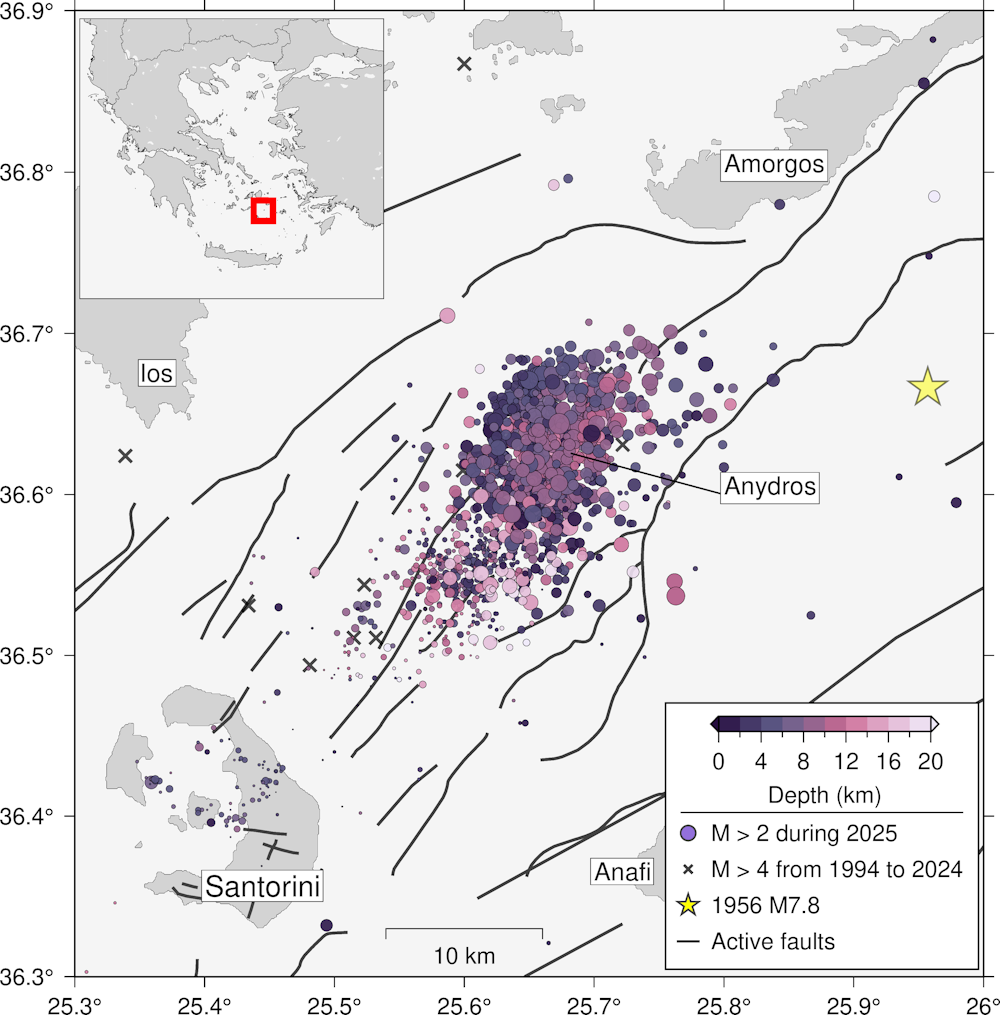
    MIL OSI Russia News

  • MIL-OSI Security: Gang Member Sentenced To 144 Months In Prison For Racketeering And Drug Charges

    Source: United States Bureau of Alcohol Tobacco Firearms and Explosives (ATF)

    NEWARK, N.J. – A member of the Rollin’ 60s Neighborhood Crips gang was sentenced on Wednesday to 144 months in prison for his role in a racketeering conspiracy and the sale of cocaine, Acting U.S. Attorney Vikas Khanna announced.

    Kareem Green, a/k/a “Try Me”(“Green”), 32, previously pleaded guilty before U.S. District Judge Susan D. Wigenton to a superseding indictment that charged him with Racketeer Influenced and Corrupt Organizations (“RICO”) conspiracy and a separate indictment charging him with distribution of cocaine. Judge Wigenton imposed the sentence on February 5, 2025 in Newark federal court. 

    According to documents filed in this case and statements made in court:

    From 2015 through Sept. 22, 2022, Green was a member of the Rollin’ 60s Neighborhood Crips, a criminal enterprise responsible for acts of violence and the distribution of controlled substances in the District of New Jersey and elsewhere. On April 5, 2021, Green worked with other members of the gang to shoot a victim. On April 11, 2021, Green worked with other members of the gang to shoot another victim. On March 5, 2021, Green worked with another member of the gang to distribute cocaine.

    In addition to the prison term, Judge Wigenton sentenced Green to three years of supervised release.

    Acting U.S. Attorney Khanna credited special agents of the DEA, under the direction of Special Agent in Charge Cheryl Ortiz; the Internal Revenue Service, Criminal Investigation (IRS-CI), under the direction of Special Agent in Charge Jenifer Piovesan, and the Bureau of Alcohol, Tobacco, Firearms, and Explosives (ATF), under the direction of Special Agent in Charge L.C. Cheeks, Jr., as well as investigators of the U.S. Marshals Service, under Marshal Juan Mattos’ direction; the Irvington Police Department, under the direction of Police Division Director Tracy Bowers, the Essex County Prosecutor’s Office, under the direction of Acting Prosecutor Theodore N. Stephens II, the FBI, under the direction of Acting Special Agent in Charge Terence G. Reilly, the Newark Police Department, under the direction of Public Safety Director Emanuel Miranda, Sr., the Bloomfield Police Department, under the direction of Director of Public Safety Samuel A. DeMaio, the Essex County Sheriff’s Office, under Sheriff Amir D. Jones’ direction, the East Orange Police Department, under the direction of Chief Phyllis L. Bindi, the Elizabeth Police Department, under the direction of Police Director Earl J. Graves, the Edison Police Department, under the direction of Chief of Police Tom Bryan, the New Jersey State Police, under the direction of Colonel Patrick J. Callahan, the Union County Prosecutor’s Office, under the direction of Prosecutor William A. Daniel, the Spotswood Police Department, under the direction of Chief Philip Corbisiero, and the North Carolina State Bureau of Investigation Fugitive and Missing Person Task Force, which includes members of the FBI, for the investigations leading to the charges in the Rollin 60’s Neighborhood Crips investigation.

    This case is part of an Organized Crime Drug Enforcement Task Forces (OCDETF) investigation. OCDETF identifies, disrupts, and dismantles the highest-level criminal organizations that threaten the United States using a prosecutor-led, intelligence-driven, multi-agency approach. Additional information about the OCDETF Program can be found at https://www.justice.gov/OCDETF.

    The investigation was conducted as part of the Newark Violent Crime Initiative (VCI). The Newark VCI was formed in August 2017 by the U.S. Attorney’s Office for the District of New Jersey, the Essex County Prosecutor’s Office, and the City of Newark’s Department of Public Safety for the sole purpose of combatting violent crime in and around Newark. As part of this partnership, federal, state, county, and city agencies collaborate and pool resources to prosecute violent offenders who endanger the safety of the community. The VCI is composed of the U.S. Attorney’s Office, the FBI, the ATF, the Drug Enforcement Administration’s (DEA) New Jersey Division, the Department of Homeland Security – Homeland Security Investigations, the U.S. Marshals, the Newark Department of Public Safety, the Essex County Prosecutor’s Office, the Essex County Sheriff’s Office, New Jersey State Parole, Union County Jail, New Jersey State Police Regional Operations and Intelligence Center/Real Time Crime Center, New Jersey Department of Corrections, the East Orange Police Department, and the Irvington Police Department.

    The government is represented by Assistant U.S. Attorney Francesca Liquori of the Special Prosecutions Division and Assistant U.S. Attorney Jake A. Nasar of the Health Care Fraud Unit.

                                      ###

    Defense Counsel:

    William Strazza, Esq., Chester, NJ 

    MIL Security OSI

  • MIL-Evening Report: ‘A relentlessly dull world’ – the case for adding more colour to NZ’s grey prisons

    Source: The Conversation (Au and NZ) – By Christine McCarthy, Senior Lecturer in Interior Architecture, Te Herenga Waka — Victoria University of Wellington

    Interior of Auckland South Men’s Prison. Getty Images

    Prisons are not colourful places. Typically, they are grey or some variation of a monochrome colour scheme. But increasingly, such a limited palette is being questioned for its impact on health and rehabilitation.

    As the US journalist and broadcaster Michael Montgomery once wrote of the supermax unit of Pelican Bay prison in California:

    I saw a relentlessly dull world; just concrete and steel […] The monochrome landscape seemed to permeate even the faces of the inmates here; men […] had a pasty, ghostly pallor. It was difficult to imagine any kind of sustained life here.

    Prison greyness is partly due to the predominance of steel and concrete, especially in high- and maximum-security units. But the furniture and fixtures – tables, seats and toilets – are also often stainless-steel grey. In New Zealand, even sentenced prisoners’ clothing is grey.

    One reason for this is the Department of Corrections’ concern about gang colours. New Zealand prisoners cannot keep any item of property with gang-related colours. These prohibitions can be zealously but inconsistently enforced.

    As a prisoner once explained to me (when I was president of the Wellington Howard League), a calculator he used for correspondence classes was allowed in one unit but banned in another, simply because it had a blue strip on it.

    Something similar was reported by the Prison Inspectorate in a 2019 report. In that case, staff withheld “black underwear containing small amounts of blue stitching. Staff confirmed this was their approach.”

    Worlds without colour

    Does colour matter in human environments? The answer appears to be yes. Examples include red increasing heart rates, blue and green creating calm, and yellow evoking hope. According to Australian researcher Thomas Edwards:

    yellow may be appropriate in contexts where high motivation and a future-focus are required. By contrast, green and blue may be relevant to settings where low motivation, a present focus, and prosocial behaviours are favoured.

    Colour can also help with legibility and way-finding, and differentiate surfaces to prevent trip hazards – an increasingly important factor as the prison population ages.

    Other over-represented groups in prison can also benefit. For example, Israeli research published in 2022 concluded that soft natural colours and low contrast can improve environments for people with autism spectrum disorder.

    Ultimately, a colourless world is not a good one. Grey and neutral colours reduce visual stimulation, demotivate, increase boredom and can lead to depression. Colour takes on particular importance for people who spend most or all of the day indoors, such as the prisoners in high- and maximum-security units.

    Murals are on the wall and patterned tables in a Californian prison unit.
    Getty Images

    The need for variety

    Colour has a graduated spectrum – there isn’t only one blue, for example. Tints, tones and shades add another level of complexity. Coloured surfaces are affected by their material and degree of sheen. Different combinations of colours and different light sources also affect how a colour looks and its likely impact on people.

    This means there are many possible variants to consider. But most research is highly specific and the findings are rarely universally applicable. The impact of context, cultural differences, our personal preferences and colour associations can also be difficult to measure.

    But this theoretical complexity shouldn’t prevent the use of more colour in prison architecture. Variety in colour, rather than the use of specific colours, is the fundamental change that is needed. Likewise, concerns about gang colours can be mitigated if pattern and colour combinations are astutely used.

    In 2019, Edinburgh College of Art researchers led a project involving dementia patients, adding colour to corridors at the Royal Edinburgh Hospital. Multicoloured strips of block colours were painted on the white corridor walls to relieve the monotony of these spaces.

    Fewer aggressive incidents between patients or with staff were reported after the project. The specific reason is unclear, but it appears better demarcation of spaces led to fewer patients congregating and causing conflict in circulation areas.

    Another example at a semi-open prison in Bosnia saw prisoners painting diagonal lines on walls, creating triangles painted in different colours. Researchers concluded that “bright colours are recommended in the prison, with green and blue […] being the best rated because people perceive them as soothing, stimulating, pleasant and safe”.

    Brighter futures

    There are many other instances in healthcare settings throughout New Zealand where decals of photographic or other images have transformed walls, lifting the atmosphere of a space.

    Increasing the amount of colour on a wall is an inexpensive way to improve prison environments for both staff and prisoners. It can easily create variety and relieve the tedium of otherwise indistinguishable spaces.

    Housing prisoners in a dreary architecture of grey walls, grey furniture and people in grey jumpsuits must make it difficult for them to imagine and prepare for a positive future in the community.

    This can be inferred from studies of prisoners in solitary confinement which have established that living in extremely monotonous environments can cause depression, paranoia, anxiety, aggression and self-harm.

    The new expansion to Waikeria Prison, and its 100-bed mental health unit Hikitia, is an opportunity to significantly shift this attitude to prison interior architecture – but it shouldn’t stop there.

    All prisons would benefit from replacing the typically monochromatic palette of prison architecture with something more colourful.

    Christine McCarthy is a past President of the Wellington Howard League for Penal Reform (2018–20).

    ref. ‘A relentlessly dull world’ – the case for adding more colour to NZ’s grey prisons – https://theconversation.com/a-relentlessly-dull-world-the-case-for-adding-more-colour-to-nzs-grey-prisons-248665

    MIL OSI AnalysisEveningReport.nz

  • MIL-OSI Security: Pasco County Man Sentenced To 9 Years In Federal Prison For Trafficking Methamphetamine

    Source: Office of United States Attorneys

    Tampa, FL – U.S. District Judge Steven D. Merryday has sentenced Carlos Solorio (25, Dade City) to nine years in federal prison for distributing methamphetamine. Solorio pled guilty on November 7, 2024.

    According to court documents, on May 31, 2023, Solorio sold 3 kilograms of methamphetamine to another person at a grocery store parking lot in Dade City, Florida. This narcotics transaction was arranged by brokers in Mexico and Atlanta, Georgia.

    This case was investigated by the Drug Enforcement Administration, Homeland Security Investigations, the Pasco Sheriff’s Office, and the Tampa Police Department. It was prosecuted by Assistant United States Attorney David J. Pardo.

    This case was part of an Organized Crime Drug Enforcement Task Force (OCDETF) investigation. OCDETF identifies, disrupts, and dismantles the highest-level criminal organizations that threaten the United States using a prosecutor-led, intelligence-driven, multi-agency approach. Additional information about the OCDETF Program can be found at www.justice.gov/OCDETF.

    MIL Security OSI

  • MIL-OSI USA: Senator Reverend Warnock, Colleagues Raise Alarm Over Chaos at Critical National Security Agencies Hurting National Security, Placing U.S. Citizens at Risk

    US Senate News:

    Source: United States Senator Reverend Raphael Warnock – Georgia

    Senator Reverend Warnock, Colleagues Raise Alarm Over Chaos at Critical National Security Agencies Hurting National Security, Placing U.S. Citizens at Risk

    Senator Reverend Warnock, Senators: “Blanket stop-work orders… are causing immediate harm to U.S. national security, placing U.S. citizens at risk, disrupting life-saving work.”

    Washington, D.C. — Today, U.S. Senator Reverend Raphael Warnock (D-GA) and 36 of his colleagues pushed Secretary of State Marco Rubio to answer for the growing chaos and dysfunction at the U.S. Department of State following the Trump Administration’s illegal attempt to destroy the U.S. Agency for International Development (USAID).

    USAID is a critical pillar of U.S. national security strategy, providing lifesaving aid and development support around the world to help ensure stability. Yesterday, personnel at USAID were not permitted to enter the agency’s headquarters, and Elon Musk announced that President Donald Trump agreed to close the agency and move it under the State Department. The Trump Administration, led by Musk, has also furloughed thousands of senior career civil servants, including two top security officials who denied Musk and the Department of Government Efficiency access to classified documents and systems.

    “We are deeply concerned by reports of not only growing chaos and dysfunction at the Department of State, but the Administration’s brazen and illegal attempts to destroy the U.S. Agency for International Development (USAID). Mass personnel furloughs of dubious legality and abrupt, blanket stop-work orders without regard to relevant appropriations laws are causing immediate harm to U.S. national security, placing U.S. citizens at risk, disrupting life-saving work and breaking the U.S. government’s contractual obligations to private sector partners,” wrote the senators.

    The senators continued, “The Administration’s failure to consult with Congress prior to taking these steps violates the law and impedes Congress’s constitutional duty to conduct oversight of funding, personnel and the nation’s foreign policy. The Administration’s failure to expend funds appropriated on a bipartisan basis by Congress would violate the Impoundment Control Act.”

    They continued, “Every Administration has the right to review and adjust ongoing assistance programming. However, attempting to arbitrarily turn off core functions of a critical U.S. national security agency, without Congressional consideration or any metric-based review and absent legal authority to do so, is unprecedented and deeply disturbing.”

    In addition to Senator Warnock, the letter was authored by Senator Tim Kaine (D-VA), and cosigned by Senators Cory Booker (D-NJ), Dick Durbin (D-IL), Jeff Merkley (D-OR), Ruben Gallego (D-AZ), Lisa Blunt Rochester (D-DE), Michael Bennet (D-CO), Elizabeth Warren (D-MA), Peter Welch (D-VT), Edward J. Markey (D-MA), Kirsten Gillibrand (D-NY), Bernie Sanders (I-VT), Gary Peters (D-MI), Tammy Baldwin (D-WI), Richard Blumenthal (D-CT), Ron Wyden (D-OR), Martin Heinrich (D-NM), Amy Klobuchar (D-MN), Tammy Duckworth (D-IL), Andy Kim (D-NJ), Adam Schiff (D-CA), Angus S. King (I-ME), Sheldon Whitehouse (D-RI), John Hickenlooper (D-CO), Mazie K. Hirono (D-HI), Alex Padilla (D-CA), Tina Smith (D-MN), Catherine Cortez Masto (D-NV), Jack Reed (D-RI), Chris Murphy (D-CT), Jacky Rosen (D-NV), Mark Kelly (D-AZ), Brian Schatz (D-HI), Mark R. Warner (D-VA), Chris Van Hollen (D-MD), Chris Coons (D-DE) and Elissa Slotkin (D-MI),

    The letter can be viewed HERE and the text is below.

    Dear Secretary Rubio:

    The effective administration of U.S. foreign assistance is critical to advancing core U.S. national security priorities, including countering the influence of China, Russia and Iran. As you acknowledged at your confirmation hearing, pushing back on China in particular is a top bipartisan priority. 

    As such, we are deeply concerned by reports of not only growing chaos and dysfunction at the Department of State, but the Administration’s brazen and illegal attempts to destroy the U.S. Agency for International Development (USAID). Mass personnel furloughs of dubious legality and abrupt, blanket stop-work orders without regard to relevant appropriations laws are causing immediate harm to U.S. national security, placing U.S. citizens at risk, disrupting life-saving work and breaking the U.S. government’s contractual obligations to private sector partners.

    The Administration’s failure to consult with Congress prior to taking these steps violates the law and impedes Congress’s constitutional duty to conduct oversight of funding, personnel and the nation’s foreign policy. The Administration’s failure to expend funds appropriated on a bipartisan basis by Congress would violate the Impoundment Control Act.

    Foreign assistance is critical to supporting U.S. strategic interests around the world. Foreign assistance protects U.S. national security, advances U.S. values, and ensures the U.S. is the partner of choice for everything from defense procurement to cutting edge scientific research. China, Russia and Iran are already moving rapidly to exploit the vacuum and instability left by the U.S.’s sudden global retreat.

    Every Administration has the right to review and adjust ongoing assistance programming. However, attempting to arbitrarily turn off core functions of a critical U.S. national security agency, without Congressional consideration or any metric-based review and absent legal authority to do so, is unprecedented and deeply disturbing.

    We request immediate clarification on the following:

    Status of USAID:

    1. Confirmation of your understanding that any effort to abolish USAID or merge USAID into the Department of State absent Congressional consultation and approval is illegal.
    2. Confirmation of your understanding that adversaries such as China, Russia and Iran are quickly moving into the vacuum left by suspended USAID programs. 
    3. The Department of State’s assessment of Mr. Elon Musk’s financial ties to China and the impact of these ties to the decision-making process of Mr. Musk and his employees.
    4. Confirmation that neither you nor any member of your leadership team are taking direction from Mr. Musk with regards to the work of the Department of State or USAID, personnel or financial decisions for either agency, or any other matters relevant to U.S. national security. 
    5. Confirmation of the names and employment status of individuals directed by Mr. Musk to engage with USAID staff, the qualifications of these individuals, and the level of their security clearances – if any.

    Personnel:

    1. Confirmation of your understanding that any unauthorized access by or disclosure of classified information to individuals without appropriate security clearance could be considered a criminal offense.
    2. The legal authority and rationale under which, on January 28, more than 50 senior career civil and foreign service USAID officials were placed on administrative leave. This move was not only unprecedented, but also inconsistent with the Office of Personnel Management’s own guidelines for the use of administrative leave.
    3. The legal authority under which, on January 28, approximately 390 USAID Institutional Support Contractors (ISCs) were given stop-work orders, and clarification of which Administration official directed the implementation of this termination.
    4. Whether any Department of State career civil and foreign service or contractors have been placed on administrative leave or removed from their roles as a result of or relating to the assistance freeze or any directives from the Office of Foreign Assistance.
    5. Clarification of which Administration official directed the implementation of this mass furlough.
    6. Clarification of whether these individuals were directed to be terminated without cause.
    7. Confirmation that personnel will not face retaliation or retribution for performing their duties under the previous Administration’s policy direction.
    8. Under what authorities and by which official’s directive career civil service, foreign service, and Personal Services Contractors (PSC), and those under other hiring authorities have been removed from their roles or limited in their ability to execute their work.
    9. Confirmation that further career civil service, foreign service and USAID contractors will not be removed from their roles without cause or receive stop work orders.
    10. Whether, upon full resumption of legally mandated foreign assistance activities, the Administration intends to re-hire contractors who have been removed from their roles.
    11. Any additional guidance provided to State and USAID staff regarding the foreign assistance freeze, including confirmation of whether direct hires, contractors, or implementing organizations have been directed not to speak publicly about the foreign assistance freeze.
    12. Public identification of the individual currently serving as the Director or Acting Director of the State Department’s Office of Foreign Assistance and as Acting Deputy Administrator of USAID, and the dates upon which this individual was appointed to each position.
    13. Confirmation of your understanding that the State Department’s Director of Foreign Assistance has no authority to issue personnel directives for USAID.

    Resumption of Foreign Assistance:

    1. The specific process and anticipated timeframe for activities to receive exemptions or waivers, as referenced in your January 28, 2025 directive to State and USAID staff.
    2. The mechanisms and metrics established for this waiver process.
    3. The timeline for full resumption of legally mandated foreign assistance activities.
    4. Clarification of what risk assessment or analysis of potential risk to U.S. national security interests were conducted prior to the decision to freeze foreign assistance activities.
    5. Confirmation of the Department of State’s obligation to comply with U.S. contract law and your responsibility as Secretary of State ensure the Department honors its commitments to contracting partners.

    We welcome your urgent attention to these questions. We and our staff stand ready to work with you to ensure U.S. foreign assistance funding continues to be deployed effectively to protect American citizens, at home and abroad.

    Respectfully,

    MIL OSI USA News

  • MIL-OSI USA: Senators Reverend Warnock, Moran Introduce Bipartisan Legislation to Protect Military Benefits for Surviving Spouses of Fallen Servicemembers

    US Senate News:

    Source: United States Senator Reverend Raphael Warnock – Georgia

    Senators Reverend Warnock, Moran Introduce Bipartisan Legislation to Protect Military Benefits for Surviving Spouses of Fallen Servicemembers

    Washington, D.C. – Today, U.S. Senators Reverend Raphael Warnock (D-GA) and Jerry Moran (R-KS), chairman of the Senate Committee on Veterans’ Affairs, introduced legislation to allow spouses of fallen servicemembers to retain certain survivor benefits if they remarry. Under current law, most benefits from the Department of Defense and the Department of Veterans Affairs are terminated for surviving spouses who remarry before age 55. The Love Lives On Act of 2025 would allow surviving spouses to retain these benefits upon remarriage regardless of age.

    “The men and women in our military serve our country courageously—and their spouses serve our country, too. If one of our heroes loses their life in the line of duty, we should honor our servicemember’s sacrifice by ensuring their spouse can retain survivor benefits if they choose to remarry,” said Senator Reverend Warnock. “As long as I have the honor to represent Georgia military families in the Senate, I will fight for them as hard as they have fought for our freedoms. I’m proud to continue leading this bipartisan effort to fulfill our promise to these patriots.”

    “No survivor should have to choose between getting married again or keeping the benefits they need to support their family following the loss of their servicemember or veteran spouse,” said Senator Moran. “Military service is family service and, by making certain that surviving spouses can heal from their loss without fear of losing their benefits, the Love Lives On Act helps recognize the great debt our nation owes to Gold Star families.”

    The Love Lives On Act is cosponsored by Senators Tom Cotton (R-AR), Catherine Cortez Masto (D-NV), Lisa Murkowski (R-AK), Martin Heinrich (D-NM), John Cornyn (R-TX), John Fetterman (D-PA.), Mike Rounds (R-SD), Mazie Hirono (D-HI), Ted Cruz (R-TX), John Hickenlooper (D-CO), Sheldon Whitehouse (D-RI), Jacky Rosen (D-NV), Elizabeth Warren (D-MA), Maggie Hassan (D-NH), Alex Padilla (D-CA), Brian Schatz (D-HI), Angus King (I-ME), Bernie Sanders (I-VT), Chris Van Hollen (D-MD), Chris Coons (D-DE), Jeanne Shaheen (D-NH) and Amy Klobuchar (D-MN).

    The full text of the legislation can be found here. A letter of support for the bill can be found here. 

    “TAPS is grateful to Senators Moran, Warnock and our 22 Senate original cosponsors as well as Representatives Hudson, Morrison, Van Orden, Neguse and Khanna for their leadership in reintroducing comprehensive remarriage legislation, the Love Lives On Act of 2025,” said Bonnie Carroll, President and Founder, Tragedy Assistance Program for Survivors (TAPS). “Their leadership in the last Congress led to the passage of many of the provisions of the Love Lives on Act of 2023 and we look forward to passing the remaining provisions of this important legislation to ensure surviving military spouses retain their benefits upon remarriage at any age. Surviving spouses should not have to choose between finding love again and financial security.”

    Since April 2023, Senator Warnock has been working to pass his bipartisan Love Lives On Act, comprehensive legislation that would allow spouses of deceased servicemembers to retain survivor benefits upon remarriage. In December 2024, Senator Warnock secured a provision that will allow surviving spouses to maintain eligibility for education benefits upon remarriage. Additionally, the Senator successfully included another provision in the legislation that remove the “holds oneself out” provision that penalized former spouses who did not remarry but appeared to be dating someone else, as well as a provision changing the definition of surviving spouse to include same sex couples. Other provisions from his legislation were previously passed in the defense authorization bill that handles policies and funding levels for our Armed Forces. The provision secured in 2023 restores surviving spouse access to military bases, their commissaries, and their morale, welfare and recreation (MWR) retail stores for those who lost access due to remarriage, ensuring they can maintain their connection to the communities they have sacrificed so much to be a part of.

    MIL OSI USA News

  • MIL-OSI USA: Senator Reverend Warnock Named to TIME’s 2025 ‘The Closers’ List

    US Senate News:

    Source: United States Senator Reverend Raphael Warnock – Georgia

    Senator Reverend Warnock included in annual recognition of Black leaders working to close racial equity gaps 

    Senator Reverend Warnock: “When we invest in our children—and most poor people are children—we strengthen the future of our country and we help to ensure that the 21st century, like the 20th century, will be the American century”

    Senator Reverend Warnock, other honorees featured in February edition of TIME, out on newsstands Feb. 14

    Senator Reverend Warnock: “For me, it is that moral and spiritual perspective that informs my work, and I try to bring that with me to Washington every single day” 

    ICYMI: Read Senator Reverend Warnock’s profile and see the full list of honorees HERE

    WATCH video of Senator Reverend Warnock’s 2025 ‘The Closers’ interview HERE

    Washington, D.C. – Today, TIME named U.S. Senator Reverend Raphael Warnock (D-GA) to its 2025 list of ‘The Closers,’ recognizing Black leaders working to close racial equity gaps. In an exclusive interview for the annual list, Senator Warnock discussed his focus on centering people in public policy, as well as how that moral perspective informs his work in the Senate to ensure all Georgians can economically thrive. TIME’s ‘The Closers’ list will be included in the magazine’s February edition available on newsstands February 14. Additionally, to recognize the 2025 ‘The Closers’ honorees, TIME will host an invite-only gathering in New York City on February 13, featuring remarks from Senator Warnock and other select members of the 2025 list.

    “When we invest in our children—and most poor people are children—we strengthen the future of our country and we help to ensure that the 21st century, like the 20th century, will be the American century,” Senator Warnock said. “For me, it is that moral and spiritual perspective that informs my work, and I try to bring that with me to Washington every single day.”

    Senator Warnock has long worked to level the economic playing field for Georgians and enact federal policy that helps working people get ahead, no matter their background. ‘The Closers’ highlights Senator Warnock’s successful efforts to deliver federal relief to farmers who have suffered historic discrimination and cap the costs of insulin for seniors. During his interview Senator Warnock also uplifted his work in the current Congress to further narrow the racial wealth gap and address Georgians’ economic pains, including his on-going efforts to pass a bipartisan Farm Bill, revive the expanded Child Tax Credit—the largest tax cut in the nation’s history for low income and working families—and lower the cost of insulin and other prescription drugs for everyone, whether they are insured or not.

    WATCH excerpts of Senator Reverend Warnock’s interview HERE.

    READ Senator Reverend Warnock’s interview HERE.

    SEE the full list HERE or at time.com/closers.

    MIL OSI USA News

  • MIL-OSI USA News: Remarks by President Trump at the National Prayer Breakfast

    Source: The White House

    class=”has-text-align-center”>THE WHITE HOUSE

    Office of Communications

    ________________________________________________________________

    For Immediate Release                         

    U.S. Capitol

    Washington, D.C.

    8:18 A.M. EST

     THE PRESIDENT:  Thank you very much.  This is very beautiful, I must say.  This is a beautiful place.  And our country is starting to do very well again.  It’s happening fast — a little faster than people thought. 

    Thank you especially to Senator Marshall for the beautiful introduction.  Appreciate it very much.  Thank you.  Great senator you are. 

    I also want to thank a friend and a man of profound faith and tremendous patriotism who’s also become a great friend.  You become much friendlier when you have a majority of two or three or four.  Could even be five pretty soon.  (Laughter.)  But for a little while, it was one.  That’s Mike Johnson, speaker.  Thank you very much, Mike — very much.  (Applause.)

    And thanks, as well to somebody who’s doing a fantastic job: Senator Thune.  Thank you very much, Senator.  (Applause.)  It’s not easy.  It’s not easy.  It’s really great. 

    And Leader Scalise — Steve, wherever you may be.  I think you’re here someplace.  There he is.  A brave guy, too.  A brave guy.  I always say it. 

    And Senator Chuck Schumer.  Chuck, thank you very much.  Thank you.

    Senator Hassan, thank you very much.  Thank you.  Very nice to see you. 

    Congressman Jeffries, thank you.

    And many other very distinguished leaders in the room.  Great, great group of people.  If we could ever come together, it would be unbelievable.  It may not happen, but it should and maybe it will. 

    From the earliest days of our republic, faith in God has always been the ultimate source of the strength that beats in the hearts of our nation. 

    We have to bring religion back.  We have to bring it back much stronger.  It’s one of the biggest problems that we’ve had over the last fairly long period of time.  We have to bring it back. 

    Thomas Jefferson himself once attended Sunday services held in the old House Chamber on the very ground where I stand today, so there could be nothing more beautiful than for us to gather in this majistic place — it is majestic — and reaffirm that America is and will always be “one nation under God.” 

    At every stage of the American story, our country has drawn hope and courage and inspiration from our trust in the Almighty.  Deep in the soul of every patriot is the knowledge that God has a special plan and a glorious mission for America.  And that plan is going to happen.  It’s going to happen.  I hope it happens sooner rather than later.  It’s going to happen. 

    And it’s His hand that guides us every single step of the way.  And all of you and the things we have to do is to see the defining role that faith and prayer have played in the life of our nation.  And you just have to look at this building, and you can look at each other.  You can really look at each other.  It’s defined almost everyone in this room.  I think faith has been very strong with the people in this room. 

    Just steps away from here, in the Hall of Columns, is the statue of John Winthrop, who famously proclaimed that America would stand as “a city upon a hill, a light to all nations with the eyes of all people upon us.”

    Today, almost 400 years after that famous sermon, we see that with the Lord’s help, the city stands taller and shines brighter than ever before — or at least it soon will. 

    In that same hall, we also find the statue of the great Roger Williams, who founded the state of Rhode Island, named its capital city Providence, and built the First Baptist Church in America. 

    It’s Williams that we have to thank for making religious liberty part of the bedrock of American life.  And today we must protect the fundamental freedom with absolute devotion.  We must stand strong, just like generations of Americans have done on the battlefields all around the world. 

    Feet away from the magnificent rotunda, another statue watches over visitors to the Capitol.  George Washington, the founder of our country, often called for Americans to join together in prayer — very often.  And more than two centuries later, this morning, we heed President Washington’s wisdom and follow in his mighty footsteps.  He was a strong man and of great religious strength. 

    The stories of legends like Washington, Winthrop, and Williams remind us that without faith in God, there would be no American story.  Every citizen should be proud of this exceptional heritage.  We have an unbelievable heritage, and we have to use that and make life better for everyone. 

    That’s why, as we approach the 25th-times-10 anniversary — think of that, 250; 250 years we’ll be celebrating next year — of our country’s founding, I have signed an executive order to resume the process of creating a new national park full of statues of the greatest Americans who ever lived. 

    We’re going to be honoring our heroes, honoring the greatest people from our country.  We’re not going to be tearing down.  We’re going to be building up. 

    It will be called the National Garden of American Heroes.  Some of you will be on that soon-to-be hallowed ground — some of you.  Let’s see.  I can pick a few of you right now by looking — (laughter) — because there’s a couple of you right now, I can see.  Let’s see.  (Laughter.)  It’s the president’s sole opinion.  (Laughter.)  And I’ve given myself a 25-year period — (laughter) — and then somebody else.  By that time, it will be very, very built up.  (Laughter.)

    No, it will be something very special, and I hope that Congress will fully fund this wonderfully unifying project at the first possible opportunity — it’s not going to be a lot of money; going to be very important, however — so that more of our people can be inspired by the faith and courage of patriots like those who we honor in these halls.  One of the incredible Americans whose memory my order will celebrate is also recognized with a statue in the Capitol, representing the great state of North Carolina, and that’s a man known — who everybody loved: Reverend Billy Graham. 

         He was something.  My father used to take me to watch the “Crusades.”  He would take me to Yankee Stadium.  I remember it so well.  I remember it more than I remember any Yankee game, and I’ve seen a lot of Yankee games.  (Laughter.)  Can you believe it?  And Billy didn’t have a bat, so, you know, he’s pretty good.  It was amazing.  You’d have 60- or 70,000 people, and they loved him.  They loved him. 

         I saw him with Franklin.  I don’t know if Franklin is here.  I just don’t know, but I’ve gotten to know Franklin.  He’s done a great job with helping on tragedies, on problems like in North Carolina, California.  He’s always the first one there.  The work he does is — his father is very proud of him, I can tell you that.  But Billy Graham was very special. 

         One floor below us, Reverend Graham’s statue stands with an open Bible, the page turned to a letter from the apostle Paul, which reads, “Let us not grow weary of doing good, for in due season, we will reap if we do not give up.”  Never give up.  Never ever give up.  You can’t. 

         How about me?  If I would have given up, I would not be here right now.  Who the hell knows where I’d be?  (Laughter.)  It might not be a good place.  If it was up to the Democrats, it would not be a good place at all.  (Laughter.)  

         Never ever give up.  There could be no better message for the leaders gathered here — and you are real leaders — that we must never give up, and we must never grow tired.  We must never grow weary, and we always must practice good.

         As you know, last week, only a few miles from here, our nation witnessed a terrible tragedy when 67 people were killed in a horrible accident near Reagan Airport.  As one nation, we take solace in the knowledge that their journey that night did not end in the icy waters of the Potomac, but in the warm embrace of a very loving God.  None of us knows exactly when our time on Earth will be over.  You never know.

         A truth I confronted a few short months ago when there was an incident that wasn’t — it was not fun.  It was not a good thing.  But God was watching me.  The chances of me being here — my sons are shooters.  They’re really good shooters, Don and Eric.  And they said the chances of missing from that range with that gun are — but Don equated it to a one-foot putt.  That’s pretty bad.  Two feet I can see missing.  (Laughter.)  But one foot you can’t miss.  It was the equivalent of a one-foot putt, is what he told me. 

         He said — in fact, he gained some religion.  He gained — he went up 25 percent.  (Laughter.)  And if you know him, that’s a lot.  (Laughter.)  But he said, “There had to be somebody that saved you, and I think I know who it is.”  And he looked up.  And I said, “Whoa, Don, that’s come — you’ve come a long way.”  (Laughter.)  He’s a good guy.

         But they my two sons just really couldn’t believe it.  Had I not turned that right turn just at that time — and the audience — 55,000 people standing this way.  There were just a few people in the back on the bleachers.  There was nobody over there, except for my all-time favorite chart in history, a chart on immigration.  Immigration saved my life.  See?  So, we’re going to be good for immigration, okay? 

    But had I not made that turn — boom — and quickly.  It was almost as though a deer bolted.  You know, they say the only way you miss when you’re a good shot is if it bolts?  I bolted.  I turned to the right to look at the chart, and I said, “Wow, what was that?  What was that?” 

         So, you never know, but God did that.  I mean, it had to be.  The chances of turning, because there’s no reason to turn to the right.  You know, the chart is rarely brought down.  I brought it down maybe 20 percent and — 20 percent of the time.  And it’s never on my right.  It’s always on my left.  And it’s always at the end of the speech, never the beginning of the speech. 

    And if I was a little more than that 90-degree angle, it would be no good.  And if I was a little less, it would be no good.  It had to be perfect.  The thing went “shhh” right along the edge.  It didn’t affect my hair.  Can you believe that?    (Laughter.)  It might’ve touched it.  Might have touched it, but not where it counts, not — (laughter) — not the skin part.

         But it changed something in me, I feel.  I feel even stronger.  I believed in God, but I feel much more strongly about it.  Something happened.  And so — (applause) — thank you.  Thank you.

         But that event, like the tragedy last week, should remind us all that we have to make the most out of every single day that we have.  Who would think that you’re in space and two things collide?  The odds of that happening are so small, even without proper control. 

    We should have had the proper control.  We should have had better equipment.  We don’t.  We have obsolete equipment.  They were understaffed, for whatever reason.  I guess the helicopter was high, and we’ll find out exactly what happened.  But the odds, even if you had nothing — if you had nobody, the odds of that happening are extremely small. 

         It’s like, did you ever see — you go to a driving range in golf and you’re hitting balls, hundreds of balls, thousands of hours.  I never see a ball hit another ball.  Balls going up all over the place.  You never see them hit. 

     It was amazing that that could happen.  There was a lot of mistakes made, and it should have never happened.  But

    regardless of that, it’s amazing that it happened. 

     And I think that’s going to be used for good.  I think what is going to happen is we’re all going to sit down and do a great

    computerized system for our control towers, brand-new — not pieced together, obsolete, like it is — land-based — trying to hook up a land-based system to a satellite system. 

    And the first thing that some experts told me when this happened is you can’t hook up land to satellites, and you can’t hook up satellites to land.  It doesn’t work.  And we spent billions and billions of dollars trying to renovate an old, broken system, instead of just saying, “Cut it loose, and let’s spend less money and build a great system.”  Done by two or three companies — very s- — good companies, specialists.  That’s all it is. 

         They used 39 companies.  That means that 39 different hookups have to happen.  And I don’t know how many people of you are good in terms of all of the kind of things necessary for that — and it’s very complex stuff — but when you have 39 different companies working on hooking up different cities and different people — you need one company with one set of equipment. 

    And there are some countries that have unbelievable air controller systems, and they would have — bells would have gone off when that helicopter literally even hit the same height, because it traveled a long distance before it hit.  It was just like — just wouldn’t stop — you follow the line.  But bells and whistles would have gone off.  They have them where it actually could virtually turn the thing around.  It would have just never happened if we had the right equipment. 

    And one of the things that’s going to be — I’m going to be speaking to John and to Mike and to Chuck and to everybody.  We have to get together and just — as a single bill, just pass where we get the — the best control system.

    When I land in my plane, privately, I use a system from another country, because my captain tells me — I’m landing in New York, and I’m using — I won’t tell you what country, but I use a system from another country, because the captain says, “This thing is so bad.  It’s so obsolete.”  And we can’t have that. 

    So, we’re going to have the best system and it’s a lot of money, but it’s not that much money.  And it’ll happen fast, and it’ll be done by total professionals.  And when it’s done, you’re not going to have accidents.  It’s just not — they’re not — they’re virtually not possible to have. 

    Each of us is blessed with a precious chance to help lead America to renew our pledges of faith and everything else and bring us to new heights and create a future of promise for our people and for ourselves. 

    You know, we have the most important people in the country, in a true sense, here, because you’re the ones that are going to make the decision.  You’re the ones that are leading us into so many different things, whether it’s the right air control system or the right size military or what to do and what not to do — most important people.

    And many of you are very religious.  I know so many of you are very religious.  And I just think that our country has been so badly hurt.  We’re very hurt by what COVID did to religion.  It really hurt it badly.  People couldn’t go to church for a long period of time.  Even going outside, they were given a hard time.  And I’m not blaming anybody for that, but — but it was very hard to gather. 

    So, they start using computers, if that.  And when they come back, it’s just, you know, a whole new experience they have to get used to.  But it is starting to come back. 

    We had a fantastic thing happen yesterday.  The Army had the best recruitment numbers that they’ve had in more than 15 years.  They think it could be 25 years, actually — they’re going to probably put that out — but more than 15 years just now.  (Applause.)

    And we were worried about it.  We were talking about it numerous times that, you know, we don’t have people joining our military services.  We don’t have people joining our police force.  We have to cherish our police. 

    It’s so dangerous.  You open a car and somebody starts shooting.  They have blackened windows.  You don’t even have any idea who’s in the car.  Oftentimes, they have the dark windows — which they’re not, in theory, supposed to have, but they have them.  The door opens and a gun is pointed at your face, and you can’t do a thing about it.  It’s just nothing you’re going to do about it.  Your friends will take them out, and it’s happened so many times, but you just — it’s so — such a dangerous thing.  We have to cherish these people. 

    So, today, we join our hearts and prayers in recommitting to putting our country first.  We have to put our country first, making America stronger and greater and more exceptional than ever before.

    And we have to make religion a much more important factor now.  We have to make it an important factor.  And if we do that, it’s going to be — our job is just going to be much easier.  It unifies people.  It brings people together.  Democrats are going to be able to have lunch again and dinner with Republicans. 

    And I remember, just as — growing up, I’d see — you know, I revered senators and congressmen as something very special, but they were out to dinner all the time.  We had an old congressman, maybe some of — Sey Halpern from Queens,

    and he was a friend of my father.  But he’d have dinner with — he was a Democrat, but he would have dinner with Republicans, and he’d be at it.  It wouldn’t even make a difference.

    Today, it’s like shocking.  And it shouldn’t be.  You have to get together.  We really have to get together. 

    We all know what’s right and what’s wrong, and

    there’s going to be compromise on both sides, but we have to just do the right thing, and we have to get together.  

    You did it with Marco Rubio.  He got everybody who was — 99 votes.  And the only vote was our VP, who — who maybe we should have been there just to make it a hundred, but I think I would have been angered if it was a hundred.  That might be a step too far, right?  (Laughter.)  But, no, it was great to see a vote. 

    Pam Bondi had support from Democrats, and some of the others had some pretty good support.  So, you know, it’s doable.

    We had a recent bill having to do with a very beautiful young lady who was killed from Georgia, and that bill was very bipartisan.  It was a very beautiful thing to watch, actually.  And so, I think we just have to — if possible, we have to unify.

    There’s big division.  I mean, some people want an open border and some people want a closed border.  We want it closed, and they want it open.  Now, that’s a big difference.  How do you solve that problem?  It’s a big difference. 

    Some people want men in women’s sports and some people don’t.  And I was with somebody yesterday who was so upset that the bill was signed, where men cannot participate in women’s sports.  And I said — he’s a very smart guy —

    went to a great school, was a great student.  And he actually feels, you know, that that should happen: Men should be able to play — meaning transition into women sports.

    And you talk to him, and it’s just — you know, I don’t understand it. I think it — I don’t understand how the problem ever got started in the first place.  It just seems so simple.

    But he’s a good person and just believes it.  He just believes it.  Not going to be easy to convince him otherwise. 

    So, where is a middle ground?  It’s just hard to have a middle ground if there’s two ways.  I mean, you can either do it or you can’t. 

    But I think a lot of good things are going to happen.  You know, a lot of people might be surprised to hear me say that, of all people, but I think a lot of good things are going to happen.  Because our country has got some big headaches, but we have tremendous spirit right now. 

    The spirit is as high as it’s been.  It was up 49 points this morning — 49 points.  That’s the biggest increase in the history of whatever the poll was. 

    So, the spirit is there.  That’s a big factor.  That’s probably the hardest thing to get back, to be honest.  The rest is easy.  The rest is easy. 

    So, I want to just thank you all.  I want to congratulate a lot of the new members.  I see so many of you that ran great races.  David, that was a great race.  But so many that ran great races.  And on both sides, you ran some incredible races.  So, it’s good to be with you. 

    And God bless everybody.  We want to come together.  And the happiest — the person, the element, the everything that’s going to be happy.  People of religion are going to be happy again. 

    And I really believe you can’t be happy without religion, without that belief.  I really believe it.  I just don’t see how you can be.  (Applause.)

    So, let’s bring religion back.  Let’s bring God back into our lives. 

    Thank you all very much.  Thank you very much.  Great honor.  Thank you.  (Applause.)

    END                  8:42 A.M. EST

    MIL OSI USA News

  • MIL-OSI USA: Indian National Sentenced for Conspiracy to Distribute Controlled Substances

    Source: US Department of Health and Human Services – 3

    Burlington, Vermont – The Office of the United States Attorney for the District of Vermont announced that on February 3, 2025, Nitin Mishra, 33, of Jaipur, India, was sentenced for conspiring to distribute controlled substances and distributing controlled substances, including the opioids Tapentadol and Tramadol, in connection with his involvement in an international drug trafficking operation. Mishra had been extradited from Albania to the United States to face these charges. United States District Judge William K. Sessions III sentenced Mishra, who had already spent approximately 28 months in custody, to time served and ordered the defendant to pay $7,300 in forfeiture.

    According to court records, from around the beginning of 2019 through about June 2021, Mishra, who was based in India, conspired with two Vermont residents, among other individuals, to send multiple shipments of controlled substances, including opioids and misbranded drugs, into the United States. Mishra then worked with his co-conspirators to reship and distribute these drugs to individuals located throughout the United States. The investigation revealed that the conspiracy involved tens of thousands of pills, and included the Schedule II controlled substance Tapentadol, as well as the Schedule IV controlled substances, Tramadol, Carisoprodol, and Zolpidem.

    Acting United States Attorney Michael P. Drescher commended the investigatory efforts of the Food and Drug Administration’s Office of Criminal Investigations, Homeland Security Investigations, the Drug Enforcement Administration, the United States Postal Inspection Service, and the Rutland City Police Department.

    The prosecutor is Assistant United States Attorney Andrew C. Gilman. Mishra is represented by Robert L. Sussman, Esq.

    MIL OSI USA News

  • MIL-OSI Security: Slovakian Man Sentenced for $738,000 Pandemic Loan Fraud

    Source: Office of United States Attorneys

    ST. LOUIS – U.S. District Judge Stephen R. Clark on Thursday sentenced a man from the Slovak Republic who fraudulently obtained pandemic relief loans to 38 months in prison and ordered him to repay $738,118.

    While in the Slovak Republic, Mark Ethan Jermain submitted three false and fraudulent Paycheck Protection Program (PPP) loan applications from April 26, 2020, to July 16, 2021. Jermain used his prior legal name, Arsene Millogo. The April 26, 2020, application sought $80,000 for Crazyeats LLC, which Jermain established in Missouri in 2017. On May 13, 2020, Jermain sought $325,275 for a company he’d set up called Unimentors LLC. After the loan was approved, Jermain submitted a Second Draw PPP loan application for $325,275 on Feb. 5, 2021.

    Jermain transferred the loan money to Slovakia. The PPP loans were intended to help struggling American businesses and jobs during the COVID-19 pandemic. Jermain instead used the money for personal purchases and other unapproved purposes.

    “Mark Ethan Jermain fraudulently applied for and received PPP loans for businesses that didn’t exist anywhere but on paper. Furthermore, he used the identity of a former business partner, unbeknownst to the partner, to defraud the taxpayer funded program out of nearly three quarters of a million dollars,” said FBI St. Louis Special Agent in Charge Ashley Johnson. “Jermain is being held accountable in timely fashion after FBI special agents nabbed him at the airport in New York before he tried to fly out of the country.”

    Jermain returned to the U.S. on August 17, 2023. He was indicted on August 30 and arrested by FBI agents on September 7, the day he was scheduled to leave the country.

    Jermain, now 42, pleaded guilty in June to three counts of wire fraud.

    The FBI investigated the case. Assistant U.S. Attorney Gwen Carroll prosecuted the case.

    Anyone with information about pandemic fraud should call the Department of Justice’s National Center for Disaster Fraud (NCDF) Hotline at 866-720-5721 or report via the NCDF Web Complaint Form at https://www.justice.gov/disaster-fraud/ncdf-disaster-complaint-form.

    MIL Security OSI

  • MIL-OSI Security: Organizer of Nationwide Rental Car Theft Scheme Sentenced to 90 Months in Prison

    Source: Office of United States Attorneys

    ST. LOUIS – U.S. District Judge Audrey G. Fleissig on Thursday sentenced a man who organized a nationwide scheme that stole $1.17 million worth of rental cars to 90 months in prison.

    Tyrell A. Oliver, 40, of Atlanta, Georgia, was also ordered to repay the money. Oliver hatched a scheme in which he reserved luxury rental vehicles using stolen credit card information and stolen identities.  Oliver and others then picked up the rental cars by assuming the stolen identities and presenting false driver’s licenses and counterfeit credit cards at the rental location.

    Oliver began the scheme in August of 2021 by trying to steal three rental vehicles, according to a sentencing memo filed in his case. On the third attempt, staff of the rental car company suspected fraud. Oliver fled and was arrested while trying to board a flight back to Atlanta.  That arrest did not dissuade Oliver. Instead, he expanded his operation, recruiting others “to do his dirty work,” the memo says. Oliver paid his co-conspirators to fly to airports around the country, including in Florida, Georgia and North Carolina, to steal cars on his behalf.

    In all, Oliver and his co-conspirators used the stolen identities of at least 23 victims to steal 19 rental vehicles, Oliver’s plea agreement says.

    Oliver, 40, pleaded guilty in October to one count of conspiracy to commit wire fraud, three counts of wire fraud and three counts of aggravated identity theft. James E. McGhaney, 36, of New York, New York, pleaded guilty to one count of conspiracy to commit wire fraud and three counts of wire fraud. McGhaney recruited and supervised some of the other participants in the scheme, his plea agreement says.  He is scheduled to be sentenced February 19.

    Steven B. Matthews, 40, of Atlanta, pleaded guilty to three counts of wire fraud. New York residents Shawnta B. Fonseca, 34, Reginald M. Glenn, 36, Marlique J. McGhaney, 35, and Daquasia M. Robinson, 33, pleaded guilty to one count of wire fraud. Rashad Holder, 35, of New York, pleaded guilty to wire fraud conspiracy, wire fraud and aggravated identity theft.

    Holder was sentenced to 65 months in prison in December and ordered to repay $581,711. Marlique McGhaney was sentenced to a year and a day in prison and ordered to pay restitution of $237,447. Matthews was sentenced to 24 months in prison and ordered to repay $107,072. Glenn was sentenced to 13 months in prison. Fonseca and Robinson are scheduled to be sentenced in March.

    The FBI investigated the case. Assistant U.S. Attorney Jonathan Clow is prosecuting the case.

    MIL Security OSI

  • MIL-OSI: Cerence Announces First Quarter Fiscal 2025 Results

    Source: GlobeNewswire (MIL-OSI)

    BURLINGTON, Mass., Feb. 06, 2025 (GLOBE NEWSWIRE) — Cerence Inc. (NASDAQ: CRNC) (“Cerence AI”), a global industry leader in AI for transportation, today reported its first quarter fiscal year 2025 results for the quarter ended December 31, 2024.

     
    ResultsSummary(1,2)
    (in millions, except per share data)
           
        Three Months Ended  
        December 31,  
        2024     2023  
    GAAP revenue   $ 50.9     $ 138.3  
    GAAP gross margin     65.0 %     81.0 %
    Non-GAAP gross margin     65.9 %     81.5 %
    GAAP operating margin     -33.3 %     42.3 %
    Non-GAAP operating margin     -1.0 %     49.4 %
    GAAP net (loss) income   $ (24.3 )   $ 23.9  
    GAAP net (loss) income margin     -47.7 %     17.2 %
    Non-GAAP net (loss) income   $ (1.5 )   $ 54.3  
    Adjusted EBITDA   $ 1.4     $ 70.4  
    Adjusted EBITDA margin     2.7 %     50.9 %
    GAAP net (loss) income per share – diluted   $ (0.57 )   $ 0.53  
    Non-GAAP net (loss) income per share – diluted   $ (0.03 )   $ 1.12  
    (1) As previously disclosed, Q1FY24 revenue includes the non-cash revenue associated with the Toyota “Legacy” contract and related impacts totaling $86.6M.
    (2) Please refer to the “Discussion of Non-GAAP Financial Measures” and “Reconciliations of GAAP Financial Measures to Non-GAAP Financial Measures” included elsewhere in this release for more information regarding our use of non-GAAP financial measures.
       

    “I’m incredibly proud of the team’s progress and our performance in Q1, most notably beating the upper end of guidance on top-line revenue and adjusted EBITDA and showing strong free cash flow,” said Brian Krzanich, CEO, Cerence AI. “We believe we have solid momentum for 2025: we’ve made significant progress on our generative AI roadmap, achieving critical development milestones for our next-gen agentic, conversational AI platform. We have continued momentum with our automaker customers, including six design wins and two wins for our generative AI solutions, as well as six major customer SOPs and two generative AI SOPs within the quarter. In addition, our transformation and cost reduction initiatives are having a solid impact on the business. As we look to the future, we believe we are well positioned to continue on our path to long-term, sustainable growth and profitability.”

    Cerence Key Performance Indicators
    To help investors gain further insight into the Cerence business and its performance, management provides a set of key performance indicators that includes:

    Key Performance Indicator1   Q1FY25  
    Percent of worldwide auto production with Cerence Technology (TTM)     51 %
    Change in number of Cerence connected cars shipped2 (TTM over prior year TTM)     5 %
    Change in Adjusted Total Billings (TTM over prior year TTM)     3 %
    (1) Please refer to the “Key Performance Indicators” section included elsewhere in this release for more information regarding the definitions and our use of key performance indicators.
    (2) Based on IHS Markit data, global auto production decreased 2% over the same time period ended on December 31, 2024.
       

    Second Quarter and Full Year Fiscal 2025 Outlook
    For the fiscal quarter ending March 31, 2025, revenue is expected to be in the range of $74 million to $77 million. This includes $20 million of projected Fixed License revenue expected to be signed during the quarter. Gross margins are projected between 74% and 76% and net income is projected in the range of $1 million to $5 million. Adjusted EBITDA is expected to be in the range of $18 million to $22 million.

    Guidance for the full fiscal year ending September 30, 2025 remains unchanged.

    The adjusted EBITDA guidance excludes amortization of acquired intangible assets, stock-based compensation, restructuring and other costs.

    Additional details regarding guidance will be provided during the earnings call.

    Cerence Conference Call and Webcast
    The company will host a live conference call and webcast with slides to discuss the results today at 5:00pm Eastern Time / 2:00pm Pacific Time. Interested investors and analysts are invited to dial into the conference call by registering here.

    Webcast access will also be available on the Investor Information section of the company’s website at https://www.cerence.com/investors/events-and-resources.

    A replay of the webcast can be accessed by visiting the company’s website 90 minutes following the conference call at https://www.cerence.com/investors/events-and-resources.

    Forward Looking Statements
    Statements in this press release regarding: Cerence’s future performance, results and financial condition; expected growth and profitability; outlook and momentum; transformation plans and cost efficiency initiatives, including the estimated net annualized cost savings; strategy; opportunities; business, industry and market trends; strategy regarding fixed contracts and its impact on financial results; backlog; revenue visibility; revenue timing and mix; demand for Cerence products; innovation and new product offerings, including AI technology; expected benefits of technology partnerships; cost efficiency initiatives; and management’s future expectations, estimates, assumptions, beliefs, goals, objectives, targets, plans or prospects constitute forward-looking statements within the meaning of the Private Securities Litigation Reform Act of 1995. Any statements that are not statements of historical fact (including statements containing the words “believes,” “plans,” “goal,” “anticipates,” “projects,” “forecasts,” “expects,” “intends,” “continues,” “will,” “may,” or “estimates” or similar expressions) should also be considered to be forward-looking statements. Although we believe forward-looking statements are based upon reasonable assumptions, such statements involve known and unknown risk, uncertainties and other factors, which may cause actual results or performance of the company to be materially different from any future results or performance expressed or implied by such forward-looking statements including but not limited to: the highly competitive and rapidly changing market in which we operate; adverse conditions in the automotive industry, the related supply chain and semiconductor shortage, or the global economy more generally; volatility in the political, legal and regulatory environment in which we operate, including trade, tariffs and other policies implemented by the new administration or actions taken by other countries in response; automotive production delays; changes in customer forecasts; the impacts of the COVID-19 pandemic on our and our customers’ businesses; the ongoing conflicts in Ukraine and the Middle East; our inability to control and successfully manage our expenses and cash position; our inability to deliver improved financial results from process optimization efforts and cost reduction actions; escalating pricing pressures from our customers; the impact on our business of the transition to a lower level of fixed contracts, including the failure to achieve such a transition; our failure to win, renew or implement service contracts; the cancellation or postponement of existing contracts; the loss of business from any of our largest customers; effects of customer defaults; our inability to successfully introduce new products, applications and services; our strategies to increase cloud offerings and deploy generative AI and large language models (LLMs); the inability to expand into adjacent markets; the inability to recruit and retain qualified personnel; disruptions arising from transitions in management personnel, including the transition to our new Chief Executive Officer; cybersecurity and data privacy incidents; failure to protect our intellectual property; defects or interruptions in service with respect to our products; fluctuating currency rates and interest rates; inflation; financial and credit market volatility; restrictions on our current and future operations under the terms of our debt, the use of cash to service or repay our debt; and our inability to generate sufficient cash from our operations; and the other factors discussed in our most recent Annual Report on Form 10-K, quarterly reports on Form 10-Q, and other filings with the Securities and Exchange Commission. We disclaim any obligation to update any forward-looking statements as a result of developments occurring after the date of this document.

    Discussion of Non-GAAP Financial Measures
    We believe that providing the non-GAAP information in addition to the GAAP presentation, allows investors to view the financial results in the way management views the operating results. We further believe that providing this information allows investors to not only better understand our financial performance, but more importantly, to evaluate the efficacy of the methodology and information used by management to evaluate and measure such performance. The non-GAAP information should not be considered superior to, or a substitute for, financial statements prepared in accordance with GAAP.

    We utilize a number of different financial measures, both GAAP and non-GAAP, in analyzing and assessing the overall performance of the business, for making operating decisions and for forecasting and planning for future periods. While our management uses these non-GAAP financial measures as a tool to enhance their understanding of certain aspects of our financial performance, our management does not consider these measures to be a substitute for, or superior to, the information provided by GAAP financial statements.

    Consistent with this approach, we believe that disclosing non-GAAP financial measures to the readers of our financial statements provides such readers with useful supplemental data that, while not a substitute for GAAP financial statements, allows for greater transparency in the review of our financial and operational performance. In assessing the overall health of the business during the three months ended December 31, 2024 and 2023, our management has either included or excluded the following items in general categories, each of which is described below.

    Adjusted EBITDA.
    Adjusted EBITDA is defined as net income attributable to Cerence Inc. before net income (loss) attributable to income tax (benefit) expense, other income (expense) items, net, depreciation and amortization expense, and excluding amortization of acquired intangible assets, stock-based compensation, and restructuring and other costs, net or impairment charges related to fixed and intangible assets and gains or losses on the sale of long-lived assets, if any. From time to time we may exclude from Adjusted EBITDA the impact of events, gains, losses or other charges (such as significant legal settlements) that affect the period-to-period comparability of our operating performance. Other income (expense) items, net include interest expense, interest income, and other income (expense), net (as stated in our Condensed Consolidated Statement of Operations). Our management and Board of Directors use this financial measure to evaluate our operating performance. It is also a significant performance measure in our annual incentive compensation programs.

    Restructuring and other costs, net.
    Restructuring and other costs, net include restructuring expenses as well as other charges that are unusual in nature, are the result of unplanned events, and arise outside the ordinary course of our business such as employee severance costs, consulting costs relating to our transformation initiatives, and costs for consolidating duplicate facilities.

    Amortization of acquired intangible assets.
    We exclude the amortization of acquired intangible assets from non-GAAP expense and income measures. These amounts are inconsistent in amount and frequency and are significantly impacted by the timing and size of acquisitions. Providing a supplemental measure which excludes these charges allows management and investors to evaluate results “as-if” the acquired intangible assets had been developed internally rather than acquired and, therefore, provides a supplemental measure of performance in which our acquired intellectual property is treated in a comparable manner to our internally developed intellectual property. Although we exclude amortization of acquired intangible assets from our non-GAAP expenses, we believe that it is important for investors to understand that such intangible assets contribute to revenue generation. Amortization of intangible assets that relate to past acquisitions will recur in future periods until such intangible assets have been fully amortized. Future acquisitions may result in the amortization of additional intangible assets.

    Non-cash expenses.
    We provide non-GAAP information relative to the following non-cash expenses: (i) stock-based compensation; and (ii) non-cash interest. These items are further discussed as follows:

    i) Stock-based compensation. Because of varying valuation methodologies, subjective assumptions and the variety of award types, we exclude stock-based compensation from our operating results. We evaluate performance both with and without these measures because compensation expense related to stock-based compensation is typically non-cash and awards granted are influenced by the Company’s stock price and other factors such as volatility that are beyond our control. The expense related to stock-based awards is generally not controllable in the short-term and can vary significantly based on the timing, size and nature of awards granted. As such, we do not include such charges in operating plans. Stock-based compensation will continue in future periods.
    ii) Non-cash interest. We exclude non-cash interest because we believe that excluding this expense provides management, as well as other users of the financial statements, with a valuable perspective on the cash-based performance and health of the business, including the current near-term projected liquidity. Non-cash interest expense will continue in future periods.
       

    Other expenses.
    We exclude certain other expenses that result from unplanned events outside the ordinary course of continuing operations, in order to measure operating performance and current and future liquidity both with and without these expenses. By providing this information, we believe management and the users of the financial statements are better able to understand the financial results of what we consider to be our organic, continuing operations. Included in these expenses are items such as other charges (credits), net, (gains) losses from extinguishment of debt, and changes in indemnification assets corresponding with the release of pre-spin liabilities for uncertain tax positions.

    Adjustments to income tax provision.
    Adjustments to our GAAP income tax provision to arrive at non-GAAP net income is determined based on our non-GAAP pre-tax income. Additionally, as our non-GAAP profitability is higher based on the non-GAAP adjustments, we adjust the GAAP tax provision to remove valuation allowances and related effects based on the higher level of reported non-GAAP profitability. We also exclude from our non-GAAP tax provision certain discrete tax items as they occur.

    Key Performance Indicators
    We believe that providing key performance indicators (“KPIs”) allows investors to gain insight into the way management views the performance of the business. We further believe that providing KPIs allows investors to better understand information used by management to evaluate and measure such performance. KPIs should not be considered superior to, or a substitute for, operating results prepared in accordance with GAAP. In assessing the performance of the business during the three months ended December 31, 2024, our management has reviewed the following KPIs, each of which is described below:

    • Percent of worldwide auto production with Cerence Technology: The number of Cerence enabled cars shipped as compared to IHS Markit car production data.
    • Change in number of Cerence connected cars shipped: The year-over-year change in the number of cars shipped with Cerence connected solutions. Amounts calculated on a TTM basis.
    • Change in Adjusted total billings YoY (TTM): The year over year change in total billings excluding Professional Services, prepay billings and adjusted for prepay consumption.

    ____________

    See the tables at the end of this press release for non-GAAP reconciliations to the most directly comparable GAAP measures.

    To learn more about Cerence AI, visit www.cerence.ai, and follow the company on LinkedIn.

    About Cerence Inc.
    Cerence Inc. (NASDAQ: CRNC) is a global industry leader in creating intuitive, seamless, AI-powered experiences across automotive and transportation. Leveraging decades of innovation and expertise in voice, generative AI, and large language models, Cerence powers integrated experiences that create safer, more connected, and more enjoyable journeys for drivers and passengers alike. With more than 500 million cars shipped with Cerence technology, the company partners with leading automakers, transportation OEMs, and technology companies to advance the next generation of user experiences. Cerence is headquartered in Burlington, Massachusetts, with operations globally and a worldwide team dedicated to pushing the boundaries of AI innovation. For more information, visit www.cerence.ai.

    Contact Information
    Investor Relations | Email: investorrelations@cerence.com 

     
    CERENCE INC.
    Condensed Consolidated Statements of Operations
    (in thousands, except per share data)
           
        Three Months Ended  
        December 31,  
        2024     2023  
    Revenues:            
    License   $ 22,725     $ 20,823  
    Connected services     13,707       96,820  
    Professional services     14,464       20,692  
    Total revenues     50,896       138,335  
    Cost of revenues:            
    License     1,782       1,604  
    Connected services     6,311       7,303  
    Professional services     9,731       17,325  
    Amortization of intangible assets           103  
    Total cost of revenues     17,824       26,335  
    Gross profit     33,072       112,000  
    Operating expenses:            
    Research and development     20,869       33,306  
    Sales and marketing     4,766       6,071  
    General and administrative     12,754       12,793  
    Amortization of intangible assets     554       545  
    Restructuring and other costs, net     11,062       705  
    Total operating expenses     50,005       53,420  
    (Loss) income from operations     (16,933 )     58,580  
    Interest income     1,437       1,432  
    Interest expense     (3,393 )     (3,236 )
    Other income, net     272       1,422  
    (Loss) income before income taxes     (18,617 )     58,198  
    Provision for income taxes     5,671       34,341  
    Net (loss) income   $ (24,288 )   $ 23,857  
    Net (loss) income per share:            
    Basic   $ (0.57 )   $ 0.58  
    Diluted   $ (0.57 )   $ 0.53  
    Weighted-average common share outstanding:            
    Basic     42,897       41,186  
    Diluted     42,897       49,255  
                     
     
    CERENCE INC.
    Condensed Consolidated Balance Sheets
    (in thousands, except per share amounts)
                 
        December 31,     September 30,  
        2024     2024  
        (Unaudited)        
    ASSETS            
    Current assets:            
    Cash and cash equivalents   $ 104,103       121,485  
    Marketable securities     3,889       5,502  
    Accounts receivable, net of allowances of $53 and $1,613     47,671       62,755  
    Deferred costs     4,739       5,286  
    Prepaid expenses and other current assets     39,670       70,481  
    Total current assets     200,072       265,509  
    Long-term marketable securities     2,552       3,453  
    Property and equipment, net     29,371       30,139  
    Deferred costs     15,539       18,051  
    Operating lease right of use assets     13,156       12,879  
    Goodwill     288,886       296,858  
    Intangible assets, net     1,059       1,706  
    Deferred tax assets     46,035       51,398  
    Other assets     20,858       22,365  
    Total assets   $ 617,528     $ 702,358  
    LIABILITIES AND STOCKHOLDERS’ EQUITY            
    Current liabilities:            
    Accounts payable   $ 7,609     $ 3,959  
    Deferred revenue     47,626       52,822  
    Short-term operating lease liabilities     3,828       4,528  
    Short-term debt     59,954       87,094  
    Accrued expenses and other current liabilities     32,967       68,405  
    Total current liabilities     151,984       216,808  
    Long-term debt     196,208       194,812  
    Deferred revenue, net of current portion     113,444       114,354  
    Long-term operating lease liabilities     10,071       8,803  
    Other liabilities     25,119       26,484  
    Total liabilities     496,826       561,261  
    Stockholders’ Equity:            
    Common stock, $0.01 par value, 560,000 shares authorized; 42,988 and 41,924 shares issued and outstanding, respectively     430       419  
    Accumulated other comprehensive loss     (29,785 )     (25,912 )
    Additional paid-in capital     1,096,085       1,088,330  
    Accumulated deficit     (946,028 )     (921,740 )
    Total stockholders’ equity     120,702       141,097  
    Total liabilities and stockholders’ equity   $ 617,528     $ 702,358  
                     
     
    CERENCE INC.
    Condensed Consolidated Statements of Cash Flows
    (in thousands)
           
        Three Months Ended  
        December 31,  
        2024     2023  
    Cash flows from operating activities:            
    Net (loss) income   $ (24,288 )   $ 23,857  
    Adjustments to reconcile net (loss) income to net cash provided by (used in) operations:            
    Depreciation and amortization     2,445       2,686  
    Provision for expected credit loss reserve     207        
    Stock-based compensation     7,771       8,380  
    Non-cash interest expense     1,861       1,468  
    Gain on debt extinguishment     (327 )      
    Deferred tax provision     4,927       30,298  
    Unrealized foreign currency transaction losses (gains)     1,997       (2,012 )
    Other, net     (33 )     382  
    Changes in operating assets and liabilities:            
    Accounts receivable     8,800       4,933  
    Prepaid expenses and other assets     27,201       1,170  
    Deferred costs     1,859       2,589  
    Accounts payable     3,814       2,382  
    Accrued expenses and other liabilities     (33,087 )     3,712  
    Deferred revenue     6,107       (82,660 )
    Net cash provided by (used in) operating activities     9,254       (2,815 )
    Cash flows from investing activities:            
    Capital expenditures     (1,360 )     (931 )
    Sale and maturities of marketable securities     2,493       2,442  
    Other investing activities     (374 )     (322 )
    Net cash provided by investing activities     759       1,189  
    Cash flows from financing activities:            
    Principal payments of short-term debt     (26,964 )      
    Common stock repurchases for tax withholdings for net settlement of equity awards     (1,369 )     (6,209 )
    Principal payment of lease liabilities arising from a finance lease     (115 )     (122 )
    Proceeds from the issuance of common stock     1,364       6,201  
    Net cash used in financing activities     (27,084 )     (130 )
    Effects of exchange rate changes on cash and cash equivalents     (311 )     (662 )
    Net change in cash and cash equivalents     (17,382 )     (2,418 )
    Cash and cash equivalents at beginning of period     121,485       101,154  
    Cash and cash equivalents at end of period   $ 104,103     $ 98,736  
                     
     
    CERENCE INC.
    Reconciliations of GAAP Financial Measures to Non-GAAP Financial Measures
    (unaudited – in thousands)
           
        Three Months Ended  
        December 31,  
        2024     2023  
    GAAP revenue   $ 50,896     $ 138,335  
                 
    GAAP gross profit   $ 33,072     $ 112,000  
    Stock-based compensation     490       641  
    Amortization of intangible assets           103  
    Non-GAAP gross profit   $ 33,562     $ 112,744  
    GAAP gross margin     65.0 %     81.0 %
    Non-GAAP gross margin     65.9 %     81.5 %
                 
    GAAP operating (loss) income   $ (16,933 )   $ 58,580  
    Stock-based compensation*     4,808       8,380  
    Amortization of intangible assets     554       648  
    Restructuring and other costs, net*     11,062       705  
    Non-GAAP operating (loss) income   $ (509 )   $ 68,313  
    GAAP operating margin     -33.3 %     42.3 %
    Non-GAAP operating margin     -1.0 %     49.4 %
                 
    GAAP net (loss) income   $ (24,288 )   $ 23,857  
    Stock-based compensation*     4,808       8,380  
    Amortization of intangible assets     554       648  
    Restructuring and other costs, net*     11,062       705  
    Depreciation     1,891       2,038  
    Total other expense, net     (1,684 )     (382 )
    Provision for income taxes     5,671       34,341  
    Adjusted EBITDA   $ 1,382     $ 70,351  
    GAAP net (loss) income margin     -47.7 %     17.2 %
    Adjusted EBITDA margin     2.7 %     50.9 %
    * – $3.0 million in stock-based compensation is included in Restructuring and other costs, net for Q1’25.            
                 
     
    CERENCE INC.
    Reconciliations of GAAP Financial Measures to Non-GAAP Financial Measures (cont.)
    (unaudited – in thousands, except per share data)
           
        Three Months Ended  
        December 31,  
        2024     2023  
    GAAP net (loss) income   $ (24,288 )   $ 23,857  
    Stock-based compensation*     4,808       8,380  
    Amortization of intangible assets     554       648  
    Restructuring and other costs, net*     11,062       705  
    Gain on debt extinguishment     (327 )      
    Non-cash interest expense     1,861       1,468  
    Other     (33 )     (27 )
    Adjustments to income tax expense     4,895       19,259  
    Non-GAAP net (loss) income   $ (1,468 )   $ 54,290  
                 
    Adjusted EPS:            
    GAAP Numerator:            
    Net (loss) income attributed to common shareholders – basic   $ (24,288 )   $ 23,857  
    Interest on the Notes, net of tax           2,250  
    Net (loss) income attributed to common shareholders – diluted   $ (24,288 )   $ 26,107  
                 
    Non-GAAP Numerator:            
    Net (loss) income attributed to common shareholders – basic   $ (1,468 )   $ 54,290  
    Interest on the Notes, net of tax           1,120  
    Net (loss) income attributed to common shareholders – diluted   $ (1,468 )   $ 55,410  
                 
    GAAP Denominator:            
    Weighted-average common shares outstanding – basic     42,897       41,186  
    Adjustment for diluted shares           8,069  
    Weighted-average common shares outstanding – diluted     42,897       49,255  
                 
    Non-GAAP Denominator:            
    Weighted-average common shares outstanding- basic     42,897       41,186  
    Adjustment for diluted shares           8,069  
    Weighted-average common shares outstanding – diluted     42,897       49,255  
                 
    GAAP net (loss) income per share – diluted   $ (0.57 )   $ 0.53  
    Non-GAAP net (loss) income per share – diluted   $ (0.03 )   $ 1.12  
                 
    GAAP net cash provided by (used in) operating activities   $ 9,254     $ (2,815 )
    Capital expenditures     (1,360 )     (931 )
    Free Cash Flow   $ 7,894     $ (3,746 )
    * – $3.0 million in stock-based compensation is included in Restructuring and other costs, net for Q1’25.            
                 
     
    CERENCE INC.
    Reconciliations of GAAP Financial Measures to Non-GAAP Financial Measures (cont.)
    (unaudited – in thousands)
                 
        Q2 2025     FY2025  
        Low     High     Low     High  
    GAAP revenue   $ 74,000     $ 77,000     $ 236,000     $ 247,000  
                             
    GAAP gross profit   $ 54,700     $ 58,700     $ 158,400     $ 169,400  
    Stock-based compensation     700       700       2,500       2,500  
    Amortization of intangible assets                        
    Non-GAAP gross profit   $ 55,400     $ 59,400     $ 160,900     $ 171,900  
    GAAP gross margin     74 %     76 %     67 %     69 %
    Non-GAAP gross margin     75 %     77 %     68 %     70 %
                             
    GAAP operating income (loss)   $ 7,100     $ 11,100     $ (27,100 )   $ (16,100 )
    Stock-based compensation     7,000       7,000       22,500       22,500  
    Amortization of intangible assets     500       500       1,600       1,600  
    Restructuring and other costs, net     1,300       1,300       8,100       8,100  
    Non-GAAP operating income   $ 15,900     $ 19,900     $ 5,100     $ 16,100  
    GAAP operating margin     10 %     14 %     -11 %     -7 %
    Non-GAAP operating margin     21 %     26 %     2 %     7 %
                             
    GAAP net income (loss)   $ 1,200     $ 5,200     $ (39,600 )   $ (28,600 )
    Stock-based compensation     7,000       7,000       22,500       22,500  
    Amortization of intangible assets     500       500       1,600       1,600  
    Restructuring and other costs, net     1,300       1,300       8,100       8,100  
    Depreciation     1,900       1,900       10,200       10,200  
    Total other expense, net     (1,300 )     (1,300 )     (5,100 )     (5,100 )
    Provision for income taxes     4,600       4,600       7,400       7,400  
    Adjusted EBITDA   $ 17,800     $ 21,800     $ 15,300     $ 26,300  
    GAAP net income (loss) margin     2 %     7 %     -17 %     -12 %
    Adjusted EBITDA margin     24 %     28 %     6 %     11 %
                                     
     
    CERENCE INC.
    Reconciliations of GAAP Financial Measures to Non-GAAP Financial Measures (cont.)
    (unaudited – in thousands)
                 
        Q2 2025     FY2025  
        Low     High     Low     High  
    GAAP net income (loss)   $ 1,200     $ 5,200     $ (39,600 )   $ (28,600 )
    Stock-based compensation     7,000       7,000       22,500       22,500  
    Amortization of intangibles     500       500       1,600       1,600  
    Restructuring and other costs, net     1,300       1,300       8,100       8,100  
    Non-cash interest expense     1,500       1,500       5,500       5,500  
    Other                 (100 )     (100 )
    Adjustments to income tax expense     1,500       1,500       (4,600 )     (4,600 )
    Non-GAAP net income (loss)   $ 13,000     $ 17,000     $ (6,600 )   $ 4,400  
                             
    Adjusted EPS:                        
    GAAP Numerator:                        
    Net income (loss) attributed to common shareholders – basic and diluted   $ 1,200     $ 5,200     $ (39,600 )   $ (28,600 )
                             
    Non-GAAP Numerator:                        
    Net income (loss) attributed to common shareholders – basic   $ 13,000     $ 17,000     $ (6,600 )   $ 4,400  
    Interest on the Notes, net of tax     900       900              
    Net income (loss) attributed to common shareholders – diluted   $ 13,900     $ 17,900     $ (6,600 )   $ 4,400  
                             
    GAAP Denominator:                        
    Weighted-average common shares outstanding – basic     43,000       43,000       43,000       43,000  
    Adjustment for diluted shares     100       100              
    Weighted-average common shares outstanding – diluted     43,100       43,100       43,000       43,000  
                             
    Non-GAAP Denominator:                        
    Weighted-average common shares outstanding- basic     43,000       43,000       43,000       43,000  
    Adjustment for diluted shares     6,800       6,800             100  
    Weighted-average common shares outstanding – diluted     49,800       49,800       43,000       43,100  
                             
    GAAP net income (loss) per share – diluted   $ 0.03     $ 0.12     $ (0.92 )   $ (0.67 )
    Non-GAAP net income (loss) per share – diluted   $ 0.28     $ 0.36     $ (0.15 )   $ 0.10  
                             
    GAAP net cash provided by operating activities               $ 34,000     $ 40,000  
    Capital expenditures                 (14,000 )     (10,000 )
    Free Cash Flow               $ 20,000     $ 30,000  
                                 

    The MIL Network