On October 28, 2024, at approximately 8:30pm, Dauphin RCMP detachment conducted a traffic stop on a vehicle with five occupants on Main Street in Dauphin.
As the officer approached the vehicle, the driver indicated that they did not have their license with them. The driver, a 33-year old female from Crane River was also found to be in violation of curfew, and a 29-year-old male passenger, was deemed to have an outstanding warrant.
After a search of the passenger, drug paraphernalia was located.
A subsequent search of the vehicle was completed, and officers found 44 grams of crack cocaine, and Canadian currency inside.
The following individuals were arrested and charged:
Ariel Anderson, 24, of Norway House, MB
Possession for the Purpose of Trafficking – Cocaine
Possession of property obtained by crime
Failure to comply with a release order
Warrant of arrest out of Ottawa, Ontario
Breann Breland, 33, of Crane River, MB
Possession for the Purpose of Trafficking – Cocaine
Possession of property obtained by crime
Failure to comply with a release order
Marsha McDonald, 39, of Ochre River, MB
Possession for the Purpose of Trafficking – Cocaine
Possession of property obtained by crime
Karen Spence, 59, of Ochre River, MB
Possession for the Purpose of Trafficking – Cocaine
Possession of property obtained by crime
Owen Spence, 29, of Ochre River, MB
Possession for the Purpose of Trafficking – Cocaine
Possession of property obtained by crime
Warrant of arrest out of Winnipeg, MB
Marsha McDonald and Karen Spence were later released from custody on a Release Order.
Ariel Anderson, Breann Breland, and Owen Spence were remanded into custody with a court appearance at a future date.
On 29-30 October, the 4th EuroMed Justice Network (EMJNet) meeting was held at the Ministry of Justice of Spain in Madrid.
Forty-five criminal justice representatives from eight South Partner Countries (SPCs) and nine European Union Member States gathered to share knowledge and exchange best practices on international judicial cooperation related to the different stages of asset recovery. The meeting focused on asset tracing; asset freezing; asset confiscation and asset management and disposal (reverted to the relevant state, shared among the respective states or returned to the victim).
Representatives from UNICRI and the leader of the Economic Crimes Team at Eurojust also presented international and European recommendations and standards, best practises and challenges on these topics.
Participants also discussed their national asset tracking systems and presented relevant cross border cases.
Over both days, the objectives of EMJNet were reintroduced by the EMJ PMT . EMJNet, the cross-Mediterranean network of criminal justice practitioners aims to strengthen the contacts and the operational cooperation between criminal justice authorities from SPCs and EU Member States. EMJNet acts as the operational network of the EMJ Project and is composed of contact points who are active intermediaries facilitating judicial cooperation in criminal matters.
The participants also benefited from the presentation of Spain’s Asset Management Office by its two Deputy Directors.
At Ukraine’s Zaporizhzhya Nuclear Power Plant (ZNPP), repairs are being conducted in one of its six reactors after a small water leakage was detected from an impulse line – essentially a small pipe – connected to the unit’s primary circuit, with the work expected to be completed later this week, Director General Rafael Mariano Grossi of the International Atomic Energy Agency (IAEA) said today.
The IAEA expert team stationed at the ZNPP visited unit 1 on Tuesday after being informed that one of the impulse lines, part of the reactor coolant pump support systems, was leaking and required repair. For this work, the pressure in the primary circuit had to be decreased to atmospheric level. The team was informed today that welding work had been completed and that radiography checks of the welds were on-going.
“The Agency will continue to follow this issue closely, although we don’t see any immediate issue for nuclear safety. In general, we have identified regular equipment maintenance – which is vital to ensure sustainable nuclear safety and security – as a challenging area for the Zaporizhzhya Nuclear Power Plant during the conflict,” Director General Grossi said.
Like the ZNPP’s five other reactors, unit 1 has been in cold shutdown, generating no electricity for the grid, prior to this week’s change in status to shutdown for maintenance. It is expected that unit 1 will be put back to cold shutdown after the repair of the impulse line is completed and tested.
The IAEA team has also carried out other walkdowns during the past week as part of their continuous work to assess – and report on – nuclear safety and security at the ZNPP, where the general situation remains precarious on the frontline of the conflict.
Earlier this week, for example, the team visited the main control rooms of all six units to examine key plant parameters as well as the staffing situation. The IAEA staff have also visited some of the emergency diesel generators (EDG) of units 2 and 5 to verify the readiness of equipment and check the diesel fuel levels.
As virtually every week, the team has continued to hear explosions daily, although no damage to the plant was reported.
Elsewhere in Ukraine, an IAEA team last week completed its visits to seven electrical substations, as part of the Agency’s work to assess the status of the electrical grid infrastructure essential to nuclear safety that began in September.
During the visits, which were requested by Ukraine, the team reviewed how damage caused by military activities earlier this year had impacted the substations’ deliveries of off-site power to the country’s operating nuclear power plants (NPPs), an area highlighted in the Seven Indispensable Pillars of nuclear safety and security outlined by Director General Grossi in March 2022.
The IAEA teams present at the Khmelnytskyy, Rivne and South Ukraine NPPs and the Chornobyl site reported that nuclear safety and security is being maintained despite the effects of the ongoing conflict, including air raid alarms for several days over the past week.
On Monday, the team at the Khmelnytskyy NPP had to shelter at their hotel for several hours after hearing drones which triggered an air raid alarm. The IAEA was subsequently informed by the Ukrainian regulator that 12 drones had been flying near the site during the morning, the closest 400 metres away. The regulator also said drones had been reported near the South Ukraine site on three occasions over the past week.
“Frequent reports of drones flying near nuclear power plants continue to be a source of deep concern for nuclear safety and security. As we have stated repeatedly, any military activity in the vicinity of nuclear power plants represents a potential risk,” Director General Grossi said.
The IAEA is continuing to implement its comprehensive programme of assistance in support of nuclear safety and security in Ukraine, including by delivering requested equipment.
Over the past two weeks, the South Ukraine NPP received radiation and contamination monitoring devices, while State Enterprise USIE Izotop – involved in the management of radioactive material intended for medical, industrial and other purposes – received personal protective equipment. These items were procured with funds from Japan, Switzerland and the United Kingdom. So far, a total of 73 deliveries of equipment and other supplies have been completed by the IAEA.
Last week, remote training on human performance and management observation and coaching was completed for 109 staff at the Chornobyl, Rivne and South Ukraine sites. The training aimed to equip staff and management with skills on how to prevent or reduce the risk of human errors with potential implications for nuclear safety.
Headline: ICC Joins SME Resilience Alliance for Ukraine
ICC Secretary General John W.H. Denton AO said:
“By joining the SME Resilience Alliance for Ukraine, ICC builds on its ongoing efforts to support small- and medium-sized enterprises through initiatives like the ICC Centre of Entrepreneurship, aiming to harness the power of the private sector to drive economic recovery and resilience in Ukraine.”
Additionally, the ICC Centre of Entrepreneurship in Ukraine is working to empower Ukrainian SMEs and assist the re-skilling of internally displace people, notably women.
ICC also maintains regular consultations with multilateral and bilateral donors to explore strategies for Ukraine’s economic reconstruction. This includes engaging with the Ukraine Donor Platform, its Business Advisory Council, and the rotating Ukraine Recovery Conference (URC) platform.
As a friend of the SME Resilience Alliance, ICC attended the second meeting, opened by Oleksii Sobolev, First Deputy Minister at the Ministry of Economy of Ukraine. In his speech, Mr Sobolev emphasised the vital role SMEs play in the country’s recovery. With SMEs accounting for more than 90% of all businesses in Ukraine, the Ukrainian government’s SME strategy for 2024-2027 aims to facilitate recovery and enhance human capital and entrepreneurial culture.
The SME Alliance for Ukraine aims to support the Ukrainian government’s efforts through three key areas: improving regulatory framework conditions, strengthening support institutions for SMEs and enhancing access to finance. Pursuing the goal of mobilising €7 billion for ongoing and new SME programmes, the Alliance has mapped relevant actors in Ukraine and abroad. This allows for the identification of regional as well as sectoral gaps and overlaps in support, and facilitates the linking of potential trading partners. Most SME beneficiaries in Ukraine operate in the agri-food sector, and a large share is owned by women.
Through its participation in the Alliance, ICC seeks to extend its ongoing efforts to strengthen Ukraine’s economy. ICC has previously been actively engaged in several key initiatives, including the Black Sea Grain Initiative, which has facilitated the export of nearly 33 million tonnes of grain. Additionally, the ICC Centre of Entrepreneurship in Ukraine is working to empower Ukrainian SMEs and assist with refugee integration.
ICC also maintains regular consultations with multilateral donors and individual contributors to explore strategies for economic reconstruction. This includes engaging with the Ukraine Donor Platform and its Business Advisory Council.
Through these initiatives and partnerships, ICC remains committed to supporting Ukraine’s economic recovery and fostering a sustainable business environment for SMEs.
With the clock ticking down to November 5 and what just about everyone agrees is the most consequential US presidential election in living memory, various of the Biden administration’s top brass have jetted out to the Middle East for one last try to get a deal over the line.
The most likely area where progress could be made is the conflict in Lebanon between Israel and Hezbollah. The militant group announced the appointment of a new general secretary on October 29. Naim Qassem is, as the BBC puts it, “one of the few senior Hezbollah leaders who remains alive after Israel killed most of the group’s leadership in a series of attacks”. He is reportedly making noises about possible change in Hezbollah policy that would separate any negotiations over the conflict in Lebanon with any talks over Gaza.
If true, it’s a major shift from the policy of recently assassinated leader Hassan Nasrallah, which previously indelibly linked a ceasefire in Gaza with the cessation of Lebanon’s rocket attacks on northern Israel. Full details of the deal remain under wraps, but a draft was leaked to Israel’s state broadcaster Kan.
Post on X by Kann reporter, Suleiman Maswadeh, with details of a proposed Middle East peace deal. X
For Israel’s part, Prime Minister Benjamin Netanyahu has said the initial phase of Israel’s operation inside Lebanon is drawing to a close. As for what comes next, the New York Times reported on October 28 that Netanyahu is “waiting to see who will succeed President Biden before committing to a diplomatic trajectory”.
The diplomatic trajectory has been made more complicated of late by a big spat between Israel and the UN. The two have had a fractious relationship since the very start. But under the Netanyahu government, things have steadily deteriorated to the stage that Israel actually barred UN secretary general António Guterres from entering the country at the beginning of October.
This week Israel’s parliament, the Knesset, passed a new law banning the UN relief and works agency (Unrwa) from operating on any territory it controls. Unrwa was set up after the war of 1948 to help displaced Arabs and has since morphed into what an independent review this year said was an “indispensable lifeline” for civilians in Gaza and the West Bank.
The trouble is that the reason the independent review was reporting at all was that Israel was alleging Unrwa staff had taken part in the October 7 massacres alongside Hamas. Unwra subsequently fired nine staff members. But Israel’s contention that Unrwa is a “rotten tree entirely infected with terrorist operatives” remains unproved.
Lisa Strömbom of Sweden’s Lund University, who has been following the conflict for many years, has traced the deterioration of relations between Israel and Unrwa over several decades. She now believes that Israel’s ban will make it nigh on impossible for Unrwa to fulfil its mission in Gaza. This can only make things worse for a civilian population in Gaza which is already trying to survive in the most difficult circumstances possible.
The Netanyahu government’s decision to ban Unrwa has been roundly condemned on all sides. Some voices have even called for Israel’s membership of the UN to be suspended. That’s a complicated issue, writes Aidan Hehir, who has published widely on conflict resolution and treaty making.
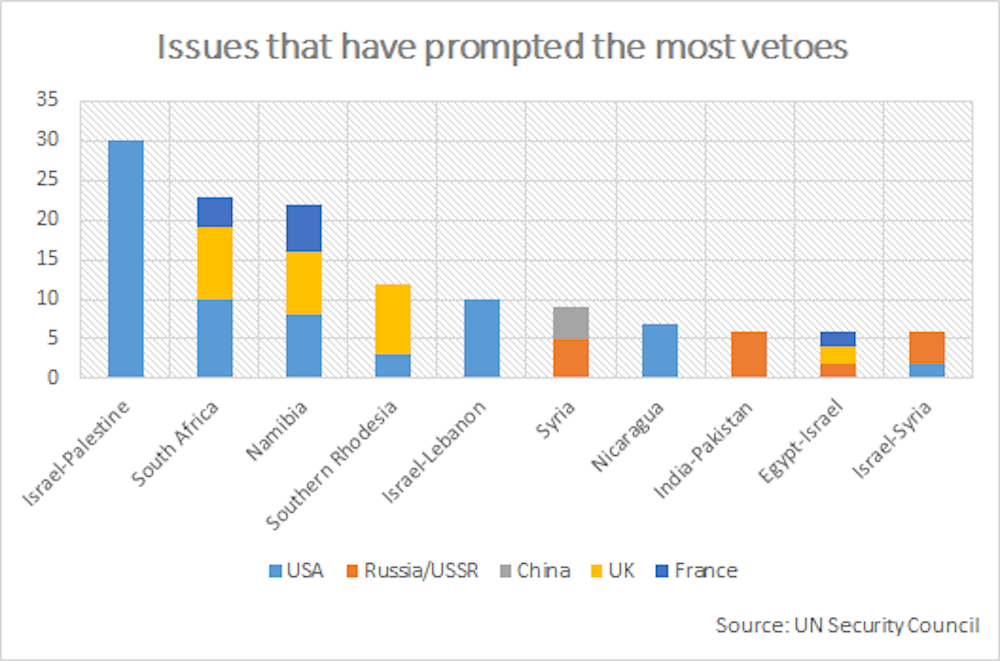
For a start, it would need to get past the UN security council which means being subject to a veto from any one of the five permanent members (P5). We published an article on this issue some years ago with the help of UN expert Emma McClean, which looked at the issues which had prompted members of the P5 to wield their vetos. It found that Israel-Palestine was hands-down the most common issue that led to a veto – and all those vetoes had been instigated by the US.
So suspending Israel from the UN would appear to be a non-starter. But Hehir tells the story of the way the UN managed to circumvent the P5 and suspend South Africa in 1974 over apartheid. Having failed to get the suspension past the security council after the UK and France vetoed the move, the credentials committee of the general assembly simply refused to renew South Africa’s credentials. It remained suspended for two decades until the end of apartheid in 1994.
Meanwhile Israel’s assault on Gaza continues and the death toll continues to mount. Israeli Defense Forces (IDF), supported by airstrikes, continue to bombard what the IDF says are Hamas positions in the towns of Beit Lahia and Jabalia but which the Gaza health ministry say are residential buildings sheltering hundreds of civilians. On October 29, the health ministry said at least 93 people, including 25 children, were killed by an Israeli airstrike.
Now, more than ever, it’s vital to be informed about the important issues affecting global stability. Sign up to receive our weekly World Update newsletter. Every Thursday we’ll you expert analysis of the big stories making international headlines.
Much of the population of the north of Gaza has been evacuated south of what is known as the Netzarim corridor. Israel’s Haaretz newspaper claims that it’s part of an operation known as the “generals’ plan”, which calls for the north to be cleared of civilian residents and locked down as a military zone. This is presented as a national security measure, but Leonie Fleischmann reports that there are those who believe the military operation will be followed by an influx of Israeli settlers.
Fleischmann points to a conference held on the Israeli side of the border with north Gaza, attended by members of Netanyahu’s Likud party as well as by several government ministers, which actively promoted the idea of settling north Gaza. Memories and historical legend mingle with ideology that holds Gaza had a Jewish population from biblical times through to 1929, when an Arab revolt killed 133 Jewish people living there and drove the rest out.
The prospect of a land grab is clearly exercising minds at the UK foreign office. UK ambassador to the United Nations, Barbara Woodward said on October 29: “We reiterate that northern Gaza must not be cut off from the south. Palestinian civilians, including those evacuated from northern Gaza must be permitted to return. There must be no forcible transfer of Gazans from or within Gaza, nor any reduction in the territory of the Gaza Strip.”
It’s highly unlikely that we’ll know by this time next week who has prevailed in the US presidential election. But the Middle East will be one of the first big ticket items on the Resolute desk.
The issue has already proved to be a tricky one for Kamala Harris. Her support base is deeply divided on the issue, with large numbers of Democrats – particularly young people, as well as Muslims and black voters – unsettled by her perceived part in the Biden administration’s “steadfast” support for Israel over the past four years.
It’s hard to tell whether these voters consider that the people of Gaza would fare any better under a Trump White House. But Natasha Lindstaedt and Faten Ghosn believe that Netanyahu’s continuing aggression in Gaza may well play out in the Republican contender’s favour.
Meanwhile, to guide us through how the two candidates are likely to approach the big foreign policy issues, we can turn to Garret Martin of the Transatlantic Policy Center at the American University in Washington.
Noon Briefing by Stéphane Dujarric, Spokesperson for the Secretary-General.
Highlights:
-Democratic People’s Republic of Korea
-UNIFIL
-Lebanon/Humanitarian
-Occupied Palestinian Territory
-Ukraine
-Security Council
-Deputy Secretary-General
-Cuba
-South Sudan
-West and Central Africa
-World Cities Day
-Guest briefing
-Briefings tomorrow
Democratic People’s Republic of Korea
The Secretary-General strongly condemns the launch today of a long-range ballistic missile by the Democratic People’s Republic of Korea (DPRK).
The DPRK’s continued launches of missiles using ballistic missile technology are clear violations of relevant Security Council resolutions.
The Secretary-General remains concerned about the situation on the Korean Peninsula. He has consistently called for de-escalation and the full implementation of all relevant Security Council resolutions, as well as for an environment that is conducive to dialogue, and the resumption of talks.
Diplomatic engagement remains the only pathway to sustainable peace and the complete and verifiable denuclearization of the Korean Peninsula.
UNIFIL
In Lebanon, Blue Helmets – who remain at their positions and continue their essential work to monitor and report to us and the international community what is actually happening on the ground, tell us that intense clashes between Hizbullah and the Israel Defence Forces have been reported in the Khiam area in UNIFIL’s Sector East.
The Israeli Defence Forces have continued to strike areas across Lebanon, including in the south, Baalbek and near Beirut, with multiple casualties reported. Hizbullah’s rocket fire has reportedly killed five people today near Metula in northern Israel.
Yesterday, a UNIFIL position near the Blue Line, south of the Shab’a village (Sector East) sustained minor damage to its barracks and a vehicle due to a nearby explosion.
We once again remind all involved in this conflict of the inviolability of UN premises, and those premises must be respected, as well as our peacekeepers, both uniformed and civilians.
The intensifying hostilities are, of course, extremely concerning. We urge all actors to stop the violence immediately and avail themselves of the diplomatic initiatives to end this conflict. We continue to support efforts towards de-escalation and a diplomatic solution.
The UN peacekeeping mission also remains focused on helping local communities. This week, they delivered essential humanitarian aid to the Municipality of Tyre amid a challenging situation in south Lebanon. The aid included medical devices as well as medicines.
Lebanon/Humanitarian
On the humanitarian front, as in many conflicts, children and woman bear the brunt of the ongoing hostilities.
In a statement today, UNICEF’s Executive Director, Catherine Russell, said that 166 children have been killed in Lebanon since October 2023, that is what Lebanese authorities are telling UNICEF, while thousands of others have been injured.
UNICEF is on the ground providing emergency psychological support to thousands of children and their caregivers.
For its part, the UN Population Fund says the conflict is also impacting more than 10,000 pregnant women including 1,300 who are expecting to give birth soon amid significant damage to infrastructure and a health system that is extremely strained.
The displacement crisis remains a key issue. Our humanitarian colleagues are telling us that today, the Israeli army issued new orders for people to leave their homes in several villages as well as in the Rashiedeh Palestinian refugee camp, which is located in the south. This is the first time the Israeli army has called for the evacuation of a Palestinian refugee camp in Lebanon.
OCHA says that yesterday’s displacement orders and strikes in Baalbek and surrounding areas have forced thousands of people to flee their homes. Many of them spent the night in their vehicles.
And yesterday, the Humanitarian Coordinator for Lebanon, Imran Riza, visited Akkar in Tripoli, which currently hosts around 70,000 people who have been forced to flee, and are in conditions that you can only imagine.
Full Highlights: https://www.un.org/sg/en/content/noon-briefing-highlight?date%5Bvalue%5D%5Bdate%5D=31%20October%202024
This fall in Lviv, Ukraine for three days over 250 Ukrainian health care professionals gathered together for a medical conference to take a master class in radiology and participate in hands-on training workshops.
The conference held Sept. 25-27 was co-chaired by UConn School of Medicine professor and chair of Diagnostic Imaging & Therapeutics Dr. Leo Wolansky who also delivered several lectures.
Dr. Leo Wolansky.
“I am so impressed with the spirit of the Ukrainian people. They insist on keeping their lives normal. Hopefully, our resuming our in-person conference series, now in its twenty-eighth year, contributed a little bit to that normalcy,” says Wolansky.
The three-day conference was also co-chaired by Dr. Tetyana Yalynska. It was organized by Friends Of Radiology in Ukraine (FORUkraine), the Ukrainian Medical Association of North America (UMANA), and the Association of Radiologists of Ukraine (ARU), and was hosted by the First Territorial Medical Association of Lviv. Additional sponsorship came from Rotary, St. Paraskeva’s, Azaris, Ulrich, and Guerbet.
This year’s event carries forward the FORUkraine conference series founded by Wolansky in 1996 at the Lviv Medical University (the Lviv Medical Institute). Since its inception, the conference series has been innovative using state-of-the-art education as a tool to promote the Ukrainian language. The purpose of the program is to teach Ukrainian-language based, state-of-the-art Diagnostic Imaging (Radiology).
The long-standing in-person conference was interrupted for the last five years due to the COVID-19 crisis and followed by the war in Ukraine. Starting in 1998, Dr. Yuriy Ivaniv, head of post-graduate imaging education for the Lviv Oblast co-chaired the conferences with Wolansky and renamed it “Practical Questions in Contemporary Clinical Imaging.” The conference series continued every one or two years from then till 2019 when the program joined forces with the ARU and the American Society of Neuroradiology and held a combined conference with the Ukrainian Congress of Radiology, with ARU President Yalynska co-chairing with Wolansky. This took place in Kyiv and Irpin, the only time the program deviated from its home in Lviv.
Despite the war, several international imaging experts attended the event in-person in Ukraine to lecture. One of these was Dr. John (Ivan) Kachura, an Interventional Radiologist and professor of Medical Imaging at University of Toronto, who stated that he was impressed by the knowledge of Ukraine’s radiologists, but especially by their tremendous interest in the presented material. Also onsite was Dr. Andrew Dobrotwir, consultant radiologist from Melbourne, Australia, who lectured and also ran a hands-on workshop on Point Of Care Ultrasound (POCUS). Dobrotwir was accompanied by his sister-in-law, Teresa Lachowicz, who spoke at the conference about humanitarian work that she and Dobrotwir were carrying out including donations of POCUS equipment.
Several international lecturers also virtually presented for the conference including Laura Oleaga, Amy Juliano, Diana Kaya, Andrew Loginsky, and Ivan Wolansky. In addition, virtual presentations came from UConn’s Jill Wruble, Sarah LaPierre, and Racquel Helsing. Several Ukrainian physicians also presented at the conference, including Nataliya Deresh, Igor Ivaniv, and others.
Nataliya Motrynets, medical director of the host institution, presented about the hospital’s accomplishments, and also gave the faculty a tour of the facilities where many soldiers who have lost limbs in the war are being rehabilitated with cutting-edge prostheses.
For Wolansky, a semiprofessional musician, a highlight of his trip to Ukraine was when he and his wife, Maria, met Dudaryk, Lviv’s internationally renowned boys choir, at Mass on the last day of the trip. The children’s choir had performed the refrain for Wolansky’s recent music video, helping draw attention to the plight of Ukraine’s children.
Wolansky added, “Despite air alerts driving conference participants into the bomb shelter on two occasions, these brave Ukrainians insist that normal life must go on!”
Monologue performance is a technically demanding but deeply rewarding form of theatre. Monologues are the purest form of storytelling an actor can engage in.
Before I was a drama teacher and researcher, I was an actor on stage and television in Australia and in the United Kingdom.
As an actor, you are always having to prepare monologues as audition pieces. Here are some principles and techniques to help you with this process, to allow you to draw in your audience and strengthen your artistic expression.
Choosing your monologue
Successful characterisation in monologue acting depends on “casting” yourself well. This means choosing a text and a character that resonate with your own persona and emotional range.
Even if you decide you want to play someone with a completely different age, gender and life experience to your own, there should be something about this character that speaks to you: maybe it’s their sense of vulnerability, their love of life, their rage at unfair circumstances. The more you can relate to some specific aspect of this person, the easier it will be to access the emotional range to play them.
If you decide on a character from a well-known play, make sure you have an understanding of the whole text the piece comes from.
Finding the personality
As an actor, you should have a good grasp of your character’s personality and attitudes to life.
Look for clues in the monologue or the overall play that tell you something about this person’s inner psychology. Do they always agree with everyone, or are they always complaining? How do they talk about themselves, how do they talk about other people?
In a well-written play, dialogue is always filled with signals like these that actors rely on when creating characters.
Another useful approach is to develop a detailed backstory for the role you are playing. Performers often use journalling or visualisation to deepen their emotional connection with the person they are depicting.
Taking time to imagine these key “memories” can provide an emotional anchor when you want to access different parts of their personality. The audience will never know these choices you have made, but you will carry them within you, and they can add depth and dimension to your portrayal.
Making the character physical
Along with analysing your character’s psychology and motivations, spend time working on their physicality.
How does this person move through the world? Are they a daydreaming wanderer, or a short sharp stepper who is always in a hurry? Do they close themselves off from the world with hunched shoulders, or do they stand tall and project themselves outward?
These qualities might change throughout the monologue as your character moves through different thoughts and memories.
Making stage direction choices for a monologue can be one of the most challenging things to get right. Simple things such as walking downstage to talk directly to your audience, or sitting down at a particular moment, can add effective dynamics to your performance. But any choices you make must come from an inner impulse within your character. Movement needs to be motivated by some kind of shift in their thoughts.
Breaking down the monologue
To identify these shifts, break down your script into key “beats”. These are the moments in a text where your character starts talking about something new. You can use these to create shifts in movement, tone and pace.
Incorporating different beats into your piece is vital for keeping your audience’s interest. Every monologue should take the audience on a journey through a character’s inner life. Ensuring this journey includes some surprises or effective use of dramatic tension will help make your piece work as a solo performance.
Sit down with the script and a pencil to find the ‘beats’ of the monologue. Media_Photos/Shutterstock
Sit down with a pencil and mark down any point in the script where you think the character starts thinking or talking about something new. Once you have all these internal shifts marked out, decide if any of these could be played with a contrasting emotional tone and pace to create dramatic effect.
Who are you talking to?
Performing a piece on your own can be daunting as there are no other characters to respond to or generate reactions from. Understanding who your character is speaking to during the monologue means you can use your audience as an additional “actor”. Are they an ally or an enemy? Or are these private thoughts, with the audience as a witness to your inner mind?
Clarifying this relationship can help you make clearer choices in how you deliver your lines.
Give yourself time
There are many creative decisions to be made when preparing a monologue performance.
Make sure to give yourself enough time to make these decisions and to learn your lines by heart.
Experiment with lots of different choices when you are starting out and rehearse your piece as often as possible. This will help reduce nerves when it comes to your final performance as it’s difficult to focus on acting when your mind is racing trying to remember what to say next.
Once the hard work of preparation, experimentation and creative expression is done, there is no better feeling than nailing a solo performance!
Natasha Beaumont does not work for, consult, own shares in or receive funding from any company or organisation that would benefit from this article, and has disclosed no relevant affiliations beyond their academic appointment.
Student behaviour is one of the biggest issues facing Australian schools. A survey of Queensland teachers earlier this year found “managing student behaviour” was the main thing taking their time away from teaching.
Along with students talking out of turn, using their phones or not paying attention, there are regular reports of students being violent and abusive towards teachers. Australian classrooms are rated among the “least favourable” for discipline in the OECD.
Amid a push to include more classroom management training for teachers, what other approaches could we look at to improve behaviour?
What happens in Norway?
For several decades Norwegian school children have been assessed twice a year on their sense of personal order (being punctual, well-prepared and following up on homework) and social behaviour (showing care and respect for others).
Until Year 8, students receive comments and then they also get a grade (good, quite good or not so good).
Teachers in all subjects report to the child’s home base teacher who calculates an average, noting any poor examples of poor personal order and social behaviour. The overall report is shared with the student and parents receive a copy.
The goal, as specified in Norway’s Education Act, is to ensure a good and safe school environment and “social learning”. This means learning to behave around others through observing, modelling and imitating the behaviours of others.
This is on top of learning knowledge and skills.
Norwegian students can be graded on whether they follow rules about snowball throwing. Maria Sbytova/Shutterstock
Research on teachers and students describe it as a valued tool for dealing with students who disrupt the learning environment in the classroom.
Even when young adults apply for jobs after university or vocational study, employers can be interested in the grade received for order and behaviour at school. Students and their teachers are aware it can indicate trustworthiness and employability.
A not uncommon story repeated by Norwegian parents to their teenage children is “if you have a record of behaving poorly or arriving late at school it doesn’t bode well whether you want to work on a construction site, in an office or on a hospital ward”.
There are Norwegian critics of this approach. Some researchers argue behaviour grades can sometimes say more about who are the “teachers’ favourites”.
But despite some limited trials to refine Norway’s behaviour grading, there are currently no plans to remove it.
What about Australia?
There is some precedence for reporting on behaviour in Australia.
For example, Queensland public schools report about effort and behaviour against a five-point scale: excellent, very good, satisfactory, needs attention and unacceptable.
But assessment criteria and evidence for the reporting of student effort and behaviour seems to be a more subjective appraisal than reporting against other standards in the curriculum.
Schools can teach students more than academic knowledge or vocational skills.
And while addressing behaviour in schools is complex (and will not be solved by any single thing), reporting on behaviour could provide a regular opportunity for Australian teachers, schools and parents to reflect on how a students is progressing.
Grading students could make students more accountable for how they interact with their peers and their teachers.
It could also help build their understanding of what is acceptable, not just in the classroom but in the community more broadly. For example, if there are specific rules about how you speak to others, whether you are safe in the playground and respectful in the classroom.
This type of social learning is important, because it can help teach students to be inclusive and responsible towards others. It can also help to create a safer school environment for all students and staff.
At the moment, there is a general requirement in the Australian Curriculum to teach students social and emotional skills across all subjects.
But it is up to state and territory education authorities to work out if and how students are assessed about this. This includes any reasonable adjustments for students with disability or other special needs.
The authors do not work for, consult, own shares in or receive funding from any company or organisation that would benefit from this article, and have disclosed no relevant affiliations beyond their academic appointment.
‘Today Highland Council took an important step forward in its plans to sustain care provision in the Lochaber Area. In a confidential paper to council, various options were considered that could ensure that there is minimum disruption to residents of Moss Park Nursing Home.
While there are a lot of sensitive matters still to deal with and no guarantees at this stage, there is now hope that a solution can be found by the partnership between Highland Council and NHS Highland.
As there are still so many issues remaining unresolved, NHS Highland’s core team and its partners will continue to ensure that everyone is focused on the best interests and well-being of all residents.
Further communications regarding progress on this important matter will be provided in due course, with communications with residents and families being our key priority.’
A revised financial forecast for the Highland Council, taking account of already agreed savings and other measures, suggests a remaining budget gap of £38m-£54m over the coming three years, 2025/26 to 2027/28.
As part of the Council’s Medium-Term Financial Plan, agreed in February 2024, Council agreed a package of £54.6m of budget savings, and the use of a range of financial flexibilities and use of reserves, to address the projected £113m gap over a 3-year period 2024/25 – 2026/27.
A revised forecast, before taking account of agreed savings and other measures, and factoring in financial assumptions, is a budget gap over the next three years (2025/26 to 2027/28) ranging from £116m-£132m.
After allowing for budget savings and other decisions already made by the Council, and other assumptions, these scenarios suggest the figure of a residual budget gap of £38m-£54m over the three years.
It is clear that there are significant and additional financial pressures and challenges facing Governmental budgets in the current and next year, with it being expected these will ultimately translate to a potentially more challenging budget settlement and financial outlook for Scottish Local Authorities. There remains uncertainty regarding the impact of national decisions, which may in turn impact the scenarios reported to Members.
While inflation and cost pressure estimates are expected to exceed the likely level of funding that may be available to the Council, there is an inevitable need to plan for further additional savings.
Convener of the Highland Council, Bill Lobban said: “Decisions already made by the Council in February 2024 provide a very solid foundation to the Council’s financial planning. It is essential the Council continues to apply a multi-year, strategic approach to its financial planning and financial sustainability, and makes the necessary decisions to ensure expenditure plans are in line with funding levels.
Leader, Raymond Bremner said: ““We will do everything we can to mitigate the impact on our residents in our decision making. At the same time as making savings, and making best use of public funds, we have been able to plan supporting our ambitious Highland Investment Plan through our revenue budget decisions, which could see £2bn of capital investment across the Highlands over the next 20 years and which will leave a valuable legacy for communities well into the future.
“Public and staff engagement in the lead up to our last budget was extremely helpful in shaping our thinking and decisions. The Operational Delivery Plan also provides a helpful mechanism for monitoring progress with the delivery of agreed savings and this will continue to be useful moving forward as part of our financial planning process.”
Chair of the Council’s Resources Committee, Cllr Derek Louden commented: “The important thing for us to remember this is a very early stage in budget setting, with a great deal of uncertainty at this time. Looking at the direction of travel and considering income generation, budget reduction and use of reserves in line with the Council’s strategy for the coming years will be part of our planning for budget setting in March 2025.”
A further report will be brought to the Council meeting in December.
Members considered a report on Lochaber Care Provision at the meeting of the Highland Council on 31 October.
HC-One informed NHS Highland of their intention to close Moss Park Care Home on the 18 September 2024. A contractually standard notice period of 13 weeks was given.
Since that announcement, NHS Highland and The Highland Council have been working together to identify a solution to support the continuation of care in the area.
Work is ongoing at present to find an alternative solution to this closure, but in the interests of the welfare of residents, and with no such process concluded at this stage, the core team are actively planning, as a contingency, for the relocation of all residents.
Chair of the Council’s Health and Social Care Committee, Cllr David Fraser said: “We understand that this is a worrying time for residents, relatives and all involved, while we continue to pursue potential solutions for Mosspark residents.
“This is a challenging situation. Across Highland, our focus remains on working with NHS Highland in reducing delayed discharges and accelerating our work towards a new care model which would support people to live more independently for longer in their own communities and shifting the balance of care from acute to sustainable community provision.”
Further updates will be provided to all residents, staff, stakeholders, including the local community, once we have further information and progress will be reported to the Health, Social Care and Wellbeing Committee.
The report was discussed in private session due to the nature of sensitive and confidential information contained in the report.
Source: Government of the Russian Federation – An important disclaimer is at the bottom of this article.
Alexander Novak held a meeting on the formation of a general plan for the placement of electric power facilities until 2042
Deputy Prime Minister of the Russian Federation Alexander Novak held a meeting on the formation of the General Scheme for the placement of electric power facilities until 2042. The event was attended by heads and representatives of the Ministry of Energy, the Ministry of Economic Development, energy companies, industry and business associations.
The parties discussed the parameters for the functioning of the Russian energy system until 2042, taking into account the projected increase in energy consumption due to the accelerated growth of the economy.
In order to reliably meet the needs of citizens and industry for electricity, it is planned to introduce new modern generation by 2042. This concerns facilities of both traditional and renewable and nuclear energy.
In addition, the modernization of generating equipment will continue. There is also the task of further increasing the installed capacity, taking into account the need to balance consumption peaks, ensure the reliability of the energy system and export obligations.
Please note: This information is raw content directly from the source of the information. It is exactly what the source states and does not reflect the position of MIL-OSI or its clients.
From the energy that powers our homes to the networks that connect us and the systems that protect our health and safety, our critical infrastructure keeps our economy thriving and our communities secure. This Critical Infrastructure Security and Resilience Month, we recommit to strengthening our country’s critical infrastructure and building an America that is safe and secure for generations to come.
This year, I signed a National Security Memorandum to secure and enhance the resilience of United States critical infrastructure — updating the policy for the first time in a decade. This represents the launch of a new era in protecting our infrastructure against all threats and hazards by safeguarding our strong and innovative economy and enhancing our collective resilience to disasters before they happen. But there is more to do. Climate change is making natural disasters more frequent, ferocious, and costly — endangering our supply chains, creating more instability for our communities, and straining the critical infrastructure Americans depend on for their livelihoods. And we need to stay vigilant against adversaries that seek to maliciously target our critical infrastructure, including through cyberattacks.
To meet this moment, my Administration made a once-in-a-generation investment in our Nation’s infrastructure — creating an opportunity to build in resilience to all hazards upfront and by design. Through my American Rescue Plan, Bipartisan Infrastructure Law, Inflation Reduction Act, and CHIPS and Science Act, we are investing billions of dollars to secure and bolster our infrastructure. That includes improving our electric grid so that people can maintain power in any situation, elevating roads and bridges over possible flood zones, funding community resilience programs, and more. These investments have not only helped to protect Americans — they have benefited our economy, creating jobs and new possibilities for our communities. At the NATO summit this year, I announced an arrangement with Canada and Finland to collaborate on the production of polar icebreakers. The partnership will advance United States economic and national security interests by strengthening our shipbuilding and industrial capacity while simultaneously opening up new trade routes and pushing back against foreign aggression and bolstering our international alliances. This year, I also announced a United States Port Security Initiative to reverse our dependence on foreign manufactured port equipment.
Ensuring our Nation is resilient in the face of threats also means working with other nations around the globe to build better, stronger, and more sustainable infrastructure. At the G7 Summit in June, I was proud to announce the historic progress we have made with our Partnership for Global Infrastructure and Investment. This initiative will strengthen United States national and economic security for Americans at home and enable sustainable economic growth for partner countries. To date, we have mobilized $60 billion to create high-quality global infrastructure. That comes on top of our work with the European Union and African heads of state to develop the Lobito Corridor as well as our work with the Democratic Republic of the Congo and Zambia to expand regional and global trade markets through the Port of Lobito in Angola. We continue to pursue opportunities to expand our investments across Africa and around the world, including the Indo-Pacific, Central Asia, the Middle East, and the Western Hemisphere. Investments like these create more shared opportunities, prosperity, and security for everyone.
Across the Nation, America is writing the greatest comeback story we have ever known — people are putting shovels in the ground, founding new businesses, and creating hope for entire communities. It is more important now than ever before that we remain vigilant against any threats that seek to undermine our collective security and prosperity.
During Critical Infrastructure Security and Resilience Month, we recommit to safeguarding and strengthening our Nation’s critical infrastructure to save lives and allow our Nation to continue doing what it does best: creating new possibilities.
NOW, THEREFORE, I, JOSEPH R. BIDEN JR., President of the United States of America, by virtue of the authority vested in me by the Constitution and the laws of the United States, do hereby proclaim November 2024 as Critical Infrastructure Security and Resilience Month. I call upon the people of the United States to recognize the importance of protecting our Nation’s infrastructure and to observe this month with appropriate measures to enhance our national security and resilience.
IN WITNESS WHEREOF, I have hereunto set my hand this thirty-first day of October, in the year of our Lord two thousand twenty-four, and of the Independence of the United States of America the two hundred and forty-ninth.
Source: Switzerland – Federal Administration in English
Gathered in Geneva, 2,200 delegates from all over the world approved five resolutions aimed at strengthening humanitarian action in a world of constant change, where humanitarian needs are immense. The work, in which Switzerland actively participated, focused on compliance with international humanitarian law (IHL).
The Commission’s decision to withdraw its reasoned proposal of 2017 and thereby close the procedure under Article 7(1) of the Treaty on European Union (TEU) for Poland is based on a thorough and objective assessment of the rule of law situation in Poland.
It is important to bear in mind that what is assessed is the ‘clear risk’ of a serious breach of the rule of law within the meaning of Article 7(1) TEU.
The acknowledgement by Poland that rule of law shortcomings exist which need to be addressed, the adoption of a clear programme in the form of an Action Plan, and the fact that the first concrete steps had been taken to implement the action plan, as well as the commitments made to the primacy of EU law and to the implementation of judgments of the Court of Justice of the EU and of the European Court of Human Rights, led the Commission to conclude that there is no longer such a clear risk of a serious breach of the rule of law by Poland.
The Commission discussed its assessment with Member States in the General Affairs Council and took those exchanges into account when adopting its decision.
The Commission will continue to regularly monitor the measures under the action plan, as well as other steps to promote the rule of law in Poland, in particular under the Rule of Law Report process.
Credible ECB monetary policy requires that the revised EU economic governance framework be tightly enforced from its start. Net primary expenditures as key control variable allow predictable monetary policy focused on stabilisation. However, widespread debt reduction pushing spending growth below potential GDP growth may prompt more accommodative ECB policy. Moreover, potentially cumulating changes in public spending-to-GDP ratios need close monitoring. Finally, the criteria for TPI may increase pressure to be lenient on enforcement of the fiscal rules. This document was provided by the Economic Governance and EMU Scrutiny Unit at the request of the Committee on Economic and Monetary Affairs (ECON) ahead of the Monetary Dialogue with the ECB President on 4 December 2024.
In June 2024, the European Council reiterated its strongest condemnation of the brutal terrorist attacks conducted by Hamas and other terrorist groups on 7 October 2023[1].
Hamas is listed under the EU terrorist list[2]. Additionally, the EU established restrictive measures against those who support, facilitate or enable violent actions by Hamas and the Palestinian Islamic Jihad in January 2024[3].
Concerning projects funded under the EU budget, if a project is not implemented in line with the grant agreement, including non- respect of EU values , the Commission and (in case of indirect management such as for Erasmus+) the national agencies can take appropriate measures, including financial corrections as appropriate.
The Turkish organisation ‘Şark Forum Derneği’[4] is currently not receiving funding from Erasmus+ anymore but has received funding in the past for youth projects now finalised.
As coordinator of four projects, this organisation received EUR 85 173 (shared with their partner organisations) under the current Erasmus+ programme and EUR 18 755 under the previous programme[5].
The regular monitoring activities carried out during the project implementation period did not result in any issues being detected. As these projects have all been completed and this organisation has no longer contractual relations within the programme, there is no legal ground to take action vis-à-vis the projects in the specific context described.
The Commission would like to refer the Honourable Member to the Commission’s reply to Written Question P-001524/24, which addressed the same issue and complement this reply.
On 6 November, the confirmation hearing of Commissioner-designate for Health and Animal Welfare, Olivér Várhelyi (Hungary) will take place.
The confirmation hearing will be led jointly by the ENVI and AGRI Committees. ITRE Committee and SANT sub-Committee are also invited. The hearing is expected to last three hours from 18.30 to 21.30. As regards the topics in the remit of the ENVI Committee and following his replies to the written questions, the Commissioner-designate is expected to be further questioned on public health, in on the pharmaceutical reform, the access to medicinal products, EU research and competitiveness, and the fight against AMR. The Commissioner designate will also tackle food safety issues, such as the use of pesticides, animal diseases and food labelling, as well as issues related to animal welfare which are also under his portfolio. The confirmation hearing will be the basis for the coordinators of the committees responsible to assess whether the Commissioner-designate is qualified both to be a member of the College of Commissioners and to carry out the specific tasks assigned to him.
EU law does not apply to the requested extradition in the case at issue, as neither the EU nor Denmark have concluded bilateral agreements on extradition with Japan.
In line with its Article 51(1), the Charter of Fundamental Rights of the EU is addressed to Member States only when they are implementing EU law.
In situations such as the present one, where there is no link with the implementation of EU law, it is for Member States, including their courts, to ensure that fundamental rights are effectively respected and protected, in accordance with their national legislation and international human rights obligations, including the European Convention on Human Rights.
The right to protest at sea is considered an internationally lawful use of the sea and thus an exercise of the flag State’s freedom of navigation under the United Nations Convention on the Law of the Sea. The protest shall remain peaceful and should not threaten human life, the marine environment or property.
The EU and its Member States maintain a firm stance against whaling and uphold the International Whaling Commission’s (IWC) moratorium on commercial whaling.
Within the IWC, the EU and its Member States that are Party to the International Convention for the regulation of Whaling (ICRW) promote cooperation to ensure an effective international regulatory framework for the conservation and management of whales.
The aim is to ensure a significant improvement in the conservation status of whales and bring all whaling operations by IWC members under IWC control.
For countries that are not parties to the ICRW, the EU has consistently voiced strong concerns over any whaling activities and will continue to use all diplomatic channels to engage with these countries and discourage such practices.
The EU has in place an effective legislative framework for the protection of persons reporting breaches of EU environmental law. Directive (EU) 2019/1937[1] (the ‘Whistleblower Protection Directive’) provides robust protection to persons who report, within the organisation for which they work, or to competent authorities of the Member States, or to the public (under certain conditions), breaches of the EU law in certain areas, including environmental law, which they discover in the context of their work, and who, for this reason, suffer or may suffer retaliation in that context.
In the light of the information provided, this directive does not seem applicable to the individual circumstances of the case referred to by the Honourable Member.
The EU remains committed to upholding the International Whaling Commission’s moratorium on commercial whaling and has consistently voiced strong concerns about Japan’s whaling activities.
The Commission will continue to use all available diplomatic channels to engage with Japan to discourage such practices.
[1] Directive (EU) 2019/1937 of the European Parliament and of the Council, of 23 October 2019, on the protection of persons who report breaches of Union law, OJ L 305, 26.11.2019, p. 17.
The EU works with the General Fisheries Commission for the Mediterranean (GFCM) on the issue of the spread of Non-Indigenous Species (NIS).
The GFCM 2030 Str ategy recognises its importance and makes its work on NIS a priority[1]. Several pilot projects and research programs, in which Member States take part, have been developed advancing data collection, information sharing and establishing comprehensive mitigation measures.
These include a pilot study on NIS in the eastern Mediterranean and the creation of a NIS observatory. While initially focused on the east, the aim is for the observatory to eventually be expanded to the entire region.
Regarding the compensation available to fishers, the EU provides for the funding of national initiatives under the European Maritime, Fisheries and Aquaculture Fund (EMFAF). Several Mediterranean Member States have identified the threat posed by NIS and put in place measures and solutions to combat them.
In Cyprus, a scheme has been put in place to compensate fishers for their pufferfish catches[2]. Other Member States, such as Greece, have funded innovative projects which help turn this threat into an economic opportunity[3].
Our Mediterranean neighbours have also been developing mitigation and adaptation measures, expanding their research on pufferfish species.
At the 2024 GFCM Fish Forum, Tunisia and Türkiye presented pufferfish-focused research with the latter having developed the production of pufferfish leather[4].
The EU has been financially supporting the GFCM’s capacity building work under the MedSea4Fish programme which has also focused on providing GFCM parties with support in their research and data collection on NIS, ensuring a uniform ability to combat invasion.
[1] GFCM 2030 Strategy Action Plan(https://www.fao.org/gfcm/2030strategy): Target 1.4 on the need to prevent and mitigate ‘threats to fisheries and the marine environment, including plastic pollution, climate change and the expansion of non-indigenous species’
[3] The Greek example of turning pufferfish into fishmeal is particularly relevant https://oceans-and-fisheries.ec.europa.eu/news/turning-toxic-pufferfish-invader-aquaculture-feed-2023-12-22_en#:~:text=The%20pufferfish%2C%20originating%20from%20the,to%20have%20no%20commercial%20value.https://oceans-and-fisheries.ec.europa.eu/news/turning-toxic-pufferfish-invader-aquaculture-feed-2023-12-22_en
Source: Switzerland – Federal Administration in English
Federal Councillor Elisabeth Baume-Schneider took part in the G20 Health Ministers’ Meeting in Rio de Janeiro today. Federal Councillor Baume-Schneider also represented Switzerland at the G20’s Joint Ministerial Meeting on Finance and Health. The meetings’ discussions focused in particular on the resilience of healthcare systems and on ensuring equitable access to medical products. The Head of the Federal Department of Home Affairs (FDHA) also took the opportunity to conduct bilateral discussions with several of her international counterparts. She will continue her stay in Brazil with a working visit devoted to both health and cultural issues between now and Saturday 2 November.
Question for written answer E-001980/2024/rev.1 to the Commission Rule 144 Gabriela Firea (S&D)
As we approach the cold season, the issue of homelessness and the pinpointing of potential solutions to improve their situation are back on the agenda. Official statistics showed in 2022 that almost one in ten people in the EU spent over 40 % of their income on housing. The groups most at risk of homelessness due to a lack of access to housing are families with children and single-parent households. On top of this, overcrowding, mould, damp, exposure to pollution and poor sanitary conditions are an increasing cause for concern when assessing housing conditions themselves.
What strategy does the Commission have for working in cooperation with the Member States to improve the gathering of statistics on the number of homeless people – especially in big cities, where they are concentrated – so as to facilitate the pinpointing of viable solutions?
Question for written answer E-002234/2024 to the Commission Rule 144 Chiara Gemma (ECR), Sergio Berlato (ECR), Stefano Cavedagna (ECR), Alessandro Ciriani (ECR), Giovanni Crosetto (ECR), Elena Donazzan (ECR), Carlo Fidanza (ECR), Pietro Fiocchi (ECR), Alberico Gambino (ECR), Paolo Inselvini (ECR), Lara Magoni (ECR), Mario Mantovani (ECR), Giuseppe Milazzo (ECR), Denis Nesci (ECR), Michele Picaro (ECR), Daniele Polato (ECR), Nicola Procaccini (ECR), Ruggero Razza (ECR), Antonella Sberna (ECR), Marco Squarta (ECR), Francesco Torselli (ECR), Francesco Ventola (ECR), Mariateresa Vivaldini (ECR)
Severe hypoplasminogenemia (HPG), or plasminogen deficiency type 1(PLGD-1) is a rare systemic disease characterised by abnormal extracellular fibrinolysis. It affects 0.02 in 10 000 people in the EU, usually manifesting in early childhood.
There exists only one effective treatment, now available in the form of Ryplazim, an experimental drug already approved in 2019 by the US Food and Drug Administration and available on the American market since May 2024.
The medicine was so successful that the manufacturer Kedrion received the prestigious Industry Innovation Award from the American National Organization for Rare Diseases (NORD).
However, the adoption of Ryplazim has not yet been authorised by the European Medicines Agency (EMA), which in 2015 granted orphan designation to ProMetic BioTherapeutics Ltd for human plasminogen with opinion EU/3/15/1511.
Not having the possibility of using Ryplazim in national healthcare systems means outdated therapies will be used instead.
In view of the above:
1.Was the Commission aware of this situation?
2.What concrete steps does the Commission intend to take with regard to the EMA in order to ensure that people suffering from severe hypoplasminogenemia have safe access to life-saving medicines at the dosage necessary for treatment, even if experimental?
On 5 November, the confirmation hearing of Commissioner-designate for Environment, Water Resilience, and a Competitive Circular Economy Jessika Roswall (Sweden) will take place.
The confirmation hearing will be led by ENVI. IMCO, ITRE, and AGRI committees are invited to participate in the hearing. It is expected to last three hours from 18:30 to 21:30 pm. ENVI Members will have the opportunity to question the Commissioner-designate on a variety of priority issues including, for instance, the need to develop a European Water Resilience Strategy to address water efficiency, scarcity, and pollution while considering the unique challenges faced by individual Member States. Another topic likely to come up is the Circular Economy Act and the challenge of creating market demand for secondary raw materials and establishing a single market for waste. The hearing will be the basis for the coordinators of the political groups in the committees responsible to assess whether the Commissioner-designate is qualified both to be a member of the College of Commissioners and to carry out the specific tasks assigned to her.
On 6 November, the confirmation hearing of Commissioner-designate for Preparedness and Crisis Management, and Equality, Hadja Lahbib (Belgium) will take place.
The confirmation hearing will be led jointly by the DEVE, FEMM, and LIBE Committees. EMPL and SANT Committees are also invited to this hearing. It will take place between 9 to 12 am. Within the ENVI Committee’s remit, the Commissioner-designate will reply to questions concerning the enhancing of the Union’s crisis management via mechanisms like the UCPM and RescEU, ensuring adequate resources in the current and upcoming MFF, and providing equitable financial support for regions affected by disasters. ENVI Members will also question her on preparedness strategies, health emergencies, DG HERA’s role, the integration of disaster prevention into EU policies, the future Climate Adaptation Plan, and balancing EU stockpiling strategies. The hearing will be the basis for the coordinators of the committees responsible to assess whether the Commissioner-designate is qualified both to be a member of the College of Commissioners and to carry out the specific tasks assigned to her.
On 7 November, the confirmation hearing of Commissioner-designate for Climate, Net-Zero and Clean Growth, Wopke Hoekstra (Netherlands) will take place.
The confirmation hearing will be led jointly by the ENVI, ITRE and ECON Committees. TRAN, EMPL and FISC Committees are also invited. The hearing is expected to last three hours from 9 to 12 am. As regards the topics in the remit of the ENVI Committee, the Commissioner-designate will reply to questions on the adaptation to climate change, the EU climate change diplomacy, its role in achievement of the long term goal of Paris Agreement, priorities for upcoming COP29 and phasing-out fossil fuel subsidies. He may also tackle the conditions for a new 2040 climate target and the post-2030 legislative architecture. He will also address the implementation of 2030 climate legislative framework and ensuring fair transition to a climate-neutral economy. The hearing will be the basis for the coordinators of the committees responsible to assess whether the Commissioner-designate is qualified both to be a member of the College of Commissioners and to carry out the specific tasks assigned to him.
Question for written answer E-002156/2024/rev.1 to the Commission Rule 144 Carmen Crespo Díaz (PPE), Elena Nevado del Campo (PPE), Raúl de la Hoz Quintano (PPE)
The spread of outbreaks of bluetongue disease, bovine tuberculosis and epizootic haemorrhagic disease (EHD) in Europe is causing uncertainty and losses for the livestock sector. Neither national nor regional governments have the resources to carry out vaccinations and other measures.
In the light of the above:
1.To enable regional governments from Spain to get to grips with outbreaks of those diseases, does the Commission intend to authorise extraordinary mechanisms so that they can obtain additional resources?
2.Has the Spanish Government asked the Commission for help with tackling the outbreaks of bluetongue, bovine tuberculosis and epizootic haemorrhagic disease (EHD)?