Category: Europe

  • MIL-OSI Russia: Exclusive: Education and cultural exchange will play an increasingly important role in the development of Uzbek-Chinese relations – Uzbek expert

    Translation. Region: Russian Federal

    Source: People’s Republic of China in Russian – People’s Republic of China in Russian –

    Source: People’s Republic of China – State Council News

    Tashkent, June 29 (Xinhua) — Educational and humanitarian exchanges remain the warmest and most stable component of international relations, especially between China and Central Asian countries, said Bakhodir Hasanov, a professor at Tashkent State University of Economics and Doctor of Economics, in a recent exclusive interview with Xinhua.

    According to him, for the countries of the region, including Uzbekistan, cooperation with China in these areas serves not only as a cultural dialogue, but also as a strategic tool for strengthening human capital and preparing young people for the challenges of the future. “We attach great importance to a solid foundation of partnership with China in the field of education and culture,” the expert noted.

    B. Khasanov emphasized that in recent years, Uzbekistan and China have achieved significant results in teaching languages, training specialists and developing vocational education. He particularly noted the importance of such projects as the Confucius Institutes and Lu Ban Workshops, which have become a kind of bridge between peoples. “On the one hand, they help Uzbek youth study the Chinese language and culture, and on the other, they contribute to the modernization of the educational system and the improvement of personnel qualifications,” he added.

    Against the backdrop of the active promotion of the Belt and Road Initiative, humanitarian cooperation between China and the Central Asian countries continues to develop. B. Khasanov noted that China’s experience in the field of applied education and training focused on the needs of the labor market is of particular interest. According to him, Uzbekistan is striving to introduce elements in its education reform that meet the challenges of the modern economy.

    “We are convinced that education and cultural exchange will play an increasingly important role in the development of Uzbek-Chinese relations,” the expert said, emphasizing that this is not only a path to mutual understanding and friendship between peoples, but also an important resource for sustainable development and stability in the region. –0–

    MIL OSI Russia News

  • MIL-OSI Russia: Japan launches H2A rocket for the last time

    Translation. Region: Russian Federal

    Source: People’s Republic of China in Russian – People’s Republic of China in Russian –

    Source: People’s Republic of China – State Council News

    TOKYO, June 29 (Xinhua) — Japan successfully launched the 50th and final H2A rocket early Sunday, marking the end of more than two decades of service for the rocket model.

    The launch took place from the Tanegashima Space Center in Kagoshima Prefecture at around 01:33 local time, as scheduled.

    The rocket carried a satellite developed by Japan’s Ministry of the Environment, the National Institute of Environmental Studies and the Japan Aerospace Exploration Agency (JAXA) to monitor greenhouse gases from space.

    Since its launch in 2001, the H2A spacecraft has played a vital role in advancing Japan’s scientific efforts in space exploration, launching numerous satellites into orbit.

    With the retirement of the H2A, Japan will fully transition to the next-generation H3 rocket to reduce costs and improve global competitiveness. –0–

    MIL OSI Russia News

  • MIL-OSI Russia: Five killed, several injured in seven-car crash in Texas

    Translation. Region: Russian Federal

    Source: People’s Republic of China in Russian – People’s Republic of China in Russian –

    Source: People’s Republic of China – State Council News

    HOUSTON, June 29 (Xinhua) — Five people were killed and several others injured in a seven-vehicle crash near the north Texas city of Terrell on Saturday, local authorities said.

    According to the Texas Department of Public Safety, the incident occurred after the driver of a semi-trailer fell asleep at the wheel and crashed into a Ford F-150 pickup truck with five people inside. The truck then collided with two more semi-trailers, causing one of them to roll over and collide with three more vehicles.

    At least one of the victims is in critical condition, according to the Terrell Volunteer Fire Department.

    The crash forced the closure of Interstate 20. Multiple agencies responded to the incident. –0–

    MIL OSI Russia News

  • MIL-OSI United Kingdom: Healthy food revolution to tackle obesity epidemic

    Source: United Kingdom – Executive Government & Departments 2

    Press release

    Healthy food revolution to tackle obesity epidemic

    New healthy food standard will see big businesses promoting healthier food and drink

    • Reducing daily intake by just 50 calories could lift 340,000 children and 2 million adults out of obesity 
    • Reforms part of the shift from sickness to prevention in the forthcoming 10 Year Health Plan 
    • A healthy nation means less strain on the NHS, helping drive down pressure on waiting lists as part of the Plan for Change.

    Food retailers and manufacturers will “make the healthy choice the easy choice” in a world-first partnership between government and industry to tackle the obesity epidemic and ease pressure on the NHS as part of the Plan for Change. 

    As part of the forthcoming 10 Year Health Plan, large retailers including supermarkets will be set a new standard to make the average shopping basket of goods sold slightly healthier. 

    Businesses will be given the freedom to meet the standard however works best for them, whether that’s reformulating products and tweaking recipes, changing shop layouts, offering discounts on healthy foods, or changing loyalty schemes to promote healthier options. 

    Public health experts believe cutting the calorie count of a daily diet by just 50 calories would lift 340,000 children and 2 million adults out of obesity. If everyone who is overweight reduced their calorie intake by just 216 calories a day, equivalent to a single bottle of fizzy drink, obesity would be halved. 

    Obesity is one of the root causes of diabetes, heart disease and cancer. With the UK now having the third highest rate of adult obesity in Europe, it remains a critical public health challenge, costing the NHS £11.4 billion a year, three times the NHS budget for ambulance services. 

    Obesity rates have doubled since the 1990s, including among children. A forthcoming report by the Chief Medical Officer will show that more than 1 in 5 children are living with obesity by the time they leave primary school, rising to almost 1 in 3 in areas with higher levels of poverty and deprivation. 

    It follows the government setting out in recent days a number of measures to tackle rapidly growing health inequalities, including investing more in working class communities where health disparities are greatest, and rapid action on the maternal mortality gaps in Black, Asian and working class communities. 

    Through our Plan for Change, the government is shifting the focus from treatment to prevention and creating a more active state – that works with partners to make the healthy choice the easy choice – and a transition of the NHS from a sickness service to a prevention service.   

    Health and Social Care Secretary, Wes Streeting, said:    

    Obesity has doubled since the 1990s and costs our NHS £11 billion a year, triple the budget for ambulance services. Unless we curb the rising tide of cost and demand, the NHS risks becoming unsustainable. 

    The good news is that it only takes a small change to make a big difference. If everyone who is overweight reduced their calorie intake by around 200 calories a day – the equivalent of a bottle of fizzy drink – obesity would be halved.   

    This government’s ambition for kids today is for them to be part of the healthiest generation of children ever. That is within our grasp. With the smart steps we’re taking today, we can give every child a healthy start to life.  

    Our brilliant supermarkets already do so much work for our communities and are trying to make their stores heathier, and we want to work with them and other businesses to create a level playing field. 

    Through our new healthy food standard, we will make the healthy choice the easy choice, because prevention is better than cure. 

    By shifting from sickness to prevention through our Plan for Change, we will make sure the NHS can be there for us when we need it.

    Environment Secretary Steve Reed said: 

    Britain has some of the best farmers, growers, food manufacturers and retailers in the world, which means we have more choice than ever before on our shelves.  

    It is vital for the nation that the food industry delivers healthy food, that is available, affordable and appealing.   

    Our food strategy will bring together the health plan, food producers and retailers to make sure we can feed the nation more healthily while growing the economic success of our food sector.

    The policy will see all big food businesses report on healthy food sales. This will set full transparency and accountability around the food that businesses are selling and encourage healthier products. 

    The government will then set targets to increase the healthiness of sales in communities across the UK and work with the Food Strategy Advisory Board on the sequencing of this policy.  

    Sarah Price, NHS England Director for Public Health, said: 

    A healthy diet, which includes a variety of nutritious food can help people stay well and provide long-term health benefits, which is good for them and good for the NHS. 

    That is why this move to make it easier for people to shop for healthy and nutritious food options is so important – it will help people reduce the risk of developing a range of life-altering physical conditions, such as obesity and Type 2 diabetes – both of which are on the increase in England.

    Major investment firms have already signalled that they would be keen to invest more in healthier products, if they were given due prominence and promotion by food retailers. 

    Many supermarkets want to do more to make the average shopping basket healthier, but they risk changes hitting their bottom lines if their competitors don’t act at the same time. The new standard will introduce a level playing field, so there isn’t a first mover disadvantage. 

    The changes are part of the government’s 10 Year Health Plan, due to be published shortly. The plan will radically reform the health service and improve the health of the nation, to make the NHS sustainable and fit for the future. 

    Ken Murphy, Tesco Group CEO, said:  

    All food businesses have a critical part to play in providing good quality, affordable and healthy food. At Tesco, we have measured and published our own healthier food sales for a number of years now – we believe it is key to more evidence-led policy and better-targeted health interventions. That’s why we have called for mandatory reporting for all supermarkets and major food businesses and why we welcome the Government’s announcement on this. We look forward to working with them on the detail of the Healthy Food Standard and its implementation by all relevant food businesses.

    Simon Roberts, CEO of Sainsbury’s commented:  

    We’re passionate about making good food joyful, accessible and affordable for everyone and have been championing the need for mandatory health reporting, across the food industry for many years. Today’s announcement from Government is an important and positive step forward in helping the nation to eat well. We need a level playing field across the entirety of our food sector for these actions to have a real and lasting impact.  

    We look forward to working across Government and our wider industry on the further development of these policies and in helping to drive improved health outcomes across our nation.

    Ravi Gurumurthy, CEO of Nesta, said: 

    Most of us want to lose weight and make healthier choices but the food that surrounds us makes that too hard. That’s why obesity has doubled since the 90s. 

    This new standard focuses on lots of small changes that make it easier to buy food that’s a little bit healthier. Nationally, it could send obesity rates down by a fifth – through business and government working together to improve our health.

    Sue Davies, Which? Head of Food Policy, said: 

    Which? research has shown that people want retailers to do more to support them in making healthier choices. Six in 10 (60%) consumers said they support the government introducing health targets for supermarkets.  

    Mandatory food targets will help to incentivise retailers to use the range of tactics available to them to make small but significant changes – making it easier for people to eat a balanced diet and lead healthier lives.

    John Maingay, Director of Policy at the British Heart Foundation (BHF) said: 

    A new standard to make meals across the UK healthier is a huge step towards creating a food environment that supports better heart health. This move recognises the vital role that businesses can play in supporting everyone to have a healthier diet. 

    Obesity puts people at greater risk of developing cardiovascular disease, which remains one of the UK’s biggest killers. We hope to see real momentum behind this new standard to make the healthier choice the easiest choice once and for all.

    Michelle Mitchell, Cancer Research UK’s chief executive, said: 

    Businesses can play a major role in supporting people to make healthy choices, and this important step could help to reduce rising obesity rates. 

    Being overweight or obese is the second biggest cause of cancer in the UK, and is linked with 13 different types of the disease. The UK government must introduce further bold preventative policies in both the upcoming 10-year health plan and National Cancer Plan, so that more lives can be saved from cancer.

    Katharine Jenner, Director, Obesity Health Alliance 

    This is a fair and evidence-based prescription for better health; big businesses urgently need the government to level the playing field to help them focus on selling products that help people live well.  

    The government has rightly identified the root cause of obesity-related ill health: a food system that makes healthy eating difficult. Crucially, it puts the spotlight on the food industry and commits to holding it accountable for providing healthier options – rather than placing the burden on individuals who are already struggling to get by.

    Henry Dimbleby, Author of the National Food Strategy and Independent Review for Government said:

    What gets measured gets done. Mandatory reporting is a crucial first step in improving the food environment – it creates a level playing field, rewards the businesses already acting, and gives us a clear picture of what’s really being sold.

    It’s fantastic to see food retailers themselves calling for this. With proper data, we can start to reshape the food system and make healthier choices easier for everyone.

    Updates to this page

    Published 29 June 2025

    MIL OSI United Kingdom

  • MIL-OSI Russia: The 7th SCO Art Biennale has concluded in eastern China

    Translation. Region: Russian Federal

    Source: People’s Republic of China in Russian – People’s Republic of China in Russian –

    Source: People’s Republic of China – State Council News

    BEIJING, June 29 (Xinhua) — The 7th Shanghai Cooperation Organization (SCO) Art Biennale concluded Saturday in Hangzhou, capital of east China’s Zhejiang Province.

    The exhibition, which ran for ten days at the Xilin Wulin Gallery, featured a total of 119 works by 99 artists from nine countries, including China, Russia, Kazakhstan, Kyrgyzstan, Tajikistan, Uzbekistan and India, Zhongxinshe News Agency reported.

    The exhibits at the Biennale included guohua – traditional Chinese painting, oil paintings, calligraphy, engravings, etc.

    During the art exhibition, Chinese and foreign artists visited the Liangzhu Museum, West Lake, Sun Yat-sen Park and other tourist sites in the city, where they had the opportunity to paint the beauty of the Chinese resort city from life.

    The art biennale was organized by the Hangzhou City Committee of the Chinese People’s Political Consultative Conference (CPPCC) together with other organizations. -0-

    MIL OSI Russia News

  • MIL-OSI Russia: 14 terrorists killed in northwest Pakistan

    Translation. Region: Russian Federal

    Source: People’s Republic of China in Russian – People’s Republic of China in Russian –

    Source: People’s Republic of China – State Council News

    ISLAMABAD, June 29 (Xinhua) — Fourteen terrorists were killed in a security operation in Pakistan’s northwest Khyber Pakhtunkhwa province after a suicide bomber attacked a military convoy, the Inter-Services Public Relations (ISPR) said on Saturday.

    A suicide car bomber targeted a security convoy in the tribal agency of North Waziristan, killing 13 soldiers and injuring three civilians, the ISPR said in a statement.

    The statement said that clearing operations were immediately launched in the area and that 14 terrorists were killed after a fierce firefight.

    The operation to eliminate all remaining threats is ongoing, the ISPR added. –0–

    MIL OSI Russia News

  • MIL-OSI Russia: 45 Palestinians killed in Israeli attacks on Gaza

    Translation. Region: Russian Federal

    Source: People’s Republic of China in Russian – People’s Republic of China in Russian –

    Source: People’s Republic of China – State Council News

    GAZA, June 29 (Xinhua) — At least 45 Palestinians were killed in Israeli attacks on the Gaza Strip on Saturday, Mahmoud Basal, spokesman for the Palestinian Civil Defense in Gaza, told Xinhua.

    He said Israeli warplanes carried out airstrikes on civilian areas, including a popular market, a school, tents sheltering displaced persons, residential buildings and crowded areas in various parts of the enclave.

    The air strikes killed 37 people, including women and children, and left dozens injured to varying degrees. All the wounded were taken to hospitals, he said.

    Basal added that eight civilians were killed by Israeli shelling in two separate incidents near US aid distribution points in the southern and central Gaza Strip.

    The Israeli army has not yet commented on the incidents. –0–

    MIL OSI Russia News

  • MIL-OSI Russia: Five people died in a road accident in Russia’s Stavropol Krai

    Translation. Region: Russian Federal

    Source: People’s Republic of China in Russian – People’s Republic of China in Russian –

    Source: People’s Republic of China – State Council News

    Moscow, June 29 /Xinhua/ — An accident involving two cars occurred in the Izobilnensky District of the Stavropol Territory of the Russian Federation, five people were killed, the Interfax news agency reported on Sunday, citing the State Traffic Inspectorate of the region.

    On June 28, at approximately 23:20 Moscow time, on the 13th kilometer of the Stavropol-Izobilny-Novoaleksandrovsk-Krasnogvardeyskoye highway, the driver of a Renault Duster drove into the oncoming lane, after which a collision occurred with a VAZ-2104. As a result of the accident, five people died, and two more were hospitalized.

    According to the department, the detailed circumstances of the incident are being clarified. –0–

    MIL OSI Russia News

  • MIL-OSI Russia: Xi Jinping urges villagers in Xizang to uphold ethnic unity

    Translation. Region: Russian Federal

    Source: People’s Republic of China in Russian – People’s Republic of China in Russian –

    Source: People’s Republic of China – State Council News

    BEIJING, June 29 (Xinhua) — Chinese President Xi Jinping has called on villagers in Xizang Autonomous Region to uphold ethnic unity and create a happier and more beautiful life.

    Xi Jinping, who is also general secretary of the Communist Party of China Central Committee and chairman of the Central Military Commission, made the remarks in a reply letter to residents of a village in Nyingchi City he visited in July 2021. -0-

    MIL OSI Russia News

  • EU plans to add carbon credits to new climate goal, document shows

    Source: Government of India

    Source: Government of India (4)

    The European Commission is set to propose counting carbon credits bought from other countries towards the European Union’s 2040 climate target, a Commission document seen by Reuters showed.

    The Commission is due to propose a legally binding EU climate target for 2040 on July 2.

    The EU executive had initially planned a 90% net emissions cut, against 1990 levels, but in recent months has sought to make this goal more flexible, in response to pushback from governments including Italy, Poland and the Czech Republic, concerned about the cost.

    An internal Commission summary of the upcoming proposal, seen by Reuters, said the EU would be able to use “high-quality international credits” from a U.N.-backed carbon credits market to meet 3% of the emissions cuts towards the 2040 goal.

    The document said the credits would be phased in from 2036, and that additional EU legislation would later set out the origin and quality criteria that the credits must meet, and details of how they would be purchased.

    The move would in effect ease the emissions cuts – and the investments required – from European industries needed to hit the 90% emissions-cutting target. For the share of the target met by credits, the EU would buy “credits” from projects that reduce CO2 emissions abroad – for example, forest restoration in Brazil – rather than reducing emissions in Europe.

    Proponents say these credits are a crucial way to raise funds for CO2-cutting projects in developing nations. But recent scandals have shown some credit-generating projects did not deliver the climate benefits they claimed.

    The document said the Commission will add other flexibilities to the 90% target, as Brussels attempts to contain resistance from governments struggling to fund the green transition alongside priorities including defence, and industries who say ambitious environmental regulations hurt their competitiveness.

    These include integrating credits from projects that remove CO2 from the atmosphere into the EU’s carbon market so that European industries can buy these credits to offset some of their own emissions, the document said.

    The draft would also give countries more flexibility on which sectors in their economy do the heavy lifting to meet the 2040 goal, “to support the achievement of targets in a cost-effective way”.

    A Commission spokesperson declined to comment on the upcoming proposal, which could still change before it is published next week.

    EU countries and the European Parliament must negotiate the final target and could amend what the Commission proposes.

    (Reuters)

  • MIL-OSI Russia: The 2nd China-Europe Freight Train Service EXPO was held in Zhengzhou

    Translation. Region: Russian Federal

    Source: People’s Republic of China in Russian – People’s Republic of China in Russian –

    Source: People’s Republic of China – State Council News

    BEIJING, June 29 (Xinhua) — The second China-Europe International Railway Freight Service Expo was held in Zhengzhou, capital of central China’s Henan Province, from June 26 to 28 this year. Hundreds of Chinese and foreign exhibitors flocked to the event to seek business opportunities, local media reported.

    The purpose of this exhibition is to build three platforms, namely a platform for cooperation and exchange between countries and cities along the China-Europe railway freight routes, an international exhibition and trade platform for logistics and transportation equipment and technology, and a platform for cross-border e-commerce and services for enterprises to enter overseas markets.

    A representative of a German logistics company said that last year their company transported 500,000 standard containers of goods on China-EU trains. In the first half of this year, 300,000 standard containers were transported. He hopes to expand his business with the help of the exhibition.

    In addition to overseas logistics companies, a number of domestic exhibitors of locally specific products, including Shanxi aged vinegar, Northeast China wild plants and Yunnan coffee beans, are hoping to tap into the European market through China-Europe freight trains.

    Yang Ziqiang, director of the railway division of Shanghai Taihua Freight Forwarding Company, said China-Europe freight trains not only help save time but also reduce costs. For example, the use of such services has reduced the logistics cycle of cargo transportation between Zhengzhou and Hamburg from more than 40 days for traditional sea freight to the current 15 days. -0-

    MIL OSI Russia News

  • MIL-OSI Russia: Direct flight connects Haikou and Jeddah

    Translation. Region: Russian Federal

    Source: People’s Republic of China in Russian – People’s Republic of China in Russian –

    Source: People’s Republic of China – State Council News

    HAIKOU, June 29 (Xinhua) — China’s Hainan Airlines launched a direct flight route Saturday linking Haikou, capital of south China’s Hainan Province, with Jeddah in Saudi Arabia.

    The plane departs from Haikou at 03:40 Beijing time and arrives in Jeddah at 08:00 local time, and on the return flight departs at 13:40 local time and lands at Haikou Meilan International Airport at 04:40 the next day Beijing time. The flight time from Haikou to Jeddah is 9 hours 20 minutes, and from Jeddah to Haikou is 10 hours.

    Flights on this route are operated three times a week – on Mondays, Wednesdays and Saturdays.

    Jeddah is the second most populous city in Saudi Arabia and a major tourist destination.

    The new flight will offer more options to passengers from China and Saudi Arabia, promoting further cultural and economic exchanges between the two countries. -0-

    MIL OSI Russia News

  • MIL-Evening Report: A return to Nature.

    Headline: A return to Nature. – 36th Parallel Assessments

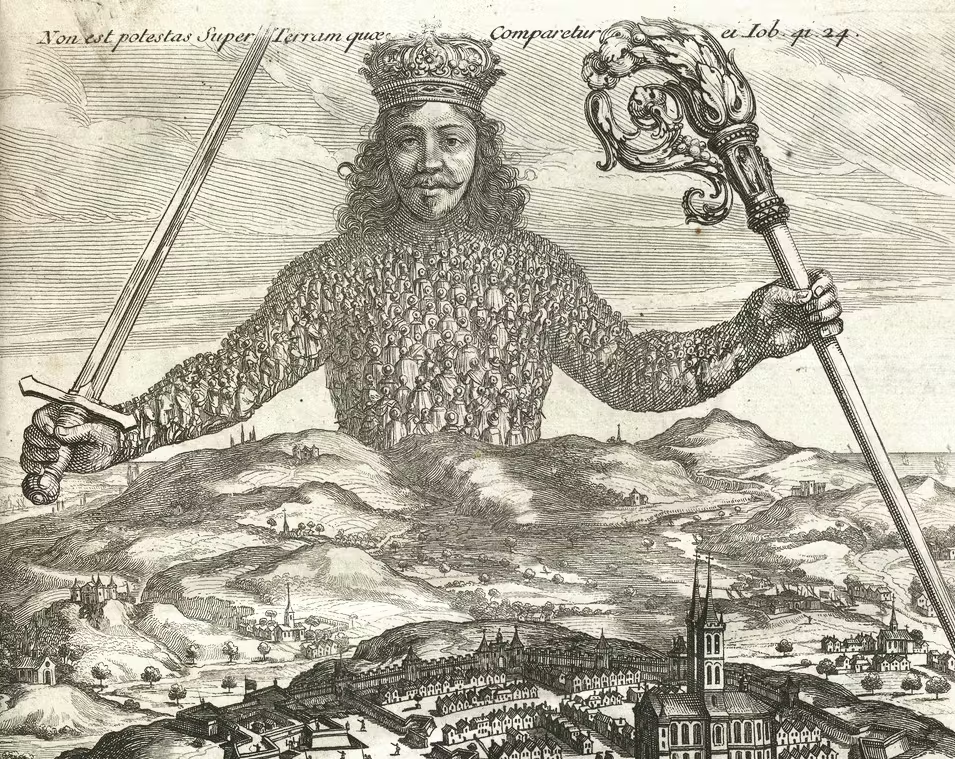
    Thomas Hobbes wrote his seminal work Leviathan in 1651. In it he describes the world system as it was then as being in “a state of nature,” something that some have interpreted as anarchy. However, anarchy has order and purpose. It is not chaos. In fact, if we think of Adam Smith’s “invisible hand of the market” we get something similar to what anarchy is in practice: the aggregate of individual acts of self-interest can lead to the optimisation of value and outcomes at the collective level. Anarchy clears; chaos does not.

    For Hobbes, the state of nature was chaos. Absent a “Sovereign” (i.e. a government) that could impose order on global and domestic societies, humans were destined to lead lives the were “solitary, poor, nasty, brutish and short.” This has translated into notions of “might makes right,” “survival of the fittest,” “to the victor goes the spoils” and other axioms of so-called power politics. The most elaborate of these, international relations realism, is a school of thought that is based on the belief that because the international system has no superseding Sovereign in the form of world government with comprehensive enforcement powers, and because there are no universally shared values and mores throughout the globe community that ideologically bind cultures, groups and individuals, global society exists as a state of nature where, even if there are attempts to manage the relationships between States (and other actors) via rules, norms, institutions and the like, the bottom line is that States (and other actors) have interests, not friends.

    Interests are pursued in a context of power differentials. Alliances are temporary and based on the convergence of mutual interests. Values are not universal and so are inconsequential. International exchange is transactional, not altruistic. Actors with greater resources at their disposal (human, natural, intellectual) prevail over those that have less. In case of resource parity between States or other actors, balances of power become systems regulators, but these are fluid and contingent, not permanent. Geography matters in that regard, which is why geopolitics (the relationship of power to geography) is the core of international relations.

    It is worth remembering this when evaluating contemporary international relations. It has been well established by now that the liberal international order of the post WW2 era has largely been dismantled in the context of increasing multipolarity in inter-State relations and the rise of the Global South within the emerging order. As I have written before, the long transition and systemic realignment in international affairs has led to norm erosion, rules violations, multinational institutional and international organizational decay or irrelevance and the rise of conflict (be it in trade, diplomacy or armed force) as the new systems regulator.

    These developments have accentuated over the last decade and now have a catalyst for a full move into a new global moment–but not into a multipolar or multiplex constellation arrangement in which rising and established powers move between multilateral blocs depending on the issues involved. Instead, the move appears to be one towards a modern Hobbesian state of nature, with the precipitant being the MAGA administration of Donald Trump and its foreign policy approach.

    We must be clear that it is not Trump who is the architect of this move. As mentioned in pervious posts, he is an empty vessel consumed by his own self-worth. That makes him a useful tool of far smarter people than he, people who work in the shadow of relative anonymity and who cut their teeth in rightwing think tanks and policy centres. In their view the liberal internationalist order placed too many constraints on the exercise of US power while at the same time requiring the US to over-extend itself as the “world’s policeman” and international aid donor . Bound by international conventions on the one hand and besieged by foreign rent-seekers and adversaries on the other, the US was increasingly bent under the weight of overlapped demands in which existential national interests were subsumed to a plethora of frivolous diversions (such as human rights and democracy promotion).

    For these strategists, the solution to the dilemma was not to be found in any new multipolar (or even technopolar) constellation but in a dismantling of the entire edifice of international order, something that was based on an architecture of rules, institutions and norms nearly 500 years in the making. Many have mentioned Trump’s apparent mercantilist inclinations and his admiration for former US president William McKinley’s tariff policies in the late 1890s. Although that may be true, the Trump/MAGA agenda is far broader in scope than trade. In fact, the US had its greatest period of (neo-imperial) expansion during McKinley’s tenure as president (1897-1901), winning the Spanish-American War and annexing Hawai’i, Puerto Rico, Guam, American Samoa and the Philippines, so Trump’s admiration for him may well be based on notions of territorial expansionism as well.

    Whatever Trump’s views of McKinley, the basic idea under-riding his foreign policy team’s approach is that in a world where the exercise of power is the ultimate arbiter of a State’s international status, the US remains the greatest Power of them all. It does not matter if the PRC or Russia challenge the US or if other emerging powers join the competition. Without the hobbling effect of its liberal obligations the US can and will dominate them all. This involves trade but also the exercise of raw (neo) imperialist ambitions in places like Greenland, the Panama Canal and even Canada. It involves sidelining the UN, NATO, EU and other international organisations where the US had to share equal votes with lesser powers who flaunted the respect and tribute that should naturally be given in recognition of the US’s superior power base.

    There appears to be a belief in this approach that the US can be a new hegemon–but not Sovereign–in a unipolar world, even more so than during the post-USSR-pre 9/11 interregnum. In a new state of nature it can sit at the core of the international system, orbited by constellations of lesser Great Powers like the PRC, Russia, the EU, perhaps India, who in turn would be circled by lesser powers of various stripes. The US will not seek to police the world or waste time and resources on well-meaning but ultimately futile soft power exercises like those involving foreign aid and humanitarian assistance. Its power projection will be sharp on all dimensions, be it trade, diplomacy or in military-security affairs. It will use leverage, intimidation and varying degrees of coercion as well as persuasion (and perhaps even bribery) as diplomatic tools. It will engage the world primarily in bilateral fashion, eschewing multilateralism for others to pursue according to their own interests and power capabilities. That may suit them, but for the US multilateralism is just another obsolescent vestige of the liberal internationalist past.

    Source: Northrop-Grumman.

    A possible (and partial) explanation for the change in the US foreign policy approach may be the learning effect in the US of Russia’s invasion of Ukraine and Israel’s scorched earth campaign in Gaza. Trump and his advisors may have learned that impunity has its own rewards, that no country or group of countries other than the US (if it has the will) can effectively confront a state determined to pursue its interests regardless of international law, the laws of war or institutional censorship (say, by the UN or International Criminal Court), or any other type of countervailing power. The Russians and Israelis have gotten away with their behaviour because, all rhetoric and hand-wringing aside, there is no actor or group of actors who have the will or capability to stop them. For Trump strategists, these lesser powers are pursuing their interests regardless of diplomatic niceties and international conventions, and they are prevailing precisely because of that. Other than providing military assistance to Ukraine, no one has lifted a serious finger against the Russians other than the Ukrainians themselves, and even fewer have seriously moved to confront Israel’s now evident ethnic cleansing campaign in part because the US has backed Israel unequivocally. The exercise of power in each case occurred in a norm enforcement vacuum in spite of the plethora of agencies and institutions designed to prevent such egregious violations of international standards.

    Put another way: if Israel and Russia can get away with their disproportionate and indiscriminate aggression, imagine what the US can do.

    If we go on to include the PRC’s successful aggressive military “diplomacy” in East/SE Asia, the use of targeted assassinations, hacking, disinformation and covert direct influence campaigns overseas by various States and assorted other unpunished violations of international conventions, then it is entirely plausible that Trump’s foreign policy brain trust sees the moment as ripe for finally breaking the shackles of liberal internationalism. Also recall that many in Trump’s inner circle subscribe to chaos or disruption theory, in which a norms-breaking “disruptor” like Trump seizes the opportunities presented by the breakdown of the status quo ante.

    Before the US could hollow out liberal internationalism abroad and replace it with a modern international state of nature it had to crush liberalism at home. Using Executive Orders as a bludgeon and with a complaint Republican-dominated Congress and Republican-adjacent federal courts. the Trump administration has openly exercised increasingly authoritarian control powers with the intention of subjugating US civil society to its will. Be it in its deportation policies, rollbacks of civil rights protections, attacks on higher education, diminishing of federal government capacity and services (except in the security field), venomous scapegoating of opponents and vulnerable groups, the Trump/MAGA domestic agenda not only seeks to turn the US into a illiberal or “hard” democracy (what Spanish language scholars call a “democradura” as a play on words mixing the terms democracia and dura (hard)). It also serves notice that the US under Trump/MAGA is willing to do whatever is necessary to re-impose its supremacy in world affairs, even if it means hurting its own in order to prove the point. By its actions at home Trump’s administration demonstrates capability, intent and steadfast resolve as it establishes a reputation for ruthless pursuit of its policy agenda. Foreign interlocutors will have to take note of this and adjust accordingly. Hence, for Trump’s advisors, authoritarianism at home is the first step towards undisputed supremacy abroad.

    The Trump embrace of international state of nature differs from Hobbes because it does not see the need for a superseding global governance network but instead believes that the US can dominate the world without the encumbrances of power-sharing with lesser players. In this view hegemony means domination, no more or less. It implies no attempt at playing the role of a Sovereign imposing order on a disorderly and recalcitrant community of Nation-States and non-State actors that do not share common values, much less interests.

    This is the core of the current US foreign policy approach. It is not about reorganising the international order within the extant frameworks as given. It is about removing those frameworks entirely and replacing them with an America First, go it alone agenda where the US, by virtue of its unrivalled power differential relative to all other States and global actors, can maximise its self-interest in largely unconstrained fashion. Some vestiges of the old international order may remain, but they will be marginalised and crippled the longer the US project is in force.

    What does not seem to be happening in Trump’s foreign policy circle are three things. First, recognition that other States and international actors may band together against the US move to unipolarity in a new state of nature and that for all its talk the US may not be able to impose unipolar dominance over them. Second, understanding that States like the PRC, Russia and other Great Powers and communities (like the EU) may resist the US move and challenge it before it can consolidate the new international status quo. Third, foreseeing that the technology titans who today are influential in the Trump administration may decide to transfer there loyalties elsewhere, especially if Trump’s ego starts becoming a hindrance to their (economic and digital) power bases. The fusion of private technology control and US State power may not be as compatible over time as presently appears to be the case, something that may not occur with States such as the PRC, India or Japan that have different corporate cultures and political structures. As the current investment in the Middle Eastern oligarchies shows, the fusion of State and private techno power may be easier to accomplish in those contexts rather than the US.

    In any event, whether it be a short-term interlude or a longue durée feature of international life, a modern state of nature is now our new global reality.

    Analysis syndicated by 36th Parallel Assessments

    MIL OSI AnalysisEveningReport.nz

  • MIL-OSI China: Olympic champion Zheng looking forward to better result at Wimbledon

    Source: People’s Republic of China – State Council News

    China’s Olympic champion Zheng Qinwen says she is looking forward to a better result at this year’s Wimbledon Championships, after having been knocked out of the women’s singles first round in the previous two years.

    Zheng, 22, will begin her fourth Wimbledon main draw appearance with a first-round match against Katerina Siniakova of the Czech Republic on Monday.

    Siniakova, 29, who has 10 women’s doubles Grand Slam titles, has previously beaten Zheng twice on grass, including at Wimbledon in 2023.

    “She’s a tough opponent, especially on grass,” said fifth seed Zheng at a pre-tournament media conference on Saturday. “Her shots are quite flat, so the balls won’t bounce too high on grass. I have lost to her twice and I will definitely be fully prepared this time.”

    Earlier this month, former Australian Open finalist Zheng reached her first career grass-court semifinal at Queen’s Club, but withdrew from the following Berlin Open due to a neck injury.

    “Competing at Queen’s Club was a good experience for me. I learned a lot from the matches I played there,” said Zheng. “Compared with the previous year at Wimbledon, my body is healthier so I can prepare better with my team. I hope this year everything is going to be great. “

    Despite her early exit in the past two years at the grass-court Grand Slam, Zheng maintained that her confidence remained high.

    “I believe I can perform well on grass. Last year I was injured at Wimbledon, and one year earlier I didn’t prepare well as I was with a new team,” said Zheng. “I think I can be much stronger this year if I prepare well.”

    Zheng also revealed that she is now working with Spanish coach Francisco Roig, who had previously worked with 22-time Grand Slam champion Rafael Nadal for 18 years.

    “He joined my team after Queen’s. My coach Pere Riba helped me contact him,” said Zheng. “He is such an experienced coach. I’m sure that I can learn a lot from him. We will see how this grass-court season goes, and then decide if we want to work together for the long term.”

    MIL OSI China News

  • MIL-OSI China: Wimbledon could be best chance for 25th Grand Slam title: Djokovic

    Source: People’s Republic of China – State Council News

    Serbian legend Novak Djokovic agreed that Wimbledon could offer his best chance to claim a record-extending 25th Grand Slam title.

    While attending the pre-Championships press conference on Saturday, the 38-year-old was asked if he believed this year’s Wimbledon could be his best chance to win the 25th Grand Slam title and could it be his last dance at the grass-court Grand Slam this year.

    “Whether it could be my last dance, I’m not sure, as I’m not sure about Roland Garros or any other Slam that I play next,” said Djokovic prior to his 20th appearance at Wimbledon.

    “My wish is to play for several more years. I would love to be healthy physically and also mentally motivated to keep on playing at the highest level. That’s the goal, but you never know at this stage.”

    “And yes, I would probably agree that Wimbledon could be the best chance because of the results I had, because of how I feel, how I play in Wimbledon, just getting that extra push mentally and motivation to perform the best tennis at the highest level,” the seven-time Wimbledon champion continued.

    Djokovic ranked Wimbledon “maybe the most consistently successful Grand Slam for me in the last 10 years”, as he reached six finals in the last six editions of the tournament. He won four titles consecutively before being beaten by Spaniard Carlos Alcaraz in the last two years.

    “I don’t chase the rankings anymore. I’m trying to play the best tennis in Grand Slams and trying to win Grand Slams. That hasn’t changed,” he said.

    Djokovic reached the semifinals at both Australian Open and US Open this year. “I think I still played a decent level of tennis that showed me that I can still play on a very high level at the later stages.”

    “That’s what is also giving me an extra motivation to keep going. Obviously clay court probably slightly less chances to win comparing to grass,” he added.

    The sixth-seeded veteran will face Frenchman Alexandre Muller in the opening round. If he reaches the semifinals, he could meet world No. 1 Jannik Sinner who defeated him in the French Open semifinals earlier this year.

    MIL OSI China News

  • MIL-Evening Report: Do all Iranians hate the regime? Hate America? Life inside the country is more complex than that

    Source: The Conversation (Au and NZ) – By Simon Theobald, Postdoctoral researcher, Institute for Ethics and Society, University of Notre Dame Australia

    From 2015 to 2018, I spent 15 months doing research work in Mashhad, Iran’s second-largest city. As an anthropologist, I was interested in everyday life in Iran outside the capital Tehran. I was also interested in understanding whether the ambitions of the 1979 Revolution lived on among “ordinary” Iranians, not just political elites.

    I first lived on a university campus, where I learned Persian, and later with Iranian families. I conducted hundreds of interviews with people who had a broad spectrum of political, social and religious views. They included opponents of the Islamic Republic, supporters, and many who were in between.

    What these interviews revealed to me was both the diversity of opinion and experience in Iran, and the difficulty of making uniform statements about what Iranians believe.

    Measuring the depth of antipathy for the regime

    When Israel’s strikes on Iran began on June 13, killing many top military commanders, many news outlets – both international and those run by the Iranian diaspora – featured images of Iranians cheering the deaths of these hated regime figures.

    Friends from my fieldwork also pointed to these celebrations, while not always agreeing with them. Many feared the impact of a larger conflict between Iran and Israel.

    Trying to put these sentiments in context, many analysts have pointed to a 2019 survey by the GAMAAN Institute, an independent organisation based in the Netherlands that tracks Iranian public opinion. This survey showed 79% of Iranians living in the country would vote against the Islamic Republic if a free referendum were held on its rule.

    Viewing these examples as an indicator of the lack of support for the Islamic Republic is not wrong. But when used as factoids in news reports, they become detached from the complexities of life in Iran. This can discourage us from asking deeper questions about the relationships between ideology and pragmatism, support and opposition to the regime, and state and society.

    A more nuanced view

    The news reporting on Iran has encouraged a tendency to see the Iranian state as homogeneous, highly ideological and radically separate from the population.

    But where do we draw the line between the state and the people? There is no easy answer to this.

    When I lived in Iran, many of the people who took part in my research were state employees – teachers at state institutions, university lecturers, administrative workers. Many of them had strong and diverse views about the legacy of the revolution and the future of the country.

    They sometimes pointed to state discourse they agreed with, for example Iran’s right to national self-determination, free from foreign influence. They also disagreed with much, such as the slogans of “death to America”.

    This ambivalence was evident in one of my Persian teachers. An employee of the state, she refused to attend the annual parades celebrating the anniversary of the revolution. “We have warm feelings towards America,” she said. On the other hand, she happily attended protests, also organised by the government, in favour of Palestinian liberation.

    Or take the young government worker I met in Mashhad: “We want to be independent of other countries, but not like this.”

    In a narrower sense, discussions about the “state” may refer more to organisations like the Islamic Revolutionary Guard Corps (IRGC) and the Basij, the paramilitary force within the IRGC that has cracked down harshly on dissent in recent decades. Both are often understood as being deeply ideologically committed.

    Said Golkar, a US-based Iranian academic and author, for instance, calls Iran a “captive society”. Rather than having a civil society, he believes Iranians are trapped by the feared Basij, who maintain control through their presence in many institutions like universities and schools.

    Again, this view is not wrong. But even among the Basij and Revolutionary Guard, it can be difficult to gauge just how ideological and homogeneous these organisations truly are.

    For a start, the IRGC relies on both ideologically selected supporters, as well as conscripts, to fill its ranks. They are also not always ideologically uniform, as the US-based anthropologist Narges Bajoghli, who worked with pro-state filmmakers in Tehran, has noted.

    As part of my research, I also interviewed members of the Basij, which, unlike the IRGC proper, is a wholly volunteer organisation.

    Even though ideological commitment was certainly an important factor for some of the Basij members I met, there were also pragmatic reasons to join. These included access to better jobs, scholarships and social mobility. Sometimes, factors overlapped. But participation did not always equate to a singular or sustained commitment to revolutionary values.

    For example, Sāsān, a friend I made attending discussion groups in Mashhad, was quick to note that time spent in the Basij “reduced your [compulsory] military service”.

    This isn’t to suggest there are not ideologically committed people in Iran. They clearly exist, and many are ready to use violence. Some of those who join these institutions for pragmatic reasons use violence, too.

    Looking in between

    In addition, Iran is an ethnically diverse country. It has a population of 92 million people, a bare majority of whom are Persians. Other minorities include Azeris, Kurds, Arabs, Baloch, Turkmen and others.

    It is also religiously diverse. While there is a sizeable, nominally Shi’a majority, there are also large Sunni communities (about 10-15% of the population) and smaller communities of Christians, Jews, Zoroastrians, Baha’is and other religions.

    Often overlooked, there are also important differences in class and social strata in Iran, too.

    One of the things I noticed about state propaganda was that it flattened this diversity. James Barry, an Australian scholar of Iran, noticed a similar phenomenon.

    State propaganda made it seem like there was one voice in the country. Protests could be dismissed out of hand because they did not represent the “authentic” view of Iranians. Foreign agitators supported protests. Iranians supported the Islamic Republic.

    Since leaving Iran, I have followed many voices of Iranians in the diaspora. Opposition groups are loud on social media, especially the monarchists who support Reza Pahlavi, the son of the deposed Shah.

    In following these groups, I have noticed a similar tendency to speak as though they represent the voice of all Iranians. Iranians support the shah. Or Iranians support Maryam Rajavi, leader of a Paris-based opposition group.

    Both within Iran, and in the diaspora, the regime, too, is sometimes held to be the imposition of a foreign conspiracy. This allows the Islamic Republic and the complex relations it has created to be dismissed out of hand. Once again, such a view flattens diversity.

    Over the past few years, political identities and societal divisions seem to have become harder and clearer. This means there is an increasing perception among many Iranians of a gulf between the state and Iranian society. This is the case both inside Iran, and especially in the Iranian diaspora.

    Decades of intermittent protests and civil disobedience across the country also show that for many, the current system no longer represents the hopes and aspirations of many people. This is especially the case for the youth, who make up a large percentage of the population.

    I am not an Iranian, and I strongly believe it is up to Iranians to determine their own futures. I also do not aim to excuse the Islamic Republic – it is brutal and tyrannical. But its brutality should not let us shy away from asking complex questions.

    If the regime did fall tomorrow, Iran’s diversity means there is little unanimity of opinion as to what should come next. And if a more pluralist form of politics is to emerge, it must encompass the whole of Iran’s diversity, without assuming a uniform position.

    It, too, will have to wrestle with the difficult questions and sometimes ambivalent relations the Islamic Republic has created.

    Simon Theobald received funding from the Australian National University during his research.

    ref. Do all Iranians hate the regime? Hate America? Life inside the country is more complex than that – https://theconversation.com/do-all-iranians-hate-the-regime-hate-america-life-inside-the-country-is-more-complex-than-that-259554

    MIL OSI AnalysisEveningReport.nz

  • MIL-OSI China: World’s first pure ammonia-fueled demonstration vessel completes maiden voyage in China

    Source: People’s Republic of China – State Council News

    The world’s first pure ammonia-powered demonstration vessel, the “Anhui,” successfully completed its maiden voyage in Hefei, east China’s Anhui Province, marking a major step forward for green shipping.

    An aerial drone photo taken on June 28, 2025 shows the pure ammonia-powered demonstration vessel, the “Anhui,” making its maiden voyage at the water area of Chaohu Lake in Hefei, east China’s Anhui Province. (Xinhua/Zhou Mu)

    Ammonia, a major chemical industry feedstock, has a high energy density and due to its carbon-free nature, produces only water and nitrogen when fully combusted. This makes it a highly promising fuel for decarbonizing shipping.

    In recent years, several shipping companies in countries like Japan and Norway have been investing in the development of ammonia-powered vessels. A report by the International Energy Agency published in 2021 estimated that by 2050, ammonia could account for around 45 percent of global energy demand for shipping in 2050 in the net-zero emissions. However, ammonia fuel also faces challenges such as ignition difficulties and unstable combustion.

    Ammonia-powered Anhui was jointly developed by the Institute of Energy of the Hefei Comprehensive National Science Center and its subsidiary, Shenzhen Haixu New Energy Co., Ltd. It is equipped with a 200kW high-speed gas internal combustion generator, two 100kW propulsion motors, and a twin-screw propulsion system. It has a full load capacity of 50 tonnes and a rated speed of 10 knots.

    According to Wu Dianwu from the institute, the research team overcame several key technological challenges. These include pure ammonia fuel plasma ignition, sustained combustion, efficient catalytic cracking of ammonia gas to produce hydrogen, and efficient combustion and control of hydrogen-ammonia mixed gas in internal combustion engines. The team also developed a pure ammonia fuel burner and various ammonia gas catalytic cracking devices.

    The maiden voyage achieved stable combustion of pure ammonia fuel, nearly zero carbon dioxide emissions, and effective control of nitrogen oxides. This confirms the potential for ammonia-hydrogen fuels to be widely used in marine and land transport, as well as in industrial boilers and fuel cells, Wu noted.

    Wang Junli, secretary-general of the Chinese Society of Naval Architects and Marine Engineers, said the vessel’s successful voyage marked a major milestone in creating a clean, low-carbon energy system for water transport. If pure ammonia engines reach the megawatt level, their applications will expand significantly, holding significant importance in achieving China’s dual carbon goals. 

    MIL OSI China News

  • MIL-OSI USA: Warnock Holds Multi-Faith Vigil as Washington GOP Attempts to Kick 16 Million Off Health Care 

    US Senate News:

    Source: United States Senator Reverend Raphael Warnock – Georgia

    Warnock Holds Multi-Faith Vigil as Washington GOP Attempts to Kick 16 Million Off Health Care 

    At the 8-year anniversary of Senator Reverend Warnock’s 2017 arrest protesting the last Trump tax cut, Senator Warnock held a vigil with multi-faith leaders while the Senate debated the GOP tax bill

    Senator Warnock was arrested in the Russell rotunda in 2017, before he was elected to the Senate, protesting the previous GOP tax giveaway. 

    PHOTOS AND VIDEOS AVAILABLE HERE

    Washington, D.C. –  Today, U.S. Senator Reverend Raphael Warnock (D-GA) held a vigil with a multi-faith coalition to pray that GOP lawmakers have the courage to stand up for their constituents and vote against the GOP tax bill. The Senator prayed for the 16 million Americans who are expected to lose health care coverage if the bill passes. Following the Russell Rotunda vigil, the Senator led the procession of faith leaders to the Senate floor as the chamber debated the immoral GOP tax bill.

    “And so, in this season of unnecessary cruelty, we bear witness to kindness. Kindness not only in our interpersonal relations, but kindness in public policy. Do justice, love kindness, walk humbly with your God. Thank you for these faith leaders who have come for such a time as this. Be now with us and give us every spiritual grace as we stand as voices for the voiceless, so that the preaching of Jesus might be made incarnate,” prayed Senator Reverend Warnock.  

    The Senator was arrested in the Russell Rotunda 2017, before he was elected to the Senate, along with a coalition of multi-faith leaders, while protesting the GOP tax bill during the first Trump Administration. Video of 2017 arrest HERE.

    MIL OSI USA News

  • MIL-OSI USA: Warnock Holds Multi-Faith Vigil as Washington GOP Attempts to Kick 16 Million Off Health Care 

    US Senate News:

    Source: United States Senator Reverend Raphael Warnock – Georgia

    Warnock Holds Multi-Faith Vigil as Washington GOP Attempts to Kick 16 Million Off Health Care 

    At the 8-year anniversary of Senator Reverend Warnock’s 2017 arrest protesting the last Trump tax cut, Senator Warnock held a vigil with multi-faith leaders while the Senate debated the GOP tax bill

    Senator Warnock was arrested in the Russell rotunda in 2017, before he was elected to the Senate, protesting the previous GOP tax giveaway. 

    PHOTOS AND VIDEOS AVAILABLE HERE

    Washington, D.C. –  Today, U.S. Senator Reverend Raphael Warnock (D-GA) held a vigil with a multi-faith coalition to pray that GOP lawmakers have the courage to stand up for their constituents and vote against the GOP tax bill. The Senator prayed for the 16 million Americans who are expected to lose health care coverage if the bill passes. Following the Russell Rotunda vigil, the Senator led the procession of faith leaders to the Senate floor as the chamber debated the immoral GOP tax bill.

    “And so, in this season of unnecessary cruelty, we bear witness to kindness. Kindness not only in our interpersonal relations, but kindness in public policy. Do justice, love kindness, walk humbly with your God. Thank you for these faith leaders who have come for such a time as this. Be now with us and give us every spiritual grace as we stand as voices for the voiceless, so that the preaching of Jesus might be made incarnate,” prayed Senator Reverend Warnock.  

    The Senator was arrested in the Russell Rotunda 2017, before he was elected to the Senate, along with a coalition of multi-faith leaders, while protesting the GOP tax bill during the first Trump Administration. Video of 2017 arrest HERE.

    MIL OSI USA News

  • MIL-OSI United Nations: Deputy Secretary-General’s remarks at the Graduation Ceremony of the Paris School of International Affairs, Sciences Po

    Source: United Nations secretary general

    Dean Gonzalez, distinguished faculty members, ladies and gentlemen, 
      
    Most importantly, graduates, 

    Let me begin with the most important word of all: congratulations! 

    You now join a long line of Sciences Po alumni who have shaped our world – including some of whom are doing it every day at the United Nations as they work in my office supporting the Secretary-General. 

    Let’s also take a moment to recognise your families, friends and loved ones – who have been with you every step of the way.  

    They deserve a round of applause.   

    Students representing more than 120 nationalities come here to learn how the world works, and how it can work better.  

    That spirit of global curiosity and purpose has also carried me through every chapter of my own journey.   

    Designing schools and hospitals in my home country of Nigeria. 

    Advising four Presidents on poverty reduction, development policy planning and public sector reform. 

    Supporting Member States to lead the process that transformed global aspirations into the Sustainable Development Goals. 

    And now as the longest-serving Deputy Secretary-General in United Nations history, supporting the Secretary-General on some of the most complex situations in our history, from COVID, to Ukraine, to Sudan and Gaza and today’s continuing crisis in the Middle East.

    Today, I want to reflect on the lessons I have learned along the way.

    First, don’t agonise, organise. 

    We live in a world of hurt.  A world that is messy, complicated and often overwhelming.  

    And I know it might be easy to feel paralyzed by the scale and hopelessness of today’s challenges.  

    Don’t.

    Because more than ever, those challenges are connected – and we solve them by seeing those connections and coming together. 

    When I served as Nigeria’s Minister of Environment, my job was never just about the environment.  

    When Lake Chad was drying up, it wasn’t just an ecological crisis – it was a security crisis.  Boko Haram was born and abducted 200 school girls. 

    When we faced population and urban sprawl and tensions rose between farmers and herders, it wasn’t just about water  access– it was about food systems and growing cities. 

    When I met girls walking hours to fetch water, missing school every day – it wasn’t just about resources – it was about gender equality.  

    We didn’t work in siloes.  We built coalitions across sectors – civil society, young people, traditional leaders, the private sector – to find real solutions.  

    We didn’t agonize, we organized. 

    And, yes, there’s plenty to agonize about today – especially when multilateralism is under attack and international cooperation is on the back foot. 

    But I have seen what’s possible when we find common ground and forge ahead.  

    Just look at the last two months at the UN.  

    A landmark Pandemic Treaty approved at the World Health Organization. 

    Major new protections for our oceans at the World Ocean Conference in Nice.  

    And from Paris, I head to Sevilla — where the world is coming together to commit to better finance sustainable development. 

    So, when the problems seem larger than life, too tangled, too tough — don’t agonize.

    Organize. 

    Mobilize. 

    And help realize the change our world so urgently needs. 

    Remember you did not fail for want of trying.

    The second lesson – keep learning and delivering.  

    Graduation isn’t the end of learning.  In many ways, it’s just the start of your lifelong journey.

    When I joined the UN, I was not steeped in the intricacies of international diplomacy.

    Throughout my career, I have had to learn fast – and deliver even faster.  

    So will you.  

    Even now, I am learning every day – about AI, about geothermal energy, space debris, biotechnology, cybersecurity.  

    You will face even more change, even faster, especially in the new era of super technologies. 

    Regardless of the task that is put in front of you, get ahead of it.  Learn more.  Do more.  Show your stuff and deliver.  Performance opens doors.  

    Yes, some of life is luck and privilege.  

    But I guarantee: the harder you work, the luckier you will get.  

    Third, make hope your most powerful asset. 
    The world is a cynical place. And international affairs is not for the faint of heart. 

    There will be setbacks and critics. 

    There will be many days when the problems seem too big, and the politics too small. When anxieties grip you like a fever.

    Just look around:  war in Ukraine, atrocities in Sudan, catastrophe in Gaza, climate chaos everywhere. 

    But never forget, hope is not a four-letter word. 

    Hope is the courage to build when others are tearing down. 

    Hope is the decision to get up one more time, to negotiate one more deal, even when the odds are against you.

    I have sat with young girls who survived the worst horrors of war and sexual violence. 

    And in their eyes, I saw not just pain – but power. 

    The power to heal. To lead.  To hope. To survive and thrive. 

    Hope is not the absence of fear.  It is the refusal to be defined by it.

    So, carry it with you. Guard it fiercely.  

    Because hope is not just a feeling.  It’s a force.  

    Fourth, hold onto your moral compass. 

    Your degree will open doors. 

    But your integrity will tell you which ones are worth walking through.

    And in today’s world – where the global moral compass is spinning – that clarity matters more than ever. 

    We live in a world where military spending is soaring, while development budgets shrink.  

    Where fossil fuel subsidies dwarf investments in climate action.  

    Where conflict and hardship has forced more people from their homes than at any time since the Second World War.

    In this world, your role as changemakers is not just to make the right deals. 

    It is to draw the right lines. 

    There will be pressure to stay silent. 

    There will be moments when abandoning principles may seem an easier choice.

    But integrity matters most.

    As Deputy Secretary-General, I have had to tell hard truths to powerful people.

    To remind leaders of the many promises they made – and the people they made them to. 

    It is never easy to challenge power. 

    But we don’t serve power. 

    We serve people.

    And if we truly serve people, we must use our superpower and stand for justice, dignity, and solidarity. 

    As we mark Beijing+30, we cannot talk about a future and leave women and girls behind.

    Gender equality is not charity.  It powers our agency. And human rights.   

    And everyone wins when we leave no one behind.  

    But let’s be honest, we are not there yet. 

    So, to the men here today, I say: don’t stand in the way.  

    Don’t walk ahead.  

    Walk with. Stand with.  And speak up. For the other half of your society, women.

    The final lesson is this: invest time in what truly sustains you. 

    Your career will have highs and lows. 

    Plans change. 

    Titles come and go.

    But what will carry you through are the people who know you beyond your résumé. 

    Friends, families, mentors, partners. 

    Protect those bonds. Nurture them.

    Because in the toughest moments, those relationships will remind you of who you are, why you started, and why you must keep going.

    So, no matter how far you go, or how fast — never lose sight of what, and who, matters most.

    Dear graduates,

    Today, you are not just stepping into the world. 

    You are inheriting its unfinished business, and its boundless possibilities.

    As I look out, I see the next generation of climate champions, human rights defenders, and world class diplomats.

    And I am filled with hope. 

    Whatever path you choose, walk it with courage and conviction.  

    Congratulations, Class of 2025.

    The world is waiting.

    And I, for one, can’t wait to see what you will do.

    Thank you.
     

    MIL OSI United Nations News

  • MIL-OSI Europe: Romina Pourmokhtari takes part in UN Ocean Conference in Nice

    Source: Government of Sweden

    Minister for Climate and the Environment Romina Pourmokhtari is participating in the UN’s third Ocean Conference, UNOC-3, in Nice. At the Conference, a declaration is expected to be adopted on the implementation of measures to protect and preserve oceans.

    MIL OSI Europe News

  • MIL-OSI Europe: Government launches strategy for technology-leading and competitive industry

    Source: Government of Sweden

    The industrial investments of today lay the foundations for Sweden’s future competitiveness. For this reason, the Government is now launching a strategy that outlines the direction of industrial policy. The focus is on developing strategic technologies from research to commercialisation and on improving incentives for industry establishment.

    MIL OSI Europe News

  • MIL-OSI Europe: UN Ocean Conference highlights the need for more global measures to protect the world’s oceans

    Source: Government of Sweden

    The UN Ocean Conference in Nice concluded on 13 June with the adoption of the Nice Ocean Action Plan, a political declaration to strengthen global efforts to protect oceans. Minister for Climate and the Environment Romina Pourmokhtari headed Sweden’s delegation.

    MIL OSI Europe News

  • MIL-OSI United Kingdom: Two million meals already served at free breakfast clubs

    Source: United Kingdom – Government Statements

    Press release

    Two million meals already served at free breakfast clubs

    The first wave of the government’s free breakfast clubs have already served two million meals, delivering on the Plan for Change.

    Thousands of families across the country are already benefitting from the government’s flagship free breakfast club programme, with two million meals served in its first term.  

    The programme, which is set to give parents almost 100 hours back each year and save up to £450 in childcare costs, is one in a number of government measures to back working families, with new data revealing the benefits felt by parents and children.  

    The 30 minutes of free childcare give parents extra breathing space in busy mornings, allowing them to get to work easier, make time for appointments and help them juggle family life. According to the latest parent poll over half (59%) say the cost saving would motivate them to use a free breakfast club, and eight in ten say breakfast clubs help them to get to work on time and drop their kids off at school more easily.   

    The rollout delivers on the government’s manifesto promise to ensure state schools offer free breakfast clubs to all pupils, while supporting its Plan for Change milestone to ensure tens of thousands more children start school ready to learn. 

    Free breakfast clubs can make a significant impact on children’s attendance, behaviour and attendance, and the latest findings show this being felt on the ground. A third of parents think their children focus better in lessons (31%) and almost half think it’s easier to get their child out of bed and into school (48%).  

    The top draws for children going to a breakfast club are seeing friends (69%) and playing before school (63%), backing the government’s intention to enable a supportive start to the school day.  And children get to enjoy their top breakfast picks, leading with cereal (39%), followed by toast (32%) and fruit and yoghurt (8%).  

    It comes alongside wider action the government is taking to tackle the cost of living including increasing the National Living wage, extending free school meals to all children in households on Universal Credit – saving parents £500 a year – and expanding the Warm Homes Discount to save £150 for 6 million families next winter. 

    Bridget Phillipson, Education Secretary, said: 

    “This milestone in our Plan for Change will make all the difference to working families, as every child deserves the chance to start the day supported and ready to learn.

    “That’s why we are determined to break the link between background and success – delivering two million meals in the first term of free breakfast clubs, making an immediate and direct impact and easing the pressures on working families. We know parents are living busy lives, juggling family time and jobs, so I urge all parents who can to make use of the clubs.

    “Coupled with the historic step to tackle child poverty through offering free school meals to every single child who’s family claim Universal Credit and legislating cost saving measures such as a branded uniform cap, we are delivering the change families deserve.”  

    This government has set out a clear commitment to break down barriers to opportunity for every child, with breakfast clubs proven to boost children’s reading, writing and maths by an average of two months.  

    Annika Fox, mum of two children aged 6 and 2 years old said:   

    “The government’s free breakfast clubs have been a lifesaver to help me balance motherhood and work.   

    “As a full-time executive assistant, and often being the only adult in the house, I have to juggle getting two small kids ready for the day – all prior to commuting into London three times a week!  

    “The club gives me the flexibility I need, tripling the time I have to make drop off in the morning and making sure that my son isn’t rushed in the morning.”    

    Michael Lobo, Headteacher at St Patrick’s Catholic Primary School said:  

    “The funding for the free breakfast clubs has been instrumental to expanding our provision and offering children fun activities – like table tennis!   

    “For us, we’ve seen an improvement in punctuality for children attending school, as it gives a bigger window for parents to make drop off and lets them stagger their arrival with traffic.   

    “Our clubs mean children are settled, calmer in the mornings and engaged, ready to learn. It has been particularly valuable for children with SEN and anxiety.”  

    Free breakfast clubs in the early adopter schools will shape the future of the national breakfast club policy, contributing directly to its implementation. Further details on the national rollout of the breakfast clubs programme will follow in due course.  

    NOTES TO EDITORS  

    • The government has committed to fund free breakfast clubs in every primary school in England.  

    • Six in 10 parents say a free breakfast club would make them more likely to send their child to school – see HERE 

    • An Education Endowment Foundation (EEF) impact evaluation of the Magic Breakfast programme found that offering pupils in primary schools a free, universal, before-school breakfast club which includes a breakfast can boost their reading, writing, and maths attainment by an average of 2 months’ additional progress in Key Stage 1.    

    • Research shows that breakfast clubs can improve concentration, behaviour, and attendance, leaders and teachers have confirmed this, alongside findings from the National School Breakfast programme.  

    • Estimates of May pupil take-up for early adopter schools can be found here

    • All other new parent data included has been gathered by MadeForMums Breakfast Clubs Survey (June 2025, 279 respondents) – see here.

    • For more information about the free breakfast clubs programme, visit Free breakfast club roll out: everything you need to know  – The Education Hub.  

    • The early adopter scheme started at the beginning of the summer term, this was 22nd April for most schools

    DfE media enquiries

    Central newsdesk – for journalists 020 7783 8300

    Updates to this page

    Published 29 June 2025

    MIL OSI United Kingdom

  • MIL-OSI United Kingdom: Businesses and consumers to benefit as Minister visits Taiwan

    Source: United Kingdom – Government Statements

    Press release

    Businesses and consumers to benefit as Minister visits Taiwan

    The Minister is in Taiwan for the 27th round of annual UK-Taiwan trade talks.

    Businesses and consumers to benefit as Minister visits Taiwan to boost investment and exports following Trade Strategy

    • Visit follows the UK Trade Strategy published this week focused on aligning trade policy with growth-driving sectors.
    • Emerging sectors to benefit as Trade Minister Douglas Alexander to witness signing of the UK-Taiwan Enhanced Trade Partnership pillars.
    • Trade talks to take place chaired by Minister Alexander alongside Deputy Minister Cynthia Kiang, Ministry of Economic Affairs.

    UK exporters will benefit from better access to a key global market as the UK Trade Minister Douglas Alexander visits Taiwan for the 27th round of annual UK-Taiwan trade talks [29 – 30 June].

    The visit is part of the UK’s longstanding unofficial relationship with Taiwan and aimed at boosting bilateral trade, worth £9.3 billion in 2024. It comes a week after the Government announced a new landmark Trade Strategy to secure UK business and trading relationships in a changing world.

    Minister Alexander will reinforce that Britain is open for business as part of this Government’s Plan for Change to deliver on its core mission to grow the economy and raise living standards.

    Emerging sectors can look forward to modernised trade with Taiwan thanks to the successful conclusion of the UK-Taiwan digital trade pilot, swapping out paper-based systems for digital data exchange to boost efficiency.

    The Minister – whose brief covers economic security as well as trade – will also witness the signing of our Enhanced Trade Partnership (ETP) Pillars on Investment, Digital Trade, Energy and Net Zero.

    Trade Minister Douglas Alexander said: 

    We share a long-standing trade relationship with Taiwan and our trade reached an all-time high last year, but we know there are still more opportunities for British businesses to take advantage of opportunities in this dynamic economy.

    The new Enhanced Trade Partnership Pillars will help us boost trade in some of our growth-driving sectors, delivering economic growth and helping put more money in people’s pockets as part of the Plan for Change.

    Ahead of the Minister’s visit, digital trade pilots were completed with UK water company Clas-SIC Wafer Fab as well as the Kimbland Distillery in Orkney and Scotch company Skene Whiskey as the UK looks to streamline trade with Taiwan.

    Taiwan was the world’s 22nd largest economy in 2024 and is a global leader in growth driving sectors like Digital Tech and Advanced Manufacturing, creating opportunities that align with the UK’s commercial and strategic strengths.

    The Trade talks, which have been held since 1991, along with the ETP, aim to further enhance trade, investment, and economic cooperation between the UK and Taiwan.

    The visit follows the recent publication of the UK’s Trade Strategy which will see the UK focus on sectors which deliver the most economic growth.

    The Minister will also meet with President Lai as part of the UK’s long-standing unofficial relationship with Taiwan.

    The ETP signing will take place between the British Representative Taipei, Ruth Bradley-Jones, and the Representative at the Taipei Representative Office, Vincent Chin-Hsiang Yao.

    Updates to this page

    Published 29 June 2025

    MIL OSI United Kingdom

  • MIL-OSI Europe: Minister for Social Services and Minister for Older People and Social Security visit Ukraine

    Source: Government of Sweden

    On 21–23 May, Minister for Social Services Camilla Waltersson Grönvall and Minister for Older People and Social Security Anna Tenje visited Lviv, Ukraine. While in Ukraine, Ms Waltersson Grönvall and Ms Tenje took part in the Ministerial Social Policy Summit, which Sweden co-hosted together with Ukraine, Moldova and Lithuania. Ministers from several EU countries were also in attendance.

    MIL OSI Europe News

  • MIL-OSI Europe: New EU pharmaceutical legislation – a win for Sweden and EU patients

    Source: Government of Sweden

    After two years of negotiations, EU Member States have agreed on a proposal for a revised pharmaceutical legislation in Europe. The process has met many obstacles along the way and the countries’ positions have been far apart on many fundamental issues, not least in regard to data protection issues and incentives for the development of priority antimicrobials.

    MIL OSI Europe News

  • MIL-OSI Canada: Joint statement on International LGBTQI+ Pride Day 2025

    Source: Government of Canada News

    June 28, 2025 – Ottawa, Ontario – Global Affairs Canada

    The foreign ministers of Canada, Spain, Australia, Belgium, Brazil, Cape Verde, Chile, Colombia, Iceland, Ireland, Netherlands, Norway, Portugal, Slovenia and Uruguay today issued the following statement:

    “On the occasion of International LGBTQI+ Pride Day 2025, we, the Foreign Ministers of Canada, Spain, Australia, Belgium, Brazil, Cape Verde, Chile, Colombia, Iceland, Ireland, Netherlands, Norway, Portugal, Slovenia and Uruguay are speaking and acting as one to champion the rights of LGBTQI+ people.

    “At a time when hate speech and hate crimes are on the rise, and in view of efforts to strip LGBTQI+ people of their rights, we reject all forms of violence, criminalization, stigmatization or discrimination, which constitute human rights violations.

    “It is our understanding that respect for diversity, equality and tolerance require the support, at the international level, of measures aimed at decriminalization, and at preventing and eliminating harassment of all kinds—including homophobic and transphobic harassment. Also measures to advance the implementation of diversity policies and the fight against discrimination, and to favour the inclusion of LGBTQI+ people, especially transgender people in society and in the workplace.

    “We recognize that LGBTQI+ people face multiple and intersecting forms of discrimination, particularly when they are also part of other historically marginalized groups, communities, and populations, such as indigenous peoples, afro-descendants, people with disabilities, migrants, elderly people, or those who living in poverty. Promoting their full and effective inclusion requires an intersectional approach that structurally addresses these inequalities.

    “We are joining forces to work hand in hand for the equal rights of LGBTQI+ people and to bring the criminalization of same-sex relations worldwide to an end.

    “We call on all States to join us on this path, repealing discriminatory laws and refusing to adopt new laws that criminalize relations between persons of the same sex or punish people for their sexual orientation or gender identity. We call for an end to the prosecution of LGBTI+ people, and especially to the application of imprisonment and capital punishment. We further call for an end to so-called conversion “therapy” practices intended to change a person’s sexual orientation or gender identity, which can cause psychological and physical pain and suffering and are inherently discriminatory. What is at stake here is a matter of full respect for human rights and human dignity, of strengthening equality, diversity and prosperity, leaving no one behind.

    “Therefore, we, the public authorities, must implement policy that, in alignment with international human rights standards, pursues effective equality of LGBTQI+ people and seeks to combat all forms of discrimination. We celebrate sexual diversity and family diversity, in the conviction that inclusive, equitable, and tolerant societies founded on solidarity are also stronger, healthier and more resilient.

    “Lastly, we reassert our commitment to respecting the human rights of LGBTQI+ people, to ensuring that their equality before the law is incontestable and that no one is prosecuted or subject to discriminated because of their sexual orientation or gender identity. Let us build societies in which all human beings are free to live and love as they choose.”

    MIL OSI Canada News

  • MIL-OSI USA: Senator Marshall: This is the Beginning of America’s Great Golden Era

    US Senate News:

    Source: United States Senator for Kansas Roger Marshall
    Senator Marshall Joins Fox News to Discuss the Reconciliation Bill, Medicaid, and Operation Midnight Hammer.
    Washington – On Saturday, U.S. Senator Roger Marshall, M.D. (R-Kansas), joined Rich Edson on Fox News’ Fox News Live to discuss the Senate’s latest timeline to move the reconciliation bill forward, the negotiations around the SALT deduction, the best way to save Medicaid for those who need it most, and what’s next for America in the ongoing conflicts abroad.
    Click HERE or on the image above to watch the full interview. 
    On the Republican reconciliation bill:
    “In my career as an obstetrician, I feel like this bill is three weeks past its due date. It’s time to have the baby. Everyone’s upset – that means we’re probably close to where it needs to be. We cannot blow this chance. This is the President’s legacy, his agenda. If you supported President Trump, you should support this bill. This will be the largest tax decrease in American history. We’re going to secure the border – a whole lot of other good things, but mostly this is the beginning of America’s great, golden era.”
    On the SALT Deduction and its impact on negotiations:
    “… Over in the house, I think we have a little tighter margin. And again, I think that what we asked the President to do here was split the baby, but he’s keeping the baby together. This is the best we can get. Speaker Johnson was there with us yesterday, negotiating this to the last second. I think everyone has thrown their best argument on the table – I think that’s a great step forward. I wish we were cutting more spending, including this, but this is the best bill that we can get through the finish line.”
    On how to save Medicaid from disaster:
    “Again, just because you have Medicaid doesn’t mean you have access to care. You pointed out that a third of doctors don’t accept Medicaid, and another third basically rule them out through the schedule. What our bill does is give a block grant for rural hospitals and for Community Health Centers. One of my three pillars of MAHA is making sure that everyone has meaningful, affordable access to primary care. Even Bernie Sanders agrees with me that these Community Health Centers are a great way to do that. I think that healthcare will be better.
    “And in this bill, we absolutely preserve Medicaid for those who need it the most. We don’t touch seniors in nursing homes, people with disabilities, pregnant women, or children. So, we will protect Medicaid for those who need it the most. And on the other hand, we want to make sure everyone has access to care. We’ll do it through a block grant – I’m so proud of the work we’ve done here, as far as making health care more affordable and more accessible.”
    On where the Medicaid savings will come from:
    “So, the savings come from a couple of things. One, something called a provider tax, which is absolutely a scam, a money laundering scam, where you have one state, maybe getting 25 times more per person than what a state like Kansas is getting. So, we need to level out those provider taxes.
    “And then, as we talk about people that may lose Medicaid, half of them are people that are on it fraudulently or through some type of error. And the other half will be those that are refusing to work 20 hours a day. Again, 60, 70% of Americans support some type of work requirements if you don’t have a disability, you’re working age, you don’t have a child under the age of 13, then I think it’s reasonable to ask people to work or volunteer for 20 hours a week.”
    On what’s next for America in the Israel and Iran conflict:
    “I think it will take them years just to restart their nuclear program. I think that they can’t control their airspace. They don’t have the will to do it. From what I’ve seen, I’m in shock and awe. You know, it’s shocking how much damage we did to their facilities. Obliterated is a great term. I’m in awe of our military, the great job that they did.
    “Thanks to all those Air Force guys who did this off. I’m an Army guy, but I’m still going to salute them. They did a great job. And thanks to all of our soldiers over in the Middle East, I don’t see Iran getting back in this ball game for several years.
    “Iran cannot have any type of nuclear bomb if they don’t want to move things in a different direction right now, then we need to double down on our sanctions. Whatever we need to do. Look, I don’t want boots on the ground. I’m tired of all the killing. I want all the killing to stop in Gaza, in Iran – all these different places, Ukraine. But at the end of the game, Iran cannot have a nuclear warhead.”

    MIL OSI USA News

  • MIL-OSI USA: CONGRESSWOMAN PLASKETT EXPRESSES DEEP CONCERN OVER THE TRUMP ADMINISTRATION’S DECISION TO END PROTECTIONS FOR HAITIAN IMMIGRANTS

    Source: United States House of Representatives – Congresswoman Stacey E. Plaskett (USVI)

    For Immediate Release                                          Contact: Tionee Scotland
    June 28, 2025                                                           202-808-6129

    PRESS RELEASE

    CONGRESSWOMAN PLASKETT EXPRESSES DEEP CONCERN OVER THE TRUMP ADMINISTRATION’S DECISION TO END PROTECTIONS FOR HAITIAN IMMIGRANTS

    Washington, DC – Congresswoman Stacey E. Plaskett (VI-AL) today strongly condemned the Trump administration’s announcement that it will terminate Temporary Protected Status (TPS) for more than 300,000 Haitian immigrants currently living in the United States, calling the decision “morally unconscionable and recklessly shortsighted to our national interest.”

    “The Trump administration’s decision to end TPS for Haitians is not just cruel—it is potentially deadly. Haiti remains in a state of complete collapse, overrun by gangs, wracked with violence, and under a state of emergency. The State Department itself warns Americans not to travel there due to widespread violent crime. Furthermore, the U.S. State Department has been in negotiations with multiple country partners to find ways to stem the continued collapse of the country. How can this administration claim it is safe to deport hundreds of thousands of people to a country they themselves have designated as too dangerous for American tourists and a threat to regional stability?

    “The Department of Homeland Security’s announcement on Friday that the protections, which have shielded Haitians from deportation since 2010 following the devastating earthquake, will expire on September 2, 2025. The administration justified the decision by claiming that, ‘the environmental situation in Haiti has improved enough that it is safe for Haitian citizens to return home’—a statement that directly contradicts the State Department’s actions regarding Haiti. 

    “This administration is playing politics with people’s lives. These are families who have built lives here, contribute to our communities, pay taxes from their wages and deserve our protection—not deportation to a nation in chaos. Throughout my tenure in Congress, I have worked tirelessly to ensure that our immigration policies reflect our values of compassion and humanity. This includes my work as a Co-Chair of the Congressional Caribbean Caucus to push back against discriminatory policies, to recognize the national security threat to the United States from a de-stabled Haiti, and my efforts to secure humanitarian aid for the Caribbean region.

    “This is part of a systematic campaign to dismantle protections for the world’s most vulnerable people. Congress must act swiftly to provide legislative protections for these families. We cannot stand by while this administration turns its back on our moral obligations and puts hundreds of thousands of lives at risk. Additionally, the financial support those in the United States provide to families back in Haiti through remittances have been key to staving off poverty and additional instability in the country. In 2023, U.S. remittances to Haiti were over $3.8 Billion dollars. 

    Plaskett went on to discuss, “As a member of the Intelligence Committee, I have focused quite a bit on our third border—the Caribbean region—and threats to the United States. Instability in the Caribbean presents threats of increased human and drug trafficking into the mainland, democratic collapse with malign influence of China and Russia, and reduced economic trade.” 

    “This action does not advance American interests.  The administration’s actions betray the best of American values, Western Hemisphere interests and Caribbean solidarity.”

    ###

    MIL OSI USA News