June 22, 2025 – Ottawa, Ontario – Global Affairs Canada
The Honourable Anita Anand, Minister of Foreign Affairs, today announced that she will travel to Belgium, the Netherlands and Germany to attend the Canada-European Union (EU) Summit and the North Atlantic Treaty Organization (NATO) Summit, from June 23 to 26, 2025.
On June 23, in Brussels, Belgium, on the margins of the Canada EU Summit, Minister Anand will have a bilateral meeting with the Deputy Prime Minister and Minister of Foreign Affairs, European Affairs and Development Cooperation of Belgium, along with senior EU officials, to discuss opportunities to strengthen collaboration at a time when the world is undergoing significant change and uncertainty. She will then attend the Summit with Prime Minister Mark Carney.
From June 24 to 25, in The Hague, the Netherlands, on the margins of the NATO Summit, Minister Anand will meet her Allied counterparts to discuss issues related to Euro-Atlantic security, Canada’s steadfast support for Ukraine, and opportunities to further deepen Canada’s contribution to the Alliance. She will also attend the Summit with Prime Minister Carney.
Minister Anand will conclude her trip in Berlin, Germany, on June 26, for a bilateral meeting with the Minister for Foreign Affairs of the Federal Republic of Germany, to explore ways to better respond to some of today’s most pressing global challenges and to promote economic growth.
Quick facts
· At the G7 Leaders’ Summit in Kananaskis, Alberta, Prime Minister Mark Carney reiterated Canada’s commitment to work more closely with the European Union to expand the Canada-EU free trade relationship, defend rules-based trade and deepen cooperation on shared defence and security challenges.
· Canada is a founding member of NATO, a cornerstone of Canadian security and defence policy and an important platform for Canada’s contributions to international peace and security. Canada’s priority for NATO is to ensure that the Alliance remains modern, flexible, agile and able to face current and future threats.
Briefing by Miroslav Jenča, Assistant Secretary-General for Europe, Central Asia and Americas, Departments of Political and Peacebuilding Affairs and Peace Operations, on maintenance of peace and security of Ukraine.
Briefing by Miroslav Jenča, Assistant Secretary-General for Europe, Central Asia and Americas, Departments of Political and Peacebuilding Affairs and Peace Operations, on maintenance of peace and security of Ukraine.
Noon briefing by Stéphane Dujarric, Spokesperson for the Secretary-General.
Highlights:
Iran/Israel
Security Council/Afternoon
Ukraine
Occupied Palestinian Territory
Peacekeeping
Switzerland
Children and Armed Conflict
World Refugee Day
Sudan
Sri Lanka
International Days
Guests on Monday
IRAN/ISRAEL
Speaking to the Security Council this morning, the Secretary-General urged Israel and Iran to give peace a chance and warned Council members that we are not drifting toward crisis – we are racing toward it.
He said that the Non-Proliferation Treaty is a cornerstone of international security and Iran must respect it. The only way to bridge the trust gap with Iran, he added, is through diplomacy to establish a credible, comprehensive and verifiable solution – including full access to inspectors of the International Atomic Energy Agency.
Mr. Guterres warned that the only thing that is predictable is that the consequences of continuing this conflict are unpredictable.
Rosemary DiCarlo, the Under-Secretary-General for Political and Peacebuilding Affairs, told the Council that the scope and scale of attacks in Iran and Israel continue to widen, with grave consequences for civilians in both countries. The intensifying cycle of attacks and counterattacks has resulted in hundreds of civilian casualties, including fatalities, in both Iran and Israel.
She added that we are teetering on the edge of a full-blown conflict and a humanitarian crisis. International humanitarian law must be respected, including the principles of distinction, proportionality, and precaution in attack.
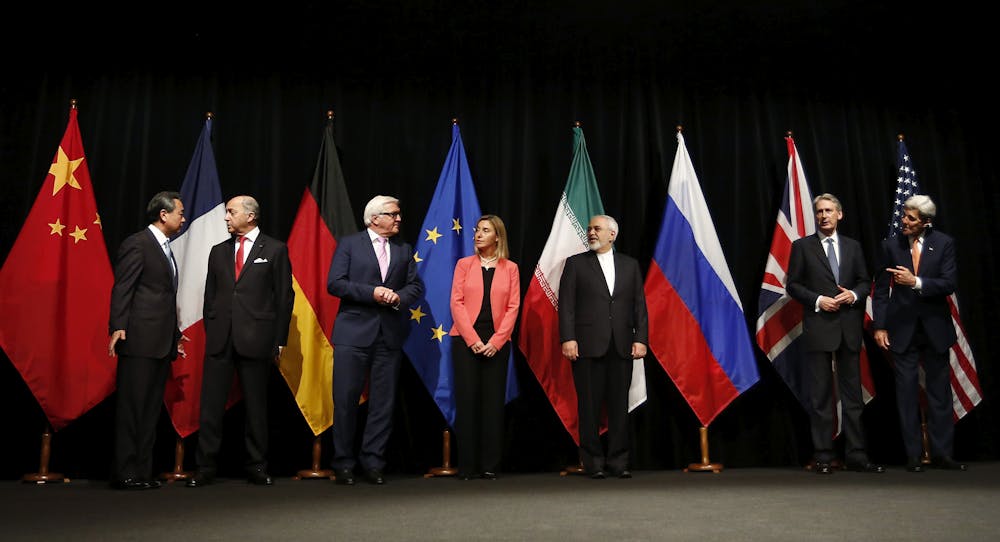
Ms. DiCarlo said that we welcome the talks between the Foreign Ministers of France, Germany, the UK, and Iran in Geneva today. We strongly encourage such efforts. We must pursue every possible opportunity to de-escalate, to cease the hostilities, to settle disputes by peaceful means, she said.
Rafael Grossi, the Director General of the IAEA, told the Council that attacks on nuclear sites in Iran have caused a sharp degradation in nuclear safety and security there. Though they have not so far led to a radiological release affecting the public, there is a danger this could occur, he said.
Mr. Grossi said that he is ready to travel immediately and to engage with all relevant parties to help ensure the protection of nuclear facilities and the continued peaceful use of nuclear technology in accordance with the Agency mandate, including by deploying Agency nuclear safety and security experts wherever necessary.
SECURITY COUNCIL/AFTERNOON
At 3:00 p.m., the Security Council will reconvene for a briefing on Maintenance of Peace and Security of Ukraine. Miroslav Jenča, the Assistant Secretary-General for Europe, Central Asia, and the Americas, and Edem Wosornu, the Director of Operations and Advocacy at OCHA, are expected to brief Council members.
UKRAINE
On Ukraine, our colleagues at the Office for the Coordination of Humanitarian Affairs tell us that today, attacks in the cities of Kharkiv and Odesa killed and injured civilians, including children and first responders. This is according to local authorities. Homes, education facilities and utility pipelines were also damaged. Additional casualties were reported in the regions of Donetsk, Kherson, and Dnipro. In Odesa and Kharkiv, humanitarian organizations, supporting local responders, provided hot meals, emergency shelter and psychosocial support.
Meanwhile, an inter-agency humanitarian convoy today delivered vital aid to the community of Bilozerka in the region of Kherson, in the south of the country. The supplies included hygiene items, bed linen, kitchen sets, first aid kits and a charging station. The area remains under constant shelling, and thousands of residents need humanitarian aid. This was the second humanitarian convoy to reach front-line areas of the Kherson region this week. Our humanitarian colleagues note that some 9.4 million Ukrainians are still displaced inside the country or abroad—more than four years since the full-scale invasion and over a decade into the war that began in 2014. This includes 5.6 million refugees globally, according to the UN Refugee Agency. The International Organization for Migration says that another 3.8 million people remain internally displaced.
Full highlights: https://www.un.org/sg/en/content/noon-briefing-highlight?date%5Bvalue%5D%5Bdate%5D=20%20June%202025
Noon briefing by Stéphane Dujarric, Spokesperson for the Secretary-General.
Highlights:
Iran/Israel
Security Council/Afternoon
Ukraine
Occupied Palestinian Territory
Peacekeeping
Switzerland
Children and Armed Conflict
World Refugee Day
Sudan
Sri Lanka
International Days
Guests on Monday
IRAN/ISRAEL
Speaking to the Security Council this morning, the Secretary-General urged Israel and Iran to give peace a chance and warned Council members that we are not drifting toward crisis – we are racing toward it.
He said that the Non-Proliferation Treaty is a cornerstone of international security and Iran must respect it. The only way to bridge the trust gap with Iran, he added, is through diplomacy to establish a credible, comprehensive and verifiable solution – including full access to inspectors of the International Atomic Energy Agency.
Mr. Guterres warned that the only thing that is predictable is that the consequences of continuing this conflict are unpredictable.
Rosemary DiCarlo, the Under-Secretary-General for Political and Peacebuilding Affairs, told the Council that the scope and scale of attacks in Iran and Israel continue to widen, with grave consequences for civilians in both countries. The intensifying cycle of attacks and counterattacks has resulted in hundreds of civilian casualties, including fatalities, in both Iran and Israel.
She added that we are teetering on the edge of a full-blown conflict and a humanitarian crisis. International humanitarian law must be respected, including the principles of distinction, proportionality, and precaution in attack.
Ms. DiCarlo said that we welcome the talks between the Foreign Ministers of France, Germany, the UK, and Iran in Geneva today. We strongly encourage such efforts. We must pursue every possible opportunity to de-escalate, to cease the hostilities, to settle disputes by peaceful means, she said.
Rafael Grossi, the Director General of the IAEA, told the Council that attacks on nuclear sites in Iran have caused a sharp degradation in nuclear safety and security there. Though they have not so far led to a radiological release affecting the public, there is a danger this could occur, he said.
Mr. Grossi said that he is ready to travel immediately and to engage with all relevant parties to help ensure the protection of nuclear facilities and the continued peaceful use of nuclear technology in accordance with the Agency mandate, including by deploying Agency nuclear safety and security experts wherever necessary.
SECURITY COUNCIL/AFTERNOON
At 3:00 p.m., the Security Council will reconvene for a briefing on Maintenance of Peace and Security of Ukraine. Miroslav Jenča, the Assistant Secretary-General for Europe, Central Asia, and the Americas, and Edem Wosornu, the Director of Operations and Advocacy at OCHA, are expected to brief Council members.
UKRAINE
On Ukraine, our colleagues at the Office for the Coordination of Humanitarian Affairs tell us that today, attacks in the cities of Kharkiv and Odesa killed and injured civilians, including children and first responders. This is according to local authorities. Homes, education facilities and utility pipelines were also damaged. Additional casualties were reported in the regions of Donetsk, Kherson, and Dnipro. In Odesa and Kharkiv, humanitarian organizations, supporting local responders, provided hot meals, emergency shelter and psychosocial support.
Meanwhile, an inter-agency humanitarian convoy today delivered vital aid to the community of Bilozerka in the region of Kherson, in the south of the country. The supplies included hygiene items, bed linen, kitchen sets, first aid kits and a charging station. The area remains under constant shelling, and thousands of residents need humanitarian aid. This was the second humanitarian convoy to reach front-line areas of the Kherson region this week. Our humanitarian colleagues note that some 9.4 million Ukrainians are still displaced inside the country or abroad—more than four years since the full-scale invasion and over a decade into the war that began in 2014. This includes 5.6 million refugees globally, according to the UN Refugee Agency. The International Organization for Migration says that another 3.8 million people remain internally displaced.
Full highlights: https://www.un.org/sg/en/content/noon-briefing-highlight?date%5Bvalue%5D%5Bdate%5D=20%20June%202025
Source: People’s Republic of China – State Council News
ASTANA, June 22 — The China-Central Asia News Agency Forum was held Sunday in Astana, Kazakhstan, featuring discussions on media cooperation and the adoption of a consensus.
As one of the outcomes of the recently concluded second China-Central Asia Summit, the forum was initiated and hosted by Xinhua News Agency. It was attended by heads of media outlets from five Central Asian countries, namely, Kazakhstan President’s TV and Radio Complex, Kabar News Agency of Kyrgyzstan, Khovar News Agency of Tajikistan, Media Turkmen News Agency and Uzbekistan National News Agency.
Presiding over the forum, Fu Hua, president of Xinhua News Agency, noted that under the joint guidance of Chinese President Xi Jinping and the leaders of Central Asian countries, China-Central Asia exchanges and cooperation are embracing a new and significant historical opportunity, showing a promising future.
Fu said the news agencies of the six countries have the responsibility and obligation to promote the China-Central Asia Spirit, advocate for high-quality development of regional cooperation, and tell the story of China-Central Asia cooperation well.
He called on enhancing people-to-people and cultural exchanges and mutual learning among civilizations, advancing media technology innovation and collaboration, and deepening communication among news agencies to contribute to building a China-Central Asia community with a shared future.
Leaders of the Central Asian news agencies highly praised the forum for its important role in enhancing mutual understanding and strengthening cooperation. They expressed their willingness to continue deepening exchanges and collaboration with Chinese media, including Xinhua, jointly promote the China-Central Asia Spirit, and contribute to promoting mutual learning among civilizations and achieving shared development.
Raushan Kazhibayeva, director of the Kazakhstan President’s TV and Radio Complex, noted the successful convening of the second China-Central Asia Summit has pointed the way for the development of relations between Central Asian countries and China. She said the forum vividly reflects the good-neighborly friendship and deep ties between Central Asia and China, and called on the media to support and promote the implementation of summit outcomes in the information field.
Mederbek Shermetaliev, director of the Kabar News Agency of Kyrgyzstan, said that the Belt and Road Initiative has opened new prospects for win-win cooperation between China and Central Asia. Strengthened information exchange and cooperation among all parties will help present an objective, truthful, and multidimensional image of the Central Asian countries and China, he added.
Underlining fruitful outcome of China-Central Asia media cooperation, Subhiddin Shamsiddinzoda, director of Tajikistan’s Khovar News Agency, said continued in-depth exchanges are expected on topics such as cultivating media talent, enhancing partnerships of universities and developing the creative industry.
Bekdurdy Amansaryev, general director of Media Turkmen News Agency, said that all parties should set an example in establishing an information partnership based on mutual respect, equality and mutual benefit. Noting that new technologies have expanded the space for media cooperation, he expected to strengthen collaboration in new media and promote digital transformation.
Abdusaid Kuchimov, director general of the Uzbekistan National News Agency, highlighted media’s important role in strengthening bilateral and multilateral cooperation between Central Asian countries and China. The gathering of Central Asian and Chinese media partners for close cooperation is significant for jointly addressing challenges, he added.
The participants said that in today’s world, which is marked by intertwined turmoil and rampant disinformation, Chinese and Central Asian media should stand closely united and intensify cooperation in areas such as news exchange, content dissemination, and technological innovation to foster a positive public opinion environment for regional peace and development.
The forum concluded with the adoption of the Astana Consensus of the China-Central Asia News Agency Forum.
Source: Australian Ministers for Regional Development
Without sufficient laws in place, Australian consumers and businesses continue to encounter a significant number of harmful practices across a range of digital platform services, the ACCC’s tenth and final report of the ACCC’s Digital Platform Services Inquiry has found.
“Digital platform services are critically important to Australian consumers and businesses and are major drivers of productivity growth in our economy,” ACCC Chair Gina Cass-Gottlieb said.
“While these services have brought many benefits, they have also created harms that our current competition and consumer laws cannot adequately address. This is why we continue to recommend that targeted regulation of digital platform services is needed to increase competition and innovation, and protect consumers in digital markets.”
The report, which concludes the ACCC’s five year inquiry, has reiterated support for measures including an economy wide unfair trading practices prohibition, an external dispute resolution body for digital platform services, and a new digital competition regime.
Continued risk of widespread harms to Australian consumers and small businesses
The ACCC’s final report found that there continues to be significant risk of consumer and competition harms on digital platforms.
Consumers continue to face unfair trading practices in digital markets including manipulative design practices, such as user interfaces that direct consumers to more expensive subscriptions or purchase options.
“72 per cent of Australian consumers surveyed by the ACCC reported that they had encountered potentially unfair practices when shopping online, such as accidental subscriptions or hidden fees. An unfair trading practices prohibition is required to protect consumers from these kinds of tactics, both online and offline,” Ms Cass-Gottlieb said.
“Our consumer survey also found 82 per cent of respondents agree that there should be a specialised independent external dispute resolution body for users of digital platform services to escalate complaints which cannot be resolved with platforms directly.”
“An external dispute resolution body would also help Australian small businesses who rely on digital platforms to reach their customers – for example, when a fake review is made about their business on a search engine or marketplace, or when they have an account deactivated and lose their means of accessing their customers on social media,” Ms Cass-Gottlieb said.
A new digital competition regime will bring benefits to Australians
Throughout the course of this five-year Inquiry, the ACCC has also observed conduct by the most powerful digital platforms that is distorting the competitive process. This conduct includes denying interoperability, self-preferencing and tying, exclusivity agreements, impeding switching, and withholding access to important hardware, software, and data inputs.
“A lack of competition in digital markets can lead to higher prices, less choice, lower quality or even greater harvesting of personal data, ultimately impacting everyday users,” Ms Cass-Gottlieb said.
“There is broad international recognition that there is anti-competitive conduct in digital markets that needs to be addressed. Several jurisdictions have already introduced regulation to improve competition in digital markets, including the European Union, the United Kingdom, Germany and Japan.”
“It is timely to progress a new digital competition regime in Australia which will increase contestability, benefit both local and foreign companies that rely on access to these platforms to conduct business in Australia, and support a growing economy,” Ms Cass-Gottlieb said.
Emerging services and technology need continued scrutiny
The final report has also outlined how rapidly evolving digital markets and emerging technologies, like cloud computing and generative AI, may exacerbate existing risks to competition and consumers in Australia or give rise to new ones.
For example, cloud computing is continuing to grow both globally and in Australia, providing significant benefits for businesses and consumers. However, the ACCC’s report identified a range of potential competition risks in this sector.
“We found that the major providers of cloud computing in Australia – Amazon, Microsoft and Google – are vast, incumbent digital platforms that are vertically integrated across the cloud technology stack. Vertically-integrated cloud providers may be incentivised to engage in conduct that could harm their competitors – for example, anti-competitively bundling their own services across different layers of the cloud stack,” Ms Cass-Gottlieb said.
The report also found that generative AI developers and deployers generally require access to significant cloud computing power to train and deploy their products. However, cloud providers may be incentivised to anti-competitively bundle, tie or self-preference their own generative AI products above those of competitors.
“Harms to competition in the generative AI sector could hamper innovation, result in lower quality products and services, and force Australian businesses and consumers to pay more than they otherwise would to utilise this technology,” Ms Cass-Gottlieb said.
“To protect against these kinds of risks, it is critical that the proposed digital competition regime enable the ACCC to continue monitoring changes to services it has previously examined, as well as new technologies that emerge over time.”
Background
The ACCC’s Digital Platforms Branch conducted a five-year inquiry into markets for the supply of digital platform services in Australia and their impacts on competition and consumers, following a direction from the Treasurer in 2020.
The inquiry reported to the Government every six months and examined different forms of digital platform services, including: online private messaging services, app marketplaces, search defaults and choice screens, general online retail marketplaces, regulatory reform, social media services, expanding ecosystems of digital platforms, data products and
services supplied by data firms, and revisiting general search services. This ACCC’s tenth report concludes the inquiry.
Previous reports are published at Digital platform services inquiry 2020-25.
In the fifth DPSI interim report on regulatory reform, the ACCC made a range of recommendations to bolster competition in the digital economy, level the playing field between big tech companies and Australian businesses, and reduce prices for consumers. The recommendations include new service-specific mandatory codes of conduct for particular ‘designated digital platforms,’ based on principles set out in legislation.
In December 2023, the Government accepted the ACCC’s findings that existing competition provisions by themselves are not sufficient to address current or potential future competition harms and supported-in-principle the development of a new digital competition regime. In December 2024, the Government began consultation on the implementation of a new digital competition regime in Australia.
Further information, including key findings are available on the ACCC website.
Notes to editors
‘Cloud computing’ refers to the provision of global, on-demand network access to computing resources such as networks, servers, storage, applications and services. Cloud computing can be contrasted with traditional on-premises computing, where an organisation installs and maintains its own IT infrastructure for private use.
‘Generative AI’ refers to a type of artificial intelligence (AI) that can create content such as text, images, audio, video or data, in response to prompts entered by a user. Generative AI adopts a machine learning approach for turning inputs and outputs into new outputs by analysing extremely large datasets.
Source: Government of Ireland – Department of Jobs Enterprise and Innovation
23rd June 2025
Minister for Enterprise, Tourism and Employment Peter Burke is leading a Trade and Investment Mission to Japan, accompanied by Enterprise Ireland CEO Designate Jenny Melia and IDA Ireland CEO Michael Lohan, reflecting the strong commitment by the Irish government to expanding both Investment and Trade with Japan.
Two-way trade between Japan and Ireland now exceeds €21 billion and Japan is the number one source of foreign direct investment into Ireland from the Asia Pacific region. These investments come in the areas of technology services, semiconductors, pharmaceuticals, medical devices, and financial services.
Minister Burke said:
“Trade promotion and market diversification are key government priorities, and I see significant opportunities in Japan for both Irish companies and FDI. This week, we are engaging with dozens of major corporations to highlight Ireland’s global position as a stable location for investment, as well as helping Irish companies to build, scale and expand in this region.
“Looking ahead, the relationship between our two countries is based on shared values and mutual respect and as Minister, I believe our work in this regard will facilitate this relationship growing deeper and stronger in the years ahead. With the CEOs of both the IDA and Enterprise Ireland, we are working hard this week to explore new avenues for growth in sectors with significant potential.”
Japan is a growing export market with over 300 Enterprise Ireland clients doing business in Japan and over 50 Irish companies having representations or presence in Japan.
The Minister along with senior executives will also meet IDA’s potential and existing clients to set out the unique advantages of locating in Ireland to service a European marketplace of 450 million people. He will meet with a number of Enterprise Ireland client companies seeking new opportunities for their world-class products and services and will hold a number of political engagements with his counterparts in the Japanese Government.
Minister Burke will visit the new Ireland House Tokyo, which is home to offices for the Embassy, Team Ireland, including Enterprise Ireland, Bord Bia and IDA. The Team Ireland brand contributes to raising Ireland’s profile in Japan, by showcasing our cultural heritage, creativity and innovation through excellence in design and providing a platform for our state agencies to engage in and support Irish business interests in Japan.
During the second half of the week, the Minister will attend the Osaka Expo 2025. Participation at Expo provides an excellent platform for direct public diplomacy and an opportunity to increase visibility of Ireland in the region. The development of the Irish Pavilion at Expo is a strong example of the Team Ireland approach, with active participation and engagement from across Government Departments and State Agencies, all working in tandem to promote Ireland on the world stage.
Source: People’s Republic of China in Russian – People’s Republic of China in Russian –
Source: People’s Republic of China – State Council News
BERLIN, June 22 (Xinhua) — Yuan Jiajun, member of the Political Bureau of the Communist Party of China (CPC) Central Committee and secretary of the CPC Chongqing Municipal Committee, led a party delegation to visit Germany from June 19 to 22 at the invitation of the Social Democratic Party of Germany (SPD).
Yuan Jiajun met with German Chancellor of the Federal Chancellery Torsten Frey, SPD co-chair Saskia Esken and North Rhine-Westphalia Prime Minister Hendrik Wüst.
Yuan Jiajun also attended a number of events, including a bilateral dialogue on economic and trade cooperation and the launch ceremony of the first ASEAN Express train, an extension of the China-Europe freight rail service.
As a member of the Politburo of the CPC Central Committee said, the important agreements reached by Chinese President Xi Jinping and German Chancellor Friedrich Merz outlined the course for the further development of China-Germany comprehensive strategic partnership.
China, Yuan Jiajun pointed out, hopes to strengthen strategic communication with Germany, unleash the potential of bilateral cooperation, and promote the healthy and stable development of China-Germany and China-EU relations.
The CPC intends to deepen exchanges and contacts with various political parties in Germany to ensure a clear understanding of the goals and tasks of China’s reform and development, and promote the development of bilateral relations through concrete achievements of inter-party exchanges, he said.
Yuan Jiajun assured that Chongqing will implement the important consensus of the leaders of the two countries, expand cooperation with the German side in the fields of technological innovation, trade and economic logistics, green and low-carbon development and industry, so as to contribute to the friendly and mutually beneficial cooperation between China and Germany.
Representatives of the German side, in turn, pointed out that both Germany and China are important major countries, and strengthening cooperation between them will help bring more certainty to the world. According to representatives of the FRG, Germany expects to expand exchanges and cooperation with China at the inter-party and regional levels, strengthen contacts and coordination in international affairs, and promote progress in German-Chinese and European-Chinese relations.
During the visit, Yuan Jiajun also held separate meetings with the heads of Siemens, Mercedes-Benz Group and other representatives of German business and industry circles. He spoke about Xi Jinping Thought on Governance and the significant opportunities for China’s cooperation with other countries provided by the decisions of the Third Plenary Session of the 20th CPC Central Committee on further comprehensively deepening reform, expanding high-level opening up to external development and achieving high-quality development.
In addition, Yuan Jiajun was present at the signing of agreements on several cooperation projects. –0–
Source: People’s Republic of China in Russian – People’s Republic of China in Russian –
Source: People’s Republic of China – State Council News
ASTANA, June 22 (Xinhua) — The first China-Kazakhstan Forum on Exchanges and Cooperation in High-Tech Industries was held in Astana, the capital of Kazakhstan, on Sunday. The event, attended by government officials, enterprises and media from the two countries, discussed new opportunities for bilateral exchanges and cooperation in various cutting-edge industries, including artificial intelligence and cross-border e-commerce.
Vice Minister of Trade and Integration of Kazakhstan Asset Nusupov noted that in the era of rapid technological development, digital transformation plays a decisive role in ensuring sustainable economic growth and strengthening the positions of national economies in the global arena. He is convinced that with active interaction with Chinese partners, it is possible not only to strengthen bilateral economic ties, but also to set new benchmarks for sustainable technological growth.
According to Liu Gang, Secretary General of the International Committee for Belt and Road Think Tank Cooperation, China-Kazakhstan cooperation is at a new historical starting point. He expressed hope that through this forum, the two sides can jointly find more opportunities for cooperation and open a new chapter in the joint construction of the Belt and Road through high-quality development.
Deputy General Director for Commerce at KTZ Express Ulugbek Orazov said that it is especially important to implement new infrastructure solutions, and logistics is becoming a key element of trust between countries and partners. According to him, KTZ Express expects to ensure, together with Chinese partners, the integration of logistics and supply chain management in e-commerce using innovative technologies.
As noted by Diana Nazarbayeva, Director of International Business Development at Kazpost, China is not only a major trading partner, but also a key innovation center. Kazpost’s cooperation with Chinese marketplaces, logistics companies, and infrastructure partners is long-term and strategic, she added.
Board member and CEO of Beijing Polyking New Horizons Technology Industry Li Kangchao expressed hope that the forum will provide the company with the opportunity to develop cooperation with Kazakhstan in areas such as the creation of e-commerce infrastructure, cross-border settlement operations and training of e-commerce specialists, in order to promote further development of trade and economic exchanges and industrial development of both countries.
During the event, an agreement on cooperation in the field of e-commerce was signed between Beijing Polyking New Horizons Technology Industry and Kazpost.
The forum was organized by the New Media Center of China’s Xinhua News Agency. –0–
Source: People’s Republic of China in Russian – People’s Republic of China in Russian –
Source: People’s Republic of China – State Council News
Baku, June 22 /Xinhua/ — Azerbaijan is taking active measures to organize the export of hazelnuts, almonds and chicken products to China, Akber Aliyev, head of the department of the Food Security Agency of Azerbaijan, said in an interview with Xinhua recently.
According to him, close cooperation is underway with the General Administration of Customs of the People’s Republic of China. “We are currently working on coordinating protocols regulating exports, and we expect to sign them by the end of this year,” A. Aliyev noted.
In recent years, Azerbaijan has seen steady growth in its agricultural sector, especially crop production. The country is one of the world’s leading producers of hazelnuts, which are an important export item for Azerbaijan.
“We have already sent the necessary documentation and technical requirements to the Chinese side. We are also working with local manufacturers so that they can bring their processes into line with international standards,” the Xinhua source said.
A. Aliyev emphasized that in 2024, Azerbaijan received the official status of a country free of bird flu. This opens the way for the supply of not only nuts, but also chicken products to the Chinese market.
“After signing all the protocols, we plan to begin exporting products to China that meet the requirements of the Chinese side. We are working in stages and in close cooperation with entrepreneurs and specialized structures,” he added.
Azerbaijan is located in the southeast of Transcaucasia, at the junction of Europe and Asia. Nuts, including hazelnuts, are a specific product of Azerbaijan, which occupies one of the leading places in the world in hazelnut production. –0–
PSNA is delighted to announce the visit to Aotearoa New Zealand by Palestinian journalist and author Yousef Aljamal. Yousef will address public meetings across the country as well as talking with faith communities, trade union representatives and media organisations.
Yousef will be here from 16 to 30 June and will have public events inWhangarei, Waitangi, Ngāmotu/New Plymouth, Whanganui, Tauranga-Moana, Thames, Ōtautahi/Christchurch, WellingtonandAuckland.
“This is an opportunity for New Zealanders to hear directly from a key Palestinian journalist and author at a time when Palestinian voices are almost totally absent from our mainstream media” says PSNA Co-national Chair Maher Nazzal.
“For 18 months our media has been flooded with Israeli narratives, Israeli explanations, Israeli justifications and Israeli spokespeople. Israeli propaganda points are relentlessly covered while Palestinians – as the victims of 77 years of brutal oppression, ethnic cleansing and apartheid polices – have been rendered all but invisible”. If they are shown, it is a incoherent victims of overwhelming suffering. They rarely have the opportunity for their humanity to shine.
“New Zealanders need to hear from Yousef Aljamal and our mainstream media has a responsibility to report his visit and what he has to say”
“Palestinians face the most horrendous conditions imaginable with the genocidal attacks on Gaza; the blockade on food, water, fuel and medical supplies to 2 million people; the pogroms against Palestinian towns and villages in the Occupied West Bank; complicit silence from Western governments, New Zealand included, and western media indifference”
Yousef’s biographical details:
Yousef is a Palestinian journalist and author. He holds an MA degree from the Department of International and Strategic Studies at the University of Malaya in Malaysia.
He was awarded his PhD from the Middle East Institute at Sakarya University in Turkey.
In addition to his research interests in diaspora, security, and indigenous studies, Yousef Aljamal has been involved on a number of book projects including translations of books on Palestinian prisoners, among themDreaming of Freedom: Palestinian ChildPrisoners Speak(2016), and a collection of stories about the shared struggle of Palestinian and Irish Hunger Strikers.
Most recently he editedIf I Must Die:Poetry and Prose by the recently assassinated Refaat Alareer.
Yousef Aljamal has published a number of journal articles on topics that include Palestinians in the diaspora, travel restrictions imposed on Palestinians, and struggles for liberation.
He is also the Gaza Coordinator of the American Fri
A world-first performance transformation framework developed in New Zealand from research into the psychological breaking point of elite athletes has caught the attention of police forces in North America and the United Kingdom, with a number of trials in discussion.
The move follows the inking of long-term contracts with global law enforcement advisory organisation World Policing in the UK, which provides governance and technical advice to thousands of police forces around the world, and a specialist consulting firm that supports Government security and law enforcement agencies throughout Europe and North America, including the FBI.
Vantaset, founded by performance expert Craig Steel, whose team includes a former All Blacks manager and two Olympians, has unveiled a platform-as-a-service (PaaS) model designed to optimise workplace performance using a scientifically engineered system to help athletes deliver personal bests on demand.
The global interest from global law enforcement and defence agencies in the company’s platform, which took seven years and $7 million to develop, follows the success of an earlier iteration of the framework with the New Zealand Police under former commissioner Mike Bush.
The process, which was credited by Bush as helping him achieve what was described as one of the most successful Government sector transformations in history, not only lifted staff engagement and public trust in the organisation, it helped him reduce crime by over 20%.1
Steel says discussions are underway with a number of North American police chiefs and defence experts who have identified their process as a potential solution to address plummeting engagement and retention issues they are facing.
“They told us this was the most promising process they’ve seen to address what they describe as a leadership and engagement crisis affecting critical agencies globally, so piloting the process is the logical next step in demonstrating its effectiveness in this environment.”
Bernard Rix, chairman of World Policing says, “Given the demonstrable impact Vantaset’s technology had on New Zealand Police, we’re confident it can be implemented in other law enforcement agencies around the world to help them improve the performance of their respective forces, which is why we’ve partnered with them.”
Steel’s work began three decades ago as a study into ‘athlete capitulation’, the moment top athletes psychologically collapse under pressure. By reverse engineering the process he identified that caused it, Steel developed a repeatable framework that helped New Zealand athletes amass over 20 World Cup and World Championship equivalent titles.
Described as ‘one of the single greatest breakthroughs in human performance,’ the framework delivered unparalleled results, enabling athletes to achieve personal bests 87% of the time they competed in Tier 1 events compared to the international average of 8-10%.
“What began as a system for world-class athletes is now changing the way organisations develop and engage their workforce,” says Steel.
“We’re focused on helping organisations, including the Police, improve the impact and effectiveness of their staff as their personal performance is vital to the nations they represent.
Kiwi Olympians Moss Burmester and advisor Anthony Moss are part of the team looking to take the same high-performance principles that helped them succeed on the world stage into boardrooms, government agencies and frontline services.
Steel says too many organisations default to a risk-averse mindset, building internal frameworks focused on controlling resources which stifles ingenuity.
“Our work began with high-performance sport. But when we were invited to trial it in business, the results were just as transformative.
Steel’s system codifies elite performance enabling leaders to support every level of their organisation. “It’s about unlocking the potential that already exists in their business as opposed to just trying to mitigate its risks, which crushes innovation,” he says.
“In elite sport, the goal is never to avoid failure, it’s to produce something exceptional. But in the business world, most performance management systems are built to manage issues when they occur rather than amplifying the organisation’s capacity to perform. Steel says Vantaset’s platform ‘flips the script’ by embedding performance principles drawn from decades of helping top-tier athletes win on the world stage.
“What we’ve done is build a high-performance operating system that organisations can scale across their entire workforce so they can embed a proven way of working that brings out the best in everyone. The focus isn’t on minimising mistakes, it’s on helping people be the most effective versions of themselves, as that’s what drives growth and improvement.”
Over 100 organisations and around 30,000 employees have benefited from Steel’s process to date, although their new digital platform will enable Vantaset to scale globally. The firm has assisted both public and private sector clients across New Zealand and Australia for over a decade but plans to expand into other Five Eyes nations in the years ahead.
“We’ve chosen to focus on the Five Eyes nations because we recognise that when it comes to working with defence forces and critical government agencies, trust and national security considerations are paramount.
“If we were to work with non-aligned or competing jurisdictions, it could close doors to the agencies in the nations we’re best positioned to support. This strategic alignment should ensure our eligibility to work with the most sensitive public sector environments, where human performance is most vital.”
Vantaset is also engaging with international consulting firms to act as distribution partners to accelerate its global expansion, given its applicability to Government agencies and the private sector.
1 International consulting group McKinsey and Co’s Centre for Government focuses on helping the public sector tackle complex challenges, modernise organisations and improve services. This group identified NZ Police’s change process as “one of the most successful Government sector transformations in history”.
Source: United Kingdom – Executive Government & Departments
Press release
Powering Britain’s future: Electricity bills to be slashed for over 7,000 businesses in major industry shake-up
Industrial Strategy sets out a ten-year plan to boost investment, create good skilled jobs and make Britain the best place to do business
Electricity costs for thousands of businesses to be slashed by up to 25%.
New Industrial Strategy to unlock billions in investment and support 1.1 million new well-paid jobs over the next decade.
Strategy developed in partnership with business, marking a new era of collaboration between government and high growth industries.
Strategy will make the UK the best country to invest in and grow a business, delivering on the Plan for Change.
More than 7,000 British businesses are set to see their electricity bills slashed by up to 25% from 2027, as the Government unveils its bold new Industrial Strategy today [Monday 23 June].
The modern Industrial Strategy sets out a ten-year plan to boost investment, create good skilled jobs and make Britain the best place to do business by tackling two of the biggest barriers facing UK industry – high electricity prices and long waits for grid connections.
British manufacturers currently pay some of the highest electricity prices in the developed world while businesses looking to expand or modernise have faced delays when it comes to connecting to the grid.
For too long these challenges have held back growth and made it harder for British firms to compete. Today’s announcement marks a decisive shift — with government stepping in to support industry and unlock the UK’s economic potential.
From 2027, the new British Industrial Competitiveness Scheme will reduce electricity costs by up to £40 per megawatt hour for over 7,000 electricity-intensive businesses in manufacturing sectors like automotive, aerospace and chemicals.
These firms, which support over 300,000 skilled jobs, will be exempt from paying levies such as the Renewables Obligation, Feed-in Tariffs and the Capacity Market — helping level the playing field and make them more internationally competitive. Eligibility and further details on the exemptions will be determined following consultation, which will be launched shortly.
The government is also increasing support for the most energy-intensive firms — like steel, chemicals, and glass — by covering more of the electricity network charges they normally have to pay through the British Industry Supercharger. These businesses currently get a 60% discount on those charges, but from 2026, that will increase to 90%. This means their electricity bills will go down, helping them stay competitive, protect jobs, and invest in the future.
This will help around 500 eligible businesses in sectors such as steel, ceramics and glass reduce their costs and protect jobs in industries that are the backbone of our economy and will be delivered at no additional cost to the taxpayer.
These reforms complement the government’s long-term mission for clean power, which is the only way to bring down bills for good by ending the UK’s dependency on volatile fossil fuel markets.
To ensure businesses can grow and hire without delay, the government will also deliver a new Connections Accelerator Service to streamline grid access for major investment projects — including prioritising those that create high-quality jobs and deliver significant economic benefits.
We will work closely with the energy sector, local authorities, Welsh and Scottish Governments, trade unions, and industry to design this service, which we expect to begin operating at the end of 2025. New powers in the Planning and Infrastructure Bill, currently before parliament, could also allow the Government to reserve grid capacity for strategically important projects, cutting waiting times and unlocking growth in key sectors.
The Industrial Strategy is a 10-year plan to promote business investment and growth and make it quicker, easier and cheaper to do business in the UK, giving businesses the confidence to invest and create 1.1 million good, well-paid jobs in thriving industries – delivering on this government’s Plan for Change.
Prime Minister Keir Starmer said:
This Industrial Strategy marks a turning point for Britain’s economy and a clear break from the short-termism and sticking plasters of the past.
In an era of global economic instability, it delivers the long term certainty and direction British businesses need to invest, innovate and create good jobs that put more money in people’s pockets as part of the plan for change.
This is how we power Britain’s future – by backing the sectors where we lead, removing the barriers that hold us back, and setting out a clear path to build a stronger economy that works for working people. Our message is clear – Britain is back and open for business.
Chancellor of the Exchequer Rachel Reeves said:
The UK has some of the most innovative businesses in the world and our Plan for Change has provided them with the stability they need to grow and for more to be created.
Today’s Industrial Strategy builds on that progress with a ten-year plan to slash barriers to investment. It’ll see billions of pounds for investment and cutting-edge tech, ease energy costs, and upskill the nation. It will ensure the industries that make Britain great can thrive. It will boost our economy and create jobs that put more money in people’s pockets.
Business and Trade Secretary Jonathan Reynolds said:
We’ve said from day one Britain is back in business under this government, and the £100 billion of investment we’ve secured in the past year shows our Plan for Change is already delivering for working people.
Our Modern Industrial Strategy will ensure the UK is the best country to invest and do business, delivering economic growth that puts more money in people’s pockets and pays for our NHS, schools and military.
Not only does this Strategy prioritise investment to attract billions for new business sites, cutting-edge research, and better transport links, it will also make our industrial electricity prices more competitive.
Tackling energy costs and fixing skills has been the single biggest ask of us from businesses and the greatest challenge they’ve faced – this government has listened, and now we’re taking the bold action needed. Government and business working hand in hand to make working people better of is what this Government promised and what we will deliver.
Energy Secretary Ed Miliband said:
For too long high electricity costs have held back British businesses, as a result of our reliance on gas sold on volatile international markets.
As part of our modern industrial strategy we’re unlocking the potential of British industry by slashing industrial electricity prices in key sectors.
We’re also doubling down on our clean power strengths with increased investment in growth industries from offshore wind to nuclear. This will deliver on our clean power mission and Plan for Change to bring down bills for households and businesses for good.
The Supercharger and British Industrial Competitiveness Scheme will be funded through reforms to the energy system. The government is reducing costs within the system to free up funding without raising household bills or taxes and intends to also use additional funds from the strengthening of UK carbon pricing, including as a result of linking with the EU carbon market.
We have set out an intention to link emissions trading systems, as part of our new agreement with the European Union to support British businesses. Without an agreement to do this, British industry would have to pay the EU’s carbon tax.
We intend to link our carbon pricing system with the EU’s, we will ensure that money stays in the UK—which allows us to support British companies and British jobs through these schemes.
Building on the Spending Review and the recently announced 10-Year Infrastructure Strategy, the Industrial Strategy is the latest step forward in our plans to deliver national renewal. It will include targeted support for the areas of the country and economy that have the greatest potential to grow, while introducing reforms that will make it easier for all businesses to get ahead.
The Strategy’s bold plan of action includes:
Slash electricity costs by up to 25% from 2027 for electricity-intensive manufacturers in our growth sectors and foundational industries in their supply chain, bringing costs more closely in line with other major economies in Europe.
Unlocking billions in finance for innovative business, especially for SMEs by increasing British Business Bank financial capacity to £25.6 billion, crowding in tens of billions of pounds more in private capital. The includes an additional £4bn for Industrial Strategy Sectors, crowding in billions more in private capital. By investing largely through venture funds, the BBB will back the UK’s most high-growth potential companies.
Upskilling the nation with an extra £1.2 billion each year for skills by 2028-29, and delivering more opportunities to learn and earn in our high-growth sectors including new short courses in relevant skills funded by the Growth and Skills Levy and skills packages targeted at defence digital and engineering.
Reducing regulatory burdens by cutting the administrative costs of regulation for business by 25% and reduce the number of regulators.
Supporting 5,500 more SMEs to adopt new technology through the Made Smarter programme while centralising government support in one place through the Business Growth Service.
Boosting R&D spending to £22.6bn per year by 2029-30 to drive innovation across the IS-8, with more than £2bn for AI over the Spending Review, and £2.8bn for advanced manufacturing over the next ten years. This will leverage in billions more from private investors. Regulatory changes will further clear the path for fast-growing industries and innovative products such as biotechnology, AI, and autonomous vehicles.
Attracting elite global talent to our key sectors, via visa and migration reforms and the new Global Talent Taskforce.
Deepening economic and industrial collaboration with our partners, building on our Industrial Strategy Partnership with Japan and recent deals with the US, India, and the EU.
Reducing planning timelines and cutting costs for developers, by hiring more planners, streamlining pre-application requirements and combining environmental obligations, removing burdens on businesses as well as accelerating house building.
Revolutionising public procurement and reducing barriers for new entrants and SMEs to bolster domestic competitiveness.
Supporting the UK’s city regions and clusters by increasing the supply of investible sites through a new £600m Strategic Sites Accelerator, enhanced regional support from the Office for Investment, National Wealth Fund, and British Business Bank, and more.
The plan focuses on 8 sectors where the UK is already strong and there’s potential for faster growth: Advanced Manufacturing, Clean Energy Industries, Creative Industries, Defence, Digital and Technologies, Financial Services, Life Sciences, and Professional and Business Services. Each growth sector has a bespoke 10-year plan that will attract investment, enable growth and create high-quality, well-paid jobs.
Dame Clare Barclay DBE, Chair of the Industrial Strategy Advisory Council and President of Enterprise & Industry EMEA at Microsoft said:
I welcome today’s Industrial Strategy, which sets out a clear plan to back the UK’s growth driving sectors. It is particularly positive to see the strong focus on skills in areas such as engineering, technology and defence. Commitments such as £187 million for the TechFirst programme will ensure the UK has the skills it needs to support our growth industries and seize transformative opportunities like AI.
Rain Newton-Smith, Chief Executive, CBI said:
Today’s Industrial Strategy announcement is a significant leap forward in the partnership between government and business that sets us on the path to our shared goal of raising living standards across the country.
It sends an unambiguous, positive signal about the nation’s global calling card as well as the direction of travel for the wider economy for the next decade and beyond.
The CBI has long been advocating for a comprehensive industrial strategy, based on the UK’s USP – the sectors and markets where we can compete to win on the global stage.
More competitive energy prices, fast-tracked planning decisions and backing innovation will provide a bedrock for growth. But the global race to attract investment will require a laser-like and unwavering focus on the UK’s overall competitiveness.
Today marks the beginning of delivering this strategy in close partnership, at pace, and with a shared purpose.
Stephen Phipson CBE, CEO at Make UK said:
British industry has been in desperate need for a government who understands our sector and had the strategic vision for a plan for growth. Today’s Industrial Strategy is a giant and much needed step forward taken by the Secretary of State who has seen the potential and provided the keys to help unlock it.
Make UK has led the campaign for a new industrial strategy for many years, highlighting the three major challenges that were diminishing our competitiveness, hampering growth and frustrating productivity gains: a skills crisis, crippling energy costs and, an inability to access capital for new British innovators.
The strategy announced today sets out plans to address all three of these structural failings. Clearly there is much to do as we move towards implementation but, this will send a message across the Country and around the world that Britain is back in business.
Tufan Erginbilgic, Rolls-Royce CEO, said:
The UK Government’s Industrial Strategy commitment to support our world-leading aerospace and nuclear industries shows long-term strategic foresight. Rolls-Royce’s highly differentiated technologies in gas turbines and nuclear capabilities- including SMRs and AMRs- are uniquely placed to deliver economic growth, skilled jobs and attract investment into the UK.
Mike Hawes OBE, SMMT Chief Executive said:
The publication of an Industrial Strategy – one with automotive at its heart – is the policy framework the sector has long-sought and Government has now addressed. Such a strategy – long-term, aligned to a trade strategy and supported by all of Government – is the basis on which the UK automotive sector can regain its global competitiveness. Making the UK the best place to invest now depends on implementation, and implementation at pace, because investment decisions are being made now against a backdrop of fierce competition and geopolitical uncertainty. The number one priority must be addressing the UK’s high cost of energy, enabling the sector to invest in the technologies, the products and the people that will give the UK its competitive edge.
Five sector plans have been published today:
Advanced Manufacturing – Backing our Advanced Manufacturing sector with up to £4.3 billion in funding, including up to £2.8 billion in R&D over the next five years, with the aim of anchoring supply chains in the UK – from increasing vehicle production to 1.35 million, to leading the next generation of technologies for zero emission flight.
Clean Energy Industries – Doubling investment in Clean Energy Industries by 2035, with Great British Energy helping to build the clean power revolution in Britain with a further £700 million in clean energy supply chains, taking the total funding for the Great British Energy Supply Chain fund to £1 billion.
Creative Industries – Maximizing the value of our Creative Industries through a £380 million boost for film and TV, video games, advertising and marketing, music and visual and performing arts will improve access to finance for scale-ups and increase R&D, skills and exports.
Digital and Technologies – Making the UK the European leader for creating and scaling Digital and Technology businesses, with more than £2 billion to drive the AI Action Plan, including a new Sovereign AI Programme, £187 million for training one million young people in tech skills and targeting R&D investment at frontier technologies such as cyber security in Northern Ireland, semiconductors in Wales and quantum technologies in Scotland.
Professional and Business Services – Ensuring our Professional and Business Services becomes the world’s most trusted adviser to global industry, revolutionising the sector across the world through adoption of UK-grown AI and working to secure mutual recognition of professional qualifications agreements overseas.
Notes to editors
The Industrial Strategy will be published on Gov.UK tomorrow.
The Defence, Financial Services and Life Sciences sector plans will be published shortly.
The 7000 businesses are an indicative estimate of how many businesses could be in scope of the scheme. The full scope and eligibility of the scheme will be determined following consultation.
PM call with Prime Minister Carney of Canada: 22 June 2025
The Prime Minister spoke to Canadian Prime Minister Mark Carney this evening.
The Prime Minister spoke to Canadian Prime Minister Mark Carney this evening.
They discussed the grave situation in the Middle East and last night’s action by the United States to tackle the severe threat posed by Iran’s nuclear programme.
Both reiterated their support for a diplomatic solution and agreed that Iran must come back to the negotiating table with the United States as soon as possible.
They looked forward to continuing their discussions at NATO this week.
Source: People’s Republic of China in Russian – People’s Republic of China in Russian –
Source: People’s Republic of China – State Council News
ASTANA, June 22 (Xinhua) — The China-Central Asia Cooperation Forum and the 3rd Silk Road International Communication Conference are being held at the Presidential Center of Kazakhstan on Sunday.
At the opening ceremony of the forum, a congratulatory message from the President of Kazakhstan Kassym-Jomart Tokayev was read out.
“I congratulate you on the visit of the Chairman of the People’s Republic of China Mr. Xi Jinping to Kazakhstan and the beginning of the collegial meetings held on the occasion of the 2nd Central Asia-China Summit. Such events contribute to the establishment of humanitarian dialogue between Kazakhstan, the countries of Central Asia and China, and the intensification of cultural cooperation. Kazakh-Chinese relations, based on the principles of good-neighborliness, friendship and eternal comprehensive strategic partnership, are strengthening every year,” says the address, which was read by the assistant to the President of Kazakhstan Arman Kyrykbayev.
The address notes that in 2025, declared the Year of China Tourism in Kazakhstan, events will be held aimed at deepening mutual understanding and cooperation between the two countries. “I am convinced that important proposals and valuable opinions will be expressed at this meeting, which will improve communication between the media of our countries. I wish the participants fruitful work, prosperity and success,” added K.-Zh. Tokayev.
In his speech at the opening of the forum, Fu Hua, Director General of the Chinese news agency Xinhua, noted that Chinese President Xi Jinping has consistently paid special attention to the development of cooperation between China and Central Asia. According to the Director General, a stable, prosperous, harmonious and interconnected Central Asia is of great importance to the entire world.
Fu Hua said that Xinhua is willing to work with its counterparts in media and think tanks in Central Asian countries to strengthen media exchanges, deepen cooperation in various fields such as news journalism, technological development, personnel exchanges, focus on the actual situation and development needs of China and Central Asia, conduct joint research on issues of common concern, strengthen field research, analysis and evaluation, information exchange and sharing of results, issue more meaningful and practical analytical reports, and put forward proposals for developing China-Central Asia cooperation.
As Qiu Xiaoqi, deputy head of the China Society for Public Diplomacy, noted, the official launch of the China-Central Asia Cooperation Forum marks a new stage of exchanges and cooperation between the journalistic, analytical and cultural circles of the six countries, which will provide stronger and more effective intellectual support and public opinion support for the process of building a China-Central Asia community with a shared future. According to Qiu Xiaoqi, all parties should make every effort to better tell the stories of China-Central Asia cooperation and the modernization of the Global South.
First Deputy Director of the Agency for Cultural Heritage of Uzbekistan Tursunali Kuziev emphasized that the Uzbek side fully agrees with the proverb “A close neighbor is better than a distant relative” and makes constant efforts to build good-neighborly, friendly, mutually beneficial and win-win relations between Central Asia and China. He expressed hope that the current conference will become another highly effective platform for the Central Asian states and China to exchange views, stimulate innovative ideas and plan areas for future cooperation.
In his speech, Chinese Ambassador to Kazakhstan Han Chunlin pointed out that the “China-Central Asian spirit” demonstrates the six countries’ firm aspiration for good-neighborliness, friendship, solidarity and mutual assistance. According to him, the media is an important bridge and link that promotes mutual understanding and rapprochement between peoples. The ambassador called for joint efforts for common development, proper interpretation of the “China-Central Asian spirit” and the creation of a favorable public opinion environment to promote high-quality development of relations between China and Central Asia.
Speaking at the opening ceremony, Secretary-General of the China-Central Asia Format Sun Weidong stated that think tanks and media outlets of the six countries bear an important responsibility in strengthening the social foundation of the China-Central Asia community with a shared future. He assured that the Secretariat of the China-Central Asia Format is willing to work closely with all parties to actively serve the cooperation mechanisms and platforms in all areas and contribute to building an even closer China-Central Asia community with a shared future.
In his speech, Zu Bin, a board member of China Huadian Corporation, pointed out that China Huadian, as one of the world’s largest energy enterprises, intends to comprehensively implement the initiative to jointly build the “Belt and Road” and the agreement of the “China-Central Asia” summit, adhere to the concept of mutual benefit and common gain, help Central Asian countries convert their resource advantages into development advantages, and promote the rapid development of green cooperation within the framework of the “Belt and Road”.
During the forum, the analytical center’s report “Development of the China-Central Asia Spirit: Achievements, Opportunities and Prospects for Regional Cooperation” was published in Chinese, Russian and English.
The theme of the forum is “Media Integration and Accumulation of Wisdom to Create a New Chapter of China-Central Asia Cooperation.” Participants of the event discuss ways to expand regional information exchanges, launch joint projects and strengthen humanitarian ties. The organizers are the Xinhua News Agency and the Television and Radio Complex of the President of Kazakhstan. The forum is attended by about 140 representatives of the media industry of China and five Central Asian countries. –0–
Source: People’s Republic of China in Russian – People’s Republic of China in Russian –
Source: People’s Republic of China – State Council News
ASTANA, June 22 (Xinhua) — The state-run Xinhua Analytical Center on Sunday released a report in the Kazakh capital Astana titled “Development of the China-Central Asia Spirit: Achievements, Possibilities and Prospects of Regional Cooperation.”
The report describes the fruitful results of cooperation between China and Central Asia, highlights existing opportunities and challenges, and analyzes the prospects for regional cooperation.
According to the report, since the beginning of the new era, China-Central Asia cooperation has achieved fruitful results in seven key areas: trade and economic exchanges, infrastructure, energy cooperation, emerging economic sectors, enhancing development potential, mutual learning among civilizations, and safeguarding peace and tranquility.
As the authors point out, China and the five Central Asian countries have become good neighbors, friends, partners, and brothers sharing a common destiny. Together, the six countries have created a new landscape of friendly, stable, and prosperous neighborhood in Eurasia.
China and Central Asian countries have formed a “China-Central Asian spirit” of mutual respect, mutual trust, mutual benefit, mutual assistance and promoting joint modernization through high-quality development, setting a standard for regional cooperation for the world.
The report notes that China’s high-quality development and its high-level opening up to the outside world, together with a new wave of scientific, technological and industrial transformation, have provided significant opportunities for cooperation between China and Central Asian countries. However, their interaction faces risks and challenges such as unilateralism, protectionism, geopolitical risks and non-traditional security threats.
The authors emphasize that further cooperation between China and Central Asia should be guided by the concept of building a community with a shared future for mankind, as well as three major global initiatives – the Global Development Initiative, the Global Security Initiative and the Global Civilization Initiative.
The report calls for the principle of mutual support, common development, common security and friendship passed down from generation to generation to be firmly upheld. The parties should make joint efforts to consolidate the foundation of a regional community with a shared future, open a new chapter in the history of regional prosperity, build a common shield of security and stability, and compose a new symphony of people-to-people ties. –0–
Prime Minister Christopher Luxon and Foreign Minister Winston Peters have announced a new $16 million package of support for Ukraine ahead of this week’s NATO Summit in the Hague. “New Zealand stands in solidarity with Ukraine. Its war of self-defence is well into its fourth year and our condemnation of Russia’s illegal full-scale invasion remains undiminished,” Mr Luxon says. New Zealand will make $4 million contributions to two multi-national funds providing lethal and non-lethal military assistance for Ukraine: the NATO Security Assistance and Training for Ukraine (NSATU) fund; and the United Kingdom and Latvia-led Drone Coalition for Ukraine. “The defence of Ukraine has significant implications not only for the security of the Euro-Atlantic, but also for the Indo-Pacific,” Mr Peters says. “We must continue to work with others in the international community to uphold a rules-based order that serves all our interests.” New Zealand will also provide $7 million in further humanitarian assistance for conflict affected communities in Ukraine, and $1 million for Ukrainians displaced in neighbouring countries. “The scale of need remains vast, as Russia continues its bombardment of densely populated civilian areas of Ukraine,” Mr Luxon says. This support package follows the recently announced sanctions targeting Russia’s “shadow fleet” and other enablers of Russia’s war in Ukraine. “It is vital the international community maintains pressure on Russia to end its war and engage meaningfully with efforts to achieve a just and lasting peace in Ukraine,” Mr Peters says. More information about diplomatic, military, humanitarian and economic support to Ukraine, as well as sanctions, travel bans, and export controls against Russia, can be found on the Ministry of Foreign Affairs and Trade website here.
PM call with President Trump of the United States: 22 June 2025
The Prime Minister spoke to the President of the United States Donald Trump this evening.
The Prime Minister spoke to the President of the United States Donald Trump this evening.
The leaders discussed the situation in the Middle East and reiterated the grave risk posed by Iran’s nuclear programme to international security. They discussed the actions taken by the United States last night to reduce the threat and agreed that Iran must never be allowed to develop a nuclear weapon.
They discussed the need for Iran to return to the negotiating table as soon as possible and to make progress on a lasting settlement.
They agreed to stay in close contact in the coming days.
Source: United Kingdom – Executive Government & Departments 3
Speech
Now is the time for de-escalation and a return to diplomacy: UK statement at the UN Security Council
Statement by Ambassador Barbara Woodward, UK Permanent Representative to the UN, at the emergency UN Security Council meeting on Iran.
This is a pivotal moment for the region.
A further spiral of conflict poses serious risks to regional and international peace and stability. Our foremost priority must now be to support de-escalation.
We have long made clear that Iran must not have a nuclear weapon and their nuclear programme represents a serious threat to international peace and security.
The United States took action last night to alleviate that threat.
The United Kingdom did not participate in US or Israeli strikes.
But military action alone cannot bring a durable solution to concerns about Iran’s nuclear programme.
My Prime Minister has been clear. We urge Iran now to show restraint, and we urge all parties to return to the negotiating table and find a diplomatic solution, which stops further escalation and brings this crisis to an end.
It is in the interests of all parties to pursue such a deal.
This was the joint call made by my Prime Minister, with his French and German counterparts earlier today. Together with our E3 partners, the UK has long pursued a diplomatic solution to address Iran’s nuclear escalation. On Friday, alongside E3 and EU colleagues, my Foreign Secretary met Iranian Foreign Minister Araghchi in Geneva to press directly for a return to diplomacy. My Foreign Minister spoke to Foreign Minister Araghchi again today and stressed the urgency of this and we continue to engage partners across the region.
President, the UK reiterates its full support for the IAEA and Director General Grossi for their critical work, professionalism and impartiality. The IAEA and the Non-Proliferation Treaty are key pillars of international security. Threats against IAEA staff and the DG are unacceptable. We urge Iran to cooperate fully with the IAEA. Failure to do so will only further fuel escalation.
President, now is the time for de-escalation and a return to diplomacy. It is essential Iran chooses this path.
Source: People’s Republic of China in Russian – People’s Republic of China in Russian –
Source: People’s Republic of China – State Council News
DAMASCUS, June 22 (Xinhua) — A suicide bomber detonated an explosive device at Mar Elias Church in the Syrian capital Damascus on Sunday during a mass, killing at least 19 people and wounding dozens more, the Syrian Observatory for Human Rights said.
According to local media, the explosion occurred in the Mar Elias church in the Al-Dueila area.
Syria’s internal security agency said the attacker belonged to the extremist group Islamic State, also known as Daesh.
The explosion caused numerous civilian casualties, the Syrian Civil Defense said, without giving exact figures.
Authorities have called on residents not to gather at the scene of the incident so as not to interfere with the work of emergency services.
At this time, no one has claimed responsibility for the attack. –0–
Commissioner Sir Mark Rowley has issued the following statement ahead of a planned protest in support of Palestine Action, due to take place in Westminster on Monday, 23 June.
“I’m sure many people will be as shocked and frustrated as I am to see a protest taking place tomorrow in support of Palestine Action.
“This is an organised extremist criminal group, whose proscription as terrorists is being actively considered. Members are alleged to have caused millions of pounds of criminal damage, assaulted a police officer with a sledgehammer and last week claimed responsibility for breaking into an airbase and damaging aircraft. Multiple members of the group are awaiting trial accused of serious offences.
“The right to protest is essential and we will always defend it, but actions in support of such a group go beyond what most would see as legitimate protest. Thousands of people attend protests of a different character every week without clashing with the law or with the police. The criminal charges faced by Palestine Action members, in contrast, represent a form of extremism that I believe the overwhelming majority of the public rejects.
“We have laid out to Government the operational basis on which to consider proscribing this group. If that happens we will be determined to target those who continue to act in its name and those who show support for it.
“Until then we have no power in law to prevent tomorrow’s protest taking place. We do, however, have the power to impose conditions on it to prevent disorder, damage, and serious disruption to the community, including to Parliament, to elected representatives moving around Westminster and to ordinary Londoners.
“Breaches of the law will be dealt with robustly.”
Details of the conditions in place for this protest will be shared on the Met’s X account once they have been confirmed.
Source: People’s Republic of China in Russian – People’s Republic of China in Russian –
Source: People’s Republic of China – State Council News
BEIJING, June 22 (Xinhua) — Wang Huning, chairman of the National Committee of the Chinese People’s Political Consultative Conference (CPPCC), met with Wan Muhamad Nor Matha, chairman of the National Assembly (parliament) and speaker of the House of Representatives (lower house) of Thailand, in Beijing on Sunday.
Wang Huning recalled that in February of this year, Chinese President Xi Jinping and Thai Prime Minister Phetongthan Shinawatra reached important agreements on deepening the construction of a China-Thailand community of shared destiny and indicated the future direction of development of bilateral ties.
As the CPPCC National Committee Chairman noted, China hopes to work with Thailand to seize the 50th anniversary of the establishment of diplomatic relations as an opportunity to continue the traditional friendship, strengthen the political, economic and social foundation of the China-Thailand community with a shared future, and bring greater benefits to the peoples of both countries.
Wang Huning announced the CPPCC National Committee’s intention to contribute to the development of interstate relations.
Wan Muhamad Nor Matha, for his part, stressed that Thai-Chinese friendship has a long history, and the concept of “Thailand and China are close as one family” is deeply rooted in the hearts of the people.
According to him, the Thai side supports a number of global initiatives put forward by President Xi Jinping and is willing to strengthen cooperation with China in various fields, including the joint construction of the Belt and Road, economy, trade and tourism.
Wan Muhamad Nor Matha added that the Thai parliament is committed to expanding exchanges and cooperation with China to promote the common development and prosperity of the two countries. –0–
Source: People’s Republic of China in Russian – People’s Republic of China in Russian –
Source: People’s Republic of China – State Council News
TEHRAN, June 22 (Xinhua) — Explosions rocked Iran’s southern city of Bushehr, home to a nuclear power plant, and the central province of Yazd on Sunday, Iran’s semi-official Fars News Agency reported.
As Fars reports, citing a statement by Iran’s Islamic Revolutionary Guard Corps (IRGC), the explosions in Yazd were the result of Israel’s “aggression” against two military zones in the province.
Speaking about the attacks, Yazd provincial government spokesman Saeed Rastgari said the situation was under the control of local security forces and law enforcement agencies.
Deputy Governor of Yazd Province for Political and Security Affairs Esmail Dehestani, in turn, stated that there was no damage to water and electricity infrastructure as a result of the strikes.
According to the Iranian semi-official Tasnim news agency, commenting on the explosions in Bushehr, the deputy governor of the province of the same name for political, security and social affairs, Ehsan Jahanian, explained that they occurred due to Israeli airstrikes on two military facilities.
He also added that the city’s air defense systems immediately responded to the enemy targets and destroyed them. -0-
Source: People’s Republic of China in Russian – People’s Republic of China in Russian –
Source: People’s Republic of China – State Council News
ULAN BATOR, June 22 (Xinhua) — Mongolia’s industrial output fell 0.6 percent year-on-year to 15.5 trillion tugriks (over 4.3 billion U.S. dollars) in the first five months of 2025, local media reported Sunday, citing data from the National Statistics Committee.
“The decline is due to a 4.6 percent reduction in the production of key products in the mining and extractive industries,” the official statement says.
During the reporting period, coal production volumes decreased year-on-year by 23.7 percent, while crude oil production decreased by 14.9 percent.
Currently, the mining industry remains one of the main drivers of the Mongolian economy, as Mongolia is rich in natural resources such as gold, copper and coal. –0–
Source: People’s Republic of China in Russian – People’s Republic of China in Russian –
Source: People’s Republic of China – State Council News
ASTANA, June 22 (Xinhua) — Director General of China’s Xinhua News Agency Fu Hua and Kazakh Presidential Aide Arman Kyrykbayev exchanged copies of a signed cooperation agreement in the Kazakh capital Astana on Sunday.
According to the agreement, the Xinhua New Media Center will support the Central Communications Service under the President of Kazakhstan in the field of new media technologies and provide consulting services of the think tank for the development of Kazakhstan’s big data and computing centers, as well as for the construction and operation of the China-Kazakhstan Exchange and Cooperation Center. In addition, the parties agreed to carry out labor exchanges and training.
The Kazakh side hopes that the exchange and cooperation center will provide support in such areas as cultural innovation, Kazakh-Chinese settlements, ensuring uninterrupted trade, cross-border transactions with intellectual property, personnel exchange and training. –0–
Met detectives have arrested a man and woman after a 41-year-old man died following a shooting in Croydon.
On Sunday, 22 June, Met officers arrested a 41-year-old man on suspicion of murder. A 37-year old woman was arrested on suspicion of assisting an offender. Both remain in police custody.
An investigation was launched after officers were called to reports of a shooting on Imperial Way at 17:04hrs on Thursday, 19 June.
A 41-year-old man was found with gunshot wounds. He was treated by paramedics but sadly died at the scene.
His next of kin have been informed and are being supported by specially trained officers.
Detective Chief Inspector Dan Whitten, from the Met’s Specialist Crime Command, said:
“My thoughts remain with the victim’s family as they come to terms with this tragic loss. Our team of specially trained officers continue to support them as our investigation progresses.
“We would urge any witnesses to come forward and share information with us.”
Anyone who witnessed the incident, or has any information that could help the investigation, please call 101 quoting CAD 6530/19Jun.
To remain anonymous, call the independent charity Crimestoppers anonymously on 0800 555 111 or visit crimestoppers-uk.org.
Source: United Kingdom – Executive Government & Departments
Press release
E3 leaders’ declaration on the situation in the Middle East / Declaration des dirigeants des E3 sur la situation au Moyen orient
E3 Leaders’ Statement on the Middle East.
We have discussed the latest developments in the Middle East earlier today.
We reiterate our commitment to peace and stability for all countries in the region. We affirm our support for the security of Israel.
We have consistently been clear that Iran can never have a nuclear weapon and can no longer pose a threat to regional security.
Earlier today, the United States has conducted targeted military strikes against nuclear facilities in Fordow, Natanz and Isfahan. Our aim continues to be to prevent Iran from acquiring a nuclear weapon.
We call upon Iran to engage in negotiations leading to an agreement that addresses all concerns associated with its nuclear program. We stand ready to contribute to that goal in coordination with all parties.
We urge Iran not to take any further action that could destabilize the region.
We will continue our joint diplomatic efforts to defuse tensions and ensure the conflict does not intensify and spread further.
Source: The Conversation – USA – By Jeffrey Fields, Professor of the Practice of International Relations, USC Dornsife College of Letters, Arts and Sciences
People observe fire and smoke from an Israeli airstrike on an oil depot in Tehran, Iran, on June 15, 2025. Stringer/Getty Images
The two countries have been particularly hostile to each other since Iranian students took over the U.S. Embassy in Tehran in November 1979, resulting in economic sanctions and the severing of formal diplomatic relations between the nations.
Some of the major events in U.S.-Iran relations highlight the differences between the nations’ views, but others arguably presented real opportunities for reconciliation.
In 1951, the Iranian Parliament chose a new prime minister, Mossadegh, who then led lawmakers to vote in favor of taking over the Anglo-Iranian Oil Company, expelling the company’s British owners and saying they wanted to turn oil profits into investments in the Iranian people. The U.S. feared disruption in the global oil supply and worried about Iran falling prey to Soviet influence. The British feared the loss of cheap Iranian oil.
President Dwight Eisenhower decided it was best for the U.S. and the U.K. to get rid of Mossadegh. Operation Ajax, a joint CIA-British operation, convinced the Shah of Iran, the country’s monarch, to dismiss Mossadegh and drive him from office by force. Mossadegh was replaced by a much more Western-friendly prime minister, handpicked by the CIA.
Demonstrators in Tehran demand the establishment of an Islamic republic. AP Photo/Saris
1979: Revolutionaries oust the shah, take hostages
After more than 25 years of relative stability in U.S.-Iran relations, the Iranian public had grown unhappy with the social and economic conditions that developed under the dictatorial rule of Shah Mohammad Reza Pahlavi.
Iranian students at the U.S. Embassy in Tehran show a blindfolded American hostage to the crowd in November 1979. AP Photo
In October 1979, President Jimmy Carter agreed to allow the shah to come to the U.S. to seek advanced medical treatment. Outraged Iranian students stormed the U.S. Embassy in Tehran on Nov. 4, taking 52 Americans hostage. That convinced Carter to sever U.S. diplomatic relations with Iran on April 7, 1980.
Two weeks later, the U.S. military launched a mission to rescue the hostages, but it failed, with aircraft crashes killing eight U.S. servicemembers.
The shah died in Egypt in July 1980, but the hostages weren’t released until Jan. 20, 1981, after 444 days of captivity.
An Iranian cleric, left, and an Iranian soldier wear gas masks to protect themselves against Iraqi chemical-weapons attacks in May 1988. Kaveh Kazemi/Getty Images
The U.S. was concerned that the conflict would limit the flow of Middle Eastern oil and wanted to ensure the conflict didn’t affect its close ally, Saudi Arabia.
U.S. officials moderated their usual opposition to those illegal and inhumane weapons because the U.S. State Department did not “wish to play into Iran’s hands by fueling its propaganda against Iraq.” In 1988, the war ended in a stalemate. More than 500,000 military and 100,000 civilians died.
1981-1986: US secretly sells weapons to Iran
The U.S. imposed an arms embargo after Iran was designated a state sponsor of terrorism in 1984. That left the Iranian military, in the middle of its war with Iraq, desperate for weapons and aircraft and vehicle parts to keep fighting.
The last shipment, of anti-tank missiles, was in October 1986. In November 1986, a Lebanese magazine exposed the deal. That revelation sparked the Iran-Contra scandal in the U.S., with Reagan’s officials found to have collected money from Iran for the weapons and illegally sent those funds to anti-socialist rebels – the Contras – in Nicaragua.
At a mass funeral for 76 of the 290 people killed in the shootdown of Iran Air 655, mourners hold up a sign depicting the incident. AP Photo/CP/Mohammad Sayyad
Either during or just after that exchange of gunfire, the Vincennes crew mistook a passing civilian Airbus passenger jet for an Iranian F-14 fighter. They shot it down, killing all 290 people aboard.
The U.S. called it a “tragic and regrettable accident,” but Iran believed the plane’s downing was intentional. In 1996, the U.S. agreed to pay US$131.8 million in compensation to Iran.
1997-1998: The US seeks contact
In August 1997, a moderate reformer, Mohammad Khatami, won Iran’s presidential election.
U.S. President Bill Clinton sensed an opportunity. He sent a message to Tehran through the Swiss ambassador there, proposing direct government-to-government talks.
Shortly thereafter, in early January 1998, Khatami gave an interview to CNN in which he expressed “respect for the great American people,” denounced terrorism and recommended an “exchange of professors, writers, scholars, artists, journalists and tourists” between the United States and Iran.
However, Supreme Leader Ayatollah Ali Khamenei didn’t agree, so not much came of the mutual overtures as Clinton’s time in office came to an end.
In his 2002 State of the Union address, President George W. Bush characterized Iran, Iraq and North Korea as constituting an “Axis of Evil” supporting terrorism and pursuing weapons of mass destruction, straining relations even further.
Inside these buildings at the Natanz nuclear facility in Iran, technicians enrich uranium. AP Photo/Vahid Salemi
That was a violation of the terms of the Nuclear Nonproliferation Treaty, which Iran had signed, requiring countries to disclose their nuclear-related facilities to international inspectors.
One of those formerly secret locations, Natanz, housed centrifuges for enriching uranium, which could be used in civilian nuclear reactors or enriched further for weapons.
Starting in roughly 2005, U.S. and Israeli government cyberattackers together reportedly targeted the Natanz centrifuges with a custom-made piece of malicious software that became known as Stuxnet.
An excerpt of the document sent from Iran, via the Swiss government, to the U.S. State Department in 2003, appears to seek talks between the U.S. and Iran. Washington Post via Scribd
In May 2003, senior Iranian officials quietly contacted the State Department through the Swiss embassy in Iran, seeking “a dialogue ‘in mutual respect,’” addressing four big issues: nuclear weapons, terrorism, Palestinian resistance and stability in Iraq.
Hardliners in the Bush administration weren’t interested in any major reconciliation, though Secretary of State Colin Powell favored dialogue and other officials had met with Iran about al-Qaida.
When Iranian hardliner Mahmoud Ahmadinejad was elected president of Iran in 2005, the opportunity died. The following year, Ahmadinejad made his own overture to Washington in an 18-page letter to President Bush. The letter was widely dismissed; a senior State Department official told me in profane terms that it amounted to nothing.
After a decade of unsuccessful attempts to rein in Iran’s nuclear ambitions, the Obama administration undertook a direct diplomatic approach beginning in 2013.
Iran, the U.S., China, France, Germany, Russia and the United Kingdom signed the deal in 2015. It severely limited Iran’s capacity to enrich uranium and mandated that international inspectors monitor and enforce Iran’s compliance with the agreement.
In return, Iran was granted relief from international and U.S. economic sanctions. Though the inspectors regularly certified that Iran was abiding by the agreement’s terms, President Donald Trump withdrew from the agreement in May 2018.
2020: US drones kill Iranian Maj. Gen. Qassem Soleimani
At the time, the Trump administration asserted that Soleimani was directing an imminent attack against U.S. assets in the region, but officials have not provided clear evidence to support that claim.
Hamas’ brazen attack on Israel on Oct. 7, 2023, provoked a fearsome militarized response from Israel that continues today and served to severely weaken Iran’s proxies in the region, especially Hamas – the perpetrator of the attacks – and Hezbollah in Lebanon.
2025: Trump 2.0 and Iran
Trump saw an opportunity to forge a new nuclear deal with Iran and to pursue other business deals with Tehran. Once inaugurated for his second term, Trump appointed Steve Witkoff, a real estate investor who is the president’s friend, to serve as special envoy for the Middle East and to lead negotiations.
Negotiations for a nuclear deal between Washington and Tehran began in April, but the countries did not reach a deal. They were planning a new round of talks when Israel struck Iran with a series of airstrikes on June 13, forcing the White House to reconsider is position.
On June 22, in the early morning hours, the U.S. chose to act decisively in an attempt to cripple Iran’s nuclear capacity, bombing three nuclear sites and causing what Pentagon officials called “severe damage.” Iran vowed to retaliate.
This story has been updated to reflect the U.S. bombing of Iranian nuclear sites on June 22, 2025.
Jeffrey Fields receives funding from the Carnegie Corporation of New York and Schmidt Futures.