Source: People’s Republic of China in Russian – People’s Republic of China in Russian –
Source: People’s Republic of China – State Council News
ISTANBUL, June 22 (Xinhua) — Iranian Foreign Minister Abbas Araghchi on Sunday strongly condemned the U.S. military aggression against the Islamic Republic’s nuclear facilities, saying Tehran is considering multiple options to respond to the “crossing of a red line.”
“The US attack on Iran is a flagrant, serious and unprecedented violation of the fundamental principles of the UN Charter and international law,” A. Araghchi emphasized at a press conference in Istanbul.
The diplomat noted that the American administration, which “tramples on the law,” bears “sole and full” responsibility for the consequences of its act of “aggression.”
“Of course, the door to diplomacy should always be open. But this is not the case now. My country is under attack, aggression, and we must respond based on our legitimate right to self-defense. We will do this as long as necessary and necessary,” A. Araghchi said.
“We are now counting the damage,” he added, calling on the world and international organizations, including the International Atomic Energy Agency, to act in accordance with their responsibilities in the face of this “violation of international law.”
The Iranian Foreign Minister also said that he would meet with Russian President Vladimir Putin in Moscow on June 23 to discuss the developments in the aftermath of the American strikes.
Currently, A. Araghchi is in Turkey, where he arrived to participate in the 51st session of the Council of Foreign Ministers of the Organization of Islamic Cooperation in Istanbul. –0–
Source: People’s Republic of China in Russian – People’s Republic of China in Russian –
Source: People’s Republic of China – State Council News
ASTANA, June 22 (Xinhua) — The China-Central Asia News Agency Forum was held in Astana, capital of Kazakhstan, on Sunday. The forum adopted the Astana Consensus of the China-Central Asia News Agency Forum, which proposes deepening cooperation between the media of China and Central Asian countries and promoting the building of a China-Central Asia community with a shared future.
The two sides noted that over the past 30 years since the establishment of diplomatic relations between China and the five Central Asian countries, their relations have been elevated to a comprehensive strategic partnership, with all-round cooperation continuously deepening. As stated in the document, the two sides are jointly building a China-Central Asia community with a shared future based on mutual assistance, common development, common security and friendship from generation to generation, making contributions to the construction of a community with a shared future for mankind.
The parties highly appreciated the results of cooperation between the media of China and the five Central Asian countries in recent years in such aspects as news exchange, high-level contacts and information coverage. It was emphasized that close communication and interaction between the media of the six countries within the framework of such multilateral mechanisms as the World Media Summit, the Global South Media and Think Tank Forum and the China-Central Asia News Agency Forum are conducive to further deepening mutual understanding and friendship between the peoples of China and Central Asia, deepening mutually beneficial cooperation and advancing the construction of a China-Central Asia community with a shared future.
The two sides noted that in the face of rapid and profound changes in the world and the complex international situation, the media of China and the five Central Asian countries should further expand exchanges, deepen cooperation, join forces and coordinate actions to promote international justice, push global governance in a more just and reasonable direction, inject new impetus into efforts to strengthen the unity and cooperation of the Global South and promote world peace and development.
The two sides agreed to develop and utilize the China-Central Asia News Agency Forum, conduct active bilateral and multilateral people-to-people exchanges, intensify high-level contacts and mutual visits of staff, organize joint reporting, professional exchange seminars and personnel training events to deepen mutual understanding, promote mutual learning and exchange of experience, and build media capacity.
The parties agreed that in the context of the rapid development of artificial intelligence /AI/ technologies, it is necessary to firmly adhere to journalistic ethics and professional standards, provide the audience with reliable, objective, comprehensive and impartial news information, oppose the use of AI technologies for such purposes as fabricating fake news and spreading rumors, and protect the authority of the media and public trust in them.
The two sides expressed support for further strengthening exchanges and cooperation in the field of economic information, as well as deepening cooperation in information exchange, holding events and sharing resources within the Belt and Road Economic Information Partnership network.
The two sides agreed to strengthen cooperation within multilateral mechanisms such as the World Media Summit, the Global South Media and Think Tank Forum and the International Committee for Belt and Road Think Tank Cooperation, actively support and participate in activities within the context of these mechanisms, and make joint contributions to their development.
The China-Central Asia News Agency Forum was initiated and held by the Chinese Xinhua News Agency within the framework of the 2nd China-Central Asia Summit. The forum was attended by the heads of the Xinhua News Agency, the Television and Radio Complex of the President of the Republic of Kazakhstan, the Kyrgyz National News Agency Kabar, the National News Agency of Tajikistan Khovar, the Media-Turkmen News Agency, and the National News Agency of Uzbekistan. –0–
This story was written by Elssa Gbeily, a former strategic communications consultant for the UN Department of Peace Operations focused on gender, peace and security.
Every June, Pride Month highlights the rights and identities of LGBTIQ+* people. For the UN and its peacekeepers, Pride is more than a celebration—it is a call to uphold our shared responsibility to protect the rights and dignity of all people, no matter their sexual orientation or gender identity.
Many peacekeeping missions operate in environments where LGBTIQ+ people face stigma, discrimination, or legal barriers. Despite these challenges, missions are finding context-sensitive ways to support rights-based inclusion without jeopardizing their impartiality or host country relations.
For the UN peacekeeping missions in Kosovo** and Cyprus, advancing the rights of LGBTIQ+ people has become not only a human rights imperative, but a concrete strategy for building trust, strengthening social cohesion, and preventing conflict.
On the island of Cyprus, Greek Cypriots and Turkish Cypriots live on either side of a UN-administered buffer zone. Although Cyprus became independent in 1960 with a constitution intended to balance the interests of both communities, a series of constitutional crises led to the outbreak of violence in 1963. A UN peacekeeping mission, UNFICYP, was subsequently established and today helps maintain peace along the buffer zone.
Fostering trust and reconciliation between the two communities is a key part of UNFICYP’s work to promote peace. The mission works with civil society, diplomats, international organizations and local communities to host events that bring people together and has found an ally in the LGBTIQ+ community as a powerful agent for reconciliation.
Working with LGBTIQ+ communities from both sides of the island, the mission has supported Pride events across the island, including a Queer film festival and a joint conference on LGBTIQ+ rights in health and education that was organized by local organizations and the British High Commission, and hosted inside the UN buffer zone.
“For me, it really highlights how despite obstacles we are able to gather, we were able to organize collective events, and we are able to show a way forward,” explains Theo Ieronymides, a local Cypriot and co-founder of the Queer Collective, an initiative that connects LGBTIQ+ persons across the divide.
By supporting initiatives that build bridges between Turkish Cypriots and Greek Cypriot communities, UNFICYP and its LGBTIQ+ partners are fostering mutual recognition and breaking down identity-based divisions that fuel tensions.
“LGBTIQ+ people, and those working with them to secure their rights, have proved time and again the value of communities in providing support and driving change,” emphasized UN Secretary-General António Guterres in May.
Supporting human rights in Kosovo for inclusive governance and durable conflict resolution
Following the 1999 conflict in Kosovo, which left deep divisions between ethnic communities, the United Nations Mission in Kosovo (UNMIK) promotes human rights and fosters reconciliation. Advancing LGBTIQ+ rights is integral to this work, as inclusion and equality are key to building trust and achieving lasting peace.
Together with the Office of the High Commissioner for Human Rights (OHCHR), UNMIK has supported efforts to combat discrimination—such as supporting Kosovo’s first-ever Pride parade in 2017.
UNMIK also serves on Kosovo’s Advisory and Coordination Group on LGBTI Rights, alongside government, civil society and international actors. It provides technical input, particularly on anti-discrimination policy, and helped draft the upcoming “Action Plan for the Rights of LGBTI Persons in Kosovo 2024–2026”—the first of its kind in Kosovo. The plan covers health, education and culture, anti-discrimination, and awareness-raising, and seeks to enhance cooperation between government institutions and civil society.
UNMIK supports the Civil Society Human Rights Network—a coalition of seven local organizations defending marginalized groups, including LGBTIQ+ persons. The network documents rights violations, promotes legal reform, and raises awareness. Its 2024 report highlights issues such as hate crimes and lack of healthcare and shelter, urging legislative action to protect gender identity and legalize same-sex unions.
By working with the LGBTIQ+ community and other partners to combat inequality and discrimination, UNMIK plays a vital role in promoting human rights, reconciliation and security in Kosovo. These actions not only benefit the LGBTIQ+ community, they help build a more inclusive, cohesive society where peace is more likely to be sustained for future generations.
The experiences of Cyprus and Kosovo offer valuable lessons for other missions seeking to promote inclusion in deeply divided contexts, demonstrating that even in fragile environments, small, locally driven initiatives can lay the groundwork for broader societal transformation.
LGBTIQ+ inclusion as a foundation for lasting peace
In June 2024, the UN launched its inaugural strategy to mainstream LGBTIQ+ inclusion across all areas of its work, including peacekeeping. Building on the UN Free & Equal campaign, launched in 2013 by the UN Human Rights Office, the strategy strengthens the UN’s commitment to recognizing the rights, needs and contributions of LGBTIQ+ persons. Together, these initiatives seek to enhance the inclusiveness and effectiveness of peace, humanitarian and development efforts.
Implementing this vision in peacekeeping contexts can present challenges. “Many UN missions are deployed to countries where issues related to LGBTIQ+ people are taboo and LGBTIQ+ persons and organizations can face legal restrictions, which can make these issues difficult to raise,” says Albert Trithart, a research fellow at the International Peace Institute and author of one of the first reports on LGBTIQ+ inclusion in UN peacekeeping.
However, he sees the adoption of the LBGTIQ+ strategy as an opportunity. “The strategy requires UN missions—and the whole UN Secretariat—to integrate the protection and promotion of the rights of LGBTIQ+ persons in programming and to ‘ensure safe and meaningful engagement of LGBTIQ+ persons in programmes and policies that impact them.’” He sees many areas where peacekeeping can help advance LGBTIQ+ rights, and peace more broadly, as part of their current work. “One area is reporting. Violence against LGBTIQ+ people is often invisible, especially in contexts of armed conflict. Missions that are already reporting on conflict-related sexual violence could help draw attention to violence specifically targeting people on the basis of their sexual orientation or gender identity.” By better understanding the dynamics of violence, peacekeeping missions can better address them and more effectively promote security.
Together, UN Peacekeeping, UN Member States and our other partners can expand on the work being done with LGBTIQ+ communities to protect their rights and advance more inclusive, sustainable peace. “Working as one, we must push to repeal discriminatory laws, combat violence and harmful practices, and end the scapegoating of marginalized communities,” said Secretary-General Guterres in May. “We will not rest until the rights of all are a reality, no matter who they are or whom they love.”
*LGBTIQ+ stands for lesbian, gay, bisexual, transgender, intersex and queer (LGBTIQ+) persons
**References to Kosovo shall be understood to be in the context of Security Council Resolution 1244 (1999)
Following the Government meeting called urgently this morning in light of the worsening of the crisis in the Middle East, the President of the Council of Ministers, Giorgia Meloni, has had several conversations over the course of the day with a number of international partners and key regional players.
In particular, President Meloni has had an exchange of views with the current President of the G7, Canadian Prime Minister Mark Carney, with German Chancellor Friedrich Merz, with French President Emmanuel Macron and with UK Prime Minister Keir Starmer. At regional level, President Meloni has spoken with the Crown Prince and Prime Minister of Saudi Arabia, Mohammed bin Salman Al Saud, with the President of the United Arab Emirates, Mohamed bin Zayed Al Nahyan, and with the Emir of Qatar, Tamim bin Hamad Al Thani.
In all conversations, there was shared agreement and the utmost importance placed on the need to work towards a swift resumption of negotiations between the parties, in order to avoid further expansion of the conflict and to reach a political solution to the crisis.
SCARPERIA E SAN PIERO, Italy, June 22, 2025 (GLOBE NEWSWIRE) — Bitget, the leading cryptocurrency exchange and Web3 company, is teaming up with MotoGP, the highest class of motorcycle road racing events, in a high-octane partnership that merges the breakneck speed of racing with the high-stakes precision of crypto trading. As the newly minted Regional Partner for select Grand Prix events across Europe and Southeast Asia, Bitget is bringing crypto onto the track, and into the fast lane.
Kicking off at the iconic Mugello Circuit during the Italian Grand Prix, the collaboration marks a new era where precision engineering meets algorithmic agility, and where every second, like every trade, has the power to make it count.
Bitget’s partnership will speed across multiple marquee MotoGP events in 2025, including Italy, Germany, Spain, and Indonesia, bringing together fans of motorsport and crypto under one roaring banner of performance, resilience, and speed.
“Racing is a sport of milliseconds; crypto is a market of micro-decisions. This partnership is our way of showing the world that success — on the track or on the charts — comes down to smart moves and fearless execution,” said Gracy Chen, CEO at Bitget.“We’re excited to join MotoGP in putting power, precision, and potential into the hands of every user and every fan.”
At the heart of the campaign is three-time MotoGP World Champion Jorge Lorenzo, whose relentless pursuit of perfection makes him a fitting icon for Bitget’s iconic “Make It Count” slogan.
“I’ve always believed that you win races not just on instinct — but by making every lap, every line, every second count. It’s the same mindset Bitget brings to trading, and I’m proud to be part of this story,” said Jorge Lorenzo. “The worlds of MotoGP and crypto aren’t as different as they seem — they both reward those who stay sharp and think fast.”
The campaign features trackside activations, exclusive VIP experiences, and a series of cross-platform digital initiatives. At Mugello, KOLs and media will get behind-the-scenes access to the paddock and rider interactions, blending all the high-octane energy of race weekend, wrapped in a sleek, Bitget-branded experience.
“MotoGP is built on precision, innovation, and high-speed decisions — values that align naturally with Bitget,” agreed MotoGP CCO Dan Rossomondo.
This collaboration follows Bitget’s headline partnerships with Lionel Messi, Juventus, and LALIGA, reinforcing its track record in bridging the gap between crypto and culture. With over 120 million users globally and a daily trading volume topping $20 billion, Bitget continues to shift the narrative from volatility to victory.
About Bitget
Established in 2018, Bitget is the world’s leading cryptocurrency exchange and Web3 company. Serving over 120 million users in 150+ countries and regions, the Bitget exchange is committed to helping users trade smarter with its pioneering copy trading feature and other trading solutions, while offering real-time access to Bitcoin price, Ethereum price, and other cryptocurrency prices. Formerly known as BitKeep, Bitget Wallet is a leading non-custodial crypto wallet supporting 130+ blockchains and millions of tokens. It offers multi-chain trading, staking, payments, and direct access to 20,000+ DApps, with advanced swaps and market insights built into a single platform. Bitget is at the forefront of driving crypto adoption through strategic partnerships, such as its role as the Official Crypto Partner of the World’s Top Football League, LALIGA, in EASTERN, SEA and LATAM markets, as well as a global partner of Turkish National athletes Buse Tosun Çavuşoğlu (Wrestling world champion), Samet Gümüş (Boxing gold medalist) and İlkin Aydın (Volleyball national team), to inspire the global community to embrace the future of cryptocurrency.
Risk Warning:Digital asset prices are subject to fluctuation and may experience significant volatility. Investors are advised to only allocate funds they can afford to lose. The value of any investment may be impacted, and there is a possibility that financial objectives may not be met, nor the principal investment recovered. Independent financial advice should always be sought, and personal financial experience and standing carefully considered. Past performance is not a reliable indicator of future results. Bitget accepts no liability for any potential losses incurred. Nothing contained herein should be construed as financial advice. For further information, please refer to our Terms of Use.
About MotoGP
Faster. Forward. Fearless. Since 1949, MotoGP™ has grown into a global sports and entertainment brand with an incredible legacy and an even more exciting future. Each season, the greatest riders from across the globe come together to race the fastest prototype motorcycles on some of the world’s greatest racetracks – creating the most exciting sport on Earth.
SCARPERIA E SAN PIERO, Italy, June 22, 2025 (GLOBE NEWSWIRE) — Bitget, the leading cryptocurrency exchange and Web3 company, is teaming up with MotoGP, the highest class of motorcycle road racing events, in a high-octane partnership that merges the breakneck speed of racing with the high-stakes precision of crypto trading. As the newly minted Regional Partner for select Grand Prix events across Europe and Southeast Asia, Bitget is bringing crypto onto the track, and into the fast lane.
Kicking off at the iconic Mugello Circuit during the Italian Grand Prix, the collaboration marks a new era where precision engineering meets algorithmic agility, and where every second, like every trade, has the power to make it count.
Bitget’s partnership will speed across multiple marquee MotoGP events in 2025, including Italy, Germany, Spain, and Indonesia, bringing together fans of motorsport and crypto under one roaring banner of performance, resilience, and speed.
“Racing is a sport of milliseconds; crypto is a market of micro-decisions. This partnership is our way of showing the world that success — on the track or on the charts — comes down to smart moves and fearless execution,” said Gracy Chen, CEO at Bitget.“We’re excited to join MotoGP in putting power, precision, and potential into the hands of every user and every fan.”
At the heart of the campaign is three-time MotoGP World Champion Jorge Lorenzo, whose relentless pursuit of perfection makes him a fitting icon for Bitget’s iconic “Make It Count” slogan.
“I’ve always believed that you win races not just on instinct — but by making every lap, every line, every second count. It’s the same mindset Bitget brings to trading, and I’m proud to be part of this story,” said Jorge Lorenzo. “The worlds of MotoGP and crypto aren’t as different as they seem — they both reward those who stay sharp and think fast.”
The campaign features trackside activations, exclusive VIP experiences, and a series of cross-platform digital initiatives. At Mugello, KOLs and media will get behind-the-scenes access to the paddock and rider interactions, blending all the high-octane energy of race weekend, wrapped in a sleek, Bitget-branded experience.
“MotoGP is built on precision, innovation, and high-speed decisions — values that align naturally with Bitget,” agreed MotoGP CCO Dan Rossomondo.
This collaboration follows Bitget’s headline partnerships with Lionel Messi, Juventus, and LALIGA, reinforcing its track record in bridging the gap between crypto and culture. With over 120 million users globally and a daily trading volume topping $20 billion, Bitget continues to shift the narrative from volatility to victory.
About Bitget
Established in 2018, Bitget is the world’s leading cryptocurrency exchange and Web3 company. Serving over 120 million users in 150+ countries and regions, the Bitget exchange is committed to helping users trade smarter with its pioneering copy trading feature and other trading solutions, while offering real-time access to Bitcoin price, Ethereum price, and other cryptocurrency prices. Formerly known as BitKeep, Bitget Wallet is a leading non-custodial crypto wallet supporting 130+ blockchains and millions of tokens. It offers multi-chain trading, staking, payments, and direct access to 20,000+ DApps, with advanced swaps and market insights built into a single platform. Bitget is at the forefront of driving crypto adoption through strategic partnerships, such as its role as the Official Crypto Partner of the World’s Top Football League, LALIGA, in EASTERN, SEA and LATAM markets, as well as a global partner of Turkish National athletes Buse Tosun Çavuşoğlu (Wrestling world champion), Samet Gümüş (Boxing gold medalist) and İlkin Aydın (Volleyball national team), to inspire the global community to embrace the future of cryptocurrency.
Risk Warning:Digital asset prices are subject to fluctuation and may experience significant volatility. Investors are advised to only allocate funds they can afford to lose. The value of any investment may be impacted, and there is a possibility that financial objectives may not be met, nor the principal investment recovered. Independent financial advice should always be sought, and personal financial experience and standing carefully considered. Past performance is not a reliable indicator of future results. Bitget accepts no liability for any potential losses incurred. Nothing contained herein should be construed as financial advice. For further information, please refer to our Terms of Use.
About MotoGP
Faster. Forward. Fearless. Since 1949, MotoGP™ has grown into a global sports and entertainment brand with an incredible legacy and an even more exciting future. Each season, the greatest riders from across the globe come together to race the fastest prototype motorcycles on some of the world’s greatest racetracks – creating the most exciting sport on Earth.
Source: United States Senator Reverend Raphael Warnock – Georgia
Warnock Statement on President Trump’s Decision to Bomb Iran Without Congressional Approval
Washington, D.C. – Today, U.S. Senator Reverend Raphael Warnock (D-GA) released the following statement on President Trump’s decision to enter another Middle East conflict and bomb Iran without seeking congressional approval:
“The ordering of our service members into battle is the gravest of responsibilities for an American president and should never be undertaken lightly. President Trump, who has said he ‘might or might not’ bomb Iran and has indicated this week that he disagrees with the assessment of his own national intelligence advisers, has now entered another Middle East conflict. He has not sought congressional approval and has not sufficiently explained why this operation was necessary right now. With thousands of American troops at risk for potential retaliation, this is not “the art of the deal.” This is war. And this is not the first time the American people have been told that it will end quickly. The people deserve to hear more than they’ve heard so far and the constitution requires a much more serious engagement with their representatives,” said Senator Reverend Warnock.
Source: United States Senator Reverend Raphael Warnock – Georgia
Warnock Statement on President Trump’s Decision to Bomb Iran Without Congressional Approval
Washington, D.C. – Today, U.S. Senator Reverend Raphael Warnock (D-GA) released the following statement on President Trump’s decision to enter another Middle East conflict and bomb Iran without seeking congressional approval:
“The ordering of our service members into battle is the gravest of responsibilities for an American president and should never be undertaken lightly. President Trump, who has said he ‘might or might not’ bomb Iran and has indicated this week that he disagrees with the assessment of his own national intelligence advisers, has now entered another Middle East conflict. He has not sought congressional approval and has not sufficiently explained why this operation was necessary right now. With thousands of American troops at risk for potential retaliation, this is not “the art of the deal.” This is war. And this is not the first time the American people have been told that it will end quickly. The people deserve to hear more than they’ve heard so far and the constitution requires a much more serious engagement with their representatives,” said Senator Reverend Warnock.
The family of a woman who was stabbed to death in Hackney have paid tribute to her.
A murder investigation was launched following the death of Annabel Rook at a house in Dumont Road, Hackney.
In a statement, Annabel’s family said:
“The family are struggling to come to terms with this terrible tragedy. We have lost our beautiful daughter, sister, friend and mother. Annabel was a truly wonderful woman. She touched the hearts of so many.
“She gave her life to helping the vulnerable and the disadvantaged whether it was in refugee camps in Africa or setting up MamaSuze in London, to enhance the lives of survivors of forced displacement and gender-based violence.
“We would really appreciate it if our privacy could be respected.”
Officers were called at 04:57hrs on Tuesday, 17 June to reports of a gas explosion with a person trapped inside the address.
Officers attended alongside the London Ambulance Service and the London Fire Brigade.
Annabel, 46 was found inside the property with stab wounds. Despite the efforts of paramedics, she was sadly declared dead at the scene.
A 44-year-old man was arrested at the address on suspicion of murder. He was later discharged and released into police custody.
Detectives from the Met’s Specialist Crime Command are leading the investigation.
Anyone with information about the incident is asked to call police on 101 quoting CAD 926/17June or to remain anonymous call Crimestoppers on 0800 555 111.
The family of a woman who was stabbed to death in Hackney have paid tribute to her.
A murder investigation was launched following the death of Annabel Rook at a house in Dumont Road, Hackney.
In a statement, Annabel’s family said:
“The family are struggling to come to terms with this terrible tragedy. We have lost our beautiful daughter, sister, friend and mother. Annabel was a truly wonderful woman. She touched the hearts of so many.
“She gave her life to helping the vulnerable and the disadvantaged whether it was in refugee camps in Africa or setting up MamaSuze in London, to enhance the lives of survivors of forced displacement and gender-based violence.
“We would really appreciate it if our privacy could be respected.”
Officers were called at 04:57hrs on Tuesday, 17 June to reports of a gas explosion with a person trapped inside the address.
Officers attended alongside the London Ambulance Service and the London Fire Brigade.
Annabel, 46 was found inside the property with stab wounds. Despite the efforts of paramedics, she was sadly declared dead at the scene.
A 44-year-old man was arrested at the address on suspicion of murder. He was later discharged and released into police custody.
Detectives from the Met’s Specialist Crime Command are leading the investigation.
Anyone with information about the incident is asked to call police on 101 quoting CAD 926/17June or to remain anonymous call Crimestoppers on 0800 555 111.
Source: People’s Republic of China in Russian – People’s Republic of China in Russian –
Source: People’s Republic of China – State Council News
BEIJING, June 22 (Xinhua) — China strongly condemns the U.S. attacks on Iran and the U.S. bombing of nuclear facilities under International Atomic Energy Agency (IAEA) safeguards, a Chinese Foreign Ministry spokesman said Sunday.
The diplomat said this while commenting on the statement by US President Donald Trump that the United States had struck three nuclear facilities in Iran.
As the official representative noted, by its actions the United States seriously violated the purposes and principles of the UN Charter and international law, and also exacerbated tensions in the Middle East.
China calls on all parties to the conflict, first and foremost Israel, to cease fire as soon as possible, ensure the safety of civilians, and begin dialogue and negotiations, the official representative emphasized.
According to him, the Chinese side is ready to cooperate with the international community to consolidate efforts, defend justice, and contribute to the restoration of peace and stability in the Middle East. –0–
Keir Starmer’s response to the bombing of Iran sides with the aggressors and contributes to the escalation of the conflict.
More in External Affairs
The Scottish Greens have condemned Keir Starmer’s response to the bombing of Iran as siding with the aggressors and contributing to the escalation of the conflict.
Iran had previously reached a negotiated solution to their nuclear programme with the US, China, Russa, UK and others, which was unilaterally scrapped by the first Trump administration in 2018.
It has said it is willing to discuss a new deal once it is no longer under attack.
In response to last night’s US bombings, the UK Government and Keir Starmer spoke supportively of the action.
“This is a deplorable response from the UK government, but it’s all too predictable.
“Israel expanding its war at a time when negotiations were imminent, and high-level meetings between Iran and the US were already beginning to take place, is an outrage. UN experts have called it a ‘flagrant violation’ of international law and a ‘blatant act of aggression.’
“The UK’s response has done nothing but encourage this escalation, from its ongoing material support for Israel’s routine atrocities in Gaza, to the political cover it’s now providing Israel and the US as they intensify their bombing of Iran.
“The Iranian regime is unquestionably brutal, and everyone will celebrate if the Iranian people can overthrow it. But this attack will do nothing to make that happen, and only takes the world toward ever wider conflict.
“Rather than being a voice for peace, Keir Starmer has shown a reckless disregard for international law and sided with the aggressors. In doing so he is only contributing to further death, destruction, and instability for people in the middle east and the wider world.”
Source: The Conversation – Canada – By James Horncastle, Assistant Professor and Edward and Emily McWhinney Professor in International Relations, Simon Fraser University
Segment on Trump’s threats against Iran’s leader. (BBC News)
The American military can certainly make an impact in any air campaign against Iran. The problem from a military standpoint, however, is that the U.S., based on its forces’ deployment, will almost certainly seek to keep its involvement limited to its air force to avoid another Iraq-like quagmire.
While doing so could almost certainly disrupt Iran’s nuclear program, it will likely fall short of Israel’s goal of regime change.
In fact, it could reinforce the Iranian government and draw the U.S. into a costly ground war.
The initial stated reason for Israel’s bombing campaign — Iran’s nuclear capabilities — appears specious at best.
Israeli Prime Minister Benjamin Netanyahu has argued several times in the past, without evidence, that Iran is close to achieving a nuclear weapon. U.S. intelligence, however, have assessed that Iran is three years away from deploying a nuclear weapon.
Regardless of the veracity of the claims, Israel initiated the offensive and requires American support.
Israel’s need for U.S. assistance rests on two circumstances:
While Israel succeeded in eliminating key figures from the Iranian military in its initial strikes, Iran’s response appears to have exceeded Israel’s expectations with their Arrow missile interceptors nearing depletion.
Israel’s air strikes can only achieve so much in disrupting Iran’s nuclear ambitions. Most analysts note that Israel’s bombings are only likely to delay the Iranian nuclear program by a few months. This is due to the fact that Israeli missiles are incapable of penetrating the Fordow Fuel Enrichment Plant, which estimates place close to 300 feet underground.
Nonetheless, the efficacy of air power has been vastly overrated in the popular media and various air forces of the world. Air power is great at disrupting an opponent, but has significant limitations in influencing the outcome of a war.
Specifically, air power is likely to prove an inadequate tool for one of the supposed Israeli and American objectives in the war: regime change. For air power to be effective at bringing about regime change, it needs to demoralize the Iranian people to the point that they’re willing to oppose their own government.
Early air enthusiasts believed that a population’s demoralization would be an inevitable consequence of aerial bombardment. Italian general Giulio Douhet, a prominent air power theorist, argued that air power was so mighty that it could destroy cities and demoralize an opponent into surrendering.
Douhet was correct on the first point. He was wrong on the second.
Recent history provides evidence. While considerableink has been spilled to demonstrate the efficacy of air power during the Second World War, close examination of the facts demonstrate that it had a minimal impact. In fact, Allied bombing of German cities in several instances created the opposite effect.
More recent bombing campaigns replicated this failure. The U.S. bombing of North Vietnam during the Vietnam War did not significantly damage North Vietnamese morale or war effort. NATO’s bombing of Serbia in 1999, likewise, rallied support for the unpopular Slobodan Milosevic due to its perceived injustice — and continues to evoke strong emotions to this day.
Iran’s political regime may be unpopular with many Iranians, but Israeli and American bombing may shore up support for the Iranian government.
Nationalism is a potent force, particularly when people are under attack. The attacks on Iran will rally segments of the population to the government that would otherwise oppose it.
Few positive options
The limitations of air power to fuel significant political change in Iran should have given Trump pause about intervening in the conflict.
Some American support, such as providing weapons, is a given due to the close relationship between the U.S. and Israel. But any realization of American and Israeli aspirations of a non-nuclear Iran and a new government will likely require ground forces.
Recent American experiences in Afghanistan and Iraq show such a ground forces operation won’t lead to the swift victory that Trump desires, but could potentially stretch on for decades.
James Horncastle does not work for, consult, own shares in or receive funding from any company or organisation that would benefit from this article, and has disclosed no relevant affiliations beyond their academic appointment.
Source: United Kingdom – Executive Government & Departments
Press release
Companies House celebrates 10 years of open data
The ground-breaking Find and update company information service was launched 10 years ago. Free access to Companies House data continues to support economic activity and corporate transparency, while new legislation underpins an organisational drive to improve the quality of data on the UK companies register.
Today (22 June 2025) marks 10 years since Companies House made all public digital data on the UK companies register free of charge with the launch of the Find and update company information service on GOV.UK. This commitment to open data was designed to improve corporate transparency and give entrepreneurs the opportunity to come up with innovative ways of using information on the register.
In the last 10 years, the appetite for Companies House data has grown more than tenfold. The register was accessed 1.3 billion times for free information in 2015 to 2016. By 2023 to 2024, it was accessed over 16.5 billion times.
Companies House data is widely used by companies, creditors, investors and researchers, credit reference agencies and providers of financial information.
It’s also a trusted source for journalists and civil society, government, law enforcement and the public.
Companies House data is empowering businesses, easing commerce through the sharing of data, strengthening the fight against financial crime through accountability and helping businesses verify customers, and customers verify businesses.
Companies House Chief Data Officer, Charlie Boundy said:
In 2015 we broke new ground for corporate registers with our commitment to open data. Ten years later that bold decision has led to Companies House supporting 16 billion searches a year, underpinning millions of pounds of everyday financial decisions and our data being valued by industry at £1 billion to £3 billion annually.
Now, Companies House is implementing changes to company law under the Economic Crime and Corporate Transparency Act (ECCT Act) to improve the integrity and accuracy of data on our register. This will make it even more valuable to users and further support economic growth.
Competition and Markets Minister Justin Madders said:
Over the last 10 years increased transparency from Companies House has empowered businesses big and small, helping level the playing field and improving confidence in our economy.
As part of our Plan for Change we’ll continue to build on this success, strengthening transparency to give companies and consumers more certainty about the businesses they work with.
Ben Cowdock, Senior Investigations Lead, Transparency International said:
For 10 years, the online platform at Companies House has delivered world-leading corporate transparency, setting an example for the best way to make company information available to the public. The data on this platform has contributed to countless investigations into corruption and financial crime by law enforcement, the private sector and civil society alike, and makes the UK a safer place to do business.
We at Transparency International UK use the Companies House service on a daily basis, with the data providing a cornerstone to our research and investigations. We look forward to many more years of using the platform and working with Companies House to ensure it remains a world-leading service for those seeking company information.
Steve Lamb, Chief Operating Officer at Kyckr said:
The launch of the Companies House open data service in 2015 marked a profound leap forward for corporate transparency in the UK. By making company information freely accessible to all, Companies House democratised access to one of the world’s most important datasets, enabling commerce, driving accountability, and strengthening the global fight against financial crime.
At Kyckr, we’ve seen firsthand how open and authoritative registry data can transform the way businesses verify customers and combat illicit activity. Given the UK’s enduring position as an international financial hub, the move by Companies House set a powerful precedent – one that continues, rightly, to be celebrated.
For anti-money laundering (AML) regulated businesses, research published in 2024 suggests the value of company register information is £170 million to £460 million per year in total. ECCT Act reforms are expected to add between £210 million to £400 million in extra value. Much of this is attributed to the introduction of mandatory identity verification for company directors from this autumn.
for AML-regulated businesses, the value of company register information pre-reform is estimated to be between £170 million to £460 million per year in total (across all businesses) – the reforms are expected to add between £210 million to £400 million in extra value
for law enforcement users, the value of company register information is estimated to be around £2,600 per user, per year – the reforms are expected to generate an additional £1,300 of value per user, per year
Both user groups considered the introduction of identity verification for company directors to be the greatest contributor to the increase in value.
The IAEA Board of Governors will convene a meeting at the Agency’s headquarters starting at 10:00 CEST on Monday, 23 June, in Board Room C, Building C, 4th floor, in the Vienna International Centre (VIC).
IAEA Director General Rafael Mariano Grossi has requested that a meeting of the Board be convened to consider the situation in Iran.
The Board of Governors meeting is closed to the press.
IAEA Director General Rafael Mariano Grossi will open the meeting with an introductory statement, which will be released to journalists after delivery and posted on the IAEA website. The IAEA will provide video footage of the Director General’s opening statement here and will make photos available on Flickr.
Photo Opportunity
There will be a photo opportunity with the IAEA Director General Rafael Mariano Grossi and the Vice-Chair of the Board, Ambassador Caroline Vermeulen of the Kingdom of Belgium, before the start of the Board meeting, on 23 June at 10:00 CEST in Board Room C, in the C building in the VIC.
Accreditation
Journalists are requested to register with the Press Office by 08:00 CEST on Monday, 23 June. Please email press@iaea.org.
Source: International Atomic Energy Agency (IAEA) –
The IAEA Board of Governors will convene a meeting at the Agency’s headquarters starting at 10:00 CEST on Monday, 23 June, in Board Room C, Building C, 4th floor, in the Vienna International Centre (VIC).
IAEA Director General Rafael Mariano Grossi has requested that a meeting of the Board be convened to consider the situation in Iran.
The Board of Governors meeting is closed to the press.
IAEA Director General Rafael Mariano Grossi will open the meeting with an introductory statement, which will be released to journalists after delivery and posted on the IAEA website. The IAEA will provide video footage of the Director General’s opening statement here and will make photos available on Flickr.
Photo Opportunity
There will be a photo opportunity with the IAEA Director General Rafael Mariano Grossi and the Vice-Chair of the Board, Ambassador Caroline Vermeulen of the Kingdom of Belgium, before the start of the Board meeting, on 23 June at 10:00 CEST in Board Room C, in the C building in the VIC.
Accreditation
Journalists are requested to register with the Press Office by 08:00 CEST on Monday, 23 June. Please email press@iaea.org.
Source: The Conversation – Canada – By Mohammadamin Ahmadfard, Postdoctoral Fellow, Mechanical & Industrial Engineering, Toronto Metropolitan University
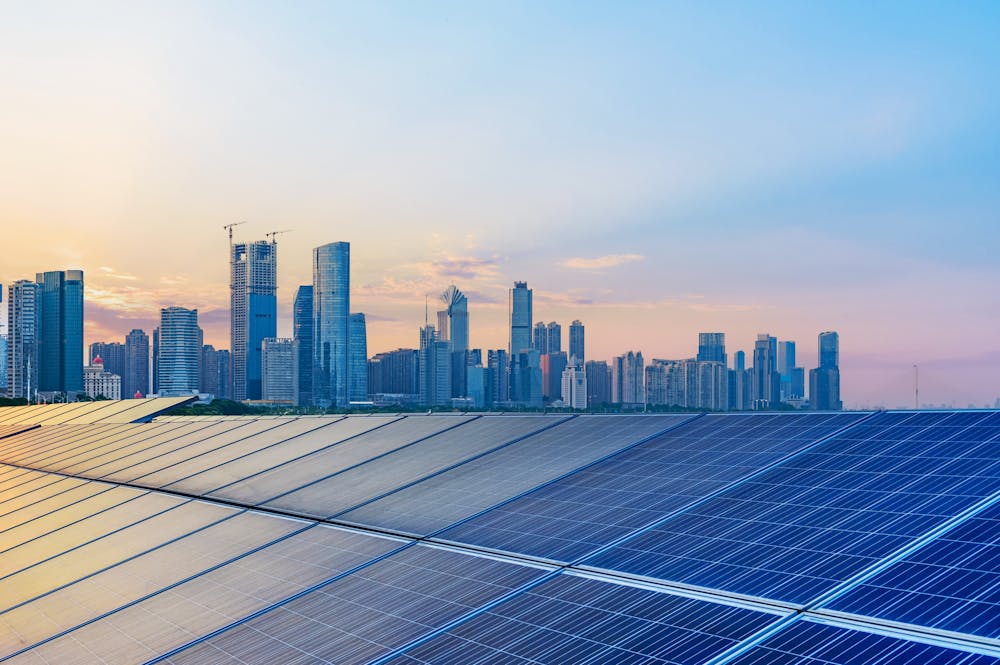
Artificial intelligence (AI) is quietly transforming how cities generate, store and distribute energy, acting as the invisible conductor that orchestrates cleaner, smarter and more resilient cities.
By integrating renewables — from solar panels and wind turbines to geothermal grids, hydrogen plants, electric vehicles and batteries — AI can enable cities to manage diverse energy sources as a single, intelligent system.
One striking example is the Oya Hybrid Power Station in South Africa. Here, AI-driven controls seamlessly co-ordinate solar, wind and battery storage to deliver reliable power to up to 320,000 households. Using AI makes this kind of integration not only possible, but dramatically more efficient.
Recent research shows AI can also optimize how batteries, solar and the grid interact in buildings. A 2023 study found that deep learning and real-time data helped a boarding school in Turin, Italy increase low-cost energy purchases and cut its electricity bill by more than half.
Cleaner, smarter energy grids
AI models are increasingly able to predict weather with greater precision. These predictions allow electric grid operators to plan hours ahead, storing excess energy in batteries or adjusting supply to meet demand before a storm or heatwave hits.
Using AI to respond strategically to weather is a game-changer. In Cambridge, England, a system called Aardvark uses satellite and sensor data to generate rapid, accurate forecasts of sun and wind patterns.
Unlike traditional supercomputer-driven weather models, Aardvark’s AI can deliver precise local forecasts in minutes on an ordinary computer. This makes advanced weather prediction more accessible and affordable for cities, utilities and even smaller organizations — potentially transforming how communities everywhere plan for and respond to changing weather.
AI models are increasingly able to predict weather with greater precision, allowing electric grid operators to plan ahead, storing excess energy in batteries or adjusting supply to meet demand before a storm or heat wave hits. (Shutterstock)
AI for smarter district heating and cooling
In Munich, Germany, AI is improving geothermal district heating by using underground sensors to monitor temperature and moisture levels in the ground.
The collected data feeds into a digital simulation model that helps optimize network operations. In more advanced versions, during winter cold snaps, such systems can suggest lowering flow to underused spaces like half-empty offices and boosting heat where demand is higher, such as in crowded apartments.
This intelligent, self-optimizing approach extends the life of equipment and delivers more warmth with the same energy input.
This is a breakthrough with enormous potential for cities in cold climates with established geothermal networks, such as Winnipeg in Canada and Iceland’s Reykjavik.
Although these cities have not yet adopted AI-driven monitoring systems, they could benefit from AI’s real-time improvements in efficiency, comfort and energy savings during harsh winters — a principle that holds true wherever geothermal district heating and cooling exists.
Inside the home, AI-managed smart climate systems can factor in how many people are in each room, which appliances are in use, how much natural sunlight each space receives. (Shutterstock)
Smart buildings
Inside the home, AI-managed smart climate systems can factor in how many people are in each room, which appliances are in use, how much natural sunlight each space receives and how much electricity or heat a home’s solar panels generate throughout the day.
Based on this, AI determines how to heat or cool rooms efficiently, and can transfer energy from one space to another, balancing comfort with minimal energy use.
Coastal cities and those in wind-heavy regions are using AI in other creative ways. In Orkney, Scotland, excess wind and tidal energy are converted into green hydrogen. Instead of letting that surplus power go to waste, an AI system called HyAI controls when to generate hydrogen based on wind forecasts, electricity prices and how full the hydrogen storage tanks are.
When winds are strong at night and electricity is cheap, the AI can divert surplus power to produce hydrogen and store it for later use. On calmer days, that stored hydrogen can power fuel cells or buses.
Energy storage
AI is transforming energy storage into a smart, revenue-generating force. In Finland, a startup called Capalo AI has developed Zeus VPP, an AI-powered virtual power plant that aggregates distributed batteries from homes, businesses and other sites.
Zeus VPP uses advanced forecasting and AI algorithms to decide when batteries should charge or discharge, factoring in energy prices, local consumption and weather forecasts. This enables battery owners to earn revenue by participating in electricity markets, while also supporting grid stability and making better use of renewable energy.
AI-powered dynamic line rating adjusts how much electricity a line can carry in real time, boosting capacity by 15 to 30 per cent when conditions allow. This helps utilities maximize the use of existing infrastructure instead of relying on costly upgrades.
At the local level, AI analyzes smart metre data to predict which transformers are overheating due to rising EV and heat pump use.
By forecasting these stress points, utilities can proactively upgrade equipment before failures happen — a shift from reactive to predictive maintenance that makes the grid stronger and cities more resilient.
AI-powered public transit and mobility
Transportation innovation is becoming part of the energy solution, with AI at the centre of this transformation. In New York City, energy company Con Edison has installed major battery storage systems to help manage peak electricity demand and reduce reliance on polluting peaker plants, which supply energy only during high-demand periods.
More broadly, Con Edison is deploying advanced AI-powered analytics software across its electric grid — optimizing voltage, enhancing reliability and enabling predictive maintenance. Together, these efforts show how combining energy storage and AI-driven analytics can make even the world’s busiest cities more resilient and efficient.
AI is also powering “vehicle-to-grid” innovations in California, where an AI-driven platform manages electric school buses that can supply stored energy back to the grid during periods of high demand.
By carefully managing when buses charge and discharge, these systems help keep the grid reliable and ensure vehicles are ready for their daily routes. As this technology expands, parked electric vehicles could serve as valuable backup resources for the electricity system.
Transportation innovation is becoming part of the energy solution. (Shutterstock)
AI for clean energy initiatives
AI is rapidly transforming cities by revolutionizing how energy is used and managed. Google, for example, has slashed cooling energy at its data centres by up to 40 per cent using AI that fine-tunes fans, pumps and windows more efficiently than any human operator.
Organizations like the Electric Power Research Institute (EPRI), in collaboration with NVIDIA, Microsoft and others, have launched the Open Power AI Consortium, which is creating open-source AI tools for utilities worldwide.
These tools will enable even the most resource-constrained cities to deploy advanced AI capabilities, without having to start from scratch, helping to level the playing field and accelerate the global energy transition.
The result is not just cleaner air and lower energy bills, but a path to fewer blackouts and more resilient homes.
Mohammadamin Ahmadfard receives funding from the Natural Sciences and Engineering Research Council of Canada (NSERC) and Mitacs Inc. for his postdoctoral research at Toronto Metropolitan University.
Source: People’s Republic of China in Russian – People’s Republic of China in Russian –
Source: People’s Republic of China – State Council News
URUMQI, June 22 (Xinhua) — The cross-border e-commerce sector in northwest China’s Xinjiang Uygur Autonomous Region has seen dynamic growth, with the advantages of two key ports of Alashankou and Horgos as “global purchasing and selling” channels becoming increasingly evident, achieving highly efficient and smooth trade flow.
Alashankou Port has seen strong growth in cross-border e-commerce. In the first five months of this year, 55.7376 million parcels worth 3.579 billion yuan (about 492 million U.S. dollars) were exported through Alashankou in cross-border online commerce, up 103 percent year-on-year. At the Alashankou Comprehensive Bonded Zone Cross-Border E-Commerce Industrial Park, trucks loaded with toys, consumer goods and other products bearing the stamp “Made in China” are constantly streaming toward Europe, Russia and other regions.
“From January to May this year, our company’s cross-border e-commerce export volume exceeded 20 million parcels, up 50 percent year-on-year and reaching a historical high,” Kong Xianglin, deputy general manager of Oushengtong Kahang International Logistics Co., Ltd., told Xinhua. “We are currently cooperating with platforms such as Pinduoduo and AliExpress to build overseas warehouses. In the second half of the year, business with Europe is expected to grow by another 60 percent.”
With explosive growth, cross-border e-commerce at Horgos is complementing Alashankou’s success. Over the same period, the port is expected to reach 28.05 billion yuan in trade volume, a staggering 890 percent year-on-year increase. At the cargo yard of Zhongguang Zhida Co., Ltd., daily necessities, small appliances, air conditioners and other goods are packed into containers before being shipped.
“Today, our company’s trading volume has reached US$700 million, up about 110 percent from a year ago and a record high,” said Jiang Yong, deputy general manager of Zhongguang Zhida Co., Ltd. “Based on Khorgos’s advanced industrial base and highly efficient logistics network, we will continue to deepen our presence in the Central Asian and European markets,” he continued.
The strong growth of the two ports is driven by the continuous optimization of the business environment and the upgrading of infrastructure. The Alashankou Port Authority, taking advantage of the Belt and Road Initiative, has invested in building a multifunctional cross-border e-commerce industrial park, attracting 15 companies and covering all import and export models. The Horgos Cross-Border E-Commerce Industrial Park has also brought together more than 40 enterprises and is purposefully building a comprehensive service ecosystem covering the entire supply chain.
Zhang Yan, head of the New Business Model Department of Alashankou Port and Commerce Bureau, said: “We actively leverage the advantages of geographical location and industrial agglomeration, implement various support measures, solve practical difficulties for enterprises, and continuously provide cross-border e-commerce companies with turnkey services, from warehouse logistics to financial services.”
At present, Alashankou and Horgos are making the transition from a “transit corridor economy” to an “industrial cluster economy”. With innovative models and an open ecosystem, they are jointly building a digital trade hub in a key area of the Silk Road Economic Belt, giving a strong impetus to the deepening of the opening up of Xinjiang’s border areas. -0-
Source: People’s Republic of China in Russian – People’s Republic of China in Russian –
Source: People’s Republic of China – State Council News
ASTANA, June 22 (Xinhua) — The China-Central Asia News Agency Forum was held in Astana, capital of Kazakhstan, on Sunday. As one of the outcomes of the Second China-Central Asia Summit, the forum was initiated and hosted by Xinhua News Agency. It was attended by heads of Xinhua News Agency, Kazakh Presidential Television and Radio Broadcasting Complex, Kyrgyz National News Agency Kabar, Tajikistan National News Agency Khovar, Media-Turkmen News Agency and Uzbekistan National News Agency.
Fu Hua, Director General of Xinhua News Agency, chaired the forum and delivered a speech. He said that under the joint leadership of Chinese President Xi Jinping and the leaders of Central Asian countries, exchanges and cooperation between China and the countries in the region have gained new important historical opportunities and shown incredibly bright prospects. News agencies of China and Central Asia are charged with the responsibility of spreading the “Central Asia-China Spirit” and promoting high-quality development in the region, jointly telling the stories of China-Central Asia cooperation, promoting China-Central Asia people-to-people and cultural exchanges and mutual learning between civilizations, advancing innovation and cooperation in media technology, deepening exchanges and cooperation between news agencies, and contributing to promoting the building of a community with a shared future for China and Central Asia.
The officials of news agencies of the Central Asian countries highly appreciated the important role played by the China-Central Asia News Agency Forum in strengthening mutual understanding and cooperation, and expressed their willingness to continue to deepen exchanges and cooperation with Chinese media including the Xinhua News Agency, jointly promote the “Central Asia-China Spirit”, and make due contributions to promoting mutual learning among civilizations and achieving common development.
Director General of the Television and Radio Complex of the President of the Republic of Kazakhstan Raushan Kazhibayeva noted that the successful holding of the Second China-Central Asia Summit outlined the direction for the development of relations between China and the countries of the region. This forum is a vivid manifestation of good-neighborliness and deep friendship between China and the countries of Central Asia, and the media should support and promote the implementation of the results achieved at the summit.
Mederbek Shermetaliev, Director General of the Kyrgyz National News Agency Kabar, said that the Belt and Road Initiative has opened up new prospects for mutually beneficial cooperation between China and Central Asia. Strengthening information exchange and cooperation between all parties will help present an objective, truthful and three-dimensional image of China and Central Asian countries.
According to Subhiddin Shamsiddinzoda, Director of the National Information Agency of Tajikistan “Khovar”, fruitful results have been achieved in cooperation between the Central Asian countries and China in the field of media. He also expressed hope for continued in-depth exchange of views on issues such as training talents in the field of communications, strengthening cooperation between universities and promoting the development of creative industries.
Bekdurdy Amansaryev, Director General of the Media-Turkmen Information Agency, said all parties should set an example in establishing information partnerships based on mutual respect, equality and mutual benefit. New technologies have expanded the space for cooperation between media outlets, he noted, adding that he hopes to strengthen cooperation in the field of new media and promote digital transformation.
Abdusaid Kuchimov, Director General of the National News Agency of Uzbekistan, noted that the media plays an important role in strengthening bilateral and multilateral cooperation between Central Asian countries and China. Media partners from Central Asia and China came together to strengthen their cooperation, which is of great importance for discussing ways to overcome common challenges.
The forum participants agreed that the world is changing and facing many challenges, such as the spread of disinformation. The media of China and Central Asian countries should join efforts to enhance cooperation in information exchange, news dissemination and promotion of technological innovation to create a favorable information environment for regional peace and development.
Following the forum, the Astana Consensus was adopted. –0–
Source: People’s Republic of China – State Council News
JERUSALEM, June 22 (Xinhua) — The Israel Defense Forces (IDF) said in a statement that its fighter jets struck two warplanes at Dezful airport in western Iran on Sunday morning.
The statement said eight rocket launchers had been “neutralized” in separate strikes earlier in the morning, six of which were poised to fire into Israeli territory.
It reported that on Saturday evening, about 20 Israeli fighter jets struck dozens of military targets in Iran.
According to the statement, the targets hit included a military facility housing components for the production of explosives, a weapons depot and production facilities, as well as air defense systems. –0–
The IAEA Board of Governors will convene a meeting at the Agency’s headquarters starting at 10:00 CEST on Monday, 23 June, in Board Room C, Building C, 4th floor, in the Vienna International Centre (VIC).
IAEA Director General Rafael Mariano Grossi has requested that a meeting of the Board be convened to consider the situation in Iran.
The Board of Governors meeting is closed to the press.
IAEA Director General Rafael Mariano Grossi will open the meeting with an introductory statement, which will be released to journalists after delivery and posted on the IAEA website. The IAEA will provide video footage of the Director General’s opening statement here and will make photos available on Flickr.
Photo Opportunity
There will be a photo opportunity with the IAEA Director General Rafael Mariano Grossi and the Vice-Chair of the Board, Ambassador Caroline Vermeulen of the Kingdom of Belgium, before the start of the Board meeting, on 23 June at 10:00 CEST in Board Room C, in the C building in the VIC.
Accreditation
Journalists are requested to register with the Press Office by 08:00 CEST on Monday, 23 June. Please email press@iaea.org.
On 24 – 25 June, the NATO Summit will take place at the World Forum Convention Centre. The International Media Centre (IMC) is located in the World Forum Convention Centre.
The Accreditation Office is located at Stadhouderslaan 15, 2517 HV The Hague.
You will be granted a media pass only if you received a confirmation from NATO that your application for accreditation has been successful.
You can collect your NATO Summit media pass at the Accreditation Office, located at Stadhouderslaan 15, 2517 HV The Hague.
You will need to show a valid national identification document (Passport or ID-card) and press card (or accreditation letter from a recognised media organisation). You will need to bring the same ID document that you used in your accreditation application.
All media representatives must use Stadhouderslaan 15, 2517 HV The Hague to access the International Media Centre.
The location is accessible by city public transport (tram/bus), taxi, car or bike. A passenger drop-off point and bicycle racks are available. There are no parking facilities nearby.
Tram station World Forum (served by the lines 1 and 17) and bus stop World Forum (served by the lines 24 and 28) are located in the proximity of the Accreditation Office.
Please note media will need to go through airport-style security screening which may take longer at peak periods.
Given the security procedures and distances between venues, please plan at least 45 minutes for reaching the IMC.
General filing area which is the main working space for all media accredited to the Summit, with access to internet (free), video and audio feed, and power outlets – available on a first come first serve basis.
Editing area – fully booked
Indoor/outdoor stand-up positions – fully booked
TV presentation positions
Press briefing rooms: One large press briefing room (Main Press Theatre) and 13 other press briefing rooms of different sizes. There will also be several informal media huddle/stakeout positions.
One Summit TV studio and one online engagements studio
Catering facilities for media
Lockers for media are available in the IMC; belongings can be stored overnight in the lockers. Bulky equipment exceeding the size of the lockers cannot be left / stored in the media centre overnight.
The World Forum is a non-smoking building.
For any questions during the Summit, accredited journalists can go to the Information Desk at the Media centre.
Media will have unescorted access to the following:
Filing, broadcast and catering area.
Outdoor stand-up positions
Press conference area – when press conferences are taking place.
Media huddle/stakeout area – when engagements are taking place.
NATO Secretary General’s press conferences are open to all accredited media representatives. Press conference announced on the CCTV are open for accredited media present in the IMC.
Media access to the main Summit events is pooled. Specific pool cards for each event will be used by NATO to identify the media authorised to attend. Please consult the media programme to identify the pools for each event.
Media representatives wishing to be considered for a media pool need to contact Summitmediaoperations@hq.nato.int. You will receive a confirmation if your request can be accommodated, and you will be invited to collect your pool card.
By accepting a NATO pool position, you commit to share immediately all information and material collected while in the pool with any accredited media that request it, at no charge and with no restriction on the use of the material for news purposes. Media representatives and news organisations must identify that it is pooled material every time it is used. Pooled material can only be used for legitimate news purposes and it cannot be sold.
Participating Heads of State and Government may hold press conferences in the Media Centre. If those are open to all media, time and location will be announced on the CCTV.
Details about national media plans (press briefings, bilateral meetings) are available from the national delegations. Providing information about, and organizing media coverage of bilateral events is the responsibility of the respective national delegations.
Please contact the national delegations directly. A contact list of national press officers is available at the Information Desk in the Media Centre.
NEP Groep/Wirtz Film operates as Host TV for the NATO Summit and covers live all events open to the media. The coverage will be available via satellite (on world feed), in the International Media Centre and on the NATO website.
Host TV will also provide continuous broadcast quality video feed of the Public Forum in the IMC. The Public Forum will also be shown live on NATO’s YouTube channel and on www.natopublicforum.org.
Technical details relevant for broadcasters are available here
To ensure your wireless equipment functions properly, safely, and legally during the NATO summit, it’s important to understand whether a license is required and how to comply with national regulations. Please visit to find out: https://www.rdi.nl/onderwerpen/public-events
The NATO Public Forum will take place on 24-25 June at the Summit site. Details about the event are available at www.natopublicforum.org.
Direct coverage by credentialed media will be pooled and access will be escorted from the International Media Centre. Media can ask for access at the Information Desk.
NOTE: Media cannot participate in the discussions or ask questions.
There will be simultaneous interpretation into French, Russian and Ukrainian of the NATO Secretary General’s press conferences and public remarks at the start of the Summit’s working sessions. Interpretation in multiple languages will also available during the live-streaming on the NATO website.
Interpretation might be provided for some of the national press conferences. Headsets will be available in the respective press conference rooms.
It is strongly recommended to arrive early to clear security checks. Please comply with the instructions of security staff. Passes must be visible at all times.
If you lose your accreditation badge, please write to NATOAccreditations@hq.nato.int and report at the Information Desk.
Catering will be available at the Summit venue throughout the Summit at no cost. Snacks, coffee, water will be provided throughout the IMC during opening hours. Hot meals will be provided in the media catering area at times outlined below.
Source: People’s Republic of China in Russian – People’s Republic of China in Russian –
Source: People’s Republic of China – State Council News
XI’AN, June 22 (Xinhua) — “How is business going in Kazakhstan? Are there any difficulties in establishing contacts?” Begench Sakhedov, a Turkmen national, asked his business partner Wang Yi from Shaanxi Province, who was in Almaty at the time, via video link from Xi’an, northwest China’s Shaanxi Province. “Everything is going well. There are no problems in communication, even though I do not speak English or Russian, because many Kazakhs speak Chinese,” Wang Yi replied.
As transnational partners, Wang Yi and B. Sahedov jointly run a company in Xi’an that provides cultural exchange services. As trade, economic and cultural exchanges between China and Central Asian countries expand, their company, registered in September 2023, has seen good growth.
“After the successful holding of the first China-Central Asia Summit, we clearly felt that students from the five Central Asian countries have increased their desire to study in China because coming to China means more opportunities and no difficulties with employment,” the company’s business director, Turkmen Yagshi Aizhanov, told Xinhua. “In 2024, we helped more than 800 people come to study in China, most of them from the five Central Asian countries.”
As mutual visa-free travel agreements between China and Central Asian countries come into effect, travel has also become more convenient. “We are currently cooperating with more than 100 universities in China,” B. Sakhedov noted.
Xi’an, where a large number of universities and scientific and educational resources are concentrated, has become one of the popular cities for students from Central Asia who come to study in China. In recent years, many young people from Central Asia, such as B. Sakhedov, who came to China to receive higher education, choose Xi’an after graduating to start their entrepreneurial journey here.
The Qinchuanyuan Science and Technology Big Market in Xi’an New Area, Shaanxi Province, hosted an exchange of views on entrepreneurship among foreign youth. Amina Gusarova from Kyrgyzstan told Xinhua that she registered a consulting company in Xi’an late last year. “We have already signed our first order. A Chinese enterprise that needs to expand its business is going to Kyrgyzstan for a study tour, and we provide them with comprehensive services, from consulting to translation.”
“We have been implementing a pilot project on entrepreneurship among foreign specialists since May 2023. To date, 18 expat startup projects have already been attracted, most of the entrepreneurs are from five Central Asian countries,” said Han Ping, deputy head of the Department of Scientific and Technological Innovation and New Economy of Xi’an New Area in Shaanxi Province. “They have a very strong desire to work and live in China, and at the same time, they often invite business partners from Central Asia to Xi’an to seek cooperation opportunities.”
Doniyor Matmusayev from Uzbekistan is one such entrepreneur. After graduating from Northwestern Polytechnical University in 2023, he registered a trading company in Xi’an that supplies Chinese goods to Central Asian countries and Russia. “We sell Chinese construction equipment to Uzbekistan, and some Chinese brands of equipment are doing very well there; we mainly sell auto parts to Kazakhstan, but Chinese electric cars are also very popular there; and we mainly supply electronics to Russia, such as switches, servers, etc.,” he said.
Over the past two years, D. Matmusaev has worked in the provinces of Guangdong (South China), Jiangsu (East China), Zhejiang (East China), Shandong (East China) and other places. “The opening of a direct flight from Xi’an to Uzbekistan has significantly reduced the logistics shoulder. Now our electronics are delivered by air in three hours and cleared through customs on the same day,” said D. Matmusaev. “We transport large-sized equipment by road or by international freight railway routes from China to Europe. Road transportation takes 15 days, and the convenience of China-Europe express trains is not even worth mentioning.”
According to statistics from the Shaanxi Provincial Commerce Department, the province’s foreign trade turnover with the five Central Asian countries has been growing every year. In 2024, it reached 8.575 billion yuan (about 1.18 billion US dollars), which is 48.1 percent more than the previous year. Thanks to such development dynamics, Chinese ice cream has now appeared in the product range. To make the partners more confident, in early April, D. Matmusaev accompanied a client from Uzbekistan on a trip to a Chinese ice cream factory.
“Ice cream is a new project. We started working on it in March. These are types and flavors specially adapted for Uzbekistan from the supplier. From the beginning of April to the present, we have already sent 7 trucks of products, and they are very popular,” said D. Matmusayev.
Today, the total volume of trade of his company with the countries of Central Asia and Russia has exceeded 2 million US dollars. “My dream is to do global business. We are ready to expand the sphere of trade and plan to start cooperation with the regions of the Middle East, Europe and America, because Chinese products are popular in an increasing number of countries, and this is an excellent business opportunity,” shared D. Matmusaev. -0-
Source: People’s Republic of China in Russian – People’s Republic of China in Russian –
Source: People’s Republic of China – State Council News
BEIJING, June 22 (Xinhua) — Beijing authorities have urged the public to take precautions as the city continues to be gripped by a heat wave.
Temperatures in the central part of the city ranged from 34.7 to 35.6 degrees Celsius at midday on Sunday, according to the Beijing Meteorological Observatory.
A yellow alert for high temperatures was issued in the capital at 2.30pm on Friday, with meteorologists predicting continued hot weather throughout the coming week.
Local authorities advised residents to limit their time outdoors and replenish fluids in a timely manner. Workers working outdoors, such as construction workers, traffic police officers, sanitation workers, and couriers, were advised to adjust their work schedules to prevent negative phenomena such as heatstroke and sunstroke.
Beijing authorities also warned the public to use electricity safely to prevent fires, and urged parents to closely monitor children who could be at risk of drowning while trying to cool off in rivers. -0-
Source: People’s Republic of China in Russian – People’s Republic of China in Russian –
Source: People’s Republic of China – State Council News
JERUSALEM, June 22 (Xinhua) — Sirens sounded in central and northern Israel and in Israeli-controlled Jerusalem as Iran launched a new wave of ballistic missiles.
Israelis in the affected areas were advised to remain in bomb shelters.
It was Iran’s first ballistic missile strike on Israel in more than a day – and the first since the United States attacked three Iranian nuclear sites.
Israel closed its airspace as an apparent precaution following the US strike on Iran’s nuclear facilities, the Israel Airports Authority said earlier.
The IDF said in a statement that with the approval of Defense Minister Israel Katz and after assessing the situation, it was determined that changes would be made to the Home Front Command instructions immediately as of 03:45 Sunday /00:45 GMT/.
Earlier on Saturday, US President Donald Trump said the United States had completed attacks on three nuclear sites in Iran, namely “Fordo, Natanz and Isfahan.” –0–
Source: People’s Republic of China in Russian – People’s Republic of China in Russian –
Source: People’s Republic of China – State Council News
BEIJING, June 22 (Xinhua) — Chinese authorities are taking a long-term approach to economic development, investing in technology and human capital, which is evident in the evolution of emerging industries, be it green energy, industrial transformation or advanced manufacturing, said Jim Hui Neo, Managing Director of the World Economic Forum (WEF).
In an exclusive interview with Xinhua ahead of the upcoming Summer Davos forum, which will be held from June 24 to 26 in Tianjin, northern China, Neo said the expected attendance of 1,800 delegates, more than half of whom are from global businesses, indicates significant interest in China and Asia as a whole.
Companies and investors attending the event in Tianjin will seek partnerships in advanced manufacturing, technology, healthcare and other areas, she said.
Commenting on the investment climate in China and Asia, Neo noted that the “ingredients” in terms of policy coherence and consistency, availability of human capital, technology readiness and broader market support are “very strong.”
“I believe these different elements create an ecosystem that is favorable for both investors and business partnerships,” she explained.
Notably, Neo also said the Chinese economy has shown greater resilience amid global economic uncertainty. She said Asia is expected to account for about 60 percent of global GDP growth this year, with China contributing about 30 percent.
“So the outlook for Asia and China remains very strong,” Neo stressed, adding that there will be significant interest and attention to the potential of China and Asia at the upcoming meeting in Tianjin this year. “In particular, we will have sessions on China’s economic outlook, its approach to artificial intelligence, and the broader innovation ecosystem.”
Addressing growing tensions in global trade, Neo noted that the WEF has a working group on trade and investment that seeks to bring together business with governments, academia and international organizations for constructive dialogue and the formation of mutually beneficial partnerships.
“I emphasize the word ‘mutually beneficial’ because we need to look for opportunities and areas of cooperation that can benefit everyone,” she said.
Neo said the WEF has a long-standing friendship with China and looks forward to continuing to work with the Chinese government, business and people to promote dialogue between China, Asia and the rest of the world.
“There is great interest in Asia and China, and we hope to continue to create a platform for constructive dialogue, exchange of ideas and views, and to stimulate new partnerships and find solutions to global challenges,” she said.
The 2025 Summer Davos Forum, or the 16th annual meeting of the World Economic Forum’s emerging leaders, entitled “Entrepreneurship in a New Era,” will focus on five key areas: decoding the global economy, China’s prospects, transforming industries, investing in people and the planet, and new energy and materials. -0-
Following the worsening of the crisis in the Middle East, the President of the Council of Ministers, Giorgia Meloni, urgently convened and chaired a conference call this morning.
The call was attended by Vice-President of the Council of Ministers and Minister of Foreign Affairs Antonio Tajani, Vice-President of the Council of Ministers Matteo Salvini, Minister of the Interior Matteo Piantedosi, Minister of Defence Guido Crosetto, Minister of Economy and Finance Giancarlo Giorgetti, Undersecretaries of State to the Presidency of the Council of Ministers Alfredo Mantovano and Giovanbattista Fazzolari, and the heads of Italy’s intelligence services.
The conversation analysed the situation of Iranian sites following the attacks. A precise damage assessment will only be possible in the coming hours.
The Government is focused on all aspects of the crisis, from the situation of compatriots in the region, with whom the Ministry of Foreign Affairs and International Cooperation is in constant contact, to the economic and security impacts.
President Meloni will remain in contact with key allies and leaders in the region over the coming hours. Italy will continue to work hard to bring the parties to the negotiating table.
PM call with King Abdullah II of Jordan: 22 June 2025
The Prime Minister spoke to His Majesty the King of Jordan Abdullah II this morning.
The Prime Minister spoke to His Majesty the King of Jordan Abdullah II this morning.
Following US strikes on Iran overnight, he reiterated that Iran’s nuclear programme is a grave threat to international security and they must never be allowed to develop a nuclear weapon.
They called on Iran to return to the negotiating table in pursuit of a diplomatic solution.
Turning to Gaza, they underlined their support for an immediate ceasefire to end the intolerable circumstances facing civilians there.
The Prime Minister offered his strong support to King Abdullah, adding that wider regional stability in the Middle East must be a priority.
The Prime Minister spoke to the Sultan of Oman, His Majesty Haitham bin Tarik al Said, this morning.
The Prime Minister spoke to the Sultan of Oman, His Majesty Haitham bin Tarik al Said, this morning.
Discussing the developments in the Middle East overnight, they agreed on the grave threat posed by Iran’s nuclear programme and reiterated calls for them to return to the negotiating table.
An escalation of the conflict is in no-one’s interests and the focus must be on de-escalation, they added.
Both leaders agreed that the situation in Gaza is intolerable, and we must maintain momentum behind reaching an immediate ceasefire there.
When US B-2 bombers hit Iran’s nuclear facilities at Fordow, Natanz and Isfahan, Donald Trump declared the strikes a success and urged the Islamic Republic to make peace or face even more devastating strikes. The US president proclaimed the might of the US military, operating in full coordination with Israel, before taking to truth social.
Trump and the Israeli prime minister, Benjamin Netanyahu, will hope that the strikes will end Iran’s nuclear programme once and for all. It may, it may not. More certain is that the operation will sound the death knell for the post-second world war global order.
After the horrors of the that war and the cold war that followed, a global order emerged seemingly predicated on a set of largely liberal rules and norms that sought to prevent a retreat into global conflict. Predicated on non-intervention, diplomacy and a respect for the rule of law, this global order was idealistic and – ultimately – aspirational.
But in recent years, this vision of global politics has come crashing down. Now America joining Israel in its attacks on Iran will rightly provoke serious questions about the future of global order and what comes next.
Get your news from actual experts, straight to your inbox.Sign up to our daily newsletter to receive all The Conversation UK’s latest coverage of news and research, from politics and business to the arts and sciences.
Trump’s decision to use US air power to land heavy blows against Iran’s nuclear programme is the latest event on a continuum which arguably reaches back to the Hamas terror attack of October 7.
Israel’s destruction of Gaza, its decapitation of Hamas and disabling of Hezbollah’s military capacity and its strikes against the Houthi rebels have consolidated Israel’s position of strength in the region, to generally positive acclaim from global audiences. Yet the spectre of Iran continued to loom large, even as its proxies were defeated
Iran has long been framed as an nefarious puppet master controlling a complex web of “proxy actors” across the Middle East each accused of doing the bidding of Tehran. The reality is rather different. While the Islamic Republic undeniably wields influence over such groups, it is not the perfidious mastermind that some would suggest, nor is it the source of all ills in the region.
Instead, Iran is in a perilous position. The Islamic Republic faces serious social and economic pressures, with the “women life freedom movement” galvanising popular opposition, while unrest across Iran’s peripheral provinces which are home to ethnic and religious minorities continues to ferment.
In recent years, diplomacy has shown it can work, ameliorating longstanding and deep-seated animosities. This was bearing fruits as seen in the gradual rapprochement between Iran and Saudi Arabia from 2023, which had been preceded by the signing of the Abraham accords in 2020.
Seen by many as a key achievement of Trump’s first presidency, this was a series of agreements between Israel and Bahrain, the United Arab Emirates, Morocco and Sudan in which the Arab countries recognised Israel and all sides signed a declaration of principles focused on mutual understanding, respect for human dignity, and cooperation.
While many in Israel and the US hoped that Saudi Arabia would officially recognise Israel, the events of October 7 and the destruction of Gaza that followed ended those hopes. Now the possibility of all-out conflict between Iran and Israel and the US risks blowing a major regional conflict with global implications.
Serious questions must be asked as to the longer-term strategy here. While Israeli officials have articulated a need for strikes on Iran’s nuclear facilities to prevent the Islamic Republic from getting a nuclear weapons capability, Iran is a signatory of the nuclear non-proliferation treaty (although it has threatened recently to quit) and key officials have regularly declared that nuclear weapons have no place in Iran’s strategic portfolio.
Israel is not a signatory to the treaty. In fact, it is thought to possess between 75 and 400 nuclear warheads. It’s hard to tell, as the country has maintained a steadfast policy of nuclear opacity, never actually admitting the extent of its nuclear capability.
New impunity?
Is this the start of a new order of impunity across the region, backed by western powers? And if so, what does this mean for the war in Ukraine and the potential for an aggressive Russia engaging in further dangerous adventurism? What does it mean for the possibility of China taking advantage in this breakdown to perhaps fulfil its generations-old ambition to unite with Taiwan, by force, if necessary? Are we seeing the shift to a world in which Donald Trump’s threats to annex Greenland – even perhaps Canada – must be taken seriously?
The contours of global politics are changing before our eyes. Gone are the norms that have served as the bedrock of the so-called liberal international order. The risk is that while this period has itself featured tragedy and suffering on an almost unimaginable scale, tearing up the rule book will be far worse.
Simon Mabon receives funding from Carnegie Corporation of New York and the Henry Luce Foundation. He is a Senior Research Fellow with the Foreign Policy Centre.