Category: Europe

  • MIL-OSI: Volaris Group Acquires PC Soft

    Source: GlobeNewswire (MIL-OSI)

    TORONTO, May 26, 2025 (GLOBE NEWSWIRE) — Volaris Group today announced the acquisition of PC Soft, a leading provider of software development tools used to create computer programs, web applications and mobile apps. The acquisition further expands Volaris Group’s presence in the developer platforms market.

    Headquartered in Montpellier, France, PC Soft has been providing tools to support application development on all major operating systems and mobile platforms since its founding in 1984. PC Soft’s cross-platform application development software suite improves software developer productivity and allows users to deploy the same source code across multiple platforms.

    “We are excited to welcome PC Soft to Volaris Group and to our expanding portfolio of software development firms,” said John Isak, Portfolio Manager for Developer Platforms at Volaris Group. “PC Soft offers an alternative to traditional software development, allowing customers to develop cross-platform apps orders of magnitude more quickly.”

    About Volaris Group
    Volaris acquires, strengthens, and grows vertical market technology companies. As an Operating Group of Constellation Software Inc., Volaris is all about strengthening businesses within the markets they compete and enabling them to grow – whether that growth comes through organic measures such as new initiatives and product development, day-to-day business, or through complementary acquisitions. Learn more at www.volarisgroup.com.

    For more information:
    Ryan Hill
    Vice President, Communications at Volaris Group
    +1 416-831-0305 
    ryans.hill@volarisgroup.com

    The MIL Network

  • MIL-OSI Russia: Xi Jinping congratulates Fudan University on its 120th founding anniversary /detailed version-1/

    Translation. Region: Russian Federal

    Source: People’s Republic of China in Russian – People’s Republic of China in Russian –

    Source: People’s Republic of China – State Council News

    BEIJING, May 26 (Xinhua) — Chinese President Xi Jinping on Monday sent a congratulatory letter to Fudan University in Shanghai on the occasion of its 120th founding anniversary.

    Xi Jinping, also general secretary of the Communist Party of China Central Committee and chairman of the Central Military Commission, expressed congratulations to the university’s faculty, students, staff and graduates.

    In the letter, Xi Jinping said that over the past 120 years, Fudan University has kept pace with the times, carried forward the glorious tradition of patriotism and fine university style, nurtured many outstanding talents and made many original achievements, thus playing a positive role in state building and national progress.

    Xi Jinping expressed the hope that from the new starting point, Fudan University will continue to firmly and tirelessly apply the Thought on Socialism with Chinese Characteristics for a New Era to cultivate spiritual values and nurture talents.

    Xi Jinping stressed that the university should deepen reform and scientific research in education, promote the beneficial interaction between independent scientific and technological innovation and independent talent training, and stimulate innovation in philosophy and social sciences.

    He also called on the university to continuously enhance its ability to serve major national strategies and regional socio-economic development, thereby making continuous new contributions to the comprehensive advancement of the great cause of building a powerful country and national rejuvenation through Chinese modernization.

    Founded in 1905 and located in the metropolis of Shanghai in eastern China, Fudan University is a research-oriented, multidisciplinary university. -0-

    MIL OSI Russia News

  • MIL-OSI Russia: Breaking News: China Looks to Strengthen Cooperation with GCC, ASEAN to Benefit Global South – Li Qiang

    Translation. Region: Russian Federal

    Source: People’s Republic of China in Russian – People’s Republic of China in Russian –

    Source: People’s Republic of China – State Council News

    KUALA LUMPUR, May 26 (Xinhua) — China hopes to strengthen ties and cooperation with Gulf Cooperation Council (GCC) and Association of Southeast Asian Nations (ASEAN) countries to promote peace, prosperity and stability in Asia and make positive contributions to safeguarding the interests of the Global South, Chinese Premier Li Qiang said Monday.

    The ASEAN-GCC-China summit is an opportunity to do this, he said.

    Li Qiang made these remarks at a meeting with Kuwaiti Crown Prince Sheikh Sabah Khalid Al-Hamad Al-Sabah. –0–

    MIL OSI Russia News

  • MIL-OSI Russia: Breaking News: China Ready to Work with Kuwait to Align Belt and Road Initiative and Kuwait Vision 2035

    Translation. Region: Russian Federal

    Source: People’s Republic of China in Russian – People’s Republic of China in Russian –

    Source: People’s Republic of China – State Council News

    KUALA LUMPUR, May 26 (Xinhua) — China is willing to work with Kuwait to strengthen the alignment of the Belt and Road Initiative and Kuwait Vision 2035, Chinese Premier Li Qiang said Monday at a meeting with Kuwaiti Crown Prince Sheikh Sabah Khalid Al-Hamad Al-Sabah.

    Li Qiang arrived in Kuala Lumpur on Monday to attend the ASEAN (Association of Southeast Asian Nations)-GCC (Gulf Cooperation Council)-China summit. –0–

    MIL OSI Russia News

  • MIL-OSI Russia: Urgent: China to Create More Opportunities for Mutual Cooperation with Kuwait – Li Qiang

    Translation. Region: Russian Federal

    Source: People’s Republic of China in Russian – People’s Republic of China in Russian –

    Source: People’s Republic of China – State Council News

    KUALA LUMPUR, May 26 (Xinhua) — China is willing to deepen cooperation with Kuwait in areas including energy, investment, green economy, digital economy and artificial intelligence, creating more opportunities for win-win cooperation, Chinese Premier Li Qiang said Monday at a meeting with Kuwaiti Crown Prince Sheikh Sabah Khalid Al-Hamad Al-Sabah.

    Li Qiang arrived in Kuala Lumpur on Monday to attend the ASEAN (Association of Southeast Asian Nations)-GCC (Gulf Cooperation Council)-China summit. –0–

    MIL OSI Russia News

  • MIL-OSI Russia: Project to support adaptation to climate change launched in Mongolia

    Translation. Region: Russian Federal

    Source: People’s Republic of China in Russian – People’s Republic of China in Russian –

    Source: People’s Republic of China – State Council News

    ULAN BATOR, May 26 (Xinhua) — A launch ceremony for a project to support climate change adaptation in Mongolia funded by China’s Fund for Global Development and South-South Cooperation was held here on Monday.

    The event was attended by the Ambassador of China to Mongolia Shen Minjuan, Secretary General of the Mongolian Red Cross Society Nordovin Bolormaa, head of the delegation of the International Federation of Red Cross and Red Crescent Societies in Mongolia Olga Dzhumaeva and other officials.

    In her speech, Chinese Ambassador to Mongolia Shen Minjuan stressed that the Chinese government attaches great importance to combating climate change and is committed to both mitigation and adaptation. “While taking decisive measures at home, we are also promoting South-South cooperation, doing our utmost to support other developing countries. As an important neighbor of China and a key partner in the Belt and Road Initiative,” she said.

    “Last year, in partnership with UNDP Mongolia, China successfully completed its first project under the Global Development Fund and South-South Cooperation in Mongolia, donated new forest firefighting equipment to the General Administration of Emergency Management of Mongolia and its related organizations, and enhanced their firefighting capabilities. Today’s project is closely related to the second project under the Global Development Fund and South-South Cooperation in Mongolia,” the Chinese diplomat noted.

    Shen Minjuan also said that this project will be a flagship project on climate change adaptation set up by the Global Development and South-South Cooperation Fund. She also expressed confidence that the implementation of the project will improve the living conditions and well-being of Mongolians and achieve sustainable development.

    For her part, Secretary General of the Mongolian Red Cross Society N. Bolormaa said that climate change affects all levels of Mongolian society, especially herders who rely on livestock farming for their livelihood.

    Expressing gratitude to the Chinese government for providing practical humanitarian assistance to Mongolia over the years, N. Bolormaa emphasized that this important project will provide an opportunity to strengthen community resilience, reduce growing vulnerability and ensure that no one is left behind in the face of climate change.

    In turn, the head of the delegation of the International Federation of Red Cross and Red Crescent Societies in Mongolia, Olga Jumaeva, expressed sincere gratitude to China for its strong support and firm commitment. “This is the first cooperation between the International Federation of Red Cross and Red Crescent Societies, the Government of China and the Mongolian Red Cross Society on climate change adaptation. This moment not only marks the official launch of the two-year cooperation initiative, but also becomes an important milestone in multilateral cooperation to promote local social resilience and sustainable development. The project focuses on concrete and feasible response measures to reduce losses and recovery costs caused by future climate disasters and effectively protect vulnerable pastoralists. This assistance is not only significant, but also timely and effective,” she said.

    It is noted that the above-mentioned project is the first project of the Global Development Fund and South-South Cooperation in Northeast Asia. China will work with the IFRC and the Mongolian Red Cross Society to enhance the early warning and adaptation capacity of pastoralists to climate change, and provide policy advice to the government.

    According to the General Administration of Emergency Management of Mongolia, the frequency of various disasters in Mongolia increased by 26 percent from 2015 to 2024 compared to the previous decade. Among them, the number of sudden rainstorms and floods increased by 3.4 times, and the number of blizzards and sandstorms increased by 2 times. Mongolia also lost more than 8 million heads of livestock from 2023 to 2024, which dealt a heavy blow to many herders.

    In addition, over the past 80 years, the average temperature in Mongolia has increased by about 2.46 degrees Celsius, which is higher than the global average temperature increase, annual precipitation has decreased by 8 percent, and 76.9 percent of the total land area has been subjected to varying degrees of desertification. –0–

    MIL OSI Russia News

  • MIL-OSI Russia: The Educational Center for Digital Competencies of SPbGASU has developed a program for automating the verification of information models of buildings and structures

    Translation. Region: Russian Federal

    Source: Saint Petersburg State University of Architecture and Civil Engineering – Saint Petersburg State University of Architecture and Civil Engineering –

    One of the key aspects of working with information models of buildings and structures (TIM models) is filling them with various information. Information about placement levels, fire safety indicators, dimensions and many other characteristics are a significant part of the information model. From the point of view of automating the processing of TIM models, even a minor typo or the presence of invisible characters (for example, extra spaces) can lead to the information model not meeting the requirements of the examination.

    On April 23, 2025, representatives of the Educational Center of Digital Competencies (EDCC) of the St. Petersburg State University of Architecture and Civil Engineering received a certificate of state registration of the computer program No. 2025660311: “TIMTest – software for validating the attribute content of information models of buildings and structures.” Software developers – Yuri Zgoda (category II specialist), Inna Sukhanova (Director of the EDCC, Associate Professor) and Denis Nizhegorodtsev (Deputy Director of the EDCC, Senior Lecturer).

    TIMTest allows you to describe the requirements for the attribute content of the model (the presence of parameter groups, their information content, the correctness of the data type) in a readable format, and then, in a fully automatic mode, check any TIM model provided in the open IFC format for errors. Such checks can be used for a preliminary assessment of the compliance of the provided model with the requirements of the examination.

    Before registration, the developed software demonstrated its high efficiency within the framework of the main stage of the All-Russian TIM-Championship of SPbGASU, which was held from October 28 to November 27, 2024. Now the updated version of this program (adjusted in accordance with the innovations of the technical specifications) will be used to evaluate the work of TIM coordinators within the framework of the still ongoing selection stage of the All-Russian TIM-Championship of SPbGASU 2025.

    Information modeling opens up many new opportunities for specialists in the architectural and construction industry, but at the same time it creates new requirements for the documentation provided to them (including digital). This development is designed to minimize the number of typical errors in model preparation and thus allow specialists to concentrate on solving other, more creative tasks, entrusting the verification of information content to automation tools.

    Please note: This information is raw content directly from the source of the information. It is exactly what the source states and does not reflect the position of MIL-OSI or its clients.

    MIL OSI Russia News

  • MIL-OSI Europe: ASIA/CHINA – Chinese Catholics celebrate the Day of Prayer for the Church in China also remembered by Leo XIV

    Source: Agenzia Fides – MIL OSI

    Shanghai (Agenzia Fides) – Solemn celebrations took place across mainland China, involving local Catholic communities in the Day of Prayer for the Church in China, established by Pope Benedict XVI and celebrated annually on May 24.In the Letter to Chinese Catholics, signed on May 27, 2007, the Solemnity of Pentecost, Pope Benedict XVI suggested that 24 May, the day dedicated to the liturgical memorial of the Blessed Virgin Mary, Help of Christians – venerated “with great devotion at the Marian Shrine of Sheshan in Shanghai” – could become “an occasion for the Catholics of the whole world to be united in prayer with the Church in China”.Leo XIV also referred to the Day of Prayer for the Church in China yesterday, after the recitation of the Regina Coeli. “In churches and shrines throughout China and around the world – said Pope Leo – prayers were offered to God as a sign of concern and affection for Chinese Catholics and their communion with the universal Church” (see Fides, 25/5/2025).Gratitude, trust and goodness are three key words used by the Bishop of Shanghai Joseph Shen Bin in his homily during the solemn Eucharistic liturgy he presided over on Saturday, May 24, at the Marian Shrine dedicated to Our Lady Help of Christians, which stands on the hill of Sheshan. Mary, from the moment of the Annunciation and the Wedding at Cana – explained the Bishop of Shanghai – “showed full trust in God, docile obedience to Christ and passionate care for others”.An “unconditional and selfless” trust, like the one we need to ask for as a gift for our faith in Jesus Christ. “Perhaps we are not able to change the world,” added Bishop Shen Bin, “but you and I can ask to become people who dedicate themselves passionately to caring for others and always bear witness to the message of the Gospel and Hope. More important than changing the world is changing ourselves.” After the Mass the Rosary was recited at the Shrine of Sheshan.Pilgrims from all over the country gathered at Sheshan on Saturday 24 and Sunday 25 May. From the parish of Yangziyu alone, 300 Pilgrims of Hope arrived who sang the Hymn of Our Lady of Sheshan” composed with the words used in his 2007 Letter by Pope Benedict XVI to establish the Day of Prayer for the Church in China.In the diocese of Mindong (Fujian province), a “Jubilee concert” dedicated to the “Pilgrims of Hope” involved all the parishes. “Sacred music,” said Father Zhu Ruci, Diocesan Vicar, “is an expression of faith,” and singing can become a bridge that connects hearts and unites them to the Lord. Bishop Vincent Zhan Silu also encouraged everyone to participate in the life of the Church, also through sacred music. (NZ) (Agenzia Fides, 26/5/2025)
    Share:

    MIL OSI Europe News

  • MIL-OSI Security: The NATO International Military Staff hosts the EU Military Staff for the 23rd IMS-EUMS Directors General Conference

    Source: NATO

    Brussels, NATO HQ, 23 May – The Director General of the NATO International Military Staff (DGIMS), Lieutenant General Janusz Adamczak, welcomed the Director General of the European Union Military Staff (DGEUMS), Lieutenant General Michiel van der Laan, to NATO HQ, for the biannual IMS-EUMS Directors General Conference.

    The day’s discussions focused on the practical ways IMS and EUMS are collaborating, including about how NATO can support the EUMS in enhancing EU military exercises, as well as on the implementation of the EU White Paper for the European Defence Readiness 2030.

    The meeting came at a time when close cooperation between both international organisations becomes increasingly essential. Numerous key focus areas included Ukraine, military mobility, space, capability development, medical cooperation, digital transformation and cyber defence. Both organisations engaged to work more closely together to help strengthen defence-industrial cooperation.

    Lieutenant General Adamczak opened up the talks by highlighting that “this conference remains a crucial driver for the cooperation between our staffs and a key part of the larger effort to enhance the NATO-EU cooperation.” During his remarks, he stressed the need for unity against common security threats, stating that “our two organizations, each equipped with unique strengths and perspectives, offer a potent force multiplier in confronting these contemporary challenges.”

    Following, Lieutenant General van der Laan used the floor to highlight that these biannual talks are a “testament to our enduring partnership, grounded in shared values, mutual respect, and a commitment to effective synergies in the work of both staff’s.” Both Directors agreed that the vision of NATO-EU cooperation should result in tangible outcomes, which “will enhance the security and defence of EU Members and NATO Allies,” DGEUMS said.

    Both Directors General underlined the need to keep up and possibly strengthen the cooperation in support of Ukraine, drawing from additional opportunities provided by the implementation of the EU White Paper for the European Defence Readiness 2030. After a full day of practical discussions, the two Director Generals closed out the biannual conference, with DGEUMS stating, “by leveraging the full spectrum of our capabilities, we can build a more resilient and responsive security architecture that responds quickly to imposing threats.”

    On his side, DGIMS closed his last IMS-EUMS Directors General Conference, by recognizing that “we are living in a time of rapid and sometimes unpredictable changes. So, we must constantly work in a flexible manner, being ready to improve and adapt together to the new challenges.”

    The next IMS-EUMS DGs Conference will be hosted by the EUMS, and is scheduled to take place on 21 November 2025.

    MIL Security OSI

  • MIL-OSI: Siili Solutions Plc: Decision to Commence Share Buyback Programme

    Source: GlobeNewswire (MIL-OSI)

    Siili Solutions Plc: Decision to Commence Share Buyback Programme

    Siili Solutions Plc Stock Exchange Release 26 May 2025 at 15:30 EEST

    The Board of Directors of Siili Solutions Plc (“Siili” or the “Company”) has resolved to commence the repurchase of the Company’s own shares based on the authorisation granted by the Annual General Meeting held on 8 April 2025. The Company may repurchase a maximum of 31,000 shares in one or several instalments, corresponding to approximately 0.38% of the Company’s total number of shares, which amounts to 8,140,263 shares.

    Based on the closing price on the trading day preceding the date of this release, the maximum total consideration for the repurchase corresponds to approximately 193,000 euros.

    At the time of this release, the Company holds a total of 689 of its own shares.

    The repurchases will be carried out using the Company’s distributable equity. The shares will be acquired through public trading arranged by Nasdaq Helsinki Ltd at the market price prevailing at the time of acquisition.

    The repurchases will be conducted in accordance with Article 5 of the Market Abuse Regulation (EU) No 596/2014 and the Commission Delegated Regulation (EU) 2016/1052.

    The Company has appointed Nordea to execute the repurchases in accordance with applicable price and volume limits and other applicable terms. The Company has the right to discontinue the repurchases at any time. The repurchases will commence no earlier than 1 June 2025 and end no later than 31 July 2025.

    The repurchases will be executed otherwise than in proportion to the holdings of the shareholders. The repurchased shares are intended to be used for fulfilments under Siili’s share-based incentive plans, which constitutes a weighty financial reason for the directed repurchase of own shares.

    The Board of Directors has been authorised to decide on the repurchase of up to 814,000 shares in total. The authorisation is valid until the conclusion of the next Annual General Meeting, however no longer than until 30 June 2026.

    For more information:

    Aleksi Kankainen, CFO
    Phone: +358 40 534 2709 
    Email: aleksi.kankainen(at)siili.com 

    Distribution:
    Nasdaq Helsinki Ltd
    Main media
    www.siili.com/fi

    Siili Solutions in brief:

    Siili Solutions Plc is a forerunner in AI-powered digital development. Siili is the go-to partner for clients seeking growth, efficiency and competitive advantage through digital transformation. Our main markets are Finland, the Netherlands, the United Kingdom, and Germany. Siili Solutions Plc’s shares are listed on the Nasdaq Helsinki Stock Exchange. Siili has grown profitably since its founding in 2005. www.siili.com

    The MIL Network

  • MIL-OSI Economics: Chiara Scotti: From magma to masterpiece – forging the future of cross-border payments

    Source: Bank for International Settlements

    Introduction

    As we gather here in Iceland, its breathtaking landscapes remind us of how beauty is shaped by the earth’s slow but powerful forces. Tectonic plates shift almost imperceptibly – much like the progress we’ve long been seeing in cross-border payments.

    Yet when these plates collide, the impact can also be dramatic – triggering volcanic eruptions, unleashing magma, and causing orogenic changes that reshape the terrain. In the same way, innovation can act as a sudden, transformative force, that can reshape and improve the existing payments ecosystem.

    Innovations in payments have often been associated with technological progress. Major breakthroughs – or ‘eruptions’, to return to my earlier metaphor – have marked turning points reshaping the global payments landscape. Examples include the telegraph enabling wire transfers in the 19th century, electronic fund transfers in the 1970s and internet banking in the 1990s.

    Fast payment systems (FPSs) have emerged as a powerful tool for improving the speed, efficiency and accessibility of domestic payments. However, cross-border transactions still largely depend on the traditional correspondent banking model and continue to record an unsatisfactory performance in terms of transparency, access, speed and cost.

    MIL OSI Economics

  • MIL-OSI: Report on the unaudited financial performance of the bank during the first quarter of 2025

    Source: GlobeNewswire (MIL-OSI)

    Urbo bankas UAB, company code 112027077, address: Konstitucijos pr.18B, Vilnius.

    Urbo Bankas earned a net profit of EUR 1.2 million in the first quarter of 2025.

    At the end of the first quarter of this year, the loan portfolio of Urbo Bankas reached EUR 438.9 million, an increase of 34.7% compared to a year ago. The bank’s net interest income increased by 7.3% to EUR 5.8 million. Deposit volumes grew by 17.9% over the same period to EUR 576.4 million.

    “The favourable economic situation – low inflation, a steadily declining Euribor interest rate and still positive business and consumer expectations – has also led to an increase in borrowing volumes. The growth trends in consumer and mortgage lending in the retail segment continue to be stable, while the number of investment projects carried out by farmers and small and medium-sized enterprises is also growing consistently,” says Marius Arlauskas, Head of Administration of Urbo Bankas.

    According to him, the lower profit was due to the varying dynamics of interest income and expenses, increased investments in the development of electronic payment systems and new premises in some of the bank’s branches, as well as a decline in the volume of non-core activities.

    In the first quarter of 2025, the bank’s net fee and commission income decreased by 22.2% to EUR 0.7 million compared to the same period last year. Net profit on foreign currency transactions decreased by EUR 100 thousand to EUR 0.4 million in the comparable period due to the contraction of the foreign exchange market in Lithuania.

    “The performance indicators for the first quarter clearly point to both the overall financial trends and the bank’s priority areas of activity. For example, the declining number of foreign currency transactions indicates that the need to conduct foreign exchange transactions in cash is declining in the market, the shrinking of premium collection revenues signals that these activities are moving to the electronic space, and the growth of loan and deposit portfolios shows the potential of businesses and individuals to both borrow and accumulate funds,” says Mr. Arlauskas.

    The total assets of Urbo Bankas at the end of Q1 2025 amounted to EUR 668.5 million, or 15.9% more than a year ago (EUR 576.5 million). The bank’s shareholders’ equity increased by 9.2% year-on-year to EUR 63.8 million.

    At the end of March this year, Urbo Bankas had 279 employees, and its customer service network consisted of 25 territorial branches.  

    For more information please contact: Julius Ivaška, Head of Business Division, tel. +370 601 04 453, e-mail media@urbo.lt

    Attachment

    The MIL Network

  • MIL-OSI Russia: The launch of the Tianwen-2 probe to collect samples from the asteroid is scheduled for May 29.

    Translation. Region: Russian Federal

    Source: People’s Republic of China in Russian – People’s Republic of China in Russian –

    Source: People’s Republic of China – State Council News

    XICHANG, May 26 (Xinhua) — China’s Tianwen-2 probe is scheduled to launch on May 29 from a launch site in southwest China’s Sichuan Province, the China National Space Administration (CNSA) said Monday.

    During the mission, the probe will collect samples from the near-Earth asteroid 2016HO3 and conduct research on a main-belt comet designated 311P, the CNSA noted. -0-

    MIL OSI Russia News

  • MIL-OSI Russia: ASEAN leaders adopt Kuala Lumpur Declaration

    Translation. Region: Russian Federal

    Source: People’s Republic of China in Russian – People’s Republic of China in Russian –

    Source: People’s Republic of China – State Council News

    KUALA LUMPUR, May 26 (Xinhua) — Leaders of the Association of Southeast Asian Nations (ASEAN) signed the Kuala Lumpur Declaration “ASEAN 2045: Our Common Future,” a key document guiding the development of the group over the next 20 years, at the 46th ASEAN Summit that kicked off in the Malaysian capital on Monday.

    In his speech after the signing ceremony, Malaysian Prime Minister Anwar Ibrahim said the document would pave the way for the future development of the association, taking into account emerging challenges and placing sustainable and inclusive development at the forefront. –0–

    MIL OSI Russia News

  • MIL-OSI Africa: Rock art and tomb discoveries in Morocco reveal ancient connections to the wider world

    Source: The Conversation – Africa – By Hamza Benattia, Prehistory, Universitat de Barcelona

    When people think of ancient burials in North Africa, they often picture Egypt’s pyramids and monuments. But new discoveries show that north-western Africa also has a deep and fascinating prehistoric past.

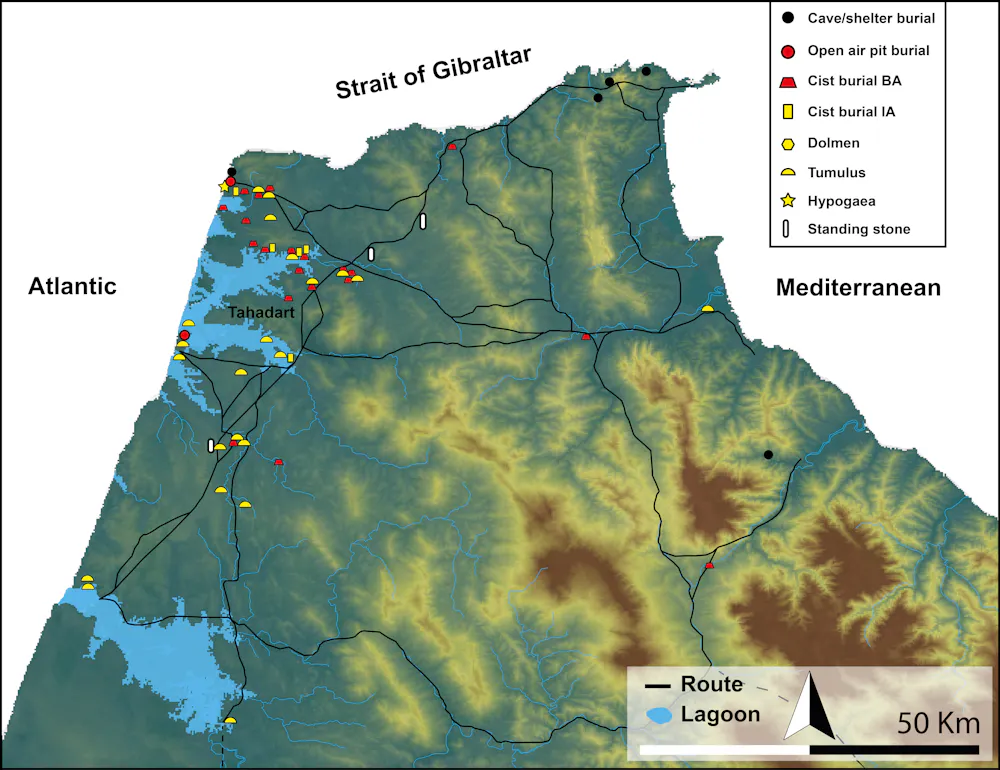
    Map of the Tangier Peninsula and main sites mentioned. H Benattia.

    Morocco’s Tangier Peninsula is particularly interesting. The peninsula sits at Africa’s north-western edge, where the Mediterranean Sea meets the Atlantic Ocean. At just 14 kilometres from Europe across the Strait of Gibraltar, this area has long been a natural crossroads between continents and cultures.

    I’m an archaeologist and PhD student who specialises in north Africa’s later prehistoric periods, between 3800 BC and 500 BC. My research explores how ancient communities responded to environmental changes, and how they moved and connected with other communities across regions.

    The assumption to date has been that the Tangier Peninsula was uninhabited and isolated in late prehistoric times. As part of my PhD research I wanted to explore whether this was true, or whether the area had simply been overlooked by previous archaeological work.

    Through the Kach Kouch and Tahadart Archaeological Projects, we studied both the Atlantic and Mediterranean zones of the peninsula.

    Team members Arnau Pou, Andrea González and Eusebio Medina taking measurements at a cist burial.

    Our goal was to revisit the region using modern archaeological methods and technologies, including radiocarbon dating. To understand how this region may have been connected to the wider world in prehistoric times, we used Geographic Information System software to model possible ancient communication routes and surveyed the landscape through satellite and drone imagery. At a later stage, alongside a team of early career Moroccan archaeologists from the National Institute of Archaeology and Heritage, we carried out field surveys and excavations.

    What we discovered exceeded all expectations. Far from being empty and isolated, the Tangier Peninsula is filled with evidence that people lived, died and held ceremonies there over thousands of years.

    Our hope is that our findings will reframe north-western Africa as a cultural crossroads that has connected regions for thousands of years. This region could reshape our understanding of later prehistory across the Atlantic and Mediterranean worlds.

    A prehistoric ritual and funerary landscape

    Our study, published in African Archaeological Review, presents the discovery of dozens of new archaeological sites, including prehistoric burials, rock art sites and standing stones.

    Distribution of rock art. H Benattia.

    Distribution of burials, standing stones and communication routes. H Benattia.

    Until now, research on rock art and burials in north Africa focused on areas like the Nile Valley, the Sahara or the Atlas Mountains. Our discoveries reveal that Morocco’s north-western coast was a major cultural hub in the Bronze Age, over 4,000 years ago.

    The diversity of burial practices, ritual sites, symbolic rock art and unique megalithic monuments reflect a rich prehistoric heritage that transcends modern geographic, political and cultural boundaries. It also highlights the longstanding exchanges and contacts of this region with the Mediterranean, the Atlantic and the Sahara.

    One of the most remarkable sites we excavated is at Daroua Zaydan, near modern-day Tangier. There we uncovered a cist burial, a small stone chamber made from four upright stone slabs covered by a larger stone slab. A crescent-shaped arrangement of stones likely marked the access to the burial chamber.

    Excavation process of the Daroua Zaydan cist burial.

    Although the grave had been looted in the past, we recovered several human bones outside the cist. One of them was radiocarbon dated to 2118–1890 BC. This date aligns with similar burial traditions across the Strait of Gibraltar in Iberia, and with Early Bronze Age settlement activity at Kach Kouch, about 65km south-east of Daroua Zaydan.

    Cist cemeteries had been documented in the region before, but most were excavated during the early to mid-20th century. At the time, archaeologists didn’t have the methods that can now shed light on important details such as how they were built and when they were used. Daroua Zaydan marks the first radiocarbon-dated cist burial in north-west Africa.

    Monuments, ritual deposits and Atlantic connections

    Our findings suggest the existence of a complex prehistoric ritual landscape at the Tangier Peninsula. This landscape was likely connected to other areas of the Atlantic and Mediterranean through a shared ritual and symbolic “language”.

    Ballintober type sword recovered from the bed of the river Loukkos and currently held at the Staatliche Museen zu Berlin. Claudia Plamp.

    One clue is a Bronze Age sword found in the 1920s in the Loukkos river. It was likely made in Britain or Ireland and may have arrived in Africa through Atlantic exchange networks. The sword was likely deliberately thrown to the river — a ritual practice documented along rivers in Atlantic Europe. This suggests that communities in northern Morocco were part of a broader cultural and symbolic world that connected the late prehistoric Atlantic.

    The stone circle at Mzoura. H Benattia.

    Another example is the stone circle at Mzoura, made up of 176 standing stones. This site, excavated in the 1930s, is unique in north Africa. But it closely resembles other stone circles in Atlantic Europe like Stonehenge. During our fieldwork we also discovered new standing stones and rock art, located along prehistoric communication routes. This suggests they may have been used as territorial markers or ritual sites.

    Dotted composition at Ghar el Manzla. Enhanced with DStretch.

    Before our research, a single painted rock shelter, that of Magara Sanar, was known in north-western Morocco. We have now documented 17 painted and 5 engraved rock shelters.

    The variety of symbols and scenes includes dotted patterns, geometric lines and human-shaped figures. They suggest strong links to Iberian, Atlantic and Saharan prehistoric art.

    Human-shaped figures and dotted composition at Ghar Dchar Alouch. Enhanced with DStretch.

    Why this matters

    Looted cist burial at Oued Ksiar.

    Our research does more than just fill a blank spot on the archaeological map. It opens up new avenues for archaeological exploration in the region. The Tangier Peninsula is home to a rich and largely undocumented late prehistoric heritage. It deserves more attention from researchers, policymakers and the wider public.

    Further protection measures are necessary as the region is undergoing rapid urban development. Tourism is growing and there’s been extensive looting. We hope our work will lead to more archaeological investigations, including new excavations and radiocarbon dating of key sites.

    – Rock art and tomb discoveries in Morocco reveal ancient connections to the wider world
    – https://theconversation.com/rock-art-and-tomb-discoveries-in-morocco-reveal-ancient-connections-to-the-wider-world-256931

    MIL OSI Africa

  • MIL-OSI Global: Rock art and tomb discoveries in Morocco reveal ancient connections to the wider world

    Source: The Conversation – Africa – By Hamza Benattia, Prehistory, Universitat de Barcelona

    When people think of ancient burials in North Africa, they often picture Egypt’s pyramids and monuments. But new discoveries show that north-western Africa also has a deep and fascinating prehistoric past.

    Morocco’s Tangier Peninsula is particularly interesting. The peninsula sits at Africa’s north-western edge, where the Mediterranean Sea meets the Atlantic Ocean. At just 14 kilometres from Europe across the Strait of Gibraltar, this area has long been a natural crossroads between continents and cultures.

    I’m an archaeologist and PhD student who specialises in north Africa’s later prehistoric periods, between 3800 BC and 500 BC. My research explores how ancient communities responded to environmental changes, and how they moved and connected with other communities across regions.

    The assumption to date has been that the Tangier Peninsula was uninhabited and isolated in late prehistoric times. As part of my PhD research I wanted to explore whether this was true, or whether the area had simply been overlooked by previous archaeological work.

    Through the Kach Kouch and Tahadart Archaeological Projects, we studied both the Atlantic and Mediterranean zones of the peninsula.

    Our goal was to revisit the region using modern archaeological methods and technologies, including radiocarbon dating. To understand how this region may have been connected to the wider world in prehistoric times, we used Geographic Information System software to model possible ancient communication routes and surveyed the landscape through satellite and drone imagery. At a later stage, alongside a team of early career Moroccan archaeologists from the National Institute of Archaeology and Heritage, we carried out field surveys and excavations.

    What we discovered exceeded all expectations. Far from being empty and isolated, the Tangier Peninsula is filled with evidence that people lived, died and held ceremonies there over thousands of years.

    Our hope is that our findings will reframe north-western Africa as a cultural crossroads that has connected regions for thousands of years. This region could reshape our understanding of later prehistory across the Atlantic and Mediterranean worlds.

    A prehistoric ritual and funerary landscape

    Our study, published in African Archaeological Review, presents the discovery of dozens of new archaeological sites, including prehistoric burials, rock art sites and standing stones.

    Until now, research on rock art and burials in north Africa focused on areas like the Nile Valley, the Sahara or the Atlas Mountains. Our discoveries reveal that Morocco’s north-western coast was a major cultural hub in the Bronze Age, over 4,000 years ago.

    The diversity of burial practices, ritual sites, symbolic rock art and unique megalithic monuments reflect a rich prehistoric heritage that transcends modern geographic, political and cultural boundaries. It also highlights the longstanding exchanges and contacts of this region with the Mediterranean, the Atlantic and the Sahara.

    One of the most remarkable sites we excavated is at Daroua Zaydan, near modern-day Tangier. There we uncovered a cist burial, a small stone chamber made from four upright stone slabs covered by a larger stone slab. A crescent-shaped arrangement of stones likely marked the access to the burial chamber.

    Although the grave had been looted in the past, we recovered several human bones outside the cist. One of them was radiocarbon dated to 2118–1890 BC. This date aligns with similar burial traditions across the Strait of Gibraltar in Iberia, and with Early Bronze Age settlement activity at Kach Kouch, about 65km south-east of Daroua Zaydan.

    Cist cemeteries had been documented in the region before, but most were excavated during the early to mid-20th century. At the time, archaeologists didn’t have the methods that can now shed light on important details such as how they were built and when they were used. Daroua Zaydan marks the first radiocarbon-dated cist burial in north-west Africa.

    Monuments, ritual deposits and Atlantic connections

    Our findings suggest the existence of a complex prehistoric ritual landscape at the Tangier Peninsula. This landscape was likely connected to other areas of the Atlantic and Mediterranean through a shared ritual and symbolic “language”.

    One clue is a Bronze Age sword found in the 1920s in the Loukkos river. It was likely made in Britain or Ireland and may have arrived in Africa through Atlantic exchange networks. The sword was likely deliberately thrown to the river — a ritual practice documented along rivers in Atlantic Europe. This suggests that communities in northern Morocco were part of a broader cultural and symbolic world that connected the late prehistoric Atlantic.

    Another example is the stone circle at Mzoura, made up of 176 standing stones. This site, excavated in the 1930s, is unique in north Africa. But it closely resembles other stone circles in Atlantic Europe like Stonehenge. During our fieldwork we also discovered new standing stones and rock art, located along prehistoric communication routes. This suggests they may have been used as territorial markers or ritual sites.

    Before our research, a single painted rock shelter, that of Magara Sanar, was known in north-western Morocco. We have now documented 17 painted and 5 engraved rock shelters.

    The variety of symbols and scenes includes dotted patterns, geometric lines and human-shaped figures. They suggest strong links to Iberian, Atlantic and Saharan prehistoric art.

    Why this matters

    Our research does more than just fill a blank spot on the archaeological map. It opens up new avenues for archaeological exploration in the region. The Tangier Peninsula is home to a rich and largely undocumented late prehistoric heritage. It deserves more attention from researchers, policymakers and the wider public.

    Further protection measures are necessary as the region is undergoing rapid urban development. Tourism is growing and there’s been extensive looting. We hope our work will lead to more archaeological investigations, including new excavations and radiocarbon dating of key sites.

    Hamza Benattia, director of the Tahadart Archaeological Project, received funding from the National Institute of Archaeology and Heritage of Morocco (INSAP), the Prehistoric Society Research Fund, the Stevan B. Dana Grant of the American Society of Overseas Research, the Mediterranean Archaeological Trust Grant, the Barakat Trust Early Career Award, the Centre Jacques Berque Research Grant, the Institute of Ceutan Studies Research Fund and the University of Castilla La Mancha.

    ref. Rock art and tomb discoveries in Morocco reveal ancient connections to the wider world – https://theconversation.com/rock-art-and-tomb-discoveries-in-morocco-reveal-ancient-connections-to-the-wider-world-256931

    MIL OSI – Global Reports

  • MIL-OSI Europe: Christine Lagarde: Earning influence: lessons from the history of international currencies

    Source: European Central Bank

    Speech by Christine Lagarde, President of the ECB, at an event on Europe’s role in a fragmented world organised by Jacques Delors Centre at Hertie School in Berlin, Germany

    Berlin, 26 May 2025

    Over the past 80 years, the global economy thrived on a foundation of openness and multilateralism – underpinned by US leadership. By championing a rules-based international system and anchoring the dollar as the world’s reserve currency, the United States set the stage for trade to flourish and finance to expand.

    This global order proved immensely beneficial to the European Union, whose founding liberal principles aligned seamlessly with it. But today it is fracturing.

    Multilateral cooperation is being replaced by zero-sum thinking and bilateral power plays. Openness is giving way to protectionism. There is even uncertainty about the cornerstone of the system: the dominant role of the US dollar.

    All else equal, this fracturing can pose risks for Europe. Our economy is deeply integrated into the global trading system, with exports accounting for close to one-fifth of our value added and supporting 30 million jobs.

    Any change in the international order that leads to lower world trade or fragmentation into economic blocs will be detrimental to our economy.

    But – with the right policy responses – there could also be opportunities. The changing landscape could open the door for the euro to play a greater international role.

    Today, the euro is the second global currency, accounting for around 20% of foreign exchange reserves, compared with 58% in the case of the US dollar. Increasing the international role of the euro can have positive implications for the euro area.

    It would allow EU governments and businesses to borrow at a lower cost, helping boost our internal demand at a time when external demand is becoming less certain.

    It would insulate us from exchange rate fluctuations, as more trade would be denominated in euro, protecting Europe from more volatile capital flows.

    It would protect Europe from sanctions or other coercive measures.

    In short, it would allow Europe to better control its own destiny – giving us some of what Valéry Giscard d’Estaing called the “exorbitant privilege” 60 years ago.

    So, how likely is this change to happen? History suggests that it is far from guaranteed. The euro will not gain influence by default – it will have to earn it.

    For the euro to increase its global status, history tells us that we need to build on three foundations – each of them critical for success.

    First, Europe must ensure it has a solid and credible geopolitical foundation by maintaining a steadfast commitment to open trade and underpinning it with security capabilities.

    Second, we must reinforce our economic foundation to make Europe a top destination for global capital, enabled by deeper and more liquid capital markets.

    Third, we must bolster our legal foundation by defending the rule of law – and by uniting politically so that we can resist external pressures.

    Before we explore each of these three foundational components, let us observe what recent history can teach us.

    Shifts in the global currency landscape

    Shifts in the global currency landscape are not unprecedented in monetary history. There have been previous episodes where the world’s leading reserve currency issuer has taken steps that have called that leadership into question, without ultimately jeopardising it.

    For example, the US dollar took over from the pound sterling as the world’s leading reserve currency in the mid-1920s, with its share in foreign exchange reserves rising to 64% by 1931. But this leading position did not stop the United States taking measures to unilaterally change the international monetary order.

    For instance, in 1933 President Roosevelt suspended gold convertibility to fight the deflationary forces of the Great Depression. He dismissed European demands for fixed exchange rates with the argument that “the sound internal economic system of a nation is a greater factor in its well-being than the price of its currency”.[1]

    Then again in the 1970s President Nixon ended the Bretton Woods system by unilaterally suspending dollar convertibility to gold and imposing a 10% import tariff.

    Faced with growing imbalances between US current account deficits and the surpluses of western Europe and Japan, Treasury Secretary John Connally declared that “no longer can considerations of friendship, or need, or capacity justify the United States carrying so heavy a share of the common burdens.”[2]

    On both occasions, there was a decline in the standing of the US dollar as a foreign reserve currency. In the 1930s, it fell from over 60% to around 20% of global foreign exchange reserves. In the 1970s, it fell from about 70% to 50% two decades later.

    But on neither occasion was there a robust alternative currency that could take over at short notice. In the 1930s, the pound sterling was already declining, while in the 1970s the Deutsche Mark and the Yen were backed by markets that were too small.

    So, instead, investors flocked to gold. The share of gold in foreign reserves increased by about 20 percentage points in the 1930s to 97% and almost doubled to 60% in the 1970s.[3]

    Today, there is a key difference compared with previous eras. With the euro as the world’s second-largest currency, there is another international currency alongside the dollar. But this has not yet convinced investors.

    Over recent years, the dollar’s share in global foreign exchange reserves has fallen, with its current level of 58% being the lowest since 1994. In parallel, central banks have been accumulating gold at a record pace – almost matching the levels seen during the Bretton Woods era.[4] The share of gold in global foreign reserves[5] has reached around 20%, surpassing that of the euro.[6]

    As previously mentioned, we can identify three essential foundations for international currency usage, without which a currency cannot succeed on the global stage. And in each case, we can see that Europe has many of the key ingredients for success, but we need to bring them together to reinforce the foundations. Action is in order.

    The geopolitical foundation

    The starting point is a credible geopolitical foundation – which rests on both a country’s role in global trade and the strength of its military alliances.

    A currency’s exposure to trade is especially important, as it provides the initial pathway to wider international use. In the mid-1920s, for example, the dollar overtook the pound sterling as the leading form of trade credit before it became the leading reserve currency.[7]

    Once a currency captures a larger share of trade invoicing, its role in international banking and finance, and ultimately as a reserve asset, becomes self-reinforcing. Higher demand for the currency enhances its role as a store of value and further encourages investors to hold it.[8]

    As a major actor in global trade, Europe already has a key ingredient of a strong geopolitical foundation, creating the potential for a virtuous circle of euro internationalisation to unfold.

    The EU has the largest network of trade agreements in the world. Europe is the number one trading partner for 72 countries, which together represent almost 40% of world GDP.[9] And this status is reflected in the share of the euro as an invoicing currency, which stands at around 40%, more than double its share as a reserve currency.

    Europe can press home this advantage by continuing to forge new trade agreements. And we should make clear that we support a win-win approach to trade, ensuring that we are the most attractive partner to make deals with.

    The ECB can also help make the euro more attractive for euro-denominated trade. We are working on a potential digital euro and pursuing initiatives to enhance cross-border payments in euro, which could potentially facilitate international cross-border transactions in the future.

    And by extending swap and repo lines to key partners, we safeguard against euro liquidity shortages abroad disrupting the smooth transmission of our monetary policy – which in turn encourages those partners to transact more in euro.

    But there is a limit to how much a currency can grow simply by virtue of being open to trade. In fact, the euro’s share of global export invoicing is already as large as that of the US dollar, but we are not closing the gap in reserve currency status.

    This is because investors – and especially official investors – also seek geopolitical assurance in another form: they invest in the assets of regions that are reliable security partners and can honour alliances with hard power. So a credible geopolitical foundation must also rest on robust military partnerships.

    This dual strength is essentially what we can learn from the US dollar’s dominance. It is not just a product of economic fundamentals but it is also powerfully reinforced by US security guarantees. These guarantees not only deepen trade ties[10], but have been shown to boost a currency’s share in foreign reserves by up to 30 percentage points.[11]

    We are now seeing a major shift in Europe towards rebuilding our hard power, with important initiatives underway at the national and EU levels. And we should be clear that following through with this effort is a precondition for the euro to become more widely used.

    The economic foundation

    Trade and military power are important for establishing demand for an international currency. But to satisfy this demand, investors need appropriate assets to invest in.

    This is why a strong economic foundation – one that provides opportunities for growth and opportunities to invest in growth – is equally essential.

    There is a virtuous circle between growth, capital markets and international currency usage. Growth generates robust rates of return, which make investors want to hold assets in a particular currency. And capital markets provide investment opportunities and channel funds back into growth.

    At the same time, if capital markets provide a sufficient supply of “safe assets”, investors can hedge their exposures efficiently. When a shock hits and riskier investments lose value, safer assets rise in value. That provides a complete ecosystem for investments in the currency.

    The US dollar’s rise to dominance in the interwar period was certainly driven by this virtuous circle. The development of US capital markets boosted growth – with each 1 percentage point increase in market capitalisation yielding 0.5 percentage points more growth[12] – while simultaneously establishing the foundation for dollar dominance. The depth and liquidity of the US Treasury market in turn provided an efficient hedge for investors.

    Europe has all the elements it needs to produce a similar cycle. But so far, we have not been able to put all the pieces together.

    Despite our large single market, we have fallen behind the US in terms of growth performance and market returns. Since 2000, US labour productivity per hour has grown twice as much as in the euro area, mainly driven by the tech sector, and US markets have delivered returns that are around five times as high as those of European markets.[13]

    Despite our large savings, we have made little progress in integrating our capital markets to channel more of our funds into growth. 60% of household equity investment goes into home country markets even though there may be greater opportunities abroad.

    And despite our strong aggregate fiscal position – our debt-to-GDP ratio is 89%, compared with 124% in the United States – we provide relatively few safe assets. Recent estimates suggest that outstanding sovereign bonds rated at least AA are just below 50% of GDP in the EU and above 100% in the US.[14]

    The conclusion for Europe is clear: if we truly want to see the global status of the euro grow, we must first reform our domestic economy.

    That means moving forwards with the priorities identified in recent reports: completing the Single Market, enabling start-ups, reducing regulation and building the savings and investment union. And it means avoiding a piecemeal approach, where we make progress where it is easy and dither where it is hard, else we will never kick-start the positive cycle.

    Moreover, in this new geopolitical landscape, the case for acting in a European way has never been stronger.

    Each individual country of course needs to make sure that its national policies support growth. But we also need to be mindful of self-defeating fragmentation. For example, we all agree that Europe needs to build up its strategic industries to avoid excessive dependencies – as Mario Draghi and Enrico Letta emphasised in their recent reports. But we will not succeed if we have 27 different policies for these industries.

    Nowadays there are also more policy goals that qualify as European public goods, notably strengthening European defence. But due to the free-rider problem, defence is a good that is likely to be undersupplied. Moreover, joining forces to procure equipment and develop new technologies – leading to economies of scale and more interoperability – will result in greater operational effectiveness than if all 27 Member States go it alone.

    Economic logic tells us that public goods need to be jointly financed. And this joint financing could provide the basis for Europe to gradually increase its supply of safe assets.

    The legal foundation

    Geopolitical strength and faster growth can go a long way towards strengthening the euro’s international role. But maintaining demand for the currency will also depend on our ability to uphold a robust legal and institutional foundation.

    Ultimately, currencies achieve and maintain their reserve status if the institutions and policies backing them consistently safeguard investor confidence in their long-term value.[15]

    For example, historically, the US dollar’s pre-eminence has rested on the strength and stability of US fiscal and monetary institutions. The Federal Reserve System’s credible commitment to controlling inflation, combined with the unparalleled liquidity of the US Treasury market, created a perception of minimal sovereign risk. This made the dollar a safe haven during global economic turbulence and recessions.[16]

    Since 1970, there have been 34 instances of simultaneous sovereign debt and financial crises globally, but the US has remained immune to such “twin crises”.[17]

    However, when doubts emerge about the stability of the legal and institutional framework, the impact on currency use is undeniable.

    These doubts have materialised in the form of highly unusual cross-asset correlations since 2 April this year, with the US dollar and US Treasuries experiencing sell-offs even as equities fell. The same doubts are also cited by investors who are turning to gold: two-fifths say they are doing so as a hedge against rising geopolitical risk.[18]

    Given this context, the EU has a legitimate reason to turn its commitment to predictable policymaking and the rule of law into a comparative advantage.

    This commitment is baked into how the EU works. The positive side of our often slow and complicated decision-making processes is that checks and balances are always respected. We have also enshrined into law the independence of our key institutions, like the ECB, in ways that are hard for politicians to threaten.

    But relying on the fact that our bureaucratic systems are hard to change is not enough. In the current geopolitical environment, we are facing increasing external pressures to take actions that jeopardise the rule of law. And we will only be able to resist these pressures if we are more politically united and able to speak with a single voice.

    As we potentially enter a renewed era of great power rivalry, with countries being asked to take sides, we are likely to find ourselves under pressure to make decisions that are not necessarily in our own interest.

    But if we take this opportunity to unite and, preferably, to reform our institutional structure by enabling more qualified majority voting in areas where a single veto has often held back the collective interests of the 26 other countries, that would enable us to act decisively as a united Europe. We would then be in a much stronger position to defend and uphold our values and, as a result, to defend and uphold global confidence in our currency.

    Conclusion

    Let me conclude.

    In the history of the international monetary system, there are moments when the foundations that once seemed unshakeable begin to shift.

    The Belgian-American economist Robert Triffin described this with great clarity. He observed that nations’ confidence in the international monetary system depends on the reliability of the reserve currency, which, in his words, is “highly dependent on individual countries’ decisions”.

    But moments of change can also be moments of opportunity. The ongoing changes create the opening for a “global euro moment”.

    This is a prime opportunity for Europe to take greater control of its own destiny. But this is not a privilege that will simply be given to us. We have to earn it.

    MIL OSI Europe News

  • MIL-OSI Europe: Telephone conversation with the Prime Minister of Japan

    Source: Government of Italy (English)

    26 Maggio 2025

    The President of the Council of Ministers, Giorgia Meloni, had a telephone conversation today with the Prime Minister of Japan, Shigeru Ishiba.

    The conversation highlighted the shared satisfaction with the path undertaken to constantly strengthen bilateral relations. In this context, President Meloni confirmed her intention to pay an official visit to Japan in the coming months in order to further deepen the fruitful dialogue between Rome and Tokyo and, while there, to also visit the Italian pavilion at the Osaka Expo.

    The two leaders also discussed the main international issues, including the war in Ukraine, the Middle East  and the Indo-Pacific, agreeing to remain in close contact ahead of the upcoming G7 Summit in Kananaskis.

    MIL OSI Europe News

  • MIL-OSI Asia-Pac: Health chief attends HA convention

    Source: Hong Kong Information Services

    Secretary for Health Prof Lo Chung-mau today attended the opening ceremony of the Hospital Authority (HA) Convention 2025 and met multiple high-level delegations from the Mainland and overseas for in-depth exchanges on healthcare co-operation and development.

    At the opening ceremony, Prof Lo witnessed the successful national accreditation of the Queen Mary Hospital Chest Pain Centre, making it the first chest pain centre in Hong Kong established in accordance with the national accreditation standards.

    He said the establishment of a chest pain centre can improve the efficiency of acute chest pain diagnosis and speed up the time for patients to receive cardiac surgery, thereby lowering the death rate, shortening the hospitalisation period and reducing the hospital readmission rate.

    The health chief also noted that the adoption of the national accreditation standards by the Hong Kong Special Administrative Region will also facilitate integration into the overall national development by fully utilising Hong Kong’s advantage of having the motherland’s  strong support and close connection with the world, with a view to demonstrating the excellence of the national healthcare standards to the international community, and helping promote the development of the national accreditation standards of chest pain centres into an internationally recognised standard.

    Over the course of the convention, Prof Lo met multiple delegations from the Mainland and overseas and attended various events, taking the opportunity to promote medical co-operation and exchanges.

    Among others, Prof Lo met Guangdong Health Commission Director-General Liu Liqun and his delegation to explore the exchange of healthcare talent between the two places, and to discuss healthcare collaboration projects, such as the Elderly Health Care Voucher Greater Bay Area Pilot Scheme and the cross-boundary use of electronic health records.

    After the meeting, both sides attended the welcoming ceremony for the Mainland Healthcare Talents Visiting Programmes.

    Prof Lo was pleased to note that since the 2022 launch of the visiting programmes, 80 outstanding doctors and two batches of about 170 nurses in total from the Mainland have come to the HA on exchange, while more than 25 specialists have also been arranged by the authority to conduct exchanges at public hospitals in Beijing, Shanghai and Guangdong.

    Afterwards, Prof Lo and the Consul General of France in Hong Kong & Macau Christile Drulhe jointly witnessed the signing of the Declaration of Intent between the HA and the National Conference of University Hospital General Managers of France.

    The signing of the declaration formally establishes a strategic collaborative partnership between the two organisations in deepening mutual exchanges, promoting the joint development of hospital services and exchange of medical expertise.

    MIL OSI Asia Pacific News

  • MIL-OSI Security: Police appeal for urgent help to find missing vulnerable man

    Source: United Kingdom London Metropolitan Police

    Officers are appealing for assistance to help find a vulnerable 35-year-old man who has been missing for two days.

    Bashir Marhoon, from Russell Square, Camden, was last seen by his carers at his home, on Saturday, 24 May at 18:00hrs.

    Police are becoming increasingly worried about his safety due to the challenges Bashir has with day-to-day tasks.

    Bashir is 5’8, of medium build, with black hair and wears glasses. He was last seen wearing a navy baseball style shirt, with a red image on the front, dark navy jogging bottoms and black trainers.

    He walks with a limp and is known to sometimes engage with strangers, though lacks the capacity to understand fully what he may be doing.

    Officers believe he may be travelling across London using public transport. He has an Oyster card and is fascinated with public transport.

    Detective Chief Inspector Sarb Kaur from the Met’s Central North Command said: “We are very worried about Bashir’s safety and would urge anyone who may have seen him to contact police. Please approach Bashir with care as he may be confused and suffers with learning difficulties.

    “Bashir’s family are understandably incredibly concerned.

    “Local officers have been carrying out a number of enquiries in an effort to trace him and we are now turning to the public for help. Please get in touch if you have seen Bashir.

    “As time passes we are growing increasingly anxious about his welfare.”

    Bashir’s mum, Faridah, said: “We are very worried as he is very vulnerable and often rides the trains and buses to the end of the journey.

    “We urgently need the public’s help to find him. Please take a look at these images we are making public today and get in touch with the police if you have any information.”

    If you see Bashir, please call 999 providing the reference 5841/24MAY.

    If you believe you have seen him in the past two days, or have any other information about his whereabouts, please call 101 providing the same reference.

    MIL Security OSI

  • MIL-OSI Security: NATO Secretary General meets the Prime Minister of Iceland

    Source: NATO

    On Wednesday, 28 May 2025, the NATO Secretary General, Mr Mark Rutte, will receive the Prime Minister of Iceland, Ms Kristrún Frostadóttir, at NATO Headquarters, in Brussels.

    Media advisory

    11:40 (CEST) Joint press conference by the Secretary General and the Prime Minister of Iceland

    Media coverage

    • Media representatives who have annual accreditation to NATO can attend the event in person.
       
    • Media representatives without annual accreditation and who are interested in covering the event should email NatoAccreditations@hq.nato.int. Please note that due to the short time to process applications, ad-hoc accreditation may not be guaranteed.
       
    • The press statements will be streamed live on the NATO website and on X @NATOPress. A transcript of the Secretary General’s remarks, as well as photographs, will be on the NATO website.
       
    • The video can be downloaded from the NATO Multimedia Portal after the event.
       

    For more information:
    For general queries: Contact the NATO Press Office
    Follow us on X: @NATO@SecGenNATO and @NATOPress

    MIL Security OSI

  • MIL-OSI Europe: European Week Against Cancer: supporting patients, from prevention to treatment

    Source: European Union 2

    This week marks European Week Against Cancer (25-31 May). Under its Europe’s Beating Cancer Plan, the EU has provided support to millions of people affected by cancer across the Union. It funds actions on cancer prevention, detection, diagnosis and treatment to improve patients’ outcomes.

    MIL OSI Europe News

  • MIL-OSI Europe: Getting ready to support wildfire-hit countries during the summer

    Source: European Union 2

    The EU has put together teams of firefighters and aircraft to help European countries affected by wildfires during the upcoming summer. Throughout July and August almost 650 firefighters from 14 European countries will be strategically prepositioned in key high-risk locations.

    MIL OSI Europe News

  • MIL-OSI Europe: Minister Smyth Promotes Ireland’s Digital and Innovation Agenda on Visit to Singapore for Asia Tech x SG 2025

    Source: Government of Ireland – Department of Jobs Enterprise and Innovation

    Minister of State for Trade Promotion, Artificial Intelligence and Digital Transformation Niamh Smyth is undertaking a high-profile visit to Singapore this week at the invitation of the Singaporean Government to participate in Asia Tech x Singapore (ATxSG) 2025, one of the region’s most significant technology and innovation summits.

    The summit, which gathers global tech leaders to shape the future of digital transformation, provides a platform for Ireland to showcase its strengths in areas such as artificial intelligence, digital trust, innovation, and skills development. Minister Smyth’s participation underscores Ireland’s commitment to being at the forefront of global digital dialogue.

    Speaking ahead of her visit, Minister Smyth said:
    “Ireland and Singapore share a forward-looking vision when it comes to technology, digital governance and innovation. My visit is a valuable opportunity to deepen ties with key partners, promote Ireland’s capabilities in emerging tech sectors and learn from Singapore’s pioneering work in digital transformation.”

    In addition to engagements at ATxSG, including attendance at the opening event alongside the President of Singapore, Mr. Tharman Shanmugaratnam, Minister Smyth’s programme features a series of bilateral meetings and strategic engagements, supported by the Embassy of Ireland in Singapore and the wider Ireland House team, including Enterprise Ireland, IDA Ireland and Bord Bia.

    Highlights of the Minister’s Programme include engagements with Irish Companies operating in Southeast Asia, showcasing the success of Irish enterprise abroad with support from Enterprise Ireland. A number of high-level meetings with representatives of AI Singapore and AI Innovation, exploring collaborative opportunities in responsible AI development are also on the itinerary.

    Minister Smyth will also participate in the Ministerial Roundtable on Digital Trust, where global leaders will examine AI risks and regulatory strategies. Bilateral talks will also take place with key international counterparts, including a Singaporean Minister for Digital Development & Information, Professor Max Tegmark, President of the Future of Life Institute, Baroness Jones, UK Parliamentary Under-Secretary for the Future Digital Economy and Hon Judith Collins KC, New Zealand’s Minister for Digitising Government Tourism policy meetings, reflecting the Department’s expanded remit, with senior figures from Gardens by the Bay, Singapore National Stadium and the National Association of Travel Agencies Singapore are also scheduled.

    Strategic discussions with Skills Future Singapore and Design Singapore, offering valuable insights into how nations are preparing their workforces and industries for the digital age, are another feature.
    Minister Smyth will conclude her visit by meeting with members of Singapore’s vibrant Irish community at an event hosted by the St Patrick’s Society, which this year celebrates its 100th anniversary in the city-state.

    Minister Smyth highlighted how:

    “This visit is a strong demonstration of Ireland’s commitment to international digital cooperation, innovation diplomacy, and supporting Irish enterprise across Southeast Asia.”

    ENDS

    MIL OSI Europe News

  • MIL-OSI United Kingdom: New Tourism Strategy Set to Drive Sustainable Growth in Perth and Kinross

    Source: Scotland – City of Perth

    The Perth and Kinross Tourism Strategy and Action Plan 2025-2030, developed by the Perthshire Tourism Partnership, sets out a bold vision for the future of tourism in the region.

    The strategy focuses on four key areas: area promotion and destination marketing, investment and infrastructure, market development and internationalisation, and industry growth and resilience. Together, these priorities aim to increase visitor numbers, attract inward investment, develop new tourism products and experiences, and support local businesses to grow and thrive.

    With a strong emphasis on recovery following the COVID-19 pandemic, the plan outlines a clear path towards sustainable growth in the tourism sector, ensuring it continues to play a vital role in the economic and cultural life of Perth and Kinross.

    Tourism monitoring data for 2023 revealed that the region welcomed 2.3 million visitors, generating £703 million in direct and indirect economic activity. The total economic impact for local businesses and communities was £641 million, supporting approximately 8,200 full-time equivalent jobs. Compared to 2022, this represents an 8.8% increase in economic impact, a 15.4% rise in visitor numbers, and a 1.5% increase in total visitor days and nights.

    The strategy also explores other funding opportunities to support future investment in tourism infrastructure and services.

    Councillor Eric Drysdale, Convener of Perth and Kinross Council’s Economy and Infrastructure Committee, said: “The Perth and Kinross Tourism Strategy and Action Plan 2025-2030 is an important blueprint for our region’s economic prosperity.

    “By focusing on sustainable growth, we are not only enhancing our local economy but also ensuring that Perth and Kinross remains a vibrant and attractive destination for visitors.

    “This strategy will help everyone involved in tourism in Perth and Kinross navigate the challenges ahead and seize new opportunities, ultimately benefiting our communities and businesses alike.”

    The Perthshire Tourism Partnership, established in 2005, brings together tourism businesses, local associations, collaborative groups, and public sector agencies, including Perth and Kinross Council. The partnership plays a key role in shaping strategic direction and fostering collaboration across the tourism sector.

    David Smythe, Chairman of the Perthshire Tourism Partnership, said: “I thank Perthshire Tourism Partnership members and the tourism industry leaders who all contributed to shaping the new Tourism Strategy, which sets a clear path forward for this economically vital sector in Perth and Kinross.

    “Getting the tourism balance right through sustainable growth and focusing on the key themes is important to help keep our communities vibrant as they embrace the opportunities visitors bring to our lovely part of Scotland.”

    MIL OSI United Kingdom

  • MIL-OSI Russia: Polytech is a participant of the international exhibition “Metalworking – 2025”

    Translation. Region: Russian Federal

    Source: Peter the Great St Petersburg Polytechnic University – Peter the Great St Petersburg Polytechnic University –

    Today, the exhibition “Metalloobrabotka – 2025” opened in Moscow, in which the Polytechnic University is taking part. This is a traditional industry event, which for 40 years has regularly brought together the best specialists and largest companies from Russia, the CIS countries, the Middle and Far East and other regions of the world. The exhibition has been held in Moscow since 1984 and is recognized as the largest project in Russia and the CIS in the field of machine tool building. This year, over 1,200 companies are presenting advanced solutions for industry on an area of 50,000 sq. m. The number of participants is about 50,000 people.

    “I am glad to welcome all participants of the International Exhibition “Metalloobrabotka – 2025″, one of the largest and most authoritative professional platforms in the field of machine tool building in Russia and the CIS countries. For all exhibitors, partners of the exhibition and guests of Expocentre, this is a unique opportunity to get acquainted with the most relevant industrial trends and advanced production technologies,” said SPbPU Rector Andrey Rudskoy. – At the end of 2024, the Government of the Russian Federation completed work on the formation of eight national projects of technological leadership, and the most important of them is dedicated to the industrial sector: the national project on means of production and automation, the main subjects of which are machine tool building in metalworking, technological equipment, additive technologies. These are the topics that are the focus of both the business program discussions and the key exhibits of the exhibition, in which Peter the Great St. Petersburg Polytechnic University, a traditional participant with many years of experience in developing and implementing high-tech technologies in various industries and acting as an executor of the main federal programs for technological development, is a traditional participant. I invite all colleagues to a dialogue on the thematic tracks of the exhibition and to further productive cooperation.”

    The main topics of the 25th anniversary exhibition are innovations in machine tool building, automated production lines, modern tools and materials. The focus is also on digital solutions: software for production management, robotic systems, artificial intelligence technologies. The business program of the exhibition will be focused on applied tasks of industry and issues of strategic development.

    “It is a great honor for us to be part of this forum, where traditions and innovations of the industry meet. Our institute has been a flagship in the field of mechanical engineering and materials science for many years. We actively develop metalworking technologies, introducing modern solutions in turning, milling and casting processes. Our developments are successfully used at enterprises of the aerospace, automotive and energy industries, ensuring high precision and reliability of products, – noted the director of the Institute of Mechanical Engineering, Materials and Transport of SPbPU Anatoly Popovich. – We pay special attention to additive technologies, which open up new horizons for industry. Together with industrial partners, we create unique methods of 3D printing of metal components, reducing production times and reducing resource costs. It is important that we not only improve technologies, but also train personnel capable of working at the intersection of disciplines. Our students and researchers are actively involved in projects that combine classical metalworking and digital innovations. I am confident that the exhibition will become a platform for fruitful dialogue, and the synergy of experience and new ideas will help us move the industry forward together.”

    SPbPU will demonstrate not just scientific developments, but technological solutions ready for implementation. This year, our university will present a wide range of advanced developments in key areas of modern production – from 3D metal printing to robotic welding and the creation of intelligent materials.

    Additive manufacturing

    Polytechnic University takes metal 3D printing to a new level: from developing heat-resistant nickel powders to laser synthesis of critically loaded components. The university has more than ten domestic SLP printers with a multi-laser system, which allows creating complex parts for gas turbines and aviation. Thus, the VPLS “Mercury” installation developed by SPbPU jointly with ZAO “Biograd” allows printing gas turbine components from heat-resistant nickel alloys at a heating temperature of up to 1300 degrees Celsius. A powerful laser (1000 W) and precise control of the material structure provide high performance. This is no longer a prototype – it is a response to import substitution in aerospace and energy. In addition, multi-material synthesis, plasma and flame spraying technologies have been implemented. They print not only with alloys – SPbPU has piezoceramics, carbide ceramics, and high-entropy composites in its arsenal. All this is in the interests of import independence and accelerated implementation in real production.

    The Polytechnic University is also equipped with stationary and mobile technological complexes for direct laser deposition, laser cladding, laser and hybrid laser-arc welding of thick metals, and laser welding of thin metals (up to 100 microns).

    Electric Arc Growing (WAAM)

    SPbPU offers a full cycle of WAAM implementation — from design to integration into production processes. The technology of layer-by-layer wire surfacing using an electric arc is used to create large-sized and complex-shaped products from titanium, steel, aluminum and other metals. Robotic complexes are adapted to the tasks of specific customers, providing up to 6 kg/h of printing and full automation. The robotic complex (RC) for additive electric arc growing is a robotic cell that has everything necessary for electric arc growing. In addition, the Polytechnic University supplies the systems with its own software that allows monitoring the status of the manipulator and peripheral equipment, as well as generating control programs for the implementation of the electric arc growing technology. Unique examples: gas turbine engine impellers and wheel rims, which have passed strength tests and demonstrated competitiveness compared to cast products.

    Design and manufacture of laser technological complexes

    Polytechnic University develops turnkey laser systems — from foil welding to repair and manufacturing of components for power and mining equipment. The arsenal includes robotic laser cladding systems, mobile units, robotic systems with 5-kW lasers, direct laser deposition with powders and wire, as well as hybrid systems with an inert atmosphere. Using a robotic laser welding system for thin metals (up to 100 microns), serial welding of fuel elements of a hydrogen energy source for Russia’s first passenger ship, Ecobalt, was implemented.

    The university developed a technology for surfacing a porous coating with a thickness of 600 microns with an open porosity of 60-80% and the ability to control these parameters. The cups successfully passed preliminary clinical tests for integration and toxicity of the surfacing layer with bone material.

    Repair of power equipment components was carried out: nozzle and working blades Man Turbo, SGT-700, TV 3-117, VP2500, VPT-50-2, Man Turbo, MARS100, Taurus 60, Man Turbo, MS5002E, TV 3-117, NK-12ST, DR59L, GPA GTK-10I, MS3142J.

    As part of cooperation with the company JSC UK KER-Holding, the Polytechnicians created and delivered a technological complex for direct laser growth.

    Together with TsNIITMASH, a demonstration separation module of a power plant was created using direct laser growth. The result is a reduction in the number of welding operations, an increase in anti-corrosion properties and reliability in extreme Arctic conditions. The university is conducting projects with Rosatom, Gazprom and other industrial giants, offering customers not just equipment, but fully adapted technological solutions.

    Friction stir welding (FSW)

    SPbPU is one of the few in the country that uses STP and TSTP on a large scale: both in spot and seam configurations. This is a solid-phase welding technology that does not involve melting, but has high strength, minimal deformations, and the ability to weld even dissimilar materials — aluminum with copper, composites with metals. The university produces seams up to 8 meters long, develops its own equipment, and trains customer personnel. The use of STP is relevant for aviation, shipbuilding, energy, and military equipment — wherever precision and durability are important.

    We invite you to the Polytechnic stand 1A25, where you can see and evaluate the latest technologies and innovations from SPbPU in the field of metalworking.

    Exhibition address: Moscow, Krasnopresnenskaya embankment 14, Expocentre Central Exhibition Complex

    Please note: This information is raw content directly from the source of the information. It is exactly what the source states and does not reflect the position of MIL-OSI or its clients.

    MIL OSI Russia News

  • MIL-OSI Russia: Alexey Likhachev became an Honorary Doctor of SPbPU

    Translation. Region: Russian Federal

    Source: Peter the Great St Petersburg Polytechnic University – Peter the Great St Petersburg Polytechnic University –

    A solemn ceremony of presenting the mantle and diploma of the Honorary Doctor of SPbPU to the General Director of the State Corporation Rosatom Alexey Likhachev took place at Peter the Great St. Petersburg Polytechnic University.

    The ceremonial event opened with the performance of the Polytechnic University anthem by the SPbPU youth choir “Polyhymnia”.

    It is especially gratifying that this important event is taking place in the year of the 80th anniversary of the Russian nuclear industry, to the development of which Polytechnicians made a significant contribution. Such names as Abram Fedorovich Ioffe, Isaak Konstantinovich Kikoin, Abram Isaakovich Alikhanov, Yuliy Borisovich Khariton, Nikolay Leonidovich Dukhov are inscribed in gold letters in the history of the development of Russian science. Today, Polytechnic University and Rosatom, under the leadership of Alexey Evgenievich, closely cooperate for the benefit of the development of Russian nuclear technologies: both in education and in science. By order of Rosatom, our Institute of Power Engineering annually graduates more than 250 specialists in the field of nuclear energy, thermal power engineering, electric power engineering and power engineering. Together with Rosatom, we are successfully implementing the project of the advanced engineering school “Digital Engineering”, acting in the interests of the technological leadership of our country, – emphasized the rector of SPbPU, academician of the Russian Academy of Sciences Andrey Rudskoy.

    The members of the SPbPU Academic Council unanimously voted to award the title to Alexey Likhachev on April 28 this year. The Scientific Secretary of the Polytechnic University Dmitry Karpov presented the new honorary doctor.

    If we try to pick three key words that would define the spirit of modern scientific and technological development in Russia, these words should be: professionalism, leadership and Victory. And these are the words that come to mind when we talk about the State Corporation Rosatom. For the Polytechnic University, whose history is closely connected with the nuclear project, participation in the development of nuclear energy is one of the key, strategic areas of work. And scientific and industrial cooperation with the national leader in several related industries at once is a great honor and responsibility for the university, – noted Dmitry Karpov.

    Cooperation between the Rosatom State Corporation and SPbPU, which is one of the flagship universities and its long-term strategic partner, is actively developing. This is a significant amount of work carried out by the Institute of Mechanical Engineering, Materials and Transport, the Institute of Power Engineering, the Physics and Mechanical Engineering Institute, the Advanced Engineering School “Digital Engineering” and other university structures. This is significant international cooperation, in particular, in the interests of the Turkish and Egyptian nuclear energy. This is the training of specialists in a wide range of engineering and technical areas of training – primarily in nuclear, energy, mechanical engineering and construction specialties. This is a cell of the Rosatom Student Council, whose activists participate in organizing meetings with representatives of the corporation’s enterprises, technical tours of production facilities, strategic sessions as part of the university’s career events and other activities. In the context of the 80th anniversary of the nuclear industry, about 40 events are planned at the Polytechnic University, covering more than 4,000 people.

    Dmitry Karpov named several completed projects. An optimal design of a vibrating screen for cleaning drilling mud was developed by order of NPO Centrotech. The project was a real breakthrough in the industry: with a target vibration acceleration of 7 g, engineers from PISh SPbPU designed a product that exceeded these parameters in just six months. The results of digital modeling were confirmed from the first factory test of the prototype – the vibration acceleration was 8.2 g. The product and its modifications have been successfully used for many years now.

    A digital twin of the VVER-1000 fuel assembly with an anti-debris filter and mixing grids was developed by order of JSC TVEL. Due to digital design and additive manufacturing, the filtration efficiency has been increased tenfold, and the created models, virtual test benches and testing grounds will significantly reduce costs and improve the quality and speed of further developments.

    At the request of the Mayak production association, for the first time in engineering practice, the architecture of a highly adequate multiphysical digital model of a furnace for vitrification of high-level radioactive waste has been developed.

    By order of JSC TsKBM, key proprietary technological equipment for the ODU-150 hydrogen production unit was developed. The design solutions of the created key hydrogen technology devices are the starting point in the development of a new generation of equipment and future medium- and large-tonnage devices for the hydrogen, petrochemical, and nitrogen industries.

    At the request of the composite division of Rosatom, a technology for the production of filaments from continuous carbon fiber was developed, and the customer received pilot equipment. On the official website of the corporation, this installation is listed among the most important achievements of Rosatom in 2024.

    At the enterprise of the State Corporation Rosatom — JSC Proryv — the URANIA data and process management system for computational and experimental scientific research was put into operation. It is based on the CML-Bench® Digital Platform — an in-house development of the Engineering Center of our university.

    In 2023, under the leadership of Alexey Evgenievich, the State Corporation approved the Unified Digital Strategy, which became the most important step towards accelerating the digital transformation of the industry, including ensuring import substitution. In this regard, Dmitry Karpov noted that specialists from SPbPU and the All-Russian Research Institute of Experimental Physics developed the national GOST “Computer models and modeling. Digital twins of products. General provisions” – the world’s first document regulating the relevant activities.

    The scale of the projects of the State Corporation Rosatom is truly astounding. And it is quite obvious that the management of such a system is the lot of rare leaders and true professionals. This entire vast field – from the development and implementation of advanced technologies, solving the most complex multidisciplinary problems of the world level to the transfer of unique competencies and the organization of expert discussion platforms – all this and much more became possible, including thanks to the personal professionalism and leadership of Alexey Evgenievich. Perhaps, being a leader is destiny. Destiny to be born in Arzamas-75 – Sarov, the city-forming enterprise of which is the Russian Federal Nuclear Center. And, having gone the way of an engineer, politician, adviser and Deputy Minister of Economic Development of Russia, still to head the State Atomic Energy Corporation Rosatom. And to become a leader, ensuring its brilliant victories, – emphasized Dmitry Karpov.

    Students in the uniform of the Polytechnic University of the early 20th century brought in a doctoral robe and cap, the Polyhymnia choir performed the Gaudeamus anthem. Andrei Rudskoi presented Alexei Evgenievich with a book about honorary doctors of the Polytechnic University, which has a page dedicated to the CEO of the state corporation Rosatom.

    It is a great honor for me to receive this title from one of the leading technical universities in the country, which stands at the origins of the Russian engineering school. St. Petersburg Polytechnic University is a forge of personnel for the nuclear industry, and we highly value the contribution of its teachers, scientists and students to the development of advanced technologies. I am confident that our partnership will continue to contribute to breakthrough achievements in nuclear energy, medicine and new materials, – said Alexey Likhachev in his response speech.

    Alexey Likhachev also met with students studying at the Institute of Power Engineering. He spoke about the development of the State Corporation’s systemic cooperation with universities, how contacts with students are built, and shared Rosatom’s corporate values. The Polytechnicians spoke about the activities of the Rosatom student council cell, asked questions about the prospects for the development of nuclear science and the training of personnel for the corporation’s high-tech projects.

    You are the future not only of Rosatom and the nuclear industry, but of the entire country. It is you who will manage enterprises, represent the industry on the international stage and develop our technological power. Therefore, such meetings with students are of particular value: we get to know each other better and understand to whom we are transferring responsibility for the future, Alexey Likhachev emphasized.

    Please note: This information is raw content directly from the source of the information. It is exactly what the source states and does not reflect the position of MIL-OSI or its clients.

    MIL OSI Russia News

  • MIL-OSI Russia: International tournament Inter Football Cup: sport, friendship, Vyshka!

    Translation. Region: Russian Federal

    Source: State University Higher School of Economics – State University Higher School of Economics –

    © Higher School of Economics

    On May 18, the Higher School of Economics hosted the international football tournament Inter Football Cup, in which HSE students and staff from all over the world took part for the third year in a row. This event became a real holiday not only for football fans, but also for everyone who wants to make new acquaintances and immerse themselves in an atmosphere of friendship and unity.

    The football tournament is held with the support of Directorates of Internationalization And Department of Physical Education HSE University. Opening the event, department lecturer Artem Yemelyanov congratulated everyone on the sports festival and wished them to demonstrate their best sports skills and team spirit. Director Center for Support and Career of International Students and Graduates Zhanna Sorokina noted that for the first time, not only student teams are participating in the tournament, but also a team formed from international specialists – foreign teachers and research staff of the university.

    This time, 12 teams met on the field, bringing together representatives of more than 50 countries – from Australia to Ethiopia, from Italy to India. Each match was a real battle, full of emotions and excitement. The participants not only demonstrated their football skills, but also shared the cultural traditions of their countries, which added a special flavor to the tournament. “This is not just football, it is a great chance to take a break from studying, warm up and relax, and also meet our friends and students from other faculties,” shared Ikenna Mbatha (Nigeria) from Institute for Statistical Research and Economics of Knowledge HSE. His team, despite losing in the semi-finals, had unforgettable impressions and made many new acquaintances.

    “This is not my first time participating in the tournament, and it is one of the best events that the university organizes for international students,” says Bernard Baako (Ghana) Faculty of Economic Sciences“Such drive, such emotions – it’s an amazing release!”

    As the tournament organizers note, the number of participants increases every year, which indicates a growing interest in the sporting event. “We are glad to see how students from different countries unite through sport. This is important not only for their socialization, but also for creating a friendly atmosphere at the university,” noted Zhanna Sorokina.

    Marco Mellina (Italy), Research Fellow Schools of Historical Sciences, said that he was a big football fan and, having just learned about the tournament, persuaded his colleagues to participate. The team of international specialists was extremely happy to spend the day at the stadium and impose a fight on their opponents. Even the rain that began during the final games did not spoil the mood of those gathered. The players’ passion in the fight for prize places was uncontrollable, once again confirming the truth of the classic formula of big-time sports: “The match will take place in any weather.”

    The tournament ended with a spectacular finale in which the team Faculty of Social Sciences defeated the team Institute of Cognitive Neurosciences — another debutant of the tournament. But, as many participants noted, the main thing is not the victory, but participation and the opportunity to meet new people.

    Benjamin Sarpong (Ghana), captain of the winning team, boasted that he has won the cup for the second year in a row: at the Inter Football Cup 2024, he was a prize winner as part of the team of the preparatory department for foreign citizens. “Today I personally scored two goals, and they determined the outcome of the final game! I am absolutely happy!” admitted Ben.

    The HSE Inter Football Cup has once again proven its importance as a platform for cultural exchange and friendship, and the participants are looking forward to the next tournament.

    Please note: This information is raw content directly from the source of the information. It is exactly what the source states and does not reflect the position of MIL-OSI or its clients.

    MIL OSI Russia News

  • MIL-OSI: AI Meets XRPL: Nimanode’s $NMA Presale Gains Momentum as AI Agents Set to Transform Web3 Automation

    Source: GlobeNewswire (MIL-OSI)

    LEEDS, United Kingdom, May 26, 2025 (GLOBE NEWSWIRE) — Nimanode, the trailblazing AI-powered platform built on the XRP Ledger, has officially launched its $NMA token presale, which started on May 22, 2025 and will remain live for a 30-day window.

    As XRP continues to gain momentum, boosted by renewed institutional inflows and its recent recognition as a cornerstone asset in the U.S. Strategic Crypto Reserve — projects like Nimanode are emerging at the forefront of XRPL’s next evolution, combining zero-code AI automation with real on-chain utility.

    JOIN $NMA PRESALE

    Nimanode is positioning itself at the intersection of artificial intelligence and decentralized technology. While much of the Web3 space remains focused on static smart contracts, Nimanode introduces something radically different: autonomous AI agents that users can build, deploy, and monetize — with zero coding required.

    What’s so Special about Nimanode?

    They boast of a suite of AI agents that can be deployed all from a no-code interface

    Web3 Customer Support Agents – Deployment AI agents 24/7 Web3-based customer support

    DeFi Autopilot Agent – AI Agents that not only trade but research, analyse and present optimal APY for its users

    Risk Assessment Agent – Designed to safeguard users by analyzing every dApp or token address a user interacts with.

    Why Whale’s are Scooping $NMA

    With a deliberately limited supply of just 200 million tokens, $NMA’s tokenomics are designed to reward early adopters and its ecosystem participants. Positioned at the core of Nimanode’s decentralized infrastructure, the token offers holders access to staking rewards, governance participation, and revenue-sharing opportunities.

    Holding the $NMA Token unlocks the full potential of the ecosystem, including:

    Agent Deployment – Reduced fees for launching agents when holding a minimum $NMA balance

    Agent Marketplace – Use $NMA to access premium agents or receive exclusive discounts

    Staking Benefits – Stake $NMA to earn passive income through the platform’s reward pool

    Governance Access – Participate in protocol decisions and vote on proposals that shape Nimanode’s future

    Buy $NMA Token

    How To Join The Nimanode Presale

    Here’s how you can participate:

    1. Buy XRP from reputable exchanges like Binance, Coinbase, or Bybit
    2. Send them to an XRP Compatible Wallet (Xaman recommended) to hold your purchased XRP.
    3. Go to Nimanode’s presale page, copy the deposit address, and send your XRP to it.
    4. Receive your tokens via airdrop 24 hours after the presale concludes.

    Act Now, Don’t Miss Out

    The market is heating up. BTC is hitting new highs. But the smartest investors aren’t just riding waves, they’re positioning for what powers the next one.

    AI isn’t coming — it’s already here, and Nimanode gives you the keys to deploy it.

    Get your $NMA while it’s still early.

    WEBSITE | TWITTER | TELEGRAM | WHITEPAPER

    Contact:
    Nick Lambert
    contact@nimanode.com

    Disclaimer: This is a paid post and is provided by Nimanode. The statements, views, and opinions expressed in this content are solely those of the content provider and do not necessarily reflect the views of this media platform or its publisher. We do not endorse, verify, or guarantee the accuracy, completeness, or reliability of any information presented. We do not guarantee any claims, statements, or promises made in this article. This content is for informational purposes only and should not be considered financial, investment, or trading advice. Investing in crypto and mining-related opportunities involves significant risks, including the potential loss of capital. It is possible to lose all your capital. These products may not be suitable for everyone, and you should ensure that you understand the risks involved. Seek independent advice if necessary. Speculate only with funds that you can afford to lose. Readers are strongly encouraged to conduct their own research and consult with a qualified financial advisor before making any investment decisions. However, due to the inherently speculative nature of the blockchain sector—including cryptocurrency, NFTs, and mining—complete accuracy cannot always be guaranteed. Neither the media platform nor the publisher shall be held responsible for any fraudulent activities, misrepresentations, or financial losses arising from the content of this press release. In the event of any legal claims or charges against this article, we accept no liability or responsibility. Globenewswire does not endorse any content on this page.

    Legal Disclaimer: This media platform provides the content of this article on an “as-is” basis, without any warranties or representations of any kind, express or implied. We assume no responsibility for any inaccuracies, errors, or omissions. We do not assume any responsibility or liability for the accuracy, content, images, videos, licenses, completeness, legality, or reliability of the information presented herein. Any concerns, complaints, or copyright issues related to this article should be directed to the content provider mentioned above.

    A photo accompanying this announcement is available at https://www.globenewswire.com/NewsRoom/AttachmentNg/2837a177-584e-4fbb-a555-a2b391b80284

    The MIL Network

  • MIL-OSI Economics: Adriana D Kugler: Assessing maximum employment

    Source: Bank for International Settlements

    Thank you, Francine, and thank you to the Central Bank of Iceland for the invitation to speak to you today.

    My subject is the Federal Reserve’s mandate of maximum employment. In the Fed’s monetary policymaking, maximum employment and stable prices are linked in the mandate assigned to the Federal Reserve by U.S. law, which we refer to as the dual mandate. Icelanders, I know, are a seafaring people, and those here will understand what I mean when I say that the dual mandate is our “lodestar,” a word our two languages share. It is our goal and our guide in setting monetary policy.

    There is an important distinction between our dual-mandate goals. For reasons that I will explain, while the Federal Open Market Committee (FOMC) has defined “stable prices” as 2 percent annual inflation, such numerical precision is not possible in defining maximum employment.

    To achieve price stability, the Fed adopted a numerical target for inflation in 2012 that hasn’t changed. It has remained unchanged because the Committee has repeatedly reaffirmed the judgment that it made in 2012 that 2 percent inflation is the rate most consistent with its statutory mandate. In contrast, the Federal Reserve has not spelled out a numerical goal for the unemployment rate or some other measure of employment because maximum employment can move up and down over time and is not directly measurable, and also because the different factors that determine it are either difficult or impossible to measure in real time.

    MIL OSI Economics