NewzIntel.com

    • Checkout Page
    • Contact Us
    • Default Redirect Page
    • Frontpage
    • Home-2
    • Home-3
    • Lost Password
    • Member Login
    • Member LogOut
    • Member TOS Page
    • My Account
    • NewzIntel Alert Control-Panel
    • NewzIntel Latest Reports
    • Post Views Counter
    • Privacy Policy
    • Public Individual Page
    • Register
    • Subscription Plan
    • Thank You Page

Category: Europe

  • MIL-OSI China: NDB issues 3-year Panda bond worth 7B yuan

    Source: China State Council Information Office

    The New Development Bank (NDB) has issued a three-year Panda bond worth 7 billion yuan (about 971 million U.S. dollars) in China’s Interbank Bond Market, the bank announced on Thursday.

    Panda bonds are yuan-denominated debts sold by overseas issuers to meet financing demand. The latest issuance reinforces NDB’s position as the largest Panda bond issuer in the China Interbank Bond Market, with a cumulative issuance scale of 68.5 billion yuan.

    The latest issuance has attracted strong interest from a diversified local and foreign investor base, including central banks, insurance companies and bank treasuries, the bank noted, adding that the net proceeds from the sale of the bond will be used to finance infrastructure and sustainable development projects in NDB member countries.

    “The New Development Bank is committed to maintaining a consistent and robust presence in capital markets while diversifying its funding across various instruments, currencies and tenors. In line with the general strategy, NDB is actively expanding its funding sources through local currency-denominated bond issuances, enhancing the Bank’s capability to finance sustainable development projects,” said Monale Ratsoma, NDB vice president and chief financial officer.

    Headquartered in Shanghai, the NDB was established by Brazil, Russia, India, China and South Africa in 2014 to mobilize resources for infrastructure and sustainable development projects in BRICS member nations, and in other emerging market economies and developing countries.

    MIL OSI China News –

    April 11, 2025
  • MIL-OSI USA: Senator Murray, Cantwell, and Rep. Larsen Reintroduce Legislation to Permanently Reauthorize Northwest Straits Commission

    US Senate News:

    Source: United States Senator for Washington State Patty Murray
    Senator Murray has worked tirelessly to fund the Northwest Straits Commission every single year since 1998
    Washington, D.C. — Today, Senators Patty Murray (D-WA), Vice Chair of the Senate Appropriations Committee, Maria Cantwell (D-WA), ranking member of the Senate Commerce, Science, and Transportation Committee and senior member of the Senate Finance Committee, and U.S. Representative Rick Larsen (D, WA-02), introduced the Northwest Straits Marine Conservation Initiative Reauthorization Act of 2025, legislation to permanently reauthorize the Northwest Straits Commission in the Puget Sound, and fund it at $10 million each fiscal year for the next six years, through Fiscal Year 2031. Joining Senator Murray, Senator Cantwell, and Rep. Larsen in introducing the legislation today was U.S. Representative Emily Randall (D, WA-06).
    The Northwest Straits Commission is a community-led effort to restore marine habitats in the Northwest Straits region and address local threats to marine environments with projects such as restoring shellfish populations, protecting vulnerable ecosystems, and promoting growth for native water and shore-based plants. The Northwest Straits Commission provides funding, training, and support to seven county-based Marine Resources Committees (MRCs) and 15 Tribes. The Commission advises local officials on how to best carry out environmental projects and provides expertise to community organizations to help them be partners in their work by, for example, training volunteers to identify forage fish spawning sites. Senator Murray led the authorization of the Northwest Straits Commission in 1998 and has secured federal funding for the Commission every single year in the decades since.
    “Ensuring our rich marine resources in the Northwest Straits stay healthy is critical not only for local communities and Tribes, but also for our economy in Washington state. That’s why I first established the Northwest Straits Commission in a bipartisan way back in 1998, and fight to secure funding for it every single year,” said Senator Murray. “The Commission remains a model for how successful investments in community-led restoration projects can be, and how vital they are for restoration work that help our marine habitats recover and thrive. I am excited to continue leading the charge to permanently authorize the Northwest Straits Commission with this legislation, which would also provide a strong and consistent funding stream for the Commission over the next decade—making sure partners on the ground can expand their efforts to protect our marine species and habitats and support our outdoor recreation economy. I’ll continue fighting every way I can to secure the federal funding necessary to protect our natural resources for generations to come.”
    “The Northwest Straits Commission has an impressive track record of community-led, well-executed projects that protect Washington state’s environment,” said Rep. Larsen, the lead Democrat on the House Transportation & Infrastructure Committee. “I am proud to support the Commission as it brings together a diverse group of local, state, tribal and federal stakeholders to restore marine habitats and create good jobs in Northwest Washington. I look forward to working with Senator Murray, Senator Cantwell and Rep. Randall to pass this bill to reauthorize the Commission so it can continue its important work for decades to come.”
    “The Northwest Straits bill is critical to supporting our robust coastal economy and fishing jobs, while preserving Washington’s coastal environment for generations to come,” Senator Cantwell said. “This legislation ensures we continue to support the health and sustainability of our diverse marine resources.”
    “From abalone beds and oysters, to the rugged coastline that stretches for hundreds of miles, folks from Washington’s 6th District know there’s no place quite like home. The Northwest Straits Commission has been a lifeline for our communities, providing critical resources like the Marine Resources Committees in Jefferson and Clallam counties, and working alongside Tribes all across the state,” said Rep. Randall. “Their collaborative efforts to restore and protect our marine habitats are a testament to what makes this place so special. I’m proud to co-lead this legislation to reauthorize and continue the Commission’s important work so we can continue working together to safeguard the precious marine resources that make our community and our state one-of-a-kind.”
    The Northwest Straits Commission is supported by a wide range of stakeholders, including state and federal agencies, elected leaders, and Tribal partners throughout the Puget Sound Region.
    “I am continually amazed by how well the Northwest Straits Initiative builds successful partnerships and brings people together to protect and restore the marine resources of Washington’s Northwest Straits region. Using a bottom-up approach, the Initiative encourages people and communities to take positive action, often as volunteers, to conserve our marine waters and shorelines,” said Lucas Hart, Director of Northwest Straits Commission. “Last year, we worked with over 70 partners and generated more than 10,000 volunteer hours to implement a range of local and regional marine resource stewardship projects. Sen. Murray’s legislation to reauthorize the Initiative will help continue these critical partnerships and ongoing volunteer engagement.”
    “The NWS Initiative connects across a wide range of partners to restore and recover Puget Sound ecosystems that support species like salmon and Dungeness crab. Achieving true restoration will require a collective effort, and the Initiative plays a key role by cultivating community-driven collaboration,” said Cecilia Gobin, Tribal Delegate to Northwest Straits Commission, and conservation policy analyst with the Northwest Indian Fisheries Commission. “This work is crucial to our region, which has a long history of relying on and enjoying marine resources. We are very happy to see Senator Murray moving forward with this reauthorization bill.”
    “The Northwest Straits Initiative is a unique bottom-up approach to marine resource stewardship in north Puget Sound. The work benefits commercial fishing, aquaculture, rural businesses, and recreational boating that all rely on healthy marine waters,” said Jamie Stevens, Governor’s appointee to Northwest Straits Commission.
    “Senator Murray has been a tireless advocate for Washington’s environment,” said Washington State Governor Bob Ferguson. “The Initiative brings together people representing different economic, recreational, and environmental interests to prevent derelict boats, restore native oysters, and control invasive green crab. The reauthorization bill will continue to help preserve Washington’s marine waters and shorelines for future generations.”
    “I have had the privilege of working for and with Senator Murray to develop and support the Northwest Straits Initiative. It is exciting to see this vital preservation work continue for nearly three decades,” said Casey Sixkiller, Director of Washington State Department of Ecology. “The Initiative has stood the test of time by empowering and helping local people steward the marine resources in their backyards. It has been invaluable in helping restore forage fish for salmon and better understanding the value of vibrant kelp forests in Puget Sound. I am incredibly thankful to Senator Murray for championing this important legislation.”
    “Since 1998, the Northwest Straits Initiative has been integral in working with communities across Puget Sound to restore marine resources,” said Alan Clark, Clallam County Marine Resources Committee. “By partnering with volunteers, Tribes, agencies, ports, and a variety of other partners, the Initiative has built a large network—from fishermen and Tribal biologists to educators and shellfish growers—working together to restore species like the Pinto abalone and promote stewardship through efforts like ‘Be Whale Wise.’ This growing community is the heart of lasting, effective marine conservation in our region.”
    “In Jefferson County we look to our MRC as local experts on marine issues. Through MRCs, the NW Straits Initiative serves a vital role in shaping local and regional policies, including our Comprehensive Plans and Shoreline Master Programs, and have proven themselves to be creative and thoughtful leaders on behalf of our marine environment,” said Heidi Eisenhour, Jefferson County Commissioner.
    “Eelgrass in the San Juans is struggling more than elsewhere in Puget Sound. We need to identify actions that preserve these critical habitats, but that also support a positive boating experience and provide for unhindered access to usual and accustomed treaty tribal fishing areas,” said Frances Robertson, San Juan Marine Resources Committee boater impact project lead. “Being recognized as a federal program highlights the important role of the Northwest Straits Initiative in uniting local communities, regional, (and transboundary) partners for marine conservation and restoration efforts that fosters a healthy and vibrant marine environment for all.”
    “We have deeply benefited from our partnership with the Northwest Straits Initiative over the years,” said Jodie Toft, Executive Director of Puget Sound Restoration Fund. “While the focus of our shared work has been on shellfish and kelp restoration, the Initiative’s support of local engagement in marine resource stewardship is broader. Their efforts have been invaluable as we all work towards preserving recreational and economic opportunities in Puget Sound. We are excited to see Senator Murray’s leadership to reauthorize this important program and ensure long-term community engagement for the marine waters and people of this region.”
    The Northwest Straits Commission was established following the bipartisan partnership of Senator Murray and former Congressman Jack Metcalf. Murray and Metcalf released a report in 1998 that laid the groundwork for the Northwest Straits Commission and its work protecting marine habitats, and later that year, Senator Murray successfully authorized the Northwest Straits Commission for a six-year period. Over the years, Senator Murray has helped secure tens of millions of dollars in federal funding for the Northwest Straits Commission’s restoration work and research—part of Senator Murray’s longtime, steadfast commitment to salmon recovery in the Pacific Northwest.
    Last year, as Chair of the Senate Appropriations Committee, Senator Murray secured $1 million for the Northwest Straits Initiative through programmatic funding in the appropriations bills she wrote and passed into law in March 2024—this was the first time Northwest Straits received programmatic funding since the original authorization expired in 2004, and is significant in helping to ensure the Commission is funded long into the future. In the appropriations bills for Fiscal Years 2022 and 2023, Senator Murray secured a total of $6 million in Congressionally Directed Spending (CDS) funding for the Northwest Straits Commission; that funding was essential to the removal of the “Windjammer” sailboat that had been partially submerged near the Kukutali Preserve since 2009 on Swinomish Tribal tideland. Prior to the return of Congressionally Directed Spending in Fiscal Year 2022, Murray ensured the Northwest Straits Commission received annual funding through the EPA’s Puget Sound Geographic Program. Prior to that, Murray secured CDS funding for the Northwest Straits Commission after the original authorization for the Commission expired in 2004.
    The text of the Northwest Straits Marine Conservation Initiative Reauthorization Act of 2025 is HERE.

    MIL OSI USA News –

    April 11, 2025
  • MIL-OSI USA: Padilla Delivers Keynote Address at AI Biotechnology Summit

    US Senate News:

    Source: United States Senator Alex Padilla (D-Calif.)

    WATCH: Padilla emphasizes importance of American biotechnology leadership for national security and economyWASHINGTON, D.C. — Today, U.S. Senator Alex Padilla, a Commissioner of the bipartisan National Security Commission on Emerging Biotechnology (NSCEB), joined the AI+ Biotechnology Summit to deliver a keynote address on the future of biotechnology and artificial intelligence. Earlier this week, the Commission delivered their major report and action plan, urging Congressional action to bring the full weight of American innovation to improve and maintain U.S. global leadership in biotechnology.
    Key Excerpts
    The United States has long led the world in biotechnology progress, but Padilla underscored the growing threat posed by China’s skyrocketing investments in research and development (R&D) for biotechnological advancements. China’s biopharma R&D investments have risen from $35 million in 2015 to $15 billion today, and they now control 80 percent of global pharmaceuticals.
    “This is no longer hypothetical — we are at real risk of falling behind. Today, we need a molecular moonshot to get ahead, and stay ahead, in developing the biotech of the future. Why? Because our very national security is on the line.”
    “Every day that we allow China to drive the industry is another day American leadership in biotech falls behind. So we have an enormous problem set before us, there’s no denying it. But we also have an enormous opportunity before us, and I hope we seize it.”
    Padilla also highlighted California’s longstanding leadership in biotechnology, noting that more patents for bioscience and biotech are issued to California than any other state and that California’s life sciences companies continue to raise the most venture capitalism investment in the nation. He also discussed the crucial problems biotechnology can help solve, including agriculture, medicine, biofuels, food security, and more.
    He emphasized the importance of strengthening international collaboration to promote these essential biotechnology priorities as the Trump Administration pulls back from longstanding alliances and cuts ties with programs and partnerships that keep Americans safe.
    “You don’t have to have a PhD in foreign policy to understand that we cannot go at this alone. We understand the adage that ‘No Man Is an Island’ — and that when we pull back on our commitments, it’s not only wrong to our allies, it also creates a vacuum for our adversaries to fill. That’s true for our security, that’s true economically, and it is absolutely true for biotechnology.”
    “With the release of this report, my hope is that we can highlight just how dangerous it would be to pull back now. Instead of moving further away from our spot at the head of the table, we should be leveraging it to mobilize our allies.”
    Senator Padilla was appointed to serve as a Congressional Commissioner after Congress formed the Commission in the Fiscal Year 2022 National Defense Authorization Act. Yesterday, Padilla and the other Commissioners, Chair Senator Todd Young (R-Ind.) and Representatives Stephanie Bice (R-Okla.-05) and Ro Khanna (D-Calif.-17), introduced bipartisan, bicameral legislation to promote federal coordination on emerging biotechnology and streamline the regulatory structures currently inhibiting biotechnology innovation. Last year, Padilla and Young introduced a bipartisan package of bills focused on protecting America’s food security and agricultural supply chains, which are critical to U.S. national security. Padilla also announced the Commission’s first round of findings and recommendations for policymakers in an interim report outlining the promise of biotechnology for U.S. national security and economic competitiveness and growth.
    Video of Padilla’s remarks is available here.
    Padilla’s full remarks as prepared for delivery are available below:
    Good afternoon!
    It is so great to be here at the AI and biotechnology summit alongside members of the National Security Commission on Emerging Biotechnology to unveil our new report!
    I want to thank:
    My colleague and Chair of the Commission, Senator Todd Young
    Vice Chair, Dr. Michelle Rozo, who has been instrumental to all our Congressional engagements on both sides of the aisle
    And all of the other commissioners and staff who have worked so hard to make this day happen
    This is a report three years in the making. And my hope is that it can serve as a watershed moment for biotech in America and, as we’ll talk about later, for the world.
    I am proud to be here today as a commissioner. But I’m also proud to be here today as a U.S. Senator who represents California.
    California is the birthplace of biotech.
    Whether it’s the founding of Genentech in 1970s San Francisco, or a booming industry aided by researchers at Stanford, Berkeley, and UCSF.
    Even today, more patents for bioscience and biotech are issued to California than any other state.
    And our life sciences companies continue to raise more in venture capitalism investment than any other state.
    So you could say California has some experience here!
    And while my personal experience isn’t in biotech, I am one of the few Senators with a background in engineering.
    I earned my degree in mechanical engineering from the Massachusetts Institute of Technology.
    And to this day, people ask me, “How do you go from engineering to politics and government?”
    I tell them: “It’s perfectly logical. Engineers are trained to solve problems. Isn’t that what policymakers are supposed to do?”
    Today, we’ve got quite the problem set before us!
    It’s not just about the problems that biotech can help us solve — from agriculture to medicine to biofuels and more.
    It’s also the global technology competition we now find ourselves in with China.
    From artificial intelligence to biotechnology, the stakes are high — and the time to act is now.
    We are truly at an inflection point in biotechnology development.
    We’re making progress at a speed once unimaginable. And yet, we also know we’re at risk of falling behind.
    How can that be?
    It comes down to investment. And priorities.
    Over the last two decades, China has invested in biotechnological advancements.
    And as a result, as you may have heard today, China’s research and development have skyrocketed.
    In 2015, China’s biopharma R&D investment sat at 35 million dollars.
    Today, it’s 15 billion — that’s billion, with a “B.”
    China now controls 80 percent of global pharmaceuticals.
    This is no longer hypothetical — we are at real risk of falling behind.
    Today, we need a molecular moonshot to get ahead — and stay ahead — in developing the biotech of the future.
    Why? Because our very national security is on the line.
    Of course, that means investments in things Americans think about and interact with every single day — like the fruits and vegetables they count on to be safe to eat, and the supply chains they rely on every time they go to the grocery store.
    Because yes, food security is national security, too.
    In fact, that’s why just last spring, Senator Young and I came together to introduce a bipartisan package of bills to protect our food supply — which would establish a Senior Advisor for National Security within the USDA, and establish the USDA Office of Biotechnology policy.
    But it has to reach beyond food to things like energy sources, vaccines, and medicine.
    Because we can’t afford to find ourselves in a position where China controls a majority of the world’s pharmaceuticals — and then decides to turn off the spigot.
    Let’s say they wanted to retaliate for some hypothetical trade war a U.S. president was waging…
    But that’s what’s at stake! And we have to be clear-eyed and honest about the threats we face.
    And of course, the shadow hanging over any discussion of national security and biotech is the threat of biological war and bioterrorism.
    While we hope we never see it, warfare of the future won’t just be fought with AI and drones.
    It’ll be fought with bioweapons, too.
    We have a responsibility try to prepare and prevent that.
    Now, I know that in a few minutes you’ll have the opportunity to hear a discussion on the importance of allies in this fight.
    And it’s an important point! Because for as much progress as we’ve made as a nation, we can be that much stronger on the world stage if we’re pulling in the same direction as our allies.
    In fact, our Commission has already sent delegations to visit partners, including Sweden and the UK … whose ambassadors you will hear from shortly.
    But I also want to acknowledge that we’re in a strange moment in history for U.S. leadership.
    In just less than three months, the Trump Administration has dramatically pulled back from international alliances. They’ve cut ties with programs and partnerships that in many cases have kept us safe.
    And they have openly taunted and threatened our allies.
    But what I would say is this: you don’t have to have a PhD in foreign policy to understand that we cannot go at this alone.
    We understand the adage that “No Man Is an Island” — and that when we pull back on our commitments, it’s not only wrong to our allies, it also creates a vacuum for our adversaries to fill.
    That’s true for our security, that’s true economically, and it is absolutely true for biotechnology.
    With the release of this report, my hope is that we can highlight just how dangerous it would be to pull back now.
    Instead of moving further away from our spot at the head of the table, we should be leveraging it to mobilize our allies.
    We should be working with the State Department to not only fund international research and secure supply chains, but to also use them to promote American industry in foreign markets.
    We can and should be forming reciprocal biological data sharing agreements.
    Because together, the U.S. can learn more from other leading researchers.
    At the same time, we can build out our influence, so that other nations rely on our homegrown biotech hubs.
    And lastly, Congress should jump at the opportunity to write the rules of the road for biotech.
    Because every day that we allow China to drive the industry is another day American leadership in biotech falls behind.
    So we have an enormous problem set before us — there’s no denying it.
    But we also have an enormous opportunity before us, and I hope we seize it.
    With that, I want to thank you, again, for having me. And enjoy the rest of today’s summit.

    MIL OSI USA News –

    April 11, 2025
  • MIL-OSI Global: What the Supreme Court’s ruling on man wrongly deported to El Salvador says about presidential authority and the rule of law

    Source: The Conversation – USA – By Jean Lantz Reisz, Clinical Associate Professor of Law, Co-Director, USC Immigration Clinic, University of Southern California

    People hold signs on April 4, 2025, supporting Kilmar Abrego Garcia, who was mistakenly deported to El Salvador. AP Photo/Jose Luis Magana

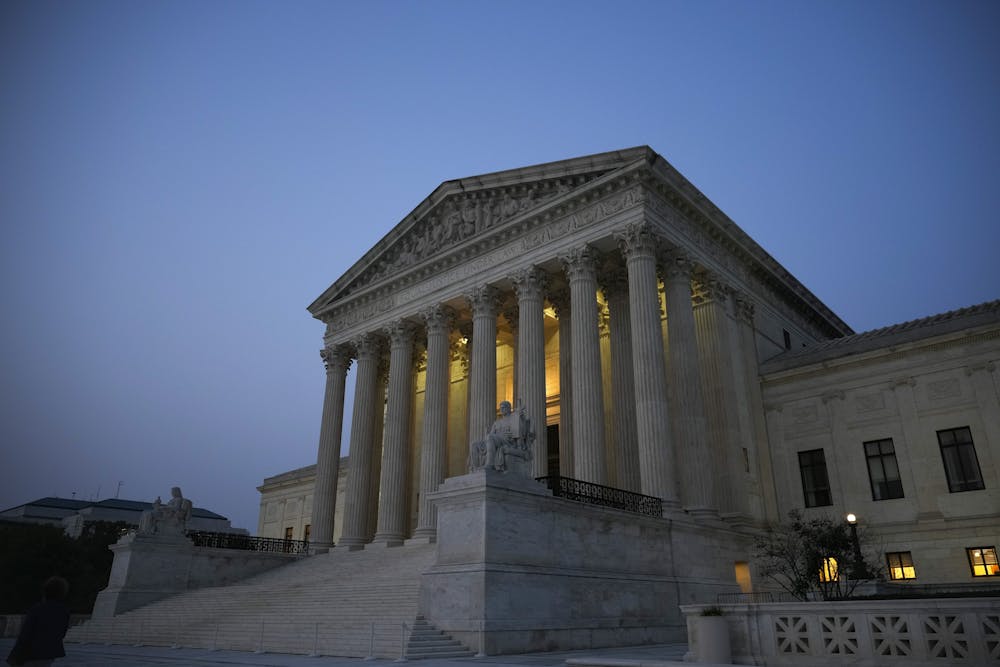
    The Supreme Court on April 10, 2025, unanimously upheld the lower court order directing the Trump administration to “facilitate” the return of Kilmar Abrego García, a Maryland man who was wrongly deported to a maximum security prison in El Salvador.

    The Supreme Court also directed the lower court to clarify aspects of the order.

    “The order properly requires the Government to ‘facilitate’ Abrego García’s release from custody in El Salvador and to ensure that his case is handled as it would have been had he not been improperly sent to El Salvador,” the Supreme Court order states.

    It is undisputed that the Trump administration made a mistake.

    The Justice Department admitted to deporting Abrego García to a maximum security prison in El Salvador even though an immigration judge in 2019 ordered that he not be deported. The judge did so under an immigration law called “withholding of removal,” which is a protection, like asylum, for people facing persecution in their home country.

    But the Trump administration has said a court cannot order it to fix its mistake and bring Abrego García back to the United States.

    According to the Trump administration, such an order would be “constitutionally intolerable.” The government has compared the court order to return Abrego García to an order to “‘effectuate’ the end of the war in Ukraine or return hostages from Gaza.”

    Abrego García should not have been deported

    Abrego García received this protective legal status six years ago. That’s when he proved to the court he was highly likely to be persecuted by the government or gangs in El Salvador due to a specific reason, as required under immigration law.

    Unlike asylum or refugee status, the status known as “withholding of removal” is not a pathway to citizenship. It allows a person to live and work in the U.S. indefinitely and not be deported to their country of nationality if they face persecution there.

    The government states it arrested and deported Abrego García on March 15 because he is a gang member. When Abrego García appealed his deportation, the federal district and appellate courts determined that the government provided no credible evidence of gang membership.

    That’s important, because the government failed to follow proper procedure to deport Abrego García based on gang membership. When someone is in “withholding of removal” status, the law requires the government to reopen immigration proceedings based on new evidence and seek to formally terminate the legal withholding status.

    Abrego García should have been notified of the government’s desire to deport him, and he should have had the opportunity to make his case at a court hearing. His summary deportation to El Salvador likely violated his right to due process under immigration law and the Constitution.

    Balance of powers are at stake

    The government did not follow the law, but it argues that the court cannot do anything about it.

    The crux of the government’s position is that a court does not have the power to order the release of a person in a foreign prison. That would interfere with the separation of powers among the executive and judicial branches. The president has the sole power to conduct foreign relations with El Salvador, and the government has argued that ordering the return of Abrego García interferes with that power.

    Prisoners watch as U.S. Secretary of Homeland Security Kristi Noem visits the Terrorist Confinement Center in Tecoluca, El Salvador, on March 26, 2025.
    Alex Brandon/Pool/AFP via Getty Images

    The court cannot order the Salvadoran government to do anything, but it can order the U.S. government to take steps to return García Abrego if he was unlawfully arrested and deported. That’s because the judiciary has the power to determine whether the president’s actions are lawful.

    The district court’s order was based on its determination that the president has likely violated immigration law and the Constitution in arresting and deporting Abrego García. The appellate court agreed.

    The Supreme Court has now said the order to facilitate Abrego García’s return is proper. But the high court also said the district court judge should further clarify its order, being mindful of the president’s authority when it comes to conducting foreign relations.

    Who is detaining Abrego García?

    The Salvadoran government seems to be imprisoning Abrego García at the request of the U.S. government.

    Trump administration lawyers have suggested in their briefing to the Supreme Court that there could be reasons under El Salvador law for Abrego García’s imprisonment. The government has not identified any reasons and has not provided any evidence that Abrego García is charged with a crime in El Salvador, or that he is being held under Salvadoran law.

    The Department of Homeland Security routinely contracts with local jails and for-profit prison corporations to temporarily house immigrant detainees in the U.S. The government has reportedly agreed to pay El Salvador US$6 million to imprison certain U.S. immigrant detainees for one year. The details of this agreement are not known.

    Kristi Noem, the Homeland Security secretary, has said that the Salvadoran megaprison is “one of the tools in our tool kit that we will use.”

    The district and appellate courts determined in this case that the U.S. is using the Salvadoran prison like any other detention facility. Under those circumstances, the U.S. government, not El Salvador, has ultimate control over Abrego García.

    The Supreme Court ruled that the government should facilitate Abrego García’s return.
    Drew Angerer/Getty Images

    As an immigration law scholar, I believe that the government can take steps to return Abrego García.

    In fact, other appellate courts have ordered the government to return immigrants who had been removed from the U.S. but later won their appeals of their removal orders. Those people were not in foreign prisons.

    U.S. Immigration and Customs Enforcement has created a formal policy for aiding the return of immigrants who were deported while their appeals were pending and then subsequently won their appeals.

    The government has argued that those situations are different. Here, it claims the court cannot demand the return of Abrego García, who is imprisoned in another country. The problem with the government’s argument is that it is the Trump administration that put Abrego García in a foreign prison.

    The Trump administration has also argued that Abrego García is not entitled to return to the U.S.. It has argued that even though it was a mistake to deport him to El Salvador under his withholding of removal status, Abrego García could have been removed to another country and has no right to return to the U.S..

    This would be true if Abrego García voluntarily left the U.S. or was deported to a country other than El Salvador, but that is not what happened. The government removed Abrego García to El Salvador in violation of U.S. law.

    The White House’s position in this matter is troubling because the president is supposed to enforce the law, not circumvent it.

    As Justice Sonia Sotomayor wrote in a separate statement published with the order and joined by Justices Elena Kagan and Ketanji Brown Jackson: “The Government’s argument, moreover, implies that it could deport and incarcerate any person, including U.S. citizens, without legal consequence, so long as it does so before a court can intervene.”

    What steps the government will take to return Abrego García is unclear. The Supreme Court’s decision leaves open the question of how far the court can go to enforce his return.

    Jean Lantz Reisz does not work for, consult, own shares in or receive funding from any company or organization that would benefit from this article, and has disclosed no relevant affiliations beyond their academic appointment.

    – ref. What the Supreme Court’s ruling on man wrongly deported to El Salvador says about presidential authority and the rule of law – https://theconversation.com/what-the-supreme-courts-ruling-on-man-wrongly-deported-to-el-salvador-says-about-presidential-authority-and-the-rule-of-law-254037

    MIL OSI – Global Reports –

    April 11, 2025
  • MIL-OSI China: China expresses grave concern over US ‘reckless’ tariffs at WTO

    Source: China State Council Information Office

    China on Wednesday expressed grave concern and firm opposition to the United States’ “reckless” tariffs at the World Trade Organization (WTO).

    On the first day of a two-day meeting of the Council for Trade in Goods, China proposed a discussion on the U.S. “reciprocal tariffs,” urging the United States to uphold the WTO rules, so as to avoid negative impact on global economy and the multilateral trading system.

    In its speaking, China slammed the U.S. tariff policy, saying it violates WTO rules and undermines the multilateral trading system.

    The rules of multilateral trading system, with the WTO at its core, serve as the indispensable foundation for global trade, and the most favored nation (MFN)-based tariff commitments ensure trade is conducted transparently, predictably and without discrimination, said China.

    The U.S. trade measures violate the MFN principle and contravene its own tariff binding commitments under WTO rules, said China, noting the measures are “a typical act of unilateralism, protectionism and economic bullying.”

    In addition, China said the United States is a key beneficiary of the multilateral trading system, and described assessing its gains solely through trade deficits or surpluses in goods as a narrow and misleading approach.

    The “reciprocal tariffs” will never be a cure for trade imbalances. Instead, they will backfire, harming the United States itself, China said.

    Emphasizing its belief that all trade disputes should be resolved through the WTO’s established mechanisms, China called on all WTO members to stand together in safeguarding the rules-based multilateral trading system.

    China’s statement was echoed by dozens of WTO members, including the European Union (EU), Switzerland, Canada, Kazakhstan, Britain and Brazil, which took the floor to voice their disapproval of the U.S. measures.

    The EU said U.S. tariffs constitute “a major blow to the world economy and the multilateral trading system,” noting such tariffs will not fix the global trade imbalances.

    Some members said the tariff actions could lead to increased trade tensions and instability, stressing the importance of resolving trade disputes through dialogue and cooperation within the WTO framework. 

    MIL OSI China News –

    April 11, 2025
  • MIL-OSI China: New York City helicopter crash kills 6 on board

    Source: China State Council Information Office

    A helicopter crashed into the Hudson River around Pier 40 in Manhattan, New York City, on Thursday afternoon killing all the six people on board, said New York City Mayor Eric Adams at a press conference.

    Included were one pilot, two adults and three children, according to Jessica Tisch, commissioner of the New York City Police Department (NYPD). She said four people were announced deceased on scene and another two didn’t survive at hospital.

    It’s reported that the five passengers were tourists from Spain.

    The helicopter lost control shortly after turning at the George Washington Bridge to move along the New Jersey shoreline, and an investigation is underway for the cause of the crash, according to Tisch.

    The chopper, a Bell 206, a model widely used in commercial and government aviation, split into two before it went down around 3:15 p.m. local time, local media reported.

    This is the deadliest helicopter crash in the New York City area since 2018.

    MIL OSI China News –

    April 11, 2025
  • MIL-OSI USA: Chairman Wicker Leads SASC Hearing on INDOPACOM, U.S. Forces Korea, and Budget Requests

    US Senate News:

    Source: United States Senator for Mississippi Roger Wicker
    WASHINGTON – U.S. Senator Roger Wicker, R-Miss., the Chairman of the Senate Armed Services Committee, today led a hearing on force posture and budget requirements in the Indo-Pacific region and U.S. Forces Korea. Throughout the full committee hearing, the Commander of U.S. Indo-Pacific Command (INDOPACOM), Admiral Paparo, and the Commander of U.S. Forces Korea, General Xavier Brunson, testified on force requirements, budget necessities and our capabilities in the region.
    During his opening remarks, Chairman Wicker addressed the growing threat posed by the Chinese Communist Party in the region with respect to Taiwan, along with security issues linked to Russian and North Korean cooperation. Specifically, Chairman Wicker made clear that our underinvestment in INDOPACOM has allowed the Chinese People’s Liberation Army to contest our ability to gain air superiority in a conflict in East Asia. Chairman Wicker also stressed that a reduction of our military presence in South Korea would undermine deterrence of both North Korea and China. Chairman Wicker concluded by noting the centrality of the role played by nuclear weapons in deterring conflict in the Indo-Pacific region.
    Read Senator Wicker’s hearing opening statement as delivered.
    At this point, we hold a hearing on U.S. Indo-Pacific Command and U.S. Force Korea.  At the outset, I would like to thank Admiral Paparo and General Brunson for their distinguished service to our country.
    Last year at this hearing, I stated that the balance of power in the Indo-Pacific was shifting in China’s favor.  Since then, the Chinese Communist Party has significantly increased its coercive activity toward Taiwan and the Philippines.  Last week, the Chinese conducted an exercise called Strait Thunder 2025A.  This exercise demonstrated the extent to which the People’s Liberation Army (PLA) could execute a maritime blockade of Taiwan and pummel it with missile strikes.   As China conducts more exercises with Taiwan in mind, it also escalates the rhetoric against the island.  Last week, a Chinese military officials called Taiwan’s democratically elected president a “parasite.”
    The Chinese have also substantially increased their harassment of our Filipino allies.  China’s vast Maritime Militia, backed by the PLA Navy and Chinese Coast Guard, is using increasingly aggressive tactics to advance its expansive claims in the South China Sea.  The Second Thomas Shoal remains a major flashpoint. Chinese maritime militias have tried to keep the grounded Filipino Navy ship, the Sierra Madre, from being resupplied.  Secretary Hegseth recently visited the region.  I was pleased to see that he reaffirmed our Mutual Defense Treaty with the Philippines, reminding the world that the treaty applies to attacks on the Filipino armed forces anywhere in the South China Sea.  Even so, it is clear that the Chinese have been emboldened by four years of weakness during the past administration.
    There is another reason China has become so confident in its malign schemes.  Xi Jinping has steadily modernized his military, and that hardware has made him more brazen.  China boasts the world’s largest navy.  It also has an air force that is capable of denying the U.S. air superiority in the First Island Chain- we’ll certainly want to ask about that, gentlemen.  Its missile force can saturate our theater defenses.  China has been expanding its nuclear arsenal at a pace that far outstrips our own.  Multiple STRATCOM commanders have called China’s growth ‘breathtaking.’  In just a few short years, Beijing has built more intercontinental ballistic missile launchers than the United States.  Meanwhile, our own modernization programs languish from past neglect.
    But China is not the only urgent threat in the Indo-Pacific.  The Biden administration chose to ignore North Korea.  It allowed Kim Jong Un to increase his nuclear arsenal and project his military into the European theater to aid Vladimir Putin in Russia’s war against Ukraine.   Kim Jong Un has abandoned the goal of unification of the Korean Peninsula – and again, we’ll want to talk about that – and has declared South Korea to be the principal enemy.  The North Korean nuclear and missile arsenal continues to grow and diversify.  With the rogue nation adopting a strategic doctrine that embraces nuclear first use.
    Kim will surely seek remuneration for his support to Moscow.  The Russian technology transfers and military assistance Kim receives will help him to further strengthen his strategic missile forces.  The continued demonstrations of Russia, China, and North Korea aligning and cooperating should be of great concern to all in the West.  This concern should then lead to action.  If we are to maintain global peace and stability, we must continue taking steps now to rebuild our military and reestablish deterrence.
    As I noted in my Peace Through Strength report last May, it is time to make a generational investment in our national security- and I do believe that view is bipartisan.  We must be able not only to deter and defeat the People’s Liberation Army, but also to maintain deterrence in other theaters.  Our adversaries, led by Bejing, are playing a global game.  We must be smarter and more agile than they are across the board.
    Last year, INDOPACOM’s unfunded requirements list totaled $3.5 billion dollars.  This year’s unfunded requirement list was $11 billion, and virtually none of that was funded under the full-year CR.  This is unacceptable – and also, I hope we’re going to get from everyone an accurate and full assessment of the various unfunded requirements. We need real growth in the FY26 budget request, in addition to a historic defense reconciliation package.
    We need more survivable long-range munitions, more assured U.S. command and control systems, and an improved ability to counter China’s increasingly capable cyber and space systems.  We need a wholesale overhaul of our logistics infrastructure and a rapid deployment of unmanned systems.  We need a renaissance in our camouflage and deception programs, and we need a drastic improvement in our shipbuilding.  The risk is simply too high for us to avoid making these changes.
    So, I look forward to hearing our distinguished, and well-informed witnesses and having a candid conversation about what this committee and this Senate and this Congress can do – this year – to begin address these challenges.

    MIL OSI USA News –

    April 11, 2025
  • MIL-OSI USA: BREAKING: Republicans Block Cortez Masto’s Efforts to Exempt Our Allies Israel and Ukraine from Harmful Tariffs

    US Senate News:

    Source: United States Senator for Nevada Cortez Masto
    FTPs for TV stations is available here.
    Washington, D.C. – U.S. Senator Catherine Cortez Masto (D-Nev.) called out Republican politicians for blocking efforts to exempt American allies under attack, Israel and Ukraine, from the Trump Administration’s harmful tariffs. On the Senate floor, Cortez Masto sought unanimous consent to pass her legislation which would exempt Israel and Ukraine from blanket tariffs that President Trump has slapped on these wartime economies.
    “We all know that targeted tariffs can be a useful tool to protect critical American manufacturing and combat our enemies, but that isn’t what President Trump is doing. Instead, he’s punishing our allies Israel and Ukraine,” said Senator Cortez Masto. “Both these countries are currently under attack. They need the United States to be standing with them, not hitting them with nonsensical tariffs that could cause them even more harm. It is outrageous that my Republican colleagues blocked an opportunity to fix this and come together to protect our allies.”
    America’s ally Israel originally got hit with a 17% tariff – even though we maintain a Free Trade Agreement with them – their adversary Iran got tariffed at 10%. The Trump Administration put no tariffs on Russia, but charged Ukraine with a 10% tariff. As Senator Cortez Masto was speaking on the floor, President Trump announced via tweet that over 75 countries, including Israel and Ukraine, will be tariffed at 10% for the next 90 days.
    Senator Cortez Masto has consistently stood with Israel. She has repeatedly voted to deliver critical funding to support Israel’s national Security, and has urged the Administration to crack down on the finances of international terrorist organizations, including Iran’s state sponsorship of terrorism. She has also been a strong advocate for the U.S. to stand up to Russian aggression and support Ukrainian sovereignty. Cortez Masto has voted to pass bipartisan legislation to support Ukraine and helped pass bipartisan economic sanctions that were signed into law to hold Russia accountable for its illegal invasion of Ukraine.

    MIL OSI USA News –

    April 11, 2025
  • MIL-OSI USA: News 04/10/2025 Blackburn, Cantwell, Heinrich Reintroduce Bipartisan Bill to Increase Transparency, Combat AI Deepfakes & Put Journalists, Artists & Songwriters Back in Control of Their Content

    US Senate News:

    Source: United States Senator Marsha Blackburn (R-Tenn)

    WASHINGTON, D.C. — Today, U.S. Senators Marsha Blackburn (R-Tenn.), Maria Cantwell (D-Wash.), and Martin Heinrich (D-N.M.) reintroduced the Content Origin Protection and Integrity from Edited and Deepfaked Media Act (COPIED ACT) to combat harmful deepfakes. The bill would set new federal transparency guidelines for marking, authenticating and detecting AI-generated content, protect journalists, actors and artists against AI-driven theft, and hold violators accountable for abuses.  

    “Artificial intelligence has given bad actors the ability to create deepfakes of every individual, including those in the creative community, to imitate their likeness without their consent and profit off of counterfeit content,” said Senator Blackburn. “The COPIED Act takes an important step to better defend common targets like artists and performers against deepfakes and other inauthentic content.” 

    “The bipartisan COPIED Act I introduced with Senator Blackburn will provide much-needed transparency around AI-generated content,” said Senator Cantwell. “The COPIED Act will also put creators, including local journalists, artists and musicians, back in control of their content with a provenance and watermark process that is very much needed.”

    “Deepfakes are a real threat to our democracy and to Americans’ safety and well-being,” said Senator Heinrich. “I’m proud to support Senator Cantwell’s COPIED Act that will provide the technical tools needed to help crack down on harmful and deceptive AI-generated content and better protect professional journalists and artists from having their content used by AI systems without their consent. Congress needs to step up and pass this legislation to protect the American people.”

    The COPIED Act (S. 1396):

    Bill Text and Summary

    • Creates Transparency Standards: Requires the National Institute of Standards and Technology (NIST) to develop guidelines and standards for content provenance information, watermarking and synthetic content detection. These standards will promote transparency to identify if content has been generated or manipulated by AI, as well as where AI content originated. The bill also directs NIST to develop cybersecurity measures to prevent tampering with provenance and watermarking on AI content.
    • Puts Journalists, Artists and Musicians in Control of Their Content: Requires providers of AI tools used to generate creative or journalistic content to allow owners of that content to attach provenance information to it and prohibits its removal. The bill prohibits the unauthorized use of content with provenance information to train AI models or generate AI content. These measures give content owners—journalists, newspapers, artists, songwriters, and others—the ability to protect their work and set the terms of use for their content, including compensation.
    • Gives Individuals a Right to Sue Violators: Authorizes the Federal Trade Commission (FTC) and state attorneys general to enforce the bill’s requirements.  It also gives newspapers, broadcasters, artists, and other content owners the right to bring suit in court against platforms or others who use their content without permission.
    • Prohibits Tampering with or Disabling AI Provenance Information: Currently, there is no law that prohibits removing, disabling, or tampering with content provenance information. The bill prohibits anyone, including internet platforms, search engines and social media companies, from interfering with content provenance information in these ways.  

    Major Endorsements

    SAG-AFTRA

    “For SAG-AFTRA, protecting the ability of our members to control their images, likenesses, and voices is paramount. The capacity of AI to produce stunningly accurate digital representations of performers poses a real and present threat to the economic and reputational well-being and self-determination of our members.  Senator Cantwell’s legislation would ensure that the tools necessary to make the use of AI technology transparent and traceable to the point of origin will make it possible for victims of the misuse of the technology to identify malicious parties and go after them. We need a fully transparent and accountable supply chain for generative Artificial Intelligence and the content it creates in order to protect everyone’s basic right to control the use of their face, voice, and persona. We applaud Senator Cantwell for her leadership on the issue and support this legislation as part of a comprehensive approach to preventing unauthorized abuse of this transformative technology.” – Duncan Crabtree-Ireland, National Executive Director and Chief Negotiator

    Nashville Songwriters Association International

    “The Nashville Songwriters Association International (NSAI), the world’s largest songwriter advocacy trade association, applauds Senators Maria Cantwell, Blackburn and Heinrich for introducing legislation to help put transparency guardrails around Generative Artificial Intelligence for human creators. Specifically, we note her including artists in the Content Origin Protection and Integrity from Edited and Deepfaked Media Act and recognizing it is more financially feasible for songwriters and other human creators to adjudicate these matters in a local civil court when possible. NSAI will work with her office toward adoption of this important legislation.” – Barton Herbison, Executive Director NSAI

    Recording Academy

    “The Recording Academy applauds Chair Cantwell and Senators Blackburn and Heinrich for their commitment to the ethical use of AI and their recognition of the need for guardrails that provide transparency and protection for creators. We look forward to continuing to work with them as this process moves forward.”  – Todd Dupler, Chief Advocacy and Public Policy Officer

    National Music Publishers’ Association

    “We greatly appreciate Senator Cantwell’s leadership on preventing the unauthorized use and dissemination of deepfakes. The Content Origin Protection and Integrity from Edited and Deepfaked Media Act of 2025 ensures that AI-generated content is clearly identified and that there is recourse when those labels are tampered with. As AI-generated music continues to disrupt the legitimate market, it is essential that listeners know where their music is coming from. Artists and songwriters deserve protection against unauthorized imitations and this legislation is an important step towards that goal.” – David Israelite, President and CEO

    Recording Industry Association of America

    “Protecting the life’s work and legacy of artists has never been more important as AI platforms copy and use recordings scraped off the internet at industrial scale and AI-generated deepfakes keep multiplying at rapid pace. RIAA strongly supports provenance requirements as a fundamental building block for accountability and enforcement of creators’ rights. Leading tech companies refuse to share basic data about the creation and training of their models as they profit from copying and using unlicensed copyrighted material to generate synthetic recordings that unfairly compete with original works. We appreciate Senators Cantwell, Blackburn and Heinrich’s leadership with the Content Origin Protection and Integrity from Edited and Deepfaked Media Act of 2025 that would grant much needed visibility into AI development and pave the way for more ethical innovation and fair and transparent competition in the digital marketplace.” – Mitch Glazier, Chairman and CEO

    The Television Academy

    “The Television Academy, representing nearly 30,000 members across all disciplines of the television industry, applauds Senator Cantwell for reintroducing the COPIED Act. As artificial intelligence and digital replication technologies evolve, the need for transparency is tantamount. This bill will set necessary federal transparency guidelines for marking, authenticating, and detecting AI-generated content. Further, it gives the broad membership of the Television Academy the ability to control their voice, likeness, and creative expressions, and give content owners the ability to pursue recourse if their content is used without permission. The Television Academy looks forward to helping get the COPIED Act adopted.” – Maury McIntyre, President and CEO

    NewsGuild-CWA

    “Journalists are essential to a free and fair democracy. Too many media companies are attempting to replace journalists with AI, resulting in false, misleading clickbait and the decimation of our news ecosystems. It is essential that journalists are not replaced by misguided media companies looking to maximize profits at the expense of human-driven journalism that informs the public and holds our institutions accountable. We thank Senator Cantwell for her leadership on ensuring fair and equitable use of Artificial Intelligence that puts the worker and their rights at the center of the deployment of this new technology.” – Jon Schleuss, President  

    News/Media Alliance

    “The News/Media Alliance, representing over 2200 news, magazine, and digital media publishers worldwide, applauds the leadership of Senators Cantwell, Blackburn and Heinrich to address the need for AI regulation. We look forward to working with them to refine and advance this critical legislation to ensure news publishers and creators of quality content are adequately protected. Legislation should balance the innovation around these emerging technologies with preserving quality, accuracy, and a thriving free press, and Senators Cantwell, Blackburn and Heinrich have taken a major step forward to accomplish that by introducing this bill.” – Danielle Coffey, President and CEO

    National Newspaper Association
    “We appreciate Senator Cantwell for taking on this difficult and disturbing issue. Deepfakes fly in the face of the true intent of the First Amendment. It’s important that citizens continue to trust local news sources to bring them quality journalism that has been vetted and verified.” – John Galer, Chair, National Newspaper Association Board of Directors; Publisher of The Journal-News in Hillsboro, IL

    America’s Newspapers

    “America’s Newspapers, the trade association representing more than 1,500 local community newspapers, commends Senator Maria Cantwell for introducing legislation that addresses the emerging problem of deepfakes. It is critical to our democracy that news organizations provide their communities with trusted information and news. The issue of deepfakes must be addressed to maintain consumer confidence in news providers. We look forward to working with Sen. Cantwell on this important legislation.” – Dean Ridings, CEO

    Rebuild Local News
    “The proliferation of deepfakes is an enormous problem that’s going to get much worse if lawmakers and regulators don’t act. This will be particularly dangerous when it comes to residents getting information about their local communities because the collapse of local news has left us with fewer journalistic watchdogs. We commend Senator Cantwell for shining a spotlight on this issue and we look forward to working with her to devise appropriate policies in this complex area.” – Steven Waldman, President

    National Association of Broadcasters

    “Deepfakes pose a significant threat to the integrity of broadcasters’ trusted journalism,” said NAB President and CEO Curtis LeGeyt. “We are grateful to Ranking Member Cantwell and Sens. Blackburn and Heinrich for reintroducing this bill to protect the authenticity of the vital local and national news that radio and television stations provide our communities. We also applaud efforts to prohibit the use of broadcasters’ news content to train generative AI systems without express consent and compensation to the news creator. We look forward to working with the committee to help advance this bill and these fundamental principles critical to our ability to continue serving communities with trusted news.” – Curtis LeGeyt, President and CEO

    Artist Rights Alliance

    “The Artist Rights Alliance (ARA) applauds Senator Cantwell for introducing legislation to combat deception and confusion in the AI marketplace and protect artists from the unauthorized and unethical use of AI. As AI technology continues to evolve at breakneck speed, we must ensure that creators do not fall victim to deepfakes and other abuses of their very personhood. ARA is grateful for Senator Cantwell’s commitment to building a framework for responsible AI that is grounded in the fundamental principles of transparency and choice.” – Jen Jacobsen, Executive Director

    Human Artistry Campaign
    “Deepfakes pose an existential threat to our culture and society, making it hard to believe what we see and hear and leaving individual creators vulnerable as tech companies use our art without consent while AI-generated content leads to confusion about what is real. Requiring transparency is a meaningful step that will help protect us all – ensuring that nonconsensual, harmful content can be removed quickly and providing a clear origin when our life’s work has been used.” – Dr. Moiya McTier, Senior Advisor

    Public Citizen

    “Public Citizen strongly believes that every person has a right to know when they are seeing, hearing or engaging with AI-generated content.  This is critical for the purposes of maintaining social trust in our society. A poll found that 79 percent of people polled worry the information they are seeing online is fake or meant to confuse. Senator Cantwell’s Content Origin Protection and Integrity from Edited and Deepfaked Media Act of 2025 is an important step towards safeguarding truth and trust in the AI age. This legislation addresses key issues surrounding deepfakes and AI-generated media by directing NIST to develop robust standards for detecting and labeling synthetic content and promotes provenance protections for AI generated content. If passed, this bill would promote online transparency and ethical AI use, which is desperately needed in today’s online ecosystem.” – Richard Anthony, Emerging Technologies Policy Advocate

    The Society of Composers & Lyricists (SCL), the Songwriters Guild of America (SGA), and Music Creators North America (MCNA)

    “The Society of Composers & Lyricists (SCL), the Songwriters Guild of America (SGA), and Music Creators North America (MCNA) applaud Senator Cantwell for initiating a crucial, beginning step towards addressing the myriad of existential threats to the American songwriter and composer community posed by unregulated generative artificial intelligence.  As the leading organizational representatives for America’s music creators, our independent groups represent many thousands of composers and songwriters, solely. We formulate our policy positions without undue outside influence from third parties, and we extend our enthusiastic support for introduction of the proposed bill.  The urgent need to require all generative AI users to deal transparently and fairly with the creative community cannot be overstated, and we look forward to working with Senator Cantwell’s office in addressing these and the many other challenges and opportunities provided by GenAI technologies in the immediate future.” – Ashley Irwin, SCL President & MCNA co-chair

    MIL OSI USA News –

    April 11, 2025
  • MIL-OSI USA: Cotton, Colleagues Introduce Bill to Ban Retail Storefronts Owned by Foreign Adversaries from U.S. Military Bases

    US Senate News:

    Source: United States Senator for Arkansas Tom Cotton
     
    FOR IMMEDIATE RELEASEContact: Caroline Tabler or Patrick McCann (202) 224-2353April 10, 2025
    Cotton, Colleagues Introduce Bill to Ban Retail Storefronts Owned by Foreign Adversaries from U.S. Military Bases
    Washington, D.C. — Senator Tom Cotton (R-Arkansas), Ted Budd (R-North Carolina), and Senator Rick Scott (R-Florida) today introduced the Military Installation Retail Security Act to prohibit the Department of Defense (DoD) from authorizing, renewing, or extending long-term retail agreements with companies owned or controlled by adversarial nations on U.S. military bases. The legislation also requires the review of all retail stores on military bases nationwide to determine if there are foreign ties to China, Russia, Iran, or North Korea. 
    Congressman Pat Harrigan (North Carolina-10) introduced companion legislation in the House.
    “We shouldn’t be allowing Chinese-affiliated companies in the United States, let alone on our military bases. This bill will ensure our adversaries can’t exploit our military,” said Senator Cotton.
    “Our military readiness depends upon security and surveillance. Adversarial nations have no place owning and operating businesses on U.S. military bases, all the while gaining personal identification information of American citizens, just to turn a profit. That is why I am proud to introduce the Military Installation Retail Security Act, to close this loophole by taking targeted action to prevent malign actors from embedding themselves within our military communities where they can threaten our national security and exploit personal data,” said Senator Budd.
    “Allowing companies controlled by our biggest foreign adversaries – like Communist China, Russia, and North Korea – to operate on U.S. military bases is a completely unacceptable threat to our national security that risks an enemy gaining sensitive personal and military data. The Military Installation Retail Security Act will close the loopholes that allow these bad actors to gain footholds within our military communities, ensuring that our military bases remain secure, and that foreign enemies aren’t profiting off our service members and their families. This should be common sense, and I urge my colleagues to support its quick passage,” said Senator Scott.
    “My team uncovered that GNC is fully owned by the Chinese Communist Party and operating more than 80 stores on U.S. military bases. That’s not just a problem; it’s a direct threat to our national security. We moved quickly to get a solution on the table and introduced the Military Installation Retail Security Act in the House. I’m glad to have Senator Budd step in to help drive this forward and make sure CCP-owned companies have zero place inside America’s military infrastructure,” said Congressman Harrigan.
    Full text of the bill may be found here.
    Background:
    Retail stores on U.S. military bases gain direct and prolonged access to our nation’s servicemembers and their families while operating in a sensitive base environment, which creates serious risks for surveillance. This gives companies, owned by foreign adversaries, unprecedented access to personally identifiable information such as names, payment methods, and purchase history.
    GNC—which started as a small, family-owned health-food store in Pittsburgh in 1935—was bought by the Chinese state-owned Harbin Pharmaceutical Group after the supplement retailer filed for bankruptcy in 2020. Currently, this Chinese-owned company operates over 80 locations on U.S. military bases. 
    On base at North Carolina’s Fort Bragg, GNC operates four storefronts serving 53,700 troops, who make up nearly 10% of the U.S. Army alone. 

    MIL OSI USA News –

    April 11, 2025
  • MIL-OSI United Kingdom: Science Secretary hails Wrightbus as company pledges £25 million to bolster UK’s green transport revolution and drive growth

    Source: United Kingdom – Executive Government & Departments

    Press release

    Science Secretary hails Wrightbus as company pledges £25 million to bolster UK’s green transport revolution and drive growth

    Northern Ireland based bus manufacturer pledges £25 million to expand its R&D capabilities

    Wrightbus pledges £25 million for R&D into green transport revolution

    • Northern Ireland based firm Wrightbus to invest £25 million for cutting-edge research to develop next-generation electric and hydrogen vehicles
    • Investment to be transformative in cutting emissions and creating skilled local jobs to grow our economy, supporting the government’s Plan for Change
    • The success of Wrightbus shows how bold investment in Research and Development pays off – with the Science Secretary calling it a prime example of the benefits innovation can bring to businesses and the wider economy

    Millions of pounds in investment by Wrightbus to develop the next generation of green buses has been welcomed today by Science Secretary Peter Kyle, highlighting it as a key driver of economic growth under the Plan for Change.

    As the UK’s fastest-growing zero-emission bus manufacturer and a major employer in Northern Ireland and the wider UK, Wrightbus’ new funding will accelerate the next generation of electric and hydrogen-powered buses, potentially creating dozens of new jobs, slashing emissions, and supporting the government’s mission to make Britain a clean energy superpower.

    During his visit to the company’s Northern Ireland headquarters, Science Secretary Peter Kyle praised Wrightbus as a standout example of how investing in R&D fuels business development, job creation and regional economic growth. Studies show that for every £1 a business invests in R&D, it can generate a return of 20% for the firm – with similar, additional gains spilling over into the wider British economy (1) – evidence of a dynamic economy rooted in enterprise. He called on more businesses to follow suit, emphasising that such investments are crucial for maintaining the UK’s competitive edge in science and technology and that government alone cannot deliver this growth.

    Wrightbus is part of a growing network of high-tech businesses and innovators driving growth in Northern Ireland. The region boasts a thriving advanced manufacturing sector and a rapidly expanding tech scene. One such example is Belfast-based Ionic Technologies, which is developing new ways to recycle rare materials needed for electric vehicles and wind turbines, helping to make green technologies more sustainable and less reliant on overseas supply chains.

    The government’s upcoming Industrial Strategy, set to be published this summer, will build on success stories like Wrightbus and make Britain the best country to do business – helping more firms lead the way in future industries like advanced manufacturing, clean transport, and clean energy.

    This investment follows government action to increase demand for electric vehicles, with £2.3 billion investment already boosting British manufacturing and improving charging infrastructure.

    Since July, the government has seen £34.8 billion of private investment announced into UK’s clean energy industries. The UK was the largest electric vehicle market in Europe in 2024 and the third in the world with over 382,000 sold – up a fifth on the previous year. There are now more than 75,000 public charge points in the UK – with one added every 29 minutes – ensuring that motorists are always a short drive from a socket.

    Science and Technology Secretary, Peter Kyle said:

    Investing in innovation is central to our Plan for Change, but public investment alone is not enough to ensure British businesses remain at the cutting edge of global industries.

    Wrightbus is proof that businesses backing R&D deliver real-world impact – for both the company themselves and the local region – creating new high-quality jobs, strengthening supply chains across sectors and delivering the new industries of the future.

    Wrightbus’ investment will not only boost growth in Northern Ireland. It will help to accelerate the UK’s transition to net zero and our mission to become a clean energy superpower while keeping our economy competitive on the global stage.

    The £25 million investment announced today will be used to develop groundbreaking zero-emission vehicles, support UK businesses that provide the parts and technology needed to build them and enhance advanced testing capabilities. Funding includes:

    • £10 million to develop the world’s most efficient double-deck and single-deck electric bus, the Wrightbus StreetDeck Electroliner. Designed for extended range and rapid charging times, it can travel up to 200 miles on a single charge and recharge in just 2.5 hours, cutting energy costs and reducing reliance on fossil fuels.
    • £5 million to develop the UK’s first hydrogen-powered coach due for release within 18 months. Capable of travelling up to 1,000km on a single refuel, it will rival diesel coaches in range and efficiency and make long-distance travel greener without compromising on performance or convenience.
    • £5 million for product validation using the UK’s most advanced proving grounds – ensuring Wrightbus vehicles are rigorously tested for durability, efficiency, and safety so that UK-manufactured buses set new global standards for reliability and performance.
    • £5 million for a world-class telematics system – an advanced vehicle monitoring system that collects real-time performance data to operators. The telematics system is improving efficiency, lowering costs, helping fleet operators optimise routes, extending vehicle lifespans and driving down operating expenses using predictive maintenance based on AI algorithms.

    Last week, Wrightbus buses passed 50 million zero-emission miles – preventing over 85,000 tonnes of CO2 emissions compared to diesel alternatives. The company’s rapid growth underscores the UK’s strength in high-tech manufacturing and the economic benefits of investing in green innovation. Wrightbus is also a potential customer of the Bradford Low Carbon Project, which received funding from the government’s flagship hydrogen programme.

    The Ballymena-based company had a record-breaking year of orders in 2024 which it is on track to exceed this year, increasing production from 1,016 to 1,200 with plans to reach 1,400 by 2026. Its supply chain supports businesses in 47 counties, from suppliers of heating systems to software developers across the UK and in key European markets, including France, Germany, and the Netherlands.

    It builds on its landmark £500 million deal with Go-Ahead in 2023 which secured over 1,000 zero-emission bus orders, creating 500 new jobs in Ballymena and supporting 7,500 jobs across the UK – strengthening the UK’s position as among the best places in the world to invest in R&D with businesses like Wrightbus leading the way in green transport innovation.

    Wrightbus CEO, Jean-Marc Gales said:

    It was a pleasure to showcase our R&D progress to the Secretary of State. This investment represents our largest amount ever into research and development and it underlines our ambition to continue be one of the very best zero-emission manufacturers in the UK and Europe.

    Innovation has played a key part in the rapid growth of Wrightbus and is one of the major things that has allowed us to switch from having a 95% diesel bus output to a 95% zero emission bus output in less than 5 years.

    The research projects we’re currently funding, including the development of our hydrogen coach, the further enhancement of the world-leading Electroliner bus, and our telematics system, will allow us to continue to push zero-emission transport boundaries and represents a huge boost for manufacturing in Northern Ireland and the wider UK.

    Notes to editors

    • www.frontier-economics.com

    DSIT media enquiries

    Email press@dsit.gov.uk

    Monday to Friday, 8:30am to 6pm 020 7215 3000

    Share this page

    The following links open in a new tab

    • Share on Facebook (opens in new tab)
    • Share on Twitter (opens in new tab)

    Updates to this page

    Published 11 April 2025

    MIL OSI United Kingdom –

    April 11, 2025
  • MIL-OSI Submissions: Global Economy – Report finds global companies have lost over $10 trillion of their market cap in 3 weeks – BestBrokers

    Source: BestBrokers

    Amid a volatile stretch for global stock markets, BestBroker’s latest analysis offers a data-driven look at how different countries are positioned in the face of a major downturn.

    Between 17 March and 8 April, the world’s 10,000 largest publicly listed companies lost a combined $10.3 trillion in market capitalisation, according to our research at BestBrokers. The U.S. was hit hardest, with $5.36 trillion wiped from company valuations, followed by China ($923.6 billion), Japan ($434 billion), Germany ($289 billion), and Taiwan ($267.7 billion).

    While the U.S. S&P 500 alone has lost nearly $6 trillion since the announcement of sweeping tariffs under President Trump, the impact has been global. Billions in value have evaporated across markets in every major region.

    Despite the scale of these losses, many leading indices are still above where they were a year ago — supported by resilient earnings and long-term growth. In addition to tracking the drop in market value, BestBrokers.com also examined how countries stack up in terms of billion-dollar company density, measured relative to population and economic output, across 74 countries and territories.

    Here are some key highlights from our report:

    • In March, we identified 5,522 publicly listed companies worldwide with a market value of at least $1 billion, with 1,873 headquartered in the United States. Three weeks after that, on March 8, the number of billion-dollar public companies dropped to 5,370, with just the U.S. losing 74 companies.
    • When adjusted for population, Monaco leads the world with 77 billion-dollar companies per million citizens, followed by Luxembourg (32) and Iceland (18).
    • Other countries with a large number of billion-dollar companies per million citizens are Switzerland with nearly 14, Sweden with 10.5, Singapore with close to 9, and Qatar with 8. Norway, Israel, and Denmark round up the top ten countries with nearly 8 companies per million people in Norway and Israel, while Denmark has 7.
    • Although the United States has the largest absolute number of billion-dollar companies, it ranks 16th globally on a per capita basis — trailing behind smaller, entrepreneurial economies like Ireland, Qatar, and Israel. The U.S. has roughly 5 billion-dollar companies per 1 million people.
    • Although the aggregate market capitalization of U.S.-based billion-dollar companies dropped to $51.75 trillion, this is still nearly double the size of the American economy.

    As volatility shakes larger markets, understanding where corporate strength is most concentrated can offer valuable insights for navigating the months ahead. Smaller, agile economies continue to punch well above their weight, signaling resilience and opportunity even as the broader market faces renewed pressure. A total of 13 countries saw a market wipeout of $100 billion or more within the past 22 days.

    These are the countries where companies have lost the most market capitalization:

    • United States – down $5.36 trillion to $51.75 trillion
    • China – down $923.6 billion to $6.87 trillion
    • Japan – down $433.9 billion to $4.68 trillion
    • Germany – down $289.1 billion $2.39 trillion
    • Taiwan – down $267.7 billion to $1.48 trillion
    • France – down $230.8 billion to $2.83 trillion
    • Switzerland – down $177.7 billion to $2.29 trillion
    • United Kingdom – down $170.5 billion to $3.47 trillion
    • Netherlands – down $149.7 billion to $1.17 trillion
    • Ireland – down $111.5 billion to $894.79 billion
    • Sweden – down $109.9 billion to $1.02 trillion
    • Hong Kong – down $108.5 billion to $835 billion
    • South Korea – down $105.6 billion to $932.9 billion.
    More detailed information about the economies with a high concentration of large-cap companies is available in the full report. It also includes the full methodology behind our findings. Feel free to use any data or graphics for publication by providing a proper link attribution to the original report. For more, see the Full Report: https://www.bestbrokers.com/forex-brokers/the-nations-with-the-most-billion-dollar-companies-per-capita-in-2025/

    MIL OSI – Submitted News –

    April 11, 2025
  • MIL-OSI USA: Senator Murkowski Argues for Congressional Oversight of Tariffs

    US Senate News:

    Source: United States Senator for Alaska Lisa Murkowski
    04.10.25
    Washington, DC – In a speech on the Senate floor today, U.S. Senator Lisa Murkowski (R-AK) made her case that Congress needs to reassert its authority – starting with oversight of levying tariffs. In light of the recent trade policies enacted by the executive branch, Senator Murkowski spoke about the role that belongs to Congress, but emphasized that institution has slowly ceded its responsibility to the executive over the last century.
    Click here to watch the Senator’s remarks.
     
    Below is the text of Murkowski’s remarks as delivered.
    Thank you, Mr. President.
    Yesterday was a day that really captured the attention of the world. We’ve all been talking about tariffs for a little bit, but yesterday was the day that really brought the focus to what was going on here in the United States.
    At 12:01 in the morning on Wednesday, President Trump’s tariffs on the countries with which the United States has had the largest trade deficits went into effect on top of the 10% tariff rates that had previously applied to all countries, which had been initiated on Saturday, April 5. Just hours later, yesterday afternoon, the President announced a 90-day pause and lowered reciprocal tariffs to 10% and at the same time, announced that he was raising tariffs on China to 125% – now today, it looks like that number is closer to 145%.
    So, to say that this has been a dizzying week in Washington, DC is probably an understatement. Those of us that are following the markets, it’s been somewhat head-spinning. I’m not going to comment here on the floor today about the negotiating tactics of President Trump. I think he is legendary, and really world renowned, for his skills in bringing nations to the table. We’re seeing some of this play out literally as we speak. Other countries that have approached the administration to have discussions about tariffs. This is a unique kind of leverage, most certainly keeping those across the table off balance. But bringing the world potentially to the brink of a ruinous trade war certainly qualifies as a very unique point of leverage.
    The effort to try to reshore manufacturing here in this country is important, it’s admirable, and it’s something that we should all be working towards. But, I think there has been general agreement that the message from the administration has been decidedly mixed, which leads to further confusion among our trading partners and our allies. If nobody understands where the finish line is, it’s hard to reach it.
    I don’t want to focus my comments here this afternoon about these possible strategies and end results of these policies. But I want to focus more on the process of how these tariffs were imposed, because I believe it is yet another example of Congress choosing to cede its powers to the executive branch. And if the global implications of these tariffs have shown us nothing else, it’s that measures that are as important as these should be considered by the 535 elected individuals that are in tune with the American people, rather than vesting that with just one individual acting unilaterally.
    It’s under Article One, Section Eight of our United States Constitution that clearly enumerates that “Congress shall have the power to lay and collect taxes, duties, imposts and excises.” In other words, the power to levy tariffs rests with us here in the Congress.
    So why have we seen the executive take control over tariff rates? The answer lies in almost in a centuries-long series of bills that we have seen here that Congress has voluntarily enacted and laid down its authority for the executive to pick up.
    Following the disastrous Smoot Hawley Act of 1930 which plunged our nation deeper into the Great Depression, Congress passed the following legislation. First, it was the Reciprocal Trade Agreements Act of 1934, which authorized the president to make limited tariff rates without congressional review on top of negotiating bilateral, reciprocal trade agreements.
    Then, it was the Trade Expansion Act of 1962, which broadened the President’s trade powers to include multilateral trade agreements, while also allowing the president to unilaterally impose tariffs if imports could threaten national security.
    Then, the Trade Act of 1974, which allowed the president to protect U.S. workers by adjusting tariffs if foreign countries engaged in unfair trade practices.
    And then, just a few years later, it was the International Emergency Economic Powers Act of 1977, which gives the president authorities to address declared emergencies if “unusual and extraordinary” threats exist to national security, foreign policy, or to the economy. So those powers include, you probably guessed it, the authority to regulate or prohibit imports.
    So, in his April 2 executive order, President Trump declared a national emergency because of a lack of reciprocity in our bilateral trade relationships and our trading partners’ economic policies that suppress domestic wages. He is authorized to do so under the National Emergencies Act of 1976, so I want to be clear about all of this: I know some people might not like it, but all of what he has done is clearly above board. The president is clearly within his powers to impose tariffs on our allies, like Mexico and Canada and the EU, just as much as he is with our adversaries, like China and Russia and Iran.
    President Trump, and President Biden before him, took this route because Congress has largely relegated tariff authority to the president through the laws that effectively cede to the executive.
    And my friends, it’s just one more example of Congress abdicating instead of legislating. In my time here, I have seen a troubling pattern, in both bodies, where the party that controls the White House seems all too comfortable relinquishing authority to the President, and then rubber stamping whatever policies the executive wants enshrined into law.
    Both Democrats and Republicans in Congress have deferred to the executive to call the shots, in my view, for far too long. Now we use the phrase around here a lot: “co-equal branches of government.” I use it all the time. But the reality is, Congress was created in Article One of the Constitution. We’re given far more authority than the executive. All you need to do is look in your handy dandy little pocket constitution. Ours is a lot longer.
    Look at the authorities that we have:
    Congress may impeach and remove a President and members of the judiciary;
    Congress can override a presidential veto of legislation;
    Congress appropriates the money that funds the operation of all branches of government; and
    It is Congress that again, needs to lay and collect taxes, duties, imposts, and excises.
    We also say a lot around here that “business loves certainty.” I would suggest the country’s entire tariff regime being subject to the whims of one individual lends anything but certainty. And that’s why I have signed on to Senator Grassley and Senator Cantwell’s legislation. They call it the Trade Review Act of 2025, and it would reclaim this branch’s authority and duty to help manage tariffs as outlined in the U.S. Constitution.
    The bill requires notice to Congress of the imposition of, or increase, in any tariffs. It requires notice to Congress in 48 hours. With that congressional notification, it has to include an explanation of the president’s reasoning for imposing or raising the tariffs, as well as providing an analysis of potential impact on American businesses and consumers.
    And I can tell you, the Alaskans that I’m talking to back home would really like the last part of this: an analysis of how this is going to impact us.
    And then another provision within the Grassley-Cantwell Act is within 60 days, Congress would pass a joint resolution of approval on the new tariff. Otherwise, all new tariffs on imports would expire after that deadline.
    What this act effectively would do would be to reaffirm Congress’s role with regards to tariffs. It allows for a greater engagement, if you will, between the executive and the congressional branch. Allows for the debate, allows for that engagement, allows for that understanding.
    So, again, I’m hearing from folks all over back home, because they’re worried we already pay high costs for just about everything in Alaska. They’re worried about what it’s going to mean for groceries, for cars, for furniture, electronics, even coffee.
    We had a visit with a group of high school students on the on the steps yesterday, and they were from all over the state. We had some from Ketchikan, all the way out to King Cove, and out in the YK Delta. And the first question from one of the 16-year-old’s in that group was, “Can you tell me what’s going on with tariffs? How is this going to impact us?”
    I really appreciated that question from that 16-year-old who’s paying attention to what’s going on. He’s got questions. He’s here in Washington, DC, and he’s figuring he’s going to get some answers from his senator.
    Alaskans are facing consequences. They want to know they have a voice in it, and their voice is us. It’s their senator, it’s their representative. That’s our role here.
    Now it’s been suggested, and the president himself has issued a statement about this legislation: he’s indicated that he does not support it, and that he would veto it. That is absolutely within his power.
    But, we also have powers have powers here in Congress, and we need to assert them. And so, I would hope that this bill is maybe just the start, maybe just the toe in the water, where we’re starting to see Congress reassert its authority.
    Because if we don’t stand up for the institution, if we don’t stand up for the legislative branch of our government by debating this issue by holding votes, debating. Let’s debate this! Let’s have a vote on the Trade Review Act. Because if we just sit back, if we don’t assert our authority, we’ve only got ourselves to blame when we don’t like the direction that may be taken.
    The executive has slowly arrogated more and more power since the end of World War II, and it’s dramatically accelerated post-9/11. We here in Congress have stood by, and we’ve accepted it. We’ve said it’s okay. I think it’s time for Congress to reassert itself, whether it’s on tariffs, whether it’s on the power of appropriation, whether it’s overseeing the bodies, the agencies that we as a body have authorized.
    So, let’s legislate. Let’s remember our role is to legislate. We owe that to those that we represent, as well as to this institution, for the long-term good of the nation.
    And with that, Mr. President, I yield the floor.

    MIL OSI USA News –

    April 11, 2025
  • MIL-OSI USA: Duda Farm Fresh Foods, Inc. Issues Advisory for 1,587 Cases of 4 in/1.6 oz Bundle Marketside Celery Sticks Because of Possible Health Risk

    Source: US Department of Health and Human Services – 3

    Summary

    Company Announcement Date:
    April 10, 2025
    FDA Publish Date:
    April 10, 2025
    Product Type:
    Food & BeveragesProduceFoodborne Illness
    Reason for Announcement:

    Recall Reason Description
    Due to possibility of contamination with Listeria monocytogenes.

    Company Name:
    Duda Farm Fresh Foods, Inc.
    Brand Name:

    Brand Name(s)
    Marketside

    Product Description:

    Product Description
    Celery Sticks

    Company Announcement
    Oxnard, Calif. – April 10, 2025 – Duda Farm Fresh Foods, Inc. is voluntarily issuing a precautionary advisory of a single production lot of washed and ready-to-eat 4 in/1.6oz Marketside Celery Sticks with best if used by date 03/23/2025.
    This product is past its best if used by date and is no longer in stores, but consumers may have frozen the item for later use.
    This advisory is being initiated due to the possibility of contamination with Listeria monocytogenes. The potential for contamination was discovered during random sampling by the Georgia Department of Agriculture from a Georgia store location where one of multiple samples yielded a positive test result.
    Listeria monocytogenes is an organism which can cause serious and sometimes fatal infections in young children, frail or elderly people, and others with weakened immune systems. Although healthy individuals may suffer only short-term symptoms such as high fever, severe headache, stiffness, nausea, abdominal pain and diarrhea, Listeria monocytogenes infection can cause miscarriages and stillbirths among pregnant women.
    To date, no illnesses have been reported in connection with this product.
    The specific products involved are 4 count 4 in/1.6 oz bundle packs of Marketside Celery Sticks sold at Walmart stores identified by having a UPC code 6 81131 16151 0 on back of bag, with Best if Used by Date 03/23/2025, and Lot Code: P047650 on front of bag. All potentially affected products are past their expiration date and no longer for sale.
    Consumers who have this product in their possession, including in their freezer, should not consume and discard the product.
    This voluntary advisory does not apply to any other Marketside or Duda Farm Fresh Foods, Inc. produced products.
    The only products involved in this advisory can be identified with the following details:
    Marketside Celery Sticks 4 in/1.6 oz Bundle Pack

    Store: 

    Walmart 

    Distributed to select stores in:

    AL, CA, CO, DC, DE, FL, GA, HI, IA, IL, IN, KS, KY, MD, MI, MO, MT, NC, NJ, NY, OH, PA, SC, TN, TX, VA, WI, WV, WY.

    Product UPC Code:

    6 81131 16151 0

    Lot Code:

    P047650

    Best If Used by Date:

    03/23/2025

    Pack Size & Packaging:

    4/1.6-ounce, bag

    Company Contact Information

    Product Photos

    Content current as of:
    04/10/2025

    Regulated Product(s)

    Topic(s)

    Follow FDA

    MIL OSI USA News –

    April 11, 2025
  • MIL-OSI USA: Senator Budd Introduces Bill to Ban Retail Storefronts Owned by Foreign Adversaries from U.S. Military Bases

    US Senate News:

    Source: United States Senator Ted Budd (R-North Carolina)
    Washington, D.C. — U.S. Senator Ted Budd (R-N.C.), a member of the Senate Armed Services Committee, introduced the Military Installation Retail Security Act to prohibit the Department of Defense (DoD) from authorizing, renewing, or extending long-term retail agreements with companies owned or controlled by adversarial nations on U.S. military bases. The legislation also requires the review of all retail stores on military bases nationwide to determine if there are foreign ties to China, Russia, Iran, or North Korea.
    Senators Tom Cotton (R-Ark.) and Rick Scott (R-Fla.) joined Senator Budd in introducing the bill. Congressman Pat Harrigan (R-N.C.-10) introduced the companion legislation in the House of Representatives.
    “Our military readiness depends upon security and surveillance. Adversarial nations have no place owning and operating businesses on U.S. military bases, all the while gaining personal identification information of American citizens, just to turn a profit. That is why I am proud to introduce the Military Installation Retail Security Act, to close this loophole by taking targeted action to prevent malign actors from embedding themselves within our military communities where they can threaten our national security and exploit personal data,” said Senator Budd.
    “We shouldn’t be allowing Chinese-affiliated companies in the United States, let alone on our military bases. This bill will ensure our adversaries can’t exploit our military,” said Senator Cotton.
    “Allowing companies controlled by our biggest foreign adversaries – like Communist China, Russia, and North Korea – to operate on U.S. military bases is a completely unacceptable threat to our national security that risks an enemy gaining sensitive personal and military data. The Military Installation Retail Security Act will close the loopholes that allow these bad actors to gain footholds within our military communities, ensuring that our military bases remain secure, and that foreign enemies aren’t profiting off our service members and their families. This should be common sense, and I urge my colleagues to support its quick passage,” said Senator Scott.
    “My team uncovered that GNC is fully owned by the Chinese Communist Party and operating more than 80 stores on U.S. military bases. That’s not just a problem; it’s a direct threat to our national security. We moved quickly to get a solution on the table and introduced the Military Installation Retail Security Act in the House. I’m glad to have Senator Budd step in to help drive this forward and make sure CCP-owned companies have zero place inside America’s military infrastructure,” said Congressman Harrigan.
    Read the full bill text HERE.
    Background
    Retail stores on U.S. military bases gain direct and prolonged access to our nation’s servicemembers and their families while operating in a sensitive base environment, which creates serious risks for surveillance. This gives companies, owned by foreign adversaries, unprecedented access to personally identifiable information such as names, payment methods, and purchase history. 
    GNC—which started as a small, family-owned health-food store in Pittsburgh in 1935—was bought by the Chinese state-owned Harbin Pharmaceutical Group after the supplement retailer filed for bankruptcy in 2020. Currently, this Chinese-owned company operates over 80 locations on U.S. military bases.
    On base at North Carolina’s Fort Bragg, GNC operates several storefronts serving 53,700 troops, who make up nearly 10 percent of the U.S. Army alone.

    MIL OSI USA News –

    April 11, 2025
  • MIL-OSI USA: Testing Starts on First Higher Enriched Fuel in U.S. Commercial Reactor

    Source: US Department of Energy

    Southern Nuclear recently loaded a new higher enriched nuclear fuel into a commercial reactor for irradiation testing. 

    This is the first time fuel enriched above 5 percent will be irradiated in a U.S. commercial reactor. 

    The higher enrichment levels allow the fuel to last longer and operate at increased power levels — potentially leading to additional reliable power production at nuclear power plants across the country.  

    The advanced fuel was developed through the U.S. Department of Energy (DOE) Accident Tolerant Fuel Program to help improve fuel cycle safety and lower operational costs. 

    Preparing for Testing 

    Southern Nuclear recently loaded four lead test assemblies containing Westinghouse Electric Company’s ADOPT® fuel pellets into the Vogtle Unit 2 reactor in Waynesboro, GA.  

    The new fuel is enriched up to 6 weight percent of uranium-235 – the main fissile isotope that produces energy during a chain reaction and could be a game-changer for the industry.  

    Commercial reactors currently operate on fuel that typically ranges between 3 and 5 percent enrichment.  

    The higher enriched fuel could help extend operation cycles from 18 to 24 months, allow for higher power output, and lead to less waste generated over the life of the reactor. The pellets, which also include additives expected to enhance safety performance, were derived from higher enriched uranium oxide powder that was first prepared by Idaho National Laboratory.  

    The powder was further processed into fuel pellets and fabricated into pins at before they were shipped to Vogtle Unit 2 for commercial testing. 

    “This achievement is a significant step forward for not only the resiliency of the entire U.S. operating fleet, but future nuclear technologies,” said Pete Sena, Southern Nuclear Chairman, President and CEO. “Our goal is to operate our units for longer periods with higher output, and with higher enriched fuel, we’re even better positioned to meet the growing energy demands of the state of Georgia.” 

    What’s Next 

    The lead test assemblies will undergo testing for the next four and a half years at Plant Vogtle.  

    The fuel will be examined after each fuel cycle with a more extensive review after the fuel completes testing to support future commercialization and deployment in the United States. 

    MIL OSI USA News –

    April 11, 2025
  • MIL-OSI United Nations: Bombardment, deprivation and displacement continue in Gaza

    Source: United Nations 2

    10 April 2025 Humanitarian Aid

    Hostilities across the Gaza Strip continue to take a devastating toll on the population, with daily reports of Israeli strikes killing and injuring many civilians, UN aid coordination office OCHA said on Thursday. 

    OCHA said dozens of people, including at least eight children, were killed in Gaza City on Wednesday after an Israeli strike hit a residential building. Many others are still missing under the rubble. 

    The agency stressed that civilians must be protected and should never be a target.

    Medical evacuations and displacement orders

    Israel’s total blockade on all commercial and lifesaving relief supplies remains in place, though the World Health Organization (WHO) pointed to some good news as 18 Gazans were medically evacuated for specialized treatment abroad. 

    The patients along with nearly 30 companions headed for Norway, Malta, Luxembourg and Romania via the Kerem Shalom crossing in southern Gaza on Wednesday.

    WHO noted, however, that some 12,500 patients in the enclave still need to be evacuated.

    Access to healthcare facilities has been impacted by displacement orders issued by the Israeli military and the safety of healthcare workers remains at risk.

    At least two medical professionals were reported killed as they left their health facility in Gaza City on Monday, according to OCHA.

    Today, 12 out of 17 hospitals in the Gaza Strip are partially functional and there is only one field hospital. 

    Blockade’s devastating impacts

    WHO Director-General Tedros Adhanom Ghebreyesus highlighted the dire health conditions in a media briefing on Thursday.

    He said the blockade, which took effect on 2 March, has prevented the entry of all food and medicine. Additionally, 75 per cent of UN missions within Gaza over the past week were denied or impeded.

    “This blockade is leaving families hungry, malnourished, without clean water, shelter, and adequate healthcare, and increasing the risk of disease and death,” he said, speaking from WHO Headquarters in Geneva.

    He noted that during the recent “precious ceasefire” WHO was able to re-supply the Gaza health system as well as its warehouses. Stocks are now dangerously low and will run out within two to four weeks.

    Healthcare under attack

    Tedros said that “180,000 doses of routine childhood vaccines – enough to fully protect 60,000 children under the age of two – have not been allowed to enter, leaving newborns and young children at risk.”

    Furthermore, it is estimated that since the ceasefire collapsed, almost 1,500 people have been killed, including 500 children, and almost 400,000 people have been displaced again.

    “The health system is only functioning partially and is overwhelmed. Meanwhile, healthcare continues to be attacked,” Tedros said, recalling that more than 400 humanitarians have been killed since the Gaza conflict began in October 2023, following the deadly Hamas terror attacks in southern Israel.

    Looting on the rise

    As supplies inside the Gaza Strip near exhaustion and the situation becomes increasingly dire, there has been an increase in looting in recent days, OCHA said.  

    Several incidents were reported in Rafah, and Deir Al-Balah, and Al Zawaida earlier this week.

    OCHA once again reiterated the urgency of re-opening crossings to allow the entry of critical supplies. 

    Children going hungry

    Currently, more than 60,000 children are reportedly suffering from malnutrition at a time when community kitchens are rapidly running out of fuel and supplies.   

    Humanitarian partners are also warning of acute water shortages in shelters hosting displaced people. 

    “The loss of water – together with the lack of cleaning supplies and cohabitation with livestock – are having a dire public health impact. In March, more than one third of households in Gaza experienced lice infestations,” OCHA said.

    This week, humanitarian partners also identified more than a dozen unaccompanied and separated children and are doing everything possible to reunite them with their families. 

    MIL OSI United Nations News –

    April 11, 2025
  • MIL-OSI: Transocean Ltd. Announces First Quarter 2025 Earnings Release Date

    Source: GlobeNewswire (MIL-OSI)

    STEINHAUSEN, Switzerland, April 10, 2025 (GLOBE NEWSWIRE) — Transocean Ltd. (NYSE: RIG) announced today that it will report earnings for the first quarter 2025 on Monday, April 28, 2025.

    The company will conduct a teleconference to discuss the results starting at 9 a.m. EDT, 3 p.m. CEST, on Tuesday, April 29, 2025. Individuals who wish to participate should dial +1 785-424-1619 approximately 15 minutes prior to the scheduled start time and refer to conference code 119877.

    The teleconference will be simulcast in a listen-only mode at: www.deepwater.com, by selecting Investors, News, and Webcasts. A replay of the conference call will be available after 12 p.m. EDT, 6 p.m. CEST, on April 29, 2025. The replay, which will be archived for approximately 30 days, can be accessed at +1 402-220-7202, passcode 119877. The replay also will be available on the company’s website.

    About Transocean

    Transocean is a leading international provider of offshore contract drilling services for oil and gas wells. The company specializes in technically demanding sectors of the global offshore drilling business with a particular focus on ultra-deepwater and harsh environment drilling services and operates the highest specification floating offshore drilling fleet in the world.

    Transocean owns or has partial ownership interests in and operates a fleet of 34 mobile offshore drilling units, consisting of 26 ultra-deepwater floaters and eight harsh environment floaters.

    For more information about Transocean, please visit: www.deepwater.com.

    Analyst Contact:
    Alison Johnson
    +1 713-232-7214

    Media Contact:
    Pam Easton
    +1 713-232-7647

    The MIL Network –

    April 11, 2025
  • MIL-Evening Report: As more communities have to consider relocation, we explore what happens to the land after people leave

    Source: The Conversation (Au and NZ) – By Christina Hanna, Senior Lecturer in Environmental Planning, University of Waikato

    Christina Hanna, CC BY-SA

    Once floodwaters subside, talk of planned retreat inevitably rises.

    Within Aotearoa New Zealand, several communities from north to south – including Kumeū, Kawatiri Westport and parts of Ōtepoti Dunedin – are considering future relocations while others are completing property buyouts and categorisations.

    Planned retreats may reduce exposure to harm, but the social and cultural burdens of dislocation from land and home are complex. Planning, funding and physically relocating or removing homes, taonga or assets – and even entire towns – is challenging.

    Internationally, research has focused on why, when and how planned retreats occur, as well as who pays. But we explore what happens to the places we retreat from.

    Our latest research examines 161 international case studies of planned retreat. We analysed what happens beyond retreat, revealing how land use has changed following withdrawal of human activities.

    We found a wide range of land use following retreat. In some cases, comprehensive planning for future uses of land was part of the retreat process. But in others we found a failure to consider these changing places.

    Planned retreats have happened in response to various climate and hazard risks, including sea-level rise and coastal erosion, tsunami, cyclones, earthquakes, floods and landslides.

    The case studies we investigated range from gradual transitions to sudden changes, such as from residential or business activities to conservation or vacant lands. In some cases, “sea change” is evident, where once dry land becomes foreshore and seabed.

    Through our research, we identified global “retreat legacies”. These themes demonstrate how communities across the world have sought similar outcomes, highlighting primary land-use patterns following retreat.

    Case studies reveal several themes in what happens to land after people withdraw.
    Hanna,C, White I,Cretney, R, Wallace, P, CC BY-SA

    Nature legacies

    The case studies show significant conversions of private to public land, with new nature and open-space reserves. Sites have been rehabilitated and floodplains and coastal ecosystems restored and reconnected.

    Open spaces are used for various purposes, including as nature, community, stormwater or passive recreational reserves. Some of these new zones may restrict structures or certain activities, depending on the risk.

    For example, due to debris flow hazard in Matatā in the Bay of Plenty, only transitory recreation or specific low-risk activities are allowed in the post-retreat environment because of the high risk to human life.

    Planning and investment in new open-space zones range from basic rehabilitation (grassed sites) to established parks and reserves, such as the Grand Forks riverfront greenway which borders rivers in the twin US cities of Grand Forks, North Dakota, and East Grand Forks, Minnesota. This area now hosts various recreational courses and connected trails as well as major flood protection measures.

    Project Twin Streams has transformed former residential sites to allow rivers to roam in the floodplain.
    Wikimedia Commons/Ingolfson, CC BY-SA

    Nature-based adaptations are a key function in this retreat legacy. For example, Project Twin Streams, a large-scale environmental restoration project in Waitakere, West Auckland, has transformed former residential sites into drainage reserves to make room for rivers in the floodplain.

    Importantly, not all retreats require significant land-use change. Continued farming, heritage preservation and cultural activities show that planned retreats are not always full and final withdrawals from a place.

    Instead, they represent an adapted relationship. While sensitive activities are relocated, other practices may remain, such as residents’ continued access to the old village of Vunidogoloa in Fiji for fishing and farming.

    Social and economic legacies

    Urban development in a small number of retreated sites has involved comprehensive spatial reorganisation, with planning for new urban esplanades, improved infrastructure and cultural amenities.

    One example is the comprehensive infrastructure masterplan for the Caño Martín Peña district in San Juan, Puerto Rico, which involves communities living along a tidal channel. The plan applied a community-first approach to retreat. It integrated infrastructure, housing, open space, flood mitigation and ecological planning.

    Alternatively, the decision to remove stopbanks and return the landscape to a “waterscape” can become a tourism feature, such as in the marshlands of the Biesbosch National Park in the Netherlands. A museum is dedicated to the transformed environment.

    The Biesbosch marshland nature reserve was created following historic flooding.
    Shutterstock/Rudmer Zwerver

    Where there was no post-retreat planning or site rehabilitation, ghost towns such as Missouri’s Pattonsburg leave eerie reminders of the costs of living in danger zones.

    Vacant and abandoned sites also raise environmental justice and ecological concerns about which retreat spaces are invested in and rehabilitated to avoid urban blight and environmental risks. Retreat sites may include landfills or contaminated land, requiring major site rehabilitation.

    The 12 case studies from Aotearoa New Zealand demonstrate a range of new land uses. These include new open-space reserves, the restoration of floodplains and coastal environments, risk mitigation and re-development, and protection measures such as stopbanks.

    Moving beyond retreat

    Our research highlights how planned retreats can create a transition in landscapes, with potential for a new sense of place, meaning and strategic adaptation.

    We found planned retreats have impacts beyond the retreat site, which reinforces the value of spatial planning.

    The definition and practices of “planned or managed retreat” must include early planning to account of the values and uses the land once had. Any reconfigurations of land and seascapes must imagine a future well beyond people’s retreat.

    Christina Hanna received funding from the national science challenge Resilience to Nature’s Challenges Kia manawaroa – Ngā Ākina o Te Ao Tūroa and from the Ministry of Business, Innovation and Employment’s Endeavour Fund.

    Iain White received funding from the national science challenge Resilience to Nature’s Challenges Kia manawaroa – Ngā Ākina o Te Ao Tūroa, from the Ministry of Business, Innovation and Employment’s Endeavour Fund and from the Natural Hazards Commission Toka Tū Ake. He is New Zealand’s national contact point for climate, energy and mobility for the European Union’s Horizon Europe research program.

    Raven Cretney received funding from the national science challenge Resilience to Nature’s Challenges Kia manawaroa – Ngā Ākina o Te Ao Tūroa.

    Pip Wallace does not work for, consult, own shares in or receive funding from any company or organisation that would benefit from this article, and has disclosed no relevant affiliations beyond their academic appointment.

    – ref. As more communities have to consider relocation, we explore what happens to the land after people leave – https://theconversation.com/as-more-communities-have-to-consider-relocation-we-explore-what-happens-to-the-land-after-people-leave-253653

    MIL OSI Analysis – EveningReport.nz –

    April 11, 2025
  • MIL-OSI Russia: Dmitry Chernyshenko assessed the work of the laboratories of MIREA – Russian Technological University

    Translartion. Region: Russians Fedetion –

    Source: Government of the Russian Federation – An important disclaimer is at the bottom of this article.

    At MIREA – Russian Technological University (RTU MIREA) in Moscow, Deputy Prime Minister of Russia Dmitry Chernyshenko familiarized himself with the key educational and scientific projects of the university and also assessed the work of the laboratories.

    The event was also attended by Deputy Minister of Science and Higher Education of the Russian Federation Andrey Omelchuk and Rector of RTU MIREA Stanislav Kudzh.

    “Today, when we are faced with the national goal outlined by President Vladimir Putin – technological leadership, the development of universities is becoming especially important. MIREA – Russian Technological University uses government support tools. The university participates in the Priority-2030 program of the national project “Youth and Children”, conducts research based on the Advanced Engineering School. Cooperation with industrial partners allows us to obtain specific developments, which we saw today in the university’s technological laboratories,” said Dmitry Chernyshenko.

    In total, more than 30 thousand students study at RTU MIREA, including more than 1.8 thousand representatives from 80 countries.

    The Deputy Prime Minister, together with the Deputy Head of the Ministry of Education and Science of Russia and the Rector, assessed the modern digital prototyping laboratory and got acquainted with the educational and scientific testing complex “Import Substitution of Information Technologies”, created jointly with Rostelecom. Also, in the motion capture laboratory and the immersive technology laboratory, equipment was shown that allows recording the movements, movements and facial expressions of actors with high positioning accuracy, followed by the recreation of their actions in digital models of characters and animation objects.

    In addition, the guests assessed the work of the Departmental Situation Center for Monitoring the Sphere of Education and Science of the Ministry of Education and Science of Russia.

    “RTU MIREA is an active participant in the national project “Youth and Children”. The University creates a comprehensive infrastructure for training highly qualified personnel. I would like to separately note the work of the Departmental Situation Center of the Ministry of Education and Science of Russia for monitoring the sphere of education and science, operating on the basis of the University, which ensures the collection and verification of relevant data. Today, the results of its work help the Ministry and the heads of scientific and educational organizations to promptly respond to modern challenges and make effective management decisions,” said Deputy Head of the Ministry of Education and Science of Russia Andrey Omelchuk.

    Rector of RTU MIREA Stanislav Kudzh spoke in detail about the work of the Situation Center of the Ministry of Education and Science, where monitoring of the educational sphere is carried out in real time.

    “We strive to make our university a driver of technological sovereignty: from digital prototyping laboratories and immersive technologies to large-scale projects such as the educational and scientific complex with Rostelecom and the Departmental Situation Center of the Ministry of Education and Science. These solutions are the basis for training personnel capable of responding to the challenges of the time. I am confident that the support of the Russian Government will allow us to further develop the innovative ecosystem, where education, science and the real sector of the economy are creating the future today,” said RTU MIREA Rector Stanislav Kudzh.

    The visit ended with a discussion of the university’s development prospects and its role in implementing state programs for digitalization and training personnel for high-tech industries.

    Please note: This information is raw content directly from the source of the information. It is exactly what the source states and does not reflect the position of MIL-OSI or its clients.

    MIL OSI Russia News –

    April 11, 2025
  • MIL-OSI Russia: Financial news: Two Federal Treasury deposit auctions will take place on 11.04.2025

    Translartion. Region: Russians Fedetion –

    Source: Moscow Exchange – Moscow Exchange –

    Application selection parameters
    Date of the selection of applications 04/11/2025
    Unique identifier of the application selection 22025092
    Deposit currency rubles
    Type of funds funds of the single treasury account
    Maximum amount of funds placed in bank deposits, million monetary units 550,000
    Placement period, in days 4
    Date of deposit 04/11/2025
    Refund date 04/15/2025
    Interest rate for placement of funds (fixed or floating) Fix
    Minimum fixed interest rate for placement of funds, % per annum 20.05
    Basic floating interest rate for placement of funds –
    Minimum spread, % per annum –
    Terms of conclusion of a bank deposit agreement (fixed-term, replenishable or special) Urgent
    Minimum amount of funds placed for one application, million monetary units 1,000
    Maximum number of applications from one credit institution, pcs. 5
    Application selection form (open or closed) Open
    Application selection schedule (Moscow time)
    Venue for the selection of applications PAO Moscow Exchange
    Applications accepted: from 09:30 to 09:40
    Preliminary applications: from 09:30 to 09:35
    Applications in competition mode: from 09:35 to 09:40
    Formation of a consolidated register of applications: from 09:40 to 09:50
    Setting a cut-off percentage rate and/or recognizing the selection of applications as unsuccessful: from 09:40 to 10:00
    Submission to credit institutions of an offer to conclude a bank deposit agreement: from 10:00 to 10:50
    Receiving acceptance of an offer to conclude a bank deposit agreement from credit institutions: from 10:00 to 10:50
    Deposit transfer time In accordance with the requirements of paragraph 63 and paragraph 64 of the Order of the Federal Treasury dated 04/27/2023 No. 10n
    Application selection parameters
    Date of the selection of applications 04/11/2025
    Unique identifier of the application selection 22025093
    Deposit currency rubles
    Type of funds funds of the single treasury account
    Maximum amount of funds placed in bank deposits, million monetary units 50,000
    Placement period, in days 182
    Date of deposit 04/11/2025
    Refund date 10.10.2025
    Interest rate for placement of funds (fixed or floating) Flotting
    Minimum fixed interest rate for placement of funds, % per annum –
    Basic floating interest rate for placement of funds Ruonmds
    Minimum spread, % per annum 0.00
    Terms of conclusion of a bank deposit agreement (fixed-term, replenishable or special) Special
    Minimum amount of funds placed for one application, million monetary units 1,000
    Maximum number of applications from one credit institution, pcs. 5
    Application selection form (open or closed) Closed
    Application selection schedule (Moscow time)
    Venue for the selection of applications PAO Moscow Exchange
    Applications accepted: from 12:00 to 12:10
    Formation of a consolidated register of applications: from 12:10 to 12:20
    Setting a cut-off percentage rate and/or recognizing the selection of applications as unsuccessful: from 12:10 to 12:30
    Submission to credit institutions of an offer to conclude a bank deposit agreement: from 12:30 to 13:20
    Receiving acceptance of an offer to conclude a bank deposit agreement from credit institutions: from 12:30 to 13:20
    Deposit transfer time In accordance with the requirements of paragraph 63 and paragraph 64 of the Order of the Federal Treasury dated 04/27/2023 No. 10n

    RUONmDS = RUONIA – DS, where

    RUONIA – the value of the indicative weighted rate of overnight ruble loans (deposits) RUONIA, expressed in hundredths of a percent, published on the official website of the Bank of Russia on the Internet on the day preceding the day for which interest is accrued. In the absence of a RUONIA rate value published on the day preceding the day for which interest is accrued, the last of the published RUONIA rate values is taken into account.

    DS – discount – a value expressed in hundredths of a percent and rounded (according to the rules of mathematical rounding) to two decimal places, calculated by multiplying the value of the Key Rate of the Bank of Russia by the value of the required reserve ratio for other liabilities of credit institutions for banks with a universal license, non-bank credit institutions (except for long-term ones) in the currency of the Russian Federation, valid on the date for which interest is accrued, and published on the official website of the Bank of Russia on the Internet.

    Contact information for media 7 (495) 363-3232Pr@moex.kom

    Please note: This information is raw content directly from the source of the information. It is exactly what the source states and does not reflect the position of MIL-OSI or its clients.

    Please Note; This Information is Raw Content Directly from the Information Source. It is access to What the Source Is Stating and Does Not Reflect

    HTTPS: //VVV. MOEX.K.MOM/N89404

    MIL OSI Russia News –

    April 11, 2025
  • MIL-OSI Russia: Financial news: Not all banks disclose the full cost of a loan under preferential mortgage programs

    Translartion. Region: Russians Fedetion –

    Source: Central Bank of Russia –

    When posting information on their websites about the range of the total cost of credit (TCC) for preferential mortgage loans, 16 banks do not take into account a possible increase in the interest rate. Violations were discovered during inspections by the Bank of Russia.

    Bylaw banks are required to calculate the APR based on the maximum possible loan expenses. This information must be available to the borrower on the websites and at the locations where the credit institution provides services.

    In some cases, a lender may increase the rate on a preferential mortgage if it becomes aware that the borrower has ceased to meet the terms of the preferential program or has previously taken advantage of the mortgage benefit.

    The regulator sent a demand to the violators to promptly correct the values of the PSC ranges in accordance with the law.

    Preview photo: Maks_lab / Shutterstock / Fotodom

    Please note: This information is raw content directly from the source of the information. It is exactly what the source states and does not reflect the position of MIL-OSI or its clients.

    Please Note; This Information is Raw Content Directly from the Information Source. It is access to What the Source Is Stating and Does Not Reflect

    HTTPS: //VVV.KBR.ru/Press/Event/? ID = 23536

    MIL OSI Russia News –

    April 11, 2025
  • MIL-OSI Russia: Financial News: Temporary unavailability of test systems on April 12

    Translartion. Region: Russians Fedetion –

    Source: Moscow Exchange – Moscow Exchange –

    On April 12, 2025, technical work will be carried out to replace routers in the network segment serving test sites. The work will begin at 9:00 and will be completed approximately at 14:00. During the work, connection to the test systems will be unavailable.

    Please take this information into account when planning your tasks.

    Contact information for media 7 (495) 363-3232Pr@moex.kom

    Please note: This information is raw content directly from the source of the information. It is exactly what the source states and does not reflect the position of MIL-OSI or its clients.

    Please Note; This Information is Raw Content Directly from the Information Source. It is access to What the Source Is Stating and Does Not Reflect

    HTTPS: //VVV. MEEX.K.MO/N89406

    MIL OSI Russia News –

    April 11, 2025
  • MIL-OSI Russia: Financial news: Bank of Russia moves to weekly repo auctions (10.04.2025)

    Translartion. Region: Russians Fedetion –

    Source: Central Bank of Russia –

    The Bank of Russia will switch to holding weekly repo auctions instead of deposit auctions from April 15, 2025. This is due to the expected further decline in the structural surplus and the transition of the banking sector to a liquidity deficit, as well as the existing structure of demand from credit institutions in the money market.

    The weekly repo auction on April 15, 2025 will be held in accordance with graphics with the first part of the transactions to be executed on April 16, 2025, and the second part on April 23, 2025. The maximum amount of funds provided at the auction will be set on April 15, 2025. The auction schedule and parameters will be available on the pages of the Bank of Russia website “Schedule of repo operations in rubles” And“Parameters of repo auctions in rubles”.

    In case of a significant change in the dynamics of liquidity formation factors or growth in demand from banks for permanent loans, the Bank of Russia may need not only to provide but also to absorb liquidity. If a decision is made to hold a deposit auction for a period of 1 week instead of a repo auction, the relevant information will be published on the website no later than the working day preceding it. At the same time, the Bank of Russia, as before, will strive to hold weekly auctions for liquidity management in one direction – repo or deposit auction.

    The system of monetary policy instruments of the Bank of Russia will remain unchanged. Banks will still have access to all standing operations for both providing and absorbing liquidity. Also, at the end of the periods of averaging of mandatory reserves, the Bank of Russia will continue to hold “fine-tuning” auctions in the direction and in the volume necessary for banks to meet mandatory reserve requirements.

    The Bank of Russia will continue to monitor the liquidity situation in the Russian banking sector and, taking this into account, will adjust the volumes of operations to provide or absorb liquidity. The purpose of the Bank of Russia’s operations is to maintain money market rates close to the key rate while maintaining a sufficient level of market activity in the interbank money market.

    When using the material, a link to the Press Service of the Bank of Russia is required.

    Please note: This information is raw content directly from the source of the information. It is exactly what the source states and does not reflect the position of MIL-OSI or its clients.

    Please Note; This Information is Raw Content Directly from the Information Source. It is access to What the Source Is Stating and Does Not Reflect

    HTTPS: //vv. KBR.ru/Press/PR/? File = 638798903582008613DKP.HTM

    MIL OSI Russia News –

    April 11, 2025
  • MIL-OSI Russia: Alexander Novak met with the delegation of the Republic of Kazakhstan

    Translartion. Region: Russians Fedetion –

    Source: Government of the Russian Federation – An important disclaimer is at the bottom of this article.

    Deputy Prime Minister Alexander Novak met with Advisor to the President of Kazakhstan Magzum Mirzagaliyev and Minister of Energy of Kazakhstan Erlan Akkenzhenov. The meeting was also attended by Minister of Energy Sergey Tsivilev, representatives of the Ministries of Energy of Russia and Kazakhstan and the Embassy of the Republic of Kazakhstan in the Russian Federation.

    “Relations with Astana are one of the priorities of Russia’s foreign policy. Despite the ongoing external pressure from the West, Kazakhstan confirms its status as our closest ally and strategic partner. The dynamically developing relations are based on the high intensity of the political dialogue between Moscow and Astana, primarily at the level of heads of state. Cooperation in the trade, economic and investment spheres is successfully developing, large-scale joint projects are developing in industrial cooperation, energy, transport infrastructure, agriculture and the digital economy,” said Alexander Novak. According to him, Russia is one of Kazakhstan’s leading trading partners.

    The parties discussed cooperation within the OPEC line, interaction in the energy sector, including in the field of electric power, hydropower and renewable energy sources. With the participation of Russian specialists, three coal-fired thermal power plants will be built in Kazakhstan in the cities of Kokshetau, Semey and Ust-Kamenogorsk, and two power units at Ekibastuz GRES-2 will be reconstructed.

    The talks also focused on increasing transit supplies of Russian oil and gas through Kazakhstan and the possibility of providing the north and northeast of the country with Russian gas. The issues of Russian companies’ participation in oil projects in Kazakhstan were touched upon, as well as the possibility of cooperation in the peaceful nuclear energy sector and in the financial and banking sector.

    Please note: This information is raw content directly from the source of the information. It is exactly what the source states and does not reflect the position of MIL-OSI or its clients.

    MIL OSI Russia News –

    April 11, 2025
  • MIL-OSI USA: Sen. Kenya Wicks Honors Michael S. ‘Killer Mike’ Render with Senate Resolution

    Source: US State of Georgia

    ATLANTA (April 10, 2025) — On April 4, Sen. Kenya Wicks, (D–Fayette), presented a resolution recognizing and commending Grammy Award-winning artist, entrepreneur and Atlanta native Michael S. ‘Killer Mike’ Render for his music career, political advocacy and work supporting historically marginalized communities in Georgia.

    In the resolution, Wicks highlighted Greenwood, a Black-owned digital banking platform co-founded by Render. The platform aims to address economic disparities and expand financial opportunities in underserved areas. She also commended Render’s long-standing advocacy for criminal justice and prison reform, voting rights, and police accountability.

    “Killer Mike has profoundly impacted Atlanta not only through music but also through philanthropy and community service,” said Sen. Wicks. “His legacy in business, public service and the music industry is a prime example of the talent Atlanta has to offer. His work will leave a lasting impact on communities across our city and state. His passion for education, the arts and the city of Atlanta reflects the best of Georgia, and I was proud to recognize him on Atlanta Day.”

    Sen. Wicks presented the resolution to Killer Mike during the “404 Day” or “Atlanta Day” celebration at the Georgia Capitol. The event honors the spirit and legacy of Georgia’s capital city by welcoming Atlanta natives and representatives from prominent local organizations.

    The full resolution can be found here.

    ####

    Sen. Kenya Wicks represents the 34th Senate District, which includes portions of Clayton and Fayette Counties. She may be reached by email at Kenya.Wicks@senate.ga.gov.

    For all media inquiries, please reach out to SenatePressInquiries@senate.ga.gov.

    MIL OSI USA News –

    April 11, 2025
  • MIL-OSI: TrustCo to Release First Quarter 2025 Results on April 21, 2025; Conference Call on April 22, 2025

    Source: GlobeNewswire (MIL-OSI)

    GLENVILLE, N.Y., April 10, 2025 (GLOBE NEWSWIRE) — TrustCo Bank Corp NY (TrustCo, Nasdaq: TRST) today announced that it will release first quarter 2025 results after the market close on April 21, 2025. Results are released on the 21st of the reporting months (January, April, July and October), or on the next day that equity markets are open if the 21st falls on a Friday, weekend or holiday. A conference call to discuss the results will be held at 9:00 a.m. Eastern Time on April 22, 2025. Those wishing to participate in the call may dial toll-free for the United States at 1-833-470-1428, and for Canada at 1-833-950-0062, Access code 048251.  A replay of the call will be available for thirty days by dialing toll-free for the United States at 1-866-813-9403, Access code 486810.

    The call will also be audio webcast at https://events.q4inc.com/attendee/647533404, and will be available for one year. The earnings press release will be posted on the Company’s Investor Relations website at: https://trustcobank.q4ir.com/corporate-overview/corporate-profile/default.aspx. Other information, including the Company’s most recent annual report, proxy statement and filings with the Securities and Exchange Commission can also be found at this website.

    TrustCo Bank Corp NY is a $6.2 billion savings and loan holding company and through its subsidiary, Trustco Bank, operates 136 offices in New York, New Jersey, Vermont, Massachusetts, and Florida. For more information, visit www.trustcobank.com.

    In addition, the Bank’s Wealth Management Department offers a full range of investment services, retirement planning and trust and estate administration services.

    The common shares of TrustCo are traded on The NASDAQ Global Select Market under the symbol TRST.

    Forward-Looking Statements

    All statements in this news release that are not historical are forward-looking statements within the meaning of the “safe harbor” provisions of the Private Securities Litigation Reform Act of 1995. Forward-looking statements can be identified by words such as “anticipate,” “intend,” “plan,” “goal,” “seek,” “believe,” “project,” “estimate,” “expect,” “strategy,” “future,” “likely,” “may,” “should,” “will” and similar references to future developments, results or periods. TrustCo wishes to caution readers not to place undue reliance on any such forward-looking statements, which speak only as of the date made, and such forward-looking statements are subject to factors and uncertainties that could cause actual results to differ materially for TrustCo from the views, beliefs and projections expressed in such statements. Examples of these include, but are not limited to: volatility in financial markets and the soundness of other financial institutions; U.S. government shutdowns, credit rating downgrades, or failure to increase the debt ceiling; changes in interest rates; the effects of inflation and inflationary pressures and changes in monetary and fiscal policies and laws, including changes in the Federal funds target rate by, and interest rate policies of, the Federal Reserve Board; ongoing armed conflicts (including the Russia/Ukraine conflict and the conflict in Israel and surrounding areas); the risks and uncertainties under the heading “Risk Factors” in our most recent annual report on Form 10-K and, if any, in our subsequent quarterly reports on Form 10-Q; the other financial, operational and legal risks and uncertainties detailed from time to time in TrustCo’s cautionary statements contained in its filings with the Securities and Exchange Commission; and the effect of all of such items on our operations, liquidity and capital position, and on the financial condition of our borrowers and other customers. The forward-looking statements contained in this news release represent TrustCo management’s judgment as of the date of this news release. TrustCo disclaims, however, any intent or obligation to update forward-looking statements, either as a result of future developments, new information or otherwise, except as may be required by law.

       
    Subsidiary: Trustco Bank
       
    Contact:  Robert Leonard
      Executive Vice President
      (518) 381-3693

    The MIL Network –

    April 11, 2025
  • MIL-OSI Security: Christopher G. Raia Named Assistant Director in Charge of the New York Field Office

    Source: Federal Bureau of Investigation (FBI) State Crime Alerts (c)

    Director Kash Patel has named Christopher G. Raia as the assistant director in charge of the New York Field Office. He most recently served as a deputy assistant director in the Counterterrorism Terrorism Division at FBI Headquarters in Washington, D.C.

    Mr. Raia joined the FBI as a special agent in 2003 and reported to the Texas City Resident Agency, a satellite office of the Houston Field Office. Mr. Raia spent 10 years investigating violent crime, gangs, drugs, and white-collar crime at the resident agency and served as the coordinator of the Safe Streets Task Force.

    In 2012, Mr. Raia reported to FBI Headquarters as a supervisory special agent to serve as a program manager in the International Terrorism Operations Section of the Counterterrorism Division. Mr. Raia oversaw all international terrorism cases in the Atlanta, Georgia; Dallas, Texas; Jackson, Mississippi; and Mobile, Alabama, field offices.

    Mr. Raia was promoted in 2014 to senior supervisory resident agent at the Bryan/College Station Resident Agency of the Houston Field Office, where he oversaw all national security and programs. In 2020, he was named the assistant special agent in charge of the Houston Field Office’s Violent Crime Branch and then of its National Security Branch in 2021.

    In 2023, Mr. Raia was selected to serve as the chief of staff for the executive assistant director of the National Security Branch at FBI Headquarters. Mr. Raia managed strategic initiatives, supervised executive staff, and directed communications projects. In addition, he coordinated major projects for external entities, such as Congress and the White House.

    Mr. Raia was promoted to deputy assistant director in the Counterterrorism Division at Headquarters in 2024 and oversaw all international counterterrorism program-management for the FBI.

    Mr. Raia graduated from the U.S. Coast Guard Academy and served as a Coast Guard officer in Florida before joining the FBI.

    MIL Security OSI –

    April 11, 2025
  • MIL-OSI Security: South Carolina Man Pleads Guilty for Illegally Importing and Selling Sperm Whale Teeth and Bones

    Source: Office of United States Attorneys

    CHARLESTON, S.C. —Lauren H. Deloach, 69, of Saint Helena Island, has pleaded guilty to Lacey Act and Marine Mammal Protection Act (MMPA) charges for importing and selling sperm whale teeth and bones.

    According to court documents and statements made in court, DeLoach admitted to, from September 2021 through September 2024, importing sperm whale parts to South Carolina, including at least 30 shipments from Australia, Latvia, Norway, and Ukraine. Records showed that DeLoach instructed suppliers to label the items as “plastic” so they would not be seized by U.S. customs authorities. From July 2022 through September 2024, DeLoach acknowledged selling the teeth and bones in violation of the Lacey Act. He sold at least 85 items on eBay worth over $18,000, and agents seized approximately $20,000 worth of sperm whale parts from DeLoach’s residence during a search warrant.

    The MMPA prohibits importing any marine mammal, which includes whales, except for limited public display, scientific research, or enhancement of a species survival. The Lacey Act is the nation’s oldest wildlife protection law and makes it unlawful to sell any wildlife that was illegally imported.

    The sperm whale is the largest species of toothed whale, reaching up to 78 feet and 45 tons. Individuals prize their teeth and bones as decorations or as a scrimshaw or painting medium. Sperm whale have been listed under the Endangered Species Act as endangered since 1970 and are protected by the Convention on International Trade in Endangered Species of Wild Fauna and Flora (CITES). The United States and the countries from which imported DeLoach are signatories to CITES, an international agreement to protect fish, wildlife, and plants that are or may become threatened with extinction.

    “Illegal wildlife trafficking is a multi-billion-dollar global business that endangers protected animals and fuels organized crime,” said Acting U.S. Attorney Brook B. Andrews for the District of South Carolina. “We will continue to enforce the Lacey Act and the Marine Mammal Protection Act so vulnerable species like the sperm whale are not killed and sold for parts.”

    “Whales are among the world’s most iconic species, and they’re also among the most vulnerable to illegal harvest driven by commercialization. The illicit trade in sperm whale teeth and ear bones contributes to the monetization of at-risk marine mammal populations that America protects through federal laws and international treaties,” said U.S. Fish and Wildlife Service Office of Law Enforcement Assistant Director Doug Ault. “As part of ‘Operation Raw Deal’ — a nationwide crackdown on the illegal trade in whale parts — this investigation demonstrates our commitment to bringing justice to those who exploit protected wildlife for profit.”

    DeLoach faces a maximum sentence of five years in prison and a $250,000 fine on the felony Lacey Act charge and a maximum sentence of one year in prison for the misdemeanor MMPA violation. United States District Judge David C. Norton accepted the guilty plea and will sentence DeLoach after receiving and reviewing a sentencing report prepared by the U.S. Probation Office.

    Acting Assistant Attorney General Adam Gustafson of the Justice Department’s Environment and Natural Resources Division (ENRD), Acting U.S. Attorney Brook B. Andrews for the District of South Carolina, and Assistant Director Douglas Ault of the U.S. Fish and Wildlife Service (USFWS) made the announcement.

    This case was investigated by the U.S. Fish and Wildlife Service and the National Oceanic and Atmospheric Administration Office of Law Enforcement. Assistant U.S. Attorneys Elle Klein and Winston Holliday are prosecuting the case with Senior Trial Attorney Ryan Connors of ENRD’s Environmental Crimes Section.

    ###

    MIL Security OSI –

    April 11, 2025
  • MIL-OSI Security: Georgia Man Sentenced to Federal Prison for Illegally Possessing a Destructive Device

    Source: Office of United States Attorneys

                Montgomery, Ala. – On April 9, 2025, a federal judge sentenced 43-year-old Waylon Blake Gilreath, Sr., from Williamson, Georgia, to 41 months in prison for possession of an unregistered destructive device, announced Acting United States Attorney Kevin Davidson. Following his prison sentence, Gilreath will serve three years of supervised release. There is no parole in the federal system.

                According to court records and evidence presented during Gilreath’s trial last fall, on March 20, 2024, deputies from the Montgomery County Sheriff’s Office responded to reports of a domestic disturbance at a Hope Hull, Alabama residence. Deputies arrived and found Gilreath sitting on the front porch of the residence. Responding officers were advised of a protection from abuse order prohibiting Gilreath from being on the property. Deputies placed Gilreath into custody based on that information. While making the arrest, deputies found that Gilreath had a handgun and knife on his person.

                During a search of Gilreath’s vehicle, which was parked on the property, deputies found nine firearms — including handguns and AR-style firearms — numerous rounds of ammunition, several ammunition magazines, and two sets of body armor. Several of the magazines were high-capacity drum style magazines. In addition, deputies located four prescription medication bottles that contained two common substances that, when mixed, create an explosive material subject to federal regulation. Three of the containers were also found to contain metal shrapnel, which would enhance the destructive power of the mixture. On March 21, 2024, agents executed a search warrant at Gilreath’s residence and found additional quantities of explosive mixture and shrapnel material, including assorted glass shards.

                The Bureau of Alcohol, Tobacco, Firearms and Explosives, Alabama Law Enforcement Agency, Montgomery County Sheriff’s Office, and Montgomery Police Department investigated this case, which Assistant United States Attorneys Brandon W. Bates and Christopher P. Moore prosecuted. 

    MIL Security OSI –

    April 11, 2025
←Previous Page
1 … 965 966 967 968 969 … 1,780
Next Page→
NewzIntel.com

NewzIntel.com

MIL Open Source Intelligence

  • Blog
  • About
  • FAQs
  • Authors
  • Events
  • Shop
  • Patterns
  • Themes

Twenty Twenty-Five

Designed with WordPress