Category: European Union

  • MIL-OSI Canada: Prime Minister Carney meets with Prime Minister of Belgium Bart De Wever

    Source: Government of Canada – Prime Minister

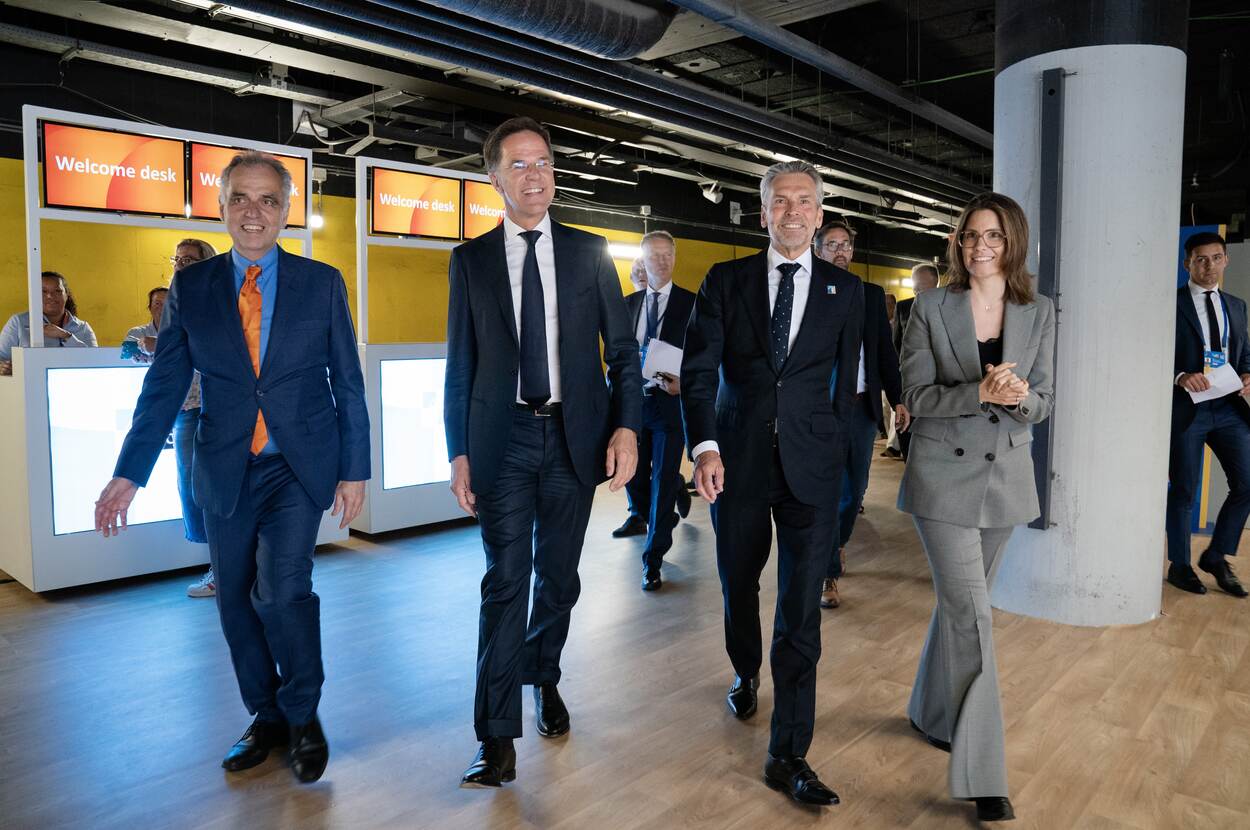
    Today, the Prime Minister, Mark Carney, met with the Prime Minister of Belgium, Bart De Wever.

    Prime Minister Carney congratulated Prime Minister De Wever on taking office in February and emphasized the longstanding ties between Canada and Belgium.

    The leaders discussed expanding bilateral trade and investment, with a focus on advancing clean energy solutions such as nuclear and hydrogen, strengthening critical minerals supply chains, and deepening co-operation on defence procurement.

    They affirmed their support for Ukraine’s sovereignty and agreed on the imperative of achieving a just and lasting peace. The leaders also underscored their commitment to defence co-operation in support of security in Europe, particularly on NATO’s eastern flank.

    Prime Minister Carney and Prime Minister De Wever agreed to remain in close contact and looked forward to continuing discussions at the NATO Summit in The Hague, the Netherlands, later this week.

    Associated Link

    MIL OSI Canada News

  • MIL-OSI Africa: Food and Agriculture Organization of the United Nations (FAO) and International Plant Protection Convention (IPPC) launch second phase of the Africa Phytosanitary Programme

    The Food and Agriculture Organization of the United Nations (FAO) and the International Plant Protection Convention (IPPC), in collaboration with the Government of South Africa, represented by the Department of Agriculture, launched the second phase of the Africa Phytosanitary Programme (APP) today – representing a major effort to stop the spread of plant pests and diseases in Africa using cutting-edge digital tools.

    The launch event was hosted by the Government of South Africa and brought together over 50 phytosanitary specialists from nine countries: Algeria, Cape Verde, Chad, the Republic of Congo, Liberia, Malawi, Senegal, South Africa and Tunisia. They will participate in a weeklong Train-the-Trainer (ToT) workshop in advanced pest surveillance techniques, including the use of customised digital tools and applications for monitoring, detecting and reporting major pests of economic, regulatory and environmental importance in Africa. Participants will receive state-of-the-art tablets for geospatial pest surveillance, use field survey protocols developed by technical experts, and undertake practical sessions using the pest survey tools.

    “Africa stands at a turning point. With immense biodiversity, rising agricultural productivity, and growing opportunities under the African Continental Free Trade Area (AfCFTA), we are well-positioned to become a global leader in the trade of high-quality plant products. But this vision can only be achieved if we ensure that the movement of plants and plant products is safe, traceable, and fully compliant with international phytosanitary standards” said John Henry Steenhuisen, Honourable Minister of Agriculture, in South Africa, in remarks read on his behalf by Jan Hendrik Venter, South Africa’s Director of Plant Health.

    “Well-trained, well-equipped plant health officials across the continent are our best line of defence in maintaining pest-free or low-prevalence status, an essential condition for accessing these lucrative markets”, he added.

    The first and pilot phase of APP started in 2023, engaging phytosanitary specialists from Cameroon, Democratic Republic of Congo, Egypt, Guinea-Bissau, Kenya, Mali, Morocco, Sierra Leone, Uganda, Zambia and Zimbabwe. Phase 2 builds on achievements made in the pilot phase and aims to train plant health officers, who upon their return to their countries will teach their peers in the national plant protection organisations (NPPOs) and other government stakeholders on the use of the APP suite of digital tools.

    “We are building a critical mass of phytosanitary inspectors, technicians and officers across Africa by equipping plant health officers with the tools and skills to prevent and address major plant pest threats, that ultimately jeopardize food security, agricultural trade, economic growth and the environment”, said Beth Bechdol, FAO Deputy Director-General and Officer-in-Charge of the IPPC, in her video message.

    Funded through generous contributions from the European Union and the United Kingdom of Great Britain and Northern Ireland, APP phase two builds on support from the United States Department of Agriculture (USDA), Animal and Plant Health Inspection Service (APHIS) which funded phase one in 2023. FAO and the IPPC are working to replicate and scale up the benefits from APP to more African countries and other regions. 

    Mitigating the pest problem in Africa

    Worldwide, plant pests destroy about 40 percent of crop yields, resulting in approximately USD 220 billion in economic losses[1]. In Africa, the impacts of climate change are worsening  the problem, with invasive pests – such as, fruit flies, false codling moth, maize lethal necrosis disease, citrus greening and fall armyworm – causing major damages. Fall armyworm alone is estimated to cause the highest yield loss in Africa – USD 9.4 billion annually –, based on data from the Centre for Agriculture and Bioscience International (CABI). 

    The African Union’s Plant Health Strategy for Africa highlights that limited technical capability remains a key barrier to achieving sustainable agriculture on the continent. Through APP, FAO, the IPPC and partners aim to strengthen plant health systems and build national phytosanitary capacity across Africa.

    Distributed by APO Group on behalf of Food and Agriculture Organization of the United Nations (FAO): Regional Office for Africa.

    MIL OSI Africa

  • MIL-OSI Europe: Answer to a written question – Hungary’s ban on Pride – E-001277/2025(ASW)

    Source: European Parliament

    Equality and the respect for human dignity and human rights are core values of the EU, enshrined in the Treaty of the European Union and the EU Charter of Fundamental Rights[1].

    These also include the right to freedom of expression and to peaceful assembly and association. The Commission is committed to promoting and safeguarding these rights.

    In December 2022, the Commission referred Hungary to the Court of Justice of the EU over national rules that discriminate against people based on their sexual orientation and gender identity[2].

    The Commission considered that they violate several EU laws, both single market rules and the fundamental rights of individuals, in particular of lesbian, gay, bisexual, trans, intersex and queer (LGBTIQ) people, as well as the common values at the core of the EU.

    The case is pending before the Court of Justice. A hearing on this case took place on 19 November 2024 and the Advocate General issued her Opinion on 5 June 2025.

    The Commission is assessing the recent legislative amendments and closely monitoring the situation in Hungary. The Commission remains fully committed to addressing inequality and discrimination affecting LGBTIQ persons as outlined in the LGBTIQ Equality Strategy 2020-2025[3].

    • [1] 2012/C 326/02, https://eur-lex.europa.eu/legal-content/EN/TXT/PDF/?uri=CELEX:C2012/326/02.
    • [2] C-769/22 Commission v Hungary (Valeurs de l’Union).
    • [3] https://eur-lex.europa.eu/legal-content/EN/TXT/?uri=celex:52020DC0698.
    Last updated: 23 June 2025

    MIL OSI Europe News

  • MIL-OSI Europe: Answer to a written question – Shortages of health workers in France and the EU – E-001540/2025(ASW)

    Source: European Parliament

    The Commission is currently implementing an Action Plan on labour and skills shortages of 20 March 2024[1]. The action plan sets out 87 actions or commitments that the EU, Member States and social partners will or should take to tackle these shortages.

    It contains a call to Member States to develop policies to attract and retain nurses through improving working conditions and mentoring young professionals, with the support of the EU4Health Programme .

    The collection of data for a survey on the health professionals’ mental health was carried out by the World Health Organisation (WHO) with EU4Health funding, and its results are planned to be published in October 2025. The WHO will then develop a set of proposed policy actions to protect the mental health of the health workforce, planned for publication before the end of 2025[2].

    The Commission’s Expert Group on Health Systems Performance Assessment[3] is mapping various approaches to ensuring safe staffing levels in healthcare.

    The Commission also helps Member States, including France, in seizing opportunities from the digitalisation of health systems. Among others, the European Health Data Space initiative[4] aims to establish a common framework for the use and exchange of electronic health data.

    T hrough the European Semester, t he Commission provides country-specific policy advice to support health system reforms , including those related to the health workforce. Substantial EU funding[5] is available to support skills development programmes[6] and planning and forecasting tools[7].

    I n the context of the Union of Skills[8] and its Skills Portability Initiative, the Commission will explore common rules for recognising the qualifications of third-country nationals, and thus facilitate the integration of non-EU workers into the EU labour markets, including in the healthcare sector.

    The forthcoming Quality Jobs Roadmap will support progress on the various dimensions of job quality in the evolving world of work.

    • [1]  Commission Communication on Labour and skills shortages in the EU: an action plan, COM(2024) 131 final (https://eur-lex.europa.eu/legal-content/EN/TXT/?uri=CELEX:52024DC0131).
    • [2]  https://commission.europa.eu/strategy-and-policy/priorities-2019-2024/promoting-our-european-way-life/european-health-union/comprehensive-approach-mental-health_en.
    • [3]  https://health.ec.europa.eu/health-systems-performance-assessment_en.
    • [4]  https://health.ec.europa.eu/ehealth-digital-health-and-care/european-health-data-space-regulation-ehds_en.
    • [5]  https://health.ec.europa.eu/publications/2024-eu4health-work-programme_en.
    • [6]  Erasmus+ programme funded actions: AMR EDUCare https://www.amreducare.eu/, ‘BeWell’ https://bewell-project.eu/, DDS-MAP https://ddsmap.easpd.eu/, DigiCanTrain https://digicantrain.turkuamk.fi/contact-us/, e-Hospital4Future https://eh4future.eu/, EHMA https://hpass.healthworkforce.eu/EU4Health training https://health.ec.europa.eu/publications/2022-eu4health-work-programme_en; GESEA Educational Programme https://gesea.eu/ and TRANSiTION https://ehma.org/projects/transition/.
    • [7]  EU4Health Programme funded Joint Action Heroes: https://www.agenas.gov.it/ricerca-e-sviluppo/ricerca-internazionale/personale-sanitario-ri/heroes-health-workforce-to-meet-health-challenges.
    • [8]  https://op.europa.eu/en/publication-detail/-/publication/5c5c5399-fa8a-11ef-b7db-01aa75ed71a1.

    MIL OSI Europe News

  • MIL-OSI Canada: Canada announces new, strengthened partnership with the European Union

    Source: Government of Canada – Prime Minister

    Today, the Prime Minister, Mark Carney, announced an historic step forward for Canada’s relationship with the European Union (EU). Together with President Costa and President von der Leyen, the Prime Minister announced they will forge a new, ambitious, and comprehensive partnership. The New EU-Canada Strategic Partnership of the Future is rooted in shared values and the rules-based international system, and strategically aimed to pursue common interests.

    Canada and the EU will soon launch comprehensive negotiations across multiple areas to strengthen co-operation and connection – including trade and economic security, the digital transition, and the fight against climate change and environmental degradation. This will create more economic opportunities and long-term prosperity for workers, businesses, and citizens in both Canada and the EU.

    As part of this new, strengthened relationship, Canada and the EU today signed the Security and Defence Partnership, which provides a framework for dialogue and co-operation in security and defence priorities. For Canada and the EU Member States who are NATO Allies, this will also help deliver on capability targets more quickly and economically. This new partnership is the intentional first step toward Canada’s participation in Security Action for Europe (SAFE), an instrument of the ReArm Europe Plan/Readiness 2030. Canada’s participation in this initiative will create significant defence procurement and industrial opportunities for Canada.

    In an increasingly dangerous and divided world, Canada’s new government is focused on strengthening and diversifying our international partnerships. We will work with the EU and other allies to build a new international, rules-based system for a more secure and prosperous world.

    Quote

    “Canada’s new government has a mandate to diversify and strengthen international partnerships. To that end, we took an historic step forward today to deepen Canada’s relationship with the European Union. Through increased co-operation in defence, trade, and commerce, we’ll create greater prosperity, security, and stability on both sides of the Atlantic.”

    Quick Facts

    • While in Belgium, Prime Minister Carney also met with the Prime Minister of Belgium, Bart De Wever, to strengthen bilateral ties and advance common priorities. The two leaders visited the Antwerp Schoonselhof Military Cemetery to pay tribute to Canadian Armed Forces members who lost their lives during the First and Second World Wars.
    • Unveiled earlier this year, the ReArm Europe Plan/Readiness 2030 is the European Commission’s plan to boost defence funding in Europe, including through Security Action for Europe (SAFE) loans. This initiative provides up to €150 billion in loans to EU Member States, members of the EU single market, and Ukraine to support defence investments, with a focus on joint procurement projects.

    Related Products

    Associated Link

    MIL OSI Canada News

  • MIL-OSI Security: Met officer charged with sexual assault offences

    Source: United Kingdom London Metropolitan Police

    A serving Metropolitan Police officer has appeared at court following sexual assault charges.

    Inspector Michael Richards, attached to Learning and Development, was charged with two counts of sexual assault by touching on Sunday, 25 May.

    He appeared at Westminster Magistrates’ Court on Monday, 23 June. He was bailed to next appear at Southwark Crown Court on Monday, 21 July.

    He remains suspended from duty.

    Insp Richards was arrested on Wednesday 17, September on suspicion of sexual assault by touching. The allegations relate to a male and a female victim, both over the age of 18. They are alleged to have taken place on the same day as the arrest while Insp Richards was off-duty.

    The Met’s Directorate of Professional Standards is aware.

    MIL Security OSI

  • MIL-OSI Global: The Learning Refuge: How women-led community efforts help refugees resettle in Cyprus

    Source: The Conversation – Canada – By Suzan Ilcan, Professor of Sociology & University Research Chair, University of Waterloo

    A grassroots organization in Paphos, Cyprus, is bringing women together to address the needs of refugees in the city. (Shutterstock)

    Since 2015, the Republic of Cyprus (ROC) has seen a steady rise in migrant arrivals and asylum applications, primarily from people from Middle Eastern and African countries like Syria, the Democratic Republic of Congo and Cameroon.

    But many asylum-seekers face significant challenges. Refugees formally in the asylum system are often denied residency permits, which means they face persistent insecurity, poverty and isolation

    These conditions are compounded by restrictive and limited services for asylum-seekers. This deepens the precarity and exclusion refugees face within a political and economic system that treats them more like economic burdens than as human beings with rights who need help.

    In response to these institutional failures, citizens, volunteers and refugees themselves have begun to build grassroots networks of care and solidarity in the ROC and beyond to support refugee communities.

    In 2022 and 2023, we conducted interviews with women volunteers and refugees affiliated with The Learning Refuge, a civil society organization in the city of Paphos in southwest Cyprus that cultivates dialogue and collaboration among these two diverse groups.

    Women-led initiatives

    Many displaced people first arrive on the island of Cyprus through the Turkish Republic of Northern Cyprus (TRNC). However, the absence of a functioning asylum system or international legal protections leaves them in limbo.

    With no viable path to status in the TRNC, most cross the Green Line that bifurcates Cyprus into the ROC, where European Union asylum frameworks exist but remain limited in practice.

    Women-led community-building is often a response to the negative effects of inadequate state support and humanitarian aid for refugees. In Cyprus, this situation leaves many refugees without access to sufficient food, satisfactory health care, accommodation, employment, clothing and language training. In this current environment, refugees are increasingly experiencing insecure and fragile situations, especially women.

    In Cyprus, ss in many other countries, a variety of community-building efforts are important responses to limited or restricted state support and humanitarian aid for refugees.

    Women-led efforts offer opportunities to deliver educational activities and establish networks, and to help improve the welfare and social protection of refugee women, however imperfectly.

    These and other similar efforts highlight how women refugees and volunteers can mobilize to foster dialogue and collaboration.

    The Learning Refuge

    Founded in 2015, The Learning Refuge began as community meetings in a city park. The organization then used space from a nearby music venue to conduct support activities, and later, established itself in a dedicated building.

    Organizations like The Learning Refuge emerged to address the limited state support and humanitarian assistance services available to refugees.

    The Learning Refuge cultivates dialogue and collaboration among a diverse group of community volunteers.
    (Suzan Ilcan)

    As Syrian families began arriving in Paphos in 2015, local mothers started working with Syrian children, assisting them with homework, providing skills-training opportunities and language classes.

    The Learning Refuge cultivates dialogue and collaboration among a diverse group of community volunteers, including schoolteachers, artists, musicians, local residents, refugees and other migrants.

    With the aid of 20 volunteers, the loosely organized groups provide women refugees with material support and resources to enhance collective activities, including art and music projects, while also engaging in educational and friendship activities.

    While modest in scale, the organization has formed partnerships with local and international organizations, including Caritas Cyprus, UNHCR-Cyprus and the Cyprus Refugee Council to extend its outreach to various refugee groups.

    The organization has also launched creative initiatives aimed at cultivating additional inclusive civic spaces. One such effort, “Moms and Babies Day,” was developed in response to the rising number of single mothers from Africa arriving on the island. These women often face poverty and isolation, and struggle with language barriers.

    These efforts highlight how grassroots responses — especially those led by women — can offer partial but vital educational and emotional support to refugees struggling to find their footing in a new country.

    Negotiated belonging

    Through participation in The Learning Refuge, refugee women in Paphos engage in a dynamic process of negotiated belonging, navigating challenges like language barriers, gendered isolation, domestic violence and poverty while contributing to broader community-building efforts.

    For example, Maryam, a Syrian woman and mother of three, told us how The Learning Refuge helped her children establish friendships and learn Greek. She also highlighted that it helped her form close ties with volunteers and other Syrian women living in Cyprus, and find paid work in the city.

    The volunteers and women refugees participating in The Learning Refuge’s activities emphasized not only their capacity to develop new forms of belonging and solidarity; they also help reshape communal knowledge and generate supportive spaces for women from various backgrounds.

    Our research shows that women-led community-building is an effective, though short-term, response to insufficient state support and humanitarian aid systems that leave many refugees in precarious situations.

    In varying degrees, these efforts offer women and their families spaces to learn and cultivate new relationships, and foster collective projects and better visions of resettlement and refuge.

    Suzan Ilcan receives funding from the Social Sciences and Humanities Council of Canada.

    Seçil Daǧtaș receives funding from Social Sciences and Humanities Research Council of Canada.

    ref. The Learning Refuge: How women-led community efforts help refugees resettle in Cyprus – https://theconversation.com/the-learning-refuge-how-women-led-community-efforts-help-refugees-resettle-in-cyprus-252682

    MIL OSI – Global Reports

  • MIL-OSI USA: Murphy Delivers Speech on Dangers of Unregulated AI During CODEL to Europe

    US Senate News:

    Source: United States Senator for Connecticut – Chris Murphy

    June 20, 2025

    PARIS—U.S. Senator Chris Murphy (D-Conn.) delivered a major speech on the threats posed to the U.S. economy and spiritual health of Americans by unregulated artificial intelligence technology at the Paris Institute of Political Studies during a congressional delegation to Paris, France and Bucharest, Romania.

    Murphy acknowledged the potential benefits of this transformational technology: “It will likely turn out to be one of the most socially and economically disruptive technologies ever. It’s probably going to be bigger than the printing press or advanced medicine or the internet. And there’s also no doubt that it has enormous practical upsides. Medical advances will come more quickly. Production will be cheaper. Administration will become more efficient. Complex societal problems will be solved more easily.”

    But Murphy warned the Trump administration is downplaying the potential risks of unregulated AI technology, evidenced by a speech given earlier this year by Vice President J.D. Vance: “The current U.S. administration is right now fully captured by the AI industry, and they are focused only on driving up the industry’s profits at the expense of the American worker and the American family. The vice president said at that summit that the White House refuses to view AI as a purely disruptive technology that will inevitably automate away our labor force. But this is exactly what unregulated, unchecked AI will do. The vice president claimed that the White House wanted the AI driven internet to be a safe place, but refused to endorse a single rule or a single idea that would keep it safe, apparently believing the industry whitewash that they will just self-regulate and prioritize family and citizen safety above profits, something the tech industry has never done.”

    He argued the industry leaders lobbying against AI regulation are prioritizing profit over the common good: “The leaders of these companies, brimming with dangerous hubris, rapacious in their desire to build wealth and power, and far too comfortable in shrugging off the destructive power of their product… They’re in a race to deploy and commercialize and profit, and they are paying mere lip service to the ways in which AI and AGI could destroy the already fraying fabric of our country…If we don’t decide collectively as a transatlantic community to protect ourselves from the most transformational technology of our lifetime. And as I said, perhaps in the history of the world, we won’t have democracies to be able to protect the values that we care so deeply about. We won’t be able to debate domestic and foreign policy.”

    He pushed back on those who argue regulating AI in the U.S. will give China a strategic advantage in developing the technology: “Frankly, China is likely rooting for us to use American and European citizens as guinea pigs for the AI revolution because they aren’t doing that. China’s attempts at regulation have been lighter than the EU, but it’s just not true that China believes that the way to beat the United States towards AI prominence is by not regulating the industry. China would love for the United States economy to collapse, because we are less thoughtful than Beijing in controlling the job loss they would love for unchecked fake video and audio to turn our culture into chaos. They would love for our young people to become even further lost and isolated as robot friends replace real friends and real interaction. Regulating AI isn’t a gift to China – it’s a way to make sure that we manage the growth of AI in a way that makes sure that we beat the Chinese in this race.”

    ##

    MIL OSI USA News

  • MIL-OSI Europe: Initiative Marianne

    Source: France-Diplomatie – Ministry of Foreign Affairs and International Development

    Presentation

    In 2021, French President Emmanuel Macron announced the launch of the Marianne Initiative for human rights defenders, aimed at better supporting them in their fight, both abroad and in France.

    The Marianne Association for Human Rights Defenders was created to federate the actors involved in our country (State, organisations and associations for the promotion of human rights and reception, local authorities, qualified personalities, etc.) and to carry the initiative’s support pillar in France, for the benefit of about fifteen laureates per year (reception, personalised support, networking, etc.).

    “France is and will remain a land of welcome for human rights defenders

    Après la réception d’une première promotion exclusivement féminine en 2022, trois nouvelles promotions mixtes se sont suite ensuite succédées, en 2023, 2024 et plus récemment 2025.

    Some fifteen men and women from every continent have been welcomed to France for six months as part of the Initiative. The winners benefit from a training program designed to strengthen their skills and commitment in their home country or in France, whether in favor of civil and political rights, women’s rights, minority rights or environmental rights.

    A look back at past years

    “The protection of human rights is more than ever a topical battle, in a context where repression is multiplying in every corner of the world”.

    Emmanuel Macron – President of the Republic, at the launch of the second promotion

    “Fundamental human rights are under increasing threat around the world. On this international day, I wanted to launch the Marianne Initiative for Human Rights Defenders. To take these rights everywhere. To protect and support its defenders.”

    Emmanuel Macron – President of the Republic, on Human Rights Day 2021

    Read more

    MIL OSI Europe News

  • MIL-OSI Africa: Morocco: His Majesty the King Congratulates Grand Duke, Grand Duchess of Luxembourg on National Day

    Source: Africa Press Organisation – English (2) – Report:

    Download logo

    His Majesty King Mohammed VI sent a congratulatory message to their Royal Highnesses Grand Duke Henri and Grand Duchess Maria Teresa of Luxembourg on the occasion of their country’s national day.

    In this message, the Sovereign extends His best wishes for happiness to their Royal Highnesses and prosperity to the people of Luxembourg.

    On this occasion, His Majesty the King expresses His esteem for the friendship ties uniting Morocco and the Grand Duchy of Luxembourg.

    – on behalf of Kingdom of Morocco – Ministry of Foreign Affairs, African Cooperation and Moroccan Expatriates.

    MIL OSI Africa

  • MIL-OSI Analysis: How to protect your favourite urban trees from increasing danger

    Source: The Conversation – UK – By Lucy Grace, PhD Candidate, Climate Change and Literature, Nottingham Trent University

    Whether your favourite tree is in a private garden, on wasteland, in a school playground or on the street, your emotional response may be admiration, relaxation, rejuvenation or awareness of the seasons passing. But so many special trees are experiencing a combination of threats.

    According to a new report from environmental charity the Tree Council and government-funded agency Forest Research, introduced pests and diseases, pollution, extreme weather and infrastructure development are all on the increase, which could be a disaster for the UK’s trees. These affect trees’ condition, resilience and capacity to mitigate the climate and nature crises.

    Not only do trees play ecological roles in nature, such as shelter for wildlife and protection from floods, many people have long-standing connections to trees. A report from the Tree Council highlights the role of trees as an important part of the “fabric of human cultures and societies”.

    This demonstrates a move away from appreciating only the ecological benefits provided by urban trees and towards the social and cultural importance they hold for local populations.


    Get your news from actual experts, straight to your inbox. Sign up to our daily newsletter to receive all The Conversation UK’s latest coverage of news and research, from politics and business to the arts and sciences.


    The ecological and biodiversity values of trees are well-documented. Trees offer homes and food for birds, insects and wildlife. They prevent rainwater reaching the ground by as much as 45%. When combined with grass, surface water flooding is reduced by 99% compared with tarmac. Urban trees reduce air pollution, quieten noise and keep cities shaded and cool.

    Thousands of people cast votes for their favourite trees in the UK and Europe. In a recent study, over half of 1,800 adults surveyed said they had a favourite tree and 74% felt that urban development is the greatest threat to our trees.

    That’s not the only threat, though. Single species planting of street trees, for example, leaves the trees vulnerable to diseases (such as Dutch elm or ash dieback). Rising temperatures and water scarcity leaves trees competing for resources.

    But what does that mean for our urban trees? Approximately 30% of tree cover in England exists outside forest and woodland. Such trees form an essential habitat in urban areas where 83% of the UK’s population live, yet more than ever before our urban trees are facing threats from a deadly combination of environmental change and human development. In Wales, for example, 7,000 mature trees in towns and cities were lost between 2006 and 2013.

    To try to address this growing crisis, woodland charity Forest Research have released a new, national free to use “trees outside woodland” map. This refers to any trees found in settings such as parks, open countryside and farmland, gardens and estates, or beside roads and paths.

    These can be on a street corner, beside a railway track or in a market square and includes very old trees like those listed on the ancient tree inventory plus otherwise unremarkable trees growing in unusual settings, such as the vandalised 200-year-old Sycamore Gap tree.

    Why we love trees

    England is dawdling behind many other countries when it comes to protecting important trees. Forest Research found that trees outside woodland share many of the social and cultural values associated with trees in woodlands, however people make specific relationships with these urban trees and they are more likely to be considered unique and irreplaceable.

    Trees in urban areas have huge social benefits too.
    Karo Martu/Shutterstock

    They can be recognised for their grace and beauty or for their associations with customs, beliefs and rituals. They can be a place to rest and play and symbols of community belonging. They can give a sense of continuity, connecting people’s lifespans with reflections about the natural world and everything beyond.

    Many countries give clear titles to their important trees. In Poland, they are called natural monuments, in Germany they are living monuments. Spain, Belgium, Greece, Mexico and Finland use the term “monumental trees”. In New Zealand, special urban trees are referred to as national living landmarks. Currently England falls behind in designating trees for protection based on their historical or aesthetic importance.

    Trees for everyone

    A common feature across many countries is the opportunity for anyone, including members of the public, to recommend a tree for protection. Tree equity is the idea that everyone should have access to the benefits of trees. It includes prioritising and deploying resources in the areas where people have least access to them.

    Tree inequity exists in most UK towns and cities. On average, the most economically and socially deprived and most ethnically diverse neighbourhoods have half the tree canopy cover compared to the least deprived and least diverse.

    Canopy cover ranges from 1–2% in parts of north-east England to 36% in Hampstead, north London. Even within London there are wide variations.

    So ensure your favourite tree can be appreciated and celebrated by your community as a living monument, make sure it is on the Trees Outside Woodland map. And check if it needs a drink.


    Don’t have time to read about climate change as much as you’d like?

    Get a weekly roundup in your inbox instead. Every Wednesday, The Conversation’s environment editor writes Imagine, a short email that goes a little deeper into just one climate issue. Join the 45,000+ readers who’ve subscribed so far.


    Lucy Grace receives funding from AHRC for her PhD through the Midlands4Cities Doctoral Training Partnership.

    ref. How to protect your favourite urban trees from increasing danger – https://theconversation.com/how-to-protect-your-favourite-urban-trees-from-increasing-danger-258227

    MIL OSI Analysis

  • MIL-OSI Analysis: How to protect your favourite urban trees from increasing danger

    Source: The Conversation – UK – By Lucy Grace, PhD Candidate, Climate Change and Literature, Nottingham Trent University

    Whether your favourite tree is in a private garden, on wasteland, in a school playground or on the street, your emotional response may be admiration, relaxation, rejuvenation or awareness of the seasons passing. But so many special trees are experiencing a combination of threats.

    According to a new report from environmental charity the Tree Council and government-funded agency Forest Research, introduced pests and diseases, pollution, extreme weather and infrastructure development are all on the increase, which could be a disaster for the UK’s trees. These affect trees’ condition, resilience and capacity to mitigate the climate and nature crises.

    Not only do trees play ecological roles in nature, such as shelter for wildlife and protection from floods, many people have long-standing connections to trees. A report from the Tree Council highlights the role of trees as an important part of the “fabric of human cultures and societies”.

    This demonstrates a move away from appreciating only the ecological benefits provided by urban trees and towards the social and cultural importance they hold for local populations.


    Get your news from actual experts, straight to your inbox. Sign up to our daily newsletter to receive all The Conversation UK’s latest coverage of news and research, from politics and business to the arts and sciences.


    The ecological and biodiversity values of trees are well-documented. Trees offer homes and food for birds, insects and wildlife. They prevent rainwater reaching the ground by as much as 45%. When combined with grass, surface water flooding is reduced by 99% compared with tarmac. Urban trees reduce air pollution, quieten noise and keep cities shaded and cool.

    Thousands of people cast votes for their favourite trees in the UK and Europe. In a recent study, over half of 1,800 adults surveyed said they had a favourite tree and 74% felt that urban development is the greatest threat to our trees.

    That’s not the only threat, though. Single species planting of street trees, for example, leaves the trees vulnerable to diseases (such as Dutch elm or ash dieback). Rising temperatures and water scarcity leaves trees competing for resources.

    But what does that mean for our urban trees? Approximately 30% of tree cover in England exists outside forest and woodland. Such trees form an essential habitat in urban areas where 83% of the UK’s population live, yet more than ever before our urban trees are facing threats from a deadly combination of environmental change and human development. In Wales, for example, 7,000 mature trees in towns and cities were lost between 2006 and 2013.

    To try to address this growing crisis, woodland charity Forest Research have released a new, national free to use “trees outside woodland” map. This refers to any trees found in settings such as parks, open countryside and farmland, gardens and estates, or beside roads and paths.

    These can be on a street corner, beside a railway track or in a market square and includes very old trees like those listed on the ancient tree inventory plus otherwise unremarkable trees growing in unusual settings, such as the vandalised 200-year-old Sycamore Gap tree.

    Why we love trees

    England is dawdling behind many other countries when it comes to protecting important trees. Forest Research found that trees outside woodland share many of the social and cultural values associated with trees in woodlands, however people make specific relationships with these urban trees and they are more likely to be considered unique and irreplaceable.

    Trees in urban areas have huge social benefits too.
    Karo Martu/Shutterstock

    They can be recognised for their grace and beauty or for their associations with customs, beliefs and rituals. They can be a place to rest and play and symbols of community belonging. They can give a sense of continuity, connecting people’s lifespans with reflections about the natural world and everything beyond.

    Many countries give clear titles to their important trees. In Poland, they are called natural monuments, in Germany they are living monuments. Spain, Belgium, Greece, Mexico and Finland use the term “monumental trees”. In New Zealand, special urban trees are referred to as national living landmarks. Currently England falls behind in designating trees for protection based on their historical or aesthetic importance.

    Trees for everyone

    A common feature across many countries is the opportunity for anyone, including members of the public, to recommend a tree for protection. Tree equity is the idea that everyone should have access to the benefits of trees. It includes prioritising and deploying resources in the areas where people have least access to them.

    Tree inequity exists in most UK towns and cities. On average, the most economically and socially deprived and most ethnically diverse neighbourhoods have half the tree canopy cover compared to the least deprived and least diverse.

    Canopy cover ranges from 1–2% in parts of north-east England to 36% in Hampstead, north London. Even within London there are wide variations.

    So ensure your favourite tree can be appreciated and celebrated by your community as a living monument, make sure it is on the Trees Outside Woodland map. And check if it needs a drink.


    Don’t have time to read about climate change as much as you’d like?

    Get a weekly roundup in your inbox instead. Every Wednesday, The Conversation’s environment editor writes Imagine, a short email that goes a little deeper into just one climate issue. Join the 45,000+ readers who’ve subscribed so far.


    Lucy Grace receives funding from AHRC for her PhD through the Midlands4Cities Doctoral Training Partnership.

    ref. How to protect your favourite urban trees from increasing danger – https://theconversation.com/how-to-protect-your-favourite-urban-trees-from-increasing-danger-258227

    MIL OSI Analysis

  • MIL-OSI Global: At June’s Nato summit, just keeping Donald Trump in the room will be seen as a victory

    Source: The Conversation – UK – By Stefan Wolff, Professor of International Security, University of Birmingham

    Gints Ivuskans/Shutterstock

    When Nato leaders meet for their annual summit in The Hague on Wednesday June 25, all eyes will be on Donald Trump. Not only is the 47th president of the United States less committed to the alliance than any of his predecessors in Nato’s 76-year history. But he has also just joined Israel’s war with Iran and seems to have given up his efforts to end the war in Ukraine.

    Leaders of Nato’s 32 member states should therefore have had a packed agenda. Although there are several meetings and a dinner planned for June 24, the actual summit – which has tended usually to stretch out over several days – has been reduced to a single session and a single agenda item. All of this has been done to accommodate the US president.

    A single session reduces the risk of Trump walking away from the summit early, as he did at the G7 leaders meeting in Kananaskis, Canada, on June 16.

    The single item remaining on the agenda is Nato members’ new commitment to increase defence spending to 5% of GDP by 2035. This is meant to placate Trump who demanded such an increase even before his inauguration in January 2025.


    Get your news from actual experts, straight to your inbox. Sign up to our daily newsletter to receive all The Conversation UK’s latest coverage of news and research, from politics and business to the arts and sciences.


    Trump has frequently complained, and not without justification, that European members of the alliance invested too little in their defence and were over-reliant on the US. A draft summit declaration confirming the new spending target has now been approved after Spain secured an opt-out.

    Even accounting for Trump’s notorious unpredictability, this should ensure that Nato will survive the Hague summit intact. What is less clear is whether Nato’s members can rise to the unprecedented challenges that the alliance is facing.

    These challenges look different from each of the member states’ 32 capitals. But, for 31 of them, the continued survival of the alliance as an effective security provider is an existential question. Put simply, they need the US, while the US doesn’t necessarily need to be part of the alliance.

    The capability deficit that Canada and European member states have compared to the US was thrown into stark relief by Washington’s airstrikes against Iran over the weekend. This is not simply a question of increasing manpower and to equip troops to fight. European states also lack most of the so-called critical enablers, the military hardware and technology required to prevail in a potential war with Russia.

    This includes, among other things, intelligence capabilities, heavy-lift aircraft to quickly move troops and equipment and command and control structures that have traditionally been provided by US forces. These will take significant time and resources to replace.

    For now, Russia is tied down in Ukraine, which will buy time. And the 5%-commitment – even if not all member states will get there quickly or at all – is likely to go some way towards to mobilise the necessary resources for beefing up Europe’s defences. But time and resources are not limitless. And is not yet clear what the American commitment to Europe will be in the future and when and how it will be reduced.

    A new type of war

    Nor is it completely obvious what kind of war Europe should prepare for. Russia’s aggression against Ukraine is both a very traditional war of attrition and a very modern technological showdown.

    A future confrontation with the Kremlin is initially likely to take the form of a “grey-zone” conflict, a state of affairs between war and peace in which acts of aggression happen but are difficult to attribute unambiguously and to respond to proportionately.

    This has arguably already started with Russian attacks on critical infrastructure. And as the example of Ukraine illustrates, grey-zone conflicts have the potential to escalate to conventional war.

    In February 2022, Russia saw an opportunity to pull Ukraine back into its zone of influence by brute force after and launched a full-scale invasion, hoping to capture Kyiv in a matter of a few days. This turned out to be a gross misjudgement on the Kremlin’s part. And three years on from that, if frequent Russian threats are to be believed, the possibility of a nuclear escalation can no longer be ruled out either.

    Key members of the alliance are unequivocal in their assessment of Russia as an existential threat to Europe. This much has been made clear in both the UK’s strategic defence review and the recent strategy paper for the German armed forces.

    Nato secretary-general Mark Rutte, the former prime minister of The Netherlands, gives a press conference before the Nato summit.

    Yet, this is not a view unanimously shared. Trump’s pro-Putin leanings date back to their now infamous meeting in Helsinki when he sided with the Russian president against his own intelligence services.

    In Europe, long-term Putin supporters Victor OrbanOrbán and Robert Fico, the prime ministers of EU and Nato members Hungary and Slovakia, have just announced that they will not support additional EU sanctions against Russia.

    Hungary and Slovakia are hardly defence heavyweights, but they wield outsized institutional power. Their ability to veto decisions can disrupt nascent European efforts both within the EU and Nato to rise to dual challenge of an increasingly existential threat to Europe from Russia and American retrenchment from its 80-year commitment to securing Europe against just that threat.

    What will, and more importantly what will not, happen at the Nato summit in The Hague will probably be looked back on as another chapter in the remaking of the international order and the European security architecture. A Nato agreement on increased defence spending should be enough to give the organisation another lease of life. But the implicit inability to agree on what is the main threat the alliance needs to defend itself against is likely to put a short expiration date on that.


    Read more:
    US joins Israel in attack on Iran and ushers in a new era of impunity


    Stefan Wolff is a past recipient of grant funding from the Natural Environment Research Council of the UK, the United States Institute of Peace, the Economic and Social Research Council of the UK, the British Academy, the NATO Science for Peace Programme, the EU Framework Programmes 6 and 7 and Horizon 2020, as well as the EU’s Jean Monnet Programme. He is a Trustee and Honorary Treasurer of the Political Studies Association of the UK and a Senior Research Fellow at the Foreign Policy Centre in London.

    ref. At June’s Nato summit, just keeping Donald Trump in the room will be seen as a victory – https://theconversation.com/at-junes-nato-summit-just-keeping-donald-trump-in-the-room-will-be-seen-as-a-victory-259585

    MIL OSI – Global Reports

  • MIL-OSI United Kingdom: Greens denounce “Britannia Card” as Reform UK’s latest wheeze to prop up the super wealthy 

    Source: Green Party of England and Wales

    Reacting to Reform UK’s plans for a “Britannia Card” which would offer wealthy foreigners and returning British expats a bespoke tax regime in exchange for a one-off payment of £250,000 – with all funds collected redistributed to Britain’s lowest-paid workers – Green Party co-leader Adrian Ramsay MP said:  

    “Nigel Farage’s latest wheeze to prop up the super wealthy, dressed up as helping the poorest, would result in an estimated loss of a whopping £34bn to the Treasury. Rather than enabling the super-rich to buy their way out of paying UK tax, the Green Party would tax investment income as equivalent to earned income and introduce a wealth tax based on assets. This is the way to fix our public services to benefit everyone. 

    “This is another reminder that Reform UK is a Party run by multi-millionaires out to look after their own and with net zero interest in the rest of us. There’s nothing patriotic about a “Britannia card” that would let the ultra-wealthy avoid paying taxes and contributing to society.” 

    MIL OSI United Kingdom

  • MIL-OSI United Kingdom: Business leaders welcome the government’s modern Industrial Strategy

    Source: United Kingdom – Executive Government & Departments

    Press release

    Business leaders welcome the government’s modern Industrial Strategy

    Business leaders have welcomed the government’s modern Industrial Strategy – a 10-year plan to promote growth.

    Business leaders from across the UK have welcomed the government’s modern Industrial Strategy. The Strategy is a 10-year plan to promote business investment and growth and make it quicker, easier and cheaper to do business in the UK.

    The plan focuses on 8 sectors where the UK is already strong and there’s potential for faster growth: Advanced Manufacturing, Clean Energy Industries, Creative Industries, Defence, Digital and Technologies, Financial Services, Life Sciences, and Professional and Business Services.

    Joint statement from business groups: 

    “The Industrial Strategy launched today marks a significant step forward and a valuable opportunity for the business community to rally behind a new vision for the UK—boosting confidence, sentiment, and enthusiasm for investment. 

    “From start-ups and small businesses to large corporates, businesses need a more attractive, stable environment that enables faster, easier, and more certain investment decisions.  

    “We welcome the Government’s engagement with businesses across the UK. Much of what we’ve shared has been heard and reflected in this strategy. While there’s more to do, we are ready to support the next steps. 

    “We encourage businesses nationwide to get behind this strategy and champion the UK as the best place to live, work, invest, and do business.” 

    Statement on behalf of: 

    • Shevaun Haviland, Director General, British Chambers of Commerce 

    • Rain Newton-Smith, Director General, Confederation of British Industry 

    • Aaron Asadi, Chief Executive Officer, Enterprise Nation 

    • Tina McKenzie, Policy and Advocacy Chair, Federation of Small Businesses 

    • Stephen Phipson, Chief Executive Officer, Make UK 

    • Michelle Ovens, Founder, Small Business Britain 

    • Dom Hallas, Executive Director, Startup Coalition 

    Advanced Manufacturing 

    Dr Hayaatun Sillem CBE, Chief Executive, Royal Academy of Engineering:

    “We are delighted to see the announcement of new skills packages for tech, engineering and defence, recognising that the Industrial Strategy’s objectives simply cannot be delivered without a significant boost to investment in our engineering and tech talent base. These packages provide a much-needed opportunity for government to take a holistic view of the rapidly changing skills landscape, and to work with partners across industry and professional bodies to make sure the UK tackles its longstanding skills and diversity deficits in these crucial areas. Today is International Women in Engineering Day – a reminder that we still have much to do to deliver equitable participation in these high-value jobs, and better outcomes for people from all parts of the UK. 

    “The Royal Academy of Engineering looks forward to supporting government in taking forward these recommendations, including through our new Skills Centre. We also welcome the publication of the Technology Adoption Review and hope that this will result in meaningful action to increase the capacity of the UK’s industrial base and public sector to deploy existing technologies at the scale and pace demanded in today’s tech-driven world.” 

    John Harrison, General Counsel and Head of Public Affairs, Airbus:

    “Airbus welcomes the UK’s modern Industrial Strategy. Having worked closely with the Government to help shape this plan, we are delighted to see it deliver a long-term vision, built on a genuine partnership with industry.  

    “The firm long-term commitment to the full innovation lifecycle, from R&D in the Aerospace Technology Institute to a focus on commercialisation and supply chain resilience, provides the confidence and stability needed to fuel innovation and anchor high-value manufacturing in the UK for decades to come. The significant new investment in skills is also critical, creating a strong pipeline of engineering and digital talent, which will be the foundation for developing the sustainable technologies of the future, from hydrogen-powered aircraft to next-generation space systems. We stand ready to help turn this ambitious strategy into a reality for British industry.” 

    Clean Energy  

    Dhara Vyas, CEO, Energy UK:

    “Energy UK welcomes the Government’s new Industrial Strategy and Clean Energy Industries sector plan, which rightly recognise the pivotal role energy will play across the whole economy, powering growth through digitalisation and electrification, boosting regional prosperity and delivering economic security and resilience.   

    “Stable, affordable energy prices will help ensure that the UK remains a competitive place to do business, and in an increasingly uncertain global operating environment, clean power will deliver energy security. Focussing on priority technologies where the UK has global expertise will deliver a strong competitive advantage for our businesses and economy.   

    “We know the investment necessary to decarbonise the economy will mostly be funded by the private sector. Clarity on Government policy, removal of the barriers to investment and targeted support are all essential to meet this ambition.”     

    Sue Ferns, Senior Deputy General Secretary, Prospect Union:  

    “Boosting clean energy is not only an important mission in its own right, it is central to the success of every other sector. It is welcome to see the government doubling down on this mission, focusing investment on key technologies like renewables and nuclear energy, and recognising the key role that trade unions play as partners in this strategy.  

    “Securing the investment is important, but perhaps the biggest challenge in this area is around the workforce. The energy workforce is undergoing an unprecedented transition, which creates opportunities for many but also serious challenges that need to be addressed.  

    “Delivering on this strategy in a way which creates prosperity and supports jobs will require the government’s forthcoming energy workforce plan to be as ambitious as possible and fully backed by all parts of government.”  

    Martin Pibworth, Chief Executive Designate, SSE plc:

    “The government’s industrial strategy is a welcome signal of long-term thinking and ambition – doubling down on homegrown energy is the right thing for security, resilience and affordability, making the most of the UK’s competitive geographical and technical advantages in renewables in particular. It’s exactly the kind of commitment that gives industry the confidence to deliver at pace and scale, and with important decisions on energy policy expected in the weeks ahead, we hope to see a continued focus on unlocking investment that drives growth. As the UK’s clean energy champion, SSE is investing £17.5bn over five years to 2027 – building the infrastructure, creating high-quality jobs, supporting the supply chain and driving the innovation needed to deliver a net zero economy.” 

    Creative Industries 

    Caroline Norbury, Chief Executive, Creative UK: 

    “The Sector Plan signals that the creative industries are central to the UK’s growth story. From freelancers to scale-ups, this is a step towards the joined-up support our sector needs – and Creative UK stands ready to work with government and industry partners to turn ambition into action.  

    “As we move into delivery mode, it’s essential that all parts of the sector – from cultural organisations to creative tech firms – are empowered to grow, invest and contribute fully to the UK’s economic future.” 

    Dana Strong, Sky Group CEO:  

    “We warmly welcome the Government’s support for the UK’s creative industries in today’s Industrial Strategy. The media and entertainment sector is a cultural powerhouse and a key driver of growth, with the potential to add £10 billion to the economy and create 40,000 jobs by 2033. Seizing this opportunity is vital to maintaining the UK’s global leadership in creativity.” 

    Alison Lomax, Managing Director, YouTube UK & Ireland:  

    “We welcome the Creative Industries Sector Plan’s commitment to a robust framework for creatives across the UK. It’s particularly encouraging to see the government acknowledge the digital creator economy’s vital role in driving growth for our creative industries. By embracing new distribution models that boost our cultural exports, this vision will solidify the UK’s position as a global cultural superpower.” 

    Defence 

    David Lockwood OBE, CEO, Babcock International:

    “We welcome the release of the Government’s Modern Industrial Strategy today, setting out the strategic direction for critical sectors including advanced manufacturing, space and nuclear. The Government’s intent to back British businesses and invest in sovereign industries will lay the foundations for economic growth and unleash the potential of the growth sectors to drive prosperity across the UK. We look forward to the publication of the Defence Sector Plan, and working with the Government to bolster the British defence industrial base and safeguard our national and economic security.” 

    Charles Woodburn, Chief Executive, BAE Systems: 

    “The UK’s modern Industrial Strategy rightly recognises the importance of investing in skills and developing a workforce for the future. The UK’s defence sector is a powerhouse of skilled employment and training. Across the supply chain, it’s critical that we continue to invest in our people, just as much as we invest in technology, to ensure we can deliver the capabilities our armed forces need to stay ahead in an era of increasing instability. 

    “That’s why, this year alone, BAE Systems is recruiting more than 2,400 new apprentices and graduates across the UK and we recognise the importance of government, industry and academia working together to develop the talent needed to support this critical high growth sector.” 

    Paul Livingston CBE, Chief Executive, Lockheed Martin UK & NATO: 

    “Lockheed Martin welcomes publication of the UK government’s Modern Industrial Strategy and especially its identification of defence, space, and digital technologies as core areas for driving economic growth and expanding mutually beneficial international partnerships with the United States, NATO and their allies. With 28 facilities spanning the length and breadth of the country we’re committed to combining the best skills, expertise and technologies from the UK and the United States to boost capacity, sustain jobs and deliver economic benefits in both countries.” 

    Digital and Tech 

    Antony Walker, Deputy CEO, techUK: 

    “Today, the government has outlined welcome measures to boost confidence for the UK tech sector and the wider economy. 

    “techUK has long called for the Industrial Strategy to focus on strengthening the conditions for growth of the UK tech sector and accelerating the adoption of new technologies across the economy and public services. 

    “In an era of rapid technological change, the government must now work in true partnership with business to bolster investment and digital adoption across the whole of the UK economy and secure the country’s competitive advantage in key markets, including semiconductors and AI. techUK, and our members, stand ready to support this government to do so.” 

    Allison Kirkby, Chief Executive, BT Group: 

     “Long-term plans which have positive impact pay.  

    “BT has invested over £24bn in the UK so far this decade and will invest a further £20bn before it’s done, to upgrade the country’s digital infrastructure.  

    “That’s why we welcome the Government’s Industrial Strategy for the decade ahead. 

    “And it’s great to see it give telecoms prominence: at the centre of a high-growth sector as well as a lever for growth in the wider economy.  

    “We look forward to working more with Government on steps they can take to unlock further growth, and make sure the UK’s record-breaking fibre success story is followed fast by an acceleration in 5G too.” 

    Emily Turner, UK CEO, HSBC Innovation Banking:

    “I welcome today’s Industrial Strategy, which sets out positive steps to back the UK’s growth driving sectors, particularly Digital and Technologies. This ten-year strategy will help position the UK as an open and attractive destination for talent and investment, at a time when global competition is particularly acute.  ”We look forward to working closely with our clients and the government to ensure the effective implementation of the sector plans to help realise the full ambition of the UK’s industrial strategy, while ensuring that it remains flexible to keep pace with technological developments.” 

    Darren Hardman, CEO, Microsoft UK:

    “This is a really progressive plan from the Government. Cutting red tape, reducing energy costs, accelerating the delivery of new projects and ensuring the UK has a highly skilled workforce to take advantage of the AI economy. These are all critical factors in encouraging investment from businesses here in the UK and around the world.” 

    Vishal Marria, Founder and CEO, Quantexa:  

    “This Industrial Strategy is a key moment for the UK’s growth economy. By addressing structural headwinds like energy costs and grid access, the government is unlocking the potential of British industry. As a UK-founded data and AI company, we welcome the vision to make Britain the best place to build, scale, and invest. Lowering business electricity costs, accelerating clean energy, and prioritising digital skills are vital for sectors like technology, financial services, defence, and advanced manufacturing – all of which will rely on AI and trusted data to compete and lead. This strategy is the bold signal of confidence UK industry has been waiting for.” 

    Financial Services 

    Hannah Gurga, Director General, ABI:  

    “Today’s Industrial Strategy delivers a clear long-term growth vision, commitment to genuine partnership with business and the regulatory certainty firms need to thrive. We’re pleased that financial services has been recognised as a key growth sector and look forward to working with government on the detailed sector plan. 

    “The expansion of the British Business Bank’s capacity and its new £6.6 billion growth-capital commitment will unlock vital funding to support smaller UK businesses and drive growth.” 

    Miles Celic OBE, Chief Executive Officer, TheCityUK:  

    “The ambitions of today’s Industrial Strategy are laudable, highlighting the priorities for national growth.  Financial and related professional services are crucial to its success, from unlocking private capital for innovative businesses to increasing investible opportunities across the regions and nations. 

    “We believe that supporting growth across whole country is particularly important and we are pleased to see the establishment of the Strategic Investment Opportunities Unit within the Office for Investment. This is the first critical step in the proposal we’ve been pushing to attract investors and capital. 

    “Transforming both the planning and public procurement processes, making it easier for businesses to bring in global talent whilst addressing the skills shortfall here in the UK, and strengthening global market partnerships are vital for future proofing the economy and are steps where our industry has long called for action. 

    “The detailed delivery plans for each of the eight sectors of the Industrial Strategy will be critical to realising its ambition. We look forward to seeing these. The vital issue now is delivery. We are committed to working closely with government and the regulators on the successful execution of these ambitions.” 

    James Alexander, CEO, UKSIF: 

    “We welcome the overarching ambition of the Industrial Strategy, which feels like a generational shift in thinking. This rightly recognises that government and investors need to work in partnership through a shared vision so we can make the UK the ‘sustainable finance capital of the world’.” 

    Life Sciences 

    Richard Torbett, Chief Executive, ABPI: 

    “This strategy sets out a clear vision for how to grow the UK economy and is rightly focused on many of the key inputs the country needs to get right to create the conditions for success. The task now must be to move quickly from planning to delivery, rapidly boosting UK attractiveness for investment and returning the country to international competitiveness.   “For UK life sciences, a successful strategy means ensuring the UK is not only a cutting-edge place to research and develop the medicine of the future, but also a country which seeks to embrace and use the life-changing innovations we are developing. This will be the key litmus test for success in the upcoming life science sector plan and the NHS 10-year plan, where we hope to see more detail.” 

    Steve Bates OBE, CEO, UK BioIndustry Association (BIA): 

     “The Industrial Strategy has prioritised the life sciences sector because it will disproportionately drive economic growth over the next decade and help deliver an NHS fit for the future. 

    “SMEs are the lifeblood of this innovative industry and a strength of the UK ecosystem, securing £3.7 billion investment last year, much of it from overseas. We are on the verge of creating a new generation of globally-impactful companies, so it is a smart move by Government to establish a dedicated support service to help 10–20 high-potential UK life science companies scale, attract investment, and remain headquartered in the UK. 

    “The £4 billion British Business Bank Industrial Strategy Growth Capital initiative will bring new agility to support fledgling companies and cutting-edge technologies as part of the pro-innovation Industrial Strategy. We look forward to working closely with the Bank as they establish this programme for our sector. 

    “These, alongside improved health data resources for innovators, faster clinical trials, more streamlined and joined-up medicines regulation and access pathways, and investments in medicines manufacturing, mean this Industrial Strategy and the upcoming Life Sciences Sector Plan deliver across the breadth of BIA’s priorities on behalf of our members. These plans are just the beginning, however, as we will now get down to the serious work of delivering these commitments in partnership with the Government.” 

    Professor Andrew Morris CBE FRSE PMedSci, President, Academy of Medical Sciences:   

    “Today’s Industrial Strategy represents a significant step forward for UK life sciences – placing the sector at the heart of our economic future and recognising health and wealth are inseparable. This bold vision acknowledges what the Academy of Medical Sciences has long argued: that our world-leading research institutions, the NHS and our exceptional scientific talent can drive national and regional renewal in ways no other sector can match.  

    “We are particularly encouraged by the Government’s ambitious goal to make the UK the leading life sciences economy in Europe by 2030, and the third most important globally by 2035. This scale of ambition, combined with over £2bn of committed funding, demonstrates the recognition that life sciences uniquely delivers both economic prosperity and improved health outcomes for all.   

    “The strategy’s focus on pillars for the life sciences – supporting world-class R&D, making the UK an outstanding place to start and grow life sciences businesses, and driving health innovation through NHS reform – provides the framework needed to unlock the sector’s full potential. We welcome the commitment to continue investing in discovery research alongside applied sciences, ensuring we maintain curiosity-driven research that underpins future breakthroughs.  

    “Alignment with the forthcoming NHS 10-Year Health Plan offers unprecedented opportunity to ensure that cutting-edge innovations deliver rapid benefits for patients whilst driving economic growth. We look forward to the detailed life sciences sector plan that will translate these ambitions into action, and will continue working with Government to deliver this vision where scientific excellence drives both patient benefit and national prosperity as the UK achieves its full potential as a global leader in life sciences.”   

    Professional and Business Services 

    Malcolm Gomersall, CEO, Grant Thornton UK:   

    “The publication of the Industrial Strategy is a welcome step forward in setting out a clear, long-term path for growth in the sectors that are powering our economy.   

    “The strategy and the Professional and Business Services plan reflect our own investment priorities for the future, such as increased tech and AI adoption, fostering a highly skilled workforce in areas such as cyber security, digital and net zero transition and growing our specialist capabilities which support the expansion of our clients into international markets. I welcome the clear intention that the wider sector deliver this strategy in partnership with the Government through the Professional and Business Services Council. 

    “As an employer of over 5,500 people in one UK’s fastest growing and most resilient sectors, ourown journey and track record over recent years has been remarkable. To achieve our ambitious growth plans, we know that we need to continue investing in the future, which means ensuring our people have the right skills and tools for a new era of business.” 

    Jon Holt, Group Chief Executive and UK Senior Partner, KPMG: 

    “The UK is the second-largest exporter of professional and business services, making our industry central to this country’s economic strength. We are at the forefront of the AI revolution, we are major employers of diverse talent and we support businesses of all sizes across the country. As a global success story it’s only right that we’re recognised as a high growth sector.  

    “This industrial strategy makes bold choices and sets clear priorities. Its impact will come from a genuine partnership between Government and business, working together on wins to really unlock the growth, profitability and investment that will shape the UK’s future.” 

    Rachel Taylor, Government and Health Industries Leader, PwC: 

    “An industrial strategy without business is just a wish list. The UK Government’s new strategy sets a welcome direction – and business stands ready to turn ambition into action. 

    “Skills are the new growth currency. The Strategy sets out a bold plan to close the UK’s skills gap, and this will make important steps in addressing business leaders’ concerns that we are losing top talent to other countries. We must work together – government, business and our world-class education institutions – to build the workforce of the future and keep that talent here. 

    “Business is ready to lean in. With the right framework, we can unlock investment, drive innovation and deliver the growth and opportunity this strategy sets out to achieve.”

    Updates to this page

    Published 23 June 2025

    MIL OSI United Kingdom

  • MIL-OSI United Kingdom: Lord Mayor pays tribute to the Windrush generation | Westminster City Council

    Source: City of Westminster

    The significant role of the Windrush generation in getting a post-war Britain “back on its feet again” was highlighted by the Lord Mayor of Westminster as he paid tribute to the Caribbeans who have contributed to Westminster’s success.

    The Lord Mayor, Cllr Paul Dimoldenberg, cited the compelling stories of the estimated 500,000 people who answered the call to come to 1950s Britain and rebuild a country exhausted by war. 

    Speaking on Windrush Day (June 22) at Westbourne Forum summer festival, the Lord Mayor said: 

    So essential was the Windrush generation to our economic recovery, that in the 1950s the NHS, British Rail, and the public transport industry were recruiting almost exclusively from the Caribbean. Our City and our country would be in a much worse state without their work.

    “But their contribution goes far beyond simply their labour. They have helped build our communities, enriched our culture, and made Westminster a better place to live.”

    The Lord Mayor highlighted individual contributions like that of Jamaican-born Gwendolyn Dennis who came to Westminster aged 26 and worked in both St Thomas’s Hospital and the Royal Orthopaedic Hospital, and Barbadian Levi Decourcey Husbands who moved to Maida Vale, and worked as a British Rail train guard. That legacy continues to this day with Gwendolyn’s granddaughter and Levi’s daughter both working for Westminster City Council, the Lord Mayor added.

    This year’s Westbourne Forum festival was dedicated to celebrating the contribution the Windrush generation and their descendants have made not just in employment but also in culture, the arts and the wider community.

    However, the Lord Mayor also made clear there was a darker aspect of that history that needed to noted: 

    We must acknowledge the challenges these people faced when they arrived. How much harder they had to work to overcome barriers that were placed in their way because of the prevailing atmosphere of racism, prejudice, and discrimination. These are issues that have never entirely gone away, and which we must keep working tirelessly to eliminate.”

    The Lord Mayor concluded: 

    We are proud to continue working towards a unity of people across spectrums, building a better, fairer Westminster, and recognising that the Windrush generation and their legacy can help to bridge the divides in our society.”

    MIL OSI United Kingdom

  • MIL-OSI United Kingdom: Flag raising marks start of Armed Forces Week

    Source: City of Leicester

    THE FLAG of the Armed Forces has been raised at Leicester’s Town Hall to mark the start of Armed Forces Week.

    Leicester’s Lord Mayor Cllr Teresa Aldred was joined by Deputy Lieutenant Professor Surinder Sharma for the flag-raising ceremony today (Monday).

    The flag will be flown until Armed Forces Day on Saturday (28 June), when Leicester will once again host the Armed Forces Day parade.

    The 250-strong parade will be made up of serving military, reservists, veterans, cadets and the Pipes and Drums of the Seaforth Highlanders, stepping off from Belgrave Gate, near to the Haymarket car park, at 11am. It will make its way past the Clock Tower, onto High Street, and fall out in Jubilee Square. 

    A saluting dais will be positioned on High Street, opposite Carts Lane, where the salute will be taken by the Lord-Lieutenant of Leicestershire Mike Kapur OBE and a senior military officer.

    They will be joined on the dais by the Lord Mayor of Leicester, Cllr Teresa Aldred, and the Chairman of Leicestershire County Council, Cllr Paul Harrison.

    Once in Jubilee Square, a drumhead service will begin at around 11.20am. The service will begin with the formation of the drumhead made up of five single drums. The service will be led by the Dean of Leicester, the Very Revd Karen Rooms. 

    Leicester has a long-standing relationship with local units of the armed forces with both the Royal Lancers and Royal Anglian Regiments having been granted the freedom of the city of Leicester.

    The city council is also a signatory of the Armed Forces Covenant, which sets out the authority’s relationship with the armed forces and the services available to current and former personnel and their families.

    Assistant city mayor Councillor Manjula Sood MBE is the city council’s Armed Forces Champion.

    “Coming together to recognise the work of our Armed Forces, both past and present, is always an honour, and we are ever aware of the increasing unrest across the world that still heavily relies on members of our services to stand and protect us all,” she said.

    “We continue to show them our gratitude for their commitment and dedication.”

    Leicester’s Armed Forces Day Parade and Service has been organised by Leicester City Council, Leicestershire County Council, the Lieutenancy Office, and Leicester Cathedral. 

    MIL OSI United Kingdom

  • MIL-OSI United Kingdom: Updated Statement: Palestine Action

    Source: Scottish Greens

    Scottish Greens respond to authoritarian government overreach against Palestine Action

    Following confirmation that the UK Government is intending to proscribe Palestine Action, the Scottish Greens reiterated warnings of the deeply authoritarian implications of using terrorism legislation to silence non-violent protesters. 

    Patrick said: 

    “Today’s confirmation that Labour intends to use terrorism legislation against non-violent protesters should worry us all. 

    “Palestine Action have been accused by Keir Starmer of ‘vandalism’ and by Rachel Reeves today of causing damage to “privately owned assets” – which the RAF said would have no impact on their operations. 

    “It’s obviously absurd that throwing red paint on things could cause a group to be listed alongside Al Qaeda, ISIS and Russia’s Wagner Group, with membership carrying a 14-year prison sentence.

    “This is deeply authoritarian. Human rights groups like Amnesty International have rightly raised significant concerns over this aggressive use of powers that should be reserved for only the most extreme and dangerous organisations.

    “To use Rachel Reeves’ own words – what really is “totally unacceptable” is the UK Government’s ongoing commitment to train, arm and support Israel as it regularly and openly commits war crimes as part of an ongoing genocide.

    “Labour’s priorities are completely backwards – and will have devastating consequences for Palestinians under siege in Gaza and non-violent protesters here in the UK.”  

    MIL OSI United Kingdom

  • MIL-OSI Europe: Frontex supports European countries with EES pre-registration

    Source: Frontex

    Frontex has developed a mobile application to support European countries with the implementation of the new Entry/Exit System (EES) and to facilitate border checks for travellers.

    The Travel to Europe mobile app allows non-EU travellers comfortably to pre-register travel document data and facial image for the EES before arriving at a border crossing point. It also allows travellers to provide their replies to the conditions of entry questionnaire. In simple terms most of the information that border guards would have to insert to EES about a third country national at the border crossing point could be sent with the app in advance, allowing faster entry or exit.

    The app will go live in selected travel hubs and remains voluntary for Member States and travellers. The first confirmed go-live will take place in Arlanda Airport Sweden this year, in parallel Frontex is planning jointly with Dutch, French and Italian authorities’ pilots in selected major entry points in 2026. In addition, Portugal and Greece have expressed interest for the implementation of app.

    “The app is ready to be used with the start of the EES in the coming autumn. Frontex has done its part, developed a scalable and secure app. Now it is up to every Member State to integrate the app with its national systems. Although its voluntary, we encourage EU countries to make maximum use of it.  It’s not for every border crossing point, but we see a clear added value in big travel hubs, where the time savings brought about by the app would make a real difference,” said Frontex Deputy Executive Director Uku Särekanno in his keynote at Identity Week Europe 2025 held in Amsterdam on 17-18 June.

    The purpose of voluntary EES pre-registration is to reduce processing times at the border, benefitting both national authorities and travellers. The app does not replace border checks but aims at making them smoother and faster.

    More information about the Travel to Europe mobile app.

    More information about the EES.

    MIL OSI Europe News

  • MIL-OSI: BAY Miner cloud mining launches zero-cost one-click mining of BTC, ETH, XRP and other currencies

    Source: GlobeNewswire (MIL-OSI)

    Seattle, Washington, June 23, 2025 (GLOBE NEWSWIRE) — Against the backdrop of increasing uncertainty in the international situation, global investors are accelerating their turn to blockchain assets as an emerging safe-haven option, and attention to the cryptocurrency market continues to rise. BAY Miner cloud mining has officially launched a cloud mining platform that supports multiple currencies and has zero cost with a low threshold and high efficiency, once again becoming the focus of market attention. Users do not need to buy mining machines or master the technology. Through BAY Miner’s mobile app and web version platform, they can participate in the real-time mining of multiple mainstream cryptocurrencies such as Bitcoin, Dogecoin, Litecoin, etc. with one click.
    BAY Miner cloud mining platform provides one-stop solutions for global users’ questions such as “how to invest in Bitcoin” and “how to make money through cloud mining”. The platform combines green energy with an intelligent computing power management system. Users do not need to configure any hardware. They only need to register to get a $15 trial fee and immediately start mining mainstream cryptocurrencies such as BTC, ETH, XRP, DOGE, LTC, SOL, etc.
    Emily Carter, Head of Marketing at BAY Miner, said: “Our vision is to make digital asset mining more convenient, transparent, and adaptable to market changes. In uncertain times, investors seek more resilient alternatives, and BAY Miner cloud mining allows them to participate in blockchain investment with peace of mind.”

    Advantages and features of cloud mining:
    1. No hardware investment required: Users do not need to buy expensive mining machines or set up mining farms. All computing power comes from remote data centers and is maintained uniformly by the platform.
    2. Zero maintenance cost: No need to worry about electricity bills, equipment aging, noise and heat dissipation. The operation and maintenance work is undertaken by the cloud mining platform, and users focus on revenue management.
    3. Simple operation and novice-friendly: Just register an account, select a contract and pay the fee to start automatic mining. The platform supports multiple currencies, revenue visualization, automatic reinvestment and other functions.
    4. Mobile control anytime, anywhere: The cloud mining platform supports mobile apps, and users can view revenue and adjust strategies in real time through their mobile phones. Supports Android/iOS dual systems.
    5. Flexible contract selection: You can choose computing power packages by day, week, or month, suitable for different budgets and strategies. A variety of cryptocurrencies are available: BTC, ETH, XRP, DOGE, LTC, SOL, etc.
    6. Lower entry threshold: Compared with traditional mining models, cloud mining has low costs and low risks. It is suitable for junior investors or crypto enthusiasts as an experience method.
    7. Available worldwide, in line with the trend of decentralization: no geographical restrictions, only Internet access is required. Users can enjoy the decentralized computing resources of the global blockchain network.
    8. The platform provides registration rewards and referral rebates: registration rewards such as BAY Miner (starting from US$15) lower the threshold for users’ first investment. The promotion system allows users to get commission rewards by inviting friends.
    How to earn cryptocurrency with BAY Miner:
    Complete the registration in a few simple steps
    ·Visit the official website BAY Miner and register an account to automatically receive a $15 trial fee.
    ·Choose the cloud mining contract you want to participate in, such as BTC Free Hashrate Plan, or choose to top up to purchase a high-yield contract
    ·The system automatically distributes income every day, which can be viewed and withdrawn at any time through mobile phones or websites
    ·The promotion system supports users to invite friends and relatives to mine through exclusive invitation codes, and can get up to 5% alliance rewards, increasing additional sources of income.

    Cloud mining is super easy, click to register now

    The table below shows the potential income you can achieve
    BTC [New User Experience Contract]: Investment amount: $100, potential total net profit: $100 + $10
    BTC [Core Contract Plan]: Investment amount: $600, potential total net profit: $600 + $43.2
    DOGE [Core Contract Plan]: Investment amount: $3,000, potential total net profit: $3,000 + $825.3
    BTC [Electricity Contract Plan]: Investment amount: $8,000, potential total net profit: $8,000 + $4340
    BTC[Electricity Contract Plan]: Investment Amount: $30,000, Potential Total Net Profit: $30,000 + $23,220
    Note: Profit estimates depend on network conditions and market volatility.

    Click here for full contract details

    BAY Miner cloud mining is suitable for people:

    • Beginners who want to participate in crypto investment with a low threshold
    • Asset allocators seeking multi-currency passive income opportunities
    • Global users who cannot deploy local mining machines but have income needs
    • Digital finance enthusiasts who want to participate in blockchain through mobile devices

    Market prospects:
    According to market research, cloud mining platforms will become one of the important entry points for cryptocurrency investment in 2025. Especially in the context of rising uncertainty in the macro-political environment, decentralized asset allocation tools are favored by more users. BAY Miner is expanding its service network around the world and continuously optimizing platform stability and revenue structure.
    What is BAY Miner Cloud Mining?
    BAY Miner was founded in 2017 and is committed to building a low-threshold, highly transparent global encrypted cloud mining platform. With users all over the world, it has AI computing power scheduling, multi-currency contract configuration and real-time profit chart functions, suitable for novice users and professional investors to participate.
    Visit the official website: www.bayminer.com
    Email: info@bayminer.com
    Mobile APP: https://bayminer.com/app/download
    Address: Ground Floor, Egerton House, 68 Baker Street, Weybridge, Surrey, United Kingdom, KT13 8AL

    Disclaimer: The information provided in this press release does not constitute an investment solicitation, nor does it constitute investment advice, financial advice, or trading recommendations. Cryptocurrency mining and staking involve risks. There is a possibility of financial loss. It is strongly recommended that you perform due diligence before investing or trading in cryptocurrencies and securities, including consulting a professional financial advisor.

    Attachment

    The MIL Network

  • MIL-OSI: UPDATE – Rockcliffe Capital Initiates Coverage on Agnico Eagle Mines Ltd. (TSX/NYSE: AEM) with a “Strong Buy” Rating and US$155 Price Target

    Source: GlobeNewswire (MIL-OSI)

    TORONTO, June 23, 2025 (GLOBE NEWSWIRE) — Rockcliffe Capital is pleased to announce today the initiation of equity research coverage on Agnico Eagle Mines Ltd. (TSX/NYSE: AEM), a premier senior gold mining company with operations spanning Canada, Finland, Australia, Mexico, and the U.S. 

    Following rigorous financial and operational analysis, Rockcliffe Capital assigns Agnico Eagle a “Strong Buy” rating, alongside a 12-month price target of US$155, reflecting strong upside potential of approximately 25% from current market levels.

    “Agnico Eagle has delivered extraordinary operating discipline and record earnings this quarter,” said Felix Gelt, Managing Director of Research at Rockcliffe Capital. “With Q1 net income soaring to US$815 M—up 134% YoY—and free cash flow reaching US$594 M amid near-zero debt, Agnico offers both growth and balance sheet strength in the gold sector.”

    Investment Thesis Highlights:

    • Earnings Powerhouse: Q1 2025 net income rose to US$815 million (US$1.62 EPS), a 134% YoY increase, driven by record operating margins from elevated gold prices.
    • Revenue & Margin Strength: Q1 revenue climbed 34.9% YoY to US$2.468 billion, while all-in sustaining costs (AISC) dropped ~10% to US$1,183/oz, delivering a ~59% margin.
    • Balance Sheet Resilience: Operating cash flow hit US$1.044 billion, free cash flow was US$594 million, enabling net debt to fall to just US$5 million, with cash reserves of US$1.138 billion.
    • Strategic Growth Initiatives: Ongoing capital deployment into high-quality projects like Detour Lake, Upper Beaver, and the O3 Mining acquisition enhances reserve base and future production visibility.
    • Shareholder Returns: Maintains a US$0.40/share quarterly dividend. NCIB buybacks of US$50 million executed in the quarter; the Board plans an expanded NCIB of up to US$1 billion.
    • ESG Leadership: Released its 16th Sustainability Report highlighting best-in-class emissions intensity (0.38 tCO₂e/oz), US$1 billion Indigenous economic commitment, and sector-leading safety.

    Valuation & Target:
    Utilizing a disciplined valuation framework with a projected 2026 EV/EBITDA multiple of ~8× and P/E multiple of ~18×, Rockcliffe Capital derives a 12-month price target of US$155, equivalent to ~US$115/share, indicating ~25% upside from current levels.

    Risk Factors:

    • Gold Price Volatility: A sustained decline in gold prices could compress margins and cash flow.
    • Project Execution: Delays at key sites (e.g., underground transitions, permitting) could affect supply outlook.
    • Macro Factors: A stronger U.S. dollar or higher real interest rates may weigh on gold sector valuations.

    About Rockcliffe Capital Research
    Rockcliffe Capital’s Research Department provides institutional-grade equity research focused on growth-stage companies, public markets, and high-conviction investment themes. Through rigorous analysis, proprietary modeling, and deep sector insights, our research team supports investors, issuers, and strategic partners in identifying value and making informed decisions.

    Our coverage includes detailed valuation frameworks, peer comparisons, financial modeling, and ESG scorecards—delivering the intelligence that drives market leadership.

    Please contact research@rockcliffe.capital for access to our full research suite and initiation reports.

    Media Contact
    Rockcliffe Capital
    Research & Markets Division
    research@rockcliffe.capital
    +1 (416)-642-1967

    This press release is for informational purposes only and does not constitute investment advice. Rockcliffe Capital and its affiliates may hold positions in the securities mentioned.

    The MIL Network

  • MIL-OSI: UPDATE – Rockcliffe Capital Initiates Coverage on Agnico Eagle Mines Ltd. (TSX/NYSE: AEM) with a “Strong Buy” Rating and US$155 Price Target

    Source: GlobeNewswire (MIL-OSI)

    TORONTO, June 23, 2025 (GLOBE NEWSWIRE) — Rockcliffe Capital is pleased to announce today the initiation of equity research coverage on Agnico Eagle Mines Ltd. (TSX/NYSE: AEM), a premier senior gold mining company with operations spanning Canada, Finland, Australia, Mexico, and the U.S. 

    Following rigorous financial and operational analysis, Rockcliffe Capital assigns Agnico Eagle a “Strong Buy” rating, alongside a 12-month price target of US$155, reflecting strong upside potential of approximately 25% from current market levels.

    “Agnico Eagle has delivered extraordinary operating discipline and record earnings this quarter,” said Felix Gelt, Managing Director of Research at Rockcliffe Capital. “With Q1 net income soaring to US$815 M—up 134% YoY—and free cash flow reaching US$594 M amid near-zero debt, Agnico offers both growth and balance sheet strength in the gold sector.”

    Investment Thesis Highlights:

    • Earnings Powerhouse: Q1 2025 net income rose to US$815 million (US$1.62 EPS), a 134% YoY increase, driven by record operating margins from elevated gold prices.
    • Revenue & Margin Strength: Q1 revenue climbed 34.9% YoY to US$2.468 billion, while all-in sustaining costs (AISC) dropped ~10% to US$1,183/oz, delivering a ~59% margin.
    • Balance Sheet Resilience: Operating cash flow hit US$1.044 billion, free cash flow was US$594 million, enabling net debt to fall to just US$5 million, with cash reserves of US$1.138 billion.
    • Strategic Growth Initiatives: Ongoing capital deployment into high-quality projects like Detour Lake, Upper Beaver, and the O3 Mining acquisition enhances reserve base and future production visibility.
    • Shareholder Returns: Maintains a US$0.40/share quarterly dividend. NCIB buybacks of US$50 million executed in the quarter; the Board plans an expanded NCIB of up to US$1 billion.
    • ESG Leadership: Released its 16th Sustainability Report highlighting best-in-class emissions intensity (0.38 tCO₂e/oz), US$1 billion Indigenous economic commitment, and sector-leading safety.

    Valuation & Target:
    Utilizing a disciplined valuation framework with a projected 2026 EV/EBITDA multiple of ~8× and P/E multiple of ~18×, Rockcliffe Capital derives a 12-month price target of US$155, equivalent to ~US$115/share, indicating ~25% upside from current levels.

    Risk Factors:

    • Gold Price Volatility: A sustained decline in gold prices could compress margins and cash flow.
    • Project Execution: Delays at key sites (e.g., underground transitions, permitting) could affect supply outlook.
    • Macro Factors: A stronger U.S. dollar or higher real interest rates may weigh on gold sector valuations.

    About Rockcliffe Capital Research
    Rockcliffe Capital’s Research Department provides institutional-grade equity research focused on growth-stage companies, public markets, and high-conviction investment themes. Through rigorous analysis, proprietary modeling, and deep sector insights, our research team supports investors, issuers, and strategic partners in identifying value and making informed decisions.

    Our coverage includes detailed valuation frameworks, peer comparisons, financial modeling, and ESG scorecards—delivering the intelligence that drives market leadership.

    Please contact research@rockcliffe.capital for access to our full research suite and initiation reports.

    Media Contact
    Rockcliffe Capital
    Research & Markets Division
    research@rockcliffe.capital
    +1 (416)-642-1967

    This press release is for informational purposes only and does not constitute investment advice. Rockcliffe Capital and its affiliates may hold positions in the securities mentioned.

    The MIL Network

  • MIL-OSI Video: UK E-petition debate relating to geo-engineering and the environment – Monday 23 June 2025.

    Source: United Kingdom UK Parliament (video statements)

    The Petitions Committee has scheduled a debate relating to geo-engineering and the environment.

    Dr Roz Savage MP has been asked by the Committee to open the debate. The Government will send a Minister to respond.

    Read the petition:
    https://petition.parliament.uk/petitions/701963

    Find petitions you agree with, and sign them: https://petition.parliament.uk/

    What are petition debates?

    Petition debates are ‘general’ debates which allow MPs from all parties to discuss the important issues raised by one or more petitions, and put their concerns to Government Ministers.

    Petition debates don’t end with a vote to implement the request of a petition. This means that MPs will not vote on the issues raised in the petition at the end of the debate.

    The Petitions Committee can only schedule debates on petitions to parliament started on petition.parliament.uk

    Find out more about how petition debates work: https://committees.parliament.uk/committee/326/petitions-committee/content/194347/how-petitions-debates-work/

    Stay up-to-date
    Follow the Committee on Twitter for real-time updates on its work: https://www.twitter.com/hocpetitions

    Thumbnail image ©UK Parliament / Jessica Taylor

    https://www.youtube.com/watch?v=aSXuI4PaZ0o

    MIL OSI Video

  • MIL-OSI United Kingdom: CNC praised for meeting 2024 – 2025 objectives

    Source: United Kingdom – Executive Government Non-Ministerial Departments 2

    News story

    CNC praised for meeting 2024 – 2025 objectives

    All officers and staff across the Constabulary have been praised for meeting the key strategic objectives upon which the force is measured.

    The Annual Business Plan 2024/2025.

    The CNC’s Annual Business Plan outlines objectives for the CNC to achieve each year. Under three strategic goals, the plan detailed 43 separate focus areas for delivery over the last financial year. At this time, 93 percent of these have been met completely, with those remaining on track from delivery shortly.  

    The achievements included, amongst other things: 

    • Expanded our operations to cover four new non-nuclear sites, successfully transitioning officers in from the Ministry of Defence Police to join our ranks  
    • Over 4,600 Project Servator deployments were completed as well as continued partnership working with Home Office forces in the areas around our sites 
    • Continued to support national armed policing capacity, providing mutual aid to other police forces at various high-profile events, including the Paris Olympics and the Conservative Party annual conference 
    • Successfully delivered the Vessel Protection Pilot on behalf of the Home Office, with CNC officers deployed to cross-channel ferries  
    • Delivered improvements to the facilities at Firearms Training Unit South (Bisley), maintaining our world-class training capabilities 
    • Fully implementing a new apprenticeship scheme, with 159 recruits starting the programme within the year, of which 85 have completed their initial training and 53 are still undertaking initial training 
    • Professional Development Units (PDUs) established and embedded at all sites to support the continuous development of skills and standards  
    • Demonstrated our flexibility by working with stakeholders on both new-build nuclear projects and managing the cessation of services at other sites  
    • Made huge progress in our Cultural Action Plan, the launch of the new Code of Ethics, and a wide range of initiatives led by our four affinity networks to progress our Equality, Diversity and Inclusion priorities   

    Civil Nuclear Police Authority Chair, Susan Johnson, OBE, congratulated the CNC on meeting its objectives, stating:  

    “Last year saw a huge effort across all parts of the organisation, by officers and staff.  

    “Being able to maintain the core mission on sites, whilst also undertaking additional initiatives on behalf of other partners, including the Home Office, is commendable.  

    “The CNC’s performance last year belies the size of the organisation and demonstrates what a vital national asset the CNC has become since its inception twenty years ago.  

    “I am certain the organisation will also excel in meeting the ambitious objectives which have been outlined in its business plan for this year too.”   

    Chief Constable Simon Chesterman also thanked all members of the organisation: 

    “Whether it’s delivering proactive, visible policing, or the work of police staff in our enabling services, it is through teamwork and dedication to our role that sees another year of strong operational performance and innovation.  

    “In addition to strengthening our operational capabilities and taking on new sites, we have also seen some real progress with our organisational culture too. 

    “We set out a challenging programme of work for the past year and I am immensely proud of what we have achieved, and grateful to everyone for their contribution.” 

    The Annual Business Plan 2024/2025 is available on our website. A more detailed narrative summary of our key achievements is included in the Annual Business Plan 2025/2026.

    Updates to this page

    Published 23 June 2025

    MIL OSI United Kingdom

  • MIL-OSI: Credit Agricole Sa: Indosuez Wealth Management plans to acquire the “Wealth Management” clients of the BNP Paribas Group in Monaco

    Source: GlobeNewswire (MIL-OSI)

    Press release

    Monaco / Paris, 23 June 2025

    Indosuez Wealth Management plans to acquire
    the Wealth Management” clients of the BNP Paribas Group in Monaco

    Indosuez Wealth Management, the wealth management subsidiary of the Crédit Agricole Group, announces that its entity in Monaco, CFM Indosuez, has signed an agreement to acquire the Wealth Management clients of the BNP Paribas Group subsidiary in Monaco.

    This acquisition would enable Indosuez Wealth Management to assert its leading position on the Monegasque market in which it has been present since 1922.

    The BNP Paribas Group’s Wealth Management clients in Monaco will benefit from continuity in the support they receive. They will benefit from the local presence of experts with recognised know-how. They will have access to one of the most comprehensive services on the market, resulting in particular from the universal nature of CFM Indosuez’s offer in the Principality and its position as a leading bank. They will also be able to continue to benefit from an international network, multiple financing capabilities, expertise in corporate finance, fund servicing and management, as well as the solidity of Crédit Agricole, the 9th largest bank in the world.
    This transaction is complemented by a strategic business partnership with the BNP Paribas Group to provide long-term support to its clients with Wealth Management needs in Monaco.

    For Jacques Prost, Chief Executive Officer of Indosuez Wealth Management: “This acquisition would strengthen our position in Monaco with ultra-high net worth clients (UHNW). Indosuez is pursuing its growth strategy in a sector undergoing consolidation and is a major player in wealth management in Europe.”

    Mathieu Ferragut, CEO of CFM Indosuez Wealth Management and Deputy CEO of Indosuez Wealth Management, adds: “We are delighted to welcome the Wealth Management clients of BNP Paribas Group’s Monaco subsidiary. This strengthens our position as Monaco’s leading bank and number one employer. We will work together to make this acquisition a success for both clients and employees.”

    Françoise Puzenat, Head of Monaco at BNP Paribas says: “We are delighted with the agreement reached with CFM Indosuez, a recognised player in the market and with all the assets needed to ensure the best possible continuity of service for our clients and the employees who join them. The sale of the Wealth Management business in Monaco is part of our strategic decision to refocus our local activities on a single platform. BNP Paribas will continue to develop its domestic commercial banking business line in Monaco, which includes corporate banking, private banking and retail banking.”

    The finalisation of the transaction remains subject to the prior approval of the relevant supervisory authorities, and is expected to be completed during the first half of 2026.

    The impact on Crédit Agricole S.A.’s CET1 ratio would be limited.

    ****

    Indosuez Wealth Management contacts

    Indosuez Group: Jenny Sensiau I jenny.sensiau@ca-indosuez.com I +33 7 86 22 15 24

    CFM Indosuez: Magali Jacquet-Lagrèze I mjacquet@cfm-indosuez.mc I +33 6 78 63 38 17

    *****

    About Indosuez Wealth Management

    Indosuez Wealth Management is the global wealth management brand of the Crédit Agricole Group, the world’s 9th largest bank by balance sheet (The Banker 2024).
    For over 150 years, Indosuez Wealth Management has been helping major private clients, families, entrepreneurs and professional investors to manage their private and professional assets. The bank offers a customised approach enabling each of its clients to preserve and develop their wealth in line with their aspirations. Its teams offer a continuum of services and offers that include advisory, financing, investment solutions, fund servicing, and technology and banking solutions.
    Indosuez Wealth Management employs more than 4,500 people in 16 territories around the world: in Europe (Belgium, France, Germany, Italy, Luxembourg, Netherlands, Portugal, Monaco, Spain and Switzerland), Asia-Pacific (Hong Kong SAR, New Caledonia and Singapore), the Middle East (Dubai, Abu Dhabi) and Canada (representative office).
    With €215 billion in client assets at the end of December 2024, Indosuez Wealth Management is one of Europe’s leading wealth management companies.
    Find out more at ca-indosuez.com 

    About CFM Indosuez Wealth Management

    The Indosuez Wealth Management network is embodied in Monaco through CFM Indosuez Wealth Management, the leading bank in the Principality. Its roots go back to 1922, the year it was founded by a number of prominent Monegasque families, some of whom are still shareholders, alongside the majority shareholder (70%), the Crédit Agricole Group.
    With the largest trading room in Monaco and 5 branches in the region, its teams, comprised of nearly 400 highly specialised employees, combine their knowledge of the Principality’s international environment with the vast expertise and opportunities of the international network of Indosuez Wealth Management and the Crédit Agricole Group.
    In addition to Wealth Management, its leading activity, CFM Indosuez Wealth Management serves all clients, whether private, institutional, corporate or professional.
    CFM Indosuez is also the leading bank in Corporate Finance in Monaco.
    In 2024, CFM Indosuez was named best bank in the Principality by international magazine Global Finance for the eighth consecutive year.
    Find us at cfm-indosuez.mc   

    About BNP Paribas in Monaco

    BNP Paribas Wealth Management is a leading global private bank and the largest private bank in the Eurozone with €469 billion in assets under management as of March 2025. Present in 3 regions (Europe, Asia and the Middle East), it employs more than 6,700 professionals who support individuals, entrepreneurs and large families in protecting, growing and passing on their assets. The bank aims to build a sustainable future by combining its expertise and reach with its clients’ influence and desire to make an impact.
    Find us on https://wealthmanagement.bnpparibas/fr.htm

    Attachment

    The MIL Network

  • MIL-OSI: ASM share buyback update June 16 – 20, 2025

    Source: GlobeNewswire (MIL-OSI)

    Almere, The Netherlands
    June 23, 2025, 5:45 p.m. CET

    ASM International N.V. (Euronext Amsterdam: ASM) reports the following transactions, conducted under ASM’s current share buyback program.

    Date Repurchased shares Average price Repurchased value
    June 18, 2025 215 € 517.52 € 111,267
    June 19, 2025 3,423 € 512.74 € 1,755,120
    June 20, 2025 3,732 € 515.14 € 1,922,520
    Total 7,370 € 514.10 € 3,788,907

    These repurchases were made as part of the €150 million share buyback program which started on April 30, 2025. Of the total program, 28.6% has been repurchased. For further details including individual transaction information please visit: www.asm.com/investors/dividends-share-buybacks.

    About ASM International

    ASM International N.V., headquartered in Almere, the Netherlands, and its subsidiaries design and manufacture equipment and process solutions to produce semiconductor devices for wafer processing, and have facilities in the United States, Europe, and Asia. ASM International’s common stock trades on the Euronext Amsterdam Stock Exchange (symbol: ASM). For more information, visit ASM’s website at www.asm.com.

    This press release contains inside information within the meaning of Article 7(1) of the EU Market Abuse Regulation.

    Contact

    Investor and media relations

    Victor Bareño
    T: +31 88 100 8500
    E: investor.relations@asm.com

    Investor relations

    Valentina Fantigrossi
    T: +31 88 100 8502
    E: investor.relations@asm.com

    The MIL Network

  • MIL-OSI: Coface SA: Coface strengthens its strategic focus on data and innovation, and continues to invest in its Information Services growth

    Source: GlobeNewswire (MIL-OSI)

    Coface strengthens its strategic focus on data and innovation, and continues to invest in its Information Services growth

    Paris, 23 June 2025 – 17.45

    Coface announces the creation of a dedicated technological hub focused on data, connectivity, and product innovation led by Thibault Surer, Group Strategy and Development Director. Thibault Surer will continue to oversee Strategy, Economic research, Marketing, and Mergers & Acquisitions.

    Coface also announces the appointment of Joerg Diewald as Information Services and Partnerships Director to support and accelerate the business development of these two strategic activities.

    These changes will be effective from July 1st, 2025.

    These appointments strengthen Coface’s governance and are perfectly in line with the Group’s strategic focus, notably around data and innovation.

    Xavier Durand, Coface’s Chief Executive Officer, commented:
    “Over the last 12 months, we have made significant progress in Information Services and data. This strengthening of governance is an important step of our continued efforts and will allow us to face up the complexity and scale of the transformation required. These appointments are perfectly in line with the objectives of our strategic plan Power The Core, which aims to reach data and technology excellence and generate a grow profitably Information Services.”


    Thibault Surer, Group Strategy and Development Director will lead a dedicated technological hub focused on data, connectivity, and product innovation while continuing to oversee Strategy, Economic research, Marketing, and Mergers & Acquisitions.

    As our investments in data and innovation grow, it is becoming clear that the complexity and scale of the transformations required in these domains deserve greater attention and a strengthened governance. This is the objective behind the creation of the technology hub.

      
    Joerg Diewald, appointed as the new Global Head of Information Services and partnerships will focus on the business development of these two strategic activities.

    Before joining Coface, he served as Chief Commercial Officer and Board Member at Solarisbank AG in Berlin, a Fintech company operating in the digital banking industry. Joerg brings more than 30 years of international experience in banking, commercial finance, and risk management.

    Based in Mainz, Germany, Joerg Diewald directly reports to Xavier Durand, Chief Executive Officer of Coface.

    CONTACTS

    ANALYSTS / INVESTORS
    Thomas JACQUET: +33 1 49 02 12 58 – thomas.jacquet@coface.com
    Rina ANDRIAMIADANTSOA: +33 1 49 02 15 85 – rina.andriamiadantsoa@coface.com

    MEDIA RELATIONS
    Saphia GAOUAOUI: +33 1 49 02 14 91 – saphia.gaouaoui@coface.com
    Adrien BILLET: +33 1 49 02 23 63 – adrien.billet@coface.com

    FINANCIAL CALENDAR 2025
    (subject to change)

    H1-2025 results: 31 July 2025 (after market close)
    9M-2025 results: 3 November 2025 (after market close)

    FINANCIAL INFORMATION
    This press release, as well as COFACE SA’s integral regulatory information, can be found on the Group’s website: http://www.coface.com/Investors

    For regulated information on Alternative Performance Measures (APM), please refer to our Interim Financial Report for H1-2024 and our 2024 Universal Registration Document (see part 3.7 “Key financial performance indicators”).

    Regulated documents posted by COFACE SA have been secured and authenticated with the blockchain technology by Wiztrust.
    You can check the authenticity on the website www.wiztrust.com.
     

    COFACE: FOR TRADE
    As a global leading player in trade credit risk management for more than 75 years, Coface helps companies grow and navigate in an uncertain and volatile environment.
    Whatever their size, location or sector, Coface provides 100,000 clients across some 200 markets with a full range of solutions: Trade Credit Insurance, Business Information, Debt Collection, Single Risk insurance, Surety Bonds, Factoring.
    Every day, Coface leverages its unique expertise and cutting-edge technology to make trade happen, in both domestic and export markets.
    In 2024, Coface employed ~5,236 people and registered a turnover of €1.84 billion.

    www.coface.com

    COFACE SA is quoted in Compartment A of Euronext Paris
    Code ISIN: FR0010667147 / Ticker: COFA

    DISCLAIMER – Certain declarations featured in this press release may contain forecasts that notably relate to future events, trends, projects or targets. By nature, these forecasts include identified or unidentified risks and uncertainties, and may be affected by many factors likely to give rise to a significant discrepancy between the real results and those stated in these declarations. Please refer to chapter 5 “Main risk factors and their management within the Group” of the Coface Group’s 2024 Universal Registration Document filed with AMF on 5 April 2024 under the number D.25-0227 in order to obtain a description of certain major factors, risks and uncertainties likely to influence the Coface Group’s businesses. The Coface Group disclaims any intention or obligation to publish an update of these forecasts, or provide new information on future events or any other circumstance.

    Attachment

    The MIL Network

  • MIL-OSI: Coface SA: Coface strengthens its strategic focus on data and innovation, and continues to invest in its Information Services growth

    Source: GlobeNewswire (MIL-OSI)

    Coface strengthens its strategic focus on data and innovation, and continues to invest in its Information Services growth

    Paris, 23 June 2025 – 17.45

    Coface announces the creation of a dedicated technological hub focused on data, connectivity, and product innovation led by Thibault Surer, Group Strategy and Development Director. Thibault Surer will continue to oversee Strategy, Economic research, Marketing, and Mergers & Acquisitions.

    Coface also announces the appointment of Joerg Diewald as Information Services and Partnerships Director to support and accelerate the business development of these two strategic activities.

    These changes will be effective from July 1st, 2025.

    These appointments strengthen Coface’s governance and are perfectly in line with the Group’s strategic focus, notably around data and innovation.

    Xavier Durand, Coface’s Chief Executive Officer, commented:
    “Over the last 12 months, we have made significant progress in Information Services and data. This strengthening of governance is an important step of our continued efforts and will allow us to face up the complexity and scale of the transformation required. These appointments are perfectly in line with the objectives of our strategic plan Power The Core, which aims to reach data and technology excellence and generate a grow profitably Information Services.”


    Thibault Surer, Group Strategy and Development Director will lead a dedicated technological hub focused on data, connectivity, and product innovation while continuing to oversee Strategy, Economic research, Marketing, and Mergers & Acquisitions.

    As our investments in data and innovation grow, it is becoming clear that the complexity and scale of the transformations required in these domains deserve greater attention and a strengthened governance. This is the objective behind the creation of the technology hub.

      
    Joerg Diewald, appointed as the new Global Head of Information Services and partnerships will focus on the business development of these two strategic activities.

    Before joining Coface, he served as Chief Commercial Officer and Board Member at Solarisbank AG in Berlin, a Fintech company operating in the digital banking industry. Joerg brings more than 30 years of international experience in banking, commercial finance, and risk management.

    Based in Mainz, Germany, Joerg Diewald directly reports to Xavier Durand, Chief Executive Officer of Coface.

    CONTACTS

    ANALYSTS / INVESTORS
    Thomas JACQUET: +33 1 49 02 12 58 – thomas.jacquet@coface.com
    Rina ANDRIAMIADANTSOA: +33 1 49 02 15 85 – rina.andriamiadantsoa@coface.com

    MEDIA RELATIONS
    Saphia GAOUAOUI: +33 1 49 02 14 91 – saphia.gaouaoui@coface.com
    Adrien BILLET: +33 1 49 02 23 63 – adrien.billet@coface.com

    FINANCIAL CALENDAR 2025
    (subject to change)

    H1-2025 results: 31 July 2025 (after market close)
    9M-2025 results: 3 November 2025 (after market close)

    FINANCIAL INFORMATION
    This press release, as well as COFACE SA’s integral regulatory information, can be found on the Group’s website: http://www.coface.com/Investors

    For regulated information on Alternative Performance Measures (APM), please refer to our Interim Financial Report for H1-2024 and our 2024 Universal Registration Document (see part 3.7 “Key financial performance indicators”).

    Regulated documents posted by COFACE SA have been secured and authenticated with the blockchain technology by Wiztrust.
    You can check the authenticity on the website www.wiztrust.com.
     

    COFACE: FOR TRADE
    As a global leading player in trade credit risk management for more than 75 years, Coface helps companies grow and navigate in an uncertain and volatile environment.
    Whatever their size, location or sector, Coface provides 100,000 clients across some 200 markets with a full range of solutions: Trade Credit Insurance, Business Information, Debt Collection, Single Risk insurance, Surety Bonds, Factoring.
    Every day, Coface leverages its unique expertise and cutting-edge technology to make trade happen, in both domestic and export markets.
    In 2024, Coface employed ~5,236 people and registered a turnover of €1.84 billion.

    www.coface.com

    COFACE SA is quoted in Compartment A of Euronext Paris
    Code ISIN: FR0010667147 / Ticker: COFA

    DISCLAIMER – Certain declarations featured in this press release may contain forecasts that notably relate to future events, trends, projects or targets. By nature, these forecasts include identified or unidentified risks and uncertainties, and may be affected by many factors likely to give rise to a significant discrepancy between the real results and those stated in these declarations. Please refer to chapter 5 “Main risk factors and their management within the Group” of the Coface Group’s 2024 Universal Registration Document filed with AMF on 5 April 2024 under the number D.25-0227 in order to obtain a description of certain major factors, risks and uncertainties likely to influence the Coface Group’s businesses. The Coface Group disclaims any intention or obligation to publish an update of these forecasts, or provide new information on future events or any other circumstance.

    Attachment

    The MIL Network

  • MIL-OSI United Kingdom: Sandbox solutions will transform marine licensing

    Source: United Kingdom – Executive Government & Departments

    News story

    Sandbox solutions will transform marine licensing

    Ambitious new initiative between regulators and major ports operators

    A new initiative to streamline marine licensing to support sustainable growth, clean energy and the UK’s future infrastructure whilst safeguarding the seas around our shores, has been launched.

    The collaboration led by the UK Major Ports Group (UKMPG) and the Marine Management Organisation (MMO) directly supports the government’s wider ambition to boost economic growth through smarter infrastructure delivery, as well as unlocking green investment supported by modern regulation, protecting long-term prosperity and managing the marine environment with care.

    Licensing discussions can appear to be top-down, to take place behind closed doors or to be overly complex and onerous for all involved but these issues could soon be a thing of the past, since MMO and UKMPG joined forces with leading ports operators to pilot an ambitious new approach to marine licensing. It’s one that puts collaboration, innovation and trust at the heart of the process.

    Geraint Evans, CEO of UKMPG said:

    A thriving port sector is absolutely essential to the UK’s net zero journey, coastal communities and economic growth.

    By working more closely than ever with the MMO, we’re laying the groundwork for a marine licensing process that’s not only faster and clearer – but also works for people and the planet.

    Michelle Willis, CEO of the MMO, said:

    This is about more than licences – it’s about transforming how we work with industry, learning together and shaping a system that unlocks growth while still protecting our natural environment.

    The core of the initiative is a new licensing ‘sandbox’ – a safe, real-world testing space where ports and regulators can come together to improve the way the process works for everyone involved. From streamlining applications to building trust through early engagement, this initiative is focused on transforming how the marine licensing process supports sustainable growth, clean energy and fosters UK’s future infrastructure investment.

    Unlike traditional policy consultations, the sandbox is fully hands-on and results-focused. It helps regulators and industry explore live case studies, test innovative ideas, and co-create practical changes rooted in practical needs. Already, two in-person workshops (hosted by global smart logistics provider DP World in London and Associated British Ports in Plymouth) have allowed open dialogue about what’s working, what isn’t, and how any shortfalls can be fixed.

    This early momentum is a sign of the MMO’s evolving approach, which is rooted in the idea that smarter regulation is built on listening and learning. The sandbox model reflects a shift in culture – not just in how licences are processed, but in how relationships across the system are built and improved.

    With the sandbox now up and running and more sessions planned, stakeholders across the sector are coming together to drive change through a licensing system ready for the challenges and opportunities ahead.

    Updates to this page

    Published 23 June 2025

    MIL OSI United Kingdom

  • MIL-OSI Europe: King, Prime Minister and NATO Secretary-General visit Summit venue in The Hague

    Source: Government of the Netherlands

    On Monday 23 June a tour of the World Forum took place; this is the location where the 2025 NATO Summit will be held on 24 and 25 June. Prime Minister Dick Schoof and NATO Secretary-General Mark Rutte visited the site for a look at both the front and behind-the-scenes preparations.

    Enlarge image
    Photo: Ministry of Foreign Affairs / Bart Maat

    During the Summit a variety of meetings will take place in and around the World Forum, including a meeting of the North Atlantic Council, the NATO Public Forum and the NATO Summit Defence Industry Forum.

    Enlarge image
    Photo: Ministry of Foreign Affairs / Bart Maat

    Following this, King Willem-Alexander also visited the World Forum. The King was given a tour of the venue where some 8,000 people will soon gather for the Summit. Among them will be heads of state and government and foreign ministers of NATO and partner countries.

    The King walked the same route that the NATO leaders will take: through the VIP entrance, past the place where the media will be addressed (the ‘doorstep’) and to the leaders lounge. He also visited the conference hall where on Wednesday 25 June the meeting of the North Atlantic Council will take place.

    The King also met with members of the Summit organisation team and spoke with volunteers from the accreditation and registration centre.

    More information on the 2025 NATO Summit can be found at Government.nl/nato2025.

    MIL OSI Europe News