Category: Evening Report

  • MIL-Evening Report: The WA election campaign has been about big promises, but culture wars are inescapable in contemporary politics

    Source: The Conversation (Au and NZ) – By Jacob Broom, Lecturer in Politics and Policy, Murdoch University

    The Western Australian election is less than a week away, and two themes have dominated: big public spending and culture wars.

    The main parties are racking up a long and expensive list of policy promises. The ABC’s election promise tracker shows big spending in suburban road upgrades, improving school access and infrastructure, responding to domestic and family violence, and addressing undercapacity in WA’s health system. The combined promised spend of Labor, Liberals, Nationals and the Greens is estimated to exceed A$16 billion.

    Appeals to fiscal restraint have been quiet. Labor is trumpeting its responsible economic management, while the Liberals are promising to “set the right priorities”. There is little talk of slashing and saving.

    The combination of the cost-of-living crisis and WA’s strong economy has dampened the public’s appetite for austerity. It has also provided the parties with the cover to spend without seeming fiscally reckless.

    While the policy priorities between the parties are broadly similar, there remain significant differences.

    Policy debates on housing and climate

    In housing, for example, all parties promise to slash stamp duty for first home buyers, but their proposals otherwise differ:

    For climate policy, the differences are starker. Labor promises a coal-free grid by 2030 and a green energy future built in WA, driven by windfarms and WA-made home batteries. It stops short at reducing natural gas use, unlike the Greens.

    However, Labor has also pushed back against environmental regulation. Premier Roger Cook lobbied the federal government to abandon environmental protection legislation.

    The recent release of a long-withheld independent report that prompted sweeping changes to the WA Environmental Protection Agency was criticised by conservation organisations for its lack of consultation outside of the mining industry.

    The Liberals agree on the need for batteries and wind power. However, they also promise to extend the lifespan of WA’s coal power stations and lift the ban on uranium mining in WA.

    In her campaign launch speech, Liberal leader Libby Mettam pledged to cut “green tape” and defund the Environmental Defenders Office. This is on the grounds that “taxpayer money should not be spent propping up activists”.

    The culture wars cometh

    Mettam’s choice to target “activists” signals the Liberals’ flirtation with the culture wars. This term refers to conflict over social issues concerning identity and inclusion such as gender, race and sexuality. These issues are invoked by politicians to win votes from a polarised electorate.

    Centre-right parties around the world have embraced culture wars, including in Australia.

    Aligning herself with federal Liberal leader Peter Dutton, Mettam has stated she will refuse to stand in front of the First Nations flags.

    She’s also promised to “ban the use of puberty blockers, cross-sex hormone treatments and surgical intervention for children under the age of 16 for the purpose of gender transition” and launch a comprehensive review of these treatments.

    There are incentives for the Liberals to engage in culture war tactics.

    Labor’s electoral position is stable. It also holds a dominant share of political donations. Public desire for big spending is limiting the effectiveness of traditional conservative attacks on Labor’s economic management.

    The Liberals may perceive culture-war signalling as their most viable strategy for winning government. And, if the results of recent elections around the world are anything to go by, then “anti-woke” politics is surging.

    Scandals involving various Liberal candidates further deepen the perception the Liberals are engaged in culture wars.

    Albany candidate Thomas Brough was ordered to take workplace training with the Australian Human Rights Commission after making comments falsely linking the LGBTQIA+ community with paedophilia. Brough (who is a doctor) was referred to the State Administrative Tribunal by the Medical Board for the comments.

    Brough also came under fire for suggesting a “posse” of regional doctors would help gun owners navigate new stricter gun laws introduced by Labor. Brough has not been asked by the party to resign.

    Similarly, a rising star for the Liberals and candidate for Churchlands, Basil Zempilas, made widely condemned comments about transgender people on his radio show in 2020, shortly after becoming Lord Mayor of Perth. Apologising after, he said he had “forgotten he was lord mayor”.

    The party also preselected candidates whose digital footprints revealed unpalatable views.

    During an awkward press conference, Darling Range candidate Paul Mansfield was confronted with what the ABC described as “a series of derogatory social media posts, including homophobic slurs and two lewd posts about women”.

    Kimberley candidate Darren Spackman was asked to leave the party after derogatory social media posts he made in 2022 about Indigenous people were republished.

    The preselection of these candidates could be written off as the reflection of a hollowed-out party struggling to attract strong candidates.

    But under Mettam, the WA Liberal Party is caught between signalling it is part of the anti-woke surge and being seen to resist discrimination.

    It is unclear whether the culture wars will secure votes for the Liberals. Recent research shows strong support for issues such as transgender rights among Australian voters.

    How WA voters respond to culture-war messaging will undoubtedly inform the Liberals’ position in the federal election.

    The authors do not work for, consult, own shares in or receive funding from any company or organisation that would benefit from this article, and have disclosed no relevant affiliations beyond their academic appointment.

    ref. The WA election campaign has been about big promises, but culture wars are inescapable in contemporary politics – https://theconversation.com/the-wa-election-campaign-has-been-about-big-promises-but-culture-wars-are-inescapable-in-contemporary-politics-249691

    MIL OSI AnalysisEveningReport.nz

  • MIL-Evening Report: Submarine cables keep the world connected. They can also help us study climate change

    Source: The Conversation (Au and NZ) – By Cynthia Mehboob, PhD Scholar in Department of International Relations, Australian National University

    Gail Johnson/Shutterstock

    Last month tech giant Meta announced plans to build the world’s longest submarine communication cable.

    Known as Project Waterworth, the 50,000-kilometre cable would link five continents. Meta says it would improve connectivity and technological development in countries including the United States, India and Brazil.

    Improving global connectivity has been the main purpose of submarine cables since the first one was laid across the Atlantic Ocean in 1858.

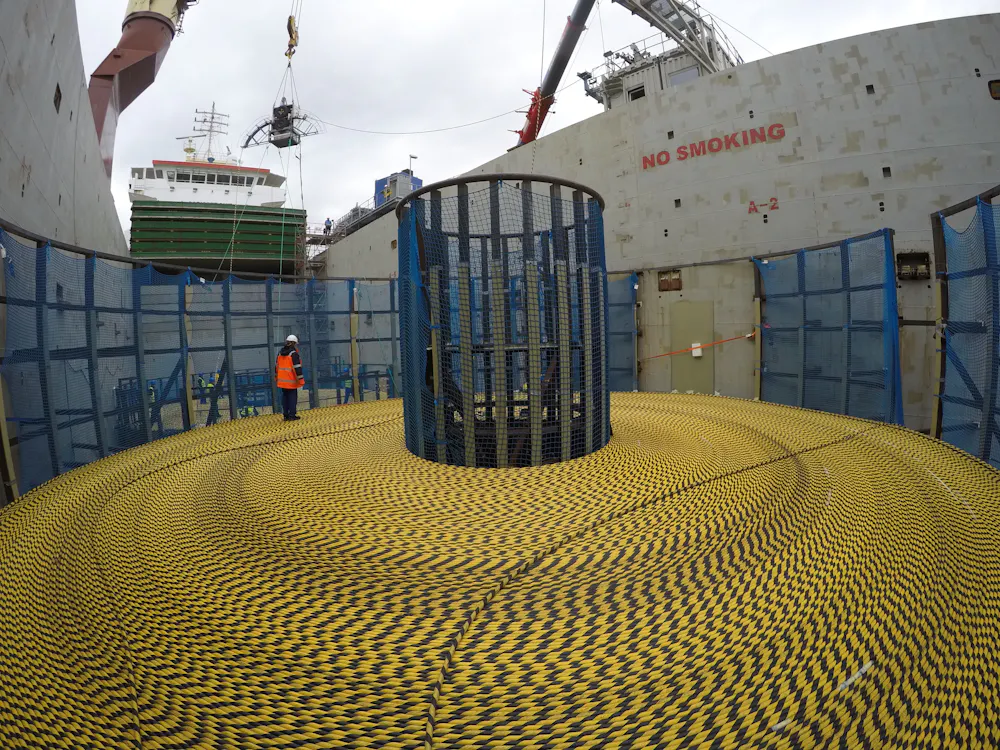
    Globally, there are currently around 1.4 million kilometres of these garden hose-sized, plastic-wrapped cables. The optical fibres inside can transmit data at speeds of up to 300 terabits per second.

    But submarine cables can do far more than just enhance telecommunications. In fact, a recent conference I attended in London highlighted how a relatively new generation of cables can also be used to keep us safe from threats such as climate change and natural disasters.

    Multipurpose cables

    SMART – short for Scientific Monitoring and Reliable Telecommunications – cables are designed for environmental monitoring. They are a joint initiative by the International Telecommunications Union, the World Meteorological Organization and UNESCO’s Intergovernmental Oceanographic Commission.

    The Transatlantic submarine cable, connecting British North America to Ireland, was laid in 1858.
    Rod Allday, CC BY-SA

    These cables are equipped with sensors that measure vital environmental data in the ocean. This data includes seismic activity, temperature fluctuations and pressure changes. It can be used to improve early-warning systems for tsunamis and earthquakes as well as tracking changes in the climate.

    OFS – short for optical fibre sensing – cables are aimed at protecting critical infrastructure. They use the fibre within to detect vibrations surrounding the cable. This allows cable operators to identify potential disruptions from fishing activity, ship anchors and other physical disturbances.

    A handful of countries, including France and Portugal, are actively investing in these cables. The European Commission is also supporting SMART cable projects within broader infrastructure strategies.

    A slow uptake

    The topic of sensing cables comes up at conferences, thanks to industry professionals who work on it pro bono. But the technology isn’t widely adopted by the broader industry and governments. For example, SMART cables have been around since 2010, but there are only two projects in development.

    The reasons for this slow uptake boil down to three major concerns, as discussed at the conference.

    1. Outdated regulation

    The legal framework governing undersea cables is outdated.

    While the United Nations Convention on the Law of the Sea regulates international waters, it doesn’t address cables equipped with environmental sensors.

    This legal ambiguity introduces additional complexities to already lengthy and complex processes for obtaining permits when sensing technologies are integrated into cables.

    2. No clear business model

    Industry executives question the financial feasibility of sensing cables. For example, during the conference in London, several industry executives suggested adding sensors raises costs by approximately 15%, with no clear revenue return.

    Unlike data traffic, environmental data doesn’t directly generate income. Unless governments intervene with funding, tax incentives or expedited permits, cable operators have little incentive to absorb these added costs and complexities.

    3. Security risks

    At the subsea cable conference in London, several industry insiders also warned embedding sensors in cables could create new security risks.

    Some governments might view sensing-equipped cables as surveillance tools rather than neutral scientific infrastructure.

    There is also concern such cables could become attractive targets for malicious actors.

    Large ships are used to deploy and repair submarine cables in the ocean.
    Korn Srirawan/Shutterstock

    A need for more ocean data

    But there are good reasons for more countries and industry to invest in SMART cables.

    For example, information on ocean depth, seabed composition and temperature fluctuations is valuable. A wide array of industries, from shipping and offshore energy to fisheries and insurance, could leverage this data to enhance their operations and mitigate risks.

    Scientists have also pointed out that in order to better understand climate change, we need more and better data about what’s happening in the ocean.

    Current subsea cable regulatory hurdles make investing in sensing technology challenging. But if regulation is updated, projects such as Meta’s Waterworth Project could more easily integrate sensors.

    With experts suggesting the Waterworth Project be viewed as multiple cables instead of one, sensors could just be deployed on less geopolitically sensitive cable branches.

    They could facilitate the creation of an open-access, publicly funded database for ocean observation data. Such a platform could consolidate real-time data from sensing cables, satellites and marine sensors. This would provide a transparent, shared resource for scientists, policymakers and industries alike.

    Of course, deploying sensing technology may not be feasible in volatile regions such as the Baltic or South China seas.

    But there is potential in areas especially vulnerable to climate change, such as the Pacific. Here, scientific data could be harnessed to model oceanic changes and explore solutions to rising sea levels and extreme weather patterns.

    Data collected from submarine cables can help us better understand the effects of climate change on the ocean.
    somavarapu madhavi/Shutterstock

    A path forward

    Portugal demonstrates a path forward for SMART cables. Despite the regulatory challenges, it is actively investing in SMART cables in order to improve climate data.

    Other governments can learn from this if they wish to fulfil their moral duty to invest in infrastructure that serves as a public good.

    The idea of embedding sensors in cables may not be the perfect climate change fix. But it’s a step toward understanding the ocean’s invisible rhythms – a small but necessary gesture to stop pretending our planet’s breakdown will fix itself.

    Cynthia Mehboob does not work for, consult, own shares in or receive funding from any company or organisation that would benefit from this article, and has disclosed no relevant affiliations beyond their academic appointment.

    ref. Submarine cables keep the world connected. They can also help us study climate change – https://theconversation.com/submarine-cables-keep-the-world-connected-they-can-also-help-us-study-climate-change-251046

    MIL OSI AnalysisEveningReport.nz

  • MIL-Evening Report: Hamas accuses Israel of ‘blackmail’ over aid, demands end of US support for Netanyahu

    Asia Pacific Report

    The Palestinian resistance group Hamas has accused Israel of “blackmail” over aid and urged the US government to act more like a neutral mediator in the ceasefire process.

    “We call on the US administration to stop its bias and alignment with the fascist plans of the war criminal Netanyahu, which target our people and their existence on their land,” Hamas said in a statement.

    “We affirm that all projects and plans that bypass our people and their established rights on their land, self-determination, and liberation from occupation are destined for failure and defeat.

    “We reaffirm our commitment to implementing the signed agreement in its three stages, and we have repeatedly announced our readiness to start negotiations on the second stage of the agreement,” it said.

    Al Jazeera Arabic reports that Israel sought a dramatic change to the terms of the ceasefire agreement with a demand that Hamas release five living captives and 10 bodies of dead captives in exchange for Palestinian prisoners and increased aid to the Gaza Strip.

    It also sought to extend the first phase of the ceasefire by a week.

    Hamas informed the mediators that it rejected the Israeli proposal and considered it a violation of what was agreed upon in the ceasefire.

    Israel suspends humanitarian aid
    In response, Israel suspended the entry of humanitarian aid until further notice and Hamas claimed Tel Aviv “bears responsibility” for the fate of the 59 Israelis still held in the Gaza Strip.

    Reports said Israeli attacks in Gaza on Sunday have killed at least four people and injured five people, according to medical sources.

    “The occupation [Israel] bears responsibility for the consequences of its decision on the population of the Strip and for the fate of its prisoners,” Hamas spokesman Hazem Qassem said in a statement.

    Hamas denounces blackmail headline on Al Jazeera news. Image: AJ screenshot APR

    Under the agreed ceasefire, the second phase of the truce was intended to see the release of the remaining captives, the full withdrawal of Israeli troops from Gaza and a final end to the war.

    However, the talks on how to carry out the second phase never began, and Israel said all its captives must be returned for fighting to stop.

    In an interview with Al Jazeera, an analyst said that although the fragile ceasefire seemed on the brink of collapse, it was unlikely that US President Donald Trump would allow it to fail.

    “I think the larger picture here is Trump is not interested in the resumption of war,” said Sami al-Arian, professor of public affairs at Istanbul Zaim University.

    “He has a very long agenda domestically and internationally and if it is going to be dragged by Netanyahu and his fascist partners into another war of genocide with no strategic end, he knows this is going to be a no-win for him.

    “And for one thing, Trump hates to lose.”

    No game plan
    In another interview, Israeli political commentator Ori Goldberg told Al Jazeera that Prime Minister Benjamin Netanyahu was caught between seeing the Gaza ceasefire through and resorting to a costly all-out war that may prove unpopular at home.

    “I’m not sure Netanyahu has a game plan,” Goldberg said.

    “The reason he hasn’t made a decision is because . . . Israel is not equipped to go to war right now. Resilience is at an all-time low. Resources are at an all-time low.”

    War crimes . . . a poster at a New Zealand pro-Palestinian rally in Auckland on Saturday. Image: Asia Pacific Report

    In December, the UN agency for Palestinian refugees reported that more than 19,000 children had been hospitalised for acute malnutrition in four months.

    In the first full year of the war — ending in October 2024 — 37 children died from malnutrition or dehydration.

    Last September 21, The International Criminal Court (ICC) said there was reason to believe Israel was using “starvation as a method of warfare” when it issued arrest warrants for Netanyahu and former Defence Minister Yoav Gallant.

    United Nations Secretary-General Antonio Guterres said all efforts must be made to prevent a return to hostilities, which would be catastrophic.

    He urged all parties to exercise maximum restraint and find a way forward on the next phase.

    Guterres also called for an urgent de-escalation of the violence in the occupied West Bank.

    Almost 50,000 Palestinians have been killed in the Israeli war on Gaza since 7 October 2023.

    New Zealand protesters warn against a “nuclear winter” in a pro-Palestinian rally in Auckland on Saturday. Image: Asia Pacific Report

    MIL OSI AnalysisEveningReport.nz

  • MIL-Evening Report: Palestine asks ICJ for advisory opinion on illegal occupier Israel’s obligations

    More than 180 remained in detention without a clear indication of when or if they would be released, the physicians’ report said.

    “Detainees endure physical, psychological and sexual abuse as well as starvation and medical neglect amounting to torture,” the report said, denouncing a “deeply ingrained policy”.

    Healthcare workers were beaten, threatened, and forced to sign documents in Hebrew during their detention, according to the report based on 20 testimonies collected in prison.

    “Medical personnel were primarily questioned about the Israeli hostages, tunnels, hospital structures and Hamas’s activity,” it said.

    “They were rarely asked questions linking them to any criminal activity, nor were they presented with substantive charges.”

    New Zealand protesters calling for the continuation of the Gaza ceasefire and for peace and justice in Palestine in a march along the Auckland waterfront today. Image: Asia Pacific Report

    Where does Trump stand on the Gaza ceasefire?
    With phase one of the ceasefire due to end today and negotiations barely started on phase two, serious fears are being raised over  the viability of the ceasefire.

    President Donald Trump took credit for the truce that his Middle East envoy Steve Witkoff helped push across the finish line after a year of negotiations led by the Biden administration, Egypt and Qatar, reports Al Jazeera.

    Advocate Maher Nazzal at today’s New Zealand rally for Gaza in Auckland . . . he was elected co-leader of the Palestine Solidarity Network Aotearoa last weekend. Image: Asia Pacific Report

    However, Trump has since sent mixed signals about the deal.

    Earlier last month, he set a firm deadline for Hamas to release all the captives, warning “all hell is going to break out” if it didn’t.

    But he said it was ultimately up to Israel, and the deadline came and went.

    Trump sowed further confusion by proposing that Gaza’s population of about 2.3 million be relocated to other countries and for the US to take over the territory and develop it.

    Israeli Prime Minister Benjamin Netanyahu welcomed the idea, but it was universally rejected by Palestinians and Arab countries, including close US allies. Human rights groups said it could violate international law.

    Trump stood by the plan in a Fox News interview over the weekend but said he was “not forcing it”.


    ‘Finally’ an effort to hold the US accountable, says Al-Haq director
    Palestinian human rights activist Shawan Jabarin has welcomed a plea by the US-based rights group DAWN for the International Criminal Court (ICC) to investigate Joe Biden and senior US officials for aiding Israeli war crimes in Gaza.

    In a video posted by DAWN, Jabarin, director of the Palestinian rights group Al-Haq, said the effort was long overdue.

    “For decades we have called on the international community to hold Israel accountable for its violations of international law, but time and again, the US has used its power and influence to block that accountability, to shield Israel from consequences and to ensure that it can continue its crimes with impunity,” Jabarin said.

    “Now, finally, we see an effort to hold not just Israeli officials accountable but also those who have made these crimes possible: US officials who have armed, financed, and politically defended Israeli atrocities.”

    A father piggybacks his sleepy child during the New Zealand solidarity protest for Palestine in Auckland’s Viaduct today. Image: Asia Pacific Report

    Article by AsiaPacificReport.nz

    MIL OSI AnalysisEveningReport.nz

  • MIL-Evening Report: Four decades after Rongelap evacuation, Greenpeace makes new plea for nuclear justice by US

    Asia Pacific Report

    In the year marking 40 years since the bombing of the Rainbow Warrior by French secret agents and 71 years since the most powerful nuclear weapons tested by the United States, Greenpeace is calling on Washington to comply with demands by the Marshall Islands for nuclear justice.

    “The Marshall Islands bears the deepest scars of a dark legacy — nuclear contamination, forced displacement, and premeditated human experimentation at the hands of the US government,” said Greenpeace spokesperson Shiva Gounden.

    To mark the Marshall Islands’ Remembrance Day today, the Greenpeace flagship Rainbow Warrior is flying the republic’s flag at halfmast in solidarity with those who lost their lives and are suffering ongoing trauma as a result of US nuclear weapons testing in the Pacific.

    On 1 March 1954, the Castle Bravo nuclear bomb was detonated on Bikini Atoll with a blast 1000 times more powerful than the Hiroshima bomb.

    On Rongelap Atoll, 150 km away, radioactive fallout rained onto the inhabited island, with children mistaking it as snow.

    The Rainbow Warrior is sailing to the Marshall Islands where a mission led by Greenpeace will conduct independent scientific research across the country, the results of which will eventually be given to the National Nuclear Commission to support the Marshall Islands government’s ongoing legal proceedings with the US and at the UN.

    The voyage also marks 40 years since Greenpeace’s original Rainbow Warrior evacuated the people of Rongelap after toxic nuclear fallout rendered their ancestral land uninhabitable.

    Still enduring fallout
    Marshall Islands communities still endure the physical, economic, and cultural fallout of the nuclear tests — compensation from the US has fallen far short of expectations of the islanders who are yet to receive an apology.

    And the accelerating impacts of the climate crisis threaten further displacement of communities.


    Former Marshall Islands Foreign Minister Tony deBrum’s “nuclear justice” speech as Right Livelihood Award Winner in 2009. Video: Voices Rising

    “To this day, Marshall Islanders continue to grapple with this injustice while standing on the frontlines of the climate crisis — facing yet another wave of displacement and devastation for a catastrophe they did not create,” Gounden said.

    “But the Marshallese people and their government are not just survivors — they are warriors for justice, among the most powerful voices demanding bold action, accountability, and reparations on the global stage.

    “Those who have inflicted unimaginable harm on the Marshallese must be held to account and made to pay for the devastation they caused.

    “Greenpeace stands unwaveringly beside Marshallese communities in their fight for justice. Jimwe im Maron.”

    Rainbow Warrior crew members holding the Marshall Islands flag . . . remembering the anniversary of the devastating Castle Bravo nuclear test – 1000 times more powerful than Hiroshima – on 1 March 1954. Image: Greenpeace International
    Chair of the Marshall Islands National Nuclear Commission Ariana Tibon-Kilma . . . “the trauma of Bravo continues for the remaining survivors and their descendents.” Image: UN Human Rights Council

    Ariana Tibon Kilma, chair of the Marshall Islands National Nuclear Commission, said that the immediate effects of the Bravo bomb on March 1 were “harrowing”.

    “Hours after exposure, many people fell ill — skin peeling off, burning sensation in their eyes, their stomachs were churning in pain. Mothers watched as their children’s hair fell to the ground and blisters devoured their bodies overnight,” she said.

    “Without their consent, the United States government enrolled them as ‘test subjects’ in a top secret medical study on the effects of radiation on human beings — a study that continued for 40 years.

    “Today on Remembrance Day the trauma of Bravo continues for the remaining survivors and their descendents — this is a legacy not only of suffering, loss, and frustration, but also of strength, unity, and unwavering commitment to justice, truth and accountability.”

    The new Rainbow Warrior will arrive in the Marshall Islands early this month.

    Alongside the government of the Marshall Islands, Greenpeace will lead an independent scientific mission into the ongoing impacts of the US weapons testing programme.

    Travelling across the country, Greenpeace will reaffirm its solidarity with the Marshallese people — now facing further harm and displacement from the climate crisis, and the emerging threat of deep sea mining in the Pacific.

    MIL OSI AnalysisEveningReport.nz

  • MIL-Evening Report: Raised voices and angry scenes at the White House as Trump clashes with Zelensky over the ‘minerals deal’

    Source: The Conversation (Au and NZ) – By Stefan Wolff, Professor of International Security, University of Birmingham

    The visit of Ukrainian president Volodymyr Zelensky to the White House has not gone to plan – at least not to his plan. There were extraordinary scenes as a press conference between Zelensky and Trump descended into acrimony, with the US president loudly berating his opposite number, who he accused of “gambling with world war three”.

    “You either make a deal or we’re out,” Trump told Zelensky. His vice-president, J.D. Vance, also got in on the act, accusing the Ukrainian president of “litigating in front of the American media”, and saying his approach was “disrespectful”. At one point he asked Zelensky: “Have you said thank you even once?”

    Reporters present described the atmosphere as heated with voices raised by both Trump and Vance. The New York Times said the scene was “one of the most dramatic moments ever to play out in public in the Oval Office and underscored the radical break between the United States and Ukraine since Mr Trump took office”.

    Underlying the angry exchanges were differences between the Trump administration and the Ukrainian government over the so-called “minerals deal” that Zelensky was scheduled to sign. But any lack of Ukrainian enthusiasm for the deal is understandable.

    In its present form, it looks more like a memorandum of understanding that leaves several vital issues to be resolved later. The deal on offer is the creation of what will be called a “reconstruction investment fund”, to be jointly owned and managed by the US and Ukraine.

    Into the proposed fund will go 50% of the revenue from the exploitation of “all relevant Ukrainian government-owned natural resource assets (whether owned directly or indirectly by the Ukrainian government)” and “other infrastructure relevant to natural resource assets (such as liquified natural gas terminals and port infrastructure)”.

    This means that private infrastructure – much of it owned by Ukraine’s wealthy oligarchs – is likely to become part of the deal. This has the potential of further increasing friction between Zelensky and some very powerful Ukrainians.

    Meanwhile, US contributions are less clearly defined. The preamble to the agreement makes it clear that Ukraine already owes the US. The very first paragraph notes that “the United States of America has provided significant financial and material support to Ukraine since Russia’s full-scale invasion of Ukraine in February 2022”.

    This figure, according to Trump, amounts to US$350 billion (£278 billion). The actual amount, according to the Ukraine Support Tracker of the Kiel Institute for the World Economy, is about half that.

    Western and Ukrainian analysts have also pointed out that there may be fewer and less accessible mineral and rare earth deposits in Ukraine than are currently assumed. The working estimates have been based mostly on Soviet-era data.

    Since the current draft leaves details on ownership, governance and operations to be determined in a future fund agreement, Trump’s very big deal is at best the first step. Future rounds of negotiations are to be expected.

    Statement of intent

    From a Ukrainian perspective, this is more of a strength than a weakness. It leaves Kyiv with an opportunity to achieve more satisfactory terms in future rounds of negotiation. Even if any improvements will only be marginal, it keeps the US locked into a process that is, overall, beneficial for Ukraine.

    Take the example of security guarantees. The draft agreement offers Ukraine nothing anywhere near Nato membership. But it notes that the US “supports Ukraine’s efforts to obtain security guarantees needed to establish lasting peace”, adding that: “Participants will seek to identify any necessary steps to protect mutual investments.”

    The significance of this should not be overstated. At its bare minimum, it is an expression of intent by the US that falls short of security guarantees but still gives the US a stake in the survival of Ukraine as an independent state.

    But it is an important signal both in terms of what it does and does not do – a signal to Russia, Europe and Ukraine.

    Trump does not envisage that the US will give Ukraine security guarantees “beyond very much”. He seems to think that these guarantees can be provided by European troops (the Kremlin has already cast doubts on this idea).

    But this does not mean the idea is completely off the table. On the contrary, because the US commitment is so vague, it gives Trump leverage in every direction.

    He can use it as a carrot and a stick against Ukraine to get more favourable terms for US returns from the reconstruction investment fund. He can use it to push Europe towards more decisive action to ramp up defence spending by making any US protection for European peacekeepers contingent on more equitable burden-sharing in Nato.

    And he can signal to the Russian president, Vladimir Putin, that the US is serious about making a deal stick – and that higher American economic stakes in Ukraine and corporate presence on the ground would mean US-backed consequences if the Kremlin reneges on a future peace agreement and restarts hostilities.

    That these calculations will ultimately lead to the “free, sovereign and secure Ukraine” that the agreement envisages is not a given.

    For now, however, despite all the shortcomings and vagueness of the deal on key issues –– and the very public argument between the parties – it still looks like it serves all sides’ interests in moving forward in this direction.

    This article has been updated with details of the meeting between Volodymyr Zelensky and Donald Trump.

    Stefan Wolff is a past recipient of grant funding from the Natural Environment Research Council of the UK, the United States Institute of Peace, the Economic and Social Research Council of the UK, the British Academy, the NATO Science for Peace Programme, the EU Framework Programmes 6 and 7 and Horizon 2020, as well as the EU’s Jean Monnet Programme. He is a Trustee and Honorary Treasurer of the Political Studies Association of the UK and a Senior Research Fellow at the Foreign Policy Centre in London.

    Tetyana Malyarenko does not work for, consult, own shares in or receive funding from any company or organisation that would benefit from this article, and has disclosed no relevant affiliations beyond their academic appointment.

    ref. Raised voices and angry scenes at the White House as Trump clashes with Zelensky over the ‘minerals deal’ – https://theconversation.com/raised-voices-and-angry-scenes-at-the-white-house-as-trump-clashes-with-zelensky-over-the-minerals-deal-250855

    MIL OSI AnalysisEveningReport.nz

  • MIL-Evening Report: Albanese’s pitch on beer – temporary freeze on excise indexation

    Source: The Conversation (Au and NZ) – By Michelle Grattan, Professorial Fellow, University of Canberra

    The Albanese government will temporarily freeze the indexation on draught beer excise, in what it describes as a win for drinkers, brewers and businesses.

    The freeze is for two years and starts from the next due indexation date in August. Indexation changes are made twice a year, with the most recent one in February.

    The government says the cost to the budget would be $95 million over four years from 2025-26.

    The Australian Hotels Association had previously called for a freeze on the excise for drinks sold in pubs, clubs, bars, and restaurants.

    In a statement, the government said the move would “take pressure off the price of a beer poured in pubs, clubs and other venues, supporting businesses, regional tourism and customers”.

    Last week it announced relief for Australian distillers, brewers and wine producers.

    At present brewers and distillers get a full remission of any excise paid up to $350,000 each year. The government said it would increase the cap to $400,000 for all eligible alcohol manufacturers and also increase the Wine Equalisation Tax producer rebate cap to $400,000 from July 1 next year. That was estimated to decrease tax receipts by $70 million over five years from 2024-25.

    Prime Minister Anthony Albanese described the temporary excise indexation freeze as “a commonsense measure”.

    Treasurer Jim Chalmers said, “This is a modest change but will help take a little bit of pressure off beer drinkers, brewers and bars”.

    The AHA recently labelled the excise a “hidden” tax, saying it put pressure on the cost of living. It said Australia’s beer tax was the third highest in the OECD.

    The industry and Chalmers had a skirmish over the recent indexation increase. Chalmers said it would equal less than one cent a pint, and warned outlets not to “rip off” or mislead consumers.

    Chalmers wrote to the Australian Consumer and Competition Commission asking it to monitor outlets in February to make sure they “do not take undue advantage” of the rise to “mislead” customers about the impact.

    The federal government introduced the beer excise in 1988, with the tax linked to inflation. The AHA said in September that the recent jump in inflation meant the beer excise rose 8% over the previous six months.

    Michelle Grattan does not work for, consult, own shares in or receive funding from any company or organisation that would benefit from this article, and has disclosed no relevant affiliations beyond their academic appointment.

    ref. Albanese’s pitch on beer – temporary freeze on excise indexation – https://theconversation.com/albaneses-pitch-on-beer-temporary-freeze-on-excise-indexation-250898

    MIL OSI AnalysisEveningReport.nz

  • MIL-Evening Report: Tongan advocates condemn Treaty Principles Bill, slam colonisation

    By Khalia Strong of Pacific Media Network

    Tongan community leaders and artists in New Zealand have criticised the Treaty Principles Bill while highlighting the ongoing impact of colonisation in Aotearoa and the Pacific.

    Oral submissions continued this week for the public to voice their view on the controversial proposed bill, which aims to redefine the legal framework of the nation’s founding document, the 1840 Treaty of Waitangi.

    Aotearoa Tongan Response Group member Pakilau Manase Lua echoed words from the Waitangi Day commemorations earlier this month.

    “The Treaty of Waitangi Principles Bill and its champions and enablers represent the spirit of the coloniser,” he said.

    Pakilau said New Zealand’s history included forcible takeovers of Sāmoa, Cook Islands, Niue and Tokelau.

    “The New Zealand government, or the Crown, has shown time and again that it has a pattern of trampling on the mana and sovereignty of indigenous peoples, not just here in Aotearoa, but also in the Pacific region.”

    Poet Karlo Mila spoke as part of a submission by a collective of artists, Mana Moana,

    “Have you ever paused to wonder why we speak English here, half a world away from England? It’s a global history of Christian white supremacy, who, with apostolic authority, ordained the doctrine of discovery to create a new world order,” she said.

    “Yes, this is where the ‘new’ in New Zealand comes from, invasion for advantage and profit, presenting itself as progress, as civilising, as salvation, as enlightenment itself — the greatest gaslighting feat of history.”

    Bill used as political weapon
    She argued that the bill was being used as a political weapon, and government rhetoric was causing division.

    “We watch political parties sow seeds of disunity using disingenuous history, harnessing hate speech and the haka of destiny, scapegoating ‘vulnerable enemies’ . . . Yes, for us, it’s a forest fire out there, and brown bodies are moving political targets, every inflammatory word finding kindling in kindred racists.”

    Pakilau said that because Tonga had never been formally colonised, Tongans had a unique view of the unfolding situation.

    “We know what sovereignty tastes like, we know what it smells like and feels like, especially when it’s trampled on.

    “Ask the American Samoans, who provide more soldiers per capita than any state of America to join the US Army, but are not allowed to vote for the country they are prepared to die for.

    “Ask the mighty 28th Maori Battalion, who field Marshal Erwin Rommel famously said, ‘Give me the Māori Battalion and I will rule the world’, they bled and died for a country that denied them the very rights promised under the Treaty.

    “The Treaty of Waitangi Bill is essentially threatening to do the same thing again, it is re-traumatising Māori and opening old wounds.”

    A vision for the future
    Mila, who also has European and Sāmoan ancestry, said the answer to how to proceed was in the Treaty’s Indigenous text.

    “The answer is Te Tiriti, not separatist exclusion. It’s the fair terms of inclusion, an ancestral strategy for harmony, a covenant of cooperation. It’s how we live ethically on a land that was never ceded.”

    Flags displayed at Waitangi treaty grounds 2024. Image: PMN News/Atutahi Potaka-Dewes

    Aotearoa Tongan Response Group chair Anahila Kanongata’a said Tongans were Tangata Tiriti (people of the Treaty), and the bill denigrated the rights of Māori as Tangata Whenua (people of the land).

    “How many times has the Crown breached the Treaty? Too, too many times.

    “What this bill is attempting to do is retrospectively annul those breaches by extinguishing Māori sovereignty or tino rangatiritanga over their own affairs, as promised to them in their Tiriti, the Te Reo Māori text.”

    Kanongata’a called on the Crown to rescind the Principles of the Treaty of Waitangi Bill, honour Te Tiriti, and issue a formal apology to Māori, similar to what had been done for the Dawn Raids.

    Hundreds gather at Treaty Grounds for the annual Waitangi Day dawn service. Image: PMN Digital/Joseph Safiti

    “As a former member of Parliament, I am proud of the fact that an apology was made for the way our people were treated during the Dawn Raids.

    “We were directly affected, yes, it was painful and most of our loved ones never got to see or hear the apology, but imagine the pain Māori must feel to be essentially dispossessed, disempowered and effectively disowned of their sovereignty on their own lands.”

    The bill’s architect, Act Party leader David Seymour, sayid the nationwide discussion on Treaty principles was crucial for future generations.

    “In a democracy, the citizens are always ready to decide the future. That’s how it works.”

    Republished from PMN News with permission.

    MIL OSI AnalysisEveningReport.nz

  • MIL-Evening Report: How ‘muscular Christianity’ strove to bring men back to religion – and what it can teach us today

    Source: The Conversation (Au and NZ) – By Gavin Brown, Lecturer in Religious Education, Australian Catholic University

    Wikimedia Commons

    Most people recognise organisations such as the YMCA and the Boy Scouts, or events such as the Modern Olympic Games, summer camps and wilderness retreats.

    Few, though, have ever heard of the movement from which they took their principal inspiration: muscular Christianity.

    The term sounds odd indeed, conjuring up images of Jesus with an impressively chiselled physique or, for devotees of the eighties, Vangelis’ memorable soundtrack to Chariots of Fire.
    However, the term arose because it once carried Christian hopes of a solution to a longstanding problem: men.

    That is, in the 19th century especially, Christian churches became particularly alarmed more and more men were leaving religion to women – from attendance at worship to running parish organisations or establishing charitable endeavours.

    Worse still was the fear Christianity itself had become soft and even effeminate through the Victorian age.

    Christians, especially the Protestants who started the movement, needed to present Christianity in ways attractive to men. But how?

    A literary beginning

    In 1857, the Englishman Thomas Hughes published the novel Tom Brown’s School Days, followed later by Tom Brown at Oxford in 1859.

    In the first book, Tom attends the prestigious Rugby School, before making his way to Oxford in the sequel. This character would epitomise a “muscular Christian”, as Hughes put it. In the sequel, Hughes wrote:

    The least of the muscular Christians has hold of the old chivalrous and Christian belief, that a man’s body is given him to be trained and brought into subjection, and then used for the protection of the weak, the advancement of all righteous causes, and the subduing of the earth which God has given to the children of men.

    Author Thomas Hughes largely based Tom Brown’s School Days on his own years at Rugby School.
    Wikimedia Commons

    Men precisely as men could use their bodies to Christianise the world. A movement with twin aims was born: first, encourage men to embrace their physicality and second, through such disciplining of their bodies, to glorify God.

    Rise and fall

    From England, the movement spread through the Anglosphere, including Australia.

    And it has some impressive credentials. Pierre de Coubertin’s inspiration for reviving the Olympic Games was, in part, inspired by reading Tom Brown’s School Days.

    In the United States, the YMCA – the Young Men’s Christian Association – in New York added a gymnasium in 1869, which soon became a permanent fixture at the “Y.” The physical director at Boston’s Y coined the term “body building”. James Naismith would later invent basketball in 1891 while working at a Y.

    The YMCA on Melbourne’s St. Kilda Road during WWI.
    Aussie~mobs/flickr

    Many Protestant churches drew upon muscular Christianity to bring men back into the fold. They masculinised church services through hymns which celebrated manliness and virtue, encouraged ministers to embody more masculine traits, brought men into the company of other men through brotherhoods and promoted vigorous missionary activity.

    Even Jesus received a makeover – arguably the most popular being Warner Sallman’s 1940 portrait painting Head of Christ.

    Sallman’s original motivation for such depictions came from the dean of a Chicago Bible College in 1914:

    I hope you can give us your conception of Christ. And I hope it’s a manly one. Most of our pictures today are too effeminate.

    There is evidence, too, of Catholics muscling in. Take, for example, Notre Dame’s football team’s successes in the 1920s and 30s in the US, or the Italian cyclist Gino Bartali, winner of the Tour de France in 1938 and 1948 and, according to the Catholic press, the ideal Catholic sportsman.

    Most historians will mark the decline of the movement after the first world war, though its influence continues to be felt to this day.

    A continuing legacy?

    So, apart from indulging in historical curiosity, what does it offer us?

    Muscular Christianity highlights both the dangers and continuing challenges raised when navigating the complex relationship between religion, culture and gender.

    It pursued a worthy goal, but tended to play a zero-sum gender game: gains for men in the churches often came at the expense of women. Such emphasis on masculinity easily slipped into gender bias, where a “church full of men” was deemed more valuable than churches full of women.

    The effort to bolster masculinity also traded in narrow gender stereotypes, though as the historian Clifford Putney reminds us, there was some flow-on effect for women and their organisational engagement in sport and physical activity.

    Some evangelical Christians have recently re-engaged its ethos.

    And perhaps muscular Christianity still has something valuable to say. At the very least, scratch beneath the surface of modern Western culture and you will often find Christianity or values which originated from it.

    Muscular Christianity can also remind us to reconnect with our bodies. We now live in a world which, as Australian author Michael Frost argues, has become increasingly “excarnate” – that is, less bodily.

    Muscular Christianity recognised bodies matter and matter spiritually. It encouraged people not to treat health and physical activity as ends in their own right or as a servant of the ego but, rather, a means to an end: wholeness, good character, the cultivation of virtue and the selfless desire to help others.

    An 1867 wood engraving of the Lady Muscular Christians.
    Wikimedia Commons

    Gavin Brown does not work for, consult, own shares in or receive funding from any company or organisation that would benefit from this article, and has disclosed no relevant affiliations beyond their academic appointment.

    ref. How ‘muscular Christianity’ strove to bring men back to religion – and what it can teach us today – https://theconversation.com/how-muscular-christianity-strove-to-bring-men-back-to-religion-and-what-it-can-teach-us-today-249485

    MIL OSI AnalysisEveningReport.nz

  • MIL-Evening Report: Diversity, equity and inclusion in the workplace are under attack. Here’s why they matter more than ever

    Source: The Conversation (Au and NZ) – By Gemma Hamilton, Senior Lecturer, RMIT University

    Jacob Lund/Shutterstock

    As International Women’s Day approaches, we must redouble our efforts to champion social justice and the principles of diversity, equity and inclusion (DEI). These are under unprecedented attack by some political leaders.

    In the United States, President Donald Trump has recently dismantled DEI measures, claiming they are wasteful and discriminatory. Without evidence, he even blamed diversity hirings for a deadly collision between a military helicopter and a passenger plane that killed 67 people.

    In Australia, Opposition Leader Peter Dutton is echoing a similar agenda with his criticism of “culture, diversity and inclusion” positions in the public service.

    We must resist attempts to tear down all the progress that has been made and remind ourselves of the many good reasons why we pursue DEI in the workplace.

    Women, racial minorities, people with disability and others continue to face barriers to equal opportunities at work. Too often, they remain excluded from leadership and decision-making roles.

    Defending diversity

    Given the assault on DEI measures, it is worth restating why they are so important to a truly inclusive modern workplace.

    DEI initiatives work to address obstacles and correct disadvantages so everyone has a fair chance of being hired, promoted and paid, regardless of their personal characteristics.

    They ensure every person has a genuinely equal chance of access to social goods. They can be seen as “catch up” mechanisms, recognising that we don’t all start our working lives on an equal footing.

    Gender equality initiatives address discrimination, stereotypes and structural barriers that disadvantage people on the basis of their gender.

    These initiatives call into question the idea of “merit-based” hiring, which often disguises the invisible biases which are held by many people in power – for example, against someone of a particular gender.

    Australia’s story

    In Australia, we have a mixed story to tell when it comes to diversity, equity and inclusion.

    The federal workplace gender laws require companies with more than 100 employees to report annually on gender equality indicators, including pay gaps and workforce composition.

    DEI initiatives are already being dismantled in the United States.
    Gorodenkoff/Shutterstock

    In Victoria, the Gender Equality Act 2020
    promotes “positive action” to improve gender equality in higher education, local government and the public sector, which covers around 11% of the total state workforce.

    Despite these laws, Australia is behind on gender equality indicators compared to other countries such as Iceland, Norway and New Zealand. According to the World Economic Forum’s Global Gender Gap report, Australia is ranked 26th out of 146 countries, albeit a step up from 54th in 2021.

    The report shows continuing and significant gender gaps, particularly regarding women’s representation in various industries such as science and political leadership.

    Increased recognition

    But in a cross section of fields, including politics, sports, medicine, media and academia there have been positive changes. Gender equality is being promoted through a wide range of initiatives that seek to push back against centuries of patriarchal dominance.

    Workplace policies around paid parental leave, flexible working arrangements, part-time work, breastfeeding and anti-discrimination are part of the broader agenda to make workplaces more inclusive for women, gender-diverse people and working parents.

    Many workplaces accommodate the needs of working mothers.
    Jacob Lund/Shutterstock

    While many would not consider these improvements specific diversity initiatives, they are clear examples of the ways in which workplaces now recognise the different needs of women and working mothers.

    Today, we see more women in the workplace and in positions of leadership across sectors.

    But as feminist Sara Ahmed has noted, it is often the marginalised employees who carry the burden of doing all the “diversity work” in the workplace.

    Diversity becomes work for those who are not accommodated by an existing system.

    Redoubling efforts

    Despite the welcome advances made, inequalities persist in the workplace.

    We recognise many in positions of power are not willing (or able) to acknowledge their own privileged positions. Therefore they do not see the barriers that exist for others.

    Social justice will not simply be gifted by those in power.

    Given the challenging political climate, it is more important than ever that we continue to strive for gender equality – rather than simply uphold the status quo.

    Gemma Hamilton receives funding from the Australian Research Council (ARC).

    Nicola Henry receives funding from the Australian Research Council (ARC) and Google. She is also a member of the Australian eSafety Commissioner’s Expert Advisory Group.

    Bess Schnioffsky does not work for, consult, own shares in or receive funding from any company or organisation that would benefit from this article, and has disclosed no relevant affiliations beyond their academic appointment.

    ref. Diversity, equity and inclusion in the workplace are under attack. Here’s why they matter more than ever – https://theconversation.com/diversity-equity-and-inclusion-in-the-workplace-are-under-attack-heres-why-they-matter-more-than-ever-250651

    MIL OSI AnalysisEveningReport.nz

  • MIL-Evening Report: A quantum computing startup says it is already making millions of light-powered chips

    Source: The Conversation (Au and NZ) – By Christopher Ferrie, A/Prof, UTS Chancellor’s Postdoctoral Research and ARC DECRA Fellow, University of Technology Sydney

    PsiQuantum

    American quantum computing startup PsiQuantum announced yesterday that it has cracked a significant puzzle on the road to making the technology useful: manufacturing quantum chips in useful quantities.

    PsiQuantum burst out of “stealth mode” in 2021 with a blockbuster funding announcement. It followed up with two more last year.

    The company uses so-called “photonic” quantum computing, which has long been dismissed as impractical.

    The approach, which encodes data in individual particles of light, offers some compelling advantages — low noise, high-speed operation, and natural compatibility with existing fibre-optic networks. However, it was held back by extreme hardware demands to manage the fact photons fly with blinding speed, get lost, and are hard to create and detect.

    PsiQuantum now claims to have addressed many of these difficulties. Yesterday, in a new peer-reviewed paper published in Nature, the company unveiled hardware for photonic quantum computing they say can be manufactured in large quantities and solves the problem of scaling up the system.

    What’s in a quantum computer?

    Like any computer, quantum computers encode information in physical systems. Whereas digital computers encode bits (0s and 1s) in transistors, quantum computers use quantum bits (qubits), which can be encoded in many potential quantum systems.

    Superconducting quantum computers require an elaborate cooling rig to keep them at temperatures close to absolute zero.
    Rigetti

    The darlings of the quantum computing world have traditionally been superconducting circuits running at temperatures near absolute zero. These have been championed by companies such as Google, IBM, and Rigetti.

    These systems have attracted headlines claiming “quantum supremacy” (where quantum computers beat traditional computers at some task) or the ushering in of “quantum utility” (that is, actually useful quantum computers).

    In a close second in the headline grabbing game, IonQ and Honeywell are pursuing trapped-ion quantum computing. In this approach, charged atoms are captured in special electromagnetic traps that encode qubits in their energy states.

    Other commercial contenders include neutral atom qubits, silicon based qubits, intentional defects in diamonds, and non-traditional photonic encodings.

    All of these are available now. Some are for sale with enormous price tags and some are accessible through the cloud. But fair warning: they are more for experimentation than computation today.

    Faults and how to tolerate them

    The individual bits in your digital computers are extraordinarily reliable. They might experience a fault (a 0 inadvertently flips to a 1, for example) once in every trillion operations.

    PsiQuantum’s new platform has impressive-sounding features such as low-loss silicon nitride waveguides, high-efficiency photon-number-resolving detectors, and near-lossless interconnects.

    The company reports a 0.02% error rate for single-qubit operations and 0.8% for two-qubit creation. These may seem like quite small numbers, but they are much bigger than the effectively zero error rate of the chip in your smartphone.

    However, these numbers rival the best qubits today and are surprisingly encouraging.

    One of the most critical breakthroughs in the PsiQuantum system is the integration of fusion-based quantum computing. This is a model that allows for errors to be corrected more easily than in traditional approaches.

    Quantum computer developers want to achieve what is called “fault tolerance”. This means that, if the basic error rate is below a certain threshold, the errors can be suppressed indefinitely.

    Claims of “below threshold” error rates should be met with skepticism, as they are generally measured on a few qubits. A practical quantum computer would be a very different environment, where each qubit would have to function alongside a million (or a billion, or a trillion) others.

    This is the fundamental challenge of scalability. And while most quantum computing companies are tackling the problem from the ground up – building individual qubits and sticking them together – PsiQuantum is taking the top down approach.

    Scale-first thinking

    PsiQuantum developed its system in partnership with semiconductor manufacturer GlobalFoundries. All the key components – photon sources and detectors, logic gates and error correction – are integrated on single silicon-based chip.

    PsiQuantum says GlobalFoundries has already made millions of the chips.

    A diagram showing the different components of PsiQuantum’s photonic chip.
    PsiQuantum

    By making use of techniques already used to fabricate semiconductors, PsiQuantum claims to have solved the scalability issue that has long plagued photonic approaches.

    PsiQuantum is fabricating their chips in a commercial semiconductor foundry. This means scaling to millions of qubits will be relatively straightforward.

    If PsiQuantum’s technology delivers on its promise, it could mark the beginning of quantum computing’s first truly scalable era.

    A fault-tolerant photonic quantum computer would have major advantages and lower energy requirements.

    Christopher Ferrie is a founder of Eigensystems. He receives funding from the Australian Research Council.

    ref. A quantum computing startup says it is already making millions of light-powered chips – https://theconversation.com/a-quantum-computing-startup-says-it-is-already-making-millions-of-light-powered-chips-251057

    MIL OSI AnalysisEveningReport.nz

  • MIL-Evening Report: Australia’s retirement savings are too big to invest at home – here’s why super funds are looking to the US

    Source: The Conversation (Au and NZ) – By Susan Thorp, Professor of Finance, University of Sydney

    Marek Masik/Shutterstock

    You might remember Pesto, the king penguin chick who became a star attraction at Melbourne Aquarium last year. Good food, good genes and a safe home let Pesto grow into a huge ball of brown fluff twice the size of his parents. Pesto became a local and international celebrity.

    While not cute or funny like Pesto, Australia’s financial sector gave birth to its own baby three decades ago that has since rapidly grown into a big adult – superannuation. It, too, has become internationally famous.

    This week, our superannuation sector attracted the attention of US asset managers and government officials, including the new US Treasury Secretary Scott Bessent, at a summit in Washington DC.

    Super industry leaders joined Treasurer Jim Chalmers and the Australian ambassador to the US, Kevin Rudd, to pitch a strengthening of ties. So, why are Australian super funds so keen to shore up support in the United States?


    Read more:
    Your super fund is invested in private markets. What are they and why has ASIC raised concerns?


    A giant nest egg

    Figures from the Australian Prudential Regulation Authority (APRA) show the total pool of superannuation assets had grown to about A$4.2 trillion by December 2024. That’s up 11.5% on the year before.

    That’s about 160% of the value of all goods and services produced in Australia – the gross domestic product (GDP) – over the year to June 2024 at $2.6 trillion.

    This scales to a very large pool of investable retirement money – the fifth largest in the world. Australia’s population ranks just 54th in the world.

    Some of the biggest individual funds have significant assets under management. Australian Super and Australian Retirement Trust, for example, both manage more than $300 billion in retirement savings.

    Looking overseas

    This leads us to why the Australian super industry is securing openings in the US. Australian super funds have invested some funds overseas since their inception. But this practice is expanding quickly for two reasons.

    First, the sheer size of the superannuation investment pool has largely outgrown its Australian asset base.

    To illustrate, our $4.2 trillion super pool is significantly larger than the total market capitalisation of the Australian Securities Exchange (ASX), about $3.1 trillion.

    Without new places to invest our super, it’s impossible to keep earning a return on it.

    The second – and related – reason is the need for diversification. It makes sense to lower risk by spreading funds across industries, geographies and jurisdictions.

    A scan of the aggregated asset allocation of large Australian super funds shows that around half of the funds invested in equities, property and infrastructure are currently in overseas assets.

    The US accounts for about 45% of aggregate financial assets of all investors worldwide – more than US$90 trillion (A$144 trillion).

    The strategy to diversify investments has paid off. The US stock market has seen some spectacular recent returns, with annual returns of more than 20% in some years. These have far outpaced those of the ASX.

    Compulsory savings

    Australia’s super sector has been fed by compulsory contributions (savings) and investment returns. Super has also been protected by legislation that makes participation compulsory for most workers and preserves savings until retirement.

    Australia has had a system of compulsory employer superannuation contributions for workers since 1992.
    DGLimages/Shutterstock

    Since 1992, employers have made compulsory (superannuation guarantee) contributions on behalf of workers into superannuation accounts. The compulsory contribution has risen significantly from an initial 3% of earnings to 12% of earnings from July this year.

    High coverage (well over 90% of workers), combined with rising contribution rates, has meant the amount of money flowing into superannuation accounts has grown at a remarkable compound annual rate of 14% since 1992.

    Even after the superannuation guarantee rate peaks at 12% this year, growth in labour earnings, fed by workforce and productivity growth, will continue to generate substantial inflows.

    Can’t touch our nest egg early

    Australia’s strict rules preventing withdrawals from super are among the tightest in the world. With some exceptions for extreme hardship, members of super funds can withdraw their savings from age 60 if they retire, and from age 65 even if they have not retired.

    An ageing population will mean more retirees in future decades, speeding up outflows. But so far, Australian retirees are proving to be very cautious with their nest eggs.

    Along with compulsory contributions and rules on withdrawing it, investment returns have grown the super baby, at rates of 7.3% annually over the past 30 years, or about 4.4% annually above inflation.

    The super sector is still smaller than its older sibling, the banking system, where assets of A$6.3 trillion are about 240% of the value of annual GDP. But super is forecast to grow to 200% of annual GDP over the next two decades.

    Riskier investments

    To generate these rates of return, Australian super funds have invested in a wide range of financial assets, and with a substantial exposure to high return (but riskier) assets.

    In Australia, super funds invest around two-thirds
    of funds in equities, property, infrastructure and commodities, and around one-third in safer bonds and cash.

    That contrasts with some other pension systems, such as Japan and the UK, where a majority of funds are invested in safer assets like government bonds.

    Susan Thorp is a member of UniSuper. She receives and has received research funding from the Australian Research Council, the Australian Securities and Investments Commission, the TIAA Institute (USA), IFM, and UniSuper and Cbus Superannuation funds via ARC Linkage Grants. Thorp was previously Professor of Finance and Superannuation at UTS, a position that was partly funded by Sydney Financial Forum (Colonial First State Global Asset Management), the NSW Government, the Association of Superannuation Funds of Australia (ASFA), the Industry Superannuation Network (ISN), and the Paul Woolley Centre for the Study of Capital Market Dysfunctionality, UTS. She was an Associate Investigator for the ARC Centre of Excellence in Population Ageing Research (CEPAR), and is a member of the OECD-International Network on Financial Education Research Committee, the Steering Committee of the Mercer CFA Global Pensions Index, the Australian Securities and Investments Commission (ASIC) Consultative Committee, the Board of New College (UNSW) and the Research Committee of Super Consumers Australia, a not-for-profit advocacy organisation for Australian pension plan participants.

    ref. Australia’s retirement savings are too big to invest at home – here’s why super funds are looking to the US – https://theconversation.com/australias-retirement-savings-are-too-big-to-invest-at-home-heres-why-super-funds-are-looking-to-the-us-250920

    MIL OSI AnalysisEveningReport.nz

  • MIL-Evening Report: Nangs are popular with young people. But are they aware of the serious harms of nitrous oxide?

    Source: The Conversation (Au and NZ) – By Julaine Allan, Professor, Mental Health and Addiction, Rural Health Research Institute, Charles Sturt University

    Lenscap Photography/Shutterstock

    Nitrous oxide – also known as laughing gas or nangs – is cheap, widely available and popular among young people.

    Yet it often flies under the radar in public health programs and education settings. For example, it’s not included in the drug education curriculum in Australian schools.

    In our new study, we spoke to young people (aged 18 to 25) who have used nitrous oxide. We found they were are unaware of its risks – even when they reported symptoms such as “brain fog” and seizures.

    What is nitrous oxide?

    Nitrous oxide is regularly used for sedation and pain relief in dentistry and childbirth.

    The gas, which has no colour or flavour, is also used recreationally and is known as nangs, nos, whippits and balloons.

    In fact, nitrous oxide has been used to get intoxicated since its creation in 1722, and wasn’t used in surgery until 1842. It can create a feeling of dissociation from the body, changes in perception and euphoria. This lasts about one minute.

    In Australia, nitrous oxide is cheap and accessible. This is because the gas is also used in baking, for example to whip cream.

    So, while it’s not legal to sell nitrous oxide for recreational use, the canisters or “bulbs” are widely available online via 24-hour delivery services.

    People usually discharge the gas into a balloon or a whipped cream dispenser and then inhale. Nitrous oxide is intensely cold – minus 40 degrees Celsius.

    People inhale the gas using a balloon.
    Ink Drop/Shutterstock

    How common is it?

    We still don’t have much data about who uses nitrous oxide and how often. Compared to other drugs, there is minimal research on its recreational use.

    However researchers believe it is becoming more common globally, especially among young people.

    For example, in 2022, nitrous oxide was the second-most used controlled substance among 16–24 year olds in the United Kingdom after cannabis.

    In January 2023, the Netherlands banned the sale and possession of nitrous oxide after 1,800 road accidents, including 63 fatal crashes, were linked to the drug in a three-year period.

    The Global Drug Survey reported a doubling in nitrous oxide use between 2015 and 2021, from 10% of respondents to 20%. But this voluntary survey is not representative of all people who use drugs. While it is an indication of people’s nitrous oxide use, the picture remains patchy.

    What are the health risks?

    Nitrous oxide is not the most harmful drug people can use but that doesn’t make it safe.

    Inhaling nitrous oxide has short-term health risks, including:

    • cold burns from the gas

    • injuries from falling over

    • nausea and dizziness.

    Using a lot of nitrous oxide at one time can result in passing out (from lack of oxygen) and seizures. Calling an ambulance is necessary if this happens.

    Longer-term health problems may include:

    • vitamin B12 loss (causing numbness of hands and feet and eventually paralysis)

    • urinary incontinence

    • strokes

    • memory loss

    • mental health conditions, including depression and psychosis.

    The availability of much larger canisters (including flavoured varieties) is also linked to an increase in significant harms. These can deliver roughly 70 times the amount of nitrous oxide as traditional small canisters.

    Larger bulbs allow people to consume more of the gas at one time and they often experience health problems more quickly as a result.

    However, there is still limited knowledge about nitrous oxide in the health system. This means its health risks are often compounded because it is overlooked by those assessing medical conditions and because people deny using it.

    Large gas canisters mean people consume a lot more nitrous oxide in one go.
    joshua snow/Shutterstock

    Our research

    During the first stage of our 2025 Australian study, we interviewed seven young people (aged 18 to 25) who had used nitrous oxide at least ten times.

    While the number of interviewees was small, the stories they told were very similar.

    They were either unaware of, or unconcerned about, the drug’s potential risks. This is despite their own experiences of psychological and physical problems.

    They reported becoming unconscious, getting burns from the gas on their hands and faces, sores around the mouth and even having seizures.

    Of particular concern to us was use before driving because people did not recognise the lingering effects of the gas on concentration.

    Our study participants also spoke about “memory zaps” or “brain fog”. Regular use of nitrous oxide affected people’s ability to participate in work and study, with some saying it was also bad for their mental health.

    These thinking problems are a concerning side effect. Yet it’s one that has not been adequately investigated.

    The role of social media

    Videos of young people using nitrous oxide can easily be found on social media. This not only points to its popularity but suggests social media could be a good place to reach young people with information about the drug and harm reduction.

    In the second stage of our research we worked with 30 young people who used nitrous oxide to co-create harm reduction resources.

    As a group, we developed videos, photos and text for
    our nitrous oxide specific social media accounts on Tik Tok and Instagram and for posts on various sub-reddits.

    These describe ways to use the drug more safely. For example the “take a breath” messaging suggests breathing the nitrous oxide in for only ten seconds at a time to ensure enough oxygen. “Take a seat” advises sitting down while using nangs, to avoid injuries from falling.

    Julaine Allan receives funding from the National Health and Medical Research Council and the Commonwealth Department of Health and Aging to conduct research on substance use and mental health programs. She has received funding in the past from other state and commonwealth departments and entities for research.

    Helen Simpson, Jacqui Cameron, and Kenny Kor do not work for, consult, own shares in or receive funding from any company or organisation that would benefit from this article, and have disclosed no relevant affiliations beyond their academic appointment.

    ref. Nangs are popular with young people. But are they aware of the serious harms of nitrous oxide? – https://theconversation.com/nangs-are-popular-with-young-people-but-are-they-aware-of-the-serious-harms-of-nitrous-oxide-250654

    MIL OSI AnalysisEveningReport.nz

  • MIL-Evening Report: Yes, paper straws suck. Rather than bring back plastic ones, let’s avoid single-use items

    Source: The Conversation (Au and NZ) – By Bhavna Middha, ARC DECRA Senior Research Fellow, Centre for Urban Research, RMIT University

    Dragon Images/Shutterstock

    When US President Donald Trump ordered federal agencies to return to plastic straws, claiming the paper version is ineffective and “disgustingly dissolves in your mouth”, he was widely criticised for setting back efforts to reduce plastic pollution. But many alternatives designed to help phase out single-use plastics don’t really solve the problem at all.

    It’s not unusual to see plastic bans challenged or overturned. However, a government ban on the substitute is altogether new.

    It’s true paper straws can disintegrate and become soggy before we finish a drink. Problems with finding viable substitutes to single-use plastics is one of the many challenges involved in phasing them out.

    Sometimes, swapping one single-use item for another really is more trouble than it’s worth. A better approach would be to change our society’s single-use and disposal mindset.

    The problem with plastic

    Plastic pollution is an urgent problem for the environment and human health. Microplastics are everywhere, from Antarctica to our brains.

    Plastic is made from fossil fuels, and so contributes to global warming. What’s more, plastic production is forecast to triple by 2050.

    But recycling is difficult. Less than 10% of the world’s plastic has been recycled.

    So we need to reduce our use of plastic in the first place, rather than trying to clean it up afterwards.

    Substituting plastic straws for paper still involves using virgin materials.
    JeniFoto/Shutterstock

    Poor substitutes and other traps

    Trump rejected paper straws, saying they “don’t work” as well as plastic straws. The poor consumer experience of drinking through a soggy straw is one thing, but there are other problems too.

    Swapping one problematic or hazardous material for another is sometimes called “regrettable substitution”, because the replacement has its own issues. For example, one harmful chemical used to make plastics is often replaced with others that are as bad or worse.

    Paper straws, like paper cups, are often coated with plastics such as polyethylene or acrylic resin. This makes them difficult to recycle but also raises the risk of pollution. Some paper straws have been shown to contain more “forever chemicals” (per- and polyfluoroalkyl substances, or PFAS) than plastic.

    Along with paper, other plant-based materials such as corn starch and bamboo are increasingly replacing single-use plastics – especially in food packaging. These substitutes carry a cost that is passed down to consumers, and many are more expensive to produce than plastic.

    Some are labelled “compostable” or “biodegradable”. The term compostable suggests they will break down in home compost heaps or green waste bins, but that has been called into question.

    Unfortunately, the term “biodegradable” does not necessarily mean a material will break down in home compost, or even landfill. It may require heat or pressure – in an industrial setting – for it to disintegrate enough to be harmless or safely used on your garden.

    When it comes to straws, paper, bamboo, metal and glass have all been adopted as substitutes. Metal and glass straws could be dangerous for kids and less able-bodied people. They can also be hard to clean. Again, “biodegradable plastic” products have been accused of greenwashing and have been banned from organic composting bins in New South Wales and potentially Victoria because they don’t disintegrate well or are contaminated.

    Meanwhile, thicker plastic bags labelled “reusable” have been introduced following bans on lightweight “single-use” plastic bags. While these durable bags may be reused for months at a time, they will eventually wear out and then they are even harder to break down in landfill.

    Plastic bans can be problematic

    Governments all over the world have attempted to ban single-use plastic. Often these bans are introduced without considering how the products are used in daily life and how those services will be replaced. The changes may disadvantage certain groups and new supply chains need to be created.

    Often, governments wanting to be seen as protecting the environment target the low-hanging fruit such as plastic straws and plastic bags, rather than packaging as a whole.

    So it’s no surprise these bans have faced opposition. Many have already been repealed or diluted.

    In India, for example, the plastic ban was criticised for shifting the burden of waste management away from larger, more polluting industries on to smaller businesses. Larger establishments were also accused of passing the costs of substitute packaging, such as more expensive paper and cloth, to consumers.

    Better to avoid single-use items

    It’s time to stop searching for the perfect substitute. Let’s instead focus on getting rid of single-use items altogether.

    Remember, straws were originally used for very specific cases and places: very young children and others unable to drink straight from a cup. They might still need straws.

    Single-use bottles are unnecessary. We should learn from Germany’s glass bottle reuse system and set up circular loops of production and distribution.

    Get serious about reducing plastic packaging

    While some packaging – even some plastics – is needed for food safety and freshness, an overhaul of unnecessary packaging would go a long way.

    In the United Kingdom, anti-waste charity WRAP examined fresh produce in supermarkets and called for the government to ban packaging on 21 fruits and vegetables sold in supermarkets by 2030. These included cucumbers, bananas and potatoes.

    Removing unnecessary packaging and plastics involves reconfiguring social rules, knowledge, standards and expectations such as making items without packaging affordable and widely available. We must challenge our disposable society by creating spaces and practices that allow reuse.

    Better policies and regulations

    Policies that prevent plastics from reaching consumers in the first place would be better than bans on single-use items.

    Governments should put the onus on the corporations that have profited from plastic and their role in plastic pollution.

    Supermarkets and the food industry as a whole must also take responsibility for their part in the plastic waste problem.

    Voluntary codes have not worked. Government regulation levels the playing field, but industry expertise and technical and social knowledge is needed to ensure systems work. While not without its challenges, Australia’s tyre recycling system has addressed many similar issues. The scheme’s approach to developing a national market for used tyres could be replicated for plastics, packaging and glass.

    Meaningful change for our environment and health requires government regulations done well and fairly. It also requires coordinated waste infrastructure and industry practices that build on technical expertise and consumers’ lived experience.

    Bhavna Middha receives funding from the Australian Research Council through the Discovery Early Career Research Award.

    Ralph Horne receives funding from the Australian Research Council (ARC) and a range of industry and government partners from time to time, to support research activities relevant to this article. In particular, he is a Chief Investigator on the ARC Research Hub Transformation of Reclaimed Waste Resources to Engineered Materials and Solutions for a Circular Economy (TREMS).

    Kajsa Lundberg does not work for, consult, own shares in or receive funding from any company or organisation that would benefit from this article, and has disclosed no relevant affiliations beyond their academic appointment.

    ref. Yes, paper straws suck. Rather than bring back plastic ones, let’s avoid single-use items – https://theconversation.com/yes-paper-straws-suck-rather-than-bring-back-plastic-ones-lets-avoid-single-use-items-250266

    MIL OSI AnalysisEveningReport.nz

  • MIL-Evening Report: Political fighting over Chinese warships misses the point: Australia’s navy is no match for China’s built-up force

    Source: The Conversation (Au and NZ) – By Richard Dunley, Senior Lecturer in History and Maritime Strategy, UNSW Sydney

    Over the past few days, the Australian media has been dominated by the activities of the Chinese navy’s Task Group 107 as it has progressed south along the Australian coast and conducted a series of live-fire exercises.

    Much of the discussion has been rather breathless in nature, with accusations of “gunboat diplomacy” being bandied around.

    The live-fire exercises have also dominated the Australian political debate. Amid all the accusations, the fact that these exercises are routine and entirely legal has gotten lost.

    The Australian government was correct to lodge a complaint with its Chinese counterpart when one of these exercises disrupted civilian aviation. But the overall response has been an extraordinary overreaction.

    There is no indication the Chinese vessels undertook any surface-to-air exercises, and it remains unclear whether the initial firings involved medium-calibre weapons or smaller arms.

    Either way, the facts suggest the disruption from the Chinese vessels was caused by inexperience or poor procedure, rather than some more nefarious purpose.

    This is not to suggest the People’s Liberation Army-Navy’s (PLA-N) deployment is unimportant, but as happens all too often, the Australian public debate is missing the wood for the trees.

    While a number of retired naval officers have publicly played down the significance of the live-fire exercises, these voices have generally been drowned out by the politicisation of the issue. This highlights the failure of the Department of Defence to communicate effectively to the public.

    In other countries, including the United States, senior officers are given far more leeway to make public statements in matters within their purview.

    Had Vice Admiral Mark Hammond, the chief of navy, or Vice Admiral Justin Jones, the chief of Joint Operations, been empowered to explain how live-fire exercises are routine and are commonly carried out by Australian warships on deployment in our region, we may have avoided this unhelpful stoush.

    The remarkable growth of the Chinese navy

    The real significance of the activities of Task Group 107 is the way it has revealed the very different trajectories of the PLA-N and its Royal Australian Navy counterpart.

    The task group is made up of a Type 055 Renhai-class cruiser, a Type 054A Jiangkai II frigate and a Type 903 Fuchi-class replenishment ship. This is a powerful force that symbolises the rapid development of the Chinese navy.

    The Renhai-class cruisers are acknowledged to be some of the most capable surface combatants currently in operation.

    They are 13,000 tonnes in size and are armed with 112 vertical-launch system (VLS) missile tubes. The Australian navy’s premier surface warship, the Hobart-class destroyer, is just 7,000 tonnes and has 48 VLS missiles cells.

    These are very crude metrics, but it would be foolhardy to assume Chinese technology is dramatically inferior to that of Australia or its allies. Similarly, China’s Type 054A frigates are comparable to the general-purpose frigates that Australia is currently trying to acquire.

    Since 2020, China has commissioned eight Type 055 cruisers, adding to a fleet of more than 30 Type 52C and Type 52D destroyers and an even greater number of Type 054A frigates.

    This build-up vastly exceeds that of any other navy globally. Chinese shipyards are churning out the same combat power of the entire Royal Australian Navy every couple of years.

    Until recently, we have seen remarkably little of this naval capability in our region. A PLA-N task force operated off the northeast coast of Australia in 2022. Last year, a similar force was in the South Pacific. Most analysts expect to see more Chinese vessels in Australia’s region over the coming years.

    One significant limitation on Chinese overseas deployments has been the PLA-N’s small force of replenishment ships, which resupply naval vessels at sea.

    As the PLA-N’s capabilities continue to grow and priorities shift, this appears to be changing. A recent US Department of Defence report noted that China was expected to build further replenishment ships “to support its expanding long-duration combatant ship deployments”.

    Australia struggling to keep up

    In response to the Chinese build-up, Australia is investing heavily to rebuild its navy. However, this process has been slow and beset by problems.

    Indeed, this week, the Defence Department revealed that the selection of the design for the new Australian frigate has been postponed into 2026.

    This leaves the navy with a limited fleet of just 11 surface combatants, the majority of which are small and ageing Anzac-class frigates.

    The arrival of the Chinese task group also sheds an unfavourable light on other recent decisions.

    The cuts to the Arafura-class offshore patrol vessel program make sense from some perspectives. But these ships would have provided additional options to persistently shadow foreign warships in Australian areas of interest.

    Similarly, the growing need of Australian ships to escort Chinese vessels in our region will place an increasing strain on Australian replenishment capability.

    At present, both of Australia’s resupply ships are out of service. Additional capacity was also cut from the recent defence budget.

    The activities of the Chinese task force are not some aggressive move of gunboat diplomacy in our region.

    In many ways, this sensationalist messaging has distracted from a much bigger issue. The presence of Chinese naval ships in our region is going to be a fact of life. And due to failures from both sides of politics over the past 15 years, Australia’s navy is ill-equipped to meet that challenge.

    Richard Dunley does not work for, consult, own shares in or receive funding from any company or organisation that would benefit from this article, and has disclosed no relevant affiliations beyond their academic appointment.

    ref. Political fighting over Chinese warships misses the point: Australia’s navy is no match for China’s built-up force – https://theconversation.com/political-fighting-over-chinese-warships-misses-the-point-australias-navy-is-no-match-for-chinas-built-up-force-251039

    MIL OSI AnalysisEveningReport.nz

  • MIL-Evening Report: ‘Brain vitrification’: new research shows how the Vesuvius eruption turned a man’s brain to glass

    Source: The Conversation (Au and NZ) – By Louise Zarmati, Senior Lecturer in Humanities and Social Sciences Education, Faculty of Education, University of Tasmania

    A fragment of vitrified brain found at Herculaneum. Guido Giordano et al. / Scientific Reports

    A young man killed in the eruption of Mount Vesuvius in 79 CE was likely overcome by a fast-moving cloud of gas at a temperature of more than 500°C in a process that transformed fragments of his brain into glass, according to new research.

    The man’s remains were discovered in 1961, and in 2020 researchers confirmed that parts of his brain had been turned into glass. This is only example of vitrified brain matter found to date at any archaeological site.

    The new study, led by Guido Giordano of Roma Tre University and published in Scientific Reports, explains how the unusual sequence of rapid heating and cooling required to turn organic matter into glass may have occurred.

    Pompeii’s less famous neighbour

    The city of Pompeii is one of the most famous archaeological sites in Italy and the world. Fewer people know about its smaller neighbour, Herculaneum, which was also destroyed by the devastating eruption of Mount Vesuvius in 79 CE.

    Herculaneum was settled during the sixth century BCE by Greek traders who named it after the Greek hero Herakles (whom the Romans called Hercules). By the first century CE, it had developed into a typical Roman town.

    The excavated ruins of Herculaneum today. Mount Vesuvius can be seen in the background.
    WitR / Shutterstock

    Built on a grid plan, Herculaneum boasted a forum, theatre, elaborate bath complexes, multi-storey buildings and luxurious private seafront villas with spectacular views over the Bay of Naples.

    The town’s population is estimated to have been around 5,000 people at the time of the eruption. They consisted of wealthy Roman citizens, merchants, artisans, and current and freed slaves. About 7 kilometres to the east, Mount Vesuvius loomed.

    A tale of two destructions

    Although Pompeii and Herculaneum were both destroyed, their experiences of the eruption were different.

    Located about 8km southeast of Vesuvius, Pompeii was violently pelted by falling pumice and ash for about 12 hours before its final destruction by what are called “pyroclastic surges”: fast-moving, turbulent clouds filled with hot gases, ash and steam. Pompeii’s end arrived some 18–20 hours after the eruption began.

    Herculaneum’s destruction came much sooner. During the first hours it experienced light ash and pumice fall. Most of the population is believed to have left during this time.

    Then, about 12 hours after the eruption began, in the early hours of the morning, Herculaneum was engulfed by a swift-moving, deadly pyroclastic surge. The deadly cloud of gas, ash and rock swept over the town at speeds greater than 150km per hour. Anyone who had not already escaped died rapidly and violently as the town was buried.

    A rain of ash, a sudden heat

    Casts of the bodies of victims found at Pompeii.
    Lancevortex / Wikimedia, CC BY-SA

    Because of the differences in how the eruption hit the two towns, those who died in each were preserved in different ways.

    At Pompeii, victims were buried under ash that hardened around their bodies. This allowed archaeologist Giuseppe Fiorelli to develop a technique in the 1860s for creating the now-famous plaster casts that dramatically preserved the victims’ final positions at the moment of death.

    At Herculaneum, extreme heat (400–500°C) from pyroclastic surges caused instant death. As a result, we see skeletal remains with signs of thermal shock: skulls fractured from boiling brain tissue and rapidly carbonised flesh.

    Victims found in boat houses and along the shore at Herculaneum in the 1980s appear to have died quickly while waiting to escape by sea.

    ‘The custodian’

    In 1961, Italian archaeologist Amedeo Maiuri discovered a skeleton in a small room of the College of the Augustales, a public building dedicated to worship of the emperor. The victim was lying face-down on the charred remains of a wooden bed.

    Maiuri identified the person as male and about 20 years old, and dubbed him “the custodian” of the Augustales. What was unusual about this skeleton was the appearance of glassy, black material scattered within the cranial cavity, something archaeologists had not seen before at either Herculaneum or Pompeii.

    The carbonised remains of ‘the custodian’ found at Herculaneum.
    Guido Giordano et al. / Scientific Reports

    In 2020, a scientific team led by anthropologist PierPaolo Petrone and volcanologist Guido Giordano conducted the first study of the glassy material using a scanning electron microscope and a neural network image-processing tool. They identified traces of the victim’s brain cells, axons and myelin in the well-preserved sample.

    Petrone and Giordano concluded that the conversion of the man’s brain tissue into glass was the result of its sudden exposure to scorching volcanic ash followed by a rapid drop in temperature.

    Brain of glass

    The follow-up study, released today in Scientific Reports, provides a more detailed analysis of the vitrification process. The scientists estimate the temperature at which the brain transformed into glass had to be above 510°C, followed by rapid cooling.

    The researchers propose the following scenario to describe the victim’s death and explain how his brain was vitrified.

    The victim died when he was engulfed by the fast-moving, extremely hot ash cloud of the pyroclastic surge. His brain rapidly heated to a temperature exceeding 510°C. The thick bones of the skull may have protected the brain tissue from turning to gas and vaporising.

    Fragments of the man’s brain were turned into glass by a very particular process of rapid heating and cooling.
    Guido Giordano et al. / Scientific Reports

    Within minutes, the ash cloud dissipated and the temperature quickly dropped to around 510°C, a temperature suitable for vitrification. The researchers also believe the fact the brain was broken into small pieces allowed it to cool quickly and therefore vitrify.

    In the final phase of the eruption, Herculaneum was buried by thick, lower-temperature deposits that preserved what remained of the man’s body in cement-like material. The vitrification resulted in the preservation of complex neural structures such as neurons and axons.

    This research makes a significant contribution to scientific knowledge. After centuries of archaeological research, this is still the only known example of human brain matter preserved by vitrification.

    Louise Zarmati does not work for, consult, own shares in or receive funding from any company or organisation that would benefit from this article, and has disclosed no relevant affiliations beyond their academic appointment.

    ref. ‘Brain vitrification’: new research shows how the Vesuvius eruption turned a man’s brain to glass – https://theconversation.com/brain-vitrification-new-research-shows-how-the-vesuvius-eruption-turned-a-mans-brain-to-glass-250918

    MIL OSI AnalysisEveningReport.nz

  • MIL-Evening Report: ‘He knows how to make sure that there is no evidence’: when your domestic violence abuser is a police officer

    Source: The Conversation (Au and NZ) – By Ellen Reeves, Lecturer in Criminology, University of Liverpool

    Traci Hahn/Shutterstock

    People experiencing domestic violence are often urged to report their abuse to police. But what if your abuser is a police officer?

    Our new research, drawing on 17 interviews with victim-survivors from two studies and published in the journal Violence Against Women, examined the challenges faced by victim-survivors in this situation.

    ‘He knows how to make sure that there is no evidence’

    Victim-survivors told us their abusers often initially used their police role to project a “safe” image. Later, however, many perpetrators were able to draw on their police training and skills in control, surveillance and investigation to abuse and entrap their partners. One interviewee said:

    He is a state-funded, trained master manipulator.

    Police also have access to weapons, and importantly, knowledge about how domestic violence evidence is collected. One interviewee said:

    They’re doing things that they believe they can get away with or that they know they can get away with […] Police offenders are smarter than that and they’re looking for these little insidious ways to skirt the system.

    One person who experienced coercive control from her police officer father-in-law said:

    He knows how to make sure that there is no evidence.

    ‘The people coming to interview me are his colleagues’

    Victim-survivors told us they faced many barriers when seeking help.

    Some victim-survivors had moved away from family and friends for the perpetrator’s job and only socialised with other “police families”, leaving them isolated.

    One person said her perpetrator:

    used to bitch about DVs, like just how it’s that victim’s moment of 15  minutes of fame, a moment of attention.

    This made some victim-survivors reluctant to report abuse.

    When they did report abuse, many encountered police reluctance or refusal to take action against “one of their own”. One person said:

    I tried to report his stalking to the local police station. The moment I mentioned the name, I was pretty much told to get the fuck out.

    Other victim-survivors we interviewed said:

    I had to report at the police station where he works, where everybody knows everybody […] So the people coming to interview me are his colleagues […] You can’t trust them, you don’t feel safe, and even the police stations nearby, it’s still regional and they still work with each other.

    They just had a chat to him and he went, “No, that didn’t happen” and then that was it, he just got more and more and more empowered.

    Some victim-survivors in our study felt no amount of evidence was sufficient to see the perpetrator charged or convicted. One told us:

    Every time I spoke to a solicitor, they’d say, “Oh, well. You’ll have such a – you’ll have a far higher threshold to prove anything because he’s a police officer, and magistrates don’t like giving orders against police officers because they get made non-operational.”

    In some cases, the police perpetrator had the victim-survivor arrested or subjected to a domestic violence intervention order. One victim-survivor recounted:

    He’d wake you up all night, he’d break in, he’d destroy property, intimidation. He did do an assault but it wasn’t an assault — it didn’t leave a mark, but then he said that I had dug my fingernails into his hand and that’s what I was charged on the basis of. Minor, minor injury that I actually saw him do […] So I ended up with assault occasioning an actual bodily harm over that.

    What do you do when your abuser is a police officer?
    ymgerman/Shutterstock

    ‘I can call the police now if I want and get you sectioned’

    Some interviewees told us police officers can use police databases to get information (such as location) about the victim-survivor.

    In one case, a fellow police officer drove the perpetrator to the victim-survivor’s “secure” location.

    Police perpetrators can also draw on their knowledge and connection with broader formal institutions. One interviewee told us:

    He was convincing me that I had a mental health issue. He’d get me to a point where I’d be sobbing because he’d tell me everything that was wrong with me and berate me and then say, “I can call the police now if I want and get you sectioned and you have to go to [mental health facility] for the night”.

    Many interviewees expressed frustration that family violence cases where the perpetrator was a police officer are often not referred to Professional Standards Command, an internal police oversight body operating in most state and territory police forces.

    Calls for genuine accountability and independence

    Many victim-survivors interviewed said police perpetrators were not – in their experience – likely to be held accountable. One told us:

    Police sought [an intervention order] for my protection and this was granted for 12 months. He has his weapon taken from him, then returned two weeks later.

    Another said:

    He didn’t get sacked, they let him resign […] and now he’s on a nice cushy pension for the rest of his life.

    Another participant said her perpetrator was simply moved to another location.

    Cases were often handed back and forth between different police stations, Professional Standards Command, and other independent or semi-independent police bodies. There was often no transparency in how decisions were made and little – if any – communication with the victim-survivor about the progression of their case.

    Legal or professional repercussions were rare and minimal. They also often failed to stop the abuse, and allowed the perpetrator to keep their job.

    Some state and territory police forces, including Victoria Police and Tasmania Police, now have specific police officer-involved domestic violence policies.

    For example, Professional Standards Command in Victoria has a Sexual Offences and Family Violence Unit to investigate allegations that involve Victoria Police employees accused of family violence, sexual assault, serious sexual harassment and predatory behaviour.

    Victim-survivors welcomed this but expressed concern these new dedicated teams may remain vulnerable to the “boy’s club mentality” and information leaks.

    Ultimately, broader police responses to gender-based violence cannot improve while a problematic police culture persists.

    The National Sexual Assault, Family and Domestic Violence Counselling Line – 1800 RESPECT (1800 737 732) – is available 24 hours a day, seven days a week for any Australian who has experienced, or is at risk of, family and domestic violence and/or sexual assault.

    Ellen Reeves has received funding for family violence related research from the Australian Institute of Criminology, the Australian Research Council and Respect Victoria.

    Kate has received funding for family violence related research from a range of federal and state government and non-government sources. Currently, Kate receives funding from Australia’s National Research Organisation for Women’s Safety (ANROWS), the South Australian government, Safe Steps, Australian Childhood Foundation, and 54 Reasons. This piece is written by Kate Fitz-Gibbon in her role at Monash University and is wholly independent of Kate Fitz-Gibbon’s role as chair of Respect Victoria and membership on the Victorian Children’s Council.

    Sandra Walklate has received funding from the Australian Institute of Criminology and the Australian Research Council for family violence relayed research.

    Silke Meyer has received federal and state government funding for research and evaluation. She currently receives research funding from Australia’s National Research Organisation for Women’s Safety (ANROWS), the Queensland government and non-government organisations.

    ref. ‘He knows how to make sure that there is no evidence’: when your domestic violence abuser is a police officer – https://theconversation.com/he-knows-how-to-make-sure-that-there-is-no-evidence-when-your-domestic-violence-abuser-is-a-police-officer-250754

    MIL OSI AnalysisEveningReport.nz

  • MIL-Evening Report: Farming cooperatives can get a bad environmental rap, but they can also be a force for good

    Source: The Conversation (Au and NZ) – By Stefan Korber, Senior Lecturer in Innovation and Entrepreneurship, University of Auckland, Waipapa Taumata Rau

    Shutterstock

    It might have surprised some people when the United Nations made 2025 the International Year of Cooperatives and praised the “significant role cooperatives play in advancing the implementation of the Sustainable Development Goals”.

    Because cooperatives certainly have their critics. Economically, cooperative principles such as democratic ownership and governance are sometimes linked to inefficiency, low competitiveness and conservative decision-making.

    Environmentally, agricultural cooperatives can be portrayed as ecologically suspect and immune to effective regulation. New Zealand’s cooperative dairy giant Fonterra, for example, has been labelled “New Zealand’s worst climate polluter” by Greenpeace due to the methane emissions and effluent its cows produce.

    Obviously there is a major political dimension to that argument. But our recent research suggests agricultural cooperatives can also play a positive role when it comes to sustainable development – precisely because of their inherently diverse and democratic structure.

    Cooperatives are basically associations of individuals or businesses who voluntarily join to meet common economic, social or cultural needs. Jointly owned and democratically controlled, their profits are distributed among members rather than external shareholders.

    We interviewed individuals – from farmers to top-level managers and directors – in three New Zealand agricultural cooperatives. We wanted to shed more light on how their model can work to address one of the most pressing challenges New Zealand faces: sustainable land and water use.

    Spreading innovative ideas

    The three horticultural and dairy co-ops in our study collectively employ around 800 staff and are part of important value chains that connect New Zealand farmers to foreign markets. Industry experts described them as especially innovative in tackling sustainability challenges.

    For decades, industrialised agriculture has exacerbated land degradation by draining natural aquifers for farming, polluting land and water with effluent runoff, and creating food safety concerns about chemical residues.

    However, the co-ops in our study have developed methods and approaches to respond to these problems by enabling collaboration between members and external stakeholders. They also leverage some good old “number 8 wire” thinking from their farmers.

    First, organised workshops enable members to learn about the latest policy requirements and how customer expectations are changing. Instead of presenting ready-made solutions, the cooperatives support their farmers to experiment with novel ideas in response to identified problems.

    Motivated by increased awareness of ecological issues, some farmers came up with pioneering solutions, such as novel effluent systems, that made a positive environmental impact and saved money.

    Because of their networked structure, cooperatives can help innovative ideas spread rapidly across the broader membership. Farmers take pivotal roles, acting as champions and “thought leaders” to promote new ideas on roadshows and at field days.

    Networked learning: farmers become ‘thought leaders’ within cooperatives, spreading knowledge and innovative ideas.
    Shutterstock

    Building collaboration and trust

    Secondly, our co-ops ensured solutions developed on the farm held up to scientific scrutiny. They established working groups where researchers from public research institutes collaborated with farmers to develop solutions that worked for everyone.

    The most promising ideas even receive funding to conduct on-farm trials to test their real-world application, and that they meet the practical requirements of farmers.

    Explaining why getting farmers and scientists in the same room was vital, one cooperative manager told us:

    A lot of farmers often see science as purely academic and not practical. So, giving the farmers a say in that whole process is vital. You’ve got to instil that trust […] that’s when you are getting results.

    Third, the cooperatives codify novel agricultural methods into best-practice guidelines and audit them regularly. By combining these efforts, cooperatives can achieve widespread acceptance of new farming practices that are scientifically validated but also practical.

    Power in the collective

    Ultimately, our findings show large-scale sustainable transformation rests on finding ways to orchestrate the efforts of many individuals and organisations towards a common goal.

    To be sure, we are not saying some cooperatives and their members don’t also contribute to climate change. But we are suggesting they can play a more positive and proactive role than typically assumed.

    A lot of attention these days is paid to investor-owned, multinational corporations that seek to tackle complex challenges with technical solutions. Similarly, small-scale “ecopreneurial” initiatives that make a difference locally often find media and public favour.

    But it’s questionable whether single organisations, small or large, can galvanise the large-scale changes contemporary challenges demand.

    Cooperatives, on the other hand, are inherently diverse. They can represent the interests of local communities better than organisations controlled by often distant shareholders.

    As such, they are ideally placed to coordinate and facilitate the collaborative solutions needed to develop and implement sustainable transformation.


    The author acknowledges his colleagues in this research project: Lisa Callagher (University of Auckland), Frank Siedlok (University of St Andrews) and Ziad Elsahn (Lancaster University).

    Stefan Korber does not work for, consult, own shares in or receive funding from any company or organisation that would benefit from this article, and has disclosed no relevant affiliations beyond their academic appointment.

    ref. Farming cooperatives can get a bad environmental rap, but they can also be a force for good – https://theconversation.com/farming-cooperatives-can-get-a-bad-environmental-rap-but-they-can-also-be-a-force-for-good-250905

    MIL OSI AnalysisEveningReport.nz

  • MIL-Evening Report: First Vegas, then the world? Why the NRL is eyeing international markets

    Source: The Conversation (Au and NZ) – By Tim Harcourt, Industry Professor and Chief Economist, University of Technology Sydney

    This weekend, Australia’s National Rugby League (NRL) continues to trumpet its now annual pilgrimage to open its season in Las Vegas.

    While it’s only the second year of a five-year arrangement, the NRL claims its Vegas experiment has been a great success at a time when the league has been in excellent health on and off the field.

    But why is the Australian league hosting games in Las Vegas? And has this experiment paid dividends?

    The NRL has made the bold decision to play games at Las Vegas.

    The NRL’s Vegas play

    There are a few reasons behind the NRL’s Vegas venture, with money at the heart of it.

    It’s partly about future TV revenue and trying to grab a slice of the US sports gambling market.

    And then there’s sponsors – it’s allowed the NRL to fish in the larger US pond in terms of corporate involvement in the game.

    According to NRL CEO Andrew Abdo:

    Outside of the benefit we get here domestically, in America we’ve now got sponsors that are incremental. We would not have had these sponsors had we not been growing in America. We’ve got a successful travel experience for fans, and we’ve got incremental subscriptions on Watch NRL, so you’ve got real revenue coming in which allows to us to now invest in expansion, and invest in a better product here.

    The move is also part of a grand vision to grow the game internationally.

    The NRL has announced a team from Papua New Guinea will join the league in 2028. It is also aiming for more integration with the Super League in England, perhaps one day eyeing franchises in the US and the Pacific.

    The NRL is also conscious of the US National Football League’s venture into Melbourne in 2026 and the competition that could bring for Pacific talent.


    Read more:
    It’s the most American of sports, so why is the NFL looking to Melbourne for international games?


    There may also be some football diplomacy at play. For example, some Sharks players visited the Los Angles firefighters who fought the recent wildfires for some lessons on leadership and crisis management.

    What happened last year?

    The Vegas venture started a year ago with the Sydney Roosters playing the Brisbane Broncos and the Manly-Warringah Sea Eagles playing the South Sydney Rabbitohs in a groundbreaking double-header.

    These matches were the first NRL regular season games held outside Australia and New Zealand.

    The crowd at Allegiant Stadium, which holds 65,000 fans, surpassed all expectations, with 40,746 turning up when about 25,000 were expected.

    According to Steve Hill, CEO of the Las Vegas Convention and Visitors Authority, more than 14,000 fans flew from Australia for the games and many Aussie expats living in the US also made the trip.

    In terms of TV audiences in Australia, the experiment was a big hit.

    The Manly-South Sydney clash was the most-watched NRL game ever on Fox Sports, with 838,000 fans tuning in. The Roosters-Broncos contest drew a Fox Sports audience of 786,000.

    According to NRL chairman Peter V’Landys:

    There was a lot of success in Vegas last year that we didn’t even plan, and for me that was record viewership in Australia and […] record attendances at pubs and clubs.

    Stateside reaction

    Of course a lot of Aussies tuned in, but how about US viewers?

    Around 61,000 tuned into Manly-South Sydney while 44,000 watched the Roosters and Broncos, which is well below the threshold of 100,000 viewers for profitable sports broadcasting, according to TV ratings experts Sports Media Watch in the US.

    The NRL set up fan zones and other activities in the build-up to the games in Las Vegas to attract US fans and entertain the visting Aussie tourists.

    This year there will be even more on offer: there are four games instead of two, with the NRL bringing over the Canberra Raiders and the New Zealand Warriors, and reigning four-time premiers the Penrith Panthers and the Cronulla Sharks.

    In addition, there’s an English Super League game, with the Wigan Warriors taking on Warrington Wolves, as well as an Australia-England women’s Test match.

    Is it worth it?

    So, has it been worth all the expense for the NRL?

    According to V’Landys, the competition’s bottom line has been largely unaffected despite the significant costs of the games:

    This year there’s a possibility that we’ll actually return a profit on Vegas and if not, it’ll be a small loss.

    But he’s not leaving anything to chance. In fact, in a televised plea on US TV show Fox and Friends, V’Landys invited President Donald Trump to attend the game.

    Will the president attend? Unlike a major US event like the Superbowl, where Trump was the first sitting president to attend, there’s not a big domestic constituency for rugby league, so chances are he won’t join the revelry in Vegas.

    But it sounds like the NRL, on current projections, won’t need him.

    With the introduction of a new team in PNG in 2028 and a possible 19th outfit in Perth soon after, the NRL has showcased an impressive vision to take the game into new markets.

    Even if a tiny proportion of the US market jumps on board rugby league, it can only help take the game closer to to its goal of being the undisputed number one sport in Australia.

    Tim Harcourt does not work for, consult, own shares in or receive funding from any company or organisation that would benefit from this article, and has disclosed no relevant affiliations beyond their academic appointment.

    ref. First Vegas, then the world? Why the NRL is eyeing international markets – https://theconversation.com/first-vegas-then-the-world-why-the-nrl-is-eyeing-international-markets-250622

    MIL OSI AnalysisEveningReport.nz

  • MIL-Evening Report: Cook Islands government to seek update on China’s naval exercises

    By Talaia Mika of the Cook Islands News

    As concerns continue to emerge over China’s “unusual” naval exercises in the Tasman Sea, raising eyebrows from New Zealand and Australia, the Cook Islands government was questioned for an update in Parliament.

    This follows the newly established bilateral relations between the Cook Islands and China through a five-year agreement and Prime Minister Mark Brown’s accusations of the New Zealand media and experts looking down on the Cook Islands.

    A Chinese Navy convoy held two live-fire exercises in the Tasman Sea between Australia and New Zealand on Friday and Saturday, prompting passenger planes to change course mid-flight and pressuring officials in both countries.

    Akaoa MP Robert Heather queried the Prime Minister whether the government had spoken to Chinese embassy officials in New Zealand for a response in this breach of Australian waters?

    “One thing I do know is that just in the recent weeks, New Zealand navy was part of an exercise with the Australians and Americans conducting naval exercises in the South China Sea and perhaps that’s why China decided to exercise naval exercises in the international waters off the coast of Australia,” he said.

    “And I also know that in the last two weeks, the government of Australia and China signed a security treaty between the two countries.

    “However in due course, we may be informed more about these naval exercises that these countries conduct in international waters off each other’s coasts.”

    According to Brown, he had not been briefed by any government whether it’s New Zealand, Australia, or China about these developments.

    Asking for an update
    He added that while the Minister of Foreign Affairs Elikana was currently in the Solomon Islands attending a forum on fisheries together with other ministers of the Pacific Region, he would ask him about whether he could make any inquiries to find out whether the government could be updated or briefed on this issue.

    Meanwhile, New Zealand Foreign Minister Winston Peters said after a meeting with his Chinese counterpart in Beijing, that lack of sufficient warning from China about the live-fire exercises was a “failure” in the New Zealand-China relationship.

    A spokesperson for China’s Ministry of National Defence, Wu Qian explained that China’s actions were entirely in accordance with international law and established practices and would not impact on aviation safety.

    He added that the live-fire training was conducted with repeated safety notices that had been issued in advance.

    Republished with permission from the Cook Islands News.

    MIL OSI AnalysisEveningReport.nz

  • MIL-Evening Report: Shuttered car factories in Australia could be repurposed to make houses faster and cheaper

    Source: The Conversation (Au and NZ) – By Ehsan Noroozinejad, Senior Researcher, Urban Transformations Research Centre, Western Sydney University

    studiovin/Shutterstock

    Australia is in the grip of a severe housing shortage. Many people are finding it extremely difficult to find a place to live in the face of rising rents and property price surges. Homelessness is rising sharply. Tent cities are becoming more common.

    The federal government has pledged to encourage the building of about 1.2 million new dwellings over the five years from mid-2024. The problem is, conventional building techniques are unlikely to be able to respond to the scale of demand quickly. Conventional building is expensive and slow. Faster, cheaper construction methods are needed.

    There might be a way to accelerate the build. In recent years, car manufacturers Ford, General Motors and Toyota have shuttered their Australian factories, due to intense global competition.

    Before these factories fell silent, they were home to trained workers, advanced machinery and efficient production systems. In Australia, companies such as Hickory Group are working to turn car factories into house factories. In Japan, Toyota has been making modular housing for decades, by adapting car production line techniques.

    Scaling this approach up in Australia could simultaneously address industrial decline and housing demand.

    Can mothballed car factories really make houses?

    After years of decline, Australia’s car manufacturing industry came to an end in 2017, when Toyota and General Motors’ factories stopped mass production. Ford’s local factories closed a year earlier. It was the end of 70 years of mass production, though companies such as Premcar are still making local versions of overseas cars.

    Thousands of factory workers lost their jobs. But the effect rippled outward, as about 40,000 workers in the supply chain lost their jobs.

    These automobile factories left behind more than just empty structures.

    Most of them have not been demolished. Some still have advanced manufacturing lines. Their former workers with automation and precise engineering training might be working in different fields, such as caravan manufacturing.

    Building a house in a factory has similarities to car manufacturing. Both use modular production, in which individual parts are manufactured and then assembled into a final product.

    That’s not to say this would be easy – there would be regulatory hurdles to overcome and the factories would need an overhaul.

    One tough part is figuring out how to use modern car-building tools (such as robotics) to make components of houses. While building cars and houses share some ideas, they’re not the same.

    Bringing these factories back into production would boost the economies of states such as Victoria.

    States such as South Australia have already started down this path, turning Mitsubishi’s defunct Tonsley Park factory into an innovation precinct hosting modular construction companies such as Fusco Constructions, which will begin operations next year.

    Meanwhile, much work has been done in Australia and overseas to find ways to mass-produce housing using factories.

    Imagine thousands of individual car parts were delivered to your front yard, where workers painstakingly put the car together. This seems crazy. But it’s essentially what we do with houses, especially freestanding ones. Advocates for modern methods of construction have pointed out the inefficiencies of transporting building materials to a site and assembling them there.

    Some large-scale builders are already working to automate more of the home-building process. Besides making houses more cheaply, the benefits include centralising production around a factory, protection from weather delays, and the ability to use industrial robots.

    Car assembly lines guarantee each component is manufactured to exacting specifications. Automobile manufacturing has been transformed by new technologies, including digital twin simulations, robotics and 3D printing. But the building industry has been slower to take these up. If we can bring these technologies to bear on how we make homes, we can accelerate construction, reduce errors and cut prices.

    In fact, we are seeing some car manufacturers moving into home building. Mercedes-Benz, Bugatti, Bentley, Aston Martin and Porsche are all putting their names on high-end homes in some way, while Honda has explored manufacturing smart, low-energy homes.

    Change is coming – but slowly

    Advanced building techniques are not new to Australia. Prefab buildings are already being built on factory lines by companies such as Fleetwood, ATCO Structures and Logistics and Modscape.

    Here, building components are produced in a controlled factory setting before being delivered to the construction site for prompt assembly. Dozens of companies are working in this space. To date, however, most of these buildings will be used as schools, police stations or temporary housing for mining workers.

    Last year, the federal government set up a A$900 million fund as an incentive for state and territory governments to accelerate building approvals and take up prefab techniques. To date, the sector is struggling to scale up due to a lack of infrastructure and too few manufacturers.

    Other countries are further along the path. In Sweden, up to 84% of detached homes are made with prefabricated components, compared with about 15% in Japan and 5% in the United States, United Kingdom and Australia.

    One option is to adopt yet more advanced techniques, such as lean manufacturing and automated assembly. Both of these are well established in car-making, and could be used to increase the speed and accuracy of prefab home construction.

    What would it take to make this happen?

    Australia’s housing crisis has been years in the making. To solve it, we may need bold solutions.

    Converting old car factories into affordable home factories could help accelerate our response to the challenge – and reinvigorate industrial precincts.

    It would take work and funding to make this happen. But there are commonalities. Making prefab homes depends on precise, modular production methods that work best when automated. Transitions like these can happen.

    Dr. Ehsan Noroozinejad has received funding from both national and international organisations to support research addressing housing and climate crises. His most recent funding comes from the James Martin Institute for Public Policy. He has received funding from the Natural Sciences and Engineering Research Council of Canada

    ref. Shuttered car factories in Australia could be repurposed to make houses faster and cheaper – https://theconversation.com/shuttered-car-factories-in-australia-could-be-repurposed-to-make-houses-faster-and-cheaper-249709

    MIL OSI AnalysisEveningReport.nz

  • MIL-Evening Report: Oscars 2025: who will likely win, who should win, and who barely deserves to be there

    Source: The Conversation (Au and NZ) – By Ari Mattes, Lecturer in Communications and Media, University of Notre Dame Australia

    We’ve probably all had a moment when we stopped taking the Oscars too seriously. For me, it was when Denzel Washington won best actor for Training Day (2001), a crime film in which he displays virtually none of his acting chops.

    And as popular cinema becomes uglier (it’s mostly shot on digital video now, which almost never looks as good as film) and streamers (or logistics companies such as Amazon) take over film production, it’s becoming increasingly difficult to appreciate the point of the ceremony.

    From this year’s ten nominees for best picture, The Brutalist, Conclave and I’m Still Here are good – while (most of) the other nominees are only okay.

    Some well-made films, but nothing outstanding

    Writer-director Sean Baker’s Anora is nominated for best picture this year, after already winning the Palme d’Or. It’s a moderately sweet film in the tradition of Pretty Woman – having more nudity and sex, and a disappointing ending, doesn’t automatically make it edgier. It’s too long by at least half an hour, with some okay performances.

    It’s certainly not bad, but the idea that this is one of the “best pictures” of 2024 is alarming – or would be, if I wasn’t already so cynical. Most importantly, there’s nothing formally or aesthetically compelling about it, in which case I might have forgiven the silly (anti) Cinderella story.

    Another nominee, A Complete Unknown, is similarly well-made. Timothée Chalamet gives a predictably moody performance as Bob Dylan, and it’s fun to learn something about the relationships between Dylan and musical legends Joan Baez and Pete Seeger.

    But there’s also something fundamentally weird about watching a memoir about a person as iconic as Dylan. It veers too often into the terrain of impersonation, and this is even more off-putting given Dylan is still alive. Throw in Chalamet’s (certainly accomplished) singing of Dylan’s songs, and it feels like we’re watching someone do karaoke really well.

    The Substance tries to shock and titillate the viewer with its caricature of celebrity in an era of body modification and mega-media corporations. Demi Moore, Margaret Qualley and Dennis Quaid try hard to be funny, but the whole thing plays like an undergraduate essay that makes the same point ad nauseam. Though the actors surely had fun, there’s nothing compelling about their guffawing.

    This is also the problem with messy hybrid musical-thriller Emilia Pérez, the other over-the-top genre film tipped by some to win the award.

    The film, following a cartel leader who disappears and transitions into a woman, is overly dependent on making a point about the world outside of itself. This point is so obvious that it rapidly becomes tedious, with insufficient attention given to the formal and narrative tensions and ambiguities that compel an audience to engage with a film on a serious, visceral level.

    Dune: Part Two sounds and looks good, but is more meandering than Part One in developing Herbert’s unwieldy epic. If you liked Part One, you’ll probably like Part Two, but it’s not exactly cutting-edge material.

    Nickel Boys is a low-key, sentimental rendition of Colson Whitehead’s novel about two African American boys sent to a reform school in Florida in the early 1960s, and their coming of age as they survive myriad abuses. It’s watchable, if not particularly memorable.

    Finally, Wicked is, well … Wicked. If you like the musical you may like the film (although the live aspect of musicals makes this one play better on the stage than on the screen, unlike The Wizard of Oz, which was made for the screen). In any case, it’s not ridiculously bad, even though it is too long.

    A few top contenders

    Walter Salles’ I’m Still Here – which traces the struggle of an activist in Brazil after the forced disappearance of her husband in 1970 – works well in its evocation of place and time, and should soften the heart of even the most cynical viewer.

    Based on Marcelo Rubens Paiva’s 2015 memoir, the entire film is washed over with a faint scent of nostalgia that complements the idea of failing to find, and then remembering, that which is missing.

    Conclave, adapted from Robert Harris’ novel, is another solidly made affair. It follows the political machinations of the Vatican as the Dean of Cardinals sets up a conclave to elect a new pope after the previous one dies of a heart attack.

    Ralph Fiennes is as effective and sombre as usual in the lead role as Cardinal Lawrence and various twists and turns keep us watching throughout. But one suspects the primary pleasure of the film is that it seems to offer an insider’s view of the Vatican, including all the fetishistic processes and rituals.

    Despite its serious tone, Conclave is a fun romp. And what a pleasure it is to watch Isabella Rossellini on the big screen once again.

    The strongest nominee

    The film that is most classically like a best picture nominee is The Brutalist – an epic, visually-magnificent study of the struggles of (fictional) architect László Toth, a Hungarian Jew who moves to America following the Holocaust.

    Testament to the technical accomplishments of the film, and its superb creation of a coherent world, The Brutalist runs close to four hours (thankfully with an intermission) without becoming tedious. It chugs along with the relentless momentum of a steam engine.

    Adrien Brody is charming as Toth, endowing the character with a roguish and playful quality, and the supporting cast are solid. Akin to one of Toth’s constructions (as we hear in the epilogue section), the film neither indicates nor tells us anything beyond itself.

    There may be conclusions to be drawn regarding the relationship between art, power and capitalism, but the film gives you the space to devise these yourself. The film is, in a sense, beautifully mute.

    Out of all the nominations, The Brutalist is the only one that feels like a genuine best picture contender (with something of the grandeur of classical Hollywood cinema about it). Although many critics are predicting Anora will win, The Brutalist is the strongest of the nominees.

    That said, my pick for the best film of 2024 goes to a production that didn’t get a best picture nomination (as usual). Magnus von Horn’s The Girl With the Needle is a stunning Danish expressionistic nightmare that seamlessly integrates formal experimentation with a thrilling and horrific true crime narrative.

    It is absolutely sensational – the kind of thing you never forget. Thankfully, it has been recognised through its nomination for best international feature film.

    Ari Mattes does not work for, consult, own shares in or receive funding from any company or organisation that would benefit from this article, and has disclosed no relevant affiliations beyond their academic appointment.

    ref. Oscars 2025: who will likely win, who should win, and who barely deserves to be there – https://theconversation.com/oscars-2025-who-will-likely-win-who-should-win-and-who-barely-deserves-to-be-there-250783

    MIL OSI AnalysisEveningReport.nz

  • MIL-Evening Report: Eating disorders don’t just affect teen girls. The risk may go up around pregnancy and menopause too

    Source: The Conversation (Au and NZ) – By Gemma Sharp, Professor, NHMRC Emerging Leadership Fellow & Senior Clinical Psychologist, The University of Queensland

    Drazen Zigic/Shutterstock

    Eating disorders impact more than 1.1 million people in Australia, representing 4.5% of the population. These disorders include binge eating disorder, bulimia nervosa, and anorexia nervosa.

    Meanwhile, more than 4.1 million people (18.9%) are affected by body dissatisfaction, a major risk factor for some types of eating disorders.

    But what image comes to mind first when you think of someone with an eating disorder or body image concerns? Is it a teenage girl? If so, you’re definitely not alone. This is often the image we see in popular media.

    Eating disorders and body image concerns are most common in teenage girls, but their prevalence in adults, particularly in women, aged in their 30s, 40s and 50s, is actually close behind.

    So what might be going on with girls and women in these particular age groups to create this heightened risk?

    The 3 ‘P’s

    We can consider women’s risk periods for body image issues and eating disorders as the three “P”s: puberty (teenagers), pregnancy (30s) and perimenopause and menopause (40s, 50s).

    A recent report from The Butterfly Foundation showed the three highest prevalence groups for body image concerns are teenage girls aged 15–17 (39.9%), women aged 55–64 (35.7%) and women aged 35–44 (32.6%).

    We acknowledge there’s a wide age range for when girls and women will go through these phases of life. For example, a small proportion of women will experience premature menopause before 40, and not all women will become pregnant.

    Variations in the way eating disorder symptoms are measured across different studies can make it difficult to draw direct comparisons, but here’s a snapshot of what the evidence tells us.

    Puberty

    In a review of studies looking at children aged six to adolescents aged 18, 30% of girls in this age group reported disordered eating, compared to 17% of boys. Rates of disordered eating were higher as children got older.

    Pregnancy

    During pregnancy, eating disorder prevalence is estimated at 7.5%. Almost 70% of women are dissatisfied with their body weight and figure in the post-partum period.

    Pregnancy can represent a major change in identity and self-perception.
    Pormezz/Shutterstock

    Perimenopause

    It’s estimated more than 73% of midlife women aged 42–52 are unsatisfied with their body weight. However, only a portion of these women would have been going through the menopause transition at the time of this study.

    The prevalence of eating disorders is around 3.5% in women over 40 and 1–2% in men at the same stage.

    So what’s going on?

    Although we’re not sure of the exact mechanisms underlying eating disorder and body dissatisfaction risk during the three “P”s, it’s likely a combination of factors are at play.

    These life stages involve significant reproductive hormonal changes (for example, fluctuations in oestrogen and progesterone) which can lead to increases in appetite or binge eating and changes in body composition. These changes can result in concerns about body weight and shape.

    These stages can also represent a major change in identity and self-perception. A girl going through puberty may be concerned about turning into an “adult woman” and changes in attitudes of those around her, such as unwanted sexual attention.

    Pregnancy obviously comes with significant body size and shape changes. Pregnant women may also feel their body is no longer their own.

    While social pressures to be thin can stop during pregnancy, social expectations arguably return after birth, demanding women “bounce back” to their pre-pregnancy shape and size quickly.

    Women going through menopause commonly express concerns about a loss of identity.
    In combination with changes in body composition and a perception their appearance is departing from youthful beauty ideals, this can intensify body dissatisfaction and increase the risk of eating disorders.

    These periods of life can each also be incredibly stressful, both physically and psychologically.

    For example, a girl going through puberty may be facing more adult responsibilities and stress at school. A pregnant woman could be taking care of a family while balancing work and other demands. A woman going through menopause could potentially be taking care of multiple generations (teenage children, ageing parents) while navigating the complexities of mid-life.

    Research has shown interpersonal problems and stressors can increase the risk of eating disorders.

    Body image concerns and eating disorders are not limited to teenage girls.
    transly/Unsplash, CC BY

    We need to do better

    Unfortunately most of the policy and research attention currently seems to be focused on preventing and treating eating disorders in adolescents rather than adults. There also appears to be a lack of understanding among health professionals about these issues in older women.

    In research I (Gemma) led with women who had experienced an eating disorder during menopause, participants expressed frustration with the lack of services that catered to people facing an eating disorder during this life stage. Participants also commonly said health professionals lacked education and training about eating disorders during menopause.

    We need to increase awareness among health professionals and the general public about the fact eating disorders and body image concerns can affect women of any age – not just teenage girls. This will hopefully empower more women to seek help without stigma, and enable better support and treatment.

    Jaycee Fuller from Bond University contributed to this article.

    If this article has raised issues for you, or if you’re concerned about someone you know, call Lifeline on 13 11 14. For concerns around eating disorders or body image visit the Butterfly Foundation website or call the national helpline on 1800 33 4673.

    Gemma Sharp receives funding from an NHMRC Investigator Grant. She is the Founding Director and Member of the Consortium for Research in Eating Disorders.

    Amy Burton and Megan Lee do not work for, consult, own shares in or receive funding from any company or organisation that would benefit from this article, and have disclosed no relevant affiliations beyond their academic appointment.

    ref. Eating disorders don’t just affect teen girls. The risk may go up around pregnancy and menopause too – https://theconversation.com/eating-disorders-dont-just-affect-teen-girls-the-risk-may-go-up-around-pregnancy-and-menopause-too-250156

    MIL OSI AnalysisEveningReport.nz

  • MIL-Evening Report: NZ’s barriers to economic growth: short-term thinking, political concentration and policy flip-flops

    Source: The Conversation (Au and NZ) – By Kate Nicholls, Senior Lecturer, School of Social Sciences and Public Policy, Auckland University of Technology

    Hagen Hopkins/Getty Images

    Economic growth took centre stage during Prime Minister Christopher Luxon’s recent State of the Nation speech.

    Yet in amongst the discussion and criticism of the government’s plans, many have got locked into a one-dimensional debate centred on reducing regulation to encourage economic growth.

    This ignores a deeper discussion on the actual sources of New Zealand’s economic growth in the 21st century and, potentially, what we need to do to shift from one model of growth to another.

    What drives growth?

    Emerging partly out of the 2007–09 global financial crisis, thinking about economic growth has become dominated by something known as the growth model framework.

    The framework contrasts countries such as Germany that base their growth on exports – partly through wage restraint – with those in which growth is led by consumption. This group includes the United Kingdom, the United States and New Zealand.

    New Zealand’s growth model

    How can this framework be used to understand economic growth in our local context?

    New Zealand’s economy is dominated by domestic demand – with the service industry making up around two-thirds of the gross domestic product, putting us squarely in the consumption-led camp.

    Local analysts have often reflected on the drivers and pitfalls of this growth model, revolving as it does around property investment and related industries such as banking and insurance.

    And yet, this is not how we tend to think of ourselves at all.

    Whether aspirational or wishful thinking, countless political speeches and policy documents refer to New Zealand as something of an export platform, a trading nation, or a (potential) knowledge-based innovator on the world stage.

    New Zealand has long viewed itself as an export economy. But economic indicators tell a different story.
    Kritsana Laroque/Shutterstock

    The politics of New Zealand’s growth model

    It is also difficult to imagine a New Zealand political leader standing up to announce how proud they are to be overseeing a service and consumption-driven economy.

    In fact, it could be argued the past couple of decades have represented a series of failures to shift the growth model from where we are to where we want to be.

    What is more, many of the barriers to doing so are political rather than strictly economic.

    The growth model perspective identifies not only the varied national growth strategies but also the coalition of political and business groups that support each model.

    Possible – but difficult – change

    Shifts in national growth models can occur. But doing so requires forging a consensus around a new or evolving growth model through political institutions or through the expansion of the growth coalition’s base to include new economic players including, in some cases, trade unions.

    Ireland, for example, underwent a major shift from the late 1980s toward a growth model infused with foreign direct investment. This happened, in part, through social partnership, where most aspects of public policy were negotiated between state, business and organised labour, along with some input from the community and voluntary sector. It was also due to an overwhelmingly centrist political culture and it’s structure of government.

    Sweden’s gradual shift toward more information-technology intensive manufacturing and the Netherlands’ to business services and finance, representing more balanced or mixed growth models, can also be traced to consensus-driven politics.

    Barriers to change

    Back in Aotearoa New Zealand, we face a series of political barriers to similar change.

    Above all, politics in New Zealand is notably short-term in nature, driven by a host of factors including the three-year electoral term. There is also an absence of an Irish or Swedish-style social partnership-type tradition in which key societal groups are included in policy negotiations that survive changes of government.

    Compounding this, power in New Zealand politics is still concentrated in the hands of the incumbent government despite the adoption of the mixed member proportional (MMP) system. This means a considerable degree of ideological yo-yoing and policy flip-flops.

    Most difficult perhaps is finding a way to override entrenched economic interests with a vested interest in the status quo.

    For example, while there is widespread support for a capital gains tax in New Zealand, implementing one has proven out of political reach.

    This is likely due, in part, to the oversized role that property plays in our economy, but also because we lack consensus-forging institutions through which to channel a will to change.

    Somehow broadening the base of support may help to address this issue, as will ensuring that the government is able to exercise its own autonomy – connected to economic interests yet able to rise above rather than relying on them to make change happen.

    Kate Nicholls does not work for, consult, own shares in or receive funding from any company or organisation that would benefit from this article, and has disclosed no relevant affiliations beyond their academic appointment.

    ref. NZ’s barriers to economic growth: short-term thinking, political concentration and policy flip-flops – https://theconversation.com/nzs-barriers-to-economic-growth-short-term-thinking-political-concentration-and-policy-flip-flops-249007

    MIL OSI AnalysisEveningReport.nz

  • MIL-Evening Report: Relatives of slain PNG police officer block Highlands Highway over unresolved killing

    By Scott Waide, RNZ Pacific PNG correspondent

    The family of a Papua New Guinea police constable, killed in an ambush last month, has blocked a section of the Highlands Highway in Goroka, Eastern Highlands Province, demanding justice for his death.

    Constable Harry Gorano succumbed to his injuries in intensive care two weeks ago after spending three weeks in a coma.

    He was attacked alongside colleagues in the Southern Highlands in January, during which fellow officer Constable Noel Biape was fatally shot.

    Gorano’s relatives, frustrated by the lack of arrests in the case, staged the roadblock early today, halting traffic on a key transit route.

    They have repeatedly called for authorities to arrest those responsible for the ambush.

    Additional personnel have been deployed to Goroka to assist local officers in managing tensions.

    Forces in neighboring regions have also been placed on standby amid concerns that the protest could spark broader unrest.

    The incident highlights the ongoing risks faced by PNG’s police force.

    Since 2017, more than 20 officers have been killed in the line of duty, with many perpetrators still at large.

    Investigations into Constable Gorano’s death remain ongoing.

    Protesters block a section of the Highlands Highway outside Goroka. Image: RNZ Pacific/Lae-Morope Crime Alert via WhatsApp

    This article is republished under a community partnership agreement with RNZ.

    Family of late constable urges authorities to fast-track investigation

    MIL OSI AnalysisEveningReport.nz

  • MIL-Evening Report: Gene Hackman will be remembered as the Hollywood actor’s actor

    Source: The Conversation (Au and NZ) – By Will Jeffery, Sessional Academic, Discipline of Film Studies, University of Sydney

    Gene Hackman, an acting titan of 1970s and ‘80s Hollywood with more than 80 screen credits to his name, has died at 95. He was found dead in his home with his wife, pianist Betsy Arakawa, and his dog.

    Hackman had a rugged, dominating and commanding presence on screen, known for his emotionally honest, raw and fierce performances. Always the tough guy, never the romantic lead, off camera he was shy and enjoyed the quiet life.

    I first saw Hackman as a child in The Poseidon Adventure (1972). My dad put the film on for the upside-down ocean liner disaster sequences, but it was Hackman who left a lasting impression. I vividly remember being so moved by his final speech berating God for deserting the ship’s passengers and crew while he hangs from a pressure valve door over flames.

    There is no actor who comes close to conveying authority with such humanity and reserve.

    He was often referred to as the actor’s actor and mentioned by Hollywood A-listers such as Kevin Costner as the best actor they’ve ever worked with. Clint Eastwood, once Hackman retired, described him as “too good not to be performing”.

    Hackman will leave a legacy to be studied and appreciated for years to come.

    Finding a foot in show business

    Born in San Bernardino, California, on January 30 1930, Hackman’s family moved to Danville, Illinois, when he was three. Hackman’s father left when he was 13, which he described to James Lipton on Inside the Actors Studio as his father “driving by with a casual wave goodbye”.

    Hackman joked to Lipton the departure of his father at an early age made him a better actor.

    Hackman left Danville at the age of 16 to join the marines, where he spent roughly four years. He was a rebellious child, but as Peter Shelley detailed in his biography of Hackman, the marine corps was the first time he gave in to authority.

    After the marine corps, Hackman moved to New York wanting to become an actor, telling people he was inspired by tough guy James “Jimmy” Cagney.

    In New York, Hackman struggled making a living as an artist while waiting for his breakthrough (his uncle told him to give up and get an honest job). Moving to California, he became friends early on with Dustin Hoffman (they finally appeared opposite each other in Hackman’s penultimate film, 2003’s Runaway Jury).

    After struggling for years, Hackman landed his first credited screen role in 1964’s Lilith at the age of 34. He played a small part opposite upcoming star Warren Beatty.

    As Hackman recounted to Lipton, Beatty told director Arthur Penn how great Hackman was in a scene they did together. That landed Hackman his breakthrough role playing Buck Barrow opposite Beatty and Faye Dunaway in the 1967 hit Bonnie and Clyde, earning him an Oscar nomination for best supporting actor.

    Breaking through in the 1970s

    It wasn’t until the 1970s that Hackman began his leading role career, starring in The French Connection (1971) as the unforgettable hard-boiled New York detective Jimmy “Popeye” Doyle. This role earned him his first Academy Award, for best actor.

    He was to wait more than 20 years for his second and final Academy Award, for playing the ruthless Little Bill Daggett opposite Clint Eastwood in Unforgiven (1992).

    Throughout the 1970s, Hackman was gaining huge popularity on screen, sharing records with the likes of Robert Redford and Harrison Ford as the highest grossing stars at the box office.

    There are too many great Hackman performances to mention, but my favourites are Unforgiven, The French Connection, The Poseidon Adventure, The Conversation (1974), Hoosiers (1986), Mississippi Burning (1988) and The Royal Tenenbaums (2001).

    The French Connection’s director, William Friedkin, said in an interview Hackman was anti-authority and anti-racism because of his upbringing in an area known for its large Ku Klux Klan presence, and his absent father.

    Hackman almost pulled out of The French Connection one week into shooting because he didn’t like “beating on people” for a four-month shoot. He told Friedkin “I don’t think I can do this,” but Friedkin refused to let him go.

    Hackman recalled he was eternally grateful Friedkin didn’t, as it was “the start of [his] career”.

    Hackman said his character Popeye Doyle was a “bigot, an antisemitic, and whatever else you wanted to call him”, and he famously struggled to say the N-word in one key scene. He initially protested the line but eventually went with it, believing “that’s who the guy is […] you couldn’t really whitewash him”.

    Hackman often played the character who had the greatest authority on the surface but slipped up, whether he was playing the hero or the villain. Even for a role such as Reverend Scott in The Poseidon Adventure, in which Hackman played a self-righteous preacher onboard the capsized SS Poseidon, he questions his religion as he leads the entire band of escapees to safety.

    A life after acting

    Hackman retired from acting in 2004 at age 74.

    There are many stories about why he retired, like, as Shelley writes, not wanting to play Hollywood “grandfathers” and his “heart wasn’t in shape”, but his life after acting gives a strong hint: he had other interests.

    Over the past 20 years, Hackman wrote three historical fiction novels, was a keen painter, and enjoyed exercise such as cycling. Married to classical pianist Arakawa from 1991 until their death, they lived in Santa Fe, New Mexico, where he designed his own home (yes, he also loved architecture!).

    A man of many talents who played a kaleidoscopic range of authoritative roles, Hackman will almost certainly be remembered mainly for his tough-guy performance in The French Connection – though many will also remember him as the Hollywood actor’s actor.

    Will Jeffery does not work for, consult, own shares in or receive funding from any company or organisation that would benefit from this article, and has disclosed no relevant affiliations beyond their academic appointment.

    ref. Gene Hackman will be remembered as the Hollywood actor’s actor – https://theconversation.com/gene-hackman-will-be-remembered-as-the-hollywood-actors-actor-233109

    MIL OSI AnalysisEveningReport.nz

  • MIL-Evening Report: Eugene Doyle: Yellow Peril!  Red Peril! ‘We cannot hide anymore’. Chinese warships in the Tasman Sea. 

    Report by Dr David Robie – Café Pacific.

    COMMENTARY: By Eugene Doyle

    The Western media went into overdrive this week to work the laconic Kiwis into a mild frenzy over three Chinese naval vessels conducting exercises in the Tasman Sea a few thousand kilometres off our shores.

    What was really behind this orchestrated campaign?

    The New Zealand government led the rhetorical charge over the Hengyang, the Zunyi and the Weishanhu in mare nostrum (“Our Sea”, as the Romans liked to call the Mediterranean).

     “We cannot hide at this end of the world anymore,” Defence Minister Judith Collins said in light of three Chinese boats in the Tasman.

    Warrior academics were next . “We need to go to the cutting edge, and we need to do that really, really fast,” the ever-reliable China hawk Anne-Marie Brady of Canterbury University said, telling 1 News the message of the live-firing exercises was that China wants to rule the waves.

    The British Financial Times chimed in with a warning that “A confronting strategic future is arriving fast”.

    Could this have anything to do with the fact we are fast approaching the New Zealand government’s 2025 budget and that they — and their Australian, US and UK allies — are intent on a major increase in Kiwi defence funding, moving from around 1.2 percent of GDP to possibly two percent? A long-anticipated Defence Capability Review is also around the corner and is likely to come with quite a shopping list of expensive gear.

    The New Zealand government led the rhetorical charge over the Hengyang, the Zunyi and the Weishanhu in mare nostrum (“Our Sea”, as the Romans liked to call the Mediterranean). Image: www.solidarity.co.nz

    What’s good for the goose . . .
    It is worth pointing out that New Zealand and Australian warships sailed through the contested Taiwan Strait and elsewhere in the South China Sea as recently as September 2024. What’s good for the goose is good for the Panda.

    And, of course, at any one time about 20 US nuclear submarines are prowling in the deep waters of the Pacific Ocean and South China Sea. Each can carry missiles the equivalent of over 1000 Hiroshima bombs — truly apocalyptic.

    Veteran New Zealand peace campaigner Mike Smith (a friend) was not in total disagreement with the hawks when it came to the argy-bargy in the Tasman.

    “The emergence apparently from nowhere of a Chinese naval expedition in our waters I think may be intended to demonstrate that they have a large and very capable blue water navy now and won’t be penned in by AUKUS submarines when and if they arrive off their coast.

    “I think the main message is to the Australians: if you want to homebase nuclear-capable B-52s we have more than one way to come at you. That was also the message of the ICBM they sent into the Pacific: Australia is no longer an unsinkable aircraft carrier.”

    According to the Asia Times, China fired the ICBM — the first such shot into the Pacific by China — just days after HMNZS Aotearoa sailed through the Taiwan Strait with Australian vessel HMAS Sydney.

    Smith says our focus should be on building positive relationships in the Pacific on our terms. “Buying expensive popguns will not save us.”

    China Scare a page out of Australia’s Red Scare playbook
    For people good at pattern recognition this week’s China Scare was obviously a page or two out of the same playbook that duped a majority of Australians into believing China was going to invade Australia. They were lulled into a false sense of insecurity back in 2021 — the mediascape flooded with Red Alert, China panic stories about imminent war with the rising Asian power.

    As a sign of how successful the mainstream media can be in generating fear that precedes major policy shifts: research by Australia’s Institute of International & Security Affairs showed that more Australians thought that China would soon attack Australia than Taiwanese believed China would attack Taiwan!

    Once the population was conditioned, they woke one morning in September 2021 with the momentous news that Australia had ditched a $90 billion submarine defence deal with France and the country was now part of a new anti-Chinese military alliance called AUKUS. This was the playbook that came to mind last week.

    There are strong, rational arguments that could be made to increase our spending at this time. But I loathe and decry this kind of manipulation, this manufacturing of consent.

    I also fear what those billions of dollars will be used for. Defending our coastlines is one thing; joining an anti-Chinese military alliance to please the US is quite another.

    Prime Minister Luxon has called China — our biggest trading partner — a strategic competitor. He has also suggested, somewhat ludicrously, that our military could be a “force multiplier” for Team AUKUS.

    We are hitching ourselves to the US at the very time they have proven they treat allies as vassals, threatened to annex Greenland and the Panama Canal, continue to commit genocide in Gaza, and are now imposing an unequal treaty on Ukraine.


    Australia’s ABC News on Foreign Minister Winston Peter’s talks in China. Video: ABC

    Whose side – or calmer independence?
    Whose side should we be on? Or should we return to a calmer, more independent posture?

    And then there’s the question of priorities. The hawks may convince the New Zealand population that the China threat is serious enough that we should forgo spending money on child poverty, fixing our ageing infrastructure, investing in health and education and instead, as per pressure from our AUKUS partners, spend some serious coin — billions of dollars more — on defence.

    Climate change is one battle that is being fought and lost. Will climate funding get the bullet so we can spend on military hardware? That would certainly get a frosty reaction from Pacific nations at the front edge of sea rise.

    The government in New Zealand is literally taking the food out of children’s mouths to fund weapons systems. The Ka Ora, Ka Ako programme provides nutritious lunches every day to a quarter of a million of New Zealand’s most needy children.

    Its funding has recently been slashed by over $100 million by the government despite its own advisors telling it that such programmes have profound long-term wellbeing benefits and contribute significantly to equity. In the next breath we are told we need to boost funding for our military.

    The US appears determined to set itself on a collision course with China but we don’t have to be crash test dummies sitting alongside them. Prudence, preparedness, vigilance and risk-management are all to be devoutly wished for; hitching our fate to a hostile US containment strategy is bad policy both in economic and defence terms.

    In the absence of a functioning media — one that showcases diverse perspectives and challenges power rather than works hand-in-glove with it — populations have been enlisted in the most abhorrent and idiotic campaigns: the Red Peril, the Jewish Peril and the Black Peril (in South Africa and the southern states of the USA), to name three.

    Our media-political-military complex is at it again with this one — a kind of Yellow Peril Redux.

    New Zealand trails behind both Australia and China in development assistance to the Pacific. If we wish to “counter” China, supporting our neighbours would be a better investment than encouraging an unwinnable arms race.

    In tandem, I would advocate for a far deeper diplomatic and cultural push to understand and engage with China; that would do more to keep the region peaceful and may arrest the slow move in China towards seeking other markets for the high-quality primary produce that an increasingly bellicose New Zealand still wishes to sell them.

    Let’s be friends to all, enemies of none. Keep the Pacific peaceful, neutral and nuclear-free.

    Eugene Doyle is a community organiser and activist in Wellington, New Zealand. He received an Absolutely Positively Wellingtonian award in 2023 for community service. His first demonstration was at the age of 12 against the Vietnam War. This article was first published at his public policy website Solidarity and he is a regular contributor to Asia Pacific Report and Café Pacific.

    This article was first published on Café Pacific.

    MIL OSI AnalysisEveningReport.nz

  • MIL-Evening Report: Grattan on Friday: Albanese falls victim to a Chinese burn

    Source: The Conversation (Au and NZ) – By Michelle Grattan, Professorial Fellow, University of Canberra

    As the Albanese government struggles to stay on its political feet, who would have thought the China issue would suddenly insert itself into the campaign, leaving the prime minister looking, at best, flat-footed?

    Improving and stabilising what had become a toxic bilateral relationship under Scott Morrison has been one of the Albanese government’s major pluses in its foreign and trade policy.

    China has taken off all of the roughly $20 billion in barriers it had enacted on Australian exports. Australian lobsters are back on Chinese menus. And who can forget the PM’s visit to China, when he was lauded as “a handsome boy”.

    But now, almost on the eve of the election campaign, a Chinese military exercise in the Tasman Sea has not just reminded Australians of Chinese military power, but has left the PM appearing poorly informed. Or not wanting to offend the Chinese.

    Of course, China did not set out to force Anthony Albanese into what were publicly misleading comments. That was all his own doing.

    The China incident was on the morning of Friday last week, when its navy commenced the live-fire exercise.

    Albanese was briefed on Friday afternoon. Later in the day, a reporter asked him about an ABC report of “commercial pilots [being] warned about a potential hazard in airspace” where three Chinese warships had been sailing.

    The PM said: “China issued, in accordance with practice, an alert that it would be conducting these activities, including the potential use of live fire”. This told, at best, a sliver of what was a rather alarming story.

    The government says the Chinese had acted in accordance with the law but the amount of notice they’d given (which was not provided directly to Australia) was inadequate. Representations about this were made by Foreign Minister Penny Wong to the Chinese.

    It took evidence before Senate estimates hearings this week to paint a full picture of what happened.

    On Monday, Rob Sharp, CEO of Airservices Australia (the country’s civil air navigation services provider) told senators: “We became aware at two minutes to ten on Friday morning – and it was, in fact, a Virgin Australia aircraft that advised one of our air traffic controllers – that a foreign warship was broadcasting that they were conducting a live firing 300 nautical miles east off our coast. So that’s how we first found out about the issue.”

    Initially, “we didn’t know whether it was a potential hoax or real”.

    Meanwhile, a number of commercial planes were in the air and some diverted their routes.

    On Wednesday, Australian Defence Force Chief David Johnston was asked at another estimates hearing whether Defence was only notified of what was happening from a Virgin flight and Airservices Australia 28 minutes after the Chinese operation firing window commenced. Johnston’s one-word reply was “Yes”.

    Australia does not know whether the Chinese ships, which proceeded towards Tasmania, intend to circumnavigate the continent, or whether they have been accompanied by a submarine.

    Relations with China won’t be a first-order issue with most voters at this cost-of-living election. But these events play to the Dutton opposition, for whom national security is home-ground territory.

    They reinforce the broader impression, which has taken hold, of Albanese being poor with detail.

    Dutton said on Sydney radio on Thursday, “I don’t know whether he makes things up, but he seems to get flustered in press conferences. You hear it – the umming and ahing, and at the end of it, you don’t know what he’s actually said.

    “But what we do know is that he is at odds with the chief of the Defence force, and he needs to explain why, on such a totemic issue, he either wasn’t briefed, that he’s made up the facts, that he’s got it wrong.”

    Wong hit back, “We have been very clear China is going to keep being China, just as Mr Dutton isn’t going to stop being Mr Dutton – the man who once said it was inconceivable we wouldn’t go to war is going to keep beating the drums of war.

    “The Labor government will be calm and consistent; not reckless and arrogant.”

    There’s one political complication for Dutton in seeking to exploit the China issue. Despite his natural hawkishness, in recent times he has been treading more softly on China, with an eye to the importance of voters of Chinese heritage in some seats.

    The Trump administration has dramatically increased the uncertainty of the international outlook that the Australian government, whether Labor or Coalition, will face during the next parliamentary term.

    Defence Minister Richard Marles this week talked up the US administration’s policy in the region. “We are very encouraged by the focus that the Trump Administration is giving in terms of its strategic thinking to the Indo Pacific.”

    Treasurer Jim Chalmers, who was in Washington lobbying for a tariff exemption was also, declared that “the alliance and the economic partnership between Australia and the US is as strong as it’s ever been.”

    Whether we get that exemption will be an early indication of where we stand in terms of the special relationship with the US. But who knows what the US might want in return.

    A volatile world and perhaps pressure from the US may push Australia into spending more on defence, which on present planning is due to tick past 2% of GDP.

    Dutton has already said he would put more funding into defence, although, like most other aspects of opposition policy, the amount is vague. The Coalition says when it produces its costing (which will be in the last days before the election) there will be more precision.

    We’ve yet to see how the crucial US-China relationship evolves. That trajectory will have implications for Australia, positive or negative. On the very worst scenario, if China, encouraged by US President Donald Trump’s benign attitude to Russia, moves on Taiwan, the security of which the president has refused to guarantee, that could produce a dire situation in the region.

    Australia remains confident of continuing American support for AUKUS. But if Trump becomes even more arbitrary and adventurous, AUKUS could become a lot less popular not in America but in Australia.

    Michelle Grattan does not work for, consult, own shares in or receive funding from any company or organisation that would benefit from this article, and has disclosed no relevant affiliations beyond their academic appointment.

    ref. Grattan on Friday: Albanese falls victim to a Chinese burn – https://theconversation.com/grattan-on-friday-albanese-falls-victim-to-a-chinese-burn-251029

    MIL OSI AnalysisEveningReport.nz

  • MIL-Evening Report: Virgin Australia’s deal with Qatar has been given the green light. Travellers should be the winners

    Source: The Conversation (Au and NZ) – By Chrystal Zhang, Associate Professor, Aerospace Engineering & Aviation, RMIT University

    Petr Podrouzek/Shutterstock

    Treasurer Jim Chalmers has given the green light for Qatar Airways to buy a 25% stake in Virgin Australia, as part of a strategic alliance. The deal will shake up the Australian aviation market.

    The announcement follows a detailed assessment by the Foreign Investment Review Board, and a draft determination to authorise the deal by the Australian Competition and Consumer Commission (ACCC).

    The deal allows Qatar Airways to buy the 25% stake from the US private equity firm Bain Capital, and makes an eventual initial public offering of Virgin more likely. It also allows Virgin to operate regular services from some of Australia’s major capital cities to Doha.

    Chalmers said the agreement will be subject to enforceable conditions, including retaining Australians on the board of Virgin and protecting consumer data.

    The ACCC has previously said the tie-up would boost competition and benefit consumers.

    The announcement comes on the same day as competitor Qantas posted its latest half-year earnings, showing statutory profits up 6% on the same period last year. So, will Australian flyers be the ultimate winners?

    Getting Australians around the world

    For many Australian travellers, getting where they want to go around the world has long meant making a stopover, especially if travelling to Europe.

    Currently, Qantas does operate direct flights between Perth and three cities in Europe: London, Paris and Rome.

    Doha’s Hamad International Airport is an important global aviation hub.
    Light Orancio/Shutterstock

    However, other international carriers – including Emirates, Singapore Airlines, Thai Airways, Malaysia Airways and some Chinese carriers – all provide connecting flights via an international hub airport.

    Doha’s Hamad International Airport is one such hub, and Qatar Airways currently flies from there to more than 170 destinations.

    At the heart of this new partnership is what’s called a “wet lease arrangement”. Virgin will be able to use both the aircraft and crew of Qatar Airways to operate its own flights.

    That will allow Virgin to compete as if it were an established international carrier, because it provides access to Qatar’s international network. It should also mean streamlined transit procedures, minimal waiting times, and better baggage handling.

    This deal is expected to create 28 new weekly return services to Doha, from Melbourne, Perth, Sydney and Brisbane. Having additional flights to this hub by Virgin will give travellers many more options for getting around the world.

    More competition for Qantas

    The agreement will greatly expand Virgin’s international reach and make it more competitive with Qantas. Virgin had to scale back its international footprint after it went into receivership in 2020.

    Qantas will continue to be a major player in flying Australians to Europe. It has also recently added more direct flights from Perth to European destinations.

    But we may be seeing signs of more robust competition pressures already. In its profit announcement on Thursday, Qantas outlined a plan for cabin upgrades for its Boeing 737s as it awaits delivery of new Airbus aircraft.

    Virgin will offer international flights through a ‘wet lease’ arrangement with Qatar.
    Seth Jaworski/Shutterstock

    Turning things around

    Virgin Australia has come a long way since entering voluntary administration in April 2020. After being sold to Bain Capital, the airline restructured its cost base, fleet and commercial functions.

    With a focus on cutting costs and improving its Velocity frequent flyer program, Virgin has since been able to bounce back from the brink and win back market share.

    That success means Virgin is now better positioned to return to international markets and compete with Qantas there, too.

    It will give the airline’s owners more confidence in handing over to a new chief executive and preparing the ground for a long-delayed initial public sharemarket offering that would see Virgin return to the Australian Securities Exchanges (ASX).

    Chrystal Zhang does not work for, consult, own shares in or receive funding from any company or organisation that would benefit from this article, and has disclosed no relevant affiliations beyond their academic appointment.

    ref. Virgin Australia’s deal with Qatar has been given the green light. Travellers should be the winners – https://theconversation.com/virgin-australias-deal-with-qatar-has-been-given-the-green-light-travellers-should-be-the-winners-251025

    MIL OSI AnalysisEveningReport.nz

  • MIL-Evening Report: Politics and property – how our leaders are among the privileged using legal loopholes to build their wealth

    Source: The Conversation (Au and NZ) – By Rod Campbell, Honorary fellow, Deakin University

    Not so long ago, former Liberal prime minister Malcolm Turnbull was branded “Mr Harbourside Mansion”, a moniker bestowed upon him by his own side of politics.

    Turnbull’s estimated A$200 million in wealth when he entered politics was well known. So too was the estimated $56 million in riches accrued outside of politics by Labor prime minister Kevin Rudd and his family.

    Not all politicians are multimillionaires like Turnbull and Rudd. But generally, they are wealthier than their constituents. They are also more likely to own more than one home.

    A recent ABC analysis of the parliamentary public interests register found 215 of Australia’s 227 members and senators own at least one property. 77 of them recorded interest in three or more properties.

    Out of touch pollies?

    Australians know their politicians tend to be richer than they are and sometimes it makes waves.

    Anthony Albanese’s purchase of a $4 million home on the New South Wales Central Coast dominated headlines for weeks, and it’s still being raised in focus and research groups as an issue with voters.

    Crucially, like Turnbull and Rudd’s wealth, Albanese’s cash splash on his coastal dream home has always been publicly available information.

    Veiled wealth

    But Opposition Leader Peter Dutton has mostly managed to skate by in the conversations about MPs and their money. He has kept the media’s focus on his brief career as a Queensland police officer, rather than the riches he has accrued through investing in property.

    While Dutton has not made a secret of his previous investments, and elements of his wealth have dripped into the public domain in the past, his affluence has rarely been discussed in whole terms. That changed this week with the Nine newspapers estimating his property investments at $30 million in transactions across 26 pieces of real estate.

    The portfolio, bought and sold over 35 years, eclipse Albanese’s property interests several times over.

    Dutton’s story highlights a tension that continues to frustrate voters: politicians who enjoy superior wealth are the ones who decide the financial circumstances of their constituents’ lives.

    Uncomfortable questions

    The stories highlighting Dutton’s prosperity have pointed out his past use of tax structures, including discretionary trusts, self-managed super funds and family companies to manage his money.

    Dutton has defended the millions he has made in property purchases. He’s accused his political rivals of mounting a “smear campaign” by trying to discredit him for being an “astute investor”.

    On the other side of politics, Albanese has refused to say if he used negative gearing before he became prime minister to reduce his tax bill.

    Exposing and debating the wealth of our leaders may be uncomfortable for them, but it’s an opportunity to push all sides of politics to address the aspects of our tax system that make it less fair.

    Tax loopholes for some

    The first thing to understand is that there are far fewer tax loopholes for avoiding tax on wages. If you work for a living, like most Australians, there are not many tax tricks for you.

    If you own assets and earn income from investments, however, things are a little different. How you own the assets is also important. Simply owning your own home is nice, but not as good as owning assets through a discretionary trust, a self-managed super fund, or a family company.

    Financial vehicles

    A discretionary trust is a way of holding income earning assets where the income stream can be split between beneficiaries. This means money can be directed to the people in the trust who face the lowest marginal tax rates, such as adult children, rather than a higher-earning parent, who faces a higher tax rate.

    The income earned from trusts overwhelmingly goes to high income earners. Treasury estimates (page 47) that the top 10% of income earners receive 63% of the income from trusts, while the bottom half of income earners get just 11% of the income.

    A self-managed super fund helps reduces taxation because of the various tax breaks for superannuation. For example, an owner might have their business in their self-managed super fund, with the income to the fund being taxed at a lower rate than it would have if it was owned in the business owner’s name.

    A family company, like trusts and self-managed super funds, is a vehicle for owning assets. If the assets are owned by a family company, then profits are subject to company tax rates. This can be as low as 25% if the company turnover is less than $50 million per year.

    All three of these asset-owning vehicles are entirely legal. And they can have legitimate uses. But they also provide tax loopholes that can be used to reduce the amount of tax someone has to pay and to obscure who actually owns the assets.

    Level the playing field

    This is fundamentally unfair. These structures for reducing tax are mostly only available to the wealthy. The average wage earner cannot structure their income through such complex tax structures.

    Scrapping the capital gains tax discount, getting rid of discretionary trusts, placing more limits on the types of assets that can be held in self-managed super funds, and increasing tax rates on people with big super balances would reduce the ability of the wealthy to avoid paying tax.

    It is hard to reform tax loopholes because most people don’t understand them and the people who do understand them reap the biggest benefits from them.

    The current discussion around Dutton’s investments might help more people become cognisant of these tax structures and how some of the biggest beneficiaries are politicians pretending to understand what it’s like to be a worker in a cost-of-living crisis.

    Rod Campbell is the Research Director at The Australia Institute, an independent research organisation based in Canberra. See www.australiainstitute.org.au

    ref. Politics and property – how our leaders are among the privileged using legal loopholes to build their wealth – https://theconversation.com/politics-and-property-how-our-leaders-are-among-the-privileged-using-legal-loopholes-to-build-their-wealth-250929

    MIL OSI AnalysisEveningReport.nz