Category: Farming

  • MIL-OSI USA: ‘Equity Now’ Speaker to Address Immigration Law, Policies Under Trump Administration

    Source: US State of Connecticut

    Professor Tania N. Valdez, a George Washington University Law School faculty member and an attorney who has represented immigrants for more than a decade, will speak about “Immigration Law and the New Presidential Administration’’ next month.

    Her March 11 virtual presentation is part of the School of Business’ Equity Now speaker series and it will be livestreamed at 6 p.m. Students, faculty, staff, alumni and friends of the university are welcome to participate.

    “Our nation’s focus on immigration enforcement has increased in the last few decades, and although I’m not sure I would have predicted it being this dramatic, it has all been leading to this moment,’’ Valdez said.

    More Immigrants Moving to America in Last 60 Years

    Professor Tania Valdez (Contributed Photo)

    For decades, the U.S. has welcomed more immigrants than any other country, and is currently home to approximately one-fifth of the world’s international immigrants, according to the Pew Research Center. The U.S. foreign-born population reached more than 47 million in 2023, composing about 14 percent of the total population. In contrast, in 1970, the immigrant population was about 4.7 percent of the total population. According to 2022 records, the largest population of U.S. immigrants were from Mexico, India, China, the Philippines, and El Salvador.

    While the Biden Administration had a more immigrant-friendly policy, President Trump campaigned on a platform of immigration reform and deportation. Since taking office in January, he has essentially shut down the American asylum system, empowered ICE agents to make sweeping arrests, and assigned the Pentagon to assist with border enforcement.

    Birthright Citizenship, ICE Enforcement, and Business Impact

    Valdez will examine myths and truths about immigration policy, explore current events relating to immigration, including birthright citizenship, and identify the consequences of an aggressive immigration policy on individuals, businesses, and the American economy.

    One of the topics that Valdez is passionate about is birthright citizenship, a constitutional right that guarantees that most people born in the United States automatically become U.S. citizens, regardless of their parents’ country of origin. A recent executive order by the Trump administration attempts to repeal that policy. Valdez will address the constitutionality of that order and the likely effects it will produce.

    She will also speak about mass deportation and detention. Her research highlights the inadequacies of protections for noncitizens in removal proceedings, particularly in the current era of aggressive immigration enforcement.

    “We’ve all heard about ICE enforcement and raids, and I’d like to talk about what it means for the immigration system as a whole and what rights and protections are afforded to immigrants through proceedings,’’ she said. “In the last month, there has been a ratcheting up of public displays of immigration enforcement and widespread fear about raids. By March 11, we will probably know more about the extent to which it’s actually happening.’’

    Valdez also hopes to address the impact of immigration enforcement on business, such as agriculture. “To date we’ve seen masses of people not showing up for work because they are afraid,’’ she said. “We have crops rotting in the fields. Agriculture did not have enough workers to begin with, and now it is far, far worse.’’

    The Equity Now Speaker Series is produced by the UConn School of Business in coordination with the Academy of Legal Studies in Business, Virginia Tech, Indiana University, and Temple University. This is the third of five programs during the 2024-25 academic year. To register for the program, please visit our Webex registration link

    MIL OSI USA News

  • MIL-OSI Europe: Answer to a written question – Urgent need to support beekeeping sector in the EU, especially in Greece – E-002941/2024(ASW)

    Source: European Parliament

    1. As expressed in the replies to written questions 2466/2024[1] and 2537/2024[2], the sustainability of the European apiculture sector and fight against honey adulteration are key priorities for the Commission. Towards this end, significant support is provided to beekeepers under th e Common Agricultural policy (CAP) as well as through various policy initiatives to safeguard pollinators, including honeybees, and their environment. In addition to the support for the apiculture sector in the CAP Strategic Plans, aid is also available to farmers, including beekeepers, for the adoption of bee-friendly farming practices under eco-schemes and agri-environmental measures. These include the creation of feeding areas for pollinators, cultivation of melliferous plants and reduction of pesticide use, amongst others.

    The most recently introduced measures to fight against honey adulteration are detailed in the above-mentioned replies.

    2. While an annual pollination subsidy is not currently provided for in the legislation, the Commission will continue to engage with stakeholders and Member States to develop effective strategies for the future of the sector.

    3. Under the Greek CAP Strategic Plan 2023-2027[3], over EUR 61 million (public expenditure) have been earmarked to support beekeepers through targeted interventions for apiculture, including for training and advisory services, research, investments for transhumance and honey analysis to enhance quality and improve marketing. Additional support is also available under various rural development interventions including for agri-environment commitments, with over EUR 18 million (public expenditure) allocated to beekeepers to introduce and maintain organic apiculture practices.

    • [1] https://www.europarl.europa.eu/doceo/document/E-10-2024-002466-ASW_EN.pdf
    • [2] https://www.europarl.europa.eu/doceo/document/E-10-2024-002537-ASW_EN.pdf
    • [3] https://agriculture.ec.europa.eu/cap-my-country/cap-strategic-plans/greece_en
    Last updated: 11 February 2025

    MIL OSI Europe News

  • MIL-OSI Security: Farmington Woman Pleads Guilty to Health Care Fraud, Public Corruption Offenses

    Source: Office of United States Attorneys

    Marc H. Silverman, Acting United States Attorney for the District of Connecticut, Anish Shukla, Acting Special Agent in Charge of the New Haven Division of the FBI, and Harry T. Chavis, Jr., Special Agent in Charge of IRS Criminal Investigation in New England, announced that HELEN ZERVAS, 57, of Farmington, waived her right to be indicted and pleaded guilty today before U.S. District Judge Sarah F. Russell in Bridgeport to health care fraud and public corruption offenses.

    According to court documents and statements made in court, Zervas, an optometrist, owned and operated Family Eye Care, located in Bristol, and was a participating provider in Medicaid and Medicare.  Between approximately October 2015 and January 2020, Zervas repeatedly submitted claims to Medicaid and Medicare falsely representing that she had provided, or determined it was medically necessary to provide, certain treatment.  For example, between approximately September 2016 and January 2020, Zervas made more than 300 false claims to Medicaid and more than 30 false claims to Medicare for insertion of an amniotic membrane to the eye surface of a patient when that treatment was either not provided or was not medically necessary.

    In 2020, while the State of Connecticut was auditing Zervas’s and Family Eye Care’s Medicaid billings, Zervas conspired with both a senior official in the State’s Office of Policy and Management and a Connecticut State Representative to interfere with the audit.  In exchange for payments from Family Eye Care, Zervas, and the state representative, the senior official agreed to advise and pressure other state employees to take official action concerning the pending Medicaid audit of Zervas and Family Eye Care.

    Zervas pleaded guilty to one count of health care fraud, an offense that carries a maximum term of imprisonment of 10 years, and one count of conspiracy to commit extortion under color of official right, an offense that carries a maximum term of imprisonment of 20 years.

    Zervas is released pending sentencing, which is not yet scheduled.

    This ongoing investigation is being conducted by the Federal Bureau of Investigation and the Internal Revenue Service – Criminal Investigation Division.  The case is being prosecuted by Assistant U.S. Attorneys Jonathan N. Francis and David E. Novick.

    MIL Security OSI

  • MIL-OSI USA: Tuberville, Scott Introduce Legislation Sanctioning the Communist Cuban Regime

    US Senate News:

    Source: United States Senator Tommy Tuberville (Alabama)
    WASHINGTON – U.S. Senator Tommy Tuberville (R-AL) and U.S. Senator Rick Scott (R-FL) announced the reintroduction of the Denying Earnings to the Military Oligarchy in Cuba and Restricting Activities of the Cuban Intelligence Apparatus (DEMOCRACIA) Act to hold the illegitimate communist Cuban regime accountable through severe sanctions and unprecedented financial pressure.
    “Thanks to President Trump, we have strength in the White House again,” said Sen. Tuberville. “The United States will not stand by while the Cuban communist regime commits heinous human rights abuses and takes political prisoners. If Cuba wants to continue committing these crimes, they should be sanctioned. I am proud to join my colleagues in standing up against this evil regime.”
    “Cuba is the root of instability in Latin America and a constant threat to the national security of the United States, only emboldened by the past four years of Biden-Harris appeasement policies,” said Sen. Scott.“The illegitimate, communist Castro/Díaz-Canel regime harbors terrorist groups, denies freedom and democracy to the Cuban people while providing a secret police force to Maduro to oppress the Venezuelan people, and hosts a Chinese Communist Party spy station 90 miles from Florida. The Cuban regime props up ruthless dictators and allows a foothold in Latin America for Russia, Iran and Communist China to spread their influence. President Trump and Secretary of State Marco Rubio have already taken action to hold the Cuban regime accountable, including reversing Biden’s dangerous decision to remove them from the State Sponsor of Terrorism List, but we must keep the pressure going. My DEMOCRACIA Act will build on their efforts by implementing severe sanctions against Communist Cuba and closes existing sanctions gaps. It will also authorize the president to provide unrestricted internet service to the people of Cuba that is not censored by the Cuban regime. The United States continues to stand with the Cuban people, and this bill will send a powerful message as we work to bring a new day of freedom and democracy to Cuba and the entire western hemisphere.”
    Read full text of the legislation here. 
    BACKGROUND:
    Authorizes the president to impose sanctions—blocking assets and denying entry into the United States—on a foreign person if the president determines that the person knowingly engages in an activity with Cuba’s defense sector, security sector, intelligence sector, or any other sector involved in carrying out human rights abuses or providing support for international terrorism.
    A foreign person or senior official that provides significant financial, material or technological support to, or engages in a significant transaction with Cuba’s defense, security or intelligence sector or any entity or individual affiliated with that sector (including their immediate adult family member),
    Any entities that are owned, directly or indirectly, 25% or more by one or more designated persons are also subject to sanctions,
    Any foreign person that is a military contractor, mercenary or paramilitary force knowingly operating in a military, security, or intelligence capacity for or on behalf of the Cuban regime.

    Authorizes the President to impose sanctions with respect to human rights abuse and corruption in Cuba including:
    Members of the Communist Party of Cuba, to include the Office of Religious Affairs and members of the Politburo and the Central Committee,
    Members of the Council of State and the Council of Ministers,
    Ministry of the Interior of Cuba, to include, the National Revolutionary Police Force,
    Members of the committee for the Defense of the Revolution,
    The Revolutionary Armed Forces of Cuba,
    Office of the President of Cuba,
    Any official of the Cuban regime who works with the Ministry of Justice or the Office of the Attorney General and who violates due process rights of an individual in Cuba,
    The spouse and children of any of these blocked individuals are also subject to these sanctions.

    Authorizes the President to terminate these sanctions only if he certifies to Congress that the Government of Cuba:
    Has released all political prisoners,
    Legalized all political parties,
    Establishes a free press, and
    Free, fair, multiparty internationally observed elections are scheduled in a timely manner.

    Authorizes the president to immediately use all means possible to provide unrestricted, reliable internet service to the people of Cuba that is not censored or blocked by the Cuban regime
    Requires the President to establish a taskforce to develop long-term solutions for providing reliable internet service to the people of Cuba that is not censored or blocked by the Cuban regime
    Senator Tommy Tuberville represents Alabama in the United States Senate and is a member of the Senate Armed Services, Agriculture, Veterans’ Affairs, HELP, and Aging Committees.

    MIL OSI USA News

  • MIL-OSI USA: ICYMI: Tuberville Joins “The Will Cain Show” to Discuss Super Bowl LIX, Illegal Immigration, and Military Academies

    US Senate News:

    Source: United States Senator Tommy Tuberville (Alabama)
    WASHINGTON – U.S. Senator Tommy Tuberville (R-AL) joined “The Will Cain Show” on Fox to recap attending Super Bowl LIX with President Trump and react to President Trump’s announcement that he will be deputizing IRS agents to help with immigration enforcement. Senator Tuberville also discussed President Trump’s dismissal of the Board of Visitors for each of the U.S. military service academies.
    Excerpts from Senator Tuberville’s interview can be found below, and his full interview can be found on YouTube or Rumble.

    CAIN: “Coach joins us now. Coach, great to have you again here on the Will Can Show. You were there. You were in the stadium with President Trump. There’s a headline today from CBS with a new approval poll out that shows that Donald Trump is doing overwhelmingly well, record-setting approval ratings with not just men, which is to be noted. Both virtually, everyone in America setting records, energetic first weeks doing what he promised. Did you feel that last night at the Superdome?”
    TUBERVILLE: “Oh, a hundred percent. There was there was two winners last night—Donald Trump and the Philadelphia Eagles. The Eagles just totally dominated the line of scrimmage, Will. It was just unbelievable. I would’ve never believed it, but they did. And as you said, you well noticed this, they didn’t even blitz. They didn’t blitz one time, and he still controlled the line of scrimmage. But Donald Trump was a huge hit there last night, first president ever to go to a Super Bowl, amazing feat there, but as you said, the loser also was the halftime show.” […]
    CAIN: “Thank you for your editorial judgement, Coach—who has asked me to call him Coach, it’s not an act of lack of self-respect. It’s he said, ‘Will, I prefer you to call me ‘Coach’ instead of ‘Senator.’’ So I am gonna move to your other job now, Coach, and that is this. This is notable on the to do list. President Trump deputizing IRS agents to enforce under DHS illegal immigration. This is quite a move to think that 80,000—by the way—IRS agents were hired under Joe Biden. Donald Trump redeploys them to fight illegal immigration.”
    TUBERVILLE: “Yeah, get them out of their house. They’re sitting at home, harassing the American citizens about their taxes. President Trump’s gonna get them off the couch, get them out of out the front of the television, and send them on the road to help where they actually can help, what an idea. Right? We’ve got way too many IRS agents. The American people need a break here, but we need we do need a lot of help at the border.”
    CAIN: “Imagine that. How about law enforcement folks on those that break the law, those that are in this country illegally and aid going to actual Americans and not to people of foreign countries. You sit on the Armed Services Committee, Senator, and I found this very notable today. Defense Secretary Pete Hegseth, then President Trump pointed out they’re gonna dissolve the Board of Visitors for the Army, the Air Force, the Navy, and the Coast Guard academies. They don’t like what they’ve seen become of these academies.”
    TUBERVILLE: “Yeah, we’re having a lot of problems with academies. Some are better than others, Will. I’m the Chairman of the Personnel [Sub]committee on Armed Services and we’re gonna get to the bottom of it. But President Trump just basically let all the Board of Visitors go…. He will replace everybody on there. We’ll put some good people, people that really love the military, wanna build a fighting machine along with Pete and work well together. But, you know, the Air Force Academy is having huge problems. The Naval Academy is having not quite as many. West Point is doing pretty good, but we still got a lot of work to do. But, we need to be one hundred percent teaching these young men and women how to control and fight a war, and it all starts there with our leaders in the military academies.”
    CAIN: “We’ve seen the numbers on the recruiting increases over the last couple of months with the appointment of the new Secretary of Defense. And it’s looking to put the United States military back on the right foot that attracts the best young men and women of merit into serving this country. Senator, Coach, it’s always good to see you. Thank you for being with us today.”
    TUBERVILLE: “You too, Will. I saw Jerry Jones last night, our team’s owner. He said he’s coming back.”
    CAIN: “Oh, well, that’s good. I need somebody to put a good word for our Dallas Cowboys. Thank you, Coach.”
    TUBERVILLE: “You got it.”
    Senator Tommy Tuberville represents Alabama in the United States Senate and is a member of the Senate Armed Services, Agriculture, Veterans’ Affairs, HELP, and Aging Committees.

    MIL OSI USA News

  • MIL-Evening Report: With a ‘tradwife’ starring in Married at First Sight, a nostalgic vision of womanhood takes centre stage

    Source: The Conversation (Au and NZ) – By Christina Vogels, Senior Lecturer, School of Communication Studies, Auckland University of Technology

    Da Antipina/Shutterstock

    When Married at First Sight Australia bride Lauren Hall said her main goal was to “serve” her man, the reality show contestant was reflecting a growing trend in western culture – the so-called tradwife lifestyle.

    Tradwives are women who choose to take up traditional gendered roles within the home, centred around serving their husband and children. This version of wifehood is underpinned by a deference to one’s husband.

    Because of this, tradwives tend to be financially dependent on their husbands and many also give over decision-making rights to their husbands. In essence, the tradwife lifestyle rejects the past seven decades of feminism.

    But why is being a tradwife growing in popularity in 2025, and how has it become so marketable?

    The rise (or return) of tradwives

    Social media is partly to blame. The tradwife trend has risen in visibility across platforms such as Instagram and TikTok.

    Influencer Hannah Neeleman from Ballerina Farm is one of the most prolific tradwife influencers, topping ten-million followers on her Instagram page.

    Other Instagram accounts such as Ekaterina Anderson and Aria Lewis are popular in their own right, with followers ranging from 100,000 to 200,000.

    All promote a joy of domesticity. They post about their daily tasks of baking, preparing meals, raising children and, for many, connecting to the land and living sustainably.

    However, underneath this joy of domesticity is often an advocation of subservience. Many tradwives openly promote the daily pleasure they get from serving their husbands, who they argue are the “natural” head of the household.

    Marketing a romanticised lifestyle

    Why, then, is this version of femininity so desirable?

    For one, tradwives market a romanticised lifestyle. Theirs is reminiscent of the 1950s: a golden age economically, where employment was high, consumables were affordable and the male breadwinner was supported at home by a subservient wife.

    The tradwife lifestyle also promotes a pioneering domesticity. Tradwife influencers often post about baking their own bread, make their own preserves and mending their family’s clothes.

    Many also wear pioneering-type clothing – blouses and long skirts with the signature tradwife apron. A number of tradwives such as Aria Lewis also have their own clothing and merchandise lines for their followers to buy.

    People’s need for “ontological security” (security of the self) – a term coined in 1984 by sociologist Anthony Giddens – is another reason why the tradwife lifestyle is followed by so many women today.

    Broadly speaking, ontological security denotes a desire for a stable identity. Academics Catarina Kinnvall and Jennifer Mitzen offer this explanation:

    As the world is becoming more fragile, contentious, and conflictual, we are, Giddens argues, prone to seek a sense of security, a “protective cocoon”, in established norms and routines and in beliefs about particular narratives of home and secure pasts.

    The tradwife identity offers women this security: a stable, strictly defined and seemingly uncomplicated identity that is predicated solely on serving one’s husband and children. The nostalgia for the 1950s and the pioneering “return to basics” life feeds this sense of security.

    A double entanglement

    It also seems women are desiring the tradwife lifestyle due to the damaging effects of “double entanglement”.

    Society constantly tells women they can “have it all”: sexual freedom, any career they desire and an ability to choose whether or not to become mothers.

    In reality, however, this is an empty promise. Sexually assertive women, women who appear overly dominant in the workplace, and women who choose not to mother are often heavily shamed in society.

    Herein lies the double-entanglement. Women are told they can choose how to live their lives but are then shamed for choosing ways of living that are actually seen as unfeminine.

    It is possible the tradwife identity offers women a version of femininity that provides safe haven from being shamed as “pariahs” in society.

    Sadly, though, there is no safe haven. When you strip away the romanticism of domesticity, the tradwife lifestyle only furthers the difficulties women face today by breeding a deep misogyny that is based on an intense subjugation of women.

    The new female right

    This misogyny is further entrenched by many tradwives’ association with the far-right women’s movement, which is gaining popularity within the United States.

    The BBC’s America’s New Female Right documentary explores the rise of this movement and how it further feeds into narratives that femininity ought to be based on submission to men.

    It seems this version of womanhood will only gain momentum as the world veers even farther to the far right. The uncertainty of today – with frequent economic crises, climate emergencies and other crises of humanity – will only fuel the need for a nostalgic, seemingly simpler life.

    On the surface, this is what many feel a traditional return to womanhood offers. But the costs of giving up the gains of feminism are not clear.

    Christina Vogels does not work for, consult, own shares in or receive funding from any company or organisation that would benefit from this article, and has disclosed no relevant affiliations beyond their academic appointment.

    ref. With a ‘tradwife’ starring in Married at First Sight, a nostalgic vision of womanhood takes centre stage – https://theconversation.com/with-a-tradwife-starring-in-married-at-first-sight-a-nostalgic-vision-of-womanhood-takes-centre-stage-248861

    MIL OSI AnalysisEveningReport.nz

  • MIL-OSI Global: How smarter greenhouses could improve the UK’s food security

    Source: The Conversation – UK – By Sven Batke, Associate Head of Research and Knowledge Exchange – Reader in Plant Science, Edge Hill University

    A tomato greenhouse in north-west England. Sven Batke, CC BY-NC-ND

    When was the last time you walked into a supermarket and marvelled at the abundance of exotic fruits and vegetables, even in the dead of winter? This luxury, now an expectation, only became common in the mid-20th century, reaching the UK some decades later.

    Not long ago, winter produce in UK supermarkets was limited; root vegetables like carrots, potatoes, and parsnips, alongside hardy greens such as kale and cabbage. Fruits were even scarcer, mostly apples and pears. Today’s variety owes much to advances in global trade and smarter greenhouses, which help extend growing seasons and bring once seasonal produce to shelves all year round.

    Fast forward just one generation, and now supermarket shelves are stocked with dragon fruit, bananas, coconuts, avocados, and a variety of exotic nuts and vegetables. These items not only hail from the farthest reaches of the globe, but have also been bred to offer consumers unique sensory experiences or health benefits, such as higher concentrations of antioxidants. It’s no surprise that most of these exotic foods are often not grown locally or even within Europe.

    According to the latest government figures from 2023, 53% of the vegetables consumed in the UK are imported, and only 17% of fruits are grown locally. The contrast is stark when you look at exports, which remain relatively small (about 100,000 tonnes in 2023).

    UK food security could be improved by growing more produce inside smart greenhouses.
    Sven Batke, CC BY-NC-ND

    How often do you eat a UK-grown strawberry or tomato outside summer? Many such vegetables come from the Netherlands, Morocco and Spain, while most fruit comes from Colombia, Costa Rica and Brazil. No surprise, given their warmer climates. The UK averages 9-12°C annually, compared to Morocco’s 18-20°C.

    Increasing demand for exotic foods available year-round has made the UK’s food system vulnerable to external market fluctuations. Disruptions, such as trade barriers following Brexit or global hikes in energy prices due to the Ukraine war have placed supply chains under strain.

    Empty supermarket shelves could become more common if we see disruptions in supply chains, putting further pressure on the undervalued domestic growing sector. But could the UK grow more of its own food and reduce reliance on volatile global markets?

    Hi-tech solutions

    Protected horticulture (specifically in the food sector, as opposed to ornamental plants) involves growing fruits and vegetables year-round in controlled environments, such as polytunnels, greenhouses and indoor vertical farms.

    These facilities regulate temperature, humidity and light, and in some cases, even atmospheric gases like CO₂. Water and nutrient inputs are also tightly controlled, reducing waste by up to 95% compared to traditional field-grown methods. This allows year-around protection from the elements. They are often overlooked despite holding the key to solving some of the current food security challenges.


    Read more:
    Four myths about vertical farming debunked by an expert


    As part of the Greenhouse Innovation Consortium, my team of biologists, geographers and I recently mapped over 12,000 greenhouses in Britain. Estimates suggest that around 70% of these structures are more than 40 years old.

    So why haven’t we seen more UK-grown fruits and vegetables on supermarket shelves if we have the technology to produce them? One major reason is the high energy demand of indoor growing, especially in cold and cloudy weather – something we are all too familiar with in the UK. For example, 2024 has seen one of the worse years in total recorded sun hours.

    The UK’s horticulture sector has also received very little government support over the years. There are few incentives for growers to adopt new technology or upgrade infrastructure. Many UK growers still have not adopted technologies like automatic harvest robots or AI-controlled systems, and even simple upgrades like LED growing lights could boost yield by over 50%. However, resource management in this sector requires experience and making these changes is a fine balancing act.

    Most British greenhouses are more than 40 years old so investment is needed to upgrade them.
    Sven Batke, CC BY-NC-ND

    But the future can be bright – if we choose to make it so. To grow more produce all year round without compromising on flavour, the sector needs more investment in local expertise and cutting-edge facilities.

    From precision horticulture to advanced AI-controlled greenhouses, with the right drive and investment, the UK could move towards a more sustainable food production system. Sweden for example is currently investing over £700 million into horticulture.

    While achieving 100% self-sufficiency may not be feasible due to other demands on land, such as housing, conservation, and industry, creating a more resilient and less dependent food sector would benefit everyone (not to mention reducing food miles).

    The UK’s food future doesn’t have to rely on global markets. With investment and innovation, the country can build a resilient, sustainable food system. Year-round demand for exotic produce has exposed supply chain fragility, but fostering domestic growth and technology can change the narrative.

    It’s not about turning back the clock, but about making the most of what the UK has while driving forward the solutions that make sense for the country’s future. The answer is not just more local food. It’s smarter, more resilient food systems that can weather whatever challenges lie ahead.


    Don’t have time to read about climate change as much as you’d like?

    Get a weekly roundup in your inbox instead. Every Wednesday, The Conversation’s environment editor writes Imagine, a short email that goes a little deeper into just one climate issue. Join the 40,000+ readers who’ve subscribed so far.


    Sven Batke works together with industry growers and manufactures in the horticulture industry. The work we are doing is part of the Greenhouse Innovation Consortium, which aims to support local growers in the UK.

    ref. How smarter greenhouses could improve the UK’s food security – https://theconversation.com/how-smarter-greenhouses-could-improve-the-uks-food-security-248719

    MIL OSI – Global Reports

  • MIL-OSI USA: February 11th, 2025 Heinrich Cosponsors American Beef Labeling Act

    US Senate News:

    Source: United States Senator for New Mexico Martin Heinrich

    WASHINGTON — U.S. Senator Martin Heinrich (D-N.M.) cosponsored the American Beef Labeling Act, legislation that would reinstate mandatory country of origin labeling (MCOOL) for beef. The bill is led by U.S. Senators John Thune (R-S.D.) and Cory Booker (D-N.J.).

    The legislation would require the U.S. Trade Representative (USTR), in consultation with the U.S. Department of Agriculture, to develop a World Trade Organization-compliant means of reinstating MCOOL for beef within one year of enactment. USTR would have six months to develop a reinstatement plan followed by a six-month window to implement it. If USTR fails to reinstate MCOOL for beef within one year of enactment, it would automatically be reinstated for beef only.

    “American consumers deserve to know where their food comes from,” said Chad Franke president of Rocky Mountain Farmers Union (RMFU). “American ranchers produce the highest quality beef and they deserve to benefit from that. On behalf of RMFU members and our communities, we thank Senators Lummis and Heinrich for cosponsoring this important legislation.”

    Alongside Heinrich, the legislation is cosponsored by U.S. Senators Mike Rounds (R-S.D.), Cynthia Lummis (R-Wyo.), John Fetterman (D-Pa.), and John Hoeven (R-N.D.).

    MIL OSI USA News

  • MIL-OSI Security: Six Sentenced in Federal Fraud Pandemic Unemployment Benefit Scheme

    Source: Office of United States Attorneys

    ABINGDON, Va. – Six of the 17 defendants charged with conspiring to defraud the United States, commit program fraud, and commit mail fraud in connection to a scheme involving the filing of fraudulent claims for pandemic unemployment benefits, were sentenced recently in U.S. District Court in Abingdon.

    Stephanie Amber Barton, 31, and Hayleigh McKenzie Wolfe, 30, both of Cedar Bluff, Virginia, were each sentenced yesterday to serve 12 months and 1 day in federal prison. Barton previously pled guilty to conspiring to defraud the United States and was ordered to pay $28,964 in restitution to the Virginia Employment Commission.

    Wolfe previously pled guilty to knowingly making materially false and fraudulent statements and representations on a claim for emergency assistance benefits and was ordered to pay $13,978 in restitution.

    Last month, four other defendants were sentenced for their roles in the scheme. 

    Jonathan Webb, the individual charged with ‘recruiting’ others to file fraudulent claims, mostly inmates at local jails, was sentenced to 48 months in federal prison and was ordered to pay $150,218 in restitution.

    Terrence Brooks Vilacha was sentenced to 18 months in prison and was ordered to pay $14,894 in restitution. Joseph Hass was sentenced to 27 months’ incarceration and was ordered to pay $19,316 in restitution. Brian Addair was sentenced to 24 months in prison and was ordered to pay $22,284.

    Also charged and awaiting sentencing are Josef Ludwig Brown, Crystal Samantha Shaw, Christopher Kirk Webb, Cara Camille Bailey, Jessica Dawn Lester, Russell Eric Stiltner, Daneil Wayne Horton, Justin Warren Meadows, Jeramy Blake Farmer, and Clinton Michael Altizer, all charged with conspiring to defraud the United States, fraud in connection with emergency benefits, and conspiring to commit mail fraud. One defendant is scheduled for trial in May 2025.

    According to court documents, between March 2020 and September 2021, Josef Brown, Jonathan Webb, and Crystal Shaw developed a scheme to file fraudulent claims and recertifications for pandemic unemployment befits via the Virginia Employment Commission website. The scheme involved the collection of personal identification information (PII) of inmates housed at SWVRJA-Haysi, as well as personal friends and acquaintances of Brown, Webb, and Shaw. The conspirators used that information to file fraudulent claims and recertifications for pandemic unemployment benefits for incarcerated individuals and others who were ineligible for the benefits.

    In all, the defendants stole $341,205 in pandemic relief to which they were not entitled.

    As part of the Pandemic Response Accountability Committee (PRAC) Task Force, this investigation was conducted by the Special Inspector General for Pandemic Recovery. The PRAC’s 20 member Inspectors General identify major risks that cross program and agency boundaries to detect fraud, waste, abuse, and mismanagement in the more than $5 trillion in COVID-19 spending.

    Acting United States Attorney Zachary T. Lee, Stanley M. Meador, Special Agent in Charge of the FBI’s Richmond Division, and Virginia Attorney General Jason Miyares announced the sentences.

    Agencies that assisted with this investigation included the Dickenson County Sheriff’s Office, the Southwest Virginia Regional Jail Authority, the FBI, U.S. Department of Labor, and the Virginia Employment Commission.

    Special Assistant U.S. Attorney M. Suzanne Kerney-Quillen, a Senior Assistant Attorney General with the Virginia Attorney General’s Major Crimes and Emerging Threats Section, and Assistant United States Attorney Danielle Stone are prosecuting the case for the United States.

    MIL Security OSI

  • MIL-OSI Global: South Africa’s history uncovered: the 1,000-year gap they don’t teach in school

    Source: The Conversation – Africa – By Peter Delius, Professor emeritus, University of the Witwatersrand

    Were you told that gold mining in southern Africa started after 1852? Or that the export of iron, steel, copper and gold began in the late 19th century? Or that South Africa became integrated into a global trading system only after 1652? Or that the first powerful state in South Africa was the Zulu kingdom?

    If you learned that any of these things were true, you are like most South Africans, who have missed out on at least a thousand years of the country’s history.

    Both radical and conservative historians have focused heavily on colonial history, a story starting at the Cape and playing out within colonial boundaries. As a result, South Africa’s past has been compressed into a shortened timeline and a limited geography. That shorter version is what’s taught at schools and universities.

    If we abandon 1652 – when the first Dutch settlers arrived in the Cape – as the key historical starting point, and go back a thousand years and cast our gaze 2,000km north of Table Mountain, a very different story unfolds.

    Our research is attempting to rethink South African history. As many years of work in the interior show, along with our new focus on a central southern African trading landscape, Thulamela, the formative steps in South Africa’s history began here, along the Limpopo River.

    Early cooperative relationships

    Two thousand years ago, San hunter gatherers were the primary occupants of the region around the Limpopo River valley, an area around the confluence of the Limpopo and Shashe rivers that includes Botswana, South Africa and Zimbabwe. Contrary to popular opinion, these groups weren’t living in isolated bands. They were connected through regional networks of exchange spanning hundreds, even thousands, of kilometres.

    At this time, South Africa was on the brink of fundamental change. From about 350 AD, Bantu-speaking, iron-using, livestock-owning farmers began to settle the Soutpansberg, south of the Limpopo River. They initially established mainly cooperative relationships with the San, especially in hunting and trading.


    Read more:
    Archaeology shows how hunter-gatherers fitted into southern Africa’s first city, 800 years ago


    These farmers introduced a key innovation into the region – the production of metal tools, weapons, currency and jewellery. These goods were for their own use and for expanding trade networks.

    At the start, iron was the most important metal but over time, copper and gold became more and more significant. The farmers were skilled in locating and extracting these ores, which, in the case of gold and copper, often involved shaft mining. Metal production also demanded pyrotechnical knowledge to smelt ores and to fashion metals into functional and decorative forms.

    Local trade, global connections

    Another crucial development took place in the 7th century AD. The Indian Ocean world connected to the expanding regional trade networks which had linked the coast and the interior. The transoceanic sailors and traders were initially motivated by the growing demand for ivory in Asia and the Middle East.


    Read more:
    South Africa risks losing rich insights into an ancient farming society


    This external demand brought exotic glass beads and cloth deep into the interior, through African traders and rulers. A node in the system was Chibuene, a large coastal trading settlement on the Mozambican coast near modern Vilanculos. From here, beads and cloth travelled south, to the vicinity of Durban in modern-day KwaZulu-Natal, South Africa, and across the interior, past the Okavango delta to places such as the Tsodilo hills west of the delta’s panhandle in Botswana.

    Between the 10th and 15th centuries, the market for gold boomed – especially in Egypt, Persia, India and China. Southern Africa played an important role in meeting this demand because of the rich gold reserves of the Zimbabwe plateau and the adjacent region of the Limpopo valley.

    So, it is clear that an economic and mineral revolution took place long before Europeans settled South Africa’s Cape. Colonial processes of globalisation and the mineral revolution in the 19th century trailed far in the wake of African involvement in the vast Indian Ocean economy through their hunting, mining, smelting and artisanal skills.

    Rise of states

    Indian Ocean trade contributed to major transformations in the interior. The wealth it generated led to social stratification and the emergence of a distinct ruling class. Leaders’ economic, political and spiritual power intensified. These processes found expression in the establishment in 1220 of Mapungubwe, in the middle Limpopo Valley, and the first state in southern Africa.


    Read more:
    New book on Mapungubwe Archive contests history of South African world heritage site


    Over the centuries that followed, linked but shifting patterns of demand gave rise to major states like Great Zimbabwe, Thulamela, and later the Venda Kingdom, the Pedi Kingdom and the Zulu Kingdom.

    The little-known trading state, Thulamela, was located in the north of what’s now the Kruger Park. From 1250 to 1650 it was a key node of production and exchange. But for many decades the site was ignored. When intensive research finally started in the 1990s it made very limited progress in revealing the form and nature of the state. But renewed and interdisciplinary research at the site and surrounding areas has already produced new insights into the history of Thulamela and promises to generate many more in the near future.

    New windows to a past

    Given this deep history of powerful kingdoms connected by an underlying but dynamic economic system, we have to let go of the idea that the Zulu Kingdom, which formed in the early 19th century, was the first powerful state in what was to become South Africa. In fact, it was a relatively recent example of much deeper and wider transformations.

    It was only in the 19th century that expanding colonial capitalism and settlement fuelled by the “second” mineral revolution penetrated the interior and encountered its kingdoms and trading opportunities.

    The interaction between the two worlds culminated in a hard-fought struggle over trade, land and labour. While the African kingdoms were ultimately defeated and traders and craftsmen were displaced, their impact on the shape and nature of South African society is still felt today.

    A challenge to historians now is to deepen our understanding of this missing millennium, and of pre-colonial transformations.

    Researchers need to pay greater attention to a wider range of documentary sources (beyond those in English) and to oral traditions. Collaboration with scholars working on archaeology, historical linguistics and genetics will also tell us more about the forces that have shaped our present.

    Linell Chewins received funding from the National Research Foundation for her Masters.

    Tim Forssman receives funding from the National Research Foundation.

    Peter Delius does not work for, consult, own shares in or receive funding from any company or organisation that would benefit from this article, and has disclosed no relevant affiliations beyond their academic appointment.

    ref. South Africa’s history uncovered: the 1,000-year gap they don’t teach in school – https://theconversation.com/south-africas-history-uncovered-the-1-000-year-gap-they-dont-teach-in-school-248244

    MIL OSI – Global Reports

  • MIL-OSI Global: Online brain rot is undermining our ability to tell meaningful stories

    Source: The Conversation – Canada – By Masoud Kianpour, Senior Research Fellow, Canada Excellence Research Chair in Migration and Integration program, Toronto Metropolitan University

    I teach a course on the relationship between social media and society at Durham College. As part of their assessments, I ask my students to reflect on their social media use.

    A recurring theme is that they cannot be separated from their smartphones. Many admit to spending significant time daily on social media watching short videos without a clear purpose and as a way to procrastinate on more productive activities.

    There is a term for this kind of behaviour and its impact on mental health, one that was recently named Oxford Word of the Year 2024: “brain rot” — the deterioration of a person’s mental or intellectual state, especially as the result of over-consuming trivial or unchallenging online content.

    For many adults, a diffuse addiction to the internet, or what clinical psychologists call digital drugs (like online shopping, gaming, gambling, pornography), has become a widespread problem, especially since the lockdowns of the COVID-19 pandemic.

    When social media platforms emerged at the beginning of this century, they were welcomed for their potential to empower individuals, facilitate storytelling and connect communities.

    While they do enable these possibilities, they also pose significant challenges to our relationship with truth and trust — two pillars of a functioning democracy. By spreading misinformation and creating echo chambers that polarize communities, social media platforms have become a ground for the rise of “hate and extremism.”

    As a sociologist, I study pop culture. My colleagues and I at Toronto Metropolitan University (TMU) and the University of Ottawa recently published a report on how cultural and identity narratives are evolving amid fast-developing digital technologies.

    In a culture of constant connectivity, many young people are navigating a digital world of idealized images and unrealistic comparisons.
    (Shutterstock)

    Shortened attention spans

    Among younger generations in the United States, the average daily consumption is more than five hours on screens and 237 notifications — about one notification every four minutes.

    In a culture of constant connectivity, many young people are navigating a digital world of idealized images, from beauty influencers who subject them to unrealistic comparisons that often lead to feelings of inadequacy and diminished self-worth to an online bro culture that purveys a toxic form of masculinity as a path to success.

    For cultural theorist Byung-Chul Han, this is a sign of the decline in storytelling. Modern readers have lost the ability to engage deeply with narratives. The “long, slow, lingering gaze” that allows for daydreaming and true distraction has been replaced by a hyper-focused engagement with constant streams of information. As a result, narration is in crisis.

    Recently, a team of researchers at TMU who study workplaces from the perspective of young workers created a two-minute-and-40-second video to engage students on the topic of what young workers want from their work.

    Students couldn’t follow the entire video and felt it was too long. As a result, the team had to edit it into a series of much shorter clips — some as brief as 16 seconds — so they could capture the attention of their audience. Should this come as a surprise?

    Modern media and technology constantly remind us to preserve our memory and protect our history. However, memory is paradoxical in that it involves forgetting and absence with every act of remembrance.

    Online platforms, with their ephemeral content, risk contributing to a cultural memory loss since so much of what’s shared on these platforms is transitory and geared toward superficial engagement rather than meaningful cultural expression.

    Online platforms risk contributing to a cultural memory loss as so much of what is shared on these platforms is geared toward superficial engagement rather than meaningful cultural expression.
    (Shutterstock)

    When brains rot, truth fades

    In his memoir, American writer and naturalist Henry David Thoreau lamented society’s declining capacity for deep thought and intellectual effort, favouring instead simple and superficial thinking.

    In 1854, he wrote in his book Walden:

    “While England endeavors to cure the potato-rot, will not any endeavor to cure the brain-rot, which prevails so much more widely and fatally?”

    Thoreau may have seen a future where the U.S. would be led by a president who not only lacks the capacity for deep thought and self-reflection but also disregards historical facts and moral values.

    Despite his reputation as a pathological liar, Donald Trump exemplifies what philosopher Harry Frankfurt defined as a bullshitter — a person who does not mislead in the way a liar does, by deliberately making false claims about reality, but rather by speaking without any regard for truth at all.

    Bullshitters shift the rules of conversation by making questions of truth and falsehood irrelevant. Lies and the truth simply become tools that can be used to tell their story — regardless of the facts.


    Read more:
    Bullshit is everywhere. Here’s how to deal with it at work


    The bigger picture

    Georg Simmel was one of the first social scientists who expressed concern about the impact of modern life on mental health. In 1903, writing about Berlin, he described blasé attitude as a psychological condition that arises when the brain is subjected to an overwhelming number of stimuli. To cope, it develops a defense mechanism: becoming indifferent to its surroundings.

    One century later, when our online feeds are flooded with endless digital content, it is uncanny to revisit Simmel’s observation. We must move beyond traditional diagnostic digital literacy and competency frameworks. The problem lies not only in the technology itself, but in the broader socio-economic system in which it operates — a consumer-capitalist-digital complex that is eroding our brains and cultures.

    Humans have always been fascinated by stories. We need them to understand ourselves. However, social media’s profit-driven algorithms homogenize experiences and ultimately undermine cultural diversity. We have become storysellers instead of storytellers.

    Masoud Kianpour has received funding from the Social Sciences and Humanities Research Council of Canada.

    ref. Online brain rot is undermining our ability to tell meaningful stories – https://theconversation.com/online-brain-rot-is-undermining-our-ability-to-tell-meaningful-stories-248984

    MIL OSI – Global Reports

  • MIL-OSI Canada: Agriculture Minister to Advance International Trade Relations in India and UAE

    Source: Government of Canada regional news

    Released on February 11, 2025

    Agriculture Minister Daryl Harrison will lead a trade mission to India and the United Arab Emirates (UAE) February 11-19 where he will meet with key business groups, buyers and investors, as well as attend the Pulses Conclave in Delhi, India, and the Gulfood Exhibition in Dubai, UAE.

    “The United Arab Emirates and India are important export markets for Saskatchewan, especially in the pulse sector,” Harrison said. “We will continue to reinforce our longstanding commitment as a reliable and trustworthy supplier of high-quality agricultural products.”

    In 2024, Saskatchewan was the UAE’s and India’s largest supplier of lentils and dry peas. The province was responsible for 70 per cent of the UAE’s lentil imports and 54 per cent of its dry pea imports. The province was responsible for 46 per cent of India’s lentil imports and 43 per cent of its dry pea imports. India was Saskatchewan’s third largest agri-food export market with the UAE being the ninth largest. India is also the world’s largest consumer of pulses.

    During the mission, Minister Harrison will promote the sustainability of Saskatchewan’s crop production while strengthening trade, research and investment ties with some of Saskatchewan’s long-standing partners. Additionally, the mission will help companies and industry organizations within the province expand their relationships with stakeholders.

    Minister Harrison will begin his trip in Delhi and speak at the Pulses Conclave, a conference focused on bringing together international pulse suppliers and Indian buyers and processers. During the mission, he will meet with the Consul Generals of Canada to India and the UAE. In Dubai, he will attend the Gulfood 2025 trade show and conference, which attracts 5,500 exhibitors from 129 countries. He will also meet with industry associations and oilseed, wheat, pulse and ingredient companies.

    Saskatchewan has a network of nine international trade offices, two of which are in India and the UAE. The offices are working to grow Saskatchewan’s exports, attract investment into the province and strengthen relationships with our partners in these markets.

    -30-

    For more information, contact:

    MIL OSI Canada News

  • MIL-OSI Africa: South Africa’s history uncovered: the 1,000-year gap they don’t teach in school

    Source: The Conversation – Africa – By Peter Delius, Professor emeritus, University of the Witwatersrand

    Were you told that gold mining in southern Africa started after 1852? Or that the export of iron, steel, copper and gold began in the late 19th century? Or that South Africa became integrated into a global trading system only after 1652? Or that the first powerful state in South Africa was the Zulu kingdom?

    If you learned that any of these things were true, you are like most South Africans, who have missed out on at least a thousand years of the country’s history.

    Both radical and conservative historians have focused heavily on colonial history, a story starting at the Cape and playing out within colonial boundaries. As a result, South Africa’s past has been compressed into a shortened timeline and a limited geography. That shorter version is what’s taught at schools and universities.

    If we abandon 1652 – when the first Dutch settlers arrived in the Cape – as the key historical starting point, and go back a thousand years and cast our gaze 2,000km north of Table Mountain, a very different story unfolds.

    Our research is attempting to rethink South African history. As many years of work in the interior show, along with our new focus on a central southern African trading landscape, Thulamela, the formative steps in South Africa’s history began here, along the Limpopo River.

    Early cooperative relationships

    Two thousand years ago, San hunter gatherers were the primary occupants of the region around the Limpopo River valley, an area around the confluence of the Limpopo and Shashe rivers that includes Botswana, South Africa and Zimbabwe. Contrary to popular opinion, these groups weren’t living in isolated bands. They were connected through regional networks of exchange spanning hundreds, even thousands, of kilometres.

    At this time, South Africa was on the brink of fundamental change. From about 350 AD, Bantu-speaking, iron-using, livestock-owning farmers began to settle the Soutpansberg, south of the Limpopo River. They initially established mainly cooperative relationships with the San, especially in hunting and trading.


    Read more: Archaeology shows how hunter-gatherers fitted into southern Africa’s first city, 800 years ago


    These farmers introduced a key innovation into the region – the production of metal tools, weapons, currency and jewellery. These goods were for their own use and for expanding trade networks.

    A map showing some of the prominent trading sites in the East African trade network: 1: Kilwa; 2: Tsodilo Hills; 3: Khami; 4: Great Zimbabwe; 5: Initial gold reefs; 6: Chibuene; 7: Schroda, K2 and Mapungubwe; 8: Thulamela and Makahane; 9: Dzata/Venda Capital; 10: KwaGandaganda and Ndondwane (labeled from north to south). Author supplied

    At the start, iron was the most important metal but over time, copper and gold became more and more significant. The farmers were skilled in locating and extracting these ores, which, in the case of gold and copper, often involved shaft mining. Metal production also demanded pyrotechnical knowledge to smelt ores and to fashion metals into functional and decorative forms.

    Local trade, global connections

    Another crucial development took place in the 7th century AD. The Indian Ocean world connected to the expanding regional trade networks which had linked the coast and the interior. The transoceanic sailors and traders were initially motivated by the growing demand for ivory in Asia and the Middle East.


    Read more: South Africa risks losing rich insights into an ancient farming society


    This external demand brought exotic glass beads and cloth deep into the interior, through African traders and rulers. A node in the system was Chibuene, a large coastal trading settlement on the Mozambican coast near modern Vilanculos. From here, beads and cloth travelled south, to the vicinity of Durban in modern-day KwaZulu-Natal, South Africa, and across the interior, past the Okavango delta to places such as the Tsodilo hills west of the delta’s panhandle in Botswana.

    An aerial view of an ancient residential enclosure in Thulamela. Author supplied.

    Between the 10th and 15th centuries, the market for gold boomed – especially in Egypt, Persia, India and China. Southern Africa played an important role in meeting this demand because of the rich gold reserves of the Zimbabwe plateau and the adjacent region of the Limpopo valley.

    So, it is clear that an economic and mineral revolution took place long before Europeans settled South Africa’s Cape. Colonial processes of globalisation and the mineral revolution in the 19th century trailed far in the wake of African involvement in the vast Indian Ocean economy through their hunting, mining, smelting and artisanal skills.

    Rise of states

    Indian Ocean trade contributed to major transformations in the interior. The wealth it generated led to social stratification and the emergence of a distinct ruling class. Leaders’ economic, political and spiritual power intensified. These processes found expression in the establishment in 1220 of Mapungubwe, in the middle Limpopo Valley, and the first state in southern Africa.


    Read more: New book on Mapungubwe Archive contests history of South African world heritage site


    Over the centuries that followed, linked but shifting patterns of demand gave rise to major states like Great Zimbabwe, Thulamela, and later the Venda Kingdom, the Pedi Kingdom and the Zulu Kingdom.

    The little-known trading state, Thulamela, was located in the north of what’s now the Kruger Park. From 1250 to 1650 it was a key node of production and exchange. But for many decades the site was ignored. When intensive research finally started in the 1990s it made very limited progress in revealing the form and nature of the state. But renewed and interdisciplinary research at the site and surrounding areas has already produced new insights into the history of Thulamela and promises to generate many more in the near future.

    New windows to a past

    Given this deep history of powerful kingdoms connected by an underlying but dynamic economic system, we have to let go of the idea that the Zulu Kingdom, which formed in the early 19th century, was the first powerful state in what was to become South Africa. In fact, it was a relatively recent example of much deeper and wider transformations.

    It was only in the 19th century that expanding colonial capitalism and settlement fuelled by the “second” mineral revolution penetrated the interior and encountered its kingdoms and trading opportunities.

    Pottery is common at Iron Age sites and their decorations are specific to groups and periods. Author supplied

    The interaction between the two worlds culminated in a hard-fought struggle over trade, land and labour. While the African kingdoms were ultimately defeated and traders and craftsmen were displaced, their impact on the shape and nature of South African society is still felt today.

    A challenge to historians now is to deepen our understanding of this missing millennium, and of pre-colonial transformations.

    Researchers need to pay greater attention to a wider range of documentary sources (beyond those in English) and to oral traditions. Collaboration with scholars working on archaeology, historical linguistics and genetics will also tell us more about the forces that have shaped our present.

    – South Africa’s history uncovered: the 1,000-year gap they don’t teach in school
    – https://theconversation.com/south-africas-history-uncovered-the-1-000-year-gap-they-dont-teach-in-school-248244

    MIL OSI Africa

  • MIL-OSI: Titan Partners Announces Launch of Equity Research Division, Appoints Boris Peaker as Senior Healthcare Analyst

    Source: GlobeNewswire (MIL-OSI)

    NEW YORK, Feb. 11, 2025 (GLOBE NEWSWIRE) — Titan Partners Group, a division of American Capital Partners, (“Titan Partners” or “Titan”) is pleased to announce the launch of its Equity Research Division with the appointment of Boris Peaker, Ph.D., CFA, as Managing Director and Senior Equity Research Analyst. Dr. Peaker will lead the firm’s research initiatives in the healthcare sector, focusing on biotechnology.

    Dr. Peaker brings 17 years of experience in healthcare equity research, most recently serving as Managing Director of Biotechnology Equity Research at TD Cowen. Prior to that, he was an Executive Director at Oppenheimer & Co. and worked as a biotechnology analyst at Cowen & Co. and Rodman & Renshaw, LLC. Dr. Peaker has been recognized by multiple industry publications and associations as a top-ranked sector analyst. He holds a Ph.D. in Biophysics from Stanford University and a B.S. in Physics and Chemistry from the State University of New York.

    “The launch of our research platform, spearheaded by Dr. Peaker, marks an important milestone in Titan’s growth,” stated Jason Sands, Co-Founder and Partner at Titan. “Our mission has always been to build a business around fundamentally strong and scientifically compelling stories. Dr. Peaker’s experience and reputation align perfectly with this objective.”

    Ryan Konik, Co-Founder and Partner at Titan, added, “Dr. Peaker’s technical background, combined with his sell-side research experience, makes him an exceptional fit for our platform. His addition underscores our continued commitment to the life sciences sector.”

    About Titan Partners Group

    Titan Partners Group, a division of American Capital Partners, is a boutique investment bank specializing in tailored solutions for emerging growth companies and their investors. Headquartered in New York City, Titan Partners offers a full suite of capabilities, including investment banking, capital markets advisory, and research. Committed to setting the standard for securities transactions in the middle market, Titan Partners combines expertise, trust, and a forward-thinking approach to deliver results and help corporate clients achieve their strategic goals.

    Contact
    Titan Partners Group
    info@titanpartnersgrp.com 
    4 World Trade Center, 29th Floor
    New York, NY 10007
    (929) 833-1246
    www.titanpartnersgrp.com

    The MIL Network

  • MIL-OSI Global: NOAA’s vast public weather data powers the local forecasts on your phone and TV – a private company alone couldn’t match it

    Source: The Conversation – USA – By Christine Wiedinmyer, Associate Director for Science at CIRES, University of Colorado Boulder

    A forecaster monitors incoming data for Hurricane Irma in 2017 at the National Hurricane Center, part of the NOAA. Matt McClain/The Washington Post via Getty Images

    When a hurricane or tornado starts to form, your local weather forecasters can quickly pull up maps tracking its movement and showing where it’s headed. But have you ever wondered where they get all that information?

    The forecasts can seem effortless, but behind the scenes, a vast network of satellites, airplanes, radar, computer models and weather analysts are providing access to the latest data – and warnings when necessary. This data comes from analysts at the National Oceanic and Atmospheric Administration, known as NOAA, and its National Weather Service.

    Atmospheric scientists Christine Wiedinmyer and Kari Bowen, who is a former National Weather Service forecaster, explained NOAA’s central role in most U.S. weather forecasts.

    When people see a weather report on TV, what went on at NOAA to make that forecast possible?

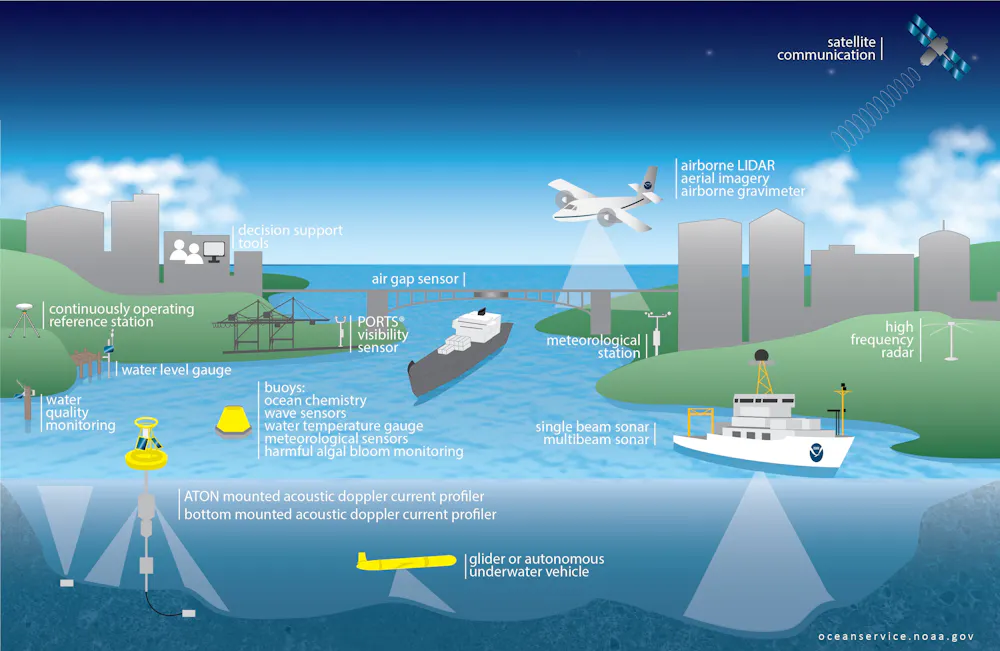
    A lot of the weather information Americans rely on starts with real-time data collected by NOAA satellites, airplanes, weather balloons, radar and maritime buoys, as well as weather stations around the world.

    All of that information goes into the agency’s computers, which process the data to begin defining what’s going on in different parts of the atmosphere.

    NOAA forecasters use computer models that simulate physics and the behavior of the atmosphere, along with their own experience and local knowledge, to start to paint a picture of the weather – what’s coming in a few minutes or hours or days. They also use that data to project seasonal conditions out over weeks or months.

    NOAA’s data comes from many sources to provide a more complete picture of developing climate and weather conditions. Communities and economies rely on that constantly updated information.
    NOAA

    When severe weather is on the way, the agency issues the official alerts you’ll see in the news and on your phone.

    All of this analysis happens before the information reaches private weather apps and TV stations.

    No matter who you are, you can freely access that data and the analyses. In fact, a large number of private companies use NOAA data to create fancy maps and other weather products that they sell.

    It would be extremely difficult to do all of that without NOAA.

    The agency operates a fleet of 18 satellites that are packed with instruments dedicated to observing weather phenomena essential to predicting the weather, from how hot the land surface is to the water content of the atmosphere. Some are geostationary satellites which sit high above different parts of the U.S. measuring weather conditions 24/7. Others orbit the planet. Many of these are operated as part of partnerships with NASA or the Air Force.

    Some private companies are starting to invest in satellites, but it would take an enormous amount of money to replicate the range of instrumentation and coverage that NOAA has in place. Satellites only last so long and take time to build, so NOAA is continually planning for the future, and using its technical expertise to develop new instruments and computer algorithms to interpret the data.

    NOAA’s low earth orbiting satellites circle the planet from pole to pole and across the equator 14 times a day to provide a full picture of the year twice a day. The agency also has geostationary satellites that provide continuous coverage over the U.S.
    NOAA

    Maritime buoys are another measuring system that would be difficult to replicate. Over 1,300 buoys across oceans around the world measure water temperature, wind and wave height – all of which are essential for coastal warnings, as well as long-term forecasts.

    Weather observation has been around a long time. President Ulysses S. Grant created the first national weather service in the War Department in 1870. It became a civilian service in 1880 under the Department of Agriculture and is now in the Commerce Department. The information its scientists and technologists produce is essential for safety and also benefits people and industries in a lot of ways.

    Could a private company create forecasts on its own without NOAA data?

    It would be difficult for one company to provide comprehensive weather data in a reliable way that is also accessible to the entire public.

    Some companies might be able to launch their own satellite, but one satellite only gives you part of the picture. NOAA’s weather observation network has been around for a long time and collects data from points all over the U.S. and the oceans. Without that robust data, computer models and the broad network of forecasters and developers, forecasting also becomes less reliable.

    Analyzing that data is also complex. You’re not going to be able to take satellite data, run a model on a standard laptop and suddenly have a forecast.

    And there’s a question of whether a private company would want to take on the legal risk of being responsible for the nation’s forecasts and severe weather warnings.

    Neil Jacobs, nominated to oversee NOAA, explains why the agency is essential for accurate national weather forecasting, and why private companies might not want to take on the legal risk on their own.

    NOAA is taxpayer-funded, so it is a public good – its services provide safety and security for everyone, not just those who can pay for it.

    If weather data was only available at a price, one town might be able to afford the weather information necessary to protect its residents, while a smaller town or a rural area across the state might not. If you’re in a tornado-prone area or coastal zone, that information can be the difference between life or death.

    Is climate data and research into the changing climate important for forecasts?

    The Earth’s systems – its land, water and the atmosphere – are changing, and we have to be able to assess how those changes will impact weather tomorrow, in two weeks and far into the future.

    Rising global temperatures affect weather patterns. Dryness can fuel wildfires. Forecasts have to take the changing climate into account to be accurate, no matter who is creating the forecast.

    Drought is an example. The dryness of the Earth controls how much water gets exchanged with the atmosphere to form clouds and rainfall. To have an accurate weather prediction, we need to know how dry things are at the surface and how that has changed over time. That requires long-term climate information.

    NOAA doesn’t do all of this by itself – who else is involved?

    NOAA partners with private sector, academia, nonprofits and many others around the world to ensure that everyone has the best information to produce the most robust weather forecasts. Private weather companies and media also play important roles in getting those forecasts and alerts out more widely to the public.

    A lot of businesses rely on accuracy from NOAA’s weather data and forecasts: aviation, energy companies, insurance, even modern tractors’ precision farming equipment. The agency’s long-range forecasts are essential for managing state reservoirs to ensure enough water is saved and to avoid flooding.

    The government agency can be held accountable in a way private businesses are not because it answers to Congress. So, the data is trustworthy, accessible and developed with the goal to protect public safety and property for everyone. Could the same be said if only for-profit companies were producing that data?

    Christine Wiedinmyer is the CIRES Associate Director for Science. CIRES is a CU Boulder research institute that has a cooperative agreement (grant) with NOAA called the Cooperative Institute for Earth Systems Research and Data Science, CIESRDS. Wiedinmyer’s funding is primarily from NOAA, which supports more than 400 CIRES CU Boulder employees.

    Kari Bowen is the Science and Administration Manager. CIRES is a CU Boulder research institute with a cooperative agreement (grant) with NOAA called the Cooperative Institute for Earth Systems Research and Data Science, CIESRDS. Bowen’s funding is from NOAA, which supports more than 400 CIRES CU Boulder employees.

    ref. NOAA’s vast public weather data powers the local forecasts on your phone and TV – a private company alone couldn’t match it – https://theconversation.com/noaas-vast-public-weather-data-powers-the-local-forecasts-on-your-phone-and-tv-a-private-company-alone-couldnt-match-it-249451

    MIL OSI – Global Reports

  • MIL-OSI Global: Rural Americans don’t live as long as those in cities − new research

    Source: The Conversation – USA – By Elizabeth Currid-Halkett, James Irvine Chair in Urban and Regional Planning and Professor of Public Policy, University of Southern California

    Part of the problem is that people living in rural areas don’t always have easy access to health care. cstar55/iStock via Getty Images

    Rural Americans – particularly men – are expected to live significantly shorter, less healthy lives than their urban counterparts, according to our research, recently published in the Journal of Rural Health.

    We found that a 60-year-old man living in a rural area is expected on average to live two fewer years than an urban man. For women, the rural-urban gap is six months.

    A key reason is worse rates among rural people for smoking, obesity and chronic conditions such as high blood pressure and heart disease. These conditions are condemning millions to disability and shortened lives.

    What’s more, these same people live in areas where medical care is evaporating. Living in rural areas, with their relatively sparse populations, often means a shortage of doctors, longer travel distances for medical care and inadequate investments in public health, driven partly by declines in economic opportunities.

    Our team arrived at these findings by using a simulation called the Future Elderly Model. With that, we were able to simulate the future life course of Americans currently age 60 living in either an urban or rural area.

    The model is based on relationships observed in 20 years of data from the Health and Retirement Study, an ongoing survey that follows people from age 51 through the rest of their lives. Specifically, the model showed how long these Americans might live, the expected quality of their future years, and how certain changes in lifestyle would affect the results.

    We describe the conditions that drive our results as “diseases of despair,” building off the landmark work of pioneering researchers who coined the now widely used term “deaths of despair.” They documented rising mortality among Americans without a college degree and related these deaths to declines in social and economic prospects.

    The main causes of deaths of despair – drug overdoses, liver disease and suicide – have also been called “diseases of despair.” But the conditions we study, such as heart disease, could similarly be influenced by social and economic prospects. And they can profoundly reduce quality of life.

    We also found that if rural education levels were as high as in urban areas, this would eliminate almost half of the rural-urban life-expectancy gap. Our data shows 65% of urban 60-year-olds were educated beyond high school, compared with 53% of rural residents the same age.

    One possible reason for the difference is that getting a bachelor’s degree may make a person more able or willing to follow scientific recommendations – and more likely to work out for 150 minutes a week or eat their veggies as their doctor advises them to.

    Rural communities are increasingly hampered by their lack of access to health care.

    Why it matters

    The gap between urban and rural health outcomes has widened over recent decades. Yet the problem goes beyond disparities between urban and rural health: It also splits down some of the party lines and social divides that separate U.S. citizens, such as education and lifestyle.

    Scholarship on the decline of rural America suggests that people living outside larger cities are resentful of the economic forces that may have eroded their economic power. The interplay between these forces and the health conditions we study are less appreciated.

    Economic circumstances can contribute to health outcomes. For example, increased stress and sedentary lifestyle due to joblessness can contribute to chronic health issues such as cardiovascular disease. Declines in economic prospects due to automation and trade liberalization are linked to increases in mortality.

    But health can also have a strong influence on economic outcomes. Hospitalizations cause high medical costs, loss of work and earnings, and increases in bankruptcy. The onset of chronic disease and disability can lead to long-lasting declines in income. Even health events experienced early in childhood can have economic consequences decades later.

    In tandem, these health and economic trends might reinforce each other and help fuel inequality between rural and urban areas that produces a profoundly different quality of life.

    What still isn’t known

    It should be noted that our results, like many studies, are describing outcomes on average; the rural population is not a monolith. In fact, some of the most physically active and healthy people we know live in rural areas.

    Just how much your location affects your health is an ongoing area of research. But as researchers begin to understand more, we can come up with strategies to promote health among all Americans, regardless of where they live.

    The Research Brief is a short take on interesting academic work.

    Elizabeth Currid-Halkett was the Kluge Chair in Modern Culture at the Library of Congress while conducting some of this research.

    Currid-Halkett is on the Scholars’ Council for the nonprofit Braver Angels.

    Bryan Tysinger receives funding from NIA.

    Jack Chapel does not work for, consult, own shares in or receive funding from any company or organization that would benefit from this article, and has disclosed no relevant affiliations beyond their academic appointment.

    ref. Rural Americans don’t live as long as those in cities − new research – https://theconversation.com/rural-americans-dont-live-as-long-as-those-in-cities-new-research-242261

    MIL OSI – Global Reports

  • MIL-OSI Global: Art and science illuminate the same subtle proportions in tree branches

    Source: The Conversation – USA – By Mitchell Newberry, Research Assistant Professor of Biology, University of Michigan

    Tree branches in art throughout history follow geometric rules related to fractal geometry. ‘Almond blossom’ by Vincent van Gogh. Van Gogh Museum, Amsterdam.

    Do artists and scientists see the same thing in the shape of trees? As a scientist who studies branching patterns in living things, I’m starting to think so.

    Piet Mondrian was an early 20th-century abstract artist and art theorist obsessed with simplicity and essence of form. Even people who have never heard of Mondrian will likely recognize his iconic irregular grids of rectangles.

    When I saw Mondrian’s 1911 “Gray Tree,” I immediately recognized something about trees that I had struggled to describe. By removing all but the most essential elements in an abstract painting, Mondrian demonstrated something I was attempting to explain using physics and fractal geometry.

    My field of research is mathematical biology. My colleagues and I try to explain how treelike structures such as veins and arteries, lungs and leaves fine-tune their physical form to efficiently deliver blood, air, water and nutrients.

    Fundamental research in the biology of branching helps cure cardiovascular diseases and cancer, design materials that can heal themselves and predict how trees will respond to a changing climate. Branching also shows up in ant foraging patterns, slime molds and cities.

    The treeless tree

    From 1890 to 1912, Mondrian painted dozens of trees. He started with full-color, realistic trees in context: trees in a farmyard or a dappled lane. Gradually he removed leaves, depth, color and eventually even branching from his tree paintings. “Gray Tree” uses only curved lines of various thickness superimposed on top of one another at seemingly random angles. Yet the image is unmistakably a tree.

    How did Mondrian convey the sense of a tree with so little? The science of trees may offer some clues.

    The science of branching

    One goal of mathematical biology is to synthesize what scientists know about the vast diversity of living systems – where there seems to be an exception to every rule – into clear, general principles, ideally with few exceptions. One such general principle is that evolution fine-tunes treelike structures in living things to make metabolism and respiration as efficient as possible.

    The body carefully controls the thickness of vessels as they branch, because deviation from the most efficient diameter wastes energy and causes disease, such as atherosclerosis.

    In many cases, such as human blood vessels, the body exerts much tighter control over diameter than length. So while veins and arteries might take circuitous routes to accommodate the vagaries of organs and anatomy, their diameter usually stays within 10% of the optimum. The same principle appears in tree branches as well.

    The precise calibration of branch diameter leads to a hallmark of fractal shapes called scale invariance. A scale invariance is a property that holds true regardless of the size of an object or part of an object you’re looking at. Scale invariance occurs in trees because trunks, limbs and twigs all branch in similar ways and for similar reasons.

    The scale invariance in branch diameter dictates how much smaller a limb should be as it branches and how much investment a tree makes in a few thick branches versus many thin ones. Trees have evolved scale invariance to transport water, reach light and resist gravity and wind load as efficiently as possible given physical limits.

    This science of trees inspired my colleague and me to measure the scaling of tree branch diameter in art.

    The art of trees

    Among my favorite images is a carving of a tree from a late-medieval mosque in India. Its exaltation of trees reminds me of Tolkien’s Tree of Gondor and the human capacity to appreciate the simple beauty of living things.

    But I also find mathematical inspiration in the Islamic Golden Age, a time when art, architecture, math and physics thrived. Medieval Islamic architects even decorated buildings with infinitely nonrepeating tiling patterns that were not understood by Western mathematics until the 20th century.

    The stylized tree carvings of the Sidi Saiyyed mosque also follow the precise system of proportions dictated by the scale invariance of real trees. This level of precision of branch diameter takes an attentive eye and a careful plan – much better than I could freehand.

    Indeed, wherever our team looked at trees in great artwork, such as Klimt’s “Tree of Life” or Matsumura Goshun’s “Cherry Blossoms,” we also found precise scale invariance in the diameter of branches.

    “Grey Tree” also realistically captures the natural variation in branch diameters, even when the painting gives the viewer little else to go on. Without realistic scaling, would this painting even be a tree?

    As if to prove the point, Mondrian made a subsequent painting the following year, also with a gray background, curved lines and the same overall composition and dimensions. Even the position of some of the lines are the same.

    But, in “Blooming Apple Tree” (1912), all the lines are the same thickness. The scaling is gone, and with it, the tree. Before reading the title, most viewers would not guess that this is a painting of a tree. Yet Mondrian’s sketches reveal that “Blooming Apple Tree” and “Gray Tree” are the very same tree.

    The two paintings contain few elements that might signal a tree – a concentration of lines near the center, lines that could be branches or a central trunk and lines that could indicate the ground or a horizon.

    Yet only “Gray Tree” has scale-invariant branch diameters. When Mondrian removes the scale invariance in “Blooming Apple Tree,” viewers just as easily see fish, scales, dancers, water or simply nonrepresentational shapes, whereas the tree in “Gray Tree” is unmistakable.

    Photo synthesis

    Mondrian’s tree paintings and scientific theory highlight the importance of the thickness of tree branches. Consilience is when different lines of evidence and reasoning reach the same conclusions. Art and math both explore abstract descriptions of the world, and so seeing great art and science pick out the same essential features of trees is satisfying beyond what art or science could accomplish alone.

    Just as great literature such as “The Overstory” and “The Botany of Desire” show us how trees influence our lives in ways we often don’t notice, the art and science of trees show how humans are finely attuned to what’s important to trees. I think this resonance is one reason people find fractals and natural landscapes so pleasing and reassuring.

    All these lines of thinking give us new ways to appreciate trees.

    Mitchell Newberry has published research on tree branching supported by University of Michigan and University of New Mexico. He volunteers with Cool It Burque, a tree-planting group in Albuquerque, NM.

    ref. Art and science illuminate the same subtle proportions in tree branches – https://theconversation.com/art-and-science-illuminate-the-same-subtle-proportions-in-tree-branches-247967

    MIL OSI – Global Reports

  • MIL-OSI USA: What Should Be on Your Plate? Study Shows Student Athletes Don’t Know

    Source: US State of Connecticut

    High school health classes often consist of a series of awkward lessons about STDs, drugs, and alcohol. Rarely do these classes teach students anything about another critical component of their health — nutrition.

    This lack of nutrition education is especially dangerous to student athletes who need to fuel their bodies properly to protect themselves from injury and other health risks.

    A new study shows that high school athletes have some serious gaps in both their general and sports-specific nutrition knowledge.

    This work was published in Nutrients. Jennifer B. Fields, assistant professor of nutritional science in the College of Agriculture, Health and Natural Resources, collaborated with researchers at the University of Wisconsin and George Mason University on this study.

    Fields and her collaborators have known that young athletes struggle with proper nutrition to fuel their highly active bodies.

    “There’s this preconceived notion that all athletes are healthy,” Fields says. “A lot of times that’s not the case.”

    The researchers previously found a high prevalence of eating disorders and other forms of disordered eating in college athletes, often linked to a lack of nutrition knowledge.

    Student athletes often turn to unscientific outlets, like social media, for nutrition information in the absence of formal education.

    Given this, the team became interested in seeing if similar patterns existed for high school athletes.

    They used a pre-validated survey, the Abridged Sports Nutrition Knowledge Questionnaire, to assess student athletes’ nutrition knowledge. Forty-four students were recruited from high schools in Wisconsin and beyond.  The students’ total nutrition score averaged around 45% for both boys and girls. Their general nutrition knowledge was about 58% and sport nutrition knowledge was about 35%.

    The students’ perceptions about the daily recommended intake of key nutrients were significantly off base. They thought they needed fewer carbohydrates and total calories, and far more protein and fat than is actually recommended.

    The students also demonstrated a lack of knowledge about when and what to eat to support sport performance.

    “Their level of general nutrition knowledge and sport nutrition knowledge was very, very low,” Fields says. “They didn’t know how to eat a balanced diet for their overall health. Moreso, they didn’t know how to make proper fueling decisions for their sport.”

    Many students reported that their primary source for nutrition knowledge was friends or family, followed closely by their coaches, who do not generally receive any formal nutrition training or education.

    Fields says many of these knowledge gaps may be fueled by social media which pumps out inaccurate nutrition information and unrealistic body standards for young people, especially athletes.

    “Adolescents in particular are just inundated with social media,” Fields says. “High schoolers are on Instagram, TikTok, whatever it may be, getting preconceived notions about how their bodies should look, how they should eat, and how they should exercise. And many times, it’s really conflicting with how they should be fueling as an athlete.”

    One of the key differences between sports and regular nutrition is athletes’ calories and carbohydrate needs. Athletes should be consuming more than half their daily calories as carbohydrates, Fields says.

    “Carbohydrates are athletes’ best friends,” Fields says. “That is so contradictory to what a lot of social media tells us.”

    Athletes also, generally, shouldn’t follow the trend of intermittent fasting diets as they need to be fueling consistently throughout the day to support performance and recovery and ensure they are getting enough calories.

    Athletes need to have more muscle mass to support their own safety as well, meaning they won’t look like some of the people they see on social media.

    The next step for this research will be to develop an educational intervention for high school athletes to empower them with the knowledge they need to make healthy choices.

    “One of our biggest takeaways is simply the need for more general nutrition education and sports-specific nutrition education for these adolescent athletes,” Fields says. “If we can change the behaviors throughout these high school years, then they get to college and have a much better sense of how to eat for their health and to optimize their performance.”

    This work relates to CAHNR’s Strategic Vision area focused on Enhancing Health and Well-Being Locally, Nationally, and Globally.

    Follow UConn CAHNR on social media

    MIL OSI USA News

  • MIL-OSI: Codeword Elevates Gabie Kur to Partner, Driving New Phase of Growth and Client Services Alongside Leadership Evolution

    Source: GlobeNewswire (MIL-OSI)

    NEW YORK, Feb. 11, 2025 (GLOBE NEWSWIRE) — Today, communication agency Codeword announced the promotion of Gabie Kur to Partner, Head of Growth, making her the agency’s first-ever woman partner, first growth lead, and first partner addition in more than a decade. In her new role, Kur will oversee business development, external communications, agency service expansions, and innovative partnerships. She will continue to oversee Codeword’s PR practice as well. She joins partners Kyle Monson and Michael McKloskey on Codeword’s executive leadership bench.

    Kur has spent over a decade at Codeword, most recently as Senior Vice President, PR, where she doubled Codeword’s client retention, tripled its monthly minimum retainer, and grew the team amid challenges in the tech, media, and PR industries. She has led PR programs for global brands such as Lowe’s, ASUS, Coway, Skillshare, Drift, and Alphabet’s Wing, and has successfully launched over 200 companies across her career. Her leadership in strategic growth, PR, and client expansion positions her to build out the agency’s growth function and push Codeword’s capabilities to the next level.

    “At Codeword, we’re constantly working to strengthen the way we support both our clients’ and our growth. I’m eager to maximize Codeword’s momentum in a reinvigorated function that equips our teams to deliver the best work we can for the brands that count on us,” said Kur. “This role is the perfect blend of everything I love—PR, problem-solving, business development—and I’m especially looking forward to working even more closely with Kyle and Michael, who have played pivotal roles in much of my career.”

    Codeword leadership is equally excited to add Kur to the partner bench.

    “I’ve worked closely with hundreds of PR pros over the years, and there’s nobody like Gabie,” said Kyle Monson, founding partner at Codeword. “She has a level of energy that defies the laws of physics, and her intelligence and problem-solving skills are adored by both her clients and her teammates. Over the past few years, we watched her do the impossible, and push the business forward in an era of industry retraction. After years of trying and failing to find her limit, we’re like ‘Maybe the limit does not exist. Why doesn’t she just run the place with us?’ And we’re delighted that she agreed to it. I hope we continue to make memories and good work together for a very long time.”

    Alongside Kur’s elevation to partner, Codeword upleveled its leadership across the agency.

    Ted Brown has been named Head of Editorial, reporting to Kyle Monson. Ted brings over fourteen years of creative and editorial leadership to the role. After joining Codeword two years ago, Brown quickly became a trusted partner for high-profile clients like Google and Android. In his new position, Brown will set and maintain the bar for Codeword’s editorial output, and manage Codeword’s team of writers and editors, the agency’s largest department. He’ll also continue mentoring the next generation of writers and creatives, helping them push boundaries and refine their craft in an evolving media landscape. Outside of Codeword, Brown continues to be a regular contributor to The New York Times, The Atlantic, Rolling Stone, and The New Yorker.

    Katy Donkin has been appointed Head of Client Accounts, reporting to Michael McKloskey. Over her eight years at Codeword, Donkin has cultivated deep, trust-based relationships with major clients—her expert stewardship has allowed the agency to maintain a decade-long partnership with Google. She has demonstrated a unique ability to craft audience-driven strategies that deliver results, foster long-term satisfaction, and meet detailed client needs. In this elevated role, Donkin’s focus will be on helping teams proactively orchestrate success while ensuring effective client delivery and maintaining high client satisfaction. Throughout her time at the agency, she’s played a vital role in developing her team, mentoring colleagues, and championing Codeword’s client relationships—all while seamlessly managing her responsibilities remotely from New Zealand.

    Liv Allen has been named Head of PR, reporting to Gabie Kur. Allen has been instrumental in growing the PR team and expanding the department’s integrated communications capabilities since joining Codeword in 2017. Across her career, Allen has worked with a diverse range of brands—from startups like Codeacademy and Outerspace to global companies such as ASUS, Payscale, and Sennheiser, as well as publicly traded companies like NVIDIA, Adobe, and Lowe’s. Her expertise in creating impactful media moments and fostering strong relationships has been integral to the agency’s success.

    “We’re hyped as hell to announce the new leadership roles for Gabie, Ted, Katy, and Liv. Each of them has consistently shown their commitment to Codeword’s mission to create brand experiences people actually care about,” said Michael McKloskey, managing partner and EVP at Codeword. “They make a positive impact on their clients’ businesses. They lead their teams to be better marketers. They shape Codeword into an ever-evolving agency of expert communicators. It’s an incredible combination that’s setting us up for limitless success. There’s nothing this team can’t accomplish together.”

    About Codeword
    Codeword is a communication design agency that helps brands create breakthrough comms, content, and community experiences. A team of fast-moving writers, designers, PR pros, and strategists, Codeword fosters an independent spirit with global scale and capabilities. The nationwide team is remote-first, with offices in NYC and SF. Part of the WE Communications family.

    Find us online at: www.codewordagency.com or @codewordagency

    The MIL Network

  • MIL-OSI: American Rebel Holdings, Inc. (NASDAQ: AREB) Regains Compliance with NASDAQ Listing Standards as of February 10, 2025.

    Source: GlobeNewswire (MIL-OSI)

    Nashville, Tennessee, Feb. 11, 2025 (GLOBE NEWSWIRE) — American Rebel Holdings, Inc. (NASDAQ: AREB) (“American Rebel” or the “Company”), creator of American Rebel Beer (americanrebelbeer.com) and a designer, manufacturer, and marketer of branded safes, personal security and self-defense products and apparel (americanrebel.com), is pleased to announce that it has regained compliance with the periodic filing requirement under NASDAQ’s listing rules.

    “Maintaining our NASDAQ listing is of utmost importance to our Company and our stockholders. I would like to extend my deepest gratitude to our internal and external accounting teams for their tireless efforts in ensuring our ability to file our FY2024 3rdQuarter financials that allowed American Rebel to regain compliance with NASDAQ’s listing rules.” Andy Ross, CEO of American Rebel, further commented, “The dedication and hard work of Darin Fielding, CFO of our wholly owned subsidiary, Champion Safe Co., who emerged as our regulatory lead due to his previous auditor experience was instrumental in the coordination between our independent auditors, GBQ and Eventus Advisory Group’s seasoned team of public company accounting professionals.”

    Timeline of NASDAQ Compliance Efforts
            

    November 14, 2024 FY2024 3rd Quarter 10Q due
    November 22, 2024 Company notification by NASDAQ that it no longer met the perioding listing requirement due to the inability to file the FY2024 3rd Quarter 10Q
    January 21, 2025 Deadline for American Rebel Holdings, Inc. to submit a plan to NASDAQ to regain compliance with the listing requirements
    February 7, 2025 American Rebel Holdings, Inc. files Form 10-Q for the period ended September 30, 2024.
      Revenue for the three (3) months ended September 30, 2024 of $2,337,786.00
      Revenue for the nine (9) months ended September 30, 2024 of $9,637,016.00
    February 10, 2025 American Rebel Holdings, Inc. is notified by NASDAQ Staff that with the February 7, 2025 filing of the 10-Q for the period ended September 30, 2024, that the Company is deemed compliant with the NASDAQ Listing Rules.

    In the coming weeks, the Company is planning on providing a brief stockholder update from its CEO, Andy Ross, detailing the progress made in our business units throughout last year. This update will highlight the rapid growth and success American Rebel has experienced in our American Rebel Beverage business unit responsible for American Rebel Light Beer and the positive impacts of the reorganization and streamlining of our product offerings and processes at Champion Safe Co. (www.championsafe.com).

    About American Rebel Holdings, Inc.

    American Rebel Holdings, Inc. (NASDAQ: AREB) has operated primarily as a designer, manufacturer and marketer of branded safes and personal security and self-defense products and has recently transitioned into the beverage industry through the introduction of American Rebel Light Beer. The Company also designs and produces branded apparel and accessories. To learn more, visit www.americanrebel.com and www.americanrebelbeer.com. For investor information, visit www.americanrebel.com/investor-relations.

    American Rebel Holdings, Inc.
    info@americanrebel.com

    Forward-Looking Statements

    This press release contains forward-looking statements within the meaning of the Private Securities Litigation Reform Act of 1995. American Rebel Holdings, Inc., (NASDAQ: AREB; AREBW) (the “Company,” “American Rebel,” “we,” “our” or “us”) desires to take advantage of the safe harbor provisions of the Private Securities Litigation Reform Act of 1995 and is including this cautionary statement in connection with this safe harbor legislation. The words “forecasts” “believe,” “may,” “estimate,” “continue,” “anticipate,” “intend,” “should,” “plan,” “could,” “target,” “potential,” “is likely,” “expect” and similar expressions, as they relate to us, are intended to identify forward-looking statements. We have based these forward-looking statements primarily on our current expectations and projections about future events and financial trends that we believe may affect our financial condition, results of operations, business strategy, and financial needs. Important factors that could cause actual results to differ from those in the forward-looking statements include benefits of marketing outreach efforts, continued compliance with Nasdaq listing requirements, our ability to effectively execute our business plan, and the Risk Factors contained within our filings with the SEC, including our Annual Report on Form 10-K for the year ended December 31, 2023 and Quarterly Report on Form 10-Q for the quarter ended September 30, 2024. Any forward-looking statement made by us herein speaks only as of the date on which it is made. Factors or events that could cause our actual results to differ may emerge from time to time, and it is not possible for us to predict all of them. We undertake no obligation to publicly update any forward-looking statements, whether as a result of new information, future developments or otherwise, except as may be required by law.

    Company Contact:
    Corey Lambrecht, COO
    Corey.lambrecht@americanrebel.com

    The MIL Network

  • MIL-OSI Asia-Pac: Prime Minister Shri Narendra Modi addresses inaugural session of India Energy Week 2025

    Source: Government of India (2)

    Posted On: 11 FEB 2025 4:17PM by PIB Delhi

    The Prime Minister Shri Narendra Modi delivered his remarks at the inauguration of third edition of India Energy Week 2025 via video message today. Addressing the gathering at Yashobhoomi, he emphasized that the attendees are not just part of the Energy Week, but are also integral to India’s energy ambitions.

    India Energy Week was envisioned as more than just another industry conference—it was designed to be a dynamic platform redefining global energy dialogues. In just two years, this self-funded initiative has achieved precisely that, becoming the world’s second-largest energy event. IEW 2025, scheduled from February 11-14, 2025, at Yashobhoomi, New Delhi, represents a significant milestone in shaping the global energy narrative.


    Highlighting that experts worldwide are asserting that the 21st century belongs to India, Shri Modi remarked, “India is driving not only its growth but also the growth of the world, with the energy sector playing a significant role”. He emphasized that India’s energy ambitions are built on five pillars: harnessing resources, encouraging innovation among brilliant minds, economic strength and political stability, strategic geography making energy trade attractive and easier, and commitment to global sustainability. The Prime Minister noted that these factors are creating new opportunities in India’s energy sector.

    “India has grown from the tenth largest to the fifth largest economy in the past decade”, remarked Shri Modi. He highlighted that India’s solar energy generation capacity has increased thirty-two times in the last ten years, making it the third-largest solar power generating nation in the world. He noted that India’s non-fossil fuel energy capacity has tripled and that India is the first G20 country to achieve the goals of the Paris Agreement. The Prime Minister emphasized India’s achievements in ethanol blending, with a current rate of nineteen percent, leading to foreign exchange savings, substantial farmer revenue, and significant reductions in CO2 emissions. He highlighted India’s goal of achieving a twenty percent ethanol mandate by October 2025. He remarked that India’s biofuels industry is ready for rapid growth, with 500 million metric tonnes of sustainable feedstock. He further noted that during India’s G20 presidency, the Global Biofuels Alliance was established and is continuously expanding, now involving 28 nations and 12 international organizations. He highlighted that this alliance is transforming waste into wealth and setting up Centers of Excellence.

    Highlighting that India is continuously reforming to fully explore the potential of its hydrocarbon resources, Shri Modi highlighted that major discoveries and extensive expansion of gas infrastructure are contributing to the growth of the gas sector, increasing the share of natural gas in India’s energy mix. He noted that India is currently the fourth largest refining hub and is working to increase its capacity by 20 percent.

    Pointing out that India’s sedimentary basins hold numerous hydrocarbon resources, some of which have already been identified, while others await exploration, the Prime Minister highlighted that to make India’s upstream sector more attractive, the Government introduced the Open Acreage Licensing Policy (OALP). He emphasized that the Government has provided comprehensive support to the sector, including opening the Exclusive Economic Zone and establishing a single-window clearance system. Shri Modi noted that changes to the Oilfields Regulation & Development Act now offer stakeholders policy stability, extended leases, and improved financial terms. He emphasized that these reforms will facilitate the exploration of oil and gas resources in the maritime sector, increase production, and maintain strategic petroleum reserves.

    Prime Minister underlined that due to several discoveries and the expanding pipeline infrastructure in India, the supply of natural gas is increasing. He emphasized that this will lead to a rise in the utilization of natural gas in the near future. He also highlighted that there are numerous investment opportunities in these sectors.

    Shri Hardeep Singh Puri, Minister of Petroleum & Natural Gas, in his address at the event, highlighted the growing significance of the event, which has rapidly become the second-largest energy conference in the world in just three years. This year’s edition has drawn over 70,000 energy professionals from more than 50 countries, including over 20 Ministers and 100 CEOs from Fortune 500 energy companies, making it a key forum 6for discussions on the evolving global energy landscape.

    Shri Puri underscored that IEW 2025 comes at a crucial juncture amid major geopolitical shifts that have reshaped the global energy order. He stressed that the conference offers a unique opportunity for policymakers, industry leaders, and stakeholders to engage in meaningful dialogue, exchange ideas, and chart a course for a balanced and inclusive energy transition. While reaffirming India’s commitment to sustainability, he emphasized that the transition must be pragmatic, recognizing the continued role of hydrocarbons alongside renewables, hydrogen, and biofuels. He cited the International Energy Agency’s (IEA) projection of global energy investment surpassing USD 3 trillion in 2024, with USD 2 trillion dedicated to clean energy technologies, as a clear indication of the accelerating shift toward cleaner energy sources.

    The Minister highlighted India’s leadership in driving energy innovation and entrepreneurship, noting that major global energy firms like BP, Shell, ExxonMobil, and Chevron operate Global Capability Centres in India, employing thousands of Indian engineers to develop cutting-edge solutions for energy efficiency, data analytics, and sustainable operations. He also acknowledged the role of 500+ entrepreneurs participating in start-up challenges such as Avinya and Vasudha, and the 700 exhibiting companies, including over 100 start-ups, showcasing AI-driven energy solutions, quantum computing applications, and advancements in biofuels and battery technologies.

    A key theme of his address was energy justice, where he warned against fragmented energy policies that could deepen inequality by leaving developing economies behind in the transition. He emphasized the need for resilient supply chains in critical minerals, semiconductors, and emerging energy technologies, calling for global collaboration to prevent disruptions that could hinder progress. He also pointed out that India is strategically investing in diverse energy sources, including scaling up biofuel production, increasing its gas share from 6% to 15%, and targeting 5 million metric tonnes of hydrogen production by 2030 to ensure a smooth transition without compromising energy security.

    Concluding his remarks, Shri Puri urged all stakeholders to leverage India Energy Week as a platform for forging transformative partnerships and shaping the global energy agenda. He invited the 6,000+ delegates to engage in the conference’s discussions over the next four days, focusing on strategies to stabilize energy markets, drive technological advancements, and enhance international cooperation. With India playing an increasingly central role in the global energy ecosystem, IEW 2025 is set to be a landmark event for defining the future of energy.

    *******

    MONIKA

    (Release ID: 2101769) Visitor Counter : 48

    MIL OSI Asia Pacific News

  • MIL-OSI Asia-Pac: 14th Asian Fisheries and Aquaculture Forum (14AFAF) on “Greening the Blue Growth in Asia-Pacific” to be held in Delhi

    Source: Government of India (2)

    14th Asian Fisheries and Aquaculture Forum (14AFAF) on “Greening the Blue Growth in Asia-Pacific” to be held in Delhi

    Union Minister Shri Rajiv Ranjan Singh to inaugurate the three-day event tomorrow

    ICAR and AFS jointly organizing the event

    Posted On: 11 FEB 2025 3:33PM by PIB Delhi

    The 14th Asian Fisheries and Aquaculture Forum (14AFAF), with the theme “Greening the Blue Growth in Asia-Pacific” is being organized in New Delhi during February 12-14, 2025. The Asian Fisheries and Aquaculture Forum (AFAF) is a triennial event of the Asian Fisheries Society with its Headquarters in Kuala Lumpur, Malaysia. This 14th AFAF is being jointly organized by the Asian Fisheries Society (AFS), Kuala Lumpur; Indian Council of Agricultural Research (ICAR), New Delhi; the Department of Fisheries (DoF), Government of India; and the Asian Fisheries Society Indian Branch (AFSIB), Mangalore. This prestigious event is being hosted in India for the 2nd time after the 8AFAF held at Kochi in 2007.

    The 14thAFAF brings together key players from the fisheries and aquaculture sectors and will host around 1,000 delegates from 24 countries, including researchers, policymakers, industry leaders, and stakeholders. The Asian Fisheries and Aquaculture Forum (AFAF) has a strong legacy of fostering global collaboration in the sector. Since its inception, the forum has been successfully hosted in multiple countries across Asia. Hosting the 14th AFAF in India after 18 years highlights the country’s growing prominence in global fisheries and aquaculture. With a rapidly expanding blue economy, progressive government policies, and significant scientific advancements, India has emerged as a key player in sustainable fisheries and aquaculture. Today, India occupies 2nd position in total fish production and also aquaculture production globally. The forum will provide a platform to showcase India’s contributions, strengthen international partnerships, and promote innovative approaches for sustainable, resilient, and economically viable fish production systems.

    The forum will be inaugurated by Shri Rajiv Ranjan Singh, Minister of Fisheries, Animal Husbandry and Dairying and Panchayati Raj, Govt. of India on at 10.00 AM on 12th February 2025 ( WEDNESDAY) at Bharat Ratna C. Subramaniam Auditorium, ICAR Convention Centre, Pusa Campus, New Delhi. Dr. Himansu Pathak, Secretary, DARE, and Director General, ICAR; Dr. Abhilaksh Likhi, Secretary, Department of Fisheries, Government of India; Dr. S. Ayyappan, Former Secretary, DARE, and DG, ICAR; Dr. Essam Yassin Mohammed, Director General of World Fish, Malaysia will also be present. The event will include over 20 Lead Presentations by internationally acclaimed experts from India and overseas.

    On the second day a Symposium on “Aquatic Animal Diseases: Emerging Challenges and Preparedness” will be held at A.P. Shinde Auditorium, NASC Complex, Pusa Campus, New Delhi. Shri George Kurian, Minister of State for Fisheries, Animal Husbandry & Dairying, and Minority Affairs, Govt. of India will inaugurate the event.

    On the third day, the Academia-Industry-Government Meet on ‘De-risking Shrimp Aquaculture Value Chain for Improved Global Competitiveness‘ at Parijat Lecture Hall, Ground Floor, NAAS Block, NASC, New Delhi. Dr B. Mastan Rao, Member of Parliament (Rajya Sabha) will inaugurate it.

    Closing Ceremony of 14th Asian Fisheries and Aquaculture Forum (14AFAF) will be held at 4.30 pm on 14thFebruary, 2025 at Bharat Ratna C. Subramaniam Auditorium, ICAR Convention Centre, Pusa Campus, New Delhi. Shri Bhagirath Choudhary, Minister of State for Agriculture and Farmers Welfare, Govt. of India has consented to be the Chief Guest of the Closing Ceremony.

    ****

    MG/KSR   

    (Release ID: 2101732) Visitor Counter : 151

    MIL OSI Asia Pacific News

  • MIL-OSI Asia-Pac: FOOT AND MOUTH DISEASE (FMD)

    Source: Government of India

    Posted On: 11 FEB 2025 5:37PM by PIB Delhi

    Foot and mouth disease (FMD) is a highly contagious viral disease of livestock with the significant economic impact.   The steps taken by the Union Government in this regard; are as under:

    i. National Animal Disease Control Programme (NADCP) was launched in 2019 with a provision of 100% central assistance to states and Union Territories for Foot and Mouth Disease (FMD) vaccination.NADCP was included as a component under Livestock Health and Disease Control programme (LHDCP) scheme from 2021

    1. Procurement and supply of the quality FMD vaccine for required FMD vaccination and ear tags for respective States and Union Territories is done centrally
    2. Financial support is provided to States and Union Territories for procurement of vaccination accessories, strengthening of cold chain infrastructure and for awareness generation amongststakeholders
    3. Financial support is provided to Indian Council of Agricultural Research (ICAR)- National Institute of Foot and Mouth Disease (NIFMD)-Bhubaneswar, ICAR- Indian Veterinary Research Institutes (IVRI)-Bareilly, ICAR-IVRI-Bengaluru, ICAR-National Institute of Veterinary Epidemiology and Disease Informatics (NIVEDI)-Bengaluru and Chaudhary Charan Singh National Institute of Animal Health-Baghpat for FMD related activities
    4. Data related to registration of livestock using ear-tags and vaccination is uploaded on Bharat Pashudhan portal
    5. As gathered from States/UTs, cumulative vaccination under National Animal Disease Control Programme till date (January, 2025) against FMD is 107.34 crore. The vaccinations done Round-wise is 16.91 crore, 24.18 crore, 24.23 crore and 24.84 crore for Rounds I, II, III and IV respectively. The Rounds V and VI are ongoing in various States/ UTs and till date 14.89 crore and 2.29 crore vaccinations have been done respectively.
    6. On 17th August, 2024, a review of the measures was taken by the Department towards achieving the goal of FMD-Mukt Bharat. Besides, Regional review meetings are conducted twice with participation from all States and Union Territories to assess the progress of ongoing initiatives and programs including vaccination against FMD. These reviews serve as a platform for evaluating the implementation status, identifying challenges, and sharing best practices among stakeholders. Also, time to time various national level meetings like monsoon meet, conclaves are held by which status of FMD control is reviewed with States/ UTs.
    7. The State/Union Territory wise released funds are at Annexure I. 
    8. There is considerable reduction in FMD outbreaks over last few years, by over 60% from prior to launch of NADCP to 5 years of its implementation. The outbreaks now are sporadic in nature and there have been cases of FMD affecting limited number of animals
    9. Sampling plans are shared timely with States and overall, the protective titres indicated by seromonitoring are showing an increasing trend. The serosurveillance values are also showing a decreasing trend. These indicate the effectiveness of the vaccination programme.


    Under LHDCP, 100% assistance is provided to all States/Union Territory irrespective of region in the Country for control and eradication of FMD for activities as per operational guidelines of the concerned scheme ie. LHDCP. As far as FMD free zone is concerned, it is only an intermediate stage/measure aiming differentiated focus based on need and requirements. As of now, 09 states namely Gujarat, Maharashtra, Tamil Nadu, Punjab, Haryana, Karnataka, Andhra Pradesh, Telangana and Uttarakhand identified to have special focus to make them FMD free. Adding more states for special focus to make them FMD free depends upon their need and requirement.

    Annexure I

    The State/Union Territory wise released of funds for vaccination programmes including FMD from 2019-20 till 2024-25 (till 31-01-2025):

    (Rs. in Lakh)

    S.NO.

    State/UTs

    2019-20 to

    2024-25 (till 31-01-2025)

    1

    Andaman & Nicobar Islands

    19.89

    2

    Andhra Pradesh

    16373.84

    3

    Arunachal Pradesh

    1826.4

    4

    Assam

    5016.71

    5

    Bihar

    8428.8

    6

    Chandigarh

    14.13

    7

    Chhattisgarh

    4134.17

    8

    Dadra & Nagar Haveli and Daman & Diu

    6.62

    9

    Goa

    246.6

    10

    Gujarat

    3383.75

    11

    Haryana

    5865.54

    12

    Himachal Pradesh

    1265.54

    13

    Jammu & Kashmir

    2193.58

    14

    Jharkhand

    3090.83

    15

    Karnataka

    8426.89

    16

    Kerala

    1039.14

    17

    Ladakh

    190.74

    18

    Lakshadweep

    40.22

    19

    Madhya Pradesh

    9968.88

    20

    Maharashtra

    14424.41

    21

    Manipur

    194.94

    22

    Meghalaya

    501.74

    23

    Mizoram

    245.79

    24

    Nagaland

    203.18

    25

    NCT Delhi

    74.57

    26

    Odisha

    3772.15

    27

    Puducherry

    46.18

    28

    Punjab

    1381.33

    29

    Rajasthan

    6636.26

    30

    Sikkim

    391.35

    31

    Tamil Nadu

    4981.02

    32

    Telangana

    3947.1

    33

    Tripura

    786.31

    34

    Uttar Pradesh

    21892.39

    35

    Uttarakhand

    1608.61

    36

    West Bengal

    7099.33

    This information was given by the Minister of Fisheries, Animal Husbandry and Dairying Shri Rajiv Ranjan Singh alias Lalan Singh, in a written reply in Lok Sabha today.

    *****

    AA

    (Release ID: 2101856) Visitor Counter : 28

    Read this release in: Hindi

    MIL OSI Asia Pacific News

  • MIL-OSI Asia-Pac: MILK PRODUCTS

    Source: Government of India

    Posted On: 11 FEB 2025 5:35PM by PIB Delhi

    The productivity of Indigenous bovine breeds in the country is low compared to advanced dairy nations globally and this is mainly due to low genetic potential of dairy animals and animals are maintained on low plane of nutrition.  However, the total productivity of Bovines in the country has increased from 1640 kilograms per animal per year in 2014-15 to 2072 kilograms per animal per year in 2023-24 that is by 26.34% which is the highest productivity gain by any country in the world.  The productivity of the indigenous and non-descript cattle has increased from 927 kilograms per animal per year in 2014-15 to 1292 kilograms per animal per year in 2023-24 that is by 39.37 %. The productivity of the buffaloes has increased from 1880 kilograms per animal per year in 2014-15 to 2161 kilograms per animal per year in 2023-24 that is by 14.94%. Milk production in the country has increased from 146.31 Million Tonnes in 2014-15 to 239.30 Million Tonnes in 2023-24 that is by 63.55 % during the last 10 years. Rashtriya Gokul Mission envisages to achieve productivity of bovines upto 3000 kilograms of milk per animal per year by 2030.

    In order to complement and supplement the efforts of the States and Union Territories to improve the nutrition, management practices, genetic potential of local cattle breeds and to provide training and support to dairy farmers in adopting best practices, the details of the steps undertaken and schemes being implemented by Government of India is as under:

    1.         Rashtriya Gokul Mission: The Department of Animal Husbandry and Dairying is implementing Rashtriya Gokul Mission since December 2014 for development and conservation of indigenous bovine breeds, genetic upgradation of bovine population and enhancement of milk production and productivity of bovines. Following efforts are being made under the scheme to enhance milk production and productivity of bovines:

    (i)         Nationwide Artificial Insemination Program: Under the Rashtriya Gokul Mission, the Department of Animal Husbandry and Dairying is expanding artificial insemination coverage to boost the milk production and productivity of bovines, including indigenous breeds.

    (ii)        Progeny Testing and Pedigree Selection: This program aims to produce high genetic merit bulls, including bulls of indigenous breeds. Progeny testing is implemented for Gir, Sahiwal breeds of cattle, and Murrah, Mehsana breeds of buffaloes. Under the Pedigree selection programme Rathi, Tharparkar, Hariana, Kankrej breed of cattle and Jaffarabadi, Nili Ravi, Pandharpuri and Banni breed of buffalo are covered.

    (iii)       Implementation of In-Vitro Fertilization (IVF) Technology: To propagate elite animals of indigenous breeds, the Department has established 22 IVF laboratories. The technology has important role in genetic upgradation of bovine population in single generation. Further, to deliver technology at reasonable rates to farmers Government has launched IVF media.

    (iv)       Sex-Sorted Semen Production: The Department has established sex sorted semen production facilities at 5 government semen stations located in Gujarat, Madhya Pradesh, Tamil Nadu, Uttarakhand and Uttar Pradesh. 3 private semen stations are also producing sex sorted semen doses.

    (v)        Genomic Selection: To accelerate genetic improvement of cattle and buffaloes, the Department has developed unified genomic chips—Gau Chip for indigenous cattle and Mahish Chip for buffaloes—specifically designed for initiating genomic selection in the country.

    (vi)       Multi-purpose Artificial Insemination Technicians in Rural India (MAITRIs): Under the scheme MAITRIs are trained and equipped to deliver quality Artificial Insemination services at farmers’ doorstep.

    (vii)      Accelerated Breed Improvement Programme using sex sorted semen: This program aims to produce female calves with up to 90% accuracy, thereby enhancing breed improvement and farmers’ income. Farmers receive support for assured pregnancy upto 50% of the cost of sex sorted semen.

    (viii)     Accelerated Breed Improvement Programme using In-Vitro Fertilization (IVF) technology: This technology is utilized for the rapid genetic upgradation of bovines and an incentive of Rs 5,000 per assured pregnancy is made available to farmers interested in taking up IVF technology.

    2.         National Livestock Mission (NLM): National Livestock Mission (NLM) aims to create employment generation, entrepreneurship development, increase in per-animal productivity and thus targeting increased production of meat, goat milk, egg and wool under the umbrella scheme Development Programme.  The scheme envisages following three submissions: (i) Sub-Mission on Breed Development of Livestock and Poultry; (ii) Sub-Mission on Feed and Fodder Development and (iii) Sub-Mission on Innovation, Extension. Details of the activities covered under these submissions are as under:

    (A) Sub-mission on Breed Development of Livestock and Poultry:  This Sub-Mission has following activities: (I)                 Establishment of Entrepreneurs for breed development: under this activity following sub activities are included (i) Establishment of Entrepreneurs for breed development of Rural Poultry and (ii) Establishment of Entrepreneur for breed development in small ruminant sector (sheep and goat farming). (II) Genetic Improvement of Sheep and Goat breeds: under this activity following are the sub activities: (i) Establishment of Regional Semen Production Laboratory and Semen Bank for sheep and goat; (ii) Establishment of State Semen Bank: (iii) Propagation of Artificial Insemination through existing cattle and buffalo Artificial Insemination centers and (iv)  Import of exotic sheep and goat germplasm.  (III) Promotion of Piggery Entrepreneur. (IV) Genetic Improvement of Pig breeds: Under this activity following activities are implemented:  (i) Establishment of pig semen collection and processing lab and (ii) Import of exotic pig germplasm. (V) Establishment of Entrepreneurs for horse, donkey, mule and camel. (VI) Genetic Improvement of Horse, Donkey, Mule, Camel:  (i) Regional Semen Station for Horse, donkey and camel; (ii) Nucleus Breed Farm for Conservation of Horse/Donkey/Camel germplasm and (iii) Breed Registration Society.

    (B) Sub-Mission on feed and fodder development: The Sub-Mission of the feed and fodder is covering the following activities: (I)     Assistance for quality Fodder seed production. (II) Entrepreneurial activities in feed and fodder. (III) Establishment of Entrepreneurs for Fodder Seed processing Infrastructure (processing and grading unit/ fodder seed storage godown). (IV) Fodder production from Non-Forest Wasteland / Rangeland / Non-arable Land” and “Fodder Production from Forest Land.

    (C)       Sub Mission on Innovation and Extension: Under this Sub-Mission the following are the activities: (I) Research and Development and innovations. (II) Extension activities. (III) Livestock Insurance programme.

    3.         National Programme for Dairy Development: This scheme focuses on creating dairy infrastructure for the procurement, processing, and marketing of milk and milk products in the cooperative dairy sector inter alia training and awareness programs for dairy farmers, input services such as cattle-feed and mineral mixtures, and assistance for quality testing of milk and milk products, thereby improving the economic condition of dairy farmers enrolled in cooperatives.

    4.         Livestock Health and Disease Control (LH & DC): The scheme is implemented for providing assistance for control of animal diseases like Foot and Mouth Disease, Brucellosis and also to provide assistance to State Governments for Control of other infectious diseases of livestock including dairy animals. Mobile Veterinary Units are established under the scheme to deliver quality livestock health services at farmers doorstep. Under the vaccination programme: (i) more than 100 crore vaccinations have been done against FMD including 35 crore vaccination performed during current year; and (ii) about 4.3 crore calves vaccinated against Brucellosis under brucellosis control programme including 1.3 crore calves vaccinated during current year. Under the component of Establishment and Strengthening of Veterinary Hospitals and Dispensaries (ESVHD- MVU), 100% financial assistance is provided towards procurement & customization of Mobile Veterinary Units (MVUs) with recurring operational expenditure in the ratio of 90:10 for North Eastern & Himalayan States; 60% for other States, and 100% for UTs for delivery of veterinary healthcare services through Mobile Veterinary Units (MVUs) through a Toll-Free Number (1962) at farmers’ doorsteps which include disease diagnosis, treatment, vaccination, minor surgical interventions, audio-visual aids and extension services. So far, 4016 MVUs are operational in 28 states and 65 lakh farmers benefitted. This helps in increasing productivity

    5.         Animal Husbandry Infrastructure Development Fund (AHIDF) The scheme is to facilitate incentivisation of investments to establish (i) Dairy processing and product diversification infrastructure, (ii) Meat processing and product diversification infrastructure and (iii) Animal Feed Plant (iv) Breed Improvement Technology and Breed Multiplication Farm, (v) Veterinary Vaccine and Drugs production facilities, (vi) Animal waste to wealth management (Agri-waste Management). Keeping in view of the success of AHIDF, the erstwhile Dairy Processing Infrastructure Development Fund has been subsumed with the AHIDF on 01.02.2024. Now total size of the fund is Rs 29110 cr.

    The Department of Animal Husbandry and Dairying is implementing Centrally Sponsored Scheme National Livestock Mission with a Sub-Mission on Feed and Fodder Development. Under the Submission, fodder development activity is undertaken through strengthening of fodder seed chain (Breeder-Foundation-Certified) thereby improving the availability of certified/quality fodder seeds required for production of high quality and  nutritious fodder. Approx.  1.03 lakh Tons of fodder seeds were produced under the Component Assistance for Quality Fodder Seeds Production since 2021-22 with release of funds of Rs.636.83 crores. The details of the progress under the component is at Annexure-I

    Indian Council of Agricultural Research (ICAR)- Indian Grassland and Fodder Research Institute ( IGFRI) Jhansi along with its All India Co-ordinated Research Project (AICRP) on Forage Crops & Utilization with 22 coordinated centers located in 21 states of the country are dedicatedly working on development of high yielding and nutritious fodder crop varieties for different agro-climatic conditions of the country and many varieties have been released for cultivation. Different approaches of crop improvement viz. speed breeding, apomixes; gene editing, SS markers, transgenic etc. are being used to develop high yielding trait specific cultivars. Major thrust are being placed for the development of varieties with attributes of high yielding, nutritionally superior, climatically resilient and resistant for different biotic factor. Till now more than 400 improved varieties in 40 fodder crops has been developed for different parts of the country and out of these about 200 varieties are in seed production chain. During last five years (2019-2024) nutritionally better and high yielding 86 varieties/ hybrids in 17 fodder crops have been identified/ notified for the cultivation in different agro-climatic regions of the country.

    Annexure-I

    Progress under component Assistance for Quality Fodder seeds Production under realign National Livestock Mission (NLM)

    1. Physical Progress – Year and Class wise Fodder Seed Production (Qtls)

    Class of seeds

    2021-22

    2022-23

    2023-24

    2024-25

    Total

    Breeder

    530.13

    0

    0

    0

    530.13

    Foundation

    6120.87

    21864.75

    15312.89

    12832.06

    56130.57

    Certified

    104852.2

    303222.4

    407874.5

    159383.0

    975332.1

    Total

    111503.2

    325087.2

    423187.4

    172215.1

    1031993

    1. Financial Progress – Year-wise Release of funds

    Year

    Release of funds (Rs.in crores)

    2021-22

    100.44

    2022-23

    159.99

    2023-24

    156.07

    2024-25

    (As on 4.2.2025)

    220.31

    Total Releases

    636.83

    This information was given by the Minister of Fisheries, Animal Husbandry and Dairying Shri Rajiv Ranjan Singh alias Lalan Singh, in a written reply in Lok Sabha today.

    *****

    AA

    (Release ID: 2101854) Visitor Counter : 25

    Read this release in: Hindi

    MIL OSI Asia Pacific News

  • MIL-OSI Asia-Pac: VACCINATION TARGETS UNDER LIVESTOCK

    Source: Government of India

    Ministry of Fisheries, Animal Husbandry & Dairying

    VACCINATION TARGETS UNDER LIVESTOCK

    Posted On: 11 FEB 2025 5:34PM by PIB Delhi

    The following actions taken by Department of Animal Husbandry and Dairying(DAHD), Ministry of Fisheries & AHD Government of India to streamlined the vaccination programs against FMD, Brucellosis, PPR and CSF;.

    1. Vaccination against Foot and Mouth Disease (FMD), Brucellosis, Peste des Petits Ruminants (PPR) and Classical Swine Fever (CSF) is covered under 100% central assistance under Livestock Health And Disease Control Programme (LHDCP)  for all States and Union Territories.
      1. As gathered from States/UTs, cumulative vaccination till date (January, 2025), 107.34 crore, 4.39 crore, 20,40 crore, 0.67  crore vaccine hasbeen done against FMD, Brucellosis, PPR and CSF respectively. The last FMD-Round IV vaccination completed has covered more than 96% vaccination coverage (24.84 crore).  Further, FMD Rounds V and VI are ongoing in various States with nearly 14.89 Crores and 2.29 Crores vaccinations done respectively.
      1. The coverage percentage of vaccination program has increased, and the gaps have been narrowed down by ensuring timely supply of quality tested vaccines for FMD, Brucellosis, PPR and CSF along with awareness generation among stakeholders
      1. Assistance to States for Control of Animal Disease (ASCAD) for control of state prioritized exotic, emergent and zoonotic animal diseases with funding pattern of 60:40 between Central and State; 90:10 for hilly and North East States and 100% for UTs. Total more than 27.21 crore cattle have been vaccinated/re-vaccinated upto January, 2025 against Lumpy Skin Disease in the country.
      1. Financial support is provided to Indian Council of Agricultural Research(ICAR)- National Institute of Foot and Mouth Disease (NIFMD)-Bhubaneswar, ICAR- Indian Veterinary Research Institutes (IVRI)-Bareilly, ICAR-IVRI-Bengaluru, ICAR-National Institute of Veterinary Epidemiology and Disease Informatics (NIVEDI)-Bengaluru and Chaudhary Charan Singh National Institute of Animal Health-Baghpat for FMD related activities
      1. Data related to registration of livestock using ear-tags and vaccination  is uploaded on Bharat Pashudhan portal

    Total vaccination performance reducing the gap under the programmeare at Annexure-I

    ANNEXURE-I


    Animals Vaccinated in FMD Round IV

    Animals Vaccinated in FMD Round V

    (ongoing)

    Animals Vaccinated in FMD Round VI

    (ongoing)

    Animals Vaccinated against Brucellosis

    Animals Vaccinated against PPR Round I

    Animals Vaccinated against PPR Round II

    Animals Vaccinated against CSF Round I

    Animals Vaccinated against CSF Round II

    Progress of vaccination mentioned in 4th report of standing committee on agriculture, animal husbandry and food processing

    21,13,30,176

    5,35,73,039

    Not mentioned

    4,23,46,856

    15,19,38,427

    2,17,66,205

    49,05,771

    10,85,612

    Present status

    24,84,36,177


    14,88,63,831


    2,29,21,706

    4,38,86,128

    16,57,04,186

    3,82,66,375

    51,41,962

    15,08,624

    This information was given by the Minister of Fisheries, Animal Husbandry and Dairying Shri Rajiv Ranjan Singh alias Lalan Singh, in a written reply in Lok Sabha today.

    *****

    AA

    (Release ID: 2101852)

    MIL OSI Asia Pacific News

  • MIL-OSI Asia-Pac: DAIRY VALUE CHAIN

    Source: Government of India

    Posted On: 11 FEB 2025 5:33PM by PIB Delhi

    Animal Husbandry is an important sub-sector of Indian agricultural economy and plays a multifaceted role in providing nutrition and livelihood support to the rural population. Milk plays an important role in nutritional security as it is important source of animal protein. Milk is a near complete food and has high nutritive value. It contains body building proteins, bone forming minerals, health giving vitamins, furnishes energy giving lactose and milk fat. Milk and dairy products are vital sources of nourishment for billions globally, benefiting people of all ages, from young children to older adults, by supporting health and active lifestyles. Nutrient-dense and energy-rich, milk provides high-quality protein along with essential micronutrients, including calcium, magnesium, potassium, zinc, and phosphorus, all in forms that the body can readily absorb. Numerous studies highlight the key role of milk and dairy in supporting healthy nutrition and development throughout life, particularly during childhood. As of date per capita availability of milk  has increased to 471 gram / day higher than, ICMR recommendation of 300 gram/ day. The livestock sector apart from contributing to national economy in general and to agricultural economy in particular also provides employment generation opportunities, asset creation, handling mechanism against crop failure and social and financial security. The benefit of the schemes has been accruing to all farmers engaged in dairying in terms of enhancement in milk production and productivity of bovines. Value of output of milk is more than Rs.11.16 lakh crore during 2022-23 (As per National Accounts Statistics 2024)  which is the highest of the agriculture produce and even more than the combined value of Paddy and Wheat. The schemes are playing important role in enhancing milk production and productivity of bovines to meet growing demand of milk and making dairying more remunerative to the rural farmers of the country.

    In order tostrengthen the dairy value chain right from quality feed, breed, processing, value addition to market linkages the following steps are undertaken by Government of India:


    1.         Rashtriya Gokul Mission:        Department of Animal Husbandry and Dairying, Government of India is implementing Rashtriya Gokul Mission since December 2014 for development and conservation of indigenous breeds, genetic upgradation of bovine population and enhancement of milk production and productivity of bovines. Following steps are taken under the scheme to enhance milk production and productivity of bovines:

    (i)         Nationwide Artificial Insemination Program: Under the Rashtriya Gokul Mission, the Department of Animal Husbandry and Dairying, Government of India is expanding artificial insemination coverage to boost the milk production and productivity of bovines, including indigenous breeds. As on date, 8.32 crore animals have been covered, with 12.20 crore artificial inseminations performed, benefiting 5.19 crore farmers.


    (ii)        Progeny Testing and Pedigree Selection: This program aims to produce high genetic merit bulls, including bulls of indigenous breeds. Progeny testing is implemented for Gir, Sahiwal breeds of cattle, and Murrah, Mehsana breeds of buffaloes. Under the Pedigree selection programme Rathi, Tharparkar, Hariana, Kankrej breed of cattle and Jaffarabadi, Nili Ravi, Pandharpuri and Banni breed of buffalo are covered. So far 3,988 high genetic merit bulls have produced and inducted for semen production.


    (iii)       Implementation of In-Vitro Fertilization (IVF) Technology: To propagate elite animals of indigenous breeds, the Department has established 22 IVF laboratories. The technology has important role in genetic upgradation of bovine population in single generation. Further, to deliver technology at reasonable rates to farmers Government has launched indigenously developed IVF media.


    (iv)       Sex-Sorted Semen Production: The Department of Animal Husbandry and Dairying, Government of India has established sex sorted semen production facilities at 5 government semen stations located in Gujarat, Madhya Pradesh, Tamil Nadu, Uttarakhand and Uttar Pradesh. 3 private semen stations are also producing sex sorted semen doses. So far 1.15 crore sex-sorted semen doses from high genetic merit bulls have been produced and made available for Artificial Insemination.


    (v)        Genomic Selection: To accelerate genetic improvement of cattle and buffaloes, the Department has developed unified genomic chips—Gau Chip for indigenous cattle and Mahish Chip for buffaloes—specifically designed for initiating genomic selection in the country.


    (vi)       Multi-purpose Artificial Insemination Technicians in Rural India (MAITRIs): Under the scheme MAITRIs are trained and equipped to deliver quality Artificial Insemination services at farmers’ doorstep. During the last 3 years 38,736 MAITRIs have been trained and equipped under Rashtriya Gokul Mission.


    (vii)      Accelerated Breed Improvement Programme using sex sorted semen: This program aims to produce female calves with up to 90% accuracy, thereby enhancing breed improvement and farmers’ income. Farmers receive support for assured pregnancy upto 50% of the cost of sex sorted semen. As of now, 341,998 farmers have been benefited from this program. Government has launched indigenously developed sex sorted semen technology to deliver sex sorted semen at reasonable rates to farmers.


    (viii)     Accelerated Breed Improvement Programme using In-Vitro Fertilization (IVF) technology: This technology is utilized for the rapid genetic upgradation of bovines and an incentive of Rs 5,000 per assured pregnancy is made available to farmers interested in taking up IVF technology.


    2.         National Livestock Mission (NLM): The Department of Animal Husbandry and Dairying, Government of India is implementing NLM scheme since the financial year 2014-15. In view of the present need of the sector the NLM scheme has been revised and realigned from financial year 2021-22. The National Livestock Mission along with along other components and subcomponents of the scheme covers Sub-Mission on feed and fodder development.

    The Sub-Mission of the feed and fodder is covering the following activities:

    Activity I:        Assistance for quality Fodder seed production: 100% incentivization for production of all categories of fodder seed production by Central and State Govt. institutions;

    Activity II:       Entrepreneurial activities in feed and fodder: One time 50% capital subsidy up to Rs 50 lakh is provided to the Individuals. SHG, FCOs JLG, FPOs, Dairy Cooperative societies, section 8 companies are incentivized for the value addition such as Hay/Silage/Total Mixed Ration(TMR)/ Fodder Block.

    Activity III: Establishment of Entrepreneurs for Fodder Seed processing Infrastructure (processing and grading unit/ fodder seed storage godown):  One time 50% capital subsidy up to Rs 50 lakh is provided to companies, start-ups/ SHGs/FPOs/FCOs/JLGs/ Cooperative societies Section 8 companies and other credible organizations for establishing fodder seed processing infrastructure.

    Activity IV:      Fodder production from Non-Forest Wasteland / Rangeland / Non-arable Land” and “Fodder Production from Forest Land: The Central assistance is provided for production of various fodder in the degraded non-forest wasteland / rangeland / grassland/ non-arable land and forest land to enhance the vegetation cover of problematic soils like saline, acidic and heavy soil. 

    The Scheme National Livestock Mission also provides assistance to States/ UTs for livestock Insurance and component is implemented on 60:40 sharing basis between the Central Government and States and 90:10 sharing basis for North-Eastern and Himalayan States. Along with other livestock species dairy animals including cattle buffaloes are covered under the component.

    3.         National Programme for Dairy Development: This scheme focuses on creating dairy infrastructure for the procurement, processing, and marketing of milk and milk products in the cooperative dairy sector inter alia training and awareness programs for dairy farmers, input services such as cattle-feed and mineral mixtures, and assistance for quality testing of milk and milk products, thereby improving the economic condition of dairy farmers enrolled in cooperatives.

    4.         Livestock Health and Disease Control (LH & DC): The scheme is implemented for providing assistance for control of animal diseases like Foot and Mouth Disease, Brucellosis and also to provide assistance to State Governments for Control of other infectious diseases of livestock including dairy animals. Mobile Veterinary Units are established under the scheme to deliver quality livestock health services at farmers doorstep. Under the vaccination programme: (i) more than 100 crore vaccinations have been done against FMD including 35 crore vaccination performed during current year; and (ii) about 4.3 crore calves vaccinated against Brucellosis under brucellosis control programme including 1.3 crore calves vaccinated during current year. Under the component of Establishment and Strengthening of Veterinary Hospitals and Dispensaries (ESVHD- MVU), 100% financial assistance is provided towards procurement & customization of Mobile Veterinary Units (MVUs) with recurring operational expenditure in the ratio of 90:10 for North Eastern & Himalayan States; 60% for other States, and 100% for UTs for delivery of veterinary healthcare services through Mobile Veterinary Units (MVUs) through a Toll-Free Number (1962) at farmers’ doorsteps which include disease diagnosis, treatment, vaccination, minor surgical interventions, audio-visual aids and extension services. So far, 4016 MVUs are operational in 28 states and 65 lakh farmers benefitted.

    5.         Animal Husbandry Infrastructure Development Fund (AHIDF) The scheme is  to facilitate incentivisation of investments to establish (i) Dairy processing and product diversification infrastructure, (ii) Meat processing and product diversification infrastructure and (iii) Animal Feed Plant (iv) Breed Improvement Technology and Breed Multiplication Farm, (v) Veterinary Vaccine and Drugs production facilities, (vi) Animal waste to wealth management (Agri-waste Management). Keeping in view of the success of AHIDF, the erstwhile Dairy Processing Infrastructure Development Fund has been subsumed with the AHIDF on 01.02.2024. Now total size of the fund is Rs 29110 crore.  So far 131 projects of dairy processing with the total project cost of Rs 5976 crore has been sanctioned under the scheme and 77 breed improvement projects with the total project cost of Rs 1027.82 crore.


    This information was given by the Minister of Fisheries, Animal Husbandry and Dairying Shri Rajiv Ranjan Singh alias Lalan Singh, in a written reply in Lok Sabha today.

    *****

    AA

    (Release ID: 2101849) Visitor Counter : 25

    Read this release in: Hindi

    MIL OSI Asia Pacific News

  • MIL-OSI Europe: Written question – Suspected tax fraud in Moroccan tomato imports to the EU in recent years – E-000444/2025

    Source: European Parliament

    Question for written answer  E-000444/2025
    to the Commission
    Rule 144
    Carmen Crespo Díaz (PPE)

    Spanish farmers are facing a serious problem due to Morocco’s alleged breaches of the import limit for duty-free tomatoes, while the Spanish Government stands idly by.

    Since 2019, Morocco has allegedly repeatedly exceeded duty-free export quotas, which could amount to EUR 71.7 million of tax evasion, or around EUR 14 million each year. This lost revenue is directly undermining the sustainability of EU policies, as is evident in the tomato sector, where our producers’ profit margins have been squeezed by pressure from imported products sold at artificially low prices.

    In view of the above:

    • 1.Will the Commission investigate Morocco’s failure to comply with the terms of the trade agreement and the Spanish Government’s neglect of its duties?
    • 2.Will the Commission demand appropriate economic compensation if tax evasion has taken place?
    • 3.Will European farmers be protected by strengthening import monitoring mechanisms and reviewing the current trade framework with Morocco?

    Submitted: 3.2.2025

    Last updated: 11 February 2025

    MIL OSI Europe News

  • MIL-OSI Europe: Written question – EU response to the rise in animal disease outbreaks – E-000446/2025

    Source: European Parliament

    Question for written answer  E-000446/2025
    to the Commission
    Rule 144
    Susana Solís Pérez (PPE), Carmen Crespo Díaz (PPE)

    In recent months, the EU has experienced a worrying upswing in outbreaks of animal diseases such as bluetongue, epizootic haemorrhagic disease, tuberculosis, African swine fever, avian influenza and foot-and-mouth disease. Although the recent outbreak of foot-and-mouth disease is in check, the cases of bovine tuberculosis in Asturias are proof of the vulnerability of the livestock sector to those health threats.

    The growing number of tuberculosis cases is a source of concern among farmers, with regard not only to its impact on animal health and food safety but also to the serious economic consequences of restrictions and compulsory slaughter. The causes of this trend must be identified and assessments carried out to establish whether there are structural, environmental or other factors conducive to the spread of diseases in European livestock.

    Against that backdrop, prevention and control must be stepped up, as must funds for epidemiological surveillance, vaccination and fair compensation for lost profits.

    In view of the above:

    • 1.Does the Commission intend to carry out an analysis of the causes of the increase in animal disease outbreaks in the EU?
    • 2.What further steps is it considering taking to bolster prevention, improve health responses and ensure that affected farmers receive proper support?

    Submitted: 3.2.2025

    Last updated: 11 February 2025

    MIL OSI Europe News

  • MIL-OSI Asia-Pac: 14th Asian Fisheries and Aquaculture Forum (14AFAF) on “Greening the Blue Growth in Asia-Pacific”

    Source: Government of India

    Posted On: 11 FEB 2025 3:33PM by PIB Delhi

    The 14th Asian Fisheries and Aquaculture Forum (14AFAF), with the theme “Greening the Blue Growth in Asia-Pacific” is being organized in New Delhi during February 12-14, 2025. The Asian Fisheries and Aquaculture Forum (AFAF) is a triennial event of the Asian Fisheries Society with its Headquarters in Kuala Lumpur, Malaysia. This 14th AFAF is being jointly organized by the Asian Fisheries Society (AFS), Kuala Lumpur; Indian Council of Agricultural Research (ICAR), New Delhi; the Department of Fisheries (DoF), Government of India; and the Asian Fisheries Society Indian Branch (AFSIB), Mangalore. This prestigious event is being hosted in India for the 2nd time after the 8AFAF held at Kochi in 2007.


    The 14th AFAF brings together key players from the fisheries and aquaculture sectors and will host around 1,000 delegates from 24 countries, including researchers, policymakers, industry leaders, and stakeholders. The Asian Fisheries and Aquaculture Forum (AFAF) has a strong legacy of fostering global collaboration in the sector. Since its inception, the forum has been successfully hosted in multiple countries across Asia. Hosting the 14th AFAF in India after 18 years highlights the country’s growing prominence in global fisheries and aquaculture. With a rapidly expanding blue economy, progressive government policies, and significant scientific advancements, India has emerged as a key player in sustainable fisheries and aquaculture. Today, India occupies 2nd position in total fish production and also aquaculture production globally. The forum will provide a platform to showcase India’s contributions, strengthen international partnerships, and promote innovative approaches for sustainable, resilient, and economically viable fish production systems.


    The forum will be inaugurated by Shri Rajiv Ranjan Singh, Minister of Fisheries, Animal Husbandry and Dairying and Panchayati Raj, Govt. of India on at 10.00 AM on 12th February 2025 ( WEDNESDAY) at Bharat Ratna C. Subramaniam Auditorium, ICAR Convention Centre, Pusa Campus, New Delhi. Dr. Himansu Pathak, Secretary, DARE, and Director General, ICAR; Dr. Abhilaksh Likhi, Secretary, Department of Fisheries, Government of India; Dr. S. Ayyappan, Former Secretary, DARE, and DG, ICAR; Dr. Essam Yassin Mohammed, Director General of World Fish, Malaysia will also be present. The event will include over 20 Lead Presentations by internationally acclaimed experts from India and overseas.


    On the second day a Symposium on “Aquatic Animal Diseases: Emerging Challenges and Preparedness” will be held at 09.00 AM on 13 February 2025 at A.P. Shinde Auditorium, NASC Complex, Pusa Campus, New Delhi. Shri George Kurian, Minister of State for Fisheries, Animal Husbandry & Dairying, and Minority Affairs, Govt. of India has consented to inaugurate the symposium.


    On the third day, the Academia-Industry-Government Meet on ‘De-risking Shrimp Aquaculture Value Chain for Improved Global Competitiveness’ at 9.00 am at Parijat Lecture Hall, Ground Floor, NAAS Block, NASC, New Delhi on 14 February 2025. Dr B. Mastan Rao, Member of Parliament (Rajya Sabha) has consented to inaugurate the Meet.


    Closing Ceremony of 14th Asian Fisheries and Aquaculture Forum (14AFAF) will be held at 4.30 pm on 14th February, 2025 at Bharat Ratna C. Subramaniam Auditorium, ICAR Convention Centre, Pusa Campus, New Delhi. Shri Bhagirath Choudhary, Minister of State for Agriculture and Farmers Welfare, Govt. of India has consented to be the Chief Guest of the Closing Ceremony.

     ****

    MG/ KSR

    (Release ID: 2101732) Visitor Counter : 50

    MIL OSI Asia Pacific News

  • MIL-OSI Asia-Pac: Uniform Software for PACS

    Source: Government of India

    Posted On: 11 FEB 2025 3:21PM by PIB Delhi

    Government of India is implementing the Project for Computerization of functional PACS with a total financial outlay of ₹2,516 Crore, which entails bringing all the functional PACS onto an ERP (Enterprise Resource Planning) based common national software, linking them with NABARD through State Cooperative Banks (StCBs) and District Central Cooperative Banks (DCCBs). The National Level Common Software for the project has been developed by NABARD and 50,455 PACS have been onboarded on ERP software as on 27.01.2025.

    Computerization of PACS project aims to provide a comprehensive ERP solution for entailing more than 25 economic activities prescribed under the Model Bye-Laws for PACS covering various modules such as financial services for short, medium & long term loans, procurement operations, Public Distribution Shops (PDS) operations, business planning, warehousing, merchandising, borrowings, asset management, human resource management, etc.

    So far, proposals for computerization of 67,930 PACS from 30 States/ UTs have been sanctioned, for which Rs. 741.34 Cr. has been released as GoI share to the States/UTs concerned. All the participants States/UTs can customize the ERP software as per the needs & functional requirements of the concerned States/UTs.

    The ERP (Enterprise Resource Planning) based common national software brings about efficiency in PACS performance through Common Accounting System (CAS) and Management Information System (MIS). Further, governance and transparency in PACS also improves, leading to speedy disbursal of loans, lowering of transaction cost, reduction in imbalances in payments, seamless accounting with DCCBs and StCBs. It will enhance trustworthiness in the working of PACS among farmers, thus contributing towards realizing the vision of “Sahakar se Samridhi”.

    This was stated by the Minister of Cooperation, Shri Amit Shah in a written reply to a question in the Lok Sabha.

    *****

    RK/VV/PR/PS

    (Release ID: 2101726) Visitor Counter : 83

    MIL OSI Asia Pacific News