Category: France

  • MIL-OSI Banking: Danone Bebelac ads highlight nutritional innovation, child well-being, and parental trust, reveals GlobalData

    Source: GlobalData

    Danone Bebelac ads highlight nutritional innovation, child well-being, and parental trust, reveals GlobalData

    Posted in Business Fundamentals

    French food giant Danone’s YouTube advertisements of growing-up milk brand Bebelac from December 2024 to May 2025 emphasize key values such as child health, parental involvement, and evidence-based nutrition, appealing to caregivers who seek optimal choices for their children. They aim to foster a sense of community among parents, facilitating the exchange of experiences and insights related to child nutrition and development, reveals Global Ads Platform of GlobalData, a leading data and analytics company.

    Sagar Kishor, Ads Analyst at GlobalData, comments: “Bebelac’s advertising strategy skilfully addresses the concerns of modern parents by prioritizing the essential nutritional needs of their children. The brand’s emphasis on promoting cognitive and social development, along with its engaging and playful approach, establishes Bebelac’s presence in the child nutrition sector. Furthermore, the integration of recognizable characters and interactive promotions enhances the brand’s visibility and resonance with families, creating a stronger bond with consumers.”

    Below are the key focus areas of Bebelac’s advertisements, revealed by GlobalData’s Global Ads Platform:

    Nutritional innovation: Bebelac’s advertising highlights its commitment to child nutritional innovation through unique product formulations, including Bebelac Gold, Soya, and the prebiotics blend fructo-oligosaccharides (FOS) and galacto-oligosaccharides (GOS), which is beneficial for gut health.

    Child well-being and comfort: The baby formula brand’s advertisements focus on ensuring the well-being of children by promoting products such as Bebelac Gold, which supports digestive health and minimizes fussiness. This messaging provides reassurance to parents, allowing them to feel confident that their children can enjoy nutritious options free from added sugars.

    Holistic development: The advertisement “Rahasia Don Hebat” for product “Bebelac 3” emphasizes both cognitive and social skills and illustrates how the formula supports problem-solving abilities and emotional intelligence, reinforcing the idea that nutrition plays a vital role in a child’s overall development.

    Trust and transparency: The advertising strategy emphasizes trust and transparency by showcasing authentic testimonials and clearly disclosing ingredient information. This approach builds credibility with parents, empowering them to make informed decisions about their children’s nutrition while nurturing brand loyalty and confidence.

    Kishor concludes: “By addressing both the rational and emotional needs of caregivers, the brand effectively positions itself as a trusted partner in a child’s growth journey. This dual-pronged approach not only enhances brand equity but also strengthens consumer engagement in a competitive and highly sensitive market segment.”

    MIL OSI Global Banks

  • MIL-OSI Canada: Government of Canada attends the 2025 United Nations Ocean Conference (UNOC3)

    Source: Government of Canada News (2)

    June 13, 2025

    Nice, France – Canada’s oceans are facing increasing impacts from climate change, including species decline, biodiversity loss, ecosystem degradation, harm from aquatic invasive species, illegal, unreported and unregulated (IUU) fishing, and the effects from waste and other pollutants. In response to these challenges, Canada is collaborating internationally with maritime nations across the globe to better protect our oceans for present and future generations.

    From June 9-13, Fisheries and Oceans Canada led the Canadian delegation at the 2025 United Nations Ocean Conference (UNOC3), which took place in Nice, France. During the Conference, Canada led on a series of events including:

    • An Ocean Action Panel co-chaired with Palau, leading thoughtful discussions on advancing sustainable ocean governance, conservation and responsible use of marine resources for our shared global oceans.
    • An Illegal, Unreported and Unregulated Fishing Action Alliance (IUU-AA) event to reinforce the importance of transparency while improving efforts to govern, enforce and work with international partners to combat IUU fishing. As the current chair of the IUU Fishing Action Alliance, Canada recognizes the challenges of IUU fishing and its devastating impacts on fish stocks, ecosystems and economies around the world. 
    • The launch of a High Ambition Coalition for a Quiet Ocean, co-led alongside Panama, which was endorsed by 35 other countries. This Coalition marks a significant global commitment to reduce ocean noise, a key threat to ecosystem health and marine biodiversity around the world.

    Canada also signed a Memorandum of Understanding with the United Kingdom to strengthen our long history of cooperation on the sustainable use of marine resources, ocean protection and preservation, and ocean science.

    By continuing to collaborate with international partners to better understand the environmental changes we are seeing in the global ocean and create more economic opportunities for coastal and inland communities, Canada can help contribute to a more sustainable and prosperous blue economy for all.

    MIL OSI Canada News

  • MIL-OSI United Nations: Dr. Ramiz Alakbarov of Azerbaijan – Deputy Special Coordinator and Resident Coordinator, Office of the United Nations Special Coordinator for the Middle East Peace Process (UNSCO)

    Source: United Nations MIL-OSI 2

    nited Nations Secretary-General António Guterres announced today the appointment of Ramiz Alakbarov of Azerbaijan as his new Deputy Special Coordinator and Resident Coordinator, Office of the United Nations Special Coordinator for the Middle East Peace Process (UNSCO).  Dr. Alakbarov will also serve as Humanitarian Coordinator.  He succeeds Muhannad Hadi of Jordan, to whom the Secretary-General is grateful for his dedication and service.  The Secretary-General also thanks Sarah Poole of the United States, who has been providing steadfast support in an ad interim capacity. 

    Dr. Alakbarov brings more than 30 years of extensive international experience in executive leadership, strategic planning and policy-making, development programming and management, and humanitarian response.  He has been serving as the United Nations Resident and Humanitarian Coordinator in Ethiopia since 2023.  Prior to this, he held the position of Deputy Special Representative for Afghanistan with the United Nations Assistance Mission in Afghanistan (UNAMA), where he was also the United Nations Resident and Humanitarian Coordinator, from 2021 to 2023.  In Afghanistan, he also served as UN Resident Coordinator ad interim in 2020.

    Dr. Alakbarov has served in several positions within the United Nations Population Fund (UNFPA), including as Deputy Executive Director for Management and United Nations Reforms (ad interim) and Director of the Policy and Strategy Division in New York, Country Representative in Haiti, Deputy Regional Director of the Regional Office for Arab States in Cairo and Head of the Office in South Sudan.  Prior to these positions, he served in various roles at UNFPA supporting country programmes in Arab States, Eastern Europe, and Central Asia.  His roles included Programme Officer covering Sudan, Somalia, and Iraq and Humanitarian Response Officer for Operations, in Afghanistan, Palestine and the Great Lakes Region.  From 1992 to 1995, he was an Assistant Professor at Azerbaijan Medical University and a practicing physician.

    Dr. Alakbarov holds M.D. and Ph.D. degrees in internal medicine from Azerbaijan Medical University and a Master of Arts in international relations from the Fletcher School of Law and Diplomacy in Boston, Massachusetts, United States.  He is fluent in Azerbaijani, English, French, Russian and Turkish.
     

    MIL OSI United Nations News

  • MIL-OSI: Cegedim : Implementation of the plan to transfer the listing of the Group’s shares on Euronext Growth

    Source: GlobeNewswire (MIL-OSI)


    PRESS RELEASE

    Stock market information

    Cegedim : Implementation of the plan to transfer the listing of the Group’s shares on Euronext Growth

    Boulogne-Billancourt, June 13 2025 – The Combined General Meeting of shareholders of CEGEDIM S.A. held today, approved, in accordance with the provisions of Article L. 421-14 of the French Commercial Code, the proposed transfer of listing of its shares from the Euronext Paris regulated market (compartment B) to the Euronext Growth Paris multilateral trading facility, and granted full power to the Board of Directors to implement this transfer of listing.

    The Board of Directors, which also met today following the General Meeting, decided to implement this transfer.

    In the next few days, the Company will file an application with Euronext Paris for the delisting of its shares from Euronext Paris and their concomitant listing on Euronext Growth.

    Reasons for the transfer

    Such a transfer will enable CEGEDIM S.A to improve the share’s visibility and attractiveness, placing it among the top 30 market capitalizations on Euronext Growth. As part of this change, the Company will move to a less-regulated market, which entails some regulatory relief, but will continue to maintain the best practices described hereafter.

    Main consequences of the transfer

    In accordance with current regulations, CEGEDIM S.A. informs its shareholders of the main possible consequences of such a transfer (non-exhaustive list):

    • Periodic information

    The Company will publish, within four months of the end of the financial year, an annual report including its annual and consolidated financial statements, a management report and the reports of the statutory auditors.

    The Company will also publish, within four months of the end of the first half of the year, a half-yearly report including its consolidated half-yearly financial statements and a business report relating to these statements. The half-yearly financial statements no longer have to be audited by the statutory auditors.

    The Company will continue to publish the four quarterly revenue figures, to apply IFRS standards for the consolidated financial statements and to comply with CSRD requirements for sustainability information, the change in market having no impact on this subject.

    Lastly, the following information in the management report (including the corporate governance report) will no longer be required:
    – information relating to the remuneration of corporate officers,
    – information having an impact in the event of a public offer;
    – and the content of the corporate governance report will be streamlined.

    • Permanent information

    The Company will continue to inform the public of any information likely to have a significant impact on the share price (insider information). Regulated information (and in particular insider information) must always be disseminated effectively and in full. The Company will continue to use a professional disseminator.

    The Company will continue to draw up lists of insiders, and senior executives and managers will continue to make declarations of securities transactions to the AMF.

    • Composition of the Board – Corporate governance

    The Company will continue to apply the rules on parity on the Board set out in Article L.225-18-1 of the French Commercial Code. These parity rules are also in line with the Company’s CSR commitments.

    The Company will continue to be subject to the legal provisions of articles L.823-19 et seq. of the French Commercial Code concerning audit committees. More generally, the existing committees will be maintained, as the Company does not wish to change its good governance practices.

    • Executive remuneration

    The Shareholders’ Meeting will no longer be required to approve the remuneration policy for corporate officers or to approve the remuneration paid or awarded to corporate officers in respect of the previous financial year.

    • Shareholders’ Meetings

    The press release specifying the terms of availability of the documents submitted to the meeting will no longer be required.

    The preparatory documents for the meeting and other documents (including the total number of voting rights and shares existing at the date of publication of the prior notice) will no longer be required to be posted online twenty-one days before the date of the Shareholders’ Meeting, but on the date of the notice of meeting.

    The results of votes and the minutes of the Shareholders’ Meeting will continue to be posted on the Company’s website.

    • Disclosure thresholds – Public offer

    The protection of minority shareholders, in the event of a change of control, will be ensured on Euronext Growth Paris by the mechanism of a mandatory public offer in the event of crossing, directly or indirectly,
    alone or in concert, the threshold of 50% of the capital or voting rights.

    Furthermore, companies listed on Euronext Growth Paris only need to communicate to the market, in terms of changes in shareholding, the crossing of thresholds (upwards or downwards) of 50% and 90% of the capital or voting rights.

    However, in accordance with legal provisions, the company will remain subject, for a period of 3 years from its delisting from the Euronext Paris market, to the public offer regime and the maintenance of information obligations relating to threshold crossings and declarations of intentions as applicable to companies listed on Euronext Paris.

    • Liquidity of the share

    As Euronext Growth is a less-regulated market, the transfer to Euronext Growth Paris could result in a change in the liquidity of CEGEDIM S.A. shares, which could differ from the liquidity observed on the regulated Euronext Paris market. The Company confirms that the liquidity contact currently in place will be maintained after the market transfer.

    The transfer could also lead some investors, favoring shares of issuers listed on a regulated market, to sell their CEGEDIM S.A. shares. After studying the composition of its shareholder base, the Company has identified only a very limited number of funds whose prospectuses exclude the possibility of investing on Euronext Growth.

    Provisional timetable for the transaction (subject to approval by Euronext)

    In the coming days, an application will be filed with Euronext Paris for the delisting of Cegedim Group shares from the Euronext regulated market and their concomitant admission to Euronext Growth. Subject to approval by Euronext Paris, the Group expects to be admitted to Euronext Growth Paris in early September 2025.

    The Cegedim Group will be supported in its plan to transfer to Euronext Growth by TP ICAP Midcap as listing sponsor.

    About Cegedim:
    Founded in 1969, Cegedim is an innovative technology and services group in the field of digital data flow management for healthcare ecosystems and B2B, and a business software publisher for healthcare and insurance professionals. Cegedim employs nearly
    6,700 people in more than 10 countries and generated revenue of over €654 million in 2024.
    Cegedim SA is listed in Paris (EURONEXT: CGM).
    To learn more please visit: www.cegedim.fr
    And follow Cegedim on X: @Cegedimgroup, LinkedIn, and Facebook.

    Aude Balleydier
    Cegedim
    Media Relations and
    Communications Manager

    Tel.: +33 (0)1 49 09 68 81
    aude.balleydier@cegedim.fr

    Damien Buffet
    Cegedim
    Head of
    Financial Communication

    Tel.: +33 (0)7 64 63 55 73
    damien.buffet@cegedim.com

    Céline Pardo
    Becoming RP Agency
    Media Relations Consultant

    Tel.:         +33 (0)6 52 08 13 66
    cegedim@becoming-group.com


    Attachment

    The MIL Network

  • MIL-OSI: The Government of Barbados Announces an Offer to Purchase for Cash its 6.500% Notes due 2029

    Source: GlobeNewswire (MIL-OSI)

    NOT FOR DISTRIBUTION IN OR INTO OR TO ANY PERSON LOCATED OR RESIDENT IN ANY JURISDICTION WHERE SUCH RELEASE, PUBLICATION OR DISTRIBUTION WOULD BE UNLAWFUL

    BRIDGETOWN, Barbados, June 13, 2025 (GLOBE NEWSWIRE) — The Government of Barbados (the “Offeror”) announces that it has today launched an offer (the “Offer”) to holders (the “Noteholders”) of any and all of its outstanding U.S.$407,642,670 6.500% Notes due 2029 (the “Notes”) to purchase any and all of such Notes for cash on the terms and subject to the satisfaction of the New Financing Condition (as defined below) and the other conditions set forth in the tender offer memorandum dated 13 June 2025 (the “Tender Offer Memorandum”).

    Capitalised terms used in this announcement but not defined have the meanings given to them in the Tender Offer Memorandum.

    All documentation relating to the Offer including the Tender Offer Memorandum and any amendments or supplements thereto will be available to Noteholders via the website for the Offer accessible at: www.dfking.com/barbados. The Offer is subject to offer and distribution restrictions in, among other countries, the United Kingdom, Italy, Belgium and France, as described below.

    Summary of the Offer

    Description of Notes Outstanding Principal
    Amount as of the Date
    Hereof and subject to the Offer
    ISINs / CUSIP No. Purchase Price(1)
    6.500% Notes due 2029 U.S.$407,642,670 Rule 144A Notes:
    US067070AH54 / 067070 AH5

    Regulation S Notes:
    USP48864AQ80 / P48864 AQ8

    U.S.$1,000


    (1) Offered as Purchase Price per each U.S.$1,000 principal amount of Notes validly tendered at or prior to the Expiration Deadline (as defined below) and accepted for purchase. The Purchase Price does not include Accrued Interest (as defined below). On 26 June 2025 (subject to the right of the Offeror, at its sole discretion, to extend, re-open, amend and/or terminate the Offer) (the “Settlement Date”), Noteholders will also receive Accrued Interest on all Notes validly tendered and accepted for purchase.
       

    Rationale for the Offer

    The Offeror is making the Offer (subject to the New Financing Condition (as defined below)) in connection with the Offeror’s broader debt management strategy to refinance short-dated debt with longer-dated debt.

    All Notes purchased by the Offeror pursuant to the Offer will be cancelled and will not be re-issued or re-sold.

    Tender Offer Consideration

    The Offeror will, on the Settlement Date, pay for the Notes validly tendered and not validly withdrawn at or before the Expiration Deadline pursuant to the Offer and accepted for purchase pursuant to the Offer a cash amount (rounded to the nearest U.S.$0.01) equal to the sum of (i) the Purchase Price for such Notes, as set forth in the table above; and (ii) interest accrued and unpaid on the Notes from (and including) the interest payment date for such Notes immediately preceding the Settlement Date to (but excluding) the Settlement Date in respect of such Notes (the “Accrued Interest” and the payment thereof, the “Accrued Interest Payment”).

    The Offeror will calculate any Accrued Interest with respect to the Notes accepted for purchase in accordance with the terms and conditions of the Notes, and the calculation will be final and binding on all Noteholders whose Notes were accepted for purchase, absent manifest error.

    The Offeror reserves the right, in its sole and absolute discretion, to modify in any manner and at any time any of the terms and conditions of the Offer.

    New Financing Condition

    Whether the Offeror will accept for purchase any Notes validly tendered in the Offer is subject to (unless such condition is waived by the Offeror in its sole and absolute discretion), among other things, the prior closing of the issuance by the Offeror of one or more series of debt securities (the “New Notes”) in the international capital markets (the “New Notes Offering”) in an aggregate principal amount, and at a price and on terms and conditions acceptable to the Offeror in its sole and absolute discretion, a portion of the net proceeds of which will be used by the Offeror to purchase any Notes tendered and accepted pursuant to the Offer (the “New Financing Condition”).

    The New Notes Offering will be made solely by means of an offering memorandum relating to the New Notes Offering (the “New Notes Offering Memorandum”), and this announcement and the Tender Offer Memorandum do not constitute an offer to sell or the solicitation of an offer to buy the New Notes. You may not participate in the New Notes Offering unless you have received and reviewed the New Notes Offering Memorandum, and not in reliance on, or on the basis of, this announcement or the Tender Offer Memorandum. The New Notes will be offered only to qualified institutional buyers in the United States in reliance on Rule 144A and outside the United States to non-U.S. persons in reliance on Regulation S under the Securities Act, and will not be registered under the Securities Act or the securities laws of any other jurisdiction.

    Even if the New Financing Condition is satisfied, the Offeror is not under any obligation to accept for purchase any Notes tendered pursuant to the Offer.

    In order to be valid, Tender Instructions must be submitted in respect of a minimum nominal amount of U.S.$100 and in integral multiples of U.S.$100 in excess thereof (the “Minimum Denomination”). Noteholders who do not tender all of their Notes must ensure that they retain a principal amount of Notes amounting to at least the Minimum Denomination.

    Expected Timetable of Events

    The times and dates below are indicative only.

    Date Events
    13 June 2025 Commencement of the Offer

    Offer announced. Tender Offer Memorandum available from the Information and Tender Agent.

       
    20 June 2025, 5 p.m. (New York Time) Expiration Deadline

    Deadline for receipt by the Information and Tender Agent of all Tender Instructions in order for Noteholders to be able to participate in the Offer and to be eligible to receive the Purchase Price and Accrued Interest Payment on the Settlement Date.

       
    As soon as reasonably practicable on or after the Expiration Deadline and expected to be 23 June 2025 Announcement of Results

    Offeror’s announcement of the amount of Notes validly tendered pursuant to the Offer.

       
    Promptly after the New Financing Condition has been met or waived Announcement of Notes accepted for purchase

    The Offeror will announce, promptly after the New Financing Condition has been met or waived, (i) the aggregate principal amount of Notes validly tendered that will be accepted for purchase, and (ii) the aggregate principal amount of Notes remaining outstanding following the completion of the Offer. See “Terms and Conditions of the Offer –Announcements” in the Tender Offer Memorandum.

       
    26 June 2025 (but subject to change without notice) Settlement

    Expected Settlement Date for the Offer. Payment of Purchase Price and Accrued Interest Payment in respect of the Offer. All Notes purchased pursuant to the Offer will be cancelled on the Settlement Date and will no longer be outstanding.


    The above times and dates are subject to the right of the Offeror to extend, re-open, amend, waive any condition of and/or terminate the Offer at any time (subject to applicable law and as provided in the Tender Offer Memorandum). Noteholders are advised to check with any bank, securities broker or other intermediary through which they hold Notes when such intermediary would need to receive instructions from a Noteholder in order for that Noteholder to be able to participate in, or (in the limited circumstances in which revocation is permitted) revoke their instruction to participate in, the Offer before the deadlines specified in the Tender Offer Memorandum. The deadlines set by any such intermediary and each Clearing System for the submission of Tender Instructions will be earlier than the relevant deadlines specified above. See “Procedures for Participating in the Offer” in the Tender Offer Memorandum.

    Announcements

    Unless stated otherwise, announcements in connection with the Offer will be by the issue of a press release through the Luxembourg Stock Exchange and by the delivery of notices to the relevant Clearing Systems for communication to Direct Participants. Such announcements may also be made by the issue of a press release to a Notifying News Service. Copies of all such announcements, press releases and notices and will be available on the Offer Website or alternatively they can also be obtained upon request from the Information and Tender Agent, the contact details for which are below. Significant delays may be experienced where notices are delivered to the Clearing Systems and Noteholders are urged to contact the Information and Tender Agent for the relevant announcements during the course of the Offer. In addition, Noteholders may contact the Dealer Managers for information using the contact details below.

    Tender Instructions

    In order to participate in and be eligible to receive the relevant Purchase Price and any Accrued Interest Payment pursuant to the Offer, Noteholders must validly tender their Notes by delivering, or arranging to have delivered on their behalf, a valid Tender Instruction in respect of the Offer that is received by the Information and Tender Agent by 5.00 p.m. New York City time on 20 June 2025 (the “Expiration Deadline”).

    Tender Instructions will be irrevocable except in the limited circumstances described in the Tender Offer Memorandum.

    Noteholders are advised to check with any bank, securities broker or other intermediary through which they hold Notes when such intermediary would need to receive instructions from a Noteholder in order for that Noteholder to be able to participate in, or (in the limited circumstances in which revocation is permitted) revoke their instruction to participate in, the Offer by the deadlines specified in the Tender Offer Memorandum. The deadlines set by any such intermediary and each Clearing System for the submission of Tender Instructions will be earlier than the relevant deadlines specified in the Tender Offer Memorandum.

    Tender Instructions must be submitted in respect of a nominal amount of Notes equal to or greater than the Minimum Denomination.

    A separate Tender Instruction must be completed on behalf of each beneficial owner.

    Disclaimer

    This announcement does not contain the full terms and conditions of the Offer. The terms and conditions of the Offer are contained in the Tender Offer Memorandum, and are subject to the Offer and distribution restrictions set out below and more fully described therein.

    Further information

    J.P. Morgan Securities LLC and Standard Chartered Bank have been appointed by the Offeror to serve as dealer managers (the “Dealer Managers”) for the Offer. D.F. King (the “Information and Tender Agent”) has been appointed by the Offeror to act as the information and tender agent in connection with the Offer.

    For additional information regarding the terms of the Offer, please contact J.P. Morgan Securities LLC by telephone at (866) 846-2874; Collect: (212) 834-7279 and Standard Chartered Bank by telephone at (212) 667-0351 (U.S.) or +44 20 7885 5739 (U.K.) and by email at liability_management@sc.com.

    Requests for documents and questions regarding the tender of Notes may be directed to the Information and Tender Agent D.F. King & Co., Inc. via:

    Banks & Brokers Call: (212) 269-5550

    Toll free: (866) 342-4881

    Email: barbados@dfking.com

    The Tender Offer Memorandum is expected to be distributed to Noteholders beginning today. A copy of the Tender Offer Memorandum is available on the tender offer website accessible at www.dfking.com/barbados.

    No Recommendation

    The relevant Purchase Price, if paid by the Offeror with respect to the Notes of any series accepted for purchase, will not necessarily reflect the actual value of such Notes. Noteholders should independently analyse the value of the Notes and make an independent assessment of the terms of the Offer. None of the Offeror, the Dealer Managers or the Information and Tender Agent has or will express any opinion as to whether the terms of the Offer are fair. None of the Offeror, the Dealer Managers or the Information and Tender Agent makes any recommendation that Noteholders should submit an offer to sell or tender Notes or refrain from doing so pursuant to the Offer, and no one has been authorised by any of them to make any such recommendation.

    Offer and Distribution Restrictions

    Neither this announcement nor the Tender Offer Memorandum constitutes an offer to participate in the Offer in any jurisdiction in which, or to any person to or from whom, it is unlawful to make such offer or for there to be such participation under applicable securities laws. The distribution of the Tender Offer Memorandum in certain jurisdictions may be restricted by law. Persons into whose possession the Tender Offer Memorandum comes are required by the Offeror, the Dealer Managers and the Information and Tender Agent to inform themselves about, and to observe, any such restrictions

    Nothing in this announcement or the Tender Offer Memorandum or the electronic transmission thereof constitutes an offer to sell or the solicitation of an offer to buy the New Notes in the United States or any other jurisdiction.

    In addition, each Noteholder participating in an Offer will also be deemed to give certain representations in respect of the other jurisdictions referred to above and generally as set out in “Procedures for Participating in the Offer” of the Tender Offer Memorandum. Any tender of Notes for purchase pursuant to an Offer from a Noteholder that is unable to make these representations will not be accepted. Each of the Offeror, the Dealer Managers and the Information and Tender Agent reserves the right, in its absolute discretion, to investigate, in relation to any tender of Notes for purchase pursuant to an Offer, whether any such representation given by a Noteholder is correct and, if such investigation is undertaken and as a result the Offeror determines (for any reason) that such representation is not correct, such tender shall not be accepted. The acceptance of any tender shall not be deemed to be a representation or a warranty by any of the Offeror, the Dealer Manager or the Information and Tender Agent or any of their respective directors, officers, employees, agents or affiliates that it has undertaken any such investigation and/or that any such representation to any person underwriting any such Notes is correct.

    United Kingdom

    The communication of the Tender Offer Memorandum and any other documents or materials relating to the Offer are not being made, and such documents and/or materials have not been approved, by an authorised person for the purposes of section 21 of the Financial Services and Markets Act 2000, as amended (the “FSMA”). Accordingly, such documents and/or materials are not being distributed to, and must not be passed on to, the general public in the United Kingdom. The communication of such documents and/or materials is exempt from the restriction on financial promotions under section 21 of the FSMA on the basis that it is only directed at and may be communicated to (1) those persons who are existing creditors of the Offeror within Article 43(2) of the FSMA (Financial Promotion) Order 2005, as amended, and (2) to any other persons to whom these documents and/or materials may lawfully be communicated.

    Belgium

    Neither the Tender Offer Memorandum nor any other documents or materials relating to the Offer have been, or will be, submitted to or notified to, or approved by, the Belgian Financial Services and Markets Authority (Autorité des services et marchés financiers/Autoriteit voor Financiële Diensten en Markten) and, accordingly, the Offer may not be made in Belgium by way of a public offering, as defined in Article 3 of the Belgian Law of 1 April 2007 on takeover bids (loi relative aux offres publiques d’acquisition/wet op de openbare overnamebiedingen), as amended or replaced from time to time.

    Accordingly, the Offer may not be, and are not being advertised, and the Tender Offer Memorandum, as well as any brochure, or any other material or document relating thereto (including any memorandum, information circular, brochure or any similar document) may not, have not and will not be distributed, directly or indirectly, to any person located and/or resident within Belgium, other than those who qualify as qualified investors (investisseurs qualifiés/qekwalificeerde beleggers), within the meaning of Article 2, e), of the Prospectus Regulation acting on their own account. Accordingly, the information contained in the Tender Offer Memorandum or in any brochure or any other document or material relating thereto may not be used for any other purpose, including for any offering in Belgium, except as may otherwise be permitted by law, and shall not be disclosed or distributed to any other person in Belgium.

    France

    The Tender Offer Memorandum and any other documents or materials relating to the Offer are only addressed to and are only directed at qualified investors within the meaning of the Prospectus Regulation in France. Each person in France who receives any communication in respect of the Offer contemplated in the Tender Offer Memorandum and any other documents or materials relating to the Offer will be deemed to have represented, warranted and agreed to and with the Dealer Managers and the Offeror that it is a qualified investor within the meaning of Article 2(e) of the Prospectus Regulation.

    European Economic Area

    In any European Economic Area (“EEA”) Member State, this announcement and the Tender Offer Memorandum are only addressed to, and are only directed at, “qualified investors” (as defined in Regulation (EU) 2017/1129 of the European Parliament and of the Council of 14 June 2017, as amended (the “Prospectus Regulation”)) in that Member State.

    Each person in a Member State of the EEA who receives any communication in respect of the Offer contemplated in this announcement and the Tender Offer Memorandum will be deemed to have represented, warranted and agreed to and with each Dealer Manager and the Offeror that it is a qualified investor within the meaning of the Prospectus Regulation.

    The MIL Network

  • MIL-OSI United Kingdom: PM call with President Macron of France and Chancellor Merz of Germany: 13 June 2025

    Source: United Kingdom – Executive Government & Departments

    Press release

    PM call with President Macron of France and Chancellor Merz of Germany: 13 June 2025

    The Prime Minister’s call with the President of France, Emmanuel Macron, and the German Chancellor, Friedrich Merz, this morning.

    The Prime Minister spoke to the President of France, Emmanuel Macron, and the German Chancellor, Friedrich Merz, this morning following the developments in the Middle East overnight. 

    The leaders discussed the long-held grave concerns about Iran’s nuclear programme, and called on all sides to refrain from further escalation that could further destabilise the region.

    The leaders reaffirmed Israel’s right to self-defence, and agreed that a diplomatic resolution, rather than military action, was the way forward.

    They looked forward to speaking again soon.

    Updates to this page

    Published 13 June 2025

    MIL OSI United Kingdom

  • MIL-OSI Europe: Second Central Asian regional simulation-based training strengthens joint response to human trafficking

    Source: Organization for Security and Co-operation in Europe – OSCE

    Headline: Second Central Asian regional simulation-based training strengthens joint response to human trafficking

    Labour inspectors inspect a construction site as part of the simulation. (OSCE) Photo details

    Over 130 practitioners from Central Asia and Türkiye gathered this week at Lake Issyk-Kul, Kyrgyzstan, for a five-day regional simulation-based training exercise on combating trafficking in human beings.
    The training was opened by Nurlanbek Azygaliev, Vice Speaker of the Parliament of the Kyrgyz Republic, who emphasized during his opening remarks that, “platforms created by the OSCE, especially simulation trainings, have become not just a place for training, but a real tool for establishing partnership, trust and interaction.”
    Throughout the week, participants from Kazakhstan, Kyrgyzstan, Tajikistan, Türkiye, Turkmenistan, and Uzbekistan took part in an immersive “learning-by-doing” training that reflected real-world human trafficking scenarios. Set in a complex, multi-country fictional environment, the simulation focused on trafficking for sexual and labour exploitation, as well as forced criminality.  Participants worked through realistic cases involving the recruitment, transport, and exploitation of vulnerable individuals including children, persons with disabilities, and undocumented migrants. They were tasked with carrying out joint multi-agency and cross-sectorial investigations, applying standard operating procedures to identify presumed victims, and delivering victim-centered assistance and protection, especially for those facing multiple, overlapping risks.
    “With our simulations, we aim to break down silos and foster a spirit of cooperation in your joint efforts to combat human trafficking. True progress can only be achieved when law enforcement, civil society, prosecutors, asylum authorities, labour inspectors, and social workers work hand in hand” said Kari Johnstone, OSCE Special Representative and Co-ordinator for Combating Trafficking in Human Beings during the closing ceremony today.
    The exercise was organized by the OSCE Programme Offices in Bishkek and the Office of the OSCE Special Representative and Co-ordinator for Combating Trafficking in Human Beings, in close co-operation with the Migration and Human Trafficking Council under the Speaker of the Parliament of the Kyrgyz Republic, the Ministry of Interior of the Kyrgyz Republic, and the Ministry of Labour, Social Care and Migration of the Kyrgyz Republic as well as OSCE Field Operations in Central Asia. 
    The event was made possible thanks to support from the governments of Germany, Ireland, Italy, France, Liechtenstein, Luxembourg, Malta, Monaco, and Switzerland, as well as the United States Mission to the OSCE. The training also benefited from the expertise and financial support of the International Centre for Migration Policy Development (ICMPD) and the Prague Process Secretariat.

    MIL OSI Europe News

  • MIL-OSI Africa: Orange Becomes the Strategic Partner of the Agence Française de Développement (AFD) Group for digital initiatives

    Source: Africa Press Organisation – English (2) – Report:

    • The Orange group and the Agence Française de Développement (AFD) Group announce the signing of a framework agreement at VivaTech 2025 making Orange the reference partner in digital matters.
    • This unprecedented agreement with a telecom operator aims to strengthen cooperation between the two groups to improve access to digital services, support innovation and accelerate environmental transition in their common areas of intervention.

    Christel Heydemann, CEO of Orange (www.Orange.com), Rémy Rioux, CEO of AFD Group, and Françoise Lombard, CEO of Proparco, signed an innovative partnership agreement to jointly accelerate digital inclusion and sustainable digital development. The three-year agreement provides a structured framework for cooperation on expertise and the emergence of joint projects internationally. It covers 17 countries in the Africa-Middle East region where Orange is present, as well as Moldova and French overseas departments. Priority themes include:

    • Digital inclusion of populations through the deployment of strategic infrastructure (ex. backbone equipment of very high-speed networks and submarine cables);
    • Financial and energy inclusion, and access to e-services (agriculture, health, education), especially in rural areas;
    • Reduction of the environmental footprint of digital technology;
    • Training and professional integration through digital tools;
    • Support for innovation and entrepreneurship;
    • Forward-looking discussions on ethical data use, security and artificial intelligence for development.

    As a multi-service operator and key partner in the digital transformation of the Africa-Middle East region, Orange has already opened 16 Orange Digital Centers and 32 Orange Digital Center Clubs in partnership with universities. These are free and accessible to all, and are designed to promote digital inclusion among youth and foster entrepreneurship.

    AFD Group supports public authorities, businesses, civil society and innovative ecosystems in their transition toward a more open, accessible and responsible digital world. It works alongside its partners to leverage digital solutions to achieve their Sustainable Development Goals (SDGs).

    On the basis of this experience, Orange and AFD Group have worked together for over 20 years on various projects, such as supporting the deployment of fixed and mobile telecom networks for Orange subsidiaries in Jordan and Senegal, training youth in digital tools through Orange Foundations in Côte d’Ivoire, Guinea, Madagascar and Tunisia, and supporting coding training programs at Orange Digital Centers in Jordan.

    This new partnership will strengthen the synergies and increase the dissemination of best practices and innovations in the digital sector. It reflects a renewed ambition aimed at striving towards digital equality and SDG achievement through innovative solutions and collaborative initiatives.

    On signing the agreement, Christel Heydemann, CEO of Orange, stated:“This strategic partnership with AFD Group marks an important milestone in our collaboration. I look forward to continuing this dynamic of international cooperation for a more inclusive and sustainable digital future, reinforcing Orange’s commitment to expanding access to digital technology everywhere we operate. “

    Rémy Rioux, CEO of AFD Group, said: “AFD Group believes that digital technology is a powerful lever for transforming a diverse range of sectors, including public services, education, health and entrepreneurship. This first strategic partnership with Orange exemplifies this shared ambition to support the emergence of sovereign digital services at a local level by investing in solutions that are innovative, open and responsible.”

    Françoise Lombard, CEO of Proparco, added: “Proparco, AFD Group’s subsidiary dedicated to the private sector, is fully committed to strengthening its partnership with Orange, both strategically and operationally. By combining our networks, expertise and resources, we are working with determination to improve digital access for all in France and emerging countries.”

    – on behalf of Orange Middle East and Africa.

    Press contacts:
    Flaminia le Maignan: flaminia.lemaignan@orange.com
    Service presse AFD: _afdpresse@afd.fr

    Follow us on:
    X: @ orangegrouppr (https://apo-opa.co/4jKVTnh)

    About Orange:
    Orange is one of the world’s leading telecommunications operators with revenues of 40.3 billion euros in 2024 and 125,800 employees worldwide at 31 March 2025, including 69,700 employees in France. The Group has a total customer base of 294 million customers worldwide at 31 March 2025, including 256 million mobile customers and 22 million fixed broadband customers. These figures account for the deconsolidation of certain activities in Spain following the creation of MASORANGE. The Group is present in 26 countries (including non-consolidated countries).

    Orange is also a leading provider of global IT and telecommunication services to multinational companies under the brand Orange Business. In February 2023, the Group presented its strategic plan “Lead the Future”, built on a new business model and guided by responsibility and efficiency. “Lead the Future” capitalizes on network excellence to reinforce Orange’s leadership in service quality.

    Orange is listed on Euronext Paris (symbol ORA).

    For more information on the internet and on your mobile: www.Orange.com, www.Orange-Business.com and the Orange News app. 

    Orange and any other Orange product or service names included in this material are trademarks of Orange or Orange Brand Services Limited.

    Media files

    Download logo

    MIL OSI Africa

  • MIL-OSI Europe: Antoine Ferey is the 2025 AFSE Malinvaud Prize laureate

    Source: Universities – Science Po in English


    The Association Française de Science Économique (AFSE) announced the 2025 laureate of its Prix Edmond Malinvaud: Antoine Ferey.

    The AFSE (French Economic Association) is a nonprofit organization founded in 1950. It aims at promoting exchange of knowledge and participation of its members in public debates on economic policies. It is open to all economists, whether they work in universities, public research organizations, government bodies or private companies.

    Every year the AFSE awards a Prize for the best paper published in an indexed EconLit, peer-reviewed journal in the past two years by a young economist affiliated to a French laboratory.

    Antoine is awarded the 2025 Prix Edmond Malivaud for his paper Sufficient Statistics for Nonlinear Tax Systems with General Across-Income Heterogeneity (joint with Ben Lockwood and Dmitry Taubinsky), published in 2024 in the American Economic Review.

    The jury wanted to shed light on the topic of optimal non-linear tax systems, in particular taxation of savings which is much less investigated than taxation of income. 

    “In their paper, Antoine Ferey and his co-authors put forward a comprehensive approach to quantifying optimal commodity and savings taxes by developing sufficient statistics that capture various sources of income heterogeneity, extending the standard Atkinson-Stiglitz framework, and providing practical guidance for policy design and empirical estimation.”

    A ceremony will be organised on June 20th during the Paris Economics Taxation Workshop to award the Malinvaud Prize to Antoine.

    This is the third time that Antoine’s work has been honoured in as many months: earlier this year he became a CESifo Distinguished Fellow for his paper Redistribution and Unemployment Insurance (read abstract) and the Aix-Marseille School of Economics (AMSE) awarded him the Carine Nourry Best Doctoral Dissertation Prize. 

    Antoine also joins a growing list of faculty members whose papers have been awarded the Malinvaud Prize: Alfred Galichon, Isabelle Mejean, Clément de Chaisemartin, Johannes Boehm, and Michele Fioretti.

    Congratulations Antoine !

    (credits: Alexis Lecomte)

    Antoine Ferey joined the Department of Economics in 2023 as an Assistant Professor (tenure track). He is also a Research Affiliate of the CESifo Network and of the Institut des politiques publiques. During the Spring Semester, he has been invited by Harvard University to teach a part of their public economics sequence to PhD students.

    Prior to joining our faculty, he was an Assistant Professor at the Ludwig Maximilian University of Munich (LMU). He received his PhD in Economics from the Centre de recherche en économie et statistique (CREST) and Ecole Polytechnique in 2021, for which he received two PhD Dissertation Awards from the Association française de science économique (AFSE) and from Institut Polytechnique de Paris (IP Paris). 

    Antoine Ferey’s website

    MIL OSI Europe News

  • MIL-OSI Europe: Meet Daniela Espinal Fondeur and Gabrijela Papec, Recipients of the Competitive Schwarzman Scholars Programme

    Source: Universities – Science Po in English

    Daniela Espinal Fondeur and Gabrijela Papec have been selected to be part of the 150 students from 38 countries of the 10th cohort of Schwarzman Scholars, one of the most competitive scholarship programmes in the world – with an acceptance rate of below 3%. With its first anniversary coming up in 2026, this programme has reached this year the biggest number of applications and has admitted its 100th country represented, thanks to Sciences Po student Gabrijela Papec, from Croatia.

    This scholarship offers the equivalent of €150,000 to each recipient, with automatic acceptance to the best university in Asia (Times Higher Education World University Rankings), Tsinghua University in Beijing, China, for a one-year master’s degree on a campus reserved exclusive to the 150 graduates, the Schwarzman College. The core purpose of this programme can be summed up in this quote from its founding trustee, Stephen A. Schwarzman, “Those who will lead the future must understand China today”.

    Meet this year’s two Sciences Po recipients, Daniela Espinal Fondeur, a graduate from the Paris School of International Affairs (PSIA) and Gabrijela Papec, a master’s student from the Law School.

    Who are you?

    Daniela E. F.: I was born and raised in the Dominican Republic, where I studied economics as an undergraduate student. In 2022, I joined the Master in International Governance and Diplomacy at Sciences Po, and graduated in June 2024. My interest lies in international cooperation. I undertook internships in embassies, UNESCO, and the Dominican Republic Consulate in Paris. I wish to become a diplomat in the near future.

    Gabrijela P.: I am from Croatia. I began my journey at Sciences Po as an undergraduate student on the Reims campus, and its North America minor – just like Felipe Chertouh (2024 Schwarzman Scholar, article in French). I have a strong interest in the way advocacy work can be intertwined with human rights and international law, which grew even stronger after a summer internship at Genocide Watch. After a year as a master’s student in Economic Law, I decided to take a gap year and applied to the Schwarzman Scholar programme.

    What are you expecting from this programme?

    Daniela: I am really excited to benefit from this unique opportunity. China is so remote from the Dominican Republic, it is priceless to learn about a country while living there. I aim to build a bridge between China and my country through an internship at the Dominican Embassy in Beijing. Considering all the turmoil that’s happening in our world, it is incredible to go through that experience.

    Gabrijela: Getting a deep cultural understanding of the way international law is applied in China – a gigantic country which holds much power over other countries – is very important. I feel that China needs to be included in the very making of international law and policies, or they will never work out. I already experienced working in Asia, for a South Korean company, and I can’t wait to further enrich my skill set.

    How was your experience at Sciences Po ?

    Daniela: It was my first time away from home! I met remarkable colleagues, professors, and had a unique experience as a Paris Peace Forum volunteer, assigned to the Montenegro delegation. You can access many academic opportunities, such as the European Forum Alpbach in Austria. One of my favourite courses was about great strategies in diplomacy, past and present, taught by Bruno Stagno Ugarte, Minister of Foreign Affairs of Costa Rica. I made the most out of my Sciences Po experience by joining different clubs as well, in the fields of diplomacy and debate. 

    Gabrijela: Reims being quite a small city, I found it easy to meet people, who came from everywhere. The course that made a lasting impression on me was about conflict-related sexual violence, taught by David Eichert. This excellent course focused on the way international criminal law evolved to include sexual violence. I do believe that I, too, can change the course of history. I used to complain about the way Sciences Po gave me so much work, but I can see now that it prepared me to think for myself, to be responsible. It enabled me to apply to this programme, filling in a comprehensive file.

    What advice would you give to sciences po students applying to the Schwarzman Scholars programme? 

    Daniela: Be open to getting out of your comfort zone, to consider living in other places that can challenge you, mentally and culturally. It can turn into the greatest opportunity for growth at all level.

    A Schwarzman recipient must meet three main criteria :

    • demonstrated leadership,
    • intellect,
    • exemplary character and integrity.

    Gabrijela: Be open to yourself and who you want to be, but also, try to be the best student you can be. 

    Both: Reach out to previous scholars, ask for help. Sciences Po has an alumni base for this programme now, rely on it, on its sense of community. We can’t wait to meet the 1,300+ programme graduates in 2026 for its 10th anniversary.

    MIL OSI Europe News

  • MIL-OSI Global: Nuclear energy is a risky investment, but that’s no reason for the UK government to avoid it

    Source: The Conversation – UK – By Renaud Foucart, Senior Lecturer in Economics, Lancaster University Management School, Lancaster University

    Sizewell B on the UK’s Suffolk coast. Nick Beer/Shutterstock

    The UK government’s investment of around £14 billion in a new nuclear power plant marks a big economic shift for the country’s approach to energy.

    The Sizewell C plant in Suffolk will be the second of a new generation of reactors to be built in the country, after Hinkley Point C in Somerset, which is expected to open in 2031.

    French energy firm EDF is building Hinkley and will probably end up building Sizewell too. But it seems that the British government is finally prepared to take on the considerable financial risk which these projects bring.

    Previously it has preferred to look elsewhere. China, notably, has a longstanding appetite for investment in British infrastructure. (Although in 2022, the UK government bought back China’s stakes in Sizewell C amid geopolitical concerns.)

    But the money has to come from somewhere. And after EDF announced it wanted to limit its participation in Sizewell C – and in particular, exposure to the risk of cost overruns – the UK government has stepped in.

    EDF has has already lost a lot of money building Hinkley Point C. When construction began in 2017, costs were estimated at £18 billion.

    At the time, the UK government agreed to pay a set rate for the electricity produced so the French company could recoup its cost and make a reasonable profit. That price was perceived by some as as extremely high and remains higher than current wholesale prices.

    But as construction costs have more than doubled, the project has generated an estimated loss of around £13 billion for EDF. The company hopes to keep construction costs down this time, after similar costs overruns in projects it completed in France and in Finland.

    But now Sizewell C will only progress because the British government has said it will take on almost all of the financial risk.

    In doing so, the UK is not an outlier. In France, China and South Korea, nuclear power plants are built by state-owned companies. In the US, private companies are waiting for public funding to finance Donald Trump’s dream of a nuclear renaissance.

    And perhaps it’s an expense the state should be willing to take on.

    After all, although nuclear reactors (like solar farms and wind turbines) are expensive to set up, once they are built, the cost of producing electricity is very small.

    And if the long-term goal is to eliminate the need for fossil fuels, it means all electricity will need to come from a mixture of renewables, batteries and nuclear. Electricity could then become much cheaper than it is now.

    But building the means of creating this power comes with varying degrees of risk.

    Solar, for example, is not that risky. Panels are usually imported, there are no major safety concerns, and investors can roughly predict how much sun there will be in a typical year.

    For nuclear energy, production is also predictable. But the time it will take to complete construction of a plant and the associated costs are not.

    Part of this is down to choice. UK regulations around nuclear energy are complex and strict, and other countries build faster and cheaper. This may be why globally, solar power is attracting much more investment than other sources of energy.

    Political energy

    But this does not mean governments should ignore the nuclear option. One of the main reasons governments are useful to society is that they can afford to take risks that private investors cannot, and finance long term innovation.

    This in turn can lead to much greater strategic and geopolitical autonomy. While solar panels and batteries are getting ever cheaper, the vast majority of production is in China.

    Domestic production of nuclear allows for greater diversity in energy sourcing, and arguably from some more predictable partners. The key component, uranium, can be found in large quantities in places like Canada or Australia, or directly reused.

    Research suggests that nuclear energy may be particularly suited to feed the needs of digital datacentres and artificial intelligence.

    Meanwhile, the government also hopes to get small nuclear reactors from domestic producer Rolls Royce which could be built in factories at a much more predictable cost. Russia and China have each already built this kind of reactor.

    Plus there’s £2.5 billion for UK research on nuclear fusion, with the potential to deliver electricity on an unprecedented scale.

    No one knows if fusion will ever be possible. It is the kind of uncertain, incredibly expensive projects (with potentially massive returns) that pretty much no private investor would risk looking at.

    But again, it is the kind of bet only governments can take. For nuclear power, for reasons of scale, risk and uncertainty, is mostly a government business – and ultimately a political choice.

    It will take a long time to know if the decision to spend taxpayers’ money on Sizewell C was the right way to respond to the country’s energy needs. But ending reliance on private or foreign financing for nuclear projects could one day be seen as a positive reaction.


    Don’t have time to read about climate change as much as you’d like?

    Get a weekly roundup in your inbox instead. Every Wednesday, The Conversation’s environment editor writes Imagine, a short email that goes a little deeper into just one climate issue. Join the 45,000+ readers who’ve subscribed so far.


    Renaud Foucart does not work for, consult, own shares in or receive funding from any company or organisation that would benefit from this article, and has disclosed no relevant affiliations beyond their academic appointment.

    ref. Nuclear energy is a risky investment, but that’s no reason for the UK government to avoid it – https://theconversation.com/nuclear-energy-is-a-risky-investment-but-thats-no-reason-for-the-uk-government-to-avoid-it-258645

    MIL OSI – Global Reports

  • MIL-OSI Global: Sly Stone turned isolation into inspiration, forging a path for a generation of music-makers

    Source: The Conversation – USA – By Jose Valentino Ruiz, Associate Professsor of Music Business and Entrepreneurship, University of Florida

    The charismatic front man of Sly and the Family Stone died on June 9, 2025, at the age of 82. Michael Ochs Archives/Getty Images

    In the fall of 1971, Sly and the Family Stone’s “There’s a Riot Goin’ On” landed like a quiet revolution. After two years of silence following the band’s mainstream success, fans expected more feel-good funk from the ensemble.

    What they got instead was something murkier and more fractured, yet deeply intimate and experimental. This was not just an album; it was the sound of a restless mind rebuilding music from the inside out.

    At the center of it all was front man Sly Stone.

    Long before the home studio became an industry norm, Stone, who died on June 9, 2025, turned the studio into both a sanctuary and an instrument. And long before sampling defined the sound of hip-hop, he was using tape and machine rhythms to deconstruct existing songs to cobble together new ones.

    As someone who spends much of their time working on remote recording and audio production – from building full arrangements solo to collaborating digitally across continents – I’m deeply indebted to Sly Stone’s approach to making music.

    He was among the first major artists to fully embrace the recording environment as a space to compose rather than perform. Every reverb bounce, every drum machine tick, every overdubbed breath became part of the writing process.

    From studio rat to bedroom producer

    Sly and the Family Stone’s early albums – including “Dance to the Music” and “Stand!” – were recorded at top-tier facilities like CBS Studios in Los Angeles under the technical guidance of engineers such as Don Puluse and with oversight from producer David Rubinson.

    These sessions yielded bright, radio-friendly tracks that emphasized tight horn sections, group vocals and a polished sound. Producers also prized the energy of live performance, so the full band would record together in real time.

    But by the early 1970s, Stone was burnt out. The dual pressures of fame and industry demands were becoming too much. Struggling with cocaine and PCP addiction, he’d grown increasingly distrustful of bandmates, label executives and even his friends.

    So he decided to retreat to his hillside mansion in Bel Air, California, transforming his home into a musical bunker. Inside, he could work on his own terms: isolated and erratic, but free.

    Stone relied heavily on overdubbing when recording music from his home.
    Richard McCaffrey/Michael Ochs Archives via Getty Images

    Without a full band present, Stone became a one-man ensemble. He leaned heavily into overdubbing – recording one instrument at a time and building his songs from fragments. Using multiple tape machines, he’d layer each part onto previous takes.

    The resulting album, “There’s a Riot Goin’ On,” was like nothing he’d previously recorded. It sounds murky, jagged and disjointed. But it’s also deeply intentional, as if every imperfection was part of the design.

    In “The Poetics of Rock,” musicologist Albin Zak describes this “composerly” approach to production, where recording itself becomes a form of writing, not just documentation. Stone’s process for “There’s a Riot Goin’ On” reflects this mindset: Each overdub, rhythm loop and sonic imperfection functions more like a brushstroke than a performance.

    Automating the groove

    A key part of Stone’s tool kit was the Maestro Rhythm King, a preset drum machine he used extensively.

    It wasn’t the first rhythm box on the market. But Stone’s use of it was arguably the first time such a machine shaped the entire aesthetic of a mainstream album. The drum parts on his track “Family Affair,” for example, don’t swing – they tick. What might have been viewed as soulless became its own kind of soul.

    This early embrace of mechanical rhythm prefigured what would later become a foundation of hip-hop and electronic music. In his book “Dawn of the DAW,” music technology scholar Adam Patrick Bell calls this shift “a redefinition of groove,” noting how drum machines like the Rhythm King encouraged musicians to rethink their songwriting process, building tracks in shorter, repeatable sections while emphasizing steady, looped rhythms rather than free-flowing performances.

    Though samplers wouldn’t emerge until years later, Stone’s work already contained that repetition, layering and loop-based construction that would become characteristic of the practice.

    He recorded his own parts the way future DJs would splice records – isolated, reshuffled, rhythmically obsessed. His overdubbed bass lines, keyboard vamps and vocal murmurs often sounded like puzzle pieces from other songs.

    Music scholar Will Fulton, in his study of Black studio innovation, notes how producers like Stone helped pioneer a fragment-based approach to music-making that would become central to hip-hop’s DNA. Stone’s process anticipated the mentality that a song isn’t necessarily something written top to bottom, but something assembled, brick by brick, from what’s available.

    Perhaps not surprisingly, Stone’s tracks have been sampled relentlessly. In “Bring That Beat Back,” music critic Nate Patrin identifies Stone as one of the most sample-friendly artists of the 1970s – not because of his commercial hits, but because of how much sonic space he left in his tracks: the open-ended grooves, unusual textures and slippery emotional tone.

    You can hear his sounds in famous tracks such as 2Pac’s “If My Homie Calls,” which samples “Sing a Simple Song”; A Tribe Called Quest’s “The Jam,” which draws from “Family Affair”; and De La Soul’s “Plug Tunin’,” which flips “You Can Make It If You Try.”

    The studio as instrument

    While Sly’s approach was groundbreaking, he wasn’t entirely alone. Around the same time, artists such as Brian Wilson and The Rolling Stones were experimenting with home and nontraditional recording environments – Wilson famously retreating to his home studio during “Pet Sounds,” and the Stones tracking “Exile on Main St.” in a French villa.

    Yet in the world of Black music, production remained largely centralized in institutionally controlled studio systems such as Motown in Detroit and Stax in Memphis, where sound was tightly managed by in-house producers and engineers. In that context, Stone’s decision to isolate, self-produce and dismantle the standard workflow was more than a technical choice: It was a radical act of autonomy.

    The rise of home recording didn’t just change who could make music. It changed what music felt like. It made music more internal, iterative and intimate.

    Sly Stone helped invent that feeling.

    It’s easy to hear “There’s a Riot Goin’ On” as murky or uneven. The mix is dense with tape hiss, drum machines drift in and out of sync, and vocals often feel buried or half-whispered.

    But it’s also, in a way, prophetic.

    It anticipated the aesthetics of bedroom pop, the cut-and-paste style of modern music software, the shuffle of playlists and the recycling of sounds that defines sample culture. It showed that a groove didn’t need to be spontaneous to be soulful, and that solitude could be a powerful creative tool, not a limitation.

    In my own practice, I often record alone, passing files back and forth, building from templates and mapping rhythm to grid – as do millions of musical artists who compose tracks from their bedrooms, closets and garages.

    Half a century ago, a funk pioneer led the way. I think it’s safe to say that Sly Stone quietly changed the process of making music forever – and in the funkiest way possible.

    Jose Valentino Ruiz does not work for, consult, own shares in or receive funding from any company or organization that would benefit from this article, and has disclosed no relevant affiliations beyond their academic appointment.

    ref. Sly Stone turned isolation into inspiration, forging a path for a generation of music-makers – https://theconversation.com/sly-stone-turned-isolation-into-inspiration-forging-a-path-for-a-generation-of-music-makers-258659

    MIL OSI – Global Reports

  • MIL-OSI NGOs: UNOC3: “Fine words must now translate into action”, Greenpeace comment

    Source: Greenpeace Statement –

    Nice, France, The UN Ocean Conference (UNOC) concludes today with significant progress made towards the ratification of the High Seas Treaty and a strong statement on a new plastics treaty signed by 95 governments. Once ratified, it will be the only legal tool that can create protected areas in international waters, making it fundamental to protecting 30% of the world’s oceans by 2030. 50 countries, plus the European Union, have now ratified the Treaty.

    Deep sea mining rose up the agenda in the conference debates, demonstrating the urgency of opposing this industry. The expectation from civil society and a large group of states, including both co-hosts of UNOC, was that governments would make progress towards stopping deep sea mining in Nice. UN Secretary General Guterres said the deep sea should not become the wild west. French President Macron said a deep sea mining moratorium is an international necessity. Four new countries pledged their support for a moratorium at UNOC bringing the total to 37. Attention now turns to what actions governments will take in July to stop this industry from starting.

    Megan Randles, Greenpeace Head of Delegation regarding the High Seas Treaty and progress towards stopping deep sea mining said: “High Seas Treaty ratification is within touching distance, but the progress made here in Nice feels hollow as this UN Ocean Conference ends without more tangible commitments to stopping deep sea mining. 

    “We’ve heard lots of fine words here in Nice, but these need to turn into tangible action. Countries must be brave, stand up for global cooperation and make history by stopping deep sea mining this year. They can do this by committing to a moratorium on deep sea mining at next month’s International Seabed Authority meeting. We applaud those who have already taken a stand, and urge all others to be on the right side of history by stopping deep sea mining.”

    Following this UNOC, attention now turns to the International Seabed Authority (ISA) meetings in July. In the face of The Metals Company teaming up with Trump to mine the global oceans, the upcoming ISA provides a space where governments can come together to defend the deep ocean by adopting a moratorium to stop this destructive industry.

    Negotiations on a Global Plastics Treaty resume in August. 

    John Hocevar, Oceans Campaign Director, Greenpeace USA said: “The majority of countries have spoken when they signed on to the Nice Call for an Ambitious Plastics Treaty that they want an agreement that will reduce plastic production. Now, as we end the UN Ocean Conference and head on to the Global Plastics Treaty negotiations in Geneva this August, they must act. The world cannot afford a weak treaty dictated by oil-soaked obstructionists. 

    “The ambitious majority must rise to this moment, firmly hold the line and ensure that we will have a Global Plastic Treaty that cuts plastic production, protects human health, and delivers justice for Indigenous Peoples and communities on the frontlines. Governments need to show that multilateralism still works for people and the planet, not the profits of a greedy few.”

    Nichanan Thantanwit, Project Leader, Ocean Justice Project said: “Coastal and Indigenous communities, including small-scale fishers, have protected the ocean for generations. Now they are being pushed aside by industries driving ecological collapse and human rights violations. 

    “As the UN Ocean Conference ends, governments must recognise small-scale fishers and Indigenous Peoples as rights-holders, secure their access and role in marine governance, and stop destructive practices such as bottom trawling and harmful aquaculture. There is no ocean protection without the people who have protected it all along.”

    The anticipated Nice Ocean Action Plan, which consists of a political declaration and a series of voluntary commitments, will be announced later today at the end of the conference. None will be legally binding, so governments need to act strongly during the next ISA meeting in July and at plastic treaty negotiations in August. 

    ENDS

    Photos and Video available in the Greenpeace Media Library.

    Contacts:

    James Hanson, Head of Communications, Greenpeace Protect the Oceans campaign, +44 7801 212 994, [email protected] 

    Magali Rubino, Global Media Lead, Greenpeace Protect the Oceans campaign, +33 7 78 41 78 78, [email protected] 

    Greenpeace International Press Desk: +31 (0)20 718 2470 (available 24 hours), [email protected]

    MIL OSI NGO

  • MIL-OSI NGOs: Oceans British actors, authors, musicians and environmentalists urge UK government to ‘stop failing the ocean’ Photos of some of the signatories available here Some of the UK’s best-loved stars have joined a call on the UK government to stop failing the ocean and sign the… by Alexandra Sedgwick June 11, 2025

    Source: Greenpeace Statement –

    • Photos of some of the signatories available here

    Some of the UK’s best-loved stars have joined a call on the UK government to stop failing the ocean and sign the Global Ocean Treaty into law, as the pivotal UN Ocean Conference is taking place in Nice this week. 18 more states ratified the Treaty yesterday, bringing the total so far to 49, but embarrassingly there is no sign of action from the UK government. 

    Household names and longtime ocean, climate and nature ambassadors Stephen Fry, Emma Thompson, Bonnie Wright (who was in Nice for the summit), Dan Smith, Cel Spellman, Meera Sodha and Mya-Rose Craig are together appealing to the Foreign Secretary David Lammy to urgently sign the Global Ocean Treaty (also known as the High Seas Treaty) into UK law. Prime Minister Keir Starmer must support the legislation being brought to parliament before the summit ends on Friday.

    Their joint statement said: 

    “All life on earth depends on healthy oceans, yet they are under threat like never before. I urge the Foreign Secretary David Lammy to protect the oceans by rapidly passing the Global Ocean Treaty into UK law. It’s high time the UK got onboard. The Treaty is our best chance to achieve protection of 30% of the ocean by 2030, which scientists agree is essential for marine life to survive and thrive. The UK has turned up empty handed to a pivotal UN Ocean Conference where countries are committing to ocean protection right now. The UK must stop failing the ocean and swiftly join the 49 states that have already ratified. David Lammy has to ensure the Treaty legislation is tabled by the end of this vital conference.”

    After a flurry of ratifications on day one of the UN Global Ocean Conference, 49 states (plus the European Union) have now signed the Treaty into law, including 14 EU countries, but the UK is notably absent from this list[1][2]. A total of at least 60 states is required to bring the Treaty into force, and this threshold could be reached as soon as this week, but so far there’s no sign the UK will be included in the leading pack of countries. 

    The UN Ocean Conference (9-13 June) is the most significant political moment about the ocean since the agreement of the Global Ocean Treaty by the UN in 2023. Dozens of Heads of State are attending, according to the organisers. This level of attendance, and the diplomatic efforts of the organisers, provide an opportunity to set a high level of ambition for global ocean protection for the coming years. Ahead of the conference the UK government announced a package of domestic ocean protection measures but international action is also urgently needed to deliver on the commitment to protect at least 30% of the global ocean by 2030.

    Chris Thorne, Greenpeace UK senior oceans campaigner, said:

    “The UK government wants to be a leader on climate and nature, but 49 countries have beaten them to it on ocean protection. This vital international agreement could soon enter into force and begin delivering protection at sea on a scale we’ve never seen before. We’re tantalisingly close to a huge moment for the planet and the UK government could have pushed us closer. Embarrassingly, despite having had 20 months to do it, it hasn’t even begun the parliamentary process to sign the Treaty into UK law. 

    “All life on Earth depends on the ocean. Prime Minister Keir Starmer and Foreign Secretary David Lammy must stop failing it, and bring legislation to parliament before the summit concludes on Friday. The government must also loudly support calls for a global moratorium on deep sea mining. Global ocean protection cannot wait, and Starmer’s government shouldn’t either. This historic Treaty can help to protect a third of our blue planet from threats like industrial fishing, which devastates marine life. The UK needs to get onboard.”

    Actress Emma Thompson in Svalbard, Norway as part of a Greenpeace campaign. © Nick Cobbing / Greenpeace

    Mya-Rose Craig, ornithologist, writer, environmentalist and activist, said: 

    “We stand at a crossroads. In my lifetime, I’ll either witness the devastation of marine life and the decimation of coastal communities – or I’ll see a world where the oceans are properly protected, with thriving ecosystems, wildlife and people. Healthy oceans are also fundamental to tackling the climate crisis. I sailed to the Arctic with Greenpeace a few years ago, where I saw the Arctic sea ice shrinking. Each year, the sea ice retreats even further. But this is just one threat – destructive fishing, shipping, oil drilling and deep sea mining all pose a risk. Time is fast running out for governments to protect the oceans and the UK needs to deliver on its promises right now. Foreign Secretary David Lammy must ratify the Global Ocean Treaty immediately. It is the only tool that can help protect 30% of the oceans by 2030.”

    Cel Spellman, actor, writer and presenter, said: 

    “The health and balance of our bountiful oceans are at a critical tipping point. What happens at the UN Ocean Conference will define the future of our oceans; for the plant & wildlife species that call them home, for the communities that rely on them, and for the future of our precious planet. There is no other option than ensuring 30% of our oceans are protected, it’s as simple as that. Nothing less will suffice. The warning signs are there, the science is clear. If you want to understand why this is the case and how we’ve got in this mess, I implore you to watch or read Ocean with David Attenborough.”

    Dan Smith, Bastille playing guitar on board the Arctic Sunrise. © Tavish Campbell / Greenpeace

    Greenpeace UK is calling on the UK government to:

    • Prioritise ratifying the Global Ocean Treaty 
    • Speak out in favour of a global moratorium on deep sea mining and use diplomatic influence to build support for this and the multilateral system
    • Implement a full ban on all forms of destructive fishing, including bottom trawling, in all UK marine protected areas
    • Work with the UK Overseas Territory of Bermuda and other nations to champion one of the world’s first high seas sanctuaries in the Sargasso Sea. This stunning ecosystem supports a plethora of iconic wildlife including humpback whales, sharks, dolphins and sea turtles

    ENDS

    Photos of some of the signatories are available in the Greenpeace Media Library here

    Contact: Alex Sedgwick, Greenpeace UK press officer, alexandra.sedgwick@greenpeace.org, 07739 963301. 

    Notes for editors: 

    1. Palau, Chile, Belize, Seychelles, Monaco, Mauritius, Federated States of Micronesia, Cuba, Maldives, Singapore, Bangladesh, Barbados, Timor Leste, Panama, St. Lucia, Spain, France, Malawi, Antigua and Barbuda, Marshall Islands, Republic of Korea, Costa Rica, Cyprus, Finland, Hungary, Latvia, Portugal, Slovenia, Dominica, Norway, Romania, Albania, Bahamas, Belgium, Côte d’Ivoire, Croatia, Denmark, Fiji, Greece, Guinea-Bissau, Jamaica, Jordan, Liberia, Malta, Mauritania, Solomon Islands, Tuvalu, Vanuatu, Viet Nam.
    2. The European Union has also ratified the Treaty, in its capacity as an ‘enhanced observer’ at the UN.However, EU ratification does not count towards the total of 60 ratifications by UN member states required for the Treaty to enter into force.

    MIL OSI NGO

  • MIL-OSI NGOs: Italy: New case of journalist targeted with Graphite spyware confirms widespread use of unlawful surveillance   

    Source: Amnesty International –

    Responding to the publication of a Citizen Lab report identifying Italian journalist Ciro Pellegrino and another who has chosen to remain anonymous, as the latest targets of Paragon’s spyware in Europe, Elina Castillo Jiménez, Advocacy and Policy Advisor on targeted surveillance at Amnesty International, said: 

    “The discovery that Paragon’s highly invasive Graphite spyware has been unlawfully used against yet another journalist in Italy, Ciro Pellegrino – adding to a list of other targets – confirms the rampant widening and systemic pattern of spyware abuse  in Italy, and elsewhere in Europe.   

    “While the recent Parliamentary Committee for the Security of the Republic (COPASIR) report confirms that Italy’s intelligence services used highly-invasive Graphite spyware to target activists, it sought to justify the use on national security grounds. It also denied the targeting of journalist Francesco Cancellato. This new finding that another Italian journalist has been targeted with Graphite spyware, raises more questions. 

    “The use of spyware against activists and journalists by Italian authorities and the lack of transparency and cooperation undermine international norms that Italy is bound by and raises serious concerns about its commitment to the Pall Mall Process and its Code of Practice for States, which seeks to stop the abuse of commercial spyware which undermine freedom of expression. 

     “We urge Italian authorities to fully disclose the details of these targeting operations and to facilitate pathways for reparation to the victims. When governments fail to respond adequately to credible allegations of surveillance abuse, they send a dangerous message that impunity is the norm” 

    MIL OSI NGO

  • MIL-OSI Europe: Written question – Abusive use of simplified treaty revision procedures without public consultation – E-002195/2025

    Source: European Parliament

    Question for written answer  E-002195/2025
    to the Commission
    Rule 144
    Jean-Paul Garraud (PfE)

    Since the entry into force of the Treaty of Lisbon, the Treaties can be revised by simplified procedure (Article 48(6) of the Treaty on European Union), without needing to convene a convention or have the changes ratified by referendum in most Member States.

    However, there is now talk of using this procedure for several proposals aimed at profoundly altering the institutional balance of the EU (abolition of unanimity, transfer of powers in tax, social or defence matters), without any direct public consultation.

    These practices run counter to the fundamental principle of democracy and risk making people more mistrustful of the EU, particularly in the founding Member States such as France.

    In view of the above:

    • 1.Does the Commission consider this method to be consistent with the principle of sovereignty of the Member States?
    • 2.Does it support the idea of making public consultation, via referendum, mandatory in the event of a substantial change in the Treaties?
    • 3.What guarantees can it offer to ensure that any major development in European integration is democratically approved by the populations concerned?

    Submitted: 2.6.2025

    Last updated: 13 June 2025

    MIL OSI Europe News

  • MIL-OSI United Nations: 13 June 2025 Departmental update mRNA Technology Transfer Programme’s Phase 2.0 discussed with partners on the sidelines of G20 Summit

    Source: World Health Organisation

    In parallel with the G20 Health Working Group, global health leaders are coming together in Johannesburg to set the foundation for a new phase of the mRNA Technology Transfer Programme – a pioneering initiative transitioning from proof of concept to sustainable, commercially viable manufacturing, while enhancing pandemic preparedness and regional health security.

    Launched in 2021 by the World Health Organization (WHO) and the Medicines Patent Pool (MPP), with the support of the Government of South Africa, France, Belgium, Canada, the European Union, Germany and Norway, the Programme has successfully enabled 15 Partners across Latin America, Africa, Eastern Europe and Asia to receive foundational mRNA technology. Now, it is moving into Phase 2.0 (2026–2030), with the aim of empowering regional manufacturers to scale up commercially sustainable production of mRNA-based vaccines and therapeutics at Good Manufacturing Practices (GMP)-grade.

    “The mRNA Technology Transfer Programme is delivering on its promise to build capabilities in low- and middle-income countries,” said Dr Tedros Adhanom Ghebreyesus, WHO Director-General. “The Pandemic Agreement adopted by the World Health Assembly also includes legally-binding commitments to strengthen local production. We must now translate those commitments into capacity on the ground, so that when the next pandemic strikes, we meet it more equitably and more effectively.”

    “This is a unique opportunity, driven by the pandemic. The foundations are in place — but without sustained political will, the promise of equitable mRNA access could slip through our fingers.” said Charles Gore, Executive Director of the Medicines Patent Pool. “What we need now is the courage to build on our investment to date, to align, and to realise the full value and impact of what we started.”

    From technology access to market-ready solutions

    The Programme is moving from focus on technology acquisition to defining how each partner will translate it into real-world impact. Each manufacturer is now focused on developing an economic case for long-term, flexible, and commercially viable manufacturing — with the capacity to produce mRNA vaccines in inter-pandemic periods and pivoting rapidly in response to future health emergencies.

    Product focus areas include:

    • mRNA vaccines – for pandemic and priority diseases (e.g., influenza, TB, HIV, malaria, dengue, leishmaniasis);
    • mRNA therapeutics – such as oncology and monoclonal antibody (mAb) treatments; and
    • Biologicals beyond mRNA – including near-term commercial products to support facility viability.

     “We have successfully progressed with the technology transfer to eight Partners — a testament to the strength and openness of this platform,” said Prof. Petro Terblanche, CEO of Afrigen Biologics. “What comes next is even more exciting: Afrigen is on the cusp of receiving GMP accreditation, positioning us not only as a technology originator but as a sustainable manufacturing and innovation partner for the Global South. We will continue to work with local and global partners on the development of new vaccines prioritizing the burden of disease in LMICs.”

    A diversity of models, one global goal

    The Programme’s Phase 2.0 recognises that there is no one-size-fits-all model. Manufacturers will develop tailored business strategies based on national health needs and policy, regulatory maturity and regional market dynamics. Some, like Bio-Manguinhos and Sinergium in Latin America, BioFarma in Indonesia, and Biovac in South Africa, are already piloting investment roadmaps with detailed market, regulatory, and COGS (cost of goods sold) modelling. Others will receive bespoke support to develop their investment cases.

    Crucially, sustainability will depend on country and regional-level procurement commitments, pooled purchasing mechanisms, and cross-border alignment — especially in Africa and Asia, where national markets alone may be insufficient to support GMP-level manufacturing scale.

    “We need to back science with smart policy,” said Dr Mmboneni Muofhe of South Africa’s Department of Science, Technology and Innovation. “This is about creating a new ecosystem for public health security, grounded in regional ownership, long-term strategy and investments.”

    Rising demand meets structural barriers

    While market opportunities for mRNA vaccines and therapeutics are growing — from seasonal influenza and HPV to innovative cancer treatments — the Programme acknowledges structural hurdles:

    • Misinformation and vaccine hesitancy;
    • Shifting donor funding priorities that reduce funding availability;
    • High clinical trial costs; and
    • Need for supportive policies and well-defined procurement pathways.

    The mRNA Programme highlights both the growing interest in regional R&D consortia focused on target diseases of regional relevance like leishmaniasis and malaria, and the drive to advance next-generation technologies focusing on dose sparing, reduced cost of goods and thermostability.

    MIL OSI United Nations News

  • MIL-OSI United Kingdom: Secretary of State announces Chair of the Patrick Finucane Inquiry

    Source: United Kingdom – Executive Government & Departments

    Press release

    Secretary of State announces Chair of the Patrick Finucane Inquiry

    The Secretary of State for Northern Ireland, Hilary Benn MP, has appointed The Rt Hon Sir Gary Hickinbottom as Chair of the Patrick Finucane Inquiry.

    Secretary of State for Northern Ireland, the Rt Hon Hilary Benn MP.

    The Secretary of State for Northern Ireland, Hilary Benn MP, has appointed The Rt Hon Sir Gary Hickinbottom as Chair of the Patrick Finucane Inquiry.

    Last year, the Secretary of State announced the government’s intention to establish an independent inquiry into the circumstances of Mr Finucane’s death. The human rights lawyer was brutally murdered in his North Belfast home by the loyalist paramilitary group, the Ulster Defence Association, in February 1989.

    The Inquiry will be established under the Inquiries Act 2005, with full powers, including the power to compel the production of documents and to summon witnesses to give evidence on oath.

    Mr Benn has also confirmed the appointment of both the Rt Hon the Baroness Nuala O’Loan, and Francesca Del Mese, as Assessors to the Inquiry. Both will provide advice to the Chair on their relevant expertise in regards to the Inquiry, while also giving further assurance about the Inquiry’s independence. 

    Sir Gary is the current President of the Welsh Tribunals.  He is a solicitor and a retired Court of Appeal Judge, who undertook the statutory inquiry into corruption and governance in the British Virgin Islands.

    Confirming the announcement via a Written Ministerial Statement to Parliament, Mr Benn said: 

    The murder of Mr Finucane was a barbarous and heinous crime and one which continues to highlight the legacy of the Troubles in Northern Ireland. 

    I commend and support the tireless campaign of Mrs Finucane and her family in seeking answers to the brutal murder of their loved one and I am confident that this Inquiry will provide answers to the family who have suffered so terribly.

    I am delighted that Sir Gary Hickinbottom has accepted this important role as Chair of the Patrick Finucane Inquiry and that Baroness O’Loan and Francesca Del Mese have accepted the important roles of assessors to the Inquiry. I am confident that, together, their valuable knowledge, experience and professionalism will be of great benefit to the work of the Inquiry.

    Sir Gary said:

    I am privileged to take on responsibility for leading this public inquiry into the important issues raised by the circumstances surrounding the murder of Patrick Finucane, something I will do not only in accordance with my statutory duties but as fairly, openly and transparently as I can.

    At the heart of this case lies a family who lost their husband and father in horrific circumstances, and I look forward to meeting the Finucane family in Belfast as soon as possible.

    Baroness O’Loan said:

    I look forward to taking up this role, having been appointed by the Secretary of State. The Finucane family has always been concerned that the full story of what happened should be told, and this independent inquiry will provide the opportunity to do so.  There remain unanswered questions, and the public interest requires that we seek as best we can to get the answers to those questions.

    Ms Del Mese said: 

    I am honoured to be appointed by the Secretary of State for Northern Ireland as an Assessor for the long-awaited independent inquiry into the murder of Patrick Finucane, a human rights lawyer who was brutally killed in his own home in front of his family. I will do my utmost to assist the inquiry in seeking transparency and pursuing much-needed answers, both for the Finucane family, and in the hope it will lead to a more secure future for the communities of Northern Ireland.

    As required by the Inquiries Act 2005, the Secretary of State will undertake a consultation exercise with the Chair on the proposed Terms of Reference for the Inquiry. These will be agreed and published in due course. 

    ENDS

    Updates to this page

    Published 13 June 2025

    MIL OSI United Kingdom

  • MIL-Evening Report: Greta Thunberg tried to shame Western leaders – and found they have no shame

    ANALYSIS: By Jonathan Cook in Middle East Eye

    If you imagined Western politicians and media were finally showing signs of waking up to Israel’s genocide in Gaza, think again.

    Even the decision this week by several Western states, led by the UK, to ban the entry of Bezalel Smotrich and Itamar Ben Gvir, two far-right Israeli cabinet ministers, is not quite the pushback it is meant to seem.

    Britain, Australia, Canada, New Zealand and Norway may be seeking strength in numbers to withstand retaliation from Israel and the United States. But in truth, they have selected the most limited and symbolic of all the possible sanctions they could have imposed on the Israeli government.

    Their meagre action is motivated solely out of desperation. They urgently need to deter Israel from carrying through plans to formally annex the Occupied West Bank and thereby tear away the last remnants of the two-state comfort blanket — the West’s solitary pretext for decades of inaction.

    And as a bonus, the entry ban makes Britain and the others look like they are getting tough with Israel on Gaza, even as they do nothing to stop the mounting horrors there.

    Even the Israeli Ha’aretz newspaper’s senior columnist Gideon Levy mocked what he called a “tiny, ridiculous step” by the UK and others, saying it would make no difference to the slaughter in Gaza. He called for sanctions against “Israel in its entirety”.

    “Do they really believe this punishment will have some sort of effect on Israel’s moves?” Levy asked incredulously.

    2500 sanctions on Russia
    Remember as Britain raps two cabinet ministers on the knuckles that the West has imposed more than 2500 sanctions on Russia.

    While David Lammy, the UK’s Foreign Secretary, worries about the future of a non-existent diplomatic process — one trashed by Israel two decades ago — Palestinian children are still starving to death unseen.

    The genocide is not going to end unless the West forces Israel to stop. This week more than 40 Israeli military intelligence officers went on an effective strike, refusing to be involved in combat operations, saying Israel was waging a “clearly illegal” and “eternal war” in Gaza.

    Yet Starmer and Lammy will not even concede that Israel has violated international law.  

    What is clear is that British Prime Minister Keir Starmer’s sighs of regret last month — expressing how “intolerable” he finds the “situation” in Gaza — were purely performative.

    Starmer and the rest of the Western establishment have continued tolerating what they claim to find “intolerable”, even as the death toll from Israel’s bombs, gunfire and starvation campaign grow day by day.

    Those emaciated children — profoundly malnourished, their stick-then legs covered by the thinnest membrane of skin — aren’t going to recover without meaningful intervention. Their condition won’t stabilise while Israel deprives them of food day after day. Sooner or later they will die, mostly out of our view.

    Parents must risk lives
    Meanwhile, desperate parents must now risk their lives, forced to run the gauntlet of Israeli gunfire, in a — usually forlorn — bid to be among the handful of families able to grab paltry supplies of largely unusable, dried food. Most families have no water or fuel to cook with.

    As if mocking Palestinians, the Western media continue to refer to this real-life, scaled-up Hunger Games — imposed by Israel in place of the long-established United Nations relief system — as “aid distribution”.

    We are supposed to believe it is addressing Gaza’s “humanitarian crisis” even as it deepens the crisis.

    On the kindest analysis, Western capitals are settling back into a mix of silence and deflections, having got in their excuses just before Israel crosses the finishing line of its genocide.

    They have readied their alibis for the moment when international journalists are allowed in — the day after the population of Gaza has either been exterminated or violently herded into neighbouring Sinai.

    Or more likely, a bit of both.

    Truth inverted
    What distinguishes Israel’s ongoing slaughter of the two million-plus people of Gaza is this. It is the first stage-managed genocide in history. It is a Holocaust rewritten as public theatre, a spectacle in which every truth is carefully inverted.

    That can best be achieved, of course, if those trying to write a different, honest script are eliminated. The extent and authorship of the horrors can be edited out, or obscured through a series of red herrings, misdirecting onlookers.

    Israel has murdered more than 220 Palestinian journalists in Gaza over the past 20 months, and has been keeping Western journalists far from the killing fields.

    Like the West’s politicians, the foreign correspondents finally piped up last month — in their case, to protest at being barred from Gaza. No less than the politicians, they were keen to ready their excuses.

    They have careers and their future credibility to think about, after all.

    The journalists have publicly worried that they are being excluded because Israel has something to hide. As though Israel had nothing to hide in the preceding 20 months, when those same journalists docilely accepted their exclusion — and invariably regurgitated Israel’s deceitful spin on its atrocities.

    If you imagine that the reporting from Gaza would have been much different had the BBC, CNN, The Guardian or The New York Times had reporters on the ground, think again.

    The truth is the coverage would have looked much as it has done for more than a year and a half, with Israel dictating the story lines, with Israel’s denials foregrounded, with Israel’s claims of Hamas “terrorists” in every hospital, school, bakery, university, and refugee camp used to justify the destruction and slaughter.

    British doctors volunteering in Gaza who have told us there were no Hamas fighters in the hospitals they worked in, or anyone armed apart from the Israeli soldiers that shot up their medical facilities, would not be more believed because Jeremy Bowen interviewed them in Khan Younis rather than Richard Madeley in a London studio.

    Breaking the blockade
    If proof of that was needed, it came this week with the coverage of Israel’s brazen act of piracy against a UK-flagged ship, the Madleen, trying to break Israel’s genocidal aid blockade.

    Israel’s law-breaking did not happen this time in sealed-off Gaza, or against dehumanised Palestinians.

    Israel’s slaughter of the two million-plus people of Gaza is the first stage-managed genocide in history. It is a Holocaust rewritten as public theatre

    Israel’s ramming and seizure of the vessel took place on the high seas, and targeted a 12-member Western crew, including the famed young Swedish climate activist Greta Thunberg. All were abducted and taken to Israel.

    Thunberg was trying to use her celebrity to draw attention to Israel’s illegal, genocidal blockade of aid. She did so precisely by trying to break that blockade peacefully.

    The defiance of the Madleen’s crew in sailing to Gaza was intended to shame Western governments that are under a legal — and it goes without saying, moral — obligation to stop a genocide under the provisions of the 1948 Genocide Convention they have ratified.

    Western citizens wring hands
    Western capitals have been ostentatiously wringing their hands at the “humanitarian crisis” of Israel starving two million people in full view of the world.

    The Madleen’s mission was to emphasise that those states could do much more than tell two Israeli cabinet ministers they are not welcome to visit. Together they could break the blockade, if they so wished.

    Britain, France and Canada — all of whom claimed last month that the “situation” in Gaza was “intolerable” — could organise a joint naval fleet carrying aid to Gaza through international waters. They would arrive in Palestinian territorial waters off the coast of Gaza.

    At no point would they be in Israel territory.

    Any attempt by Israel to interfere would be an act of war against these three states — and against Nato. The reality is Israel would be forced to pull back and allow the aid in.

    But, of course, this scenario is pure fantasy. Britain, France and Canada have no intention of breaking Israel’s “intolerable” siege of Gaza.

    None of them has any intention of doing anything but watch Israel starve the population to death, then describe it as a “humanitarian catastrophe” they were unable to stop.

    The Madleen has preemptively denied them this manoeuvre and highlighted Western leaders’ actual support for genocide — as well as let the people of Gaza know that a majority of the Western public oppose their governments’ collusion in Israel’s criminality.

    ‘Selfie yacht’
    The voyage was intended too as a vigorous nudge to awaken those in the West still slumbering through the genocide. Which is precisely why the Madleen’s message had to be smothered with spin, carefully prepared by Israel.

    The Israeli Foreign Ministry issued statements calling the aid ship a “celebrity selfie yacht“, while dismissing its action as a “public relations stunt” and “provocation”. Israeli officials portrayed Thunberg as a “narcissist” and “antisemite”.

    When Israeli soldiers illegally boarded the ship, they filmed themselves trying to hand out sandwiches to the crew — an actual stunt that should appall anyone mindful that, while Israel was concern-trolling Western publics about the nutritional needs of the Madleen crew, it was also starving two million Palestinians to death, half of them children.

    Did the British government, whose vessel was rammed and invaded in international waters, angrily protest the attack? Did the reliably patriotic British media rally against this humiliating violation of UK sovereignty?

    No, Starmer and Lammy once again had nothing to say on the matter.

    They have yet to concede that Israel is even breaking international law in denying the people of Gaza all food and water for more than three months, let alone acknowledge that this actually constitutes genocide.

    Instead, Lammy’s officials — 300 of whom have protested against the UK’s continuing collusion in Israeli atrocities — have been told to resign rather than raise objections rooted in international law.

    Bypass legal advisers
    According to sources within the Foreign Office cited by former British ambassador Craig Murray, Lammy has also insisted that any statements relating to the Madleen bypass the government’s legal advisers.

    Why? To allow Lammy plausible deniability as he evades Britain’s legal obligation to respond to Israel’s assault on a vessel sailing under UK protection.

    The media, meanwhile, has played its own part in whitewashing this flagrant crime — one that has taken place in full view, not hidden away in Gaza’s conveniently engineered “fog of war”.

    Much of the press adopted the term “selfie yacht” as if it were their own. As though Thunberg and the rest of the crew were pleasure-seekers promoting their social media platforms rather than risking their lives taking on the might of a genocidal Israeli military.

    They had good reason to be fearful. After all, the Israeli military shot dead 10 of their predecessors — activists on the Mavi Marmara aid ship to Gaza — 15 years ago. Israel has killed in cold blood American citizens such as Rachel Corrie, British citizens such as Tom Hurndall, and acclaimed journalists such as Shireen Abu Akleh.

    And for those with longer memories, the Israeli air force killed more than 30 American servicemen in a two-hour attack in 1967 on the USS Liberty, and wounded 170 more. The anniversary of that crime — covered up by every US administration — was commemorated by its survivors the day before the attack on the Madleen.

    ‘Detained’, not abducted
    Israel’s trivialising smears of the Madleen crew were echoed uncritically from Sky News and The Telegraph to LBC and Piers Morgan. 

    Strangely, journalists who had barely acknowledged the tsunami of selfies taken by Israeli soldiers glorifying their war crimes on social media were keenly attuned to a supposed narcissistic, selfie culture rampant among human-rights activists.

    As Thunberg headed back to Europe on Tuesday, the media continued with its assault on the English language and common sense. They reported that she had been “deported” from Israel, as though she had smuggled herself into Israel illegally rather than being been forcibly dragged there by the Israeli military.

    But even the so-called “serious” media buried the significance both of the Madleen’s voyage to Gaza and of Israel’s lawbreaking. From The Guardian and BBC to The New York Times and CBS, Israel’s criminal attack was characterised as the aid ship being “intercepted” or “diverted”, and of Israel “taking control” of the vessel.

    For the Western media, Thunberg was “detained”, not abducted.

    The framing was straight out of Tel Aviv. It was a preposterous narrative in which Israel was presented as taking actions necessary to restore order in a situation of dangerous rule-breaking and anarchy by activists on a futile and pointless excursion to Gaza.

    The coverage was so uniform not because it related to any kind of reality, but because it was pure propaganda — narrative spin that served not only Israel’s interests but that of a Western political and media class deeply implicated in Israel’s genocide.

    Arming criminals
    In another glaring example of this collusion, the Western media chose to almost immediately bury what should have been explosive comments last week from Israeli Prime Minister Benjamin Netanyahu.

    He admitted that Israel has been arming and cultivating close ties with criminal gangs in Gaza.

    He was responding to remarks from Avigdor Lieberman, a former political ally turned rival, that some of those assisted by Israel are affiliated to the jihadist group Islamic State. The most prominent is named Yasser Abu Shabab.

    The Western media either ignored this revelation or dutifully accepted Netanyahu’s self-serving characterisation of these ties as an alliance of convenience: one designed to weaken Hamas by promoting “rival local forces” and opening up new “post-war governing opportunities”.

    The real aim — or rather, two aims: one immediate, the other long term — are far more cynical and disturbing.

    More than six months ago, Palestinian analysts and the Israeli media began warning that Israel — after it had destroyed Gaza’s ruling institutions, including its police force – was working hand in hand with newly reinvigorated criminal gangs.

    Israel’s immediate aim of arming the criminals — turning them into powerful militias — was to intensify the breakdown of law and order. That served as the prelude to a double-barrelled Israeli disinformation campaign.

    Instead of the UN’s trusted and wide distribution network across Gaza, the GHF’s four “aid hubs” were perfectly designed to advance Israel’s genocidal goals

    Prime looting position
    These gangs were put in a prime position to loot food from the United Nations’ long-established aid distribution system and sell it on the black market. The looting helped Israel falsely claim both that Hamas was stealing aid from the UN and that the international body had proven itself unfit to run humanitarian operations in Gaza.

    Israel and the US then set about creating a mercenary front group — misleadingly called the Gaza Humanitarian Foundation — to run a sham replacement operation.

    Instead of the UN’s trusted and wide distribution network across Gaza, the GHF’s four “aid hubs” were perfectly designed to advance Israel’s genocidal goals.

    They are located in a narrow strip of territory next to the border with Egypt. Palestinians are forced to ethnically cleanse themselves into a tiny area of Gaza — if they are to stand any hope of eating — in preparation for their expulsion into Sinai.

    They have been herded into a massively congested area without the space or facilities to cope, where the spread of disease is guaranteed, and where they can be more easily massacred by Israeli bombs.

    An increasingly malnourished population must walk long distances and wait in massive crowds in the heat in the hope of small handouts of food. It is a situation engineered to heighten tensions, and lead to chaos and fighting.

    All of which provide an ideal pretext for Israeli soldiers to halt “aid distribution” pre-emptively in the interests of “public safety” and shoot into the crowds to “neutralise threats”, as has happened to lethal effect day after day.

    Repeated ‘aid hub’ massacres
    The repeated massacres at these “aid hubs” mean that the most vulnerable — those most in need of aid — have been frightened off, leaving gang members like Abu Shabab’s to enjoy the spoils.

    On Wednesday, Israel massacred at least 60 Palestinians, most of them seeking food, in what has already become normalised, a daily ritual of bloodletting that is already barely making headlines.

    And to add insult to injury, Israel has misrepresented its own drone footage of the very criminal gangs it arms, looting aid from trucks and shooting Palestinian aid-seekers as supposed evidence of Hamas stealing food and of the need for Israel to control aid distribution.

    All of this is so utterly transparent, and repugnant, it is simply astonishing it has not been at the forefront of Western coverage as politicians and media worry about how “intolerable the situation” in Gaza has become.

    Instead, the media has largely taken it as read that Hamas “steals aid”. The media has indulged an entirely bogus Israeli-fuelled debate about the need for aid distribution “reform”.

    And the media has equivocated about whether it is Israeli soldiers shooting dead those seeking aid.

    Of course, the media has refused to draw the only reasonable conclusion from all of this: that Israel is simply exploiting the chaos it has created to buy time for its starvation campaign to kill more Palestinians.

    Calibrated warlordism
    But there is much more at stake. Israel is fattening up these criminal gangs for a grander, future role in what used to be termed the “day after” — until it became all too clear that the period in question would follow the completion of Israel’s genocide.

    It comes as no surprise to any Palestinian to hear confirmation from Netanyahu that Israel has been arming criminal gangs in Gaza, even those with affiliations to Islamic State.

    It should not surprise any journalist who has spent serious time, as I have, living in a Palestinian community and studying Israel’s colonial control mechanisms over Palestinian society.

    For years, Israel’s ultimate vision for the Palestinians – if they cannot be entirely expelled from their historic homeland – has been of carefully calibrated warlordism

    Palestinian academics have understood for at least two decades — long before Hamas’ lethal one-day break-out from Gaza on 7 October 2023 — why Israel has invested so much of its energy in dismantling bit by bit the institutions of Palestinian national identity in the occupied West Bank and East Jerusalem.

    The goal, they have been telling me and anyone else who would listen, was to leave Palestinian society so hollowed out, so crushed by the rule of feuding criminal gangs, that statehood would become inconceivable.

    As the Palestinian political analyst Muhammad Shehada observes of what is taking place in Gaza: “Israel is NOT using [the gangs] to go after Hamas, they’re using them to destroy Gaza itself from the inside.”

    For years, Israel’s ultimate vision for the Palestinians — if they cannot be entirely expelled from their historic homeland — has been of carefully calibrated warlordism. Israel would arm a series of criminal families in their geographic heartlands.

    Each would have enough light arms to terrorise their local populations into submission, and fight neighbouring families to define the extent of their fiefdom.

    None would have the military power to take on Israel. Instead they would have to compete for Israel’s favour — treating it like some inflated Godfather —  in the hope of securing an advantage over rivals.

    In this vision, the Palestinians — one of the most educated populations in the Middle East – are to be driven into a permanent state of civil war and “survival of the fittest” politics. Israel’s ambition is to eviscerate Palestinian social cohesion as effectively as it has bombed Gaza’s cities “into the Stone Age”.

    Divinely blessed
    This is a simple story, one that should be all too familiar to European publics if they were educated in their own histories.

    For centuries, Europeans spread outwards — driven by a supremacist zealotry and a desire for material gain — to conquer the lands of others, to steal resources, and to subordinate, expel and exterminate the natives that stood in their way.

    The native people were always dehumanised. They were always barbarians, “human animals”, even as we — the members of a supposedly superior civilisation — butchered them, starved them, levelled their homes, destroyed their crops.

    Our mission of conquest and extermination was always divinely blessed. Our success in eradicating native peoples, our efficiency in killing them, was always proof of our moral superiority.

    We were always the victims, even while we humiliated, tortured and raped. We were always on the side of righteousness.

    Israel has simply carried this tradition into the modern era. It has held a mirror up to us and shown that, despite all our grandstanding about human rights, nothing has really changed.

    There are a few, like Greta Thunberg and the crew of the Madleen, ready to show by example that we can break with the past. We can refuse to dehumanise. We can refuse to collude in industrial savagery. We can refuse to give our consent through silence and inaction.

    But first we must stop listening to the siren calls of our political leaders and the billionaire-owned media. Only then might we learn what it means to be human.

    Jonathan Cook is a writer, journalist and self-appointed media critic and author of many books about Palestine. Winner of the Martha Gellhorn Special Prize for Journalism. Republished from the author’s blog with permission.

    MIL OSI AnalysisEveningReport.nz

  • MIL-OSI Africa: Prime Minister and Minister of Foreign Affairs Meets with French Minister for Europe and Foreign Affairs

    Source: Government of Qatar

    Paris, June 12 

    HE Prime Minister and Minister of Foreign Affairs Sheikh Mohammed bin Abdulrahman bin Jassim Al-Thani, met with HE Minister for Europe and Foreign Affairs of the French Republic, Jean-Noel Barrot on the sidelines of the third Qatar-France Strategic Dialogue held in Paris.

    The meeting discussed bilateral cooperation between the two countries and discussed ways to enhance and deepen cooperation across various fields. The two sides also exchanged views on the latest developments in Gaza and occupied Palestinian territories, along with other issues of common interest.

    Both sides emphasized the importance of the upcoming high-level international conference on a peaceful settlement to the Palestinian cause and the implementation of the two-state solution, scheduled to be held this month in New York. They stressed that the conference represents a genuine opportunity for peace that must be seized to chart a course toward realizing the two-state solution. 

    MIL OSI Africa

  • MIL-OSI United Kingdom: Grave of Missing World War One Captain Identified in Belgium

    Source: United Kingdom – Executive Government & Departments

    News story

    Grave of Missing World War One Captain Identified in Belgium

    More than a century after his death, the previously unmarked grave of Captain Ernest Cecil Blencowe has finally been identified and marked.

    Padre John Storey leads the service for Captain Blencowe (Crown Copyright)

    The rededication service, organised by the MOD’s Joint Casualty and Compassionate Centre (JCCC), also known as the ‘War Detectives’, was held at the Commonwealth War Graves Commission’s (CWGC) Bedford House Cemetery, yesterday afternoon (11 June 25). 

    The Standards are lowered as the Last Post sounds (Crown Copyright)

    JCCC Caseworker, Alexia Clark, said: 

    I am grateful to the researchers who originally submitted evidence suggesting the location of the grave of Captain Blencowe. In rededicating his grave we have reunited his mortal remains with his names, in the presence of his family, ensuring that his sacrifice will not be forgotten.

    Captain Ernest Cecil Blencowe, 6th Bn Dorsetshire Regiment 

    Ernest joined the Army at the outbreak of war. He was attached to 6th Bn the Dorsetshire Regiment and arrived in France in July 1915. He was engaged in various actions on the Western Front, including holding lines around the south of the Ypres Salient. In early 1916, the regiment arrived on The Bluff, an area of raised ground near the Ypres-Comines canal – which was fought over extensively throughout the war due to the strategic advantage it offered whoever controlled it.  

    Ernest died in February 1916 trying to get control of The Bluff back into the hands of the British. He was mentioned in dispatches for his actions during this period. His body was not recovered and following the war he was listed on the Menin Gate Memorial to the Missing.  

    In June 1921 the remains of an unknown British officer were recovered. The remains bore buttons and badges identifying them as an officer of the Dorsetshire Regiment, but further identification proved impossible, and the remains were reburied at Bedford House Cemetery, near Ypres. Recently, research has revealed the un-named officer to be Captain Ernest Blencowe and now his grave has been rededicated accordingly. 

    Two of Ernest’s great-grandchildren were present for the service, along with Callum Murray, a young history enthusiast, who is the owner of Capt Blencowe’s service medals.

    [Image: The_service_for_Capt_Blencowe.jpg]

    The headstone was replaced by CWGC and will be cared for in perpetuity. Sean Phillips, Commemorations Support Coordinator at the CWGC said:   

    It has been a tremendous privilege to have been involved in marking Captain Blencowe’s grave with a new headstone bearing the details of his military service. For evermore, visitors to Bedford House Cemetery will be able to pay their respects to Captain Blencowe at his final place of rest.

    Updates to this page

    Published 13 June 2025

    MIL OSI United Kingdom

  • MIL-OSI: Bpce: BPCE signs a Memorandum of Understanding to acquire novobanco, Portugal’s fourth-largest bank

    Source: GlobeNewswire (MIL-OSI)

    BPCE signs a Memorandum of Understanding to acquire novobanco, Portugal’s fourth-largest bank

    Paris, 06 13 2025

    Groupe BPCE, the second-largest bank in France1and the fourth-largest in Europe2, has signed a Memorandum of Understanding for the acquisition of a 75% equity interest in novobanco from the private equity firm Lone Star Funds. The transaction, representing a cash amount of approximately3€6.4bn (for 100% of the shares) and a multiple of around 9x annual earnings, is the biggest cross-border acquisition in the euro zone for more than 10 years.

    Following the creation of BPCE Equipment Solutions at the start of the year, this project marks a new key stage in the execution of the “Vision 2030” strategic plan, geared to developing and diversifying BPCE in France, Europe and the wider world. On completion of the transaction, Portugal would become the Group’s second-largest domestic retail market.

    Novobanco, a solid player in Portugal demonstrating exemplary growth in recent years

    Novobanco, Portugal’s fourth-largest bank4, has built up a solid franchise and holds market shares of c.9% with individual customers and c.14% with corporate clients. It has 1.7 million individual customers and manages a €17bn corporate loan book. With its 4,200 employees, novobanco operates through some 290 branches and an extensive network of external partners, while also offering a rich customer experience through its digital channels.

    In recent years, novobanco has become one of the most profitable banks in Europe, posting a cost-income ratio under 35% and a return on tangible equity (RoTE) exceeding 20%5. These results have been underpinned by the quality of novobanco’s teams, together with the engagement of its shareholders for the last eight years.

    BPCE, lasting engagement in Portugal, focused on financing the economy

    BPCE currently employs over 3,000 staff in Portugal, a figure testifying to its lasting engagement with the country. Since 2017, the opening of a multi-business center of expertise in Porto has deepened its local ties.

    By welcoming novobanco into the Group, alongside the Banque Populaire and Caisse d’Epargne banking networks, which already serve the French economy, BPCE would further strengthen its role as an important development partner for the Portuguese economy, recognized for its solid fundamentals and resilience. Through the transaction, BPCE intends to facilitate financing for local companies and individuals’ projects, while also expanding the range of services offered to Portuguese customers. BPCE will leverage all of its expertise to strengthen value creation in close collaboration with novobanco.

    Execution of the “Vision 2030” strategic plan

    The acquisition of novobanco would help diversify BPCE in two respects: geographically, via access to a dynamic economy, and in balance sheet terms, by increasing the proportion of variable rate loans on its balance sheet, thus improving its revenue profile. The acquisition would be a growth driver for the whole Group. It is perfectly consistent with BPCE’s “Vision 2030” strategy, underlining the Group’s determination to expand in France, Europe and the wider world through strategic investments that create lasting value. The transaction marks a new key stage in the Group’s European-scale growth, following the creation of BPCE Equipment Solutions in February 2025 and the ongoing project to create the leading European asset manager in partnership with Generali. On completion of the transaction, Groupe BPCE’s CET1 ratio would remain above 15%.

    Timing of the transaction

    BPCE is engaging in discussions with the Portuguese government and the Portuguese Banking Resolution Fund with a view to acquiring their equity interests in novobanco (11.5% and 13.5%, respectively), on identical terms.

    BPCE will proceed with the necessary consultations with employee representative bodies in order to sign the acquisition contract. The project is projected for completion in the first half of 2026.

    For Nicolas Namias, CEO of BPCE

    “BPCE is pleased to announce today the project to acquire novobanco in Portugal. Holding market shares of c.9% with individual customers and c.14% with corporate clients, novobanco possesses excellent fundamentals, strong growth potential and an already high level of profitability. Major player in local banking in France thanks to the Banque Populaire and Caisse d’Epargne banking networks, BPCE would become a retail banking player in Europe with the acquisition of novobanco and would actively participate in financing the Portuguese economy.

    A few months after the creation of BPCE Equipment Solutions, the projected transaction marks a new key stage in the execution of our Vision 2030 strategic plan, announced close to a year ago.

    The financial terms of the transaction reflect a disciplined and stringent valuation approach, as well as our confidence in novobanco’s ability to create value over time.

    BPCE’s executive managers and employees are all particularly enthusiastic about the prospect of welcoming novobanco, its management and its 4,200 employees, in order to write a new chapter of growth, innovation and performance in Europe together”. 

    About Groupe BPCE

    Groupe BPCE is the second-largest banking group in France and the fourth-largest in the euro zone in terms of capital. Through its 100,000 staff, the group serves 35 million customers – individuals, professionals, companies, investors and local government bodies – around the world. It operates in the retail banking and insurance fields in France via its two major networks, Banque Populaire and Caisse d’Epargne, along with Banque Palatine and Oney. It also pursues its activities worldwide with the asset & wealth management services provided by Natixis Investment Managers and the wholesale banking expertise of Natixis Corporate & Investment Banking. The Group’s financial strength is recognized by four credit rating agencies with the following senior preferred LT ratings: Moody’s (A1, stable outlook), Standard & Poor’s (A+, stable outlook), Fitch (A+, stable outlook) and R&I (A+, stable outlook).


    1 Ranking based on market share of outstanding loans for all non-financial customer segments (Banque de France 3Q24)
    2 Ranking in terms of capital (€73bn for BPCE)
        3 Estimated consideration as of December 2025
    4 Ranking in terms of balance-sheet size at end-2024
    5 In first-quarter 2025

    Attachment

    The MIL Network

  • MIL-OSI Economics: Yannis Stournaras: Central banks – opportunities and implications posed by artificial intelligence

    Source: Bank for International Settlements

    Introduction

    Many thanks to the conference organisers for inviting me to be here today. It’s a privilege to be part of this dialogue that is helping to shape the digital era.

    Central banks may seem far removed from your world-but we share an important feature: all of us are engaged in understanding complexity, managing uncertainty, and preparing for the future.

    Today, I would like to discuss how central banks can harness the transformative potential of artificial intelligence (AI) in their mission to safeguard monetary and financial stability. My remarks will unfold along three dimensions, focusing on several important issues, but without being exhaustive.

    • First, on the ways that AI intersects with our monetary policy strategy at the European Central Bank (ECB).
    • Second, on the opportunities AI offers to central banks for efficiency gains in areas such as communication and economic analysis.
    • Third, on the implications posed by AI for price stability, monetary policy transmission and financial stability.

    Intersections of monetary policy strategy with AI

    So, let me briefly discuss the ways that AI intersects with our monetary policy strategy.

    When the ECB Governing Council embarked on its strategy review last year, we made it clear that price stability remains our objective. We also decided to keep the symmetric, 2% inflation target unchanged.

    The clarity which that objective provides, and our success in achieving that objective, have provided the ECB with credibility, which was essential in keeping inflation expectations anchored around the 2 per cent level during the recent inflation surge.

    Although our updated strategy is only expected to be concluded and announced later this year, the following is important.

    When the review was initiated, no one could have possibly foreseen the tectonic eruptions to the geopolitical landscape that ensued.

    These developments have only reinforced the importance of the review and the need to ensure that our policies will remain fit for a rapidly evolving world — a world that is now being shaped by geopolitical tensions, trade disruptions, ongoing climate change, and rapid advances in artificial intelligence.

    In such a world, central banks need to be able to respond with agility, which is undoubtedly a guiding virtue for everyone in this room.

    We have to deliver a strategy that is not only robust but also flexible: one that allows adjustments to the monetary policy stance and our toolkit in response to shocks and provides a foundation that can guide the Governing Council in navigating through challenges in the years to come.

    In today’s fast-moving environment-where inflation dynamics can shift rapidly, financial conditions are increasingly volatile and uncertainty is ever-present-we need to improve our ability to communicate, assess economic developments in real time and make more accurate projections of the outlook to guide our monetary policy making.

    This is where AI begins to play a potentially transformative role. In the following, I will focus on the opportunities provided by AI in core central banking fields, namely communication and economic analysis.

    Opportunity to enhance communication

    I start with communication.

    Central banks have come a long way in their communication strategies. As you may know, it was not always the case that the words “central bank” and “communication” could even stand together in the same sentence.

    In the 1960s and 1970s, the conventional wisdom among central bankers was: “the less said, the better.” The aim was often to surprise markets with the announcement of their policy decisions. Significant policy decisions were sometimes made without immediate public disclosure, and the rationale behind them was not always transparently communicated. The language used would often make the oracles of Delphi seem crystal clear.

    Alan Greenspan once captured this perfectly when he said, “if I seem unduly clear to you, you must have misunderstood what I said.”

    Things began to change in the 1980s and 1990s. Two factors, in particular, helped bring about this change.

    The first factor was credibility. As more and more central banks adopted inflation targeting frameworks, they realized that to achieve their targets, they needed to control inflation expectations. In other words, they needed to be credible.

    The second factor was independence. As central banks achieved independence from politicians, they also had to communicate in a transparent way with the public to help build trust, and safeguard accountability.

    An important corollary of the improved communication is that it has increased the effectiveness of monetary policy transmission.

    The previous ECB strategy review in 2021 consolidated this finding, while also calling for central banks in the euro area to use simpler and engaging language to directly access a broader audience.

    More recently, efforts are being made to exploit AI for the benefit of our communication processes, to enhance transparency, foster trust, and ensure that our monetary policy reaction function is clearly understood, thereby supporting the anchoring of inflation expectations.

    An important application involves the sentiment analysis of official publications, such as monetary policy statements, speeches, and press releases. For example, using Large Language Models (LLMs) the impact of ECB statements on financial markets1 can be explored. This kind of work helps understand how the language in communications shapes market expectations for inflation and interest rates.

    AI models can be trained on financial and policy-specific issues to detect subtle shifts in tone – such as whether a message appears more hawkish (in favour of tighter monetary policy) or dovish (in favour of looser monetary policy) – before publication. This allows communications teams to adjust language in order to ensure it aligns with the intended policy signal, minimising the risk of misinterpretation by the markets that could trigger undue volatility.

    AI can also play a growing role in the crafting and refining of speeches by policy makers. LLMs can support a consistent voice in communication, while also tailoring the tone and content to specific audiences – be it financial market analysts, other expert audiences, or the wider public.

    Moreover, AI supports a wide range of multilingual and accessibility needs. Machine translation models – fine-tuned for economic and legal language – help ensure timely publication of central bank materials across multiple official languages, a feature very useful to the European System of Central Banks which speaks all 24 official languages of the EU.

    Recourse to AI for communication purposes, however, necessitates caution. Over-reliance on AI in crafting and interpreting central bank communications could create an “echo chamber.” This would occur when AI tools respond to, and amplify, each other’s outputs, leading to overly uniform narratives and repetitive signals, that may distort the policymakers’ message. This is a clear case that illustrates the need for human oversight in overviewing processes to ensure that communication stays varied, accurate, and relevant.

    Opportunity to improve central bank economic analysis and decision making

    Another area that AI is poised to enhance is economic analysis. Following the AI revolution, we have started to build expertise in incorporating AI and non-traditional data in our analytical tools. These tools are rapidly being applied in the economic analyses that inform our monetary policy decisions.

    A question however arises: Is the use of AI in this context a hype? Or could it mark a methodological revolution that will help us better pursue our mandate? I believe that there are unique opportunities but also several challenges.

    First, central banks rely heavily on economic data to make informed decisions on monetary policy. Traditional statistical methods may not be sufficient to apprehend the complexity of the current uncertain environment. The use of LLMs can deliver enhanced data processing and analysis of unstructured data sets of textual data (like news articles or social media). This enables us to access new and non-traditional data sources, that could provide useful insights into our policies.

    Furthermore, machine learning (ML) models can quickly detect patterns, trends, and potential risks that might not be visible using traditional methods. Thus, we could identify structural breaks and patterns that would otherwise be difficult to detect.

    These tools can also help identify non-linear relationships. This is particularly important in a complex environment, since capturing non-linearities in the data is essential to understanding how the economy will evolve under stress and how seemingly small disturbances could lead to large-scale economic disruptions.

    In addition, by processing real-time data, AI can provide timely insights and rigorous analysis, allowing central banks more flexibility in decision making. This is valuable in a world prone to shocks and in times of pervasive uncertainty.

    There is also a possibility that these tools will be useful in the prediction of turning points in the business cycle and of tail events, such as fiscal crises.

    Finally, AI could improve forecasting and nowcasting inflation and economic activity. The Eurosystem already uses AI to improve its forecasting processes. For example, ML techniques are applied in inflation forecasting2 or in nowcasting global trade3. Moreover, short-term forecasts of economic activity are informed by sentiment indicators derived from the textual analysis of news, using LLMs4. Research5 at the Bank of Greece has produced forecasting models of inflation based on textual indicators of supply and demand disturbances in commodity markets. With the help of AI tools, these indicators can be updated on a daily basis and thus help predict inflation more accurately. This research has found that out-of-sample inflation forecast errors are reduced by up to 30 per cent.

    Still, there are several challenges.

    First, AI models are often complex and opaque, lacking transparency. Being like a “black box”, they are – at least for the time being – difficult to reconcile with the principles of transparency and accountability of central banks.

    Second, AI models (usually LLMs) could occasionally provide inaccurate or misleading information, raising practical, reputational and legal concerns. Therefore, human supervision is of the essence, especially in processes that require rational reasoning.

    Third, the quality of non-traditional data is often poor and the process of reconciling these data with our existing data sources is demanding. In a similar vein, the use of AI should not create an over-reliance on machine-driven outcomes.

    Overall, I believe that AI is a potent technology which has already brought about tectonic shifts in economic analysis. Its potential is still unfolding, and the benefits it offers are only beginning to be realised. The cutting-edge research promoted at this conference marks a point of methodological revolution. I believe that such research will fundamentally transform the way we understand economic dynamics and will ultimately enable us to make better-informed decisions.

    While AI opens unique opportunities for central banks in the pursuit of their mandate, it also brings a number of emerging implications that we must carefully consider. I’d like to share what I see as some of the most significant.

    Implications on productivity, employment, inflation

    Let me start with the effects on the macroeconomic outlook.

    AI has strong potential to raise productivity, both through its direct impact on total factor productivity, but also through improvements of efficiency on individual firm level. However, the aggregate effects remain uncertain and vary widely across studies6.

    One reason is that a disproportionate share of the benefits generated by AI may be concentrated in a small number of highly advanced firms, particularly large technology companies with the resources and infrastructure to develop and deploy cutting-edge AI tools.

    This concentration poses a risk: while AI can deliver substantial productivity benefits at the enterprise level, these gains may not necessarily translate into broad-based growth in aggregate productivity, unless mechanisms are in place to ensure that the diffusion of AI is wide across sectors, firms and countries.

    In a similar vein, the potential impact of AI on employment is difficult to estimate. On the one hand, it can automate routine, lower-skilled tasks – potentially displacing workers. On the other hand, AI can create new opportunities by increasing labour demand for non-automated tasks, as well as giving rise to new types of jobs. To maximise the favourable effects of AI on employment and to mitigate risks such as labour market inequality, reskilling the workforce with AI-complementary skills will be essential.

    Turning to prices, the impact of AI on inflation could go in both directions. Increased global demand for energy – driven by the computational intensity of AI technologies – could raise energy prices. According to the IMF7, electricity used by data centres alone, is already as much as that of Germany or France, and by 2030 would be comparable to that of India which is the world’s third largest electricity user. At the same time, AI can also contribute to more efficient energy use and improved grid management, potentially lowering costs.

    Moreover, AI-induced productivity improvements might help offset labour shortages, especially in times of low unemployment and ageing population. This could lead to a decline in unit labour costs, exerting thus downward price pressures. However, the overall impact of AI on employment and wage growth is difficult to predict.

    Expectations also play a central role in the price formation process. If consumers fully anticipate future benefits from AI (such as better products, lower costs, or higher wages), they may bring forward consumption in the short term, creating inflationary pressures. However, if expectations are only regressively formed, disinflationary forces may dominate in the near term due to delayed consumption and investment.

    Implications for monetary policy transmission

    The transmission of monetary policy to the economy, and thus monetary policy making are significantly impacted by AI.

    As I already noted, AI is expected to bring about distributional shifts in income and wealth. These shifts matter for monetary policy, since they influence households’ marginal propensity to consume and their access to credit.

    Should AI disproportionally raise the income share of lower-income households – with a higher marginal propensity to consume and greater credit constraints – the transmission of monetary policy could be strengthened. In contrast, if the gains accrue mainly to higher-income, more skilled households – who have lower marginal propensity to consume and are less responsive to interest rate changes — then monetary policy transmission may weaken.

    AI is also affecting how firms set prices. Companies that are more digitalised and employ algorithmic pricing tools can adjust prices more frequently and with greater precision in response to economic shocks. Higher price flexibility could induce – all else equal, a more efficient real economy.

    At the same time, ML tools enable firms to personalise prices and introduce heterogeneity, which is likely to weaken the link between monetary policy measures and prices, although AI could provide tools that enhance price transparency and improve consumers’ ability to compare prices. There is also the risk that algorithmic pricing could lead to tacit collusion among firms and greater market power, undermining the effectiveness of monetary policy in controlling inflation.

    Finally, AI may influence wage-setting dynamics. If the presence of automation erodes workers’ bargaining power, wage responsiveness to changes in unemployment could be reduced. This would weaken the sensitivity of inflation to shifts in monetary policy and complicate central banks’ ability to steer inflation effectively.

    Implications for financial stability

    Turning now to financial stability, the implications of AI technologies are complex and multifaceted.

    On the one hand, AI offers powerful tools to enhance financial institutions’ capabilities in risk assessment, liquidity management and strategic decision making. On the other hand, AI can exacerbate existing vulnerabilities and create new ones.

    For example, generative AI could be deliberately misused – such as through the creation of deepfakes or fabricated statements – potentially aimed at manipulating sentiment or triggering market stress.

    There is also the risk of herding behavior. As more institutions adopt similar AI models, the likelihood of systemic stress increases. What may initially appear as isolated, micro-level risk could rapidly escalate via AI and pose serious threats to financial stability.

    If financial institutions, market participants or the public at large base their key decisions on such inputs, without adequate human verification, we may witness situations of disorderly market volatility. Overreliance to a limited number of AI providers could further raise operational risks and adversely affect the resilience of the financial sector.

    Therefore, it is critical that these tools are deployed with caution. Sound governance, robust regulatory oversight, and adequate safeguards will be essential to ensuring that AI acts as a tool for strength, rather than a source of systemic risk.

    Conclusion

    To conclude, the core task of central banks remains safeguarding price and financial stability, and AI poses unprecedented opportunities but also considerable challenges.

    From enhancing communication and improving economic analysis, to reshaping the channels through which monetary policy and the financial system operate, AI is already redefining the way we pursue our tasks.

    As I have outlined today, AI can make central banks more agile, more transparent, and more effective. But its use also demands flexibility – not only in the tools we use, but in the way we think, plan and make decisions. In a world of growing complexity and rapid technological change, we must ensure that innovation goes hand in hand with responsibility, transparency, and trust.

    This calls for thoughtful integration, not blind adoption. As we integrate AI into our policymaking, we must ensure that human judgment and critical thinking remain central to our decisions. AI should serve as a tool to enhance – not replace – our responsibility to make sound, efficient policy choices in the interest of our citizens.

    The euro area faces a dual challenge: harnessing the opportunities that artificial intelligence presents while actively addressing its broader implications.

    To rise to this challenge, it is vital that we craft a comprehensive European AI strategy. To improve the environment for AI innovation and diffusion of new technologies, our strategy has to rest on three pillars: funding, regulation and energy.

    Developing and scaling AI requires substantial investment, particularly in digital infrastructure. There is broad consensus on the importance of building a savings and investment union to jump-start European projects on innovation, including AI.

    Complementary efforts to equip people with the skills they need to thrive in an AI-driven economy and to mitigate the risk of widening inequality are also of high importance.

    In addition, regulatory burdens and weak institutional quality can significantly hold back the expansion of high-tech sectors. That’s why we need simple but efficient regulation, while ensuring protection of personal data and strong institutions to defend AI-generated innovation.

    Energy, too, is a critical piece of the puzzle. AI diffusion across the economy will place greater demands on Europe’s energy infrastructure. Addressing supply constraints now is essential to ensuring that AI adoption is sustainable in the long run.

    All these considerations need to be taken into account when assessing challenges and opportunities arising from this very innovative technology. The successful adoption of AI requires a flexible adjustment in a constantly evolving environment. Therefore, we need to commence our journey on that potentially wonderful vessel with urgency but also with careful consideration, towards a new shore.

    I am confident that the insights shared at this conference, and the research being pursued by many of you in this room, will be instrumental in guiding us forward.

    Thank you.

    MIL OSI Economics

  • Key targets and capabilities: a look at Iran’s nuclear facilities amid Israeli strikes

    Source: Government of India

    Source: Government of India (4)

    Israel said early on Friday it had struck Iranian nuclear targets to block Tehran from developing atomic weapons, and Iranian media and witnesses reported explosions including at the country’s main uranium enrichment facility. Israeli Prime Minister Benjamin Netanyahu said the strikes are aimed at hurting Iran’s nuclear infrastructure, ballistic missile factories and military capabilities.

    Below are some of Iran’s main nuclear facilities.

    WHERE ARE IRAN’S NUCLEAR FACILITIES?

    Iran’s nuclear programme is spread over many locations. While the threat of Israeli airstrikes has loomed for decades, only some of the sites have been built underground.

    DOES IRAN HAVE A NUCLEAR WEAPONS PROGRAMME?

    The United States and the U.N. nuclear watchdog believe Iran had a coordinated, secret nuclear weapons programme that it halted in 2003. The Islamic Republic denies ever having had one or planning to have one.

    Iran agreed to restrictions on its nuclear activities in exchange for relief from international sanctions under a 2015 deal with world powers. That pact fell apart after Trump – then serving his first term as president – pulled the United States out of it in 2018 and Iran started abandoning the restrictions in the following year.

    IS IRAN INCREASING ITS URANIUM ENRICHMENT?

    Yes. Iran has been expanding its uranium enrichment programme ever since the pact broke down, reducing the so-called “breakout time” it would need to produce enough weapons-grade uranium for a nuclear bomb to days or little more than a week from at least a year under the 2015 deal.

    Actually making a bomb with that material would take longer. How long is less clear and is the subject of debate.

    Iran is now enriching uranium to up to 60% fissile purity, close to the 90% of weapons-grade, at two sites, and in theory it has enough material enriched to that level, if enriched further, for six bombs, according to a yardstick of the International Atomic Energy Agency (IAEA), the U.N. watchdog.

    NATANZ

    Netanyahu said on Friday that Israel had targetted Natanz as part of its attack.

    A complex at the heart of Iran’s enrichment programme on a plain abutting mountains outside the Shi’ite Muslim holy city of Qom, south of Tehran. Natanz houses facilities including two enrichment plants: the vast, underground Fuel Enrichment Plant (FEP) and the above-ground Pilot Fuel Enrichment Plant (PFEP).

    An exiled Iranian opposition group revealed in 2002 that Iran was secretly building Natanz, igniting a diplomatic standoff between the West and Iran over its nuclear intentions that continues today.

    The FEP was built for enrichment on a commercial scale, able to house 50,000 centrifuges. Around 16,000 centrifuges are currently installed there, roughly 13,000 of which are in operation, refining uranium to up to 5% purity.

    Diplomats with knowledge of Natanz describe the FEP as being about three floors below ground. There has long been debate about how much damage Israeli airstrikes could do to it.

    Damage has been done to centrifuges at the FEP by other means, including an explosion and power cut in April 2021 that Iran said was an attack by Israel.

    The above-ground PFEP houses only hundreds of centrifuges but Iran is enriching to up to 60% purity there.

    FORDOW

    On the opposite side of Qom, Fordow is an enrichment site dug into a mountain and therefore probably better protected from potential bombardment than the FEP.

    The 2015 deal with major powers did not allow Iran to enrich at Fordow at all. It now has around 2,000 centrifuges operating there, most of them advanced IR-6 machines, of which up to 350 are enriching to up to 60%.

    The United States, Britain and France announced in 2009 that Iran had been secretly building Fordow for years and had failed to inform the IAEA. U.S. President Barack Obama said then: “The size and configuration of this facility is inconsistent with a peaceful programme.”

    ISFAHAN

    Iran has a large nuclear technology centre on the outskirts of Isfahan, its second largest city.

    It includes the Fuel Plate Fabrication Plant (FPFP) and the uranium conversion facility (UCF) that can process uranium into the uranium hexafluoride that is fed into centrifuges.

    Iran also stores enriched uranium at Isfahan, diplomats say.

    There is equipment at Isfahan to make uranium metal, a process that is particularly proliferation-sensitive since it can be used to devise the core of a nuclear bomb.

    The IAEA has said there are machines for making centrifuge parts at Isfahan, describing it in 2022 as a “new location”.

    KHONDAB

    Iran has a partially built heavy-water research reactor originally called Arak and now Khondab. Heavy-water reactors pose a nuclear proliferation risk because they can easily produce plutonium which, like enriched uranium, can be used to make the core of an atom bomb.

    Under the 2015 deal, construction was halted, the reactor’s core was removed and filled with concrete to make it unusable. The reactor was to be redesigned “to minimise the production of plutonium and not to produce weapon-grade plutonium in normal operation”. Iran has informed the IAEA that it plans to start operating the reactor in 2026.

    TEHRAN RESEARCH CENTRE

    Iran’s nuclear research facilities in Tehran include a research reactor.

    BUSHEHR

    Iran’s only operating nuclear power plant, on the Gulf coast, uses Russian fuel that Russia then takes back when it is spent, reducing the proliferation risk.

    (Reuters)

  • MIL-OSI China: De Bruyne completes Napoli move after Man City exit

    Source: People’s Republic of China – State Council News

    Kevin De Bruyne has ended his 10-year spell at Manchester City and joined Napoli as a free agent, the Serie A club confirmed on Thursday.

    Kevin De Bruyne of Manchester City (R) vies with Vitinha of Paris Saint-Germain during the UEFA Champions League football match in Paris, France, Jan. 22, 2025. (Photo by Glenn Gervot/Xinhua)

    De Bruyne arrived at Manchester City from German side Wolfsburg in the summer of 2015. Over 10 seasons, the Belgian midfielder helped the club win six Premier League titles, five League Cups, two FA Cups, and a UEFA Champions League trophy. He made 422 appearances for City, scoring 108 goals and providing 170 assists.

    The 33-year-old’s contract with City was set to expire this summer. Although he received lucrative offers from Saudi Arabia and Major League Soccer, he opted to stay in Europe to continue playing at a high competitive level.

    Napoli edged out Inter Milan to claim its fourth Serie A title in the 2024-25 season. At Napoli, De Bruyne will reunite with his Belgium national teammate Romelu Lukaku. 

    MIL OSI China News

  • MIL-OSI New Zealand: Foreign Minister visit strengthens ties with Indonesia

    Source: New Zealand Government

    Foreign Minister Winston Peters’ visit to Indonesia today has secured tangible progress in New Zealand’s relationship with Southeast Asia’s most populous nation.

    “Indonesia is an indispensable partner for New Zealand,” Mr Peters says. 

    “Demonstrating our commitment to the relationship, this is our fourth visit to Indonesia in the past 18 months, including for President Prabowo’s inauguration. 

    “We are pleased to have made tangible, concrete progress today across the Indonesia relationship, which will deliver benefits for the New Zealand and Indonesian people.” 

    Mr Peters, alongside Indonesian Foreign Minister Sugiono, announced in Jakarta today: 

    • the conclusion of a cooperation arrangement on halal products, which will facilitate halal food trade between New Zealand and Indonesia;
    • the signing of an enhanced education cooperation arrangement, to facilitate student and research exchanges;
    • an increase from 45 to 70 in the annual number of scholarships for Indonesian students to study in New Zealand; and
    • a port visit by HMNZS Te Kaha to Jakarta later this month.

    “By working more closely together, New Zealand and Indonesia are fostering mutual economic growth, deepening regional cooperation, and strengthening the connections between our people. 

    “The arrangement concluded today on halal is particularly noteworthy. Indonesia is recognising New Zealand’s domestic processes for certification of halal products. This will improve access for New Zealand meat and dairy into the world’s largest Muslim country.

    “We are also pleased that the new arrangement on education will spur closer student and research exchanges.”

    Mr Peters arrives back in New Zealand tomorrow, having completed a three-country tour of France (for the Pacific-France Summit and the UN Ocean Conference), Italy and Indonesia. 

    At the conclusion of their talks, Minister Peters and Sugiono released a joint statement.

    Media contact: John Tulloch +64 21 868 943

    MIL OSI New Zealand News

  • MIL-Evening Report: ER Report: A Roundup of Significant Articles on EveningReport.nz for June 13, 2025

    ER Report: Here is a summary of significant articles published on EveningReport.nz on June 13, 2025.

    As Antarctic sea ice shrinks, iconic emperor penguins are in more peril than we thought
    Source: The Conversation (Au and NZ) – By Dana M Bergstrom, Honorary Senior Fellow in Ecology, University of Wollongong When winter comes to Antarctica, seals and Adélie penguins leave the freezing shores and head for the edge of the forming sea ice. But emperor penguins stay put. The existence of emperor penguins seems all but

    Bougainville legal dept looking towards sorcery violence policy
    RNZ Pacific The Department of Justice and Legal Services in Bougainville is aiming to craft a government policy to deal with violence related to sorcery accusations. The Post-Courier reports that a forum, which wrapped up on Wednesday, aimed to dissect the roots of sorcery/witchcraft beliefs and the severe violence stemming from accusations. An initial forum

    NZ has a vast sea territory but lags behind other nations in protecting the ocean
    Source: The Conversation (Au and NZ) – By Conrad Pilditch, Professor of Marine Sciences, University of Auckland, Waipapa Taumata Rau Getty Images For the past fortnight, the city of Nice in France has been the global epicentre of ocean science and politics. Last week’s One Ocean Science Congress ended with a unanimous call for action

    US Army’s image of power and flag-waving rings false to Gen Z weary of gun violence − and long-term recruitment numbers show it
    Source: The Conversation (Au and NZ) – By Jacob Ware, Adjunct Professor of Domestic Terrorism, Georgetown University A recruit participates in the Army’s future soldier prep course at Fort Jackson in Columbia, S.C., on Sept. 25, 2024. AP Photo/Chris Carlson The U.S. Army will celebrate its 250th birthday on Saturday, June 14, 2025, with a

    It took more than a century, but women are taking charge of Australia’s economy – here’s why it matters
    Source: The Conversation (Au and NZ) – By Duygu Yengin, Associate Professor of Economics, University of Adelaide For the first time in its 124-year history, Treasury will be led by a woman. Jenny Wilkinson’s appointment is historic in its own right. Even more remarkable is the fact she joins Michele Bullock at the Reserve Bank

    With Trump undoing years of progress, can the US salvage its Pacific Islands strategy?
    Source: The Conversation (Au and NZ) – By Alan Tidwell, Director, Center for Australian, New Zealand and Pacific Studies, Georgetown University Donald Trump signs a proclamation expanding fishing rights in the Pacific Islands, April 17. Getty Images Since 2018, the United States has worked, albeit often haltingly, to regain its footing with Pacific Island countries.

    Workers need better tools and tech to boost productivity. Why aren’t companies stepping up to invest?
    Source: The Conversation (Au and NZ) – By John Hawkins, Head, Canberra School of Government, University of Canberra As Prime Minister Anthony Albanese and Treasurer Jim Chalmers turn their attention to improving productivity growth across the economy, it will be interesting to see what the business community brings to a planned summit in August. Labour

    AI overviews have transformed Google search. Here’s how they work – and how to opt out
    Source: The Conversation (Au and NZ) – By T.J. Thomson, Senior Lecturer in Visual Communication & Digital Media, RMIT University cosma/Shutterstock People turn to the internet to run billions of search queries each year. These range from keeping tabs on world events and celebrities to learning new words and getting DIY help. One of the

    ‘Like an underwater bushfire’: SA’s marine algal bloom is still killing almost everything in its path
    Source: The Conversation (Au and NZ) – By Erin Barrera, PhD Candidate, School of Public Health, University of Adelaide Paul Macdonald of Edithburgh Diving South Australian beaches have been awash with foamy, discoloured water and dead marine life for months. The problem hasn’t gone away; it has spread. Devastating scenes of death and destruction mobilised

    Sunday Too Far Away at 50: how a story about Aussie shearers launched a local film industry
    Source: The Conversation (Au and NZ) – By Michael Walsh, Associate Professor, Screen and Media, Flinders University Released 50 years ago, Sunday Too Far Away deals episodically with a group of shearers led by Foley (Jack Thompson), and the events leading up to the national shearers’ strike of 1956. The shearers are a ragtag group

    Khartoum before the war: the public spaces that held the city together
    Source: The Conversation (Au and NZ) – By Ibrahim Z. Bahreldin, Associate Professor of Urban & Environmental Design, University of Khartoum What makes a public space truly public? In Khartoum, before the current conflict engulfed Sudan, the answer was not always a park, a plaza or a promenade. The city’s streets, tea stalls (sitat al-shai),

    Politics with Michelle Grattan: Senator Tammy Tyrrell on wild days in Tasmania
    Source: The Conversation (Au and NZ) – By Michelle Grattan, Professorial Fellow, University of Canberra Tasmanian politics has been thrown into chaos after a Labor motion of no confidence forced Premier Jeremy Rockliff to either resign or call for a new election. The premier opted for the latter, with Tasmanians to vote on July 19,

    Chris Hedges: The last days of Gaza
    Report by Dr David Robie – Café Pacific. – The genocide is almost complete. When it is concluded it will have exposed the moral bankruptcy of Western civilisation, writes Chris Hedges. ANALYSIS: By Chris Hedges This is the end. The final blood-soaked chapter of the genocide. It will be over soon. Weeks. At most. Two

    Grattan on Friday: the galahs are chattering about ‘productivity’, but can Labor really get it moving?
    Source: The Conversation (Au and NZ) – By Michelle Grattan, Professorial Fellow, University of Canberra Former prime minister Paul Keating famously used to say the resident galah in any pet shop was talking about micro-economic policy. These days, if you encounter a pet shop with a galah, she’ll be chattering about productivity. Productivity is currently

    Greenpeace activists aboard Rainbow Warrior disrupt Pacific industrial fishing operation
    By Emma Page Greenpeace activists on board the Greenpeace flagship Rainbow Warrior disrupted an industrial longlining fishing operation in the South Pacific, seizing almost 20 km of fishing gear and freeing nine sharks — including an endangered mako — near Australia and New Zealand. Crew retrieved the entire longline and more than 210 baited hooks

    View from The Hill: Is the US playing cat and mouse ahead of expected Albanese-Trump talks?
    Source: The Conversation (Au and NZ) – By Michelle Grattan, Professorial Fellow, University of Canberra For the first time in memory, an Australian prime minister is approaching a prospective meeting with a US president with a distinct feeling of wariness. Of course Anthony Albanese would deny it. But it’s undeniable the government is relieved that

    Caitlin Johnstone: Staring down the barrel of war with Iran once again
    Report by Dr David Robie – Café Pacific. – COMMENTARY: By Caitlin Johnstone Well it looks like the US is on the precipice of war with Iran again. US officials are telling the press that they anticipate a potential impending Israeli attack on Iran while the family members of US military personnel are being assisted

    Global outrage over Gaza has reinforced a ‘siege mentality’ in Israel – what are the implications for peace?
    Source: The Conversation (Au and NZ) – By Eyal Mayroz, Senior Lecturer in Peace and Conflict Studies, University of Sydney After more than 20 months of devastating violence in Gaza, the right-wing Israeli government’s pursuit of two irreconcilable objectives — “destroying” Hamas and releasing Israeli hostages — has left the coastal strip in ruins. At

    The weight loss drug Mounjaro has been approved to treat sleep apnoea. How does it work?
    Source: The Conversation (Au and NZ) – By Yaqoot Fatima, Professor of Sleep Health, University of the Sunshine Coast coldsnowstorm/Getty Images Last week, Australia’s Therapeutic Goods Administration (TGA) approved the weight-loss drug Mounjaro to treat sleep apnoea, a condition in which breathing stops and starts repeatedly during sleep. The TGA has indicated Mounjaro can be

    Not all insecure work has to be a ‘bad job’: research shows job design can make a big difference
    Source: The Conversation (Au and NZ) – By Rose-Marie Stambe, Adjunct Research Fellow, social and economic marginalisation, The University of Queensland Matej Kastelic/Shutterstock Inflation has steadied and interest rates are finally coming down. But for many Australians, especially those in low-paid, insecure or precarious work, the cost-of-living crisis feels far from over. The federal government

    MIL OSI AnalysisEveningReport.nz

  • MIL-OSI Russia: Press Briefing Transcript: Julie Kozack, Director, Communications Department, June 12, 2025

    Source: IMF – News in Russian

    June 12, 2025

    SPEAKER:  Ms. Julie Kozack, Director of the Communications Department, IMF

    MS. KOZACK: Good morning, everyone, and welcome to this IMF Press Briefing. My name is Julie Kozak. I’m the Director of Communications at the IMF.  As usual, this press briefing will be embargoed until 11:00 a.m. Eastern Time in the United States.  And as usual, I will start with a few announcements, and then I’ll take your questions in person on WebEx and via the Press Center.  And I have quite a few announcements today, so please do bear with me. 

    On June 18th, the Managing Director will travel to Brussels, where she will hold bilateral meetings with officials.  On June 19th, she will travel to Luxembourg to present the Euro Area Annual Consultation at the Eurogroup meeting.  On June 20th, the Managing Director will be in Rome to speak at the Mattei Plan for Africa and the Global Gateway event, a joint effort with the African Continent.  This event is co-chaired by Italian Prime Minister Giorgia Meloni and European Commission President Ursula von der Leyen.  And from there, the Managing Director will travel to Japan from June 22nd to 24th.  During her visit, she will hold meetings with Japanese officials, members of the private sector, and other stakeholders. 

    Turning to other management travel.  First Deputy Managing Director Gita Gopinath will travel to Sri Lanka, Singapore, and Indonesia.  On June 16th, she will participate in the Sri Lanka Road to Recovery Conference, where she will deliver opening remarks.  And in all three countries, our FDMD will meet with officials and various stakeholders during this trip. 

    From June 24th through 26th, our Deputy Managing Director Bo Li will attend the World Economic Forum Annual Meeting of the New Champions in Tianjin, China.  DMD Li will participate in sessions on safeguarding growth engines and the role of digital assets in Global payment systems. 

    On June 30th, Deputy Managing Director Nigel Clarke will participate in the Finance for Development Conference and in Sevilla, Spain. 

    And with that, I will now open the floor to your questions.  For those of you who are connecting virtually, please do turn on both your camera and microphone when speaking.  All right, let’s open the floor.   

    QUESTIONER: I have two questions on Ukraine.  After meetings in Kyiv last month, the IMF mission emphasized the importance of Ukraine’s upcoming budget declaration for 2026-2028, which will determine the course of the fiscal framework and policies.  What are the Fund’s expectations, and does the IMF have any specific requirements or policy guidelines for this document?  And secondly, if I may, do you have data of the IMF Board — IMF support meetings to approve the aides review for Ukraine?     

    MS. KOZACK: Any other questions on Ukraine?                                          

    QUESTIONER: So, Ukraine has recently defaulted on its GDP-linked securities and, before that, failed to reach an agreement with creditors to restructure its part of its sovereign debt.  How concerned is IMF with these developments, and do you see any risks for the EFF repayments from Ukraine?  Thank you. 

    QUESTIONER: Some follow-up to your question.  IMF sources indicate that Ukraine transferred $171 million repayment to the Fund on June 9th, the first repayment on loans received post-February 2022.  Can you confirm this payment was received?  And how does the IMF view Ukraine’s emerging shift towards repayment on wartime financing?  Thank you. 

    MS. KOZACK: Let me take these questions for a moment, and I’ll remind you where we are on Ukraine.

    On May 28th, IMF staff and the Ukrainian authorities reached Staff–Level Agreement.  And this was for the Eighth Review of the EFF program.  Subject to approval by our Executive Board, Ukraine will have access to about U.S. $500 million, and that would bring total disbursements under the program to U.S. $10.6 billion.  The Board is scheduled to take place in the coming weeks, and we’ll provide more details as they become available.  I can also add that Ukraine’s economy has remained resilient.  Performance under the EFF has continued to be strong despite very challenging circumstances.  The authorities met all of their quantitative performance criteria and indicative targets, and progress does continue on the structural agenda in Ukraine.

    Now, with respect to the specific questions on the budget declaration, what I can provide there is that our view is that the 2026-2028 budget declaration will provide a strategic framework for fiscal policy for the remainder of the program over that period of time.  It will help focus the debate on key expenditure priorities, including recovery, reconstruction, defense, and social spending.  And it will also form the basis for discussion of the 2026 budget, which, of course, will also be an important milestone for Ukraine. 

    On the question regarding the debt, what I can say there is that we encourage the Ukrainian authorities and their creditors to continue to make progress toward reaching an agreement in line with the debt sustainability targets under the IMF’s program and the authority’s announced strategy.  So that’s sort of our broad view on the debt.  On the implications for completion of the review, as in all cases where a member country may have arrears to private creditors, staff will assess whether the requirements under the Fund’s lending into arrears policy are met.  In light of this, again, we encourage the authorities to continue to make good-faith efforts toward reaching an agreement in light of the debt sustainability targets. 

    And on your question about Ukraine’s payment to the Fund, what I can say is that, in general, we don’t comment on specific transactions of individual members.  What I can guide you to is that we do provide on our website detailed information on members’ repayments.  And this is made available on a monthly basis.  So, at the end of each month, if you look at the Ukraine page, you can see the transactions that were made.  And on a daily basis, we provide detail on member countries outstanding obligations to the IMF.  So that can give you a sense of how the overall obligations of Ukraine have evolved on a daily basis. 

    QUESTIONER: Can you give us an update on the relationship between the IMF and Senegal?  Where do things currently stand with misreporting and a new program?  This is my first question.  And the second one I have is the Fifth Review under the Policy Coordination concerning Rwanda.  The IMF stated that “Rwanda continues to demonstrate leadership in integrating climate consideration into macroeconomic policy and leveraging institutional reforms to mobilize climate finance.”  Now my question is, can you please tell us concretely what kind of institutional reforms have been implemented by Rwanda? 

    MS. KOZACK: So, before I answer this, are there any other questions on Senegal or Rwanda? I see none in the room. Anyone online want to come in on Senegal?  Okay, I don’t see anyone coming in, so let’s start with Senegal, and then we’ll move to Rwanda. 

    What I can say on Senegal is that we, the IMF and our team in particular, remained actively engaged with the Senegalese authorities, including during a visit to Dakar over March and April and further discussions during the Spring Meetings, which were held here in Washington in April.  We do continue to work with the authorities to address the complex misreporting case that is ongoing.  And addressing this complex case does require a rigorous and time-intensive process.

    I also want to take the opportunity to add that the IMF supports our member countries in a variety of ways, and it goes beyond just providing financing.  So, for example, in the case of Senegal, we are continuing to provide the authorities with technical assistance, including, for example, on our debt sustainability analysis that is tailored to low-income countries.  We’re working closely with the authorities on compiling government financial statistics.  This is being led by our Statistics Department.  We’re providing technical assistance on energy sector reform, public investment management, and revenue mobilization, and that, of course, is with support from our fiscal experts. 

    With respect to a new program.  We don’t have currently a fixed timeline for a new program, and we are awaiting the final audit outcome. 

    Now, turning to your question on Rwanda here.  What I can say, and maybe just to step back and remind everyone of where we are in Rwanda.  On June 4th, so just a few days ago, our Executive Board concluded the Fifth Review of Rwanda’s policy Coordination Instrument.  Rwanda’s economic growth remains among the strongest in Sub-Saharan Africa, and that’s despite rising pressures both on the fiscal side and the external side.  Rwanda, of course, we’re encouraging Rwanda to continue with a credible fiscal consolidation, strong domestic revenue mobilization, and a strong monetary policy. 

    With respect to your specific question, Rwanda successfully completed its Resilience and Sustainability Fund program, the RSF program, in December of 2024, six months ahead of the initial timetable.  And under this RSF, Rwanda did carry out a number of institutional reforms that were focused on green public financial management, climate public investment management, climate-related risk management for financial institutions, and disaster risk reduction.  So, these are some of the institutional reforms that Rwanda completed, which led us to make that statement about their leadership in this area. 

    I can also add that these reforms, along with some of the other reforms they’re having, they’re undertaking, such as a green taxonomy and the adoption of best practices in climate risk reporting by financial institutions.  The idea is that this together will help to close information gaps, improve transparency, and that hopefully will allow for a boost to private sector engagement in advancing Rwanda’s ambitious climate goals and its broader goals toward economic development and strong and sustainable growth. 

    QUESTIONER: Two questions on Syria.  The Fund said this week that Syria needs substantial international assistance for its recovery efforts.  Firstly, can you give us an estimation of how much economic assistance Syria will need?  And secondly, could you just let us know if there were any discussions around if a potential Article IV was discussed? 

    MS. KOZACK: Thank you. Any other questions on Syria?                   

    QUESTIONER: Just to know if there was any demand from the Syrian government for any kind of technical assistance from the IMF to help them recover, economically speaking?

    MS. KOZACK: Does anyone online want to come in on Syria? I don’t see anyone coming in. So let me step back again and give a sense of where we are on Syria.

    I think, as many of you know, an IMF staff team visited Syria from June 1st through 5th.  This was the first IMF visit to Syria since 2009.  The goal of the visit was to assess the economic and financial conditions in Syria, as well as to discuss with the authorities their economic policy, and also to ascertain the authorities ‘ capacity-building priorities, ultimately to support the recovery of the Syrian economy.  I think, as we’ve discussed here before, Syria faces enormous challenges following years of conflict that have caused immense human suffering, and it’s reduced the Syrian economy to a fraction of its former size. 

    At the IMF, we’re committed to supporting Syria in its efforts.  Based on the findings of the mission, IMF staff, in coordination with other partners, are developing a detailed roadmap for policy and capacity development priorities for key economic institutions.  And within the IMF’s mandate, this covers the Finance Ministry, the Central Bank, and the Statistics Agency.  So those would be the areas where we will be focusing in terms of the detailed roadmap on priorities, economic and capacity building priorities. 

    Syria, as noted, will need substantial international assistance.  We don’t yet have a precise estimate of that assistance.  But what I can say is this will also — it will not only require concessional financial support, but also substantial capacity development support for the country.  And that’s basically where we have left it with the Syrian authorities.  And, of course, we will continue to engage closely with them, and we are committed to helping them, supporting them on their recovery journey. 

    QUESTIONER: Is the date of the IMF mission to Argentina already said?  And based on that definition, when would the First Review of the agreement could take place?  And another one, in the last few days, the Argentina government has launched different mechanisms to try to increase the level of foreign exchange reserves.  Is the IMF worried that Argentina will not reach the target set in the agreement?  And could the IMF give Argentina a waiver on this?  Thank you very much. 

    MS. KOZACK: Okay, any other questions in the room on Argentina? I know we have several online.

    QUESTIONER: Thanks for taking my questions.  I would like to know how does the IMF evaluate the listed economy measures, particularly the issue of the measure to use undeclared dollars.  Thank you.

    QUESTIONER: My first question is about the reserve target for the new program with Argentina.  Central Bank is about $4 billion below the target set for June.  Also, some operations are expected that could increase their reserve stock.  Officials said on Monday evening that local currency bonds can now be purchased with U.S. dollar and that the minimum time requirement for foreign investors to hold onto some Argentina bonds will be eliminated.  The IMF is concerned that the Central Bank is not accumulating reserves touch foreign trade and is only receiving income touch debt.  Is the consensus with the authorities to postpone the Frist Review and allow time for Argentina to activate credit operation in order to close — to get closer to the target set for June, or Argentina should resort to a waiver?  And what is your view on the recent measures? 

    And that second question is about the possibility of an IMF mission arriving in Argentina in the coming weeks.  Is that possible?  Would it be a technical staff mission, or could the Managing Director or Deputy Executive Director also come?  Thank you very much. 

    QUESTIONER: So, the question is the same as (connection issue) First Review of the agreement signed in April (connection issue)

    QUESTIONER: -Is the IMF considering granting a waiver and also if they build up. 

    MS. KOZACK: You’ve broken up quite a bit, and now we’re not able to hear you, so we’ll try to get you back, or I think what I understood from your question is it’s broadly along the same lines as some of the other questions. What we can do is if you want to connect via the Press Center, I can read the question out loud. But what I’m going to do is move on.                      

    QUESTIONER:  Basically, echoing my colleague’s questions on the timing of the mission and whether an extension was granted to meet the reserve’s target, well, for the First Review generally.  And separately, Argentina has July 9th dollar debt payments, which will obviously affect reserves.  How will that payment and timing affect your calculus of the reserves target within the First Review?  Thank you.

    QUESTIONER: Well, yes, also echoing my colleague’s question regarding whether the timeline for the First Review, the end date remains this Friday, which was what it said on the Staff Report.  And also, there was a ruling lately, these past few days, against former President Cristina Kirchner.  I was wondering if that raises any concerns in the IMF regarding any political conflict or any subsequent economic impact. 

    MS. KOZACK: I think we’ve covered all the questions on Argentina. Anyone else on Argentina? Okay, very good.  So, let me try to give a response that tries to cover as many of these questions as I can.  So again, I’m just going to step back and provide where we are with Argentina. 

    So, on April 11th, the IMF’s Executive Board approved a new four-year EFF arrangement worth $20 billion for Argentina.  The initial disbursement was $12 billion, and the goal of the program was to support is to support Argentina’s transition to the next phase of state stabilization and reform.  The Milei administration’s policies continue to evolve and to deliver impressive results, as we have previously noted. 

    In this regard, we welcome the recent measures announced this week by the Central Bank and the Ministry of Finance as they represent another important step in efforts to consolidate disinflation, support the government’s financing strategy and to rebuild reserves and, more specifically, steps to strengthen the monetary framework and to improve liquidity management.  These are important to further reduce inflation and inflation expectations.  The Treasury’s successful reentry into capital markets and other actions to mobilize financing for Argentina are also expected to boost reserves, and stability overall for the country continues to be supported by the implementation of strong fiscal anchor in the country. 

    Our team continues to engage frequently and constructively with the Argentine authorities as part of the program’s First Review.  I can add that a technical mission will visit Buenos Aires in late June to assess progress on program targets and objectives and to also discuss the authority’s forward-looking reform agenda.  More broadly and despite the more challenging environment, the authorities, as I said, have continued to make very notable and impressive progress.  So, I will leave it at that. 

    Let’s go online for a bit, and then we’ll come — no, let’s go right here in the back.  You haven’t had a question, and you’re in the room.                             

    QUESTIONER: Given the recent escalation in global trade tensions and the effect of the tariffs, what is the IMF’s assessment of how these developments are affecting emerging economies?  And what policy recommendation does the IMF have for countries facing increased external pressures? 

    MS. KOZACK: Okay, let me answer — let me turn to this question on emerging markets, a very important constituency and part of our membership here at the IMF. So, let me start with where we were and what our assessment was as of April.

    In April, when we launched our World Economic Outlook, we projected growth in emerging and developing countries to slow from 4.3 percent in 2024 to 3.7 percent in 2025 and then to come back a little bit to 3.9 percent in 2026.  We did have at that time also significant downgrades for countries most affected by the trade measures, and that includes China, for example.  We have seen since then that there have been some positive surprises to growth in the first quarter for this group of countries, including China.  We have also seen recent reductions in some tariffs, and that represents kind of an upside risk to our forecast.  And, of course, we will be updating our forecast, including for this group of emerging and developing countries, as part of our July WEO update, and that will be released toward the end of July. 

    In terms of our recommendations, we recommend what we would call a multi-pronged policy response.  So first, to carefully calibrate monetary policy and also macroprudential or prudential policies to maintain stability in countries.  We also recommend for this group of countries, but for all of our members, to rebuild fiscal buffers to restore policy space to respond to, of course, future shocks that may occur.  For countries that may face particular disruptive pressures in the foreign currency, foreign exchange market, we would say that they could pursue targeted interventions if those instances are disruptive.  We also are encouraging again all of our countries to undertake the necessary reforms to no longer delay reforms associated with boosting productivity and longer-term growth. 

    I think maybe stepping back, we’ve been talking for quite some time in the IMF about a low growth, high debt environment.  And this, of course, applies to this group of countries as well.  So, dealing with the debt side, of course, is important through fiscal consolidation, but also, very importantly, boosting growth and productivity growth.  So, countries can also have a more prosperous society and also deal with some of their debt issues through stronger growth is also very important. 

    All right, let me go online, and then I’ll come back to the room.  Let’s see.  Online, I see a few hands up.                             

    QUESTIONER: My question is on Japanese tour conducted by Managing Director.  Could you give more details on how Japanese tour played this month?  For example, is there any chance for giving speeches or press conference and so on? 

    MS. KOZACK: So, as I said, the Managing Director will visit Japan later this month. Her visit will mostly entail meetings with government officials and also the business community as well as other stakeholders. She will have an opportunity to also do some outreach, and we can provide further details to you as her agenda becomes more concrete.  But she is very much looking forward to the visit.  Japan, as I think we’ve said before, is an important partner for the IMF.  And the Managing Director is very much looking forward to meeting with Japanese officials and talking more broadly to other stakeholders in Japan about the important partnership that the IMF has with Japan. 

    I see some other hands up online.  Unfortunately, I can’t see.  So, I think if you’re online and you have your hand up, just jump in. 

    QUESTIONER: You already referred to your own economic outlooks when you talked about emerging markets.  But I was — I wanted to ask you, does the IMF anticipate a similar growth downgrade as we’ve just seen for the World Bank this week and its economic assessment?  Because, of course, back in April, the cutoff point for your last report was just as Donald Trump was announcing the Liberation Day tariffs. 

    MS. KOZACK: Okay, so thank you for that. Any other questions on the global outlook? Okay, so let me take this one, and then we’ll come back to some other questions. 

    So, what I can say in terms of the forward-looking, I mean, first, I want to start by reiterating that we will release a revised set of projections in July as part of our regular WEO update.  What I can add is that since we released our World Economic Outlook, what we call the WEO, in April, we have seen some, you know, some data come in and some other developments.  So first, we have seen some trade deals that have lowered tariffs, notably between the U.S. and China, but also the U.S. and the UK, and at the same time, the U.S. has raised further tariffs on steel and aluminum imports.  So taken together, such announcements, combined with the April 9th pause on the high level of tariffs, these could support activity relative to the forecast that we had in April.  But nonetheless, we do have an outlook for the global economy that remains subject to heightened uncertainty, especially as trade negotiations continue. 

    I can also add that recent activity indicators reflect a complex economic landscape.  So, this is recent high-frequency data.  We have some outturns in the first quarter, which indicated a front-loading of activity ahead of the tariff announcements that took place in April.  And some high-frequency indicators also show some trade diversion and unwinding of that earlier front loading.  So, this is kind of the more recent indicators.  So, all of this creates kind of a complicated picture for us with some upside risk, some other developments, and we’ll take all of these developments together into account as we update our forecast toward the end of July in our WEO. 

    QUESTIONER: When you say support activity, do you mean there’s a chance it could be an improved outlook? 

    MS. KOZACK: So yes, by support activity, what we mean is that it’s kind of positive, it’s a little bit of a positive sign for economic activity. So that’s related, though, I would say, to the specific announcements. So, so just going back to say, the announcements of the trade deals that have lowered tariffs, particularly the ones between the U.S. and China and the U.S. and the UK, those could be supportive or a bit more positive for economic activity going forward.  But the overall picture is both complicated for the reasons that I mentioned. 

    We have some front loading in the first quarter.  Some of that seems perhaps to be unwinding in more recent indicators.  And we also, of course, have to remember that we are in an environment of very high uncertainty, and uncertainty, in general, tends to dampen economic activity. 

    So, the overall picture is quite complex.  And so, we will take all of these factors into account as we move forward with our forecast in July.  And, of course, between now and when we release our forecast later in July, we would expect that there will be further data releases.  And also, there is the possibility that there can be further announcements that we would have to take into account or further developments that we would have to take into account as well. 

    Let me just stay online for another minute.  I think I have one more hand up online or two hands online. 

    QUESTIONER: My question is about Egypt.  I was hoping to ask you if the Egyptian authorities have requested a waiver from the Fund for any of the requirements related to the Fifth Review of the country’s ongoing loan program and specifically if a waiver has been requested related to targets for divestment from state-owned assets.  And if you have any update on the timing of the Fifth Review, that would also be very helpful.  I know there were some suggestions that the Fifth Review could be combined with the Sixth Review, in which case we wouldn’t see it until September rather than the June date that had previously been talked about.  Thank you.

    MS. KOZACK: Anyone else on Egypt?

    QUESTIONER: My question is related to the previous one by my colleague.  She asked about the state-owned companies to be listed for IPOs or for private sectors to be having a bigger stake in the economy.  How the IMF evaluate the progress achieved by the Egyptian authorities during that?  And also, when the Fifth Review to be finished after the physical meetings happened in past May?  And what are the most recent progress achieved until now during this?  And also, I’d like to ask about how IMF evaluated the latest step by Egyptian government to give the Minister of Finance the right to issue sukuk in the guarantee of place in Red Sea as published in the last two days. 

    MS. KOZACK: Okay, thank you. Anyone else have questions on Egypt? So, on Egypt, as I think many of you know, an IMF team visited Cairo.  From May 6th to May 18th, the team held productive discussions with the Egyptian authorities on their economic and financial policies.  Discussions are continuing virtually to finalize agreement on remaining policies and reforms that could support the completion of the Fifth Review under the EFF. So again, discussions around the Fifth Review are continuing virtually. 

    As we have said here before, Egypt has made clear progress on its macroeconomic reform program with notable improvements in inflation and in the level of international reserves.  As Egypt’s macroeconomic stabilization is taking hold, it’s now the time for efforts to focus on accelerating and deepening reforms, including reducing the footprint of the state, leveling the playing field, and improving the business environment in Egypt. 

    What I can add is that in order to deliver on these objectives, particularly with respect to reducing the footprint of the state, leveling the playing field, et cetera, it’s important to decisively reduce the role of the public sector in the economy.  The implementation of the state ownership policy, as well as the asset divestment program in sectors where the state has committed to reduce its footprint, will be playing a critical role in strengthening the ability of Egypt’s private sector to contribute to growth and activity in the Egyptian economy, which will ultimately support improvements in livelihoods of the Egyptian people.  We remain committed to supporting Egypt in building economic resilience and fostering stronger private sector-led growth. 

    On some of the more specific questions related to Sukuk, I don’t have a response here, but we’ll come back to you bilaterally. 

    QUESTIONER: It’s a quick overall question.  Could you remind us the condition for a country to come under IMF supervision?  Does it require specifically a program, or can it come from the IMF itself?  Thank you very much. 

    MS. KOZACK: Can you clarify what you mean by IMF supervision? Just so I understand.

    QUESTIONER: To be perfectly honest, in the past few days, we had comments from the French government about the fact that it could become under IMF supervision.  I’m not very interested in specifically about France, but just in general overall how IMF comes to work with governments.  What are the conditions for the IMF to step in and come to help the government?  Thank you very much. 

    MS. KOZACK: Very good. So, let me maybe take this opportunity to step back and explain kind of the three big pillars of the work of the IMF.

    So, the first is policy advice, and this is done mainly through the Article IV consultation process.  The reason it’s called Article IV is because it’s in Article IV of our Articles of Agreement, and every member country of the IMF — so, we have 191 member countries — every member country commits when they join the IMF to participate in the Article IV consultation process.  So that applies to every member.  And that is a process that I know you here are very familiar with, where the IMF sends a team, and we conduct an assessment of the economy, and we provide policy advice to the country.  That’s done for all members. 

    Another leg or another pillar of what we do at the IMF is capacity development.  And for capacity development, this is at the request of the member.  So, this could be, you know, very specific advice on a specific area where our technical expert would go and do sort of a deep dive analysis and provide detailed policy recommendations.  But it’s really meant at building state capacity.  So often, this is done in areas such as revenue mobilization or public financial management, statistics, monetary policy frameworks, and debt management.  These are some of the areas where we would provide technical assistance to countries.  That’s at the request of the member. 

    And the same is true for our financial support.  So, for financial support, this is done again at the request of the member country.  The member would request financial support from the Fund, and then the Fund would then send a team and ultimately develop a program that reflects the commitments of the authorities.  But that program would need to be aimed at getting the country back on its feet.  In our technical language, it’s restoring medium-term viability for the country.  And that financing program has a balance between financial resources that the Fund provides and also policy measures taken by the part of the authorities.  But that, again, is at the request of the member country. 

    QUESTIONER: So, my question is about cryptocurrency and digital assets.  What is the IMF’s view right now on the daily use transactions by people, by governments, in paying and accumulating Bitcoin and other digital currencies?  What risks and opportunities do you see on behalf of the IMF and what shall be done on the governmental level to implement any additional safeguards requirements to make this like a daily routine operations?  Thank you. 

    MS. KOZACK: Okay, so I think on the broad topic of kind of crypto assets, what we can say is that they have gained popularity as an asset class. And also, what we see is that the underlying technology, which is a digital ledger that is shared, trusted, and programmable, is broadly viewed as highly valuable. And that technology may have broader societal benefits.  So, we do see crypto assets as a speculative asset as an asset class.  At the IMF, we generally don’t recommend crypto assets as legal or cryptocurrencies as legal tender.  We also do see that there are some potential risks that could arise from crypto assets.  These include risks to financial stability, to consumer and investor protection, and also to market integrity. 

    So, in order to balance, in a sense, the opportunities based on the technology and a new asset class with some of these risks, what we advise countries to do is to establish a robust policy framework to effectively mitigate some of the risks while allowing society to take advantage of the benefits or the opportunities that arise from this new technology. 

    QUESTIONER:  The Bank of Russia recently cut its key interest rate from 21 percent to 20 percent, marking its first easing move since September 2022.  From the IMF perspective, what are the implications of this monetary policy shift?  Thank you. 

    MS. KOZACK: So, on Russia, let me just step back a minute, and I’ll provide our overall assessment of the economy, and then I’ll get to your specific question.

    So, what we see in Russia is that last year, we saw the economy overheating, and now what we observe in Russia is a, is sharp slowdown of the economy, with growth slowing but inflation still relatively elevated.  Growth in 2025 is expected to slow to 1.5 percent based on our forecast from April, and this was compared to 4.3 percent in 2024.  And this reflects policy tightening, cyclical factors, and also lower oil prices. 

    Now, with respect to the action by the Central Bank, as you noted, the Central Bank indeed reduced the key policy rate from 21 percent to 20 percent for the first time.  This was the first reduction since September of 2022.  And the action taken by the Central Bank was in response to slowing growth, which I just mentioned, and also some easing of inflation pressures. 

    So, as I noted, inflation still remains high.  It was just under 10 percent in May.  But our forecast has inflation declining going forward.  So, we expect inflation to ease to 8.2 percent by the end of this year.  And we anticipate that inflation will turn to the target of 4 percent in the first half of 2027.  So that’s the IMF forecast.  So, the inflation challenge for Russia remains, and it’s appropriate.  Therefore, that monetary policy remains tight, and even with this cut, monetary policy is still tight. 

    I am going to now take the opportunity to read one question or some questions on Ghana and some questions on Sri Lanka, and then we’ll bring the Press Briefing to a close.  So, on Ghana, I have three questions.  The first one is about an update on when Ghana’s program will be presented to the Board following Staff–Level Agreement. 

    The second question is about the amended Energy Sector Levy Act to add GH₵1 per liter on petroleum products to defray the cost of fuel purchases for thermal plants.  Has the IMF taken note of this, and what’s its position on using taxes versus passing these costs through tariffs? 

    The third question on Ghana is whether the IMF is looking at the possibility of revising Ghana’s IMF program targets as the cedi’s sharp appreciation against the dollar has affected many variables that influence these targets set by the Fund? 

    So let me take a moment to just respond on Ghana.  So again, stepping back to where we are on Ghana.  On April 15th, the IMF staff and the Ghanaian authorities reached Staff–Level Agreement on the Fourth Review of Ghana’s Extended Credit Facility.  Upon approval by our Executive Board, Ghana would be scheduled to receive about U.S. $370 million, bringing total support under the ECF to $2.4 billion since May of 2023.  We anticipate bringing the review to our Board in early July, so in just a few weeks. 

    What I can add about the question about the cedi’s sharp appreciation is that you know, of course, as we look at a program, we look at all of these developments, including, of course, developments in the exchange rate.  And so, future program reviews will provide an opportunity for the team to carefully assess all of the evolving macroeconomic and financial conditions, including exchange rate movements, and to ensure that the program’s targets and objectives remain appropriate and achievable. 

    And on the fuel levy, what I can say is that this is a new measure that will help generate additional resources to tackle the challenges in Ghana’s energy sector, and it’s also going to bolster Ghana’s ability to deliver on the fiscal objectives under the program. 

    And I’m going to read one last set of questions on Sri Lanka, and then we will bring the Press briefing to a close.  So, we have a number of journalists asking about Sri Lanka.  So there’s — we’re consolidating the questions here.  So, these journalists are asking for updates on the IMF’s view on Sri Lanka’s progress in implementing cost recovery, electricity prices, and the automatic price adjustment system.  They’re asking about the date for the Executive Board’s consideration of the Fourth Review under the program. 

    And another question, has the government raised the issue of recent global shocks and possible further pressure on the economy and its ability to meet its reform program targets?  How do we rate the new government’s approach to corruption? 

    QUESTIONER: My question is, recently Sri Lankan president announced that the existing IMF program is likely (inaudible) that it will be the final program for the country as it tries to achieve financial independence.  What is the IMF’s view on this?  Is it achievable given the current situation in Sri Lanka?  And what is the progress on the IMF Board approval for the next review?  Thank you. 

    MS. KOZACK: All right, so again, just stepping back and reminding where we are on Sri Lanka.

    So, on April 25th, IMF staff and the Sri Lankan authorities reached Staff–Level Agreement on their fourth review of Sri Lanka’s economic reform program.  The program and Sri Lanka’s ambitious reform agenda continue to deliver commendable outcomes.  Performance under the program remains strong overall, and the government remains committed to program objectives.  Completion of the review is pending approval of the IMF’s Executive Board, and it is contingent on the completion of prior actions. 

    What I can add is that our IMF team, of course, is closely engaged with the authorities to assess the measures that were recently announced by the regulator on June 11th.  And these include a 15 percent increase in in electricity tariffs and the publication of a revised bulk supply transaction account guidelines for this.  So, these were two prior actions.  Once the review is completed by our Executive Board, Sri Lanka would have access to about $344 million in financing, and we will announce the Board date for Sri Lanka in due course. 

    With respect to some of the more specific questions on governance, what I can add is that in end-February, the government published an updated government action plan on governance reforms.  And this action plan included important commitments such as enacting a public procurement law, an asset recovery law, and other actions that are aligned with the recommendations that were included in the IMF’s Governance Diagnostic Report. 

    On the question about kind of the global situation and the impact on Sri Lanka, what I can say there is that, like for all countries in an environment of high uncertainty around policy and in general, high global uncertainty, this poses, of course, risks to an economy like Sri Lanka’s, as it does to many others.  If some of the risks associated with high global uncertainty were to materialize, the way we will approach this will be to work very closely with the authorities first to assess the impact of any downside risk that materializes, and then we will also work with the authorities to consider what are the appropriate policy responses within the contours of the program. And more broadly, for all countries, including Sri Lanka, it’s really critical for each country to sustain its own reform momentum.  Sustaining reform momentum, both with macroeconomic policy reforms and, importantly, some of the growth-enhancing reforms that we were talking about earlier, is critical for all countries in our membership, including Sri Lanka. 

    And on the question regarding the president’s remarks, I think there, what I can simply say is to repeat that, you know, Sri Lanka has made commendable progress, you know, in implementing some very difficult but much-needed reforms.  The effects — these efforts are really starting to bear fruit.  We see a remarkable rebound in growth following Sri Lanka’s crisis.  Inflation is low, international reserves are continuing to grow, revenue collection on the fiscal side is improving, and the debt restructuring process is nearly complete.  So, I think it’s really important to recognize, you know, the significant efforts that Sri Lanka has taken and also the tremendous progress that has been made.  Right now, of course, we are very much focused on the current EFF, and therefore, as I mentioned, it’s going to be critical for Sri Lanka to sustain the reform momentum through the remainder of this EFF program. 

    And with that, I am going to bring this Press Briefing to a close.  Let me thank you all for your participation today.  As a reminder, as usual, this briefing is embargoed until 11:00 A.M. Eastern Time in the United States.  A transcript will be made available later on IMF.org, and should you have any clarifications or additional queries, please reach out to my colleagues media@imf.org. This concludes our Press Briefing for today.  I wish everyone a wonderful day, and I do look forward to seeing you all next time.  Thank you very much. 

    *  *  *  *  *

    IMF Communications Department
    MEDIA RELATIONS

    PRESS OFFICER: Brian Walker

    Phone: +1 202 623-7100Email: MEDIA@IMF.org

    https://www.imf.org/en/News/Articles/2025/06/12/tr-061225-com-regular-press-briefing-june-12-2025

    MIL OSI
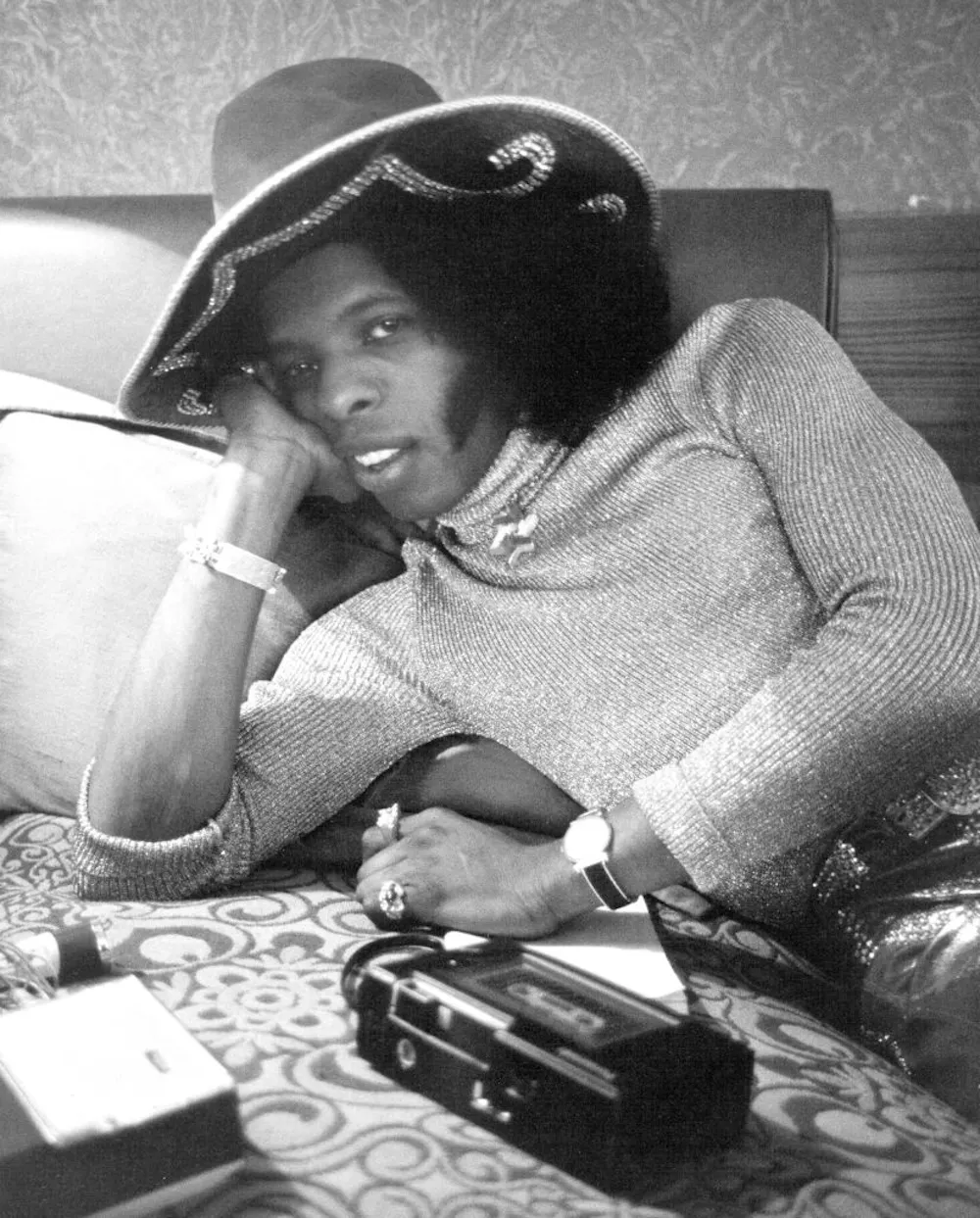
    MIL OSI Russia News

  • MIL-OSI Economics: Press Briefing Transcript: Julie Kozack, Director, Communications Department, June 12, 2025

    Source: International Monetary Fund

    June 12, 2025

    SPEAKER:  Ms. Julie Kozack, Director of the Communications Department, IMF

    MS. KOZACK: Good morning, everyone, and welcome to this IMF Press Briefing. My name is Julie Kozak. I’m the Director of Communications at the IMF.  As usual, this press briefing will be embargoed until 11:00 a.m. Eastern Time in the United States.  And as usual, I will start with a few announcements, and then I’ll take your questions in person on WebEx and via the Press Center.  And I have quite a few announcements today, so please do bear with me. 

    On June 18th, the Managing Director will travel to Brussels, where she will hold bilateral meetings with officials.  On June 19th, she will travel to Luxembourg to present the Euro Area Annual Consultation at the Eurogroup meeting.  On June 20th, the Managing Director will be in Rome to speak at the Mattei Plan for Africa and the Global Gateway event, a joint effort with the African Continent.  This event is co-chaired by Italian Prime Minister Giorgia Meloni and European Commission President Ursula von der Leyen.  And from there, the Managing Director will travel to Japan from June 22nd to 24th.  During her visit, she will hold meetings with Japanese officials, members of the private sector, and other stakeholders. 

    Turning to other management travel.  First Deputy Managing Director Gita Gopinath will travel to Sri Lanka, Singapore, and Indonesia.  On June 16th, she will participate in the Sri Lanka Road to Recovery Conference, where she will deliver opening remarks.  And in all three countries, our FDMD will meet with officials and various stakeholders during this trip. 

    From June 24th through 26th, our Deputy Managing Director Bo Li will attend the World Economic Forum Annual Meeting of the New Champions in Tianjin, China.  DMD Li will participate in sessions on safeguarding growth engines and the role of digital assets in Global payment systems. 

    On June 30th, Deputy Managing Director Nigel Clarke will participate in the Finance for Development Conference and in Sevilla, Spain. 

    And with that, I will now open the floor to your questions.  For those of you who are connecting virtually, please do turn on both your camera and microphone when speaking.  All right, let’s open the floor.   

    QUESTIONER: I have two questions on Ukraine.  After meetings in Kyiv last month, the IMF mission emphasized the importance of Ukraine’s upcoming budget declaration for 2026-2028, which will determine the course of the fiscal framework and policies.  What are the Fund’s expectations, and does the IMF have any specific requirements or policy guidelines for this document?  And secondly, if I may, do you have data of the IMF Board — IMF support meetings to approve the aides review for Ukraine?     

    MS. KOZACK: Any other questions on Ukraine?                                          

    QUESTIONER: So, Ukraine has recently defaulted on its GDP-linked securities and, before that, failed to reach an agreement with creditors to restructure its part of its sovereign debt.  How concerned is IMF with these developments, and do you see any risks for the EFF repayments from Ukraine?  Thank you. 

    QUESTIONER: Some follow-up to your question.  IMF sources indicate that Ukraine transferred $171 million repayment to the Fund on June 9th, the first repayment on loans received post-February 2022.  Can you confirm this payment was received?  And how does the IMF view Ukraine’s emerging shift towards repayment on wartime financing?  Thank you. 

    MS. KOZACK: Let me take these questions for a moment, and I’ll remind you where we are on Ukraine.

    On May 28th, IMF staff and the Ukrainian authorities reached Staff–Level Agreement.  And this was for the Eighth Review of the EFF program.  Subject to approval by our Executive Board, Ukraine will have access to about U.S. $500 million, and that would bring total disbursements under the program to U.S. $10.6 billion.  The Board is scheduled to take place in the coming weeks, and we’ll provide more details as they become available.  I can also add that Ukraine’s economy has remained resilient.  Performance under the EFF has continued to be strong despite very challenging circumstances.  The authorities met all of their quantitative performance criteria and indicative targets, and progress does continue on the structural agenda in Ukraine.

    Now, with respect to the specific questions on the budget declaration, what I can provide there is that our view is that the 2026-2028 budget declaration will provide a strategic framework for fiscal policy for the remainder of the program over that period of time.  It will help focus the debate on key expenditure priorities, including recovery, reconstruction, defense, and social spending.  And it will also form the basis for discussion of the 2026 budget, which, of course, will also be an important milestone for Ukraine. 

    On the question regarding the debt, what I can say there is that we encourage the Ukrainian authorities and their creditors to continue to make progress toward reaching an agreement in line with the debt sustainability targets under the IMF’s program and the authority’s announced strategy.  So that’s sort of our broad view on the debt.  On the implications for completion of the review, as in all cases where a member country may have arrears to private creditors, staff will assess whether the requirements under the Fund’s lending into arrears policy are met.  In light of this, again, we encourage the authorities to continue to make good-faith efforts toward reaching an agreement in light of the debt sustainability targets. 

    And on your question about Ukraine’s payment to the Fund, what I can say is that, in general, we don’t comment on specific transactions of individual members.  What I can guide you to is that we do provide on our website detailed information on members’ repayments.  And this is made available on a monthly basis.  So, at the end of each month, if you look at the Ukraine page, you can see the transactions that were made.  And on a daily basis, we provide detail on member countries outstanding obligations to the IMF.  So that can give you a sense of how the overall obligations of Ukraine have evolved on a daily basis. 

    QUESTIONER: Can you give us an update on the relationship between the IMF and Senegal?  Where do things currently stand with misreporting and a new program?  This is my first question.  And the second one I have is the Fifth Review under the Policy Coordination concerning Rwanda.  The IMF stated that “Rwanda continues to demonstrate leadership in integrating climate consideration into macroeconomic policy and leveraging institutional reforms to mobilize climate finance.”  Now my question is, can you please tell us concretely what kind of institutional reforms have been implemented by Rwanda? 

    MS. KOZACK: So, before I answer this, are there any other questions on Senegal or Rwanda? I see none in the room. Anyone online want to come in on Senegal?  Okay, I don’t see anyone coming in, so let’s start with Senegal, and then we’ll move to Rwanda. 

    What I can say on Senegal is that we, the IMF and our team in particular, remained actively engaged with the Senegalese authorities, including during a visit to Dakar over March and April and further discussions during the Spring Meetings, which were held here in Washington in April.  We do continue to work with the authorities to address the complex misreporting case that is ongoing.  And addressing this complex case does require a rigorous and time-intensive process.

    I also want to take the opportunity to add that the IMF supports our member countries in a variety of ways, and it goes beyond just providing financing.  So, for example, in the case of Senegal, we are continuing to provide the authorities with technical assistance, including, for example, on our debt sustainability analysis that is tailored to low-income countries.  We’re working closely with the authorities on compiling government financial statistics.  This is being led by our Statistics Department.  We’re providing technical assistance on energy sector reform, public investment management, and revenue mobilization, and that, of course, is with support from our fiscal experts. 

    With respect to a new program.  We don’t have currently a fixed timeline for a new program, and we are awaiting the final audit outcome. 

    Now, turning to your question on Rwanda here.  What I can say, and maybe just to step back and remind everyone of where we are in Rwanda.  On June 4th, so just a few days ago, our Executive Board concluded the Fifth Review of Rwanda’s policy Coordination Instrument.  Rwanda’s economic growth remains among the strongest in Sub-Saharan Africa, and that’s despite rising pressures both on the fiscal side and the external side.  Rwanda, of course, we’re encouraging Rwanda to continue with a credible fiscal consolidation, strong domestic revenue mobilization, and a strong monetary policy. 

    With respect to your specific question, Rwanda successfully completed its Resilience and Sustainability Fund program, the RSF program, in December of 2024, six months ahead of the initial timetable.  And under this RSF, Rwanda did carry out a number of institutional reforms that were focused on green public financial management, climate public investment management, climate-related risk management for financial institutions, and disaster risk reduction.  So, these are some of the institutional reforms that Rwanda completed, which led us to make that statement about their leadership in this area. 

    I can also add that these reforms, along with some of the other reforms they’re having, they’re undertaking, such as a green taxonomy and the adoption of best practices in climate risk reporting by financial institutions.  The idea is that this together will help to close information gaps, improve transparency, and that hopefully will allow for a boost to private sector engagement in advancing Rwanda’s ambitious climate goals and its broader goals toward economic development and strong and sustainable growth. 

    QUESTIONER: Two questions on Syria.  The Fund said this week that Syria needs substantial international assistance for its recovery efforts.  Firstly, can you give us an estimation of how much economic assistance Syria will need?  And secondly, could you just let us know if there were any discussions around if a potential Article IV was discussed? 

    MS. KOZACK: Thank you. Any other questions on Syria?                   

    QUESTIONER: Just to know if there was any demand from the Syrian government for any kind of technical assistance from the IMF to help them recover, economically speaking?

    MS. KOZACK: Does anyone online want to come in on Syria? I don’t see anyone coming in. So let me step back again and give a sense of where we are on Syria.

    I think, as many of you know, an IMF staff team visited Syria from June 1st through 5th.  This was the first IMF visit to Syria since 2009.  The goal of the visit was to assess the economic and financial conditions in Syria, as well as to discuss with the authorities their economic policy, and also to ascertain the authorities ‘ capacity-building priorities, ultimately to support the recovery of the Syrian economy.  I think, as we’ve discussed here before, Syria faces enormous challenges following years of conflict that have caused immense human suffering, and it’s reduced the Syrian economy to a fraction of its former size. 

    At the IMF, we’re committed to supporting Syria in its efforts.  Based on the findings of the mission, IMF staff, in coordination with other partners, are developing a detailed roadmap for policy and capacity development priorities for key economic institutions.  And within the IMF’s mandate, this covers the Finance Ministry, the Central Bank, and the Statistics Agency.  So those would be the areas where we will be focusing in terms of the detailed roadmap on priorities, economic and capacity building priorities. 

    Syria, as noted, will need substantial international assistance.  We don’t yet have a precise estimate of that assistance.  But what I can say is this will also — it will not only require concessional financial support, but also substantial capacity development support for the country.  And that’s basically where we have left it with the Syrian authorities.  And, of course, we will continue to engage closely with them, and we are committed to helping them, supporting them on their recovery journey. 

    QUESTIONER: Is the date of the IMF mission to Argentina already said?  And based on that definition, when would the First Review of the agreement could take place?  And another one, in the last few days, the Argentina government has launched different mechanisms to try to increase the level of foreign exchange reserves.  Is the IMF worried that Argentina will not reach the target set in the agreement?  And could the IMF give Argentina a waiver on this?  Thank you very much. 

    MS. KOZACK: Okay, any other questions in the room on Argentina? I know we have several online.

    QUESTIONER: Thanks for taking my questions.  I would like to know how does the IMF evaluate the listed economy measures, particularly the issue of the measure to use undeclared dollars.  Thank you.

    QUESTIONER: My first question is about the reserve target for the new program with Argentina.  Central Bank is about $4 billion below the target set for June.  Also, some operations are expected that could increase their reserve stock.  Officials said on Monday evening that local currency bonds can now be purchased with U.S. dollar and that the minimum time requirement for foreign investors to hold onto some Argentina bonds will be eliminated.  The IMF is concerned that the Central Bank is not accumulating reserves touch foreign trade and is only receiving income touch debt.  Is the consensus with the authorities to postpone the Frist Review and allow time for Argentina to activate credit operation in order to close — to get closer to the target set for June, or Argentina should resort to a waiver?  And what is your view on the recent measures? 

    And that second question is about the possibility of an IMF mission arriving in Argentina in the coming weeks.  Is that possible?  Would it be a technical staff mission, or could the Managing Director or Deputy Executive Director also come?  Thank you very much. 

    QUESTIONER: So, the question is the same as (connection issue) First Review of the agreement signed in April (connection issue)

    QUESTIONER: -Is the IMF considering granting a waiver and also if they build up. 

    MS. KOZACK: You’ve broken up quite a bit, and now we’re not able to hear you, so we’ll try to get you back, or I think what I understood from your question is it’s broadly along the same lines as some of the other questions. What we can do is if you want to connect via the Press Center, I can read the question out loud. But what I’m going to do is move on.                      

    QUESTIONER:  Basically, echoing my colleague’s questions on the timing of the mission and whether an extension was granted to meet the reserve’s target, well, for the First Review generally.  And separately, Argentina has July 9th dollar debt payments, which will obviously affect reserves.  How will that payment and timing affect your calculus of the reserves target within the First Review?  Thank you.

    QUESTIONER: Well, yes, also echoing my colleague’s question regarding whether the timeline for the First Review, the end date remains this Friday, which was what it said on the Staff Report.  And also, there was a ruling lately, these past few days, against former President Cristina Kirchner.  I was wondering if that raises any concerns in the IMF regarding any political conflict or any subsequent economic impact. 

    MS. KOZACK: I think we’ve covered all the questions on Argentina. Anyone else on Argentina? Okay, very good.  So, let me try to give a response that tries to cover as many of these questions as I can.  So again, I’m just going to step back and provide where we are with Argentina. 

    So, on April 11th, the IMF’s Executive Board approved a new four-year EFF arrangement worth $20 billion for Argentina.  The initial disbursement was $12 billion, and the goal of the program was to support is to support Argentina’s transition to the next phase of state stabilization and reform.  The Milei administration’s policies continue to evolve and to deliver impressive results, as we have previously noted. 

    In this regard, we welcome the recent measures announced this week by the Central Bank and the Ministry of Finance as they represent another important step in efforts to consolidate disinflation, support the government’s financing strategy and to rebuild reserves and, more specifically, steps to strengthen the monetary framework and to improve liquidity management.  These are important to further reduce inflation and inflation expectations.  The Treasury’s successful reentry into capital markets and other actions to mobilize financing for Argentina are also expected to boost reserves, and stability overall for the country continues to be supported by the implementation of strong fiscal anchor in the country. 

    Our team continues to engage frequently and constructively with the Argentine authorities as part of the program’s First Review.  I can add that a technical mission will visit Buenos Aires in late June to assess progress on program targets and objectives and to also discuss the authority’s forward-looking reform agenda.  More broadly and despite the more challenging environment, the authorities, as I said, have continued to make very notable and impressive progress.  So, I will leave it at that. 

    Let’s go online for a bit, and then we’ll come — no, let’s go right here in the back.  You haven’t had a question, and you’re in the room.                             

    QUESTIONER: Given the recent escalation in global trade tensions and the effect of the tariffs, what is the IMF’s assessment of how these developments are affecting emerging economies?  And what policy recommendation does the IMF have for countries facing increased external pressures? 

    MS. KOZACK: Okay, let me answer — let me turn to this question on emerging markets, a very important constituency and part of our membership here at the IMF. So, let me start with where we were and what our assessment was as of April.

    In April, when we launched our World Economic Outlook, we projected growth in emerging and developing countries to slow from 4.3 percent in 2024 to 3.7 percent in 2025 and then to come back a little bit to 3.9 percent in 2026.  We did have at that time also significant downgrades for countries most affected by the trade measures, and that includes China, for example.  We have seen since then that there have been some positive surprises to growth in the first quarter for this group of countries, including China.  We have also seen recent reductions in some tariffs, and that represents kind of an upside risk to our forecast.  And, of course, we will be updating our forecast, including for this group of emerging and developing countries, as part of our July WEO update, and that will be released toward the end of July. 

    In terms of our recommendations, we recommend what we would call a multi-pronged policy response.  So first, to carefully calibrate monetary policy and also macroprudential or prudential policies to maintain stability in countries.  We also recommend for this group of countries, but for all of our members, to rebuild fiscal buffers to restore policy space to respond to, of course, future shocks that may occur.  For countries that may face particular disruptive pressures in the foreign currency, foreign exchange market, we would say that they could pursue targeted interventions if those instances are disruptive.  We also are encouraging again all of our countries to undertake the necessary reforms to no longer delay reforms associated with boosting productivity and longer-term growth. 

    I think maybe stepping back, we’ve been talking for quite some time in the IMF about a low growth, high debt environment.  And this, of course, applies to this group of countries as well.  So, dealing with the debt side, of course, is important through fiscal consolidation, but also, very importantly, boosting growth and productivity growth.  So, countries can also have a more prosperous society and also deal with some of their debt issues through stronger growth is also very important. 

    All right, let me go online, and then I’ll come back to the room.  Let’s see.  Online, I see a few hands up.                             

    QUESTIONER: My question is on Japanese tour conducted by Managing Director.  Could you give more details on how Japanese tour played this month?  For example, is there any chance for giving speeches or press conference and so on? 

    MS. KOZACK: So, as I said, the Managing Director will visit Japan later this month. Her visit will mostly entail meetings with government officials and also the business community as well as other stakeholders. She will have an opportunity to also do some outreach, and we can provide further details to you as her agenda becomes more concrete.  But she is very much looking forward to the visit.  Japan, as I think we’ve said before, is an important partner for the IMF.  And the Managing Director is very much looking forward to meeting with Japanese officials and talking more broadly to other stakeholders in Japan about the important partnership that the IMF has with Japan. 

    I see some other hands up online.  Unfortunately, I can’t see.  So, I think if you’re online and you have your hand up, just jump in. 

    QUESTIONER: You already referred to your own economic outlooks when you talked about emerging markets.  But I was — I wanted to ask you, does the IMF anticipate a similar growth downgrade as we’ve just seen for the World Bank this week and its economic assessment?  Because, of course, back in April, the cutoff point for your last report was just as Donald Trump was announcing the Liberation Day tariffs. 

    MS. KOZACK: Okay, so thank you for that. Any other questions on the global outlook? Okay, so let me take this one, and then we’ll come back to some other questions. 

    So, what I can say in terms of the forward-looking, I mean, first, I want to start by reiterating that we will release a revised set of projections in July as part of our regular WEO update.  What I can add is that since we released our World Economic Outlook, what we call the WEO, in April, we have seen some, you know, some data come in and some other developments.  So first, we have seen some trade deals that have lowered tariffs, notably between the U.S. and China, but also the U.S. and the UK, and at the same time, the U.S. has raised further tariffs on steel and aluminum imports.  So taken together, such announcements, combined with the April 9th pause on the high level of tariffs, these could support activity relative to the forecast that we had in April.  But nonetheless, we do have an outlook for the global economy that remains subject to heightened uncertainty, especially as trade negotiations continue. 

    I can also add that recent activity indicators reflect a complex economic landscape.  So, this is recent high-frequency data.  We have some outturns in the first quarter, which indicated a front-loading of activity ahead of the tariff announcements that took place in April.  And some high-frequency indicators also show some trade diversion and unwinding of that earlier front loading.  So, this is kind of the more recent indicators.  So, all of this creates kind of a complicated picture for us with some upside risk, some other developments, and we’ll take all of these developments together into account as we update our forecast toward the end of July in our WEO. 

    QUESTIONER: When you say support activity, do you mean there’s a chance it could be an improved outlook? 

    MS. KOZACK: So yes, by support activity, what we mean is that it’s kind of positive, it’s a little bit of a positive sign for economic activity. So that’s related, though, I would say, to the specific announcements. So, so just going back to say, the announcements of the trade deals that have lowered tariffs, particularly the ones between the U.S. and China and the U.S. and the UK, those could be supportive or a bit more positive for economic activity going forward.  But the overall picture is both complicated for the reasons that I mentioned. 

    We have some front loading in the first quarter.  Some of that seems perhaps to be unwinding in more recent indicators.  And we also, of course, have to remember that we are in an environment of very high uncertainty, and uncertainty, in general, tends to dampen economic activity. 

    So, the overall picture is quite complex.  And so, we will take all of these factors into account as we move forward with our forecast in July.  And, of course, between now and when we release our forecast later in July, we would expect that there will be further data releases.  And also, there is the possibility that there can be further announcements that we would have to take into account or further developments that we would have to take into account as well. 

    Let me just stay online for another minute.  I think I have one more hand up online or two hands online. 

    QUESTIONER: My question is about Egypt.  I was hoping to ask you if the Egyptian authorities have requested a waiver from the Fund for any of the requirements related to the Fifth Review of the country’s ongoing loan program and specifically if a waiver has been requested related to targets for divestment from state-owned assets.  And if you have any update on the timing of the Fifth Review, that would also be very helpful.  I know there were some suggestions that the Fifth Review could be combined with the Sixth Review, in which case we wouldn’t see it until September rather than the June date that had previously been talked about.  Thank you.

    MS. KOZACK: Anyone else on Egypt?

    QUESTIONER: My question is related to the previous one by my colleague.  She asked about the state-owned companies to be listed for IPOs or for private sectors to be having a bigger stake in the economy.  How the IMF evaluate the progress achieved by the Egyptian authorities during that?  And also, when the Fifth Review to be finished after the physical meetings happened in past May?  And what are the most recent progress achieved until now during this?  And also, I’d like to ask about how IMF evaluated the latest step by Egyptian government to give the Minister of Finance the right to issue sukuk in the guarantee of place in Red Sea as published in the last two days. 

    MS. KOZACK: Okay, thank you. Anyone else have questions on Egypt? So, on Egypt, as I think many of you know, an IMF team visited Cairo.  From May 6th to May 18th, the team held productive discussions with the Egyptian authorities on their economic and financial policies.  Discussions are continuing virtually to finalize agreement on remaining policies and reforms that could support the completion of the Fifth Review under the EFF. So again, discussions around the Fifth Review are continuing virtually. 

    As we have said here before, Egypt has made clear progress on its macroeconomic reform program with notable improvements in inflation and in the level of international reserves.  As Egypt’s macroeconomic stabilization is taking hold, it’s now the time for efforts to focus on accelerating and deepening reforms, including reducing the footprint of the state, leveling the playing field, and improving the business environment in Egypt. 

    What I can add is that in order to deliver on these objectives, particularly with respect to reducing the footprint of the state, leveling the playing field, et cetera, it’s important to decisively reduce the role of the public sector in the economy.  The implementation of the state ownership policy, as well as the asset divestment program in sectors where the state has committed to reduce its footprint, will be playing a critical role in strengthening the ability of Egypt’s private sector to contribute to growth and activity in the Egyptian economy, which will ultimately support improvements in livelihoods of the Egyptian people.  We remain committed to supporting Egypt in building economic resilience and fostering stronger private sector-led growth. 

    On some of the more specific questions related to Sukuk, I don’t have a response here, but we’ll come back to you bilaterally. 

    QUESTIONER: It’s a quick overall question.  Could you remind us the condition for a country to come under IMF supervision?  Does it require specifically a program, or can it come from the IMF itself?  Thank you very much. 

    MS. KOZACK: Can you clarify what you mean by IMF supervision? Just so I understand.

    QUESTIONER: To be perfectly honest, in the past few days, we had comments from the French government about the fact that it could become under IMF supervision.  I’m not very interested in specifically about France, but just in general overall how IMF comes to work with governments.  What are the conditions for the IMF to step in and come to help the government?  Thank you very much. 

    MS. KOZACK: Very good. So, let me maybe take this opportunity to step back and explain kind of the three big pillars of the work of the IMF.

    So, the first is policy advice, and this is done mainly through the Article IV consultation process.  The reason it’s called Article IV is because it’s in Article IV of our Articles of Agreement, and every member country of the IMF — so, we have 191 member countries — every member country commits when they join the IMF to participate in the Article IV consultation process.  So that applies to every member.  And that is a process that I know you here are very familiar with, where the IMF sends a team, and we conduct an assessment of the economy, and we provide policy advice to the country.  That’s done for all members. 

    Another leg or another pillar of what we do at the IMF is capacity development.  And for capacity development, this is at the request of the member.  So, this could be, you know, very specific advice on a specific area where our technical expert would go and do sort of a deep dive analysis and provide detailed policy recommendations.  But it’s really meant at building state capacity.  So often, this is done in areas such as revenue mobilization or public financial management, statistics, monetary policy frameworks, and debt management.  These are some of the areas where we would provide technical assistance to countries.  That’s at the request of the member. 

    And the same is true for our financial support.  So, for financial support, this is done again at the request of the member country.  The member would request financial support from the Fund, and then the Fund would then send a team and ultimately develop a program that reflects the commitments of the authorities.  But that program would need to be aimed at getting the country back on its feet.  In our technical language, it’s restoring medium-term viability for the country.  And that financing program has a balance between financial resources that the Fund provides and also policy measures taken by the part of the authorities.  But that, again, is at the request of the member country. 

    QUESTIONER: So, my question is about cryptocurrency and digital assets.  What is the IMF’s view right now on the daily use transactions by people, by governments, in paying and accumulating Bitcoin and other digital currencies?  What risks and opportunities do you see on behalf of the IMF and what shall be done on the governmental level to implement any additional safeguards requirements to make this like a daily routine operations?  Thank you. 

    MS. KOZACK: Okay, so I think on the broad topic of kind of crypto assets, what we can say is that they have gained popularity as an asset class. And also, what we see is that the underlying technology, which is a digital ledger that is shared, trusted, and programmable, is broadly viewed as highly valuable. And that technology may have broader societal benefits.  So, we do see crypto assets as a speculative asset as an asset class.  At the IMF, we generally don’t recommend crypto assets as legal or cryptocurrencies as legal tender.  We also do see that there are some potential risks that could arise from crypto assets.  These include risks to financial stability, to consumer and investor protection, and also to market integrity. 

    So, in order to balance, in a sense, the opportunities based on the technology and a new asset class with some of these risks, what we advise countries to do is to establish a robust policy framework to effectively mitigate some of the risks while allowing society to take advantage of the benefits or the opportunities that arise from this new technology. 

    QUESTIONER:  The Bank of Russia recently cut its key interest rate from 21 percent to 20 percent, marking its first easing move since September 2022.  From the IMF perspective, what are the implications of this monetary policy shift?  Thank you. 

    MS. KOZACK: So, on Russia, let me just step back a minute, and I’ll provide our overall assessment of the economy, and then I’ll get to your specific question.

    So, what we see in Russia is that last year, we saw the economy overheating, and now what we observe in Russia is a, is sharp slowdown of the economy, with growth slowing but inflation still relatively elevated.  Growth in 2025 is expected to slow to 1.5 percent based on our forecast from April, and this was compared to 4.3 percent in 2024.  And this reflects policy tightening, cyclical factors, and also lower oil prices. 

    Now, with respect to the action by the Central Bank, as you noted, the Central Bank indeed reduced the key policy rate from 21 percent to 20 percent for the first time.  This was the first reduction since September of 2022.  And the action taken by the Central Bank was in response to slowing growth, which I just mentioned, and also some easing of inflation pressures. 

    So, as I noted, inflation still remains high.  It was just under 10 percent in May.  But our forecast has inflation declining going forward.  So, we expect inflation to ease to 8.2 percent by the end of this year.  And we anticipate that inflation will turn to the target of 4 percent in the first half of 2027.  So that’s the IMF forecast.  So, the inflation challenge for Russia remains, and it’s appropriate.  Therefore, that monetary policy remains tight, and even with this cut, monetary policy is still tight. 

    I am going to now take the opportunity to read one question or some questions on Ghana and some questions on Sri Lanka, and then we’ll bring the Press Briefing to a close.  So, on Ghana, I have three questions.  The first one is about an update on when Ghana’s program will be presented to the Board following Staff–Level Agreement. 

    The second question is about the amended Energy Sector Levy Act to add GH₵1 per liter on petroleum products to defray the cost of fuel purchases for thermal plants.  Has the IMF taken note of this, and what’s its position on using taxes versus passing these costs through tariffs? 

    The third question on Ghana is whether the IMF is looking at the possibility of revising Ghana’s IMF program targets as the cedi’s sharp appreciation against the dollar has affected many variables that influence these targets set by the Fund? 

    So let me take a moment to just respond on Ghana.  So again, stepping back to where we are on Ghana.  On April 15th, the IMF staff and the Ghanaian authorities reached Staff–Level Agreement on the Fourth Review of Ghana’s Extended Credit Facility.  Upon approval by our Executive Board, Ghana would be scheduled to receive about U.S. $370 million, bringing total support under the ECF to $2.4 billion since May of 2023.  We anticipate bringing the review to our Board in early July, so in just a few weeks. 

    What I can add about the question about the cedi’s sharp appreciation is that you know, of course, as we look at a program, we look at all of these developments, including, of course, developments in the exchange rate.  And so, future program reviews will provide an opportunity for the team to carefully assess all of the evolving macroeconomic and financial conditions, including exchange rate movements, and to ensure that the program’s targets and objectives remain appropriate and achievable. 

    And on the fuel levy, what I can say is that this is a new measure that will help generate additional resources to tackle the challenges in Ghana’s energy sector, and it’s also going to bolster Ghana’s ability to deliver on the fiscal objectives under the program. 

    And I’m going to read one last set of questions on Sri Lanka, and then we will bring the Press briefing to a close.  So, we have a number of journalists asking about Sri Lanka.  So there’s — we’re consolidating the questions here.  So, these journalists are asking for updates on the IMF’s view on Sri Lanka’s progress in implementing cost recovery, electricity prices, and the automatic price adjustment system.  They’re asking about the date for the Executive Board’s consideration of the Fourth Review under the program. 

    And another question, has the government raised the issue of recent global shocks and possible further pressure on the economy and its ability to meet its reform program targets?  How do we rate the new government’s approach to corruption? 

    QUESTIONER: My question is, recently Sri Lankan president announced that the existing IMF program is likely (inaudible) that it will be the final program for the country as it tries to achieve financial independence.  What is the IMF’s view on this?  Is it achievable given the current situation in Sri Lanka?  And what is the progress on the IMF Board approval for the next review?  Thank you. 

    MS. KOZACK: All right, so again, just stepping back and reminding where we are on Sri Lanka.

    So, on April 25th, IMF staff and the Sri Lankan authorities reached Staff–Level Agreement on their fourth review of Sri Lanka’s economic reform program.  The program and Sri Lanka’s ambitious reform agenda continue to deliver commendable outcomes.  Performance under the program remains strong overall, and the government remains committed to program objectives.  Completion of the review is pending approval of the IMF’s Executive Board, and it is contingent on the completion of prior actions. 

    What I can add is that our IMF team, of course, is closely engaged with the authorities to assess the measures that were recently announced by the regulator on June 11th.  And these include a 15 percent increase in in electricity tariffs and the publication of a revised bulk supply transaction account guidelines for this.  So, these were two prior actions.  Once the review is completed by our Executive Board, Sri Lanka would have access to about $344 million in financing, and we will announce the Board date for Sri Lanka in due course. 

    With respect to some of the more specific questions on governance, what I can add is that in end-February, the government published an updated government action plan on governance reforms.  And this action plan included important commitments such as enacting a public procurement law, an asset recovery law, and other actions that are aligned with the recommendations that were included in the IMF’s Governance Diagnostic Report. 

    On the question about kind of the global situation and the impact on Sri Lanka, what I can say there is that, like for all countries in an environment of high uncertainty around policy and in general, high global uncertainty, this poses, of course, risks to an economy like Sri Lanka’s, as it does to many others.  If some of the risks associated with high global uncertainty were to materialize, the way we will approach this will be to work very closely with the authorities first to assess the impact of any downside risk that materializes, and then we will also work with the authorities to consider what are the appropriate policy responses within the contours of the program. And more broadly, for all countries, including Sri Lanka, it’s really critical for each country to sustain its own reform momentum.  Sustaining reform momentum, both with macroeconomic policy reforms and, importantly, some of the growth-enhancing reforms that we were talking about earlier, is critical for all countries in our membership, including Sri Lanka. 

    And on the question regarding the president’s remarks, I think there, what I can simply say is to repeat that, you know, Sri Lanka has made commendable progress, you know, in implementing some very difficult but much-needed reforms.  The effects — these efforts are really starting to bear fruit.  We see a remarkable rebound in growth following Sri Lanka’s crisis.  Inflation is low, international reserves are continuing to grow, revenue collection on the fiscal side is improving, and the debt restructuring process is nearly complete.  So, I think it’s really important to recognize, you know, the significant efforts that Sri Lanka has taken and also the tremendous progress that has been made.  Right now, of course, we are very much focused on the current EFF, and therefore, as I mentioned, it’s going to be critical for Sri Lanka to sustain the reform momentum through the remainder of this EFF program. 

    And with that, I am going to bring this Press Briefing to a close.  Let me thank you all for your participation today.  As a reminder, as usual, this briefing is embargoed until 11:00 A.M. Eastern Time in the United States.  A transcript will be made available later on IMF.org, and should you have any clarifications or additional queries, please reach out to my colleagues media@imf.org. This concludes our Press Briefing for today.  I wish everyone a wonderful day, and I do look forward to seeing you all next time.  Thank you very much. 

    *  *  *  *  *

    IMF Communications Department
    MEDIA RELATIONS

    PRESS OFFICER: Brian Walker

    Phone: +1 202 623-7100Email: MEDIA@IMF.org

    MIL OSI Economics

  • MIL-OSI Asia-Pac: President Lee’s visit to Canada for G7 Summit

    Source: Government of the Republic of Korea

    Foreign Affairs

    President Lee Jae-myung will attend the Group of Seven (G7) Summit in Alberta, Canada.
    Presidential spokesperson Kang Yu-jung on June 7 told a news briefing, “President Lee has accepted his invitation to attend the G7 Summit from June 15-17 in Alberta, Canada.”

    The meeting will mark President Lee’s debut in summit diplomacy since he took office, with U.S. President Donald Trump, Japanese Prime Minister Shigeru and the leaders of the U.K., Germany, France, Italy and Canada to attend.

    MIL OSI Asia Pacific News