Source: Africa Press Organisation – English (2) – Report:
Link to Live Stream of Inaugural Session of Merck Foundation First Ladies Initiative – MFFLI Summit 2025:https://apo-opa.co/3G1Afxo
Merck Foundation (www.Merck-Foundation.com), the philanthropic arm of Merck KGaA Germany, conducted the 7th Edition of Merck Foundation First Ladies Initiative – MFFLI Summit 2025 on 19th and 20th June in Dubai, United Arab Emirates. It was inaugurated by Prof. Dr. Frank Stangenberg-Haverkamp, Chairman of Merck Foundation Board of Trustees, and Senator, Dr. Rasha Kelej, CEO of Merck Foundation and President of Merck Foundation First Ladies Initiative along with The First Ladies of 14 African and Asian countries, who joined as the Guests of Honor and Keynote Speakers.
Senator Dr. Rasha Kelej, CEO of Merck Foundation and President of “Merck Foundation First Ladies Initiative” emphasized, “It is my great honor to welcome our esteemed Guests of Honor and Keynote Speakers, The First Ladies of Africa and Asia, and Ambassadors of our ‘More Than a Mother’ campaign to the 7th Edition of the Merck Foundation First Ladies Initiative – MFFLI Summit.
Through this important platform, we have collectively exchanged valuable experiences and engaged in meaningful discussions on the impact of our programs, which are aimed at transforming patient care and raising awareness of a wide range of critical social and health issues.”
Prof. Dr. Frank Stangenberg Haverkamp, Chairman of Merck Foundation Board of Trustees added, “At Merck Foundation, our goal is improving overall health and well-being by building healthcare capacity and by providing access to quality & equitable healthcare solutions in the Africa, Asia and beyond. I would like to sincerely thank our Ambassadors and partners. Together, with your unwavering support and collaboration, we will continue to work towards our vision of a world where everyone can lead a healthy and happy life.”
The First Ladies of 14 countries, who are also the Ambassadors of “Merck Foundation More Than a Mother”, joined as Guests of Honor and Keynote Speakers. They are:
H.E. Dr. ANA DIAS LOURENÇO,The First Lady of the Republic of Angola
H.E. Dr. DÉBORA KATISA CARVALHO,The First Lady of the Republic of Cabo Verde
H.E. Madam BRIGITTE TOUADERA,The First Lady of the Central African Republic
H.E. Madam ZITA OLIGUI NGUEMA,The First Lady of the Gabonese Republic
H.E. Mrs. FATOUMATTA BAH-BARROW,The First Lady of the Republic of The Gambia
H.E. Mrs. LORDINA DRAMANI MAHAMA,The First Lady of the Republic of Ghana
H.E. Mrs. RACHEL RUTO E.G.H.,The First Lady of the Republic of Kenya
H.E. Mrs. KARTUMU YARTA BOAKAI,The First Lady of the Republic of Liberia
H.E. Mrs. SAJIDHA MOHAMED,The First Lady of the Republic of Maldives
H.E. Dr. GUETA SELEMANE CHAPO,The First Lady of the Republic of Mozambique
H.E. Senator OLUREMI TINUBU, CON,The First Lady of the Federal Republic of Nigeria
H.E. Mrs. MARIA DE FATIMA VILA NOVA,The First Lady of the Democratic Republic of São Tomé and Príncipe
H.E. Madam MARIE KHONE FAYE,The First Lady of the Republic of Senegal
H.E. Amai Dr. AUXILLIA MNANGAGWA,The First Lady of the Republic of Zimbabwe
Senator, Dr. Rasha Kelej stated, “I am proud to share that Merck Foundation has provided more than 2280 scholarships for young doctors from 52 countries in 44 critical and underserved specialties. Many of our Merck Foundation Alumni are becoming the first specialists in their countries. Together with our Ambassadors and Partners, we are making history and transforming the patient care landscape across Africa and beyond. Many of them are becoming the first specialists in their countries.”
“During our Conference, we also marked together the World Infertility Awareness Month, observed in June, through our signature campaign “Merck Foundation More Than a Mother”, which aims to empower infertile and childless women by providing access to information, education, and change of mindset. I am happy to share that out of the total 2280 scholarships, more than 700 scholarships have been provided for training in Fertility, Embryology, Sexual and Reproductive Medicine, Clinical Psychiatry, Women’s Health, Urology, Laparoscopic Surgical Skills, and Family Medicine, to improve access to fertility care and women’s health”, she further added.
During the 7th Edition of Merck Foundation First Ladies Initiative -MFFLI Summit, two important occasions were marked; the 8th Anniversary of Merck Foundation and 13 years of Merck Foundation’s development programs that started in 2012.
On the first day, the Plenary Session of the Merck Foundation First Ladies Initiative -MFFLI Summit took place, featuring a high-level panel discussion with the participating First Ladies of Africa and Asia. Moreover, a high-level ministerial panel discussion was held with African Ministers and top healthcare experts from across the globe.
The Day 2 of the conference will have three key parallel session will be held- Two medical and scientific sessions covering Oncology and Fertility Topics, and a community awareness session, Merck Foundation Health Media Training. This session will emphasize the critical role of the media in influencing communities and driving cultural change, with regards to a wide range of social and health issues like Breaking Infertility Stigma, Supporting Girls’ Education, Stopping GBV, Ending Child Marriage & FGM, Empowering Women, Diabetes and Hypertension Awareness.
The conference is being conducted in a hybrid format, enabling over 6,000 audiences from more than 70 countries to benefit, meet and discuss strategies and solutions for the health and social challenges in their countries safely and effectively.
Countries participating in the 7th Edition of Merck Foundation First Ladies Initiative:
Angola, Bangladesh, Benin, Botswana, Burkina Faso, Burundi, Cameroon, Canada, Central Africa Republic, Cambodia, Chad, Côte d’Ivoire, Republic of the Congo, Democratic Republic of the Congo, Egypt, Ethiopia, France, Gabon, Germany, Ghana, Guinea – Bissau, Guinea – Conakry, India, Indonesia, Kenya, Lesotho, Liberia, Malawi, Malaysia, Maldives, Mali, Mauritania, Mauritius, Mexico, Mozambique, Myanmar, Namibia, Nepal, Niger, Nigeria, Peru, Philippines, Russia, Rwanda, Senegal, Sierra Leone, Somalia, South Africa, Sri Lanka, Sudan, Tanzania, Thailand, The Gambia, Togo, Tunisia, U.A.E, UK, Uganda, US, Vietnam, Zambia, Zimbabwe and more.
The 7th Edition of Merck Foundation First Ladies Initiative is streamed live on the social media handles of Merck Foundation and Senator, Dr. Rasha Kelej, CEO of Merck Foundation:
@ Merck Foundation: Facebook (https://apo-opa.co/4edCwCi), X (https://apo-opa.co/4n8k2qI), Instagram (https://apo-opa.co/3G4ZQ8w), and YouTube (https://apo-opa.co/4kQbVOf).
@ Rasha Kelej: Facebook (https://apo-opa.co/3ZBhIi7), X (https://apo-opa.co/3FT5D13), Instagram (https://apo-opa.co/3HNpOOr), and YouTube (https://apo-opa.co/3ZF3Xiq).
Link to the Facebook live stream of Inaugural Session ofMerck Foundation First Ladies High Level Panel:https://apo-opa.co/3G1Afxo
Merck Foundation is transforming the Patient care landscape and making history together with their partners in Africa, Asia, and beyond, through:
• 2280+ Scholarships provided by Merck Foundation for doctors from 52 Countries in more than 44 critical and underserved medical specialties.
Merck Foundation is also creating a culture shift and breaking the silence about a wide range of social and health issues in Africa and underserved communities through:
• 3700+ Media Persons from more than 35 countries trained to better raise awareness about different social and health issues
• 8 Different Awards launched annually for best media coverage, fashion designers, films, and songs
• Around 30 songs to address health and social issues, by local singers across Africa
• 8 Children’s Storybooks in three languages – English, French, and Portuguese
• 7Awareness Animation films in five languages – English, French, Portuguese, Spanish and Swahili to raise awareness about prevention and early detection of Diabetes & Hypertension and supporting girl education.
• Pan African TV Program “Our Africa by Merck Foundation” addressing Social and Health Issues in Africa through “Fashion and ART with Purpose” Community
• 950+ Scholarships provided to high performing but under-privileged African schoolgirls to empower them to complete their studies
• 15 Social Media Channels with more than 8 Million Followers.
– on behalf of Merck Foundation.
Contact: Mehak Handa Community Awareness Program Manager +91 9310087613 +91 9319606669 mehak.handa@external.merckgroup.com
Join the conversation on our social media platforms below and let your voice be heard! Facebook: https://apo-opa.co/4edCwCi X: https://apo-opa.co/4n8k2qI YouTube: https://apo-opa.co/4kQbVOf Instagram: https://apo-opa.co/3G4ZQ8w Threads: https://apo-opa.co/460CnzW Flickr: https://apo-opa.co/460Conu Website: www.Merck-Foundation.com Download Merck Foundation App: https://apo-opa.co/460ClIk
About Merck Foundation: The Merck Foundation, established in 2017, is the philanthropic arm of Merck KGaA Germany, aims to improve the health and wellbeing of people and advance their lives through science and technology. Our efforts are primarily focused on improving access to quality & equitable healthcare solutions in underserved communities, building healthcare & scientific research capacity, empowering girls in education and empowering people in STEM (Science, Technology, Engineering, and Mathematics) with a special focus on women and youth. All Merck Foundation press releases are distributed by e-mail at the same time they become available on the Merck Foundation Website. Please visit www.Merck-Foundation.com to read more. Follow the social media of Merck Foundation: Facebook (https://apo-opa.co/4edCwCi), X (https://apo-opa.co/4n8k2qI), Instagram (https://apo-opa.co/3G4ZQ8w), YouTube (https://apo-opa.co/4kQbVOf), Threads (https://apo-opa.co/460CnzW) and Flickr (https://apo-opa.co/460Conu).
The Merck Foundation is dedicated to improving social and health outcomes for communities in need. While it collaborates with various partners, including governments to achieve its humanitarian goals, the foundation remains strictly neutral in political matters. It does not engage in or support any political activities, elections, or regimes, focusing solely on its mission to elevate humanity and enhance well-being while maintaining a strict non-political stance in all of its endeavors.
Social media doesn’t just reflect sexist, anti-feminist views; it helps to organize, amplify and normalize them.
Backlash against women and LGBTQ+ communities has become more overt, co-ordinated and is gaining political traction. As the United States rolls back reproductive rights and passes anti-LGBTQ+ laws, it is important to understand how digital culture fuels this regression.
Our ongoing research maps how the pandemic accelerated the rise of online misogyny, especially through “manosphere” influencers and far-right rhetoric.
Drawing from more than 21,000 podcast episodes and digital artifacts, we are investigating how everyday online content works to erode women’s and LGBTQ+ rights. This rhetoric normalizes misogynistic, transphobic and homophobic views and repackages gender inequities as common sense.
These figures blend anti-feminist messaging with broader pandemic-era anxieties, turning gender roles into moral and political battlegrounds.
Conservative influencers who once focused on vaccine skepticism began pivoting to anti-gender content. Steve Bannon’s podcast, for example, moved from pedalling public health disinformation to pushing narratives that feminism and LGBTQ+ rights are threats to western civilization.
Meanwhile, women’s experiences during the pandemic — over half of whom are caregivers in Canada — involved increased labour at home and in front-line jobs. This left little time or energy for the organizational work necessary to combat the rising tides of sexism and misogyny.
Instead, public discourse began to increasingly valourize “tradwife” ideals and homemaking. This ensured traditional gender roles were brought back into the mainstream, not just as personal preferences, but as broader cultural expectations.
Though this misogyny appears to be fringe, it echoes mainstream policies that threaten reproductive health care, restrict gender expression and paint feminism as a threat to national stability.
Project 2025, the well-known policy platform from U.S. conservative think tank The Heritage Foundation, lays out an agenda to repeal reproductive rights, undermine LGBTQ+ protections and expand state control over gender and family life.
These misogynist ideas are reinforced in popular culture. In May 2024, NFL player Harrison Butker used his commencement address at Benedictine College to tell women graduates that their true calling was to become wives and mothers.
Such rhetoric serves to re-establish patriarchal hierarchies by narrowing women’s roles to domestic life. But this isn’t about family values, it’s about power. Moves in the U.S. to restrict women’s reproductive autonomy and democratic access to vote make this abundantly clear.
While feminists pushed back, manosphere podcast influencers rushed to Butker’s defense. American white supremacist Nick Fuentes celebrated the speech as a manifesto, while Shapiro framed it as uncontroversial truth.
Our analysis of podcast episodes from Shapiro and Fuentes, among others, shows how misogynist and racist narratives are reinforced through repetition and emotional framing. In episodes focused on Butker’s commencement speech, there were significant concentrations of hate speech and misogyny in the episodes.
Both Shapiro and Fuentes positioned feminism as a threat and framed motherhood as women’s true vocation. Shapiro downplayed the backlash against Butker as liberal outrage through calculatedly mainstream language that used sanitized, “family values” language.
Fuentes promoted an extreme theocratic vision rooted in white Catholic nationalism. In Episode 1,330 of his America First podcast, he said, “I want women to be veiled. I don’t want them to be seen. I want them to be listening to their husbands.”
These talking points consistently align with Butker’s original sentiment and reflect broader political efforts to erode gender equity, as seen in political documents like Project 2025.
Other public figures like Texan megachurch pastor Joel Webbon went even further, advocating for the public execution of women who accuse men of sexual assault — a horrifying example that circulated in manosphere circles.
From the fringes to the mainstream
What’s happening online is not just cultural noise; it’s a co-ordinated effort by conservative political organizations, media outlets and right-wing influencers to shape gender norms, undermine equality and roll back decades of feminist progress.
When misogyny becomes a political strategy, it doesn’t stay confined to podcasts or memes. It seeps into everyday vernacular, court rulings and public policy, and it’s global in scope.
This isn’t new, either. In 2012, Australia’s then-prime minister, Julia Gillard, called out sexist language in parliament, including being labelled a “witch” and subjected to dismissive catcalls. Her speech highlighted the normalization of misogynistic vernacular in politics, but also triggered public backlash, including having anti-immigration remarks misattributed to her.
These campaigns reflect how misogyny is weaponized to influence elections, and how such campaigns can be a threat to national security.
A 2022 #MeToo litigation analysis showed how, despite increasing awareness around sexual assault and harassment, U.S. courts often use legal language that reinforces victim-blaming by placing victims in the grammatical subject position of sentences. For example, phrases like “the victim failed to resist” or “the victim did not report the incident immediately” shift focus onto the victim’s behaviour rather than the perpetrator’s actions.
These details continue to affect broader legal narratives and public acceptance.
Digital platforms are battlegrounds
Recognizing these connections is crucial. As far-right movements gain ground by repackaging ideas about gender as nostalgic “truth” or “tradition,” we need to recognize that digital platforms are not neutral, nostalgic spaces.
In the fight for gender equity, the internet is not just a mirror that reflects multiple realities. It’s a tool built by the tech industry that was never intended to democratize communication, labour or social roles. Right now, that tool is being weaponized to signal and reassert patriarchal control.
Brianna I. Wiens receives research funding from the Social Sciences and Humanities Research Council.
Nick Ruest receives funding from the Social Sciences and Humanities Research Council.
Shana MacDonald receives funding from the Social Sciences and Humanities Research Council.
Today, more than one billion people, about one in eight globally, are on the move, driven by war, conflict, disasters, environmental degradation or economic instability. Migration and displacement are powerful social determinants of health, shaping how and whether people can access the health conditions they need to survive and thrive.
Climate change, recognized as a “threat multiplier”, worsens food insecurity, disrupts livelihoods, and fuels further displacement. Whether by choice or forced, being on the move is a part of human life, but for many, it brings disproportionate exposure to risk, inequality, and exclusion from basic health services.
Refugees, migrants, and internally displaced persons (IDPs) frequently face unsafe journeys and precarious living conditions, often with limited access to clean water, adequate nutrition, sanitation, or shelter. Their susceptibility to communicable diseases is increased by the environmental risk factors related to their precarious living and working conditions. Many also face barriers to managing noncommunicable diseases, accessing maternal and newborn care, or receiving mental health support.
Thanks to the support of donors and partners, WHO works with governments and communities to deliver inclusive, equitable, and context-sensitive health services to people on the move. This includes immunization, disease surveillance, chronic disease management, reproductive and mental health care, support for health system resilience, amongst other efforts.
These contributions are grounded in the recognition that health is a human right, and that universal health coverage must be inclusive of all people, regardless of migratory status. The stories presented below show how rapid, compassionate action can protect lives and advance dignity, equity, and resilience, especially in times of crisis.
Landmark cholera vaccination campaign offers hope to Rohingya refugee camps
A young girl receives the OCV vaccine in one of the remote blocks of camp.Photo by: WHO/Mehnaz Manzur
Cholera has been endemic in Bangladesh for decades, with seasonal peaks. It has remained a major health concern in the Rohingya refugee camps since 2017.
In a major joint effort, the Government of Bangladesh, with support from WHO, UNHCR, and health sector partners, launched a landmark cholera vaccination campaign in the Rohingya refugee camps on 12 January 2025. This initiative focused on children aged one year and older, following a rise in cholera cases detected through WHO’s disease monitoring system in both the camps and nearby host communities.
The five-day vaccination campaign aimed to reach 943 174 people across 33 camps and Bhasan Char Island. Over 1 700 community health workers, supervisors, and health sector partners visited 194 907 households to administer the single-dose Euvichol Plus vaccine.
Delivering lifesaving health services for flood-displaced families in Nigeria
Delivering lifesaving health services for flood-displaced families in Nigeria. Photo by: WHO/Nigeria
Borno state, in northeastern Nigeria, was severely impacted by recent floods, in September 2024, which displaced over 400 000 people. Almost 90 000 people in vulnerable situations were forced to take shelter in temporary camps with limited access to food, clean water and health services.
Displaced populations are at especially high risk from malnutrition, and diseases such as cholera, malaria and measles in a region where health systems are already fragile and strained.
Recognizing urgent health need, WHO, with financial support from USAID and the Government of Germany, deployed five mobile health teams made up of 35 public health experts, to provide routine immunization, maternal care and clinical services. So far, 34 camps and over 93 000 households have been reached and informed about how to prevent epidemic-prone diseases and adopt healthy household practices.
Bringing health care closer to displaced communities in Somalia
WHO drought response activities in affected districts in Somalia. Photo by: WHO/Somalia
Somalia experienced a severe drought in 2022-2023. Donors responded swiftly with increased funding to save lives by treating severe acute malnutrition and the prevention and management of disease outbreaks.
This support enabled WHO to meet urgent health needs while also investing in the long-term capacity of local health services. For example, the Sinkadheer health centre in Al-Adalada camp, west of Mogadishu, provides a full range of services through the Integrated Health and Nutrition Programme. The centre helps ensure access to essential health care for families who might otherwise face financial or logistical barriers to treatment.
Supported by the European Commission Humanitarian Aid (ECHO), the German Federal Foreign Office, and other partners, the programme continues to improve health outcomes for Somali mothers and children, promoting dignity and resilience in the context of displacement. Each day, the centre serves around 200 patients, primarily from nearby internally displaced communities, offering primary health care, nutritional support, and services to prevent malnutrition.
Bridging gaps in health and nutrition services for IDPs and crisis-affected communities in Ethiopia
Bridging gaps in health and nutrition services for IDPs and crisis-affected communities in Amhara, Ethiopia. Photo by: WHO/Ethiopia
Since November 2021, Ethiopia’s Amhara region has faced complex and protracted humanitarian crises driven by internal armed conflict, multiple disease outbreaks, and climate-related shocks- including drought and floods. The region also witnessed a growing influx of people fleeing conflict in neighbouring Sudan. Nearly a million internally displaced persons (IDPs) are living across 38 collective sites and host communities, alongside hundreds of thousands of refugees and returnees.
To ensure access to essential health services for displaced and crisis-impacted populations, WHO, in collaboration with regional government authorities, deployed Mobile Health and Nutrition Teams. As displacements increased, the number of mobile teams was scaled up to 19 in April 2024, comprising 132 health workers. This increase was made possible through support from the European Commission Humanitarian Aid (ECHO), the United States Agency for International Development (USAID), the UN Central Emergency Response Fund (UNCERF), and the People and Government of Japan.
These teams have provided over 124 250 medical consultations, including referrals for patients requiring specialized care. Services include primary health care, immunizations, maternal and child health support, nutritional care, mental health and psychosocial support, and first-line assistance for survivors of gender-based violence. They also address both communicable and noncommunicable diseases, helping ensure that health care is available and accessible to all.
Health on the frontlines: caring for Haiti’s displaced population
A mobile clinic organized at the Lycée Argentine Bellegarde IDP site. Photo by: WHO/PAHO
Since February 2024, Haiti has faced an escalating security crisis from escalating gang violence, political instability, and a humanitarian emergency, placing further strain on the country’s already overstretched health system. This has significantly disrupted access to health care for millions in Haiti.
The crisis has most severely affected people living in precarious conditions, including the approximately 86 000 individuals residing across 84 IDPs sites of the metropolitan area of Port-au-Prince.
To help maintain access to essential services, mobile clinics have been established by the Ouest Department’s health authorities with the support from PAHO/WHO and other partners such as UNCERF. Disease surveillance activities have also been reactivated, including for cholera, through the deployment of surveillance and response teams to each site- helping to detect and respond efficiently to potential outbreaks.
Support for public health emergency preparedness and response in Niger
WHO medicines and medical supplies donation in Diffa, Niger. Photo by: WHO/Niger
In March 2024, WHO delivered 16 tons of medicines and medical supplies valued at nearly 100 million FCFA (US$ 170 000) to health facilities across eight regions of Niger, which host large numbers of IDPs, refugees, and returnees.
This donation, funded through UNCERF and WHO’s own resources, include medical consumables and treatment kits for pneumonia, meningitis, malaria, diphtheria, cholera, and other common illnesses.
“This donation comes at a crucial time when our health system in the Diffa region is under significant pressure. We will be able to strengthen access to quality health care and save the lives of the people of Diffa, who are already facing emergencies related to the growing number of IDPs, refugees and returnees,” said Colonel-Major Dr Garba Hakimi, Minister of Public Health, Population and Social Affairs.
Lessons from Malta: advancing refugee and migrant health
Valetta from waterfront. Photo by: WHO/Marc Gallego
As an island located at the heart of the Mediterranean, Malta has long been a transitional stop for people on the move. Today, it is home to over 11 000 refugees and 2 000 asylum seekers, primarily from Bangladesh, Libya, Syria, Sudan and Ukraine.
With co-funding from the European Union, WHO, in partnership with Malta’s Ministry for Health and Active Ageing, hosted the first Knowledge Forum on Refugee and Migrant Health in Malta in April 2024.
The Forum brought together government officials, humanitarian organizations, civil society, United Nations agencies, and other stakeholders to share knowledge, exchange experiences, identify opportunities for collaboration, and advance the implementation of WHO’s European Region Action Plan for Refugee and Migrant Health 2023–2030.
The donors and partners acknowledged in this story are (in alphabetical order) European Commission Humanitarian Aid (ECHO), European Union, Germany, Japan, United Nations Central Emergency Response Fund (UNCERF), and United States Agency for International Development (USAID).
Thank you also to UNHCR for its strong partnership in responding to the needs of refugees.
WHO’s work is made possible through all contributions of our Member States and partners. WHO thanks all donor countries, governments, organizations and individuals who are contributing to the Organization’s work, with special appreciation for those who provide fully flexible contributions to maintain a strong, independent WHO.
Source: The Conversation – UK – By Natasha Lindstaedt, Professor in the Department of Government, University of Essex
Working alongside western democratic allies has not been a natural fit for Donald Trump. The US president left the recently concluded G7 summit in Canada early, with his French counterpart Emmanuel Macron assuming this was to work on addressing the most severe escalation between Iran and Israel in decades.
But Trump offered little communication with other G7 members, which include Canada, France, Germany, Italy, Japan and the UK, of what his plans were. He said he had to leave the summit “for obvious reasons”, though failed to elaborate on what he meant.
After exiting the summit, he lambasted Macron on social media. Trump wrote: “Wrong! He has no idea why I am now on my way to Washington, but it certainly has nothing to do with a Cease Fire”. Trump continued by saying his exit was due to something “much bigger than that”, adding: “Emmanuel always gets it wrong.”
This has prompted discussion over whether US forces may join Israel’s strikes on Iran. Despite initially distancing the US from the Israeli attacks, Trump said on June 17: “We now have complete and total control of the skies over Iran.”
Get your news from actual experts, straight to your inbox.Sign up to our daily newsletter to receive all The Conversation UK’s latest coverage of news and research, from politics and business to the arts and sciences.
He has since demanded Tehran’s “unconditional surrender”, while also issuing a chilling threat to Iran’s supreme leader, Ayatollah Ali Khamenei, describing him as an “easy target”.
The pressure campaign employed by Israel’s prime minister, Benjamin Netanyahu, to convince Trump that the time is right for a military assault on Iran seems to be working.
Exploiting Trump’s impulsive nature, Netanyahu may soon be able to convince Trump to give Israel what it needs to destroy Iran’s underground uranium enrichment sites: a 30,000-pound “bunker buster” bomb and a B-2 bomber to carry it.
The US’s western allies have been left scrambling to interpret Trump’s social media posts and figure out the real reason he left the G7 summit early.
This wasn’t the first time that Trump has left a G7 forum early. In 2018, the last time such a meeting was held in Canada, Trump also left early after Macron and the then Canadian prime minister, Justin Trudeau, promised to confront Trump over the imposition of tariffs on US allies.
The latest G7 summit also wasn’t the first time Trump has treated traditional US allies with suspicion. Trump has cast doubt on US willingness to defend Nato allies if they don’t pay more for their own defence. He has repeatedly threatened to leave the alliance and has frequently denigrated it – even calling alliance members “delinquent”.
Trump thinks the US gains an advantage by abandoning relationships with “free riders”. But experts have made clear alienating allies makes the US weaker. While the alliance system has given the US unprecedented influence over the foreign policies of US allies in the past, Trump’s pressure to increase their defence spending will make them more independent from the US in the long-term.
Trump seems to prefer a world guided by short-term self-interest at the expense of long-term collective security. Indeed, with an “America first” agenda, multilateral cooperation is not Trump’s strong suit. With the G7, Trump is yet again making clear that he does not fit in, nor does he want to.
Because the G7 is small and relatively homogenous in membership, meetings between members are supposed to promote collective and decisive decision-making. However, even the task of coming up with a joint statement on the escalating conflict between Iran and Israel proved challenging.
Trump eventually joined other leaders in calling for deescalation in the Middle East, and the G7 was in agreement that Iran cannot acquire nuclear weapons. But Trump’s social media activity since then has left US allies in the dark over what role the US might play in the conflict.
Trump also alarmed G7 members with calls for Russia to return to the forum. He claimed that the war in Ukraine would not have happened had Moscow not been ejected from the former G8 grouping in 2014.
Then, on his way out of the summit, Trump bragged to reporters that Russia’s leader, Vladimir Putin, “doesn’t speak to anybody else” but him. Trump added that Putin was insulted when Russia was thrown out of the G8, “as I would be, as you would be, as anybody would be”.
Following weeks of frustration over Russia’s refusal to engage in serious peace talks about ending the war in Ukraine, Trump seems to have returned to being Putin’s most loyal advocate.
Hostility toward multilateralism
During Trump’s first term, he pushed multilateralism to the brink. But he did not completely disengage. The US withdrew from the Paris climate accords, the nuclear deal with Iran, negotiations for a trade deal with Pacific nations, and imposed sanctions against officials of the International Criminal Court.
However, when multilateral initiatives served Trump’s short-term objectives, he was willing to get on board. A trade deal struck with Canada and Mexico that Trump described as “the most important” ever agreed by the US. He said the deal would bring thousands of jobs back to North America.
The second Trump administration has been even more hostile to multilateralism. Not only has the trade deal with Canada and Mexico been undermined by Trump’s love of tariffs, his administration has been more antagonistic toward almost all of the US’s traditional allies. In fact, most of Trump’s ire is reserved for democracies not autocracies.
In contrast to the G7, where he clearly felt out of place, Trump was in his element during his May trip to the Middle East. Trump has a more natural connection to the leaders of the Gulf who do not have to adhere to democratic norms and human rights, and where deals can get done immediately.
Trump left the Middle East revelling in all of the billion dollar deals he made, which he exaggerated were worth US$2 trillion (£1.5 trillion). The G7, on the other hand, doesn’t offer much to Trump. He sees it as more of a nuisance.
The G7 forum is supposed to reassure the public that the most powerful countries in the world are united in their commitment to stability. But Trump’s antics are undermining the credibility of that message. It is these antics that risk dragging the west into a dangerous confrontation with Iran.
Natasha Lindstaedt does not work for, consult, own shares in or receive funding from any company or organisation that would benefit from this article, and has disclosed no relevant affiliations beyond their academic appointment.
Headline: Strengthen business resilience with Windows 365 and Azure Virtual Desktop
Build a future-ready IT strategy with secure, scalable cloud solutions
In the face of today’s complex and interconnected work ecosystems, resilience isn’t just a safeguard; it’s a strategic imperative for IT leaders driving sustainable transformation. True resilience means building an environment that proactively minimizes disruptions through robust systems, secured architectures and operational foresight. Resilience means an organization can anticipate, respond and recover swiftly, maintaining continuity without compromise. Security plays a foundational role in this approach.
That’s why cloud-powered solutions such as Windows 365 and Azure Virtual Desktop are essential; they empower organizations to build resilience from the ground up. By enabling secure and scalable Windows experiences, these services help minimize disruptions, support flexible work and protect business continuity. Whether it’s seamless access to apps and data or built-in security and compliance, customers rely on these solutions to stay productive and protected, no matter where or how they work.
Building on that foundation, we’re introducing new experiences across Windows 365 and Azure Virtual Desktop, each designed to strengthen organizational resilience through simplified, secured and flexible Windows solutions.
And to make it easier for organizations to take the first step, new customers can take advantage of a limited-time 20% discount on all Windows 365 plans. Visit Windows 365 todayto take advantage of the 20% promotional offer.
Introducing Windows 365 Reserve: uninterrupted access, secured and ready when users need it
Unexpected disruptions such as a lost, stolen, delayed or malfunctioning device can bring productivity to a halt and lead to considerable financial and operational losses. A recent study, which surveyed 1,000 ITDMs across a range of industries, highlighted the impact on business operations caused by device thefts and resulting data breaches. Seventy-six percent of those surveyed reported having been impacted by incidents of device theft in the last two years, with 33% reporting they were subjected to legal or regulatory consequences due to compromised data and 32% citing disruption to employee productivity. 1
With Windows 365 Reserve, a new offering from Microsoft, employees can have instant access to a temporary, pre-configured Cloud PC when their primary device is unavailable. Windows 365 Reserve provides a secure, cloud-hosted Windows desktop that looks and feels like a physical PC, and is accessible from any device, anywhere, so employees can continue being productive.
Device disruptions are more than an inconvenience — they’re a business risk that can lead to lost revenue, delayed service and reduced employee productivity.
Windows 365 Reserve helps mitigate these risks by enabling:
Business continuity during device loss, theft, delivery delays or outages
Temporary access for onboarding, remote work delays or testing new OS/app configurations
Faster recovery from disruptions, reducing downtime and IT burden
Windows 365 Reserve isn’t your traditional virtual desktop infrastructure (VDI) solution — it’s a modern, secured and scalable offering designed for any type of worker across the entire organization to stay uninterrupted and productive, without the hassle or cost of managing cumbersome loaner PCs, temporary backup PC solutions or legacy VDI access. Each Reserve Cloud PC is preloaded with Microsoft 365 apps,2 corporate settings and security policies — ensuring data protection and compliance. IT teams can manage both physical and Cloud PCs — including these new Reserve Cloud PCs — through Microsoft Intune, streamlining endpoint oversight and reducing complexity. And because users can connect to their Reserve Cloud PC within minutes from any device using the Windows App or a browser to access the Windows 11 experience, there is minimal disruption to their workflow and business continuity.
Windows 365 Reserve will soon be available for preview. Complete this form or contact your Microsoft account team to express interest in participating in the preview.
Windows 365 Cloud Apps: app streaming without the full desktop
Now in private preview, Windows 365 Cloud Apps let organizations deliver secure access to individual apps hosted on Cloud PCs, without requiring a dedicated Cloud PC for every user. Windows 365 Cloud Apps are a great fit for enterprise customers whether they’re experienced with VDI or just starting their cloud journey. They also give IT teams more flexibility to support a range of user needs and scenarios, while maintaining centralized control. Organizations can use Windows 365 Cloud Apps to:
Streamline app delivery for frontline, seasonal or remote workers
Provide information workers with the line of business apps they require
Simplify management with Windows 365 and Microsoft Intune integration
Accelerate migration from on-premises VDI to the cloud
Windows 365 Cloud Apps will soon be available for preview. Complete this form or contact your Microsoft account team to express interest in participating in the preview.
Windows 365 Link: purpose-built Cloud PC device gets even better
Windows 365 Link — the first Cloud PC device purpose-built by Microsoft for Windows 365 — became generally available in select markets in April 2025 and is expanding to more markets later this year. To make the experience of using Windows 365 Link even better, we are excited to introduce the following updates:
Connection Center: access multiple Cloud PCs with ease
The Connection Center makes accessing multiple Cloud PCs from a Windows 365 Link simple and intuitive. For users with more than one Cloud PC and no default set, the Connection Center prompts them to choose the Cloud PC they want to use right at sign-in. This means less confusion and more control.
The Connection Center also empowers users with self-service tools to reboot, restore and manage their Cloud PCs without needing IT support. If something goes wrong, people can quickly access troubleshooting options — minimizing downtime and boosting productivity.
This experience is now generally available, and starting mid-July, the Connection Center can also be launched from the Ctrl+Alt+Delete screen, making it even more accessible.
Connection Center showing multiple Cloud PCs after sign-in
Enhanced multi-monitor support for a more flexible Windows 365 Link experience
For users who rely on multiple monitors to stay productive, Windows 365 Link now offers expanded display settings — available in preview. Users can easily configure duplicate or extend monitors, giving them the flexibility to mirror their screen or expand their workspace across displays.
We have also added intuitive controls to adjust resolution, scale and orientation — all fully integrated into the Cloud PC settings. That means they can personalize their display setup directly from the familiar Display Settings menu, just like on a local PC.
With these latest updates, Windows 365 Link makes it even easier to work more efficiently, multitask seamlessly and tailor your Cloud PC experience to meet your unique workflows.
Accessing display settings for Windows 365 Link
Making sign-in even easier with NFC reader support
We have heard from customers that using near-field communication (NFC) readers helps streamline the Windows sign-in experience — especially in environments where speed and security are critical. That is why, based on your feedback, we introduced preview support for NFC readers for FIDO2 security keys with the launch of Windows 365 Link in April 2025. Today, we’re excited to announce that NFC reader support is now generally available. Users can simply tap their FIDO2 security key on a USB NFC reader and enter their PIN to sign in. This enhancement helps organizations improve both security posture and user productivity, especially in shared device or frontline scenarios. To learn more, check out the documentation.
To purchase Windows 365 Link for desk-based and frontline users in your organization, contact your Microsoft account team or select resellers in Australia, Canada, Germany, Japan, New Zealand, the United Kingdom and the United States. We continue to expand availability to new markets, including Denmark, France, India, Netherlands and Sweden, with Switzerland anticipated later this year.
Cross-region Disaster Recovery is available for Windows 365 Frontline
Disaster recovery is a critical consideration for any IT desktop strategy. When it comes to virtualization, most organizations consider disaster recovery a primary objective. Since its introduction, Windows 365 has provided robust business continuity and disaster recovery options. Whether for compliance requirements, natural disasters, technical failure or human error, putting greater distance between your primary and backup environments can add an extra sense of security and peace of mind to any IT desktop strategy.
On July 1, 2024, we introduced Cross-region Disaster Recovery, an add-on feature for Windows 365 Enterprise that creates “snapshots” of Cloud PCs. These snapshots are placed in customer-defined, geographically distant locations, and they can be recovered to Cloud PCs running in the selected location during a disaster recovery event.
Today, we are excited to announce Cross-region Disaster Recovery is available in public preview as an add-on for Windows 365 Frontline. Now, in addition to Windows 365 Enterprise users, any user assigned to a dedicated Windows 365 Frontline Cloud PC will also be shielded against regional outages. If you’re interested in signing up for the public preview, please use this form. To learn more, read Cross-region Disaster Recovery in Windows 365 | Microsoft Learn.
Secure by default: New security settings for Windows 365 Cloud PCs
New default security settings are available for new and newly reprovisioned Cloud PCs. These updates mean Cloud PCs are more secure by default and include:
Disabling select redirections, such as USB and clipboard, making it easier for organizations to protect their data
Enabling additional security controls, including virtualization-based security, to better protect against credential theft and kernel-level exploits
These updates are part of Microsoft’s commitment to making our products more secure by default, one of the core principles of our Secure Future Initiative.
Powering high-performance scenarios: GPU support now available in HP Anyware for Windows 365
We’re expanding our collaboration with HP Anyware to support GPU-enabled Windows 365 Enterprise Cloud PCs, now in preview. This integration brings the power of PC-over-IP (PCoIP) — a protocol known for delivering high-definition, low-latency performance — to Windows 365, making it ideal for graphics-intensive workloads such as 3D modeling, video editing and data visualization.
With HP Anyware for Windows 365, users can securely access their Cloud PCs through a familiar digital workspace, while IT admins benefit from simplified deployment and management with Intune — no additional gateways or network reconfiguration required.
To learn more or join the public preview of HP Anyware for Windows 365 GPU-enabled Enterprise Cloud PCs, contact your Microsoft account team or sign up to be notified.
Bridge legacy and modern app delivery: App-V support now available for App attach in Azure Virtual Desktop
Microsoft Application Virtualization (App-V) for Windows is now supported by App attach in Azure Virtual Desktop and is generally available, marking a major step forward in application delivery for virtual environments.
Organizations can incorporate existing App-V packages into the App attach framework without repackaging. This capability streamlines the transition to Azure Virtual Desktop by preserving investments in legacy applications while enabling more modern and scalable delivery.
The time for this update is critical, as App-V enters a phase of extended support. By bridging the gap between legacy application virtualization and modern desktop infrastructure, App attach combines continuity with innovation to help teams maintain stability while evolving their cloud strategy. To learn more about App-V support in App attach and to find information about partner solution integration with App attach visit our Azure Virtual Desktop documentation pages.
Windows App updates: better Microsoft Teams, printing and remote access
The Windows App is your gateway to securely connect to Windows on any device across Windows 365, Azure Virtual Desktop, Remote PC, Remote Desktop Services, Microsoft Dev Box and more. Available on Windows, macOS, iOS, iPadOS,3 web browsers and now Android,4 it brings a unified, modern experience across platforms, making it easier than ever to access your Cloud PCs, virtual machines (VMs) and remote resources anywhere on any device. With the latest updates, we are excited to announce several new capabilities that will enhance your experience and productivity.
Better Microsoft Teams performance on mobile: in public preview for Windows App on Android and iOS/iPadOS
Building on last year’s Teams optimizations for Windows App on Windows, new exclusive optimizations for the Windows App on Android and iOS/iPadOS will soon be available in the newest versions of Windows App. These enhancements improve audio and sound quality in Teams, reducing issues and enhancing the overall user experience. Learn more.
New Remote App launcher in Windows App on web
People connecting to Windows App via the web can access the Remote App launcher directly from the toolbar inside the web client. The Remote App launcher can be used to launch additional apps from the same workspace without switching between tabs, making app discovery and launching apps more seamless.
New printing capabilities in Windows App on web
Windows App on web now supports new printing capabilities for locally attached printers on Windows 365 and Azure Virtual Desktop. Users can easily print documents directly to their locally attached printers, streamlining the printing process and eliminating extra steps between viewing and printing documents.
Native access to remote sessions in Windows App on web
You can now utilize the Windows App on web to access Windows 365 and Azure Virtual Desktop remote sessions natively. By simply selecting the “Connect in desktop app” option from the dropdown menu, you can open the desktop version of the Windows App.
Users can also access their desktops and apps using direct launch URLs in Windows App on web. Learn more.
Resilience starts with the right tools so organizations can stay agile, secured and ready
Organizational resilience isn’t just convenient; it’s an essential approach to remain functional, flexible, prepared and competitive. With the latest enhancements to Windows 365 and Azure Virtual Desktop, Microsoft is enabling organizations to safeguard business continuity, navigate disruptions with confidence and maintain control. Now is the time to explore how these innovations can help strengthen your resilience strategy.
Get 20% off Windows 365 today
Microsoft is currently offering a 20% discount on all Windows 365 plans for the first 12 months for new customers, making it an even more compelling option for those looking to transition smoothly. Visit Windows 365 today to take advantage of the 20% promotional offer.*
* Notice: Microsoft reserves the right to discontinue this promotion, and to modify these policies and the promotion’s terms and conditions at any time.
This offer runs from May 1 to Oct. 31, 2025, and is for customers not currently subscribing to Windows 365. Transactions must be processed through Microsoft’s operations center before 11:00 p.m. Pacific Time on Oct. 31, 2025. This offer is non-transferable and cannot be combined with any other offer or discount on Windows 365. This offer is available only once per customer. The discount price will be in effect for the duration of the purchase commitment. Purchases made prior to the effective date of the offer are not eligible. Taxes, if any, are the sole responsibility of the recipient.
Source: Study Highlights Prevalence of Device Theft and the Impacts on Businesses in U.S. and Europe. April 22, 2025; Methodology: study conducted by market research firm, Vanson Bourne on behalf of Kensington Computer Products Group; Survey size: 1,000 IT decision-makers.
Microsoft 365 subscription is required.
macOS and iPadOS are trademarks of Apple Inc., registered in the U.S. and other countries and regions. IOS is a trademark or registered trademark of Cisco in the U.S. and other countries and is used under license.
Source: The Conversation – USA – By Agnes Mueller, Carol Kahn Strauss Fellow in Jewish Studies at the American Academy in Berlin, Professor of German and American Literature, University of South Carolina
A Muslim guest sits next to a Jewish one during an ordination ceremony at the Rykestrasse Synagogue in Berlin in September 2024.Omer Messinger/Getty Images
The consequences of Hamas’ Oct. 7, 2023, attack and Israel’s war in Gaza have reverberated far beyond the zones of conflict.
In the wake of the country’s reunification in the early 1990s, about 200,000 Jews from Eastern Europe and the former Soviet Union came to Germany. In more recent years, waves of predominantly Muslim refugees from the Middle East have entered a space that already had a large population of Turkish immigrants and their descendants. However, many Germans oppose these more open immigration policies, with widespread backlash against Muslim migrants.
In recent decades, some of Germany’s migrants and their children – some Jewish, and some Muslim – have used fiction to explore their identity and these contested issues in new ways, challenging simple narratives. As a scholar of German literature and Jewish studies, I have studied how literature creates new spaces for readers to explore the similarities between their experiences, building solidarity beyond stereotypes.
‘The Prodigal Son’
Many of today’s young Jewish writers were born in the former Soviet Union and arrived in Germany with their parents as part of the “quota refugee” program. Initiated in the early 1990s, this program invited Jewish migrants into a newly unified Germany – intended to show that the country was taking responsibility for the atrocities of the past. The newcomers were flippantly called “Wiedergutmachungsjuden,” “make-good-again Jews,” referring to Germans’ desire to atone.
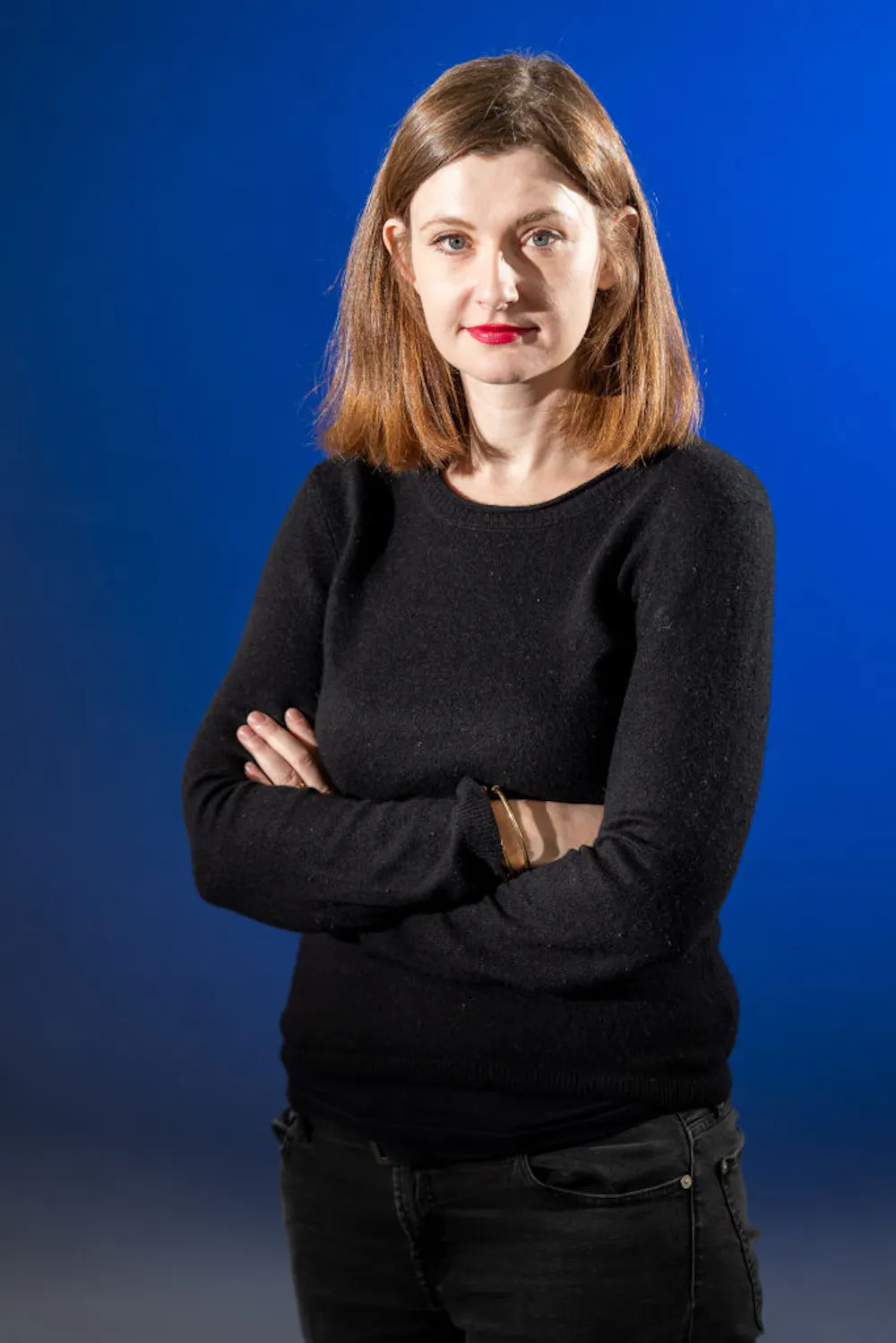
One of them was Olga Grjasnowa. Born in 1984, Grjasnowa came from Azerbaijan to Germany at age 11. She has written about Holocaust memory, as in her 2012 novel “All Russians Love Birch Trees,” and said in a 2018 interview that all her books are “Jewish books.”
Olga Grjasnowa during the Edinburgh International Book Festival on Aug. 22, 2019, in Scotland. Roberto Ricciuti/Getty Images
Her 2021 book “Der verlorene Sohn,” “The Prodigal Son,” echoes Holocaust memory, but in a historical novel set in 19th-century Russia.
The protagonist Jamaluddin – the name derives from the Arabic word for “beauty of the faith” – is born in the Caucasian region of Dagestan, as the son of a powerful Muslim imam. To negotiate a peace deal, the boy is given as a hostage to Russia, where he grows up in the Orthodox Christian court of the czar. Though initially treated as an outsider, Jamaluddin assimilates and becomes a high-ranking officer, a life that ends when he must return to Dagestan. But there, too, he now feels homeless, regarded with suspicion as a stranger.
“The Prodigal Son” deals with abduction, deportation, exile and constant wandering. Jamaluddin’s fate is shaped by authoritarianism, repression, war and discrimination – themes that are familiar in Holocaust literature, though here they befall a Muslim boy in another time and place.
Repeatedly, the novel makes mention of Jewish communities and their own suffering under the czar. As Jewish boys are being forced to march from remote villages to Saint Petersburg, Jamaluddin is “furious and ashamed” of his fellow officers. But he also begins to feel self-pity, flooded with memories of his own departure from home.
This scene depicts a historical reality under Czar Nicholas I, who ruled from 1825-1855: Russian Jewish boys were conscripted, sometimes kidnapped, to serve in the army. For contemporary audiences, the description can also evoke the death marches of Jewish prisoners during the Shoah, the Hebrew term for the Holocaust. Several additional moments in the book connect Jamaluddin’s experiences with images of Jewish flight and expulsion.
Antisemitism, meanwhile, is pervasive but less obvious. The Germans’ relationship with Jews was long dominated by silence and guilt – and Jews themselves were mostly invisible until the end of the Cold War, when Jewish migration from the former Soviet states picked up. My 2015 book “The Inability to Love” describes how mainstream German authors, fueled by guilt and shame over the Nazi past, fell into a philosemitic antisemitism: Outward displays of repentance for the Holocaust and public policies that ostensibly embraced Jews clashed with privately held prejudice.
Many examples of new German literature show contemporary Jewish and Muslim characters with complex identities – protagonists who are not seen as simply Jewish, Muslim or belonging to only one culture, pushing back on reductive stereotypes.
For example, Kat Kaufmann’s2015 novel “Superposition” tells the story of the young, popular and charismatic Izy, a Russian Jew who lives in Berlin as a jazz pianist. Her love interest is Timur, an Eastern European man with a typically Muslim name. When Izy thinks of her and Timur’s future son, she imagines him growing up with the luxury to conceal where he is from – to define his identity as he wishes, unlike previous generations.
Turkish and/or Muslim writers such as Fatma Aydemir and Nazlı Koca – who now lives in America, writing in English – tell similar stories of young characters navigating German culture as marginalized individuals. They often depict young women who struggle to reconcile their culture of origin with German social expectations and xenophobia today.
“I wanted to question the idea that we all have one single identity and that’s it,” Aydemir told the literary site K24 about her novel “Ellbogen,” whose protagonist finds herself fleeing to Turkey, her family’s original home, after a personal crisis. “I think things are way more complex, more fluid than most of us want to believe.”
This younger generation of German Jewish and Muslim writers is recasting entrenched debates, showing characters whose identities are multidimensional and more open than the burdened past or fraught present politics would suggest. Today’s young writers are creating new, brave spaces for conversation and empathy.
Agnes Mueller does not work for, consult, own shares in or receive funding from any company or organization that would benefit from this article, and has disclosed no relevant affiliations beyond their academic appointment.
The world’s most developed economies have also burnt the most oil and coal (fossil fuels) over the years, causing the most climate change damage. Preventing further climate change means a global fossil fuel phase-out must happen by 2050. Climate change mitigation scientists Sven Teske and Saori Miyake analysed the potential for renewable energy in each of the G20 countries. They concluded that the G20 is in a position to generate enough renewable energy to supply the world. For African countries to benefit, they must adopt long term renewable energy plans and policies and secure finance from G20 countries to set up renewable energy systems.
Why is the G20 so important in efforts to limit global warming?
The G20 group accounts for 67% of the world’s population, 85% of global gross domestic product, and 75% of global trade. The member states are the G7 (the US, Japan, Germany, the UK, France, Italy, Canada), plus Australia, China, India, Indonesia, Republic of Korea, Russia, Türkiye, Saudi Arabia, South Africa, Mexico, Brazil and Argentina.
We wanted to find out how G20 member states could limit global warming. Our study examined the solar and wind potential for each of G20 member countries (the available land and solar and wind conditions). We then compared this with projected electricity demands for 2050. This is, to our knowledge, the first research of its kind.
We found that the potential for renewable energy in G20 countries is very high – enough to supply the projected 2050 electricity demand for the whole world. They have 33.6 million km² of land on which solar energy projects could be set up, or 31.1 million km² of land on which wind energy projects could be set up.
This potential varies by geography. Not all G20 countries have the same conditions for generating solar and wind energy, but collectively, the G20 countries have enough renewable energy potential to supply the world’s energy needs.
But for the G20 countries to limit global warming, they also need to stop emitting greenhouse gases. Recent figures show that the G20 countries were responsible for generating 87% of all energy-related carbon dioxide emissions that cause global warming.
On the other hand, African Union countries (apart from South Africa, which is a high greenhouse gas emitter), were responsible for only 1.2% of the global total historical emissions until 2020.
The G20 countries with the highest renewable energy potential (especially Australia and Canada) are major exporters of the fossil fuels that cause global warming. Along with every other country in the world, the G20 nations will need to end their human-caused carbon emissions by 2050 to prevent further climate change.
Where does Africa fit into the picture?
African countries cannot set up new electricity plants based on burning fossil fuels, like coal. If they do that, the world will never end human-caused greenhouse gas emissions by 2050. The continent must generate electricity for the 600 million Africans who do not currently have it but will need to move straight past fossil fuels and into renewable energy.
For this, Africa will need finance. The African Union hosts the G20 summit later this year. This meeting begins just after the world’s annual climate change conference (now in its 30th year and known as COP30). These two summits will give Africa the chance to lobby for renewable energy funding from wealthier nations.
Africa already has the conditions needed to move straight into renewable energy. The continent could be generating an amount of solar and wind power that far exceeds its projected demand for electricity between now and 2050.
We are launching an additional analysis of the solar and wind potential of the entire African continent in Bonn, Germany on 19 June 2025 at a United Nations conference. This shows that only 3% of Africa’s solar and wind potential needs to be converted to real projects to supply Africa’s future electricity demand.
This means that Africa has great untapped potential to supply the required energy for its transition to a middle-income continent – one of the African Union’s goals in Agenda 2063, its 50 year plan.
But to secure enough finance for the continent to build renewable energy systems, African countries need long-term energy policies. These are currently lacking.
So what needs to be done?
The countries who signed up to the 2015 international climate change treaty (the Paris Agreement) have committed to replacing polluting forms of energy such as coal, fuelwood and oil with renewable energy.
South Africa, through its G20 presidency, must encourage G20 nations to reduce their greenhouse gas emissions and support renewable energy investment in Africa.
Because financing the global energy transition is already high on the priority list of most countries, South Africa should push for change on three fronts: finance, sound regulations and manufacturing capacity for renewable technologies. These are the among the main obstacles for renewables, particularly in Africa.
Finance: Financing the energy transition is among the highest priorities for COP30. Therefore, the COP30 meeting will be an opportunity for the African Union to negotiate finance for its renewable energy infrastructure needs.
For this, fair and just carbon budgets are vital. A carbon budget sets out how much carbon dioxide can still be emitted in order for the global temperature not to rise more than 2°C higher than it was before the 1760 industrial revolution.
A global carbon budget (the amount of emissions the whole world is allowed) has been calculated, but it needs to be divided up fairly so that countries that have polluted most are compelled to limit this.
To divide the global carbon budget fairly, energy pathways need to be developed urgently that consider:
future developments of population and economic growth
current energy supply systems
transition times for decarbonisation
local renewable energy resources.
The G20 platform should be used to lobby for fair and just carbon budgets.
Sound regulations that support the setting up of new factories: Governments must put policies in place to support African solar and wind companies. These are needed to win the trust of investors to invest in a future multi-billion dollar industry. Long-term, transparent regulations are needed too.
These regulations should:
say exactly how building permits for solar and wind power plants will be granted
prioritise linking renewable energy plants to national electricity grids
release standard technical specifications for stand-alone grids to make sure they’re all of the same quality.
Taking steps now to speed up big renewable energy industries could mean that African countries end up with more energy than they need. This can be exported and increase financial income for countries.
Sven Teske receives funding from the European Climate Foundation and Power Shift Africa (PSA).
Saori Miyake receives funding from European Climate Foundation and Power Shift Africa.
Source: United Kingdom – Executive Government & Departments 3
Press release
UK Armed Forces recognise Poland’s Second World War contribution at ceremony in Warsaw
UK Defence Minister Lord Coaker, Polish Deputy Prime Minister and Minister of Defence Władysław Kosiniak-Kamysz pay tribute to the extraordinary courage displayed by Polish paratroopers during one of the most famous allied operations of the Second World War.
Lord Coaker with Poland’s Deputy Prime Minister Władysław Kosiniak-Kamysz. Copyright reserved to the Polish Ministry of Defence.
UK honours Polish courage during Second World War in first-of-its-kind commemoration in Poland
Historic event reinforces UK and Poland relationship and Britain’s commitment to European security
New security deal between the two countries to be signed later this year The United Kingdom has recognised the contribution of Polish personnel as part of the allied war effort during the Second World War at a moving ceremony in Poland.
Lord Coaker, pictured left, with Poland’s Deputy Prime Minister Władysław Kosiniak-Kamysz, pictured right. Copyright reserved to the Polish Ministry of Defence.
Today, during an historic ceremony at Wilanów Palace in Warsaw, UK Defence Minister Lord Coaker, Polish Deputy Prime Minister and Minister of Defence Władysław Kosiniak-Kamysz paid tribute to the extraordinary courage displayed by Polish paratroopers during one of the most famous allied operations of the Second World War.
The event is the first formal standalone commemoration to mark the heroism of the 1st Polish Independent Parachute Brigade, during Operation Market Garden in 1944 – the allied operation which aimed to hasten the end of the Second World War by opening up new routes for advancing troops into Germany.
The event symbolised the enduring bond between British and Polish forces forged during the darkest days of the Second World War. During the ceremony Lord Coaker and Deputy Prime Minister Kosiniak-Kamysz inspected troops and received a salute, before giving speeches focussed on the shared values and sacrifices that have bound the two nations together.
Copyright reserved to the Polish Ministry of Defence.
Speaking from Wilanów Palace, Defence Minister Lord Coaker said:
At a time when Britain and Poland’s Armed Forces are once again working together to protect Europe’s security and deter those who threaten peace, the generation of heroes from both countries who fought side-by-side during the Second World War remain an enduring source of pride and inspiration.
Today, we acknowledge the extraordinary contribution of the 1st Polish Independent Parachute Brigade which Major General Sosabowski created and led into battle.
During the events of 1944, Allied forces aimed to seize a series of crucial bridges in the Netherlands through a combination of airborne attack and ground advances, often regarded as one the of most daring and ambitious operations of the entire war.
Major General Ollie Kingsbury, Colonel Commandant of The Parachute Regiment, presented a banner to Brigadier General Michał Strzelecki, Commander 6th Polish Airborne Brigade – the proud descendants of the 1st Polish Independent Parachute Brigade – signifying the enduring and historic bond between our armed forces. Members of The Parachute Regiment, British Army and the Polish 6th Airborne Brigade also formed a guard of honour during the ceremony.
Polish Deputy Prime Minister, Władysław Kosiniak-Kamysz, said:
General Stanisław Sosabowski and his soldiers, fighting side-by-side with British paratroopers, laid the foundation for today’s cooperation, also military, as well as for strong ties between our nations. On my own behalf and on behalf of the soldiers of the Polish Armed Forces, I thank you for honouring our heroes. It constitutes an important gesture, which demonstrates our unity and shared values that have connected us for over 80 years.
Temporary Military Assistant to the Minister of State in the House of Lords, pictured left, with the UK’s Defence Attaché to Poland Chris Brown, pictured right. Copyright reserved to the Polish Ministry of Defence.
The event comes at a time of unprecedented cooperation between the UK and Poland on defence and security matters. Announced by the Prime Minister in January, the two nations are set to sign a new security and defence treaty later this year, building on strong bilateral ties which have seen over 20 British operational deployments to Poland since February 2022.
Both countries remain steadfast allies in supporting Ukraine against Russian aggression and are working together to strengthen NATO’s eastern flank.
Lord Coaker’s visit also follows the publication of the UK’s Strategic Defence Review, which underscores Britain’s commitment to European security.
The review sets out the UK’s vision to move to warfighting readiness, create a more lethal integrated military force, and strengthen UK leadership in NATO. Additionally, it will put service personnel at the heart of our defence plans by renewing the nation’s contract with those who serve and having a whole of society approach to our national resilience.
VILNIUS, Lithuania, June 18, 2025 (GLOBE NEWSWIRE) — BTCC, one of the world’s longest-serving exchanges, celebrates its 14th anniversary by launching its first-ever user badge program. The milestone campaign, running from June 16 to July 1, 2025, introduces the exclusive “14 Years of Momentum” badge. This limited-edition emblem aims to honor community loyalty as the exchange steps into its 15th year of operation in the crypto space.
In the fast-paced cryptocurrency industry, 14 years of operation represent an extraordinary milestone of excellence. BTCC has proven its commitment to security and reliability by weathering market volatility and regulatory changes while consistently maintaining user trust around the world.
The anniversary campaign marks BTCC’s first step into community recognition badges, offering users a new way to showcase their loyalty and trading achievements. To earn the anniversary badge, participants must deposit $200 worth of tokens, achieve VIP 2 status, and complete $1 million in cumulative futures trading volume during the event period. Anniversary badge holders will also receive trading rewards totaling $140, plus eligibility for ongoing exclusive benefits, including airdrops, special campaigns, and community recognition.
The campaign also features progressive social tasks that unlock throughout the event period, encouraging users to engage across BTCC’s social media channels including X (Twitter), Instagram, and Discord.
“This badge program represents just the beginning of how we plan to recognize and reward our community members,” said Alex, Head of Operations at BTCC. “BTCC stands the test of time thanks to our community’s support. Now we’re launching the badge program to create lasting value for those who’ve chosen to grow with us, and this is only the start of our journey in building meaningful connections with our trading family.”
This anniversary event will kickstart BTCC’s comprehensive badge program, with plans to roll out regular campaigns allowing users to collect badges and exchange them for rewards.
Bringing the celebration into the physical world, BTCC is launching an offline campaign featuring BTCC-branded taxis with QR codes roaming the streets of Berlin, Germany and Poznań, Poland. Pedestrians can scan the codes to participate directly in the anniversary campaign, bridging the gap between crypto trading and real-world engagement.
The “14 Years of Momentum” anniversary badge serves as both a celebration of BTCC’s milestone and a symbol of the platform’s evolution toward enhanced community engagement. As a pioneer that has stood the test of time in crypto’s demanding landscape, BTCC continues to evolve while prioritizing the security and trust that have defined its remarkable 14-year journey.
For more details about the anniversary campaign, please visit BTCC’s website.
About BTCC
Founded in 2011, BTCC is one of the world’s longest-serving cryptocurrency exchanges, offering secure and user-friendly trading services to millions of users globally. With a commitment to security, innovation, and community building, BTCC continues to be a trusted platform in the evolving cryptocurrency landscape.
Source: People’s Republic of China in Russian – People’s Republic of China in Russian –
Source: People’s Republic of China – State Council News
BAGHDAD, June 18 (Xinhua) — Iraqi Foreign Minister Fuad Hussein has called on European powers, particularly France, Britain and Germany, to play a direct and effective role in achieving an immediate ceasefire between Israel and Iran and resuming negotiations, the Iraqi Foreign Ministry said on Wednesday.
On Tuesday, Hussein held a telephone conversation with his French counterpart Jean-Noel Barrot, during which they discussed the escalation of tensions in the region, the ministry said in a statement.
According to the statement, both ministers stressed the need for immediate international action to halt military operations by all sides. They warned that further escalation could trigger a wider global economic and humanitarian crisis.
They also stressed the importance of preventing the conflict from spreading or involving other regional or international actors, which could further threaten world peace and stability.
Both sides agreed on the need to coordinate international efforts to support dialogue, describing it as the most viable way to prevent dangerous consequences for the region and the world, the statement added. –0–
PALO ALTO, Calif., June 18, 2025 (GLOBE NEWSWIRE) — NexQloud, a startup in decentralized cloud computing infrastructure, today announced the successful close of its $2.3 million Pre-Seed funding round under a Reg CF exemption. The raise, completed with fully audited financials, marks a significant milestone and confirms market appetite for decentralized computing solutions that reward individuals and organizations for contributing their hardware to the cloud.
The company now enters a new phase of growth, backed by a 12-month runway and plans to launch a $5 million Seed Round to accelerate proof of market fit for its Distributed Kubernetes Service (DKS) and expand into three additional cloud service verticals designed to serve the growing demand from AI organizations, SaaS providers, and DevOps teams.
“This funding validates what we’ve always believed — that the future of cloud computing is decentralized, energy efficient, and eco-friendly,” said Mauro Terrinoni, CEO of NexQloud. “With over 1,850 NanoServers live, we’ve demonstrated not only demand but global scalability. Now, we’re focused on unlocking enterprise and federal adoption with even greater ambition.”
1,850+ NanoServers Now Deployed Across 10 Countries
Since its last milestone announcement of 1,250 units, NexQloud has rapidly expanded to over 1,850 NanoServers across ten countries, including the United States, United Kingdom, Canada, Belgium, Australia, Vietnam, Switzerland, Germany, India, and Jamaica. This marks a 48% growth since its last update, demonstrating strong contributor momentum and global adoption.
Built on mobile CPU architecture, each NanoServer operates with just 12% of the energy consumed by traditional rackmount servers. The result: 88% energy savings with identical computational performance. These energy-efficient devices operate 24/7 with minimal cooling or infrastructure overhead, creating a sustainable, community-powered alternative to centralized data centers.
To date NexQloud’s Distributed Compute Platform (DCP) now comprises:
NexQloud’s DCP Matches Enterprise Data Center Power—Without the Real Estate
To contextualize the scale of its current infrastructure, NexQloud’s DCP now delivers the performance equivalent of a mid-sized enterprise-grade data center, comprising approximately 70 traditional server racks. The platform can support between 500,000 and 750,000 concurrent users for web-based applications, while simultaneously powering tens of thousands of containerized workloads across its Distributed Kubernetes Service (DKS).
In addition, NexQloud’s GPU infrastructure can support hundreds of parallel AI inference, training, and rendering tasks, enabling enterprise-scale AI computing at a fraction of typical cost. Remarkably, this level of compute was achieved without building a single data center— and with new devices coming online daily, NexQloud’s DCP will continue to grow in scale and resilience.
If built traditionally, this infrastructure would require an estimated $7.5 million in capital expenditures. NexQloud eliminates these costs entirely by leveraging decentralized ownership and contributor-operated devices, with the potential to deliver:
Annual electricity savings: Over 6.94 million kWh, equal to $832,550 in avoided energy costs
CO₂ emissions avoided: Approximately 2,895 metric tons per year, equivalent to removing 640 cars from the road
Environmental impact: Comparable to planting 133,000 mature trees annually
“This is more than cloud infrastructure — it’s a major shift in how compute is produced, powered, and rewarded,” added Terrinoni. “With the theoretical ability to add millions of devices, we are poised to do for computing what the internet did for information —decentralize it, distribute it, and redefine it.”
Pursuing FedRAMP to Unlock Government Cloud Contracts
Lastly, the company announces its intent to pursue FedRAMP certification to unlock opportunities with U.S. government agencies. As one of the largest consumers of traditional cloud infrastructure, the U.S. government represents a high-value target. NexQloud’s pursuit of FedRAMP is a strategic move to access public sector contracts and expand into one of the most regulated and defensible segments of the cloud market.
About NexQloud
NexQloud is redefining cloud infrastructure by combining blockchain, AI, and a global network of energy-efficient NanoServers into a scalable, secure, and environmentally responsible computing platform. Through its NXQ token economy and Distributed Kubernetes Service (DKS), NexQloud offers individuals and enterprises an inclusive alternative to centralized hyperscale providers.
Media Contact: Mauro Terrinoni, CEO Email: mterrinoni@nexqloud.io Phone: +1 669 241 0916 Website: www.nexqloud.io
Valour Expands Nordic Footprint with Four New Listings: Valour, a subsidiary of DeFi Technologies, has launched SEK-denominated ETPs for Mantra (OM), Tron (TRX), Stellar (XLM), and Tether Gold (XAUt) on Sweden’s Spotlight Stock Market, broadening investor access to diversified digital asset exposure.
Exposure to Emerging Protocols and Tokenized Gold: These new ETPs provide regulated access to a range of assets—from tokenized gold to real-world asset protocols—serving growing investor demand for both traditional and next-generation blockchain applications.
On Track Toward 100 ETPs by Year-End: With these additions, Valour now offers over 70 digital asset ETPs across leading European exchanges, reinforcing its leadership in the market and accelerating progress toward its goal of 100 ETPs by the end of 2025.
TORONTO, June 18, 2025 (GLOBE NEWSWIRE) — DeFi Technologies Inc. (the “Company” or “DeFi Technologies”) (Nasdaq: DEFT) (CBOE CA: DEFI) (GR: R9B), a financial technology company bridging the gap between traditional capital markets and decentralized finance (“DeFi”), is pleased to announce that its subsidiary, Valour Inc., and Valour Digital Securities Limited (together, “Valour“), a leading issuer of exchange traded products (“ETPs“) has launched four new SEK-denominated ETPs on the Spotlight Stock Market in Sweden:
These new listings further broaden Valour’s presence in the Nordics and strengthen its mission to deliver secure, transparent, and regulated access to a diverse range of digital assets through traditional brokerage platforms.
About the Newly Listed ETPs
Valour Mantra (OM) ETP Mantra is a leading protocol focused on real-world asset tokenization and compliant DeFi infrastructure. As institutional interest in tokenized financial products grows, OM plays a critical role in bridging traditional finance with on-chain applications.
Valour Tron (TRX) ETP Tron is a high-performance, layer-1 blockchain known for its high throughput, low fees, and strong presence in DeFi and entertainment-focused applications. With billions of daily transactions and one of the largest stablecoin networks, Tron remains a top digital asset by market capitalization.
Valour Stellar (XLM) ETP Stellar is a blockchain optimized for global payments and remittances. Its consensus protocol and low-cost transactions make it ideal for cross-border financial infrastructure, particularly in emerging markets and institutional settlement use cases.
Valour Tether Gold (XAUt) ETP Tether Gold (XAUt) is a token backed by physical gold, offering the security of a hard asset with the accessibility of a digital token. The ETP provides investors with exposure to tokenized gold via a regulated, exchange-listed product, appealing to those seeking a hedge against inflation and fiat currency risk.
Each product can be purchased and sold through standard brokerage platforms, offering streamlined access for both retail and institutional investors. The management fee is 1.9% for OM, TRX, and XLM, while Tether Gold (XAUt) features a fee of 0.45%.
Executive Commentary
Johanna Belitz, Head of Nordics at Valour, commented: “The launch of these four new products reflects our continued commitment to Nordic investors. We’re seeing increased demand for diversified exposure—not only to large-cap crypto assets but also to gold-backed tokens and emerging protocols like Mantra. With the world’s first ETP on Tether Gold, we’re bridging traditional gold investment with the transparency and efficiency of blockchain. Our goal is to deliver that access in a simple, familiar, and fully regulated format.”
Elaine Buehler, Head of Products at Valour, added: “These new ETPs represent a major leap forward, not only offering access to leading digital assets like Tron and Stellar but also bridging real-world financial systems with next-gen blockchain protocols. What makes them extraordinary is their ability to unlock new markets—Mantra’s tokenized real-world asset focus is revolutionizing compliance in DeFi, while Tether Gold offers a digital-native solution for investors seeking the stability of gold as a hedge against inflation.”
With these new listings, Valour has now surpassed 70 digital asset ETPs—offering the most comprehensive lineup in Europe—and remains on pace to reach its goal of 100 ETPs by the end of 2025. These products are currently listed on major European exchanges including Spotlight (Sweden), Börse Frankfurt (Germany), and Euronext (Paris and Amsterdam), with continued expansion planned in additional global markets.
About DeFi Technologies DeFi Technologies Inc. (Nasdaq: DEFT) (CBOE CA: DEFI) (GR: R9B) is a financial technology company bridging the gap between traditional capital markets and decentralized finance (“DeFi”). As the first Nasdaq-listed digital asset manager of its kind, DeFi Technologies offers equity investors diversified exposure to the broader decentralized economy through its integrated and scalable business model. This includes Valour, which offers access to over sixty-five of the world’s most innovative digital assets via regulated ETPs; Stillman Digital, a digital asset prime brokerage focused on institutional-grade execution and custody; Reflexivity Research, which provides leading research into the digital asset space; Neuronomics, which develops quantitative trading strategies and infrastructure; and DeFi Alpha, the company’s internal arbitrage and trading business line. With deep expertise across capital markets and emerging technologies, DeFi Technologies is building the institutional gateway to the future of finance. Follow DeFi Technologies on LinkedIn and X/Twitter, and for more details, visit https://defi.tech/
DeFi Technologies Subsidiaries
About Valour Valour Inc. and Valour Digital Securities Limited (together, “Valour”) issues exchange traded products (“ETPs”) that enable retail and institutional investors to access digital assets in a simple and secure way via their traditional bank account. Valour is part of the asset management business line of DeFi Technologies. For more information about Valour, to subscribe, or to receive updates, visit valour.com.
About Reflexivity Research Reflexivity Research LLC is a leading research firm specializing in the creation of high-quality, in-depth research reports for the bitcoin and digital asset industry, empowering investors with valuable insights. For more information please visit https://www.reflexivityresearch.com/
About Stillman Digital Stillman Digital is a leading digital asset liquidity provider that offers limitless liquidity solutions for businesses, focusing on industry-leading trade execution, settlement, and technology. For more information, please visit https://www.stillmandigital.com
About Neuronomics AG Neuronomics AG is a Swiss asset management firm specializing in AI-powered quantitative trading strategies. By integrating artificial intelligence, computational neuroscience and quantitative finance, Neuronomics delivers cutting-edge solutions that drive superior risk-adjusted performance in financial markets. For more information please visit https://www.neuronomics.com/
Cautionary note regarding forward-looking information: This press release contains “forward-looking information” within the meaning of applicable Canadian securities legislation. Forward-looking information includes, but is not limited to the the listing of Valour Mantra (OM) ETP, Valour Tron (TRX) ETP, Valour Stellar (XLM) ETP and Valour Tether Gold (XAUt) ETP; the development of the Mantra protocol, Tron blockchain, Stellar blockchain and Tether Gold token; development of additional ETPs and the number of ETPs anticipated by end of 2025; investor confidence in Valour’s ETPs; investor interest and confidence in digital assets; the regulatory environment with respect to the growth and adoption of decentralized finance; the pursuit by the Company and its subsidiaries of business opportunities; and the merits or potential returns of any such opportunities. Forward-looking information is subject to known and unknown risks, uncertainties and other factors that may cause the actual results, level of activity, performance or achievements of the Company, as the case may be, to be materially different from those expressed or implied by such forward-looking information. Such risks, uncertainties and other factors include, but is not limited the acceptance of Valour ETPs by exchanges; growth and development of decentralised finance and cryptocurrency sector; rules and regulations with respect to decentralised finance and cryptocurrency; general business, economic, competitive, political and social uncertainties. Although the Company has attempted to identify important factors that could cause actual results to differ materially from those contained in forward-looking information, there may be other factors that cause results not to be as anticipated, estimated or intended. There can be no assurance that such information will prove to be accurate, as actual results and future events could differ materially from those anticipated in such statements. Accordingly, readers should not place undue reliance on forward-looking information. The Company does not undertake to update any forward-looking information, except in accordance with applicable securities laws.
THE CBOE CANADA EXCHANGE DOES NOT ACCEPT RESPONSIBILITY FOR THE ADEQUACY OR ACCURACY OF THIS RELEASE
For further information, please contact:
Olivier Roussy Newton Chief Executive Officer ir@defi.tech (323) 537-7681
Valour Expands Nordic Footprint with Four New Listings: Valour, a subsidiary of DeFi Technologies, has launched SEK-denominated ETPs for Mantra (OM), Tron (TRX), Stellar (XLM), and Tether Gold (XAUt) on Sweden’s Spotlight Stock Market, broadening investor access to diversified digital asset exposure.
Exposure to Emerging Protocols and Tokenized Gold: These new ETPs provide regulated access to a range of assets—from tokenized gold to real-world asset protocols—serving growing investor demand for both traditional and next-generation blockchain applications.
On Track Toward 100 ETPs by Year-End: With these additions, Valour now offers over 70 digital asset ETPs across leading European exchanges, reinforcing its leadership in the market and accelerating progress toward its goal of 100 ETPs by the end of 2025.
TORONTO, June 18, 2025 (GLOBE NEWSWIRE) — DeFi Technologies Inc. (the “Company” or “DeFi Technologies”) (Nasdaq: DEFT) (CBOE CA: DEFI) (GR: R9B), a financial technology company bridging the gap between traditional capital markets and decentralized finance (“DeFi”), is pleased to announce that its subsidiary, Valour Inc., and Valour Digital Securities Limited (together, “Valour“), a leading issuer of exchange traded products (“ETPs“) has launched four new SEK-denominated ETPs on the Spotlight Stock Market in Sweden:
These new listings further broaden Valour’s presence in the Nordics and strengthen its mission to deliver secure, transparent, and regulated access to a diverse range of digital assets through traditional brokerage platforms.
About the Newly Listed ETPs
Valour Mantra (OM) ETP Mantra is a leading protocol focused on real-world asset tokenization and compliant DeFi infrastructure. As institutional interest in tokenized financial products grows, OM plays a critical role in bridging traditional finance with on-chain applications.
Valour Tron (TRX) ETP Tron is a high-performance, layer-1 blockchain known for its high throughput, low fees, and strong presence in DeFi and entertainment-focused applications. With billions of daily transactions and one of the largest stablecoin networks, Tron remains a top digital asset by market capitalization.
Valour Stellar (XLM) ETP Stellar is a blockchain optimized for global payments and remittances. Its consensus protocol and low-cost transactions make it ideal for cross-border financial infrastructure, particularly in emerging markets and institutional settlement use cases.
Valour Tether Gold (XAUt) ETP Tether Gold (XAUt) is a token backed by physical gold, offering the security of a hard asset with the accessibility of a digital token. The ETP provides investors with exposure to tokenized gold via a regulated, exchange-listed product, appealing to those seeking a hedge against inflation and fiat currency risk.
Each product can be purchased and sold through standard brokerage platforms, offering streamlined access for both retail and institutional investors. The management fee is 1.9% for OM, TRX, and XLM, while Tether Gold (XAUt) features a fee of 0.45%.
Executive Commentary
Johanna Belitz, Head of Nordics at Valour, commented: “The launch of these four new products reflects our continued commitment to Nordic investors. We’re seeing increased demand for diversified exposure—not only to large-cap crypto assets but also to gold-backed tokens and emerging protocols like Mantra. With the world’s first ETP on Tether Gold, we’re bridging traditional gold investment with the transparency and efficiency of blockchain. Our goal is to deliver that access in a simple, familiar, and fully regulated format.”
Elaine Buehler, Head of Products at Valour, added: “These new ETPs represent a major leap forward, not only offering access to leading digital assets like Tron and Stellar but also bridging real-world financial systems with next-gen blockchain protocols. What makes them extraordinary is their ability to unlock new markets—Mantra’s tokenized real-world asset focus is revolutionizing compliance in DeFi, while Tether Gold offers a digital-native solution for investors seeking the stability of gold as a hedge against inflation.”
With these new listings, Valour has now surpassed 70 digital asset ETPs—offering the most comprehensive lineup in Europe—and remains on pace to reach its goal of 100 ETPs by the end of 2025. These products are currently listed on major European exchanges including Spotlight (Sweden), Börse Frankfurt (Germany), and Euronext (Paris and Amsterdam), with continued expansion planned in additional global markets.
About DeFi Technologies DeFi Technologies Inc. (Nasdaq: DEFT) (CBOE CA: DEFI) (GR: R9B) is a financial technology company bridging the gap between traditional capital markets and decentralized finance (“DeFi”). As the first Nasdaq-listed digital asset manager of its kind, DeFi Technologies offers equity investors diversified exposure to the broader decentralized economy through its integrated and scalable business model. This includes Valour, which offers access to over sixty-five of the world’s most innovative digital assets via regulated ETPs; Stillman Digital, a digital asset prime brokerage focused on institutional-grade execution and custody; Reflexivity Research, which provides leading research into the digital asset space; Neuronomics, which develops quantitative trading strategies and infrastructure; and DeFi Alpha, the company’s internal arbitrage and trading business line. With deep expertise across capital markets and emerging technologies, DeFi Technologies is building the institutional gateway to the future of finance. Follow DeFi Technologies on LinkedIn and X/Twitter, and for more details, visit https://defi.tech/
DeFi Technologies Subsidiaries
About Valour Valour Inc. and Valour Digital Securities Limited (together, “Valour”) issues exchange traded products (“ETPs”) that enable retail and institutional investors to access digital assets in a simple and secure way via their traditional bank account. Valour is part of the asset management business line of DeFi Technologies. For more information about Valour, to subscribe, or to receive updates, visit valour.com.
About Reflexivity Research Reflexivity Research LLC is a leading research firm specializing in the creation of high-quality, in-depth research reports for the bitcoin and digital asset industry, empowering investors with valuable insights. For more information please visit https://www.reflexivityresearch.com/
About Stillman Digital Stillman Digital is a leading digital asset liquidity provider that offers limitless liquidity solutions for businesses, focusing on industry-leading trade execution, settlement, and technology. For more information, please visit https://www.stillmandigital.com
About Neuronomics AG Neuronomics AG is a Swiss asset management firm specializing in AI-powered quantitative trading strategies. By integrating artificial intelligence, computational neuroscience and quantitative finance, Neuronomics delivers cutting-edge solutions that drive superior risk-adjusted performance in financial markets. For more information please visit https://www.neuronomics.com/
Cautionary note regarding forward-looking information: This press release contains “forward-looking information” within the meaning of applicable Canadian securities legislation. Forward-looking information includes, but is not limited to the the listing of Valour Mantra (OM) ETP, Valour Tron (TRX) ETP, Valour Stellar (XLM) ETP and Valour Tether Gold (XAUt) ETP; the development of the Mantra protocol, Tron blockchain, Stellar blockchain and Tether Gold token; development of additional ETPs and the number of ETPs anticipated by end of 2025; investor confidence in Valour’s ETPs; investor interest and confidence in digital assets; the regulatory environment with respect to the growth and adoption of decentralized finance; the pursuit by the Company and its subsidiaries of business opportunities; and the merits or potential returns of any such opportunities. Forward-looking information is subject to known and unknown risks, uncertainties and other factors that may cause the actual results, level of activity, performance or achievements of the Company, as the case may be, to be materially different from those expressed or implied by such forward-looking information. Such risks, uncertainties and other factors include, but is not limited the acceptance of Valour ETPs by exchanges; growth and development of decentralised finance and cryptocurrency sector; rules and regulations with respect to decentralised finance and cryptocurrency; general business, economic, competitive, political and social uncertainties. Although the Company has attempted to identify important factors that could cause actual results to differ materially from those contained in forward-looking information, there may be other factors that cause results not to be as anticipated, estimated or intended. There can be no assurance that such information will prove to be accurate, as actual results and future events could differ materially from those anticipated in such statements. Accordingly, readers should not place undue reliance on forward-looking information. The Company does not undertake to update any forward-looking information, except in accordance with applicable securities laws.
THE CBOE CANADA EXCHANGE DOES NOT ACCEPT RESPONSIBILITY FOR THE ADEQUACY OR ACCURACY OF THIS RELEASE
For further information, please contact:
Olivier Roussy Newton Chief Executive Officer ir@defi.tech (323) 537-7681
DÜSSELDORF, Germany and ATLANTA, June 18, 2025 (GLOBE NEWSWIRE) — Heramba Electric plc (OTC: PITEF) announced today the results of an extraordinary shareholder and board meeting held on June 3, 2025. More than 90.0%+ of shareholders voted on the following resolutions:
To appoint Srinath Narayanan, Tim Dummer, Prakash Ramachandran, Andrea La Mendola, David Roberts, Cindy Huang, Michael Burton, and David Port as directors
After careful consideration of the performance of Michele Molinari as CEO, RESOLVED to terminate Michele Molinari’s employment contract with immediate effect and place him on administrative suspension across all the subsidiaries and associated boards, in accordance with all applicable law for cause in respect of the following:
i. Breach of fiduciary duty to credit and shareholders of the Company;
ii. Failure to follow proper corporate governance in enacting actions without following proper communications to shareholders;
iii. Failure to mitigate conflict of interest despite repeated requests from board members; and
iv. Significant destruction of value to shareholders and credit holders from actions pursued without taking recourse to an independent counsel or independent restructuring officer.
Appointment of Srinath Narayanan as acting CEO, David Port as Chief Restructuring Officer, Prakash Ramachandran as CFO, and Dave Roberts as Chief Legal Officer of the Company
Appointment of ByrneWallace LLP, Toiefenbacher, and PotterAnderson as the counsel in Ireland, Germany, and Delaware, respectively.
Srinath Narayanan, David Port, and Dave Roberts are the only representatives authorized to communicate and negotiate with insolvency administrators in Germany, that maximizes value for shareholders and creditors of the Company.
Certain statements included in this communication that are not historical facts are forward-looking statements for purposes of the safe harbor provisions under the United States Private Securities Litigation Reform Act of 1995. Forward-looking statements generally are accompanied by words such as “believe,” “may,” “will,” “estimate,” “continue,” “anticipate,” “intend,” “expect,” “should,” “would,” “plan,” “predict,” “potential,” “seem,” “seek,” “future,” “outlook,” and similar expressions that predict or indicate future events or trends or events that are not statements of historical matters. These forward-looking statements include, but are not limited to, statements regarding the plans and objectives of management for future operations, business strategy, anticipated growth and market opportunity. These statements are based on various assumptions, whether or not identified in this communication, and on the current expectations of Heramba Electric management and are not predictions of actual performance. These forward-looking statements are provided for illustrative purposes only and are not intended to serve as, and must not be relied on by any investor as, a guarantee, an assurance, a prediction or a definitive statement of fact or probability. Actual events and circumstances are difficult or impossible to predict and will differ from assumptions. Many actual events and circumstances are beyond the control of Heramba Electric. These forward-looking statements are subject to a number of risks and uncertainties, including (i) changes in domestic and foreign business, market, financial, political and legal conditions; (ii) the ability to continue to meet stock exchange listing standards following the consummation of the Business Combination; (iii) failure to realize the anticipated benefits of the Business Combination, which may be affected by, among other things, competition, the ability of the combined Company to grow and manage growth profitably, maintain relationships with customers and suppliers and retain its management and key employees; (iv) changes in applicable law or regulations; (v) the outcome of any legal proceedings that may be instituted against Heramba Electric, PERAC or Heramba; (vi) the effects of competition on Heramba Electric’s future business; (vii) the ability of Heramba Electric to finance future operations; (viii) the enforceability of Heramba Electric’s intellectual property rights, including its copyrights, patents, trademarks and trade secrets, and the potential infringement on the intellectual property rights of others; and (ix) those factors discussed under the heading “Risk Factors” in the definitive proxy statement/prospectus filed on March 19, 2024 by Heramba Electric and other documents filed, or to be filed, by Heramba Electric with the U.S. Securities and Exchange Commission. If any of these risks materialize or the assumptions prove incorrect, actual results could differ materially from the results implied by these forward-looking statements. There may be additional risks that Heramba Electric does not presently know or that Heramba Electric currently believes are immaterial that could also cause actual results to differ from those contained in the forward-looking statements.
In addition, forward-looking statements reflect Heramba Electric’s plans or forecasts of future events and views as of the date of this communication. Heramba Electric anticipates that subsequent events and developments may cause Heramba Electric’s assessments to change. However, while Heramba Electric may elect to update these forward-looking statements at some point in the future, Heramba Electric specifically disclaims any obligation to do so. Nothing in this communication should be regarded as a representation by any person that the forward-looking statements set forth herein will be achieved or that any of the contemplated results of such forward-looking statements will be achieved. Accordingly, undue reliance should not be placed upon the forward-looking statements.
For further information and inquiries, please contact:
Atlanta Capital Partners, LLC David L. Kugelman (866) 692-6847 Toll Free – U.S. & Canada (404) 281-8556 Mobile and WhatsApp dk@atlcp.com
Source: People’s Republic of China – State Council News
The Group of Seven (G7) summit wrapped up in Canada on Tuesday with no joint communique but some stark frictions.
Several statements, or the leaders’ commitments, were issued after the summit, which included driving secure, responsible and trustworthy AI adoption across public and private sectors, powering AI now and into the future, and closing digital divides; boosting cooperation to unlock the full potential of quantum technology to grow economies, solve global challenges and keep communities secure.
The attendees also committed to mounting a multilateral effort to better prevent, fight and recover from wildfires, which are on the rise around the world; protecting the rights of everyone in society, and the fundamental principle of state sovereignty, by continuing to combat foreign interference, with a focus on transnational repression; and countering migrant smuggling by dismantling transnational organized crime groups.
In his final remarks at the closing news conference, Canadian Prime Minister Mark Carney said that the discussions over the past two days were marked by a range of differing opinions, frank conversations and strategic exchanges.
“There is a great amount of direct dialogue and discussion, very frank exchanges, very strategic exchanges, differences of opinion on a number of issues, but an effort to find common solutions to some of these problems,” said Carney, also chair of this year’s summit.
He said this is particularly valuable “at a time when multilateralism is under great strain.”
There was no joint statement on Ukraine, although Carney announced new Canadian support for Ukraine’s defense and another set of sanctions on Russia. Carney invited Ukrainian President Volodymyr Zelensky to attend the event in person and made support for the country one of the summit’s key discussion topics on Tuesday.
Leaders met for the final day of the summit in Kananaskis in Canada’s province of Alberta without U.S. President Donald Trump, who suddenly left Canada on Monday night, saying that escalations in the Middle East forced his early exit from the G7 event.
As he left, the summit published a statement that the resolution of the Iranian crisis can lead to a broader de-escalation of hostilities in the Middle East, even a ceasefire in Gaza.
The remaining G7 leaders had a working lunch with visiting non-G7 leaders on energy security. In the statement, the leaders said that they remain vigilant to the implications of the Iran-Israel aerial conflict for international energy markets and that they will stand ready to coordinate to safeguard market stability.
Hundreds of protesters took to the streets in downtown Calgary and Banff during the summit, calling on the summit to address a variety of issues, including Trump’s threat to annex Canada.
Originally scheduled to begin on the weekend, the summit was shortened to two days and officially started on Monday.
French President Emmanuel Macron announced Tuesday that next year’s summit will take place in Evian, a French spa town known for its mineral water.
The G7 is an informal bloc comprising seven of the world’s advanced economies — Canada, France, Germany, Italy, Japan, Britain and the United States — along with the European Union.
Germany’s foreign minister appealed to Iran’s leaders to make credible assurances that it is not seeking a nuclear weapon and to show it is willing to find a negotiated solution as fears mount of further military escalation between Iran and Israel.
“We are still ready to negotiate a solution. However, Iran must act urgently … it is never too late to come to the negotiating table if one comes with sincere intentions,” Johann Wadephul said at a news conference with his Jordanian counterpart on Wednesday.
Wadephul said Israel’s fear that Iran would develop nuclear weapons was justified and it had a right to self-defence.
“The Israeli decision to do something against this threat is comprehensible,” he said, adding civilian deaths on both sides were regrettable after air attacks between Iran and Israel.
His ministry was arranging special flights later on Wednesday and on Thursday to each repatriate about 180 German citizens via Amman, he said.
Wadephul also said Germany had agreed to create an economic council with Syria to improve cooperation and boost prosperity and stability there.
South Africa views the Group of Seven (G7) as a strategic partner in its efforts to drive climate resilience, promote a just energy transition, and secure value-added investment in its rich mineral resources.
This is according to President Cyril Ramaphosa who was speaking following the conclusion of his working visit to Canada where he participated in the G7 Summit Outreach Session. The session took place on the margins of the G7 Leaders’ Summit, held in Kananaskis, Alberta.
“South Africa views the G7 as a strategic partner. We seek greater cooperation in areas such as investment, financing for development, international crime, climate change and just transitions, as well as inclusive global growth and development,” the President said on Tuesday.
The G7 consists of the largest advanced economies namely: Canada, France, Germany, Italy, Japan, the United Kingdom and the United States.
The European Union also participates in G7 Summits, although it is not a member.
The Outreach Session aimed “to explore leadership and collaboration in driving a comprehensive approach to energy security with a focus on technology and innovation; diversification and strengthening critical mineral supply chains; and infrastructure and investment”.
The outreach theme resonated with South Africa’s national interests and priorities of South Africa’s G20 Presidency.
The Outreach Sessions of the G7 have been a feature of the Group over the years with the aim being to strengthen unity among G7 members and like-minded countries to deliberate on and address some of the world’s most pressing issues.
President Ramaphosa described the summit as “most meaningful” particularly in the context of South Africa’s role as the G20 President.
“We’ve just concluded our visit to Canada to attend the G7 Summit. It has been most meaningful for us, particularly as we are the President of the G20. We’ve had the opportunity to interact with a number of heads of state and government of various countries,” he said.
Climate change
President Ramaphosa placed climate change and its devastating effects at the centre of South Africa’s message to the G7 leaders, highlighting the destruction brought by floods in KwaZulu-Natal and the Eastern Cape, as well as the ongoing droughts in parts of the Western Cape.
“We put that firmly on the global agenda, that there should be sufficient funding for incidents such as those, as they happen on a repeated basis, particularly in our sub region – in [the] SADC [Southern African Development Community], but more importantly, in two of our provinces, KwaZulu Natal and the Eastern Cape [which] over the past few years have suffered repeated incidents of destruction from floods and also droughts in parts of the Western Cape,” the President explained.
Beneficiation
On the economic front, President Ramaphosa also pushed for a shift in the global approach to Africa’s critical minerals, emphasising the need for beneficiation and inclusive value chains.
“We discussed the importance of how our critical minerals should be treated, particularly in view of the fact that they play such an important role in energy security and that the extraction of minerals from African countries and our own country, particularly, should be made more to be not only extractive, but also to have value add, where beneficiation becomes the order of the day,” he said.
He said investors must be made aware upfront that South Africa seeks to move beyond raw exports to value-added production, in line with its long-held vision of selling finished goods rather than raw materials.
“Those who want to invest in our minerals, should know up front that we are not only looking forward to them extracting minerals, but also to value chain additions or advancements in the form of beneficiation, so that in the end, we live up to what we’ve been saying, that we want to sell value added products to the rest of the world,” the President stressed.
Bilateral meetings
The first citizen also held bilateral meetings with several leaders on the sidelines of the summit, which he described as “most beneficial” for South Africa’s diplomatic and economic engagements.
He held bilateral meetings with Heads of State and Government from Canada, France, Germany and the Republic of Korea. The meetings centered on fostering greater cooperation on issues of mutual interest.
President Ramaphosa welcomed the strengthening of cooperation between South Africa and Canada as it relates to the G20 and the G7.
“Canada’s Africa strategy is comprehensive and there is potential for cooperation in areas where there is alignment with the African Agenda.”
Several engagements have taken place between South Africa and Canada at various levels, including at Sherpa and Ministerial levels. – SAnews.gov.za
While the world’s media is largely focused on conflict in the Middle East, the focus for many Australians remains at home, with the government preparing the long task ahead of trying to lift Australia’s productivity.
Last week, Prime Minister Anthony Albanese announced a productivity roundtable, which will be held in mid-August. Now Treasurer Jim Chalmers has flagged the roundtable will be part of a much more ambitious debate, indicating he’s open to a broad discussion of major tax reform.
In this podcast, Chalmers is frank about his own belief in the importance of seizing the moment – even if “there’s an element of political risk” whenever governments talk about tax reform.
The way I see this is that I become very wary of people who say, because of the magnitude of our majority, that we will get another term. There are, as you know, few such assurances in politics, particularly in modern politics.
I can kind of hear that [office] clock ticking behind us, and I want to get on with it. You know, we’ve got a big job to do to deliver the big, substantial, ambitious agenda that we’ve already determined and taken to an election. But I am, by nature, impatient. I think the country has an opportunity to be ambitious here. And so if you’re detecting that in my language, that’s probably not accidental.
[…] There’s no absence of courage. There is an absence of consensus, and it’s consensus that we need to move forward. And that’s what I’m seeking, not just in the roundtable, but in the second term of our government.
Chalmers says one of his takeouts from reading Abundance, a new book currently fashionable with progressives, was the need to “get out of our own away” to build more homes and renewable energy, while maintaining high standards.
A lot of regulation is necessary. So we talk about better regulation. But where we can reduce compliance costs and where we can wind back some of this red tape in ways that doesn’t compromise standards, of course we should seek to do that.
One of the things I’m really pleased I got the cabinet to agree to earlier this week is we’re going to approach all of the regulators and we’re going to say, ‘please tell us where you think we can cut back on regulation and compliance costs in a way that doesn’t jeopardise your work’ […] We’re not talking about eliminating regulation. We’re talking about making sure that it’s better.
[…] I think renewable energy projects is part of the story here. I speak to a lot of international investors, there’s a big global contest and scramble for capital in the world […] One of the things that international investors say to us about Australia is ‘we don’t want to spend too long burning cash while we wait for approvals from multiple levels of government and other sorts of approvals’.
So if we can speed some of that up, if we can make sure it makes sense, if our regulation is better, then I think we give ourselves more of a chance of achieving our economic goals, but also our social and environmental goals.
On the productivity roundtable, Chalmers wants bold ideas.
We have an open door and an open mind. This is a genuine attempt to see where we can find some common ground. In some areas that won’t be possible, in other areas, I think it will. And I think we owe it to ourselves to try.
This is a very different discussion to the [2022] Jobs and Skills Summit. Much smaller, much more targeted, a bigger onus on people in the room to build consensus outside of the room.
We’re specifically asking people to consider the trade-offs, including the fiscal trade-off when it comes to what they’re proposing. We’re asking them to take a nationwide, economy-wide view, not a sectoral view about their own interests.
On whether any new major changes – including greater tax reform – would require a fresh mandate, Chalmers wants to wait and see.
I think it depends on the nature of the change. I’m sort of reluctant to think about sequencing and timing and mandates before we’ve got everybody’s ideas on the table and worked out where the consensus and common ground exists […] I think that remains to be seen.
E&OE Transcript
MICHELLE GRATTAN, HOST: Treasurer Jim Chalmers has declared improving Australia’s dismal progress on productivity is at the top of his priorities for Labor’s second term, but addressing the National Press Club on Wednesday, it was clear that his ambitions for economic reform are wide, much wider than we’ve heard from him or from the Prime Minister in the previous term or in the election campaign.
From August 19 to 21, the Government will hold a roundtable to seek ideas for reform from business, unions, civil society and experts. This will be a small gathering held in Parliament House’s Cabinet room.
Notably, Chalmers has invited participants to put forward ideas on tax reform.
The Treasurer is our guest today. Jim Chalmers, before we get to the roundtable, let’s start with the escalating Middle East war. What are the economic implications of this so far, and on one specific issue, what are the implications going to be for oil prices?
JIM CHALMERS, TREASURER: Thanks, Michelle. This is obviously a very perilous part of the world right now, it’s a perilous moment, perilous for the global economy as well.
We’re primarily focused on the human consequences of what’s going on, including around 2,000 people who’ve registered with DFAT to try and get out of the particularly dangerous areas right now, so that’s our focus, but there will be big economic consequences as well, and we’ve already seen in the volatility in the oil price – the barrel price for oil went up between 10 and 11 per cent last Friday when a lot of this flared up, and I think that is an indication of the volatility that this escalating situation in the Middle East is creating in the economy.
I get briefed every day on movements in relevant commodity prices and the like, and there’s a lot of concern, again primarily about the human cost, but there’s a lot of concern around the world about what this means for petrol price inflation and what it means for global growth as well.
GRATTAN: Also on the international scene, are we making any progress on getting concessions on the US tariffs, or will that have to wait for a rescheduled meeting between Donald Trump and Anthony Albanese? There’s now talk, incidentally, of a meeting possibly at NATO next week, although we don’t know whether that will happen or not.
CHALMERS: The Prime Minister’s made it clear that he is considering going to the NATO meeting. By the time people listen to this podcast, it may be that that’s been determined, but whether or not he goes to Europe, we’ve got a lot of different ways and a lot of different opportunities to engage with the Americans on these key questions, and the Prime Minister met with some of the most senior people in the economic institutions of the US overseas – and he met with leaders from Japan and the UK and Germany and Canada and others, so a very worthwhile trip.
We’ll continue to engage wherever we can and whenever we can, because our national economic interest is at stake here. We’ll continue to speak up and stand up for our workers and our businesses to try and make progress on this really key question.
GRATTAN: But no progress yet.
CHALMERS: We’re continuing to engage. We have had discussions at every level, including at my level, and the Prime Minister’s had discussions. Like the whole world right now, people are trying to get a better deal in the aftermath of the announcement of these tariffs; we’re no exception.
We’re better placed and better prepared than most countries to deal with the fallout of what’s happening with these escalating trade tensions, but we are seeking a better deal for our workers and businesses and industries. The Prime Minister’s engagement reflects that, and so does the rest of ours.
GRATTAN: Now, to turn to your productivity roundtable, give us some more details about it, including whether the sessions will be public and will the Premiers be there?
CHALMERS: There are some of those details that we’re still working out. I can’t imagine it will be public in the sense that we’ll have permanent cameras in the Cabinet room, but we don’t intend to be heavy‑handed about it, we’re not seeking people to sign non‑disclosure agreements ‑ I can’t anticipate that we’ll make it kind of Chatham House rules or confidential discussions, but we’re working through all of those issues. When it comes to the states, obviously we want the states involved in one way or another, and we’re working out the best way to do that.
I already engage with the state and territory treasurers at the moment on some of these key questions. I’ll continue to do that, I’ll step that up, and we’ll work out the best way to make sure that the states’ views are represented in the room.
You know how big the Cabinet room is, Michelle, it’s about 25 seats around an oblong table, so we can’t have everybody there, but we will do everything we can to make sure that the relevant views are represented, including the views of the States and Territories.
GRATTAN: When you say you wouldn’t see you having cameras in the Cabinet room, wouldn’t you want some of it to be public, because if it wasn’t, then whoever was telling the story would be putting their slant on it?
CHALMERS: Well, we’ll try and strike the best balance. I think what will happen is, inevitably, people who are participating in the roundtable, indeed people who are providing views but not necessarily in the room, there will be a big flourishing of national policy discussion and debate; that’s a good thing. We’ll try not to restrict that excessively. I just think practically having a kind of live feed out of the Cabinet room is probably not the best way to go about things.
But I’m broadly confident ‑ comfortable, broadly comfortable with people expressing a view outside the room and characterising the discussions inside the room. There may be a convincing reason not to go about it that way, but I’m pretty relaxed about people talking about the discussions.
GRATTAN: In your Press Club speech, you spoke about seeking submissions. Now, would those be submissions before the roundtable?
CHALMERS: Absolutely, but also, we’re trying to work out, in addition to structuring this roundtable – which will be a really important way for us to seek consensus – in addition to that, we’re trying to work out how do we become really good at collecting and taking seriously the views that are put to us by people who are experts in their fields.
Not everybody can be around the Cabinet table. People have well-informed views, and we want to tap them. So we’re working out the best way to open a dedicated Treasury channel, primarily and initially, about feeding views in for the consideration of the roundtable. But if there are ways that we can do that better on an ongoing basis, we’re going to look at that too.
GRATTAN: What do you say to those in business who came out of the 2022 Jobs and Skills Summit rather cynical thinking, really, they’d been had, frankly, that this was basically a meeting to legitimise the Government giving what it wanted to to the unions?
CHALMERS: I’ve heard that view, but I don’t share it. I’ve taken the opportunity in recent days to look again at the sorts of things we progressed out of the Jobs and Skills Summit, it was much, much broader than a narrow focus on industrial relations. So I take that view seriously, but I don’t share it.
And my commitment, I gave this at the Press Club, and I will give this commitment every day between now and the roundtable if that’s necessary, we have an open door and an open mind, this is a genuine attempt to see where we can find some common ground. In some areas, that won’t be possible, in other areas I think it will, and I think we owe it to ourselves to try.
This is a very different discussion to the Jobs and Skills Summit, much smaller, much more targeted, a bigger onus on people in the room to build consensus outside of the room. We’re specifically asking people to consider the trade-offs, including the fiscal trade-offs. When it comes to what they’re proposing, we’re asking them to take a nationwide, economy-wide view, not a sectoral view about their own interests.
Let’s see how we go. We are approaching it in that fashion, a different discussion to Jobs and Skills, and we want to give ourselves every chance to progress out of that discussion with something meaningful.
GRATTAN: You say you accept the need for tax reform. This is really a big statement from you, and it is a change of emphasis from last term. Up to now, you’ve resisted any suggestion of undertaking comprehensive reform of the taxation system. So, where do you actually stand now? Are you looking for ideas for incremental change, or are you looking for something that’s really bold?
CHALMERS: First of all, I do accept that the economic reform, and particularly the tax reform we’ve engaged in so far, it has been sequenced, it has been methodical – but it’s also been, I think, more substantial than a lot of the commentary allows, about half a dozen ways we’re reforming the tax system, and I’m proud of the progress that we’ve made.
When it comes to the roundtable, the point I’ve made about tax, the thing I welcome about the roundtable is it’s not possible to think about and talk about productivity, budget sustainability and resilience amidst global volatility without allowing or encouraging, welcoming a conversation about tax. So that’s the approach I’m taking to it.
What I’m trying to do, and we’ll see how successful we can be at doing this over the course of the next couple of months, but what I’m trying to do is to not pre‑empt that discussion, I’m trying not to artificially limit that discussion about tax, and that’s because I know that people have well‑intentioned, well‑informed views about tax reform; let’s hear them.
GRATTAN: But you do seem open, from what you said, to a possible switch in the tax mix between direct and indirect.
CHALMERS: I think that will be one of the considerations that people raise at the roundtable, and I think it would be unusual to discourage that two months out. Let’s see what people want to propose. You know, I think that’s an indication of my willingness, the Prime Minister’s willingness, the Government’s, to hear people out.
And we broadly, whether it’s in tax and budget, whether it’s in productivity, resilience – I don’t want to spend too much at this roundtable with problem ID, I want to go from problem ID to ideas. That’s because we’ve had really for a long time now – probably as long as you and I have known each other, Michelle – we’ve had a lot of reports about tax, and important ones. I think the time now is to work out where are their common interests, where does the common ground exist, if it exists, on tax, and to see what we can progress together, and that requires on my part an open mind, and that’s what I’ve tried to bring to it.
GRATTAN: Of course, your former Treasury Secretary, who’s now the Prime Minister’s right-hand man as head of the Prime Minister’s department, I think has made speeches pointing out that you really do need such a switch.
CHALMERS: Yeah, and Steven Kennedy’s a very influential person in the Government. I’m delighted – we’ve been joking behind closed doors about Steven being demoted to PM&C from Treasury, but the reality is it’s amazing, it’s the best of all worlds from our point of view to have Kennedy at PM&C and Wilkinson at Treasury. That’s an amazing outcome for anyone who cares about economic reform and responsible economic management, a wonderful outcome.
Steven has made a number of comments in the past about the tax system, probably Jenny has as well. They are very informed, very considered, big thinkers when it comes to economic reform, and we’re going to tap their experience, their interest and their intellect.
GRATTAN: Well, he can now get into the Prime Minister’s ear on this matter. The other thing on tax, you did seem to wobble a bit on changing the GST; you’ve been pretty against that. I guess you left the impression at the Press Club that basically you were still probably against, but you did seem a bit more open-minded than usual.
CHALMERS: What I’m trying to do there, Michelle, and I’m pleased you asked me, because I think that was a bit of a test, a bit of an example of what I talk about in the speech, which is that obviously there are some things that governments, sensible, middle of the road, centrist governments like ours don’t consider – we don’t consider inheritance taxes, we don’t consider changing the arrangements for the family home, those sorts of things.
But what I’ve tried to do and what I tried to say in the speech is if we spend all of our time ruling things in or ruling things out, I think that has a corrosive impact on the nature of our national policy debate, and I don’t want to artificially limit the things that people bring to the roundtable discussion.
I was asked about the GST – you know that I’ve, for a decade or more, had a view about the GST. I repeated that view at the Press Club because I thought that was the honest thing to do, but what I’m going to genuinely try and do, whether it’s in this policy area or in other policy areas, is to not limit what people might bring to the table.
And so that’s what you described as a wobble, I think that really just reflects what I’m trying to do here is to not deny what I have said about these things in the past, but to try and give people the ability to raise whatever they would like at the roundtable. I suspect there will be other occasions like that, other opportunities like that between now and the roundtable where I’ll do the same thing. I’ll repeat what I’ve said, I won’t walk away from it, I haven’t changed my view on the GST. I suspect people will bring views to the roundtable about the GST. Let’s hear them.
GRATTAN: Well, of course, the GST can be a bit like a wild dog when it’s let off the leash. You’ll remember when Malcolm Turnbull let Scott Morrison as Treasurer float the idea of changing the GST, and that didn’t end well.
CHALMERS: No, I think I can recall a fascinating part of Malcolm’s book about that, if memory serves, or perhaps something else that he said or wrote subsequently. I’m obviously aware of that history, you know, and there’s ‑ let’s be upfront with each other, Michelle, when you do what I did at the Press Club today and say bring us your ideas and let’s see where there’s some common ground, there’s an element of political risk to that.
There’s a lot of history tied up in a lot of these questions, as you rightly point out in this instance, and I guess I’m demonstrating, or I’m trying to demonstrate, a willingness to hear people out, and there will be people who write about that in a way that tries to diminish this conversation that we’re setting up. That will happen. I’m open to that, relaxed about that, but let’s see what people think about our economy, about productivity, sustainability, tax, resilience, and let’s see if we can’t get around some good ideas that come out of that discussion.
GRATTAN: Which tempts me to ask, will Ken Henry be on your guest list of the famous Henry review?
CHALMERS: I think some people were surprised to see Ken there today at the National Press Club. Ken was there at the Press Club, and I think I said in the question and answer, if memory serves, and I hope it’s okay with Ken that I said this, but we’ve been engaging on drafts of the speech – we talk about some of the big issues in the Press Club speech I gave today.
I’m not sure about the final invite list. Once you start putting together a list of about 25 people, you’ve got some ministerial colleagues, you’ve got peak organisations, including the ACTU, Sally McManus will be there, maybe a community organisation, someone representing the community, some experts. Before long, it’s very easy to hit 25 people.
You’ve planned a few dinner parties in your time, Michelle, and an invite list of 25 people fills up pretty quick. We haven’t finalised that yet, but whether we invite Ken or Ken’s outside the room, he’s one of a number of people that I speak to about these big policy challenges, and regardless, I hope that he’s okay with us continuing to tap his brain.
GRATTAN: Maybe you need to adopt a sort of restaurant approach of rotational sittings.
CHALMERS: Yeah, well! –
GRATTAN: Now, I know you said today that you don’t like gotcha questions and gave us a bit of a lecture ‑‑
CHALMERS: This doesn’t sound like a good introduction, Michelle.
GRATTAN: ‑‑ about that, but your controversial tax on capital gains on superannuation balances that are very big, critics worry that this could in fact be the thin end of the wedge extending to other areas of the tax system. Would you care to rule that out?
CHALMERS: I think I said today, and I’m happy to repeat with you, Michelle, that we haven’t changed our approach here. We’ve got a policy that we announced almost two and a half years ago now, and we intend to proceed with it.
What we’re looking for here is not an opportunity at the roundtable to cancel policies that we’ve got a mandate for; we’re looking for the next round of ideas.
Now again, a bit like some of the other things we’ve been talking about, I suspect people will come either to the roundtable itself or to the big discussion that surrounds it with very strong views, and not unanimous views about superannuation. We read in a couple of our newspapers on an almost daily basis that people have got strong views about the superannuation changes, and not the identical same views, and so I suspect that will continue.
But our priority is to pass the changes that we announced, really some time ago, that we’ve taken to an election now, and that’s how we intend to proceed.
GRATTAN: So, you’re open to considering other views?
CHALMERS: On that particular issue, I think we have a pretty good sense of people’s views. I mean there’s ‑ I don’t pretend for a second that there’s unanimous support for it.
GRATTAN: I mean, extending it to other areas.
CHALMERS: No, I mean that’s not something we’ve been contemplating even for a second, and we haven’t done any work on that, we haven’t had a discussion about that, that’s not our intention.
But more broadly, when it comes to the system, I suspect people will have views about that at the roundtable – but thanks for the opportunity to clarify, we’re not planning for or strategising for extending that in additional ways.
GRATTAN: Now, artificial intelligence is obviously being seen as the next big productivity enhancer when you’re talking about the big things, but it’s also going to cost jobs, and that will exercise the unions.
Your Industry Minister Tim Ayres, has emphasised the unions have a role in this transition, must be consulted, brought into it, but you’ve said that while regulation will matter, and I quote, “We are overwhelmingly focused on capabilities and opportunities, not just guardrails. The emphasis here is different”. Do you see this as being a bit like the tariff reforms in the Hawke/Keating time, when there were big gains to be made but there were also very significant losers, and how do you deal with that situation?
CHALMERS: First of all, I think unions do have a place and a role to play in this. I can’t imagine meaningful progress on AI or technology more broadly where we wouldn’t include unions and workers in that conversation. That wouldn’t be consistent with our approach, and it wouldn’t make a lot of sense, so I share Tim’s view on that. I work closely with Tim Ayres and also Andrew Charlton, who will have a key role in some of these policy questions.
The point that I was making was it’s not a choice between regulation or capability, it’s not an either/or. Obviously we need guardrails, obviously we need regulation, but from my point of view, I see this as a game‑changer in our economy, I see it as one of the big ways that will make our economy more productive and lift living standards.
It’s not all downside for workers either – we’re talking about augmenting jobs, we’re talking about some of the routine tasks that are not the most satisfying parts of people’s work, so of course we want to include the union movement, of course we want to make sure that we’ve got appropriate guardrails.
The point that I was making in that interview with the Financial Review which you’re quoting from is that we need to get our capabilities right, we need the right skills base, I think we’ve got a huge opportunity with data centres and the infrastructure that supports artificial intelligence, and so that is a big part of the focus of our work. When it comes to productivity, when it comes to growth more broadly, industry policy, our work with the Productivity Commission, data and digital, AI, data centres, all of that I think are going to be key parts of the future economy in Australia.
GRATTAN: The last time we spoke on this podcast, you said you’d been reading the book Abundance by Ezra Klein and Derek Thompson, and you described it as a ripper. Now I think you’re making all your Cabinet colleagues read it too, and I’m not sure whether they thank you for that, but there it goes.
What are some of the ideas in the book that attracted you, and in particular, do you agree with the thesis that red tape is holding us back, particularly when it comes to housing and renewable energy and the transition to renewables?
CHALMERS: First of all ‑ we should be on a commission for this book, I think, from Andrew Leigh through a whole bunch of colleagues ‑ a lot of us have either read it or are in the process of reading it.
The reason that we are attracted to it is because it really is about working out as progressive people who care deeply about building more homes, rolling out more renewable energy, to make sure that the way we regulate that and approach that doesn’t get in our own way, that we don’t make it harder for us to achieve our big economic goals in the energy transformation; in housing and technology and all of these sorts of things.
What the Abundance book reminds us to do, and I think in a really timely and really punchy way, is it says, “As progressive people, let’s get out of our own way”. A lot of regulation is necessary, so we talk about better regulation, but where we can reduce compliance costs and where we can wind back some of this red tape in ways that doesn’t compromise standards, of course, we should seek to do that.
One of the things I’m really pleased I got the Cabinet to agree to earlier this week is we’re going to approach all of the regulators, and we’re going to say, “Please tell us where you think we can cut back on regulation and compliance costs in a way that doesn’t jeopardise your work”. I suspect from that, maybe not from every regulator, but from some of the regulators, I think if we are genuine about it, I think we can make some progress there to get compliance costs down, to speed up approvals so that we can deliver the things that we truly value as an economy but also as a society, and that’s what the Abundance book’s about.
GRATTAN: Of course, one of the problems is, while this sounds very good, a lot of stakeholders say we need more regulation of this or that, we need to protect flora, fauna, climate, whatever.
CHALMERS: Yeah, of course we do.
GRATTAN: And that all gets in the way of clearing away red tape, doesn’t it?
CHALMERS: We’re not talking about eliminating regulation, we are talking about making sure that it’s better, that we can use regulation in the service of our social and environmental and economic goals, but to make sure that we’re not overdoing it, that it’s not unnecessary, that it doesn’t prevent us achieving our aspirations and our objectives, including in the environment.
I think renewable energy projects are part of the story here, and I speak to a lot of international investors, there’s a big global contest and scramble for capital in the world. People are rethinking their investments, and there’s a lot of interest in Australia, and one of the things that international investors say to us about Australia is we don’t want to spend too long burning cash while we wait for approvals from multiple levels of government and other sorts of approvals.
If we can speed some of that up, if we can make sure it makes sense, if our regulation is better, then I think we give ourselves more of a chance of achieving our economic goals, but also our social and environmental goals as well.
GRATTAN: Another of your priorities is budget sustainability, and you say the Government’s made progress, but there’s a way to go. So, where are you going now? Do you need to make big savings in what areas, or are you really having to look at the revenue side more?
CHALMERS: I think there’s this kind of strange binary analysis of the budget situation. Some people say it doesn’t matter, some people say it’s beyond repair, and obviously, like a lot of things in politics and policy, the truth lies somewhere in between.
We’ve made a heap of progress on the budget; two surpluses, biggest ever nominal turnaround in the budget, we got the debt down, got the interest costs down. But what I acknowledge and what I will continue to acknowledge is there’s always more work to do to make it more sustainable.
For us, we made a heap of progress on aged care, the NDIS and interest costs, but we need to make sure that even when we think about the policy ideas that people bring to us at the roundtable, budget sustainability really matters. Where we do find something that we want to invest more in, we’ve got to consider the trade-offs, we’ve got to work out how to pay for things.
There’s probably not a day, certainly not a week that goes by where Katy Gallagher and I aren’t in one way or another engaging with colleagues on some of these structural pressures on the budget, because they do matter.
GRATTAN: Well, one, of course, is defence spending, and I was interested that you did in your remarks to the Press Club seem, while cautious, while saying, “We’re spending a lot on defence”, you seemed open to the idea that over the next decade governments will have to increase defence spending.
CHALMERS: I think the point I was trying to make there, Michelle, was it would be strange over a period of 10 years if there were no changes to any policy or levels of spending. But the thing that’s not, I think, sufficiently acknowledged is we’ve already quite dramatically increased defence spending, and you know, it’s not easy to find the extra $11 billion we found over the forward estimates, or the almost $58 billion I think we found over the decade.
We are dramatically increasing our defence spending. I acknowledge and accept and respect that some people, including some of our partners, want us to spend more on defence, but we are already spending a heap more on defence, and we’ve had to find room for that in the budget, and that’s what we’ve done.
GRATTAN: So we should be up for that conversation, as Richard Marles would say?
CHALMERS: I think what Richard’s saying, to be fair to him, is that we are more or less continuously engaging with our partners about things like defence spending, and when it comes to the Americans, they’ve made it clear around the world that they want people to spend more on defence. That’s not an unreasonable position for the Americans to put to us. We decide our level of defence spending, and we have decided collectively as a government to dramatically increase it.
GRATTAN: As Treasurer, you’re the gatekeeper for foreign investment decisions, big decisions, and there’s a takeover bid at the moment from Abu Dhabi’s national oil company for Santos. Can you give us some idea of the process, the timetable, when you would make a decision if the matter comes to you?
CHALMERS: This is a really big transaction potentially, and it raises – there are a lot of considerations around the national interest, it’s in a sensitive part of our economy for all of the obvious reasons.
What usually happens with a transaction of this magnitude, tens of billions of dollars, is it goes through a number of stages. One of those stages is a Foreign Investment Review Board process where I’ve got a heap of terrific colleagues in the Treasury who advise me on these things. What I try to do is to make sure that I refrain from commenting on these sorts of deals before I’ve got that Foreign Investment Review Board advice. I take that advice very seriously, and that means not pre‑empting it.
I know that there will be a heap of views, a heap of interest, I do acknowledge it’s a very big transaction which involves a really key sensitive part of our economy, and I’ll do what I always do with these big FIRB approval processes, which is to engage in it in a really methodical and considered way.
That will roll out over the course of the next few months. The last time I asked, which I think was yesterday, we hadn’t ‑ the FIRB hadn’t had a chance to go through or hadn’t received yet the Foreign Investment Review Board proposal. That may have changed since then, but regardless, these things take a little bit of time.
GRATTAN: Before we finish, let’s come back to productivity. You’ve said the work will take more than a term. So just give us a snapshot of where you would want to be at the end of say three years, six years.
CHALMERS: Yeah. The point I’m making there, when it comes to productivity is, unlike some of the other really important measures in our economy, there’s no instant gratification. It’s very hard to flick a switch and get an immediate, substantial, meaningful shift in the data.
The point that I’ve made is that we’re enthusiastic and very committed, very dedicated to doing meaningful things on productivity, but even those things can sometimes take a while to play out in the data, so I’m just really trying to say to people, this is important, it will pay off, some of it will pay off in the medium term and the longer term, but that shouldn’t deter us, the fact that some of these challenges take a little bit longer to fix.
Now, if there was a switch that you could flick to make our economy instantly more productive, somebody would have flicked it already. Unfortunately, there’s not, and so we’re left in a world where we have to do a lot of things at once, and some of those things will take a little while to pay off.
GRATTAN: Can you set any sort of target in terms of growth, annual growth? –
CHALMERS: I’m reluctant to do that.
GRATTAN: – productivity growth.
CHALMERS: I’m reluctant to do that. The budget assumes a level of productivity growth, which is higher than what we are currently seeing, so it wouldn’t be a bad start to try and get closer to the forecast. But I’m reluctant to put a target on it.
GRATTAN: And that forecast is?
CHALMERS: The Treasury changed it to 1.2 per cent, and we’re currently tracking a bit lower than that on the current 20-year average, and so we need to do better. I tried to be quite blunt about that at the Press Club. Our economy is growing, but it’s not productive enough, our budget is stronger, but it’s not sustainable enough, our economy is resilient, but not resilient enough. And this is my way of saying to people, we’ve made a lot of progress together, but we’ve got a further ‑ we’ve got more to do, and productivity is our primary focus in that regard, but not our only focus.
GRATTAN: For really big changes, say for tax changes, do you think you need another mandate or not?
CHALMERS: I think it depends on the nature of the change. I’m reluctant to think about sequencing and timing and mandates before we’ve got everybody’s ideas on the table and worked out where the consensus and common ground exists, and so I don’t like to be evasive with a good question like that, Michelle, but I think that remains to be seen. It will be to be determined once we get a firmer sense of the way forward.
GRATTAN: Just finally, you sounded in your speech rather like a man who’s been liberated since the election. Has your attitude changed? Do you think it’s just time to go for it?
CHALMERS: The way I see this, Michelle, is that I become very wary of people who say, because of the magnitude of our majority, that we will get another term. There are, as you know, few such assurances in politics, particularly in modern politics, and so I can kind of hear that clock ticking behind us, and I want to get on with it.
We’ve got a big job to do to deliver the big, substantial, ambitious agenda that we’ve already determined and taken to an election. But I am by nature impatient, I think the country has an opportunity to be ambitious here, and so if you’re detecting that in my language, that’s probably not accidental. I think we know what the challenges are, we know what people’s views are broadly, there’s no absence of courage, there is an absence of consensus, and it’s consensus that we need to move forward, and that’s what I’m seeking not just in the roundtable, but in this second term of our Government.
GRATTAN: Jim Chalmers, it’s going to be an interesting few months, and thank you for talking with us today. That’s all for today’s podcast. Thank you to my producer, Ben Roper. We’ll be back with another interview soon, but good‑bye for now.
Michelle Grattan does not work for, consult, own shares in or receive funding from any company or organisation that would benefit from this article, and has disclosed no relevant affiliations beyond their academic appointment.
A CURATOR and art director who was instrumental in bringing German expressionism to Leicester is being celebrated with a new book launch in the city.
Hans Hess was born in Erfurt in Germany in 1907, and his family counted artists like Paul Klee and Wassily Kandinsky amongst their friends. When he was forced out of Germany in the 1930s for being Jewish, he moved to England and, in 1944, he was appointed assistant keeper of art at Leicester Museum and Art Gallery.
The book launch takes place on Saturday 28 June from 5.30pm, and is free to attend, although a ticket is required. The event will be an evening of art, history and insight, with guests able to enjoy exclusive access to the museum’s renowned German Expressionist gallery.
“We are delighted to be hosting this event with Manifesto Press, which will celebrate the works of this renowned curator who had strong links to Leicester,” said head of arts & museums Joanna Jones.
“Hans Hess was a remarkable person. In February 1944, amid the war’s darkest days, he worked with Leicester Museum’s art director Trevor Thomas to curate Mid European Art, a groundbreaking exhibition which introduced Britain to masterpieces by Franz Marc, Wassily Kandinsky, Paul Klee, and others – works the Nazis condemned as ‘degenerate.’ In exhibiting these works in 1944, Leicester stood as a beacon of cultural defiance.
“Thanks to our links with the Hess family, the courage of artists and collectors who fled Nazism and the visionary leadership of Trevor Thomas, we are able to celebrate Leicester’s unique status to this day as a global hub for German Expressionism.”
Assistant city mayor for culture, Cllr Vi Dempster, said: “Hans Hess’s story is a fantastic and moving one and is also a symbol of what Leicester stands for – we have a long history of welcoming refugees and standing up to discrimination.
“It is wonderful that we are able to celebrate his influence on our city by hosting the launch of his books at the museum he helped to shape.”
Hans Hess’ daughter, Anita Halpin, spent her early years in Leicester. “My father arrived in Leicester after 10 years of uncertainty and trauma,” she said. “Working with Trevor Thomas was the start of a new life for him and his family. He would be extremely pleased and gratified that the Leicester Museum and Art Gallery now has by far the largest collection of German expressionist works in this country.”
The books will be available to purchase at the launch, and a paid bar will be available throughout the evening. To book a ticket, visit Event Details – Leicester Museums
ENDS
Picture shows Rote Frau by Franz Marc, one of the first four works to come to Leicester’s gallery from the Hess family with the 1944 exhibition.
Aid cuts could cost millions of lives and leave girls, boys, women and men without access to enough food, water, education, health treatment
G7 countries are making deliberate and deadly choices by cutting life-saving aid, enabling atrocities, and reneging on their international commitments
Low and middle-income countries face reduced aid, rising debt, and trade barriers — a perfect storm that threatens development and recovery.
The Group of Seven (G7) countries, which together account for around three-quarters of all official development assistance (ODA), are set to slash their aid spending by 28 percent for 2026 compared to 2024 levels.
It would be the biggest cut in aid since the G7 was established in 1975, and indeed in aid records going back to 1960, reveals a new analysis by Oxfam ahead of the G7 Summit in Kananaskis, Canada.
“The G7’s retreat from the world is unprecedented and couldn’t come at a worse time, with hunger, poverty, and climate harm intensifying. The G7 cannot claim to build bridges on one hand while tearing them down with the other. It sends a shameful message to the Global South, that G7 ideals of collaboration mean nothing,” said Oxfam International Executive Director Amitabh Behar.
2026 will mark the third consecutive year of decline in G7 aid spending – a trend not seen since the 1990s. If these cuts go ahead, G7 aid levels in 2026 will crash by $44 billion to just $112 billion. The cuts are being driven primarily by the US (down $33 billion), Germany (down $3.5 billion), the UK (down $5 billion) and France (down $3 billion).
“Rather than breaking from the Trump administration’s cruel dismantling of USAID and other US foreign assistance, G7 countries like the UK, Germany, and France are instead following the same path, slashing aid with brutal measures that will cost millions of lives,” said Behar.
“These cuts will starve the hungry, deny medicine to the sick, and block education for a generation of girls and boys. This is a catastrophic betrayal of the world’s most vulnerable and crippling to the G7’s credibility,” said Behar.
Economic projections show that aid cuts will mean 5.7 million more people across Africa will fall below extreme poverty levels in the coming year, a number expected to rocket to 19 million by 2030.
Cuts to aid are putting vital public services at risk in some of the world’s poorest countries. In countries like Liberia, Haiti, Malawi, and South Sudan, US aid had made up over 40 percent of health and education budgets, leaving them especially exposed. Combined with a growing debt crisis, this is undermining governments’ ability to care for their people.
Global aid for nutrition will fall by 44 percent in 2025 compared to 2022:
The end of just $128 million worth of US-funded child nutrition programs for a million children will result in an extra 163,500 child deaths a year.
At the same time, 2.3 million children suffering from severe acute malnutrition – the most lethal form of undernutrition – are now at risk of losing their life-saving treatments.
One in five dollars of aid to poor countries’ health budgets are cut or under threat:
WHO reports that in almost three-quarters of its country offices are seeing serious disruptions to health services, and in about a quarter of the countries where it operates some health facilities have already been forced to shut down completely.
US aid cuts could lead to up to 3 million preventable deaths every year, with 95 million people losing access to healthcare. This includes children dying from vaccine-preventable diseases, pregnant women losing access to care, and rising deaths from malaria, TB, and HIV.
G7 countries are not just reneging on commitments to global aid and solidarity, they are fuelling conflicts by allowing grave violations of international law, like in Gaza where people are facing starvation. Whether in Ukraine, the occupied Palestinian territory, the Democratic Republic of the Congo or elsewhere, civilians must always be protected, and aid is often the first line of protection they get. G7 countries are illuminating a double standard that risks more global instability, conflict and atrocities.
While G7 countries cut aid, their citizen billionaires continue to see their wealth surge. Since the beginning of 2025, the G7 ultra-rich have made $126 billion, almost the same amount as the group’s 2025 aid commitment of $132 billion.
At this pace, it would take the world’s billionaires less than a month to generate the equivalent of the G7’s 2025 aid budget.
By taxing the super-rich, the G7 could easily meet their financial commitments to end poverty and climate breakdown, whilst also having billions in new revenue to fight inequality in their own countries.
“The world is not short of money. The problem is that it is in the hands of the super-rich instead of the public. Rather than fairly taxing billionaires to feed the hungry, we see billionaires joining government to slash aid to the poorest in order to fund tax cuts for themselves,” said Behar.
Oxfam is calling on the G7 to urgently reverse aid cuts and restore funding to address today’s global challenges. More than 50 years after the United Nations set the target of 0.7 percent for aid spending, most G7 countries remain well below this.
Oxfam is also urging the G7 to support global efforts led by Brazil and Spain to raise taxes on the super-rich, and to back the call from the African Union and The Vatican for a new UN body to help manage countries’ debt problems.
According to OECD Data Explorer, the combined annual aid expenditure of the G7 in 2024 was $156.694 billion. Canada spent $7.323 billion, the United States $61.821 billion, Japan $17.583 billion, France $15.047 billion, Germany $31.382 billion, Italy $6.534 billion, and the United Kingdom $17.005 billion.
Donor Tracker estimates that the decline in combined annual aid spending of the G7 countries for the period 2024 to 2026 will be -$44,488 billion.
In 2024, aid from G7 countries declined by 8 percent, and projections for 2025 point to a sharper drop of 19 percent.
Modelling using finds that 5.7 million more Africans would fall below the US$2.15 extreme poverty income level in the next year if Trump’s administration succeeds in its aid-reduction ambition. This assumes a 20 percent reduction of aid to Africa, considering that some US aid would be maintained as the US alone accounted for 26 percent of aid to Africa before the cuts.
The dismantling of USAID and major aid reductions announced by Western donors threaten to undo decades of progress on malnutrition. A 44 percent drop in funding from 2022 levels could lead to widespread hardship and death.
Up to 2.3 million children with severe acute malnutrition risk losing life-saving treatment, warns the Standing Together for Nutrition Consortium.
There are 2,968 billionaires in the world, and 1,346 live in G7 countries (45 percent).
‘Yoga’ is now widely considered as one of India’s most profound gifts to the world. This enlightening practice embodies a timeless Indian tradition of physical, psychological and spiritual well-being. Embedded in ancient Indian philosophy, now majority of the people globally accept that it is much more than just physical postures- termed as ‘asanas’ in great Hindu religious traditions and scriptures.
This holistic practice integrates breath control, meditation and a moral principle for a harmonious life, which is the ultimate goal of the ‘Hindu Sanatam Tradition’, which is the world’s oldest living spiritual and philosophical way of life. It is worth-mentioning here that unlike other religions of the world, Hinduism or Sanatam Dharma is not based on a single founder or scripture, rather it’s a cosmic and ever-evolving way of life rooted in the eternal truths of life.
Yoga’s immense value to life, can be traced back in great Hindu scriptures like the Bhagavad Gita, which is revered as one of the most influential spiritual books globally. Gita says- ‘Yoga is the journey of the self, through the self, to the self,’ which explains how holistic it is for our life irrespective of one’s roots, ideological affiliations or leanings.
The Vedas- the oldest and most sacred scriptures of Hinduism, composed between 1500–500 BCE, contain the earliest references to Yoga, though not in the systematized form seen in later great texts like the Yoga Sutras of Patanjali. Vedic Yoga is more about mental discipline, meditation and the union of the individual soul with the cosmic reality. It is worth-mentioning that Vedas also form the foundation of Hindu philosophy, rituals and spirituality.
Earlier, scholars dated the origins of Yoga to around 500 BCE, coinciding with the rise of Buddhism. However, archaeological discoveries from the Indus-Saraswati Valley Civilization suggest that yogic practices existed much earlier. Excavations have revealed seals depicting figures seated in meditative postures, strongly resembling yogic asanas. Additionally, artifacts such as the Mother Goddess idols indicate ritualistic and spiritual traditions that may have been precursors to Yoga. These findings push back the timeline of Yoga’s origins, linking it to one of the world’s oldest urban cultures.
However, Patanjali’s Yoga Sutras, which is a foundational text of classical yoga and composed around 400 BCE, gave Yoga a greater meaning and wider relevance, re-establishing that Yoga is not just about physical postures but a complete science of mind control and self-realization. Yoga Sutras also systematically outlines the philosophy and practice of Rajya Yoga. It moves from ethical discipline to meditation and finally liberation, emphasizing direct experience over theoretical knowledge.
The practice of Yoga also finds expression across a diverse range of ancient Indian texts and traditions including the Upanishads, Smritis, Puranas, Buddhist and Jain scriptures and the epics Mahabharata and Ramayana. Theistic traditions such as Shaivism, Vaishnavism and Tantra further preserved and refined yogic wisdom, emphasizing mystical experiences and meditative disciplines. This widespread presence suggests the existence of a pure form of Yoga that deeply influenced the spiritual landscape of South Asia long before its formal systematization.
The modern evolution and global dissemination of Yoga owe much to the profound contributions of revered spiritual masters like Ramana Maharshi, Ramakrishna Paramahamsa, Paramahansa Yogananda, Swami Vivekananda and a few others. Among these spiritual Gurus, Swami Vivekananda played a pivotal role by introducing Yoga and Vedanta philosophy to international audiences through his historic address at the 1893 Parliament of Religions in Chicago. His groundbreaking efforts not only revived ancient yogic wisdom but also established Indian spiritual traditions as a significant force in the global discourse on consciousness and self-realization.
These visionary saints collectively bridged the gap between traditional yogic practices and contemporary spiritual seeking, ensuring Yoga’s enduring relevance across cultures and geographical boundaries. In last few decades, Yoga gained further momentum through the contributions of Swami Sivananda, T. Krishnamacharya, Swami Kuvalayananda, Sri Aurobindo, B.K.S. Iyengar and Pattabhi Jois, who explored Yoga’s healing, psychological and spiritual dimensions.
There came a marked change when on 27th September 2014, Indian Prime Minister Narendra Modi’s UNGA address highlighted Yoga’s holistic benefits, leading to the UN’s unanimous declaration of 21st June as International Yoga Day. This Indian spiritual practice now draws participation from world leaders and celebrities in its annual global celebrations.
Now, when world is facing a number of wars, conflicts and confrontations, Yoga being more than just physical exercises, acquires greater relevance as it offers people timeless values of harmony and well-being, transcending all boundaries and offering everyone a path to balanced living and inner peace, which is fast depleting.
On the one hand, the asanas enhance flexibility and strength, while pranayama regulates vital energy and calms the nervous system. Meditation cultivates mental clarity and emotional balance, creating inner stillness amidst life’s challenges. Together, these elements form an integrated approach to health that addresses modern lifestyle diseases also at their core. In today’s fast-paced world, yoga provides an antidote to fragmented and conflict-ridden living.
The practice of Yoga teaches balance between activity and rest, effort and surrender, individuality and interconnectedness. By integrating yoga into daily life, practitioners develop resilience, compassion and a deeper understanding of life’s unity. This complete system of self-care continues to gain global recognition as an essential tool for comprehensive wellness in our modern era.
This global phenomenon is now practiced in nearly every country worldwide. The United States leads with over 36 million practitioners, followed by European nations like Germany, France and the UK, where yoga studios flourish. Australia and Canada have embraced yoga as part of mainstream wellness culture. In Asia, China, Japan and Singapore have seen exponential growth in yoga adoption, while traditional practices continue in Nepal and Sri Lanka. Middle Eastern countries like UAE and Israel host thriving yoga communities. Even conflict zones like Syria and Ukraine use yoga for trauma relief. African countries like South Africa, Kenya and Nigeria show growing interest.
From megacities to remote villages, yoga’s universal appeal transcends borders, cultures and religions, making it truly global while maintaining its Indian spiritual roots. The UN’s recognition through International Yoga Day, has further cemented its worldwide acceptance as a great tool for holistic health.
The Lufthansa Group has been working on sustainable transformation in aviation for many years and offers companies a wide range of customized options for more sustainable flying. Now, the Lufthansa Group is entering into an agreement with Airbus in the field of more sustainable business travel. Since June 1, the “Sustainable Corporate Value Fare“ has been used by Airbus for all Lufthansa flights taken by its employees within Germany. This Lufthansa Group business fare enables offsetting of parts of the calculated CO2 emissions through the subsequent use of Sustainable Aviation Fuel in future flight operations.
Dieter Vranckx, Chief Commercial Officer Lufthansa Group, says: “Together with our customers and strong partners from the industry, we strive towards greater sustainability. I am particularly pleased and thankful that our long-standing partner Airbus has opted for a corporate fare with SAF, demonstrating its leading role also in the field of sustainability. For many companies and its employees, sustainability is becoming an increasingly important factor in travel decisions. As a leading airline group, we are the partner of choice for companies in achieving their goals with tailor-made solutions.”
Raphael Duflos, Vice President Corporate Services Procurement at Airbus declares:
“We have been working in close cooperation with Lufthansa Group since early 2024 to customize their ‘Sustainable Corporate Value Fare’ to meet the specific needs of Airbus travelers. They have helped us to create a meaningful offer incorporating Sustainable Aviation Fuels, starting in the German domestic market. We are confident that such ‘Sustainable Corporate Value Fare’ is going to be successful across the Business Travel ecosystem.”
Customized options for more sustainable flying with SAF
The Lufthansa Group offers several special fares for corporate customers: With the “Sustainable Corporate Value Fare”, business customers can offset up to 30 percent of the CO₂ emissions calculated for their individual flight through the use of SAF in flight operations. The Lufthansa Group also offers companies the opportunity to invest in larger quantities of SAF through SAF bulk deals.
Background: The use of SAF in the Lufthansa Group
There is no refueling of individual flights with pure SAF. As a so-called “drop-in” fuel, SAF is compatible with fossil kerosene and can be blended with it without any problems. Before being transported to the airport, SAF is blended with fossil jet fuel or produced in a process known as co-processing (joint processing of biogenic residues with fossil oil) and then fed into the airport infrastructure. The Lufthansa Group ensures that the amount of SAF required to offset individual CO2 emissions is fed into the Lufthansa Group’s flight operations within six months of purchase. Over its entire life cycle, the SAF from biogenic residues used by the Lufthansa Group has a CO2 footprint that is around 80 percent lower than that of conventional kerosene made from fossil crude oil.
Ukrainian President Volodymyr Zelenskiy left the Group of Seven summit on Tuesday with new aid from host Canada for its war against Russia but said diplomacy is in “crisis” having missed the chance to press U.S. President Donald Trump for more weapons.
The G7 wealthy nations struggled to find unity over the conflict in Ukraine after Trump expressed support for Russian President Vladimir Putin and left a day early to address the Israel-Iran conflict from Washington.
A Canadian official initially said Ottawa had dropped plans for the G7 to issue a strong statement on the war in Ukraine after resistance from the United States.
Emily Williams, director of media relations for Prime Minister Mark Carney, later said no proposed statement on Ukraine had ever been planned.
Carney had started the day by announcing Ottawa would provide C$2 billion ($1.47 billion) in new military assistance for Kyiv as well as impose new financial sanctions.
Zelenskiy said he had told the G7 leaders that “diplomacy is now in a state of crisis” and said they need to continue calling on Trump “to use his real influence” to force an end to the war, in a post on his Telegram account.
Although Canada is one of Ukraine’s most vocal defenders, its ability to help it is far outweighed by the United States, the largest arms supplier to Kyiv. Zelenskiy had said he hoped to talk to Trump about acquiring more weapons.
After the summit in the Rocky Mountain resort area of Kananaskis concluded, Carney issued a chair statement summarizing deliberations.
“G7 leaders expressed support for President Trump’s efforts to achieve a just and lasting peace in Ukraine,” it said.
“They recognized that Ukraine has committed to an unconditional ceasefire, and they agreed that Russia must do the same. G7 leaders are resolute in exploring all options to maximize pressure on Russia, including financial sanctions.”
Canada holds the rotating G7 presidency this year. Other leaders do not need to sign off on G7 chair statements.
Trump did agree to a group statement published on Monday calling for a resolution of the Israel-Iran conflict.
“We had a declaration given the exceptional, fast moving situation in Iran,” Carney told a closing news conference.
A European official said leaders had stressed to Trump their plans to be hard on Russia and Trump seemed impressed, though he does not like sanctions in principle.
Three European diplomats said they had heard signals from Trump that he wanted to raise pressure on Putin and consider a U.S. Senate bill drafted by Senator Lindsey Graham, but that he had not committed to anything.
“I am returning to Germany with cautious optimism that decisions will also be made in America in the coming days to impose further sanctions against Russia,” German Chancellor Friedrich Merz said.
G7 leaders agreed on six other statements, about migrant smuggling, artificial intelligence, critical minerals, wildfires, transnational repression and quantum computing.
KREMLIN SAYS G7 LOOKS ‘RATHER USELESS’
Trump said on Monday he needed to be back in Washington as soon as possible due to the situation in the Middle East, where escalating attacks between Iran and Israel have raised risks of a broader regional conflict.
A White House official on Tuesday said Trump explained that he returned to the U.S. because it is better to hold high-level National Security Council meetings in person, rather than over the phone.
Upon arriving at the summit, Trump said that the then-Group of Eight had been wrong to expel Russia after Putin ordered the occupation of Crimea in 2014.
The Kremlin said on Tuesday that Trump was right and said the G7 was no longer significant for Russia and looked “rather useless.”
Many leaders had hoped to negotiate trade deals with Trump, but the only deal signed was the finalization of the U.S.-UK deal announced last month. Treasury Secretary Scott Bessent remained at the summit after Trump left.
Carney also invited non-G7 members Mexico, India, Australia, South Africa, South Korea and Brazil, as he tries to shore up alliances elsewhere and diversify Canada’s exports away from the United States.
Carney warmly welcomed Indian counterpart Narendra Modi on Tuesday, after two years of tense relations between Canada and India.
Ukrainian President Volodymyr Zelenskiy left the Group of Seven summit on Tuesday with new aid from host Canada for its war against Russia but said diplomacy is in “crisis” having missed the chance to press U.S. President Donald Trump for more weapons.
The G7 wealthy nations struggled to find unity over the conflict in Ukraine after Trump expressed support for Russian President Vladimir Putin and left a day early to address the Israel-Iran conflict from Washington.
A Canadian official initially said Ottawa had dropped plans for the G7 to issue a strong statement on the war in Ukraine after resistance from the United States.
Emily Williams, director of media relations for Prime Minister Mark Carney, later said no proposed statement on Ukraine had ever been planned.
Carney had started the day by announcing Ottawa would provide C$2 billion ($1.47 billion) in new military assistance for Kyiv as well as impose new financial sanctions.
Zelenskiy said he had told the G7 leaders that “diplomacy is now in a state of crisis” and said they need to continue calling on Trump “to use his real influence” to force an end to the war, in a post on his Telegram account.
Although Canada is one of Ukraine’s most vocal defenders, its ability to help it is far outweighed by the United States, the largest arms supplier to Kyiv. Zelenskiy had said he hoped to talk to Trump about acquiring more weapons.
After the summit in the Rocky Mountain resort area of Kananaskis concluded, Carney issued a chair statement summarizing deliberations.
“G7 leaders expressed support for President Trump’s efforts to achieve a just and lasting peace in Ukraine,” it said.
“They recognized that Ukraine has committed to an unconditional ceasefire, and they agreed that Russia must do the same. G7 leaders are resolute in exploring all options to maximize pressure on Russia, including financial sanctions.”
Canada holds the rotating G7 presidency this year. Other leaders do not need to sign off on G7 chair statements.
Trump did agree to a group statement published on Monday calling for a resolution of the Israel-Iran conflict.
“We had a declaration given the exceptional, fast moving situation in Iran,” Carney told a closing news conference.
A European official said leaders had stressed to Trump their plans to be hard on Russia and Trump seemed impressed, though he does not like sanctions in principle.
Three European diplomats said they had heard signals from Trump that he wanted to raise pressure on Putin and consider a U.S. Senate bill drafted by Senator Lindsey Graham, but that he had not committed to anything.
“I am returning to Germany with cautious optimism that decisions will also be made in America in the coming days to impose further sanctions against Russia,” German Chancellor Friedrich Merz said.
G7 leaders agreed on six other statements, about migrant smuggling, artificial intelligence, critical minerals, wildfires, transnational repression and quantum computing.
KREMLIN SAYS G7 LOOKS ‘RATHER USELESS’
Trump said on Monday he needed to be back in Washington as soon as possible due to the situation in the Middle East, where escalating attacks between Iran and Israel have raised risks of a broader regional conflict.
A White House official on Tuesday said Trump explained that he returned to the U.S. because it is better to hold high-level National Security Council meetings in person, rather than over the phone.
Upon arriving at the summit, Trump said that the then-Group of Eight had been wrong to expel Russia after Putin ordered the occupation of Crimea in 2014.
The Kremlin said on Tuesday that Trump was right and said the G7 was no longer significant for Russia and looked “rather useless.”
Many leaders had hoped to negotiate trade deals with Trump, but the only deal signed was the finalization of the U.S.-UK deal announced last month. Treasury Secretary Scott Bessent remained at the summit after Trump left.
Carney also invited non-G7 members Mexico, India, Australia, South Africa, South Korea and Brazil, as he tries to shore up alliances elsewhere and diversify Canada’s exports away from the United States.
Carney warmly welcomed Indian counterpart Narendra Modi on Tuesday, after two years of tense relations between Canada and India.
Source: People’s Republic of China – State Council News
European sides were left frustrated at the FIFA Club World Cup on Tuesday as Borussia Dortmund and Inter Milan shared the points with Fluminense and Monterrey, respectively.
South America’s River Plate claimed the day’s most emphatic victory with a 3-1 defeat of Urawa Red Diamonds while Mamelodi Sundowns edged Ulsan 1-0.
Marcel Sabitzer (R) of Borussia Dortmund vies for the ball during the Group F match between Fluminense FC of Brazil and Borussia Dortmund of Germany at the FIFA Club World Cup 2025 in New Jersey, the United States, June 17, 2025. (Xinhua/Wu Xiaoling)
In New Jersey, Brazil’s Fluminense was left to rue its profligacy in a goalless draw with Germany’s Borussia Dortmund.
The Rio de Janeiro outfit looked more likely to score at MetLife Stadium but could not find a way past Swiss goalkeeper Gregor Kobel, who made a series of fine saves.
“We showed that we are a great club and that we are going to be difficult opponents for anyone,” Fluminense’s Colombian midfielder Jhon Arias told reporters.
“We were aware of Borussia’s quality and the level of European football, but we were superior for most of the match. That gives us peace of mind and confidence to continue playing like we did today.”
Argentina’s River Plate began its Group E campaign with a 3-1 victory over Japan’s Urawa Red Diamonds in Seattle.
The Buenos Aires club opened the scoring when Facundo Colidio timed his run to perfection to meet Marcos Acuna’s cross with a thumping header from the edge of the six-yard box.
Sebastian Driussi doubled the advantage shortly after, nodding home following a defensive miscue.
Urawa pulled a goal back through Yusuke Matsuo, who converted from the penalty spot after Takuro Kaneko was brought down by Acuna.
Substitute Maximiliano Meza restored the two-goal cushion, rising to meet Acuna’s corner with a bullet header that beat goalkeeper Shusaku Nishikawa at his near post.
“The most important thing was to win, but we know we have to improve,” River Plate manager Marcelo Gallardo said.
“We suffered from nerves, which is understandable. But our upcoming matches are going to be more demanding and we have to be ready.”
In Orlando, a first-half goal from Iqraam Rayners gave South Africa’s Mamelodi Sundowns a 1-0 win over South Korean side Ulsan.
Rayners ran onto Lucas Ribeiro’s inch-perfect pass before calmly toe-poking a right-footed shot into the far corner.
“In this competition, it’s not easy to achieve victories,” Sundowns manager Miguel Cardoso said. “Today, I think we released a lot of energy in the right way.”
In the day’s late match at the Rose Bowl in Pasadena, Inter Milan was held to a 1-1 draw by Monterrey after Lautaro Martinez cancelled out an early Sergio Ramos goal.
The Mexican side struck first when former Real Madrid defender Ramos rose highest to send a header past Argentine goalkeeper Esteban Andrada after Oliver Torres’ corner.
Martinez leveled just before halftime, combining with Carlos Augusto to slot home from point-blank range.
The Italian Serie A giants dominated possession after the break but were denied by Monterrey’s disciplined defensive block.
Five-year anniversary of Bitwise Physical Bitcoin ETP (BTCE) listing –first spot crypto ETP on Deutsche Börse Xetra
Use of German regulator approved prospectus,and an innovative, robust product structure contributed to broader market adoption
Adding value:€100 invested into BTCE at launch would now be worth over €1,0001– long-term trends continue to support investor interest in digital assets
June 18, 2025. Frankfurt:Bitwise today celebrates the five-year anniversary of its first European product: the Bitwise Physical Bitcoin ETP (BTCE), the world’s first-ever centrally cleared Bitcoin ETP. The listing on 18 June 2020 marked Bitwise’s debut in European markets and became a catalyst for a wave of listings of crypto products on Xetra, Europe’s largest ETF trading venue.
Bradley Duke, Head of Europe at Bitwise, said: “Reaching the five-year mark is not just a milestone, it is also a point of reflection on our long-term vision and commitment to building transparent, reliable, and secure access to digital asset investments for European investors. Bitwise is 100% focused on crypto, but many of our experts come from traditional finance, putting us in a unique position to accompany investors on their journey into this new and unique investment class. We thank the pioneering investors and partners who believed in this asset class early on, and we look forward to continuing to serve the evolving needs of the market.”
Stephan Kraus, Head of ETF & ETP at Deutsche Boerse, said: “We congratulate Bitwise on the fifth anniversary of its Bitcoin ETP on Xetra. The listing of this pioneering product marked the start of our segment for crypto ETNs and was an important step towards giving investors access to the performance of cryptocurrencies in a regulated market environment. It was also the first centrally-cleared product of its kind in the world. As the largest trading venue for crypto ETNs in Europe, we greatly appreciate the partnership with Bitwise, and look forward to continued collaboration.”
A market benchmark for product design and transparency
BTCE is now one of Europe’s largest physically backed Bitcoin ETPs by assets under management and the most actively traded. Its structure — featuring full physical backing, physical redemption option, and a strict no-lending policy — has set a new standard for crypto ETP design and reflects the priorities of investors who demanded greater transparency from the outset. Bitwise is grateful to the early adopters who set high expectations and helped raise the standard across the industry.
Transparency remains central to Bitwise’s approach. Weekly balance reports are published by an independent administrator, and the blockchain addresses of Bitwise’s primary BTC and ETH product custody wallets are publicly disclosed, enabling any investor to verify collateral levels independently. To further reduce operational risk, Bitwise pioneered a safeguard mechanism requiring all crypto and securities asset movements to be approved by an independent transaction administrator, who holds a legally enforceable veto right embedded in the Bitwise ETP structure.
Bitwise’s management company is ISO/IEC 27001:2017 certified, reflecting its commitment to operational integrity. With no proprietary trading, Bitwise remains fully aligned with client interests.
As cryptoassets become an accepted component of diversified portfolios, Bitwise continues to support investors with practical tools and evidence-based insights. Internal analysis shows that adding a 5% allocation to Bitcoin within a traditional 60/40 portfolio between 2014 and 2025 would have increased average annual returns from 6.2% to 10.6%, with limited impact on volatility, drawdowns, or risk-adjusted returns. Today, more than 250 crypto ETPs are listed across XETRA and other leading European exchanges. Bitwise’s offering has grown in tandem with investor demand, expanding beyond single asset strategies such as Bitcoin, Ethereum, and Solana to include diversified crypto baskets and index-based staking ETPs.
Bitwise products are designed to integrate seamlessly into professional portfolios, offering exposure to cryptoassets through regulated vehicles— without the operational risks of holding a physical wallet. They are also accessible to individual investors via leading brokerage platforms, with features such as physical redemption included as standard.
Fundamental trends supporting the demand for crypto assets
Bitwise believes that a number of fundamental trends may support the value of crypto assets over the long term. In portfolio context, digital assets can be deployed as effective hedge against inflation that is not as susceptible to fiscal or global trade political agendas as traditional currencies. Crypto is more widely accepted by Gen Z investors, who are about to benefit from a wealth transfer from some of the richest generations that ever existed. Many coins have use cases that are independent of their use as a currency. And finally, crypto assets are a welcome solution for the unbanked or underbanked, particularly in parts of the world that are politically unstable. With crypto, access to a smartphone and the internet is enough to make payments.
Bitwise is continuing to launch innovative new products regularly, such as the Bitwise Diaman Bitcoin & Gold ETP launched in March. Bitwise ETPs can be seamlessly integrated into standard brokerage or ETF portfolio accounts and are often eligible for SIPP and ISA inclusion, making them accessible for long-term investment planning in the UK.
Bitwise is one of the world’s leading crypto specialist asset managers. Thousands of financial advisors, family offices, and institutional investors across the globe have partnered with us to understand and access the opportunities in crypto. Since 2017, Bitwise has established a track record of excellence, managing a broad suite of index and active solutions across ETPs, separately managed accounts, private funds, and hedge fund strategies – spanning both the U.S. and Europe.
In Europe, for the past five years Bitwise (formerly ETC Group) has developed an extensive and innovative suite of crypto ETPs, including Europe’s most traded bitcoin ETP, or the first diversified Crypto Basket ETP replicating an MSCI digital assets index.
This family of crypto ETPs is domiciled in Germany and issued under a base prospectus approved by BaFin. We exclusively partner with reputable entities from the traditional financial industry, ensuring that 100% of the assets are securely stored offline (cold storage) through regulated custodians.
Our European products comprise a collection of carefully designed financial instruments that seamlessly integrate into any professional portfolio, providing comprehensive exposure to crypto as an asset class. Access is straightforward via major European stock exchanges, with primary listings on Xetra, the most liquid exchange for ETF trading in Europe. Retail investors benefit from easy access through numerous DIY/online brokers, coupled with our robust and secure physical ETP structure, which includes a redemption feature. For more information, visit http://www.bitwiseinvestments.eu
Media contacts:
JEA Associates John McLeod 00 44 7886 920436 john@jeaassociates.com
Important information This press release does not constitute investment advice, nor does it constitute an offer or solicitation to buy financial products. This press release is issued by Bitwise Europe GmbH (“BEU”), a limited company domiciled in Germany, for information only and in accordance with all applicable laws and regulations. BEU gives no explicit or implicit assurance or guarantee regarding the fairness, accuracy, completeness, or correctness of this article or the opinions contained therein. It is advised not to rely on the fairness, accuracy, completeness, or correctness of this article or the opinions contained therein. Please note that this article is neither investment advice nor an offer or solicitation to acquire financial products or cryptocurrencies.
Before investing in crypto Exchange Traded Products (“ETPs”), potential investors should consider the following: Potential investors should seek independent advice and consider relevant information contained in the base prospectus and the final terms for the ETPs, especially the risk factors. ETPs issued by BEU are suitable only for persons experienced in investing in cryptocurrencies and risks of investing can be found in the prospectus and final terms available on www.bitwiseinvestments.eu. The invested capital is at risk, and losses up to the amount invested are possible. ETPs backed by cryptocurrencies are highly volatile assets and performance is unpredictable. Past performance is not a reliable indicator of future performance. The market price of ETPs will vary and they do not offer a fixed income or match precisely the performance of the underlying cryptocurrency. Investing in ETPs involves numerous risks including general market risks relating to underlying, adverse price movements, currency, liquidity, operational, legal and regulatory risks.
1 Bloomberg, BTCE GY, data from 18 June 2020 to 27 May 2025
Watch how 150 randomly selected EU citizens are tackling hatred in society by shaping EU policies.
Follow the story of Gemma, from Sicily, Martin, from Slovakia and Daniel, from Germany, and find out how they actively participated in designing the future EU policies aimed at combating hatred and discrimination in our society.
During in-person working groups and online meetings, the citizens have analysed and debated so that at the end to present 21 concrete recommendations to the European Commission on how to tackle hatred in society
Imagine the EU asks you to help with combating hate in society by shaping its policies. Do you say yes?
Gemma – a lovely Italian grandma, Martin – an actor and drag performer from Slovakia, Daniel – a cargo office agent from Germany, and 147 other randomly selected EU citizens didn’t just imagine it—they lived it. Over three weekends in Brussels, they engaged in fruitful debates and discussions on how to tackle hatred in society.
The result? 21 concrete recommendations presented to the European Commission.
Want to discover how their insights influenced the discussion? Follow their journey on the European Citizens’ Panel on Tackling Hatred in Society.
▬▬ Contents of this video ▬▬▬▬▬▬▬▬▬▬
00:00 Introduction
01:57 The state of Hate in Society
03:36 Bringing people together
04:12 Going beyond prejudice
04:55 How hate can take lives
05:49 Accepting Differences
06:50 People’s recommendations
Watch on the Audiovisual Portal of the European Commission: https://audiovisual.ec.europa.eu/en/video/I-264626
Follow us on:
-X: https://twitter.com/EU_Commission
-Instagram: https://www.instagram.com/europeancommission/
-Facebook: https://www.facebook.com/EuropeanCommission
-LinkedIn: https://www.linkedin.com/company/european-commission/
-Medium: https://medium.com/@EuropeanCommission
The company receives fresh capital from new investors Partech and AVP, as well as from existing investors.
Mercanis enables over 40% process cost savings and supports clients such as BASF-Coatings, GASAG, Goldbeck, Wilson, and Brose.
The funds will be used to further develop Agentic AI and support the upcoming expansion plans, including into the U.S.
Berlin, June 18, 2025 – In its latest Series A round, Mercanis, a Berlin-based startup for Agentic-AI procurement solutions, has raised over $20 million. The round was led by new investors Partech and AVP, with additional funding from existing investors, including Signals.VC, Capmont Technology, and Speedinvest. Well-known business angels like Dr. Ulrich Piepel, Dr. Marcell Vollmer, Mirko Novakovic (Instana & Dash0), and Victor Jacobsson (Klarna) continue their support for Mercanis. The additional capital will be used to further strengthen the company’s leadership position in Agentic-AI and accelerate its international expansion, including entry into the U.S. market.
Fabian Heinrich, CEO and Co-Founder of Mercanis, states: “The trust placed in us by both long-standing and new investors is not only a powerful endorsement of our mission, but also a driving force behind our ongoing commitment to excellence. With this funding, we can expand our AI solution and accelerate our international expansion – particularly into the U.S. In times of geopolitical and economic uncertainty, our technology empowers companies far beyond Germany to build more resilient procurement operations that safeguard their supply chains and protect their bottom line.”
Next-generation AI-powered procurement Founded in 2020 by Fabian Heinrich and Moritz Weiermann, Mercanis aims to reshape procurement processes with its Agentic-AI Procurement Suite. The cloud-based platform combines procurement, supplier management, and contract management. Intelligent agents autonomously handle operational tasks, while AI continuously analyzes procurement data to uncover savings opportunities, enhance strategic decisions, and drive measurable results—delivering over 40% process savings, a 2.5x increase in efficiency, and a 12x return on investment.
“Mercanis has transformed the way we manage suppliers and execute procurement projects. What used to take days now takes only hours. The automation and transparency help us act faster and make better decisions – especially when multiple stakeholders are involved. It’s a must-have for any procurement team looking to modernize,” says Uwe Kreplin, Head of Procurement at GASAG.
In addition to GASAG, Mercanis also counts BASF-Coatings, Goldbeck, Wilson, and Brose among its clients.
Within just a few years, Mercanis has established itself as a trusted partner to multinational firms, with impressive traction across organizations now procuring billions through the platform,” says Philippe Collombel, Founding and General Partner at Partech.
“We are particularly impressed by the strength of their product and its ability to drive adoption at scale,” adds Magda Poslusny, Principal at Partech. “By automating key procurement processes, Mercanis not only boosts operational efficiency but also drives meaningful cost savings by engaging a broader supplier base. We are confident Mercanis is on track to become a category leader in procurement.”
About Mercanis: Mercanis offers an Agentic-Ai Procurement Suite that covers the entire procurement process – from supplier selection to contract signing. The solution includes four key modules: Spend Analytics, Sourcing & Request Processes (RFx), Supplier Management (SRM), and Contract Management. With the integrated Mercu AI Co-Pilot, repetitive tasks like supplier discovery, risk detection, intake management and offer comparison are automated, leading to significant efficiency improvements and over 40% process savings. Founded in 2020 by Fabian Heinrich and Moritz Weiermann, Mercanis supports prominent clients like BASF-Coatings, GASAG, Goldbeck, Wilson, and Brose in digitizing their procurement processes. The company is based in Berlin and currently employs over 40 people.
About Partech: Partech is a global tech investment firm headquartered in Paris, with offices in Berlin, Dakar, Dubai, Nairobi, and San Francisco. Partech brings together capital, operational experience, and strategic support to back entrepreneurs from seed to growth stage. Born in San Francisco 40 years ago, today Partech manages €2.5B AUM and a current portfolio of 220 companies, spread across 40 countries and 4 continents.