Category: Global

  • MIL-OSI Global: Repealing the estate tax could create headaches for the rich – as well as worsen inequality

    Source: The Conversation – USA – By Reid Kress Weisbord, Distinguished Professor of Law and Judge Norma Shapiro Scholar, Rutgers University – Newark

    As it stands, only a tiny fraction of America’s wealthy are ever subjected to the estate tax. Krisanapong Detraphiphat/Getty Images

    Nothing is more certain than death and taxes, Benjamin Franklin famously declared. And, since 1916, the federal government has imposed an estate tax on the transfer of property owned at death.

    But the Trump administration and Republican lawmakers may be on the verge of changing all that. GOP legislators are now considering a massive bill that includes major tax law changes and could pass by June or July 2025. Among the measures under consideration in both the House and Senate is the Death Tax Repeal Act, which would end the federal estate tax and reduce the tax rate on lifetime gifts.

    If the Death Tax Repeal Act were to become law, it would happen at a pivotal moment. In the coming years, baby boomers are expected to leave an estimated US$84 trillion to their heirs, in what’s been called the largest wealth transfer in human history.

    As law professors who specialize in trusts and estates, we’re interested in what might happen next. Interestingly, while the long-term impact to the federal budget would be significant, repealing the estate tax would complicate estate planning for the wealthy taxpayers who might not save all that much money. To understand why, let’s consider how the estate tax works now.

    Estate planning under current law

    The estate tax – which opponents of the policy have long derided as “the death tax” – is imposed on property that is transferred at death. It is part of the federal gift and estate tax system, which imposes a 40% tax on gifts made during life or transferred at death. Supporters of the estate tax argue that it reduces inequality and encourages charitable giving.

    But most Americans, even the very rich, will never pay any gift or estate tax. That’s because millions of dollars of assets transferred after death are completely exempt from it.

    For 2025, the cumulative gift and estate tax exemption is $13.99 million for individuals and $27.98 million for married couples. The current exemption doubled under the Tax Cuts and Jobs Act, which President Donald Trump signed into law in 2017. And it sunsets this year. Unless Congress passes new legislation, the exemption amount will go back to its 2017 base of $5 million for individuals, plus an inflation adjustment. That would increase the number of estates on which it would be levied.

    If the Death Tax Repeal Act passes, of course, then there will be no federal transfer tax imposed on estates.

    The estate tax is a lightning rod on Capitol Hill, even though it doesn’t affect many Americans. In 2022, the U.S. Treasury collected $22.5 billion in estate tax revenues from 3,170 estates. More than 3 million people died, so only 0.1% of decedents left enough assets for their estates to pay the tax.

    The big freeze: How the ultrarich reduce their tax liability

    Beyond taking advantage of this generous exemption, wealthy taxpayers currently use several planning techniques to reduce or eliminate estate taxes.

    A common strategy involves minimizing tax on assets that are likely to grow in value. Suppose, for example, a person owns property worth $25 million, and they have already used up their exemption (currently $13.99 million). If that $25 million property appreciates in value to $125 million, and the person waits until death to transfer it to the next generation, the entire investment – all $125 million – would be subject to the 40% estate tax.

    To reduce those taxes without entirely giving up control, sophisticated “estate freeze” planning techniques allow owners to keep some powers over the gifted property while transferring it for gift tax purposes before assets appreciate in value. In our example, if the $25 million asset were transferred through a freeze device such as an intentionally defective grantor trust, then the only tax would be a 40% gift tax on the $25 million. All of the appreciation – the other $100 million – would incur no gift or estate tax.

    Other estate planning techniques could further reduce the valuation for transfer tax purposes through minority interest, lack of marketability and other discounts. It’s through techniques like this that wealthy Americans are able to pass along approximately $200 billion each year in inherited assets without paying estate taxes.

    The Death Tax Repeal Act would not directly affect the tax treatment of charitable giving at death – over $40 billion – but it could alter incentives for philanthropic giving.

    Repealing the estate tax could upend existing estate plans

    If Congress repeals the estate tax but keeps the gift tax as proposed, many estate freeze planning techniques previously used by the ultrarich would become obsolete. There would be no incentive to make a lifetime gift of property that would appreciate: Individuals who hold onto their property until death would avoid both federal transfer and capital gains taxes.

    As a result, repealing the estate tax would turn existing estate plans on their head. Estate freeze strategies are premised on a calculated trade-off: To reduce or eliminate estate taxation at death, wealthy donors choose to make lifetime gifts even though doing so alters lifetime ownership rights, generates gift tax liability and sacrifices other tax benefits at death.

    Without an estate tax, existing estate freeze plans lock in the costs of lifetime gifting without any payoff at death. What’s more, some estate freeze plans can’t be changed. For example, an intentionally defective grantor trust must be irrevocable to freeze valuation for gift tax purposes.

    So while repealing the estate tax might seem appealing to wealthy Americans, the actual tax benefit could be modest at best for taxpayers who established estate plans under the current system. Financial advisers have also expressed concern about creating new estate plans designed to benefit from estate tax repeal because a future Congress could revive the tax.

    Repealing the estate tax could also have macroeconomic implications. Tax incentives to retain ownership until death could tie up capital in ways that dampen economic growth. Individuals tend to become increasingly risk-averse with age, so the Death Tax Repeal Act could skew investments toward safer asset classes. That could deprive younger generations of access to capital for new ventures, such as startups.

    The bottom line is that repealing the estate tax may hurt both taxpayers and the government. People with sufficient wealth to exhaust the high exemption are likely to have established estate plans that can’t be changed to benefit from estate tax repeal. Meanwhile, for new estate plans that seek to retain property ownership until death, the government will lose an important source of tax revenue – $22.5 billion in 2022 – collected from a tiny number of very wealthy estates that can afford to pay the tax.

    And, of course, repeal would also abandon the original purpose of the estate tax, which sought to reduce extreme concentrations of wealth.

    The authors do not work for, consult, own shares in or receive funding from any company or organization that would benefit from this article, and have disclosed no relevant affiliations beyond their academic appointment.

    ref. Repealing the estate tax could create headaches for the rich – as well as worsen inequality – https://theconversation.com/repealing-the-estate-tax-could-create-headaches-for-the-rich-as-well-as-worsen-inequality-254871


    MIL OSI – Global Reports

  • MIL-OSI Global: Measles could again become widespread as cases surge worldwide

    Source: The Conversation – USA – By Rebecca Schein, Assistant Professor of Infectious Disease Pediatrics, Michigan State University

    Measles is one of the most infectious diseases on the planet. Kateryna Kon/Science Photo Library via Getty Images

    Globally, measles is on the rise across the U.S., Canada, Mexico, South America and parts of Europe. In 2025, North and South America saw 11 times more cases than during the same period last year. In Europe, measles rates are at their highest point in 25 years.

    In the U.S., as of May 2, 2025, health authorities have confirmed 935 cases of measles affecting 30 states. This is a huge surge compared with the 285 cases reported in 2024. A large measles outbreak is happening in Canada, too, with over 1,000 cases.

    The Conversation asked Rebecca Schein, a specialist in pediatric infectious diseases, to explain what this spike at home and abroad might mean for a disease that was declared eliminated from the U.S. in 2000.

    How do measles cases this year compare with previous years?

    From 2000 to 2010, less than 100 measles cases were reported each year in the U.S. Since 2010, there have been isolated outbreaks, mainly in unvaccinated communities, with approximately 200 to 300 cases a year. The latest major outbreak in the U.S. was in 2019, with 1,274 cases, primarily in the New York City metropolitan area and parts of New Jersey.

    Cases fell in 2020 to 2023 during the COVID-19 pandemic, returning to prepandemic levels in 2024. Currently, most U.S. cases are coming from an epidemic in Texas, with 702 confirmed cases as of May 6. Of these, 91 people were hospitalized and three people, two of them children, died. Measles cases are still being reported. Texas is one of 12 measles outbreaks documented in the U.S. in 2025 to date.

    The World Health Organization has declared both North and South America to be at high risk for measles. Canada reported a total of 1,177 cases as of April 19, with 951 of them linked to an outbreak that began in New Brunswick in October 2024 and spread to seven provinces. In 2023, there were 12 measles cases in all of Canada.

    Mexico reported 421 confirmed measles cases as of April 18, and another 384 cases are under investigation. There are also small measles outbreaks in South America, with Belize reporting its first two cases since 1991. Brazil reported five cases, and in Argentina there are 21 confirmed cases of measles, mainly in the capital city of Buenos Aires.

    U.S. exports these days include measles.

    In Europe, measles cases rose tenfold, hitting 35,212 in 2024, according to the European Centre for Disease Prevention and Control.

    How did the US eliminate measles?

    Measles is one of the most contagious infections ever identified. One person with measles can spread the infection to 12 to 18 others. That number, which epidemiologists call R0, is 1 to 4 for the flu and 2 to 5 for COVID-19.

    In 1912, measles became a nationally reportable disease tracked by all the health departments in the U.S. At that time, there were about 3 million to 4 million cases and 6,000 deaths each year in the country. Medical care improved and the death rate decreased, but cases spiked to epidemic levels every two to three years.

    It was not until 1963, when the first measles vaccine became widely available, that cases dropped dramatically. The current measles vaccine, which is called the MMR vaccine because it also includes vaccines against mumps and rubella, was released in 1971. In 1977, the U.S. government launched the National Childhood Immunization Initiative to ensure that school children received vaccination against polio, diphtheria, pertussis, tetanus, mumps, rubella and measles. Vaccination rates in children starting elementary school rose to 96% by 1981. Beginning in 1993, the Vaccines for Children program helped ensure that every child could receive vaccinations regardless of ability to pay.

    Vaccination programs were a resounding success. By 2000, measles cases arising in the U.S. had fallen to zero, with infections occurring only in people who traveled abroad. That year, the Centers for Disease Control and Prevention declared that measles was eliminated in the country.

    Why are rising measles rates so worrisome?

    Measles is a virus, like the common cold. Unlike bacterial infections, which can be treated with antibiotics, viral infections are typically not treatable but can often be prevented through vaccination programs.

    Vaccination stimulates the body’s immune system to make antibodies to fight a specific infection. For most people, just one dose of the measles vaccine protects them from infection. The second dose helps ensure long-term protection. Measles is so infectious that 95% of the population must be vaccinated to protect the community, a concept called herd immunity.

    A man holds a sign at a rally for science in St. Paul, Minn., on March 7, 2025.
    Universal Images Group via Getty Images

    During the past 20 years, however, vaccination rates are decreasing globally, with an especially sharp drop during the pandemic from limited exposure to medical care. Aligned with this trend, measles cases in the U.S. have been rising. As a result, some infectious disease experts worry that measles is heading toward becoming a common infection again.

    What happens if measles rates continue to rise?

    Public health officials define endemic infections as being consistently present within a region. For example, the common cold and now COVID-19 are endemic in the U.S.

    A higher-than-normal number of cases in an area is termed an outbreak. For measles, an outbreak is defined as more than three cases in a county or local area. When cases from an outbreak spread outside the local area, that is an epidemic, and if an epidemic spreads into many countries across the world, it becomes a pandemic.

    The measles outbreak in Texas started in January 2025 as an outbreak in six counties and quickly reached epidemic levels, hitting a total of 29 counties and a count of 702 cases as of May 6.

    A 2022 study used a computer algorithm to model the trajectory of measles cases in the U.S. given the drop in vaccination rates during the pandemic. If children who missed vaccines due to the pandemic do not receive catch-up vaccinations, and vaccine hesitancy continues at current rates, the study found, then 21% of U.S. children – about 15 million – will be vulnerable to measles over the following five years. That is well below the number needed to prevent measles outbreaks.

    A study using a similar approach published in April 2025 found that measles is likely to become endemic again in the U.S. and predicted that the country could experience 850,000 cases over the next 25 years if vaccination rates remain the same. If vaccine rates decrease further, the study found, case numbers could increase to 11 million over the next 25 years.

    What would it take to reverse the rise in measles?

    Reversing this trend will require steadily increasing community vaccination rates. The April 2025 study found that boosting community vaccination rates by 5% would tamp down the increase in cases to between 3,000 and 19,000 over the next 25 years.

    Another epidemiological model that estimates measles spread, published in February, predicted that by intervening early in an outbreak with local health department support, measles outbreaks can be contained as long as 85% of the population is vaccinated against the disease.

    That, of course, requires ensured ongoing access to free and accessible childhood vaccinations and restoration of the public’s trust in measles vaccines.

    Rebecca Schein does not work for, consult, own shares in or receive funding from any company or organization that would benefit from this article, and has disclosed no relevant affiliations beyond their academic appointment.

    ref. Measles could again become widespread as cases surge worldwide – https://theconversation.com/measles-could-again-become-widespread-as-cases-surge-worldwide-255501

    MIL OSI – Global Reports

  • MIL-OSI Global: Contaminated milk from one plant in Illinois sickened thousands with ‘Salmonella’ in 1985 − as outbreaks rise in the US, lessons from this one remain true

    Source: The Conversation – USA – By Michael Petros, Clinical Assistant Professor of Environmental and Occupational Health Sciences, University of Illinois Chicago

    A valve that mixed raw milk with pasteurized milk at Hillfarm Dairy may have been the source of contamination. This was the milk processing area of the plant. AP Photo/Mark Elias

    In 1985, contaminated milk in Illinois led to a Salmonella outbreak that infected hundreds of thousands of people across the United States and caused at least 12 deaths. At the time, it was the largest single outbreak of foodborne illness in the U.S. and remains the worst outbreak of Salmonella food poisoning in American history.

    Many questions circulated during the outbreak. How could this contamination occur in a modern dairy farm? Was it caused by a flaw in engineering or processing, or was this the result of deliberate sabotage? What roles, if any, did politics and failed leadership play?

    From my 50 years of working in public health, I’ve found that reflecting on the past can help researchers and officials prepare for future challenges. Revisiting this investigation and its outcome provides lessons on how food safety inspections go hand in hand with consumer protection and public health, especially as hospitalizations and deaths from foodborne illnesses rise.

    Contamination, investigation and intrigue

    The Illinois Department of Public Health and the U.S. Centers for Disease Control and Prevention led the investigation into the outbreak. The public health laboratories of the city of Chicago and state of Illinois were also closely involved in testing milk samples.

    Investigators and epidemiologists from local, state and federal public health agencies found that specific lots of milk with expiration dates up to April 17, 1985, were contaminated with Salmonella. The outbreak may have been caused by a valve at a processing plant that allowed pasteurized milk to mix with raw milk, which can carry several harmful microorganisms, including Salmonella.

    Overall, labs and hospitals in Illinois and five other Midwest states – Indiana, Iowa, Michigan, Minnesota and Wisconsin – reported over 16,100 cases of suspected Salmonella poisoning to health officials.

    To make dairy products, skimmed milk is usually separated from cream, then blended back together in different levels to achieve the desired fat content. While most dairies pasteurize their products after blending, Hillfarm Dairy in Melrose Park, Illinois, pasteurized the milk first before blending it into various products such as skim milk and 2% milk.

    Subsequent examination of the production process suggested that Salmonella may have grown in the threads of a screw-on cap used to seal an end of a mixing pipe. Investigators also found this strain of Salmonella 10 months earlier in a much smaller outbreak in the Chicago area.

    Salmonella is a common cause of food poisoning.
    Volker Brinkmann/Max Planck Institute for Infection Biology via PLoS One, CC BY-SA

    Finding the source

    The contaminated milk was produced at Hillfarm Dairy in Melrose Park, which was operated at the time by Jewel Companies Inc. During an April 3 inspection of the company’s plant, the Food and Drug Administration found 13 health and safety violations.

    The legal fallout of the outbreak expanded when the Illinois attorney general filed suit against Jewel Companies Inc., alleging that employees at as many as 18 stores in the grocery chain violated water pollution laws when they dumped potentially contaminated milk into storm sewers. Later, a Cook County judge found Jewel Companies Inc. in violation of the court order to preserve milk products suspected of contamination and maintain a record of what happened to milk returned to the Hillfarm Dairy.

    Political fallout also ensued. The Illinois governor at the time, James Thompson, fired the director of the Illinois Public Health Department when it was discovered that he was vacationing in Mexico at the onset of the outbreak and failed to return to Illinois. Notably, the health director at the time of the outbreak was not a health professional. Following this episode, the governor appointed public health professional and medical doctor Bernard Turnock as director of the Illinois Department of Public Health.

    In 1987, after a nine-month trial, a jury determined that Jewel officials did not act recklessly when Salmonella-tainted milk caused one of the largest food poisoning outbreaks in U.S. history. No punitive damages were awarded to victims, and the Illinois Appellate Court later upheld the jury’s decision.

    Raw milk is linked to many foodborne illnesses.

    Lessons learned

    History teaches more than facts, figures and incidents. It provides an opportunity to reflect on how to learn from past mistakes in order to adapt to future challenges. The largest Salmonella outbreak in the U.S. to date provides several lessons.

    For one, disease surveillance is indispensable to preventing outbreaks, both then and now. People remain vulnerable to ubiquitous microorganisms such as Salmonella and E. coli, and early detection of an outbreak could stop it from spreading and getting worse.

    Additionally, food production facilities can maintain a safe food supply with careful design and monitoring. Revisiting consumer protections can help regulators keep pace with new threats from new or unfamiliar pathogens.

    Finally, there is no substitute for professional public health leadership with the competence and expertise to respond effectively to an emergency.

    Michael Petros does not work for, consult, own shares in or receive funding from any company or organization that would benefit from this article, and has disclosed no relevant affiliations beyond their academic appointment.

    ref. Contaminated milk from one plant in Illinois sickened thousands with ‘Salmonella’ in 1985 − as outbreaks rise in the US, lessons from this one remain true – https://theconversation.com/contaminated-milk-from-one-plant-in-illinois-sickened-thousands-with-salmonella-in-1985-as-outbreaks-rise-in-the-us-lessons-from-this-one-remain-true-254036

    MIL OSI – Global Reports

  • MIL-OSI Global: Spacecraft can ‘brake’ in space using drag − advancing craft agility, space safety and planetary missions

    Source: The Conversation – USA – By Piyush Mehta, Associate Professor of Space Systems, West Virginia University

    Planetary space probes such as Mars Odyssey use a technique called aerobraking to save fuel. NASA/JPL

    When you put your hand out the window of a moving car, you feel a force pushing against you called drag. This force opposes a moving vehicle, and it’s part of the reason why your car naturally slows to a stop if you take your foot off the gas pedal. But drag doesn’t just slow down cars.

    Aerospace engineers are working on using the drag force in space to develop more fuel-efficient spacecraft and missions, deorbit spacecraft without creating as much space junk, and even place probes in orbit around other planets.

    Space is not a complete vacuum − at least not all of it. Earth’s atmosphere gets thinner with altitude, but it has enough air to impart a force of drag on orbiting spacecraft, even up to about 620 miles (1,000 kilometers).

    As an aerospace engineering professor, I study how drag affects the movement of spacecraft in orbit. Aerobraking, as the name suggests, is a type of maneuver that uses the thin air in space to apply a drag force in the direction opposite to a spacecraft’s motion, much like braking in a car.

    Changing an orbit

    In space, aerobraking can change the orbit of a spacecraft while minimizing the use of its propulsion system and fuel.

    Spacecraft that orbit around Earth do so in two types of orbits: circular and elliptical. In a circular orbit, the spacecraft is always at the same distance from the center of the Earth. As a result, it’s always moving at the same speed. An elliptical orbit is stretched, so the distance from Earth − and the speed the craft moves at − changes as the spacecraft travels along the orbit.

    The closest point in an elliptical orbit around Earth, where the satellite or spacecraft is moving fastest, is called the perigee. The farthest point, where it’s moving slowest, is called the apogee.

    The apogee is the point farthest from Earth in an elliptical orbit, while the perigee is the point closest to Earth.
    Iketsi/Wikimedia Commons, CC BY-SA

    The general idea behind aerobraking is to start in a large circular orbit and maneuver the spacecraft into a highly elliptical orbit, so that the lowest point in the orbit − the perigree − lies in the denser part of the upper atmosphere. For Earth, that’s between about 62 and 310 miles (100 and 500 kilometers), with the choice depending on time required to complete the orbit change.

    As the spacecraft passes through this lowest point, the air exerts a drag force on it, which reduces the stretch of the orbit over time. This force pulls the craft toward a circular orbit smaller than the original orbit.

    Aerobraking brings a spacecraft from a large, circular orbit into a highly elliptical orbit, into a smaller, more circular one.
    Moneya/Wikimedia Commons, CC BY-SA

    The first maneuver to put the spacecraft in an elliptical orbit so that drag can take effect does require using a propulsion system and some fuel. But once it’s in the elliptical orbit, drag from the atmosphere slows the craft, and it doesn’t need to use much, if any, fuel.

    Aerobraking brings a craft from a large orbit to a small orbit and is not reversible − it can’t increase the size of an orbit. Increasing the size of an orbit or raising the spacecraft to a higher orbit requires propulsion and fuel.

    Aerobraking uses

    A common case where spacecraft controllers use aerobraking is when changing the craft’s orbit from a geostationary orbit − GEO − to a low Earth orbit, LEO. A GEO orbit is a circular orbit with an altitude of roughly 22,236 miles (35,786 km). In GEO, the spacecraft makes one orbit around Earth in 24 hours, so the spacecraft always stays above the same point on Earth’s surface.

    In GEO orbit, a spacecraft orbits with Earth and stays above the same point on the surface the whole time.
    MikeRun/Wikimedia Commons, CC BY-SA

    Before aerobraking, the spacecraft’s onboard propulsion system thrusts in the opposite direction of the GEO orbit’s motion. This thrust puts it into an elliptical orbit. The craft passes through the atmosphere multiple times, which eventually circularizes the orbit.

    Once it makes it to LEO, the spacecraft may need to use a little bit of fuel to propel itself up into its target orbit. Usually, the lowest point of the original elliptical orbit is lower than the final target circular orbit.

    This process is conceptually similar to how the U.S. Space Force’s X-37B used aerobraking in early 2025.

    The U.S. Space Force reported that its unmanned spaceplane, X-37B, used aerobraking. This test demonstrated the craft’s agility and maneuverability.

    Another application for aerobraking is to make a spacecraft deorbit − or reenter the atmosphere − after it has stopped working. This way, the company or agency can dispose of the spacecraft and avoid creating space junk, since it will burn up in the lower atmosphere.

    NASA’s Mars reconnaissance orbiter used aerobraking to orbit around Mars.
    NASA/JPL

    Aerobraking for interplanetary missions

    A few Mars missions, including the Mars reconnaissance orbiter and the Mars Odyssey orbiter, have used aerobraking to reach their target orbits around the red planet.

    For interplanetary missions like these, scientists use aerobraking in conjunction with the craft’s onboard propulsion system. When a spacecraft arrives at Mars, it does so in a hyperbolic orbit.

    While an elliptical orbit is closed, a hyperbolic orbit doesn’t go all the way around a planet.
    Maxmath12/Wikimedia Commons

    Unlike a circular or an elliptical orbit, the spacecraft’s path in hyperbolic orbit won’t keep it orbiting around Mars. Instead, it would fly through and depart Mars − unless it uses thrust from its propulsion system to get “captured” into a closed elliptical orbit.

    As the spacecraft arrives at Mars, the onboard propulsion system fires to provide the force necessary to capture the spacecraft into a highly elliptical orbit around Mars. Once captured, scientists use aerobraking over several orbital passes through the atmosphere to achieve the final orbit, generally a circular one.

    Aerobraking maneuvers can result in significant fuel savings. As humans get closer to landing on the surface of the red planet, the fuel savings enabled by aerobraking could save mass and allow each spacecraft headed to Mars to take more supplies.

    In the grand arc of space exploration, aerobraking is not just a maneuver. It has a crucial role to play in the future of space operations and planetary missions and colonization.

    Piyush Mehta receives funding from multiple federal agencies – NASA, NSF, NOAA, IARPA, and DoD.

    ref. Spacecraft can ‘brake’ in space using drag − advancing craft agility, space safety and planetary missions – https://theconversation.com/spacecraft-can-brake-in-space-using-drag-advancing-craft-agility-space-safety-and-planetary-missions-254038

    MIL OSI – Global Reports

  • MIL-OSI Global: Was it a stone tool or just a rock? An archaeologist explains how scientists can tell the difference

    Source: The Conversation – USA – By John K. Murray, Ph.D. Candidate in Anthropology, Arizona State University

    Stone tools are deliberately made by the hands of hominins, like these worked on by the author. John K. Murray

    Have you ever found yourself in a museum’s gallery of human origins, staring at a glass case full of rocks labeled “stone tools,” muttering under your breath, “How do they know it’s not just any old rock?”

    At first glance, it might seem impossible to decipher. But as an experimental archaeologist with over a decade of experience studying and manufacturing stone tools, I can say that there are telltale signs that a rock has been modified by humans or our very ancient ancestors, hominins.

    This process, known as flintknapping, can be boiled down to mastering force, angles and rock structure. When done properly, flintknapping creates the recognizable features that archaeologists use to identify stone tools.

    A demonstration of traditional flintknapping techniques.

    Why do stone tools matter?

    John Murray demonstrates his flintknapping skills for the Glendale Community College Anthropology Club.
    John K. Murray

    Stone tools are rocks that have been selected for use or intentionally altered. This technology appeared around 3.3 million years ago and became essential to hominins – all the living and extinct species that belong to the human lineage. Currently, we Homo sapiens are the only living hominin.

    We are not the only living species to make and use stone tools, though – many other primates do – but the extent to which hominins modify them is unparalleled in the animal kingdom. Monkeys and other apes may hold a large stone in their hands to crack a nut on a flat, tablelike stone.

    But most hominins don’t rely on stones collected as-is. They modify and shape them into useful tools for a variety of tasks, including cutting meat or plants, woodworking, scraping hide and even as projectiles.

    Stone tools are important to archaeologists because they are durable and preserve well. This makes them some of the best evidence for hominin behavior and allows us to better understand how different populations adapted to local environments across time and large geographic regions.

    How are stone tools made?

    Hominins manufacture stone tools by fracturing or abrading rock. Here, I am going to focus on fractured or flaked stone technology because tools made through this technique dominate the archaeological record.

    The process of flaking involves applying force to the edge of a stone, known as the striking platform, through percussion or pressure to remove portions of the rock, which are called flakes. With some guidance from a teacher and plenty of practice, flintknappers can learn how to identify a promising platform on a chunk of stone, called a core, and consistently remove flakes from it. When struck, the platform is removed from the core and is a key feature of the flake.

    Flakes offer an immediate sharp cutting edge. A flintknapper can also further modify them into more specific shapes for other uses. An iconic example of this is the hand ax, which is a core that’s been flaked into a teardrop shape.

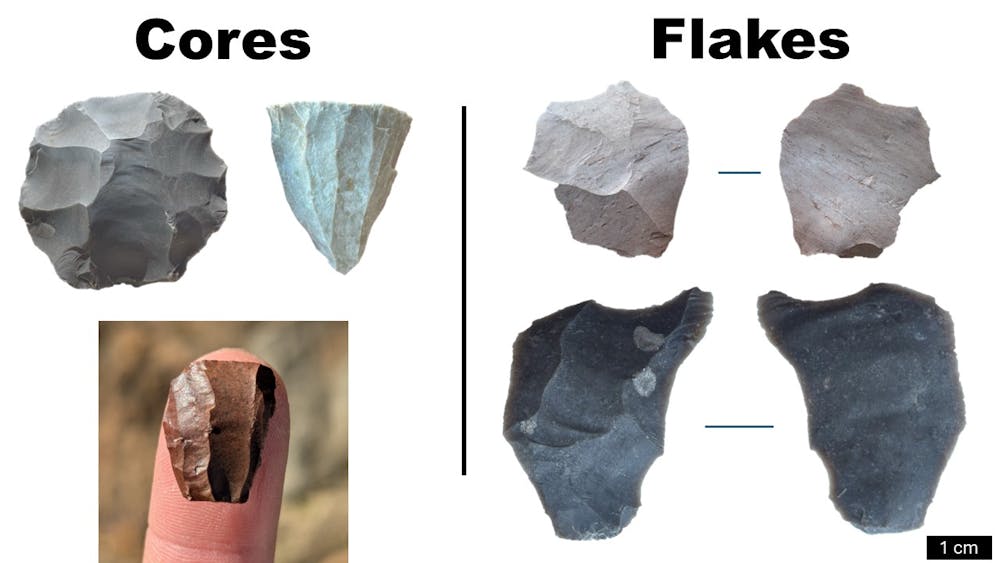
    Cores, left, are the object being struck by the flintknapper, and flakes, right, are the sharp-edged material removed from the core. Some cores, like this one from the archaeological site Pinnacle Point 5-6 in South Africa, can be as small as the tip of a finger.
    John K. Murray

    We often use hammerstones or large pieces of antler, called billets, to strike the core’s edge. Repetitive flaking not only allows a flintknapper to produce a significant amount of sharp cutting edge in the form of flakes, but gives them the ability to shape the core to their desired form … often with the risk of personal injury along the way. My fingers can attest to this!

    A modern flintknapper’s toolkit consists of leather pads, gloves, safety glasses, antler billets (left), hard hammerstones (right), and abraders (center-right with grooves), used to rub the edge of the stone to strengthen the platform before striking.
    John K. Murray

    However, not every type of rock has the characteristics needed to be flaked into a tool. You want the stone to exhibit what’s called conchoidal fracture. If you’ve ever seen glass break, you’ve witnessed conchoidal fracture. This smooth break, with concentric wavelike ripples, is defined by the physics of how force moves through different materials.

    Obsidian hand ax made by John Murray, showcasing examples of conchoidal fracture produced while making flakes to shape it.
    John K. Murray

    When an experienced knapper is preparing to remove a flake, we understand how the material we’re working will break when we strike it, so we can predict the shape and size of the tools that we are producing. A stone like obsidian, which is volcanic glass, is the poster child for conchoidal fracture.

    Of course, there is a lot of variation in the quality of rock that hominins have used for manufacturing stone tools, and many have made use of lesser quality stone. Even some of the earliest toolmakers were preferentially selecting rocks for certain properties, such as durability.

    How can you recognize stone tools?

    You may hear people saying that rocks that they found in their garden were tools because they “fit perfectly in the hand” or are “tool shaped.” But it’s not quite that straightforward. Although shape and function may play a role in the final product of a stone tool, it is not the smoking gun.

    Archaeologists can determine whether a chunk of rock is a stone tool based on clues left behind from the process of conchoidal fracture during flintknapping.

    One such clue is the presence of flake scars, or what we call negative removals, which can be found on both cores and flakes. These have characteristic ridges on one or more sides of the rock that outline previous flake removals – hence the use of the term scar.

    When we see multiple flake scars that are consistent in their orientation and size as opposed to being random, it is likely the stone in question was deliberately worked on by a hominin.

    The second feature is what we call the bulb of percussion. This is a bulge in the flake, just below the striking platform, that results from the concentration of force when the knapper struck it.

    Considering that producing a bulb of percussion requires the rock to be struck on a platform at a specific angle with enough force to detach it from the stone, it is improbable that this feature would be created through natural processes – but not impossible. Scientists have found naturally produced sharp stone fragments, or naturaliths, all over the world, even in Antarctica.

    However, when a lot of flakes with these diagnostic characteristics are found together, it’s unlikely they were created naturally.

    A hand ax made by John Murray shows many flake scars, some of which are outlined in black. The inner surface of three flakes shows the bulb of percussion just below the platform.
    John K. Murray

    The final thing to consider when determining whether a rock is a stone tool is the context in which it was found. Are there many stones in the area that exhibit the characteristics that we look for when trying to identify a stone tool? Is the stone tool made of an exotic material, or is it like the rest of the rocks near it?

    If you find a lot of stone tools in the same area made from one type of rock, you might have stumbled across an ancient flintknapping workshop. However, if you discover a tool that was made from a type of stone that can only be found hundreds of miles away, maybe someone traded for this material or carried it with them.

    Try it for yourself

    I think the best way for you to be able to learn to recognize whether a chunk of stone was a tool or just a rock is to try flintknapping yourself. I have taught more than 100 people of all ages to manufacture stone tools, and most agree: It is harder than you’d think.

    This experience puts you into the minds of our hominin ancestors, trying to tackle one of the earliest problems our lineage faced: getting a sharp edge from a chunky piece of rock.

    John K. Murray does not work for, consult, own shares in or receive funding from any company or organization that would benefit from this article, and has disclosed no relevant affiliations beyond their academic appointment.

    ref. Was it a stone tool or just a rock? An archaeologist explains how scientists can tell the difference – https://theconversation.com/was-it-a-stone-tool-or-just-a-rock-an-archaeologist-explains-how-scientists-can-tell-the-difference-251126

    MIL OSI – Global Reports

  • MIL-Evening Report: Financial Times: The West’s shameful silence on Gaza – do more to restrain Benjamin Netanyahu

    EDITORIAL: The Financial Times editorial board

    After 19 months of conflict that has killed tens of thousands of Palestinians and drawn accusations of war crimes against Israel, Benjamin Netanyahu is once more preparing to escalate Israel’s offensive in Gaza.

    The latest plan puts Israel on course for full occupation of the Palestinian territory and would drive Gazans into ever-narrowing pockets of the shattered strip.

    It would lead to more intensive bombing and Israeli forces clearing and holding territory, while destroying what few structures remain in Gaza.

    This would be a disaster for 2.2 million Gazans who have already endured unfathomable suffering.

    Each new offensive makes it harder not to suspect that the ultimate goal of Netanyahu’s far-right coalition is to ensure Gaza is uninhabitable and drive Palestinians from their land. For two months, Israel has blocked delivery of all aid into the strip.

    Child malnutrition rates are rising, the few functioning hospitals are running out of medicine, and warnings of starvation and disease are growing louder. Yet the US and European countries that tout Israel as an ally that shares their values have issued barely a word of condemnation.

    They should be ashamed of their silence, and stop enabling Netanyahu to act with impunity.

    In brief remarks on Sunday, US President Donald Trump acknowledged Gazans were “starving”, and suggested Washington would help get food into the strip.

    But, so far, the US president has only emboldened Netanyahu. Trump returned to the White House promising to end the war in Gaza after his team helped broker a January ceasefire between Israel and Hamas.

    Under the deal, Hamas agreed to free hostages in phases, while Israel was to withdraw from Gaza and the foes were to reach a permanent ceasefire.

    But within weeks of the truce taking hold, Trump announced an outlandish plan for Gaza to be emptied of Palestinians and taken over by the US.

    In March, Israel collapsed the ceasefire as it sought to change the terms of the deal, with Washington’s backing. Senior Israeli officials have since said they are implementing Trump’s plan to transfer Palestinians out of Gaza.

    On Monday, far-right Finance Minister Bezalel Smotrich said: “We are finally going to occupy the Gaza Strip.”

    Netanyahu insists an expanded offensive is necessary to destroy Hamas and free the 59 remaining hostages. The reality is that the prime minister has never articulated a clear plan since Hamas’s October 7, 2023, attack killed 1200 people and triggered the war.

    Instead, he repeats his maximalist mantra of “total victory” while seeking to placate his extremist allies to ensure the survival of his governing coalition.

    But Israel is also paying a price for his actions. The expanded offensive would imperil the lives of the hostages, further undermine Israel’s tarnished standing and deepen domestic divisions.

    Israel has briefed that the expanded operation would not begin until after Trump’s visit to the Gulf next week, saying there is a “window” for Hamas to release hostages in return for a temporary truce.

    Arab leaders are infuriated by Netanyahu’s relentless pursuit of conflict in Gaza yet they will fete Trump at lavish ceremonies with promises of multibillion-dollar investments and arms deals.

    Trump will put the onus on Hamas when speaking to his Gulf hosts. The group’s murderous October 7 attack is what triggered the Israeli offensive.

    Gulf states agree that its continued stranglehold on Gaza is a factor prolonging the war. But they must stand up to Trump and convince him to pressure Netanyahu to end the killing, lift the siege and return to talks.

    The global tumult triggered by Trump has already distracted attention from the catastrophe in Gaza. Yet the longer it goes on, the more those who remain silent or cowed from speaking out will be complicit.

    This editorial was published by the London Financial Times under the original title “The west’s shameful silence on Gaza: The US and European allies should do more to restrain Benjamin Netanyahu” on May 6, 2025.

    MIL OSI AnalysisEveningReport.nz

  • MIL-OSI Global: The dangerous business of predicting the death of popes – a history

    Source: The Conversation – UK – By Michelle Pfeffer, Research Fellow in Early Modern History, University of Oxford

    Portrait of Michel de Nostredame (Nostradamus), painted by his son César de Nostredame. Wiki Commons

    Michel de Nostredame (1503-66), better known as Nostradamus, is often hailed as one of the most successful prophets of all time. Said to have foreseen major world events from the rise of Hitler to COVID, the 16th-century astrologer was recently credited with predicting Pope Francis’s death – and what would happen next.

    ‘Through the death of a very old Pontiff

    A Roman of good age will be elected.

    Of him it will be said that he weakens his seat

    But long will he sit in biting activity.

    Like all the quatrains in Nostradamus’s collection of prophecies, Les Prophéties (1555-68), this one is as enigmatic as it is flexible. Short, sweet and decontextualised, his prophetic poems feel timeless, and it is deliciously satisfying to recognise a real-world correlation. The problem is that his prophecies are so vague that they can be linked to any number of events – or old Pontiffs.

    Nostradamus’s “dark and cryptic” language was intentional. If he had been more explicit, not only his career, but perhaps even his life, may have been at risk.


    Looking for something good? Cut through the noise with a carefully curated selection of the latest releases, live events and exhibitions, straight to your inbox every fortnight, on Fridays. Sign up here.


    Many of his prophecies concerned the rise and fall of the great and the good, and political prophecy was a high-risk business. In ancient Rome, astrologers had been expelled from the city for forecasting the death of emperors, and Renaissance leaders were no less paranoid. To avoid “scandalising and upsetting”, Nostradamus chose to veil his true meaning.

    This was not just a matter of self-preservation, but also a way to obscure politically explosive information. Claiming to know when a civic or church leader might die was valuable intelligence. This made astrology a key tool of Renaissance spy-craft, but also a dangerous weapon that needed to be monitored and regulated.

    Astrology, politics and the papal court

    As a system that promised to forecast plagues, natural disasters, war, and even the economy, astrology was a logical interest for Renaissance rulers.

    Universities taught their students how to make these predictions, and for some lucky graduates this led to a job in a royal, princely, or even papal court. Here their horoscopes could inform political decision-making and produce potent astrological propaganda.

    A horoscope for the founding of St. Peter’s Basilica in the Vatican in April 1506, cast by the astrologer Luca Gaurico. Luca Gaurico (1552).
    Tractatus Astrologicus

    Despite the condemnations of theologians, many popes patronised astrologers and sought their guidance.

    Julius II (1443-1513) chose the start date for the construction of Saint Peter’s Basilica based on astrological counsel. Leo X (1475-1521) founded a professorship in astrology at Rome’s first university, La Sapienza. And Paul III (1468-1549), heeding the judgment of the astrologer Luca Gaurico, appointed his grandson a cardinal at just 14.

    In a period in which popes could have a decisive impact on international politics, speculation about the health of the pontiff was rampant. Astrologers capitalised on this.

    When Ludovico Sforza (1452-1508), de facto ruler of Milan, asked his astrologer to predict the death of Innocent VIII, it was nothing unusual. The answer was that the pope would die around August 10 1492, if not sooner. When Innocent died on July 25, Ludovico was no doubt pleased. As the historian Monica Azzolini has shown, he had consulted his astrologer in the hope the next pope would be more supportive of his illegitimate regime.

    Some popes asked astrologers about their own deaths. But they didn’t like it so much when others did so – especially when the forecasts were made public. Even worse, such predictions often fed into Protestant propaganda.

    Popes knew public predictions about their death were politically destabilising, not to mention humiliating. At the end of 1559, the Index of Prohibited Books, a list of books forbidden by the Roman Catholic Church, banned texts containing astrological “divinations” about “future contingent events”.

    Earlier that year, just as Pope Paul IV was trying to conceal a serious illness from the public, the sighting of a comet had led to widespread speculation about his death. As the pope knew all too well, astrology could be a political liability.

    Orazio Morandi and Urban VIII

    Such legislation did not stop astrologers from making political predictions, not least because their clients never stopped asking. But increasingly these astrologers were playing with fire. As the historian Brendan Dooley has shown, Orazio Morandi learned this the hard way in 1630.

    Morandi made predictions about Pope Urban VII.
    Vatican Museums

    Morandi was an abbot at the monastery of Santa Prassede in Rome. He had been practising astrology for years, and he had been careful, framing his political forecasts in allusive language. But soon he went too far.

    In 1629, Morandi wrote an astrological commentary on various past papacies, critiquing their flaws. When he came to the present incumbent, Urban VIII (1568-1644), he not only predicted that his pro-French allies would destroy Italy, but that the pope himself would very soon suffer great violence, then death.

    There are several astrological techniques for predicting someone’s death. As above, astronomical phenomena like comets and eclipses could prompt speculation about an upcoming papal demise. But Morandi used the gold standard – a technique called “prorogation”. This required access to the person’s birth chart, from which astrologers could identify the planets or luminaries that were their “giver of life” and “giver of years”.

    Different planets gave different lifespans. For example, if the sun was your “giver of years”, and it was in a good position on your horoscope, you might expect to live to 120. If the sun was badly placed, your life expectancy might be just 19 years. Other parts of the horoscope could then modify these figures.

    Morandi identified the sun as Urban’s life giver. But the positions of the more nefarious planets on his birth chart meant he was lucky to have lived beyond the age of seven. In June 1630, Morandi concluded, a solar eclipse would seal the pope’s fate.

    Morandi’s prediction spread widely in clandestine circles, and it wasn’t long until his prediction was reported as fact. The pro-Spanish faction in Rome was thrilled. It was even rumoured that Spanish and German cardinals had begun the long journey to Rome for a new conclave.

    The earth surrounded by the planets, luminaries, and zodiac signs (1708).
    Andreas Cellarius, Harmonia Macrocosmica

    Embarrassingly, Urban first learned of the prophecy not through his own informants, but from the powerful French prelate Cardinal Richelieu. Himself an avid believer in astrology, Urban was greatly disturbed. He had Morandi arrested and jailed. During the trial, a young man called Matteo, servant to the current prior of Santa Prassede, was interrogated and tortured. Morandi himself soon died in prison under suspicious circumstances.

    But Urban lived on. The next year, he decreed it punishable by death to predict “the life or death of the sitting Roman Pontiff, including his blood relatives to the third degree inclusive”.

    Making a career in political forecasting was – and is – risky. But astrologers were ambitious and knew their efforts would be well remunerated. Predicting the death of a pope could help you quickly build a public profile, expanding your business. But after 1630, it was a risk many astrologers were no longer willing to take.

    Michelle Pfeffer does not work for, consult, own shares in or receive funding from any company or organisation that would benefit from this article, and has disclosed no relevant affiliations beyond their academic appointment.

    ref. The dangerous business of predicting the death of popes – a history – https://theconversation.com/the-dangerous-business-of-predicting-the-death-of-popes-a-history-255816

    MIL OSI – Global Reports

  • MIL-OSI Global: How Captain Planet cartoons shaped my awareness of the nature crisis

    Source: The Conversation – UK – By Muzammal Ahmad Khan, Lecturer in Business and Management, University of the West of Scotland

    Captain Planet is set to return more than three decades since it first broadcast on TV. A new comic book series by Dynamite Entertainment promises to bring the 1990s environmental hero to a new generation.

    For those of us who grew up watching the original show, the message feels just as urgent today as it did then. As a researcher in sustainability and education, I often reflect on how early experiences shape our environmental values. Captain Planet was one of the first moments that made me think about our responsibility to the world around us.

    Writer of the new series David Pepose has said he wants to stay true to the original, while updating the story for today’s world. He stressed: “The reason Captain Planet fights for the environment is because he doesn’t want to see anyone die, and that’s something really powerful and timeless.” The villains, still driven by greed and destruction, seem even more real now than they did in the early 1990s.

    At the time, my family lived in a small village in rural Punjab, Pakistan, a place untouched by city life or the concept of climate change. Life was calm and slow. Each morning started with the call to prayer. Most evenings ended in darkness due to regular power cuts. As children, we had few distractions, playing cricket or hide-and-seek in the street.

    But in one corner of our living room stood something that connected us to a different world – a colour television. It was rare in the village, and it quickly became a shared object of wonder. Children from the neighbourhood would gather in our home during the brief hours when state television allowed Cartoon Network to air, around 3pm to 5pm. Among all the shows, one cartoon series stood out: Captain Planet and the Planeteers.

    The plot was simple but powerful. Captain Planet is a superhero fighting pollution, corporate greed and environmental destruction. He could only be summoned by the Planeteers, a group of five internationally diverse teens with magical rings: Kwame (Africa, Earth), Wheeler (North America, Fire), Linka (Eastern Europe, Wind), Gi (Asia, Water) and finally Ma-Ti (South America, Heart). With all those powers combined, Captain Planet would rise majestically into the air, ready to do battle with pollution-spreading villains.

    The executive producer of the original 1990 series, Barbara Pyle, said the goal was to inspire and teach young people about protecting the environment. Pyle mentioned that the show’s success was not about selling toys, but about including real environmental issues in the storylines. In my view, they achieved their goal.


    Read more:
    Why ocean pollution is a clear danger to human health


    None of us understood English well enough to follow every word, but we understood the energy and emotions. Rage when forests were burned. Sadness when oceans were poisoned. Joy when villains were defeated. Above all, a sense that the natural world mattered.

    I remember the day I was walking with my father past the fields near our village. A newly built factory was releasing black smoke into the sky, and its pipes discharged foul-smelling water into a stream used by some animals. I felt uneasy, even angry. It reminded me of the villains from the show’s characters such as Hoggish Greedly and Dr. Blight who treated the Earth like something disposable. I asked my father why nobody could stop this. He was surprised. I wished I were a Planeteer with a magic ring to call Captain Planet.

    That cartoon did more than entertain. It gave names and faces to ideas we had never heard in school. Our textbooks did not talk about pollution. Nobody taught us the value of trees or clean water. But Captain Planet made those things feel important. It suggested that someone should care. That maybe, that someone could be you.

    The show’s message stayed with me. Today, my research focuses on sustainability and education. I often reflect on how a cartoon played a part in shaping that interest. I did not realise it then, but those glowing rings and the famous line “the power is yours” planted an idea that never left me.


    Read more:
    Five satellite images that show how fast our planet is changing


    Captain Planet’s message still matters

    Children today grow up surrounded by technology. They scroll before they can cycle. The connection to nature that felt instinctive in our childhood is fading. And yet, the message of Captain Planet is still relevant. Perhaps more than ever.

    Children who watched the original series are now adults. We have careers, votes and voices. We understand that the threat is not fictional. The planet is under the same threats – pressure from rising temperatures, deforestation, polluted oceans and the relentless push for profit over preservation – only now the stakes are much higher.

    The message remains the same – small actions matter. Our choices can combine to create something powerful. The power to care, to act and to inspire others never disappeared. It was passed to us.


    Read more:
    Deforestation is causing more storms in west Africa, finds 30-year satellite study


    I often think about the importance of early environmental messages. Captain Planet did that in the 1990s for me. We cannot expect people to care about the future of the planet if they have never been encouraged to think about it. Now, with the return of Captain Planet, there is a chance to inspire a new generation to believe that the power is theirs.


    Don’t have time to read about climate change as much as you’d like?

    Get a weekly roundup in your inbox instead. Every Wednesday, The Conversation’s environment editor writes Imagine, a short email that goes a little deeper into just one climate issue. Join the 45,000+ readers who’ve subscribed so far.


    Muzammal Ahmad Khan does not work for, consult, own shares in or receive funding from any company or organisation that would benefit from this article, and has disclosed no relevant affiliations beyond their academic appointment.

    ref. How Captain Planet cartoons shaped my awareness of the nature crisis – https://theconversation.com/how-captain-planet-cartoons-shaped-my-awareness-of-the-nature-crisis-255161

    MIL OSI – Global Reports

  • MIL-OSI Global: By VE Day in 1945, Stalin had got what he wanted in Poland – now Putin may get what he wants in Ukraine

    Source: The Conversation – UK – By Wendy Webster, Professor of Modern Cultural History, University of Huddersfield

    Sell out: most Polish people felt they had been abandoned by their allies in the US and Great Britain at the Yalta Conference. US government

    As Britain celebrated Victory in Europe (VE) Day on May 8 1945, the Polish airmen of RAF 305 Bomber Squadron captured a starkly different sentiment in their diary. “‘Victory!’ every Anglo-Saxon says in greeting instead of the traditional ‘Hello!’. The word ‘Victory!’ is devoid of meaning, power and any sense today only for the Poles.”

    Despite their critical contributions to the allied war effort, from the Battle of Britain to Monte Cassino, Polish forces felt isolated and betrayed, their hopes of a free Poland crushed by the Yalta agreement. On that first VE Day, many Poles who fought with the allied forces recorded feeling sad, isolated or bitter.

    Tadeusz Szumowski, who served in the RAF in Britain found it almost impossible to join in the celebrations. He wrote in his diary: “Our war is lost, the war which we fought so hard and so long to win … It is a very long time since I felt so alone.”

    A Polish soldier in Italy wrote: “The war is over – but not for us. The population of the greater part of the world are happy, in consequence; but we are sad. I am afraid that we have lost so many of our best men all for nothing.”


    Get your news from actual experts, straight to your inbox. Sign up to our daily newsletter to receive all The Conversation UK’s latest coverage of news and research, from politics and business to the arts and sciences. Join The Conversation for free today.


    What made “victory” devoid of meaning for Poles? In her study of Poland during the second world war, historian Halik Kochanski quotes the famed American journalist Martha Gellhorn, who reported from Italy: “All the Poles talk about Russia all the time. The soldiers gather several times a day around the car which houses the radio and listen to the news.”

    Many of these soldiers came from eastern Poland, which was invaded by the Soviet Union in 1939. Along with their families, they had been deported to Siberia or Kazakhstan and came out only under a so-called “amnesty” after Russia entered the war on the allied side. Gellhorn reported: “They follow the Russian advance across Poland with agonized interest.”

    As I found when researching my book about the diverse nationalities fighting alongside Britain in the second world war, Polish soldiers wrote about Russia all the time as well as talking about it. Their letters were censored and quoted in censorship reports.

    As they watched the Russian advance and heard news of the Yalta agreement which consigned Poland to the Soviet sphere of influence, they express anger, fear, bitterness, desolation, a sense of loss and betrayal, shock, bewilderment.

    The letters are striking for the many words which take on meanings that demonstrate a gulf that opens up, separating Poles from other allied soldiers. Victory belongs to others while Poles have gone down to a catastrophic defeat.

    Russia, widely regarded as a valued ally, is the enemy of Poles. The Polish slogan “For our freedom and yours” is rewritten in one letter: “We are fighting for yours and our freedom, but now I think rather only for yours.” Another letter asks: “What are we fighting for if Poland is to be enslaved?”

    Polish pilots of RAF 303 (Polish) Fighter Squadron during the second world war.
    Imprial War Museum

    Poles find it unbearable to be told that Russia is liberating Poland, using heavy irony. “The ‘liberation’ of Poland by our so-called Allies is causing us great anxiety. Probably my own home will soon be ‘liberated’.”

    Another soldier cautions: “Never, never congratulate our people of Warsaw and Poland being ‘liberated’. This sounds like the most cruel irony and is deeply resented by every Pole. You could speak about a lamb being liberated from a bear by a tiger.”

    The concept of “home” also acquires new meanings that are devoid of any association with pleasure or belonging. As the war ends, allied soldiers’ thoughts are increasingly about the prospect of returning home – but censors reported in 1944: “Thousands of letters written by Polish soldiers in the last days repeat as a cardinal topic that to Poland governed by communists they won’t return.”

    One soldier writes: “It would be better to be killed here on the battlefield than to be alive in the new ‘Red Paradise’ in Poland.” Another writes: “There is no return for us to the Soviet republic of Poland which seems to be the newest invention of our Allies.”

    Echoes of Yalta

    The Yalta agreement of February 1945 between America, Britain and Russia, the “Big Three” powers, confirmed Poles’ worst fears. Censors report that in the soldiers’ letters, it “overshadows all other topics”, and has “evoked a terrible shock amongst the Polish troops … they find that they are lost and betrayed”.

    One soldier writes: “For the last few days I have been in a state of dumb bewilderment. Occasionally I ask myself, ‘Can it be true?’ … I cannot believe that it has really happened.”

    Another soldier writes to his “Britisher friend” about his feelings of betrayal: “When this morning we heard the news about the statements from the Big Three meeting we got deadly silent … We sacrificed most of all countries – more than you even. We trusted you so much, and what have we got. Our biger [sic] friend let us go down.”

    Yalta is in Crimea – part of the territory annexed by Russia before its full-scale invasion of Ukraine in 2022. The Russian president, Vladimir Putin, has made it clear he will offer no concessions on Ukraine, which he has argued all along he sees as an inalienable part of Russia. This is a stark reminder of Yalta when Josef Stalin made concessions on other matters, but none on Poland.

    Trump’s administration has offered Ukraine no security guarantees. Its framework to end the war will allow Russia to retain the territory it has seized. There are now echoes of what one Polish soldier wrote in 1945 of the Yalta agreement: “This business smells and no high-sounding words can disguise the stench of a bad deed.”

    Wendy Webster receives funding from the Arts and Humanities Research Council

    ref. By VE Day in 1945, Stalin had got what he wanted in Poland – now Putin may get what he wants in Ukraine – https://theconversation.com/by-ve-day-in-1945-stalin-had-got-what-he-wanted-in-poland-now-putin-may-get-what-he-wants-in-ukraine-255982

    MIL OSI – Global Reports

  • MIL-OSI Global: Italy’s areas of wartime fascist resistance remain less susceptible to the far right today

    Source: The Conversation – UK – By Juan Masullo, Assistant Professor, Institute of Political Science, Leiden University

    Across Europe, far-right parties are making unforeseen breakthroughs – from local councils to national and supranational parliaments. As their presence becomes normalised, these parties promote nationalist rhetoric, challenge democratic institutions, and attempt to reshape a political present rooted in hard-won struggles against authoritarianism.

    Yet, not all communities are equally permeable to these growing forces. Some actively resist, mobilising to block authoritarian ideologies and defend democratic values.

    Our recent research in Italy offers one explanation as to why some communities are less easily enticed into far-right politics than others. Local histories of wartime resistance continue to shape political cultures in ways that, even generations later, inspire people to push back against the resurgence of fascist and neo-fascist ideologies.

    In areas where anti-fascist resistance movements were active during the second world war, civic engagement to defend democratic values is stronger. In these communities, support for far-right parties is weaker.


    Get your news from actual experts, straight to your inbox. Sign up to our daily newsletter to receive all The Conversation UK’s latest coverage of news and research, from politics and business to the arts and sciences. Join The Conversation for free today.


    These legacies aren’t accidental. They are cultivated, reinforced, and passed on through intensive and continuous local memory work.

    During Italy’s civil war (1943–1945), students, workers, farmers and clergy mobilised into bands of resistance to fight the Nazi-fascist regime. Their efforts were central to Italy’s liberation and the establishment of its democratic republic. While this story is often told at the national level, our research examines its enduring local consequences.

    Using an original dataset mapping resistance activity across about 8,000 Italian municipalities, we compared places with strong partisan mobilisation to those without. Even today, eight decades later, residents of areas with a resistance past are more likely to support initiatives that counter far-right ideologies.

    This was especially evident in the response to a recent initiative. In 2020 and 2021, a grassroots campaign proposed a law to ban the public glorification of fascism. To bring it for discussion before parliament, the campaign needed 50,000 signatures.

    Despite the pandemic, it collected over 240,000 within a few months. While support was widespread, municipalities with strong resistance histories were significantly more likely to participate. Our estimates show roughly 40% more signatures in these places.

    These patterns suggest that wartime resistance can leave legacies that translate into contemporary political behaviour. But data alone can’t explain how these legacies endure. That’s where our fieldwork comes in.

    We have been closely studying towns with deep resistance roots and strong support for the 2021 initiative to see how they keep these legacies alive and who is involved.

    We have followed (and participated in) memorialisation efforts in the Cuneo region, one of the main centres of wartime resistance, and in areas deeply affected by Nazi violence and known for creating some of the strongest partisan brigades. These include villages around Stazzema in Tuscany and Marzabotto in Emilia.

    The main insight is that remembrance isn’t just ceremonial – it’s part of daily life. Schools, hiking clubs, cultural associations, and city halls all contribute to preserving and activating the memory of resistance.

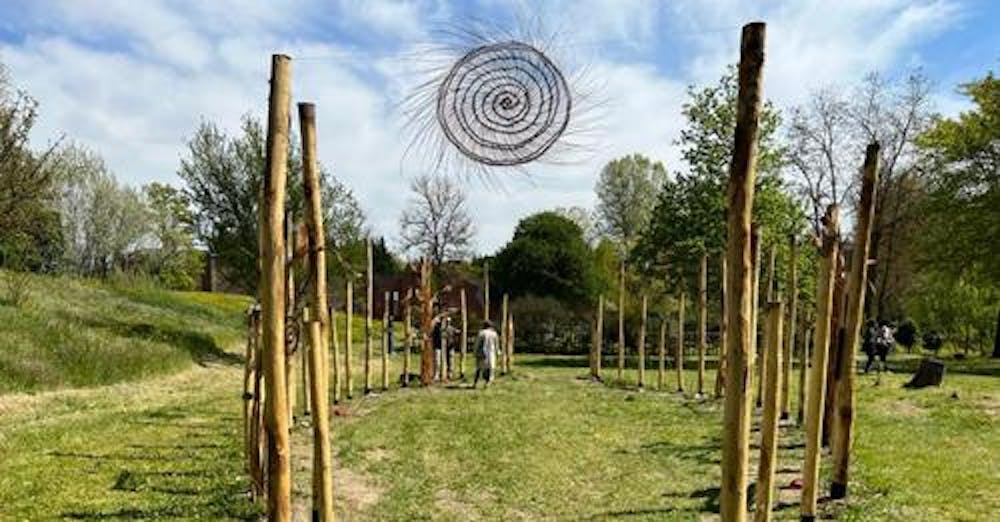
    One public elementary school in the rural hills around Bologna, for example, created a “memory garden” to honour local residents who died fighting fascism. Through interviews, art and storytelling, students have engaged directly with their community’s past, creating not only a commemorative space but a living bridge between generations.

    The memorial garden planted by students in.
    J Masullo, CC BY-ND

    Similarly, local Alpine clubs in Emilia Romagna and Piedmont restored partisan trails through the mountains, now used for memory treks. These hikes attract people who might not otherwise engage politically but who, by walking the paths of wartime partisans, connect with stories of sacrifice and solidarity. What begins as recreation becomes an encounter with democratic values.

    These deeply localised memory efforts – anchored in the names, stories and spaces of the community – often intensify during democratic threats. The 2021 campaign emerged amid growing support for parties like Lega and Fratelli d’Italia (Brothers of Italy).

    Related studies show that when exclusionary welfare policies gain ground, local communities sometime organise in defence of vulnerable groups. In towns with a resistance past, local “memory entrepreneurs” doubled their efforts in response to far-right victories.

    Memory as a political battle

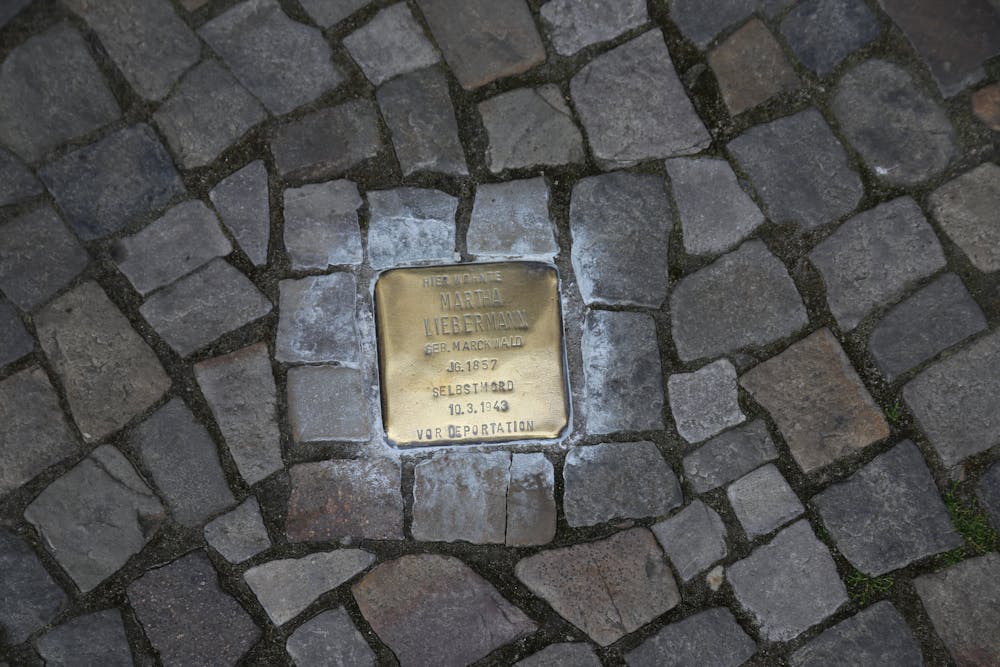
    This is not just an Italian phenomenon. Across Europe, historical memory is a political battleground. In Germany, the Stolpersteine – brass plaques in sidewalks commemorating Nazi victims – serve as grassroots reminders that shape civic attitudes. In Hungary, activists have created “living memorials” to Holocaust victims, directly contesting government efforts to whitewash fascist collaboration.

    These commemorations also have measurable political effects. In Berlin, neighbourhoods where one or more Stolpersteine was placed before an election saw fewer votes for the far-right AfD (a 0.96%-point decrease) compared to those with no Stolpersteine. This happened across federal, state and EU elections between 2013 and 2021.

    A stolperstein in Berlin.
    Wikipedia/Drrcs15, CC BY-SA

    What unites these efforts is a belief that remembering the past matters – not only to honour it, but to shape the future. Local narratives of wartime resistance and victimisation help instil democratic values and inoculate communities against authoritarianism.

    But this doesn’t happen automatically. It requires effort. Teachers, students, parents, associations, and local councils all play a role in keeping memory alive and politically meaningful.

    Recognising this is especially vital today, when the meaning of anti-fascism itself is a polarising subject. Far-right leaders, including those in office, downplay and discredit the resistance’s legacy, replacing it with revisionist myths.

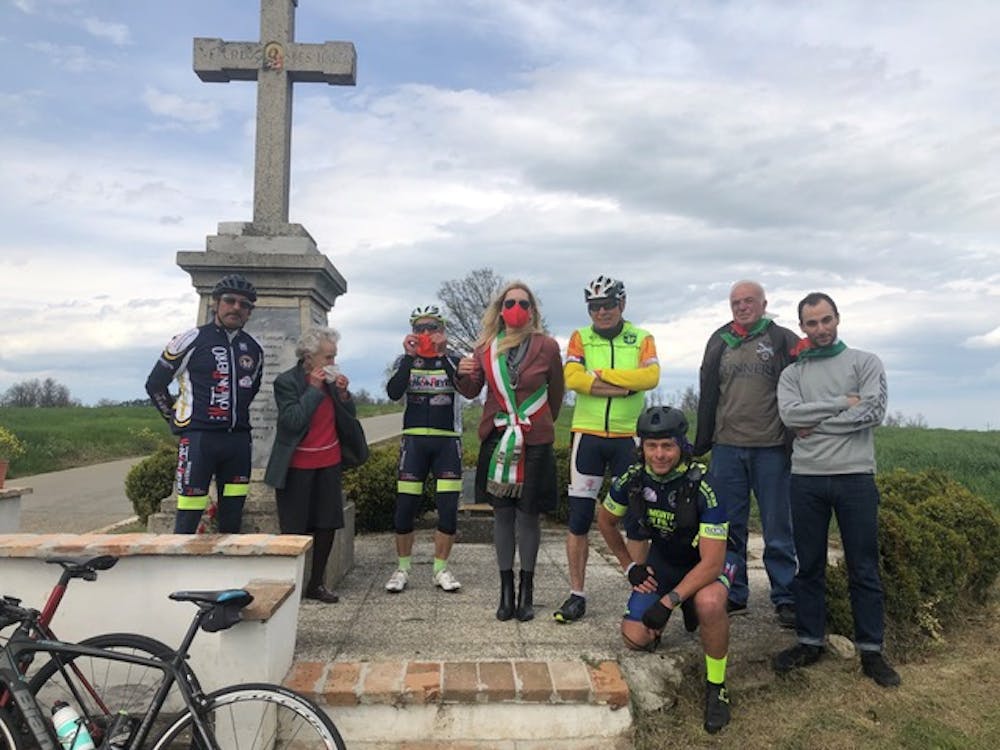
    A local cycling club marks liberation day with a tour of monuments dedicated to partisans.
    J Masullo, CC BY-ND

    When communities take ownership of their histories, they are more likely to uphold democratic principles not only in ceremonies, but at the ballot box and in everyday actions. The past is never just the past. The legacies of wartime resistance continue to shape how people view democracy, justice, and belonging. In times like these, remembering the resistance is more than homage – it is civic defence.

    Juan Masullo has received funding for this research from UNUWIDER and Leiden University.

    He is affiliated with the University of Milan.

    Simone Cremaschi has received funding for this research from UNUWIDER, the European Research Council (grant number 864687), and Leiden University.

    ref. Italy’s areas of wartime fascist resistance remain less susceptible to the far right today – https://theconversation.com/italys-areas-of-wartime-fascist-resistance-remain-less-susceptible-to-the-far-right-today-255859

    MIL OSI – Global Reports

  • MIL-OSI Global: Conclave: the chemistry behind the black and white smoke

    Source: The Conversation – UK – By Mark Lorch, Professor of Science Communication and Chemistry, University of Hull

    White smoke from the chimney on top of the Sistine Chapel (Vatican City) indicates that the Pope has been elected. MartiBstock/Shutterstock

    This week, 133 cardinals have gathered in the Vatican to elect a new leader of the Catholic church. During their deliberations, the only indications of their progress are the regular plumes of smoke wafting from a freshly installed chimney perched on the roof of the Sistine Chapel.

    Tradition holds that black smoke indicates the cardinals have not yet agreed on a new leader, while white smoke signals that a new Pope has been elected. But what kind of smoke is it exactly? Let’s take a look at the science.

    The tradition of cardinals burning their ballot papers to maintain secrecy dates back to at least the 15th century. However, it wasn’t until the 18th century — when a chimney was installed in the Sistine Chapel to protect Michelangelo’s frescoes from soot — that the resulting smoke became visible to anyone outside the chapel.

    At the time, the smoke was not intended as a public signal, but once it was visible, onlookers began interpreting it as an indicator of the voting outcome.


    Get your news from actual experts, straight to your inbox. Sign up to our daily newsletter to receive all The Conversation UK’s latest coverage of news and research, from politics and business to the arts and sciences. Join The Conversation for free today.


    By the 19th century, it had become customary to use smoke deliberately: if smoke was seen, it meant no Pope had been elected, whereas no smoke indicated a successful election. This of course lacked clarity and often caused confusion.

    The Vatican eventually sought to clarify matters by formalising the practice of fumata nera (black smoke) and fumata bianca (white smoke). Initially, damp straw and tar were added to the burning ballots. As anyone who has tried to light a damp bonfire knows, wet oily fuel can be difficult to ignite, but once it gets going, it produces plenty of dark smoke.

    This is the result of incomplete combustion: the energy from the flames is initially used to evaporate the water, which keeps the fire’s temperature low. As a result, many of the larger molecules in the tar do not fully combust, leading to the production of soot and dark smoke.

    However, once the moisture is driven off, the fire burns more efficiently, producing mainly steam and carbon dioxide. At that stage, the smoke diminishes and becomes much lighter.

    This fluctuating fumata — combined with the subjective interpretation of its colour — caused considerable confusion, particularly during the 1939 and 1958 conclaves. It wasn’t clear whether grey smoke was closer to black or white, for example. By the 1970s, the straw method had been abandoned in favour of more controllable chemical mixtures. This has since evolved into an unambiguous method for generating the required smoke signals.

    Current recipe

    In 2013, the Vatican confirmed that their fumata recipes now consist of a clear black smoke recipe: potassium perchlorate (KClO₄), an “oxidising substance” that provides oxygen to the reaction; anthracene, a hydrocarbon derived from coal tar that serves as a heavy smoke-producing fuel; and sulphur, added to adjust the burn rate and temperature.

    The result is a deliberately inefficient combustion reaction, producing a high volume of unburnt carbon particles. This abundance of carbon (soot) makes the smoke thick and black — akin to the smoke you might see from burning oil or rubber, which is rich in carbon-based particles.

    Black smoke from the Sistine Chapel, indicating that there was not a two-thirds majority in the papal election at the Conclave.
    wikipedia

    Meanwhile, white smoke is produced using a much cleaner fuel mix and a more powerful oxidiser. Potassium chlorate (KClO₃) — even more reactive than perchlorate — ensures a hot, vigorous burn. Lactose acts as the fuel, burning quickly and cleanly into water vapour and carbon dioxide.

    The rapid combustion of sugar yields large amounts of gaseous output (steam and CO₂), generating a voluminous white cloud. The final ingredient, pine rosin, produces thick white smoke when heated – releasing tiny droplets and light-coloured ash that appear whitish. It also contains terpenes that burn to yield a pale, visible smoke.

    When combined, the oxidising power of potassium chlorate allows the lactose and rosin to burn hot and fast, yielding mostly clean combustion products along with a cloud of vapour and resin particles.

    Rather than soot, the smoke contains microscopic droplets and fine solids that are transparent or white. The result is a mixture of steam and white or light gray smoke that contrasts sharply with the dark, carbon-rich black smoke.

    Over the years, the papal conclave smoke signal has evolved from an incidental byproduct of burning ballots into a carefully engineered communication tool.

    Today, thanks to modern chemistry, the smoke is unmistakable — thick black billows for inconclusive votes, or a bright white plume when a new pope is elected.

    Mark Lorch does not work for, consult, own shares in or receive funding from any company or organisation that would benefit from this article, and has disclosed no relevant affiliations beyond their academic appointment.

    ref. Conclave: the chemistry behind the black and white smoke – https://theconversation.com/conclave-the-chemistry-behind-the-black-and-white-smoke-255980

    MIL OSI – Global Reports

  • MIL-OSI Global: A new pope’s first appearance on St. Peter’s balcony is rich with symbols − and Francis’ decision to rein in the pomp spoke volumes

    Source: The Conversation – USA – By Daniel Speed Thompson, Associate Professor of Religious Studies, University of Dayton

    Pope Francis stands at the central balcony of St. Peter’s Basilica at the Vatican on March 13, 2013, just after being announced as pontiff. AP Photo/Andrew Medichini

    As the College of Cardinals gathers in the Sistine Chapel to vote for a new pope, crowds outside will watch for the most dramatic moment of the conclave, when a wisp of white smoke appears above the chimney.

    This smoke – made by burning the ballots – indicates that a new pope has been elected and he has accepted.

    After a short period of time, a cardinal appears on the balcony of St. Peter’s Basilica and makes the announcement in Latin: “Habemus papam!” – “We have a pope!” He then announces which cardinal has been selected and which name the new pope has chosen for himself.

    Finally, the new pope appears on the balcony and greets the crowd in St. Peter’s Square – a tradition full of symbolism.

    I am a scholar who studies Roman Catholic theology and history. I am particularly interested in how popes exercise authority and leadership today, including their use of symbols. When Pope Francis first appeared on that balcony in 2013, he used and adapted the ritual to convey a message about his intentions for his papacy.

    He did this in four ways.

    What’s in a name?

    First, he chose the name Francis. Since the sixth century C.E., new bishops of Rome have often taken a new name when they assumed the papacy.

    Over time, certain names have indicated to observers the direction that a pope wished to take or a model whom he wished to emulate. Jorge Mario Bergoglio opted for “Francis,” the first time that any pope had assumed that name.

    It refers to Francis of Assisi, an Italian saint who lived at the turn of the 13th century who was renowned for his simplicity, poverty, concern for the Earth and desire to imitate Jesus. Over the next 12 years, these traits proved central to his papacy.

    Not a king

    Second, Francis wore simple white papal garments instead of the more elaborate adornments worn by some of his predecessors. He wore his old, simple cross across his chest, rather than a new, more luxurious one.

    Francis waves during his first appearance as pope on March 13, 2013.
    AP Photo/Dmitry Lovetsky

    Popes have worn white garments as a symbol of their office for centuries. But many of them also used symbols of monarchy, such as the triple papal tiara or crown. Pope Paul VI, whose papacy was from 1963-1978, was the last to wear the tiara and to have a coronation ceremony. The following year, he sold the crown and donated the proceeds to emphasize the church’s commitment to the poor.

    Later popes have followed Paul’s example of avoiding royal symbolism, such as by no longer using a “sedia gestatoria,” the portable throne that traditionally carried the pope in formal processions. Francis took this trend even further and made simplicity of dress and lifestyle a hallmark of his time in office.

    Bishop of Rome

    Third, when Francis first addressed the crowd in St. Peter’s, he described himself as the new bishop of Rome.

    In Catholicism, the pope holds many titles representing the scope and duties of his office. For starters, he is not only the spiritual leader of the Roman Catholic Church but “sovereign of the State of Vatican City.”

    In terms of religious titles, some accentuate the pope’s authority. “Vicar of Christ,” for example, means he is Jesus’ representative on Earth. Others, such as “servus servorum Dei” – “servant of the servants of God” – emphasize his role as a support to other bishops and ministers of the church.

    Francis certainly did not deny the traditional authority of the pope’s office. However, he chose to identify himself first as the local bishop of the diocese of Rome, emphasizing how even the pope was first part of a local community. In the official Vatican yearbook for 2020, Francis listed his only title as “Bishop of Rome” and listed the rest as “historic.”

    Catholics from the parish of St. Joan Antida in Rome arrive to attend Pope Francis’ inaugural Mass at the Vatican on March 19, 2013.
    AP Photo/Domenico Stinellis

    ‘Pray for me’

    Fourth, Francis asked the assembled crowd to pray for him before he offered his first papal blessing.

    Traditionally, popes making their first appearance would offer a blessing to the people gathered in St. Peter’s Square. Francis took this ritual and reversed it. In harmony with his views on simplicity and his role as the bishop of Rome, he emphasized the mutual connection between him and the people. He downplayed the view of the pope as a hierarchical ruler above the people.

    Sometime soon a new pope will be introduced to the world. He will likely use these symbols of name, dress, title and blessing in his own way, pointing to his intentions for his papacy and for the Catholic Church.

    Daniel Speed Thompson does not work for, consult, own shares in or receive funding from any company or organization that would benefit from this article, and has disclosed no relevant affiliations beyond their academic appointment.

    ref. A new pope’s first appearance on St. Peter’s balcony is rich with symbols − and Francis’ decision to rein in the pomp spoke volumes – https://theconversation.com/a-new-popes-first-appearance-on-st-peters-balcony-is-rich-with-symbols-and-francis-decision-to-rein-in-the-pomp-spoke-volumes-255585

    MIL OSI – Global Reports

  • MIL-OSI Global: ‘Milkshake tax’: why it’s about innovative approaches to health, not household costs

    Source: The Conversation – UK – By David M. Evans, Professor of Sociotechnical Futures, University of Bristol Business School, University of Bristol

    Luis Molinero/Shutterstock

    The UK government is considering expanding its sugar tax on fizzy drinks to include milkshakes and other sweetened beverages, as part of new proposals announced in April 2025. The Treasury confirmed it plans to move forward not only with broadening the tax but also with lowering the sugar threshold that triggers it from 5g to 4g of sugar per 100ml.

    The changes, dubbed by critics as the “milkshake tax”, would end the current exemption for dairy-based drinks, as well as plant-based alternatives such as oat and rice milk. Chancellor Rachel Reeves first signalled the potential expansion in the 2024 budget, suggesting the soft drinks industry levy (SDIL), to give it its official name, could be widened to cover a broader range of high-sugar drinks.

    Based on our research into dietary change, conducted as part of the H3 project on food system transformation, we see this as a welcome and timely development.

    Not everyone shares this optimism. Opponents of what they see as “nanny state” interventionist policies argue that the SDIL has failed to deliver any real improvements to public health. In a UK newspaper’s straw poll, for example, 88% of respondents claimed the sugar tax has not significantly reduced obesity rates. Shadow Chancellor Melvyn Stride described the proposed expansion as a “sucker punch” to households, particularly given the ongoing cost of living crisis.

    Scepticism around these proposals is not surprising. Many people, regardless of political affiliation, are wary of additional taxation. And indeed, there is evidence suggesting that fiscal tools such as taxes and subsidies can be blunt instruments. They are also often regressive, placing a disproportionate burden on lower-income households.

    These concerns are valid – but they don’t quite apply to the SDIL.

    Crucially, the SDIL is not a tax on consumers. It is levied on manufacturers and importers, who are incentivised to reduce the sugar content of their products to avoid the charge. According to Treasury figures, since the introduction of the SDIL, 89% of fizzy drinks sold in the UK have been reformulated to fall below the taxable threshold.

    For instance, the Japanese multinational brewing and distilling company group Suntory invested £13 million in reformulating drinks like Ribena and Lucozade, removing 25,000 tonnes of sugar, making the products exempt from the levy. This means households aren’t priced out of soft drinks – they can simply choose reformulated and presumably cheaper versions.

    It’s true that the UK is still grappling with a serious obesity problem. In England alone, 29% of adultsand 15% of children aged two to 15 are obese.

    But the SDIL is having an effect. Excessive sugar consumption is consistently associated with rising obesity rates in the UK and globally. There has been a clear reduction in the sales of sugar from soft drinks, and the SDIL is reported to have generated £1.9 billion in revenue since its introduction in 2018.

    Early signs suggest health benefits, too. One study found a drop in obesity rates among 10 to 11-year-old girls following the levy’s implementation. Another analysis suggests that the greatest health benefits will be seen in more deprived areas, and that it may actually help to narrow some health inequalities for children in England.


    Read more:
    Child obesity is linked to deprivation, so why do poor parents still cop the blame?


    Shifting responsibilty

    The government’s 2016 announcement of the sugar tax gave manufacturers time to reformulate products before the tax’s introduction in 2018.

    Of course, the SDIL is no silver bullet. There are many contributing factors to the obesity epidemic, ranging from genetic predisposition to “obesogenic” environmentssocial contexts that promote unhealthy eating and sedentary behaviour, such as areas with a lot of fast food restaurants, limited access to healthy food options and a lack of pavements, parks, or safe places to exercise.

    Questions remain about the negative health effects of reformulated drinks, some of which still contain high levels of sweeteners or additives. And in the broader context of the need for food system transformation, focusing solely on soft drinks may be too narrow an approach.


    Read more:
    Are artificial sweeteners okay for our health? Here’s what the current evidence says


    But the SDIL’s success lies not just in outcomes but in its design. It shifts responsibility from individuals to industry, encouraging systemic change rather than simply blaming people for making “bad” choices. The government’s 2016 announcement of the levy gave manufacturers a two-year head start, allowing them to reformulate and get their products to market before it took effect in 2018.

    It’s also telling that the idea of taxing milkshakes has sparked such outrage, while most people now accept the high taxation of tobacco. That’s because smoking, as a public health issue, has matured: its risks are well understood and widely acknowledged. Obesity, meanwhile, is still catching up, despite posing similar health threats, including as a leading cause of cancer.

    In the UK, there’s still a strong social stigma around discussing diet and weight. But given the scale and urgency of the obesity crisis, it could be time to overcome this reluctance. Effective change will require bold, systemic policies – not just public awareness campaigns – but multipronged and targeted interventions that reshape the economic and cultural environments in which people make food choices.

    Expanding the SDIL may not be a cure-all, but the evidence so far suggests it’s a smart step in the right direction.

    David M. Evans receives funding from the UKRI Strategic Priorities Fund (grant ref: BB/V004719/1).
    He is affiliated with Defra (the Department of Environment, Food and Rural Affairs) as a member of their Social Science Expert Group.

    Jonathan Beacham receives funding from the UKRI Strategic Priorities Fund (grant ref: BB/V004719/1).

    ref. ‘Milkshake tax’: why it’s about innovative approaches to health, not household costs – https://theconversation.com/milkshake-tax-why-its-about-innovative-approaches-to-health-not-household-costs-255646

    MIL OSI – Global Reports

  • MIL-OSI Global: Mark Carney tells Donald Trump ‘Canada is not for sale’ in a high-stakes Oval Office meeting

    Source: The Conversation – Canada – By Stewart Prest, Lecturer, Political Science, University of British Columbia

    In a day of congenial menace at the White House, Canadian Prime Minister Mark Carney picked his spots carefully. He got his key message across — but got a largely unrelated earful in exchange from United States President Donald Trump.

    A trip to the White House has become a rite of passage for leaders around the world, with a series of predictable elements in the Trump era — from the blindside on social media to the handshake and the tense sitdown in the newly gilded Oval Office.

    Within the first few minutes of the meeting, Carney took an opportunity to interject with a clear pushback against Trump’s repeated assertions that Canada should become the “51st state.”

    The comments were carefully calibrated, using Trump’s own preferred language of real estate. After pointing out that some properties simply are not for sale, like the White House and Buckingham Palace, Carney asserted that Canada “will not be for sale, ever.”

    Trump repeatedly demurred in response, replying “never say never” and later in the meeting, “time will tell.” Carney, however, mouthed “never” as the president spoke — ostensibly joking but, in fact, clearly serious.

    Much of the rest of the meeting was dominated by Trump’s commentary, holding forth on everything from Carney’s recent election victory — for which the president claimed credit — to American attacks on Yemen and trade with China.

    Carney didn’t bite

    Without mentioning them by name, Trump also found time to remind the assembled media of his contempt for Carney’s predecessor, Justin Trudeau, and Canada’s former finance minister Chrystia Freeland — now handling the transport and internal trade portfolio for Carney — referring to her as “terrible.”

    Carney didn’t take the bait, and for the most part, seemed content to let Trump hold court, interjecting a couple of times to correct or redirect points Trump raised.

    In particular, Carney made clear that he sees the United States-Mexico-Canada trade agreement (USCMA) as a basis for future talks, committed Canada to a “step change” in its military investment and vowed to contribute to the president’s war on largely fictional fentanyl trafficking across the Canada-U.S. border.

    Carney also pushed back against Trump’s insistence that the U.S. does not need Canada, noting that the country is America’s “biggest client.” He was alluding to the fact that Canada buys more goods from the U.S. than any other country.

    Carney’s verbal pushback was further reinforced with some very effective face acting, reminiscent of Kamala Harris’s debate performance. The Carney head tilt seems destined to join the internet meme pantheon, a shortcut for “that’s sus” — “suspect” — that belongs to the ages.

    At the same time, almost everything Carney did say was met with skepticism and rebuttal.

    Indeed, the very idea of a new trade agreement and an end to tariffs on Canada was treated as an open question by Trump, who suggested that while USMCA was a “fine” agreement — miles better in his view than the very similar NAFTA agreement that preceded it — such a deal may no longer be needed.

    At one point, he even suggested USMCA be terminated outright.

    False claims

    As always, misinformation featured prominently in the president’s comments throughout the meeting with Carney. He returned repeatedly to his false claims about the U.S. subsidizing Canada. In doing so, he again confused a trade deficit with a financial subsidy. These falsehoods, moreover, were never directly rebutted by Carney.


    Read more:
    Trump’s obsession with trade deficits has no basis in economics. And it’s a bad reason for tariffs


    At another point, Trump said Canada could do nothing to convince him to remove tariffs.

    He later expanded on the point, returning to the idea that tariffs on things like Canadian energy, steel, aluminium and cars were not part of a trade negotiation, but rather an explicit attempt to end trade between the two countries in an attempt to reindustrialize the American economy.

    Simply put, under a thin veneer of supposed friendship and convivial conversation, Trump implied the U.S. no longer wants fair trade between the two countries, but no trade — unless it comes with an end to Canadian independence.

    Given the importance of the bilateral relationship, the meeting went as well as Canadians — and sympathetic Americans — could reasonably hope. Trump and his assembled cabinet secretaries did not gang up on Carney as they did on Ukraine’s Volodymyr Zelenskyy earlier this year.

    Instead, the meeting reinforced the idea that the two countries are indeed friends and they will continue to talk about the issues that divide them.

    Carney came across as polite yet assertive, and was largely treated with the respect due to a foreign head of government.

    Tariffs, trade

    At the same time, the two sides could not even agree on what they disagreed on. Carney emphasized the need for a refurbished agreement between the two countries addressing trade irritants in much the same way the two countries have done for decades. He went so far as to point out that the U.S. has taken advantage of the agreement with its approach to tariffs.


    Read more:
    Trump’s proposed tariffs against Canada and Mexico may be illegal, but that’s not the real problem


    Trump, conversely, remained committed to a project to fundamentally reorganize the American economy in a way that does not include Canada as an independent trading partner.

    As the president said, “time will tell” whose vision ultimately triumphs. But in the meantime, Canadians should expect a decidedly frosty friendship to continue.

    Stewart Prest does not work for, consult, own shares in or receive funding from any company or organisation that would benefit from this article, and has disclosed no relevant affiliations beyond their academic appointment.

    ref. Mark Carney tells Donald Trump ‘Canada is not for sale’ in a high-stakes Oval Office meeting – https://theconversation.com/mark-carney-tells-donald-trump-canada-is-not-for-sale-in-a-high-stakes-oval-office-meeting-255931

    MIL OSI – Global Reports

  • MIL-OSI Global: Why ‘The Calling of Saint Matthew’ by Caravaggio was Pope Francis’ favorite painting − an art historian explains

    Source: The Conversation – USA – By Virginia Raguin, Distinguished Professor of Humanities Emerita, College of the Holy Cross

    ‘Calling of Saint Matthew,’ in Chapel San Luigi. Virginia Raguin, CC BY

    Pope Francis left a lasting legacy, not least his appreciation for art.
    In his 2025 biography, “Hope,” Francis spoke of his admiration for the Baroque painter Caravaggio. He recalled that during his travels to Rome as a cardinal, he prayed in front of the painting by Caravaggio – “The Calling of Saint Matthew.”

    The painting is found in the chapel dedicated to St. Matthew in the Church of San Luigi dei Francesi. The donor of the chapel was a French cardinal, Matthieu Cointerel, who died in 1585. This was the first commission for Michelangelo Merisi da Caravaggio, who was hired in July 1599. A year later, “The Calling of Saint Matthew” and “The Martyrdom of Saint Matthew,” depicting the beginning and the end of the apostle Matthew’s ministry, were installed.

    The motto that Francis selected for his papacy, “miserando atque eligendo,” translated as “looking at him with mercy, he chose him,” is directly connected with this painting. The words “miserando atque eligendo” come from a sermon on the calling of Matthew written in the eighth century by the celebrated monk and historian Bede the Venerable. It is used in the readings for the Feast of St. Matthew on Sept. 21.

    ‘The Calling of Saint Matthew’

    Matthew is described in the Bible as a tax collector, viewed at the time as a highly dubious occupation. In the painting, Christ enters the room from the right. We see only his silhouetted head and outstretched arm pointing in Matthew’s direction.

    The ‘Calling of Saint Matthew,’ by Caravaggio.
    Caravaggio via Wikimedia Commons

    Light from the window behind Christ, which aligns with the actual light from the window in the chapel, falls on a group of men, including some handsome youths in fancy clothes, counting money. Matthew, the bearded man in the center, makes a gesture that suggests, “Who, me?”

    Matthew became one of four disciples of Christ – along with Mark, Luke and John – whose accounts of Christ’s life, called Gospels, are included in the Bible.

    Francis and Jesuit training

    Francis’ thinking about this painting was shaped by his training as a Jesuit, a Catholic order that he entered in 1958. Jesuits practice something called a process of “discernment.” The painting represents God calling to Matthew to show him his will for the future, one that requires discernment. The founder of the order, Ignatius of Loyola, stressed a humble but vigorous effort to understand God’s will for each individual, as part of this process.

    Ignatius’ own life demonstrated this search for God’s will. His initial career as a soldier ended when he was gravely wounded in the battle of Pamplona in 1521, permanently damaging his leg. He subsequently tried to follow the life of a hermit, meditating in solitude, and then tried to become a missionary to the Holy Land.

    At the age of 33, he entered a university in order to become a priest, ultimately initiating the most influential transformation of religious education since the Middle Ages. Jesuits became a great teaching force, stressing individual study and debate over memorization. Ignatius was named a saint in 1622.

    ‘The Inspiration of St. Matthew’

    Caravaggio’s ‘The Inspiration of St. Matthew.’
    Gonzaloferjar via Wikimedia Commons, CC BY-SA

    The central painting in the chapel, “Inspiration of Saint Matthew” is Caravaggio’s third painting, which was put in place in 1602. The patrons originally planned to install statues at the center, but upon their arrival they rejected the idea and commissioned Caravaggio instead. This painting also shows the saint searching to understand God’s directions.

    In this painting, Matthew is in conversation with his symbol, a winged man. Each of the four evangelists are represented in art through symbols. The winged man symbol for Matthew refers to the beginning of his Gospel that records the genealogy of Christ.

    The angel-like figure, resembling one of the young men depicted alongside the saint in Caravaggio’s “The Calling of St. Matthew,” appears to hold his left index finger with his right hand, as if to signal that this is the first and most important point. Matthew seems careworn, even distracted, struggling to write while leaning his knee on a bench.

    Francis remarked in his biography that Caravaggio increased viewers’ empathy by using “contemporary figures from the artist’s own time.” The figures in the painting are dressed in clothes worn in Italy in the late 16th century, so that the viewers in Caravaggio’s time could see themselves in the painting.

    Viewers come to art with different perspectives derived from their own experiences and challenges. Francis, too, connected to art through his own experiences.

    Virginia Raguin does not work for, consult, own shares in or receive funding from any company or organization that would benefit from this article, and has disclosed no relevant affiliations beyond their academic appointment.

    ref. Why ‘The Calling of Saint Matthew’ by Caravaggio was Pope Francis’ favorite painting − an art historian explains – https://theconversation.com/why-the-calling-of-saint-matthew-by-caravaggio-was-pope-francis-favorite-painting-an-art-historian-explains-255577

    MIL OSI – Global Reports

  • MIL-OSI Global: Buddha’s foster mother played a key role in the orphaned prince’s life – and is a model for Buddhists on Mother’s Day

    Source: The Conversation – USA – By Megan Bryson, Associate Professor of Religious Studies, University of Tennessee

    Prince Siddhartha with his foster mother Mahaprajapati. A 1910 painting by Maligawage Sarlis. Photo by MediaJet, 2009 via Wikimedia Commons

    Mother’s Day offers an opportunity to reflect on what motherhood means in different religions and cultures. As a scholar of Buddhism and gender, I know how complicated Buddhist attitudes toward mothers can be.

    The historical Buddha, Siddhartha Gautama, taught that family ties were obstacles to enlightenment. According to the Buddha, attachment to family causes suffering because family relationships eventually end and cannot offer lasting contentment. The main goal of Buddhism is to break the cycle of rebirth, which is characterized by suffering.

    However, one family tie remained important for the Buddha – his relationship with his mother. Even after the Buddha left home, he continued to honor two mother figures – his biological mother, Maya, and his foster mother, known as Mahaprajapati Gautami in Sanskrit and Mahapajapati Gotami in the Pali language, which was used for early Buddhist scriptures in ancient India. These women played key roles in the Buddha’s life story, and they continue to inspire Buddhists today. Mahaprajapati specifically inspires women as the first Buddhist nun.

    Many Buddhist scriptures describe reproduction and pregnancy in negative terms because they continue the cycle of rebirth. But Buddhist scriptures also express love and gratitude for mothers, especially the Buddha’s two mother figures.

    Maya, the birth mother

    Maya and Mahaprajapati were sisters who both married the Buddha’s father, Suddhodana, who ruled the region of Kapilavastu along the India-Nepal border. Maya’s name means “illusion,” which refers to a Hindu and Buddhist concept that the material world conceals the true nature of reality.

    Maya’s dream of the Buddha’s conception. Pakistan, second to third centuries C.E.
    © The Trustees of the British Museum, CC BY-NC-SA

    Miracles related to Maya appear throughout stories of the future Buddha Siddhartha’s conception, gestation and delivery. Siddhartha is the Buddha of the current world cycle, but in Buddhist tradition there were other Buddhas in the past and there will be more Buddhas in the future. Each one goes through many rebirths before they attain Buddhahood, and each Buddha’s final rebirth follows the same pattern. According to Buddhist texts, Buddhas-to-be wait for the right time to be born, they choose their own parents, and they are not conceived through sexual intercourse.

    Early Buddhist texts claim that Siddhartha chose Maya as his mother because of her purity and entered her right side in the form of an elephant while she was sleeping. According to some Buddhist scriptures, during Maya’s pregnancy the future Buddha never actually touched her womb, which was considered impure in early Indian Buddhism. When Siddhartha was born, he is said to have emerged from Maya’s right side as she stood, holding onto a tree branch.

    The future Buddha Siddhartha being born from Maya’s right side as she stands, holding the tree. India, 11th century C.E.
    Collection of the Metropolitan Museum of Art. Purchase, Gift of Dr. Mortimer D. Sackler, Theresa Sackler and Family, and Joseph Pulitzer Bequest, 2007

    Maya died seven days after her son’s birth, meaning that she did not live to see him become an enlightened Buddha. As the Buddha, even though Siddhartha encouraged his followers to leave domestic life and cut family ties, he never forgot his birth mother.

    Thanks to her good karma, Maya had been reborn in the heavens as a god, but in Buddhism gods are not as spiritually advanced as Buddhas. The Buddha used his spiritual powers to travel to the heavens, where he preached to Maya and encouraged her progress on the Buddhist path.

    One Chinese text claims that Maya spontaneously lactated upon hearing her son’s words, showing that the bond between mother and son remained strong even after her death.

    Mahaprajapati, the foster mother

    Siddhartha’s aunt Mahaprajapati became his foster mother after Maya died. She cared for the young Siddhartha and breastfed him, having just given birth to her own biological son, Nanda.

    When Siddhartha was preparing to leave home to follow a spiritual path, the chariot driver tried to convince him to stay by reminding Siddhartha how Mahaprajapati nursed him and telling Siddhartha he should be grateful for her motherly kindness.

    Siddhartha left home anyway, which caused Mahaprajapati to collapse out of grief. According to the Mahavastu, the earliest Sanskrit biography of the Buddha, her “eyes, as a result of her tears and grief, had become covered as with scales, and she had become blind.” It was only after Siddhartha returned as the Buddha that her sight was restored.

    A scene depicting the Buddha in the center with Mahaprajapati to his right, pleading with him to establish a nuns’ order. Pakistan, second to third centuries C.E.
    © The Trustees of the British Museum, CC BY-NC-SA

    At around the same time as the Buddha’s return to his kingdom of Kapilavastu, his father Suddhodana died, making Mahaprajapati a widow. The books with rules for Buddhist monks and nuns, known as the Vinaya, report that Mahaprajapati approached the Buddha to ask whether women like her, as well as women whose husbands had become monks, could leave home to join the Buddha’s monastic order.

    The Buddha eventually agreed to this request but warned that including women as nuns would cut short the lifespan of Buddhist teachings in the world from 1,000 years to 500 years. Mahaprajapati became the first Buddhist nun, reaching enlightenment before passing away at the age of 120.

    Scholars of Buddhism do not necessarily treat this episode as literally true, but instead see it as a reflection of mixed attitudes toward admitting women as nuns in the early Buddhist community. These mixed attitudes can still be seen today – for example, in the unwillingness to reinstate the order of nuns in Southeast Asia, which died out centuries ago.

    In Buddhism, nuns must be ordained by a group of 10 fully ordained monks and fully ordained nuns. An order of nuns still survives in China, Japan, Korea and Vietnam, where Mahayana Buddhism is practiced. However, the monastic leaders in Southeast Asia, where Theravada Buddhism is practiced, decided that Mahayana nuns could not ordain Theravada nuns, leaving countries such as Thailand, Laos, Cambodia and Myanmar without fully ordained nuns.

    Legacies of the Buddha’s mothers

    Both Maya and Mahaprajapati were loving mothers in the Buddha’s life story, but it is Mahaprajapati who has remained more of an inspiration for Buddhist women.

    Reiko Ohnuma, a scholar of South Asian Buddhism, argues that Maya is remembered in Buddhist tradition as an idealized, if passive, maternal figure. Her death shortly after the future Buddha’s birth serves as a reminder that life is impermanent and characterized by suffering.

    In contrast, Mahaprajapati lived a full life and played an active role in both raising the future Buddha and in advocating for women to join the monastic community. Early Buddhists may not have fully supported the inclusion of women in the Buddhist monastic community, but the nuns’ order was established nonetheless.

    Mahaprajapati made this opportunity possible thanks to her unique position as the Buddha’s foster mother.

    Megan Bryson does not work for, consult, own shares in or receive funding from any company or organization that would benefit from this article, and has disclosed no relevant affiliations beyond their academic appointment.

    ref. Buddha’s foster mother played a key role in the orphaned prince’s life – and is a model for Buddhists on Mother’s Day – https://theconversation.com/buddhas-foster-mother-played-a-key-role-in-the-orphaned-princes-life-and-is-a-model-for-buddhists-on-mothers-day-255368

    MIL OSI – Global Reports

  • MIL-OSI Global: Popes have been European for hundreds of years. Is it time for one from Africa or Asia?

    Source: The Conversation – Global Perspectives – By Darius von Guttner Sporzynski, Historian, Australian Catholic University

    Catholicism did not begin as a “white” faith. Born on the eastern rim of the Mediterranean, it spread through the trading routes and legions of the Roman Empire into Africa, Asia and, only later, what we now call Europe.

    Three early bishops of Rome: Victor I (c. 189–199), Miltiades (311–314) and Gelasius I (492–496), were Africans whose teaching shaped the church’s developing doctrine.

    They are venerated as saints, a reminder the papal office has never been racially defined.

    However, that history sits uneasily with the unbroken run of European popes that stretches from the early Middle Ages to the death of Francis last month. Francis, an Argentine, was the first pope from Latin America, but he was the son of an Italian immigrant family.

    Why, in a global communion of 1.4 billion faithful, has the modern conclave not looked beyond Europeans for a new pope? And what would need to change for it to do so?

    Change has been gradual

    The explanation lies less in colour than in logistics and culture.

    Europe was the political and demographic centre of Catholicism for centuries. Until the 19th century, travel to Rome from beyond Europe was protracted, dangerous and expensive. An elector who missed the start of a conclave was simply excluded.

    Papal politics, therefore, became tightly entwined with Italian city factions and, after 1870, the diplomatic rivalries of European powers.

    Even after steamships and railways made travel easier, longstanding practice and patronage ensured most future cardinals were trained at Roman universities, served in the Curia (the bureaucracy of the Vatican), and moved within a Euro-centric network of friendships. The College of Cardinals became overwhelmingly European in composition and culture.

    The 20th-century popes began to chip away at this European dominance in internal church governance:

    • Pius X abolished the secular veto in 1903 (used by Catholic monarchs to veto papal candidates)
    • Pius XI named the first modern Chinese cardinal in 1946
    • Paul VI limited papal electors to those under the age of 80 and started appointing non-European bishops in greater numbers.

    John Paul II and Benedict XVI continued this trend, while Francis made a point of elevating pastors from places as varied as Tonga, Lesotho and Myanmar.

    While Europe still claims the single largest bloc of votes in the conclave, there has been a decline in its cardinal representation from almost 70% in 1963 to 39% in 2025. The representatives from Africa and Asia have steadily increased.

    Of the 135 electors who are eligible to enter the Sistine Chapel to cast ballots for the new pope on May 7, 53 are European. Africa has 18 electors, Asia 23, Latin America 21, North America 16, and Oceania four. (Two, however, are sick and will not attend – one from Europe and one from Africa).

    This representation is disproportionately European, reflecting the gradual nature of shifts in the church’s structures.

    Shifting demographics

    The demographics of the Catholic church, meanwhile, are changing rapidly.

    Between 1980 and 2023, the Catholic population of Europe fell from 286 million to just under 250 million. Weekly mass attendance declined even more steeply.

    Over the same period, the number of Catholics in Africa almost tripled to 255 million. Asia climbed to about 160 million. And Latin America, though no longer expanding, remains home to roughly 40% of all Catholics, at 425 million.

    Vocations follow the same curve: seminaries in France and Germany are closing for lack of students, while Nigeria, India and the Philippines are sending their priests abroad to ease shortages in Europe.

    Africa and Asia have also significantly increased their representation among Cardinals at the highest level of the Church, from less than 10% in 1963 to more than 30% in 2025.

    Ultimately, these numbers will expand even further, catching up with baptismal registers in Africa, Asia and Latin America.

    What matters most during the conclave

    Observers often describe papal candidates as “progressive” or “conservative”, or speculate about a “Global South bloc” ready to storm the papal throne. Such language obscures what the electors actually consider when casting a ballot.

    Five practical questions tend to be important:

    1. Is the candidate known and trusted, and a man of faith and wisdom?

    Personal acquaintance still matters. Cardinals who have worked in Rome are well-placed because most electors have met them repeatedly.

    2. Can he govern the Curia?

    Leading the world’s oldest bureaucracy demands stamina, political tact, leadership acumen, relational skills and fluency in Italian, the everyday language of Vatican administration.

    There is also the ongoing issue of reform, particularly around the church’s sexual abuse crisis and financial matters.

    3. Will he be heard beyond Rome?

    A pope must travel, address parliaments and give press conferences. Because communication and symbolism are important, a command of English and comfort in front of the global media matter greatly.

    4. Is he a pastor?

    The ability to preach the Gospel compellingly, comfort the afflicted and speak credibly about the poor has been vital since John Paul II.

    5. Does he know and inhabit the tradition of the church?

    As part of this, a pope should also be able to represent and deepen the church’s teachings.

    Non-European papal candidates

    These criteria help explain why previous non-European hopefuls have fallen short.

    In 1978, for instance, Cardinal Aloísio Lorscheider of Brazil was judged too youthful and untested.

    In 2005, Cardinal Francis Arinze of Nigeria, though admired, was seen as a transition figure at the age of 72. He also lacked experience in the Curia.

    In 2013, Cardinal Odilo Scherer of Brazil was persuasive on pastoral questions but hampered by his limited English and Italian, and by concerns the Vatican Bank needed a strong financial reformer.

    Could it change this year? There are several non-European candidates in the current conclave:

    • Luis Antonio Tagle (Philippines): the former archbishop of Manila, he is a gifted communicator in Italian and English. Some voters may fear he is not administratively capable and too closely identified with Francis, yet others see that continuity as an advantage.

    • Fridolin Ambongo Besungu (Democratic Republic of the Congo): a leading African voice on ecology and conflict mediation, he is admired for his courage and leadership in strife-torn Congo. Sceptics point to his limited network outside Africa and France. He may also be too conservative for some cardinals.

    • Peter Turkson (Ghana): a long-time curial prefect and articulate champion of economic justice. Age counts against him (he is 76), yet he could emerge as a compromise if the conclave stalls, as he seen to be doctrinally solid, open and charismatic.

    Any one of them would break the post-medieval pattern. None, however, would (or should) campaign as a flag-bearer for his continent.

    The church neither keeps a scorecard by hemisphere nor anoints popes to gratify civil notions of representation.

    The most important thing is whether a candidate can carry forward the mission of the church and speak in an effective way in an era marked by war, the climate crisis and rapid secularisation.

    Would a non-European pope be seismic?

    Symbolically, yes.

    A Filipino or Congolese pope would signal that Catholicism’s demographic heart now beats in Manila and Kinshasa, rather than Milan and Cologne.

    Practically, though, the change might be less dramatic.

    Whoever is elected inherits the same threefold task:

    • to guard church unity while being a place for all nations and peoples
    • to preach convincingly in a sceptical age and serve the poor and marginalised
    • to lead the a very diverse institution and reform the Curia so it serves rather than stifles evangelisation.

    Those challenges transcend region and skin tone.

    If the next pope happens to be African, Asian or Latin American, history will have turned a page. The universal body will have recognised, in the face of its evolving demographics, the gifts of a shepherd able to speak to followers in Kinshasa, Manila, Sao Paulo and Munich with equal conviction.

    The mystery of the conclave is that when the doors close, regional and political calculations fade. What remains is prayerful discernment about who can carry Saint Peter’s keys into an uncertain future.

    The authors do not work for, consult, own shares in or receive funding from any company or organisation that would benefit from this article, and have disclosed no relevant affiliations beyond their academic appointment.

    ref. Popes have been European for hundreds of years. Is it time for one from Africa or Asia? – https://theconversation.com/popes-have-been-european-for-hundreds-of-years-is-it-time-for-one-from-africa-or-asia-255506

    MIL OSI – Global Reports

  • MIL-OSI Global: The election of a new pope is announced with smoke: what do the colours mean, and how are they made?

    Source: The Conversation – Global Perspectives – By Clare Johnson, Professor of Liturgical Studies and Sacramental Theology and Director of the ACU Centre for Liturgy, Australian Catholic University

    For nearly 800 years the Catholic Church has utilised the process of the conclave to elect a new pope. “Conclave” means “with a key”, indicating the cardinal-electors are locked up with a key to conduct their deliberations.

    With no direct communication to the outside world, a key feature of the papal election process is the use of smoke to signal the result of ballots and to announce the election of a new pope.

    Black smoke means a new pope has not been elected. White smoke means there is a new pope.

    So where does this tradition come from – and how do they achieve the different coloured smoke?

    Sending messages with smoke

    Smoke signals are one of the oldest forms of long-distance communication between humans. For millennia, smoke signals have been used to indicate danger, to call for a gathering of tribes/nations, to transmit news and to warn of enemy invasions

    Many indigenous peoples (such as those of North America, South America, China and Australia) are known for their sophisticated use of smoke signalling techniques to indicate specific messages to those at a distance.

    These techniques can include changing the location of the fire (such as halfway up or at the top of a hill), adjusting the colour of smoke (using different types of foliage or damp/dry foliage) and the interruption or diversion of the smoke column at different intervals to produce particular patterns of smoke.

    Catholic incense

    Catholics utilise smoke in many rituals in the form of incense.

    Incense (from the Latin incendere, meaning “to burn”) signifies prayer, sacrifice and reverence for people and objects. This fragrant smoke symbolises the prayer of the assembly rising up to God. Psalm 141:2 asks “may prayer be set before you like incense”. In Revelations 8:3–5, an angel is “given much incense to offer, with the prayers of all God’s people”.

    Catholics use incense during entrance processions, as with these altar boys swinging the thurible.
    Bilderstoeckchen/Shutterstock

    Catholics inherited their use of incense from its use in Jewish temple rituals and Greek imperial court rituals.

    The smoke from the incense is used to show reverence toward the Gospel book, the presiding celebrant, the gifts of bread and wine offered at Mass, the altar, cross, the Easter Candle and the body of the deceased at a funeral.

    This holy smoke is a visual and olfactory signal of the congregation’s offerings of supplication and praise rising up to God.

    Crafting the smoke

    Once the conclave begins, the only form of communication between the cardinal-electors and the outside world will be smoke signals sent through the chimney of a stove specially installed in the Sistine Chapel for the duration of the conclave.

    The 1878 conclave was held at the Sistine Chapel. Smoke, depicted here, indicated there was no new pope.
    Wikimedia Commons

    The tradition of burning the ballots goes back to at least 1417, though it wasn’t until the 18th century that the first chimney was installed in the Sistine Chapel. At this time, the appearance of smoke at set times indicated no new pope had been elected; while the absence of smoke indicated there was a new pope.

    Prior to this it is likely that a new pope was simply announced from the loggia (central balcony) of St Peter’s Basilica and a written announcement was posted outside for people to read.

    Since 1914, white smoke has indicated the election of a new pope. A stereotypical association of the colour of the smoke – white (positive) and black (negative) – lies behind the use of the two contrasting smoke colours.

    In 1904, Pius X (who was pope from 1903–14) mandated that all notes taken by cardinals during the election were to be burned along with the ballots themselves. This burning of notes also increased the volume of smoke, making it clearly visible to the public outside when his successor Pope Benedict XV was elected in 1914.

    The use of chemicals to ensure either black or white smoke was introduced after the 1958 conclave when damp straw added to papers from an unsuccessful ballot did not ignite at first. White smoke appeared before eventually turning black, causing confusion among the crowd gathered outside.

    A crowd watches as black smoke rises from the Sistine Chapel at the 1922 conclave.
    Wikimedia Commons/Bibliothèque nationale de France

    In 2013, the Vatican Press Office released the chemical formulae used to create black and white smoke.

    To generate black smoke, potassium perchlorate and anthracene (a component of coal tar) fuelled with sulfur are electrically ignited. To generate white smoke, potassium chlorate, milk sugar and pine rosin are ignited.

    Using these smoke signals, the cardinals can communicate from within the conclave immediately and directly to the faithful awaiting the announcement of the Church’s 267th Pope.

    Clare Johnson does not work for, consult, own shares in or receive funding from any company or organisation that would benefit from this article, and has disclosed no relevant affiliations beyond their academic appointment.

    ref. The election of a new pope is announced with smoke: what do the colours mean, and how are they made? – https://theconversation.com/the-election-of-a-new-pope-is-announced-with-smoke-what-do-the-colours-mean-and-how-are-they-made-255595

    MIL OSI – Global Reports

  • MIL-OSI Global: India and Pakistan have fought many wars in the past. Are we on the precipice of a new one?

    Source: The Conversation – Global Perspectives – By Ian Hall, Professor of International Relations, Griffith University

    India conducted military strikes against Pakistan overnight, hitting numerous sites in Pakistan-controlled Kashmir and deeper into Pakistan itself. Security officials say precision strike weapon systems, including drones, were used to carry out the strikes.

    Pakistan says at least eight civilians have been killed and many more injured.

    While there’s still much uncertainty around what’s happened, it is clear both sides are closer to a major conflict than they have been in years – perhaps decades.

    We’ve seen these kinds of crises before. India and Pakistan have fought full-scale wars many times over the years, in 1947, 1965, 1971 and 1999.

    There were also cross-border strikes between the two sides in 2016 and 2019 that did not lead to a larger war.

    These conflicts were limited because there was an understanding, given both sides possess nuclear weapons, that escalating to a full-scale war would be very dangerous. That imposed some control on both sides, or at least some caution.

    There was also external pressure from the United States and others on both occasions not to allow those conflicts to spiral out of control.

    While it’s possible both sides will exercise similar restraint now, there may be less pressure from other countries to compel them to do so.

    In this context, tensions can escalate quickly. And when they do, it’s difficult to get both sides to back down and return to where they were before.

    Why did India strike now?

    India says it was retaliating for a terror attack last month on mostly Indian tourists in heavily militarised Kashmir, which both sides claim. The attack left 26 dead.

    There was a claim of responsibility after the attack from a group called the Resistance Front, but it was subsequently withdrawn, so there’s some uncertainty about that.

    Indian sources suggest this group, which is relatively new, is an extension of a pre-existing militant group, Lashkar-e-Taiba, which has been based in Pakistan for many years.

    Pakistan has denied any involvement in the tourist attack. However, there’s been good evidence in the past suggesting that even if the Pakistani government hasn’t officially sanctioned these groups operating on its territory, there are parts of the Pakistani establishment or military that do support them. This could be ideologically, financially, or through other types of assistance.

    In previous terror attacks in India, weapons and other equipment have been sourced from Pakistan. In the Mumbai terror attack in 2008, for instance, the Indian government produced evidence it claimed showed the gunmen were being directed by handlers in Pakistan by phone.

    But as yet, we have no such evidence demonstrating Pakistan is connected to the tourist attack in Kashmir.

    India has also repeatedly asked Pakistan to shut down these groups. While the leaders have occasionally been put in jail, they’ve later been released, including the alleged mastermind of the 2008 Mumbai attack.

    And madrassas (religious schools) that have long been accused of supplying recruits for militant groups are still permitted to operate in Pakistan, with little state control.

    Pakistan, meanwhile, claims that attacks in Kashmir are committed by local Kashmiris protesting against Indian “occupation” or Pakistanis spontaneously moved to take action.

    These two positions obviously don’t match up in any way, shape or form.

    A political cost to pay for not acting

    It remains to be seen what cost either side is willing to pay to escalate tensions further.

    From an economic standpoint, there’s very little cost to either side if a larger conflict breaks out. There’s practically no trade between India and Pakistan.

    New Delhi has likely calculated that its fast-growing economy will not be harmed by its strikes and others will continue to trade and invest in India. The conclusion of a trade deal with the United Kingdom, after three years of negotiations, will reinforce that impression. The deal was signed on May 6, just before the Pakistan strikes.

    And from the standpoint of international reputation, neither side has much to lose.

    In past crises, Western countries were quick to condemn and criticise military actions committed by either side. But these days, most take the view that the long-simmering conflict is a bilateral issue, which India and Pakistan need to settle themselves.

    The main concern for both sides, then, is the political cost they would suffer from not taking military action.

    Before the terrorist attack on April 22, the government of Indian Prime Minister Narendra Modi had claimed the security situation in Kashmir was improving, and ordinary Indians could safely travel in the region. Those claims were undermined by what occurred that day, making it crucial for the government to respond.

    And now, if Pakistan doesn’t react to the Indian strikes, its government and especially its military would have a cost to pay, too.

    Despite a patchy record of success, Pakistan’s army has long justified its outsize role in national politics by claiming that it alone stands between the Pakistani people and Indian aggression. If it fails to act now, that claim might look hollow.

    Little external mediation to bank on

    So, how does this play out? The hope would be there’s limited military action, lasting a few days, and then things calm down rapidly, as they have in the past. But there are no guarantees.

    And there are few others willing to step in and help deescalate the dispute. US President Donald Trump is mired in other conflicts in Ukraine, Gaza and with the Houthi rebels in Yemen, and his administration’s diplomacy has so far been inept and ineffective.

    When asked about the Indian strike today, Trump replied it was a “shame” and he “hopes” it ends quickly.

    That’s very different from the strong rhetoric we’ve seen from US presidents in the past when India and Pakistan have come to blows.

    New Delhi and Islamabad will likely have to settle this round themselves. And for whoever decides to blink or back down first, there may be a substantial political cost to pay.

    Ian Hall receives funding from the Department of Foreign Affairs and Trade. He is also an honorary academic fellow of the Australia India Institute at the University of Melbourne.

    ref. India and Pakistan have fought many wars in the past. Are we on the precipice of a new one? – https://theconversation.com/india-and-pakistan-have-fought-many-wars-in-the-past-are-we-on-the-precipice-of-a-new-one-256080

    MIL OSI – Global Reports

  • MIL-OSI Global: The Conversation Africa’s first 10 years: a story of new media powered by generosity

    Source: The Conversation – Africa – By Candice Bailey, Strategic Initiatives Editor

    Starting from scratch is daunting. And exhilarating. Your heart pounds, you can taste adrenaline, the sense of urgency and anticipation makes you high. I can recall each of these sensations 10 years after the thrilling moment when The Conversation Africa went live, and our first newsletter was sent out. Thanks to some nifty software, we were able to watch readers open their emails in real time in cities and towns in South Africa, Kenya, Nigeria, Ghana, Senegal, Malawi, Zimbabwe as well as beyond in the US, the UK, India, France, Japan and Australia.

    We’d gone live. People were reading us. We’d launched and there was no going back.

    It was a tiny team that celebrated the moment: nine of us in an office in Johannesburg plus two colleagues from TC Australia who’d flown over to show us the ropes. Our promise when we launched was that we would “work with academics across Africa and internationally to bring informed expertise to a global audience”.

    It’s a promise we’ve kept. From a small team in an office in Johannesburg we’ve gone on to open offices in Kenya, Nigeria, Ghana and Senegal. We’ve published 11,775 articles about African research, written by 7,540 academics, attracting over 180 million reads, helped by 935 republishers.

    It’s a model that works because of the generosity of donors, universities, academics and readers. And because we offer evidence-based insight you can trust.

    In retrospect the whole idea might have seemed mad. The impact of the 2008 financial crisis was still being felt. Nobody was in an expansive mood: governments were cutting budgets, economic growth was slow. At the time the media landscape was in bad shape as more titles hit the wall and those that elected to keep going were shrinking their operations.

    What tipped the balance to go for it was that The Conversation offered the opportunity of building – at scale – a partnership between academics and journalists anchored on the simple premise that researchers would be the writers, and the journalists would be the editors.

    The second factor was that the prototype had been built and was working extremely well. Four years prior to our launch The Conversation Australia (the mothership) had gone live. This was followed by editions in the UK, then in the US.

    All three were incredibly successful. It was clear to me that tapping into the vast world of academic research as the primary source of articles, and coupling this with the skills of journalists trained as editors, was a winning formula. Academics were keen to write (without being paid), there were journalists eager to apply their editing skills, and media outlets were hungry to pick up articles put out under a Creative Commons licence.

    The “why” all made sense. The “how” proved to be trickier.

    Money was a problem. The university sectors in other regions were the mainstay of the earlier editions. But universities on the continent were cash-strapped and hardly in a position to bankroll our endeavour. The answer was two-fold: find donors that were supporting the higher education sector in the hope that they would see the merits of the project; and secondly, ask universities for support, either in the form of money or by offering us rent-free accommodation.

    Both strategies worked. We raised enough cash to pay for the small team based in rent-free offices at the University of the Witwatersrand.

    The second tricky bit was fulfilling the promise of being The Conversation Africa. An office in Johannesburg wasn’t going to cut it. We set about finding more money so that we could expand our footprint. By 2017 our team could boast a colleague in Kenya working from an office gifted by the African Population and Health Research Centre. It took another two years to fulfil the promise with colleagues in Lagos (in an office at the Nigerian Academy of Sciences) and a colleague in Accra. The final piece of the puzzle fell into place with the launch of TC Afrique in 2023 with a team of two in Dakar.

    I put The Conversation Africa’s success down to generosity. The generosity of spirit of my colleagues. The generosity of donors. The generosity of universities. The generosity of academics who have volunteered to share their knowledge and approached the rigours of our editing with grace and forbearance. And finally the generosity of you, our readers, who express your appreciation in a host of different ways, not least by sharing articles you come across far and wide. Thank you.

    It’s been a remarkable and hugely fulfilling 10 years. The Conversation Africa has established itself as the source of articles you can trust. A rare commodity in these tricky times. Please continue to support us. We need you in our corner.

    ref. The Conversation Africa’s first 10 years: a story of new media powered by generosity – https://theconversation.com/the-conversation-africas-first-10-years-a-story-of-new-media-powered-by-generosity-256011

    MIL OSI – Global Reports

  • MIL-Evening Report: ‘Under no illusions’ about France, says author of new Rainbow Warrior book

    Pacific Media Watch

    The author of the book Eyes of Fire, one of the countless publications on the Rainbow Warrior bombing almost 40 years ago but the only one by somebody actually on board the bombed ship, says he was under no illusions that France was behind the attack.

    Journalist David Robie was speaking last month at a Greenpeace Aotearoa workship at Mātauri Bay for environmental activists and revealed that he has a forthcoming new book to mark the anniversary of the bombing.

    “I don’t think I had any illusions at the time. For me, I knew it was the French immediately the bombing happened,” he said.

    Eyes of Fire . . . the earlier 30th anniversary edition in 2015. Image: Little Island Press/DR

    “You know with the horrible things they were doing at the time with their colonial policies in Kanaky New Caledonia, assassinating independence leaders and so on, and they had a heavy military presence.

    “A sort of clamp down in New Caledonia, so it just fitted in with the pattern — an absolute disregard for the Pacific.”

    He said it was ironic that four decades on, France had trashed the goodwill that had been evolving with the 1988 Matignon and 1998 Nouméa accords towards independence with harsh new policies that led to the riots in May last year.

    Dr Robie’s series of books on the Rainbow Warrior focus on the impact of nuclear testing by both the Americans and the French, in particular, on Pacific peoples and especially the humanitarian voyages to relocate the Rongelap Islanders in the Marshall Islands barely two months before the bombing at Marsden wharf in Auckland on 10 July 1985.

    Detained by French military
    He was detained by the French military while on assignment in New Caledonia a year after Eyes of Fire: The Last Voyage of the Rainbow Warrior was first published in New Zealand.

    His reporting won the NZ Media Peace Prize in 1985.


    David Robie’s 2025 talk on the Rainbow Warrior.     Video: Greenpeace Aotearoa

    Dr Robie confirmed that Little island Press was publishing a new book this year with a focus on the legacy of the Rainbow Warrior.

    Plantu’s cartoon on the Rainbow Warrior bombers from the slideshow. Image: David Robie/Plantu

    “This edition is the most comprehensive work on the sinking of the first Rainbow Warrior, but also speaks to the first humanitarian mission undertaken by Greenpeace,” said publisher Tony Murrow.

    “It’s an important work that shows us how we can act in the world and how we must continue to support all life on this unusual planet that is our only home.”

    Little Island Press produced an educational microsite as a resource to accompany Eyes of Fire with print, image and video resources.

    The book will be launched in association with a nuclear-free Pacific exhibition at Ellen Melville Centre in mid-July.

    Find out more at the microsite: eyes-of-fire.littleisland.co.nz

    MIL OSI AnalysisEveningReport.nz

  • MIL-Evening Report: Samoa down in RSF media freedom world ranking due to ‘authoritarian pressure’

    Talamua Online News

    Samoa has dropped in its media and information freedom world ranking from 22 in 2024 to 44 in 2025 in the latest World Press Freedom Index compiled annually by the Paris-based Reporters Without Borders (RSF).

    For the Pacific region, New Zealand is ranked highest at 16, Australia at 29, Fiji at 40, Samoa ranked 44 and Tonga at 46.

    And for some comfort, the United States is ranked 57 in media freedom.

    The 2025 World Press Freedom Index released in conjunction with the annual Media Freedom Day on May 3, says despite the vitality of some of its media groups, Samoa’s reputation as a regional model of press freedom has suffered in recent years due to “authoritarian pressure” from the previous prime minister and a political party that held power for four decades until 2021.

    Media landscape
    The report lists independent media outlets such as the Samoa Observer, “an independent daily founded in 1978, that has symbolised the fight for press freedom.”

    It also lists state-owned Savali newspaper “that focuses on providing positive coverage of the government’s activities.”

    TV1, is the product of the privatisation of the state-owned Samoa Broadcasting Corporation. The Talamua group operates Samoa FM and other media outlets, while the national radio station 2AP calls itself “the Voice of the Nation.”

    Political context
    Although Samoa is a parliamentary democracy with free elections, the Human Rights Protection Party (HRPP) held power for four decades until it was narrowly defeated in the April 2021 general election by Samoa United in Faith (Faʻatuatua i le Atua Samoa ua Tasi, or FAST).

    An Oceania quick check list on the 2025 RSF World Press Freedom rankings. While RSF surveys 180 countries each year, only Fiji, Papua New Guinea, Samoa, and Tonga are included so far. Image: PMW from RSF

    The report says part of the reason for the HRPP’s defeat was its plan to overhaul Samoa’s constitutional and customary law framework, which would have threatened freedom of the press.

    Championing media freedom
    The Journalists Association of (Western) Samoa (JAWS) is the national media association and is press freedom’s leading champion. JAWS spearheaded a media journalism studies programme based at the National University of Samoa in the effort to train journalists and promote media freedom but the course is not producing the quality journalism students needed as its focus, time and resources have been given the course.

    Meanwhile, the media standards continue to slide and there is fear that the standards will drop further in the face of rapid technological changes and misinformation via social media.

    A new deal for journalism
    The 2025 World Press Freedom Index by RSF revealed the dire state of the news economy and how it severely threatens newsrooms’ editorial independence and media pluralism.

    In light of this alarming situation, RSF has called on public authorities, private actors and regional institutions to commit to a “New Deal for Journalism” by following 11 key recommendations.

    Strengthen media literacy and journalism training
    Part of this deal is “supporting reliable information means that everyone should be trained from an early age to recognise trustworthy information and be involved in media education initiatives. University and higher education programmes in journalism must also be supported, on the condition that they are independent.”

    Finland (5th) is recognised worldwide for its media education, with media literacy programmes starting in primary school, contributing to greater resilience against disinformation.

    Republished from Talamua Online News.

    MIL OSI AnalysisEveningReport.nz

  • MIL-OSI Global: Choosing singlehood? Here are 5 tips for thriving while being single

    Source: The Conversation – Canada – By Yuthika Girme, Associate Professor, Department of Psychology, Simon Fraser University

    Many people spend their 20s and 30s figuring out who they are and building a life as an independent adult. At the same time, society often tells them they should be looking for love, settling down and starting a family. These milestones are still widely seen as markers of adulthood and success.

    But what does this mean for the growing number of singles in their 20s and 30s?

    In Canada, singlehood among young adults has been steadily increasing. Despite these changing trends, cultural narratives continue to centre romantic relationships as the ideal. Being single is still often seen as a temporary stage, rather than a legitimate or fulfilling way of life.

    As an associate professor, I lead the Singlehood Experiences and Complexities Underlying Relationships lab at Simon Fraser University. My research focuses on understanding when single and coupled people can thrive and be happy.

    Here is what I’ve learned over the years about the experiences of single adults in their 20s and 30s.


    Ready to make a change? The Quarter Life Glow-up is a new, six-week newsletter course from The Conversation’s UK and Canada editions. Every week, we’ll bring you research-backed advice and tools to help improve your relationships, your career, your free time and your mental health – no supplements or skincare required. Sign up here to start your glow-up at any time.


    Singlehood is increasingly common

    In Canada, 59.8 per cent of 25- to 29-year-olds and 37.6 per cent of 30 to 34-year-olds report not being in a married or common-law relationship.

    The proportion of 20- to 34-year-olds who are not in such relationships increased to 60.3 per cent in 2021 from 50.5 per cent in 1996.

    Even among those who eventually want a committed relationship, many are delaying these decisions. The average age of marriage in Canada has increased by almost eight years since the 1970s, to 31.2 years old in 2020 from 23.3 years old in 1971.

    These trends may reflect a variety of factors: a greater focus on career development, wanting to prioritize travel, having difficulties with dating or simply a preference for singlehood during early adulthood.

    They may also reflect an increasing number of people who identify as “single at heart” and consciously choose to remain single because they value their freedom and solitude.

    The pressure to partner persists

    Despite the growing number of people in their 20s and 30s who are single, whether by choice or circumstance, the societal pressure to partner up and settle down persists. This is largely because our society focuses heavily on coupling, marriage and having children.

    Certainly, wanting romantic partnership and a family are common and valid life choices. But placing romantic relationships on a pedestal can come at the expense of singlehood.

    Single people are often viewed as incomplete simply because they do not have a partner. A research study I conducted with colleagues shows that single people often feel excluded, left out and pitied for being single, which can undermine their well-being. They may also face negative stereotypes, such as being seen as selfish, heartless, loners or antisocial.


    Read more:
    Would you be happy as a long-term single? The answer may depend on your attachment style


    These cultural narratives don’t just come from society — single people can internalize them, too, which can have negative consequences.

    In another research study, we examined what we call “relationship pedestal beliefs” — the extent to which people believe they need to be in a romantic relationship to be truly happy. We found that singles who endorse these beliefs are more likely to fear being single, and in turn, report lower life satisfaction.

    How to be a thriving single?

    How can singles lead happy, secure and satisfying lives, despite facing societal messages about the importance of romantic relationships?

    To explore this question, my colleagues and I reviewed the existing literature on singlehood to better understand when singles are coping versus thriving. We found that, while some single people struggle with solo living and the desire to partner, many are happy and thriving.

    Here are some factors associated with happy singlehood:

    1. Feeling secure with yourself. Single people who are secure and feel comfortable trusting and depending on close relationships are some of the happiest singles. They report the highest levels of life satisfaction and emotion regulation skills. Secure singles are open to the idea of romantic partnership, but are also happy and comfortable being single.

    2. Having supportive friendships. Single people tend to invest in their friendships more than partnered people. Single people who invest in their friendships feel like they belong, report higher self-esteem and are happier with their single status.

    Single people tend to invest in their friendships more than partnered people.
    (Shutterstock)
    1. Being able to meet your needs for intimacy. Single people still have sexual and intimacy needs. Research show that when single adults are able to meet these needs, they are happier being single and desire romantic relationships less. At the same time, sexually satisfied singles are more likely to enter romantic relationships over time.

    2. Being older. As people approach their 40s, they are happier with being single. This is likely because singles in midlife learn to invest in their single lives and are less likely to feel the pressure to conform to societal expectations.

    3. Holding values that prioritize freedom, fun and creativity. Research shows single people who personally value freedom, fun and creativity report greater happiness.

    Being single in one’s 20s and 30s can be a prominent time for people to focus on their self-development, careers, aspirations and relationships with family, friends and community. These are important building blocks to a happy live — regardless of whether people lead their lives single or choose to partner.

    Yuthika Girme receives funding from the Social Sciences and Humanities Research Council of Canada

    ref. Choosing singlehood? Here are 5 tips for thriving while being single – https://theconversation.com/choosing-singlehood-here-are-5-tips-for-thriving-while-being-single-254669

    MIL OSI – Global Reports

  • MIL-OSI Global: Friedrich Merz confirmed as Germany’s chancellor – but betrayal by MPs in a secret ballot means he starts from a position of weakness

    Source: The Conversation – UK – By Ed Turner, Reader in Politics, Co-Director, Aston Centre for Europe, Aston University

    Friedrich Merz has been confirmed as Germany’s new chancellor after a close shave left his future in doubt.

    Merz lost a first round of voting among MPs gathered to confirm his role, and may never know who among his own coalition betrayed him. After the shock of the morning vote, a second vote was called and whoever was blocking his path appears to have stood down.

    Merz’s CDU/CSU had struck a coalition deal with the social democratic SPD. Ministers were nominated and ready to take office and Merz’ election as chancellor was scheduled for the morning of May 6. But for much of the morning, this looked uncertain.

    Candidates for chancellor regularly fall short of the number of votes they’d expect to receive (from MPs in their own party and from their coalition partner), and there have been some close-run races, such as Helmut Kohl in 1994, who made it through by just one vote. But this was the first time a candidate has lost the vote.

    Merz fell dramatically short in the first round, receiving only 310 votes. That’s six below the overall majority he needed, and 18 below the number of MPs in his own CDU/CSU/SPD coalition. Germany’s constitution requires this ballot to be secret so we don’t know and may never find out who voted against Merz.

    In the second round of votes, hastily organised after Merz’s failure in the first, 325 votes, more than 316 required. There were 289 votes against, one abstention and three invalid votes.

    Merz will now hope the first vote can be dismissed as “false start” and that life will quickly move on.

    Why did this happen?

    There are four groups of MPs who might have, in secret, voted against Merz in the first round. It’s possible that all four were represented in the group – and we will never know for sure.

    The first is those CDU/CSU parliamentarians who were unhappy with Merz. In particular, just days after his election when he argued for balanced budgets, he pushed through a reform of Germany’s constitutional restrictions on government debt to allow extra defence and infrastructure spending. This irked fiscal hawks, some of whom may have decided to send him a message during the vote.

    The second is those CDU/CSU MPs who had hoped for ministerial office and missed out. The was inevitable, especially since Merz secured fewer cabinet positions than had been expected for his own party. The third group would be made up for SPD MPs who missed out on a ministerial post or were unhappy at choices of ministers.

    Fourth, suspicion will fall on some of the leftwing MPs who have policy disagreements with Merz. His decision to vote with the far-right AfD on immigration policy before the election caused great anger. There are internal SPD critics who feel the coalition agreement makes too many concessions to Merz, particularly on immigration.

    One message about the new government is clear: it had hoped to be more united than its predecessor, the three-party coalition which was frequently consumed by public quarrelling and in the end collapsed over budget policy. Those ambitions have fallen at the first hurdle.

    We should not overstate the risks to government stability. Most votes happen in public, not secret, so MPs are much more likely to tow the government line from here on. And chancellors have often governed with smaller majorities for an extended period.

    However, this debacle is a bad omen. If Merz turns things around quickly, this episode can be forgotten. But if he doesn’t this early blow to his authority will embolden the AfD, which will point to the apparent dysfunction of mainstream parties and capitalise on public dissatisfaction. Nor will this blow to Merz’s authority help him realise his ambition to show leadership in Europe.

    Merz’s poll standing was already weak, and these events risk causing further damage. His first days in the job will now be even more difficult than he expected.

    Ed Turner receives funding from the German Academic Exchange Service (DAAD).

    ref. Friedrich Merz confirmed as Germany’s chancellor – but betrayal by MPs in a secret ballot means he starts from a position of weakness – https://theconversation.com/friedrich-merz-confirmed-as-germanys-chancellor-but-betrayal-by-mps-in-a-secret-ballot-means-he-starts-from-a-position-of-weakness-255992

    MIL OSI – Global Reports

  • MIL-OSI Global: AI therapy may help with mental health, but innovation should never outpace ethics

    Source: The Conversation – UK – By Ben Bond, PhD Candidate in Digital Psychiatry, RCSI University of Medicine and Health Sciences

    Pavlova Yuliia/Shutterstock

    Mental health services around the world are stretched thinner than ever. Long wait times, barriers to accessing care and rising rates of depression and anxiety have made it harder for people to get timely help.

    As a result, governments and healthcare providers are looking for new ways to address this problem. One emerging solution is the use of AI chatbots for mental health care.

    A recent study explored whether a new type of AI chatbot, named Therabot, could treat people with mental illness effectively. The findings were promising: not only did participants with clinically significant symptoms of depression and anxiety benefit, those at high-risk for eating disorders also showed improvement. While early, this study may represent a pivotal moment in the integration of AI into mental health care.

    AI mental health chatbots are not new – tools like Woebot and Wysa have already been released to the public and studied for years. These platforms follow rules based on a user’s input to produce a predefined approved response.

    What makes Therabot different is that it uses generative AI – a technique where a program learns from existing data to create new content in response to a prompt. Consequently, Therabot can produce novel responses based on a user’s input like other popular chatbots such as ChatGPT, allowing for a more dynamic and personalised interaction.

    This isn’t the first time generative AI has been examined in a mental health setting. In 2024, researchers in Portugal conducted a study where ChatGPT was offered as an additional component of treatment for psychiatric inpatients.

    The research findings showed that just three to six sessions with ChatGPT led to a significantly greater improvement in quality of life than standard therapy, medication and other supportive treatments alone.

    Together, these studies suggest that both general and specialised generative AI chatbots hold real potential for use in psychiatric care. But there are some serious limitations to keep in mind. For example, the ChatGPT study involved only 12 participants – far too few to draw firm conclusions.

    In the Therabot study, participants were recruited through a Meta Ads campaign, likely skewing the sample toward tech-savvy people who may already be open to using AI. This could have inflated the chatbot’s effectiveness and engagement levels.

    Ethics and Exclusion

    Beyond methodological concerns, there are critical safety and ethical issues to address. One of the most pressing is whether generative AI could worsen symptoms in people with severe mental illnesses, particularly psychosis.

    A 2023 article warned that generative AI’s lifelike responses, combined with the most people’s limited understanding of how these systems work, might feed into delusional thinking. Perhaps for this reason, both the Therabot and ChatGPT studies excluded participants with psychotic symptoms.

    But excluding these people also raises questions of equity. People with severe mental illness often face cognitive challenges – such as disorganised thinking or poor attention – that might make it difficult to engage with digital tools.

    Ironically, these are the people who may benefit the most from accessible, innovative interventions. If generative AI tools are only suitable for people with strong communication skills and high digital literacy, then their usefulness in clinical populations may be limited.

    There’s also the possibility of AI “hallucinations” – a known flaw that occurs when a chatbot confidently makes things up – like inventing a source, quoting a nonexistent study, or giving an incorrect explanation. In the context of mental health, AI hallucinations aren’t just inconvenient, they can be dangerous.

    Imagine a chatbot misinterpreting a prompt and validating someone’s plan to self-harm, or offering advice that unintentionally reinforces harmful behaviour. While the studies on Therabot and ChatGPT included safeguards – such as clinical oversight and professional input during development – many commercial AI mental health tools do not offer the same protections.

    That’s what makes these early findings both exciting and cautionary. Yes, AI chatbots might offer a low-cost way to support more people at once, but only if we fully address their limitations.

    Effective implementation will require more robust research with larger and more diverse populations, greater transparency about how models are trained and constant human oversight to ensure safety. Regulators must also step in to guide the ethical use of AI in clinical settings.

    With careful, patient-centred research and strong guardrails in place, generative AI could become a valuable ally in addressing the global mental health crisis – but only if we move forward responsibly.

    Ben Bond receives funding from Research Ireland.

    ref. AI therapy may help with mental health, but innovation should never outpace ethics – https://theconversation.com/ai-therapy-may-help-with-mental-health-but-innovation-should-never-outpace-ethics-255090

    MIL OSI – Global Reports

  • MIL-OSI Global: Tove Jansson: lessons in life from her beloved Moomin characters

    Source: The Conversation – UK – By Barbara Tesio-Ryan, ECDS Postdoctoral Fellow in European Languages, University of Edinburgh

    This year marks the 80th anniversary of The Moomins, the Finnish/Swedish trolls that have delighted generations of children, becoming a cultural phenomenon in their own right. While posterity will likely remember her as the inventor of Moomins, Tove Jansson was in fact a strikingly multi-talented creative force.

    Born in Helsinki in 1914, the daughter of artists, Jansson grew up surrounded by creativity, allowing her to develop her own in many different ways. During a career that spanned over 70 years, her work included illustrations, cartoons, paintings, murals, theatre productions, children’s books and beautifully crafted novels.

    The main thing in life is to know your own mind.

    Snufkin, Moominsummer Madness

    In 1929, aged 15, Jansson began her career as a cartoonist. Her illustrations were first published in Garm, the Finnish satirical magazine for which she later became the in-house illustrator.

    Her work as a cartoonist, before and during the war, gave her an outlet to be outspoken and express her militant anti-fascism and opposition to the war. For a woman at that time to assert her views so boldly and publicly was an act of defiance in itself, and she later recalled how liberating it had been to be able to be “so beastly to Hitler and Stalin” through her daring cartoons.


    This is part of a series of articles celebrating the 80th anniversary of the Moomins. Want to celebrate their birthday with us? Join The Conversation and a group of experts on May 23 in Bradford for a screening of Moomins on the Riviera and a discussion of the refugee experience in Tove Jansson’s work. Click here for more information and tickets.


    No one was spared, and her cartoons captured the megalomania of the main political figures of the time, as well as the impact of the war on everyday life. During the strenuous war years, Jansson refined her craft as an illustrator, and also, crucially, learned the importance of laughter in ushering light into the darkness. This is a skill that would characterise her entire output, both as an artist and as a writer.

    Everything looks worse in the dark, you know.

    Moominmama, The Moomins and the Great Flood

    She used humour as a tool to both critique and understand life and the world around her. Through the act of making art, Jansson brought light and lightness when life got darker.

    While Jansson had been sketching some variation of Moomintrolls her whole life, it was during the war that she began creating their Moominvalley world and imagining stories for them.

    In 1991, she wrote that the Moomins had come to her as an escape from the horrors of the war: “Perhaps it was understandable that I suddenly felt an urge to write something that was to begin with ‘once upon a time’.”

    When her first Moomin book, Småtrollen och den stora översvämningen (The Moomins and the Great Flood), was published in 1945, Finland had been through the second world war, as well as the “winter war” and the “continuation war” with Russia. So, while it was published during a time of peace, darkness surrounded the origin of the Moomins.

    This dichotomy of light and darkness pervades all the Moomin books. Often a catastrophe is waiting to happen, or has just happened, and how the Moomins react to those events is central to the story itself. This is what makes those books so universal and so timeless.

    The Moomins are so special because they are normal. Not everyone is a hero and not every day is great. There is space for both sadness and joy in Jansson’s tales, and this is why we keep reading them, because they are just like life itself.

    It would be awful if the world exploded. It is so wonderfully splendid.

    Snufkin, Comet in Moominland

    In the first two Moomin books, Moomins and the Great Flood, and Comet in Moominland, natural catastrophes mirror the horrors of the war and postwar era (such as the atomic bomb). Environmental disasters are also ongoing threats to the the creatures of Moominvalley.

    These are often, and mainly, brought by the sea, and can be fully appreciated only by someone like Jansson who lived between coastal and island landscapes most of her life. The natural landscape of Finland and Sweden, Jansson’s two homelands, are an essential part of her art.

    Moominvalley in particular is a decidedly Nordic landscape, and was in fact inspired by her grandparents’ house on the island of Blidö, and by the Pellinki archipelago. It was here that Jansson spent many happy summers with her family, and later, with her partner Tuulikki Pietilä.

    There is a humbleness to be learned in living by the sea, and a respect for the power of nature that Jansson captured beautifully in so many of her creations, such as The Summer Book.

    In Moominpappa at Sea, where Moominpappa goes on an existential journey to find his purpose in life again, the relationship to the sea also becomes pivotal to his personal development: “There was the sea – his sea – going past, wave after wave, foaming recklessly, raging furiously, but, somehow, tranquil at the same time. All Moominpappa’s thoughts and speculations vanished. He felt completely alive from the tips of his ears to the tip of his tail. This was a moment to live to the full.”

    The Moomins’ unconditional love and respect for nature also translates beautifully into an acceptance of all of life’s diversity. The Moomin’s universe is one where everyone is welcomed and loved for whoever they are and however they feel.

    One of the biggest teachings of Jansson’s work for any reader at any age, is that all feelings are valid, and learning to accept this simple and profound truth makes life so much easier. As Moominpappa says: “For if you’re not afraid, how can you really be brave?”

    You seem to be yourself again. Actually, you’re nicer that way.

    Mymble, Moominvalley in November

    Jansson’s motto, labora et amare (work and love), did indeed mark her existence. She worked incessantly and loved fiercely. Well ahead of her time, Jansson lived her sexuality with a freedom that was truly revolutionary for her time (Finland, like many other countries, decriminalised homosexuality only in 1971).

    What characterised this artist’s life and career was the ambition and the courage to live differently. To create and to love without boundaries and without fear. And this is perhaps Jansson and her Moomins’ most important legacy.

    Barbara Tesio-Ryan does not work for, consult, own shares in or receive funding from any company or organisation that would benefit from this article, and has disclosed no relevant affiliations beyond their academic appointment.

    ref. Tove Jansson: lessons in life from her beloved Moomin characters – https://theconversation.com/tove-jansson-lessons-in-life-from-her-beloved-moomin-characters-255280

    MIL OSI – Global Reports

  • MIL-OSI Global: The UK is falling behind in tackling microplastic pollution – here are three ways the government can catch up

    Source: The Conversation – UK – By Antaya March, Director – Global Plastics Policy Centre, University of Portsmouth

    SIVStockStudio/Shutterstock

    Microplastics – fragments of plastic smaller than 5mm – are accumulating in the environment. They’re found in soil, water, food, even in human lungs, placentas and blood. These plastic particles shed from items we use daily, such as synthetic clothes, tyres, plastic packaging and paint.

    Scientists, medical professionals and environmental bodies have raised growing concern about the potential impacts of microplastics on environments and human health. Studies suggest that microplastics could affect soil health, reduce food productivity and compromise ecosystem functioning. As a result, economic growth may be hindered.

    Some nations are acting. French regulations require that filters are put on new washing machines to capture microfibres. The EU has recently targeted microplastic inputs from artificial turf and paint and has passed rules to limit microplastic discharges in wastewater treatment.

    US states are beginning to regulate microplastic contamination in drinking water. In fact, California has set some of the world’s first safe water testing requirements for microplastic contamination.

    Yet, the UK hasn’t kept pace. There is still no national plan to reduce emissions. There are no legal targets for reducing microplastic pollution, no limits and no timeline for action. The only regulation to date (a 2017 ban on microbeads in rinse-off cosmetics) addresses just a fraction of the problem. Microbeads only account for less than 5% of the microplastics ending up in the environment.

    With evidence building and risks mounting, the UK urgently needs a more coordinated response. Drawing on insights from leading UK scientists and policy experts, here are three ways the UK can begin to close the gap.

    1. A national roadmap

    The UK has no coordinated plan to reduce microplastic pollution. Microplastics are mentioned in several UK government strategies – such as the Plan for Water and Environmental Improvement Plan – but these don’t have clear targets, timelines or regulatory action.

    A national roadmap can tackle the problem more effectively by expanding the narrow scope of the microbeads ban to cover major sources of both primary (intentionally manufactured) and secondary microplastics (produced from the breakdown of larger plastics).

    To make this feasible, design standards for plastic products need to focus on reducing microplastics shedding upstream, rather than relying on clean-up alone.

    As with any effective regulation, measurable targets to reduce microplastics entering the environment can be paired with a programme for monitoring – so human exposure and microplastic levels in air, water and soil can be tracked to assess whether policies are working.

    2. Regulate the biggest sources

    The ban on microbeads in rinse-off cosmetics was an important early step, but it only scratches the surface. Most microplastic pollution comes from larger, less visible sources: car tyres, synthetic textiles, paint and fertilisers made from sewage sludge. These everyday sources account for most microplastic emissions, yet remain largely unregulated in the UK.


    Read more:
    Car tyres shed a quarter of all microplastics in the environment – urgent action is needed


    By making manufacturers responsible for the highest levels of microplastic pollution, a widespread industry shift can be achieved. That includes setting standards to reduce fibres shedding from textiles and requiring filters in washing machines, addressing tyre wear and road runoff in the transport sector and phasing out the use of contaminated sludge and plastic mulch films in agriculture. These are not distant or unrealistic goals. Many could be achieved by updating existing waste, water and environmental regulations.

    Paint is a big source of microplastics.
    r.classen/Shutterstock

    To date, the government has eschewed precaution and tended to shelve action where evidence of harm is still emerging. While research continues to evolve, existing scientific evidence provides a strong basis for meaningful policy actions today. What’s missing is a shift in focus – from marginal sources to the main drivers – and the political will to prioritise real reductions over symbolic moves.

    3. Tackle plastic production

    Most microplastics begin as larger plastic products that slowly break down over time. We need to reduce how much plastic is produced and used in the first place.

    The UK government’s stated aims for creating an economy in which less resources are used overall there is greater reuse of existing resources (otherwise known as a circular economy) focus on reducing waste and improving material use, but they don’t yet address how overproduction of plastics contributes to microplastic pollution.

    Setting targets to cut the volume of single-use plastic on the market would help prevent microplastics polluting the environment. Simplifying how products are designed and labelled can also enable safer disposal, reuse or recycling and reduce how much plastic breaks up.

    At the same time, alternatives (including biodegradable or bio-based plastics) must be carefully assessed. Without proper oversight, these substitutes risk repeating many of the same problems. Reducing plastic demand remains one of the most effective ways to tackle the microplastics crisis at its root. Consumers can also help by supporting policies that reduce plastic use and choosing to buy products that don’t produce as many microplastics.

    With microplastics now pervasive across ecosystems, waiting for more evidence risks further accumulation. Setting clear targets and strengthening regulation in the sectors that contribute most to emissions is essential.


    Don’t have time to read about climate change as much as you’d like?

    Get a weekly roundup in your inbox instead. Every Wednesday, The Conversation’s environment editor writes Imagine, a short email that goes a little deeper into just one climate issue. Join the 45,000+ readers who’ve subscribed so far.


    Antaya March receives funding from the Flotilla Foundation.

    Stephanie Northen receives funding from the Flotilla Foundation.

    ref. The UK is falling behind in tackling microplastic pollution – here are three ways the government can catch up – https://theconversation.com/the-uk-is-falling-behind-in-tackling-microplastic-pollution-here-are-three-ways-the-government-can-catch-up-255465

    MIL OSI – Global Reports

  • MIL-OSI Global: Why a hotline is needed to help bring India and Pakistan back from the brink of a disastrous war

    Source: The Conversation – UK – By Syed Ali Zia Jaffery, Deputy Director at the Center for Security, Strategy and Policy Research, University of Lahore

    Two weeks after the terrorist attack in Pahalgam, in Indian-administered Kashmir, that claimed 26 lives, India and Pakistan are getting perilously close to a dangerous military confrontation.

    Pakistan carried out two missile tests in three days over the weekend of May 3-5, while India announced that it will conduct on Wednesday May 7 its largest civil defence drill since the 1971 India-Pakistan war.

    The countries have closed their borders and shut down their airspace to each other and have suspended all trade. With both countries possessing nuclear weapons, the rising tension makes managing escalation particularly urgent.

    A key factor in the de-escalation of past crises has been Washington’s role as a third-party crisis manager. While the recent call for restraint from the US secretary of state, Marco Rubio, shows US concerns over the gathering crisis, there are considerable uncertainties surrounding what role the US is prepared to play in de-escalation.

    US president Donald Trump remarked after the attack that he is “sure they’ll figure it out one way or the other … There’s great tension between Pakistan and India, but there always has been”, which appears to put the onus of de-escalation on New Delhi and Islamabad.

    What is needed now is robust, real-time crisis communication between the two nations. Instead, both sides appear ready to ratchet up tensions further, with inflammatory rhetoric, enhanced military preparedness and skirmishing along the so-called line of control which separates the two countries in Kashmir.

    The need to give reassurance to each party through empathetic communication is particularly important in the India-Pakistan context. First, the risks of escalation between India and Pakistan are greater than they were in 2019 after the Jaish-e-Mohammed (JeM) terrorist bombing, which killed 40 Indian troops at Pulwama near to Kashmir’s main town of Srinagar.

    India identified the Pakistani state as responsible for the attack and responded with airstrikes against what it claimed was a JeM training camp at Balakot in north-western Pakistan. The absence of a trusted channel of communication brought both countries closer than ever to a missile exchange.

    Mike Pompeo, then secretary of state in the first Trump administration, claimed in a 2023 memoir that both sides had readied their nuclear deterrents. Whatever the veracity of Pompeo’s claims, it’s clear that mutual restraint is critical to avoiding miscalculations.

    But Indian prime minister Narendra Modi’s delegation of greater operational freedom to the Indian military after the Pahalgam attack has raised concerns that India’s use of force could be more extensive than in 2019. Modi has vowed to pursue and punish the terrorists and their abetters “to the ends of the Earth”, a pledge that raises domestic political costs for him and his government if there is no military follow-through.

    Lessons from the Cuban missile crisis

    One important lesson from past nuclear standoffs – especially the Cuban missile crisis – is that leaders of adversarial nuclear states can sometimes forge empathetic channels of communication that help pull their countries back from the brink. There was no established hotline in October 1962. But US president John F. Kennedy and his Soviet counterpart, Nikita Khrushchev, exchanged a series of letters in which they acknowledged and expressed their shared vulnerability to nuclear war.

    There was no talk of nuclear jingoism or the manipulation of nuclear threats. Instead, as one of us (Nicholas) has argued in a study co-authored with US academic Marcus Holmes, the nuclear shadow that hung over the two leaders encouraged the development of mutual empathy and a bond of trust that were both critical to the peaceful resolution of the crisis.

    Soviet leader Nikita Krushchev and US president John F Kennedy established a leader-to-leader hotline in 1963.
    US State Department

    Kennedy and Khrushchev could have responded to the condition of mutual nuclear vulnerability with brinkmanship, and turned the crisis into what Thomas Schelling – one of the most prominent US nuclear strategists and an advisor to the Kennedy administration – called a “competition in risk-taking”. But instead, they recognised that competitive manipulations of risk could only lead to mutual disaster, which enabled them to avert a potential nuclear exchange.

    Indian and Pakistani leaders could take their cue from this episode. A recent report by the nuclear thinktank Basic (co-edited by Nicholas) urged policymakers to avoid viewing crises as “zero-sum tests of will”. Instead, they should see them as opportunities for cooperation to avert catastrophe.

    Why an India-Pakistan hotline is vital

    But the absence of a trusted confidential line of communication between the leaders of India and Pakistan is a major barrier to empathetic communication. It prevents the two reaching a proper appreciation of shared vulnerabilities that is so critical to crisis de-escalation. As Basic recommended in a 2024 report, the most important contribution to crisis de-escalation between the two countries would be to establish a leader-to-leader hotline.

    Schelling called the US-Soviet hotline agreement of 1963
    the “best single example” of a measure that increased confidence in mutual restraint on both sides, and virtually ruled out what he called the “anxiety to strike first”.

    Such a hotline between the highest levels of Indian and Pakistani diplomacy would be an important step towards preventing these crises from spinning out of control. More crucially, it could play a pivotal role in managing crises when they do occur, offering a vital channel for reassurance and de-escalation.

    Crucially, real-time, reliable and empathetic communication would allow each side to clarify the other’s intent, signal reassurance, correct misperceptions and demonstrate restraint.

    India and Pakistan should not see these mechanisms as concessions or signs of weakness, but as instruments for enhancing mutual security between two nuclear adversaries. In a nuclear age where the margin for error is vanishingly small, overconfidence and brinkmanship must give way to prudence and restraint.


    Read more:
    Moscow-Washington nuclear hotline has averted war in the past – but cool heads will be needed in Trump’s White House and Putin’s Kremlin


    Syed Ali Zia Jaffery is Deputy Director, Center for Security, Strategy and Policy Research, University of Lahore, and Associate Editor, Pakistan Politico Ali was a Visiting Fellow at the Stimson Center, Washington, D.C. Ali regularly writes on strategic issues for national and international publications, to include Routledge, Bulletin of the Atomic Scientists, South Asian Voices , The National Interest, The Atlantic Council, Asia-Pacific Leadership Network (APLN), CSIS, The Diplomat, Dawn, and 9DashLine, among others. Ali is an alumnus of Woodrow Wilson Center’s Nuclear Proliferation International History Project’s Nuclear History Boot Camp. He is also an alumnus of the International School on Disarmament and Research on Conflicts( ISODARCO). Ali often shares his perspectives on major strategic developments on national and international media. Ali is associated with the British American Security Information Council (BASIC) both as part of its Programme on Nuclear Responsibilities and the Emerging Voices Network. His research interests lie in the fields of nuclear deterrence, strategic stability, and geopolitics. He taught undergraduate level courses on foreign policy, national security, arms control& disarmament, and non-proliferation from 2018 until 2023. He is also a Graduate Research Assistant at the James Martin Center for Nonproliferation Studies.

    Nicholas John Wheeler is a non-resident Senior Fellow at BASIC where he works on the Nuclear Responsibilities Programme with special reference to South Asia.

    ref. Why a hotline is needed to help bring India and Pakistan back from the brink of a disastrous war – https://theconversation.com/why-a-hotline-is-needed-to-help-bring-india-and-pakistan-back-from-the-brink-of-a-disastrous-war-255727

    MIL OSI – Global Reports

  • MIL-OSI Global: Are kids resilient? Societies and families need to offer supports and relationships to nurture resilience

    Source: The Conversation – Canada – By Elena Merenda, Assistant Program Head of Early Childhood Studies, University of Guelph-Humber

    “Kids are resilient.” You have heard this before, right? You might have even said it, with the best of intentions.

    Resilience sometimes seems like a buzzword and is used in ill-defined ways. If adults praise children’s resilience without addressing their needs, this leaves children vulnerable to harm.

    Resilience doesn’t mean being unaffected by adversity — it means having the tools, relationships and supports to cope with it.

    Part of my role as a child development specialist with expertise in therapeutic play, as well childhood loss and grief, is consulting work with families and educators. I see children acting out in classrooms, withdrawing at home or having difficulties processing and regulating emotions and behaviours. Finding the right supports for a child often means many things.

    Offering children the environments and relationships that build resilience includes:

    In the everyday, children need adults who are well enough to care for them and present enough to notice their struggles.

    Many families with deep needs

    The 2024 National Report Card on Child and Family Poverty from Campaign 2000, a network of organizations committed to ending child and family poverty in Canada, reveals that in 2022, nearly one in five children were growing up in poverty.

    The child poverty rate rose by two and a half percentage points from the previous year, representing the largest annual increase in child poverty on record. Lone-parent households, most of them led by women, are disproportionately affected, with one in five relying on social assistance.


    Read more:
    Child poverty is on the rise in Canada, putting over 1 million kids at risk of life-long negative effects


    As financial insecurity deepens and government supports like the Canada Child Benefit lose their effectiveness due to high costs of living, parents are under formidable financial pressure that impacts their parenting capacity and personal wellness.

    Mental health gaps

    Mental Health Research Canada’s 2023 report, Exploring the Mental Health Landscape of Canadian Parents, reveals that younger parents, especially those under 30, are facing self-reported elevated levels of anxiety and depression since the end of the COVID-19 pandemic.

    The data also suggests that parents of children under two years of age are more likely to receive a new mental health diagnosis, likely due to decreased contact with health-care providers during the pandemic.

    What happens when parents are overwhelmed? Children feel it, and they need support to bounce back from it.

    The pressures parents face are not isolated. In a 2025 study on the perceptions of kindergarten, Grade 1 and Grade 2 educators in Ontario regarding their students’ developmental and academic skills and their own mental health during the 2021 to 2022 school year, teachers reported increased anxiety and slower developmental progress in children.


    Read more:
    From full-day learning to 30 minutes daily: The effects of school closures on kindergarteners


    Healthy development can’t be taken for granted

    If we only skim headlines that children displayed resilient capacities during the pandemic without looking deeper at how the pandemic also impeded healthy development, we are missing the full picture.

    It is only through longitudinal study — examining how kids are doing across time — that we’ll be able to fully understand impacts. For example, data from the Canadian Health Survey on Children and Youth shows about one in five youth who felt their mental health was good in 2019 no longer felt that way four years later.


    Read more:
    Pandemic babies’ developmental milestones: Not as bad as we feared, but not as good as before


    The 2023 Raising Canada Report, based on research conducted by researchers at the University of Calgary and McGill University and published by the non-profit organization Children First Canada, reports on violence, poverty, mental health struggles and online sexual exploitation affecting Canadian children.

    The report reveals there were 40 child homicides in 2022, and rates of hospital visits for self-harm and suicide attempts among youth have doubled over the past decade.

    These alarming reports suggest many families and children are struggling, lacking the resources they need to process their experiences and heal.

    Building your child’s and your own resilience

    Parental burnout is real — and compassion for oneself is the first step in supporting children.

    A few minutes of undistracted time with your child matters.
    (Shutterstock)

    Here are a few strategies parents can try to use, even when worn down:

    Focus on connection. A few minutes of undistracted time with your child — reading a book, going for a walk or simply talking without a phone nearby — builds connection and safety. When children feel a sense of safety and connection with their parent, they are more likely to share their thoughts and emotions. When children feel safe enough to verbalize their emotions, they are more inclined to process challenging times.

    Name and normalize emotions. Help your child build emotional vocabulary by labelling feelings for them in your day-to-day interactions. Saying things like “I noticed you looked frustrated when your Lego broke. That’s OK. It’s hard when things don’t go as planned” helps children to learn how to identify and name their emotions which is the first step in taming emotions.

    Model self-regulation, and when you feel overwhelmed, label your feelings. Try saying, “I’m feeling really worried right now, so I’m going to take a few deep breaths.” This teaches children that big feelings are a normal human experience. It also models for children healthy coping strategies.

    Ask for help and accept support. Parenting shouldn’t be done alone. Ask for help. Find a community of like-minded parents who can talk through big and small moments with you. Let your child see that it’s OK to ask for help — this is how you build resilience.

    Elena Merenda does not work for, consult, own shares in or receive funding from any company or organisation that would benefit from this article, and has disclosed no relevant affiliations beyond their academic appointment.

    ref. Are kids resilient? Societies and families need to offer supports and relationships to nurture resilience – https://theconversation.com/are-kids-resilient-societies-and-families-need-to-offer-supports-and-relationships-to-nurture-resilience-253789

    MIL OSI – Global Reports

  • MIL-OSI Global: Currency controls and debt in Argentina: the stakes are high if Milei’s latest economic gamble doesn’t pay off

    Source: The Conversation – UK – By Matt Barlow, Lecturer International Political Economy, University of Glasgow

    Matias Lynch/Shutterstock

    In April, Argentina’s president Javier Milei partially lifted the capital and currency controls that had been in place since 2011. The move was possible with the support of a US$20 billion (£15 billion) IMF bailout and means Argentinians may now buy unlimited dollars again.

    Announcing the move in the capital Buenos Aires, Milei was flanked by American treasury secretary Scott Bessent. Milei took the opportunity to liken it to US president Donald Trump’s “liberation day”.

    While he is often associated with Trump for his abrasive rhetoric and right-wing populist support base, Milei’s liberation day was intended to reduce the role of the state in the economy – unlike the US’s approach of deepening it.

    The latest iteration of currency controls was implemented by then-president Cristina Fernández de Kirchner to try to shore up the deteriorating value of the Argentinian peso.

    The controls, known locally as el cepo (the clamp), meant that citizens and businesses were limited in the amount of foreign currency they could purchase. At the same time, they were constrained in moving money out of Argentina. This was designed as a safeguard against capital flight, but in effect it stifled inward investment.

    These measures, coupled with a centrally controlled foreign exchange rate, created a lucrative black market for US dollars. Citizens were eager to exchange cash pesos for the traditionally safer US dollar.

    The currency controls were previously lifted by another advocate for market-friendly policies, president Mauricio Macri in 2015. But they were reimposed in 2019 at the end of his term to address a fall in value of the peso.

    Unlike Macri’s broad-brush removal, Milei is phasing out the controls. He is doing so in the context of less economic volatility and a more stable national budget.

    The measures announced this time mean that rather than being fixed, the peso will be able to float between a value of 1,000–1,400 pesos (64p-87p) per US dollar. Milei’s previous policy was a crawling peg, which meant that the peso was pegged to the dollar, but it was prevented from depreciating by more than 1% each month.

    However, this was costly. The central bank had to provide the liquidity and has spent US$2.5 billion since mid-March propping up the official rate of the peso.

    Floating it means its value is determined by the currency markets. This exposes it to volatility, but the currency band provides some security and the central bank can go back to focusing on building its reserves.

    For international companies, future capital can be repatriated out of Argentina (which had been a major barrier to investment). Under the previous restrictions, any profits made by international firms could not be moved out of the country.

    And while Argentinians can now buy unlimited dollars through banks, there is still a US$100 restriction on exchanging physical cash.

    Milei’s gamble

    Analysts have called Milei’s move bold and brave, but also described it as a high-stakes gamble. Recent attempts to do the same thing ended in capital flight, near bankruptcy and ultimately the re-imposition of controls.

    But it was also a step that he promised on the campaign trail in 2023. Back then, Milei argued that economic stability and deregulation were essential to attract investment into Argentina.

    So while the Trump administration looks inwards, Milei is opening Argentina to the private sector – especially in relation to its vast natural resources including shale oil and gas, and lithium.

    Extraction of Argentina’s shale oil and gas has slowed in recent years, but attracting foreign investment in infrastructure has been high on Milei’s priority list. Business, including US energy giant Chevron, seems cautiously optimistic.

    And increased foreign investment in Argentina’s lithium mining sector has raised hopes that the country could be a linchpin in the global energy transition. But at the same time it is deepening Argentina’s dependency on finite commodities.

    But what does all this mean for Argentinians right now? For many old enough to remember, it might seem like deja vu. Opening Argentina up to the forces of the market, reducing the regulatory role of the state and privatising major state assets while borrowing more from the IMF has precedent.

    It was the same approach followed by president Carlos Menem in the 1990s. This had initial success but over the course of the decade resulted in economic disaster, unsustainable debt (leading to the 2001 IMF debt default) and pushed nearly 60% of the population into poverty.

    The US$20 billion IMF loan package (alongside other borrowing) provides Argentina’s central bank with capital to lift the currency restrictions. Adding to the IMF debt burden (which already stood at more than US$40 billion in March 2025) has so far been well received by the markets.

    But market-friendly policies being well received by the markets is surely to be expected. What might the social costs be, however?

    Milei’s programme of deep austerity included cuts to salaries and welfare payments. These initially pushed poverty levels up to 53%, their highest point in two decades. Recent figures show that, while still frighteningly high, falling inflation has helped bring this down to 38%.

    But these figures mask the desperate reality of many. Reductions in state spending and the removal of subsidies mean that income levels for workers and pensioners are below 2023 levels. Many are taking on additional and more precarious work, and soup kitchens are proving essential.

    So for many citizens, the news about the partial lifting of currency controls is a moot point. For these people, buying dollars is not remotely feasible.

    One thing Argentinians are broadly united in is their disdain for the IMF. Borrowing from it has pushed Argentina to the brink previously – Milei will be hoping that by jettisoning one anvil, his deal with the IMF won’t chain him to a heavier one.

    Matt Barlow does not work for, consult, own shares in or receive funding from any company or organisation that would benefit from this article, and has disclosed no relevant affiliations beyond their academic appointment.

    ref. Currency controls and debt in Argentina: the stakes are high if Milei’s latest economic gamble doesn’t pay off – https://theconversation.com/currency-controls-and-debt-in-argentina-the-stakes-are-high-if-mileis-latest-economic-gamble-doesnt-pay-off-255733

    MIL OSI – Global Reports