Category: Global

  • MIL-OSI Global: In Yemen, Trump risks falling into an ‘airpower trap’ that has drawn past US presidents into costly wars

    Source: The Conversation – Global Perspectives – By Charles Walldorf, Professor of Politics and International Affairs, Wake Forest University

    A Yemeni soldier inspects the damage reportedly caused by U.S. airstrikes in Sanaa, Yemen, on April 27, 2025. AP Photo/Osamah Abdulrahman

    In the first 100 days of his second term, U.S. President Donald Trump has shown a willingness to lean on airpower when his administration decides that military force is necessary abroad.

    So far, the second Trump administration has launched limited airstrikes in Somalia and carried out a weekslong air campaign against the Iranian-aligned Houthis who rule most of Yemen. The president has also threatened direct strikes against Iran itself should talks on a new nuclear deal collapse.

    This turn to airpower for Trump makes sense to me. Airpower is cheap when compared with ground wars, and it usually comes with fewer casualties for those conducting the strikes. This helps explain why U.S. leaders, including Trump as a self-proclaimed “anti-war president,” typically find it attractive.

    But if the Trump administration is not careful, it could fall into what military strategists informally call the “airpower trap.” This happens when the stated objectives of military force are too big for airpower alone to achieve, potentially leading to a face-saving escalation of conflict that could – if history is a guide – draw in ground forces from the U.S. or their local allies.

    U.S. presidents such as Lyndon Johnson, Bill Clinton and Barack Obama all fell into this trap. In Vietnam, the Balkans and Syria, respectively, all ended up with far bigger wars than they bargained for, with consequences for civilian casualties, international peace and damage to America’s reputation abroad.

    As an expert on U.S. national security policy and the Middle East region, I believe the Trump administration is in danger of falling into the airpower trap in Yemen and could potentially do the same in Iran should it elect to use direct force against Tehran. Recognizing this military and historical risk, and opting for some kind of off ramp from continued airstrikes, might be the best hope the U.S. government has to avoid a further escalation into full-scale war.

    The limits of air bombardment

    Research shows airpower is most effective when it’s used for limited objectives – things like taking out leaders of terrorist groups or degrading rival capabilities – or in support of ground operations for more ambitious ends, like bolstering or overturning governments.

    Given the sophistication of U.S. airpower, a common fallacy among American strategists in particular is to think big strategic gains can be achieved solely by dropping bombs from above.

    But when airpower alone fails, leaders can feel the pressure to expand the scope of conflict and end up with bigger military commitments than expected.

    Johnson’s initial airpower-only strategy for attempting to stop communism in South Vietnam failed miserably, leading to his decision to commit half a million U.S. troops into war. That expanded conflict presaged years of war, with massive humanitarian and political consequences for people in Southeast Asia and America, as well as lasting reputational damage to the U.S.

    Yemenis carry the coffins of civilians killed in U.S. airstrikes while participating in their funeral procession on May 1, 2025, in Sanaa, Yemen.
    Mohammed Hamoud/Getty Images

    Worried about U.S. and NATO credibility, Clinton escalated airstrikes – nearly to the point of introducing ground troops – for the ambitious end of stopping genocide in the Balkans during the early 1990s. Likewise, Obama’s initial airpower-only strategy to “degrade and destroy” the Islamic State group quickly faltered, leading Obama, under intense pressure at home and abroad, to introduce thousands of ground troops to combat the group’s territorial gains across Syria and Iraq.

    In each case, relying on airpower alone ultimately failed to meet their objectives.

    The airpower trap in Yemen

    There are reasons to believe that conditions in Yemen mean that Trump, too, could be falling into a similar trap.

    Trump has adopted an airpower-only strategy to “completely annihilate” the Houthis, a powerful rebel movement that all but won the recent Yemeni civil war. The proximate cause of the air campaign, a policy inaugurated by the Biden administration and expanded dramatically by Trump, is to restore the free flow of shipping in the Red Sea that the Houthis have disrupted by force to protest Israel’s ongoing war in Gaza.

    The early signs are that this air campaign isn’t going well.

    Despite the U.S. burning through finite munitions supplies at a cost of US$1 billion to bomb at least 800 sites since March 15, the Houthis are undeterred and the volume of Red Sea shipping remains as depressed as ever. Houthi attacks on U.S. ships and Israel continue. A Houthi missile narrowly missed Israel’s Ben-Gurion airport on May 4.

    In fact, the direct attacks on the Houthis and the rapidly growing casualty count among Yemeni civilians from the Trump administration’s bombing campaign appear to be strengthening the Houthis’ political position in Yemen. In a particularly shocking case, U.S. bombs reportedly hit an African migrant camp, killing and injuring dozens of people.

    The humanitarian crisis from the brutal bombing campaign by the Saudi-led coalition against the Houthis in the late 2010s had a similar effect.

    Airpower played a big part then, too. The Saudi coalition, supported by the U.S., engaged in some 25,000 air raids against the Houthis, killing or maiming approximately 19,000 civilians. Yet despite such overwhelming force, the Houthis kept seizing territory and eventually won the civil war, according to experts.

    They have been the country’s de facto rulers ever since.

    Now, Trump is exploring options to further escalate to defeat the Houthis. Reports indicate his administration is considering arming, training and enabling anti-Houthi resistance fighters who are loosely affiliated with Yemen’s government in exile to launch ground operations.

    Between diplomacy and quagmire

    Proxies are a common tool U.S. leaders turn to when caught in the airpower trap. Sometimes those proxies fulfill American policy objectives, such as the Kurdish People’s Protection Units, or YPG, which helped the U.S. defeat the Islamic state caliphate in 2019.

    A U.S. Air Force F-5 Skoshi Tiger drops three general purpose bombs on Vietnam on Feb. 28, 1966.
    Photo by Underwood Archives/Getty Images

    Often, U.S. proxies fail on both strategic and humanitarian terms, leading to further escalation, strategic quagmires for the U.S., and loss of life and political sovereignty for the people under attack. South Vietnam was an instructive example.

    Riven by corruption, poor governance, weakness and political infighting, the South Vietnamese army and government proved so ineffective at fighting the North Vietnamese that Johnson decided to launch a ground war once U.S. airpower failed.

    Today, the anti-Houthi resistance in Yemen looks a lot more like the South Vietnamese government than the Kurdish YPG. According to a 2025 report from the Soufan Center, a security think tank, the anti-Houthi forces are poorly trained and considered incapable of pulling off victories over the Houthis without major U.S. support.

    Meanwhile, the anti-Houthi resistance consists of an estimated 85,000 fighters, compared with some 350,000 for the Houthis.

    Absent continuing the air war or escalating it into a more all-encompassing conflict, U.S. officials can still pursue diplomacy in order to try to find a political solution to the Yemen conflict.

    Despite the Trump’s administration public threats, the U.S. is already negotiating with the Houthis’ main sponsor, Iran.

    For their part, the Houthis continue to insist that they will stop attacking ships in the Red Sea if the U.S.-backed Israeli war in Gaza halts, something that happened during the recent Gaza ceasefire.

    The Trump administration might consider seeking alternatives, such as direct or indirect talks, if it wants to avoid getting stuck in a widening conflict in Yemen. History is full of examples of what happens when airpower takes on a logic of its own.

    Charles Walldorf is a Senior Fellow at the think tank Defense Priorities.

    ref. In Yemen, Trump risks falling into an ‘airpower trap’ that has drawn past US presidents into costly wars – https://theconversation.com/in-yemen-trump-risks-falling-into-an-airpower-trap-that-has-drawn-past-us-presidents-into-costly-wars-255651

    MIL OSI – Global Reports

  • MIL-OSI Global: Mark Carney heads to Washington: His visit with Trump kicks off high-wire politics in Canada

    Source: The Conversation – Canada – By Thomas Klassen, Professor, School of Public Policy and Administration, York University, Canada

    Prime Minister Mark Carney is headed to Washington, D.C., for a high-stakes meeting with Donald Trump as the American president continues his trade war and annexation threats against Canada.

    “We are meeting as heads of our government,” Carney said at a news conference late last week. “I am not pretending those discussions will be easy.”

    The White House visit comes just a week after Carney led the Liberals to their fourth consecutive election victory.

    It was a result that, at first blush, allowed each party to claim that it won, or at least that it did not totally lose. That sets up a Parliamentary session that will feature several interesting dynamics.

    The Conservatives under Pierre Poilievre won several more seats than in 2021 and their highest share of the national vote in decades, though Poilievre himself lost his seat.


    Read more:
    Canada’s Conservatives, with an assist from Donald Trump, are down — but they’re far from out


    The NDP under an outgoing Jagmeet Singh managed to hold onto the balance of power in the upcoming minority Parliament for a third consecutive time. Elizabeth May continues to represent the Green Party in the House of Commons. Yves-François Blanchet kept the Bloc Québécois relevant for voters in Québec.

    Even Justin Trudeau, no longer in politics, won — his legacy is not in the gutter due to a predicted Conservative majority win that never materialized once Carney replaced him.

    But in the coming weeks and months, the leaders and their parties face difficult circumstances that could turn them into losers — most importantly, how Carney manages the relationship with Trump.

    The role of Trump

    Carney and the Liberals capitalized on exceptional
    circumstances
    driven by Donald Trump’s trade war and threats to make Canada the 51st state. Winning four consecutive elections is a rare feat for any political party in Canada.
    But Carney cannot count on fortune continuing to smile upon him. He must now manage a party within which he has little history and few favours to call in — a party that he has dragged from centre-left under Trudeau to centre-right.

    The new prime minister will have to rely on aides and advisers to a much greater extent than all former office-holders who had years or decades of experience in the political area, including the House of Commons. At the same time, he will have to demonstrate to Canadians that he is in charge and makes the final decisions.

    Invariably, there will be Liberal missteps in the weeks ahead: ethical lapses for some MPs, ministerial appointments that go awry and disappointment among those not appointed to cabinet. Because Carney has been prime minister for less than two months, the upcoming Speech from the Throne on May 27 — to be delivered by King Charles — that sets the government’s goals is shrouded in mystery.

    Beyond Ottawa, premiers from several different political parties — each with their own agenda — await Carney. South of the border, the unpredictable Trump, with his infuriating rhetoric and disruptive actions, is in office for another three-and-half-years.

    As a newcomer to politics elected on his first attempt to the country’s highest political office, Carney could have at least have one topic of conversation in common with Trump when they meet on Tuesday. Trump too was a political outsider who catapulted into office on his first attempt. The two may find some bond in their shared experience.

    The greatest danger for Carney is not from Trump’s rhetoric but from broader economic conditions. He ran for office on the promise of being able to manage economic turmoil. But politicians of any stripe have little control in a global economic slump or an all-out tariff war. If unemployment, inflation or the cost-of-living tick upward, Carney will quickly lose his lustre among many Canadians.

    The new Parliament

    For the Conservatives, Poilievre’s leadership will continue to weigh on the party in the weeks and months ahead. Losing his Ottawa seat weakens his claim to stay on as leader. He now needs to win a byelection in Alberta triggered by the resignation of Conservative MP Damien Kurek.

    The worst outcome for the party is years of infighting between those who support giving Poilievre one more chance and those who believe that 2025 is the best the party can do under his leadership.

    The best outcome is for Poilievre to become a bridge-builder within the party and to Conservatives across Canada, and to rebrand himself to be more palatable to Canadian voters. This will not be easy and he hasn’t shown much inclination to do so.

    The NDP’s Singh has already announced his resignation and accepted responsibility for the party electing only seven MPs. A period of soul-searching leading to a leadership contest has already started. The loss of seats, and returning to Ottawa with an interim leader, lessens the voice of the party in political discourse. If a new leader is elected who is not an MP, the party will be further hampered.

    The Greens remain in the House of Commons, but as a party of one. The jury continues is out on whether the party can exist without its leader, Elizabeth May, who has said she wouldn’t rule out joining Carney’s cabinet.

    Blanchet returns to Ottawa with fewer Bloc MPs and a murky mission. He had hoped that the Bloc would hold the balance of power once the votes were counted, but was foiled by the NDP. He has already faced criticism from his own supporters when he promised to collaborate with other parties in Ottawa to secure Canada’s economic future.

    Beginning with Carney’s handling of Trump this week, how skilfully each party, and leader, performs its distinct high-wire act in the next months will determine the ultimate winners and losers. The show is about to start.

    Thomas Klassen does not work for, consult, own shares in or receive funding from any company or organisation that would benefit from this article, and has disclosed no relevant affiliations beyond their academic appointment.

    ref. Mark Carney heads to Washington: His visit with Trump kicks off high-wire politics in Canada – https://theconversation.com/mark-carney-heads-to-washington-his-visit-with-trump-kicks-off-high-wire-politics-in-canada-255675

    MIL OSI – Global Reports

  • MIL-OSI Global: To the brink and back: How near-death experiences can change how people work

    Source: The Conversation – Canada – By Akierah Binns, PhD Management Candidate, University of Guelph

    New research on near-death experiences challenges conventional ideas about success, motivation and workplace culture. (Shutterstock)

    What happens when someone comes close to death and then returns to everyday life, including work? For some, the experience can be transformative.

    Near-death experiences (NDEs) are deeply personal experiences that some people report after a close brush with death. These experiences can include sensations such as floating above one’s body, reviewing moments from one’s life, encountering spiritual beings and feeling a profound sense of unity and love.

    Although NDEs have been studied since the 1970s, we know relatively little about how they affect people after the event. Research suggests people who have near-death experiences may feel increased empathy, spiritual growth, a sense of purpose and even change how they approach their jobs.

    Our recent study explored how near-death experiences impact people’s return to work. We interviewed 14 working adults who had a near-death experience as a result of medical crises such as a heart attack or accidents such as a car crash. What we found challenges conventional ideas about success, motivation and workplace culture.

    Doing meaningful work

    One of the most common changes expressed by the participants in our study was a desire to do work that felt meaningful and aligned with their newfound purpose in life.

    After their near-death experiences, many wanted to spend time doing work that mattered to them and made a positive difference.

    “I was not interested in doing nonsense … I just was not gonna waste my time on nonsense,” one participant told us. Her perspective shifted dramatically after her heart began beating abnormally for 20 minutes and she lost consciousness.

    Others described similar shifts. Many participants changed their careers by focusing on different work priorities, switching jobs or even starting their own companies. One participant described quitting a high-earning job after being headhunted. She started her own business, which allowed her to use her own NDE to support individuals through the end-of-life process.

    As one participant put it:

    “I like to say that when I woke up in that hospital bed, I had a knowing that the character I was playing was no longer working for me and I had to change characters, and changing that character meant changing that job.”

    Rethinking motivation

    Another significant shift reported by participants was a reprioritization of their values, which, in turn, shifted their attitudes towards work and their careers.

    After experiencing a near-death experience, many lost interest in external measures of success such as salary, fancy titles and prestige. Across the study’s participants, all reported no longer being motivated by extrinsic factors, such as money or receiving recognition for work.

    Instead, they focused on internal alignment and authenticity. Rather than being driven by external rewards, participants were motivated by personal growth and making a positive difference.

    In some workplaces, employee motivation is driven by extrinsic incentives such as bonuses, promotions or external recognition. However, after their NDEs, participants reported being driven by their own internal benchmarks or purpose.

    As one of our interviewees said:

    “The motivation that was there came from this very strange, deep place that I wanted to all of a sudden make a huge impact, you know, in every part of my life … It’s hard to come out of this experience and not feel there’s a reason why you’re here, and you hate to say it, but you feel you have this special gift now. And it’s like why and how am I going to apply this? So, with work, I approach it that way as well.”

    Relational transformations

    We also found that near-death experiences transformed how people interacted with and related to others at work. This is consistent with previous research that shows distinct personality and attitude changes reported by survivors of NDES. Specifically, NDEs shift individual outlooks on life and can serve as catalysts for transformation, influencing how people relate to others.

    Before their near-death experience, many participants viewed workplace relationships as task-oriented and transactional. But afterward, those same relationships became more meaningful to them.

    Colleagues, clients and customers were no longer viewed as just business contacts. Instead, several participants spoke of their service and sales interactions as small acts of relationship-building rather than simply being economic exchanges.

    One participant said:

    “My relationships across the board are deeper, are more connected with people, a hundred per cent … I was a decent salesman before but this is, like, bringing spirituality into a quote-unquote sales position, which blows my mind.”

    One of the most common changes described by participants was a desire to do work that felt meaningful and aligned with a newfound sense of purpose.
    (Shutterstock)

    Lessons for the rest of us

    What does this mean for those of us who haven’t had a near-death experience?

    The participants in our study said their near-death experiences reoriented them to what really matters in life. The after-effects challenge traditional organizational values that celebrate hyper-productivity at the expense of meaning and high-quality relationships. As previous studies suggest, workers engaged in meaningful work eventually manifest greater productivity and accomplishment as opposed to burnout as a result of overwork.

    As interest in workplace well-being continues to rise — particularly in the wake of COVID-19 and the “great resignation” — NDE survivors may be ahead of the curve.

    The after-effects of a near-death experience align with what workers tend to want from their jobs. Workers generally want to satisfy three fundamental needs: economic security, meaningful work and high-quality relationships. Our results suggest that NDE after-effects result in reductions in the importance of satisfying the drive for economic security and elevate the significance of meaningful work and authentic relationships.

    The stories of near-death experience survivors offer a kind of blueprint for reimagining how we work. For employees, that might mean re-evaluating what success looks like or exploring roles that align more closely with personal values. For employers, it might involve fostering workplace cultures that prioritize connection, purpose and well-being.

    One participant offers a lasting reminder for all of us seeking more meaning in our life and jobs: “It’s about relationships, not achievements.”

    The authors do not work for, consult, own shares in or receive funding from any company or organisation that would benefit from this article, and have disclosed no relevant affiliations beyond their academic appointment.

    ref. To the brink and back: How near-death experiences can change how people work – https://theconversation.com/to-the-brink-and-back-how-near-death-experiences-can-change-how-people-work-254443

    MIL OSI – Global Reports

  • MIL-OSI Global: How industrial diversity affects local employment growth in France

    Source: The Conversation – France – By Nadine Levratto, Directrice de Recherche au CNRS, Université Paris Nanterre – Université Paris Lumières

    In an interconnected global economy, regions face recurring economic shocks and intense competition. For policymakers and researchers, understanding the drivers of local employment growth has become critical. Recent theoretical advances highlight the importance of different relational proximities that influence the benefits of the geographic clustering of economic activities.

    Our research focusing on France’s labour market areas – “geographical areas within which most of the labour force lives and works” – from 2004 to 2015 offers new insights into how industrial diversity affects local employment. The study finds that having a variety of industries – especially those related to one another – can be a significant driver of employment growth. This finding has crucial implications for regional development strategies.


    A weekly e-mail in English featuring expertise from scholars and researchers. It provides an introduction to the diversity of research coming out of the continent and considers some of the key issues facing European countries. Get the newsletter!

    Related vs. unrelated diversity

    Economic geography literature distinguishes between two types of diversity: related variety and unrelated variety. Here, variety refers to industrial diversity or, more precisely, the different kinds of industrial sectors or technologies. The prevailing argument is that knowledge spillovers within a region, which are known to boost employment, occur primarily among related industries and to a limited extent between unrelated industries.

    Related variety describes a situation in which industries share common elements, as do pharmaceuticals and biotechnology. Such elements allow for synergies, collaboration and innovation by the leveraging of similarities in knowledge bases, technologies and skills. By contrast, unrelated variety describes a situation in which industries have little in common, as do agriculture and software development. Unrelated industries operate in entirely different domains, leading to weaker direct synergies, but potentially fostering innovation through difference.

    Impacts on employment

    While unrelated variety offers protection against industry-specific downturns, it does not have the same direct impact on employment growth as related variety. Our research approach distinguishes between these two varieties at the local level (i.e. within a labour market area) and at the neighbourhood one (i.e. between adjacent labour market areas).

    Our analysis finds that regions with industries with high related variety experienced higher employment growth from 2004 to 2015, especially during periods of economic expansion. This effect was particularly pronounced in sectors like machinery, chemicals and IT, which demonstrated strong positive impacts on local employment. We found that when industries share similarities in knowledge bases, technologies or supply chains, they create conditions for interactive learning and innovation. This process fosters intersectoral knowledge flows, enhancing regions’ capacity to adapt and grow. It can help provide balance between regional specialization, which risks stagnation due to industries’ excessive cognitive proximity – a condition economists call “lock-in” – and regional diversity, which may face challenges from too much cognitive distance.

    Unrelated variety showed a more complex relationship with employment. While local unrelated variety cushioned regions from economic shocks (since sectors are less vulnerable to industry-specific downturns), it did not directly drive employment growth as related variety did. We also found that unrelated variety in neighbouring regions exerted a negative influence on local employment dynamics.

    Employment and the 2008 financial crisis

    During the 2008 global financial crisis, knowledge spillovers from neighbouring regions helped mitigate the impact of the economic shock. The neighbourhood effects of related industries acted as a buffer, stabilizing local employment and protecting regions from greater losses.

    Drivers of local employment growth in France from 2004 to 2015

    Source: INSEE, CLAP 2004-2015. Authors’ calculation. NS: not significant.
    Fourni par l’auteur

    Urban-rural dynamics

    The difference between rural and urban areas is another important dimension. Our research found that related variety of diversity had a more pronounced positive effect in urban areas, where high concentrations of industries enable faster innovation and employment growth. Rural areas benefitted less from these knowledge spillovers, likely due to a less dense industrial ecosystem. This urban-rural divide highlights the need for tailored economic policies to support diverse regional needs.

    Policy implications

    For policymakers, fostering sectoral diversity, particularly the related variety, should be a priority. They could encourage collaboration between related sectors within regions to enhance resilience and growth. This would consist of supporting the development of innovation clusters where businesses in related sectors are geographically concentrated, or platforms for cross-sector collaboration where businesses, universities, research institutions and government agencies can share knowledge and explore partnerships. Promoting interregional cooperation could also help spread the benefits of related variety across neighbouring regions, especially during periods of economic crisis.

    Policymakers should also consider the role of the unrelated variety of diversity. While unrelated sectors may not directly contribute to employment growth, they provide stability when economic uncertainty dominates by diversifying the regional economy. Encouraging a balance between related and unrelated sectors could offer the best of both worlds – innovation-driven growth and economic resilience.

    Sectoral diversity – especially when it comes to related industries – is a key driver of local employment growth in France. However, for regions to thrive, policymakers must not only support the growth of local industries but also foster cross-regional cooperation. The lessons from France’s labour market areas provide insights for regions worldwide seeking to navigate the complexities of economic development.

    Les auteurs ne travaillent pas, ne conseillent pas, ne possèdent pas de parts, ne reçoivent pas de fonds d’une organisation qui pourrait tirer profit de cet article, et n’ont déclaré aucune autre affiliation que leur organisme de recherche.

    ref. How industrial diversity affects local employment growth in France – https://theconversation.com/how-industrial-diversity-affects-local-employment-growth-in-france-251729

    MIL OSI – Global Reports

  • MIL-OSI Global: Investing in agriculture reduces poverty and inequality: economic model finds the best funding mix for 10 African countries

    Source: The Conversation – Africa – By Margaret Chitiga-Mabugu, Dean of the Faculty of Economic and Management Sciences, University of Pretoria

    Africa faces challenges in reducing extreme poverty and inequality. In 2024, 8.5% of the global population was living in extreme poverty (that is, on less than US$2.15 a day). Nearly 67% of these people were living in sub-Saharan Africa.

    To tackle these significant issues of poverty and inequality, it is essential to identify the locations of the most impoverished individuals. This enables investments to focus on generating growth and productivity that are both inclusive of poor people and sustainable.

    About 70% of the poor in sub-Saharan Africa live in rural areas. Most (65% to 70%) are employed in agriculture. Agriculture also contributes 30%-40% to the gross domestic product (GDP).

    Despite its importance, agriculture is underfunded. African countries don’t have enough of their own resources to finance agriculture, and external funding is becoming more scarce.

    The region thus desperately needs an innovative plan to finance agriculture for economic development.

    In a recent study we analysed
    how different ways of funding agricultural investment would affect inclusive growth and the wider economy in 10 African countries. Raising taxes, cutting budgets and external support were the different funding options we explored.

    We created economic models that would help countries with tight budgets understand the trade-offs and choose the best options.

    Our study found that investing more in agriculture – especially with external financing – was best at raising incomes and reducing poverty, particularly in rural areas. External funding avoids the higher costs of domestic financing. But a mix of both is also effective.

    Regardless of the country, all financing options resulted in increased rural incomes, reducing poverty and hunger. This shows that investment in agriculture has a positive impact both nationally and in rural contexts.

    The model

    Our paper uses an economic simulation model which looks at the big picture and also at more detail. It works out how changes in agricultural spending affect people’s lives (in terms of their income and expenditure) as well as the overall economy.

    The countries studied were Angola, Mozambique, Namibia, Botswana, Rwanda, Gabon, Malawi, eSwatini, Lesotho and Zimbabwe. We chose them based on the availability and accessibility of the data required.

    The model worked out the results of different financing strategies:

    • Increase in taxes (direct ones like household income and property tax or indirect ones like VAT or sales tax). The idea is that spending more on agriculture would be compensated for by higher tax revenues. These would come from households’ growing income and property taxes.

    • Reduction in non-agricultural investment spending. Here, the proportion of government investment dedicated to agriculture remains fixed. So there has to be less investment elsewhere.

    • Increase in government external borrowing or development assistance.

    Key findings

    We found that external financing boosted both national and rural incomes the most. But variations in the exchange rate may trigger an increase in domestic prices and a subsequent decline in export volumes. That could make a country less competitive economically.

    Despite this, the associated costs are generally lower than those of internal financing, aside from Mozambique’s rural income results.

    Between the two internal financing mechanisms tested, the option of reducing non-agricultural investment raised both national income and rural income in all countries except eSwatini.

    So that option should play a key role along with external financing.

    This finding is encouraging for fiscally constrained countries as the modelling showed that domestic financing improved the countries’ agency in sustainable growth.

    In a final modelling phase, the models explored how the policy interventions could transform poverty and inequality outcomes. They did this by following the intricate interplay of income and price dynamics. After a surge in agricultural investments following the policy scenarios, the findings showed a more pronounced reduction in poverty and inequality rates across all nations. There was one notable outlier — Angola. In Angola, investments channelled into the services sector have sparked the most substantial decreases in poverty and inequality, driven by the deep interconnectivity between services and its expansive oil industry.

    Even a small increase in public investment led to a clear drop in poverty, with agriculture investments having the biggest impact, followed by industry and services. Malawi showed the most substantial reduction in poverty. There were also noticeable effects in Rwanda, Botswana, eSwatini and Angola.

    Other countries showed mild impacts, maintaining low poverty levels.

    What can be done

    Scenario modelling can offer valuable insights for policy making because it is forward-looking. It also highlights the implications of strategic priorities.

    The study’s findings show that to achieve inclusive economic growth, countries should aggressively invest in agriculture, using a mix of external and domestic fiscal sources.

    On the back of the findings we made the following proposals.

    African governments are dependent on development aid because of limited domestic finances and weak growth prospects. This gets in the way of their ability to raise funds in the markets. However, if concessional financing is attainable and exchange rate impacts are controllable, external financing should remain a preferable option for financing agriculture investments.

    In the medium term, governments must focus on:

    • cutting unproductive non-agricultural spending

    • eliminating waste

    • ensuring cost-effectiveness.

    Savings should be redirected to agriculture.

    Over the medium term, there should be a focus on reforming tax policies. Direct and indirect taxes should be increased to fund agricultural investment. But maintaining transparency in using tax revenues is crucial. This encourages public support and local ownership of tax reforms by demonstrating their benefits.

    In the long term, governments should synchronise national development plans with ambitious agricultural growth initiatives.

    The authors do not work for, consult, own shares in or receive funding from any company or organisation that would benefit from this article, and have disclosed no relevant affiliations beyond their academic appointment.

    ref. Investing in agriculture reduces poverty and inequality: economic model finds the best funding mix for 10 African countries – https://theconversation.com/investing-in-agriculture-reduces-poverty-and-inequality-economic-model-finds-the-best-funding-mix-for-10-african-countries-252820

    MIL OSI – Global Reports

  • MIL-OSI Global: 30 years of free basic education in Ghana: a report card

    Source: The Conversation – Africa – By Pearl S. Kyei, Senior lecturer, University of Ghana

    Ghana, like many sub-Saharan Africa countries, began investing substantially in free education three decades ago. This led to an increase in the number of children that attend primary school. But what has the impact been on learning outcomes?

    The Conversation Africa spoke to demographer Pearl Kyei, who, with economists Fred Dzanku and Samuel Annim, has researched population literacy and numeracy in Ghana after three decades of free education.

    How long has Ghana offered free basic education?

    Ghana introduced what it calls the Free Compulsory Universal Basic Education (FCUBE) programme in 1994. This meant that families could send children to public schools without paying school fees. In 2005, it introduced the Capitation Grant Scheme to further reduce financial barriers to education and increase access. The grant was to discourage schools from charging unapproved fees and levies to make up for the lost tuition fees.

    Basic education in Ghana currently covers the pre-primary, primary and lower secondary levels. Pre-primary involves two years of kindergarten (for ages 4 and 5 years), primary is six years (for ages 6 to 11 years), and lower secondary is three years of junior high school (for ages 12 to 14 years). After junior high school, students have the option to continue to senior high, technical or vocational school (for ages 15 to 17 years).

    Several other countries on the continent, such as Kenya, Malawi, Tanzania, Uganda and Zambia, have put in place free basic education policies too. This is due to the adoption of the Continental Education Strategy for Africa (2016 – 2025) which references the post-2015 commitment of African governments to provide a basic education of 10 to 12 years and to provide at least one year of free pre-primary education.

    How is the policy implemented?

    Ghana’s 1992 constitution states that “basic education shall be free, compulsory and available to all”. From 1994, primary and junior high schools had to provide fee-free tuition. Financial support from government was later introduced (capitation grants) to compensate public schools for the loss of fees.

    The Capitation Grant Scheme provides money to schools each term to help cover costs. The government gives a set amount of money per student to public schools every year. This money is distributed to public schools based on the number of enrolled students, and each student receives a specific amount of money under the grant. This amount is in addition to the main education budget. The 2024 Mid-Year Budget Review reported that the capitation grant was GH₵ 15 per child (approximately US$1) per term in 2024.

    Is it working?

    Since the introduction of the 1994 free schooling programme, Ghana has recorded substantial increases in enrolment rates at the basic education level.

    Research shows there are several problems, however. These include:

    All these are likely to affect the quality of education and learning outcomes of students.

    What has the impact been on outcomes?

    We conducted research to understand whether people’s basic reading and math skills in Ghana had improved over time after many years of expanding education. The study compared groups with similar levels of schooling using two national surveys taken 10 years apart to find out if there had been a meaningful change in basic reading and math skills.

    We used data from two nationwide Ghana Living Standards Surveys, conducted in 2006 and 2017. During the data collection, interviewers used flashcards to measure the basic reading and math skills of survey respondents. Persons aged 11 or older were shown flashcards. To answer “yes” to questions about whether they could read or solve written calculations, they had to read a sentence fully and answer a simple math problem correctly.

    In the study we defined “basically literate” as being able to read a short English sentence, and “basically numerate” meant being able to solve a simple written math problem. The sample for our study comprised 25,424 and 42,376 persons in 2006 and in 2017 respectively.

    We found that the percentage of persons 11 years and older in the sample who have never attended school declined from 28% in 2006 to 16% in 2017. But there was a decline in literacy and numeracy for persons with basic education.

    The observed decline was larger for math than for literacy. For instance, those with upper primary education (class 4 to 6) were 14% less likely to be able to correctly read a short sentence in 2017 compared to 2006. For math, the likelihood of persons with upper primary education correctly solving the math problem was 25% lower in 2017.

    The study additionally found that basic literacy and numeracy declined more in urban areas than in rural areas at the lower and upper primary levels. Trends for males and females were largely similar.

    How can it be improved?

    Our findings suggest that without focusing on investments that maintain quality as enrolment increases – like hiring well-trained teachers, providing enough funding, and supplying schools with adequate materials – free education programmes could lead to long-term declines in learning outcomes.

    Such declines in basic literacy and numeracy would likely have a negative effect on job productivity, the economy, and social inclusion in the long run.

    So there is a need to invest more in quality education to go along with increased access. These investments would help students acquire the foundational skills they need and ensure that free education leads to lasting improvements in skills that are crucial for national growth.

    The authors do not work for, consult, own shares in or receive funding from any company or organisation that would benefit from this article, and have disclosed no relevant affiliations beyond their academic appointment.

    ref. 30 years of free basic education in Ghana: a report card – https://theconversation.com/30-years-of-free-basic-education-in-ghana-a-report-card-253993

    MIL OSI – Global Reports

  • MIL-OSI Global: City police in South Africa’s capital have a bad image – how to fix it

    Source: The Conversation – Africa – By Azwihangwisi Judith Mphidi, Post Doctoral Research Fellow, Tshwane University of Technology

    Corruption in South Africa’s public institutions has been a pressing issue for the past two decades. From national government offices to local municipalities, stories of officials enriching themselves at the expense of the public have become all too familiar.

    The Tshwane Metropolitan Police Department – responsible for traffic policing, crime prevention, and by-law enforcement in South Africa’s capital city – has not escaped this crisis.

    With over four million residents spread across 6,298 square kilometres, Tshwane plays a vital role in the country’s political and economic landscape. Yet its municipal police department, one of the largest in South Africa, with an average of 4,000 operational staff, is increasingly associated with allegations of bribery, abuse of power and unethical behaviour.

    I am a postdoctoral researcher with a focus on criminal justice, and an active social justice advocate. In a recent research paper, I explored how corruption in the Tshwane Metropolitan Police Department is damaging public trust and compromising law enforcement and crime prevention.

    I was able to observe the culture and environment of the Tshwane Metropolitan Police Department as a motorist and as an employee under the city’s Community and Social Development Department.

    My research drew on texts and context rather than analysis of numbers, since the study was written after I left the City of Tshwane. I relied on my first hand experience, and already published and documented evidence. I did not need special permissions to do this but cited sources consulted.

    The study found that motorists view the Tshwane Metropolitan Police Department as predators rather than protectors. Corruption in the traffic police is more than a betrayal of public trust. When officers take bribes instead of enforcing traffic laws, road safety suffers.

    Inside the Tshwane Metropolitan Police Department

    In recent years, the Tshwane Metropolitan Police Department has been accused of recruiting members with criminal records and cases of corruption.

    My key findings were about:

    Hiring practices: Individuals with criminal records have been recruited into the department. Vetting is conducted, but the reports come later when they are already employed, then they are expelled.

    Bribery: Motorists frequently report officers soliciting bribes during routine traffic stops or other bribery related incidences. Some of these reports are made to the mayoral committee member for community safety.

    Lack of accountability: Officers implicated in corruption are not always dismissed, or may face minimal consequences.

    Public complaints: Over 200 officers have been under investigation for various misconduct allegations in recent years.

    Political interference and leadership instability

    In the course of the research, I found that another key factor undermining the effectiveness of the Tshwane Metropolitan Police Department is political interference in operational matters and leadership appointments as a result of the structure of the municipalities across the country. All mayoral committee executives and council members are politicians.

    Frequent reshuffling of senior leaders based on politics rather than merit weakens strategic direction and fosters corruption. Politically connected individuals often secure positions without proper vetting, either due to delays in completing reports or human resources not waiting for the report before proceeding with appointments.

    The combination of weak vetting processes, inadequate oversight, and political interference has created an environment where corruption is not only possible but, in some cases, normalised.

    Damage to the capital city’s global reputation and tourism

    The corruption within the Tshwane Metropolitan Police Department not only affects local residents but also tarnishes Pretoria’s reputation as South Africa’s administrative capital, home to embassies from around the world.

    As the city hosts more than 130 foreign diplomatic missions — the second-largest concentration of embassies in the world after Washington DC — the behaviour of municipal police officers directly influences the capital city’s global image.

    When officers solicit bribes or abuse their power during routine traffic stops, they might not distinguish between local residents, foreign diplomats or tourists. This indiscriminate targeting is likely to create an unsafe environment for international visitors and damage the trust of foreign nations engaging with South Africa.

    What needs to be done

    Addressing corruption in the Tshwane Metropolitan Police Department will require urgent reforms. Based on the research, I argue that the following actions are essential:

    Stricter recruitment processes: Background checks should be mandatory for all officers. Individuals found to have criminal records should be disqualified from serving.

    Body cameras and digital monitoring: Equipping officers with body cameras would provide an objective record of interactions with the public.

    Independent oversight: An external body should be established to investigate complaints and ensure accountability. Currently, municipal policing is governed by the South African Police Service Act 68 of 1995, and the Independent Police Investigative Directorate investigates some complaints. But it appears to have limited resources.

    Ethics training: All officers should get regular training to reinforce the importance of integrity and professionalism. They are currently trained at the Police Academy and get support from academic institutions, including the University of Pretoria.

    Community engagement: Building partnerships between the Tshwane Metropolitan Police Department and the communities it serves can help restore trust and improve transparency.

    Municipal policing law

    Restoring public confidence requires more than piecemeal reforms — it demands a new legal framework.

    A South African Municipal Policing Act could create a unified standard for municipal policing across the country, addressing many of the root causes of corruption. This legislation could introduce:

    National municipal police officers register: A centralised database that records applications, criminal background checks, disciplinary history, and performance assessments of all municipal officers.

    Uniform ethical standards: Clear ethical guidelines that apply to all municipal police officers, regardless of location.

    Independent oversight: An investigative body focused solely on municipal policing.

    Mandatory pre-vetting process: All applicants would undergo fingerprint-based criminal record checks.

    Cross-municipal blacklisting: Officers dismissed or suspended from one municipality would be automatically barred from working in another.

    Digital recording systems: All municipal police vehicles and personnel would be equipped with body cameras and GPS tracking systems to improve accountability.

    A framework like this would close loopholes that allow corrupt officers to move between municipalities undetected. It would also prevent the recycling of officers with criminal records.

    Azwihangwisi Judith Mphidi does not work for, consult, own shares in or receive funding from any company or organisation that would benefit from this article, and has disclosed no relevant affiliations beyond their academic appointment.

    ref. City police in South Africa’s capital have a bad image – how to fix it – https://theconversation.com/city-police-in-south-africas-capital-have-a-bad-image-how-to-fix-it-251505

    MIL OSI – Global Reports

  • MIL-OSI Global: Marine fossil found in South Africa is one of a kind, thanks to unusual preservation

    Source: The Conversation – Africa – By Sarah Gabbott, Professor of Palaeontology, University of Leicester

    A fossilised creature found in a South African roadside quarry 25 years ago has finally got an official name. The small, segmented, crustacean-like creature, dated to 444 million years ago, can now be introduced as Keurbos susanae. It belongs to the arthropod group of animals, which accounts for about 84% of all known species that exist today, including insects, spiders and crabs.

    Palaeontologist Sarah Gabbott explains what’s so unusual about her discovery, which she named as part of the process of describing it scientifically.

    What can you tell us about this creature and the environment it lived in?

    The fossil is about 50cm long and has 46 almost identical segments. Projecting from each is a delicate, gill-like structure. It would probably have looked like a bit like a horseshoe crab and the gills would have been for absorbing oxygen from the water it lived in. Its insides are exquisitely well-preserved, which is very unusual for fossils – normally only the hard, more decay-resistant external features would be preserved. You can see bundles of muscle fibres that would have powered the limbs, tendons and an internal scaffold structure that gave the animal rigidity.

    We think it would have spent most of its life living on, or more likely just above, the seafloor, probably walking and swimming in an undulatory (waving) motion.

    It lived in the immediate aftermath of the end Ordovician extinction event more than 440 million years ago, caused by glaciations (the spread of icy conditions) across vast swaths of the planet. This extinction wiped out about 85% of Earth’s species. The marine basin that Keurbos susanae inhabited was probably very cold and at times covered with sea ice.

    It was a relatively hostile environment in other ways too. Our analyses of the chemistry of the shales – the sediments on the sea bed where this animal and others lived, now turned to rock – shows that they were deposited under anoxic conditions (that is, there was no oxygen circulating freely in the water). And at times free hydrogen sulfide occurred in the sediment porewaters (the water in tiny spaces between grains of sediment) and even above the seafloor. Not much could live in these conditions and this was critical to this fossil’s amazing preservation.

    It meant the carcass was not scavenged by other animals after it died. Also, the chemistry was important in the process whereby the soft tissues, which should usually rot away rapidly, became mineralised quickly after death. This turned the animal’s anatomy to mineral which survived for hundreds of millions of years until it was discovered.

    It is preserved “inside out”.

    Keurbos susanae is a new genus and species which we are still trying to place among other early arthropods. The fact that its insides are better preserved than its outside makes it difficult to compare with other fossils that are preserved the “other way round”.

    How did you find the fossil and what else has been found in that area?

    The site is in the Cedarberg mountains, north of Cape Town. To collect fossils in this area you need a permit granted by the Council for Geoscience. Fossil-bearing rocks are protected by law because of their heritage and scientific value.

    Fossil hunting in these rocks takes a lot of hard work and patience, splitting open the shales with a hammer and chisel. These shale rocks are what’s left of layers of silt that were once on the sea floor. The fossils here are super rare: you can dig and split shale for days and not find a single fossil! But we know there are some in there because of discoveries made previously.

    I found two specimens. The first one is complete but the second one only has the middle part of the body preserved.

    In the same rocks we have found some of the earliest vertebrate fossils with mineralised teeth, called conodonts. They were eel shaped and predatory. Also eurypterids (sea scorpions), arthropods with powerful swimming appendages, which would have cruised through the frigid waters. There are also orthocones – a type of chambered cephalopod – like the mollusc fossils called ammonites, which have been found in large numbers, but with a straight shell instead of coiled.

    Why has it taken 25 years to describe Keurbos susanae scientifically?

    Two reasons really.

    First, because of the nature of preservation, where all the insides are perfectly preserved but the outside (the carapace or body covering) is absent, it is just difficult to interpret and compare to other fossils. And secondly because the specimen’s head and legs are missing and these are key characteristics that palaeontologists would use to help them to understand the evolutionary relationships of such fossils.

    If more specimens were to be found, with their heads and legs, we could be more certain about where this fossil fitted in the scheme of life. But the site where I found it has been covered in a lot of rock from quarrying activity. So we decided to describe what we had in the meantime, and not wait for more examples.

    The fossil’s name, Keurbos susanae, refers to the place where I found it and to my mother, Sue, who encouraged me to follow a career that made me happy, whatever that might be.

    Sarah Gabbott receives funding from Natural Environmental Research Council; National Geographic. She is affiliated with Green Circle Nature Regeneration CIC a not for profit Environmental Community Interest Company in the UK

    ref. Marine fossil found in South Africa is one of a kind, thanks to unusual preservation – https://theconversation.com/marine-fossil-found-in-south-africa-is-one-of-a-kind-thanks-to-unusual-preservation-255256

    MIL OSI – Global Reports

  • MIL-OSI Global: Menopause symptoms may be critical to understanding Alzheimer’s disease risk in women

    Source: The Conversation – Canada – By Jasper Crockford, Medical Science Master’s Student, University of Calgary

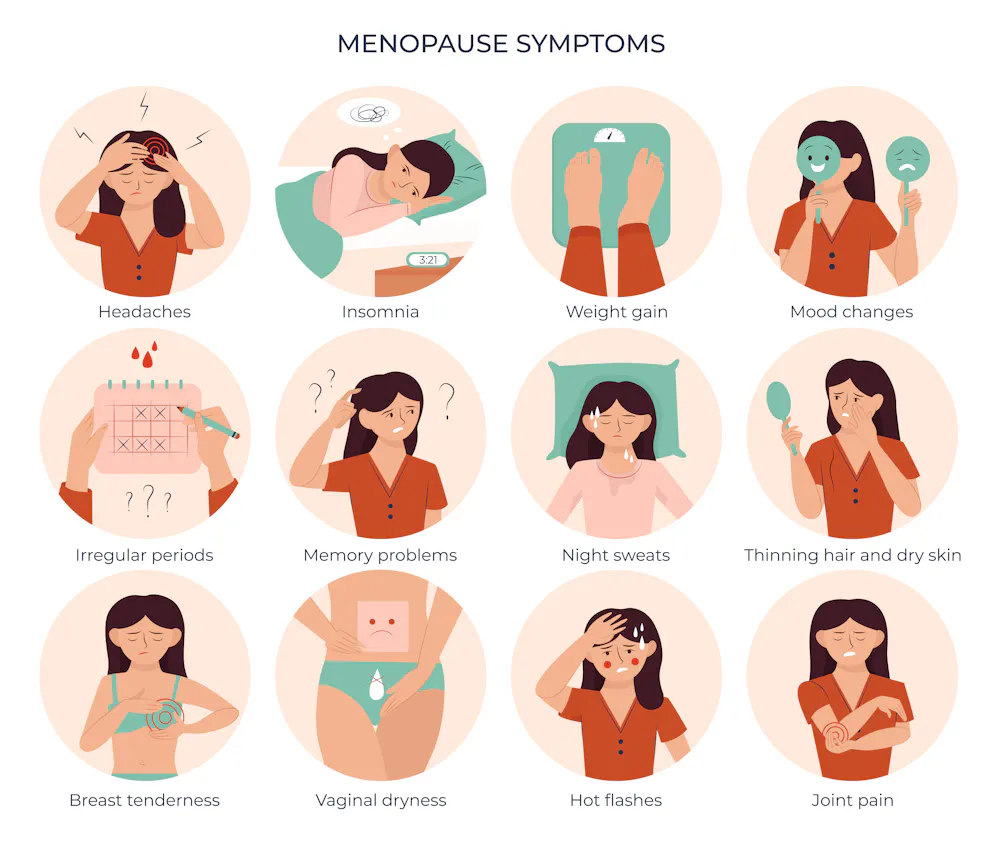
    Hot flashes, night sweats, vaginal dryness, urinary tract infections, irregular periods, low libido, trouble sleeping, brain fog, mood swings — and in rare cases, even a burning tongue sensation. What might all these symptoms have in common? They can all be signs of menopause.

    But could these symptoms hint at a greater story? New research suggests that menopause symptoms are not just immediate hurdles to overcome; they might also hold clues about a person’s future health, including their risk for conditions like dementia. However, to understand this connection, we must first understand what menopause is and how it affects the brain and body.

    Symptoms may emerge during the hormonal changes of menopause.
    (FreePik)

    What is menopause?

    Menopause marks the natural end of a woman’s menstrual periods, typically occurring in their late 40s or early 50s. Officially, menopause describes the specific day when someone has gone a full year without a period.

    However, menopause doesn’t happen overnight. It often starts years earlier with a phase called perimenopause. During this time, the body prepares for menopause, and hormone levels — especially estrogen — fluctuate. This transition can last several years, often bringing symptoms like irregular periods, hot flashes, mood swings and more.

    Once periods stop completely, a woman enters postmenopause. Unfortunately, symptoms don’t always end here; some may persist for years, and new symptoms may appear.

    These stages — perimenopause, menopause and postmenopause — are all part of the same journey, though each person’s experience is unique.

    An all too similar patient’s journey

    While menopause is a natural process, its symptoms can feel anything but. Some people may experience mild or no symptoms, while others struggle with numerous and severe symptoms that disrupt daily life.

    Symptoms like anxiety can make socializing difficult, sleep problems can lead to exhaustion and brain fog can make even simple tasks feel daunting. Together, these challenges can affect thoughts, feelings and social lives — key aspects to overall health.

    Symptoms like anxiety can make socializing difficult, sleep problems can lead to exhaustion and brain fog can make even simple tasks feel daunting.
    (FreePik)

    Why menopause matters beyond the present

    Understanding menopause and its symptoms is just the beginning. Beyond being a transitional phase, the challenges of menopause may offer a unique window into future brain health.

    Take Alzheimer’s disease, the most common cause of dementia, marked by progressive memory loss, emotional and personality changes, and eventually, a loss of independence. Women are twice as likely as men to develop Alzheimer’s disease. In the past, research thought this difference was because women live longer than men, but new research suggests that menopause-related hormone changes may also play a critical role.

    Estrogen helps protect memory, strengthen neural connections, regulate mood and remove harmful proteins from the brain. When estrogen levels fall, these health benefits may weaken.
    (FreePik)

    The role of hormones in brain health

    During menopause, the ovaries stop producing eggs, triggering significant hormonal changes. One major change is the drop in estrogen, a hormone not only essential for reproduction, but also brain health.

    Estrogen helps protect memory, strengthen neural connections, regulate mood and remove harmful proteins from the brain. When estrogen levels fall, these health benefits may weaken, possibly leaving the brain and body more vulnerable to harmful changes.

    During these hormonal changes, menopause symptoms may also emerge. While symptoms were once thought to be temporary, albeit uncomfortable, side-effects of menopause, these symptoms may also signal underlying brain changes linked to dementia risk.

    Future cognitive and behavioural health

    While past research has examined how individual menopausal symptoms may relate to dementia risk, our research team (led by Dr. Zahinoor Ismail, a physician-scientist) asked: could the number of symptoms experienced also indicate early warning signs of dementia?

    We explored this by analyzing changes in:

    1. Cognition (for example, memory, thinking, and problem-solving) and

    2. Behaviour (for example, emotions, personality, and social interactions).

    While cognitive changes are often top of mind when thinking about dementia, behavioural changes are equally important but frequently overlooked, and might also be early warning signs.

    We examined data from 896 postmenopausal participants in the CAN-PROTECT study, an online Canadian project on aging and brain health. Participants recalled the type and number of symptoms they experienced during perimenopause and completed tests assessing their current cognition and behaviour.

    Among the participants, 74.3 per cent experienced perimenopausal symptoms — an average four symptoms per person — with hot flashes (88 per cent) and night sweats (70 per cent) being most common.

    Menopause symptoms may signal underlying brain changes linked to dementia risk.
    (Shutterstock)

    Our findings revealed that experiencing more symptoms during perimenopause was associated with greater cognitive and behavioural changes later in life, suggesting the burden of perimenopausal symptoms not only affected immediate well-being, but could also signal long-term brain health risks.

    While the underlying mechanisms remain unclear, these findings highlight the importance of recognizing menopausal symptoms as potential early indicators of future brain health.

    Interestingly, participants who used estrogen-based hormone therapies for perimenopausal symptoms showed fewer behavioural changes than non-users, suggesting a possible role for estrogen in dementia risk reduction. However, further research is critical to clarify the timing and long-term effects of hormone therapy.

    It’s important to understand that these findings show a relationship between symptom burden and later brain health, but do not prove that one causes the other. We still need more research to understand why a connection exists and how it works.

    Menopause is more than a life transition; it may offer critical insights into long-term brain health.
    (FreePik)

    Why this research matters

    Our research highlights a crucial link: experiencing multiple perimenopausal symptoms may be related to cognitive and behavioural changes, which are early risk markers of dementia. Recognizing these symptoms as potential warning signs could help health care providers identify risks sooner and explore ways to protect brain health over time.

    Menopause is more than a life transition; it may offer critical insights into long-term brain health. Supporting research like CAN-PROTECT, which is still recruiting participants, can help us uncover how menopause experiences shape dementia risk, paving the way for earlier interventions and better outcomes.

    Zahinoor Ismail receives funding from Canadian Institutes of Health Research.

    Jasper Crockford and Maryam Ghahremani do not work for, consult, own shares in or receive funding from any company or organisation that would benefit from this article, and have disclosed no relevant affiliations beyond their academic appointment.

    ref. Menopause symptoms may be critical to understanding Alzheimer’s disease risk in women – https://theconversation.com/menopause-symptoms-may-be-critical-to-understanding-alzheimers-disease-risk-in-women-253216

    MIL OSI – Global Reports

  • MIL-OSI Global: Lessons from the fashion industry: Why some DEI efforts fail to resonate with consumers

    Source: The Conversation – Canada – By Jordan Foster, Postdoctoral Research Fellow, Sociology, McMaster University

    United States President Donald Trump and his administration have set their sights on the “tyranny of so-called diversity, equity and inclusion policies,” firing federal staff and purging public institutions like the Smithsonian of their commitments to racial history.

    Although many of Trump’s executive orders have focused on the federal government, some firms and private businesses have followed suit, rolling back their own commitments to DEI. For example, META and Amazon cut back their DEI efforts while some major retailers have severed ties with Black-owned businesses.

    Figures located within the fashion and beauty industry have also floundered in their commitments to DEI, investing in brief and uneven surges in racial representation on the runway and the inclusion of older models, trans models and models with disabilities.

    Industry leaders like Teen Vogue positioned models with disabilities on its cover, while brands like Aerie and Victoria Secret invested in more varied representations of beauty in their advertisements. Others however, took steps forward, then back.

    In 2021, we wrote about Victoria’s Secret’s efforts, arguing that the brand had learned that diversity sells. At the time, we noted how brands were encouraging one another to join the “inclusion revolution” — a movement Victoria’s Secret abandoned soon after.

    Had we got it wrong? We weren’t the only ones with questions.

    Backtracking on DEI?

    In 2023, British columnist Barbara Ellen noted: “For some gloaters, this is confirmation of ‘go woke, go broke,’ but the truth could be more complicated.” She went on to ask: “Is it really wokery that has scuppered Victoria’s Secret’s empowerment reboot, or is this more a corporate cautionary tale about the perils of ‘faking it?’”

    That same year, Vogue reported on the myriad ways “fashion backtracked on diversity,” drawing attention to “growing fatigue” surrounding DEI initiatives and what many perceived as insincere and performative gestures made in the name of diversity and inclusion.

    Since then, some within the fashion and beauty landscape have held firm to their commitments, while others have reneged on their promise to reflect on and represent consumer diversity. Why?

    In our ongoing work examining the rise (and fall?) of DEI in fashion and beauty, we’ve collected survey data from those who work inside the industry as well as everyday consumers.

    In looking at our data, we’ve found that certainly, some consumers do not support DEI efforts. These tend to be people who generally express attitudes aligned with those of the current U.S government.

    But we also found many more individuals who broadly like the idea of increased diversity in fashion and beauty. Sure, they expressed their fair share of skepticism toward brands that are overly “performative” in their demonstrations, but most want to see diverse figures and faces who look like them.

    Some brands may abandon DEI efforts, but we venture to guess that more brands will either continue on and stay quiet about their efforts for now, or reimagine their campaigns in the months and years to come.

    What could these campaigns look like? And what can brands do to insulate their efforts from attack?

    Capturing diversity and inclusion

    In our recently published study, we discuss the challenges that accompany DEI within the beauty industry, particularly focusing on how DEI efforts are evolving amid longstanding barriers.

    We focused on the beauty brands Benefit Cosmetics, Sephora and Dove, which have all made strides by featuring models with disabilities, racialized models and fuller-figured models in their online campaigns.

    While these advertising campaigns had their merits, we also noticed a significant under-representation of some forms of diversity in advertisements and campaign images. For example, models above the age of 55 and models with a visible disability were almost completely absent from representations of beauty online.

    Additionally, images were often altered to remove visible differences around race and disability or they were featured in ways that minimized markers of difference. This editing tends to hide what makes these individuals unique — the aspects of their appearance that may challenge society’s standard views of beauty.


    Read more:
    Fake models for fast fashion? What AI clones mean for our jobs — and our identities


    Savvy consumers are well-attuned to and perceptive of what they view in both traditional and online media, often questioning whether a brand’s DEI efforts are meaningful or purely profit-driven. They ask, for example, whether brands are simply capitalizing on current societal trends and critique companies they feel do not go far enough in promoting real inclusivity.

    The brands that do invest in what appear to be sincere and authentic strives toward diversity and inclusivity see returns, outperforming their market competitors while courting new consumers. Those who divest from DEI efforts, or act uncritically, risk losing their market share.

    What next?

    What can fashion and beauty brands do in response? For one, they can invest in sustained and consistent efforts to showcase diversity and inclusion. They can recruit models who embody differences across a range of markers and characteristics, and they can spend less time editing and “perfecting” the figures and faces they select from.

    Yet, diversity and inclusion needs to move beyond representation and toward more varied product formulations, shade ranges and accessible beauty tools.

    While there may be folks who continue to be critical of DEI campaigns because they think brands bought into being “woke” (and now are paying a price for it), many more are eager for greater and better representation.

    Consumers remain critical of insincere or superficial efforts, asking for real engagement with matters of diversity and inclusion. This includes representations that break the mould and push the boundaries surrounding who is (and isn’t) considered beautiful.

    This also means that if we want to know about why diversity and inclusion “fails,” we can’t just focus on those who are “anti-woke” nor should we focus solely on Trump’s politics.

    To safeguard against retrenchment, we need to understand why diversity and inclusion campaigns cease to resonate with those consumers who support DEI. Without their support, inclusion and diversity efforts lose legitimacy making them more susceptible to reversal.

    The authors do not work for, consult, own shares in or receive funding from any company or organisation that would benefit from this article, and have disclosed no relevant affiliations beyond their academic appointment.

    ref. Lessons from the fashion industry: Why some DEI efforts fail to resonate with consumers – https://theconversation.com/lessons-from-the-fashion-industry-why-some-dei-efforts-fail-to-resonate-with-consumers-255091

    MIL OSI – Global Reports

  • MIL-OSI Global: Mark Carney wants to make Canada an energy superpower — but what will be sacrificed for that goal?

    Source: The Conversation – Canada – By Leah Levac, Associate Professor of Community Engagement and Political Science, University of Guelph

    Canada’s recent federal election was regularly dubbed one of the most consequential of the last 50 years. Economic and sovereignty threats from United States President Donald Trump were key issues in the campaign. In response, pledges about energy infrastructure and resource development played an important role in party platforms.

    We have been studying impact assessments, the uneven consequences of resource development and sustainable energy transitions for over 15 years. We’re concerned about what and who may be overlooked as the government moves to become “an energy superpower,” in part by getting projects “done faster and better.”

    We’re also interested in how the newly elected Liberal government can support more just energy transitions — that is, moving toward low carbon energy and economies that prioritize equity for workers and communities.


    Read more:
    How to ensure Alberta’s oil and gas workers have jobs during the energy transition


    Challenges with Liberal promises

    The Liberal Party platform includes renewed attention to an east-west energy corridor. It also promises to speed up and streamline the review of major resource projects and “get big projects built quickly” by “shifting the focus of project review from ‘why’ to ‘how.’”

    The platform also promises more support for Indigenous participation in major projects and commits to using Gender-Based Analysis Plus — or GBA Plus — in policies and programs. GBA Plus is a method for assessing how diverse groups of people experience policies, programs and initiatives.

    Through our research, we have advocated strongly for applying GBA Plus in the resource sector, including by centring community knowledge in impact assessments and proposing strategies for improving how Indigenous women’s experiences and knowledge are considered in impact assessments.

    Over the last year, we also produced — along with our colleague Deborah Stienstra — two major research reports for the Impact Assessment Agency of Canada. Both were on the application of GBA Plus in regional assessments for offshore wind in Nova Scotia and Newfoundland and Labrador.

    Regional assessments are a planning tool used before specific projects are proposed. They help identify important issues to consider if specific project assessments — for instance, for critical mineral mines, offshore wind projects or other resource developments — are conducted. If done well, regional assessments can help with more equitable and efficient project planning and development in the long run.

    What do the findings from our work in this area suggest in terms of how the Liberal government should proceed with its energy vision?

    Duty to consult

    The 2019 Impact Assessment Act requires meaningful execution of the duty to consult with Indigenous people affected by a major economic development.

    The Liberal Party made important promises to advance Indigenous participation in major projects and to double capacity support so more Indigenous communities can take an active role in project decisions at various stages.

    But what the Liberal platform overlooks is Indigenous Peoples’ right to resist and refuse developments in their territories, or how specifically to ensure that Indigenous women and gender-diverse people are meaningfully engaged.

    Moving forward, the Liberals must meet their constitutional duty to consult with Indigenous Peoples, while being guided by the United Nations’ principle of free, prior and informed consent per legislation that confirms Canada’s commitment to the UN’s Declaration on the Rights of Indigenous Peoples.

    GBA Plus

    During the campaign, the Liberal Party reiterated its support for GBA Plus by listing it as one of six key themes in its Make Canada Strong vision.

    The Liberals seemingly recognize that GBA Plus is an important tool for advancing equity for women, gender-diverse people, people with disabilities and racialized people by:

    “Identifying direct and indirect benefits of programs (e.g. job opportunities, access to programs and services) … and considering how these benefits will be distributed across diverse groups.”

    The Liberal platform does not explicitly raise GBA Plus in relation to becoming an “energy superpower.” But GBA Plus has been gaining attention in the resource sector — particularly in relation to the development of specific projects — since the requirement to consider “the intersection of sex and gender with other identity factors” was included in the 2019 Impact Assessment Act.

    GBA Plus needs to be applied in project-specific assessments (for specific developments, such as mines and hydroelectric dams) and in planning assessments (like regional assessments).

    In our work on the regional assessments for offshore wind in Nova Scotia and Newfoundland and Labrador, we demonstrate the value of applying GBA Plus throughout all impact assessment processes.

    Doing so helps strengthen community engagement efforts, identify potential effects early, determine the data sources required for monitoring those effects, fill data gaps and highlight barriers that prevent diverse groups of people from benefiting from energy projects.

    For example, without adequate child-care options, many women cannot access the high-paying jobs that sometimes accompany resource projects. The Liberal government’s support for GBA Plus must therefore be explicitly incorporated into its energy proposals.

    What and who is lost with fast tracking

    A just energy transition is one concerned not only with planetary survival, but also with the effects of the transition on people who will be most affected.

    The Liberal party’s vision for becoming an energy superpower includes “conventional energy resources” (like oil) as well as clean and renewable energy (like solar and hydro) and critical minerals needed to support decarbonization and energy transitions.

    We disagree with the Liberal Party’s commitment to “shifting the focus of project review from ‘why’ to ‘how.’”

    We need to ask how — and even whether — an energy project contributes to a just transition. Answering questions about whether projects will meet climate commitments and help advance equity for workers and communities is critical. These questions are best asked early, during planning phases and as part of regional assessments, before specific projects are proposed.

    The duty to consult, GBA Plus and just energy transitions are interconnected and necessary commitments for sustainable energy production.

    Together, they can contribute to a relationship with Indigenous Peoples that recognizes their sovereignty and to a more equitable and sustainable future. But these commitments cannot be meaningfully realized when fast-tracking development, because they require time and relationship-building.

    Prioritizing fast-tracking — thereby falling short on these priorities and legal commitments — will backfire. It will lead to delays rather than more efficient processes, and will worsen existing inequities.

    Leah Levac receives funding from the Social Sciences and Humanities Research Council. She does research on behalf of the Canadian Research Institute for the Advancement of Women, which receives funding from the the Impact Assessment Agency of Canada, other federal departments (e.g., WAGE) and non-government organizations for work related to advancing GBA Plus practice in impact assessments and elsewhere.

    Jane Stinson is affiliated with the Canadian Research Institute for the Advancement of Women, which receives funding from the Impact Assessment Agency of Canada, other federal departments (eg. WAGE) and non-government organizations for work related to advancing GBA Plus practice in impact assessments and elsewhere.

    Leah M. Fusco receives funding from the Social Sciences and Humanities Research Council. She does research on behalf of the Canadian Research Institute for the Advancement of Women, which receives funding from the the Impact Assessment Agency of Canada, other federal departments (e.g., WAGE), and non-government organizations for work related to advancing GBA Plus practice in impact assessments and elsewhere.

    ref. Mark Carney wants to make Canada an energy superpower — but what will be sacrificed for that goal? – https://theconversation.com/mark-carney-wants-to-make-canada-an-energy-superpower-but-what-will-be-sacrificed-for-that-goal-255079

    MIL OSI – Global Reports

  • MIL-OSI Global: A pope of the Americas: What Francis meant to 2 continents

    Source: The Conversation – USA – By Neomi De Anda, Associate Professor of Religious Studies, University of Dayton

    A portrait of Pope Francis is projected onto a water fountain in Lima, Peru, on April 21, 2025. AP Photo/Martin Mejia

    Most stories about Pope Francis mention that he made history as the first pontiff from Latin America. In fact, Francis was the first pope in centuries to be born outside Europe. But what impact did that actually have on the Catholic Church? The Conversation U.S. asked Neomi De Anda, a theologian at the University of Dayton, to explain the significance of having a pope from the Southern Hemisphere.

    Where do you see the influence of Pope Francis’ Latin American background?

    In reality, Francis is not only the first Latin American pope; he’s the first American pope. Francis is Argentine, the child and grandchild of Italian immigrants, and the first to be born in “América.” Though geography divides it into two continents, North and South, it is one land – one many Indigenous communities call “Turtle Island” or “Abya Yala.”

    In the pope’s 2024 video message to the Academy of Catholic Hispanic Theologians of the United States, he called upon them “to be bridge-builders between the Americas” and to be a church that “welcomes, accompanies, and integrates” migrants. Speaking in Spanish, he invited the academy “to do theology with your head, your hearts, and your hands” and to integrate “the richness of both cultures, North and South, at the service of a dignified life.”

    Pope Francis arrives for a massive open-air Mass in a park just a few yards from the U.S. border in Ciudad Juarez, Mexico, on Feb. 17, 2016.
    AP Photo/Dario Lopez-Mills

    This message emphasizes Francis’ view of “synodality” – meaning a church that walks together – and his understanding of the connection among all people in the Americas and the Caribbean. It also shows a recurring theme of his papacy: the connections between pastoral care and theology.

    The greeting also highlights his desire for all to have a life of well-being, or “buen vivir,” through God’s love. As Jesus says in the Gospel of John, “I came so that they may have life and have it more abundantly.” This is also a key theme in a 2007 document produced after a meeting of Latin American bishops, known as Aparecida. Francis, then a cardinal, was a primary drafter.

    Aparecida points out Latin America’s abundance of aquifers and forest lands, which are “humanity’s lungs.” It laments economic factors leading to environmental destruction and climate change – themes that would prove important to Francis’ papacy. The document stresses God’s care for people whose lands are being pillaged and who are forced to migrate. It claims “nothing and no one” can take away the strength, joy and peace God gives to the world’s most vulnerable.

    Francis repeatedly acknowledged the Catholic Church’s role in crimes against Indigenous people, and he apologized. How did ideas about colonialism shape his papacy?

    Francis spent much time and attention learning more about the experiences of Native communities: from his visit to Chiapas, Mexico, in 2016; to the Amazon Synod, a meeting of Catholic bishops from the Pan-Amazon Region, Indigenous leaders from this region, theologians and other subject matter experts in 2019; to his tour across Canada in 2022.

    After the synod, Francis released a letter titled Querida Amazonia, which includes a call for Catholic leaders to learn more about the lives of Native peoples from across the nine countries of the Amazon.

    During the papal Mass Francis celebrated in Chiapas, Mexico, in 2016, you can see the deep intermixing of local cultures and customs with the liturgy. For example, women spread incense across the altar using clay vessels, alongside deacons using a thurible, the metal burner typically used in services. Animal images at the front of the platform represented the integration of all of creation.

    Pope Francis delivers his message during Mass in San Cristobal de las Casas, Chiapas, Mexico, on Feb. 15, 2016.
    AP Photo/Gregorio Borgia

    Throughout his trip to Canada in 2022 – whose purpose, in part, was to apologize for the Catholic Church’s role in the Indigenous boarding school system – Francis presented a disposition of listening and care. He spent more time meeting with people and hearing about their experiences than giving prepared speeches on the perspective of the church.

    For First Nations peoples, the pope’s visit was an opportunity for reconciliation – but for some, it also reopened old wounds. One of their requests was that the church reject the Doctrine of Discovery: ideas about conversion to Christianity that colonial powers used to justify abuses.

    Talking to reporters on the plane returning to Rome, Francis named what had been done to Indigenous children in boarding schools as “genocide.” The following year, the Vatican released a repudiation of the Doctrine of Discovery and documents associated with those ideas.

    Are there other ways that the pope did – or didn’t – make the church feel more inclusive?

    Francis’ papacy did less to change teachings on another topic shaped by colonialism: gender, sexuality and women. The Catholic Church maintains that there are two genders – male and female – which complement each other, a binary system that replaced more flexible ways of thinking about gender in some cultures.

    Members of a delegation of Indigenous peoples in Quebec await a meeting with Pope Francis on July 29, 2022.
    Ciro Fusco/Pool ANSA via AP

    The question of whether to ordain women as deacons arose from the Amazon Synod and continued at the church’s global Synod on Synodality, but without resolution.

    An emphasis on women’s role as child-bearers is embedded in the theological understanding of Mary as mother of Christ and the mother of the church. Whether intentionally or not, however, I would argue Francis laid groundwork for teaching about women and gender to expand.

    Appointments of women to high Vatican positions point to small shifts in practice. The presence of trans people among the last people who paid respects to Francis at his funeral marks a sign of possibilities that hopefully will continue.

    Although of “the church” might make us think of clergy, all who are baptized are the church. Around the world, Catholic communities have developed in many ways, with multiple forms of leadership – especially women lay leaders. The Vatican needs to continue to affirm that reality.

    The Catholic Church understands diversity as a gift of the Holy Spirit. My hope is for someone to continue in Francis’ vein of appreciating that pluralism.

    Neomi De Anda consults for the Louisville Institute, funded by Lily Endowment Inc. She receives funding from the Wabash Center for Teaching and Learning in Religion and Theology. She is a past president of the Academy of Catholic Hispanic Theologians of the United States and is affiliated with the Marianist Social Justice Collaborative.

    ref. A pope of the Americas: What Francis meant to 2 continents – https://theconversation.com/a-pope-of-the-americas-what-francis-meant-to-2-continents-255093

    MIL OSI – Global Reports

  • MIL-OSI Global: Pope Francis encouraged Christian-Muslim dialogue and helped break down stereotypes

    Source: The Conversation – USA – By Craig Considine, Senior Lecturer in Sociology, Rice University

    Tributes being paid to Pope Francis at the Sacred Heart Cathedral Church in Lahore, Pakistan, on April 22, 2025. AP Photo/K.M. Chaudary

    Pope Francis’ pontificate marked a distinct shift in the Catholic Church’s engagement with the Muslim world. While his predecessors fostered dialogue and tolerance, Francis sought more active engagement with Muslims, particularly in the Middle East.

    Francis framed his efforts around the “culture of encounter,” which he explained in a 2016 morning meditation. Drawing inspiration from the Gospel of Luke, Chapter 7, he noted that this approach was about “active engagement” rather than passive observation. He urged individuals to embody Jesus by “not just seeing, but looking; not just hearing, but listening; not just passing people by, but stopping with them.”

    In my 2025 book “Beyond Dialogue – Building Bonds Between Christians and Muslims,” I stress the importance of moving beyond mere tolerance to collaboration as a way to engage with religious diversity − something that Francis demonstrated in his interfaith dialogue efforts with Muslim countries.

    Francis in Iraq after IS destruction

    In 2021, Francis visited regions in Iraq once held by the Islamic State, or IS. This was the first papal visit to the country. He held masses in Irbil, the capital of the Kurdistan region of Iraq, and he addressed a gathering in the courtyard of the Al-Tahera church, the hub of the Syriac Catholic population in Mosul. The historic 18th-century church was partially destroyed by IS during its occupation of the city from 2014 to 2017. An estimated 5,000 Christians were killed and some 125,000 displaced in Iraq during that time.

    Iraqis put up a poster with Pope Francis and Grand Ayatollah Ali al-Sistani, the leader of Iraqi Shiite Muslims, in Najaf, Iraq, on March 4, 2021.
    AP Photo/Anmar Khalil

    At Church Square in Mosul, where there are four churches, Francis prayed for the victims of the conflict and called for harmonious coexistence between Christians and Muslims. He also invited displaced Christians to return to their homes and praised the young Iraqi volunteers – both Christians and Muslims – working side by side to rebuild the churches and mosques destroyed by IS.

    In addition, he convened an interreligious gathering in Ur, the birthplace of Abraham, a prophet revered by Jews, Christians and Muslims.

    His actions not only brought together Christians and Muslims but also helped break down stereotypes.

    The year of tolerance

    In 2019 he visited the United Arab Emirates, marking the first papal visit to the Arabian Peninsula, the birthplace of Islam. The visit coincided with the Emirati government proclaiming 2019 the Year of Tolerance, promoting coexistence, diversity and respect.

    During his visit in Abu Dhabi in 2019, Francis celebrated a historic Catholic Mass in Zayed Sports City, drawing 180,000 attendees from over 100 countries, for which the UAE government declared a special holiday.

    This unprecedented event challenged negative Western stereotypes about the Arabian Peninsula’s religious intolerance. The UAE Constitution, for example, guarantees religious freedom to all people, albeit with restrictions on proselytization among non-Islamic communities. It also offered a counternarrative of unity between Christians and Muslims in a region often viewed through a lens of religious strife and war.

    Francis’ visit to the UAE also culminated in some crucial interfaith initiatives. In Abu Dhabi, Francis and the Grand Imam of Al-Azhar University, Ahmed El-Tayeb, cosigned the document on Human Fraternity for World Peace and Living Together. The document stresses the need to work together to promote a “culture of reciprocal respect.” While the Emirati president, Sheikh Mohammed bin Zayed Al Nahyan, did not directly sign the document, he supported the interfaith initiatives that followed Francis’ trip.

    This document led to the setting up of the Higher Committee of Human Fraternity, a collaborative project of a diverse groups of academic, cultural and religious leaders and entities from around the world. The committee created the Human Fraternity Education and Leadership for Peace program, a global youth movement. It also worked with the United Nations General Assembly to designate Feb. 4 as the International Day of Human Fraternity.

    The Higher Committee of Human Fraternity also guided the construction of the Abrahamic Family House in Abu Dhabi, a shared space for a church, mosque and synagogue that opened in 2023.

    I had the opportunity to attend the opening ceremony of the Abrahamic Family House in 2023. It was a memorable experience. A Christian girl, a Muslim boy and Jewish boy each brought a cube representing each house of worship to the center platform of the forum and placed them side by side on the ground. The simple act mirrored the architectural design of the Abrahamic Family House by bringing the abstract concept of interfaith harmony to life in a concrete and relatable way. The Emirati youth provided a glimpse into what a tolerant future could look like.

    History of Catholic-Muslim relations

    The closest historical comparison to the Document on Human Fraternity is the Nostra Aetate, a declaration from the Second Vatican Council of 1965, when major reforms were initiated in the Catholic Church.

    Nostra Aetate marked a turning point in the Catholic Church’s relations with Islam and all non-Christian traditions. After a history of conflict, limited positive engagement and mutual suspicion, it emphasized harmony, dialogue and respect with Islam.

    However, the Document on Human Fraternity went further. For starters, it was a joint declaration with prominent Muslim leaders, signifying a deeper commitment to Christian-Muslim partnership, whereas Nostra Aetate was an internal Catholic document. The document called for grassroot activities, pointing to a more action-oriented approach to Christian and Muslim relations. Given that it was signed by the pope, it held influence within the Vatican leadership and among liberal cardinals. Its core principles are being integrated into pastoral initiatives and interreligious dialogue at the national and international levels.

    Francis’ approach to Christian-Muslim dialogue differed notably from his predecessors. While Pope John Paul II focused on intellectual exchange and theological dialogue, Francis emphasized that they were insufficient on their own. In turn, he prioritized direct action and personal engagement with others as a means to a deeper understanding of the other.

    Pope Benedict XVI, despite his commitment to dialogue, faced challenges due to remarks that outraged Muslims worldwide. During his Regensburg address in 2006, he mentioned a medieval dialogue attributed to Manuel II Palaiologus, the Byzantine emperor who reigned from 1391 to 1425, a period of growing power of the Ottoman Empire. Manuel II had criticized the concept of jihad in Islam and referred to Muhammad, the prophet of Islam, as “evil” and “inhuman.” While Benedict repeatedly emphasized that he was quoting Manuel II’s views on the relationship between faith and reason and not personally endorsing the emperor’s assessment of Islam, the pope’s comments were perceived as disrespectful toward the Islamic faith and its prophet.

    Upon Francis’ death, the president of the UAE – Sheikh Mohammed bin Zayed Al Nahyan – described him as “a symbol of human fraternity, cultural coexistence and interfaith dialogue,” adding that he inspired “future generations in upholding the values of tolerance and mutual understanding.”

    Francis’ gestures of solidarity, personal relationships and frequent visits to Muslim countries, I believe, laid a tangible foundation to move beyond dialogue and toward human fraternity.

    Craig Considine does not work for, consult, own shares in or receive funding from any company or organization that would benefit from this article, and has disclosed no relevant affiliations beyond their academic appointment.

    ref. Pope Francis encouraged Christian-Muslim dialogue and helped break down stereotypes – https://theconversation.com/pope-francis-encouraged-christian-muslim-dialogue-and-helped-break-down-stereotypes-255193

    MIL OSI – Global Reports

  • MIL-OSI Global: National security advisers manage decision-making as advocates or honest brokers

    Source: The Conversation – USA – By Gregory F. Treverton, Professor of Practice in International Relations, USC Dornsife College of Letters, Arts and Sciences

    Mike Waltz speaks with reporters in the press room at the White House on Feb. 20, 2025. AP Photo/Alex Brandon

    The removal of Mike Waltz as President Donald Trump’s national security adviser – formally the assistant to the president for national security affairs – raises the question of just what that position entails and also what it means that Marco Rubio will now act as secretary of state and national security adviser.

    The National Security Act of 1947 created the National Security Council to advise the president on matters of national security. It’s also tasked with integrating domestic, foreign and military policies.

    But the national security adviser position is neither enshrined in law nor accountable to Congress.

    I’m an economist and international relations scholar who has worked with three national security advisers − Zbigniew Brzezinski, Samuel “Sandy” Berger and Susan Rice.

    I’ve seen the job up close. The core of the national security adviser’s role is managing the national security decision-making process, as decisions on issues from Ukraine to Gaza to nuclear proliferation are made. It’s a coordinating role.

    Honest broker

    National security advisers set the timing and flow of policy analysis and recommendations to the National Security Council committees − first, the principals committee, which brings together the Cabinet secretaries with national security responsibilities from the State Department, Department of Defense, the CIA and others.

    While the principals committee typically rarely meets and virtually never with the president in the chair, not so the deputies committee. That committee brings together the Nos. 2 and 3 in the same departments.

    In my most recent stint in Washington as chair of the National Intelligence Council in the Obama administration, the deputies committee met almost every day, sometimes more than once. Its formal role is to tee up issues for decision by the principals and the president.

    National security advisers have the advantage of proximity to the president, with an office footsteps from the Oval, as it is known in Washington lingo. They also manage a relatively lean staff.

    In my time on the National Security Council staff in the Carter administration, it was perhaps 150 all told, including the watch officers in the White House Situation Room. In the Biden administration it was on the order of 350 staff.

    For us National Security Council staffers, if we disagreed with our counterparts at the State Department or the Defense Department, we could let the principals decide. We knew that we could get to Brzezinski faster, for example, than they could get to their Cabinet secretaries.

    National security adviser Susan Rice walks with Fang Changlong, vice chairman of the Central Military Commission, in Beijing, in September 2014.
    AP Photo/Wang Zhao

    In Washington, proximity is opportunity. And, not surprisingly, national security advisers since McGeorge Bundy in the John F. Kennedy and Lyndon B. Johnson administrations have become central figures in the foreign policy arena. The have had to manage the balance between seeking to influence the president and remaining an honest broker.

    As Berger put it, “You have to be perceived by your colleagues as an honest representative of their viewpoint, or the system breaks down.”

    Managing the tension

    National security advisers have managed the tension in their roles in different ways. And two models of those roles have emerged.

    Henry Kissinger, who served Presidents Richard Nixon and Gerald Ford, was a powerful strategist driving presidential policy, often bypassing traditional channels. He, like Secretary of State Marco Rubio will do, served a dual role from 1973 to 1975 as national security adviser and secretary of state. Condoleezza Rice, the national security adviser who served George W. Bush, also later became secretary of state.

    Brent Scowcroft, who served both Ford and President George H. W. Bush, is the exemplar of the other model − an “honest broker” ensuring a fair, collegial policy process. He was the consummate insider: low-key, meticulous about process and influencing through quiet proximity. The Bush administration he served was also, as described by a friend, as collegial as the men’s locker room of an upscale country club. Still, while I never had the chance to work with him, he is my standard for the role of national security adviser.

    Waltz served too briefly to evaluate his record. It’s ironic that what seems to have done him in was the Signalgate scandal, in which Waltz added a journalist to a Signal group chat in which government officials discussed details about a planned U.S. military strike in Yemen.

    That was an example of Waltz’s coordinating role, bringing most of the relevant policy officials together to discuss an important issue. The purpose was right, but the means was extremely unwise.

    Henry Kissinger shakes hands with Chinese Premier Chou En-lai in Peking, China, in July 1971.
    AP Photo/White House

    Learning from the past

    Historically, the worst crisis of the National Security Council system ensued when it sought to conduct operations, not just organize them. That was the case in the Iran-Contra affair of the Reagan administration.

    Robert McFarlane took over as national security adviser in October 1983. A former Marine officer and deputy national security adviser, he was conscientious to a fault: In one meeting while he was consulting during the transition from President George H. W. Bush to President Bill Clinton, we asked him about work hours. He replied: “They’re not bad. I’m out of here by eight most nights, earlier on Sunday.”

    He was done in by Iran-Contra, a clandestine effort run by the National Security Council to trade arms to Iran − then under a U.S. arms embargo − in hopes of freeing American hostages, with proceeds diverted to fund the Nicaraguan Contras, despite a congressional ban on funding them. He pleaded guilty in 1988 to withholding information from Congress.

    It’s a telling lesson for Rubio and other Waltz successors as the national security adviser of the dangers of moving from honest broker and quiet advocate to operator − especially if the operation is contrary to public U.S. policy and perhaps against the law.

    This story is part of a series of profiles of Cabinet and high-level administration positions.

    Gregory F. Treverton does not work for, consult, own shares in or receive funding from any company or organization that would benefit from this article, and has disclosed no relevant affiliations beyond their academic appointment.

    ref. National security advisers manage decision-making as advocates or honest brokers – https://theconversation.com/national-security-advisers-manage-decision-making-as-advocates-or-honest-brokers-255760

    MIL OSI – Global Reports

  • MIL-OSI Global: Worsening allergies aren’t your imagination − windy days create the perfect pollen storm

    Source: The Conversation – USA – By Christine Cairns Fortuin, Assistant Professor of Forestry, Mississippi State University

    Windy days can mean more pollen and more sneezing. mladenbalinovac/E+ via Getty Images

    Evolution has fostered many reproductive strategies across the spectrum of life. From dandelions to giraffes, nature finds a way.

    One of those ways creates quite a bit of suffering for humans: pollen, the infamous male gametophyte of the plant kingdom.

    In the Southeastern U.S., where I live, you know it’s spring when your car has turned yellow and pollen blankets your patio furniture and anything else left outside. Suddenly there are long lines at every car wash in town.

    On heavy pollen days, cars can end up covered in yellow grains.
    Scott Akerman/Flickr, CC BY

    Even people who aren’t allergic to pollen – clearly an advantage for a pollination ecologist like me – can experience sneezing and watery eyes during the release of tree pollen each spring. Enough particulate matter in the air will irritate just about anyone, even if your immune system does not launch an all-out attack.

    So, why is there so much pollen? And why does it seem to be getting worse?

    2 ways trees spread their pollen

    Trees don’t have an easy time in the reproductive game. As a tree, you have two options to disperse your pollen.

    Option 1: Employ an agent, such as a butterfly or bee, that can carry your pollen to another plant of the same species.

    The downside of this option is that you must invest in a showy flower display and a sweet scent to advertise yourself, and sugary nectar to pay your agent for its services.

    A bee enjoys pollen from a cherry blossom. Pollen is a primary source of protein for bees.
    Ivan Radic/Flickr, CC BY

    Option 2, the budget option, is much less precise: Get a free ride on the wind.

    Wind was the original pollinator, evolving long before animal-mediated pollination. Wind doesn’t require a showy flower nor a nectar reward. What it does require for pollination to succeed is ample amounts of lightweight, small-diameter pollen.

    Why wind-blown pollen makes allergies worse

    Wind is not an efficient pollinator, however. The probability of one pollen grain landing in the right location – the stigma or ovule of another plant of the same species – is infinitesimally small.

    Therefore, wind-pollinated trees must compensate for this inefficiency by producing copious amounts of pollen, and it must be light enough to be carried.

    For allergy sufferers, that can mean air filled with microscopic pollen grains that can get into your eyes, throat and lungs, sneak in through window screens and convince your immune system that you’ve inhaled a dangerous intruder.

    When wind blows the tiny pollen grains of live oaks, allergy sufferers feel it.
    Charles Willgren/Flickr, CC BY

    Plants relying on animal-mediated pollination, by contrast, can produce heavier and stickier pollen to adhere to the body of an insect. So don’t blame the bees for your allergies – it’s really the wind.

    Climate change has a role here, too

    Plants initiate pollen release based on a few factors, including temperature and light cues. Many of our temperate tree species respond to cues that signal the beginning of spring, including warmer temperatures.

    Studies have found that pollen seasons have intensified in the past three decades as the climate has warmed. One study that examined 60 location across North America found pollen seasons expanded by an average of 20 days from 1990 to 2018 and pollen concentrations increased by 21%.

    That’s not all. Increasing carbon dioxide levels may also be driving increases in the quantity of tree pollen produced.

    Why the Southeast gets socked

    What could make this pollen boost even worse?

    For the Southeastern U.S. in particular, strong windstorms are becoming more common and more intense − and not just hurricanes.

    Anyone who has lived in the Southeast for the past couple of decades has likely noticed this. The region has more tornado warnings, more severe thunderstorms, more power outages. This is especially true in the mid-South, from Mississippi to Alabama.

    Severity of wind and storm events mapped from NOAA data, 2012-2019, shows high activity over Mississippi and Alabama. Red areas have the most severe events.
    Christine Cairns Fortuin

    Since wind is the vector of airborne pollen, windier conditions can also make allergies worse. Pollen remains airborne for longer on windy days, and it travels farther.

    To make matters worse, increasing storm activity may be doing more than just transporting pollen. Storms can also break apart pollen grains, creating smaller particles that can penetrate deeper into the lungs.

    Many allergy sufferers may notice worsening allergies during storms.

    The peak of spring wind and storm season tends to correspond to the timing of the release of tree pollen that blankets our world in yellow. The effects of climate change, including longer pollen seasons and more pollen released, and corresponding shifts in windy days and storm severity are helping to create the perfect pollen storm.

    Christine Cairns Fortuin receives funding from U.S. Forest Service, Southern Research Station.

    ref. Worsening allergies aren’t your imagination − windy days create the perfect pollen storm – https://theconversation.com/worsening-allergies-arent-your-imagination-windy-days-create-the-perfect-pollen-storm-254645

    MIL OSI – Global Reports

  • MIL-OSI Global: Philly’s forgotten history as a hub of anarchism with a thriving radical Yiddish press

    Source: The Conversation – USA – By Geoffrey Baym, Professor of Media Studies and Production, Temple University

    The first edition of Bread and Freedom came out on Nov. 11, 1906. From the collection of the National Library of Israel, courtesy of Broyt un Frayheyt (Bread and Freedom)

    On a late summer day in 1906, a small group of newly arrived Jewish immigrants in Philadelphia took a streetcar across town to Fairmount Park. Several miles from the cramped row houses and oppressive sweatshops of the immigrant quarter of South Philly, the neighborhood now known as Queen Village, they enjoyed a sunny picnic.

    They weren’t there to make small talk, though.

    Instead, they wanted to write “revolutionary articles” that would spark the “struggle against all that degrades and oppresses humanity,” as one of the leaders of the group, Joseph Cohen, later wrote in his 1945 memoir.

    More specifically, the picnicgoers wanted to start a newspaper. It would be titled Broyt un Frayheyt – Yiddish for Bread and Freedom – the anarchist reminder that to live the good life, one needs both.

    I’m a professor of media and politics at Temple University in Philadelphia. For the past year I’ve been tracking the life and times of my great-grandfather Max, a radical Yiddish journalist in the early years of the 20th century.

    To my surprise, I found he had lived here in Philadelphia, and his story is part of a largely forgotten moment in U.S. history: when Philly was an epicenter of the national anarchist movement, heartily supported by the city’s burgeoning Jewish immigrant community.

    Beyond the Russian pale

    By 1906, thousands of people like Max had made their way to Philadelphia from the Russian “pale” – the only part of the Russian Empire where they could legally reside. They fled economic isolation and state-sanctioned persecution in search of a more stable life.

    South Philly was better than where they had come from, but immigrant life then, as now, was by no means easy. They had escaped a legal regime of oppression and the perpetual threat of antisemitic mob violence. But in turn they found a world of dark alleys and dead ends. Their labor was exploited, their living conditions meager.

    For some, the American promise of freedom and prosperity seemed to ring hollow.

    They did, however, find one freedom they had not experienced before. They were able to speak, write and publish their ideas no matter how outlandish or against the grain.

    And they could do so in Yiddish, the vernacular of daily life but a language of exile – one that in the old world had often been outlawed in print.

    The Yiddish press in the United States was experiencing extraordinary growth at the time. In New York, Philadelphia and other cities, newspapers quickly emerged – and often disappeared – month over month.

    Jewish anarchists in America

    Max moved to Philadelphia in 1906 to work with another immigrant named Joseph Cohen. Cohen had arrived in Philadelphia three years earlier. He earned a scant living making cigars, but his real work was advocating anarchism.

    At the dawn of the 20th century, anarchism was not the nihilistic chaos the term may bring to mind today. It was a heartfelt dream of a free and egalitarian society.

    The anarchists believed that man-made hierarchies – political, economic and religious – were illegitimate and limited the full expression of humanity. They rejected the authority of the state. That particularly appealed to many Jewish immigrants, for whom laws in the old country had long served as vehicles of oppression.

    Cohen had studied this philosophy of local autonomy and communal life with the Philadelphia activist Voltairine de Cleyre.

    History may remember Emma Goldman, a Lithuanian-born New Yorker and perhaps the leading voice of American anarchism from that era. But de Cleyre was the heart and soul of Philadelphia’s anarchist scene.

    Goldman once described de Cleyre as a “poet-rebel,” a “liberty-loving artist” and “the greatest woman anarchist of America.”

    Voltairine de Cleyre in Philadelphia circa 1901.
    Wikimedia Commons

    A tireless critic of the inequities of the industrial age, de Cleyre had taught herself Yiddish to better serve as “the apostle of anarchism” in the Jewish ghetto.

    While de Cleyre could often be found speaking in front of city hall, Max, Cohen and their colleagues were more likely to gather at the corner of Fifth and South streets, the hub of Philadelphia’s Yiddish press and its culture of rambunctious street debate.

    By 1906, Cohen had co-founded the anarchist Radical Library in the upstairs rooms at 229 Pine St. This provided the Philadelphia anarchists a meeting space and reading room.

    But “the Jewish newspaper men, the radicals and the tireless talkers,” as the Philadelphia historian Harry Boonin wrote, still congregated in the ramshackle cafes lining the 600 block of South Fifth, where they would argue over anarchism and atheism deep into the night.

    Competition with NYC comrades

    Cohen’s goal was to publish a nationally influential anarchist paper that would give voice to the “comrades from Philadelphia.”

    That meant direct competition with the New York Yiddish press and the influential weekly newspaper Freie Arbeiter Stimme, or The Free Voice of Labor. Edited by Saul Yanovksy on Manhattan’s Lower East Side, FAS was the center of the Jewish anarchist movement and of the Yiddish intelligentsia more broadly.

    “To be able to say ‘I have written for Yanovsky,’” wrote the sociologist Robert Park in 1922, “is a literary passport for a Yiddish writer.”

    Freie Arbeiter Stimme (The Free Voice of Labor) was the intellectual center of the Jewish anarchist movement at the turn of the 20th century.
    From the collection of the National Library of Israel, courtesy of Freie Arbeiter Stimme (The Free Voice of Labor)

    Although the FAS masthead said the paper was located in New York and Philadelphia, Yanovksy controlled the operation from New York, much to Cohen’s dismay.

    The Philadelphia anarchists were also routinely disappointed in Yanovsky’s politics. He was too moderate for their tastes. Yanovsky favored organizing labor and voting in elections, while the Bread and Freedom group, according to Cohen, wanted to cultivate “the militancy and fighting spirit which our young comrades brought with them from cold Russia.” They advocated for more aggressive measures to counter “the submissive indifference of the bourgeoisie and the slavish patience of the workers.”

    Cohen had partnered with Yanovsky earlier in 1906 to publish a daily anarchist newspaper. He maintained a small office in the back of Finkler’s cigar store at Fifth and Bainbridge streets. But the paper was printed in New York and delivered back to Philadelphia each morning by courier train.

    Cohen wrote in his memoir that he suspected Yanovsky intentionally sabotaged the effort by insisting that he personally write the daily editorial, but then turning in his copy too late for the paper to make the train. After two months the partnership, and the paper, fell apart.

    For Cohen, the lesson was that to be the genuine voice of the anarchist movement, he had to print the paper locally in Philadelphia.

    A digest of anarchist argument

    Editions of the Bread and Freedom anarchist weekly list the Radical Library at 229 Pine St. as its headquarters.
    From the collection of the National Library of Israel, courtesy of Bread and Freedom

    Bread and Freedom published its first issue on Nov. 11, 1906. The date was symbolic. It was the anniversary of the execution of the “Chicago martyrs” – the four men wrongly sentenced to death for the 1886 bombing at a labor rally at Chicago’s Haymarket Square. The Haymarket affair galvanized the anarchist movement among immigrants, even as it accelerated the wider fear of foreign-born radicalism.

    Over the next three months, the newspaper offered a weekly digest of anarchist arguments. It translated into Yiddish Voltairine de Cleyre’s critique of capitalism and what she called its “moral bankruptcy” – its hunger for wealth, power and material possessions. It attacked what de Cleyre called the “dominant idea” of the times – “the shameless, merciless” exploitation of the worker, “only to produce heaps and heaps of things – things ugly, things harmful, things useless, and at the best largely unnecessary.”

    In the strongest of terms – “bombastic,” in the words of one local historian – the paper echoed de Cleyre’s call for the “restless, active, rebel souls” of immigrant Philadelphia to rise up to oppose the “great and lamentable error” of industrial capitalism.

    Almost as soon as it began, however, Bread and Freedom ran out of money. Its rhetoric was exciting but ineffective. The paper offered no real solutions beyond an impossible demand to dismantle the capitalist state.

    Although two members of the group were briefly detained by the police in Baltimore for selling a radical newspaper, their fiery propaganda lit no revolutionary spark.

    Instead, it disappeared quietly, folding in January 1907.

    Shifting tactics

    Even then, a different kind of immigrant was arriving in the U.S. from Russia. Their radical politics were coupled with organizational acumen.

    Many of the older anarchists would join forces with these newcomers, and the effort morphed into something more pragmatic. They helped build the foundations of the 20th-century labor movement, which successfully fought for once-radical ideals such as the eight-hour workday and paid sick leave.

    Cohen moved to New York and took over as editor of FAS in 1923. That was a tense period for the Jewish left, following the Russian revolution of 1917 and the Communist rise to power. In response, the U.S. government suppressed domestic radicalism, arresting and at times deporting foreign-born leftists, and anarchism fell out of favor.

    A few years earlier, though, the streets of South Philly had been home to a vibrant space of free speech and boundless political imagination. It would not last long, but it is a moment I believe is worth remembering.

    Geoffrey Baym does not work for, consult, own shares in or receive funding from any company or organization that would benefit from this article, and has disclosed no relevant affiliations beyond their academic appointment.

    ref. Philly’s forgotten history as a hub of anarchism with a thriving radical Yiddish press – https://theconversation.com/phillys-forgotten-history-as-a-hub-of-anarchism-with-a-thriving-radical-yiddish-press-252869

    MIL OSI – Global Reports

  • MIL-OSI Global: Teachers and librarians are among those least likely to die by suicide − public health researchers offer insights on what this means for other professions

    Source: The Conversation – USA – By Jordan Batchelor, Research Analyst at the Center for Violence Prevention and Community Safety, Arizona State University

    One reason teachers have a low suicide rate may be that they find meaning in their jobs. Digital Vision/Getty Images

    Where you work affects your risk of dying by suicide. For example, loggers, musicians and workers in the oil and gas industries have much higher rates of suicide than the rest of the population.

    But on the flip side, some professions have very low rates of suicide. One of them is education. National and state data shows that educators in the U.S., including teachers, professors and librarians, are among the least likely to die by suicide.

    We’re a team of researchers at the Center for Violence Prevention and Community Safety at Arizona State University. We manage Arizona’s Violent Death Reporting System, part of a surveillance system sponsored by the Centers for Disease Control and Prevention with counterparts in all 50 U.S. states, Washington D.C., and Puerto Rico. We collect data on violent deaths, including suicide, thanks to agreements with local medical examiners and law enforcement.

    When public health researchers like us look at suicide data, we often focus on high-risk populations to learn where intervention and prevention are most needed. But we can learn from low-risk populations such as educators too.

    Why some professions have higher suicide rates

    Over the past 25 years, the suicide rate in the U.S. has increased significantly.

    The age-adjusted rate in 2022 was 14.2 suicides per 100,000 people, up from 10.9 a little over two decades earlier, according to the National Center for Health Statistics. Epidemiologists often adjust data for age to allow for a fairer comparison of incidence rates across populations with different age distributions.

    But not all populations are affected equally. For example, military veterans die by suicide at higher rates than civilians, as do men, older adults and American Indian and Alaska Natives, to name a few demographics. In 2022 the suicide rate for men, for instance, was 23 suicides per 100,000, versus 5.9 for women.

    The rate of suicide among the working-age population is also growing. Over the past two decades it has increased by 33%, reaching a rate of 32 suicides per 100,000 for men and eight for women in 2021. And workers in certain occupations are at higher risk of dying by suicide than others.

    The reasons why are complex and diverse. Workers in construction, an industry with some of the highest suicide rates, may face greater stigma getting help for mental health issues, while people in other fields such as law enforcement may be more exposed to traumatic experiences, which can harm their mental health.

    In short, some explanations are directly tied to one’s work, such as having low job security, little autonomy or agency, and an imbalance of work efforts and rewards. Other factors are more indirect, such as an occupation’s demographic makeup or the type of personality that chooses a profession. Together, factors like these help explain the rate of suicide across occupations.

    Teachers, professors and librarians

    Educators, on the other hand, have relatively little suicide risk.

    By educators, we mean workers classified by the Bureau of Labor Statistics as “educational instruction and library,” which includes teachers, tutors, professors, librarians and similar occupations.

    Nationally, about 11 in 100,000 male educators died by suicide in 2021, with the figure for women being about half that, according to the Centers for Disease Control and Prevention. By contrast, the rate for male workers in arts, design, entertainment, sports and media was 44.5 suicides per 100,000, and the rate for male workers in construction and extraction was 65.6.

    Data from our state of Arizona follows the same pattern. From 2016 through 2023, a total of 117 educators died by suicide, mostly primary and secondary school teachers. This works out to be an incidence rate of 7.3 suicides per 100,000 educators − one-third the rate for all Arizona workers and the lowest among all occupations in the state.

    Why educators have a low suicide rate

    So why are educators at such a low risk of suicide? After all, educational professions certainly present their own challenges. For example, many teachers experience high amounts of burnout, which can cause physical and mental health problems such as headaches, fatigue, anxiety and depression.

    A good place to begin is the profession’s demographic composition. A disproportionately high share of educators are women or are marriedtraits associated with lower suicide rates. Educators also tend to have high educational attainment, which may indirectly protect against suicide by increasing socioeconomic status and employability.

    Another factor is workplace environment. Workplaces that offer increased access to lethal means such as firearms and medications are associated with higher suicide rates. This helps explain why workers in law enforcement, medical professions and the military tend to show high rates. The comparatively low availability of lethal means in schools may help keep educators’ rates low.

    In addition, educators’ workplaces, typically schools and campuses, offer rich opportunities to form strong social relationships, which improve one’s overall health and help workers cope with job stress. The unique, meaningful bonds many educators form with their students, administrators and fellow educators may offer support that enhances their mental health.

    Finally, based on more contextual information in our Arizona database, we found that a lower proportion of educators who died by suicide had an alcohol or drug abuse problem. Alcohol or substance abuse problems can increase suicidal ideation and other work-related risk factors such as job insecurity and work-related injury. In short, educators may live a healthier lifestyle compared with some other workers.

    Improving worker health

    So, what can workers and employers in other professions learn from this, and how can we improve worker health?

    One lesson is to develop skills to cope with job stress. All professions are capable of producing stress, which can negatively affect a person’s mental and physical health. Identifying the root cause of job stress and applying coping skills, such as positive thinking, meditation and goal-setting, can have beneficial effects.

    Developing a social network at the workplace is also key. High-quality social relationships can improve health to a degree on par with quitting smoking. Social relationships provide tangible and intangible support and help establish one’s sense of purpose and identity. This applies outside the workplace, too. So promoting work-life balance is one way organizations can help their employees.

    Organizations can also strive to foster a positive workplace culture. One aspect of such a culture is establishing a sense of meaning or purpose in the work. For educators, this feature may help offset some of the profession’s challenges. Other aspects include appreciating employees for their hard work, identifying and magnifying employee strengths, and not creating a toxic workplace.

    It is worth noting that continued research on occupational health is important. In the context of educators, more research is needed to understand how risk differs between and within specific groups. Despite their overall low risk, no person or demographic is immune to suicide, and every suicide is preventable.

    If you or someone you know is experiencing signs of crisis, the free and confidential 988 Suicide and Crisis Lifeline is available to call, text or chat.

    This research was made possible by the Centers for Disease Control and Prevention’s (CDC) Division of Violence Prevention, who sponsor the Arizona Violent Death Reporting System data. The findings and conclusions of this research are those of the authors alone and do not necessarily represent the views of the CDC.

    Charles Max Katz is affiliated with Arizona State University.This research was made possible by the Centers for Disease Control and Prevention’s (CDC) Division of Violence Prevention, who sponsor the Arizona Violent Death Reporting System data. The findings and conclusions of this research are those of the authors alone and do not necessarily represent the views of the CDC.

    ref. Teachers and librarians are among those least likely to die by suicide − public health researchers offer insights on what this means for other professions – https://theconversation.com/teachers-and-librarians-are-among-those-least-likely-to-die-by-suicide-public-health-researchers-offer-insights-on-what-this-means-for-other-professions-252795

    MIL OSI – Global Reports

  • MIL-OSI Global: Hurricane forecasts are more accurate than ever – NOAA funding cuts could change that, with a busy storm season coming

    Source: The Conversation – USA – By Chris Vagasky, Meteorologist and Research Program Manager, University of Wisconsin-Madison

    Radar shows a NOAA Hurricane Hunter flying through the eye of Tropical Storm Idalia during a mission in 2023. Nick Underwood/NOAA

    The National Hurricane Center’s forecasts in 2024 were its most accurate on record, from its one-day forecasts, as tropical cyclones neared the coast, to its forecasts five days into the future, when storms were only beginning to come together.

    Thanks to federally funded research, forecasts of tropical cyclone tracks today are up to 75% more accurate than they were in 1990. A National Hurricane Center forecast three days out today is about as accurate as a one-day forecast in 2002, giving people in the storm’s path more time to prepare and reducing the size of evacuations.

    Accuracy will be crucial again in 2025, as meteorologists predict another active Atlantic hurricane season, which runs from June 1 to Nov. 30.

    Yet, cuts in staffing and threats to funding at the National Oceanic and Atmospheric Administration – which includes the National Hurricane Center and National Weather Service – are diminishing operations that forecasters rely on.

    I am a meteorologist who studies lightning in hurricanes and helps train other meteorologists to monitor and forecast tropical cyclones. Here are three of the essential components of weather forecasting that have been targeted for cuts to funding and staff at NOAA.

    Tracking the wind

    To understand how a hurricane is likely to behave, forecasters need to know what’s going on in the atmosphere far from the Atlantic and Gulf coasts.

    Hurricanes are steered by the winds around them. Wind patterns detected today over the Rocky Mountains and Great Plains – places like Colorado, Wyoming, Nebraska and South Dakota – give forecasters clues to the winds that will be likely along the Gulf and Atlantic coasts in the days ahead.

    Satellites can’t take direct measurements, so to measure these winds, scientists rely on weather balloons. That data is essential both for forecasts and to calibrate the complicated formulas forecasters use to make estimates from satellite data.

    A meteorologist prepares to launch a weather balloon at Mammoth Hot Springs, Wyo. Data collected by the balloon’s radiosonde will help predict local weather that can influence fire behavior.
    Neal Herbert/National Park Service

    However, in early 2025, the Trump administration terminated or suspended weather balloon launches at more than a dozen locations.

    That move and other cuts and threatened cuts at NOAA have raised red flags for forecasters across the country and around the world.

    Forecasters everywhere, from TV to private companies, rely on NOAA’s data to do their jobs. Much of that data would be extremely expensive if not impossible to replicate.

    Under normal circumstances, weather balloons are released from around 900 locations around the world at 8 a.m. and 8 p.m. Eastern time every day. While the loss of just 12 of these profiles may not seem significant, small amounts of missing data can lead to big forecast errors. This is an example of chaos theory, more popularly known as the butterfly effect.

    The balloons carry a small instrument called a radiosonde, which records data as it rises from the surface of the Earth to around 120,000 feet above ground. The radiosonde acts like an all-in-one weather station, beaming back details of the temperature, relative humidity, wind speed and direction, and air pressure every 15 feet through its flight.

    Together, all these measurements help meteorologists interpret the atmosphere overhead and feed into computer models used to help forecast weather around the country, including hurricanes.

    Hurricane Hunters

    For more than 80 years, scientists have been flying planes into hurricanes to measure each storm’s strength and help forecast its path and potential for damage.

    Known as “Hurricane Hunters,” these crews from the U.S. Air Force Reserve and NOAA routinely conduct reconnaissance missions throughout hurricane season using a variety of instruments. Similar to weather balloons, these flights are making measurements that satellites can’t.

    Hurricane Hunters use Doppler radar to gauge how the wind is blowing and LiDAR to measure temperature and humidity changes. They drop probes to measure the ocean temperature down several hundred feet to tell how much warm water might be there to fuel the storm.

    They also release 20 to 30 dropsondes, measuring devices with parachutes. As the dropsondes fall through the storm, they transmit data about the temperature, humidity, wind speed and direction and air pressure every 15 feet or so from the plane to the ocean.

    Dropsondes from Hurricane Hunter flights are the only way to directly measure what is occurring inside the storm. Although satellites and radars can see inside hurricanes, these are indirect measurements that do not have the fine-scale resolution of dropsonde data.

    That data tells National Hurricane Center forecasters how intense the storm is and whether the atmosphere around the storm is favorable for strengthening. Dropsonde data also helps computer models forecast the track and intensity of storms days into the future.

    Two NOAA Hurricane Hunter flight directors were laid off in February 2025, leaving only six when 10 are preferred. Directors are the flight meteorologists aboard each flight who oversee operations and ensure the planes stay away from the most dangerous conditions.

    Having fewer directors limits the number of flights that can be sent out during busy times when Hurricane Hunters are monitoring multiple storms. And that would limit the accurate data the National Hurricane Center would have for forecasting storms.

    Eyes in the sky

    Weather satellites that monitor tropical storms from space provide continuous views of each storm’s track and intensity changes. The equipment on these satellites and software used to analyze it make increasingly accurate hurricane forecasts possible. Much of that equipment is developed by federally funded researchers.

    For example, the Cooperative Institutes in Wisconsin and Colorado have developed software and methods that help meteorologists better understand the current state of tropical cyclones and forecast future intensity when aircraft reconnaissance isn’t immediately available.

    Forecasting rapid intensification is one of the great challenges for hurricane scientists. It’s the dangerous shift when a tropical cyclone’s wind speeds jump by at least 35 mph (56 kilometers per hour) in 24 hours.

    For example, in 2018, Hurricane Michael’s rapid intensification caught the Florida Panhandle by surprise. The Category 5 storm caused billions of dollars in damage across the region, including at Tyndall Air Force Base, where several F-22 Stealth Fighters were still in hangars.

    NOAA’s GOES-16 satellite shows Hurricanes Irma, left, and Jose in the Atlantic Ocean on Sept. 7, 2017.
    NOAA National Environmental Satellite, Data, and Information Service (NESDIS), CC BY

    Under the federal budget proposal details released so far, including a draft of agencies’ budget plans marked up by Trump’s Office of Management and Budget, known as the passback, there is no funding for Cooperative Institutes. There is also no funding for aircraft recapitalization. A 2022 NOAA plan sought to purchase up to six new aircraft that would be used by Hurricane Hunters.

    The passback budget also cut funding for some technology from future satellites, including lightning mappers that are used in hurricane intensity forecasting and to warn airplanes of risks.

    It only takes one

    Tropical storms and hurricanes can have devastating effects, as Hurricanes Helene and Milton reminded the country in 2024. These storms, while well forecast, resulted in billions of dollars of damage and hundreds of fatalities.

    The U.S. has been facing more intense storms, and the coastal population and value of property in harm’s way are growing. As five former directors of the National Weather Service wrote in an open letter, cutting funding and staff from NOAA’s work that is improving forecasting and warnings ultimately threatens to leave more lives at risk.

    Chris Vagasky is a member of the American Meteorological Society and National Weather Association.

    ref. Hurricane forecasts are more accurate than ever – NOAA funding cuts could change that, with a busy storm season coming – https://theconversation.com/hurricane-forecasts-are-more-accurate-than-ever-noaa-funding-cuts-could-change-that-with-a-busy-storm-season-coming-255369

    MIL OSI – Global Reports

  • MIL-OSI Global: How was the Earth built?

    Source: The Conversation – USA – By Alexander E. Gates, Professor of Earth and Environmental Science, Rutgers University – Newark

    The Earth formed in a ring of debris around the Sun, like the one around Vega, a bright star, in this artist’s conception. NASA/JPL-Caltech

    Curious Kids is a series for children of all ages. If you have a question you’d like an expert to answer, send it to CuriousKidsUS@theconversation.com.


    How was the Earth built? – Noah, age 5, Florida


    It isn’t easy to figure out how the Earth was built, because it happened 4½ billion years ago, and no one was there to watch. So scientists have had to look at what the Earth looks like now and at all of the other planets, moons and debris in the solar system.

    They’ve concluded that the Earth was built in the same way that you would build a big snowball to make a snowman. The mass that would become our home rolled through planetary debris – rocks floating in space – for more than 100 million years, adding more and more material, until it grew into a full-size planet.

    How do scientists like me know this is what happened? First, studies of the size, composition and location of asteroids and comets, many of which are as old as the Earth, indicate that 4½ billion years ago the solar system looked the way Saturn looks today, with rings of space rocks orbiting around the Sun. There’s still one such ring around the Sun – it’s called the asteroid belt and lies between Mars and Jupiter, with the Sun’s gravity holding the rocks in orbit.

    The solar system that includes Earth formed from a spinning disk of dust and gases.

    All of the other bodies that we know as planets today began as similar rings of space debris. An eddy, or area of rolling, developed in each of these rings and caused the debris to clump up in a snowball effect. But these pieces of debris were asteroids that smashed violently into the growing planets.

    We can see those impacts on planets and moons whose surfaces haven’t weathered or reformed. If you look at the Moon or the planet Mercury, you can see that they are covered with craters from asteroid impacts.

    When asteroids or comets struck these building planets, they crashed into their surfaces at speeds as high as 40,000 to 50,000 miles per hour (65,000 to 80,000 kilometers per hour). The impacts caused huge explosions that emitted massive amounts of dust and broken or melted rock.

    In fact, scientists believe that the Moon was once part of the Earth, until a large asteroid crashed into the Earth so hard that the Moon broke away and shot into space. There, it began orbiting the Earth as it does now.

    Still under construction

    Most big asteroids and comets collided with the Earth when it was young, about 4½ billion years ago. The number of such collisions has steadily decreased ever since. However, at least 100 tons of dust-size space rock rains down on the Earth every day, increasing the size of our planet bit by bit.

    The Earth also collides with space rocks, called meteors, that show up as shooting stars in the night sky. Some of these meteors come from an impact that struck Mars at some point, breaking away rock from the planet surface and shooting it into outer space. These rocks have been falling to Earth ever since.

    What’s the difference between an asteroid and a comet? Asteroids are large space rocks, while comets are large, dirty ice balls. Meteors are smaller − typically the size of pebbles or even dust.

    About 65 million years ago, a huge asteroid struck the Earth in the Gulf of Mexico. The enormous Chicxulub explosion drove large tsunamis throughout the ocean and raised so much dust into the air that it made the dinosaurs go extinct.

    Another large asteroid impact, about 35 million years ago, made a huge crater in the area that is now the Chesapeake Bay, near Washington, D.C. More recently, in 1908, an asteroid likely exploded over Tunguska, Russia, flattening 830 square miles (2,150 square kilometers) of trees. Fortunately, no one lived in the area, so there were no known casualties.

    Barringer Crater in Arizona was caused by a meteor strike about 50,000 years ago. It measures about 0.75 miles (1.2 kilometers) across.
    D. Roddy, USGS/Wikipedia

    Once a mass of space debris was assembled into the Earth, many processes continued to shape the planet’s surface. Wind, water, heat and cold cause rocks to weather and break down and soil to erode. Mountains are created as pieces of Earth’s crust collide and crack. Rivers and glaciers wear down the planet’s surface to make it smoother.

    The Earth is a dynamic planet that is constantly being built, and these processes will continue for billions of years into the future.


    Hello, curious kids! Do you have a question you’d like an expert to answer? Ask an adult to send your question to CuriousKidsUS@theconversation.com. Please tell us your name, age and the city where you live.

    And since curiosity has no age limit – adults, let us know what you’re wondering, too. We won’t be able to answer every question, but we will do our best.

    Alexander E. Gates does not work for, consult, own shares in or receive funding from any company or organization that would benefit from this article, and has disclosed no relevant affiliations beyond their academic appointment.

    ref. How was the Earth built? – https://theconversation.com/how-was-the-earth-built-254257

    MIL OSI – Global Reports

  • MIL-Evening Report: PINA on World Press Freedom Day – facing new and complex AI challenges

    By Kalafi Moala in Nuku’alofa

    On this World Press Freedom Day, we in the Pacific stand together to defend and promote the right to freedom of expression — now facing new and complex challenges in the age of Artificial Intelligence (AI).

    This year’s global theme is “Reporting a Brave New World: The impact of Artificial Intelligence on Press Freedom.”

    AI is changing the way we gather, share, and consume information. It offers exciting tools that can help journalists work faster and reach more people, even across our scattered islands.

    But AI also brings serious risks. It can be used to spread misinformation, silence voices, and make powerful tech companies the gatekeepers of what people see and hear.

    In the Pacific, our media are already working with limited resources. Now we face even greater pressure as AI tools are used without fair recognition or payment to those who create original content.

    Our small newsrooms struggle to compete with global platforms that are reshaping the media landscape.

    We must not allow AI to weaken media freedom, independence, or diversity in our region.

    Respect our Pacific voices
    Instead, we must ensure that new technologies serve our people, respect our voices, and support the role of journalism in democracy and development.

    Today, PINA calls for stronger regional collaboration to understand and manage the impact of AI. We urge governments, tech companies, and development partners to support Pacific media in building digital skills, protecting press freedom, and ensuring fair use of our content.

    Let us ensure that the future of journalism in the Pacific is guided by truth, fairness, and freedom — not by unchecked algorithms.

    Happy World Press Freedom to all media workers across the Pacific!

     Kalafi Moala is president of the Pacific Islands News Association (PINA) and also editor of Talanoa ‘o Tonga. Republished from TOT with permission.

    MIL OSI AnalysisEveningReport.nz

  • MIL-OSI Global: A basic income support grant can address extreme poverty and inequality in South Africa – economic model shows how

    Source: The Conversation – Africa – By Carolyn Chisadza, Associate professor, University of Pretoria

    South Africa remains one of the most unequal countries in the world. The country’s per-capita expenditure Gini coefficient, a measure of how spending from income is distributed, stands at 0.65. This puts it among countries with the most unequal distribution of spending globally.

    Nearly 55% of the population were living in poverty in 2023. The country also has one of the highest unemployment rates in the world: 33.5% in the second quarter of 2024. To compound these issues, economic growth has stagnated since 2008.

    Ending extreme poverty, unemployment and inequality requires economic growth that includes more people. To get that result, there must be a set of interventions that work together. One intervention being considered in South Africa is basic income support to relieve poverty among unemployed citizens.

    Prior to the COVID-19 pandemic, basic income support had been on the policy agenda in South Africa for at least two decades, since the Taylor Committee in 2001. The pandemic made existing inequalities worse through job losses. A “social relief of distress” grant was introduced in 2020 to support the unemployed.

    The grant targeted those affected by sudden income loss, including unemployed working-age individuals who did not qualify for other grants. The introduction of the grant renewed interest in the concept of a universal basic income, or a more comprehensive form of income support. It highlighted the welfare potential for a more permanent basic income support system.

    Very few cases of universal basic income support pilots exist in developing countries. Where they do exist, studies point to the vital benefits a basic income grant system might provide. Examples include evidence from a pilot in Namibia, nine villages in India, and rural Kenya.

    In a recently published paper, a team of economists explored the possible effects of introducing permanent basic income support to:

    • all individuals aged between 18 and 59

    • only those who are unemployed

    • only unemployed individuals in extremely poor households, defined by the food poverty line.

    The economic modelling exercise demonstrates that a basic income grant targeting all individuals aged between 18 and 59 could significantly reduce poverty and inequality. These gains would, however, require carefully targeted and implemented interventions over a multi-year period.

    Our approach

    The study identifies which socio-economic groups would benefit the most from the grant, and sheds light on the impact of basic income support on the welfare and livelihoods of individuals and their households. We used market income or pre-transfer income as the starting point to see how public spending changed poverty or income inequality.

    We used data from the 2017 Quarterly Labour Force Survey, a measure of employment and unemployment based on the country’s working population. Using the three scenarios, we calculated the likely effects.

    The first scenario was based on the universal grant being paid to all those aged 18 to 59. In the second, only those aged 18-59 who were unemployed received it. Lastly, only those who lived in extremely poor households and were unemployed in 2017 were included.

    Some form of support exists for children under 18 (child grant) and for adults aged 60 and over (pension). That’s why we allocated the grant only for adults from 18 to 59.

    In all the scenarios, the income support transfer is assumed to be R595 (US$38) per individual per month in 2021, equivalent to what it cost to provide a basic basket of food (that is, the food poverty line). We use R595 as it closely aligns with the COVID social relief of distress grant extension and reflects the grant amount for the 2021/22 financial year.

    Main findings

    The main findings show that in general, a basic income support grant has the potential to reduce poverty and inequality in South Africa. However, the effect varies based on the targeting mechanism used to identify beneficiaries. Absolute poverty, its gap (the ratio by which the mean income of the poor falls below the poverty line) and income inequality fall the most when the transfer is universal or targets the unemployed and the extreme poor.

    In the first scenario (support for all individuals aged 18 to 59) and the third scenario (the unemployed and extremely poor), both poverty headcount (the percentage of the population living below the national poverty line) and the poverty gap (the ratio by which the mean income of the poor falls below the poverty line) decrease more than in the second scenario (targeting only the unemployed). The income inequality reduction is also larger in the first and third scenarios compared to the second scenario.

    Significance of findings

    The significance of these findings is that better targeting makes basic income support more pro-poor and progressive, and reduces the leakage of the benefit to the non-poor.

    In countries such as South Africa, where poverty and inequality are extensive and public resources are limited, the case for targeting is attractive. But it’s important to recognise that effective targeting entails higher administrative costs. Conversely, while a universal basic income grant may be more expensive in terms of total disbursement, it has the greatest potential to reduce poverty and overall inequality.

    The government can make the best use of its resources by focusing on vulnerable populations, such as those who are extremely poor and unemployed.

    Finding the right criteria to identify the poor, and running the grant properly, largely determines the programme’s success in improving welfare.

    Concluding remarks

    South Africa is currently saddled with high poverty and inequality. Our study brings the debate on the potential welfare benefits of expanding existing social grants back to the forefront of social policy.

    Eleni Abraham Yitbarek is affiliated with Partnership for Economic Policy (Research Fellow)

    Carolyn Chisadza, Kehinde Oluwaseun Omotoso, Margaret Chitiga-Mabugu, Nicky Nicholls, and Ramos Emmanuel Mabugu do not work for, consult, own shares in or receive funding from any company or organisation that would benefit from this article, and have disclosed no relevant affiliations beyond their academic appointment.

    ref. A basic income support grant can address extreme poverty and inequality in South Africa – economic model shows how – https://theconversation.com/a-basic-income-support-grant-can-address-extreme-poverty-and-inequality-in-south-africa-economic-model-shows-how-247954

    MIL OSI – Global Reports

  • MIL-Evening Report: In its soul-searching, Australia’s rightist coalition should examine its relationship with the media

    ANALYSIS: By Matthew Ricketson, Deakin University and Andrew Dodd, The University of Melbourne

    Among the many lessons to be learnt by Australia’s defeated Liberal-National coalition parties from the election is that they should stop getting into bed with News Corporation.

    Why would a political party outsource its policy platform and strategy to people with plenty of opinions, but no experience in actually running a government?

    The result of the federal election suggests that unlike the coalition, many Australians are ignoring the opinions of News Corp Australia’s leading journalists such as Andrew Bolt and Sharri Markson.

    Last Thursday, in her eponymous programme on Sky News Australia, Markson said:

    For the first time in my journalistic career I’m going to also offer a pre-election editorial, endorsing one side of politics […] A Dutton prime ministership would give our great nation the fresh start we deserve.

    After a vote count that sees the Labor government returned with an increased majority, Bolt wrote a piece for the Herald Sun admonishing voters:

    No, the voters aren’t always right. This time they were wrong, and this gutless and incoherent Coalition should be ashamed. Australians just voted for three more years of a Labor government that’s left this country poorer, weaker, more divided and deeper in debt, and which won only by telling astonishing lies.

    That’s staggering. If that’s what voters really like, then this country is going to get more of it, good and hard.

    The Australian and most of News’ tabloid newspapers endorsed the coalition in their election eve editorials.

    Repudiation of minor culture war
    The election result was a repudiation of the minor culture war Peter Dutton reprised during the campaign when he advised voters to steer clear of the ABC and “other hate media”. It may have felt good alluding to “leftie-woke” tropes about the ABC, but it was a tactical error.

    The message probably resonated only with rusted-on hardline coalition voters and supporters of right-wing minor parties.

    But they were either voting for the coalition, or sending them their preferences, anyway. Instead, attacking the ABC sent a signal to the people the coalition desperately needed to keep onside — the moderates who already felt disappointed by the coalition’s drift to the right and who were considering voting Teal or for another independent.

    Attacking just about the most trusted media outlet in the country simply gave those voters another reason to believe the coalition no longer represented their values.

    Reporting from the campaign bus is often derided as shallow form of election coverage. Reporters tend to be captive to a party’s agenda and don’t get to look much beyond a leader’s message.

    But there was real value in covering Dutton’s daily stunts and doorstops, often in the outer suburbs that his electoral strategy relied on winning over.

    What was revealed by having journalists on the bus was the paucity of policy substance. Details about housing affordability and petrol pricing — which voters desperately wanted to hear — were little more than sound bites.

    Steered clear of nuclear sites
    This was obvious by Dutton’s second visit to a petrol station, and yet there were another 15 to come. The fact that the campaign bus steered clear of the sites for proposed nuclear plants was also telling.

    The grind of daily coverage helped expose the lateness of policy releases, the paucity of detail and the lack of preparation for the campaign, let alone for government.

    On ABC TV’s Insiders, the Nine Newspapers’ political editor, David Crowe, wondered whether the media has been too soft on Dutton, rather than too hard as some coalition supporters might assume.

    He reckoned that if the media had asked more difficult questions months ago, Dutton might have been stress-tested and better prepared before the campaign began.

    Instead, the coalition went into the election believing it would be enough to attack Labor without presenting a fully considered alternative vision. Similarly, it would suffice to appear on friendly media outlets such as News Corp, and avoid more searching questions from the Canberra press gallery or on the ABC.

    Reporters and commentators across the media did a reasonable job of exposing this and holding the opposition to account. The scrutiny also exposed its increasingly desperate tactics late in the campaign, such as turning on Welcome to Country ceremonies.

    If many Australians appear more interested in what their prospective political leaders have to say about housing policy or climate change than the endless culture wars being waged by the coalition, that message did not appear to have been heard by Peta Credlin.

    The Sky News Australia presenter and former chief-of-staff to prime minister Tony Abbott said during Saturday night’s election coverage “I’d argue we didn’t do enough of a culture war”.

    Dr Matthew Ricketson is professor of communication, Deakin University and Andrew Dodd  is professor of journalism and director of the Centre for Advancing Journalism, The University of Melbourne. This article is republished from The Conversation under a Creative Commons licence. Read the original article.

    MIL OSI AnalysisEveningReport.nz

  • MIL-Evening Report: Trump’s push on deep sea mining leaves Nauru’s commercial ambitions ‘out in cold’

    By Teuila Fuatai, RNZ Pacific senior journalist

    Nauru’s ambition to commercially mine the seabed is likely at risk following President Donald Trump’s executive order last month aimed at fast-tracking ocean mining, anti-deep sea mining advocates warn.

    The order also increases instability in the Pacific region because it effectively circumvents long-standing international sea laws and processes by providing an alternative path to mine the seabed, advocates say.

    Titled Unleashing America’s Offshore Critical Minerals and Resources, the order was signed by Trump on April 25. It directs the US science and environmental agency to expedite permits for companies to mine the ocean floor in US and international waters.

    It has been condemned by legal and environmental experts around the world, particularly after Canadian mining group The Metals Company announced last Tuesday it had applied to commercially mine in international waters through the US process.

    The Metals Company has so far been unsuccessful in gaining a commercial mining licence through the International Seabed Authority (ISA).

    Currently, the largest area in international waters being explored for commercial deep sea mining is the Clarion-Clipperton Zone, located in the central Pacific Ocean. The vast area sits between Hawai’i, Kiribati and Mexico, and spans 4.5 million sq km.

    The area is of high commercial interest because it has an abundance of polymetallic nodules that contain valuable metals like cobalt, nickel, manganese and copper, which are used to make products such as smartphones and electric batteries. The minerals are also used in weapons manufacturing.

    Benefits ‘for humankind as a whole’
    Under the UN Convention on the Law of the Sea (UNCLOS), the Clarion-Clipperton Zone falls under the jurisdiction of the ISA, which was established in 1994. That legislation states that any benefits from minerals extracted in its jurisdiction must be for “humankind as a whole”.

    Nauru — alongside Tonga, Kiribati and the Cook Islands — has interests in the Clarion-Clipperton Zone after being allocated blocks of the area through UNCLOS. They are known as sponsor states.

    In total, there are 19 sponsor states in the Clarion-Clipperton Zone.

    Nauru is leading the charge for deep sea mining in international waters. Image: RNZ Pacific/Caleb Fotheringham

    Nauru and The Metals Company
    Since 2011, Nauru has partnered with The Metals Company to explore and assess its block in the Clarion-Clipperton Zone for commercial mining activity.

    It has done this through an ISA exploration licence.

    At the same time, the ISA, which counts all Pacific nations among its 169-strong membership, has also been developing a commercial mining code. That process began in 2014 and is ongoing.

    The process has been criticised by The Metals Company as effectively blocking it and Nauru’s commercial mining interests.

    Both have sought to advance their respective interests in different ways.

    In 2021, Nauru took the unprecedented step of utilising a “two-year” notification period to initiate an exploitation licencing process under the ISA, even though a commercial seabed mining code was still being developed.

    An ISA commercial mining code, once finalised, is expected to provide the legal and technical regulations for exploitation of the seabed.

    In the absence of a code
    However, according to international law, in the absence of a code, should a plan for exploitation be submitted to the ISA, the body is required to provisionally accept it within two years of its submission.

    While Nauru ultimately delayed enforcing the two-year rule, it remains the only state to ever invoke it under the ISA. It has also stated that it is “comfortable with being a leader on these issues”.

    To date, the ISA has not issued a licence for exploitation of the seabed.

    Meanwhile, The Metals Company has emphasised the economic potential of deep sea mining and its readiness to begin commercial activities. It has also highlighted the potential value of minerals sitting on the seabed in Nauru’s block in the Clarion-Clipperton Zone.

    “[The block represents] 22 percent of The Metals Company’s estimated resource in the [Clarion-Clipperton Zone and] . . .  is ranked as having the largest underdeveloped nickel deposit in the world,” the company states on its website.

    Its announcement on Tuesday revealed it had filed three applications for mining activity in the Clarion-Clipperton Zone under the US pathway. One application is for a commercial mining permit. Two are for exploration permits.

    The announcement added further fuel to warnings from anti-deep sea mining advocates that The Metals Company is pivoting away from Nauru and arrangements under the ISA.

    Last year, the company stated it intended to submit a plan for commercial mining to the ISA on June 27 so it could begin exploitation operations by 2026.

    This date appears to have been usurped by developments under Trump, with the company saying on Tuesday that its US permit application “advances [the company’s] timeline ahead” of that date.

    The Trump factor
    Trump’s recent executive order is critical to this because it specifically directs relevant US government agencies to reactivate the country’s own deep sea mining licence process that had largely been unused over the past 40 years.

    President Donald Trump signs a proclamation in the Oval Office at the White House last month expanding fishing rights in the Pacific Islands to an area he described as three times the size of California. Image: RNZ screenshot APR

    That legislation, the Deep Sea Hard Mineral Resources Act, states the US can grant mining permits in international waters. It was implemented in 1980 as a temporary framework while the US worked towards ratifying the UNCLOS Treaty. Since then, only four exploration licences have been issued under the legislation.

    To date, the US is yet to ratify UNCLOS.

    At face value, the Deep Sea Hard Mineral Resources Act offers an alternative licensing route to commercial seabed activity in the high seas to the ISA. However, any cross-over between jurisdictions and authorities remains untested.

    Now, The Metals Company appears to be operating under both in the same area of international waters — the Clarion-Clipperton Zone.

    Deep Sea Conservation Coalition’s Pacific regional coordinator Phil McCabe said it was unclear what would happen to Nauru.

    “This announcement really appears to put Nauru as a partner of the company out in the cold,” McCabe said.

    No Pacific benefit mechanism
    “If The Metals Company moves through the US process, it appears that there is no mechanism or no need for any benefit to go to the Pacific Island sponsoring states because they sponsor through the ISA, not the US,” he said.

    McCabe, who is based in Aotearoa New Zealand, highlighted extensive investment The Metals Company had poured into the Nauru block over more than 10 years.

    He said it was in the company’s financial interests to begin commercial mining as soon as possible.

    “If The Metals Company was going to submit an application through the US law, it would have to have a good measure of environmental data on the area that it wants to mine, and the only area that it has that data [for] is the Nauru block,” McCabe said.

    He also pointed out that the size of the Nauru block The Metals Company had worked on in the Clarion-Clipperton Zone was the same as a block it wanted to commercially mine through US legislation.

    Both are exactly 25,160 sq km, McCabe said.

    RNZ Pacific asked The Metals Company to clarify whether its US application applied to Nauru and Tonga’s blocks. The company said it would “be able to confirm details of the blocks in the coming weeks”.

    It also said it intended to retain its exploration contracts through the ISA that were sponsored by Nauru and Tonga, respectively.

    Cook Islands nodule field – photo taken within Cook Islands EEZ. Image: Cook Islands Seabed Minerals Authority

    Pacific Ocean a ‘new frontier’
    Pacific Network on Globalisation (PANG) associate Maureen Penjueli had similar observations to McCabe regarding the potential impacts of Trump’s executive order.

    Trump’s order, and The Metals Company ongoing insistence to commercially mine the ocean, was directly related to escalating geopolitical competition, she told RNZ Pacific.

    “There are a handful of minerals that are quite critical for all kinds of weapons development, from tankers to armour like nuclear weapons, submarines, aircraft,” she said.

    Currently, the supply and processing of minerals in that market, which includes iron, lithium, copper, cobalt and graphite, is dominated by China.

    Between 40 and 90 percent of the world’s rare earth minerals are processed by China, Penjueli said. The variation is due to differences between individual minerals.

    As a result, both Europe and the US are heavily dependent on China for these minerals, which according to Penjueli, has massive implications.

    “On land, you will see the US Department of Defense really trying to seek alternative [mineral] sources,” Penjueli said.

    “Now, it’s extended to minerals in the seabed, both within [a country’s exclusive economic zone], but also in areas beyond national jurisdictions, such as the Clarion-Clipperton Zone, which is here in the Pacific. That is around the geopolitical [competition]  . . .  and the US versus China positioning.”

    Notably, Trump’s executive order on the US seabed mining licence process highlights the country’s reliance on overseas mineral supply, particularly regarding security and defence implications.

    He said the US wanted to advance its leadership in seabed mineral development by “strengthening partnerships with allies and industry to counter China’s growing influence over seabed mineral resources”.

    The Metals Company and the US
    She believed The Metals Company had become increasingly focused on security and defence needs.

    Initially, the company had framed commercial deep sea mining as essential for the world’s transition to green energies, she said. It had used that language when referring to its relationships with Pacific states like Nauru, Penjueli said.

    However, the company had also begun pitching US policy makers under the Biden administration over the need to acquire critical minerals from the seabed to meet US security and defence needs, she said.

    Since Trump’s re-election, it had also made a series of public announcements praising US government decisions that prioritised deep sea mining development for defence and security purposes.

    In a press release on Trump’s executive order, The Metals Company chief executive Gerard Barron said the company had enough knowledge to manage the environmental risks of deep sea mining.

    “Over the last decade, we’ve invested over half a billion dollars to understand and responsibly develop the nodule resource in our contract areas,” Barron said.

    “We built the world’s largest environmental dataset on the [Clarion-Clipperton Zone], carefully designed and tested an off-shore collection system that minimises the environmental impacts and followed every step required by the International Seabed Authority.

    “What we need is a regulator with a robust regulatory regime, and who is willing to give our application a fair hearing. That’s why we’ve formally initiated the process of applying for licenses and permits under the existing US seabed mining code,” Barron said.

    ISA influenced by opposition faction
    The Metals Company directed RNZ Pacific to a statement on its website in response to an interview request.

    The statement, signed by Barron, said the ISA was being influenced by a faction of states aligned with environmental NGOs that opposed the deep sea mining industry.

    Barron also disputed any contraventions of international law under the US regime, and said the country has had “a fully developed regulatory regime” for commercial seabed mining since 1989.

    “The ISA has neither the mining code nor the willingness to engage with their commercial contractors,” Barron said. “In full compliance with international law, we are committed to delivering benefits to our developing state partners.”

    President Trump’s executive order marks America’s return to “leadership in this exciting industry”, claims The Metals Company. Note the name “Gulf of America” on this map was introduced by President Trump in a controversial move, but the rest of the world regards it as the Gulf of Mexico, as recognised by officially recognised by the International Hydrographic Organisation. Image: Facebook/The Metals Company

    ‘It’s an America-first move’
    Despite Barron’s observations, Penjueli and McCabe believed The Metals Company and the US were side-stepping international law, placing Pacific nations at risk.

    McCabe said Pacific nations benefitted from UNCLOS, which gives rights over vast oceanic territories.

    “It’s an America-first move,” said McCabe who believes the actions of The Minerals Company and the US are also a contravention of international law.

    There are also significant concerns that Trump’s executive order has effectively triggered a race to mine the Pacific seabed for minerals that will be destined for military purposes like weapons systems manufacturing, Penjueli said.

    Unlike UNCLOS, the US deep sea mining legislation does not stipulate that minerals from international waters must be used for peaceful purposes.

    Deep Sea Conservation Coalition’s Duncan Currie believes this is another tricky legal point for Nauru and other sponsor states in the Clarion-Clipperton Zone.

    Potentially contravene international law
    For example, should Nauru enter a commercial mining arrangement with The Metals Company and the US under US mining legislation, any royalties that may eventuate could potentially contravene international law, Currie said.

    First, the process would be outside the ISA framework, he said.

    Second, UNCLOS states that any benefits from seabed mining in international waters must benefit all of “humankind”.

    Therefore, Currie said, royalties earned in a process that cannot be scrutinised by the ISA likely did not meet that stipulation.

    Third, he said, if the extracted minerals were used for military purposes — which was a focus of Trump’s executive order — then it likely violates the principle that the seabed should only be exploited for peaceful purposes.

    “There really are a host of very difficult legal issues that arise,” he added.

    The Metals Company says ISA is being influenced by a faction of states aligned with environmental NGOs that oppose the deep sea mining industry. Image: Facebook/The Metals Company/RNZ

    The road ahead
    Now more than ever, anti-deep sea mining advocates believe a moratorium on the practice is necessary.

    Penjueli, echoing Currie’s concerns, said there was too much uncertainty with two potential avenues to commercial mining.

    “The moratorium call is quite urgent at this point,” she said.

    “We simply don’t know what [these developments] mean right now. What are the implications if The Metals Company decides to dump its Pacific state sponsored partners? What does it mean for the legal tenements that they hold in the Clarion-Clipperton Zone?”

    In that instance, Nauru, which has spearheaded the push for commercial seabed mining alongside The Metals Company, may be particularly exposed.

    Currently, more than 30 countries have declared support for a moratorium on deep sea mining. Among them are Fiji, Federated States of Micronesia, New Caledonia, Palau, Samoa, Tuvalu, Vanuatu, and Tuvalu.

    On the other hand, Nauru, Kiribati, Tonga, and the Cook Islands all support deep sea mining.

    Australia has not explicitly called for a moratorium on the practice, but it has also refrained from supporting it.

    New Zealand supported a moratorium on deep sea mining under the previous Labour government. The current government is reportedly reconsidering this stance.

    RNZ Pacific contacted the Nauru government for comment but did not receive a response.

    This article is republished under a community partnership agreement with RNZ.

    MIL OSI AnalysisEveningReport.nz

  • MIL-OSI Global: Blaming Donald Trump for conservative losses in both Canada and Australia is being too kind to Peter Dutton

    Source: The Conversation – Global Perspectives – By David Smith, Associate Professor in American Politics and Foreign Policy, US Studies Centre, University of Sydney

    Australia’s federal election, held less than a week after Canada’s, has produced a shockingly similar outcome. Commentators all over the world have pointed out the parallels.

    In both countries, centre-left governments looked like they were in serious trouble not long ago.

    On February 23, a Resolve Strategic poll found the Coalition leading Labor 55-45% on a two-party-preferred basis. An Angus Reid poll in December found voting intention for Canada’s Liberals dropping to just 16%, compared to 45% for the Conservatives.

    Yet, both governments are now celebrating historic victories. And in both countries, the conservative opposition leaders, Pierre Poilievre and Peter Dutton, lost their own seats.

    US President Donald Trump was undoubtedly a factor in both elections. Even Trump’s most ardent Australian fans admit the reversal of the Coalition’s fortunes in the polls seems to have been precipitated by Trump’s actions, particularly his chaotic tariff announcements and his White House humiliation of Ukraine’s president, Volodymyr Zelensky.

    In Canada, Trump cheerfully presented himself as an existential threat to the country.

    But if anything, Labor’s landslide win in the Australian election on Saturday highlights just how poorly the Coalition fared under Dutton compared to Canada’s Conservatives. The Coalition bottomed out, while the Tories fared reasonably well in the face of difficult circumstances.

    A painful but respectable loss for Conservatives in Canada

    So, why the huge difference between the two parties? This is largely because of the differences between the Canadian and Australian electoral systems.

    Unlike Australia, Canada does not have preferential voting – a vote for one party is a vote against another. The Liberals’ rise in the polls came mostly at the expense of the left-wing New Democratic Party (NDP) rather than the Conservatives.

    Back in December, 21% of voters preferred the NDP, compared to 16% for Justin Trudeau’s deeply unpopular Liberals. But when Trudeau stepped down and Mark Carney became the party’s new leader, the threat posed by Trump unified centre-left Canadian voters behind the Liberals, who had the best chance of winning.

    This is the strategic voting that is necessary in winner-take-all systems. The NDP has never won the largest share of seats in a national election, and it never had a chance of winning this one.

    The NDP was left with seven seats in last week’s election and under 7% of the vote, losing their party status in parliament and their leader. This was the most significant “Trump effect” on the Canadian election.

    Canada’s Conservatives ended up with 41.3% of the vote. This was only a few points down from their December high of 45% in the Angus Reid poll. They also won the greatest share of the national vote by any centre-right party since 1988, and expanded their share of seats in the parliament.

    The Liberals, meanwhile, barely won the popular vote and fell three seats short of a majority.

    Poilievre was rightly criticised for failing to respond effectively to the challenge posed by Trump’s bullying, instead continuing to campaign as if the election were still a referendum on Trudeau.

    That may have cost him a victory that seemed certain months earlier, especially considering Carney made his campaign all about standing up to Trump.

    Yet, the Conservatives still performed well enough for Poilievre to retain his position as opposition leader despite losing his seat. Another Conservative sacrificed his own seat to let Poilievre back into parliament.

    Dutton’s mistakes were bigger

    It’s hard to imagine any member of Dutton’s party doing the same. Dutton handed Labor a staggeringly high two-party-preferred vote and (likely) the most seats it has ever had. Labor won 86 seats in 1987, while Anthony Albanese’s party will have at least 86, with the count continuing.

    Dutton’s campaign has been widely described as “shambolic”. But it wasn’t just the last five weeks that doomed the Coalition.

    From the moment he became leader, it was clear Dutton had little interest in winning back the former Liberal heartland seats that fell to Teal independents in 2022. Instead, he held out the promise the outer suburbs would become the new heartland.

    Following the patterns established by John Howard, Tony Abbott and Scott Morrison, he believed the loss of middle-class women, once the backbone of the Liberal vote, could be compensated by gains among working-class men.

    This was always a pipe dream, given the flimsiness of the culture war issues that have been Dutton’s preferred terrain. But it drove urban voters further away from the Liberal Party.

    The Liberals should have been alarmed that in state elections and byelections last year, they were making almost no gains in metropolitan seats, whether inner suburban or outer suburban.

    The Coalition should resist seeing Trump as a natural disaster over which they had no control. Dutton consciously positioned himself as part of the global populist right that Trump leads. Voters recognised this, even when Dutton half-heartedly tried to distance himself from Trump.

    Not all right-wing populists are the same. Poilievre and Dutton have their own brands of populism they have spent decades cultivating, as have other right-wing populists like Javier Milei in Argentina. But in the suffocating global environment created by Trump, there is limited room for brand differentiation. He is the unavoidable reference point of right-wing politics.

    Last November, many right-wing figures thought this would benefit them. One of them is now a spectacular political casualty.

    David Smith does not work for, consult, own shares in or receive funding from any company or organisation that would benefit from this article, and has disclosed no relevant affiliations beyond their academic appointment.

    ref. Blaming Donald Trump for conservative losses in both Canada and Australia is being too kind to Peter Dutton – https://theconversation.com/blaming-donald-trump-for-conservative-losses-in-both-canada-and-australia-is-being-too-kind-to-peter-dutton-255599

    MIL OSI – Global Reports

  • MIL-Evening Report: New deal for journalism – RSF’s 11 steps to ‘reconstruct’ global media

    Australia (ranked 29th) and New Zealand (ranked 16th) are cited as positive examples by Reporters Without Borders in the 2025 World Press Freedom Index of commitment to public media development aid, showing support through regional media development such as in the Pacific Islands.

    Reporters Without Borders

    The 2025 World Press Freedom Index by Reporters Without Borders (RSF) has revealed the dire state of the news economy and how it severely threatens newsrooms’ editorial independence and media pluralism.

    In light of this alarming situation, RSF has called on public authorities, private actors and regional institutions to commit to a “New Deal for Journalism” by following 11 key recommendations.

    MIL OSI AnalysisEveningReport.nz

  • MIL-OSI Global: Wildfire smoke and extreme heat can occur together: Preparing for the combined health effects of a hot, smoky future

    Source: The Conversation – Canada – By Stephanie Cleland, Assistant Professor, Faculty of Health Sciences, Simon Fraser University

    In recent years, Canadians have been subjected to both severe wildfire smoke and extreme heat events, as evidenced by the record-breaking 2023 wildfire season and the 2021 heat dome. Western Canada in particular has a long history of wildfires and heat waves, and with climate change, communities have experienced an increasing number of days per year affected by wildfire smoke or extreme temperatures.

    It’s well understood that exposure to either wildfire smoke or extreme heat poses a significant threat to health. For example, there is substantial evidence linking wildfire smoke to an increased risk of hospitalizations for lung or heart complications, with emerging evidence that exposure may also affect birth outcomes and cognitive function. Similarly, we know that extreme heat can increase the risk of illness or death from conditions related to our lungs, hearts and brains.

    However, most available research has focused on the effects of these climate hazards in isolation, without considering what the health risks might be when wildfire smoke and extreme heat happen at the same time. We live in a complex world where we’re rarely exposed to one hazard at a time, and wildfire season overlaps with the warmest months of the year, making it essential to consider the potential risks of concurrent exposure to heat and smoke.

    While only a handful of studies have explored the effects of co-occurring wildfire smoke and extreme heat events, early evidence indicates that simultaneous exposure may actually amplify the adverse health effects, leading to worse respiratory, cardiovascular and birth outcomes than either exposure on their own.

    This emerging evidence of amplified effects, paired with expected increases in Canadians’ exposure to both wildfire smoke and extreme heat, prompted me and my colleagues at the British Columbia Centre for Disease Control to explore how often, and where, these climate hazards are co-occurring in Canada. In doing so, we aimed to identify priority communities to guide public health communication and adaptation planning in the face of hotter and smokier summers.

    When wildfire smoke and extreme heat co-occur

    To understand how often communities are simultaneously exposed to wildfire smoke and extreme heat, we analyzed 13 years of temperature and air pollution data across British Columbia. We calculated the number of days affected by both wildfire smoke and extreme heat in each dissemination area (small, government-defined geographic regions that have an average population of 400-700 people). We also assessed if the frequency and intensity of these simultaneous climate hazards has changed over time.

    The number of days with simultaneous exposure to wildfire smoke and extreme heat between 2010-2022. The number of days are calculated for each community (dissemination area) in British Columbia.
    (Cleland et al., 2025), CC BY-NC-ND

    We found that wildfire smoke and extreme heat frequently co-occur in British Columbia, with all communities experiencing at least seven, and upwards of 65, days with simultaneous exposure to wildfire smoke and extreme heat between 2010 to 2022.

    We also identified that the frequency and intensity of these events has escalated over time, with 42.5 per cent of communities (approximately 1.9 million people) experiencing significant increases in their exposure. For example, between 2018 to 2022, communities on average experienced 4.5 days per year with simultaneous exposure to wildfire smoke and extreme heat, compared with only one day per year between 2010 to 2014.

    Trends in the number of days with simultaneous exposure to wildfire smoke and extreme heat between 2010-2022. The left figure illustrates which communities (dissemination areas) experienced significant increases in their exposure, and the right figure illustrates the number of days with simultaneous exposure during each year of the study period.
    (Cleland et al., 2025), CC BY-NC-ND

    We also found that communities across the province were not equally affected by these co-occurring wildfire smoke and extreme heat events. Those in the northeastern and south-central regions of British Columbia tended to experience more frequent and intense exposure.

    When we dug a bit more into the characteristics of these highly exposed communities, we found that they were primarily located in rural and remote regions of the province, often with lower socioeconomic status and a higher proportion of susceptible populations, such as older adults.

    These types of communities tend to have lower resilience and adaptability to climate hazards, with reduced access to the resources necessary to follow public health guidance and reduce their exposure to wildfire smoke and extreme heat.

    Preparing for hotter and smokier summers

    Our findings, together with evidence of amplified health risks, make it clear that Canada needs to prepare for hotter and smokier summers. There is also a clear need to increase the resilience and adaptive capacity of rural and remote communities in certain regions of British Columbia.

    To do so, we need to invest in strategies that account for the unique ways in which a community experiences wildfire smoke and extreme heat as well as their specific needs and susceptibilities.

    While Health Canada and the British Columbia Centre for Disease Control provide guidance on actions to take when exposed to wildfire smoke and extreme heat together, a recent review of public health guidance on simultaneous exposure to smoke and heat found that the current messaging is often incomplete and inconsistent. This unclear messaging can make it difficult for communities to adequately plan and prepare for these recurrent and intense climate hazards.

    Additionally, a lot of the strategies that cities currently rely on to reduce exposure to smoke or heat do not account for the complex world of multiple hazards. For example, cities often open cooling centres during periods of extreme heat to provide access to air conditioning, but these centres don’t always have air filtration.

    Similarly, cities often designate cleaner air spaces during periods of wildfire smoke to provide access to clean indoor air, but these spaces don’t always have air conditioning.

    Moving forward, Canada needs to invest in co-ordinated public health guidance and adaptation strategies that serve multiple purposes and account for the numerous climate hazards that communities face each year. In doing so, we can better protect the health and well-being of the communities that are experiencing increasingly frequent and intense wildfire smoke and extreme heat events.

    Stephanie Cleland receives funding from the Canadian Institutes of Health Research

    ref. Wildfire smoke and extreme heat can occur together: Preparing for the combined health effects of a hot, smoky future – https://theconversation.com/wildfire-smoke-and-extreme-heat-can-occur-together-preparing-for-the-combined-health-effects-of-a-hot-smoky-future-252245

    MIL OSI – Global Reports

  • MIL-OSI Global: How Lady Gaga acts as a custodian of hope

    Source: The Conversation – Canada – By M. Tina Dacin, Stephen J.R. Smith Chaired Professor of Strategy & Organizational Behaviour, Queen’s University, Ontario

    In an age of cynicism and despair, Lady Gaga’s recent Coachella performance “The Art of Personal Chaos” brings audiences hope.

    Over two weekends, audiences were treated to a visually lavish set, flawless choreography and strong vocals. Gaga’s performance in five acts — staged for fans as an opera house set in the Indio, California desert — was a self-reflexive event exploring many influences upon the singer.

    Gaga’s performance paid homage to past greats such as Michael Jackson and Prince as well as her different past selves. From donning armour and crutches from her “Paparazzi” persona to her Fame-era look, Gaga showed that where she is today follows and emerges from every iteration of her artistic identity over the years.

    The evocation and embodiment of her different selves suggested not only a journey of mixed emotions and struggles regarding fame, but her negotiation and resolution of these struggles as pathways into a promising future.

    In a recent interview, Gaga highlights that for her, despite emotional struggles and pain, reflexiveness, acceptance and forward thinking can yield eventual peace and happiness.

    For me as scholar who researches organizations, Gaga’s performance is an allegory of the need for stewarding change and transition in today’s world.

    Allegory of the need to steward change

    In my work with organizational scholars Peter Dacin and Derin Kent, we suggest that people involved in stewarding change and transition in organizations are “custodians” — people with a vested interest in protecting traditions, while also re-imagining and renewing them over time.

    Lady Gaga, ‘Vanish Into You,’ Coachella 2025 Livestream Feed.

    As our work argues, custodians are agents of maintaining the best aspects of cultural continuity, as well as change. Such custodians in workplaces or social organizations facing disruption take valued remnants from the past and curate them to be accessible and relevant for the future.

    Gaga’s performance reminds us how artists may be understood to serve this role for society at large. This leads us to view Gaga as an architect of future possibility, a “custodian of hope.”

    Cultivating expectations, visions

    Custodians of hope are deliberately prospective — meaning, they cultivate expectations and concrete visions for the future.

    They craft futures that are worth preserving. They do this by translating current and past practices through renewal and reinvention and by keeping things continually refreshed. Gaga did this by reimagining her past hits during her performance and by injecting them with a new and renewed sense of energy and style.

    As writer Coleman Spilde’s brilliant review in Salon noted, Gaga’s performance reminds us that in a world where it is easy to feel defeated, “beauty is not lost; its just harder to find.”

    Throughout several of the numbers performed during her Coachella set, Gaga showed that existing in the present is not so simple. Battles are fought and choices must be made. By embodying resilience, Gaga gives us hope and inspiration that in a world full of volatility and despair, small acts of resistance and emotional contagion can craft and re-craft the future.

    The past is a resource for renewal

    According to recent research by organizational studies scholars Matthias Wenzel, Hannes Krämer, Jochen Koch and Andreas Reckwitz, people can work to make alternative futures that are not strictly bound to the past but still align with their values. We shouldn’t just passively allow the future to unfold: we need to be intentional about crafting truly desirable futures, as suggested by organizational scholars Ali Aslan Gümüsay and Juliane Reinecke.

    As my research with entrepreneurship scholar Nico Klenner examines, custodians of hope care for the past while projecting the past into futures they and others desire.

    Yet Gaga goes beyond merely preserving tradition. As a custodian, Gaga curates the past, showing us that tradition is not simply the weight or remnant of the past. Bits of the past are reworked and recrafted as she selectively incorporates past styles of Prince and Michael Jackson into her performance as well as nods to fashion moments of her varied personas.

    As expressed by a fan on Tik Tok, dance moves choreographed during “Shadow of a Man” are reminiscent of Michael Jackson. The past becomes a valuable resource for renewal and re-invention moving us towards what might be.

    Evoke emotion to enlist others

    However, invoking the past is not enough. To realize change, custodians need to evoke emotion to enlist others. As sociologist Ann Mische suggests, hope is ultimately an emotion of possibility.

    As a custodian of hope, Gaga takes audiences through an emotionally laden and inclusive journey that reminds us how struggles can be overcome through acts of confrontation, defiance and resilience. For example, during her performance of “Poker Face” performed on a chess board, Gaga confronts a blond figure, an earlier version of her past self.

    Early on in her second performance at Coachella, Gaga experienced a wireless microphone failure and grabbed a connected mic and exclaimed “I’m sorry my mic was broken for a second; At least you know I sing live; And I guess all we can do is our best; I’m definitely giving you my best tonight; I love you so much,” sending the crowd into an uproar.

    The audience experienced a collective sense of resilience or effervescence, in what seemed to be a public celebration of generosity and improvisation above perfection.

    Collective sense of care

    Through interactivity with the audience via the live performance and livestream, fans are drawn in to co-imagine the future not through Lady Gaga but with her. Asking the crowd to raise their “monster paws” signals encouragement and support highlighting the importance of a sense of collective care.

    In addition to evoking emotion, Gaga reminded us of the importance of anchoring her vision for the future in the collective sense of care embedded in the Born This Way Foundation. For example, her #BeKind365 platform has logged millions of acts of kindness since its inception. This shows how value can be generated through structured supports or programs that link positive emotion with specific and concrete acts.

    Gaga curates as well as extends the past through renewal and reinvention to enlist new believers into a plausible path forward. Her performance underscores that hope is not a one-off moment but rather, an ongoing custodial effort of curating and reconciling the past towards a kinder and more authentic future.

    M. Tina Dacin does not work for, consult, own shares in or receive funding from any company or organisation that would benefit from this article, and has disclosed no relevant affiliations beyond their academic appointment.

    ref. How Lady Gaga acts as a custodian of hope – https://theconversation.com/how-lady-gaga-acts-as-a-custodian-of-hope-255209

    MIL OSI – Global Reports

  • MIL-OSI Global: Stress, not identity, drives riskier cannabis use among sexually diverse youth, new study finds

    Source: The Conversation – Canada – By Kira London-Nadeau, Postdoctoral Pediatric Research Fellow, Université de Montréal

    Cannabis is undoubtedly a polarizing substance. On one side: a century of restrictive laws made cannabis illegal. This was based on little science. On the other side: a torrent of wellness claims encourage consumers to buy cannabis products. These claims are also based on little science.

    With cannabis discourse evolving so rapidly, informed decisions about its use can be challenging. These questions are important for 20- to 24-year-olds, one in three of whom report using cannabis in the past year.

    Are there risks involved for these cannabis users?

    The good news is that an increasing amount of research is available to guide both individuals and policymakers. Our new study, which examines cannabis use among young adults, contributes to this body of information. We provide insights into what may increase risk, and which young people are more likely to experience this risk.

    What makes cannabis use risky?

    First, using cannabis doesn’t necessarily lead to problems for those who use. In fact, many people experience different benefits from their cannabis use — that’s why they use it in the first place.

    At the same time, about five per cent of people who use cannabis in Canada are at risk for addiction and other harms.

    Why, then, do some people develop these problems while others don’t?

    Cannabis use can look very different from person to person depending on aspects like frequency, reasons for use, social contexts (whether you’re using alone or with others) and quantity. In our recent study, we found that certain characteristics tend to be linked to cannabis use problems.

    These include:

    • Using alone

    • Using multiple times per week

    • Using more than two grams per session

    • Using to cope with negative feelings

    • Using to make activities more pleasurable

    • Using to have new experiences

    Our findings echo other research, especially when it comes to frequency, using to cope and using alone. This highlights how cannabis use problems don’t happen in a vacuum: they’re part of a more complex pattern of use.

    The impact on sexually diverse youth

    To complicate things further, various groups of young people may be more or less at risk of falling into these patterns. Of particular interest are sexually diverse youth (for example, lesbian, gay, bisexual or queer youth), as they are more likely both to use cannabis, and to develop problems linked to their use.

    Our analysis revealed a striking difference: sexually diverse youth were three times more likely than heterosexual youth to have riskier patterns of cannabis use.

    This does not reflect any inherent differences between these groups. Rather, sexually diverse youth also reported higher stress levels, and this is what explained their riskier cannabis use.

    We also explored other explanations.

    For instance, sexually diverse youth also experience more depression and anxiety, and this has been linked to cannabis use. However, even when taking depression and anxiety into consideration — which were higher among sexually diverse youth in our study — stress stood out as the key association with risky cannabis use.

    Recognizing the role of stress in cannabis use disparities among sexually diverse youth is not new.

    In fact, the most prominent reason put forward to explain these disparities is that sexually diverse youth face an additional challenge in their lives identified as “minority stress.” Minority stress refers to the collection of health consequences resulting from marginalization, ranging from outright discrimination to internalizing negative messages about oneself.

    Minority stressors have been linked to cannabis use among sexually diverse youth. However, our study reveals something a bit different. We found that more general sources of stress — like not feeling in control of one’s life or being overwhelmed by unexpected events — were key in predicting riskier use.

    Better mental health support is key

    The bottom line is that sexually diverse youth are facing more challenges and stress than their heterosexual counterparts.

    With growing sociopolitical violence against LGBTQ+ people in the United States and increasing anti-LGBTQ+ sentiments in Canada, these disparities are likely to become even more pronounced.

    Marginalization spreads in insidious ways. For sexually diverse youth, this means not only having more stress to cope with, but also fewer adequate, safe mental health resources. Indeed, sexually diverse youth face many barriers when it comes to accessing mental health services.

    What our study underscores then, is that cannabis use can become a key way of coping when stress is high and other options for support are unavailable.

    There are lots of ways that cannabis use can be lower risk: using less often, using with others rather than alone, using less at a time, and having other methods aside from cannabis to cope with negative feelings.

    However, these options must be available to sexually diverse youth. The implication therefore becomes clear: if we want to tackle disparities around cannabis use problems, we must improve mental health support for sexually diverse youth.

    It’s essential we don’t lose sight of the uneven terrain young people are navigating — especially those already facing elevated stress due to social marginalization. Risk isn’t inherent to cannabis, but it emerges in context. Our findings underscore the need for accessible, affirming mental health resources that can offer real alternatives to coping through substance use.

    Kira London-Nadeau receives funding from the Canadian Institutes of Health Research and the Fonds de recherche du Québec – Santé. She is affiliated with project Voxcann.

    Charlie Rioux received funding from the Canadian Institutes of Health Research, the Quebec Health Research Fund, and Research Manitoba.

    Natalie Castellanos-Ryan receives funding from the Canadian Institutes of Health Research and the Fonds de recherche du Québec – Santé.

    ref. Stress, not identity, drives riskier cannabis use among sexually diverse youth, new study finds – https://theconversation.com/stress-not-identity-drives-riskier-cannabis-use-among-sexually-diverse-youth-new-study-finds-255206

    MIL OSI – Global Reports

  • MIL-OSI Global: How Donald Trump’s tariffs threaten Canadians’ access to prescription drugs

    Source: The Conversation – Canada – By Joel Lexchin, Professor Emeritus of Health Policy and Management, York University, Canada

    If the United States imposes 25 per cent tariffs on exports from Canada, nearly all economists agree a recession is inevitable. Estimates are that between 600,000 to 2.4 million jobs are at risk.

    Based on previous recessions, the unemployment rate could rise to 10 per cent and stay stuck at that level for some time.

    Adding insult to injury, about 55 per cent of Canadians are covered by employer-sponsored drug plans, which means that when these workers get laid off, they also lose their health benefits, including prescription drug insurance tied to their jobs.

    Affordability of prescription drugs

    During the COVID-19 pandemic, according to Statistics Canada, about one-fifth of the population reported not having insurance to cover prescription medications. This coincided with a soaring unemployment rate that peaked at 13.7 per cent in May 2020. The problem of not having insurance for prescription medications was especially acute among immigrants and racialized people. These are the same groups of people that will be at the highest risk of any recession-linked job losses.

    Unsurprisingly, 23 per cent of those without insurance spent more than $500 out-of-pocket in 2022 on prescription drugs compared to 10 per cent for those with insurance. Canadians in the lowest income quintile spent more money on prescription drugs in absolute terms than those in the highest income quintile ($296 versus $268) in 2009, and it’s unlikely this disparity has significantly changed.

    Already there are estimates that the lack of access to prescription drugs leads to 370 to 640 premature deaths due to ischemic heart disease, 550 to 670 premature deaths from all causes among people 55-64 years of age and avoidable deterioration in health status in 70,000 people age 55 and over.

    When Canadians must choose between buying prescription drugs and paying for food and rent, it’s often no contest; patients skip their medications and suffer the consequences. The result is additional physician visits, more visits to already overcrowded emergency departments and more admissions to hospitals.

    Tariffs and drug prices

    Added to the threat of losing prescription drug coverage with job loss is the very real possibility that drug prices will increase. Thirty-two per cent of the active pharmaceutical ingredients that go into the medicines that North Americans take originate in China. U.S President Donald Trump has now threatened to slap U.S. tariffs on Chinese drugs and drug ingredients that were previously exempt.

    Canada already imports $8.76 billion annually in prescription drugs from the U.S. To the extent that tariffed drugs go from China to the U.S. to Canada, the cost of both publicly and privately funded drug plans will increase.

    Those people at the bottom of the income scale who pay out-of-pocket — and can least afford to pay more — will be saddled with those higher prices. If Canada follows the U.S. in imposing tariffs on drugs made in China, as we have done with electric vehicles, then the price of generic drugs made in Canada from Chinese ingredients will also rise.

    We can hope that any tariffs — on Canada or China — will be only temporary and we can avoid the ongoing effects on both access to prescription drugs and their price. But given Trump’s volatility and unpredictability, we can’t rely on that outcome.

    With the passage in October 2024 of Canada’s new Pharmacare Act, the government of Canada committed to “making sure that you can get the medications you need, no matter where you live or your ability to pay.” We need to expand Canada’s federal pharmacare plan to cover all Canadians for all medically necessary drugs. Indeed, the need has never been as acute.

    So far, only three provinces (British Columbia, Manitoba and Price Edward Island) and one territory (Yukon) have signed agreements with the federal government to cover contraceptives and diabetes drugs and devices — the only products currently covered under Bill C-64. The remaining provinces and territories urgently need to sign on. Prime Minister Mark Carney and the Liberals must decisively commit to expanding the range of drugs that is covered by pharmacare.

    All the provincial, territorial and federal leaders have pledged to protect Canadians from U.S. tariffs. Expanding pharmacare is part of that protection.

    Between 2022-2025, Joel Lexchin received payments for writing a brief for a legal firm on the role of promotion in generating prescriptions, for being on a panel about pharmacare and for co-writing an article for a peer-reviewed medical journal. He is a member of the Boards of Canadian Doctors for Medicare and the Canadian Health Coalition. He receives royalties from University of Toronto Press and James Lorimer & Co. Ltd. for books he has written. He has received funding from the Canadian Institutes of Health Research in the past.

    ref. How Donald Trump’s tariffs threaten Canadians’ access to prescription drugs – https://theconversation.com/how-donald-trumps-tariffs-threaten-canadians-access-to-prescription-drugs-255581

    MIL OSI – Global Reports

  • MIL-OSI Global: Yale scholars’ move to Canada can prompt us to reflect on the rule of law

    Source: The Conversation – Canada – By Jeffrey B. Meyers, Instructor, Legal Studies and Criminology, Kwantlen Polytechnic University

    In the most non-controversial and basic sense, the rule of law means formal legality. The law binds citizens and governments. When it comes to nation states, law is enacted by democratically elected legislatures; legal statutes are openly available and sufficiently clear to follow. State actions can be judicially reviewed for compliance with a constitution.

    In its more ambitious conceptualization, the rule of law can also be understood to include substantive human rights and equity. In Canada, The Constitution Act of 1982 references the rule of law in its preamble.

    The modern Canadian iteration of the rule of law — which includes substantive ideas about human rights as well as Indigenous treaty rights — is based on liberal ideas shared by many countries, including, historically, the United States. What distinguishes a rule-of-law state from an authoritarian one to a large extent is whether state actions can be judicially reviewed for compliance with a constitution.

    Although rule of law scholars debate the parameters of the concept of the rule of law, few would debate that what is happening during U.S. President Donald Trump’s second term presents anything other than a wholesale attack on the rule of law both domestically in the U.S and internationally.

    I am a rule of law researcher, educator and lawyer. Since Trump was elected to his first term in 2016, I’ve relied on American scholars, from a variety of disciplines, to understand what is happening.

    These include two prominent Yale professors, philosopher Jason Stanley and historian Timothy Snynder, both of whom have recently announced they’re moving to the Munk School of Global Affairs at the University of Toronto.

    Authoritarian impulse

    In their scholarship, Stanley and Snyder have sought to explain the authoritarian impulses of the first Trump administration and how to resist it.

    Stanley’s father, a German Jew who fled Germany for America in 1939, carries the remembrance of fascism.

    Both Stanley and Snyder explore the similarities between what is occurring in Trump’s America, Viktor Orban’s Hungary, Vladimir Putin’s Russia, Xi Jinping’s China and, equally chillingly, between Trump’s America and Adolf Hitler’s Germany. Even prior to the first Trump presidency, Stanley already asked in his 2015 book, How Propoganda Works, whether the U.S., “the world’s oldest liberal democracy,” might already have become a liberal democracy “in name only?”


    Read more:
    Why the radical right has turned to the teachings of an Italian Marxist thinker


    Examination of propaganda, rhetoric

    In his 2018 book, The Road to Unfreedom: Russia, Europe, America, Snyder described Trump as a “sado-populist, whose policies were designed to hurt the most vulnerable people of his own electorate.”

    Stanley’s focus on propaganda and rhetoric were especially useful for framing the politics of Trump.

    Similarly, Snyder’s focus on the similarities between Trump and other authoritarian leaders, through their attachment to extreme illiberal ideologies, helped frame public discourse in the U.S. during the first Trump presidency. “Illiberal” does not imply conservative in opposition to “being liberal” (with the resonance of “leftist”); rather, it denotes a repudiation of liberal democracy, in the words of political scientist Thomas J. Main.

    Both Stanley and Snyder are on the public record explaining their decision to immigrate to Canada, on the basis that they can no longer continue their scholarly activities in an American university, even a premier one like Yale.

    Jason Stanley speaks with Amanpour and Company.

    Improper interference

    This is an admission by important thinkers that civil society, intellectuals and critical scholars, in particular, are under assault.

    It comes as no surprise given other developments. Trump’s executive orders, threats to some university funding and crackdowns on activists and academics — as well as the attempted deportations of those without U.S. citizenship — have used the idea of combatting campus antisemitism as cover for an attack on free expression, academic independence and student activism.

    From my perspective as a Jewish person, a post-secondary teacher and as someone with a legal education, all of these developments have hit hard, especially alongside accounts of some of America’s most prestigious law firms caving to improper interference by the Trump administration.

    What ‘fascism’ means

    In the introduction to his bestselling 2020 book, How Fascism Works, Stanley wrote: “In recent years, multiple countries across the world have been overtaken by a certain kind of far-right nationalism; the list includes Russia, Hungary, Poland, India, Turkey and the United States.”

    He explains the choice of the word “fascism” to speak about each of these countries, despite their differences of degree and context:

    “I have chosen the label ‘fascism’ for ultra nationalism of some variety (ethnic, religious, cultural), with the nation represented in the person of an authoritarian leader who speaks on its behalf. As Donald Trump declared in his Republican National Convention speech in July 2016, ‘I am your voice.’”

    In his similarly bestselling book, On Tyranny, published in 2017, Snyder wrote: “To abandon facts is to abandon freedom. If nothing is true, then no one can criticize power, because there is not basis upon which to do so. If nothing is true, then all is spectacle. The biggest wallet pays for the most blinding lights.”

    Now that Trump is back in office, Stanley and Snyder, as well as Snyder’s Yale colleague and spouse, Marie Shore, the celebrated author of The Ukrainian Night, are leaving Yale for Canada with good reason.

    Author Timothy Snyder speaks about Democracy and the Risk of Tyranny with Public Policy Forum.

    Shared mutual concern

    While the departure of a handful of prominent academics is hardly a trend, it raises questions about whether there will be an accelerated academic “brain drain”, or more American students in Canada.

    As a Canadian, I would like to say America’s loss is our gain, and I wish these scholars well. I am also aware that narratives of flight to Canada as refuge have historically bolstered national myths while obscuring Canadian inequities. My hope is that Canadians will not observe the arrival of U.S. scholars with smugness, but instead with shared concern.

    We should not be blind to this unique moment in which Canada is called to revisit why we care about Canada and keep watch on the rule of law. Yet, we must also recognize our own profound historical blind spots.

    For example, while an overt threat to sovereignty is new for some Canadians, it is nothing new for Canada’s Indigenous Peoples. Today it’s important to understand the distinctively Canadian importance of Indigenous law to any reaffirmation of the rule of law tradition in Canada in the 21st century.


    Read more:
    Wet’suwet’en hereditary chief is ‘prisoner of conscience’ after failure of Delgamuukw ruling 25 years ago


    Too much cynicism might prevent us from acknowledging the importance of these three scholars’ decisions to leave their country and come to ours at this particular time in history. However, my hope is also that we are also inspired by their considerable truth-telling skills to demand Canada also do better.

    Jeffrey B. Meyers does not work for, consult, own shares in or receive funding from any company or organisation that would benefit from this article, and has disclosed no relevant affiliations beyond their academic appointment.

    ref. Yale scholars’ move to Canada can prompt us to reflect on the rule of law – https://theconversation.com/yale-scholars-move-to-canada-can-prompt-us-to-reflect-on-the-rule-of-law-254434

    MIL OSI – Global Reports