Category: housing

  • MIL-OSI: Aroma Retail Supports Exponential Ecommerce Growth with Descartes Parcel Shipping Solution

    Source: GlobeNewswire (MIL-OSI)

    ATLANTA, Nov. 04, 2024 (GLOBE NEWSWIRE) — Descartes Systems Group (Nasdaq:DSGX) (TSX:DSG), the global leader in uniting logistics-intensive businesses in commerce, announced that Las Vegas-based Aroma Retail, a leading environmental scenting company specializing in signature resort scents and unique fragrance libraries for home and business, is using Descartes’ cloud-based, multi-carrier parcel shipping solution to scale ecommerce order fulfillment in support of escalating sales growth.

    “What began as a tiny operation in our kitchen a few short years ago, manually shipping a handful of orders daily, has exploded into a 13,000-square-foot facility shipping on average 4,000+ orders per month, with more than US$5 million in annual revenue. It quickly became clear that we needed an ecommerce shipping solution that could scale rapidly and take our peak season volume spikes in stride,” said Jim Reding, CEO at Aroma Retail. “From hiccup-free integration with our ecommerce platform and rate shopping integrated into the checkout process to highly responsive support, the Descartes solution has simplified and expedited fulfilment, boosting productivity, cutting shipping costs and transforming the customer experience to help us build brand loyalty and drive continued growth.”

    Descartes’ cloud-based multi-carrier parcel shipping solutions help small-, medium- and even large-sized retailers control, manage and automate steps in ecommerce fulfillment processes to improve warehouse performance. The solutions help retailers reduce shipping costs by automatically importing ecommerce orders, comparing carrier rates, eliminating fulfillment decisions, printing shipping labels for all major carriers, and tracking shipments in real-time through final delivery. With seamless integration to leading ecommerce marketplaces, ERP providers, and supply chain platforms and live customer support, Descartes’ shipping solutions help ecommerce businesses scale easily and quickly to manage rising order volumes and drive growth.

    “We’re delighted that Descartes’ ecommerce shipping solution has played a meaningful role in Aroma Retail’s explosive growth,” said Mikel Richardson, General Manager, Ecommerce North America at Descartes. “In a highly competitive ecommerce marketplace, service differentiation is key to customer satisfaction and a steady flow of orders. Our multi-carrier parcel shipping solutions enable ecommerce businesses of all sizes to quickly scale their operations to meet peak demands, optimizing delivery execution and cultivating a differentiated customer experience to improve retention.”

    Learn more about Descartes’ Ecommerce Shipping & Fulfillment Solutions.

    About Aroma Retail

    Founded in 2017, Aroma Retail provides environmental scenting solutions for homes and businesses, including pure grade fragrance oils used by world-class resorts. The Green-Certified and Women-Owned company operates out of a 13,000 square-foot facility in Las Vegas, NV and offers a fragrance library of more than 100 scents. Aroma Retail ships a wide range of scented products and aroma diffusion machines globally via its ecommerce website and through its Las Vegas retail location, Smelly Bar. For more information, visit www.aromaretail.com.

    About Descartes

    Descartes (Nasdaq:DSGX) (TSX:DSG) is the global leader in providing on-demand, software-as-a-service solutions focused on improving the productivity, security and sustainability of logistics-intensive businesses. Customers use our modular, software-as-a-service solutions to route, track and help improve the safety, performance and compliance of delivery resources; plan, allocate and execute shipments; rate, audit and pay transportation invoices; access global trade data; file customs and security documents for imports and exports; and complete numerous other logistics processes by participating in the world’s largest, collaborative multimodal logistics community. Our headquarters are in Waterloo, Ontario, Canada and we have offices and partners around the world. Learn more at www.descartes.com, and connect with us on LinkedIn and Twitter.

    Global Media Contact
    Cara Strohack                                                                     
    Tel: +1(800) 419-8495 ext. 202025                                 
    cstrohack@descartes.com  

    Cautionary Statement Regarding Forward-Looking Statements

    This release contains forward-looking information within the meaning of applicable securities laws (“forward-looking statements”) that relate to Descartes’ ecommerce solution offerings and potential benefits derived therefrom; and other matters. Such forward-looking statements involve known and unknown risks, uncertainties, assumptions and other factors that may cause the actual results, performance or achievements to differ materially from the anticipated results, performance or achievements or developments expressed or implied by such forward-looking statements. Such factors include, but are not limited to, the factors and assumptions discussed in the section entitled, “Certain Factors That May Affect Future Results” in documents filed with the Securities and Exchange Commission, the Ontario Securities Commission and other securities commissions across Canada including Descartes’ most recently filed management’s discussion and analysis. If any such risks actually occur, they could materially adversely affect our business, financial condition or results of operations. In that case, the trading price of our common shares could decline, perhaps materially. Readers are cautioned not to place undue reliance upon any such forward-looking statements, which speak only as of the date made. Forward-looking statements are provided for the purposes of providing information about management’s current expectations and plans relating to the future. Readers are cautioned that such information may not be appropriate for other purposes. We do not undertake or accept any obligation or undertaking to release publicly any updates or revisions to any forward-looking statements to reflect any change in our expectations or any change in events, conditions or circumstances on which any such statement is based, except as required by law.

    The MIL Network

  • MIL-OSI Economics: OEUK news OEUK responds to Autumn Budget 30 October 2024

    Source: Offshore Energy UK

    Headline: OEUK news

    OEUK responds to Autumn Budget

    30 October 2024

    Photo caption: OEUK CEO David Whitehouse. Credit: Offshore Energies UK.

    The leading trade body for the UK offshore energy sector has responded to today’s Autumn Budget.

    Confirming changes to the Energy Profits Levy, the Chancellor said she has sought to ensure the UK oil and gas industry can protect jobs and support domestic energy security. She confirmed that while the government will increase and extend the energy profits levy on oil and gas production to a headline rate of 78% and remove the associated investment allowance, the 100% first-year capital allowance and the decarbonisation allowance will be retained. The Chancellor also confirmed that the EPL will fall away in March 2030 unless the Energy Security Investment Mechanism is triggered before then.

    OEUK said there is different path which generates more economic value and enables a homegrown transition towards the country’s climate goals by anchoring the sector’s world class supply chain and supporting over 200,000 UK-wide jobs.

    The Chancellor today reconfirmed support for GB Energy and funding for carbon capture and storage and hydrogen projects across the UK.

    David Whitehouse, CEO Offshore Energies UK comments:

    “Today we heard the Chancellor recognise the role of the oil and gas sector to support high quality jobs and strengthen the UK’s energy security. We welcome that and the meetings and dialogue which have taken place between industry and the new government.

    “While the government will increase and extend the Energy profits levy on oil and gas production to a headline rate of 78% and remove the associated investment allowance, the 100% first-year allowance and the decarbonisation allowance will be retained. The Chancellor also confirmed that the EPL will fall away in March 2030.

    “However, with an increase in tax despite commodity prices at recent lows, there is no hiding that this is a difficult day for the sector.

    “Oil and gas companies, our world class supply chain and our highly skilled people will support the energy transition. We will not be successful without them.

    “It’s why there is a different path for this industry which can deliver the energy future we all agree on. With industry and government working in partnership we can protect the North Sea as a national economic asset. It can and should serve as an engine to realise UK economic growth and climate goals.

    “We welcome that the government will consult in early 2025 on how the oil and gas tax regime can encourage investment and respond to changes in the oil price. We also note the consultation on end use emissions for oil and gas projects.

    “That’s why we are calling for a homegrown energy transition – making the most of our whole homegrown sector – from oil, gas, wind, hydrogen to carbon capture projects with fair and competitive stable policies that keep jobs, skills and capital in the UK.”

    Notes to editors:

    1. Issued by the communications team, OEUK. Contact [email protected].
    2. OEUK is campaigning for a homegrown energy transition that makes the most of the UK’s people and industrial strengths to be a secure, sustainable and skilled future. Download a copy of OEUK’s industry manifesto here.

    Did you know?

    • 154,000 jobs are directly or indirectly related to offshore energy.
    • 120,000 of these are directly or indirectly supported by oil and gas projects. When induced jobs are included this increases to over 200,000.
    • Spend in the UK’s offshore energy sector could total £450bn by 2040.
    • The existing supply chain built through experience supporting the oil and gas sector has the capability to service 84%, 80% and 58% of our CCS, Hydrogen, and Floating offshore wind sectors, respectively.
    • Moving to net zero will require more than £1 trillion of investment across the UK economy.
    • The offshore energy sector is ready to spend £450bn on projects in the next 15 years under the right investment conditions.
    • The UK imports around 40% of its energy needs. UK energy production is at the lowest it has ever been.
    • The UK gets three-quarters of its total energy from oil and gas. Domestic production is equivalent to around half these needs.
    • Over 24 million homes rely on gas boilers for heating. 1.5 million more homes rely on heating oil.
    • Over 30% of UK electricity is supplied by gas power stations
    • 38 million UK vehicles run on petrol or diesel.

    Share this article

    MIL OSI Economics

  • MIL-OSI NGOs: Write for Rights: Amnesty launches annual letter-writing campaign to help people imprisoned for speaking truth to power

    Source: Amnesty International –

    Amnesty International launches flagship Write for Rights campaign to help people facing human rights abuses around the world

    Millions of letters and emails will be sent to support these individuals and urge authorities to end injustices

    ‘Sending a letter or email might seem like a small act, but when sent in their thousands they can change lives: those in power are forced to take notice’ – Sacha Deshmukh

    Amnesty International is calling on people across the UK to take part in its flagship letter writing campaign, Write for Rights, in support of individuals from around the world who have been persecuted, jailed, or face human rights abuses for standing up for their rights.

    This year, Write for Rights will support nine individuals who are suffering abuses, including:

    Ana da Silva Miguel, also known as Neth Nahara, was arrested in August last year after broadcasting a video on TikTok criticising President João Lourenço. The next day, Angola’s first stage court convicted her of an “outrage against the state, its symbols and bodies”. She was sentenced to six months in prison and fined one million kwanza (approximately $1,200). Last September, Angola’s second stage court extended Neth’s sentence to two years, following an appeal by the public prosecutor. During her imprisonment, authorities denied Neth her daily HIV medication for eight months, which severely impacted her health.

    Oqba Hashad, an Egyptian business student, has been arbitrarily detained for nearly five years without trial solely because of his brother’s human rights activism. Despite a court order for his release, he remains detained in horrific conditions, including being denied a proper prosthetic leg. Prison authorities have interrogated Oqba on multiple occasions about his brother’s activism and contact with his family. Egypt, as a state party to the Convention on the Rights of Persons with Disabilities, must ensure detainees with disabilities are provided reasonable accommodation and health services.

    Professor Şebnem Korur Fincancı, head of the Turkish Medical Association, faces more than seven years in prison because of her human rights work. Professor Fincancı is a prominent human rights defender, anti-torture advocate and forensic medicine expert. In October 2022, she was arrested and put in pre-trial detention. A criminal investigation was launched against her after she called for an independent investigation into allegations that Turkish armed forces might have used chemical weapons in Kurdistan Region of Iraq in comments during a live TV interview. Professor Fincancı was later convicted of trumped-up charges of “making propaganda for a terrorist organisation”. She is currently awaiting the result of an appeal, but also faces additional charges linked to her human rights work.

    Sacha Deshmukh, Chief Executive of Amnesty International UK, said:

    “The people we have focused on this year are all imprisoned because the governments of their countries value power over free speech. By joining this campaign, people in the UK – and indeed around the world – can help improve their chances of getting justice.

    “Sending a letter or email might seem like a small act, but when sent in their thousands they can change lives: those in power are forced to take notice. 

    “Amnesty’s Write for Rights campaign helps to protect the lives of persecuted people every year. We hope to see people across the country getting involved to make as much noise as possible about the injustices these human rights defenders are facing.”

    Amnesty International’s Write for Rights campaign goes back to the roots of the organisation, which was founded in 1961, with early campaigners writing letters of support to those affected by human rights abuses, as well as letters of concern to governments around the world.

    Successes from previous Write for Rights campaigns:

    Human rights defender Rita Karasartova was arrested in 2022 along with 26 others for opposing a new border agreement that gave control of a freshwater reservoir to Uzbekistan. She was initially detained for organising ‘mass disorder’ and later charged with attempting to ‘violently overthrow the Government’, which carries a potential 15-year sentence. Rita and at least 21 others were acquitted on 14 June this year: a significant victory for justice and human rights in Kyrgyzstan, even though the prosecutor has filed an appeal against the ruling.

    She subsequently expressed her gratitude for the countless letters she received from Amnesty supporters during the campaign, emphasising that each one gave her immense hope and strength, reinforcing her belief in the power of solidarity.

    In 2021, Amnesty campaigned for Egyptian human rights lawyer Mohamed Baker, who received a presidential pardon in July last year and was released from prison the following day. He is now safely reunited with his loved ones.

    Cecillia Chimbiri and Joanah Mamombe were acquitted by the Zimbabwean High Court in July 2023 of communicating falsehoods and obstructing the course of justice. The two – together with Netsai Marova, who did not face trial as she is out of the country – were arrested and abducted in May 2020 following a protest on the Government’s failure to provide social protection during the Covid 19 pandemic. Amnesty campaigned for them during the 2022 Write for Rights campaign.

    MIL OSI NGO

  • MIL-OSI Global: Maia Sandu’s victory in second round of Moldovan election show’s limits to Moscow’s meddling

    Source: The Conversation – UK – By Stefan Wolff, Professor of International Security, University of Birmingham

    Following a campaign marred by widespread and credible allegations of massive interference by Russia and pro-Russian proxies, Moldova’s incumbent president, Maia Sandu, has won another term in the second round of presidential elections.

    According to preliminary results published by the country’s central electoral commission on November 3, Sandu beat her second-round challenger, Alexandr Stoianoglo, with 55% of the vote and on a higher turnout than in the first round of elections on October 20.

    There were more than 180,000 votes between the incumbent and her challenger. In a country with an electorate of just over three million people, this is a significant margin, especially when compared with the razor-thin yes vote in the EU referendum that was on the same day as the first round of the presidential election two weeks ago. In that election, Sandu came first with 42%, compared to Staionoglo’s 26%, but in the EU poll, just 10,000 votes separated the yes and the no votes.

    Sandu, who campaigned on a strongly pro-European platform, prevailed despite pro-Russian interference and fearmongering and a campaign by Stoianoglo that emphasised the importance of good relations with both Moscow and Brussels.

    Moldova’s election result will certainly have come as a relief not only to Sandu and her supporters but also to Moldova’s western partners. It is the first time that a popularly elected president has won a second term in the tiny landlocked former Soviet satellite. The country borders Romania and Ukraine and has a small but significant Russian breakaway region, Transnistria, as a constant reminder of Moscow’s influence in the region.

    Moldova’s election presents a clear difference to the Georgian parliamentary election results on October 26, which saw an openly pro-Russian Georgian Dream party win an election considered as neither particularly free nor fair, in results that the Georgia’s opposition-aligned president and western pollsters allege have been rigged.

    Sandu’s win, by contrast, demonstrates both the appeal of the idea of a European future and the limits of Russian interference. Yet the understandable enthusiasm about the result in Moldova also needs to be tempered by a more careful analysis of some of the deeply entrenched societal cleavages that the elections have all but confirmed and the difficulties that lie ahead.

    Deep divisions

    Sandu’s win overall looks impressive. But she did not win the vote in Moldova itself, where Stoianoglo beat her by some 30,000 votes. What saved Sandu, like the EU referendum, was the strong support for her among voters in the diaspora, where she captured almost five times as many votes as Stoianoglo.

    Just over 270,000 votes (83%) of the votes cast by Moldovans living abroad, predominantly in western Europe and north America, saw her comfortably across the finishing line. There may be good reasons not to distinguish between votes from inside and outside Moldova – but the optics are not good.

    Nor can the overall margin of Sandu’s victory gloss over the fact that her supporters inside the country are predominantly concentrated in the capital and the centre of the country. In the capital Chisinau, in the centre of Moldova, Sandu won with 57%, representing almost one-third of her total vote inside the country. In the north and south of the country, Stoianoglo generally took the largest vote share.

    In the country’s second-largest city, Balti in the north, he won 70% of the vote, compared to Sandu’s 30%. In the southern autonomous region of Gagauzia, a hotbed of pro-Russian, anti-European activism, Sandu obtained less than 3%. In Transnistria, Sandu came away with just 20% of the vote.

    Map of Moldova showing the breakaway regions of Transnistria and Gaugazia.
    Institute for the Study of War

    These results are not surprising, given the outcome of the first round of the elections. But they represent fall in support for Sandu compared to in 2020, when she beat the then incumbent, socialist party leader Igor Dodon. Four years ago, Sandu obtained over 250,000 votes more than Dodon, winning almost 58% of the total vote. While she took the overwhelming share of the diaspora vote then as well, she also bested Dodon in most constituencies in the south.

    Dodon campaigned for Stoianoglo in this election, but much of the challenger’s support was very probably due to a massive pro-Russian interference campaign that capitalised on many Moldovans’ fears and frustrations. Pro-Moscow messages aimed to capitalise on fears about being dragged into Russia’s war against Ukraine.

    But there was also frustration with a government that has made little progress on much needed anti-corruption reforms and presided over a serious cost-of-living crisis in the aftermath of the Covid-19 pandemic and made worse by the war on Moldova’s eastern neighbour. Sandu’s party, the Party of Action and Solidarity (PAS) won a commanding majority in the 2021 elections – so failures of the government are seen as failures of Sandu and her agenda.

    Challenges ahead

    That Sandu won the presidency again, and against these odds, demonstrates her resilience. But it can’t be taken for granted that her party will similarly prevail in parliamentary elections due by the autumn of 2025. She may well be forced into a difficult cohabitation with a potentially socialist-led government next year. In a parliamentary democracy, in which the powers of the government by far exceed those of the president, this could significantly slow down Moldova’s EU accession negotiations.

    But there are also some silver linings on the horizon. That Sandu won clearly demonstrates the limits of Russian interference. There is a core part of the Moldovan electorate that cannot be swayed by Russian misinformation or vote buying. This is a basis on which Sandu and PAS can build.

    Perhaps more importantly, Sandu and Stoianoglo both sent conciliatory signals on election eve. Stoianoglo emphasised the importance of respecting the outcome of the democratic process and expressed the hope that Moldovans would now move beyond hatred and division. Sandu acknowledged the concerns of those who had not voted for her and promised to serve as the president of all Moldovans and to work for the country’s further development.

    If they both stay true to their word, Moldova may finally break with a past of repeated political crises and economic stagnation.

    Stefan Wolff is a past recipient of grant funding from the Natural Environment Research Council of the UK, the United States Institute of Peace, the Economic and Social Research Council of the UK, the British Academy, the NATO Science for Peace Programme, the EU Framework Programmes 6 and 7 and Horizon 2020, as well as the EU’s Jean Monnet Programme. He is a Trustee and Honorary Treasurer of the Political Studies Association of the UK and a Senior Research Fellow at the Foreign Policy Centre in London.

    ref. Maia Sandu’s victory in second round of Moldovan election show’s limits to Moscow’s meddling – https://theconversation.com/maia-sandus-victory-in-second-round-of-moldovan-election-shows-limits-to-moscows-meddling-242796

    MIL OSI – Global Reports

  • MIL-OSI Global: Cop16: the world’s largest meeting to save nature has ended with no clear path ahead

    Source: The Conversation – UK – By Harriet Bulkeley, Professor of Geography, Durham University

    Increasing rights for Indigenous people and local communities was one of the few steps forward at Cop16. Philipp Montenegro, CC BY-NC-ND

    Progress at the UN’s biodiversity summit, Cop16, in Cali, Columbia, has been slow. Frustratingly so.

    There were high hopes that the Colombian hosts could coordinate action between developed and developing countries towards reaching the landmark global biodiversity agreement reached in Montreal, Canada at Cop15 two years ago. But after two weeks and one long night, negotiations ended abruptly. Many delegates had to leave to catch flights home with key issues unresolved.

    This conference started with alarming news that the latest edition of the red list – the official record of threatened species – shows that more than one third of tree species face extinction in the wild. That’s more than the number of threatened birds, mammals, reptiles and amphibians combined.

    Urging negotiators to recognise the seriousness of this nature crisis, Colombia’s president Gustavo Petro warned they were facing “the battle for life”.

    There was certainly no shortage of people seeking solutions.

    In the heart of the city, Cop16’s green zone hosted vibrant music, film screenings, indigenous arts and crafts. Local people, businesses and conference delegates discussed creative and collaborative ways to address the nature crisis.

    Over in the blue zone, the official conference space, there was a notable increase in the diversity of communities participating across side events and pavilions. The links between biodiversity and human health were highlighted. So too was the importance of nature for water and food security.

    In his opening video message, UN secretary general Antonio Guterres urged countries gathered to “engage all of society” as “la Cop de la gente” (a Cop of the people).

    So protests from Indigenous people and local communities were particularly powerful. Including greater recognition for these groups in the final decisions from the meeting was a rare sign of progress. A new fund to ensure that these groups would receive a share of the profits from the commercial use of digital sequence information – genetic information from native plants and animals – was another victory.

    A new set of principles developed by the UK government to prioritise gender issues in conservation and ensure fair access to the benefits biodiversity action for all marginalised groups received widespread support.

    The focus on economic resilience was more prominent than ever, with two days dedicated to business and finance. In 2018, only 300 businesses attended Cop14 in Egypt. In Cali, this number was 3,000.

    Delegates assemble for the negotiations at Cop16​.
    Philipp Montenegro, CC BY-NC-ND

    Private investors, pension funds, the insurance industry and public banks stressed the importance of creating robust measures of biodiversity improvement. Business sectors focused on transition plans that could support fair and transparent means of reporting progress. The nature tech sector is growing too, with start-ups expected to attract up to $2 billion (£1.5 billion) in investments by the end of 2024.

    Back in the negotiating halls, delegates faced an uphill struggle. Only 44 out of 196 national plans to protect biodiversity have been updated to reflect the new targets. So, it’s no surprise that a gap is widening between current reality and the ambitious set of 23 targets which governments must reach by 2030. While countries agreed to a progress review in 2026, no consensus was reached on the indicators to be used. Progress was painfully slow.

    Negotiators debated how the global agreement on biodiversity should interact with its sister conventions on climate and desertification. Further discussions next year might identify how this could work but this probably won’t lead to drastic change. Some countries, including India and Russia, still seemed unwilling to accept the critical risks posed to nature and society of exceeding the 1.5°C global target for climate change.

    Many developing nations were concerned that greater integration between the climate crisis and biodiversity would lead to “double counting” of funding with the danger that developed countries could backtrack on their promises to support dedicated action on nature. Others, including the EU, argued that action to conserve and restore nature was an essential part of tackling all environmental and societal global challenges.

    The deadlock between these positions continued for days. In the final hours of Cop16, negotiators reached a compromise that sets out a more integrated pathway for bringing action on climate and nature together. While the effects of climate change directly exacerbate biodiversity loss, restoring nature can be a powerful tool in the fight to mitigate the climate crisis and benefit biodiversity. Nature-based solutions – measures like restoring peatlands and wetlands, planting trees and mangroves – help build that resilience.

    Heads of state and ministers joining at the midpoint of the meeting pointed out the need to ensure that nature is protected both for its own sake and for the communities that depend on healthy ecosystems for their livelihood and wellbeing.

    But at the end of a long final night, these words were not accompanied by concrete plans for action or the financial commitments about how nature protection should be paid for that many at Cop16 were hoping for.

    Whole of society, all of government?

    The global biodiversity agreement set in 2022 called for a whole of society approach to address the nature crisis. Cop16 certainly delivered. From local communities to huge businesses, there was a spirit of rolling up sleeves and putting investment and innovation to work using nature-based solutions to restore and conserve biodiversity.

    One of many packed side-events which bought the ‘whole of society’ together at Cop16.
    Philipp Montenegro, CC BY-NC-ND

    The same energy and commitment was clear from many of the local and sub-national governments assembled at Cop16. The first gathering of Mayors for Nature demonstrated significant commitment to action.

    Leaders from California and Quebec set the tone by investing in large-scale programmes, with Quebec not only committing to fund their own biodiversity action but also contributing to the global biodiversity fund – the first regional government to do so.

    But national governments struggled to move forward. The complexity of addressing biodiversity and its necessary interactions with sectors such as agriculture, transport and mining, as well as concerns over historic injustices between developing and developed countries, was perhaps too much for Cop16 to resolve.

    The risk is that, as governments navigate these challenges, the private sector could accelerate action without scrutiny. I worry that the lack of policy coordination could deter investors and slow the pace of action that local communities and regional governments want to make. Rather than waiting for global consensus, groups can catalyse change while holding each other accountable to make swift progress to save nature.


    Don’t have time to read about climate change as much as you’d like?

    Get a weekly roundup in your inbox instead. Every Wednesday, The Conversation’s environment editor writes Imagine, a short email that goes a little deeper into just one climate issue. Join the 40,000+ readers who’ve subscribed so far.


    Harriet Bulkeley receives funding from the European Commission and currently serves as an advisor to the UK Department of Environment, Food and Rural Affairs.

    ref. Cop16: the world’s largest meeting to save nature has ended with no clear path ahead – https://theconversation.com/cop16-the-worlds-largest-meeting-to-save-nature-has-ended-with-no-clear-path-ahead-242160

    MIL OSI – Global Reports

  • MIL-OSI Global: Lebanon peace deal: Israel-Hezbollah agreement needs to be guaranteed by the Lebanese armed forces

    Source: The Conversation – UK – By Vanessa Newby, Assistant Professor, Institute of Security and Global Affairs, Leiden University

    After a month of heavy bombardment, and despite continuing its military campaign and clearing border villages in south Lebanon, Israel is reportedly indirectly negotiating a peace deal with Hezbollah leaders. The terms of a ceasefire require the full implementation of UN resolution 1701, with a presence of around 10,000 Lebanese armed forces (LAF) soldiers stationed along the “blue line” which divides Israel from Lebanon and the Golan Heights. But making 1701 work has always proved a challenge.

    There can be no doubt that since its inception in 2006, resolution 1701 has never been fully implemented in south Lebanon. Adopted unanimously in 2006, the purpose of the resolution was to end hostilities between Hezbollah and Israel, with the UN security council calling for a permanent ceasefire.

    A key objective of 1701 is to ensure the area south of the Litani River in south Lebanon is free from any weapons other than those of the Lebanese state and the United Nations Interim Force in Lebanon (Unifil)

    It is on this issue that Unifil has received the most opprobrium. International observers and politicians have criticised Unifil’s inability to locate and remove Hezbollah’s weapons. The IDF blames Unifil for failing to prevent the rearmament of Hezbollah and for allegedly not doing enough to prevent Hezbollah attacks on Israel.

    Conversely, in Lebanon, Hezbollah supporters rebuke Unifil for failing to prevent six IDF invasions over half a century. This, they argue, makes Hezbollah’s presence on the blue line essential.

    But the question of why resolution 1701 was not fully implemented is not a simple one. Multiple actors are involved, of which one key player is the LAF. A large part of fulfilling resolution 1701 means ensuring that LAF are deployed in southern Lebanon as the only legitimate provider of force representing the Lebanese government. Understanding their role and the constraints they face is an important part of the puzzle.

    Prior to the outbreak of the Lebanese civil war in 1975, south Lebanon was sparsely populated and regarded as strategically unimportant. When civil war broke out, political and operational factors meant the LAF could not deploy to the south.

    These factors included the defection of LAF officers to sectarian militia and a lack of sufficient resources. The influence of neighbouring Syria and the heavy presence of militia groups, plus the occupation of the “zone of security” in south Lebanon by the IDF and its proxy militia the South Lebanon Army complicated matters.

    After the 2006 war, LAF became an important official party to resolution 1701 and Unifil worked closely with them to fulfil three main objectives: first, to assist with their re-introduction into the area of operations; second, to improve their operational capabilities; and third, to seek international funding for the LAF to improve their technical capabilities.

    Hunting for Hezbollah

    Unifil is mandated to assist LAF in taking steps towards the establishment of an area free from armed personnel between the blue line and the Litani River.

    Map of sourthern Lebanon showing the blue line which covers the Lebanese-Israeli border and extends to cover the Lebanese-Golan Heights border.
    Striving2767, CC BY-NC-SA

    Until recently LAF and Unifil often conducted joint patrols to search for unexploded ordinance and unauthorised weapons. If Unifil independently discovered an illegal weapons cache, it would notify the LAF, which handled the weapons’ recovery.

    This approach helped Unifil sidestep confrontations with the local population, on whose support they depend to patrol safely and execute the mandate. But while this policy was supportive of the goals of 1701, ultimately it proved ineffective.

    There were a number of reasons for this. First, the LAF faces legal restrictions on entering private property. If it suspects illegal weapons are stored on private land, the LAF needs a court order to enter the property. This takes time, which gives the owner of the property the opportunity to remove the weapons. To fully implement 1701, this legal barrier would need to be removed.

    The LAF also has to walk a political tightrope between different political factions in Beirut, and is also sensitive to the need for local support in the south. While LAF is undoubtedly popular in Lebanon, many in the south are Shia Muslims with strong loyalties to Hezbollah and the Amal movement (a Shia militia which now operates as a political party in Lebanon). These groups offer both a degree of security and material help in the form of social services.

    While conducting field research in southern Lebanon from 2012 to 2018, I discovered that civilians in the region understand that it is difficult for LAF to hunt aggressively for weapons. This is because they need to retain a working relationship with Hezbollah which – with its allies – constitutes the political majority in Beirut. Ridding south Lebanon of Hezbollah weapons will require political cover from Beirut.

    Another problem the LAF has faced is getting hold of modern weaponry due to Israeli opposition, despite the LAF enjoying strong international support. Israel’s “qualitative military edge” strategy, supported by the US, means that it campaigns internationally against any of its border states obtaining weapons deemed to pose a threat to its security. This has on occasion prevented LAF from accepting essential defensive equipment, such as armoured vehicles and air defence systems, from its European friends.

    Preventing LAF from getting defensive equipment contradicts the EU and US stated goal of strengthening LAF. It also supports Hezbollah’s claim that it can only hand over national security to LAF when it is properly equipped to defend Lebanon. A civilian I interviewed in south Lebanon in 2013 summed up the paradox: “We would prefer that the international community made a decision to allow the military to be armed properly, and then we don’t need the resistance.”

    Ultimately the political and legal tightrope the LAF walks in Lebanon is deeply implicated in why resolution 1701 has never been fully implemented. Neither a national army nor a peacekeeping force are capable of enforcing a Hezbollah withdrawal in the absence of political and legal agreement in Beirut, or local support in south Lebanon.

    Any calls for the full implementation of 1701 will require the unqualified support of all parties to 1701. This is not just those involved in the conflict – Israel, Hezbollah and the Lebanese government – but also various international stakeholders including the US, EU and all countries with UN peacekeepers in Lebanon. It will be a delicate balance.

    Vanessa Newby does not work for, consult, own shares in or receive funding from any company or organisation that would benefit from this article, and has disclosed no relevant affiliations beyond their academic appointment.

    ref. Lebanon peace deal: Israel-Hezbollah agreement needs to be guaranteed by the Lebanese armed forces – https://theconversation.com/lebanon-peace-deal-israel-hezbollah-agreement-needs-to-be-guaranteed-by-the-lebanese-armed-forces-241930

    MIL OSI – Global Reports

  • MIL-OSI Asia-Pac: Director of Health views arrangements for Seasonal Influenza Vaccination School Outreach (with photos)

    Source: Hong Kong Government special administrative region

         The Director of Health, Dr Ronald Lam, and the Controller of the Centre for Health Protection (CHP) of the Department of Health (DH), Dr Edwin Tsui, visited Hong Kong Young Women’s Christian Association Tai Hon Fan Nursery School this morning (November 4) to view the implementation of the school outreach seasonal influenza vaccination (SIV) service and appealed to parents to arrange early SIV for their children with a view to having better protection in the coming influenza season in winter.     It is the first time for the school to choose to provide both injectable inactivated influenza vaccines (IIV) and live attenuated influenza vaccines (i.e. nasal vaccines) (LAIV) as the hybrid mode. Forty-two pupils received SIV during the vaccination activity. The DH procured and delivered the vaccines in advance, while a Public-Private-Partnership Team visited the school today to provide vaccination to the schoolchildren.     “To boost the SIV coverage rate among schoolchildren, modified arrangements have been made under the SIV School Outreach Programme (SIVSOP) this year. Kindergartens and child care centres can choose to provide both IIV and LAIV at the same or different outreach vaccination activities. We are delighted with the smooth outreach vaccination service under the new arrangements. According to local experience, school outreach can double the rate of receiving SIV, effectively strengthening the immunity barrier of schoolchildren. We look forward to continuous and full support from schools and parents, as home-school co-operation has been of vital importance in enhancing vaccination coverage,” Dr Lam said.     Dr Tsui added that SIV is one of the most effective means to prevent seasonal influenza and its complications, as well as greatly reducing hospitalisation and death. For schoolchildren, it can also reduce absenteeism and is beneficial for their personal health and learning. As the weather becomes cool, and with reference to previous surveillance data, the CHP expects that activity of COVID-19 and seasonal influenza may increase at the end of the year, and more school outbreaks will be reported. The CHP has noticed that some schools still have not arranged SIV outreach activities. We strongly urge schools that have yet to enrol in the SIV outreach programme to arrange SIV outreach activities as soon as possible to protect students and reduce the chance of influenza outbreaks in schools. For eligible children not receiving SIV through school outreach activities, parents should arrange vaccination for their children at clinics of private doctors enrolled in the Vaccination Subsidy Scheme.     Dr Lam stressed that all persons aged 6 months or above, except those with known contraindications, are recommended to receive SIV for personal and family protection. As of October 27, the vaccination coverage rate for children aged 6 months to under 2 years was at a low level of about 8.4 per cent. To strengthen vaccination services and boost the SIV coverage rate among children aged 6 months to under 2 years, the DH’s Maternal and Child Health Centres (MCHCs) are open to all children aged 6 months to under 2 years for SIV this year. Children aged 6 months to under 2 years can receive SIV services at any MCHCs when they are attending appointments. Parents may also book an appointment for their children to receive vaccinations at designated MCHCs via the online booking system: booking.covidvaccine.gov.hk/forms/sivfhs/index.jsp. Parents are advised to arrange SIV for their children as early as possible to protect health of their children. In addition, co-infection of COVID-19 and influenza is possible, and high-risk individuals should receive booster COVID-19 vaccine at appropriate times.     Under the SIVSOP, secondary schools, primary schools, kindergartens, and child care centres can arrange outreach vaccination teams to provide free SIVs to schoolchildren. The DH will provide vaccines to participating schools and subsidy of $105 per dose to doctors.           In addition, schools can also invite doctors to arrange outreach services for injectable IIV and/or nasal LAIV on their campuses under the Vaccination Subsidy Scheme School Outreach. Participating schools can select a doctor and make arrangements for the outreach activity, including the type of vaccine provided. The Government will provide a subsidy of $260 per dose to the doctor. In addition to schoolchildren, other individuals such as school staff and students’ parents can also receive SIVs during the outreach vaccination activity.     At present, around 890 kindergartens and child care centres (81 per cent), 620 primary schools (93 per cent) and 410 secondary schools (80 per cent) have joined the SIV School Outreach Programmes. As of October 27, 2024, around 640 schools have completed the first dose vaccination, and more than 145 400 students have received SIV under School Outreach Programmes.           “The DH has always maintained close liaison with our partners. Through concerted efforts from the education sector, healthcare sector, parents and other stakeholders, a total of about 204 100 doses of SIV have been administered for children aged 6 months to 18 years under various SIV programmes, accounting for 22.3 per cent of overall vaccination coverage rate. We urge early childhood educators to join hands in appealing the parents to arrange for their children to participate in SIV, and at the same time to play their part in educating parents on the importance of vaccination to encourage more young school children to get vaccinated. With increased vaccination coverage, the protection for children could be strengthened,” Dr Lam said.     As of October 27, about 331 800 doses of seasonal influenza vaccines had been administered via the Government Vaccination Programme and 496 600 doses via the Vaccination Subsidy Scheme. Together with 126 900 doses via the SIVSOP, a total of 955 300 doses of SIV have been administered through various programmes.     For the latest information, please refer to the CHP’s influenza page and Vaccination Schemes page.     

    MIL OSI Asia Pacific News

  • MIL-OSI China: China leverages fiscal toolbox to consolidate economic growth

    Source: People’s Republic of China – State Council News

    BEIJING, Nov. 4 — China has appropriately enhanced the intensity of the proactive fiscal policy so far this year, utilizing a combination of policy tools, including ultra-long special treasury bonds and tax and fee reductions to promote its sustained economic recovery.

    The country has leveraged the multiplier effect of government spending to support development in key areas.

    Some 700 billion yuan (about 98.31 billion U.S. dollars) in the central government budget has been earmarked for investment this year, with the focus on supporting scientific and technological innovation, new infrastructure and carbon reduction, and improving people’s livelihoods, according to the Ministry of Finance (MOF).

    The special-purpose bonds for local governments to be issued this year stand at a record 3.9 trillion yuan. In the first three quarters, the MOF said that 3.6 trillion yuan of bonds had been issued to support over 30,000 projects.

    Some 700 billion yuan of funds raised via the ultra-long special treasury bonds have been allocated to support the implementation of major national strategies and build up security capacity in key areas.

    To promote steady consumption growth, China introduced a large-scale equipment upgrade and consumer goods trade-in program in March this year and stepped up policy support in July with a fund injection of 300 billion yuan via ultra-long special treasury bonds.

    Since its launch, the trade-in program for automobiles and home appliances has achieved positive results. It is set to help further spur consumer spending and consolidate the country’s ongoing economic recovery, according to the Ministry of Commerce (MOC).

    As of Oct. 24, the MOC had received 1.57 million applications for scrappage incentives and 1.26 million applications for automobile replacement subsidies.

    The trade-in policy has revitalized consumer demand, propelled the development of new quality productive forces, promoted the green transformation of relevant industries, and injected strong impetus into consolidating the upward economic trajectory, said Li Gang, an official with the MOC.

    China has also optimized preferential tax and fee policies to boost the vitality of market entities.

    In the first eight months of the year, tax and fee cuts and tax rebates in support of scientific and technological innovation and the development of the manufacturing industry exceeded 1.8 trillion yuan, according to MOF.

    Minister of Finance Lan Fo’an told a press conference last month that China will introduce a package of targeted incremental fiscal policy measures in the near future to boost the economy.

    The package includes increasing the debt ceiling on a relatively large scale in a lump sum to replace existing hidden debts of local governments and help defuse their debt risks.

    Calling it “the strongest debt alleviation measure introduced in recent years,” Lan said the move is “undoubtedly a timely policy rain.”

    “It will greatly reduce the pressure on local governments to dissolve debts, free up more resources for economic development, and boost the confidence of business entities,” the minister said.

    MIL OSI China News

  • MIL-OSI Europe: ASIA/INDIA – Indian edition of the encyclical ‘Dilexit nos’ presented, which inspires compassion

    Source: Agenzia Fides – MIL OSI

    New Delhi (Agenzia Fides) – The Indian edition of Pope Francis’ new encyclical “Dilexit Nos”, published on October 24, aims to bring the message of Christ closer to Catholics in India and “enrich the spiritual journey of the faithful thanks to the focus on the universal and intimate nature of divine love”, said the General Secretariat of the Indian Bishops’ Conference during the presentation of the encyclical, which has already been translated and published by the in-house publishing house, so that the Indian faithful “can appreciate its spiritual benefits and can be inspired with joy in their lives”.At the presentation, which took place yesterday, November 3, in New Delhi, the Secretary General of the Bishops’ Conference and Archbishop of Delhi, Anil Joseph Thomas Couto, also reminded the faithful of the 350th anniversary of the apparition of the Sacred Heart of Jesus to Saint Margaret Mary Alacoque, an event still celebrated by the Catholic Church today as a testimony to Christ’s perennial love for humanity. “The encyclical,” he stressed, “invites the baptized to immerse themselves in the heart of Christ, which Pope Francis describes as the incarnation of the tangible and transforming nature of God’s love, a love deeply rooted in the realities of daily life, both in moments of hardship and struggle and in those of silent contemplation.” Indian Christians, he hoped, “can draw inspiration from the heart of Christ.” The Archbishop also underlined the special importance of the message of Pope Francis’ encyclical for India: this message touches “the diverse social and cultural landscape of the country and nourishes a spirituality marked by mercy and compassion,” he said.An example of a person who has witnessed the merciful love of the Sacred Heart of Jesus throughout her life in India is Sister Marienie of the Congregation of the Apostolic Carmel (founded in India in 1870), who died of cancer in Kerala last October 21 at the age of 58. The nun, who was very devoted to the Sacred Heart, had become the ‘Amma’ (mother) of hundreds of mostly Muslim women in the Malappuram district of Kerala and dedicated herself to their social development, education, professional, human and spiritual support. The nun had been in charge of the ‘Fatimagiri Social Service Centre’ since 2010. She helped the women in the villages in their daily lives, both in emergency situations (after floods or natural disasters) and with regular educational programs that significantly improved the lives of women and their families. The Bishop of Calicut, Varghese Chakkalackal, remembered her as “a consecrated woman who, filled with the love that emanates from the Sacred Heart of Jesus, touched people with her love and brought compassion and healing to everyone she served”. (PA) (Agenzia Fides, 4/11/2024)
    Share:

    MIL OSI Europe News

  • MIL-OSI Global: Paddington gets a British passport – but the Home Office treats real refugees very differently

    Source: The Conversation – UK – By Katie Tonkiss, Senior Lecturer in Sociology and Policy, Aston University

    Chris Dorney/Shutterstock

    To say that Paddington Bear is a beloved British icon would be something of an understatement. The Peruvian bear, who arrived at Paddington station with nothing but his suitcase, a love of marmalade sandwiches and a luggage tag reading “please look after this bear”, was created by Michael Bond in the 1958 classic A Bear Called Paddington.

    Bond went on to write 29 Paddington books, and the bear has appeared in TV adaptations for nearly 50 years. The 2014 Paddington film was launched to much acclaim, leading to a sequel in 2017. Paddington even appeared with Queen Elizabeth II during the Platinum Jubilee celebrations in 2022, cementing his status as a quintessential symbol of British identity.

    In the third film, premiering November 8, Paddington will visit Peru in search of his dear Aunt Lucy. As part of the marketing campaign for the new film, the UK Home Office has granted Paddington his own British passport.


    What can Paddington Bear’s citizenship journey teach our leaders?

    Join The Conversation UK and migration experts in London on November 16 for a screening of Paddington Peru and a discussion on migration, citizenship and belonging.

    Click here for more information and tickets.


    “We wrote to the Home Office asking if we could get a replica, and they actually issued Paddington with an official passport,” one of the film’s producers said. “You wouldn’t think the Home Office would have a sense of humour, but under official observations, they’ve listed him as Bear.”

    Arriving from Peru in need of help, Paddington is often afforded the status of refugee-in-chief – even immortalised in Banksy artwork. Bond was inspired by Jewish refugees arriving in the UK from Europe during the second world war when he created the character.

    In being granted British citizenship, Paddington has fared far better than most people arriving in the UK in need of help. Under the current system, asylum seekers must navigate a complex process, often over many years, in which they are disbelieved, excluded and stigmatised. A third of all people seeking asylum in the UK are refused at their initial application.

    Should they manage to be granted refugee status, after five years they may apply for indefinite leave to remain. Should that be granted, after another year they may apply for citizenship status. For this to be granted, the applicant must be able to prove language skills, have passed the “life in the UK” test and be shown to be of “good character”.

    Giving Paddington a passport is an unsettling display of double standards from the same Home Office that has overseen the hostile environment and other harsh asylum policies. The Home Office has made conditions in the UK as difficult as possible for people settling from overseas and has subjected people arriving in the UK to seek asylum – much like Paddington – to delays, detention, destitution and deportation.

    In its treatment of the Windrush generation, the Home Office has deported people who have legally lived and worked all their lives in the UK – and has failed to compensate victims. For the Home Office then to issue a passport to a fictional character as a publicity stunt is, to put it mildly, problematic.


    Read more:
    Through its immigration policies, the UK government decides whose families are ‘legitimate’


    The ‘deserving’ migrant

    At the same time, the whole episode is a very clear reflection of how access to British citizenship really works. Access to British citizenship for people arriving in need of safety depends on proving yourself to be deserving of refugee status, and then of citizenship status.

    Research has shown that people tend to see child refugees (like those who inspired Bond to create Paddington) as the most deserving of help. Paddington has also shown himself to integrate into the British way of life, sipping tea and eating marmalade sandwiches in a cosy duffel coat and wellies.

    This supposedly deserving refugee contrasts against those seen as undeserving – most often men of colour who are seen as “invading” in “swarms”. Until recently, anyone who arrived in the UK on a boat (as Paddington did) to claim asylum would be at risk of being sent to Rwanda to have their claims processed. Keir Starmer has indicated his openness to similar offshoring deals.

    The stunt also highlights how valuable a commodity British citizenship has become. While people from the Windrush generation and their descendants worked and paid taxes in the UK all their lives, only to be told that they weren’t really British, citizenship is far easier to acquire for those on investor visas, which require a £2 million investment in the UK.

    The citizenship acquisition process itself is also expensive, costing upwards of £5,000 per application. While most refugees will struggle to get British citizenship, for Paddington it came relatively easily as an investment in the UK film industry.

    I won’t begrudge Paddington his passport. He’s waited long enough for the security and stability of a status denied to so many non-citizens around the world. However, this stunt has highlighted both the double standards of a hostile Home Office attempting to create the illusion of benevolence, and the realities of a citizenship acquisition process which continually fails the vulnerable.

    Katie Tonkiss receives funding from the Economic and Social Research Council.

    ref. Paddington gets a British passport – but the Home Office treats real refugees very differently – https://theconversation.com/paddington-gets-a-british-passport-but-the-home-office-treats-real-refugees-very-differently-241988

    MIL OSI – Global Reports

  • MIL-OSI: Bitget Wallet Lite Hits 6 Million Users in Days, Now The Largest Telegram Wallet

    Source: GlobeNewswire (MIL-OSI)

    VICTORIA, Seychelles, Nov. 04, 2024 (GLOBE NEWSWIRE) — Bitget Wallet, a leading non-custodial Web3 wallet, has launched Bitget Wallet Lite, a multi-chain wallet integrated into Telegram, offering users a seamless, secure way to purchase, manage, and transfer crypto assets directly within the messaging app. Since its soft launch on October 28th, Bitget Wallet Lite has attracted over 6 million users, becoming one of the fastest-growing Web3 wallets on Telegram.

    Supporting over 100 blockchains, including Solana, TRON, TON, and EVM chains, Bitget Wallet Lite enables rapid cross-chain transactions for streamlined asset management. Users can purchase BTC, ETH, USDT, and hundreds of other cryptos with over 40 fiat currencies directly in the wallet. With a one-click setup — no recovery phrases needed — the wallet seamlessly connects to users’ Telegram accounts for easy access across devices. Users can effortlessly send and receive crypto among their Telegram contacts, view their transaction history for transparent asset tracking, and interact with DApps directly from the wallet, unlocking new opportunities to explore and earn within the decentralized ecosystem.

    Bitget Wallet Lite is a non-custodial wallet that prioritizes security and user control, giving users full ownership over their assets. The wallet combines multiple layers of encryption with Telegram’s security infrastructure, ensuring that no third parties can access a user’s recovery phrases without authorization. This approach securely stores mnemonic phrases in the cloud, integrating Telegram’s safeguards with advanced encryption methods.

    “Our early success with Bitget Wallet Lite is a result of a comprehensive strategy to engage Telegram communities directly,” shared Alvin Kan, COO of Bitget Wallet. “Through an early-user rewards campaign on Telegram, we created urgency for users to experience the best opportunities Bitget Wallet Lite offers. Collaborations with popular mini-apps like Tomarket also expanded our reach, while our referral program fostered rapid, community-driven growth by rewarding users for sharing the experience with others. Together, these initiatives have built substantial momentum for Bitget Wallet Lite.”

    Currently in its early version, Bitget Wallet Lite plans to introduce features such as token swaps, wallet imports, and unique rewards like airdrops, red envelopes, and mystery boxes. Bitget Wallet Lite has also partnered with Morph, a fully permissionless EVM Layer 2, marking its first major ecosystem collaboration. This partnership allows all Morph projects to integrate with the wallet, offering developers essential resources to launch and scale for the mass market.

    As multi-chain DApp features improve, Bitget Wallet Lite will fully replicate the ecosystem of the Bitget Wallet app, allowing users to connect to tens of thousands of DApps and integrate seamlessly with Telegram Mini-Apps through the OmniConnect protocol. The upgraded OmniConnect SDK version 2.0 offers a secure and intuitive multi-chain integration that creates opportunities for developers to incorporate wallets into mini-apps, facilitating encrypted transactions while generating new revenue streams, enabling them to focus on building high-quality applications.

    With over 40 million users, Bitget Wallet is the most downloaded Web3 wallet, dedicated to driving Web3 adoption. The launch of Bitget Wallet Lite is a key step toward comprehensive coverage, allowing one billion Telegram users to engage with the multi-chain ecosystem and easing their transition from Web2 to Web3. This year, Bitget Wallet’s integration with Telegram and the TON ecosystem has spurred substantial growth and innovation, including enhanced login methods for MPC keyless wallets via Telegram, extending MPC technology to the TON mainnet, and introducing Telegram trading bots for instant trades and the OmniConnect SDK for seamless connections between Telegram mini-apps and over 500 blockchains.

    Looking ahead, Bitget Wallet plans to launch a Telegram mini-app support program, including an ecosystem fund with technology and marketing support to empower developers in enhancing the overall Web3 user experience. Alvin Kan, COO of Bitget Wallet, stated, “Our goal is to onboard the next billion users into Web3. Bitget Wallet Lite simplifies crypto management within Telegram and reflects our commitment to continuous innovation that empowers financial freedom for everyone.”

    Experience Bitget Wallet Lite: https://t.me/BitgetWallet_TGBot

    About Bitget Wallet

    Bitget Wallet is the home of Web3, uniting endless possibilities in one non-custodial wallet. With over 40 million users, it offers comprehensive on-chain services, including asset management, instant swaps, rewards, staking, trading tools, live market data, a DApp browser, and an NFT marketplace. Designed for everyone from beginners to advanced traders, it supports mnemonic, MPC, and AA wallet options. With connections to over 100 blockchains, 20,000+ DApps, and 500,000+ tokens, Bitget Wallet enables seamless multi-chain trading across hundreds of DEXs and cross-chain bridges, along with a $300 million protection fund for your digital assets.

    Experience Bitget Wallet Lite to start your Web3 journey.

    For more information, visit: Twitter | Telegram | Instagram | YouTube | LinkedIn | TikTok | Discord

    A photo accompanying this announcement is available at https://www.globenewswire.com/NewsRoom/AttachmentNg/4f13c7ca-002d-4e36-b839-0b11c94fcd0a

    The MIL Network

  • MIL-OSI United Kingdom: Planning approval paves way for new Wolverhampton city centre leisure hub anchored by Superbowl UK

    Source: City of Wolverhampton

    It will enable an estimated £500,000 of landlord works to be completed by Catella APAM’s sustainable retrofit and principal contracting business, Vantage, on the 17,000 sq. ft. space across multiple units.

    Superbowl UK, renowned for its premier entertainment and leisure experiences, will establish a new mixed use concept venue, featuring 12 bowling lanes, Crazy Club Soft Play area, interactive darts, a bar and diner, and SEGA Prize Zone Arcade, which will open in early 2025.

    Superbowl UK’s new mixed use concept creates a vibrant leisure hub on Victoria Arcade and Victoria Street, building on the council’s recent transformation works to pedestrianise Victoria Street.

    Superbowl UK’s exciting plans to bring this empty retail space back to life align to the council’s vision for the city centre – based on better connectivity, more homes, jobs, skills and learning opportunities and investment in the visitor economy – and demonstrates how town and city centre retail can be adapted to create a more vibrant city centre.

    The benefits of this approach are already showing with independent tourism STEAM data highlighting an increase of visitors to the city from 9.8 million to over 10 million last year.

    Councillor Chris Burden, City of Wolverhampton Council Cabinet Member for City Development, Jobs and Skills, said: “This is exactly the type of new development our extensive works on Victoria Street were designed to attract and it will be great to see works starting on site soon now that planning approval has been granted.

    “The scheme provides a major boost to the city centre’s leisure offer for residents and visitors, creates jobs for local people, increases footfall and dwell time to support current and emerging businesses, and complements plans coming forward for major regeneration around the Market Square area in partnership with the ECF.

    “The Superbowl UK investment, will ensure the currently vacant retail space will be occupied, boosting the local economy, and creating 30 new job opportunities for residents, including management positions and guest experience hosts.

    “The development will also serve as a catalyst for further investment, and the council continues to work with Catella APAM on attracting other new leisure and food and beverage occupiers, to capitalise on their confidence in the city.”

    Harry Wilce, Asset Manager at Catella APAM, said: “We are delighted to welcome Superbowl UK to the Mander Centre as the main anchor for our leisure offer to improve the customer offer at the centre and extend the operating hours, generating significant increase in footfall for the city centre.”

    MIL OSI United Kingdom

  • MIL-OSI Global: The true class divide in British politics is not which party people choose, but whether they vote at all

    Source: The Conversation – UK – By Oliver Heath, Professor of Politics, Royal Holloway University of London

    Traditionally, Britain was regarded as the class society. And class was pre-eminent among the factors used to explain political party allegiance. In broad terms, working-class voters chose Labour, the party set up to represent them. Middle-class voters chose the Conservatives, the party that represented homeowners and business owners.

    Since the 1960s, there has been a decline in class-based voting. Our social background is no longer such a good predictor of our party.

    That may be because there are more parties to choose from, or because the big two have changed their offering to appeal to a wider audience, but it’s also about class-based abstention. In the 1960s, most working-class people voted in elections, and when they did so they tended to vote for Labour. Now, many more working-class people do not vote at all. And when they do, they are less drawn to any party in particular.

    Class differences with respect to turnout have thus become greater than class differences with respect to vote choice. Or put another way, class is now more important as a participatory divide than it is as a partisan divide.

    According to the long-running British Election Study (BES), the difference in reported turnout between people with working-class occupations and middle-class occupations was less than 5 percentage points in 1964. In 2024, it was 16 percentage points.

    Put into context, the difference in reported turnout between the under-30s and the over-60s in 2024 was 20 percentage points. This age gap is the subject of great concern and much discussion. We worry a lot about why young people are not voting. Numerous initiatives have been launched to try and get young people more involved in politics. Yet the class gap, of a very similar magnitude, has received almost no attention at all.

    BES data over the years shows us that the working class has generally been somewhat less likely to vote than the middle class. But from 1964 to 2001, the difference in turnout rates was fairly modest. Turnout bumped along, up and down, but the relative difference did not change much, and turnout among both groups tended to increase and decrease in tandem.

    However, since 2001, the turnout patterns between the two classes have sharply diverged. In the election of 2001, overall turnout was the lowest since 2018 at just 59.4%. The middle-class vote bounced back after that nadir but the working-class vote did not, remaining instead at historically low levels. Before 2001, the average class gap in turnout was 6 percentage points. So today’s 16 percentage-point gap is nearly three times greater than the pre-2001 level.

    The widening class gap in turnout, 1964-2024:

    The chart below shows how the size of this class gap on turnout compares with the size of the class gap on support for Labour, the party which was originally founded to represent working-class interests.

    In 1964, among people with working-class occupations, 11% did not vote, 55% voted for Labour, and the remaining 34% voted for the Conservatives or another party. Among people with middle-class occupations, 7% did not vote, just 18% voted for Labour, and the remaining 75% voted for the Conservatives or another party. The class gap on turnout was therefore just 5 percentage points, compared with the class gap on Labour support of 37 percentage points.

    The class gap in turnout has overtaken the class gap in support for Labour, 1964-2024:

    Over time, Labour has become a less distinctively working-class party. This has particularly been the case since the New Labour period, when Tony Blair famously rebranded the party to project a more middle-class image.

    The result has been that the size of the class gap on Labour support has declined, while the size of the class gap on turnout has increased – to the point in the early 2000s where class differences on turnout overtook class differences on support for Labour.

    These findings have important implications. There is a widespread belief that class has become less important in British politics, and so does not merit as much attention as it once did. This belief is false.

    While it is certainly true that class divisions are not as evident as they once were in terms of structuring vote choice, this is because class has been pushed outside the political system. Whereas previously the middle class and working class were divided on who to vote for, now they are divided on whether to bother voting at all.

    The authors do not work for, consult, own shares in or receive funding from any company or organisation that would benefit from this article, and have disclosed no relevant affiliations beyond their academic appointment.

    ref. The true class divide in British politics is not which party people choose, but whether they vote at all – https://theconversation.com/the-true-class-divide-in-british-politics-is-not-which-party-people-choose-but-whether-they-vote-at-all-240645

    MIL OSI – Global Reports

  • MIL-OSI Russia: Financial News: Henderson IPO on Moscow Exchange Celebrates One Year

    Translation. Region: Russian Federation –

    Source: Moscow Exchange – Moscow Exchange –

    November 2, 2024 marks exactly one year since the start of trading in shares of PJSC Henderson Fashion Group (NNFG) on the Moscow Exchange. The company became the first representative of fashion retail on the Russian stock market.

    Henderson is the largest federal chain of men’s fashion stores in Russia, offering clothing, footwear, accessories, perfumes and cosmetics in the premium and affordable luxury segments.

    The company’s market capitalization is 22.37 billion rubles, the share of shares in free circulation (free-float) is 12.17%. The shareholder base has doubled since the IPO and now has more than 80 thousand shareholders.

    Henderson shares are included in the second-level quotation list of the Moscow Exchange and are included in the settlement bases Moscow Exchange Broad Market Index And Moscow Exchange IPO Index.

    In 2024, Henderson was ranked third in Moscow Exchange Annual Reports Competition in the Retail Investors’ Choice category, demonstrating an example of openness and professionalism in information disclosure and corporate governance.

    Congratulations to the company on the first anniversary of listing on the Moscow Exchange!

    The HENDERSON fashion house is the largest federal retailer of men’s fashion in Russia and offers men elegant and stylish collections for work and leisure in the premium and affordable luxury segments. Today, HENDERSON manages 160 of its own fashion stores located in 64 cities in Russia – from Kaliningrad to Vladivostok, from Murmansk to Grozny, and is also present on the largest marketplaces in the country. Since autumn 2022, the brand has entered the international market, opening three stores in Armenia under the international franchising system.

    Moscow Exchange is the largest Russian exchange, the only multifunctional platform in Russia for trading shares, bonds, derivatives, currencies, money market instruments and commodities. The Moscow Exchange Group includes a central depository, as well as a clearing center that performs the functions of a central counterparty in the markets, which allows Moscow Exchange to provide clients with a full cycle of trading and post-trading services.

    Contact information for media 7 (495) 363-3232PR@moex.com

    Please note: This information is raw content directly from the source of the information. It is exactly what the source states and does not reflect the position of MIL-OSI or its clients.

    Please note; This information is raw content directly from the information source. It is accurate to what the source is stating and does not reflect the position of MIL-OSI or its clients.

    https://www.moex.com/n74509

    MIL OSI Russia News

  • MIL-OSI: Diamond Equity Research Releases Update Note on Zhibao Technology Inc. (NASDAQ: ZBAO)

    Source: GlobeNewswire (MIL-OSI)

    New York, Nov. 04, 2024 (GLOBE NEWSWIRE) — Diamond Equity Research, an equity research firm with a focus on small capitalization public companies has released Update Note on Zhibao Technology Inc. (NASDAQ: ZBAO). The update note includes information on the Zhibao Technology Inc.’s management commentary, recent developments, outlook, and risks.

    The update note is available below.

    Zhibao Technology Update Note November 2024

    Highlights from the note include:                                              

    • Expansion Initiatives Amid Revenue Decline and Increased Operational Costs – For the six months ended December 31, 2023, Zhibao Technology Inc. reported an approximately 8% decrease in total revenue to RMB 84.3 million from RMB 91.8 million in the same period of 2022. This decline was largely due to reduced renewals of specific accounts and the abrupt closure of business by a reinsurance partner in the high-end medical sector. Insurance brokerage and managing general underwriting (MGU) services revenues decreased by RMB 5.7 million and RMB 1.8 million, respectively. Despite these challenges, the company demonstrated growth initiatives by launching customized household insurance in seven cities and providing sports insurance coverage for over 100,000 instances across thousands of sports scenarios. The cost of revenues decreased to RMB 54.2 million, while total operating expenses increased to RMB 38.44 million. Selling and marketing expenses rose to RMB 21.0 million due to increased advertising and sales payrolls. Research and development expenses increased to RMB 7.3 million, driven by an increase in headcount. General and administrative expenses saw a modest rise to RMB 10.2 million, partly due to the adoption of new credit loss assessment standards. Consequently, Zhibao Technology reported a loss from operations of RMB 8.4 million, as the company continued to invest in strategic growth initiatives. The company ended H1 FY2024 with cash and cash equivalents of approximately RMB 5.5 million.
    • Positive Operational Indicators and Industry Tailwinds – As of December 31, 2023, Zhibao Technology Inc. achieved significant growth, reaching over 10 million end customer users and partnering with 118 insurance and reinsurance companies domestically and internationally. Zhibao Technology Inc.’s development of B Channels exhibited significant growth. By December 31, 2023, the company increased the number of B channels it works with from approximately 1,000 to nearly 1,500. These B channels span diverse market segments and are a crucial component in expanding Zhibao’s 2B2C embedded digital insurance model. Despite a slight decrease in business volume and half-yearly net loss due to reduced renewals and a reinsurance partner’s business closure, the company launched customized household insurance in seven cities, including major hubs like Guangzhou and Nanjing, and provided sports insurance coverage for over 100,000 instances across thousands of sports scenarios. Strengthening its high-end medical insurance market presence, Zhibao secured an agreement with PICC Property and Casualty Company Limited to provide managing general underwriting services to all PICC Group Subsidiaries. Furthermore, the “Project Amoeba” reorganization, completed in May 2024, enhanced operational efficiency by transforming mid- and back-office teams into quasi-profit centers, aligning costs with revenue, and encouraging service improvements. Actively pursuing mergers and acquisitions (M&A) since April 2024, Zhibao aims to potentially integrate companies with complementary 2B2C models to potentially create the largest insurance brokerage platform in China. The company is also poised to potentially benefit from industry tailwinds, including the rapid digitalization of insurance services and growing consumer demand for customized insurance solutions, which are expected to further accelerate growth.
    • Valuation – Zhibao Technology Inc. reported a modest financial performance in the first half of FY2024, influenced by a reduction in renewals of specific accounts and the closure of business by a key reinsurance partner. Despite these temporary challenges, management’s strategic initiatives indicate strong potential for long-term growth and sustained profitability. While the immediate outlook presents certain hurdles, these efforts, combined with favorable industry tailwinds, could enable Zhibao to recover and potentially enhance its market position in the future. After updating our valuation model to reflect revised estimates and a re-assessment of comparable company analysis, we reiterate our valuation of $7.05 per share for Zhibao Technology Inc., contingent on successful execution by the company.

    About Zhibao Technology Inc.  

    Zhibao Technology Inc., through its subsidiaries, provides digital insurance brokerage services in China, and has pioneered the 2B2C (“to-business-to-customer”) embedded digital insurance brokerage model, establishing itself as a first mover in this innovative market segment. It also offers Managing General Underwriter (MGU) services; and offline insurance brokerage consulting services. The company was founded in 2015 and is operationally based in Shanghai, China.

    About Diamond Equity Research

    Diamond Equity Research is a leading equity research and corporate access firm focused on small capitalization companies. Diamond Equity Research is an approved sell-side provider on major institutional investor platforms.

    For more information, visit https://www.diamondequityresearch.com.

    Disclosures:

    Diamond Equity Research LLC is being compensated by Zhibao Technology Inc. for producing research materials regarding Zhibao Technology Inc. and its securities. This compensation is meant to subsidize the high cost of creating the report and monitoring the security. However, the views in the report reflect those of Diamond Equity Research. All payments are received upfront and are billed for respective research engagement term As of 11/04/24, the issuer had paid us $35,000 ($34,980 after bank fees) consisting of  $22,500 ($22,480 after bank fees) for the initiation report and a minimum of one update note (as part of $35,000 annual contract in two six-month consecutive upfront installment payments for the first year of coverage), which commenced on 04/10/24 with the second installment of $12,500 paid on 10/10/24 for a minimum of two additional update notes. Diamond Equity Research LLC may also be compensated for non-research-related services, including presenting at Diamond Equity Research investment conferences, issuing press releases, and providing other additional services. The non-research-related service cost is dependent on the company but usually does not exceed $5,000. The issuer has not paid us for non-research-related services as of 11/04/2024. Issuers are not required to engage us for these additional services. Additional fees may have accrued since then. This report does not explicitly or implicitly affirm that the information contained within this document is accurate and/or comprehensive, and as such should not be relied on in such a capacity. All information contained within this report is subject to change without any formal or other notice provided. Although Diamond Equity Research company sponsored reports are based on publicly available information and although no investment recommendations are made within our company sponsored research reports, given the small capitalization nature of the companies we cover we have adopted an internal trading procedure around the public companies by whom we are engaged, with investors able to find such policy on our website public disclosures page. This report and press release do not consider individual circumstances and does not take into consideration individual investor preferences. Statements within this report may constitute forward-looking statements, these statements involve many risk factors and general uncertainties around the business, industry, and macroeconomic environment. Investors need to be aware of the high degree of risk in small capitalization equities including the complete potential loss of their investment. Investors can find various risk factors in the initiation report and in the respective financial filings for Zhibao Technology Inc. Please review update note attached for full disclosure page.

    Contact:

    Diamond Equity Research
    research@diamondequityresearch.com


     [HD1]Link pdf here

    Attachment

    The MIL Network

  • MIL-OSI: Enphase Energy Launches New Home Energy Systems in Romania with IQ Battery 5P and IQ8 Microinverters

    Source: GlobeNewswire (MIL-OSI)

    FREMONT, Calif., Nov. 04, 2024 (GLOBE NEWSWIRE) — Enphase Energy, Inc. (NASDAQ: ENPH), a global energy technology company and the world’s leading supplier of microinverter-based solar and battery systems, today announced the launch of its most powerful Enphase® Energy System to-date, featuring the new IQ® Battery 5P and IQ8™ Microinverters, for customers in Romania.

    The new Enphase Energy System with the IQ Battery 5P offers a significantly improved experience for homeowners and installers. It enables configurations ranging from 5 to 60 kWh with more power, resilient wired communication, and an improved commissioning experience. Homeowners can also use the Enphase® App to monitor performance and intelligently manage their battery systems, including the self-consumption feature to help minimize the use of electricity from the grid.

    “The Enphase IQ8 Microinverters and IQ Battery 5P are setting a new standard for efficiency and reliability in the Romanian market,” said Stefan Sandu, founder and CEO of Pamasa Construct srl, an installer of Enphase products in Romania. “These innovative solutions empower Romanian homeowners to maximize their solar energy potential. We’re excited to be part of this energy transformation.”

    IQ8 Microinverters help maximize energy production and can manage a continuous DC current of 14 amperes, supporting higher-powered solar modules up to 560 W DC. The three newest microinverters – IQ8MC™, IQ8AC™, and IQ8HC™ – feature a peak output power of 330 W, 366 W, and 384 W, respectively. All IQ8 Series Microinverters activated in Romania come with a 15-year warranty.

    “We are thrilled to expand our product lineup with Enphase IQ8 Microinverters,” said dr. Nelu Mihai, co-founder of Solaris Romana Americana, a distributor of Enphase products in Romania. “These state-of-the-art solar products, promoting distributed solar based on AC, enhance safely and secure energy independence for customers using Enphase solar systems. We believe that, paired with Enphase’s high quality, strong cybersecurity and warranty, they will provide outstanding value for installers, homeowners, and business owners in Romania. Enphase with its advanced technology has been the essential innovation pioneer of the world’s solar industry since 2006 and will become essential for Romania, as well.“

    “The introduction of the IQ8 Microinverters and IQ Battery 5P in Romania highlights Enphase’s strong commitment to providing innovative energy solutions tailored for homeowners worldwide,” said Sabbas Daniel, senior vice president of sales at Enphase Energy. “With exceptional reliability and versatility, the IQ8 Microinverters and IQ Battery 5P establish a new benchmark in home energy innovation, enabling Romanian residents to take charge of their energy independence.”

    Enphase provides 24/7 customer support and a 15-year warranty on IQ8 Microinverters and IQ Batteries activated in Romania. For more information about IQ8 Microinverters and IQ Battery 5P in Romania, please visit the website.

    About Enphase Energy, Inc.

    Enphase Energy, a global energy technology company based in Fremont, CA, is the world’s leading supplier of microinverter-based solar and battery systems that enable people to harness the sun to make, use, save, and sell their own power—and control it all with a smart mobile app. The company revolutionized the solar industry with its microinverter-based technology and builds all-in-one solar, battery, and software solutions. Enphase has shipped approximately 78.0 million microinverters, and over 4.5 million Enphase-based systems have been deployed in more than 160 countries. For more information, visit https://enphase.com/.

    ©2024 Enphase Energy, Inc. All rights reserved. Enphase Energy, Enphase, the “e” logo, IQ, and certain other marks listed at https://enphase.com/trademark-usage-guidelines are trademarks or service marks of Enphase Energy, Inc. Other names are for informational purposes and may be trademarks of their respective owners.

    Forward-Looking Statements

    This press release may contain forward-looking statements, including statements related to the expected capabilities and performance of Enphase Energy’s technology and products, including safety, quality, and reliability; and ability to maximize energy production and minimize the use of electricity from the grid. These forward-looking statements are based on Enphase Energy’s current expectations and inherently involve significant risks and uncertainties. Actual results and the timing of events could differ materially from those contemplated by these forward-looking statements as a result of such risks and uncertainties including those risks described in more detail in Enphase Energy’s most recently filed Quarterly Report on Form 10-Q, Annual Report on Form 10-K, and other documents filed by Enphase Energy from time to time with the SEC. Enphase Energy undertakes no duty or obligation to update any forward-looking statements contained in this release as a result of new information, future events or changes in its expectations, except as required by law.

    Contact:

    Enphase Energy

    press@enphaseenergy.com

    This press release was published by a CLEAR® Verified individual.

    The MIL Network

  • MIL-OSI Europe: Frank Elderson: The first decade of European supervision: taking stock and looking ahead

    Source: European Central Bank

    Keynote speech by Frank Elderson, Member of the Executive Board of the ECB and Vice-Chair of the Supervisory Board of the ECB at the “10 Years of SSM – Looking back and looking forward” conference organised by the European Banking Institute and the Hessisches Ministerium für Wissenschaft und Kunst

    Frankfurt am Main, 4 November 2024

    Introduction

    Thank you for your kind invitation. It’s a pleasure to be with you this afternoon to reflect on the first decade of European banking supervision and, most importantly, to take a look at the path ahead of us.

    On this day ten years ago, the morning might have seemed just like a typical November morning in Frankfurt’s Bankenviertel: a rainy autumn day, with people heading to their offices armed with umbrellas, wearing heavy coats.

    But that day ten years ago was anything but typical.

    Because it was the first time European supervisory teams got together and started work on an important task: making sure the banking system is safe and sound on behalf of European citizens.

    At the time, some argued that integrating a fragmented system of supervision was either impossible or would take forever. Well, those pioneer European supervisors who came together on 4 November 2014 have certainly proven the sceptics wrong.

    We have come a long way since that day. The last ten years have been transformative both for the Single Supervisory Mechanism (SSM) and the banks we supervise. We have evolved from a start-up to a mature, risk-based and effective supervisor. Banks under our supervision have also evolved significantly, building up remarkable resilience. Unlike in the crises that predated the banking union, banks have now become part of the solution to economic shocks rather than the source. That’s good news.

    There is, however, no room for complacency.

    While past achievements provide a solid foundation, they are by no means a guarantee of future success. The macro-financial environment is changing profoundly. Unlike ten years ago, when the main risks emanated from banks themselves, today prudential risks are largely driven by an increasingly volatile and uncertain external environment.

    In my remarks, I will therefore focus on how supervisors and banks must adapt to this challenging environment. I will also address suggestions being put forward by some to relax banking regulation and supervision – suggestions which in my view are misguided. Compromising the resilience that has been carefully built up over the past ten years would undermine the objective of having a financial system that can support a competitive and sustainable economy.

    The first decade of European supervision: from start-up to maturity

    But before focusing on current challenges, I hope you’ll allow me to take a brief walk down memory lane. Where did we start from? What were the expectations a decade ago? And how did we go about meeting them?

    As Europe was looking into the abyss of the euro area sovereign debt crisis in 2012, legislators agreed on nothing less than a paradigm shift – the banking union, which represented the most significant leap forward in European integration since the introduction of the euro.

    The banking union encompasses three pillars, each with a straightforward task: first, European banking supervision to ensure that banks across Europe are subject to the same rules and high-quality supervisory standards. Second, European resolution to make sure that if banks fail, they can get resolved in an orderly manner instead of relying on the public purse. And third, European deposit insurance, to make sure that when push comes to shove, all depositors enjoy the same protection, no matter where in the euro area they are based.

    As far as the supervisory pillar is concerned, the ECB and the national competent authorities that make up the SSM were given a clear mission: ensuring the safety and soundness of banks. This is not just an end in itself – it is necessary so that banks remain at the service of people and businesses by funding innovation, productivity and sustainable growth.

    The destination was clear. But we had no roadmap to show us how to get there. There was no blueprint on how to transform a fragmented system of supervision into an integrated one. So it was by no means a given that the SSM would be a success.

    In the start-up phase of the SSM we were essentially crossing the bridge we were still building: we spent the mornings recruiting the best risk experts from across Europe, the afternoons supervising significant banks, and the evenings setting up our processes.

    When we started, there were plenty of ways in which supervisors across Europe looked at risks and how best to mitigate them. They all focused on different things: while some put the emphasis on credit file reviews, others focused on scrutinising banks’ internal risk management through the lens of the internal capital adequacy assessment process. Some supervisors chose to shine the spotlight more closely on governance or on-site culture.

    Thanks to the unwavering commitment and tireless energy of supervisors from the national competent authorities and the ECB, we consolidated the best practices from this wealth of supervisory experience into a common supervisory approach. What followed was a race to the top rather than to the bottom, resulting in high-quality supervision and a level playing field.

    On our path to becoming a mature organisation, we have adapted our processes along the way. Our supervision has evolved from being predominantly rule-based and heavily codified, to having a more flexible, agile and risk-focused approach.

    And banks under our supervision have also evolved significantly over the past ten years. Today, European banks are in much better shape than a decade ago.

    For instance, the financial resilience of SSM banks has notably improved. The aggregate Common Equity Tier 1 (CET1) ratio has increased from 12.7% in 2015 to 15.8% today, the liquidity coverage ratio has increased from 138% in 2016 to 159% today and the non-performing loan ratio of significant banks has declined from 7.5% in 2015 to 1.9% today.[1]

    Moreover, risk management, the effectiveness of internal control functions and governance arrangements in SSM banks have all improved.

    Over the past ten years, banks under European supervision have shown remarkable resilience even under the most challenging circumstances. They have evolved from shock propagators to shock absorbers, stabilising rather than de-stabilising the economy as it experienced significant shocks such as the pandemic, Russia’s unjustified war against Ukraine and the rapid changes to the interest rate environment. This resilience is also a testament to the crucial role played by European supervision, confirming that the SSM has lived up to the expectations that were placed on it a decade ago.[2]

    Highly complex, volatile and challenging risk landscape

    But there is no room for complacency. We can’t assume that the achievements of the past ten years will automatically pave the way for another successful decade of resilient banks under European supervision.

    We can’t ignore the fact that the world around us is changing. The macro-financial environment is characterised by unprecedented shocks, giving rise to new risk drivers. In the words of President Lagarde, in the last three years alone we have “faced the worst pandemic since the 1920s, the worst conflict in Europe since the 1940s and the worst energy shock since the 1970s”.[3]

    And as former US Treasury secretary Larry Summers put it, “this is the most complex, disparate and cross-cutting set of challenges that I can remember in the 40 years that I have been paying attention to such things’’.[4]

    In fact, the current combination of risks, challenges and uncertainties is staggering.

    A widening geopolitical divide and a global economy that is fragmenting into competing, increasingly protectionist blocs, give rise to new geopolitical risks.

    Heightened operational headwinds such as ever-more sophisticated cyberattacks and technology disruptions are challenging banks’ operational resilience.

    And last, but, alas, not least, we see the climate and nature crises unfolding, as evidenced by the horrific events last week in Paiporta and other villages and towns in the Spanish region of Valencia. On top of the human tragedy and physical destruction, the climate and nature crises are increasingly leading to material risks for banks.

    What makes this period so unprecedented is that these challenges are not happening one after the other – they are all happening at the same time. And there is no clear sign of them going away any time soon, rather the contrary.

    So how can supervisors and banks adjust to this era of polycrises?

    Ensuring bank resilience in the era of polycrises

    First and foremost, banks’ management bodies are the ones holding the steering wheel and must ensure that banks remain resilient and prepared for this new risk landscape. This involves making sure that banks have sound risk management that is commensurate to new risk drivers, that they maintain sufficient capital headroom to cushion against credible adverse scenarios, and that banks’ management bodies are effective in their steering and oversight function.

    While acknowledging that banks’ management bodies are in the driving seat, as supervisors we keep a close eye to ensure that no material risks are left unaddressed.[5] This means that we must be able to identify the risks and then ensure that banks are resilient to these risks.

    To ensure that our risk identification can keep up with the changing risk landscape, we have made our supervisory processes more agile. We simply cannot look at every risk with the same intensity, every year, in every bank we supervise. We have therefore started to implement a supervisory risk tolerance framework aiming at freeing up the desks and minds of supervisors. This allows our supervisors to focus on those risks that are most pertinent and the supervisory actions that are most impactful. In the same vein, we have also reformed our Supervisory Review and Evaluation Process (SREP) to make it more targeted and risk-based. Moreover, we are increasingly using supervisory technology tools – also known as suptech – to detect risks early on and move closer to real-time supervision.[6]

    These improvements to our processes give our supervisory teams more time to focus on the most relevant risks. By detecting vulnerabilities that would otherwise only surface later, we help banks to be better prepared and build up resilience proactively.

    Let me illustrate this with an example. Threats from cyberattacks are on the increase and are challenging banks’ operational resilience. In 2022, 50% of our supervised entities were subject to at least one successful attack – that number rose to 68% in just one year.[7] In order to help banks better identify their vulnerabilities to cyber risks and bolster their operational resilience, earlier this year we conducted a cyber resilience stress test[8] to gauge how well banks would be able to respond to and recover from a successful cyberattack while maintaining their critical functions and services. The cyber resilience stress test was an important learning exercise for banks; it helped them pinpoint areas where they need to build greater operational resilience to cyberattacks, which are unlikely to fade away in the current geopolitical risk environment.

    Let’s shift our focus from risk identification to remediation. As supervisors we must ensure that the risks we identify in our risk assessments are adequately managed. This also means that if we find deficiencies in the way banks are managing their risks, they must be remediated fully and in a timely manner, not at some unspecified point in the distant future. This is why we are putting more emphasis on impact and effectiveness.[9]

    To ensure full and timely remediation of our supervisory findings, we set out a time-bound remediation path. If a bank is not remedying the deficiency at a speed that will ensure full and timely remediation by the pre-established timeline, we will step up our supervisory action by deploying more intrusive measures from our ample supervisory toolkit. This is what we call the “escalation ladder”.

    The use of supervisory powers to compel banks to make concrete improvements is not just something we do within the SSM; it is international best practice.[10] The disorderly events of the March 2023 banking turmoil were a clear reminder of what can happen when banks leave material shortcomings unaddressed for too long.

    Banks and supervisors need to have the capacity to focus on emerging challenges. That’s why it is important to declutter our desks by tackling supervisory findings that have been with us for too long. While this is always an imperative, it is especially pertinent in the current challenging risk landscape.

    Let me illustrate this with the example of risk data aggregation and reporting. It is very hard to imagine any bank being able to appropriately manage its risks without strong risk data reporting. A bank’s ability to manage and aggregate risk-related data effectively is a pre-requisite for sound decision-making and robust risk governance. In fact, the Capital Requirements Directive, as transposed into national law, requires banks to put processes in place to identify all material risks. Worryingly, risk data aggregation and reporting was the lowest-scoring sub-category of internal governance in the 2023 SREP. In other words, despite the work done by supervisors over the years, too many banks still don’t have adequate risk data aggregation and reporting capabilities.

    It should not be a surprise that ECB Banking Supervision is stepping up the escalation ladder, using more intrusive supervisory tools to ensure that banks have adequate risk data aggregation capabilities. It’s not about forcing banks to do something that is merely an added perk; it’s about making sure they are able to manage material risks adequately and in good time. In a rapidly changing risk environment where prompt availability of reliable data has become essential, timely remediation of our supervisory findings on risk data aggregation is more important than ever.

    Deregulation and lenient supervision would compromise resilience

    After a decade of European supervision, it is not only the external risk environment that has changed. The current debate suggests that the perception by some of the role of financial regulation and supervision is also changing.

    Ten years ago, with the gloomy memories of the global financial crisis lingering in people’s minds, there was a strong consensus across society on the need for strong financial regulation and supervision in order to safeguard the public good of financial stability.

    Today, it appears that the pendulum is slowly swinging in the opposite direction. Some have raised the question as to whether regulation and supervision have become too conservative, to the point that they may constrain growth.

    Let me be clear: the argument being put forward in favour of relaxing banking regulation and supervision in order to promote growth is misguided.[11]

    We can’t allow the memory of the global financial crisis to fade. Its lessons are as relevant today as they were back in 2012, when the banking union was created. As deputy governor of the Bank of England, Sam Woods, correctly said, the great financial crisis was “the biggest growth-destroying event in recent economic history”.[12] The crisis was a stark reminder of the economic, social and fiscal hardship that weakly regulated and supervised banks can cause for people. The last thing we should do is ignore the lessons of the financial crisis and allow a regulatory race to the bottom, which would compromise the resilience that has been carefully built up over the last decade.

    It is a fundamental misconception to frame safety and competitiveness as opposing forces.

    It is essential to remember that resilient and well-capitalised banks are a pre-condition for competitiveness and sustainable growth.

    Strong and resilient banks are best equipped to lend to the real economy, funding innovation, investment and growth, even during economic downturns.[13] Banking deregulation or more lenient supervision would weaken the foundations of growth.

    It is true that European growth has been sluggish when compared with other regions, and addressing it is rightly a top priority. That is why we need policies to tackle the root causes of low productivity, promote innovation and bolster the single European market.

    For instance, the EU will need an additional €5.4 trillion between 2025 and 2031 to advance our green transformation, accelerate the digitalisation of our economy and bolster our defence capabilities.[14] Faced with this mammoth task, deepening the capital markets union to help guide the required financing flows should be our highest priority. This will help channel private investments towards supporting innovation and the twin green and digital transition – ultimately fostering EU competitiveness.

    To speed up the integration of a single banking market in Europe, we should now move forward and complete the banking union.

    As a first step, we must enhance the crisis management and deposit insurance framework so that the failures of small and medium-sized banks can be dealt with more effectively.

    Second, we would welcome if Member States were to resume discussions on setting-up a European-level public backstop to provide temporary liquidity funding to banks following resolution. The credibility of the resolution framework in Europe would be significantly enhanced by setting up a framework for liquidity in resolution.

    Moreover, building on the strong foundations of the SSM and the Single Resolution Mechanism, we must pave the way for a common European deposit insurance scheme (EDIS). In the first decade of the SSM, risks have been significantly reduced and common supervisory standards have been established. These preconditions for EDIS have now been met, and moving it forward will be important for severing any remaining feedback loops between banks and sovereigns, given that these proved so harmful during the sovereign debt crisis.

    Conclusion

    Let me conclude.

    Ten years ago today, when European supervisory teams started to come together for the first time, it was not at all certain that the SSM would be a success.

    We have since built a strong and effective supervisory framework in Europe, perceptive to evolving risks and – whenever necessary and appropriate – insistent in making sure that material risks are addressed. European banks have notably improved, proving resilient to shocks that we couldn’t have imagined a decade ago. This resilience is also a result of the strengthened supervisory and regulatory framework put in place after the global financial crisis, including the creation of the banking union.

    Ten years ago, the first Vice-Chair of the SSM, Sabine Lautenschläger, invoked the parallel of an athlete at the beginning of a career, who trained extremely hard and achieved an excellent result in a first major tournament.[15] To turn this promising start into a track record of sustained high performance, the athlete clearly cannot afford to rest on her laurels. Instead, she needs to go right back to the routine of constant training, to keep developing her skills and thus continue to build the foundation for future success on a day-to-day basis.

    This conclusion is as relevant today as it was ten year ago, especially considering the challenges along the path ahead.

    Considering the macro-financial environment and volatile risk landscape, it is safe to say that there is a high likelihood of unprecedented shocks continuing to emerge over the next decade. To make sure banks continue to serve European households and businesses under these challenging circumstances, we must ensure they remain resilient. Because a stable banking system forms the bedrock of long-term competitiveness and sustainable growth.

    European supervisors will continue to work tirelessly to make sure banks are well capitalised and adequately manage their risks. In this way, in ten years’ time we can celebrate another successful decade of resilient banks under European supervision.
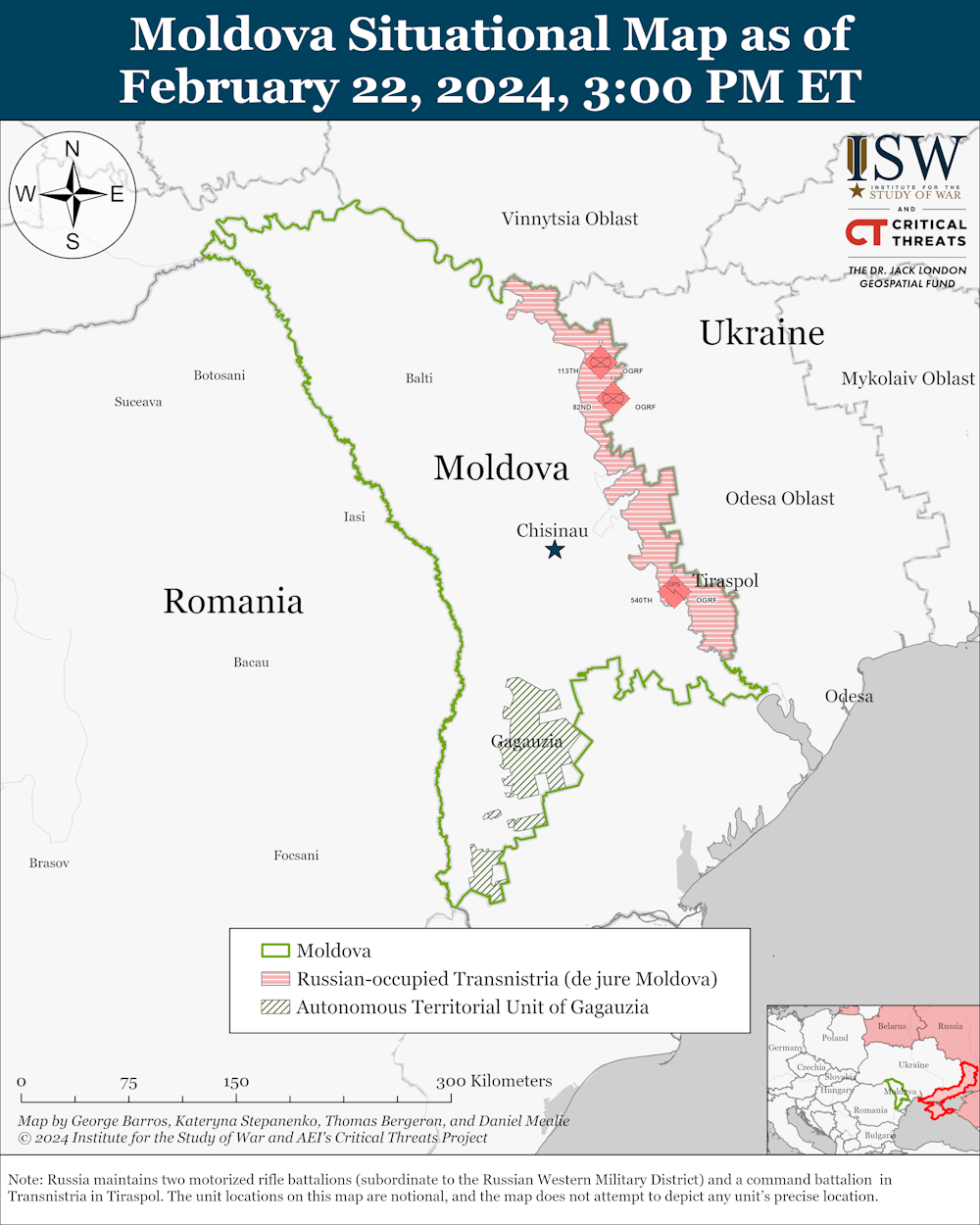
    MIL OSI Europe News

  • MIL-OSI: Mercuria and HNK Alpha Execute First Carbon Futures Block Trades on Abaxx Commodity Futures Exchange and Clearinghouse

    Source: GlobeNewswire (MIL-OSI)

    TORONTO, Nov. 04, 2024 (GLOBE NEWSWIRE) — Abaxx Technologies Inc. (NEO:ABXX)(OTCQX:ABXXF) (“Abaxx” or the “Company”), a financial software and market infrastructure company, majority shareholder of Abaxx Singapore Pte Ltd. (“Abaxx Singapore”), the owner of Abaxx Commodity Exchange and Clearinghouse (individually, “Abaxx Exchange” and “Abaxx Clearing”), and producer of the SmarterMarkets™ Podcast, today announced the execution of the first two carbon futures block trades, traded between Mercuria and HNK Alpha on October 30, 2024.

    Mercuria and HNK Alpha traded 50 lots of December 2024 CORSIA¹ Phase 1 Carbon Offset Unit Futures at USD $24.00/tCO2e². Mercuria and HNK Alpha also traded 50 lots of December 2025 JREDD+³ Carbon Offset Unit Futures at USD $17.75/tCO2e.

    Abaxx’s carbon futures contracts are designed to enhance price discovery and equip market participants with improved risk management tools. These centrally-cleared, physically-deliverable contracts were launched in June to provide reliable price signals essential for pricing carbon emissions and advancing decarbonization efforts.

    “We’re proud that Mercuria has chosen to use Abaxx Exchange Environmental Futures to better manage their risk in global carbon markets,” said Abaxx Exchange’s Head of Environmental Markets, Alasdair Were. “We’ve built these contracts in collaboration with global market participants and to meet the needs of the commercial market, and we look forward to continue working with world-class trading firms like Mercuria to build liquidity in our carbon markets.”

    Abaxx’s suite of futures contracts for LNG and carbon are open for trading 14 hours a day, Monday through Friday. Visit abaxx.exchange/resources-directory for a full list of clearing firms and execution brokers.

    Notes:
    ¹ Carbon Offsetting and Reduction Scheme for International Aviation
    ² Tonne of carbon dioxide equivalent
    ³ Jurisdictional Reducing Emissions from Deforestation and Forest Degradation

    About Abaxx Technologies

    Abaxx is building Smarter Markets — markets empowered by better financial technology and market infrastructure to address our biggest challenges, including the energy transition. In addition to developing and deploying financial technologies that make communication, trade, and transactions easier and more secure, Abaxx is a majority-owner of Abaxx Exchange and Abaxx Clearing, subsidiaries recognized by MAS as an RMO and ACH, respectively.

    Abaxx Exchange and Abaxx Clearing are a Singapore-based commodity futures exchange and clearinghouse, introducing centrally cleared, physically deliverable commodities futures and derivatives to provide better price discovery and risk management tools for the commodities critical to our transition to a lower-carbon economy.

    For more information please visit abaxx.tech, abaxx.exchange and smartermarkets.media.

    For more information about this press release, please contact:
    Steve Fray, CFO
    Tel: +1 647 490 1590

    Media and investor inquiries:

    Abaxx Technologies Inc.
    Investor Relations Team
    Tel: +1 647 490 1590
    E-mail: ir@abaxx.tech

    Forward-Looking Statements

    This press release includes certain “forward-looking statements” which do not consist of historical facts. Forward-looking statements include estimates and statements that describe Abaxx’s future plans, objectives, or goals, including words to the effect that Abaxx expects a stated condition or result to occur. Forward-looking statements may be identified by such terms as “seeking”, “should”, “intend”, “predict”, “potential”, “believes”, “anticipates”, “expects”, “estimates”, “may”, “could”, “would”, “will”, “continue”, “plan” or the negative of these terms and similar expressions. Since forward-looking statements are based on current expectations and assumptions and address future events and conditions, by their very nature they involve inherent risks and uncertainties. Although these statements are based on information currently available to Abaxx, Abaxx does not provide any assurance that actual results will meet respective management expectations. Risks, uncertainties, assumptions, and other factors involved with forward-looking information could cause actual events, results, performance, prospects, and opportunities to differ materially from those expressed or implied by such forward-looking information.

    Forward-looking information related to Abaxx in this press release includes, but is not limited to, Abaxx’s objectives, goals or future plans, the development and implementation of additional products and futures contracts, the ability to meet commercial demands for its products and to meet the needs of the commercial market, the ability to develop and maintain relationships with trading firms and build liquidity for its products. Such factors impacting forward-looking information include, among others: risks relating to the global economic climate; dilution; Abaxx’s limited operating history; future capital needs and uncertainty of additional financing; the competitive nature of the industry; currency exchange risks; the need for Abaxx to manage its planned growth and expansion; the effects of product development and need for continued technology change; protection of proprietary rights; the effect of government regulation and compliance on Abaxx and the industry; the ability to list Abaxx’s securities on stock exchanges in a timely fashion or at all; network security risks; the ability of Abaxx to maintain properly working systems; reliance on key personnel; global economic and financial market deterioration impeding access to capital or increasing the cost of capital; and volatile securities markets impacting security pricing unrelated to operating performance. In addition, particular factors which could impact future results of the business of Abaxx include but are not limited to: operations in foreign jurisdictions, protection of intellectual property rights, contractual risk, third-party risk; clearinghouse risk, malicious actor risks, third-party software license risk, system failure risk, risk of technological change; dependence of technical infrastructure; and changes in the price of commodities, capital market conditions, restriction on labor and international travel and supply chains. Abaxx has also assumed that no significant events occur outside of Abaxx’s normal course of business.

    Abaxx cautions that the foregoing list of material factors is not exhaustive. In addition, although Abaxx has attempted to identify important factors that could cause actual results to differ materially, there may be other factors that cause results not to be as anticipated, estimated, or intended. When relying on forward-looking statements and information to make decisions, investors and others should carefully consider the foregoing factors and other uncertainties and potential events. Abaxx has assumed that the material factors referred to in the previous paragraphs will not cause such forward-looking statements and information to differ materially from actual results or events. However, the list of these factors is not exhaustive and is subject to change and there can be no assurance that such assumptions will reflect the actual outcome of such items or factors. The forward-looking statements and information contained in this press release represents the expectations of Abaxx as of the date of this press release and, accordingly, is subject to change after such date. Abaxx undertakes no obligation to update or revise any forward-looking statements and information, whether as a result of new information, future events or otherwise, except as required by law. Accordingly, readers are cautioned not to place undue reliance on these forward-looking statements and information. Cboe Canada does not accept responsibility for the adequacy or accuracy of this press release.

    The MIL Network

  • MIL-OSI Banking: diamondwhale.pro: BaFin warns consumers about website

    Source: Bundesanstalt für Finanzdienstleistungsaufsicht – In English

    The Federal Financial Supervisory Authority (BaFin) warns consumers about the website diamondwhale.pro. According to information available to BaFin, financial and investment services are being provided on this website without the required authorisation.

    The website operator is simply referred to as “DiamondWhale”, and there is no information regarding its legal form. They give no specific business address.

    BaFin has recently become aware of a number of websites with almost identical content and has also warned consumers about them. In each case, the website’s homepage displays the phrase: “Step Up Your Trading with [name of operator]“.

    Anyone providing financial or investment services in Germany may do so only with authorisation from BaFin. However, some companies offer these services without the necessary authorisation. Information on whether a particular company has been granted authorisation by BaFin can be found in database of companies.

    Theinformation provided by BaFin is based on section 37 (4) of the German Banking Act (KreditwesengesetzKWG).

    Please be aware:

    BaFin, the German Federal Criminal Police Office (BundeskriminalamtBKA) and the German state criminal police offices (Landeskriminalämter) recommend that consumers seeking to invest money online should exercise the utmost caution and do the necessary research beforehand in order to identify fraud attempts at an early stage.

    MIL OSI Global Banks

  • MIL-OSI Economics: diamondwhale.pro: BaFin warns consumers about website

    Source: Bundesanstalt für Finanzdienstleistungsaufsicht – In English

    The Federal Financial Supervisory Authority (BaFin) warns consumers about the website diamondwhale.pro. According to information available to BaFin, financial and investment services are being provided on this website without the required authorisation.

    The website operator is simply referred to as “DiamondWhale”, and there is no information regarding its legal form. They give no specific business address.

    BaFin has recently become aware of a number of websites with almost identical content and has also warned consumers about them. In each case, the website’s homepage displays the phrase: “Step Up Your Trading with [name of operator]“.

    Anyone providing financial or investment services in Germany may do so only with authorisation from BaFin. However, some companies offer these services without the necessary authorisation. Information on whether a particular company has been granted authorisation by BaFin can be found in database of companies.

    Theinformation provided by BaFin is based on section 37 (4) of the German Banking Act (KreditwesengesetzKWG).

    Please be aware:

    BaFin, the German Federal Criminal Police Office (BundeskriminalamtBKA) and the German state criminal police offices (Landeskriminalämter) recommend that consumers seeking to invest money online should exercise the utmost caution and do the necessary research beforehand in order to identify fraud attempts at an early stage.

    MIL OSI Economics

  • MIL-OSI Global: I research sexual perversions and paraphilias – here’s what we’ve learned about them

    Source: The Conversation – UK – By Mark Griffiths, Director of the International Gaming Research Unit and Professor of Behavioural Addiction, Nottingham Trent University

    Hollywood actor Armie Hammer was accused of sending messages detailing cannibalistic fantasies in 2021. DFree/Shutterstock

    After allegedly sending messages detailing cannibalistic fetishes, Hollywood actor Armie Hammer hopes to relaunch his career with a new podcast and movie.

    Following the 2021 social media cannibal scandal, Hammer was also accused of rape and abuse by various women, but consistently denied any criminal behaviour and was not charged.

    Now, it seems, Hammer is laughing off the cannibalism allegations. Speaking to his first podcast guest, Tom Arnold, Hammer says, “I’m not gonna lie. I’m just like, Hey, I’m a cannibal!”

    But being sexually aroused by the fantasy – or reality – of cannibalism is real. I should know, as it’s one of the subjects I discuss in my latest book Sexual Perversions and Paraphilias: An A-Z

    Paraphilias are uncommon types of sexual expression often described as sexual deviations, sexual perversions or disorders of sexual preference.

    They are typically accompanied by intense sexual arousal to unconventional or non-sexual stimuli such as enemas (klismaphilia), statues (agalmatophilia), teeth (odontophilia) and vomit (emetophilia).

    To many people paraphilias may seem bizarre or socially unacceptable, representing the extreme end of the sexual continuum – and in some cases, such as zoophilia (having sex with animals) and necrophilia (having sex with dead people), may be illegal.

    Paraphilias may be laughed off, dismissed or leave some people disgusted, but there’s a pressing need for more research into uncommon sexual behaviour given how little we know.

    Sexual fantasies and behaviour are a fundamental part of the human experience. What is considered immoral or even illegal changes according to the social and temporal context. But whatever sexual desires are considered illicit or depraved in a particular time and place are also stigmatised.

    Researching paraphilias, even the most distasteful or criminal, is essential to help safeguard vulnerable groups. Research can also help minimise the discrimination faced by those with uncommon sexual interests, helping ensure their access to sexual health care and psychological support, which can be lacking.

    Vorarephilia

    Vorarephilia – or “vore” – refers to being sexually aroused by the idea of being eaten, eating another person or observing this process for sexual gratification.

    Most of the fantasies of vorarephiliacs involve being the ones eaten. Devouring someone could be viewed as the ultimate act of dominance by a predator and the ultimate act of submission by the prey.

    The most infamous vorarephiliac is arguably Armin Meiwes from Germany.

    Meiwes had allegedly been fantasising about cannibalism since his childhood and frequented cannibal fetish websites. He posted around 60 online adverts asking if anyone would like to be eaten by him.

    In March 2002, Bernd Jürgen Brandes responded to Meiwes. They met up only once. Meiwes bit off Brandes’ penis, which the two of them cooked and ate.

    Brandes was videotaped being stabbed to death by Meiwes in his bath. The body was then stored for Meiwes to eat.

    Meiwes was eventually convicted of murder and imprisoned for life. However, it’s worth nothing that although some paraphilias are illegal, most cause no psychological or behavioural problems when they are engaged by consenting adults.

    Dacryphilia

    Dacryphilia is getting sexual arousal from seeing someone cry.

    I have published a number of studies on dacryphilia. One involved interviews with eight dacryphiles: six women and two men, from the US, UK, Romania and Belgium.

    It showed there were sub-types of dacryphilia, even among such a small group. Based on the interviews, I identified three types of dacryphile.

    Compassionate dacryphiles are sexually aroused by the compassion of comforting a crier.

    Dominant or submissive dacryphiles are sexually aroused by either causing tears in a consenting submissive partner or by being made to cry by a consenting dominant partner.

    “Curled lip” dacryphiles are sexually aroused by the curling of a protruded bottom lip during crying.

    Eproctophilia

    Eproctophilia involves being sexually aroused by flatulence.

    In 2013, I published the first case study of an eproctophile. The case concerned a 22-year-old single man, Brad*, an American from Illinois.

    Brad recalled that in middle school he had a crush on a girl who had farted in the class. Brad said:

    This blew my mind [I] knew by simple biology that girls farted, but hearing that the girl I had been fawning over was capable of such a thing sparked a strange interest in me.

    Brad first engaged in an eproctophilic act with a male friend in his mid-teens. Up to that point he had considered himself heterosexual. However, this changed when he heard his male friend fart.

    Brad said it was “appealing in sound” and that he began fixating on it. He set up a bet with the wager being the right to fart in the loser’s face for a week. He continued to lose such bets once every few weeks for about two years.

    Apotemnophilia

    Apotemnophilia refers to being sexually aroused by the fantasy or reality of being an amputee.

    Some apotemnophiles may pretend to be amputees but, for a minority, the behaviour involves obsessive scheming to convince a surgeon to perform a medically unnecessary amputation.

    To most people, this might seem like a type of masochism, but case studies suggest that there is no erotisation of pain – only of the healed amputated stump.

    Salirophilia

    Salirophilia is sexual arousal from soiling or dishevelling someone attractive, which can include tearing or damaging the desired person’s clothing, covering them in mud or filth or messing up their hair or make-up.

    My 2019 case study involved Jeff*, a 58-year-old Australian heterosexual. Jeff recounted that when he was young he wanted to masturbate in strange places such as lying under a cabinet in a dirty garage.

    Jeff said that he engaged in solitary salirophilic practices regularly but very infrequently with female partners because it was difficult to find like-minded women.

    He was also a fan of the television show Fear Factor in which contestants perform revolting tasks for prize money, such as eating rotting food or being submerged in foul fluids. These were a source of sexual arousal for Jeff. He told me: “I just find the defilement of an attractive woman’s body erotic.”

    *The names of case study participants in this article have been changed.

    Dr. Mark Griffiths has received research funding from a wide range of organizations including the Economic and Social Research Council, the British Academy and the Responsibility in Gambling Trust. He has also carried out consultancy for numerous gambling companies in the area of player protection, social responsibility and responsible gaming.. Views expressed here are his own and not those of these funding bodies.

    ref. I research sexual perversions and paraphilias – here’s what we’ve learned about them – https://theconversation.com/i-research-sexual-perversions-and-paraphilias-heres-what-weve-learned-about-them-238446

    MIL OSI – Global Reports

  • MIL-OSI United Kingdom: PM speech to the INTERPOL General Assembly: 4 November 2024

    Source: United Kingdom – Executive Government & Departments

    Prime Minister Keir Starmer makes a speech to the INTERPOL General Assembly in Glasgow.

    It’s great to welcome you all to Glasgow.

    It was right here, in this conference centre, exactly three years ago that over 190 countries came together at COP26 to agree the Glasgow Climate Pact. 

    That was the first global commitment to phase down the use of coal. And a vital step in the fight against climate change – a challenge that no country can meet on its own.

    So it’s fantastic that once again today, we have over 190 countries here working together to meet another global challenge: the threat of serious organised crime. 

    And it’s particularly fitting to be here in Glasgow: a place that was once home to what many consider to be the first professional City Police Force.

    And a place that is today home to our state-of-the-art Scottish Crime Campus, just down the road in Gartcosh.

    18 different organisations working together, under one roof, co-operating for a common cause. Precisely the kind of co-operation that is so essential to the missions of my government, and the foundation we rest everything upon.

    Greater security for our people. Security rooted in our values, in respect for human rights and upholding the rule of law. 

    Now, I was a prosecutor myself. I served as the Director of Public Prosecutions in England and Wales. Not here in Scotland – we have a complicated set of arrangements across these countries. 

    But what we know from being a country of four nations – what I know having served in that role – having seen the complexity of operations that fight organised crime, first-hand, is that crime is global. 

    Criminals do not respect borders. And so I want to start today by thanking you – all of you here in this conference centre. And the thousands that you represent. Those who serve in police, in intelligence, and security services right across the world. Because too often – what you do goes unrecognised. 

    Some of it necessarily unknown. But just look at some of the operations we can talk about – they tell the story. 

    The UK working with the US and Ecuador to seize 19 tonnes of cocaine. The global identification of over 40,000 victims of child sexual abuse online, and more than 70 countries working together to save them. 

    60 countries working together to tackle online scams, resulting in almost 4,000 arrests, and more than $250 million of assets seized. 

    And of course, the operation which infiltrated and seized the online platform used by LockBit, the world’s most harmful cyber-crime group.

    I know the hard work that goes into this. I know how many things have to come together, almost instantly. And most importantly – I know what would happen without you.

    The extra lives destroyed by drugs and violence. The unspeakable horrors of child sexual abuse. Gangs forcing the vulnerable into modern slavery or prostitution. People having their life savings stolen through online fraud.

    It’s your work, your service, that protects people from these threats. And because so much of your work is done in private, I’m grateful for this opportunity in public to say a huge and heartfelt thank you. 

    Now, of course INTERPOL is absolutely central to these efforts. As I say – I have seen the importance of global co-operation first-hand. I sent British prosecutors in Pakistan so we could work together on counter-terrorism. In West Africa – to disrupt the flow of drugs from South America to Europe, and ultimately to the UK. 

    So I understand the power of what INTERPOL does, and why the UK makes great use of those resources… 

    Handling thousands of enquiries every week from around the world, from intelligence sharing to managing direct threats to life. 

    So I am pleased to say today that the UK is increasing its funding for INTERPOL projects, investing £6 million this financial year.

    This will include support for improved data-sharing, and faster communications capabilities. The first ever Global Fraud Threat Assessment, and new regional networks. From strengthening co-operation across the Pacific to tackling drug and gun smuggling networks in the Caribbean.

    Because together, we want to send a clear message to the world’s most hardened criminals: there is no safe haven. There is no place that you can hide from justice.  Together – we’ve got the whole world covered. And together – we will defeat you.  

    And look – there is a particular group of organised criminals that urgently need to hear this message: the vile people smugglers, who think that human life can be trafficked, that borders can be ignored.

    And that desperation, misery and hope – they prey on that too – are all emotions that are ripe for exploitation. 

    Make no mistake – people smuggling needs a global response. And on a scale – way beyond where we are now. We need to unlock the power of that co-operation – across borders, agencies, continents – even. 

    And look – I know many people in this room are already working hard on this. So I accept that my argument here is a political one, first and foremost. 

    But I’m afraid we’re still at the stage where the world needs to wake up to the severity of this challenge. It goes back to security. 

    I was elected to deliver security for the British people. And strong borders are a part of that – of course they are. But I say it again – security doesn’t stop at our borders.  

    And illegal migration is, without question, a massive driver of global insecurity. There is nothing progressive about turning a blind eye as men, women and children die in the Channel. 

    And you don’t advance the cause of global justice – or compassion for those individuals – to pretend that there is. 

    This is a vile trade that must be stamped out – wherever it thrives. And it exploits the cracks between our institutions, pits nations against one another, profits from our inability – at the political level – to come together. 

    That’s part of the business model. And so I will work with anyone serious who can offer solutions on this – anyone.

    Because without co-ordinated, global action, it will not go away. 

    And unless we bring all the powers we have to bear on this, in much the same way as we do for terrorism, then we will struggle to bring these criminals to justice.  

    And that in a sense is my message here today. People-smuggling should be viewed as a global security threat similar to terrorism.

    We’ve got to combine resources, share intelligence and tactics, and tackle the problem upstream, working together to shut down the smuggling routes.

    We do that with terrorism. When I was the Director of Public Prosecutions, it was my personal mission to smash the terrorist gangs. And we worked across borders to ensure the safety of citizens, across Europe and across the world.  

    Now, as the UK’s Prime Minister, it is my personal mission to smash the people smuggling gangs. And look, that starts here in the UK. 

    This Labour government is resetting the UK’s whole approach to this challenge. No more gimmicks. No more gesture politics. No more irresponsible, undeliverable promises that almost by design – seek conflict with other countries.  

    We have turned the page on all of that. Because such promises are not worth the paper they are written on. All they do is waste taxpayer money, destroy people’s trust in politics as a force for good.

    Instead, we are approaching this issue with humanity, and with profound respect for international law.

    We will never withdraw from the European Convention on Human Rights. Indeed, we’re proud of the role the UK played in creating that Convention. Respecting international treaties also makes international co-operation easier, because it shows that the UK is a reliable partner.

    So our approach is different. As I say – we’re going to treat people smugglers like terrorists. So we’re taking our approach to counter-terrorism – which we know works – and applying it to the gangs, with our new Border Security Command.

    We’re ending the fragmentation between policing, Border Force and our intelligence agencies. Recruiting hundreds of specialist investigators. They are best of the best – from our National Crime Agency, Border Force, Immigration Enforcement, the CPS and our intelligence agencies – all working together. 

    We’re making border protection an elite border force. And not just within our country. We’re also working together with international partners, sharing intelligence and tactics.

    Earlier this year I visited the Headquarters of our National Crime Agency. I saw first-hand the ways we are already collaborating, and what it takes to intercept, to disrupt, and destroy these networks. There are so many tools at our disposal.

    We can seize their phones at the border, identifying and tracing smugglers wiring payments. We’ve already trained sniffer dogs to detect the smell of dinghy rubber and working with Bulgaria stopped more than 100 small boats upstream, long before they made it to the Channel. 

    And as we understand how these gangs work, we can invest in new capabilities and enhanced powers to smash them.

    So we’re giving our new Border Security Command an additional £75 million of new funding on top of the of £75 million we’ve already committed.

    This will support a new Organised Immigration Crime Intelligence Unit, hundreds of new investigators and intelligence officers, backed by state-of-the-art technology.

    We’re also investing a further £58 million in our National Crime Agency, including strengthening its data analysis and intelligence capabilities.

    And we’ll also legislate to give those fighting these gangs enhanced powers too. Again, look what we’ve done with counter-terrorism. We have the powers to trace suspects’ movements using information from the intelligence services.

    We can shut down their bank accounts, cut off their internet access, and arrest them for making preparations to act, before an attack has taken place.

    We don’t wait for them to act – we stop them before they act. And we need to stop people smuggling gangs before they act too.

    Now, as with any crime – smuggling does not operate in an institutional vacuum, so we also need to rebuild our broken asylum system, process claims swiftly and humanely.

    That will make law enforcement’s job much easier.  So we’re recruiting hundreds of additional people into asylum case working.

    Overall returns since this government came to office are now 9,400 – up almost 6,000 since the end of August. 

    Enforced returns are up almost a fifth on the same period last year. And returns of Foreign National Offenders are up 14 per cent.

    But look, the only way to defeat this vile trade and save lives is to stop people being smuggled here in the first place.

    And that means doing everything possible to deepen our cross-border co-operation. So international agreements matter.

    We have to use every tool we have – operational, diplomatic, political – to join up our response.

    President Macron and I have already agreed to increase intelligence sharing and do more to dismantle smuggling routes further upstream. This is also a priority for the bi-lateral co-operation treaty we are working on with Germany. 

    We’re also working with Italy to dismantle the supply chains of maritime equipment, combat illicit financial flows, and strengthen our investigative capacities and our data sharing. And as part of the UK’s wider reset with the European Union, we are seeking a new security pact, including restoring access to real-time intelligence sharing networks. And at the European Political Community this Thursday in Hungary, I’ll be putting this issue at the top of the international agenda once again. 

    But we need your help also.  This is the General Assembly of the world’s security experts. It’s your co-operation across borders that saves lives, time and again. It’s your collective efforts that bring organised criminals to justice, wherever they seek to hide.

    And it’s your leadership today that can help make a decisive breakthrough against this vile trade in human life. 

    Because if together we can win this war against the people smugglers, then this gathering will have achieved a victory for humanity – every bit as significant as the Glasgow Climate Pact.

    Because you will have helped to smash the gangs, secure our borders, and save countless lives.  And it is with that hope, and in that spirit, that I declare the 92nd General Assembly open. 

    Thank you so much.

    Updates to this page

    Published 4 November 2024

    MIL OSI United Kingdom

  • MIL-OSI United Kingdom: Speech: PM speech to the INTERPOL General Assembly: 4 November 2024

    Source: United Kingdom – Prime Minister’s Office 10 Downing Street

    Prime Minister Keir Starmer makes a speech to the INTERPOL General Assembly in Glasgow.

    It’s great to welcome you all to Glasgow.

    It was right here, in this conference centre, exactly three years ago that over 190 countries came together at COP26 to agree the Glasgow Climate Pact. 

    That was the first global commitment to phase down the use of coal. And a vital step in the fight against climate change – a challenge that no country can meet on its own.

    So it’s fantastic that once again today, we have over 190 countries here working together to meet another global challenge: the threat of serious organised crime. 

    And it’s particularly fitting to be here in Glasgow: a place that was once home to what many consider to be the first professional City Police Force.

    And a place that is today home to our state-of-the-art Scottish Crime Campus, just down the road in Gartcosh.

    18 different organisations working together, under one roof, co-operating for a common cause. Precisely the kind of co-operation that is so essential to the missions of my government, and the foundation we rest everything upon.

    Greater security for our people. Security rooted in our values, in respect for human rights and upholding the rule of law. 

    Now, I was a prosecutor myself. I served as the Director of Public Prosecutions in England and Wales. Not here in Scotland – we have a complicated set of arrangements across these countries. 

    But what we know from being a country of four nations – what I know having served in that role – having seen the complexity of operations that fight organised crime, first-hand, is that crime is global. 

    Criminals do not respect borders. And so I want to start today by thanking you – all of you here in this conference centre. And the thousands that you represent. Those who serve in police, in intelligence, and security services right across the world. Because too often – what you do goes unrecognised. 

    Some of it necessarily unknown. But just look at some of the operations we can talk about – they tell the story. 

    The UK working with the US and Ecuador to seize 19 tonnes of cocaine. The global identification of over 40,000 victims of child sexual abuse online, and more than 70 countries working together to save them. 

    60 countries working together to tackle online scams, resulting in almost 4,000 arrests, and more than $250 million of assets seized. 

    And of course, the operation which infiltrated and seized the online platform used by LockBit, the world’s most harmful cyber-crime group.

    I know the hard work that goes into this. I know how many things have to come together, almost instantly. And most importantly – I know what would happen without you.

    The extra lives destroyed by drugs and violence. The unspeakable horrors of child sexual abuse. Gangs forcing the vulnerable into modern slavery or prostitution. People having their life savings stolen through online fraud.

    It’s your work, your service, that protects people from these threats. And because so much of your work is done in private, I’m grateful for this opportunity in public to say a huge and heartfelt thank you. 

    Now, of course INTERPOL is absolutely central to these efforts. As I say – I have seen the importance of global co-operation first-hand. I sent British prosecutors in Pakistan so we could work together on counter-terrorism. In West Africa – to disrupt the flow of drugs from South America to Europe, and ultimately to the UK. 

    So I understand the power of what INTERPOL does, and why the UK makes great use of those resources… 

    Handling thousands of enquiries every week from around the world, from intelligence sharing to managing direct threats to life. 

    So I am pleased to say today that the UK is increasing its funding for INTERPOL projects, investing £6 million this financial year.

    This will include support for improved data-sharing, and faster communications capabilities. The first ever Global Fraud Threat Assessment, and new regional networks. From strengthening co-operation across the Pacific to tackling drug and gun smuggling networks in the Caribbean.

    Because together, we want to send a clear message to the world’s most hardened criminals: there is no safe haven. There is no place that you can hide from justice.  Together – we’ve got the whole world covered. And together – we will defeat you.  

    And look – there is a particular group of organised criminals that urgently need to hear this message: the vile people smugglers, who think that human life can be trafficked, that borders can be ignored.

    And that desperation, misery and hope – they prey on that too – are all emotions that are ripe for exploitation. 

    Make no mistake – people smuggling needs a global response. And on a scale – way beyond where we are now. We need to unlock the power of that co-operation – across borders, agencies, continents – even. 

    And look – I know many people in this room are already working hard on this. So I accept that my argument here is a political one, first and foremost. 

    But I’m afraid we’re still at the stage where the world needs to wake up to the severity of this challenge. It goes back to security. 

    I was elected to deliver security for the British people. And strong borders are a part of that – of course they are. But I say it again – security doesn’t stop at our borders.  

    And illegal migration is, without question, a massive driver of global insecurity. There is nothing progressive about turning a blind eye as men, women and children die in the Channel. 

    And you don’t advance the cause of global justice – or compassion for those individuals – to pretend that there is. 

    This is a vile trade that must be stamped out – wherever it thrives. And it exploits the cracks between our institutions, pits nations against one another, profits from our inability – at the political level – to come together. 

    That’s part of the business model. And so I will work with anyone serious who can offer solutions on this – anyone.

    Because without co-ordinated, global action, it will not go away. 

    And unless we bring all the powers we have to bear on this, in much the same way as we do for terrorism, then we will struggle to bring these criminals to justice.  

    And that in a sense is my message here today. People-smuggling should be viewed as a global security threat similar to terrorism.

    We’ve got to combine resources, share intelligence and tactics, and tackle the problem upstream, working together to shut down the smuggling routes.

    We do that with terrorism. When I was the Director of Public Prosecutions, it was my personal mission to smash the terrorist gangs. And we worked across borders to ensure the safety of citizens, across Europe and across the world.  

    Now, as the UK’s Prime Minister, it is my personal mission to smash the people smuggling gangs. And look, that starts here in the UK. 

    This Labour government is resetting the UK’s whole approach to this challenge. No more gimmicks. No more gesture politics. No more irresponsible, undeliverable promises that almost by design – seek conflict with other countries.  

    We have turned the page on all of that. Because such promises are not worth the paper they are written on. All they do is waste taxpayer money, destroy people’s trust in politics as a force for good.

    Instead, we are approaching this issue with humanity, and with profound respect for international law.

    We will never withdraw from the European Convention on Human Rights. Indeed, we’re proud of the role the UK played in creating that Convention. Respecting international treaties also makes international co-operation easier, because it shows that the UK is a reliable partner.

    So our approach is different. As I say – we’re going to treat people smugglers like terrorists. So we’re taking our approach to counter-terrorism – which we know works – and applying it to the gangs, with our new Border Security Command.

    We’re ending the fragmentation between policing, Border Force and our intelligence agencies. Recruiting hundreds of specialist investigators. They are best of the best – from our National Crime Agency, Border Force, Immigration Enforcement, the CPS and our intelligence agencies – all working together. 

    We’re making border protection an elite border force. And not just within our country. We’re also working together with international partners, sharing intelligence and tactics.

    Earlier this year I visited the Headquarters of our National Crime Agency. I saw first-hand the ways we are already collaborating, and what it takes to intercept, to disrupt, and destroy these networks. There are so many tools at our disposal.

    We can seize their phones at the border, identifying and tracing smugglers wiring payments. We’ve already trained sniffer dogs to detect the smell of dinghy rubber and working with Bulgaria stopped more than 100 small boats upstream, long before they made it to the Channel. 

    And as we understand how these gangs work, we can invest in new capabilities and enhanced powers to smash them.

    So we’re giving our new Border Security Command an additional £75 million of new funding on top of the of £75 million we’ve already committed.

    This will support a new Organised Immigration Crime Intelligence Unit, hundreds of new investigators and intelligence officers, backed by state-of-the-art technology.

    We’re also investing a further £58 million in our National Crime Agency, including strengthening its data analysis and intelligence capabilities.

    And we’ll also legislate to give those fighting these gangs enhanced powers too. Again, look what we’ve done with counter-terrorism. We have the powers to trace suspects’ movements using information from the intelligence services.

    We can shut down their bank accounts, cut off their internet access, and arrest them for making preparations to act, before an attack has taken place.

    We don’t wait for them to act – we stop them before they act. And we need to stop people smuggling gangs before they act too.

    Now, as with any crime – smuggling does not operate in an institutional vacuum, so we also need to rebuild our broken asylum system, process claims swiftly and humanely.

    That will make law enforcement’s job much easier.  So we’re recruiting hundreds of additional people into asylum case working.

    Overall returns since this government came to office are now 9,400 – up almost 6,000 since the end of August. 

    Enforced returns are up almost a fifth on the same period last year. And returns of Foreign National Offenders are up 14 per cent.

    But look, the only way to defeat this vile trade and save lives is to stop people being smuggled here in the first place.

    And that means doing everything possible to deepen our cross-border co-operation. So international agreements matter.

    We have to use every tool we have – operational, diplomatic, political – to join up our response.

    President Macron and I have already agreed to increase intelligence sharing and do more to dismantle smuggling routes further upstream. This is also a priority for the bi-lateral co-operation treaty we are working on with Germany. 

    We’re also working with Italy to dismantle the supply chains of maritime equipment, combat illicit financial flows, and strengthen our investigative capacities and our data sharing. And as part of the UK’s wider reset with the European Union, we are seeking a new security pact, including restoring access to real-time intelligence sharing networks. And at the European Political Community this Thursday in Hungary, I’ll be putting this issue at the top of the international agenda once again. 

    But we need your help also.  This is the General Assembly of the world’s security experts. It’s your co-operation across borders that saves lives, time and again. It’s your collective efforts that bring organised criminals to justice, wherever they seek to hide.

    And it’s your leadership today that can help make a decisive breakthrough against this vile trade in human life. 

    Because if together we can win this war against the people smugglers, then this gathering will have achieved a victory for humanity – every bit as significant as the Glasgow Climate Pact.

    Because you will have helped to smash the gangs, secure our borders, and save countless lives.  And it is with that hope, and in that spirit, that I declare the 92nd General Assembly open. 

    Thank you so much.

    Updates to this page

    Published 4 November 2024

    MIL OSI United Kingdom

  • MIL-OSI USA: This Week in NJ – November 1st, 2024

    Source: US State of New Jersey

    Governor Phil Murphy, Lieutenant Governor Tahesha Way, and Congresswoman Bonnie Watson Coleman Launch New Jersey’s Commemoration of America’s 250th Anniversary Celebration

    At Monmouth Battlefield State Park, Governor Phil Murphy, Lieutenant Governor Tahesha Way, and Congresswoman Bonnie Watson Coleman launched New Jersey’s celebration of the nation’s 250th anniversary, kicking off a multi-year schedule of events and projects that will take place through the nation’s semiquincentennial. As a leader in education, technology, AI, film, science, and more, New Jersey will celebrate its revolutionary legacy and its critical role in American history.

    “New Jersey is not just home to revolutionary history—we are, to this day, the birthplace for revolutionary possibilities,” said Governor Murphy. “From our eclectic culinary landscape, to our leadership in emerging industries like clean-energy and generative Artificial Intelligence, to our steadfast reputation as one of the most diverse states in the nation, New Jersey is where the future is being built. As we launch New Jersey’s official Commemoration of America’s 250th Anniversary Celebration—and prepare to welcome in visitors from across the globe—we are going to unite together around our core, American values every step of the way.” 

    “Our nation’s rich and diverse history has unfolded over the last 250 years,” said Lieutenant Governor Tahesha Way. “In my role as Secretary of State, I oversee the New Jersey Historical Commission, and I am thrilled to celebrate our country’s layered history—much of which has roots here in New Jersey. This shared legacy reflects our resilience and strength as united Americans, standing together through generations.” 

    “The Battle of Monmouth was a vital turning point to winning our nation’s independence nearly 250 years ago. So much of the story of our nation’s founding took place right here in New Jersey,” said Congresswoman Bonnie Watson Coleman. “As a member of the Semiquincentennial Commission, I’m so excited to help New Jersey show the rest of the country why we’re known as the ‘Crossroads of the American Revolution.’”

    The launch event included musical accompaniments by the Washington Crossing Fifes and Drums; a posting and retirement of the colors by reenactors of the Continental Army; the Pledge of Allegiance led by Ava Porta, a fifth grade student from Taylor Mills Elementary School in Manalapan; the National Anthem performed by Melissa Walker, an acclaimed jazz vocalist and recording artist from Montclair; and an essay read by Malay Gupta, an eighth grade student and first-place winner in America’s Field Trip scholastic contest at John Adams Middle School in Edison.

    READ MORE

    Governor Murphy Joins NJ TRANSIT to Showcase Brand New Multilevel Rail Cars

    Governor Phil Murphy and NJ TRANSIT President & CEO Kevin S. Corbett previewed the next generation of multilevel rail cars, modernizing the fleet which will significantly improve reliability, capacity and customer comfort. The latest generation of multilevel rail cars was unveiled at an event at NJ TRANSIT’s Meadows Maintenance Complex (MMC) in Kearny.

    “Providing modern, reliable equipment is a critical component to improving New Jersey’s infrastructure, particularly with regard to public transit,” said Governor Phil Murphy. “These multilevel rail cars are equipped with innovative features that meet the everyday needs of our commuters. Upon their completion, these upgraded rail cars will expand access to reliable and comfortable transportation for NJ TRANSIT riders.”

    “NJ TRANSIT is committed to improving every aspect of the customer journey, and the 174 new multilevel rail cars will help achieve that by significantly improving reliability, increasing capacity and enhancing the onboard experience,” said NJ TRANSIT President & CEO Kevin S. Corbett. “NJ TRANSIT is grateful to Governor Murphy, the New jersey legislators and our partners at the Federal Transit Administration (FTA) for delivering the necessary funding to ensure our system continues to meet the growing demands of our region, and the expectations of our customers.” 

    Governor Murphy and Corbett previewed the first of 174 Multilevel III cars during an event at the agency’s MMC in Kearny. They highlighted many of the new car’s amenities, including USB charging ports and onboard information displays. The new cars, manufactured by Alstom Transportation in Plattsburgh, NY, will offer a range of benefits over the older, 40+ year-old single level cars they will replace, including dramatic improvement in mechanical reliability. The vehicle maximum speed will increase to 110 miles per hour. The cars, which will begin entering service mid-next year, will be compliant with the latest federal regulations, including Positive Train Control.

    READ MORE

    Governor Murphy Holds Roundtable Discussion on Expanding Access to Public Contracting Opportunities for Historically Marginalized Businesses

    Governor Phil Murphy held a roundtable discussion where he met with legislators and stakeholders to gather input on potential legislative remedies and ongoing administrative initiatives to eliminate disparities in the public procurement process and create a more equitable business environment for Minority and Women-Owned Business Enterprises (MWBEs) in New Jersey.

    The discussion follows the release of a comprehensive statewide disparity study earlier this year – the first since 2005 – which reviewed statewide procurement data relating to goods and services, professional services, and construction between 2015 and 2020, and found statistically significant disparities in the awarding of public contracts to MWBEs. The study was necessary so that the State had a legal basis for addressing these gaps. This discussion also follows a series of meetings over the past months led by the Governor’s Office and the Department of Treasury with community partners, faith leaders, labor, and diverse business chambers across the state.

    “One of New Jersey’s best attributes has always been its vast diversity. Our state is home to people of so many different backgrounds, who all deserve the opportunity to succeed in their chosen field; however, lingering inequities continue to create barriers to entry for our minority and women-owned businesses that want to contract with our state government. This is unacceptable and, with the help of our lawmakers and business community, we will take action,” said Governor Murphy. “Today’s meeting underscores our steadfast commitment to building a stronger, fairer, more equitable, and more inclusive New Jersey. I look forward to continuing this conversation and working with our partners in the Legislature and our state’s business community to create a system where all businesses can thrive.”

    READ MORE

    Governor Murphy Announces Creation of Economic Council

    Governor Murphy signed an Executive Order establishing a new Economic Council, which will be supported by a newly established Development Coordination Committee. Under the executive order, the Economic Council will provide a regular forum for the business community and state government to discuss, collaborate, and solve issues important to the public and private sectors, and stimulate economic growth and prosperity. The new Development Coordination Committee will support the Council’s work in advancing development projects that require multiple state, county and local government approvals. 

    “The Economic Council will ensure that we continue to have a healthy collaboration between the business community and the state government,” said Governor Murphy. “Deepening our Administration’s strong relationship with various sectors across our state will stimulate growth within our economy. I look forward to the forum for ongoing dialogue, collaboration, and problem-solving to advance our shared economic goals.” 

    Since the beginning of the Murphy Administration, state officials have worked with legislative partners and industry stakeholders on policies to improve the role and function of the government in facilitating economic development. Since 2018, New Jersey has seen small businesses increase by over 40,000 or 19%, despite the effects of the global COVID-19 pandemic.

    The Economic Council’s co-chairs will be Deputy Chief of Staff for Economic Growth Eric Brophy and Chief Executive Officer of the New Jersey Economic Development Authority Tim Sullivan. The co-chairs will designate representatives from industry to participate in working group discussions with the Council. Along with the co-chairs, the Council will also consist of the Governor’s Chief of Staff, Chief Counsel, Chief Policy Advisor, the State Treasurer; and the Executive Director of the Business Action Center, or their respective designees.

    READ MORE

    Governors of New Jersey, Pennsylvania, Illinois, Maryland, and Delaware Issue Joint Letter to Grid Operator PJM

    Governor Phil Murphy joined Pennsylvania Governor Josh Shapiro, Illinois Governor JB Pritzker, Maryland Governor Wes Moore, and Delaware Governor John Carney in issuing a letter to PJM Interconnection, the grid operator for New Jersey and the aforementioned states. The governors have called on PJM to take urgent action to address the increasing cost of electricity bills after the record-high prices coming out of the region’s capacity auction.

    The letter addresses issues that impact the path to renewable energy goals, including market structure and the efficacy of the generator interconnection process. In the recent PJM capacity auction for the 2025/2026 Delivery Year, clearing prices surged to almost 10 times higher than the previous year, leaving residents and businesses with much higher bills. Serious flaws with the rules this auction contributed significantly to these unnecessarily high prices. 


    “PJM must take action now to address record high prices,” said Governor Murphy. “In New Jersey, we’re doing our part by bringing new resources to the market and making electricity more affordable for families and businesses as we look to a clean and resilient energy future. However, our grid operator must work in lockstep with the states and recognize that the market isn’t responding quickly enough due to current conditions of slow interconnection. I’m looking forward to working together to stop customers from facing unnecessarily high utility bills, along with facilitating the development of increased capacity and reliability, which will stimulate economic growth and limit the effects of climate change.”

    READ MORE

    MIL OSI USA News

  • MIL-OSI United Kingdom: Talk Money fortnight is here to help you get more and spend less

    Source: City of York

    Published Monday, 4 November 2024

    The week after the Budget is announced, City of York Council and partners are holding a fortnight of events and activities to help residents with their own finances.

    Talk Money Fortnight starts today and runs from 4-15 November. Drop-in events and advice sessions will be held for any residents facing financial struggles. All are welcome to get impartial, free and discreet information and support to maximise their household income, spend less and get good advice.

    Residents are urged to use an online, confidential and impartial benefits calculator so they can claim what they’re eligible for and don’t miss out on the millions of pounds in unclaimed benefits nationally.

    Those of State Pension age can check if they’re eligible for and claim Pension Credit which unlocks other benefits – even if they own their home and have savings, and any residents struggling to pay Council Tax can get advice on claiming Council Tax Support. For those worried about rising fuel bills, there’s information on grants for energy saving measures, and how to stay online by accessing lower broadband and phone tariffs.

    Eligible families can get help with childcare and claim free school meals which bring further help with uniforms and extra money to support the child’s schooling.

    Pauline Stuchfield, Director of Housing and Communities at City of York Council, said:

    It’s never too late to see if there are ways to boost your income and claim all you’re entitled to: we’re here to help you do that during Talk Money fortnight and year-round.”

    Talk Money Week is a national initiative that promotes discussions about money matters, such as budgeting, saving, debt management, and financial planning.

    Check out and visit the drop-in events listed here and a wealth of year-round advice, ideas and information from partners at www.livewellyork.co.uk/talkmoney

    MIL OSI United Kingdom

  • MIL-OSI USA: UConn Named Fulbright HSI Leader for First Time

    Source: US State of Connecticut

    The University of Connecticut has been named as a Fulbright HSI (Hispanic-Serving Institution) Leader for 2024. Each year, the U.S. Department of State’s Bureau of Educational and Cultural Affairs (ECA) recognizes select HSIs for their strong engagement of with the Fulbright Program, the U.S. government’s flagship international academic exchange program.

    Fulbright HSI Leaders demonstrate noteworthy support for Fulbright exchange participants and encourage administrators, faculty, and students at HSIs to engage with Fulbright on campus.  The Fulbright HSI Leaders Initiative also highlights the strength of HSIs as destinations for international students and scholars

    This marks the first time that UConn has earned this distinction and is just one of 51 institutions nationally to be recognized in 2024.

    The Fulbright HSI Leaders were announced during the International Plenary Session of the annual conference of the Hispanic Association of Colleges and Universities (HACU).

    “Fulbrighters from HSIs contribute to the Program’s goal of reflecting the full diversity, perspectives, and talents of the American people,” says Scott Weinhold, Senior Bureau Official for the Bureau of Educational and Cultural Affairs.

    “This recognition affirms our commitment to supporting current students and recent graduates from all backgrounds, majors, and campuses as they pursue a Fulbright award,” says Michael Cunnigham, the Assistant Director of the Office of National Scholarships and Fellowships.

    UConn’s current representatives in the Fulbright U.S. Student Program include Lizzy Irizarry ’23 (CLAS), ’24 MPA. Irizarry earned her undergraduate degree in Latino studies with a minor in Africana studies before attaining her master’s in public administration. She is currently in the southern part of Italy for her Fulbright experience.

    Since its founding in 1946, the Fulbright Program has provided over 400,000 talented and accomplished students, scholars, teachers, artists, and professionals of all backgrounds and in all fields with the opportunity to study, teach, and conduct research abroad.  Fulbrighters exchange ideas, build people-to-people connections, and work to address complex address global challenges.  Fulbright is a program of the U.S. Department of State, with funding provided by the U.S. Government. Participating governments and host institutions, corporations, and foundations around the world also provide direct and indirect support to the program.

    The Fulbright Program implements a wide range of initiatives to ensure that its participants reflect all aspects of the diversity of U.S. society and societies abroad. In addition to HACU, the Fulbright Program also cultivates relationships with external stakeholders, including the White House Initiative on HBCUs, Diversity Abroad, UNCF, the National Clearinghouse on Disability and Exchange, the American Association of Community Colleges, and Mobility International, among many others.

    MIL OSI USA News

  • MIL-OSI: Primech Holdings and Primech AI Forge Strategic Partnerships with Unity Group for Advanced Energy and Robotics Solutions

    Source: GlobeNewswire (MIL-OSI)

    SINGAPORE, Nov. 04, 2024 (GLOBE NEWSWIRE) — Primech Holdings Limited (Nasdaq: PMEC) (“Primech” or the “Company”) and its subsidiary, Primech AI, are pleased to announce new strategic partnerships with Unity Group Holdings International Limited (1539.HK) (“Unity Group”), a renowned provider of energy solutions listed on the Hong Kong Stock Exchange. These partnerships, formalized through separate Memorandums of Understanding (MOUs), aim to harness Unity Group’s energy expertise and Primech AI’s robotic innovations to drive sustainability and technological advancements in their respective fields.

    Unity Group (https://www.unitygroup.eco) operates in over 20 countries, offering innovative energy solutions that significantly reduce carbon footprints and operational costs for numerous global clients. This collaboration aligns with Primech’s commitment to environmental stewardship and marks a significant step in integrating sustainable practices and advanced technologies across its operations.

    Details of the Partnerships:

    • Primech Holdings Ltd. will collaborate with Unity Group to explore and implement cutting-edge energy solutions in Singapore, focusing on enhancing energy efficiency within its extensive facilities management operations.
    • Primech AI and Unity Group will cooperate on the business development and trial deployment of the Hytron restroom cleaning robot into major properties in Dubai. This initiative aims to revolutionize facility maintenance with cutting-edge robotic technology, improving efficiency and reducing the environmental footprint of cleaning operations.

    They will expand Unity Group’s technological footprint in Singapore and beyond, setting new standards for international collaboration in energy and robotic solutions.

    Mr. Kin Wai Ho, CEO of Primech Holdings Limited, commented, “We are proud to partner with Unity Group to pioneer the integration of sustainable energy solutions and advanced robotics in our operations. These initiatives are pivotal as we continue to push the boundaries of what is possible in our industry, ensuring that we remain at the forefront of both environmental responsibility and technological innovation.”

    Mr. Mansfield Wong, Co-founder, Chairman, and CEO of Unity Group, stated, “Our collaboration with Primech Holdings and Primech AI represents a significant opportunity to leverage our expertise in energy solutions alongside Primech’s innovations in robotic technologies. We are excited about the potential of our joint efforts to set benchmarks in sustainability and operational efficiency globally.”

    About Unity Group Holdings International Limited
    Founded in 2008, Unity Group became the first energy service company to be listed on the Hong Kong Stock Exchange. At the core of its operations is the Energy Management Contract (EMC) business model, which implements customized solutions designed to achieve optimal energy efficiency and maximize returns for clients. Unity Group employs industry-leading, effective, and practical research methodologies. These methodologies span innovative green technologies, data analysis, and machine learning. The outcomes of its research and development efforts manifest in its uniquely versatile, appropriate, and actionable green technology solutions. Currently, Unity Group operates in Mainland China, Malaysia, and the Middle East.

    About Primech Holdings Limited
    Headquartered in Singapore, Primech Holdings Limited is a leading provider of comprehensive technology-driven facilities services, predominantly serving both public and private sectors throughout Singapore, with expanding operations in Malaysia. With a legacy of excellence and innovation in the facility services industry, Primech’s operating subsidiary, Primech A & P offers an extensive range of services tailored to meet the complex demands of its diverse clientele. Services include advanced general facility maintenance services, specialized cleaning solutions such as marble polishing and facade cleaning, meticulous stewarding services, and targeted cleaning services for offices and homes. Additionally, CSG Industries Pte Ltd, a subsidiary of Primech Holdings, manufactures and supplies various high-quality cleaning products under its brand, extending its reach and capabilities within the industry. Known for its commitment to sustainability and cutting-edge technology, Primech integrates eco-friendly practices and smart technology solutions to enhance operational efficiency and client satisfaction. This strategic approach positions Primech Holdings as a leader in the industry and a proactive contributor to advancing industry standards and practices in Singapore and beyond. For more information, visit www.primechholdings.com.    

    About Primech AI
    Primech AI is a leading robotics company dedicated to pushing the boundaries of innovation in technology. With a team of passionate individuals and a commitment to collaboration, Primech AI is poised to revolutionize the robotics industry with groundbreaking solutions that make a meaningful impact on society. For more information, visit www.primech.ai.

    Forward-Looking Statements
    Certain statements in this announcement are forward-looking statements, including, for example, statements about completing the acquisition, anticipated revenues, growth, and expansion. These forward-looking statements involve known and unknown risks and uncertainties and are based on the Company’s current expectations and projections about future events that the Company believes may affect its financial condition, results of operations, business strategy, and financial needs. These forward-looking statements are also based on assumptions regarding the Company’s present and future business strategies and the environment in which the Company will operate in the future. Investors can find many (but not all) of these statements by the use of words such as “may,” “will,” “expect,” “anticipate,” “aim,” “estimate,” “intend,” “plan,” “believe,” “likely to” or other similar expressions. The Company undertakes no obligation to update or revise publicly any forward-looking statements to reflect subsequent occurring events or circumstances or changes in its expectations, except as may be required by law. Although the Company believes that the expectations expressed in these forward-looking statements are reasonable, it cannot assure that such expectations will be correct. The Company cautions investors that actual results may differ materially from the anticipated results and encourages investors to review other factors that may affect its future results in the Company’s registration statement and other filings with the SEC.

    Company Contact:
    Email: ir@primech.com.sg

    Investor Relations Contact:        
    Matthew Abenante, IRC
    President                                        
    Strategic Investor Relations, LLC                                         
    Tel: 347-947-2093
    Email: matthew@strategic-ir.com

    The MIL Network

  • MIL-OSI: Pineapple Energy to Host Virtual Fireside Chat

    Source: GlobeNewswire (MIL-OSI)

    RONKONKOMA, N.Y., Nov. 04, 2024 (GLOBE NEWSWIRE) — Pineapple Energy Inc. (Nasdaq: PEGY) (“Pineapple” or the “Company”), a leading provider of sustainable solar energy and backup power to households, businesses, municipalities, and for servicing existing systems, today announced that Scott Maskin, Interim CEO, will host a virtual Fireside Chat on November 14th, 2024 at 10:00 AM ET. The event will be moderated by Julien Dumoulin-Smith, Managing Director, Power, Utilities, & Clean Energy Equity Research group at Jefferies.

    Mr. Maskin will discuss recent developments, provide an overview of Pineapple’s business and industry, outline strategies to enhance shareholder value, and answer questions from current and prospective shareholders.

    The fireside chat will be available for viewing at Pineapple’s website, www.pineappleenergy.com.

    Questions may be submitted in advance to ir@pineappleenergy.com with the subject line “Fireside Chat Questions.” The deadline for submitting questions is November 13that 5:00 PM ET.

    Julien Dumoulin-Smith is a perennially #1 double ranked Institutional Investor (II) magazine analyst in both Utilities & Alternative/Clean Energy and was recently inducted into the II Hall of Fame for his cumulative accomplishments.  

    About Pineapple Energy
    Pineapple is focused on growing leading local and regional solar, storage, and energy services companies nationwide. Our vision is to power the energy transition through grass-roots growth of solar electricity paired with battery storage. Our portfolio of brands (SUNation, Hawaii Energy Connection, E-Gear) provide homeowners and businesses of all sizes with an end-to-end product offering spanning solar, battery storage, and grid services.

    Forward Looking Statements 
    This press release includes certain forward-looking statements within the meaning of the Private Securities Litigation Reform Act of 1995. These statements are based on the Company’s current expectations or beliefs and are subject to uncertainty and changes in circumstances, including the Company’s expectations regarding its ability to effect the reverse stock split and regain compliance with Nasdaq’s continued listing standards. While the Company believes its plans, intentions, and expectations reflected in those forward-looking statements are reasonable, these plans, intentions, or expectations may not be achieved. For information about the factors that could cause such differences, please refer to the Company’s filings with the Securities and Exchange Commission, including, without limitation, the statements made under the heading “Risk Factors” in the Company’s Annual Report on Form 10-K for the year ended December 31, 2023 and in subsequent filings. The Company does not undertake any obligation to update or revise these forward-looking statements for any reason, except as required by law.

    Safe Harbor Statement
    Our prospects here at Pineapple Energy Inc. are subject to uncertainties and risks. This news release contains forward-looking statements within the meaning of Section 27A of the Securities Act of 1933 and Section 21E of the Securities Act of 1934. The Company intends that such forward-looking statements be subject to the safe harbor provided by the foregoing Sections. These forward-looking statements are based largely on the expectations or forecasts of future events, can be affected by inaccurate assumptions, and are subject to various business risks and known and unknown uncertainties, a number of which are beyond the control of management. Therefore, actual results could differ materially from the forward-looking statements contained in this presentation. The Company cannot predict or determine after the fact what factors would cause actual results to differ materially from those indicated by the forward-looking statements or other statements. The reader should consider statements that include the words “believes”, “expects”, “anticipates”, “intends”, “estimates”, “plans”, “projects”, “should”, or other expressions that are predictions of or indicate future events or trends, to be uncertain and forward-looking. We caution readers not to place undue reliance upon any such forward-looking statements. The Company does not undertake to publicly update or revise forward-looking statements, whether because of new information, future events or otherwise. Additional information respecting factors that could materially affect the Company and its operations are contained in the Company’s filings with the SEC which can be found on the SEC’s website at www.sec.gov.

    Contacts:  

    Scott Maskin
    Interim Chief Executive Officer
    +1 (631) 823-7131
    scott.maskin@pineappleenergy.com

    Pineapple Investor Relations
    +1 (952) 996-1674
    IR@pineappleenergy.com

    The MIL Network

  • MIL-OSI: Insider Announces $500M Series E Led by General Atlantic to Accelerate AI Investments, Fuel U.S. Expansion, and Continue to Scale Global Operations

    Source: GlobeNewswire (MIL-OSI)

    NEW YORK, Nov. 04, 2024 (GLOBE NEWSWIRE) — Insider, a leading AI-native omnichannel experience and customer engagement platform, today announced a $500 million Series E funding round led by General Atlantic, a leading global growth investor.

    Insider plans to further develop its next-generation marketing software offering and invest heavily in research and development, focusing on expanding and evolving its AI solutions. The company also intends to scale its talent base and geographic footprint, leveraging General Atlantic’s global platform. With an established market position in 28 countries across five continents, including North America, EMEA, APAC, and Latin America, Insider plans to increase its regional investments on the back of strong demand in the U.S. market, where it has achieved significant growth. Additionally, the company will use the funds to explore strategic M&A opportunities.

    As a leading enterprise marketing software provider, Insider enables marketers and customer experience teams to create highly personalized omnichannel experiences and manage customer engagement from a single platform. With an integrated CDP that vertically integrates data and marketing application layers to fuel marketing automation and personalized customer journey orchestration across 12+ natively-supported channels – including WhatsApp, SMS, Email, Web, App, Site Search, and more – Insider helps marketers to efficiently collect, analyze, and predictively use first-party data in real-time. As a result, brands can accelerate growth, realize higher marketing efficiency, and create more valuable customer relationships.

    Hande Cilingir, Co-Founder and CEO at Insider, said, “Our mission is to empower marketing and CX teams to deliver a holistic omnichannel experience and deepen customer engagement. Unlike traditional technology companies that focus on a single area or product, our approach has always been to build multiple best-in-breed and industry-leading products, bringing them together in one complete platform that outperforms single-point solutions. As a pioneer of predictive models in customer experience, this funding positions us to further build upon that foundation to disrupt the MarTech industry. We believe that our differentiators, especially AI-enabled tools, will set Insider apart as the preferred choice for marketing and customer experience teams, and we look forward to leveraging General Atlantic’s deep experience backing growth companies to drive the marketing technology shift.”

    “Many brands are eager to move away from traditional marketing clouds that limit their growth. We are on a mission to help as many users as possible transition from legacy marketing clouds to Insider. We have developed a white-glove migration blueprint designed to make the transition seamless. In the last year, 150 brands have successfully made the switch to Insider using our automatic migrator and pre-built integrations, and achieved up to 5X faster time to value compared to their previous vendor,” said Serhat Soyuerel, Co-Founder and CRO at Insider.

    Insider launched patent-pending Sirius AI™, a comprehensive solution for end-to-end omnichannel experience creation. The technology combines the transformative power of generative, conversational, and predictive AI.

    “This funding will help accelerate our ambitious product roadmap and grow our 350+ in-house engineering team. Over the next two years, we plan to focus on realizing our vision to build an end-to-end AI-native omnichannel experience and customer engagement platform that compounds promotional, transactional, and support capabilities into a seamless solution powered by an extensive set of channels. Harnessing Generative AI to make user interactions more conversational at every level, we plan to further invest in Sirius AI™ Co-Pilot, which guides teams at every stage of customer journey creation,” said Muharrem Derinkok, Co-Founder and Chief Product Officer at Insider.

    Sascha Guenther, Managing Director and Head of DACH at General Atlantic, commented, “The MarTech industry is benefitting from a secular shift levered to ongoing tailwinds, including the proliferation of data traffic and channels, the growing importance of first-party data, and evolving customer expectations regarding personalized experiences across channels. Insider has successfully positioned itself as a leading and dynamic innovator in the B2B SaaS space and delivers tangible ROI to its customers. We believe the company is well placed to capture a greater share of the $15+ billion total addressable market, as businesses race to upgrade their marketing strategies around the world in need of higher marketing efficiency and effectiveness.”

    Alex Crisses, Managing Director, Enterprise Technology, and Global Head of New Investment Sourcing at General Atlantic, continued, “Insider has disrupted traditional marketing cloud operators in the enterprise space by offering a differentiated and well-integrated suite of next-gen products. Insider’s success lies in consistently delivering unmatched value to their customers. Few platforms are capable of achieving this, setting Insider apart. We believe Hande and her team are talented product visionaries and entrepreneurs, and we’re excited to help them scale further.”

    As part of the transaction, Sascha Guenther, Alex Crisses, and Christopher Apfel, Vice President at General Atlantic, will join the Insider Board of Directors.

    Insider is hiring across 28 regions. Explore open positions at useinsider.com/careers. For more information about Insider, visit https://useinsider.com/.

    About Insider

    Insider is a leading AI-native Omnichannel Experience and Customer Engagement Platform – enabling marketing and customer experience teams to deliver a unique experience per person, from a single platform. Insider’s integrated CDP vertically integrates data and marketing application layers to fuel marketing automation and personalized customer journey orchestration across 12+ natively-supported channels, like WhatsApp, SMS, Email, Web, App, Site Search, and more. Insider helps marketers to efficiently collect, analyze, and predictively use first-party data in real-time. As a result, brands accelerate growth, realize higher productivity, maximize marketing ROI, increase customer lifetime value, and create more valuable customer relationships.

    Insider powers omnichannel experiences and customer engagement for 1,500+ global customers across retail, automotive, travel, and telecommunications, including Nike, Samsung, L’Oreal, Unilever, Allianz, Walt Disney, ING Group, Toyota, Singapore Airlines, and GAP.

    Loved by customers and recognized by analysts, Insider is recognized as a leader in the areas marketing and CX teams care most about, including Cross-Channel Campaign Management, Personalization, and Customer Data Platforms, offering brands unrivaled product excellence within a single consolidated platform. Insider was named a leader in the Gartner Magic Quadrant for Personalization Engines 2021, the Forrester Wave for Cross-Channel Campaign Management 2021, and Leader in the IDC MarketScape: Worldwide Omnichannel Marketing Platforms for B2C Enterprises 2023 Assessment. The company was recently recognized in The Top 1% of all software companies worldwide in G2’s 2024 Software Awards and named the #5 Best Software Product with the most #1 rankings alongside other software legends like Google, Zoom, and Monday.com. According to G2’s Fall’24 reports, Insider is also the #1 G2 Leader in 9+ categories, including Customer Data Platforms (CDP), Personalization Engines, Personalization Software, Mobile Marketing, Customer Journey Analytics, SMS Marketing, WhatsApp Marketing, eCommerce Search, and eCommerce Personalization, with a 4.8/5.0 ranking for 21+ consecutive quarters.

    Today, Insider has more than 1,100 team members representing 51 nationalities across 28 countries worldwide. The company is woman-founded, with 70% of top executive roles, including the CEO, CMO, CHRO, and CFO, being held by women. With initiatives such as 100 cities, 100 projects, Young Engineers Club, shecodes, and sheleads, Insider is committed to scaling its impact across its communities. For more information about Insider, please visit: https://useinsider.com.

    About General Atlantic

    General Atlantic is a leading global growth investor with more than four decades of experience providing capital and strategic support for over 520 growth companies throughout its history. Established in 1980, General Atlantic continues to be a dedicated partner to visionary founders and investors seeking to build dynamic businesses and create long-term value. Guided by the conviction that entrepreneurs can be incredible agents of transformational change, the firm combines a collaborative global approach, sector-specific expertise, a long-term investment horizon, and a deep understanding of growth drivers to partner with and scale innovative businesses around the world. The firm leverages its patient capital, operational expertise, and global platform to support a diversified investment platform spanning Growth Equity, Credit, Climate, and Sustainable Infrastructure strategies. General Atlantic manages approximately $97 billion in assets under management, inclusive of all strategies, as of October 1, 2024 (based on valuations as of June 30, 2024), with more than 900 professionals in 20 countries across five regions. For more information on General Atlantic, please visit: www.generalatlantic.com.

    Photos accompanying this announcement are available at

    https://www.globenewswire.com/NewsRoom/AttachmentNg/d23219b3-1e4a-4c8e-83dd-b8ad780dba13

    https://www.globenewswire.com/NewsRoom/AttachmentNg/6d23d86b-d14e-4ddb-bf67-0d0d4ab87b04

    https://www.globenewswire.com/NewsRoom/AttachmentNg/26f93f38-9c6b-458a-8506-460a9a55e491

    The MIL Network

  • MIL-OSI USA: UConn Husky Nutrition & Sport Receives $4.9M in Federal Funding

    Source: US State of Connecticut

    Since the mid-1990s, funding from the U.S. Department of Agriculture (USDA) has been allocated to the state of Connecticut and distributed among different agencies that work to provide programs focused on nutrition and physical activity education to people eligible for the Supplemental Nutrition Assistant Program (SNAP-Ed). UConn is home to one such agency, UConn Husky Nutrition & Sport, which recently received another $4.9 million from the USDA for the next three years.

    “I congratulate Dr. Ann Ferris, Dr. Jennifer McGarry, and the entire UConn Husky Nutrition & Sport team on their renewed USDA funding,” says Jason G. Irizarry, dean of the Neag School of Education which houses the interdisciplinary team. “This initiative is an incredible example of the Neag School’s community outreach, which has a direct impact on individuals across Connecticut every day. I am proud of the strong community partnerships Dr. Ferris and Dr. McGarry have already cultivated, grateful for their steadfast support of our Neag School students over the years, and excited to see how this new funding will further enhance their team’s important work.”

    The USDA funding is just the latest in a string of recent accomplishments for UConn Husky Nutrition & Sport (UConn HNS):

    • Husky Nutrition and Husky Sport combined into one entity in 2021
    • The team celebrated more than 20 years of growth and the launch of a new website and branding in 2023
    • New postdoctoral research fellows have been welcomed each of the past three years
    • Just this past summer, UConn HNS hired new staff members and led successful nutrition and physical activity education efforts across Connecticut.

    Ferris, professor emerita in the School of Medicine, was a founding member of the team that first brought SNAP-Ed funding to Connecticut, leading to decades of social marketing campaigns and strategic change efforts aimed at increasing awareness and access to relevant resources and opportunities to empower individual, family, and community health.

    Ann Ferris (UConn Health photo)

    “Starting with conversations at the national level of USDA and a stated desire for nutrition education programs particularly working with older populations in Connecticut, our immediate efforts focused on partnering alongside people and agencies already working within communities,” Ferris says. “Soon came the usual challenges, such as securing a one-to-one dollar match of state to federal funding or needing to align administrative requirements across so many different stakeholders. …I just remember thinking at the time that there were just so many dedicated people that were able to get everything launched between the community, University, state, and federal levels.”

    Since that time, Ferris has served as a leader of a team of dedicated staff and UConn students, UConn courses, and many collaborative partnerships within Connecticut’s communities. Over the course of her career, she has been awarded more than $28 million in funding from the USDA; National Institutes of Health; the Centers for Disease Control and Prevention; and private foundations, as well as a full career of scholarly articles, policy reports, and conference presentations.

    “I truly learned from so many people at every turn,” she says. “The willingness of parents and families to collaborate with us to build programs and how they shared their time, expertise, and feedback … that part just overwhelms me. Partnerships drove all our endeavors. It is so gratifying to witness Dr. McGarry, and her team take these programs in new directions, and I am glad to still be able to play a very small role with SNAP-Ed.”

    Jennifer McGarry (Neag School photo).

    With more than 40 staff and student employees on the team this fall, UConn HNS continuously strives to strengthen the SNAP-Ed workforce in Connecticut. The team offers culturally and contextually relevant trainings; workshops that develop skills around teaching and learning across the lifespan; and professional development on best practices associated with nutrition, sport sampling, and physical activity education.

    “The evolving UConn HNS organization can learn from what has worked as well as extend the impact of community-campus collaborations across the state moving forward,” says McGarry, executive director of UConn HNS and professor in the Neag School’s Department of Educational Leadership.

    This past summer, UConn HNS led nutrition and physical activity education efforts with 18 partner sites in five towns. These partnerships allowed for nearly 1,100 participants, ages 4 to 18, to take part in 240 direct education sessions. Catalina Quesada, a registered dietitian and community education specialist working with adults and families throughout the academic year, serves as a UConn HNS staff leader during the summer. She, and other established staff members like her, also led the recruitment, hiring, training, and supervision of 10 UConn students that worked 30-35 hours a week for 10 consecutive weeks in the summer.

    (UConn HNS photo)

    “Summertime is always fun for us as staff and for the newly hired students who will be delivering our programs in the community,” Quesada says. “A lot of work goes into planning, training, and executing the summer program. It takes many hours of very intentional work tailored to the development of the students and to the correct program alignment for our partnering sites. Our students always learn a lot from the programs they facilitate but more importantly, they learn from our community partners and the participants who come to our programs.”

    Many of the UConn students who were on staff over the summer have chosen to stay involved with UConn HNS into the academic year. In their different roles, students continue to support partnerships and programs, develop curriculum, facilitate evaluations, serve as van drivers, and provide peer mentoring to new students who have recently joined UConn HNS.

    “It is very fulfilling to experience how much the students grow throughout the summer internship, stay involved, and become more confident facilitators as they continue to engage in critical reflection, improvement, and connectivity with people and communities in Connecticut,” Quesada says.

    In addition to undergraduate students, UConn HNS has supported new postdoctoral positions in each of the past three years. The postdocs serve as course instructors, support evaluation and research efforts, and lead community-based partnerships and programs.

    “Starting with Kolin Ebron ’14 MS, ’21 Ph.D., who has gone on to become the assistant director of university opportunity programs at Eastern Connecticut State University, and followed by Julián Alonso Restrepo, who is now an assistant professor of sport management at UMass Boston, our team continues to benefit from the addition of talented postdocs.” McGarry says.

    Currently in their second year as a postdoctoral research associate, Roc Rochon serves as an important connector across organizational efforts.

    Roc Rochon (Submitted photo)

    “Being part of UConn HNS has created opportunities to work closely with faculty, staff, students, and community partners,” Rochon says. “Serving on multiple working groups has extended pathways for me to pursue scholarly activities, lead in the process to refine course curricula, develop new strategies, and teach in the classroom … all the while connecting directly with community partners to build relationships and be a support for our team’s efforts with everyday learning.”

    Along with Rochon, Ferris, and other staff and students, Neag School assistant professor-in-residence Danielle DeRosa ’09 (CLAS), ’15 MS, ’23 Ed.D. leads the organization’s People Team. Throughout the year, the team develops and facilitates holistic and professional development sessions for the larger UConn HNS group.

    “As an organization, we prioritize the development of our staff and students to ensure positive engagement and learning,” DeRosa says. “This investment allows us to be prepared and relevant practitioners, as well as collaborative and supportive partners. As part of our SNAP-Ed funding, we’ve continued to recruit, develop, and promote professionals working within communities and supporting healthy and active lifestyles. Our professional development allows us to grow in our own capacity to learn with and from each other, with the goal being able to contribute alongside community partners, families, and children toward improved health outcomes.”

    As part of that ongoing team development, UConn HNS welcomed three full-time staff members over the past six months: Veronica Jacobs ’16 (CLAS); Sarah Larocque ’09 (CAHNR), ’12 MS; and Brandon Keaton. Jacobs was involved with the organization as a UConn undergraduate student, before going on to complete a master’s degree in higher education and student affairs, holding different professional roles at multiple institutions. Now back with UConn HNS, Jacobs serves as the lead staff member overseeing a longtime partnership with Fred D. Wish School in Hartford that includes supervising 10 funded graduate assistants, while also contributing her expertise and leadership skills as part of the People Team.

    Veronica Jacobs (Submitted photo)

    “Returning to UConn HNS has gifted me opportunities to build new connections and a deeper awareness of the assets and resources in Hartford, a city that has been home for the past five years,” Jacobs says. “I’m excited to leverage my experiences in student development and social justice education to co-create intentional, joyful, and community-centered programs at Wish School, and support the holistic and professional growth of UConn students.”

    Larocque has joined the team as a registered dietitian, with professional experience in the health industry and counseling work alongside families and children. She will be a leader with the Husky Reads program, which includes over 15 partner sites and more than 600 pre-kindergarten student participants each year. Often an entry point into UConn HNS for new UConn students, Husky Reads also operates as a two-credit course that is cross-listed in the departments of Nutritional Sciences and Educational Leadership during the fall and spring semesters.

    Sarah Larocque (Submitted photo)

    “I am just thrilled to be back at UConn, a place that has meant so much to me personally and professionally,” Larocque says. “I am excited to contribute my expertise as a registered dietitian, combining my love of working with children and families while also teaching classes and supporting UConn students as developing professionals.”

    Keaton is new to UConn, yet brings experience as a former athlete, coach, and educator. He will be working with a few different programs, as UConn HNS works to enhance curricula and partnerships focused on physically active games and play. PreK-12 school-based efforts will include recess, movement within classrooms, and physical activity as part of the everyday environment, as well as other family and community settings such as before and after school, on the weekends, and during the summertime.

    Brandon Keaton (Submitted photo)

    “My family and I recently relocated to Connecticut,” Keaton says. “I am looking forward to building relationships, growing partnerships, and serving the community. Focusing on physical fitness, movement, and health — all of that is just what I feel called to do.”

    Moving forward, an expansion of partnerships is on the horizon for UConn HNS, with a mixture of educational programs focused on increasing healthy eating and physical activity. UConn HNS also continues to grow its consulting efforts, working with partners to provide professional development workshops, support evaluation processes, and co-design social marketing campaigns. With the recent staff additions, there is a high level of excitement about enhancing all aspects of the organization.

    “The sustained efforts of Husky Nutrition, Husky Sport, and now Husky Nutrition & Sport are rare to see,” McGarry says. “We are often told by our partners that so many university-based programs come and go. We remain committed not only to continuing partnerships with individuals, organizations, and communities, but also to evolving our approaches to prioritize relationships, recognize the strengths of everyone involved, and celebrate culture as part of our collaborations.”

    To learn more about UConn Husky Nutrition & Sport, visit huskynutritionsport.education.uconn.edu.

    MIL OSI USA News