Category: housing

  • MIL-OSI USA: Cortez Masto Statement on Vote to Pass GENIUS Act

    US Senate News:

    Source: United States Senator for Nevada Cortez Masto

    Washington, D.C. – Today, U.S. Senator Catherine Cortez Masto (D-Nev.) released the following statement after voting to pass the GENIUS Act, which would create a new regulatory framework for payment stablecoins and incentivize stablecoin issuers to be headquartered in the U.S., while providing a roadmap for more robust regulations and consumer protections. This iteration of the bill includes hard-fought changes negotiated by Democrats to strengthen national security and encourage domestic industry growth.

    “We need to do more to regulate cryptocurrencies and support American businesses, consumers, and our national security,” said Senator Cortez Masto. “If Congress doesn’t act, we risk sidelining ourselves in favor of foreign countries who would gladly take our place in helping shape this growing sector. This bill is the first step to ensure stablecoins issued in the United States are not used to scam or defraud people or facilitate illicit finance, while also providing regulatory clarity our domestic industry needs to innovate here at home.”

    The updated GENIUS Act includes Senator Cortez Masto’s language to ensure payment stablecoin issuers can only issue, redeem, and manage reserves to back up their stablecoins. This change bans issuers from engaging in speculative and high-risk ventures that could increase the likelihood of a failure.

    The negotiated legislation also increases scrutiny for foreign stablecoin issuers, giving Treasury the power to ban shady offshore actors from trading in the U.S. on centralized exchanges. It cracks down on deceptive marketing, allows for the suspension of an issuer’s registration after reckless and willful noncompliance, and prohibits stablecoin issuers from automatically accessing Federal Reserve Master accounts.  

    Senator Cortez Masto has consistently supported measures to rein in big corporations and crack down on fraud and money laundering. She is also pushing for additional legislation to crack down on crypto corruption by banning the President, Vice President, Senior Executive Branch Officials, Members of Congress, and their immediate families from financially benefiting from issuing, endorsing, or sponsoring crypto assets, such as meme coins and stablecoins. 

    MIL OSI USA News

  • MIL-OSI United Nations: Alejandro Radawski Awarded the 2025 World Heritage Scholarship

    Source: United Nations

    The Cultural and Competence Committee at Region Gävleborg, Sweden, has decided to award the 2025 World Heritage Scholarship to Polish playwright and poet Alejandro Radawski. His poetic project connects the World Heritage Site Decorated Farmhouses of Hälsingland with the Historic Centre of Krakow – and was selected from among 993 applications from 100 countries.

    “It’s fantastic that the World Heritage Scholarship sparks such curiosity. It weaves places together – Gävleborg reaches out to the World, and the World finds its way into Gävleborg”.

    Now in its seventh year, the scholarship has attracted record levels of interest. But it was Polish playwright and poet Alejandro Radawski who caught the jury’s attention.

    His project, Symphony of the Little Simple Things, is a poetic diary in which each poem reflects sensory experiences from two World Heritage Sites – the Decorated Farmhouses of Hälsingland in Sweden and the Historic Centre of Krakow in Poland. Through words, a journey is created that allows the reader to walk through the two cultural environments.

    “That the scholarship has grown so much in seven years is fantastic – and also a challenge. Managing so many applications takes time as interest continues to grow”.

    The scholarship gives Alejandro the opportunity to stay at one of the World Heritage farmhouses for one month. He will also receive 50,000 SEK for his project, which is expected to result in a unique literary interpretation of two places with strong cultural histories.

    “There is great interest in the World Heritage Site Decorated Farmhouses of Hälsingland all around the World. We naturally hope that the World Heritage Scholarship will gain even more international recognition going forward”.

    A Growing International Success

    Since its inception, the World Heritage Scholarship has gained increasing international traction. It is open to professional artists, researchers, and cultural practitioners with a connection to World Heritage – regardless of where in the World they are based. The aim is to encourage innovative thinking and create unexpected encounters between World Heritage Sites, in line with UNESCO’s intentions.

    Read more at: halsingegardar.se – stipendium/residens

    Contact:

    • Frida Stål (M), Chair of the Cultural and Competence Committee
      frida.stal@regiongavleborg.se | +46 72 147 94 03
    • Anna-Karin Ferm, Cultural and World Heritage Development Officer
      anna-karin.ferm@regiongavleborg.se | +46 26 65 02 16

    MIL OSI United Nations News

  • MIL-OSI China: China’s space program provides larger platform for broader international cooperation

    Source: People’s Republic of China – State Council News

    China’s space program provides larger platform for broader international cooperation

    BEIJING, June 17 — Experts from China’s manned space program said Tuesday the country’s space endeavors are providing a larger platform for broader international cooperation.

    Li Yingliang, director of the general technology department of the China Manned Space Agency, told a State Council Information Office press conference that China’s space station is expected to make significant discoveries related to fundamental and cutting-edge issues such as the origin of life, the evolution of the universe and the structure of matter.

    This will effectively promote the innovative development of human space science, space technology and space applications, he said, adding that China’s space endeavors, represented by its space station and manned lunar exploration, will provide a larger platform for broader international cooperation.

    During the press conference, four experts and one astronaut from China’s manned space program shared their stories and views of the program.

    Sun Wei, deputy chief designer of the manned space program’s landing site system, said that China is building more ground TT&C (telemetry, tracking and command) stations and developing TT&C satellites to provide richer resources for human space activities.

    China has also participated in various international organizations, such as the International Telecommunication Union and the Consultative Committee for Space Data Systems, according to Sun, who is a TT&C expert.

    “The standardization and internationalization of China’s TT&C capabilities are establishing the infrastructure for human space activities, and are providing convenience for global space cooperation,” he added.

    Astronaut Fei Junlong said that every time he flew into space, he looked back at Earth — the common home of humanity — through a spacecraft window.

    “I believe my international counterparts do the same during their space flights,” said Fei, who was the commander of both the Shenzhou-6 and Shenzhou-15 missions, and the first astronaut to perform extravehicular activities following the completion of China’s space station.

    Noting that exploring and developing space is a common mission for humanity, he invited astronauts from around the world to visit China’s space station.

    China’s space station has hosted nine mission crews to date. The crew currently on board is undertaking the Shenzhou-20 mission, which was launched on April 24, 2025.

    MIL OSI China News

  • MIL-OSI China: Trump’s tax, budget bill to add 2.8 trillion USD to deficit: CBO

    Source: People’s Republic of China – State Council News

    U.S. President Donald Trump’s tax and budget bill will increase the deficit by 2.8 trillion U.S. dollars over the next decade, according to a report released Tuesday by the U.S. nonpartisan Congressional Budget Office (CBO).

    The bill, also known as the “One Big Beautiful Bill Act,” is a core agenda for the Trump administration, encompassing a range of policies including taxation, border control, and artificial intelligence. The bill sparked sharp partisan debate within the United States over whether it would increase the national debt.

    “It’s not only not paying for all of itself, it’s not paying for any of itself,” Marc Goldwein, senior vice president and senior policy director for the Committee for a Responsible Federal Budget, said Tuesday on social media.

    The bill will also increase the wealth gap in the United States, costing the poorest Americans approximately 1,600 dollars per year, while increasing the average annual income of the wealthiest households by 12,000 dollars, according to the report released by the CBO on June 12.

    Due to several reports expressing pessimism about the bill and the government’s economic measures, the CBO has faced criticism from some Republican leaders.

    House Speaker Mike Johnson said the CBO is “notorious for getting things wrong.” White House Press Secretary Karoline Leavitt described the CBO’s projections as “absurd.”

    As Trump urges Congress to approve the bill before July 4, the CBO’s predictions could lead to further controversy between the two parties over the bill. 

    MIL OSI China News

  • MIL-Evening Report: Saving species starts at home: how you can help Australia’s 1,000 threatened invertebrates

    Source: The Conversation (Au and NZ) – By Kate Umbers, Associate Professor in Zoology, Western Sydney University

    Atlas Moth (_Attacus wardi_) Garry Sankowsky/flickr, CC BY

    When we think about animals, we tend to think of furry four-legged mammals. But 95% of all animal species are invertebrates – bees, butterflies, beetles, snails, worms, octopuses, starfish, corals, spiders and many many more. These creatures make us happy, pollinate flowers, keep soils healthy, clean water, build reefs, maintain oceans and bring colour and wonder to our homes, cities, farms and wild places.

    Sadly, almost 1,000 Australian invertebrates are threatened with extinction and need protecting. These species are on one or more official lists, including the International Union for the Conservation of Nature’s Red List of Species IUCN Red List, Australia’s national list of threatened fauna, and state and territory lists. Many more unnamed and unassessed species are likely in trouble.

    When a mammal or bird goes extinct in Australia, it’s big news. But invertebrates have gone extinct much more frequently – and with much less attention. Since colonisation, an estimated 9,000 invertebrates have gone extinct – and one or two more go extinct every week.

    Invertebrates face five big challenges: climate change, habitat destruction, natural resource extraction, pollution and invasive species. For the most part, efforts to conserve them are in their infancy in Australia, likely due to the historic undervaluing of smaller animals and little critters. There are shining exceptions such as the incredible conservation success of the Lord Howe Island stick insect, but such examples are vanishingly rare.

    The good news? Because invertebrates live everywhere, the opportunity to help is often literally on our doorsteps. Simple actions can help, such as planting native species, leaving logs in the garden and avoiding insecticides.

    Meet some of the threatened one thousand

    Threatened invertebrates live in every Australian state and territory and in our major cities. Of the almost 1,000 threatened species, 27% are snails and slugs, 25% are insects, 19% are corals, 17% are crayfish and 5% are spiders. Here are some you may come across.

    Bogong moth (Agrotis infusa). These moths once filled the night skies in their billions. Now they’re listed as endangered because the cool alpine caves they rely on to escape summer heat are warming with climate change. These migratory moths fly across southern Australia, navigating to their mountain refuges each summer using the stars and earth’s magnetic field. Help map their migration to protect them.

    Bogong moths migrate to cool caves in the Australian Alps in summer.
    Kate Umbers, CC BY

    Atlas moth (Attacus wardi). This giant tropical moth with a 22 cm wingspan is now considered vulnerable due to habitat destruction and introduced weeds. If you live near Darwin, planting the native Atlas Croton tree will help feed its very hungry caterpillars.

    Mangrove ant-blue butterfly (Acrodipsas illidgei). These endangered butterflies lay eggs on grey mangrove trees home to acrobat ants (Crematogaster species), which carry the eggs into its nests. When the caterpillars hatch, they eat ant larvae while in turn nourishing the ant colony with sugary secretions. Mangrove destruction, pesticide runoff and threats to their ant partners pose real threats. Protecting mangroves in southeast Queensland and reporting sightings of butterflies and ants on iNaturalist will help.

    Illidge’s ant-blue butterfly lives only in mangroves in south-east Queensland.
    Braden McDonald/iNaturalist, CC BY-NC-ND

    Sydney Hawk dragonfly (Austrocordulia leonardi). This strikingly coloured endangered dragonfly is largely found in Sydney. Changes to local waterways and the deep pools its aquatic larvae need threaten the species. Restoring local waterways will help.

    Dural land snails (Pommerhelix duralensis). These endangered snails are found only in north-western Sydney and the lower Blue Mountains. They cruise through leaves and rocks munching on fungi and helping add compost to forest soils. You might catch a glimpse during light rain. Help them by leaving large patches of undisturbed native undergrowth – habitat loss poses the biggest threat.

    Dural land snails are found only in northwestern Sydney and the lower Blue Mountains.
    Liz Noble/iNaturalist, CC BY-NC-ND

    Hairy bee (Leioproctus douglasiellus). This critically endangered burrowing bee lives only in and around Perth. Its numbers have fallen due to habitat loss and pesticides. Leaving patches of open soil in your garden and planting shallow flowers can help these short-tongued bees get nectar.

    Giant Gippsland earthworm (Megascolides australis). This iconic earthworm can grow up to 1.5 metres long. It only lives in a patch of southern Gippsland in Victoria and is endangered in part due to farming practices such as ploughing. These gentle giants famously gurgle as they move through their tunnels keeping soil healthy. Local landholders can help by leaving patches of land along stream banks as worm conservation habitat.

    Tasmanian live-bearing sea stars (Parvulastra vivipara). Most sea stars lay eggs. Not this species, which gives birth to live young. They’re endangered because they live in intertidal waters of south-eastern Tasmania affected by shoreline development and invasive species. Look carefully and you might see one as it grazes on algae-covered rocks. Join local events to tackle invasive species and log any sightings on iNaturalist.

    The Tasmanian live-bearing sea star gives birth to live young.
    John Eichler/iNaturalist, CC BY-NC-ND

    A brighter future for bugs

    Invertebrates bring us delight and wonder. Here’s how we can help those in trouble.

    Plant flowers. Providing food for pollinators and other wonderful flower-visiting insects can help year-round.

    Keep part of your garden a bit wild. If you leave logs, leaves and open soil in your garden, you make space for shiny beetles, singing crickets, native bees and other ground-dwellers.

    The creek is beautiful. Help restore waterways, make a pond, learn about local water bugs and support local wetlands.

    Be clever with pest control. Avoid snail baits and cancel regular broad-spectrum sprays, as these can harm many non-target species. Use critter-friendly alternatives to protect the whole food chain.

    Let the stars shine. Switch off lights at night if safe or close your curtains to help nocturnal creatures such as moths and orb-weaving spiders.

    Log your sightings. Conservation scientists need as much data as possible on invertebrates to understand how they are doing out there. Upload your bug photos to iNaturalist.

    Kate Umbers receives funding from the Australian Research Council, Commonwealth DCCEEW, Hermon Slade Foundation, and Holsworth Foundation. She is affiliated with Invertebrates Australia, Biodiversity Council, co-chair of the IUCN Grasshopper Specialist Group, and is on the Conservation Committee for the Australian Entomological Society.

    Kenny Wolfe is affiliated with Invertebrates Australia.

    Megan Head is affiliated with Invertebrates Australia.

    Shawan Chowdhury is affiliated with Monash University and Invertebrates Australia.

    Tanya Latty co-founded and volunteers for conservation organisation Invertebrates Australia. She receives funding from the Australian Research Council, NSW Saving our Species, and Agrifutures Australia

    ref. Saving species starts at home: how you can help Australia’s 1,000 threatened invertebrates – https://theconversation.com/saving-species-starts-at-home-how-you-can-help-australias-1-000-threatened-invertebrates-258285

    MIL OSI AnalysisEveningReport.nz

  • MIL-Evening Report: What’s the difference between food poisoning and gastro? A gut expert explains

    Source: The Conversation (Au and NZ) – By Vincent Ho, Associate Professor and Clinical Academic Gastroenterologist, Western Sydney University

    Andrey_Popov/Shutterstock

    If you’ve got a dodgy tummy, diarrhoea and have been vomiting, it’s easy to blame a “tummy bug” or “off food”.

    But which is it? Gastro or food poisoning?

    What’s the difference anyway?

    What’s gastroenteritis?

    Gastroenteritis, or gastro for short, is a gut infection caused by a virus, bacterium or other microbe.

    The gut is teeming with cells including healthy microbes and the cells lining the gut. But when viruses, bacteria and other microbes start to invade your gut, they colonise, build up in large numbers and eventually cause the cells lining the gut to inflame. The “-itis” at the end of gastroenteritis means inflammation.

    Gastroenteritis is extremely common. In Australia there are an estimated 17.2 million cases a year.

    So where do these gastro-causing microbes come from? Eating contaminated food is often the source.

    However you can acquire these microbes in other ways. For example, if you touch a surface where someone sick from viral gastroenteritis had vomited on, that virus could transfer to your hands. And if your hands touched your mouth, you in turn could contract viral gastroenteritis.

    What’s food poisoning?

    Food poisoning refers to getting sick from eating food contaminated with chemicals, microbes or toxins.

    For example if you ate food contaminated with insecticides or methyl alcohol (methanol) that would count as food poisoning. If you ate puffer fish or poisonous mushrooms that would count too. But food poisoning doesn’t include the effects of eating a food you’re allergic to.

    The vast majority of food poisonings are as a result of food contaminated by microbes and their toxins. When you eat or drink them it’s like a missile strike. The toxins in particular can rapidly cause inflammation and damage the lining of the gut.

    To add to the confusion, food poisoning is often referred to as foodborne gastroenteritis.

    Food poisoning (or foodborne gastroenteritis) is also common in Australia. It accounts for about one-third of all cases of gastroenteritis or an estimated 5.4 million cases every year.

    How can we tell the two apart?

    Both gastroenteritis and food poisoning have symptoms such as diarrhoea, vomiting, nausea, abdominal cramps, fever and headaches. But these symptoms can come on in different ways.

    Viral gastroenteritis, such as with norovirus, usually causes symptoms 24–48 hours after exposure, which can last for one to two days.

    But food poisoning after eating microbial toxins can come on very quickly. For example, toxins from the bacterium Staphylococcus aureus can cause symptoms within 30 minutes of eating contaminated food, such as undercooked meat. Fortunately, symptoms usually get better within 24 hours.

    Symptoms don’t always come on so quickly in all cases of bacterial food poisoning. For example, it can take as long as 70 days between exposure to Listeria and symptoms occurring, although, on average it’s about three weeks. This long incubation period can make it difficult to work out if a particular food is responsible for someone getting sick.

    As a general guide food poisoning occurs quite quickly (within hours of eating contaminated food) while gastroenteritis can take a day or more after eating to get sick. But there is no hard and fast rule.

    It can take weeks from eating soft cheese contaminated with Listeria before you have symptoms.
    In Green/Shutterstock

    How do I prevent them?

    The same precautions when handling food apply to preventing both gastroenteritis and food poisoning. These steps not only lower your risk of being affected in the first place, they lower your risk of you infecting others.

    Wash your hands thoroughly with soap and water before preparing food. Use separate cutting boards and utensils for raw and cooked foods to help avoid cross-contamination. Cook food thoroughly and store it at safe temperatures.

    Gastroenteritis can involve transmission of microbes through means other than food, for instance, via poo on your hands if you don’t wash your hands after using the toilet or after changing a child’s nappy. So wash your hands afterwards.

    To prevent others from becoming sick, make sure you quickly disinfect contaminated surfaces thoroughly after someone vomits or has diarrhoea. First, put on gloves and wash surfaces with hot water and a detergent. Then disinfect using household bleach containing 0.1% hypochlorite.

    How can I get better?

    Treating both gastroenteritis and food poisoning focuses on preventing dehydration and relieving symptoms.

    To avoid dehydration, drink plenty of fluids. For moderate or severe cases, you can buy commercial oral rehydration solution from a pharmacy.

    You can also make your own oral rehydration solution by adding 6 teaspoons of sugar, ½ teaspoon of salt and ½ teaspoon of sodium bicarbonate to a litre of water. You can splash in some cordial for taste.

    If symptoms are severe or persist you should see your GP or go to the emergency department.


    Read more:
    Got gastro? Here’s why eating bananas helps but drinking flat lemonade might not


    Vincent Ho does not work for, consult, own shares in or receive funding from any company or organisation that would benefit from this article, and has disclosed no relevant affiliations beyond their academic appointment.

    ref. What’s the difference between food poisoning and gastro? A gut expert explains – https://theconversation.com/whats-the-difference-between-food-poisoning-and-gastro-a-gut-expert-explains-252730

    MIL OSI AnalysisEveningReport.nz

  • MIL-OSI Global: US and Iran have a long, complicated history, spanning far beyond Israel’s strikes on Tehran

    Source: The Conversation – USA – By Jeffrey Fields, Professor of the Practice of International Relations, USC Dornsife College of Letters, Arts and Sciences

    People observe fire and smoke from an Israeli airstrike on an oil depot in Tehran, Iran, on June 15, 2025. Stringer/Getty Images

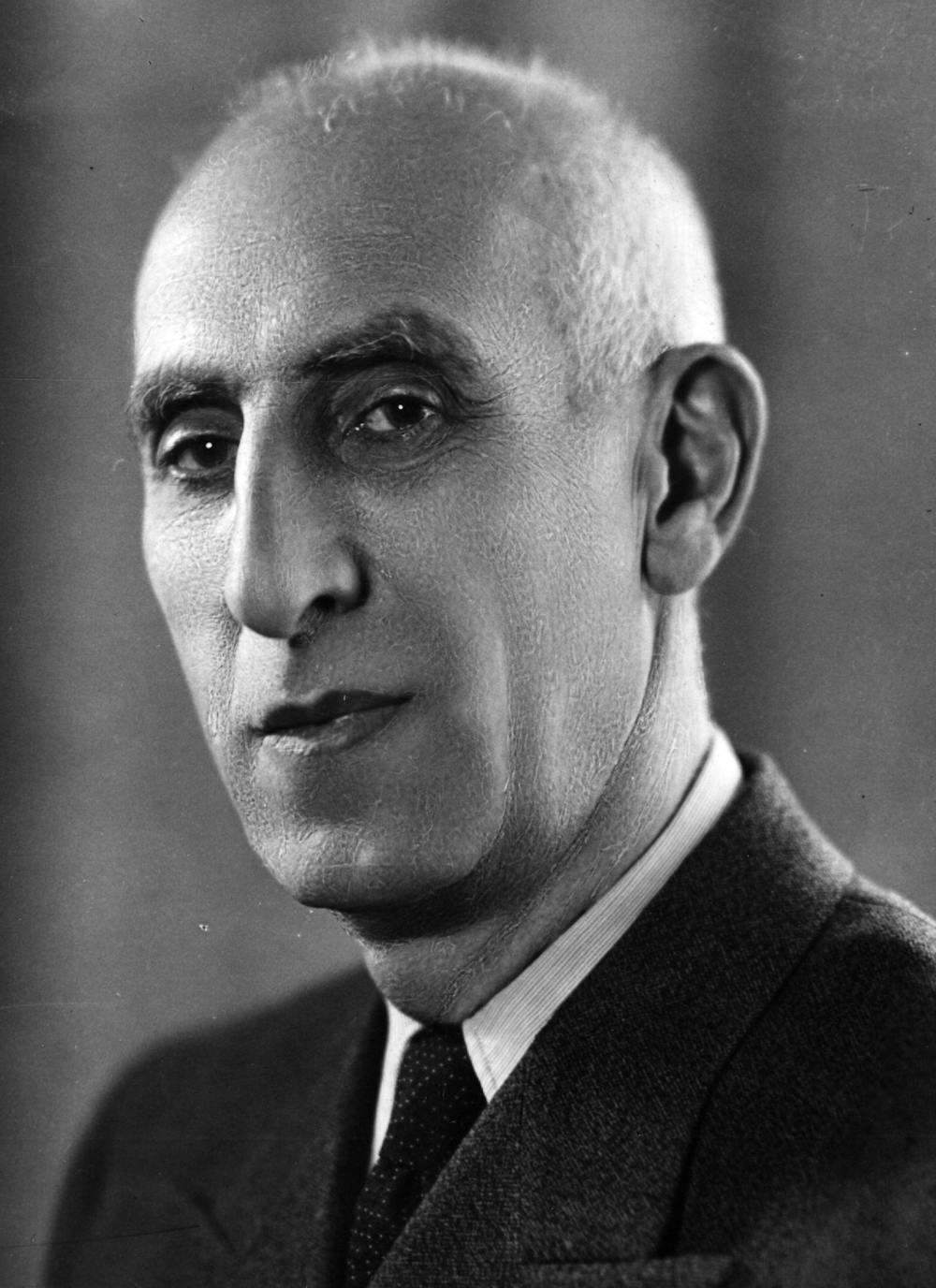
    Relations between the United States and Iran have been fraught for decades – at least since the U.S. helped overthrow a democracy-minded prime minister, Mohammed Mossadegh, in August 1953. The U.S. then supported the long, repressive reign of the Shah of Iran, whose security services brutalized Iranian citizens for decades.

    The two countries have been particularly hostile to each other since Iranian students took over the U.S. Embassy in Tehran in November 1979, resulting in economic sanctions and the severing of formal diplomatic relations between the nations.

    Since 1984, the U.S. State Department has listed Iran as a “state sponsor of terrorism,” alleging the Iranian government provides terrorists with training, money and weapons.

    Some of the major events in U.S.-Iran relations highlight the differences between the nations’ views, but others arguably presented real opportunities for reconciliation.

    1953: US overthrows Mossadegh

    Mohammed Mossadegh.
    Wikimedia Commons

    In 1951, the Iranian Parliament chose a new prime minister, Mossadegh, who then led lawmakers to vote in favor of taking over the Anglo-Iranian Oil Company, expelling the company’s British owners and saying they wanted to turn oil profits into investments in the Iranian people. The U.S. feared disruption in the global oil supply and worried about Iran falling prey to Soviet influence. The British feared the loss of cheap Iranian oil.

    President Dwight Eisenhower decided it was best for the U.S. and the U.K. to get rid of Mossadegh. Operation Ajax, a joint CIA-British operation, convinced the Shah of Iran, the country’s monarch, to dismiss Mossadegh and drive him from office by force. Mossadegh was replaced by a much more Western-friendly prime minister, handpicked by the CIA.

    Demonstrators in Tehran demand the establishment of an Islamic republic.
    AP Photo/Saris

    1979: Revolutionaries oust the shah, take hostages

    After more than 25 years of relative stability in U.S.-Iran relations, the Iranian public had grown unhappy with the social and economic conditions that developed under the dictatorial rule of Shah Mohammad Reza Pahlavi.

    Pahlavi enriched himself and used American aid to fund the military while many Iranians lived in poverty. Dissent was often violently quashed by SAVAK, the shah’s security service. In January 1979, the shah left Iran, ostensibly to seek cancer treatment. Two weeks later, Ayatollah Ruhollah Khomeini returned from exile in Iraq and led a drive to abolish the monarchy and proclaim an Islamic government.

    Iranian students at the U.S. Embassy in Tehran show a blindfolded American hostage to the crowd in November 1979.
    AP Photo

    In October 1979, President Jimmy Carter agreed to allow the shah to come to the U.S. to seek advanced medical treatment. Outraged Iranian students stormed the U.S. Embassy in Tehran on Nov. 4, taking 52 Americans hostage. That convinced Carter to sever U.S. diplomatic relations with Iran on April 7, 1980.

    Two weeks later, the U.S. military launched a mission to rescue the hostages, but it failed, with aircraft crashes killing eight U.S. servicemembers.

    The shah died in Egypt in July 1980, but the hostages weren’t released until Jan. 20, 1981, after 444 days of captivity.

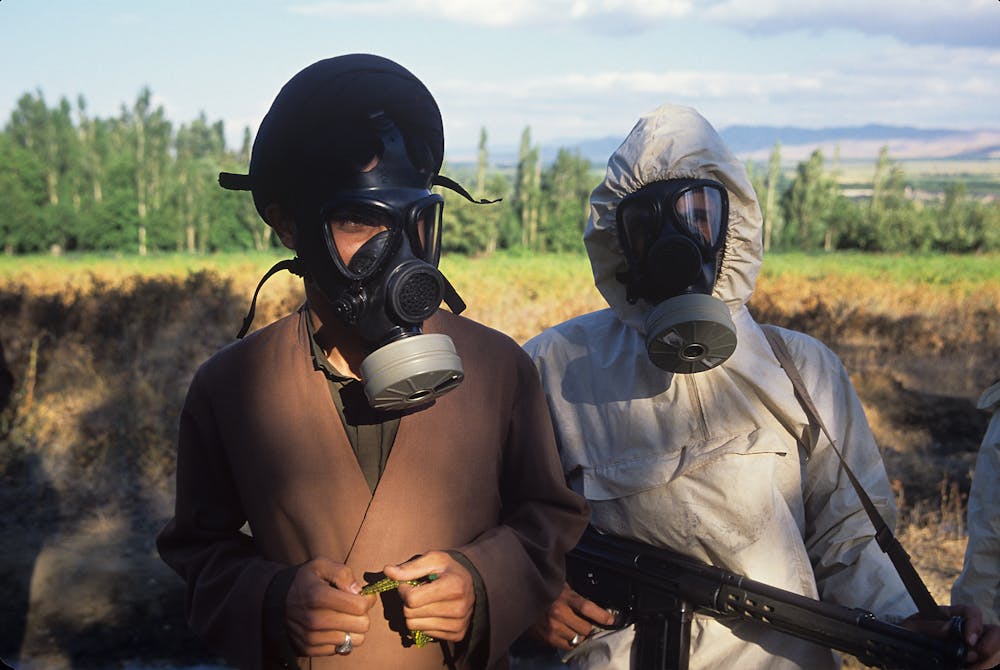
    An Iranian cleric, left, and an Iranian soldier wear gas masks to protect themselves against Iraqi chemical-weapons attacks in May 1988.
    Kaveh Kazemi/Getty Images

    1980-1988: US tacitly sides with Iraq

    In September 1980, Iraq invaded Iran, an escalation of the two countries’ regional rivalry and religious differences: Iraq was governed by Sunni Muslims but had a Shia Muslim majority population; Iran was led and populated mostly by Shiites.

    The U.S. was concerned that the conflict would limit the flow of Middle Eastern oil and wanted to ensure the conflict didn’t affect its close ally, Saudi Arabia.

    The U.S. supported Iraqi leader Saddam Hussein in his fight against the anti-American Iranian regime. As a result, the U.S. mostly turned a blind eye toward Iraq’s use of chemical weapons against Iran.

    U.S. officials moderated their usual opposition to those illegal and inhumane weapons because the U.S. State Department did not “wish to play into Iran’s hands by fueling its propaganda against Iraq.” In 1988, the war ended in a stalemate. More than 500,000 military and 100,000 civilians died.

    1981-1986: US secretly sells weapons to Iran

    The U.S. imposed an arms embargo after Iran was designated a state sponsor of terrorism in 1984. That left the Iranian military, in the middle of its war with Iraq, desperate for weapons and aircraft and vehicle parts to keep fighting.

    The Reagan administration decided that the embargo would likely push Iran to seek support from the Soviet Union, the U.S.’s Cold War rival. Rather than formally end the embargo, U.S. officials agreed to secretly sell weapons to Iran starting in 1981.

    The last shipment, of anti-tank missiles, was in October 1986. In November 1986, a Lebanese magazine exposed the deal. That revelation sparked the Iran-Contra scandal in the U.S., with Reagan’s officials found to have collected money from Iran for the weapons and illegally sent those funds to anti-socialist rebels – the Contras – in Nicaragua.

    At a mass funeral for 76 of the 290 people killed in the shootdown of Iran Air 655, mourners hold up a sign depicting the incident.
    AP Photo/CP/Mohammad Sayyad

    1988: US Navy shoots down Iran Air flight 655

    On the morning of July 8, 1988, the USS Vincennes, a guided missile cruiser patrolling in the international waters of the Persian Gulf, entered Iranian territorial waters while in a skirmish with Iranian gunboats.

    Either during or just after that exchange of gunfire, the Vincennes crew mistook a passing civilian Airbus passenger jet for an Iranian F-14 fighter. They shot it down, killing all 290 people aboard.

    The U.S. called it a “tragic and regrettable accident,” but Iran believed the plane’s downing was intentional. In 1996, the U.S. agreed to pay US$131.8 million in compensation to Iran.

    1997-1998: The US seeks contact

    In August 1997, a moderate reformer, Mohammad Khatami, won Iran’s presidential election.

    U.S. President Bill Clinton sensed an opportunity. He sent a message to Tehran through the Swiss ambassador there, proposing direct government-to-government talks.

    Shortly thereafter, in early January 1998, Khatami gave an interview to CNN in which he expressed “respect for the great American people,” denounced terrorism and recommended an “exchange of professors, writers, scholars, artists, journalists and tourists” between the United States and Iran.

    However, Supreme Leader Ayatollah Ali Khamenei didn’t agree, so not much came of the mutual overtures as Clinton’s time in office came to an end.

    In his 2002 State of the Union address, President George W. Bush characterized Iran, Iraq and North Korea as constituting an “Axis of Evil” supporting terrorism and pursuing weapons of mass destruction, straining relations even further.

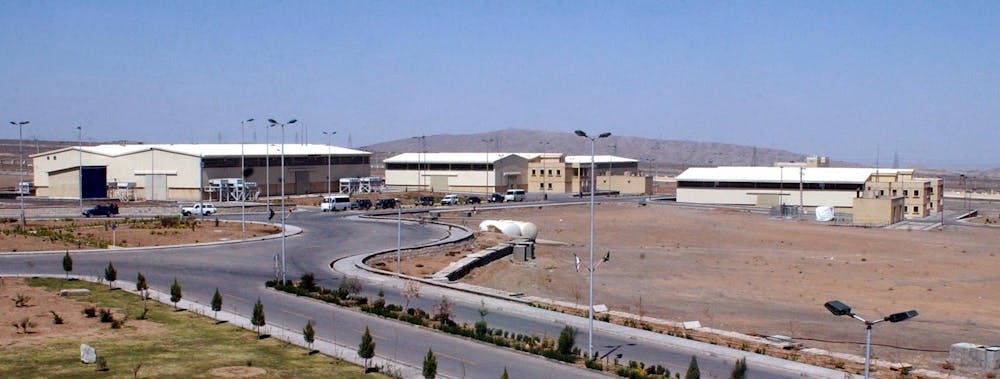
    Inside these buildings at the Natanz nuclear facility in Iran, technicians enrich uranium.
    AP Photo/Vahid Salemi

    2002: Iran’s nuclear program raises alarm

    In August 2002, an exiled rebel group announced that Iran had been secretly working on nuclear weapons at two installations that had not previously been publicly revealed.

    That was a violation of the terms of the Nuclear Nonproliferation Treaty, which Iran had signed, requiring countries to disclose their nuclear-related facilities to international inspectors.

    One of those formerly secret locations, Natanz, housed centrifuges for enriching uranium, which could be used in civilian nuclear reactors or enriched further for weapons.

    Starting in roughly 2005, U.S. and Israeli government cyberattackers together reportedly targeted the Natanz centrifuges with a custom-made piece of malicious software that became known as Stuxnet.

    That effort, which slowed down Iran’s nuclear program was one of many U.S. and international attempts – mostly unsuccessful – to curtail Iran’s progress toward building a nuclear bomb.

    2003: Iran writes to Bush administration

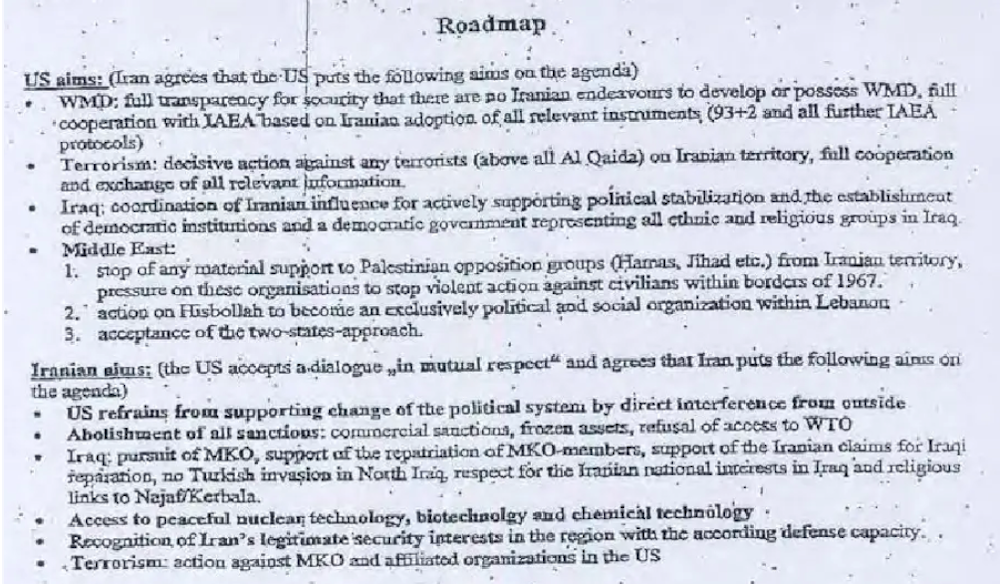
    An excerpt of the document sent from Iran, via the Swiss government, to the U.S. State Department in 2003, appears to seek talks between the U.S. and Iran.
    Washington Post via Scribd

    In May 2003, senior Iranian officials quietly contacted the State Department through the Swiss embassy in Iran, seeking “a dialogue ‘in mutual respect,’” addressing four big issues: nuclear weapons, terrorism, Palestinian resistance and stability in Iraq.

    Hardliners in the Bush administration weren’t interested in any major reconciliation, though Secretary of State Colin Powell favored dialogue and other officials had met with Iran about al-Qaida.

    When Iranian hardliner Mahmoud Ahmadinejad was elected president of Iran in 2005, the opportunity died. The following year, Ahmadinejad made his own overture to Washington in an 18-page letter to President Bush. The letter was widely dismissed; a senior State Department official told me in profane terms that it amounted to nothing.

    Representatives of several nations met in Vienna in July 2015 to finalize the Iran nuclear deal.
    Austrian Federal Ministry for Europe, Integration and Foreign Affairs/Flickr

    2015: Iran nuclear deal signed

    After a decade of unsuccessful attempts to rein in Iran’s nuclear ambitions, the Obama administration undertook a direct diplomatic approach beginning in 2013.

    Two years of secret, direct negotiations initially bilaterally between the U.S. and Iran and later with other nuclear powers culminated in the Joint Comprehensive Plan of Action, often called the Iran nuclear deal.

    Two years of secret, direct negotiations conducted bilaterally at first between the U.S. and Iran and later with other nuclear powers culminated in the Joint Comprehensive Plan of Action, often called the Iran nuclear deal.

    Iran, the U.S., China, France, Germany, Russia and the United Kingdom signed the deal in 2015. It severely limited Iran’s capacity to enrich uranium and mandated that international inspectors monitor and enforce Iran’s compliance with the agreement.

    In return, Iran was granted relief from international and U.S. economic sanctions. Though the inspectors regularly certified that Iran was abiding by the agreement’s terms, President Donald Trump withdrew from the agreement in May 2018.

    2020: US drones kill Iranian Maj. Gen. Qassem Soleimani

    An official photo from the Iranian government shows Maj. Gen. Qassem Soleimani, who was killed in a Jan. 3 drone strike ordered by President Donald Trump.
    Iranian Supreme Leader Press Office/Anadolu Agency via Getty Images

    On Jan. 3, 2020, an American drone fired a missile that killed Maj. Gen. Qassem Soleimani, the leader of Iran’s elite Quds Force. Analysts considered Soleimani the second most powerful man in Iran, after Supreme Leader Ayatollah Khamenei.

    At the time, the Trump administration asserted that Soleimani was directing an imminent attack against U.S. assets in the region, but officials have not provided clear evidence to support that claim.

    Iran responded by launching ballistic missiles that hit two American bases in Iraq.

    2023: The Oct. 7 attacks on Israel

    Hamas’ brazen attack on Israel on Oct. 7, 2023, provoked a fearsome militarized response from Israel that continues today and served to severely weaken Iran’s proxies in the region, especially Hamas – the perpetrator of the attacks – and Hezbollah in Lebanon.

    2025: Trump 2.0 and Iran

    Trump saw an opportunity to forge a new nuclear deal with Iran and to pursue other business deals with Tehran. Once inaugurated for his second term, Trump appointed Steve Witkoff, a real estate investor who is the president’s friend, to serve as special envoy for the Middle East and to lead negotiations.

    Negotiations for a nuclear deal between Washington and Tehran began in April, but the countries did not reach a deal. They were planning a new round of talks when Israel struck Iran with a series of airstrikes on June 13, forcing the White House to reconsider is position.

    Jeffrey Fields receives funding from the Carnegie Corporation of New York and Schmidt Futures.

    ref. US and Iran have a long, complicated history, spanning far beyond Israel’s strikes on Tehran – https://theconversation.com/us-and-iran-have-a-long-complicated-history-spanning-far-beyond-israels-strikes-on-tehran-259240

    MIL OSI – Global Reports

  • MIL-OSI USA: Video: Kaine Speaks About Harmful Impacts of GOP Tax Bill

    US Senate News:

    Source: United States Senator for Virginia Tim Kaine

    VIDEO OF KAINE’S REMARKS IS AVAILABLE HERE.

    WASHINGTON, D.C. – Today, U.S. Senator Tim Kaine (D-VA), a member of the Senate Health, Education, Labor and Pensions (HELP) Committee, hosted a spotlight forum with Senator Chris Murphy (D-CT) to highlight how President Donald Trump and Republicans’ bill would make major cuts to vital programs that families rely on, including Medicaid and SNAP, in order to pay for massive tax breaks for the wealthy.

    “We’re here because of the reconciliation bill … which we call the ‘Big Beautiful Betrayal.’ And my Republican colleagues are trying to pass it by a party-line vote without including us in any of the discussions about what’s in the bill. But it would be disastrous for this country,” said Kaine as he began the forum. “We’ll do everything we can to try and defeat it.”

    Kaine continued, “President Trump and congressional Republicans are championing this BBB and it reflects choices – affirmative, calculated decisions about who to help and who to harm … But we don’t have to make a choice to harm middle-class and working people. We don’t have to do that. We can cut taxes for working- and middle-class families without cutting crucial programs that these families rely on. We can choose not to give additional tax breaks to those who have already been so benefitted in the past by tax breaks.

    “The top 20 percent of households will receive nearly 70 percent of the tax cuts in the House bill. That is an upside-down priority,” Kaine continued. “According to the nonpartisan Congressional Budget Office … 16 million Americans nationwide will lose health care coverage under the House bill, and that includes more than 300,000 Virginians.

    “According to our Joint Economic Committee, the House bill … would cut SNAP, the Supplemental Nutrition Assistance Program, by 20 percent, slashing away a crucial safety net for about 200,000 Virginians – 800,000 get SNAP benefits [in total in Virginia]. The benefits are modest – $4.70 per day – but 200,000 of those 800,000 will either have their $4.70 benefit reduced or completely eliminated,” said Kaine. “SNAP fights hunger fast. When it’s slashed, families will feel hunger a lot faster.”

    Kaine continued, “If we take a second and just tally things up: the tax plan would boot millions off health care, take food from the mouths of hungry children and families, cut taxes for millionaires and billionaires, and drive up the deficit by 3 trillion, although I saw the Senate version actually knocks it up even further, maybe as high as $5 trillion. This is before you start factoring in historic and illegal tariffs that the administration is levying on the same everyday people who are suffering by these cuts,” Kaine said.

    “The Yale Budget Lab found that when you factor in both the reconciliation bill and the President’s tariff actions, the bottom 80 percent of American households are going to be worse off. So I truly hope my Republican colleagues will have a change of heart and rework this product, and we’re sure going to give them an opportunity to do it with all the amendments that we’re going to offer—very targeted amendments that will pose some really important choices for them. They could take out all of the SNAP and Medicaid cuts by scaling back the tax cuts for the wealthy, and still have a bill that costs the same as it is. This legislation is going to harm Virginians and harm Americans,” Kaine concluded.

    MIL OSI USA News

  • MIL-OSI USA: Video: Kaine Speaks on Senate Floor Regarding His War Powers Resolution to Prevent War with Iran

    US Senate News:

    Source: United States Senator for Virginia Tim Kaine

    VIDEO OF KAINE’S FLOOR SPEECH IS AVAILABLE HERE.

    WASHINGTON, D.C.—Today, U.S. Senator Tim Kaine (D-VA), a member of the Senate Armed Services and Foreign Relations Committees, spoke on the Senate floor about a war powers resolution he filed this week to express concern about the escalating violence in the Middle East and its potential to pull the U.S. into conflict. The resolution requires that any U.S. participation in offensive hostilities against Iran be explicitly authorized by Congress through a declaration of war or specific authorization for use of military force. It does not prevent the U.S. from defending itself from an imminent attack. The resolution is privileged, meaning that the Senate will be required to promptly consider and vote upon the resolution.

    “There’s no part of the Constitution that’s more important than the Article One provision making plain that the United States should not be at war without a vote of Congress,” said Kaine. “Yet the news of the day suggests that we are potentially on the verge of a war with Iran.”

    “I was elected to the Senate in 2012, having served as a Governor from 2006 to 2010 during a tremendous upsurge in the two wars in Iraq and Afghanistan. I visited our troops multiple times in the green zones in Baghdad and in Afghanistan. I went to the deployments and the homecomings. I went to the wakes and the funerals,” Kaine continued. “And I told myself when I came to the Senate that if I ever had the chance to stop this nation from getting into an unnecessary war, I would do everything I could to stop us.”

    “I happen to believe that the United States engaging in a war against Iran – a third war in the Middle East since 2001 – would be a catastrophic blunder for this country,” Kaine said. “I think there are some in this body who have a different point of view than me on that point, but I think we should all be able to agree in the fundamental constitutional principle that says we shouldn’t be in a war if Congress doesn’t have the guts to debate it and vote on it. We should all – having taken an oath to the Constitution – at least support the principle that war is something that should be for Congress to declare.”

    “Our Constitution has, accordingly, with studied care, vested the question of war with the legislature,” said Kaine. “Other countries don’t do this, but the Framers of our Constitution in 1787 decided we’re going to be different. Before we send troops in harm’s way where they could be killed, where they could be injured, where they could see people that they love – their colleagues killed and injured – before we’re going to send troops in harm’s way in war, we want to see the people’s elected bodies – both houses – have a debate about what the stakes are and whether we should force our troops into harm’s way and potentially lose their lives. And that debate will be in full view of the American public, so the American public can understand what’s at stake and then they can call their representatives or write them a letter and tell them what they think about whether war is necessary and whether the sacrifice we ask of our troops should be the ultimate sacrifice that we are often asking of them in war.”

    “The question for this body that we will grapple with over the course of the next couple of weeks is whether the United States should be in another war in the Middle East – in particular, whether we should allow war to start without us, whether we should hide in the tall grass, rather than exercise our constitutional responsibility under Article One. This is fundamentally a debate about Congress being true to its oath of office and actually also being true to the obligations we have to our public,” Kaine said. “The Framers put this in the Constitution so that we wouldn’t be at war without a debate in front of the public.”

    “If we have that debate and we decide that war is in the national interest, then the troops go into war knowing that the civilian leadership of this country have had the hard debate in view of the American public and decided that the stakes are sufficient to ask people to make the ultimate sacrifice,” Kaine said. “How dare we ask people to make the ultimate sacrifice if we don’t have the guts to have a debate and decide whether a war is in the interest of this country?”

    “We need to have this debate in front of the American public,” Kaine said. “Let them watch us debate the stakes of this – and it might be that colleagues in this body or in the House think a war with Iran is a good idea. Let them put a war authorization on the table. Let’s debate that. Let’s debate that in front of Virginians and Kansans and Californians and hear what our constituents have to say. Let’s debate that in the full view of people whose spouses are in the military or whose kids are in the military. Let’s have that debate in front of them and hear what they think before we cast a vote that would be one of the most serious votes that you ever cast on the floor of a body like this. But we should not allow a war of the magnitude of this to begin with Congress hiding.”

    “I will be asking my colleagues to support my simple resolution as early as next week. No war without a vote of Congress. I’ll be asking my colleagues to support it and uphold the oath we’ve all taken to support the Constitution that established that most unusual principle, most unique principle, that is part of what makes this nation special,” Kaine concluded.

    For years, Kaine has been a leading voice in Congress raising concerns over presidents’ efforts to expand the use of military force without congressional authorization. In 2017, Kaine wrote a piece in TIME warning of the consequences if President Donald Trump pulled out of the nuclear deal with Iran. In 2018, Kaine wrote a piece in The Atlantic warning that Trump was blundering toward war with Iran. In March 2020, Congress passed Kaine’s bipartisan war powers resolution to prevent further escalation of hostilities with Iran without congressional authorization. In 2023, the Senate passed bipartisan legislation led by Kaine to repeal the 1991 and 2002 Authorizations for Use of Military Force (AUMFs) and formally end the Gulf and Iraq wars.

    MIL OSI USA News

  • MIL-OSI New Zealand: Government expands access to Melatonin and Psilocybin

    Source: New Zealand Government

    Associate Health Minister David Seymour says the Government is delivering on its promise to cut red tape and give Kiwis greater access to more treatments, starting with melatonin and medicinal psilocybin.

    “Many New Zealanders have asked me why people can buy melatonin overseas but they can’t buy it from their local pharmacy. Medsafe has assessed this and decided there’s no reason why it shouldn’t be available on pharmacy shelves right here at home,” says Mr Seymour. 

    Melatonin, a medicine used to treat insomnia and jet lag, has previously been tightly restricted in New Zealand. Right now, only a few melatonin products are approved for people aged over 55.

    “In time, adults will be able to buy melatonin directly from a pharmacy with no prescription needed. This is a commonsense decision that will make melatonin more accessible in New Zealand than in many other countries and encourage suppliers bring more products to our shelves.

    Melatonin will remain prescription-only for children and adolescents, following expert clinical advice to ensure proper oversight when used by younger patients.

    “In another win for patients, Medsafe has also approved the prescription of medicinal psilocybin outside of clinical trials for the first time in New Zealand,” says Mr Seymour.

    “Psilocybin remains an unapproved medicine, but a highly experienced psychiatrist has been granted authority to prescribe it to patients with treatment-resistant depression.

    “This is huge for people with depression who’ve tried everything else and are still suffering. If a doctor believes psilocybin can help, they should have the tools to try.

    “The psychiatrist involved has previously prescribed psilocybin in clinical trials and will operate under strict reporting and record-keeping requirements.

    “New Zealand is now in line with Australia, where authorised prescribers have been using psilocybin in clinical settings for some time.

    “Kiwis shouldn’t be left counting sheep or desperate for options when other countries are already using these medicines. The Government is committed to putting patients first.”

    MIL OSI New Zealand News

  • MIL-OSI USA: Padilla, Schiff, Senate Democrats Press Trump Administration to Resume Processing DACA Applications

    US Senate News:

    Source: United States Senator Alex Padilla (D-Calif.)

    Padilla, Schiff, Senate Democrats Press Trump Administration to Resume Processing DACA Applications

    The Fifth Circuit Court of Appeals recently limited a nationwide injunction to only Texas, giving the Administration the greenlight to resume processing initial DACA applications for all other states

    WASHINGTON, D.C. — U.S. Senators Alex Padilla, Ranking Member of the Senate Judiciary Immigration Subcommittee, and Adam Schiff (both D-Calif.) joined U.S. Senate Democratic Whip Dick Durbin (D-Ill.), Ranking Member of the Senate Judiciary Committee and lead author of the Dream Act, and Senate Democrats in urging U.S. Citizenship and Immigration Services to resume processing initial applications for the Deferred Action for Childhood Arrivals (DACA) program, following a ruling in the Fifth Circuit Court of Appeals that narrowed an earlier injunction to just Texas and allowed USCIS to start processing initial DACA applications from all other states.

    The Senators began by highlighting the popular support for providing Dreamers a pathway to citizenship, writing: “Noncitizens brought to the United States as children, often known as Dreamers, are American in every way but their immigration status. Many only know this country as their home, and they contribute every day to this great nation by paying taxes and serving in critical roles, such as police officers, teachers, and nurses. Americans overwhelmingly support providing Dreamers a path to citizenship, and in December 2024, President Trump stated that he supported protections for Dreamers to remain in the United States.” 

    “Consistent with this statement, we implore you to use your authority at United States Citizenship and Immigration Services (USCIS) to resume processing initial applications for Deferred Action for Childhood Arrivals (DACA) and provide such protections for Dreamers immediately,” continued the Senators. 

    Sunday, June 15, marked the thirteenth anniversary of the DACA program via policy memorandum in 2012. Since then, more than 825,000 people have received deferred action pursuant to DACA, empowering recipients to bolster their careers and contribute an estimated $140 billion to the U.S. economy in spending power and $40 billion in combined federal, payroll, state, and local taxes.   

    In 2021, U.S. District Court Judge Andrew Hanen halted the DACA program and enjoined USCIS from approving any new DACA applications nationwide. While the program was enjoined, USCIS has continued to accept and hold initial applications, and in 2022, the Department of Homeland Security published the DACA Final Rule, codifying the 2012 memorandum establishing DACA into regulation. More than 100,000 initial DACA applications are pending with USCIS. 

    On January 17, 2025, the Fifth Circuit Court of Appeals issued a decision limiting Judge Hanen’s injunction to just Texas. 

    “Pursuant to the order, in Texas, DACA must resume as a limited program providing protection from deportation for current DACA recipients, but without access to work authorization or driver’s licenses as part of those renewals. This order went into effect on March 11, giving USCIS the authority to start processing initial DACA applications from states other than Texas. However, nearly three months later, USCIS has not made any public announcement on whether new DACA applications will be processed; nor has the agency begun processing initial applications that have been pending with the agency for years,” added the Senators.

    “We urge you to begin processing these DACA applications immediately, consistent with the Fifth Circuit decision and existing regulations, and to ensure Dreamers eligible to file initial DACA applications can do so as soon as possible,” concluded the Senators. 

    In addition to Padilla, Schiff, and Durbin, the letter is signed by U.S. Senators Tammy Baldwin (D-Wis.), Michael Bennet (D-Colo.), Richard Blumenthal (D-Conn.), Cory Booker (D-N.J.), Chris Coons (D-Del.), Catherine Cortez Masto (D-Nev.), Tammy Duckworth (D-Ill.), John Fetterman (D-Pa.), Ruben Gallego (D-Ariz.), Kirsten Gillibrand (D-N.Y.), Maggie Hassan (D-N.H.), Martin Heinrich (D-N.M.), John Hickenlooper (D-Colo.), Mazie Hirono (D-Hawai’i), Tim Kaine (D-Va.), Mark Kelly (D-Ariz.), Andy Kim (D-N.J.), Angus King (I-Maine), Amy Klobuchar (D-Minn.), Ben Ray Luján (D-N.M.), Edward Markey (D-Mass.), Jeff Merkley (D-Ore.), Patty Murray (D-Wash.), Gary Peters (D-Mich.), Jack Reed (D-R.I.), Jacky Rosen (D-Nev.), Bernie Sanders (I-Vt.), Brian Schatz (D-Hawai’i), Jeanne Shaheen (D-N.H.), Elissa Slotkin (D-Mich.), Tina Smith (D-Minn.), Chris Van Hollen (D-Md.), Mark Warner (D-Va.), Raphael Warnock (D-Ga.), Elizabeth Warren (D-Mass.), Peter Welch (D-Vt.), Sheldon Whitehouse (D-R.I.), and Ron Wyden (D-Ore.). 

    Full text of the letter to USCIS is available here. 

    MIL OSI USA News

  • MIL-OSI USA: WATCH: Padilla Delivers Floor Speech Following His Forcible Removal From DHS Press Conference

    US Senate News:

    Source: United States Senator Alex Padilla (D-Calif.)

    WATCH: Padilla Delivers Floor Speech Following His Forcible Removal From DHS Press Conference

    WATCH: Padilla: “If this Administration is this afraid of just one Senator with a question, colleagues, imagine what the voices of tens of millions of Americans peacefully protesting can do.”
     
    “If that is what the Administration is willing to do to a United States Senator for having the [audacity] to simply ask a question, imagine what they’ll do to any American who dares to speak up. If what you saw happen can happen when the cameras are on, imagine not only what can happen — but what is happening — in so many places where there are no cameras.”
     
    Video of Senator Padilla’s full speech can be viewed here and downloaded here.

    WASHINGTON, D.C. — Today, U.S. Senator Alex Padilla (D-Calif.), Ranking Member of the Senate Judiciary Immigration Subcommittee, spoke on the Senate floor following his forcible removal from Secretary of Homeland Security Kristi Noem’s press conference, where he was thrown to the ground and handcuffed after attempting to ask a question. Padilla delivered a strong rebuke to the Trump Administration’s unprecedented militarization of Los Angeles and called for his colleagues on both sides of the aisle, as well as the American people, to speak up against Trump’s abuse of power.

    Last week, Trump deployed approximately 4,000 National Guard troops and 700 active-duty Marines to Los Angeles amid unrest caused by his indiscriminate immigration raids across the region. Padilla flew to Los Angeles to conduct oversight over the Trump Administration’s unprecedented military deployment to California — without Governor Newsom’s consent — and was in the high-security Los Angeles Federal Building for a scheduled oversight meeting with the commanding general in charge of the military presence in the region before law enforcement escorted him into Secretary Noem’s briefing room.

    • The Trump Administration has done everything in their power but to provide transparency to the American people about their mission in Los Angeles. And so last week, I chose to go home to try to get answers from the Administration as they are literally militarizing our city.”
    • “I want to share what I learned. I want to share what I heard because it should shock the conscience of our country.

    In the hopes of learning new information after having his requests ignored for months, Padilla tried to ask a question in response to Noem’s demonizing rhetoric toward immigrants and Los Angeles’ democratically elected leadership.

    • “At one point, the United States Secretary of Homeland Security said that the purpose of federal law enforcement and the purpose of the United States military was to ‘liberate’ Los Angeles from our governor and our mayor. To somehow liberate us from the very people that we democratically elected to lead our city and our state.
    • “Colleagues, let that fundamentally un-American mission statement sink in. That is not a mission focused on public safety. And that simply is not, and cannot be, the mission of federal law enforcement and the United States military.
    • To my colleagues on both sides of the aisle, are we truly prepared to live in a country where the President can deploy the Armed Forces to decide which duly elected governors and mayors should be allowed to lead their constituents? Is that really the precedent that we’re okay with setting?”
    • “Throughout the country’s history, we’ve had conflict, we’ve had tumult, but we’ve never had a tyrant as a commander-in-chief.

    Padilla detailed his own background as the proud son of immigrants from Mexico who left behind his MIT engineering degree to protest against the vile anti-immigrant rhetoric in the 1990s that a Republican governor up for reelection spread across California. He said he felt he had to speak out against the Trump Administration’s “un-American” scapegoating of immigrants and California, and detailed the violent reaction to his question.

    • So last week, when I heard something so blatantly un-American from the Secretary of Homeland Security, a cabinet official — of course I was compelled, both as a Senator and as an American, to speak up.
    • “But before I could even get out my question, I was physically and aggressively forced out of the room — even as I repeatedly announced I was a United States Senator, and I had a question for the Secretary. And even as the National Guardsman and the FBI agent who served as my escorts and brought me into that press briefing room stood by, silently, knowing full well who I was.”
    • You’ve seen the video. I was pushed and pulled, struggled to maintain my balance. I was forced to the ground — first on my knees and then flat on my chest. And as I was handcuffed and marched down a hallway, repeatedly asking why am I being detained, not once did they tell me why.

    Padilla expressed his gratitude for the immense support for him and his family that poured in since his forcible removal. However, he emphasized that this fight was not about him but about the fundamental democratic rights of all Americans across the country.

    • “If you watched what unfolded last week and thought what happened is just about one politician and one press conference, you’re missing the point.”
    • If that is what the Administration is willing to do to a United States Senator for having the [audacity] to simply ask a question, imagine what they’ll do to any American who dares to speak up. If what you saw happen can happen when the cameras are on, imagine not only what can happen — but what is happening — in so many places where there are no cameras.
    • “Colleagues, this isn’t about me. In fact, it’s not just about immigrant communities or even just the State of California. It’s about every single American who values their Constitutional rights. It’s about anyone who’s ever exercised their First Amendment rights, or anyone who’s ever disagreed with a president, or anyone who simply values our democracy and wants to keep it.

    Padilla set the record straight on Republican misinformation on undocumented immigrants as Trump has used the same playbook when the headlines turn against him: scapegoat immigrants and manufacture a crisis. Public reporting shows that the majority of immigrants currently in ICE custody have no prior criminal conviction, and under 10 percent of immigrants taken into ICE custody since October have serious criminal convictions. Yet, President Trump has blamed immigrants to distract from his failed policies, including Republicans’ billionaire-first budget reconciliation bill that would cut critical services like health care and nutrition for millions of working families across the country.

    As President Trump takes unprecedented action to militarize Los Angeles without justification or the Governor’s request, Padilla warned of the stakes for cities across the United States and American democracy.

    • “Donald Trump is continuing to test the boundaries of his power. And he’s surrounded himself with yes-men and underqualified attack dogs — from the DHS Secretary to the FBI Director to the Secretary of Defense — who will rubberstamp every anti-democratic step he takes.”
    • “This Administration’s officials and maybe not all, but many Republicans in Congress may choose not to do their job, but they cannot stop me from doing mine.”
    • Again, if you really think this is just about immigrants and immigration, it’s time to wake up. What’s happening is not just a threat to California; it’s a threat to everyone in every state. If Donald Trump can bypass the Governor and activate the National Guard to put down protests on immigrant rights, he can do it to suppress your rights, too. If he can deploy the Marines to Los Angeles without justification, he can deploy them to your state, too. And if he can ignore due process, strip away First Amendment rights, and disappear people to foreign prisons without their day in court, he can do it to you too.”
    • “California is just the test case for the rest of the country. Last week for many was a warning shot. But I pray that it also serves as a wakeup call.

    Padilla concluded his speech with a call to action for Angelenos and millions of Americans to stand up and keep peacefully protesting against the Trump Administration’s attack on fundamental rights.

    • “It doesn’t matter if you’re a Republican, or a Democrat, or an Independent — we all have a responsibility to speak up and to push back, before it’s too late. So I do encourage people to keep peacefully protesting. There’s nothing more patriotic than to peacefully protest for your rights.”
    • Because no one will liberate Los Angeles but Angelenos. No one will redeem America but Americans. No one is coming to save us but us.
    • “And we know that the cameras are not on in every corner of the country. But if this Administration is this afraid of just one Senator with a question, colleagues, imagine what the voices of tens of millions of Americans peacefully protesting can do.

    Senator Padilla has been outspoken in calling out the Immigration and Customs Enforcement (ICE) raids in Los Angeles and Trump’s misguided deployment of the National Guard and U.S. Marine Corps. This weekend, Padilla led the entire Senate Democratic Caucus in demanding that President Trump immediately withdraw all military forces from Los Angeles and cease all threats to deploy the National Guard or active-duty servicemembers to American cities. Last week, Padilla and Senator Adam Schiff (D-Calif.) demanded answers regarding the Trump Administration’s decision to deploy approximately 700 Marines to Los Angeles. Padilla has spoken at a spotlight hearing and on the Senate floor multiple times to blast President Trump for manufacturing a crisis by launching indiscriminate ICE raids across Los Angeles and deploying the National Guard and active-duty servicemembers to the region. He also joined all Senate Judiciary Committee Democrats today in calling on Chairman Grassley to schedule Department of Homeland Security Secretary Noem for a broad oversight hearing for testimony before the committee.

    Padilla’s full remarks as prepared for delivery are available below:

    [Mr./Madam] President,

    Over the last two weeks in Los Angeles – my hometown – we’ve seen masked federal agents in tactical gear ordered into our communities . . .

    We’ve seen a disturbing pattern of extreme and cruel immigration enforcement operations, targeting non-violent people at places of worship, schools, and courthouses.

    All to meet an arbitrary quota.

    Now, we’re seeing President Trump federalize and deploy the National Guard without the Governor’s consent . . .

    Active-duty Marines have been deployed, escalating tensions in our city . . .

    All without coordination with the state and local law enforcement.

    Despite repeated requests for justification for these extreme actions…and after months of little to no response from the Administration on their aggressive and theatrical immigration raids…

    The Trump administration has done everything in their power BUT provide transparency to the American people about their mission in Los Angeles.

    So last week, I went home to try to get answers from the administration as they militarize our city.

    What I heard should shock the conscience of our country.

    One of the first items on my schedule last Thursday was a meeting with General Guillot, the four-star general in charge of U.S. Northern Command at the Federal Building in west Los Angeles, where they are overseeing these military operations.

    When the United States military is deployed domestically…

    When our own troops are deployed against the wishes of the Governor for the first time since 1965, against the wishes of the mayor, against even the wishes of local law enforcement — then we’re in uncharted territory.

    So in an effort to do my duty to conduct congressional oversight — and to try to get answers from the Department of Defense that state and local officials were not receiving— I went to the federal building in West LA.

    I was met at the entrance by a National Guardsman and an FBI agent, who escorted me through the security screening and up to a conference room for my scheduled briefing.

    While waiting for my scheduled briefing with General Guillot, I learned that Homeland Security Secretary Kristi Noem was holding a press conference just down the hall and that the press conference was causing my briefing to be delayed.

    The thought occurred to me that maybe I could attend and listen in, in the hopes of hearing Secretary Noem provide some new information that could help us make sense of what was happening.

    I asked and was escorted by my National Guard and FBI escorts into the press conference. They opened the door for me. They accompanied me into the press briefing room.

    It was there that I listened as the United States Secretary of Homeland Security said that the purpose of federal law enforcement and the United States military was to “liberate” Los Angeles from our governor and our mayor . . .

    . . . To somehow liberate us from the very people we democratically elected to lead our city and our state.

    Colleagues, let that fundamentally un-American mission statement sink in.

    That’s not a mission focused on public safety.

    That simply is not, and cannot be, the mission of federal law enforcement and the United States military.

    To my colleagues on the other side of the aisle, are you truly prepared to live in a country where the President can deploy the armed forces to decide which duly elected governors and mayors should be allowed to lead their constituents?

    Is that really the precedent you’re okay with setting?

    As Secretary Noem herself said last year when serving as Governor of South Dakota, “If Joe Biden federalizes the National Guard, that would be a direct attack on states’ rights.”

    Throughout the country’s history, we’ve had conflict, and we’ve had tumult. But we have never had a tyrant as a commander-in-chief.

    That’s not by coincidence!

    It’s because the American people have always been willing to speak up and exercise their First Amendment right to protest – especially when our fundamental rights have been threatened.

    As the proud son of immigrants from Mexico, it’s that same right I came to revere when marching through the streets of Los Angeles in 1994 alongside friends and family protesting against the vile anti-immigrant rhetoric that was growing in California.

    It was that year that a Republican Governor up for reelection and down in the polls, turned to scapegoating immigrants to try to improve his political standing.

    That fight is what got me to leave an engineering career behind and dedicate myself to influencing government and politics. So, I’ve seen this before. Californians have seen this before.

    So last week, when I heard something so blatantly un-American from the Secretary of Homeland Security — I was compelled, both as a Senator AND as an American, to speak up.

    But before I could even get out my question, I was physically and aggressively forced out of the room — even as I announced I was a United States Senator, and I had a question for the Secretary.

    And even as the National Guardsman and FBI agent who escorted me into the press conference stood by, silently, knowing full well who I was.

    You’ve seen the video.

    I was pushed and pulled, struggling to maintain my balance.

    I was forced to the ground — first to my knees and then flat on my chest.

    As I was handcuffed and marched down a hallway, I repeatedly asked why I was being detained. Not once did they tell me why.

    In that moment, a lot of questions run through your head.

    Where are they taking me?

    Am I being arrested?

    What will a city already on edge from being militarized think when they see their Senator has been handcuffed just for trying to ask a question? Or . . .

    What will my wife and our three boys think?

    I also remember asking myself: if this aggressive escalation is the result of speaking up against the abuses and overreach of the Trump administration, was it really worth it?

    But colleagues, how many Americans in our nation’s history have marched, have protested, have shed blood and lost their lives to protect our rights?

    How many Americans have served in wars overseas to protect our freedoms here at home?

    And how many Americans in the year 2025 see a vindictive president on a tour of retribution, unrestrained by the majority of this separate but co-equal branch of government in this building, and wonder if it’s worth it to stand up or to speak out?

    If a United States Senator is too afraid to speak up, how can we expect any other American to do the same?

    Colleagues, you know me.

    I’m not aware of anyone who would describe me as a flamethrower. I try to be respectful and considerate to every member of this body— regardless of your politics.

    So I want to thank all of my colleagues on both sides of the aisle who reached out to share messages of support — whether it was public or in private.

    In means a great deal to me and my family.

    But if you watched what unfolded last week and thought this was about one politician or one press conference, you’re missing the point.

    If that’s what this Administration will do to a United States Senator for having the audacity to simply ask a question, imagine what they’ll do to any American who dares to speak up.

    If that’s what can happen when the cameras are on, imagine not only what can happen — but what is happening — when the cameras are off.

    This isn’t about me. In fact, it’s not even just about immigrant communities or about Californians.

    It’s about every single American who values their constitutional rights. It’s about anyone who’s ever exercised their First Amendment rights, or ever disagreed with a president, or who simply values living in a democracy and wants to keep it.

    The President will tell you this is about undocumented immigrants, and about law and order and about targeting dangerous, violent criminals.

    But we know differently.

    Public data released by the administration shows that the majority of immigrants currently in ICE custody do not have a prior criminal conviction.

    And new reporting shows that less than 10 percent of immigrants taken into ICE custody since October have serious criminal convictions.

    Less than 10 percent!

    Two weeks ago, Donald Trump was at the lowest point in his presidency so far.

    He was drowning in a week of terrible headlines.

    The American people were finally waking up to the realities of the budget reconciliation bill that will cut health care, nutrition assistance, and good paying clean energy jobs in order to cut taxes for billionaires.

    He was losing his tariff wars as the costs of everyday goods were continuing to rise.

    His promises to end Russia’s invasion of Ukraine were falling flat.

    He’d been handed loss after loss in federal court.

    And maybe the most embarrassing part was his public breakup with Elon Musk.

    But we know what happens when the headlines turn on Donald Trump. Donald Trump turns to the same tired playbook he always has: when in doubt, scapegoat immigrants. And manufacture a crisis to distract the media from your failures.

    That’s the reason he ramped up ICE raids in California.

    And when Californians took to the streets to peacefully protest, that’s the reason he bypassed the Governor and federalized the National Guard. And as things began to settle in Los Angeles, he escalated even further by sending in the Marines.

    He wants the spectacle — not just to distract, but to justify his undemocratic crackdowns and his authoritarian power grabs.

    That’s the reason why even while the vast majority of protests have remained peaceful, the President, the Vice President, and their allies have called protestors insurrectionists!

    Yes, this is the same man who provoked an actual insurrection on our Capitol on January 6th.

    The same man who incited a violent mob, carrying confederate flags, against Congress.

    The same man who then pardoned the convicted felons who assaulted our brave Capitol Police officers.

    Trump is testing the boundaries of his power. And he’s surrounded himself with yes-men and underqualified attack dogs — from the DHS Secretary to the FBI Director to the Secretary of Defense — who will rubberstamp every anti-democratic step he takes.

    This Administration’s officials and Congressional Republicans may choose not to do their job, but they cannot stop me from doing mine.

    And I refuse to let immigrants be pawns on the path to fascism.

    Again, if you really think this is just about immigrants, it’s time to wake up.

    What’s happening isn’t just a threat to California, it’s a threat to everyone in every state.

    If Donald Trump can bypass the Governor and activate the National Guard to put down protests for immigrant rights, he can do it to suppress your rights, too.

    If he can deploy Marines to Los Angeles without justification, he can deploy them to your city, too.

    If he can ignore due process, strip away First Amendment rights, and disappear people to foreign prisons without their day in court, he can do it to you too.

    California is just Trump’s test case for the rest of the country.

    Last week was a warning shot.

    But I pray that it can be our wakeup call, too.

    We’ve now seen Trump threaten to do the same in other cities run by elected Democrats.

    It doesn’t matter if you’re a Republican, a Democrat, or an independent — we all have a responsibility to speak up and to push back, before it’s too late.

    So I encourage people to keep peacefully protesting. There’s nothing more patriotic than peacefully protesting for your rights.

    No one will liberate Los Angeles but Angelenos.

    No one will redeem America but Americans.

    No one is coming to save us but us.

    The cameras won’t always be on.

    But if this Administration is this scared of just one Senator with a question, imagine what the voices of tens of millions of Americans in the streets can do.

    Thank you, [Mr./Madam] President, I yield the floor.

    MIL OSI USA News

  • MIL-OSI China: Alcaraz survives late scare in Queen’s Club opener

    Source: People’s Republic of China – State Council News

    Top two seeds Carlos Alcaraz and Jack Draper both advanced to the second round of the men’s singles at the Queen’s Club Championships on Tuesday.

    Spain’s Alcaraz arrived in London fresh off his second consecutive French Open title. The world No. 2 overcame a late challenge from lucky loser Alex Walton to win his first grass-court match of the season 6-4, 7-6(7).

    Alcaraz had initially been scheduled to face fellow Spaniard Alejandro Davidovich Fokina in the opening round, but the world No. 28 withdrew just hours before the match due to illness following his recent wedding.

    “I didn’t know his game, which shot is his best,” Alcaraz talked about his opponent Walton from Australia. “What I tried is not to think about him but myself. I tried to play as good as I can and that’s all.”

    Earlier, Draper thrilled the home crowd at Andy Murray Arena with a commanding 6-3, 6-1 victory over American Jenson Brooksby.

    “I feel good. I feel confident. I feel relaxed. Like I said on court, I’m happy to be home. I’m happy to be playing in front of home crowd,” said the 23-year-old British No. 1.

    Draper will next face Australian Alexei Popyrin, while Alcaraz is set to play compatriot Jaume Munar.

    MIL OSI China News

  • MIL-OSI Analysis: Computers tracking us, an ‘electronic collar’: Gilles Deleuze’s 1990 Postcript on the Societies of Control was eerily prescient

    Source: The Conversation – Global Perspectives – By Cameron Shackell, Sessional Academic, School of Information Systems, Queensland University of Technology

    Our cultural touchstones series looks at influential works.

    Gilles Deleuze was one of the most original and imaginative thinkers of postwar France. A lifelong teacher, he spent most of his career at the University of Paris VIII, influencing generations of students but largely shunning the mantle of public intellectual.

    His complex, creative books mix philosophy, literature, film and politics – not to give clear answers, but to spark new ways of thinking.

    Postscript on the Societies of Control, published 35 years ago in the countercultural L’Autre Journal is Deleuze at his most accessible and prophetic.

    Written at a time when the Cold War was ending, computers were becoming more common, and the internet was beginning to connect institutions, the essay describes the emergence of a new kind of society – one not ruled by a single stern voice but by the soft hum of networks.

    How societies work

    Postscript was written as an update to the work of Deleuze’s contemporary Michel Foucault, who had died in 1984. Deleuze called it a “postscript” not just because of its brevity (it’s only around 2,300 words in English translation) but to highlight he wasn’t refuting Foucault, just building on his work.

    Gilles Deleuze.
    Tintinades/Wikimedia Commons, CC BY-NC-SA

    From the 18th to early 20th centuries, Foucault had argued, Western societies were “disciplinary societies”. Schools, factories, prisons and hospitals – institutions with walls, schedules, routines and clear expectations – moulded behaviour. People were trained, observed, tested and corrected as they passed from one institution to the next.


    Read more:
    ‘A dark masterpiece’: Foucault’s Discipline and Punish at 50


    But in the late 20th century, Deleuze saw something shifting. He thought the stodgy old disciplinary institutions were “in a generalized crisis” due to technological advances and a new form of capitalism that demanded more flexibility in workers and consumers.

    New systems of management and technology were starting to reshape people without sending them through traditional institutions. Deleuze wrote presciently, for example, that “perpetual training tends to replace the school, and continuous control to replace the examination”.

    In business, he saw a growing idea of “salary according to merit”, transforming work into “challenges, contests, and highly comic group sessions” – something much at odds with the old model of the standard wage and the assembly line. Traditional government institutions like hospitals and the classic factory were embracing the model of the corporation, driven always by a profit motive and the need for better human tools.

    To Deleuze, all this meant people were becoming more “free-floating” – they could be still playing socially useful roles but were being gently steered into them. This greater freedom, however, required a new system to keep everyone in line. He called this “modulation” to underline its dynamic, enveloping nature.

    Like nudging, but everywhere

    Deleuze described modulation as “a self-deforming cast that will continuously change from one moment to the other”. He meant that people were beginning to live in an environment where everything shape-shifts to encourage or discourage us in the right direction without explicitly putting up walls.

    A prime example of how modulation has since become commonplace is nudging – the use of psychological techniques, often subtle and data-driven, to shape people’s behaviour.

    Nudging didn’t really exist in 1990, but governments and tech companies use nudges all the time now. We’re nudged to eat healthier, buy, save, recycle, donate. Web sites use “dark patterns” – tricky designs that steer (or nudge) us toward certain choices. Social media feeds use algorithms to exclude us if we say the wrong thing. In fact, entire teams of behavioural scientists operate behind the scenes to manipulate many aspects of our lives.

    Nudges can be good and can save us from poor choices, but their newfound moral acceptability (sometimes called libertarian paternalism) is very much a clue that Deleuze’s control society has arrived.

    Control in your pocket

    Deleuze, who died in 1995, wrote Postscript before the advent of the smartphone, but he foresaw that an “electronic collar” would assume a central role in society. He envisaged a “computer that tracks each person’s position – licit or illicit – and effects a universal modulation.”

    Smartphones more than fit the bill. In the old disciplinary ways, they track where we go, what we search for, what we buy, how many steps we take, even how well we sleep. But if we apply Deleuze’s ideas to these phones, detailed surveillance is no longer their most important function. Our phones present and curate options.

    In effect, they shape how we see the world. When you scroll through news or social media, for instance, you’re reading about a version of the world built just for you, designed to keep you looking, clicking and reacting – and keep you very finely attuned to what is acceptable or dangerous behaviour.

    In Deleuze’s terms, this is pure modulation: not a forceful “No” but a softly spoken, “How about this?” Your phone doesn’t lock you in – it draws you in. It shapes what you see, rewards your cooperation, ignores your silence, and always keeps score. And it does this 24/7. You might unlock it hundreds of times a day. And each time it’s updated to guide your next move more precisely.

    At the same time our phones quietly turn us into a set of credentials useful for regulating physical access to workplaces, bank accounts, information: In the societies of control, writes Deleuze, “what is important is no longer either a signature or a number, but a code: the code is a password.”

    Data points not people?

    Deleuze warned that, in a control society: “Individuals have become ‘dividuals,’ and masses have become samples, data, markets, or ‘banks.’” A dividual to Deleuze is a person transformed into a set of data points and metrics.

    You are your credit rating, your search history, your likes and clicks – a different dataset to every institution. Such fragments are used to make decisions about you until they effectively replace you. In fact, for Deleuze a dividual has internalised this treatment and thinks of themselves as a net worth, a mortgage size, a car value – psychological anchors for control.

    He illustrates this point with healthcare, predicting a

    new medicine ‘without doctor or patient’ that singles out potential sick people and subjects at risk, which in no way attests to individuation.

    How many health decisions are now made for us collectively before we ever see a doctor? We should be grateful for advances in public health and epidemiology, but this has certainly impacted our individuality and how we are treated.

    Hard to detect

    An unsettling part of Deleuze’s perspective is that control doesn’t usually feel like control. It’s often dressed up as convenience, efficiency or progress. You set up internet-linked video cameras because then you can work from home. You agree to long terms and conditions because your banking app won’t work otherwise.

    One problem is there are no longer clear barriers we can rail against. As Deleuze said:

    In disciplinary societies one was always starting again (from school to the barracks, from the barracks to the factory), while in control societies one is never finished with anything.

    Control doesn’t always crush – it can enable. Digital networks bring real freedom, economic possibility, even joy. We move more easily – both mentally and geographically – than ever before. But while we move, it always inside a kind of invisible map shaped by capitalism.

    It’s no conspiracy because nobody has the whole map. So it’s difficult to work out exactly what action, if any, to take. As Deleuze concludes: “The coils of a serpent are even more complex than the burrows of a molehill.”

    So what can we do?

    Postscript doesn’t offer a political program beyond the sardonic comment that:

    Many young people strangely boast of being ‘motivated’ […] It’s up to them to discover what they’re being made to serve.

    There are ways to resist control. Some people demand more privacy or digital rights. Others opt out selectively – logging off, turning off, refusing to be nudged. Some look to art as a way of resisting its smooth grip. These acts – however small – may offer what Deleuze and his collaborator, the French psychiatrist and philosopher Félix Guattari, called lines of flight: creative ways to move not just against control, but beyond it.

    The real message of Postscript, however, is its invitation to consider a timeless perspective. Any society must have a way to make people useful. So, what kind of society do we want? What kinds of restrictions are we willing to live under? And, crucial to this current age, how explicit should control be?

    Cameron Shackell does not work for, consult, own shares in or receive funding from any company or organisation that would benefit from this article, and has disclosed no relevant affiliations beyond their academic appointment.

    ref. Computers tracking us, an ‘electronic collar’: Gilles Deleuze’s 1990 Postcript on the Societies of Control was eerily prescient – https://theconversation.com/computers-tracking-us-an-electronic-collar-gilles-deleuzes-1990-postcript-on-the-societies-of-control-was-eerily-prescient-254579

    MIL OSI Analysis

  • MIL-OSI Economics: “Defying Boundaries To Celebrate Creativity” — Highlights From Art Basel in Basel 2025

    Source: Samsung

    From June 19 to 22, 2025, Samsung Electronics will collaborate with globally renowned artists to celebrate global diversity, artistic innovation and the power of display technology at Art Basel in Basel 2025, the world’s largest art fair held in Basel, Switzerland.
     
    ▲ As Art Basel’s official display partner, Samsung Electronics offers exclusive access to curated exhibition artworks via the Samsung Art Store, also on display onsite at Art Basel in Basel 2025.
     
    With participation from approximately 280 galleries across 42 countries, Art Basel in Basel 2025 offers a comprehensive view of the latest ideas shaping contemporary art today. As the official display partner, Samsung Electronics presents a new digital art experience that brings together art and technology through its premium screens including The Frame, Micro LED and Neo QLED 8K.
     

    Immersive Digital Art Experience: ‘ArtCube’ Draws Visitors Into the World of Art
    At Art Basel in Basel 2025, Samsung Electronics unveiled ‘ArtCube,’ a lounge dedicated to digital art experiences on Samsung devices. Created under the theme “Borderless, Dive Into the Art,” ArtCube offers a progressively immersive journey as visitors navigate the space.
     
    Passing through a large LED entrance where the Art Basel in Basel Collection from Samsung Art Store is reinterpreted as digital artworks, visitors discover a space showcasing the full lineup of Samsung Art TVs in the ArtCube. Artworks from the Samsung Art Store, displayed across ‘The Frame,’ ‘Micro LED’ and ‘Neo QLED 8K’ screens, envelope the front and side walls to create a deeply immersive experience — one that makes visitors feel as though they have stepped directly into the art itself.
     
    ▲ Samsung Art TVs — including The Frame Pro, MICRO LED and Neo QLED 8K — line the interior walls of ArtCube.
     
    ▲ A visitor views Basim Magdy’s artwork on display at ArtCube, part of the Samsung Art Store collection at Art Basel in Basel 2025.
     
    An interactive experience zone, powered by Samsung Art Store, is also featured. Visitors can select an artist showcased in the exhibition, take a photo and generate a personalized selfie in the chosen artist’s style, using generative AI — offering a distinctive and engaging experience.
     

    Bringing Art Into Everyday Life Through the Samsung Art Store
    Earlier this week, Samsung Electronics has unveiled a new collection featuring 38 highlighted pieces from Art Basel in Basel 2025, now available on the Samsung Art Store. With this launch, Samsung Art Store subscribers around the world can enjoy a diverse selection of Art Basel artworks from the comfort of their homes — without needing to travel to Basel, Switzerland.
     
    As the official display partner of Art Basel for 2025, Samsung Electronics will continue its participation in the annual exhibitions held in Basel, Hong Kong, Paris and Miami. Through Samsung Art Store, the company aims to make art more accessible and seamlessly integrated into everyday life.
     

    The Samsung Art Store* is a subscription-based art service available on Samsung’s The Frame and QLED TVs. Now accessible in 117 countries, the Samsung Art Store offers more than 3,500 artworks in stunning 4K resolution through collaboration with over 70 leading partners.

     
    ▲ Basim Magdy, featured in the Samsung Art Store collection at Art Basel in Basel 2025, views his own work on display at ArtCube.
     
    ▲ Visitors take in the vibrant, dreamlike works of Basim Magdy on display at ArtCube, part of Samsung’s digital art showcase at Art Basel in Basel 2025.
     
    ▲ A visitor captures Lee Kun-yong’s artwork on display at Samsung ArtCube.
     
    ▲ A visitor views Marc Dennis’ artwork on display at Samsung ArtCube.
     
    ▲ A vivid portrait in the style of Marc Dennis captures visitors’ attention at ArtCube, part of Samsung’s digital art showcase at Art Basel in Basel 2025.
     
    ▲ A vivid portrait in the style of Saya Woolfalk captures visitors’ attention at ArtCube, part of Samsung’s digital art showcase at Art Basel in Basel 2025.
     
    ▲ The experience zone highlights the Samsung Art Store and lets visitors create immersive, AI-powered photos with animated elements from featured artworks.
     
    ▲ One of the most striking pieces at ArtCube, Basim Magdy’s “The Dictator and His Cockroach Count Their Blessings” merges satire and dreamlike visuals in Samsung’s digital art showcase.
     
    ▲ Visitors explore the immersive artworks by Marc Dennis at ArtCube, where his vivid, hyperreal art pieces are brought to life with digital projections.
     
     
    * All artworks in Samsung Art Store are available with a membership subscription. Artwork availability is subject to change without prior notice and may vary by region.

    MIL OSI Economics

  • MIL-OSI Analysis: Iran war: from the Middle East to America, history shows you cannot assassinate your way to peace

    Source: The Conversation – Global Perspectives – By Matt Fitzpatrick, Professor in International History, Flinders University

    In the late 1960s, the prevailing opinion among Israeli Shin Bet intelligence officers was that the key to defeating the Palestinian Liberation Organisation was to assassinate its then-leader Yasser Arafat.

    The elimination of Arafat, the Shin Bet commander Yehuda Arbel wrote in his diary, was “a precondition to finding a solution to the Palestinian problem.”

    For other, even more radical Israelis – such as the ultra-nationalist assassin Yigal Amir – the answer lay elsewhere. They sought the assassination of Israeli leaders such as Yitzak Rabin who wanted peace with the Palestinians.

    Despite Rabin’s long personal history as a famed and often ruthless military commander in the 1948 and 1967 Arab-Israeli Wars, Amir stalked and shot Rabin dead in 1995. He believed Rabin had betrayed Israel by signing the Oslo Accords peace deal with Arafat.

    It’s been 20 years since Arafat died as possibly the victim of polonium poisoning, and 30 years after the shooting of Rabin. Peace between Israelis and the Palestinians has never been further away.

    What Amnesty International and a United Nations Special Committee have called genocidal attacks on Palestinians in Gaza have spilled over into Israeli attacks on the prominent leaders of its enemies in Lebanon and, most recently, Iran.

    Since its attacks on Iran began on Friday, Israel has killed numerous military and intelligence leaders, including Iran’s intelligence chief, Mohammad Kazemi; the chief of the armed forces, Mohammad Bagheri; and the commander of the Islamic Revolutionary Guard Corps, Hossein Salami. At least nine Iranian nuclear scientists have also been killed.

    Israel’s Prime Minister Benjamin Netanyahu reportedly said:

    We got their chief intelligence officer and his deputy in Tehran.

    Iran, predictably, has responded with deadly missile attacks on Israel.

    Far from having solved the issue of Middle East peace, assassinations continue to pour oil on the flames.

    A long history of extra-judicial killings

    Israeli journalist Ronen Bergman’s book Rise and Kill First argues assassinations have long sat at the heart of Israeli politics.

    In the past 75 years, there have been more than 2,700 assassination operations undertaken by Israel. These have, in Bergman’s words, attempted to “stop history” and bypass “statesmanship and political discourse”.

    This normalisation of assassinations has been codified in the Israeli expression of “mowing the grass”. This is, as historian Nadim Rouhana has shown, a metaphor for a politics of constant assassination. Enemy “leadership and military facilities must regularly be hit in order to keep them weak.”

    The point is not to solve the underlying political questions at issue. Instead, this approach aims to sow fear, dissent and confusion among enemies.

    Thousands of assassination operations have not, however, proved sufficient to resolve the long-running conflict between Israel, its neighbours and the Palestinians. The tactic itself is surely overdue for retirement.

    Targeted assassinations elsewhere

    Israel has been far from alone in this strategy of assassination and killing.

    Former US President Barack Obama oversaw the extra-judicial killing of Osama Bin Laden, for instance.

    After what Amnesty International and Human Rights Watch denounced as a flawed trial, former US President George W. Bush welcomed the hanging of Iraqi leader Saddam Hussein as “an important milestone on Iraq’s course to becoming a democracy”.

    Current US President Donald Trump oversaw the assassination of Iran’s leader of clandestine military operations, Qassem Soleimani, in 2020.

    More recently, however, Trump appears to have baulked at granting Netanyahu permission to kill Iran’s Supreme Leader Ayatollah Ali Khamenei.

    And it’s worth noting the US Department of Justice last year brought charges against an Iranian man who said he’d been tasked with killing Trump.

    Elsewhere, in Vladimir Putin’s Russia, it’s common for senior political and media opponents to be shot in the streets. Frequently they also “fall” out of high windows, are killed in plane crashes or succumb to mystery “illnesses”.

    A poor record

    Extra-judicial killings, however, have a poor record as a mechanism for solving political problems.

    Cutting off the hydra’s head has generally led to its often immediate replacement by another equally or more ideologically committed person, as has already happened in Iran. Perhaps they too await the next round of “mowing the grass”.

    But as the latest Israeli strikes in Iran and elsewhere show, solving the underlying issue is rarely the point.

    In situations where finding a lasting negotiated settlement would mean painful concessions or strategic risks, assassinations prove simply too tempting. They circumvent the difficulties and complexities of diplomacy while avoiding the need to concede power or territory.

    As many have concluded, however, assassinations have never killed resistance. They have never killed the ideas and experiences that give birth to resistance in the first place.

    Nor have they offered lasting security to those who have ordered the lethal strike.

    Enduring security requires that, at some point, someone grasp the nettle and look to the underlying issues.

    The alternative is the continuation of the brutal pattern of strike and counter-strike for generations to come.

    Matt Fitzpatrick receives funding from the Australian Research Council.

    ref. Iran war: from the Middle East to America, history shows you cannot assassinate your way to peace – https://theconversation.com/iran-war-from-the-middle-east-to-america-history-shows-you-cannot-assassinate-your-way-to-peace-259038

    MIL OSI Analysis

  • MIL-OSI Analysis: The Middle East is a major flight hub. How do airlines keep passengers safe during conflict?

    Source: The Conversation – Global Perspectives – By Natasha Heap, Program Director for the Bachelor of Aviation, University of Southern Queensland

    Screenshot June 17 2025, Courtesy of Flightradar24

    The Middle East is a region of intense beauty and ancient kingdoms. It has also repeatedly endured periods of geopolitical instability over many centuries.

    Today, geopolitical, socio-political and religious tensions persist. The world is currently watching as longstanding regional tensions come to a head in the shocking and escalating conflict between Israel and Iran.

    The global airline industry takes a special interest in how such tensions play out. This airspace is a crucial corridor linking Europe, Asia and Africa.

    The Middle East is now home to several of the world’s largest international airlines: Emirates, Qatar Airways and Etihad Airways. These airlines’ home bases – Dubai, Doha and Abu Dhabi, respectively – have become pivotal hubs in international aviation.

    Keeping passengers safe will be all airlines’ highest priority. What could an escalating conflict mean for both the airlines and the travelling public?

    Safety first

    History shows that the civil airline industry and military conflict do not mix. On July 3 1988, the USS Vincennes, a US navy warship, fired two surface-to-air missiles and shot down Iran Air Flight 655, an international passenger service over the Persian Gulf.

    More recently, on July 17 2014, Malaysian Airlines Flight MH17 was shot down over eastern Ukraine as the battle between Ukrainian forces and pro-Russian separatists continued.

    Understandably, global airlines are very risk-averse when it comes to military conflict. The International Civil Aviation Organization requires airlines to implement and maintain a Safety Management System (SMS).

    One of the main concerns – known as “pillars” – of the SMS is “safety risk management”. This includes the processes to identify hazards, assess risks and implement risk mitigation strategies.

    The risk-management departments of airlines transiting the Middle East region will have been working hard on these strategies.

    Headquartered in Montreal, Canada, the International Civil Aviation Organization has strict requirements and protocols to keep passengers safe.
    meunierd/Shutterstock

    Route recalculation

    The most immediate and obvious evidence of such strategies being put in place are changes to aircraft routing, either by cancelling or suspending flights or making changes to the flight plans. This is to ensure aircraft avoid the airspace where military conflicts are flaring.

    At the time of writing, a quick look at flight tracking website Flightradar24 shows global aircraft traffic avoiding the airspace of Iran, Iraq, Syria, Israel, Jordan, Palestine and Lebanon. The airspace over Ukraine is also devoid of air traffic.

    Rerouting, however, creates its own challenges. Condensing the path of the traffic into smaller, more congested areas can push aircraft into and over areas that are not necessarily equipped to deal with such a large increase in traffic.

    Having more aircraft in a smaller amount of available safe airspace creates challenges for air traffic control services and the pilots operating the aircraft.

    More time and fuel

    Avoiding areas of conflict is one of the most visible forms of airline risk management. This may add time to the length of a planned flight, leading to higher fuel consumption and other logistical challenges. This will add to the airlines’ operating costs.

    There will be no impact on the cost of tickets already purchased. But if the instability in the region continues, we may see airline ticket prices increase.

    It is not just the avoidance of airspace in the region that could place upward pressure on the cost of flying. Airliners run on Jet-A1 fuel, produced from oil.

    If Iran closes the Strait of Hormuz, the “world’s most important oil transit chokepoint”, this could see the cost of oil, and in turn Jet-A1, significantly increase. Increasing fuel costs will be passed on the paying passenger. However, some experts believe such a move is unlikely.

    A major hub

    The major aviation hubs in the Middle East provide increased global connectivity, enabling passengers to travel seamlessly between continents.

    Increased regional instability has the potential to disrupt this global connectivity. In the event of a prolonged conflict, airlines operating in and around the region may find they have increased insurance costs. Such costs would eventually find their way passed on to consumers through higher ticket prices.

    The Middle East is a major connecting hub for global aviation.
    Art Konovalov/Shutterstock

    Passenger confidence

    Across the globe, airlines and governments are issuing travel advisories and warnings. The onus is on the travelling public to stay informed about changes to flight status, and potential delays.

    Such warnings and advisories can lead to a drop in passenger confidence, which may then lead to a drop in bookings both into and onwards from the region.

    Until the increase in instability in the Middle East, global airline passenger traffic numbers were larger than pre-pandemic figures. Strong growth had been predicted in the coming decades.

    Anything that results in falling passenger confidence could negatively impact these figures, leading to slowed growth and affecting airline profitability.

    Despite high-profile disasters, aviation remains the safest form of transport. As airlines deal with these challenges they will constantly work to keep flights safe and to win back passenger confidence in this unpredictable situation.

    Natasha Heap does not work for, consult, own shares in or receive funding from any company or organisation that would benefit from this article, and has disclosed no relevant affiliations beyond their academic appointment.

    ref. The Middle East is a major flight hub. How do airlines keep passengers safe during conflict? – https://theconversation.com/the-middle-east-is-a-major-flight-hub-how-do-airlines-keep-passengers-safe-during-conflict-259034

    MIL OSI Analysis

  • MIL-OSI Analysis: Computers tracking us, people as data points: Gilles Deleuze’s 1990 Postcript on the Societies of Control was eerily prescient

    Source: The Conversation – Global Perspectives – By Cameron Shackell, Sessional Academic, School of Information Systems, Queensland University of Technology

    Our cultural touchstones series looks at influential works.

    Gilles Deleuze was one of the most original and imaginative thinkers of postwar France. A lifelong teacher, he spent most of his career at the University of Paris VIII, influencing generations of students but largely shunning the mantle of public intellectual.

    His complex, creative books mix philosophy, literature, film and politics – not to give clear answers, but to spark new ways of thinking.

    Postscript on the Societies of Control, published 35 years ago in the countercultural L’Autre Journal is Deleuze at his most accessible and prophetic.

    Written at a time when the Cold War was ending, computers were becoming more common, and the internet was beginning to connect institutions, the essay describes the emergence of a new kind of society – one not ruled by a single stern voice but by the soft hum of networks.

    How societies work

    Postscript was written as an update to the work of Deleuze’s contemporary Michel Foucault, who had died in 1984. Deleuze called it a “postscript” not just because of its brevity (it’s only around 2,300 words in English translation) but to highlight he wasn’t refuting Foucault, just building on his work.

    Gilles Deleuze.
    Tintinades/Wikimedia Commons, CC BY-NC-SA

    From the 18th to early 20th centuries, Foucault had argued, Western societies were “disciplinary societies”. Schools, factories, prisons and hospitals – institutions with walls, schedules, routines and clear expectations – moulded behaviour. People were trained, observed, tested and corrected as they passed from one institution to the next.


    Read more:
    ‘A dark masterpiece’: Foucault’s Discipline and Punish at 50


    But in the late 20th century, Deleuze saw something shifting. He thought the stodgy old disciplinary institutions were “in a generalized crisis” due to technological advances and a new form of capitalism that demanded more flexibility in workers and consumers.

    New systems of management and technology were starting to reshape people without sending them through traditional institutions. Deleuze wrote presciently, for example, that “perpetual training tends to replace the school, and continuous control to replace the examination”.

    In business, he saw a growing idea of “salary according to merit”, transforming work into “challenges, contests, and highly comic group sessions” – something much at odds with the old model of the standard wage and the assembly line. Traditional government institutions like hospitals and the classic factory were embracing the model of the corporation, driven always by a profit motive and the need for better human tools.

    To Deleuze, all this meant people were becoming more “free-floating” – they could be still playing socially useful roles but were being gently steered into them. This greater freedom, however, required a new system to keep everyone in line. He called this “modulation” to underline its dynamic, enveloping nature.

    Like nudging, but everywhere

    Deleuze described modulation as “a self-deforming cast that will continuously change from one moment to the other”. He meant that people were beginning to live in an environment where everything shape-shifts to encourage or discourage us in the right direction without explicitly putting up walls.

    A prime example of how modulation has since become commonplace is nudging – the use of psychological techniques, often subtle and data-driven, to shape people’s behaviour.

    Nudging didn’t really exist in 1990, but governments and tech companies use nudges all the time now. We’re nudged to eat healthier, buy, save, recycle, donate. Web sites use “dark patterns” – tricky designs that steer (or nudge) us toward certain choices. Social media feeds use algorithms to exclude us if we say the wrong thing. In fact, entire teams of behavioural scientists operate behind the scenes to manipulate many aspects of our lives.

    Nudges can be good and can save us from poor choices, but their newfound moral acceptability (sometimes called libertarian paternalism) is very much a clue that Deleuze’s control society has arrived.

    Control in your pocket

    Deleuze, who died in 1995, wrote Postscript before the advent of the smartphone, but he foresaw that an “electronic collar” would assume a central role in society. He envisaged a “computer that tracks each person’s position – licit or illicit – and effects a universal modulation.”

    Smartphones more than fit the bill. In the old disciplinary ways, they track where we go, what we search for, what we buy, how many steps we take, even how well we sleep. But if we apply Deleuze’s ideas to these phones, detailed surveillance is no longer their most important function. Our phones present and curate options.

    In effect, they shape how we see the world. When you scroll through news or social media, for instance, you’re reading about a version of the world built just for you, designed to keep you looking, clicking and reacting – and keep you very finely attuned to what is acceptable or dangerous behaviour.

    In Deleuze’s terms, this is pure modulation: not a forceful “No” but a softly spoken, “How about this?” Your phone doesn’t lock you in – it draws you in. It shapes what you see, rewards your cooperation, ignores your silence, and always keeps score. And it does this 24/7. You might unlock it hundreds of times a day. And each time it’s updated to guide your next move more precisely.

    At the same time our phones quietly turn us into a set of credentials useful for regulating physical access to workplaces, bank accounts, information: In the societies of control, writes Deleuze, “what is important is no longer either a signature or a number, but a code: the code is a password.”

    Data points not people?

    Deleuze warned that, in a control society: “Individuals have become ‘dividuals,’ and masses have become samples, data, markets, or ‘banks.’” A dividual to Deleuze is a person transformed into a set of data points and metrics.

    You are your credit rating, your search history, your likes and clicks – a different dataset to every institution. Such fragments are used to make decisions about you until they effectively replace you. In fact, for Deleuze a dividual has internalised this treatment and thinks of themselves as a net worth, a mortgage size, a car value – psychological anchors for control.

    He illustrates this point with healthcare, predicting a

    new medicine ‘without doctor or patient’ that singles out potential sick people and subjects at risk, which in no way attests to individuation.

    How many health decisions are now made for us collectively before we ever see a doctor? We should be grateful for advances in public health and epidemiology, but this has certainly impacted our individuality and how we are treated.

    Hard to detect

    An unsettling part of Deleuze’s perspective is that control doesn’t usually feel like control. It’s often dressed up as convenience, efficiency or progress. You set up internet-linked video cameras because then you can work from home. You agree to long terms and conditions because your banking app won’t work otherwise.

    One problem is there are no longer clear barriers we can rail against. As Deleuze said:

    In disciplinary societies one was always starting again (from school to the barracks, from the barracks to the factory), while in control societies one is never finished with anything.

    Control doesn’t always crush – it can enable. Digital networks bring real freedom, economic possibility, even joy. We move more easily – both mentally and geographically – than ever before. But while we move, it always inside a kind of invisible map shaped by capitalism.

    It’s no conspiracy because nobody has the whole map. So it’s difficult to work out exactly what action, if any, to take. As Deleuze concludes: “The coils of a serpent are even more complex than the burrows of a molehill.”

    So what can we do?

    Postscript doesn’t offer a political program beyond the sardonic comment that:

    Many young people strangely boast of being ‘motivated’ […] It’s up to them to discover what they’re being made to serve.

    There are ways to resist control. Some people demand more privacy or digital rights. Others opt out selectively – logging off, turning off, refusing to be nudged. Some look to art as a way of resisting its smooth grip. These acts – however small – may offer what Deleuze and his collaborator, the French psychiatrist and philosopher Félix Guattari, called lines of flight: creative ways to move not just against control, but beyond it.

    The real message of Postscript, however, is its invitation to consider a timeless perspective. Any society must have a way to make people useful. So, what kind of society do we want? What kinds of restrictions are we willing to live under? And, crucial to this current age, how explicit should control be?

    Cameron Shackell does not work for, consult, own shares in or receive funding from any company or organisation that would benefit from this article, and has disclosed no relevant affiliations beyond their academic appointment.

    ref. Computers tracking us, people as data points: Gilles Deleuze’s 1990 Postcript on the Societies of Control was eerily prescient – https://theconversation.com/computers-tracking-us-people-as-data-points-gilles-deleuzes-1990-postcript-on-the-societies-of-control-was-eerily-prescient-254579

    MIL OSI Analysis

  • MIL-OSI Analysis: Australia could become the world’s first net-zero exporter of fossil fuels – here’s how

    Source: The Conversation – Global Perspectives – By Frank Jotzo, Professor, Crawford School of Public Policy and Director, Centre for Climate and Energy Policy, Australian National University

    Photo by Jie Zhao/Corbis via Getty Images

    Australia is among the world’s top three exporters of LNG and second-largest exporter of coal. When burned overseas, these exports result in 1.1 billion tonnes of carbon dioxide emissions a year – almost three times Australia’s domestic emissions.

    Emissions embedded in Australia’s exports do not count towards our national emissions targets. But they contribute to climate change – and they’re the reason for Australia’s international reputation as a fossil-fuel economy.

    On the bright side, Australia boasts huge potential for low-cost renewable energy and a knack for resource industries.

    We can, and should, become a “renewable energy superpower”. This term refers to the potential for Australia to use its bountiful renewable energy resources to make commodities such as iron, ammonia and other products and fuels in “green” or low-emissions ways.

    So how does Australia give salience to this idea on the global stage, while our fossil fuel exports continue? The solution could be a new net-zero target for Australia, in which emissions from green exports are tallied up against those from fossil fuel exports.

    Australia can become a renewable energy superpower.
    Brook Mitchell/Getty Images

    Reinvigorating Australia’s climate policy

    If the clean energy transition eventuates, green exports from Australia will rise over time. This will help reduce the use of coal, gas and oil elsewhere in the world.

    Meanwhile, coal exports – and later, gas exports – will fall. This will happen irrespective of Australia’s policies, as the world economy decarbonises and demand for fossil fuels slows.

    At some point, we can expect emissions avoided by our green commodity exports to surpass those from remaining coal and gas exports. Australia would then reach what could be termed “net-zero export emissions”.

    Adopting this net-zero target as a national policy would give a concrete yardstick to Australia’s green-export ambitions. It could also invigorate Australia’s climate policy and boost investor confidence.

    A different approach would be to set targets only for green exports, and this could be how we get started. Ultimately, a net-zero target wrapping up both green and fossil-fuel exports would speak most directly to the goal of tackling climate change, and is likely to have more impact on the international stage.

    A net-zero export target would give a concrete yardstick to Australia’s ambition to develop green export industries.
    Brook Mitchell/Getty Images

    Getting to net-zero exports

    The below chart shows an illustrative decline in emissions embedded in Australia’s coal and LNG (liquified natural gas) exports, out to 2050.*


    Authors’ calculations based on Australian Energy Update 2024, Australian National Greenhouse Accounts Factors 2024, IEA World Energy Outlook 2024

    It’s hard to pin down when Australia might reach net-zero exports. It depends on several factors. How quickly will the cost of clean energy and green-commodity technologies fall? How competitively can Australia produce green goods compared to other nations? What policies will be adopted in Australia and overseas – and will they work?

    The magnitudes are sobering. Take iron, for example. Australia currently exports 900 million tonnes of iron ore a year. This is processed overseas to about 560 million tonnes of iron.

    To fully compensate for emissions currently embedded in Australia’s coal and gas exports, Australia would need to process about the same amount of green iron – around 550 million tonnes – on home soil every year.

    To reach this figure, we assume 0.1 tonnes of CO₂-equivalent is created per tonne of green iron, compared to about 2.1 tonnes of CO₂-equivalent per tonne of iron resulting from conventional blast furnace production.

    Achieving this would require keeping iron ore production at current levels and processing it all in Australia, which is unlikely to be realistic.

    Thankfully, the task of reaching net-zero export emissions will be smaller in future, as global coal and gas demand falls. But exactly how this will translate to Australian exports is highly uncertain.

    Let’s suppose Australia’s exports evolved on the same trajectory as they might under current climate policies and pledges for the global coal and gas trade.

    In this case, embedded emissions from Australia’s coal and gas exports would be about 360 million tonnes in 2050. This includes about 120 million tonnes from LNG exports – much of it locked in by the extension to Woodside’s North West Shelf project off Western Australia.

    Hypothetically, the 360 million tonnes of emissions could be negated by a mix of green exports. They include 102 million tonnes of green iron (saving 204 million tonnes of CO₂), and 11 million tonnes of green ammonia (saving about 23 million tonnes of CO₂), and the remainder covered by a combination of green aluminium, silicon, methanol and transport fuels.

    Judgement calls would be needed about which commodities to include in the target. The composition of green exports suggested above is akin to assumptions about Australia’s potential global market share outlined by The Superpower Institute.

    Importantly, it’s hard to predict with certainty the greenhouse gas emissions displaced elsewhere in the world by Australia’s green exports. So, the estimates should be understood as broad illustrations, and not as exact as the accounting used to calculate countries’ domestic emissions.

    The precise year chosen for reaching a net-zero target for export emissions may well be less important than the commitment that, at some point, Australia’s green energy exports will exceed fossil fuel exports. This would establish the notion that Australia has the capacity and willingness to help the world decarbonise.

    At some point, Australia’s green energy exports will exceed fossil fuel exports.
    David Gray/Getty Images

    A positive agenda for change

    The export target could be part of Australia’s updated emissions pledge due to be submitted to the United Nations by September this year. The pledge, known as a Nationally Determined Contribution (NDC), is required by signatories to the Paris Agreement.

    Each nation is expected to detail its national emissions target for 2035. But nations can make additional pledges towards the world’s climate change effort. You could call it an “NDC+”.

    So Australia could outline an indicative goal for net-zero exports – perhaps alongside other pledges such as leveraging climate change finance for developing countries, or helping our Pacific neighbours adapt to climate change impacts.

    As a large fossil fuels exporter, Australia would earn kudos for showing it has a positive agenda for change.

    And if Australia wins the bid to host the COP31 climate conference next year, a plan to reduce export emissions could be a major rallying point.


    * Underlying data for the chart showing an expected decline in future emissions embedded in Australia’s coal and LNG exports:

    Exports in 2022–23: coal, 9.6 exajoules (EJ); LNG, 4.5 EJ, from Australian Energy Update. This was multiplied by an emissions factor 90.2 for coal (MtCO₂-e/EJ) and 51.5 for LNG (MtCO₂-e/EJ), as drawn from the Australian National Greenhouse Accounts Factors

    Exports for 2035 and 2050: this assumes a trend aligned with the IEA’s Announced Pledges Scenario, as outlined in the World Energy Outlook 2024. Note the percentage changes from 2023 to 2035 and 2050 for coal (-45% and -73% respectively) and for LNG (+9% and -47% respectively.) These figures do not distinguish between steam coal for power and metallurgical coal.

    Frank Jotzo leads research projects on climate, energy and industry policy. He is a commissioner with the NSW Net Zero Commission and chairs the Queensland Clean Economy Expert Panel.

    Annette Zou works on research projects on climate policy and decarbonisation and has previously worked with The Superpower Institute

    ref. Australia could become the world’s first net-zero exporter of fossil fuels – here’s how – https://theconversation.com/australia-could-become-the-worlds-first-net-zero-exporter-of-fossil-fuels-heres-how-259037

    MIL OSI Analysis

  • MIL-OSI Analysis: How high can US debt go before it triggers a financial crisis?

    Source: The Conversation – Global Perspectives – By Luke Hartigan, Lecturer in Economics, University of Sydney

    rarrarorro/Shutterstock

    The tax cuts bill currently being debated by the US Senate will add another US$3 trillion (A$4.6 trillion) to US debt. President Donald Trump calls it the “big, beautiful bill”; his erstwhile policy adviser Elon Musk called it a “disgusting abomination”.

    Foreign investors have already been rattled by Trump’s upending of the global trade system. The eruption of war in the Middle East would usually lead to “flight to safety” buying of the US dollar, but the dollar has barely budged. That suggests US assets are not seen as the safe haven they used to be.

    Greg Combet, chair of Australia’s own sovereign wealth fund, the Future Fund, outlined many of the new risks arising from US policies in a speech on Tuesday.

    As investors turn cautious on the US, at some point the surging US debt pile will become unsustainable. That could risk a financial crisis. But at what point does that happen?

    The public sector holds a range of debt

    When talking about the sustainability of US government debt, we have to distinguish between total debt and public debt.

    Public debt is owed to individuals, companies, foreign governments and investors. This accounts for about 80% of total US debt. The remainder is intra-governmental debt held by government agencies and the Federal Reserve.

    Public debt is a more correct measure of US government debt. And it is much less than the headline total government debt amount that is frequently quoted, which is running at US$36 trillion or 121% of GDP.


    Are there limits to government debt?

    Governments are not like households. They can feasibly roll over debt indefinitely and don’t technically need to repay it, unlike a personal credit card. And countries such as the US that issue debt in their own currency can’t technically default unless they choose to.

    Debt also serves a useful role. It is the main way a government funds infrastructure projects. It is an important channel for monetary policy, because the US Federal Reserve sets the benchmark interest rate that affects borrowing costs across the economy. And because the US government issues bonds, known as Treasuries, to finance the debt, this is an important asset for investors.

    There is probably some limit to the amount of debt the US government can issue. But we don’t really know what this amount is, and we won’t know until we get there. Additionally, the US’s reserve currency status, due to the US dollar’s dominant role in international finance, gives the US government more leeway than other governments.

    Interest costs are surging

    What is important is the government’s ability to service its debt – that is, to pay the interest cost. This depends on two components: growth in economic activity, and the interest rate on government debt.

    If economic growth on average is higher than the interest rate, then the government’s effective interest cost is negative and it could sustainably carry its existing debt burden.

    The interest cost of US government debt has surged recently following a series of Federal Reserve interest rate hikes in 2022 and 2023 to quell inflation.

    The US government is now spending more on interest payments than on defence – about US$882 billion annually. This will soon start crowding out spending in other areas, unless taxes are raised or further spending cuts made.


    Recent policy decisions not helping

    The turmoil caused by Trump’s “Liberation Day” tariffs and heightened uncertainty about future government policy are expected to weaken US economic growth and raise inflation. This, coupled with the recent credit downgrade of US government debt by ratings agency Moody’s, is likely to put upward pressure on US interest rates, further increasing the servicing cost of US government debt.

    Moody’s cited concerns about the growth of US federal debt. This comes as the US House of Representatives passed the “One Big Beautiful Bill Act”, which seeks to extend the 2017 tax cuts indefinitely while slashing social spending. This has caused some to question the sustainability of the US government’s fiscal position.

    The non-partisan Congressional Budget Office estimates the bill will add a further US$3 trillion to government debt over the ten years to 2034, increasing debt to 124% of GDP. And this would increase to US$4.5 trillion over ten years and take debt to 128% of GDP if some tax initiatives were made permanent.

    Also troubling is Section 899 of the bill, known as the “revenge tax”. This controversial provision raises the tax payable by foreign investors and could further deter foreign investment, potentially making US government debt even less attractive.

    A compromised Federal Reserve is the next risk

    The passing of the tax and spending bill is unlikely to cause a financial crisis in the US. But the US could be entering into a period of “fiscal dominance”, which is just as concerning.

    In this situation, the independence of the Federal Reserve might be compromised if it is pressured to support the US government’s fiscal position. It would do this by keeping interest rates lower than otherwise, or buying government debt to support the government instead of targeting inflation. Trump has already been putting pressure on Federal Reserve chair Jerome Powell, demanding he cut rates immediately.

    This could lead to much higher inflation in the US, as occurred in Germany in the 1920s, and more recently in Argentina and Turkey.

    Luke Hartigan receives funding from the Australian Research Council (DP230100959)

    ref. How high can US debt go before it triggers a financial crisis? – https://theconversation.com/how-high-can-us-debt-go-before-it-triggers-a-financial-crisis-258812

    MIL OSI Analysis

  • MIL-OSI USA: On Senate Floor, Klobuchar Honors Representative Melissa Hortman and Mark Hortman

    US Senate News:

    Source: United States Senator Amy Klobuchar (D-Minn)

    WATCH KLOBUCHAR’S FULL REMARKS HERE

    WASHINGTON —On the Senate Floor, U.S. Senators Amy Klobuchar and Tina Smith delivered remarks honoring the life and legacy of Representative Melissa Hortman, former Minnesota House speaker, and her husband Mark Hortman. 

    A transcript of the Senator Klobuchar’s floor speech is below: 

    Mr. President, I rise today with my colleague from Minnesota, Senator Smith, to honor two Minnesotans who are friends of ours, who were taken from us this weekend in a shocking act of political violence: Representative Melissa Hortman, our former Speaker of the House and her husband, Mark Hortman. 

    I’m also continuing to pray for State Senator John Hoffman and his wife Yvette, who survived a brutal assassination attempt. John took nine bullets and Yvette took eight, and they are continuing to recover in the hospital.  I’ve been in touch with Yvette, and she is grateful for the outpouring of support from all over the country for their family.

    And I want to extend my enormous gratitude to the hundreds and hundreds of local, state and federal law enforcement who worked tirelessly over the course of a 43-hour manhunt to apprehend the suspect. They ran toward the danger. They risked their lives, and because of their bravery and diligence, our state was able to breathe a sigh of relief Sunday night knowing that this man was no longer at large. 

    The local officers from Brooklyn Park, Minnesota also stopped further assassinations, along with other officers, in the moment by going over to check on legislators after learning about what had happened at Senator Hoffman’s house.  We now know that the assassin went to two other legislators’ homes in between the two shootings that night, and in one case, sped off after being spotted by the police. 

    While it was too late to save Melissa and Mark, the officers’ decision to check on their house allowed them to spot the assassin, separate him from his vehicle, and begin the manhunt. 

    But right now, we want to focus on who Melissa and Mark were as people. They were great neighbors, wonderful friends and great parents to their beloved children, Sophie and Colin. 

    Melissa is someone that I wish the whole Senate and the whole nation knew.  We treasured her in Minnesota. She was the epitome of what you want in a public servant. She went into it for all the right reasons. 

    She grew up in Spring Lake Park and Andover Minnesota, working at her family’s used auto parts company in Blaine in the summers. After leaving for college, she came back to Minnesota for law school and began her career in our state.

    She was always devoted to her community. She was a girl scout leader and taught Sunday School at her local Catholic Church, and she was always one of the first to raise her hand when someone needed a volunteer for, well, just about anything, including training service dogs for veterans. One of them, Gilbert, was just too friendly for service, and so their family adopted him and loved him very much. Sadly, he was shot that night, and the two children had to make the decision to put him down this weekend. How they loved that dog.  

    Melissa and I first ran for public office around the same time, both with little kids. Me, for the county attorney’s office, her for the state legislature. That’s how I got to know her. I was the county attorney. She was running for legislature. We went door to door together, and it seemed like she knew everyone in the district already. 

    She was elected in 2004 and served in the Minnesota House for 20 years. And she left a lasting impact. As a legislator, she authored legislation that created Minnesota’s solar energy standard. As minority leader, she guided her caucus with conviction and a sense of humor. And she wasn’t afraid to call out the all-male card game taking place during debates.

    When her colleagues chose to make her the speaker, her first order of business was getting rid of the speaker’s mute button. As she said at the time, “I have a gavel…and a gavel is good enough for me.” 

    Melissa was one of the most consequential speakers in the history of our state. She knew no limits in terms of trying to get people together, trying to get things done. And while I cannot believe she is gone, Minnesotans will be feeling the impact of her leadership forever. 

    When a Minnesota student gets a free school lunch, that’s Melissa. 

    When a Minnesota parent is able to take paid leave to spend those early, precious moments with a newborn, that’s Melissa. 

    When a Minnesota voter casts a ballot without facing unfair discrimination, that’s Melissa. 

    When a woman is able to access reproductive care in our state, that’s Melissa, and when our state achieves 100% clean energy by 2040, that will be because of Melissa. 

    And when we had a tied state house this year, it was Melissa who forged a power sharing agreement and a budget with her Republican counterpart. 

    She was a generational leader, and she led with integrity and with courage. She, like her husband, Mark, who also was accomplished in business and a kind, kind person, they were compassionate and they were smart, and they were just nice to everyone. And I can’t believe they are gone. 

    The polarization in our country, the divisions, the online hate, needs to stop.  Violence has absolutely no place in our democracy. We need to come together and bring down the rhetoric. We must be united in the face of this attack. It was simply un-American. 

    That’s why the entire Minnesota delegation, Democrats and Republicans, including Senator Smith, including Congressman Emmer, came together over the weekend to call this violence out. We spoke with one voice to condemn it, and in our state, Melissa’s colleagues on both sides of the aisle have done the same. 

    We need to recognize the reality that there are unbalanced people out there. Read things online, they believe them. They act on them.

    We have seen this too many times. There are many things we can do as a body to fix this problem, and I’m sure in the days to come, we will offer legislation on security and all kinds of things.  But we don’t need to pass a law for people to turn down the rhetoric, to treat each other with decency and respect, to act a little more like Melissa and Mark. 

    Mr. President, Melissa and Mark Hortman were the best of us. I am shattered to have lost them, but eternally grateful to have known them. 

    I want to end by sharing a message from their beloved kids, Sophie and Colin.  They wrote this just last night: “This tragedy must become a moment for us to come together. Hold your loved ones a little closer, love your neighbors and treat each other with kindness and respect. The best way to honor our parents’ memory,” they said,”is to do something, whether big or small, to make our community just a little better for someone else.”

    I urge my colleagues to hear that message, and I’m honored to be here with my wonderful colleague, Senator Smith. Thank you and I yield the floor.

    MIL OSI USA News

  • MIL-OSI New Zealand: Delivering better orthopaedic care for Northland

    Source: New Zealand Government

    The Government is delivering on its commitment to improve healthcare access across the country, with expanded orthopaedic services now reaching more patients in Northland, Health Minister Simeon Brown says.

    “New Zealanders deserve timely, high-quality healthcare no matter where they live – and that’s exactly what we’re delivering for both urban and rural Northlanders,” Mr Brown says.

    In a major boost to orthopaedic services, Health New Zealand has welcomed three new orthopaedic surgeons to the Northland region. Their arrival has significantly increased the capacity to see and treat more patients, including through outreach clinics in rural areas.

    “These additional surgeons mean around 160 more people can be seen every month, including through specialist clinics, follow-ups and first specialist assessments.

    “This will help to reduce wait times and improve access to care – particularly for people in more remote areas.”

    One of the new surgeons is also running a weekly diabetic foot clinic, with plans to expand this into a multidisciplinary service aimed at improving outcomes, preventing amputations, and reducing hospital admissions.

    Meanwhile, Kaitaia Hospital has achieved a significant milestone with the completion of its first total knee replacement surgery – bringing advanced orthopaedic care even closer to home for Far North residents.

    “This is a fantastic result for patients in the Far North. Kaitaia is over two and a half hours from Whangārei and being able to access this level of care locally means people can recover in their own community, supported by family and familiar surroundings.”

    “These developments reflect our Government’s clear focus on improving access to health services, reducing pressure on the system, and ensuring better outcomes for all New Zealanders.

    “We’re backing our health workforce, investing in regional capacity, and ensuring care is delivered where it’s needed most.

    “This is about delivering practical, meaningful improvements to healthcare in the regions – and making sure Northlanders get the care they need, closer to home,” Mr Brown says.

    MIL OSI New Zealand News

  • MIL-OSI USA: SBA Amends Disaster Declaration for Nebraska

    Source: United States Small Business Administration

    SACRAMENTO, Calif. – In response to an amended Presidential public assistance declaration, the U.S. Small Business Administration (SBA) announced the availability of low interest federal disaster loans to private nonprofit (PNP) organizations in Dakota County affected by the severe winter storm and straight-line winds occurring March 18-19.

    These low-interest federal disaster loans are available in the Nebraska counties of Boone, Burt, Butler, Cass, Clay, Colfax, Cuming, Dakota, Dodge, Douglas, Fillmore, Hamilton, Jefferson, Johnson, Lancaster, Nuckolls, Otoe, Platte, Polk, Saline, Sarpy, Saunders, Seward, Thayer, Thurston, Washington, Webster and York.

    Applicants may be eligible for a loan amount increase of up to 20% of their physical damages, as verified by the SBA, for mitigation purposes. Eligible mitigation improvements might include insulating pipes, walls and attics, weather stripping doors and windows, and installing storm windows to help protect property and occupants from future damage caused by any disaster. 

    “One distinct advantage of SBA’s disaster loan program is the opportunity to fund upgrades reducing the risk of future storm damage,” said Chris Stallings, associate administrator of the Office of Disaster Recovery and Resilience at the SBA. “I encourage businesses, private nonprofits and homeowners to work with contractors and mitigation professionals to improve their storm readiness while taking advantage of SBA’s mitigation loans.”

    PNPs are also eligible to apply for Economic Injury Disaster Loans (EIDLs) to help meet working capital needs. The loans may be used to pay fixed debts, payroll, accounts payable, and other bills not paid due to the disaster. EIDL assistance is available regardless of whether the PNP suffered any physical property damage. 

    The loan amount can be up to $2 million with interest rates are as low as 3.62% for PNPs, with terms up to 30 years. Interest does not begin to accrue, and payments are not due, until 12 months from the date of the first loan disbursement. The SBA will set loan amounts and terms based on each applicant’s financial condition.

    The SBA encourages applicants to submit their loan applications promptly. Applications will be prioritized in the order they are received, and the SBA remains committed to processing them as efficiently as possible.

    To apply online, visit sba.gov/disaster. Applicants may also call SBA’s Customer Service Center at (800) 659-2955 or email disastercustomerservice@sba.gov for more information on SBA disaster assistance. For people who are deaf, hard of hearing, or have a speech disability, please dial 7-1-1 to access telecommunications relay services.

    The deadline to return applications for physical property damage is July 22, 2025. The deadline to return economic injury applications is Feb. 23, 2026.

    ###

    About the U.S. Small Business Administration

    The U.S. Small Business Administration helps power the American dream of business ownership. As the only go-to resource and voice for small businesses backed by the strength of the federal government, the SBA empowers entrepreneurs and small business owners with the resources and support they need to start, grow, expand their businesses, or recover from a declared disaster. It delivers services through an extensive network of SBA field offices and partnerships with public and private organizations. To learn more, visit www.sba.gov.

    MIL OSI USA News

  • MIL-OSI USA: SBA Offers Relief to Missouri Private Nonprofits Affected by April Storms

    Source: United States Small Business Administration

    SACRAMENTO, Calif. – The U.S. Small Business Administration (SBA) announced the availability of low interest federal disaster loans to private nonprofit (PNP) organizations in Missouri affected by severe storms, straight-line winds, tornadoes and flooding beginning April 29.

    The disaster declaration covers the Missouri counties of Barry, Greene, Lawrence, McDonald, Newton and Washington.

    Under this declaration, PNPs providing non-critical services of a governmental nature impacted by physical damages or financial losses directly related to the disaster are eligible to apply for both business physical damage loans and Economic Injury Disaster Loans (EIDLs) from the SBA. Examples of eligible non-critical PNP organizations include, but are not limited to, food kitchens, homeless shelters, museums, libraries, community centers, schools, and colleges.

    PNPs may borrow up to $2 million to repair or replace damaged or destroyed real estate, machinery and equipment, inventory, and other business assets. Applicants may also be eligible for a loan increase of up to 20% of their physical damages, as verified by the SBA, for mitigation purposes.

    EIDLs are for working capital needs caused by the disaster and are available even if the PNP did not suffer any physical damage. The loans may be used to pay fixed debts, payroll, accounts payable, and other bills not paid due to the disaster.

    “SBA loans help eligible small businesses and private nonprofits cover operating expenses after a disaster, which is crucial for their recovery,” said Chris Stallings, associate administrator of the Office of Disaster Recovery and Resilience at the SBA. “These loans not only help business owners get back on their feet but also play a key role in sustaining local economies in the aftermath of a disaster.”

    Interest rates are as low 3.62% for PNPs, with terms up to 30 years. Interest does not begin to accrue, and payments are not due, until 12 months from the date of the first loan disbursement. The SBA will set loan amounts and terms based on each applicant’s financial condition.

    The SBA encourages applicants to submit their loan applications promptly. Applications will be prioritized in the order they are received, and the SBA remains committed to processing them as efficiently as possible.

    To apply online, visit sba.gov/disaster. Applicants may also call SBA’s Customer Service Center at (800) 659-2955 or email disastercustomerservice@sba.gov for more information on SBA disaster assistance. For people who are deaf, hard of hearing, or have a speech disability, please dial 7-1-1 to access telecommunications relay services.

    The deadline to return physical damage applications is Aug. 11, 2025. The deadline to return economic injury applications is March 9, 2026.

    ###

    About the U.S. Small Business Administration

    The U.S. Small Business Administration helps power the American dream of business ownership. As the only go-to resource and voice for small businesses backed by the strength of the federal government, the SBA empowers entrepreneurs and small business owners with the resources and support they need to start, grow, expand their businesses, or recover from a declared disaster. It delivers services through an extensive network of SBA field offices and partnerships with public and private organizations. To learn more, visit www.sba.gov.

    MIL OSI USA News

  • MIL-OSI USA: Governor Hochul Condemns Arrest of Brad Lander

    Source: US State of New York

    arlier today, Governor Hochul spoke at a press conference following the release of New York City Comptroller Brad Lander following his arrest earlier this afternoon. The Governor also highlighted the state’s investment of $50 million dollars to support immigrant legal services.

    AUDIO: The Governor’s remarks are available in audio form here.

    PHOTOS: The Governor’s Flickr page will post photos of the event here.

    A rush transcript of the Governor’s remarks is available below:

    Good afternoon — this is a sorry day for New York. This is a sorry—excuse me, we need to deal with this — excuse me — please everyone, we need to deal with this situation.

    This is a sorry day for New York and our country. I was literally walking the streets of Little Haiti, to try and bring some comfort to a community that’s under siege with a travel ban and losing their legal status. The streets were empty, people were scared, businesses are concerned about their future, and that’s when I got word of what happened to my colleague in government, our comptroller Brad Lander.

    The video is shocking — I knew I needed to come down here immediately and check on his whereabouts, and do what I could to intervene. I’ll let Brad speak about his experience, but to my knowledge the charges — there are no charges, the charges have been dropped. He walks out of there a free man. While that is a positive outcome in a very high profile case. We’re also concerned about those — that are walking out this courthouse, taken away from their families.

    They don’t have the attention, they don’t have the lawyers and that’s why the State of New York is providing fifty-million dollars to cover legal services for people who are finding themselves in this situation. We continue to do what we can to support the communities and the immigration coalitions and thank them for their work they’re doing at this time.

    It’s hard to see these people, to know their stories, to hug them, to know they’ve been separated from loved ones. I just want to say — we’re a better country than this. We are a far better country than what we’re experiencing.

    This is New York–this is New York! The land of immigrants, we’re proud of them. As I stood in the hallway upstairs from the ninth door waiting to know the whereabouts of my friend, almost everyone I spoke to who worked there, in security and otherwise — they came from other countries. They are immigrants themselves, don’t forget that — don’t forget that. Ladies and gentleman, I present our Comptroller Brad Lander.

    MIL OSI USA News

  • MIL-OSI Australia: Optus agrees to $100m penalty, subject to court approval, for unconscionable conduct

    Source: Australian Ministers for Regional Development

    Scam warning: The ACCC is aware that scammers may call, email or text to falsely offer to help get compensation from various businesses. They may use this media release about compensation to convince people their contact is real.

    STOP – Don’t give money or personal information to anyone if you’re unsure. Scammers will create a sense of urgency. Don’t rush to act. Don’t click on links even if the message appears to come from Optus. Say ‘no’, hang up, delete.

    CHECK – Ask yourself could the call, email or text be fake? Scammers pretend to be from organisations and entities you know and trust. Contact the organisation using information you source independently, so that you can verify if it is real or not.

    PROTECT – Act quickly if something feels wrong. Contact your bank immediately if you lose money. If you have provided personal information call IDCARE on 1800 595 160. The more we talk the less power they have. Report scams to the National Anti-Scam Centre’s Scamwatch service at scamwatch.gov.au when you see them.

    Optus Mobile Pty Ltd (Optus) has admitted to engaging in unconscionable conduct when selling telecommunications goods and services to hundreds of consumers, after court action brought by the ACCC.

    In many instances the consumers did not want or need, could not use or could not afford what they were sold, and in some cases consumers were pursued for debts resulting from these sales.

    Many of the affected consumers were vulnerable or experiencing disadvantage, such as living with a mental disability, diminished cognitive capacity or learning difficulties, being financially dependent or unemployed, having limited financial literacy or English not being a first language. Many of the consumers were First Nations Australians from regional, remote and very remote parts of Australia.

    As part of an agreement announced today, the ACCC and Optus will jointly ask the Federal Court to impose a total penalty of $100 million on Optus for breaching the Australian Consumer Law. It is a matter for the Court to decide whether the penalty is appropriate and to make other orders.

    Optus has admitted that its sales staff acted unconscionably when selling phones and contracts to over 400 consumers at 16 different stores across Australia between August 2019 and July 2023. Examples of the conduct engaged in by the sales staff included:

    • putting undue pressure on consumers to purchase a large number of products, including expensive phones and accessories, that they did not want or need, could not use or could not afford;
    • failing to explain relevant terms and conditions to vulnerable consumers in a manner they could understand, resulting in them not understanding their ongoing payment obligations;
    • not having regard to whether consumers had Optus coverage where they lived;
    • selling products and services which Optus knew, or ought reasonably to have known, the consumers could not afford; and
    • misleading these consumers to believe that goods were free or included as part of a bundle at no additional cost.

    Optus has also signed an undertaking, accepted by the ACCC, that it will compensate impacted consumers and improve its internal systems, the commencement of which is subject to the Court making relevant orders.

    “The conduct, which included selling inappropriate, unwanted or unaffordable mobiles and phone plans to people who are vulnerable or experiencing disadvantage is simply unacceptable,” ACCC Deputy Chair Catriona Lowe said.

    “During our investigation into this case, the ACCC heard many stories of the impact of this conduct on affected consumers.”

    “Many of these consumers who were vulnerable or experiencing disadvantage also experienced significant financial harm. They accrued thousands of dollars of unexpected debt and some were pursued by debt collectors, in some instances for years,” Ms Lowe said.

    “It is not surprising, and indeed could and should have been anticipated, that this conduct caused many of these people significant emotional distress and fear.”

    “We are particularly concerned that Optus engaged debt collectors to pursue some of these consumers after it had launched internal investigations into the sales conduct,” Ms Lowe said.

    “Optus has admitted to this conduct and has appropriately committed to changing its systems. It has begun compensating affected consumers.”

    “We are grateful to the many advocates, financial counsellors and carers who assisted the impacted individuals. We also thank the Telecommunications Industry Ombudsman for their role in drawing these issues to our attention.”

    Optus admits inappropriate practices, using debt collectors

    Optus has admitted that the inappropriate sales practices affected many consumers in its two Darwin stores and 24 individuals in stores around Australia.

    In respect of the Mount Isa store, which has now closed, Optus pursued debts in circumstances where its senior management knew that those debts related to contracts for goods and services that had been or might have been created without the knowledge of the affected consumers, the majority of whom were First Nations Australians from Mount Isa and the Northern Territory.

    Optus’s senior management became increasingly aware that Optus staff were engaging in the inappropriate sales practices and that Optus’s systems and controls could not stop the conduct. Optus acknowledged it failed to promptly take steps to fix deficiencies in its systems, which allowed the conduct to continue.

    Commission-based sales arrangements for Optus’s sales staff had the potential to incentivise the inappropriate sales conduct, despite the Telecommunications Consumer Protections Code requiring Optus, from 17 June 2022, to have regard to the ACCC’s best practice recommendations, which recommend businesses avoid commission-based selling because of its potential to exacerbate the vulnerability of consumers.

    This case follows similar ACCC action against Telstra, which was ordered in May 2021 to pay a $50 million penalty for engaging in unconscionable conduct when it sold mobile contracts to 108 Indigenous consumers between at least 1 January 2016 and about 27 August 2018.

    Summary of the proposed Undertaking

    Optus has given an undertaking to provide remediation and has started compensating consumers. It has undertaken to address claims through a clear resolution process.

    Optus has undertaken to make a $1 million donation to an organisation facilitating digital literacy of First Nations Australians.

    Optus has undertaken to review its complaint handling, improve staff training, change its debt collection systems, and make other changes to systems and procedures.

    It has undertaken to change the remuneration structure of sales staff to disincentivise them from engaging in similar conduct.

    It has also commenced buying back 34 Optus licensee stores in the Northern Territory, Queensland and South Australia.

    Consumers who think they may have been impacted by conduct similar to that outlined in the undertaking can call Optus’s specialist customer care team on 1300 082 820 for further information or support.

    The undertaking offered by Optus, and accepted by the ACCC, is available at Optus Mobile Pty Ltd. It will come into force once the court makes final orders.

    Examples of alleged conduct

    A First Nations consumer, who speaks English as a second language and lives in a remote community with no Optus coverage, was approached by Optus staff outside an Optus store and pressured to enter. They did not want or need a new phone. They thought staff were offering them a free phone and other free products and felt pressured by staff to accept.

    They were contracted to two high-end phones, three phone plans, two Device Protect services and one accessories bundle, which had a total minimum cost of $3,808 over 24 months. The following day, the consumer was entered into a second contract for a phone plan and accessories, for a total minimum of $540. The consumer was not informed there was no coverage at their home address, and false information was entered into their credit check. The consumer had their debt referred to debt collectors and was contacted on many occasions by the debt collector. The consumer sought the assistance of a financial counsellor as they did not understand what the debt related to.

    Another consumer, who lives with an intellectual disability, attended an Optus store with a support worker to purchase a $20 pre-paid recharge for their phone. The consumer’s main source of income was the disability support pension. They were told by Optus staff that they could get a new phone and a free speaker for $30 a month, and were pressured into the purchase.

    Optus staff added a false ABN to their account and manipulated credit checks. The consumer was entered into three separate contracts for a phone, plans and a smart watch and accessories, which they could not afford and would cost over $8,000 over 36 months. The consumer went to a community legal centre who assisted them with cancelling the contracts with Optus. 

    In 2019 an internal Optus investigation into customer accounts at the Optus store in Mount Isa resulted in a report that identified that the store manager had falsified identification documents and consumer information to create services and had used the identities of First Nations consumers who were not aware that their identities had been used. The report identified 82 contracts that appeared to have been fraudulently completed without consumer knowledge.

    After Optus was notified of the conduct the subject of the report, including through its senior management, it referred and sold outstanding debts associated with some of those contracts to third party debt collection and factoring agencies. Some consumers whose identities were associated with the relevant customer accounts were subject to threats of legal proceedings being commenced against them and of reporting defaults to credit reporting bodies. Some customers continued to be pursued by third party collections agencies until as late as July 2024 and Optus had not taken steps to stop that occurring.

    Background

    Optus is Australia’s second largest telecommunications provider. It is a wholly-owned subsidiary of Singtel Optus Pty Ltd, a foreign owned private company.

    In Australia, Optus’s retail stores are either:

    • owned and operated directly by Optus RetailCo Pty Ltd; or
    • owned and operated through third party licensees, through Retail License Agreements. For example, prior to Optus buying back certain stores, all Optus stores in the Adelaide region were owned and operated by Mavaya Pty Ltd, and all Optus stores in the Northern Territory, as well as several in regional Queensland, were owned and operated by Suntel Communications Pty Ltd.

    The ACCC commenced court action against Optus on 31 October 2024. The investigation was prompted by a referral from the Telecommunications Industry Ombudsman.

    MIL OSI News

  • MIL-OSI USA: Congresswoman Sara Jacobs, Williams, Pressley Introduce Resolution Condemning Anti-Abortion Laws that Continue to Harm People including Adriana Smith

    Source: United States House of Representatives – Congresswoman Sara Jacobs (D-CA-53)

    June 17, 2025

    Today, Congresswoman Sara Jacobs (CA-51), Congresswoman Nikema Williams (GA-05), and Congresswoman Ayanna Pressley (MA-07) introduced a resolution recognizing the tragic and deeply disturbing case of Adriana Smith, a Black mother who was declared brain dead in February 2025 and has since been kept on artificial life support without her family’s consent. On Friday, June 13, 2025, her infant son, named Chance, was born prematurely at approximately 4:41 a.m. via emergency Cesarean section. Chance weighs about 1 pound, 13 ounces and is currently in the NICU. Adriana Smith is being taken off life support today, Tuesday, June 17, 2025.

    The resolution calls for urgent legislative and policy changes to protect the rights, autonomy, and dignity of pregnant people — particularly Black women, who are disproportionately impacted by systemic medical neglect and restrictive anti-abortion laws.

    Representative Sara Jacobs said: “My heart breaks for Adriana Smith, her family, and new baby Chance, who had to enter the world this way. Georgia’s fetal personhood law denied Adriana Smith’s family the ability to say goodbye to her on their own terms. Instead, she was kept on life support, breathing through machines for nearly four months to serve as an incubator. Women are worth more than their ability to get pregnant and give birth – we are human beings who should be trusted to make our own health care decisions. It’s devastating that Adriana is the latest casualty of our nation’s Black maternal health crisis and anti-abortion laws – but let’s ensure she’s the last. This needs to be the watershed moment to end anti-abortion and fetal personhood laws and guarantee the rights and dignity of everyone to make the best health care decisions for themselves and their families.”

    Congresswoman Nikema Williams said: “I extend my sympathies to Adriana Smith’s family as they spend their final moments with Adriana on their terms. Adriana Smith deserved better at every point of this tragedy. Her family, along with baby Chance, remain in my family’s prayers as they navigate life after this unimaginably devastating situation that Georgia’s laws imposed on them.

    “From my service in the State Senate when the LIFE Act was passed in 2019, I know that the bill was drafted in a way that created uncertainty among medical providers and my constituents in Georgia’s 5th District about what is permitted under the law and how the law would be enforced. The clear intention of this was to create a chilling effect on doctors providing essential maternal healthcare services and on patients seeking lifesaving medical treatment. We are now seeing this lack of clarity result in unimaginable cruelty to Adriana Smith and her family.”

    “Adriana Smith was a beloved daughter, a devoted mother, and a compassionate nurse denied dignity and basic human rights,” said Congresswoman Ayanna Pressley, Co-Chair of the Reproductive Freedom Caucus. “She and her family were failed by a broken system that ignored her pain and then forced them to endure months of trauma under cruel, dehumanizing laws. These laws stripped Adriana of her dignity and denied her family the right to make deeply personal medical decisions. I hope their experiences compel Congress and the states to finally end cruel abortion bans, end fetal personhood laws, and confront the Black maternal morbidity crisis once and for all. I am proud to join Congresswoman Williams and our colleagues on this resolution to honor Adriana’s life, uplift her family, and recommit ourselves to fighting for reproductive freedom, Black maternal health, the right to abortion care and the bodily autonomy of every person who calls this country home. We join Adriana’s family members in praying for strength for baby Chance and mourning the loss of Adriana.”

    Adriana Smith, a nurse and mother, sought medical care for symptoms, including an extreme headache, in early February but was not given adequate treatment. She returned the next day as her condition worsened and was declared brain dead while nine weeks pregnant on February 19. She has been kept on artificial support until her pregnancy reaches 32 weeks and the fetus can be delivered, meaning her bodily functions will have been supported for more than 5 months. Due to Georgia’s LIFE Act and uncertainty surrounding fetal personhood laws, Emory University Midtown Hospital began maintaining Adriana’s bodily functions without consent from her family.

    The resolution urges the government to:

    • Repeal state laws that ban or criminalize abortion and abortion-related services;
    • Repeal laws that exclude pregnant people from having their advance directives come into effect;
    • Clarify how anti-abortion and fetal personhood laws should be interpreted in medical settings;
    • Reaffirm and guarantee autonomy and dignity to pregnant people over their lives, well-being, and medical needs.

    While Georgia’s Attorney General has stated that nothing in the LIFE Act explicitly mandates keeping a brain-dead patient on life support, the lack of a formal legal opinion or prosecutorial guidance leaves families and doctors in limbo.

    Anti-abortion laws deprive people who can become pregnant of their autonomy by prioritizing the life of the fetus over the health, medical decisions, and rights of the pregnant person — a dehumanizing practice that violates their civil rights and reinforces systemic control over their bodies.

    Out of fear of criminalization, family separation, or mistreatment like what Adriana Smith is experiencing, many pregnant people avoid healthcare settings even when they desire care, putting their health and the health of their fetus at risk.

    The resolution declares that the House of Representatives stands with Adriana Smith’s family in their efforts to return dignity and justice to their family, condemns giving fetuses rights and taking them away from pregnant people in our laws, and condemns the troublingly common experience that Black women face in medical settings of having their pain not given full credence or treatment.

    Read the full resolution here.

    Read a one-pager on the resolution here.

    MIL OSI USA News

  • MIL-OSI USA: Congresswoman Sara Jacobs, Williams, Pressley Introduce Resolution Condemning Anti-Abortion Laws that Continue to Harm People including Adriana Smith

    Source: United States House of Representatives – Congresswoman Sara Jacobs (D-CA-53)

    June 17, 2025

    Today, Congresswoman Sara Jacobs (CA-51), Congresswoman Nikema Williams (GA-05), and Congresswoman Ayanna Pressley (MA-07) introduced a resolution recognizing the tragic and deeply disturbing case of Adriana Smith, a Black mother who was declared brain dead in February 2025 and has since been kept on artificial life support without her family’s consent. On Friday, June 13, 2025, her infant son, named Chance, was born prematurely at approximately 4:41 a.m. via emergency Cesarean section. Chance weighs about 1 pound, 13 ounces and is currently in the NICU. Adriana Smith is being taken off life support today, Tuesday, June 17, 2025.

    The resolution calls for urgent legislative and policy changes to protect the rights, autonomy, and dignity of pregnant people — particularly Black women, who are disproportionately impacted by systemic medical neglect and restrictive anti-abortion laws.

    Representative Sara Jacobs said: “My heart breaks for Adriana Smith, her family, and new baby Chance, who had to enter the world this way. Georgia’s fetal personhood law denied Adriana Smith’s family the ability to say goodbye to her on their own terms. Instead, she was kept on life support, breathing through machines for nearly four months to serve as an incubator. Women are worth more than their ability to get pregnant and give birth – we are human beings who should be trusted to make our own health care decisions. It’s devastating that Adriana is the latest casualty of our nation’s Black maternal health crisis and anti-abortion laws – but let’s ensure she’s the last. This needs to be the watershed moment to end anti-abortion and fetal personhood laws and guarantee the rights and dignity of everyone to make the best health care decisions for themselves and their families.”

    Congresswoman Nikema Williams said: “I extend my sympathies to Adriana Smith’s family as they spend their final moments with Adriana on their terms. Adriana Smith deserved better at every point of this tragedy. Her family, along with baby Chance, remain in my family’s prayers as they navigate life after this unimaginably devastating situation that Georgia’s laws imposed on them.

    “From my service in the State Senate when the LIFE Act was passed in 2019, I know that the bill was drafted in a way that created uncertainty among medical providers and my constituents in Georgia’s 5th District about what is permitted under the law and how the law would be enforced. The clear intention of this was to create a chilling effect on doctors providing essential maternal healthcare services and on patients seeking lifesaving medical treatment. We are now seeing this lack of clarity result in unimaginable cruelty to Adriana Smith and her family.”

    “Adriana Smith was a beloved daughter, a devoted mother, and a compassionate nurse denied dignity and basic human rights,” said Congresswoman Ayanna Pressley, Co-Chair of the Reproductive Freedom Caucus. “She and her family were failed by a broken system that ignored her pain and then forced them to endure months of trauma under cruel, dehumanizing laws. These laws stripped Adriana of her dignity and denied her family the right to make deeply personal medical decisions. I hope their experiences compel Congress and the states to finally end cruel abortion bans, end fetal personhood laws, and confront the Black maternal morbidity crisis once and for all. I am proud to join Congresswoman Williams and our colleagues on this resolution to honor Adriana’s life, uplift her family, and recommit ourselves to fighting for reproductive freedom, Black maternal health, the right to abortion care and the bodily autonomy of every person who calls this country home. We join Adriana’s family members in praying for strength for baby Chance and mourning the loss of Adriana.”

    Adriana Smith, a nurse and mother, sought medical care for symptoms, including an extreme headache, in early February but was not given adequate treatment. She returned the next day as her condition worsened and was declared brain dead while nine weeks pregnant on February 19. She has been kept on artificial support until her pregnancy reaches 32 weeks and the fetus can be delivered, meaning her bodily functions will have been supported for more than 5 months. Due to Georgia’s LIFE Act and uncertainty surrounding fetal personhood laws, Emory University Midtown Hospital began maintaining Adriana’s bodily functions without consent from her family.

    The resolution urges the government to:

    • Repeal state laws that ban or criminalize abortion and abortion-related services;
    • Repeal laws that exclude pregnant people from having their advance directives come into effect;
    • Clarify how anti-abortion and fetal personhood laws should be interpreted in medical settings;
    • Reaffirm and guarantee autonomy and dignity to pregnant people over their lives, well-being, and medical needs.

    While Georgia’s Attorney General has stated that nothing in the LIFE Act explicitly mandates keeping a brain-dead patient on life support, the lack of a formal legal opinion or prosecutorial guidance leaves families and doctors in limbo.

    Anti-abortion laws deprive people who can become pregnant of their autonomy by prioritizing the life of the fetus over the health, medical decisions, and rights of the pregnant person — a dehumanizing practice that violates their civil rights and reinforces systemic control over their bodies.

    Out of fear of criminalization, family separation, or mistreatment like what Adriana Smith is experiencing, many pregnant people avoid healthcare settings even when they desire care, putting their health and the health of their fetus at risk.

    The resolution declares that the House of Representatives stands with Adriana Smith’s family in their efforts to return dignity and justice to their family, condemns giving fetuses rights and taking them away from pregnant people in our laws, and condemns the troublingly common experience that Black women face in medical settings of having their pain not given full credence or treatment.

    Read the full resolution here.

    Read a one-pager on the resolution here.

    MIL OSI USA News

  • MIL-OSI: Diversified Royalty Corp. Announces Acquisition of US-Based Cheba Hut Franchising, Inc.’s Trademarks, a 10% Dividend Increase, and an Increase in Size of its Acquisition Facility

    Source: GlobeNewswire (MIL-OSI)

    VANCOUVER, British Columbia, June 17, 2025 (GLOBE NEWSWIRE) — Diversified Royalty Corp. (TSX: DIV and DIV.DB.A) (the “Corporation” or “DIV”) is pleased to announce that it has acquired the trademarks and certain other intellectual property used by Cheba Hut Franchising, Inc. (“Cheba Hut”) of Fort Collins, Colorado, adding a ninth royalty stream (and the second based in the United States) to DIV’s portfolio. All dollar amounts in this news release, unless specifically denominated in U.S. dollars, are represented in Canadian dollars.

    Highlights

    • Acquisition of Cheba Hut’s worldwide trademark portfolio and certain other intellectual property rights for US$36 million and certain additional consideration
    • Initial annual royalty revenue from Cheba Hut of US$4 million, representing approximately 7% of DIV’s pro-forma adjusted revenue1
    • The royalty grows at a fixed rate equal to the greater of 3.5% and the U.S. Consumer Price Index (“U.S. CPI”) + 1.5% per year
    • Annual dividend on DIV’s common shares to be increased 10% from 25 cents per share to 27.5 cents per share, effective July 1, 2025
    • DIV’s strong balance sheet enabled it to fund the Transaction without the need to raise equity

    1. Pro-forma adjusted revenue is a non-IFRS financial measure and as such, does not have a standardized meaning under IFRS. For additional information, refer to “Non-IFRS Measures” in this news release.

    Acquisition Overview

    DIV and its wholly-owned subsidiary Cheeb Royalties Limited Partnership (“Cheeb LP”) entered into an acquisition agreement dated June 17, 2025 (the “Acquisition Agreement”) with Cheba Hut and an affiliate of Cheba Hut pursuant to which Cheeb LP acquired (the “Acquisition”) Cheba Hut’s worldwide trademarks portfolio and certain other intellectual property rights utilized by Cheba Hut in its fast casual, toasted sub sandwich restaurants (the “Cheba Rights”) for a purchase price (the “Purchase Price”), of US$36 million cash. The Purchase Price was funded with (i) approximately US$18 million drawn from DIV’s amended acquisition facility (further details below) (the “Acquisition Facility”), (ii) approximately US$8 million from DIV’s cash on hand, (iii) US$5 million drawn from a new senior credit facility issued to Cheeb LP (the “Cheeb Credit Facility”), and (iv) US$5 million drawn from a new senior term credit facility issued to DIV (the “Additional Term Facility”).

    Immediately following the closing of the Acquisition, DIV licensed the Cheba Rights in the United States back to Cheba Hut for 50 years, in exchange for an initial royalty payment of US$4 million per annum (the “Royalty” and together with the Acquisition, the “Transaction”). The Royalty will be automatically increased at a rate equal to the greater of 3.5% and the U.S. CPI + 1.5% per year without any further consideration payable by DIV or Cheeb LP. Cheba Hut may also increase the annual royalty payable on April 1st of each year following the closing (each an “Adjustment Date”) subject to Cheba Hut satisfying certain royalty coverage tests. The amount of each royalty increase cannot be less than US$500,000 per annum and must, in respect of amounts over that threshold, be in increments of US$100,000 per annum. In consideration for a royalty increase on an Adjustment Date, Cheeb LP will pay an amount to Cheba Hut in cash, based on a multiple between 7 and 8 times (depending on certain conditions being met) the incremental annual royalty purchased, as additional consideration for the Cheba Rights.

    Payment of the Royalty will be secured by a general security agreement granted by Cheba Hut to Cheeb LP, and by secured corporate guarantees to be granted to Cheeb LP by several affiliates of Cheba Hut.

    The Acquisition is expected to increase DIV’s tax pools by approximately $51 million to a total of approximately $424 million, which can be depreciated over time to reduce DIV’s cash taxes. Amounts paid for incremental annual royalties will also increase DIV’s tax pools.

    Founded in 1998, Cheba Hut has 77 fast casual, toasted sub sandwich restaurants in the US. All of Cheba Hut’s locations are franchised, except for two corporate stores and substantially all future growth is currently expected to result from opening additional franchised locations. Cheba Hut had US$149 million of system sales2 and SSSG2 of 5% in 2024. Cheba Hut is forecasting over US$187 million in system sales2 in the fiscal year ended December 31, 2025.

    2. System sales and same store sales growth (SSSG) are supplementary financial measures and as such, do not have standardized meanings under IFRS. For additional information, refer to “Non-IFRS Measures” in this news release.

    Sean Morrison, Chief Executive Officer of DIV, stated, “The Cheba Hut trademark acquisition and royalty agreement adds a ninth royalty stream to DIV’s portfolio, representing approximately 7% of DIV’s pro-forma adjusted revenue3 and is another step in our strategy of purchasing royalties from a diverse group of proven multi-location businesses and franchisors. We believe Cheba Hut’s impressive track record of growth is a result of its strong store-level economics, quality of its franchisees and experience of its management team. Scott Jennings, the founder of Cheba Hut, and his management team represent a great partner for DIV, as they strongly believe in the continued success of Cheba Hut over the long term and therefore partnering with DIV was far superior to selling equity ownership. We look forward to working with Scott and Cheba Hut’s management team to continue expanding the business across the U.S.

    DIV has worked to promote its royalty model in the U.S. market and now, with its second US-based royalty transaction, is building significant momentum in that market. Such continued momentum in the U.S. franchisor market will become significant to DIV as it scales its business going forward.

    Further, DIV’s strong balance sheet (cash on hand, under-levered existing royalty LP’s, an unused acquisition facility) enabled it to fund the Transaction without the need to raise equity. DIV’s less than 100% payout ratio4, automated DRIP program and ability to refinance existing LP’s will enable it to substantially pay down the acquisition facility within 12 months. This is a game-changer for DIV as all prior trademarks acquisitions have been funded concurrently, or shortly thereafter, with a sizeable equity raise.”

    Scott Jennings, stated, “DIV understands and believes that leaving us in control of our company keeps us in the best position to sustain our controlled growth. In addition, we can continue to take care of our product, partners, crew, and most importantly our CUSTOMERS the way we have for the last 27 years. We thank DIV for believing in Cheba Hut and helping us stay in excellent position to keep our soul intact for the next 50 years and beyond!!!”

    3. Pro-forma adjusted revenue is a non-IFRS financial measure, and as such, does not have a standardized meaning under IFRS. For additional information, refer to “Non-IFRS Measures” in this news release.

    Amendment to Acquisition Facility

    DIV amended its Acquisition Facility to increase the size from $50 million to $70 million and extend the maturity date to May 30, 2027, and thereafter to June 17, 2028 (if certain conditions are met).

    DIV and Cheeb LP Credit Facilities

    Cheeb LP financed US$5 million of the Purchase Price with new bank debt having a term of three years from closing. The Cheeb Credit Facility is non-amortizing and has a floating interest rate equal to SOFR + 2.5% per annum; however, DIV will have 90 days following closing to effectively fix the interest rate on 75% of the amount borrowed under this facility through an interest rate swap. The Cheeb Credit Facility is secured by the Cheba Rights and the Royalty payable by Cheba Hut, and has covenants customary for this type of a credit facility.

    DIV financed approximately US$18 million of the Purchase Price from the Acquisition Facility as amended and described above. The approximately US$18 million drawn on the Acquisition Facility is interest-only for twelve months and thereafter amortizes over a 60-month period. In connection with the Transaction, DIV financed US$5 million of the Purchase Price from an Additional Term Facility of US$5 million with a term of approximately 18 months. The Additional Term Facility is non-amortizing and has a floating interest rate based on SOFR plus a spread based on prevailing market rates. The Additional Term Facility is secured by a general security interest over the assets of the Corporation and, if requested by the lender, may be secured by specific assignments of certain material agreements entered into by the Corporation from time to time, and has covenants customary for this type of credit facility. DIV intends to pay down the Acquisition Facility through a combination of cash flows, debt refinancings and/or capital markets transactions.

    Dividend Policy Increase

    DIV’s board of directors has approved an increase in DIV’s dividend policy to increase its annualized dividend from 25.0 cents per share to 27.5 cents per share effective July 1, 2025, an increase of 10%. DIV estimates its pro-forma payout ratio4 will be approximately 94.9% (pro-forma payout ratio, net of DRIP is approximately 83.0%)4.

    4. Pro-forma payout ratio and pro-forma payout ratio, net of DRIP are non-IFRS ratios, and as such, do not have standardized meanings under IFRS. For additional information, refer to “Non-IFRS Measures” in this news release.

    Investor Conference Call

    Management of DIV will host a conference call on Wednesday, June 18, 2025, at 7:00 am Pacific Time (10:00 am Eastern Time). To participate by telephone across Canada, call toll free at 1 (800)  717-1738 or 1 (289) 514-5100 (conference ID 02753). The presentation will be followed by a question-and-answer session. An archived telephone recording of the call will be available until Wednesday, September 17, 2025, by calling 1 (888) 660-6264 or 1 (289) 819-1325 (playback passcode: 02753 #). The management presentation for the conference call will be available on DIV’s website https://www.diversifiedroyaltycorp.com/investors/investor-presentation/ prior to the call. Alternatively, the link to the webcast of the conference can be found below:

    https://onlinexperiences.com/Launch/QReg/ShowUUID=AE82A2E9-8F95-4F22-BF7D-3DF54A94A39D

    About Diversified Royalty Corp.

    DIV is a multi-royalty corporation, engaged in the business of acquiring top-line royalties from well-managed multi-location businesses and franchisors in North America. DIV’s objective is to acquire predictable, growing royalty streams from a diverse group of multi-location businesses and franchisors.

    DIV currently owns the Mr. Lube + Tires, AIR MILES®, Sutton, Mr. Mikes, Nurse Next Door, Oxford Learning Centres, Stratus Building Solutions, BarBurrito and Cheba Hut trademarks. Mr. Lube + Tires is the leading quick lube service business in Canada, with locations across Canada. AIR MILES® is Canada’s largest coalition loyalty program. Sutton is among the leading residential real estate brokerage franchisor businesses in Canada. Mr. Mikes operates casual steakhouse restaurants primarily in western Canadian communities. Nurse Next Door is a home care provider with locations across Canada and the United States as well as in Australia. Oxford Learning Centres is one of Canada’s leading franchisee supplemental education services. Stratus Building Solutions is a leading commercial cleaning service franchise company providing comprehensive janitorial, building cleaning, and office cleaning services primarily in the United States. BarBurrito is the largest quick service Mexican restaurant food chain in Canada. Cheba Hut is a fast casual toasted sub sandwich franchise with locations across 19 U.S. states.

    DIV’s objective is to increase cash flow per share by making accretive royalty purchases and through the growth of purchased royalties. DIV intends to continue to pay a predictable and stable monthly dividend to shareholders and increase the dividend over time, in each case as cash flow per share allows.

    Forward Looking Statements

    Certain statements contained in this news release may constitute “forward-looking information” or “financial outlook” within the meaning of applicable securities laws that involve known and unknown risks, uncertainties and other factors which may cause the actual results, performance or achievements to be materially different from any future results, performance or achievements expressed or implied by such forward-looking information or financial outlook. The use of any of the words “anticipate”, “continue”, “estimate”, “expect”, “intend”, “may”, “will”, ”project”, “should”, “believe”, “confident”, “plan” and “intends” and similar expressions are intended to identify forward-looking information, although not all forward-looking information contains these identifying words. Specifically, forward-looking information or financial outlook in this news release includes, but are not limited to, statements made in relation to: the increase in DIV’s annual dividend; statements related to the expected tax implications of the Acquisition on DIV; substantially all future growth for Cheba Hut is currently expected to result from opening additional franchised locations; Cheba Hut’s forecasted system sales in the fiscal year ended December 31, 2025; the expected financial impact of the Transaction on DIV, including on its pro-forma payout ratio, pro-forma payout ratio, net of DRIP and pro-forma adjusted revenue; DIV intends to pay down the Acquisition Facility through a combination of cash flows, debt refinancings and/or capital markets transactions; the continued expansion in the U.S. franchisor market and the expected effect on DIV and its business; DIV’s intention to continue to pay a predictable and stable monthly dividend to shareholders and increase the dividend over time; and DIV’s corporate objectives. The forward-looking information and financial outlook contained herein involve known and unknown risks, uncertainties and other factors that may cause actual results or events, performance, or achievements of DIV to differ materially from those anticipated or implied therein. DIV believes that the expectations reflected in the forward-looking information and financial-outlook are reasonable but no assurance can be given that these expectations will prove to be correct. In particular there can be no assurance that: DIV will realize the expected benefits of the Transaction, or that it will be accretive; the actual tax implications of the Acquisition and the Transaction on DIV will be consistent with the tax implications expected by DIV; Cheba Hut will pay the Royalty and otherwise comply with its obligations under the agreements governing the Transaction; Cheba Hut will not be adversely affected by the other risks facing its business; DIV may not complete any further royalty acquisitions; DIV may not increase its dividend in accordance with the currently expected timing or amounts; DIV will be able to make monthly dividend payments to the holders of the DIV common shares; or DIV will achieve any of its corporate objectives. Given these uncertainties, readers are cautioned that forward-looking information and financial outlook included in this news release are not guarantees of future performance, and such forward-looking information and financial outlook should not be unduly relied upon. More information about the risks and uncertainties affecting DIV’s business and the businesses of its royalty partners can be found in the “Risk Factors” section of its Annual Information Form dated March 24, 2025 and the “Risk Factors” section of its management’s discussion and analysis for the three months ended March 31, 2025 that are available under DIV’s profile on SEDAR+ at www.sedarplus.ca.

    In formulating the forward-looking statements contained herein, management has assumed that, among other things, Cheba Hut will be successful in meeting its stated corporate objectives, including its growth targets; DIV will realize the expected benefits of the Transaction; the Cheba Hut business will not suffer any material adverse effect; the actual tax implications of the Acquisition, the Transaction and the payment of the Royalty will be consistent with the tax implications expected by DIV; and the business and economic conditions affecting DIV and Cheba Hut will continue substantially in the ordinary course, including without limitation with respect to general industry conditions, general levels of economic activity and regulations. These assumptions, although considered reasonable by management at the time of preparation, may prove to be incorrect.

    To the extent any forward-looking information in this news release constitute a “financial outlook” within the meaning of applicable securities laws, such information is being provided to assist investors in understanding the potential financial impact of the Transaction, the Cheeb Credit Facility, the Additional Term Facility and the dividend increase and may not appropriate for other purposes.

    All of the forward-looking information and financial outlook disclosed in this news release is qualified by these cautionary statements and other cautionary statements or factors contained herein, and there can be no assurance that the actual results or developments contemplated thereby will be realized or, even if substantially realized, that they will have the expected consequences to, or effects on, DIV contemplated by such forward-looking information and financial outlook contained herein. The forward-looking information and financial outlook included in this news release is made as of the date of this news release and DIV assumes no obligation to publicly update or revise such information to reflect new events or circumstances, except as may be required by applicable law.

    Non-IFRS Measures

    Management believes that disclosing certain non-IFRS financial measures, non-IFRS ratios and supplementary financial measures provides readers with important information regarding the Corporation’s financial performance and its ability to pay dividends, the performance of its royalty partners and the financial impacts to DIV of the Transaction. By considering these measures in combination with the most closely comparable IFRS measure, management believes that investors are provided with additional and more useful information about the Corporation, its royalty partners and the Transaction than investors would have if they simply considered IFRS measures alone. The non-IFRS financial measures, non-IFRS ratios and supplementary financial measures used in this news release do not have standardized meanings prescribed by IFRS and therefore are unlikely to be comparable to similar measures presented by other issuers. Investors are cautioned that non-IFRS financial measures should not be construed as a substitute or an alternative to net income or cash flows from operating activities as determined in accordance with IFRS.

    The non-IFRS financial measure used in this news release is pro-forma adjusted revenue, which includes as components the following non-IFRS financial measures: DIV royalty entitlement, adjusted revenue and run-rate adjusted revenue. Run-rate adjusted revenue is calculated as the sum of DIV’s adjusted revenue for each of the three months ended December 31, 2024 and March 31, 2025, multiplied by two for purposes of annualizing such amount, plus the amount of Mr. Lube’s roll-in of royalties from 5 net new store locations on May 1, 2025. Pro-forma adjusted revenue is calculated as the run-rate adjusted revenue plus the amount of the initial adjusted revenue contribution payable by Cheba Hut. DIV management believes run-rate adjusted revenue provides useful information as it provides supplemental information regarding DIV’s consolidated revenues, and pro-forma adjusted revenue provides useful information as it provides supplemental information regarding DIV’s consolidated revenues after giving effect to the Transaction. For an explanation of the composition of DIV royalty entitlement and adjusted revenue, including a reconciliation to the most directly comparable IFRS measure, see the disclosure under the heading “Description of Non-IFRS Financial Measures, Non-IFRS Ratios and Supplementary Financial Measures” in DIV’s management discussion and analysis for the three months and year ended December 31, 2024 and three months ended March 31, 2025, copies of which are available under DIV’s profile on SEDAR+ at www.sedarplus.ca, which is incorporated by reference herein.

    The following table reconciles revenue for the three months ended December 31, 2024 and March 31, 2025 to pro-forma adjusted revenue and run-rate adjusted revenue:

    (Cdn$000’s)  (a)
    Q4 2024
    (b)
    Q1 2025
    =(a+b) x 2
    Annualized
    Revenues 17,032 15,639 65,342
    DIV royalty entitlement 1,320 1,329 5,298
    Adjusted revenue 18,352 16,968 70,640
           
    Adjustment:      
    Mr. Lube roll-in – May 1, 2025(1)     668
    Run-rate adjusted revenue      71,308
           
    Cheba Hut contribution(2)     5,600
    Pro-forma adjusted revenue     76,908
           

    1) Adjustment for Mr. Lube’s roll-in of royalties from 5 net new store locations on May 1, 2025, assuming incremental annual net system sales (system sales is a non-IFRS supplementary measure and as such, does not have a standardized meaning under IFRS – see the disclosure under the heading “Description of Non-IFRS Financial Measures, Non-IFRS Ratios and Supplementary Financial Measures” in DIV’s management discussion and analysis for the three months and year ended December 31, 2024 and three months ended March 31, 2025) of $8.4 million, multiplied by 7.95% royalty rate

    2) Cheba Hut contribution is calculated as the initial adjusted revenue contribution of USD$4,000,000 payable by Cheba Hut, multiplied by a USD to CAD exchange rate of $1.4:1

    The non-IFRS ratios used in this news release are pro-forma payout ratio and pro-forma payout ratio, net of DRIP, which include as components the following non-IFRS financial measures: EBITDA, normalized EBITDA, distributable cash, run-rate distributable cash, pro-forma distributable cash, pro-forma dividends declared and DIV royalty entitlement net of NND Royalties LP expenses. Run-rate distributable cash is calculated as the sum of DIV’s distributable cash for each of the three months ended December 31, 2024 and March 31, 2025, multiplied by two for purposes of annualizing such amount, plus the after-tax amount of Mr. Lube’s roll-in of royalties from 5 net new store locations on May 1, 2025, less adjustments for interest income and current tax. Pro-forma distributable cash is calculated as run-rate distributable cash plus the amount of the initial adjusted revenue contribution payable by Cheba Hut, less incremental operating expenses, interest expenses and taxes. DIV management believes run-rate distributable cash provides useful information as it provides supplemental information regarding DIV’s ability to generate cash available for payment of dividends after adjusting for non-recurring expenses and pro-forma distributable cash provides useful information as it provides supplemental information regarding DIV’s ability to generate cash available for payment of dividends after giving effect to the Transaction. Pro-forma dividends declared is calculated as DIV’s new annualized dividend of $0.275 per share multiplied by the number of DIV common shares issued and outstanding as of March 31, 2025. Pro-forma dividends declared is used to calculate the pro-forma payout ratio, and thus management believes that it provides useful information as to DIV’s expected future aggregate annualized dividend payments. Pro-forma payout ratio is calculated as pro-forma dividends declared divided by pro-forma distributable cash. Pro-forma payout ratio, net of DRIP is calculated as the difference of (X) pro-forma dividends declared less (Y) dividends paid by DIV in the form of DIV common shares issued under DIV’s dividend reinvestment plan (“DRIP”) at an estimated participation rate of 12.5%, divided by pro-forma distributable cash. For an explanation of the composition of EBITDA, normalized EBITDA, distributable cash and DIV royalty entitlement net of NND Royalties LP expenses, including a reconciliation to the most directly comparable IFRS measure, see the disclosure under the heading “Description of Non-IFRS Financial Measures, Non-IFRS Ratios and Supplementary Financial Measures” in DIV’s management discussion and analysis for the three months and year ended December 31, 2024 and three months ended March 31, 2025, copies of which are available under DIV’s profile on SEDAR+ at www.sedarplus.ca, which is incorporated by reference herein. DIV management believes that (i) pro-forma payout ratio provides useful information as it provides supplemental information regarding DIV’s ability to generate cash to pay dividends following the completion of the Transaction and the increase to the dividend, and (ii) pro-forma payout ratio, net of DRIP provides useful information as it provides supplemental information regarding DIV’s ability to generate cash to pay dividends following the completion of the Transaction and the increase to the dividend after adjusting for dividends paid by DIV in the form of DIV common shares issued under the DRIP.

    The following table reconciles net income for the three months ended December 31, 2024 and March 31, 2025, to run-rate distributable cash and pro-forma distributable cash and illustrates the calculation of pro-forma payout ratio and pro-forma payout ratio, net of DRIP:

    (Cdn$000’s) (a)
    Q4 2024
    (b)
    Q1 2025
    =(a+b) x 2
    Annualized
    Net income 4,015 7,993 24,016
           
    Interest expense on credit facilities 3,368 3,150 13,036
    Income tax expense 1,653 2,997 9,300
    Depreciation expense 25 24 98
    EBITDA 9,061 14,164 46,450
           
    Adjustments:      
    Share-based compensation 645 368 2,026
    Other finance costs, net (2,044) 995 (2,098)
    Fair value adjustment on financial instruments 15 (904) (1,778)
    Payment of lease obligations (28) (28) (112)
    DIV royalty entitlement net of NND Royalties LP expenses 1,314 1,325 5,278
    Impairment loss 8,204 16,408
    Normalized EBITDA 17,167 15,920 66,174
    Add: interest income 139 135 548
    Less: Distributions on exchangeable MRM units (34) (48) (164)
    Less: current tax expense (1,301) (1,719) (6,040)
    Less: interest expense on credit facilities (3,368) (3,150) (13,036)
    Distributable cash 12,603 11,138 47,482
           
    Adjustment:      
    Mr. Lube roll-in – May 1, 2025, net of taxes(1)     487
    Interest income adjustment     (493)
    Current tax adjustment     (2,000)
    Run-rate distributable cash     45,476
    Cheba Hut distributable cash contribution(2)     3,075
    Pro-forma distributable cash     48,551
           
    Pro-forma dividends declared(3)     46,081
    Pro-forma payout ratio     94.9%
           
    Pro-forma dividends declared, net of DRIP(4)     40,321
    Pro-forma payout ratio, net of DRIP     83.0%
           

    1) Adjustment for Mr. Lube’s roll-in of royalties from 5 net new store locations on May 1, 2025, assuming incremental annual net system sales (system sales is a non-IFRS supplementary measure and as such, does not have a standardized meaning under IFRS – see the disclosure under the heading “Description of Non-IFRS Financial Measures, Non-IFRS Ratios and Supplementary Financial Measures” in DIV’s management discussion and analysis for the three months and year ended December 31, 2024 and three months ended March 31, 2025) of $8.4 million, multiplied by 7.95% royalty rate, less marginal income taxes assumed at 27%

    2) Cheba Hut contribution is calculated as the initial adjusted revenue contribution of USD$4,000,000, multiplied by a USD to CAD exchange rate of $1.4:1, less incremental operating expenses of $50,000, interest expense of $1,890,000 and taxes of $586,000

    3) Calculated as the number of DIV common shares issued and outstanding as of March 31, 2025 (167,567,468) multiplied by the new annualized dividend of $0.275 per share

    4) Calculated as pro-forma dividends declared, multiplied by 1 minus the effective DRIP rate of 12.5%

    System Sales is a supplementary financial measure and is a reference to the top-line sales revenue reported to Cheba Hut by all Cheba Hut franchisees. System sales is a supplementary financial measure and does not have a standardized meaning prescribed by IFRS. The Corporation believes system sales is a useful measure as it provides investors with an indication of performance of the franchisees underlying Cheba Hut’s business.

    Same store sales growth or SSSG is a supplementary financial measure and is a reference to the percentage increase in system sales over the prior comparable period for Cheba Hut locations that were in operation in both the current and prior periods, excluding stores that were permanently closed. The Corporation believes that SSSG is a useful measure as it provides investors with an indication of the change in year-over-year sales of Cheba Hut locations.

    Third Party Information

    This news release includes information obtained from third party reports and other publicly available sources as well as financial statements and other reports provided to DIV by its royalty partners and Cheba Hut. Although DIV believes these sources to be generally reliable, such information cannot be verified with complete certainty. Accordingly, the accuracy and completeness of this information is not guaranteed. DIV has not independently verified any of the information from third party sources referred to in this news release nor ascertained the underlying assumptions relied upon by such sources.

    THE TORONTO STOCK EXCHANGE HAS NOT REVIEWED AND DOES NOT ACCEPT RESPONSIBILITY FOR THE ADEQUACY OR THE ACCURACY OF THIS RELEASE.

    Additional Information

    Additional information relating to the Corporation and other public filings, is available on SEDAR+ at www.sedarplus.ca.

    Contact:
    Sean Morrison, President and Chief Executive Officer
    Diversified Royalty Corp.
    (236) 521-8470

    Greg Gutmanis, Chief Financial Officer and VP Acquisitions
    Diversified Royalty Corp.
    (236) 521-8471

    The MIL Network

  • MIL-OSI: Slide Insurance Holdings, Inc. Announces Pricing of Upsized Initial Public Offering

    Source: GlobeNewswire (MIL-OSI)

    TAMPA, Fla., June 17, 2025 (GLOBE NEWSWIRE) — Slide Insurance Holdings, Inc. (“Slide”) announced today the pricing of its upsized initial public offering of 24,000,000 shares of its common stock, par value per share $0.01 (the “common stock”) at a public offering price of $17.00 per share. Slide is offering 16,666,667 shares and certain selling stockholders are offering 7,333,333 shares of common stock in the offering. In connection with the offering, the selling stockholders have granted the underwriters a 30-day option to purchase up to an additional 3,600,000 shares of common stock at the public offering price, less underwriting discounts and commissions. Slide will not receive any proceeds from the sale of the shares by the selling stockholders. The shares of common stock are expected to begin trading on the Nasdaq Global Select Market on June 18, 2025 under the symbol “SLDE”.

    The closing of the offering is expected to occur on June 20, 2025, subject to the satisfaction of customary closing conditions.

    Barclays and Morgan Stanley are acting as joint book-running managers for the proposed offering. Citizens Capital Markets, Keefe, Bruyette & Woods, A Stifel Company, and Piper Sandler are acting as co-managers for the proposed offering.

    A registration statement on Form S-1 relating to the offering has been filed with the Securities and Exchange Commission and was declared effective on June 17, 2025. The offering is being made only by means of a prospectus. Copies of the final prospectus relating to the offering, when available, may be obtained for free by visiting EDGAR on the SEC’s website at www.sec.gov. Alternatively, copies of the final prospectus, when available, may be obtained from Barclays Capital Inc., c/o Broadridge Financial Solutions, 1155 Long Island Avenue, Edgewood, NY 11717 (or by email at barclaysprospectus@broadridge.com or telephone at 1-888-603-5847) or Morgan Stanley & Co. LLC, Attention: Prospectus Department, 180 Varick Street, 2nd Floor, New York, NY 10014.

    This press release does not constitute an offer to sell or the solicitation of an offer to buy these securities, nor will there be any sale of these securities in any state or jurisdiction in which such an offer, solicitation, or sale would be unlawful prior to registration or qualification under the securities laws of any such state or jurisdiction. Any offers, solicitations or offers to buy, or any sales of securities will be made in accordance with the registration requirements of the Securities Act of 1933, as amended, and otherwise in accordance with applicable securities laws in any other jurisdiction.

    About Slide

    Slide is a technology-enabled insurance company that makes it easy for homeowners to choose the right coverage for their unique needs and budgets. Slide’s cutting-edge technology leverages artificial intelligence and big data to optimize and streamline every part of the insurance process. Based in Tampa, FL, Slide was founded by Bruce and Shannon Lucas, insurance insiders with a deep understanding of how technology can be applied to achieve better underwriting outcomes.

    Contacts

    Media
    Rachel Carr
    Chief Marketing Officer
    press@slideinsurance.com

    Investors
    ir@slideinsurance.com

    The MIL Network