On 3 October , the three European Supervisory Authorities (ESAs) – the European Banking Authority (EBA), the European Insurance and Occupational Pensions Authority (EIOPA) and the European Securities and Markets Authority (ESMA) – organised the 11th edition of their annual Consumer Protection Day, in Budapest.
The event followed the theme of “Empowering EU consumers: fair access to the future of financial services” and had three panels covering the topics of artificial intelligence (AI) in financial services, access to consumer centric products and services, and sustainable finance. Speakers and panellists included leaders from consumer organisations, regulatory authorities, EU institutions, academia, and market participants from across the European Union, with 300 participants on-site and more than 600 viewers online.
Speeches were delivered by the three ESAs Chairs – Verena Ross (ESMA and currently Joint Committee Chair), Jose-Manuel Campa (EBA), and Petra Hielkema (EIOPA) – as well as Csaba Kandrács, Deputy Governor of the Central Bank of Hungary and Agustín Reyna, the Director General of the European Consumer Organisation (BEUC). A fire-side chat also took place with Chris Betz, Chief Information Security Officer of Amazon Web services to discuss generative AI.
On Artificial Intelligence, panellists exchanged views about the potential benefits of AI, such as fraud detection and the automation of processes to detect and prevent money laundering, as well as the risks, such as the lack of transparency and explainability. Panellists emphasised the need to better understand the technology to assess how those risks can be mitigated. Some panellists highlighted the importance for the ESAs to facilitate knowledge sharing, ensure regulatory and supervisory convergence and create the conditions for innovation to grow. Some industry players also called on the ESAs to issue ‘guardrails’ or other guidance on how financial institutions should comply with the new EU AI Act.
During the panel on access to consumer centric financial products and services, panellists discussed the need to strengthen financial education, pay greater attention to vulnerable consumers, and enable them to understand and access standard financial services packages (payment account, saving account, home/health insurance). The importance of better understanding consumer needs and preserve consumer trust was also highlighted.
On sustainable finance, panellists remarked that investors still struggle to understand the technicalities of product disclosures and the complex terminology attached to such disclosures. Simplification of the current Sustainable Finance Disclosures Requirements towards a categorisation system that works for retail investors was considered by the panellists to be the main area that regulators should focus on, in addition to enhancing the financial literacy of retail investors.
The ESAs will reflect on the input and suggestions heard from the audience and the panellists, and discuss the actions to be strenghtened or to be taken going forward.
See the EBA webpage and the recording of the event here.
Source: Organization for Security and Co-operation in Europe – OSCE
Headline: OSCE and Hellenic Police equip Bulgarian border officers with advanced skills to combat document forgery and impostors at border crossings
OSCE and Hellenic Police equip Bulgarian border officers with advanced skills to combat document forgery and impostors at border crossings | OSCE
Skip navigation
Navigation
Navigation
Home Newsroom News and press releases OSCE and Hellenic Police equip Bulgarian border officers with advanced skills to combat document forgery and impostors at border crossings
A scheme aimed at reducing congestion and improving public transport and active travel has had its most recent phase completed.
The A457 Dudley Road Improvement Scheme will deliver significant improvements in network capacity and public transport, in addition to upgraded facilities for pedestrians and cyclists along the A457 corridor.
It will also support the city’s growth objectives within the Greater Icknield area.
Phase two has now been completed with a plaque installed next to the new Spring Hill bridge.
Cllr Majid Mahmood, cabinet member for transport and environment, said: “This summer, Birmingham City Council declared a road safety emergency. People have died as a direct result of dangerous driving across our city, and this must end.
“We’re taking action, including working with the police and the mayor to increase the number of average speed cameras across the city, and reducing the speed limit from 40 to 30 miles per hour on our major roads.
“We can’t just police our way out of this though. For too long, our roads have been designed with a driver-first attitude, and in order to make our roads safer, this must change.
“So it is important to highlight the completion of the latest phase of work to make the Dudley Road safer, including the development of dedicated walking and cycling lanes, improved priority for buses, reduced congestion and ultimately safer roads.”
The scheme is funded via central government levelling up money.
West Midlands Chief Constable Craig Guildford said: “Since the summer, I have chaired a gold group around road safety bringing together the local authorities and the combined authority to work collectively for safer roads. We must all work in partnership to bring down the number of collisions that result in fatalities or serious injuries.
“At WMP, we have made the biggest reinvestment in roads policing in a generation. We’ve increased the teams who target the causes of collisions as well as the teams that tackle criminal use of our roads.
“We are more determined than ever to achieve Vision Zero. But we need the help of every road user to achieve it.”
Richard Parker, Mayor of the West Midlands, said: “Cycle lanes and bus lanes, like those on Dudley Road, help reduce traffic and pollution, making our streets cleaner and safer for the community.
“I’m also working closely with the police and councils on a new road safety plan, which will introduce even more ways to make sure people can travel safely across the region.
“Alongside this, we’re expanding key routes like the cross-city bus service from Birmingham to Dudley and growing our network of cycle paths to help even more people get around safely and easily.”
Note to editors about the first two phases –
Phase 1 – Western Road junction, was completed in May 2022, which improved capacity and pedestrian facilities at the junction and facilitated the delivery of and access to approximately 3,000 new homes at the Soho Loop development, along with new local facilities and employment opportunities.
Phase 2 – Spring Hill, Barford Estate and Heath Street / Winson Green Road sections, completed in August 2024 and delivered tidal flow bus lanes and a new bus lane enforcement camera, new segregated cycle lanes, footway and pedestrian crossing upgrades, including the introduction of a new shared use foot / cycle bridge adjacent to the existing Spring Hill canal bridge.
Source: United Kingdom – Executive Government & Departments
Today (17 October 2024), the Charity Commission has published findings of its inquiry into Dar ul Uloom Islamia Rizwia (Bralawai).
The regulator found the trustees were responsible for misconduct and/or mismanagement but following the Commission’s intervention, they have taken positive steps to address failures and weaknesses in how the charity operated.
The charity provides a place of worship, religious teachings, community services and also operates an educational centre for the benefit of the local community of Small Heath, Birmingham.
In 2019, a safeguarding incident occurred at the charity’s education centre, prompting the regulator to open a compliance case. During this period, the trustees temporarily closed the education centre. The Commission found that the charity had no safeguarding policies in place at the time of the incident, constituting a serious breach of duty. As a result, it provided the trustees with detailed regulatory advice and guidance, requiring them to implement safeguarding measures before reopening the centre.
In November 2021, the regulator escalated its engagement to a statutory inquiry after carrying out a monitoring inspection which found the charity had reopened its education centre without implementing appropriate safeguarding measures. The Commission’s regulatory advice had not been sufficiently followed. The charity attempted to reopen again without complying in 2022, which amounted to misconduct and/or mismanagement. In light of the continued failures, the Commission used its powers to appoint an Interim Manager to undertake a governance review.
The inquiry identified several regulatory issues, most of which were the result of a poor practice around implementing and following the charity’s own governance policies. This included policies on social media use, conflicts of interest and safeguarding. Additionally, the charity failed to file its accounts for financial years ending in March 2019 and 2020 – all of which amounted to misconduct and/or mismanagement.
The charity’s failure to use or complete its draft social media policy contributed to the issuing of multiple inappropriate social media posts by trustees and staff which resulted in the charity receiving negative media attention. The Commission considered this as part of its inquiry and determined the trustees’ failure to have oversight or appropriately manage risks amounted to misconduct and/or mismanagement. The posts have since been deleted and an apology was issued at the time.
During the inquiry, the Commission made an Order to direct the trustees to take specified action to address these issues and to improve best practice around governance.
Following this intervention, the trustees closed the education centre again and took steps to address the concerns. They provided evidence that staff Disclosure and Barring Service (DBS) checks had been carried out, that safeguarding practices had been reviewed and implemented, and that safeguarding leads had been appointed.
The trustees have now evidenced their use and adherence to a robust social media policy, drafted in line with regulatory guidance, and the charity’s accounts have since been brought up to date. Further positive steps have been taken by trustees to adopt all recommendations made by the Interim Manager and they have evidenced their use of the regulator’s advice and guidance. In light of this progress, the Commission has now concluded its inquiry.
Joshua Farbridge, Head of Compliance Visits and Inspections at the Commission, said:
Our inquiry found a number of regulatory concerns and several instances of misconduct and/or mismanagement but the trustees have taken significant steps to improve how the charity operates.
We are now closing our inquiry with the expectation that the current trustees will continue to make necessary changes to help ensure this charity is providing a safe and trusted environment for all.
This case demonstrates how important it is for all trustees to agree and use their charity’s internal policies. Failing to do so can leave a charity and those it serves at risk.
The inquiry report detailing the Commission’s full findings can be found on gov.uk.
Notes to editors:
The Charity Commission is the independent, non-ministerial government department that registers and regulates charities in England and Wales. Its ambition is to be an expert regulator that is fair, balanced, and independent so that charity can thrive. This ambition will help to create and sustain an environment where charities further build public trust and ultimately fulfil their essential role in enhancing lives and strengthening society. Find out more: About us – The Charity Commission
SINGAPORE, Oct. 17, 2024 (GLOBE NEWSWIRE) — UXLINK, a pioneer in Web3 social infrastructure, is proud to introduce its advanced Social Growth Layer, an infrastructure solution designed to accelerate Web3 development by offering comprehensive growth tools, including chain abstraction, unified accounts, and rich data integration.
“We built the Social Growth Layer to address the unique challenges faced by Web3 developers,” said Sean, Founder at UXLINK. “With our suite of tools, developers can focus on creating engaging user experiences, while we handle the backend complexities, ensuring rapid application growth and success.”
Empowering Developers to Innovate
The Social Growth Layer provides modular services that cater to different applications, enabling developers to scale their projects without compromising on performance or security. Over 200 partners are already leveraging UXLINK’s infrastructure to build high-quality applications that resonate with users and drive adoption.
UXLINK’s commitment to supporting the developer community is a cornerstone of its strategy to establish itself as the leading Web3 infrastructure provider for social applications.
UXLINK is the world’s largest Web3 social platform and infrastructure provider, connecting a wide array of ecosystem partners and users through a seamless and interactive digital experience. By leveraging blockchain technology, UXLINK aims to redefine social networking, ensuring a secure, transparent, and rewarding environment for its global community.
Disclaimer: This content is provided by UXLINK. The statements, views and opinions expressed in this column are solely those of the content provider. The information provided in this press release is not a solicitation for investment, nor is it intended as investment advice, financial advice, or trading advice. It is strongly recommended you practice due diligence, including consultation with a professional financial advisor, before investing in or trading cryptocurrency and securities. Please conduct your own research and invest at your own risk.
Source: United Kingdom – Executive Government & Departments
This report was issued in October 2024 and covers the time period 1 September 2024 to 30 September 2024 inclusive.
Summary
September saw a higher number of general collision risks than the usual monthly average, the vast majority of which were very low probability. We saw a reduced number of re-entry and space weather events and we expect these re-entry numbers to continue to reduce from the high we saw in August. All NSpOC warning and protection services functioned as expected throughout the period.
Uncontrolled Re-Entry Early Warning
This month saw 50 re-entering objects; a reduction in the number of objects re-entering Earth’s atmosphere compared to August, when the numbers were particularly high due to planned re-entry campaigns. Re-entered objects of note included the Polaris Dawn trunk re-entry on 29 September which re-entered over the Atlantic Ocean. This trunk was from the crewed Polaris Dawn mission launched earlier in the month taking 4 astronauts to complete the first private spacewalk.
Chart showing number of re-entries monitored by month. January: 13, February: 24, March: 25, April: 22, May: 56, June: 48, July: 44, August: 89, September: 50
In-Space Collision Avoidance
We warned UK-licensed satellite operators of 3,041 potential collision risks in September representing a 42% increase on August. Heightened solar activity and multiple operators in similar orbits might have contributed to the increase in risks. Our warnings allow operators to take critical collision avoidance decisions.
Chart showing number of collision risks to UK-licensed satellites monitored by month. January: 1,690, February: 1,943, March: 1,903, April: 1,899, May: 2,560, June: 1,881, July: 1,795, August: 2,137, September: 3,041
Fragmentation incidents
NSpOC has been monitoring the Atlas 5 Centaur rocket body break-up. Objects are still being analysed but we expect the debris count to be over 20 objects.
Space weather
Below is a summary of the key space weather events during this reporting period.
September – A moderate radiation storm occurred on 9 September where satellites may have experienced a modest increase in single event upsets to electronic systems.
12 September – Two coronal mass ejections (CMEs) arrived on 12 September, leading to a moderate geomagnetic storm with possible impacts to satellites.
14-16 September – A Strong wide-area blackout affected the sunlit side of Earth on 14 September, with the subsequent CME arriving at Earth late on 16 September producing a strong geomagnetic storm and an associated moderate radiation storm. Satellites may have again experienced a modest increase in single event upsets to electronic systems.
30 September – A moderate solar flare occurred which may have slightly impacted satellite communications on the sunlit side.
You can find more information on space weather and NSpOC here.
Number of Objects in Space
There was a total increase of 571 registered space objects during September which was slightly lower than in August. Just over 300 of these objects were additional debris pieces catalogued from the LM-6A (CZ-6A) fragmentation which occurred at the beginning of August.
Additionally, SpaceX deployed a further 82 Starlink satellites during September.
Note that numbers in the registered space objects catalogue can fluctuate over time as data is continually verified.
Chart showing number registered space objects by month. January: 28,014, February: 28,172, March: 28,478, April: 28,752, May: 28,850, June: 28,931, July: 28,917, August: 29,297, September: 29,678
Comments
The National Space Operations Centre combines and coordinates UK civil and military space domain awareness capabilities to enable operations, promote prosperity and protect UK interests in space and on Earth from space-related threats, risks and hazards.
Source: Hong Kong Government special administrative region
A public rental housing applicant was sentenced to four-week imprisonment (suspended for 12 months) and was fined $32,000 for two false statement offences for not declaring his Hong Kong domestic property ownership in his public rental housing (PRH) application and his application for purchase of a Home Ownership Scheme (HOS) flat. In addition, a family member in an HOS White Form application was sentenced to four-week imprisonment (suspended for 12 months) and was fined $20,000 for a false statement offence for not fully declaring his asset.
A spokesman for the Housing Department (HD) today (October 17) reminded PRH and HOS applicants to truthfully declare their assets and domestic property ownership.
Information on the two cases is as follows:
Case 1
A PRH applicant failed to declare during the detailed vetting stage in 2020 his ownership of a domestic property in Sha Tin when applying for PRH and thereby succeeded in applying for a Certificate of Eligibility to Purchase (Green Form) to purchase an HOS flat in Yue Tin Court, Sha Tin. He was prosecuted for making a false statement knowingly and making a statement which he knew to be false or misleading as to a material particular to the Hong Kong Housing Authority (HA), contrary to section 26(1)(c) and section 26(2) of the Housing Ordinance respectively. He was convicted in Kowloon City Magistrates’ Courts on October 14, Given the gravity of the offence, the defendant was sentenced to four-week imprisonment (suspended for 12 months) and was fined $32,000. The HOS flat concerned will be dealt with pending the Court’s directive.
Case 2
A family member of a White Form application for HOS 2022 did not fully disclose his assets in the application and successfully purchased an HOS flat in Yu Nga Court, Tung Chung. After an investigation, it was discovered that the net asset value of the bank deposit, investment products, cash, etc, held by the family member at the material time exceeded the net total household asset limit of the relevant HOS application. The family member was prosecuted for making a statement that he knew to be false or misleading as to a material particular to the HA, contrary to section 26(2) of the Housing Ordinance. He was convicted in Kowloon City Magistrates’ Courts on October 14. Given the gravity of the offence, the defendant was sentenced to four-week imprisonment (suspended for 12 months) and was fined $20,000. The HOS flat concerned will be dealt with pending the Court’s directive.
The spokesman reminded applicants for PRH and subsidised sale flats (SSF) that any person who makes a false statement knowingly or makes a statement that they know to be false or misleading in their application for PRH or purchase of an SSF would commit offences under section 26(1)(c) or section 26(2) of the Housing Ordinance. If convicted, the maximum penalty is a fine of $50,000 and imprisonment for six months, or a fine of $500,000 and imprisonment for one year, respectively.
If the purchased SSF has been occupied, the court, by section 26A/26B of the Housing Ordinance, shall order either (1) that the subject flat be transferred to the HA or such person as the HA may nominate; or (2) that the purchaser forfeits to the HA a sum equivalent to the difference between the purchase price of the flat and its market value at the date of conviction or the date of the order. If the flat concerned has not been occupied yet, the HA shall rescind the Agreement of Sale and Purchase and forfeit the deposit paid by the purchaser.
The spokesman reiterated that, in general, the public recognises the HD’s efforts in combating the abuse of public housing resources. The HD will continue to adopt multipronged and risk-based measures to comprehensively combat the abuse of PRH and subsidised housing.
A joint initiative by companies and institutions based in and around Frankfurt’s Bahnhofsviertel – the district surrounding its central railway station – intends to help improve the difficult situation in the area. Known as the BHV corporate initiative (BHV being an acronym for Bahnhofsviertel), it aims to make a positive contribution to the district and support selected social projects through constructive dialogue with the city. Representatives of the participating companies presented the initiative at a joint event today with Frankfurt’s mayor Mike Josef. Speaking at the K9 advice centre, one of the welfare facilities to receive financial support from the BHV corporate initiative, they reaffirmed their commitment to the district and called for further intensive efforts to find solutions to the area’s problems.
Mayor Josef highlighted the following: When I took office one and a half years ago, a particularly important topic was the situation in the station district. And it remains so to this day. The many meetings I have had over the past few months have included conversations with companies, their representatives and employees based in or near the station district. It has become clear that the situation in the district needs to change. He went on to say: I am pleased that many conversations have been very constructive. With the BHV corporate initiative, several companies and institutions have decided to provide financial support to social facilities in the station district. I would like to take this opportunity to express my sincere thanks for this.
We have joined forces in a cross-sectoral initiative to improve the situation in the station district for people who spend time here for a multitude of different reasons. We want to achieve this by supporting tangible projects, said Stephan Bredt, chief operating officer at the Bundesbank, one of the institutions bringing ideas to the joint initiative. The Bundesbank, which has offices in and around the station district, is happy to contribute to its success by getting involved and providing good ideas. We see ourselves at the beginning of a long-term undertaking and invite other interested parties to join in.
The BHV corporate initiative, which currently comprises eleven companies and institutions with around 26,000 employees in and around the station district, is supporting various aid projects for people in need. Indirectly, these may also help to improve the district’s appearance. In a first step, the initiative will support four facilities in the district with funding of €100,000 each:
The K9 advice centre for projects that help people with drug addiction regain a foothold in labour market;
La Strada drug help centre to extend and renovate its community café and drug consumption rooms and expand its provision of medical care;
The night café on Moselstrasse to provide warm meals for people battling addiction;
Malteser Werke to expand their emergency medical service in the district as part of their proactive social work.
As a gateway to the city, the station district has great economic, cultural and social potential. In order to harness this, the current problems need to be tackled on a lasting basis, said Christian Sewing, CEO of Deutsche Bank, speaking on behalf of the companies involved. We welcome the initiative of the mayor and the municipal administration of Frankfurt to develop and implement forward-looking solutions for the station district. It is important that initial improvements are now quickly followed by further tangible steps. As corporate citizens, we want to exercise our social responsibility and make an active contribution to improving the situation and unlocking the district’s full potential.
The participants of the BHV initiative are making a long-term commitment. In addition to the specific financial support to social facilities provided by the companies involved, the initiative aims to liaise closely with the city on the progress made in the district. Moreover, participants are harnessing the initiative to improve the exchange of information with regard to the challenges and opportunities in the district. Other companies and institutions that would like to get involved are welcome to join at any time.
Current participants
Bank of America
Deutsche Bundesbank
Deutsche Bank
Deutsche Vermögensberatung
DWS
DZ Bank
Frankfurter Volksbank Rhein-Main
Helaba
Merz Pharma
Momeni Group
Nestlé Deutschland
The Government announced today the establishment of the Task Group on New Medical School, which is responsible for devising the direction and parameters for a new medical school.
The task group intends to extend invitation of proposals within this year to local universities interested in establishing the new medical school, so as to select a suitable university for setting up the third medical school.
The Chief Executive stated in the 2024 Policy that the Government supports the establishment of the third medical school by a local university to nurture more talented medical practitioners in support of the local healthcare system with the aim of providing quality service and driving Hong Kong’s development into an international medical training, research and innovation hub.
The Task Group on New Medical School’s terms of reference include liaising with interested local universities, inviting and assessing proposals from them, handling matters including but not limited to funding arrangements, programme accreditation, teaching hospital and research support, and formulating recommendations on the new medical school and related arrangements for decision by the Chief Executive in Council.
The task group’s other terms of references call for liaising with the university selected for the establishment of the new medical school on the implementation plan, and providing facilitation on the interim and long-term arrangements for a designated school campus and teaching hospital in consultation with the relevant government bureaus and departments.
Both the Secretary for Education and Secretary for Health are co-chairmen of the Task Group on New Medical School.
Secretary for Health Prof Lo Chung-mau said the establishment of the third medical school is an important project in developing medical education in Hong Kong to drive the pursuit of excellence in medical teaching and research in the city.
“I hope the new medical school could pursue an innovative strategic position complementarity with the two existing ones in areas such as the medical curriculum, sources of students and research projects with a view to promoting diversified development in local medical education and research as well as attracting more local, Mainland and overseas medical talent to take up teaching and research duties.”
Noting that the Government attaches significant importance to the establishment of the new medical school, Prof Lo stressed that it has in particular invited seasoned local, Mainland and overseas academics for medical teaching and university management, professionals, the President of the Academy of Medicine and Chairman of the Medical Council of Hong Kong, together with heads of relevant bureaus and departments to form the task group.
The health chief added that the task group will holistically examine various factors when considering proposals submitted by universities, including the strategic position of the medical school, curriculum design, student recruitment arrangement, demand and supply of teaching and training manpower, facilities and financial resources required.
“I sincerely look forward to working closely with all members of the task group to start a new chapter for medical education in Hong Kong. Our first target is to extend invitation of proposals within this year to local universities interested in setting up the new medical school.”
Source: United States of America – Federal Government Departments (video statements)
With historic funding from the Biden-Harris infrastructure law, we’re delivering a future of world-class rail. We’ve broken ground on new rail projects that address decades of underinvestment and will make passenger rail faster, easier, and more affordable.
—
0:00 — Richard Smith
2:00 — Secretary Pete Buttigieg
Source: United States of America – Federal Government Departments (video statements)
Diana, an 83-year-old leukemia survivor and recently widowed, finds hope through the Inflation Reduction Act’s lower cost prescription drug law – which reduces her Medicare prescription costs allowing her to enjoy her golden years without worrying about medical expenses. Her story underscores the importance of accessible healthcare for seniors and the positive impact of this law on real peoples lives.
Source: United States of America – Federal Government Departments (video statements)
FEMA Administrator Deanne Criswell hosts a press briefing to provide an update on the ongoing federal and local response and recovery efforts from Hurricane Helene and Hurricane Milton.
Geoguard is an innovative platform from the United Nations Department of Political and Peacebuilding Affairs that leverages open-source satellite data to help policymakers and researchers tackle climate, peace, and security challenges.
Introducing Geoguard—an innovative platform from the United Nations Department of Political and Peacebuilding Affairs that leverages open-source satellite data to help policymakers and researchers tackle climate, peace, and security challenges.
Geoguard refines raw satellite data into accessible insights, allowing users to track environmental trends like rainfall, temperature, and soil moisture. Covering regions like the Middle East, West Africa, the Sahel, and Central Africa, Geoguard offers decades of climate data to support decision-making in vulnerable areas.
While Geoguard is primarily designed for UN staff, it is also accessible to external partners and researchers working on climate and security issues.
The project is made possible with funds from DPPA’s Multi-Year Appeal and the Complex Risk Analytics Fund (CRAF’d).
We encourage you to explore how Geoguard can help drive data-informed solutions to the complex challenges we face today.
Press Conference by Ted Chaiban, Deputy Executive Director for Humanitarian Action and Supply Operations of the UN’s Children Fund (UNICEF), and Carl Skau, Deputy Executive Director and Chief Operating Officer of the World Food Programme (WFP) on their recent visit to Lebanon.
—-
Briefing reporters on their recent visit to Lebanon, UNICEF’s Deputy Chief Ted Chaiban and the World Food Program (WFP) Chief Operating Officer Carl Skau today (16 Oct) described the plight of approximately 1.2 million people men, women and children have been displaced by the war.
Chaiban told reporters that this figure “includes approximately 400,000 children,” and “nearly 190,000 of those have been forced from their homes into makeshift shelters and are hoping for a semblance of safety there.”
The UNICEF official highlighted the “profound acts of solidarity” witnessed “across communal, sectarian and religious lines,” but warned that as fighting and displacement continues, this solidarity “will become stretched pretty quickly.”
He noted that “the response so far has focussed significantly on the shelters, which is understandable because a lot of the most vulnerable have gone to shelters,” but stressed the need “to support displaced families living with families or friends or renting a small place.”
Chaiban said, “he school year has started in Beirut for private schools, but the public schools are either inaccessible, largely destroyed or used as shelters. There’s about 15 percent of the public schools that can be used, but the vast majority of them cannot now accommodate students. So, we need to find a way to work on the issue of education to avoid losing a generation.”
Joining virtually from Rome, Skau said many of the displaced “have lost everything because they know that their villages or towns have been completely destroyed,” and described “a real sense of desperation.”
He noted that during their visit “the fighting escalated, and they could see the “packed minibuses heading north, and we could hear the bombing.”
WFP, he said was “ready for this” and had been “preparing for this over the past few weeks and months.”
Skau said “we were able to quickly step up, working hand in hand with other partners like UNICEF and other organisations. We are now delivering daily to some 200,000 people with ready-to-eat food and cash. And we have the capacity to scale up to a million people.”
From tackling climate emergencies to rising geopolitical tensions and the accelerating infodemic, how can global collaboration safeguard economic growth while addressing today’s complex risks?
As the Fourth Industrial Revolution advances, foundational technology domains are converging to create new opportunities. In addition to their breakthrough potential, the simultaneous development of quantum, robotics, AI and more are accelerating mutual advancements.
What are the driving forces behind this convergence and how can organizations position themselves strategically within it for future growth?
The Conversation Weekly podcast caught up with Victor Ambros from his lab at the UMass Chan Medical School to learn more about the Nobel-winning research and what comes next. Below are edited excerpts from the podcast.
How did you start thinking about this fundamental question at the heart of the discovery of microRNA, about how cells get the instructions to do what they do?
The paper that described this discovery was published in 1993. In the late 1980s, we were working in the field of developmental biology, studying C. elegans as a model organism for animal development. We were using genetic approaches, where mutations that caused developmental abnormalities were then followed up to try to understand what the gene was that was mutated and what the gene product was.
It was well understood that proteins could mediate changes in gene expression as cells differentiate, divide.
We were not looking for the involvement of any sort of unexpected kind of molecular mechanisms. The fact that the microRNA was the product of this gene that was regulating this other gene in this context was a complete surprise.
There was no reason to postulate that there should be such regulators of gene expression. This is one of those examples where the expectations are that you’re going to find out about more complexity and nuance about mechanisms that we already know about.
But sometimes surprises emerge, and in fact, surprises emerge perhaps surprisingly often.
These C. elegans worms, nematodes, is there something about them that allows you to work with their genetic material more easily? Why are they so key to this type of science?
C. elegans was developed as an experimental organism that people could use easily to, first, identify mutants and then study the development.
It only has about a thousand cells, and all those cells can be seen easily through a microscope in the living animal. But still it has all the various parts that are important to all animals: intestine, skin, muscles, a brain, sensory systems and complex behavior. So it’s quite an amazing system to study developmental processes and mechanisms really on the level of individual cells and what those cells do as they divide and differentiate during development.
You were looking at this lin-4 gene. What was your surprising discovery that led to this Nobel Prize?
In our lab, Rosalind Lee and Rhonda Feinbaum were working on this project for several years. This is a very labor intensive process, trying to track down a gene.
And all we had to go by was a mutation to guide us as we gradually homed in on the DNA sequence that contained the gene. The surprises started to emerge when we found that the pieces of DNA that were sufficient to confer the function of this gene and rescue a mutant were really small, only 800 base pairs.
And so that suggested, well, the gene is small, so the product of this gene is going to be pretty small. And then Rosalind worked to pare down the sequence more and to mutate potential protein coding sequences in that little piece of DNA. By a process of elimination, she finally showed that there was no protein that could be expressed from this gene.
And at the same time, we identified this very, very small transcript of only 22 nucleotides. So I would say there was probably a period of a week or two there where these realizations came to the fore and we knew we had something new.
You mentioned Rosalind, she’s your wife.
Yeah, we’ve been together since 1976. And we started to work together in the mid-’80s. And so we’re still working together today.
And she was the first author on that paper.
That’s right. It’s hard to express how wonderful it is to receive such validation of this work that we did together. That is just priceless.
Victor Ambros and Rosalind Lee toast the Nobel news on the day of the announcement. UMass Chan Medical School
Like it’s a Nobel Prize for her too?
Yes, every Nobel Prize has this obvious limitation of the number of people that they give it to. But, of course, behind that are the folks who worked in the lab – the teams that are actually behind the discoveries are surprisingly large sometimes. In this case, two people in my lab and several people in Gary Ruvkun’s lab.
In a way they’re really the heroes behind this. Our job – mine and Gary’s – is to stand in as representatives of this whole enterprise of science, which is so, so dependent upon teams, collaborations, brainstorming amongst multiple people, communications of ideas and crucial data, you know, all this is part of the process that underlies successful science.
That first week of the discoveries, did you anticipate at that point that this could be such a huge step for our understanding of genes?
Until other examples are found of something new, it’s very hard to know how peculiar that particular phenomenon might be.
We’re always mindful that evolution is amazingly innovative. And so it could have been that this particular small RNA base-pairing to this mRNA of lin-14 gene and turning off production of the protein from lin-14 messenger RNA, that could be a peculiar evolutionary innovation.
The second microRNA was identified in Gary Ruvkun’s lab in 1999, so it was a good six years before the second one was found, also in C. elegans. Really, the watershed discovery was when Ruvkun showed that let-7, the other microRNA, was actually conserved perfectly in sequence amongst all the bilaterian animals. So that meant that let-7 microRNA had been around for, what, 500 million years?
And so it was immediately obvious to the field that there had to be other microRNAs – this was not just a C. elegans thing. There must be others, and that quickly emerged to be the case.
You and Gary Ruvkun had been postdoctoral fellows at the same time at MIT, but by the time you made your respective discoveries, you’d both set up your own labs. Would you call them rival labs, in the same town?
No, I would certainly not call it rival labs. We were working together as postdocs basically on this problem of developmental timing in Bob Horvitz’s lab.
We just basically informally divided up the work. The understanding was, OK, Ambros lab will focus on lin-4 gene, and Ruvkun lab will focus on lin-14, and we anticipated that there would be a point that we would get together and share information about what we’ve learned and see if we could come to a synthesis.
That was the informal plan. It was not really a collaboration. It was certainly not a rivalry. The expectation was that we would divide up the work and then communicate when the time came. There was an expectation in this community of C. elegans researchers that you should share data freely.
Your lab still works on microRNA. What are you investigating? What questions do you still have?
One I find very interesting is a project where we collaborated with a clinician, a geneticist who studies intellectual disability. She had discovered that her patients, children with intellectual disabilities, in certain families carried a mutation that neither of their parents had – a spontaneous mutation – in the protein that is associated with microRNAs in humans called the Argonaute protein.
Each of our genomes contains four genes for Argonautes that are the partners of microRNAs. In fact, this is the effector protein that is guided by the microRNA to its target messenger RNAs. This Argonaute is what carries out the regulatory processes that happen once it finds its target.
These so-called Argonaute syndromes were discovered, where there are mutations in Argonautes, point mutations where only one amino acid changes to another amino acid. They have this very profound and extensive effect on the development of the individual.
And so working with these geneticists, our lab and other labs took those mutations, that were essentially gifted to us by the patient. And then we put those mutations into our system, in our case into C. elegans‘ Argonaute.
I’m excited by the very organized, active partnership between the Argonaute Alliance of families with Argonaute syndromes and the basic scientists studying Argonaute.
How does this collaboration potentially help those patients?
What we’ve learned is that the mutant protein is sort of a rogue Argonaute. It’s basically screwing up the normal process that these four Argonautes usually do in the body. And so this rogue Argonaute, in principle, could be removed from the system by trying to employ some of the technology that folks are developing for gene knockout or RNA interference of genes.
This is promising, and I’m hopeful that the payoff for the patients will come in the years ahead.
Victor Ambros receives funding from the U.S. National Institutes of Heath.
Improving statistical capacity in various areas of climate change relies on collaboration among governments, international development and research organizations, academia, and the private sector to foster innovation and the exchange of knowledge.
By pooling resources and expertise, new capacity building initiatives can drive the development of best practices in the compilation of climate change data and statistics, ensuring national statistics offices have the latest and most powerful statistical tools and methodologies at their disposal. Through these collaborative efforts, national statistics offices will be better positioned to contribute effectively to global climate action, bolstering efforts to mitigate and adapt to the impacts of a changing climate.
ADB’s survey on the compilation of climate change statistics in Asia and the Pacific suggests that such collaboration is already underway among national statistics offices in member economies. Eighteen national statistics offices reported collaborating with other government agencies, sectors, or international organizations to address data gaps in statistics related to climate change. Other actions commonly taken by national statistics offices included use of administrative and big data and improvements to data infrastructure.
Figure 4. Measures Taken by National Statistics Offices to Address Data Gaps on Climate Change
NSO = national statistics office. Source: Asian Development Bank analysis using data from the bank’s 2024 Climate Change Data Granularity and Statistical Capacity Building Survey.
Support provided by more advanced national statistics offices to their peers with fewer resources can also help build capacity and promote the exchange of best practices, ultimately contributing to the development of robust climate change statistics programs across Asia and the Pacific.
The survey showed that six of the 29 national statistics offices respondents in Asia and the Pacific indicated that they had provided support related to climate change statistics to other economies, either directly (three of six) or through associated organizations (four of six). Feedback from the six economies that provided support states that the most common types of assistance were for capacity building and project proposals. Other types of support included short-term assistance, provision of experts, and support on acquisition of technological and/or digital infrastructure and equipment.
The UK has today unleashed the largest package of sanctions to date against Putin’s shadow fleet of oil tankers.
Fresh sanctions unleashed against 18 Russian oil tankers and 4 liquified natural gas tankers – the largest sanctions action to date against Putin’s shadow fleet.
The Foreign Secretary continues his personal mission to crack down on the full spectrum of Russian malign activity.
The US and Canada sign up to the shadow fleet ‘Call to Action’ launched by UK Prime Minister Keir Starmer in July, bringing the total number of signatories to 47.
The UK has today unleashed the largest package of sanctions to date against Putin’s shadow fleet of oil tankers.18 more shadow fleet ships will be barred from UK ports and unable to access world-leading British maritime services, bringing the total number of oil tankers sanctioned to 43.
The shadow fleet seeks to undermine sanctions and poses a clear and present danger. Environmental risks, such as oil spills, on our coastlines as a result of its flagrant violation of basic safety standards, but also risks to the security of global trade – the lifeblood of economic growth.
At the European Political Community Summit in July, the Prime Minister announced the shadow fleet call to action. Today the US and Canada have joined 44 European countries plus the EU in working together to tackle the risks posed by the shadow fleet.
The UK’s relentless action against the shadow fleet is putting grit into the system and starving Putin’s war machine of crucial revenues. The oil tankers targeted today have transported an estimated $4.9 billion in the last year alone. A significant number of the ships targeted by the UK to date have been forced to sit idling uselessly outside ports across the world, unable to continue pouring money into Putin’s war chest.
Sovcomflot, Russia’s largest shipping company, has been left desperately scrambling to rename and offload its vessels to dodge UK sanctions. Today we have targeted even more of its ships, further turning the screw on the mechanisms the Kremlin uses to fund its illegal war.
Alongside action against the shadow fleet, the UK is sanctioning 4 more LNG tankers and Russian gas company Rusgazdobycha JSC. We are continuing to ratchet up pressure on the beleaguered Russian gas industry, with flagship company Gazprom posting a significant net loss of $6.9 billion in 2023 – its first annual loss in more than 20 years.
Foreign Secretary, David Lammy said:
We must combat malign Russian activity at every turn, whether illicit tactics to bolster Putin’s war chest, their use of cyber-attacks or barbarism on the front line in Ukraine.
The UK is leading the charge against Putin’s desperate and dangerous attempts to cling on to his energy revenues, with his shadow fleet placing coastlines across Europe and the world in jeopardy.
I have made it my personal mission to constrain the Kremlin, closing the net around Putin and his mafia state using every tool at my disposal.
This new shadow fleet package comes in the weeks following recent UK actions to sanction both Russian cyber-crime gang Evil Corp, and Russian troops found to be using chemical weapons on the front lines in Ukraine. It represents the latest in a drumbeat of activity, with each package designed to target a distinct aspect of Russia’s malign behavior and reinforce the UK’s commitment to global security and the rule of law.
Background
Sanctioned today are:
NS BORA (IMO 9412335)
ATLAS (IMO 9413573)
MOSKOVSKY PROSPECT (IMO 9511521)
NS ARCTIC (IMO 9413547)
CALLISTO (IMO 9299692)
SCF BAIKAL (IMO 9422457)
SCF SAMOTLOR (IMO 9421972)
SUVOROVSKY PROSPECT (IMO 9522324)
EASTERN PEARL (IMO 9285859)
KUDOS STARS (IMO 9288710)
SEA FIDELITY (IMO 9285835)
STRATOS AURORA (IMO 9288708)
TURBO VOYAGER (IMO 9299898)
AZURE CELESTE (IMO 9288722)
VARUNA (IMO 9332810)
SAI BABA (IMO 9321691)
ARTEMIS (IMO 9317949)
ANTAEUS (IMO 9299733)
MARSHAL VASILEVSKIY (IMO 9778313)
VELIKIY NOVGOROD (IMO 9630004)
MULAN (IMO 9864837)
EVEREST ENERGY (IMO 9243148)
RUSGAZDOBYCHA JSC
Today’s announcement comes as the United States and Canada have united in support of the European Political Community (EPC) Call to Action , demonstrating their shared determination to address the risks that the shadow fleet poses to the environment, maritime safety and security in Europe and beyond, the integrity of international seaborne trade, and respect for international maritime law.
Separately, the UK is taking steps to combat malign, Russian-backed maritime activity near the UK:
The Department for Transport is working alongside the Joint Maritime Security Centre (JMSC) and the Maritime and Coastguard Agency (MCA) to challenge shadow fleet vessels with suspected dubious insurance to provide details of their insurance status as they pass through the English Channel.
Any actor that facilitates and supports Russia’s malign activities could be exposing themselves to sanctions
Ships specified under the Russia (Sanctions) (EU Exit) Regulations 2019 are prohibited from entering a port in the UK, may be given a movement or a port entry direction, can be detained, and will be refused permission to register on the UK Ship Register or have its existing registration terminated. In addition, the Oil Price Cap exception is not applicable to services in relation to specified ships, or to the supply or delivery of Russian oil or oil products in specified ships
The Office for Financial Sanctions Implementation has published guidance on the Russian Oil Services ban. Limited exceptions apply and licences may be granted for specified ships, as set out in Part 7 of the Russia (Sanctions) (EU Exit) Regulations 2019
Esquire Developments Ltd, an award-winning SME housebuilder, was established in 2011 and currently delivers approximately 120 homes annually across Kent and the South East.
Esquire Developments approached Homes England to support their project Millers Field, a 1.21-acre site in Maidstone, Kent and we provided a £2.68 million loan to transform the site into 9 attractive family homes.
Esquire Developments is known for its dedication to quality and sustainability, achieving up to 50% carbon reduction in their developments compared to current building standards. They also prioritise sourcing materials and supply chains locally, and all the homes in this project were equipped with air source heat pumps and electric vehicle charging stations.
Following the successful completion of Millers Field, Homes England has supported Esquire Developments with a second scheme, Hill Farm in Sittingbourne, which is made up of 30 homes, 3 key worker homes and an overflow carpark for Demelza Children’s Hospice situated next to the development.
A letter form the Social Security Advisory Committee’s (SSAC’s) Chair to Secretary of State for Work and Pensions about Winter Fuel Payments in England and Wales from Winter 2024 to 2025, and the European Economic Area and Switzerland for winter 2024 to 2025.
The Social Security Advisory Committee considers it essential that the Department for Work and Pensions takes every reasonable step to ensure that all those eligible for a Winter Fuel Payment are supported in accessing it in a timely manner and accordingly provides a number of observations and recommendations for the Secretary of State to consider.
Audience with a delegation of Ministers participating in the G7 Meeting on Inclusion and Disability, 17.10.2024
This morning, in the Vatican Apostolic Palace, the Holy Father Francis received in audience the participants in the G7 Meeting on Inclusion and Disability, to whom he delivered the following address:
Address of the Holy Father
Distinguished Ministers and Delegates,Ladies and Gentleman,
Excuse me for being late, but there were many things happening this morning. I greet all of you with gratitude and appreciation for your efforts to promote the dignity and rights of people with disabilities. When I was once speaking about people with disabilities, someone said to me, “be careful because we all have a disability!” All of us. It is true. This meeting, on the occasion of the G7, is concrete evidence of the desire to build a more just and inclusive world, in which each person, with his or her own abilities, can live to the full and contribute to the growth of society. Instead of speaking about disabilities, let us speak about different abilities because everyone has abilities. For example, I remember a group from a restaurant that visited here, which included both the cooks and waiters, and all of them were young men and women with disabilities. They all worked very well. I thank the Italian Minister for Disabilities, the Honourable Alessandra Locatelli, who is present today, for promoting this important initiative. Thank you.
Yesterday you signed the “Charter of Solfagnano”, the fruit of your work on such fundamental issues as inclusion, accessibility, independent living and the empowerment of persons. These themes are also present in the Church’s vision of human dignity. Indeed, every person is an integral part of the universal human family, and no one should fall victim to a throwaway culture, absolutely no one. This type of culture generates prejudice and damages society.
First, the inclusion of persons with disabilities must be recognized as a priority by all countries. I do not like the word “disability”, I prefer “differently abled”. Sadly, even today in some countries people find it hard to acknowledge the equal dignity of such persons (cf. Fratelli Tutti, 98). Creating an inclusive world entails not only adapting structures but also changing minds, in order that people with disabilities may considered full participants in social life. There can be no authentic human development without the involvement of the most vulnerable members of society. Universal accessibility is thus a great goal to be pursued, so that every physical, social, cultural and religious barrier may be eliminated and every individual can be enabled to develop his or her talents and contribute to the common good at every stage of life, from childhood to old age. It pains me when people live in a culture that discards old people. Old people offer wisdom but they are discarded as if they were a pair of old shoes.
Providing adequate facilities and services for people with disabilities is not only a matter of social assistance – it is not a policy of welfare – but it is about justice and respect for their dignity. All countries have the responsibility of ensuring the necessary conditions for the integral development of each individual within inclusive communities (cf. Fratelli Tutti, 107).
It is important, then, to work together in making it possible for persons with disabilities to choose their own path in life, free of the fetters of prejudice. The human person – let us remember – must never be a means but always an end! This means enhancing each person’s abilities and providing opportunities for dignified employment. Excluding people from the possibility of work is a grave form of discrimination (cf. Fratelli Tutti, 162). Work is the anointing of dignity. If you exclude the possibility, you take that away from them. The same thing can be said with regard to participation in cultural events and sporting activities: excluding people with disabilities is an affront to human dignity.
The new technologies can also prove to be a powerful means for increasing inclusion and participation, provided they are made accessible to everyone. These technologies need to be directed towards the common good and placed at the service of a culture of encounter and solidarity. Technology ought to be used wisely, in order to avoid creating further inequalities and to help overcoming those that already exist.
Finally, in speaking of inclusion, we must take into account the urgent needs of the earth, our common home. We cannot be indifferent to the humanitarian emergencies linked to climate crises and conflicts, which have the greatest impact on those who are most vulnerable, including persons with disabilities (cf. Laudato Si’, 25). It is our duty to ensure that those with disabilities are not left behind in such situations, and that they are properly cared for and protected. What is needed is a system of prevention and emergency response that takes into account their specific needs and guarantees that no one is excluded from protection and assistance.
Ladies and Gentlemen, I view your work as a sign of hope for a world that all too often disregards people with disabilities or unfortunately rejects them away before they are born, “returning them to the sender” after seeing a scan. I urge you to persevere in your efforts, inspired by faith and the conviction that each person is a precious gift to society. Saint Francis of Assisi, who bore witness to a boundless love for the most vulnerable, reminds us that true wealth is found in our encounter with others – this culture of encounter needs to be developed – especially with those who tend to be “discarded” by an ersatz culture of wellbeing. Among those who are victims of being discarded are grandparents. Grandparents and elderly are left in nursing homes. This is a very bad thing. It reminds me of a good story. There was a grandfather who lived with his family, but as he grew older, he would make a mess while eating. One day the father made a separate table in the kitchen and told his son, “Grandpa will eat in the kitchen, so that we can invite guests”. After some time passed, the father came home from work to find his five-year-old son playing with tables. He asked him, “What are you doing?”. The son replied “I’m making a small table”. “A small table? Why?”, asked the father. The son replied, “for you dad, for when you become old”. What we do with old people, our children will do with us. Let us not forget that. Together we can build a world in which the dignity of each person is fully recognized and respected.
May God bless you and always accompany you in this important undertaking. Thank you.
The President of the Council of Ministers, Giorgia Meloni, together with the Danish Prime Minister, Mette Frederiksen, and the Dutch Prime Minister, Dick Schoof, held an informal meeting this morning with some of the Member States that have the most interest in the migration issue and in particular the matter of innovative solutions.
In addition to Italy, Denmark, the Netherlands and the European Commission, the meeting was also attended by the leaders of Austria, Cyprus, Czech Republic, Greece, Hungary, Malta, Poland and Slovakia.
In particular, European Commission President Ursula von der Leyen outlined the main points of action indicated in Monday’s letter on migration, including the matter of innovative solutions.
President Meloni presented the Italy-Albania agreement, the day after the first irregular migrants arrived at the port of Shengjin, underlining its role in the fight against human traffickers.
The leaders’ discussion focused on the ‘safe third country’ concept ahead of implementation of the rules under the new Pact on Migration and Asylum and on cooperation along the migration routes with the UNHCR and IOM regarding assisted voluntary returns, as well as on ‘return hubs’.
The leaders in attendance agreed to continue to maintain close operational coordination, also in view of the next European Council meetings, with the aim of strengthening the European Union’s migration policy and making it increasingly effective.
Source: The White House
Higher education should be a pathway to economic opportunity – not a lifetime of debt. That is why I have fought to make education more affordable and reduce the burden of student debt throughout my career.
When President Biden and I took office, only 7,000 people had ever been approved for Public Service Loan Forgiveness. Today, I am proud to say that a record one million teachers, nurses, first responders, social workers, and other public service workers have received student debt cancellation. As I travel our nation, I meet many of these public servants who say they now have more money in their pocket to put towards buying a home, renting an apartment, getting a car, starting a family, and saving up for the future.
Our Administration has forgiven over $170 billion in student debt for nearly five million people throughout the country — more than any Administration in history. And while Republican elected officials do everything in their power to block millions of their own constituents from receiving this much needed economic relief, I will continue our work to lower costs, make higher education more affordable, and relieve the burden of student debt. I am fully committed to doing what is necessary to build an economy that works for every American.
A joint initiative by companies and institutions based in and around Frankfurt’s Bahnhofsviertel – the district surrounding its central railway station – intends to help improve the difficult situation in the area. Known as the BHV corporate initiative (BHV being an acronym for Bahnhofsviertel), it aims to make a positive contribution to the district and support selected social projects through constructive dialogue with the city. Representatives of the participating companies presented the initiative at a joint event today with Frankfurt’s mayor Mike Josef. Speaking at the K9 advice centre, one of the welfare facilities to receive financial support from the BHV corporate initiative, they reaffirmed their commitment to the district and called for further intensive efforts to find solutions to the area’s problems. Mayor Josef highlighted the following: When I took office one and a half years ago, a particularly important topic was the situation in the station district. And it remains so to this day. The many meetings I have had over the past few months have included conversations with companies, their representatives and employees based in or near the station district. It has become clear that the situation in the district needs to change. He went on to say: I am pleased that many conversations have been very constructive. With the BHV corporate initiative, several companies and institutions have decided to provide financial support to social facilities in the station district. I would like to take this opportunity to express my sincere thanks for this. We have joined forces in a cross-sectoral initiative to improve the situation in the station district for people who spend time here for a multitude of different reasons. We want to achieve this by supporting tangible projects, said Stephan Bredt, chief operating officer at the Bundesbank, one of the institutions bringing ideas to the joint initiative. The Bundesbank, which has offices in and around the station district, is happy to contribute to its success by getting involved and providing good ideas. We see ourselves at the beginning of a long-term undertaking and invite other interested parties to join in. The BHV corporate initiative, which currently comprises eleven companies and institutions with around 26,000 employees in and around the station district, is supporting various aid projects for people in need. Indirectly, these may also help to improve the district’s appearance. In a first step, the initiative will support four facilities in the district with funding of €100,000 each: The K9 advice centre for projects that help people with drug addiction regain a foothold in labour market; La Strada drug help centre to extend and renovate its community café and drug consumption rooms and expand its provision of medical care; The night café on Moselstrasse to provide warm meals for people battling addiction; Malteser Werke to expand their emergency medical service in the district as part of their proactive social work. As a gateway to the city, the station district has great economic, cultural and social potential. In order to harness this, the current problems need to be tackled on a lasting basis, said Christian Sewing, CEO of Deutsche Bank, speaking on behalf of the companies involved. We welcome the initiative of the mayor and the municipal administration of Frankfurt to develop and implement forward-looking solutions for the station district. It is important that initial improvements are now quickly followed by further tangible steps. As corporate citizens, we want to exercise our social responsibility and make an active contribution to improving the situation and unlocking the district’s full potential. The participants of the BHV initiative are making a long-term commitment. In addition to the specific financial support to social facilities provided by the companies involved, the initiative aims to liaise closely with the city on the progress made in the district. Moreover, participants are harnessing the initiative to improve the exchange of information with regard to the challenges and opportunities in the district. Other companies and institutions that would like to get involved are welcome to join at any time. Current participants Bank of America Deutsche Bundesbank Deutsche Bank Deutsche Vermögensberatung DWS DZ Bank Frankfurter Volksbank Rhein-Main Helaba Merz Pharma Momeni Group Nestlé Deutschland
Source: United Kingdom – Executive Government Non-Ministerial Departments
The Competition and Markets Authority (CMA) has published its response to Consumer Scotland’s call for information, as part of Consumer Scotland’s review of consumer protection frameworks in the market for energy efficiency and low carbon heating products.
The CMA has published its response to Consumer Scotland’s call for information, as part of Consumer Scotland’s review of consumer protection frameworks in the market for energy efficiency and low carbon heating products.
Our response was informed by our own review of consumer protection in the UK green heating and insulation sector. It focuses on our key findings and recommendations, and our further work to build additional consumer confidence.
We will continue to co-operate with Consumer Scotland as its investigation progresses.
A brand-new animation about the lived experiences of young carers has premiered to a theatre audience as a revamped strategy to ensure they receive more support will be rolled-up out across the city.
The short video, created by former Manchester Metropolitan University student Yasmin Lee, was shown to a packed-out audience at HOME theatre which spotlights primary age children who have been identified as young carers through their schools and communities.
A young carer is usually someone under the age of 18, who has the responsibility of providing care for a loved-one who has a disability, illness or mental health condition. However, the definition can take various forms depending on the relationship to the carer and specific caring needs.
The animation aims to help raise awareness of how schools and organisations that work with children and young people can implement new ways of support, breaking down stigma and celebrating their efforts.
The Young Carers Strategy 2024-2028 is a refresh of the previous strategy which outlines an approach that is informed by the voice of Young Carers and is underpinned by a partnership approach.
The strategy emphasises the rights of Children and young people to assessment and support and continues to work with all Manchester schools and settings as well as Youth and Play providers to develop their offer of support for Young Carers.
The strategy advocates for the introduction of Young Carer Champions, which is a member of staff who can help young carers and inform other staff and pupils about what young caring is to stamp out misconceptions and tailor the right support for each pupil.
There are already 187 schools in Manchester that have designated Young Carers Champion.
The Young Carers in Schools Awards has also been created in schools to ensure that social workers, early years practitioners and all organisations that work with children and young people have the tools, resources and skills to support children with caring responsibilities, while also celebrating their hard-work and commitment to their loved-ones.
More information about young carers is available at Young Carers and the animation about the Young Carers Strategy can be watched online.
Councillor Julie Reid, Executive Member for Early Years, Children and Young People, said: “It is important that children and young people who identify as young carers feel supported and celebrated.
“The updated Young Carers Strategy for Manchester aims to improve the experience of young carers in our city through collaboration with vital services such as schools and early years practitioners.
“It is great to see young carers proudly represented in this new animation which we hope will continue to inspire and educate people about the experience of young carers.”
The Board of Directors of Kvika banki hf. is set to approve the financial statements of the Group for the third quarter and the first nine months of 2024 at a board meeting on Wednesday 6 November. The financial statements will subsequently be published after domestic markets have closed.
On Thursday, November 7, a presentation for shareholders and market participants will be held as a part of Kvika’s Capital Markets Day. During the event, Kvika’s management will present the company’s strategic priorities following the expected sale of TM, and provide an overview of the key highlights from the third quarter financial results.
The event will take place at Harpa’s Northern Lights Hall from 12:00 to 16:00. The presentation will be conducted in Icelandic and a live stream of the event will be available.
The registration deadline for the event is October 25 and you can register here. Please note that registration for the event is limited due to capacity restraints.
Further information please contact Kvika‘s investor relations. ir@kvika.is
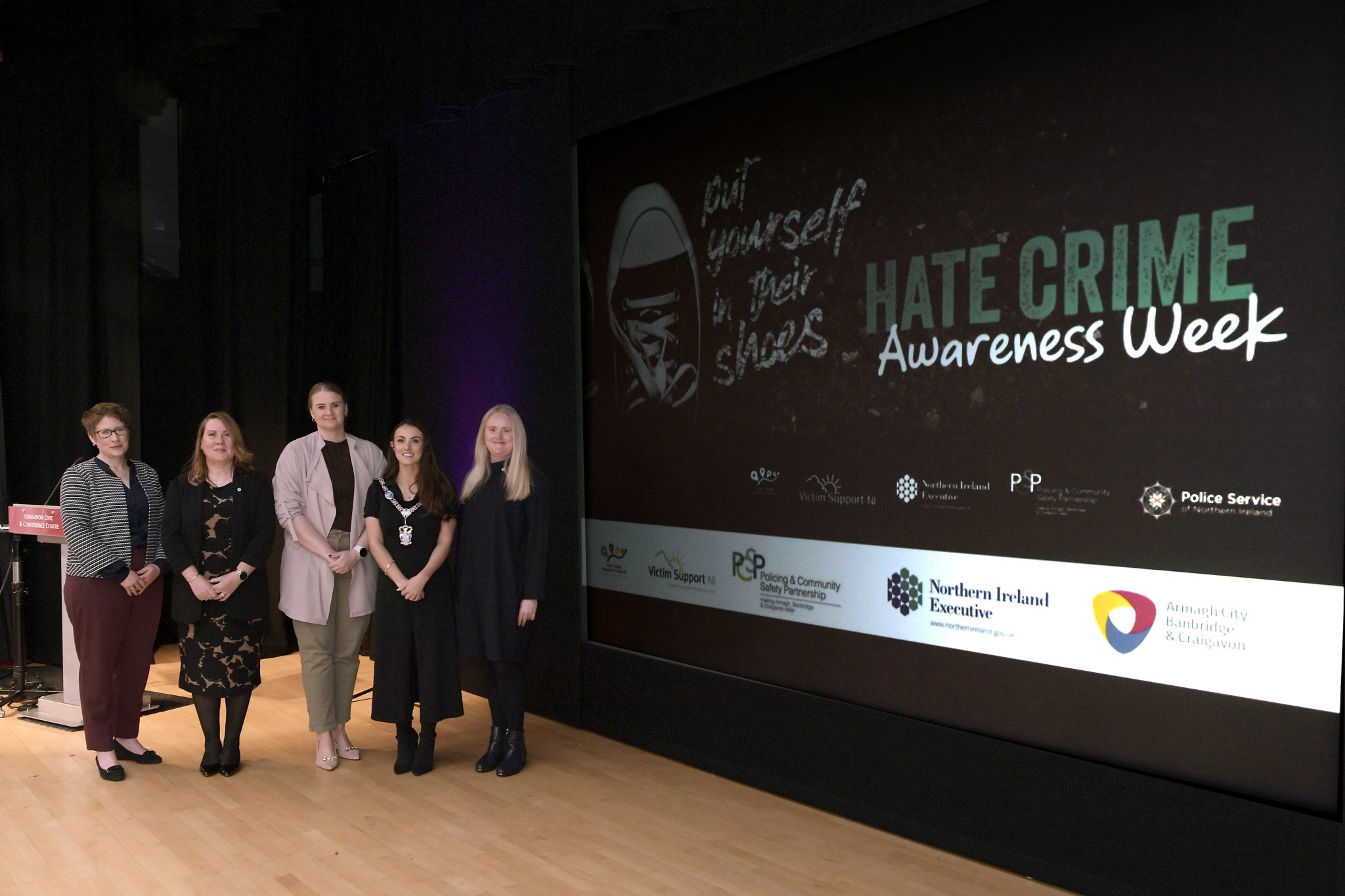
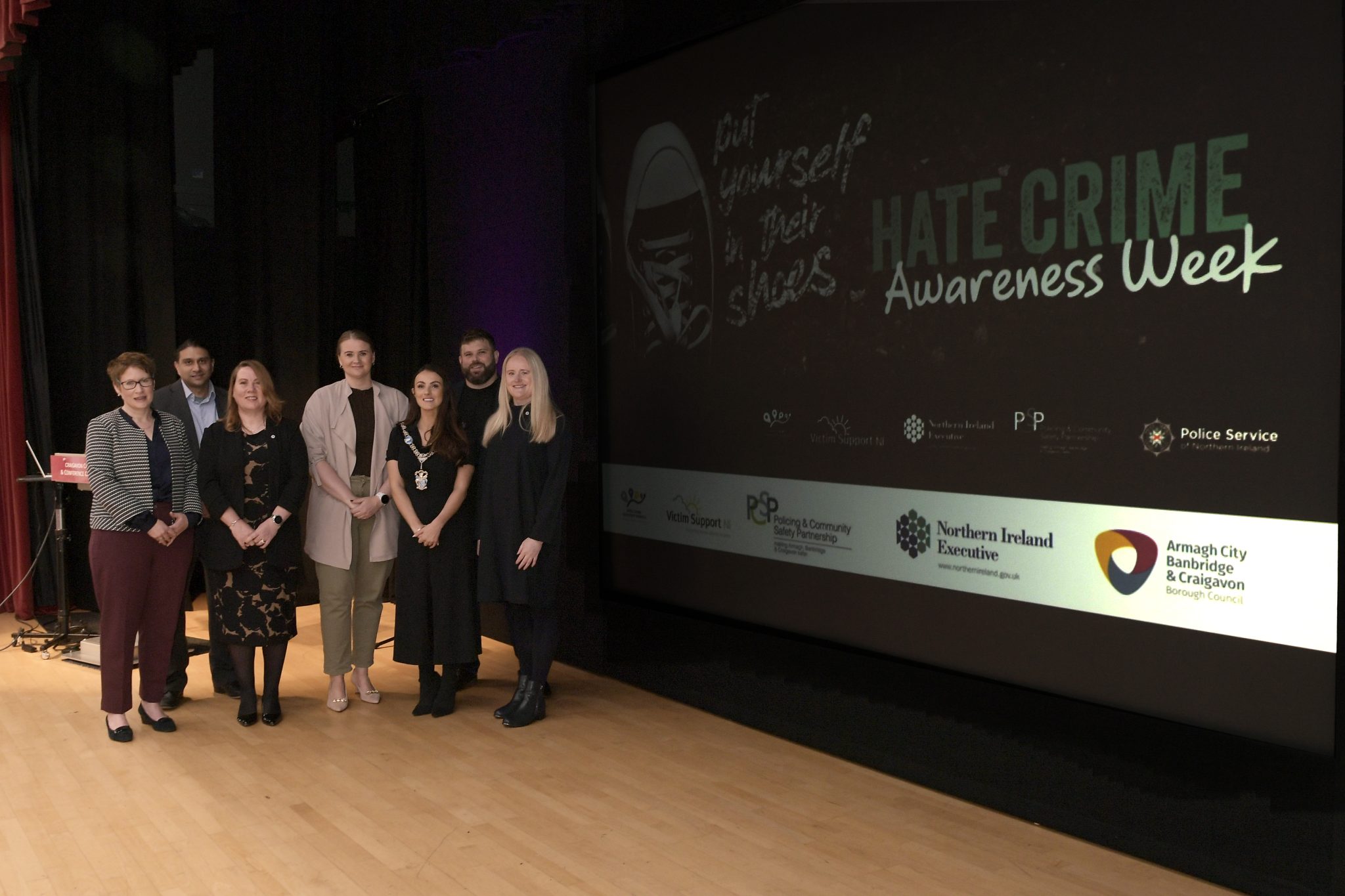
Pictured at the recent Hate Crime Conference are: Back Row: Temporary /Superintendent Sue Steen MBE, Vishal Bedi, Ethnic Minority Police Association, Michael Avila, Hate Crime Advocacy Service, Adam Corner, Temporary Chief Inspector, Sgt Sinead Loughlin, Annette Blaney, PCSP Project Coordinator. Front Row: Patricia Gibson, PCSP Manager, Junior Minister Aisling Reilly, Lord Mayor of Armagh City, Banbridge and Craigavon, Councillor Sarah Duffy, Geraldine Hanna, Commissioner Designate for Victims of Crime for Northern Ireland and Ruth Allen, Head of Community Development.
A hard-hitting conference to raise awareness of Hate Crime was held recently at Craigavon Civic and Conference Centre – and left a huge impact on those in attendance.
Attended by Minister Aisling Reilly, the ‘Put Yourself in their Shoes’ event gave voice to a number of guest speakers from a variety of walks of life, who shared their very personal experiences of being a victim of Hate Crime.
Organised in partnership with Armagh, Banbridge & Craigavon Policing & Community Safety Partnership (PCSP) and Victim Support NI, this event also focused on the Victim Support NI Hate Crime Manifesto which highlights how statutory, community and private sector partners can work collaboratively to improve support to victims and curb hate in society.
“Hate Crime incidents are something we unfortunately now hear about on an almost daily basis and everyone should be able to live a life free from fear and isolation,” commented the Lord Mayor of Armagh City, Banbridge and Craigavon Councillor Sarah Duffy.
“The individuals who spoke today were incredibly brave to share their story to help raise awareness of Hate Crime, and really made us all think about how we would feel if we were on the receiving end of it.”
Hate Crime is the perpetrator’s hostility or prejudice against any person or property on the grounds of the victim’s ethnicity, sexual orientation, gender identity, religion, political opinion or disability – and these incidents have continued to rise in Northern Ireland over the past decade.
“This conference was really informative and helped to increase awareness and understanding about Hate Crime and in particular, really opened our eyes to the hate incidents that people have experienced in our communities,” commented Alderman Mark Baxter, Chair of the PCSP.
“We would encourage everyone to report any incidents of Hate Crime and to never be afraid to speak out against it. We all need to tackle this together.”
To report a Hate Crime please contact the Police on 101 or online https://www.psni.police.uk/report You can also call Crimestoppers on 0800 555 111 with complete anonymity.
This event was part funded by Armagh City, Banbridge and Craigavon Borough Council and The Executive Office.
Pictured at the recent Hate Crime Conference are Ruth Allen, Head of Community Development, Patricia Gibson, PCSP Manager, Junior Minister Aisling Reilly, Lord Mayor of Armagh City, Banbridge and Craigavon, Councillor Sarah Duffy and Geraldine Hanna, Commissioner Designate for Victims of Crime for Northern Ireland.
Pictured at the recent Hate Crime Conference are Ruth Allen, Head of Community Development, Vishal Bedi, Ethnic Minority Police Association, Patricia Gibson, PCSP Manager, Junior Minister Aisling Reilly, Lord Mayor of Armagh City, Banbridge and Craigavon, Councillor Sarah Duffy, Michael Avila, Hate Crime Advocacy Service and Geraldine Hanna, Commissioner Designate for Victims of Crime for Northern Ireland.
SYDNEY, Oct. 17, 2024 (GLOBE NEWSWIRE) — Leading global Forex and CFD broker Axi celebrates the one-year anniversary of the launch of their pioneering capital allocation program, Axi Select. Per the broker, Axi Select breaks away from traditional norms in the prop trading industry; instead, it stands out as the first funded trader-centric program that provides traders with a fair and realistic opportunity to progress into professional trading.
Indeed, Axi Select seems to have refined the existing models to one that invests in the trader’s potential. Greg Rubin, Head of Axi Select, says: “This past year, we’ve seen Axi Select really stand out among other similar programs by providing real opportunities for success and growth.” The program offers talented traders a pathway to access capital funding up to $1,000,000 USD and earn up to 90% of their profits, as well as the advantage to join the program with zero registration or monthly fees*. Moreover, Axi Select uses a Standard or a Pro live account, unrestrictive trading conditions, and a suite of tools to help traders on their trading journey.
The reception of the program has been phenomenal – since its launch in 2023, over 17,400 traders have joined Axi Select. Per Axi, September was a record month for Axi Select as the one-year celebration came with over $440K in trader payouts. Seasoned trader Moises C. comments on the program: “Axi Select’s leading and professional capital allocation program offers unmatched returns for traders. I believe it to be a benchmark of excellency within the industry that has transformed my life.”
To celebrate their one-year anniversary, Axi hosted an insightful discussion where Greg Rubin answers the most frequently Axi Select questions asked over the past year. You can view the video here: https://youtu.be/IZKwiox88I8.
About Axi
Axi is a global online FX and CFD trading company, with thousands of customers in 100+ countries worldwide. Axi offers CFDs for several asset classes including Forex, Shares, Gold, Oil, Coffee, and more.
The Axi Select program is only available to clients of AxiTrader Limited. CFDs carry a high risk of investment loss. In our dealings with you, we will act as a principal counterparty to all of your positions. This content is not available to AU, NZ, EU and UK residents. For more information, refer to our Terms of Service.