Category: Latin America

  • MIL-OSI Global: Trump tariffs: there may be silver linings in the trade war storm clouds

    Source: The Conversation – UK – By Scott Mahadeo, Senior Lecturer in Macroeconomics, University of Portsmouth

    bella1105/Shutterstock

    US tariffs – both threatened and imposed – on trade partners including China, Canada, Mexico and the EU quickly set off waves of retaliatory measures. The latest commodities in the sights of president Donald Trump are steel and aluminium – with tariffs of 25% announced for all imports. But not only do these taxes disrupt well-established trade flows, they ignite concerns over the very future of globalisation.

    Yet amid this uncertainty, it’s possible that there may be a silver lining. Trump may inadvertently be paving the way for a realignment of trade relationships and the emergence of new economic blocs. Such partnerships could foster more resilient and regionally focused economic cooperation.

    Trump’s decision to levy tariffs on its major trading partners disrupts the fundamental tenets of the gravity model of trade. According to this theory, trade between two nations is largely determined by their economic size and proximity. For instance, introducing tariffs to the close economic relationship between the US and Canada, underpinned by their shared border, effectively increases the distance between the two by raising costs and reducing the volume of bilateral trade.

    However, these disruptions can inadvertently encourage diversification of trade relationships. As companies and governments seek to mitigate the risks associated with tariffs, they may begin to explore new markets and alternative supply chains. This could ultimately lead to a more dispersed and – potentially – more stable global trade system.

    Yet as Trump continues to test the limits of his power, he is learning it is not so easy to defy gravity. Already, the president has dialled down tariffs on Canada and Mexico, while China has struck back with retaliatory measures.

    One positive spin-off of the trade war may be the reinforcement of regional alliances. With traditional trade flows disrupted, countries are increasingly incentivised to strengthen ties with neighbouring economies.

    North American outlook

    Canada and Mexico, long considered natural trading partners of the US, might pivot towards deepening their economic cooperation. They may also look to bilateral agreements with other partners as well as seeking new markets, strengthening ties with China and Japan.

    The USMCA (United States-Mexico-Canada Agreement) provides a strong foundation for trade. But attempts to dismantle this arrangement could see Canada and Mexico accelerating efforts to build closer economic ties with other regions, reducing their exposure to the US market.

    Trump reveals his plans for sweeping steel tariffs on “everybody”.

    Trump’s planned tariffs on steel threaten to undermine the USMCA. After all, it is designed to foster integrated supply chains and low-tariff economic cooperation among the three countries. This is likely to escalate trade tensions across the bloc, forcing a reassessment of the trade agreement’s key terms and destabilising the established relationships.

    European Union outlook

    The imposition of tariffs on the EU could lead to deepening integration among its member states. Faced with new pressures from the US, the EU might accelerate initiatives aimed at consolidating internal trade, harmonising regulations and promoting intra-European supply chains.

    Member states, with France at the forefront, are already advocating for a united response to counteract US protectionism. They hope to signal a strong political commitment to resist the pressures from Trump.

    Asia-Pacific outlook

    China, as the world’s second-largest economy behind the US, may seek to expand its trade relationships in the Asia-Pacific region and beyond. As China’s economic growth model is export-led, it may seek stronger partnerships with regional players and invest in new trade agreements. This could potentially give rise to an even more integrated Asian economic community.

    A new economic order

    Whatever else plays out, these tariff wars signal a reordering of the global economic landscape. Such disruptions, though painful in the short term, can create long-term changes that rebalance economic systems. The natural trading partner hypothesis reinforces this view by highlighting how countries with shared cultural, historical and geographical ties are likely to deepen their economic relationships in the face of external shocks.

    Table of US trade

    Source: US Bureau of Economic Analysis (2025)
    Author provided

    In this new order, traditional superpowers may find themselves challenged by unified responses from other nations. By imposing tariffs, the US risks isolating itself from these emerging alliances, while its major trading partners may become united in their efforts to counterbalance rising American protectionism.


    Read more:
    Brics: growth of China-led bloc raises questions about a rapidly shifting world order


    The ripple effects of the US tariff row extend well beyond the directly involved countries, with significant implications for global trade networks. For the UK, already coping with the aftermath of Brexit, this new environment offers both challenges and opportunities.

    With US-led protectionism disrupting traditional trade channels, the UK could seize the opportunity to diversify its export markets by forging stronger ties with the EU and digging deeper into its Commonwealth alliances. It could reinforce its position as a hub for international commerce while continuing to cultivate its relationship with the US. Managing Trump is a delicate balancing act for prime minister Keir Starmer, as both are expected to be in office for four years.

    A word of caution – negotiating international trade agreements is a complex and lengthy process. This is the hard lesson learned by the UK. Its trade with the EU (its most important commercial partner) shrank after Brexit, driving the quest for new trading partners and agreements. But these fruits are slow to materialise.

    The UK formally requested accession to the Comprehensive and Progressive Agreement for Trans-Pacific Partnership (CPTPP) in February 2021, but only signed the accession protocol in July 2023.

    And we should not forget that in 2024 the UK halted its trade talks with Canada after two years of negotiations, due to disagreements over the standards on some agricultural products.

    Tariffs come with challenges, but they might also be the beginning of a slow and painful change towards a more balanced and robust global economic order.

    The authors do not work for, consult, own shares in or receive funding from any company or organisation that would benefit from this article, and have disclosed no relevant affiliations beyond their academic appointment.

    ref. Trump tariffs: there may be silver linings in the trade war storm clouds – https://theconversation.com/trump-tariffs-there-may-be-silver-linings-in-the-trade-war-storm-clouds-249526

    MIL OSI – Global Reports

  • MIL-OSI Security: Two women sentenced for attempting to smuggle Mexican child into U.S.

    Source: Office of United States Attorneys

    LAREDO, Texas – Two U.S. citizens have been ordered to federal prison for attempting to bring a 7-year-old Mexican minor into the United States for personal financial gain, announced U.S. Attorney Nicholas J. Ganjei.

    Sisters Naidelyn Yuliana Vielma Jimenez, 22, Nuevo Laredo, Tamaulipas, Mexico, and Bianca Jackeline Vielma Jimenez, 23, Laredo, pleaded guilty Sept. 17 and Oct. 17, 2024, respectively. 

    U.S. District Judge Diana Saldaña has now imposed a 36-month-term of imprisonment for both sisters to be immediately followed by three years of supervised release. 

    On July 9, 2024, both women arrived at the Juarez-Lincoln International Bridge at Laredo along with their 16-year-old sister and a 7-year-old male. At that time, they all purported to be one family unit and that the male was their 15-year-old brother.  

    They showed authorities a video and photograph allegedly depicting the boy with their family. They also presented a copy of their 15-year-old brother’s documents as additional proof to convince them the child was their brother. 

    However, law enforcement did not believe the boy was the same one depicted and that the child in the vehicle was much younger. Further investigation revealed that the child was not related to the women.

    The two older sisters ultimately admitted they had made an agreement to smuggle the Mexican child into the United States and transport him to San Antonio for a fee of $3,000. 

    “Prior open border policies have inflicted an incalculable human toll, much of which has unfortunately fallen upon innocent children,” said Ganjei. “The Department of Justice, and, in particular, the Southern District of Texas, will do whatever it takes to destroy the market for the trafficking and smuggling of children. For those who profit off this misery, you will be found and prosecuted.”

    Both women were permitted to remain on bond and voluntarily surrender to a U.S. Bureau of Prisons facility to be determined in the near future

    Customs and Border Protection conducted this investigation. Assistant U.S. Attorney Jose Homero Ramirez prosecuted this case. 

    MIL Security OSI

  • MIL-OSI Security: Mexican Citizen Indicted for Illegal Re-entry into U.S.

    Source: Office of United States Attorneys

    PITTSBURGH, Pa. – A citizen of Mexico has been indicted by a federal grand jury in Pittsburgh on a charge of illegal re-entry of a removed alien, Acting United States Attorney Troy Rivetti announced today.

    The one-count Indictment named Juan Antonio Lopez Mauricio, 25, as the sole defendant.

    According to the Indictment, on January 30, 2025, Mauricio was found in this District after having been removed from the United States four times between 2012 and 2015.

    The law provides for a maximum total sentence of up to two years in prison, a fine of up to $250,000, or both. Under the federal Sentencing Guidelines, the actual sentence imposed would be based upon the seriousness of the offense and the prior criminal history of the defendant.

    Assistant United States Attorney Rebecca L. Silinski is prosecuting this case on behalf of the United States.

    U.S. Immigration and Customs Enforcement’s Enforcement and Removal Operations conducted the investigation leading to the Indictment.

    An indictment is an accusation. A defendant is presumed innocent unless and until proven guilty.

    MIL Security OSI

  • MIL-OSI Security: Guatemala Resident Charged with Illegal Re-entry of a Removed Alien

    Source: Office of United States Attorneys

    PITTSBURGH, Pa. – A citizen of Guatemala has been indicted by a federal grand jury in Pittsburgh on a charge of illegal re-entry of a removed alien, Acting United States Attorney Troy Rivetti announced today.

    The one-count Indictment named Eric Estuardo Hernandez-Ramos, 19, as the sole defendant.

    According to the Indictment, on January 25, 2025, Hernandez-Ramos was found in the Western District of Pennsylvania after having been removed from the United States on or about December 18, 2023.

    The law provides for a maximum total sentence of up to two years in prison, a fine of up to $250,000, or both. Under the federal Sentencing Guidelines, the actual sentence imposed would be based upon the seriousness of the offense and the prior criminal history of the defendant.

    Assistant United States Attorney Rebecca L. Silinski is prosecuting this case on behalf of the United States.

    U.S. Immigration and Customs Enforcement’s Enforcement and Removal Operations conducted the investigation leading to the Indictment.

    An indictment is an accusation. A defendant is presumed innocent unless and until proven guilty.
     

    MIL Security OSI

  • MIL-OSI Global: How smarter greenhouses could improve the UK’s food security

    Source: The Conversation – UK – By Sven Batke, Associate Head of Research and Knowledge Exchange – Reader in Plant Science, Edge Hill University

    A tomato greenhouse in north-west England. Sven Batke, CC BY-NC-ND

    When was the last time you walked into a supermarket and marvelled at the abundance of exotic fruits and vegetables, even in the dead of winter? This luxury, now an expectation, only became common in the mid-20th century, reaching the UK some decades later.

    Not long ago, winter produce in UK supermarkets was limited; root vegetables like carrots, potatoes, and parsnips, alongside hardy greens such as kale and cabbage. Fruits were even scarcer, mostly apples and pears. Today’s variety owes much to advances in global trade and smarter greenhouses, which help extend growing seasons and bring once seasonal produce to shelves all year round.

    Fast forward just one generation, and now supermarket shelves are stocked with dragon fruit, bananas, coconuts, avocados, and a variety of exotic nuts and vegetables. These items not only hail from the farthest reaches of the globe, but have also been bred to offer consumers unique sensory experiences or health benefits, such as higher concentrations of antioxidants. It’s no surprise that most of these exotic foods are often not grown locally or even within Europe.

    According to the latest government figures from 2023, 53% of the vegetables consumed in the UK are imported, and only 17% of fruits are grown locally. The contrast is stark when you look at exports, which remain relatively small (about 100,000 tonnes in 2023).

    UK food security could be improved by growing more produce inside smart greenhouses.
    Sven Batke, CC BY-NC-ND

    How often do you eat a UK-grown strawberry or tomato outside summer? Many such vegetables come from the Netherlands, Morocco and Spain, while most fruit comes from Colombia, Costa Rica and Brazil. No surprise, given their warmer climates. The UK averages 9-12°C annually, compared to Morocco’s 18-20°C.

    Increasing demand for exotic foods available year-round has made the UK’s food system vulnerable to external market fluctuations. Disruptions, such as trade barriers following Brexit or global hikes in energy prices due to the Ukraine war have placed supply chains under strain.

    Empty supermarket shelves could become more common if we see disruptions in supply chains, putting further pressure on the undervalued domestic growing sector. But could the UK grow more of its own food and reduce reliance on volatile global markets?

    Hi-tech solutions

    Protected horticulture (specifically in the food sector, as opposed to ornamental plants) involves growing fruits and vegetables year-round in controlled environments, such as polytunnels, greenhouses and indoor vertical farms.

    These facilities regulate temperature, humidity and light, and in some cases, even atmospheric gases like CO₂. Water and nutrient inputs are also tightly controlled, reducing waste by up to 95% compared to traditional field-grown methods. This allows year-around protection from the elements. They are often overlooked despite holding the key to solving some of the current food security challenges.


    Read more:
    Four myths about vertical farming debunked by an expert


    As part of the Greenhouse Innovation Consortium, my team of biologists, geographers and I recently mapped over 12,000 greenhouses in Britain. Estimates suggest that around 70% of these structures are more than 40 years old.

    So why haven’t we seen more UK-grown fruits and vegetables on supermarket shelves if we have the technology to produce them? One major reason is the high energy demand of indoor growing, especially in cold and cloudy weather – something we are all too familiar with in the UK. For example, 2024 has seen one of the worse years in total recorded sun hours.

    The UK’s horticulture sector has also received very little government support over the years. There are few incentives for growers to adopt new technology or upgrade infrastructure. Many UK growers still have not adopted technologies like automatic harvest robots or AI-controlled systems, and even simple upgrades like LED growing lights could boost yield by over 50%. However, resource management in this sector requires experience and making these changes is a fine balancing act.

    Most British greenhouses are more than 40 years old so investment is needed to upgrade them.
    Sven Batke, CC BY-NC-ND

    But the future can be bright – if we choose to make it so. To grow more produce all year round without compromising on flavour, the sector needs more investment in local expertise and cutting-edge facilities.

    From precision horticulture to advanced AI-controlled greenhouses, with the right drive and investment, the UK could move towards a more sustainable food production system. Sweden for example is currently investing over £700 million into horticulture.

    While achieving 100% self-sufficiency may not be feasible due to other demands on land, such as housing, conservation, and industry, creating a more resilient and less dependent food sector would benefit everyone (not to mention reducing food miles).

    The UK’s food future doesn’t have to rely on global markets. With investment and innovation, the country can build a resilient, sustainable food system. Year-round demand for exotic produce has exposed supply chain fragility, but fostering domestic growth and technology can change the narrative.

    It’s not about turning back the clock, but about making the most of what the UK has while driving forward the solutions that make sense for the country’s future. The answer is not just more local food. It’s smarter, more resilient food systems that can weather whatever challenges lie ahead.


    Don’t have time to read about climate change as much as you’d like?

    Get a weekly roundup in your inbox instead. Every Wednesday, The Conversation’s environment editor writes Imagine, a short email that goes a little deeper into just one climate issue. Join the 40,000+ readers who’ve subscribed so far.


    Sven Batke works together with industry growers and manufactures in the horticulture industry. The work we are doing is part of the Greenhouse Innovation Consortium, which aims to support local growers in the UK.

    ref. How smarter greenhouses could improve the UK’s food security – https://theconversation.com/how-smarter-greenhouses-could-improve-the-uks-food-security-248719

    MIL OSI – Global Reports

  • MIL-OSI USA: February 11th, 2025 Heinrich Cosponsors American Beef Labeling Act

    US Senate News:

    Source: United States Senator for New Mexico Martin Heinrich

    WASHINGTON — U.S. Senator Martin Heinrich (D-N.M.) cosponsored the American Beef Labeling Act, legislation that would reinstate mandatory country of origin labeling (MCOOL) for beef. The bill is led by U.S. Senators John Thune (R-S.D.) and Cory Booker (D-N.J.).

    The legislation would require the U.S. Trade Representative (USTR), in consultation with the U.S. Department of Agriculture, to develop a World Trade Organization-compliant means of reinstating MCOOL for beef within one year of enactment. USTR would have six months to develop a reinstatement plan followed by a six-month window to implement it. If USTR fails to reinstate MCOOL for beef within one year of enactment, it would automatically be reinstated for beef only.

    “American consumers deserve to know where their food comes from,” said Chad Franke president of Rocky Mountain Farmers Union (RMFU). “American ranchers produce the highest quality beef and they deserve to benefit from that. On behalf of RMFU members and our communities, we thank Senators Lummis and Heinrich for cosponsoring this important legislation.”

    Alongside Heinrich, the legislation is cosponsored by U.S. Senators Mike Rounds (R-S.D.), Cynthia Lummis (R-Wyo.), John Fetterman (D-Pa.), and John Hoeven (R-N.D.).

    MIL OSI USA News

  • MIL-OSI Economics: AlUla Conference for Emerging Market Economies

    Source: International Monetary Fund

    The AlUla Conference for Emerging Market Economies is an annual economic policy conference, held in AlUla, Saudi Arabia, organized by the Ministry of Finance of Saudi Arabia and the IMF Regional Office in Riyadh. The conference will convene a select group of emerging markets’ ministers of finance, central bank governors, and policymakers, as well as public and private sector leaders, international institutions, and academia. It will offer a unique platform to exchange views on domestic, regional, and global economic developments and discuss policies and reforms to spur inclusive prosperity and build resilience supported by strong international cooperation.

    The sessions with an asterisk (*) will be streamed live on this page.

    Agenda

    Day 1: February 16, 2025

    09:30-09:40 – Opening remarks by H.E. Mohammed Al-Jadaan (Minister of Finance, Saudi Arabia) and Kristalina Georgieva (Managing Director, IMF) *

    09:40-10:00 – Keynote Lecture: Emerging Markets Amid Structural Shifts in the World Economy

    The keynote address will discuss global trends and their potential implications for emerging markets and developing economies (EMDEs), as well as the role of international cooperation.

    • Keynote Address: H.E. Pan Gongsheng (Governor, PBOC)

    10:00-10:50 – Emerging Markets: Policy Challenges Amid Structural Shifts in the World Economy

    The panel will delve into EMDEs’ policy challenges in the context of the rising uncertainty and the changing global economic landscape. Specifically, it will cover the implications for EMDEs of (i) more frequent external shocks; (ii) elevated uncertainty; and (iii) structural challenges in the context of high debt, weak growth, energy transitions, and new technologies.

    • Moderator: Jihad Azour (Director, Middle East and Central Asia Department, IMF)

    Panelists:

    • H.E. Olayemi Cardoso (Governor, Central Bank of Nigeria)
    • José De Gregorio (Dean, School of Economics and Business, University of Chile)
    • H.E. Ali bin Ahmed Al Kuwari (Minister of Finance, Qatar)
    • Jin Liqun (President, Asian Infrastructure Investment Bank)

    10:50-11:10 – Coffee break

    11:10-12:10 – High Debt-Low Fiscal Space—Fiscal Consolidation and Multilateral Solutions to Debt Restructuring

    Maintaining or restoring debt sustainability in EMDEs is a challenging task in the context of elevated debt, higher interest rate and weak potential growth, as well as significant spending pressures (e.g., related to sustainable development goals, defense, energy transitions, and economic diversification). The panelists will discuss the pace of the ongoing pivot towards fiscal consolidation and ways to garner support for politically difficult reforms. Potential debt restructuring mechanisms from both creditor and debtor perspectives will also be highlighted.

    • Moderator: Ryadh Alkhareif (IMFC Deputy, Saudi Arabia)

    Panelists:

    • H.E. Mohammed Al-Jadaan (Minister of Finance, Saudi Arabia)
    • Mauricio Cárdenas (Professor, Columbia University, former Minister of Finance, Colombia)
    • H.E. Situmbeko Musokotwane (Minister of Finance and National Planning, Zambia)
    • H.E. Anton Siluanov (Minister of Finance, Russia)

    12:10-13:00 – Lunch

    13:00-14:00 – Monetary Policy and Capital Flows Amid Elevated Uncertainty

    The session will discuss the path of future monetary policy in EMDEs, considering the spillovers from monetary policy in advanced economies and potential swings in global market sentiment, as well as the uncertainty around the implications for inflation, the neutral rate, and capital flows of the changing economic landscape.

    • Moderator: Pierre-Olivier Gourinchas (Economic Counsellor, Director of the Research Department, IMF)
    • Author: Hélène Rey (Professor, London Business School)

    Discussants:

    • H.E. Fatih Karahan (Governor, Central Bank of the Republic of Türkiye)
    • H.E. Sethaput Suthiwartnarueput (Governor, Bank of Thailand)

    14:00-15:00 – Resilience of the Financial System in Emerging Markets

    The panel will focus on the implications of the changing global landscape for financial stability in emerging markets, as well as the policy priorities.

    • Moderator: Tobias Adrian (Director, Monetary and Capital Markets Department, IMF)

    Panelists:

    • H.E. Ayman Mohammad Al-Sayari (Governor, SAMA)
    • H.E. Sheikh Bandar bin Mohammed bin Saoud Al Thani (Governor, Qatar Central Bank)
    • H.E. Taleh Kazimov (Governor, Central Bank of Azerbaijan)
    • H.E. Andriy Pyshnyi (Governor, National Bank of Ukraine)

    19:30-21:30 – Dinner hosted by the Ministry of Finance of Saudi Arabia

    Day 2: February 17, 2025

    09:00-10:00 – Navigating Trade Tensions and Uncertainties

    Against the backdrop of mounting risks and uncertainty, the session will discuss (i) how geoeconomic fragmentation and geopolitical risks are affecting trade and investment globally and in EMDEs; (ii) how EMDEs can adapt to these developments and mitigate risks; (iii) what policies to enhance trade and investment flows; and (iv) what changes to the current global trade system to respond to EMDEs’ needs.

    • Moderator: Indermit Gill (Chief Economist, World Bank Group)

    Panelists:

    • H. E. Adebayo Olawale Edun (Minister of Finance, Nigeria)
    • H.E. Nadia Fettah (Minister of Economy and Finance, Morocco)
    • H.E. Sergii Marchenko (Minister of Finance, Ukraine)

    10:00-11:00 – Productivity in EMDEs: Challenges and Opportunities

    Compared with the pre-pandemic period, the medium-term growth outlook has worsened significantly, including in EMDEs. The projected slowdown jeopardizes income convergence and could also lead to widening income inequality within countries. Against this backdrop, the session will take stock of EMDEs’ growth outlook, including the main headwinds, and discuss the potential challenges and opportunities from shifts in the economic landscape (e.g., AI).

    • Moderator: H.E. Muhammad Al Jasser (President, Islamic Development Bank)
    • Author: Leslie Teo (Director, AI Products, AI Singapore; Former chief economist and head of investment strategy, GIC Singapore)

    Discussants:

    • H.E. Faisal F. Alibrahim (Minister of Economy and Planning, Saudi Arabia)
    • Santiago Levy (Senior Fellow, Brookings)
    • H.E. Federico Sturzenegger (Minister of Deregulation and State Transformation, Argentina)

    11:00-11:20 – Coffee break

    11:20-12:20 – Closing Panel: A Path for Emerging Market Resilience *

    The concluding panel will focus on (i) how EMDEs should deal with shocks in the short term, taking into consideration the persistence of some global shocks; (ii) identifying the main trade-offs for fiscal and monetary policymakers to build resilience, maintain stability and spur growth (“rise strong”); and (iii) how the underlying concerns behind “anti-globalization” pressures can be addressed to revitalize global economic integration.

    • Moderator: Kristalina Georgieva (Managing Director, IMF)

    Panelists:

    • H.E. Muhammad Aurangzeb (Minister of Finance, Pakistan)
    • H.E. Rania Al-Mashat (Minister of Planning, Development, International Cooperation, Egypt)
    • H.E. Fernando Haddad (Minister of Finance, Brazil)
    • H.E. Mehmet Şimşek (Minister of Finance, Türkiye)
    • H.E. Hon. John Mbadi Ng’ongo (Minister of Finance, Kenya)

    12:20-12:40 – Closing remarks by H.E. Mohammed Al-Jadaan (Minister of Finance, Saudi Arabia) and Kristalina Georgieva (Managing Director, IMF) *

    MIL OSI Economics

  • MIL-OSI NGOs: Energy Transfer thinks they can silence us

    Source: Greenpeace Statement –

    © Tegan Gregory / Greenpeace

    Big Oil company Energy Transfer is trying to silence Greenpeace with a $300,000,000 lawsuit. If we actually had to pay that amount, Greenpeace USA could shut down.

    This lawsuit from Energy Transfer against Greenpeace USA and Greenpeace International includes a racist attempted rewrite of the history of the Indigenous-led protests against the Dakota Access Pipeline. It’s also Big Oil’s message to environmentalists everywhere: if you dare to criticize us, you could be next.

    The world has taken notice. 

    Word of this threat to the entire climate justice movement has spread across the world, and over the last few months, thousands of Greenpeace activists, allies, and supporters in more than two dozen countries have responded to Big Oil in one unified voice.

    Our message is loud and clear: we will not be silenced. And that message is now echoing across the planet.

    Take a look at these photos from more than 25 different countries — as you scroll, think about what our movement is capable of when we work together.

    United States

    © Tim Aubry / Greenpeace

    Netherlands

    © Gosse Bouma / Greenpeace

    Germany

    © Markus J. Feger / Greenpeace

    Czech Republic

    © Ray Baseley / Greenpeace

    Sweden

    © Jana Eriksson / Greenpeace

    Denmark

    © Philip Raissnia / Greenpeace

    Indonesia

    © Pangeran / Greenpeace

    Thailand

    © Purimpat Jansuwan / Greenpeace

    Croatia

    © Maja Bota / Greenpeace

    Norway

    © Greenpeace

    Poland

    © Greenpeace / Max Zielinski

    United Kingdom

    © David Mirzoeff / Greenpeace

    Brazil

    © Victor Bravo / Greenpeace

    Hungary

    © Zsuzsi Dorgo / Greenpeace

    Switzerland

    © Maksym Zaika / Greenpeace

    France

    © Fanny Noret / Greenpeace

    Philippines

    © Greenpeace

    Spain

    © Greenpeace / Pablo Blazquez

    Finland

    © Heikki S. Laherma / Greenpeace

    Greece

    © Evelina Manou / Greenpeace

    Mexico

    © Prometeo Lucero / Greenpeace

    Slovenia

    © Petra Godeša / Greenpeace

    Romania

    © Ioana Moldovan / Greenpeace

    Ukraine

    © Greenpeace

    Aotearoa

    © Clae Baxter / Greenpeace

    Australia

    © Greenpeace / Toby Davidson

    Belgium

    © Mathieu Soete / Greenpeace

    Germany. Indonesia. Thailand. Poland. Brazil. Hungary. France. Spain. Greece. Mexico. Australia. Belgium.

    Greenpeace is a global movement. Environmental justice is a global movement. 

    That’s what Big Oil fails to understand: if they try to silence one of us, millions more will speak out. We will not be silenced. We cannot be silenced.

    Big Oil knows that free speech and protest are the best tools we have to demand a green and just world, and they’re afraid of what happens when we exercise those rights. So that’s what we’re going to continue doing.

    Recently, we launched an open letter to pressure Energy Transfer to drop their lawsuit. We’re proud to say that hundreds of thousands of people have now signed it, along with more than 400 organizations representing millions of people around the world.

    With less than two weeks until we go to trial in North Dakota, we must keep raising our voices.

    In September, The Wall Street Journal reported that “some oil-and-gas investors expressed concerns” about Energy Transfer’s $300 million lawsuit against us. Their concern? “It makes the industry look vindictive and could result in a reinvigorated protest movement.”

    That’s precisely what Energy Transfer has ignited — a reinvigorated movement.

    We all know that Big Oil has infinite sums of money, and immense power. And it’s true that a defeat in court could threaten Greenpeace USA’s existence, and have far-reaching implications for the climate justice movement around the world.

    But we will not be silenced.

    MIL OSI NGO

  • MIL-OSI USA: ICE HSI San Antonio and our law enforcement partners arrest a Tren de Aragua gang member during enforcement action

    Source: US Immigration and Customs Enforcement

    SAN ANTONIO – U.S. Immigration and Customs Enforcement’s Homeland Security Investigations, in partnership with our law enforcement partners, arrested a Tren de Aragua gang member, Feb 5.

    The 27-year-old male citizen and national of Venezuela was arrested for assault with a deadly weapon and is the suspected shooter in an attempted murder investigation in San Antonio. The illegally present is currently in state custody.

    “The successful arrest of a member of the Tren de Aragua gang in San Antonio was made possible through the resolute efforts of HSI and our dedicated local law enforcement partners,” said HSI San Antonio Special Agent in Charge Craig Larrabee. “This arrest highlights our steadfast dedication to the safety of our communities and the relentless pursuit of justice.”

    The Tren de Aragua gang is known for engaging in various criminal activities, including drug trafficking and violent crimes, which pose a significant threat to our communities. HSI and our partners are dedicated to dismantling these criminal organizations through strategic operations, intelligence-driven investigations, and close cooperation with international, federal, state, and local law enforcement agencies. By leveraging our collective resources and expertise, we aim to disrupt the operations of these dangerous gangs and bring their members to justice.

    Individuals can report suspicious criminal activity to the ICE Tip Line 24 hours a day, seven days a week, call 866-DHS-2-ICE.

    MIL OSI USA News

  • MIL-OSI United Kingdom: Intellectual Property: SafeGlam

    Source: United Kingdom – Executive Government & Departments

    Case study

    Intellectual Property: SafeGlam

    From personal experience to SafeGlam: Why business graduate Giorgia Flora Aloi chose to launch a platform to educate consumers about counterfeit goods.

    Giorgia Flora Aloi is a business graduate, who recently completed her Master’s in Applied Imagination at Central Saint Martin’s. During this time, she investigated the growing issue of counterfeit beauty products sold on social media platforms. For her final project, Giorgia developed SafeGlam – an online learning platform which educates consumers on the dangers of counterfeit cosmetics and how to identify them.

    Giorgia’s inspiration came from a personal experience. She and her sister both unknowingly purchased a foundation from Kiko Milano from a social media marketplace. Upon opening the product, Giorgia immediately recognised it was fake due to the product being overly oily and carrying a strong smell. Following this, Giorgia’s mother suffered an allergic reaction after applying to her skin. This experience sparked her interest in counterfeit cosmetics, particularly the harmful and unregulated ingredients often found in these products.

    Finding support for SafeGlam

    Determined to move forward with SafeGlam, Giorgia realised she needed credible insights to:

    1. Understand the broader impact of counterfeit beauty products.
    2. Ensure the platform’s content was accurate, reliable, and impactful.

    During her research, Giorgia discovered the Intellectual Property Office’s (IPO) ‘Choose Safe, Not Fake’ campaign, which focused on counterfeit beauty and hygiene products. After reaching out to the IPO’s Enforcement team, Giorgia was guided to valuable research and resources that strengthened the evidence behind her project. Credible information from trusted sources, such as government departments, gave her platform the authority and reliability needed to connect with users effectively.

    The impact of SafeGlam

    With the support of verified insights, Giorgia created a clear, engaging and impactful platform that raises awareness of counterfeit beauty products. SafeGlam contributes to a fundamental objective of the IPO Counter-Infringement Strategy. This is to educate consumers about the risks of fakes and how to spot them, to prevent the spread of dangerous counterfeit goods.

    The IPO recognises that supporting initiatives like SafeGlam helps strengthen critical messages to reach new audiences. Giorgia’s peer-to-peer approach effectively connects with younger consumers, making education on counterfeit products more relatable and effective.

    What’s next for Giorgia and SafeGlam?

    “SafeGlam is stepping into the future with a clear mission: educate, empower and protect beauty enthusiasts around the world. Through podcasts, educational videos and partnerships we’re building a stronger, more informed community. This paves the way for a safer, smarter and more transparent beauty world”- Giorgia Flora Aloi

    Take Action

    Visit SafeGlam today to learn about the dangers of counterfeit beauty products and explore the IPO website for information on the effect of counterfeit goods.

    Updates to this page

    Published 11 February 2025

    MIL OSI United Kingdom

  • MIL-OSI United Kingdom: Universal Periodic Review 48: UK Statement on Bolivia

    Source: United Kingdom – Executive Government & Departments

    UK Statement at Bolivia’s Universal Periodic Review at the Human Rights Council in Geneva. Delivered on 21 January 2025.

    Thank you, Mr President, 

    The United Kingdom thanks the Bolivian delegation for setting out its efforts to protect human rights and welcomes progress by Bolivia since its last review in 2019. We look forward to Bolivia developing further improvements in key areas. 

    We recommend that Bolivia: 

    1. Increase oversight and scrutiny as part of a wider plan to ensure the independence, impartiality and integrity of the Bolivian judiciary, in the next five years.   

    2. Strengthen and develop the training and capacity building of law enforcement and the judiciary, to enable the implementation of those laws designed to protect women and girls from violence and exploitation.  

    3. Takes steps to ensure greater legal and practical protection for journalists to enable them to fulfil their roles free from legal, political and economic pressure or harassment. 

    Thank you.

    Updates to this page

    Published 11 February 2025

    MIL OSI United Kingdom

  • MIL-OSI Economics: A small consultancy firm in Puerto Rico adopts AI — helping other businesses thrive

    Source: Microsoft

    Headline: A small consultancy firm in Puerto Rico adopts AI — helping other businesses thrive

    MIL OSI Economics

  • MIL-OSI Global: Why are migrants dying trying to cross into the US? These are the 3 main risks they face

    Source: The Conversation – USA – By Marni LaFleur, Assistant Professor of Anthropology, University of San Diego

    An altar set at the U.S.-Mexico border wall in Baja, Calif., in November 2024 honors migrants who died trying to reach the U.S. Guillermo Arias/AFP via Getty Images

    President Donald Trump closed much of the activity at the U.S.-Mexico border in January 2025, making it impossible for migrants who arrive at a U.S. port of entry to apply for asylum. Trump’s border policies are likely to make it far more difficult and dangerous for migrants trying to reach the U.S. – but won’t deter all people who want to cross the U.S.-Mexico border without legal authorization.

    The number of migrants crossing from Mexico into the U.S. without legal authorization dropped dramatically in 2024. But for a long time, crossing the U.S.-Mexico border by land has been the world’s deadliest migration route.

    U.S. Customs and Border Protection recovered the remains of 10,784 migrants from 1988 through 2024.

    This figure is an estimate of the total number of migrants who have died trying to cross from Mexico into the U.S. – there is no centralized system or organization that tracks migrant deaths, or any federal laws guiding authorities on how to manage the remains of migrants.

    Many other dead migrants are also never found.

    I am a professor of anthropology and have spent the past several years trying to understand how and why migrants die trying to enter the U.S.

    Stranded migrants who are now staying in Mexican border towns and others with plans to still try to illegally cross into the U.S. might pursue increasingly dangerous ways to enter the country.

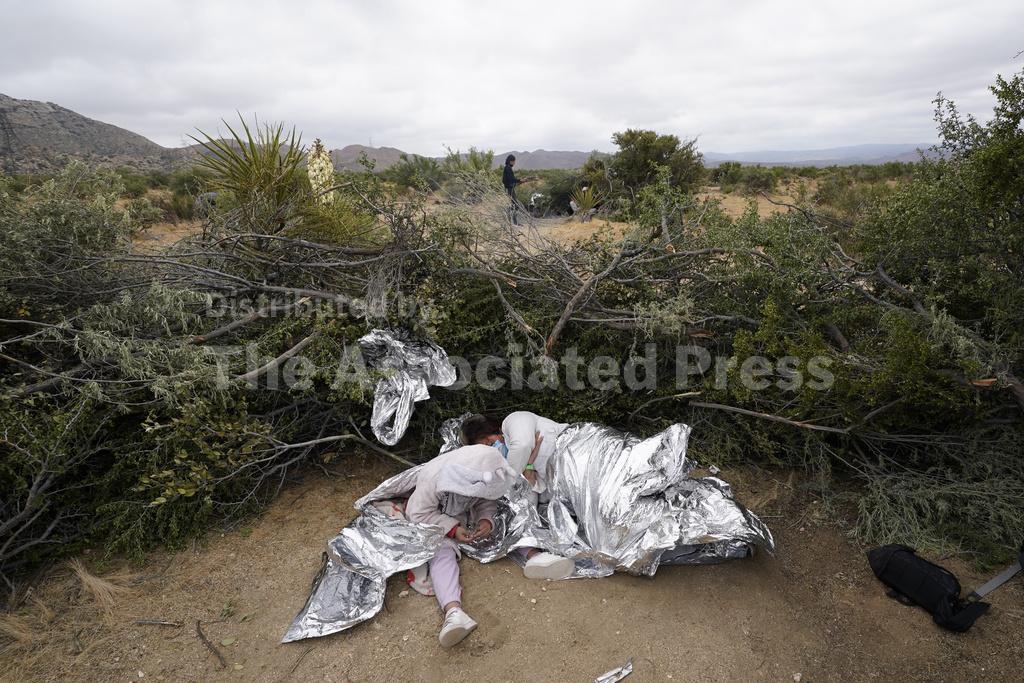
    Research shows that there are three main reasons why migrants die trying to reach the U.S. from Mexico. First, migrants are often exposed to extreme weather conditions. Second, they drown in rivers or other bodies of water. Third, they could also experience blunt force trauma because of falls or motor vehicle accidents.

    A body of a man is found by the Rio Grande in Ciudad Juarez, Mexico, on March 28, 2024.
    David Peinado/Anadolu via Getty Images

    Environmental exposure is common and dangerous

    Migrants coming from Central and South America often travel to the U.S. in groups, typically with the help of a guide, called a coyote, they pay to help them.

    They may spend days or weeks walking through remote areas without access to shelter or fresh food and clean water. They might sleep outdoors in very cold weather and walk during extreme heat. This can cause hypothermia or hyperthermia.

    One of those remote areas is the Sonoran Desert, which spans the southwest U.S. into northwest Mexico. It is divided by the U.S.-Mexico border and is one of the hottest places on Earth. Ambient temperatures can soar to or above 118 degrees Fahrenheit, or 48 degrees Celsius.

    As part of the strategy to stop migrants from coming to the U.S., Customs and Border Protection does not place many officers in the depths of the desert along the border. The government’s 1994 migration “prevention through deterrence” strategy explains that because the desert itself poses mortal danger to individuals, it is unnecessary to guard the land.

    With border barriers, video surveillance, bright lights and many patrol agents closer to more populated areas along the U.S.-Mexico border, migrants can view the desert as a viable alternative for entering the U.S. Deterrent practices have been found to not stop migrants from trying to enter the U.S., but they do increase the number of migrants who die trying to do so.

    Even migrants who are near help or are rescued from the desert may not recover from exposure to extreme temperatures. In 2023, for example, a 9-year-old migrant boy died from organ failure after authorities found him along the Arizona border.

    Drowning poses another risk

    Drowning is another leading cause of death for migrants trying to reach the U.S.

    In California, for example, the 82-mile-long All-American Canal runs parallel to the U.S.-Mexico border. Although the canal doesn’t look particularly dangerous, it is deep, cold, fast-moving and has steep concrete edges that are difficult to scale. Migrants might not be able to swim, or others, particularly women and children, are not strong enough to withstand the force of the currents.

    Areas of the Rio Grande, a river that divides the U.S. and Mexico in some areas of Texas, have become hot spots for migrant drownings. Approximately 1,107 migrants died trying to cross this river between 2017 to 2023. The river is fast and deep and is filled with rocks and heavy vegetation that make crossing difficult.

    Additionally, in an effort to further deter migrant crossing at Eagle Pass, an area of the Rio Grande, the Texas National Guard installed more than 100 miles of razor wire along the river’s banks in 2024. They set up a large string of oversized orange buoys in the water, creating what the federal government called a navigation obstruction for migrants.

    These tactics have sparked larger debates on how to handle migration, and which government agency is responsible for preventing people from crossing into the country, or apprehending them when they do so.

    In 2024, a Mexican woman and her two children tried to cross the Rio Grande but struggled to do so. As Customs and Border Protection agents prepared to rescue the distressed and drowning individuals, the Texas National Guard prevented rescue attempts. The family died from drowning, and their bodies were later recovered.

    Blunt force trauma

    Another leading cause of death of migrants is falling from heights or experiencing car accidents.

    At the California border region alone, approximately 20% of migrant deaths were due to blunt force trauma between 2018 through 2023. This rate rose after the 2020 expansion of the border wall, which now spans 741 miles of the U.S.-Mexico border. In total, the border is nearly 2,000 miles.

    In one incident in Texas in 2020, a pregnant 19-year-old Guatemalan woman died after falling from the border wall, which ranges from 18 to 30 feet. Medical authorities were unable to save the fetus.

    In Texas, between 2021 and 2023, high-speed chases by immigration officials led to the deaths of 74 people. Some individuals were ejected from moving vehicles, while others were hit by fast-moving vehicles. Another particularly deadly accident occurred in 2021 in Holtville, California, when an SUV transporting 25 migrants collided with a semitruck. Thirteen migrants were killed.

    Migrants from Colombia sleep outside in Jacumba, Calif., after crossing into the U.S. in May 2023.
    Gregory Bull/Associated Press

    ‘Prevention through deterrence’

    For more than 30 years, the U.S. government has tried to prevent migrants from reaching the U.S. through different strategies, like deploying Border Patrol agents or building walls.

    There are many practical and policy-based interventions that would make it safer for migrants to cross through the U.S. and Mexico deserts. For example, water stations along known migration routes of the desert save lives.

    Regardless of how the Trump administration tries to stop migrants from reaching the U.S., people will likely still try to come and embark on unsafe journeys to do so – and I will continue to track their experiences and deaths.

    Marni LaFleur received funding from the National Science Foundation. I am the founder and director of a California registered 501 (c)(3) called Lemur Love (EIN 48-1174852).

    ref. Why are migrants dying trying to cross into the US? These are the 3 main risks they face – https://theconversation.com/why-are-migrants-dying-trying-to-cross-into-the-us-these-are-the-3-main-risks-they-face-246108

    MIL OSI – Global Reports

  • MIL-OSI: BexBack Revolutionizes Crypto Trading: Double Deposit Bonus, 100x Leverage & No KYC

    Source: GlobeNewswire (MIL-OSI)

    SINGAPORE, Feb. 11, 2025 (GLOBE NEWSWIRE) — With the price of bitcoin once again trading below $100,000, many analysts believe it will enter a long period of high volatility. Holding spot positions may not continue to generate profits in the short term. BexBack Exchange is stepping up its efforts to provide traders with irresistible preferential packages. The platform now offers a 100% deposit bonus, a $50 welcome bonus for new users, and a 100x leverage on cryptocurrency trading, creating unparalleled opportunities for investors.

    What Is 100x Leverage and How Does It Work?

    Simply put, 100x leverage allows you to open larger trading positions with less capital. For example:

    Suppose the Bitcoin price is $100,000 that day, and you open a long contract with 1 BTC. After using 100x leverage, the transaction amount is equivalent to 100 BTC.

    One day later, if the price rises to $105,000, your profit will be (105,000 – 100,000) * 100 BTC / 100,000 = 5 BTC, a yield of up to 500%.

    With BexBack’s deposit bonus

    BexBack offers a 100% deposit bonus. If the initial investment is 2 BTC, the profit will increase to 10 BTC, and the return on investment will double to 1000%.

    Note: Although leveraged trading can magnify profits, you also need to be wary of liquidation risks.

    How Does the 100% Deposit Bonus Work?
    The deposit bonus from BexBack cannot be directly withdrawn but can be used to open larger positions and increase potential profits. Additionally, during significant market fluctuations, the bonus can serve as extra margin, effectively reducing the risk of liquidation.

    About BexBack?

    BexBack is a leading cryptocurrency derivatives platform that offers 100x leverage on BTC, ETH, ADA, SOL, and XRP futures contracts. It is headquartered in Singapore with offices in Hong Kong, Japan, the United States, the United Kingdom, and Argentina. It holds a US MSB (Money Services Business) license and is trusted by more than 500,000 traders worldwide. Accepts users from the United States, Canada, and Europe. There are no deposit fees, and traders can get the most thoughtful service, including 24/7 customer support.

    Why recommend BexBack?

    No KYC Required: Start trading immediately without complex identity verification.

    100% Deposit Bonus: Double your funds, double your profits.

    High-Leverage Trading: Offers up to 100x leverage, maximizing investors’ capital efficiency.

    Demo Account: Comes with 10 BTC in virtual funds, ideal for beginners to practice risk-free trading.

    Comprehensive Trading Options: Feature-rich trading available via Web and mobile applications.

    Convenient Operation: No slippage, no spread, and fast, precise trade execution.

    Global User Support: Enjoy 24/7 customer service, no matter where you are.

    Lucrative Affiliate Rewards: Earn up to 50% commission, perfect for promoters.

    Take Action Now—Don’t Miss Another Opportunity!

    If you missed the previous crypto bull run, this could be your chance. With BexBack’s 100x leverage and 100% deposit bonus and $50 bonus for new users (complete one trade within one week of registration), you can be a winner in the new bull run.

    Sign up on BexBack now, claim your exclusive bonus and start accumulating more BTC today!

    Website: www.bexback.com

    Contact: business@bexback.com

    Contact:
    Amanda
    business@bexback.com

    Disclaimer: This content is provided by BexBack. The statements, views and opinions expressed in this column are solely those of the content provider. The information provided in this press release is not a solicitation for investment, nor is it intended as investment advice, financial advice, or trading advice. It is strongly recommended you practice due diligence, including consultation with a professional financial advisor, before investing in or trading cryptocurrency and securities. Please conduct your own research and invest at your own risk.

    Photos accompanying this announcement are available at:

    https://www.globenewswire.com/NewsRoom/AttachmentNg/d4445477-0112-4df9-8539-ab93cd5affac

    https://www.globenewswire.com/NewsRoom/AttachmentNg/c33fa072-02d1-4cbc-b4af-8168cc1fc992

    https://www.globenewswire.com/NewsRoom/AttachmentNg/dddf867f-8361-4b82-adca-bc3323f36632

    https://www.globenewswire.com/NewsRoom/AttachmentNg/296fa3c6-0da5-45fd-a274-3afbf2099c18

    The MIL Network

  • MIL-OSI: Most Popular Cruise Ports, Published by Travel Planning App, Visited

    Source: GlobeNewswire (MIL-OSI)

    TORONTO, Feb. 11, 2025 (GLOBE NEWSWIRE) — Visited app, a travel list app published by Arriving In High Heels Corporation, announces the publication of its Top 25 Most Visited cruise ports list, based on international travelers cruising. The app was developed to keep track of all countries visited, it has later expanded to include US states that users have been to and destinations and experiences while abroad. With over 175 travel lists to choose from, including famous ports, users can select places and activities that they have done or wish to do. By building their ultimate bucket list, they are able to plan their future trip with itinerary feature.

    The top visited cruise ports list is based on over 2.45 international travelers, with the full list available in the app on iOS or Android stores. “It is not surprising that 5 cruise ports out of 25, are found in United States, as a lot of cruises heading to Caribbean and Latin America originate there. What is surprising is that Barcelona continues to top the list as the most visited cruise port,” said Anna Kayfitz, CEO of Arriving In High Heels.

    For those that love Cruising, here are the top 10 most popular cruise ports as per Visited’s users:

    1. Barcelona, Spain
    2. Venice, Italy
    3. Miami, USA
    4. London, UK
    5. Amsterdam, Netherlands
    6. New York, USA
    7. Naples, Italy
    8. Lisbon, Portugal
    9. Copenhagen, Denmark
    10. Cozumel, Mexico

    To see the full list of popular cruise ports in United States and abroad, download the Visited app on iOS or Android.

    About Visited Travel App

    Visited is the ultimate travel bucket list app, is the app for those that love to travel both internationally and domestically. Some features of the app includes:

    • Personalized map which an be looked at as by country, region or city
    • Over 175 Travel lists, where users can select where they have been or want to go and what they like or want to do. Travel categories include places such as art museums, US National Parks or activities such as golf destinations, culinary experiences and wine regions.
    • You can print your personal travel poster, which is a 16x20in country map with been, want and live colors.
    • Trip itinerary feature lets you see the number of places and experiences you wish to visit and do by country. The rank helps decide where to next.
    • Personal travel stats let’s you see how many countries you visited, what percentage of the world or country you have seen as well as they type of traveler you are.

    The travel app is available in 30 languages and is available on iOS or Android and free to download.

    To learn more about the Visited app and its latest feature update, please visit https://visitedapp.com/.

    About Arriving In High Heels Corporation
    Arriving In High Heels Corporation is a mobile app company with apps including Pay Off Debt, X-Walk and Visited, their most popular app. Visited Media publishes annual travel report, and provides customized travel research.

    Contact:
    Anna Kayfitz
    anna@arrivinginhighheels.com

    The MIL Network

  • MIL-OSI: Silver Tiger Metals to Present at the Metals and Mining Growth Virtual Investor Conference February 13th

    Source: GlobeNewswire (MIL-OSI)

    HALIFAX, Nova Scotia, Feb. 11, 2025 (GLOBE NEWSWIRE) — Silver Tiger Metals Inc. (TSXV:SLVR)(OTCQX:SLVTF) based in Halifax, Nova Scotia, focused on Developing Production at the El Tigre Silver Mining District in Sonora Mexico, today announced that Glenn Jessome President & CEO, will present live at the Metals and Mining Virtual Investor Conference hosted by VirtualInvestorConferences.com, on February 13th, 2025

    DATE: February 13th
    TIME: 1:00pm EST
    LINK: https://bit.ly/3Ex4Xxc
    Available for 1×1 meetings: February 12th / 13th

    This will be a live, interactive online event where investors are invited to ask the company questions in real-time. If attendees are not able to join the event live on the day of the conference, an archived webcast will also be made available after the event.

    It is recommended that online investors pre-register and run the online system check to expedite participation and receive event updates.  

    Learn more about the event at www.virtualinvestorconferences.com.

    About Silver Tiger and the El Tigre Historic Mine District

    Silver Tiger Metals Inc. is a Canadian company whose management has more than 27 years’ experience discovering, financing, and building large hydrothermal gold and silver mines in Mexico. Silver Tiger’s 100% owned 28,414 hectare Historic El Tigre Mining District is located in Sonora, Mexico. Principled environmental, social and governance practices are core priorities at Silver Tiger. 

    Silver Tiger commenced work on its El Tigre Project in 2017. El Tigre intends to build an open pit and underground mine. Silver Tiger has drilled over 150,000 meters at the El Tigre Project, with 119,000 meters completed since 2020. Silver Tiger has completed several MREs, a maiden MRE in 2017 and MRE updates in 2023 and 2024. The PEA for the El Tigre open pit was released in November 2023. 

    The October 2024 PFS for the El Tigre open pit delivered robust economics. The PFS projects an After-Tax NPV of US$222 million at a 5% discount rate, an After-Tax IRR of 40.0%, and a payback period of 2.0 years. This open pit operation is expected to have a 10-year mine life. The El Tigre project delivers a life of mine undiscounted After-Tax Cash Flow of US$318 million, with initial capital costs of $86.8 million (including $9.3 million in contingency). Operating cash costs are projected at $973/oz AuEq and $12/oz AgEq, with AISC at $1,214/oz AuEq and $14/oz AgEq. The economics of the Project have been evaluated based on a discounted $26/oz silver price and gold price of $2,150/oz. 

    Silver Tiger is now drilling from underground drill pads, focusing on the high-grade silver Veins, Sulphide and Shale Zones. A PEA for the permitted underground mineral resource is expected to be released in the first half of 2025.

    About Virtual Investor Conferences®
    Virtual Investor Conferences (VIC) is the leading proprietary investor conference series that provides an interactive forum for publicly traded companies to seamlessly present directly to investors.

    Providing a real-time investor engagement solution, VIC is specifically designed to offer companies more efficient investor access. Replicating the components of an on-site investor conference, VIC offers companies enhanced capabilities to connect with investors, schedule targeted one-on-one meetings and enhance their presentations with dynamic video content. Accelerating the next level of investor engagement, Virtual Investor Conferences delivers leading investor communications to a global network of retail and institutional investors.

    CONTACTS:
    Silver Tiger Metals Inc.
    Devin Devarennes
    VP Investor Relations
    902-233-3656
    Devin@silvertigermetals.com

    Virtual Investor Conferences
    John M. Viglotti
    SVP Corporate Services, Investor Access
    OTC Markets Group
    (212) 220-2221
    johnv@otcmarkets.com

    The MIL Network

  • MIL-OSI Global: Art and science illuminate the same subtle proportions in tree branches

    Source: The Conversation – USA – By Mitchell Newberry, Research Assistant Professor of Biology, University of Michigan

    Tree branches in art throughout history follow geometric rules related to fractal geometry. ‘Almond blossom’ by Vincent van Gogh. Van Gogh Museum, Amsterdam.

    Do artists and scientists see the same thing in the shape of trees? As a scientist who studies branching patterns in living things, I’m starting to think so.

    Piet Mondrian was an early 20th-century abstract artist and art theorist obsessed with simplicity and essence of form. Even people who have never heard of Mondrian will likely recognize his iconic irregular grids of rectangles.

    When I saw Mondrian’s 1911 “Gray Tree,” I immediately recognized something about trees that I had struggled to describe. By removing all but the most essential elements in an abstract painting, Mondrian demonstrated something I was attempting to explain using physics and fractal geometry.

    My field of research is mathematical biology. My colleagues and I try to explain how treelike structures such as veins and arteries, lungs and leaves fine-tune their physical form to efficiently deliver blood, air, water and nutrients.

    Fundamental research in the biology of branching helps cure cardiovascular diseases and cancer, design materials that can heal themselves and predict how trees will respond to a changing climate. Branching also shows up in ant foraging patterns, slime molds and cities.

    The treeless tree

    From 1890 to 1912, Mondrian painted dozens of trees. He started with full-color, realistic trees in context: trees in a farmyard or a dappled lane. Gradually he removed leaves, depth, color and eventually even branching from his tree paintings. “Gray Tree” uses only curved lines of various thickness superimposed on top of one another at seemingly random angles. Yet the image is unmistakably a tree.

    How did Mondrian convey the sense of a tree with so little? The science of trees may offer some clues.

    The science of branching

    One goal of mathematical biology is to synthesize what scientists know about the vast diversity of living systems – where there seems to be an exception to every rule – into clear, general principles, ideally with few exceptions. One such general principle is that evolution fine-tunes treelike structures in living things to make metabolism and respiration as efficient as possible.

    The body carefully controls the thickness of vessels as they branch, because deviation from the most efficient diameter wastes energy and causes disease, such as atherosclerosis.

    In many cases, such as human blood vessels, the body exerts much tighter control over diameter than length. So while veins and arteries might take circuitous routes to accommodate the vagaries of organs and anatomy, their diameter usually stays within 10% of the optimum. The same principle appears in tree branches as well.

    The precise calibration of branch diameter leads to a hallmark of fractal shapes called scale invariance. A scale invariance is a property that holds true regardless of the size of an object or part of an object you’re looking at. Scale invariance occurs in trees because trunks, limbs and twigs all branch in similar ways and for similar reasons.

    The scale invariance in branch diameter dictates how much smaller a limb should be as it branches and how much investment a tree makes in a few thick branches versus many thin ones. Trees have evolved scale invariance to transport water, reach light and resist gravity and wind load as efficiently as possible given physical limits.

    This science of trees inspired my colleague and me to measure the scaling of tree branch diameter in art.

    The art of trees

    Among my favorite images is a carving of a tree from a late-medieval mosque in India. Its exaltation of trees reminds me of Tolkien’s Tree of Gondor and the human capacity to appreciate the simple beauty of living things.

    But I also find mathematical inspiration in the Islamic Golden Age, a time when art, architecture, math and physics thrived. Medieval Islamic architects even decorated buildings with infinitely nonrepeating tiling patterns that were not understood by Western mathematics until the 20th century.

    The stylized tree carvings of the Sidi Saiyyed mosque also follow the precise system of proportions dictated by the scale invariance of real trees. This level of precision of branch diameter takes an attentive eye and a careful plan – much better than I could freehand.

    Indeed, wherever our team looked at trees in great artwork, such as Klimt’s “Tree of Life” or Matsumura Goshun’s “Cherry Blossoms,” we also found precise scale invariance in the diameter of branches.

    “Grey Tree” also realistically captures the natural variation in branch diameters, even when the painting gives the viewer little else to go on. Without realistic scaling, would this painting even be a tree?

    As if to prove the point, Mondrian made a subsequent painting the following year, also with a gray background, curved lines and the same overall composition and dimensions. Even the position of some of the lines are the same.

    But, in “Blooming Apple Tree” (1912), all the lines are the same thickness. The scaling is gone, and with it, the tree. Before reading the title, most viewers would not guess that this is a painting of a tree. Yet Mondrian’s sketches reveal that “Blooming Apple Tree” and “Gray Tree” are the very same tree.

    The two paintings contain few elements that might signal a tree – a concentration of lines near the center, lines that could be branches or a central trunk and lines that could indicate the ground or a horizon.

    Yet only “Gray Tree” has scale-invariant branch diameters. When Mondrian removes the scale invariance in “Blooming Apple Tree,” viewers just as easily see fish, scales, dancers, water or simply nonrepresentational shapes, whereas the tree in “Gray Tree” is unmistakable.

    Photo synthesis

    Mondrian’s tree paintings and scientific theory highlight the importance of the thickness of tree branches. Consilience is when different lines of evidence and reasoning reach the same conclusions. Art and math both explore abstract descriptions of the world, and so seeing great art and science pick out the same essential features of trees is satisfying beyond what art or science could accomplish alone.

    Just as great literature such as “The Overstory” and “The Botany of Desire” show us how trees influence our lives in ways we often don’t notice, the art and science of trees show how humans are finely attuned to what’s important to trees. I think this resonance is one reason people find fractals and natural landscapes so pleasing and reassuring.

    All these lines of thinking give us new ways to appreciate trees.

    Mitchell Newberry has published research on tree branching supported by University of Michigan and University of New Mexico. He volunteers with Cool It Burque, a tree-planting group in Albuquerque, NM.

    ref. Art and science illuminate the same subtle proportions in tree branches – https://theconversation.com/art-and-science-illuminate-the-same-subtle-proportions-in-tree-branches-247967

    MIL OSI – Global Reports

  • MIL-OSI USA News: Fact Sheet: President Donald J. Trump Restores Section 232 Tariffs

    Source: The White House

    COUNTERING TRADE PRACTICES THAT UNDERMINE NATIONAL SECURITY: Yesterday, President Donald J. Trump signed proclamations to close existing loopholes and exemptions to restore a true 25% tariff on steel and elevate the tariff to 25% on aluminum.

    • President Trump is taking action to protect America’s critical steel and aluminum industries, which have been harmed by unfair trade practices and global excess capacity.
    • President Trump is reinstating the full 25% tariff on steel imports and increasing tariffs on aluminum imports to 25%.
      • Key reforms include eliminating all alternative agreements, applying strict “melted and poured” standards, expanding tariffs to include key downstream products, terminating all general approved exclusions, and cracking down on tariff misclassification and duty evasion schemes.
    • The countries of Argentina, Australia, Brazil, Canada, Japan, Mexico, South Korea, the European Union, Ukraine, and the United Kingdom had received exemptions, which prevented the tariffs from being effective.
      • By granting exemptions to certain countries, the United States inadvertently created loopholes that were exploited by China and others with excess steel and aluminum capacity, undermining the purpose of these exemptions.
    • The President is exercising his authority under Section 232 of the Trade Expansion Act of 1962 to adjust imports of steel and aluminum to protect our national security.
      • This statute provides the President with authority to adjust imports being brought into the United States in quantities or under circumstances that threaten to impair national security.
      • In March 2018, President Trump invoked authority under Section 232 of the Trade Expansion Act of 1962 (19 U.S.C. § 1862) to impose 25% tariffs on steel imports and 10% tariffs on aluminum.  These measures were remarkably effective in supporting recovery and reinvestment in the American steel industry and saved the domestic primary aluminum industry from total collapse. But exemptions and loopholes have permitted evasion of the tariffs and weakened the effectiveness of the program.
      • The reinvigorated Section 232 tariffs on steel and aluminum will support the program’s original objective of revitalizing the domestic steel and aluminum industries and achieving sustainable capacity utilization of at least 80%.

    RESTORING FAIRNESS TO STEEL AND ALUMINUM MARKETS: President Trump is taking action to end unfair trade practices and the global dumping of steel and aluminum.

    • Foreign nations have been flooding the United States market with cheap steel and aluminum, often subsidized by their governments.
    • A report from the first Trump Administration found that steel import levels and global excess were weakening our domestic economy and threatening to impair national security.
      • The report found that excess production and capacity, particularly in China, has been a major factor in the decline of domestic aluminum production.
    • While the domestic steel industry briefly achieved 80% utilization in 2021, subsequent trade pressure following the COVID-19 pandemic has depressed domestic production.  In 2022 and 2023, capacity utilization fell to 77.3% and 75.3%, respectively.  High import volumes from sources exempt from Section 232 tariffs are a major factor in depressing domestic production volumes. 
    • For aluminum, there was an increase in the capacity utilization rate between 2017 and 2019, from 40% to 61% during that period. But since 2019, the aluminum capacity utilization has once again seen a steady decline, falling from 61% to 55% between 2019 and 2023.  
    • The United States does not want to be in a position where it would be unable to meet demand for national defense and critical infrastructure in a national emergency.

    STRENGTHENING AMERICA’S MANUFACTURING INDUSTRY: President Trump’s decision to close existing loopholes and exemptions will strengthen United States’ steel and aluminum industries.

    • In his first term, President Trump imposed Section 232 tariffs to protect the American steel and aluminum industries from unfair foreign competition.
    • The steel tariffs that President Trump implemented led to thousands of jobs gained and higher wages in the metals industry.
      • These tariffs were hailed as a “boon” for Minnesota’s iron ore industry, with state officials crediting tariffs for bolstering the local economy. 
      • Steel and aluminum imports drastically decreased under President Trump, falling by nearly a third from 2016 to 2020.
      • The tariffs led to a wave in investment across the United States, with more than $10 billion committed to build new mills.
    • It was recently announced that Hyundai Steel is actively considering building a steel plant in the United States.
    • U.S. steelmakers, including the American Iron and Steel Institute and the Steel Manufacturers Association, have praised President Trump’s America First trade policy.

    TARIFFS WORK: Studies have repeatedly shown that contrary to public rhetoric, tariffs can be an effective tool for achieving economic and strategic objectives.

    • A 2024 study on the effects of President Trump’s tariffs in his first Administration found that they “strengthened the U.S. economy,” and “led to significant reshoring” in industries like manufacturing and steel production.
    • A 2023 report by the U.S. International Trade Commission that analyzed the effects of Section 232 and 301 tariffs on more than $300 billion of U.S. imports found that the tariffs reduced imports from China, effectively stimulated more U.S. production of the tariffed goods, with very minor effects on prices.
    • According to the Economic Policy Institute, the tariffs implemented by President Trump during his first Administration “clearly show[ed] no correlation with inflation” and only had a temporary effect on overall price levels.
    • An analysis from the Atlantic Council found that “tariffs would create new incentives for US consumers to buy US-made products.”
    • Former Biden Treasury Secretary Janet Yellen affirmed last year that tariffs do not raise prices: “I don’t believe that American consumers will see any meaningful increase in the prices that they face.”

    A 2024 economic analysis found that a global tariff of 10% would grow the economy by $728 billion, create 2.8 million jobs, and increase real household incomes by 5.7%.

    MIL OSI USA News

  • MIL-OSI USA: China’s crude oil imports decreased from a record as refinery activity slowed

    Source: US Energy Information Administration

    In-depth analysis

    February 11, 2025

    Data source: China General Administration of Customs, Bloomberg L.P.


    Slower oil demand growth in 2024 led to less crude oil processed by China’s refineries and fewer crude oil imports compared with the record high set in 2023. China, the world’s largest importer of crude oil, received 11.1 million barrels per day (b/d) in 2024, down from 11.3 million b/d in 2023. Even though total imports decreased about 2%, imports from some countries increased while others decreased.

    Why did China’s crude oil imports decrease last year?

    We estimate that 16.3 million b/d of petroleum and other liquid fuels were consumed in China last year, second only to the United States globally. China’s domestic crude oil production averaged 4.3 million b/d in 2024, so the country had to import crude oil to meet the demand from its domestic refined petroleum product and petrochemical manufacturing sectors. China’s refiners imported 11.1 million b/d of crude oil and processed 14.2 million b/d. Both crude oil imports and refinery runs decreased in China from record levels in 2023, when the country imported 11.3 million b/d of crude oil and processed 14.8 million b/d.

    Net decreases in the consumption of transportation fuel (gasoline, diesel, and jet fuel) last year meant China’s refineries processed less crude oil. Monthly data from China’s National Bureau of Statistics and General Administration of Customs indicate that consumption of both gasoline and jet fuel grew in China during 2024, but consumption of diesel fuel offset this growth with a large decline from 2023. These estimates are preliminary and subject to revision until late 2025, when China publishes annual consumption data, which we use to update our International Energy Statistics.

    Instead of transportation fuels, liquefied petroleum gases (LPG), naphtha, or other petroleum products that can be imported directly for petrochemical manufacturing instead of refined from crude oil have led China’s growth in petroleum consumption. As a result, the net decline in transportation fuel demand reduced both refinery runs and import demand for crude oil in China last year.

    Which countries do China’s refiners import crude oil from?

    China’s refiners purchase crude oil from dozens of countries, with Russia, Saudi Arabia, Iraq, Oman, and Malaysia being the largest sources. Imports from Malaysia increased significantly last year to 1.4 million b/d, which is more than Malaysia’s domestic crude oil production of around 0.6 million b/d. The large difference stems from crude oil cargoes that were initially shipped from Iran but were then relabeled or transferred to avoid sanctions.

    Imports from Russia increased in 2024 for the third consecutive year and averaged 2.2 million b/d, 1% more than in 2023. China increased imports from Russia after the Group of Seven (G7) country import bans and sanctions limited Russia’s ability to sell crude oil after its full-scale invasion of Ukraine in 2022. These actions prompted Russia to sell some of its crude oil at discounted prices, making it more attractive to certain buyers.

    On January 10, 2025, the United States announced additional sanctions on several oil vessels transporting crude oil from Russia. Because of potential disruptions from these actions, refiners in China may reduce purchases from Russia and replace those barrels with others from crude oil exporting countries not subject to sanctions, such as Brazil, Canada, the United States, or countries in the Middle East.

    China’s second-largest source of crude oil imports was Saudi Arabia, although these imports decreased for the third consecutive year and averaged 1.6 million b/d, 9% less than in 2023.

    Data source: China General Administration of Customs, Bloomberg L.P.
    Note: Congo=Congo-Brazzaville


    Imports from other Middle East OPEC countries including the United Arab Emirates (UAE) and Kuwait also declined, but imports from Iraq increased. Although small, crude oil imports from Canada increased, particularly in the second half of the year after the Trans Mountain expansion (TMX) project began commercial operations in May 2024. This pipeline expansion brings increased crude oil export capacity to Asia from Canada’s West Coast, which contributed to imports at more than 0.3 million b/d from Canada in September, an all-time high.

    What factors will affect China’s crude oil imports and refining this year?

    We forecast petroleum consumption in China will grow more slowly in 2025 and 2026 than in previous years in our latest Short-Term Energy Outlook. Because we expect growth in China’s consumption will outpace China’s domestic production of crude oil and other liquids, we believe net imports will increase. Last summer, we released a study on refinery capacity expansions in China and other countries through 2028. Several integrated refining and petrochemical complexes will open or expand over the next few years, suggesting crude oil imports will continue growing to meet feedstock demand from these facilities.

    However, a tax change implemented in December 2024 creates considerable uncertainty for China’s petroleum trade balance this year. China reduced a value-added tax rebate offered on some petroleum product exports, which reduces their competitiveness in world markets. Depending on the effects of this change on Chinese refiners’ operations and profitability, refinery runs and crude oil imports could decline.

    Data source: U.S. Energy Information Administration, Short-Term Energy Outlook, January 2025
    Note: We forecast net imports as domestic consumption minus production.

    Principal contributor: Jeff Barron

    MIL OSI USA News

  • MIL-OSI: Mainspring Expands Channel Network with Leading Resellers as Linear Generator Installations Grow

    Source: GlobeNewswire (MIL-OSI)

    MENLO PARK, Calif., Feb. 11, 2025 (GLOBE NEWSWIRE) — Mainspring Energy today announced the expansion of its channel sales network into new markets and geographies, accelerating adoption of the company’s Linear Generators with the addition of three new resellers. The program welcomes dGEN Energy Partners, Gould Group, and INF Associates to the team of partner companies bringing Mainspring’s advanced power generation solutions to commercial and industrial companies.

    The addition of these leading power resellers expands Mainspring’s reach into more projects and vertical markets such as hotels and commercial buildings, EV charging infrastructure, cold storage facilities, and other industrial operations. It also opens the door to delivering projects in new regions for the company, particularly in Puerto Rico and the Caribbean, which are prone to extreme weather events and extended power disruptions. As in the fast-growing U.S. linear generator market, commercial and industrial companies in this region are exploring linear generator solutions for greater control over their energy resources and costs. Mainspring’s products provide resilient, low-emission, rapidly installed power capacity with market-leading flexibility in siting, project scope, load profiles, and fuel types.

    “In an era of unprecedented load growth, demand is spiking globally for reliable, efficient power,” said Wissam Balshe, Senior Director of Channel Partnerships at Mainspring. “dGen, Gould Group and INF bring valuable expertise to our reseller team in deploying advanced power infrastructure in commercial and industrial markets. Together we are expanding our reach and accelerating the transition to cleaner, more efficient power.”

    The expanded reseller network puts Mainspring solutions in the hands of a growing force of industry experts specializing in reliable, affordable, and sustainable power projects that deliver new power capacity. It builds on the launch of the Mainspring reseller network last year and Mainspring’s strategic partnerships with global power leaders Schneider Electric and ABM.

    dGen
    dGen brings a wealth of experience in the renewable energy industry with over 750 MW of clean energy installed today. They are known in the solar industry for their ability to take a project from design to financing to installation with a dedicated team of developers and EPC installers. dGen expands access to renewable energy solutions to all 50 states, Puerto Rico and the Caribbean.

    Gould Group
    As a trusted real estate portfolio fiduciary, Gould Group uses energy efficiency as a strategic tool to enhance cost-effectiveness and quality across industrial, office, hospital, and multifamily properties nationwide. Gould Group stands by three certainties—Budget, Execution, and Quality—ensuring every project is completed on time, within budget, and to the highest standards. Its expertise spans energy procurement, strategic financing, and tailored sustainability solutions, enabling it to maximize efficiency, reduce costs, and create long-term value for its clients.

    INF Associates
    INF is a turnkey energy solutions firm performing complete design, equipment supply, and installation of projects, including electric vehicle (EV) charging solutions, LED lighting upgrades, distributed and renewable energy technologies, and mechanical system retrofits. INF has offices in New York City, the Hudson Valley and New Jersey, and supports energy projects nationwide. INF has a team dedicated to securing funding from utility and state commissions to advance the sustainability goals for each company they work with. Since 2011, INF has secured tens of millions of dollars of utility incentives for energy projects and has installed more than 5,000 EV chargers totaling over 50 megawatts of charging power.

    About Mainspring
    Mainspring Energy manufactures and delivers innovative, flexible, low-emissions onsite power solutions that rapidly add new power capacity and deliver reliable, affordable, clean electric power. The Mainspring Linear Generator is fully dispatchable and scalable from 250 kW to 100+MW. It is uniquely fuel-flexible, operating on any gaseous fuel including hydrogen, ammonia, biogas, natural gas, propane, and others. The company began commercial shipments in 2020 and to date has tens of MWs of power in operation and more than 100 MW in advanced development for leading Fortune 500 companies and utilities. Learn more at mainspringenergy.com.

    Media Contact:

    Marjorie Bonga
    marjorie@teamsilverline.com
    15407462385

    The MIL Network

  • MIL-OSI Global: Camp Hill virus explained: what are the risks of a henipavirus outbreak in America?

    Source: The Conversation – UK – By Shirin Ashraf, Postdoctoral Researcher, MRC-Centre for Virus Research, University of Glasgow

    A new pathogen, called Camp Hill virus, was recently discovered in Alabama, drawing attention to a group of viruses known as henipaviruses. This is a big deal because other viruses in this group are linked to serious, often fatal, disease, and this is the first time one of them has been found in North America.

    Camp Hill virus was discovered by looking at tissue samples from short-tailed shrews that were collected in 2021. It’s a new species of virus that’s related to other dangerous viruses such as Nipah and Hendra, which have caused serious outbreaks in other parts of the world. It’s also distantly related to the measles virus.

    The first known henipavirus, Hendra virus, was identified in Australia in 1994. There have been just seven cases of humans getting infected – four of them were fatal.

    Nipah virus, discovered in Malaysia in 1998, is much more deadly. It has caused 30 outbreaks in south-east Asia, infecting over 600 people, with death rates as high as 100% in some cases.

    These viruses usually cause fever and other serious symptoms, such as brain swelling and difficulty breathing. They are thought to be carried by bats and can spread to humans through their saliva or urine. Horses are also thought to be carriers.

    Thanks to new technology that allows scientists to study the genetics of viruses, they’ve now found nearly 20 species of henipaviruses around the world. These viruses have been found on every continent except Antarctica, including places like Ghana, China, Australia and Brazil. This shows that henipaviruses are probably common in nature, and new ones could pop up almost anywhere.

    For example, in China, a virus called Mojang virus was linked to the deaths of three workers who were exposed to it in a mine. Another virus, Langya, spread by shrews, caused an outbreak in which 35 people got sick – although they all recovered.

    So far, other henipaviruses haven’t caused human infections, but the potential is there.

    The rapid growth in our understanding of these viruses comes from improvements in technology and global efforts to study diseases. But it also reminds us that viruses can suddenly jump from animals to humans in unpredictable ways.

    Whether a virus can harm humans depends on how well it can infect human cells, and how badly it affects the body. Some viruses cause mild symptoms, while others can lead to life-threatening diseases. Studying these viruses requires scientists to look closely at their genetic code and run laboratory tests to understand how they work.

    Henipaviruses can infect many animals, including bats, horses, monkeys, dogs, cats and even rodents. This means they are more adaptable and have a higher chance of jumping from animals to humans in different ways. In comparison, a virus like measles can only infect humans, which makes it less likely to spread to other species.

    No drugs or vaccines … yet

    There is no cure for henipavirus infections, but researchers are working on a vaccine for Nipah virus. Some new treatments, such as monoclonal antibodies, are also being developed but aren’t ready for use yet. This makes Nipah and Hendra viruses major public health concerns. The World Health Organization has called for more research to help fight them.

    While there’s no evidence that Camp Hill virus has infected any humans yet – and the chances of it doing so are low – its discovery in North America is a reminder that viruses can emerge anywhere. Even though shrews usually live in forests and don’t come into much contact with people, the potential for the virus to spread remains a worry.

    The more we learn about these viruses, the better we’ll be at creating vaccines that can protect us from both known and new threats. Keeping up with research and staying prepared is crucial to protecting global health from future outbreaks.

    Shirin Ashraf does not work for, consult, own shares in or receive funding from any company or organisation that would benefit from this article, and has disclosed no relevant affiliations beyond their academic appointment.

    ref. Camp Hill virus explained: what are the risks of a henipavirus outbreak in America? – https://theconversation.com/camp-hill-virus-explained-what-are-the-risks-of-a-henipavirus-outbreak-in-america-249183

    MIL OSI – Global Reports

  • MIL-OSI Europe: Written question – Exacerbation of industrial relocation driven by EU policy through US tariffs – P-000555/2025

    Source: European Parliament

    Priority question for written answer  P-000555/2025
    to the Commission
    Rule 144
    Petra Steger (PfE)

    On 1 February 2025, US President Donald Trump signed a decree imposing tariffs of 25 % on imports from Canada and Mexico and 10 % on imports from China. In exchange for border security measures and measures against Mexican drug cartels, Trump’s punitive tariffs were temporarily suspended a few hours before entry into force for Canada and Mexico. However, shortly thereafter Trump let it be known that he would also ‘definitively’ impose import duties on EU products and do so ‘pretty soon’. This would constitute an economic disaster of gigantic proportions for the Union, as our industry is already suffering from the political and bureaucratic excesses of the failed EU Green Deal and is also burdened by the high energy costs in the Union resulting from the failed EU sanctions regime. As Commission President von der Leyen has already announced a strong response to potential US tariffs, industry fears premature knee-jerk measures that could escalate the situation.

    • 1.What measures, concessions or talks has the Commission initiated to prevent an imminent trade war with the US?
    • 2.Is the Commission planning any other countermeasures in addition to tariffs?
    • 3.What measures is the Commission planning to restore the Union to international competitiveness?

    Submitted: 6.2.2025

    Last updated: 11 February 2025

    MIL OSI Europe News

  • MIL-OSI: Anterix Announces Industry Engagement Initiative to Accelerate Private Wireless Broadband Opportunity and Engages Morgan Stanley to Initiate Strategic Review Process

    Source: GlobeNewswire (MIL-OSI)

    WOODLAND PARK, N.J., Feb. 11, 2025 (GLOBE NEWSWIRE) — Anterix (NASDAQ: ATEX) announced today that after receiving inbound interest in the Company, it has engaged Morgan Stanley & Co. LLC (“Morgan Stanley”) as its financial advisor to support a formal strategic review process for the Company to capitalize on the growing demand and urgency for private wireless broadband solutions for the utility industry.

    Additionally, as the recognized market leader in the private wireless broadband space for utilities, Anterix has launched a new industry engagement initiative to address and shorten the time to realization of value for Anterix and its customers to allow them to more quickly deploy 900 MHz private wireless broadband networks. This initiative, which will include a significant review of pricing, payment and ownership terms as well as the potential for collaboration with strategic partners on additional products and services with Anterix’s 120+ member ecosystem, is already receiving significant interest from utilities.

    “Anterix has more experience regarding how to enable private networks for utilities than anyone. With this new initiative, we are going to aggressively evolve our product offering to build on that success. With our seven customers across fifteen states, our 120+ member ecosystem, and our fantastic team, we are poised to continue to capture the growing utility wireless broadband marketplace,” said Scott Lang, President & CEO of Anterix.

    Mr. Lang continued, “As the leading provider of private wireless broadband, zero debt, and a strong customer pipeline, it does not surprise us that we have had some inbound strategic interest to participate with us in our efforts. Accordingly, we have turned to the leaders in this field, Morgan Stanley. With them, we will review strategic opportunities to capitalize on the value that lies in front of us, with a focus on what is in the best interest of our shareholders, customers and employees. I am excited to work with Morgan Stanley on this strategic review and equally excited to see the extensive utility interest in the evolution of our product offering.”

    As a reminder, Anterix previously announced that it will be hosting its third quarter fiscal 2025 earnings call tomorrow, Wednesday February 12, 2025, at 9:00 A.M. ET. More information can be found on the Investor Relations section of Anterix’s website at https://investors.anterix.com/events-presentations.

    There is no deadline or definitive timetable for completion of the strategic review, and there can be no assurance regarding the results or the outcome of this review. Anterix does not intend to make any further announcements regarding the strategic review except in accordance with its ongoing disclosure obligations and pursuant to applicable laws and regulations.

    Shareholder Contact 

    Natasha Vecchiarelli
    Vice President, Investor Relations & Corporate Communications
    Anterix
    973-531-4397
    nvecchiarelli@anterix.com 

    About Anterix

    At Anterix, we partner with leading utilities and technology companies to harness the power of 900 MHz broadband for modernized grid solutions. Leading an ecosystem of more than 100 members, we offer utility-first solutions to modernize the grid and solve the challenges that utilities are facing today. As the largest holder of licensed spectrum in the 900 MHz band (896-901/935-940 MHz) throughout the contiguous United States, plus Alaska, Hawaii, and Puerto Rico, we are uniquely positioned to enable private wireless broadband solutions that support cutting-edge advanced communications capabilities for a cleaner, safer, and more secure energy future. To learn more and join the 900 MHz movement, please visit www.anterix.com.

    Forward-Looking Statements

    Certain statements contained in this press release constitute forward-looking statements within the meaning of the federal securities laws that involve risks and uncertainties. Forward-looking statements include, without limitation, any statement that may predict, forecast, indicate or imply future events or achievements such as statements in this press release related to Anterix’s industry engagement initiatives or strategic review or business or financial results or outlook. Actual events or results may differ materially from those contemplated in this press release. Forward-looking statements speak only as of the date they are made and readers are cautioned not to put undue reliance on such statements, as they are subject to a number of risks and uncertainties that could cause Anterix’s actual future results to differ materially from results indicated in the forward-looking statement. Such statements are based on assumptions that could cause actual results to differ materially from those in the forward-looking statements, including: (i) the timing of payments under customer agreements; (ii) Anterix’s ability to clear the 900 MHz Broadband Spectrum on a timely basis and on commercially reasonable terms; (iii) Anterix’s ability to qualify for and timely secure broadband licenses; (iv) Anterix’s ability to execute on its industry engagement initiatives; (v) the timing and outcome of Anterix’s strategic review process; (vi) whether Anterix will be able to identify, develop or execute on any actions as a result of its strategic review process and (vii) competition in the market for spectrum and spectrum solutions offered by Anterix. Actual events or results may differ materially from those contemplated in this press release. Anterix’s filings with the Securities and Exchange Commission (“SEC”), which you may obtain for free at the SEC’s website at http://www.sec.gov, discuss some of the important risk factors that may affect the Company’s financial outlook, business, results of operations and financial condition. Anterix undertakes no obligation to update publicly or revise any forward-looking statements contained herein.

    The MIL Network

  • MIL-OSI USA: NIH-funded clinical trial will evaluate new dengue therapeutic

    Source: US Department of Health and Human Services – 2

    News Release

    Tuesday, February 11, 2025

    A clinical trial supported by the National Institutes of Health (NIH) is testing an experimental treatment designed to help people suffering the effects of dengue, a mosquito-borne viral disease. The study is supported by NIH’s National Institute of Allergy and Infectious Diseases (NIAID), and will involve exposing adult volunteers to a weakened strain of dengue virus that causes a mild form of the disease and administering an investigational therapeutic at various doses to assess its safety and ability to lessen symptoms.

    Dengue is transmitted via infected Aedes mosquitoes and sickens as many as 400 million people each year, primarily in tropical and subtropical parts of the world, according to the U.S. Centers for Disease Control and Prevention. In 2024, dengue cases surged to record levels in the Americas with local U.S. transmission reported in Arizona, California, Florida, Hawaii, and Texas. Dengue is endemic in Puerto Rico, which reported nearly 1,500 cases last year. Most people with dengue do not develop symptoms, but those who do commonly experience severe headache and body aches, nausea and vomiting, fever and rash. One in 20 people who get sick with dengue progress to severe illness, which may lead to shock, internal bleeding, and death. There is currently no Food and Drug Administration-approved treatment for dengue.

    “When caring for a patient who is critically ill with dengue, healthcare providers have few options other than providing supportive care,” said NIAID Director Jeanne Marrazzo, M.D., M.P.H. “We must find safe and effective therapeutics to provide much-needed relief to people suffering from dengue.”

    The new clinical trial will test the ability of AV-1, an investigational human monoclonal antibody therapeutic developed by AbViro (Bethesda, Maryland), to mitigate clinical symptoms when administered before and after dengue virus infection. The results of a previously completed NIAID-supported Phase 1 trial indicated that AV-1 is safe in humans, providing the basis for the new clinical trial to test its safety and efficacy.

    The Phase 2 clinical trial will enroll at least 84 healthy adult volunteers at two sites: the Johns Hopkins Bloomberg School of Public Health Center for Immunization Research in Baltimore, and the University of Vermont Vaccine Testing Center in Burlington. Following an initial screening and physical examination, volunteers will be randomly assigned to one of two groups. One group will receive AV-1 one day prior to being challenged with a mild strain of dengue virus, and the other will receive AV-1 four days after being challenged with the dengue virus. Each group will be further subdivided to receive 100 mg, 300 mg, or 900 mg of AV-1, delivered in a 60-minute intravenous infusion. For each of the three dosage levels, 12 participants will receive the investigational monoclonal antibody, and two will receive a placebo.

    Before or after AV-1 dosing, each volunteer will receive an injection of attenuated (weakened) dengue virus. In earlier studies using this challenge virus, most volunteers developed a rash, and some had other mild dengue symptoms, such as joint and muscle pain or headache. None of the volunteers developed dengue fever or severe dengue.

    Volunteers will participate in regular follow-up visits with study staff for at least 155 days to carefully monitor the effects of the investigational monoclonal antibody. Through physical exams, diary cards and blood samples, researchers will document how the volunteers’ immune systems respond to the dengue virus challenge, how quickly the virus vanishes from their bloodstream and any symptoms they may experience. The researchers will use this information to determine how AV-1 affects the volunteers’ ability to recover from dengue compared to placebo and to determine the dosages at which AV-1 may be effective.

    If AV-1 shows promising results in this clinical trial, researchers may pursue further clinical evaluations of its safety and efficacy against dengue virus. For more information about the study, visit ClinicalTrials.gov and search the identifier NCT05048875.

    NIAID conducts and supports research—at NIH, throughout the United States, and worldwide—to study the causes of infectious and immune-mediated diseases, and to develop better means of preventing, diagnosing and treating these illnesses. News releases, fact sheets and other NIAID-related materials are available on the NIAID website. 

    About the National Institutes of Health (NIH): NIH, the nation’s medical research agency, includes 27 Institutes and Centers and is a component of the U.S. Department of Health and Human Services. NIH is the primary federal agency conducting and supporting basic, clinical, and translational medical research, and is investigating the causes, treatments, and cures for both common and rare diseases. For more information about NIH and its programs, visit www.nih.gov.

    NIH…Turning Discovery Into Health®

    ###

    MIL OSI USA News

  • MIL-OSI: Calfrac Well Services Ltd. 2024 Fourth Quarter Earnings Release, Conference Call and Webcast

    Source: GlobeNewswire (MIL-OSI)

    CALGARY, Alberta, Feb. 11, 2025 (GLOBE NEWSWIRE) — Calfrac Well Services Ltd. (“Calfrac”) (TSX:CFW) intends to release its 2024 fourth quarter results before the market opens on Thursday, March 13, 2025, and has scheduled a conference call to begin at 10:00 A.M. MT (12:00 P.M. ET) on the same day.

    Financial Statements and Management’s Discussion and Analysis will be posted onto Calfrac’s website and on SEDAR+ after the press release has been disseminated.

    A webcast of the conference call can be accessed through the link below:

    https://onlinexperiences.com/Launch/QReg/ShowUUID=DE553537-723A-44F8-837E-F9A9689F3C2F&LangLocaleID=1033

    A replay of the conference call will also be available on Calfrac’s website for at least 90 days.

    To participate in the Q&A session, you may dial-in (toll free) 1-800-717-1738 (or at 1-646-307-1865 for international participants) fifteen (15) minutes prior to the start of the call and ask for the Calfrac Well Services Ltd. 2024 Third Quarter Earnings Release Conference Call to register.

    About Calfrac:

    Calfrac’s common shares are publicly traded on the Toronto Stock Exchange under the trading symbol “CFW”.

    Calfrac provides specialized oilfield services to exploration and production companies designed to increase the production of hydrocarbons from wells with continuing operations focused throughout North America and Argentina. The Company executes on its brand promise of “Do It Safely, Do It Right, Do It Profitably” to generate long-term, sustainable returns for its shareholders.

    Further information regarding Calfrac Well Services Ltd., including the most recently filed Annual Information Form, can be accessed on Calfrac’s website at www.calfrac.com or under the Company’s public filings found at www.sedarplus.ca.

    For further information on this conference call, please contact:

    Michael Olinek
    Chief Financial Officer
    (403) 234-6673

    Suite 500, 407 – 8 Avenue S.W.
    Calgary, Alberta, Canada T2P 1E5
    Website: www.calfrac.com

    The MIL Network

  • MIL-OSI Asia-Pac: President Lai expresses concern and condolences following bus accident in Guatemala

    Source: Republic of China Taiwan

    President Lai expresses concern and condolences following bus accident in Guatemala
    On February 10 local time, a bus in Guatemala City, Guatemala fell into a ravine, resulting in the unfortunate loss of many of its passengers. On February 11, Presidential Office Spokesperson Karen Kuo (郭雅慧) stated that President Lai Ching-te, on behalf of the people and government of the Republic of China (Taiwan), extended his deepest condolences to the families of the deceased and his sincere prayers for the speedy recovery of the injured.
    Spokesperson Kuo stated that President Lai, upon first learning of the accident, directed the Ministry of Foreign Affairs and the Embassy of the Republic of China (Taiwan) in Guatemala to contact the Guatemalan government and convey the president and the people’s concern and condolences for this tragic incident, as well as to offer any help necessary. Spokesperson Kuo said the president has also expressed hope for smooth rescue and recovery operations and that Taiwan is with Guatemala as it goes through this difficult time.  

    MIL OSI Asia Pacific News

  • MIL-OSI Economics: Tiff Macklem: Structural change, supply shocks and hard choices

    Source: Bank for International Settlements

    Good afternoon. I’m pleased to be able to join you virtually to talk about the challenges that lie ahead for central banks. There’s a lot to discuss.

    But my first order of business is to congratulate and thank Agustín Carstens for his leadership as General Manager of the Bank for International Settlements (BIS). Your term, Agustín, has been marked by significant global upheaval-from pandemic shutdowns to war in Europe and double-digit inflation. These past few years have not been easy.

    Through it all, you have been a source of unwavering wisdom. Your clear thinking in the face of the unknown, your long view and your deep understanding of our global interdependence-all combined with the experience and pragmatism of a former minister of finance and then central bank governor-have made you an invaluable leader.

    More than that, through the BIS, you’ve brought us together with your friendship and your ability to get directly to the heart of the issue. You’ve helped us learn from each other. And you’ve made us better together.

    I know there will be an opportunity to celebrate you in Basel as your retirement in June approaches. But I wanted to recognize your exceptional leadership in your home country. For those of us in the Americas, your special interest in our region has been deeply appreciated. Whatever you do next, I know Mexico and the Americas will be an important part. Thank you, my friend.

    Now, let me turn to the challenges ahead. We are facing a global economic landscape that has shifted in recent years, and this shift has important implications for central banks.

    As Agustín has highlighted in a series of insightful speeches, the structural tailwinds of peace, globalization and demographics are turning into headwinds-and the world looks increasingly shock-prone.

    Higher long-term interest rates, elevated sovereign debt, slower economic growth and lagging productivity make all of our economies more vulnerable. Compounding these vulnerabilities are war, rising trade protectionism and economic fragmentation. In addition, new technologies-including artificial intelligence-are set to disrupt existing industries and create new ones. And we are seeing more frequent catastrophic weather events as the impacts of climate change become more pervasive.

    As 2025 begins, we are facing new uncertainty with a shift in policy direction in the United States. President Donald Trump’s threats of new tariffs are already affecting business and household confidence, particularly in Canada and Mexico. The longer this uncertainty persists, the more it will weigh on economic activity in our countries.

    If significant broad-based tariffs are indeed imposed, they will test the resilience of our economies in the short run and reduce long-run prosperity. Tariffs mean economies work less efficiently. There will be less investment and lower productivity. That means our countries will produce less and earn less. Monetary policy can’t change that.

    What monetary policy can do is help with the short-run adjustment. But even here, monetary policy has to strike a balance. Significant, broad-based tariffs will sharply reduce demand for our exports. At the same time, a weaker exchange rate, retaliatory tariffs and supply chain disruptions will raise import prices, putting upward pressure on inflation.   

    With a single instrument-our policy interest rate-central banks can’t lean against weaker output and higher inflation at the same time. So we will need to carefully assess the downward pressure on inflation from weaker economic activity, and weigh that against the upward pressures from higher input prices and supply chain disruptions.

    Other structural headwinds pose similar challenges for monetary policy. They’ll impact both demand and supply, slowing growth while adding cost. Monetary policy cannot address these headwinds directly or offset their economic consequences.

    In a world with more structural change and more negative supply shocks, central banks will be faced with harder choices. And harder choices bring risks of public disappointment and frustration. We will face criticism about our decisions-and about how well monetary policy is seen to have worked when confronted with forces that are mostly out of our hands. We will be called ineffective or criticized for not doing enough. And some will challenge our independence.

    So, what can all of us do?

    First, we can be humble about what we don’t know, but also confident in the effectiveness of our frameworks. We didn’t get everything right through the pandemic. And elevated inflation and higher interest rates have been difficult for our citizens. But in Canada, as in many other countries, inflation has come down. And we restored low inflation without causing a recession or major job losses.

    Guided by our frameworks, we can maintain confidence in price stability.

    Second, we can be just as clear about what monetary policy cannot do. There will always be forces beyond our influence, and while we need to understand those forces, we should also be clear that understanding is not the same as controlling. And we need to avoid the temptation to overload monetary policy by expecting more of it than it can deliver.

    Third, we can recognize that the world has changed. Structural headwinds and supply shocks require different types of information and analysis. This means investing in richer information about the supply side of the economy and building models that can analyze sectoral shocks and their transmission. It means reaching out and listening to households and businesses. It means looking at our economies through different lenses, regularly challenging our assumptions, and using scenarios to help manage uncertainty.

    Fourth, let’s acknowledge that working together has never been easy and it’s getting harder. But let’s also remember that it’s important. We are more effective if we confront our shared challenges together. The shared resolve of central banks to fight the post-pandemic surge in inflation helped all of us bring inflation down. This was a positive international spillover and, together, we can generate other positive international spillovers.

    Finally, we need to remain evidence-based, technocratic and professional, and free of political influence. We need to be open, accountable and transparent. And we need to be learning institutions-when faced with valid criticism, we should critically evaluate our policy actions and be willing to improve. Being independent and accountable and continuously learning is how we build trust.

    The world is a tougher place today than it was a few short years ago. And facing the headwinds before us will not be easy. But that’s why we have independent central banks-we are designed for tough times.

    I look forward to hearing from my esteemed colleagues on this panel.

    MIL OSI Economics

  • MIL-Evening Report: Australia improves on global corruption rankings, but there is still work to be done

    Source: The Conversation (Au and NZ) – By A J Brown, Professor of Public Policy & Law, Centre for Governance & Public Policy, Griffith University

    Australia has turned the corner on its decade-long slide on Transparency International’s annual Corruption Perceptions Index (CPI), once again ranking in the top ten least corrupt countries in the world. The fresh ranking comes just ahead of a federal election, which will determine the future of many key anti-corruption reforms.

    In the latest 2024 index, Australia rose two points to a score of 77 on the 100-point scale. The index is the world’s most widely cited indicator of how countries are faring in controlling corruption in government.

    The result confirms a positive trend, placing Australia back in the top 10 countries for the first time since 2016. It now sits at equal 10th alongside Iceland and Ireland.

    In 2012, Australia was ranked as the 7th least corrupt country in the world, with a score of 85 out of 100. But by 2021 it had fallen to a score of 73 and 18th place on the index.


    With that fall widely attributed to a decade of complacency and foot-dragging on efforts to bolster integrity in government, the confirmed recovery is a major affirmation of reforms of the past three years. It also highlights some stark choices for policymakers heading into the 2025 federal election.

    The best – and worst – places for corruption

    Globally, Denmark again tops the index with a score of 90, followed by Finland on 88. The most corrupt countries in the world are Venezuela (10), Somalia (9) and South Sudan (8).


    However, the global outlook is highly challenging. Over the past ten years, many more countries have now declined significantly in their anti-corruption scores (47 countries) than have improved on the index (32 countries).

    Australia’s recovery is therefore now bucking a negative trend, including the “integrity complacency” still affecting many other developed countries. The United Kingdom (71/100) and United States (65/100) have now fallen to their own lowest-ever scores on the index.

    The index is compiled from 13 independent surveys of professional and expert perceptions of public sector corruption across the world. Nine sources were used to inform Australia’s result – including include Freedom House, the World Justice Project and the World Bank’s Executive Opinion Survey.

    Two sources had Australia still declining, including the global academic-led Varieties of Democracy (V-Dem) Project. However, six sources rate Australia as improving, led by the Economist Intelligence Unit’s assessment, conducted most recently in September 2024.

    Australian reforms are making a difference

    There’s now little doubt that the federal integrity reforms of the past three years are a major reason for Australia’s new direction of travel. These include the creation of the National Anti-Corruption Commission in 2022, as well as the long overdue strengthening of Australia’s foreign bribery laws in 2024. A renewed commitment to the global Open Government Partnership, much of the response to Robodebt, and measures to strengthen merit in public appointments, such as replacement of the Administrative Appeals Tribunal, have also helped.

    Long overdue anti-money laundering laws were also introduced late in 2024, beyond the time frame for data collection for the latest index. While the impact of these on expert opinion will be known in the future, they highlight that much of the business of Australia’s anti-corruption “catch up” is unfinished and ongoing.


    The result poses a challenge for any policymakers suffering under the illusion that Australia’s integrity systems are somehow “fixed”.

    From an international perspective, Australia is yet to move to control secret and sham company ownerships – the major vehicle used to hide bribes and stolen public money. This is despite championing transparency in the beneficial ownership of companies since hosting the G20 in 2014.

    The need to bring transparency and integrity to federal political donation and funding laws continues to overshadow the last weeks of the 47th parliament. Negotiations between the major parties have failed to inspire confidence among independents, and much of the public.

    Effective control of undue influence in decision-making, pork-barrelling, professional lobbying and “revolving door” jobs for politicians and public servants are ongoing challenges.

    And in a clear signal to both the Labor government and the Coalition, a team of cross-benchers, led by independent Andrew Wilkie, have introduced a bill to establish a Whistleblower Protection Authority. This remains the single biggest gap in Australia’s integrity system and the most major anti-corruption reform still needed.

    Even before Australia hit its 2022 low, some leaders were softening citizens up to accept a reduced position on the index. In 2018, Coalition Attorney-General Christian Porter claimed Australia had remained “consistently in the top 20 countries on Earth for low corruption”. This prompted independent Rebekha Sharkie to point out that Australia had fallen from the top ten: “the trajectory is not good”.

    By contrast, Labor leader Anthony Albanese went into the last election accusing the Morrison government of dragging Australia down on corruption, and promising Labor would do better. He said:

    The health of our democracy, the integrity of our institutions, the transparency and fairness of our laws, the harmony and cohesion of our population. These aren’t just noble ideals. They are a powerful defence against the threat of modern authoritarianism.

    Amid the challenges, there is hope. The federal parliament’s reform record of the past three years is clearly a big step in the right direction.

    However, the climb back to 77 on the Corruption Perceptions Index shows it’s clearly just the first step in securing Australia’s reputation as a democracy that protects itself against undue influence and abuse of power.


    A J Brown AM is Chair of Transparency International Australia. He has received funding from the Australian Research Council and all Australian governments for research on public interest whistleblowing, integrity and anti-corruption reform through partners including Australia’s federal and state Ombudsmen and other regulatory agencies, parliaments, anti-corruption agencies and private sector bodies. He was a member of the Commonwealth Ministerial Expert Panel on Whistleblowing (2017-2019) and is a member of the Queensland Public Sector Governance Council.

    ref. Australia improves on global corruption rankings, but there is still work to be done – https://theconversation.com/australia-improves-on-global-corruption-rankings-but-there-is-still-work-to-be-done-249458

    MIL OSI AnalysisEveningReport.nz

  • MIL-OSI USA: Murray, Merkley, Heinrich Lead Western Senators in Letter to Interior Secretary, Acting Agriculture Secretary: Trump’s Illegal Funding Cuts Threaten Wildfire Mitigation Efforts

    US Senate News:

    Source: United States Senator for Washington State Patty Murray

    Washington, D.C. – Today, U.S. Senator Patty Murray (D-WA), Vice Chair of the Senate Appropriations Committee, joined Senators Jeff Merkley (D-OR), Ranking Member of the Senate Appropriations Subcommittee that funds the Department of the Interior and Department of Agriculture’s Forest Service, and Senator Martin Heinrich (D-NM), Ranking Member of the Senate Committee on Energy and Natural Resources, and other Western U.S. Senators in sounding the alarm over reports the Bureau of Land Management issued stop work orders to small businesses and organizations across America related to the removal of hazardous fuels in our public lands and rumors of forthcoming stop work orders at the United States Forest Service. Delaying these treatments even for a short period can mean missing out on the right seasonal and weather conditions for safely treating hazardous fuels. 

    The senators’ letter—addressed to recently confirmed Interior Secretary Doug Burgum and Acting Agriculture Secretary Gary Washington—follows President Donald Trump’s illegal executive orders cutting federal funds to mitigate and fight wildfires and comes as communities nationwide prepare for wildfire season.

    “Catastrophic wildfires across the United States are an ongoing national crisis and responding to them must be a national priority. These stop work orders and funding freezes jeopardize communities that depend on a robust federal response to our wildfire crisis – and also jeopardize small businesses, often in frontier and rural communities, that are contracted to do the work on the ground to reduce hazardous fuels,” wrote the senators.

    “As we’ve seen with the recent fires surrounding Los Angeles, wildfire does not distinguish between homes and trees. But we do have ways to mitigate the risk,” the senators continued. “One of the most effective strategies to reduce that risk is to reduce the hazardous natural fuels that surround our communities. These fuels reduction projects save lives and property, reduce the danger to firefighters, and return our lands to a fire-adapted ecosystem that can better withstand the threat to human life, communities, infrastructure, and property.  

    “By terminating or even pausing these projects, all of the progress made at protecting these communities is at risk. We are imploring you to rescind the order to stop work on these hazardous fuels reduction efforts, as well as any other wildland fire management programs that are working to reduce risk and safeguard communities from catastrophic wildfire,” the senators concluded.

    The letter was also signed by U.S. Senators Michael Bennet (D-CO), Maria Cantwell (D-WA), Catherine Cortez Masto (D-NV), Ruben Gallego (D-AZ), John Hickenlooper (D-CO), Mark Kelly (D-AZ), Ben Ray Luján (D-NM), Alex Padilla (D-CA), Jacky Rosen (D-NV), Adam Schiff (D-CA), and Ron Wyden (D-OR).

    Full text of the letter is HERE and below:

    Dear Secretary Burgum and Acting Secretary Washington,

    We are writing with great concern about reports from our constituents that the Bureau of Land Management has issued stop work orders for hazardous fuels reduction projects. We are further concerned that fuels projects overseen by the U.S. Forest Service will be next. These projects are integral to increased safety and resiliency and any delay in implementation puts those communities at greater risk. We urge you to immediately rescind these stop work orders, halt any further stop work orders or funding freezes, and instead work with the tools and funds Congress has provided to better safeguard our communities from the serious risk of catastrophic wildfire.

    These projects are part of the Wildfire Crisis Strategy, funded by the Infrastructure and Investment in Jobs Act (IIJA) and the Inflation Reduction Act (IRA). Investing in fuels reduction treatments is a primary recommendation in the Wildland Fire Mitigation and Management Commission Report, a nonpartisan strategy document to tackle the myriad challenges associated with wildfire across the country. We also note with alarm that this report was removed from federal websites this week.

    In 2022, the Forest Service identified high-risk firesheds across the country to be prioritized for hazardous fuels reduction work through the Wildlife Crisis Strategy and Implementation Plan. The Forest Service chose 10 high-priority landscapes with the enactment of IIJA and an additional 11 landscapes with the enactment of IRA – each of these landscapes require significant investment to reduce wildfire risk. These 21 landscapes were awarded a total of $1.73 billion to protect at-risk communities, critical infrastructure, public water sources, and adjacent Tribal lands in 10 Western states: Arizona, California, Colorado, Idaho, Montana, Nevada, New Mexico, Oregon, Utah, and Washington. The Bureau of Land Management, Forest Service, States, Tribes, local stakeholders, and small businesses have been working together over the last three years to implement fuels reduction on these landscapes.

    Catastrophic wildfires across the United States are an ongoing national crisis and responding to them must be a national priority. These stop work orders and funding freezes jeopardize communities that depend on a robust federal response to our wildfire crisis – and also jeopardize small businesses, often in frontier and rural communities, that are contracted to do the work on the ground to reduce hazardous fuels. 

    In addition to endangering communities, the President’s Executive Orders freezing funding are flagrantly illegal. The Government Accountability Office, the Department of Justice Office of Legal Counsel (including in an opinion written by future Chief Justice of the Supreme Court, William H. Rehnquist), and the Supreme Court of the United States have all disavowed the notion of some “inherent Presidential power to impound,” as some in the Administration, as well as pending Administration nominees, have tried to argue without legal or textual basis.

    Not only does the Constitution vest the power of the purse with Congress and provide no power to the President to impound funds, but there have been several bedrock fiscal statutes enacted to protect Congress’ constitutional power of the purse and prevent unlawful executive overreach, including the Antideficiency Act and the Impoundment Control Act of 1974 (ICA). The ICA prohibits any action or inaction that precludes Federal funds from being obligated or spent, either temporarily or permanently, without following the strictly circumscribed requirements of that law, which have not been honored in this instance.

    As we’ve seen with the recent fires surrounding Los Angeles, wildfire does not distinguish between homes and trees. But we do have ways to mitigate the risk. One of the most effective strategies to reduce that risk is to reduce the hazardous natural fuels that surround our communities. These fuels reduction projects save lives and property, reduce the danger to firefighters, and return our lands to a fire-adapted ecosystem that can better withstand the threat to human life, communities, infrastructure, and property.  

    By terminating or even pausing these projects, all of the progress made at protecting these communities is at risk. We are imploring you to rescind the order to stop work on these hazardous fuels reduction efforts, as well as any other wildland fire management programs that are working to reduce risk and safeguard communities from catastrophic wildfire.

    We hope to work with you to combat the scourge of catastrophic wildfire.

    MIL OSI USA News

  • MIL-OSI USA News: Fact Sheet: President Donald J. Trump Restores American Competitiveness and Security in FCPA Enforcement

    Source: The White House

    ELIMINATING UNDUE BARRIERS TO U.S. SUCCESS: Today, President Donald J. Trump signed an Executive Order to restore American competitiveness and security by ordering revised, reasonable enforcement guidelines for the Foreign Corrupt Practices Act (FCPA) of 1977.

    • The Order directs the Attorney General to pause FCPA actions until she issues revised FCPA enforcement guidance that promotes American competitiveness and efficient use of federal law enforcement resources.
      • Past and existing FCPA actions will be reviewed.
      • Future FCPA investigations and enforcement actions will be governed by this new guidance and must be approved by the Attorney General.

    AMERICAN SECURITY REQUIRES AMERICAN ECONOMIC STRENGTH: American national security depends on America and its companies gaining strategic commercial advantages around the world, and President Trump is stopping excessive, unpredictable FCPA enforcement that makes American companies less competitive.

    • U.S. companies are harmed by FCPA overenforcement because they are prohibited from engaging in practices common among international competitors, creating an uneven playing field.
    • Strategic advantages in critical minerals, deep-water ports, and other key infrastructure or assets around the world are critical to American national security.
    • FCPA overenforcement infringes upon the President’s Article II authority to conduct foreign affairs, necessitating this review and new enforcement policies.
    • Over time, FCPA interpretation and enforcement by U.S. prosecutors has broadened, imposing a growing cost on our Nation’s economy.
      • In 2024, the DOJ and SEC filed 26 FCPA-related enforcement actions, and at least 31 companies were under investigation by year end.
      • Over the past decade, there has been an average of 36 FCPA-related enforcement actions per year, draining resources from both American businesses and law enforcement.

    PUTTING AMERICA FIRST: President Trump is committed to prioritizing American economic and security interests and ensuring U.S. businesses have the tools to succeed globally.

    Since returning to office, President Trump has signed several executive actions aimed at enhancing American economic competitiveness, including an Executive Order to strengthen U.S. leadership in artificial intelligence (AI) and tariffs on Mexico, Canada, and China to protect the American people.   a 10-to-1 deregulation initiative, ensuring every new rule is justified by clear benefits

    President Trump renegotiated trade deals, including the United States-Mexico-Canada Agreement (USMCA) to secure better terms for American workers and businesses.

    President Trump has worked to cut burdensome regulations that hinder U.S. businesses, ensuring they can operate efficiently and competitively on the world stage.

    President Trump: “We have to save our country. Every policy must be geared toward that which supports the American worker, the American family, and businesses, both large and small, and allows our country to compete with other nations on a very level playing field…”

    MIL OSI USA News