Category: Latin America

  • MIL-OSI USA: ICYMI—Hagerty Joins Face the Nation on CBS to Discuss Trump’s Government Reform

    US Senate News:

    Source: United States Senator for Tennessee Bill Hagerty

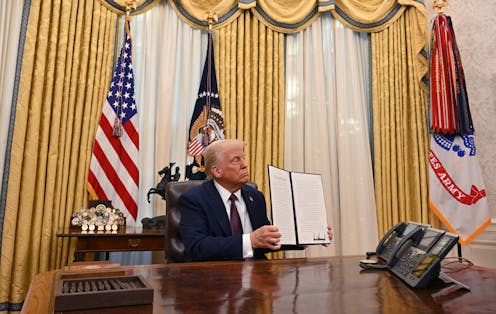
    PALM BEACH, FL—United States Senator Bill Hagerty (R-TN), a member of the Senate Appropriations, Banking, and Foreign Relations Committees and former U.S. Ambassador to Japan, today joined Face the Nation on CBS to discuss President Donald Trump reforming the Executive Branch through eliminating wasteful spending and unnecessary government programs.

    *Click the photo above or here to watch*

    Partial Transcript

    Hagerty on Trump’s buyout to federal workers: “Eventually, it will save taxpayers money. I think what President Trump is trying to do is be humane in the process of allowing them to make plans to find other employment. But I certainly think the government is far too big, far too bloated, and we’re on a path now to start to see it shrink. This is the first step only, but we’re moving in the right direction […] What we’ll see, Margaret is each agency go through a top to bottom review to decide exactly what they need to do to deliver on behalf of the American public. As you know, there’s been a lot of consternation and pearl clutching about the activities of Elon Musk and his team, but their charge, led by President Trump, is to go in and find efficiencies, find opportunities, and frankly, deliver more of taxpayer dollars to the actual programs that are intended, less to overhead an Administration […] I’m from the private sector, Margaret, my entire background has been in business. This is the way you do it. You come in, you look at the opportunities before you—President Trump has brought a new Administration in—this is not unusual to take a hard look at these programs and also to look for opportunities to cut bloat and waste. Look, we’re 36 trillion dollars in debt. Clearly, the American public Needs to see more accountability, more visibility, more performance for their taxpayer dollars.”

    Hagerty on bringing accountability to the CFPB: “I’ve had significant conversations with Russ Vought, who is our new [Office of Management and Budget] Director. The [Consumer Financial Protection Bureau] has been out of control for some time. The way it’s designed, I think is unconstitutional. It has no oversight; it’s been basically a reckless agency that’s been allowed to go way beyond any mandate that I think was originally intended. So, it’s time to rein it in, and I’m applauding anything that we can do to bring more stability, more control to the federal government, and take agencies like this back into some sort of sense of accountability and oversight […] It was established as an agency that does not have the jurisdiction of the Congress. Its funding source is separate from us. It has no accountability. This is not the type of agency I think that the founding fathers contemplated. We actually contemplated a balance of power. Yet, this rogue agency has been created, and frankly, it’s been used as a tool to come in and just hammer the American private sector and pursue initiatives that certain people like Rohit Chopra might have approved, or that Senator Elizabeth Warren might have approved, but this is not the way the American public should be funding and supporting programs of this nature.”

    Hagerty on the need to reform USAID funding: “I think there’s a tremendous appetite to do it, Margaret, because what we want to see is alignment of our programs with America’s National Security interest. USAID has been out of control. I’ve demanded accountability from [USAID], they’ve refused it. As an appropriator, I’ve asked them to be very clear about, for example, their role funding Hamas and Gaza. They would not comply. They will not tell us what they do. Now that we start to find out some of the programs that [USAID] has been funding—if you think about it, sex change operations in Guatemala, LGBTQ programs in Serbia […] And that is not true, Margaret. I couldn’t get the Secretary of State [Blinken]—I asked him three times to tell me that we were not funding Hamas through [USAID]. He couldn’t do it, and frankly, what we found is that we have been funding [terrorism] […] Certainly, the funds that have gone to UNRWA. You saw the UNRWA members who were also Hamas members […] [UNWRA is] supporting terrorist groups. And if you look at what UNRWA has done, it’s been so counter to our national interest. It’s unbelievable that we would fund it.”

    Hagerty on reciprocity in trade agreements: “I talked with President Trump on Friday about this broadly, Margaret. This is a concern that he has had for some time. As you know, I served in his previous Administration and worked my heart out to get two trade agreements executed with Japan. I was the U.S. Ambassador to Japan in his Administration. Here’s what we’re trying to deal with, and it goes all the way back to World War II, in the aftermath, we made very favorable terms of trade with countries whose economies have devastated in Europe and Japan. We should have time limited that. We should have put some type of GDP-per-capita limit on it, because what we have now are countries that have very unfavorable and unfair terms that are fully developed. So, it’s time to address this; it’s already begun to happen.”

    MIL OSI USA News

  • MIL-Evening Report: Eugene Doyle: Trump and foolish old men who redraw maps

    COMMENTARY: By Eugene Doyle

    It generally ends badly.  An old tyrant embarks on an ill-considered project that involves redrawing maps.

    They are heedless to wise counsel and indifferent to indigenous interests or experience.  Before they fail, are killed, deposed or otherwise disposed of, these vicious old men can cause immense harm.

    To see Trump through this lens, let’s look at a group of men who tested their cartographic skills and failed:  King Lear and, of course, Hitler and Napoleon Bonaparte, and latterly, George W Bush and Saddam Hussein.

    I even throw in a Pope.  But let’s start first with Benjamin Netanyahu and Donald Trump himself.

    Benjamin Netanyahu and a map of a ‘New Middle East’ — without Palestine
    In September 2023, a month before the Hamas attack on Israel, Benjamin Netanyahu spoke to an almost-empty UN General Assembly.  Few wanted to share the same air as the man.

    In his speech, he presented a map of a “New Middle East” — one that contained a Greater Israel but no Palestine.

    In a piece in The Jordan Times titled: “Cartography of genocide”, Ramzy Baroud explained why Netanyahu erased Palestine from the map figuratively.  Hamas leaders also understood the message all too well.

    “Generally, there was a consensus in the political bureau: We have to move, we have to take action. If we don’t do it, Palestine will be forgotten — totally deleted from the international map,” Dr Bassem Naim, a leading Hamas official said in the outstanding Al Jazeera documentary October 7.

    Hearing Trump and Netanyahu last week, the Hamas assessment was clear-eyed and prescient.

    Donald Trump
    In defiance of UN resolutions and international law, he recognised Jerusalem as Israel’s capital, recognised the Syrian Golan Heights as part of Israel, and now wants to turn Gaza into a US real estate development, reconquer Panama, turn Canada into the 51st State of the USA, rename the Gulf of Mexico and seize Greenland, if necessary by force.

    And it’s only February.  The US spent blood, treasure and decades building the Rules-Based International Order.  Biden and Trump have left it in tatters.

    Trump is a fitting avatar for the American state: morally corrupt, narcissistic, burning down all the temples to international law, and generally causing chaos as he flames his way into ignominy.

    The past week — where “Bonkers is the New Normal” — reminded me of a famous Onion headline: “FBI Uncovers Al-Qaeda Plot To Just Sit Back And Enjoy Collapse Of United States”.

    The Iranians made a brilliant counter-offer to the US plan to ethnically cleanse Gaza and create a US statelet next to Israel — send the Israelis to Greenland! Unlike the genocidal US and Israeli leadership, the Iranians were kidding.

    Point taken, though.

    King Lear: ‘Meantime we will express our darker purpose. Give me the map there.’

    Lear makes the list because of Shakespeare’s understanding of tyrants and those who oppose them.

    Trump, like Lear, surrounds himself with a college of schemers, deviants and psychopaths. Image: www.solidarity.co.nz

    Kent: My life I never held but as a pawn to wage against thy enemies.

    Lear: Out of my sight!

    Kent and all those who sought to steer the King towards a more prudent course were treated as enemies and traitors. I think of Ambassador Chas Freeman, John Mearsheimer, Colonel Larry Wilkerson, George Beebe and all the other wiser heads who have been pushed to the periphery in much the same way.

    Trump, like Lear, surrounds himself with a college of schemers, deviants and psychopaths.

    Napoleon Bonaparte
    I was fortunate to study “France on the Eve of Revolution” with the great French historian Antoine Casanova.  His fellow Corsican caused a fair bit of mayhem with his intention to redraw the map of Europe.

    British statesman William Pitt the Younger reeled in horror as Napoleon got to work, “Roll up that map; it will not be wanted these 10 years,” he presciently said.

    Bonaparte was an important historical figure who left a mixed and contested legacy.

    Before effective resistance could be organised, he abolished the Holy Roman Empire (good job), created the Confederation of the Rhine, invaded Russia and, albeit sometimes for the better, torched many of the traditional power structures.

    Millions died in his wars.

    We appear to be back to all that: a leader who tears up all rule books.  Trump endorses the US-Israeli right of conquest, sanctions the International Criminal Court (ICC) for trying to hold Israel and the US to the same standard as others, and hands out the highest offices to his family and confidantes.

    Hitler
    “Lebensraum” (Living space) was the Nazi concept that propelled the German war machine to seize new territories, redraw maps.  As they marched, the soldiers often sang “Deutschland über alles” (Germany above all), their ultra-nationalist anthem that expressed a desire to create a Greater Germany — to Make Germany Great Again.

    All sounds a bit similar to this discussion of Trump and Netanyahu, doesn’t it?  Again: whose side should we be on?

    Saddam Hussein and George W Bush
    When it comes to doomed bids to remake the Middle East by launching illegal wars, these are two buttocks of the same bum.  Now we have the Trump-Netanyahu pair.

    Will countries like Australia, New Zealand and the UK really sign up for the current US-Israeli land grab?  Will they all continue to yawn and look away as massive crimes against humanity are committed?   I fear so, and in so doing, they rob their side of all legitimacy.

    Pope Alexander VI
    There is a smack of the Borgias about the Trumps. They share values — libertinism and nepotism, to name two — and both, through cunning rather than aptitude, managed to achieve great power.

    Pope Alexander VI, born Rodrigo Borgia, father to Lucretia and Cesare, was Pope in 1492 when Columbus sailed the ocean blue.

    1494. The Treaty of Tordesillas hands the New World over to the Spanish and Portuguese. Image: www.solidarity.co.nz

    He was responsible for the greatest reworking of the map of the world: the Treaty of Tordesillas which divided the “New World” between the Spanish and Portuguese empires. Millions died; trillions were stolen.

    We still live with the depravities the Europeans and their heritors unleashed upon the world.

    I’m sure the Greenlanders, the Canadians, the Panamanians and whoever else the United States sets their sights on will resist the unwelcome attempt to colour the map of their country in stars & stripes.

    History is littered with blind map re-makers, foolish old men who draw new maps on old lands.

    Like Sykes, Picot, Balfour and others, Trump thinks with a flourish of his pen he can whisk away identity and deep roots. Love of country and long-suffering mean Palestinians will never accept a handful of coins and parcels of land spread across West Asia or Africa as compensation for a stolen homeland.

    They have earned the right to Palestine not least because of the blood-spattered identity that they have carved out of every inch of land through their immense courage and steadfastness. We should stand with them.

    Eugene Doyle is a community organiser and activist in Wellington, New Zealand. He received an Absolutely Positively Wellingtonian award in 2023 for community service. His first demonstration was at the age of 12 against the Vietnam War. This article was first published at his public policy website Solidarity and is republished here with permission.

    MIL OSI AnalysisEveningReport.nz

  • MIL-OSI China: Trump to announce 25-percent steel and aluminum tariffs

    Source: China State Council Information Office

    U.S. President Donald Trump said on Sunday that he will announce new 25-percent tariffs on all steel and aluminum imports into the United States, with the official statement to be made on Monday.

    Speaking to reporters on Air Force One, Trump also said he would announce “reciprocal tariffs” as soon as Tuesday to align with those of its trading partners.

    During his first term, Trump imposed tariffs of 25 percent on steel and 10 percent on aluminum imports citing national security concerns but later allowed certain trading partners, including Canada, Mexico and Brazil, to receive duty-free quotas.

    Under former President Joe Biden, the United States continued some tariff exemptions introduced under Trump and extended new quotas for the European Union, Britain and Japan.

    On Feb. 1, Trump signed executive orders to impose 25-percent additional tariffs on imports from Canada and Mexico and a 10-percent tariff hike on imports from China, drawing widespread opposition and immediate retaliations. He later paused the tariffs on Mexico and Canada for one month to allow negotiations.

    MIL OSI China News

  • MIL-OSI China: ‘World’s supermarket’ reopens after holiday

    Source: China State Council Information Office 3

    A merchant adorns her store with Spring Festival decorations in the Yiwu International Trade Market in Yiwu, east China’s Zhejiang Province, Feb. 9, 2025. [Photo/Xinhua]

    Yiwu International Trade Market, the world’s largest wholesale market for small commodities located in the city of Yiwu in east China’s Zhejiang Province, reopened on Sunday after the Spring Festival holiday, marking a vibrant start to the Year of the Snake.

    The reopening ceremony featured traditional lion dances and drum performances, creating a vibrant and festive atmosphere.

    Merchants like toy shop owner Chen Meijun voiced optimism for a prosperous year ahead.

    “We received inquiries from regular customers during the holiday, and we expect sales to grow by over 10 percent this year,” Chen said, noting that she plans to expand her business internationally, with trips to Mexico and Kenya scheduled this year.

    Actresses perform at the Yiwu International Trade Market in Yiwu, east China’s Zhejiang Province, Feb. 9, 2025. [Photo/Xinhua]

    Dubbed “world’s supermarket,” Yiwu is an international hub for small commodity production and trade, attracting customers from around the world.

    Nepalese buyer Raj Kumar Khadka was among the first clients to arrive, planning to order ceramics, glassware and other goods worth around 1 million yuan (about 139,500 U.S. dollars).

    A frequent visitor who first came to the city for business 23 years ago, Khadka said Yiwu plays a crucial role in the international commodity trade.

    “Yiwu taught me how to do business,” he said. “Because of this city, I was able to meet people from all over the world and learn about their languages and cultures.”

    The trade market’s 75,000 shops are connected to over 2.1 million enterprises, supporting approximately 32 million jobs. Its strong purchasing demand and diverse product offerings highlight the resilience and growth potential of China’s economy.

    Many businesses are capitalizing on emerging trends, such as 3D-printed toys, which have gained popularity for their vibrant colors and intricate designs.

    “We have invested heavily in R&D and plan to expand our footprints in developed markets while tapping into domestic demand,” said Zeng Hao, manager of a toy company producing and selling 3D-printed toys.

    A dragon dance is staged at a square of the Yiwu International Trade Market in Yiwu, east China’s Zhejiang Province, Feb. 9, 2025. [Photo/Xinhua]

    In late 2024, China’s State Council approved an overall plan for deepening comprehensive international trade reforms in Yiwu, which outlines a vision to promote reforms through further opening up, along with initiatives such as innovating market procurement trade mechanisms, promoting import trade development, enhancing the functionality of comprehensive bonded zones, and strengthening cross-border e-commerce regulations.

    Innovation has become a driving force behind Yiwu’s enduring success. Since 2023, the Chinagoods AI platform, launched by Zhejiang China Commodities City Group Co., Ltd., has gained attention for enabling Yiwu’s business owners to effortlessly create multilingual versions of product videos, supporting over 30 languages.

    Today, more businesses are using new technologies to expand their reach and attract customers.

    At a digital shop in the market, manager Bao Haigang demonstrated a headset that accurately translates over 100 languages via a smartphone app. He said this AI-powered headset launched in 2024 has seen strong sales in markets like Brazil.

    “We will continue integrating AI into traditional products and expect over 30 percent sales growth this year. We are very confident,” Bao said.

    MIL OSI China News

  • MIL-OSI China: ‘World’s supermarket’ reopens after holiday, embracing innovation in Year of Snake

    Source: China State Council Information Office

    A merchant adorns her store with Spring Festival decorations in the Yiwu International Trade Market in Yiwu, east China’s Zhejiang Province, Feb. 9, 2025. [Photo/Xinhua]

    Yiwu International Trade Market, the world’s largest wholesale market for small commodities located in the city of Yiwu in east China’s Zhejiang Province, reopened on Sunday after the Spring Festival holiday, marking a vibrant start to the Year of the Snake.

    The reopening ceremony featured traditional lion dances and drum performances, creating a vibrant and festive atmosphere.

    Merchants like toy shop owner Chen Meijun voiced optimism for a prosperous year ahead.

    “We received inquiries from regular customers during the holiday, and we expect sales to grow by over 10 percent this year,” Chen said, noting that she plans to expand her business internationally, with trips to Mexico and Kenya scheduled this year.

    Actresses perform at the Yiwu International Trade Market in Yiwu, east China’s Zhejiang Province, Feb. 9, 2025. [Photo/Xinhua]

    Dubbed “world’s supermarket,” Yiwu is an international hub for small commodity production and trade, attracting customers from around the world.

    Nepalese buyer Raj Kumar Khadka was among the first clients to arrive, planning to order ceramics, glassware and other goods worth around 1 million yuan (about 139,500 U.S. dollars).

    A frequent visitor who first came to the city for business 23 years ago, Khadka said Yiwu plays a crucial role in the international commodity trade.

    “Yiwu taught me how to do business,” he said. “Because of this city, I was able to meet people from all over the world and learn about their languages and cultures.”

    The trade market’s 75,000 shops are connected to over 2.1 million enterprises, supporting approximately 32 million jobs. Its strong purchasing demand and diverse product offerings highlight the resilience and growth potential of China’s economy.

    Many businesses are capitalizing on emerging trends, such as 3D-printed toys, which have gained popularity for their vibrant colors and intricate designs.

    “We have invested heavily in R&D and plan to expand our footprints in developed markets while tapping into domestic demand,” said Zeng Hao, manager of a toy company producing and selling 3D-printed toys.

    A dragon dance is staged at a square of the Yiwu International Trade Market in Yiwu, east China’s Zhejiang Province, Feb. 9, 2025. [Photo/Xinhua]

    In late 2024, China’s State Council approved an overall plan for deepening comprehensive international trade reforms in Yiwu, which outlines a vision to promote reforms through further opening up, along with initiatives such as innovating market procurement trade mechanisms, promoting import trade development, enhancing the functionality of comprehensive bonded zones, and strengthening cross-border e-commerce regulations.

    Innovation has become a driving force behind Yiwu’s enduring success. Since 2023, the Chinagoods AI platform, launched by Zhejiang China Commodities City Group Co., Ltd., has gained attention for enabling Yiwu’s business owners to effortlessly create multilingual versions of product videos, supporting over 30 languages.

    Today, more businesses are using new technologies to expand their reach and attract customers.

    At a digital shop in the market, manager Bao Haigang demonstrated a headset that accurately translates over 100 languages via a smartphone app. He said this AI-powered headset launched in 2024 has seen strong sales in markets like Brazil.

    “We will continue integrating AI into traditional products and expect over 30 percent sales growth this year. We are very confident,” Bao said.

    MIL OSI China News

  • MIL-Evening Report: NZ households will be slightly worse off if Trump triggers a trade war – new modelling

    Source: The Conversation (Au and NZ) – By Niven Winchester, Professor of Economics, Auckland University of Technology

    Getty Images

    Donald Trump has already made good on his threat to impose an additional 10% tax on Chinese goods, and is due to announce a 25% tariff on all steel and aluminium imports into the United States.

    While he has paused proposed 25% tariffs on Canadian and Mexican imports for the time being, a trade war between the US and the rest of the world remains a real possibility.

    Mexico, Canada and China responded to Trump’s tariff plans by drafting retaliatory tariffs and countermeasures. But Trump’s threatened tariffs extend well beyond North America and China.

    During his 2024 election campaign he said all trading nations could expect similar treatment, and he explicitly stated his intention to target the European Union (EU):

    They don’t take our cars, they don’t take our farm products, they take almost nothing and we take everything from them. Millions of cars, tremendous amounts of food and farm products.

    While it’s true the EU exports more to the US than it imports, it’s simplistic to use bilateral trade balances as a gauge of the overall economic benefits. International trade allows countries to concentrate on producing the goods and services they do well, and to exchange them for ones more costly to produce domestically.

    Ultimately, trade allows everyone to consume more. A trade war therefore makes nations worse off: tariffs divert trade flows and reduce the exchange of goods. And, of course, this filters down to affect ordinary household incomes.

    Households worse off

    The impact of a trade war on any given country will depend on several factors, including the share of a nation’s exports exposed to new tariffs, and the importance of trade to each economy.

    Small countries tend to trade more than large ones because they specialise in producing a relatively small number of goods, and rely on trade to consume a variety of products.

    To quantify the impacts of a trade war, I consider a scenario where the US imposes additional tariffs of 25% on all merchandise imports (the figure Trump has consistently used), and all other countries respond with similar tariffs on US goods.

    I simulate the tariffs in a global model of production, trade and consumption similar to that used by the New Zealand Productivity Commission’s inquiry into improving economic resilience. The model uses input-output tables that describe production of 32 commodities in each country, and data on bilateral trade in each commodity between nations.

    National-level impacts are measured by calculating the equivalent impact on aggregate household income. This metric converts the effects from the tariffs – including changes in product prices, wages and business profits – into changes in household income.

    In New Zealand, the trade war decreases aggregate household income by 0.1% or NZ$322 million per year. Divided among the country’s nearly two million households, this means each household is worse off by NZ$163 per year.

    Global income declines

    The impacts of the simulated trade war are larger in North America. It decreases US annual aggregate household income by 1.5%, which equates to US$262 billion, or US$2,963 per household.

    In Canada and Mexico, for which the US is both a major export market and source of imports, average household income decreases by 3.6% (US$2,963) and 4.6% (US$1,192), respectively, each year.

    Across all nations, the tariff war results in an equivalent decrease in aggregate household income of 0.7% (US$414 billion) per year.

    The simulated tariff war also results in a reshuffling of trade. New Zealand merchandise exports to the US decrease by NZ$4.4 billion, but exports to other nations increase by a similar amount (due to their price advantage relative to US goods).

    Likewise, New Zealand merchandise imports from the US decrease by NZ$4.7 billion and imports from other nations increase by about the same amount. As a result, the trade war has little impact on New Zealand’s total exports and imports.

    Aggregate trade changes are largest in the US, which imposes new tariffs on all its imports and faces new tariffs in all export markets. US merchandise exports and imports both decrease by around US$565 billion (NZ$1 trillion).

    Overall, the modelling confirms the well known result that trade wars decrease global economic activity and routinely make all nations worse off.

    The Conversation

    Niven Winchester has previously received funding from the Productivity Commission and the Ministry of Foreign Affairs and Trade to estimate the impacts of potential trade policies. He is affiliated with Motu Economic & Public Policy Research.

    ref. NZ households will be slightly worse off if Trump triggers a trade war – new modelling – https://theconversation.com/nz-households-will-be-slightly-worse-off-if-trump-triggers-a-trade-war-new-modelling-249120

    MIL OSI AnalysisEveningReport.nz

  • MIL-OSI USA News: Gulf of America Day, 2025

    Source: The White House

    class=”has-text-align-center”>BY THE PRESIDENT OF THE UNITED STATES OF AMERICA
     
    A PROCLAMATION
         

    Today, I am very honored to recognize February 9, 2025, as the first ever Gulf of America Day.

         On January 20, 2025, I signed Executive Order 14172 (“Restoring Names That Honor American Greatness”).  Among other actions, that Executive Order required the Secretary of the Interior, acting pursuant to 43 U.S.C. 364 through 364f, to “take all appropriate actions to rename as the ‘Gulf of America’ the U.S. Continental Shelf area bounded on the northeast, north, and northwest by the State of Texas, Louisiana, Mississippi, Alabama and Florida and extending to the seaward boundary with Mexico and Cuba in the area formerly named as the Gulf of Mexico.”

         I took this action in part because, as stated in that Order, “[t]he area formerly known as the Gulf of Mexico has long been an integral asset to our once burgeoning Nation and has remained an indelible part of America.”

         Today, I am making my first visit to the Gulf of America since its renaming.  As my Administration restores American pride in the history of American greatness, it is fitting and appropriate for our great Nation to come together and commemorate this momentous occasion and the renaming of the Gulf of America.

         NOW, THEREFORE, I, DONALD J. TRUMP, President of the United States of America, by virtue of the authority vested in me by the Constitution and the laws of the United States, do hereby proclaim February 9, 2025, as Gulf of America Day.  I call upon public officials and all the people of the United States to observe this day with appropriate programs, ceremonies, and activities.

         IN WITNESS WHEREOF, I have hereunto set my hand this ninth day of February, in the year of our Lord two thousand twenty-five, and of the Independence of the United States of America the two hundred and forty-ninth.

    MIL OSI USA News

  • MIL-OSI Asia-Pac: Raksha Mantri to inaugurate Aero India 2025 at Yelahanka Air Force Station in Bengaluru on February 10, 2025

    Source: Government of India

    Raksha Mantri to inaugurate Aero India 2025 at Yelahanka Air Force Station in Bengaluru on February 10, 2025

    Showcasing air power, cutting-edge innovations & potential new global collaborations, the five-day event to provide thrust to the goal of Viksit Bharat by 2047

    Aero India 2025 will advance our vision of a strong, capable, secure & self-reliant India: Shri Rajnath Singh

    Participation of over 900 exhibitors & 90 countries set to make it the biggest-ever Aero India till date; Approx. 30 Defence Ministers & over 100 OEMs to attend

    Domestic defence production expected to cross Rs 1.60 lakh crore by 2025-26, with exports touching Rs 30,000 crore mark: RM

    Posted On: 09 FEB 2025 6:21PM by PIB Delhi

    The 15th edition of Aero India, Asia’s biggest aerospace and defence exhibition, will be inaugurated by Raksha Mantri Shri Rajnath Singh at the Yelahanka Air Force Station in Bengaluru, Karnataka on February 10, 2025. With the broad theme of ‘The Runway to a Billion Opportunities’, the five-day extravaganza will showcase India’s aerial prowess and indigenous cutting-edge innovations alongside state-of-the-art products of global aerospace companies. In line with ‘Aatmanirbhar Bharat’ and ‘Make in India, Make for the World’ vision, the event will also provide a stage to forge international collaborations to fast-track the indigenisation process, thereby providing a thrust to Prime Minister Shri Narendra Modi-led Government’s resolve of making the country Viksit Bharat by 2047.

    Addressing a press conference in Bengaluru on the eve of the event, Raksha Mantri described Aero India as a crucial platform, which will drive forward the Government’s vision of a strong, capable India, secure and self-reliant India. “Aero India is a platform that showcases the strength, resilience, and self-reliance of New India. It is not just crucial for India’s defence preparedness, but it also plays a pivotal role in shaping the future of our nation. It will demonstrate our defence capabilities and forge global partnerships. Our goal is to enhance collaboration in areas of common interest with our friendly nations, fostering deeper cooperation and shared progress. The event is not just a showcase of technology and innovation, but will also serve as a source of inspiration for our youth, fostering scientific temperament and a spirit of innovation,” he said.

    Organised in a total area of over 42,000 sq m and with the confirmed participation of over 900 exhibitors, including 150 foreign companies, the event is set to be the biggest-ever Aero India till date. Shri Rajnath Singh termed the participation of more than 90 countries as a testament to the growing global confidence in India’s aerospace and defence capabilities. “Defence ministers or representatives from about 30 countries have come to participate in this event. The presence of Air Chiefs and Secretaries from 43 countries further highlights the significance of this event – not just for India, but for the entire international defence community,” he said.

    Highlighting the transformation of the defence and aerospace sector in the recent years, Raksha Mantri asserted that, today, India is not only capable of designing and developing major platforms and equipment within India, it has also successfully established a vast supply chain within the country. “Advanced platforms like Light Combat Aircraft Tejas, Light Combat Helicopter Prachand and C-295 Transport Aircraft are now being produced in India. We have also taken a firm resolve to manufacture fifth-generation fighter aircraft within the country. From the advanced variants of the Agni missile, the Astra missile system, and the Pinaka missile system to the cutting-edge Hypersonic missile system and the Akash air defence system, we have built numerous success stories. These achievements have played a crucial role in strengthening our defence sector, making India more self-reliant and secure,” he said.

    Shri Rajnath Singh added that post corporatisation of Ordnance Factory Board, the newly formed companies have started performing exceptionally well in defence production. “Under a well-considered and well-developed plan, we have actively worked to empower the private sector in the defence and aerospace industries. Today, India has a thriving private defence industry that has firmly established itself and is making significant contributions to our national security,” he said.

    Raksha Mantri expressed confidence that defence production, having crossed the record figure of Rs 1.27 lakh crore, will exceed Rs 1.60 lakh crore by the end of 2025-26. Defence exports, which touched the record figure of Rs 21,000 crore, he said, will surpass Rs 30,000 crore.

    Shri Rajnath Singh underlined the crucial role being played by the defence industrial sector in making India an economic super power. He stated that any breakthrough in the defence sector not only strengthens national security, but also impacts the economy. Technologies developed for defence applications promote innovation in the civil sector as well, leading to employment generation and economic development, he said. He termed Aero India a significant driver of economic strength, contributing to the overall growth and development of the economy. He expressed confidence that Aero India will be remembered as a historic milestone in India’s journey towards becoming a global leader in the aerospace and defence sector.

    The 15thAero India will be held between 10thand 14thFebruary 2025. February 10thto 12thhave been reserved as business days, with 13th& 14thset as public days for people to witness the show. The event comprises Defence Ministers’ Conclave; CEOs Roundtable; inauguration of India & iDEX Pavilions; Manthan iDEX event; Samarthya Indigenisation event; Valedictory function; seminars; breath-taking airshows and an exhibition of aerospace companies.

    Defence Ministers’ Conclave

    With the aim to strengthen defence cooperation with friendly nations amidst a rapidly-evolving global security landscape, Raksha Mantri will host the Defence Ministers’ Conclave on February 11 in hybrid mode. The theme this year ‘Building Resilience through International Defence and Global Engagement (BRIDGE)’ underscores the importance of supply chain resilience and strategic collaboration in defence.

    The last edition witnessed the participation of 27 Defence Ministers and Deputy Defence Ministers alongside 15 Defence & Service Chiefs and 12 Permanent Secretaries. This year, the participation has expanded as representatives from more than 80 countries are likely to participate in the conclave. Approx. 30 Defence Ministers in addition to Defence/Service Chiefs and Permanent Secretaries from friendly nations will attend the event.

    The conclave will provide a crucial platform to address key aspects such as Defence capacity building through investment, joint ventures & co-production, Collaboration in R&D, training & technological advancements in AI & space, Maritime security cooperation and strategic partnerships.

    CEOs Roundtable

    CEOs Roundtable 2025 will be chaired by Raksha Mantri on February 10, on the theme ‘Enabling Defence Cooperation through Global Engagement (EDGE)’. Over 100 Original Equipment Manufacturers (OEMs) have confirmed their participation in the event. These include 55 from 19 countries (USA, France, Russia, South Korea, UK, Japan, Israel & Brazil etc), 35 Indian (Larsen & Toubro, Bharat Forge Ltd, Adani Defence & Aerospace, Mahindra Defence Systems Ltd, BrahMos Aerospace & Ashok Leyland Defence) and 16 Defence Public Sector Undertakings (DPSUs). Shri Rajnath Singh had addressed over 73 CEOs of 28 Foreign OEMs and 45 Indian OEMs in the 2023 edition of the event.

    Major foreign OEMs including Airbus (France), Ultra Maritime (USA), GNT (South Korea), John Cockerill Defence (UK), Mitsubishi (Japan), Rafael Advance Defence System (Israel), Safran (France) and Liebherr Aerospace (France) are expected to highlight their future plans, Joint Ventures, collaborations, partnerships with Indian companies for production of spares parts, development of aero-engines, setting up of Maintenance, Repair and Operations (MRO) facilities and establishment of R&D facilities etc.

    India Pavilion

    The India Pavilion will provide an opportunity to Indian Defence Industries to showcase their design, development, innovation and manufacturing capabilities. It will be inaugurated by Raksha Mantri on February 10. The grandeur show at India Pavilion would signify the ‘Flight of Self-Reliance’ which encapsulates India’s journey towards becoming a global aerospace and defence powerhouse.

    India Pavilion will be divided into five distinct zones displaying indigenous capabilities in aero aviation, land aviation and naval aviation, def-space and niche technologies domains.  More than 275 exhibits will be at display through various mediums, represented by complete defence ecosystem of the country which includes DPSUs, design houses, private corporates including MSMEs and start-ups. The Central Area exhibits will include a striking display of marquee platforms including Advanced Medium Combat Aircraft, Combat Air Teaming System, Twin-Engine Deck-Based Fighter.

    iDEX Pavilion

     The iDEX Pavilion will be inaugurated by Raksha Mantri on February 10. It will showcase cutting-edge indigenously developed products and technologies, marking a significant milestone in India’s defence innovation journey. Leading innovators will display their indigenously-developed products spanning a wide-range of advanced domains including Aerospace, DefSpace, Aero Structures, Anti-drone systems, Autonomous Systems, Robotics, Communication, Cybersecurity, Surveillance & Tracking, Unmanned Ground Vehicles etc. The Pavilion will also feature a dedicated section highlighting the winners of Acing Development of Innovative Technologies with iDEX (ADITI) scheme, showcasing their ground-breaking work in critical and niche technologies.

    iDEX has successfully onboarded over 600 start-ups and MSMEs, marking a significant milestone in fostering innovation. Furthermore, 40 prototypes developed under iDEX have received official clearance for procurement, with 31 procurement contracts worth Rs 1,560 crore already signed.

    Manthan

    Manthan 2025, the flagship annual defence innovation event, will be graced by Raksha Mantri on February 12. Organised by Innovations for Defence Excellence – Defence Innovation Organisation (iDEX-DIO), the event will bring together stakeholders of the defence innovation ecosystem including innovators, industry leaders, academia, incubators, investors, thought leaders, senior government officials etc.

    Manthan will deliberate on emerging challenges and opportunities in the sector, with a focus on supporting defence start-ups and MSMEs, enhancing innovation capabilities, and fostering strategic collaborations within the defence ecosystem. It stands as a testament to the scale and speed of iDEX, showcasing the rapid strides made in defence innovation and the pivotal role of start-ups in transforming India’s defence capabilities.

    Samarthya

    On the success story of indigenisation and innovation in the defence sector, an Indigenisation event on the theme ‘SAMARTHYA’ will be held on February 12 alongside the Valedictory function which will be graced by Raksha Mantri. This event is first-of-its-kind during Aero India, as it will showcase India’s indigenous ingenuity in defence manufacturing by demonstrating some of the major items indigenised by DPSUs, DRDO and Services with the involvement of the private sector.

    Bilateral Meetings

    Bilateral meetings at the levels of Raksha Mantri/Raksha Rajya Mantri/Chief of Defence Staff/Service Chiefs/Defence Secretary/Secretary (Defence Production) will take place on the sidelines of Aero India 2025.

    Seminars

    A number of seminars on a variety of topics will be organised as part of Aero India 2025. On February 11, Raksha Mantri is scheduled to address a seminar organised by the Indian Air Force on the theme ‘Manned Unmanned teams for Aerial Warfare – concept to targeting’ and another organised by DRDO on the theme ‘DRDO Industry Synergy towards Viksit Bharat’.

    Other seminars on the themes – Mission DefSpace: From Vision to Reality – A Progress Report; Indigenous Development of Aerospace Materials: Strengthening India’s Self-Reliance; Transition to Aatmanirbhar Indian Naval Aviation 2047 and its associated ecosystem; Transformation of Maritime Aviation by Adopting Technological trends and Indigenisation; Aligning Technologies to Future Conflicts; and Investment Opportunities for Aerospace & Defence Manufacturers in Karnataka – will also be held as part of the event.

    Historic First – Su-57 and F-35 at Aero India

    For the first time in history, Aero India 2025 will witness the participation of two of the world’s most advanced fifth-generation fighter aircraft – the Russian Su-57 and the American F-35 Lightning II. It marks a milestone in global defence collaboration and technological advancement, offering aviation enthusiasts and defence experts an unparalleled prospect to witness these state-of-the-art warplanes.


    • Su-57: Russia’s premier stealth multirole fighter is designed for superior air superiority and strike capabilities. Equipped with advanced avionics, supercruise capability, and stealth technology, it is making its debut at Aero India 2025. Visitors can expect high-speed aerial manoeuvres and tactical demonstrations that highlight the fighter’s agility, stealth and firepower.


    • F-35 Lightning II: The Lockheed Martin F-35 Lightning II, the most widely-deployed fifth-generation fighter, integrates advanced stealth, unparalleled situational awareness and networked combat capabilities. Its presence at Aero India 2025 will enable visitors to witness the flagship of US Air Force.


    The inclusion of both the Su-57 and F-35 highlights India’s position as a key hub for international defence and aerospace collaboration. Aero India 2025 will provide a rare side-by-side comparison of Eastern and Western fifth-generation fighter technology, offering defence analysts, military personnel and aviation enthusiasts valuable insights into their respective capabilities.


    Visitor-Friendly Experience

    With key infrastructure upgrades and improved amenities, Aero India 2025 promises to be bigger, smoother and more visitor-friendly than ever before.


    • Enhanced Infrastructure & Traffic Management: Recognising past challenges, extensive improvements have been made to facilitate seamless entry, movement and connectivity and there has been close coordination between Ministry of Defence, Indian Air Force (IAF), various arms of Karnataka State Government like Bengaluru Traffic Police, BBMP, NHAI, and Namma Metro. Approach roads have been widened to optimise traffic flow around Air Force Station Yelahanka so as to ease congestion and improve movement around the venue.


    • Security and Emergency Preparedness: Red drone zones have been designated and published with countermeasures in place to tackle unauthorised drone activity. Rapid Mobile Units will be deployed strategically to provide quick assistance and emergency support. Continuous mock drills with multiple agencies are being conducted to ensure practical and implementable contingency plans.


    • Exhibitor & Visitor Experience Enhancements: To enhance the experience for exhibitors and business delegates, the exhibition area has been revamped with several key upgrades:


    • Expanded and better-ventilated exhibition halls to accommodate more exhibitors and visitors comfortably.
    • Improved seating and rest zones throughout the venue.
    • Additional food courts and refreshment kiosks, including Indira Canteens (at parking areas).
    • Lost and found counters and ATM kiosks for visitor convenience.
    • Multiple water points, medical aid posts, and a dedicated cardiac aid post for emergencies, including medical evacuation.


    • Multi-Layered Security Measures: Ensuring the safety of all attendees, a multi-layered security system is being deployed in collaboration with the Ministry of Home Affairs, Bengaluru Police, CISF, and Intelligence Agencies. Measures include:


    • Enhanced security protocols and faster access control.
    • An operational Command and Control Centre for real-time responses to security concerns.
    • 24/7 CCTV monitoring for situational awareness.
    • Dedicated screening zones for visitors, exhibitors, and VIPs.
    • Disaster management and fire safety committees to handle emergencies.


    • Connectivity & Digital Infrastructure: To address connectivity challenges, all telecom service providers are deploying temporary mobile towers and network boosters for uninterrupted communication. A dedicated Aero India 2025 mobile app has also been launched which will provide live updates, navigation assistance, and event scheduling. Secure digital communication channels have also been established for coordination among agencies. Additionally, provisions have been made to support increased electricity demands during the event while ensuring safety.


    • Airspace Management & Demonstrations: Aero India demonstrations and aircraft movements are a major highlight of Aero India 2025. In coordination with AAI and HAL, the Indian Air Force has structured a dedicated Airspace management plan including:


    • Temporary flight restrictions around Aero India Force Station Yelahanka to maintain safety during scheduled demonstrations.
    • Strategic Aircraft parking and refuelling plans for domestic and international participants.


    • Business and Innovation Support: The Aero India provides a platform for collaborations and to facilitate B2B, G2B interactions and hosting roundtable discussions to showcase technological advancements. Special focus will be given to supporting start-ups and MSMEs by providing them with a global platform to present indigenous innovations.


    • Sustainability Initiatives: Aero India 2025 is committed to sustainability and has incorporated several eco-friendly measures in its conduct like:


    • Reduced vehicle movement to minimise pollution and enhance pedestrian comfort.
    • Exclusive use of more than 100 E Karts for movement of visitors in the exhibition venue.
    • Comprehensive waste management, including increased recycling bins, waste segregation zones, and timely disposal of waste.


    With these multi-agency collaborations, Aero India 2025 is set to be one of the most well-coordinated and better organised editions to date.


    Raksha Rajya Mantri Shri Sanjay Seth, Chief of Defence Staff & Secretary, Department of Military Affairs General Anil Chauhan, Chief Secretary, Government of Karnataka Dr Shalini Rajneesh, Secretary (Defence Production) Shri Sanjeev Kumar, Secretary, Department of Defence R&D and Chairman DRDO Dr Samir V Kamat, other senior officials of Ministry of Defence and industry leaders attended the curtain raiser press conference.

    *******

    VK/SR/SPS/Savvy

    (Release ID: 2101170) Visitor Counter : 115

    MIL OSI Asia Pacific News

  • MIL-Evening Report: ‘America First’ trade policy is pushing economic self-sufficiency – but history shows this is harder than it seems

    Source: The Conversation (Au and NZ) – By Garritt C. Van Dyk, Senior Lecturer in History, University of Waikato

    The day he took office for his second term, United States President Donald J. Trump unveiled his “America First” trade policy, including tariffs on imported goods from Mexico, Canada (both of which have since been paused) and China.

    President Trump’s reasoning for the tariffs included revitalising the American economy by bringing manufacturing and business back within US borders. Essentially, pushing the country towards greater self-sufficiency.

    Considering the cost of the tariffs, a number of countries have begun to question their dependence on foreign trade. But there are very clear hurdles including access to precious metals and raw materials.

    In a global market that relies on international trade, is it possible to be totally self-sufficient?

    The history of self-seficiency

    The economic term for self-sufficiency is “autarky”, borrowed from the ancient Greek word autarkeia, meaning “to suffice”. Ideally, this meant that a state could supply the needs of its people without foreign trade. Autarky, in its purest form, isolates the state from foreign economic, political and cultural influence.

    There are numerous historical examples of attempts to achieve complete economic autonomy.

    In 17th century Japan the Tokugawa Shogunate closed the borders to foreigners and prohibited Japanese from travelling abroad.

    There was limited private trade with China through Nagasaki and with Europe through Dutch merchants. They were confined to an artificial island, Deshima, off Nagasaki, to ensure their isolation. These restrictions remained for 265 years, until the threat of US gunboats forced Japan to sign a trade treaty in 1854.

    Self-sufficiency was also a goal of Benito Mussolini’s fascist dictatorship, aiming to lift Italy’s post-war economy in the 1920s. One initiative was the “Battle for Wheat”, an attempt to produce enough wheat to meet domestic demand and “free the Italian people from the slavery of foreign bread”.

    Italy imported more than one third of the flour needed to make bread and pasta, the two main foodstuffs. Pasta was targeted as a “backwards” food to promote consumption of local rice and reduce agricultural imports.

    Tariffs were levied on all imported goods in 1931. These were raised again in 1935 after sanctions were imposed on Italy following the invasion of Ethiopia. Mussolini declared in 1935 that Italy “would manage alone”.

    While imports of food, machinery and raw materials dropped, oil imports increased. Mussolini recognised the limits of autarky in 1934:

    Let us not delude ourselves about autarky. All the modern nations, thanks to the prodigious development of the sciences, can move towards a partial autarky. But we, until the contrary is proven, will have to import liquid combustibles.

    In response to Donald Trump’s America First policy, countries increasingly have to consider certain levels of self-sufficiency.
    Sven Hansche/Shutterstock

    A modern push to self-sufficiency

    Even with reduced reliance on fossil fuels, the scarcity of some natural resources, such as rare earth minerals, still poses a challenge to achieving autarky.

    Even the Democratic People’s Republic of Korea (North Korea), a centrally planned economy subject to United Nations Security Council sanctions for its nuclear and ballistic missile testing since 2006, is not completely self-sufficient.

    China is North Korea’s largest trading partner, with plastics, tobacco, soybean oil, rubber tires and packaged medicines as the top imports. The economic isolation of North Korea also makes it more vulnerable to global price fluctuations, as the movements are magnified due to the limited number of trading partners.

    Supply chain disruptions were highlighted during the pandemic, continued in 2021 with shortages in microchips, followed by Russia’s war in Ukraine.

    Some nations, such as the US and the United Kingdom, have responded to this logistical risk by shifting to local production, or reshoring, of certain critical industries, such as semiconductors and pharmaceuticals.

    This inward turn requires significant investment and lead time and may involve higher local energy and labour costs, or additional environmental restrictions. For industries that involve national security or essential goods, reducing dependence on potential adversaries may be necessary. But for other sectors the higher costs will create inflationary pressure.

    There are also implicit costs in cutting economic ties with the outside world. Foreign investment is reduced and innovation lags as there are fewer incentives for the cross-border flow of ideas.

    Embracing friendshoring

    As the push for self-reliance increases, vulnerable countries will need new strategies to remain resilient.

    Identifying alternative supply chain relationships and increasing inventory stockpiles in advance will minimise disruptions.

    Another tactic is “friendshoring” – relocating supply chains to countries where the risk of disruption from political chaos is low.

    It is likely that geopolitical instability will increase and global fragmentation will continue. While straightforward autarky may not be possible, countries will need to consider how to survive the political and economic volatility of the next four years – and beyond.

    Garritt C. Van Dyk does not work for, consult, own shares in or receive funding from any company or organisation that would benefit from this article, and has disclosed no relevant affiliations beyond their academic appointment.

    ref. ‘America First’ trade policy is pushing economic self-sufficiency – but history shows this is harder than it seems – https://theconversation.com/america-first-trade-policy-is-pushing-economic-self-sufficiency-but-history-shows-this-is-harder-than-it-seems-248530

    MIL OSI AnalysisEveningReport.nz

  • MIL-Evening Report: NZ must take robust Gaza stance – ‘stop tip-toeing’ around Trump, warns academic

    By Rachel Helyer Donaldson, RNZ News journalist

    New Zealand should be robust in its response to the “unacceptable” situation in Gaza but it must also back its allies against threats by the US President, says an international relations academic.

    Otago University professor of international relations Robert Patman said the rest of the world also “should stop tip-toeing” around President Donald Trump and must stand up to any threats he makes against allies, no matter how outlandish they seem.

    Trump doubled down on his proposal for a US takeover of Gaza on Friday, after the idea was rejected by Palestinians and leaders around the world.

    Foreign Minister Winston Peters told RNZ that New Zealand would not comment on the plan until it was clear exactly what was meant, but said New Zealand continued to support a two-state solution for Israel and Palestine.

    Dr Patman said the president’s plan was “truly shocking and absolutely appalling” in light of the devastation in Gaza in the last 15 months.

    It was not only “tone deaf” but also dangerous, he added, with the proposal amounting to “the most powerful country in the world — the US — dismantling an international rules=based system that [it] has done so much to establish”.

    “This was an extraordinary proposal which I think is reckless and dangerous because it certainly doesn’t help the immediate situation. It probably plays into the hands of extremists in the region.

    “There is a view at the moment that we must all tiptoe round Mr Trump in order not to upset him, while he’s completely free to make outrageous suggestions which endanger people’s lives.”

    Professor Robert Patman . . . Trump’s plan for Gaza “truly shocking and absolutely appalling”. Image: RNZ

    Winston Peters’ careful position on a potential US takeover of Gaza was “a fair response . . . but the Luxon-led government must be clear the current situation is unacceptable” and oppose protectionism, he said.

    “[The government ] wants a solution in the Middle East which recognises both the Israeli desire for security but also recognises the political right to self determination of the Palestinian people — in other words the right to have a state of their own.”

    New Zealand should also speak out against Trump’s threats to annex Canada, “our very close ally”, he said.

    He was “not suggesting New Zealand be provocative but it must be robust”, Dr Patman said.

    Greens also respond to Trump actions
    The Green Party said President Trump had been explicit in his intention to take over Gaza, and New Zealand needed to make its position crystal clear too.

    Greens co-leader Chlöe Swarbrick said the Prime Minister needed to stand up and condemn the plan as “reprehensible”.

    “President Trump’s comments have been pretty clear to anybody who is able to read or to listen to them, about his intention to forcibly displace, or to see displaced, about 1.8 million Gazans from their own land, who have already been made refugees in their own land.”

    France, Spain, Ireland, Brazil and other countries had been “unequivocal” in their condemnation of Trump’s plan, and NZ’s Foreign Affairs Minister should be too, she added.

    “New Zealanders value justice and they value peace, and they want to see our leadership represent that, on the international stage. So [these were] really disappointing and unfortunately unclear comments from our Deputy Prime Minister.”

    Yesterday Foreign Minister Winston Peters told RNZ that New Zealand still supported a two-state solution, but said he would not comment on Trump’s Gaza plan until officials could grasp exactly what this meant.

    Trump sanctions International Criminal Court
    Meanwhile, an international law expert says New Zealand’s cautious position following Trump’s sanctions on International Criminal Court (ICC) staff is the right response — for now.

    Dozens of countries have expressed “unwavering support” for the ICC in a joint statement, after the US President imposed sanctions on its staff.

    The 125-member ICC is a permanent court that can prosecute individuals for war crimes, crimes against humanity, genocide and the crime of aggression against the territory of member states or by their nationals.

    The United States, China, Russia and Israel are not members.

    Trump has accused the court of improperly targeting the US and its ally, Israel.

    Neither New Zealand nor Australia had joined the statement, but in a statement to RNZ the Ministry of Foreign Affairs said it had always supported the ICC’s role in upholding international law and a rules-based system.

    University of Victoria law professor Alberto Costi said currently New Zealand is at little risk of sanctions and there’s no need for a stronger approach.

    “At this stage there is no reason to be stronger. New Zealand is perceived as a state that believes in a rules-based order and is supportive of the work of the ICC.

    “So there’s not much need to go further but it’s a space to watch in the future, should these sanctions become a reality.

    “But as far as New Zealand is concerned, at the moment there is no need to antagonise anyone at this stage.”

    This article is republished under a community partnership agreement with RNZ.

    MIL OSI AnalysisEveningReport.nz

  • MIL-OSI Video: Secretary Rubio Takes First Trip as Secretary of State

    Source: United States of America – Department of State (video statements)

    As Secretary Rubio said: My number one job as Secretary of State is determining what is in the best interest of the United States, ensuring our diplomacy takes actions in line with President Trump’s America First policy.

    With that in mind, he traveled to Panama, El Salvador, Costa Rica, Guatemala, and the Dominican Republic on his first international trip since taking office.

    “We’ve seen that the more prosperous and safer these countries are, the more prosperous and safer it makes us. I reinforced this truth in my visit to the region this week, as I talked with senior officials and business leaders about ways we can promote regional cooperation on our shared interests: stopping illegal and large-scale migration, fighting the scourge of transnational criminal organizations and drug traffickers, countering China, and deepening economic partnerships to enhance prosperity in our hemisphere. In each of these countries, we value our allies, and we look forward to continuing to deepen and strengthen our partnerships.”

    ———-
    Under the leadership of the President and Secretary of State, the U.S. Department of State leads America’s foreign policy through diplomacy, advocacy, and assistance by advancing the interests of the American people, their safety and economic prosperity. On behalf of the American people we promote and demonstrate democratic values and advance a free, peaceful, and prosperous world.

    The Secretary of State, appointed by the President with the advice and consent of the Senate, is the President’s chief foreign affairs adviser. The Secretary carries out the President’s foreign policies through the State Department, which includes the Foreign Service, Civil Service and U.S. Agency for International Development.

    Get updates from the U.S. Department of State at www.state.gov and on social media!
    Facebook: https://www.facebook.com/statedept
    X: https://x.com/StateDept
    Instagram: https://www.instagram.com/statedept
    Flickr: https://flickr.com/photos/statephotos/

    Subscribe to the State Department Blog: https://www.state.gov/blogs
    Watch on-demand State Department videos: https://video.state.gov/
    Subscribe to The Week at State e-newsletter: http://ow.ly/diiN30ro7Cw

    State Department website: https://www.state.gov/
    Careers website: https://careers.state.gov/
    White House website: https://www.whitehouse.gov/
    Terms of Use: https://state.gov/tou

    #StateDepartment #DepartmentofState #Diplomacy

    https://www.youtube.com/watch?v=GEHV0rE2mZQ

    MIL OSI Video

  • MIL-Evening Report: PSNA’s Minto hits back at Gaza ‘genocide hotline’ critics, insists NZ should deny Israeli soldiers entry

    Asia Pacific Report

    A national Palestine advocacy group has hit back at critics of its “genocide hotline” campaign against soldiers involved in Israel’s war against Gaza, saying New Zealand should be actively following international law.

    The Palestine Solidarity Network Aotearoa (PSNA) dismissed a “predictable lineup of apologists for Israel” for their criticisms of the PSNA campaign.

    “Why is concern for the sensitivities of soldiers from a genocidal Israeli campaign more important than condemning the genocide itself?,” asked PSNA national chair John Minto in a statement.

    The Minister of Foreign Affairs Winston Peters, the Chief Human Rights Commissioner Stephen Rainbow and the New Zealand Jewish Council have made statements “protecting” Israeli soldiers who come to New Zealand on “rest and recreation” from the industrial-scale killing of 47,000 Palestinians in Gaza until a truce went into force on January 19.

    “We are not surprised to see such a predictable lineup of apologists for Israel and its genocide in Gaza from lining up to attack a PSNA campaign with false smears of anti-semitism,” Minto said.

    He said that over 16 months Peters had done “absolutely nothing” to put any pressure on Israel to end its genocidal behaviour.

    “But he is full of bluff and bluster and outright lies to denounce those who demand Israel be held to account.”

    Deny illegal settler visas
    Minto said that if Peters was doing his job as Foreign Minister, he would not only stop Israeli soldiers coming to Aotearoa New Zealand — as with Russian soldiers in the Ukraine war — he would also deny visas to any Israeli with an address in an illegal Israeli settlement in the Occupied Palestinian Territories.

    The Human Rights Commission had issued a “disingenuous media release”, he said.

    Whlle the commission said it had received 90 complaints about the hotline, it had also received eight complaints about immigration policy allowing Israeli soldiers to enter New Zealand under the visa waiver scheme that applies to Israel.

    “Our campaign has nothing to do with Israelis or Jews — it is a campaign to stop Israeli soldiers coming here for rest and recreation after a campaign of wholesale killing of Palestinians in Gaza,” Minto said.

    “To imply the campaign is targeting Jews is disgusting and despicable.

    “Some of the soldiers will be Druse, some Palestinian Arabs and others will be Jews.”

    The five-year-old Palestinian girl Hind Rajab, shot 355 times by Israeli soldiers on 29 January 2024. Image: @Onlyloren/Instagram

    Israeli soldiers are facing a growing risk of being arrested abroad for alleged war crimes committed in Gaza, with around 50 criminal complaints filed so far in courts in several countries around the world.

    Earlier this month, a former Israeli soldier abruptly ended his holiday in Brazil and was “smuggled” out of the country after a Federal Court ordered police to open a war crimes investigation against him. The man fled to Argentina.

    A complaint lodged by the Belgium-based Hind Rajab Foundation (HRF) included more than 500 pages of court records linking the suspect to the demolition of civilian homes in Gaza.

    ‘Historic’ court ruling against soldier
    The foundation called the Brazilian court’s decision “historic”, saying it marked a significant precedent for a member country of the International Criminal Court (ICC) to enforce Rome Statute provisions domestically in the 15-month Israeli war on Gaza.

    The foundation is named in honour of five-year-old Palestinian girl Hind Rajab who was killed on 29 January 2024 by Israel soldiers while pleading for help in a car after her six family members were dead.

    According to The New Arab, the foundation has so far tracked and sent the names of 1000 Israeli soldiers to the ICC and Interpol, and has been pursuing legal cases in a number of countries, including Belgium, Brazil, Cyprus, France, Thailand, Sri Lanka, Thailand, the Netherlands, and the United Kingdom.

    In November, the ICC issued arrest warrants for Israeli Prime Minister Benjamin Netanyahu and former Defence Minister Yoav Gallant, together with a former Hamas commander, citing allegations of war crimes and crimes against humanity.

    Minto accused the New Zealand Jewish Council of being “deeply racist” and said it regularly “makes a meal of false smears of anti-semitism”.

    “It’s deeply problematic that this Jewish Council strategy takes attention away from the real anti-semitism which exists in New Zealand and around the world.

    “The priority of the Jewish Council is to protect Israel from criticism and protect it from accountability for its apartheid policies, ethnic cleansing and genocide.

    “We are demanding that accountability.”

    NZ ‘going through the motions’
    In a later statement, PSNA said the government had begun to “go through the motions” of questioning Israeli soldiers at the border but it was just a “look busy policy – too little too late”.

    NZ requires Israelis to disclose IDF service details as condition for entry – a similar policy to Australia. Image: Times of Israel screenshot APR

    Immigration questioning Israeli of soldiers about their military service in Gaza at the New Zealand border was revealed in a Times of Israel report today which said:

    “New Zealand’s government immigration authority has begun to require Israelis applying for a visa to report details of their military service as a condition for entry, and at least one person has been denied admission after doing so.”

    PSNA’s Minto said the government must also uphold the ICJ advisory opinion of 19 July 2024 which called on global governments to end support for Israel’s illegal occupation.

    “This means we should also deny entry to every Israeli wanting to visit here who has an address in an illegal Israeli settlement in the Occupied Palestinian Territories,” Minto added.

    MIL OSI AnalysisEveningReport.nz

  • MIL-Evening Report: Mediawatch: NZ media in the middle of Asia-Pacific diplomatic drama

    MEDIAWATCH: By Colin Peacock, RNZ Mediawatch presenter

    By the time US President Donald Trump announced tariffs on China and Canada last Monday which could kickstart a trade war, New Zealand’s diplomats in Washington, DC, had already been deployed on another diplomatic drama.

    Republican Senator Ted Cruz had said on social media it was “difficult to treat New Zealand as a normal ally . . .  when they denigrate and punish Israeli citizens for defending themselves and their country”.

    He cited a story in the Israeli media outlet Ha’aretz, which has a reputation for independence in Israel and credibility abroad.

    But Ha’aretz had wrongly reported Israelis must declare service in the Israel Defence Forces (IDF) as part of “new requirements” for visa applications.

    Winston Peters replied forcefully to Cruz on X, condemning Ha’aretz’s story as “fake news” and demanding a correction.

    Winston Peters puts Ted Cruz on notice over the misleading Ha’aretz story. Image: X/RNZ

    But one thing Trump’s Republicans and Winston Peters had in common last week was irritating Mexico.

    His fellow NZ First MP Shane Jones had bellowed “Send the Mexicans home” at Green MPs in Parliament.

    Winston Peters then told two of them they should be more grateful for being able to live in New Zealand.

    ‘We will not be lectured’
    On Facebook he wasn’t exactly backing down.

    “We . . .  will not be lectured on the culture and traditions of New Zealand from people who have been here for five minutes,” he added.

    While he was at it, Peters criticised media outlets for not holding other political parties to account for inflammatory comments.

    Peters was posting that as a politician — not a foreign minister, but the Mexican ambassador complained to MFAT. (It seems the so-called “Mexican standoff” was resolved over a pre-Waitangi lunch with Ambassador Bravo).

    But the next day — last Wednesday — news of another diplomatic drama broke on TVNZ’s 1News.

    “A deal that could shatter New Zealand’s close relationship with a Pacific neighbour,” presenter Simon Dallow declared, in front of a backdrop of a stern-looking Peters.

    TVNZ’s Pacific correspondent Barbara Dreaver reported the Cook Islands was about to sign a partnership agreement in Beijing.

    “We want clarity and at this point in time, we have none. We’ve got past arrangements, constitutional arrangements, which require constant consultation with us, and dare I say, China knows that,” Peters told 1News.

    Passports another headache
    Cook Islands’ Prime Minister Mark Brown also told Barbara Dreaver TVNZ’s revelations last month about proposed Cook Island passports had also been a headache for him.

    “We were caught by surprise when this news was broken by 1News. I thought it was a high-level diplomatic discussion with leaders to be open and frank,” he told TVNZ this week.

    “For it to be brought out into the public before we’ve had a time to inform our public, I thought was a breach of our political diplomacy.”

    Last week another Barabara Dreaver scoop on 1News brought the strained relationship with another Pacific state into the headlines:

    “Our relationship with Kiribati is at breaking point. New Zealand’s $100 million aid programme there is now on hold. The move comes after President [Taneti] Maamau pulled out of a pre-arranged meeting with Winston Peters.”

    The media ended up in the middle of the blame game over this too — but many didn’t see it coming.

    Caught in the crossfire
    “A diplomatic rift with Kiribati was on no one’s 2025 bingo card,” Stuff national affairs editor Andrea Vance wrote last weekend in the Sunday Star-Times.

    “Of all the squabbles Winston Peters was expected to have this year, no one picked it would be with an impoverished, sinking island nation,” she wrote, in terms that would surely annoy Kiribati.

    “Do you believe Kiribati is snubbing you?” RNZ Morning Report’s Corin Dann asked Peters.

    “You can come to any conclusion you like, but our job is to try and resolve this matter,” Peters replied.

    Kiribati Education Minister Alexander Teabo told RNZ Pacific there was no snub.

    He said Kiribati President Maamau — who is also the nation’s foreign minister — had been unavailable because of a long-planned and important Catholic ordination ceremony on his home island of Onotoa — though this was prior to the proposed visit from Peters.

    On Facebook — at some length — New Zealand-born Kiribati MP Ruth Cross Kwansing blamed “media manufactured drama”.

    “The New Zealand media seized the opportunity to patronise Kiribati, and the familiar whispers about Chinese influence began to circulate,” she said.

    She was more diplomatic on the 531pi Pacific Mornings radio show but insistent New Zealand had not been snubbed.

    Public dispute “regrettable’
    Peters told the same show it was “regrettable” that the dispute had been made public.

    On Newstalk ZB Peters was backed — and Kiribati portrayed as the problem.

    “If somebody is giving me $100m and they asked for a meeting, I will attend. I don’t care if it’s my mum’s birthday. Or somebody’s funeral,” Drive host Ryan Bridge told listeners.

    “It’s always very hard to pick apart these stories (by) just reading them in the media. But I have faith and confidence in Winston Peters as our foreign minister,” PR-pro Trish Shrerson opined.

    So did her fellow panellist, former Labour MP Stuart Nash.

    “He’s respected across the Pacific. He’s the consummate diplomat. If Winston says this is the story and this is what’s happening, I believe 100 percent. And I would say, go hard. Winston — represent our interests.”

    ‘Totally silly’ response
    But veteran Pacific journalist Michael Field contradicted them soon after on ZB.

    “It’s totally silly. All this talk about cancelling $104 million of aid is total pie-in-the-sky from Winston Peters,” he said.

    “Somebody’s lost their marbles on this, and the one who’s possibly on the ground looking for them is Winston Peters.

    “He didn’t need to be in Tarawa in early January at all. This is pathetic. This is like saying I was invited to my sister’s birthday party and now it’s been cancelled,” he said.

    Not a comparison you hear very often in international relations.

    In his own Substack newsletter Michael Field also insisted the row reflected poorly on New Zealand.

    “While the conspiracy around Kiribati and China has deepened, no one is noticing the still-viable Kiribati-United States treaty which prevents Kiribati atolls [from] being used as bases without Washington approval,” he added.

    Kiribati ‘hugely disrespectful’
    But TVNZ’s Barbara Dreaver said Kiribati was being “hugely disrespectful”.

    In a TVNZ analysis piece last weekend, she said New Zealand has “every right to expect better engagement than it has been getting over the past year.”

    Dreaver — who was born in and grew up in Kiribati and has family there — also criticised “the airtime and validation” Kwansing got in the media in New Zealand.

    “She supports and is part of a government that requires all journalists — should they get a visa to go there — to hand over copies of all footage/information collected,” Dreaver said.

    Kwansing hit back on Facebook, accusing Dreaver of “publishing inane drivel” and “irresponsible journalism causing stress to locals.”

    “You write like you need a good holiday somewhere happy. Please book yourself a luxury day spa ASAP,” she told TVNZ’s Pacific Affairs reporter.

    Two days later — last Tuesday — the Kiribati government made percent2CO percent2CP-R an official statement which also pointed the finger at the media.

    “Despite this media issue, the government of Kiribati remains convinced the strong bonds between Kiribati and New Zealand will enable a resolution to this unfortunate standoff,” it said.

    Copping the blame
    Another reporter who knows what it’s like to cop the blame for reporting stuff diplomats and politicians want to keep out of the news is RNZ Pacific’s senior journalist and presenter Lydia Lewis.

    Last year, Australia’s Prime Minister Anthony Albanese questioned RNZ’s ethics after she reported comments he made to the US Deputy Secretary of State at the Pacific Islands Forum in Tonga — which revealed an until-then behind closed doors plan to pay for better policing in the Pacific.

    She’s also been covering the tension with Kiribati.

    Is the heat coming on the media more these days if they candidly report diplomatic differences?

    TVNZ Pacific senior journalist and presenter Lydia Lewis . . . “both the public and politicians are saying the media [are] making a big deal of things.” Image: RNZ Pacific

    “There’s no study that says there are more people blaming the media. So it’s anecdotal, but definitely, both the public and politicians are saying the media (are) making a big deal of things,” Lewis told Mediawatch.

    “I would put the question back to the public as to who’s manufacturing drama. All we’re doing is reporting what’s in front of us for the public to then make their decision — and questioning it. And there were a lot of questions around this Kiribati story.”

    Lewis said it was shortly before 6pm on January 27, that selected journalists were advised of the response of our government to the cancellation of the meeting with foreign minister Peters.

    Vice-President an alternative
    But it was not mentioned that Kiribati had offered the Vice-President for a meeting, the same person that met with an Australian delegation recently.

    A response from Kiribati proved harder to get — and Lewis spoke to a senior figure in Kiribati that night who told her they knew nothing about it.

    Politicians and diplomats, naturally enough, prefer to do things behind the scenes and media exposure is a complication for them.

    But we simply wouldn’t know about the impending partnership agreement between China and the Cook Islands if TVNZ had not reported it last Monday.

    And another irony: some political figures lamenting the diplomatically disruptive impact of the media also make decidedly undiplomatic responses of their own online these days.

    “It can be revealing in the sense of where people stand. Sometimes they’re just putting out their opinions or their experience. Maybe they’ve got some sort of motive. A formal message or email we’ll take a bit more seriously. But some of the things on social media, we just take with a grain of salt,” said Lewis.

    “It is vital we all look at multiple sources. It comes back to balance and knowledge and understanding what you know about and what you don’t know about — and then asking the questions in between.”

    Big Powers and the Big Picture
    Kwansing objected to New Zealand media jumping to the conclusion China’s influence was a factor in the friction with New Zealand.

    “To dismiss the geopolitical implications with China . . .  would be naive and ignorant,” Dreaver countered.

    Michael Field pointed to an angle missing.

    “While the conspiracy around Kiribati and China has deepened, no one is noticing the still viable Kiribati-United States treaty which prevents Kiribati atolls being used as bases without Washington approval,” he wrote in his Substack.

    In the same article in which Vance called Kiribati “an impoverished, sinking island nation” she later pointed out that its location, US military ties and vast ocean territory make it strategically important.

    Questions about ‘transparency and accountability’
    “There’s a lot of people that want in on Kiribati. It has a huge exclusive economic zone,” Lewis said.

    She said communication problems and patchy connectivity are also drawbacks.

    “We do have a fuller picture now of the situation, but the overarching question that’s come out of this is around transparency and accountability.

    “We can’t hold Kiribati politicians to account like we do New Zealand government politicians.”

    “I don’t want to give Kiribati a free pass here but it’s really difficult to get a response.

    “They’re posting statements on Facebook and it really has raised some questions around the government’s commitment to transparency and accountability for all journalists . . .  committed to fair media reporting across the Pacific.”

    This article is republished under a community partnership agreement with RNZ.

    MIL OSI AnalysisEveningReport.nz

  • MIL-OSI Video: International Criminal Court, DRC & other topics – Daily Press Briefing (7 February 2025)

    Source: United Nations (Video News)

    Noon briefing by Farhan Haq, Deputy Spokesperson for the Secretary-General.

    Highlights:
    Secretary-General’s Travel
    International Criminal Court
    Human Rights
    Democratic Republic of the Congo
    Syria
    Haiti
    Food Price Index
    Financial Contributions

    SECRETARY-GENERAL’S TRAVEL
    The Secretary-General will be in Paris, France, on Monday to attend the Artificial Intelligence Action Summit. He will speak at one of the sessions on Tuesday, and he will tell leaders gathered there that the growing concentration of AI capabilities in the hands of a few companies and countries risks widening global inequalities and deepening geopolitical divides. He will underscore that we must prevent a world of AI “haves” and “have-nots” and will call on AI leaders to pool expertise and cooperate with each other. He will emphasize that it is in the interests of government and technology leaders to commit to global guardrails.
    While in Paris, he is also expected to meet with President Emmanuel Macron and other world leaders.
    The Secretary-General will leave France on Wednesday.

    INTERNATIONAL CRIMINAL COURT
    In response to questions about our response to the US Government’s executive order regarding the International Criminal Court, the Deputy Spokesperson said the following:
    International criminal law is an essential element to fighting impunity, which is unfortunately widespread in today’s world. The International Criminal Court is its essential element, and it must be allowed to work in full independence.

    HUMAN RIGHTS
    This morning in Geneva, the Human Rights Council held a special session on the situation in eastern Democratic Republic of the Congo.
    The High Commissioner for Human Rights, Volker Türk, said that if nothing is done to end the offensive of the M23, supported by the Rwanda Defense Forces, the worst may be yet to come, for the people of eastern DRC, but also beyond the country’s borders.
    He said that he is horrified by the spread of sexual violence, adding that his team in the DRC is currently verifying multiple allegations of rape, gang rape and sexual slavery, throughout the conflict zones.
    Mr. Türk also said that hundreds of human rights defenders, journalists and members of civil society have reported to his Office that they have been threatened or are being pursued by the M23 and Rwandan forces. Our human rights colleagues have also facilitated the protection of judicial authorities who were in danger.

    And to note that this morning, the Human Rights Council adopted by consensus a resolution establishing a Fact-finding mission by the UN Human Rights Office and an Independent Commission of Inquiry (COI) on the DRC. Both will examine violations of international humanitarian law and human rights law committed in North and South Kivu Provinces of the DRC since January 2022.

    Bintou Keita, the Head of our peacekeeping mission in the DRC – MONUSCO- also spoke in Geneva this morning.
    She said that hundreds of thousands of displaced people are being forced by M23 to return to their places of origin, without any guarantee or humanitarian assistance on their safe and dignified return.
    She also expressed her concerns about the use of misinformation and dis-information, adding that the suspension of social networks such as X and TikTok by the Congolese authorities is a serious infringement of the right to information and must be swiftly lifted. In a region with a sensitive history, Ms. Keita added, ethnically motivated attacks remain a serious concern.

    Full highlights: https://www.un.org/sg/en/content/noon-briefing-highlight?date%5Bvalue%5D%5Bdate%5D=07%20February%202025

    https://www.youtube.com/watch?v=tMA7ROKA4Jg

    MIL OSI Video

  • MIL-OSI Europe: EFTA–Mercosur and bilateral relations: Ignazio Cassis concludes five-day visit to Latin America

    Source: Switzerland – Department of Foreign Affairs in English

    Federal Councillor Ignazio Cassis, head of the Federal Department of Foreign Affairs (FDFA), visited Paraguay, Bolivia and Brazil from 3 to 7 February. Finalising the EFTA–Mercosur free trade agreement and advancing Switzerland’s economic interests were central to the Federal Councillor’s discussions in these three countries. Other current foreign policy issues were also addressed.

    MIL OSI Europe News

  • MIL-OSI: Unlock 100x Leverage on BexBack with a 100% Deposit Bonus & $50 Welcome Bonus – No KYC

    Source: GlobeNewswire (MIL-OSI)

    SINGAPORE, Feb. 08, 2025 (GLOBE NEWSWIRE) — As the price of Bitcoin falls below the $100,000 mark, many analysts believe it will enter a long period of high volatility. Holding spot positions may not continue to generate profits in the short term. BexBack Exchange is stepping up its efforts to provide traders with irresistible preferential packages. The platform now offers a 100% deposit bonus, a $50 welcome bonus for new users, and a 100x leverage on cryptocurrency trading, creating unparalleled opportunities for investors.

    What Is 100x Leverage and How Does It Work?

    Simply put, 100x leverage allows you to open larger trading positions with less capital. For example:

    Suppose the Bitcoin price is $100,000 that day, and you open a long contract with 1 BTC. After using 100x leverage, the transaction amount is equivalent to 100 BTC.

    One day later, if the price rises to $105,000, your profit will be (105,000 – 100,000) * 100 BTC / 100,000 = 5 BTC, a yield of up to 500%.

    With BexBack’s deposit bonus

    BexBack offers a 100% deposit bonus. If the initial investment is 2 BTC, the profit will increase to 10 BTC, and the return on investment will double to 1000%.

    Note: Although leveraged trading can magnify profits, you also need to be wary of liquidation risks.

    How Does the 100% Deposit Bonus Work?
    The deposit bonus from BexBack cannot be directly withdrawn but can be used to open larger positions and increase potential profits. Additionally, during significant market fluctuations, the bonus can serve as extra margin, effectively reducing the risk of liquidation.

    About BexBack?

    BexBack is a leading cryptocurrency derivatives platform that offers 100x leverage on BTC, ETH, ADA, SOL, and XRP futures contracts. It is headquartered in Singapore with offices in Hong Kong, Japan, the United States, the United Kingdom, and Argentina. It holds a US MSB (Money Services Business) license and is trusted by more than 500,000 traders worldwide. Accepts users from the United States, Canada, and Europe. There are no deposit fees, and traders can get the most thoughtful service, including 24/7 customer support.

    Why recommend BexBack?

    No KYC Required: Start trading immediately without complex identity verification.

    100% Deposit Bonus: Double your funds, double your profits.

    High-Leverage Trading: Offers up to 100x leverage, maximizing investors’ capital efficiency.

    Demo Account: Comes with 10 BTC in virtual funds, ideal for beginners to practice risk-free trading.

    Comprehensive Trading Options: Feature-rich trading available via Web and mobile applications.

    Convenient Operation: No slippage, no spread, and fast, precise trade execution.

    Global User Support: Enjoy 24/7 customer service, no matter where you are.

    Lucrative Affiliate Rewards: Earn up to 50% commission, perfect for promoters.

    Take Action Now—Don’t Miss Another Opportunity!

    If you missed the previous crypto bull run, this could be your chance. With BexBack’s 100x leverage and 100% deposit bonus and $50 bonus for new users (complete one trade within one week of registration), you can be a winner in the new bull run.

    Sign up on BexBack now, claim your exclusive bonus and start accumulating more BTC today!

    Website: www.bexback.com

    Contact: business@bexback.com

    Contact:
    Amanda
    business@bexback.com

    Disclaimer: This content is provided by BexBack. The statements, views and opinions expressed in this column are solely those of the content provider. The information provided in this press release is not a solicitation for investment, nor is it intended as investment advice, financial advice, or trading advice. It is strongly recommended you practice due diligence, including consultation with a professional financial advisor, before investing in or trading cryptocurrency and securities. Please conduct your own research and invest at your own risk.

    Photos accompanying this announcement are available at:
    https://www.globenewswire.com/NewsRoom/AttachmentNg/c461eca9-3533-4db2-be9e-bda12f503baa
    https://www.globenewswire.com/NewsRoom/AttachmentNg/63cd2ae6-6da2-4a28-848f-a568e8af4def
    https://www.globenewswire.com/NewsRoom/AttachmentNg/a9ace020-e451-49fe-a325-872195ea9a58
    https://www.globenewswire.com/NewsRoom/AttachmentNg/63ff74a3-ad9b-4073-8ee4-d0d045e6b055

    The MIL Network

  • MIL-OSI Global: US sovereign wealth fund: A feasible idea to invest strategically, or a giant opportunity for waste?

    Source: The Conversation – USA – By Patrick J. Schena, Professor of Practice and International Business, Tufts University

    U.S. President Donald Trump signs an executive order to create a U.S. sovereign wealth fund on Feb. 3, 2025 Jim Watson/AFP via Getty Images

    Could the United States soon be joining the likes of Norway, Kuwait and Mongolia in having a national reserve to invest on projects of strategic interest? If President Donald Trump gets his way, then perhaps so.

    On Feb. 3, 2025, Trump issued an executive order calling for the creation of a U.S. sovereign wealth fund.

    This was not entirely unexpected. After all, the idea had been floated in September 2024 not only by the Trump team, but also by President Joe Biden’s Treasury Department.

    Many at the time, including myself, deemed it far-fetched at best. But with the initiative now gaining traction, the time is certainly ripe to imagine what a U.S. sovereign wealth fund might look like.

    What is a sovereign wealth fund?

    In their most basic form, sovereign wealth funds are pools of government savings, usually accumulated over many years through the sale of commodities, traded goods, government-owned companies and land-use rights, among other sources.

    They share a variety of objectives, such as stabilizing government finances, ensuring the funding of retirement or education programs, saving for future generations or even managing state-owned corporations.

    They generally diversify investment across assets, geographies and sectors, including some, such as sports and entertainment in the case of Saudi Arabia, that are aligned with national development goals.

    Sovereign wealth funds are usually associated with great wealth – Norway’s “oil fund” is estimated to be worth US$1.7 trillion. With regard to scale, Norway is hardly alone. And Norway’s fund is typical in another respect: sovereign wealth funds are often based in smaller countries with outsized natural resources, like Kuwait, the United Arab Emirates and Qatar, or even tiny Guyana in the Caribbean.

    In reality, most sovereign wealth funds are more modest in size relative to their gross domestic products.

    How long have SWFs been around?

    Sovereign wealth funds are hardly new. The so-called modern era of sovereign wealth funds dates to the early 1950s with the creation of the Kuwait Investment Board.

    But some government investment funds, such as the Texas Permanent School Fund, established in 1854, long predate the Kuwait Investment Board.

    As is evident in the case of Texas, there are many such funds already operating in the U.S., including those in Alaska, New Mexico and Wyoming – all of which identify as “sovereign wealth funds.” These, of course, are state funds, but the term “sovereign” is generously applied.

    Sovereign wealth funds often invest outside of their geographies, not only to diversify returns but to avoid stimulating higher inflation that may result from investing at home.

    In fact, the U.S. has benefited from investments by other countries’ sovereign wealth funds. Developed market economies like the U.S. are attractive destinations for investment, given the relative strength of their institutions and the scale and liquidity of their financial markets.

    Still, over the last decade there has been a rapid expansion in the number of sovereign wealth funds investing domestically, particularly in support of strategic national goals. Some of these include funds in Ireland, India and Indonesia.

    Their investment programs target critical sectors and national “champions,” with a goal to mobilize foreign capital for co-investment in local markets.

    Soccer superstar Cristiano Ronaldo plays for Al-Nassr, in which Saudi Arabia’s Public Investment Fund has a controlling stake.
    Abdullah Ahmed/Getty Images

    The fundamental questions of a fund

    What could a U.S. sovereign wealth fund look like? Would it be well funded? And if so, how? Through taxes, treasury bond proceeds, budget transfers, tariffs?

    Would it invest globally or domestically? Could it be used to reinforce the Social Security system? Will it be used to tackle the dual deficits of budget and trade? Or will it have a strategic mandate – to enhance national security, energy security or climate security?

    These are all fundamental questions that must be carefully examined; creating a sovereign wealth fund should not be a backroom exercise. It needs to be conducted openly, with expert input and public deliberation.

    The process belies even more challenging organizational and governance decisions concerning the legal structure, ownership and management of the fund, the independence of its governing board, and its distance from government influence in its decisions.

    After all, the history of sovereign wealth funds is not without failed attempts. Take Malaysia’s 1MDB, which was usurped for political and personal gain and became a multibillion-dollar corruption scandal, or Venezuela’s macrostabilization and development funds, which were both effectively exhausted.

    In these cases – and others – the breakdown can be connected to failures in governance, both in design and culture, and ultimately traced back to politics.

    Where does the US start?

    It is interesting to note that it was George W. Bush’s Treasury Department during the financial crisis in 2008 that was most influential in encouraging sovereign wealth funds to define a framework of governance practices and principles.

    Known as the Santiago Principles, this set of 24 precepts, agreed to in 2008, are intended to ensure transparent and sound governance with adequate operational controls, risk management and accountability.

    To be successful and in line with the Santiago Principles, a U.S. sovereign wealth fund would have to be grounded in a functional governance structure that allows investment projects to be evaluated based on commercial merit.

    It would also need to be free of political interference and operate openly, transparently and at arm’s length from any personal or professional interests of any related parties.

    Where would it invest?

    The next thing to consider is the fund’s investment objectives and strategy. Trump has suggested that such a fund could be used to buy TikTok. But would that represent a strategic investment that advances the national competitiveness of the U.S.?

    Perhaps instead, a sovereign wealth fund might be better placed investing a majority of its capital in private markets and core infrastructure in the U.S. under a focused strategic mandate that directs money to key national priorities.

    Essential here is for the fund to be “additional.” That is to say it would invest in projects that other investors would not be able to finance on their own due to scale, difficulty or duration. In essence, the fund would “crowd in” investors, rather than crowding them out.

    And what about funding?

    Perhaps the most critical question still remains: Where will the money come from?

    Increased taxes are a nonstarter due to political will and, of course, Trump’s campaign commitments.

    Treasury bond issuances would only increase U.S. debtedness and likely lead to higher inflation. Allocations from the government’s own budget also seem to be a non-starter, as U.S. budget deficits have long been well-entrenched.

    The president has suggested that a fund could use tariff payments – but the reality of the tariff rollout is itself questionable and apparently open to negotiation.

    Malaysia’s 1MDB financed the Tun Razak Exchange tower, the tallest building in Kuala Lumpur, Malaysia. But it was also the source of the biggest corruption scandal in Malaysian history.
    Ore Huiying/Getty Images

    A more practical option may be a take on the traditional private equity limited partnership. In this model, the U.S. serves as general partner and joins other institutional investors – including other sovereign wealth funds – to invest in the fund.

    As general partner, the U.S. would appoint a management team that would select and manage the investments – for a fee, of course. Its mandate would be to target strong market returns, while advancing the strategic national interests of the U.S.

    The National Investment and Infrastructure Fund in India is one such example. This approach would require a smaller initial capital commitment from the U.S. and give the manager discretion over where and how to deploy capital. Needless to say, the call for strong foundational governance is reinforced under such a plan.

    To be clear: The challenges, constraints and risks of launching a U.S. sovereign wealth fund are orders of magnitude greater than similar endeavors in Guyana or Suriname.

    Imagining the creation of a fund is certainly feasible. But ensuring the fund will genuinely enhance the intergenerational welfare of all Americans may still be far-fetched.

    Patrick J. Schena has not in the last 4 years received grant funding to support his research. He collaborates in areas of mutual research interests with the International Forum of Sovereign Wealth Funds for which he receives no compensation.

    ref. US sovereign wealth fund: A feasible idea to invest strategically, or a giant opportunity for waste? – https://theconversation.com/us-sovereign-wealth-fund-a-feasible-idea-to-invest-strategically-or-a-giant-opportunity-for-waste-249005

    MIL OSI – Global Reports

  • MIL-OSI China: China lodges solemn representations to Panama over withdrawal from BRI cooperation with China

    Source: China State Council Information Office

    Assistant Foreign Minister Zhao Zhiyuan on Friday summoned Miguel Humberto Lecaro Barcenas, Panama’s ambassador to China, to lodge solemn representations over Panama’s decision to not renew the Memorandum of Understanding on cooperation with China on the Belt and Road Initiative (BRI).

    Panama recently announced the termination of the Memorandum of Understanding on the BRI, to which the Chinese side expressed deep regret, Zhao said.

    Under the framework of the BRI, pragmatic cooperation between China and Panama has rapidly developed across various sectors and achieved a series of fruitful results, bringing tangible benefits to Panama and its people, Zhao noted.

    More than 150 countries actively participate in the BRI, with achievements benefiting the people of various nations, including Panama, Zhao said. “Any attempts to reverse course on the BRI and go against the expectations of the Chinese and Panamanian peoples do not align with the vital interests of Panama.”

    China respects Panama’s sovereignty and territorial integrity, and advocates for equality among countries of all sizes, mutual respect, and credibility in commitments, Zhao stressed.

    China firmly opposes the United States wantonly undermining China-Panama relations and discrediting and undermining cooperation under the BRI through pressure and threats, Zhao said.

    China-Panama relations are never targeted at any third party and should not be disturbed by any third party, Zhao said, adding that it is hoped that Panama will exclude external interference and make the right decision based on the overall situation of bilateral relations and the long-term interests of the two peoples.

    Lecaro said that Panama values its relationship with China and will promptly report to its government.

    MIL OSI China News

  • MIL-OSI USA: Secretary of Defense Pete Hegseth Town Hall at the Pentagon

    Source: United States Department of Defense

    SECRETARY OF DEFENSE PETE HEGSETH:  Well, good afternoon. Thank you very much for your time. 

    I want to echo what the chaplain said, All Glory to God. I wake up every morning, praying for the wisdom to see what is right and good true and the courage to do it. And I know many of you do the same.

    It is an absolute honor to stand in front of all of you. I’m grateful. I’m humbled. Just the two weeks that I’ve been here is a solemn reminder, and a couple of instances, a solemn reminder of the very special nature of what the department of the defense does.  

    And I’ve seen it in the office of OSD. I’ve seen it across so many I’ve had a chance to interact with, and so many more I want to interact with, the solemn commitment to the constitutional duty that we all have, to protect and defend the Constitution. 

    That one administration leaves and another administration comes in, and that can mean a lot of changes in the course of that based on elections that happened and new leaders and new executive orders and new directives and lawful orders. 

    But what I’ve been so incredibly impressed by, is the professionalism of the men and women throughout the ranks who recognize who we work for, which is the American people, in the defense of our nation. 

    So, I want to thank everybody watching, everybody here for a part of that, being a part of that transition, which I’ve certainly recognized a great deal. 

    I spent a lot of my career in the military, which is not as much as so many of you trying to run away from the flagpole as quick as possible.

    Now it appears I am the flagpole [laughter].

    I recognize and understand that distinction. But what I what I want to bring to this job and to the ethos, is a recognition of the men and women who do the dirty work all day long for us here, across the world.

    Every time I speak, or every time in my previous procession, profession, I was on television, and I got the bright lights and spotlight and people are looking to me, I always step back for a second to think about the men and women that I served with. 

    The folks that are never going to be introduced, never going to have a microphone. Never going to be heard from. The men and women that you know that you served with who are the best of the best in our country. That’s who we serve. 

    I was on the phone late into the night last night, talking to families of two soldiers who had a rollover at Fort Stewart. I was on the phone with the three, the families of the three that were lost in the UH60 outside of the airport here in Washington, DC.

    The costs and the consequences are very real, and you know that.

    One of the things I wasn’t prepared for is, every couple of weeks, we do an orders book at OSD where we literally approve the orders that go out. It sounds like a formality but having been on the other end of those orders where those dates really mattered and what the mission was really mattered, I stare at my orders and say, where am I going and what does it mean and how long am I there? 

    That struck me like a thud. 

    Every one of those signatures affects a human being whose mission needs to be important and vital to the national interest and to our department before I sign that book. And that’s very much my commitment to you. 

    It’s also my job to be — as President Trump asked me, to not maintain the status quo. 

    We’re going to take unconventional approaches. We’re going to move fast, think outside the box, be disruptive on purpose to create a sense of urgency that I want to make sure exists inside this department. And that’s not to impugn anybody who’s been here or anybody who’s sitting here who anybody who’s watching.

    I don’t have to tell you all that we live in very dangerous times in a world with ascendant powers who, if they had their way, would love to be on the rise and reject the forces and capabilities and beliefs of the West. 

    America is at the forefront of that. 

    And wearing the uniform here at the department, it’s our job to ensure we create the deterrent effect that maintains American dominance in the world. 

    And there’s a lot of folks, namely — and I’ve name checked it in public as well, the communist Chinese who seek through their ascension a very different view of the world. And so, we have to be urgent, and we have to be ready about what that means. And we’re going to do that. 

    A part of how we’re applying that is I’ve come in with three pillars that I’ve repeated before, but I want to say again of how we’re approaching this from my level.

    Number one is restore the warrior ethos. Make sure that we get back to basics. Our job is to deter conflict and, if necessary, defeat and completely destroy, demoralize and defeat our enemies. That’s what we do. We do war fighting here at the Department of Defense, and we want to restore that through a laser focus on readiness, lethality and warfighting across the spectrum.

    I was on with the superintendents of West Point, Annapolis in the Air Force Academy yesterday, hey, what are we doing there to drive those core principles? What are we doing here to drive those core principles from E-1 to — I guess is it O-10, I’ve never even said that. And I know this room is O-6 and below, which I was told was junior. Where I come from an O-6 ain’t junior. 

    So, this is a new role for me too in that perspective. 

    And I went out to Fort Bliss, met with — intentionally said, hey, E-7 and above and O-3 and above or O-4 and above move out. I want to hear from the folks out here on this border mission, how is it impacting you and your family? What is your mission? Are you being utilized? How does it affect — I actually think it adds to readiness and — because you’re doing a real-world mission, but how does it affect all those aspects? 

    Restoring the warrior ethos is critical, and I think we’ve seen that already in the recruiting numbers. I think we’ve seen an enthusiasm and excitement from young men and women who want to join the military actively because they are interested in being a part of the finest fighting force the world has to offer and not doing a lot of other things that serve oftentimes, too often, to divide or distract.

    It’s about readiness, it’s about staying focused, and I think you’ve seen that from a lot of the executive orders the president has issued that we have echoed. And there can be confusion about that. But from our perspective, why do you get rid of something like DEI? Because from our perspective, it’s served a purpose of dividing the force as opposed to uniting the force.

    And this is something I’ve said quite publicly, and what I want to be is transparent with this building and everyone who serves here, say the same thing in public that we say in private, which I hope you’ll find from us. 

    I think the single dumbest phrase in military history is Our Diversity is Our Strength.

    I think our strength is our unity, our strength is our shared purpose, regardless of our background, regardless of how we grew up, regardless of our gender, regardless of our race, in this department we will treat everyone equally. We will treat everyone with fairness. We will treat everyone with respect. And we will judge you as an individual by your merit and by your commitment to the team and the mission.

    That’s how it has been. That’s how it will be.

    Any inference otherwise is meant to divide or create complications that otherwise should not and do not exist. 

    I’ve served across my career with amazing men and women from all backgrounds. They were at my congressional testimony, they’ve been in my office, they work with me and for me now. Their contributions are immense to this nation and are appreciated equally as with everybody else and that’s the approach we’re going to take. So, restore the warrior ethos. 

    The second one is rebuild our military. 

    Our defense industrial base, our acquisitions process, how we rapidly field new technologies, how we learn from conflicts around the globe, how we match what we fund to capabilities and effects. There’s a lot of programs around here that we’ve spent a lot of money on that, when you actually wargame it, don’t have the impact you want them to. 

    One of the benefits I have is I don’t come from — I don’t have any special interests. I don’t have a background invested in any systems or services. I’m agnostic to that. 

    I want — that means I’m going to take a lot of arrows, and I’m prepared to do so. That’s fine. We need the best systems in the hands of warfighters where they need it, to the COCOMs to deter and send the signals that when that fight comes, we’re ready to win and win decisively. 

    That includes a Pentagon audit, which to the Marines out there, y’all got it figured out and we appreciate that, lean and mean. We are going to focus heavily to ensure that at a bare minimum by the end of four years, the Pentagon passes a clean audit. 

    The American taxpayers deserve that. They deserve to know where their $850 billion go, how it’s spent and make sure it’s spent wisely. 

    It used to be that if you called for an audit, somehow you were undermining the department. I believe the exact opposite. 

    I believe we are accountable for every dollar we spend and every dollar of waste we find, or redundancy, is a dollar we can invest somewhere else, as President Trump has committed, directly to rebuilding our nation’s military. So, rebuilding our military is key. 

    And then third is reestablishing deterrence. 

    Unfortunately, over the last couple of years, we’ve seen events that have occurred that have created the perception — reality or perception, but I would argue more perception of American weakness, whether it’s what happened in Afghanistan by the way, which we’re going to have accountability for, deserve accountability for what occurred in Afghanistan, for what happened on October 7th, the war that was unleashed in Ukraine.

    Chaos happens when the perception of American strength is not complete. And so, we aim to reestablish that deterrence, and it starts with our own southern border. It starts with the defense of our homeland. 

    I think in some ways this department over time has felt like that’s somebody else’s mission. We’ve spent a lot of time, decades, my generation and yours, defending other people’s borders across the world yet we’ve seen an invasion of our own. 

    From people all around the world who I’m sure many of them want to seek a better life. I understand that. But we also don’t know who millions of them are, what their intentions are, why they’re here — that creates a very real national security threat to the country. 

    Border security is national security and, as the president has told us, we’re going to get 100 percent operational control of our southern border and that will — needs to be and will be a focus of this department. 

    I want to tip my hat to NORTHCOM, they’ve done an amazing job in the first couple of weeks here, taking that executive order, which talked about the territorial defense of our country being core to the defense mission, and implementing it. 

    In some ways, using existing processes that we have, which frankly are not robust enough, but also planning and looking forward to how we transition into a more permanent effective defense, repel and seal at our southern border, so that we know exactly who’s coming in and when they come in, they’re coming in lawfully.

    And then also around-the-world prioritization. We have a lot of assets; we don’t have unlimited assets. And so, part of prioritizing is empowering our allies and partners. We need to lead the world, there’s no doubt. And President Trump has been clear about that. 

    America first means we’re taking care of America first. But part of America First is empowering allies and partners to be combat multipliers, to add to the capabilities that we have. 

    I mean that’s foreign military sales, that’s exercises, that’s defense partnerships. But it’s also reminding certain countries and certain regions of the world that America can’t be the guarantor of everything forever in a world where we have to prioritize shifting to larger threats in certain moments. 

    So, you’re going to see that kind of prioritization from us, which we believe will empower, invigorate, incentivize more burden sharing from allies who are beloved to us, who we support, who also need to be prepared to step up. 

    President Trump, led on that with NATO in his first administration. We’re going to do it again. We’re going over to Europe next week for the NATO ministerial to talk to our friends who have been and will continue to be our allies. 

    But we also need to encourage them to continue to step up in their defense industrial base in spending. The kind of things we need to do here at home also. 

    So, sort of to wrap it up, and I’ve already gone longer than I should have. It really is a back — from our perspective a back-to-basics moment. 

    When President Trump chose me and he said, Pete, I want you to run the Defense Department. His charge to me was return that department to its warfighting mission at its core. 

    Warfighting, lethality meritocracy, accountability, and readiness. The things we — the — I — the bedrock of what we all understand our basic mission to be. 

    You know, I was at the Sergeant Major’s Academy down at Fort Bliss just a couple of days ago talking to 500 future sergeants major. Um, they’re the standard bearers. What are the standards? I mean, and it starts with the basic stuff, right? It’s grooming standards and uniform standards and training standards, fitness standards. 

    All of that matters. It’s almost like the broken windows theory of policing. When you ignore the small stuff from criminals, and I’m not — I’m not saying if you violate grooming standards, you’re a criminal. 

    The analogy is incomplete. 

    But if you violate the small stuff and you allow it to happen, the big stuff, it creates a culture where big stuff you’re not held accountable for. I think the same thing exists inside our services. And making sure at every level there is standards and accountability. And that — that we live it at the highest levels as well. 

    Which is why we are going to, you know, look back at what happened in Afghanistan and hold people accountable. Not to be retrospective not for retribution, but to understand what went wrong and why there was no accountability for it. Those types of things are examples. 

    But I just appreciate the service so many of you give. I know so many people are watching. It’s the honor of a lifetime to come alongside you. No one will work harder. No one’s going to be more — attempt to be more transparent with the American people and with you.

    We do want to hear your feedback. Um, and we’re going to hit the ground running. And I’m grateful to President Trump for his leadership. We’re going to rebuild the military and focus on the troops. So, I’m happy to take any questions anybody might have. 

    And you can ask questions. It’s okay. 

    I think there’s a microphone here and here. If you want to come up, sir, to the microphone. 

    So, everybody can hear you. There’s one right here. 

    Yes, sir. I’m going to grab a water.

    Q:  Thank you, sir. You talked about deterrence. Do you see the department becoming more aggressive, more assertive in the gray zone to further deter China and Russia? 

    SECRETARY OF DEFENSE PETE HEGSETH:  That’s a good question. I hope that it’s been noticed and it’s intentional that a lot of our outreach — my outreach early on to defense ministers has been in the Indo-Pacific, strengthening those alliances even more. 

    There’s gray zone activities that exist, some of which you can acknowledge, some of which you cannot. But certainly, we want to send the signals to China that that area will be and continues to be contested. 

    Our allies and partners, we will stand with them robustly in real time with defense capabilities. And we’re not just going to allow them to perpetually sort of de facto gobble up more of that contested space by the routines that they conduct to sort of demonstrate that all is normal in an increasingly escalating way, maybe even to mask efforts they might be undertaking.

    So, we’re definitely, keeping an eye on that. We’re clear eyed about the communist Chinese, the PRC, but we’re also not attempting to initiate conflict or create conflict where it otherwise doesn’t need to exist. We’re going to stand strong with our partners. 

    And then President Trump, at his strategic level, is the one who’s having the conversations to sort of ensure that we don’t ever have a conflict. 

    We don’t want that; they don’t want that. We just have to remain strong in order to be in the best possible position. 

    Q:  Thank you, sir.

    SECRETARY OF DEFENSE PETE HEGSETH:  Thank you.

    Q:  Sir, Army IG. So, I’m really happy to hear you say standards, going back to standards. That’s critically important. 

    I’m involved in senior official investigations for headquarters DA. By and large, our military leadership is doing the right thing. I’m proud to say that as an Army IG. 

    What can we do with the service across the board to better the standards across the whole formation? 
    So, we have some examples of improprieties and things that have metastasized over the last decade. How do we get at those kinds of things? What is the department doing to look at those kinds of cancers that are within our ranks?

    SECRETARY OF DEFENSE PETE HEGSETH:  It’s a good question. 

    First of all, I think in some cases there’s simplification that needs to be had at least from my perspective. And by that I mean — and that goes back to kind of our initial charge, which is culture. The intentional crafting of culture. That there are a lot of reasons why we could look at each other and create differences or caveats or special categories that I think create unnecessary differences and ripples that lead to conflation points that lead to accusations or disagreements or inability to enforce standards.

    I just wrote a book called The War on Warriors, which was used for me and against me in my hearing [laughter]. 

    But in writing that book, for six months, I was on the phone, off the record, with active-duty service members with — at all ranks, right — junior enlisted, senior officers, NCOs, warrant officers, all services, all ranks, because I wanted to get a sense of what their feeling was. 

    And I wrote this down and it’s true, a lot of commanders were expressing they felt like they were walking on eggshells inside their own formations. And this is company commanders, battalion commanders, brigade commanders. 

    Sorry, sometimes I only use army speak for formations, I’m learning the rest in real time, but you know what I mean as far as formations. 

    Because the standards have become opaque and loose, or there’s such an emphasis on differences that treating someone one way is offensive to somebody else as opposed to treating somebody this way and is offensive to somebody else.

    By simplifying that and saying you are an individual who’s put it on the uniform of our nation, who’s sworn an oath to defend the Constitution, and you will be treated by your capabilities, your commitment to the mission, how — your work ethic and what you deliver. You. 

    That’s it. It has nothing to do with your race or your ethnicity or your gender or your sexual orientation.

    That’s not how we’re reviewing the environment for your consideration. 

    When you’re looking at all these other categories as sort of a tapestry, it creates a serious amount of complications. I think by simplifying and focusing on standards, I think a lot of that — I don’t want to say washes away because you still have plenty of complications and you still have problems. Everyone needs to be treated equally, those things to be recognized, sexual harassment, not tolerated. 

    All of those things remain true, which have been true and need to be enforced at the highest levels, but hopefully by some level of uniform simplification that can be addressed. 

    Yes.

    Q:  Great, thanks for taking the time to come and speak with us. 

    Recognizing the president’s intent to streamline the federal workforce, I was hoping you could provide a little bit of your process and your thinking of what that means for the department, where there will be identified areas to be cut or streamlined? And if you have a sense of also the timeline?

    SECRETARY OF DEFENSE PETE HEGSETH:  Sure, thank you for the question. It is — the way I look at it or I’ve thought about it is from the flagpole to the front lines. There are thousands of additional — and I’m not saying that just because we’re here in the Pentagon, but there are thousands of additional Pentagon positions, headquarters positions, other positions that have been created over the last 20 years that don’t necessarily translate to battlefield success.

    Additional staff, additional layers of bureaucracy, additional flag officer positions, that we are — we would be remiss if we did not review. We also live in a budget constrained environment and that’s politics that I thankfully don’t have to worry about anymore. 

    I have my opinions, but that’s not my job. My job is a ready force. 

    We will have to live inside the constraints of the past. I mean, I just — we were down at Fort Bliss recently and the unit there, the armored Cav unit there relayed that they’ve had to cut an FTX, a series of training exercises coming up because of budget constraints. 

    Well, when you’re living off of continuing resolutions and caps, and then you have contingency operations and things that change, suddenly you have shortfalls and now unit training falls by the wayside.

    From my perspective, that’s — I mean, that’s completely unacceptable. 

    What are we spending elsewhere that can be targeted efficiently? And it’s not just the fraud, waste and abuse stuff, it’s systems, it’s hierarchies, it’s layers that we can review, reduce, recommend those reductions. That then allows us to ensure that training and readiness in the frontline units and the COCOMs is even increased. 

    I want more of that. 

    So, it’s interesting. Former Secretary Rumsfeld gave a speech on September 10th, 2001, that was about acquisitions and reform and Pentagon bureaucracy that — overtaken by events the next day, September 11th, 2001 — was quickly forgotten and really never addressed. 

    I feel like I could give about 85 percent of the same speech today, that Secretary Rumsfeld gave on September 10th, because a lot of those processes have become even more systemic in taking root here that cause delays, redundancies, and bureaucratic red tape.

    That’s — we’re looking at the headquarters level. We’re looking at the highest levels.

    I said this in my hearing as well. We won World War II with seven four-star generals. Today we have 44. Do all of those directly contribute to warfighting success? Maybe they do, I don’t know, but it’s worth reviewing to make sure they do. 

    So, we’re looking at all options. What we’re not going to be is hasty about it because we’re in the business of national security. And something that may not look like it’s contributing may be incredibly important to the effort and so whatever we do is going to be done carefully. 

    Q. Thank you. 

    SECRETARY OF DEFENSE PETE HEGSETH: Yes, sir.

    Q:  Good morning, sir. Based on what you said about maintaining American dominance in the world, our adversaries, especially Chinese and Russians, they have a 20-year strategy, a 30-year strategy and they look that far ahead. How do we change our approach to maintain US dominance abroad? That strategy is more than five years, more than 10 years. And also ensuring that our resources are prioritized and allocated to maintaining our US dominance in decades, sir, not in years.

    SECRETARY OF DEFENSE PETE HEGSETH:  You tell me [laughter]. It sounds like you need to come work for me — or maybe you already do and thank you [laughter]. 

    I’m figuring it out. I found out where the bathroom was. 

    That, sir, indeed is the key question. Autocracies have an advantage, not just because of the top-down nature in which they organize. 

    I mean they have disadvantages for obvious reasons. But because they have the convenience of planning without political — you know, the pesky people problem of voting and ballots, they can plan 15, 20 years and then drive that plan without consequence to their own population, which does have strategic advantages, no doubt. 

    I actually think that system loses in the long haul because of its inherent weaknesses. But that militarily has advantages. 

    I think you’re going to see a defense strategy coming out of our office that tries to look that far down the line, tries to make disruptive changes to how we acquire and rapidly field and look at systems that are not about congressional districts or budget line items for FY26 or FY27. 

    But try to look toward what strategically we’re going to need five, ten years down the line looking ahead at what the emerging threats are, and what a shifting in the balance of power would mean. 

    I mean, when — we’re in a different world than we were at the end of the Cold War. We’re now at a near peer or peer environment, which changes a lot of the dynamics of how we need to plan specifically to maintain American strength around the world. 

    Because it is not hyperbole to say without America, the rest of the world acknowledges there’s nowhere else to look as far as actual leadership and capabilities in the defense space. 

    It’s us or us. 

    And then our robust allies and partners who we incentivize to come alongside us. And that’s how you create a Western force capable of ensuring not just our country and our hemisphere, but the world remains free to trade, travel, all the things that we share.

    So, our — I think we have to be willing to look further than any time this president would be in office or I would be in office and set the department up to do that. Knowing that at any time, two years from now or four years from now, the American people can make a different choice and that can lead to different views of that. 

    But we’re trying to take an America First strategic perspective at how we maintain our dominance. 

    And I think you see some things already changing in that — our southern border, the focus on making sure we have control over the Panama Canal and making sure that there’s not a scenario in an emergency where our ships couldn’t transit because you have foreign ownership on either side.

    Those are sort of America First views that we’re willing to look into that look further into the future than just that should there be a contingency, while looking to the Indo-Pacific and realizing the aspirations of the CCP, which are real and could drive a decision point vis-a-vis something like Taiwan.

    So, you’re right, we are trying to think that way, with how we — because dollars drive a lot of those decisions. And so, the budget — as much as I thought this was a job about strategy and people, it’s a job about budgets. And what you fund is what you — is a reflection of what your priority is. 
    And so, we’re spending a lot of time looking at that. But thank you. That’s the key question, sir. Yes, sir. 

    One more. All right. Yes, sir.

    Q:  Hi, sir, thank you for your time today. My question is more about the families of the military and the civilians that support the family of the Department of Defense. So often the frequency of moves, the unsettled nature of what we do impacts the families. I’m looking for your comments on how we plan to continue to take care of those.

    SECRETARY OF DEFENSE PETE HEGSETH:  Oh, my goodness. You’re 100 percent right. 

    By the way, we’re in a reconciliation process right now, which is a unique funding situation, not just looking at budget cycles. 

    As a former O-4 who spent most of his time as an O-2 and an O-3, I spent most of my time with E-4s and E-5s and E-6s and have heard robustly the frustrations they and their families have, which is a massive readiness and retention issue and a morale issue.

    So, as we’ve driven budgets, I have said to the team, that needs to be — I don’t — funding one more multi-billion-dollar system is not as important as funding the families and the capabilities of our human systems that make it all happen. 

    So, I want that to be — and I applaud the previous administration’s increase in E-1 to E-4 pay. That stuff is really important. We need to do more of that. That trickles to the family and how they’re cared for. 

    And then yeah, we have to look at all aspects of how we interact with families from childcare to DOD schools. And the president signed an EO talking about choice in schools. Military families should have choice — if it’s great on post or on base, great. If not, do they have a robust opportunity to seek education or childcare for their kids elsewhere? That matters a lot. 

    Making sure BAH matches. All of these things are important. 

    And my wife’s going to be traveling with me to — we’re going to the NATO ministerial to — we’re not going to the Munich Security Conference. We’re instead going to Poland to see the troops out there and we’re going to Germany to see EUCOM and AFRICOM. 

    I would much rather talk to troops than go to cocktail parties. That’s my job. 

    And we’re going to meet with military families. She’s going to meet with husbands, wives and spouses on that trip. Go see schools go, go see faith groups, childcare centers to get a real pulse of what that is and then make sure we’re funding it. 

    So, I want you to know that’s something that matters a lot to us. I appreciate the question. 

    So, we have one more — oh, go ahead. Let’s do one more. Ricky told me I couldn’t, but why not?

    Q:  Good morning, sir. I appreciate you taking the time. I’m from OSD CAPE. And my question follows up on your point about the acquisition process. We’re in a day right now that we have a lot of dangerous powers that are rising and we’re trying to figure out what to focus on in the acquisition process. 

    And us as civilians, we want to be there to support the warfighters and get them the capabilities that they need fielded in the fastest time possible, but with the appropriate amount of testing and making sure everything works when it gets to the battlefield. 

    So, I guess my real question for you is what’s your focus when it comes to the acquisition process and reforms and the trade-off between faster capabilities that are probably smaller and could be fielded quicker versus these larger scale capabilities that we really need for that deterrent effect?

    SECRETARY OF DEFENSE PETE HEGSETH:  In a perfect world, I would say both, right?

    I mean, first of all listening to the COCOMs, listening to the people on the pointy end of the spear, watching what’s happening in real time on the battlefield, take Ukraine as an example.

    A lot of people — we’re learning a lot about what low-cost systems UAVs can do to high-cost systems that we have invested a great deal in. And the question is do you keep investing in those or not going forward. 

    Listening to the services also making balances — and it’s not necessarily choosing between services but recognizing capabilities of services vis-a-vis prospective upcoming fights. And then I think we have a unique opportunity to tap into industry, Silicon Valley, other — I mean, obviously we’ve got massive organizations that have helped create big platforms that are incredibly important for deterrence.

    We also have some really fast-moving newer contractors that are willing to work, that have already put a lot of money into R&D that want to help us rapidly field these new systems that we’re going to need for fights in the future. 

    So, funding even more robustly, and I don’t want to name check anything and say that’s the only route, but things like DIU and others where you can experimentally rapidly field new technologies and then find a way to make sure they’re funded so that they can be scaled and tested even in real time out with COCOMs, as opposed to an 18-month testing process to kind of move things, merge things together so they’re happening more quickly. 

    And we’re hearing a lot of that from commanders in the field who are saying, hey skip this, this, this and that process. Let us figure out how it works and then we can scale it once we know it does or does not. 

    But I also want — I want to underscore that a lot of these major platforms — and that was a wonderful part of doing the advise-and-consent process in the US Senate. 

    Yes, there are senators that are invested in certain platforms or systems from their home state or their district.

    But when you actually dig underneath it, they understand the strategic deterrence effect of these big systems we spend a lot of money on, oftentimes too much money, over budget and too long. And that’s something we are definitely going to address for reasons of urgency and for reasons of taxpayer — respect for taxpayers.

    But we need and want those systems because without them we don’t have the umbrella that allows us to do so many other things. So, we’re looking at both, but we’re trying to get outside the box and be disruptive on both, recognizing we won’t be able to do everything in every way. But thank you for the question.

    I just want to thank everybody for your time. I appreciate what you do. 

    We’ll let you get back to work. I know — I mean, again, I can’t even fathom the size and scope of this building and what everybody does. I know that — I know what I don’t know.

    But we’re trying to hire the best and brightest to come alongside all of you in the work that you’re already doing. And I’m just honored to be a small part of it. 

    So, thank you very much [applause].

    STAFF:  Ladies and gentlemen, this concludes today’s town hall. Thank you for joining us. Please remain in place for the departure of the official party.

    MIL OSI USA News

  • MIL-OSI USA: February 7th, 2025 Heinrich, Luján, Colleagues Call on Trump Administration to End Harmful Freeze on Health Communications and Funding

    US Senate News:

    Source: United States Senator for New Mexico Martin Heinrich

    Senators emphasize the damage Trump’s freeze on funding has already inflicted on patient care and public health oversight

    WASHINGTON — U.S. Senators Martin Heinrich (D-N.M.) and Ben Ray Luján (D-N.M.) joined 34 Senate Democrats to call on Acting Secretary of the Department of Health and Human Services (HHS) Dorothy Fink to end the unprecedented freeze on all external communications and funding at HHS.

    This freeze has disrupted clinical trials and prevented HHS operating divisions, including the Centers for Disease Control and Prevention (CDC), the Food and Drug Administration (FDA), and the National Institutes of Health (NIH), from communicating with patient groups and scientific advisory committees without a plan for restoration. The directive prohibits agencies from issuing vital public health advisories, publishing scientific reports, updating websites, announcing regulatory decisions, and distributing federal grants. CDC’s Morbidity and Mortality Weekly Report (MMWR), considered the nation’s premier publication for disseminating public health updates, is delayed for the first time in over 60 years. This political interference is a threat to public health.

    “We write to express our deep concern over the administration’s recent decision to freeze external communications and suspend federal health funding at the Department of Health and Human Services (HHS),” wrote the senators. “The abrupt order has already disrupted patient care, public health oversight, halted medical research funding, and obstructed critical regulatory processes.”

    “This political interference in public health agencies is unprecedented and unacceptable. … The American people depend on HHS agencies to provide accurate, real-time information about disease outbreaks, medical research, and regulatory decisions. We urge you to immediately reverse this harmful decision,” the senators continued.

    The letter was led by U.S. Senators Amy Klobuchar (D-Minn.) and Bernie Sanders (I-Vt.). Alongside Heinrich and Luján, the letter was signed by U.S. Senators Tammy Baldwin (D-Wis.), Richard Blumenthal (D-Conn.), Lisa Blunt Rochester (D-Del.), Cory Booker (D-N.J.), Chris Coons (D-Del.), Tammy Duckworth (D-Minn.), Dick Durbin (D-Ill.), Kirsten Gillibrand (D-N.Y.), Maggie Hassan (D-N.H.), Mazie Hirono (D-Hawaii), Tim Kaine (D-Va.), Andy Kim (D-N.J.), Angus King (I-Maine), Ed Markey (D-Mass.), Jeff Merkley (D-Ore.), Patty Murray (D-Wash.), Alex Padilla (D-Calif.), Gary Peters (D-Mich.), Jack Reed (D-R.I.), Jacky Rosen (D-Nev.), Brian Schatz (D-Hawaii), Adam Schiff (D-Calif.), Jeanne Shaheen (D-N.H.), Elissa Slotkin (D-Mich.), Chris Van Hollen (D-Md.), Mark Warner (D-Va.), Reverend Raphael Warnock (D-Ga.), Elizabeth Warren (D-Mass,), Peter Welch (D-Vt.), and Ron Wyden (D-Ore.).

    The full text of the letter is available here and below.

    Dear Acting Secretary Fink:

    We write to express our deep concern over the Administration’s recent decision to freeze external communications and suspend federal health funding at the Department of Health and Human Services (HHS). The abrupt order has already disrupted patient care, public health oversight, halted medical research funding, and obstructed critical regulatory processes.

    On January 22, all 13 HHS operating divisions – including the Centers for Disease Control and Prevention (CDC), the Food and Drug Administration (FDA), and the National Institutes of Health (NIH) were told to immediately “pause” all external communications and grant disbursements until at least February 1, with no clear plan for restoration. This directive prohibits agencies from issuing public health advisories, publishing scientific reports, updating websites, announcing regulatory decisions, or conducting outreach to patient groups – unless such activity is explicitly approved by politically appointed leadership.

    With the Administration’s own deadline having passed, it remains unclear when these restrictions will be lifted. While limited exceptions exist for critical health, safety, or national security concerns, the freeze has already severely impeded essential public health and biomedical research functions.

    The CDC’s Morbidity and Mortality Weekly Report (MMWR), the nation’s premier publication for disseminating public health updates, was abruptly delayed for the first time in over 60 years, limiting reporting on the H5N1 bird flu outbreak and other emerging infectious disease threats. The MMWR often includes clinical recommendations for doctors, such as guidance on how to treat diseases that are currently circulating in the United States – and delaying the MMWR means that doctors may not have all the latest information they need to keep their patients healthy.

    At the NIH, new clinical trials have been delayed and external peer-review grant processes have faced disruptions. NIH study sections – which legally must review grant applications before funding can be disbursed – were initially canceled, creating uncertainty about when federal research funds will be awarded. Despite efforts by the Administration to provide clarity, it remains unclear whether the full peer-review process has resumed and how long grant funding decisions will continue to be delayed. This uncertainty has placed billions in federal research funds in limbo, directly threatening ongoing medical studies and academic research programs.

    The freeze has also blocked NIH from engaging with patient groups on ways to recruit participants into ongoing clinical trials. This means that patients with rare diseases, cancer, and other serious conditions who rely on clinical trials for treatments may be prevented from enrolling, directly jeopardizing their access to life-saving care.

    This political interference in public health agencies is unprecedented and unacceptable. While it is not unusual for a new administration to conduct brief reviews of existing programs, no past transition has implemented a blanket freeze of this magnitude.

    Accordingly, we request an immediate and detailed response to the following questions by Monday, February 10:

    Provide a full accounting of all scientific reports, disease surveillance updates, grant decisions, public health advisories, events, calls, research reviews, reports, issue briefs, inspections, surveys, and postings that have been postponed or cancelled since noon on January 20.

    Which of the postponed or cancelled items will be rescheduled or published, and by what date?

    Has the pause affected communications between HHS and other federal Departments or state agencies, such as the Department of Agriculture. If so, in what capacity?

    Can you confirm that all external communications, including those listed above in your answer to the first question, have already resumed or will resume by February 10? If not, please provide a detailed explanation for any continued delay.

    Has the communications and funding freeze affected the department’s ability to respond promptly to public health threats and ongoing outbreaks? If so, in what ways?

    Given that we are at the height of virus season, how has this pause affected the department’s ability to fulfill its core mission of protecting public health?

    The American people depend on HHS agencies to provide accurate, real-time information about disease outbreaks, medical research, and regulatory decisions. We urge you to immediately reverse this harmful decision.

    Thank you for your prompt attention to this request. We look forward to your response and to working with the Department to protect public health and ensure Americans can get the care they need.

    MIL OSI USA News

  • MIL-OSI USA: February 7th, 2025 Heinrich, Luján Demand VA Secretary Collins Step Up and Defend Veterans’ Private Information from Elon Musk

    US Senate News:

    Source: United States Senator for New Mexico Martin Heinrich

    WASHINGTON — U.S. Senators Martin Heinrich and Ben Ray Luján (D-N.M.) joined 25 Senate Democrats to urge Department of Veterans Affairs (VA) Secretary Doug Collins to immediately secure veterans’ personal information provided by the VA or other agencies to Elon Musk and his “Department of Government Efficiency” (DOGE). This call follows Musk’s takeover of the U.S. Treasury’s payment system, which includes private information of veterans and their families, and reports of DOGE employees accessing VA computer systems at the Department’s headquarters in Washington, D.C.

    In a letter, the senators demanded that VA Secretary Collins deny and sever Musk and DOGE’s access to any VA or other government system with information about veterans, and to delete any veterans’ information in their possession.

    “Among many tasks, the Secretary of the Department of Veterans Affairs (VA) is entrusted with safeguarding the private and sensitive information of millions of veterans…Veterans risked their lives to defend our country, and they deserve better than to have an unelected billionaire reviewing their medical records, targeting the benefits they have earned, or using their private information for personal gain,” the senators wrote.

    “Our nation’s veterans have entrusted their health records, including genetic samples, disability data, bank information, and other private information, to the VA. The Department also stores sensitive veteran casework, files of whistleblowers who have come forward with concerns about waste, fraud, and abuse, and sensitive investigative files with veteran and federal employee information,” the senators continued.

    “Meanwhile, the President has given unfettered access to federal databases and systems to Mr. Musk, an unelected citizen, and a team of colleagues with no formal documented employment agreement with the U.S. government. It is a group of private citizens with no experience in the federal government, who lack proper approval from legal and agency authorities, lack the appropriate security clearances, and lack the requisite background investigations or ethical conflict requirements. We are outraged these unelected, unvetted, and unaccountable individuals now have access to sensitive information that has been heavily secured for decades and by administrations of both parties,” the senators stated.

    There are millions of veterans’ medical records stored in VA’s computer systems. These confidential records include veterans’ prescriptions, diagnoses, and procedures they have undergone. Access to these medical records could give Musk and DOGE the ability to identify veterans who have received abortions or abortion counseling in the past. The Million Veteran Program, which manages the genomic data of its more than one million veteran participants for authorized research programs, also stores its data in VA data systems. In addition, the U.S. Treasury’s payment system stores private information of veterans, surviving spouses, and their families, including their monthly disability compensation amount, home address, and bank account numbers.

    “During your confirmation process, you claimed you would be focused on rooting out corruption and ensuring accountability at the VA, and committed to following the laws passed by Congress. We now call on you to respond quickly and comprehensively to these privacy violations by revoking DOGE’s access to VA systems and insisting they permanently remove all VA data collected from their files,” the senators concluded.

    The letter was led by U.S. Senator Richard Blumenthal (D-Conn.). Alongside Heinrich and Luján, the letter was signed by U.S. Senators Chuck Schumer (D-N.Y.), Raphael Warnock (D-Ga.), Tim Kaine (D-Va.), Chris Van Hollen (D-Md.), Ed Markey (D-Mass.), Jeanne Shaheen (D-N.H.), Jeff Merkley (D-Ore.), Tina Smith (D-Minn.), Elizabeth Warren (D-Mass.), Michael Bennet (D-Colo.), Bernie Sanders (I-Vt.), Jack Reed (D-R.I.), Ron Wyden (D-Ore.), Dick Durbin (D-Ill.), Jacky Rosen (D-Nev.), Catherine Cortez Masto (D-Nev.), Chris Murphy (D-Conn.), Patty Murray (D-Wash.), Mark Kelly (D-Ariz.), Angus King (I-Maine), Tammy Duckworth (D-Ill.), Tammy Baldwin (D-Wis.), and Mark Warner (D-Va.).

    The full text of the letter is here and below.

    Dear Secretary Collins,

    Among many tasks, the Secretary of the Department of Veterans Affairs (VA) is entrusted with safeguarding the private and sensitive information of millions of veterans. Today, we call on you to immediately secure any personal and related information regarding veterans provided by VA or other agencies to Elon Musk and associates under the auspices of the “Department of Government Efficiency” established under Executive Order 14158. Further, we call on you to deny and sever their access to any VA or other government system that includes information about veterans, and to require them to immediately and permanently delete any information in their possession. Veterans risked their lives to defend our country, and they deserve better than to have an unelected billionaire reviewing their medical records, targeting the benefits they have earned, or using their private information for personal gain.

    Our nation’s veterans have entrusted their health records, including genetic samples, disability data, bank information, and other private information, to VA. The Department also stores sensitive veteran casework, files of whistleblowers who have come forward with concerns about waste, fraud, and abuse, and sensitive investigative files with veteran and federal employee information. Veterans and VA employees entrusted the Department with this information with the understanding that it would be kept private and only used to help deliver the highest quality of services to veterans, their families, and survivors.

    Meanwhile, the President has given unfettered access to federal databases and systems to Mr. Musk, an unelected citizen, and a team of colleagues with no formal documented employment agreement with the U.S. government. It is a group of private citizens with no experience in the federal government, who lack proper approval from legal and agency authorities, lack the appropriate security clearances, and lack the requisite background investigations or ethical conflict requirements. We are outraged these unelected, unvetted, and unaccountable individuals now have access to sensitive information that has been heavily secured for decades and by Administrations of both parties.

    These actions are in direct violation of federal laws meant to protect our national security and the privacy of our citizens’ personal information. This includes information on Social Security payments, Medicare, Medicaid, student loans, veterans’ disability compensation payments, GI Bill payments, federal civil servants’ personnel records, and much more. With every hour, we see DOGE further expand its efforts to create a massive private database of previously guarded data outside the federal government’s cyber and legal protections. It is an abhorrent and illegal overreach of executive powers, which conflicts with various federal statutes, including the Federal Information Security Modernization Act, the Privacy Act, the E-Government Act of 2002, and likely several other cyber and national security laws.

    During your confirmation process, you claimed you would be focused on rooting out corruption and ensuring accountability at VA, and committed to following the laws passed by Congress. We now call on you to respond quickly and comprehensively to these privacy violations by revoking DOGE’s access to VA systems and insisting they permanently remove all VA data collected from their files.

    MIL OSI USA News

  • MIL-OSI China: China dismisses Rubio’s finger-pointing at its cooperation with Latin America

    Source: China State Council Information Office

    China has lodged serious protests to the U.S. side over unfounded accusations against China made by U.S. Secretary of State Marco Rubio during his visit to Latin America and the Caribbean (LAC), a Chinese foreign ministry spokesperson said on Friday.

    Rubio, during his visits to Panama, El Salvador, Costa Rica, Guatemala, and the Dominican Republic from Feb. 1 to 6, made comments concerning China, including on China’s cooperation with LAC. He also claimed to “counter the influence of the Chinese Communist Party” in the Western Hemisphere.

    The spokesperson said that the groundless comments from the U.S. side, steeped in Cold War mentality and ideological bias, are unfounded accusations against China aimed at sowing discord between China and relevant LAC countries, which interfere in China’s internal affairs, and undermine China’s legitimate and lawful rights and interests.

    On China-LAC cooperation, the spokesperson said China is committed to growing friendship and cooperative ties with LAC countries under the principle of mutual respect, equality, mutual benefit, openness, inclusiveness and win-win cooperation.

    “Between China and LAC countries, there is no zero-sum and the-winner-takes-all geopolitical calculations, only sincere mutual support and cooperation for shared progress,” the spokesperson said.

    “We never attach any strings to the practical cooperation between China and LAC countries, or target any third party,” the spokesperson said, adding that the cooperation meets the need of LAC countries, is mutually beneficial, and has delivered tangibly to relevant countries and made lives better for the local population.

    The spokesperson noted that the U.S. side points fingers at normal cooperation between LAC countries and a third country, showing no respect for LAC countries.

    The overwhelming trend of China and LAC countries working together for stronger cooperation is irreversible, the spokesperson added.

    On cybersecurity, the spokesperson noted that China has been all along committed to safeguarding cybersecurity and carrying out cooperation in relevant areas based on the principle of win-win cooperation.

    Chinese companies have been widely popular for their advanced 5G technologies and secure and efficient services. “Smearing Chinese companies and suppressing Chinese technologies will neither hold back China’s development and progress nor stop its cooperation with other countries, but only cut oneself off opportunities,” said the spokesperson.

    On the Taiwan question, the spokesperson said there is but one China in the world. Taiwan is an inalienable part of China’s territory and the government of the People’s Republic of China is the sole legal government representing the whole of China.

    The spokesperson said 183 countries have established diplomatic ties with China, which fully shows that supporting the one-China principle is the right thing to do and where the public opinion trends and the arc of history bends.

    The Taiwan question is purely China’s internal affair, which brooks no foreign interference, the spokesperson said.

    The U.S. interruption of the normal exchanges and cooperation between China and LAC countries will win no support and is doomed to fail, the spokesperson added.

    MIL OSI China News

  • MIL-OSI Security: All Extradited Distributors of ANOM Hardened Encrypted Devices Plead Guilty to Racketeering Conspiracy

    Source: Office of United States Attorneys

    SAN DIEGO – Alexander Dmitrienko of Finland became the last of eight defendants extradited so far to admit participating in the worldwide conspiracy to distribute ANOM hardened encrypted communication devices to criminal syndicates. The ANOM enterprise facilitated drug trafficking, money laundering, and obstruction of justice crimes.

    The eight defendants were among 17 indicted in San Diego in 2021 in connection with Operation Trojan Shield, a first-of-its-kind, international law enforcement effort in which the FBI secretly operated an encrypted messaging network. The ANOM criminal enterprise was responsible for the distribution of more than 12,000 devices in 100 countries. While ANOM’s criminal users unknowingly communicated on the system operated by law enforcement, agents catalogued more than 27 million messages between users around the world whose criminal discussions were covertly obtained and reviewed by the FBI.

    ANOM devices were sold to and used by over 300 criminal syndicates, including outlaw motorcycle gangs, Italian and Balkan organized crime groups, and international drug trafficking organizations. The investigation culminated in a worldwide takedown on June 7, 2021. During the takedown, more than 10,000 law enforcement officers made over 500 arrests and searched over 700 locations around the world.

    Of the 17 indicted in San Diego, eight have been extradited to date. Dmitrienko pleaded guilty in federal court yesterday; defendants Seyyed Hossein Hosseini and Aurangzeb Ayub of the Netherlands and Shane Ngakuru of New Zealand entered their guilty pleas on January 23, 2025; Dragan Nikitovic, Edwin Harmendra Kumar, Miwand Zakhimi, and Osemah Elhassen pleaded guilty between May and September 2024. All pleaded guilty to Count 1 of a superseding indictment charging them with a racketeering conspiracy in connection with the ANOM enterprise.

    Prior to their guilty pleas, the defendants filed motions to dismiss the indictment and a motion to suppress the ANOM evidence. The District Court denied those motions, concluding the Fourth Amendment did not apply to the defendants and the ANOM data collection did not violate the U.S. Constitution.

    In total, the investigation resulted in approximately 1,200 arrests; the seizure of more than 12 tons of cocaine, three tons of methamphetamine or amphetamines; 17 tons of precursor chemicals, 300 firearms, and $58 million in various currencies. Dozens of public corruption investigations, too, have been pursued, and more than 50 drug labs have been dismantled. Further, over 150 threats to life were prevented.

    According to their plea agreements, the defendants promoted the ANOM platform as “Built by criminals for criminals,” and touted security features such as the ability to wipe devices remotely when seized by law enforcement. The defendants admitted that the conspiracy’s purposes included money laundering and laundering with cryptocurrency. As to drugs, specifically, the four defendants who pleaded guilty in January and February 2025—Hosseini, Dmitrienko, Ayub, and Ngakuru—all admitted that they sold ANOM devices knowing that they would be used to traffic at last 50 kilograms of cocaine; Ngakuru also admitted the importation, exportation, and distribution of at least five kilograms of methamphetamine. Based on their plea agreements and other court filings, what these defendants also did as part of the conspiracy included:

    • Hosseini was a part of a team of ANOM distributors, “Team Wijzijn,” based in the Netherlands. He and Dmitrienko discussed the distribution of “90% pure, Peruvian” cocaine, for example, and he and Kumar messaged each other about bringing “kilos” from Belgium and getting drugs to Australia by “Fisher boats.” Hosseini promoted ANOM’s security features and told other distributors about vulnerabilities of competitors SkyECC and No. 1 BC. Hosseini also admitted to obstructing justice through wiping ANOM devices when they were seized by law enforcement.
    • Dmitrienko distributed ANOM devices from Spain. He frequently used ANOM for cocaine and other drug distribution: “5 blocks of colombian coke” and “32 blocks,” he offered in two instances, in addition to conversations about “cook[ing] cocaine.” Dmitrienko wrote about “gateways” and “interesting opportunities” for the enterprise in Russia and Ukraine, including through Latvia and Lithuania. He also promoted money laundering through a company he had in Delaware, telling Hosseini that it involved “0% tax and no book[k]eeping…Yes this is pure moneylaund[e]ring 😂.”
    • Ayub was an ANOM distributor in Europe, who also sold encrypted communications devices in the U.A.E.—and he had been imprisoned in Dubai for distributing these types of platforms. Ayub was involved in cocaine distribution as he talked about “top” (cocaine) from Colombia, and delivery to London, and sending “100k at a time” to pay for the drugs. He promoted ANOM through his own experience and contrasts with Encrochat and SkyECC, both of which were taken down by law enforcement in 2020 and 2021. Ayub, too, admitted to the obstruction of justice through wiping ANOM devices.
    • Ngakuru was based in Thailand, distributing ANOM devices there and in New Zealand and Australia. He used the platform for extensive cocaine and methamphetamine distribution and money laundering. He was tied to two seizures of methamphetamine; discussed quality, repressing, and prices for “rack” and “bird” (cocaine); and detailed in messages how seven kilograms of methamphetamine was concealed in boxes of “full scan proof” “commercial lights.” Among other times he laundered proceeds, Ngakuru coordinated cash pickup in Sydney, Australia and directed deposits into “Thai accounts.”

    “The statistics of this case are staggering,” said U.S. Attorney Tara McGrath. “The FBI led this unprecedented collaboration for years, harnessing the evidence to bring down cocaine, meth, and cash traffickers across the globe. These guilty pleas underscore the impact of international partnerships in dismantling organized crime.”

    “Operation Trojan Shield was a massive, innovative, and unprecedented case having immeasurable implications to criminal organizations across the globe,” said FBI San Diego Special Agent in Charge Stacey Moy. “This extraordinary impact came from an investigative strategy that relied on ingenuity, partnerships, and perseverance, designing a blueprint for disrupting organized crime within the United States and abroad. The guilty pleas of all extradited defendants highlight the effectiveness of this strategy and reinforces the FBI’s collaborative approach aimed at dismantling Transnational Criminal Organizations worldwide.”

    Matthew Allen, Special Agent in Charge of the DEA Los Angeles Field Division, said, “The triumph of this vast-scale operation demonstrates the immense value of partnerships, both domestic and international. Expert investigators in the DEA Los Angeles Division, working alongside innovative and exceptionally experienced federal and foreign-based partners, took an intricate investigation to the next level. Our multi-agency alliance managed to infiltrate these transnational criminal organizations, ultimately exposing and pummeling their schemes. DEA will continue to foster this type of unprecedented collaboration and offer a core presence.”

    Elhassen and Zakhimi were previously sentenced to 63 and 60 months in prison, respectively. The other six defendants who have pleaded guilty are scheduled to be sentenced in February, April, and May, 2025. They were extradited to the Southern District of California from Australia (Kumar), Colombia (Elhassen), The Netherlands (Hosseini, Ayub, and Zakhimi), Spain (Dmitrienko and Nikitovic), and Thailand (Ngakuru). Eight other defendants in the case have been arrested in locations outside the United States and are yet to be extradited, and one remains a fugitive.

    This case is being prosecuted by Assistant U.S. Attorneys Joshua C. Mellor, Mikaela L. Weber, and Peter S. Horn.

    For further information on investigations and prosecutions of encrypted communication providers, see https://www.justice.gov/usao-sdca/pr/fbi-s-encrypted-phone-platform-infiltrated-hundreds-criminal-syndicates-result-massive (ANOM), https://www.justice.gov/usao-sdca/pr/sky-global-executive-and-associate-indicted-providing-encrypted-communication-devices (Sky Global), and https://www.justice.gov/usao-sdca/pr/chief-executive-communications-company-sentenced-prison-providing-encryption-services (Phantom Secure).

    Operation Trojan Shield is part of an Organized Crime Drug Enforcement Task Forces (OCDETF) investigation. OCDETF identifies, disrupts, and dismantles the highest-level drug traffickers, money launderers, gangs, and transnational criminal organizations that threaten the United States by using a prosecutor-led, intelligence-driven, multi-agency approach that leverages the strengths of federal, state, and local law enforcement agencies against criminal networks.

    The Justice Department’s Office of International Affairs provided significant assistance in securing the arrests and extraditions of the defendants to the United States.

    DEFENDANTS                                 Case Number 21cr1623-JLS                                   

    Seyyed Hossein Hosseini                   Age: 41                       The Netherlands

    Alexander Dmitrienko                        Age: 49                       Finland

    Aurangzeb Ayub                                 Age: 48                       The Netherlands

    Dragan Nikitovic                                Age: 50                       Croatia and Switzerland

     aka Dr. Djek

    Shane Ngakuru                                   Age: 45                       New Zealand

    Edwin Harmendra Kumar,                  Age: 37                       Australia

     aka Edwin Harmendra Valentine

    Miwand Zakhimi,                               Age: 30                       The Netherlands

     aka Maiwand Zakhimi

    Osemah Elhassen                                Age: 52                       Australia

    SUMMARY OF CHARGES

    Count 1: Racketeering Conspiracy – Title 18, United States Code, Section 1962(d)

    Maximum penalty: Twenty years in prison, and fine of up to $250,000 or twice the gain or loss

    INVESTIGATING AGENCIES

    Federal Bureau of Investigation

    Drug Enforcement Administration

    United States Marshals Service

    Department of Justice, Office of International Affairs

    Australian Federal Police

    Swedish Police Authority

    Lithuanian Criminal Police Bureau

    National Police of the Netherlands

    Office of the Attorney General of Thailand

    Royal Thai Police

    EUROPOL

    MIL Security OSI

  • MIL-OSI Security: Man Sentenced for Sweepstakes Scam Targeting Elderly

    Source: Office of United States Attorneys

    SAN DIEGO – Fabrisio Arias was sentenced in federal court today to 41 months in prison for his part in an international scam that tricked seniors into believing they’d won a sweepstakes prize, but first they had to pay a fee or tax to release their winnings.

    At today’s hearing, U.S. District Judge Jinsook Ohta also ordered Arias to pay $395,536.05 in restitution to 22 victims.

    According to his plea agreement, between November 2020 and September 2022, Arias was a member of an international conspiracy that defrauded victims in the United States and laundered large amounts of money.

    The conspiracy involved scammers who contacted victims by phone and convinced them to send thousands of dollars to Arias’ home in Fontana, California; and Arias, who laundered the proceeds through his U.S.-based bank accounts. Arias received and transferred most of the ill-gotten gains to coconspirators in Costa Rica, and in the process concealed the nature, source, location, ownership and control of the proceeds.

    The phone scammers in Costa Rica made unsolicited calls to elderly victims in the United States using spoofed numbers. This allowed callers to conceal their identity and make it appear as if the calls originated from locations in the United States.

    During calls with victims, the scammers purported to be with the Internal Revenue Service or the  Federal Trade Commission, and made victims believe they’d won a sweepstakes award or prize and had to pay a fee or tax to release the winnings. The scammers instructed victims to send cashier’s checks, blank money orders or cash to Arias, who scammers falsely identified as a government CPA.

    In reality, there was no sweepstakes prize or award. Arias simply received the fraud proceeds, deposited them into his U.S.-based bank accounts, and notified his co-conspirators in Costa Rica when he received the proceeds. Co-conspirators then contacted the victims again, attempting to convince and pressure them to send more money to release the purported winnings.

    According to the government’s sentencing memorandum, Arias received 200 cashier’s checks and blank money orders from at least 22 victims throughout the U.S. Arias concealed the proceeds and made them appear legitimate by writing false payor names, signatures, and memo line entries on money orders and by commingling the proceeds with funds from his nightclub and used-car businesses. Arias also concealed the proceeds he sent to his co-conspirators in Costa Rica and made them appear legitimate by placing false information on at least 30 wire transfers, claiming the payments were for used cars, a house, or family support.

    The victims – many of whom were in their seventies, eighties, or nineties – suffered financial hardship as a result of the scheme. To make ends meet, one victim had to obtain a reverse mortgage on his home; another had to take money from a family member’s college fund; and another had to return to work after retirement. Several victims lost their life savings, including a victim whose entire 401(k) retirement account was drained.

    Arias received and laundered more than $395,000 in fraud proceeds over the course of nearly two years and sent more than $237,000 of proceeds to his co-conspirators in Costa Rica. Arias kept a substantial portion of the remaining $157,000 as profit.

    “If it seems too good to be true, it probably is,” said U.S. Attorney Tara McGrath. “These schemes can be difficult to identify and very appealing – when in doubt, hang up the phone and report suspicious callers to law enforcement.”

    “Victimizing taxpayers by impersonating IRS employees is a serious crime,” said Acting Special Agent in Charge Brandon Knarr. “TIGTA and our law enforcement partners will do everything within our power to ensure that those involved in the impersonation of IRS employees are prosecuted to the fullest extent of the law.” 

    “The consequences of this type of fraud scheme are far reaching, affecting not only people in the United States, but also across the world,” said Los Angeles Division U.S. Postal Inspector in Charge Matt Shields. “This investigation is just another example of how effective law enforcement agencies can be when they join forces. By working together, we can keep our communities and our vulnerable populations safe from financial exploitation. The U.S. Postal Inspection Service is proud to be at the forefront of the fight against fraud and Postal Inspectors will continue to adapt to the ever changing landscape to stop the scammers and protect our customers.”

    This case was prosecuted by Assistant U.S. Attorney Patrick C. Swan.

    If you think you’ve been contacted by a scammer, report it quickly to the FBI at IC3.gov. There is a team standing by. The faster the report comes in, the more likely we are to stop the transaction and recover your money.

    For other non-life-threatening emergencies, call the National Elder Fraud Hotline at 1-833-FRAUD-11, or go to the Department of Justice’s Elder Justice Initiative website for more information: www.justice.gov/elderjustice.

    DEFENDANT                                   Case Number 22-cr-2745-JO           

    Fabrisio Arias                                     Age: 46                                   Fontana, CA

    SUMMARY OF CHARGES

    Conspiracy – Title 18, U.S.C., Section 371

    Maximum penalty: Five years in prison; a maximum $250,000 fine or twice the gross gain or loss resulting from the offense, whichever is greatest; and a term of supervised release up to 3 years

    Concealment Money Laundering – Title 18, U.S.C., Section 1956(a)(1)(B)(i)

    Maximum penalty: Twenty years in prison; a maximum $500,000 fine or twice the value of the property involved in the transaction, whichever is greatest

    INVESTIGATING AGENCIES

    U.S. Treasury Inspector General for Tax Administration (TIGTA)

    U.S. Postal Inspection Service, Los Angeles Division

    MIL Security OSI

  • MIL-OSI Security: Salvadoran national pleads guilty to illegal possession of a firearm

    Source: Office of United States Attorneys

    ALEXANDRIA, Va. – A Salvadoran national pled guilty today to unlawful possession of a firearm.

    According to court documents, on July 13, 2024, law enforcement responded to a report of a man brandishing a handgun at the Harmony Trailer Park. There, officers located Adalberto Rivas Machado, 20, who matched the description of the subject.

    When a uniformed officer exited his marked vehicle, Rivas Machado fled on foot but was detained after a short chase. During a subsequent pat-down, officers located the handgun in Rivas Machado’s sweatpants above his left ankle. The firearm was loaded with 9mm hollow point ammunition.

    Rivas Machado was prohibited from possessing a firearm under federal law. Rivas Machado had illegally entered the United States and did not have any legal status in the country. An investigation by Homeland Security Investigations (HSI) revealed that he entered the United States without authorization as a juvenile in 2018 and an immigration judge ordered in 2019 that he be removed to El Salvador. Additionally, Rivas Machado could not possess a firearm because he was addicted to and an unlawful user of drugs. Rivas Machado admitted that he was addicted to fentanyl at the time he possessed the firearm. FCPD officers recovered fentanyl from him when he was arrested.

    Rivas Machado is scheduled to be sentenced on May 22 and faces up to 15 years in prison. Actual sentences for federal crimes are typically less than the maximum penalties. A federal district court judge will determine any sentence after considering the U.S. Sentencing Guidelines and other statutory factors.

    Erik S. Siebert, U.S. Attorney for the Eastern District of Virginia; Kai Wah Chan, Acting Special Agent in Charge of Homeland Security Investigations (HSI) Washington, D.C.; and Kevin Davis, Fairfax County Chief of Police made the announcement after U.S. District Judge Patricia Tolliver Giles accepted the plea.

    Assistant U.S. Attorney Marc J. Birnbaum is prosecuting the case.

    This case is part of Project Safe Neighborhoods (PSN), a program bringing together all levels of law enforcement and the communities they serve to reduce violent crime and gun violence, and to make our neighborhoods safer for everyone. On May 26, 2021, the Department launched a violent crime reduction strategy strengthening PSN based on these core principles: fostering trust and legitimacy in our communities, supporting community-based organizations that help prevent violence from occurring in the first place, setting focused and strategic enforcement priorities, and measuring the results.

    A copy of this press release is located on the website of the U.S. Attorney’s Office for the Eastern District of Virginia. Related court documents and information are located on the website of the District Court for the Eastern District of Virginia or on PACER by searching for Case No. 1:24-cr-221.

    MIL Security OSI

  • MIL-OSI Security: Mexican National Pleads Guilty to Illegal Reentry after an Aggravated Felony

    Source: Office of United States Attorneys

    ST. PAUL, Minn. – A Mexican national has pleaded guilty to illegal reentry to the United States after an aggravated felony conviction for a crime of violence, announced Acting U.S. Attorney Lisa D. Kirkpatrick.

    According to court documents, Jonathan Chavez-Galarza, 28,was removed from the United States on July 15, 2020, following his 2018 conviction in Hennepin County for second degree assault with a dangerous weapon. In that matter, Chavez-Galarza was convicted of stabbing a victim multiple times with a knife. The defendant was sentenced to – and served – a term of 36 months imprisonment for that offense, prior to his removal. On December 20, 2022, the defendant was removed a second time, following his conviction in the Southern District of Texas for illegal reentry. Following this last removal to Mexico, Chavez-Galarza knowingly, voluntarily, and unlawfully returned to the United States. Beginning on or around May 24, 2024, and several times afterwards, the defendant was observed near his residence in Minneapolis and around the Twin Cities Metro Area.

    Chavez-Galarza pleaded guilty in U.S. District Court before Judge Donovan W. Frank on one count of illegal reentry to the United States after commission of an aggravated felony.

    This case is the result of an investigation conducted by Immigration and Customs Enforcement (ICE) and the U.S. Marshals Service.

    Assistant U.S. Attorney David Green is prosecuting the case.

    MIL Security OSI

  • MIL-OSI Russia: IMF Executive Board Concludes 2024 Article IV Consultation with Nicaragua

    Source: IMF – News in Russian

    February 7, 2025

    Washington, DC: The Executive Board of the International Monetary Fund (IMF) concluded the Article IV consultation[1] with Nicaragua.

    Nicaragua’s economic performance remains robust, underpinned by prudent macroeconomic policies and very strong remittance flows. The economy continues to be open and resilient, on a backdrop of transfers of private property to the state, international sanctions, and a reorientation of official financing. Real GDP growth accelerated to around 4½ percent in 2023 and the first half of 2024, from about 3.8 percent in 2022, on the back of robust domestic demand, while inflation declined. Twin fiscal and external account surpluses are leading to a decline in the public debt-to-GDP ratio and the accumulation of strong buffers.

    Real GDP growth is projected to moderate to 4 percent in the near term and to 3.5 percent in the medium-term, amid a slower pace of remittances growth, limited labor contribution to growth due to recent emigration, and cautious private sector investment decisions. International reserves are expected to grow at a slower pace than in the recent period, with narrowing of fiscal and current account surpluses as the authorities’ increase public investment.

    Risks to the outlook are broadly balanced in the short-term and to the downside in the medium term. Upside risks include stronger domestic demand, while downside risks include lower global growth, a deterioration in the terms of trade, natural disasters, stricter and wider international sanctions, and a change in immigration policies in the U.S. In addition, going forward, domestic and international political developments, and deterioration of the rule of law may also impact economic performance by potentially increasing the cost of doing business.

    Executive Board Assessment[2]

    Executive Directors agreed with the thrust of the staff appraisal. They welcomed Nicaragua’s robust growth, declining inflation and public debt, and fiscal sector and current account surpluses, supported by prudent macroeconomic policies and high remittances. While noting the positive outlook, Directors stressed that risks are to the downside, including from natural disasters, international sanctions, and U.S. immigration policies. They underscored the importance of continued efforts to safeguard macroeconomic stability, strengthen buffers, and support higher and more inclusive growth.

    Directors welcomed the authorities’ commitment to preserving fiscal sustainability, while supporting growth. Efforts to strengthen domestic revenue mobilization, enhance spending efficiency, and support higher capital and social spending are important. Noting the limited availability of concessional financing, Directors highlighted the importance of prudent debt management to safeguard debt sustainability. They underscored the need to mitigate fiscal risks by strengthening fiscal transparency, enhancing oversight of state owned enterprises, and reforming the pension system.

    Directors agreed that monetary policy should remain focused on supporting price stability and the exchange rate regime and highlighted the criticality of policy coordination. They recommended that the Central Bank of Nicaragua adjust monetary and exchange rate policies, as needed, enhance communication, and strengthen monetary policy transmission. Directors encouraged steadfast implementation of the 2021 safeguard assessment recommendations.

    Directors welcomed the commitment to maintaining financial stability. Noting the vulnerabilities, they encouraged proactive provisioning of distressed assets, close monitoring of consumer credit growth, enhanced foreign exchange risk monitoring, and aligning the crisis preparedness framework with international best practice. Measures to increase financial inclusion and deepening, including developing local bond and capital markets, would support medium term growth.

    Directors stressed the need for efforts to promote higher medium term growth and enhance climate resilience. Important measures include increasing human capital investment, targeted social spending, and promoting labor force participation, particularly for women. Directors also called for efforts to enhance the business climate and strengthen government institutions and frameworks to support increased private investment.

    Directors noted the steps taken to enhance governance, anti corruption, and AML/CFT frameworks, and emphasized that further efforts are needed to ensure their effective and appropriate application. They stressed the need to significantly improve the rule of law and safeguard judicial independence. Publishing asset declarations of politically exposed persons and supporting property rights are important. Directors welcomed the authorities’ commitment to enhancing the quality and consistency of statistics.

    It is expected that the next Article IV consultation with Nicaragua will be held on the standard 12 month cycle.

    Table 1. Nicaragua: Selected Social and Economic Indicators, 2023-25

    I. Social and Demographic Indicators

    GDP per capita (current US$, 2023)

    2,606

    Income share held by the richest 10 percent (2014)

    37.2

    GNI per capita (Atlas method, current US$, 2023)

    2,270

    Unemployment (percent of labor force, 2023)

    3.4

    GINI Index (2014)

    46.2

    Poverty rate ($3.65/day line, 2017 PPP, percent, World Bank, 2023)

    12.5

    Population (millions, 2023)

    6.8

    Adult literacy rate (percent, 2015)

    82.6

    Life expectancy at birth in years (2022)

    74.6

    Infant mortality rate (per 1,000 live births, 2022)

    14.0

    II. Economic Indicators

    2023

    2024

    2025

    Projections

    Output

    (Annual percentage change; unless otherwise specified)

    GDP growth

    4.6

    4.0

    4.0

    GDP (nominal, US$ million)

    17,843

    19,204

    20,771

    Prices

    Consumer price inflation (period average)

    8.4

    4.0

    4.0


    (Percent of GDP)

    Gross domestic investment

    23.0

    25.0

    26.5

    Private sector

    15.1

    15.8

    15.5

    Public sector

    7.9

    9.2

    11.0

    Gross national savings

    30.8

    31.8

    32.9

    Private sector

    21.5

    22.5

    22.9

    Public sector

    9.3

    9.3

    10.0

    Exchange rate

    Period average (Córdobas per US$)

    36.4

    36.6


    Fiscal sector

    (Percent of GDP)

    Consolidated public sector

    balance1/

    2.8

    1.8

    1.1

    Revenue (including grants)

    32.9

    33.2

    33.1

    Expenditure

    30.1

    31.4

    32.0

    of which: Central Government overall balance2/

    2.6

    2.1

    1.3

    Revenue

    21.7

    21.6

    21.6

    Expenditure

    19.1

    19.5

    20.3

    Cash payments for operating activities

    14.6

    14.5

    13.8

    Net cash outflow: investments in NFAs

    4.5

    5.0

    6.5

    Money and financial

    (Annual percentage change)

    Broad money

    11.9

    12.2

    11.2

    Credit to the private sector

    18.1

    18.3

    11.2

    Net domestic assets of the banking system

    -8.0

    5.8

    1.3

    Non-performing loans to total loans (ratio)3/

    1.2

    1.7

    Regulatory capital to risk-weighted assets (ratio)3/

    19.1

    19.2

    External sector

    (Percent of GDP, unless otherwise indicated)

    Current account

    7.7

    6.7

    6.4

    Remittances

    26.1

    27.2

    26.1

    Capital and financial account

    4.1

    2.5

    3.0

    Gross international reserves (US$ million)4/

    5,190

    5,907

    6,729

    In months of imports excl. maquila

    7.0

    7.4

    7.7

    Net international reserves (US$ million)5/

    4,249

    4,979

    5,724

    In months of imports excl. maquila

    5.7

    6.3

    6.7

    Non-financial public sector debt6/

    49.6

    46.9

    44.9

    Domestic public debt

    10.3

    8.0

    6-9

    External public debt

    39.3

    38.9

    38.0

    Private sector external debt

    31.0

    28.6

    26.2

    Sources: National authorities; World Bank; and IMF staff calculations.

    1/ The consolidated public sector comprises the central government, the municipality of Managua, the state-owned enterprises, social security system (INSS) and the central bank.

    2/ Include transfers to cover the INSS deficit for 2023-25, 0.5 percent of GDP per year, and payment for historical debt (0.7 percent of GDP in 2023).

    3/ 2024 data is as of September 2024.

    4/ Excludes resources from the Deposit Guarantee Fund for Financial Institutions (FOGADE).

    5/ Excludes FOGADE and reserve requirements for FX deposits.

    6/ Assumes that HIPC-equivalent terms were applied to the outstanding debt to non-Paris Club bilaterals. Does not include SDR allocation.


    [1] Under Article IV of the IMF’s Articles of Agreement, the IMF holds bilateral discussions with members, usually every year. A staff team visits the country, collects economic and financial information, and discusses with officials the country’s economic developments and policies. On return to headquarters, the staff prepares a report, which forms the basis for discussion by the Executive Board.

    [2] At the conclusion of the discussion, the Managing Director, as Chairman of the Board, summarizes the views of Executive Directors, and this summary is transmitted to the country’s authorities. An explanation of any qualifiers used in summings up can be found here: http://www.IMF.org/external/np/sec/misc/qualifiers.htm.

    IMF Communications Department
    MEDIA RELATIONS

    PRESS OFFICER: Brian Walker

    Phone: +1 202 623-7100Email: MEDIA@IMF.org

    https://www.imf.org/en/News/Articles/2025/02/06/pr-2532-nicaragua-imf-executive-board-concludes-2024-article-iv-consultation-with-nicaragua

    MIL OSI

    MIL OSI Russia News

  • MIL-OSI USA: ICE Seattle captures illegal aliens with histories of unlawful entries into the US

    Source: US Immigration and Customs Enforcement

    February 7, 2025Seattle, United StatesEnforcement and Removal

    SEATTLE — U.S. Immigration and Customs Enforcement, as part of a joint federal law enforcement effort captured 5 illegal aliens with a history of unlawful entry into the U.S. 

    • Fernando Nimacachi Matzar, 51, a citizen of Guatemala arrested Jan. 29 in Langley, Washington, with convictions for disorderly conduct and assault, as well as being previously removed twice to his home country.
    • Olin Ranulfo Navarro-Valle, 40, a citizen of Honduras arrested Jan. 29 in Sheridan, Oregon, convicted in the U.S. District Court for the District of Oregon for illegal reentry, previously removed to his home country.
    • Miguel Tomas-Antonio, 30, a citizen of Guatemala arrested Feb. 1 in Ferndale, Washington, previously removed to his home country.
    • Exequiel Quezada-Sanchez, 56, a citizen of Mexico arrested Feb. 1 in Ferndale, Washington, previously removed to his home country.
    • Gilberto Francisco Lorenzo, 44, a citizen of Guatemala arrested Feb. 1 in Portland, Oregon, convicted by the U.S. District Court for the District of Arizona of illegal reentry, previously removed to his home country.

    All five individuals will remain in ICE custody pending removal proceedings.

    Members of the public can report immigration crimes or suspicious activity by dialing the ICE Tip Line at 866-DHS-2-ICE (866-347-2423) or completing the online tip form.

    Learn more about ICE’s mission to increase public safety in your community on X at @EROSeattle.

    MIL OSI USA News

  • MIL-OSI USA: Luján, Colleagues Raise Concerns About Risks in Delays to Accessing Funding for New Mexico Community Health Centers

    US Senate News:

    Source: United States Senator Ben Ray Luján (D-New Mexico)

    Washington, D.C. – U.S. Senator Ben Ray Luján (D-N.M) joined U.S. Senators Tim Kaine (D-VA) and Mark R. Warner (D-VA) and 19 of their colleagues in writing a letter to U.S. Department of Health and Human Services Acting Secretary Dorothy A. Fink, M.D. regarding reports that Health Resources and Services Administration (HRSA) grantees, including community health centers, are experiencing significant delays in accessing funding. The senators also expressed concerns about restrictions on regular communications between HRSA and grantees. These issues come after an Office of Management and Budget (OMB) memo that suspended all federal grant and loan funding. The memo has since been rescinded following pressure from the senators, other Democrats in Congress, and the public, but many grantees that rely on federal funding are still experiencing confusion and uncertainty, and have received little to no guidance from the Trump Administration about their funding.

    There are 19 Federally Qualified Health Centers with over 200 locations—a majority of which serve rural areas with limited access to medical care—in New Mexico. Disruption to funding could lead to closures of New Mexico’s community health centers, disrupting access to critical services thousands of New Mexicans rely on. This week, Senator Luján met with leaders from the New Mexico Primary Care Association to discuss ongoing challenges and support for the vital medical care they provide.

    “We are writing to express serious concerns regarding reports that Health Resources and Services Administration (HRSA) grantees, such as Community Health Centers (health centers), continue to experience significant delays in accessing funding to support services, as well as restrictions on regular communications with agency staff as a result of the Trump Administration’s January 20, 2025 executive orders to pause external communication from federal agencies, and subsequent memorandum directing all federal departments and agencies to freeze all financial assistance.” wrote the members.

    The members continued, “While nearly 70 percent of health center revenue comes from payments from Medicaid, Medicare, commercial insurance, and self-pay patients, health centers rely on their regular federal grant funding to meet payroll obligations and keep their doors open. Beginning in late January, health centers started reporting issues accessing the Payment Management System (PMS) – getting “locked out”, being denied funding they had been awarded, and experiencing long delays in funding being released. As a result, health centers across the country are experiencing panic, unsure how to pay their staff and keep their doors open.”

    “Despite a judge’s order blocking the funding freeze, we are troubled by reports that health centers are unable to access funding duly appropriated by Congress through the PMS. To compound this issue, our offices have heard troubling reports that since the Trump Administration’s executive orders and funding freeze, funding that has already been appropriated and directed by Congress is still being restricted, and standing webinars, briefings, and meetings are being cancelled at the last minute,” they wrote. “Health centers are receiving little communication regarding these cancellations and changes, and the communication they have received from HRSA has been unclear, directing actions that may conflict with current court orders.”

    In addition to Senators Luján, Kaine, and Warner, the letter is signed by U.S. Senators Richard Blumenthal (D-CT), Lisa Blunt Rochester (D-DE), Chris Coons (D-CT), John Hickenlooper (D-CO), Angus King (I-ME), Jeff Merkley (D-OR), Jack Reed (D-RI), Bernie Sanders (I-VT), Rev. Raphael Warnock (D-GA), Elizabeth Warren (D-MA), Peter Welch (D-VT), and Ron Wyden (D-OR). The letter is also signed by U.S. Representatives Bobby Scott (D-VA-02), Gerry Connolly (D-VA-11), Don Beyer (D-VA-08), Jennifer McClellan (D-VA-04), Eugene Vindman (D-VA-07), Suhas Subramanyam (D-VA-10), and Sarah McBride (D-DE-At-Large).

    The full text of the letter is available here and below.

    Dear Acting Secretary Fink,

    We are writing to express serious concerns regarding reports that Health Resources and Services Administration (HRSA) grantees, such as Community Health Centers (health centers), continue to experience significant delays in accessing funding to support services, as well as restrictions on regular communications with agency staff as a result of the Trump Administration’s January 20, 2025 executive orders to pause external communication from federal agencies, and subsequent memorandum directing all federal departments and agencies to freeze all financial assistance.

    Community Health Centers provide high-quality primary and preventive care, dental care, behavioral health and substance use disorder services, and low-cost prescription drugs to more than 32 million Americans annually, serving one in five rural Americans and one in three people living in poverty. Nationally, more than 1,400 health centers operate over 15,000 service sites across every state and Territory, employing more than 500,000 individuals and generating nearly $85 billion in economic output.

    Despite the critical role health centers play in addressing health inequities, many centers struggle to keep up with the growing demand for services and rising costs to deliver high-quality care in their communities. While nearly 70 percent of health center revenue comes from payments from Medicaid, Medicare, commercial insurance, and self-pay patients, health centers rely on their regular federal grant funding to meet payroll obligations and keep their doors open. Beginning in late January, health centers started reporting issues accessing the Payment Management System (PMS) – getting “locked out”, being denied funding they had been awarded, and experiencing long delays in funding being released. As a result, health centers across the country are experiencing panic, unsure how to pay their staff and keep their doors open. Due to delays in funding, health centers have reported:

    1. “We have put off signing a contract to replace our mammography machine, which has reached end of life, because of this freeze and the uncertainty.”
    2. “I’m also now getting providers asking if they should be looking for a new job. Without any understanding and guidance, I’m pretty limited with how much I can actually assure them to do other than tighten our belts…”
    3. “Any services that are directly funded by federal funds will be placed on hold…”
    4. “We had to use all reserves in 2024. We will not make payroll or any other payments next week without access to this federal funding. Staff will be dismissed without access to federal funds.”
    5. “If everything stays the same…the best guess is that we could be fully operational for six months.”
    6. “We have the ability to sustain current or full operations for 60 days…Outreach and case management staff…would be in the first wave of layoffs. Unfortunately, those positions rely on federal support as they are typically not reimbursable through third-party payors. In a short period of time, this has had a profound impact on our staff. [Staff are] concerned that we will lose valuable staff members as they are concerned about the stability of the organization.”
    7. “We will step back on hiring and likely implement hiring pause unless this is resolved quickly.”
    8. “We have enough in reserve to cover two payroll periods.”
    9. “The pause in grant funding would create a deficit for us…We would likely need to start reducing staff and healthcare services to the…patients we serve…within the next couple of weeks if the freeze persists.”

    As safety net providers operating on razor-thin margins, health centers need certainty to provide care in underserved communities. In Virginia alone, ongoing delays in accessing funding have caused health centers to close their doors and cancel patient appointments. When health centers close, people with chronic conditions miss appointments, pregnant women miss prenatal visits, and behavioral health services are interrupted, worsening outcomes and increasing costs to the entire health care system.

    Despite a judge’s order blocking the funding freeze, we are troubled by reports that health centers are unable to access funding duly appropriated by Congress through the PMS. To compound this issue, our offices have heard troubling reports that since the Trump Administration’s executive orders and funding freeze, funding that has already been appropriated and directed by Congress is still being restricted, and standing webinars, briefings, and meetings are being cancelled at the last minute. Health centers are receiving little communication regarding these cancellations and changes, and the communication they have received from HRSA has been unclear, directing actions that may conflict with current court orders.

    We request that you provide answers to the following questions in writing no later than Wednesday, February 12, 2025.

    1. How many health centers have draw-down requests pending in the PMS?
      1. How has that number changed, daily, since January 27, 2025?
      2. What is the average wait time from submission of a draw-down request to disbursement of funds prior to January 27, 2025 and after January 27, 2025?
    2. How many health center draw-down requests have been denied since January 27, 2025?
      1. What is the rationale for these denials?
    3. What is the exact timeline for ensuring the PMS is fully operational and disbursing all pending health center draw-down requests?
    4. What specific authority and under which executive action did HRSA or the Department of Health and Human Services use to restrict health center access to the PMS and funding that they had been previously awarded?
    5. Please provide a list of regular standing calls or meetings between HRSA staff and HRSA grantees that have been cancelled since January 20, 2025. Please include the following:
      1. A description of the grantees impacted, including the type of grantees and number of grantees.
      2. Whether funds appropriated by Congress for the purpose of the grant are being withheld from being awarded to the grantees.
    6. Please provide a list of webinars, briefings, information sessions, and trainings that have been cancelled since January 20, 2025. Please include the following:
      1. A description of the purpose of each webinar, briefing, information session, or training.
      2. Whether or not the webinar, briefing, information session, or training is required by statute and if so, provide the corresponding citation.

    Sincerely,

    MIL OSI USA News

  • MIL-OSI Global: Ecuador’s tough on crime approach is popular, but major challenges remain

    Source: The Conversation – Global Perspectives – By Robert Muggah, Richard von Weizsäcker Fellow na Bosch Academy e Co-fundador, Instituto Igarapé

    Ecuadorean President Daniel Noboa moved quickly to impose the rule of law immediately after his surprise election victory in 2023. In the short-term, the results of the country’s youngest ever leader were impressive, including a reported 18% decline in murder in 2024. The president’s administration also reportedly increased drug seizures by over 30% – up from 188 tons in 2023 to 250 tons last year. Despite what some observers describe as a year of chaos, this has made him popular among many Ecuadorians.

    A central thrust of the president’s tough-on-crime strategy involves the imposition of states of emergency and the consolidation of security institutions under his control. Launched in early January 2024, the so-called Bloque de Seguridad strategy integrates the police, armed forces and ministries of interior and national defence. Prisons have also been declared “security zones” and are firmly under the control of the police and military. The president promises to do more of the same if he is re-elected on Feb. 9, 2025.

    The risks of militarized security

    While the militarization of public security has helped reduce sky-high homicide rates, this is only part of the story. Incidents of extortion and kidnapping actually increased last year, suggesting that far from being dismantled, several criminal organizations may be changing their tactics. The head of the national agency responsible for fighting violent crime, DINASED, claims that criminal groups are diversifying into new illicit economies in order to survive.

    One of the limitations of the Ecuadorian government’s response to organized crime is the absence of preventive measures to keep young people from joining criminal groups in the first place. While there is ample support to crack down on criminals, there is appetite for social, educational, and economic initiatives to encourage at-risk to avoid crime altogether. If there is any home of weakening the structures and networks of crime in the longer-term, more comprehensive strategies are needed.

    Another concern is that militarized security responses could give rise to new armed groups, including paramilitaries. While there is still limited evidence of paramilitary activity in Ecuador, the risk is real. Afterall, there is a tradition of so-called “autodefense” and “militia” across the Americas. Meanwhile, researchers have documented over 160 “criminal sanctuaries” (especially in the country’s Guayas and Esmeraldas provinces) where local gangs offer protection in return for “law and order”.

    A related worry among analysts is that harsh crackdown on criminal groups while improving some aspects of public security, may unintentionally contribute to structural transformation of the organized crime landscape. In Ecuador, as in other parts of Latin America, the risks appear to be particularly acute within the prison system itself. Indeed, over the past five years, criminal groups embedded in the penitentiary system have expanded operations nationwide.

    As in countries like Colombia and Mexico, Ecuador’s criminal networks are using violence to coerce and corrupt local politicians. In some cases, crime groups force local authorities to pay them in return for “protection”. Over time this degrades the latter’s authority and legitimacy and entrenches a kind of criminal governance. The so-called “Metastasis scandal” is revealing. Last year, Ecuador’s Attorney General accused 13 people, including politicians and prosecutors, of being involved in the largest case of corruption and drug trafficking in the country’s history.

    Despite repeated police and military interventions to assert control over Ecuador’s penitentiaries, there are still signs of lively criminal economies within the prison walls. Some of these appear to persist on account of involvement of corrupt police and prison guards officials. And even as the Noboa administration cracks down on criminal entities such as Los Choneros, Los Lobos and Los Tiguerones, their fragmentation has resulted in hyper-violent internal power struggles.

    Resorting to states of emergency

    While controversial, the Ecuadorian authorities have issued roughly half a dozen states of emergency since 2022. Some of these are restricted to specific provinces where crime “hotspots” persist. Ecuador’s Constitutional Court recently curbed Noboa’s emergency decrees, citing lack of justification for “internal armed conflict” and unconstitutional restrictions on rights. These rulings likewise stressed the need for lawful security measures rather than resorting to emergency decrees.

    Ecuador was under a state of emergency for more than 250 days in 2024. The latest state of emergency, issued in January this year, grants broad powers to security forces and calls for the deployment of the national police and armed forces into affected areas and prisons. It also permits inspections, searches, and seizures without a warrant, curbs privacy controls and facilitates arbitrary surveillance. Curfews between 10 p.m. to 5 a.m. are enforced in over 22 municipalities.

    Not surprisingly, human rights groups have sounded the alarm, linking the government’s hardline approach to violations of civil liberties on the street and in prisons. Social movements in Guayaquil and towns along the coast have carried-out protests, even as criminal violence escalates. Working in highly insecure conditions, rights activists and defenders continue to mobilize, though public support for Noboa’s law and order approach remains high.

    The enduring appeal of ‘mano dura’ in the Americas

    The spread and influence of transnational organized crime is generating complex challenges across Latin America. On the one hand, it is contributing to rising violence in countries with historically low homicide rates including Chile, Costa Rica, Ecuador, and Peru. On the other hand, it is generating rising insecurity in countries that are experiencing stable or declining homicide rates such as Brazil, Colombia, Panama and across Central America and the Caribbean.

    The hyper-aggressive response of certain governments to organized crime is getting considerable attention. The approach adopted by Nayib Bukele in El Salvador since 2022 is widely admired, including by officials in the new Trump administration in the U.S. Similar approaches were also put in place in neighboring Honduras as well as by Noboa in Ecuador. As admiration of Bukele grows, so to the attraction to so-called “mano dura” – or “iron fist” – measures across the region, including the imposition of states of emergency.

    Ecuador’s states of emergency are already generating reverberations across South America. On the one hand, they are being watched closely by political authorities in neighboring countries: if they are seen to be effective, then they will likely be emulated. On the other hand, they are also being monitored by civil society and human rights activists who are deeply concerned that such approaches may be emulated in ways that undermine basic freedoms and liberties.

    There are other practical ways in which Ecuador’s states of emergency are generating regional impacts. The fragmentation of criminal organizations means that some are relocating to areas far from state control, including near frontiers and neighboring countries. This could lead to so-called “contagion”, “displacement” or “balloon” effects, including across international borders. This could lead to a surge in criminal economies, as well as other externalities such as population displacement and migration.

    Ecuador’s next president must adopt a comprehensive approach to tackling organized crime. Disrupting the country’s 22 criminal groups will require cooperation with international partners to take-on the Colombian, Mexican, and Albanian drug trafficking and money laundering networks that back them. It will also involve reversing the infiltration of criminal networks into politics, many of which are corrupting politicians, prosecutors, police and prison guards. Preventive measures targeting impacted communities and poorly managed prisons are likewise essential if Ecuador stands a chance of changing course.

    Os autores não prestam consultoria, trabalham, possuem ações ou recebem financiamento de qualquer empresa ou organização que se beneficiaria deste artigo e não revelaram qualquer vínculo relevante além de seus cargos acadêmicos.

    ref. Ecuador’s tough on crime approach is popular, but major challenges remain – https://theconversation.com/ecuadors-tough-on-crime-approach-is-popular-but-major-challenges-remain-249441

    MIL OSI – Global Reports