Category: Latin America

  • MIL-OSI Global: Hurricane forecasters are losing 3 key satellites ahead of peak storm season − a meteorologist explains why it matters

    Source: The Conversation – USA – By Chris Vagasky, Meteorologist and Research Program Manager, University of Wisconsin-Madison

    Many coastal communities rely on satellite data to understand the risks as hurricanes head their way.
    Ricardo Arduengo/AFP via Getty Images

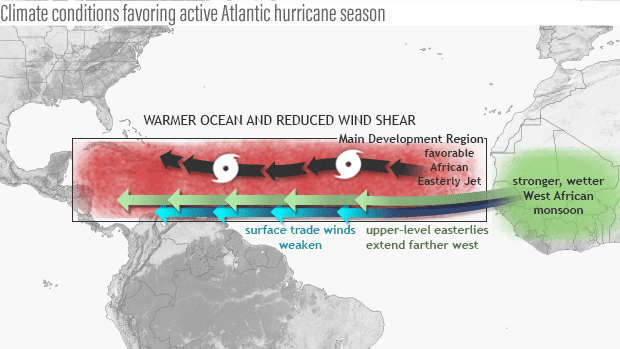
    About 600 miles off the west coast of Africa, large clusters of thunderstorms begin organizing into tropical storms every hurricane season. They aren’t yet in range of Hurricane Hunter flights, so forecasters at the National Hurricane Center rely on weather satellites to peer down on these storms and beam back information about their location, structure and intensity.
    The satellite data helps meteorologists create weather forecasts that keep planes and ships safe and prepare countries for a potential hurricane landfall.

    Now, meteorologists are about to lose access to three of those satellites.

    On June 25, 2025, the Trump administration issued a service change notice announcing that the Defense Meteorological Satellite Program, DMSP, and the Navy’s Fleet Numerical Meteorology and Oceanography Center would terminate data collection, processing and distribution of all DMSP data no later than June 30. The data termination was postponed until July 31 following a request from the head of NASA’s Earth Science Division.

    How hurricanes form. NOAA

    I am a meteorologist who studies lightning in hurricanes and helps train other meteorologists to monitor and forecast tropical cyclones. Here is how meteorologists use the DMSP data and why they are concerned about it going dark.

    Looking inside the clouds

    At its most basic, a weather satellite is a high-resolution digital camera in space that takes pictures of clouds in the atmosphere.

    These are the satellite images you see on most TV weather broadcasts. They let meteorologists see the location and some details of a hurricane’s structure, but only during daylight hours.

    Hurricane Flossie spins off the Mexican coast on July 1, 2025. Images show the top of the hurricane from space as day turns to night. NOAA GOES

    Meteorologists can use infrared satellite data, similar to a thermal imaging camera, at all hours of the day to find the coldest cloud-top temperatures, highlighting areas where the highest wind speeds and rainfall rates are found.

    But while visible and infrared satellite imagery are valuable tools for hurricane forecasters, they provide only a basic picture of the storm. It’s like a doctor diagnosing a patient after a visual exam and checking their temperature.

    Infrared bands show more detail of Hurricane Flossie’s structure on July 1, 2025. NOAA GOES

    For more accurate diagnoses, meteorologists rely on the DMSP satellites.

    The three satellites orbit Earth 14 times per day with special sensor microwave imager/sounder instruments, or SSMIS. These let meteorologists look inside the clouds, similar to how an MRI in a hospital looks inside a human body. With these instruments, meteorologists can pinpoint the storm’s low-pressure center and identify signs of intensification.

    Precisely locating the center of a hurricane improves forecasts of the storm’s future track. This lets meteorologists produce more accurate hurricane watches, warnings and evacuations.

    Hurricane track forecasts have improved by up to 75% since 1990. However, forecasting rapid intensification is still difficult, so the ability of DMPS data to identify signs of intensification is important.

    About 80% of major hurricanes – those with wind speeds of at least 111 mph (179 kilometers per hour) – rapidly intensify at some point, ramping up the risks they pose to people and property on land. Finding out when storms are about to undergo intensification allows meteorologists to warn the public about these dangerous hurricanes.

    Where are the defense satellites going?

    NOAA’s Office of Satellite and Product Operations described the reason for turning off the flow of data as a need to mitigate “a significant cybersecurity risk.”

    The three satellites have already operated for longer than planned.

    The DMSP satellites were launched between 1999 and 2009 and were designed to last for five years. They have now been operating for more than 15 years. The United States Space Force recently concluded that the DMSP satellites would reach the end of their lives between 2023 and 2026, so the data would likely have gone dark soon.

    Are there replacements for the DMSP satellites?

    Three other satellites in orbit – NOAA-20, NOAA-21 and Suomi NPP – have a microwave instrument known as the advanced technology microwave sounder.

    The advanced technology microwave sounder, or ATMS, can provide data similar to the special sensor microwave imager/sounder, or SSMIS, but at a lower resolution. It provides a more washed-out view that is less useful than the SSMIS for pinpointing a storm’s location or estimating its intensity.

    Images of Hurricane Erick off the coast of Mexico, viewed from NOAA-20’s ATMS (left) and DMPS SSMIS (right) on June 18 show the difference in resolution and the higher detail provided by the SSMIS data.
    U.S. Naval Research Laboratory, via Michael Lowry

    The U.S. Space Force began using data from a new defense meteorology satellite, ML-1A, in late April 2025.

    ML-1A is a microwave satellite that will help replace some of the DMSP satellites’ capabilities. However, the government hasn’t announced whether the ML-1A data will be available to forecasters, including those at the National Hurricane Center.

    Why are satellite replacements last minute?

    Satellite programs are planned over many years, even decades, and are very expensive. The current geostationary satellite program launched its first satellite in 2016 with plans to operate until 2038. Development of the planned successor for GOES-R began in 2019.

    Similarly, plans for replacing the DMSP satellites have been underway since the early 2000s.

    Scientists prepare a GOES-R satellite for packing aboard a rocket in 2016.
    NASA/Charles Babir

    Delays in developing the satellite instruments and funding cuts caused the National Polar-orbiting Operational Environmental Satellite System and Defense Weather Satellite System to be canceled in 2010 and 2012 before any of their satellites could be launched.

    The 2026 NOAA budget request includes an increase in funding for the next-generation geostationary satellite program, so it can be restructured to reuse spare parts from existing geostationary satellites. The budget also terminates contracts for ocean color, atmospheric composition and advanced lightning mapper instruments.

    A busy season remains

    The 2025 Atlantic hurricane season, which runs from June 1 to Nov. 30, is forecast to be above average, with six to 10 hurricanes. The most active part of the season runs from the middle of August to the middle of October, after the DMSP satellite data is set to be turned off.

    Hurricane forecasters will continue to use all available tools, including satellite, radar, weather balloon and dropsonde data, to monitor the tropics and issue hurricane forecasts. But the loss of satellite data, along with other cuts to data, funding and staffing, could ultimately put more lives at risk.

    Chris Vagasky is a member of the American Meteorological Society and the National Weather Association.

    ref. Hurricane forecasters are losing 3 key satellites ahead of peak storm season − a meteorologist explains why it matters – https://theconversation.com/hurricane-forecasters-are-losing-3-key-satellites-ahead-of-peak-storm-season-a-meteorologist-explains-why-it-matters-260190

    MIL OSI – Global Reports

  • MIL-OSI Submissions: Bali to Biarritz: Surf spot overcrowding and the fight to protect the essence of catching a wave

    Source: The Conversation – France – By Jérémy Lemarié, Maître de conférences à l’Université de Reims Champagne-Ardenne, Université de Reims Champagne-Ardenne (URCA)

    Invented in Hawaii, surfing gained popularity in the United States and Australia in the 1950s before becoming a global phenomenon. Now practiced in more than 150 countries, its spread has been driven by media and tourism. Surf tourism involves travelling to destinations to catch waves, either with a surfboard or through activities such as body surfing or bodyboarding. Tourists range from seasoned surfers to beginners eager to learn.

    The allure of California

    For many, surf tourism evokes exotic imagery shaped by California production companies. Columbia Pictures in 1959 and Paramount Pictures in 1961 introduced surfing to the middle class, showcasing the sport as a gateway to summer adventure and escape. However, it was the 1966 movie The Endless Summer, directed and produced by Bruce Brown, that became a box office success. The film follows two Californians travelling the globe in search of the perfect wave, which they ultimately find in South Africa. Beneath the seemingly lighthearted portrayal of a “surf safari”, it carries undertones of colonial ambition.

    In the film, the Californians tell people in Africa that waves are untapped resources ready to be named and conquered. This sense of Western cultural dominance over populations in poorer countries has permeated surf tourism. Since the 1970s, French surfers have flocked to Morocco for its long-breaking waves, Australians have flocked to Indonesia and Californians to Mexico. The expansion of surfing to Africa, Asia and Latin America was enabled by easier international travel and economic disparities between visitors and hosts.

    Surfing’s impact on local communities

    Indonesia, for instance, became a surfing hotspot after Australian surfers started to explore the waves of Bali and the Mentawai Islands in the 1970s. Once remote regions with modest living standards, these areas saw tourism infrastructure mushroom to meet demand. Today, destinations such as Uluwatu in Bali and Padang Padang in Sumatra attract surfers of all skill levels.

    Similarly, Morocco has experienced a surge in surf tourism, with spots such as Taghazout drawing European visitors in search of affordable waves and sunshine. While this has boosted local economies, it has also raised concerns about environmental degradation and the strain of tourism on previously untouched areas.

    The challenges of overtourism in coastal areas

    Although surfing is often seen as an activity in harmony with nature, mass tourism has created tensions between local surfers and visitors. Overtourism refers to the negative impact of excessive tourist numbers on natural environments and local communities.

    One response to overtourism is localism – where local surfers assert ownership of waves, sometimes discouraging or even intimidating outsiders. This has been particularly pronounced in economically dependent surf destinations. For example, in Hawaii during the 1970s and 1980s, local surfers protested against the influx of professional Australian surfers and international competitions. Today, localism persists globally, from Maroubra in Sydney to Boucau-Tarnos in France’s Nouvelle-Aquitaine region. These places are not systematically off-limits to beginners, but major conflicts can arise during peak tourist seasons.

    Surf schools, while crucial for teaching newcomers, also exacerbate crowding. During high seasons, beaches such as Côte des Basques in Biarritz become overcrowded, straining relations between experienced surfers, instructors and novices. Beginners, often unaware of surf etiquette and safety rules, contribute to frustrations among seasoned surfers.


    A weekly e-mail in English featuring expertise from scholars and researchers. It provides an introduction to the diversity of research coming out of the continent and considers some of the key issues facing European countries. Get the newsletter!

    The role of public authorities

    In response to these challenges, public initiatives have emerged to promote sustainable surf tourism. For instance, the Costa Rican government has established marine protected areas and regulated tourism activities to preserve a part of the coastal environment. Local authorities have also begun capping the number of surf schools and making access to the practice more difficult.

    In southwestern France, municipalities use public service delegations (DSP), temporary occupation authorisations (AOT) and other tools to regulate surf schools operating on public beaches. Environmental awareness programmes have been launched to educate tourists on responsible behaviour toward beaches and oceans.

    Gaps in regulation

    Despite these measures, many coastal regions face insufficient action to address the environmental and social challenges posed by surf tourism. In Fiji, a 2010 decree deregulated the surf tourism industry, eliminating traditional indigenous rights to coastal and reef areas. This allowed unregulated development of tourism infrastructure, often ignoring long-term ecological impacts.

    Similar issues are seen in Morocco, where lax regulations allow foreign investors to exploit coastal land for hotel development, often providing little benefit to local communities.

    Yet, there are success stories. In Santa Cruz, California, the initiative Save Our Shores mobilises citizens and tourists to protect beaches through anti-pollution campaigns and regular cleanups.

    Surf tourism has brought significant economic benefits to many coastal regions. However, it has also introduced social and environmental challenges, including localism, overcrowding and ecological strain. Managing these issues requires a collaborative approach, with governments, local stakeholders and tourists working together to preserve the sport’s connection to nature.


    This article was published as part of the 2024 Fête de la Science, of which The Conversation France was a partner. The year’s theme, “Oceans of Knowledge,” explored the wonders of the marine world.

    Jérémy Lemarié is a member of the Fulbright network, as the recipient of the “Chercheuses et Chercheurs” grant from the Franco-American Commission in 2022-2023.

    ref. Bali to Biarritz: Surf spot overcrowding and the fight to protect the essence of catching a wave – https://theconversation.com/bali-to-biarritz-surf-spot-overcrowding-and-the-fight-to-protect-the-essence-of-catching-a-wave-244550

    MIL OSI

  • MIL-OSI Submissions: Bali to Biarritz: Surf spot overcrowding and the fight to protect the essence of catching a wave

    Source: The Conversation – France – By Jérémy Lemarié, Maître de conférences à l’Université de Reims Champagne-Ardenne, Université de Reims Champagne-Ardenne (URCA)

    Invented in Hawaii, surfing gained popularity in the United States and Australia in the 1950s before becoming a global phenomenon. Now practiced in more than 150 countries, its spread has been driven by media and tourism. Surf tourism involves travelling to destinations to catch waves, either with a surfboard or through activities such as body surfing or bodyboarding. Tourists range from seasoned surfers to beginners eager to learn.

    The allure of California

    For many, surf tourism evokes exotic imagery shaped by California production companies. Columbia Pictures in 1959 and Paramount Pictures in 1961 introduced surfing to the middle class, showcasing the sport as a gateway to summer adventure and escape. However, it was the 1966 movie The Endless Summer, directed and produced by Bruce Brown, that became a box office success. The film follows two Californians travelling the globe in search of the perfect wave, which they ultimately find in South Africa. Beneath the seemingly lighthearted portrayal of a “surf safari”, it carries undertones of colonial ambition.

    In the film, the Californians tell people in Africa that waves are untapped resources ready to be named and conquered. This sense of Western cultural dominance over populations in poorer countries has permeated surf tourism. Since the 1970s, French surfers have flocked to Morocco for its long-breaking waves, Australians have flocked to Indonesia and Californians to Mexico. The expansion of surfing to Africa, Asia and Latin America was enabled by easier international travel and economic disparities between visitors and hosts.

    Surfing’s impact on local communities

    Indonesia, for instance, became a surfing hotspot after Australian surfers started to explore the waves of Bali and the Mentawai Islands in the 1970s. Once remote regions with modest living standards, these areas saw tourism infrastructure mushroom to meet demand. Today, destinations such as Uluwatu in Bali and Padang Padang in Sumatra attract surfers of all skill levels.

    Similarly, Morocco has experienced a surge in surf tourism, with spots such as Taghazout drawing European visitors in search of affordable waves and sunshine. While this has boosted local economies, it has also raised concerns about environmental degradation and the strain of tourism on previously untouched areas.

    The challenges of overtourism in coastal areas

    Although surfing is often seen as an activity in harmony with nature, mass tourism has created tensions between local surfers and visitors. Overtourism refers to the negative impact of excessive tourist numbers on natural environments and local communities.

    One response to overtourism is localism – where local surfers assert ownership of waves, sometimes discouraging or even intimidating outsiders. This has been particularly pronounced in economically dependent surf destinations. For example, in Hawaii during the 1970s and 1980s, local surfers protested against the influx of professional Australian surfers and international competitions. Today, localism persists globally, from Maroubra in Sydney to Boucau-Tarnos in France’s Nouvelle-Aquitaine region. These places are not systematically off-limits to beginners, but major conflicts can arise during peak tourist seasons.

    Surf schools, while crucial for teaching newcomers, also exacerbate crowding. During high seasons, beaches such as Côte des Basques in Biarritz become overcrowded, straining relations between experienced surfers, instructors and novices. Beginners, often unaware of surf etiquette and safety rules, contribute to frustrations among seasoned surfers.


    A weekly e-mail in English featuring expertise from scholars and researchers. It provides an introduction to the diversity of research coming out of the continent and considers some of the key issues facing European countries. Get the newsletter!

    The role of public authorities

    In response to these challenges, public initiatives have emerged to promote sustainable surf tourism. For instance, the Costa Rican government has established marine protected areas and regulated tourism activities to preserve a part of the coastal environment. Local authorities have also begun capping the number of surf schools and making access to the practice more difficult.

    In southwestern France, municipalities use public service delegations (DSP), temporary occupation authorisations (AOT) and other tools to regulate surf schools operating on public beaches. Environmental awareness programmes have been launched to educate tourists on responsible behaviour toward beaches and oceans.

    Gaps in regulation

    Despite these measures, many coastal regions face insufficient action to address the environmental and social challenges posed by surf tourism. In Fiji, a 2010 decree deregulated the surf tourism industry, eliminating traditional indigenous rights to coastal and reef areas. This allowed unregulated development of tourism infrastructure, often ignoring long-term ecological impacts.

    Similar issues are seen in Morocco, where lax regulations allow foreign investors to exploit coastal land for hotel development, often providing little benefit to local communities.

    Yet, there are success stories. In Santa Cruz, California, the initiative Save Our Shores mobilises citizens and tourists to protect beaches through anti-pollution campaigns and regular cleanups.

    Surf tourism has brought significant economic benefits to many coastal regions. However, it has also introduced social and environmental challenges, including localism, overcrowding and ecological strain. Managing these issues requires a collaborative approach, with governments, local stakeholders and tourists working together to preserve the sport’s connection to nature.


    This article was published as part of the 2024 Fête de la Science, of which The Conversation France was a partner. The year’s theme, “Oceans of Knowledge,” explored the wonders of the marine world.

    Jérémy Lemarié is a member of the Fulbright network, as the recipient of the “Chercheuses et Chercheurs” grant from the Franco-American Commission in 2022-2023.

    ref. Bali to Biarritz: Surf spot overcrowding and the fight to protect the essence of catching a wave – https://theconversation.com/bali-to-biarritz-surf-spot-overcrowding-and-the-fight-to-protect-the-essence-of-catching-a-wave-244550

    MIL OSI

  • MIL-OSI Submissions: Bali to Biarritz: Surf spot overcrowding and the fight to protect the essence of catching a wave

    Source: The Conversation – France – By Jérémy Lemarié, Maître de conférences à l’Université de Reims Champagne-Ardenne, Université de Reims Champagne-Ardenne (URCA)

    Invented in Hawaii, surfing gained popularity in the United States and Australia in the 1950s before becoming a global phenomenon. Now practiced in more than 150 countries, its spread has been driven by media and tourism. Surf tourism involves travelling to destinations to catch waves, either with a surfboard or through activities such as body surfing or bodyboarding. Tourists range from seasoned surfers to beginners eager to learn.

    The allure of California

    For many, surf tourism evokes exotic imagery shaped by California production companies. Columbia Pictures in 1959 and Paramount Pictures in 1961 introduced surfing to the middle class, showcasing the sport as a gateway to summer adventure and escape. However, it was the 1966 movie The Endless Summer, directed and produced by Bruce Brown, that became a box office success. The film follows two Californians travelling the globe in search of the perfect wave, which they ultimately find in South Africa. Beneath the seemingly lighthearted portrayal of a “surf safari”, it carries undertones of colonial ambition.

    In the film, the Californians tell people in Africa that waves are untapped resources ready to be named and conquered. This sense of Western cultural dominance over populations in poorer countries has permeated surf tourism. Since the 1970s, French surfers have flocked to Morocco for its long-breaking waves, Australians have flocked to Indonesia and Californians to Mexico. The expansion of surfing to Africa, Asia and Latin America was enabled by easier international travel and economic disparities between visitors and hosts.

    Surfing’s impact on local communities

    Indonesia, for instance, became a surfing hotspot after Australian surfers started to explore the waves of Bali and the Mentawai Islands in the 1970s. Once remote regions with modest living standards, these areas saw tourism infrastructure mushroom to meet demand. Today, destinations such as Uluwatu in Bali and Padang Padang in Sumatra attract surfers of all skill levels.

    Similarly, Morocco has experienced a surge in surf tourism, with spots such as Taghazout drawing European visitors in search of affordable waves and sunshine. While this has boosted local economies, it has also raised concerns about environmental degradation and the strain of tourism on previously untouched areas.

    The challenges of overtourism in coastal areas

    Although surfing is often seen as an activity in harmony with nature, mass tourism has created tensions between local surfers and visitors. Overtourism refers to the negative impact of excessive tourist numbers on natural environments and local communities.

    One response to overtourism is localism – where local surfers assert ownership of waves, sometimes discouraging or even intimidating outsiders. This has been particularly pronounced in economically dependent surf destinations. For example, in Hawaii during the 1970s and 1980s, local surfers protested against the influx of professional Australian surfers and international competitions. Today, localism persists globally, from Maroubra in Sydney to Boucau-Tarnos in France’s Nouvelle-Aquitaine region. These places are not systematically off-limits to beginners, but major conflicts can arise during peak tourist seasons.

    Surf schools, while crucial for teaching newcomers, also exacerbate crowding. During high seasons, beaches such as Côte des Basques in Biarritz become overcrowded, straining relations between experienced surfers, instructors and novices. Beginners, often unaware of surf etiquette and safety rules, contribute to frustrations among seasoned surfers.


    A weekly e-mail in English featuring expertise from scholars and researchers. It provides an introduction to the diversity of research coming out of the continent and considers some of the key issues facing European countries. Get the newsletter!

    The role of public authorities

    In response to these challenges, public initiatives have emerged to promote sustainable surf tourism. For instance, the Costa Rican government has established marine protected areas and regulated tourism activities to preserve a part of the coastal environment. Local authorities have also begun capping the number of surf schools and making access to the practice more difficult.

    In southwestern France, municipalities use public service delegations (DSP), temporary occupation authorisations (AOT) and other tools to regulate surf schools operating on public beaches. Environmental awareness programmes have been launched to educate tourists on responsible behaviour toward beaches and oceans.

    Gaps in regulation

    Despite these measures, many coastal regions face insufficient action to address the environmental and social challenges posed by surf tourism. In Fiji, a 2010 decree deregulated the surf tourism industry, eliminating traditional indigenous rights to coastal and reef areas. This allowed unregulated development of tourism infrastructure, often ignoring long-term ecological impacts.

    Similar issues are seen in Morocco, where lax regulations allow foreign investors to exploit coastal land for hotel development, often providing little benefit to local communities.

    Yet, there are success stories. In Santa Cruz, California, the initiative Save Our Shores mobilises citizens and tourists to protect beaches through anti-pollution campaigns and regular cleanups.

    Surf tourism has brought significant economic benefits to many coastal regions. However, it has also introduced social and environmental challenges, including localism, overcrowding and ecological strain. Managing these issues requires a collaborative approach, with governments, local stakeholders and tourists working together to preserve the sport’s connection to nature.


    This article was published as part of the 2024 Fête de la Science, of which The Conversation France was a partner. The year’s theme, “Oceans of Knowledge,” explored the wonders of the marine world.

    Jérémy Lemarié is a member of the Fulbright network, as the recipient of the “Chercheuses et Chercheurs” grant from the Franco-American Commission in 2022-2023.

    ref. Bali to Biarritz: Surf spot overcrowding and the fight to protect the essence of catching a wave – https://theconversation.com/bali-to-biarritz-surf-spot-overcrowding-and-the-fight-to-protect-the-essence-of-catching-a-wave-244550

    MIL OSI

  • MIL-OSI Submissions: Bali to Biarritz: Surf spot overcrowding and the fight to protect the essence of catching a wave

    Source: The Conversation – France – By Jérémy Lemarié, Maître de conférences à l’Université de Reims Champagne-Ardenne, Université de Reims Champagne-Ardenne (URCA)

    Invented in Hawaii, surfing gained popularity in the United States and Australia in the 1950s before becoming a global phenomenon. Now practiced in more than 150 countries, its spread has been driven by media and tourism. Surf tourism involves travelling to destinations to catch waves, either with a surfboard or through activities such as body surfing or bodyboarding. Tourists range from seasoned surfers to beginners eager to learn.

    The allure of California

    For many, surf tourism evokes exotic imagery shaped by California production companies. Columbia Pictures in 1959 and Paramount Pictures in 1961 introduced surfing to the middle class, showcasing the sport as a gateway to summer adventure and escape. However, it was the 1966 movie The Endless Summer, directed and produced by Bruce Brown, that became a box office success. The film follows two Californians travelling the globe in search of the perfect wave, which they ultimately find in South Africa. Beneath the seemingly lighthearted portrayal of a “surf safari”, it carries undertones of colonial ambition.

    In the film, the Californians tell people in Africa that waves are untapped resources ready to be named and conquered. This sense of Western cultural dominance over populations in poorer countries has permeated surf tourism. Since the 1970s, French surfers have flocked to Morocco for its long-breaking waves, Australians have flocked to Indonesia and Californians to Mexico. The expansion of surfing to Africa, Asia and Latin America was enabled by easier international travel and economic disparities between visitors and hosts.

    Surfing’s impact on local communities

    Indonesia, for instance, became a surfing hotspot after Australian surfers started to explore the waves of Bali and the Mentawai Islands in the 1970s. Once remote regions with modest living standards, these areas saw tourism infrastructure mushroom to meet demand. Today, destinations such as Uluwatu in Bali and Padang Padang in Sumatra attract surfers of all skill levels.

    Similarly, Morocco has experienced a surge in surf tourism, with spots such as Taghazout drawing European visitors in search of affordable waves and sunshine. While this has boosted local economies, it has also raised concerns about environmental degradation and the strain of tourism on previously untouched areas.

    The challenges of overtourism in coastal areas

    Although surfing is often seen as an activity in harmony with nature, mass tourism has created tensions between local surfers and visitors. Overtourism refers to the negative impact of excessive tourist numbers on natural environments and local communities.

    One response to overtourism is localism – where local surfers assert ownership of waves, sometimes discouraging or even intimidating outsiders. This has been particularly pronounced in economically dependent surf destinations. For example, in Hawaii during the 1970s and 1980s, local surfers protested against the influx of professional Australian surfers and international competitions. Today, localism persists globally, from Maroubra in Sydney to Boucau-Tarnos in France’s Nouvelle-Aquitaine region. These places are not systematically off-limits to beginners, but major conflicts can arise during peak tourist seasons.

    Surf schools, while crucial for teaching newcomers, also exacerbate crowding. During high seasons, beaches such as Côte des Basques in Biarritz become overcrowded, straining relations between experienced surfers, instructors and novices. Beginners, often unaware of surf etiquette and safety rules, contribute to frustrations among seasoned surfers.


    A weekly e-mail in English featuring expertise from scholars and researchers. It provides an introduction to the diversity of research coming out of the continent and considers some of the key issues facing European countries. Get the newsletter!

    The role of public authorities

    In response to these challenges, public initiatives have emerged to promote sustainable surf tourism. For instance, the Costa Rican government has established marine protected areas and regulated tourism activities to preserve a part of the coastal environment. Local authorities have also begun capping the number of surf schools and making access to the practice more difficult.

    In southwestern France, municipalities use public service delegations (DSP), temporary occupation authorisations (AOT) and other tools to regulate surf schools operating on public beaches. Environmental awareness programmes have been launched to educate tourists on responsible behaviour toward beaches and oceans.

    Gaps in regulation

    Despite these measures, many coastal regions face insufficient action to address the environmental and social challenges posed by surf tourism. In Fiji, a 2010 decree deregulated the surf tourism industry, eliminating traditional indigenous rights to coastal and reef areas. This allowed unregulated development of tourism infrastructure, often ignoring long-term ecological impacts.

    Similar issues are seen in Morocco, where lax regulations allow foreign investors to exploit coastal land for hotel development, often providing little benefit to local communities.

    Yet, there are success stories. In Santa Cruz, California, the initiative Save Our Shores mobilises citizens and tourists to protect beaches through anti-pollution campaigns and regular cleanups.

    Surf tourism has brought significant economic benefits to many coastal regions. However, it has also introduced social and environmental challenges, including localism, overcrowding and ecological strain. Managing these issues requires a collaborative approach, with governments, local stakeholders and tourists working together to preserve the sport’s connection to nature.


    This article was published as part of the 2024 Fête de la Science, of which The Conversation France was a partner. The year’s theme, “Oceans of Knowledge,” explored the wonders of the marine world.

    Jérémy Lemarié is a member of the Fulbright network, as the recipient of the “Chercheuses et Chercheurs” grant from the Franco-American Commission in 2022-2023.

    ref. Bali to Biarritz: Surf spot overcrowding and the fight to protect the essence of catching a wave – https://theconversation.com/bali-to-biarritz-surf-spot-overcrowding-and-the-fight-to-protect-the-essence-of-catching-a-wave-244550

    MIL OSI

  • MIL-OSI Submissions: The rule of law is key to capitalism − eroding it is bad news for American business

    Source: The Conversation – USA (2) – By Robert Bird, Professor of Business Law & Eversource Energy Chair in Business Ethics, University of Connecticut

    Something dangerous is happening to the U.S. economy, and it’s not inflation or trade wars. Chaotic deregulation and the selective enforcement of laws have upended markets and investor confidence. At one point, the threat of tariffs and resulting chaos evaporated US$4 trillion in value in the U.S. stock market. This approach isn’t helping the economy, and there are troubling signs it will hurt both the U.S. and the global economy in the short and long term.

    The rule of law – the idea that legal rules apply to everyone equally, regardless of wealth or political connections − is essential for a thriving economy. Yet globally the respect for the rule of law is slipping, and the U.S. is slipping with it. According to annual rankings from the World Justice Project, the rule of law has declined in more than half of all countries for seven years in a row. The rule of law in the U.S., the most economically powerful nation in the world, is now weaker than the rule of law in Uruguay, Singapore, Latvia and over 20 other countries.

    When regulation is unnecessarily burdensome for business, government should lighten the load. However, arbitrary and frenzied deregulation does not free corporations to earn higher profits. As a business school professor with an MBA who has taught business law for over 25 years, and the author of a recently published book about the importance of legal knowledge to business, I can affirm that the opposite is true. Chaotic deregulation doesn’t drive growth. It only fuels risk.

    Chaos undermines investment, talent and trust

    Legal uncertainty has become a serious drag on American competitiveness.

    A study by the U.S. Chamber of Commerce found that public policy risks — such as unexpected changes in taxes, regulation and enforcement — ranked among the top challenges businesses face, alongside more familiar business threats such as competition or economic volatility. Companies that can’t predict how the law might change are forced to plan for the worst. That means holding back on long-term investment, slowing innovation and raising prices to cover new risks.

    When the government enforces rules arbitrarily, it also undermines property rights.

    For example, if a country enters into a major trade agreement and then goes ahead and violates it, that threatens the property rights of the companies that relied on the agreement to conduct business. If the government can seize assets without due process, those assets lose their stability and value. And if that treatment depends on whether a company is in the government’s political favor, it’s not just bad economics − it’s a red flag for investors.

    When government doesn’t enforce rules fairly, it also threatens people’s freedom to enter into contracts.

    Consider presidential orders that threaten the clients of law firms that have challenged the administration with cancellation of their government contracts. The threat alone jeopardizes the value of those agreements.

    If businesses can’t trust public contracts to be respected, they’ll be less likely to work with the government in the first place. This deprives the government, and ultimately the American people, of receiving the best value for their tax dollars in critical areas such as transportation, technology and national defense.

    Regulatory chaos also allows corruption to spread.

    For example, the Foreign Corrupt Practices Act, which prohibits businesses from bribing foreign government officials, has leveled the playing field for firms and enabled the best American companies to succeed on their merits. Before the law was enacted in 1977, some American companies felt pressured to pay bribes to compete. “Pausing” enforcement of the law, as the current presidential administration has done, increases the cost of doing business and encourages a wild west economy where chaos thrives.

    When corruption grows, stable and democratic governments weaken, opportunities for terrorism increase and corruption-fueled authoritarian regimes, which oppose the interests of the U.S., thrive. Halting the enforcement of an anti-bribery law, even for a limited time, is an issue of national security.

    Legal uncertainty fuels brain drain

    Chaotic enforcement of the law also corrodes labor markets.

    American companies require a strong pool of talented professionals to fuel their financial success. When legal rights are enforced arbitrarily or unjustly, the very best talent that American companies need may leave the country.

    The science brain drain is already happening. American scientists have submitted 32% more applications for jobs abroad compared with last year. Nonscientists are leaving too. Ireland’s Department of Foreign Affairs has witnessed a 50% increase in Americans taking steps to obtain an Irish passport. Employers in the U.K. saw a spike in job applications from the United States.

    Business from other countries will gladly accept American talent as they compete against American companies. During the Third Reich, Nazi Germany lost its best and brightest to other countries, including America. Now the reverse is happening, as highly talented Americans leave to work for firms in other nations.

    Threats of arbitrary legal actions also drive away democratic allies and their prosperous populations that purchase American-made goods and services. For example, arbitrarily threatening to punish or even annex a closely allied nation does not endear its citizens to that government or the businesses it represents. So it’s no surprise that Canadians are now boycotting American goods and services. This is devastating businesses in American border towns and hurts the economy nationwide.

    Similarly, the Canadian government has responded to whipsawing U.S. tariff announcements with counter-tariffs, which will slice the profits of American exporters. Close American allies and trading partners such as Japan, the U.K. and the European Union are also signaling their own willingness to impose retaliatory tariffs, increasing the costs of operations to American business even more.

    Modern capitalism depends on smart regulation to thrive. Smart regulation is not an obstacle to capitalism. Smart regulation is what makes American capitalism possible. Smart regulation is what makes American freedom possible.

    Clear and consistently applied legal rules allow businesses to aggressively compete, carefully plan, and generate profits. An arbitrary rule of law deprives business of the true power of capitalism – the ability to promote economic growth, spur innovation and improve the overall living standards of a free society. Americans deserve no less, and it is up to government to make that happen for everyone.

    Robert Bird does not work for, consult, own shares in or receive funding from any company or organization that would benefit from this article, and has disclosed no relevant affiliations beyond their academic appointment.

    ref. The rule of law is key to capitalism − eroding it is bad news for American business – https://theconversation.com/the-rule-of-law-is-key-to-capitalism-eroding-it-is-bad-news-for-american-business-254922

    MIL OSI

  • MIL-OSI Europe: Written question – Mercosur-EU free trade agreement – E-002486/2025

    Source: European Parliament

    Question for written answer  E-002486/2025
    to the Commission
    Rule 144
    Anna Bryłka (PfE)

    According to media reports, the EU-Mercosur trade agreement is expected to be formally presented by the end of July, once it has been translated and has undergone legal harmonisation. In addition, during European Council President António Costa’s visit to Brazil in May 2025, he stated that he expects that the agreement will be officially ratified by December, under the Danish Presidency of the Council.

    In light of the above:

    • 1.When will the Commission propose the ratification of the EU-Mercosur agreement?
    • 2.Could the Commission please provide more information about the form the ratification process will take?
    • 3.Could the Commission please specify which Member States oppose the ratification of the agreement?

    Submitted: 20.6.2025

    Last updated: 3 July 2025

    MIL OSI Europe News

  • Can carbon pricing curb climate change and where does India stand?

    Source: Government of India

    Source: Government of India (4)

    Carbon pricing is increasingly recognized worldwide as a powerful tool to combat the devastating impacts of climate change. But what exactly is it, and how does it work? Let’s explore this transformative approach to driving a greener and more sustainable future.

    Carbon pricing is a policy mechanism that puts a financial cost on greenhouse gas emissions. This policy tool is primarily aimed at discouraging emitters of the greenhouse gas especially carbon dioxide and encouraging individuals, industries and other stakeholders to reduce such emissions to save the mother earth, as climate change is causing a great deal of damage in almost every part of the world, which appears irreparable in several cases.  

    Driven largely by the excessive emission of greenhouse gases like carbon dioxide, climate change is increasingly posing a critical threat to global ecosystems, economies and societies. In the process, one of the most effective tools developed to mitigate these emissions is carbon pricing. This mechanism mandates to internalize the environmental damage caused by pollution, thus encouraging industries and consumers to reduce their carbon footprint.

    To understand it lucidly, carbon pricing is an economic strategy designed to reduce global warming. It reflects the cost of carbon emissions in the market, encouraging emitters to either reduce their emissions or pay for the same. In simple terms, it is a kind of financial penalty imposed on the release of carbon dioxide into the atmosphere by the people, industries or other stakeholders.

    There are two primary forms of carbon pricing- carbon tax and cap-and-trade. Each of these mechanisms puts a price on carbon, but in different ways. While, carbon tax directly sets a price on carbon by defining a tax rate on greenhouse gas emissions or more commonly on the carbon content of fossil fuels, making it easier for businesses to plan future investments.

    Besides, carbon tax is imposed by the government on on fossil fuels like coal, oil and gas based on their carbon content. The higher the emissions associated with a fuel, the higher the tax, making high emission fuels more expensive, thus encouraging a shift towards cleaner energy sources. For example, Sweden has one of the highest carbon taxes in the world, set at around $130 per tonne of CO₂. The country has reduced carbon emissions significantly while maintaining economic growth since its adoption of the mechanism in 1991.

    On the other hand, under Cap-and-Trade or Emissions Trading System (ETS), the government sets a total cap on emissions and distributes or auctions emission permits to emitters. Companies can buy and sell these allowances, creating a market for carbon emissions. Without doubt, a cap limits total emissions for a group of industries or the entire economy.

    In this system, companies receive or purchase allowances representing the right to emit a specific amount of CO2, and if a company emits less than its allowance, it can sell the surplus to other companies. Similarly, if a company exceeds the allowance level, it must buy more. Here, it is interesting to note that the cap doesn’t remain fixed, but is gradually reduced over time to decrease total emissions.

    The European Union emissions trading system is the largest and most established cap-and-trade system, as it covers more than 11,000 power plants and factories across Europe and is a cornerstone of the EU’s climate policy.

    However, a number of countries worldwide have adopted carbon pricing mechanisms including those in Europe. Canada, China, Japan, South Korea, USA, New Zealand, Britain, South Africa, Mexico, Kazakhstan, Singapore, Colombia, Ukrain, Indonesia, Vietnam and a few others have already adopted different mechanisms. The pioneers in the process are Sweden and Finland. While Sweden introduced it in 1991, Finland was the first country to introduce a carbon tax in 1990.

    While, the impacts of climate change are widespread, serious experienced across the globe, the trends to contain it through carbon pricing mechanisms are also encouraging. According to estimates, as of now, carbon pricing mechanisms cover about 23% of global greenhouse gas emissions. The total global value of carbon pricing instruments in operation exceeds $100 billion annually.

    At the same time, there is a growing push for international coordination, especially through article 6 of the Paris Agreement, which allows countries to trade emissions reductions. Thus, the carbon market has grown rapidly in the past decade, fueled by increased climate commitments under the Paris Agreement and the development of regional and national carbon pricing mechanisms.

    To know more about how different countries of the world are responding to these initiatives, we can approach to the World Bank’s Carbon Pricing Dashboard, which provides a comprehensive overview of carbon pricing initiatives worldwide, including their design, coverage and price levels. The World Bank report on the trends of carbon pricing also shows a significant increase in the number of operational carbon pricing instruments and highlights the growing trend of carbon pricing globally.

    In recent years, especially since Narendra Modi government came at the Centre, India has also been rapidly advancing toward a structured and regulated carbon pricing ecosystem. It is a part of India’s broader climate and sustainable development agenda.

    Amid the growing global focus on carbon markets and emissions trading, India is taking significant steps toward establishing a rate-based Emissions Trading System (ETS) along with complementary voluntary carbon credit mechanisms. The World Bank’s ‘State and Trends of Carbon Pricing 2025’ report highlights India’s expanding role as a key emerging economy shaping the future of global climate finance and carbon pricing architecture.

    Rate-based ETS refers to a system where total emissions are not capped but individual entities are allocated a performance benchmark that serves as a limit on their net emissions. Rate-based ETSs offer additional flexibility in managing future growth uncertainty as well as international competitiveness concerns.

    India’s Carbon Credit Trading Scheme (CCTS) is a strategic initiative aimed at reducing greenhouse gas emissions through carbon pricing. It comprises two main components- a compliance mechanism for obligated entities, especially for the industrial sector and an offset mechanism to enable voluntary participation.

    The scheme being worked out in India, is designed to incentivize and support efforts toward decarbonizing the Indian economy. By establishing the necessary institutional framework, the CCTS has laid the groundwork for the development of the Indian Carbon Market (ICM).

    It’s heartening to note here that carbon pricing is no longer a niche policy meant for only rich countries, now it has become a mainstream tool for climate action worldwide including India and other developing countries. Whether through carbon taxes or emissions trading systems, countries are finding ways to internalize the environmental costs of carbon and transition toward a low-carbon future, which augur well for the future of the planet.  

  • Astronomers get picture of aftermath of a star’s double detonation

    Source: Government of India

    Source: Government of India (4)

    The explosion of a star, called a supernova, is an immensely violent event. It usually involves a star more than eight times the mass of our sun that exhausts its nuclear fuel and undergoes a core collapse, triggering a single powerful explosion.

    But a rarer kind of supernova involves a different type of star – a stellar ember called a white dwarf – and a double detonation. Researchers have obtained photographic evidence of this type of supernova for the first time, using the European Southern Observatory’s Chile-based Very Large Telescope.

    The back-to-back explosions obliterated a white dwarf that had a mass roughly equal to the sun and was located about 160,000 light‑years from Earth in the direction of the constellation Dorado in a galaxy near the Milky Way called the Large Magellanic Cloud. A light-year is the distance light travels in a year, 5.9 trillion miles (9.5 trillion km).

    The image shows the scene of the explosion roughly 300 years after it occurred, with two concentric shells of the element calcium moving outward.

    This type of explosion, called a Type Ia supernova, would have involved the interaction between a white dwarf and a closely orbiting companion star – either another white dwarf or an unusual star rich in helium – in what is called a binary system.

    The primary white dwarf through its gravitational pull would begin to siphon helium from its companion. The helium on the white dwarf’s surface at some point would become so hot and dense that it would detonate, producing a shockwave that would compress and ignite the star’s underlying core and trigger a second detonation.

    “Nothing remains. The white dwarf is completely disrupted,” said Priyam Das, a doctoral student in astrophysics at the University of New South Wales Canberra in Australia, lead author of the study published on Wednesday in the journal Nature Astronomy.

    “The time delay between the two detonations is essentially set by the time it takes the helium detonation to travel from one pole of the star all the way around to the other. It’s only about two seconds,” said astrophysicist and study co-author Ivo Seitenzahl, a visiting scientist at the Australian National University in Canberra.

    In the more common type of supernova, a remnant of the massive exploded star is left behind in the form of a dense neutron star or a black hole.

    The researchers used the Very Large Telescope’s Multi-Unit Spectroscopic Explorer, or MUSE, instrument to map the distribution of different chemical elements in the supernova aftermath. Calcium is seen in blue in the image – an outer ring caused by the first detonation and an inner ring by the second.

    These two calcium shells represent “the perfect smoking-gun evidence of the double-detonation mechanism,” Das said.

    “We can call this forensic astronomy – my made-up term – since we are studying the dead remains of stars to understand what caused the death,” Das said.

    Stars with up to eight times the mass of our sun appear destined to become a white dwarf. They eventually burn up all the hydrogen they use as fuel. Gravity then causes them to collapse and blow off their outer layers in a “red giant” stage, eventually leaving behind a compact core – the white dwarf. The vast majority of these do not explode as supernovas.

    While scientists knew of the existence of Type Ia supernovas, there had been no clear visual evidence of such a double detonation until now. Type Ia supernovas are important in terms of celestial chemistry in that they forge heavier elements such as calcium, sulfur and iron.

    “This is essential for understanding galactic chemical evolution including the building blocks of planets and life,” Das said.

    A shell of sulfur also was seen in the new observations of the supernova aftermath.

    Iron is a crucial part of Earth’s planetary composition and, of course, a component of human red blood cells.

    In addition to its scientific importance, the image offers aesthetic value.

    “It’s beautiful,” Seitenzahl said. “We are seeing the birth process of elements in the death of a star. The Big Bang only made hydrogen and helium and lithium. Here we see how calcium, sulfur or iron are made and dispersed back into the host galaxy, a cosmic cycle of matter.”

    (Reuters)

  • MIL-OSI Russia: Sechin Names Russia, Venezuela, Iran as Key Players to Ensure Global Energy Security

    Source: Rosneft – An important disclaimer is at the bottom of this article.

    Russia, Venezuela and Iran are key players in the energy market and global energy security directly depends on their supply, Rosneft CEO Igor Sechin said at the Energy Panel at the XXVIII St. Petersburg International Economic Forum.

    “Russia, Venezuela and Iran are key players in the energy market, and global energy security directly depends on their supply. These countries account for one-third of the global liquid hydrocarbons reserves and 15% of the global production. Without their resource base, it is impossible to facilitate the transition to the new landscape of the global energy industry,” the CEO said. 

    At the same time, according to Sechin, Russia’s real contribution to the Global Economy is proportional to its share in the global resource balance. 

    “Our country’s share in global hydrocarbon exports is about 15%. However, the Russian resource base is not only hydrocarbons, but also metals. Russia’s share in gold mining is about 10%, and in the mining of such metals as high-grade nickel and palladium it reaches 20% and 40% respectively,” the CEO said.

    Rosneft CEO also noted that Russia has about 10% of the world’s reserves of rare-earth metals, without which it is impossible to develop modern technologies.

    Department of Information and Advertising
    Rosneft Oil Company
    June 21, 2025

    Please note; this information is the raw content received directly from the information source. This is exactly what the source claims and does not necessarily reflect the position of MIL-OSI or its clients.

    MIL OSI Russia News

  • MIL-OSI Russia: Rosneft and CUPET Expand Cooperation in the Area of Education

    Source: Rosneft – An important disclaimer is at the bottom of this article.

    Rosneft and CUPET, the state-owned oil company based in the Republic of Cuba, signed an Education and Manpower Training Cooperation Agreement at the XXVII St. Petersburg International Economic Forum.

    Since 2013, Rosneft and CUPET have been enjoying successful cooperation, providing education to citizens of the Republic of Cuba at Russian universities.

    The Agreement provides for enhanced cooperation, granting access for CUPET employees to the oil and gas university programs and advanced training courses at the higher educational institutions of the Russian Federation. In addition, internship programs at Rosneft Group Subsidiaries will be arranged for CUPET employees.

    The signed document will contribute to successful cooperation between Rosneft and CUPET in educational projects.

    Reference:

    Since 2014, 39 students from Cuba have completed oil and gas master’s degree programs, and 20 students are expected to graduate in June 2024.

    In 2023, 53 CUPET employees took part in the advanced training programs in Cuba with Russian university professors and underwent internships at Rosneft Group Subsidiaries in Russia.

    Information & Advertising Department
    Rosneft
     June 7, 2024

    These materials contain forward-looking statements regarding future events and expectations. All statements contained in these materials that do not relate to matters of historical fact constitute forward-looking statements which involve known and unknown risks, uncertainties and other factors which may cause the actual results, performance or achievements to be materially different from any expected results, performance or achievements expressed or implied by such forward-looking statements. We assume no obligation to update the data contained herein to reflect actual performance or results, changes in underlying assumptions or factors affecting the forward-looking statements.

    Keywords: Social News 2024

    Please note; this information is the raw content received directly from the information source. This is exactly what the source claims and does not necessarily reflect the position of MIL-OSI or its clients.

    MIL OSI Russia News

  • MIL-OSI Russia: V.F. Stanis 100th anniversary medal: RUDN foreign alumni

    Source: Peoples’Friendship University of Russia –

    An important disclaimer is at the bottom of this article.

    The aaniversary medal to the 100th anniversary of V.F. Stanis is awarded to RUDN current and ex-employees and students for: significant contribution to the university development; long-standing commitment to maintaining ties with the university; fruitful cooperation of Russian and foreign organizations, scientists and public figures with the university.

    The aaniversary medal to the 100th anniversary of V.F. Stanis is awarded to RUDN current and ex-employees and students for:

    • significant contribution to the university development;
    • long-standing commitment to maintaining ties with the university;
    • fruitful cooperation of Russian and foreign organizations, scientists and public figures with the university.

    RUDN foreign alumni

    For their contribution to the promotion of RUDN abroad, for maintaining relations with the university and cooperation, 16 foreign graduates received the V.F. Stanis anniversary medal:

    1. Galina Abbas (Lebanon);
    2. Hamed Muhieddin Abou Zahr (Lebanon, Peru);
    3. Al-Twal Salam Fakhri (Jordan);
    4. Gupta Sudhir (India);
    5. Georges Aoun (Lebanon);
    6. Kalumbi Shangula (Namibia);
    7. Mizanur Rahman (Bangladesh);
    8. Mustafa Hammoud Al-Nawaise (Jordan);
    9. Navin Saxena (India);
    10. Najim Riad Yousef (Lebanon);
    11. Nilakshi Suryanarayan (India);
    12. Gagan Patwardhan (India);
    13. Rigoberto Santos Hilario (Dominican Republic);
    14. Ruben Dario Flores (Colombia);
    15. Auelbek Tokzhanov (Kazakhstan);
    16. Jose Hidalgo Salazar (Ecuador).

    Faculty of Economics and Law

    • Mizanur Rahman, graduate ‘81 — head of the Association of Alumni of Russian and Soviet Universities in Bangladesh.
    • Mustafa Hammoud Al-Nawaise, graduate ‘91 — international lawyer, former Secretary General of the Constitutional Court of Jordan.
    • Hamed Muhieddin Abou Zahr, graduate ‘92 — President of the Arab-Peruvian Chamber of Commerce, Vice-president of the Association of RUDN Alumni in Peru, Honorary Consul of Lebanon in Peru.

    Faculty of Science

    Graduate ‘78 of the Faculty of Science, majoring in Chemistry, Navin Saxena is the President of the international group of pharmaceutical companies: Rusan Pharma (India), Euro-Med (Russia), Pharmaker (Great Britain), Uzpharmaker (Uzbekistan), Pharmaker (Ukraine), Pharmaker (UAE) and owns the pharmaceutical companies Rusan Pharma and Pharmaker. In 2005, Rusan Pharma became a supplier of vital drugs under the Benefit-2005 program in the Russian Federation. It still remains one of the largest suppliers of drugs to the Russian Ministry of Health, the Russian Ministry of Defense and the Russian Ministry of Emergency Situations, as well as to the services of the Russian Army. Navin Saxena is the author of a large number of publications in Russian and foreign scientific journals, has drugs copyright certificates and patents.

    Faculty of History and Philology

    • Ruben Dario Flores, graduate ‘83 — Director of the Leo Tolstoy Institute of Culture in Bogota, Colombia.
    • Nilakshi Suryanarayan, graduate ‘80 — Head of the Department of Slavonic and Finno-Ugrian Studies at the University of Delhi, professor, teacher of Russian language and literature.
    • Galina Abbas, graduate ‘92 — President of RUDN University Alumni Association in Lebanon.

    All of them actively promote Russian education and the Russian language in their countries. Thus, Nilakshi Suryanarayan is the author of a popular manual among Indian students of philology, “Russian Verbs with Prefixes: Meaning and Usage”. Galina Abbas was awarded the Pushkin Medal, and Ruben Dario Flores is a translator of works by Russian poets A.Pushkin, B.Pasternak and A.Tarkovsky.

    Faculty of Medicine

    In 1978, Najim Riad Youssef graduated from the Faculty of Medicine. Najim Riad Youssef is the CEO of RamTEK LLC and Vice-Chairman of the Lebanese-Russian Friendship Society, popularizing Russian higher education and science abroad, which made him the Ambassador of Russian Education and Science.

    Kalumbi Shangula graduated from the Faculty of Medicine in 1983. He is the Minister of Health and Social Services of Namibia. He is member of the Medical Association of Namibia, the Royal Society of Tropical Medicine and Hygiene in Great Britain, and the New York Academy of Sciences.

    Faculty of Engineering

    The largest number of graduates awarded the medal to the 100th anniversary of V.F. Stanis graduated from the Engineering faculty: Jose Hidalgo Salazar in 1973, Patwardhan Gagan in 1975, Al-Twal Salam Fakhri in 1983, Rigoberto Hilario Santos and Georges Aoun in 1984.

    They continue to maintain contact with RUDN, creating new opportunities for the future students. Jose Hidalgo Salazar, CEO of IGGEKO LLC, became a laureate of the Order of Friendship. Al-Twal Salam Fakhri, a senior specialist in the regional office of the UN Development Program, member of the Jordan-Russia Friendship Society was awarded the Order of Friendship by the decree of the President of the Russian Federation. Rigoberto Hilario Santos, CEO of the engineering and construction company CONSUDOM SRL, member of the Presidium of the Dominican College of Architects and Geodesic Engineers, former Director of the Department of the Ministry of Public Works and Communications of the Dominican Republic, became the Ambassador of Russian Education and Science. Patwardhan Gagan, Head of Union Exports LLC, received the Order of Friendship for promoting the Russian language in Western India. Professor Georges Aoun, Head of the department of basic disciplines at the engineering faculty of the Lebanese University, organized summer schools with the Agrarian and Technological Institute, Engineering Academy and the Institute of the Russian language, as well as a double degree program with the Philological faculty of RUDN, author of a number of publication on teaching Russian as a foreign language.

    Faculty of Agriculture

    Auelbek Tokzhanov, a 1982 graduate of the Faculty of Agriculture, is currently the CEO of Skymax Technologies Group of Companies, AK Karal Diatomit Industry. He heads the UDN-RUDN Alumni and Friends Association in Kazakhstan and is a member of the expert group in the Innovative Economy direction of the Nur Otan party. Aulbek Tokzhanov is a co-founder of the Literary Alliance Public Foundation, which supports the work of Olzhas Suleimenov and young talents.

    Gupta Sudhir is a 1983 graduate of the Faculty of Agriculture and Chairman of the Board of Directors of Amtel Corporation. To support students, he has established 80 personal scholarships of 3,000 rubles per month. Gupta Sudhir was also awarded the Order of Friendship.

    V.F. Stanis anniversary medals were also awarded to 28 Russian graduates, employees and partners of RUDN University.

    Please note; this information is raw content received directly from the information source. It is an accurate account of what the source claims, and does not necessarily reflect the position of MIL-OSI or its clients.

    MIL OSI Russia News

  • MIL-OSI Russia: Russian education abroad: RUDN University hosts conference “Ambassadors of Russian Education and Science”

    Source: Peoples’Friendship University of Russia –

    An important disclaimer is at the bottom of this article.

    Ambassadors of Russian education and science met at a conference in RUDN University to discuss how they can increase the visibility of Russian universities and research organizations in the world, and attract more international students in Russia.

    More than 70 people gathered at the conference:

    • 13 new Ambassadors of Russian Education and Science from Burkina Faso, Vietnam, the Democratic Republic of the Congo, Egypt, India, Indonesia, Kyrgyzstan, Mali, Mozambique, Mongolia, the Republic of Guinea, Sri Lanka and Ecuador.
    • representatives of Russian educational organizations from among the founders of the program “Ambassadors of Russian Education and Science”;
    • members of the Consortium Council;
    • representatives of international services of Russian higher education institutions;
    • heads of the main educational divisions of RUDN University.

    “Ambassadors of Russian Education and Science” is a RUDN University project that brings together graduates of Russian universities, government and public figures from Asia, Africa, the Middle East, Latin America and the CIS. They voluntarily and gratuitously promote Russian education, brands of Russian educational and scientific organizations, and the Russian education and science system as a whole in their countries.

    Graduates of Russian and Soviet universities are guides of Russian education and science in their countries. Cooperation with them will increase the number of international students in Russia, strengthen the authority and reputation of Russian education and science, and strengthen cooperation between foreign countries and Russia. Promotion of the Russian language as one of the world’s languages will also be important.

    Vladimir Filippov

    President of RUDN University, Chairman of the Consortium Council

    Head of the Department of External Relations and International Projects of the Center for International Cooperation of the Ministry of Education of the Russian Federation Elena Averkova spoke on key international humanitarian projects:

    • “Russian Teacher Abroad” united 28 countries and 245 schools in the Association of Russian Schools Abroad. Its participants are Russian teachers who teach in foreign schools in Russian.
    • International school “Interdom” named after E. D. Stasova has trained more than 5,000 foreign students. They return to their home countries taking prominent public and state posts there, and strengthening ties with Russia.

    Acting Director of the Department of International Cooperation of the Ministry of Education and Science of the Russian Federation Nikolai Kudryavtsev stressed that Russia ranks 4th in the list of countries where current heads of foreign states and governments got their degrees. He added that currently in Russia there are 77 bilateral and 15 multilateral agreements in the field of mutual recognition of education, qualifications and academic degrees. Another 50 draft agreements are under development.

    Ambassador of Russian Education and Science, General Director of the International Coordinating Council of Graduates of Educational Institutions (INCORVUZ-XXI) Kochofa Aniset Gabriel noted important areas of work to promote Russian education and science:

    • mutual coordination of projects at the international level with the assistance of the Ministry of Foreign Affairs, the Ministry of Education and the Ministry of Education and Science of the Russian Federation;
    • opening schools and centers for learning the Russian language with the support of Rossotrudnichestvo and Russian embassies in other countries.

    The participants of the meeting shared their vision of the development and promotion of Russian education and science abroad. They suggested speeding up the registration of study visas for foreign applicants coming to Russia. The Ambassadors of Russian Education and Science also believe that it is necessary to involve Rossotrudnichestvo and the Ministry of Education of the Russian Federation to supply textbooks on the Russian language and literature to Russian schools and Russian language learning centers created on the initiative of foreign graduates of Soviet and Russian universities.

    Following the conference, participants outlined a work plan for 2025.

    Please note; this information is raw content received directly from the information source. It is an accurate account of what the source claims, and does not necessarily reflect the position of MIL-OSI or its clients.

    MIL OSI Russia News

  • MIL-OSI Russia: Achievements of RUDN University staff and alumni recognized with state and departmental awards

    Source: Peoples’Friendship University of Russia –

    An important disclaimer is at the bottom of this article.

    RUDN University staff and alumni received state and departmental awards at the State Kremlin Palace during a festive concert in honor of RUDN 65th anniversary.

    State awards

    The honorary title “Honored Scientist of the Russian Federation” for great contributions to science and many years of conscientious work was awarded to:

    • Aslan Abashidze, Head of the Department of International Law, RUDN Law Institute, Honored Lawyer of the Russian Federation, Doctor of Laws;
    • Vitaly Eremyan, Head of the Department of Constitutional Law and Constitutional Legal Proceedings, RUDN University Law Institute, Honored Lawyer of the Russian Federation, Doctor of Laws.

    For merits in science and education, training of highly qualified specialists, and many years of diligent work, the Medal of the Order “For Merit to the Fatherland” II Class was awarded to:

    • Vladimir Vorobyov, Head of the Department of the Russian Language and linguoculturology, Institute of the Russian Language, Doctor of Pedagogical sciences.
    • Natalya Sokolova, Director of the Institute of Foreign Languages, Head of the Department of Theory and practice of foreign languages, PhD of Philological Sciences.

    The honorary title “Honored Inventor of the Russian Federation” for many years of productive inventive activity was awarded to Alexander Stepanov, Head of the Department of Dentistry of the Institute of Medicine, Doctor of Medical Sciences.

    Departmental awards

    Andrey Kostin, First Vice-Rector — Vice-Rector for Research of RUDN University, Doctor of Medical Sciences, was awarded the Russian Federation Presidential Certificate of Honor for achievements in science and education, training of highly qualified specialists, and many years of conscientious work.

    By the order of the Ministry of Science and Higher Education of the Russian Federation, the honorary title “Honorary Worker of Education of the Russian Federation” for significant contributions to education and diligent work was conferred on:

    • Svetlana Balashova, Head of the Department of Economic and mathematical modeling, RUDN Faculty of Economics, PhD of Physical and Mathematical Sciences;
    • Elena Kryazheva-Kartseva, Head of the Department of Russian History, RUDN Faculty of Humanities and Social Sciences, PhD of Historical Sciences

    State awards to foreign alumni

    State awards were also presented to foreign alumni who made significant contributions to strengthening international ties and promoting Russian education and science abroad.

    The Order of Friendship was awarded to :

    1. Hamed Muhieddin Abou Zahr (Lebanon), President of the Arab-Peruvian Chamber of Commerce;
    2. Mustafa Hammoud Al-Nawaise (Jordan), Lawyer;
    3. Najim Riad Yusef (Lebanon/Russia), General Director, RamTEK LLC;
    4. Navin Satyapal Saxena (India), Director, pharmaceutical company “Rusan Pharma”.

    За достижения в области гуманитарных наук и литературы, вклад в изучение и сохранение культурного наследия России и сближений культур наций трое выпускников награждены Медалью Пушкина:

    For achievements in the field of the humanities and literature, contributions to the study and preservation of Russia’s cultural heritage, and bringing national cultures closer together, the Pushkin Medal was awarded to:

    1. Galina Abbas (Russia/Lebanon), President of RUDN University Alumni Association in Lebanon;
    2. Liu Xin (China), Chairman of the Board of Directors of MBDK International Group;
    3. Tony François Simon-Pierre Ngan (Cameroon), Chairman of Alumni Association of Russian (Soviet) Universities in Cameroon “Soyuzniki”

    RUDN University congratulates its staff and alumni on receiving these awards!

    Please note; this information is raw content received directly from the information source. It is an accurate account of what the source claims, and does not necessarily reflect the position of MIL-OSI or its clients.

    MIL OSI Russia News

  • MIL-OSI China: 2025 BRICS Seminar on Governance and Cultural Exchanges Forum held in Rio de Janeiro

    Source: People’s Republic of China – State Council News

    The 2025 BRICS Seminar on Governance and Cultural Exchanges Forum was held on Monday in Rio de Janeiro, bringing together experts to discuss how the bloc can promote stability in an era of global transformation.

    Yu Yunquan, president of the Academy of Contemporary China and World Studies (ACCWS), and Cimar Azeredo Pereira, special advisor to the Brazilian Institute of Geography and Statistics (IBGE), delivered keynote speeches at the event.

    Yu Yunquan, president of the ACCWS, delivers a keynote speech at the 2025 BRICS Seminar on Governance and Cultural Exchanges Forum in Rio de Janeiro, June 30, 2025. [Photo provided to China.org.cn]

    Yu emphasized that in an era where certainty and stability are becoming increasingly scarce global resources, it is imperative to further strengthen Greater BRICS cooperation to promote an equitable and orderly multipolar world and foster inclusive economic globalization, thereby maintaining a stable development environment. 

    He also stressed the need to enhance exchanges of governance experiences and knowledge-sharing to explore independent development paths, actively participate in setting global governance agendas to steer orderly development processes, and deepen cross-cultural dialogues to cultivate an inclusive atmosphere for development.

    Cimar Azeredo Pereira, special advisor to the IBGE, delivers a keynote speech at the 2025 BRICS Seminar on Governance and Cultural Exchanges Forum in Rio de Janeiro, June 30, 2025. [Photo provided to China.org.cn]

    Azeredo Pereira emphasized that statistical cooperation among BRICS countries plays a pivotal role in enhancing mutual understanding and trust among member states. By adopting collaborative and innovative approaches to address emerging statistical challenges in the digital era, such cooperation proves fundamental in advancing sustainable development and economic integration within the BRICS framework.

    Participating delegates unanimously recognized China’s significant contributions to global development and governance, particularly its leadership in fostering BRICS and Global South collaboration. China’s global initiatives were widely recognized as providing crucial platforms for fostering shared progress in development, security and cultural exchange.

    The main forum was chaired by Xin Feng, director of the Comprehensive Business Department of China International Communications Group (CICG). Sun Jingxin, vice president of the ACCWS, presented two research reports on behalf of the project team: “Greater BRICS Cooperation: A Pillar of Stability and Progress in a Changing World” and “Global Survey: BRICS Cooperation in the New Era of Global Development 2025.”

    The forum was organized jointly by the Publicity Department of the CPC Central Committee, China International Communications Group, and the Brazilian Institute of Geography and Statistics.

    MIL OSI China News

  • WHO pushes countries to raise prices on sugary drinks, alcohol and tobacco by 50%

    Source: Government of India

    Source: Government of India (4)

    The World Health Organization is pushing countries to raise the prices of sugary drinks, alcohol and tobacco by 50% over the next 10 years through taxation, its strongest backing yet for taxes to help tackle chronic public health problems.

    The United Nations health agency said the move would help cut consumption of the products, which contribute to diseases like diabetes and some cancers, as well as raising money at a time when development aid is shrinking and public debt rising.

    “Health taxes are one of the most efficient tools we have,” said Jeremy Farrar, WHO assistant-director general of health promotion and disease prevention and control. “It’s time to act.”

    The WHO launched the push, which it is called “3 by 35” at the UN Finance for Development conference in Seville.

    WHO said that its tax initiative could raise $1 trillion by 2035 based on evidence from health taxes in countries such as Colombia and South Africa.

    The WHO has backed tobacco taxes and price rises for decades, and has called for taxes on alcohol and sugary drinks in recent years, but this is the first time it has suggested a target price rise for all three products.

    WHO Director-General Dr Tedros Adhanom Ghebreyesus told the conference that the taxes could help governments “adjust to the new reality” and bolster their own health systems with the money raised.

    Many low and middle-income countries are coping with cuts to aid spending led by the United States, which is not attending the Seville conference. The U.S. is also in the process of withdrawing from the WHO.

    FROM $4 to $10

    As an example, the initiative would mean a government in a middle-income country raising taxes on the product to push the price up from $4 today to $10 by 2035, taking into account inflation, said WHO health economist Guillermo Sandoval.

    Nearly 140 countries had already raised tobacco taxes and therefore prices by over 50% on average between 2012 and 2022, the WHO added.

    Sandoval said the WHO was also considering broader taxation recommendations, including on ultra-processed food, after the agency finalises its definition of that type of food in the coming months. But he added that the agency expected pushback from the industries involved.

    The initiative is also backed by Bloomberg Philanthropies, the World Bank and the Organization for Economic Co-operation and Development (OECD), and involves support for countries who want to take action.

    (Reuters)

  • MIL-OSI China: 20 US states sue Trump administration over leaking personal data

    Source: People’s Republic of China – State Council News

    U.S. President Donald Trump speaks before signing an executive order at the White House in Washington, D.C., the United States, on March 20, 2025. [Photo/Xinhua]

    California, leading a multistate coalition, filed a lawsuit Tuesday against the administration of U.S. President Donald Trump over leaking citizens’ personal information.

    Charging the Trump administration with illegally sharing Medicaid recipients’ health data with immigration enforcement agencies, the 59-page lawsuit document was filed to the U.S. District Court for the Northern District of California, with Health and Human Services Secretary Robert F. Kennedy Jr., Homeland Security Secretary Kristi Noem and their departments listed as defendants.

    California Attorney General Rob Bonta led the state attorneys general of Arizona, Colorado, Connecticut, Delaware, Hawaii, Illinois, Massachusetts, Maine, Maryland, Michigan, Minnesota, Nevada, New Jersey, New Mexico, New York, Oregon, Rhode Island, Vermont and Washington in filing the lawsuit.

    The plaintiffs challenged the U.S. Department of Health and Human Services (HHS) granting “unfettered access” to individuals’ health records to the Department of Homeland Security (DHS), which houses the Immigration and Customs Enforcement (ICE), saying the decision violated privacy laws and longstanding practices separating Medicaid information from law enforcement.

    They highlighted that the Trump administration’s illegal actions created fear and confusion among communities that will lead noncitizens and their family members to disenroll or refuse to enroll in emergency Medicaid. Under these circumstances, some patients may not get the emergency health services they need and will suffer fatal health consequences as a result.

    “The Trump Administration has upended longstanding privacy protections with its decision to illegally share sensitive, personal health data with ICE. In doing so, it has created a culture of fear that will lead to fewer people seeking vital emergency medical care,” Bonta said in a press release published by his office, noting that the lawsuit was aimed at ensuring Medicaid data would not be used for immigration enforcement purposes.

    “I’m sickened by this latest salvo in the President’s anti-immigrant campaign. We’re headed to court to prevent any further sharing of Medicaid data,” he said.

    According to California’s Department of Justice, Medicaid is an essential source of health insurance for lower-income individuals and particularly underserved population groups. As of January 2025, 78.4 million people were enrolled in Medicaid and the Children’s Health Insurance Program across the United States.

    The Medicaid program allows each participating state to develop and administer its unique health plans. In California, the most populous state in the country, the Medi-Cal program, the state’s version of Medicaid, provides healthcare coverage for one out of three residents, including more than 2 million noncitizens.

    Medicaid Act, enacted by the Congress in 1965, and other U.S. federal laws defined the personal healthcare data collected by the program is confidential and could be only shared in certain narrow circumstances that benefit public health and the integrity of the Medicaid program itself, the lawsuit document said, noting that the mass transfer of data between the HHS and the DHS is illegal.

    Moreover, it said reports indicated that the U.S. federal government plans to create a sweeping database after collecting data from the HHS to use for “mass deportations” and other large-scale immigration enforcement purposes.

    MIL OSI China News

  • MIL-OSI China: Switzerland shock France to reach last 8 at FIBA U19 WC

    Source: People’s Republic of China – State Council News

    Host nation Switzerland upset basketball powerhouse France 86-79 in overtime in the Round of 16 on Wednesday, advancing to the quarterfinals in its first-ever appearance at the 2025 FIBA U19 World Cup.

    France, ranked No. 3 in the world, had finished third, second, and second in the past three editions of the tournament and was considered one of the top favorites this year. Switzerland, ranked 60th in the FIBA World Rankings for boys, had never competed in a FIBA U19 World Cup before 2025.

    France took the first quarter 24-13, and both teams struggled offensively in the second, with France entering halftime holding a 12-point lead.

    With five minutes, 34 seconds left in regulation, France led 66-54, but Switzerland responded with a 12-0 run to tie the game at 66-66 by the end of the fourth quarter. The Swiss maintained momentum in overtime, closing out the upset with a seven-point advantage.

    Dayan Nessah posted 22 points and 15 rebounds for Switzerland, while teammate Oliver Sassella scored a game-high 25 points.

    Switzerland will face New Zealand in the quarterfinals after the Kiwis defeated China 99-86.

    In other Round of 16 action, the United States routed Jordan 140-67, Germany beat Serbia 92-83, Israel edged Cameroon 86-82, Australia downed the Dominican Republic 106-96, Slovenia slipped past Argentina 81-80, and Canada cruised past Mali 100-75. 

    MIL OSI China News

  • MIL-OSI China: Xi Jinping champions the cause of Global South

    Source: China State Council Information Office

    Chinese President Xi Jinping visits the New Development Bank and meets with Dilma Rousseff, president of the institution, in Shanghai, east China, April 29, 2025. (Xinhua/Huang Jingwen)

    On the banks of the shimmering Huangpu River that cuts through the Chinese metropolis of Shanghai sits the headquarters of the New Development Bank, co-founded by the BRICS countries more than a decade ago to foster the shared development of the world’s emerging economies.

    In his visit to this new landmark in China’s financial center late April, Chinese President Xi Jinping told the bank’s president and former Brazilian President Dilma Rousseff this multilateral institution has been a result of “a pioneering initiative for the Global South to seek strength through unity.”

    For the Chinese leader, the BRICS mechanism is a major platform for promoting cooperation among countries in the Global South. In the coming days, this year’s BRICS summit will open in the Brazilian city of Rio de Janeiro under the theme of “Strengthening Global South Cooperation for More Inclusive and Sustainable Governance.”

    Xi’s April visit to the bank demonstrates his long-standing commitment to bolstering the solidarity and common development of the Global South, amplifying the role of over 6 billion people in a world fraught with uncertainty and challenges unseen in a century.

    Chinese President Xi Jinping poses for a group photo with other leaders and representatives attending the “BRICS Plus” Dialogue in Kazan, Russia, Oct. 24, 2024. (Xinhua/Yao Dawei)

    COLLECTIVE RISE

    “The collective rise of the Global South is a distinctive feature of the great transformation across the world,” Xi observed when addressing the “BRICS Plus” Dialogue held in Kazan, Russia, in October last year.

    Much more than a pure geographical or economic term, the Global South refers to a community of emerging markets and developing countries that share similar historical experiences, development stages and goals, and political pursuits.

    The concept of “South” was first coined in Antonio Gramsci’s work “The Southern Question” written in 1926, in which the Italian Marxist philosopher highlighted the development gap between northern and southern Italy.

    The rise of the Global South has been decades in the making. Back in 1955, the landmark Bandung Conference convened in Indonesia under the flag of solidarity, friendship and cooperation, marking the awakening of the Global South after centuries of Western colonial rule. In 1964, the Group of 77, a coalition of developing countries, was established in Geneva within the United Nations to promote South-South cooperation and form a new international economic order.

    Through extensive cooperation, the countries of the Global South have emerged as a key driver of global growth. These countries have contributed as much as 80 percent of global growth over the past 20 years, with a share of global GDP increasing from 24 percent four decades ago to more than 40 percent today.

    China, the world’s largest developing country, is a natural member of the Global South. In 2004, the United Nations Development Programme included China in its list of more than 130 Global South countries in a report titled “Forging a Global South.” Some Westerners have challenged China’s position that it is part of the Global South. In response, Xi has provided a clear answer.

    “As a developing country and a member of the Global South, China breathes the same breath with other developing countries and pursues a shared future with them,” Xi once said.

    Historically, China has suffered from Western colonialism and imperialism, much like other developing countries, said Cavince Adhere, a Kenya-based international relations scholar.

    “Even today, despite inordinate success by Beijing to rise from the backwaters of development to be the second-largest economy in the world, as well as the first developing country to eliminate extreme poverty, China still faces common development challenges, and holds similar views regarding the current international order and global governance,” he added. “Because of this, China has emerged as a strong champion for the legitimate rights and interests of many Global South countries.”

    Chinese President Xi Jinping attends the opening ceremony of the 2024 Summit of the Forum on China-Africa Cooperation and delivers a keynote speech at the Great Hall of the People in Beijing, capital of China, Sept. 5, 2024. (Xinhua/Liu Bin)

    LEAVING NO ONE BEHIND

    Ahead of Xi’s state visit to Brazil late last year, the Portuguese edition of the book “Up And Out Of Poverty” was officially launched in Rio de Janeiro. The book, first published in 1992, outlines Xi’s perspectives on poverty eradication, local governance, reform and development when he worked in the formerly impoverished prefecture of Ningde in China’s southeastern Fujian province.

    Poverty has long ranked atop among the problems facing the Global South. With Xi’s steadfast commitment and strong leadership, China has eradicated absolute poverty in its rural areas, a feat that no one had accomplished in China for thousands of years.

    At the G20 Summit in Rio de Janeiro last year, Xi spoke with quiet conviction, recounting his lifelong dedication to poverty alleviation, from his time as a local official to his current role as China’s top leader.

    In his speech, Xi said a weaker bird can start early and fly high. “If China can make it, other developing countries can make it too. This is what China’s battle against poverty says to the world,” he said.

    Xi’s “weaker bird” metaphor originated from his book on poverty. His speech struck a chord with several foreign leaders, who asked the Chinese delegation whether they could share a copy of the speech.

    The Chinese leader has placed great emphasis on development. For him, “development holds the master key to solving all problems,” particularly when the global development gap continues to widen. Over the years, Xi has also been active in rallying global efforts to put development back on the international agenda as a central priority.

    When attending the general debate of the 76th session of the UN General Assembly in 2021 via video, Xi proposed the Global Development Initiative, an international policy framework to promote sustainable development around the world. To date, the initiative has garnered the support and participation of over 100 countries and 20 international organizations.

    Intelligent equipment lifts containers at Chancay Port, Peru, on Nov. 14, 2024. (Xinhua/Li Mengxin)

    To boost common development in the Global South, Xi has been promoting practical cooperation through major infrastructure projects within the Belt and Road Initiative. During his foreign visits over the years, Xi would launch or visit major projects, such as the Chancay Port in Peru, the Dushanbe No. 2 power plant in Tajikistan and the Colombo Port City in Sri Lanka. When hosting leaders of the Global South in Beijing, Xi would also discuss with them major projects for cooperation during their talks.

    Xi believes that the Global South should be the main driving force for common development and that “On the path to modernization, no one, and no country, should be left behind.” He also supports countries of the Global South exploring paths of modernization tailored to their distinctive national conditions, rather than following Western development models.

    Also at last year’s G20 summit in Rio de Janeiro, Xi outlined eight measures in support of Global South cooperation, ranging from high-quality Belt and Road cooperation to boosting development in Africa. Months earlier, at the Forum on China-Africa Cooperation in Beijing last year, Xi unveiled 10 partnership actions and granted zero-tariff treatment on all product categories to the least developed countries with which it has diplomatic relations.

    An exhibitor (R) introduces African products to visitors during the fourth China-Africa Economic and Trade Expo at Changsha International Convention and Exhibition Center in Changsha, central China’s Hunan Province, June 13, 2025.  (Xinhua/Chen Sihan)

    Gu Qingyang, associate professor at the Lee Kuan Yew School of Public Policy at the National University of Singapore, said, “China can play a positive role in the development of Global South countries,” adding that Chinese technology and expertise in industrial development can support the modernization of the Global South’s various regions.

    EMPOWERING GLOBAL SOUTH IN INTERNATIONAL GOVERNANCE

    As Xi once observed, in the face of global changes of the century, pursuing modernization and working for a more just and equitable international order are the sacred historic missions of Global South countries.

    Xi described the BRICS countries as “leading members of the Global South,” calling for building BRICS into “a primary channel for strengthening solidarity and cooperation among Global South nations and a vanguard for advancing global governance reform.”

    Since becoming Chinese president in 2013, Xi has always been a steadfast champion of BRICS cooperation. In Xiamen, he advocated for the “BRICS Plus” program at the 2017 BRICS summit, calling for more active participation from other emerging markets and developing nations. He played a crucial role in propelling the BRICS’ historic expansion in 2023, ushering in the era of greater BRICS cooperation.

    Effective coordination between BRICS members and other countries in the Global South has been adding more bricks to the global governance architecture. The New Development Bank exemplifies this effort.

    Xi said the bank serves as “an important emerging force in the international financial system,” which should work to “make the international financial system fairer and more equitable and effectively enhance the representation and say of emerging markets and developing countries.”

    Aerial photo taken on Dec. 17, 2020 shows the headquarters building of BRICS New Development Bank (NDB) in east China’s Shanghai. (Xinhua/Fang Zhe)

    Over the years, China, under Xi’s leadership, has taken concrete steps to advocate for developing countries, help Global South countries enhance their representation and voice in international governance, and promote a more just and equitable international order.

    At the 2022 G20 summit in Bali, Indonesia, China took the lead in supporting the African Union (AU)’s membership in the G20. In their meeting on the sidelines of the summit, then Senegalese President Macky Sall, who was also the AU chairperson that year, thanked Xi for being the first to publicly support the AU’s G20 membership.

    The global leadership today remains lopsided, and rebalancing this skewed system is a shared imperative for both the Global North and South, said Paolo Magri, managing director and chair of the advisory board of the Italian Institute for International Political Studies, a think tank.

    “Global South countries marching together toward modernization is monumental in world history and unprecedented in human civilization,” Xi said at the “BRICS Plus” Dialogue in Kazan, Russia, last year, while acknowledging that “the road to prosperity for the Global South will not be straight.”

    “No matter how the international landscape evolves, we in China will always keep the Global South in our heart, and maintain our roots in the Global South,” Xi pledged.

    MIL OSI China News

  • MIL-OSI USA: Attorney General Bonta Files Amicus Brief in Support of Legal Challenge to Unlawful Termination of Job Corps

    Source: US State of California

    OAKLAND  California Attorney General Rob Bonta today joined an amicus brief, alongside 21 attorneys general, in support of a proposed class of plaintiffs challenging the unlawful termination of Job Corps in Cabrera et al. v. Department of Labor et al., in the U.S. District Court for the District of Columbia. Job Corps is a national program that offers career training and housing to young Americans from low-income backgrounds. Unlawful termination of the program would impact tens of thousands of young Americans who are currently enrolled and housed at campuses in all fifty states. Last week, in a similar case where California also joined an amicus brief, the U.S. District Court for the Southern District of New York issued a preliminary injunction in favor of the plaintiffs.  The preliminary injunction in the New York case enjoins the administration from closing the Job Corps centers and from taking any action to end the Job Corps program absent congressional authorization. In today’s amicus brief, the attorneys general urge the Court to issue a preliminary injunction in Cabrera as well. 

    “Gutting Job Corps strips our youth, especially those from underserved communities, of one of the few accessible pathways to stable careers, education, and economic mobility,” said Attorney General Bonta. “An injunction is essential to protect this critical program and uphold the rule of law.”

    Job Corps has nearly 100 residential campuses across the country, and the Trump Administration’s effort to illegally terminate the program threatens to leave thousands of vulnerable young Americans homeless. The brief explains that “in the sixty years since Congress created Job Corps, millions of young Americans from low-income backgrounds have been served by the program’s unique combination of education, training, housing, healthcare and community.”  

    Today’s amicus filing reaffirms that an injunction is necessary to protect vulnerable state residents and promote state goals in education and workforce development. It further reinforces the point that the Trump Administration cannot violate federal law and the Constitution by terminating congressionally mandated programs it opposes.

    Attorney General Bonta joins the attorneys general of Arizona, California, Colorado, Connecticut, Delaware, the District of Columbia, Hawai’i, Illinois, Maine, Maryland, Massachusetts, Michigan, Minnesota, Nevada, New Jersey, New Mexico, New York, Oregon, Rhode Island, Vermont, Washington, and Wisconsin, in filing this amicus brief.

    A copy of the amicus brief is available here.

    MIL OSI USA News

  • MIL-OSI United Nations: Deputy Secretary-General’s remarks at the Closing of the Civil Society Forum 68th session of the Committee on the Peaceful Uses of Outer Spaces [as delivered]

    Source: United Nations secretary general

    Excellencies,
    Dear colleagues,
    Champions of our shared cosmic future,
    Let me begin with a simple truth: every phone call you made to get here, every GPS route that guided your journey, every weather forecast that helped you pack – all of it depended on space.
    Space is not the final frontier. It is the foundation of our present.
    Without satellites orbiting overhead right now, global food systems would collapse within weeks. Emergency responders would lose their lifelines. Climate scientists would be flying blind. And our hopes of achieving the Sustainable Development Goals would be out of reach.
    This is why your work matters. This is why the work of this Committee – COPUOS – is not just important, but urgent.
    For over six decades, through shifting geopolitics and changing priorities, this Committee has consistently delivered.
    Five space treaties.
    Space sustainability guidelines.
    The Space 2030 Agenda.
    You don’t just talk about space governance – you create it.
    But today, we need to shift our focus to scale.
    The United Nations has identified six critical areas for SDG acceleration: food systems, energy transitions, digital connectivity, education and skills, environmental action, and jobs and social protection.
    Every single one depends on space technologies.
    This is a paradox when you consider that less than half of UN Member States have a satellite in orbit, yet all eight billion people on Earth benefit from space services daily.
    Through your work, and through UNOOSA, we can close this divide – not by putting a satellite in every nation’s hands, but by ensuring that the benefits of space technologies reach every community on our planet.
    Excellencies,
    I’m just coming from the Fourth International Conference on Financing for Development in Seville, where the message was crystal clear: in an era of constrained investment, we must align capital with high-impact solutions.
    Space is one of them.
    But impact happens at every level – and I would like to share what I’ve seen.
    At the local level, UNOOSA’s programs are building the next generation of inclusive space leaders. They’re ensuring equal access for youth and women in developing countries, where small investments create enormous change. Through these programs, we’re enabling the next Carmen Chaidez, the next Kitaw Ejigu.
    At the national level, UNOOSA helps countries build their space capabilities from the ground up. Through space law workshops and direct support for emerging programs, nations develop the expertise they need to harness space for their own development priorities.
    UN-Spider shows what this looks like in practice. In Tonga, Tobago, and Ghana, satellite data is being used to create detailed digital models of entire cities. When disaster strikes, these virtual twins allow governments to see exactly where help is needed most, deploy resources much faster, and ultimately save more lives.
    Through innovative partnerships, UNOOSA has helped Kenya, Guatemala, Moldova, and Mauritius launch their first satellites. Each event was a catalyst – for new space agencies, developing robust legislation, and promoting gender equality in the space sector.
    Finally, at the international level, as reinforced by the Pact for the Future, we must work together to ensure COPUOS delivers the governance our rapidly evolving space environment demands of us.
    Excellencies,
    Here’s what’s happening right now: low-Earth orbit satellites are multiplying exponentially.
    Humanity is preparing to return to the Moon.
    We’re exploring beyond like never before.
    And your work has never been more vital and urgent.
    We stand at the threshold of potentially historic decision: UNISPACE IV in 2027.
    This isn’t just another conference. This could be the milestone that shapes the next sixty years of global space governance.
    And so I encourage us all to aim high. And aim even higher.
    The pressing space issues before us – traffic, debris, resources – each present both risk and opportunity for achieving the SDGs. Each requires the kind of multilateral cooperation that this Committee has proven it can deliver.
    We need a strong UNOOSA and a strong COPUOS to lead us into UNISPACE IV and beyond.
    But strength isn’t about institutions – it’s about the people within them and the systems that we run. As a practical next step, I encourage you to champion the implementation of the UNOOSA Gender Mainstreaming Toolkit for the Space Sector launched last year. Because when we leave talent on the sidelines, we will all lose.
    Let me leave you with one final message.
    The view from space shows no countries, no borders – only one shared planet, our common home.
    Let that aspect guide you as you build the governance frameworks for space exploration and use.
    Let us ensure that outer space remains safe and sustainable for everyone.
    Let us make space a catalyst for achieving our 2030 Goals with 5 years to go.
    And let us build governance frameworks that serve not just us, but generations to come.
    Thank you.

    MIL OSI United Nations News

  • MIL-OSI China: Chelsea sign Brazil striker Joao Pedro from Brighton

    Source: People’s Republic of China – State Council News

    Chelsea has completed the signing of Brazilian striker Joao Pedro from Brighton as the club continues its summer spending spree.

    The 23-year-old joins from Brighton for a fee of 60 million pounds (81.5 million U.S. dollars) and has agreed an eight-year contract.

    He has flown from Brazil to the United States to join up with the Chelsea squad currently competing in the FIFA Club World Cup and could make his debut in the quarter-final tie against Palmeiras.

    “Everyone knows this is a big club with a great history,” said Pedro. “They had brilliant players in the past and have brilliant players now, so I am excited to join and you know when you are a Chelsea player you must think one thing – win,” he commented on the Chelsea website. 

    MIL OSI China News

  • MIL-Evening Report: Homes are more than walls and a roof, especially for Indigenous people. It’s time housing policy reflects that

    Source: The Conversation (Au and NZ) – By Giles Gunesekera, PhD Researcher, University of Technology Sydney

    Australia is experiencing a housing crisis. But for many Aboriginal and Torres Strait Islander people, the challenge runs deeper than high rents and limited supply. A major problem is that housing in Australia is rarely designed with Indigenous communities in mind.

    In 2021, roughly 13% of Aboriginal and Torres Strait Islander households faced unmet housing needs. This equated to around 45,700 low-income Indigenous households lacking suitable accommodation.

    Overcrowding remains a significant issue, with only 81.4% of Indigenous Australians living in appropriately sized housing in 2021, falling short of the 88% target set for 2031 under Closing The Gap.

    Cultural obligations, such as caring for extended family and accommodating kinship networks, are often at odds with standard tenancy agreements that limit guest numbers and occupancy terms.

    These mismatches contribute to stress, overcrowding and, in some cases, eviction.

    Housing that works

    Housing is often described as a human right. In reality, housing policy is shaped by market forces, supply targets and regulatory compliance. While these may meet administrative goals, they frequently fail to reflect the cultural, social and emotional needs of First Nations people.

    But there are programs that work.

    Our research examines how community-led, culturally safe housing can support long-term improvements in health, stability and inclusion for Indigenous and marginalised communities

    One compelling example is the Ngalang Moort Wangkiny project in Western Australia. Led by Aboriginal researchers, this project explored the experiences of Aboriginal families living in social housing. Through yarning circles, tenants shared how housing design and tenancy rules often work against their cultural needs.

    Many homes are built for small families and do not accommodate extended kinship networks. Tenancy agreements may limit guests or require the names of all residents.

    These arrangements create tension for Aboriginal families who have a strong cultural obligation to care for relatives and host kin. Policies that ignore these responsibilities are stressful and often produce in unsuitable results.

    The research demonstrated many of these issues can be avoided through co-design. Aboriginal families who are involved in planning, decision-making and service delivery are more likely to experience positive housing outcomes. They feel a sense of safety, support and community ownership.

    With models like these, housing can be a stable foundation, not a point of vulnerability.

    The benefits of culturally safe housing extend beyond comfort or cultural fit. Evidence shows strong links between stable housing and improvements in education, employment and health.

    People who feel respected and secure in their homes are more likely to access services, remain in school and sustain employment.

    Planning with, not planning for

    Across Australia, Aboriginal Community-Controlled Organisations (ACCOs) are at the forefront of culturally safe housing.

    These organisations are governed by Aboriginal communities and grounded in local knowledge and values. In housing, they provide tenancy support, manage properties, and deliver wraparound services such as mental health care and employment programs.

    Some receive government support.

    Many of these organisations continue to operate under pressure. Funding is often short-term, rigid and inconsistent, with recent findings showing governments are leaving the financial heavy lifting to under-resourced Aboriginal groups.

    But policies are designed remotely with little input from communities. Tenancy frameworks still reflect assumptions based on Western models of home life, which may not align with Indigenous ways of living.

    Standard house layouts with separate, enclosed rooms may not support communal living or outdoor gathering spaces that are central to many Indigenous households.

    Addressing these gaps requires national policy reform recognising housing as essential social infrastructure. Long-term funding, flexible tenancy arrangements and support for Indigenous-led organisations would all help.

    A more inclusive planning system would ensure co-design becomes standard practice rather than the exception.

    Doing more to meet goals

    We can also draw valuable lessons from international models.

    Globally, community land trusts have enabled low-income and racially marginalised communities to secure long-term control of housing and land.

    These trusts work by holding land in a nonprofit trust while allowing residents to own or rent homes on it through long-term, renewable leases. This structure removes land from the speculative market, keeps housing costs stable and ensures decisions remain in the hands of the local community.

    In Chile, the Half a House model gives families a solid, expandable foundation to grow their homes as their resources allow.

    A growing number of Australian policymakers have acknowledged this need for change. The National Agreement on Closing the Gap includes targets for improved housing outcomes and increased community control.

    The 2024 Implementation Plan outlines steps toward reducing overcrowding and strengthening Aboriginal-controlled service delivery.

    Turning these goals into practice requires sustained effort. Indigenous communities must be seen as partners in decision-making, not simply as service recipients. Their insights and lived experiences should shape every stage of the housing process.

    Uniform solutions will not meet diverse local needs. Place-based approaches, developed in collaboration with communities, are essential.

    Housing is more than shelter. For Aboriginal and Torres Strait Islander communities, it is a space to practise culture, strengthen kinship, and pass on knowledge. It is where identity is lived and preserved.

    Proven models already exist. Communities across Australia are leading the way. What is required now is a policy environment that listens, invests and follows their lead.

    Giles Gunesekera OAM works for Global Impact Initiative, an organisation that constructs impact investments with the dual focus of sustainable financial return and measurable, actionable, social impact.

    Dr Allan Teale receives funding from UTS.
    In 2023, he received a Churchill Fellowship that enabled him to travel to Canada and the United States to study Indigenous community housing. My report can be found at this link: https://www.churchilltrust.com.au/fellow/allan-teale-nsw-2022/

    ref. Homes are more than walls and a roof, especially for Indigenous people. It’s time housing policy reflects that – https://theconversation.com/homes-are-more-than-walls-and-a-roof-especially-for-indigenous-people-its-time-housing-policy-reflects-that-259147

    MIL OSI AnalysisEveningReport.nz

  • MIL-Evening Report: Homes are more than walls and a roof, especially for Indigenous people. It’s time housing policy reflects that

    Source: The Conversation (Au and NZ) – By Giles Gunesekera, PhD Researcher, University of Technology Sydney

    Australia is experiencing a housing crisis. But for many Aboriginal and Torres Strait Islander people, the challenge runs deeper than high rents and limited supply. A major problem is that housing in Australia is rarely designed with Indigenous communities in mind.

    In 2021, roughly 13% of Aboriginal and Torres Strait Islander households faced unmet housing needs. This equated to around 45,700 low-income Indigenous households lacking suitable accommodation.

    Overcrowding remains a significant issue, with only 81.4% of Indigenous Australians living in appropriately sized housing in 2021, falling short of the 88% target set for 2031 under Closing The Gap.

    Cultural obligations, such as caring for extended family and accommodating kinship networks, are often at odds with standard tenancy agreements that limit guest numbers and occupancy terms.

    These mismatches contribute to stress, overcrowding and, in some cases, eviction.

    Housing that works

    Housing is often described as a human right. In reality, housing policy is shaped by market forces, supply targets and regulatory compliance. While these may meet administrative goals, they frequently fail to reflect the cultural, social and emotional needs of First Nations people.

    But there are programs that work.

    Our research examines how community-led, culturally safe housing can support long-term improvements in health, stability and inclusion for Indigenous and marginalised communities

    One compelling example is the Ngalang Moort Wangkiny project in Western Australia. Led by Aboriginal researchers, this project explored the experiences of Aboriginal families living in social housing. Through yarning circles, tenants shared how housing design and tenancy rules often work against their cultural needs.

    Many homes are built for small families and do not accommodate extended kinship networks. Tenancy agreements may limit guests or require the names of all residents.

    These arrangements create tension for Aboriginal families who have a strong cultural obligation to care for relatives and host kin. Policies that ignore these responsibilities are stressful and often produce in unsuitable results.

    The research demonstrated many of these issues can be avoided through co-design. Aboriginal families who are involved in planning, decision-making and service delivery are more likely to experience positive housing outcomes. They feel a sense of safety, support and community ownership.

    With models like these, housing can be a stable foundation, not a point of vulnerability.

    The benefits of culturally safe housing extend beyond comfort or cultural fit. Evidence shows strong links between stable housing and improvements in education, employment and health.

    People who feel respected and secure in their homes are more likely to access services, remain in school and sustain employment.

    Planning with, not planning for

    Across Australia, Aboriginal Community-Controlled Organisations (ACCOs) are at the forefront of culturally safe housing.

    These organisations are governed by Aboriginal communities and grounded in local knowledge and values. In housing, they provide tenancy support, manage properties, and deliver wraparound services such as mental health care and employment programs.

    Some receive government support.

    Many of these organisations continue to operate under pressure. Funding is often short-term, rigid and inconsistent, with recent findings showing governments are leaving the financial heavy lifting to under-resourced Aboriginal groups.

    But policies are designed remotely with little input from communities. Tenancy frameworks still reflect assumptions based on Western models of home life, which may not align with Indigenous ways of living.

    Standard house layouts with separate, enclosed rooms may not support communal living or outdoor gathering spaces that are central to many Indigenous households.

    Addressing these gaps requires national policy reform recognising housing as essential social infrastructure. Long-term funding, flexible tenancy arrangements and support for Indigenous-led organisations would all help.

    A more inclusive planning system would ensure co-design becomes standard practice rather than the exception.

    Doing more to meet goals

    We can also draw valuable lessons from international models.

    Globally, community land trusts have enabled low-income and racially marginalised communities to secure long-term control of housing and land.

    These trusts work by holding land in a nonprofit trust while allowing residents to own or rent homes on it through long-term, renewable leases. This structure removes land from the speculative market, keeps housing costs stable and ensures decisions remain in the hands of the local community.

    In Chile, the Half a House model gives families a solid, expandable foundation to grow their homes as their resources allow.

    A growing number of Australian policymakers have acknowledged this need for change. The National Agreement on Closing the Gap includes targets for improved housing outcomes and increased community control.

    The 2024 Implementation Plan outlines steps toward reducing overcrowding and strengthening Aboriginal-controlled service delivery.

    Turning these goals into practice requires sustained effort. Indigenous communities must be seen as partners in decision-making, not simply as service recipients. Their insights and lived experiences should shape every stage of the housing process.

    Uniform solutions will not meet diverse local needs. Place-based approaches, developed in collaboration with communities, are essential.

    Housing is more than shelter. For Aboriginal and Torres Strait Islander communities, it is a space to practise culture, strengthen kinship, and pass on knowledge. It is where identity is lived and preserved.

    Proven models already exist. Communities across Australia are leading the way. What is required now is a policy environment that listens, invests and follows their lead.

    Giles Gunesekera OAM works for Global Impact Initiative, an organisation that constructs impact investments with the dual focus of sustainable financial return and measurable, actionable, social impact.

    Dr Allan Teale receives funding from UTS.
    In 2023, he received a Churchill Fellowship that enabled him to travel to Canada and the United States to study Indigenous community housing. My report can be found at this link: https://www.churchilltrust.com.au/fellow/allan-teale-nsw-2022/

    ref. Homes are more than walls and a roof, especially for Indigenous people. It’s time housing policy reflects that – https://theconversation.com/homes-are-more-than-walls-and-a-roof-especially-for-indigenous-people-its-time-housing-policy-reflects-that-259147

    MIL OSI AnalysisEveningReport.nz

  • MIL-OSI United Nations: Mr. Carlos G. Ruiz Massieu of Mexico – Special Representative of the Secretary-General for Haiti and Head of the United Nations Integrated Office in Haiti

    Source: United Nations MIL-OSI 2

    nited Nations Secretary-General António Guterres announced today the appointment of Carlos G. Ruiz Massieu of Mexico as his new Special Representative for Haiti and Head of the United Nations Integrated Office in Haiti (BINUH).  He succeeds María Isabel Salvador of Ecuador, to whom the Secretary-General is grateful for her dedication and service. 
     
    Mr. Ruiz Massieu brings to this position over 30 years of experience in public service and diplomacy, both in bilateral and multilateral contexts.  As Special Representative of the Secretary General in Colombia since 2019, he led the United Nations Verification Mission in Colombia, monitoring the implementation of the Peace Agreement between the Government of Colombia and the FARC-EP guerrilla.  He provided good offices and political leadership in the recent peace dialogues of the Government of Colombia and the National Liberation Army, as well as with other illegal armed groups. Prior to this assignment, he served as the Chairperson of the General Assembly’s Advisory Committee on Administrative and Budgetary Questions from 2013 to 2018.
     
    A distinguished career diplomat, Mr. Ruiz Massieu served in different positions in the Mexican Government prior to joining the United Nations, including at the Permanent Mission of Mexico to the United Nations. Mr. Ruiz Massieu is a graduate in Law from the Universidad Iberoamericana, Mexico City, and holds a Master of Arts in Politics from the University of Essex in the United Kingdom, with a focus on Latin America.  In addition to Spanish, he speaks English and French.  
     

    MIL OSI United Nations News

  • We thank Ghana for its cooperation in our fight against terrorism: PM Modi in Accra

    Source: Government of India

    Source: Government of India (4)

    Prime Minister Narendra Modi on Wednesday said India and Ghana are in complete agreement that “terrorism is an enemy of humanity” and thanked Ghana for its cooperation in India’s fight against terrorism.

    PM Modi held delegation-level talks with Ghana’s President John Mahama during his first-ever bilateral visit to the West African country.

    “We discussed shared visions on development, economic regions, and inclusive global governance. We are in full agreement that terrorism is an enemy of humanity. We thank Ghana for its cooperation in our fight against terrorism. In this context, we agreed to further strengthen mutual cooperation in counter-terrorism,” the Prime Minister said.

    Stressing the shared values on which India-Ghana ties are based, PM Modi said: “At the core of the India-Ghana friendship lie our shared values, common struggles, and collective dreams for an inclusive future. The freedom struggles of our nations have inspired many other countries. Even today, Ghana stands as a vibrant democracy in West Africa and serves as a strong and living example for other countries.”

    PM Modi also said that it was a matter of great honour for him that President Mahama himself came to the airport to receive him.

    Apart from discussions on development, the economy and inclusive global governance with President Mahama, PM Modi also underlined the need for reforms in the United Nations.

    “We share a common perspective on the need for reforms in the United Nations. Mr President, you are a close friend of India and are very familiar with our country. I extend to you an invitation to visit India. I am confident you will give us the opportunity to host you in India soon,” he added.

    “Our bilateral trade has crossed $3 billion. Indian companies have invested nearly $2 billion in about 900 projects across Ghana. Today, we have set a target to double our mutual trade in the next five years. In the field of fintech, India is ready to share its experience of UPI digital payments with Ghana. Development partnership is a key pillar of our cooperation. We assure President Mahama of India’s full support and cooperation in his efforts towards economic revitalisation,” Modi said.

    The two leaders discussed various aspects of enhancing cooperation between India and Ghana across a wide range of sectors.

    Mahama said both countries are looking to expand economic and diplomatic ties at a crucial time for Ghana’s economy.

    “Both countries are committed to deepening economic and investment relations, particularly at a time when Ghana is undergoing economic restructuring due to the debt treatment process and the ongoing International Monetary Fund programme. Going forward, Ghana and India intend to pursue these engagements through diplomatic mechanisms, including Foreign Office Consultations and the Permanent Joint Commission for Cooperation, to bring to fruition the intended outcomes of our partnership for mutual benefit,” Mahama said.

    “This visit is particularly significant, as it marks the first leg of Prime Minister Narendra Modi’s Africa tour, which will culminate in the BRICS Summit in Brazil. The two sides have engaged in meaningful discussions to deepen cooperation across various sectors of our economies, including agriculture, energy, manufacturing, infrastructure development, human resources, and health, among others,” Mahama added.

    IANS

  • We thank Ghana for its cooperation in our fight against terrorism: PM Modi in Accra

    Source: Government of India

    Source: Government of India (4)

    Prime Minister Narendra Modi on Wednesday said India and Ghana are in complete agreement that “terrorism is an enemy of humanity” and thanked Ghana for its cooperation in India’s fight against terrorism.

    PM Modi held delegation-level talks with Ghana’s President John Mahama during his first-ever bilateral visit to the West African country.

    “We discussed shared visions on development, economic regions, and inclusive global governance. We are in full agreement that terrorism is an enemy of humanity. We thank Ghana for its cooperation in our fight against terrorism. In this context, we agreed to further strengthen mutual cooperation in counter-terrorism,” the Prime Minister said.

    Stressing the shared values on which India-Ghana ties are based, PM Modi said: “At the core of the India-Ghana friendship lie our shared values, common struggles, and collective dreams for an inclusive future. The freedom struggles of our nations have inspired many other countries. Even today, Ghana stands as a vibrant democracy in West Africa and serves as a strong and living example for other countries.”

    PM Modi also said that it was a matter of great honour for him that President Mahama himself came to the airport to receive him.

    Apart from discussions on development, the economy and inclusive global governance with President Mahama, PM Modi also underlined the need for reforms in the United Nations.

    “We share a common perspective on the need for reforms in the United Nations. Mr President, you are a close friend of India and are very familiar with our country. I extend to you an invitation to visit India. I am confident you will give us the opportunity to host you in India soon,” he added.

    “Our bilateral trade has crossed $3 billion. Indian companies have invested nearly $2 billion in about 900 projects across Ghana. Today, we have set a target to double our mutual trade in the next five years. In the field of fintech, India is ready to share its experience of UPI digital payments with Ghana. Development partnership is a key pillar of our cooperation. We assure President Mahama of India’s full support and cooperation in his efforts towards economic revitalisation,” Modi said.

    The two leaders discussed various aspects of enhancing cooperation between India and Ghana across a wide range of sectors.

    Mahama said both countries are looking to expand economic and diplomatic ties at a crucial time for Ghana’s economy.

    “Both countries are committed to deepening economic and investment relations, particularly at a time when Ghana is undergoing economic restructuring due to the debt treatment process and the ongoing International Monetary Fund programme. Going forward, Ghana and India intend to pursue these engagements through diplomatic mechanisms, including Foreign Office Consultations and the Permanent Joint Commission for Cooperation, to bring to fruition the intended outcomes of our partnership for mutual benefit,” Mahama said.

    “This visit is particularly significant, as it marks the first leg of Prime Minister Narendra Modi’s Africa tour, which will culminate in the BRICS Summit in Brazil. The two sides have engaged in meaningful discussions to deepen cooperation across various sectors of our economies, including agriculture, energy, manufacturing, infrastructure development, human resources, and health, among others,” Mahama added.

    IANS

  • Normality returns to Wimbledon as Alcaraz and Sabalenka ease through

    Source: Government of India

    Source: Government of India (4)

    Carlos Alcaraz, Aryna Sabalenka and the end of London’s tropical heatwave ensured that a sense of normality returned to the lawns of Wimbledon on Wednesday after two sweat-soaked days of shocks, although Jasmine Paolini’s exit meant the surprises did not end.

    A stream of big names including Coco Gauff, Jessica Pegula, Alexander Zverev and Daniil Medvedev crashed and burned in the oven-like temperatures of the first round.

    So when Alcaraz walked on Centre Court to continue his bid for a third successive Wimbledon title against British qualifier Oliver Tarvet, the thought surely lurked somewhere in his mind that he could be the fall-guy in the event’s greatest upset.

    The 22-year-old second seed was not at his best but after saving three break points in a nervy first service game against a college student ranked 733rd in the world, he asserted his authority to win 6-1 6-4 6-4.

    Earlier on Centre Court, women’s top seed Sabalenka battled to a 7-6(4) 6-4 win against Czech Marie Bouzkova.

    “Honestly, it is sad to see so many upsets in the tournament, in both draws, women’s and men’s,” said Sabalenka, who is bidding for her first Wimbledon title.

    “I’m just trying to focus on myself… I hope there are no more upsets in this tournament.”

    That was not to be, as last year’s runner-up Paolini joined the mass exodus of fancied players when she crashed out 4-6 6-4 6-4 against Russian Kamilla Rakhimova.

    However, Australian Open champion Madison Keys, the sixth seed, made it safely into round three by beating Olga Danilovic 6-4 6-2 while unseeded four-time Grand Slam champion Naomi Osaka eased past Czech doubles specialist Katerina Siniakova 6-3 6-2.

    Lower temperatures did not necessarily mean more comfortable outings as world number 12 Frances Tiafoe became the 14th of the 32 men’s seeds to fall, losing 4-6 6-4 6-3 7-5 against Cameron Norrie, one of seven Britons in singles action on day three.

    The American was joined later on by Czech 23rd seed Jiri Lehecka, last month’s Queen’s Club Championships runner-up, who fell 7-6(4) 6-1 7-5 to Italian Mattia Bellucci.

    HOME CHARGE

    Ashlyn Krueger, the American 31st seed, was then beaten 7-6(4) 6-4 by Russian Anastasia Pavlyuchenkova, ensuring 15 of the 32 women’s seeds also went out of the tournament.

    Sonay Kartal led the home charge by defeating Bulgaria’s Viktoriya Tomova 6-2 6-2 to book her place in the last 32 for the second year in succession while the nation’s big hope Emma Raducanu got past 2023 champion Marketa Vondrousova 6-3 6-3.

    There was disappointment for Britain’s Katie Boulter, who served 14 double faults as she crashed 6-7(9) 6-2 6-1 to 101st-ranked Solana Sierra, the Argentine who lost in qualifying but has seized her lucky loser spot with both hands.

    Alcaraz, bidding to do the French Open-Wimbledon double for the second successive year, needed five sets to get past Italian veteran Fabio Fognini in the opening round and set up an intriguing clash with 21-year-old Tarvet.

    Tarvet, who plays on the U.S. collegiate circuit for the University of San Diego, said he believed he could beat anyone, even Alcaraz, after winning his Grand Slam debut match against fellow qualifier Leandro Riedi of Switzerland on Monday.

    He was clearly not overawed at sharing a court with a five-times major champion and had he taken any of the eight break points he earned in the first set it could have been closer.

    Alcaraz proved a step too far though as he moved through the gears when required to keep an eager Tarvet under control.

    Just as the Spaniard did in his first round when going to the aid of a female spectator suffering in the heat, Alcaraz again endeared himself to the Centre Court crowd.

    “First of all I have to give a big congratulations to Oliver, it’s his second match on the tour. I just loved his game to be honest, the level he played,” Alcaraz said.

    Play on courts without roofs was delayed for two hours by light morning rain but once the clouds rolled away the place to be for fans without showcourt tickets was Court 12 for Brazilian teenager Joao Fonseca’s match against American Jenson Brooksby.

    The 18-year-old is widely tipped as a future challenger to the domination of Alcaraz and Jannik Sinner and he showed why during a 6-2 5-7 6-2 6-4 win that was celebrated by a large contingent of exuberant Brazilians.

    Andrey Rublev, who suffered a bruising loss to Fonseca in the Australian Open first round earlier this year, battled past Lloyd Harris 6-7 6-4 7-6 6-3 before Taylor Fritz closed out the day with a 3-6 6-3 7-6(0) 4-6 6-3 win over Gabriel Diallo.

    -Reuters

  • Normality returns to Wimbledon as Alcaraz and Sabalenka ease through

    Source: Government of India

    Source: Government of India (4)

    Carlos Alcaraz, Aryna Sabalenka and the end of London’s tropical heatwave ensured that a sense of normality returned to the lawns of Wimbledon on Wednesday after two sweat-soaked days of shocks, although Jasmine Paolini’s exit meant the surprises did not end.

    A stream of big names including Coco Gauff, Jessica Pegula, Alexander Zverev and Daniil Medvedev crashed and burned in the oven-like temperatures of the first round.

    So when Alcaraz walked on Centre Court to continue his bid for a third successive Wimbledon title against British qualifier Oliver Tarvet, the thought surely lurked somewhere in his mind that he could be the fall-guy in the event’s greatest upset.

    The 22-year-old second seed was not at his best but after saving three break points in a nervy first service game against a college student ranked 733rd in the world, he asserted his authority to win 6-1 6-4 6-4.

    Earlier on Centre Court, women’s top seed Sabalenka battled to a 7-6(4) 6-4 win against Czech Marie Bouzkova.

    “Honestly, it is sad to see so many upsets in the tournament, in both draws, women’s and men’s,” said Sabalenka, who is bidding for her first Wimbledon title.

    “I’m just trying to focus on myself… I hope there are no more upsets in this tournament.”

    That was not to be, as last year’s runner-up Paolini joined the mass exodus of fancied players when she crashed out 4-6 6-4 6-4 against Russian Kamilla Rakhimova.

    However, Australian Open champion Madison Keys, the sixth seed, made it safely into round three by beating Olga Danilovic 6-4 6-2 while unseeded four-time Grand Slam champion Naomi Osaka eased past Czech doubles specialist Katerina Siniakova 6-3 6-2.

    Lower temperatures did not necessarily mean more comfortable outings as world number 12 Frances Tiafoe became the 14th of the 32 men’s seeds to fall, losing 4-6 6-4 6-3 7-5 against Cameron Norrie, one of seven Britons in singles action on day three.

    The American was joined later on by Czech 23rd seed Jiri Lehecka, last month’s Queen’s Club Championships runner-up, who fell 7-6(4) 6-1 7-5 to Italian Mattia Bellucci.

    HOME CHARGE

    Ashlyn Krueger, the American 31st seed, was then beaten 7-6(4) 6-4 by Russian Anastasia Pavlyuchenkova, ensuring 15 of the 32 women’s seeds also went out of the tournament.

    Sonay Kartal led the home charge by defeating Bulgaria’s Viktoriya Tomova 6-2 6-2 to book her place in the last 32 for the second year in succession while the nation’s big hope Emma Raducanu got past 2023 champion Marketa Vondrousova 6-3 6-3.

    There was disappointment for Britain’s Katie Boulter, who served 14 double faults as she crashed 6-7(9) 6-2 6-1 to 101st-ranked Solana Sierra, the Argentine who lost in qualifying but has seized her lucky loser spot with both hands.

    Alcaraz, bidding to do the French Open-Wimbledon double for the second successive year, needed five sets to get past Italian veteran Fabio Fognini in the opening round and set up an intriguing clash with 21-year-old Tarvet.

    Tarvet, who plays on the U.S. collegiate circuit for the University of San Diego, said he believed he could beat anyone, even Alcaraz, after winning his Grand Slam debut match against fellow qualifier Leandro Riedi of Switzerland on Monday.

    He was clearly not overawed at sharing a court with a five-times major champion and had he taken any of the eight break points he earned in the first set it could have been closer.

    Alcaraz proved a step too far though as he moved through the gears when required to keep an eager Tarvet under control.

    Just as the Spaniard did in his first round when going to the aid of a female spectator suffering in the heat, Alcaraz again endeared himself to the Centre Court crowd.

    “First of all I have to give a big congratulations to Oliver, it’s his second match on the tour. I just loved his game to be honest, the level he played,” Alcaraz said.

    Play on courts without roofs was delayed for two hours by light morning rain but once the clouds rolled away the place to be for fans without showcourt tickets was Court 12 for Brazilian teenager Joao Fonseca’s match against American Jenson Brooksby.

    The 18-year-old is widely tipped as a future challenger to the domination of Alcaraz and Jannik Sinner and he showed why during a 6-2 5-7 6-2 6-4 win that was celebrated by a large contingent of exuberant Brazilians.

    Andrey Rublev, who suffered a bruising loss to Fonseca in the Australian Open first round earlier this year, battled past Lloyd Harris 6-7 6-4 7-6 6-3 before Taylor Fritz closed out the day with a 3-6 6-3 7-6(0) 4-6 6-3 win over Gabriel Diallo.

    -Reuters

  • MIL-OSI USA: ICE Dallas arrests illegal alien wanted in home country for organizing an assassination attempt

    Source: US Immigration and Customs Enforcement

    DALLAS – Immigration and Customs Enforcement Dallas apprehended Maria Julia Varela, a 36-year-old El Salvadoran national, with connections to MS-13 and Barrio 18 transnational gangs June 30.

    Varela is wanted by law enforcement officials in El Salvador for her role in organizing an assassination attempt.

    “This criminal alien fled El Salvador hoping to evade law enforcement and accountability for an attempt of conspiring to take some one’s life,” said Homeland Security Investigations Special Agent in Charge Dallas Travis Pickard. “HSI Dallas remains steadfast in ensuring that communities in North Texas are not a refuge for international fugitives. We are dedicated to pursuing those accused of crimes that endanger public safety.”

    HSI Dallas Violent Gangs Task Force assisted by officers from the Federal Bureau of Investigations Dallas, U.S. Marshals, Texas Department of Public Safety Criminal Investigations Division, and the Internal Revenue Service arrested Varela during the enforcement of HSI’s National Gang surge operation, aligned with the Trump Administration’s Executive Order, Protecting the American People Against Invasion.

    Varela will remain in ICE custody pending removal from the U.S. Varela was first encountered by U.S. Customs and Border Patrol in 2016 as a family unit and processed for a notice to appear.

    Members of the public can report crimes and suspicious activity by dialing 866-DHS-2-ICE (866-347-2423) or completing the online tip form.

    Learn more about ICE’s mission to increase public safety in our communities on X: @HSI_Dallas.

    MIL OSI USA News