Category: Latin America

  • MIL-OSI NGOs: IAEA Director General’s Introductory Statement to the Board of Governors

    Source: International Atomic Energy Agency (IAEA) –

    (As prepared for delivery)

    As the armed conflict in Ukraine enters its fourth year, the nuclear safety and security situation throughout the country continues to be highly precarious. The presence of the IAEA at all Ukrainian nuclear facilities has been and continues to be an invaluable asset to the international community and must be preserved.

    The IAEA remains present at Ukraine’s nuclear power plant facilities. Difficult conditions have in the past month complicated and delayed one rotation of experts, which was safely completed in recent days. Back in December, a drone hit and severely damaged an IAEA official vehicle during a rotation. As I reported to you in the special Board meeting shortly afterward, staff survived this unacceptable attack unharmed, but the rear of the vehicle was destroyed. Other episodes followed, confirming the dangerous situation.

    Around Ukraine, the Khmelnitsky NPP, the Rivne NPP and the South Ukraine NPP, continue to operate amid serious challenges, including on the electricity infrastructure, a major risk to the reliable and stable supply of power crucial for the safe operation of NPPs. The electrical grid’s ability to provide a reliable off-site power supply to Ukrainian NPPs was further reduced by damage sustained following military attacks in November and December 2024, a mission of IAEA experts that visited and assessed seven critical electrical substations concluded late last year. Considering the seriousness of the situation, I visited the Kyivska electrical substation last month to observe the damage sustained first hand. On what was my 11th visit to Ukraine since the start of the war, I also met with President Volodymyr Zelenskyy, reiterating the IAEA’s commitment to supporting nuclear safety and security in Ukraine and our readiness to support the country’s plans to expand nuclear power at Khmelnytskyy NPP. Consultations with Moscow have also taken place and will continue, in the interest of nuclear safety and security at Zaporizhzhya Nuclear Power Plant.

    At Ukraine’s Zaporizhzhya Nuclear Power Plant (ZNPP), where the 6 reactor units are in cold shutdown, the status of the off-site power supply remains extremely vulnerable. For about one week ZNPP had to rely on a single off-site power line following the loss of its only remaining back-up line, confirming the extremely fragile situation. 

    Last month at the Chornobyl site a drone caused significant damage to the structure built to prevent any radioactive release from the reactor damaged in the 1986 accident and to protect it from external hazards. Although this attack did not result in any radioactive release, it nevertheless underlines the persistent risk to nuclear safety during this military conflict.

    Since the Board gathered for its last regular meeting in November 2024, the Agency has arranged 31 deliveries of nuclear safety, security and medical equipment and supplies to Ukraine, bringing the total so far to 108 deliveries valued at more than EUR 15.6 million. The Agency also has initiated the first phase of its support on safety and security of radioactive sources in Ukraine.

    We are grateful to all 30 donor states and the European Union for their extrabudgetary contributions, and I encourage those who can, to support the delivery of the comprehensive assistance programme, for which EUR 22 million are necessary.

    As reflected in my latest report to the Board on Nuclear Safety, Security and Safeguards in Ukraine, I would like to reiterate that all the IAEA’s activities in Ukraine are being conducted in line with relevant resolutions of the UN General Assembly and of the IAEA policy-making organs.

    Madame Chairperson,

    In February, I travelled to Fukushima to participate in collecting water samples off the coast of the Fukushima Daiichi Nuclear Power Station. I did this together with scientists from China, Korea and Switzerland as part of additional measures to promote transparency and build trust in the region during the ongoing release of ALPS-treated water from the plant. Additional measures focus on expanding international participation and transparency, allowing hands-on independent measurements of the concentration level of the water. This work is conducted within agreed parameters set by the IAEA in its role as an independent, impartial and technical organization.  IAEA officials and experts from laboratories from China, France, the Republic of Korea, and Switzerland also sampled ALPS -treated water – prior to dilution – from measurement/confirmation tanks on the premises at the site. The IAEA has maintained its independent monitoring and analysis efforts, confirming that tritium concentrations in the discharged batches remain far below operational limits.

    In December 2024, an IAEA Task Force concluded that the approach TEPCO, and the Government of Japan are taking continues to align with international safety standards.

    While in Japan, I also visited facilities where soil removed after the Fukushima Daiichi Nuclear Power Station accident is safely stored, managed, and recycled, an effort the IAEA has been supporting by working to ensure it meets international safety standards.

    You have before you the Nuclear Safety Review 2025 and the Nuclear Security Review 2025. Both documents present, in their respective areas, an analytical overview, the global trends, and the Agency’s main activities in 2024. They also identify the top priorities for the years ahead.

    This month the inaugural meeting of the Nuclear Security Working Group established under the Nuclear Harmonization and Standardization Initiative’s Regulatory Track will identify nuclear security topics of common interest amongst participating States and share regulatory approaches, good practices and lessons learned in ensuring the security of SMRs.

    Our preparatory work in advance of the launch of Atomic Technology Licensed for Applications at Sea (ATLAS) later this year is progressing. ATLAS will provide a framework to enable the peaceful maritime uses of nuclear technology, a prospect that is generating significant interest.

    Contracting Parties to the Joint Convention on the Safety of Spent Fuel Management and on the Safety of Radioactive Waste Management (Joint Convention) later this month will participate in the 8th Review Meeting to study National Reports with the aim of improving safety in radioactive waste and spent fuel management.

    December saw the start of a new project supporting the establishment of sustainable regulatory infrastructure for radiation safety and the security of radioactive material in Central East Asia and the Pacific Islands.

    In June, Romania will host ConvEx-3, the IAEA’s highest level and most complex emergency exercise. In the event of an incident with transboundary implications, Member States will be called upon to implement a harmonized response and therefore this exercise will have a particular focus on regional collaboration.

    The International Conference on Nuclear and Radiological Emergency Preparedness and Response will be held in December in Riyadh in the Kingdom of Saudi Arabia.

    Madame Chairperson,

    Today, 417 nuclear power reactors operating in 31 countries make up almost 377 gigawatts of installed capacity, providing just under 10 per cent of the world’s total electricity and a quarter of its low-carbon supply.

    It is clear that countries are turning more and more to nuclear energy. In the IAEA’s high case scenario, global nuclear electricity generating capacity is seen increasing two and a half times by 2050.  Delivering on that promise will require public support. That is why the first IAEA International Conference on Stakeholder Engagement for Nuclear Power Programmes will gather governments, industry and practitioners from around the world in the final week of May. Mayors of municipalities with nuclear power facilities from around the world will share their experiences. No one is better placed to assess the impact and contribution to the community of nuclear facilities than those living there.

    Following our first Nuclear Stakeholder Engagement School, hosted by the Abdus Salam International Centre for Theoretical Physics in Trieste, Italy last November, we are now planning two more later this year. In addition, we have also established a new Stakeholder Engagement Advisory Service, which will help countries assess and strengthen their stakeholder engagement programmes.

    The use of Artificial Intelligence (AI) is rapidly evolving and growing in all spheres of life, including in nuclear science and technology. AI data centres require a lot of energy and nuclear reactors provide clean, reliable, and adaptable options, including in the form of SMRs and micro reactors.  Meanwhile, the integration of AI into the nuclear sector offers the chance to streamline operations across the nuclear power project life cycle. In this context the IAEA will host the International Symposium on Artificial Intelligence and Nuclear Energy this December. We look forward to welcoming as many of you as possible to this important and first-of-a-kind event here at the Agency’s headquarters.

    Within the Secretariat we are also intent on making the most of AI while mitigating its risks, therefore we have established official guidelines, a portal and a community of practice.

    Our work on fusion continues apace with the publication of Experiences for Consideration in Fusion Plant Design Safety and Safety Assessment.

    Madame Chairperson,

    The Nuclear Technology Review before you highlights key advancements in nuclear applications that support Member States in addressing critical priorities. This year’s review places particular emphasis on innovations in food safety and authenticity, energy security, early disease detection and cancer treatment, environmental sustainability, and advanced manufacturing.

    In November, the IAEA hosted the Ministerial Conference on Nuclear Science, Technology and Applications and the Technical Cooperation Programme. The Ministerial Declaration recognized both the critical role of nuclear science, technology, and applications in tackling global challenges, and the important role of the Technical Cooperation programme as a key mechanism in transferring, expanding and further accelerating Member State access to nuclear technology, materials, equipment and expertise for peaceful purposes.

    I am pleased to report the IAEA’s technical cooperation programme achieved an implementation rate of 86% in 2024. We provided our emergency assistance to Türkiye and Syria, assessing damage to civil structures following the earthquakes and building the capacities of Turkish and Syrian experts in non-destructive testing. We initiated procurement to reinstate X-ray and laboratory services in Grenada and Honduras in the aftermath of Hurricane Beryl and Tropical Storm Sara, and we aided oil-spill clean-up efforts in Trinidad and Tobago.

    In 2024, the Rate of Attainment for contributions to the TC Fund was 95%, underscoring Member States’ commitment to our work. To ensure resources for the TC programme are sufficient, assured and predicable, I urge Member States to contribute on time, and in full, to the TC Fund.

    Our flagship initiatives are making progress across the globe. Under Atoms4Food, about 27 countries from all regions have officially requested support. Member States have pledged almost EUR 9 million, two thirds of which was contributed by Japan to support livestock production in Côte d’Ivoire, food safety in Mauritania, and molecular laboratories in Vietnam, among other projects.

    Our network of international partnerships has grown with Memoranda of Understanding having been signed with Anglo American, CGIAR, and the Inter-American Institute of Cooperation in Agriculture (IICA). The partnership with Anglo American focuses on combating soil salinization through climate-smart agricultural practices.

    While I was in Japan last month, I signed a partnership with Sumitomo Corporation, one of the world’s largest integrated trading companies, to cooperate particularly in the area of sustainable uses of nuclear related technologies for multiple areas, including healthcare, shipping, fusion and capacity building efforts.  

    Under Rays of Hope, the Anchor Centre in Argentina held its first capacity-building event to strengthen paediatric radiotherapy services in Latin America and the Caribbean, creating a regional network for knowledge exchange and support.

    In January 2025, the IAEA conducted its first national-level quality assurance audit in diagnostic radiology, reviewing 16 hospitals in Qatar.

    The International Conference on Advances in Radiation Oncology (ICARO-4) will take place in the first week of June, focusing on emerging radiotherapy techniques to address global health challenges.

    Under the Zoonotic Disease Integrated Action (ZODIAC), a novel surveillance technology for high-risk pathogens was transferred to the IAEA’s Animal Production and Health Laboratory in November and will soon be passed on to Member States. New funding pledges from the Republic of Korea, Portugal, and Japan are supporting ZODIAC’s coordinated research projects in Asia and Africa, as well as the development of AI-driven platforms for zoonotic disease monitoring.

    Under NUTEC Plastics 104 Member States are engaged in microplastic monitoring, with 42 developing recycling technologies. Four countries in Asia-Pacific and Latin America have validated radiation-based upcycling technology at lab scale, with private sector collaboration helping to build up operations. China is developing a pilot-scale facility, bringing the total number of countries promoting the technology to nine.

    In November this year, the International High-Level Forum on NUclear TEChnology for Controlling Plastic Pollution (NUTEC-Plastics): Scaling Solutions and Partnerships for Global Impact will take place in the Philippines. I thank the Philippines Government for hosting this important milestone.

    The Global Water Analysis Laboratory Network (GloWAL) baseline survey has received 85 responses from 65 countries, informing future activities. Its first coordination meeting for the Spanish-speaking Latin America and the Caribbean is underway.

    Under ReNuAL 2, the construction of new greenhouses in Seibersdorf is nearing completion and the modernized laboratories will be ready to welcome staff soon.  

    Madame Chairperson,

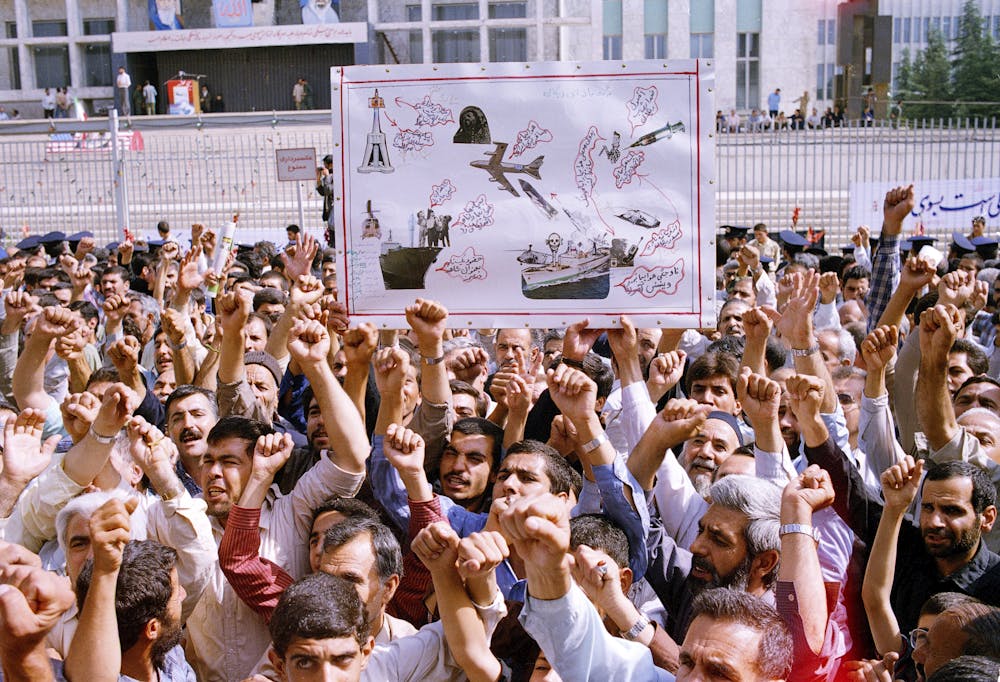
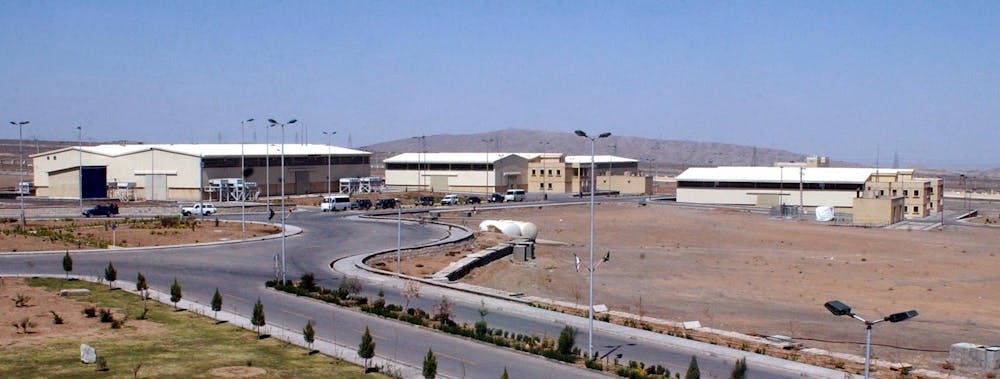
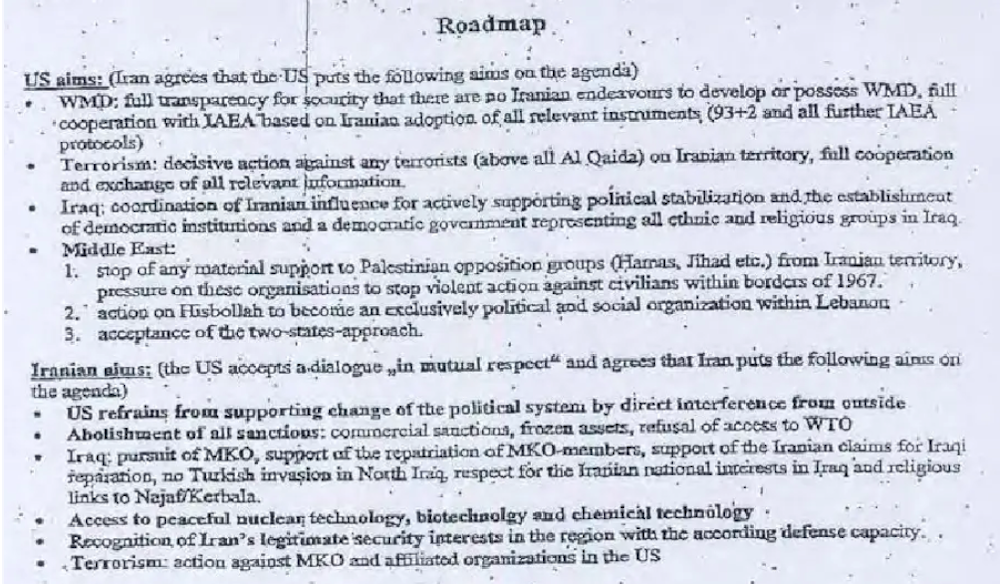
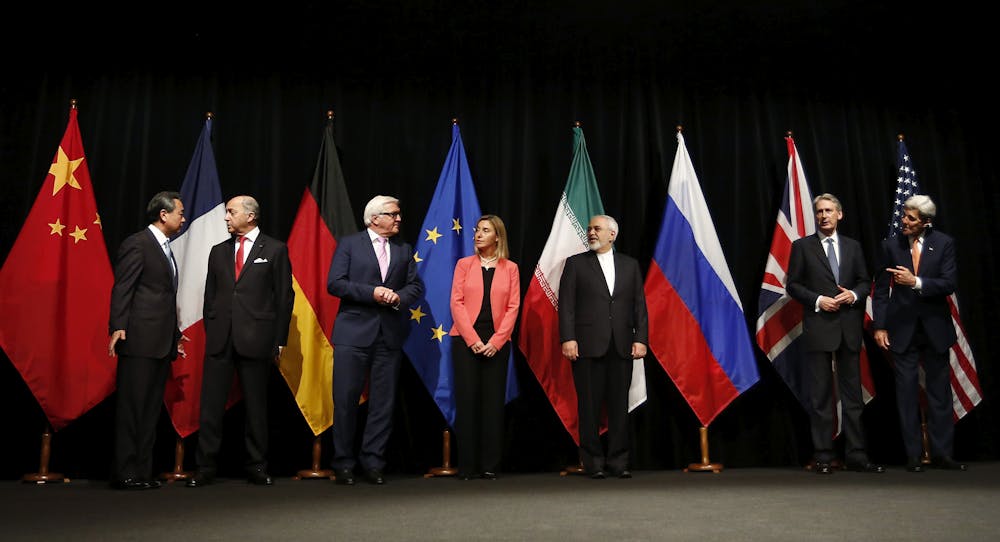
    Regarding the issue of Iran’s nuclear programme, you have before you my latest report on verification and monitoring in the Islamic Republic of Iran in light of United Nations Security Council Resolution 2231 (2015).

    Following my last report, Iran’s stockpile of uranium enriched up to 60% U‑235 has increased to 275 kg, up from 182 kg in the past quarter. Iran is the only non-nuclear weapon State enriching to this level, causing me serious concern.

    It has been four years since Iran stopped implementing its nuclear-related commitments under the Joint Comprehensive Plan of Action (JCPOA), including provisionally applying its Additional Protocol and therefore it is also four years since the Agency was able to conduct complementary access in Iran.

    You also have before you my report on the NPT Safeguards Agreement with the Islamic Republic of Iran. Iran says it has declared all nuclear material, activities and locations required under its NPT Safeguards Agreement. However, this statement is inconsistent with the Agency’s findings of uranium particles of anthropogenic origin at undeclared locations in Iran. The Agency needs to know the current location(s) of the nuclear material and/or of contaminated equipment involved.

    There is also a discrepancy in the material balance of uranium involved in uranium metal production experiments conducted at Jaber Ibn Hayan Mutlipurpose Laboratory, for which Iran has not accounted.

    Having stated it had suspended such implementation, Iran still is not implementing modified Code 3.1, which is a legal obligation for Iran.

    I am seriously concerned that the outstanding safeguards issues remain unresolved. They stem from Iran’s obligations under its Comprehensive Safeguards Agreement and need to be resolved for the Agency to be in a position to provide assurance that Iran’s nuclear programme is exclusively peaceful.

    I deeply regret that Iran, despite having indicated a willingness to consider accepting the designation of four additional experienced Agency inspectors, did not accept their designation.

    There has been no significant progress towards implementing the Joint Statement of 4 March 2023. I call upon Iran urgently to implement the Joint Statement through serious engagement.

    In response to the Board’s request in its resolution of November 2024, I will produce a comprehensive and updated assessment on the presence and use of undeclared nuclear material in connection with past and present outstanding issues regarding Iran’s nuclear programme.

    High-level engagement is indispensable to making real progress. My visit to Tehran last November, and meetings with President Masoud Pezeshkian and Foreign Minister Abbas Araghchi indicate that there may be room for constructive compromises. I hope to see them again soon and pursue effective dialogue and tangible results.

    The Board has before it for approval a draft Additional Protocol for Saint Vincent and the Grenadines.

    I have made it a priority to strengthen the legal framework for safeguards. Since the last Board meeting in November, Oman, Mongolia, Cyprus, Saint Vincent and the Grenadines and Zambia have amended their original Small Quantities Protocols and Saudi Arabia has rescinded its original SQP. The number of States with safeguards agreements in force remains 191, and 143 of these States have additional protocols in force. I call upon the remaining three States Parties to the Treaty on the Non-Proliferation of Nuclear Weapons without comprehensive safeguards agreements to bring such agreements into force without delay. I also encourage States that have not yet concluded additional protocols to do so as soon as possible, and I reiterate my repeated calls for the remaining 14 States with SQPs based on the original standard text to amend or rescind them as soon as possible. Let me assure you that I will continue to use my good offices to strengthen the indispensable legal framework on which the continued peaceful uses of nuclear science and technology rest.

    The IAEA continues to monitor the Democratic People’s Republic of Korea’s nuclear programme.

    The Agency has observed that the 5MW(e) reactor at Yongbyon resumed operation in mid-October 2024, following a shutdown period of approximately 60 days. This shutdown is assessed to be of sufficient length to refuel the reactor and start its seventh operational cycle. Strong indicators of preparations for a new reprocessing campaign, including the operation of the steam plant serving the Radiochemical Laboratory, have been observed.

    In late-January 2025, the DPRK released photographs of General Secretary Kim Jong Un visiting “the nuclear material production base and the Nuclear Weapons Institute”. The depicted centrifuge cascades and infrastructure are consistent with the layout of a centrifuge enrichment facility and with the structure of the Yongbyon Uranium Enrichment Plant. This development follows the DPRK’s publication in September 2024 of photographs of an undeclared enrichment facility at the Kangson Complex. The undeclared enrichment facilities at both Kangson and Yongbyon, combined with General Secretary Kim’s call for “overfulfilling the plan for producing weapons-grade nuclear materials,” are of serious concern. There are indications that the uranium enrichment plants at Kangson and Yongbyon continue to operate, and there are indications that the light water reactor (LWR) at Yongbyon continues to operate. Additions to the support infrastructure have been observed adjacent to the LWR.

    There were no indications of significant changes at the Nuclear Test Site at Punggye-ri, which remains prepared to support a nuclear test.

    The continuation and further development of the DPRK’s nuclear programme are clear violations of relevant UN Security Council resolutions and are deeply regrettable. I call upon the DPRK to comply fully with its obligations under relevant UN Security Council resolutions, to cooperate promptly with the Agency in the full and effective implementation of its NPT Safeguards Agreement and to resolve all outstanding issues, especially those that have arisen during the absence of Agency inspectors from the country. The Agency continues to maintain its enhanced readiness to play its essential role in verifying the DPRK’s nuclear programme.

    Concerning the safety of the LWR, we lack the necessary information to make an assessment. Safety should always be a paramount consideration when operating a reactor. Nuclear safety is a sovereign responsibility of the State and the IAEA supports the States in this area.

    Following the change of Government in the Syrian Arab Republic towards the end of 2024, I have written to the new Minister of Foreign Affairs and Expatriates. I requested cooperation with the Agency to enable us to fulfill our obligation to verify nuclear material and facilities under Syria’s safeguards agreement. I conveyed the importance of continuing and reinforcing cooperation between Syria and the Agency to address unresolved issues. Clarifying these issues remains essential to Syria demonstrating its commitment to nuclear non-proliferation and international peace and security.

    I hope to be able to engage with the new government soon. Bringing total clarity to the situation regarding past activities in this field in Syria is indispensable to the realization of current efforts to modernize the country and put it on a firm path to peace and development.

    In April and May, the IAEA will participate in the Third Preparatory Meeting for the 2026 Review Conference of the Nuclear Non-Proliferation Treaty (NPT) in New York.

    Madame Chairperson,

    The IAEA’s Marie Sklodowska‑Curie Fellowship Programme has been expanding the talent base for the nuclear field since 2020 with 760 female students and graduates from 121 Member States so far having been supported in studying in 72 countries. In the current, fifth cycle, we selected 200 candidates from 109 countries. I would like to thank Member States that have contributed so far. For this programme to continue accepting new fellowship candidates it urgently needs further support. I ask those who can, to support this endeavor. 

    This year, we have planned three Lise Meitner Programme cohorts, in Argentina, Canada and Japan. They are focused on nuclear power, advanced nuclear technologies and research reactors.

    I am happy to report that we have reached parity, women now make up half the staff in the professional and higher categories. This is up from about 30% when I took office in 2019.

    I thank Member States who have paid their regular budget contributions, including some who paid in advance. It is important that all Member States pay their contributions in a timely manner. This will ensure liquidity of the regular budget throughout the year, allowing the Agency to carry out its activities effectively.

    You recently received for your consideration my proposed programme and budget for the 2026-2027 biennium.

    It has been prepared with due consideration of the constraints of the prevailing financial environment. Despite increasing demands and higher operational costs, I have decided for the third time in a row to propose a zero real growth budget. The proposal maintains balance among the different programmes and emphasises my commitment to ensuring our resources are managed with discipline, efficiency and restraint so that we maximize the impact of the Agency’s work.

    This being our first Board meeting of 2025, I want to conclude by saying that I look forward to making 2025 a successful year in which the IAEA benefits all Member States as we advance our common goals of peace and development.

    MIL OSI NGO

  • MIL-OSI NGOs: IAEA and FAO Conduct First Atoms4Food Assessment Mission to Burkina Faso

    Source: International Atomic Energy Agency (IAEA) –

    The joint IAEA and FAO Assessment Mission team examine new rice varieties during the first Atoms4Food Initiative Assessment Mission in Burkina Faso. (Photo: Victor Owino/IAEA)

    In a critical step toward addressing food insecurity in West Africa, the International Atomic Energy Agency (IAEA) and the Food and Agriculture Organization (FAO) of the United Nations have launched their first joint Atoms4Food Initiative Assessment Mission in Burkina Faso. 

    This mission aims to identify key gaps and opportunities for delivering targeted technical support to Burkina Faso for food and agriculture in a country where an estimated 3.5 million people—nearly 20% of the population—are facing food insecurity. By leveraging nuclear science and technology, Atoms4Food seeks to bolster agricultural resilience and agrifood systems in one of the region’s most vulnerable nations.

    The mission, conducted from 26 May to 1 June, assessed how nuclear and related technologies are being used in Burkina Faso to address challenges in enhancing crop production, improving soil quality and in animal production and health, as well as human nutrition.

    The Atoms4Food Initiative was launched jointly by IAEA and FAO in 2023 to help boost food security and tackle growing hunger around the world. Atoms4Food will support countries to use innovative nuclear techniques such as sterile insect technique and plant mutation breeding to enhance agricultural productivity, ensure food safety, improve nutrition and adapt agrifood systems to the challenges of climate change. Almost €9 million has been pledged by IAEA donor countries and private companies to the initiative so far.

    As part of the Atoms4Food initiative, Assessment Missions are used to evaluate the specific needs and priorities of participating countries and identify critical gaps and opportunities where nuclear science and technology can offer impactful solutions. Based on the findings, tailored and country-specific solutions will be offered.

    Burkina Faso is one of 29 countries who have so far requested to receive support under Atoms4Food, with more expected this year. Alongside Benin, Pakistan, Peru and Türkiye, Burkina Faso was among the first countries to request an Atoms4Food Assessment Mission in 2025.

    A large proportion of Burkina Faso’s population still live in poverty and inequality.  Food insecurity has been compounded by rapid population growth, gender inequality and low levels of educational attainment. In addition, currently, 50% of rice consumed in Burkina Faso is imported. The government aims to achieve food sovereignty by producing sufficient rice domestically to reduce reliance on imports.

    “Hunger and malnutrition are on the rise globally, and Burkina Faso is particularly vulnerable to this growing challenge,” said IAEA Director General Rafael Mariano Grossi. “This first Atoms4Food assessment mission marks a significant milestone in our collective efforts to harness the power of nuclear science to enhance food security. As the Atoms4Food Initiative expands worldwide, we are committed to delivering tangible, sustainable solutions to reduce hunger and malnutrition.”

    The mission was conducted by a team of ten international experts in the areas of crop production, soil and water management, animal production and health and human nutrition. During the mission, the team held high-level meetings with the Burkina Faso Ministries of Agriculture, Health and Environment and conducted site visits to laboratories including the animal health laboratory and crop breeding facility at the Institute of Environment and Agricultural Research, the crop genetics and nutrition laboratories at the University Joseph Ki-Zerbo, and the bull station of the Ministry of Agriculture in Loumbila.

    “The Government of Burkina Faso is striving to achieve food security and sovereignty, to supply the country’s population with sufficient, affordable, nutritious and safe food, while strengthening the sustainability of the agrifood systems value-chain,” said Dongxin Feng, Director of the Joint FAO/IAEA Centre for Nuclear Techniques in Food and Agriculture and head of the mission to Burkina Faso. “Though much needs to be done, our mission found strong dedication and commitment from the Government in developing climate-resilient strategies for crops, such as rice, potato, sorghum and mango, strengthening sustainable livestock production of cattle, small ruminants and local poultry, as well as reducing malnutrition among infants and children, while considering the linkages with food safety.”

    The Assessment Mission will deliver an integrated Assessment Report with concrete recommendations on areas for intervention under the Atoms4Food Initiative. This will help develop a National Action Plan in order to scale up the joint efforts made by the two organizations in the past decades, which will include expanding partnership and resource mobilization. “Our priority now is to deliver a concrete mission report with actionable recommendations that will support the development of the National Action Plan aimed at improving the country’s long term food security,” Feng added.

    MIL OSI NGO

  • MIL-OSI NGOs: Nuclear Techniques Make Waves at UN Ocean Conference

    Source: International Atomic Energy Agency (IAEA) –

    IAEA Director General Rafael Grossi during the high-level event on combatting marine pollution at the United Nations Conference in Nice, France  (Photo: E. McDonald/IAEA)

    The IAEA highlighted the role of nuclear science in protecting our oceans at the 2025 United Nations Oceans Conference held last week in Nice, France.

    Co-hosted by France and Costa Rica, the conference convened over 10,000 participants, including scientists, diplomats and politicians, to address the triple planetary crisis of climate change, biodiversity loss and pollution. It aimed to accelerate progress towards SDG14, Life Below Water, through innovative technologies and action. The IAEA took center stage at the event to share how nuclear technology is boosting ocean health and tackling critical threats such as marine plastic pollution.

    The IAEA organized and participated in more than a dozen events at the conference, and on research vessels in the Port of Nice. Experts from the IAEA’s Marine Environment Laboratories in Monaco highlighted how isotopic tools can help monitor and reduce plastic pollution in the ocean.

    Plastic waste is not only infiltrating our oceans, but also the human body in the form of microplastics. Without urgent action, the amount of plastic entering the ocean each year could reach 37 million metric tons by 2040, according to UN estimates, becoming a threat to marine and human life.

    Plastic pollution featured prominently throughout the conference, with a focus on the ongoing negotiations for the development of an internationally legally binding instrument to end plastic pollution, including in the marine environment. The negotiations for the United Nations Environment Programme (UNEP)-led treaty are expected to conclude later this year in Geneva, following five previous sessions.

    At the conference, IAEA Director General Rafael Grossi spoke about the IAEA’s work to combat plastic pollution and emphasized the need to share data data between scientists, policymakers and environmental agencies.

    “Four years ago, at the last UN Ocean Conference, I announced NUTEC Plastics, an initiative that gives countries the tools they need to address the issue of marine microplastic pollution. Today, I am delighted to report that we have made significant progress with 99 countries involved, and we have been equipping more than 100 Member State laboratories all over the world. We are building the capacity that countries need to translate data into policies and action.”

    NUTEC Plastics is an IAEA flagship initiative that supports countries in researching microplastics and using nuclear techniques to improve recycling techniques.

    Director of the IAEA Marine Environment Laboratories Florence Descroix-Comanducci (left), highlighted the work of the IAEA’s Marine environment laboratories at the 2025 UN Ocean Conference in France (Photo: E.McDonald/IAEA)

    “Nuclear and isotopic techniques add incredible value to boost ocean health,” said Florence Descroix-Comanducci, Director of the IAEA Marine Environment Laboratories. “Our laboratories in Monaco support Member States in the implementation and use of these techniques, and to develop harmonized methods to generate globally comparable data, especially in light of the forthcoming plastics treaty.”

    At events organized by the IAEA, panelists highlighted the need to address the top of the plastic life cycle to prevent further pollution, employing a “source to sea approach” to reduce marine litter and, by extension, marine plastic pollution. “Our metrics on marine litter are moving in the right direction,” said Martin Adams, Head of the Environment Department at the European Environment Agency. “Timely and relevant data are increasingly important, but we don’t need to know everything. We just need to know enough to act.” Other events organized by the IAEA focused on ocean-based carbon dioxide removal, ocean acidification, IAEA support for Small Island Developing States (SIDS), and nuclear energy and ocean health.

    The IAEA’s unique expertise in nuclear applications is contributing to both mitigations, by using radiation technology for waste recycling, and monitoring, by using isotopic techniques to monitor and assess impacts of microplastic pollution. Through the NUTEC Plastics initiative, 99 countries are participating in marine monitoring of microplastics, and 52 around the world are developing innovative recycling technology.

    The International High-Level Forum on NUTEC Plastics, organized by the IAEA on 25–26 November 2025, in Manila, Philippines, will highlight the progress achieved to date, address current challenges, and chart course to strengthen regional and international cooperation in the sustainable management of plastic waste through innovative nuclear technologies.

    MIL OSI NGO

  • MIL-OSI Banking: Rooted in Values, Ready for Impact: New Joinees Reflect on Life at Samsung

    Source: Samsung

    The latest cohort of new joiners includes professionals from across geographies, each with diverse industry backgrounds
     
    At Samsung, the journey of building the future begins the moment you walk through our doors. Each new team member who joins us brings with them a story of where they’ve been, what they’ve achieved, and the aspirations they carry forward. The New Hires Course (NHC) isn’t just an onboarding program, it’s a window into Samsung’s unique culture, values, and purpose. It sets the tone for a career that’s not just about work, but about shaping what’s next in technology and human progress.
     
    The latest cohort of new joiners includes professionals from across India and Nepal, each with diverse industry backgrounds — from finance and procurement to sales, supply chain, and brand building. As they step into Samsung, they find a place where their experiences are not only welcomed but woven into the larger tapestry of innovation.
     
    The New Hires Course isn’t just an onboarding program, it’s a window into Samsung’s unique, vibrant and inclusive culture
     
    A Culture That Feels Like Home
    Soyeon Joo, who recently joined the Sales and SCM Logistics team in Nepal, reflects on her first few days:
     
    “From the very first day, Samsung struck me as both energetic and welcoming. My colleagues were incredibly supportive — walking me through each process, answering questions, and making me feel at home. Their warmth helped me become productive faster than I expected.”
     
    She believes her multicultural perspective — shaped across Mexico, South Korea, and Nepal — will help bridge linguistic and cultural gaps between HQ and local operations. “I want to drive fresh ideas that resonate with diverse markets,” she said.
     
    This sense of inclusivity and global connection is what many new employees notice early on — a clear emphasis on people, growth, and purpose. For Roshan Acharya, who joins the SCM operations team from a business analysis background, Samsung’s culture of discipline and innovation stood out. “It’s a company with a top global presence — well-organized, efficient, and dynamic.”
     
    Bringing Experience to a Global Platform
    Many of the new hires come with over a decade of experience in leadership roles, and they see Samsung as a platform to make an even bigger impact. Manisha Luitel, who recently joined the finance function, speaks of the company as a “system-driven multinational with clear execution standards,” yet open to innovation.
     
    “I hope to add value by bringing in a strong accounting and manufacturing outlook,” she says. “With the right processes and controls, we can elevate the way we work.”
     
    For Shishir Aryal, who’s spent 10 years in procurement for Nepal’s manufacturing sector, Samsung is an opportunity to bring tested skills to a new, dynamic landscape. “I come from a completely different setup, and I’m excited to apply my learnings in line with Samsung’s global principles,” he says. “Being welcomed so warmly by HR and the team has made this transition smooth and exciting.”
     
    Aspirations That Align with Samsung’s Vision
    Samsung has always been driven by the ambition to lead — in technology, sustainability, and in how we build our teams. That means hiring individuals who are not only experts in their domain but also eager to learn and evolve.
     
    Take Ranjit Khadka, whose role in Finance includes Compliance, Treasury, and IT. He brings a deep understanding of SKU costing and wants to dive deeper into treasury functions. “I believe Samsung is the right place to innovate while being rooted in sound financial systems,” he said.
     
    Or Soyeon, who looks forward to being the cultural bridge in a multilingual, cross-functional team. Or Roshan, who wants to explore AI-driven data analysis tools and help drive planning-execution integration through data.
     
    And then there’s a spark of passion that ties all of them together — whether it’s Roshan playing table tennis, Manisha reading quietly, or Shishir engaging in adventure sports with his child. At Samsung, we believe in the whole person — not just the employee.
     
    Where Growth Meets Purpose
    Samsung’s New Hires Course doesn’t just teach the rules of the game — it helps new team members feel seen, supported, and part of something larger. It’s where cross-functional collaboration begins. It’s where ideas start to move, not in silos, but in sync.
     
    As one of the new joinees put it:
     
    “Joining Samsung felt dynamic and challenging, with a strong focus on innovation. The work environment is fast-paced and collaborative, with clear emphasis on employee development. You truly feel like part of something visionary.”
     
    At Samsung, every story matters. And with each new hire, that story only gets richer.

    MIL OSI Global Banks

  • MIL-OSI: Prosafe SE: Safe Notos awarded contract with Petrobras

    Source: GlobeNewswire (MIL-OSI)

    18 June 2025 – Reference is made to the press release dated 12 May 2025, Prosafe has now been informed that Petróleo Brasileiro SA (‘Petrobras’) have ratified the result of the bidding process for the provision of the Safe Notos semi-submersible vessel for safety and maintenance support offshore Brazil. As a result, the contract with a total value of approximately USD 204 million and four year duration commencing in September 2026 will be entered into without delay. 

    Prosafe is a leading owner and operator of semi-submersible accommodation vessels. The company is listed on the Oslo Stock Exchange with ticker code PRS. For more information, please refer to www.prosafe.com.

    For further information, please contact:

    Terje Askvig, CEO
    Phone: +47 952 03 886

    Reese McNeel, CFO
    Phone: +47 415 08 186

    This information is considered to be inside information pursuant to the EU Market Abuse Regulation and is subject to the disclosure requirements pursuant to Section 5-12 the Norwegian Securities Trading Act. This stock exchange announcement was published by Line Bliksmark, Marketing and Communications Manager, on 18 June 2025, at approx. 10:35 CEST.

    The MIL Network

  • MIL-OSI NGOs: Biggest-ever aid cut by G7 members a death sentence for millions of people, says Oxfam

    Source: Oxfam –

    • Aid cuts could cost millions of lives and leave girls, boys, women and men without access to enough food, water, education, health treatment
    • G7 countries are making deliberate and deadly choices by cutting life-saving aid, enabling atrocities, and reneging on their international commitments
    • Low and middle-income countries face reduced aid, rising debt, and trade barriers — a perfect storm that threatens development and recovery.

    The Group of Seven (G7) countries, which together account for around three-quarters of all official development assistance (ODA), are set to slash their aid spending by 28 percent for 2026 compared to 2024 levels.  

    It would be the biggest cut in aid since the G7 was established in 1975, and indeed in aid records going back to 1960, reveals a new analysis by Oxfam ahead of the G7 Summit in Kananaskis, Canada.

    “The G7’s retreat from the world is unprecedented and couldn’t come at a worse time, with hunger, poverty, and climate harm intensifying. The G7 cannot claim to build bridges on one hand while tearing them down with the other. It sends a shameful message to the Global South, that G7 ideals of collaboration mean nothing,” said Oxfam International Executive Director Amitabh Behar.

    2026 will mark the third consecutive year of decline in G7 aid spending – a trend not seen since the 1990s. If these cuts go ahead, G7 aid levels in 2026 will crash by $44 billion to just $112 billion. The cuts are being driven primarily by the US (down $33 billion), Germany (down $3.5 billion), the UK (down $5 billion) and France (down $3 billion).

    “Rather than breaking from the Trump administration’s cruel dismantling of USAID and other US foreign assistance, G7 countries like the UK, Germany, and France are instead following the same path, slashing aid with brutal measures that will cost millions of lives,” said Behar.

    “These cuts will starve the hungry, deny medicine to the sick, and block education for a generation of girls and boys. This is a catastrophic betrayal of the world’s most vulnerable and crippling to the G7’s credibility,” said Behar.

    Economic projections show that aid cuts will mean 5.7 million more people across Africa will fall below extreme poverty levels in the coming year, a number expected to rocket to 19 million by 2030.  

    Cuts to aid are putting vital public services at risk in some of the world’s poorest countries. In countries like Liberia, Haiti, Malawi, and South Sudan, US aid had made up over 40 percent of health and education budgets, leaving them especially exposed. Combined with a growing debt crisis, this is undermining governments’ ability to care for their people.

    Global aid for nutrition will fall by 44 percent in 2025 compared to 2022:

    • The end of just $128 million worth of US-funded child nutrition programs for a million children will result in an extra 163,500 child deaths a year.  
    • At the same time, 2.3 million children suffering from severe acute malnutrition – the most lethal form of undernutrition – are now at risk of losing their life-saving treatments.
       

    One in five dollars of aid to poor countries’ health budgets are cut or under threat:  

    • WHO reports that in almost three-quarters of its country offices are seeing serious disruptions to health services, and in about a quarter of the countries where it operates some health facilities have already been forced to shut down completely.
    • US aid cuts could lead to up to 3 million preventable deaths every year, with 95 million people losing access to healthcare. This includes children dying from vaccine-preventable diseases, pregnant women losing access to care, and rising deaths from malaria, TB, and HIV.

    G7 countries are not just reneging on commitments to global aid and solidarity, they are fuelling conflicts by allowing grave violations of international law, like in Gaza where people are facing starvation. Whether in Ukraine, the occupied Palestinian territory, the Democratic Republic of the Congo or elsewhere, civilians must always be protected, and aid is often the first line of protection they get. G7 countries are illuminating a double standard that risks more global instability, conflict and atrocities.  

    While G7 countries cut aid, their citizen billionaires continue to see their wealth surge. Since the beginning of 2025, the G7 ultra-rich have made $126 billion, almost the same amount as the group’s 2025 aid commitment of $132 billion.  

    At this pace, it would take the world’s billionaires less than a month to generate the equivalent of the G7’s 2025 aid budget.

    By taxing the super-rich, the G7 could easily meet their financial commitments to end poverty and climate breakdown, whilst also having billions in new revenue to fight inequality in their own countries.  

    “The world is not short of money. The problem is that it is in the hands of the super-rich instead of the public. Rather than fairly taxing billionaires to feed the hungry, we see billionaires joining government to slash aid to the poorest in order to fund tax cuts for themselves,” said Behar.

    Oxfam is calling on the G7 to urgently reverse aid cuts and restore funding to address today’s global challenges. More than 50 years after the United Nations set the target of 0.7 percent for aid spending, most G7 countries remain well below this.  

    Oxfam is also urging the G7 to support global efforts led by Brazil and Spain to raise taxes on the super-rich, and to back the call from the African Union and The Vatican for a new UN body to help manage countries’ debt problems.
     

    According to OECD Data Explorer, the combined annual aid expenditure of the G7 in 2024 was $156.694 billion. Canada spent $7.323 billion, the United States $61.821 billion, Japan $17.583 billion, France $15.047 billion, Germany $31.382 billion, Italy $6.534 billion, and the United Kingdom $17.005 billion.

    Donor Tracker estimates that the decline in combined annual aid spending of the G7 countries for the period 2024 to 2026 will be -$44,488 billion.

    In 2024, aid from G7 countries declined by 8 percent, and projections for 2025 point to a sharper drop of 19 percent.

    Modelling using finds that 5.7 million more Africans would fall below the US$2.15 extreme poverty income level in the next year if Trump’s administration succeeds in its aid-reduction ambition. This assumes a 20 percent reduction of aid to Africa, considering that some US aid would be maintained as the US alone accounted for 26 percent of aid to Africa before the cuts.

    The dismantling of USAID and major aid reductions announced by Western donors threaten to undo decades of progress on malnutrition. A 44 percent drop in funding from 2022 levels could lead to widespread hardship and death.

    Up to 2.3 million children with severe acute malnutrition risk losing life-saving treatment, warns the Standing Together for Nutrition Consortium.

    There are 2,968 billionaires in the world, and 1,346 live in G7 countries (45 percent). 
     

    MIL OSI NGO

  • The Strait of Hormuz: The Oil Artery at the Heart of the Iran-Israel Conflict

    Source: Government of India

    Source: Government of India (4)

    One of the world’s most critical oil chokepoints, the Strait of Hormuz is central to discussions and analyses focused on the ongoing Iran-Israel conflict. Located between Oman and Iran, the strait connects the Persian Gulf with the Gulf of Oman and the Arabian Sea. It is deep and wide enough to accommodate the world’s largest crude oil tankers, making it a vital artery at risk of disruption as tensions between Iran and Israel escalate. Although Iran has threatened to close the strait in the past, it has never followed through. The heightened conflict has reignited fears of such a closure. The strait is just 20 nautical miles wide at its narrowest point, with a significant portion falling within Iran’s territorial waters.

    Details of the strait

    The Strait of Hormuz derives its name from the ancient Persian city of Hormuz, located on an island in the strait. The island was a major trading hub for centuries, controlling maritime routes in the Persian Gulf. Historically, the strait was a key part of the Silk Road’s maritime extensions, facilitating trade between Asia, the Middle East, and Europe. The U.S. Navy’s Fifth Fleet, based in Bahrain, regularly patrols the Strait of Hormuz to ensure safe passage of commercial vessels. Also, Iran maintains a network of small, fast-attack boats and anti-ship missiles along its coastline, designed to disrupt strait traffic in a potential conflict. The strait has been associated with various conflicts in past, For example, during the Iran-Iraq War (1980–1988), the so-called “Tanker War” saw both sides attacking oil tankers in the strait, leading to U.S. naval intervention to protect Kuwaiti vessels.

    Why Is the World Concerned About its closure?

    The Strait of Hormuz is a critical oil chokepoint. These narrow channels along widely used global sea routes are essential to global energy security. Any disruption to oil transit through a major chokepoint, even temporarily, can cause significant supply delays and raise shipping costs, potentially driving up global energy prices. While some chokepoints have alternative routes, these often add significant transit time. For the Strait of Hormuz, pipeline alternatives exist but are comparatively inefficient. Approximately one-fifth of the world’s total oil consumption passes through this strait. In 2024, oil flow through the strait averaged 20 million barrels per day (b/d), equivalent to about 20% of global petroleum liquids consumption. OPEC members Saudi Arabia, Iran, the United Arab Emirates, Kuwait, and Iraq export most of their crude via the strait, primarily to Asia. Qatar, one of the largest exporters of liquefied natural gas (LNG), sends nearly all its LNG through the strait. In 2024, 84% of the crude oil and condensate and 83% of the LNG that moved through the Strait of Hormuz went to Asian markets. The International Energy Agency (IEA) has warned, “Iran has repeatedly threatened to close the key Strait of Hormuz if attacked. Closure of the strait, even for a limited period, would have a major impact on global oil and gas markets.”

    What Happens if Iran Closes the Strait of Hormuz?

    Iran views the Strait of Hormuz as a strategic pressure point in conflicts. However, Iran does not exclusively control the strait. While it borders the northern side and controls some islands within it, the strait is also bordered by Oman and the United Arab Emirates. Since a significant portion of the strait falls within Iran’s territorial waters, its actions could disrupt oil markets. Over 3,000 commercial ships use the strait monthly to transport oil, natural gas, and goods from Gulf countries to global markets. Oil prices surged on Tuesday as the conflict intensified and U.S. President Donald Trump reiterated his support for Israel. A blockade could trigger energy disruptions, inflation, and trade delays, potentially sending stock markets into a tailspin, especially in oil-sensitive sectors. Ironically, Israel would face no direct consequences from a Strait of Hormuz blockade. Its estimated consumption of 220,000 barrels of crude per day comes via the Mediterranean from countries like Azerbaijan (via the Baku–Tbilisi–Ceyhan pipeline through Türkiye), the U.S., Brazil, Gabon, and Nigeria.

    As the Iran-Israel conflict simmers, the Strait of Hormuz could become a flashpoint reshaping global energy dynamics. If Iran escalates by disrupting the strait’s 20 million barrels daily flow, oil prices might soar, potentially triggering a recession in some key economies. Asian markets, heavily reliant on Gulf exports, could pivot to costlier alternatives, while Europe’s LNG supply faces strain. Israel’s Mediterranean oil routes insulate it, but global inflation could still sting. Diplomacy remains critical to prevent this narrow waterway from dictating the world’s economic future.

    (Pooja Mishra is a Content Researcher at DD India)

  • MIL-OSI Global: How pterosaurs learned to fly: scientists have been looking in the wrong place to solve this mystery

    Source: The Conversation – UK – By Davide Foffa, Research Fellow in Palaeobiology, University of Birmingham

    Ever since the first fragments of pterosaur bone surfaced nearly 250 years ago, palaeontologists have puzzled over one question: how did these close cousins of land-bound dinosaurs take to the air and evolve powered flight? The first flying vertebrates seemed to appear on the geological stage fully formed, leaving almost no trace of their first tentative steps into the air.

    Taken at face value, the fossil record implies that pterosaurs suddenly originated in the later part of the Triassic period (around 215 million years ago), close to the equator on the northern super-continent Pangaea. They then spread quickly between the Triassic and the Jurassic periods, about 10 million years later, in the wake of a mass extinction that was most likely caused by massive volcanic activity.

    Most of the handful of Triassic specimens come from narrow seams of dark shale in Italy and Austria, with other fragments discovered in Greenland, Argentina and the southwestern US. These skeletons appear fully adapted for flight, with a hyper-elongated fourth finger supporting membrane-wings. Yet older rocks show no trace of intermediate gliders or other transitional forms that you might expect as evidence of pterosaurs’ evolution over time.

    There are two classic competing explanations for this. The literal reading says pterosaurs evolved elsewhere and did not reach those regions where most have been discovered until very late in the Triassic period, by which time they were already adept flyers. The sceptical reading notes that pterosaurs’ wafer-thin, hollow bones could easily vanish from the fossil record, dissolve, get crushed or simply be overlooked, creating this false gap.

    Eudimorphodon ranzii fossil from Bergamo in 1973 is one of many pterosaur discoveries from southern Europe.
    Wikimedia, CC BY-SA

    For decades, the debate stalled as a result of too few fossils or too many missing rocks. This impasse began to change in 2020, when scientists identified the closest relatives of pterosaurs in a group of smallish upright reptiles called lagerpetids.

    From comparing many anatomical traits across different species, the researchers established that pterosaurs and lagerpetids shared many similarities including their skulls, skeletons and inner ears. While this discovery did not bring any “missing link” to the table, it showed what the ancestor of pterosaurs would have looked like: a rat-to-dog-sized creature that lived on land and in trees.

    This brought new evidence about when pterosaurs may have originated. Pterosaurs and lagerpetids like Scleromochlus, a small land-dwelling reptile, diverged at some point after the end-Permian mass extinction. It occurred some 250 million years ago, 35 million years before the first pterosaur appearance in the fossil record.

    Scleromochlus is one of the lagerpetids, the closest known relatives to the pterosaurs.
    Gabriel Ugueto

    Pterosaurs and their closest kin did not share the same habitats, however. Our new study, featuring new fossil maps, shows that soon after lagerpetids appeared (in southern Pangaea), they spread across wide areas, including harsh deserts, that many other groups were unable to get past. Lagerpetids lived both in these deserts and in humid floodplains.

    They tolerated hotter, drier settings better than any early pterosaur, implying that they had evolved to cope with extreme temperatures. Pterosaurs, by contrast, were more restricted. Their earliest fossils cluster in the river and lake beds of the Chinle and Dockum basins (southwest US) and in moist coastal belts fringing the northern arm of the Tethys Sea, a huge area that occupied today’s Alps.

    Scientists have inferred from analysing a combination of fossil distributions, rock features and climate simulations that pterosaurs lived in areas that were warm but not scorching. The rainfall would have been comparable to today’s tropical forests rather than inland deserts.

    This suggests that the earliest flying dinosaurs may have lived in tree canopies, using foliage both for take-off and to protect themselves from predators and heat. As a result of this confined habitat, the distances that they flew may have been quite limited.

    Changing climates

    We were then able to add a fresh dimension to the story using a method called ecological niche modelling. This is routinely used in modern conservation to project where endangered animals and plants might live as the climate gets hotter. By applying this approach to later Triassic temperatures, rainfall and coastlines, we asked where early pterosaurs lived, regardless of whether they’ve shown up there in the fossil record.

    Many celebrated fossil sites in Europe emerge as poor pterosaur habitat until very late in the Triassic period: they were simply too hot, too dry or otherwise inhospitable before the Carnian age, around 235 million years ago. The fact that no specimens have been discovered there that are more than about 215 million years old may be because the climate conditions were still unsuitable or simply because we don’t have the right type of rocks preserved of that age.

    In contrast, parts of the south-western US, Morocco, India, Brazil, Tanzania and southern China seem to have offered welcoming environments several million years earlier than the age of our oldest discoveries. This rewrites the search map. If pterosaurs could have thrived in those regions much more than 215 million years ago, but we have not found them there, the problem may again lie not with biology but with geology: the right rocks have not been explored, or they preserve fragile fossils only under exceptional conditions.

    Our study flags a dozen geological formations, from rivers with fine sediment deposits to lake beds, as potential prime targets for the next breakthrough discovery. They include the Timezgadiouine beds of Morocco, the Guanling Formation of south-west China and, in South America, several layers of rock from the Carnian age, such as the Santa Maria Formation, Chañares Formation and Ischigualasto Formation.

    Pterosaurs were initially confined to tropical treetops near the equator. When global climates shifted and forested corridors opened, pterosaurs’ wings catapulted them into every corner of the planet and ultimately carried them through one of Earth’s greatest extinctions. What began as a tale of missing fossils has become a textbook example of how climate, ecology and evolutionary science have come together to illuminate a fragmentary history that has intrigued paleontologists for over two centuries.

    Davide Foffa is funded by Marie Skłodowska-Curie Actions: Individual (Global) Fellowship (H2020-MSCA-IF-2020; No.101022550), and by the Royal Commission for the Exhibition of 1851–Science Fellowship

    Alfio Alessandro Chiarenza receives funding from The Royal Society (Newton International Fellowship NIFR1231802)

    Emma Dunne does not work for, consult, own shares in or receive funding from any company or organisation that would benefit from this article, and has disclosed no relevant affiliations beyond their academic appointment.

    ref. How pterosaurs learned to fly: scientists have been looking in the wrong place to solve this mystery – https://theconversation.com/how-pterosaurs-learned-to-fly-scientists-have-been-looking-in-the-wrong-place-to-solve-this-mystery-259063

    MIL OSI – Global Reports

  • Zelenskiy leaves G7 with no Trump meeting or fresh arms support from US

    Source: Government of India

    Source: Government of India (4)

    Ukrainian President Volodymyr Zelenskiy left the Group of Seven summit on Tuesday with new aid from host Canada for its war against Russia but said diplomacy is in “crisis” having missed the chance to press U.S. President Donald Trump for more weapons.

    The G7 wealthy nations struggled to find unity over the conflict in Ukraine after Trump expressed support for Russian President Vladimir Putin and left a day early to address the Israel-Iran conflict from Washington.

    A Canadian official initially said Ottawa had dropped plans for the G7 to issue a strong statement on the war in Ukraine after resistance from the United States.

    Emily Williams, director of media relations for Prime Minister Mark Carney, later said no proposed statement on Ukraine had ever been planned.

    Carney had started the day by announcing Ottawa would provide C$2 billion ($1.47 billion) in new military assistance for Kyiv as well as impose new financial sanctions.

    Zelenskiy said he had told the G7 leaders that “diplomacy is now in a state of crisis” and said they need to continue calling on Trump “to use his real influence” to force an end to the war, in a post on his Telegram account.

    Although Canada is one of Ukraine’s most vocal defenders, its ability to help it is far outweighed by the United States, the largest arms supplier to Kyiv. Zelenskiy had said he hoped to talk to Trump about acquiring more weapons.

    After the summit in the Rocky Mountain resort area of Kananaskis concluded, Carney issued a chair statement summarizing deliberations.

    “G7 leaders expressed support for President Trump’s efforts to achieve a just and lasting peace in Ukraine,” it said.

    “They recognized that Ukraine has committed to an unconditional ceasefire, and they agreed that Russia must do the same. G7 leaders are resolute in exploring all options to maximize pressure on Russia, including financial sanctions.”

    Canada holds the rotating G7 presidency this year. Other leaders do not need to sign off on G7 chair statements.

    Trump did agree to a group statement published on Monday calling for a resolution of the Israel-Iran conflict.

    “We had a declaration given the exceptional, fast moving situation in Iran,” Carney told a closing news conference.

    A European official said leaders had stressed to Trump their plans to be hard on Russia and Trump seemed impressed, though he does not like sanctions in principle.

    Three European diplomats said they had heard signals from Trump that he wanted to raise pressure on Putin and consider a U.S. Senate bill drafted by Senator Lindsey Graham, but that he had not committed to anything.

    “I am returning to Germany with cautious optimism that decisions will also be made in America in the coming days to impose further sanctions against Russia,” German Chancellor Friedrich Merz said.

    G7 leaders agreed on six other statements, about migrant smuggling, artificial intelligence, critical minerals, wildfires, transnational repression and quantum computing.

    KREMLIN SAYS G7 LOOKS ‘RATHER USELESS’

    Trump said on Monday he needed to be back in Washington as soon as possible due to the situation in the Middle East, where escalating attacks between Iran and Israel have raised risks of a broader regional conflict.

    A White House official on Tuesday said Trump explained that he returned to the U.S. because it is better to hold high-level National Security Council meetings in person, rather than over the phone.

    Upon arriving at the summit, Trump said that the then-Group of Eight had been wrong to expel Russia after Putin ordered the occupation of Crimea in 2014.

    The Kremlin said on Tuesday that Trump was right and said the G7 was no longer significant for Russia and looked “rather useless.”

    Many leaders had hoped to negotiate trade deals with Trump, but the only deal signed was the finalization of the U.S.-UK deal announced last month. Treasury Secretary Scott Bessent remained at the summit after Trump left.

    Carney also invited non-G7 members Mexico, India, Australia, South Africa, South Korea and Brazil, as he tries to shore up alliances elsewhere and diversify Canada’s exports away from the United States.

    Carney warmly welcomed Indian counterpart Narendra Modi on Tuesday, after two years of tense relations between Canada and India.

    (Reuters)

  • Zelenskiy leaves G7 with no Trump meeting or fresh arms support from US

    Source: Government of India

    Source: Government of India (4)

    Ukrainian President Volodymyr Zelenskiy left the Group of Seven summit on Tuesday with new aid from host Canada for its war against Russia but said diplomacy is in “crisis” having missed the chance to press U.S. President Donald Trump for more weapons.

    The G7 wealthy nations struggled to find unity over the conflict in Ukraine after Trump expressed support for Russian President Vladimir Putin and left a day early to address the Israel-Iran conflict from Washington.

    A Canadian official initially said Ottawa had dropped plans for the G7 to issue a strong statement on the war in Ukraine after resistance from the United States.

    Emily Williams, director of media relations for Prime Minister Mark Carney, later said no proposed statement on Ukraine had ever been planned.

    Carney had started the day by announcing Ottawa would provide C$2 billion ($1.47 billion) in new military assistance for Kyiv as well as impose new financial sanctions.

    Zelenskiy said he had told the G7 leaders that “diplomacy is now in a state of crisis” and said they need to continue calling on Trump “to use his real influence” to force an end to the war, in a post on his Telegram account.

    Although Canada is one of Ukraine’s most vocal defenders, its ability to help it is far outweighed by the United States, the largest arms supplier to Kyiv. Zelenskiy had said he hoped to talk to Trump about acquiring more weapons.

    After the summit in the Rocky Mountain resort area of Kananaskis concluded, Carney issued a chair statement summarizing deliberations.

    “G7 leaders expressed support for President Trump’s efforts to achieve a just and lasting peace in Ukraine,” it said.

    “They recognized that Ukraine has committed to an unconditional ceasefire, and they agreed that Russia must do the same. G7 leaders are resolute in exploring all options to maximize pressure on Russia, including financial sanctions.”

    Canada holds the rotating G7 presidency this year. Other leaders do not need to sign off on G7 chair statements.

    Trump did agree to a group statement published on Monday calling for a resolution of the Israel-Iran conflict.

    “We had a declaration given the exceptional, fast moving situation in Iran,” Carney told a closing news conference.

    A European official said leaders had stressed to Trump their plans to be hard on Russia and Trump seemed impressed, though he does not like sanctions in principle.

    Three European diplomats said they had heard signals from Trump that he wanted to raise pressure on Putin and consider a U.S. Senate bill drafted by Senator Lindsey Graham, but that he had not committed to anything.

    “I am returning to Germany with cautious optimism that decisions will also be made in America in the coming days to impose further sanctions against Russia,” German Chancellor Friedrich Merz said.

    G7 leaders agreed on six other statements, about migrant smuggling, artificial intelligence, critical minerals, wildfires, transnational repression and quantum computing.

    KREMLIN SAYS G7 LOOKS ‘RATHER USELESS’

    Trump said on Monday he needed to be back in Washington as soon as possible due to the situation in the Middle East, where escalating attacks between Iran and Israel have raised risks of a broader regional conflict.

    A White House official on Tuesday said Trump explained that he returned to the U.S. because it is better to hold high-level National Security Council meetings in person, rather than over the phone.

    Upon arriving at the summit, Trump said that the then-Group of Eight had been wrong to expel Russia after Putin ordered the occupation of Crimea in 2014.

    The Kremlin said on Tuesday that Trump was right and said the G7 was no longer significant for Russia and looked “rather useless.”

    Many leaders had hoped to negotiate trade deals with Trump, but the only deal signed was the finalization of the U.S.-UK deal announced last month. Treasury Secretary Scott Bessent remained at the summit after Trump left.

    Carney also invited non-G7 members Mexico, India, Australia, South Africa, South Korea and Brazil, as he tries to shore up alliances elsewhere and diversify Canada’s exports away from the United States.

    Carney warmly welcomed Indian counterpart Narendra Modi on Tuesday, after two years of tense relations between Canada and India.

    (Reuters)

  • Nearly 1.5 million tickets sold for Club World Cup, FIFA says

    Source: Government of India

    Source: Government of India (4)

    Fans from over 130 countries have purchased nearly 1.5 million tickets for the Club World Cup that kicked off last weekend in its newly expanded format across the United States, FIFA said on Tuesday.

    A crowd of more than 60,000 turned up for the opener at Miami’s Hard Rock Stadium on Saturday, which featured Inter Miami’s Lionel Messi, while some 80,000 were in the Rose Bowl stands as Paris St Germain beat Atletico Madrid 4-0 on Sunday.

    Yet some matches have also been sparsely attended, as a 0-0 draw between Borussia Dortmund and Fluminense that kicked off midday on Tuesday played out to a half-empty MetLife Stadium in New Jersey.

    While Chelsea manager Enzo Maresca described the atmosphere at his team’s game against Los Angeles FC as “a bit strange”, as a little over 22,000 spectators came to watch at the 71,000 capacity Mercedes-Benz Stadium in Atlanta on Monday.

    “This is exactly what the FIFA Club World Cup was created for: a world-class stage where new stories are told, new heroes emerge, and club football fans feel part of something bigger,” FIFA President Gianni Infantino said in a statement.

    Designed as a glittering curtain-raiser for the 2026 World Cup, FIFA hopes to build enthusiasm for the quadrennial spectacle among often soccer-ambivalent fans in the U.S., which will co-host the tournament next year with Canada and Mexico.

    Concerns had been rampant, however, after a lacklustre Copa America in 2024 that played out on sub-par pitches to half-empty stadiums and ended with a fan security fiasco at the final in Miami.

    -REUTERS

  • MIL-OSI China: River Plate cruise, Dortmund and Inter draw at Club World Cup

    Source: People’s Republic of China – State Council News

    European sides were left frustrated at the FIFA Club World Cup on Tuesday as Borussia Dortmund and Inter Milan shared the points with Fluminense and Monterrey, respectively.

    South America’s River Plate claimed the day’s most emphatic victory with a 3-1 defeat of Urawa Red Diamonds while Mamelodi Sundowns edged Ulsan 1-0.

    Marcel Sabitzer (R) of Borussia Dortmund vies for the ball during the Group F match between Fluminense FC of Brazil and Borussia Dortmund of Germany at the FIFA Club World Cup 2025 in New Jersey, the United States, June 17, 2025. (Xinhua/Wu Xiaoling)

    In New Jersey, Brazil’s Fluminense was left to rue its profligacy in a goalless draw with Germany’s Borussia Dortmund.

    The Rio de Janeiro outfit looked more likely to score at MetLife Stadium but could not find a way past Swiss goalkeeper Gregor Kobel, who made a series of fine saves.

    “We showed that we are a great club and that we are going to be difficult opponents for anyone,” Fluminense’s Colombian midfielder Jhon Arias told reporters.

    “We were aware of Borussia’s quality and the level of European football, but we were superior for most of the match. That gives us peace of mind and confidence to continue playing like we did today.”

    Argentina’s River Plate began its Group E campaign with a 3-1 victory over Japan’s Urawa Red Diamonds in Seattle.

    The Buenos Aires club opened the scoring when Facundo Colidio timed his run to perfection to meet Marcos Acuna’s cross with a thumping header from the edge of the six-yard box.

    Sebastian Driussi doubled the advantage shortly after, nodding home following a defensive miscue.

    Urawa pulled a goal back through Yusuke Matsuo, who converted from the penalty spot after Takuro Kaneko was brought down by Acuna.

    Substitute Maximiliano Meza restored the two-goal cushion, rising to meet Acuna’s corner with a bullet header that beat goalkeeper Shusaku Nishikawa at his near post.

    “The most important thing was to win, but we know we have to improve,” River Plate manager Marcelo Gallardo said.

    “We suffered from nerves, which is understandable. But our upcoming matches are going to be more demanding and we have to be ready.”

    In Orlando, a first-half goal from Iqraam Rayners gave South Africa’s Mamelodi Sundowns a 1-0 win over South Korean side Ulsan.

    Rayners ran onto Lucas Ribeiro’s inch-perfect pass before calmly toe-poking a right-footed shot into the far corner.

    “In this competition, it’s not easy to achieve victories,” Sundowns manager Miguel Cardoso said. “Today, I think we released a lot of energy in the right way.”

    In the day’s late match at the Rose Bowl in Pasadena, Inter Milan was held to a 1-1 draw by Monterrey after Lautaro Martinez cancelled out an early Sergio Ramos goal.

    The Mexican side struck first when former Real Madrid defender Ramos rose highest to send a header past Argentine goalkeeper Esteban Andrada after Oliver Torres’ corner.

    Martinez leveled just before halftime, combining with Carlos Augusto to slot home from point-blank range.

    The Italian Serie A giants dominated possession after the break but were denied by Monterrey’s disciplined defensive block. 

    MIL OSI China News

  • MIL-OSI Russia: “Active Citizens” will evaluate the venues of the “Teatralny Boulevard” festival

    Translation. Region: Russian Federal

    Source: Moscow Government – Government of Moscow –

    The Active Citizen project has begun new vote, in which residents will evaluate the work of the sites of the International Open Festival “Theater Boulevard”Among them are the spaces on Pokrovsky, Tsvetnoy, Chistoprudny Boulevards and in the Polytechnic Museum Park.

    For the second year in a row, city streets and boulevards have become a venue for open-air performances by participants of the “Theater Boulevard”, which is taking place in the capital as part of a large-scale project “Summer in Moscow”This season will give residents and tourists even more vivid impressions: over 600 performances of various genres will be held at 12 venues – from classics to bold performances.

    From drama to circus performances

    All summer long, theatre companies from Russia, China, Mexico and other countries will delight guests with classical productions and surprise them with bold creative experiments. Thus, the fantasy space on Tsvetnoy Boulevard will immerse viewers in a carefree childhood. Here you can admire the skill of artists on stilts, laugh with talented clowns, and also watch performances with giant puppets or participate in immersive productions.

    Voters will also have to evaluate the beloved space of the amphitheater on Pokrovsky Boulevard. It has become a stage for dramatic productions, musicals and operettas. Here, viewers can meet foreign groups, Moscow and regional theaters, as well as actors and directors of theater and cinema.

    The space in the park of the Polytechnic Museum has become a new point of attraction for spectators. In the comfortable space of the amphitheater, student groups from leading creative universities of Russia, as well as Moscow and regional theaters, present their performances.

    The stage on Chistoprudny Boulevard differs from the stages on Pokrovsky Boulevard and in the Polytechnic Museum Park. According to Alina Pazhentseva, assistant stage producer, its main difference is the absence of an amphitheater and a chamber format. Puppet and solo show artists perform as close to the audience as possible, further immersing and involving guests in the creative process. In addition, lectures dedicated to the legends of Moscow theaters, meetings with theater and film stars, and other events are held here.

    More information about the events can be found on the festival website “Theater Boulevard” and the project page “Summer in Moscow”Many performances can be attended for free.

    The vote was prepared by the project “Active Citizen” together with the capital Department of Culture And By the Tourism CommitteeUsers with a full or standard account on the mos.ru portal can take part in it.

    Project “Active Citizen” has been operating since 2014. During this time, more than seven million people have joined it, and more than seven thousand votes have been held. Every month, 30 to 40 decisions made by Muscovites are implemented in the city. The project is being developed by the capital Department of Information Technology together with the State Institution “New Management Technologies”.

    The creation, development and operation of the e-government infrastructure, including the provision of mass socially significant services, as well as other services in electronic form, corresponds to the objectives of the national project “Data Economy and Digital Transformation of the State” and the regional project of the city of Moscow “Digital Public Administration”.

    “Book in the City”: from June 1, the capital will have places for reading, communication and creativity

    Project “Summer in Moscow” — the main event of the season. It brings together the most vibrant events of the capital. Every day, charity, cultural and sports events are held in all districts of the city, most of which are free. The Summer in Moscow project is being held for the second time, and this season will be more eventful: new, original and colorful festivals and events will be added to the traditional ones.

    Get the latest news quickly official telegram channel the city of Moscow.

    Please note: This information is raw content directly from the source of the information. It is exactly what the source states and does not reflect the position of MIL-OSI or its clients.

    Please Note; This Information is Raw Content Directly from the Information Source. It is access to What the Source Is Stating and Does Not Reflect

    https: //vv.mos.ru/nevs/ite/155366073/

    MIL OSI Russia News

  • MIL-OSI Video: Getting sustainable and equitable power to the people – how’s the global energy transition going?

    Source: World Economic Forum (video statements)

    The Energy Transition Index is the World Economic Forum’s annual report on global efforts to get sustainable, secure and equitable energy to all. We hear from the Forum’s Espen Mehlum, head of energy transition intelligence, and speak to two experts on energy in Africa and Latin America.

    Guests:

    Clarissa Lins, Founding Partner at Catavento, Brazil
    Andrew Herscowitz, CEO of the Mission 300 (M300) Accelerator

    The World Economic Forum is the International Organization for Public-Private Cooperation. The Forum engages the foremost political, business, cultural and other leaders of society to shape global, regional and industry agendas. We believe that progress happens by bringing together people from all walks of life who have the drive and the influence to make positive change.

    World Economic Forum Website ► http://www.weforum.org/
    Facebook ► https://www.facebook.com/worldeconomicforum/
    YouTube ► https://www.youtube.com/wef
    Instagram ► https://www.instagram.com/worldeconomicforum/ 
    Twitter ► https://twitter.com/wef
    LinkedIn ► https://www.linkedin.com/company/world-economic-forum
    TikTok ► https://www.tiktok.com/@worldeconomicforum
    Flipboard ► https://flipboard.com/@WEF

    #WorldEconomicForum

    https://www.youtube.com/watch?v=EeePBeo0nwc

    MIL OSI Video

  • MIL-Evening Report: Israel-Iran war ‘more dangerous than we imagine’, says Middle East Eye editor

    Pacific Media Watch

    The Big Picture Podcast host, New Zealand-Egyptian journalist and author Mohamed Hassan, interviews Middle East Eye editor-in-chief David Hearst about the rapidly unfolding war between Israel and Iran, why the West supports it, and what it threatens to unleash on the global order.

    What does Israel really want to achieve, what options does Iran have to deescalate, and will the United States stop the war, or join it as is being hinted?

    Hearst says the war is “more dangerous than we imagine” and notes that while most Western leadership still backs Israel, there has been a strong shift in world public opinion against Tel Aviv.

    He says Israel has lost most of the world’s support, most of the Global South, most African states, Brazil, South Africa, China and Russia.

    Hearst says the world is witnessing the “cynical tailend of the colonial era” among Western states.


    The era of peace is over.             Video: Middle East Eye

    Iran ‘unlikely to surrender’
    Ali Vaez, the Iran project director at the International Crisis Group, says Iran is unlikely to “surrender to American terms” and that there is a risk the war on Iran could “bring the entire region down”.

    Vaez told Al Jazeera in an interview that US President Donald Trump “provided the green light for Israel to attack Iran” just two days before the president’s special envoy, Steve Witkoff, was due to meet with the Iranians in the Oman capital of Muscat.

    Imagine viewing, from the Iranian perspective, Trump giving the go-ahead for the attack while at the same time saying that diplomacy with Tehran was still ongoing, Vaez said.

    Now Trump “is asking for Iranian surrender” on his Truth Social platform, he said.

    “I think the only thing that is more dangerous than suffering from Israeli and American bombs is actually surrendering to American terms,” Vaez said.

    “Because if Iran surrenders on the nuclear issue and on the demands of President Trump, there is no end to the slippery slope, which would eventually result in regime collapse and capitulation anyway.”

    Most Americans oppose US involvement
    Meanwhile, a new survey has reported that most Americans oppose US military involvement in the conflict.

    The survey by YouGov showed that some 60 percent of Americans surveyed thought the US military should not get involved in the ongoing hostilities between Israel and Iran.

    Only 16 percent favoured US involvement, while 24 percent said they were not sure.

    Among the Democrats, those who opposed US intervention were at 65 percent, and among the Republicans, it was 53 percent. Some 61 percent of independents opposed the move.

    The survey also showed that half of Americans viewed Iran as an enemy of the US, while 25 percent said it was “unfriendly”.

    MIL OSI AnalysisEveningReport.nz

  • MIL-Evening Report: Israel-Iran war ‘more dangerous than we imagine’, says Middle East Eye editor

    Pacific Media Watch

    The Big Picture Podcast host, New Zealand-Egyptian journalist and author Mohamed Hassan, interviews Middle East Eye editor-in-chief David Hearst about the rapidly unfolding war between Israel and Iran, why the West supports it, and what it threatens to unleash on the global order.

    What does Israel really want to achieve, what options does Iran have to deescalate, and will the United States stop the war, or join it as is being hinted?

    Hearst says the war is “more dangerous than we imagine” and notes that while most Western leadership still backs Israel, there has been a strong shift in world public opinion against Tel Aviv.

    He says Israel has lost most of the world’s support, most of the Global South, most African states, Brazil, South Africa, China and Russia.

    Hearst says the world is witnessing the “cynical tailend of the colonial era” among Western states.


    The era of peace is over.             Video: Middle East Eye

    Iran ‘unlikely to surrender’
    Ali Vaez, the Iran project director at the International Crisis Group, says Iran is unlikely to “surrender to American terms” and that there is a risk the war on Iran could “bring the entire region down”.

    Vaez told Al Jazeera in an interview that US President Donald Trump “provided the green light for Israel to attack Iran” just two days before the president’s special envoy, Steve Witkoff, was due to meet with the Iranians in the Oman capital of Muscat.

    Imagine viewing, from the Iranian perspective, Trump giving the go-ahead for the attack while at the same time saying that diplomacy with Tehran was still ongoing, Vaez said.

    Now Trump “is asking for Iranian surrender” on his Truth Social platform, he said.

    “I think the only thing that is more dangerous than suffering from Israeli and American bombs is actually surrendering to American terms,” Vaez said.

    “Because if Iran surrenders on the nuclear issue and on the demands of President Trump, there is no end to the slippery slope, which would eventually result in regime collapse and capitulation anyway.”

    Most Americans oppose US involvement
    Meanwhile, a new survey has reported that most Americans oppose US military involvement in the conflict.

    The survey by YouGov showed that some 60 percent of Americans surveyed thought the US military should not get involved in the ongoing hostilities between Israel and Iran.

    Only 16 percent favoured US involvement, while 24 percent said they were not sure.

    Among the Democrats, those who opposed US intervention were at 65 percent, and among the Republicans, it was 53 percent. Some 61 percent of independents opposed the move.

    The survey also showed that half of Americans viewed Iran as an enemy of the US, while 25 percent said it was “unfriendly”.

    MIL OSI AnalysisEveningReport.nz

  • MIL-OSI: BW Energy: Company presentation Fearnley Securities Africa Focused E&P seminar  

    Source: GlobeNewswire (MIL-OSI)

    Company presentation Fearnley Securities Africa Focused E&P seminar  

    BW Energy is today presenting at the Fearnley Securities Africa Focused E&P seminar in Madrid, Spain. Please see the attached presentation. 

    For further information, please contact: 
     
    Brice Morlot, CFO BW Energy
    +33.7.81.11.41.16
    ir@bwenergy.no

    ABOUT BW ENERGY: 

    BW Energy is a growth E&P company with a differentiated strategy targeting proven offshore oil and gas reservoirs through low risk phased developments. The Company has access to existing production facilities to reduce time to first oil and cashflow with lower investments than traditional offshore developments. The Company’s assets are 73.5% of the producing Dussafu Marine licence offshore Gabon, 100% interest in the Golfinho and Camarupim fields, a 76.5% interest in the BM-ES-23 block, a 95% interest in the Maromba field in Brazil, a 95% interest in the Kudu field in Namibia, all operated by BW Energy. In addition, BW Energy holds approximately 6.6% of the common shares in Reconnaissance Energy Africa Ltd. and a 20% non-operating interest in the onshore Petroleum Exploration License 73 (“PEL 73”) in Namibia. Total net 2P+2C reserves and resources were 599 million barrels of oil equivalent at the start of 2025. 

    This information is subject to the disclosure requirements pursuant to section 5-12 of the Norwegian Securities Trading Act 

    Attachment

    The MIL Network

  • MIL-OSI: BW Energy: Company presentation Fearnley Securities Africa Focused E&P seminar  

    Source: GlobeNewswire (MIL-OSI)

    Company presentation Fearnley Securities Africa Focused E&P seminar  

    BW Energy is today presenting at the Fearnley Securities Africa Focused E&P seminar in Madrid, Spain. Please see the attached presentation. 

    For further information, please contact: 
     
    Brice Morlot, CFO BW Energy
    +33.7.81.11.41.16
    ir@bwenergy.no

    ABOUT BW ENERGY: 

    BW Energy is a growth E&P company with a differentiated strategy targeting proven offshore oil and gas reservoirs through low risk phased developments. The Company has access to existing production facilities to reduce time to first oil and cashflow with lower investments than traditional offshore developments. The Company’s assets are 73.5% of the producing Dussafu Marine licence offshore Gabon, 100% interest in the Golfinho and Camarupim fields, a 76.5% interest in the BM-ES-23 block, a 95% interest in the Maromba field in Brazil, a 95% interest in the Kudu field in Namibia, all operated by BW Energy. In addition, BW Energy holds approximately 6.6% of the common shares in Reconnaissance Energy Africa Ltd. and a 20% non-operating interest in the onshore Petroleum Exploration License 73 (“PEL 73”) in Namibia. Total net 2P+2C reserves and resources were 599 million barrels of oil equivalent at the start of 2025. 

    This information is subject to the disclosure requirements pursuant to section 5-12 of the Norwegian Securities Trading Act 

    Attachment

    The MIL Network

  • MIL-OSI: BW Energy: Company presentation Fearnley Securities Africa Focused E&P seminar  

    Source: GlobeNewswire (MIL-OSI)

    Company presentation Fearnley Securities Africa Focused E&P seminar  

    BW Energy is today presenting at the Fearnley Securities Africa Focused E&P seminar in Madrid, Spain. Please see the attached presentation. 

    For further information, please contact: 
     
    Brice Morlot, CFO BW Energy
    +33.7.81.11.41.16
    ir@bwenergy.no

    ABOUT BW ENERGY: 

    BW Energy is a growth E&P company with a differentiated strategy targeting proven offshore oil and gas reservoirs through low risk phased developments. The Company has access to existing production facilities to reduce time to first oil and cashflow with lower investments than traditional offshore developments. The Company’s assets are 73.5% of the producing Dussafu Marine licence offshore Gabon, 100% interest in the Golfinho and Camarupim fields, a 76.5% interest in the BM-ES-23 block, a 95% interest in the Maromba field in Brazil, a 95% interest in the Kudu field in Namibia, all operated by BW Energy. In addition, BW Energy holds approximately 6.6% of the common shares in Reconnaissance Energy Africa Ltd. and a 20% non-operating interest in the onshore Petroleum Exploration License 73 (“PEL 73”) in Namibia. Total net 2P+2C reserves and resources were 599 million barrels of oil equivalent at the start of 2025. 

    This information is subject to the disclosure requirements pursuant to section 5-12 of the Norwegian Securities Trading Act 

    Attachment

    The MIL Network

  • MIL-OSI: BW Energy: Company presentation Fearnley Securities Africa Focused E&P seminar  

    Source: GlobeNewswire (MIL-OSI)

    Company presentation Fearnley Securities Africa Focused E&P seminar  

    BW Energy is today presenting at the Fearnley Securities Africa Focused E&P seminar in Madrid, Spain. Please see the attached presentation. 

    For further information, please contact: 
     
    Brice Morlot, CFO BW Energy
    +33.7.81.11.41.16
    ir@bwenergy.no

    ABOUT BW ENERGY: 

    BW Energy is a growth E&P company with a differentiated strategy targeting proven offshore oil and gas reservoirs through low risk phased developments. The Company has access to existing production facilities to reduce time to first oil and cashflow with lower investments than traditional offshore developments. The Company’s assets are 73.5% of the producing Dussafu Marine licence offshore Gabon, 100% interest in the Golfinho and Camarupim fields, a 76.5% interest in the BM-ES-23 block, a 95% interest in the Maromba field in Brazil, a 95% interest in the Kudu field in Namibia, all operated by BW Energy. In addition, BW Energy holds approximately 6.6% of the common shares in Reconnaissance Energy Africa Ltd. and a 20% non-operating interest in the onshore Petroleum Exploration License 73 (“PEL 73”) in Namibia. Total net 2P+2C reserves and resources were 599 million barrels of oil equivalent at the start of 2025. 

    This information is subject to the disclosure requirements pursuant to section 5-12 of the Norwegian Securities Trading Act 

    Attachment

    The MIL Network

  • MIL-OSI New Zealand: Animal Welfare – WORLD’S BIGGEST INVESTIGATION INTO EGG FACTORY FARMING. NEW ZEALAND CAGES SCRUTINISED

    Source: Animals Aotearoa

    In the largest global investigation ever, The Open Wing Alliance reveals never-before-seen footage of systemic animal abuse and public health risks in cage egg factory farming. Alongside footage from 36 other countries, the exposé includes footage from a colony cage factory farm in New Zealand.

    New Zealand – June 17 2025 –  “The sound of thousands of trapped chickens, the industrial fans cranking and the stench of waste is beyond words”, says a volunteer investigator from Grassroots Campaigns NZ. “It’s hell inside.”

    This is the description animal welfare investigators gave about what they captured at an Auckland colony cage factory farm. Their footage was given to the Open Wing Alliance, a global coalition of nearly 100 organisations established by The Humane League, in collaboration with We Animals and Reporters for Animals International. Together with Animals Aotearoa, the united group has just released the largest ever investigation into industrialised egg farms in 37 countries. In never-before-seen footage, including from New Zealand, supported by an open letter backed by 100 celebrities.

    “The shocking footage exposes widespread abuse of egg-laying hens trapped in filthy, overcrowded cages, with evidence of injured birds, rotting carcasses, disease-ridden conditions, and more. This investigation comes as bird flu sweeps across every continent, jumping from farmed birds to wild animals and even humans”, says Jennifer Dutton, Corporate Relations Specialist at Animals Aotearoa.

    Footage from 37 countries, including:

    Argentina, Australia, Brazil, Bulgaria, Canada, Chile, Colombia, Estonia, Finland, France, Georgia, Hong Kong, India, Indonesia, Israel, Italy, Japan, Malaysia, Mexico, New Zealand, Nigeria, Norway, Peru, Philippines, Poland, Portugal, Romania, Russia, Slovenia, South Africa, Spain, Taiwan, Thailand, Turkey, United States, Vietnam and Zimbabwe.

    Key findings from the global exposé include:

    Hens confined in battery and enriched/colony cages, giving each chicken only the space of an iPad, or less, to live their entire life;

    Automated systems leave dead bird carcasses trapped in cages with living hens;

    Live hens abandoned in manure and waste pits, and eggs found in manure before sent to shelves;

    Birds unable to stand upright or spread their wings;

    Unsanitary conditions that promote disease spread, like avian influenza.

    This massive coordinated worldwide campaign is focused on spotlighting multinational brands dragging their heels on fulfilling corporate policy to transition away from cage eggs in their supply chains. The vast majority of food corporations around the world publicly committed, a decade ago, to remove cages from their egg supply chains, with global companies like The Hershey Company, Hormel Foods, Famous Brands, and Barilla already fully cage-free. However, food companies like Walmart, Zensho Holdings and Inspire Brands (parent company of Dunkin’ and Baskin-Robbins) continue to profit from sourcing eggs from hens raised in outdated, cruel cages. In New Zealand, hospitality giant Best Western Hotel chain was recently targeted by protestors highlighting the multinational’s lack of transparent reporting on its global cage-free progress, supported by a petition.

    Since 2023, when battery cages were outlawed in Aotearoa, there has been a disinformation campaign by the factory farm lobby to mislead caring New Zealanders about the continued domestic production of cage eggs. While battery cages are no longer in use, colony cages are. Eggs sold at retail level from these colony cage systems don’t contain the word ‘cage’ anywhere on the packaging. Following a number of complaints, the Commerce Commission is currently conducting a compliance project to assess whether colony eggs are a breach of the Fair Trading Act.

    In addition to cage eggs being sold under misleading labelling, the import of liquid eggs from battery cages is a significant problem. Over 80% of New Zealand’s liquid eggs, used largely in food manufacture, are imported from China and Australia where egg-laying hens are kept in battery cages. Produced using methods illegal here, they are added into Kiwi foods and quietly sold to the caring public who are unaware.

    Consumers around the world are increasingly demanding transparency and ethical treatment of animals in food production, and they won’t stand for further risks to our global public health. Over 100 celebrity figures signed an open letter urging food corporations to end the use of cages in their global supply chains. This investigation s

    MIL OSI New Zealand News

  • PM Modi wraps up ‘productive’ Canada visit after G7 Summit, heads to Croatia

    Source: Government of India

    Source: Government of India (4)

    Prime Minister Narendra Modi on Tuesday concluded what he described as a “productive visit” to Canada, where he participated in the G7 Summit at Kananaskis and held several high-level bilateral meetings with global leaders. He has now departed for Croatia, the final stop of his three-nation tour.

    “Concluding a productive Canada visit. Thankful to the Canadian people and Government for hosting a successful G7 Summit, which witnessed fruitful discussions on diverse global issues. We remain committed to furthering global peace, prosperity and sustainability,” PM Modi posted on X.

    In a separate post on X, Ministry of External affairs (MEA) Spokesperson Randhir Jaiswal said:

    “PM @narendramodi concludes a very productive visit to Canada! Held fruitful dialogue on key issues in the global context on energy security, technology, and innovation at the @G7 Summit. Met with several leaders and discussed bilateral ties. Next stop — Croatia.”

    During the G7 outreach session on energy security, PM Modi underscored the need for universal access to clean and sustainable energy. 

    He also highlighted India’s global initiatives, including the International Solar Alliance, Coalition for Disaster Resilient Infrastructure (CDRI), and the Global Biofuels Alliance.

    PM Modi reiterated India’s zero-tolerance policy on terrorism, thanking leaders for their condemnation of the Pahalgam terror attack. He called for unified global action against terrorism and emphasized the need to hold those who support or sponsor terrorism accountable.

    Highlighting India’s digital transformation, the Prime Minister emphasised India’s success in democratizing technology and adopting a human-centric approach. 

    “PM Modi also highlighted India’s experience in democratising use of technology and its human-centric approach in deploying it. He called for addressing global governance issues to tackle concerns of AI and to promote innovation in the field. He called for addressing global governance issues to tackle concerns of AI and to promote innovation in the field,” Jaiswal said in a post on X

    On the sidelines of the summit, PM Modi held bilateral meetings with several global leaders, including Ursula von der Leyen, President of the European Commission; Charles Michel, President of the European Council; Canadian Prime Minister Mark Carney; South African President Cyril Ramaphosa; UK Prime Minister Keir Starmer; French President Emmanuel Macron; Brazilian President Luiz Inácio Lula da Silva; Australian Prime Minister Anthony Albanese.

    Before departing for the three-nation tour, PM Modi had said the visit aimed to thank key partner nations for their unwavering support in India’s fight against cross-border terrorism and to rally international consensus on combating terrorism in all its forms.

  • PM Modi wraps up ‘productive’ Canada visit after G7 Summit, heads to Croatia

    Source: Government of India

    Source: Government of India (4)

    Prime Minister Narendra Modi on Tuesday concluded what he described as a “productive visit” to Canada, where he participated in the G7 Summit at Kananaskis and held several high-level bilateral meetings with global leaders. He has now departed for Croatia, the final stop of his three-nation tour.

    “Concluding a productive Canada visit. Thankful to the Canadian people and Government for hosting a successful G7 Summit, which witnessed fruitful discussions on diverse global issues. We remain committed to furthering global peace, prosperity and sustainability,” PM Modi posted on X.

    In a separate post on X, Ministry of External affairs (MEA) Spokesperson Randhir Jaiswal said:

    “PM @narendramodi concludes a very productive visit to Canada! Held fruitful dialogue on key issues in the global context on energy security, technology, and innovation at the @G7 Summit. Met with several leaders and discussed bilateral ties. Next stop — Croatia.”

    During the G7 outreach session on energy security, PM Modi underscored the need for universal access to clean and sustainable energy. 

    He also highlighted India’s global initiatives, including the International Solar Alliance, Coalition for Disaster Resilient Infrastructure (CDRI), and the Global Biofuels Alliance.

    PM Modi reiterated India’s zero-tolerance policy on terrorism, thanking leaders for their condemnation of the Pahalgam terror attack. He called for unified global action against terrorism and emphasized the need to hold those who support or sponsor terrorism accountable.

    Highlighting India’s digital transformation, the Prime Minister emphasised India’s success in democratizing technology and adopting a human-centric approach. 

    “PM Modi also highlighted India’s experience in democratising use of technology and its human-centric approach in deploying it. He called for addressing global governance issues to tackle concerns of AI and to promote innovation in the field. He called for addressing global governance issues to tackle concerns of AI and to promote innovation in the field,” Jaiswal said in a post on X

    On the sidelines of the summit, PM Modi held bilateral meetings with several global leaders, including Ursula von der Leyen, President of the European Commission; Charles Michel, President of the European Council; Canadian Prime Minister Mark Carney; South African President Cyril Ramaphosa; UK Prime Minister Keir Starmer; French President Emmanuel Macron; Brazilian President Luiz Inácio Lula da Silva; Australian Prime Minister Anthony Albanese.

    Before departing for the three-nation tour, PM Modi had said the visit aimed to thank key partner nations for their unwavering support in India’s fight against cross-border terrorism and to rally international consensus on combating terrorism in all its forms.

  • MIL-OSI: Bitget Wallet Expands Crypto Payment Capabilities with National QR Integration

    Source: GlobeNewswire (MIL-OSI)

    SAN SALVADOR, El Salvador, June 18, 2025 (GLOBE NEWSWIRE) —  Bitget Wallet, the leading non-custodial crypto wallet, has launched national QR payment support as part of its global PayFi initiative, with Vietnam becoming the first market to go live. The new feature allows users to pay with crypto by scanning VietQR, the country’s national QR code standard, widely adopted by local merchants. It marks a broader push to integrate crypto payments into national payment infrastructures across global markets, enabling direct payments from the self-custodial wallet with minimal fees and eliminating the need for fiat conversion.

    Users can now scan VietQR at local merchants and pay with stablecoins like USDT and USDC on Ethereum, Tron, Solana, Base, TON, and BNB Chain, with more chains to be added in the future. Upcoming auto-swap support will also allow payments in any token without manual conversion. Everyday transactions such as dining at street vendors and restaurants or buying groceries can be completed through a single scan, streamlined with automatic conversion and low fees.

    Through a strategic partnership with its licensed partner AEON, the next-generation crypto payment framework, Bitget Wallet now enables crypto payments across all 55+ banks and payment institutions that support VietQR. Over 2 million merchants nationwide accept the standard, offering stablecoin spending at both large retailers and small businesses. Vietnam marks the first phase of a broader rollout, with similar integrations planned across Southeast Asia, Latin America, and other regions.

    Bitget Wallet is the first self-custodial wallet to natively integrate a national QR system. Its scan function automatically detects whether a QR code is national or blockchain-based, such as Solana Pay, and processes transactions with real-time conversion. This eliminates reliance on third-party DApps and delivers a faster, more seamless payment experience.

    “We’re turning crypto from an investment asset into a usable currency,” said Jamie Elkaleh, CMO of Bitget Wallet. “By embedding local payment rails directly into the wallet via our partnership with AEON, we’re helping users spend their assets as easily as they store them — starting in Southeast Asia, and soon expanding to other regions.”

    Bitget Wallet also supports crypto card payments for both online and in-store use, as well as purchases from over 300 brands through its in-app marketplace. This unified payment experience gives users complete control—whether scanning, tapping, or shopping in-app—with a secure, intuitive interface.

    From June 16 to July 30, Bitget Wallet is offering 50% cashback on the first national QR payment made in Vietnam.

    More information is available through Bitget Wallet’s official channels.

    About Bitget Wallet
    Bitget Wallet is a non-custodial crypto wallet designed to make crypto simple and secure for everyone. With over 80 million users, it brings together a full suite of crypto services, including swaps, market insights, staking, rewards, DApp exploration, and payment solutions. Supporting 130+ blockchains and millions of tokens, Bitget Wallet enables seamless multi-chain trading across hundreds of DEXs and cross-chain bridges. Backed by a $300+ million user protection fund, it ensures the highest level of security for users’ assets. Its vision is Crypto for Everyone — to make crypto simpler, safer, and part of everyday life for a billion people.
    For more information, visit: X | Telegram | Instagram | YouTube | LinkedIn | TikTok | Discord | Facebook
    For media inquiries, contact media.web3@bitget.com

    About AEON
    AEON is the next-generation crypto payment framework, built for AI to drive intelligent, automated payments across Web3 and simplify how crypto works in real life. With omni-chain support, AEON’s AI Payments system allows intelligent agents to manage and automate transactions, payments, subscriptions, and remittances for users. With offerings like Web3 Mobile Payment that allows users to pay with crypto across 10,000 brands at 20+ million retail merchants in SEA, Africa and Latin America, Online Web3 Payment, Swap Pay, and a growing suite of AI-integrated payment services, AEON aims to create a future of crypto finance that’s intelligent, scalable, and borderless, where AI meets real life through seamless, scalable payments for next billion of users.

    Website | X | Telegram | Medium | AEON Pay

    The MIL Network

  • MIL-OSI Global: US and Iran have a long, complicated history, spanning far beyond Israel’s strikes on Tehran

    Source: The Conversation – USA – By Jeffrey Fields, Professor of the Practice of International Relations, USC Dornsife College of Letters, Arts and Sciences

    People observe fire and smoke from an Israeli airstrike on an oil depot in Tehran, Iran, on June 15, 2025. Stringer/Getty Images

    Relations between the United States and Iran have been fraught for decades – at least since the U.S. helped overthrow a democracy-minded prime minister, Mohammed Mossadegh, in August 1953. The U.S. then supported the long, repressive reign of the Shah of Iran, whose security services brutalized Iranian citizens for decades.

    The two countries have been particularly hostile to each other since Iranian students took over the U.S. Embassy in Tehran in November 1979, resulting in economic sanctions and the severing of formal diplomatic relations between the nations.

    Since 1984, the U.S. State Department has listed Iran as a “state sponsor of terrorism,” alleging the Iranian government provides terrorists with training, money and weapons.

    Some of the major events in U.S.-Iran relations highlight the differences between the nations’ views, but others arguably presented real opportunities for reconciliation.

    1953: US overthrows Mossadegh

    Mohammed Mossadegh.
    Wikimedia Commons

    In 1951, the Iranian Parliament chose a new prime minister, Mossadegh, who then led lawmakers to vote in favor of taking over the Anglo-Iranian Oil Company, expelling the company’s British owners and saying they wanted to turn oil profits into investments in the Iranian people. The U.S. feared disruption in the global oil supply and worried about Iran falling prey to Soviet influence. The British feared the loss of cheap Iranian oil.

    President Dwight Eisenhower decided it was best for the U.S. and the U.K. to get rid of Mossadegh. Operation Ajax, a joint CIA-British operation, convinced the Shah of Iran, the country’s monarch, to dismiss Mossadegh and drive him from office by force. Mossadegh was replaced by a much more Western-friendly prime minister, handpicked by the CIA.

    Demonstrators in Tehran demand the establishment of an Islamic republic.
    AP Photo/Saris

    1979: Revolutionaries oust the shah, take hostages

    After more than 25 years of relative stability in U.S.-Iran relations, the Iranian public had grown unhappy with the social and economic conditions that developed under the dictatorial rule of Shah Mohammad Reza Pahlavi.

    Pahlavi enriched himself and used American aid to fund the military while many Iranians lived in poverty. Dissent was often violently quashed by SAVAK, the shah’s security service. In January 1979, the shah left Iran, ostensibly to seek cancer treatment. Two weeks later, Ayatollah Ruhollah Khomeini returned from exile in Iraq and led a drive to abolish the monarchy and proclaim an Islamic government.

    Iranian students at the U.S. Embassy in Tehran show a blindfolded American hostage to the crowd in November 1979.
    AP Photo

    In October 1979, President Jimmy Carter agreed to allow the shah to come to the U.S. to seek advanced medical treatment. Outraged Iranian students stormed the U.S. Embassy in Tehran on Nov. 4, taking 52 Americans hostage. That convinced Carter to sever U.S. diplomatic relations with Iran on April 7, 1980.

    Two weeks later, the U.S. military launched a mission to rescue the hostages, but it failed, with aircraft crashes killing eight U.S. servicemembers.

    The shah died in Egypt in July 1980, but the hostages weren’t released until Jan. 20, 1981, after 444 days of captivity.

    An Iranian cleric, left, and an Iranian soldier wear gas masks to protect themselves against Iraqi chemical-weapons attacks in May 1988.
    Kaveh Kazemi/Getty Images

    1980-1988: US tacitly sides with Iraq

    In September 1980, Iraq invaded Iran, an escalation of the two countries’ regional rivalry and religious differences: Iraq was governed by Sunni Muslims but had a Shia Muslim majority population; Iran was led and populated mostly by Shiites.

    The U.S. was concerned that the conflict would limit the flow of Middle Eastern oil and wanted to ensure the conflict didn’t affect its close ally, Saudi Arabia.

    The U.S. supported Iraqi leader Saddam Hussein in his fight against the anti-American Iranian regime. As a result, the U.S. mostly turned a blind eye toward Iraq’s use of chemical weapons against Iran.

    U.S. officials moderated their usual opposition to those illegal and inhumane weapons because the U.S. State Department did not “wish to play into Iran’s hands by fueling its propaganda against Iraq.” In 1988, the war ended in a stalemate. More than 500,000 military and 100,000 civilians died.

    1981-1986: US secretly sells weapons to Iran

    The U.S. imposed an arms embargo after Iran was designated a state sponsor of terrorism in 1984. That left the Iranian military, in the middle of its war with Iraq, desperate for weapons and aircraft and vehicle parts to keep fighting.

    The Reagan administration decided that the embargo would likely push Iran to seek support from the Soviet Union, the U.S.’s Cold War rival. Rather than formally end the embargo, U.S. officials agreed to secretly sell weapons to Iran starting in 1981.

    The last shipment, of anti-tank missiles, was in October 1986. In November 1986, a Lebanese magazine exposed the deal. That revelation sparked the Iran-Contra scandal in the U.S., with Reagan’s officials found to have collected money from Iran for the weapons and illegally sent those funds to anti-socialist rebels – the Contras – in Nicaragua.

    At a mass funeral for 76 of the 290 people killed in the shootdown of Iran Air 655, mourners hold up a sign depicting the incident.
    AP Photo/CP/Mohammad Sayyad

    1988: US Navy shoots down Iran Air flight 655

    On the morning of July 8, 1988, the USS Vincennes, a guided missile cruiser patrolling in the international waters of the Persian Gulf, entered Iranian territorial waters while in a skirmish with Iranian gunboats.

    Either during or just after that exchange of gunfire, the Vincennes crew mistook a passing civilian Airbus passenger jet for an Iranian F-14 fighter. They shot it down, killing all 290 people aboard.

    The U.S. called it a “tragic and regrettable accident,” but Iran believed the plane’s downing was intentional. In 1996, the U.S. agreed to pay US$131.8 million in compensation to Iran.

    1997-1998: The US seeks contact

    In August 1997, a moderate reformer, Mohammad Khatami, won Iran’s presidential election.

    U.S. President Bill Clinton sensed an opportunity. He sent a message to Tehran through the Swiss ambassador there, proposing direct government-to-government talks.

    Shortly thereafter, in early January 1998, Khatami gave an interview to CNN in which he expressed “respect for the great American people,” denounced terrorism and recommended an “exchange of professors, writers, scholars, artists, journalists and tourists” between the United States and Iran.

    However, Supreme Leader Ayatollah Ali Khamenei didn’t agree, so not much came of the mutual overtures as Clinton’s time in office came to an end.

    In his 2002 State of the Union address, President George W. Bush characterized Iran, Iraq and North Korea as constituting an “Axis of Evil” supporting terrorism and pursuing weapons of mass destruction, straining relations even further.

    Inside these buildings at the Natanz nuclear facility in Iran, technicians enrich uranium.
    AP Photo/Vahid Salemi

    2002: Iran’s nuclear program raises alarm

    In August 2002, an exiled rebel group announced that Iran had been secretly working on nuclear weapons at two installations that had not previously been publicly revealed.

    That was a violation of the terms of the Nuclear Nonproliferation Treaty, which Iran had signed, requiring countries to disclose their nuclear-related facilities to international inspectors.

    One of those formerly secret locations, Natanz, housed centrifuges for enriching uranium, which could be used in civilian nuclear reactors or enriched further for weapons.

    Starting in roughly 2005, U.S. and Israeli government cyberattackers together reportedly targeted the Natanz centrifuges with a custom-made piece of malicious software that became known as Stuxnet.

    That effort, which slowed down Iran’s nuclear program was one of many U.S. and international attempts – mostly unsuccessful – to curtail Iran’s progress toward building a nuclear bomb.

    2003: Iran writes to Bush administration

    An excerpt of the document sent from Iran, via the Swiss government, to the U.S. State Department in 2003, appears to seek talks between the U.S. and Iran.
    Washington Post via Scribd

    In May 2003, senior Iranian officials quietly contacted the State Department through the Swiss embassy in Iran, seeking “a dialogue ‘in mutual respect,’” addressing four big issues: nuclear weapons, terrorism, Palestinian resistance and stability in Iraq.

    Hardliners in the Bush administration weren’t interested in any major reconciliation, though Secretary of State Colin Powell favored dialogue and other officials had met with Iran about al-Qaida.

    When Iranian hardliner Mahmoud Ahmadinejad was elected president of Iran in 2005, the opportunity died. The following year, Ahmadinejad made his own overture to Washington in an 18-page letter to President Bush. The letter was widely dismissed; a senior State Department official told me in profane terms that it amounted to nothing.

    Representatives of several nations met in Vienna in July 2015 to finalize the Iran nuclear deal.
    Austrian Federal Ministry for Europe, Integration and Foreign Affairs/Flickr

    2015: Iran nuclear deal signed

    After a decade of unsuccessful attempts to rein in Iran’s nuclear ambitions, the Obama administration undertook a direct diplomatic approach beginning in 2013.

    Two years of secret, direct negotiations initially bilaterally between the U.S. and Iran and later with other nuclear powers culminated in the Joint Comprehensive Plan of Action, often called the Iran nuclear deal.

    Two years of secret, direct negotiations conducted bilaterally at first between the U.S. and Iran and later with other nuclear powers culminated in the Joint Comprehensive Plan of Action, often called the Iran nuclear deal.

    Iran, the U.S., China, France, Germany, Russia and the United Kingdom signed the deal in 2015. It severely limited Iran’s capacity to enrich uranium and mandated that international inspectors monitor and enforce Iran’s compliance with the agreement.

    In return, Iran was granted relief from international and U.S. economic sanctions. Though the inspectors regularly certified that Iran was abiding by the agreement’s terms, President Donald Trump withdrew from the agreement in May 2018.

    2020: US drones kill Iranian Maj. Gen. Qassem Soleimani

    An official photo from the Iranian government shows Maj. Gen. Qassem Soleimani, who was killed in a Jan. 3 drone strike ordered by President Donald Trump.
    Iranian Supreme Leader Press Office/Anadolu Agency via Getty Images

    On Jan. 3, 2020, an American drone fired a missile that killed Maj. Gen. Qassem Soleimani, the leader of Iran’s elite Quds Force. Analysts considered Soleimani the second most powerful man in Iran, after Supreme Leader Ayatollah Khamenei.

    At the time, the Trump administration asserted that Soleimani was directing an imminent attack against U.S. assets in the region, but officials have not provided clear evidence to support that claim.

    Iran responded by launching ballistic missiles that hit two American bases in Iraq.

    2023: The Oct. 7 attacks on Israel

    Hamas’ brazen attack on Israel on Oct. 7, 2023, provoked a fearsome militarized response from Israel that continues today and served to severely weaken Iran’s proxies in the region, especially Hamas – the perpetrator of the attacks – and Hezbollah in Lebanon.

    2025: Trump 2.0 and Iran

    Trump saw an opportunity to forge a new nuclear deal with Iran and to pursue other business deals with Tehran. Once inaugurated for his second term, Trump appointed Steve Witkoff, a real estate investor who is the president’s friend, to serve as special envoy for the Middle East and to lead negotiations.

    Negotiations for a nuclear deal between Washington and Tehran began in April, but the countries did not reach a deal. They were planning a new round of talks when Israel struck Iran with a series of airstrikes on June 13, forcing the White House to reconsider is position.

    Jeffrey Fields receives funding from the Carnegie Corporation of New York and Schmidt Futures.

    ref. US and Iran have a long, complicated history, spanning far beyond Israel’s strikes on Tehran – https://theconversation.com/us-and-iran-have-a-long-complicated-history-spanning-far-beyond-israels-strikes-on-tehran-259240

    MIL OSI – Global Reports

  • MIL-OSI USA: WATCH: Padilla Delivers Floor Speech Following His Forcible Removal From DHS Press Conference

    US Senate News:

    Source: United States Senator Alex Padilla (D-Calif.)

    WATCH: Padilla Delivers Floor Speech Following His Forcible Removal From DHS Press Conference

    WATCH: Padilla: “If this Administration is this afraid of just one Senator with a question, colleagues, imagine what the voices of tens of millions of Americans peacefully protesting can do.”
     
    “If that is what the Administration is willing to do to a United States Senator for having the [audacity] to simply ask a question, imagine what they’ll do to any American who dares to speak up. If what you saw happen can happen when the cameras are on, imagine not only what can happen — but what is happening — in so many places where there are no cameras.”
     
    Video of Senator Padilla’s full speech can be viewed here and downloaded here.

    WASHINGTON, D.C. — Today, U.S. Senator Alex Padilla (D-Calif.), Ranking Member of the Senate Judiciary Immigration Subcommittee, spoke on the Senate floor following his forcible removal from Secretary of Homeland Security Kristi Noem’s press conference, where he was thrown to the ground and handcuffed after attempting to ask a question. Padilla delivered a strong rebuke to the Trump Administration’s unprecedented militarization of Los Angeles and called for his colleagues on both sides of the aisle, as well as the American people, to speak up against Trump’s abuse of power.

    Last week, Trump deployed approximately 4,000 National Guard troops and 700 active-duty Marines to Los Angeles amid unrest caused by his indiscriminate immigration raids across the region. Padilla flew to Los Angeles to conduct oversight over the Trump Administration’s unprecedented military deployment to California — without Governor Newsom’s consent — and was in the high-security Los Angeles Federal Building for a scheduled oversight meeting with the commanding general in charge of the military presence in the region before law enforcement escorted him into Secretary Noem’s briefing room.

    • The Trump Administration has done everything in their power but to provide transparency to the American people about their mission in Los Angeles. And so last week, I chose to go home to try to get answers from the Administration as they are literally militarizing our city.”
    • “I want to share what I learned. I want to share what I heard because it should shock the conscience of our country.

    In the hopes of learning new information after having his requests ignored for months, Padilla tried to ask a question in response to Noem’s demonizing rhetoric toward immigrants and Los Angeles’ democratically elected leadership.

    • “At one point, the United States Secretary of Homeland Security said that the purpose of federal law enforcement and the purpose of the United States military was to ‘liberate’ Los Angeles from our governor and our mayor. To somehow liberate us from the very people that we democratically elected to lead our city and our state.
    • “Colleagues, let that fundamentally un-American mission statement sink in. That is not a mission focused on public safety. And that simply is not, and cannot be, the mission of federal law enforcement and the United States military.
    • To my colleagues on both sides of the aisle, are we truly prepared to live in a country where the President can deploy the Armed Forces to decide which duly elected governors and mayors should be allowed to lead their constituents? Is that really the precedent that we’re okay with setting?”
    • “Throughout the country’s history, we’ve had conflict, we’ve had tumult, but we’ve never had a tyrant as a commander-in-chief.

    Padilla detailed his own background as the proud son of immigrants from Mexico who left behind his MIT engineering degree to protest against the vile anti-immigrant rhetoric in the 1990s that a Republican governor up for reelection spread across California. He said he felt he had to speak out against the Trump Administration’s “un-American” scapegoating of immigrants and California, and detailed the violent reaction to his question.

    • So last week, when I heard something so blatantly un-American from the Secretary of Homeland Security, a cabinet official — of course I was compelled, both as a Senator and as an American, to speak up.
    • “But before I could even get out my question, I was physically and aggressively forced out of the room — even as I repeatedly announced I was a United States Senator, and I had a question for the Secretary. And even as the National Guardsman and the FBI agent who served as my escorts and brought me into that press briefing room stood by, silently, knowing full well who I was.”
    • You’ve seen the video. I was pushed and pulled, struggled to maintain my balance. I was forced to the ground — first on my knees and then flat on my chest. And as I was handcuffed and marched down a hallway, repeatedly asking why am I being detained, not once did they tell me why.

    Padilla expressed his gratitude for the immense support for him and his family that poured in since his forcible removal. However, he emphasized that this fight was not about him but about the fundamental democratic rights of all Americans across the country.

    • “If you watched what unfolded last week and thought what happened is just about one politician and one press conference, you’re missing the point.”
    • If that is what the Administration is willing to do to a United States Senator for having the [audacity] to simply ask a question, imagine what they’ll do to any American who dares to speak up. If what you saw happen can happen when the cameras are on, imagine not only what can happen — but what is happening — in so many places where there are no cameras.
    • “Colleagues, this isn’t about me. In fact, it’s not just about immigrant communities or even just the State of California. It’s about every single American who values their Constitutional rights. It’s about anyone who’s ever exercised their First Amendment rights, or anyone who’s ever disagreed with a president, or anyone who simply values our democracy and wants to keep it.

    Padilla set the record straight on Republican misinformation on undocumented immigrants as Trump has used the same playbook when the headlines turn against him: scapegoat immigrants and manufacture a crisis. Public reporting shows that the majority of immigrants currently in ICE custody have no prior criminal conviction, and under 10 percent of immigrants taken into ICE custody since October have serious criminal convictions. Yet, President Trump has blamed immigrants to distract from his failed policies, including Republicans’ billionaire-first budget reconciliation bill that would cut critical services like health care and nutrition for millions of working families across the country.

    As President Trump takes unprecedented action to militarize Los Angeles without justification or the Governor’s request, Padilla warned of the stakes for cities across the United States and American democracy.

    • “Donald Trump is continuing to test the boundaries of his power. And he’s surrounded himself with yes-men and underqualified attack dogs — from the DHS Secretary to the FBI Director to the Secretary of Defense — who will rubberstamp every anti-democratic step he takes.”
    • “This Administration’s officials and maybe not all, but many Republicans in Congress may choose not to do their job, but they cannot stop me from doing mine.”
    • Again, if you really think this is just about immigrants and immigration, it’s time to wake up. What’s happening is not just a threat to California; it’s a threat to everyone in every state. If Donald Trump can bypass the Governor and activate the National Guard to put down protests on immigrant rights, he can do it to suppress your rights, too. If he can deploy the Marines to Los Angeles without justification, he can deploy them to your state, too. And if he can ignore due process, strip away First Amendment rights, and disappear people to foreign prisons without their day in court, he can do it to you too.”
    • “California is just the test case for the rest of the country. Last week for many was a warning shot. But I pray that it also serves as a wakeup call.

    Padilla concluded his speech with a call to action for Angelenos and millions of Americans to stand up and keep peacefully protesting against the Trump Administration’s attack on fundamental rights.

    • “It doesn’t matter if you’re a Republican, or a Democrat, or an Independent — we all have a responsibility to speak up and to push back, before it’s too late. So I do encourage people to keep peacefully protesting. There’s nothing more patriotic than to peacefully protest for your rights.”
    • Because no one will liberate Los Angeles but Angelenos. No one will redeem America but Americans. No one is coming to save us but us.
    • “And we know that the cameras are not on in every corner of the country. But if this Administration is this afraid of just one Senator with a question, colleagues, imagine what the voices of tens of millions of Americans peacefully protesting can do.

    Senator Padilla has been outspoken in calling out the Immigration and Customs Enforcement (ICE) raids in Los Angeles and Trump’s misguided deployment of the National Guard and U.S. Marine Corps. This weekend, Padilla led the entire Senate Democratic Caucus in demanding that President Trump immediately withdraw all military forces from Los Angeles and cease all threats to deploy the National Guard or active-duty servicemembers to American cities. Last week, Padilla and Senator Adam Schiff (D-Calif.) demanded answers regarding the Trump Administration’s decision to deploy approximately 700 Marines to Los Angeles. Padilla has spoken at a spotlight hearing and on the Senate floor multiple times to blast President Trump for manufacturing a crisis by launching indiscriminate ICE raids across Los Angeles and deploying the National Guard and active-duty servicemembers to the region. He also joined all Senate Judiciary Committee Democrats today in calling on Chairman Grassley to schedule Department of Homeland Security Secretary Noem for a broad oversight hearing for testimony before the committee.

    Padilla’s full remarks as prepared for delivery are available below:

    [Mr./Madam] President,

    Over the last two weeks in Los Angeles – my hometown – we’ve seen masked federal agents in tactical gear ordered into our communities . . .

    We’ve seen a disturbing pattern of extreme and cruel immigration enforcement operations, targeting non-violent people at places of worship, schools, and courthouses.

    All to meet an arbitrary quota.

    Now, we’re seeing President Trump federalize and deploy the National Guard without the Governor’s consent . . .

    Active-duty Marines have been deployed, escalating tensions in our city . . .

    All without coordination with the state and local law enforcement.

    Despite repeated requests for justification for these extreme actions…and after months of little to no response from the Administration on their aggressive and theatrical immigration raids…

    The Trump administration has done everything in their power BUT provide transparency to the American people about their mission in Los Angeles.

    So last week, I went home to try to get answers from the administration as they militarize our city.

    What I heard should shock the conscience of our country.

    One of the first items on my schedule last Thursday was a meeting with General Guillot, the four-star general in charge of U.S. Northern Command at the Federal Building in west Los Angeles, where they are overseeing these military operations.

    When the United States military is deployed domestically…

    When our own troops are deployed against the wishes of the Governor for the first time since 1965, against the wishes of the mayor, against even the wishes of local law enforcement — then we’re in uncharted territory.

    So in an effort to do my duty to conduct congressional oversight — and to try to get answers from the Department of Defense that state and local officials were not receiving— I went to the federal building in West LA.

    I was met at the entrance by a National Guardsman and an FBI agent, who escorted me through the security screening and up to a conference room for my scheduled briefing.

    While waiting for my scheduled briefing with General Guillot, I learned that Homeland Security Secretary Kristi Noem was holding a press conference just down the hall and that the press conference was causing my briefing to be delayed.

    The thought occurred to me that maybe I could attend and listen in, in the hopes of hearing Secretary Noem provide some new information that could help us make sense of what was happening.

    I asked and was escorted by my National Guard and FBI escorts into the press conference. They opened the door for me. They accompanied me into the press briefing room.

    It was there that I listened as the United States Secretary of Homeland Security said that the purpose of federal law enforcement and the United States military was to “liberate” Los Angeles from our governor and our mayor . . .

    . . . To somehow liberate us from the very people we democratically elected to lead our city and our state.

    Colleagues, let that fundamentally un-American mission statement sink in.

    That’s not a mission focused on public safety.

    That simply is not, and cannot be, the mission of federal law enforcement and the United States military.

    To my colleagues on the other side of the aisle, are you truly prepared to live in a country where the President can deploy the armed forces to decide which duly elected governors and mayors should be allowed to lead their constituents?

    Is that really the precedent you’re okay with setting?

    As Secretary Noem herself said last year when serving as Governor of South Dakota, “If Joe Biden federalizes the National Guard, that would be a direct attack on states’ rights.”

    Throughout the country’s history, we’ve had conflict, and we’ve had tumult. But we have never had a tyrant as a commander-in-chief.

    That’s not by coincidence!

    It’s because the American people have always been willing to speak up and exercise their First Amendment right to protest – especially when our fundamental rights have been threatened.

    As the proud son of immigrants from Mexico, it’s that same right I came to revere when marching through the streets of Los Angeles in 1994 alongside friends and family protesting against the vile anti-immigrant rhetoric that was growing in California.

    It was that year that a Republican Governor up for reelection and down in the polls, turned to scapegoating immigrants to try to improve his political standing.

    That fight is what got me to leave an engineering career behind and dedicate myself to influencing government and politics. So, I’ve seen this before. Californians have seen this before.

    So last week, when I heard something so blatantly un-American from the Secretary of Homeland Security — I was compelled, both as a Senator AND as an American, to speak up.

    But before I could even get out my question, I was physically and aggressively forced out of the room — even as I announced I was a United States Senator, and I had a question for the Secretary.

    And even as the National Guardsman and FBI agent who escorted me into the press conference stood by, silently, knowing full well who I was.

    You’ve seen the video.

    I was pushed and pulled, struggling to maintain my balance.

    I was forced to the ground — first to my knees and then flat on my chest.

    As I was handcuffed and marched down a hallway, I repeatedly asked why I was being detained. Not once did they tell me why.

    In that moment, a lot of questions run through your head.

    Where are they taking me?

    Am I being arrested?

    What will a city already on edge from being militarized think when they see their Senator has been handcuffed just for trying to ask a question? Or . . .

    What will my wife and our three boys think?

    I also remember asking myself: if this aggressive escalation is the result of speaking up against the abuses and overreach of the Trump administration, was it really worth it?

    But colleagues, how many Americans in our nation’s history have marched, have protested, have shed blood and lost their lives to protect our rights?

    How many Americans have served in wars overseas to protect our freedoms here at home?

    And how many Americans in the year 2025 see a vindictive president on a tour of retribution, unrestrained by the majority of this separate but co-equal branch of government in this building, and wonder if it’s worth it to stand up or to speak out?

    If a United States Senator is too afraid to speak up, how can we expect any other American to do the same?

    Colleagues, you know me.

    I’m not aware of anyone who would describe me as a flamethrower. I try to be respectful and considerate to every member of this body— regardless of your politics.

    So I want to thank all of my colleagues on both sides of the aisle who reached out to share messages of support — whether it was public or in private.

    In means a great deal to me and my family.

    But if you watched what unfolded last week and thought this was about one politician or one press conference, you’re missing the point.

    If that’s what this Administration will do to a United States Senator for having the audacity to simply ask a question, imagine what they’ll do to any American who dares to speak up.

    If that’s what can happen when the cameras are on, imagine not only what can happen — but what is happening — when the cameras are off.

    This isn’t about me. In fact, it’s not even just about immigrant communities or about Californians.

    It’s about every single American who values their constitutional rights. It’s about anyone who’s ever exercised their First Amendment rights, or ever disagreed with a president, or who simply values living in a democracy and wants to keep it.

    The President will tell you this is about undocumented immigrants, and about law and order and about targeting dangerous, violent criminals.

    But we know differently.

    Public data released by the administration shows that the majority of immigrants currently in ICE custody do not have a prior criminal conviction.

    And new reporting shows that less than 10 percent of immigrants taken into ICE custody since October have serious criminal convictions.

    Less than 10 percent!

    Two weeks ago, Donald Trump was at the lowest point in his presidency so far.

    He was drowning in a week of terrible headlines.

    The American people were finally waking up to the realities of the budget reconciliation bill that will cut health care, nutrition assistance, and good paying clean energy jobs in order to cut taxes for billionaires.

    He was losing his tariff wars as the costs of everyday goods were continuing to rise.

    His promises to end Russia’s invasion of Ukraine were falling flat.

    He’d been handed loss after loss in federal court.

    And maybe the most embarrassing part was his public breakup with Elon Musk.

    But we know what happens when the headlines turn on Donald Trump. Donald Trump turns to the same tired playbook he always has: when in doubt, scapegoat immigrants. And manufacture a crisis to distract the media from your failures.

    That’s the reason he ramped up ICE raids in California.

    And when Californians took to the streets to peacefully protest, that’s the reason he bypassed the Governor and federalized the National Guard. And as things began to settle in Los Angeles, he escalated even further by sending in the Marines.

    He wants the spectacle — not just to distract, but to justify his undemocratic crackdowns and his authoritarian power grabs.

    That’s the reason why even while the vast majority of protests have remained peaceful, the President, the Vice President, and their allies have called protestors insurrectionists!

    Yes, this is the same man who provoked an actual insurrection on our Capitol on January 6th.

    The same man who incited a violent mob, carrying confederate flags, against Congress.

    The same man who then pardoned the convicted felons who assaulted our brave Capitol Police officers.

    Trump is testing the boundaries of his power. And he’s surrounded himself with yes-men and underqualified attack dogs — from the DHS Secretary to the FBI Director to the Secretary of Defense — who will rubberstamp every anti-democratic step he takes.

    This Administration’s officials and Congressional Republicans may choose not to do their job, but they cannot stop me from doing mine.

    And I refuse to let immigrants be pawns on the path to fascism.

    Again, if you really think this is just about immigrants, it’s time to wake up.

    What’s happening isn’t just a threat to California, it’s a threat to everyone in every state.

    If Donald Trump can bypass the Governor and activate the National Guard to put down protests for immigrant rights, he can do it to suppress your rights, too.

    If he can deploy Marines to Los Angeles without justification, he can deploy them to your city, too.

    If he can ignore due process, strip away First Amendment rights, and disappear people to foreign prisons without their day in court, he can do it to you too.

    California is just Trump’s test case for the rest of the country.

    Last week was a warning shot.

    But I pray that it can be our wakeup call, too.

    We’ve now seen Trump threaten to do the same in other cities run by elected Democrats.

    It doesn’t matter if you’re a Republican, a Democrat, or an independent — we all have a responsibility to speak up and to push back, before it’s too late.

    So I encourage people to keep peacefully protesting. There’s nothing more patriotic than peacefully protesting for your rights.

    No one will liberate Los Angeles but Angelenos.

    No one will redeem America but Americans.

    No one is coming to save us but us.

    The cameras won’t always be on.

    But if this Administration is this scared of just one Senator with a question, imagine what the voices of tens of millions of Americans in the streets can do.

    Thank you, [Mr./Madam] President, I yield the floor.

    MIL OSI USA News

  • MIL-OSI China: Fluminense begin Club World Cup with goalless draw against Dortmund

    Source: People’s Republic of China – State Council News

    Fluminense and Borussia Dortmund drew their opening Group F match in the FIFA Club World Cup 0-0 in the MetLife Stadium in New Jersey.

    Brazilian side Fluminense had the better of the game, but a good performance from Borussia goalkeeper Gregor Kobel and some solid defending limited the clear chances they were able to create.

    The game was just two minutes old when Borussia defender Ramy Bensebaini saw the first yellow card and a minute later Fluminense striker Jhon Arias fired over after a swift exchange of passes.

    Fluminense had the best of the opening exchanges with Rene firing well over from a decent position as the Brazilian side looked sharper than a Borussia side that had not played a competitive game for a month.

    Karim Adeyemi created a decent chance for the Germans as he found space on the left and drilled a pass across the face of goal, with Serhou Guirassy colliding with Fluminense goalkeeper Fabio, as he stretched for the ball.

    Nonato and Arias (again) fired just wide from outside of the penalty area as Fluminense continued to threaten and yet another Arias shot needed to be pushed wide by Kobel.

    Borussia tried to keep hold of the ball at the start of the second half, but continued to struggle against the energy of a rival that was able to frustrate attempts to play out from defense, with Hercules going close before Kobel stayed down after a collision.

    The goalkeeper was able to continue after several minutes of treatment, with his side looking to interrupt Fluminense’s rhythm with a series of niggling fouls.

    Agustin Canobbio was guilty of a weak finish when he should have scored, before Everaldo and Nonato produced a double save from Kobel.

    Meanwhile, Jobe Bellingham made his Borussia debut as the German side continued striving to get some control, although the German side’s best players continued to be central defenders Niklas Sule and Waldemar Anton, with Sule almost winning the game at the end for Borussia with a shot from distance following a corner.

    MIL OSI China News

  • MIL-OSI Analysis: How high can US debt go before it triggers a financial crisis?

    Source: The Conversation – Global Perspectives – By Luke Hartigan, Lecturer in Economics, University of Sydney

    rarrarorro/Shutterstock

    The tax cuts bill currently being debated by the US Senate will add another US$3 trillion (A$4.6 trillion) to US debt. President Donald Trump calls it the “big, beautiful bill”; his erstwhile policy adviser Elon Musk called it a “disgusting abomination”.

    Foreign investors have already been rattled by Trump’s upending of the global trade system. The eruption of war in the Middle East would usually lead to “flight to safety” buying of the US dollar, but the dollar has barely budged. That suggests US assets are not seen as the safe haven they used to be.

    Greg Combet, chair of Australia’s own sovereign wealth fund, the Future Fund, outlined many of the new risks arising from US policies in a speech on Tuesday.

    As investors turn cautious on the US, at some point the surging US debt pile will become unsustainable. That could risk a financial crisis. But at what point does that happen?

    The public sector holds a range of debt

    When talking about the sustainability of US government debt, we have to distinguish between total debt and public debt.

    Public debt is owed to individuals, companies, foreign governments and investors. This accounts for about 80% of total US debt. The remainder is intra-governmental debt held by government agencies and the Federal Reserve.

    Public debt is a more correct measure of US government debt. And it is much less than the headline total government debt amount that is frequently quoted, which is running at US$36 trillion or 121% of GDP.


    Are there limits to government debt?

    Governments are not like households. They can feasibly roll over debt indefinitely and don’t technically need to repay it, unlike a personal credit card. And countries such as the US that issue debt in their own currency can’t technically default unless they choose to.

    Debt also serves a useful role. It is the main way a government funds infrastructure projects. It is an important channel for monetary policy, because the US Federal Reserve sets the benchmark interest rate that affects borrowing costs across the economy. And because the US government issues bonds, known as Treasuries, to finance the debt, this is an important asset for investors.

    There is probably some limit to the amount of debt the US government can issue. But we don’t really know what this amount is, and we won’t know until we get there. Additionally, the US’s reserve currency status, due to the US dollar’s dominant role in international finance, gives the US government more leeway than other governments.

    Interest costs are surging

    What is important is the government’s ability to service its debt – that is, to pay the interest cost. This depends on two components: growth in economic activity, and the interest rate on government debt.

    If economic growth on average is higher than the interest rate, then the government’s effective interest cost is negative and it could sustainably carry its existing debt burden.

    The interest cost of US government debt has surged recently following a series of Federal Reserve interest rate hikes in 2022 and 2023 to quell inflation.

    The US government is now spending more on interest payments than on defence – about US$882 billion annually. This will soon start crowding out spending in other areas, unless taxes are raised or further spending cuts made.


    Recent policy decisions not helping

    The turmoil caused by Trump’s “Liberation Day” tariffs and heightened uncertainty about future government policy are expected to weaken US economic growth and raise inflation. This, coupled with the recent credit downgrade of US government debt by ratings agency Moody’s, is likely to put upward pressure on US interest rates, further increasing the servicing cost of US government debt.

    Moody’s cited concerns about the growth of US federal debt. This comes as the US House of Representatives passed the “One Big Beautiful Bill Act”, which seeks to extend the 2017 tax cuts indefinitely while slashing social spending. This has caused some to question the sustainability of the US government’s fiscal position.

    The non-partisan Congressional Budget Office estimates the bill will add a further US$3 trillion to government debt over the ten years to 2034, increasing debt to 124% of GDP. And this would increase to US$4.5 trillion over ten years and take debt to 128% of GDP if some tax initiatives were made permanent.

    Also troubling is Section 899 of the bill, known as the “revenge tax”. This controversial provision raises the tax payable by foreign investors and could further deter foreign investment, potentially making US government debt even less attractive.

    A compromised Federal Reserve is the next risk

    The passing of the tax and spending bill is unlikely to cause a financial crisis in the US. But the US could be entering into a period of “fiscal dominance”, which is just as concerning.

    In this situation, the independence of the Federal Reserve might be compromised if it is pressured to support the US government’s fiscal position. It would do this by keeping interest rates lower than otherwise, or buying government debt to support the government instead of targeting inflation. Trump has already been putting pressure on Federal Reserve chair Jerome Powell, demanding he cut rates immediately.

    This could lead to much higher inflation in the US, as occurred in Germany in the 1920s, and more recently in Argentina and Turkey.

    Luke Hartigan receives funding from the Australian Research Council (DP230100959)

    ref. How high can US debt go before it triggers a financial crisis? – https://theconversation.com/how-high-can-us-debt-go-before-it-triggers-a-financial-crisis-258812

    MIL OSI Analysis

  • MIL-OSI Submissions: Energy Sector – Equinor secures exploration acreage in Brazil

    Source: Equinor

    18 JUNE 2025 – Equinor has today been awarded a new exploration opportunity in Brazil, providing the potential for deepening the company’s position in the country.

    Equinor has deepened its position in the Santos basin after winning the S-M-1617 block during Brazil’s 5th Open Permanent Concession bid round.

    “We are pleased with our success in today’s bidding round, securing a new exploration opportunity in Brazil – a core country in our international portfolio. The license is in close proximity to the S-M-1378 block we already own, an area with strong potential that we can leverage to reinforce our position in the Santos basin. This award provides us with longevity options for Brazil and demonstrates our continuous commitment and appetite to grow in the country,” says Veronica Coelho, Senior Vice President and Brazil Country Manager.

    The S-M-1617 license in Brazil was secured by Equinor on a 100% basis with a total signature bonus of around 30.5 million Brazilian Real (around 5.5 MUSD).

    The block is located 60 kilometers away from the S-M-1378 block already owned by Equinor. This is an addition to our existing opportunity set in Brazil and demonstrates the company’s continued commitment and growth ambition in the country. Equinor will now work to conduct necessary geological and geophysical assessments for future exploration activities.

    Facts about Brazil:

    Equinor as an international operator has been present in Brazil for more than two decades and sees the country as a core area for long-term growth.
    The S-M-1617 license is located in the Santos basin, 400 kilometres off the coast, in water depths up to 2600 metres.
    Equinor is progressing as an operator of the Bacalhau and Raia projects, in the Santos and Campos basins respectively.
    Beyond oil and gas, Equinor is expanding investments into renewable energy with onshore assets already in operation and more projects under development through its subsidiary Rio Energy.

    MIL OSI – Submitted News

  • MIL-OSI Canada: Prime Minister Carney meets with President of Mexico Claudia Sheinbaum

    Source: Government of Canada – Prime Minister

    Today, the Prime Minister, Mark Carney, met with the President of Mexico, Claudia Sheinbaum, at the 2025 G7 Leaders’ Summit in Kananaskis, Alberta.

    Building on the longstanding relationship between Canada and Mexico, the leaders discussed the close economic integration that has benefited workers and businesses in both nations.

    Prime Minister Carney and President Sheinbaum discussed shared G7 priorities, including economic and energy security as well as building reliable supply chains.

    The leaders agreed to deepen bilateral collaboration at the ministerial level, with a focus on trade, energy, agriculture, and security.

    They also emphasized the importance of safeguarding North American competitiveness and rules-based trade in the lead-up to the review of CUSMA.

    Prime Minister Carney and President Sheinbaum agreed to remain in close contact and looked forward to meeting again in Mexico in the coming months.

    Associated Link

    MIL OSI Canada News