Category: Middle East

  • MIL-OSI Europe: Written question – Israel’s destruction of water facilities financed by European taxpayers – E-000365/2025

    Source: European Parliament

    Question for written answer  E-000365/2025
    to the Commission
    Rule 144
    Rima Hassan (The Left), Anthony Smith (The Left), Catarina Vieira (Verts/ALE), Manon Aubry (The Left), Tineke Strik (Verts/ALE), Mounir Satouri (Verts/ALE), Krzysztof Śmiszek (S&D), Villy Søvndal (Verts/ALE), Marco Tarquinio (S&D), Irena Joveva (Renew), Marina Mesure (The Left), Ana Miranda Paz (Verts/ALE), Vicent Marzà Ibáñez (Verts/ALE), Merja Kyllönen (The Left), Per Clausen (The Left), Catarina Martins (The Left), Marc Botenga (The Left), Rudi Kennes (The Left), Saskia Bricmont (Verts/ALE), Leila Chaibi (The Left), Ilaria Salis (The Left), Giorgos Georgiou (The Left), Emma Fourreau (The Left), Jonas Sjöstedt (The Left), Hanna Gedin (The Left)

    Since October 2023 and the start of the Israeli Government’s military offensive in Gaza, Palestinian civilians have faced one of the worst humanitarian crises of this century. Oxfam’s latest report, Water War Crimes, highlights the fact that Israel’s restrictions on water, fuel and sanitation supplies have resulted in a 94 % reduction in available water, far below emergency standards.

    By June 2024, Israeli bombardments and restrictions had devastated Gaza’s water and sanitation systems. Water production decreased by 84 %, all desalination plants were destroyed, 100 % of water warehouses and wastewater treatment plants were rendered non-functional, and over a million people now face severe water scarcity in overcrowded shelters.

    Given that much of this infrastructure is directly or indirectly funded by the European Union, the Commission is urged to address the following pressing questions:

    • 1.How is the Commission monitoring and calculating the level of EU funding lost as a result of Israel’s operations in Gaza and the West Bank?
    • 2.Will the Commission hold Israel accountable for the destruction of water facilities funded by European taxpayers?
    • 3.In the absence of compensation or reparation, does the Commission plan to impose sanctions?

    Submitted: 28.1.2025

    MIL OSI Europe News

  • MIL-OSI Europe: Written question – Rising energy prices – E-000368/2025

    Source: European Parliament

    Question for written answer  E-000368/2025
    to the Commission
    Rule 144
    Giorgos Georgiou (The Left)

    For a long time – and particularly last year – Cyprus has seen a sharp increase in the cost of energy (fuel, electricity prices). There have also been strong indications suggesting that some companies may potentially acquire market dominance. This was reported to the competent supervisory authority, which did not, however, take the necessary steps to check and investigate the complaints. The evidence presented reveals possible irregularities, which were also highlighted by Members of Parliament in Cyprus as well as by journalists, who did not hesitate to accuse the Competition Commission of inefficiency and interference in its work.

    Can the Commission answer the following:

    • 1.In light of the current situation in Cyprus and the failure to check matters relating to complaints about the market dominance of certain companies, leading to major exploitation of citizens and profiteering, what immediate measures does the Commission intend to take with regard to the competent supervisory authority?
    • 2.What action does the Commission intend to take to support the proposal for the establishment of an emergency mechanism for recovering the excessive profits of electricity producers and suppliers?

    Submitted: 28.1.2025

    Last updated: 7 February 2025

    MIL OSI Europe News

  • MIL-OSI Europe: Written question – New framework contract for Frontex long-range drones – E-000420/2025

    Source: European Parliament

    Question for written answer  E-000420/2025
    to the Commission
    Rule 144
    Özlem Demirel (The Left)

    Frontex has signed a new 184-million-euro framework contract for long-range drones, under which it has renewed a contract with Airbus to operate Heron 1 (from Israeli defence contractor IAI) in the Mediterranean. Bids under the tender were ranked. The company Leonardo also succeeded in the tender; in December, both bidders were invited to Frontex for a signing ceremony.

    • 1.As things stand, in what areas are the long-range drones to be deployed, and which governments have agreed to host them?
    • 2.What contribution is the company Leonardo expected to make, i.e. under what circumstances is it to receive active, specific assignments if Airbus fails to render the requested services?
    • 3.Aside from the technology specified in award decision OJ S 12/2025 of 17 January 2025, are there plans for the drones to also be equipped with a signals intelligence system (COMINT) to enable telephone locating too, or is this optional for the bidders?

    Submitted: 30.1.2025

    Last updated: 7 February 2025

    MIL OSI Europe News

  • MIL-OSI Europe: Written question – Equal pay for equal work or work of equal value – E-000370/2025

    Source: European Parliament

    Question for written answer  E-000370/2025
    to the Commission
    Rule 144
    Giorgos Georgiou (The Left)

    Article 157 of the Treaty on the Functioning of the European Union sets out the principle that men and women should receive equal pay for work of equal value. However, this does not happen in practice in some cases in Cyprus.

    What measures does the Commission intend to put in place in cases where the right to equal pay for work of equal value is being violated at the expense of women both in Cyprus and in the other member states?

    Submitted: 28.1.2025

    Last updated: 7 February 2025

    MIL OSI Europe News

  • MIL-OSI USA: ICE Homeland Security Investigations supports seizure of Venezuelan aircraft involved in violations of US export control and sanctions laws

    Source: US Immigration and Customs Enforcement

    WASHINGTON — U.S. Immigration and Customs Enforcement’s Homeland Security Investigations played a key role, alongside the Department of Commerce’s Bureau of Industry and Security and other partners, in an announcement Feb. 6 by the Justice Department that Dominican Republic authorities, working in coordination with U.S. federal law enforcement and based on violations of U.S. export control and sanctions laws, seized a Dassault Falcon 2000EX aircraft used by Petroleos de Venezuela, S.A., the sanctioned Venezuelan state-owned oil and natural gas company.

    “This seizure demonstrates HSI’s unwavering commitment to enforcing U.S. export control and sanctions laws around the globe,” said ICE Homeland Security Investigations Santo Domingo Country Attaché Edwin F. Lopez. “By working closely with our partners in the Dominican Republic and across the U.S. government, we successfully prevented the violation of U.S. laws designed to protect national security and foreign policy interests. HSI will continue to collaborate with domestic and international law enforcement partners to ensure accountability and uphold the rule of law.”

    The Bureau of Industry and Security Miami Field Office is investigating the case with assistance from ICE HSI Santo Domingo.

    The Justice Department previously announced in September 2024 the seizure of a Dassault Falcon 900EX aircraft in the Dominican Republic that was owned and operated for the benefit of Nicolás Maduro Moros and persons affiliated with him in Venezuela.

    “The seizure of the Dassault Falcon 2000EX aircraft provides yet another example of this office’s commitment to enforcing America’s export control laws against Venezuelan-owned PdVSA and other sanctioned entities,” said Southern District of Florida U.S. Attorney Hayden O’Byrne. “Asset forfeiture is a powerful law enforcement tool, which we will continue to use aggressively to deter, disrupt, and otherwise combat criminal activity.”

    “The use of American-made parts to service and maintain aircraft operated by sanctioned entities like PdVSA is intolerable,” said Devin DeBacker, head of the Department of Justice’s National Security Division. “The Justice Department, along with its federal law enforcement partners, will continue to safeguard our national security by identifying, disrupting, and dismantling schemes aimed at procuring American goods in violation of our sanctions and export control laws.”

    “Today’s announcement — the seizure of a sanctioned aircraft used by the Maduro regime — clearly shows that sanctions and export control laws have teeth,” said Acting Assistant Secretary for Export Enforcement Kevin J. Kurland of the Department of Commerce Bureau of Industry and Security. “BIS will continue to aggressively investigate and hold accountable those who violate our regulations.”

    According to the U.S. investigation, in July 2017, PdVSA purchased the Dassault Falcon 2000EX aircraft from the United States and exported it to Venezuela, where it was registered under tail number YV-3360. Following the imposition of sanctions on PdVSA and identification of the Dassault Falcon 2000EX aircraft as blocked property of PdVSA, the aircraft was serviced and maintained on multiple occasions using parts from the United States. The servicing

    included a brake assembly, electronic flight displays, and flight management computers — all in violation of U.S. export control and sanctions laws.

    President Trump issued Executive Order 13884 in August 2019, which, among other things, prohibits U.S. persons from engaging in transactions with persons who have acted or purported to act directly or indirectly for or on behalf of PdVSA. Pursuant to the EO, on Jan. 21, 2020, the Treasury Department’s Office of Foreign Assets Control identified 15 aircraft as blocked property under U.S. law, which generally prohibits transactions by U.S. persons within (or transiting) the United States that involve any property or interests in blocked property.

    According to a public statement issued by the Office of Foreign Assets Control, since at least January 2019, the Dassault Falcon 2000EX aircraft has transported Venezuelan Oil Minister Manuel Salvador Quevedo Fernandez, who is also sanctioned by the U.S. government, to an Organization of the Petroleum Exporting Countries meeting in the United Arab Emirates and has been used to transport senior members of the Maduro regime in a continuation of the regime’s misappropriation of PdVSA assets.

    The Justice Department’s Office of International Affairs and ICE HSI El Dorado Task Force Miami provided significant assistance.

    Assistant U.S. Attorneys Jorge Delgado and Joshua Paster for the Southern District of Florida and Trial Attorney Ahmed Almudallal of the National Security Division’s Counterintelligence and Export Control Section are handling the matter. Assistant U.S. Attorneys Jonathan D. Stratton and Ajay J. Alexander for the Southern District of Florida also assisted.

    The burden to prove forfeitability in a forfeiture proceeding is upon the government.

    MIL OSI USA News

  • MIL-OSI Security: Defendant Sentenced to 15 Years in Prison for Soliciting a Minor and Lying to the FBI About Pro-ISIS Social Media Postings

    Source: Office of United States Attorneys

    CHICAGO — A defendant has been sentenced to 15 years in federal prison for soliciting a minor to engage in commercial sex and lying to the FBI about social media postings supportive of the Islamic State of Iraq and Syria (ISIS).

    HARDY LEE BROWNER, 37, of Chicago, pleaded guilty in 2023 to one count of making a materially false statement to the FBI involving international terrorism and one count of soliciting a minor to engage in commercial sex.  U.S. District Judge Andrea R. Wood imposed the sentence on Wednesday and ordered that it be followed by five years of court-supervised release.

    Browner admitted in a plea agreement that Browner used various accounts on the social media site formerly known as Twitter to communicate with individuals associated with ISIS, including a media arm of the terrorist group.  Browner also used the accounts to make public posts regarding, among other topics, jihad, martyrdom, and ISIS.  When FBI agents interviewed Browner about the posts, Browner falsely claimed not to have used the accounts and not to have communicated with certain Twitter users, including the ISIS media arm.

    The solicitation charge relates to Browner’s attempt to traffic a minor with whom Browner had engaged in a sexual relationship.  Browner communicated with the minor on Instagram and through texts and phone calls.  Browner then met the minor on multiple occasions and had sex with the minor.  Browner sometimes gave the minor cash or other items of value.  Browner also took steps to traffic the minor for sex with others for money, although Browner’s crimes were discovered before the minor was trafficked.

    The sentence was announced by Morris Pasqual, Acting United States Attorney for the Northern District of Illinois, and Douglas S. DePodesta, Special Agent-in-Charge of the Chicago Field Office of the FBI.

    “The defendant disrespected law enforcement agents and sought to thwart the FBI’s mission in defending against terrorist organizations,” Assistant U.S. Attorneys Barry Jonas and Julia Schwartz argued in the government’s sentencing memorandum.  With regard to the solicitation, the prosecutors argued, “Traffickers operating today should receive the message that if you traffic children in the Chicagoland area, the sentence will be severe.”

    MIL Security OSI

  • MIL-OSI Security: Three Men Believed to be Part of South American Theft Group Indicted for Federal Crimes Related to Burglary of NFL Player’s Cincinnati Home

    Source: Federal Bureau of Investigation (FBI) State Crime Alerts (c)

    CINCINNATI – A federal grand jury in Cincinnati has charged defendants believed to be operating as part of a South American Theft Group with transporting stolen goods interstate and falsifying records in a federal investigation. The three men allegedly committed the Dec. 9, 2024, burglary at the home of a local NFL player.

    A federal complaint was filed on Feb. 3 and the indictment was returned today, charging Jordan Francisco Quiroga Sanchez, 22, Bastian Alejandro Orellana Morales, 23, and Sergio Andres Ortega Cabello, 38, all of Chile.

    “Our investigation remains ongoing as these individuals seem to be the alleged tip of the iceberg of South American Theft Groups committing crimes throughout our district and elsewhere,” said U.S. Attorney Kenneth L. Parker. “We owe it to the victims, whether they are or are not professional athletes, to follow the evidence into these alleged criminal networks and hold the law-breakers accountable. I cannot thank our law enforcement partners enough for their commitment to working together to track down these perpetrators. Today is a day that law enforcement scored and spiked the ball.”

    “South American Theft Groups have been a major concern in the Cincinnati area,” said FBI Cincinnati Special Agent in Charge Elena Iatarola. “We appreciate the partnerships of all the agencies involved in the Southwest Ohio South American Theft Group Task Force for their hard work on this investigation.”

    “The Ohio Organized Crime Investigations Commission was created for – and excels at – these types of complex, multi-jurisdictional cases,” Ohio Attorney General Dave Yost said. “I’m proud of the work done so far, and look forward to more results as our task force continues its work.” 

    According to charging documents, law enforcement responded to the NFL player’s home around 8:14pm on Dec. 9, 2024, in reference to a reported burglary. An associate of the homeowner had been dropped off at the residence shortly after 8pm and discovered rooms were unusually messy and a primary bedroom window on the back side of the home had been broken.

    It is believed the burglary likely occurred between 6pm and 8pm. The homeowner was away from his residence playing in an NFL game in Dallas. During a security detail shift change at the home at approximately 6pm, security personnel walked the perimeter of the house and no windows appeared to be broken at that time.

    Continued investigation at the Cincinnati home led investigators to discover a trail camera image of a man carrying luggage and walking through the wooded area behind the home.

    Law enforcement tracked the subjects in various states following the burglary, and subsequently located the vehicle at the La Quinta hotel on University Boulevard in Fairborn. The Ohio State Highway Patrol later stopped the vehicle for a traffic violation.

    Phone analysis shows Cabello allegedly deleted photographs of the stolen goods and the back of the victim’s home during the traffic stop with the Ohio State Highway Patrol, thus falsifying records in a federal investigation. Additional cell phone analysis revealed other photos of the defendants in southeast Florida days after the burglary with luxury luggage and wearing the stolen jewelry.

    Also in the car with the defendants were punch tools to break glass, as well as an old Louisiana State University shirt and a Cincinnati Bengals hat believed to be taken from the victim’s home.

    The men were taken into local custody at the time of the traffic stop.

    Interstate transportation of stolen property is a federal crime punishable by up to 10 years in prison. Falsification of records in a federal investigation carries a potential penalty of up to 20 years in prison. The three men were previously charged locally and those state charges remain pending.

    Kenneth L. Parker, United States Attorney for the Southern District of Ohio; Elena Iatarola, Special Agent in Charge, Federal Bureau of Investigation (FBI), Cincinnati Division; Ohio Attorney General Dave Yost’s Ohio Organized Crime Investigations Commission’s Southwest Ohio Burglary Task Force; Hamilton County Sheriff Charmaine McGuffey; Ohio State Highway Patrol Superintendent Col. Charles A. Jones; Clark County Sheriff Christopher D. Clark; and Angie M. Salazar, Special Agent in Charge, Homeland Security Investigations (HSI), Detroit; announced the charges.

    Assistant United States Attorney Anthony Springer is representing the United States in this case.

    Charging documents merely contain allegations, and defendants are presumed innocent unless proven guilty in a court of law.

    # # #

    MIL Security OSI

  • MIL-OSI USA: Governor Lamont: Connecticut Doubles Down on Its Title as Pizza Capital of the United States

    Source: US State of Connecticut

    (NEW HAVEN, CT) – Ahead of National Pizza Day, which is celebrated this year on Sunday, February 9, Governor Ned Lamont, state and local officials, and dozens of small business owners from across Connecticut announced a bold set of new initiatives the state is taking to celebrate its world-famous pizza culture, including through a series of high-profile events and activations that blend food, fashion, and pop culture.

    “Connecticut pizza isn’t just food, it’s a way of life,” Governor Lamont said. “From New Haven to Hartford to Mystic, our pizza culture is unmatched, and these initiatives will make sure the whole world knows it. This isn’t just about great sauce and slices – it’s about the stories, traditions, and rivalries that have made Connecticut the beating heart of America’s pizza culture.”

    Leading the charge is the launch of The Pizza Capital Trail, a statewide collection of Connecticut’s top pizzerias as determined by public voting and a panel of food experts. Other highlights include an interactive pizza-inspired art installation, a fashion collaboration featuring custom Air Jordan 1’s, and a record-setting pizza party aiming to claim a spot in the Guinness World Records.

    “Connecticut pizza isn’t just something you eat – it’s something you argue about, obsess over, and defend like your sibling or favorite sports team,” Anthony Anthony, Connecticut’s chief marketing officer said. “We’ve always known we’re the Pizza Capital of the United States, but now we’re proving it in ways that go beyond the food – through art, fashion, and experiences that celebrate the passion baked into every slice.”

    A newly released report from the Office of Comptroller Sean Scanlon finds that there are 1,376 pizza restaurants in Connecticut, with New Haven leading the way with 63 pizza establishments. The report also notes Connecticut leads national rankings when it comes to pizzerias per capita and locally-owned establishments.

    Key initiatives unveiled

    The Pizza Capital Trail: Connecticut is preparing to launch The Pizza Capital Trail, which celebrates the state’s top pizzerias. Beginning March 14, 2025, (Pi Day!) the public and a panel of experts will able to vote on the best pizzerias in the state. Voting will be open daily and will close on May 1. The trail will be unveiled in late September, prior to National Pizza Month. Fans will soon be able to cast their votes online by visiting PizzaCapitalTrail.com.

    “The Pizza State” Art Installation: An interactive nine-foot by six-foot fine art piece designed by Michael Pollack of New Haven Pizza Club (NHVPC), made entirely from Connecticut highway signs. It will be displayed at New Haven Pizza Club inside of District (470 James Street, New Haven) for the month of February for visitors to sign and share their favorite pizza spot in Connecticut. It will then be permanently moved for display at Tweed New Haven Airport, which will be seen by more than 1.5 million travelers this year.


    Pizza-Themed Air Jordans: Pollack has custom-designed three pairs of Nike Air Jordan 1’s featuring Connecticut pizza-inspired elements. They will be displayed at Sneaker Junkies (976 Chapel Street, New Haven), and then later auctioned at the Strength in Numbers Fashion Show on June 7, 2025, at District (470 James Street, New Haven) with proceeds benefiting Feeding Families Foundation.


    Strength in Numbers Fashion Show: On June 7, 2025, at District (470 James Street, New Haven), fashion designer Justin Haynes (Jus10) and artist Michael Pollack will showcase a pizza-themed fashion collection. Yale New Haven Children’s Hospital and the State of Connecticut are title sponsors, and proceeds support Feeding Families Foundation.

    A Throne Fit for a Pizza Queen: This oversized throne was designed and custom built by Pollack as a “Thank You” to Congresswoman Rosa DeLauro (CT-03), dubbing her the “Apizza Queen” for her work proclaiming Connecticut the “Pizza Capital of the United States” in 2024, as well as her work supporting Feeding Families Foundation. It can be viewed at New Haven Pizza Club in District (470 James Street, New Haven).


    Pizza Capital Bus Wrap: Transportation company DATTCO has unveiled a “Pizza Capital of the U.S.” bus wrap, taking Connecticut’s pizza legacy on the road.


    Guinness World Record Attempt: Taste of New Haven’s Colin Caplan is leading an effort to break the Guinness World Record for the largest pizza party at the Apizza Feast on Friday, September 12, 2025. The State of Connecticut is the title sponsor of the attempt, and a crowdfunding campaign is underway to bring Guinness World Records to Connecticut. Contributions can be made at tasteofnewhaven.com/apizza-feast.

    Tweed New Haven Airport and Avelo Airlines Join the Pizza Party: Tweed-New Haven Airport is collaborating with the Connecticut Office of Statewide Marketing and Tourism to enhance the airport experience with pizza-themed signage, like the 20-foot by 20-foot sign that will sit outside of arrivals, and artwork that will be on display in various locations.


    Additionally, New Haven’s hometown airline, Avelo Airlines, is teaming up with Taste of New Haven to offer $40 off roundtrip base fares to New Haven from 31 cities along with $40 off Taste of New Haven’s popular pizza tours. Travelers may use the CTPIZZA promo code to receive the discount on eligible flights and pizza tours.

    “A Pizza Play” at the International Festival of Arts and Ideas: A Broken Umbrella Theatre in New Haven will debut a pizza-themed theatrical production as part of the International Festival of Arts and Ideas in June, blending storytelling and Connecticut’s deep pizza legacy in a unique and engaging way.

    Leaders weigh in

    “Pizza is so rooted in Connecticut culture, and the creation of The Pizza Capital Trail is the perfect way to capture our affinity for it,” Lt. Governor Susan Bysiewicz said. “This initiative offers a unique opportunity for our residents to actively participate in some of the most heated discussions surrounding our beloved pizza establishments. Whether it’s plain with mozzarella or a classic white clam pie, I can’t wait to explore more restaurants across the state in September.”

    We all know Connecticut has the best pizza in the country. But what most people may not know is that pizza is actually important to our state’s economy,” Comptroller Scanlon said. “A report I’m releasing today shows that we actually have the most pizza places per capita in the entire United States. That means jobs, economic activity and, yes, even tourism. So, as we celebrate National Pizza Day, let’s also celebrate how much being the Pizza Capital of the United States really means to Connecticut, beyond just the bragging rights.”

    “Connecticut is home to countless legendary, renowned pizzerias that bring world-wide recognition to our great state,” Senator Richard Blumenthal said. “Our local pizzerias and their employees dedicate their lives every day to curating the best pizza in the world – a tradition of culinary excellence spanning generations. In Connecticut, pizza is more than just food – it’s a cornerstone of our culture, the favorite comfort food that brings us together with family and friends, and a sense of pride in our community.”

    “New Haven-style apizza is not just famous – it is legendary, a blueprint,” Congresswoman DeLauro said. “For generations, Connecticut’s family-owned pizzerias have been perfecting their craft, setting the bar for what great apizza should be. From the coal-fired ovens to the crisp, charred crusts – it’s about a relentless pursuit of perfection that has made our state an apizza powerhouse.”

    “New Haven is, and always will be, the epicenter of America’s pizza scene,” New Haven Mayor Justin Elicker said. “With initiatives like these, we’re giving the world more reasons to come to New Haven and to see, taste, and experience for themselves what we’ve known all along. New Haven ah-beetz can’t be beat.”

    “I wanted to create something that truly captures the passion Connecticut has for its pizza – not just as food, but as a cultural experience,” Michael Pollack, founder of the New Haven Pizza Club, said. “This project is for everyone – locals, visitors, and die-hard pizza fanatics alike. Because once you experience apizza, you don’t just eat it – you become part of its story.”

    “New York can have its apple pie and New Jersey its pork roll, but in Connecticut it’s all about pizza,” Colin M. Caplan of Taste of New Haven said. “Pizza, a multibillion-dollar industry, is not only a big part of our economy, but it has come to symbolize our state pride and our great taste. Here pizza is meant to be shared, and we can all share in the accolades these mom-and-pop restaurants have achieved.”

    “As a company that transports people across Connecticut every day, we’re thrilled to showcase our state’s pizza pride on the road,” Don DeVivo, president of DATTCO, said. “Our new ‘Pizza Capital of the U.S.’ bus wrap is a rolling celebration of Connecticut’s legendary pizza scene, and we can’t wait for travelers to experience it firsthand.”

    Get involved

    Public voting for the Pizza Capital Trail opens March 14, 2025, at PizzaCapitalTrail.com. Upcoming events will be posted on Connecticut’s official tourism website at CTVisit.com. Contribute to the Pizza Capital Pizza Party’s attempt to break the world record for the largest pizza party at tasteofnewhaven.com/apizza-feast.


    MIL OSI USA News

  • MIL-OSI Global: Stories about repeating history – what to watch, read and see this week

    Source: The Conversation – UK – By Naomi Joseph, Arts + Culture Editor

    “Here they are, my lost people, in need of strongmen and simple ideas,” says Benito Mussolini to the camera. It is March 23 1919, and all that we know will happen in Italy and all that we know this man will become is only just being set in motion. Mussolini: Son of the Century, a new Italian-language Sky Atlantic TV series, tells the story of this beginning, of the rise of Italian fascism and its consolidation in power from 1919 to 1925.

    Set out in eight parts, it’s a striking and powerful piece of TV. Italian actor Luca Marinelli performs indomitably as the 35-year-old soon-to-be dictator, Benito Mussolini. Our reviewer, expert in Italian history John Foot, has spent countless hours studying and watching Mussolini. He was blown away by the precision with which Marinelli expels torrents of words – many of which have been drawn directly from Mussolini’s journalism and speeches.

    The series is coming at a moment when far-right leaders are winning elections all over the world and its director, Joe Wright, is keenly aware. This series is clearly a warning. Democracy is fragile. Yes, this series is about the man who would become “Il Duce” (the Duke) but it shows, as Foot notes, how he was enabled and how easily his incendiary language and the violence of his supporters were ignored.

    Mussolini: Son of the Century is available on Sky Atlantic now


    Read more:
    Why I loved the new Mussolini drama – by an expert in Italian fascism


    Dark history

    If you’re looking to learn about another bit of global history through brilliant storytelling let me recommend the director Tim Fehlbaum’s new film September 5. The film recounts the Black September attack on the Israeli team at the 1972 Munich Olympics.

    As our reviewer, film expert Barry Langford writes, this incident arguably introduced the term “terrorist” to many viewers for the first time. The story has been told many times but the focus here is on the American sports broadcasting crew tasked with covering the hostage crisis. The drama unfolds almost entirely within the confines of the control room.

    It is a tense and tightly-packed 94 minutes that does this story justice and shows that big topics can be handled well in short (for these days) films.

    September 5 is in cinemas now.


    Read more:
    September 5: tense and taut drama vividly recreates the Munich massacre


    Another historical fiction recommendation is the new book from the Nobel literature prize-winning South Korean author Han Kang, We Do Not Part. First published in 2021 and now translated into English, it takes on the memories and lasting shadow of Jeju 4.3 (1947 to 1948) on the families who survived.

    The official figure of how many people died is still not known, and it’s assumed that around 10% of the population of Jeju island was killed during this US-backed operation by the Korean government to eradicate communists and their sympathisers. The incident was suppressed by the government until 2000 when it was officially recognised.

    In this book, Kang bears witness to the horror through Kyungha, who is snowed in at her friend Inseon’s compound in Jeju. There, she discovers Inseon’s lifelong investigation into her family’s experiences of the massacres.

    It is told in a sort of dizzying, fragmentary style where excerpts of interviews, descriptions of pictures and passages of memories intersect with Kyungha’s present. Haunting and harrowing at times, it features Han Kang’s typical precise language and brilliantly unnerving and dreamlike storytelling.


    Read more:
    We Do Not Part by Han Kang: a haunting story which forces the reader to remember a horrific incident in Korea’s past that it tried to erase


    Killer robots and giant whales

    Film’s fascination with the possibility of sexy female robots goes back to Fritz Lang’s Metropolis in 1927. Men lust after these robots, but also fear them – and often rightly so. Some of my favourites in this genre are Ridley Scott’s Blade Runner (1982), Alex Garland’s Ex Machina (2014) and now Drew Hancock’s Companion (2025).

    Companion follows Iris and Josh, a seemingly average couple bound in their driverless car for a weekend away with Josh’s friends. Iris, like many girlfriends in this scenario, is eager to be a success. But, she isn’t a normal girl, she’s a sophisticated humanoid companion bot – something she doesn’t know about herself … yet. What begins with dinner parties and dancing soon devolves into violence as something in her programming goes wrong.

    As our reviewer Sarah Artt notes: “What makes Companion unsettling is not so much its depiction of cyborgs but rather its portrayal of misogyny.” This glossy film asks what makes someone a good partner to anyone, sophisticated robot or otherwise. Does our treatment and respect of humanoid bots and AI matter? I saw this film last week and am still thinking about it.

    Companion is in cinemas now.


    Read more:
    Companion review: this sleek but violent film asks interesting ethical questions about our relationship with AI


    Finally, if you are in or happen to be going to Winchester this month, pop by the cathedral to gawp in awe at three huge sculptures of sperm whales hanging from the ceiling in the nave. The immersive exhibition Whales is by artist Tessa Campbell Fraser and asks visitors to stare up at the majesty of these almighty creatures and contemplate humankind’s increasing ecological impact on the world’s climate.

    Whales is on at Winchester Cathedral until February 26.


    Looking for something good? Cut through the noise with a carefully curated selection of the latest releases, live events and exhibitions, straight to your inbox every fortnight, on Fridays. Sign up here.


    ref. Stories about repeating history – what to watch, read and see this week – https://theconversation.com/stories-about-repeating-history-what-to-watch-read-and-see-this-week-249297

    MIL OSI – Global Reports

  • MIL-OSI Economics: ICC and Palestine Emerging continue to promote economic opportunity in the Middle East 

    Source: International Chamber of Commerce

    Headline: ICC and Palestine Emerging continue to promote economic opportunity in the Middle East 

    A second meeting of the ICC-Palestine Emerging Steering Committee was held virtually on 7 February, marking a progress-tracking milestone since the collaboration was announced in October 2024. With a focus on the economic development and reconstruction of Gaza and the West Bank, the ICC-Palestine Emerging partnership works to promote strong private sectors across the Middle East.

    Another key achievement has been the formal affiliation of the Federation of Palestinian Chambers of Commerce, Industry and Agriculture (FPCCIA) with the ICC World Chambers Federation. The affiliation will allow Palestinian companies to participate in ICC’s global business events and to gain international market access. It will also provide Palestinian companies with direct access to ICC OneClick, ICC’s gateway supporting SMEs in their export journey, now available in Arabic.

    ICC Secretary General, John W.H. Denton AO said:

    By combining the breadth and credibility of ICC’s network and expertise with Palestine Emerging’s local insights, this collaboration will continue to foster Palestine’s engagement with the global economy with integrity

    The ICC-Palestine Emerging partnership has identified 15 workstreams aimed at growing the Palestinian economy, and the Middle East region at large. These include concrete initiatives to strengthen the Palestinian private sector’s involvement with ICC’s global network, including through the establishment of a new national committee.

    ICC is working closely with Palestine Emerging to promote the Palestinian entrepreneurship ecosystem by facilitating engagement between local startups, education institutions and international investors. The initiative also aims to enhance investment attraction efforts and support economic reconstruction, including by developing local arbitration capabilities and bringing ICC’s alternative dispute resolution services to Palestine.

    Senior ICC representatives have actively engaged in Palestine Emerging activities. These include joint events with the United States Institute of Peace in Washington D.C. in December 2024 and the Palestine Emerging International Advisory Group meeting in London in January 2025.

    ICC and Palestine Emerging have secured support from key international players for these joint initiatives through engagement with key government and business leaders.

    As momentum builds, ICC and Palestine Emerging’s collaboration will continue to drive economic opportunity and integration for Palestinian businesses with the global economy.

    MIL OSI Economics

  • MIL-OSI: In $10B Crypto Washout, BTC Maintained Neutral Funding: Bybit and Block Scholes Report

    Source: GlobeNewswire (MIL-OSI)

    DUBAI, United Arab Emirates, Feb. 07, 2025 (GLOBE NEWSWIRE) —

    Bybit, the world’s second-largest cryptocurrency exchange by trading volume, released the latest weekly crypto derivatives report in collaboration with Block Scholes, providing a retrospective of the past week’s panic sell-off and analysis of options price movements.

    The broad retreat mirrored equities markets, leaving an estimated $10 billion-sized hole in open interest after a high-flying Friday in the 24/7 crypto markets. BTC stood out in the bloodbath as the only mainstream token maintaining positive funding rates. Meanwhile, ETH endured heightened turbulence, with sustained options market inversion suggesting continued downward pressure ahead.

    Key Insights:

    Risk-off Monday: Trump’s tariff threats sparked a broad market sell-off on Monday, Feb. 3, hammering crypto alongside U.S. equities. The carnage wiped out $3.1B in perpetual swap open interest across BTC, ETH, XRP, and SOL. Ben Zhou, co-founder and CEO of Bybit, revealed $8-10B in total liquidations as leveraged positions crumbled, an estimate based on Bybit’s platform data. The turmoil drove trading volumes to a monthly high of $31B in perpetual swaps on Feb. 2 as traders rushed for the exits.

    Altcoins Took a Hit: Bears dominated crypto markets in the aftermath of another Monday in the red. Perpetual swap funding rates spiraled downwards, likely caused by spooked traders liquidating long positons in droves. BTC faithfuls, however, managed to keep BTC funding rates afloat at neutral level.

    ETH Readies for a Bumpy Ride: ETH has demonstrated less resilience than BTC in the latest turmoil. Its spot prices suffered and dipped below $2.5k, but open interest levels held reasonably steady thanks to less-than-expected volatility in ETH options market. Still, ETH realized volatility already surged to almost 140% in the price correction, with further risks evident in options term structure, suggesting the downside hasn’t been fully priced in.   

    Access the full report, including detailed analysis of volatility trends, funding rates, and options market dynamics.

    #Bybit / #TheCryptoArk /#BybitResearch

    About Bybit

    Bybit is the world’s second-largest cryptocurrency exchange by trading volume, serving a global community of over 60 million users. Founded in 2018, Bybit is redefining openness in the decentralized world by creating a simpler, open and equal ecosystem for everyone. With a strong focus on Web3, Bybit partners strategically with leading blockchain protocols to provide robust infrastructure and drive on-chain innovation. Renowned for its secure custody, diverse marketplaces, intuitive user experience, and advanced blockchain tools, Bybit bridges the gap between TradFi and DeFi, empowering builders, creators, and enthusiasts to unlock the full potential of Web3. Discover the future of decentralized finance at Bybit.com.

    For more details about Bybit, please visit Bybit Press

    For media inquiries, please contact: media@bybit.com 

    For updates, please follow: Bybit’s Communities and Social Media

    Discord | Facebook | Instagram | LinkedIn | Reddit | Telegram | TikTok | X | Youtube

    A photo accompanying this announcement is available at https://www.globenewswire.com/NewsRoom/AttachmentNg/1d4e42f1-78a9-4340-bbc7-3892f7d5e398

    The MIL Network

  • MIL-OSI United Nations: 15 Italian trucks delivered to WFP for humanitarian operations in Gaza

    Source: World Food Programme

    Ashdod/Rome – Fifteen IVECO trucks donated by the Italian Government as part of the Food for Gaza initiative were handed over to the UN World Food Programme (WFP) today during a ceremony in the Israeli port of Ashdod.

    The ceremony, in the port where the trucks arrived on February 2, was attended by the Deputy Prime Minister and Minister of Foreign Affairs and International Cooperation Antonio Tajani, and WFP Deputy Executive Director Carl Skau.

    The 15 trucks will serve to strengthen the logistics capacity of the WFP in the Gaza Strip, which, after the ceasefire came into force, has seen a significant increase in food assistance. Since the 19 January ceasefire, WFP has transported over 13,500 tonnes of food into the Strip and is ready to send around 30,000 tons of food each month to reach 1.4 million people.

    ”These trucks are a much-needed addition to our fleet in Gaza,” said Carl Skau, WFP Deputy Executive Director. “They will boost our capacity to deliver at a crucial time as we scale up humanitarian assistance in the Gaza Strip. We thank the Government of Italy for its partnership and unwavering support.”
     

    With greater logistics capacity, large volumes of supplies, such as food, medicine and shelter materials can be transported so that essential goods reach those who need them most. Needs can also be met quickly as they arise, ensuring greater optimization of aid.

    The Italian Food For Gaza initiative was launched in March 2024, an idea of the Deputy Prime Minister and Minister of Foreign Affairs and International Cooperation Antonio Tajani, with the aim of facilitating access to food aid, alleviating the suffering of the population of the Strip and ensuring food security as much as possible thanks to the participation and commitment of various actors, such as the WFP.

    The United Nations Humanitarian Response Depot (UNHRD) in Brindisi, managed by WFP and funded annually by the Ministry of Foreign Affairs and Italian Cooperation since its foundation in 2000, plays a crucial operational role in the implementation of the initiative. At the request of the Ministry, the base organized the shipment of 15 tons of relief goods, including blankets and emergency shelter materials, stored in its warehouses and arrived in Ashdod together with the trucks. In recent months, the base organized two air shipments to Amman, Jordan, for a total of 100 tons of aid, including hygiene and health kits, for the population of Gaza.

    #                              #                                #

    The United Nations World Food Programme is the world’s largest humanitarian organization, saving lives in emergencies and using food assistance to build a pathway to peace, stability and prosperity for people recovering from conflict, disasters and the impact of climate change.

    Follow us on X, formerly Twitter, via @wfp_media

    MIL OSI United Nations News

  • MIL-OSI Global: Why Americans need well-informed national security decisions – not politicized intelligence analysis

    Source: The Conversation – USA – By Mark S. Chandler, Professor of Practice and Director, Government Relations – Intelligence and Security Studies Department, Coastal Carolina University

    U.S. intelligence workers gather information from around the world to help guide leaders’ decisions. da-kuk/E+ via Getty Images

    The United States’ security depends on leaders who make well-informed decisions, including matters ranging from diplomatic relations around the world to economic relations, threats to the U.S., up to the deployment of military force. The nation’s intelligence community – 18 federal agencies, some military and others civilian – has the responsibility of gathering information from all over the world and delivering it to the country’s leaders for their use.

    As a nearly 40-year veteran of the intelligence community, both in and out of uniform, I know that regardless of what leaders do with the information, the American people need them to have as thorough, unbiased, fact-based and nonpoliticized intelligence assessments as possible.

    That’s because reality matters. Those tasked with gathering, analyzing and assembling intelligence material work hard to assemble facts and information to give leaders an advantage over other nations in international relations, trade agreements and even warfare. Reality is so important that a key policy document for the intelligence community tells analysts that their top two priorities are to be “objective” and “independent of political consideration.”

    But an investigation into the intelligence community found that during the first Trump administration, intelligence workers at many levels made political value judgments about the information they assembled, and did not report the truest picture possible to the nation’s leaders.

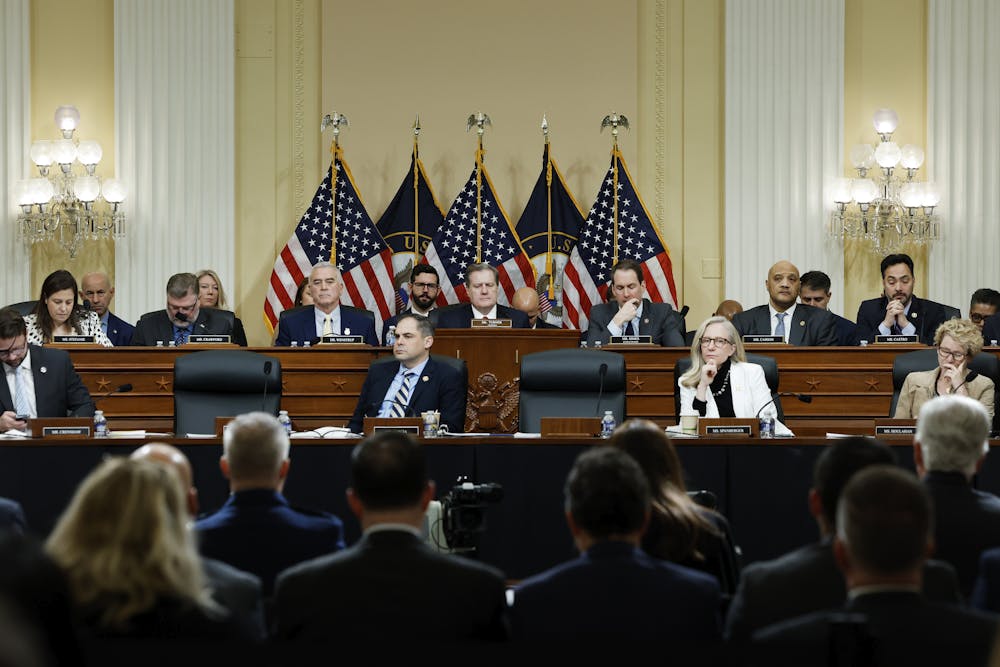
    Tulsi Gabbard is President Donald Trump’s choice to be director of national intelligence.
    AP Photo/John McDonnell

    Analysts are a key defense against politicization

    In general, each administration develops a national security strategy based on global events and issues, including threats to U.S. interests that are detailed and monitored by the intelligence community. Based on the administration’s priorities and interests, intelligence agencies collect and analyze data. Regular, often daily, briefings keep the president abreast of developments and warn of potential new challenges.

    In a perfect world, the president and the national security team use that information to determine which policies and actions are in the nation’s best interests.

    With the recent arrival of a new presidential administration, recent reports indicate that at least some workers in the intelligence community are feeling pressure to shift their priorities away from delivering facts and toward manipulating intelligence to achieve specific outcomes.

    Current and former intelligence officials have publicly worried that President Donald Trump might be biased against the intelligence community and seek to overhaul it if analyses did not fit his policy objectives.

    It happened in Trump’s first term. After Trump left office in 2021, Congress turned to the Office of the Director of National Intelligence – which oversees the entire intelligence community – to investigate whether intelligence reports were politicized under Trump’s leadership.

    The investigation determined that they were, up and down the intelligence system. The report found that some people who didn’t agree with the president’s policy views and objectives decided among themselves not to provide a full intelligence picture, while others tried to tailor what they showed the president to match his existing plans.

    At times, individual analysts withheld information. And managers, even up to the most senior level, also edited analyses and assessments, seeking to make them more appealing to leaders.

    For instance, the report found that top intelligence community officials, members of the National Intelligence Council, “consistently watered down conclusions during a drawn-out review process, boosting the threat from China and making the threat from Russia ‘not too controversial.’”

    The ombudsman’s report pointed out that this type of event has happened before – specifically, in 2003 around questions of whether Iraq had weapons of mass destruction – which it was ultimately found not to. As the report describes, “politicians and political appointees had … made up their mind about an issue and spent considerable time pressuring analysts and managers to prove their thesis to the American public.” That biased, politically motivated intelligence led to a war that killed nearly 4,500 U.S. service members, wounded more than 30,000 more, and cost the lives of about 200,000 Iraqi civilians, as well as more than $700 billion in U.S. taxpayer funds.

    Intelligence community leaders brief not only the president and others in the executive branch, but also members and committees in Congress.
    Anna Moneymaker/Getty Images

    Leaders don’t have to listen

    At some point or other, almost every president makes decisions that run contrary to intelligence assessments. For instance, George H.W. Bush did not prioritize a crumbling Yugoslavia, and the challenges that presented, choosing to focus on Iraq’s 1990 invasion of Kuwait and the resulting U.S. military Operations Desert Shield and Desert Storm.

    President Bill Clinton inherited the Yugoslavia situation, in which a failing country was at risk of political implosion, and chose to ignore intelligence warnings until the ethnic cleansing in that country became too public to ignore, at which point he began a U.S.-led NATO air campaign to stop the fighting. Clinton also ignored several intelligence warnings about al-Qaida, even after its deadly attacks on two U.S. embassies in 1998, and in 2000 on the USS Cole, a U.S. Navy destroyer. He chose more limited responses than aides suggested, including passing up an opportunity to kill al-Qaida leader Osama bin Laden.

    President Barack Obama chose to dismiss indications relayed by intelligence officials that Russia was going to invade Ukraine in 2014 – which it did. He focused on the Middle East instead. Obama’s goal of withdrawing U.S. troops from Iraq led him to discount warnings of the potential threat from what would become the Islamic State group – which in 2014 took advantage of the American departure to launch a major assault and seize a massive amount of territory in both Syria and Iraq. Driving the group out required significant reengagement from the U.S. military.

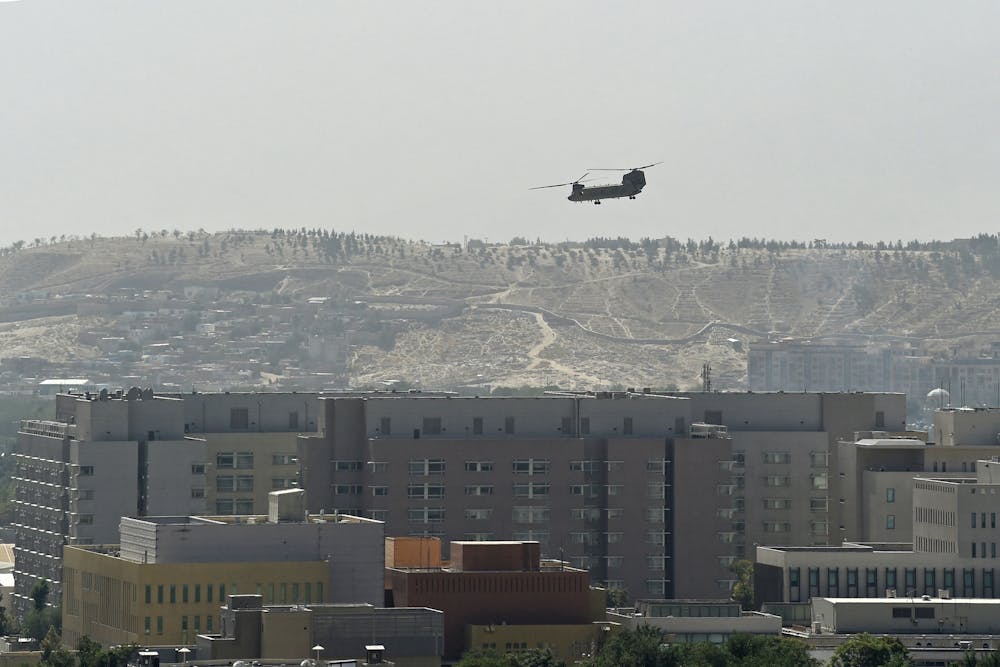
    And President Joe Biden ignored military and intelligence assessments that the Afghan military and government were weak and would not be able to withstand Taliban attacks if the U.S. military withdrew. And until almost the last moment, the Biden administration did not believe warnings that Russia was about to launch a second invasion of Ukraine in 2022. In both cases, the intelligence predictions were correct.

    Elected officials are accountable to the American people, and to history, but I believe accountability is key to ensuring the intelligence community follows its own standards from top to bottom, from senior leaders to the most junior analysts. Failure to abide by those standards harms American national security, and the standards themselves say violations are meant to bring professional, and potentially personal, consequences.

    A U.S. military helicopter flies above Kabul during the evacuation of U.S. troops from Afghanistan in 2021.
    Wakil Kohsar/AFP via Getty Images

    Perfection is elusive

    It’s impossible for intelligence collection and analysis staff to get everything right – they don’t have a crystal ball. Leaders aren’t under any obligation to follow the intelligence community’s recommendations. But if intelligence officials and political leaders are to have effective relationships that safeguard the nation’s security, each must understand their role and trust that each is doing that work as best as possible.

    Providing unvarnished truthful assessments is the job of the intelligence community. That means assessing what’s happening and what might happen as a result of a range of decisions the policymakers might choose. In my experience, putting aside my own views of leaders and their past decisions built trust with them and improved the likelihood that they would take my assessments seriously and make decisions based on the best available information.

    It’s not that intelligence professionals can’t have opinions, political ideologies or particular perspectives on policy decisions. All Americans can, and should.

    But as a second Trump administration begins, I think of what I told my colleagues and staff over the decades: National security requires us to keep those personal views out of intelligence analysis.

    Mark S. Chandler does not work for, consult, own shares in or receive funding from any company or organization that would benefit from this article, and has disclosed no relevant affiliations beyond their academic appointment.

    ref. Why Americans need well-informed national security decisions – not politicized intelligence analysis – https://theconversation.com/why-americans-need-well-informed-national-security-decisions-not-politicized-intelligence-analysis-248831

    MIL OSI – Global Reports

  • MIL-OSI Global: Map wars in the Middle East: How cartographers charted and helped shape a regional conflict

    Source: The Conversation – USA – By Christine Leuenberger, Senior Lecturer, Cornell University

    A lot has changed since the publication of this 1750 map of Palestine. Ken Welsh/Design Pics/Universal Images Group via Getty Image

    Maps are ubiquitous – on phones, in-flight and car displays, and in textbooks the world over. While some maps delineate and name territories and boundaries, others show different voting blocs in elections, and GPS devices help drivers navigate to their destination.

    But no matter the purpose, all maps have something in common: They are political. Making maps is about making decisions about what to omit and what to include. They are subject to selection, classification, abstractions and simplifications. And studying the choices that go into maps, as I do, can reveal different stories about land and the people who claim it as theirs.

    Nowhere is this more true than in the contested regions that today include modern-day Israel and the Palestinian territories. Since the establishment of the state of Israel in 1948, different governmental and nongovernmental organizations and political interest groups have engaged in what can best be described as “map wars.”

    Maps of the region use the naming of places, the position of borders and the inclusion or omission of certain territories to present contrasting geopolitical visions. To this day, Israel or the Palestinian territories may fall off some maps, depending on the politics of their makers.

    This is not exclusive to the Middle East – “map wars” are underway across the globe. Some of the more well-known examples include disputes between Ukraine and Russia, Taiwan and China, and India and China. All are engaged in controversies over the territorial integrity of nation-states.

    Israeli Prime Minister Benjamin Netanyahu displays a map of Israel indicating the Golan Heights are inside the state’s borders.
    Thomas Coex/AFP via Getty Images

    A short history of maps

    Traditionally, maps have been used to represent cosmologies, cultures and belief systems. By the 17th century, maps that represented spatial relations within a given territory beaome important to the making of nation-states. Such official maps helped annex territories and determine property rights. Indeed, to map a territory meant to know and control it.

    More recently, the tools for making maps have become more broadly accessible. Anyone with a computer and internet access can now make and share “alternative maps” that present different visions of a territory and make varied geopolitical claims.

    And maps produced in a conflict region, such as Israel and the Palestinian territories, tell a rich story about the relationship between mapmaking and politics.

    Mapping the Middle East

    During the British Mandate of Palestine from 1917 to 1947, British surveyors mapped the territories to exercise their control over the land and its people. It was an attempt to supersede the more informal Ottoman land claims of the time.

    By the founding of Israel in 1948, only about 20% of the total area of what is known as historic Palestine had been mapped – a fact that has fueled land disputes to this day. The British mapping efforts and their omissions enabled the newly established state of Israel to declare most of the territories as state land, thereby delegitimizing Palestinian land claims.

    A map shows the shaded areas of the Arab state recommended by the U.N. Special Committee on Palestine in 1947. The unshaded areas are parts of the proposed Jewish state.
    Underwood Archives/Getty Images

    Maps also helped build the Israeli state. Surveyors and planners mapped the land to allocate land rights, and they helped build the state’s infrastructure, including roads and railroads.

    But maps also helped create a sense of nationhood. Maps representing a nation’s shape by delineating its national borders are known as “logo” maps. They can enhance feelings of national unity and a sense of national belonging.

    Once established, the Israeli state remade the maps of the region. An Israeli Governmental Names Commission came up with Hebrew names to replace formerly Arab and Christian names for different towns and villages on the official map of Israel. At the same time, formerly Palestinian topographies and places were omitted from the map.

    Some Palestinian mapmakers, however, continue to make maps that include Palestinian named sites and depict pre-1948 historic Palestine – an area that stretches from River Jordan in the east to the Mediterranean Sea in the west. Such maps are used to advocate for Palestinians’ right to land and foster a sense of national belonging.

    A Palestinian woman holds up a map of the British Mandate of Palestine during a protest in Gaza City on Feb. 27, 2020.
    Mohammed Abed/AFP via Getty Images

    At the same time, Palestinian cartographers who work with the Palestinian Authority – the government body that administers partial civil control over Palestinian enclaves in the West Bank – make official maps of the West Bank and Gaza in the hope of establishing a future state of Palestine. They align their maps with United Nations efforts to map the territories according to international law by demarking the West Bank and Gaza as separate from and as occupied by Israel.

    After the 1967 war between Israel and its Arab neighbors, Israel occupied the West Bank and Gaza. As a result, map wars intensified, especially between different fractions within Israel. The left-wing “peace camp,” which was dedicated to territorial compromises with the Palestinians, was pitted against an Israeli right wing committed to reclaiming the “Promised Land” for ensuring Israeli security.

    Such incompatible geopolitical visions continue to be reflected in the maps produced. “Peace camp” maps adhere to the delineation of the territories according to international law. For example, they include the Green Line – the internationally recognized armistice line between the West Bank and Israel. Official maps produced by the Israeli government, by contrast, stopped delineating the Green Line after 1967.

    Broader and border disputes

    Not only have different interest groups and political actors used maps of the region to put forth competing geopolitical claims, but maps have also played a central role in sporadic efforts to establish peace in the region.

    The 1993 Oslo Accords, for example, relied on maps to provide the framework for Palestinian self-rule in return for security for Israel. The aim was that after a five-year interim period, a permanent peace settlement would be negotiated based on the borders laid out in these maps.

    A map of the West Bank with proposed Palestinian-controlled areas in yellow, as per the Oslo II Accords.
    Wikimedia Commons

    Consequently, Palestinian planners and surveyors mapped the territory allocated to a future state of Palestine. With the Oslo Accords promising only a future state – but with its borders and level of sovereignty still uncertain – Palestinian experts nevertheless continue to prepare for governing the territories by mapping them.

    The Oslo maps are used to this day to delineate geopolitical visions of Israel and a future state of Palestine that are based on international law. But for many Israelis, the Oslo vision of a two-state solution has died – the attack by Hamas, the Palestinian nationalist political organization that governs Gaza, on Israel on Oct. 7, 2023, was its last blow.

    The subsequent war between Israel and Hamas, currently subject to a cease-fire, has from the outset involved maps.

    In December 2023, the Israeli military posted an online “evacuation map” that divided the Gaza Strip into 623 zones. Palestinians could go online – provided they have access to electricity and internet in a territory plagued by blackouts – to find out whether their neighborhood was called upon to evacuate. Israeli military commanders used this map to decide where to launch airstrikes and conduct ground maneuvers.

    But the map served a political aim, too: to convince a skeptical world that Israel was taking care to protect civilians. Regardless, its introduction caused confusion and fear among Palestinians.

    Charting a way forward

    Maps aren’t just for making sense of the past and present – they help people imagine the future, too. And different maps can reveal conflicting geopolitical visions.

    In January 2024, for example, various Israeli right-wing and settler organizations organized the Conference for the Victory of Israel. The aim was to plan for resettling Gaza and increase Jewish settlements in the West Bank. Speakers advocated for transferring Palestinians from the Strip to the Sinai through “voluntary emigration.” With Jewish settlers planning for the return to Gaza, and speakers citing both the Bible and Israeli security for justifications, an oversized map showed the location of proposed Jewish settlements.

    A man takes a photo with a map showing the Gaza Strip with Jewish settlements during a convention calling to resettle the Gaza Strip on Jan. 28, 2024, in Jerusalem, Israel.
    Amir Levy/Getty Images

    Similarly, the Israeli Movement for Settlement in Southern Lebanon has published maps of planned Jewish settlements in Southern Lebanon.

    Such maps reveal the desire by some in Israel for a “Greater Israel” – an area described in 1904 by Theodor Herzl, considered the father of modern-day Zionism, as spanning from the brook of Egypt to the Euphrates.

    Unsurprisingly, Palestinians make different maps for envisioning the future. Palestine Emerging – a Palestinian and international initiative that brings together various experts, organizations, and funders – uses maps that connect Gaza to the West Bank and the wider region.

    A map shows the proposed Gaza-West Bank corridor transport link.
    Palestine Emerging

    Their aim is to transform Gaza into a commercial hub for trade, tourism and innovation and to integrate it into the global economy. Accordingly, maps of urban projects, airports and seaports overlay the cartographic contours of Gaza; and a Gaza-West Bank corridor, which would be sealed for Israeli security, could connect the two geographically separate Palestinian territories.

    Such maps reflect the efforts by Palestinian stakeholders to continue surveying the territories that, since the Oslo Accords, were to make up the future state of Palestine.

    A new era of expansionist geopolitics

    With the current U.S. administration more aligned with right-wing Israeli policies, maps of Greater Israel may guide what Hagit Ofran from Peace Now calls the beginning of a new “Greater Israel” policy period.

    In a novel twist, U.S. President Donald Trump on Feb. 4, 2025, floated a plan for the U.S. to “take over” Gaza, moving its current inhabitants out and turning the enclave into “”the Riviera of the Middle East.”

    Such a move would amount to another attempt to remake borders across the Middle East. It would not, however, end the “map wars” in Israel/Palestine.

    This work was supported by the National Science Foundation through the Science and Technology Studies (STS) Program, award #1152322. Any opinions, findings, and conclusions or recommendations expressed in this material are those of the author and do not necessarily reflect the views of the National Science Foundation or any other entity.

    ref. Map wars in the Middle East: How cartographers charted and helped shape a regional conflict – https://theconversation.com/map-wars-in-the-middle-east-how-cartographers-charted-and-helped-shape-a-regional-conflict-231668

    MIL OSI – Global Reports

  • MIL-OSI Global: How Putin, Xi and now Trump are ushering in a new imperial age

    Source: The Conversation – UK – By Eric Storm, Senior Lecturer in General History, Leiden University

    Over the past few weeks the new US president, Donald Trump, has repeatedly claimed that the United States should “take back” the Panama Canal and that it should assume control of Greenland – one way or another. He has talked of Canada becoming America’s 51st state and now he even wants to “take over” the Gaza Strip to convert it into a “Riviera” on the eastern Mediterranean.

    It’s as if the US president believes that his country should be an empire. In this Trump seems to be emulating China’s Xi Jinping and Vladimir Putin of Russia, leaders he has said he admires and who have themselves shown some clear imperial tendencies in recent years.

    Under Putin, Russia has supported secessionist regions, such as Transnistria and Abkhazia, fought wars in Georgia and Ukraine and actively interfered in the affairs of Syria and assorted African countries. In 2022 Russia even launched a full-scale invasion of Ukraine, claiming that Ukraine was historically inseparable from Russia, but that hostile western influences were trying to destroy that unity.

    China, meanwhile, has militarised a number of small uninhabited islands in the South China Sea. It has built 27 installations on disputed islands in the Spratly and Paracel island group that are also claimed by other countries including Vietnam, Taiwan, the Philippines and Malaysia. This has prompted a flurry of development, as other countries in the region have raced to establish their own footholds in the disputed, but very resource-rich, region.

    Beijing also maintains its claim over Taiwan, which it says is an inalienable part of China which it wants to “come home”.

    Empires and nation states

    Most people assumed that the age of empires had been relegated to the dustbin of history. But this is by no means a straightforward proposition. Until relatively recently, the rise and fall of empires had dominated much of recorded history. Nation-states only appeared at the end of the 18th century. And as those states rose to prominence many too displayed imperial inclinations.

    So the US, fresh from throwing off the yoke of the British empire, wasted little time in expanding its borders westward, acquiring – whether by conquest or purchase – large swaths of new territory in what effectively turned a small group of east coast states into a continental empire.

    Meanwhile other newly minted nation-states such as Italy and Germany also aspired to acquire overseas empires and involved themselves, with varying success, building what turned out to be relatively shortlived colonial empires in Africa and elsewhere.

    Most traditional dynastic empires, meanwhile, began to adopt various aspects of the nation-state model, such as conscription, legal equality and political participation. The decades following the second world war are often seen by historians as a period of decolonisation by traditional imperial powers such as Britain and France. But the transition from empire to nation-states was far from smooth. Most imperial governments hoped to transform their empires into more egalitarian commonwealths, while retaining a degree of influence.

    This they did with varying degrees of success and often under extreme duress, as with France in Algeria and Vietnam, or under great economic pressure, such as with Britain and India. The real age of the nation-state didn’t begin until the 1960s.

    The return of empire?

    Today, the world consists of about 200 independent countries, the overwhelming majority nation-states. Nonetheless, one could argue that empires – or at least imperial tendencies – have never totally disappeared. France, for instance, frequently interfered in many of its former colonies in Africa. However, these military interventions were not meant to permanently occupy new territories.

    Today, imperial tendencies seem to resurface around the world. The past, however, tends not to repeat itself. Massive wars of conquest or attempts to create new overseas empires are unlikely in the immediate future. Most imperial expansions are currently sought close to home.

    What is striking is that Putin, Xi and Trump all use fierce nationalist rhetoric to justify their imperialist designs. Putin, as we have seen, claims the indivisibility of Ukraine and Russia and blames “Nazis” for trying to turn Russia’s sister state towards the west. He used it as a justification for invading Ukraine in February 2022.

    Xi, in turn, often maintains that Communist China has finally overcome the century of humiliation, in which the country was the plaything of foreign powers. They both seem to yearn for past imperial greatness. The Russian Federation aims to undo the dissolution of the Soviet Union, communist China looks back to the Qing empire. Interestingly, under its increasingly authoritarian leader Recep Tayyip Erdoğan, Turkey – another regional power with imperial inclinations – similarly finds inspiration in the Ottoman Empire.

    The US case seems to be more complex, but in fact is very similar. Thus, Trump argues that the Panama Canal, which has long been administered by the US, was foolishly returned to Panama by Jimmy Carter and claims that it is now controlled by China. He will, he says, return it to the US.

    Trump also refers to America’s “Manifest Destiny”, the 19th-century belief that American settlers were destined to expand to the Pacific coast. These days his aspirations are northwards rather than to the west. The president also wants to plant the US flag on Mars, taking his imperial dreams into outer space.

    If the US joins China and Russia in violating recognised borders, the international, rights-based order could be in danger. The signs are not very positive. Taking steps to illegally annex territories could blow up the entire international edifice.

    Eric Storm does not work for, consult, own shares in or receive funding from any company or organisation that would benefit from this article, and has disclosed no relevant affiliations beyond their academic appointment.

    ref. How Putin, Xi and now Trump are ushering in a new imperial age – https://theconversation.com/how-putin-xi-and-now-trump-are-ushering-in-a-new-imperial-age-248160

    MIL OSI – Global Reports

  • MIL-OSI: Wearable Devices Introduces AI-Powered LLM for Next-Level Gesture Control

    Source: GlobeNewswire (MIL-OSI)

    The Large MUAP Models (LMM) AI-powered neural gesture technology enables personalized, intuitive interactions for the AI and XR era

    Yokneam Illit, Israel, Feb. 07, 2025 (GLOBE NEWSWIRE) — Wearable Devices Ltd. (the “Company” or “Wearable Devices”) (Nasdaq: WLDS, WLDSW), an award-winning pioneer in artificial intelligence (“AI”)-based wearable gesture control technology, is proud to announce a groundbreaking advancement in human-computer interaction: Large MUAP Models (LMM). Building on the success of LLMs in natural language processing, Wearable Devices is actively developing LMMs with the goal to revolutionize how we interact with digital devices, aiming to offer personalized, intuitive gesture control powered by neural data.

    While still in development, this innovative technology, as previously announced, holds immense potential to redefine human-device interaction.

    The LMM Revolution: Decoding the Neural Alphabet

    Just as LLMs unlocked the power of language for AI, LMMs aim to unlock the power of neural gestures for seamless, natural interactions. By decoding Motor Unit Action Potentials (MUAPs)—the body’s language for communicating with muscles—Wearable Devices has created a new paradigm for gesture control. LMMs are harnessing the potential of big data to enable devices to understand and predict user intentions with unprecedented speed and precision, making interactions faster and more intuitive than ever before.

    Personalized Gestures for a Natural User Experience

    At the heart of LMMs is personalization. The technology learns from individual users, creating a unique neural profile that will enable gestures tailored to each person’s natural movements. Whether it’s a subtle thumb swipe to select an option or a pinch-to-zoom gesture in augmented reality, LMMs will make interactions feel effortless and intuitive. “With LMMs, we are decoding the neural alphabet, potentially unlocking a strategically vital technology that fuses human neurology with AI. This breakthrough has the potential to create sci-fi-like superhuman abilities, giving a fundamental edge to whoever masters it first,” said Guy Wagner, Chief Scientific Officer of Wearable Devices.

    Wearable Devices’ flagship products, such as the Mudra Band for Apple Watch and the Mudra Link for universal device control, are already demonstrating the power of neural interfaces. These devices allow users to control their digital environments with simple, natural gestures. LMMs have the potential to make our current technology user-personalized, paving the way for a future where wearable technology is seamlessly integrated into our daily lives.

    The Future of AI and XR: Powered by Neural Gestures

    As spatial computing becomes the next computing platform, LMMs will provide the intuitive, natural interactions needed to unlock its full potential. Wearable Devices is focused on developing this technology and plans to seek collaboration with leading companies to integrate LMMs into next-generation extended reality (XR) platforms, ensuring that users can interact with their digital environments in ways that feel as natural as moving their hands.

    “The future of XR and AI interactions is here, and it starts with your wrist,” added Mr. Wagner. “With LMMs, we are not just imagining the future—we are building it.”

    About Wearable Devices Ltd.

    Wearable Devices Ltd. is a pioneering growth company revolutionizing human-computer interaction through its AI-powered neural input technology for both consumer and business markets. Leveraging proprietary sensors, software, and advanced AI algorithms, the Company’s innovative products, including the Mudra Band for iOS and Mudra Link for Android, enable seamless, touch-free interaction by transforming subtle finger and wrist movements into intuitive controls. These groundbreaking solutions enhance gaming, and the rapidly expanding AR/VR/XR landscapes. The Company offers a dual-channel business model: direct-to-consumer sales and enterprise licensing. Its flagship Mudra Band integrates functional and stylish design with cutting-edge AI to empower consumers, while its enterprise solutions provide businesses with the tools to deliver immersive and interactive experiences. By setting the input standard for the XR market, Wearable Devices is redefining user experiences and driving innovation in one of the fastest-growing tech sectors. Wearable Devices’ ordinary shares and warrants trade on the Nasdaq under the symbols “WLDS” and “WLDSW,” respectively.

    Forward-Looking Statement Disclaimer

    This press release contains “forward-looking statements” within the meaning of Section 27A of the Securities Act of 1933, as amended, and Section 21E of the Securities Exchange Act of 1934, as amended, that are intended to be covered by the “safe harbor” created by those sections. Forward-looking statements, which are based on certain assumptions and describe our future plans, strategies and expectations, can generally be identified by the use of forward-looking terms such as “believe,” “expect,” “may,” “should,” “could,” “seek,” “intend,” “plan,” “goal,” “estimate,” “anticipate” or other comparable terms. For example, we are using forward-looking statements when we discuss the benefits and advantages of our devices and technology, including the potential of LMMs, and that we are focused on developing this technology and plan to seek collaboration with leading companies to integrate LMMs into next-generation XR platforms. All statements other than statements of historical facts included in this press release regarding our strategies, prospects, financial condition, operations, costs, plans and objectives are forward-looking statements. Forward-looking statements are neither historical facts nor assurances of future performance. Instead, they are based only on our current beliefs, expectations and assumptions regarding the future of our business, future plans and strategies, projections, anticipated events and trends, the economy and other future conditions. Because forward-looking statements relate to the future, they are subject to inherent uncertainties, risks and changes in circumstances that are difficult to predict and many of which are outside of our control. Our actual results and financial condition may differ materially from those indicated in the forward-looking statements. Therefore, you should not rely on any of these forward-looking statements. Important factors that could cause our actual results and financial condition to differ materially from those indicated in the forward-looking statements include, among others, the following: the trading of our ordinary shares or warrants and the development of a liquid trading market; our ability to successfully market our products and services; the acceptance of our products and services by customers; our continued ability to pay operating costs and ability to meet demand for our products and services; the amount and nature of competition from other security and telecom products and services; the effects of changes in the cybersecurity and telecom markets; our ability to successfully develop new products and services; our success establishing and maintaining collaborative, strategic alliance agreements, licensing and supplier arrangements; our ability to comply with applicable regulations; and the other risks and uncertainties described in our annual report on Form 20-F for the year ended December 31, 2023, filed on March 15, 2024 and our other filings with the SEC. We undertake no obligation to publicly update any forward-looking statement, whether written or oral, that may be made from time to time, whether as a result of new information, future developments or otherwise.

    Investor Relations Contact

    Michal Efraty
    IR@wearabledevices.co.il

    The MIL Network

  • MIL-OSI: Byrna Technologies Reports Record Results for Fiscal Fourth Quarter and Full Year 2024

    Source: GlobeNewswire (MIL-OSI)

    ANDOVER, Mass., Feb. 07, 2025 (GLOBE NEWSWIRE) — Byrna Technologies Inc. (“Byrna” or the “Company”) (Nasdaq: BYRN), a personal defense technology company specializing in the development, manufacture, and sale of innovative less-lethal personal security solutions, today reported select financial results for its fiscal fourth quarter (“Q4 2024”) and full year ended November 30, 2024.

    Fiscal Fourth Quarter 2024 and Recent Operational Highlights

    • Surpassed 500,000 launchers sold since inception, just five and a half years after the sale of Byrna’s first launcher in June 2019.
    • Increased launcher production in the first fiscal quarter of 2025 by 33% to 24,000 launchers a month to meet growing market demand and support operational growth.
    • Recently opened a new U.S.-based ammunition manufacturing facility in Fort Wayne, Indiana, as part of a re-shoring initiative, significantly expanding Byrna’s domestic production capacity and enhancing the Company’s supply chain for its payload ammunition.
    • Continued to generate a highly accretive return on ad spend (ROAS) above 5.0X through the celebrity endorsement program for the full year 2024 period, leading to a record $28.0 million of sales for the fourth quarter of 2024.
    • Added Megyn Kelly, Charlie Kirk, and Lara Trump as celebrity influencers to continue amplifying brand awareness and further support the normalization of its less-lethal solutions, while continuing to optimize marketing spend for maximum impact.
    • Partnered with the United States Concealed Carry Association (USCCA), gaining access to nearly one million USCCA members to promote less-lethal solutions while introducing Byrna customers to USCCA’s training, education, and self-defense liability insurance offerings.
    • Opened retail stores in the Greater Nashville Area, Scottsdale, Arizona, and Salem, New Hampshire. Byrna plans to open the Fort Wayne, Indiana store in the coming months.
    • Signed a Letter of Intent to launch a pilot store-within-a-store program at eleven Sportsman’s Warehouse locations, expanding Byrna’s retail footprint.

    Fiscal Fourth Quarter 2024 Financial Results
    Results compare Q4 2024 to the 2023 fiscal fourth quarter ended November 30, 2023 unless otherwise indicated.

    Net revenue for Q4 2024 was $28.0 million, compared to $15.6 million in the fiscal fourth quarter of 2023 (“Q4 2023”). The 79% year-over-year increase was primarily due to the transformational shift in Byrna’s advertising strategy implemented in September 2023 and the resulting normalization of Byrna and the less-lethal space generally.

    Gross profit for Q4 2024 was $17.6 million (63% of net revenue), up from $9.0 million (58% of net revenue) in Q4 2023. The increase in gross profit was driven by the increase in the proportion of sales made through the high-margin direct-to-consumer (DTC) channels (Byrna.com and Amazon.com), a reduction in component costs driven through an intensive cost reduction effort focused on “design for manufacturability” spearheaded by Byrna’s engineering team, and the economies of scale resulting from increased production volumes.

    Operating expenses for Q4 2024 were $13.5 million, compared to $9.7 million for Q4 2023, an increase of 39%. The increase in operating expenses was driven by an increase in variable selling costs (such as freight and third-party processing fees), increased marketing spend tied to the Company’s celebrity endorsement strategy, and higher payroll expenses in marketing and engineering as the Company has scaled to handle increased sales and production volumes.

    Net income for Q4 2024 was $9.7 million, compared to a net loss of ($0.8) million for Q4 2023, a $10.5 million improvement. This increase was driven by higher revenue and a $5.6 million income tax benefit. The tax benefit arose from the release of tax valuation allowances related to net operating loss carryforwards incurred in earlier years and other tax assets.

    Adjusted EBITDA1, a non-GAAP metric reconciled below, for Q4 2024 totaled $5.2 million, compared to $0.4 million in Q4 2023.

    Cash and cash equivalents at November 30, 2024 totaled $16.8 million compared to $20.5 million at November 30, 2023. The change in cash and cash equivalents is primarily due to an $8.9 million investment in short-term marketable securities to earn a higher yield on Byrna’s unused cash. Adding cash and short-term marketable securities, total funds available were $25.7 million, an increase of $5.2 million compared to November 30, 2023. Inventory at November 30, 2024 totaled $20.0 million compared to $13.9 million at November 30, 2023. The Company has no current or long-term debt.

    Fiscal Year 2024 Financial Results
    Results compare the 2024 fiscal year ended November 30, 2024 to the 2023 fiscal year ended November 30, 2023 unless otherwise indicated.

    Net revenue for FY 2024 was $85.8 million, a 101% increase from $42.6 million in the fiscal year ended November 30, 2023 (“FY 2023”), driven by the Company’s strategic shift in advertising, increased brand normalization, and higher DTC sales

    Gross profit for FY 2024 was $52.8 million (62% of net revenue), compared to $23.6 million (56% of net revenue) for FY 2023. The increase in gross profit margin was primarily due to a greater proportion of sales through high-margin DTC channels, lower component costs, and economies of scale.

    Operating expenses for FY 2024 were $46.1 million, compared to $31.4 million for FY 2023, reflecting a 47% increase to support growth. The increase was driven by higher variable selling costs, expanded marketing efforts, and additional personnel in marketing and engineering.

    Net income for FY 2024 was $12.8 million, compared to a net loss of ($8.2) million for FY 2023, a $21.0 million improvement. The increase in net income was driven by higher revenue and included a $5.7 million income tax benefit due to the full release of U.S. tax valuation allowances.

    Adjusted EBITDA1 for FY 2024 totaled $11.5 million, compared to a negative ($2.0) million for FY 2023. The increase in adjusted EBITDA was primarily due to an increase in revenue.

    Management Commentary
    Byrna CEO Bryan Ganz stated: “The fourth quarter was the culmination of a remarkable year for Byrna. We successfully generated a record $28.0 million in revenue while also expanding our gross margins to 62.8%. This success allowed us to deliver a 101% increase in revenue from the full year 2023 to 2024 and underscores the overall growth in brand recognition and normalization of the less-lethal space.

    “Our marketing strategy, anchored by the continued success of our celebrity influencer program, has continued to be instrumental in driving DTC sales and expanding brand awareness. For 2024, the program maintained a highly accretive return on ad spend (ROAS) above 5.0X, underscoring the effectiveness of this approach in normalizing less-lethal solutions. Building on this foundation, we have been adding a more robust, multi-channel marketing strategy that now includes traditional media such as cable and broadcast networks. This diversification complements our influencer program, which recently welcomed prominent voices like Megyn Kelly, Charlie Kirk, and Lara Trump.

    As we execute across multiple channels, we will continue to be disciplined in evaluating partnerships and optimizing ad spend to maximize impact and ROAS. We have prioritized celebrity endorsers who demonstrate strong ROAS and have discontinued partnerships that did not meet our minimum ROAS requirements. To date, the celebrity endorsers who were initially successful have continued to perform well, while those we discontinued never met our ROAS benchmarks. Unfortunately, we did lose one very successful celebrity endorser, Governor Mike Huckabee, due to his appointment as U.S. ambassador to Israel.

    “In addition to expanding our online DTC reach, we are making strides in building our brick-and-mortar footprint. With four company-owned stores up and running, we are optimistic that these stores will validate the company-owned store model and open the way to a rollout of Byrna company-owned stores in key markets throughout the United States. Given the high gross margins and the relatively inexpensive operating costs, we believe that these stores can contribute meaningfully to Byrna’s bottom line as they ramp up over the coming quarters. We are also pleased to announce that we have signed a letter of intent to partner with Sportsman’s Warehouse to launch a store-within-a-store model at 11 locations across the United States. Each of these Sportsman’s Warehouse locations will convert their existing archery range into a firing range for customers to experience our launchers, similar to our company-owned stores and premier dealers. If the initial pilot program is successful, Byrna expects to be in 90 more stores by the end of the year, accelerating the rate of our brick-and-mortar presence across the United States.

    “To ensure our production keeps pace with our growth initiatives, we have successfully increased launcher production to 24,000 units as of January at our Fort Wayne, Indiana launcher production facility. Additionally, we have begun producing payload ammunition at a new facility in Fort Wayne, located four miles from our launcher production facility. This state-of-the-art manufacturing facility will house eight advanced dousing and welding machines capable of producing both .68 and .61 caliber payload rounds for our existing launchers as well as our anticipated new Compact Launcher. We will also be able to produce .61 caliber fin-tail payload rounds for our Pepper and Max 12-gauge less-lethal rounds. Once fully operational later this year, these eight machines will collectively produce up to 10 million rounds per month, including 1.5 million fin-tail rounds for the 12-gauge platform. We believe the combination of Byrna Pepper and Max 12-gauge rounds, coupled with the Sportsman’s “store-within-a-store” partnership, will help spur the sale of our less-lethal 12-gauge rounds.

    The onshoring of ammunition production is part of Byrna’s larger ‘Made in America’ strategy. We remain committed to exiting China by mid-year and aim to source nearly 100% of the components for the Byrna SD, LE, and CL models from U.S. suppliers by the end of 2025. We expect that this transition will insulate us from any potential tariffs, create well-paying jobs for American workers, reduce lead times, and eliminate the risks associated with unreliable foreign suppliers. We expect it will also allow us to market the Byrna as ‘Made in America!’

    “Our momentum has carried into the new fiscal year with a strong holiday season in December, including $1.4 million in total product sales on Cyber Monday alone. International adoption has also been robust, particularly in Argentina, where the Cordoba Province committed to purchasing 1.7 million rounds of payload ammunition. This order, which will be shipped in 200,000-round monthly increments through the balance of 2025, reflects the extensive deployment of the 13,500 Byrna launchers purchased by the Cordoba Police Department to apprehend dangerous criminals and maintain the peace.

    “Looking ahead, we remain optimistic about our trajectory. The ongoing success of our marketing efforts has resulted in less-lethal becoming a much more widely accepted personal self-defense category. This is allowing us to advertise on an increasing number of cable and social media platforms. We believe that the market for less-lethal weapons among gun owners in the U.S. is in the tens of millions of consumers. This expanding market, along with our growing online presence, expanding retail presence, and increasing international opportunities, reinforces our confidence in the long-term demand for less-lethal weapons as a whole and for Byrna specifically. While the first quarter historically experiences a seasonal slowdown in consumer spending, we expect to achieve strong year-over-year growth as we continue executing our strategic initiatives. We believe that Byrna is well-positioned to generate additional cash and expand profitability in 2025 and beyond.”

    Conference Call
    The Company’s management will host a conference call today, February 7, 2025, at 9:00 a.m. Eastern time (6:00 a.m. Pacific time) to discuss these results, followed by a question-and-answer period.

    Toll-Free Dial-In: 877-709-8150
    International Dial-In: +1 201-689-8354
    Confirmation: 13750859

    Please call the conference telephone number 5-10 minutes prior to the start time of the conference call. An operator will register your name and organization. If you have any difficulty connecting with the conference call, please contact Gateway Group at 949-574-3860.

    The conference call will be broadcast live and available for replay here and via the Investor Relations section of Byrna’s website.

    About Byrna Technologies Inc.
    Byrna is a technology company specializing in the development, manufacture, and sale of innovative less-lethal personal security solutions. For more information on the Company, please visit the corporate website here or the Company’s investor relations site here. The Company is the manufacturer of the Byrna® SD personal security device, a state-of-the-art handheld CO2 powered launcher designed to provide a less-lethal alternative to a firearm for the consumer, private security, and law enforcement markets. To purchase Byrna products, visit the Company’s e-commerce store.

    Forward-Looking Statements
    This news release contains “forward-looking statements” within the meaning of the securities laws. All statements contained in this news release, other than statements of current and historical fact, are forward-looking. Often, but not always, forward-looking statements can be identified by the use of words such as “plans,” “expects,” “intends,” “anticipates,” and “believes” and statements that certain actions, events or results “may,” “could,” “would,” “should,” “might,” “occur,” or “be achieved,” or “will be taken.” Forward-looking statements include descriptions of currently occurring matters which may continue in the future. Forward-looking statements in this news release include but are not limited to our statements related to our expected sales during 2025, our ability to scale production lines, Byrna’s ability to remain self-sustaining, profitable and cash flow positive, Byrna’s ability to open new retail locations and realize revenue growth from them, the expected scale, timing and benefits of Byrna’s store-within-a-store partnership with Sportsman’s Warehouse, the benefits and continued success of Byrna’s celebrity endorser strategy, Byrna’s ability to re-shore production and cease purchasing parts from China on the anticipated timeline, the expected benefits of re-shoring production, the anticipated growth and potential size of the U.S. less-lethal market, and Byrna’s positioning for sustained growth in 2025 and 2026. Forward-looking statements are not, and cannot be, a guarantee of future results or events. Forward-looking statements are based on, among other things, opinions, assumptions, estimates, and analyses that, while considered reasonable by the Company at the date the forward-looking information is provided, inherently are subject to significant risks, uncertainties, contingencies, and other factors that may cause actual results and events to be materially different from those expressed or implied.

    Any number of risk factors could affect our actual results and cause them to differ materially from those expressed or implied by the forward-looking statements in this news release, including, but not limited to, disappointing market responses to current or future products or services; prolonged, new, or exacerbated disruption of our supply chain; the further or prolonged disruption of new product development; production or distribution disruption or delays in entry or penetration of sales channels due to inventory constraints, competitive factors, increased transportation costs or interruptions, including due to weather, flooding or fires; prototype, parts and material shortages, particularly of parts sourced from limited or sole source providers; determinations by third party controlled distribution channels, including Amazon, not to carry or reduce inventory of the Company’s products; determinations by advertisers or social media platforms, or legislation that prevents or limits marketing of some or all Byrna products; the loss of marketing partners; increases in marketing expenditure may not yield expected revenue increases; potential cancellations of existing or future orders including as a result of any fulfillment delays, introduction of competing products, negative publicity, or other factors; product design or manufacturing defects or recalls; litigation, enforcement proceedings or other regulatory or legal developments; changes in consumer or political sentiment affecting product demand; regulatory factors including the impact of commerce and trade laws and regulations; and future restrictions on the Company’s cash resources, increased costs and other events that could potentially reduce demand for the Company’s products or result in order cancellations. The order in which these factors appear should not be construed to indicate their relative importance or priority. We caution that these factors may not be exhaustive; accordingly, any forward-looking statements contained herein should not be relied upon as a prediction of actual results. Investors should carefully consider these and other relevant factors, including those risk factors in Part I, Item 1A, (“Risk Factors”) in the Company’s most recent Form 10-K and Part II, Item 1A (“Risk Factors”) in the Company’s most recent Form 10-Q, should understand it is impossible to predict or identify all such factors or risks, should not consider the foregoing list, or the risks identified in the Company’s SEC filings, to be a complete discussion of all potential risks or uncertainties, and should not place undue reliance on forward-looking information. The Company assumes no obligation to update or revise any forward-looking information, except as required by applicable law.

    Investor Contact:
    Tom Colton and Alec Wilson
    Gateway Group, Inc.
    949-574-3860
    BYRN@gateway-grp.com

    -Financial Tables to Follow-

    BYRNA TECHNOLOGIES INC.
    Condensed Consolidated Statements of Operations and Comprehensive Income (Loss)
    (Amounts in thousands except share and per share data)
    (Unaudited)
     
                       
        For the Three Months Ended   For the Twelve Months Ended  
        November 30,   November 30,  
          2024       2023       2024       2023    
    Net revenue   $ 27,979     $ 15,640     $ 85,756     $ 42,644    
    Cost of goods sold     10,417       6,596       32,984       18,997    
    Gross profit     17,561       9,044       52,772       23,647    
    Operating expenses     13,468       9,729       46,101       31,437    
    INCOME (LOSS) FROM OPERATIONS     4,094       (684 )     6,671       (7,790 )  
    OTHER INCOME (EXPENSE)                  
    Foreign currency transaction loss     (195 )     (32 )     (576 )     (270 )  
    Interest income     141       168       1,024       693    
    Loss from joint venture           22       (42 )     (603 )  
    Other income (expense)     1       27       7       (57 )  
    INCOME (LOSS) BEFORE INCOME TAXES     4,040       (499 )     7,084       (8,027 )  
    Income tax benefit     5,634       (330 )     5,708       165    
    NET INCOME (LOSS)   $ 9,674     $ (829 )   $ 12,792     $ (8,192 )  
                       
    Foreign currency translation adjustment for the period     (133 )     205       342       (436 )  
    Unrealized gain (loss) on marketable securities     65             65          
    COMPREHENSIVE INCOME (LOSS)   $ 9,606     $ (624 )   $ 13,199     $ (8,628 )  
                       
    Basic net income (loss) per share   $ 0.43     $ (0.04 )   $ 0.57     $ (0.37 )  
    Diluted net income (loss) per share   $ 0.41     $ (0.04 )   $ 0.55     $ (0.37 )  
                       
    Weighted-average number of common shares outstanding – basic     22,514,644       21,991,313       22,504,938       21,919,624    
    Weighted-average number of common shares outstanding – diluted     23,754,328       21,991,313       23,139,549       21,919,624    
                       
    BYRNA TECHNOLOGIES INC.
    Condensed Consolidated Balance Sheets
    (Amounts in thousands, except share and per share data)
               
        November 30,  
          2024       2023    
    ASSETS          
    CURRENT ASSETS          
    Cash and cash equivalents   $ 16,829     $ 20,498    
    Accounts receivable, net     2,630       2,945    
    Marketable Securities     8,904          
    Inventory, net     19,972       13,890    
    Prepaid expenses and other current assets     2,623       868    
    Total current assets     50,958       38,201    
               
    Deposits for equipment     2,665       1,163    
    Right-of-use-asset, net     2,452       1,805    
    Property and equipment, net     3,408       3,803    
    Intangible assets, net     3,337       3,583    
    Goodwill     2,258       2,258    
    Loan to joint venture       1,473    
    Deferred tax asset     5,837        
    Other assets     1,007       28    
    TOTAL ASSETS   $ 71,922     $ 52,314    
    LIABILITIES          
    CURRENT LIABILITIES          
    Accounts payable and accrued liabilities   $ 13,108     $ 6,158    
    Operating lease liabilities, current     539       644    
    Deferred revenue     1,791       1,844    
    Line of credit              
    Notes payable, current              
    Total current liabilities     15,438       8,646    
               
    Notes payable, non-current          
    Deferred revenue, non-current     17       91    
    Operating lease liabilities, non-current     2,098       1,258    
    Total Liabilities     17,553       9,995    
               
    COMMITMENTS AND CONTINGENCIES (NOTE 19)          
               
    Preferred stock, $0.001 par value, 5,000,000 shares authorized, no shares issued              
    Common stock, $0.001 par value, 50,000,000 shares authorized. 24,168,014 shares
    issued and 22,002,027 outstanding as of November 30, 2024 and, 24,018,612 shares issued and 21,852,625
    outstanding as of November 30, 2023
        24       24    
    Additional paid-in capital     133,030       130,426    
    Treasury stock (2,165,987 shares purchased as of November 30, 2024 and 2023)     (21,253 )     (17,500 )  
    Accumulated deficit     (56,783 )     (69,575 )  
    Accumulated other comprehensive loss     (649 )     (1,056 )  
               
    Total Stockholders’ Equity     54,369       42,319    
               
    TOTAL LIABILITIES AND STOCKHOLDERS’ EQUITY   $ 71,922     $ 52,314    
               

    Non-GAAP Financial Measures

    In addition to providing financial measurements based on generally accepted accounting principles in the United States (GAAP), we provide an additional financial metric that is not prepared in accordance with GAAP (non-GAAP) with presenting non-GAAP adjusted EBITDA. Management uses this non-GAAP financial measure, in addition to GAAP financial measures, to understand and compare operating results across accounting periods, for financial and operational decision making, for planning and forecasting purposes and to evaluate our financial performance. We believe that this non-GAAP financial measure helps us to identify underlying trends in our business that could otherwise be masked by the effect of certain expenses that we exclude in the calculations of the non-GAAP financial measure.

    Accordingly, we believe that this non-GAAP financial measure reflects our ongoing business in a manner that allows for meaningful comparisons and analysis of trends in the business and provides useful information to investors and others in understanding and evaluating our operating results, enhancing the overall understanding of our past performance and future prospects.

    This non-GAAP financial measure does not replace the presentation of our GAAP financial results and should only be used as a supplement to, not as a substitute for, our financial results presented in accordance with GAAP. There are limitations in the use of non-GAAP measures, because they do not include all the expenses that must be included under GAAP and because they involve the exercise of judgment concerning exclusions of items from the comparable non-GAAP financial measure. In addition, other companies may use other non-GAAP measures to evaluate their performance, or may calculate non-GAAP measures differently, all of which could reduce the usefulness of our non-GAAP financial measure as a tool for comparison.         

    Adjusted EBITDA

    Adjusted EBITDA is defined as net (loss) income as reported in our condensed consolidated statements of operations and comprehensive (loss) income excluding the impact of (I) depreciation and amortization; (ii) income tax provision (benefit); (iii) interest income (expense); (iv) stock-based compensation expense, (v) impairment loss, and (vi) one time, non-recurring other expenses or income. Our Adjusted EBITDA measure eliminates potential differences in performance caused by variations in capital structures (affecting finance costs), tax positions, the cost and age of tangible assets (affecting relative depreciation expense) and the extent to which intangible assets are identifiable (affecting relative amortization expense). We also exclude certain one-time and non-cash costs. Reconciliation of Adjusted EBITDA to net (loss) income, the most directly comparable GAAP measure, is as follows (in thousands):

          For the Three Months Ended   For the Twelve Months Ended  
          November 30,   November 30,  
            2024       2023       2024       2023    
    Net Income (Loss)   $ 9,673     $ (829 )   $ 12,792     $ (8,192 )  
                         
    Adjustments:                  
      Interest income     (141 )     (168 )     (1,024 )     (693 )  
      Income tax benefit     (5,634 )     330       (5,708 )     165    
      Depreciation and amortization     378       341       1,491       1,262    
    Non-GAAP EBITDA   $ 4,276     $ (326 )   $ 7,551     $ (7,458 )  
                         
    Stock-based compensation expense     788       686       3,403       5,375    
    Severance/Separation/Officer recruiting     93       30       524       82    
    Non-GAAP adjusted EBITDA   $ 5,157     $ 390     $ 11,478     $ (2,001 )  
                         

    1 See non-GAAP financial measures at the end of this press release for a reconciliation and a discussion of non-GAAP financial measures.

    The MIL Network

  • MIL-OSI United Kingdom: Artist’s work brings colour and emotion to Leicester Museum

    Source: City of Leicester

    A MAJOR retrospective of the work of a renowned local artist opens at Leicester Museum & Art Gallery next weekend.

    Satta Hashem, who was born in Iraq in 1959, studied mural painting and decorative arts in Leningrad (now St Petersburg), before moving to Sweden and settling in the UK.

    Since moving to Leicester in 2000, the artist has created hundreds of paintings and drawings that reflect a broad range of themes – from his response to the US occupation of Iraq in 2003, to his compassion for the victims of war and sectarianism, and his exploration of colour to represent moments in his daily life.

    From Saturday 15 February, more than 80 pieces of Satta Hashem’s work will be on display at Leicester Museum, making it one of the most comprehensive exhibitions ever of the artist’s work.

    His stunning portraits evoke the earliest depictions of the human face found in masks from the ancient civilisation of Sumer – now part of modern-day Iraq. These historical influences are referenced in the exhibition by a number of ancient Sumerian artefacts, kindly loaned by the Ashmolean Museum in Oxford.

    In addition to paintings, drawings and murals, the retrospective will also include book and magazine illustrations, rare archive material and samples of the artist’s sketchbooks.

    A World of Colour & Emotion: Satta Hashem opens at Leicester Museum & Art Gallery on Saturday 15 February and continues until Sunday 29 June.

    Admission is free of charge.

    More information about what’s on at Leicester Museum is available at leicestermuseums.org/museum-art-gallery

    Picture caption: Untitled No 10, 2023: Satta Hashem

    MIL OSI United Kingdom

  • MIL-OSI Europe: ASIA/ARAB EMIRATES – Jubilee in the Vicariate of Southern Arabia, Bishop Martinelli: our being a “Church of migrants” helps us to place all our hope in Christ

    Source: Agenzia Fides – MIL OSI

    Friday, 7 February 2025

    photo Paolo Andrea Valente

    Abu Dhabi (Agenzia Fides) – The Church in the Vicariate of Southern Arabia is a “Church of migrants”, where the common experience of being migrant is to feel that there is always “something missing or lacking”, starting from their homeland and their distant loved ones. But this perception should be “an opportunity”, first of all for us to open up to each other, and, at the same time, “this condition” brings out the source and the dynamism of Christian hope, “a hope that does not disappoint us because it is rooted in the love of Christ, an irrevocable love, a love forever”.This is what Capuchin Franciscan Bishop Paolo Martinelli, Apostolic Vicar of Southern Arabia, writes in his pastoral letter addressed to the Catholic communities present in the Vicariate of Southern Arabia, which includes Oman, Yemen and the United Arab Emirates, on the occasion of the Ordinary Jubilee of the Catholic Church.Bishop Martinelli points to the characteristic factors – pilgrimage and hope – that characterize the Jubilee period, highlighting the many things that migrants and pilgrims have in common: “Today we are called to be pilgrims of hope” because “a pilgrim goes through the adversities of life knowing that God never abandons him or her. Being pilgrims, reminds us that we are migrants. And like a pilgrim, a migrant is also always on the move”.“We live in this part of the world, far from our homes and our countries of origin. We are a Church of migrants, we come from over a hundred different nations. Our life here depends on the condition of our jobs and on many circumstances that are not in our control. Precisely in these situations of being migrants, we are called to live with a greater passion, the role of being the pilgrims of hope”, said the Bishop, citing the Bull “Spes non confundit” (n. 13), in which the Pope calls for “signs of hope for migrants who leave their homelands behind in search of a better life for themselves and for their families. Their expectations must not be frustrated by prejudice and rejection”.Being a migrant, continues Martinelli, “always means dealing with limitations”, such as the absence of families. “Even if we have a lot of help, we cannot have everything that we have in our countries of origin” and this makes us all understand “the temporariness of life”.“I I invite you to live your reality of being migrants in this land of Arabia as part of your pilgrimage, towards the Kingdom of Heaven, continually supported by Christian hope. We are made for eternal happiness; let us not be deceived by the temporary goods,” the Apostolic Vicar continued.“Mass migration,” the Apostolic Vicar wrote, “is changing the face of societies and face of the Church. Being aware of this epochal change, being migrants and pilgrims of hope leads us to live intensely and in harmony, our being a Church composed of people who come from many different countries and at the same time promote peace and solidarity in social life. In this way, united in diversity, we can be a prophetic sign of the Kingdom of God.”Bishop Martinelli also recalls that this year marks 1700th anniversary of the Council of Nicaea, which gave us “the Creed, which we recite every Sunday. It is still recognized today by all the Churches and denominations of Christianity. Celebrating the Nicene Creed has a great ecumenical value, it pushes us to work for the promotion of unity among all Christians”.“I invite you to live with great vigor this Holy Year of hope. I encourage you to participate in the programs and the events of our vicariate, especially in the churches declared as shrines for the jubilee (vedi Fides 10/1/2025) and in some of the international events planned in Rome”, concluded the Apostolic Vicar of Southern Arabia. (F.B.) (Agenzia Fides, 7/2/2025)
    Share:

    MIL OSI Europe News

  • MIL-OSI China: Harbin to host Asian Winter Games for second time after 29 years

    Source: People’s Republic of China – State Council News

    HARBIN, Feb. 7 — With the opening ceremony of the ninth Asian Winter Games to be staged on Friday night, Harbin is embracing the event for a second time after having hosted the third edition of the Games 29 years ago.

    The opening ceremony will be held at the Harbin International Conference, Exhibition and Sports Center, as well as a branch venue at the Harbin Ice-Snow World, the world’s largest ice-and-snow theme park.

    In February 1996, the third Asian Winter Games took place in Harbin with a participation of over 450 athletes. Hosts China topped the medal tally with 15 gold, seven silver, and 15 bronze medals.

    The upcoming Asian Winter Games has been long-awaited since Harbin won the bid for the Games in July 2023. Over 1,200 athletes from 34 countries and regions across Asia will compete, making this edition the largest in terms of participating delegations and athletes.

    “Harbin did a great job after taking the Games two years ago. The organizers prepared the facilities here and all the Games’ requirements in a very short time and in a very professional way,” said Husain Al Musallam, director general of the Olympic Council of Asia (OCA).

    54-year-old Wang Lehui, who worked as an ice maintenance staff member at both the 3rd and 9th Asian Winter Games, was impressed with the city’s development in the intervening years. “In the past 29 years, infrastructure and facilities have improved significantly, and the development of winter sports has reached new heights. Harbin has become a renowned modern city with a growing global reputation,” he said.

    At Harbin 2025, teams including Cambodia and Saudi Arabia will make history by making their Asian Winter Games debuts. In 2029, Saudi Arabia’s Trojena will host the next edition of the Games, marking the first Asian Winter Games to be held in west Asia.

    Yu Zaiqing, an International Olympic Committee (IOC) member, noted, “I am delighted to see more athletes competing in the Asian Winter Games. Southeast Asian and west Asian countries and regions tried their best to cultivate winter sports athletes despite unfavorable climate factors, showing their passion for winter sports.”

    The 2025 Harbin Asian Winter Games represents the latest international comprehensive winter sports event held in China since the Beijing 2022 Winter Olympics, and also serves as a valuable training opportunity for athletes ahead of the 2026 Olympic Winter Games.

    Since Beijing 2022, China has continued to expand on the achievement of engaging 300 million people in winter sports, and boosting the country’s ice-snow economy.

    “Beijing 2022 leaves lasting legacies for the development of winter sports, and the Asian Winter Games will also shine on the international stage in Harbin, northeast China’s Heilongjiang Province, a cradle of China’s winter sports champions with a profound history,” said Zou Xinxian, a professor at Beijing Sport University.

    MIL OSI China News

  • MIL-OSI NGOs: USA: Trump’s sanctions on ICC are ‘vindictive and aggressive’

    Source: Amnesty International –

    ‘The sanctions constitute another betrayal of our common humanity’ – Agnès Callamard

    In response to the executive order announced by President Trump imposing sanctions on the International Criminal Court, Agnès Callamard, Amnesty International’s Secretary General, said:

    “This reckless action sends the message that Israel is above the law and the universal principles of international justice. It suggests that President Trump endorses the Israeli government’s crimes and is embracing impunity. 

    “This executive order is vindictive. It is aggressive. It is a brutal step that seeks to undermine and destroy what the international community has painstakingly constructed over decades, if not centuries: global rules that are applicable to everyone and aim to deliver justice for all. The sanctions constitute another betrayal of our common humanity

    “The United States is ready to punish an institution that ensures the individuals most responsible for committing atrocities cannot escape justice. No one responsible for crimes under international law should be protected or aided in their attempts to escape individual accountability, least of all with the assistance of the US government based on President Trump’s political alliances.

    “At an historic moment when we are witnessing a genocide against Palestinians in Gaza, Russia’s aggression against Ukraine, and the global rule of law coming under threat from multiple fronts, institutions like the Court are needed more than ever to advance human rights protections, prevent future atrocities and secure justice for victims.

    “This attack against the ICC seeks to damage the Court’s independent pursuit of international justice. The sanctions issued will harm accountability, a crucial ingredient to global and long-term security. They will embolden perpetrators, present and future. They will negatively impact the interests of all victims globally and those who look to the Court for justice in all the countries where it’s conducting investigations, including Darfur, Libya, the Philippines, Palestine, Ukraine and Venezuela.

    “The ICC performs a vital role by investigating crimes under international law, often committed by the most powerful individuals, in situations where – without its involvement – the perpetrators would benefit from perpetual impunity.

    “The sanctions are also an affront to 125 member states who have collectively resolved that the Court must be able to effectively pursue justice – which means it must be able to undertake independent judicial functions, such as issuing arrest warrants, for example, against Benjamin Netanyahu or Vladimir Putin. 

    “Governments around the world and regional organisations must do everything in their power to mitigate and block the effect of President Trump’s sanctions. Through collective and concerted actions, ICC member states can protect the Court and its staff. Urgent action is needed, like never before.”

    MIL OSI NGO

  • MIL-OSI NGOs: USA: Sanctions against International Criminal Court betray international justice system 

    Source: Amnesty International –

    In response to the executive order announced today by President Trump imposing sanctions on the International Criminal Court (ICC), Agnès Callamard, Amnesty International’s Secretary General, said:

    “This reckless action sends the message that Israel is above the law and the universal principles of international justice. It suggests that President Trump endorses the Israeli government’s crimes and is embracing impunity.  

    “Today’s executive order is vindictive. It is aggressive. It is a brutal step that seeks to undermine and destroy what the international community has painstakingly constructed over decades, if not centuries: global rules that are applicable to everyone and aim to deliver justice for all. The sanctions constitute another betrayal of our common humanity.  

    “The United States is ready to punish an institution that ensures the individuals most responsible for committing atrocities cannot escape justice. No one responsible for crimes under international law should be protected or aided in their attempts to escape individual accountability, least of all with the assistance of the US government based on President Trump’s political alliances.”

    “At an historic moment when we are witnessing a genocide against Palestinians in Gaza, Russia’s aggression against Ukraine, and the global rule of law coming under threat from multiple fronts, institutions like the Court are needed more than ever to advance human rights protections, prevent future atrocities and secure justice for victims.

    No one responsible for crimes under international law should be protected or aided in their attempts to escape individual accountability, least of all with the assistance of the US government based on President Trump’s political alliances.

    Agnès Callamard, Amnesty International’s Secretary General

    “This attack against the ICC seeks to damage the Court’s independent pursuit of international justice. The sanctions issued will harm accountability, a crucial ingredient to global and long-term security. They will embolden perpetrators, present and future. They will negatively impact the interests of all victims globally and those who look to the Court for justice in all the countries where it’s conducting investigations, including Darfur, Libya, the Philippines, Palestine, Ukraine and Venezuela.

    “The ICC performs a vital role by investigating crimes under international law, often committed by the most powerful individuals, in situations where – without its involvement – the perpetrators would benefit from perpetual impunity. The sanctions are also an affront to 125 member states who have collectively resolved that the Court must be able to effectively pursue justice – which means it must be able to undertake independent judicial functions, such as issuing arrest warrants, for example, against Benjamin Netanyahu or Vladimir Putin.  

    “Governments around the world and regional organizations must do everything in their power to mitigate and block the effect of President Trump’s sanctions. Through collective and concerted actions, ICC member states can protect the Court and its staff. Urgent action is needed, like never before.”

    MIL OSI NGO

  • MIL-OSI: Levels Protocol Launches Solana’s First-Ever Changing Token

    Source: GlobeNewswire (MIL-OSI)

    DUBAI, United Arab Emirates, Feb. 07, 2025 (GLOBE NEWSWIRE) — By introducing the first token that changes in real-time as its market capitalisation increases, Levels Protocol is revolutionising cryptocurrency in the Solana Ecosystem. In contrast to conventional digital assets, level tokens automatically update their names, symbols, and metadata on-chain to reflect significant events and promote an engaging, dynamic trading environment.

    A Token That Grows Alongside Its Community

    Levels Protocol, based on Solana’s fast blockchain, allows tokens to change without requiring manual modification. With each price milestone being a collective accomplishment for token holders, this innovation produces an exciting investment experience.

    Users can create changing tokens with the Levels Launchpad dApp, transforming market momentum into a gamified experience where progress is rewarded at every round.

    How It Works:

    * $0.0001: Token name = “levels”
    * $0.001: Token name = “levelsss”
    * $0.01: Token name = “levelssssss”
    * $0.1: Token name = “levelssssssssss”
    * $1: Token name = “levelssssssssssssssss”

    An Ecosystem Driven by the Community

    The foundation of Levels Protocol is an incentive-driven framework intended to encourage participation and long-term viability.

    Promoting Intense Engagement

    Every $500 invested earns traders points, which they can use to obtain $LEVELS airdrops and guarantee leaderboard rankings.

    Developers vie for rewards ranging from $30,000 to $50,000+, which spurs ongoing innovation.

    Platform fees are distributed to stakers, guaranteeing long-term value and usefulness.

    A Well-Timed Launch for Long-Term Effects

    In order to sustain community participation and enthusiasm, Levels Protocol uses a staggered release strategy, providing new utilities gradually rather than launching with all features at once.

    Transforming the Cryptocurrency Trading Industry

    Levels Protocol provides a distinctive take on tokenomics by fusing gamification, decentralised technology, and community cooperation. With each milestone reflecting collective progress, its dynamic structure turns static digital assets into community-driven, dynamic entities.

    MEDIA DETAILS:
    Website: https://levelsprotocol.dev
    Person Name: Azul Yager
    Webmail: Azulyager@levelsprotocol.dev
    Location: Sheikh Mohammed Bin Rashed Boulevard, Downtown Dubai, PO Box 111969, Dubai, United Arab Emirates.

    Disclaimer: This press release is provided by Levels Protocol. The statements, views, and opinions expressed in this content are solely those of the sponsor and do not necessarily reflect the views of this media platform. We do not endorse, verify, or guarantee the accuracy, completeness, or reliability of any information presented. This content is for informational purposes only and should not be considered as financial, investment, or trading advice. Investing in cloud mining and related opportunities involves significant risks, including the potential loss of capital. Readers are strongly encouraged to conduct their own research and consult with a qualified financial advisor before making any investment decisions.

    A photo accompanying this announcement is available at https://www.globenewswire.com/NewsRoom/AttachmentNg/cd15edb4-2a68-4b03-9cb1-e0d1525cc748

    The MIL Network

  • MIL-OSI Video: Palestine: WHO Warns of Severe Health Crisis in Gaza – Press Conference | United Nations

    Source: United Nations (Video News)

    World Health Organization (WHO) senior official in Gaza Rik Peeperkorn said that the health needs in the Strip are “immense” as functional health facilities and services are scarce.

    Peeperkorn today (06 Feb) spoke to reporters from Gaza via video link.

    On mental health, the WHO senior official said that that everyone in Gaza is affected by the conflict, with stress, anxiety, depression and feel of loneliness. He said that only two psychiatrists are in the north and a few mental health professionals.

    Peeperkorn also said that WHO started a training program. “As of now, 44 mental health humanitarian workers were trained on psychological first aid to provide immediate emotional and psychological support early and also ensure early detection and enable safe referrals.”

    On a positive note, the WHO official said that Shifa Hospital “bounced back in the middle of the severe destruction, some departments are working, and it’s working again as a referral hospital.”

    He said that WHO is supporting an emergency medical team. “There’s general surgery going on, trauma surgery going on, and more in child health. A lot is going on. And also some substantial renovations to expand the impatience department and the ICU,” Peeperkorn added.
    On medical evacuation, the WHO official said, “There should be more patients going through Rafah into Egypt. But we also want other medical corridors, and the first medical corridors we really want to see restored is the traditional referral pathway to West Bank and East Jerusalem. The hospitals are ready in East Jerusalem and West Bank to receive the patients.”

    Asked about the recent announcement on US withdrawing from his Organization, Peeperkorn said, “We need a strong World Health Organization which plays a crucial role in protecting the health security of the world people, including Americans, and addressing the root causes of disease, but also building stronger health systems, detecting, preventing and responding to health emergencies, including disease outbreaks, often in dangerous places where we of us cannot go.”

    “And therefore, we really hope for this reconsideration and look forward to engaging in this constructive dialog, at all levels,” he concluded.

    https://www.youtube.com/watch?v=-ypbD2e8ZuA

    MIL OSI Video

  • MIL-OSI Video: Democratic Republic of the Congo, Palestine & other topics – Daily Press Briefing | United Nations

    Source: United Nations (Video News)

    Noon briefing by Farhan Haq, Deputy Spokesperson for the Secretary-General.

    Highlights:

    – Secretary-General
    – Occupied Palestinian Territory
    – Sudan
    – Central African Republic
    – Air Pollution
    – Female Genital Mutilation
    – Financial Contribution

    SECRETARY-GENERAL
    This morning, in a press encounter, the Secretary-General made a special appeal for peace in the Democratic Republic of the Congo, ahead of a summit tomorrow with the leaders from the East African Community and the Southern African Development Community in Tanzania. He added that next week in Addis Ababa, he will take part in a Summit-level meeting of the African Union Peace and Security Council where the crisis will be front and centre.
    The Secretary-General said his message is clear: Silence the guns. Stop the escalation. Respect the sovereignty and territorial integrity of the Democratic Republic of the Congo. Uphold international human rights law and international humanitarian law.

    OCCUPIED PALESTINIAN TERRITORY
    The Under-Secretary-General for Humanitarian Affairs, Tom Fletcher, accompanied a UN aid convoy into the Gaza Strip today, where the UN and its partners continue responding to immense needs as part of a prepared scaling up of our operations.
    In northern Gaza, Mr. Fletcher toured two hospitals – Al Shifa in Gaza City and Al Awda in Jabalya – where he met with patients, staff and management. Leaving the Al Awda hospital, Mr. Fletcher spoke with survivors and returnees in Jabalya who are trying to rebuild their lives amid the rubble.
    The Under-Secretary-General also visited the only operational water well in North Gaza governorate. This well, which is run by theUnite d Nations Relief and Works Agency for Palestine Refugees in the Near East (UNRWA) serves as a crucial lifeline for clean water, given the extensive destruction of Gaza’s water infrastructure. From the north of the Strip, the Under-Secretary-General crossed the Netzarim area into Deir al Balah in central Gaza.
    Throughout his visit, Mr. Fletcher held discussions with humanitarian workers from local and international non-governmental organizations, as well as UN agencies, stressing the need to seize the opportunities presented by the ceasefire to sustain and expand relief efforts.
    Partners of the United Nations Office for the Coordination of Humanitarian Affairs (OCHA) supporting water, sanitation and hygiene services report that they are distributing 2,500 cubic metres of safe drinking water daily across Gaza and North Gaza governorates, serving 411,000 people. One of our partners is also providing cleaning services at 17 displacement sites in northern Gaza, benefiting nearly 12,000 people.
    Water, sanitation and hygiene partners are carrying out assessments in locations across the Strip to repair water wells, install dosing pumps, and set up water filling points.
    While some repairs are already underway, further progress hinges on teams being able to clear debris and carry out assessments of explosive hazards.
    Meanwhile in the West Bank, OCHA reports that Israeli forces’ operations are intensifying in Jenin, Tulkarm and Tubas, severely restricting Palestinians’ access to essential assistance, including water, food, medicine and supplies for infants.
    In Tubas governorate, Israeli forces have been operating in the El Far’a refugee camp for five consecutive days. They have imposed a curfew, reportedly prohibiting residents from leaving their homes. They also bulldozed roads and damaged water networks, forcing residents to rely on collecting rainwater.

    SUDAN
    The Resident and Humanitarian Coordinator in Sudan, Clementine Nkweta-Salami, today warned that South Kordofan and Blue Nile States are on the brink of catastrophe, as the violence there continues to escalate at an alarming rate.
    As of yesterday, the civilian death toll following recent shelling in South Kordofan’s capital Kadugli had increased to 80, with some three dozen others injured.
    In a statement, Ms. Nkweta-Salami condemned the reported use of women and children as human shields in Kadugli, as well as the obstruction of humanitarian aid and the detention of civilians, including children.
    The western Nuba Mountains, which extend into South Kordofan and West Kordofan States, are among the areas in which famine has been identified by the Famine Review Committee of the International Food Security Phase Classification system, or IPC.
    Ms. Nkweta-Salami stressed that humanitarian needs also remain critical in Blue Nile State, amid reports of mass mobilization for conflict. She also called on all sides to the conflict in Sudan to de-escalate tensions, protect civilians and civilian infrastructure, and allow humanitarian organizations safe and unrestricted access to those in desperate need.

    Full Highlights: https://www.un.org/sg/en/content/ossg/noon-briefing-highlight?date%5Bvalue%5D%5Bdate%5D=06+February+2025

    https://www.youtube.com/watch?v=6MYbKGAp7Y0

    MIL OSI Video

  • MIL-OSI China: Xi Jinping’s vision drives China’s winter sports boom

    Source: People’s Republic of China – State Council News

    BEIJING, Feb. 6 — As winter settles across China, excitement for winter sports is in full swing, with skiers carving down slopes and ice skaters gliding across rinks from north to south. Enthusiasm is especially high as the 9th Asian Winter Games opens Friday in Harbin, marking another milestone for China’s winter sports development.

    At the heart of this movement is Chinese President Xi Jinping, whose lifelong passion for sports has fueled the rapid expansion of winter activities nationwide.

    The foundation for this boom was laid more than a decade ago when Xi, attending the Sochi Winter Olympics, met with International Olympic Committee (IOC) President Thomas Bach. During their meeting, Xi set an ambitious goal: to engage 300 million people in winter sports. That vision has since become a reality.

    By April 2024, following the Beijing 2022 Winter Olympics, around 313 million people – over 22% of China’s population – had actively participated in ice and snow activities.

    FROM CHILDHOOD PASSION TO NATIONAL LEGACY

    Xi’s love for winter sports dates back to his childhood. In the 1950s and 1960s, skating on Beijing’s Shichahai Lake was a popular winter pastime. Young Xi often rushed home from school to skate on the frozen lake.

    That early connection to winter sports evolved into a national mission. Historically, winter sports in China were largely confined to the colder northern regions and were practiced in harsh conditions. Xi sought to change that.

    From the successful bid for the 2022 Beijing Winter Olympics to the Games’ execution, Xi played a leading role. Between 2015 and 2022, he visited Olympic venues in Beijing and Zhangjiakou five times, overseeing venue construction, management, and volunteer operations. During a 2021 inspection visit, he emphasized using the Winter Olympics as a catalyst to elevate the nation’s ice and snow sports culture.

    Beijing’s hosting of the Winter Games proved transformative. Today, seniors and children alike are skating and skiing in places where snow was once rare. Increased investment in facilities has made winter sports more accessible and affordable.

    By the end of 2023, the number of winter sports venues in China had reached 2,847, a 16.1% year-over-year increase, with new facilities even emerging in southern regions.

    Xi’s vision for China’s winter sports development has reshaped the landscape. From his childhood struggles to afford skates to today’s youth training in state-of-the-art facilities, the progress is evident.

    “You now have excellent training facilities and a wonderful environment to strengthen your bodies and foster teamwork and bravery,” Xi told young ice hockey players in 2017. “The future of China’s ice and snow sports depends on your generation.”

    RISE OF ICE AND SNOW ECONOMY

    The 9th Asian Winter Games, running from February 7 to 14 in Harbin, highlights China’s growing influence in global winter sports.

    Xi has described the ice and snow industry as a “mountain of gold and silver,” emphasizing the need to leverage natural winter resources. His vision includes a comprehensive winter sports economy encompassing equipment manufacturing, tourism, and cultural industries.

    China’s ice and snow economy is projected to exceed 1 trillion yuan (about 138 billion U.S. dollars) in 2025, with estimates reaching 1.2 trillion yuan by 2027 and 1.5 trillion yuan by 2030.

    Last winter, China recorded more than 385 million winter leisure visits, a 38% year-over-year increase, with related revenue rising 50%.

    Harbin, one of China’s top winter tourism destinations, welcomed 87 million visitors – up 300% year-over-year – generating 124.8 billion yuan in tourism revenue, a 500% increase.

    China’s winter sports equipment industry is also expanding, bolstered by advancements in 5G, artificial intelligence, and virtual reality. The country now produces a full range of 15 ice and snow equipment categories, with innovations such as smart ski insoles, heated snow boots, and VR skiing simulators.

    In 2023, Xi visited a village in Mohe, China’s northernmost city, and emphasized the importance of utilizing snow and ice resources for economic growth. Today, the village has become a top destination for southern tourists, reflecting a broader trend across the country.

    Chongli, Hebei province, is a prime example of this transformation. Once a poverty-stricken area, it has become a world-renowned ski resort, with one in four locals now employed in winter sports-related jobs.

    “The ultimate goal of building a sporting powerhouse and a healthy China is to strengthen people’s fitness,” Xi said. “This is also an essential part of China’s effort to build a modern socialist country in all respects.”

    STRONGER GLOBAL TIES THROUGH WINTER SPORTS

    Xi’s leadership in winter sports has not only transformed China’s ice and snow culture but has also fostered international cooperation. Through strategic policies and personal commitment, he has positioned sports as a bridge for global friendship and mutual understanding.

    In August 2023, Xi wrote to the U.S.-China Youth and Student Exchange Association and friendly personages in the U.S. state of Washington, stating, “Sport is a bond that promotes friendship among peoples.” This principle has guided China’s efforts to use winter sports as a tool for diplomacy.

    During a 2017 visit to Finland, Xi and then-Finnish President Sauli Niinisto met with Chinese and Finnish winter athletes, highlighting the role of sports in strengthening bilateral relations. Similarly, in 2018, Xi and Russian President Vladimir Putin watched a youth ice hockey match in Tianjin, reinforcing China-Russia ties.

    Beyond individual partnerships, China has collaborated with multiple Asian nations to promote winter sports by sharing expertise, resources, and experiences. The upcoming Asian Winter Games exemplifies this spirit of unity and cooperation, with Cambodia and Saudi Arabia making their debut at the Games.

    At the 2022 Beijing Winter Olympics, Xi underscored how the Games fostered global unity during challenging times. “It has also brought confidence and hope to a world overshadowed by instability,” he said, reinforcing the Games’ motto: “Together for a Shared Future.”

    Xi’s contributions have long been recognized by the international sports community. IOC Vice President Juan Antonio Samaranch Jr. praised his leadership, saying, “It’s great to have such an important partner for sports and international Olympic matters.”

    Bach also commended Xi as a “true champion” with a clear vision for the role of sports in society.

    MIL OSI China News

  • MIL-OSI USA: Cramer, Sullivan Introduce Legislation to Strengthen U.S. Missile Defense Capabilities

    US Senate News:

    Source: United States Senator Kevin Cramer (R-ND)

    PARCS Radar in Cavalier Central to the Mission

    ***Click here to download audio.***

    WASHINGTON, D.C.  – Missile defense plays a key role in deterring and defeating adversary ballistic missiles and other threats against the United States, its allies, and American military forces overseas. In January, President Donald Trump signed an Executive Order (EO) to build an Iron Dome for America, similar to Israel’s Iron Dome. The EO directs the implementation of a “next-generation missile defense shield for the United States against ballistic, hypersonic, advanced cruise missiles, and other next-generation aerial attacks.” 

    U.S. Senator Kevin Cramer (R-ND), chair of the Senate Armed Services (SASC) Airland Subcommittee and co-chair of the Defense Modernization Caucus, joined U.S. Senator Dan Sullivan (R-AK), a fellow SASC member, in introducing the Increasing Response Options and Deterrence of Missile Engagements (IRON DOME) Act today. The legislation will improve the missile defense capabilities of the United States.

    Among other provisions, the bill requires the acceleration of the modernization and digitization of the Perimeter Acquisition Radar Attack Characterization System (PARCS), located at North Dakota’s Cavalier Space Force Station. PARCS is a single-faced, multi-function, UHF-Band, phased-array radar system which tracks over half of all earth-orbiting objects. The modernization of PARCS improves detection of intercontinental and sea-launched missile threats, as well as improve space domain awareness capabilities.

    “Now more than ever, we have to ensure the United States is properly equipped to address the pressing threats that are posed by our very capable adversaries,” said Cramer. “Protecting the homeland is obviously our first Constitutional duty. The IRON DOME Act forces modernization of our missile defense systems from Alaska to North Dakota to Maine to Florida to California and back up to Alaska. This will ensure that we’re never caught off guard from a modern missile attack on our homeland.” 

    “For decades, American missile defense strategy has focused on protecting our country from ballistic missile threats posed by rogue nations or accidental launches from a peer nation,” said Sullivan. “We’ve made significant progress in recent years to strengthen this capability, notably through the implementation of my bipartisan 2017 Advancing America’s Missile Defense Act. But the proliferation of new hypersonic and cruise missile threats from our adversaries demands that we change this paradigm. Senator Cramer and I are introducing legislation to build a homeland missile defense system that can protect our country from the intensifying threats and growing arsenals of China and Russia. The IRON DOME Act dovetails with and reinforces President Trump’s historic ‘Iron Dome for America’ EO and builds upon a number of the recommendations from the 2022 Missile Defense Review. Specifically, our legislation invests billions of dollars to develop new capabilities, like space-based sensors and new intercept technologies, significantly expand and modernize existing infrastructure, like the ground-based missile interceptor fields at Alaska’s Fort Greely and North Dakota’s PARCS radar system, and integrate all aspects of U.S. missile defense, including Aegis. I urge my colleagues to join us in this initiative to meet the evolving missile threats on the horizon and deliver greater security for all Americans.”

    Click here for bill text.

    MIL OSI USA News

  • MIL-OSI Australia: Interview – Afternoon Briefing with Patricia Karvelas

    Source: Australian Executive Government Ministers

    PATRICIA KARVELAS, HOST: To discuss this and more, let’s bring in one of our regulars, Early Childhood Education Minister Anne Aly, who’s also been promoted in the latest reshuffle. Welcome.

    MINISTER ANNE ALY: Thank you so much, Patricia. Great to be with you.

    KARVELAS: We’re going to start there because that’s the big talking point around the world. A bit of clarification from Marco Rubio. Does that sound like a better plan that the US would redevelop Gaza?

    ALY: Well, look, I want to start by first of all, Patricia, if I may, acknowledging the significant pain and distress that this caused to Palestinians across the world, particularly as they’re preparing to return to their homeland. You know, certainly I think there is, there needs to be a concerted effort across the world to rebuild Gaza. And in fact, when I was at the conference in Jordan last year, that was on the table already, the countries that were represented there were talking about psychosocial recovery and rebuilding Gaza – what happens in rebuilding Gaza. So, I think, you know, it will take significant effort from right around the world for rebuilding Gaza. But in terms of, you know, the position that this government has around a two-state solution, inherent in that two-state solution is a self-determination for Palestinian people and the right of return.

    KARVELAS: So, that means that you would never accept Gazans being pushed off or Palestinians being pushed off that land in Gaza.

    ALY: I think the response that we’ve had from across the world to President Trump’s statement yesterday makes it very clear that it is widely accepted that Palestinians have a right of return to their homeland.

    KARVELAS: But you mentioned, which I thought was really interesting. You often say interesting things, Minister —

    ALY: I do, do I?

    KARVELAS: You do, that you want to acknowledge the hurt and the concern because there was.

    ALY: There was right, it was, yeah.

    KARVELAS: Just talk to me about that concern.

    ALY: So, I think, you know, like just even talking to Palestinians in the community and to the community more broadly here in Australia, there was a real sense of shock and a real sense of, yeah, real concern that, you know, this could mean that there would basically an eradication of a Palestinian state when we’ve long held the principle of a two-state solution with a right of return and self-determination for Palestinian people. And I think, you know, if I were a Palestinian person preparing to return to my homeland, one of the things that we want to make sure of in Australia and you know, this government has done that consistently in the votes that we’ve done in the UN and the actions that we’ve taken is to ensure that this current ceasefire is sustainable and long-lasting and that there is an enduring peace for both Palestinians and Israelis.

    KARVELAS: So, given how strong your comments have been about the Palestinians right to return, there has been a criticism that the Prime Minister could have used stronger words. Other foreign leaders who are also allies of the United States have used stronger words. Do you understand that frustration?

    ALY: Look, I listened to the Prime Minister yesterday and I think he was quite correct in reiterating that we have a long-standing position that we’re not changing, which is a two-state solution. And I think, you know, anybody could listen to that and recognise what the Prime Minister is saying is that we believe in the right and we support the right of Palestine and Palestinians and Gazans to exist in their homeland.

    KARVELAS: And now you’re kind of, you know, being pretty empathetic about how people heard that and their ongoing concerns. Is it important that the government makes that clear? Because I saw all those concerns too.

    ALY: Yeah. And I think, I think, you know, we have made it clear, I think —

    KARVELAS: I feel like you’re making it clearer.

    ALY: Well, I think the actions that we’ve taken that the Foreign Minister, Penny Wong, has taken, the votes that we’ve had in the United Nations, have sent a very clear message that we stand for human rights and that we stand for justice and that we stand for a two-state solution and an everlasting peace.

    KARVELAS: I just want to move to some other issues because there are lots of issues in our country.

    ALY: So many.

    KARVELAS: There are. The Australian Federal Police has just spoken in a committee hearing. They have not given any detail as to, basically there’s no answers on when they briefed the Prime Minister on this caravan attack. Shouldn’t the Prime Minister just say it, or the Opposition says, call an inquiry?

    ALY: Well, I think what we need to do here is take the lead from the law enforcement agencies because in an investigation, it’s the law enforcement agencies that take the lead. And we have to, we absolutely have to respect the integrity of the law enforcement agencies and support them to do their work. As you know, Patricia, I’ve got a husband in law enforcement. I know exactly what he can and can’t tell me. Most of the time he can’t tell me anything. Like we do not talk about the investigations that he is undertaking in any capacity. So, when the law enforcement agencies say that we did not want this information out there because it is an ongoing investigation and could compromise the investigation, we need to respect that.

    KARVELAS: But telling the Prime Minister is a different thing.

    ALY: Well, I think, you know, I don’t think it’s here nor there. I’ve not had a single person say to me, hey, I want to know when the Prime Minister found out. So, I think it’s a little bit of a Canberra bubble —

    KARVELAS: Oh, a Canberra story.

    ALY: Yeah.

    KARVELAS: Ok. I don’t want to just labour on that because there are other things Labor did break with your policy, which is a national platform to oppose mandatory sentencing. Former Labor Senator Kim Carr has criticised the party and said, this is profoundly disappointing. What’s your response to that?

    ALY: Okay, so I’ve got a bit of a different response, Patricia, because I know the impact of hate crimes personally and as a member of a community that has been the target of hate crimes. That to me, hate crimes are some of the most heinous crimes. When you target an individual or a group because of who they are, because of their identity, whether it’s religious, racial, gender, sexual, whatever, to me, that’s one of the most heinous and cowardly crimes that you can commit. So, I want to see, I want to see us get tough on hate crimes. I support being tough on hate crimes and I think what we’ve seen recently, the escalation in the kinds of hate crimes that we’ve seen, warrants this kind of action by the Government.

    KARVELAS: So, you want. Instead of – because I know some people in the party are concerned, you want the mandatory sentences.

    ALY: I want to see us to be tough on hate crimes. And you know, I’ve been there. I know, I know the impact that it has. So, I want us to get tough on hate crimes and I know that right now Jewish Australians are the victims of a lot of hate crimes as well. And I want —

    KARVELAS: The Law Council says it’s bad policy.

    ALY: Well, people will have their different opinions. I will also say, though, that, you know, we know laws don’t change behaviour. The prevention of hate crimes and vilification in all its forms is a responsibility for every single person. It’s about societal change as well.

    KARVELAS: Okay, let’s get to some of your issues before we say goodbye. Child care is obviously one of the areas that you focus on. The government has decided to put this bill, which would mean three days of care without activity testing, where you get the rebate, essentially, through the Parliament. Do you expect it to pass in the next fortnight?

    ALY: I do. I hope it will pass [the House]. I know that there is widespread support for this from the sector. It is a recommendation of the PC Review. And you know what? It’s just good policy. It’s good policy that when you have people in a partnership, one works full time, one might work two days a week in casual, and they’re not eligible for subsidised care. It has locked out children from early childhood education and care and locked out families from being able to access the childcare subsidy. It’s good policy. It has good support, and I do, and I look forward to seeing it pass.

    KARVELAS: But it doesn’t have to pass. It doesn’t even start till next year. So, is it a wedge to try and get the Coalition to actively vote against it?

    ALY: Well, I don’t know what the Coalition’s position is —

    KARVELAS: They think that you should have to be earning or, you know, working or studying to get the activity test.

    ALY: Well, the thing is, you can be working or studying to get the activity test but still might not meet the activity test. And the other thing is the activity test, when it was introduced in 2018 by the Liberals, it was supposed to be to increase workforce participation. It did none of that. Instead, it locked out some of the most vulnerable children from early childhood education and care. We’re fixing that. We’re making sure that every child has access to opportunity because there should be no barriers to opportunity.

    KARVELAS: Anne Aly, always a pleasure to speak to you. Thanks for joining us.

    ALY: You too. Thanks so much, Patricia.
     

    MIL OSI News

  • MIL-OSI USA: Reed Denounces Trump’s Proposal for U.S. to “Take Over” Gaza

    US Senate News:

    Source: United States Senator for Rhode Island Jack Reed

    WASHINGTON, DC – This week, after President Trump called for the U.S. to “take over” and “own” Gaza, forcibly resettling its population in the process, U.S. Senator Jack Reed (D-RI), the Ranking Member of the Senate Armed Services Committee, rejected the proposal, stating:

    “I am appalled by President Trump’s declaration that the United States should occupy and rebuild Gaza, potentially with American military forces.  His callous proposal is outrageous and contrary to the long-term interests of the U.S., Gaza, Israel, and our partners in the region.  Trump’s bluster undermines decades of bipartisan support for a two-state solution, gives ammunition to our adversaries, and sows distrust among our allies.

    “Involving the U.S. in the forced resettlement of Palestinians would be immoral and illegal.  Further, if he were to put U.S. troops on the ground in Gaza it would be a disastrous national security mistake. 

    “I urge Israeli and Palestinian leaders to move beyond the current ceasefire toward a long-term plan for governance and a framework for a two-state solution.  President Trump should control his impulse to inject chaos into this delicate situation.”

    MIL OSI USA News

  • MIL-OSI China: Hamas urges Arab League, OIC to hold emergency sessions on Trump’s Gaza relocation proposal

    Source: China State Council Information Office

    Hamas on Thursday called on the Arab League and the Organization of Islamic Cooperation to convene emergency sessions to address U.S. President Donald Trump’s threats to relocate Palestinians from Gaza, urging for a strong, unified stance against these plans.

    In a press release, Hamas leader Mahmoud Mardawi called for coordinated diplomatic efforts at both the Arab and international levels, emphasizing the need for a united Palestinian stance against any proposals that undermine their rights or aim to displace them from their land.

    He also called for strengthening Palestinian unity and forming a unified front to develop a comprehensive strategy for addressing the threats to Gaza and Palestine as a whole, emphasizing that the response should involve a coordination of political, diplomatic, and practical measures.

    The Hamas leader also strongly rejected Trump’s proposals, describing them as “racist” and a continuation of settlement policies aimed at undermining the Palestinian cause, striping Palestinians of their rights, and displacing them from their homeland.

    “Our Palestinian people — whether in Gaza, the West Bank, Jerusalem, or within Israel — will never give up their rights or allow themselves to be displaced. Trump’s remarks are just another illusion from an American administration that favors the occupation, and this scheme will collapse as all previous ones,” he said.

    MIL OSI China News