Category: Middle East

  • MIL-OSI China: More Mideast countries reject Trump’s Gaza relocation plan

    Source: China State Council Information Office

    A Palestinian child is seen on a destroyed building in Jabalia refugee camp in the northern Gaza Strip, on Jan. 29, 2025. [Photo/Xinhua]

    More countries in the Middle East on Thursday voiced their rejection of a proposal by U.S. President Donald Trump to take control of the Gaza Strip and relocate its residents elsewhere.

    On Tuesday, Trump suggested that the United States will take over Gaza and redevelop it after Palestinians are relocated elsewhere. He made these remarks in a joint press conference at the White House with visiting Israeli Prime Minister Benjamin Netanyahu.

    Many Arab and Muslim countries have voiced their opposition to the idea of displacing the Gazans from their homeland.

    The Palestinian presidency on Thursday said that Palestine and its land, history, and holy sites are not for sale, emphasizing that the rights of the Palestinian people are neither negotiable nor subject to compromise.

    In a press statement, Nabil Abu Rudeineh, the spokesman of the Palestinian presidency, said, “The Palestinian people, who have made immense sacrifices in defense of their national rights, will not relinquish even an inch of their land, including the Gaza Strip, the West Bank, and East Jerusalem.”

    Any proposed solutions, he insisted, must align with international legitimacy and the Arab Peace Initiative.

    Egypt reaffirmed its commitment on Thursday to collaborate with international partners and allies to implement plans for Gaza’s early recovery, rubble removal, and reconstruction within a specific timeframe.

    This plan will be implemented as the Palestinians will remain in the Gaza Strip, who refuse to be displaced, according to a statement by the Egyptian Foreign Ministry.

    The statement also rejected “any proposal or vision” that seeks to resolve the Palestinian issue by uprooting the Palestinian people, displacing them from their historical land, or seizing that land, whether temporarily or permanently, while affirming that Egypt will not be “party to any such actions.”

    Algeria on Thursday strongly condemned the proposal aimed at displacing Gaza residents, warning that such moves are part of a broader scheme to undermine the Palestinian national cause.

    In a statement issued by the Ministry of Foreign Affairs, Algeria reiterated its firm stance that achieving lasting peace in the Middle East is inseparable from upholding the rights of the Palestinian people to an independent state.

    Algeria underscored its support for the establishment of an independent and sovereign Palestinian state based on the two-state solution, considering it “the only just and permanent resolution to the Israeli-Palestinian conflict.”

    The Libyan Foreign Ministry on Thursday also rejected any attempt to displace Palestinians from the Gaza Strip and the occupied West Bank.

    “The Ministry of Foreign Affairs and International Cooperation of the State of Libya confirms its firm and supportive position on the inalienable rights of the Palestinian people … foremost among which is the right of the Palestinian people to establish their independent state with Jerusalem as its capital,” the ministry said in a statement.

    “Libya stresses its absolute rejection of any practices aimed at the forced displacement or arbitrary expulsion of Palestinians, changing the demographic composition of the occupied territories, or imposing racist policies that perpetuate the occupation and violate the most basic human rights,” the statement noted.

    It condemned any “acts of violence targeting civilians or acts used as a pretext to perpetuate the occupation and undermine the chances of achieving a just peace.”

    On Wednesday, Turkish President Recep Tayyip Erdogan rejected the proposal during a joint press conference in Ankara with his visiting German counterpart, Frank-Walter Steinmeier.

    “Everyone has a great responsibility in maintaining the ceasefire in Gaza. As the international community, we must continue our efforts for a two-state solution,” Erdogan emphasized.

    In response to Trump’s proposal, Foreign Minister Hakan Fidan said that “neither the region nor we (as Türkiye) can accept such a situation.”

    “The very thought of it is a pointless endeavor. We oppose any initiatives that seek to exclude the people of Gaza from the equation,” Fidan said during a live televised speech.

    “Obviously, it is completely unacceptable, and by no means can it bring peace to the region,” Gulru Gezer, a former Turkish diplomat and foreign policy analyst, told Xinhua on Thursday. “On the contrary, it will only bring greater chaos, not only to Palestine and Israel but to the broader Middle East.”

    During a meeting on Thursday with Palestinian Prime Minister and Foreign Minister Mohammad Mustafa, Arab League (AL) Secretary-General Ahmed Aboul-Gheit reiterated the U.S. proposal for displacing the Gazans was rejected by Arab countries, according to a statement by the AL.

    During the meeting, Aboul-Gheit urged to speed up reconstruction of the Gaza Strip to block the path to the displacement of Gazans.

    “The Palestinian people will not allow the repetition of cleansing Palestinians under the pretext of voluntary or forced exit,” the statement added.

    MIL OSI China News

  • MIL-OSI China: Israel strikes southern, eastern Lebanon amid ceasefire

    Source: China State Council Information Office 3

    This photo shows the destruction caused by the Israeli army in Kfar Shouba, Lebanon, on Feb. 1, 2025. [Photo/Xinhua]

    Israel carried out a series of airstrikes on Thursday, targeting several areas in southern and eastern Lebanon, state-run National News Agency (NNA) reported.

    Israeli warplanes launched multiple raids on the heights of the eastern Mountain Range and an area in the Baalbek district of eastern Lebanon, the NNA reported, adding Israel also launched several airstrikes on targets in southern Lebanon at around 10:35 p.m. local time (2035 GMT).

    Prior to the airstrikes, Israeli aircraft conducted intensive low-altitude flights over the town of Rashaya and western Bekaa, while flying at higher altitudes over the city of Hermel and northern Bekaa in eastern Lebanon. Israeli jets were also seen over Beirut and its suburbs, according to the report.

    These developments come despite the ongoing ceasefire agreement between the Lebanese armed group Hezbollah and the Israeli military, which took effect on Nov. 27, 2024, and was meant to end more than a year of cross-border clashes triggered by the war in Gaza.

    The agreement stipulated that Israel would withdraw from Lebanese territory within 60 days, while the Lebanese army would be deployed along the Lebanese-Israeli border and in the southern region, ensuring that no weapons or militants remain south of the Litani River.

    However, Lebanon’s caretaker government announced on Jan. 27 that it had agreed to extend the ceasefire until Feb. 18, after the initial 60-day period expired without an Israeli withdrawal from southern Lebanon.

    Despite the truce, the Israeli military has continued to launch occasional strikes in Lebanon, claiming they are aimed at eliminating “threats” posed by Hezbollah.

    MIL OSI China News

  • MIL-Evening Report: An ‘earthquake swarm’ is shaking Santorini. It could persist for months

    Source: The Conversation (Au and NZ) – By Dee Ninis, Earthquake Scientist, Monash University

    Greece’s government has just declared a state of emergency on the island of Santorini, as earthquakes shake the island multiple times a day and sometimes only minutes apart.

    The “earthquake swarm” is also affecting other nearby islands in the Aegean Sea. It began gradually with numerous very minor (less than magnitude 3) and mostly imperceptible earthquakes in late January. However, at the start of February, the seismic activity intensified as the quakes became larger and more frequent.

    So far, several thousand quakes have been recorded in the last two weeks. As many as 30 a day have been above magnitude 4.0 – most of them at less than 10km depth, which is large and shallow enough to be felt by people living on local islands.

    These larger earthquakes have resulted in rock falls along the islands’ coastal cliffs, as well as minor damage to vulnerable buildings. The largest earthquake so far was magnitude 5.1 on February 6, which was also felt in the capital city, Athens, as well as in Crete and in parts of Turkey more than 240km away.

    Usually a popular tourist destination, Santorini is now virtually empty. Over the past week, some 11,000 holidaymakers and locals have left the island, with many fearing the seismic activity may presage a volcanic eruption.

    So how exactly does an “earthquake swarm” happen? And what might happen in the coming days and weeks?

    No stranger to earthquakes

    This area of the world is no stranger to earthquakes. Greece is one of the most seismically active regions in Europe.

    The current seismic activity is located near Anydros, an uninhabited islet about 30km northeast of Santorini. This region lies within the volcanic arc of the “Hellenic subduction zone”, where the African tectonic plate is slowly sliding beneath the Eurasian plate (and specifically the Aegean microplate). The region hosts volcanoes as well as numerous weak zones in the crust – what earth scientists often call “faults”.

    Santorini itself is a mostly submerged caldera – a crater formed as a result of volcanic activity over the past 180,000 years, with its last eruption in the 1950s. Earthquakes can be connected to volcanic activity – specifically, the movement of magma beneath the surface.

    However, this earthquake sequence is not located beneath Santorini. And local scientists monitoring Santorini have reported no change to indicate the current seismic activity is a forerunner of another Santorini eruption. Instead, the earthquakes appear to align with faults lying between Santorini and the neighbouring island Amorgos.

    Nearby faults are known to have produced earthquakes before. For example, in 1956, a 7.8 magnitude earthquake here also produced a damaging tsunami and was soon followed by a magnitude 7.2 aftershock. More than 53 people died as a result of this earthquake and the aftershock and tsunami. Many more were injured.

    Earthquakes, shown as coloured circles, of the January-February 2025 Anydros swarm, near Santorini, Greece (Source: seismo.auth.gr) and known active faults, depicted as black lines (Source: https://zenodo.org/records/13168947).
    Dee Ninis & Konstantinos Michailos

    No single stand-out event

    Tectonic earthquakes occur when accumulating stress in Earth’s crust is suddenly released, causing a rupture along a fault and releasing energy in the form of seismic waves.

    Typically, moderate to major earthquakes (known as mainshocks) are followed by smaller quakes (known as aftershocks) that gradually diminish in magnitude and frequency over time. This is what seismologists call the mainshock–aftershock sequence.

    Some sequences behave differently and do not exhibit a single stand-out event. Instead, they involve multiple earthquakes of a similar size that take place over days, weeks, or even months. These types of sequences are what seismologists call “earthquake swarms”.

    The 1956 earthquake was a mainshock–aftershock sequence, with aftershocks lasting at least eight months after the mainshock. However, the current ongoing seismic activity near Santorini, at least as of February 7, features thousands of earthquakes, many with magnitudes ranging between 4.0 and 5.0.

    This suggests it is most likely an earthquake swarm.

    Earthquake swarms are often associated with fluid movement in the earth’s crust and the resulting seismic activity is usually less dramatic than the sudden movement of a strong mainshock.

    Seismologists are interested in distinguishing between mainshock–aftershock sequences and earthquake swarms as it can help them better understand the processes that drive these phenomena.

    A larger quake is still possible

    We cannot predict exactly what will come from the earthquake activity near Santorini. Global observations of earthquakes tell us that only a small fraction (about 5%) of earthquakes are foreshocks to larger earthquakes.

    That said, there could still be a possibility that a larger and potentially damaging earthquake could occur there soon.

    Although swarms typically involve earthquakes of lower magnitudes, they can last for days to weeks, or persist for months. They can even slow down, and then intensify again, unsettling locals with intermittent ground shaking.

    Dee Ninis works at the Seismology Research Centre, is Vice President of the Australian Earthquake Engineering Society, and a Committee Member for the Geological Society of Australia – Victoria Division.

    Konstantinos Michailos does not work for, consult, own shares in or receive funding from any company or organisation that would benefit from this article, and has disclosed no relevant affiliations beyond their academic appointment.

    ref. An ‘earthquake swarm’ is shaking Santorini. It could persist for months – https://theconversation.com/an-earthquake-swarm-is-shaking-santorini-it-could-persist-for-months-249278

    MIL OSI AnalysisEveningReport.nz

  • MIL-OSI Global: An ‘earthquake swarm’ is shaking Santorini. It could persist for months

    Source: The Conversation – Global Perspectives – By Dee Ninis, Earthquake Scientist, Monash University

    Greece’s government has just declared a state of emergency on the island of Santorini, as earthquakes shake the island multiple times a day and sometimes only minutes apart.

    The “earthquake swarm” is also affecting other nearby islands in the Aegean Sea. It began gradually with numerous very minor (less than magnitude 3) and mostly imperceptible earthquakes in late January. However, at the start of February, the seismic activity intensified as the quakes became larger and more frequent.

    So far, several thousand quakes have been recorded in the last two weeks. As many as 30 a day have been above magnitude 4.0 – most of them at less than 10km depth, which is large and shallow enough to be felt by people living on local islands.

    These larger earthquakes have resulted in rock falls along the islands’ coastal cliffs, as well as minor damage to vulnerable buildings. The largest earthquake so far was magnitude 5.1 on February 6, which was also felt in the capital city, Athens, as well as in Crete and in parts of Turkey more than 240km away.

    Usually a popular tourist destination, Santorini is now virtually empty. Over the past week, some 11,000 holidaymakers and locals have left the island, with many fearing the seismic activity may presage a volcanic eruption.

    So how exactly does an “earthquake swarm” happen? And what might happen in the coming days and weeks?

    No stranger to earthquakes

    This area of the world is no stranger to earthquakes. Greece is one of the most seismically active regions in Europe.

    The current seismic activity is located near Anydros, an uninhabited islet about 30km northeast of Santorini. This region lies within the volcanic arc of the “Hellenic subduction zone”, where the African tectonic plate is slowly sliding beneath the Eurasian plate (and specifically the Aegean microplate). The region hosts volcanoes as well as numerous weak zones in the crust – what earth scientists often call “faults”.

    Santorini itself is a mostly submerged caldera – a crater formed as a result of volcanic activity over the past 180,000 years, with its last eruption in the 1950s. Earthquakes can be connected to volcanic activity – specifically, the movement of magma beneath the surface.

    However, this earthquake sequence is not located beneath Santorini. And local scientists monitoring Santorini have reported no change to indicate the current seismic activity is a forerunner of another Santorini eruption. Instead, the earthquakes appear to align with faults lying between Santorini and the neighbouring island Amorgos.

    Nearby faults are known to have produced earthquakes before. For example, in 1956, a 7.8 magnitude earthquake here also produced a damaging tsunami and was soon followed by a magnitude 7.2 aftershock. More than 53 people died as a result of this earthquake and the aftershock and tsunami. Many more were injured.

    Earthquakes, shown as coloured circles, of the January-February 2025 Anydros swarm, near Santorini, Greece (Source: seismo.auth.gr) and known active faults, depicted as black lines (Source: https://zenodo.org/records/13168947).
    Dee Ninis & Konstantinos Michailos

    No single stand-out event

    Tectonic earthquakes occur when accumulating stress in Earth’s crust is suddenly released, causing a rupture along a fault and releasing energy in the form of seismic waves.

    Typically, moderate to major earthquakes (known as mainshocks) are followed by smaller quakes (known as aftershocks) that gradually diminish in magnitude and frequency over time. This is what seismologists call the mainshock–aftershock sequence.

    Some sequences behave differently and do not exhibit a single stand-out event. Instead, they involve multiple earthquakes of a similar size that take place over days, weeks, or even months. These types of sequences are what seismologists call “earthquake swarms”.

    The 1956 earthquake was a mainshock–aftershock sequence, with aftershocks lasting at least eight months after the mainshock. However, the current ongoing seismic activity near Santorini, at least as of February 7, features thousands of earthquakes, many with magnitudes ranging between 4.0 and 5.0.

    This suggests it is most likely an earthquake swarm.

    Earthquake swarms are often associated with fluid movement in the earth’s crust and the resulting seismic activity is usually less dramatic than the sudden movement of a strong mainshock.

    Seismologists are interested in distinguishing between mainshock–aftershock sequences and earthquake swarms as it can help them better understand the processes that drive these phenomena.

    A larger quake is still possible

    We cannot predict exactly what will come from the earthquake activity near Santorini. Global observations of earthquakes tell us that only a small fraction (about 5%) of earthquakes are foreshocks to larger earthquakes.

    That said, there could still be a possibility that a larger and potentially damaging earthquake could occur there soon.

    Although swarms typically involve earthquakes of lower magnitudes, they can last for days to weeks, or persist for months. They can even slow down, and then intensify again, unsettling locals with intermittent ground shaking.

    Dee Ninis works at the Seismology Research Centre, is Vice President of the Australian Earthquake Engineering Society, and a Committee Member for the Geological Society of Australia – Victoria Division.

    Konstantinos Michailos does not work for, consult, own shares in or receive funding from any company or organisation that would benefit from this article, and has disclosed no relevant affiliations beyond their academic appointment.

    ref. An ‘earthquake swarm’ is shaking Santorini. It could persist for months – https://theconversation.com/an-earthquake-swarm-is-shaking-santorini-it-could-persist-for-months-249278

    MIL OSI – Global Reports

  • MIL-OSI China: Israel withdraws from UN human rights body

    Source: China State Council Information Office

    Israeli Foreign Minister Gideon Sa’ar informed the United Nations Human Rights Council (UNHRC) on Thursday that Israel will no longer participate in it.

    Israel’s move came two days after U.S. President Donald Trump announced his country’s withdrawal from the top UN human rights body.

    Sa’ar wrote to UNHRC President Jurg Lauber that “the decision was reached in light of the ongoing and unrelenting institutional bias against Israel in the Human Rights Council, which has been persistent since its inception in 2006.”

    Sa’ar mentioned that the council “has become a political tool and a convenient platform, cynically used to advance certain political aims, to bash and delegitimize Israel.”

    He claimed that Israel has been subject to over 20 percent of all condemnatory resolutions ever passed in the council, “more than (those) against Iran, Cuba, North Korea, and Venezuela, combined.”

    He added that since Oct. 7, 2023, “the council has employed every platform to spread misinformation and blood libels against Israel.”

    The Israeli minister wrote on social media platform X that “joining President Trump’s just decision, Israel will no longer tolerate the council’s blatant antisemitism.”

    MIL OSI China News

  • MIL-OSI New Zealand: Seventy-three graduate in first police wing for 2025

    Source: New Zealand Police (National News)

    Commissioner Richard Chambers, the Minister of Police, Hon Mark Mitchell, Associate Minister of Police Casey Costello and Wing Patron, Glenn Dunbier ONZM congratulated the 73 graduating constables from wing 381 today.
    Families and friends joined the newly attested constables at Te Rauparaha Arena, Porirua this morning to watch them parade out from their initial police training course.

    Constable Brent Edwards, Ngāti Awa, recipient of the Minister’s Award for top recruit of the wing, who was previously a police officer is pleased to be back on the front line; “I missed the job and the sense of satisfaction you get from helping people and holding offenders to account.  There is no other job like it.   But the main reason I’ve returned is the people, the organisation is full of good people, who are doing things for the right reasons.  It is great to be part of it again.”

    The Commissioner’s Award for Leadership and the Patron’s award was awarded to Constable Aleksandar Banjac. “This recognition is not a reflection of my individual efforts, but a testament to the hard work and commitment of the entire wing. This award is a shared achievement, and I accept it with deep respect and gratitude to my peers for the nominations.  I would like to thank everyone involved with their continued support in this journey.”

    All Awards:
    Minister’s Award recognising top student: Constable Brent Edwards, Ngāti Awa, posted to Tasman District. 
    Commissioner’s Award for Leadership and the Patron’s Award for second in wing, recognising second top student: Constable Aleksandar Banjac , posted to Auckland City District.
    Driver Training and Road Policing Practice Award: Constable Lucas Lowe posted to Bay of Plenty District.
    Physical Training and Defensive Tactics Award: Constable Eli Marsters, Ngāti Whanaunga,  posted to Bay of Plenty District.
    Firearms Award: Constable Michael Tooley, posted to Wellington District.

    Deployment:
    The new constables will start their first day of duty in their Police districts on Monday 17 February 2025 and will continue their training on the job as probationary constables.
    Northland 6, Tāmaki Makaurau a total of 23 and broken down as follows: Auckland – 5, Waitematā – 5, Counties Manukau – 13, Waikato – 4, Bay of Plenty – 8, Eastern – 9, Central – 3, Wellington – 9, Tasman – 2, Canterbury – 4, Southern – 5.

    Demographics:
    23.3 percent are female, 76.7 percent are male. New Zealand European make up 58.9 percent of the wing, with Māori 16.4 percent, Pasifika 8.2 percent, Asian 11.0 percent, LAAM 1.4 percent and Other is 4.1 percent.

    381 Wing Patron
    Former Deputy Commissioner Dunbier joined Police in 1985. He has worked across frontline, investigative, covert policing, and numerous leadership roles. He was appointed Area Commander for Eastern Waikato in 2006, District Commander for Bay of Plenty in 2010, then promoted to Deputy Commissioner in 2014. He served as lead police liaison officer in Turkey, coordinating the tri-lateral Australia – New Zealand – Turkey commemorations for the Anzac centenary of Gallipoli in 2015.
    Following a three-year secondment to the Australian Department of Defence in 2017, he became deputy commissioner of operations in early 2020, with responsibility for more than 10,000 New Zealand Police staff. Dunbier led the police response to the Covid-19 pandemic, which included the policing of lockdown restrictions, staffing and managing the managed isolation and quarantine facilities across the country and operating the alert level boundary checkpoints. In 2022, he was made an Officer of the New Zealand Order of Merit (ONZM) for services to New Zealand Police and the community.  Glenn retired from New Zealand Police in 2023.  He now volunteers with two organisations – one dedicated to combatting food poverty/food waste and the other caring for the aged, as well as participating on boards and committees.

    Watch out for our Ten One story coming soon with more images and stories.

    ENDS

    Issued by Police Media Centre

    MIL OSI New Zealand News

  • MIL-OSI USA: Crapo: Greer Capable and Qualified to be USTR

    US Senate News:

    Source: United States Senator for Idaho Mike Crapo

    Washington, D.C.–At a U.S. Senate Finance Committee hearing to consider the nomination of Jamieson Greer to be the United States Trade Representative (USTR), Chairman Mike Crapo (R-Idaho) praised Mr. Greer’s extensive trade experience and secured his commitment to expand global market access for American producers and manufacturers. 

    Chairman Crapo and Mr. Greer discussed agricultural exports, where Greer pledged to defend Idaho’s more-than 24,000 farms and ranches from unfair trade practices and grow global access for their products.  They also discussed U.S. digital trade leadership, and the need for transparency and timely communication between USTR and Congress.  Mr. Greer assured members of the Committee that he would “follow the law to a T,” adding that he is “convinced that American workers, farmers, ranchers and service providers can compete with anyone else in the world—in this market and beyond—so long as they have a level playing field.”

    Crapo concluded the hearing by telling the nominee, “I think you’ve done a phenomenally good job.  You have shown that you are completely capable and qualified for this job.  I look forward to working with you and making sure that we get your nomination confirmed as soon as possible.”

    Watch Chairman Crapo’s opening statement here, and the question-and-answer portion with Mr. Greer here.

    On agricultural exports:

    Crapo:

    Agriculture is important to many Committee members and members of the Senate as a whole.  Idaho’s 24,000 farms and ranches produce 185 commodities, and Idaho leads the nation in potato, barley and hay production and is the third largest producer of milk and cheese.  We have not opened up any new markets for our farmers in the last four years.  Farmers are also concerned that they may become the target of retaliation if we use tariffs to pressure other countries to change their ways.  How will you support the interests of America’s farmers and ranchers once you’re confirmed as our nation’s chief trade negotiator?

    Greer:

    . . . In my view, American agricultural producers are the most competitive in the world, and they need to have markets commensurate with that competitiveness.  To me, that means that we need to go and gain market access where things have been closed until now.  For many decades, we have had a trading system where the United States opens its market over and over again, and others do not.  In India, for example, their average bound tariff rate on agricultural products is 39 percent; in Turkey, it’s 39.8 percent.  These are markets where they need to open to the United States, and I think we need to use all the tools at our disposal to do so.

    On digital trade:

    Crapo:

    We lost ground during the last Administration because we turned our back on digital trade rules, including promoting data flows, combating forced technology transfer and promoting nondiscrimination.  A number of jurisdictions, including the European Union and South Korea, utilize that opportunity to advance measures that target U.S. technology companies with special requirements or taxes while accepting their domestic companies or even Chinese companies.  Do you agree that ensuring U.S. technological leadership means that we need to confront these types of measures?

    Greer:

    Yes, Chairman, I strongly believe that we need to do that.  Again, this is an area where the United States is very competitive, and I understand that we are having a domestic conversation about how to regulate digital trade and technology companies, etc.  My view is that is where the conversation should be happening.  We should not be outsourcing our regulation to the European Union or Brazil or anyone else, and they can’t discriminate against us and won’t it be tolerated.

    On Congressional oversight:

    Crapo:

    The law states that the USTR reports directly to the President and Congress, though my colleagues and I may disagree on policy, occasionally, we are united in defending this Committee’s jurisdiction.  If confirmed, do you commit to provide timely and thorough briefings on trade negotiations and to share proposals with this Committee in advance of sharing them with foreign governments?

    Greer:

    Chairman Crapo, we certainly expect to follow the law to the T with respect to consultations with Congress.  I agree with you exactly that the statute directs me to report directly to the President and to you, and that includes all of these consultation requirements, including before we approach foreign governments with serious offers that we need to come to you and talk about it so we can be on the same page.

    Crapo:

    Thank you, and will you also keep us apprised and consider our input with respect to USTR led investigations and reports in the January 20th America First Trade Policy Memorandum?

    Greer: Yes

    On reporting trade barriers:

    Crapo:

    Finally, with regard to trade reporting on trade barriers.  By law, the USTR is required to issue an annual report called the National Trade Estimate that identifies foreign barriers of U.S. exports of goods and service or services.  The last Administration decided it would not list a barrier if the Administration agreed with the foreign government’s ideology for enacting the barrier in the first place.  If confirmed, this year’s National Trade Estimate may be one of the very first things you review.  Do you agree that the USTR report should, as statutorily required, identify the full range of discriminatory barriers to U.S. trade, regardless of what agenda or excuse our trading partners may offer?

    Greer:

    I agree with that, Chairman.

    MIL OSI USA News

  • MIL-OSI USA: Barrasso: Our Support for Israel is Unwavering, Unbreakable, and Unequivocal

    US Senate News:

    Source: United States Senator for Wyoming John Barrasso

    WASHINGTON, D.C. – U.S. Senator John Barrasso (R-Wyo.), Senate Majority Whip, today spoke on the Senate Floor about the path forward for peace and prosperity in the Middle East.

    Senator Barrasso’s remarks come after he met earlier today with Israeli Prime Minister Benjamin Netanyahu.

    Click HERE to watch Senator Barrasso’s remarks.

    Sen. Barrasso’s remarks as prepared:

    “I just met with Prime Minister Benjamin Netanyahu of Israel.

    “Our meeting comes on the heels of incredibly good news for everyone.

    “Hostages are coming home.

    “Earlier this week, Keith Siegel – an American hostage – was released.

    “Keith is a 65-year-old American citizen. He currently lives in Israel. He is a father and a grandfather.

    “On October 7, 2023, he was abducted by Hamas and taken to their underground tunnels. His wife was also taken hostage.

    “He was held prisoner by terrorists for 484 days. The conditions were hellish.

    “Keith is finally free – reunited with his family and recovering in a hospital.

    “I look forward to more of these moments. They are the result of bold actions by President Donald Trump.

    “As Prime Minister Netanyahu said this week, President Trump is the ‘greatest friend Israel has ever had in the White House.’

    “We celebrate this good news. We are also keeping an eye on alarming news. That news is the rise of anti-Semitism around the world.

    “A prime example is the International Criminal Court. This is a kangaroo court.

    “Last year, it issued arrest warrants for Israeli officials. One of those officials is Prime Minister Netanyahu.

    “The charges are bogus.

    “The Senate had an opportunity last week to fight back. Senator Tom Cotton of Arkansas introduced a bipartisan bill to impose severe sanctions on the ICC.

    “The House of Representatives passed that same bill last month. The vote was bipartisan.

    “Passing this bill in the Senate would have sent a strong message that America stands with Israel. That we won’t let our ally stand alone.

    “Democrats in the Senate filibustered it.

    “45 Democrat Senators voted to abandon our closest ally.

    “Two Democrat Senators voted for this same bill last year in the House.

    “Yet when given the opportunity last week to support Israel in the Senate, they voted no.

    “Democrats’ filibuster is the reason why the ICC is not facing crippling sanctions.

    “This very topic came up in our discussion with the Prime Minister of Israel.

    “We did point out the fact that the ICC is a kangaroo court, who refuses to point out the difference between right and wrong.

    “The vote of the Democrats to block this bill in the United States Senate was an affront to the people of Israel.

    “The Prime Minister specifically asked the Democrats to get this passed, to support this legislation.

    “It has united support by the Republicans and bipartisan support in the House.

    “It was held up in this body by a near unanimous vote of the Democrats to stop this legislation in its tracks and allow the so-called International Criminal Court to continue with their lack of justice.

    “So where do we go from here? What is the path forward for peace and prosperity in the Middle East?

    “This is what Prime Minister Netanyahu and I spoke about.

    “First, peace and prosperity in the Middle East begins with American support for Israel.

    “President Trump and Republicans in Congress stand with Israel. Our support is unwavering, unbreakable, and unequivocal.

    “Second, the biggest barrier to peace and prosperity in the Middle East is Iran.

    “As the largest state sponsor of terror in the world, Iran controls a vast, violent network of proxies. These Iranian terror proxies include Hamas, Hezbollah in Lebanon, and the Houthis in Yemen.

    “Iran funds its terror proxies by selling oil to Communist China.

    “Last year alone, the Iranian regime’s oil sales to China averaged 1.5 million barrels each and every day.

    “To break Iran’s chokehold on the Middle East, America must bring back Maximum Pressure.

    “President Trump is tough on Iran.

    “During his first administration, he imposed crippling sanctions and enforcement measures. It brought Iran to its knees.

    “He is back in the White House. So is his successful Maximum Pressure campaign.

    “This week, he restored sanctions on Iran. This comes after he relabeled the Houthis as a foreign terrorist organization.

    “It is a strong start. We must do more.

    “In the Senate, stopping Iranian terror is a priority for this Republican majority.

    “Third, deterring Iran means restoring peace through strength.

    “Republicans are supporting our military. We are ready to make key investments that make our military the most lethal, most powerful force in the world.

    “Under Secretary of Defense Pete Hegseth, we are already seeing morale return and recruiting numbers rise.

    “We are also working to bring back American energy dominance.

    “Energy is America’s most critical national security asset. We are an energy superpower with enormous natural resources.

    “Under this administration and this majority, we will unleash American energy.

    “A stronger America makes our allies stronger and the world safer. Strength deters our enemies. We will work with Israel every step of the way.

    “Together, America and Israel will bring a new era of peace and prosperity to the Middle East.”

    MIL OSI USA News

  • MIL-OSI USA: Chairman Mast Issues Statement in Response to President Trump’s Executive Order Sanctioning the ICC

    Source: US House Committee on Foreign Affairs

    Media Contact 202-226-8467

    WASHINGTON, D.C. – Today, House Foreign Affairs Committee Chairman Brian Mast issued the following statement after President Trump signed an executive order sanctioning the International Criminal Court.

    “Thank you, President Trump, for standing with Israel despite Senate Democrats’ decision to side with terrorists and the globalist bureaucrats in the ICC. The ICC is fighting Israel who is fighting to bring American hostages home.”

    Chairman Mast and Rep. Chip Roy introduced legislation to sanction the International Criminal Court for its unwarranted targeting of Israel. The House passed H.R. 23, the illegitimate Court Counteraction Act, less than a week into the 119th Congress.

    The bill proposed sanctions against any individual working to investigate, arrest, detain, or prosecute American citizens or an official from an allied U.S. country, including Israel. 

    Democrats blocked final passage of the bill in the Senate.

    ###

    MIL OSI USA News

  • MIL-OSI USA: Chairman Mast Meets with Israeli Prime Minister Benjamin Netanyahu

    Source: US House Committee on Foreign Affairs

    Media Contact 202-226-8467

    WASHINGTON, D.C. – Today, House Foreign Affairs Committee Chairman Brian Mast released the following statement after meeting with Israeli Prime Minister Benjamin Netanyahu.

    “Great to meet with America’s strong friend and ally, Prime Minister Benjamin Netanyahu. America and Israel share an unbreakable bond that is forged by battle for common values and against common enemies.”

    MIL OSI USA News

  • MIL-OSI USA News: Imposing Sanctions on the International Criminal Court

    Source: The White House

    By the authority vested in me as President by the Constitution and the laws of the United States of America, including the International Emergency Economic Powers Act (50 U.S.C. 1701 et seq.) (IEEPA), the National Emergencies Act (50 U.S.C. 1601 et seq.) (NEA), section 212(f) of the Immigration and Nationality Act of 1952 (8 U.S.C. 1182(f)), and section 301 of title 3, United States Code,

        I, DONALD J. TRUMP, President of the United States of America, find that the International Criminal Court (ICC), as established by the Rome Statute, has engaged in illegitimate and baseless actions targeting America and our close ally Israel.  The ICC has, without a legitimate basis, asserted jurisdiction over and opened preliminary investigations concerning personnel of the United States and certain of its allies, including Israel, and has further abused its power by issuing baseless arrest warrants targeting Israeli Prime Minister Benjamin Netanyahu and Former Minister of Defense Yoav Gallant.  The ICC has no jurisdiction over the United States or Israel, as neither country is party to the Rome Statute or a member of the ICC.  Neither country has ever recognized the ICC’s jurisdiction, and both nations are thriving democracies with militaries that strictly adhere to the laws of war.  The ICC’s recent actions against Israel and the United States set a dangerous precedent, directly endangering current and former United States personnel, including active service members of the Armed Forces, by exposing them to harassment, abuse, and possible arrest.  This malign conduct in turn threatens to infringe upon the sovereignty of the United States and undermines the critical national security and foreign policy work of the United States Government and our allies, including Israel.  Furthermore, in 2002, the Congress enacted the American Servicemembers’ Protection Act of 2002 (22 U.S.C. 7421 et seq.) to protect United States military personnel, United States officials, and officials and military personnel of certain allied countries against criminal prosecution by an international criminal court to which the United States is not party, stating, “In addition to exposing members of the Armed Forces of the United States to the risk of international criminal prosecution, the Rome Statute creates a risk that the President and other senior elected and appointed officials of the United States Government may be prosecuted by the International Criminal Court.” (22 U.S.C. 7421(9)).  

        The United States unequivocally opposes and expects our allies to oppose any ICC actions against the United States, Israel, or any other ally of the United States that has not consented to ICC jurisdiction.  The United States remains committed to accountability and to the peaceful cultivation of international order, but the ICC and parties to the Rome Statute must respect the decisions of the United States and other countries not to subject their personnel to the ICC’s jurisdiction, consistent with their respective sovereign prerogatives.

         The United States will impose tangible and significant consequences on those responsible for the ICC’s transgressions, some of which may include the blocking of property and assets, as well as the suspension of entry into the United States of ICC officials, employees, and agents, as well as their immediate family members, as their entry into our Nation would be detrimental to the interests of the United States.

        I therefore determine that any effort by the ICC to investigate, arrest, detain, or prosecute protected persons, as defined in section 8(d) of this order, constitutes an unusual and extraordinary threat to the national security and foreign policy of the United States, and I hereby declare a national emergency to address that threat.  I hereby determine and order:
         Section 1.  (a)  All property and interests in property that are in the United States, that hereafter come within the United States, or that are or hereafter come within the possession or control of any United States person, of the following persons are blocked and may not be transferred, paid, exported, withdrawn, or otherwise dealt in:
    (i)   the person listed in the Annex to this order; and
    (ii)  any foreign person determined by the Secretary of State, in consultation with the Secretary of the Treasury and the Attorney General:
    (A)  to have directly engaged in any effort by the ICC to investigate, arrest, detain, or prosecute a protected person without consent of that person’s country of nationality;
    (B)  to have materially assisted, sponsored, or provided financial, material, or technological support for, or goods or services to or in support of, any activity in subsection (a)(ii)(A) of this section or any person whose property or interests in property are blocked pursuant to this order; or
    (C)  to be owned or controlled by, or to have acted or purported to act for or on behalf of, directly or indirectly, any person whose property or interests in property are blocked pursuant to this order.
    (b)  The prohibitions in subsection (a) of this section apply except to the extent provided by statutes, or in regulations, orders, directives, or licenses that may be issued pursuant to this order, and notwithstanding any contract entered into or any license or permit granted before the date of this order.

        Sec. 2.  I hereby determine that the making of donations of the types of articles specified in section 203(b)(2) of IEEPA (50 U.S.C. 1702(b)(2)) by, to, or for the benefit of any person whose property and interests in property are blocked pursuant to section 1 of this order would seriously impair my ability to address the national emergency declared in this order, and I hereby prohibit such donations as provided by section 1 of this order.

         Sec. 3.  The prohibitions in section 1(a) of this order include:
         (a)  the making of any contribution or provision of funds, goods, or services by, to, or for the benefit of any person whose property and interests in property are blocked pursuant to section 1 of this order; and
         (b)  the receipt of any contribution or provision of funds, goods, or services from any such person.

        Sec. 4.  The unrestricted immigrant and nonimmigrant entry into the United States of aliens determined to meet one or more of the criteria in section 1 of this order, as well as immediate family members of such aliens, or aliens determined by the Secretary of State to be employed by, or acting as an agent of, the ICC, would be detrimental to the interests of the United States, and the entry of such persons into the United States, as immigrants or nonimmigrants, is hereby suspended, except where the Secretary of State determines that the entry of the person into the United States would not be contrary to the interests of the United States, including when the Secretary of State so determines, based on a recommendation of the Attorney General, that the person’s entry would further important United States law enforcement objectives.  In exercising this responsibility, the Secretary of State shall consult with the Secretary of Homeland Security on matters related to admissibility or inadmissibility within the authority of the Secretary of Homeland Security.  Such persons shall be treated as persons covered by section 1 of Proclamation 8693 of July 24, 2011 (Suspension of Entry of Aliens Subject to United Nations Security Council Travel Bans and International Emergency Economic Powers Act Sanctions).  The Secretary of State shall have the responsibility for implementing this section pursuant to such conditions and procedures as the Secretary of State has established or may establish pursuant to Proclamation 8693.

        Sec. 5.  Within 60 days of the date of this order, the Secretary of the Treasury, in consultation with the Secretary of State, shall submit to the President a report on additional persons that should be included within the scope of section 1 of this order.

        Sec. 6.  (a)  Any transaction that evades or avoids, has the purpose of evading or avoiding, causes a violation of, or attempts to violate any of the prohibitions set forth in this order is prohibited.
    (b)  Any conspiracy formed to violate any of the prohibitions set forth in this order is prohibited.

        Sec. 7.  Nothing in this order shall prohibit transactions for the conduct of the official business of the Federal Government by employees, grantees, or contractors thereof.

         Sec. 8.  For the purposes of this order:
         (a)  the term “person” means an individual or entity;
         (b)  the term “entity” means a government or instrumentality of such government, partnership, association, trust, joint venture, corporation, group, subgroup, or other organization;
         (c)  the term “United States person” means any United States citizen, permanent resident alien, entity organized under the laws of the United States or any jurisdiction within the United States (including a foreign branch, subsidiary, or employee of such entity), or any person lawfully in the United States;
         (d)  the term “protected person” means:
    (i)   any United States person, unless the United States provides formal consent to ICC jurisdiction over that person or becomes a state party to the Rome Statute, including:
    (A)  current or former members of the Armed Forces of the United States;
    (B)  current or former elected or appointed officials of the United States Government; and
    (C)  any other person currently or formerly employed by or working on behalf of the United States Government; and
    (ii)  any foreign person that is a citizen or lawful resident of an ally of the United States that has not consented to ICC jurisdiction over that person or is not a state party to the Rome Statute, including:
    (A)  current or former members of the armed forces of such ally of the United States;
    (B)  current or former elected or appointed government officials of such ally of the United States; and
    (C)  any other person currently or formerly employed by or working on behalf of such a government;
         (e)  the term “ally of the United States” means:
    (i)   a government of a member country of the North Atlantic Treaty Organization; or
    (ii)  a government of a “major non-NATO ally,” as that term is defined by section 2013(7) of the American Servicemembers’ Protection Act of 2002 (22 U.S.C. 7432(7));
         (f)  the term “immediate family member” means a spouse or child;
         (g)  the term “alien” has the meanings given to the term in section 101(a)(3) of the Immigration and Nationality Act of 1952 (8 U.S.C. 1101(a)(3)); and
         (h)  the term “foreign person” means a person that is not a United States person.

        Sec. 9.  For those persons whose property and interests in property are blocked pursuant to this order who might have a constitutional presence in the United States, I find that because of the ability to transfer funds or other assets instantaneously, prior notice to such persons of measures to be taken pursuant to section 1 of this order would render those measures ineffectual.  I therefore determine that for these measures to be effective in addressing the national emergency declared in this order, there need be no prior notice of a listing or determination made pursuant to section 1 of this order.

        Sec. 10.  The Secretary of the Treasury, in consultation with the Secretary of State, is hereby authorized to take such actions, including adopting rules and regulations, and to employ all powers granted to the President by IEEPA as may be necessary to implement this order.  The Secretary of the Treasury may, consistent with applicable law, redelegate any of these functions within the Department of the Treasury.  All executive departments and agencies of the United States shall take all appropriate measures within their authority to implement this order.

        Sec. 11.  The Secretary of the Treasury, in consultation with the Secretary of State, is hereby authorized to submit recurring and final reports to the Congress on the national emergency declared in this order, consistent with section 401(c) of the NEA (50 U.S.C. 1641(c)) and section 204(c) of IEEPA (50 U.S.C. 1703(c)).

         Sec. 12.  (a)  Nothing in this order shall be construed to impair or otherwise affect:
    (i)   the authority granted by law to an executive department or agency, or the head thereof; or
    (ii)  the functions of the Director of the Office of Management and Budget relating to budgetary, administrative, or legislative proposals.
    (b)  This order shall be implemented consistent with applicable law and subject to the availability of appropriations.
    (c)  This order is not intended to, and does not, create any right or benefit, substantive or procedural, enforceable at law or in equity by any party against the United States, its departments, agencies, or entities, its officers, employees, or agents, or any other person.

    MIL OSI USA News

  • MIL-OSI Economics: IMF Press Briefing Transcript – Julie Kozack

    Source: International Monetary Fund

    February 6, 2025

    INTERNATIONAL MONETARY FUND PRESS BRIEFING

    Washington, D.C. Thursday, February 6, 2025

    P R O C E E D I N G S

    1. KOZACK: Good morning, everyone. It’s great to see you all, here in person and online. Welcome to the first IMF press briefing for 2025. I’m Julie Kozak, Director of the Communication Department. As usual, this briefing is embargoed until 11:00 a.m. U.S. Eastern Time. I’ll start with a few announcements and then I’ll move to take your questions in person, on WebEx, and via the Press Center.

       First, Managing Director Kristalina Georgieva will travel to Ethiopia, the United Arab Emirates, and Saudi Arabia. The Managing Director will visit Ethiopia on February 8th and 9th to meet Prime Minister Abiy and his team, and this visit will take stock of the economic reforms and progress that is being made by the country. She will also meet with stakeholders, including representatives of the private sector.

    The Managing Director will also travel to the United Arab Emirates to participate in the Arab Fiscal Forum on February 10th and the World Government Summit on February 11th where she will deliver keynote remarks. On February 16th and 17th, the Managing Director will participate in a two-day conference in Saudi Arabia on building resilience of emerging market economies. The conference is co-organized by the IMF and the Saudi Finance Ministry.

    The First Deputy Managing Director Gita Gopinath will travel to Japan to join the Article IV mission. She will participate in meetings with the authorities and hold a press conference on February 7th at 10:30 a.m. Tokyo time.

    Finally, Deputy Managing Director Okamura will travel to Japan to participate in a jointly organized IMF-JICA conference on Economic and Fiscal Policy Challenges and Prospects for Asia. And this is scheduled for February 12 and 13.

    And with that I will now open the floor for your questions. For those connecting virtually, please do turn on both your camera and the microphone when speaking. Let’s get started.

    QUESTIONER: Hi,I was just wondering, you mentioned Ethiopia. How concerned are you about sort of countries with large IMF programs which also receive a substantial amount of support from USAID, considering the recent executive order, countries like Ethiopia and Ukraine, for example. Thanks.

    KOZACK: Thanks very much. So with respect to your question, you know we are closely following the announcements and developments regarding USAID. At this stage it’s too early to gauge the precise impact on the countries that it supports. We’ll wait for clarity on the next steps, including any changes to the scope of the work of USAID.

    QUESTIONER: So, the IMF mission is going to start working in Ukraine this month. Could you specify please what main issues will the Fund plan to focus on during the Seventh Review of the EFF program. And the second question is about the pension reform in Ukraine. Ukrainian government committed to starting this reform this year. Could you elaborate on what key changes the IMF expects from Ukraine on this area? Thank you.

    KOZACK: Are there any other questions on Ukraine?

    QUESTIONER: So, according to latest information, the review of the EFF is scheduled to begin this month. When the decision on the disbursement is going to be made and what amount of funds are going to be provided with this fund? And the follow-up, how much money is left in the EFF according to the current situation? Are there any plans to expand this program? Thank you.

    QUESTIONER: Just to follow up on the question about Ethiopia. Obviously, the USAID cuts also affect Ukraine pretty significantly. And I wonder, you know, both in those cases and in all cases involving USAID funding, whether you are working with the US ED here and sort of sending a message about the impact. So, whether you’ve kind of figured it out across the enterprise and across all the countries that the IMF works with as well. Thanks.

    KOZACK: Anything else on Ukraine online? Okay. So, on Ukraine, just to remind everyone of the context. So, on December 20th, the IMF’s Executive Board approved the Sixth Review of the EFF program. That enabled the disbursement of $1.1 billion and that brought total disbursements under the program to $9.8 billion. And the total size of the program, I believe, was $15.6 billion. So, the difference between those two is what would be remaining. At that time, the Board assessed that program performance remained strong. The authorities had met all of the benchmarks and prior actions for the review.

    With respect to the next mission, the technical work for the upcoming review is underway. The mission dates are in the process of being finalized, and once we have them, we’ll be sure to communicate that. During this upcoming mission, the IMF staff will engage with the authorities on fiscal policy, including progress on revenue mobilization, monetary policies for 2025, and also progress in ensuring that debt sustainability and fiscal sustainability are restored. Staff will also be reviewing governance reforms, which remain a key pillar for the program. Based on the approved calendar of disbursements, subject to completion of the next review and, of course, subject to Board approval, Ukraine would have access to about $900 million for that next review.

    With respect to pension reform, the government has committed to launch pension reforms this year in 2025, and they would be spearheaded by the Ministry of Social Policy. And those reforms are supported by external partners, notably the World Bank. What I can also add is that the authorities are in the process of developing a comprehensive set of proposals for pension reforms, but it’s too early to tell exactly what will be included in those proposals and what the changes may be.

    And on the second question, I don’t really have much to add to what I already said, other than obviously we’re paying close attention and we’re awaiting further details.

    QUESTIONER: Hi, good morning. Thank you for taking my question. Just on Syria, can you give us an update if the IMF has made any contact with the new government and if there are any plans to provide a loan package to the country? Thank you.

    KOZACK: We’re closely monitoring, obviously, the situation in Syria, and we stand ready to support the international community’s efforts to assist Syria’s reconstruction as needed and when conditions allow. With respect to our engagement, we have not had a meaningful engagement with Syria since 2009, which was the time of the last Article IV Consultation, and this has been due to the difficult security situation in the country.

    QUESTIONER: I have two questions, and they’re Caribbean-related questions. Can you provide a breakdown of the growth projections for the Caribbean region, more specifically, focusing on St. Kitts and Nevis, and what factors are driving the projected growth or decline outlook for the region, more specifically, the Caribbean region?

    KOZACK: Okay. All right, let me step back and give a little bit of an overview of where we stand, what our view is on the Caribbean. So, following the rapid recovery after the Pandemic, real GDP growth in the region has normalized in recent years. Average GDP growth for the region, and this is excluding Guyana and Haiti, is estimated at 2.2 percent for 2023, 2.4 percent for 2024. And growth, our projection is for growth to remain relatively stable at 2.4 percent in 2025.

    Broadly speaking, there are sort of two groups of countries in the Caribbean. So, we look at tourism-dependent economies, and there we see that growth in tourism economies has slowed as tourism arrivals have returned to pre-Pandemic levels. And then for commodity-exporting countries, they have faced challenges in the energy sector but have overall benefited from robust performance in their non-energy sector, and that has been driven by supportive and economic policies.

    I can also add that inflation in most Caribbean countries has moderated significantly over the past few years, and the decline was due to lower global commodity prices and easing of supply chain disruptions. And we expect inflation to remain moderate in the years to come.

    QUESTIONER: My question is on the comment by Managing Director Georgieva in Davos. MD mentioned in Davos clearly that more cooperation in the regional levels might be needed in the future in such a fragmented world and IMF would support such a movement. And could you give me some more detailed plans?

    KOZACK: Thanks very much for the question. What the Managing Director noted in Davos is that we are seeing shifting patterns in global cooperation, in trade, and in other areas, including financial and capital flows. And of course, as a global institution, what will be important for us is as we engage with our membership, right, to take all of this into account to ensure that we can give our members the best policy advice within our mandate of economic and financial stability.

    QUESTIONER: Thanks so much, Julie. I wanted to ask you very broadly about the changes that are happening in the United States and the tariffs that President Trump has announced. Now the implementation of the tariffs on Canada and Mexico has been delayed to March 1st. And, you know, it’s not clear what will happen there exactly. But one of the, you know, the tariffs on China have stayed in place. China has now announced tariffs that will kick in on February 10th. The IMF has warned repeatedly against rising protectionism and also kind of cataloged the thousands of trade restrictions that have been put in place and growing over time since COVID. Can you just walk us through what your perception is right now? The markets have been really all over the place, you know, sort of up and down depending on the day’s mood. Do you see this period of trade uncertainty that you warned about in the WEO, kind of really affecting and dampening global growth prospects? Thanks.

    KOZACK: Thanks very much. Let me see if anyone else has questions on this broad topic.

    QUESTIONER: Thank you. Yeah, I was just wondering, just to follow on the previous question, how you sort of think about the unpredictability of of these tariffs or the discussions around the tariffs, the uncertainty that that kind of brings up, and potentially how that could affect monetary policy. We’ve seen a lot of analysts talking about how they no longer expect the Fed to cut, or they expect the Fed to cut maybe only once this year. I’m just sort of wondering how you’re kind of in real time or as close to real time as you can, sort of taking on board that unpredictability when you think about the U.S. economy and the impacts for global growth. Thanks.

    KOZACK: Great. And you also had a question.

    QUESTIONER: Yes. Just following up with my colleagues. What sort of study, if any, has the IMF undertaken to better understand the global ramifications of these tariffs? We know they’re on pause for another 30 days or so or less. And what sort of impact would small states that are heavily dependent on the United States feel going forward?

    KOZACK: And let me go online to see if anyone online has a question along these lines.

    QUESTIONER: It is very similar. Just wondering the fact that it’s not just tariffs that have imposed on China, but the threat of tariffs on countries across the EU, Canada, and Mexico, and what effect that has on the global outlook. Thank you.

    KOZACK: Okay. Thank you. Anyone else online want to come in on this topic? Okay. So, what I can say on this issue is we’re following the announcements by the U.S. with respect to tariffs on Chinese goods and potentially Canadian and Mexican goods. We’re following these announcements. We believe that it’s in the interest of all to find a constructive way forward to resolve this issue.

    With respect to the assessment, assessing the full impact of these measures of tariffs, it’s actually going to depend on several factors, and let me lay those out. One of those factors is going to be the responses of the countries concerned. Another factor will be how firms and consumers react. And finally, how the measures evolve over time will also have an impact.

    So, at this stage, that’s what I can share with you. We will, of course, have more information over time and in due course as the situation evolves.

    QUESTIONER: Julie, I’m sorry, I think the question is, like, can you say something about what uncertainty does to the global economy? I mean, you’ve talked about this in WEO’s before, but do you see this as a period of heightened uncertainty now that Trump has taken office? And, you know, what is the impact of that uncertainty on things like investment and all this, you know, the sort of categories of economic indicators that we look at?

    KOZACK: So, I think what I can say is, of course, I would refer you to the WEO for some of those analysis. And again, assessing the full impact of this will include all of the factors that I just laid out. And we would take into account issues related to uncertainty, market reactions, et cetera, in an assessment that we will ultimately undertake as the situation evolves and once we have more information.

    Let me now go online. I see a couple of hands up. So, if you’re online, please go ahead and jump in.

    QUESTIONER: Hi, good morning. Thank you for taking my question. Well, has the letter of intent between the IMF and Argentina been prepared? Or let me ask in a different way. Are the negotiations between Argentina and the IMF already in the final stage?

    KOZACK: Thanks. Other questions on Argentina?

    QUESTIONER: Could you give me any updates on the negotiations of the new agreement and what are the most challenging issues they are facing right now? And also yesterday, Minister Luis Caputo said a new agreement will not imply a devaluation of the peso or the exit of the exchange restrictions the next day. Does the IMF agree with this statement?

    KOZACK: Thanks. Others on Argentina?

    QUESTIONER: Hi, Julie. I was wondering also if you could give some input regarding the meetings that the mission in Buenos Aires had, if they have only been talking to government officials or if they are also contacting unions and other opposition representatives. And also, the new crawling peg of 1 percent has started this February. I was wondering if that was a matter of discussion between the staff and the government.

    KOZACK: Thanks, other questions?

    QUESTIONER: Yes, thank you, Julie. So, my question is also on the crawling peg. So, is the IMF concerned about the greater exchange rate delay generated by this reduction of the crawling peg from 2 percent to 1 percent started the 1st of February?

    KOZACK: Any other questions on Argentina? Okay, I hear two more. Please go ahead.

    QUESTIONER: Hi, Julie, I wanted to know if Argentina has already paid a debt due on February 1st or when is it expected to do so? And if there is a meeting plan between Argentina authorities and the IMF network staff in Washington.

    KOZACK: Thank you. Next.

    QUESTIONER: Good morning. The question is if Argentina and the IMF comes to a new agreement, should it be like we are talking here in Argentina about $5 million? It will be for anything special, for example, to leave what we call cepo, or it depends on the Argentine authorities.

    KOZACK: Any other questions on Argentina? Okay, I do not see anyone coming in.

    So, on Argentina, what I can share is first that, as the Managing Director highlighted after her meeting with President Milei last month, we recognize Argentina’s tremendous progress in reducing inflation, stabilizing the economy, returning to growth, and with poverty finally starting to decline. We continue to engage constructively with the Argentine authorities. And a staff mission did recently visit Buenos Aires to advance discussions on a new program. The new program will aim to build on the gains that have been achieved so far, while also addressing the remaining challenges that the country faces. Constructive and frequent discussions continue, and we will provide further details on next steps when we have them.

    I can also just add that to sustain early gains, there is a shared recognition between the Fund staff and the Argentine authorities about the need to continue to adopt a consistent set of fiscal, monetary, and foreign exchange policies while furthering growth-enhancing reforms. I also know that you have a lot of interest, and there were a lot of detailed questions here, but given that the discussions are continuing and there has been good progress so far, we do want to ensure that there is space for staff and the authorities to continue these constructive discussions. And of course, we will communicate more when we have further details.

    Okay, let us go online because I see a few hands up.

    QUESTIONER: My question is, when do we expect Board of Directors to discuss Egypt Fourth Review?

    KOZACK: Do we have other questions on Egypt?

    QUESTIONER: Hi, I’d like to ask, in addition to that, when the board does discuss Egypt’s Fourth Review, will it also be discussing an additional RSF for Egypt? There have been some reports that Egypt is in line to receive as much as $1 billion.

    KOZACK: Other questions?

    QUESTIONER:  I just wanted to ask, in terms of the assessment of Egypt, but also other countries in the region, to what extent you are calculating additional costs and spending needs that have to do with Gaza and with the potential absorption of Palestinian refugees that has been proposed.

    KOZACK: Okay, any other questions on Egypt? I see I have two questions that have come through the press center, which I will read aloud. So, the first is when will the IMF’s Executive Board complete the Fourth Review of the Extended Arrangement under the Extended Fund Facility for Egypt?

    The second question is regarding the Executive Board’s approval of the Fourth Review of Egypt’s program, could it be this month? Does the IMF have updates on your projections for Egypt’s economy in light of regional updates?

    Let me share with you where we are on Egypt. On December 24, the IMF staff and the Egyptian authorities reached a staff-level agreement on the Fourth Review of the EFF. This review is subject to approval of our Executive Board and subject to that approval, Egypt would have access to about $1.2 billion. Preparations for Board consideration are underway, and the Board meeting is expected to take place in the coming weeks.

    In light of the difficult external conditions and challenging domestic environment, the IMF staff and the Egyptian authorities agreed to recalibrate the fiscal consolidation path, and this was agreed in December, I would highlight, to create fiscal space for critical social programs benefiting vulnerable groups and the middle class while ensuring debt sustainability.

    Looking forward, reform priorities comprise lowering inflation, sustaining exchange rate flexibility, and liberalized access to foreign exchange. In addition, the program aims to boost domestic revenues. It aims to improve the business environment. It aims to accelerate disinvestment or divestment rather and leveling [of] the playing field between state-owned enterprises and the private sector. And of course, it also aims to enhance governance and transparency.

    With respect to the question on the RSF, a policy package of reforms will be considered by the Fund’s Executive Board along with the Fourth Review of Egypt’s program.

    And lastly, there is no connection at the moment between some of the announcements in Gaza and the and the Egypt program.

    QUESTIONER: Hi, I wonder if I can just clarify. On the RSF, you say a policy package of reforms that also presumably comes with some additional funding. Can you confirm whether the amount of up to $1 billion is accurate?

    KOZACK: I can’t confirm now the precise amount of the RSF, but of course as we have more information, we will provide that.

    QUESTIONER: Thank you so much.

    KOZACK: Let us go online. I see another hand online and then we will come back. Just one follow up, a follow up. Go ahead.

    QUESTIONER: You cannot confirm the amount of the RSF. So just so we are clear, are you confirming that there are discussions around an RSF? Thanks.

    KOZACK: Yes, there’s discussions on an RSF and the intention is to present the RSF with its package of reforms to our Executive Board at the same time as we present the Fourth Review of the EFF.

    QUESTIONER: Question about Rwanda and Eastern Congo. I wanted to know, I know that the IMF has programs with both Rwanda and the DRC. And I wanted to know, you know, given the M23 incursion, the fall of Goma, how the programs can react to it, if there is anything you can say about that. And also, obviously, in El Salvador, they changed their cryptocurrency law, but it is also reported that they recently bought 50 bitcoins. So, some people are for the kind of national treasury. Some people are confused in terms of what the contours of the limitations put on. And I wonder if you could comment on that. Thanks a lot.

    KOZACK: Okay, thank you. Any other questions on these countries? DRC, Rwanda, El Salvador?

    Okay, let me start with DRC and I want to start by saying that, you know, we are deeply saddened by the loss of lives and the humanitarian crisis in the Eastern part of DRC. We are closely monitoring the situation, including its potential impact on neighboring countries and the region. And of course, we are also closely monitoring with respect to potential impact on our program.

    With respect to Rwanda, what I can say on Rwanda is simply that the country continues to demonstrate a robust commitment to advancing policy reforms. And In December of 2024, our Executive Board concluded the Fourth Review of Rwanda’s programs.

    With respect to El Salvador, just to step back and remind, IMF staff and the Salvadorian authorities reached a staff-level agreement on December 18th for a new arrangement, a new EFF arrangement. The arrangement would be for about $1.4 billion to support the government’s reform agenda, and this agreement is subject to approval by the IMF’s Executive Board.

    I can also add that as explained in the press release that we issued following the staff-level agreement, the new Fund supported program aims to reduce the potential risks of the bitcoin project. Once in place, purchases of bitcoin will be confined under the program as agreed.

    QUESTIONER: Thank you, Julie. Good morning, everyone. A few things. In Zimbabwe, when you expect a deal for the Staff Monitored Program? And on Lebanon, have you had any contact with the new government? Are there any signs that you are going to be able to work with them? Also on Senegal, can you give us any update on the resolution of the suspension of the financing program there? And lastly, are there any concerns of a drop in the commitment of funding from the U.S.? The 2025 project calls for the U.S. to stop putting money into the World Bank and the IMF. So, are you guys concerned about that?

    KOZACK: Okay, thanks. Starting with Zimbabwe, I do not have an update for you for today on Zimbabwe, but we will come back to you bilaterally.

    On Lebanon, what I can share is that, you know, we welcome the election of General Aoun as president of Lebanon, and we look forward to working with him and his new government to address the challenges facing the Lebanese economy. And just to remind, Lebanon continues to face profound economic challenges, and the conflict had exacerbated an already fragile macroeconomic and social situation. The election of the president, the formation of a new government, as well as the ceasefire, are critical to support policy actions and reforms that would allow the gradual return to the normalization of economic activity in Lebanon.

    And what I can share on Senegal is that we are actively engaged in discussions with the authorities on addressing the misreporting case. Senegal’s Court of Auditors is expected to issue its final report this month. In parallel, IMF staff are working closely with the authorities to identify their capacity development needs and to implement corrective measures needed to address the root causes of the misreporting. These efforts are aimed at enhancing transparency, strengthening accountability, and preventing a recurrence of similar misreporting in the future.

    And I think, on your final question, all I can say here is that the United States is the IMF’s largest shareholder, and it plays an extremely valuable role in helping ensure global financial stability. We have a long history of working with successive U.S. administrations, and we look forward to continuing to do so.

    QUESTIONER: Thanks, Julie. Thank you for taking my question. When do you think we can expect the Executive Board’s approval on the next tranche for the Island Nation? And if there is any delay, what sort of reason is there? Is there more for the government to do? And secondly, the budget for the country is expected in a few weeks. Has the IMF given any input on preparing this budget, given the fact that the country is still in the EFF program?

    KOZACK: Thanks. So, your question was on Sri Lanka? And yes, I see you nodding. So, if anyone else has questions on Sri Lanka, I can take them now. Okay. If not, let me go ahead with Sri Lanka.

    So, on Sri Lanka on November 23rd, IMF staff and the Sri Lankan authorities reached a staff-level agreement on the Third Review of Sri Lanka’s EFF program. Once approved by the IMF’s Executive Board, Sri Lanka will have access to about $333 million in financing. And we expect the Board meeting to take place in the coming weeks.

    Here, I would also just like to take the opportunity to emphasize that Sri Lanka’s ambitious reform agenda is delivering commendable outcomes. The economy expanded by 5.5 percent in the fourth — third quarter of 2024. Average headline and core inflation remain contained well below the target during the fourth quarter of 2024. And international reserves increased to $6.1 billion at the end of 2024.

    With respect to the specific question on the budget, what I can share is that the staff-level agreement that I mentioned, which was reached in November, will be presented to the Executive Board or is subject to Executive Board approval, but it’s also contingent upon, among other things, implementation by the authorities of prior actions, including submission of the 2025 budget that is consistent with parameters identified under the program.

    QUESTIONER: Most of the questions we had have been touched upon, and I would just reinforce as well what colleagues had said earlier about trying to get a sense of what all this uncertainty around tariffs will mean. I know there is a tendency to talk about the policies once they are implemented and the impact. But given the fact that policies get announced and withdrawn and swung around, it seems like the uncertainty has more of the impact than the actual policy. But all that seems to be covered. I will get to — actually, the only outstanding question we have now is if you could update us on the status of the Mozambique program and if there is a risk to that program’s existence right now, given what is going on. That is for our Africa colleagues. Everything else was covered. Thank you so much. I appreciate it.

    1. KOZACK: Thank you very much. So, on Mozambique, what I can share is that the Article IV Consultation and the Fourth Review of the Extended Credit Facility, or ECF, were completed back in July of 2024. An IMF team will visit Maputo in the coming weeks to engage with the new government. We do remain engaged to support the country’s efforts toward remaining macroeconomic stability, accelerating growth and making growth more inclusive, in line with the arrangements. But given that there is a mission in the coming weeks, we will have more to report toward the end of that engagement.

    QUESTIONER: Julie, regarding Russia, are there any developments concerning the postponed mission to Russia to evaluate progress in economy that was stopped in September due to necessity to gather additional information and make additional analysis. Anything we should expect this year, probably? Thank you.

    KOZACK: Unfortunately, I don’t yet have an update for you or a timeline for the Article IV.

    QUESTIONER: One final question. Thank you. Sorry, Julie, I’m going to try again with a sort of a similar question. But, you know, we are seeing a fundamental shift in the global and potentially in the support that is available for developing countries. The United States has ended foreign assistance. It has frozen funding for the World Food Program. It is pulling out of and talking about pulling out of the World Health Organization. These are institutions that are part, writ large, of the Bretton Woods system in which the IMF is such a key player.

    So, I do not think it’s unfair of us to be asking for some guidance from you about how you at an institution like the IMF are approaching this period of time that is marked by uncertainty, not just for the markets or for global trade, but also for the institutions themselves. And, you know, we have seen some initial reports that Elon Musk’s DOGE employees or people who work with DOGE are starting to look at the World Bank and other institutions.

    And I, you know, so I guess we want to hear something from you that is a little bit broader about the time that we’re in and what it means, because it obviously has implications for other countries, too, if they’re going to fill the gap in the developing thing. And, you know, you have been warning for years that the developing economies face a kind of perfect storm of different difficult circumstances. This seems like it adds to, to it. Thanks.

    KOZACK: Thanks very much. Look, what I can say now is really what I’ve been saying. I really do not have much to add other than that we are a global institution. We have a clearly defined mandate to support economic and financial stability globally and just ultimately support growth and employment in the world economy. We are continuing as an institution to remain laser-focused, of course, on that mandate. And we, as a global institution, take our responsibility to serve our membership very, very seriously. And we will continue to do everything that we need to do to serve our membership in the best possible way. You know, we do, as I said, have a long history of working with successive U.S. administrations, and we look forward to continuing to do so as an institution for which the U.S. is our largest shareholder.

    And with this, I’m going to bring this press briefing to an end. Thank you all for your participation today. As a reminder, this briefing is embargoed until 11:00 a.m. Eastern Time today. A transcript will be made available later on IMF.org, and as usual, in case of clarifications, additional queries, or anything else, please reach out to my colleagues at media@mf.org.

    This does conclude our first press briefing of the year. I wish everyone a wonderful day and I do look forward to seeing you next time. Thank you all so much for joining, and please be safe given the weather outside here in D.C. Thank you, everyone.

    * * * * *

    IMF Communications Department
    MEDIA RELATIONS

    PRESS OFFICER:

    Phone: +1 202 623-7100Email: MEDIA@IMF.org

    MIL OSI Economics

  • MIL-OSI Russia: IMF Press Briefing Transcript – Julie Kozack

    Source: IMF – News in Russian

    February 6, 2025

    INTERNATIONAL MONETARY FUND PRESS BRIEFING

    Washington, D.C. Thursday, February 6, 2025

    P R O C E E D I N G S

    1. KOZACK: Good morning, everyone. It’s great to see you all, here in person and online. Welcome to the first IMF press briefing for 2025. I’m Julie Kozak, Director of the Communication Department. As usual, this briefing is embargoed until 11:00 a.m. U.S. Eastern Time. I’ll start with a few announcements and then I’ll move to take your questions in person, on WebEx, and via the Press Center.

       First, Managing Director Kristalina Georgieva will travel to Ethiopia, the United Arab Emirates, and Saudi Arabia. The Managing Director will visit Ethiopia on February 8th and 9th to meet Prime Minister Abiy and his team, and this visit will take stock of the economic reforms and progress that is being made by the country. She will also meet with stakeholders, including representatives of the private sector.

    The Managing Director will also travel to the United Arab Emirates to participate in the Arab Fiscal Forum on February 10th and the World Government Summit on February 11th where she will deliver keynote remarks. On February 16th and 17th, the Managing Director will participate in a two-day conference in Saudi Arabia on building resilience of emerging market economies. The conference is co-organized by the IMF and the Saudi Finance Ministry.

    The First Deputy Managing Director Gita Gopinath will travel to Japan to join the Article IV mission. She will participate in meetings with the authorities and hold a press conference on February 7th at 10:30 a.m. Tokyo time.

    Finally, Deputy Managing Director Okamura will travel to Japan to participate in a jointly organized IMF-JICA conference on Economic and Fiscal Policy Challenges and Prospects for Asia. And this is scheduled for February 12 and 13.

    And with that I will now open the floor for your questions. For those connecting virtually, please do turn on both your camera and the microphone when speaking. Let’s get started.

    QUESTIONER: Hi,I was just wondering, you mentioned Ethiopia. How concerned are you about sort of countries with large IMF programs which also receive a substantial amount of support from USAID, considering the recent executive order, countries like Ethiopia and Ukraine, for example. Thanks.

    KOZACK: Thanks very much. So with respect to your question, you know we are closely following the announcements and developments regarding USAID. At this stage it’s too early to gauge the precise impact on the countries that it supports. We’ll wait for clarity on the next steps, including any changes to the scope of the work of USAID.

    QUESTIONER: So, the IMF mission is going to start working in Ukraine this month. Could you specify please what main issues will the Fund plan to focus on during the Seventh Review of the EFF program. And the second question is about the pension reform in Ukraine. Ukrainian government committed to starting this reform this year. Could you elaborate on what key changes the IMF expects from Ukraine on this area? Thank you.

    KOZACK: Are there any other questions on Ukraine?

    QUESTIONER: So, according to latest information, the review of the EFF is scheduled to begin this month. When the decision on the disbursement is going to be made and what amount of funds are going to be provided with this fund? And the follow-up, how much money is left in the EFF according to the current situation? Are there any plans to expand this program? Thank you.

    QUESTIONER: Just to follow up on the question about Ethiopia. Obviously, the USAID cuts also affect Ukraine pretty significantly. And I wonder, you know, both in those cases and in all cases involving USAID funding, whether you are working with the US ED here and sort of sending a message about the impact. So, whether you’ve kind of figured it out across the enterprise and across all the countries that the IMF works with as well. Thanks.

    KOZACK: Anything else on Ukraine online? Okay. So, on Ukraine, just to remind everyone of the context. So, on December 20th, the IMF’s Executive Board approved the Sixth Review of the EFF program. That enabled the disbursement of $1.1 billion and that brought total disbursements under the program to $9.8 billion. And the total size of the program, I believe, was $15.6 billion. So, the difference between those two is what would be remaining. At that time, the Board assessed that program performance remained strong. The authorities had met all of the benchmarks and prior actions for the review.

    With respect to the next mission, the technical work for the upcoming review is underway. The mission dates are in the process of being finalized, and once we have them, we’ll be sure to communicate that. During this upcoming mission, the IMF staff will engage with the authorities on fiscal policy, including progress on revenue mobilization, monetary policies for 2025, and also progress in ensuring that debt sustainability and fiscal sustainability are restored. Staff will also be reviewing governance reforms, which remain a key pillar for the program. Based on the approved calendar of disbursements, subject to completion of the next review and, of course, subject to Board approval, Ukraine would have access to about $900 million for that next review.

    With respect to pension reform, the government has committed to launch pension reforms this year in 2025, and they would be spearheaded by the Ministry of Social Policy. And those reforms are supported by external partners, notably the World Bank. What I can also add is that the authorities are in the process of developing a comprehensive set of proposals for pension reforms, but it’s too early to tell exactly what will be included in those proposals and what the changes may be.

    And on the second question, I don’t really have much to add to what I already said, other than obviously we’re paying close attention and we’re awaiting further details.

    QUESTIONER: Hi, good morning. Thank you for taking my question. Just on Syria, can you give us an update if the IMF has made any contact with the new government and if there are any plans to provide a loan package to the country? Thank you.

    KOZACK: We’re closely monitoring, obviously, the situation in Syria, and we stand ready to support the international community’s efforts to assist Syria’s reconstruction as needed and when conditions allow. With respect to our engagement, we have not had a meaningful engagement with Syria since 2009, which was the time of the last Article IV Consultation, and this has been due to the difficult security situation in the country.

    QUESTIONER: I have two questions, and they’re Caribbean-related questions. Can you provide a breakdown of the growth projections for the Caribbean region, more specifically, focusing on St. Kitts and Nevis, and what factors are driving the projected growth or decline outlook for the region, more specifically, the Caribbean region?

    KOZACK: Okay. All right, let me step back and give a little bit of an overview of where we stand, what our view is on the Caribbean. So, following the rapid recovery after the Pandemic, real GDP growth in the region has normalized in recent years. Average GDP growth for the region, and this is excluding Guyana and Haiti, is estimated at 2.2 percent for 2023, 2.4 percent for 2024. And growth, our projection is for growth to remain relatively stable at 2.4 percent in 2025.

    Broadly speaking, there are sort of two groups of countries in the Caribbean. So, we look at tourism-dependent economies, and there we see that growth in tourism economies has slowed as tourism arrivals have returned to pre-Pandemic levels. And then for commodity-exporting countries, they have faced challenges in the energy sector but have overall benefited from robust performance in their non-energy sector, and that has been driven by supportive and economic policies.

    I can also add that inflation in most Caribbean countries has moderated significantly over the past few years, and the decline was due to lower global commodity prices and easing of supply chain disruptions. And we expect inflation to remain moderate in the years to come.

    QUESTIONER: My question is on the comment by Managing Director Georgieva in Davos. MD mentioned in Davos clearly that more cooperation in the regional levels might be needed in the future in such a fragmented world and IMF would support such a movement. And could you give me some more detailed plans?

    KOZACK: Thanks very much for the question. What the Managing Director noted in Davos is that we are seeing shifting patterns in global cooperation, in trade, and in other areas, including financial and capital flows. And of course, as a global institution, what will be important for us is as we engage with our membership, right, to take all of this into account to ensure that we can give our members the best policy advice within our mandate of economic and financial stability.

    QUESTIONER: Thanks so much, Julie. I wanted to ask you very broadly about the changes that are happening in the United States and the tariffs that President Trump has announced. Now the implementation of the tariffs on Canada and Mexico has been delayed to March 1st. And, you know, it’s not clear what will happen there exactly. But one of the, you know, the tariffs on China have stayed in place. China has now announced tariffs that will kick in on February 10th. The IMF has warned repeatedly against rising protectionism and also kind of cataloged the thousands of trade restrictions that have been put in place and growing over time since COVID. Can you just walk us through what your perception is right now? The markets have been really all over the place, you know, sort of up and down depending on the day’s mood. Do you see this period of trade uncertainty that you warned about in the WEO, kind of really affecting and dampening global growth prospects? Thanks.

    KOZACK: Thanks very much. Let me see if anyone else has questions on this broad topic.

    QUESTIONER: Thank you. Yeah, I was just wondering, just to follow on the previous question, how you sort of think about the unpredictability of of these tariffs or the discussions around the tariffs, the uncertainty that that kind of brings up, and potentially how that could affect monetary policy. We’ve seen a lot of analysts talking about how they no longer expect the Fed to cut, or they expect the Fed to cut maybe only once this year. I’m just sort of wondering how you’re kind of in real time or as close to real time as you can, sort of taking on board that unpredictability when you think about the U.S. economy and the impacts for global growth. Thanks.

    KOZACK: Great. And you also had a question.

    QUESTIONER: Yes. Just following up with my colleagues. What sort of study, if any, has the IMF undertaken to better understand the global ramifications of these tariffs? We know they’re on pause for another 30 days or so or less. And what sort of impact would small states that are heavily dependent on the United States feel going forward?

    KOZACK: And let me go online to see if anyone online has a question along these lines.

    QUESTIONER: It is very similar. Just wondering the fact that it’s not just tariffs that have imposed on China, but the threat of tariffs on countries across the EU, Canada, and Mexico, and what effect that has on the global outlook. Thank you.

    KOZACK: Okay. Thank you. Anyone else online want to come in on this topic? Okay. So, what I can say on this issue is we’re following the announcements by the U.S. with respect to tariffs on Chinese goods and potentially Canadian and Mexican goods. We’re following these announcements. We believe that it’s in the interest of all to find a constructive way forward to resolve this issue.

    With respect to the assessment, assessing the full impact of these measures of tariffs, it’s actually going to depend on several factors, and let me lay those out. One of those factors is going to be the responses of the countries concerned. Another factor will be how firms and consumers react. And finally, how the measures evolve over time will also have an impact.

    So, at this stage, that’s what I can share with you. We will, of course, have more information over time and in due course as the situation evolves.

    QUESTIONER: Julie, I’m sorry, I think the question is, like, can you say something about what uncertainty does to the global economy? I mean, you’ve talked about this in WEO’s before, but do you see this as a period of heightened uncertainty now that Trump has taken office? And, you know, what is the impact of that uncertainty on things like investment and all this, you know, the sort of categories of economic indicators that we look at?

    KOZACK: So, I think what I can say is, of course, I would refer you to the WEO for some of those analysis. And again, assessing the full impact of this will include all of the factors that I just laid out. And we would take into account issues related to uncertainty, market reactions, et cetera, in an assessment that we will ultimately undertake as the situation evolves and once we have more information.

    Let me now go online. I see a couple of hands up. So, if you’re online, please go ahead and jump in.

    QUESTIONER: Hi, good morning. Thank you for taking my question. Well, has the letter of intent between the IMF and Argentina been prepared? Or let me ask in a different way. Are the negotiations between Argentina and the IMF already in the final stage?

    KOZACK: Thanks. Other questions on Argentina?

    QUESTIONER: Could you give me any updates on the negotiations of the new agreement and what are the most challenging issues they are facing right now? And also yesterday, Minister Luis Caputo said a new agreement will not imply a devaluation of the peso or the exit of the exchange restrictions the next day. Does the IMF agree with this statement?

    KOZACK: Thanks. Others on Argentina?

    QUESTIONER: Hi, Julie. I was wondering also if you could give some input regarding the meetings that the mission in Buenos Aires had, if they have only been talking to government officials or if they are also contacting unions and other opposition representatives. And also, the new crawling peg of 1 percent has started this February. I was wondering if that was a matter of discussion between the staff and the government.

    KOZACK: Thanks, other questions?

    QUESTIONER: Yes, thank you, Julie. So, my question is also on the crawling peg. So, is the IMF concerned about the greater exchange rate delay generated by this reduction of the crawling peg from 2 percent to 1 percent started the 1st of February?

    KOZACK: Any other questions on Argentina? Okay, I hear two more. Please go ahead.

    QUESTIONER: Hi, Julie, I wanted to know if Argentina has already paid a debt due on February 1st or when is it expected to do so? And if there is a meeting plan between Argentina authorities and the IMF network staff in Washington.

    KOZACK: Thank you. Next.

    QUESTIONER: Good morning. The question is if Argentina and the IMF comes to a new agreement, should it be like we are talking here in Argentina about $5 million? It will be for anything special, for example, to leave what we call cepo, or it depends on the Argentine authorities.

    KOZACK: Any other questions on Argentina? Okay, I do not see anyone coming in.

    So, on Argentina, what I can share is first that, as the Managing Director highlighted after her meeting with President Milei last month, we recognize Argentina’s tremendous progress in reducing inflation, stabilizing the economy, returning to growth, and with poverty finally starting to decline. We continue to engage constructively with the Argentine authorities. And a staff mission did recently visit Buenos Aires to advance discussions on a new program. The new program will aim to build on the gains that have been achieved so far, while also addressing the remaining challenges that the country faces. Constructive and frequent discussions continue, and we will provide further details on next steps when we have them.

    I can also just add that to sustain early gains, there is a shared recognition between the Fund staff and the Argentine authorities about the need to continue to adopt a consistent set of fiscal, monetary, and foreign exchange policies while furthering growth-enhancing reforms. I also know that you have a lot of interest, and there were a lot of detailed questions here, but given that the discussions are continuing and there has been good progress so far, we do want to ensure that there is space for staff and the authorities to continue these constructive discussions. And of course, we will communicate more when we have further details.

    Okay, let us go online because I see a few hands up.

    QUESTIONER: My question is, when do we expect Board of Directors to discuss Egypt Fourth Review?

    KOZACK: Do we have other questions on Egypt?

    QUESTIONER: Hi, I’d like to ask, in addition to that, when the board does discuss Egypt’s Fourth Review, will it also be discussing an additional RSF for Egypt? There have been some reports that Egypt is in line to receive as much as $1 billion.

    KOZACK: Other questions?

    QUESTIONER:  I just wanted to ask, in terms of the assessment of Egypt, but also other countries in the region, to what extent you are calculating additional costs and spending needs that have to do with Gaza and with the potential absorption of Palestinian refugees that has been proposed.

    KOZACK: Okay, any other questions on Egypt? I see I have two questions that have come through the press center, which I will read aloud. So, the first is when will the IMF’s Executive Board complete the Fourth Review of the Extended Arrangement under the Extended Fund Facility for Egypt?

    The second question is regarding the Executive Board’s approval of the Fourth Review of Egypt’s program, could it be this month? Does the IMF have updates on your projections for Egypt’s economy in light of regional updates?

    Let me share with you where we are on Egypt. On December 24, the IMF staff and the Egyptian authorities reached a staff-level agreement on the Fourth Review of the EFF. This review is subject to approval of our Executive Board and subject to that approval, Egypt would have access to about $1.2 billion. Preparations for Board consideration are underway, and the Board meeting is expected to take place in the coming weeks.

    In light of the difficult external conditions and challenging domestic environment, the IMF staff and the Egyptian authorities agreed to recalibrate the fiscal consolidation path, and this was agreed in December, I would highlight, to create fiscal space for critical social programs benefiting vulnerable groups and the middle class while ensuring debt sustainability.

    Looking forward, reform priorities comprise lowering inflation, sustaining exchange rate flexibility, and liberalized access to foreign exchange. In addition, the program aims to boost domestic revenues. It aims to improve the business environment. It aims to accelerate disinvestment or divestment rather and leveling [of] the playing field between state-owned enterprises and the private sector. And of course, it also aims to enhance governance and transparency.

    With respect to the question on the RSF, a policy package of reforms will be considered by the Fund’s Executive Board along with the Fourth Review of Egypt’s program.

    And lastly, there is no connection at the moment between some of the announcements in Gaza and the and the Egypt program.

    QUESTIONER: Hi, I wonder if I can just clarify. On the RSF, you say a policy package of reforms that also presumably comes with some additional funding. Can you confirm whether the amount of up to $1 billion is accurate?

    KOZACK: I can’t confirm now the precise amount of the RSF, but of course as we have more information, we will provide that.

    QUESTIONER: Thank you so much.

    KOZACK: Let us go online. I see another hand online and then we will come back. Just one follow up, a follow up. Go ahead.

    QUESTIONER: You cannot confirm the amount of the RSF. So just so we are clear, are you confirming that there are discussions around an RSF? Thanks.

    KOZACK: Yes, there’s discussions on an RSF and the intention is to present the RSF with its package of reforms to our Executive Board at the same time as we present the Fourth Review of the EFF.

    QUESTIONER: Question about Rwanda and Eastern Congo. I wanted to know, I know that the IMF has programs with both Rwanda and the DRC. And I wanted to know, you know, given the M23 incursion, the fall of Goma, how the programs can react to it, if there is anything you can say about that. And also, obviously, in El Salvador, they changed their cryptocurrency law, but it is also reported that they recently bought 50 bitcoins. So, some people are for the kind of national treasury. Some people are confused in terms of what the contours of the limitations put on. And I wonder if you could comment on that. Thanks a lot.

    KOZACK: Okay, thank you. Any other questions on these countries? DRC, Rwanda, El Salvador?

    Okay, let me start with DRC and I want to start by saying that, you know, we are deeply saddened by the loss of lives and the humanitarian crisis in the Eastern part of DRC. We are closely monitoring the situation, including its potential impact on neighboring countries and the region. And of course, we are also closely monitoring with respect to potential impact on our program.

    With respect to Rwanda, what I can say on Rwanda is simply that the country continues to demonstrate a robust commitment to advancing policy reforms. And In December of 2024, our Executive Board concluded the Fourth Review of Rwanda’s programs.

    With respect to El Salvador, just to step back and remind, IMF staff and the Salvadorian authorities reached a staff-level agreement on December 18th for a new arrangement, a new EFF arrangement. The arrangement would be for about $1.4 billion to support the government’s reform agenda, and this agreement is subject to approval by the IMF’s Executive Board.

    I can also add that as explained in the press release that we issued following the staff-level agreement, the new Fund supported program aims to reduce the potential risks of the bitcoin project. Once in place, purchases of bitcoin will be confined under the program as agreed.

    QUESTIONER: Thank you, Julie. Good morning, everyone. A few things. In Zimbabwe, when you expect a deal for the Staff Monitored Program? And on Lebanon, have you had any contact with the new government? Are there any signs that you are going to be able to work with them? Also on Senegal, can you give us any update on the resolution of the suspension of the financing program there? And lastly, are there any concerns of a drop in the commitment of funding from the U.S.? The 2025 project calls for the U.S. to stop putting money into the World Bank and the IMF. So, are you guys concerned about that?

    KOZACK: Okay, thanks. Starting with Zimbabwe, I do not have an update for you for today on Zimbabwe, but we will come back to you bilaterally.

    On Lebanon, what I can share is that, you know, we welcome the election of General Aoun as president of Lebanon, and we look forward to working with him and his new government to address the challenges facing the Lebanese economy. And just to remind, Lebanon continues to face profound economic challenges, and the conflict had exacerbated an already fragile macroeconomic and social situation. The election of the president, the formation of a new government, as well as the ceasefire, are critical to support policy actions and reforms that would allow the gradual return to the normalization of economic activity in Lebanon.

    And what I can share on Senegal is that we are actively engaged in discussions with the authorities on addressing the misreporting case. Senegal’s Court of Auditors is expected to issue its final report this month. In parallel, IMF staff are working closely with the authorities to identify their capacity development needs and to implement corrective measures needed to address the root causes of the misreporting. These efforts are aimed at enhancing transparency, strengthening accountability, and preventing a recurrence of similar misreporting in the future.

    And I think, on your final question, all I can say here is that the United States is the IMF’s largest shareholder, and it plays an extremely valuable role in helping ensure global financial stability. We have a long history of working with successive U.S. administrations, and we look forward to continuing to do so.

    QUESTIONER: Thanks, Julie. Thank you for taking my question. When do you think we can expect the Executive Board’s approval on the next tranche for the Island Nation? And if there is any delay, what sort of reason is there? Is there more for the government to do? And secondly, the budget for the country is expected in a few weeks. Has the IMF given any input on preparing this budget, given the fact that the country is still in the EFF program?

    KOZACK: Thanks. So, your question was on Sri Lanka? And yes, I see you nodding. So, if anyone else has questions on Sri Lanka, I can take them now. Okay. If not, let me go ahead with Sri Lanka.

    So, on Sri Lanka on November 23rd, IMF staff and the Sri Lankan authorities reached a staff-level agreement on the Third Review of Sri Lanka’s EFF program. Once approved by the IMF’s Executive Board, Sri Lanka will have access to about $333 million in financing. And we expect the Board meeting to take place in the coming weeks.

    Here, I would also just like to take the opportunity to emphasize that Sri Lanka’s ambitious reform agenda is delivering commendable outcomes. The economy expanded by 5.5 percent in the fourth — third quarter of 2024. Average headline and core inflation remain contained well below the target during the fourth quarter of 2024. And international reserves increased to $6.1 billion at the end of 2024.

    With respect to the specific question on the budget, what I can share is that the staff-level agreement that I mentioned, which was reached in November, will be presented to the Executive Board or is subject to Executive Board approval, but it’s also contingent upon, among other things, implementation by the authorities of prior actions, including submission of the 2025 budget that is consistent with parameters identified under the program.

    QUESTIONER: Most of the questions we had have been touched upon, and I would just reinforce as well what colleagues had said earlier about trying to get a sense of what all this uncertainty around tariffs will mean. I know there is a tendency to talk about the policies once they are implemented and the impact. But given the fact that policies get announced and withdrawn and swung around, it seems like the uncertainty has more of the impact than the actual policy. But all that seems to be covered. I will get to — actually, the only outstanding question we have now is if you could update us on the status of the Mozambique program and if there is a risk to that program’s existence right now, given what is going on. That is for our Africa colleagues. Everything else was covered. Thank you so much. I appreciate it.

    1. KOZACK: Thank you very much. So, on Mozambique, what I can share is that the Article IV Consultation and the Fourth Review of the Extended Credit Facility, or ECF, were completed back in July of 2024. An IMF team will visit Maputo in the coming weeks to engage with the new government. We do remain engaged to support the country’s efforts toward remaining macroeconomic stability, accelerating growth and making growth more inclusive, in line with the arrangements. But given that there is a mission in the coming weeks, we will have more to report toward the end of that engagement.

    QUESTIONER: Julie, regarding Russia, are there any developments concerning the postponed mission to Russia to evaluate progress in economy that was stopped in September due to necessity to gather additional information and make additional analysis. Anything we should expect this year, probably? Thank you.

    KOZACK: Unfortunately, I don’t yet have an update for you or a timeline for the Article IV.

    QUESTIONER: One final question. Thank you. Sorry, Julie, I’m going to try again with a sort of a similar question. But, you know, we are seeing a fundamental shift in the global and potentially in the support that is available for developing countries. The United States has ended foreign assistance. It has frozen funding for the World Food Program. It is pulling out of and talking about pulling out of the World Health Organization. These are institutions that are part, writ large, of the Bretton Woods system in which the IMF is such a key player.

    So, I do not think it’s unfair of us to be asking for some guidance from you about how you at an institution like the IMF are approaching this period of time that is marked by uncertainty, not just for the markets or for global trade, but also for the institutions themselves. And, you know, we have seen some initial reports that Elon Musk’s DOGE employees or people who work with DOGE are starting to look at the World Bank and other institutions.

    And I, you know, so I guess we want to hear something from you that is a little bit broader about the time that we’re in and what it means, because it obviously has implications for other countries, too, if they’re going to fill the gap in the developing thing. And, you know, you have been warning for years that the developing economies face a kind of perfect storm of different difficult circumstances. This seems like it adds to, to it. Thanks.

    KOZACK: Thanks very much. Look, what I can say now is really what I’ve been saying. I really do not have much to add other than that we are a global institution. We have a clearly defined mandate to support economic and financial stability globally and just ultimately support growth and employment in the world economy. We are continuing as an institution to remain laser-focused, of course, on that mandate. And we, as a global institution, take our responsibility to serve our membership very, very seriously. And we will continue to do everything that we need to do to serve our membership in the best possible way. You know, we do, as I said, have a long history of working with successive U.S. administrations, and we look forward to continuing to do so as an institution for which the U.S. is our largest shareholder.

    And with this, I’m going to bring this press briefing to an end. Thank you all for your participation today. As a reminder, this briefing is embargoed until 11:00 a.m. Eastern Time today. A transcript will be made available later on IMF.org, and as usual, in case of clarifications, additional queries, or anything else, please reach out to my colleagues at media@mf.org.

    This does conclude our first press briefing of the year. I wish everyone a wonderful day and I do look forward to seeing you next time. Thank you all so much for joining, and please be safe given the weather outside here in D.C. Thank you, everyone.

    * * * * *

    IMF Communications Department
    MEDIA RELATIONS

    PRESS OFFICER:

    Phone: +1 202 623-7100Email: MEDIA@IMF.org

    https://www.imf.org/en/News/Articles/2025/02/06/020625-tr-imf-press-briefing-julie-kozack

    MIL OSI
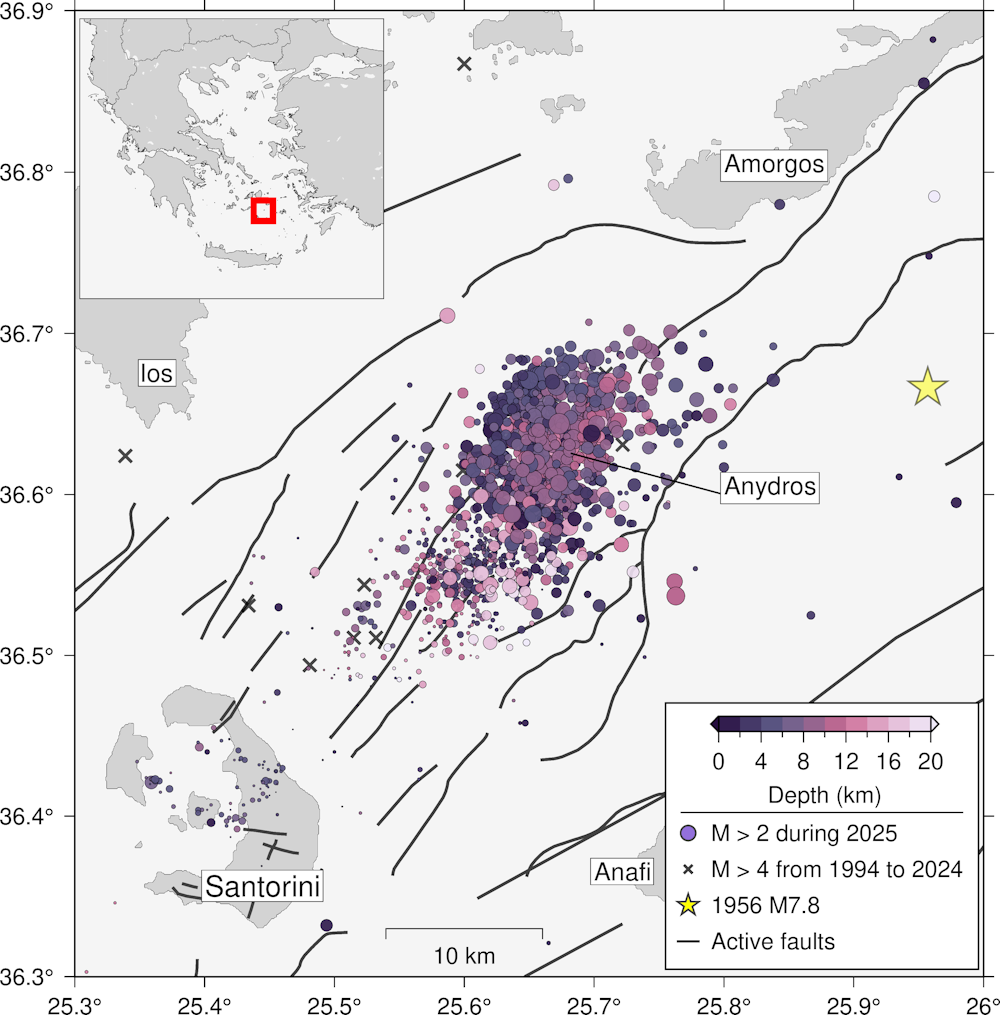
    MIL OSI Russia News

  • MIL-Evening Report: ‘A relentlessly dull world’ – the case for adding more colour to NZ’s grey prisons

    Source: The Conversation (Au and NZ) – By Christine McCarthy, Senior Lecturer in Interior Architecture, Te Herenga Waka — Victoria University of Wellington

    Interior of Auckland South Men’s Prison. Getty Images

    Prisons are not colourful places. Typically, they are grey or some variation of a monochrome colour scheme. But increasingly, such a limited palette is being questioned for its impact on health and rehabilitation.

    As the US journalist and broadcaster Michael Montgomery once wrote of the supermax unit of Pelican Bay prison in California:

    I saw a relentlessly dull world; just concrete and steel […] The monochrome landscape seemed to permeate even the faces of the inmates here; men […] had a pasty, ghostly pallor. It was difficult to imagine any kind of sustained life here.

    Prison greyness is partly due to the predominance of steel and concrete, especially in high- and maximum-security units. But the furniture and fixtures – tables, seats and toilets – are also often stainless-steel grey. In New Zealand, even sentenced prisoners’ clothing is grey.

    One reason for this is the Department of Corrections’ concern about gang colours. New Zealand prisoners cannot keep any item of property with gang-related colours. These prohibitions can be zealously but inconsistently enforced.

    As a prisoner once explained to me (when I was president of the Wellington Howard League), a calculator he used for correspondence classes was allowed in one unit but banned in another, simply because it had a blue strip on it.

    Something similar was reported by the Prison Inspectorate in a 2019 report. In that case, staff withheld “black underwear containing small amounts of blue stitching. Staff confirmed this was their approach.”

    Worlds without colour

    Does colour matter in human environments? The answer appears to be yes. Examples include red increasing heart rates, blue and green creating calm, and yellow evoking hope. According to Australian researcher Thomas Edwards:

    yellow may be appropriate in contexts where high motivation and a future-focus are required. By contrast, green and blue may be relevant to settings where low motivation, a present focus, and prosocial behaviours are favoured.

    Colour can also help with legibility and way-finding, and differentiate surfaces to prevent trip hazards – an increasingly important factor as the prison population ages.

    Other over-represented groups in prison can also benefit. For example, Israeli research published in 2022 concluded that soft natural colours and low contrast can improve environments for people with autism spectrum disorder.

    Ultimately, a colourless world is not a good one. Grey and neutral colours reduce visual stimulation, demotivate, increase boredom and can lead to depression. Colour takes on particular importance for people who spend most or all of the day indoors, such as the prisoners in high- and maximum-security units.

    Murals are on the wall and patterned tables in a Californian prison unit.
    Getty Images

    The need for variety

    Colour has a graduated spectrum – there isn’t only one blue, for example. Tints, tones and shades add another level of complexity. Coloured surfaces are affected by their material and degree of sheen. Different combinations of colours and different light sources also affect how a colour looks and its likely impact on people.

    This means there are many possible variants to consider. But most research is highly specific and the findings are rarely universally applicable. The impact of context, cultural differences, our personal preferences and colour associations can also be difficult to measure.

    But this theoretical complexity shouldn’t prevent the use of more colour in prison architecture. Variety in colour, rather than the use of specific colours, is the fundamental change that is needed. Likewise, concerns about gang colours can be mitigated if pattern and colour combinations are astutely used.

    In 2019, Edinburgh College of Art researchers led a project involving dementia patients, adding colour to corridors at the Royal Edinburgh Hospital. Multicoloured strips of block colours were painted on the white corridor walls to relieve the monotony of these spaces.

    Fewer aggressive incidents between patients or with staff were reported after the project. The specific reason is unclear, but it appears better demarcation of spaces led to fewer patients congregating and causing conflict in circulation areas.

    Another example at a semi-open prison in Bosnia saw prisoners painting diagonal lines on walls, creating triangles painted in different colours. Researchers concluded that “bright colours are recommended in the prison, with green and blue […] being the best rated because people perceive them as soothing, stimulating, pleasant and safe”.

    Brighter futures

    There are many other instances in healthcare settings throughout New Zealand where decals of photographic or other images have transformed walls, lifting the atmosphere of a space.

    Increasing the amount of colour on a wall is an inexpensive way to improve prison environments for both staff and prisoners. It can easily create variety and relieve the tedium of otherwise indistinguishable spaces.

    Housing prisoners in a dreary architecture of grey walls, grey furniture and people in grey jumpsuits must make it difficult for them to imagine and prepare for a positive future in the community.

    This can be inferred from studies of prisoners in solitary confinement which have established that living in extremely monotonous environments can cause depression, paranoia, anxiety, aggression and self-harm.

    The new expansion to Waikeria Prison, and its 100-bed mental health unit Hikitia, is an opportunity to significantly shift this attitude to prison interior architecture – but it shouldn’t stop there.

    All prisons would benefit from replacing the typically monochromatic palette of prison architecture with something more colourful.

    Christine McCarthy is a past President of the Wellington Howard League for Penal Reform (2018–20).

    ref. ‘A relentlessly dull world’ – the case for adding more colour to NZ’s grey prisons – https://theconversation.com/a-relentlessly-dull-world-the-case-for-adding-more-colour-to-nzs-grey-prisons-248665

    MIL OSI AnalysisEveningReport.nz

  • MIL-OSI Submissions: Gaza and West Bank – “Inflicting harm and denying care” in the West Bank: MSF report on escalation of attacks and obstructions of healthcare

    Source: Medecins Sans Frontieres/Doctors Without Borders (MSF)

    Jerusalem, 6 February 2025 – Israeli forces and settlers have increased the use of extreme physical violence against Palestinians in the occupied West Bank since the all-out war on Gaza began in October 2023, according to a new report by Medecins Sans Frontieres/Doctors Without Borders (MSF). 

    In total, at least 870 Palestinians have been killed and over 7,100 injured between October 2023 and January 20251. According to the MSF report, “Inflicting harm and denying care”, the escalation of violence in the West Bank has severely hindered access to healthcare and is part of a pattern of systemic oppression by Israel which has been described by the International Court of Justice (ICJ) as amounting to racial segregation and apartheid.

    The report which covers a one-year period from October 2023 and 2024, provides in-depth interviews from 38 MSF patients and personnel, hospital staff paramedics and volunteers supported by MSF who report prolonged and violent Israeli military incursions and stricter movement restrictions, all of which have severely hindered access to essential services, particularly healthcare. The situation has further deteriorated since the ceasefire in Gaza and has exacerbated dire living conditions for many Palestinians who are paying an immense physical and psychological toll.

    “Palestinian patients are dying because they simply cannot reach hospitals,” says Brice de le Vingne, MSF emergency coordinator. “We’re seeing ambulances blocked by Israeli forces at checkpoints while carrying critical patients, medical facilities surrounded and raided during active operations, and healthcare workers subjected to physical violence while trying to save lives.”

    An increased number of attacks on medical personnel and facilities have been reported to MSF teams, including attacks on hospitals, destruction of makeshift medical sites in refugee camps, as well as the harassment, detention, injury, and killing of first responders and medical workers by Israeli forces. Between October 2023 and December 2024, WHO has recorded 694 attacks on healthcare in the West Bank, with hospitals and healthcare structures often besieged by military force. Healthcare workers express a feeling of insecurity as they are frequently harassed, detained, injured and even killed.

    “Israeli forces surrounded the stabilisation point [in Tubas], closing both its entrances, even though it was very clear that this was a medical building. They ordered all the paramedics to exit the stabilisation point. There were around 22 of us paramedics there. Israeli soldiers shot inside and outside the building, damaging our supplies and the stabilisation point,” says a medic from the Palestinian Red Crescent Society, supported by MSF.

    In case of medical emergency, restrictions of movement can have deadly consequences. Access to healthcare in this context has been severely impeded by the obstruction and targeting of ambulance movements and the escalation of violent military raids resulting in injuries, fatalities and the destruction of vital civilian infrastructure, including roads, healthcare, water pipelines and electrical systems, particularly in Tulkarem and Jenin refugee camps. In remote areas and outskirts of cities like Jenin or Nablus, the situation is especially dire, as patients with chronic conditions, such as

    those who need regular dialysis treatment, are forced to stay home due to the untenable obstacles to reaching healthcare.

    On top of the frequent Israeli military incursions, settler violence and the ever-increasing expansion of settlements has left many Palestinians vulnerable to violence and afraid to move across the West Bank. In total, 1,500 attacks by Israeli settlers against Palestinians have been reported by OCHA between October 2023 and 2024.

    As the occupying power, Israel has legal obligations under international law to ensure access to healthcare and protect medical personnel. The healthcare system in the West Bank is under immense strain and forced into a state of perpetual emergency.

    MSF calls Israel to stop the violence against healthcare workers, patients and health facilities and to stop obstructing medical personnel from performing lifesaving duties.

    MIL OSI – Submitted News

  • MIL-OSI USA: Senator Reverend Warnock, Colleagues Raise Alarm Over Chaos at Critical National Security Agencies Hurting National Security, Placing U.S. Citizens at Risk

    US Senate News:

    Source: United States Senator Reverend Raphael Warnock – Georgia

    Senator Reverend Warnock, Colleagues Raise Alarm Over Chaos at Critical National Security Agencies Hurting National Security, Placing U.S. Citizens at Risk

    Senator Reverend Warnock, Senators: “Blanket stop-work orders… are causing immediate harm to U.S. national security, placing U.S. citizens at risk, disrupting life-saving work.”

    Washington, D.C. — Today, U.S. Senator Reverend Raphael Warnock (D-GA) and 36 of his colleagues pushed Secretary of State Marco Rubio to answer for the growing chaos and dysfunction at the U.S. Department of State following the Trump Administration’s illegal attempt to destroy the U.S. Agency for International Development (USAID).

    USAID is a critical pillar of U.S. national security strategy, providing lifesaving aid and development support around the world to help ensure stability. Yesterday, personnel at USAID were not permitted to enter the agency’s headquarters, and Elon Musk announced that President Donald Trump agreed to close the agency and move it under the State Department. The Trump Administration, led by Musk, has also furloughed thousands of senior career civil servants, including two top security officials who denied Musk and the Department of Government Efficiency access to classified documents and systems.

    “We are deeply concerned by reports of not only growing chaos and dysfunction at the Department of State, but the Administration’s brazen and illegal attempts to destroy the U.S. Agency for International Development (USAID). Mass personnel furloughs of dubious legality and abrupt, blanket stop-work orders without regard to relevant appropriations laws are causing immediate harm to U.S. national security, placing U.S. citizens at risk, disrupting life-saving work and breaking the U.S. government’s contractual obligations to private sector partners,” wrote the senators.

    The senators continued, “The Administration’s failure to consult with Congress prior to taking these steps violates the law and impedes Congress’s constitutional duty to conduct oversight of funding, personnel and the nation’s foreign policy. The Administration’s failure to expend funds appropriated on a bipartisan basis by Congress would violate the Impoundment Control Act.”

    They continued, “Every Administration has the right to review and adjust ongoing assistance programming. However, attempting to arbitrarily turn off core functions of a critical U.S. national security agency, without Congressional consideration or any metric-based review and absent legal authority to do so, is unprecedented and deeply disturbing.”

    In addition to Senator Warnock, the letter was authored by Senator Tim Kaine (D-VA), and cosigned by Senators Cory Booker (D-NJ), Dick Durbin (D-IL), Jeff Merkley (D-OR), Ruben Gallego (D-AZ), Lisa Blunt Rochester (D-DE), Michael Bennet (D-CO), Elizabeth Warren (D-MA), Peter Welch (D-VT), Edward J. Markey (D-MA), Kirsten Gillibrand (D-NY), Bernie Sanders (I-VT), Gary Peters (D-MI), Tammy Baldwin (D-WI), Richard Blumenthal (D-CT), Ron Wyden (D-OR), Martin Heinrich (D-NM), Amy Klobuchar (D-MN), Tammy Duckworth (D-IL), Andy Kim (D-NJ), Adam Schiff (D-CA), Angus S. King (I-ME), Sheldon Whitehouse (D-RI), John Hickenlooper (D-CO), Mazie K. Hirono (D-HI), Alex Padilla (D-CA), Tina Smith (D-MN), Catherine Cortez Masto (D-NV), Jack Reed (D-RI), Chris Murphy (D-CT), Jacky Rosen (D-NV), Mark Kelly (D-AZ), Brian Schatz (D-HI), Mark R. Warner (D-VA), Chris Van Hollen (D-MD), Chris Coons (D-DE) and Elissa Slotkin (D-MI),

    The letter can be viewed HERE and the text is below.

    Dear Secretary Rubio:

    The effective administration of U.S. foreign assistance is critical to advancing core U.S. national security priorities, including countering the influence of China, Russia and Iran. As you acknowledged at your confirmation hearing, pushing back on China in particular is a top bipartisan priority. 

    As such, we are deeply concerned by reports of not only growing chaos and dysfunction at the Department of State, but the Administration’s brazen and illegal attempts to destroy the U.S. Agency for International Development (USAID). Mass personnel furloughs of dubious legality and abrupt, blanket stop-work orders without regard to relevant appropriations laws are causing immediate harm to U.S. national security, placing U.S. citizens at risk, disrupting life-saving work and breaking the U.S. government’s contractual obligations to private sector partners.

    The Administration’s failure to consult with Congress prior to taking these steps violates the law and impedes Congress’s constitutional duty to conduct oversight of funding, personnel and the nation’s foreign policy. The Administration’s failure to expend funds appropriated on a bipartisan basis by Congress would violate the Impoundment Control Act.

    Foreign assistance is critical to supporting U.S. strategic interests around the world. Foreign assistance protects U.S. national security, advances U.S. values, and ensures the U.S. is the partner of choice for everything from defense procurement to cutting edge scientific research. China, Russia and Iran are already moving rapidly to exploit the vacuum and instability left by the U.S.’s sudden global retreat.

    Every Administration has the right to review and adjust ongoing assistance programming. However, attempting to arbitrarily turn off core functions of a critical U.S. national security agency, without Congressional consideration or any metric-based review and absent legal authority to do so, is unprecedented and deeply disturbing.

    We request immediate clarification on the following:

    Status of USAID:

    1. Confirmation of your understanding that any effort to abolish USAID or merge USAID into the Department of State absent Congressional consultation and approval is illegal.
    2. Confirmation of your understanding that adversaries such as China, Russia and Iran are quickly moving into the vacuum left by suspended USAID programs. 
    3. The Department of State’s assessment of Mr. Elon Musk’s financial ties to China and the impact of these ties to the decision-making process of Mr. Musk and his employees.
    4. Confirmation that neither you nor any member of your leadership team are taking direction from Mr. Musk with regards to the work of the Department of State or USAID, personnel or financial decisions for either agency, or any other matters relevant to U.S. national security. 
    5. Confirmation of the names and employment status of individuals directed by Mr. Musk to engage with USAID staff, the qualifications of these individuals, and the level of their security clearances – if any.

    Personnel:

    1. Confirmation of your understanding that any unauthorized access by or disclosure of classified information to individuals without appropriate security clearance could be considered a criminal offense.
    2. The legal authority and rationale under which, on January 28, more than 50 senior career civil and foreign service USAID officials were placed on administrative leave. This move was not only unprecedented, but also inconsistent with the Office of Personnel Management’s own guidelines for the use of administrative leave.
    3. The legal authority under which, on January 28, approximately 390 USAID Institutional Support Contractors (ISCs) were given stop-work orders, and clarification of which Administration official directed the implementation of this termination.
    4. Whether any Department of State career civil and foreign service or contractors have been placed on administrative leave or removed from their roles as a result of or relating to the assistance freeze or any directives from the Office of Foreign Assistance.
    5. Clarification of which Administration official directed the implementation of this mass furlough.
    6. Clarification of whether these individuals were directed to be terminated without cause.
    7. Confirmation that personnel will not face retaliation or retribution for performing their duties under the previous Administration’s policy direction.
    8. Under what authorities and by which official’s directive career civil service, foreign service, and Personal Services Contractors (PSC), and those under other hiring authorities have been removed from their roles or limited in their ability to execute their work.
    9. Confirmation that further career civil service, foreign service and USAID contractors will not be removed from their roles without cause or receive stop work orders.
    10. Whether, upon full resumption of legally mandated foreign assistance activities, the Administration intends to re-hire contractors who have been removed from their roles.
    11. Any additional guidance provided to State and USAID staff regarding the foreign assistance freeze, including confirmation of whether direct hires, contractors, or implementing organizations have been directed not to speak publicly about the foreign assistance freeze.
    12. Public identification of the individual currently serving as the Director or Acting Director of the State Department’s Office of Foreign Assistance and as Acting Deputy Administrator of USAID, and the dates upon which this individual was appointed to each position.
    13. Confirmation of your understanding that the State Department’s Director of Foreign Assistance has no authority to issue personnel directives for USAID.

    Resumption of Foreign Assistance:

    1. The specific process and anticipated timeframe for activities to receive exemptions or waivers, as referenced in your January 28, 2025 directive to State and USAID staff.
    2. The mechanisms and metrics established for this waiver process.
    3. The timeline for full resumption of legally mandated foreign assistance activities.
    4. Clarification of what risk assessment or analysis of potential risk to U.S. national security interests were conducted prior to the decision to freeze foreign assistance activities.
    5. Confirmation of the Department of State’s obligation to comply with U.S. contract law and your responsibility as Secretary of State ensure the Department honors its commitments to contracting partners.

    We welcome your urgent attention to these questions. We and our staff stand ready to work with you to ensure U.S. foreign assistance funding continues to be deployed effectively to protect American citizens, at home and abroad.

    Respectfully,

    MIL OSI USA News

  • MIL-OSI New Zealand: PM must condemn Trump’s ethnic cleansing plan

    Source: Green Party

    The Green Party is calling for the Prime Minister to show leadership and be unequivocal about Aotearoa New Zealand’s opposition to a proposal by the US President to remove Palestinians from Gaza.

    “The Prime Minister must be crystal clear in condemning crimes against humanity and the US President’s stated plans to forcibly remove Palestinians from Gaza,” says the Green Party Co-leader Chlöe Swarbrick.

    “Palestine belongs to Palestinians. To force the mass displacement of people from their homeland, on top of the latest 15-month genocidal assault, is an unthinkable new infringement on human rights. Dozens of other countries have recognised this for what it is.

    “Unfortunately, comments today by Foreign Minister Winston Peters on Trump’s proposal either signal a dramatic shift for Aotearoa New Zealand’s foreign policy or were uninformed. Neither is acceptable.

    “Prime Minister Christopher Luxon must – now more than ever – be clear that we regard such a plan as grotesque and illegal, and will use our reputation and alliances on the international stage to not only condemn, but ensure it never happens. 

    “New Zealanders care about justice and peace. We need the Government to reflect that in international relations.

    “Our Prime Minister and his Cabinet must support a rebuild of Gaza that is led and determined by Gazans, and increase aid funding to do so,” says Chlöe Swarbrick.

    MIL OSI New Zealand News

  • MIL-OSI USA: United States Seizes Venezuelan Aircraft Involved in Violations of U.S. Export Control and Sanctions Laws

    Source: US State of California

    The Dassault Falcon 2000EX Aircraft Was Used by Venezuela’s State-Owned Oil and Natural Gas Company and Illegally Maintained and Serviced Using Parts from the United States

    The Justice Department announced today that Dominican Republic authorities seized a Dassault Falcon 2000EX aircraft used by Petroleos de Venezuela, S.A. (PdVSA), the sanctioned Venezuelan state-owned oil and natural-gas company, at the request of the U.S. government based on violations of U.S. export control and sanctions laws.

    “The use of American-made parts to service and maintain aircraft operated by sanctioned entities like PdVSA is intolerable,” said Devin DeBacker, head of the Justice Department’s National Security Division. “The Justice Department, along with its federal law enforcement partners, will continue to safeguard our national security by identifying, disrupting, and dismantling schemes aimed at procuring American goods in violation of our sanctions and export control laws.”

    “Today’s announcement — the seizure of a sanctioned aircraft used by the Maduro regime — clearly shows that sanctions and export control laws have teeth,” said Acting Assistant Secretary for Export Enforcement Kevin J. Kurland of the Department of Commerce Bureau of Industry and Security (BIS). “BIS will continue to aggressively investigate and hold accountable those who violate our regulations.”

    “The seizure of the Dassault Falcon 2000EX aircraft provides yet another example of this office’s commitment to enforcing America’s export control laws against Venezuelan-owned PdVSA and other sanctioned entities,” said U.S. Attorney Hayden O’Byrne for the Southern District of Florida. “Asset forfeiture is a powerful law enforcement tool, which we will continue to use aggressively to deter, disrupt, and otherwise combat criminal activity.”

    “This seizure demonstrates HSI’s unwavering commitment to enforcing U.S. export control and sanctions laws around the globe,” said Edwin F. Lopez, Homeland Security Investigations (HSI) Santo Domingo Country Attaché. “By working closely with our partners in the Dominican Republic and across the U.S. government, we successfully prevented the violation of U.S. laws designed to protect national security and foreign policy interests. HSI will continue to use its global reach and investigative expertise to target those who seek to evade justice and undermine the rule of law.”

    In August 2019, President Trump issued Executive Order (EO) 13884, which, among other things, prohibits U.S. persons from engaging in transactions with persons who have acted or purported to act directly or indirectly for or on behalf of PdVSA. Pursuant to the EO, on Jan. 21, 2020, the Treasury Department’s Office of Foreign Assets Control (OFAC) identified 15 aircraft as blocked property of U.S. law that generally prohibit transactions by U.S. persons within (or transiting) the United States that involve any property or interests in blocked property.

    According to the U.S. investigation, in July 2017, PdVSA purchased the Dassault Falcon 2000EX aircraft from the United States and exported it to Venezuela where it was registered under tail number YV-3360. Following the imposition of sanctions on PdVSA and identification of the Dassault Falcon 2000EX aircraft as blocked property of PdVSA, the aircraft was serviced and maintained on multiple occasions using parts from the United States. The servicing included a brake assembly, electronic flight displays, and flight management computers: all in violation of U.S. export control and sanctions laws.

    According to a public statement issued by OFAC, since at least January 2019, the Dassault Falcon 2000EX aircraft has transported Venezuelan Oil Minister Manuel Salvador Quevedo Fernandez, who is also sanctioned by the U.S. government, to an Organization of the Petroleum Exporting Countries (OPEC) meeting in the United Arab Emirates and has been used to transport senior members of the Maduro regime in a continuation of the regime’s misappropriation of PdVSA assets.

    The Justice Department previously announced in September 2024 the seizure of a Dassault Falcon 900EX aircraft in the Dominican Republic that was owned and operated for the benefit of Nicolás Maduro Moros and persons affiliated with him in Venezuela.

    The BIS Miami Field Office is investigating the case with assistance from HSI Santo Domingo.

    Assistant U.S. Attorneys Jorge Delgado and Joshua Paster for the Southern District of Florida and Trial Attorney Ahmed Almudallal of the National Security Division’s Counterintelligence and Export Control Section are handling the matter. Assistant U.S. Attorneys Jonathan D. Stratton and Ajay J. Alexander for the Southern District of Florida also provided assistance.

    The Justice Department’s Office of International Affairs and HSI El Dorado Task Force Miami provided significant assistance. The United States thanks the Dominican Republic for its assistance in this matter.

    The burden to prove forfeitability in a forfeiture proceeding is upon the government.

    MIL OSI USA News

  • MIL-OSI Security: United States Seizes Venezuelan Aircraft Involved in Violations of U.S. Export Control and Sanctions Laws

    Source: United States Attorneys General

    The Dassault Falcon 2000EX Aircraft Was Used by Venezuela’s State-Owned Oil and Natural Gas Company and Illegally Maintained and Serviced Using Parts from the United States

    The Justice Department announced today that Dominican Republic authorities seized a Dassault Falcon 2000EX aircraft used by Petroleos de Venezuela, S.A. (PdVSA), the sanctioned Venezuelan state-owned oil and natural-gas company, at the request of the U.S. government based on violations of U.S. export control and sanctions laws.

    “The use of American-made parts to service and maintain aircraft operated by sanctioned entities like PdVSA is intolerable,” said Devin DeBacker, head of the Justice Department’s National Security Division. “The Justice Department, along with its federal law enforcement partners, will continue to safeguard our national security by identifying, disrupting, and dismantling schemes aimed at procuring American goods in violation of our sanctions and export control laws.”

    “Today’s announcement — the seizure of a sanctioned aircraft used by the Maduro regime — clearly shows that sanctions and export control laws have teeth,” said Acting Assistant Secretary for Export Enforcement Kevin J. Kurland of the Department of Commerce Bureau of Industry and Security (BIS). “BIS will continue to aggressively investigate and hold accountable those who violate our regulations.”

    “The seizure of the Dassault Falcon 2000EX aircraft provides yet another example of this office’s commitment to enforcing America’s export control laws against Venezuelan-owned PdVSA and other sanctioned entities,” said U.S. Attorney Hayden O’Byrne for the Southern District of Florida. “Asset forfeiture is a powerful law enforcement tool, which we will continue to use aggressively to deter, disrupt, and otherwise combat criminal activity.”

    “This seizure demonstrates HSI’s unwavering commitment to enforcing U.S. export control and sanctions laws around the globe,” said Edwin F. Lopez, Homeland Security Investigations (HSI) Santo Domingo Country Attaché. “By working closely with our partners in the Dominican Republic and across the U.S. government, we successfully prevented the violation of U.S. laws designed to protect national security and foreign policy interests. HSI will continue to use its global reach and investigative expertise to target those who seek to evade justice and undermine the rule of law.”

    In August 2019, President Trump issued Executive Order (EO) 13884, which, among other things, prohibits U.S. persons from engaging in transactions with persons who have acted or purported to act directly or indirectly for or on behalf of PdVSA. Pursuant to the EO, on Jan. 21, 2020, the Treasury Department’s Office of Foreign Assets Control (OFAC) identified 15 aircraft as blocked property of U.S. law that generally prohibit transactions by U.S. persons within (or transiting) the United States that involve any property or interests in blocked property.

    According to the U.S. investigation, in July 2017, PdVSA purchased the Dassault Falcon 2000EX aircraft from the United States and exported it to Venezuela where it was registered under tail number YV-3360. Following the imposition of sanctions on PdVSA and identification of the Dassault Falcon 2000EX aircraft as blocked property of PdVSA, the aircraft was serviced and maintained on multiple occasions using parts from the United States. The servicing included a brake assembly, electronic flight displays, and flight management computers: all in violation of U.S. export control and sanctions laws.

    According to a public statement issued by OFAC, since at least January 2019, the Dassault Falcon 2000EX aircraft has transported Venezuelan Oil Minister Manuel Salvador Quevedo Fernandez, who is also sanctioned by the U.S. government, to an Organization of the Petroleum Exporting Countries (OPEC) meeting in the United Arab Emirates and has been used to transport senior members of the Maduro regime in a continuation of the regime’s misappropriation of PdVSA assets.

    The Justice Department previously announced in September 2024 the seizure of a Dassault Falcon 900EX aircraft in the Dominican Republic that was owned and operated for the benefit of Nicolás Maduro Moros and persons affiliated with him in Venezuela.

    The BIS Miami Field Office is investigating the case with assistance from HSI Santo Domingo.

    Assistant U.S. Attorneys Jorge Delgado and Joshua Paster for the Southern District of Florida and Trial Attorney Ahmed Almudallal of the National Security Division’s Counterintelligence and Export Control Section are handling the matter. Assistant U.S. Attorneys Jonathan D. Stratton and Ajay J. Alexander for the Southern District of Florida also provided assistance.

    The Justice Department’s Office of International Affairs and HSI El Dorado Task Force Miami provided significant assistance. The United States thanks the Dominican Republic for its assistance in this matter.

    The burden to prove forfeitability in a forfeiture proceeding is upon the government.

    MIL Security OSI

  • MIL-OSI United Nations: Gaza: UN health agency urges rapid scale-up of medevacs as thousands remain in critical condition

    Source: United Nations 4

    Peace and Security

    More than 12,000 critically ill and injured patients, including at least 5,000 children, urgently need to be evacuated from Gaza, amid the crumbling health system, the UN World Health Organization (WHO)’s top official in the region said on Thursday.

    Speaking from Gaza, WHO Representative Rik Peeperkorn described a scene of widespread destruction, overwhelmed medical facilities and growing mental health needs, as the population in the enclave gradually returns to what is left of their homes after nearly 16 months of conflict.

    “Everyone in Gaza is affected…stress, anxiety, depression, and loneliness. It’s everywhere,” he said, highlighting the psychological toll on both residents and health workers.

    WHO Representative Peeperkorn speaking to the press via video link.

    Hospitals barely operational

    Before the war, Gaza had more than 3,500 hospital beds. Today, only 1,900 remain, and very few intensive care units (ICUs) and incubators for newborns, leaving medical staff struggling to treat critical cases.

    Even before the war, mental health services were limited, with just one psychiatric hospital, six community centres, and an NGO network providing support. Now, those facilities are either destroyed or non-functional.

    The situation is particularly concerning in northern Gaza, where only two psychiatrists remain. In addition, only one hospital remains partly functional in the region, and the remaining either destroyed or severely damaged.

    “Jabalya is like a wasteland. The destruction…is beyond belief,” he added.

    Evacuations painfully slow

    Dr. Peeperkorn further stated that medical evacuations of critically ill and injured patients have begun, with 35 to 40 patients transferred daily.

    “It is incredibly important that we expedite this and speed this up,” he said, emphasising that, according to WHO estimates, between 12,000 to 14,000 patients need to be evacuated from Gaza, including at least 5,000 children.

    Among the total estimated patients, about half suffer from trauma-related injuries while others need urgent treatment for chronic conditions such as cancer and cardiovascular disease.

    Dr. Peeperkorn called for the urgent re-opening of additional medical corridors, especially the “traditional referral pathway” of the West Bank and East Jerusalem, where facilities are ready to receive patients.

    UN News

    Critical infrastructure, including electricity networks, has suffered extensive damage across the Gaza Strip.

    Wider humanitarian situation

    Beyond the dire health crisis, the broader humanitarian situation in Gaza remains critical, with severe shortages of clean water, food, and essential services.

    UN Emergency Relief Coordinator Tom Fletcher visited the enclave on Thursday, as UN agencies and partners continue responding to immense needs, a UN spokesperson said.

    “In northern Gaza, Mr. Fletcher toured two hospitals – Al Shifa in Gaza City and Al Awda in Jabalya – where he met with patients, staff and management,” Farhan Haq, Deputy UN Spokesperson, told journalists at a news briefing in New York.

    “Leaving the Al Awda hospital, he spoke with survivors and returnees in Jabalya who are trying to rebuild their lives amid the rubble.”

    Acute shortages

    Mr. Haq further reported that water shortages remain particularly acute.  The only operational water well in north Gaza, run by the UN Relief and Works Agency (UNRWA), serves as a crucial lifeline for clean drinking water.

    However, widespread infrastructure destruction has left many residents without reliable access. Humanitarian partners are distributing 2,500 cubic metres of safe drinking water daily, reaching about 411,000 people, but this remains far below the actual needs.

    A partner organization is also providing cleaning and sanitation services at 17 displacement sites in northern Gaza, benefiting nearly 12,000 displaced individuals.

    “Water, sanitation and hygiene partners are carrying out assessments in locations across the Strip to repair water wells, install dosing pumps, and set up water filling points,” Mr. Haq said, adding: “while some repairs are already underway, further progress hinges on teams being able to clear debris and carry out assessments of explosive hazards.”

    Challenges in the West Bank

    Meanwhile in the West Bank, Israeli military operations have intensified in Jenin, Tulkarm, and Tubas, severely restricting Palestinian access to essential aid, including water, food, medicine and supplies for infants.

    In Tubas governorate, Israeli forces have been operating in the El Far’a refugee camp for five consecutive days, Mr. Haq reported.

    “They have imposed a curfew, reportedly prohibiting residents from leaving their homes. They also bulldozed roads and damaged water networks, forcing residents to rely on collecting rainwater.”

    MIL OSI United Nations News

  • MIL-OSI: Global-e to Announce Financial Results for the Fourth Quarter and Year End 2024 on February 19, 2025

    Source: GlobeNewswire (MIL-OSI)

    PETAH-TIKVA, Israel, Feb. 06, 2025 (GLOBE NEWSWIRE) — Global-e (Nasdaq: GLBE), the platform powering global direct-to-consumer e-commerce, today announced it will report financial results for the fourth quarter and full year ended December 31, 2024, before market open on Wednesday, February 19, 2025.

    Global-e management will host a conference call to review its financial results and outlook.

    Date: Wednesday, February 19, 2025
    Time: 8:00 AM ET
    United States/Canada Toll Free: +1-800-717-1738
    International Toll: +1-646-307-1865
       

    Please join the call 5-10 minutes prior to the scheduled start time, to avoid a delay in connecting. A live webcast will be available in the Investor Relations section of Global-e’s website at https://investors.global-e.com/news-events/events-presentations

    A replay of the webcast will be available in the Investor Relations section of Global-e’s website at https://investors.global-e.com/news-events/events-presentations approximately two hours after the conclusion of the call and remain available for approximately 30 calendar days.

    About Global-e Online Ltd.

    Global-e (Nasdaq: GLBE) is the world’s leading platform enabling and accelerating global, Direct-To-Consumer e-commerce. The chosen partner of over 1,000 brands and retailers across the United States, EMEA and APAC, Global-e makes selling internationally as simple as selling domestically. The company enables merchants to increase the conversion of international traffic into sales by offering online shoppers in over 200 destinations worldwide a seamless, localized shopping experience. Global-e’s end-to-end e-commerce solutions combine best-in-class localization capabilities, big-data best-practice business intelligence models, streamlined international logistics and vast global e-commerce experience, enabling international shoppers to buy seamlessly online and retailers to sell to, and from, anywhere in the world. For more information, please visit: www.global-e.com.

    Investor Contact:
    Erica Mannion or Mike Funari
    Sapphire Investor Relations, LLC
    IR@global-e.com
    +1 617-542-6180

    Press Contact:
    Sarah Schloss
    Headline Media
    sarah.schloss@headline.media
    +1 914-506-5104

    The MIL Network

  • MIL-OSI: APA Corporation Declares Cash Dividend on Common Shares

    Source: GlobeNewswire (MIL-OSI)

    HOUSTON, Feb. 06, 2025 (GLOBE NEWSWIRE) — The board of directors of APA Corporation (Nasdaq: APA) has declared a regular cash dividend on the company’s common shares.

    The dividend on common shares is payable May 22, 2025, to stockholders of record on April 22, 2025, at a rate of 25 cents per share on the corporation’s common stock.

    About APA
    APA Corporation owns consolidated subsidiaries that explore for and produce oil and natural gas in the United States, Egypt and the United Kingdom and that explore for oil and natural gas offshore Suriname and elsewhere. APA posts announcements, operational updates, investor information and press releases on its website, www.apacorp.com.

    Contacts
    Investor: (281) 302-2286 Ben Rodgers
    Media: (713) 296-7276 Alexandra Franceschi
    Website: www.apacorp.com

    APA-F

    The MIL Network

  • MIL-OSI Submissions: Amnesty International – Trump’s claim that US will take over Gaza and forcibly deport Palestinians is appalling and unlawful

    Source: Amnesty International

    Israel/ OPT: President Trump’s claim that US will take over Gaza and forcibly deport Palestinians appalling and unlawful

    Reacting to President Donald Trump’s comments that the USA will “take over the Gaza Strip”, advocating again for the forcible transfer of around 2 million Palestinians from Gaza to neighbouring countries, Amnesty International’s Secretary General Agnès Callamard said:

    “President Trump’s remarks calling for the forcible transfer of Palestinians from the occupied Gaza Strip must be unequivocally and widely condemned. His language is inflammatory, outrageous and shameful, and his proposal amounts to a flagrant violation of international law.

    “Any plan to forcibly deport Palestinians outside the occupied territory against their will is a war crime, and when committed as part of a widespread or systematic attack on the civilian population, it would constitute a crime against humanity.

    “President Trump’s comments dangerously dehumanizes Palestinians, who for the last 16-months have been victims of Israel’s genocide in Gaza, and for decades have been living under illegal occupation and apartheid. Most of Gaza’s Palestinians are descendants and survivors of the 1948 Nakba, they have already been repeatedly uprooted and dispossessed by Israel and denied their right of return yet have continued to struggle to remain on their lands and defend their human rights.

    “Israel’s genocide in Gaza, including through unlawful killings, injuries and the deliberate infliction of conditions of life that are calculated to bring about their physical destruction,  has been accompanied by an alarming rise in unlawful killings in the occupied West Bank, state-backed settler violence, mass land confiscation and arbitrary arrests, enforced disappearances, torture and other ill-treatment of Palestinians across the Occupied Palestinian Territory and Israel.

    “President Trump repeatedly referenced the destruction, killing and unlivable conditions in Gaza calling it a ‘demolition site’ while seated next to Israeli Prime Minister Netanyahu, yet he completely failed to mention the Israeli government’s responsibility for causing this devastation. Nor did he acknowledge the US government’s role in providing arms that have repeatedly been used to carry out deadly, unlawful attacks in Gaza.

    “In the face of President Trump’s dangerous threats, it’s more important than ever for the rest of the international community to categorically reject these proposals and expedite diplomatic efforts, in line with international law, to end Israel’s unlawful occupation, dismantle apartheid and uphold human rights for Palestinians and Israelis. History has abundantly demonstrated that sidelining international law for political expediency is a recipe for the perpetuation of violations.

    “Amnesty International also warns against the misuse of desperately needed humanitarian aid and reconstruction as a bargaining chip or as a means to coerce Palestinians in Gaza into leaving. No state is entitled to treat a protected population living under occupation as pawns in a geopolitical chess game.”

    MIL OSI – Submitted News

  • MIL-OSI Video: President Trump Welcomes Netanyahu to the White House

    Source: United States of America – The White House (video statements)

    “The bonds of friendship and affection between the American and Israeli people have endured for generations, and they are absolutely unbreakable.” – President Donald J. Trump

    https://www.youtube.com/watch?v=MoAQd6zvv7k

    MIL OSI Video

  • MIL-Evening Report: Gaza: we analysed a year of satellite images to map the scale of agricultural destruction

    Source: The Conversation (Au and NZ) – By Lina Eklund, Associate Senior Lecturer, Lund University

    Part of North Gaza in November 2023, and again in July 2024.

    SkySat imagery © 2025/Planet Labs PBC

    The ceasefire agreed between Israel and Hamas makes provisions for the passage of food and humanitarian aid into Gaza. This support is much needed given that Gaza’s agricultural system has been severely damaged over the course of the war.

    Over the past 17 months we have analysed satellite images across the Gaza Strip to quantify the scale of agricultural destruction across the region. Our newly published research reveals not only the widespread extent of this destruction but also the potentially unprecedented pace at which it occurred. Our work covers the period until September 2024 but further data through to January 2025 is also available.

    Before the war, tomatoes, peppers, cucumbers and strawberries were grown in open fields and greenhouses, and olive and citrus trees lined rows across the Gazan landscape. The trees in particular are an important cultural heritage in the region, and agriculture was a vital part of Gaza’s economy. About half of the food eaten there was produced in the territory itself, and food made up a similar portion of its exports.

    By December 2023, only two months into the war, there were official warnings that the entire population of Gaza, more than 2 million people, was facing high levels of acute food insecurity. While that assessment was based on interviews and survey data, the level of agricultural damage across the whole landscape remained out of view.

    Most olive and citrus trees are gone

    To address this problem, we mapped the damage to tree crops – mostly olive and citrus trees – in Gaza each month over the course of the war up until September 2024. Together with our colleagues Dimah Habash and Mazin Qumsiyeh, we did this using very high-resolution satellite imagery, detailed enough to focus on individual trees.

    We first visually identified tree crops with and without damage to “train” our computer program, or model, so it knew what to look for. We then ran the model on all the satellite data. We also looked over a sample of results ourselves to confirm it was accurate.

    Our results showed that between 64% and 70% of all tree crop fields in Gaza had been damaged. That can either mean a few trees being destroyed, the whole field of trees completely removed, or anything in between. Most damage took place during the first few months of the war in autumn 2023. Exactly who destroyed these trees and why is beyond the scope of our research or expertise.

    In some areas, every greenhouse is gone

    As greenhouses look very different in satellite images, we used a separate method to map damage to them. We found over 4,000 had been damaged by September 2024, which is more than half of the total we had identified before the start of the war.

    Greenhouses and the date of initial damage between October 2023 and September 2024.
    Yin et al (2025)

    In the south of the territory, where most greenhouses were found, the destruction was fairly steady from December 2023 onwards.

    But in north Gaza and Gaza City, the two most northerly of the territory’s five governorates, most of the damage had already taken place by November and December 2023. By the end of our study period, all 578 greenhouses there had been destroyed.

    North Gaza and Gaza City have also seen the most damage to tree crop fields. By September 2024, over 90% of all tree crops in Gaza City had been destroyed, and 73% had been lost in north Gaza. In the three southern governorates, Khan Younis, Deir al-Balah and Rafah, around 50% of all tree crops had been destroyed.

    Agricultural damage is common in armed conflict, and has been documented with satellite analysis in Ukraine since the 2022 Russian invasion, in Syria and Iraq during the ISIS occupation in 2015, and in the Caucasus during the Chechen wars in the 1990s and 2000s.

    The exact impact can differ from conflict to conflict. War may directly damage lands, as we have seen in Gaza, or it may lead to more fallow areas as infrastructure is damaged and farmers are forced to flee. A conflict also increases the need for local agricultural production, especially when food imports are restricted.

    Our assessment shows a very high rate of direct and extensive damage to Gaza’s agricultural system, both compared to previous conflict escalations there in 2014 and 2021, and in other conflict settings. For example, during the July-August war in 2014, around 1,200 greenhouses were damaged in Gaza. This time round at least three times as many have been damaged.

    Agricultural attacks are unlawful

    Attacks on agricultural lands are prohibited under international law. The Rome Statute of the International Criminal Court from 1998 defines the intentional use of starvation of civilians through “depriving them of objects indispensable to their survival” as a war crime. The Geneva conventions further define such indispensable objects as “foodstuffs, agricultural areas for the production offoodstuffs, crops, livestock, drinking water installations and supplies and irrigation works”.

    Our study provides transparent statistics on the extent and timing of damage to Gaza’s agricultural system. As well as documenting the impacts of the war, we hope it can help the massive rebuilding efforts that will be required.

    Restoring Gaza’s agricultural system goes beyond clearing debris and rubble, and rebuilding greenhouses. The soils need to be cleaned from possible contamination. Sewage and irrigation infrastructure need to be rebuilt.

    Such efforts may take a generation or more to complete. After all, olive and citrus trees can take five or more years to become productive, and 15 years to reach full maturity. After previous attacks on Gaza the trees were mostly replanted, and perhaps the same will happen again this time. But it’s for good reason they say that only people with hope for the future plant trees.

    Lina Eklund receives funding from the Swedish National Space Agency and the Strategic Research Area: The Middle East in the Contemporary World (MECW) at the Centre for Advanced Middle Eastern Studies, Lund University, Sweden.

    He Yin receives funding from NASA.

    Jamon Van Den Hoek receives funding from NASA.

    ref. Gaza: we analysed a year of satellite images to map the scale of agricultural destruction – https://theconversation.com/gaza-we-analysed-a-year-of-satellite-images-to-map-the-scale-of-agricultural-destruction-248796

    MIL OSI AnalysisEveningReport.nz

  • MIL-OSI Security: Missouri Man Guilty of Traveling to Louisiana for Illicit Sexual Conduct with 12-Year-Old Girl

    Source: Federal Bureau of Investigation (FBI) State Crime News

    NEW ORLEANS –  U.S. Attorney Duane A. Evans announced that ERIC CHARLES FULLER (“FULLER”), age 54, from Springfield, Missouri, pled guilty on February 4, 2025, before United States District Judge Greg Gerard Guidry, to interstate travel with intent to engage in illicit sexual conduct, in violation of Title 18, United States Code, Section 2423(b).

    According to court documents, on or about December 7, 2023, law enforcement personnel, operating undercover online and pretending to be a twenty-nine-year-old mother with a twelve-year-old daughter, met FULLER on a social network and messaging application. Over approximately the next month, on numerous occasions, FULLER discussed his interest in engaging in various sexual acts with the “mother” and daughter.”  These discussions culminated in FULLER making arrangements to travel from his residence in Springfield, Missouri, to the New Orleans, Louisiana area to engage in sexual contact, individually and collectively, with the ”mother” and “daughter.” During his conversations, FULLER described the contact he anticipated as “highly taboo,” “highly illegal,” “risky,” “not the worst way to be,” and “a way to have a happier life.” FULLER drove from Springfield, Missouri on about January 11, 2024, and arrived at a predetermined location in Mandeville, Louisiana, on January 12, 2024, in order to engage in sexual conduct with the individual FULLER believed to be a twelve-year-old female.

    FULLER faces a maximum term of imprisonment of  thirty (30) years.  FULLER also faces at least five (5) years, and up to a lifetime of supervised release, up to a $250,000 fine and a $100 mandatory special assessment fee.  FULLER may also be required to register as a sex offender.  Sentencing before Judge Guidry has been scheduled for May 13, 2025.

    This case was brought as part of Project Safe Childhood, a nationwide initiative to combat the growing epidemic of child sexual exploitation and abuse launched in May 2006 by the Department of Justice.  Led by United States Attorneys’ Offices and the Criminal Division’s Child Exploitation and Obscenity Section (CEOS), Project Safe Childhood marshals federal, state and local resources to better locate, apprehend and prosecute individuals who exploit children via the Internet, as well as to identify and rescue victims.  For more information about Project Safe Childhood, please visit www.projectsafechildhood.gov.

    U.S. Attorney Evans praised the work of the Federal Bureau of Investigation in investigating this matter.  Assistant United States Attorney Jordan Ginsberg, Chief of the Public Integrity Unit, is in charge of the prosecution.

    MIL Security OSI

  • MIL-Evening Report: The transformation of Jordan Mailata: from rugby league in Sydney to a second NFL Super Bowl

    Source: The Conversation (Au and NZ) – By Justin Keogh, Associate Dean of Research, Faculty of Health Sciences and Medicine, Bond University

    Jordan Mailata is an Australian-born NFL star who plays for the Philadelphia Eagles as an offensive left tackle. This position favours very tall, heavy and strong athletes who also possess good footwork, agility and tactical awareness.

    His main job is to protect his quarterback and provide gaps for his running backs to run through.

    Mailata is one of four Australians to play in a Super Bowl, with the others being punters (kickers) Ben Graham, Arryn Siposs and Mitch Wishnowsky.

    Unfortunately, no Australian has won the game that matters most every year but Mailata has a chance in his second Super Bowl, against the Kansas City Chiefs on Monday morning.

    So, how did Mailata reach the pinnacle of his “new” sport?


    Read more:
    It’s the most American of sports, so why is the NFL looking to Melbourne for international games?


    A rugby league giant

    Mailata’s initial sporting success came in rugby league.

    He played in the Canterbury Bankstown Bulldogs under-18 team and was offered a contract by the South Sydney Rabbitohs under-20 team. Both of these clubs are part of the elite National Rugby League (NRL) competition.

    Mailata, who still hadn’t reached his 21st birthday when offered the Rabbitohs contract, stood out as a giant even in professional rugby league circles at 203cm and 147 kilograms.

    But after fainting during a rugby league training session, he was diagnosed with a heart condition that required surgery. He then became even bigger, reportedly tipping the scales at close to 170kg.

    Ultimately, this resulted in some of the South Sydney staff and sport agents suggesting American football might be a better option for someone of his stature and physical capacities.

    Tranasferring his talent

    This brings us to what is known as “talent transfer”.

    In high-performance sport, talent transfer refers to a high-level athlete from one sport transferring to another based on their existing skills and physical capacities.

    This can be done for a number of reasons, like injury, burnout, loss of interest, or, in the case of Mailata, finding another sport that would suit their physicality better.

    Examples of talent transfer include sprinting to bobsleigh (Jana Pittman), rowing to cycling (Bridie O’Donnell and Rebecca Romero) or Sonny Bill Williams, who was highly successful at rugby league, rugby union and heavyweight boxing.

    For talent transfer to be successful, there needs to be a lot of similarities between the two sports in areas such as skill requirements (kicking, passing, tackling), physical traits (height, mass) and physiological demands (aerobic vs anaerobic).

    These similarities can allow athletes to capitalise on their previous training to succeed in their new sport faster and to a higher level than their competitors.

    The similarities between American football and rugby (league and union) – such as catching and kicking an oval-shaped ball, evading or running through defenders and full-body tackling – would have benefited a mature athlete like Mailata to transfer from one code to another.

    A whole new ball game

    His transition from a monster-sized rugby league player in Australia to a more regular-sized offensive tackle in the NFL was initially facilitated through the NFL International Player Pathway (IPP) program.

    The IPP was established in 2017 to provide high performance adult athletes from all over the world (like Mailata) the opportunity to learn the complexities of American football and increase the number of international players in the NFL.

    The program has been highly successful, with 37 international players signing with NFL teams, of which 18 are currently on NFL rosters.

    When Mailata was drafted to the NFL in 2018, he had to work on many aspects of his body to meet the physical challenges of playing in the NFL against other exceptionally massive and strong athletes.

    He also had to learn a range of sport-specific technical and tactical skills.

    As a part of the IPP, he started working with coaches including Jeff Stoutland, the Philadelphia Eagles offensive line coach.

    Stoutland took Mailata into the classroom, teaching him the intricacies of offensive line play including protection and run schemes. These lessons extended into what footwork patterns he would need to master, where and how to position his body when initiating contact and how to use his hands to control the defensive line.

    Such skills are the bread and butter of the offensive line – these athletes provide the quarterback time to make key passing decisions and increase the chance of their running backs making big yards on their carries.

    Mailata has also mentioned how Strickland taught him the importance of critically watching NFL games, initially to learn the technicalities of the sport and now to further refine his performance against the best defensive lines.

    The next wave

    In addition to the IPP that looks at talent transfer from adult athletes, the NFL has developed the NFL Academy for school-aged children.

    The first academy was based at Loughborough University in the United Kingdom and the second was developed at A.B. Patterson College on the Gold Coast.

    These academies combine full-time education with intensive American football training in the hope of promoting pathway opportunities at US colleges.

    Hopefully, these academies will see more young Australians transferring their skills and following Mailata into the NFL.

    The authors do not work for, consult, own shares in or receive funding from any company or organisation that would benefit from this article, and have disclosed no relevant affiliations beyond their academic appointment.

    ref. The transformation of Jordan Mailata: from rugby league in Sydney to a second NFL Super Bowl – https://theconversation.com/the-transformation-of-jordan-mailata-from-rugby-league-in-sydney-to-a-second-nfl-super-bowl-248658

    MIL OSI AnalysisEveningReport.nz

  • MIL-OSI NGOs: Iran: Kurdish humanitarian worker at risk of execution ‘at any moment’ – urgent action

    Source: Amnesty International –

    Urgent global action needed to halt imminent execution of Pakhshan Azizi

    Take action here: https://www.amnesty.org.uk/urgent-actions/kurdish-woman-activist-sentenced-death

    Responding to reports that Iran’s Supreme Court rejected the request for judicial review of the conviction and death sentence of humanitarian aid worker Pakhshan Azizi, 40, from Iran’s oppressed Kurdish ethnic minority, Diana Eltahawy, Amnesty International’s Deputy Director for the Middle East and North Africa, said:

    “The international community must immediately urge the Iranian authorities to halt the execution of arbitrarily detained humanitarian aid worker Pakhshan Azizi, who was sentenced to death following a grossly unfair trial before a Revolutionary Court last year.

    “Pakhshan Azizi was detained solely in relation to her peaceful human rights and humanitarian activities, including providing humanitarian support to women and children in northeast Syria who were displaced following attacks by the Islamic State armed group. Instead of facing imminent execution she should be immediately and unconditionally released.

    “The Supreme Court’s decision to reject her request for judicial review highlights yet again how the Iranian authorities remain adamantly resolved to use the death penalty as a tool of political repression to instil fear among the population.

    “The death penalty is abhorrent in all circumstances, but imposing it after a grossly unfair trial before a Revolutionary Court, in which Pakhshan Azizi’s allegations of torture and other ill-treatment, including gender-based violence, have gone uninvestigated.

    “Yet again the Iranian authorities’ show shameless disregard for the right to life. Governments worldwide must speak out loudly now against this injustice to halt Pakshan Azizi’s execution before it is too late.”

    Execution could be carried out at any moment

    In a media interview one of Azizi’s lawyers, Amir Raesian, said he was notified of the decision on 5 February, adding that her execution could now be carried out at any moment. He also noted that shocking errors made in the case by the lower court were repeated in the Supreme Court’s verdict.

    Sentenced to death

    Branch 26 of the Revolutionary Court of Tehran sentenced Pakshan Azizi to death in July 2024. She was convicted of “armed rebellion against the state” (baghi) solely in relation to her peaceful human rights and humanitarian activities. For instance, between 2014 and 2022 she was involved in providing humanitarian support to women and children displaced following attacks by the Islamic State armed group and sheltering in camps in northeast Syria and the Kurdistan Region of Iraq. In early January 2025, the Supreme Court upheld her conviction and death sentence. Her request for judicial review was subsequently rejected by Branch Nine of the Supreme Court.

    Held at Evin Prison

    On 4 August 2023, Ministry of Intelligence agents arbitrarily arrested Pakhshan Azizi in Tehran and transferred her to section 209 of Tehran’s Evin prison, which is under the control of the Ministry of Intelligence and held her in prolonged solitary confinement for five months without access to a lawyer and her family. According to informed sources, during this time Pakhshan Azizi was subjected to torture and other ill-treatment during interrogations. Agents repeatedly told her that she had no right to live and threatened to execute her. They also subjected her to gender-based violence in order to compel her to make forced “confessions” of having ties to Kurdish opposition groups, which she repeatedly denied. In early December 2023, she was transferred to the women’s ward of Evin prison, where she continues to be held.

    Amnesty opposes the death penalty unconditionally, in all cases and under any circumstances.

    Take action here: https://www.amnesty.org.uk/urgent-actions/kurdish-woman-activist-sentenced-death

    MIL OSI NGO

  • MIL-OSI NGOs: Iran: Urgent global action needed to halt imminent execution of Kurdish humanitarian worker

    Source: Amnesty International –

    Responding to reports that Iran’s Supreme Court rejected the request for judicial review of the conviction and death sentence of humanitarian aid worker Pakhshan Azizi, 40, from Iran’s oppressed Kurdish ethnic minority, Diana Eltahawy, Amnesty International’s Deputy Director for the Middle East and North Africa, said:

    “The international community must immediately urge the Iranian authorities to halt the execution of arbitrarily detained humanitarian aid worker Pakhshan Azizi, who was sentenced to death following a grossly unfair trial before a Revolutionary Court last year.

    “Pakhshan Azizi was detained solely in relation to her peaceful human rights and humanitarian activities, including providing humanitarian support to women and children in northeast Syria who were displaced following attacks by the Islamic State armed group. Instead of facing imminent execution she should be immediately and unconditionally released.

    The international community must immediately urge the Iranian authorities to halt the execution of arbitrarily detained humanitarian aid worker Pakhshan Azizi, who was sentenced to death following a grossly unfair trial 

    Diana Eltahawy, Amnesty International

    “The Supreme Court’s decision to reject her request for judicial review highlights yet again how the Iranian authorities remain adamantly resolved to use death penalty as a tool of political repression to instil fear among the population. In a media interview one of her lawyers, Amir Raesian, said he was notified of the decision on 5 February, adding that her execution could now be carried out at any moment. He also noted that shocking errors made in the case by the lower court were repeated in the Supreme Court’s verdict.

    “The death penalty is abhorrent in all circumstances; but imposing it after a grossly unfair trial before a Revolutionary Court, in which Pakhshan Azizi’s allegations of torture and other ill-treatment, including gender-based violence, have gone uninvestigated, renders its use arbitrary and illustrates yet again the Iranian authorities’ shameless disregard for the right to life. Governments worldwide must speak out loudly now against this injustice to halt Pakshan Azizi’s execution before it is too late.”

    Background

    Branch 26 of the Revolutionary Court of Tehran sentenced Pakshan Azizi to death in July 2024. She was convicted of “armed rebellion against the state” (baghi) solely in relation to her peaceful human rights and humanitarian activities. For instance, between 2014 and 2022 she was involved in providing humanitarian support to women and children displaced following attacks by the Islamic State armed group (IS) and sheltering in camps in northeast Syria and the Kurdistan Region of Iraq. In early January 2025, the Supreme Court upheld her conviction and death sentence. Her request for judicial review was subsequently rejected by Branch Nine of the Supreme Court.

    On 4 August 2023, Ministry of Intelligence agents arbitrarily arrested Pakhshan Azizi in Tehran and transferred her to section 209 of Tehran’s Evin prison, which is under the control of the Ministry of Intelligence and held her in prolonged solitary confinement for five months without access to a lawyer and her family. According to informed sources, during this time Pakhshan Azizi was subjected to torture and other ill-treatment during interrogations. Agents repeatedly told her that she had no right to live and threatened to execute her. They also subjected her to gender-based violence in order to compel her to make forced “confessions” of having ties to Kurdish opposition groups, which she repeatedly denied. In early December 2023, she was transferred to the women’s ward of Evin prison, where she remains held.

    Amnesty International opposes the death penalty unconditionally, in all cases and under any circumstances.

    MIL OSI NGO

  • MIL-OSI Asia-Pac: Fiscal Prudence and Frugality Must Never Compromise Operational Efficiency, Says Vice-President

    Source: Government of India (2)

    Fiscal Prudence and Frugality Must Never Compromise Operational Efficiency, Says Vice-President

    Being in Service of Bharat, Home to One-Sixth of Humanity, Is a Blessing, Says VP

    Never Create Hurdles in Pension Disbursement; Have Absolute Empathy for Veterans, Says VP

    Lawful Route of Integrity Is the Safest Route, Says VP

    Security Is Best Assured From a Position of Strength, and Strength Is Secured By Preparation, Highlights VP

    Vice President Addresses Indian Defence Accounts Service (IDAS) Probationers of 2022 and 2023 Batches

    Posted On: 06 FEB 2025 8:53PM by PIB Delhi

    The Vice-President of India, Shri Jagdeep Dhankhar today addressed the Indian Defence Accounts Service (IDAS) probationers of the 2022 and 2023 batches in New Delhi, saying, ““I strongly advocate that there must be meticulous, scrupulous adherence to fiscal prudence, frugality but this should not come at the cost or compromising efficiency and efficiency lies in the fiscal utilisation of resources. Financial integrity is absolute essence; it is your nectar. Financial integrity once compromised you lose it forever; you can never repair and therefore, develop a mechanism in life of happiness and satisfaction that do not measure yourself comparing those who are in private sector. You are an ancient guardian of economic discipline.”

    Shri Jagdeep Dhankhar further said, “Being in service of Bharat, home to one-sixth of humanity, is a blessing. You may have, on account of your credentials, the occasion to serve in several other areas, and maybe perhaps with larger fiscal gain, but you shall never have the satisfaction that you will have now. Satisfaction to live up to our civilizational ethos of service, satisfaction to nurture our nationalism, satisfaction to serve our motherland, and satisfaction to serve in conditions that is envy of everyone.”

    Addressing the need for respect and care for veterans, Shri Dhankhar stated, “For example, it is historical fact established, the morale of the armed forces is determined by the care we have for our veterans. If veterans are in good morale, those who serve on the frontiers or otherwise look up. And you have a deep connect with the veterans, pensioners. You will have to have absolute empathy for pensioners. Never ever create a problem in disbursement of the pension. I am so happy and delighted and I came to know about it that technological upgradation has resulted in seamless delivery with expedition. But still, there will be issues and issues are bound to be there. We will never have a system where there will be no issues interdepartmental or with pensioners. Have empathy.”

    He further urged officials to treat pensioners with respect and devotion, remarking, “Act with them with a sense of devotion. All of them are like parents for you, senior citizens, our veterans. Hand-holding them, if they physically interface with you, will go a long way. Not only they will bless you, by word of mouth, a message will permeate all throughout. They are not the people who are retired. They are pensioners. They will never be tired of serving the nation in whatever form they are. This blessed, distinguished, premium category of human resource you will be interacting with.”

    Speaking on financial discipline, the Vice-President cautioned against shortcuts and urged adherence to integrity. “There will always be challenges, but I can assure you lawful route of integrity is the safest route. Shortcuts are very tempting; sometimes, they are too tempting to be resisted but when challenges come, a shortcut, rather than being the shortest distance between two points, turns out to be the longest, intractable with headwinds and air pockets. Sometimes, negotiating is never-ending.”

    Reflecting on the global security scenario, the Vice-President stressed that preparedness is paramount, given the challenges in the region and ongoing global conflicts. “Given the security clime in our neighborhood, given the challenges we have, and given the challenges that we are living in times where conflagration in any part of the globe—Ukraine-Russia, Israel-Hamas—we were impeccable, and therefore, the level of preparation now has become much beyond what you may be having in your mind. The good thing is that our nation is getting prepared.”

    He further emphasized the importance of security from a position of strength, stating, “Security of any nation is fundamental. It is said security is best assured from a position of strength. And position of strength is secured by level of preparation. And preparation these days, you have to be ahead of times. You have to think of next-gen equipment in every field. And now the situation is so dramatically changed that conventional warfare has taken back seat.”

    Highlighting the responsibilities of public servants, the Vice-President urged them to put the nation first. “While I would say always keep the nation first, have unwavering commitment to the nation, but this cannot be just an idea. While it is your ordainment by virtue of being public servants to ensure fiscal discipline, enabling operational efficiency, you also have to look around what as individuals you can do.”

    The Vice-President also stressed the need for strengthening family ties, promoting indigenous knowledge, and fostering inclusivity. “One, strengthening of family ties, family values. Be connected with family. Make it a priority. Believe in environmental awareness and sustainable living. As individuals, you can contribute for it. Embrace indigenous knowledge, economic self-alliance. Be Vocal for Local. I’ll tell you, avoidable imports in this country are a huge drain on finance, to the extent of billions of dollars. And these avoidable imports are in the shape of shoes, socks, trousers, coat, shirts, carpets, furniture, toys, candles, what not. Second aspect is that when we engage into use of avoidable foreign items imported in the country, we are depriving our people of work. This small gesture you can do.”

    He concluded by emphasizing national unity and resilience, saying, “Foster unity and inclusivity amidst mass diversity. For 5,000 years we have had inclusivity, but the challenge to inclusivity was extreme. Murderers came, invaders came. They ravaged our culture, our religious places. We stood our ground. But time has come now to keep nation’s interest always first, fostering unity, fostering brotherhood.”

    Shri Rajesh Kumar Singh, IAS, Defence Secretary, Smt. Devika Raghuvanshi, IDAS, Controller General of Defence Accounts (CGDA), Dr. Vandana Kumar, Additional Secretary, Rajya Sabha Secretariat and other dignitaries were also present on the occasion.


    *****

    JK/RC/SM

    (Release ID: 2100484) Visitor Counter : 47

    MIL OSI Asia Pacific News