Category: Middle East

  • MIL-OSI: Bybit TR Launches Localized App to Elevate Crypto Asset Investment Experience

    Source: GlobeNewswire (MIL-OSI)

    DUBAI, United Arab Emirates, Nov. 01, 2024 (GLOBE NEWSWIRE) — Bybit TR, the partner site of Bybit.com, proudly announces the launch of its new localized app, specifically designed for Türkiye market. With this move, Bybit TR strengthens its commitment to the local crypto community.

    In partnership with Narkasa, the Bybit TR app is set to redefine the crypto investment landscape in Türkiye. Bybit TR has been included in the ‘Crypto Asset Service Providers – List of Operating Companies by CMB, ensuring full compliance with local regulations.

    The Bybit TR app stands out for its user-friendly interface and innovative features, catering to both new and seasoned cryptocurrency investors. Its intuitive design allows users to trade quickly and stay up to date with the latest market movements, offering a streamlined experience tailored to the unique needs of Turkish investors.

    With the Bybit TR app, users can access popular cryptocurrencies like Bitcoin, Ethereum, and a wide variety of altcoins, including Türkiye’s own Galatasaray and Fenerbahçe Fan Tokens. Faster access to TRY trading pairs and a diverse range of crypto projects makes this app the ultimate tool for crypto traders in Türkiye.

    Kutluhan Akçın, Bybit TR Country Manager, expressed his enthusiasm about the launch: “We are thrilled to introduce the Bybit TR app, offering a secure, localized crypto trading experience. Our goal is to lead and innovate in the Turkish crypto market by integrating Turkish Lira and delivering unmatched customer support. With this launch, we’re ensuring that our users can trade confidently and efficiently within a fully compliant framework.”

    Security remains a top priority at Bybit TR. The Bybit TR app employs the latest security protocols, including two-factor authentication (2FA) and cold wallet solutions, to safeguard user assets.

    In addition to providing a secure trading environment, Bybit TR offers a comprehensive educational library to help users expand their knowledge of cryptocurrency trading. Plus, with 24/7 customer support, users can quickly receive assistance whenever they need it.

    The Bybit TR app not only enhances accessibility to cryptocurrency trading but also instills confidence in users as they navigate the dynamic world of crypto investment. With its localized features and commitment to user security, Bybit TR is the go-to platform for anyone looking to enter or deepen their involvement in the world of cryptocurrencies.

    Users can download the Bybit TR app on the App Store and Google Play.

    #Bybit / #TheCryptoArk

    About Bybit TR

    In June 2024, Bybit reinforced its commitment to the Turkish crypto market by rebranding Narkasa as Bybit TR. This strategic move underscores our dedication to offering Turkish users a localized and secure crypto trading experience. Operated by Narkasa Yazılım Ticaret Anonim Şirketi, Bybit Türkiye stands as an independent brand, tailored to meet the specific needs of the Turkish market while ensuring the highest standards of service and security.

    Twitter: https://x.com/BybitTurkiye

    Instagram: https://www.instagram.com/bybitturkiye/?hl=en

    Linkedin: https://www.linkedin.com/company/bybit-turkiye/?trk=ppro_cprof&originalSubdomain=tr

    Contact

    Head of PR
    Tony Au
    Bybit
    tony.au@bybit.com

    The MIL Network

  • MIL-OSI: Bybit Simplifies Staking Experiences with the Launch of On-Chain Earn

    Source: GlobeNewswire (MIL-OSI)

    DUBAI, United Arab Emirates, Nov. 01, 2024 (GLOBE NEWSWIRE) — Bybit, the world’s second-largest cryptocurrency exchange by trading volume, is thrilled to introduce the Bybit On-Chain Earn feature, broadening user access to Proof-of-Stake earning models with added benefits. The staking-as-a-service feature provides a seamless staking experience, peeling away complex technicalities and bringing more users direct access to staking opportunities via the Bybit platform. From Oct. 30, Bybit users may unlock a new way of earning crypto rewards with On-Chain Earn.

    One of the major pain points of staking for beginners is the hassle of managing multiple technical layers and gas fees. The resource-intensive exercise also requires advanced technical know-how from individual stakers, who are expected to be equipped with the hardware and knowledge of managing and deploying staking nodes. 

    “Bybit On-Chain Earn will redefine the staking experience, stripping away complexity and opening doors for an influx of CeFi users to participate in the decentralized future. This launch marks a step toward a revolution in how people interact with blockchain technology, blending simplicity with opportunities. At Bybit, we are committed to creating an inclusive space and empowering users to become active contributors to blockchains they take part in,” Joan Han, Sales and Marketing Director of Bybit.

    “With the launch of On-Chain Earn, our goal is to bridge the gap between decentralized experiences and centralized users. At the same time, we are eager to collaborate with a wider range of projects within the ecosystem, working together to create a ‘Crypto Ark’ that provides a robust and comprehensive gateway to the world of digital assets,” said Jerry Li, Head of Financial Products at Bybit. 

    Feature Highlights: 

    • Navigating: staking with ease: With Bybit On-Chain Earn, users may take advantage of Bybit’s sophisticated platform and infrastructure. The service allows users to stake top-of-the-range cryptocurrencies from ETH to SOL with a few clicks, and without micromanaging the technical aspects of staking. 
    • Contributing to decentralization with potential gains: Users may also benefit from market upside while contributing to the safety and decentralization of the blockchain through Bybit On-Chain Earn. By staking on a blockchain of their choice, users will be contributing to the protocol simply by participating.
    • CeFi x DeFi opportunities: The product is uniquely positioned to support centralized finance (CeFi) user’s pivot to the decentralized finance (DeFi) space, allowing them to kickstart their DeFi exploration in the familiar user-friendly settings of Bybit. Ease of access to both avenues affords crypto believers with more diversification opportunities. Further, Bybit users may also enjoy competitive APRs and extra benefits such as airdrops and other rewards. 

    #Bybit / #TheCryptoArk

    About Bybit

    Bybit is the world’s second-largest cryptocurrency exchange by trading volume, serving over 50 million users. Established in 2018, Bybit provides a professional platform where crypto investors and traders can find an ultra-fast matching engine, 24/7 customer service, and multilingual community support. Bybit is a proud partner of Formula One’s reigning Constructors’ and Drivers’ champions: the Oracle Red Bull Racing team.

    For more details about Bybit, users can visit Bybit Press 

    For media inquiries, users can contact: media@bybit.com

    For more information, users can visit: https://www.bybit.com

    For updates, users can follow: Bybit’s Communities and Social Media

    Discord | Facebook | Instagram | LinkedIn | Reddit | Telegram | TikTok | X | Youtube

    Contact

    Head of PR
    Tony Au
    Bybit
    tony.au@bybit.com

    The MIL Network

  • MIL-OSI Asia-Pac: Shri Piyush Goyal concludes successful visit to Kingdom of Saudi Arabia, strengthening India-Saudi Arabia economic ties at the 8th Edition of Future Investment Initiative

    Source: Government of India (2)

    Shri Piyush Goyal concludes successful visit to Kingdom of Saudi Arabia, strengthening India-Saudi Arabia economic ties at the 8th Edition of Future Investment Initiative

    Shri Piyush Goyal  co-chaired the 2nd Ministerial Meeting of the Economy and Investment Committee under the India-Saudi Strategic Partnership Council (SPC) along with Minister of Energy, Kingdom of Saudi Arabia, His Royal Highness Prince Abdulaziz bin Salman Al-Saud

    Posted On: 01 NOV 2024 11:07AM by PIB Delhi

    Union Minister of Commerce and Industry, Shri Piyush Goyal, successfully concluded his visit to the Kingdom of Saudi Arabia. During the visit, Shri Piyush Goyal participated in the Plenary Session of the 8th Edition of Future Investment Initiative (FII), with representatives from global Governments and the industry. He highlighted the critical role of international partnerships and economic diplomacy in fostering global cooperation, innovation, technological advancement, and investment. He urged global investors to seize emerging opportunities in India, particularly in high-growth sectors such as artificial intelligence, renewable energy, digital infrastructure, and advanced manufacturing.

    Shri Piyush Goyal also co-chaired the 2nd Ministerial Meeting of the Economy and Investment Committee under the India-Saudi Strategic Partnership Council (SPC) along with Minister of Energy, Kingdom of Saudi Arabia, His Royal Highness Prince Abdulaziz bin Salman Al-Saud on 30th October 2024 in Riyadh. The Strategic Partnership Council was established in 2019, following the visit of the Hon’ble Prime Minister Shri Narendra Modi to the Kingdom of Saudi Arabia in October 2019.

    The Committee reviewed the progress achieved by the four Joint Working Groups: Agriculture and Food Security; Energy; Technology and Information Technology; and Industry and Infrastructure. They noted the deepening of bilateral economic partnership between India and Saudi Arabia and deliberated on ways to enhance trade and investment.

    The Minister held fruitful ministerial engagements in Riyadh, including with the Minister of Energy, Minister of Industry and Mineral Resources and Minister of Investment. These engagements focused on collaborative initiatives in trade, energy, and technology. These discussions culminated in a series of actionable agreements, aimed at enhancing trade volumes and facilitating a smooth flow of investments between the two countries. The agreements emphasise cooperation in energy transition, digital transformation, and the exchange of expertise to accelerate economic growth.

    Shri Piyush Goyal also met with Mr. Peter Herweck, CEO of Schneider Electric and Mr. William E. Ford, Chairman and CEO of General Atlantic, to discuss India’s economic landscape and investment opportunities across sectors.

    In recent years, many bilateral agreements have been formalised between India and Saudi Arabia, covering sectors such as food exports, pharmaceuticals, electrical interconnectivity, energy, small and medium enterprises, digitization and electronic manufacturing. Both countries are also exploring collaboration in emerging fields like fintech, new technologies, energy efficiency, clean hydrogen, textiles, mining, etc. The Committee Meeting reviewed these developments and reaffirmed their commitment to advancing cooperation across various areas of shared interest.

    Later in the day, Minister Shri Piyush Goyal interacted with the Institute of Chartered Accountants of India (ICAI) chapter in Saudi Arabia and emphasized the role of chartered accountants in supporting India’s expanding global trade network. Discussions highlighted ICAI’s efforts to promote Indian standards globally, including initiatives to upskill professionals and bolster India’s position in global financial services.

    The Minister launched the Lulu Wali Diwali Festival at the Lulu Hypermarket by lighting a Big Diya made with LED, furthering India-Saudi cultural and economic ties. The Diwali Utsav, organised in partnership with Lulu Hypermarket, brings the festive spirit of India’s Festival of Lights to Saudi Arabia, showcasing an array of Indian products, from festive decor and traditional foods to handicrafts. The launch was followed by unveiling of a giant product wall comprising 10,000+ Indian products including Ghee from Uttarakhand, Ladakh Apple, Indian Cavendish banana, Dragon Fruit from Maharashtra, new range of Millets based breakfast cereals, and Qaadu Organic beauty products.

    At the Indian Embassy in Riyadh, the Minister unveiled the One District, One Product (ODOP) Wall, featuring unique products from various districts across India. The ODOP initiative, part of the Government of India’s “Vocal for Local” campaign, aims to promote regional craftsmanship by showcasing the rich cultural heritage of India through distinctive, high-quality products.

    This visit marks a significant milestone in strengthening the strategic partnership between India and the Kingdom of Saudi Arabia. It underscores both nations’ commitment to deepening economic ties and addressing global challenges through collaborative efforts. The outcomes of the discussions are expected to unlock new avenues for investment and trade, driving economic growth and innovation in both countries.

    ***

    AD/CNAN

    (Release ID: 2069975) Visitor Counter : 81

    MIL OSI Asia Pacific News

  • MIL-OSI Video: Hunger Hotspots Report – Press Conference | United Nations

    Source: United Nations (Video News)

    Press conference by Arif Husain, Chief Economist, World Food Programme, and Rein Paulsen, Director of the Food and Agriculture Organization (FAO) Office of Emergencies and Resilience. They briefed reporters virtually on the Hunger Hotspots report.

    —————

    Acute food insecurity is set to increase in both magnitude and severity across 22 countries and territories, according to a new United Nations report. The report warns that the spread of conflict, particularly in the Middle East – coupled with climate and economic stressors – is pushing millions of people to the brink. The report spotlights the regional fallout from the crisis in Gaza which has seen Lebanon engulfed in conflict and warns that the La Niña weather pattern could impact climates through March 2025, threatening fragile food systems in already vulnerable regions.

    Food and Agriculture Organization’s (FAO) Director of Emergencies Rein Paulsen and World Food Programme’s (WFP) Chief Economist Arif Husain briefed reporters today (31 Oct) in New York, via video link.

    The report draws attention to famine in the Zamzam camp in North Darfur and famine risk in other areas of Sudan, the enduring risk of famine in Palestine (Gaza Strip) and the catastrophic levels of acute food insecurity in, Haiti, Mali and South Sudan – warning that without immediate humanitarian action and concerted efforts to overcome severe access constraints and resolve ongoing conflicts, further starvation and death are likely.

    The report – ‘Hunger Hotspots – FAO-WFP early warnings on acute food insecurity’ – issued today by the Food and Agriculture Organization of the United Nations (FAO) and the United Nations World Food Programme (WFP) calls for urgent humanitarian action to save lives and livelihoods and prevent starvation and death in hotspots where acute hunger is at high risk of worsening between November 2024 and May 2025.

    In total, 22 countries/territories are classified as “hunger hotspots”, where high levels of acute food insecurity are expected to further deteriorate due to the combination of conflict, economic instability, and climate shocks during the outlook period. Without immediate intervention, including increased funding for food and livelihoods assistance, hundreds of thousands more people are expected to face starvation in the coming months.

    “The situation in the five hunger hotspots of highest concern is catastrophic. People are experiencing an extreme lack of food and face unprecedented enduring starvation fuelled by escalating conflicts, climate crises and economic shocks. If we are to save lives and prevent acute hunger and malnutrition, we urgently need a humanitarian ceasefire, and to restore access to and availability of highly nutritious food, including reactivating local food production. But this alone is not enough; we need longer-term.

    stability and food security. Peace is a pre-requisite for food security. Without peace and stability, farmers cannot grow food, harvest or sustain their livelihoods. Access to nutritious food is not just a basic need – it is a fundamental human right,” said QU Dongyu, FAO Director-General.

    “Worldwide, conflicts are escalating, economic instability is rising, and climate disasters are becoming the new norm. With more effective political and financial support, humanitarians can and will continue to implement proven and scalable solutions to address hunger and reduce needs over the long term,” said Cindy McCain, WFP Executive Director.

    “It’s time for world leaders to step up and work with us to reach the millions of people at risk of starvation – delivering diplomatic solutions to conflicts, using their influence to enable humanitarians to work safely, and mobilizing the resources and partnerships needed to halt global hunger in its tracks,” Director McCain added.

    The effects of the La Niña weather pattern, anticipated to impact global climates from November 2024 through March 2025, are expected to further exacerbate some of the food crises. While some areas may benefit from improved agricultural conditions, La Niña is likely to cause devastating floods in countries such as Nigeria and South Sudan, while potentially contributing to dry conditions in Somalia, Kenya, and Ethiopian. These extreme weather events threaten already fragile food systems, putting millions at risk of hunger.

    The report stresses that early, targeted action is essential to prevent the further deterioration of the crisis and avert mass hunger-related mortality. FAO and WFP are urging world leaders to prioritize conflict resolution, economic support, and climate adaptation measures to protect the most vulnerable populations from the brink of famine.

    https://www.youtube.com/watch?v=ScgXxC2SwB0

    MIL OSI Video

  • MIL-OSI Asia-Pac: Asia+ Festival: Asian Ethnic Cultural Performances to showcase diverse cultures of Asian and Belt and Road countries and regions (with photos)

    Source: Hong Kong Government special administrative region

    Asia+ Festival: Asian Ethnic Cultural Performances to showcase diverse cultures of Asian and Belt and Road countries and regions (with photos)
    Asia+ Festival: Asian Ethnic Cultural Performances to showcase diverse cultures of Asian and Belt and Road countries and regions (with photos)
    ******************************************************************************************

         To develop Hong Kong into an East-meets-West centre for international cultural exchange, this year’s Asia+ Festival, presented by the Culture, Sports and Tourism Bureau and organised by the Leisure and Cultural Services Department (LCSD), continues to collaborate with consulates general and overseas cultural organisations in Hong Kong to stage the Asian Ethnic Cultural Performances. The event will take place on November 10 (Sunday), from 2pm to 6pm at the Hong Kong Cultural Centre Piazza and Foyer, where the cultural essence and artistic talent from over 20 Asian and Belt and Road countries and regions will be featured. Admission is free. Members of the public are welcome to join.      The theme for this year’s edition is “Celebration in Splendour”. Through folk music, dance, costume display, handicrafts and special delicacies, the event enables visitors to learn about how people of different nations celebrate milestones and important moments in their lives. Highlights include ethnic dances from Cambodia, Indonesia, Kazakhstan, Kuwait, Laos, Nepal, the Philippines, Russia, Singapore, Sri Lanka, Thailand, Türkiye and Vietnam; as well as traditional musical instrument performances from Kazakhstan, Korea and Kuwait. Of particular note is a 20-plus-member Kuwaiti group who will for the first time fly in to perform a sword dance and Middle East instruments, namely Daf and Mirwas. ​     Members of the public can also enjoy handicraft displays from Bangladesh, Pakistan and other places, and participate in a vast range of workshops such as traditional dance, headgear making, spoon painting, Christmas decoration drawing, paper umbrella painting, and fragrant sachet making. Japanese sake and snacks from Türkiye and Vietnam will also be available at the food stalls on-site for the enjoyment of visitors of all ages. ​     Additionally, an exhibition entitled “Sartorial Splendour – National Costume Exhibition” will be held from November 10 to 17 at the Hong Kong Cultural Centre Foyer. The eight-day exhibition showcases beautiful costumes and accessories that Asian people wear during festive events and celebratory performances. These include wedding attire and ethnic costumes from multiple countries and regions; Kuwait’s wedding attire and headdress; Laos’ Sinh skirts; Bidayuh, Orang Ulu and Dayak attire from the aboriginals in Malaysia; wedding attire from Myanmar; T’boli ethnic costumes from the Philippines; and Ao Dai gowns from Vietnam. There will also be a trial session of traditional Chinese costumes for visitors to deepen their understanding of Chinese culture. ​     Along with the aforesaid live performances and exhibition, the Asian Ethnic Cultural Performances will also offer an online programme recapturing the event highlights, to be broadcast on November 24 on the LCSD’s Community Programmes Office (CPO) website (www.cpo.gov.hk/activity/en-aecp-2024-carnival/). ​     Twenty-three countries and regions will participate in the event, including Hong Kong, China; Macao, China; Bangladesh; Cambodia; Indonesia; Japan; Kazakhstan; Korea; Kuwait; Laos; Malaysia; Mongolia; Myanmar; Nepal; Pakistan; the Philippines; Russia; Saudi Arabia; Singapore; Sri Lanka; Thailand; Türkiye and Vietnam. For more details of the event, please visit the CPO website or call 2591 1340.      The second Asia+ Festival is running from September to November, highlighting the arts and cultures of nearly 30 Asian and Belt and Road countries and regions. Apart from stage programmes, there are also thematic exhibitions, an outdoor carnival, film screenings, outreach activities and more, numbering over 100 in total. For programme enquiries and concessionary schemes, please call 2370 1044 or visit asiaplus.gov.hk/2024/en/.

     
    Ends/Friday, November 1, 2024Issued at HKT 19:35

    NNNN

    MIL OSI Asia Pacific News

  • MIL-OSI Video: Lebanon: Attacks against UN troops along “Blue Line” – Peacekeeping Chief Interview | United Nations

    Source: United Nations (Video News)

    At UN Headquarters in New York, Under-Secretary General for Peace Operations Jean-Pierre Lacroix will discuss issues related to the ongoing conflict in Lebanon and continued attacks against UN troops stationed along the so-called ‘Blue Line.’ The interview conducted by the UN’s Director of News & Media, Ian Phillips.

    https://www.youtube.com/watch?v=ppaLS7gVYp8

    MIL OSI Video

  • MIL-OSI USA: Administrator Samantha Power meets with Head of Syria Civil Defence Raed Al Saleh

    Source: USAID

    The below is attributable to Spokesperson Benjamin Suarato:‎

    Today, Administrator Samantha Power met with Raed Al Saleh, Founder and Head of Syria Civil Defence, popularly known as the White Helmets. Administrator Power and Saleh discussed the White Helmets’ ten years of humanitarian and civic action in Syria, including responding to the February 2023 Türkiye-Syria earthquake, rescuing nearly 3,000 people from under the rubble in Idlib and northern Aleppo. Administrator Power reiterated USAID’s support for the White Helmets’ mission and commitment to investing in locally-led development as a way to help strengthen the response to humanitarian crises around the world.

    MIL OSI USA News

  • MIL-OSI Europe: President Meloni visits Saudi Arabia

    Source: Government of Italy (English)

    25 Gennaio 2025

    The President of the Council of Ministers, Giorgia Meloni, is visiting Saudi Arabia on 25 and 26 January. After arriving in Jeddah earlier today, President Meloni greeted the crew aboard the Amerigo Vespucci, the Italian Navy’s historical training ship which set sail from Genoa on 1 July 2023 for a tour around the world, stopping at 35 ports in 5 continents.

    MIL OSI Europe News

  • MIL-OSI USA News: White House Statement on Hostage Release

    Source: The White House

    “Today the world celebrates as President Trump secured the release of four more Israeli hostages who were, for far too long, held against their will by Hamas in horrific conditions. The United States will continue with its great partner Israel to push for the release of all remaining hostages and the pursuit of peace throughout the region.”  

    MIL OSI USA News

  • MIL-Evening Report: NZ Palestinian network co-founder Janfrie Wakim praises ‘heroic Gaza’, calls for more action

    Asia Pacific Report

    A co-founder of a national Palestinian solidarity network in Aotearoa New Zealand today praised the “heroic” resilience and sacrifice of the people of Gaza in the face of Israel’s ruthless attempt to destroy the besieged enclave of more than 2 million people.

    Speaking at the first solidarity rally in Auckland Tāmaki Makaurau since the fragile ceasefire came into force last Sunday, Janfrie Wakim of the Palestine Solidarity Network Aotearoa (PSNA) also paid tribute to New Zealand protesters who have supported the Palestine cause for the 68th week.

    “Thank you all for coming to this rally — the first since 7 October 2023 when no bombs are dropping on Gaza,” she declared.

    “The ceasefire in Gaza is fragile but let’s celebrate the success of the resistance, the resilience, and the fortitude — the sumud [steadfastness] — of the heroic Palestinian people.

    “Israel has failed. It has not achieved its aims — in the longest war [15 weeks] in its history — even with $40 billion in aid from the United States. It has failed to depopulate the north of Gaza, it has a crumbling economy, and 1 million Israelis [out if 9 million] have left already.”

    Wakim said that the resistance and success in defeating Israel’s “deadly objectives” had come at a “terrible cost”.

    “We mourn those with families here and in Gaza and now in the West Bank who made  the ultimate sacrifice with their lives — 47,000 people killed, 18,000 of them children, thousands unaccounted for in the rubble and over 100,000 injured.

    Grieving for journalists, humanitarian workers
    “We grieve for but salute the journalists and the humanitarian workers who have been murdered serving humanity.”


    Janfrie Wakim speaking at today’s Palestine rally in Tamaki Makaurau. Video: APR

    She said the genocide had been enabled by the wealthiest countries in the world and the Western media — “including our own with few exceptions”.

    “Without its lies, its deflections, its failure to report the agonising reality of Palestinians suffering, Israel would not have been able to commit its atrocities,” Wakim said.

    “And now while we celebrate the ceasefire there’s been an escalation on the West Bank — air strikes, drones, snipers, ethnic cleansing in Jenin with homes and infrastructure being demolished.

    “Checkpoints have doubled to over 900 — sealing off communities. And still the Palestinians resist.

    “And we must too. Solidarity. Unity of purpose is all important. Bury egos. Let humanity triumph.”

    Palestinian liberation advocate Janfrie Wakim . . . “Without its lies, its deflections, its failure to report the agonising reality of Palestinians suffering, Israel could not have been able to commit its atrocities.” Image: David Robie/APR

    90-year-old supporter
    During her short speech, Wakim introduced to the crowd the first Palestinian she had met in New Zealand, Ghazi Dassouki, who is now aged 90.

    She met him at a Continuing Education seminar at the University of Auckland in 1986 that addressed the topic of “The Palestine Question”. It shocked the establishment of the time with Zionist complaints and intimidation of staff which prevented any similar academic event until 2006.

    Wakim called for justice for the Palestinians.

    “Freedom from occupation. Liberation from apartheid. And peace at last after 76 years of subjugation and oppression by Israel and its allies,” she said

    She called on supporters to listen to what was being suggested for local action — “do what suits your situation and energy. Our task is to persist, as Howard Zinn put it”.

    “When we organise with one another, when we get involved, when we stand up and speak out together, we can create a power no government can suppress,” she said.

    “We don’t have to engage in grand, heroic actions to participate in the process of change. Small acts, when multiplied by millions of people, can transform the world.”

    Introduced to the Auckland protest crowd today . . . Ghazi Dassouki, who is now aged 90.

    As a symbol for peace and justice in Palestine, slices of water melon and dates were handed out to the crowd.

    Calls to block NZ visits by IDF soldiers
    Among many nationwide rallies across Aotearoa New Zealand this weekend, were many calls for the government to suspend entry to the country from soldiers in the Israeli Defence Forces (IDF).

    “New Zealand should not be providing rest and recreation for Israeli soldiers fresh from the genocide in Gaza,” said PSNA national chair John Minto.

    “We wouldn’t allow Russian soldiers to come here for rest and recreation from the invasion of Ukraine so why would we accept soldiers from the genocidal, apartheid state of Israel?”

    As well as the working holiday visa, since 2019 Israelis have been able to enter New Zealand for three months without needing a visa at all.

    This visa-waiver is used by Israeli soldiers for “rest and recreation” from the genocide in Gaza.

    Minto stressed that IDF soldiers had killed at least 47,000 Palestinians — 70 percent of them women and children.

    The International Court of Justice (ICJ) has declared Israeli actions a “plausible genocide”; Amnesty International, and Human Rights Watch have branded the continuous massacres as genocide and extermination; and the latest report from UN Special Rapporteur on Human Rights in the Occupied Palestine Territories Francesca Albanese has called it “genocide as colonial erasure”.

    Watermelon slices for all . . . a symbol of peace, the seed for justice. Image: David Robie/APR

    War crimes red flags
    Also, the International Criminal Court (ICC) has issued arrest warrants for Israeli Prime Minister Benjamin Netanyahu and former Israeli Defence Minister Yoav Gallant for war crimes and crimes against humanity.

    “All these red flags for genocide have been visible for months but the government is still giving the green light to those involved in war crimes to enter New Zealand,” Minto said.

    Last month, PSNA again wrote to the government asking for the suspension of travel to New Zealand for all Israeli soldiers and reservists.

    Meanwhile, 200 Palestinian prisoners held in Israeli jails have been set free under the terms of the Gaza ceasefire deal between Israel and Hamas. Seventy of them will be deported to countries in the region, reports Al Jazeera.

    Masses of people have congregated in Ramallah, celebrating the return of the released Palestinian prisoners.

    A huge crowd waved Palestinian flags, shouted slogans and captured the joyful scene with their phones and live footage shows.

    The release came after Palestinian fighters earlier handed over four female Israeli soldiers who had been held in Gaza to the International Red Cross in Palestine Square.

    The smiling and waving soldiers appeared to be in good health and were in high spirits.

    MIL OSI AnalysisEveningReport.nz

  • MIL-OSI United Kingdom: “Sudan must not be forgotten” David Lammy announces political and humanitarian action to address “catastrophe” in Sudan

    Source: United Kingdom – Executive Government & Departments

    Foreign Secretary announces £20 million in additional funding while visiting the Adré on the Chad-Sudan border.

    • Foreign Secretary to drive new international commitment to a political process towards ending this conflict
    • On first UK Foreign Secretary visit ever, David Lammy sees impact of UK aid supporting nearly 800,000 on Chad-Sudan border town of Adré
    • UK addresses upstream drivers of migration as the FCDO continues its drive to secure borders

    Refugees fleeing war-torn Sudan will receive further UK support to increase food production and lifesaving sexual and reproductive health services, as Foreign Secretary announces £20 million in additional funding while visiting the Adré on the Chad-Sudan border.

    This builds on the doubling of UK aid in November to address the humanitarian emergency in Sudan to £226.5 million. These UK funds are providing emergency food assistance to nearly 800,000 displaced people, of whom over 88% are women and children, as well as improving access to shelter, drinking water, emergency health care and education.

    Not only is this aid vitally needed on humanitarian grounds, but it will also help people to stay within their immediate region meaning that they are better able to return when conditions allow. Since the conflict began, 3.6 million refugees have fled to neighbouring countries, with a significant number travelling on to Europe and the UK.

    Unscrupulous smuggling gangs are looking to profit from the misery in Sudan. And the longer this war lasts, the greater its ripple effect. We must give credit to countries like Egypt, Chad, and South Sudan for managing this crisis alongside others nearby.

    Nearly 2,000 Sudanese nationals arrived on small boats in the year ending September 2024. As part of the Plan for Change, the Government is determined to reduce the number of people making dangerous small boat crossings across the Channel and net migration.

    Foreign Secretary David Lammy said: 

    Sudanese people are facing violence on an unimaginable scale. This is the biggest humanitarian crisis in the world.

    Millions have already fled their homes – in the face of a struggle for power that has led to abhorrent atrocities against civilians and famine on an unconscionable scale. 

    The international community must wake up and act urgently to avoid this horrific death toll escalating further in the coming months, driving instability and irregular migration into Europe and the UK. Under this government’s Plan for Change, we are addressing upstream drivers of migration to secure UK borders.

    The UK will not let Sudan be forgotten. To do so would be unforgiveable.

    Working with partners, the Foreign Secretary is determined to re-energise a political process on this issue. He plans to convene a meeting of Foreign Ministers to galvanise international efforts to work towards an end to the conflict and get aid to where it is needed the most.

    This builds on the UK and Sierra Leone’s resolution at the UN in November, which gained the support of every UN Security Council member except Russia. He will build consensus on how the international community can support region-led mediation efforts that have Sudanese voices at the centre.   

    The UK is calling for greater access so aid can get to where it is needed most and will continue to push for every border crossing and route to be open, accessible, and safe.

    Media enquiries

    Email newsdesk@fcdo.gov.uk

    Telephone 020 7008 3100

    Contact the FCDO Communication Team via email (monitored 24 hours a day) in the first instance, and we will respond as soon as possible.

    Updates to this page

    Published 25 January 2025

    MIL OSI United Kingdom

  • MIL-OSI Global: Why ancient Mesopotamians would have used a sheep’s liver to predict Donald Trump’s election odds

    Source: The Conversation – UK – By Selena Wisnom, Lecturer in the Heritage of the Middle East, University of Leicester

    With one week to go, the US presidential election race is on a knife-edge. Jonah Elkowitz / Shutterstock

    I’m standing in a basement kitchen prodding at a sheep’s liver, looking for marks on its smooth surface. People crowd around to film the proceedings, since I’m here to ask a question that everyone wants to know the answer to: will Donald Trump win the US election?

    I’m following instructions that were first written down by the ancient Babylonians 4,000 years ago, and still survive today. Every crease on the liver has a meaning, and cuneiform tablets discovered in modern-day Iraq explain how to interpret them.

    Armed with this knowledge, it’s possible to calculate the answer to any question, so long as it is yes or no, by adding up the number of positive or negative signs and seeing which comes out on top.

    Since this liver had an overwhelming number of bad omens in it, I concluded that it declared no for Trump this time. Though in 2016 this method predicted a win well before he had won the Republican nomination, and in 2020 foretold that he would not be reelected that year.

    Will Trump win the US election?

    What started as an entertaining talk for a university open day has since become a serious part of my research – not because I sincerely believe in it, but because it gives us some of the earliest evidence in history for how human beings reason and think.

    Looking at livers also makes a serious underlying point about how humans have coped with uncertainty throughout history, and still struggle to today. People have developed techniques as varied as astrology, tarot cards and even peering into entrails in response to the agony of not knowing, or the strain of trying to make a difficult decision.

    Given the level of feeling invested in this election, it’s a unique moment where perhaps we can appreciate that, in this respect, we are not so different from those who lived thousands of years ago, even if our methods of looking into the future are different.

    Asking the entrails

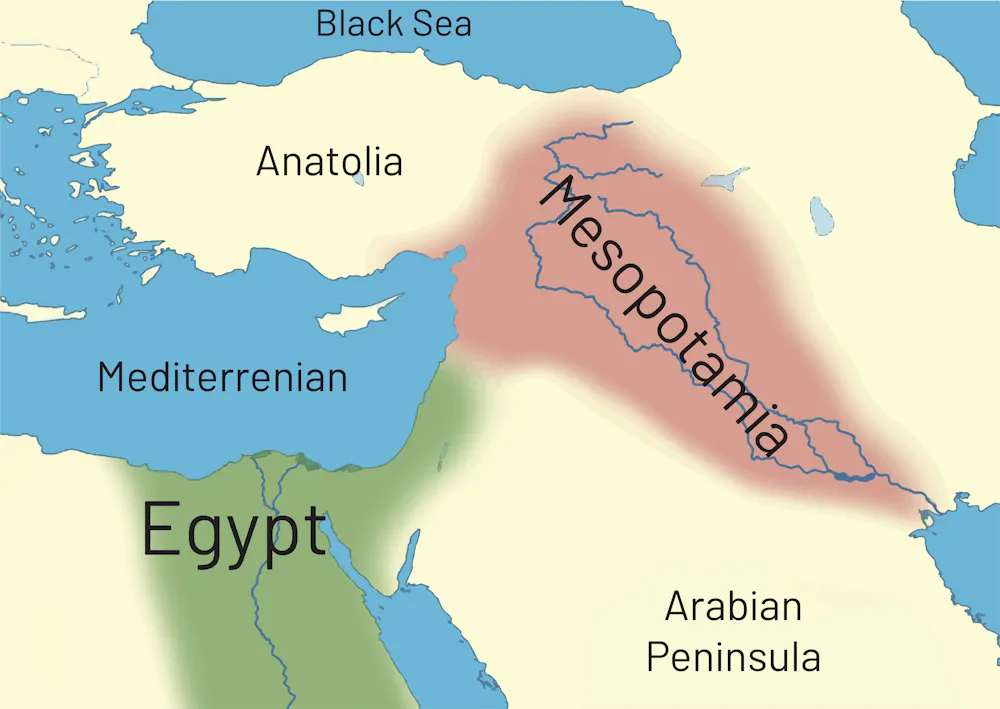
    Developed in its classic form in Babylon, entrail divination was practised throughout ancient Mesopotamia, the written history of which spans from the 3rd millennium BC to the 1st century AD.

    It was enormously important in all sections of society – a standard part of political decision-making at the royal court, but accessible to all. Budget options were even available for those who could not afford a sheep.

    People addressed their questions directly to the gods and believed that at the moment of asking, the answer would be written on the entrails. This could then be “read” by a diviner trained in this esoteric language.

    A map of Mesopotamia, a historical region in modern-day Iraq.
    aipsidtr / Shutterstock

    Sitting in the British Museum is an archive of real questions that were asked by the king of Assyria (a kingdom in northern Mesopotamia) in the 7th century BC. All kinds of affairs of state were put before the gods. Are the Egyptians going to attack? Has the enemy taken the town under siege? And will the governors return home safely?

    Reading the archive, you get a real sense of nerves on a knife-edge as the king waited for news from far away, wanting to know what had happened to his troops and trying to decide what to do next.

    Not only did he ask them about what would happen in the future, but he also consulted them on possible courses of action. Should the Assyrian army go to war? Should the king send a messenger to make peace? Asking the opinion of the gods would have helped him feel more confident in his next steps.

    The Babylonians did not have elections. But that did not mean the king could do whatever he wanted. It was important for his public image to have the gods onside, as well as for his own reassurance.

    Whenever a powerful official was appointed, the entrails would be read to ensure the gods approved. The head of the army, high priests and other important positions were all subject to this requirement. On one occasion, even the choice of crown prince – and hence the future king of Assyria – was put to this test.

    Interpreting the entrails was held to almost scientific standards of exactitude. Diviners worked in pairs or groups of up to 11, checking each other’s work to make sure they got it right. This was not a vague or woolly process, but a real attempt to ensure “accuracy” that could not be manipulated to simply come up with the answer that the king wanted to hear.

    Modern forecasting

    We all want to know what the future has in store, and have come up with ingenious ways of trying to find out, from opinion polls and data modelling to Paul the octopus, who developed a reputation for picking the winners of football matches during the 2010 World Cup. But are our methods really any better than looking inside a sheep?

    As all investors are warned, past performance does not guarantee future results. Yet the only data we have to inform our predictions comes from the past, and most of our models can’t take into account “unknown unknowns”.

    As many experts have found, predicting the future is a difficult business: opinion polls can lie and people change their minds, while economists have often been blindsided by a sudden crash.


    Read more:
    Harris nudges ahead of Trump in the polls – but could the economy prove her downfall?


    A Babylonian clay liver used for divination in Mesopotamia from 2050–1750 BC.
    Science Museum Group Collection, CC BY-NC-ND

    Since liver divination only answers “yes” or “no”, it is going to be right 50% of the time just through the law of averages. Despite its randomness, its success rate may well have seemed convincing at the time.

    And when we trust the authority of the source, it’s easy to find a way to explain away a wrong result – the prediction got halfway there, answered a different question, or would have been right if x hadn’t happened.

    We shouldn’t be blind to the weaknesses of our own methods. We are often wrong, and the Babylonians could sometimes be right.

    Selena Wisnom does not work for, consult, own shares in or receive funding from any company or organisation that would benefit from this article, and has disclosed no relevant affiliations beyond their academic appointment.

    ref. Why ancient Mesopotamians would have used a sheep’s liver to predict Donald Trump’s election odds – https://theconversation.com/why-ancient-mesopotamians-would-have-used-a-sheeps-liver-to-predict-donald-trumps-election-odds-242251

    MIL OSI – Global Reports

  • MIL-OSI Africa: US-Africa relations under Biden: a mismatch between talk and action

    Source: The Conversation – Africa – By Christopher Isike, Director, African Centre for the Study of the United States, University of Pretoria

    In his first year in office, US president Joe Biden committed to resetting US-Africa relations based on a doctrine of equal partnership.

    He sent his secretary of state, Antony Blinken, to Kenya, Côte d’Ivoire and Nigeria. The visit was used to outline the administration’s policy outlook towards Africa. It laid the ground for the official US-Africa policy commitment that Blinken launched the following year in South Africa.

    Since then, there have been high level engagements between the US and African countries to deepen ties. They included visits by top cabinet members of the administration: vice-president Kamala Harris, secretary of defence Lloyd Austin and treasury secretary Janet Yellen. First lady Jill Biden also came.

    Biden hosted a well attended US-Africa Leaders Summit in Washington DC in December 2022. Kenyan president William Ruto paid a state visit to the White House in May.

    Yet our view, which is based on years of studying and writing on US and Africa relations, is that the Biden administration has not fulfilled its commitment to resetting US-Africa relations based on an equal partnership. It hasn’t recognised Africa’s growing agency in international affairs.

    We argue that there has been a mismatch between the rhetoric and practice of an equal partnership. For example, African leaders or the African Union were not consulted about the agenda of the 2022 US-Africa Leaders Summit. This was also the case with the US’s Africa strategy.

    This reflects the traditional paternalistic relationship of the US with Africa.


    Read more: Joe Biden in Africa: US president has ignored the continent for his entire term — why he’s visiting Angola


    Biden is due to visit Angola in December – his only African visit as president. A much more encouraging message of equal partnership would have been delivered if the US-Africa Leaders Summit, for example, had been held at the African Union headquarters in Ethiopia. Biden would have then been able to engage with African leaders in the continent early in his term.

    A full diary of engagements

    There are a number of positive indicators of Biden’s commitment to reset relations with Africa.

    August 2022: The first tangible step was through the US Strategy Toward Sub-Saharan Africa. This presented a shift in emphasis from great power politics (vis-a-vis China and Russia in Africa) and Trump’s America First diplomacy, to one of mutual respect and partnership (at least on paper) under Biden.

    Priorities included fostering open societies, delivering democratic and security dividends, advancing pandemic recovery and economic opportunity, and supporting the climate agenda.

    December 2022: The US-Africa Leaders Summit in Washington DC was attended by 49 African leaders, three months after the release of the Africa strategy. The focus was on

    strengthening ties with African partners based on principles of mutual respect and shared interests and values.

    Biden pledged US$55 billion in investments until 2025 to advance goals that aligned with shared priorities. The US is said to have allocated 80% of said funds.

    The US used the summit to formally announce its support for the African Union’s membership of the G20. This was realised when the AU officially joined the G20 as a permanent member in 2023.

    November 2023: Biden hosted Angolan president João Lourenço at the White House on an official visit. They discussed cooperation on the economy, security, energy, transport, telecommunications, agriculture and outer space.

    May 2024: Kenyan president William Ruto’s state visit was the first by an African leader in more than 15 years.

    September 2024: US ambassador to the United Nations Linda Thomas-Greenfield announced US support for Africa getting two permanent seats on the UN security council.

    Finally, Biden’s visit to Angola, set for the first week in December would be the first by a US president since 2015.

    What’s gone wrong

    It’s possible to see serious flaws in the US approach towards Africa set against the expectation of an equal partnership.

    Firstly, the US has attempted to undermine African agency through its bid to pressure African countries to condemn Russia’s invasion of Ukraine. Many African countries chose non-alignment.

    Secondly, the US championing two seats for Africa on the security council looks commendable on the surface. But the lack of veto power perpetuates power imbalances between Africa and the current permanent security council members – the US, France, the UK, Russia and China.

    US vice-president Kamala Harris visited Zambian president Hakainde Hichilema in 2023. Salim Dawood/AFP via Getty Images.

    The question again is how equal the partnership is if Africa will be a junior member of the security council.

    Thirdly, there has been a lack of joint agenda setting. African countries have made no input into US-Africa strategy or the US-Africa Leaders Summit.

    Failing to consult African leaders, institutions and civil society on the continent’s own priorities reflects the same old practice of imposing priorities on African states. It looks like a continuation of the usual passing off of American national interests as African interests.

    Fourthly, there have been challenges in implementing what’s set out in the US Strategy Toward Sub-Saharan Africa. These have included inadequate resource allocation.


    Read more: US-Africa trade deal turns 25 next year: Agoa’s winners, losers and what should come next


    Fifth, the Biden administration has used the Africa Growth and Opportunity Act (Agoa) as diplomatic leverage over African countries. For example, in October 2023 it announced the removal of Uganda, Niger, Gabon and Central African Republic from the beneficiaries. Earlier, the administration removed Ethiopia, Guinea, Mali and Burkina Faso. These countries were removed from Agoa for not complying with US human rights and political demands.

    Between February and March 2024, the US Congress also considered the US-South Africa Bilateral Relations Bill, which risks South Africa’s exclusion from Agoa because of Pretoria’s position on the Israel/Palestine conflict.

    Lastly, the fact that Biden is only visiting Africa in the last days of his presidency suggests Africa is not a priority. The fact that only one African head of state has been afforded a state visit to Washington reinforces this thinking.

    If the US is serious about equal partnership, it mustn’t treat Africa as an afterthought. It must always consult African states in shaping policies that affect them and the continent.

    Ruth Kasanga, a postgraduate student in the Department of Political Sciences and Research Assistant at the African Centre for the Study of the United States, University of Pretoria, made contributions to this article.

    – US-Africa relations under Biden: a mismatch between talk and action
    – https://theconversation.com/us-africa-relations-under-biden-a-mismatch-between-talk-and-action-242307

    MIL OSI Africa

  • MIL-OSI: Significant Technology Upgrades Fueling Strong Growth Opportunities for U.S. Commercial Drone Market

    Source: GlobeNewswire (MIL-OSI)

    PALM BEACH, Fla., Oct. 31, 2024 (GLOBE NEWSWIRE) — FN Media Group News Commentary – The commercial drone industry is witnessing rapid growth and transforming various sectors such as agriculture, delivery and logistics, and energy among others. Advancements in drone technologies have led to increased demand and utilization in industries such as filming, emergency response, construction, and real estate. Additionally, drone software solution providers and manufacturers are continuously innovating and upgrading their offerings to cater to diverse market needs. As governments establish regulatory frameworks, the integration of drones into industries is expected to accelerate. This, in turn, is likely to create lucrative opportunities for market expansion over the forecast period. A report from Grand View Research projected that the U.S. commercial drone market size is expected to grow at a compound annual growth rate (CAGR) of 9.1% through 2030. The report said: “Furthermore, favorable legislations and rising use of commercial drones by authorities in the U.S. is expected to attract various industries to utilize drones for different processes. Similarly, government authorities across the region are constantly working on framing new regulations for the commercial applications of drones. This is attributed to increased focus on the adoption of commercial drones due to their economic potential, while prioritizing the safety and security of the country. This, in turn, is anticipated to drive the U.S. commercial drone market growth over the forecast period.” Active Tech Companies in the markets today include ZenaTech, Inc. (NASDAQ: ZENA), Kratos Defense & Security Solutions, Inc. (NASDAQ: KTOS), AgEagle Aerial Systems Inc. (NYSE: UAVS), EHang Holdings Limited (NASDAQ: EH), Ondas Holdings Inc. (NASDAQ: ONDS).

    Grand View Research continued: “Moreover, the U.S. is expected to witness a convergence of technologies, societal acceptance as well as a favorable regulatory landscape that is further expected to increase demand for commercial drones in various industries. The continuous development in drone technological capabilities and related software, their commercial applications, as well as the associated benefits, are anticipated to experience steady expansion as it offers added features and easy control to drone operators. Such type of developments by market players are expected to drive the U.S. commercial market growth. Additionally, the introduction of updated drone regulations has optimized the procedure for legally conducting commercial drone operations. The positive regulations are expected to attract entrepreneurs to use commercial drones. For instance, in the U.S., some of the significant changes in the Federal Aviation Administration (FAA) regulation’s Part 107 update includes the removal of “section 333 exception” and relaxed standards for pilots. This change in regulations that are required for commercial operations of drones, is anticipated to drive the market growth over the forecast period.”

    ZenaTech Inc.’s (NASDAQ:ZENA) ZenaDrone Completes the First Phase of an IQ Nano Inventory Management Trial for Multinational Auto Parts Customer – ZenaTech, a technology company specializing in AI (Artificial Intelligence) drone solutions and enterprise SaaS (Software-as-a-Service) solutions, today announced that its subsidiary, ZenaDrone, has successfully completed the first phase of drone testing and 3D mapping, and is beginning the next phase of production of a paid trial for a multinational auto parts manufacturer. This production phase consists of flying automatic and fully autonomous flights of the IQ Nano drone in an inventory management application.

    Testing took place over several months at ZenaDrone’s production facility in Sharjah, United Arab Emirates (UAE) to ensure the smooth operation of the inventory scanning application. The 3D mapping took place just recently at the customer’s site consisting of scanning and mapping the warehouse area to create a 3D map that automates the drone flight path and its operations while in production.

    View video showing the IQ Nano in test flight here.

    The production phase is set to begin imminently and will consist of the IQ Nano flying and reading product and component bar codes, collecting information for verification and integration with the customer’s inventory management and accounting systems.

    “We look forward to the production phase and concluding a successful trial, proving the viability of the IQ Nano and enabling us to deliver our product to our customer. A successful trial also opens the potential to win additional business with this customer and to verifiably demonstrate IQ Nano’s utility for the benefit of attracting additional market interest. The revolutionary use of an indoor drone for productivity and cost savings value can be implemented across hundreds of warehouse facilities, turning a week-long activity like counting inventory into a day,” said CEO Shaun Passley, Ph.D. – Get the full details by visiting: https://www.financialnewsmedia.com/news-zena/

    Additional Groundbreaking ZenaTech Inc. Developments this week include:

    ZenaTech Enters the Drone Sensor and Components Market Establishing a New Taiwan Subsidiary to Win More US Defense Contracts for Its AI Drones – ZenaTech also announced it will establish a new company in Taiwan to manufacture drone sensors and components for use in the drone products produced by its subsidiary ZenaDrone. The new company, named Spider Vision Sensors Ltd., will ensure ZenaDrone’s products are compliant with the US National Defense Authorization Act (NDAA), an important requirement for the company to win more business with the US Military.

    Spider Vision Sensors Ltd. will manufacture drone sensors, electronics, and components such LiDAR (Light Detection and Ranging), thermal, infrared, multi-spectral and hyper sensors, cameras, and PBCs (Printed Circuit Boards). Having in-house manufactured sensors and components will enable ZenaDrone to have a steady supply to fulfill customer orders and drone production needs at its Sharjah, UAE, and future Arizona-based drone manufacturing facilities. Taiwan was selected due to its size and skills as an electronics hub, and the availability of low-cost alternative components versus those from China. The new company is currently at the prototype stage, and the manufacturing facility is expected to be open in November.

    “Establishing a drone sensor and components manufacturer in Taiwan will help bring our products to market faster and removes dependencies on any Chinese made electronics. This will position us to win more US military contracts via achieving Green UAS (Uncrewed Arial Systems) and Blue UAS certifications as an approved supplier,” said CEO Shaun Passley, Ph.D. Read this full release at: https://finance.yahoo.com/news/zenatech-enters-drone-sensor-components-113000155.html

    Other recent developments in the technology industry include:

    Kratos Defense & Security Solutions, Inc. (NASDAQ: KTOS), a Technology Company in the Defense, National Security and Global Markets, recently announced that it will publish financial results for the third quarter 2024 after the close of market on Thursday, November 7th. Management will discuss the Company’s operations and financial results in a conference call beginning at 2:00 p.m. Pacific (5:00 p.m. Eastern).

    The call will be available at www.kratosdefense.com. Participants may register for the call using this Online Form. Upon registration, all telephone participants will receive the dial-in number along with a unique PIN that can be used to access the call. For those who cannot access the live broadcast, a replay will be available on Kratos’ website.

    AgEagle Aerial Systems Inc. (NYSE: UAVS) a leading provider of best-in-class unmanned aerial systems (UAS), sensors and software solutions for customers worldwide in the commercial and government verticals, recently announced the appointment of Kevin Lowdermilk to the Company’s board of directors effective October 25, 2024.

    Company CEO, Bill Irby, commented, “It is a privilege to have Kevin join our board. His distinguished career and leadership in some of the most challenging technology sectors speak to his ability to drive success through vision, strategy and execution. We are grateful to work alongside him and leverage his expertise to support the future expansion of our global footprint in both government and commercial verticals, as we position the Company for long-term shareholder value.”

    EHang Holdings Limited (NASDAQ: EH), the world’s leading Urban Air Mobility (“UAM”) technology platform company, recently announced it has entered into a strategic partnership with the Civil Aviation Flight University of China (the “CAFUC”). Building upon the CAFUC’s extensive expertise in civil aviation education, research, and talent development, the two parties will collaborate on cultivating skilled personnel, including operators and maintenance staffs for EHang’s pilotless electric Vertical Take-Off and Landing (“eVTOL”) aircraft, and their training for personnel licenses and operational supervision. This partnership aims to address the surging demand for talents in the low-altitude economy and foster the sustainable, high-quality development of the civil unmanned aerial vehicle (“UAV”) industry.

    During a briefing of the State Council Information Office of China on October 8, 2024, Chunlin Li, Vice Chairman of the National Development and Reform Commission (“NDRC”), highlighted the booming low-altitude economy and the rising demand for UAV operators. It is estimated that China faces a talent shortage of up to 1 million in this field. The NDRC will continue enhancing job creation efforts and driving the development of strategic emerging industries such as the low-altitude economy and future industries.

    Ondas Holdings Inc. (NASDAQ:ONDS), a leading provider of private industrial wireless networks and commercial drone and automated data solutions, recently announced that its wholly-owned subsidiary Ondas Autonomous Systems Inc. (“OAS”) has entered into an investment agreement with a private investor group, including Charles & Potomac Capital, LLC (“Charles & Potomac”) and Privet Ventures LLC (“Privet Ventures”), for an investment of $3.5 million in convertible notes of OAS. The investment in OAS will support OAS’ business expansion plan and deliver on the substantial growth opportunity in the defense, security, and critical infrastructure and industrial markets targeted by OAS’ Optimus and Iron Drone autonomous drone platforms.

    “We are pleased to secure this initial investment to support the exceptional growth opportunities created by our OAS team across Airobotics and American Robotics,” said Eric Brock, Chairman and CEO of Ondas Holdings and OAS. “Indeed, we have a responsibility to now expand operations and accelerate growth at OAS to meet the urgent needs for security and intelligence for our critical military, government and industrial customers. I am personally investing $1.0 million in this transaction, via Privet Ventures, signaling my firm belief in the substantial value we are creating for all stakeholders including the investors in OAS and Ondas Holdings.”

    About FN Media Group:

    At FN Media Group, via our top-rated online news portal at www.financialnewsmedia.com, we are one of the very few select firms providing top tier one syndicated news distribution, targeted ticker tag press releases and stock market news coverage for today’s emerging companies. #tickertagpressreleases #pressreleases

    Follow us on Facebook to receive the latest news updates: https://www.facebook.com/financialnewsmedia

    Follow us on Twitter for real time Market News: https://twitter.com/FNMgroup

    Follow us on Linkedin: https://www.linkedin.com/in/financialnewsmedia/

    DISCLAIMER: FN Media Group LLC (FNM), which owns and operates FinancialNewsMedia.com and MarketNewsUpdates.com, is a third party publisher and news dissemination service provider, which disseminates electronic information through multiple online media channels. FNM is NOT affiliated in any manner with any company mentioned herein. FNM and its affiliated companies are a news dissemination solutions provider and are NOT a registered broker/dealer/analyst/adviser, holds no investment licenses and may NOT sell, offer to sell or offer to buy any security. FNM’s market updates, news alerts and corporate profiles are NOT a solicitation or recommendation to buy, sell or hold securities. The material in this release is intended to be strictly informational and is NEVER to be construed or interpreted as research material. All readers are strongly urged to perform research and due diligence on their own and consult a licensed financial professional before considering any level of investing in stocks. All material included herein is republished content and details which were previously disseminated by the companies mentioned in this release. FNM is not liable for any investment decisions by its readers or subscribers. Investors are cautioned that they may lose all or a portion of their investment when investing in stocks. For current services performed FNM has been compensated forty nine hundred dollars for news coverage of the current press releases issued by ZenaTech, Inc. by the Company. FNM HOLDS NO SHARES OF ANY COMPANY NAMED IN THIS RELEASE.

    This release contains “forward-looking statements” within the meaning of Section 27A of the Securities Act of 1933, as amended, and Section 21E the Securities Exchange Act of 1934, as amended and such forward-looking statements are made pursuant to the safe harbor provisions of the Private Securities Litigation Reform Act of 1995. “Forward-looking statements” describe future expectations, plans, results, or strategies and are generally preceded by words such as “may”, “future”, “plan” or “planned”, “will” or “should”, “expected,” “anticipates”, “draft”, “eventually” or “projected”. You are cautioned that such statements are subject to a multitude of risks and uncertainties that could cause future circumstances, events, or results to differ materially from those projected in the forward-looking statements, including the risks that actual results may differ materially from those projected in the forward-looking statements as a result of various factors, and other risks identified in a company’s annual report on Form 10-K or 10-KSB and other filings made by such company with the Securities and Exchange Commission. You should consider these factors in evaluating the forward-looking statements included herein, and not place undue reliance on such statements. The forward-looking statements in this release are made as of the date hereof and FNM undertakes no obligation to update such statements.

    Contact Information:

    Media Contact email: editor@financialnewsmedia.com – +1(561)325-8757

    SOURCE: FN Media Group

    The MIL Network

  • MIL-OSI USA: Remarks by President  Biden and President Nikos Christodoulides of the Republic of Cyprus Before Bilateral  Meeting

    US Senate News:

    Source: The White House
    Oval Office
    12:06 P.M. EDT
    PRESIDENT BIDEN:  Well, Mr. President, welcome.  Welcome to the Oval Office.
    PRESIDENT CHRISTODOULIDES:  Thank you very much, Mr. President.
    PRESIDENT BIDEN:  Good to see you.  Good to see you.
    It was 10 years ago when I visited Cyprus last, as vice president of the United States.  And — and, as I said, there is no limit to what our nations can achieve if we work together. 
    PRESIDENT CHRISTODOULIDES:  Exactly.
    PRESIDENT BIDEN:  And we’ve been doing that for a long time. 
    But I think that’s even more true today.  Today, we stood against Russia’s vicious onslaught against Ukraine.  We launched a strategic dialogue to increase cooperation across a range of issues, from energy security to artificial intelligence.  And we surged humanitarian aid, delivering 8,000 metric tons to Gaza. 
    So, Mr. President, Cyprus made all this possible.  I want thank you for your leadership in making that happen. 
    And this year also marks the 50th anniversary of the artificial division of the island.  I remember it well.  It was my first year as a U.S. senator.  I remember sitting with (inaudible) — anyway, it’s — it’s a sad day.
    PRESIDENT CHRISTODOULIDES:  (Inaudible.)
    PRESIDENT BIDEN:  But as a — it was a sad occasion, but I remain optimistic about the possibility that a u- — reunited Cyprus and bizonal, bicommunal federation is possible.  And the United States ready — stands ready to provide any support we can toward that goal. 
    Mr. President, thank you, again, for being here, and I look forward to our conversation.
    The floor is yours.
    PRESIDENT CHRISTODOULIDES:  Mr. President, it’s a great honor to be at the White House.  Thank you very much for your invitation.
    As you very well know, our countries have been — have built a truly strategic partnership and — and our relations — our relations are at a strategic and historical high.
    At the bilateral level, we are working closely on defense and security, on energy, law enforcement, technology innovation.  There is a top potential, and there is a clear and strong political will from both countries, following also the first strategic dialogue that took place in Cyprus last week to further enhance our partnership.
    Mr. President, at — at the regional level, Cyprus is a predictable and reliable partner of the United States in a region of great geopolitical importance.  We are the member state of the European Union in the region.  We have excellent relations with all of our neighbors.  And we’re working closely with the United States and other partners to face the current challenges, to send much-needed humanitarian assistance to Gaza, to evacuate third-country nationals from — from the region.
    With regards to — to Ukraine, Cyprus stands on the right side of history.  And, Mr. President, it could have been different, having in mind that my country is under Turkish occupation the last 50 years.  
    And, Mr. President, I count on your support and the support of the United States to resume negotiations and find a solution of the Cyprus problem — solution in line with the U.N. Security Council resolution, solution that is based on our common values and principles: democracy and respect of human rights.
    So, Mr. President, once again, thank you very much.  I’m looking forward to our discussions.  Thank you very much.
    PRESIDENT BIDEN:  I’m looking forward to it as well.  You’re a good friend.  (Inaudible.)
    PRESIDENT CHRISTODOULIDES:  Thanks.  Thank a lot.
    12:20 P.M. EDT

    MIL OSI USA News

  • MIL-OSI: U.S. Commercial Drone Market Size Estimated to Reach a Value of $ 31 Billion By End of 2034

    Source: GlobeNewswire (MIL-OSI)

    PALM BEACH, Fla., Oct. 31, 2024 (GLOBE NEWSWIRE) — FN Media Group News Commentary – The commercial drone industry is witnessing rapid growth and transforming various sectors such as agriculture, delivery and logistics, and energy among others. Advancements in drone technologies have led to increased demand and utilization in industries such as filming, emergency response, construction, and real estate. Additionally, drone software solution providers and manufacturers are continuously innovating and upgrading their offerings to cater to diverse market needs. As governments establish regulatory frameworks, the integration of drones into industries is expected to accelerate. This, in turn, is likely to create lucrative opportunities for market expansion over the forecast period. A report from Grand View Research projected that the U.S. commercial drone market size is expected to grow at a compound annual growth rate (CAGR) of 9.1% through 2030. The report said: “Furthermore, favorable legislations and rising use of commercial drones by authorities in the U.S. is expected to attract various industries to utilize drones for different processes. Similarly, government authorities across the region are constantly working on framing new regulations for the commercial applications of drones. This is attributed to increased focus on the adoption of commercial drones due to their economic potential, while prioritizing the safety and security of the country. This, in turn, is anticipated to drive the U.S. commercial drone market growth over the forecast period.”   Active Tech Companies in the markets today include ZenaTech, Inc. (NASDAQ: ZENA), AeroVironment, Inc. (NASDAQ: AVAV), Draganfly Inc. (NASDAQ: DPRO), Red Cat Holdings, Inc. (NASDAQ: RCAT), Safe Pro Group Inc. (NASDAQ: SPAI).

    Fact.MR continued: “In addition, surveyors and engineers use drones to visualize the progress made in their construction projects by taking overhead images. Having a project overview leads to simplification of decision-making, thereby streamlining building site operations. Drones are now being used for several applications, ranging from surveillance, deployment in military operations, video recording, agriculture, and film & television. With this rise in drone applications, key players in the United States market are incorporating advanced technologies in drones. Increasing drone payload capacity and introducing drones for specific applications are anticipated to promote the profits of drone manufacturers. Furthermore, leading companies are also making drones with high-power motors. Home deliveries through drones have now become a reality with the help of retail and logistics organizations such as Amazon.”

    ZenaTech Inc.’s (NASDAQ:ZENA) ZenaDrone Completes the First Phase of an IQ Nano Inventory Management Trial for Multinational Auto Parts Customer – ZenaTech, a technology company specializing in AI (Artificial Intelligence) drone solutions and enterprise SaaS (Software-as-a-Service) solutions, today announced that its subsidiary, ZenaDrone, has successfully completed the first phase of drone testing and 3D mapping, and is beginning the next phase of production of a paid trial for a multinational auto parts manufacturer. This production phase consists of flying automatic and fully autonomous flights of the IQ Nano drone in an inventory management application.

    Testing took place over several months at ZenaDrone’s production facility in Sharjah, United Arab Emirates (UAE) to ensure the smooth operation of the inventory scanning application. The 3D mapping took place just recently at the customer’s site consisting of scanning and mapping the warehouse area to create a 3D map that automates the drone flight path and its operations while in production.

    View video showing the IQ Nano in test flight here.

    The production phase is set to begin imminently and will consist of the IQ Nano flying and reading product and component bar codes, collecting information for verification and integration with the customer’s inventory management and accounting systems.

    “We look forward to the production phase and concluding a successful trial, proving the viability of the IQ Nano and enabling us to deliver our product to our customer. A successful trial also opens the potential to win additional business with this customer and to verifiably demonstrate IQ Nano’s utility for the benefit of attracting additional market interest. The revolutionary use of an indoor drone for productivity and cost savings value can be implemented across hundreds of warehouse facilities, turning a week-long activity like counting inventory into a day,” said CEO Shaun Passley, Ph.D. – Get the full details by visiting: https://www.financialnewsmedia.com/news-zena/

    Additional Groundbreaking ZenaTech Inc. Developments this week include:

    ZenaTech Enters the Drone Sensor and Components Market Establishing a New Taiwan Subsidiary to Win More US Defense Contracts for Its AI Drones – ZenaTech also announced it will establish a new company in Taiwan to manufacture drone sensors and components for use in the drone products produced by its subsidiary ZenaDrone. The new company, named Spider Vision Sensors Ltd., will ensure ZenaDrone’s products are compliant with the US National Defense Authorization Act (NDAA), an important requirement for the company to win more business with the US Military.

    Spider Vision Sensors Ltd. will manufacture drone sensors, electronics, and components such LiDAR (Light Detection and Ranging), thermal, infrared, multi-spectral and hyper sensors, cameras, and PBCs (Printed Circuit Boards). Having in-house manufactured sensors and components will enable ZenaDrone to have a steady supply to fulfill customer orders and drone production needs at its Sharjah, UAE, and future Arizona-based drone manufacturing facilities. Taiwan was selected due to its size and skills as an electronics hub, and the availability of low-cost alternative components versus those from China. The new company is currently at the prototype stage, and the manufacturing facility is expected to be open in November.

    “Establishing a drone sensor and components manufacturer in Taiwan will help bring our products to market faster and removes dependencies on any Chinese made electronics. This will position us to win more US military contracts via achieving Green UAS (Uncrewed Arial Systems) and Blue UAS certifications as an approved supplier,” said CEO Shaun Passley, Ph.D.    Read this full release at:      https://finance.yahoo.com/news/zenatech-enters-drone-sensor-components-113000155.html

    Other recent developments in the technology industry include:

    AeroVironment (NASDAQ: AVAV) recently successfully showcased the maritime prowess of its combat-proven JUMP® 20 uncrewed aircraft system (UAS) during the NATO REPMUS 2024 (Robotic Experimentation and Prototyping using Maritime Uncrewed Systems) exercise off the coast of Portugal. This dynamic demonstration reinforced JUMP 20’s advanced Intelligence, Surveillance, and Reconnaissance (ISR) capabilities, autonomously launching and landing on a moving vessel in rough seas, with conditions reaching sea state level 5 and winds over 20 kts.

    The JUMP 20 also highlighted its multi-sensor mission versatility, seamlessly executing wide-area search and detection tasks. Its advanced Electro Optical and Mid-Wave Infrared (MWIR) turret automatically slewed to investigate identified targets without repositioning the platform, ensuring constant operational focus. Full-motion video was captured and later analyzed using AV’s cutting-edge computer vision technology, SPOTR-Edge™, enabling perception analysis using its robust library of object classifications, including persons, vehicles, and maritime vessels. Additionally, video from this event will further enhance the solution, making the JUMP 20 even more capable for future deployments by refining its object recognition and situational response capabilities.

    Draganfly Inc. (NASDAQ: DPRO), an award-winning, industry-leading developer of drone solutions and systems, recently announced its participation in the upcoming Wings of Saskatchewan event in Regina, from October 30 to October 31, 2024. Draganfly will showcase its latest drone technology advancements, contributing to discussions on industry trends, safety, and regulatory considerations alongside key stakeholders in the aviation sector.

    The Wings of Saskatchewan Conference, hosted by the Saskatchewan Aerial Applicators Association and the Saskatchewan Aviation Council, serves as a vital gathering for the aviation community. This year’s event will bring together leaders from both civil and commercial aviation sectors to discuss technological advancements, regulatory updates, and future trends within the industry.

    Draganfly will emphasize the need for synergy across the aviation industry at the conference by addressing essential topics, including airspace safety and the regulatory challenges impacting the drone sector. This presentation will spotlight the benefits of enhanced communication and collaboration between fixed-wing, helicopter, and RPAS (Remotely Piloted Aircraft Systems) to promote safe, efficient, and integrated airspace management.

    Red Cat Holdings, Inc. (NASDAQ: RCAT), a drone technology company integrating robotic hardware and software for military, government, and commercial operations, recently announced a new contract and order for 12 of its FlightWave Edge 130 Blue system from the Royal Australian Navy. The contract was secured through Criterion Solutions Pty Ltd., an Australian-based distributor of intelligence, surveillance, reconnaissance and information technology solutions.

    FlightWave, an industry-leading provider of VTOL drone, sensor and software solutions was acquired by Red Cat in September 2024. The acquisition brought FlightWave’s flagship drone, the Edge 130 Blue into its family of low-cost, portable unmanned reconnaissance and precision lethal strike systems. FlightWave’s size, weight and vertical take off capabilities makes it ideal for maritime operations and littoral environments.

    Safe Pro Group Inc. (NASDAQ: SPAI) recently shared a video highlighting the capabilities of the Company’s patent-pending SpotlightAI™ AI-powered demining solution presented by Amazon Web Services (AWS) at this year’s AWS Summit Washington, D.C. The video highlights AWS Partners in the AWS Partner Network (APN) featuring senior Safe Pro team members discussing how AWS’s hyper scalability and compute resources are enabling the Company to modernize demining efforts in Ukraine by utilizing AI-powered image analysis of drone-based imagery.

    “Our inclusion in this year’s AWS Summit Washington, D.C. spotlights our continued success in locating thousands of landmines and unexploded ordnance currently scattered over thousands of hectares of land in Ukraine utilizing our AI-powered image analysis technology. AWS continues to provide us invaluable support as we work to harness the power of AI and AWS’s hyper scalability to modernize real world demining operations. Working with AWS, we have greatly enhanced our ability to provide leading humanitarian mine action organizations with powerful new tools that can improve their situational awareness as they execute their land clearance operations across Ukraine, expediting the release of land for agricultural and civilian use,” said Dan Erdberg, Chairman and CEO of Safe Pro Group Inc.

    About FN Media Group:

    At FN Media Group, via our top-rated online news portal at www.financialnewsmedia.com, we are one of the very few select firms providing top tier one syndicated news distribution, targeted ticker tag press releases and stock market news coverage for today’s emerging companies. #tickertagpressreleases #pressreleases

    Follow us on Facebook to receive the latest news updates: https://www.facebook.com/financialnewsmedia

    Follow us on Twitter for real time Market News: https://twitter.com/FNMgroup

    Follow us on Linkedin: https://www.linkedin.com/in/financialnewsmedia/

    DISCLAIMER:  FN Media Group LLC (FNM), which owns and operates FinancialNewsMedia.com and MarketNewsUpdates.com, is a third party publisher and news dissemination service provider, which disseminates electronic information through multiple online media channels.  FNM is NOT affiliated in any manner with any company mentioned herein.  FNM and its affiliated companies are a news dissemination solutions provider and are NOT a registered broker/dealer/analyst/adviser, holds no investment licenses and may NOT sell, offer to sell or offer to buy any security.  FNM’s market updates, news alerts and corporate profiles are NOT a solicitation or recommendation to buy, sell or hold securities.  The material in this release is intended to be strictly informational and is NEVER to be construed or interpreted as research material.  All readers are strongly urged to perform research and due diligence on their own and consult a licensed financial professional before considering any level of investing in stocks.  All material included herein is republished content and details which were previously disseminated by the companies mentioned in this release.  FNM is not liable for any investment decisions by its readers or subscribers.  Investors are cautioned that they may lose all or a portion of their investment when investing in stocks.  For current services performed FNM has been compensated forty nine hundred dollars for news coverage of the current press releases issued by ZenaTech, Inc. by the Company.  FNM HOLDS NO SHARES OF ANY COMPANY NAMED IN THIS RELEASE.

    This release contains “forward-looking statements” within the meaning of Section 27A of the Securities Act of 1933, as amended, and Section 21E the Securities Exchange Act of 1934, as amended and such forward-looking statements are made pursuant to the safe harbor provisions of the Private Securities Litigation Reform Act of 1995. “Forward-looking statements” describe future expectations, plans, results, or strategies and are generally preceded by words such as “may”, “future”, “plan” or “planned”, “will” or “should”, “expected,” “anticipates”, “draft”, “eventually” or “projected”. You are cautioned that such statements are subject to a multitude of risks and uncertainties that could cause future circumstances, events, or results to differ materially from those projected in the forward-looking statements, including the risks that actual results may differ materially from those projected in the forward-looking statements as a result of various factors, and other risks identified in a company’s annual report on Form 10-K or 10-KSB and other filings made by such company with the Securities and Exchange Commission. You should consider these factors in evaluating the forward-looking statements included herein, and not place undue reliance on such statements. The forward-looking statements in this release are made as of the date hereof and FNM undertakes no obligation to update such statements.

    Contact Information:

    Media Contact email: editor@financialnewsmedia.com – +1(561)325-8757

    SOURCE: FN Media Group

    The MIL Network

  • MIL-OSI: Noma Exits Stealth with $32M to Secure the Entire Data & AI Lifecycle from Development to Production

    Source: GlobeNewswire (MIL-OSI)

    TEL AVIV, Israel, Oct. 31, 2024 (GLOBE NEWSWIRE) — Noma exited stealth today, announcing $32M in funding and the launch of their application security platform for securing the entire Data & AI Lifecycle. The company’s series A round was led by Ballistic Ventures and comes less than a year after a previously undisclosed seed round led by Glilot Capital Partners, with participation from Cyber Club London. Dozens of strategic angel investors have backed Noma, including current and former CISOs of McDonald’s, Google DeepMind, Twitter, Atlassian, BNP Paribas, T-Mobile, and Nielsen.

    The rapid adoption of AI has thrown data science and machine learning teams into the spotlight, introducing new application security risks. “The Data & AI Lifecycle is significantly different from the software development lifecycle. It comes with a whole new supply chain, as well as unique open source components and runtime artifacts that traditional security tools don’t cover,” said Niv Braun, co-founder and CEO of Noma. “We’re already seeing organizations compromised by misconfigured data pipelines and MLOps tools and vulnerable and malicious open source models. It’s only a matter of time before we see AI’s equivalent of SolarWinds or Log4Shell. There’s an urgent need for a new security solution that holistically covers the Data & AI Lifecycle.”

    Noma’s platform provides end-to-end AI discovery, security, protection, and compliance. It protects against supply chain risks — like vulnerable data pipelines, unscanned code in data science environments, misconfigured MLOps tools, and sensitive data used for model training — as well as threats like vulnerable and malicious models, runtime prompt injection, and more.

    The platform seamlessly deploys across any cloud-based, SaaS, or self-hosted environment within minutes, requiring no agents or code changes and adding no friction to data science teams’ day-to-day workflows. Noma’s end-to-end approach provides coverage across the entire Data & AI Lifecycle, from development to production and from classic data pipelines and ML to GenAI.

    “Like traditional software development, AI has introduced a new range of security risks — but is moving at hyperspeed and with even higher stakes,” said Kobi Samboursky, Founder and Managing Partner of Glilot. “AppSec evolved over decades with fragmented tools for static and dynamic analysis, open source, supply chain, and runtime, but security teams have come to realize that they need consolidated solutions. Noma is uniquely positioned to tackle this problem from the start, consolidating multiple use cases into a single platform. We backed Noma to become the complete application security solution for the Data and AI Lifecycle.”

    “The role of data science teams has rapidly evolved from supporting business functions like reporting and analytics to developing AI-powered applications that significantly impact business outcomes,” said Jake Seid, Co-founder and general partner of Ballistic Ventures.

    “As security and compliance become more top of mind for organizations adopting AI, embedding security from the start ensures that innovation can flourish without compromise. Noma’s approach gives AppSec teams full visibility and confidence while empowering data science teams to move fast and drive business value.”

    Founders Niv Braun (CEO) and Alon Tron (CTO) met in the prestigious 8200 intelligence unit and have combined their respective experience leading security groups and data science teams to start Noma. Together they have quickly built a team with deep expertise in AI, application security, and beyond. Noma has helped shape industry standards for AI security as members of the OWASP AI Exchange and has contributed to US government policy on AI security, including informing guidelines like NIST SP 800-218A. The Noma platform is already used by paying customers, including Fortune 500 companies.

    Learn more about Noma’s platform and vision on the Noma website and blog.

    Media Contact
    Lazer Cohen
    lazer@concrete.media
    347-753-8256

    A photo accompanying this announcement is available at https://www.globenewswire.com/NewsRoom/AttachmentNg/1996901b-4732-4856-b705-03949017b91e

    The MIL Network

  • MIL-OSI Global: US-Africa relations under Biden: a mismatch between talk and action

    Source: The Conversation – Africa – By Christopher Isike, Director, African Centre for the Study of the United States, University of Pretoria

    In his first year in office, US president Joe Biden committed to resetting US-Africa relations based on a doctrine of equal partnership.

    He sent his secretary of state, Antony Blinken, to Kenya, Côte d’Ivoire and Nigeria. The visit was used to outline the administration’s policy outlook towards Africa. It laid the ground for the official US-Africa policy commitment that Blinken launched the following year in South Africa.

    Since then, there have been high level engagements between the US and African countries to deepen ties. They included visits by top cabinet members of the administration: vice-president Kamala Harris, secretary of defence Lloyd Austin and treasury secretary Janet Yellen. First lady Jill Biden also came.

    Biden hosted a well attended US-Africa Leaders Summit in Washington DC in December 2022. Kenyan president William Ruto paid a state visit to the White House in May.

    Yet our view, which is based on years of studying and writing on US and Africa relations, is that the Biden administration has not fulfilled its commitment to resetting US-Africa relations based on an equal partnership. It hasn’t recognised Africa’s growing agency in international affairs.

    We argue that there has been a mismatch between the rhetoric and practice of an equal partnership. For example, African leaders or the African Union were not consulted about the agenda of the 2022 US-Africa Leaders Summit. This was also the case with the US’s Africa strategy.

    This reflects the traditional paternalistic relationship of the US with Africa.


    Read more:
    Joe Biden in Africa: US president has ignored the continent for his entire term — why he’s visiting Angola


    Biden is due to visit Angola in December – his only African visit as president. A much more encouraging message of equal partnership would have been delivered if the US-Africa Leaders Summit, for example, had been held at the African Union headquarters in Ethiopia. Biden would have then been able to engage with African leaders in the continent early in his term.

    A full diary of engagements

    There are a number of positive indicators of Biden’s commitment to reset relations with Africa.

    August 2022: The first tangible step was through the US Strategy Toward Sub-Saharan Africa. This presented a shift in emphasis from great power politics (vis-a-vis China and Russia in Africa) and Trump’s America First diplomacy, to one of mutual respect and partnership (at least on paper) under Biden.

    Priorities included fostering open societies, delivering democratic and security dividends, advancing pandemic recovery and economic opportunity, and supporting the climate agenda.

    December 2022: The US-Africa Leaders Summit in Washington DC was attended by 49 African leaders, three months after the release of the Africa strategy. The focus was on

    strengthening ties with African partners based on principles of mutual respect and shared interests and values.

    Biden pledged US$55 billion in investments until 2025 to advance goals that aligned with shared priorities. The US is said to have allocated 80% of said funds.

    The US used the summit to formally announce its support for the African Union’s membership of the G20. This was realised when the AU officially joined the G20 as a permanent member in 2023.

    November 2023: Biden hosted Angolan president João Lourenço at the White House on an official visit. They discussed cooperation on the economy, security, energy, transport, telecommunications, agriculture and outer space.

    May 2024: Kenyan president William Ruto’s state visit was the first by an African leader in more than 15 years.

    September 2024: US ambassador to the United Nations Linda Thomas-Greenfield announced US support for Africa getting two permanent seats on the UN security council.

    Finally, Biden’s visit to Angola, set for the first week in December would be the first by a US president since 2015.

    What’s gone wrong

    It’s possible to see serious flaws in the US approach towards Africa set against the expectation of an equal partnership.

    Firstly, the US has attempted to undermine African agency through its bid to pressure African countries to condemn Russia’s invasion of Ukraine. Many African countries chose non-alignment.

    Secondly, the US championing two seats for Africa on the security council looks commendable on the surface. But the lack of veto power perpetuates power imbalances between Africa and the current permanent security council members – the US, France, the UK, Russia and China.

    The question again is how equal the partnership is if Africa will be a junior member of the security council.

    Thirdly, there has been a lack of joint agenda setting. African countries have made no input into US-Africa strategy or the US-Africa Leaders Summit.

    Failing to consult African leaders, institutions and civil society on the continent’s own priorities reflects the same old practice of imposing priorities on African states. It looks like a continuation of the usual passing off of American national interests as African interests.

    Fourthly, there have been challenges in implementing what’s set out in the US Strategy Toward Sub-Saharan Africa. These have included inadequate resource allocation.


    Read more:
    US-Africa trade deal turns 25 next year: Agoa’s winners, losers and what should come next


    Fifth, the Biden administration has used the Africa Growth and Opportunity Act (Agoa) as diplomatic leverage over African countries. For example, in October 2023 it announced the removal of Uganda, Niger, Gabon and Central African Republic from the beneficiaries. Earlier, the administration removed Ethiopia, Guinea, Mali and Burkina Faso. These countries were removed from Agoa for not complying with US human rights and political demands.

    Between February and March 2024, the US Congress also considered the US-South Africa Bilateral Relations Bill, which risks South Africa’s exclusion from Agoa because of Pretoria’s position on the Israel/Palestine conflict.

    Lastly, the fact that Biden is only visiting Africa in the last days of his presidency suggests Africa is not a priority. The fact that only one African head of state has been afforded a state visit to Washington reinforces this thinking.

    If the US is serious about equal partnership, it mustn’t treat Africa as an afterthought. It must always consult African states in shaping policies that affect them and the continent.

    Ruth Kasanga, a postgraduate student in the Department of Political Sciences and Research Assistant at the African Centre for the Study of the United States, University of Pretoria, made contributions to this article.

    Samuel Oyewole is affiliated with Federal University Oye-Ekiti, Nigeria.

    Christopher Isike does not work for, consult, own shares in or receive funding from any company or organisation that would benefit from this article, and has disclosed no relevant affiliations beyond their academic appointment.

    ref. US-Africa relations under Biden: a mismatch between talk and action – https://theconversation.com/us-africa-relations-under-biden-a-mismatch-between-talk-and-action-242307

    MIL OSI – Global Reports

  • MIL-OSI Global: Gaza: can the UN suspend Israel over its treatment of Palestinians? It’s complicated, but yes

    Source: The Conversation – UK – By Aidan Hehir, Reader in International Relations, University of Westminster

    Where is the UN?” is a question that has often been asked since the start of Israel’s military offensive in Gaza. As the death toll rises and the conflict spreads, the UN appears woefully unable to fulfil its mandate to save humanity “from the scourge of war” – as it was set up to do.

    While the UN secretary-general, António Guterres, has repeatedly condemned Israel – and been banned from the country for his pains – his pleas have been ignored. Attempts by the UN to sanction Israel have also failed. UN sanctions require the UN security council’s consent. The US has used its power as a permanent member to veto draft resolutions seeking to do so.


    Read more:
    Hard Evidence: who uses veto in the UN Security Council most often – and for what?


    There have also been calls to suspend Israel from the UN. On October 30, the UN special rapporteur on the right to food, Michael Fakhri, called on the UN general assembly to suspend Israel’s membership because, as he said: “Israel is attacking the UN system.”

    Francesca Albanese, UN special rapporteur on human rights in the Palestinian territories is reported to have told a news conference the same day that the UN should “consider the suspension of Israel’s credentials as a member of the UN until it ends violating international law and withdraws the ‘clearly unlawful’ occupation.”

    But suspending a member is more complicated and politically fraught than many appreciate.

    Israel and the UN

    For decades, Israel’s relationship with the UN has been fractious. This is primarily because of the UN’s stance on what it refers to as Israel’s “unlawful presence” in what it defines as
    “occupied territories” in Palestine. In the past 12 months of the latest conflict in Gaza, this relationship has deteriorated further.

    Many have argued that Israel has repeatedly violated UN resolutions and treaties, including the genocide convention during its campaign in Gaza. Some UN officials have accused Israel – and certain Palestinian groups – of committing war crimes. Israel has also come into direct conflict with UN agencies – some 230 UN personnel have been killed during the offensive, and many governments and UN officials have alleged that Israel deliberately targeted UN peacekeepers in Lebanon.

    But the enmity between Israel and the UN came to a head on October 28, when the Israeli parliament, the Knesset, banned the UN Relief and Works Agency for Palestine Refugees (Unrwa) from operating inside Israel, sparking a wave of condemnation.

    The UN’s powers

    Given this open hostility towards the UN, it is not surprising that some are now calling for Israel’s membership to be suspended.

    But can the UN legally suspend a member? The answer is yes. Under articles 5 and 6 of the UN charter a member state may be suspended or expelled if it is found to have “persistently violated the Principles contained in the present Charter”.

    But articles 5 and 6 both state that suspension and expulsion require the consent of the general assembly as well as “the recommendation of the security council”. As such, suspending Israel requires the consent of the five permanent security council members: the US, UK, China, Russia and France.

    And, given the US’s past record and current president Joe Biden’s affirmation of his “ironclad support” for Israel, this is effectively inconceivable. But while it is, therefore, highly unlikely that articles 5 or 6 will be invoked against Israel, there remains a potentially feasible option.

    The South Africa precedent

    At the start of each annual general assembly session, the credentials committee reviews submissions from each member state before they are formally admitted. Usually, this is a formality, but on September 27 1974, the credentials of South Africa – which was then operating an apartheid system – were rejected.

    Tanzanian ambasador to the UN, Salim A. Salim, announces that South Africa has been suspended fdrom the UN, November 1974.
    Teddy Chen/photograph courtesy of the United Nations

    Three days later, the general assembly passed resolution 3207 which called on the security council to, “review the relationship between the United Nations and South Africa in light of the constant violation by South Africa of the principles of the Charter”.

    A draft resolution calling for South Africa’s expulsion was eventually put to the security council at the end of October, but it was vetoed by the US, the UK and France.

    However, on November 12, the president of the general assembly, Algeria’s Abdelaziz Bouteflika, ruled that given the credentials committee’s decision and the passing of resolution 3207, “the general assembly refuses to allow the delegation of South Africa to participate in its work”. South Africa remained suspended from the general assembly until June 1994 following the ending of apartheid.

    It is important to note that South Africa was not formally suspended from the UN, only the general assembly. Nonetheless, it was a hugely significant move.

    A viable solution?

    Could the same measure be applied against Israel and would it be effective? The South Africa case shows it is legally possible. It would also undoubtedly send a powerful message, simultaneously increasing Israel’s international isolation and restoring some much needed faith in the UN.

    The 79th session of the UN general assembly began in September, so it’s too late for the credentials committee to reject Israel. But this could conceivably happen prior to the 80th session next year, if there was sufficient political will. But this is a big “if”.

    Though a majority of states in the general assembly are highly critical of Israel, many do not want the credentials committee to become more politically selective because they fear this could be used against them in the future. Likewise, few want to incur the wrath of the US by suspending its ally.

    As ever, what is legally possible and what is politically likely are two very different things.

    Aidan Hehir does not work for, consult, own shares in or receive funding from any company or organisation that would benefit from this article, and has disclosed no relevant affiliations beyond their academic appointment.

    ref. Gaza: can the UN suspend Israel over its treatment of Palestinians? It’s complicated, but yes – https://theconversation.com/gaza-can-the-un-suspend-israel-over-its-treatment-of-palestinians-its-complicated-but-yes-242559

    MIL OSI – Global Reports

  • MIL-OSI Global: Israel’s relations with the UN hit a new low with Unrwa ban

    Source: The Conversation – UK – By Lisa Strömbom, Ph D, Associate Professor, Lund University

    Israel’s relationship with the United Nations has historically been strained, but over the past year, tensions have reached new levels. On October 28, the Israeli parliament (the Knesset) passed a law to prohibit operations of the UN’s relief and works agency (Unrwa) – the UN body responsible for Palestinian refugees – within the territory it controls. It’s a legal and political development which many fear will have grave humanitarian consequences for Palestinians in Gaza and beyond.

    The decision also prompts questions about what lies ahead for the increasingly divisive relationship between the government of Benjamin Netanyahu and the UN. There is even speculation that the Unrwa ban could lead to Israel being expelled from the UN general assembly.

    Israel’s relations with the UN have long been fractious. But Unrwa has come in for particular criticism from successive Israeli governments over the years.

    The agency was set up in 1949 to support Palestinian refugees displaced during the 1948 Arab-Israeli war. What was originally intended to be a temporary agency has now operated for more than seven decades, thanks to the unending hostilities between Israel and the Palestinian people. In addition to humanitarian assistance, Unrwa provides education, healthcare and a range of social services to Palestinians in Gaza and the West Bank.

    Unrwa’s schools have been a particular bugbear for Israeli critics. It has been pointed out that textbooks provided by the Palestinian Authority and used in some Unrwa schools were “pivotal in radicalising generations of Gazans”. There have also been allegations that money intended to support Unrwa relief works has been finding its way to Hamas.

    But it was the alleged involvement of Unrwa employees in the October 7 attack on Israel, spearheaded by Hamas, that brought the issue to a head earlier this year. In January, Israel presented Joe Biden’s US administration with a dossier that purported to present evidence that 12 Unrwa staff had taken an active part in the attack. The UN announced it had dismissed the surviving staff named in the dossier – but the accusations led several countries to suspend their Unrwa funding.


    Read more:
    Gaza conflict: what is UNRWA and why is Israel calling for its abolition?


    Unrwa’s commissioner-general, Philippe Lazzarini, described the suspension of funding as a “collective punishment”. He said it would have grave consequences for Gaza’s civilians who were – and remain – at high risk of famine.

    An independent review set up by Lazzarini reported in April and found no evidence that the agency had been infiltrated by Hamas. Instead, it stressed how Unrwa’s work was an “indispensable lifeline” for civilians in Gaza and the West Bank. As a result, international funding of Unrwa was resumed by all countries but the US.

    At loggerheads

    Now Israel has gone a step further and banned Unrwa operations. This appears to be the latest blow in a campaign of hostility against the UN that has been years in the making.

    In recent years, Netanyahu’s anti-UN rhetoric has escalated considerably. In 2022, the UN general assembly (UNGA) voted in favour of a resolution calling for the International Court of Justice to give its opinion on Israel’s “prolonged occupation, settlement and annexation of Palestinian territory”. Netanyahu called the decision “despicable”. He refused to recognise the vote, saying:

    Like hundreds of the twisted decisions against Israel taken by the UNGA over the years, today’s despicable decision will not bind the Israeli government. The Jewish nation is not an occupier in its own land and its own eternal capital, Jerusalem.

    Netanyahu condemns ‘despicable’ UN vote.

    During the past year, as it has continued its assault on Gaza, Israel’s efforts to delegitimise the UN have also intensified. At the beginning of October, after Iran had launched a barrage of rockets at Israeli military installations, Israel barred the UN secretary general, António Guterres, from entering the country. Foreign minister Israel Katz commented: “Anyone who cannot unequivocally condemn Iran’s heinous attack on Israel … does not deserve to set foot on Israeli soil.”

    Meanwhile, units of the Israeli Defense Forces (IDF) have been involved in a number of incidents which have threatened the safety of UN peacekeepers in southern Lebanon (Unifil). The peacekeepers are there under a mandate to safeguard Lebanese civilians in the area, where Israel has been conducting what it calls its “military operation” since the beginning of October. Many scholars of international law believe the IDF’s actions could be interpreted as war crimes.


    Read more:
    Is targeting UN peacekeepers in Lebanon a war crime? Here’s what international law says


    This in turn led to a public spat with the French president, Emmanuel Macron. Calling on Israel to respect the neutrality of Unifil peacekeepers, Macron said Netanyahu should “not forget that his country was created by a decision of the UN” – to which Netanyahu replied:

    It was not the UN resolution that established the state of Israel, but rather the victory achieved in the war of independence with the blood of heroic fighters, many of whom were Holocaust survivors, including from the Vichy regime in France.

    The last clause was a pointed reminder that a section of the French government collaborated with the Nazi regime in the extermination of French Jews.

    International condemnation

    But it’s the decision to bar Unrwa from Israel that has drawn the harshest international criticism, and which threatens to further isolate the country diplomatically. The UN secretary general has been joined by the EU and US in urging Israel to reconsider.

    Washington has already been highly critical of what it describes as “Israeli efforts to starve Palestinians” in parts of Gaza, and the US and UK are both reported to be considering suspending arms sales to Israel.

    Amnesty International, meanwhile, said the law “amounts to the criminalisation of humanitarian aid and will worsen an already catastrophic humanitarian crisis”. But Israel has signalled it intends to hold firm, while insisting it will “continue to do everything in its power” to ensure that aid continues to reach “ordinary Gazans”.

    But the vast majority of Gaza’s population is now displaced. Most of the built infrastructure – including hospitals – has been destroyed. And Israel’s military operations are forcing most civilians out of the north of the Gaza Strip. So, the question now is whether the effective crippling of the largest international aid agency working in Gaza will simply make matters worse for the people living there.

    Lisa Strömbom does not work for, consult, own shares in or receive funding from any company or organisation that would benefit from this article, and has disclosed no relevant affiliations beyond their academic appointment.

    ref. Israel’s relations with the UN hit a new low with Unrwa ban – https://theconversation.com/israels-relations-with-the-un-hit-a-new-low-with-unrwa-ban-242512

    MIL OSI – Global Reports

  • MIL-OSI United Kingdom: Putin’s illegal war on Ukraine is reckless and self-harming: UK statement at the UN Security Council

    Source: United Kingdom – Executive Government & Departments

    Statement by Fergus Eckersley, UK Minister Counsellor, at the UN Security Council meeting on threats to international peace and security.

    Let me start with a basic fact. Western support for Ukraine’s self-defence is both legal and moral. Any support for Russia’s act of aggression, whether by Iran, DPRK or anyone else, is neither.

    Russia calls these meetings to talk up the scale and costs of Western support for Ukraine, to try to undermine public support, and to claim the West is the aggressor. But their concerns should really be closer to home.

    It is clear where President Putin’s priorities lie: defence and national security will consume over 40% of Russia’s entire federal spending next year – a post-Soviet record high, exceeding expenditure on healthcare, education, and the environment combined.

    Let me repeat that: the Russian government is spending more on killing Ukrainians and trying to steal their land than it is on the health and education of its own people, and the environmental protection of its own territory, all put together.

    It is reckless and it is self-harming.

    It has fueled inflation, forced interest rates up to a 20-year high, and increased dramatically the cost of government, corporate and household borrowing.

    As a consequence, Russia has become poorer than all G7 and EU countries on a per capita basis, including Eastern bloc states.

    The more Russian capital is funneled into defence spending, the weaker the finances of the Russian economy, which will directly harm the livelihoods and futures of Russia’s own people.

    The costs of Russia’s aggression go further. Not only is the Russian government finding it harder to recruit Russians to sacrifice their lives for its illegal war, they are also haemorrhaging human capital at home.

    Russian citizens are leaving Russia at a rapid rate, especially high-skilled workers. 668,000 people left Russia in 2022, causing severe labour shortages. That’s in addition to the over 600,000 casualties on the battlefield in Ukraine. It’s no surprise that Russian economists have predicted these labour shortages are set to continue.

    So Russia’s out-of-control defence spending is not only wholly unjustified; it is not only a recipe for misery and suffering in Ukraine; it is not only driving global instability– it is also hugely damaging to Russia itself.

    We urge Russia to take a different path, and to bring to an end its illegal, unprovoked and self-harming invasion.

    Until then, we will continue to provide Ukraine with the support it requires to defend itself and to secure a just and lasting peace in line with the UN Charter.

    Updates to this page

    Published 31 October 2024

    MIL OSI United Kingdom

  • MIL-OSI Security: Defense News: USS Oak Hill Arrives in Limassol, Cyprus

    Source: United States Navy

    While in Limassol, embassy leadership from Australia, France, the U.K., and the U.S., are scheduled to visit Oak Hill for a key-leadership engagement.

    Marines assigned to the 24th Marine Expeditionary Unit (24th MEU) Special Operations Capable (SOC) will be returning to Oak Hill from a two-week training exercise conducted in Cyprus.
    “Our visit to Cyprus enables us to re-embark the 24th MEU who recently executed some interoperability training with the Cypriots, and also host key leadership from other partner nations to continue to build and strengthen our relationships,” said Cmdr. Jason Nowell, Oak Hill’s commanding officer.

    Oak Hill previously visited Limassol in September for a 10-day port visit and conducted a mid-deployment voyage repair (MDVR) and preventative, scheduled maintenance.
    Oak Hill’s return to Limassol allows the embarked Sailors and Marines to further explore the Cypriot culture, food, and history within the city.

    “The Sailors and Marines onboard Oak Hill are excited to return to Limassol,” said Nowell. “We were recently here to conduct some scheduled maintenance, and the crew was able to enjoy the rich culture, food and are eager to return.”

    Oak Hill is conducting operations as part of the Wasp Amphibious Ready Group (WSP ARG)-24th MEU (SOC) in the U.S. 6th Fleet and U.S. Naval Forces Europe-U.S. Naval Forces Africa (NAVEUR-NAVAF) areas of operations, supporting U.S., Allied and partner interests in the region, including in the Eastern eastern Mediterranean Sea, to continue promoting regional stability and deterring aggression.
    The WSP ARG-24th MEU (SOC) is comprised of its flagship namesake, the amphibious assault ship USS Wasp (LHD 1), San Antonio-class amphibious transport dock ship USS New York (LPD 21), Oak Hill, and the embarked 24th MEU (SOC).

    The 24th MEU (SOC) is a Marine Air-Ground Task Force (MAGTF) with a command element, Aviation Combat Element, Marine Medium Tiltrotor Squadron 365 (Reinforced), Ground Combat Element, Battalion Landing Team 1/8, and Logistics Combat Element, Combat Logistics Battalion 24.

    To learn more about USS Oak Hill, please visit our Facebook page: https://www.facebook.com/ussoakhilllsd51
    To learn more about WSP ARG-24th MEU (SOC), please visit our DVIDS feature page: https://www.dvidshub.net/feature/wasparg24thmeu

    MIL Security OSI

  • MIL-OSI Security: Defense News: The Department of the Navy is Establishing a Naval Strategic Studies Group (NSSG) Program

    Source: United States Navy

    The Department of the Navy is establishing a Naval Strategic Studies Group (NSSG) program in January administered by the DON Office of Strategic Assessment (OSA).

    The NSSG will be modeled after the Strategic Studies Group created during the Cold War, which had a twofold mission to train future flag officers in strategic thinking and to conduct research on some of the DON’s most vexing strategic challenges.

    The first cohort will include uniformed and civilian members from the Navy and Marine Corps. These plank-owners will conduct a capstone research project that advances Secretary of the Navy Carlos Del Toro’s strategic maritime statecraft initiative.

    “I expect my seasoned, mid-grade officers to be brilliant on naval tactics and operations by the time they report for graduate education,” Del Toro said. “I need future flag and general officers who will think strategically about how to lead naval forces in an increasingly contested maritime domain and amidst intense economic, technological and military competition.”

    The education in strategic studies the NSSG members will receive supports DON’s focus on reinvigorating the strategic workforce, under the Secretary’s enduring priority of building a culture of warfighting excellence.

    Members’ research – focused on broad strategic challenges, rather than narrower problems already addressed by fleet experimentation on specific tactics or technologies – will support DON’s aim of strengthening maritime dominance.

    “The Department of the Navy meets our nation’s maritime needs, both today and into the future. As the Office of Strategic Assessment builds a net assessment capability for the DON to understand the complex challenges we face, the Naval Strategic Studies Group will bring together a cohort of rising leaders who will address these challenges and build the strategic leadership skills to guide our Navy and Marine Corps in a dynamic and shifting global environment,” OSA Director Dr. Cara LaPointe said.

    The chief of naval operations created the previous SSG in 1981 to tackle key strategic challenges related to the Cold War. Over time, the SSG’s focus evolved to reflect the needs of the Navy until 2016, when it was sundowned.

    As the Department of the Navy returns to an era of competition, stakeholders have agreed on the need to amplify strategic leader education as the United States faces an increasingly complex web of threats that includes China, Russia, Iran and North Korea. In 2023 Secretary Del Toro released a Naval Education Strategy to guide investments to modernize naval schools and professional military education. The NSSG will focus students’ strategic leadership studies on DON’s most pressing strategic challenges for greater effect.

    “Today we face a comprehensive maritime power in the Indo-Pacific, Russian aggression in Ukraine, and Houthi attacks in the Red Sea – all of which will shape our security environment for several decades,” Del Toro said. “A revitalized, Naval SSG will help the Department of the Navy engage with and look ahead of these trends with sufficient access, resources, and guidance from leadership.”

    The first cohort will also tackle questions that will help shape the enduring NSSG program, including working with the Naval University System to deliver a world-class curriculum, and will be located in Washington, D.C.

    Lt. Gen. Benjamin Watson, the commanding general of the Marine Corps Training and Education Command, said recent conflicts have reinforced the importance of having Marine Corps leaders at all levels who can outthink the enemy.

    “Domains like information and cyber, along with the rise of non-state actors, don’t fit neatly into old frameworks. Our current operating environment demands nothing less than a renaissance in strategic thinking,” said Watson. “To stay ahead of our adversaries, we need to keep evolving—updating our training, sharpening our minds, and learning – not just observing – the lessons of contemporary conflict. The fight isn’t just on the battlefield anymore, and we need every Marine to possess the training, education, and intellectual agility to adapt and overcome.”

    Vice Adm. Daniel Dwyer, Deputy Chief of Naval Operations for Operations, Plans, Strategy and Warfighting Development, agreed the Navy needs Sailors and civilians “with superb education and training, who are able to think, act and operate differently to ensure we can defeat our adversaries.”
    “The establishment of the NSSG will enhance our culture of warfighting excellence and strengthen our maritime dominance by developing strategically minded warfighters who will be the future senior leaders of the service and will lead our Navy through uncertain times,” said Dwyer.

    Del Toro established the Office of Strategic Assessment in October 2023 and tasked the office to reconstitute the strategic studies program to help rebuild the naval strategist community.
     

    MIL Security OSI

  • MIL-OSI Global: Here and abroad, health-care workers bear witness to the world’s worst atrocities

    Source: The Conversation – Canada – By Suzanne Shoush, Indigenous Health Faculty Lead, Department of Family and Community Medicine, Faculty of Medicine, University of Toronto

    As a physician, I remember the first time I saw a child dying.

    She was in the pediatric intensive care unit, flown in from a remote First Nations community with her family on the way. Intubated and sedated to cope with the blisters covering her little body, she’d had three of her four limbs amputated — the result of a horrific meningococcal infection.

    I remember standing rooted to the ground, unable to walk away from her bedside, wanting more than anything to undo her suffering. This was long before I became involved in academic medicine as Indigenous Health Faculty lead for the Department of Family and Community Medicine at the University of Toronto, yet it profoundly shaped my understanding of suffering and the fragility of life.

    I was a medical student without a magic cure, but I needed to stay close to her simply so she wouldn’t be alone. I remember everything about those moments, from the rhythm of her breath to the stillness of her body.

    Around the world, health-care workers are trained to be observers and meticulously examine those before us, monitoring life and death with intense attention. We witness with a required objectivity, documenting and responding with specificity. We encounter incredibly difficult moments, but the ones involving children are particularly engraved in our minds.

    The horrific situation in Gaza

    I have been considering what health-care workers are experiencing in Gaza, “the world’s most dangerous place to be a child,” according to UNICEF.

    Every single day, they bear witness to a reality that the New York Times has deemed “too horrific for publication” as it declines to print images of dozens of children with gunshot wounds to the head, neck and chest.

    These images came from health-care providers, documenting the time they spent in Gaza to provide desperately needed medical care in a place where nearly half the population is children.

    They’re fighting daily to stem the tsunami of death that has often been referred to as the world’s first live-streamed genocide. With unimaginable determination and exhaustion, they are treating tens of thousands of children, some who have been mortally wounded and maimed due to indiscriminate bombing and sniping. These young people have been starved and terrorized by what the United Nations has called a war on children.

    This crisis also constitutes a war on health care as hospitals in Gaza have been attacked, besieged, burned or decimated. Hundreds of Palestinian health-care workers in Gaza and the Occupied West Bank have been killed and countless more have been injured or abducted. Human Rights Watch says some have been subjected to torture.

    Burning alive

    A UN inquiry recently accused Israel of systematically destroying Gaza’s health-care system, amounting to a “crime of extermination.

    A distressing video captured the agonizing moment as a patient, still tethered to his IV, was seen burning alive in his hospital bed, sparking global outrage.

    Hours after it went viral, Israel banned several Canadian and American medical aid organizations from entering Gaza to provide critical emergency support — crippling the ability of health-care workers to not only support their Palestinian colleagues in providing life-saving care, but also to document what is happening in Gaza.

    Because foreign journalists are barred from entering Gaza and Palestinian journalists have been targeted and killed at an unprecedented rate, much of what the public knows about Gaza is coming from health-care teams.

    Over the past year, health-care professionals have had to learn new terminology to describe what is happening in Palestine: scholasticide, sophicide, domicide and ecocide.

    Parallels in Turtle Island

    The plight in Gaza resonates with the historical experiences of the Indigenous Peoples of Turtle Island. As an intergenerational survivor of the Indian Residential School System, I am acutely aware of the power dynamics inherent in silence and the systemic erasure that often accompanies genocide.

    Canada recently observed the fourth National Day for Truth and Reconciliation, a time when the nation grapples with the ongoing impact of atrocities committed against Indigenous peoples.

    My work focuses on examining and understanding health practices and structures to better understand how to create anti-racist and anti-oppressive spaces for colleagues, learners and patients within our health-care systems, including how to engage Indigenous communities to propose and shape strategies.

    Polish jurist Raphael Lemkin coined the term “genocide,” identifying the techniques employed during genocide in eight areas: political, social, cultural, economic, biological, physical, religious and moral. Such systemic and immense violence is foundational to settler colonialism, and children bear the harshest brunt of the requisite dehumanization.

    Many of the atrocities against Indigenous people in Canada were carried out against Indigenous children, legitimized and legalized under the Indian Act — the blueprint for racial oppression within a democracy — and further enabled and enforced through secrecy, segregation and silence.

    Notable among the historical witnesses to these atrocities was Dr. Peter Bryce, a physician who documented the shocking mortality rates and abuses experienced by Indigenous children within the residential school system.

    A CBC report on Peter Bryce, a whistleblower on residential schools. (CBC News)

    As chief medical officer for the Department of Interior and Indian Affairs, Bryce went public with his findings.

    He was subsequently ostracized from the government and medical community and forced to retire. Defiantly, he went on to publish his findings in a report titled “The Story of A National Crime” in 1922.

    One hundred years later, his report remains a critical document for understanding the acts of genocide inflicted upon Indigenous Peoples.


    Read more:
    Residential school system recognized as genocide in Canada’s House of Commons: A harbinger of change


    Listening to health-care workers

    Bryce’s outspokenness shows that the voices of health-care workers are vital because we possess unique insights into the humanitarian crisis that unfolds in regions of conflict.

    They have a direct impact in areas of conflict due to their ability to provide care — and bear witness. What health-care workers are experiencing in Gaza is becoming incompatible with human life.

    Meaningful change will only emerge through an end to military aid, arms transfers and diplomatic cover for Israel, especially given it faces serious allegations from two international courts of genocide, war crimes and crimes against humanity.

    An immediate ceasefire and the lifting of the illegal blockade of Gaza are essential to enable health-care teams to provide critical life-saving care and to bear witness to the ongoing suffering.

    For me, personally, I carry the legacy of my ancestors as they watch down on me. Their survival of the horrors of the residential school system compel me — as a health-care professional — to break the silence around those suffering in Gaza.

    Suzanne Shoush does not work for, consult, own shares in or receive funding from any company or organisation that would benefit from this article, and has disclosed no relevant affiliations beyond their academic appointment.

    ref. Here and abroad, health-care workers bear witness to the world’s worst atrocities – https://theconversation.com/here-and-abroad-health-care-workers-bear-witness-to-the-worlds-worst-atrocities-242076

    MIL OSI – Global Reports

  • MIL-OSI Europe: Statement by the High Representative on behalf of the EU on the UNRWA legislation

    Source: Council of the European Union

    The European Union expresses its deep concern over Israeli-adopted legislation affecting UNRWA’s operations in the West Bank, emphasizing the agency’s critical role in providing humanitarian services and reaffirming its commitment to support UNRWA’s mandate as essential until a sustainable solution to the conflict is achieved.

    MIL OSI Europe News

  • MIL-OSI Security: Met sets out policing plan ahead of a busy weekend of events in London

    Source: United Kingdom London Metropolitan Police

    Update and information on the policing operation for events in London this weekend.

    An event has been organised by the Palestine Solidarity Campaign (PSC) in central London on Saturday 2 November. Officers will also be policing international sporting events, several football fixtures and a presence at large public events and fireworks displays throughout the weekend.

    In relation to the PSC event, our goal has been to protect the lawful right to protest whilst minimising the impact of these events on those who live, work and visit London.

    We have engaged with the PSC and agreed a route and timings of the event. To help provide clarity to those taking part and to assist their travel plans we have imposed conditions on the protest to minimise any disruption.

    The PSC march will form up in Whitehall from midday and commence at 12.45, proceeding across Vauxhall Bridge to Nine Elms where a rally will take place near the US Embassy, concluding by 16.00.

    ‘Stop The Hate UK’ will hold a counter protest on the corner of Millbank and Vauxhall Bridge to voice opposition to the PSC march. Replicating the approach to the PSC, we have engaged and agreed the location and conditions to their protest to minimise disruption to the public.

    A large ticketed fireworks event in Battersea Park is taking place in the early evening. We call on participants of the PSC march to conclude promptly at 16.00 and all protestors to consider their travel plans carefully as public transport and venues throughout the area will be extremely busy.

    We encourage participants of the ‘Stop The Hate UK’ protest to head towards Pimlico and Victoria Stations, and those on the PSC march to head away from Battersea and towards Vauxhall when leaving the area and to check online for the latest travel information.

    Officers are engaging in advance with businesses, residents and venues along the route to help minimise disruption and respond to any concerns on the day.

    Commander Adam Slonecki, who is leading this weekend’s policing operation, said: “Ahead of the weekend we have been in regular discussions with the PSC as well as residents, partners, community groups and businesses. It’s a busy weekend of events across London and we have worked with organisers to seek to minimise disruption and balance the right to protest.

    “Officers will be highly visible along the protest route and wider area to ensure the events take place safely and deal with any offences.”

    Conditions

    The Public Order Act gives the police the power to impose conditions on a procession or assembly of two or more people who are deemed to have a common purpose.

    Conditions can be imposed either in advance of an event or by the senior officer present during an event.

    On Saturday 2 November the following conditions will be in place relating to the PSC event.

    Section 12(3) of the Public Order Act 1986:

    The Palestine Solidarity Campaign procession must commence no later than 12.45.

    Procession participants forming up at Whitehall must commence proceeding along the prescribed route by 12.45.

    Procession participants must not deviate from the prescribed route specified on the attached map.

    Procession participants must proceed continuously along the prescribed route and not form up into static assemblies until reaching the final assembly point on Nine Elms Lane.

    Section 14(3) Public Order Act 1986

    The Palestine Solidarity Campaign assembly in preparation for the planned procession must be held within the specified location on Whitehall, SW1 (see Map) and assembly participants must remain within that area.

    Assembly participants must remain within the shaded area of the attached map until such time that the procession commences, which must be no later than 12.45, in accordance with the ‘Procession’ conditions imposed.

    Section 14(3) Public Order Act 1986:

    Any person participating in the Palestine Solidarity Campaign post-procession assembly must remain within the shaded area (purple) of Nine Elms Lane, SW11 on the map below.

    Any stage erected for the assembly must be in the specified area (blue) on the map below.

    The use of the stage and amplified noise equipment must cease by 16.00 and the assembly must conclude, including removal of stage and infrastructure by 1700hrs.

    On Saturday 2 November the following conditions will be in place relating to the ‘Stop The Hate UK’ assembly:

    Section 14(3) Public Order Act 1986

    Any person participating in the ‘Stop the Hate UK’ assembly must remain in the shaded area on the map below, on the corner of Millbank and Vauxhall Bridge.

    Warning regarding expressing support for proscribed organisations

    London is global city and with people joining events from across the country and around the world it is important to reiterate that expressing support for a proscribed organisation in the UK is a criminal offence.

    Under the Terrorism Act 2000 (TACT), the Home Secretary may proscribe an organisation if they believe it is concerned in terrorism and it is proportionate to do so.

    Proscription makes it a criminal offence to invite or express support for a proscribed organisation through chanting, wearing clothing or display articles such as flags, signs or logos.

    Hamas and Hizballah are proscribed by the UK Government and expressing support for them is a criminal offence.

    Hamas has been proscribed since 2021 – both political and military wings are proscribed under UK jurisdiction.

    Hizballah has been proscribed since 2019.

    It is a criminal offence to:

    • belong, or profess to belong, to a proscribed organisation in the UK or overseas (Section 11 TACT)
    • invite support for a proscribed organisation (Section 12(1A) TACT)
    • express an opinion or belief that is supportive of a proscribed organisation (Section 12(1A) TACT)
    • arrange, manage or assist in arranging or managing a meeting in the knowledge that the meeting is to support or further the activities of a proscribed organisation, or is to be addressed by a person who belongs or professes to (Section 12(2) TACT)
    • wear clothing or carry or display articles in public in such a way or in such circumstances as to arouse reasonable suspicion that the individual is a member or supporter of a proscribed organisation (Section 13 TACT)
    • publish an image of an item of clothing or other article, such as a flag or logo, in the same circumstances (Section 13(1A) TACT)

    Officers policing events will deal with any offences. If you have any concerns during an event speak to a police officer or event steward.

    If you see material supporting terrorism online report it – visit www.gov.uk/ACT

    You can also report suspicious activity by contacting the police in confidence on 0800 789 321

    In an emergency, or if you need urgent police assistance, you should always dial 999.

    MIL Security OSI

  • MIL-OSI: Q3 & 9 MONTHS 2024 RESULTS

    Source: GlobeNewswire (MIL-OSI)

    Paris (France), October 31st, 2024, 17h45 CET

    Q3 & 9 MONTHS 2024 RESULTS

    DELIVERING ON CASH GENERATION AND FINANCIAL ROADMAP

    ON TRACK TO HIT OUR FULL YEAR TARGET

      Q3 9M1
    Revenue2 $246m $778m (-3%)
    Adjusted EBITDA2 $98m $298m (+7%)
    Net Cash-Flow $10m $34m (vs -$15m in 9M 2023)

    Sophie Zurquiyah, Chief Executive Officer of Viridien, said:

    “Our results since the start of the year demonstrate the strength of our strategic vision, with technology leadership, new business growth, and cash flow all showing significant progress.

    Geoscience was particularly strong this quarter, leveraging its clear differentiation, best-in class imaging technology and HPC computing power to achieve a record high order book. In Earth Data, the Laconia project, using our most advanced technology, saw increased prefunding and is continuing to progress well.

    Sensing & Monitoring is actively implementing its adaption plan and is on track to achieve in 2025 the expected outcomes in cost reduction and operational flexibility to improve performance across the industry cycles.

    Lastly, we continue to address our financial roadmap with the implementation of the bond buyback program and looking forward, reaffirm our full-year targets”.

    Third Quarter Highlights2

    • Group2
      • IFRS Revenue, EBITDA and Net Income of respectively $219 million, $71 million, $(10) million.
      • Overall group revenue decline in absence of mega crew in Sensing & Monitoring (SMO, revenue down 50%) compared to Q3 2023. Stable DDE revenue, with very strong momentum at Geoscience (revenue + 32% and order intake +91%).
      • Group adjusted EBITDA of $98M, including -$12M penalty fees from vessel commitment. DDE Adjusted EBITDA of $108 million, up 5% thanks to strong Geoscience performance. SMO adjusted EBITDA of $1M (vs $12M).  
    • Net Cash flow of $10 million, including -$18 million contractual fees from vessel commitment.
    • Implementation of the bond buy back program. $25M already bought on the $30M 2024 program as of October 31 (o.w. $12M bought and cancelled as of September 30).
    • Liquidity at $442 million (including $100 million undrawn RCF).
    • Digital, Data and Energy Transition (DDE)
      • Revenue $187 million, up 1%: strong revenue growth at Geoscience offset by lower level of aftersale at Earth Data.
      • Adjusted EBITDA $108 million, up 5%: profitability impacted by -$12 million in penalty fees from vessel commitments (vs -$20 million during Q3 2003).
      • Geoscience
        • Revenue at $103 million (+32%).
        • Geoscience performance continues to be driven by technology leadership. Order intake (up 91%) benefits from best in class imaging technology, new UK HPC hub and increased activity in the Middle East.
        • The new businesses confirm positive momentum, both in CCUS with the release of the latest phase of Gulf of Mexico Carbon Storage Study to support upcoming lease rounds and in Minerals & Mining with the award of a sensing program in Oman, to identify, map and rank mineralization prospectivity potential.
      • Earth Data
        • Revenue: $83 million (-22%).
        • Prefunding revenue at $58 million (+4%). First contribution of the Laconia project in the Gulf of Mexico. Weaker after-sales in Q3 (down 50% at $26 million) with unfavorable cut offs.
        • New businesses: revenue from the Norwegian survey for Carbon storage leading to the reprocessing of legacy data in the area.
    • Sensing and Monitoring (SMO)
      • Revenue at $59 million, down 51% across land and marine products, following delivery of the “mega crew” systems in 2023.
      • Adjusted EBITDA at $1 million (vs $12M).
      • Transformation plan on track to achieve the expected cost reduction and operational flexibility.
      • New businesses representing 17% of revenue. Delivery of land seismic nodes for large-scale seismic surveys planned in urban areas to target energy resources, including geothermal.
    • 2024 Financial objectives
      • The Group reiterates its 2024 financial objectives and confirms its 2024-2025 financial roadmap.
        • Revenue expected to be in line with 2023
        • EBITDA to be positively impacted by business mix
        • Earth Data cash Capex expected at $230-250M
        • Net Cash Flow to reach similar level as 2023
    • Q3 2024 Conference call
      • The press release and the presentation are available on our website www.viridiengroup.com at 5:45 pm (CET)
      • An English language analysts conference call is scheduled today at 6.00 pm (CET)

    Participants should register for the call here to receive a dial-in number and code or participate in the live webcast from here.

    A replay of the conference call will be made available the day after for a period of 12 months in audio format on the Company’s website.

    The Board of Directors met on October 31, 2024 and approved the consolidated financial statements ending September 30, 2024.

    About Viridien:

    Viridien (www.viridiengroup.com) is an advanced technology, digital and Earth data company that pushes the boundaries of science for a more prosperous and sustainable future. With our ingenuity, drive and deep curiosity we discover new insights, innovations, and solutions that efficiently and responsibly resolve complex natural resource, digital, energy transition and infrastructure challenges. Viridien employs around 3,500 people worldwide and is listed as VIRI on the Euronext Paris SA (ISIN until July 30: FR0013181864 and ISIN as from July 31: FR001400PVN6).

    Contact:

     VP Corporate Finance

    Jean-Baptiste Roussille
    jean-baptiste.roussille@viridiengroup.com

    Q3 2024 – Financial Results

     CONSOLIDATED FINANCIAL STATEMENTS – September 30th, 2024

    Unaudited Interim Consolidated statement of operations – Year-To-Date

        Nine months ended September 30,
    (In millions of US$, except per share data) Notes 2024 2023
    Operating revenues   784.8 810.4
    Other income from ordinary activities   0.1 0.2
    Total income from ordinary activities   784.9 810.6
    Cost of operations   (587.1) (578.0)
    Gross profit   197.8 232.6
    Research and development expenses – net   (15.2) (20.5)
    Marketing and selling expenses   (28.6) (26.6)
    General and administrative expenses   (55.9) (54.2)
    Other revenues (expenses) – net 8 (3.6) (0.9)
    Operating income (loss)   94.6 130.4
    Cost of financial debt – gross   (82.3) (79.5)
    Income provided by cash and cash equivalents   8.7 4.0
    Cost of financial debt, net   (73.6) (75.5)
    Other financial income (loss) 9 (0.9) (1.6)
    Income (loss) before incomes taxes and share of income (loss) from companies accounted for under the equity method   20.1 53.3
    Income taxes   (14.2) (24.6)
    Net income (loss) before share of income (loss) from companies accounted for under the equity method   6.0 28.7
    Net income (loss) from companies accounted for under the equity method   0.9 0.5
    Net income (loss) from continuing operations   6.9 29.2
    Net income (loss) from discontinued operations 3 14.7 2.3
    Consolidated net income (loss)   21.6 31.5
    Attributable to :      
    Owners of Viridien S.A $ 21.2 28.0
    Non-controlling interests $ 0.4 3.5
    Net income (loss) per share      
    Basic $ 2.97 0.04
    Diluted $ 2.95 0.04
    Net income (loss) from continuing operations per share      
    Basic $ 0.91 0.04
    Diluted $ 0.91 0.04
    Net income (loss) from discontinued operations per share (a)      
    Basic $ 2.06
    Diluted $ 2.05

    (a)   Earning per share is presented as nil being less than US$0.01 at September 30,2023.

    See the notes to the Unaudited Interim Consolidated Financial Statements

    Unaudited Interim Consolidated statement of comprehensive income (loss) – Year-To-Date

        Nine months ended September 30,
    (In millions of US$) Notes 2024 (a) 2023 (a)
    Net income (loss) from statements of operations   21.6 31.5
    Net gain (loss) on cash flow hedges   0.2 0.2
    Variation in translation adjustments   3.3 10.5
    Net other comprehensive income (loss) to be reclassified in profit (loss) in subsequent period (1)   3.5 10.7
    Net gain (loss) on actuarial changes on pension plan   0.4 (0.7)
    Net other comprehensive income (loss) not to be reclassified in profit (loss) in subsequent period (2)   0.4 (0.7)
    Total other comprehensive income (loss) for the period. net of taxes (1) + (2)   3.9 10.0
    Total comprehensive income (loss) for the period   25.5 41.5
    Attributable to:    
    Owners of Viridien S.A.   24.7 39.2
    Non-controlling interests   0.8 2.3

    (a)  Including other comprehensive income related to the discontinued operations.

    Unaudited Interim Consolidated statement of financial position

    (In millions of US$) Notes September 30,
    2023
    December 31, 2023
    ASSETS      
    Cash and cash equivalents   341.7 327.0
    Trade accounts and notes receivable, net   287.3 310.9
    Inventories and work-in-progress, net   207.1 212.9
    Income tax assets   37.0 30.8
    Other current assets, net   67.4 92.1
    Total current assets   940.5 973.7
    Deferred tax assets   35.5 29.9
    Other non-current assets, net   7.8 6.8
    Investments and other financial assets, net   25.3 22.7
    Investments in companies under the equity method   2.6 2.2
    Property, plant and equipment, net 4 230.7 206.1
    Intangible assets, net   611.5 579.7
    Goodwill, net   1 098.1 1 095.5
    Total non-current assets   2 011.4 1 942.9
    TOTAL ASSETS   2 951.9 2 916.6
    LIABILITIES AND EQUITY      
    Financial debt – current portion 5 79.8 58.0
    Trade accounts and notes payables   94.1 86.4
    Accrued payroll costs   87.9 89.1
    Income taxes payable   21.2 12.5
    Advance billings to customers   19.1 24.0
    Provisions — current portion   8.1 8.7
    Other current financial liabilities   5.9 21.3
    Other current liabilities   233.6 250.3
    Total current liabilities   549.8 550.3
    Deferred tax liabilities   22.1 24.3
    Provisions — non-current portion   32.8 30.1
    Financial debt – non-current portion 5 1 265.1 1 242.8
    Other non-current financial liabilities   0.5
    Other non-current liabilities   1.7 4.3
    Total non-current liabilities   1 321.7 1 302.0
    Common stock: 11,212,215 shares authorized and 7,161,465 shares with a €1.00 nominal value outstanding at September 30, 2024   8.7 8.7
    Additional paid-in capital   118.7 118.7
    Retained earnings   1 004.0 980.4
    Other Reserves   19.8 27.3
    Treasury shares   (20.1) (20.1)
    Cumulative income and expense recognized directly in equity   (1.2) (1.4)
    Cumulative translation adjustment   (87.9) (90.8)
    Equity attributable to owners of Viridien S.A.   1 042.0 1 022.8
    Non-controlling interests   38.5 41.5
    Total equity   1 080.5 1 064.3
    TOTAL LIABILITIES AND EQUITY   2 951.9 2 916.6

    See the notes to the Unaudited Interim Consolidated Financial Statements

    Unaudited Interim Consolidated statement of cash flows

        Nine months ended September 30,
    (In millions of US$) Notes 2024 2023
    OPERATING ACTIVITIES      
    Consolidated net income (loss)   21.6 31.5
    Less: Net income (loss) from discontinued operations 3 (14.7) (2.3)
    Net income (loss) from continuing operations   6.9 29.2
    Depreciation, amortization and impairment   71.8 63.3
    Earth Data surveys impairment and amortization   144.0 99.8
    Depreciation and amortization capitalized in Earth Data surveys   (11.6) (11.8)
    Variance on provisions   0.2 0.5
    Share-based compensation expenses   2.2 1.7
    Net (gain) loss on disposal of fixed and financial assets   0.1 0.1
    Share of (income) loss in companies recognized under equity method   (0.9) (0.5)
    Other non-cash items   (2.5) 1.8
    Net cash-flow including net cost of financial debt and income tax   210.2 184.1
    Less : Cost of financial debt   73.6 75.5
    Less : Income tax expense (gain)   14.2 24.6
    Net cash-flow excluding net cost of financial debt and income tax   297.9 284.2
    Income tax paid   (10.0) (3.8)
    Net cash-flow before changes in working capital   287.9 280.4
    Changes in working capital   10.0 (23.5)
    – change in trade accounts and notes receivable   (2.3) (29.4)
    – change in inventories and work-in-progress   7.0 17.4
    – change in other current assets   14.9 6.6
    – change in trade accounts and notes payable   10.6 (0.4)
    – change in other current liabilities   (20.2) (17.7)
    Net cash-flow from operating activities   297.8 256.9
    INVESTING ACTIVITIES      
    Total capital expenditures (tangible and intangible assets) net of variation of fixed assets suppliers, excluding Earth Data surveys) 4 (24.3) (48.3)
    Investment in Earth Data surveys   (180.1) (141.7)
    Proceeds from disposals of tangible and intangible assets   1.1
    Dividends received from investments in companies under the equity method   0.5
    Total net proceeds from financial assets   (1.9)
    Variation in other non-current financial assets   (2.1) (2.9)
    Net cash-flow used in investing activities   (205.0) (194.8)
        Nine months ended September 30
    (In millions of US$) Notes 2024 2023
    FINANCING ACTIVITIES      
    Repayment of long-term debt 5 (12.2) (1.5)
    Total issuance of long-term debt 5 0.1 23.0
    Lease repayments 5 (43.4) (37.9)
    Financial expenses paid 5 (42.2) (46.5)
    Dividends paid and share capital reimbursements:    
    — to owners of Viridien   0.0
    — to non-controlling interests of integrated companies   (3.8) (0.8)
    Net cash-flow provided by (used in) financing activities   (101.6) (63.7)
    Effects of exchange rates on cash   1.1 (4.3)
    Net cash flows incurred by discontinued operations 3 22.4 (17.0)
    Net increase (decrease) in cash and cash equivalents   14.7 (22.9)
    Cash and cash equivalents at beginning of year   327.0 298.0
    Cash and cash equivalents at end of period   341.7 275.1

    See the notes to the Interim Consolidated Financial Statements

    Unaudited Interim Consolidated statements of changes in equity

    Amounts in millions of
    US$. except share data
    Number of Shares issued Share capital Additional paid-in capital Retained earnings Other reserves Treasury shares Income and expense recognized directly in equity Cumulative translation adjustment Equity attributable to owners of Viridien S.A. Non-controlling interests Total equity
    Balance at January 1, 2023 7 123 573 8.7 118.6 967.9 50.0 (20.1) (3.4) (102.4) 1 019.3 39.5 1 058.8
    Net gain (loss) on actuarial changes on pension plan (1)       (0.7)         (0.7)   (0.7)
    Net gain (loss) on cash flow hedges (2)             0.2   0.2   0.2
    Net gain (loss) on translation adjustments (3)               11.7 11.7 (1.2) 10.5
    Other comprehensive income (1)+(2)+(3) (0.7) 0.2 11.7 11.2 (1.2) 10.0
    Net income (loss) (4)       28.0         28.0 3.5 31.5
    Comprehensive income (1)+(2)+(3)+(4) 27.3 0.2 11.7 39.2 2.3 41.5
    Exercise of warrants 238   0.1           0.1   0.1
    Dividends                 (0.9) (0.9)
    Cost of share-based payment 12 951     1.7         1.7   1.7
    Variation in translation adjustments generated by the parent company         (10.7)       (10.7)   (10.7)
    Balance at September 30, 2023 7 136 763(a) 8.7 118.7 996.9 39.3 (20.1) (3.2) (90.7) 1 049.6 40.9 1 090.5
    Amounts in millions of
    US$. except share data
    Number of Shares issued Share capital Additional paid-in capital Retained earnings Other reserves Treasury shares Income and expense recognized directly in equity Cumulative translation adjustment Equity attributable to owners of Viridien S.A. Non-controlling interests Total equity
    Balance at January 1, 2024 7 136 763 8.7 118.7 980.4 27.3 (20.1) (1.4) (90.8) 1 022.8 41.5 1 064.3
    Net gain (loss) on actuarial changes on pension plan (1)       0.4         0.4   0.4
    Net gain (loss) on cash flow hedges (2)             0.2   0.2   0.2
    Net gain (loss) on translation adjustments (3)               2.9 2.9 0.4 3.3
    Other comprehensive income (1)+(2)+(3) 0.4 0.2 2.9 3.5 0.4 3.9
    Net income (loss) (4)       21.2         21.2 0.4 21.6
    Comprehensive income (1)+(2)+(3)+(4) 21.6 0.2 2.9 24.7 0,8 25.5
    Dividends                 (3.8) (3.8)
    Cost of share-based payment 24 703     2.0         2.0   2.0
    Variation in translation adjustments generated by the parent company         (7.5)       (7.5)   (7.5)
    Balance at September 30, 2024 7 161 465(b) 8.7 118.7 1 004.0 19.8 (20.1) (1.2) (87.9) 1 042.0 38.5 1 080.5

    (a)   Pro forma following Reverse Share Split

    (b)   Reverse Share Split: Pursuant to a delegation from the Combined General Meeting of shareholders of May 15, 2024, and a sub-delegation from the Board of Directors held on the same day, the Company’s Chief Executive Officer has decided to implement a reverse share split on the basis of 1 new share of €1.00 nominal value for 100 old shares of €0.01 nominal value.


    1All variations refer to the same period last year
    2Unless otherwise stated, all figures and comments are referring to “Segment” (i.e. pre-IFRS 15), as defined in the 2023 Universal Registration Document’s glossary, under section 8.7

    Attachment

    The MIL Network

  • MIL-OSI NGOs: UK: ‘Apartheid, Occupation, Genocide’ panel event with leading international law experts on Israel/Palestine

    Source: Amnesty International –

    Amnesty International UK and the International Centre of Justice for Palestinians are hosting a panel event in central London on Tuesday 12 November with four leading international law experts to discuss the worsening human rights crisis in Israel and the Occupied Palestinian Territory.

    The expert panel – comprising Zaha Hassan, Gerhard Kemp, Itay Epshtain and Victor Kattan – will discuss how enforcing international law can help secure justice for Palestinians.

    The panellists will be available for media interviews both before and after the event.

    The event is being held at 1 Birdcage Walk in central London. Further information and tickets are available here

    Event details

    What: Amnesty International UK and the International Centre of Justice for Palestinians panel discussion with the following speakers:

    Zaha Hassan, Palestinian human rights lawyer, and former coordinator and senior legal advisor to the Palestinian negotiating team during Palestine’s bid for UN membership

    Gerhard Kemp, Professor of law at UWE Bristol Law School, and extraordinary professor of public law at Stellenbosch University, South Africa

    Itay Epshtain, Special Advisor on International Law and Humanitarian Principles to the Norwegian Refugee Council, and former director of Amnesty International Israel

    Victor Kattan, Assistant Professor of Public International Law at the University of Nottingham School of Law

    Where: 1 Birdcage Walk, Westminster, London SW1H 9JJ

    When: Tuesday 12 November 2024, 19:00-21:30

    View latest press releases

    MIL OSI NGO

  • MIL-OSI Global: Labour’s first budget: redistribution away from the rich after over a decade of Conservative rule

    Source: The Conversation – UK – By Martin Smith, Anniversary Professor of Politics, University of York

    Treasury/Flickr, CC BY-NC-ND

    Labour’s first budget in 14 years appears to have avoided the Halloween nightmares that many predicted. Yes, the overall tax burden is at its highest level since 1948, but this budget’s tax and spend distribution is such that it spreads both the pain and the benefit. Most of the pain has been focused on the well off, sparing others from increased taxation.

    This was, as is so often the case, a budget that was more about politics than economics.

    The political emphasis is naturally very different from the previous Conservative administration. Like the 1990s governments of Tony Blair, Labour is now focusing on improving the public sector rather than cutting taxes.

    The government claims there will be no return to austerity. Instead, Reeves’s budget is based not only on investment and growth, but education – which gets a 19% real-terms funding uplift. An extra £22 billion is also available for the NHS. Perhaps more importantly, there is an attempt to shift away from hospital-based provision to preventative approaches and community care.

    This is a budget centred on redistribution. Taxes are increasing for employers (through increased national insurance) and on inheritance tax and capital gains. Second home owners, non-doms and parents sending their children to private school will also be taxed more. Beneficiaries include those on a minimum wage, pensions and carers.


    Want more politics coverage from academic experts? Every week, we bring you informed analysis of developments in government and fact check the claims being made.

    Sign up for our weekly politics newsletter, delivered every Friday.


    It is, then, very much a Labour budget. It focuses on taking money from what may be called the upper middle class and the very well off, and spending it on the public sector, the lower paid and the worse off in society. Even the hinted-at increases on taxes around pensions and pension pots were not fulfilled for fear of alienating Labour supporting, public sector workers.

    Delivering a vision

    From this perspective, the budget can be regarded as a political success. It has done what Keir Starmer’s government has hitherto failed to do: set out a new, distinct agenda. Revising the existing fiscal rules to include both new stability and investment rules highlights Labour’s commitment to longer-term growth, which it hopes will secure the investment for renewed public services.

    This strategy harks back to the traditional social democracy that runs from Tony Crosland – one of the foremost Labour thinkers on a reformed social democracy – and the Labour governments of the 1960s to New Labour. Economic growth, rather than the radical redistribution of wealth associated with Labour leaders such as Michael Foot and Jeremy Corbyn, is Labour’s mechanism for enhancing public services and improving the position of the worst off in society.

    Budget 2024: a political document first, an economic plan second.
    Treasury/Flickr, CC BY-NC-ND

    But therein lies the rub. The initial market reaction was good. Much of Reeves and Starmer’s pre-budget spin was about making sure the markets remained calm. There was no repeat of the Liz Truss and Kwasi Kwarteng mini-budget debacle, where unfunded tax cuts led to the unstable economic conditions and ultimately Truss’s downfall.

    The whole of the Labour government strategy is based on modest but consistent economic growth between a high of 2% and a low of 1.5% between now and 2030. But, of course, economic growth is very difficult to predict and dependent on conditions that the government does not control.

    Just this week, Israel’s decision not to target Iranian oilfields led to a 20% drop in oil prices. But any intensification of war in the Middle East could see that situation rapidly reversed.

    So while Labour’s promise to increase capital spending and greater investment in science, research and development is important for growing the economy, it is only one factor and others may thwart Labour’s growth plan.

    There is though one important lesson from history. All – and that really is all – Labour governments have ended their time in office amidst a financial crisis. Often, it is not directly of their own making, but the plight of the economy has subsequently undermined their original spending plans.

    Reeves’s first budget has seen clear benefits for particular sectors. The adaptation of the fiscal rules creates new opportunities for growth through borrowing, capital spending and investment. Yet whether it can trigger the scale of economic takeoff needed to overcome the backlog of investment in public services is to be seen. This may well prove to be the key factor in determining both the longevity and legacy of this Labour government.

    Martin Smith receives funding from Leverhulme Major Research Fellowship and Nuffield Foundation.

    Dave Richards receives funding from two projects related to this article: 1. ‘Public Expenditure, Planning and Control in Complex Times’ – Nuffield Foundation, https://sites.manchester.ac.uk/public-expenditure-planning-and-control/ 2. ‘The UK Productivity-Governance Puzzle: Are UK’s Governing Institutions Fit for Purpose in the 21st Century?’ – The ESRC Productivity Institute https://www.productivity.ac.uk/people/professor-david-richards/

    Sam Warner receives funding from the Nuffield Foundation.

    ref. Labour’s first budget: redistribution away from the rich after over a decade of Conservative rule – https://theconversation.com/labours-first-budget-redistribution-away-from-the-rich-after-over-a-decade-of-conservative-rule-242548

    MIL OSI – Global Reports

  • MIL-OSI Security: Fleeing felon found with firearm faces federal fate

    Source: United States Bureau of Alcohol Tobacco Firearms and Explosives (ATF)

    RICHMOND, Va. – A Richmond man pled guilty today to being a felon in possession of a firearm.

    According to court documents, on Feb. 28, 2024, Israel Maleek Mangram, 23, failed to maintain his lane while driving on Interstate 95. A Trooper with Virginia State Police ran the information on the vehicle and learned that the owner had a suspended driver’s license. The Trooper could not see the driver, so he initiated a traffic stop to investigate. Mangram pulled the vehicle onto the right shoulder of the interstate but did not stop. Mangram returned to the travel lanes of the interstate and increased his speed to over 100 mph. After a high-speed chase, Mangram lost control of his vehicle and crashed into a single-family home.

    Mangram tried to climb out of the passenger-side window. The Trooper approached Mangram, who was lying next to the passenger-side of the SUV and ordered Mangram to show his hands. Lying next to Mangram was a handgun. Mangram was convicted of robbery on Aug. 5, 2020. As a previously convicted felon, Mangram cannot legally possess a firearm or ammunition.

    Mangram is scheduled to be sentenced on March 6, 2025, and faces up to 15 years in prison. Actual sentences for federal crimes are typically less than the maximum penalties. A federal district court judge will determine any sentence after considering the U.S. Sentencing Guidelines and other statutory factors.

    Jessica D. Aber, U.S. Attorney for the Eastern District of Virginia; James VanVliet, Acting Special Agent in Charge of the Bureau of Alcohol, Tobacco, Firearms and Explosives Washington Field Division; Colonel Gary T. Settle, Virginia State Police Superintendent; and Colette Wallace McEachin, Commonwealth’s Attorney for the City of Richmond, made the announcement after Senior U.S. District Judge John A. Gibney Jr. accepted the plea.

    Special Assistant U.S. Attorney Katherine E. Groover, an Assistant Commonwealth’s Attorney with the Richmond Commonwealth’s Attorney Office, and Assistant U.S. Attorney Erik S. Siebert are prosecuting the case.

    A copy of this press release is located on the website of the U.S. Attorney’s Office for the Eastern District of Virginia. Related court documents and information are located on the website of the District Court for the Eastern District of Virginia or on PACER by searching for Case No. 3:24-cr-109.

    MIL Security OSI