NewzIntel.com

    • Checkout Page
    • Contact Us
    • Default Redirect Page
    • Frontpage
    • Home-2
    • Home-3
    • Lost Password
    • Member Login
    • Member LogOut
    • Member TOS Page
    • My Account
    • NewzIntel Alert Control-Panel
    • NewzIntel Latest Reports
    • Post Views Counter
    • Privacy Policy
    • Public Individual Page
    • Register
    • Subscription Plan
    • Thank You Page

Category: Eurozone

  • US strikes on Iran leave hopes for nuclear diplomacy in tatters

    Source: Government of India

    Source: Government of India (4)

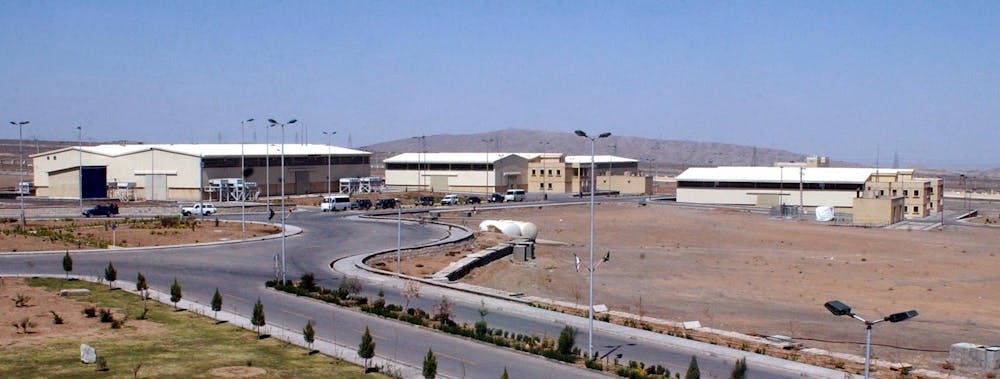
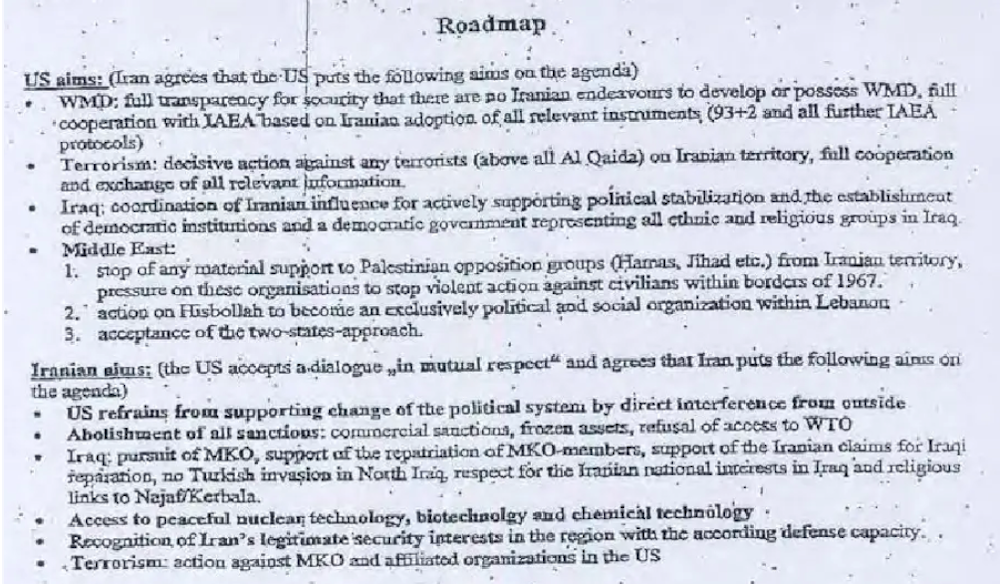
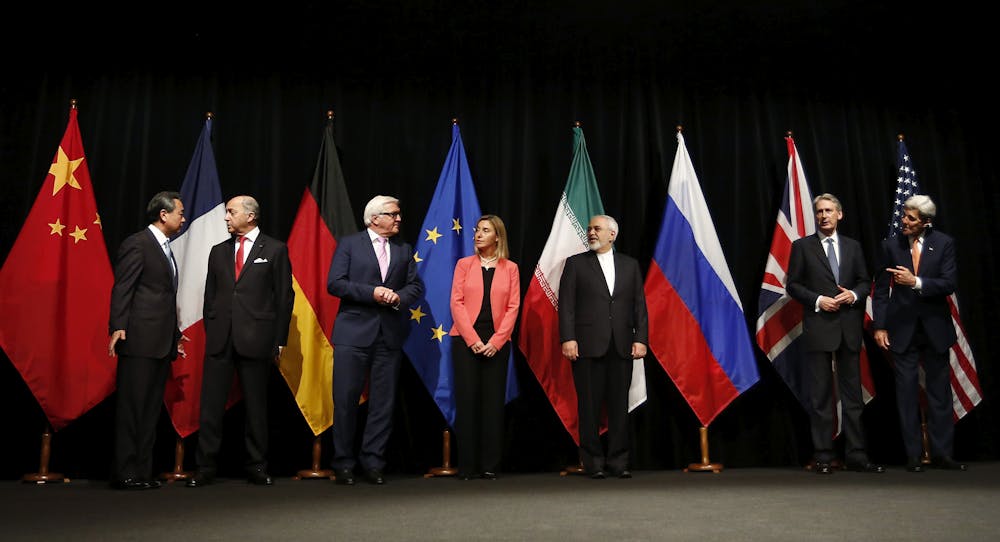
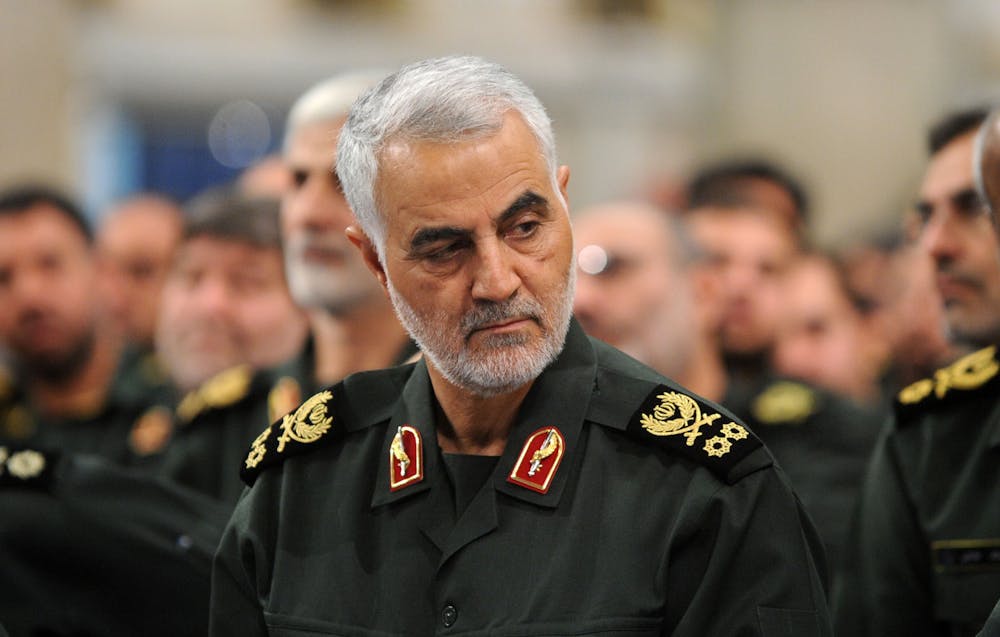
    Iran, Israel, United States, Donald Trump, missile strikes, nuclear sites,Iran, Israel, United States, Donald Trump, missile strikes, nuclear sites,In a bid to defuse the conflict over Iran’s nuclear program, foreign ministers from Europe’s top three powers hurried to meet their Iranian counterpart on Friday in Geneva.

    Those hopes collapsed on Saturday when U.S. President Donald Trump ordered airstrikes on Iran’s three main nuclear sites, in support of Israel’s military campaign.

    “It’s irrelevant to ask Iran to return to diplomacy,” Iran’s foreign minister Abbas Araqchi, visibly angry, told reporters in Istanbul on Sunday, promising a “response” to the U.S. strikes. “It’s not time for diplomacy now.”

    Trump, who said the U.S. airstrikes “obliterated” the sites, warned in a televised speech on Saturday the U.S. could attack other targets in Iran if no peace deal was reached and urged Tehran to return to the negotiating table.

    Reuters spoke to seven Western diplomats and analysts who said the prospect of negotiations was negligible for now, with an unbridgeable gap between Washington’s demand for zero enrichment by Iran and Tehran’s refusal to abandon its nuclear program.

    “I think the prospects of effective diplomacy at this point are slim to none,” said James Acton, co-director of the Nuclear Policy Program at the Carnegie Endowment for International Peace, a think tank headquartered in Washington.

    “I’m much more worried about escalation, both in the short and the long term.”

    According to European diplomats, the three European allies – Britain, France and Germany – were not made aware of Trump’s decision to strike Iran ahead of time. French President Emmanuel Macron had promised on Saturday – just before the U.S. strikes – to accelerate the nuclear talks, following a call with his Iranian counterpart.

    One European diplomat, who asked not to be identified, acknowledged there was now no way of holding a planned second meeting with Iran in the coming week.

    In the wake of the U.S. military action, any European diplomatic role appears likely to be secondary. Trump on Friday dismissed Europe’s efforts towards resolving the crisis, saying Iran only wanted to speak to the United States.

    Three diplomats and analysts said any future talks between Iran and Washington would likely be through regional intermediaries Oman and Qatar, once Tehran decides how to respond to the U.S. airstrikes on its nuclear sites at Fordow, Natanz and Isfahan.

    The attacks leave Iran with few palatable options on the table. Since Israel began its military campaign against Iran on June 13, some in Tehran have raised the prospect of withdrawing from the Nuclear Non-Proliferation Treaty (NPT) to signal Iran’s determination to accelerate enrichment, but experts say that would represent a considerable escalation and likely draw a forceful response from Washington.

    Acton, of the Carnegie Endowment, said Iran’s most obvious means for retaliation is its short-range ballistic missiles, that could be used to target U.S. forces and assets in the region. But any military response by Iran carried the risk of miscalculation, he said.

    “On the one hand, they want a strong enough response that they feel the U.S. has actually paid a price. On the other hand, they don’t want to encourage further escalation,” he said.

    EUROPEAN EFFORT ENDED IN FAILURE

    Even before the U.S. strikes, Friday’s talks in Geneva showed little sign of progress amid a chasm between the two sides and in the end no detailed proposals were put forward, three diplomats said. Mixed messaging may have also undermined their own efforts, diplomats said.

    European positions on key issues like Iran’s enrichment program have hardened in the past 10 days with the Israeli strikes and the looming threat of U.S. bombing.

    The three European powers, known as the E3, were parties to a 2015 nuclear deal that Trump abandoned three years later during his first term.

    Both the Europeans and Tehran believed they had a better understanding of how to get a realistic deal given the E3 have been dealing with Iran’s nuclear programme since 2003.

    But the Europeans have had a difficult relationship with Iran in recent months as they sought to pressure it over its ballistic missiles programme, support for Russia and detention of European citizens.

    France, which was the keenest to pursue negotiations, has in the last few days suggested Iran should move towards zero enrichment, which until now was not an E3 demand given Iran’s red line on the issue, two European diplomats said.

    Britain has also adopted a tougher stance more in tune with Washington and that was expressed in Geneva, the diplomats said. And Germany’s new government appeared to go in the same direction, although it was more nuanced.

    “Iran has to accept zero enrichment eventually,” said one EU official.

    A senior Iranian official on Saturday showed disappointment at the Europeans’ new stance, saying their demands were “unrealistic”, without providing further details.

    In a brief joint statement on Sunday, which acknowledged the U.S. strikes, the European countries said they would continue their diplomatic efforts.

    “We call upon Iran to engage in negotiations leading to an agreement that addresses all concerns associated with its nuclear program,” it said, adding the Europeans stood ready to contribute “in coordination with all parties”.

    David Khalfa, co-founder of the Atlantic Middle East Forum, a Paris-based think tank, said Supreme Leader Ali Khamenei’s government had taken advantage of the Europeans for years to gain time as it developed its nuclear program and ballistic missile capabilities.

    “The European attempt ended in failure,” he said.
    However, the Europeans still have one important card to play. They are the only ones who, as party to the nuclear accord, can launch its so-called “snapback mechanism”, which would reimpose all previous UN sanctions on Iran if it is found to be in violation of the agreement’s terms.

    Diplomats said, prior to the U.S. strikes, the three countries had discussed an end-August deadline to activate it as part of a ‘maximum pressure’ campaign on Tehran.

    “MULTIPLE CHANNELS” FOR U.S. TALKS

    In total, the U.S. launched 75 precision-guided munitions, including more than two dozen Tomahawk missiles, and more than 125 military aircraft in the operation against the three nuclear sites, U.S. officials said.

    US Defense Secretary Pete Hegseth on Sunday warned Iran against retaliation and said both public and private messages had been sent to Iran “in multiple channels, giving them every opportunity to come to the table.”

    Five previous rounds of indirect negotiations between the United States and Iran collapsed after a U.S. proposal at the end of May called for Iran to abandon uranium enrichment. It was rejected by Tehran, leading to Israel launching its attack on Iran after Trump’s 60-day deadline for talks had expired.

    Iran has repeatedly said from then on that it would not negotiate while at war.

    Even after Israel struck, Washington reached out to Iran to resume negotiations, including offering a meeting between the Trump and Iranian President Masoud Pezeshkian in Istanbul, according to two European diplomats and an Iranian official.

    That was rebuffed by Iran, but Araqchi did continue direct contacts with US Special envoy Steve Witkoff, three diplomats told Reuters.

    One of the challenges in engaging with Iran, experts say, is that no-one can be sure of the extent of the damage to its nuclear program. With the IAEA severely restricted in its access to Iranian sites, it is unclear whether Tehran has hidden enrichment facilities.

    A senior Iranian source told Reuters on Sunday most of the highly enriched uranium at Fordow, the site producing the bulk of Iran’s uranium refined to up to 60%, had been moved to an undisclosed location before the U.S. attack there.

    Acton, of the Carnegie Endowment, said that – putting aside from the damage to its physical installations – Iran had thousands of scientists and technicians involved in the enrichment program, most of whom had survived the U.S. and Israeli attacks.
    “You can’t bomb knowledge,” said Acton.

    (Reuters)
    June 23, 2025
  • MIL-OSI: Global Electronics Association Debuts; New Name Elevates IPC’s 70-Year Legacy as Voice of $6 Trillion Electronics Industry

    Source: GlobeNewswire (MIL-OSI)

    Electronics Standards and Certifications Leader Unveils New Vision and Mission for Supply Chain Harmonization and Advocacy, Releases Global Trade Flows Study

    BANNOCKBURN, Ill., June 23, 2025 (GLOBE NEWSWIRE) — Today begins a new chapter for IPC as it officially becomes the Global Electronics Association, reflecting its role as the voice of the electronics industry. Guided by the vision of “Better electronics for a better world,” the Global Electronics Association (electronics.org) is dedicated to enhancing supply chain resilience and promoting accelerated growth through engagement with more than 3,000 member companies, thousands of partners, and dozens of governments across the globe.

    “The Board’s support and approval of this transformation shows our collective recognition that the electronics industry has fundamentally changed. The Association has expanded well beyond its beginning in printed circuit boards – we’re enabling AI, autonomous vehicles, next-generation communications, and much more,” said Tom Edman, board chair of the Global Electronics Association and president and CEO of TTM Technologies. “As we chart our path forward with our new name, we will continue and elevate our efforts to build partnerships between governments and industries, foster new investment, drive innovation across the industry, and minimize disruptions in the electronics supply chain.”

    As part of its new mission, the Association is increasing resources to strengthen advocacy, deepen industry insights, and enhance stakeholder communications — all aimed at advancing and elevating the electronics industry. To champion a resilient and growing supply chain, the Association represents the entire ecosystem of diverse subsectors that contribute to this complex industry.

    “Electronics today are the backbone of all industries, which makes its supply chain crucial to economies, governments, and everyday life,” said Dr. John W. Mitchell, president and CEO of the Global Electronics Association. “Our new mission and vision position us to work more deeply with industry and our members globally to advocate for the importance of electronics in our continuously changing world.”

    The Global Electronics Association will retain the IPC brand for the industry’s standards and certification programs, which are vital to ensure product reliability and consistency. The IPC Education Foundation is now known as the Electronics Foundation, continuing to focus on solving the talent challenges for the electronics industry.

    Global Electronics Trade Flows
    The Global Electronics Association also released a trade flows study of the global electronics industry, which now represents more than $1 in every $5 of global merchandise trade.

    Key findings include:

    • Electronics supply chains are more globally integrated than any other industry, surpassing even the automotive sector in cross-border complexity.
    • Trade inputs like semiconductors and connectors now exceed trade in finished products such as smartphones and laptops, with global electronics trade totaling $4.5 trillion in 2023, including $2.5 trillion in components alone.
    • Top exporters such as China, Vietnam, and India are among the fastest-growing importers of electronic inputs, underscoring the deep interdependence embedded in global electronics production.
    • This mutual reliance challenges the viability of reshoring and decoupling strategies, as rising export powers depend on components from across the world.

    Mitchell concluded: “Our trade flows analysis reinforces that resilience, not self-sufficiency, is the foundation of competitiveness in the electronics age. No single company or country can stand alone. The complexities of the electronics ecosystem require collaboration and partnership with others. The Global Electronics Association is here to help create a vital and thriving global electronics supply chain through industry, government, and stakeholder collaboration.”

    Global Operations Supporting Entire Value Chain
    The electronics value chain supported by the Global Electronics Association – from design to final product – encompasses original equipment manufacturers, semiconductors, printed circuit boards, assembly and manufacturing services, harnesses, materials, and equipment suppliers. The Association has operations in Belgium, China, Germany, India, Japan, Korea, Malaysia, Mexico, Taiwan, and the United States, and a presence across dozens more countries to support its members.

    About the Global Electronics Association
    The Global Electronics Association is the voice of the electronics industry, working with thousands of members and partners to build a more resilient supply chain and drive sustainable growth. We advocate for fair trade, smart regulation, and regional manufacturing, and educate on industry practices, actionable intelligence and technical innovations to empower the future. The Association collaborates with governments and companies worldwide to advance a trusted and prosperous electronics industry. Formerly known as IPC, the organization serves a $6 trillion market and operates from offices across Asia-Pacific, Europe and North and South America. Learn more at www.electronics.org.

    Contact:
    Michelle Leff Mermelstein
    Michellemermelstein@electronics.org  
    + 1 202-661-8092 

    A photo accompanying this announcement is available at https://www.globenewswire.com/NewsRoom/AttachmentNg/d245e078-4a14-42eb-b999-a98d2c7cdb94

    The MIL Network –

    June 23, 2025
  • MIL-Evening Report: NZ’s plan to ‘welcome anyone, from anywhere, anytime’ is not a sustainable tourism policy

    Source: The Conversation (Au and NZ) – By Regina Scheyvens, Professor of Development Studies, Te Kunenga ki Pūrehuroa – Massey University

    Getty Images

    Attracting more Chinese tourists to New Zealand, including during the off-season, was a major part of Prime Minister Christopher Luxon’s trade agenda during his visit to China last week. As Tourism Minister Louise Upston put it: “we welcome anyone, from anywhere, anytime”.

    It’s all part of the government’s plan to “turbocharge” the tourism sector with an additional NZ$13.5 million for marketing this year. The hope is this will help double the value of tourism as an export earner by 2034.

    The China visit built on the government’s Tourism Growth Roadmap which aims to attract 3.89 million visitors by 2026, and 4.78 million by 2030-34.

    Ironically, the release of the roadmap coincided with unprecedented, organised push-back against mass tourism across southern Europe this month. Fed up with the economic and cultural impact of too much “touristification”, residents of popular cities and islands in Italy, Portugal and Spain took part in coordinated protests, some even spraying tourists with water pistols.

    Before COVID upended international tourism in 2020, similar serious concerns were voiced in New Zealand about environmental degradation, crowding and congestion, and declining public support for tourism.

    But the plan to turbocharge tourism specifically aims to return international visitor arrivals to pre-COVID levels.

    From destination management to marketing

    As part of the government’s Tourism Boost Package, money generated by the International Visitor Levy (IVL) will be spent driving demand in Australia and elsewhere over the next two years.

    But this use of the visitor levy (which was raised to $100 in October last year) seems at odds with its stated purpose. According to New Zealand Immigration, “The IVL is your contribution to maintaining the facilities and natural environment you will use and enjoy during your stay”.

    Visitor levy revenue was strategically intended to support tourism regions to protect their natural environments and maintain crucial infrastructure.

    Diverting visitor levy income to fund overall tourism growth also seems to turn a deaf ear to the 2020 interim report from the Tourism Futures Taskforce and the 2023 Tourism Adaptation Roadmap from the Aotearoa Circle industry group.

    Both were widely acknowledged for their vision and ambition to create a future tourism that served the aspirations of Māori and local communities.

    There’s also a risk of the 29 Destination Management Plans developed since 2021 (with financial support from the visitor levy) being shelved in this detour from destination management to marketing.

    Anti-tourism protesters in Barcelona brandish water pistols, June 15.
    Getty Images

    Redefining tourism ‘value’

    There are several key questions about the practical implications of the government’s growth-oriented tourism development approach.

    Firstly, staff and infrastructure limitations mean destinations and business will struggle to accommodate more numbers. As the acting mayor of MacKenzie District has noted, several businesses around Tekapo were forced to operate below capacity last summer because there was no suitable housing available for the staff, only up-market holiday rentals.

    New Zealand also faces a tourism workforce crisis. Over the past ten years, there has been a 63% drop in the number of students taking tourism-related tertiary courses, and a 73% decrease in those completing hospitality courses.

    Meanwhile, from Northland to Queenstown, basic utilities such as electricity and drinking water are being stretched beyond capacity during peak visitation times.

    Secondly, there is a real risk of environmental damage from overtourism compromising the appeal of iconic attractions and destinations.

    But despite concern over growing visitor pressure at Piopiotahi/Milford Sound over the past decade, the government recently rejected a plan to manage numbers and ban cruise ships in the inner sound.

    Thirdly, there is the risk of tourism losing its social licence, as is happening in parts of Europe, given the huge burdens on small communities. As the mayor of Queenstown said recently: “When I first started as the mayor, I think it was one resident night to every 30 visitor nights. It is now one to 47.”

    Ultimately, long-term value creation through tourism can only happen when “value” is defined in more than monetary terms and in ways that deliver for all stakeholders, including businesses, visitors, communities, mana whenua and nature.

    The government’s focus on “turbocharging” economic growth through tourism now puts at risk what little progress has been made toward a sustainable tourism model and giving the regions most affected a voice.

    The authors do not work for, consult, own shares in or receive funding from any company or organisation that would benefit from this article, and have disclosed no relevant affiliations beyond their academic appointment.

    – ref. NZ’s plan to ‘welcome anyone, from anywhere, anytime’ is not a sustainable tourism policy – https://theconversation.com/nzs-plan-to-welcome-anyone-from-anywhere-anytime-is-not-a-sustainable-tourism-policy-259246

    MIL OSI Analysis – EveningReport.nz –

    June 23, 2025
  • MIL-OSI China: Let’s move! China celebrates Olympic Day in fitness-for-all activities

    Source: People’s Republic of China – State Council News

    500 participants join a 4.5-kilometer race during a fitness-for-all activity to celebrate International Olympic Day in Beijing, China, June 21, 2025. (Xinhua)

    As an integral part of Beijing Marathon’s classic route, the central avenue between China’s capital city’s iconic dual Olympic venues “Bird’s Nest” and “Water Cube” has long been an attraction for runners.

    On Saturday morning, 500 participants started an event here on the avenue, which was one of the fitness-for-all activities held nationwide to celebrate the upcoming International Olympic Day, which falls on June 23.

    The 4.5-kilometer race took place mainly around the National Stadium, known as the Bird’s Nest, where both the opening and closing ceremonies of the 2008 Beijing Olympics and the 2022 Beijing Winter Olympics were staged. The finish line was near the Beijing Olympic Museum, located south of the stadium.

    Wang Shuchuan, a former triathlete, came to the starting area early in the morning to prepare for his vlog. “I kept exercising and participating in marathon events after my athletic career had ended. I hope to lead more people to join in sporting events through my videos and enlarge our running community,” he said.

    Runner poses for pictures in the central avenue between Beijing’s dual Olympic venues. (Xinhua/Dai Mingxuan)

    The race also attracted the likes of Italy’s Paola Marras, who took part in an event at Beijing’s Olympic Park. “I work in Beijing. During the 2022 Winter Olympics, I watched competitions on TV. The sports atmosphere in Beijing is good, and I like the [tennis] China Open in particular,” she said.

    During the activity, Chinese Olympic champions Ma Long and Zhang Yufei sent their best wishes to sports lovers in an interview.

    China’s swimmer Zhang Yufei (front left) and table tennis player Ma Long (front right) interact with sports lovers. (Xinhua/Dai Mingxuan)

    “Physical exercise is relevant to health. I can feel the public’s enthusiasm for sports. The outstanding performance of Chinese athletes on the international stage is inspiring more people to get involved. Exercise is a lifelong hobby. I hope people can find the sports they love and practice in a healthy and scientific way,” said Ma, 36, China’s most decorated Olympian with six gold medals.

    Swimmer Zhang reflected on her Olympic journey, saying, “At the 2016 Rio Games, I might not have fully understood the significance of the Olympics. Then, after winning gold at Tokyo [2020], I felt the power of our teamwork. Last year at the Paris Olympics, I realized that even though I had made the utmost effort, it was still hard to get corresponding rewards. That is sport.”

    Zhang Yufei (L) takes a group photo with staff members. (Xinhua/Dai Mingxuan)

    “However, what remains unchanged is that the Olympic spirit leads me to pursue my next goal,” Zhang added.

    Established in 1948, the Olympic Day is a global celebration of sport and takes place on June 23 each year to commemorate the day the International Olympic Committee was founded in 1894 – the birth of the modern Olympic Games.

    With the theme of “Let’s Move,” the celebrating activities of Olympic Day were held in 12 cities in China on Saturday, also including Shenzhen, Nanjing, Ningbo, Zhangjiakou and Chengde. A variety of activities such as hiking, running, cycling, football, basketball and table tennis had a wide participation all over the country.

    Li Jing, Deputy Director of the General Administration of Sport of China, said, “At the Paris Olympics, the Chinese delegation achieved its best results in the history of participating in the Olympics abroad, which interpreted the Olympic motto of ‘Faster, Higher, Stronger – Together’ and demonstrated the confidence, optimism, passion, and friendliness of Chinese youth.”

    “Those remarkable moments of Chinese athletes at the Olympics motivated more people to embrace sports activities. Looking ahead, we hope the Chinese sports spirit will continue to shine at the 2026 Milan-Cortina Winter Olympics,” Li noted. 

    MIL OSI China News –

    June 23, 2025
  • MIL-OSI China: Iranian president warns US of retaliation after strikes on nuclear sites

    Source: People’s Republic of China – State Council News

    Iranian President Masoud Pezeshkian attends a press conference in Tehran, Iran, on Sept. 16, 2024. [Photo/Xinhua]

    Iranian President Masoud Pezeshkian said on Sunday that the United States must “receive the response to its aggression,” following U.S. strikes on Iranian nuclear facilities.

    Pezeshkian made the remarks during a phone call with French President Emmanuel Macron, according to a statement from his office. In response to Macron’s call for restraint, Pezeshkian said the United States must face consequences for its attacks on Iran.

    He described the U.S. strikes as a “clear symbol of its insincerity and the baselessness of its claims about favoring dialogue and seeking peace.”

    Despite this, Pezeshkian stressed Iran’s continued commitment to diplomacy with Europe, saying, “We have always announced our readiness for dialogue and interaction with Europe and have never abandoned the path of diplomacy, as we maintain that nobody would suffer any harm from dialogue.”

    Macron reiterated France’s willingness to pursue negotiations with Iran and said Paris would continue efforts to halt the conflict and restore stability, according to the statement.

    U.S. President Donald Trump on Saturday announced on Truth Social that American forces had completed strikes on three Iranian nuclear sites, namely Fordow, Natanz, and Isfahan.

    The U.S. strikes followed Israeli attacks launched since June 13 on various targets in Iran, including nuclear and military sites, killing several senior commanders, nuclear scientists, and civilians.

    Iran has retaliated with missile and drone strikes on Israel. As of Saturday, more than 400 people have been killed and over 3,500 wounded in Iran, according to the Iranian Health Ministry. In Israel, authorities reported 24 fatalities. 

    MIL OSI China News –

    June 23, 2025
  • MIL-OSI China: Inter leaves it late as Dortmund, Flu hit four

    Source: People’s Republic of China – State Council News

    Fluminense, Inter Milan and Borussia Dortmund all recorded crucial wins on Saturday at the FIFA Club World Cup, while River Plate was held to a goalless draw by Monterrey.

    At the MetLife Stadium in New Jersey, Brazil’s Fluminense recovered from 2-1 down to beat South Korean side Ulsan 4-2.

    Bayern Munich’s Konrad Laimer (L) vies with Boca Juniors’ Lautaro Blanco (C) during the group C match between Bayern Munich of Germany and CA Boca Juniors of Argentina at the FIFA Club World Cup 2025 at the Hard Rock Stadium, Miami, the United States, June 20, 2025. (Xinhua/Li Ming)

    Colombian midfielder Jhon Arias opened the scoring for Fluminense with a fizzing 25-yard free-kick but Lee Jin-hyun equalized from a tight angle after Um Won-sang’s cross.

    Lee returned the favor as his pass from the left wing allowed Um to score with a diving header just before halftime.

    Gustavo Nunato levelled with a low finish after intercepting Milosz Trojak’s clearance and Juan Pablo Freytes made it 3-2 by slotting home from the edge of the six-yard box.

    Keno put the result beyond doubt with a looping stoppage-time header following Arias’ cross.

    Fluminense is now top of Group F with four points, ahead of Borussia Dortmund on goal difference. Ulsan is last and has no chance of progressing.

    “We lost our focus at the end of the first half and they made us pay,” Fluminense manager Renato Gaucho told reporters. “We came back with a different attitude in the second half and the win gives us peace of mind. Tomorrow we’ll start thinking about the last match [against Mamelodi Sundowns], which we need to win.”

    In Seattle, Lautaro Martinez and Valentin Carboni scored for Inter Milan as the Italian side rallied late to overcome Japan’s Urawa Red Diamonds 2-1.

    Ryoma Watanabe gave the J1 League outfit an early lead by sweeping home from 10 yards after Takuro Kaneko’s clever run and cross from the right flank.

    It took until the 78th minute for Inter to equalize as Martinez struck with an acrobatic volley following Nicolo Barella’s corner.

    The Serie A club suddenly had the momentum and Carboni gave his side the lead in the 92nd minute by pouncing on a loose ball and drilling a low effort past Shusaku Nishikawa.

    “The result is almost secondary,” Carboni said. “It was difficult out there. They defended in a very compact fashion and we had few opportunities. But We have the three points, and it is important to move on.”

    The victory leaves Inter second in Group E with four points while Urawa is last and cannot qualify for the knockout stage.

    In Cincinnati, Germany’s Borussia Dortmund stayed in contention for a place in the last 16 with a 4-3 win over South African side Mamelodi Sundowns.

    Lucas Ribeiro, Iqraam Rayners and Lebo Mothiba were on target for the Pretoria-based side while Felix Nmecha, Serhou Guirassy and Jobe Bellingham scored for the Bundesliga outfit, which also benefitted from a Khuliso Mudau own goal.

    Borussia Dortmund is now second in Group F with four points, one ahead of third-placed Mamelodi.

    “I was expecting more, to be honest,” Borussia Dortmund boss Niko Kovac said. “We gave the ball away too easily and played too slowly. On the positive side, we scored four goals. We’re satisfied with the result given the difficult conditions. As a top team, you have to aim to score plenty of goals, but you also can’t afford to concede so many. That annoys me, but I try to stay pragmatic.”

    In Saturday’s late match, Argentina’s River Plate drew 0-0 with Mexican side Monterrey at the Rose Bowl in Pasadena.

    River Plate looked more likely to score but could not find a way past Monterrey’s Argentine goalkeeper Esteban Andrada, who made six saves.

    The Buenos Aires outfit finished the match with 10 men after Colombian midfielder Kevin Castano was sent off for a second bookable offense.

    River remains top of Group E with four points, ahead of Inter Milan on goal difference, while Monterrey is third, two points further back.

    MIL OSI China News –

    June 23, 2025
  • MIL-OSI China: Alcaraz holds off Lehecka for Queen’s Club crown

    Source: People’s Republic of China – State Council News

    Top seed Carlos Alcaraz defeated Czech hopeful Jiri Lehecka 7-5, 6-7(5), 6-2 to claim the title at the Queen’s Club Championships on Sunday.

    Winner Carlos Alcaraz and runner-up Jiri Lehecka pose during the awarding ceremony for the men’s singles final between Carlos Alcaraz of Spain and Jiri Lehecka of the Czech Republic at the Queen’s Club Championships in London, Britain, on June 22, 2025. (Photo by Stephen Chung/Xinhua)

    Alcaraz, who also won the grass-court ATP 500 event in 2023, admitted he didn’t expect to lift the trophy this time, having only practiced on grass for two days after taking time off following his successful French Open title defense earlier this month.

    The 22-year-old Spaniard was tested by Lehecka, dropping the second set, but gained the upper hand during key moments in the decider.

    “I came here with no expectations at all. I just came here with a goal to play two, three matches, try to feel great on grass and give myself the feedback of what I have to improve, what I have to better,” said the five-time Grand Slam winner, who will soon begin his Wimbledon title defense.

    “I just got used to the grass really quick, and I’m really proud about it,” added the world No. 2.

    Lehecka, ranked No. 30, stunned fifth-seeded Australian Alex de Minaur in the opening round and eliminated home favorite Jack Draper in the semifinals.

    “I’m super happy I had the chance today to fight for a title,” the 23-year-old said during the on-court interview. “I gave everything I had today but unfortunately it wasn’t enough but it’s always great to be back in Queen’s.”

    MIL OSI China News –

    June 23, 2025
  • MIL-OSI Canada: Monday, June 23, 2025

    Source: Government of Canada – Prime Minister

    Note: All times local

    Hoboken, Belgium

    9:20 a.m. The Prime Minister will visit the Antwerp Schoonselhof Military Cemetery and participate in a wreath-laying ceremony.

    Note for media:

    • Open coverage

    Brussels, Belgium

    3:15 p.m. The Prime Minister will meet with the Prime Minister of Belgium, Bart De Wever.

    Note for media:

    5:00 p.m. The Prime Minister will arrive at the Canada-European Union Summit.

    Note for media:

    • Open coverage

    5:05 p.m. The Prime Minister will meet with the President of the European Council, António Costa, and the President of the European Commission, Ursula von der Leyen.

    Note for media:

    5:30 p.m. The Prime Minister will participate in the Canada-European Union Plenary Meeting.

    Note for media:

    7:10 p.m. The Prime Minister will hold a joint media availability with the President of the European Council, António Costa, and the President of the European Commission, Ursula von der Leyen.

    Note for media:

    • Open coverage

    7:45 p.m. The Prime Minister will participate in a working dinner hosted by the President of the European Council, António Costa, and the President of the European Commission, Ursula von der Leyen.

    Note for media:

    MIL OSI Canada News –

    June 23, 2025
  • MIL-OSI Canada: Minister Anand to travel to Belgium, the Netherlands and Germany

    Source: Government of Canada News

    June 22, 2025 – Ottawa, Ontario – Global Affairs Canada

    The Honourable Anita Anand, Minister of Foreign Affairs, today announced that she will travel to Belgium, the Netherlands and Germany to attend the Canada-European Union (EU) Summit and the North Atlantic Treaty Organization (NATO) Summit, from June 23 to 26, 2025.

    On June 23, in Brussels, Belgium, on the margins of the Canada EU Summit, Minister Anand will have a bilateral meeting with the Deputy Prime Minister and Minister of Foreign Affairs, European Affairs and Development Cooperation of Belgium, along with senior EU officials, to discuss opportunities to strengthen collaboration at a time when the world is undergoing significant change and uncertainty. She will then attend the Summit with Prime Minister Mark Carney.

    From June 24 to 25, in The Hague, the Netherlands, on the margins of the NATO Summit, Minister Anand will meet her Allied counterparts to discuss issues related to Euro-Atlantic security, Canada’s steadfast support for Ukraine, and opportunities to further deepen Canada’s contribution to the Alliance. She will also attend the Summit with Prime Minister Carney.

    Minister Anand will conclude her trip in Berlin, Germany, on June 26, for a bilateral meeting with the Minister for Foreign Affairs of the Federal Republic of Germany, to explore ways to better respond to some of today’s most pressing global challenges and to promote economic growth.

    Quick facts

    ·         At the G7 Leaders’ Summit in Kananaskis, Alberta, Prime Minister Mark Carney reiterated Canada’s commitment to work more closely with the European Union to expand the Canada-EU free trade relationship, defend rules-based trade and deepen cooperation on shared defence and security challenges.

    ·         Canada is a founding member of NATO, a cornerstone of Canadian security and defence policy and an important platform for Canada’s contributions to international peace and security. Canada’s priority for NATO is to ensure that the Alliance remains modern, flexible, agile and able to face current and future threats.

    Related products

    ·         Prime Minister Carney to attend the Canada-EU Summit and the NATO Summit

    Associated links

    ·         Canada-EU relations

    ·         Canada-Belgium relations

    ·         Canada-Netherlands relations

    ·         Canada-Germany relations

    ·         Canada and the North Atlantic Treaty Organization

    MIL OSI Canada News –

    June 23, 2025
  • MIL-OSI Video: Iran, Israel, Ukraine & other topics – Daily Press Briefing (20 June 2025)

    Source: United Nations (video statements)

    Noon briefing by Stéphane Dujarric, Spokesperson for the Secretary-General.

    Highlights:

    Iran/Israel
    Security Council/Afternoon
    Ukraine
    Occupied Palestinian Territory
    Peacekeeping
    Switzerland
    Children and Armed Conflict
    World Refugee Day
    Sudan
    Sri Lanka
    International Days
    Guests on Monday

    IRAN/ISRAEL
    Speaking to the Security Council this morning, the Secretary-General urged Israel and Iran to give peace a chance and warned Council members that we are not drifting toward crisis – we are racing toward it.
    He said that the Non-Proliferation Treaty is a cornerstone of international security and Iran must respect it. The only way to bridge the trust gap with Iran, he added, is through diplomacy to establish a credible, comprehensive and verifiable solution – including full access to inspectors of the International Atomic Energy Agency.
    Mr. Guterres warned that the only thing that is predictable is that the consequences of continuing this conflict are unpredictable.
    Rosemary DiCarlo, the Under-Secretary-General for Political and Peacebuilding Affairs, told the Council that the scope and scale of attacks in Iran and Israel continue to widen, with grave consequences for civilians in both countries. The intensifying cycle of attacks and counterattacks has resulted in hundreds of civilian casualties, including fatalities, in both Iran and Israel.
    She added that we are teetering on the edge of a full-blown conflict and a humanitarian crisis. International humanitarian law must be respected, including the principles of distinction, proportionality, and precaution in attack.
    Ms. DiCarlo said that we welcome the talks between the Foreign Ministers of France, Germany, the UK, and Iran in Geneva today. We strongly encourage such efforts. We must pursue every possible opportunity to de-escalate, to cease the hostilities, to settle disputes by peaceful means, she said.
    Rafael Grossi, the Director General of the IAEA, told the Council that attacks on nuclear sites in Iran have caused a sharp degradation in nuclear safety and security there. Though they have not so far led to a radiological release affecting the public, there is a danger this could occur, he said.
    Mr. Grossi said that he is ready to travel immediately and to engage with all relevant parties to help ensure the protection of nuclear facilities and the continued peaceful use of nuclear technology in accordance with the Agency mandate, including by deploying Agency nuclear safety and security experts wherever necessary.

    SECURITY COUNCIL/AFTERNOON
    At 3:00 p.m., the Security Council will reconvene for a briefing on Maintenance of Peace and Security of Ukraine. Miroslav Jenča, the Assistant Secretary-General for Europe, Central Asia, and the Americas, and Edem Wosornu, the Director of Operations and Advocacy at OCHA, are expected to brief Council members.

    UKRAINE
    On Ukraine, our colleagues at the Office for the Coordination of Humanitarian Affairs tell us that today, attacks in the cities of Kharkiv and Odesa killed and injured civilians, including children and first responders. This is according to local authorities. Homes, education facilities and utility pipelines were also damaged. Additional casualties were reported in the regions of Donetsk, Kherson, and Dnipro. In Odesa and Kharkiv, humanitarian organizations, supporting local responders, provided hot meals, emergency shelter and psychosocial support.
    Meanwhile, an inter-agency humanitarian convoy today delivered vital aid to the community of Bilozerka in the region of Kherson, in the south of the country. The supplies included hygiene items, bed linen, kitchen sets, first aid kits and a charging station. The area remains under constant shelling, and thousands of residents need humanitarian aid. This was the second humanitarian convoy to reach front-line areas of the Kherson region this week. Our humanitarian colleagues note that some 9.4 million Ukrainians are still displaced inside the country or abroad—more than four years since the full-scale invasion and over a decade into the war that began in 2014. This includes 5.6 million refugees globally, according to the UN Refugee Agency. The International Organization for Migration says that another 3.8 million people remain internally displaced.

    Full highlights: https://www.un.org/sg/en/content/noon-briefing-highlight?date%5Bvalue%5D%5Bdate%5D=20%20June%202025

    https://www.youtube.com/watch?v=eHyjvej_gQM

    MIL OSI Video –

    June 23, 2025
  • MIL-OSI Video: Iran, Israel, Ukraine & other topics – Daily Press Briefing (20 June 2025)

    Source: United Nations (video statements)

    Noon briefing by Stéphane Dujarric, Spokesperson for the Secretary-General.

    Highlights:

    Iran/Israel
    Security Council/Afternoon
    Ukraine
    Occupied Palestinian Territory
    Peacekeeping
    Switzerland
    Children and Armed Conflict
    World Refugee Day
    Sudan
    Sri Lanka
    International Days
    Guests on Monday

    IRAN/ISRAEL
    Speaking to the Security Council this morning, the Secretary-General urged Israel and Iran to give peace a chance and warned Council members that we are not drifting toward crisis – we are racing toward it.
    He said that the Non-Proliferation Treaty is a cornerstone of international security and Iran must respect it. The only way to bridge the trust gap with Iran, he added, is through diplomacy to establish a credible, comprehensive and verifiable solution – including full access to inspectors of the International Atomic Energy Agency.
    Mr. Guterres warned that the only thing that is predictable is that the consequences of continuing this conflict are unpredictable.
    Rosemary DiCarlo, the Under-Secretary-General for Political and Peacebuilding Affairs, told the Council that the scope and scale of attacks in Iran and Israel continue to widen, with grave consequences for civilians in both countries. The intensifying cycle of attacks and counterattacks has resulted in hundreds of civilian casualties, including fatalities, in both Iran and Israel.
    She added that we are teetering on the edge of a full-blown conflict and a humanitarian crisis. International humanitarian law must be respected, including the principles of distinction, proportionality, and precaution in attack.
    Ms. DiCarlo said that we welcome the talks between the Foreign Ministers of France, Germany, the UK, and Iran in Geneva today. We strongly encourage such efforts. We must pursue every possible opportunity to de-escalate, to cease the hostilities, to settle disputes by peaceful means, she said.
    Rafael Grossi, the Director General of the IAEA, told the Council that attacks on nuclear sites in Iran have caused a sharp degradation in nuclear safety and security there. Though they have not so far led to a radiological release affecting the public, there is a danger this could occur, he said.
    Mr. Grossi said that he is ready to travel immediately and to engage with all relevant parties to help ensure the protection of nuclear facilities and the continued peaceful use of nuclear technology in accordance with the Agency mandate, including by deploying Agency nuclear safety and security experts wherever necessary.

    SECURITY COUNCIL/AFTERNOON
    At 3:00 p.m., the Security Council will reconvene for a briefing on Maintenance of Peace and Security of Ukraine. Miroslav Jenča, the Assistant Secretary-General for Europe, Central Asia, and the Americas, and Edem Wosornu, the Director of Operations and Advocacy at OCHA, are expected to brief Council members.

    UKRAINE
    On Ukraine, our colleagues at the Office for the Coordination of Humanitarian Affairs tell us that today, attacks in the cities of Kharkiv and Odesa killed and injured civilians, including children and first responders. This is according to local authorities. Homes, education facilities and utility pipelines were also damaged. Additional casualties were reported in the regions of Donetsk, Kherson, and Dnipro. In Odesa and Kharkiv, humanitarian organizations, supporting local responders, provided hot meals, emergency shelter and psychosocial support.
    Meanwhile, an inter-agency humanitarian convoy today delivered vital aid to the community of Bilozerka in the region of Kherson, in the south of the country. The supplies included hygiene items, bed linen, kitchen sets, first aid kits and a charging station. The area remains under constant shelling, and thousands of residents need humanitarian aid. This was the second humanitarian convoy to reach front-line areas of the Kherson region this week. Our humanitarian colleagues note that some 9.4 million Ukrainians are still displaced inside the country or abroad—more than four years since the full-scale invasion and over a decade into the war that began in 2014. This includes 5.6 million refugees globally, according to the UN Refugee Agency. The International Organization for Migration says that another 3.8 million people remain internally displaced.

    Full highlights: https://www.un.org/sg/en/content/noon-briefing-highlight?date%5Bvalue%5D%5Bdate%5D=20%20June%202025

    https://www.youtube.com/watch?v=eHyjvej_gQM

    MIL OSI Video –

    June 23, 2025
  • MIL-OSI Australia: Regulatory reform in digital platform markets is needed to improve competition and consumer outcomes

    Source: Australian Ministers for Regional Development

    Without sufficient laws in place, Australian consumers and businesses continue to encounter a significant number of harmful practices across a range of digital platform services, the ACCC’s tenth and final report of the ACCC’s Digital Platform Services Inquiry has found.

    “Digital platform services are critically important to Australian consumers and businesses and are major drivers of productivity growth in our economy,” ACCC Chair Gina Cass-Gottlieb said.

    “While these services have brought many benefits, they have also created harms that our current competition and consumer laws cannot adequately address. This is why we continue to recommend that targeted regulation of digital platform services is needed to increase competition and innovation, and protect consumers in digital markets.”

    The report, which concludes the ACCC’s five year inquiry, has reiterated support for measures including an economy wide unfair trading practices prohibition, an external dispute resolution body for digital platform services, and a new digital competition regime.

    Continued risk of widespread harms to Australian consumers and small businesses

    The ACCC’s final report found that there continues to be significant risk of consumer and competition harms on digital platforms.

    Consumers continue to face unfair trading practices in digital markets including manipulative design practices, such as user interfaces that direct consumers to more expensive subscriptions or purchase options.

    “72 per cent of Australian consumers surveyed by the ACCC reported that they had encountered potentially unfair practices when shopping online, such as accidental subscriptions or hidden fees. An unfair trading practices prohibition is required to protect consumers from these kinds of tactics, both online and offline,” Ms Cass-Gottlieb said.

    “Our consumer survey also found 82 per cent of respondents agree that there should be a specialised independent external dispute resolution body for users of digital platform services to escalate complaints which cannot be resolved with platforms directly.”

    “An external dispute resolution body would also help Australian small businesses who rely on digital platforms to reach their customers – for example, when a fake review is made about their business on a search engine or marketplace, or when they have an account deactivated and lose their means of accessing their customers on social media,” Ms Cass-Gottlieb said.

    A new digital competition regime will bring benefits to Australians

    Throughout the course of this five-year Inquiry, the ACCC has also observed conduct by the most powerful digital platforms that is distorting the competitive process. This conduct includes denying interoperability, self-preferencing and tying, exclusivity agreements, impeding switching, and withholding access to important hardware, software, and data inputs.

    “A lack of competition in digital markets can lead to higher prices, less choice, lower quality or even greater harvesting of personal data, ultimately impacting everyday users,” Ms Cass-Gottlieb said.

    “There is broad international recognition that there is anti-competitive conduct in digital markets that needs to be addressed. Several jurisdictions have already introduced regulation to improve competition in digital markets, including the European Union, the United Kingdom, Germany and Japan.”

    “It is timely to progress a new digital competition regime in Australia which will increase contestability, benefit both local and foreign companies that rely on access to these platforms to conduct business in Australia, and support a growing economy,” Ms Cass-Gottlieb said.

    Emerging services and technology need continued scrutiny

    The final report has also outlined how rapidly evolving digital markets and emerging technologies, like cloud computing and generative AI, may exacerbate existing risks to competition and consumers in Australia or give rise to new ones.

    For example, cloud computing is continuing to grow both globally and in Australia, providing significant benefits for businesses and consumers. However, the ACCC’s report identified a range of potential competition risks in this sector.

    “We found that the major providers of cloud computing in Australia – Amazon, Microsoft and Google – are vast, incumbent digital platforms that are vertically integrated across the cloud technology stack. Vertically-integrated cloud providers may be incentivised to engage in conduct that could harm their competitors – for example, anti-competitively bundling their own services across different layers of the cloud stack,” Ms Cass-Gottlieb said.

    The report also found that generative AI developers and deployers generally require access to significant cloud computing power to train and deploy their products. However, cloud providers may be incentivised to anti-competitively bundle, tie or self-preference their own generative AI products above those of competitors.

    “Harms to competition in the generative AI sector could hamper innovation, result in lower quality products and services, and force Australian businesses and consumers to pay more than they otherwise would to utilise this technology,” Ms Cass-Gottlieb said.

    “To protect against these kinds of risks, it is critical that the proposed digital competition regime enable the ACCC to continue monitoring changes to services it has previously examined, as well as new technologies that emerge over time.”

    Background

    The ACCC’s Digital Platforms Branch conducted a five-year inquiry into markets for the supply of digital platform services in Australia and their impacts on competition and consumers, following a direction from the Treasurer in 2020.

    The inquiry reported to the Government every six months and examined different forms of digital platform services, including: online private messaging services, app marketplaces, search defaults and choice screens, general online retail marketplaces, regulatory reform, social media services, expanding ecosystems of digital platforms, data products and

    services supplied by data firms, and revisiting general search services. This ACCC’s tenth report concludes the inquiry.

    Previous reports are published at Digital platform services inquiry 2020-25.

    In the fifth DPSI interim report on regulatory reform, the ACCC made a range of recommendations to bolster competition in the digital economy, level the playing field between big tech companies and Australian businesses, and reduce prices for consumers. The recommendations include new service-specific mandatory codes of conduct for particular ‘designated digital platforms,’ based on principles set out in legislation.

    In December 2023, the Government accepted the ACCC’s findings that existing competition provisions by themselves are not sufficient to address current or potential future competition harms and supported-in-principle the development of a new digital competition regime. In December 2024, the Government began consultation on the implementation of a new digital competition regime in Australia.

    Further information, including key findings are available on the ACCC website.

    Notes to editors

    ‘Cloud computing’ refers to the provision of global, on-demand network access to computing resources such as networks, servers, storage, applications and services. Cloud computing can be contrasted with traditional on-premises computing, where an organisation installs and maintains its own IT infrastructure for private use.

    ‘Generative AI’ refers to a type of artificial intelligence (AI) that can create content such as text, images, audio, video or data, in response to prompts entered by a user. Generative AI adopts a machine learning approach for turning inputs and outputs into new outputs by analysing extremely large datasets.

    MIL OSI News –

    June 23, 2025
  • MIL-OSI Europe: Minister Peter Burke to lead Trade Mission to Japan

    Source: Government of Ireland – Department of Jobs Enterprise and Innovation

    23rd June 2025

    Minister for Enterprise, Tourism and Employment Peter Burke is leading a Trade and Investment Mission to Japan, accompanied by Enterprise Ireland CEO Designate Jenny Melia and IDA Ireland CEO Michael Lohan, reflecting the strong commitment by the Irish government to expanding both Investment and Trade with Japan.

    Two-way trade between Japan and Ireland now exceeds €21 billion and Japan is the number one source of foreign direct investment into Ireland from the Asia Pacific region. These investments come in the areas of technology services, semiconductors, pharmaceuticals, medical devices, and financial services.

    Minister Burke said: 

    “Trade promotion and market diversification are key government priorities, and I see significant opportunities in Japan for both Irish companies and FDI. This week, we are engaging with dozens of major corporations to highlight Ireland’s global position as a stable location for investment, as well as helping Irish companies to build, scale and expand in this region. 

    “Looking ahead, the relationship between our two countries is based on shared values and mutual respect and as Minister, I believe our work in this regard will facilitate this relationship growing deeper and stronger in the years ahead. With the CEOs of both the IDA and Enterprise Ireland, we are working hard this week to explore new avenues for growth in sectors with significant potential.”

    Japan is a growing export market with over 300 Enterprise Ireland clients doing business in Japan and over 50 Irish companies having representations or presence in Japan.

    The Minister along with senior executives will also meet IDA’s potential and existing clients to set out the unique advantages of locating in Ireland to service a European marketplace of 450 million people. He will meet with a number of Enterprise Ireland client companies seeking new opportunities for their world-class products and services and will hold a number of political engagements with his counterparts in the Japanese Government. 

    Minister Burke will visit the new Ireland House Tokyo, which is home to offices for the Embassy, Team Ireland, including Enterprise Ireland, Bord Bia and IDA. The Team Ireland brand contributes to raising Ireland’s profile in Japan, by showcasing our cultural heritage, creativity and innovation through excellence in design and providing a platform for our state agencies to engage in and support Irish business interests in Japan.

    During the second half of the week, the Minister will attend the Osaka Expo 2025. Participation at Expo provides an excellent platform for direct public diplomacy and an opportunity to increase visibility of Ireland in the region. The development of the Irish Pavilion at Expo is a strong example of the Team Ireland approach, with active participation and engagement from across Government Departments and State Agencies, all working in tandem to promote Ireland on the world stage. 

    ENDS

    Back to Department News

    Back to Top

    MIL OSI Europe News –

    June 23, 2025
  • MIL-OSI Russia: Member of the Politburo of the CPC Central Committee visited Germany

    Translation. Region: Russian Federal

    Source: People’s Republic of China in Russian – People’s Republic of China in Russian –

    Source: People’s Republic of China – State Council News

    BERLIN, June 22 (Xinhua) — Yuan Jiajun, member of the Political Bureau of the Communist Party of China (CPC) Central Committee and secretary of the CPC Chongqing Municipal Committee, led a party delegation to visit Germany from June 19 to 22 at the invitation of the Social Democratic Party of Germany (SPD).

    Yuan Jiajun met with German Chancellor of the Federal Chancellery Torsten Frey, SPD co-chair Saskia Esken and North Rhine-Westphalia Prime Minister Hendrik Wüst.

    Yuan Jiajun also attended a number of events, including a bilateral dialogue on economic and trade cooperation and the launch ceremony of the first ASEAN Express train, an extension of the China-Europe freight rail service.

    As a member of the Politburo of the CPC Central Committee said, the important agreements reached by Chinese President Xi Jinping and German Chancellor Friedrich Merz outlined the course for the further development of China-Germany comprehensive strategic partnership.

    China, Yuan Jiajun pointed out, hopes to strengthen strategic communication with Germany, unleash the potential of bilateral cooperation, and promote the healthy and stable development of China-Germany and China-EU relations.

    The CPC intends to deepen exchanges and contacts with various political parties in Germany to ensure a clear understanding of the goals and tasks of China’s reform and development, and promote the development of bilateral relations through concrete achievements of inter-party exchanges, he said.

    Yuan Jiajun assured that Chongqing will implement the important consensus of the leaders of the two countries, expand cooperation with the German side in the fields of technological innovation, trade and economic logistics, green and low-carbon development and industry, so as to contribute to the friendly and mutually beneficial cooperation between China and Germany.

    Representatives of the German side, in turn, pointed out that both Germany and China are important major countries, and strengthening cooperation between them will help bring more certainty to the world. According to representatives of the FRG, Germany expects to expand exchanges and cooperation with China at the inter-party and regional levels, strengthen contacts and coordination in international affairs, and promote progress in German-Chinese and European-Chinese relations.

    During the visit, Yuan Jiajun also held separate meetings with the heads of Siemens, Mercedes-Benz Group and other representatives of German business and industry circles. He spoke about Xi Jinping Thought on Governance and the significant opportunities for China’s cooperation with other countries provided by the decisions of the Third Plenary Session of the 20th CPC Central Committee on further comprehensively deepening reform, expanding high-level opening up to external development and achieving high-quality development.

    In addition, Yuan Jiajun was present at the signing of agreements on several cooperation projects. –0–

    MIL OSI Russia News –

    June 23, 2025
  • MIL-OSI United Kingdom: Powering Britain’s future: Electricity bills to be slashed for over 7,000 businesses in major industry shake-up

    Source: United Kingdom – Executive Government & Departments

    Press release

    Powering Britain’s future: Electricity bills to be slashed for over 7,000 businesses in major industry shake-up

    Industrial Strategy sets out a ten-year plan to boost investment, create good skilled jobs and make Britain the best place to do business

    • Electricity costs for thousands of businesses to be slashed by up to 25%.
    • New Industrial Strategy to unlock billions in investment and support 1.1 million new well-paid jobs over the next decade.
    • Strategy developed in partnership with business, marking a new era of collaboration between government and high growth industries.
    • Strategy will make the UK the best country to invest in and grow a business, delivering on the Plan for Change.

    More than 7,000 British businesses are set to see their electricity bills slashed by up to 25% from 2027, as the Government unveils its bold new Industrial Strategy today [Monday 23 June].

    The modern Industrial Strategy sets out a ten-year plan to boost investment, create good skilled jobs and make Britain the best place to do business by tackling two of the biggest barriers facing UK industry – high electricity prices and long waits for grid connections.

    British manufacturers currently pay some of the highest electricity prices in the developed world while businesses looking to expand or modernise have faced delays when it comes to connecting to the grid.

    For too long these challenges have held back growth and made it harder for British firms to compete. Today’s announcement marks a decisive shift — with government stepping in to support industry and unlock the UK’s economic potential.

    From 2027, the new British Industrial Competitiveness Scheme will reduce electricity costs by up to £40 per megawatt hour for over 7,000 electricity-intensive businesses in manufacturing sectors like automotive, aerospace and chemicals.

    These firms, which support over 300,000 skilled jobs, will be exempt from paying levies such as the Renewables Obligation, Feed-in Tariffs and the Capacity Market — helping level the playing field and make them more internationally competitive. Eligibility and further details on the exemptions will be determined following consultation, which will be launched shortly.

    The government is also increasing support for the most energy-intensive firms — like steel, chemicals, and glass — by covering more of the electricity network charges they normally have to pay through the British Industry Supercharger. These businesses currently get a 60% discount on those charges, but from 2026, that will increase to 90%. This means their electricity bills will go down, helping them stay competitive, protect jobs, and invest in the future.

    This will help around 500 eligible businesses in sectors such as steel, ceramics and glass reduce their costs and protect jobs in industries that are the backbone of our economy and will be delivered at no additional cost to the taxpayer.

    These reforms complement the government’s long-term mission for clean power, which is the only way to bring down bills for good by ending the UK’s dependency on volatile fossil fuel markets.

    To ensure businesses can grow and hire without delay, the government will also deliver a new Connections Accelerator Service to streamline grid access for major investment projects — including prioritising those that create high-quality jobs and deliver significant economic benefits.

    We will work closely with the energy sector, local authorities, Welsh and Scottish Governments, trade unions, and industry to design this service, which we expect to begin operating at the end of 2025. New powers in the Planning and Infrastructure Bill, currently before parliament, could also allow the Government to reserve grid capacity for strategically important projects, cutting waiting times and unlocking growth in key sectors.

    The Industrial Strategy is a 10-year plan to promote business investment and growth and make it quicker, easier and cheaper to do business in the UK, giving businesses the confidence to invest and create 1.1 million good, well-paid jobs in thriving industries – delivering on this government’s Plan for Change.

    Prime Minister Keir Starmer said:

    This Industrial Strategy marks a turning point for Britain’s economy and a clear break from the short-termism and sticking plasters of the past.

    In an era of global economic instability, it delivers the long term certainty and direction British businesses need to invest, innovate and create good jobs that put more money in people’s pockets as part of the plan for change.

    This is how we power Britain’s future – by backing the sectors where we lead, removing the barriers that hold us back, and setting out a clear path to build a stronger economy that works for working people. Our message is clear – Britain is back and open for business.

    Chancellor of the Exchequer Rachel Reeves said:

     The UK has some of the most innovative businesses in the world and our Plan for Change has provided them with the stability they need to grow and for more to be created.

    Today’s Industrial Strategy builds on that progress with a ten-year plan to slash barriers to investment. It’ll see billions of pounds for investment and cutting-edge tech, ease energy costs, and upskill the nation. It will ensure the industries that make Britain great can thrive. It will boost our economy and create jobs that put more money in people’s pockets.

    Business and Trade Secretary Jonathan Reynolds said:

    We’ve said from day one Britain is back in business under this government, and the £100 billion of investment we’ve secured in the past year shows our Plan for Change is already delivering for working people.

    Our Modern Industrial Strategy will ensure the UK is the best country to invest and do business, delivering economic growth that puts more money in people’s pockets and pays for our NHS, schools and military.

    Not only does this Strategy prioritise investment to attract billions for new business sites, cutting-edge research, and better transport links, it will also make our industrial electricity prices more competitive.

    Tackling energy costs and fixing skills has been the single biggest ask of us from businesses and the greatest challenge they’ve faced – this government has listened, and now we’re taking the bold action needed. Government and business working hand in hand to make working people better of is what this Government promised and what we will deliver.

    Energy Secretary Ed Miliband said: 

    For too long high electricity costs have held back British businesses, as a result of our reliance on gas sold on volatile international markets.

    As part of our modern industrial strategy we’re unlocking the potential of British industry by slashing industrial electricity prices in key sectors.

    We’re also doubling down on our clean power strengths with increased investment in growth industries from offshore wind to nuclear. This will deliver on our clean power mission and Plan for Change to bring down bills for households and businesses for good.

    The Supercharger and British Industrial Competitiveness Scheme will be funded through reforms to the energy system. The government is reducing costs within the system to free up funding without raising household bills or taxes and intends to also use additional funds from the strengthening of UK carbon pricing, including as a result of linking with the EU carbon market.

    We have set out an intention to link emissions trading systems, as part of our new agreement with the European Union to support British businesses. Without an agreement to do this, British industry would have to pay the EU’s carbon tax.

    We intend to link our carbon pricing system with the EU’s, we will ensure that money stays in the UK—which allows us to support British companies and British jobs through these schemes.

    Building on the Spending Review and the recently announced 10-Year Infrastructure Strategy, the Industrial Strategy is the latest step forward in our plans to deliver national renewal. It will include targeted support for the areas of the country and economy that have the greatest potential to grow, while introducing reforms that will make it easier for all businesses to get ahead.

    The Strategy’s bold plan of action includes:

    • Slash electricity costs by up to 25% from 2027 for electricity-intensive manufacturers in our growth sectors and foundational industries in their supply chain, bringing costs more closely in line with other major economies in Europe.
    • Unlocking billions in finance for innovative business, especially for SMEs by increasing British Business Bank financial capacity to £25.6 billion, crowding in tens of billions of pounds more in private capital. The includes an additional £4bn for Industrial Strategy Sectors, crowding in billions more in private capital. By investing largely through venture funds, the BBB will back the UK’s most high-growth potential companies.
    • Upskilling the nation with an extra £1.2 billion each year for skills by 2028-29, and delivering more opportunities to learn and earn in our high-growth sectors including new short courses in relevant skills funded by the Growth and Skills Levy and skills packages targeted at defence digital and engineering.
    • Reducing regulatory burdens by cutting the administrative costs of regulation for business by 25% and reduce the number of regulators. 
    • Supporting 5,500 more SMEs to adopt new technology through the Made Smarter programme while centralising government support in one place through the Business Growth Service.
    • Boosting R&D spending to £22.6bn per year by 2029-30 to drive innovation across the IS-8, with more than £2bn for AI over the Spending Review, and £2.8bn for advanced manufacturing over the next ten years. This will leverage in billions more from private investors. Regulatory changes will further clear the path for fast-growing industries and innovative products such as biotechnology, AI, and autonomous vehicles.
    • Attracting elite global talent to our key sectors, via visa and migration reforms and the new Global Talent Taskforce.
    • Deepening economic and industrial collaboration with our partners, building on our Industrial Strategy Partnership with Japan and recent deals with the US, India, and the EU.
    • Reducing planning timelines and cutting costs for developers, by hiring more planners, streamlining pre-application requirements and combining environmental obligations, removing burdens on businesses as well as accelerating house building. 
    • Revolutionising public procurement and reducing barriers for new entrants and SMEs to bolster domestic competitiveness.
    • Supporting the UK’s city regions and clusters by increasing the supply of investible sites through a new £600m Strategic Sites Accelerator, enhanced regional support from the Office for Investment, National Wealth Fund, and British Business Bank, and more.

    The plan focuses on 8 sectors where the UK is already strong and there’s potential for faster growth: Advanced Manufacturing, Clean Energy Industries, Creative Industries, Defence, Digital and Technologies, Financial Services, Life Sciences, and Professional and Business Services. Each growth sector has a bespoke 10-year plan that will attract investment, enable growth and create high-quality, well-paid jobs.

    Dame Clare Barclay DBE, Chair of the Industrial Strategy Advisory Council and President of Enterprise & Industry EMEA at Microsoft said:

    I welcome today’s Industrial Strategy, which sets out a clear plan to back the UK’s growth driving sectors. It is particularly positive to see the strong focus on skills in areas such as engineering, technology and defence. Commitments such as £187 million for the TechFirst programme will ensure the UK has the skills it needs to support our growth industries and seize transformative opportunities like AI.

    Rain Newton-Smith, Chief Executive, CBI said:

    Today’s Industrial Strategy announcement is a significant leap forward in the partnership between government and business that sets us on the path to our shared goal of raising living standards across the country.  

    It sends an unambiguous, positive signal about the nation’s global calling card as well as the direction of travel for the wider economy for the next decade and beyond.

    The CBI has long been advocating for a comprehensive industrial strategy, based on the UK’s USP – the sectors and markets where we can compete to win on the global stage.

    More competitive energy prices, fast-tracked planning decisions and backing innovation will provide a bedrock for growth. But the global race to attract investment will require a laser-like and unwavering focus on the UK’s overall competitiveness. 

    Today marks the beginning of delivering this strategy in close partnership, at pace, and with a shared purpose.

    Stephen Phipson CBE, CEO at Make UK said:

    British industry has been in desperate need for a government who understands our sector and had the strategic vision for a plan for growth. Today’s Industrial Strategy is a giant and much needed step forward taken by the Secretary of State who has seen the potential and provided the keys to help unlock it.

    Make UK has led the campaign for a new industrial strategy for many years, highlighting the three major challenges that were diminishing our competitiveness, hampering growth and frustrating productivity gains: a skills crisis, crippling energy costs and, an inability to access capital for new British innovators.

    The strategy announced today sets out plans to address all three of these structural failings. Clearly there is much to do as we move towards implementation but, this will send a message across the Country and around the world that Britain is back in business.

    Tufan Erginbilgic, Rolls-Royce CEO, said:

    The UK Government’s Industrial Strategy commitment to support our world-leading aerospace and nuclear industries shows long-term strategic foresight. Rolls-Royce’s highly differentiated technologies in gas turbines and nuclear capabilities- including SMRs and AMRs- are uniquely placed to deliver economic growth, skilled jobs and attract investment into the UK.

    Mike Hawes OBE, SMMT Chief Executive said:

    The publication of an Industrial Strategy – one with automotive at its heart – is the policy framework the sector has long-sought and Government has now addressed. Such a strategy – long-term, aligned to a trade strategy and supported by all of Government – is the basis on which the UK automotive sector can regain its global competitiveness. Making the UK the best place to invest now depends on implementation, and implementation at pace, because investment decisions are being made now against a backdrop of fierce competition and geopolitical uncertainty. The number one priority must be addressing the UK’s high cost of energy, enabling the sector to invest in the technologies, the products and the people that will give the UK its competitive edge.

    Five sector plans have been published today:

    • Advanced Manufacturing – Backing our Advanced Manufacturing sector with up to £4.3 billion in funding, including up to £2.8 billion in R&D over the next five years, with the aim of anchoring supply chains in the UK – from increasing vehicle production to 1.35 million, to leading the next generation of technologies for zero emission flight.
    • Clean Energy Industries – Doubling investment in Clean Energy Industries by 2035, with Great British Energy helping to build the clean power revolution in Britain with a further £700 million in clean energy supply chains, taking the total funding for the Great British Energy Supply Chain fund to £1 billion.
    • Creative Industries – Maximizing the value of our Creative Industries through a £380 million boost for film and TV, video games, advertising and marketing, music and visual and performing arts will improve access to finance for scale-ups and increase R&D, skills and exports.
    • Digital and Technologies – Making the UK the European leader for creating and scaling Digital and Technology businesses, with more than £2 billion to drive the AI Action Plan, including a new Sovereign AI Programme, £187 million for training one million young people in tech skills and targeting R&D investment at frontier technologies such as cyber security in Northern Ireland, semiconductors in Wales and quantum technologies in Scotland. 
    • Professional and Business Services – Ensuring our Professional and Business Services becomes the world’s most trusted adviser to global industry, revolutionising the sector across the world through adoption of UK-grown AI and working to secure mutual recognition of professional qualifications agreements overseas.  

    Notes to editors

    • The Industrial Strategy will be published on Gov.UK tomorrow.
    • The Defence, Financial Services and Life Sciences sector plans will be published shortly.
    • The 7000 businesses are an indicative estimate of how many businesses could be in scope of the scheme. The full scope and eligibility of the scheme will be determined following consultation.

    Share this page

    The following links open in a new tab

    • Share on Facebook (opens in new tab)
    • Share on Twitter (opens in new tab)

    Updates to this page

    Published 22 June 2025

    MIL OSI United Kingdom –

    June 23, 2025
  • MIL-OSI New Zealand: New Zealand announces further aid for Ukraine

    Source: New Zealand Government

    Prime Minister Christopher Luxon and Foreign Minister Winston Peters have announced a new $16 million package of support for Ukraine ahead of this week’s NATO Summit in the Hague.   
    “New Zealand stands in solidarity with Ukraine. Its war of self-defence is well into its fourth year and our condemnation of Russia’s illegal full-scale invasion remains undiminished,” Mr Luxon says.
    New Zealand will make $4 million contributions to two multi-national funds providing lethal and non-lethal military assistance for Ukraine: the NATO Security Assistance and Training for Ukraine (NSATU) fund; and the United Kingdom and Latvia-led Drone Coalition for Ukraine.
    “The defence of Ukraine has significant implications not only for the security of the Euro-Atlantic, but also for the Indo-Pacific,” Mr Peters says.  
    “We must continue to work with others in the international community to uphold a rules-based order that serves all our interests.”
    New Zealand will also provide $7 million in further humanitarian assistance for conflict affected communities in Ukraine, and $1 million for Ukrainians displaced in neighbouring countries.  
    “The scale of need remains vast, as Russia continues its bombardment of densely populated civilian areas of Ukraine,” Mr Luxon says.
    This support package follows the recently announced sanctions targeting Russia’s “shadow fleet” and other enablers of Russia’s war in Ukraine. 
    “It is vital the international community maintains pressure on Russia to end its war and engage meaningfully with efforts to achieve a just and lasting peace in Ukraine,” Mr Peters says.  
    More information about diplomatic, military, humanitarian and economic support to Ukraine, as well as sanctions, travel bans, and export controls against Russia, can be found on the Ministry of Foreign Affairs and Trade website here.

    MIL OSI New Zealand News –

    June 23, 2025
  • MIL-OSI Canada: Sunday, June 22, 2025

    Source: Government of Canada – Prime Minister

    Note: All times local

    National Capital Region, Canada

    7:30 a.m. The Prime Minister will depart for Brussels, Belgium.

    Note for media:

    • Open coverage

    Brussels, Belgium

    8:30 p.m. The Prime Minister will arrive in Brussels, Belgium.

    Note for media:

    • Pooled coverage

    MIL OSI Canada News –

    June 23, 2025
  • MIL-OSI Global: US and Iran have a long, complicated history, spanning decades before US strikes on nuclear sites

    Source: The Conversation – USA – By Jeffrey Fields, Professor of the Practice of International Relations, USC Dornsife College of Letters, Arts and Sciences

    People observe fire and smoke from an Israeli airstrike on an oil depot in Tehran, Iran, on June 15, 2025. Stringer/Getty Images

    With the U.S. bombing of three nuclear sites in Iran, relations between the two countries have arguably reached one of the lowest points in modern times. But the bad blood between the two countries isn’t new: The U.S. and Iran have been in conflict for decades – at least since the U.S. helped overthrow a democracy-minded prime minister, Mohammed Mossadegh, in August 1953. The U.S. then supported the long, repressive reign of the Shah of Iran, whose security services brutalized Iranian citizens for decades.

    The two countries have been particularly hostile to each other since Iranian students took over the U.S. Embassy in Tehran in November 1979, resulting in economic sanctions and the severing of formal diplomatic relations between the nations.

    Since 1984, the U.S. State Department has listed Iran as a “state sponsor of terrorism,” alleging the Iranian government provides terrorists with training, money and weapons.

    Some of the major events in U.S.-Iran relations highlight the differences between the nations’ views, but others arguably presented real opportunities for reconciliation.

    1953: US overthrows Mossadegh

    Mohammed Mossadegh.
    Wikimedia Commons

    In 1951, the Iranian Parliament chose a new prime minister, Mossadegh, who then led lawmakers to vote in favor of taking over the Anglo-Iranian Oil Company, expelling the company’s British owners and saying they wanted to turn oil profits into investments in the Iranian people. The U.S. feared disruption in the global oil supply and worried about Iran falling prey to Soviet influence. The British feared the loss of cheap Iranian oil.

    President Dwight Eisenhower decided it was best for the U.S. and the U.K. to get rid of Mossadegh. Operation Ajax, a joint CIA-British operation, convinced the Shah of Iran, the country’s monarch, to dismiss Mossadegh and drive him from office by force. Mossadegh was replaced by a much more Western-friendly prime minister, handpicked by the CIA.

    Demonstrators in Tehran demand the establishment of an Islamic republic.
    AP Photo/Saris

    1979: Revolutionaries oust the shah, take hostages

    After more than 25 years of relative stability in U.S.-Iran relations, the Iranian public had grown unhappy with the social and economic conditions that developed under the dictatorial rule of Shah Mohammad Reza Pahlavi.

    Pahlavi enriched himself and used American aid to fund the military while many Iranians lived in poverty. Dissent was often violently quashed by SAVAK, the shah’s security service. In January 1979, the shah left Iran, ostensibly to seek cancer treatment. Two weeks later, Ayatollah Ruhollah Khomeini returned from exile in Iraq and led a drive to abolish the monarchy and proclaim an Islamic government.

    Iranian students at the U.S. Embassy in Tehran show a blindfolded American hostage to the crowd in November 1979.
    AP Photo

    In October 1979, President Jimmy Carter agreed to allow the shah to come to the U.S. to seek advanced medical treatment. Outraged Iranian students stormed the U.S. Embassy in Tehran on Nov. 4, taking 52 Americans hostage. That convinced Carter to sever U.S. diplomatic relations with Iran on April 7, 1980.

    Two weeks later, the U.S. military launched a mission to rescue the hostages, but it failed, with aircraft crashes killing eight U.S. servicemembers.

    The shah died in Egypt in July 1980, but the hostages weren’t released until Jan. 20, 1981, after 444 days of captivity.

    An Iranian cleric, left, and an Iranian soldier wear gas masks to protect themselves against Iraqi chemical-weapons attacks in May 1988.
    Kaveh Kazemi/Getty Images

    1980-1988: US tacitly sides with Iraq

    In September 1980, Iraq invaded Iran, an escalation of the two countries’ regional rivalry and religious differences: Iraq was governed by Sunni Muslims but had a Shia Muslim majority population; Iran was led and populated mostly by Shiites.

    The U.S. was concerned that the conflict would limit the flow of Middle Eastern oil and wanted to ensure the conflict didn’t affect its close ally, Saudi Arabia.

    The U.S. supported Iraqi leader Saddam Hussein in his fight against the anti-American Iranian regime. As a result, the U.S. mostly turned a blind eye toward Iraq’s use of chemical weapons against Iran.

    U.S. officials moderated their usual opposition to those illegal and inhumane weapons because the U.S. State Department did not “wish to play into Iran’s hands by fueling its propaganda against Iraq.” In 1988, the war ended in a stalemate. More than 500,000 military and 100,000 civilians died.

    1981-1986: US secretly sells weapons to Iran

    The U.S. imposed an arms embargo after Iran was designated a state sponsor of terrorism in 1984. That left the Iranian military, in the middle of its war with Iraq, desperate for weapons and aircraft and vehicle parts to keep fighting.

    The Reagan administration decided that the embargo would likely push Iran to seek support from the Soviet Union, the U.S.’s Cold War rival. Rather than formally end the embargo, U.S. officials agreed to secretly sell weapons to Iran starting in 1981.

    The last shipment, of anti-tank missiles, was in October 1986. In November 1986, a Lebanese magazine exposed the deal. That revelation sparked the Iran-Contra scandal in the U.S., with Reagan’s officials found to have collected money from Iran for the weapons and illegally sent those funds to anti-socialist rebels – the Contras – in Nicaragua.

    At a mass funeral for 76 of the 290 people killed in the shootdown of Iran Air 655, mourners hold up a sign depicting the incident.
    AP Photo/CP/Mohammad Sayyad

    1988: US Navy shoots down Iran Air flight 655

    On the morning of July 8, 1988, the USS Vincennes, a guided missile cruiser patrolling in the international waters of the Persian Gulf, entered Iranian territorial waters while in a skirmish with Iranian gunboats.

    Either during or just after that exchange of gunfire, the Vincennes crew mistook a passing civilian Airbus passenger jet for an Iranian F-14 fighter. They shot it down, killing all 290 people aboard.

    The U.S. called it a “tragic and regrettable accident,” but Iran believed the plane’s downing was intentional. In 1996, the U.S. agreed to pay US$131.8 million in compensation to Iran.

    1997-1998: The US seeks contact

    In August 1997, a moderate reformer, Mohammad Khatami, won Iran’s presidential election.

    U.S. President Bill Clinton sensed an opportunity. He sent a message to Tehran through the Swiss ambassador there, proposing direct government-to-government talks.

    Shortly thereafter, in early January 1998, Khatami gave an interview to CNN in which he expressed “respect for the great American people,” denounced terrorism and recommended an “exchange of professors, writers, scholars, artists, journalists and tourists” between the United States and Iran.

    However, Supreme Leader Ayatollah Ali Khamenei didn’t agree, so not much came of the mutual overtures as Clinton’s time in office came to an end.

    In his 2002 State of the Union address, President George W. Bush characterized Iran, Iraq and North Korea as constituting an “Axis of Evil” supporting terrorism and pursuing weapons of mass destruction, straining relations even further.

    Inside these buildings at the Natanz nuclear facility in Iran, technicians enrich uranium.
    AP Photo/Vahid Salemi

    2002: Iran’s nuclear program raises alarm

    In August 2002, an exiled rebel group announced that Iran had been secretly working on nuclear weapons at two installations that had not previously been publicly revealed.

    That was a violation of the terms of the Nuclear Nonproliferation Treaty, which Iran had signed, requiring countries to disclose their nuclear-related facilities to international inspectors.

    One of those formerly secret locations, Natanz, housed centrifuges for enriching uranium, which could be used in civilian nuclear reactors or enriched further for weapons.

    Starting in roughly 2005, U.S. and Israeli government cyberattackers together reportedly targeted the Natanz centrifuges with a custom-made piece of malicious software that became known as Stuxnet.

    That effort, which slowed down Iran’s nuclear program was one of many U.S. and international attempts – mostly unsuccessful – to curtail Iran’s progress toward building a nuclear bomb.

    2003: Iran writes to Bush administration

    An excerpt of the document sent from Iran, via the Swiss government, to the U.S. State Department in 2003, appears to seek talks between the U.S. and Iran.
    Washington Post via Scribd

    In May 2003, senior Iranian officials quietly contacted the State Department through the Swiss embassy in Iran, seeking “a dialogue ‘in mutual respect,’” addressing four big issues: nuclear weapons, terrorism, Palestinian resistance and stability in Iraq.

    Hardliners in the Bush administration weren’t interested in any major reconciliation, though Secretary of State Colin Powell favored dialogue and other officials had met with Iran about al-Qaida.

    When Iranian hardliner Mahmoud Ahmadinejad was elected president of Iran in 2005, the opportunity died. The following year, Ahmadinejad made his own overture to Washington in an 18-page letter to President Bush. The letter was widely dismissed; a senior State Department official told me in profane terms that it amounted to nothing.

    Representatives of several nations met in Vienna in July 2015 to finalize the Iran nuclear deal.
    Austrian Federal Ministry for Europe, Integration and Foreign Affairs/Flickr

    2015: Iran nuclear deal signed

    After a decade of unsuccessful attempts to rein in Iran’s nuclear ambitions, the Obama administration undertook a direct diplomatic approach beginning in 2013.

    Two years of secret, direct negotiations initially bilaterally between the U.S. and Iran and later with other nuclear powers culminated in the Joint Comprehensive Plan of Action, often called the Iran nuclear deal.

    Two years of secret, direct negotiations conducted bilaterally at first between the U.S. and Iran and later with other nuclear powers culminated in the Joint Comprehensive Plan of Action, often called the Iran nuclear deal.

    Iran, the U.S., China, France, Germany, Russia and the United Kingdom signed the deal in 2015. It severely limited Iran’s capacity to enrich uranium and mandated that international inspectors monitor and enforce Iran’s compliance with the agreement.

    In return, Iran was granted relief from international and U.S. economic sanctions. Though the inspectors regularly certified that Iran was abiding by the agreement’s terms, President Donald Trump withdrew from the agreement in May 2018.

    2020: US drones kill Iranian Maj. Gen. Qassem Soleimani

    An official photo from the Iranian government shows Maj. Gen. Qassem Soleimani, who was killed in a Jan. 3 drone strike ordered by President Donald Trump.
    Iranian Supreme Leader Press Office/Anadolu Agency via Getty Images

    On Jan. 3, 2020, an American drone fired a missile that killed Maj. Gen. Qassem Soleimani, the leader of Iran’s elite Quds Force. Analysts considered Soleimani the second most powerful man in Iran, after Supreme Leader Ayatollah Khamenei.

    At the time, the Trump administration asserted that Soleimani was directing an imminent attack against U.S. assets in the region, but officials have not provided clear evidence to support that claim.

    Iran responded by launching ballistic missiles that hit two American bases in Iraq.

    2023: The Oct. 7 attacks on Israel

    Hamas’ brazen attack on Israel on Oct. 7, 2023, provoked a fearsome militarized response from Israel that continues today and served to severely weaken Iran’s proxies in the region, especially Hamas – the perpetrator of the attacks – and Hezbollah in Lebanon.

    2025: Trump 2.0 and Iran

    Trump saw an opportunity to forge a new nuclear deal with Iran and to pursue other business deals with Tehran. Once inaugurated for his second term, Trump appointed Steve Witkoff, a real estate investor who is the president’s friend, to serve as special envoy for the Middle East and to lead negotiations.

    Negotiations for a nuclear deal between Washington and Tehran began in April, but the countries did not reach a deal. They were planning a new round of talks when Israel struck Iran with a series of airstrikes on June 13, forcing the White House to reconsider is position.

    On June 22, in the early morning hours, the U.S. chose to act decisively in an attempt to cripple Iran’s nuclear capacity, bombing three nuclear sites and causing what Pentagon officials called “severe damage.” Iran vowed to retaliate.

    This story has been updated to reflect the U.S. bombing of Iranian nuclear sites on June 22, 2025.

    Jeffrey Fields receives funding from the Carnegie Corporation of New York and Schmidt Futures.

    – ref. US and Iran have a long, complicated history, spanning decades before US strikes on nuclear sites – https://theconversation.com/us-and-iran-have-a-long-complicated-history-spanning-decades-before-us-strikes-on-nuclear-sites-259240

    MIL OSI – Global Reports –

    June 23, 2025
  • MIL-OSI United Nations: Building inclusive peace: How LGBTIQ+ communities are bridging divides in Cyprus and Kosovo

    Source: United Nations – Peacekeeping


    This story was written by Elssa Gbeily, a former strategic communications consultant for the UN Department of Peace Operations focused on gender, peace and security.

    Every June, Pride Month highlights the rights and identities of LGBTIQ+* people. For the UN and its peacekeepers, Pride is more than a celebration—it is a call to uphold our shared responsibility to protect the rights and dignity of all people, no matter their sexual orientation or gender identity. 

    Many peacekeeping missions operate in environments where LGBTIQ+ people face stigma, discrimination, or legal barriers. Despite these challenges, missions are finding context-sensitive ways to support rights-based inclusion without jeopardizing their impartiality or host country relations.

    For the UN peacekeeping missions in Kosovo** and Cyprus, advancing the rights of LGBTIQ+ people has become not only a human rights imperative, but a concrete strategy for building trust, strengthening social cohesion, and preventing conflict.

    unficyp_2.jpg


    Building bridges between communities in Cyprus

    On the island of Cyprus, Greek Cypriots and Turkish Cypriots live on either side of a UN-administered buffer zone. Although Cyprus became independent in 1960 with a constitution intended to balance the interests of both communities, a series of constitutional crises led to the outbreak of violence in 1963. A UN peacekeeping mission, UNFICYP, was subsequently established and today helps maintain peace along the buffer zone.

    Fostering trust and reconciliation between the two communities is a key part of UNFICYP’s work to promote peace. The mission works with civil society, diplomats, international organizations and local communities to host events that bring people together and has found an ally in the LGBTIQ+ community as a powerful agent for reconciliation.

    Working with LGBTIQ+ communities from both sides of the island, the mission has supported Pride events across the island, including a Queer film festival and a joint conference on LGBTIQ+ rights in health and education that was organized by local organizations and the British High Commission, and hosted inside the UN buffer zone.

    “For me, it really highlights how despite obstacles we are able to gather, we were able to organize collective events, and we are able to show a way forward,” explains Theo Ieronymides, a local Cypriot and co-founder of the Queer Collective, an initiative that connects LGBTIQ+ persons across the divide. 

    By supporting initiatives that build bridges between Turkish Cypriots and Greek Cypriot communities, UNFICYP and its LGBTIQ+ partners are fostering mutual recognition and breaking down identity-based divisions that fuel tensions.

    “LGBTIQ+ people, and those working with them to secure their rights, have proved time and again the value of communities in providing support and driving change,” emphasized UN Secretary-General António Guterres in May. 

    Supporting human rights in Kosovo for inclusive governance and durable conflict resolution

    Following the 1999 conflict in Kosovo, which left deep divisions between ethnic communities, the United Nations Mission in Kosovo (UNMIK) promotes human rights and fosters reconciliation. Advancing LGBTIQ+ rights is integral to this work, as inclusion and equality are key to building trust and achieving lasting peace.

    Together with the Office of the High Commissioner for Human Rights (OHCHR), UNMIK has supported efforts to combat discrimination—such as supporting Kosovo’s first-ever Pride parade in 2017.

    UNMIK also serves on Kosovo’s Advisory and Coordination Group on LGBTI Rights, alongside government, civil society and international actors. It provides technical input, particularly on anti-discrimination policy, and helped draft the upcoming “Action Plan for the Rights of LGBTI Persons in Kosovo 2024–2026”—the first of its kind in Kosovo. The plan covers health, education and culture, anti-discrimination, and awareness-raising, and seeks to enhance cooperation between government institutions and civil society.

    UNMIK supports the Civil Society Human Rights Network—a coalition of seven local organizations defending marginalized groups, including LGBTIQ+ persons. The network documents rights violations, promotes legal reform, and raises awareness. Its 2024 report highlights issues such as hate crimes and lack of healthcare and shelter, urging legislative action to protect gender identity and legalize same-sex unions.

    By working with the LGBTIQ+ community and other partners to combat inequality and discrimination, UNMIK plays a vital role in promoting human rights, reconciliation and security in Kosovo. These actions not only benefit the LGBTIQ+ community, they help build a more inclusive, cohesive society where peace is more likely to be sustained for future generations.

    The experiences of Cyprus and Kosovo offer valuable lessons for other missions seeking to promote inclusion in deeply divided contexts, demonstrating that even in fragile environments, small, locally driven initiatives can lay the groundwork for broader societal transformation.


    LGBTIQ+ inclusion as a foundation for lasting peace   

    In June 2024, the UN launched its inaugural strategy to mainstream LGBTIQ+ inclusion across all areas of its work, including peacekeeping. Building on the UN Free & Equal campaign, launched in 2013 by the UN Human Rights Office, the strategy strengthens the UN’s commitment to recognizing the rights, needs and contributions of LGBTIQ+ persons. Together, these initiatives seek to enhance the inclusiveness and effectiveness of peace, humanitarian and development efforts.

    Implementing this vision in peacekeeping contexts can present challenges.  “Many UN missions are deployed to countries where issues related to LGBTIQ+ people are taboo and LGBTIQ+ persons and organizations can face legal restrictions, which can make these issues difficult to raise,” says Albert Trithart, a research fellow at the International Peace Institute and author of one of the first reports on LGBTIQ+ inclusion in UN peacekeeping. 

    However, he sees the adoption of the LBGTIQ+ strategy as an opportunity. “The strategy requires UN missions—and the whole UN Secretariat—to integrate the protection and promotion of the rights of LGBTIQ+ persons in programming and to ‘ensure safe and meaningful engagement of LGBTIQ+ persons in programmes and policies that impact them.’”  He sees many areas where peacekeeping can help advance LGBTIQ+ rights, and peace more broadly, as part of their current work. “One area is reporting. Violence against LGBTIQ+ people is often invisible, especially in contexts of armed conflict. Missions that are already reporting on conflict-related sexual violence could help draw attention to violence specifically targeting people on the basis of their sexual orientation or gender identity.”  By better understanding the dynamics of violence, peacekeeping missions can better address them and more effectively promote security.

    Together, UN Peacekeeping, UN Member States and our other partners can expand on the work being done with LGBTIQ+ communities to protect their rights and advance more inclusive, sustainable peace. “Working as one, we must push to repeal discriminatory laws, combat violence and harmful practices, and end the scapegoating of marginalized communities,” said Secretary-General Guterres in May. “We will not rest until the rights of all are a reality, no matter who they are or whom they love.”

    *LGBTIQ+ stands for lesbian, gay, bisexual, transgender, intersex and queer (LGBTIQ+) persons

    **References to Kosovo shall be understood to be in the context of Security Council Resolution 1244 (1999)

    MIL OSI United Nations News –

    June 23, 2025
  • MIL-OSI Europe: Middle East crisis: President Meloni speaks with international partners and key regional players

    Source: Government of Italy (English)

    Following the Government meeting called urgently this morning in light of the worsening of the crisis in the Middle East, the President of the Council of Ministers, Giorgia Meloni, has had several conversations over the course of the day with a number of international partners and key regional players.

    In particular, President Meloni has had an exchange of views with the current President of the G7, Canadian Prime Minister Mark Carney, with German Chancellor Friedrich Merz, with French President Emmanuel Macron and with UK Prime Minister Keir Starmer. At regional level, President Meloni has spoken with the Crown Prince and Prime Minister of Saudi Arabia, Mohammed bin Salman Al Saud, with the President of the United Arab Emirates, Mohamed bin Zayed Al Nahyan, and with the Emir of Qatar, Tamim bin Hamad Al Thani.

    In all conversations, there was shared agreement and the utmost importance placed on the need to work towards a swift resumption of negotiations between the parties, in order to avoid further expansion of the conflict and to reach a political solution to the crisis.

    MIL OSI Europe News –

    June 23, 2025
  • MIL-OSI: Bitget Partners with MotoGP for a High-Speed Collision of Tech and Speed

    Source: GlobeNewswire (MIL-OSI)

    SCARPERIA E SAN PIERO, Italy, June 22, 2025 (GLOBE NEWSWIRE) — Bitget, the leading cryptocurrency exchange and Web3 company, is teaming up with MotoGP, the highest class of motorcycle road racing events, in a high-octane partnership that merges the breakneck speed of racing with the high-stakes precision of crypto trading. As the newly minted Regional Partner for select Grand Prix events across Europe and Southeast Asia, Bitget is bringing crypto onto the track, and into the fast lane.

    Kicking off at the iconic Mugello Circuit during the Italian Grand Prix, the collaboration marks a new era where precision engineering meets algorithmic agility, and where every second, like every trade, has the power to make it count.

    Bitget’s partnership will speed across multiple marquee MotoGP events in 2025, including Italy, Germany, Spain, and Indonesia, bringing together fans of motorsport and crypto under one roaring banner of performance, resilience, and speed.

    “Racing is a sport of milliseconds; crypto is a market of micro-decisions. This partnership is our way of showing the world that success — on the track or on the charts — comes down to smart moves and fearless execution,” said Gracy Chen, CEO at Bitget. “We’re excited to join MotoGP in putting power, precision, and potential into the hands of every user and every fan.”

    At the heart of the campaign is three-time MotoGP World Champion Jorge Lorenzo, whose relentless pursuit of perfection makes him a fitting icon for Bitget’s iconic “Make It Count” slogan.

    “I’ve always believed that you win races not just on instinct — but by making every lap, every line, every second count. It’s the same mindset Bitget brings to trading, and I’m proud to be part of this story,” said Jorge Lorenzo. “The worlds of MotoGP and crypto aren’t as different as they seem — they both reward those who stay sharp and think fast.”

    The campaign features trackside activations, exclusive VIP experiences, and a series of cross-platform digital initiatives. At Mugello, KOLs and media will get behind-the-scenes access to the paddock and rider interactions, blending all the high-octane energy of race weekend, wrapped in a sleek, Bitget-branded experience.

    “MotoGP is built on precision, innovation, and high-speed decisions — values that align naturally with Bitget,” agreed MotoGP CCO Dan Rossomondo.

    This collaboration follows Bitget’s headline partnerships with Lionel Messi, Juventus, and LALIGA, reinforcing its track record in bridging the gap between crypto and culture. With over 120 million users globally and a daily trading volume topping $20 billion, Bitget continues to shift the narrative from volatility to victory.

    About Bitget

    Established in 2018, Bitget is the world’s leading cryptocurrency exchange and Web3 company. Serving over 120 million users in 150+ countries and regions, the Bitget exchange is committed to helping users trade smarter with its pioneering copy trading feature and other trading solutions, while offering real-time access to Bitcoin price, Ethereum price, and other cryptocurrency prices. Formerly known as BitKeep, Bitget Wallet is a leading non-custodial crypto wallet supporting 130+ blockchains and millions of tokens. It offers multi-chain trading, staking, payments, and direct access to 20,000+ DApps, with advanced swaps and market insights built into a single platform. Bitget is at the forefront of driving crypto adoption through strategic partnerships, such as its role as the Official Crypto Partner of the World’s Top Football League, LALIGA, in EASTERN, SEA and LATAM markets, as well as a global partner of Turkish National athletes Buse Tosun Çavuşoğlu (Wrestling world champion), Samet Gümüş (Boxing gold medalist) and İlkin Aydın (Volleyball national team), to inspire the global community to embrace the future of cryptocurrency.

    For more information, visit: Website | Twitter | Telegram | LinkedIn | Discord | Bitget Wallet

    For media inquiries, please contact: media@bitget.com

    Risk Warning: Digital asset prices are subject to fluctuation and may experience significant volatility. Investors are advised to only allocate funds they can afford to lose. The value of any investment may be impacted, and there is a possibility that financial objectives may not be met, nor the principal investment recovered. Independent financial advice should always be sought, and personal financial experience and standing carefully considered. Past performance is not a reliable indicator of future results. Bitget accepts no liability for any potential losses incurred. Nothing contained herein should be construed as financial advice. For further information, please refer to our Terms of Use.

    About MotoGP

    Faster. Forward. Fearless. Since 1949, MotoGP™ has grown into a global sports and entertainment brand with an incredible legacy and an even more exciting future. Each season, the greatest riders from across the globe come together to race the fastest prototype motorcycles on some of the world’s greatest racetracks – creating the most exciting sport on Earth.

    Photos accompanying this announcement are available at
    https://www.globenewswire.com/NewsRoom/AttachmentNg/03b113c6-2186-4508-9d93-c4a9a4891cff

    https://www.globenewswire.com/NewsRoom/AttachmentNg/40b635c2-4097-40b8-ab76-6b7f11ff6cf0

    The MIL Network –

    June 23, 2025
  • MIL-OSI: Bitget Partners with MotoGP for a High-Speed Collision of Tech and Speed

    Source: GlobeNewswire (MIL-OSI)

    SCARPERIA E SAN PIERO, Italy, June 22, 2025 (GLOBE NEWSWIRE) — Bitget, the leading cryptocurrency exchange and Web3 company, is teaming up with MotoGP, the highest class of motorcycle road racing events, in a high-octane partnership that merges the breakneck speed of racing with the high-stakes precision of crypto trading. As the newly minted Regional Partner for select Grand Prix events across Europe and Southeast Asia, Bitget is bringing crypto onto the track, and into the fast lane.

    Kicking off at the iconic Mugello Circuit during the Italian Grand Prix, the collaboration marks a new era where precision engineering meets algorithmic agility, and where every second, like every trade, has the power to make it count.

    Bitget’s partnership will speed across multiple marquee MotoGP events in 2025, including Italy, Germany, Spain, and Indonesia, bringing together fans of motorsport and crypto under one roaring banner of performance, resilience, and speed.

    “Racing is a sport of milliseconds; crypto is a market of micro-decisions. This partnership is our way of showing the world that success — on the track or on the charts — comes down to smart moves and fearless execution,” said Gracy Chen, CEO at Bitget. “We’re excited to join MotoGP in putting power, precision, and potential into the hands of every user and every fan.”

    At the heart of the campaign is three-time MotoGP World Champion Jorge Lorenzo, whose relentless pursuit of perfection makes him a fitting icon for Bitget’s iconic “Make It Count” slogan.

    “I’ve always believed that you win races not just on instinct — but by making every lap, every line, every second count. It’s the same mindset Bitget brings to trading, and I’m proud to be part of this story,” said Jorge Lorenzo. “The worlds of MotoGP and crypto aren’t as different as they seem — they both reward those who stay sharp and think fast.”

    The campaign features trackside activations, exclusive VIP experiences, and a series of cross-platform digital initiatives. At Mugello, KOLs and media will get behind-the-scenes access to the paddock and rider interactions, blending all the high-octane energy of race weekend, wrapped in a sleek, Bitget-branded experience.

    “MotoGP is built on precision, innovation, and high-speed decisions — values that align naturally with Bitget,” agreed MotoGP CCO Dan Rossomondo.

    This collaboration follows Bitget’s headline partnerships with Lionel Messi, Juventus, and LALIGA, reinforcing its track record in bridging the gap between crypto and culture. With over 120 million users globally and a daily trading volume topping $20 billion, Bitget continues to shift the narrative from volatility to victory.

    About Bitget

    Established in 2018, Bitget is the world’s leading cryptocurrency exchange and Web3 company. Serving over 120 million users in 150+ countries and regions, the Bitget exchange is committed to helping users trade smarter with its pioneering copy trading feature and other trading solutions, while offering real-time access to Bitcoin price, Ethereum price, and other cryptocurrency prices. Formerly known as BitKeep, Bitget Wallet is a leading non-custodial crypto wallet supporting 130+ blockchains and millions of tokens. It offers multi-chain trading, staking, payments, and direct access to 20,000+ DApps, with advanced swaps and market insights built into a single platform. Bitget is at the forefront of driving crypto adoption through strategic partnerships, such as its role as the Official Crypto Partner of the World’s Top Football League, LALIGA, in EASTERN, SEA and LATAM markets, as well as a global partner of Turkish National athletes Buse Tosun Çavuşoğlu (Wrestling world champion), Samet Gümüş (Boxing gold medalist) and İlkin Aydın (Volleyball national team), to inspire the global community to embrace the future of cryptocurrency.

    For more information, visit: Website | Twitter | Telegram | LinkedIn | Discord | Bitget Wallet

    For media inquiries, please contact: media@bitget.com

    Risk Warning: Digital asset prices are subject to fluctuation and may experience significant volatility. Investors are advised to only allocate funds they can afford to lose. The value of any investment may be impacted, and there is a possibility that financial objectives may not be met, nor the principal investment recovered. Independent financial advice should always be sought, and personal financial experience and standing carefully considered. Past performance is not a reliable indicator of future results. Bitget accepts no liability for any potential losses incurred. Nothing contained herein should be construed as financial advice. For further information, please refer to our Terms of Use.

    About MotoGP

    Faster. Forward. Fearless. Since 1949, MotoGP™ has grown into a global sports and entertainment brand with an incredible legacy and an even more exciting future. Each season, the greatest riders from across the globe come together to race the fastest prototype motorcycles on some of the world’s greatest racetracks – creating the most exciting sport on Earth.

    Photos accompanying this announcement are available at
    https://www.globenewswire.com/NewsRoom/AttachmentNg/03b113c6-2186-4508-9d93-c4a9a4891cff

    https://www.globenewswire.com/NewsRoom/AttachmentNg/40b635c2-4097-40b8-ab76-6b7f11ff6cf0

    The MIL Network –

    June 23, 2025
  • MIL-OSI United Nations: Press Arrangements for IAEA Board of Governors Meeting, 23 June 2025

    Source: International Atomic Energy Agency (IAEA)

    The IAEA Board of Governors will convene a meeting at the Agency’s headquarters starting at 10:00 CEST on Monday, 23 June, in Board Room C, Building C, 4th floor, in the Vienna International Centre (VIC).

    IAEA Director General Rafael Mariano Grossi has requested that a meeting of the Board be convened to consider the situation in Iran.

    The Board of Governors meeting is closed to the press.

    IAEA Director General Rafael Mariano Grossi will open the meeting with an introductory statement, which will be released to journalists after delivery and posted on the IAEA website. The IAEA will provide video footage of the Director General’s opening statement here and will make photos available on Flickr.  

    Photo Opportunity

    There will be a photo opportunity with the IAEA Director General Rafael Mariano Grossi and the Vice-Chair of the Board, Ambassador Caroline Vermeulen of the Kingdom of Belgium, before the start of the Board meeting, on 23 June at 10:00 CEST in Board Room C, in the C building in the VIC.

    Accreditation

    Journalists are requested to register with the Press Office by 08:00 CEST on Monday, 23 June. Please email press@iaea.org.

    MIL OSI United Nations News –

    June 23, 2025
  • MIL-OSI NGOs: Press Arrangements for IAEA Board of Governors Meeting, 23 June 2025

    Source: International Atomic Energy Agency (IAEA) –

    The IAEA Board of Governors will convene a meeting at the Agency’s headquarters starting at 10:00 CEST on Monday, 23 June, in Board Room C, Building C, 4th floor, in the Vienna International Centre (VIC).

    IAEA Director General Rafael Mariano Grossi has requested that a meeting of the Board be convened to consider the situation in Iran.

    The Board of Governors meeting is closed to the press.

    IAEA Director General Rafael Mariano Grossi will open the meeting with an introductory statement, which will be released to journalists after delivery and posted on the IAEA website. The IAEA will provide video footage of the Director General’s opening statement here and will make photos available on Flickr.  

    Photo Opportunity

    There will be a photo opportunity with the IAEA Director General Rafael Mariano Grossi and the Vice-Chair of the Board, Ambassador Caroline Vermeulen of the Kingdom of Belgium, before the start of the Board meeting, on 23 June at 10:00 CEST in Board Room C, in the C building in the VIC.

    Accreditation

    Journalists are requested to register with the Press Office by 08:00 CEST on Monday, 23 June. Please email press@iaea.org.

    MIL OSI NGO –

    June 23, 2025
  • MIL-OSI Global: AI applications are producing cleaner cities, smarter homes and more efficient transit

    Source: The Conversation – Canada – By Mohammadamin Ahmadfard, Postdoctoral Fellow, Mechanical & Industrial Engineering, Toronto Metropolitan University

    Artificial intelligence (AI) is quietly transforming how cities generate, store and distribute energy, acting as the invisible conductor that orchestrates cleaner, smarter and more resilient cities.

    By integrating renewables — from solar panels and wind turbines to geothermal grids, hydrogen plants, electric vehicles and batteries — AI can enable cities to manage diverse energy sources as a single, intelligent system.

    One striking example is the Oya Hybrid Power Station in South Africa. Here, AI-driven controls seamlessly co-ordinate solar, wind and battery storage to deliver reliable power to up to 320,000 households. Using AI makes this kind of integration not only possible, but dramatically more efficient.

    Recent research shows AI can also optimize how batteries, solar and the grid interact in buildings. A 2023 study found that deep learning and real-time data helped a boarding school in Turin, Italy increase low-cost energy purchases and cut its electricity bill by more than half.

    Cleaner, smarter energy grids

    AI models are increasingly able to predict weather with greater precision. These predictions allow electric grid operators to plan hours ahead, storing excess energy in batteries or adjusting supply to meet demand before a storm or heatwave hits.

    Using AI to respond strategically to weather is a game-changer. In Cambridge, England, a system called Aardvark uses satellite and sensor data to generate rapid, accurate forecasts of sun and wind patterns.

    Unlike traditional supercomputer-driven weather models, Aardvark’s AI can deliver precise local forecasts in minutes on an ordinary computer. This makes advanced weather prediction more accessible and affordable for cities, utilities and even smaller organizations — potentially transforming how communities everywhere plan for and respond to changing weather.

    AI models are increasingly able to predict weather with greater precision, allowing electric grid operators to plan ahead, storing excess energy in batteries or adjusting supply to meet demand before a storm or heat wave hits.
    (Shutterstock)

    AI for smarter district heating and cooling

    In Munich, Germany, AI is improving geothermal district heating by using underground sensors to monitor temperature and moisture levels in the ground.

    The collected data feeds into a digital simulation model that helps optimize network operations. In more advanced versions, during winter cold snaps, such systems can suggest lowering flow to underused spaces like half-empty offices and boosting heat where demand is higher, such as in crowded apartments.

    This intelligent, self-optimizing approach extends the life of equipment and delivers more warmth with the same energy input.

    This is a breakthrough with enormous potential for cities in cold climates with established geothermal networks, such as Winnipeg in Canada and Iceland’s Reykjavik.

    Although these cities have not yet adopted AI-driven monitoring systems, they could benefit from AI’s real-time improvements in efficiency, comfort and energy savings during harsh winters — a principle that holds true wherever geothermal district heating and cooling exists.

    Inside the home, AI-managed smart climate systems can factor in how many people are in each room, which appliances are in use, how much natural sunlight each space receives.
    (Shutterstock)

    Smart buildings

    Inside the home, AI-managed smart climate systems can factor in how many people are in each room, which appliances are in use, how much natural sunlight each space receives and how much electricity or heat a home’s solar panels generate throughout the day.

    Based on this, AI determines how to heat or cool rooms efficiently, and can transfer energy from one space to another, balancing comfort with minimal energy use.

    Coastal cities and those in wind-heavy regions are using AI in other creative ways. In Orkney, Scotland, excess wind and tidal energy are converted into green hydrogen. Instead of letting that surplus power go to waste, an AI system called HyAI controls when to generate hydrogen based on wind forecasts, electricity prices and how full the hydrogen storage tanks are.

    When winds are strong at night and electricity is cheap, the AI can divert surplus power to produce hydrogen and store it for later use. On calmer days, that stored hydrogen can power fuel cells or buses.

    Energy storage

    AI is transforming energy storage into a smart, revenue-generating force. In Finland, a startup called Capalo AI has developed Zeus VPP, an AI-powered virtual power plant that aggregates distributed batteries from homes, businesses and other sites.

    Zeus VPP uses advanced forecasting and AI algorithms to decide when batteries should charge or discharge, factoring in energy prices, local consumption and weather forecasts. This enables battery owners to earn revenue by participating in electricity markets, while also supporting grid stability and making better use of renewable energy.

    Utility companies are also using AI to monitor everything from high-voltage transmission lines to neighbourhood transformers, dramatically increasing reliability.

    AI-powered dynamic line rating adjusts how much electricity a line can carry in real time, boosting capacity by 15 to 30 per cent when conditions allow. This helps utilities maximize the use of existing infrastructure instead of relying on costly upgrades.

    At the local level, AI analyzes smart metre data to predict which transformers are overheating due to rising EV and heat pump use.

    By forecasting these stress points, utilities can proactively upgrade equipment before failures happen — a shift from reactive to predictive maintenance that makes the grid stronger and cities more resilient.

    AI-powered public transit and mobility

    Transportation innovation is becoming part of the energy solution, with AI at the centre of this transformation. In New York City, energy company Con Edison has installed major battery storage systems to help manage peak electricity demand and reduce reliance on polluting peaker plants, which supply energy only during high-demand periods.

    More broadly, Con Edison is deploying advanced AI-powered analytics software across its electric grid — optimizing voltage, enhancing reliability and enabling predictive maintenance. Together, these efforts show how combining energy storage and AI-driven analytics can make even the world’s busiest cities more resilient and efficient.

    AI is also powering “vehicle-to-grid” innovations in California, where an AI-driven platform manages electric school buses that can supply stored energy back to the grid during periods of high demand.

    By carefully managing when buses charge and discharge, these systems help keep the grid reliable and ensure vehicles are ready for their daily routes. As this technology expands, parked electric vehicles could serve as valuable backup resources for the electricity system.

    Transportation innovation is becoming part of the energy solution.
    (Shutterstock)

    AI for clean energy initiatives

    AI is rapidly transforming cities by revolutionizing how energy is used and managed. Google, for example, has slashed cooling energy at its data centres by up to 40 per cent using AI that fine-tunes fans, pumps and windows more efficiently than any human operator.

    Organizations like the Electric Power Research Institute (EPRI), in collaboration with NVIDIA, Microsoft and others, have launched the Open Power AI Consortium, which is creating open-source AI tools for utilities worldwide.

    These tools will enable even the most resource-constrained cities to deploy advanced AI capabilities, without having to start from scratch, helping to level the playing field and accelerate the global energy transition.

    The result is not just cleaner air and lower energy bills, but a path to fewer blackouts and more resilient homes.

    Mohammadamin Ahmadfard receives funding from the Natural Sciences and Engineering Research Council of Canada (NSERC) and Mitacs Inc. for his postdoctoral research at Toronto Metropolitan University.

    – ref. AI applications are producing cleaner cities, smarter homes and more efficient transit – https://theconversation.com/ai-applications-are-producing-cleaner-cities-smarter-homes-and-more-efficient-transit-256291

    MIL OSI – Global Reports –

    June 23, 2025
  • MIL-OSI Security: Press Arrangements for IAEA Board of Governors Meeting, 23 June 2025

    Source: International Atomic Energy Agency – IAEA

    The IAEA Board of Governors will convene a meeting at the Agency’s headquarters starting at 10:00 CEST on Monday, 23 June, in Board Room C, Building C, 4th floor, in the Vienna International Centre (VIC).

    IAEA Director General Rafael Mariano Grossi has requested that a meeting of the Board be convened to consider the situation in Iran.

    The Board of Governors meeting is closed to the press.

    IAEA Director General Rafael Mariano Grossi will open the meeting with an introductory statement, which will be released to journalists after delivery and posted on the IAEA website. The IAEA will provide video footage of the Director General’s opening statement here and will make photos available on Flickr.  

    Photo Opportunity

    There will be a photo opportunity with the IAEA Director General Rafael Mariano Grossi and the Vice-Chair of the Board, Ambassador Caroline Vermeulen of the Kingdom of Belgium, before the start of the Board meeting, on 23 June at 10:00 CEST in Board Room C, in the C building in the VIC.

    Accreditation

    Journalists are requested to register with the Press Office by 08:00 CEST on Monday, 23 June. Please email press@iaea.org.

    MIL Security OSI –

    June 23, 2025
  • MIL-OSI Security: Information for accredited media

    Source: NATO

    PROGRAMME

    Please check the event programme for the schedule of events. The detailed media programme (pdf) also includes pools departures and other technical details.

    VENUE

     On 24 – 25 June, the NATO Summit will take place at the World Forum Convention Centre. The International Media Centre (IMC) is located in the World Forum Convention Centre. 

    The Accreditation Office is located at Stadhouderslaan 15, 2517 HV The Hague.

    PICKING UP YOUR ACCREDITATION BADGE

     You will be granted a media pass only if you received a confirmation from NATO that your application for accreditation has been successful.

     You can collect your NATO Summit media pass at the Accreditation Office, located at Stadhouderslaan 15, 2517 HV The Hague.

     You will need to show a valid national identification document (Passport or ID-card) and press card (or accreditation letter from a recognised media organisation). You will need to bring the same ID document that you used in your accreditation application.

    ACCESS TO THE INTERNATIONAL MEDIA CENTRE

     All media representatives must use Stadhouderslaan 15, 2517 HV The Hague to access the International Media Centre. 

    The location is accessible by city public transport (tram/bus), taxi, car or bike. A passenger drop-off point and bicycle racks are available. There are no parking facilities nearby.

    Tram station World Forum (served by the lines 1 and 17) and bus stop World Forum (served by the lines 24 and 28) are located in the proximity of the Accreditation Office. 

    Please note media will need to go through airport-style security screening which may take longer at peak periods. 

    Given the security procedures and distances between venues, please plan at least 45 minutes for reaching the IMC.

    OPENING HOURS

      Media Centre Accreditation Office
     Saturday, 21 June  Closed  12:00 – 18:00
     Sunday, 22 June  12:00 – 18:00  12:00 – 18:00
     Monday, 23 June  09:00 – 20:00  09:00 – 20:00
     Tuesday, 24 June  Open continuously from 07:00  07:00 – 18:00
     Wednesday, 25 June  Open continuously until 02:00 on 26 June  06:30 – 14:00

    MEDIA CENTRE / FACILITIES

    The IMC includes the following facilities:

    • General filing area which is the main working space for all media accredited to the Summit, with access to internet (free), video and audio feed, and power outlets – available on a first come first serve basis.
    • Editing area – fully booked
    • Indoor/outdoor stand-up positions – fully booked
    • TV presentation positions
    • Press briefing rooms: One large press briefing room (Main Press Theatre) and 13 other press briefing rooms of different sizes. There will also be several informal media huddle/stakeout positions.
    • One Summit TV studio and one online engagements studio
    • Catering facilities for media

    Lockers for media are available in the IMC; belongings can be stored overnight in the lockers. Bulky equipment exceeding the size of the lockers cannot be left / stored in the media centre overnight.

    The World Forum is a non-smoking building.

    For any questions during the Summit, accredited journalists can go to the Information Desk at the Media centre.

    OPEN ACCESS FOR MEDIA

    Media will have unescorted access to the following:

    • Filing, broadcast and catering area.
    • Outdoor stand-up positions
    • Press conference area – when press conferences are taking place.
    • Media huddle/stakeout area – when engagements are taking place.

    NATO Secretary General’s press conferences are open to all accredited media representatives. Press conference announced on the CCTV are open for accredited media present in the IMC.

    POOLED ACCESS FOR MEDIA

    Media access to the main Summit events is pooled. Specific pool cards for each event will be used by NATO to identify the media authorised to attend. Please consult the media programme to identify the pools for each event.

    Media representatives wishing to be considered for a media pool need to contact Summitmediaoperations@hq.nato.int. You will receive a confirmation if your request can be accommodated, and you will be invited to collect your pool card.

    By accepting a NATO pool position, you commit to share immediately all information and material collected while in the pool with any accredited media that request it, at no charge and with no restriction on the use of the material for news purposes. Media representatives and news organisations must identify that it is pooled material every time it is used. Pooled material can only be used for legitimate news purposes and it cannot be sold.

    MEDIA ACCESS TO NATIONAL EVENTS

     Participating Heads of State and Government may hold press conferences in the Media Centre. If those are open to all media, time and location will be announced on the CCTV. 

    Details about national media plans (press briefings, bilateral meetings) are available from the national delegations. Providing information about, and organizing media coverage of bilateral events is the responsibility of the respective national delegations. 

    Please contact the national delegations directly. A contact list of national press officers is available at the Information Desk in the Media Centre.

    BROADCAST AND CONTENT

    NEP Groep/Wirtz Film operates as Host TV for the NATO Summit and covers live all events open to the media. The coverage will be available via satellite (on world feed), in the International Media Centre and on the NATO website. 

    Host TV will also provide continuous broadcast quality video feed of the Public Forum in the IMC. The Public Forum will also be shown live on NATO’s YouTube channel and on www.natopublicforum.org.

    Technical details relevant for broadcasters are available here

    Broadcast-quality B-roll will be available for free download from the NATO Multimedia Portal. Journalists need to register to the portal to be able to download videos: natomultimedia.tv/portal/Register.html. For more information, contact content@natomultimedia.tv.

    Transcripts of the Secretary General’s public remarks, as well as pictures taken by NATO photographers will be available on the NATO website.

    REGISTRATION OF WIRELESS EQUIPMENT

    To ensure your wireless equipment functions properly, safely, and legally during the NATO summit, it’s important to understand whether a license is required and how to comply with national regulations. Please visit to find out:   https://www.rdi.nl/onderwerpen/public-events

    NATO PUBLIC FORUM

    The NATO Public Forum will take place on 24-25 June at the Summit site. Details about the event are available at www.natopublicforum.org.

    Direct coverage by credentialed media will be pooled and access will be escorted from the International Media Centre. Media can ask for access at the Information Desk.

    NOTE: Media cannot participate in the discussions or ask questions.

    INTERPRETATION

    There will be simultaneous interpretation into French, Russian and Ukrainian of the NATO Secretary General’s press conferences and public remarks at the start of the Summit’s working sessions. Interpretation in multiple languages will also available during the live-streaming on the NATO website. 

    Interpretation might be provided for some of the national press conferences. Headsets will be available in the respective press conference rooms.

    SECURITY

    It is strongly recommended to arrive early to clear security checks. Please comply with the instructions of security staff. Passes must be visible at all times.

    If you lose your accreditation badge, please write to NATOAccreditations@hq.nato.int and report at the Information Desk.

    CATERING

    Catering will be available at the Summit venue throughout the Summit at no cost. Snacks, coffee, water will be provided throughout the IMC during opening hours. Hot meals will be provided in the media catering area at times outlined below.

    Day Lunch Dinner Dinner
     22 June  13:00 – 15:00  –  
     23 June  12:30 – 14:30  17.30 -19.30  
     24 June  11:30 – 14:30  19:00 – 21:00  Light catering overnight
     25 June  11:30 – 14:30  18:30-21:00  Light catering overnight

    LOST AND FOUND

     Please check at the Information Desk.

    MAPS

    Access to the premises

    CONTACT POINTS

    General logistics, pool access:  Summitmediaoperations@hq.nato.int

    Media accreditation:  NATOAccreditations@hq.nato.int 

    Edit booths, standups, etc: broadcastoperations@mfasummits.nl 

    TV Studio:  broadcastoperations@hq.nato.int 

    B-roll and video distribution:  content@natomultimedia.tv

    NATO Summit Media Coordination:
    Ms. Alina COCA – Summitmediaoperations@hq.nato.int

    The Netherlands Media Coordination: antoinet-de.haan@minbuza.nl

    Media queries and / or requests for interviews of NATO officials:
    NATO Press and Media Service – press@hq.nato.int
    The Netherlands: NATO2025-press@minbuza.nl

    MIL Security OSI –

    June 23, 2025
  • MIL-OSI Europe: President Meloni chairs conference call on Middle East crisis

    Source: Government of Italy (English)

    Following the worsening of the crisis in the Middle East, the President of the Council of Ministers, Giorgia Meloni, urgently convened and chaired a conference call this morning.

    The call was attended by Vice-President of the Council of Ministers and Minister of Foreign Affairs Antonio Tajani, Vice-President of the Council of Ministers Matteo Salvini, Minister of the Interior Matteo Piantedosi, Minister of Defence Guido Crosetto, Minister of Economy and Finance Giancarlo Giorgetti, Undersecretaries of State to the Presidency of the Council of Ministers Alfredo Mantovano and Giovanbattista Fazzolari, and the heads of Italy’s intelligence services.

    The conversation analysed the situation of Iranian sites following the attacks. A precise damage assessment will only be possible in the coming hours.

    The Government is focused on all aspects of the crisis, from the situation of compatriots in the region, with whom the Ministry of Foreign Affairs and International Cooperation is in constant contact, to the economic and security impacts.

    President Meloni will remain in contact with key allies and leaders in the region over the coming hours. Italy will continue to work hard to bring the parties to the negotiating table.

    MIL OSI Europe News –

    June 23, 2025
  • MIL-OSI Africa: Nigeria secure historic double as first African flag football champions

    Nigeria’s women’s and men’s teams have been crowned the inaugural IFAF African Flag Football champions as the sport marked a major milestone on its journey to a first Olympic Games appearance in Los Angeles 2028.

    The Nigerian men edged a thrilling final game, winning 13-12 to claim gold over hosts Egypt in front of a loud and high-spirited home crowd inside the Club One Stadium in Maadi, Cairo, where distinguished guests included Egypt’s Minister of Youth and Sport Dr Ashraf Sobhi.

    In the women’s tournament, Nigeria put out a confident performance to take victory over Morocco 26-12 in the final, with two decisive second half touchowns thrown by quarterback Anuoluwapo Bello. Bronze medalists Tunisia (men) and Egypt (women) completed the historic podiums.

    In total, 11 teams from eight nations, spanning the African continent, participated in Africa Flag – the first of IFAF’s continental championships series for 2025 and the starting point for what will be the biggest and most important competition cycle in flag football history, culminating in the Olympic Games LA28.

    As African champions, Nigeria’s men and women qualify directly to the IFAF Flag Football World Championships in 2026. The event also saw 10 national teams earn their first official world rankings.

    “This is a great achievement for us and I’m proud of every woman out here,” said Nigeria women’s gold medallist Anuoluwapo Bello. “I feel excited for the girls here. There is an opportunity to go to the World Championships and show everyone what we can do.”

    “It’s amazing, it’s surreal, it’s history, it’s unbelievable,” said Nigeria men’s quarterback Hayes Obinna-Uzoh. “We’ve made history.”

    Egypt men’s quarterback Mahmoud Aboushady said: “We went for it, but we came up just short. The crowd was awesome, and it was a big crowd who were all cheering and that was really touching.”

    Morocco women’s center, silver medallist Sonia Mouimen added: “We usually don’t see crowds of this size making so much noise unless it is at soccer matches. I am very proud of my team.”

    One of the world’s fastest-growing sports, flag football is developing quickly across Africa, with many of IFAF’s member federations in the continent recording more than 100% growth in participation last year.

    The Africa Flag 2025 tournament was delivered in partnership with the NFL, who are working with IFAF to drive the development of flag football in Africa.

    In an effort to ensure the event builds on the legacy for American football across the continent, the NFL is hosting a series of wraparound activities in Cairo. These include:

    • a continental NFL Flag youth championships for U12’s boys and girls teams from across Africa;
    • an NFL talent indentification session, with the potential for players to advance to the NFL Africa-Europe Academy and International Player Pathway (IPP) program;
    • in partnership with IFAF and including the participation of NFL/ IFAF Global Flag football Abassador Elisa de Santis (FRA), a coaching education clinic for aspiring female coaches from Africa.

    Two current NFL players, New York Giants’ Bobby Okereke (Nigeria) and Tanoh Kpassagnon (Ivory Coast/Uganda) have traveled to Cairo to join these activities and were present to witness the historic finals session alongside two-time Super Bowl winner and NFL Africa lead Osi Umeniyora.

    “The first African Continental Championship was a tremendous success, and Egypt proved to be the perfect host as we continue our journey to grow flag football across Africa,” said Umenyiora. “It was inspiring to see nations from across the continent come together for the two-day event and showcase the incredible talent of their young athletes. The NFL is proud to partner with IFAF to help grow the game of flag football, especially as we look ahead to its debut at the LA28 Olympic Games.”

    IFAF President Pierre Trochet said: “Every player and official who set foot on the field in Cairo this week can claim a piece of history. I’m enormously proud and grateful to our Egyptian federation, who have hosted this milestone event with great professionalism and warmth. But the history is less important than the future and what this tournament has demonstrated is the enormous talent and passion for the game that exists right across the African continent. We know this event is just the start and, together with our NFL partners, we are committed to ensuring it acts as a springboard to the long-term development of our game.”

    The IFAF African Flag Football World Championships were hosted over two days (June 20-21) by the Egyptian Federation of American Football, whose President Ali Rafeek said: “No words can truly capture the emotion of this moment. It was a world-class competition filled with outstanding performances and, above all, incredible energy. We’ve been building toward this moment for a while with IFAF leadership and our fellow federations, and we’re proud to see that hard work come to life. Africa is officially on the flag football map, and we’re only getting started.”

    The event in Cairo also witnessed the kick-off of IFAF’s new, comprehensive partnership with the International Testing Agency, whose staff were present to deliver anti-doping education activities for participating athletes and team officials.

    The IFAF Flag Football Continental Championship series will continue in September with the EURO FLAG 2025 event in Paris, France.

    RESULTS AND FINAL STANDINGS

    IFAF Africa Flag 2025  – men’s tournament

    Gold Medal Game
    Nigeria 13 Egypt 12

    Bronze Medal Game
    Tunisia 36 Morocco 14

    5th Place Game: Cameroon 45 Senegal 13
    7th Place Game: South Africa 60 Uganda 0

    Semifinals
    Egypt 21 Morocco 12
    Tunisia 18 Nigeria 40

    Final Placing

    1. Nigeria
    2. Egypt
    3. Tunisia
    4. Morocco
    5. Cameroon
    6. Senegal
    7. South Africa
    8. Uganda

    IFAF Africa Flag 2025 – women’s tournament

    Gold Medal Game
    Nigeria 26 Morocco 12

    Playoff
    Egypt 13 Morocco 19

    Final Placing

    1. Nigeria
    2. Morocco
    3. Egypt

    Distributed by APO Group on behalf of National Football League (NFL).

    Photography and Video Assets: https://apo-opa.co/44rRoJY
    *Rights-released for editorial use. Please credit IFAF

    MIL OSI Africa –

    June 22, 2025
  • MIL-OSI Asia-Pac: HK wine trade promoted in Bordeaux

    Source: Hong Kong Information Services

    Secretary for Commerce & Economic Development Algernon Yau continued his visit to Bordeaux in France to promote Hong Kong’s advantages as a wine and liquor trading hub to the trade.

    Mr Yau held a business roundtable with representatives of the trade of Bordeaux wine, Cognac and Armagnac to discuss the latest developments of the trade and enhance co-operation on promoting wine and liquor trading.

    He highlighted the business opportunities brought about by the strong growth in the demand of wine in the vast Asia-Pacific market, noting that market research revealed China’s wine market generated approximately US$31 billion in revenue in 2024 and is projected to reach US$54 billion in 2030, an annual growth rate of almost 10%.

    With Hong Kong’s wine duty abolished in 2008, the city is now an international wine trading hub and one of the world’s top three wine auction centres, Mr Yau added.

    As regards liquor, the commerce chief said that France remains one of Hong Kong’s top liquor trading partners.

    In 2024, Hong Kong imported US$831 million worth of liquor, and France was its second-largest import market, accounting for 30% of the total. Brandy continued to be a leading category, particularly through high-end retail channels catering to the Mainland market.

    Mr Yau outlined that Hong Kong took introduced a two-tier liquor duty system last October, under which the duty rate was reduced from 100% to 10% for the portion above $200.

    “As a ‘super connector’, linking the East and West, Hong Kong with its strategic location and unique advantages plays a pivotal role in the global liquor trade as a gateway to the fast-growing Asia and Mainland markets.”

    Between 2013 and 2023, imports of spirits in Asia grew 79.3%, a significantly faster rate than the global increase of 42% in the same period. The Mainland is now the third-largest importer of Cognac.

    Mr Yau pointed out that Hong Kong’s signature events such as the Hong Kong International Wine & Spirits Fair and the Hong Kong Wine & Dine Festival, along with biennial events such as ProWine Hong Kong and Vinexpo Asia, provide French producers with unparalleled platforms to promote their brands to international buyers, distributors and liquor enthusiasts.

    MIL OSI Asia Pacific News –

    June 22, 2025
←Previous Page
1 … 103 104 105 106 107 … 190
Next Page→
NewzIntel.com

NewzIntel.com

MIL Open Source Intelligence

  • Blog
  • About
  • FAQs
  • Authors
  • Events
  • Shop
  • Patterns
  • Themes

Twenty Twenty-Five

Designed with WordPress