Category: Eurozone

  • MIL-OSI: BTC News: Bitcoin Solaris Presale Enters Final Phase Ahead of Mainnet Launch

    Source: GlobeNewswire (MIL-OSI)

    TALLINN, Estonia, June 22, 2025 (GLOBE NEWSWIRE) — Bitcoin Solaris (BTC-S), the fast-rising blockchain project known for mobile-first mining and liquid staking, has officially entered the final stage of its presale. With the launch price confirmed and major milestones on the horizon, early adopters are rapidly securing their positions in anticipation of the upcoming mainnet rollout.

    The Bitcoin Solaris presale is now in Phase 8, with the token priced at $8. With just one tier remaining before the launch price of $20, momentum is building fast. Over 11,500 users have already participated, pushing total funds raised past $4.5 million. With fewer than seven weeks remaining in the presale window, interest is surging across the crypto community.

    What Sets Bitcoin Solaris Apart

    Its multi-layered architecture is at the center of BTC-S. The Base Layer employs a modified Proof-of-Work (PoW) model, ensuring decentralized security. Sitting above it is the Solaris Layer, a Delegated Proof-of-Stake (DPoS) environment enabling smart contracts and blazing speeds.

    • 10,000+ TPS with 2-second finality
    • 99.95% less energy than traditional mining
    • Cross-chain bridge compatibility
    • Smart contracts in Rust for maximum flexibility
    • Helios Consensus Mechanism optimizing validator rotation and fork resolution

    This isn’t theoretical. It’s live, audited, and backed by community trust. Both the Cyberscope Audit and Freshcoins Audit confirm the system’s strength while user activity grows daily.

    Mining Reimagined Through the Solaris Nova Ecosystem

    BTC-S completely redefines what mining looks like in Web3. The upcoming Solaris Nova App enables true mobile-first, hardware-optional mining across phones, laptops, GPUs even ASICs. It eliminates the complexity that locked millions out of the original Bitcoin boom.

    Key highlights include:

    • One-click mining through adaptive algorithms
    • In-app wallet, mining tutorials, and performance tracking
    • Decentralized marketplace for renting or selling hashpower
    • Biometric security, energy-saving tools, and remote wipe
    • Cross-platform compatibility on mobile, desktop, and browser

    This is crypto mining for everyone, not just whales and tech elites. Whether you’re using a smartphone or a high-end rig, Bitcoin Solaris gives you a way to earn.

    The Mobile-First Blockchain That Pays You Back Meet BTC-S

    Staking with Full Flexibility

    Another standout feature is liquid staking, letting users stake BTC-S without sacrificing access or utility. Through automatic conversion to sBTC-S, holders can participate in lending, governance, and trading while earning passive income. It’s seamless, secure, and fully integrated into the Solaris Nova App.

    Users interested in this game-changing model can explore more in this detailed breakdown of how Bitcoin Solaris is revolutionizing staking in the Bitcoin ecosystem.

    Influencers Are Talking, And the Presale Numbers Prove Why

    Crypto influencers aren’t ignoring the BTC-S momentum. A deep dive by Ben Crypto outlines the reasons behind its meteoric rise, especially the mining model and dual-layer design. Likewise, 2Bit Crypto highlighted BTC-S as a rare project combining utility with hype.

    Investors seem to agree. The BTC-S presale is now in Phase 8 with a price of $8, just one step away from the next $9 tier. With a launch price set at $20, the potential 150% return has triggered a wave of new entries. Over 11,500 unique users have already joined.

    This isn’t just one of the fastest-growing presales in 2025; it’s one of the shortest too, with less than 7 weeks left before the window closes. The Bitcoin Solaris presale has already raised over $4.5 million and continues climbing.

    Roadmap: What Comes Next

    BTC-S isn’t slowing post-launch. The roadmap is packed with real milestones, not vague promises.

    • Mainnet Launch (Q3 2025)
    • Full release of Solaris Nova App
    • Integration of multi-chain bridges
    • Decentralized voting for protocol upgrades
    • Enterprise API suite for institutions and developers

    Presale Access and Details

    The BTC-S token is currently available through the official Bitcoin Solaris presale portal. With the price approaching its final increase and the presale window closing soon, new investors are encouraged to join before the official launch.

    For more information on Bitcoin Solaris:
    Website: https://www.bitcoinsolaris.com/
    Telegram: https://t.me/Bitcoinsolaris
    X: https://x.com/BitcoinSolaris

    Media Contact:
    Xander Levine
    press@bitcoinsolaris.com
    Press Kit: Available upon request

    Disclaimer: This is a paid post and is provided by Bitcoin Solaris. The statements, views, and opinions expressed in this content are solely those of the content provider and do not necessarily reflect the views of this media platform or its publisher. We do not endorse, verify, or guarantee the accuracy, completeness, or reliability of any information presented. We do not guarantee any claims, statements, or promises made in this article. This content is for informational purposes only and should not be considered financial, investment, or trading advice. Investing in crypto and mining-related opportunities involves significant risks, including the potential loss of capital. It is possible to lose all your capital. These products may not be suitable for everyone, and you should ensure that you understand the risks involved. Seek independent advice if necessary. Speculate only with funds that you can afford to lose. Readers are strongly encouraged to conduct their own research and consult with a qualified financial advisor before making any investment decisions. However, due to the inherently speculative nature of the blockchain sector—including cryptocurrency, NFTs, and mining—complete accuracy cannot always be guaranteed. Neither the media platform nor the publisher shall be held responsible for any fraudulent activities, misrepresentations, or financial losses arising from the content of this press release. In the event of any legal claims or charges against this article, we accept no liability or responsibility. Globenewswire does not endorse any content on this page.

    Legal Disclaimer: This media platform provides the content of this article on an “as-is” basis, without any warranties or representations of any kind, express or implied. We assume no responsibility for any inaccuracies, errors, or omissions. We do not assume any responsibility or liability for the accuracy, content, images, videos, licenses, completeness, legality, or reliability of the information presented herein. Any concerns, complaints, or copyright issues related to this article should be directed to the content provider mentioned above.

    Photos accompanying this announcement are available at:
    https://www.globenewswire.com/NewsRoom/AttachmentNg/23ac2bb0-482b-49ff-9431-4c1557e49ed2
    https://www.globenewswire.com/NewsRoom/AttachmentNg/32e4d340-b4fb-4be8-8778-8f8040450224
    https://www.globenewswire.com/NewsRoom/AttachmentNg/0462b032-6d44-4943-9ef6-d1c7fc1bbb6f
    https://www.globenewswire.com/NewsRoom/AttachmentNg/a22c7f52-ee11-4a6a-b5c3-83f61d95ba20

    The MIL Network

  • Airlines keep avoiding Middle East airspace after US attack on Iran

    Source: Government of India

    Source: Government of India (4)

    Airlines continued to avoid large parts of the Middle East on Sunday after U.S. strikes on Iranian nuclear sites, according to flight tracking website FlightRadar24, with traffic already skirting airspace in the region due to recent missile exchanges.

    “Following US attacks on Iranian nuclear facilities, commercial traffic in the region is operating as it has since new airspace restrictions were put into place last week,” FlightRadar24 said on social media platform X.

    Its website showed airlines were not flying in the airspace over Iran, Iraq, Syria and Israel. They have chosen other routings such as north via the Caspian Sea or south via Egypt and Saudi Arabia, even if it results in higher fuel and crew costs and longer flight times.

    Missile and drone barrages in an expanding number of conflict zones globally represent a high risk to airline traffic.

    Safe Airspace, a website run by OPSGROUP, a membership-based organisation that shares flight risk information, said on Sunday that the U.S. attacks on Iran may increase risks to U.S. operators in the region.

    “While there have been no specific threats made against civil aviation, Iran has previously warned it would retaliate by attacking US military interests in the Middle East – either directly or via proxies such as Hezbollah,” Safe Airspace said.

    Since Israel launched strikes on Iran on June 13, carriers have suspended flights to destinations in the affected countries, though there have been some evacuation flights from neighbouring nations and some bringing stranded Israelis home.

    In the days before the U.S. strikes on Iran, American Airlines (AAL.O), suspended flights to Qatar, and United Airlines (UAL.O), did the same with flights to Dubai.

    Safe Airspace said it was possible airspace risks could now extend to countries including Bahrain, Kuwait, Oman, Qatar, Saudi Arabia and the United Arab Emirates.

    “We continue to advise a high degree of caution at this time,” it said.

    Israel’s largest carriers, El Al Israel Airlines (ELAL.TA), Arkia and Israir (ISRG.TA), said on Sunday they were suspending rescue flights that allowed people to return to Israel until further notice. El Al said it would also extend its cancellation of scheduled flights through June 27.

    Israel’s airports authority said the country’s airspace was closed for all flights, but land crossings with Egypt and Jordan remained open.

    Tens of thousands of Israelis and others who had booked tickets to Israel are stuck abroad.
    At the same time, nearly 40,000 tourists in Israel are looking to leave the country, some of whom are going via Jordan’s borders to Amman and others by boat to Cyprus.

    The tourism ministry is trying to facilitate getting these people out.

    Japan’s foreign ministry said on Sunday it had evacuated 21 people, including 16 Japanese nationals, from Iran overland to Azerbaijan. It said it was the second such evacuation since Thursday and that it would conduct further evacuations if necessary.

    New Zealand’s government said on Sunday it would send a Hercules military transport plane to the Middle East on standby to evacuate New Zealanders from the region.

    It said in a statement that government personnel and a C-130J Hercules aircraft would leave Auckland on Monday. The plane would take some days to reach the region, it said.

    The government was also in talks with commercial airlines to assess how they may be able to assist, it added.

    (Reuters)

  • MIL-OSI Russia: The ASEAN Express train departed from Duisburg, Germany, on its return journey

    Translation. Region: Russian Federal

    Source: People’s Republic of China in Russian – People’s Republic of China in Russian –

    Source: People’s Republic of China – State Council News

    Duisburg, Germany, June 22 (Xinhua) — The ASEAN Express freight train departed from Duisburg, Germany, on Saturday.

    The train, loaded with maternity and childcare products, cosmetics and medical supplies, is expected to arrive in ASEAN countries in 19 days, passing through the southwest Chinese city of Chongqing.

    “ASEAN Express” has provided a “seamless connection” between two major international trade routes – the new international land-sea trade corridor and the China-Europe freight rail route. It has also significantly improved transportation efficiency compared with traditional sea routes.

    Li Yan, deputy director of Chongqing Port and Logistics Bureau, said that the ASEAN Express, an extension of the China-Europe freight rail service, has the potential to become an efficient, green and stable economic and trade corridor connecting the two continents.

    Following the departure ceremony of the ASEAN Express train, a promotional event was held, during which representatives of Chinese and German enterprises exchanged views on corridor cooperation and supporting services. Several cooperation agreements were signed. –0–

    MIL OSI Russia News

  • MIL-OSI United Nations: Update 296 – IAEA Director General Statement on Situation in Ukraine

    Source: International Atomic Energy Agency (IAEA)

    Nuclear safety remains precarious at Ukraine’s Zaporizhzhya Nuclear Power Plant (ZNPP) and its six reactors cannot be restarted as long as the military conflict continues to jeopardize the situation at the site, Director General Rafael Mariano Grossi told IAEA Member States this week.

    Addressing the regular June meeting of the Board of Governors, the Director General briefed them about his 12th mission to Ukraine during the current conflict, which took place in early June, followed by a visit to Russia, which also focused on nuclear safety and security at the ZNPP.

    Addressing the Board meeting, he highlighted “the extremely vulnerable” status of the off-site power supply at the site, which for more than a month now has relied on one single power line for the electricity it needs to cool its reactors and spent fuel. Before the conflict, Europe’s largest nuclear power plant (NPP) had access to ten power lines.

    In addition, Director General Grossi noted that the ZNPP reactors’ “reliance on groundwater for cooling remains an interim solution, whilst in their cold shutdown state”.  The plant has depended on 11 groundwater wells since the downstream Kakhovka dam was destroyed two years ago.

    In their meeting in Kyiv on 3 June, Ukrainian President Volodymyr Zelenskyy “made a point to recognize the importance of the IAEA’s permanent presence” at the ZNPP, the Director General told the Board, adding he had assured President Zelenskyy of the IAEA’s continued commitment to Ukraine’s nuclear safety and to helping it rebuild its energy infrastructure.

    The Director General added: “As the military conflict moves further into its fourth year, Ukraine needs support, and the IAEA is providing it … it is also crucial to prepare for the reconstruction phase.”

    At the ZNPP, the IAEA team based there has held several meetings with the ZNPP to discuss the site’s electrical system and also visited its 750 kilovolt (kV) switchyard.

    Apart from the sole remaining 330 kV back-up line that was disconnected due to military activities on 7 May, the site does not know the current condition of its five other 330 kV lines, which remain unavailable after they were damaged outside of the ZNPP area early in the conflict.

    The ZNPP said maintenance work was conducted at one of the four 750 kV power lines that was originally connected to the ZNPP before being damaged in 2022. Since the conflict, the ZNPP had lost access to three of its 750 kV lines.

    In addition, the ZNPP informed the IAEA about a planned project to pump water into the cooling pond from the Dnipro River in order to maintain a water level that is sufficient to cool one operating reactor initially, followed by a second unit, until the pond reaches its full capacity. According to the site, a pumping station will be constructed to supply water directly to the cooling pond until the plant can rebuild the Kakhovka dam.

    The exact location of the pumping station cannot yet be determined, as it depends on the security conditions, the ZNPP said, adding the project would only start once military activities cease.

    Separately this week, the IAEA team was informed that that the Russian regulator, Rostekhnadzor, over the next two weeks will perform pre-licensing inspection activities at ZNPP reactor units 1 and 2, whose current operational licences issued by Ukraine are due to expire in December this year and in February 2026, respectively. The IAEA team has requested to observe these activities and will seek additional information regarding items such as the scope of these undertakings and any criteria for assessing nuclear safety.

    Over the past several weeks, the IAEA team has also been monitoring a leak in one reactor unit’s essential service water system which delivers cooling water to the safety systems. The leak – which can occur in NPPs without any significant safety consequences – was discovered during maintenance and the team was informed that it was caused by corrosion. It has since been repaired.

    The IAEA team reported hearing military activities on most days over the past weeks, at varying distances away from the ZNPP including last week’s purported drone attack on the site’s training centre.

    The Khmelnytskyy, Rivne and the South Ukraine NPPs are continuing to operate amid the problems caused by the conflict. Three of their nine operating reactor units are still undergoing planned outages for refuelling and maintenance. The IAEA teams at these plants and the Chornobyl sites have continued to report on – and be informed about – nearby military activities, including drones observed flying nearby. Last Monday, the IAEA teams at Khmelnytskyy and Rivne were required to shelter.

    Over the past two weeks, the IAEA teams based at these four sites have all rotated.

    As part of the IAEA’s assistance programme to support nuclear safety and security in Ukraine, the Chornobyl site received essential items to improve staff living conditions and the National Scientific Centre Institute of Metrology received personal radiation detectors.

    These deliveries were funded by Austria, Belgium, France and Norway and brought the total number of IAEA-coordinated deliveries since the start of the armed conflict to 140.

    MIL OSI United Nations News

  • MIL-OSI United Nations: Press Arrangements for Next Week’s IAEA General Conference, Including Media Briefing on New Nuclear Energy Projections

    Source: International Atomic Energy Agency (IAEA)

    The 68th Annual Regular Session of the International Atomic Energy Agency (IAEA) General Conference, #IAEAGC, will convene from 16 to 20 September at the Vienna International Centre (VIC) in Vienna, Austria. The opening session takes place on Monday, 16 September, at 10:00 CEST. 

    High-ranking officials and representatives from IAEA Member States will consider and make decisions on a range of issues pertaining to the work and the budget of the Agency.

    The main conference events will take place in the M-Building of the VIC.

    All plenary sessions of the General Conference will be livestreamed on the IAEA website (no login required) in Arabic, Chinese, English, French, Russian and Spanish.

    The opening session of the GC will also be streamed live on the lAEA YouTube channel in high definition, and a download link will be made available afterwards.

    Details of the General Conference, including the provisional agenda, are available on the IAEA website and social media (FacebookInstagramLinkedInXWeibo). Photos of the General Conference will be available on Flickr.

    The Press Room on the M-building’s ground floor will be available as a press working area from 08:30 CEST on 16 September.

    Media Briefing on Nuclear Energy Projections

    The IAEA’s latest nuclear power projections will be released on 16 September, in the 44th edition of Energy, Electricity and Nuclear Power Estimates for the Period up to 2050. The report provides detailed global trends in nuclear power by region.

    The IAEA will host a briefing for media on the new projections. IAEA experts, including Henri Paillere, Head of Planning and Economic Studies at the IAEA, will provide the briefing on Monday, 16 September at 09:30 CEST in the Press Room.

    Please note: All information presented during the briefing are under embargo until after the Director General’s opening statement on Monday, 16 September.

    Please inform the IAEA Press Office if you plan to attend the briefing.

    Scientific Forum

    This year’s Scientific Forum, organized on the sidelines of the General Conference on 17 and 18 September, is entitled Atoms4Food – Better Agriculture for Better Life. It will focus on how nuclear science, technology and innovation can enhance sustainable agrifood systems, improve food security and address climate change. 

    The Scientific Forum will cover crop improvement, animal genetics and reproduction, crop and animal disease and pest management, food safety and nutrition, and sustainable management of natural resources, including soil and water. The two-day event will facilitate best practice exchanges, discuss sustainable adoption and scaling up of R&D results, and explore innovative financing and partnerships.

    IAEA Director General Rafael Mariano Grossi will open the Scientific Forum with high-level speakers on Tuesday, 17 September, at 09:30 CEST.

    The Forum will take place in Boardroom D of the C-Building. All sessions will be livestreamed.

    Accreditation

    All journalists – including those with permanent accreditation – are requested to inform the IAEA Press Office of their plans to attend the General Conference. Journalists without permanent accreditation must send copies of their passport and press ID to the IAEA Press Office by 14:00 CEST on Friday, 13 September.

    We encourage those journalists who do not yet have permanent accreditation to request it at UNIS Vienna.

    Access to the plenary sessions of the General Conference and the Scientific Forum for photographers and video camera operators must be requested in advance.

    MIL OSI United Nations News

  • MIL-OSI United Nations: IAEA Scientific Forum “Atoms4Food” Highlights Role of Nuclear Science in Agriculture

    Source: International Atomic Energy Agency (IAEA)

    Scientists and experts from around the world will meet at the IAEA Scientific Forum this week to discuss how nuclear science and technology innovations under the framework of Atoms4Food can contribute to enhancing sustainable agrifood systems, improving food security and addressing climate challenges.

    IAEA Director General Rafael Mariano Grossi will open the forum on Tuesday alongside HE Musalia Mudavadi, Prime Cabinet Secretary of Kenya, Mr Abdulhamid Alkhalifa, President of the OPEC Fund, Mr Liu Jing, Vice Chairman, China Atomic Energy Authority, China, HE Mr Sidi Tiémoko Touré, Minister of Animal and Fisheries Resources, Cote d’Ivoire, HE Ms Leila Benali, Minister of Energy Transition and Sustainable Development, Kingdom of Morocco, HE Mr Fernando Mattos, Minister of Livestock, Uruguay, and Mr Giorgio Silli, Undersecretary of Foreign Affairs and International Cooperation, Italy. Director General Grossi will conclude the Forum on Wednesday alongside HE Mr Anxious Jongwe Masuka, Minister of Lands, Agriculture, Fisheries, Water and Rural Development from Zimbabwe, HE Mr Amadou Dicko, Deputy Minister, Ministry of Agriculture, Animal Resources and Fisheries, Burkina Faso and other distinguished representatives from Member States and International Organizations.

    The event under the title Atoms4Food – Better Agriculture for Better Life, takes place from Tuesday, 17 September, 9:30 CEST to Wednesday, 18 September 2024, 13:00 CEST in Board Room D on the 4th floor of the C-Building of the Vienna International Centre (VIC). Open to the media and streamed live, the event will showcase how nuclear science can drive agricultural advancements and support global efforts to combat food insecurity.

    The forum will feature three technical sessions, where international experts will explore the critical role of nuclear science and technology in advancing sustainable agriculture, food production and nutrition. Speakers will discuss innovations using nuclear and isotopic techniques in agriculture and food production, the interconnectedness of agricultural practices with environmental conservation and socioeconomic equity, and the importance of partnering with stakeholders to scale up results and ensure sustainability. More details about the Scientific Forum can be found on the IAEA website and social media (FacebookInstagramLinkedInXWeibo). Photos of the Forum will also be available on Flickr.

    The detailed programme and full list of speakers can be found here. For those interested in interviewing speakers, please contact the IAEA Press Office, and we will assist with interview arrangements.

    Accreditation

    Journalists with permanent credentials to the VIC or journalists who have already obtained accreditation for the IAEA’s General Conference need no additional credentials. We encourage those journalists who do not yet have permanent accreditation to request it at UNIS Vienna.

    Others should contact the IAEA Press Office for accreditation.

    MIL OSI United Nations News

  • MIL-OSI United Nations: Media Invited to Inaugural Ministerial Meeting of the IAEA World Fusion Energy Group in Rome

    Source: International Atomic Energy Agency (IAEA)

    On Wednesday, 6 November 2024, the inaugural ministerial meeting of the IAEA World Fusion Energy Group (WFEG) will be held at Italy’s Ministry of Foreign Affairs and International Cooperation in Rome. Co-organized by the International Atomic Energy Agency (IAEA) and Italy, the meeting will see governments, executives from public and private institutions, and investors join forces in paving the way for this promising technology to provide the abundant clean energy the world needs to meet its growing development needs.

    The meeting will begin at 10:00 CET with welcome remarks by Italian Deputy Prime Minister and Minister of Foreign Affairs and International Cooperation Antonio Tajani, followed with opening remarks by IAEA Director General Rafael Mariano Grossi, Minister of the Environment and Energy Security Gilberto Pichetto Fratin, and Italian Prime Minister Giorgia Meloni.

    A family photo will be taken at 09:45 in the Mosaic Room (across from the International Conference Room) before the meeting.

    Statements from the Head of Delegation of each invited country will follow. Director General Grossi and Minister Fratin are expected to hold a joint press conference around 13:30 in the Aldo Moro Hall, which will be the listening room for the Press.

    The meeting and press conference will be livestreamed on the Farnesina YouTube channel.

    At the event, the IAEA will launch two publications, Fusion Key Elements and the World Fusion Outlook 2024. The WFEG meeting will also feature three panel discussions on the status of fusion energy; global collaboration and public-private partnerships; and sustaining resources and exploring alternative business opportunities. The tentative programme is available here.

    All media representatives wishing to attend the meeting must submit their accreditation request to Italy. Please see this page for more details.

    MIL OSI United Nations News

  • MIL-OSI Global: Kwame Akoto-Bamfo: the Ghanaian artist using work about slavery to find justice and healing

    Source: The Conversation – Africa – By Rachel Ama Asaa Engmann, Associate Professor and Director of Christiansborg Archaeological Heritage Project, Associate Graduate Faculty, Rutgers University

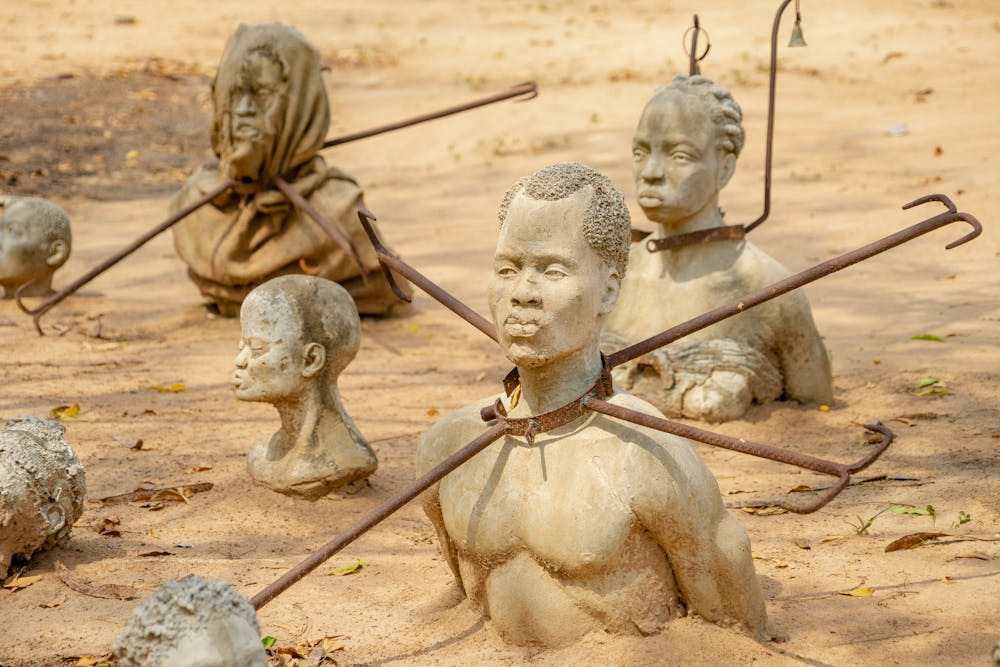
    Thousands of sculpted heads – captive African men, women, and children – meticulously created by the artist Kwame Akoto-Bamfo, emerge from the soil at the Nkyinkyim Museum, as a sacred gathering of ancestors. Together, they form a powerful monument to the horror, violence, and resistance to enslavement, as well as the ongoing work of remembrance and healing.

    Kwame Akoto-Bamfo is a Ghanaian multidisciplinary artist who engages with the histories and legacies of the transatlantic slave trade and colonialism at home and, increasingly, internationally, on both sides of the Atlantic.

    As an archaeologist who works in the field of critical heritage studies, Akoto-Bamfo’s work is important for its powerful engagement with memory, material culture and restorative justice. I feature it in a chapter of a new book that I co-edited called Architectures of Slavery: Ruins and Reconstructions.

    Who is Kwame Akoto-Bamfo?

    Akoto-Bamfo studied at the Kwame Nkrumah University of Science and Technology in Kumasi. He obtained his bachelor’s and master of fine arts degrees, both in sculpture. After graduating, the artist worked as a school teacher and a university lecturer.

    In 2015, Akoto-Bamfo rose to international fame through a series of large-scale installations. He called it ‘Nkyinkyim’ (“twisting” in the Ghanaian Twi language, as in the proverb, “Life’s journey is twisted”).


    Read more:
    Book review: how Africa was central to the making of the modern world


    Four years later, he established the ‘Nkyinkyim Museum’, a non-profit organisation known as the ‘Ancestor Project’. This open-air museum is located in Nuhalenya-Ada, a two-hour drive from Accra. It has become a space for people of African descent to engage in restorative healing through art and education.

    Nkyinkyim Museum

    At the site’s entrance, three twenty-five-foot monuments are displayed. They are made of stone, concrete and wood. The first is inspired by North and Eastern Africa, and the second by Sudano-Sahelian architecture. The third is inspired by the Forest regions in Central and West Africa.

    The collection includes multiple installations in collaboration with the local community. They illustrate “the diversity in our narratives surrounding history, philosophy, and religious beliefs”. The artist himself, demonstrates a mastery of multimedia art forms, working in cement, terracotta, brass, copper, and wood, noting “one can reach different heights with different technologies.”

    Today, the museum features a sacred healing space with a compelling display of thousands of unique concrete life size heads and 7,000 terracotta miniature sculpted heads. They include captive Africans abducted, sold and forcibly trafficked during the transatlantic slave trade.

    His sculptures capture captives’ shock, horror, anger, distress and fear—emotions. This is communicated through their facial expressions in an installation that is disturbingly evocative and profoundly haunting. It is inspired by ‘nsodie’, an Akan funerary sculpture tradition, that dates back to approximately the twelfth century. Akoto-Bamfo explains during our conversations relating to the research for book:

    I wanted to draw upon Akan belief in commemoration and remembrance after death in order to honour the young, old, men and women, who originated from various ethnic groups and who died in the Atlantic Ocean during the Middle Passage and did not get that chance.

    Each year, the annual ‘Ancestor Veneration’ ceremony takes place under the guidance of chiefs, priests, and priestess from various ethnic groups.

    Visitors are invited to participate in certain Akan rites and ceremonies – free from photography and selfies that undermine or commercialise sacred funerary art practices. Says Akoto-Bamfo:

    I am Akan, so initially I began with Akan traditional rites, but now our ceremonies welcome other African ethnic groups including the Ga-Dangme, Ewe, and Yoruba, from Ghana and Nigeria, as well as African descendant people in the African diaspora.

    In contrast, the ‘Freedom Parade Festival’ allows participants to creatively express and contribute to an evolving heritage tradition, without the specified observances. For example, painted bodily adornment applied directly onto the skin, yet without the necessary spiritual rites.

    A protest monument

    Akoto-Bamfo’s sculptures have also gained recognition beyond Ghana’s borders. For instance, the permanent installation at the Legacy Museum and National Museum for Peace and Justice in Montgomery, Alabama in the US.

    More recently, in 2021, his Blank Slate Project Monument toured throughout the United States. This included stops at Times Square in New York and the King Center in Atlanta. It depicts an enslaved ancestor, bent forward with his hands behind his back, head turned sideways, face on the ground, with a booted foot on his head.

    Akoto-Bamfo describes this work as “a noisy one — a protest piece that speaks against racist Civil War monuments.” The work was completed prior to the police killing of George Floyd that led to widespread protests in the US in 2020. It was first unveiled in a private viewing in Ghana, prior to its shipment to the United States.

    He says:

    We had a lot of discussions among those involved in the project: some feared it might incite violence, others said that it was a prediction.

    The work is interactive. It holds a removable placard that invites viewers to inscribe their reactions to the statue, which are then exhibited. Akoto-Bamfo emphasises:

    I wanted ordinary people, both individuals and communities, to relate, and to contribute to, not only towards my artwork but also to the wider ongoing discussions. As an artist, I believe that I do not have the sole right to speak. I wanted ordinary Americans to add their voices because I am already contributing.

    In Europe too, his work is featured at the 169 Museum in Germany.

    In Ghana, Akoto-Bamfo’s work was initially seen as too controversial. The artist shares:

    At first, I had to be extremely resilient because my work was concerned with the slave trade, slavery, colonialism, racism, and human rights. I embraced uncomfortable dialogue. Yet these were difficult topics for galleries and the art world at that time in Ghana.

    He adds:

    Today, however, some even view me as a spiritual leader… but I have always had an innate antipathy towards injustice. My work is not only about the past but what is unfolding now.

    Akoto-Bamfo offers a closing reflection on why this kind of memory work matters:

    I just want to use the little knowledge that I have to contribute towards the work of restorative and transformative justice.

    Rachel Ama Asaa Engmann does not work for, consult, own shares in or receive funding from any company or organisation that would benefit from this article, and has disclosed no relevant affiliations beyond their academic appointment.

    ref. Kwame Akoto-Bamfo: the Ghanaian artist using work about slavery to find justice and healing – https://theconversation.com/kwame-akoto-bamfo-the-ghanaian-artist-using-work-about-slavery-to-find-justice-and-healing-259184

    MIL OSI – Global Reports

  • MIL-OSI Global: Kwame Akoto-Bamfo: the Ghanaian artist using work about slavery to find justice and healing

    Source: The Conversation – Africa – By Rachel Ama Asaa Engmann, Associate Professor and Director of Christiansborg Archaeological Heritage Project, Associate Graduate Faculty, Rutgers University

    Thousands of sculpted heads – captive African men, women, and children – meticulously created by the artist Kwame Akoto-Bamfo, emerge from the soil at the Nkyinkyim Museum, as a sacred gathering of ancestors. Together, they form a powerful monument to the horror, violence, and resistance to enslavement, as well as the ongoing work of remembrance and healing.

    Kwame Akoto-Bamfo is a Ghanaian multidisciplinary artist who engages with the histories and legacies of the transatlantic slave trade and colonialism at home and, increasingly, internationally, on both sides of the Atlantic.

    As an archaeologist who works in the field of critical heritage studies, Akoto-Bamfo’s work is important for its powerful engagement with memory, material culture and restorative justice. I feature it in a chapter of a new book that I co-edited called Architectures of Slavery: Ruins and Reconstructions.

    Who is Kwame Akoto-Bamfo?

    Akoto-Bamfo studied at the Kwame Nkrumah University of Science and Technology in Kumasi. He obtained his bachelor’s and master of fine arts degrees, both in sculpture. After graduating, the artist worked as a school teacher and a university lecturer.

    In 2015, Akoto-Bamfo rose to international fame through a series of large-scale installations. He called it ‘Nkyinkyim’ (“twisting” in the Ghanaian Twi language, as in the proverb, “Life’s journey is twisted”).


    Read more:
    Book review: how Africa was central to the making of the modern world


    Four years later, he established the ‘Nkyinkyim Museum’, a non-profit organisation known as the ‘Ancestor Project’. This open-air museum is located in Nuhalenya-Ada, a two-hour drive from Accra. It has become a space for people of African descent to engage in restorative healing through art and education.

    Nkyinkyim Museum

    At the site’s entrance, three twenty-five-foot monuments are displayed. They are made of stone, concrete and wood. The first is inspired by North and Eastern Africa, and the second by Sudano-Sahelian architecture. The third is inspired by the Forest regions in Central and West Africa.

    The collection includes multiple installations in collaboration with the local community. They illustrate “the diversity in our narratives surrounding history, philosophy, and religious beliefs”. The artist himself, demonstrates a mastery of multimedia art forms, working in cement, terracotta, brass, copper, and wood, noting “one can reach different heights with different technologies.”

    Today, the museum features a sacred healing space with a compelling display of thousands of unique concrete life size heads and 7,000 terracotta miniature sculpted heads. They include captive Africans abducted, sold and forcibly trafficked during the transatlantic slave trade.

    His sculptures capture captives’ shock, horror, anger, distress and fear—emotions. This is communicated through their facial expressions in an installation that is disturbingly evocative and profoundly haunting. It is inspired by ‘nsodie’, an Akan funerary sculpture tradition, that dates back to approximately the twelfth century. Akoto-Bamfo explains during our conversations relating to the research for book:

    I wanted to draw upon Akan belief in commemoration and remembrance after death in order to honour the young, old, men and women, who originated from various ethnic groups and who died in the Atlantic Ocean during the Middle Passage and did not get that chance.

    Each year, the annual ‘Ancestor Veneration’ ceremony takes place under the guidance of chiefs, priests, and priestess from various ethnic groups.

    Visitors are invited to participate in certain Akan rites and ceremonies – free from photography and selfies that undermine or commercialise sacred funerary art practices. Says Akoto-Bamfo:

    I am Akan, so initially I began with Akan traditional rites, but now our ceremonies welcome other African ethnic groups including the Ga-Dangme, Ewe, and Yoruba, from Ghana and Nigeria, as well as African descendant people in the African diaspora.

    In contrast, the ‘Freedom Parade Festival’ allows participants to creatively express and contribute to an evolving heritage tradition, without the specified observances. For example, painted bodily adornment applied directly onto the skin, yet without the necessary spiritual rites.

    A protest monument

    Akoto-Bamfo’s sculptures have also gained recognition beyond Ghana’s borders. For instance, the permanent installation at the Legacy Museum and National Museum for Peace and Justice in Montgomery, Alabama in the US.

    More recently, in 2021, his Blank Slate Project Monument toured throughout the United States. This included stops at Times Square in New York and the King Center in Atlanta. It depicts an enslaved ancestor, bent forward with his hands behind his back, head turned sideways, face on the ground, with a booted foot on his head.

    Akoto-Bamfo describes this work as “a noisy one — a protest piece that speaks against racist Civil War monuments.” The work was completed prior to the police killing of George Floyd that led to widespread protests in the US in 2020. It was first unveiled in a private viewing in Ghana, prior to its shipment to the United States.

    He says:

    We had a lot of discussions among those involved in the project: some feared it might incite violence, others said that it was a prediction.

    The work is interactive. It holds a removable placard that invites viewers to inscribe their reactions to the statue, which are then exhibited. Akoto-Bamfo emphasises:

    I wanted ordinary people, both individuals and communities, to relate, and to contribute to, not only towards my artwork but also to the wider ongoing discussions. As an artist, I believe that I do not have the sole right to speak. I wanted ordinary Americans to add their voices because I am already contributing.

    In Europe too, his work is featured at the 169 Museum in Germany.

    In Ghana, Akoto-Bamfo’s work was initially seen as too controversial. The artist shares:

    At first, I had to be extremely resilient because my work was concerned with the slave trade, slavery, colonialism, racism, and human rights. I embraced uncomfortable dialogue. Yet these were difficult topics for galleries and the art world at that time in Ghana.

    He adds:

    Today, however, some even view me as a spiritual leader… but I have always had an innate antipathy towards injustice. My work is not only about the past but what is unfolding now.

    Akoto-Bamfo offers a closing reflection on why this kind of memory work matters:

    I just want to use the little knowledge that I have to contribute towards the work of restorative and transformative justice.

    Rachel Ama Asaa Engmann does not work for, consult, own shares in or receive funding from any company or organisation that would benefit from this article, and has disclosed no relevant affiliations beyond their academic appointment.

    ref. Kwame Akoto-Bamfo: the Ghanaian artist using work about slavery to find justice and healing – https://theconversation.com/kwame-akoto-bamfo-the-ghanaian-artist-using-work-about-slavery-to-find-justice-and-healing-259184

    MIL OSI – Global Reports

  • MIL-OSI Global: Kenya’s police still kill with impunity – what needs to be done to stop them

    Source: The Conversation – Africa – By Kamau Wairuri, Lecturer in criminology, Edinburgh Napier University

    Weeks ahead of the first anniversary in Kenya of the Gen Z-led anti-government protests that resulted in at least 60 deaths and displays of police brutality, news broke that Albert Ojwang, a young Kenyan blogger, had died in police detention. Kamau Wairuri who has studied the politics of policing in Kenya, sets out why these events aren’t outliers, what efforts have been made to reform Kenya’s security forces, and what still needs to be done.

    When did this all begin?

    Recent events are part of a long history of police brutality in Kenya that can be traced back to colonial times.

    Historians (colonial and post-colonial Kenya) such as David Anderson and Caroline Elkins present gruesome details of how state authorities brutalised indigenous Africans during colonial times.

    The colonial origins of the police – largely modelled along the approaches of the Royal Ulster Constabulary known for its brutality in Ireland – partly explains why Kenya’s policing is the way it is. The police force was never designed for service. It was designed to safeguard the interests of the white minority ruling elite.

    While there have been important changes in the architecture of policing since independence, subsequent post-colonial Kenyan regimes have adopted the same brutal approaches to stay in power. My previous work demonstrates this use of state security apparatuses to enhance the capacity of incumbents to crack down on opposition protests.

    The brutal policing experienced under the current Kenya Kwanza regime falls within this broader historical trajectory.

    The ruling elite see and use the police as their last line of defence against challenges to their misrule.

    But police brutality goes beyond the policing of politics to everyday crime control. Police violence is a common occurrence, especially against poor young men.

    What’s changed

    Kenya’s history has been marked by strong agitation for justice and reform. Again, this goes back to colonial times.

    There have been important legal and institutional changes since independence. The most important was the disbandment of the Special Branch in 1998, an intelligence unit of the police responsible for political repression. It was replaced by the National Security Intelligence Service. This then became the National Intelligence Service.

    The most important changes came about through the constitutional reform of 2010. This saw a change in the architecture of the police, including:

    Internal Affairs, a unit within the police service, is supposed to investigate police misconduct. The policing oversight agency is a civilian-led institutions with a similar mandate. Ideally, the two institutions should work together in executing crucial investigations. Internal affairs should provide access to information from within the police service that would be difficult for outsiders to access.

    The National Police Service Commission was set up to handle the management of personnel. It’s mandated to address the challenges of corruption, nepotism and negative ethnicity that have characterised recruitment into the police service.

    But it’s clear from the continued police brutality that these institutions aren’t achieving the intended effect. This means that police officers can expect to continue acting with relative impunity despite the control measures in place.

    What still needs to be done

    Policing is often imagined as the investigation of crimes, arresting suspects, and presenting them to court for prosecution and punishment if guilty. In Kenya, the actions of the police often appear to substitute for the entire criminal justice system.

    In many cases, officers go beyond the metaphor of judge, jury and executioner to also become the complainant, mortician and undertaker. For instance, Mbaraka Karanja died in police custody in 1987 and officers proceeded to incinerate his body.

    In my view, the brutality won’t end until the following steps have been taken.

    First, the National Police Service Commission needs to reclaim its mandate. It seems to have completely abdicated duty, transferring crucial responsibilities back to the inspector general of the police service. As the human resource unit of the police, the commission has an important role of professionalising the service and maintaining discipline. It’s presently not doing so.

    Second, the Internal Affairs Unit needs to be strengthened and given more autonomy. So far, it has been difficult to assess the effectiveness the unit given the secrecy that characterises the police service. A better-resourced unit will enhance investigations of police misconduct. It would unearth obscure squads within the police service and reveal evidence to help identify perpetrators.

    Third, the Independent Policing Oversight Authority needs to defend its independence and develop popular legitimacy. With its limited success in prosecuting police officers – despite the prevalence of police abuse – many Kenyans have lost confidence in it. Crucially, the authority has failed in it’s deterrence role.

    Fourth, the independence of the National Police Service needs to be safeguarded. The police service leadership continues to serve at the pleasure of the prevailing regime. This in turn shapes the priorities of the service. Inspectors-general have been forced to resign. President William Ruto confessed to having fired the director of criminal investigations when he took power. Ruto had initially claimed that the director had resigned.

    Crucially, and in fifth place, there needs to be a change in policing culture alongside broader governance culture in Kenya. Impunity is rampant across the public service. Kenya won’t have a highly accountable police force while other agencies and senior officials are operating with significant impunity.

    Identifying the levers of cultural change isn’t easy. There are many proposals to alter policing culture. These include a complete redesign of Kenya’s Penal Code to dislodge its colonial roots, transforming the training of police officers, and strengthening the policing oversight authority’s capacity to investigate cases.

    But, in my mind, a crucial starting point is citizen agitation and demand for accountability. The light that Gen Z protesters, the media and civil society organisations are shining on police abuses should be encouraged. A clear signal that Kenyans will no longer tolerate police abuse is crucial for culture change within the service and among the political elite.

    However, this needs to be understood within the reality that many Kenyans support police violence, believing it to be the most effective way of dealing with crime as my earlier research demonstrates. In another study, I note how police abuse is endorsed by politicians and religious leaders as a way of responding to crime and punishing groups of people they don’t like.

    Combined with ineffective accountability mechanisms, this popular support for police violence, both tacit and explicit, gives the police the belief that they are the thin blue line between order and chaos. That they have the popular mandate to use any means they consider necessary – often brutal violence – to keep society safe.

    In other words, the conversation on police reform requires a fundamental reframing to kick start the journey towards democratic policing. At present, we’re not only way off the mark, we seem to be heading in the wrong direction.

    Kamau Wairuri does not work for, consult, own shares in or receive funding from any company or organisation that would benefit from this article, and has disclosed no relevant affiliations beyond their academic appointment.

    ref. Kenya’s police still kill with impunity – what needs to be done to stop them – https://theconversation.com/kenyas-police-still-kill-with-impunity-what-needs-to-be-done-to-stop-them-259326

    MIL OSI – Global Reports

  • MIL-OSI United Nations: Led by IAEA, International Team Samples Treated Water under Additional Measures at Fukushima Daiichi Nuclear Power Station

    Source: International Atomic Energy Agency (IAEA)

    The International Atomic Energy Agency (IAEA) led a team of international experts to collect samples today of ALPS treated water stored at Japan’s Fukushima Daiichi Nuclear Power Station (FDNPS) prior to the water’s dilution with seawater and its discharge to the sea.

    The sampling mission is the fourth under the additional measures, which focus on expanding international participation and transparency. These measures permit third parties to independently verify that water discharge which Tokyo Electric Power Company Holdings (TEPCO) – operator of the FDNPS – began in August 2023 continues to be consistent with international safety standards.

    International experts from Belgium, the People’s Republic of China, the Republic of Korea, the Russian Federation and Switzerland, along with IAEA staff, conducted hands-on sampling of the water stored in tanks designated for the 14th batch of ALPS-treated water to be discharged.

    The IAEA initiated the first practical steps of the additional measures in October last year. This fourth mission follows the mission in April which sampled diluted water just prior to its discharge into the sea, and a mission in February when IAEA Director General Grossi presided over the additional measures to  collect seawater samples in the vicinity of FDNPS.

    The samples collected in today’s mission will be analysed by the participating laboratories – the Belgian Nuclear Research Centre, the China Institute of Atomic Energy, the Korean Institute for Nuclear Safety, the Institute for Problems of Environmental Monitoring of the Research and Production Association “Typhoon” in Russia and the Spiez Laboratory in Switzerland – as well as by the IAEA’s laboratory and TEPCO in Japan. All laboratories are members of the IAEA’s Analytical Laboratories for the Measurement of Environmental Radioactivity (ALMERA) network, which are selected for their high level of expertise and analytical proficiency.

    MIL OSI United Nations News

  • MIL-OSI United Nations: Nuclear Techniques Make Waves at UN Ocean Conference

    Source: International Atomic Energy Agency (IAEA)

    IAEA Director General Rafael Grossi during the high-level event on combatting marine pollution at the United Nations Conference in Nice, France  (Photo: E. McDonald/IAEA)

    The IAEA highlighted the role of nuclear science in protecting our oceans at the 2025 United Nations Ocean Conference held last week in Nice, France.

    Co-hosted by France and Costa Rica, the conference convened over 10,000 participants, including scientists, diplomats and politicians, to address the triple planetary crisis of climate change, biodiversity loss and pollution. It aimed to accelerate progress towards SDG14, Life Below Water, through innovative technologies and action. The IAEA took center stage at the event to share how nuclear technology is boosting ocean health and tackling critical threats such as marine plastic pollution.

    The IAEA organized and participated in more than a dozen events at the conference, and on research vessels in the Port of Nice. Experts from the IAEA’s Marine Environment Laboratories in Monaco highlighted how isotopic tools can help monitor and reduce plastic pollution in the ocean.

    Plastic waste is not only infiltrating our oceans, but also the human body in the form of microplastics. Without urgent action, the amount of plastic entering the ocean each year could reach 37 million metric tons by 2040, according to UN estimates, becoming a threat to marine and human life.

    Plastic pollution featured prominently throughout the conference, with a focus on the ongoing negotiations for the development of an internationally legally binding instrument to end plastic pollution, including in the marine environment. The negotiations for the United Nations Environment Programme (UNEP)-led treaty are expected to conclude later this year in Geneva, following five previous sessions.

    At the conference, IAEA Director General Rafael Grossi spoke about the IAEA’s work to combat plastic pollution and emphasized the need to share data data between scientists, policymakers and environmental agencies.

    “Four years ago, at the last UN Ocean Conference, I announced NUTEC Plastics, an initiative that gives countries the tools they need to address the issue of marine microplastic pollution. Today, I am delighted to report that we have made significant progress with 99 countries involved, and we have been equipping more than 100 Member State laboratories all over the world. We are building the capacity that countries need to translate data into policies and action.” 

    NUTEC Plastics is an IAEA flagship initiative that supports countries in researching microplastics and using nuclear techniques to improve recycling techniques.

    Director of the IAEA Marine Environment Laboratories Florence Descroix-Comanducci (left), highlighted IAEA’s work to support sustainable ocean management and monitor marine microplastic pollution at the 2025 UN Ocean Conference in France (Photo: E.McDonald/IAEA)

    “Nuclear and isotopic techniques add incredible value to boost ocean health,” said Florence Descroix-Comanducci, Director of the IAEA Marine Environment Laboratories. “Our laboratories in Monaco support Member States in the implementation and use of these techniques, and to develop harmonized methods to generate globally comparable data, especially in light of the forthcoming plastics treaty.”

    At events organized by the IAEA, panelists highlighted the need to address the top of the plastic life cycle to prevent further pollution, employing a “source to sea approach” to reduce marine litter and, by extension, marine plastic pollution. “While many indicators on oceans are moving in the wrong direction, there are also positive points. Our metrics on marine litter are moving in the right direction,” said Martin Adams, Head of the Environment Department at the European Environment Agency. “Timely and relevant data are essential to inform good decision-making, but we don’t need to know everything. We just need to know enough to act.” Other events organized by the IAEA focused on ocean-based carbon dioxide removal, ocean acidification, IAEA support for Small Island Developing States (SIDS), and nuclear energy and ocean health.

    The IAEA’s unique expertise in nuclear applications is contributing to both mitigations, by using radiation technology for waste recycling, and monitoring, by using isotopic techniques to monitor and assess impacts of microplastic pollution. Through the NUTEC Plastics initiative, and with the support of the IAEA’s technical cooperation programme, 99 countries are participating in marine monitoring of microplastics, and 52 around the world are developing innovative recycling technology.

    The International High Level Forum on NUTEC Plastic, organized by the IAEA on 25–26 November 2025, in Manila, Philippines, will highlight the progress achieved to date, address current challenges, and chart course to strengthen regional and international cooperation in the sustainable management of plastic waste through innovative nuclear technologies.

    MIL OSI United Nations News

  • MIL-OSI United Nations: IAEA Ministerial Conference to Spotlight Nuclear Science, Technology and Technical Cooperation Programme to Address Global Challenges

    Source: International Atomic Energy Agency (IAEA)

    Ministers and senior officials of governments and international organizations will convene at the International Atomic Energy Agency (IAEA) next week to discuss the role of nuclear science and technology in tackling some of the world’s most pressing challenges. The IAEA Ministerial Conference on Nuclear Science, Technology and Applications and the Technical Cooperation Programme will take place in Vienna, Austria, from 26 to 28 November 2024.

    IAEA Director General Rafael Mariano Grossi will open the conference on Tuesday, 26 November, at 09:30 CET, alongside Co-chair of the Conference Kai Mykkänen, Minister of Climate and the Environment, Finland; Co-chair of the Conference Kwaku Afriyie, Minister for Environment, Science, Technology and Innovation, Ghana; Dongyu Qu, Director General, Food and Agriculture Organization of the United Nations (FAO); Ailan Li, Assistant Director-General, Universal Health Coverage/Healthier Populations, World Health Organization (WHO); Shaimaa Al-Sheiby, Vice President for Public Sector and Strategy, the OPEC Fund for International Development; Demetrios Papathanasiou, Global Director, Energy and Extractives Global Practice, the World Bank; and Tom McCulley, Chief Executive Officer, Anglo American Crop Nutrients. This is the second Ministerial Conference of its kind.

    A ministerial declaration is expected to be adopted on 26 November, recognizing the role of nuclear science and technology and the Technical Cooperation Programme in addressing global challenges, advancing the 2030 Agenda and fostering international collaboration for peaceful purposes, with a focus on capacity building and equitable access for all Member States.

    The conference will take place in Boardroom B/M1, M Building, Vienna International Centre (VIC). The conference, including the ministerial segments, technical sessions and panels, is open to media and will be livestreamed. The provisional programme is available here.

    Nuclear applications are an integral part of the technological solution to address development challenges the world is facing today, including climate change, health, food safety and security, and water resource management. Since the first Ministerial Conference in 2018, the IAEA launched the Zoonotic Disease Integrated Action (ZODIAC), NUclear TEChnology for Controlling Plastic Pollution (NUTEC Plastics), Rays of Hope, Atoms4NetZero and, together with the FAO, the Atoms4Food initiative. Through these initiatives, the IAEA can support its Member States and mobilize resources to realize the full potential of nuclear solutions towards global goals.

    Among 1400 participants, more than 50 high-level officials, including ministers, are expected to deliver national statements. The scientific and technical programme comprises panel discussions among ministers, scientists and experts on the latest developments in nuclear science, technology and applications. Member State’s representatives will also share experiences on how the IAEA Technical Cooperation Programme has contributed to their national development.

    Accreditation

    All journalists interested in covering the meeting in person – including those with permanent accreditation – are requested to inform the IAEA Press Office of their plans. Journalists without permanent accreditation must send copies of their passport and press ID to the IAEA Press Office by 14:00 CET on Monday, 25 November. 

    We encourage those journalists who do not yet have permanent accreditation to request it at UNIS Vienna

    Please plan your arrival to allow sufficient time to pass through the VIC security check. 

    MIL OSI United Nations News

  • MIL-OSI Africa: Kwame Akoto-Bamfo: the Ghanaian artist using work about slavery to find justice and healing

    Source: The Conversation – Africa – By Rachel Ama Asaa Engmann, Associate Professor and Director of Christiansborg Archaeological Heritage Project, Associate Graduate Faculty, Rutgers University

    Thousands of sculpted heads – captive African men, women, and children – meticulously created by the artist Kwame Akoto-Bamfo, emerge from the soil at the Nkyinkyim Museum, as a sacred gathering of ancestors. Together, they form a powerful monument to the horror, violence, and resistance to enslavement, as well as the ongoing work of remembrance and healing.

    Kwame Akoto-Bamfo.

    Kwame Akoto-Bamfo is a Ghanaian multidisciplinary artist who engages with the histories and legacies of the transatlantic slave trade and colonialism at home and, increasingly, internationally, on both sides of the Atlantic.

    As an archaeologist who works in the field of critical heritage studies, Akoto-Bamfo’s work is important for its powerful engagement with memory, material culture and restorative justice. I feature it in a chapter of a new book that I co-edited called Architectures of Slavery: Ruins and Reconstructions.

    Who is Kwame Akoto-Bamfo?

    Akoto-Bamfo studied at the Kwame Nkrumah University of Science and Technology in Kumasi. He obtained his bachelor’s and master of fine arts degrees, both in sculpture. After graduating, the artist worked as a school teacher and a university lecturer.

    In 2015, Akoto-Bamfo rose to international fame through a series of large-scale installations. He called it ‘Nkyinkyim’ (“twisting” in the Ghanaian Twi language, as in the proverb, “Life’s journey is twisted”).


    Read more: Book review: how Africa was central to the making of the modern world


    Four years later, he established the ‘Nkyinkyim Museum’, a non-profit organisation known as the ‘Ancestor Project’. This open-air museum is located in Nuhalenya-Ada, a two-hour drive from Accra. It has become a space for people of African descent to engage in restorative healing through art and education.

    Nkyinkyim Museum

    At the site’s entrance, three twenty-five-foot monuments are displayed. They are made of stone, concrete and wood. The first is inspired by North and Eastern Africa, and the second by Sudano-Sahelian architecture. The third is inspired by the Forest regions in Central and West Africa.

    Sculptures at the museum entrance. Kwame Akoto-Bamfo

    The collection includes multiple installations in collaboration with the local community. They illustrate “the diversity in our narratives surrounding history, philosophy, and religious beliefs”. The artist himself, demonstrates a mastery of multimedia art forms, working in cement, terracotta, brass, copper, and wood, noting “one can reach different heights with different technologies.”

    Today, the museum features a sacred healing space with a compelling display of thousands of unique concrete life size heads and 7,000 terracotta miniature sculpted heads. They include captive Africans abducted, sold and forcibly trafficked during the transatlantic slave trade.

    An installation of the heads of enslaved people. Kwame Akoto-Bamfo

    His sculptures capture captives’ shock, horror, anger, distress and fear—emotions. This is communicated through their facial expressions in an installation that is disturbingly evocative and profoundly haunting. It is inspired by ‘nsodie’, an Akan funerary sculpture tradition, that dates back to approximately the twelfth century. Akoto-Bamfo explains during our conversations relating to the research for book:

    I wanted to draw upon Akan belief in commemoration and remembrance after death in order to honour the young, old, men and women, who originated from various ethnic groups and who died in the Atlantic Ocean during the Middle Passage and did not get that chance.

    Each year, the annual ‘Ancestor Veneration’ ceremony takes place under the guidance of chiefs, priests, and priestess from various ethnic groups.

    The museum displays 7,000 terracotta sculpted heads. Kwame Akoto-Bamfo

    Visitors are invited to participate in certain Akan rites and ceremonies – free from photography and selfies that undermine or commercialise sacred funerary art practices. Says Akoto-Bamfo:

    I am Akan, so initially I began with Akan traditional rites, but now our ceremonies welcome other African ethnic groups including the Ga-Dangme, Ewe, and Yoruba, from Ghana and Nigeria, as well as African descendant people in the African diaspora.

    In contrast, the ‘Freedom Parade Festival’ allows participants to creatively express and contribute to an evolving heritage tradition, without the specified observances. For example, painted bodily adornment applied directly onto the skin, yet without the necessary spiritual rites.

    A protest monument

    Akoto-Bamfo’s sculptures have also gained recognition beyond Ghana’s borders. For instance, the permanent installation at the Legacy Museum and National Museum for Peace and Justice in Montgomery, Alabama in the US.

    More recently, in 2021, his Blank Slate Project Monument toured throughout the United States. This included stops at Times Square in New York and the King Center in Atlanta. It depicts an enslaved ancestor, bent forward with his hands behind his back, head turned sideways, face on the ground, with a booted foot on his head.

    The Blank Slate Monument in New York. Roshi Sariaslan

    Akoto-Bamfo describes this work as “a noisy one — a protest piece that speaks against racist Civil War monuments.” The work was completed prior to the police killing of George Floyd that led to widespread protests in the US in 2020. It was first unveiled in a private viewing in Ghana, prior to its shipment to the United States.

    He says:

    We had a lot of discussions among those involved in the project: some feared it might incite violence, others said that it was a prediction.

    The work is interactive. It holds a removable placard that invites viewers to inscribe their reactions to the statue, which are then exhibited. Akoto-Bamfo emphasises:

    I wanted ordinary people, both individuals and communities, to relate, and to contribute to, not only towards my artwork but also to the wider ongoing discussions. As an artist, I believe that I do not have the sole right to speak. I wanted ordinary Americans to add their voices because I am already contributing.

    In Europe too, his work is featured at the 169 Museum in Germany.

    The effects of enslavement are still felt today. Kwame Akoto-Bamfo

    In Ghana, Akoto-Bamfo’s work was initially seen as too controversial. The artist shares:

    At first, I had to be extremely resilient because my work was concerned with the slave trade, slavery, colonialism, racism, and human rights. I embraced uncomfortable dialogue. Yet these were difficult topics for galleries and the art world at that time in Ghana.

    He adds:

    Today, however, some even view me as a spiritual leader… but I have always had an innate antipathy towards injustice. My work is not only about the past but what is unfolding now.

    Akoto-Bamfo offers a closing reflection on why this kind of memory work matters:

    I just want to use the little knowledge that I have to contribute towards the work of restorative and transformative justice.

    – Kwame Akoto-Bamfo: the Ghanaian artist using work about slavery to find justice and healing
    – https://theconversation.com/kwame-akoto-bamfo-the-ghanaian-artist-using-work-about-slavery-to-find-justice-and-healing-259184

    MIL OSI Africa

  • MIL-OSI Africa: Kenya’s police still kill with impunity – what needs to be done to stop them

    Source: The Conversation – Africa – By Kamau Wairuri, Lecturer in criminology, Edinburgh Napier University

    Weeks ahead of the first anniversary in Kenya of the Gen Z-led anti-government protests that resulted in at least 60 deaths and displays of police brutality, news broke that Albert Ojwang, a young Kenyan blogger, had died in police detention. Kamau Wairuri who has studied the politics of policing in Kenya, sets out why these events aren’t outliers, what efforts have been made to reform Kenya’s security forces, and what still needs to be done.

    When did this all begin?

    Recent events are part of a long history of police brutality in Kenya that can be traced back to colonial times.

    Historians (colonial and post-colonial Kenya) such as David Anderson and Caroline Elkins present gruesome details of how state authorities brutalised indigenous Africans during colonial times.

    The colonial origins of the police – largely modelled along the approaches of the Royal Ulster Constabulary known for its brutality in Ireland – partly explains why Kenya’s policing is the way it is. The police force was never designed for service. It was designed to safeguard the interests of the white minority ruling elite.

    While there have been important changes in the architecture of policing since independence, subsequent post-colonial Kenyan regimes have adopted the same brutal approaches to stay in power. My previous work demonstrates this use of state security apparatuses to enhance the capacity of incumbents to crack down on opposition protests.

    The brutal policing experienced under the current Kenya Kwanza regime falls within this broader historical trajectory.

    The ruling elite see and use the police as their last line of defence against challenges to their misrule.

    But police brutality goes beyond the policing of politics to everyday crime control. Police violence is a common occurrence, especially against poor young men.

    What’s changed

    Kenya’s history has been marked by strong agitation for justice and reform. Again, this goes back to colonial times.

    There have been important legal and institutional changes since independence. The most important was the disbandment of the Special Branch in 1998, an intelligence unit of the police responsible for political repression. It was replaced by the National Security Intelligence Service. This then became the National Intelligence Service.

    The most important changes came about through the constitutional reform of 2010. This saw a change in the architecture of the police, including:

    Internal Affairs, a unit within the police service, is supposed to investigate police misconduct. The policing oversight agency is a civilian-led institutions with a similar mandate. Ideally, the two institutions should work together in executing crucial investigations. Internal affairs should provide access to information from within the police service that would be difficult for outsiders to access.

    The National Police Service Commission was set up to handle the management of personnel. It’s mandated to address the challenges of corruption, nepotism and negative ethnicity that have characterised recruitment into the police service.

    But it’s clear from the continued police brutality that these institutions aren’t achieving the intended effect. This means that police officers can expect to continue acting with relative impunity despite the control measures in place.

    What still needs to be done

    Policing is often imagined as the investigation of crimes, arresting suspects, and presenting them to court for prosecution and punishment if guilty. In Kenya, the actions of the police often appear to substitute for the entire criminal justice system.

    In many cases, officers go beyond the metaphor of judge, jury and executioner to also become the complainant, mortician and undertaker. For instance, Mbaraka Karanja died in police custody in 1987 and officers proceeded to incinerate his body.

    In my view, the brutality won’t end until the following steps have been taken.

    First, the National Police Service Commission needs to reclaim its mandate. It seems to have completely abdicated duty, transferring crucial responsibilities back to the inspector general of the police service. As the human resource unit of the police, the commission has an important role of professionalising the service and maintaining discipline. It’s presently not doing so.

    Second, the Internal Affairs Unit needs to be strengthened and given more autonomy. So far, it has been difficult to assess the effectiveness the unit given the secrecy that characterises the police service. A better-resourced unit will enhance investigations of police misconduct. It would unearth obscure squads within the police service and reveal evidence to help identify perpetrators.

    Third, the Independent Policing Oversight Authority needs to defend its independence and develop popular legitimacy. With its limited success in prosecuting police officers – despite the prevalence of police abuse – many Kenyans have lost confidence in it. Crucially, the authority has failed in it’s deterrence role.

    Fourth, the independence of the National Police Service needs to be safeguarded. The police service leadership continues to serve at the pleasure of the prevailing regime. This in turn shapes the priorities of the service. Inspectors-general have been forced to resign. President William Ruto confessed to having fired the director of criminal investigations when he took power. Ruto had initially claimed that the director had resigned.

    Crucially, and in fifth place, there needs to be a change in policing culture alongside broader governance culture in Kenya. Impunity is rampant across the public service. Kenya won’t have a highly accountable police force while other agencies and senior officials are operating with significant impunity.

    Identifying the levers of cultural change isn’t easy. There are many proposals to alter policing culture. These include a complete redesign of Kenya’s Penal Code to dislodge its colonial roots, transforming the training of police officers, and strengthening the policing oversight authority’s capacity to investigate cases.

    But, in my mind, a crucial starting point is citizen agitation and demand for accountability. The light that Gen Z protesters, the media and civil society organisations are shining on police abuses should be encouraged. A clear signal that Kenyans will no longer tolerate police abuse is crucial for culture change within the service and among the political elite.

    However, this needs to be understood within the reality that many Kenyans support police violence, believing it to be the most effective way of dealing with crime as my earlier research demonstrates. In another study, I note how police abuse is endorsed by politicians and religious leaders as a way of responding to crime and punishing groups of people they don’t like.

    Combined with ineffective accountability mechanisms, this popular support for police violence, both tacit and explicit, gives the police the belief that they are the thin blue line between order and chaos. That they have the popular mandate to use any means they consider necessary – often brutal violence – to keep society safe.

    In other words, the conversation on police reform requires a fundamental reframing to kick start the journey towards democratic policing. At present, we’re not only way off the mark, we seem to be heading in the wrong direction.

    – Kenya’s police still kill with impunity – what needs to be done to stop them
    – https://theconversation.com/kenyas-police-still-kill-with-impunity-what-needs-to-be-done-to-stop-them-259326

    MIL OSI Africa

  • MIL-OSI United Nations: IAEA Mission Observes Commitment to Safety at Research Reactor in Malaysia, Recommends Further Improvement

    Source: International Atomic Energy Agency (IAEA)

    An IAEA team of experts visited Malaysia’s nuclear research reactor, the Reaktor TRIGA PUSPATI, during an Integrated Safety Assessment for Research Reactors mission. (Photo: Nuklear Malaysia)

    An International Atomic Energy Agency (IAEA) team of experts said Malaysia is committed to the safe operation of its sole nuclear research reactor, the Reaktor TRIGA PUSPATI (RTP). The team also identified the need to further enhance the effectiveness of the reactor’s safety committee, the management of refurbishment and modernization of the reactor’s safety systems and components, and operating procedures.

    The five-day Integrated Safety Assessment for Research Reactors (INSARR) mission to the RTP facility, which concluded on 20 June, was conducted at the request of Malaysian Nuclear Agency (Nuklear Malaysia). The mission team comprised three experts from Slovenia, South Africa, and Thailand, and two IAEA staff.

    RTP is located in Bangi, Selangor, about 30 kilometres south of Kuala Lumpur. Two INSARR missions were conducted at RTP in 1997 and 2014. Since then, the reactor has undergone modifications, including replacement of the rotary rack, refurbishment of the supervisory control and data acquisition (SCADA) systems and the upgrading of the stack monitoring system.

    RTP was constructed in 1979 and began operation in 1982. RTP was designed for various fields of nuclear research, education and training, and it incorporates facilities for neutron and gamma radiation studies, as well as isotope production and sample activation.

    The INSARR team visited the reactor and its associated facilities and met with the research reactor staff and management. “Nuklear Malaysia has shown a commitment to safety by requesting an IAEA INSARR mission,” said Kaichao Sun, team leader and Nuclear Safety Officer at the IAEA. “Ageing management of reactor systems and components that are important to safety can be challenging. Effective application of the IAEA safety standards, including the establishment of effective leadership and management for safety and the utilization of operating experience feedback, helps address this challenge.”

    The mission team made recommendations and suggestions to Nuklear Malaysia for further improvements, including the need for:

    • Improving the reactor safety committee’s oversight of all activities important to safety, including reactor modifications and operational safety programmes such as refurbishment and modernization of the reactor’s safety systems and components;   
    • Strengthening procedures to respond to abnormal situations and events, such as loss of electrical power, fire and earthquakes;      
    • Establishing procedures for learning from operating experience; and     
    • Strengthening radiological protection practices by improving the classification of different areas of the workplace.  

    “The INSARR mission is a valuable opportunity for us to engage in a peer-review process,” said Julia Abdul Karim, Director of Technical Support Division at Nuklear Malaysia. “It enables us to benchmark our programmes and activities against the IAEA safety standards and the international best practices and to strengthen our operational safety of our research reactor.”

    Background

    INSARR missions are an IAEA peer review service, conducted at the request of a Member State, to assess and evaluate the safety of research reactors based on IAEA safety standards. Follow-up missions are standard components of the INSARR programme and are typically conducted within two years of the initial mission. General information about INSARR missions can be found on the IAEA website.

    The IAEA Safety Standards provide a robust framework of fundamental principles, requirements, and guidance to ensure safety. They reflect an international consensus and serve as a global reference for protecting people and the environment from the harmful effects of ionizing radiation.

    MIL OSI United Nations News

  • MIL-OSI United Nations: IAEA Director General’s Introductory Statement to the Board of Governors

    Source: International Atomic Energy Agency (IAEA)

    (As prepared for delivery)

    As the armed conflict in Ukraine enters its fourth year, the nuclear safety and security situation throughout the country continues to be highly precarious. The presence of the IAEA at all Ukrainian nuclear facilities has been and continues to be an invaluable asset to the international community and must be preserved.

    The IAEA remains present at Ukraine’s nuclear power plant facilities. Difficult conditions have in the past month complicated and delayed one rotation of experts, which was safely completed in recent days. Back in December, a drone hit and severely damaged an IAEA official vehicle during a rotation. As I reported to you in the special Board meeting shortly afterward, staff survived this unacceptable attack unharmed, but the rear of the vehicle was destroyed. Other episodes followed, confirming the dangerous situation.

    Around Ukraine, the Khmelnitsky NPP, the Rivne NPP and the South Ukraine NPP, continue to operate amid serious challenges, including on the electricity infrastructure, a major risk to the reliable and stable supply of power crucial for the safe operation of NPPs. The electrical grid’s ability to provide a reliable off-site power supply to Ukrainian NPPs was further reduced by damage sustained following military attacks in November and December 2024, a mission of IAEA experts that visited and assessed seven critical electrical substations concluded late last year. Considering the seriousness of the situation, I visited the Kyivska electrical substation last month to observe the damage sustained first hand. On what was my 11th visit to Ukraine since the start of the war, I also met with President Volodymyr Zelenskyy, reiterating the IAEA’s commitment to supporting nuclear safety and security in Ukraine and our readiness to support the country’s plans to expand nuclear power at Khmelnytskyy NPP. Consultations with Moscow have also taken place and will continue, in the interest of nuclear safety and security at Zaporizhzhya Nuclear Power Plant.

    At Ukraine’s Zaporizhzhya Nuclear Power Plant (ZNPP), where the 6 reactor units are in cold shutdown, the status of the off-site power supply remains extremely vulnerable. For about one week ZNPP had to rely on a single off-site power line following the loss of its only remaining back-up line, confirming the extremely fragile situation. 

    Last month at the Chornobyl site a drone caused significant damage to the structure built to prevent any radioactive release from the reactor damaged in the 1986 accident and to protect it from external hazards. Although this attack did not result in any radioactive release, it nevertheless underlines the persistent risk to nuclear safety during this military conflict.

    Since the Board gathered for its last regular meeting in November 2024, the Agency has arranged 31 deliveries of nuclear safety, security and medical equipment and supplies to Ukraine, bringing the total so far to 108 deliveries valued at more than EUR 15.6 million. The Agency also has initiated the first phase of its support on safety and security of radioactive sources in Ukraine.

    We are grateful to all 30 donor states and the European Union for their extrabudgetary contributions, and I encourage those who can, to support the delivery of the comprehensive assistance programme, for which EUR 22 million are necessary.

    As reflected in my latest report to the Board on Nuclear Safety, Security and Safeguards in Ukraine, I would like to reiterate that all the IAEA’s activities in Ukraine are being conducted in line with relevant resolutions of the UN General Assembly and of the IAEA policy-making organs.

    Madame Chairperson,

    In February, I travelled to Fukushima to participate in collecting water samples off the coast of the Fukushima Daiichi Nuclear Power Station. I did this together with scientists from China, Korea and Switzerland as part of additional measures to promote transparency and build trust in the region during the ongoing release of ALPS-treated water from the plant. Additional measures focus on expanding international participation and transparency, allowing hands-on independent measurements of the concentration level of the water. This work is conducted within agreed parameters set by the IAEA in its role as an independent, impartial and technical organization.  IAEA officials and experts from laboratories from China, France, the Republic of Korea, and Switzerland also sampled ALPS -treated water – prior to dilution – from measurement/confirmation tanks on the premises at the site. The IAEA has maintained its independent monitoring and analysis efforts, confirming that tritium concentrations in the discharged batches remain far below operational limits.

    In December 2024, an IAEA Task Force concluded that the approach TEPCO, and the Government of Japan are taking continues to align with international safety standards.

    While in Japan, I also visited facilities where soil removed after the Fukushima Daiichi Nuclear Power Station accident is safely stored, managed, and recycled, an effort the IAEA has been supporting by working to ensure it meets international safety standards.

    You have before you the Nuclear Safety Review 2025 and the Nuclear Security Review 2025. Both documents present, in their respective areas, an analytical overview, the global trends, and the Agency’s main activities in 2024. They also identify the top priorities for the years ahead.

    This month the inaugural meeting of the Nuclear Security Working Group established under the Nuclear Harmonization and Standardization Initiative’s Regulatory Track will identify nuclear security topics of common interest amongst participating States and share regulatory approaches, good practices and lessons learned in ensuring the security of SMRs.

    Our preparatory work in advance of the launch of Atomic Technology Licensed for Applications at Sea (ATLAS) later this year is progressing. ATLAS will provide a framework to enable the peaceful maritime uses of nuclear technology, a prospect that is generating significant interest.

    Contracting Parties to the Joint Convention on the Safety of Spent Fuel Management and on the Safety of Radioactive Waste Management (Joint Convention) later this month will participate in the 8th Review Meeting to study National Reports with the aim of improving safety in radioactive waste and spent fuel management.

    December saw the start of a new project supporting the establishment of sustainable regulatory infrastructure for radiation safety and the security of radioactive material in Central East Asia and the Pacific Islands.

    In June, Romania will host ConvEx-3, the IAEA’s highest level and most complex emergency exercise. In the event of an incident with transboundary implications, Member States will be called upon to implement a harmonized response and therefore this exercise will have a particular focus on regional collaboration.

    The International Conference on Nuclear and Radiological Emergency Preparedness and Response will be held in December in Riyadh in the Kingdom of Saudi Arabia.

    Madame Chairperson,

    Today, 417 nuclear power reactors operating in 31 countries make up almost 377 gigawatts of installed capacity, providing just under 10 per cent of the world’s total electricity and a quarter of its low-carbon supply.

    It is clear that countries are turning more and more to nuclear energy. In the IAEA’s high case scenario, global nuclear electricity generating capacity is seen increasing two and a half times by 2050.  Delivering on that promise will require public support. That is why the first IAEA International Conference on Stakeholder Engagement for Nuclear Power Programmes will gather governments, industry and practitioners from around the world in the final week of May. Mayors of municipalities with nuclear power facilities from around the world will share their experiences. No one is better placed to assess the impact and contribution to the community of nuclear facilities than those living there.

    Following our first Nuclear Stakeholder Engagement School, hosted by the Abdus Salam International Centre for Theoretical Physics in Trieste, Italy last November, we are now planning two more later this year. In addition, we have also established a new Stakeholder Engagement Advisory Service, which will help countries assess and strengthen their stakeholder engagement programmes.

    The use of Artificial Intelligence (AI) is rapidly evolving and growing in all spheres of life, including in nuclear science and technology. AI data centres require a lot of energy and nuclear reactors provide clean, reliable, and adaptable options, including in the form of SMRs and micro reactors.  Meanwhile, the integration of AI into the nuclear sector offers the chance to streamline operations across the nuclear power project life cycle. In this context the IAEA will host the International Symposium on Artificial Intelligence and Nuclear Energy this December. We look forward to welcoming as many of you as possible to this important and first-of-a-kind event here at the Agency’s headquarters.

    Within the Secretariat we are also intent on making the most of AI while mitigating its risks, therefore we have established official guidelines, a portal and a community of practice.

    Our work on fusion continues apace with the publication of Experiences for Consideration in Fusion Plant Design Safety and Safety Assessment.

    Madame Chairperson,

    The Nuclear Technology Review before you highlights key advancements in nuclear applications that support Member States in addressing critical priorities. This year’s review places particular emphasis on innovations in food safety and authenticity, energy security, early disease detection and cancer treatment, environmental sustainability, and advanced manufacturing.

    In November, the IAEA hosted the Ministerial Conference on Nuclear Science, Technology and Applications and the Technical Cooperation Programme. The Ministerial Declaration recognized both the critical role of nuclear science, technology, and applications in tackling global challenges, and the important role of the Technical Cooperation programme as a key mechanism in transferring, expanding and further accelerating Member State access to nuclear technology, materials, equipment and expertise for peaceful purposes.

    I am pleased to report the IAEA’s technical cooperation programme achieved an implementation rate of 86% in 2024. We provided our emergency assistance to Türkiye and Syria, assessing damage to civil structures following the earthquakes and building the capacities of Turkish and Syrian experts in non-destructive testing. We initiated procurement to reinstate X-ray and laboratory services in Grenada and Honduras in the aftermath of Hurricane Beryl and Tropical Storm Sara, and we aided oil-spill clean-up efforts in Trinidad and Tobago.

    In 2024, the Rate of Attainment for contributions to the TC Fund was 95%, underscoring Member States’ commitment to our work. To ensure resources for the TC programme are sufficient, assured and predicable, I urge Member States to contribute on time, and in full, to the TC Fund.

    Our flagship initiatives are making progress across the globe. Under Atoms4Food, about 27 countries from all regions have officially requested support. Member States have pledged almost EUR 9 million, two thirds of which was contributed by Japan to support livestock production in Côte d’Ivoire, food safety in Mauritania, and molecular laboratories in Vietnam, among other projects.

    Our network of international partnerships has grown with Memoranda of Understanding having been signed with Anglo American, CGIAR, and the Inter-American Institute of Cooperation in Agriculture (IICA). The partnership with Anglo American focuses on combating soil salinization through climate-smart agricultural practices.

    While I was in Japan last month, I signed a partnership with Sumitomo Corporation, one of the world’s largest integrated trading companies, to cooperate particularly in the area of sustainable uses of nuclear related technologies for multiple areas, including healthcare, shipping, fusion and capacity building efforts.  

    Under Rays of Hope, the Anchor Centre in Argentina held its first capacity-building event to strengthen paediatric radiotherapy services in Latin America and the Caribbean, creating a regional network for knowledge exchange and support.

    In January 2025, the IAEA conducted its first national-level quality assurance audit in diagnostic radiology, reviewing 16 hospitals in Qatar.

    The International Conference on Advances in Radiation Oncology (ICARO-4) will take place in the first week of June, focusing on emerging radiotherapy techniques to address global health challenges.

    Under the Zoonotic Disease Integrated Action (ZODIAC), a novel surveillance technology for high-risk pathogens was transferred to the IAEA’s Animal Production and Health Laboratory in November and will soon be passed on to Member States. New funding pledges from the Republic of Korea, Portugal, and Japan are supporting ZODIAC’s coordinated research projects in Asia and Africa, as well as the development of AI-driven platforms for zoonotic disease monitoring.

    Under NUTEC Plastics 104 Member States are engaged in microplastic monitoring, with 42 developing recycling technologies. Four countries in Asia-Pacific and Latin America have validated radiation-based upcycling technology at lab scale, with private sector collaboration helping to build up operations. China is developing a pilot-scale facility, bringing the total number of countries promoting the technology to nine.

    In November this year, the International High-Level Forum on NUclear TEChnology for Controlling Plastic Pollution (NUTEC-Plastics): Scaling Solutions and Partnerships for Global Impact will take place in the Philippines. I thank the Philippines Government for hosting this important milestone.

    The Global Water Analysis Laboratory Network (GloWAL) baseline survey has received 85 responses from 65 countries, informing future activities. Its first coordination meeting for the Spanish-speaking Latin America and the Caribbean is underway.

    Under ReNuAL 2, the construction of new greenhouses in Seibersdorf is nearing completion and the modernized laboratories will be ready to welcome staff soon.  

    Madame Chairperson,

    Regarding the issue of Iran’s nuclear programme, you have before you my latest report on verification and monitoring in the Islamic Republic of Iran in light of United Nations Security Council Resolution 2231 (2015).

    Following my last report, Iran’s stockpile of uranium enriched up to 60% U‑235 has increased to 275 kg, up from 182 kg in the past quarter. Iran is the only non-nuclear weapon State enriching to this level, causing me serious concern.

    It has been four years since Iran stopped implementing its nuclear-related commitments under the Joint Comprehensive Plan of Action (JCPOA), including provisionally applying its Additional Protocol and therefore it is also four years since the Agency was able to conduct complementary access in Iran.

    You also have before you my report on the NPT Safeguards Agreement with the Islamic Republic of Iran. Iran says it has declared all nuclear material, activities and locations required under its NPT Safeguards Agreement. However, this statement is inconsistent with the Agency’s findings of uranium particles of anthropogenic origin at undeclared locations in Iran. The Agency needs to know the current location(s) of the nuclear material and/or of contaminated equipment involved.

    There is also a discrepancy in the material balance of uranium involved in uranium metal production experiments conducted at Jaber Ibn Hayan Mutlipurpose Laboratory, for which Iran has not accounted.

    Having stated it had suspended such implementation, Iran still is not implementing modified Code 3.1, which is a legal obligation for Iran.

    I am seriously concerned that the outstanding safeguards issues remain unresolved. They stem from Iran’s obligations under its Comprehensive Safeguards Agreement and need to be resolved for the Agency to be in a position to provide assurance that Iran’s nuclear programme is exclusively peaceful.

    I deeply regret that Iran, despite having indicated a willingness to consider accepting the designation of four additional experienced Agency inspectors, did not accept their designation.

    There has been no significant progress towards implementing the Joint Statement of 4 March 2023. I call upon Iran urgently to implement the Joint Statement through serious engagement.

    In response to the Board’s request in its resolution of November 2024, I will produce a comprehensive and updated assessment on the presence and use of undeclared nuclear material in connection with past and present outstanding issues regarding Iran’s nuclear programme.

    High-level engagement is indispensable to making real progress. My visit to Tehran last November, and meetings with President Masoud Pezeshkian and Foreign Minister Abbas Araghchi indicate that there may be room for constructive compromises. I hope to see them again soon and pursue effective dialogue and tangible results.

    The Board has before it for approval a draft Additional Protocol for Saint Vincent and the Grenadines.

    I have made it a priority to strengthen the legal framework for safeguards. Since the last Board meeting in November, Oman, Mongolia, Cyprus, Saint Vincent and the Grenadines and Zambia have amended their original Small Quantities Protocols and Saudi Arabia has rescinded its original SQP. The number of States with safeguards agreements in force remains 191, and 143 of these States have additional protocols in force. I call upon the remaining three States Parties to the Treaty on the Non-Proliferation of Nuclear Weapons without comprehensive safeguards agreements to bring such agreements into force without delay. I also encourage States that have not yet concluded additional protocols to do so as soon as possible, and I reiterate my repeated calls for the remaining 14 States with SQPs based on the original standard text to amend or rescind them as soon as possible. Let me assure you that I will continue to use my good offices to strengthen the indispensable legal framework on which the continued peaceful uses of nuclear science and technology rest.

    The IAEA continues to monitor the Democratic People’s Republic of Korea’s nuclear programme.

    The Agency has observed that the 5MW(e) reactor at Yongbyon resumed operation in mid-October 2024, following a shutdown period of approximately 60 days. This shutdown is assessed to be of sufficient length to refuel the reactor and start its seventh operational cycle. Strong indicators of preparations for a new reprocessing campaign, including the operation of the steam plant serving the Radiochemical Laboratory, have been observed.

    In late-January 2025, the DPRK released photographs of General Secretary Kim Jong Un visiting “the nuclear material production base and the Nuclear Weapons Institute”. The depicted centrifuge cascades and infrastructure are consistent with the layout of a centrifuge enrichment facility and with the structure of the Yongbyon Uranium Enrichment Plant. This development follows the DPRK’s publication in September 2024 of photographs of an undeclared enrichment facility at the Kangson Complex. The undeclared enrichment facilities at both Kangson and Yongbyon, combined with General Secretary Kim’s call for “overfulfilling the plan for producing weapons-grade nuclear materials,” are of serious concern. There are indications that the uranium enrichment plants at Kangson and Yongbyon continue to operate, and there are indications that the light water reactor (LWR) at Yongbyon continues to operate. Additions to the support infrastructure have been observed adjacent to the LWR.

    There were no indications of significant changes at the Nuclear Test Site at Punggye-ri, which remains prepared to support a nuclear test.

    The continuation and further development of the DPRK’s nuclear programme are clear violations of relevant UN Security Council resolutions and are deeply regrettable. I call upon the DPRK to comply fully with its obligations under relevant UN Security Council resolutions, to cooperate promptly with the Agency in the full and effective implementation of its NPT Safeguards Agreement and to resolve all outstanding issues, especially those that have arisen during the absence of Agency inspectors from the country. The Agency continues to maintain its enhanced readiness to play its essential role in verifying the DPRK’s nuclear programme.

    Concerning the safety of the LWR, we lack the necessary information to make an assessment. Safety should always be a paramount consideration when operating a reactor. Nuclear safety is a sovereign responsibility of the State and the IAEA supports the States in this area.

    Following the change of Government in the Syrian Arab Republic towards the end of 2024, I have written to the new Minister of Foreign Affairs and Expatriates. I requested cooperation with the Agency to enable us to fulfill our obligation to verify nuclear material and facilities under Syria’s safeguards agreement. I conveyed the importance of continuing and reinforcing cooperation between Syria and the Agency to address unresolved issues. Clarifying these issues remains essential to Syria demonstrating its commitment to nuclear non-proliferation and international peace and security.

    I hope to be able to engage with the new government soon. Bringing total clarity to the situation regarding past activities in this field in Syria is indispensable to the realization of current efforts to modernize the country and put it on a firm path to peace and development.

    In April and May, the IAEA will participate in the Third Preparatory Meeting for the 2026 Review Conference of the Nuclear Non-Proliferation Treaty (NPT) in New York.

    Madame Chairperson,

    The IAEA’s Marie Sklodowska‑Curie Fellowship Programme has been expanding the talent base for the nuclear field since 2020 with 760 female students and graduates from 121 Member States so far having been supported in studying in 72 countries. In the current, fifth cycle, we selected 200 candidates from 109 countries. I would like to thank Member States that have contributed so far. For this programme to continue accepting new fellowship candidates it urgently needs further support. I ask those who can, to support this endeavor. 

    This year, we have planned three Lise Meitner Programme cohorts, in Argentina, Canada and Japan. They are focused on nuclear power, advanced nuclear technologies and research reactors.

    I am happy to report that we have reached parity, women now make up half the staff in the professional and higher categories. This is up from about 30% when I took office in 2019.

    I thank Member States who have paid their regular budget contributions, including some who paid in advance. It is important that all Member States pay their contributions in a timely manner. This will ensure liquidity of the regular budget throughout the year, allowing the Agency to carry out its activities effectively.

    You recently received for your consideration my proposed programme and budget for the 2026-2027 biennium.

    It has been prepared with due consideration of the constraints of the prevailing financial environment. Despite increasing demands and higher operational costs, I have decided for the third time in a row to propose a zero real growth budget. The proposal maintains balance among the different programmes and emphasises my commitment to ensuring our resources are managed with discipline, efficiency and restraint so that we maximize the impact of the Agency’s work.

    This being our first Board meeting of 2025, I want to conclude by saying that I look forward to making 2025 a successful year in which the IAEA benefits all Member States as we advance our common goals of peace and development.

    MIL OSI United Nations News

  • MIL-OSI Security: Defense News in Brief: Modern Trenches, Modern Threats: Combat Engineering in the Drone Age

    Source: United States Navy

    SKRUNDA, Latvia – As part of exercise Baltic Operations (BALTOPS) 2025, U.S. Navy Seabees, U.S. Marines from 8th Engineer Support Battalion (ESB), and Latvian Army engineers are constructing a fortified trench network designed for survivability in a drone-contested battlespace. The project serves both as a realistic rehearsal and a proof of concept for how modern combat engineers support maneuverability, concealment, and endurance in multi-domain operations.

    MIL Security OSI

  • Guterres warns US bombing of Iran can catastrophically get out of control

    Source: Government of India

    Source: Government of India (4)

    United Nations Secretary-General Antonio Guterres has warned that the “dangerous escalation” of the Iran conflict through US bombing of nuclear sites in the country can catastrophically get out of control.

    In a statement minutes before US President Donald Trump’s address to the nation on Saturday night, Guterres said the attack was “a direct threat to international peace and security.”

    He said he was “gravely alarmed by the use of force by the United States against Iran today” and warned that “there is a growing risk that this conflict could rapidly get out of control – with catastrophic consequences for civilians, the region, and the world.”

    Trump said his “military carried out massive, precision strikes on the three key nuclear facilities in the Iranian regime: Fordo, Natanz, and Esfahan.”

    “Our objective was the destruction of Iran’s nuclear enrichment capacity and a stop to the nuclear threat posed by the world’s No. 1 state sponsor of terror,” he said.

    The US and Israel, Trump said, worked “as a team like perhaps no team has ever worked before.”

    He warned, “There will be either peace or there will be tragedy for Iran, far greater than we have witnessed over the last eight days.”

    There are more targets that the US can hit in Iran, he said.

    “But if peace does not come quickly, we will go after those other targets with precision, speed, and skill. Most of them can be taken out in a matter of minutes.”

    However, in an earlier Truth Social post, Trump also said, “Now is the time for peace! Thank you for your attention to this matter.”

    “There’s no military in the world that could have done what we did tonight. Not even close,” he added.

    Israel had started attacking Iran’s nuclear facilities on June 13, and Iran retaliated with missiles and drones, some of which managed to penetrate Israel’s defence.

    Trump, who had been vacillating between restraint and joining Israel, had said on Thursday that he would decide whether to attack in a two-week frame, but it came two days later.

    The US attack followed an apparently failed last-minute diplomatic effort by foreign ministers of Britain, Germany and France, along with the European Union representative, to de-escalate the situation.

    Two of the three sites that Trump said had been hit had been attacked earlier by Israel.

    They were Fordo and Natanz, which are uranium enrichment facilities where the element is refined to ultimately reach bomb grade.

    The third facility attacked was a storage for the enriched uranium.

    (IANS)

  • MIL-OSI Security: Defense News in Brief: CNO Franchetti Speaks at 2024 Paris Naval Conference

    Source: United States Navy

    Chief of Naval Operations Adm. Lisa Franchetti spoke during a panel while at the Paris Naval Conference in Paris, France on Jan. 24, 2024. The panel was “Future Challenges and Perspectives for Navies.” Speakers included: Chief of the French Navy Adm. Nicolas Vaujour; Royal Navy First Sea Lord and Chief of the Naval Staff of the United Kingdom Adm. Sir Ben Key; Adm. Enrico Credendino, Chief of the Italian Navy; and Vice-Admiral Rajesh Pendharkar, Flag Officer Commanding-in-Chief Eastern Naval Command, Indian Navy.

    MIL Security OSI

  • MIL-OSI China: Hainan free trade port moves to forefront of China’s opening-up drive

    Source: People’s Republic of China – State Council News

    An immigration officer processes entry procedures for personnel attending the 2025 Blue Bay LPGA at Sanya Phoenix International Airport in Sanya, south China’s Hainan Province, March 3, 2025. (Xinhua/Yang Guanyu)

    For Canadian visitor Stephanie Wing See Yau, the therapy experience at a care center in Bo’ao, a coastal city in China’s southernmost island province of Hainan, felt more like “a vacation.”

    “This place is top-notch. They cater to so many aspects of wellness, not just physical, but mental too,” she told Xinhua during her stay in the Boao Lecheng International Medical Tourism Pilot Zone, which hosts over 30 top-tier domestic and international medical institutions.

    Thanks to special policy support, the pilot zone has introduced 485 cutting-edge medicines and medical devices that are licensed abroad but not yet available in the domestic market. The policy has benefited more than 130,000 patients, including individuals like Yau.

    Her four-day experience — blending advanced health screenings, traditional therapies, tea ceremonies, and cultural immersion — offers much more than just a chance to relax. It showcases a tangible outcome of a key move in China’s opening-up strategy: the transformation of Hainan into a Free Trade Port (FTP).

    As the Hainan FTP is set to begin independent customs operations by the end of the year, it is poised to become not only a tourist haven but also a pivotal gateway for China’s opening-up drive.

    Frontier for free-flowing factors

    A central component of this transformation is the Lecheng medical tourism pilot zone. A total of 25 medical tourism routes have been rolled out to cater to a wide range of needs, including traditional Chinese medicine, chronic disease care, luxury diagnostics and cosmetic rehab, garnering popularity among visitors from countries such as Indonesia, Russia, Spain, and beyond.

    In 2024, the medical special zone attracted over 410,000 medical visitors, up 36.76 percent year on year.

    Lecheng is only one part of Hainan’s wider push for opening up. Beyond the medical sector, the province has been fast-tracking foreign access across sectors ranging from finance and education to communication and high-tech industries, as China aims to build an FTP with global top-tier trade standards.

    Hainan, supported by the country’s vast domestic market and its strategic positioning, stands as a vital hub that connects the world’s second-largest economy with global markets.

    The FTP is gearing up to be “a pivotal gateway leading China’s new era of opening-up,” said Chi Fulin, head of the China Institute for Reform and Development.

    With independent customs operations imminent, the FTP’s policy framework, underpinned by features like zero tariffs, low tax rates, simplified tax systems and facilitated factor flows, has taken shape.

    For firms in Lecheng, a zero-tariff policy on medical imports has saved nearly 8.2 million yuan (about 1.14 million U.S. dollars) in duties since December 2024.

    The start of independent customs operations will represent a concrete step toward building a major gateway for China’s high-level opening-up, Chi said.

    Institutional opening-up luring foreign capital 

    As Hainan FTP has prioritized institutional integration and coordination across trade, finance and regulatory systems, experts believe this will create a powerful driving force for the development of the FTP and contribute to China’s high-standard opening up strategy.

    Official data showed that so far, the province has rolled out a total of 158 institutional innovation cases. These reform measures include technology-empowered public tendering, one-stop business licensing, and a specialized IP zone to support the seed industry.

    Hainan FTP serves not only as a testing ground for free-flowing goods, services and data, but as a frontier for the innovation of regulations and mechanisms, said Zhou Xiaochuan, vice chairman of the Boao Forum for Asia (BFA).

    With its optimized business environment, Hainan has emerged as a premier foreign investment destination, ranking among China’s top performers. In 2024, the number of foreign-invested enterprises in Hainan rose 19.2 percent year on year, while its foreign direct investment volume climbed to the tenth spot nationally.

    To date, Hainan has attracted investment from 158 countries and regions, while its economic openness ratio — the ratio of total trade to GDP — more than doubled from 17.3 percent in 2018 to 35 percent in 2024.

    High-profile events held in the province like the BFA, a premier platform advocating openness and multilateral cooperation, and the China International Consumer Products Expo, the largest consumer expo in the Asia-Pacific region, offer global investors dynamic gateways to observe the country’s evolving openness agenda.

    DFS, the travel retail company of the luxury goods conglomerate LVMH, in 2024 sealed its largest single investment in 60 years to launch a landmark complex in Yalong Bay of Sanya, the well-known tropical resort city in Hainan. The project will merge luxury retail, hotels and entertainment, with the goal of building a top destination for luxury shopping and tourism.

    “Hainan FTP embodies China’s commitment to high-standard openness,” said Nancy Liu, president of DFS China.

    China’s special economic zones, like Hainan FTP and the 21 pilot free trade zones, serve as pivotal engines for industrial transformation and opening up, Chi noted, highlighting their role as “growth accelerators for both regional and global economies.”

    When the independent customs operations begin, Hainan FTP will create key opportunities for international enterprises to access China’s domestic market more efficiently, and play a greater role in enhancing market connectivity with global markets through service trade-focused regulatory alignment, he added. 

    MIL OSI China News

  • MIL-OSI China: China-Europe freight trains on full timetables surpass 1,000 trips

    Source: People’s Republic of China – State Council News

    A freight train loaded with auto components, LED monitors and other goods on Saturday departed from Xi’an, a city in northwest China’s Shaanxi Province, bound for Duisburg in Germany, marking a significant milestone as the number of China-Europe freight trains operating on full timetables has now exceeded 1,000.

    The full timetable service, first launched in October 2022, enables China-Europe freight trains to run according to pre-arranged schedules, including designated train numbers, routes, departure times and arrival times across countries along the route.

    To date, the number of routes operating under fixed timetables has expanded to 11, featuring 17 trains running on a regular weekly schedule. With more fixed timetable trains added to the schedule, the China-Europe Railway Express is expected to deliver its cargo with even greater reliability.

    This service has also become a preferred option for transporting high-value-added goods, including photovoltaic panels, solar modules and marine diesel engine parts. Notably, the average value per container transported by these trains is approximately 41 percent higher than that of other services, according to the China State Railway Group Co., Ltd.

    Currently, over 98,000 twenty-foot equivalent units (TEUs) of cargo have been transported via full timetable China-Europe freight trains, the company said.

    China-Europe freight trains have evolved into a cornerstone of the Belt and Road Initiative — promoting trade and connectivity between Europe and Asia. At present, a total of 128 Chinese cities have launched China-Europe freight train services, reaching 229 cities in 26 European countries and more than 100 cities in 11 Asian countries. 

    MIL OSI China News

  • MIL-Evening Report: ER Report: A Roundup of Significant Articles on EveningReport.nz for June 22, 2025

    ER Report: Here is a summary of significant articles published on EveningReport.nz on June 22, 2025.

    Caitlin Johnstone: Israel supporters will be despised for the rest of their lives
    Report by Dr David Robie – Café Pacific. – COMMENTARY: By Caitlin Johnstone Do Israel’s supporters know it’s over for them? Like, they know they’re going to be despised for the rest of their lives, right? That they will never, ever live down the fact that they supported a live-streamed genocide? And that it will

    Another Iraq? Military expert warns US has no real plan if it joins Israel’s war on Iran
    Report by Dr David Robie – Café Pacific. – Iran’s Foreign Minister, Abbas Araghchi, held talks with France, Germany, and the United Kingdom yesterday in Geneva as Israel’s attacks on Iran entered a second week. A US-based Iranian human rights group reports the Israeli attacks have killed at least 639 people. Israeli war planes have

    Israel blocks Gaza aid organisations’ access to fuel, hospitals running out
    BEARING WITNESS: By Cole Martin in occupied Bethlehem Kia ora koutou,  I’m a Kiwi journo in occupied Bethlehem, here’s a brief summary of today’s events across the Palestinian and Israeli territories from on the ground. Sixty nine people killed in Gaza, 12 while seeking aid, and 221 injured (172 seeking aid). 11 killed by Israeli

    Analyst dismisses ‘lie by rogue’ Netanyahu over Iran’s nuclear programme
    Asia Pacific Report A leading Middle East analyst has pushed back against US President Donald Trump’s dismissal of the conclusion of his own national intelligence chief, who said in April that Iran is not building a nuclear weapon. Marwan Bishara, Al Jazeera’s senior political analyst, said in an interview that Tulsi Gabbard, the US Director

    ER Report: A Roundup of Significant Articles on EveningReport.nz for June 21, 2025
    ER Report: Here is a summary of significant articles published on EveningReport.nz on June 21, 2025.

    MIL OSI AnalysisEveningReport.nz

  • MIL-OSI Russia: Day of Remembrance and Sorrow

    Translation. Region: Russian Federal

    Source: State University of Management – Official website of the State –

    June 22, 1941 is a day that will forever remain in the memory of our people.

    At 4:15 a.m., when the world was still asleep, Nazi Germany, violating all agreements, unleashed a war against the Soviet Union. This moment marked the beginning of the Great Patriotic War – one of the most tragic periods in the history of our country.

    Alarms woke people up. Many could not believe what was happening. The morning skies turned fiery as German planes began bombing towns and villages. The world that seemed stable collapsed in a second.

    Hundreds of thousands of soldiers and civilians found themselves in the epicenter of horror. Bombing, destruction, fear, death – all this became a reality that people had to face.

    But despite heavy losses and terrible suffering, the people showed incredible resilience.

    From the first days of the war, people gathered in self-defense units, signed up for the army, prepared to defend their homeland. This day marked the beginning of a long and difficult journey, in which everyone united from the southern seas to the polar region, regardless of gender, age, nationality or profession.

    The Moscow Engineering and Economic Institute (today GUU) contributed to the common Victory. Many employees went to the front, fought in the 7th division of the people’s militia, the 3rd Moscow Communist Division and other formations. During the war years, the university continued to work on training specialists who were needed by the country’s economy more than ever. When the enemy approached the capital, university representatives participated in defense activities: they built fortifications, worked in logging, and organized subsidiary farming.

    June 22, 1941 is not just a date. It is a symbol of courage and unity that became the basis for victory in a war that took millions of lives but did not break the spirit of the people.

    We remember and honor those who fought, who gave their lives for freedom and independence. Eternal memory to the heroes!

    Please note: This information is raw content directly from the source of the information. It is exactly what the source states and does not reflect the position of MIL-OSI or its clients.

    MIL OSI Russia News

  • MIL-OSI Asia-Pac: SCED promotes Hong Kong’s advantages as wine and liquor trading hub in Bordeaux, France (with photos)

    Source: Hong Kong Government special administrative region

    SCED promotes Hong Kong’s advantages as wine and liquor trading hub in Bordeaux, France  
    On June 20 (France time), Mr Yau held a business roundtable and met with representatives of the trade of Bordeaux wine, Cognac and Armagnac to exchange views on the latest developments of the trade and enhance co-operation on promoting wine and liquor trading.
     
    Mr Yau first shared with the trade the business opportunities brought about by the strong growth in the demand of wine in the vast market of Asia Pacific. He said market research revealed that China’s wine market generated approximately US$31 billion in revenue in 2024 and is projected to reach US$54 billion in 2030, reflecting an annual growth rate of almost 10 per cent. He added that with Hong Kong’s wine duty abolished in 2008, the city is now an international wine trading hub and one of the world’s top three wine auction centres.
     
    Turning to liquor, Mr Yau said that France remains one of Hong Kong’s top liquor trading partners, In 2024, Hong Kong imported US$831 million worth of liquor, and France was Hong Kong’s second-largest import market, accounting for 30 per cent of the total. Brandy continued to be a leading category, particularly through high-end retail channels catering to the Mainland market.
     
    Mr Yau added that last October, Hong Kong took another step by introducing a two-tier liquor duty system under which the duty rate was reduced from 100 per cent to 10 per cent for the portion above HK$200. As a “super connector” linking the East and West, Hong Kong with its strategic location and unique advantages plays a pivotal role in the global liquor trade as a gateway to the fast-growing Asia and Mainland markets. Between 2013 and 2023, imports of spirits in Asia grew 79.3 per cent, a significantly faster rate than the global increase of 42 per cent in the same period. The Mainland is now the third-largest importer of Cognac.
     
    Mr Yau added that Hong Kong’s signature events, such as the Hong Kong International Wine & Spirits Fair and the Hong Kong Wine & Dine Festival, along with biennial events such as ProWine Hong Kong and Vinexpo Asia, provide French producers with unparalleled platforms to promote their brands to international buyers, distributors and liquor enthusiasts.
     
    Mr Yau said that coupled with its premier location, free flow of capital and free port status, Hong Kong, as the world’s freest economy and the third-most competitive economy globally, is the best partner for the Bordeaux wine and liquor sector to tap into the tremendous opportunities in the Asia market, notably the Mainland.
     
    On June 21 (France time), Mr Yau took the opportunity to visit vineyards in Bordeaux to learn about their operations and promote Hong Kong’s position as Asia’s wine and liquor trading hub.
    Issued at HKT 9:00

    NNNN

    MIL OSI Asia Pacific News

  • MIL-OSI Australia: Arrests – Aggravated Burglary – Palmerston

    Source: Northern Territory Police and Fire Services

    Northern Territory Police have arrested 5 youths after they allegedly forced their way into a Palmerston home and stole 2 vehicles early this morning.

    At 1:16am the Joint Emergency Services Communication Centre received information that a number of offenders armed with edged weapons had entered a home in Rosebery.

    Earlier the victims had locked themselves in a bedroom before the offenders smashed the bedroom door with a machete and demanded money and keys to 2 vehicles.

    After locating the keys the offenders left the scene and a short time later they allegedly burgled a shop at Frances Bay where they stole a large quantity of alcohol.

    General Duties officers attended the Rosebery home and a crime scene was established.

    Members from Strike Force Trident and the K9 unit were also called out before the stolen vehicles were located on police CCTV and tracked.

    Police then engaged in a short pursuit in Palmerston before the offenders stopped the vehicles and ran.

    The K9 unit then tracked the offenders to an address in Moulden where police arrested a 15-year-old male, 17-year-old male and three 16-year-old males.

    Investigations are continuing.

    Police are urging anyone who may have information about the incidents to contact police on 131 444 as soon as possible and quote reference number P25167478.

    Anonymous reports can be made through Crime Stoppers on 1800 333 000 or online via https://crimestoppersnt.com.au/.

    MIL OSI News

  • MIL-OSI Economics: Igor Sechin Presents Keynote Speech at SPIEF-2025 Energy Panel

    Source: Rosneft

    Headline: Igor Sechin Presents Keynote Speech at SPIEF-2025 Energy Panel

    As part of the XXVIII St. Petersburg International Economic Forum, an Energy Panel organized with the support of Rosneft was held. Igor Sechin, Chief Executive Officer of the Company, presented the keynote speech “Odyssey Of The Global Economy In Search Of The Golden Fleece. The New Landscape Of Global Energy”.

    The head of Rosneft presented a detailed analysis of the current situation on the energy market.

    Special attention in the report was paid to the overdue transformation of the global energy sector. The development of high technologies requires a significant amount of natural resources, including energy resources. Training and use of artificial intelligence on the basis of large data processing centers is a highly energy-intensive process.

    Igor Sechin noted in his report that our civilization is at a critical juncture – the global energy industry is facing a large-scale transformation and the energy consumption model is changing. Against this backdrop, every country is facing the issue of the need to ensure energy security.

    Huge investments made in recent years to develop alternative energy sources have not yielded tangible results. Moreover, the inclusion of renewable energy sources in the energy systems of a number of countries has reduced reliability and even caused large-scale blackouts.

    The Energy Panel at SPIEF also brought together heads of major energy companies and leading market experts to discuss the prospects and new vectors of global energy development in the emerging multipolar world.

    The event was also attended by Mohammed Bin Saleh Al-Sada, Chairman of Rosneft’s Board of Directors, Delcy Rodriguez, Executive Vice President of the Republic of Venezuela, Zhang Daowei, Vice President of CNPC, Panda Madhusudana Shiva Prasad, Executive Director of Reliance Industries, Simon Aloysius Mantiri, Chief Executive Officer of Pertamina, Alexander Dynkin, Academician of the Russian Academy of Sciences, Zhurabek Mirzamakhmudov, Minister of Energy of the Republic of Uzbekistan, Zhurabek Mirzamakhmudov, Chairman of the Supervisory Board of the Japanese Government’s non-profit initiative for the development of a new oil and gas industry in the Republic of Uzbekistan, and the Chairman of the Supervisory Board of the Japanese Government’s non-profit initiative for the development of a new oil and gas industry.

    The Energy Panel was moderated by Rick Sanchez, a renowned American journalist and host of the RT TV channel.

    THE NEW FACE OF GLOBAL ENERGY

    The current state of the global energy industry is at the stage of forming a new image due to the multiple growth of electricity consumption, the generation of which will be provided by both fossil fuels and renewable sources, said the head of Rosneft. In his report, Igor Sechin described the main factors influencing the change in this image, including: the need to ensure energy security and commercial efficiency of energy sources, budget deficit and avalanche growth of public debt, as well as the demography of developing countries.

    Another factor that, according to the head of Rosneft, affects both energy production and consumption growth is the digital revolution with the application of artificial intelligence and work with big data.

    The electric power sector will have a special role to play, as it will have to overcome the risk of shortages due to the surge in consumption growth in China, India, developing countries and the huge need for electricity to supply data centers and heavy industry. According to Sechin, already today the level of electricity generation in China is more than twice as high as in the U.S., whereas 20 years ago the situation was the opposite.

    In his opinion, investments in this sector will exceed investments in fossil fuels by 50% as early as 2025. ” Indeed, over the past 15 years, electricity consumption has grown at a faster pace, and according to IEA projections, electricity generation is set to nearly double over the next 25 years,” Igor Sechin added.

    At the same time, the largest contribution to this growth will also be made by the countries of the Asia-Pacific region, which will provide 60% of the consumption growth. “This trend is particularly evident in India, where peak demand on the power system has risen by nearly 70% over the past decade,” said the head of Rosneft.

    In his report, Igor Sechin quoted Vaclav Smil, one of the most respected scientists of our time and a proponent of a realistic approach to the transition to new energy sources: “Energy is the universal currency. One of its many forms must be transformed to get anything done.”

    The head of Rosneft noted that modern societies with high energy consumption prefer to use resources with the highest useful energy yield, primarily fossil fuels.

    “Those who can actually take part in shaping the new energy landscape will have the opportunity to achieve advanced economic and technological growth. This brings to mind the legend of the search for the Golden Fleece by the Argonauts who overcame enormous hurdles and troubles on the way to achieving happiness and prosperity,” Igor Sechin said.

    The synthesis of conventional and alternative energy sources is currently the optimal solution for the development of the global energy sector, the head of Rosneft is convinced.

    Igor Sechin emphasized that the search for new energy sources never stops, and today there is active work on the development of a number of promising technologies. However, their full-fledged implementation is still a long way off, as current technological solutions in this area are too expensive and inferior to traditional energy sources in terms of a number of parameters.

    CHINA: SMART APPROACH AND ENERGY INDEPENDENCE

    Igor Sechin noted that China is a unique example of a competent approach to the development of the energy system – the country now accounts for a third of global investments in the energy sector.

    “In my opinion, China, which has already ensured its energy security, is confidently moving towards complete energy independence, forming a stable energy balance based on its own resources. There is no doubt, taking into account the persistence and professionalism of the Chinese comrades, that in the foreseeable future they will achieve the desired result, which will turn China from an importer of energy resources into a major energy exporter,” Rosneft CEO said.

    In recent years, China has been commissioning the largest amount of new renewable energy capacity and is home to more than 70% of the world’s green economy equipment manufacturing capacity. This applies to the entire value chain: from critical minerals to the production of high-tech equipment that has no analogues in Western countries, Sechin emphasized.

    The head of Rosneft also noted China’s efforts in increasing investments in related infrastructure: investments in power grids increased by 15% last year and may double this year.

    At the same time, China has never abandoned fossil fuels. The country has outpaced the rest of the world in terms of commissioning new coal-fired generation capacity over the past five years. “Today, coal accounts for almost 60%  of China’s electricity generation. Last year alone, China issued permits for about 100 gigawatts of new coal-fired power generation , the highest in a decade, which should strengthen coal’s role in the grid,” the Rosneft head emphasized.

    Igor Sechin noted that an important part of the strategy to reduce dependence on energy imports is the processing of coal into synthetic fuels and chemical products.

    “Chinese companies are investing billions of dollars in the development of this industry. According to experts, today in China 40 million tons of coal is used to produce synthetic fuels and more than 260 mln tons for ammonia and methanol production,” Igor Sechin stressed.

    ROSNEFT SYNTHETIC OIL

    Rosneft has completed the development of proprietary technologies and catalysts throughout the entire chain of the GTL process and plans to introduce this technology in Taimyr, Igor Sechin said. He added that all stages of the technological process are covered by relevant patents.

    The head of the Company demonstrated to the participants of the energy panel a flask with the obtained fuel, noting that it is synthetic oil consisting of the purest hydrocarbon molecules with zero sulfur content.

    “To anyone who is interested, we are ready to provide samples,” he added, addressing the participants and audience of the Energy Panel.

    NUCLEAR RENAISSANCE

    The importance of nuclear power, which is a natural complement to fossil fuels, is growing, Igor Sechin noted.

    A few years ago, the nuclear power industry was in a deep crisis due to the decline in activity in the industry. However, then the situation started to change. “Over the past five years, global annual investments in nuclear energy have increased by 50%, reaching 70 billion dollars last year . China has become one of the leaders in nuclear power today. Over the past ten years, the installed capacity of nuclear generation in this country has increased fivefold and approached 60 GW. China plans to complete the construction of 32 more reactors in the coming years,” said Rosneft’s head.

    At the same time, Sechin called it important that China relies on the latest technological achievements of the leading nuclear powers – Russia, the United States and France – to develop its nuclear industry.

    He noted that Russia has many years of experience in building nuclear power plants. The cost of the most modern Russian VVER-1200 reactor is significantly lower than that of the American AP-1000. Today, such reactors are already operating in Russia and are planned to be commissioned in friendly countries.

    “Today, Russia is the only country in the world that has expertise in the entire technological chain of the nuclear fuel cycle, from uranium mining to nuclear fuel disposal. In total, 80 nuclear reactors have been built in the world using Russian technologies,” Igor Sechin said.

    Also, a sodium-cooled nuclear reactor belonging to the category of fast neutron reactors, the BN-800, has been successfully operating in our country for ten years, another latest-generation fast neutron reactor, the BN-1200, is under construction.

    The head of Rosneft expects further growth of investments in the nuclear sector: new technologies, such as small modular reactors, are now attracting increased attention from investors. While such reactors are more mobile, their implementation also requires investments in the development of power grids. In addition, special attention should be paid to their safety and security against terrorist threats.

    ENERGY – DRIVING FORCE OF THE NEW TECHNOLOGICAL REVOLUTION

    The energy sector is one of the main drivers of the new technological revolution, Igor Sechin believes.

    He noted that the digital revolution with the application of artificial intelligence and work with big data should become the basis for labor productivity growth. According to the assessment of investment bank Goldman Sachs, large-scale implementation of high technologies will increase labor productivity by 1.5 p.p. for developed countries and by 1 p.p. for developing countries within 10 years.

    “The development of advanced technologies requires substantial natural resources, as well as large-scale investments in infrastructure and human capital. This, in turn, means a multiple increase in energy consumption,” Rosneft CEO noted.

    He recalled that the use of artificial intelligence on the basis of big data processing centers is a highly energy-intensive process. Such centers, according to Sechin, will contribute more to the growth of global electricity demand than heavy industry or heat supply.

    Igor Sechin also cited the development of the cryptocurrency market as an example of the impact of digitalization on the global energy system. According to him, in less than ten years, cryptocurrency has become an independent industry that today consumes resources on a par with entire countries. For example, the energy consumption of the entire bitcoin network as of May 2025 has already exceeded the level of electricity consumption in Poland.

    “GREEN” TRANSITION TO REGRESSION

    Proponents of the “net zero” concept are leading mankind to energy regression, Igor Sechin believes.

    He recalled that whenever mankind switched to a new type of fuel, the efficiency of the energy system increased and its capabilities expanded. “This was due to the fact that the new energy source usually had a higher energy flux density,” the Rosneft head explained.

    Eminent scientist Pyotr Kapitsa proved – energy flow density is a key characteristic of any kind of energy. “By this indicator, such types of fossil fuels as coal (135.1 W/m2), oil (195 W/m2) and gas (482 W/m2), as well as nuclear energy (241 W/m2) are far ahead of both solar (6.6 W/m2) and wind energy (1.8 W/m2) . Thus, the concept of ‘net zero’ actually crosses out centuries of progressive development of society, offering mankind an energy regression,” said the head of Rosneft.

    At the same time, European politicians do not have the courage to publicly recognize this fact. “Their blind faith in the ‘green’ transition already resembles an addiction. As one of the classics of French literature aptly put: ‘A red nose is a sign of constancy of character’,” Igor Sechin emphasized. The ill-considered strategy of abandoning conventional generation has already resulted in the fact that the cost of electricity in Europe today is five times higher than in the US, he added.

    Sechin also reminded that the European Union continues to try to push through the reduction of the price cap on Russian oil to 45 dollars per barrel.

    “I believe that the real purpose of this is the EU’s desire to increase the efficiency of its purchasing from Russia, not to reduce Russian budget revenues, as was publicly declared. Figures confirm this: according to Western experts, since the beginning of 2023, Europe has purchased more than 20 billion euros worth of Russian oil, thus becoming the fourth largest buyer,” Sechin said.

    However, he thinks it is clear that the U.S. will not agree to lower the price cap because it would negatively affect the profitability of U.S. oil exports.

    THE DECLINE OF THE WEST

    Igor Sechin noted that interest payments on the U.S. government debt divert significant budgetary resources. He reminded that the predicament in which developed countries find themselves due to the growth of government debt is already reflected in the assessment of their creditworthiness. Thus, in May, Moody’s became the last of the three leading international rating agencies to strip the US of its highest credit rating.

    The Rosneft head explained that with the growing deficit, interest payments divert significant budget resources from social and defense spheres. “Last year, net interest payments on the national debt reached a trillion dollars, which accounted for 14% of all state budget expenditures, exceeded defense spending and is already approaching the amount of healthcare spending,” Sechin said.

    The head of Rosneft also recalled on history and gave an example of how great powers come to decline due to excessively high levels of government debt. ” By the late 18th century, French rulers had experienced firsthand how a fiscal guillotine could swiftly transform into a literal one,” Igor Sechin noted.

    By that time, France had accumulated so much debt that it took more than half of all government expenditures to service it, which led to an increase in taxes. According to the Rosneft CEO, this was one of the main reasons for the Great French Revolution, which, in essence, ensured the transition from a monarchy to a bourgeois parliamentary republic.

    INDUSTRY LEADERS

    The Energy Panel of the XXVIII St. Petersburg International Economic Forum continued with presentations by leading industry experts, politicians, scientists, government officials and heads of major international energy companies.

    Their assessments and forecasts largely coincided with the industry development concept presented by Igor Sechin, head of Rosneft.

    Mohammed Bin Saleh Al-Sada, Chairman of Rosneft’s Board of Directors, opened the discussion of Igor Sechin’s report, noting the depth of his analysis. “It was comprehensive – the way you showed that progress and energy are inseparable,” Al-Sada addressed Sechin.

    The head of Rosneft’s Board of Directors drew the audience’s attention to the fact that despite the active promotion of the idea of transition to renewable energy sources, the share of fossil energy sources in the energy mix has not changed in recent decades. He recalled that Igor Sechin mentioned in his report that fossil fuels account for 80% of the global energy balance.

    “I would also like to take as a baton from Mr. Sechin, and pass my comment to you. It’s like food for thought: are we really moving from fossil fuels to renewable fuels?”,” Al-Sada addressed the audience.

    Zhang Daowei, Vice President of China’s CNPC, noted that he listened with interest to the report of Rosneft’s CEO. In his speech, the top manager of the Chinese company expressed similar assessments of the ways of global energy development, in particular, the need for synergy between traditional and new energy sources.

    According to the vice president, CNPC, on the one hand, continues to increase the exploration and development of oil and gas fields domestically and import high-quality resources from abroad, including strengthening long-term cooperation with Russia in hydrocarbon trade. On the other hand, CNPC is actively pursuing a “green” strategy, low-carbon development and realizing the development of a “three-step strategy” combining oil and gas projects with wind, solar, geothermal, hydrogen and carbon capture technologies.

    Simon Aloysius Mantiri, President and CEO of Pertamina Indonesia, said the company is pursuing a dual growth strategy that is based on both conventional resources and low-carbon solutions. At the same time, natural gas plays an important role in the country’s energy mix.

    The head of Pertamina doubled down on the thesis of Igor Sechin’s report and emphasized that by achieving a balance of energy sources and a comprehensive approach, the company is able to ensure high rates of economic growth and, in parallel, carbon neutrality.

    Reliance Industries executive director P.M.S. Prasad said India is not choosing between energy access and innovation. “India is integrating both. By developing scalable, context-specific solutions, India is addressing local priorities while making a significant contribution to global sustainability. From rural microgrids to energy efficient data centers, India is turning its potential into a strategic asset,” Prasad said.

    He also emphasized the significant role of nuclear power generation in the country’s energy balance and spoke about plans to build nuclear power plants in India, including modular ones.

    The renewed interest in investments in NPP construction was noted in the speech of the Minister of Energy of Uzbekistan Zhurabek Mirzamakhmudov. He told about joint plans with Russia to build two units of 55 megawatts each, and two units of WWR type reactors – water-water energetic reactor. The head of the ministry also said that gas-fired power plants are being installed in the country , hydropower is being developed, the share of renewable sources is increasing, and storage systems are being created at the same time.

    The Minister noted the substantial nature of Igor Sechin’s report, which contains a detailed analysis and reflects all trends in the development of global energy, science and economy.

    In her speech, Delcy Rodriguez, Executive Vice President of the Republic of Venezuela, supported the thesis expressed by the Head of Rosneft that energy security issues should come first and named the main components of a stable energy system of the future: energy security, reliable supplies, accessibility for all, and at the same time respect for nature – with minimal environmental impact.

    Speaking about the main threats to energy security, Rodriguez supported Igor Sechin’s assessment: illegal sanctions against producing countries and the hegemony of the dollar are the main threats.

    Nobuo Tanaka, Chairman of the Supervisory Board of the Japanese government’s non-profit Low Carbon Technology Initiative, for his part, said that the answer to energy security is always related to diversifying sources of supply, improving energy efficiency and seeking alternative energy sources, including renewable energy, nuclear energy and regulating the market through predictable policies.

    Igor Sechin’s thesis that the digital revolution opens a new era in the development of the oil and gas industry was warmly echoed by the audience. In particular, David Gadzhimirzaev, General Director of TOFS Oilfield Services Group, thanked Rosneft for supporting innovation and technology development. He emphasized the importance of ensuring the availability, stability and reliability of resources, which is exactly what new technologies that will reduce the cost of bringing barrels to the surface can provide.

    REPORT OF THE CHIEF EXECUTIVE OFFICER OF ROSNEFT I.I. SECHIN AT THE SPIEF ENERGY PANEL

    PRESENTATION OF I.I. SECHIN`S REPORT AT THE SPIEF ENERGY PANEL

    Department of Information and Advertising
    Rosneft Oil Company
    June 21, 2025

    MIL OSI Economics

  • MIL-OSI Russia: The number of China-Europe freight trains with a schedule for the entire route has exceeded 1 thousand units

    Translation. Region: Russian Federal

    Source: People’s Republic of China in Russian – People’s Republic of China in Russian –

    Source: People’s Republic of China – State Council News

    BEIJING, June 21 (Xinhua) — A freight train carrying auto components, LED monitors and other goods left Xi’an in northwest China’s Shaanxi Province for Duisburg, Germany on Saturday, marking a milestone as the number of scheduled China-Europe freight trains for the entire route has exceeded 1,000 units.

    The full schedule service, first launched in October 2022, allows China-Europe freight trains to operate according to a pre-arranged schedule, including assigned train numbers, lines, departure times and arrival times between countries along the respective route.

    Today, the number of routes operating on a full schedule has increased to 11, with 17 trains running weekly. The increase in the number of trains with a set schedule is expected to ensure even greater reliability in the delivery of goods by the China-Europe express train.

    The mode of transportation has also become the preferred option for high-value-added goods, including photovoltaic panels, solar modules and marine diesel engine parts. The average value of one container of cargo carried by these trains is about 41 percent higher than other services, according to China State Railway Group Co., Ltd.

    As noted by the corporation, to date, China-Europe freight trains, operating on a full schedule, have transported more than 98 thousand twenty-foot equivalent units (TEU).

    China-Europe freight trains have become a cornerstone of the Belt and Road Initiative, promoting trade and connectivity between Europe and Asia. At present, China-Europe freight train routes have been launched from 128 Chinese cities, reaching 229 cities in 26 European countries and more than 100 cities in 11 Asian countries. –0–

    MIL OSI Russia News

  • MIL-OSI Russia: Israeli airstrikes delay Iran’s nuclear program by 2-3 years – Israeli FM

    Translation. Region: Russian Federal

    Source: People’s Republic of China in Russian – People’s Republic of China in Russian –

    Source: People’s Republic of China – State Council News

    BERLIN, June 21 (Xinhua) — Israel’s recent air strikes on Iran have delayed Tehran’s ability to develop nuclear weapons by at least two to three years, the Jewish state’s Foreign Minister Gideon Saar said on Friday.

    As G. Saar noted in an interview with the German newspaper Bild, which was given in Jerusalem and published on Saturday, the Israeli armed forces launched a large-scale operation against Iranian military infrastructure and nuclear facilities, which resulted in the deaths of several high-ranking Iranian military commanders and nuclear scientists.

    “I consider this a success – we have achieved many results,” he said. “We will not stop until we do everything possible to eliminate the Iranian nuclear threat.”

    An Israeli diplomat has called on Germany and other European countries to increase political and military support for the Jewish state.

    Mr. Saar made the statements after US President Donald Trump said on June 19 that he would decide within two weeks whether to order the US military to launch a direct strike on Iran.

    Iranian Foreign Minister Abbas Araghchi told Turkey’s Anadolu Agency on Saturday that Iran was “fully prepared” to resolve the dispute over its nuclear program through negotiations. -0-

    MIL OSI Russia News

  • MIL-OSI Africa: Economic Community of West African States (ECOWAS) and partners strengthen Ghana’s capacity to monitor and report on women, peace and security commitments through the continental results framework


    Download logo

    The ECOWAS Commission, through its Directorate of Humanitarian and Social Affairs (DHSA), in collaboration with the Ministry of Gender, Children and Social Protection of the Republic of Ghana, successfully hosted a three-day national capacity-building workshop on the Continental Results Framework (CRF) for Women, Peace and Security (WPS) from the 10th to 12th of June 2025, in Accra. The workshop was part of ECOWAS’s continued efforts to support Member States in institutionalizing robust, data-driven mechanisms for tracking and reporting on the implementation of United Nations Security Council Resolution 1325 and related WPS commitments. It forms part of the broader ECOWAS Peace, Security and Governance (EPSG) Project, co-financed by the European Union and the German Government (BMZ), and implemented by GIZ.

    Delivering remarks on behalf of Dr Sintiki Tarfa Ugbe, the Director, Humanitarian and Social Affairs of the ECOWAS Commission, Mr. Olatunde Olayemi welcomed participants and reaffirmed the Commission’s commitment to inclusive peace and security. “Ensuring the full-fledged contributions of women is sine qua non,” he noted. He emphasized that ECOWAS’s adaptation of the African Union CRF into a simplified regional framework is key to achieving more effective monitoring, implementation, and reporting on WPS across West Africa.

    Mrs. Josiane Sombo, representing the West Africa Network for Peacebuilding (WANEP), highlighted the role of civil society as co-creators of peace and custodians of accountability. She noted that the CRF is not merely a technical tool; but a moral and political commitment and as civil society, they remain committed to ensuring that evidence-based, inclusive, and collaborative reporting is embedded in WPS monitoring systems.

    Speaking on behalf of the German Federal Ministry for Economic Cooperation and Development (BMZ), Ms. Paulina Hawkins reiterated Germany’s strong support for feminist development cooperation. She highlighted that the workshop represents a vital step in localizing regional frameworks and enhancing national ownership of the WPS agenda. “For the CRF is not just a reporting mechanism, but a strategic instrument for institutional transformation,” she added.

    The European Union Delegation to Ghana, represented by Davide Messina, emphasized that the EPSG Project reflects the EU’s long-standing partnership with ECOWAS to promote inclusive governance and gender-responsive peacebuilding. He highlighted that the training is more than capacity-building but should be seen as an investment in a stable, peaceful, and prosperous West Africa.

    Delivering the opening remarks on behalf of the Ministry of Gender, Children and Social Protection, Ms. Faustina Acheampong Akua Frempomaa underscored Ghana’s leadership in WPS implementation. With the GHANAP II and the Gender Equity Act of 2024, Ghana is setting new standards for institutional accountability. “This workshop provides a timely opportunity to enhance our national reporting systems and align with regional WPS frameworks,” the representative affirmed.

    Over 40 participants, including government officials, civil society representatives, security sector personnel, and technical working group members, were trained on the application of the simplified CRF tool and questionnaire. Through participatory sessions and practical exercises, stakeholders strengthened their capacity to monitor WPS indicators, track progress, and contribute meaningfully to Ghana’s national and regional WPS reports. The workshop concluded with a renewed commitment to inter-agency collaboration and institutionalizing the CRF within national monitoring and evaluation systems. Ghana joins seven other Member States – Côte d’Ivoire, Nigeria, Benin, Liberia, The Gambia, Senegal and Togo that have hosted similar national CRF trainings as part of ECOWAS’s regional strategy to enhance WPS accountability mechanisms.

    Distributed by APO Group on behalf of Economic Community of West African States (ECOWAS).

    MIL OSI Africa