NewzIntel.com

    • Checkout Page
    • Contact Us
    • Default Redirect Page
    • Frontpage
    • Home-2
    • Home-3
    • Lost Password
    • Member Login
    • Member LogOut
    • Member TOS Page
    • My Account
    • NewzIntel Alert Control-Panel
    • NewzIntel Latest Reports
    • Post Views Counter
    • Privacy Policy
    • Public Individual Page
    • Register
    • Subscription Plan
    • Thank You Page

Category: Technology

  • MIL-OSI Banking: LEXUS Signs Athlete Partnership Agreements with Japanese National Football Team Player Wataru Endo and Professional Surfer Kanoa Igarashi

    Source: Toyota

    Headline: LEXUS Signs Athlete Partnership Agreements with Japanese National Football Team Player Wataru Endo and Professional Surfer Kanoa Igarashi

    LEXUS has signed athlete sponsorship agreements with Wataru Endo, a member of SAMURAI BLUE (the Japan National Football Team), and professional surfer Kanoa Igarashi. This partnership was inspired by the bold ambition and dreams of both athletes as they pursue excellence on the global stage. Looking ahead, LEXUS will continue to support them through a wide range of initiatives.

    MIL OSI Global Banks –

    June 13, 2025
  • MIL-OSI USA: SPC Jun 13, 2025 0100 UTC Day 1 Convective Outlook

    Source: US National Oceanic and Atmospheric Administration

     For best viewing experience, please enable browser JavaScript support.

    Jun 13, 2025 0100 UTC Day 1 Convective Outlook

    Updated: Fri Jun 13 00:33:01 UTC 2025 (Print Version |   |  )

    Probabilistic to Categorical Outlook Conversion Table

     Forecast Discussion

    SPC AC 130033

    Day 1 Convective Outlook
    NWS Storm Prediction Center Norman OK
    0733 PM CDT Thu Jun 12 2025

    Valid 130100Z – 131200Z

    …THERE IS A SLIGHT RISK OF SEVERE THUNDERSTORMS ACROSS PORTIONS OF
    THE CENTRAL AND NORTHERN PLAINS…

    …SUMMARY…
    Scattered thunderstorms, a few severe, will spread across portions
    of the central and northern Plains this evening. Hail and wind are
    the primary risks.

    …01z Update…

    Low-amplitude short-wave trough is ejecting across the northern High
    Plains of eastern MT/northeast WY early this evening. Scattered
    strong-severe thunderstorms have developed along the southern
    influence of this feature, particularly from southeast WY into north
    central NE, along a synoptic boundary draped across this region.
    While LLJ is not forecast to be particularly strong overnight, some
    increase is possible into this boundary over the next few hours and
    this could encourage additional storms as well as support ongoing
    activity. Latest radar data suggests large hail is occurring with
    the strongest updrafts, perhaps as many as half a dozen storms along
    the frontal zone. As heights are suppressed across the northern
    Plains tonight, low-level warm advection will likely support at
    least one or more MCS-type clusters to evolve and propagate toward
    the upper MS Valley by daybreak.

    ..Darrow.. 06/13/2025

    CLICK TO GET WUUS01 PTSDY1 PRODUCT

    .html”>Latest Day 2 Outlook/Today’s Outlooks/Forecast Products/Home

    MIL OSI USA News –

    June 13, 2025
  • Indian stock market opens in red as Israel-Iran tensions rise

    Source: Government of India

    Source: Government of India (4)

    Indian benchmark indices opened sharply lower on Friday as escalating tensions between Israel and Iran rattled investor sentiment. Heavy selling pressure was witnessed in auto, IT, financial services, and PSU bank stocks during early trade.

    At around 9:33 a.m., the Sensex was trading 896.50 points, or 1.10 per cent, lower at 80,795.44, while the Nifty fell 278.50 points, or 1.12 per cent, to 24,609.70.

    The Nifty Bank index dropped 633.80 points, or 1.13 per cent, to 55,448.75. The Nifty Midcap 100 declined by 603.90 points, or 1.03 per cent, to trade at 57,836.95, while the Nifty Smallcap 100 was down 192.75 points, or 1.04 per cent, at 18,272.30.

    Analysts warned that the economic fallout from Israel’s military action could be severe if hostilities with Iran persist. Israel has already declared that its operation could last several days.

    “The market impact will depend on the duration of the conflict. In the near term, investors are likely to adopt a risk-off approach. Sectors dependent on oil derivatives—such as aviation, paints, adhesives, and tyres—may face pressure. In contrast, oil producers like ONGC and Oil India could prove more resilient,” said Dr. V.K. Vijayakumar, Chief Investment Strategist at Geojit Financial Services.

    The Nifty had already closed over one per cent lower in the previous session amid signs of rising geopolitical tension in the Middle East. As of this morning, Israel has launched pre-emptive strikes on Iran, prompting a broad-based risk-off sentiment across global markets.

    “Technically, Wednesday’s ‘buyer rejection’ candle, which followed the bearish ‘upside gap two crows’ pattern earlier in the week, was a clear warning of caution building in the market,” noted Akshay Chinchalkar, Head of Research at Axis Securities.

    Among the top laggards in the Sensex pack were Tata Motors, L&T, PowerGrid, Kotak Mahindra Bank, SBI, Titan, and Infosys.

    Across Asian markets, indices in Hong Kong, Bangkok, Jakarta, Japan, Seoul, and China were all trading in the red.

    In the previous U.S. trading session, the Dow Jones closed at 42,967.62, up 101.85 points or 0.24 per cent. The S&P 500 gained 23.02 points or 0.38 per cent to end at 6,045.26, while the Nasdaq rose by 46.61 points or 0.24 per cent to close at 19,662.49.

    On the institutional front, Foreign Institutional Investors (FIIs) extended their selling for the second consecutive day, offloading equities worth ₹3,831.42 crore on June 12. Meanwhile, Domestic Institutional Investors (DIIs) bought equities worth ₹9,393.85 crore on the same day.

    — IANS

    June 13, 2025
  • MIL-OSI Global: What do we know about the Air India crash? How did one man survive? What now? An aviation safety expert explains

    Source: The Conversation – Global Perspectives – By Guido Carim Junior, Senior Lecturer in Aviation, Griffith University

    The back of Air India flight 171 after it crashed into a residential building in Ahmedabad. Sam Panthaky / AFP via Getty Images

    An Air India flight crashed shortly after takeoff from Ahmedabad in northwest India on Thursday afternoon local time, killing more than 260 people.

    The Boeing 787-8 Dreamliner, Flight AI171, was carrying 242 people bound for London. Only one passenger, a British man, survived.

    The plane crashed less than a minute after takeoff, coming down on top of a college hostel around 1.5 kilometres from the runway. Little is known so far about the cause of the incident.

    As an aviation safety expert, it is hard to avoid a sense of disbelief that an event such as this – involving one of the most advanced passenger jets in the world, built on the lessons of many earlier accidents – could happen in the 21st century.

    Trouble after takeoff

    Air crashes such as this one, in which a plane experiences trouble immediately after takeoff, are now extremely rare. They were more common in the past.

    In one infamous 1999 incident, 32 people died when LAPA Flight 3142 crashed during takeoff from Buenos Aires. During the accident investigation, it emerged that the Boeing 737’s wing flaps had not been in the right position for takeoff and the crew had ignored alarms from the plane’s internal warning system.

    The 2009 emergency landing of US Airways Flight 1549 on New York’s Hudson River also occurred shortly after takeoff. In that case, the problem was quite different: a collision with a flock of Canada geese shut down both engines, leading to a powerless aircraft.

    However, the aviation industry puts a lot of resources into learning from accidents so they don’t happen again. LAPA Flight 3142 led to recommended improvements in pilot training and flight procedures. The rules for engine design were changed after the “miracle on the Hudson”.

    So whatever caused the Air India crash, it may not be something we have seen before.

    How did one passenger survive?

    One passenger survived the crash. We don’t know exactly how.

    He was sitting in seat 11A, next to an emergency exit. Reports say the plane “broke in half”, and the passenger found himself in the front half while the rear caught fire. He then walked from the wreckage and was found by rescuers.

    Why did he survive when everybody else died? Research suggests that, in general, the seats at the back of the plane are the safest place to be in a crash – but this man was quite close to the front.

    Based on what we know so far, my expert opinion is that we have no better explanation than to call it luck or a miracle.

    Where to from here?

    We won’t have a clear idea of what happened until a full investigation has been carried out. Air crash investigations follow a protocol laid out by an International Civil Aviation Organization document called Annex 14.

    India’s Aircraft Accident Investigation Bureau will lead this investigation, putting together a team that will be assisted by representatives from the US National Transport Safety Bureau and the UK Air Accidents Investigation Branch, representing the countries of the plane’s manufacturer and passengers aboard.

    Rescuers sift through the wreckage of Flight AI171 in Ahmedabad.
    Sam Panthaky / AFP via Getty Images

    The team will conduct a forensic investigation of the crash site to make sense of what happened. Alongside material evidence found at the site, they will look at the data stored in the plane’s “black box”, which includes data from the flight recorder and cockpit voice recorder, to learn about what happened in the leadup to the crash.

    A slow, steady process

    Air crash investigations can take a long time. Typically a preliminary report will be published 3 to 6 months after the crash, followed by a final report a year or two later.

    The report will provide factual information on the cause of the accident and make recommendations. Depending on the cause, these might be changes to maintenance procedures, pilot and crew procedures, or even the design of parts of the aircraft.

    Indian authorities will then disseminate these recommendations to whoever needs them around the world. The process is slow, but it moves in the direction of safer air travel. Everyone will be waiting to find out and learn.

    In the meantime, it’s best to remember that we still don’t know what happened or why. Everyone wants answers, but speculation can do more harm than good.

    Guido Carim Junior does not work for, consult, own shares in or receive funding from any company or organisation that would benefit from this article, and has disclosed no relevant affiliations beyond their academic appointment.

    – ref. What do we know about the Air India crash? How did one man survive? What now? An aviation safety expert explains – https://theconversation.com/what-do-we-know-about-the-air-india-crash-how-did-one-man-survive-what-now-an-aviation-safety-expert-explains-258910

    MIL OSI – Global Reports –

    June 13, 2025
  • MIL-OSI Global: Speculation about the cause of Air India crash is rife. An aviation expert explains why it’s a problem

    Source: The Conversation – Global Perspectives – By Natasha Heap, Program Director for the Bachelor of Aviation, University of Southern Queensland

    It has only been a few hours since Air India flight AI171 crashed in Ahmedabad, killing more than 260 people, yet public speculation about the causes of the disaster is already rife.

    Parts of the media seem to be encouraging this. For example, earlier today I was contacted by an international news organisation for an interview about the tragedy. While I agreed, I cautioned that I could only say “it is too early to speculate”. They decided not to proceed with the interview. No reason was given, but perhaps it was my aversion to speculation.

    Of course, I want to know as much as anyone else what caused this disaster. But publicly speculating at such an early stage, when there is so little evidence available, is more than unhelpful. It is also harmful, as many examples throughout history have shown.

    Like an archaeological excavation

    Aviation accident investigations start as soon as first responders have extinguished the fires and completed the search for survivors – the first and foremost driver when responding to such a disaster – and have declared the site safe. The identification of the victims will then commence, completed by a different agency, parallel to the accident investigation.

    State authorities aren’t the only people involved. The aircraft manufacturer (in this case Boeing) will usually send representatives to assist the investigation, as can the home countries of victims. Investigators in the country where the accident occurred may also request assistance from countries with more experience in aviation accident investigation.

    An early step for investigators is finding the black boxes (flight data recorders and cockpit voice recorder) among the debris. These contain data about the flight itself, what the aircraft was doing, and what the pilots were saying.

    But a plane crash investigation involves much more than just finding the black box.

    An aviation accident investigation is akin to an archaeological excavation – methodical and painstaking. If the evidence is not collected and preserved for later analysis at the time, it will be irrevocably lost.

    In the case of Air India Flight 171 the scene is further complicated by the crash location – a building. It will take time for the aeroplane wreckage, victims and personal belongings to be sorted from the building debris. This must occur before the search for answers can commence.

    Investigators will also gather witness statements and any video of the event. Their analysis will be further informed by company documentation, training, and regulatory compliance information.

    Around 80% of aviation accidents are due to “human factors”.

    According to the International Civil Aviation Organisation human factors are:

    what we know about human beings including their abilities, characteristics, and limitations, the design of procedures and equipment people use, and the environment in which they function and the tasks they perform.

    It could take several years for the full forensic investigation into this disaster to run its full course. For example, the final report into the Sea World helicopter crash in Queensland, Australia, back in 2023, which claimed the lives of four people and injured nine others, was only released in April this year.

    A history of speculation – and vilification

    There is a long history of undue and harmful public speculation about the possible causes of a plane crash.

    For example, since the disappearance of Malaysia Airlines flight MH370 on March 8, 2014, speculation has swirled about whether chief pilot Zaharie Ahmad Shah was responsible for the disaster and the deaths of the other 238 people on board. This has deeply upset his sister, Sakinab Shah. In 2016, she told CNN she feels her brother is a “scapegoat” she must defend.

    Similarly, the pilots of the British Midlands accident near Kegworth in 1989, in which 47 people died, were also publicly vilified.

    The pilots, who survived the crash, were experienced but misidentified which engine had failed, and shut down the wrong one. They were widely criticised in the press for the error, tarnishing their reputations, losing their jobs, and no doubt causing more stress to their families. The investigation later revealed the pilots themselves had not received any simulator training as they transitioned to a newer variant of the aircraft they were flying.

    This shows how undue public speculation about an airline disaster can add to the distress of victims and their families.

    Respect the process

    No doubt pilots and aviation experts are speculating in private right now about the causes of this particular disaster. Cafes, pubs and crew rooms will be rife with discussions and opinions. It is human nature to want to know what happened.

    But to speculate in public won’t assist the investigative process. Nor will it help the families of the victims, or the first responders and investigators themselves, get through this horrible time.

    Investigators need to work without external pressures to ensure accurate findings. Respecting this process maintains integrity and supports the many people who are currently experiencing unimaginable grief.

    Natasha Heap does not work for, consult, own shares in or receive funding from any company or organisation that would benefit from this article, and has disclosed no relevant affiliations beyond their academic appointment.

    – ref. Speculation about the cause of Air India crash is rife. An aviation expert explains why it’s a problem – https://theconversation.com/speculation-about-the-cause-of-air-india-crash-is-rife-an-aviation-expert-explains-why-its-a-problem-258911

    MIL OSI – Global Reports –

    June 13, 2025
  • Air India crash in Ahmedabad: 241 dead, only one survivor among 242 on board

    Source: Government of India

    Source: Government of India (2)

    nly one passenger survived after an Air India flight carrying 242 people crashed shortly after take-off in Ahmedabad on Thursday, the airline said in a statement.

    “We regret to inform that, of the 242 aboard, there are 241 confirmed fatalities. The sole survivor is being treated in a hospital,” Air India said.

    “The survivor is a British national of Indian origin,” it added.

    Air India also released a breakdown of the nationalities of those on board: 169 were Indian nationals, 53 British, seven Portuguese, and one Canadian.

    Flight AI-171, bound for London Gatwick, went down minutes after departing Sardar Vallabhbhai Patel International Airport at 1:38 p.m. IST. The aircraft crashed into a residential complex near BJ Medical College, sparking a massive fire and triggering a large-scale emergency response.

    In a separate post on X, the airline said it has established support centers at multiple airports to assist the families of the victims.

    “Air India has set up Friends & Relatives Assistance Centres at Ahmedabad, Mumbai, Delhi and Gatwick airports to provide support and take care of the needs of the families and loved ones of those on flight AI171. These centres are facilitating the travel of family members to Ahmedabad,” the airline said.

    Emergency contact numbers have also been shared for those seeking information: 1800 5691 444 for calls from within India, and +91 8062779200 for international callers.

    June 13, 2025
  • MIL-Evening Report: What do we know about the Air India crash? How did one man survive? What now? An aviation safety expert explains

    Source: The Conversation (Au and NZ) – By Guido Carim Junior, Senior Lecturer in Aviation, Griffith University

    The back of Air India flight 171 after it crashed into a residential building in Ahmedabad. Sam Panthaky / AFP via Getty Images

    An Air India flight crashed shortly after takeoff from Ahmedabad in northwest India on Thursday afternoon local time, killing more than 260 people.

    The Boeing 787-8 Dreamliner, Flight AI171, was carrying 242 people bound for London. Only one passenger, a British man, survived.

    The plane crashed less than a minute after takeoff, coming down on top of a college hostel around 1.5 kilometres from the runway. Little is known so far about the cause of the incident.

    As an aviation safety expert, it is hard to avoid a sense of disbelief that an event such as this – involving one of the most advanced passenger jets in the world, built on the lessons of many earlier accidents – could happen in the 21st century.

    Trouble after takeoff

    Air crashes such as this one, in which a plane experiences trouble immediately after takeoff, are now extremely rare. They were more common in the past.

    In one infamous 1999 incident, 32 people died when LAPA Flight 3142 crashed during takeoff from Buenos Aires. During the accident investigation, it emerged that the Boeing 737’s wing flaps had not been in the right position for takeoff and the crew had ignored alarms from the plane’s internal warning system.

    The 2009 emergency landing of US Airways Flight 1549 on New York’s Hudson River also occurred shortly after takeoff. In that case, the problem was quite different: a collision with a flock of Canada geese shut down both engines, leading to a powerless aircraft.

    However, the aviation industry puts a lot of resources into learning from accidents so they don’t happen again. LAPA Flight 3142 led to recommended improvements in pilot training and flight procedures. The rules for engine design were changed after the “miracle on the Hudson”.

    So whatever caused the Air India crash, it may not be something we have seen before.

    How did one passenger survive?

    One passenger survived the crash. We don’t know exactly how.

    He was sitting in seat 11A, next to an emergency exit. Reports say the plane “broke in half”, and the passenger found himself in the front half while the rear caught fire. He then walked from the wreckage and was found by rescuers.

    Why did he survive when everybody else died? Research suggests that, in general, the seats at the back of the plane are the safest place to be in a crash – but this man was quite close to the front.

    Based on what we know so far, my expert opinion is that we have no better explanation than to call it luck or a miracle.

    Where to from here?

    We won’t have a clear idea of what happened until a full investigation has been carried out. Air crash investigations follow a protocol laid out by an International Civil Aviation Organization document called Annex 14.

    India’s Aircraft Accident Investigation Bureau will lead this investigation, putting together a team that will be assisted by representatives from the US National Transport Safety Bureau and the UK Air Accidents Investigation Branch, representing the countries of the plane’s manufacturer and passengers aboard.

    Rescuers sift through the wreckage of Flight AI171 in Ahmedabad.
    Sam Panthaky / AFP via Getty Images

    The team will conduct a forensic investigation of the crash site to make sense of what happened. Alongside material evidence found at the site, they will look at the data stored in the plane’s “black box”, which includes data from the flight recorder and cockpit voice recorder, to learn about what happened in the leadup to the crash.

    A slow, steady process

    Air crash investigations can take a long time. Typically a preliminary report will be published 3 to 6 months after the crash, followed by a final report a year or two later.

    The report will provide factual information on the cause of the accident and make recommendations. Depending on the cause, these might be changes to maintenance procedures, pilot and crew procedures, or even the design of parts of the aircraft.

    Indian authorities will then disseminate these recommendations to whoever needs them around the world. The process is slow, but it moves in the direction of safer air travel. Everyone will be waiting to find out and learn.

    In the meantime, it’s best to remember that we still don’t know what happened or why. Everyone wants answers, but speculation can do more harm than good.

    Guido Carim Junior does not work for, consult, own shares in or receive funding from any company or organisation that would benefit from this article, and has disclosed no relevant affiliations beyond their academic appointment.

    – ref. What do we know about the Air India crash? How did one man survive? What now? An aviation safety expert explains – https://theconversation.com/what-do-we-know-about-the-air-india-crash-how-did-one-man-survive-what-now-an-aviation-safety-expert-explains-258910

    MIL OSI Analysis – EveningReport.nz –

    June 13, 2025
  • MIL-Evening Report: Speculation about the cause of Air India crash is rife. An aviation expert explains why it’s a problem

    Source: The Conversation (Au and NZ) – By Natasha Heap, Program Director for the Bachelor of Aviation, University of Southern Queensland

    It has only been a few hours since Air India flight AI171 crashed in Ahmedabad, killing more than 260 people, yet public speculation about the causes of the disaster is already rife.

    Parts of the media seem to be encouraging this. For example, earlier today I was contacted by an international news organisation for an interview about the tragedy. While I agreed, I cautioned that I could only say “it is too early to speculate”. They decided not to proceed with the interview. No reason was given, but perhaps it was my aversion to speculation.

    Of course, I want to know as much as anyone else what caused this disaster. But publicly speculating at such an early stage, when there is so little evidence available, is more than unhelpful. It is also harmful, as many examples throughout history have shown.

    Like an archaeological excavation

    Aviation accident investigations start as soon as first responders have extinguished the fires and completed the search for survivors – the first and foremost driver when responding to such a disaster – and have declared the site safe. The identification of the victims will then commence, completed by a different agency, parallel to the accident investigation.

    State authorities aren’t the only people involved. The aircraft manufacturer (in this case Boeing) will usually send representatives to assist the investigation, as can the home countries of victims. Investigators in the country where the accident occurred may also request assistance from countries with more experience in aviation accident investigation.

    An early step for investigators is finding the black boxes (flight data recorders and cockpit voice recorder) among the debris. These contain data about the flight itself, what the aircraft was doing, and what the pilots were saying.

    But a plane crash investigation involves much more than just finding the black box.

    An aviation accident investigation is akin to an archaeological excavation – methodical and painstaking. If the evidence is not collected and preserved for later analysis at the time, it will be irrevocably lost.

    In the case of Air India Flight 171 the scene is further complicated by the crash location – a building. It will take time for the aeroplane wreckage, victims and personal belongings to be sorted from the building debris. This must occur before the search for answers can commence.

    Investigators will also gather witness statements and any video of the event. Their analysis will be further informed by company documentation, training, and regulatory compliance information.

    Around 80% of aviation accidents are due to “human factors”.

    According to the International Civil Aviation Organisation human factors are:

    what we know about human beings including their abilities, characteristics, and limitations, the design of procedures and equipment people use, and the environment in which they function and the tasks they perform.

    It could take several years for the full forensic investigation into this disaster to run its full course. For example, the final report into the Sea World helicopter crash in Queensland, Australia, back in 2023, which claimed the lives of four people and injured nine others, was only released in April this year.

    A history of speculation – and vilification

    There is a long history of undue and harmful public speculation about the possible causes of a plane crash.

    For example, since the disappearance of Malaysia Airlines flight MH370 on March 8, 2014, speculation has swirled about whether chief pilot Zaharie Ahmad Shah was responsible for the disaster and the deaths of the other 238 people on board. This has deeply upset his sister, Sakinab Shah. In 2016, she told CNN she feels her brother is a “scapegoat” she must defend.

    Similarly, the pilots of the British Midlands accident near Kegworth in 1989, in which 47 people died, were also publicly vilified.

    The pilots, who survived the crash, were experienced but misidentified which engine had failed, and shut down the wrong one. They were widely criticised in the press for the error, tarnishing their reputations, losing their jobs, and no doubt causing more stress to their families. The investigation later revealed the pilots themselves had not received any simulator training as they transitioned to a newer variant of the aircraft they were flying.

    This shows how undue public speculation about an airline disaster can add to the distress of victims and their families.

    Respect the process

    No doubt pilots and aviation experts are speculating in private right now about the causes of this particular disaster. Cafes, pubs and crew rooms will be rife with discussions and opinions. It is human nature to want to know what happened.

    But to speculate in public won’t assist the investigative process. Nor will it help the families of the victims, or the first responders and investigators themselves, get through this horrible time.

    Investigators need to work without external pressures to ensure accurate findings. Respecting this process maintains integrity and supports the many people who are currently experiencing unimaginable grief.

    Natasha Heap does not work for, consult, own shares in or receive funding from any company or organisation that would benefit from this article, and has disclosed no relevant affiliations beyond their academic appointment.

    – ref. Speculation about the cause of Air India crash is rife. An aviation expert explains why it’s a problem – https://theconversation.com/speculation-about-the-cause-of-air-india-crash-is-rife-an-aviation-expert-explains-why-its-a-problem-258911

    MIL OSI Analysis – EveningReport.nz –

    June 13, 2025
  • MIL-OSI New Zealand: Joint Statement: By the Foreign Ministers of the Republic of Indonesia and New Zealand at the 12th Joint Ministerial Commission

    Source: New Zealand Government

    His Excellency Sugiono, Minister for Foreign Affairs of the Republic of Indonesia, and Rt Hon Winston Peters, Minister of Foreign Affairs of New Zealand, convened the 12th meeting of the Joint Ministerial Commission (JMC) on 13th June 2025 in Jakarta, Indonesia. 
    The Ministers welcomed meeting in person, underscoring the importance of regular consultations between themselves, Leaders and other Cabinet colleagues to strengthen the relationship in ways that deliver real benefits and advance shared values.
    The Ministers celebrated the cooperation between Indonesia and New Zealand under the Comprehensive Partnership agreed by Leaders in 2018, and the achievements under the 2025-2029 Plan of Action. 
    The Ministers committed to intensify cooperation across the seven pillars of the Comprehensive Partnership to strengthen bilateral ties and achieve the ambitious goals set out in the 2025-2029 Plan of Action.
     
    Reviewing the implementation of the first year of the Plan of Action 2025-2029, and way forward 

    “Friends for Good” Ties

    The Ministers acknowledged intensive recent engagement between the two countries, including Minister Peters’ attendance at President Prabowo’s inauguration in October 2024, and meetings between our Prime Minister and President, and Foreign Ministers at APEC in November 2024, as well as increased engagements by senior officials. 
    Both Ministers agreed to further increase two-way dialogue and acknowledged the importance of face-to-face engagement, and regular hosting of key relationship architecture meetings, in maintaining our “Friends for Good” ties.
    The Ministers agreed to encourage relevant stakeholders to bolster bilateral relations and cooperation, including through bilateral defence talks and the annual Senior Officials Meeting on Trade and Investment Framework.
    Both Ministers also noted the significant potential for promoting Parliamentary and civil society exchanges to further strengthen bilateral and people-to-people ties.
    Enhancing Trade and Economic Partnerships to Advance Growth of Both Economies
    The Ministers highlighted the importance of enhancing mutual prosperity and strengthening trade and economic connections. Ministers recalled the goal in the Plan of Action to grow two-way trade to NZ$6 billion by the end of 2029.  They highlighted the need for New Zealand and Indonesia to increase mutual cooperation in the face of global economic uncertainty.
    Both Ministers highlighted the importance of resolving non-tariff trade barriers to ensure trade continuity and growth. Ministers welcomed agreement of the Cooperation Arrangement on Halal Standards.  The Arrangement will facilitate the convenience, security, safety and certainty of halal food traded between our countries. Ministers noted the intent for New Zealand and Indonesia to work together to further support the Indonesian national program of food resilience and the Nutritious Meal programme.

    The Ministers noted the positive trend of New Zealand’s investment in Indonesia, and agreed to continue efforts to encourage investment flows.
    Ministers welcomed the year-round direct flights between Auckland and Bali and committed to continue to work towards unlocking the full potential of enhanced air connectivity to facilitate increased people-to-people, business and trade flows.
    Both Ministers reconfirmed the importance of a rules-based, free and open trade environment, with the World Trade Organisation at its core, as critical for the regional and global economy. The Ministers welcomed the implementation of the upgraded ASEAN-Australia-New Zealand Free Trade Area (AANZFTA), which entered into force in April 2025, and ongoing cooperation under the Regional Comprehensive Economic Partnership (RCEP).
    The Ministers acknowledged the process of Indonesia’s accession to the Organisation for Economic Co-operation and Development (OECD) and the Comprehensive and Progressive Agreement for Trans-Pacific Partnership (CPTPP) as an important step to foster economic integration, accelerate economic reform, and support mutual prosperity. 
    Both Ministers reaffirmed their nations’ commitment to preventing illegal money laundering and other illegal financing activities to enhance financial integrity and transparency and to further promote economic growth and development.
     
    Renewable Energy and Environment Cooperation 
    The Ministers highlighted the importance of renewable energy, including geothermal cooperation, which has been a significant part of the relationship since the 1970s and welcomed the renewed Partnership Arrangement in renewable energy and energy conservation signed in September 2024. 
    Ministers announced a further NZ$15 million investment in Phase 2 of the New Zealand-Maluku Access to Renewable Energy Support (NZMATES 2.0) programme to continue to improve access to reliable, renewable electricity for remote and small islands while building local industry service capacity.
    The Ministers acknowledged strong collaboration between the Indonesia and New Zealand geothermal industries, including under the Pūngao Ngawha (Panas Bumi) Indonesia-New Zealand Partnership Programme (PINZ), that provides access to New Zealand’s world-renowned technical and training capabilities, with the aim of assisting Indonesia to further accelerate the development of its geothermal energy sector and broader energy transition.
    The Ministers emphasised their shared commitment to adapting to and mitigating the impacts of climate change under the Paris Agreement and expressed willingness to expand climate related and environmental cooperation through comprehensive climate change dialogue that includes both mitigation and adaptation strategies.
     

    Education, Tourism, Science, Technology and Innovation, and People-to-People Cooperation

    Ministers welcomed the significant increase in the annual allocation of tertiary scholarships under the Manaaki New Zealand Scholarship Programme (MNZSP), from 45 to 70, for Indonesia for this year and the next two years, reflecting their mutual dedication to deepening people-to-people connections, strengthening capacity in renewable energy and public governance, and developing disadvantaged regions. 
    The Ministers welcomed the Arrangement on Education Cooperation to refresh areas of cooperation, including increased education and higher education policy dialogues to enhance education system development and resilience.
    The Ministers underscored the importance of enhancing people-to-people connections, particularly in education and tourism, as a bedrock of strong bilateral ties. Both Ministers welcomed the exchange of cultural missions and promotions to serve this purpose.
    Ministers welcomed further exchanges of officials’ level visits to New Zealand focused on good governance, public sector performance and integrity and other sectors to advance bilateral relations.
    The Ministers encouraged closer cooperation between Indonesia and New Zealand in supporting research collaboration as highlighted in the Arrangement on Education Cooperation.
     
    Development Cooperation 
    Both Ministers welcomed the past year’s implementation progress under the Statement of Partnership (SoP) 2025-2029 signed in July 2024 and reviewed in May 2025. The SoP has strengthened and elevated both the development relationship and mutual commitment to focus on development cooperation and other strategic issues and is strongly aligned with Indonesia’s national priorities in two areas: climate and economic resilience; and inclusive human development.
     
    Defence, Security, Cyber and Maritime Cooperation

    Ministers acknowledged New Zealand and Indonesia’s long-standing defence relationship and committed to continuing to strengthen these ties, including through regular Defence Ministers’ meetings. They welcomed the upcoming visit to Jakarta by New Zealand Navy ship HMNZS Te Kaha and the recent visit by the Chief of the Royal New Zealand Navy.
    The Ministers announced new funding towards ongoing cooperation on security issues through continued support for the Jakarta Centre for Law Enforcement Cooperation (JCLEC). The funding provided by New Zealand will enable the continued delivery of high-quality capacity building initiatives and collaboration between law enforcement agencies to combat transnational organised crime in the region. 
    The Ministers also reaffirmed their commitment to the Bali Process and welcomed progress against the Adelaide Strategy for Cooperation, which sets out the priority areas of cooperation for the Bali Process Working Groups. This includes an upcoming Joint Tabletop Exercise co-hosted by New Zealand, Indonesia, Australia and Viet Nam, through the Working Group on Disruption of Criminal Networks Involved in People Smuggling and Trafficking in Persons from 23 to 26 June 2025. 
    The Ministers agreed to continue to implement the refreshed cooperation arrangement on counter-terrorism, and identify opportunities for dialogue on preventing violent extremism. 
    Ministers highlighted the importance of active participation by our militaries in training activities, annual defence talks and joint exercises, including Exercise Super Garuda Shield.
     

    Regional and Multilateral Agenda

    The Ministers emphasised ASEAN’s central role in the dynamic regional architecture and their shared commitment to ongoing dialogue and cooperation through ASEAN-led mechanisms and processes, particularly the East Asia Summit (EAS), the ASEAN Regional Forum (ARF), and ASEAN Defence Ministers’ Meeting Plus (ADMM-Plus).
    The Ministers welcomed the ASEAN-New Zealand Joint Statement on the ASEAN Outlook on the Indo-Pacific in 2023 to maintain regional stability and to serve as a framework to strengthen bilateral relations to advance economic relations and maritime governance under international law.
    The Ministers welcomed the implementation of the ASEAN-New Zealand Plan of Action (POA) (2021-2025) and its substantial progress achieved across the four themes outlined in the POA – Peace, Prosperity, People, and Planet. They further welcomed activity throughout 2025 to commemorate 50 years of dialogue relations between New Zealand and ASEAN, including preparations under way for a Commemorative Summit in Malaysia in October. Minister Sugiono confirmed Indonesia’s support for New Zealand’s proposal to elevate the relationship to a Comprehensive Strategic Partnership, and noted the development of a new ASEAN-New Zealand Plan of Action (2026-2030) to guide future cooperation. 
    Ministers reaffirmed their shared commitment to maintaining and promoting security and stability in the South China Sea. Ministers underscored their strong support for freedom of navigation and overflight and unimpeded trade, and their unwavering support for the 1982 United Nations Convention on the Law of the Sea (UNCLOS). Ministers emphasised the need for the peaceful resolution of disputes in accordance with international law, particularly UNCLOS. In this regard, Ministers recalled the 2016 ruling of the South China Sea Arbitral Tribunal, constituted under UNCLOS. They underscored the importance of further progress towards an effective and substantive Code of Conduct that is consistent with international law, including the 1982 UNCLOS.
    Ministers expressed concern about the conflict and humanitarian crisis in Myanmar.  Ministers called on stakeholders and parties in Myanmar, in particular the armed forces and security forces concerned, to immediately cease violence, including the targeting of civilians, and to engage in inclusive dialogue. Ministers emphasised the importance of a peaceful, stable and unified Myanmar, affirmed their strong support for ASEAN-led efforts in line with the ASEAN Five-Point Consensus and encouraged the international community to work together in a pragmatic and constructive way to support peace and stability in Myanmar.
    The Ministers expressed concern about the dire humanitarian situation in Gaza and reiterated their calls for all parties to cease all hostilities; release all remaining hostages; facilitate the rapid, safe, unimpeded, and sustained delivery of humanitarian aid; adhere to international humanitarian law; and protect aid workers to enable their lifesaving work. Ministers reaffirmed their support for the implementation of a two-state solution consistent with international law and relevant United Nations resolutions.
    Ministers exchanged views on the war against Ukraine and reiterated support for efforts to achieve a comprehensive, just and lasting peace.  In that context, Ministers continued to reaffirm their respect for sovereignty, political independence and territorial integrity, and reiterated their call for compliance with the United Nations Charter and international law.
    The Ministers acknowledged the challenges to the multilateral system from shifting geopolitical dynamics, a tightly constrained financial environment and increasingly complex global risks. They reaffirmed their strong support for multilateralism and the international rules-based system, and acknowledged its important role in underpinning global stability, resilience and prosperity. The Ministers committed to collaborating on efforts to strengthen the multilateral system, increase inclusivity and transparency, and to safeguard and advance human rights, in order to support a system that is more responsive to today’s challenges. 

    Conclusion

    Ministers reviewed the implementation of the Plan of Action for 2025-2029 and discussed their common interest in advancing bilateral cooperation and delivering tangible outcomes.
    Both Ministers reaffirmed their commitment to utilise and advance the implementation of existing cooperation frameworks to deliver our shared interests. 
    Both Ministers were ready to explore more cooperation in the future to support both nations’ interests, as confirmation of their strong stance as Friends for Good.
    Minister Peters expressed his sincere gratitude to Minister Sugiono and the Indonesian Government for the warm welcome and hospitality accorded to him during the visit, and looked forward to hosting Minister Sugiono at the 13th JMC in New Zealand in 2026.

    MIL OSI New Zealand News –

    June 13, 2025
  • Air India Dreamliner crashes after takeoff from Ahmedabad, 241 dead, one survivor: Air India

    Source: Government of India

    Source: Government of India (4)

    An Air India Boeing 787-8 Dreamliner crashed shortly after takeoff from Ahmedabad on Thursday afternoon, killing 241 people in what is being described as one of the worst aviation disasters in India’s history. Only one passenger survived.

    Flight AI-171, en route from Ahmedabad to London Gatwick, went down minutes after departing from Sardar Vallabhbhai Patel International Airport at 1:38 p.m. IST. The aircraft plunged into a residential complex near BJ Medical College, triggering a massive fire and a large-scale emergency response across the city.

    According to Air India, the flight was carrying 242 people — 230 passengers and 12 crew members, including two pilots. The sole survivor, a British national of Indian origin seated in 11A, is currently undergoing treatment at a local hospital.

    The airline confirmed the tragedy in an official statement on X, saying, “UPDATE: Air India confirms that flight AI171, operating from Ahmedabad to London Gatwick on 12 June 2025, was involved in an accident. The 12-year-old Boeing 787-8 aircraft departed from Ahmedabad at 1338 hrs, carrying 230 passengers and 12 crew. The aircraft crashed shortly after take-off. We regret to inform that, of the 242 aboard, there are 241 confirmed fatalities. The sole survivor is being treated in a hospital.”

    Air India also released a breakdown of the passengers’ nationalities: 169 were Indian, 53 British, seven Portuguese, and one Canadian.

    The airline extended its condolences to the families of the deceased and said a dedicated team has been deployed in Ahmedabad to provide support.
    “Our efforts now are focused entirely on the needs of all those affected, their families and loved ones,” the statement read.

    Air India has pledged full cooperation with the authorities investigating the cause of the crash. Dedicated helplines have been set up for families seeking information. Domestic callers can reach 1800 5691 444, while international callers can dial +91 8062779200.

    -IANS

    June 13, 2025
  • MIL-OSI USA: Rep. Kelly condemns Trump’s recissions package that steals from PEPFAR, Sesame Street, American people

    Source: United States House of Representatives – Congresswoman Robin Kelly IL

    House Republicans voted down Rep. Kelly’s Motion to Recommit to protect PEPFAR from recissions package

    WASHINGTON – U.S. Rep. Robin Kelly (IL-02) condemned the Trump administration’s recissions package that requests Congress to cancel $9.4 billion already appropriated by Congress.

    Rep. Kelly offered a Motion to Recommit, which would have allowed her amendment to protect the President’s Emergency Plan for AIDS Relief (PEPFAR) from the $400 million cuts in the recissions package. PEPFAR is the most successful global health program to combat HIV and AIDS and has saved 26 million lives since 2003 when President George W. Bush signed it into law.

    WATCH REP. KELLY’S FLOOR REMARKS HERE

    “President Trump wants to claw back $9.4 billion dollars that were already appropriated by Congress. For years, my Republican colleagues have claimed Congress’s constitutional power of the purse – but after one call from the President, they bend the knee and forked over $9.4 billion that belonged to the American people,” said Rep. Kelly. “President Trump continues his attack against PEPFAR, a program cornerstone to global health and US diplomacy. By refusing to fund PEPFAR, President Trump and his House Republicans have handed a death sentence to people around the world facing HIV and AIDS. He also weakens America’s global standing, abandons our moral responsibility, and opens an opportunity for China to take advantage. Rescinding these funds won’t solve our country’s deficit problem but rather destroy lives in the US and abroad.”

    The recissions package also cuts $1.1 billion from the Corporation for Public Broadcasting, including NPR and PBS programming like Sesame Street.

    MIL OSI USA News –

    June 13, 2025
  • MIL-OSI: Bitget Wallet Continues Momentum at Philippines Blockchain Week

    Source: GlobeNewswire (MIL-OSI)

    VICTORIA, Seychelles, June 13, 2025 (GLOBE NEWSWIRE) — Bitget Wallet, the leading non-custodial Web3 wallet, wrapped up a successful run at Philippines Blockchain Week held at the SMX Convention Center Manila, from June 10 to 11. Bitget Wallet’s participation reinforces its commitment to driving blockchain accessibility and innovation in Southeast Asia.

    A key highlight of Bitget Wallet’s presence was the participation of Will Wu, Head of Growth at Bitget Wallet, in the panel discussion titled “Behind the Screens: Secrets of the Big Global Exchanges.” Sharing the stage with other exchanges, the panel explored the inner workings of major crypto platforms, from growth strategies to user trust. The discussion offered attendees valuable insights into the evolving dynamics of global exchanges and the future of digital asset adoption against the backdrop of greater institutional adoption.

    At its booth, Bitget Wallet introduced its recent Solana Pay and national QR integration, enabling seamless QR code-based crypto payments. This development supports the growing movement toward interoperable and accessible payment systems in the region and reflects Bitget Wallet’s mission to bridge traditional and decentralized finance for everyday users.

    Bitget Wallet’s presence at Philippines Blockchain Week reaffirms its strategic focus on emerging markets and community-centric innovation as it continues to scale globally with over 80 million users across 100+ countries.

    About Bitget Wallet
    Bitget Wallet is a non-custodial crypto wallet designed to make crypto simple and secure for everyone. With over 80 million users, it brings together a full suite of crypto services, including swaps, market insights, staking, rewards, DApp exploration, and payment solutions. Supporting 130+ blockchains and millions of tokens, Bitget Wallet enables seamless multi-chain trading across hundreds of DEXs and cross-chain bridges. Backed by a $300+ million user protection fund, it ensures the highest level of security for users’ assets. Its vision is Crypto for Everyone — to make crypto simpler, safer, and part of everyday life for a billion people.
    For more information, visit: X | Telegram | Instagram | YouTube | LinkedIn | TikTok | Discord | Facebook
    For media inquiries, contact media.web3@bitget.com

    Photos accompanying this announcement are available at
    https://www.globenewswire.com/NewsRoom/AttachmentNg/73532da8-e4a1-43b9-8025-0c2ec647dbc8

    https://www.globenewswire.com/NewsRoom/AttachmentNg/3348002c-0f0d-48b0-8df3-4ba7b63ece63

    https://www.globenewswire.com/NewsRoom/AttachmentNg/aeb591f6-dddb-4e9b-a772-ee9171c6c6a0

    The MIL Network –

    June 13, 2025
  • MIL-OSI Russia: Donor stem cells from China given to patient in Kazakhstan for treatment purposes for the first time

    Translation. Region: Russian Federal

    Source: People’s Republic of China in Russian – People’s Republic of China in Russian –

    Source: People’s Republic of China – State Council News

    BEIJING, June 13 (Xinhua) — A student from east China’s Anhui Province has become China’s first donor to have his stem cells transported to Kazakhstan to help a patient.

    According to the People’s Daily newspaper, the young man Xiaoding /name changed/ graduated from Anhui University of Technology and was registered with the China Bone Marrow Donation Program /CMDP/. In April this year, he was invited to the Red Cross Society of Huainan City, Anhui Province, due to the fact that he had undergone bone marrow typing. He was told that he would match the type of a patient in Kazakhstan.

    The process of collecting donor stem cells took place on Tuesday at the First Hospital of China University of Science and Technology (Hefei, Anhui Province). The procedure lasted about three hours, after which a package of hematopoietic stem cells from a young Chinese man was delivered to Kazakhstan.

    In a note sent with a similar package, Xiaoding writes: “The sunrise of each day brings new hope, and it is the gift of life. I wish you happiness on this end of the earth and look forward to the day when, having recovered, you will be able to travel freely across the vast steppes of Kazakhstan and set out on your long and wonderful life journey.” -0-

    MIL OSI Russia News –

    June 13, 2025
  • MIL-OSI Russia: Hainan Province Prepares for Typhoon Wutip

    Translation. Region: Russian Federal

    Source: People’s Republic of China in Russian – People’s Republic of China in Russian –

    Source: People’s Republic of China – State Council News

    HAIKOU, June 13 (Xinhua) — South China’s island province of Hainan is on high alert as Typhoon Wutip (Butterfly), the first typhoon of the year, is expected to make landfall in the province on Friday.

    Typhoon Wutip strengthened into a severe tropical storm at 8:00 p.m. Thursday, with its center about 95 km south of Sanya, packing maximum sustained winds of 10 points (25 meters per second) near the center, according to the local meteorological department.

    Heavy rainfall exceeding 100mm is expected in six towns and counties on the island over the next 24 hours, with warnings of heavy rain and flash floods also issued.

    Sanya City issued a Level 2 flood and typhoon alert at 6 p.m. Thursday. Local major reservoirs gradually opened their floodgates to release water, while water supply and sewage systems continued to operate normally.

    All kindergartens, schools, construction sites and tourist attractions in Sanya have been closed. Ships are banned from sailing and Fenghuang International Airport has suspended all flights from 10 p.m. on Thursday. High-speed rail service on Hainan has been suspended and is expected to resume on Saturday.

    The typhoon is moving northwest at 10-15 km/h and is gaining strength. It is expected to make landfall in the coastal area between the cities of Sanya and Dongfang on Friday morning and then hit Guangdong Province and Guangxi Zhuang Autonomous Region in southern China on Saturday. -0-

    MIL OSI Russia News –

    June 13, 2025
  • MIL-Evening Report: ER Report: A Roundup of Significant Articles on EveningReport.nz for June 13, 2025

    ER Report: Here is a summary of significant articles published on EveningReport.nz on June 13, 2025.

    As Antarctic sea ice shrinks, iconic emperor penguins are in more peril than we thought
    Source: The Conversation (Au and NZ) – By Dana M Bergstrom, Honorary Senior Fellow in Ecology, University of Wollongong When winter comes to Antarctica, seals and Adélie penguins leave the freezing shores and head for the edge of the forming sea ice. But emperor penguins stay put. The existence of emperor penguins seems all but

    Bougainville legal dept looking towards sorcery violence policy
    RNZ Pacific The Department of Justice and Legal Services in Bougainville is aiming to craft a government policy to deal with violence related to sorcery accusations. The Post-Courier reports that a forum, which wrapped up on Wednesday, aimed to dissect the roots of sorcery/witchcraft beliefs and the severe violence stemming from accusations. An initial forum

    NZ has a vast sea territory but lags behind other nations in protecting the ocean
    Source: The Conversation (Au and NZ) – By Conrad Pilditch, Professor of Marine Sciences, University of Auckland, Waipapa Taumata Rau Getty Images For the past fortnight, the city of Nice in France has been the global epicentre of ocean science and politics. Last week’s One Ocean Science Congress ended with a unanimous call for action

    US Army’s image of power and flag-waving rings false to Gen Z weary of gun violence − and long-term recruitment numbers show it
    Source: The Conversation (Au and NZ) – By Jacob Ware, Adjunct Professor of Domestic Terrorism, Georgetown University A recruit participates in the Army’s future soldier prep course at Fort Jackson in Columbia, S.C., on Sept. 25, 2024. AP Photo/Chris Carlson The U.S. Army will celebrate its 250th birthday on Saturday, June 14, 2025, with a

    It took more than a century, but women are taking charge of Australia’s economy – here’s why it matters
    Source: The Conversation (Au and NZ) – By Duygu Yengin, Associate Professor of Economics, University of Adelaide For the first time in its 124-year history, Treasury will be led by a woman. Jenny Wilkinson’s appointment is historic in its own right. Even more remarkable is the fact she joins Michele Bullock at the Reserve Bank

    With Trump undoing years of progress, can the US salvage its Pacific Islands strategy?
    Source: The Conversation (Au and NZ) – By Alan Tidwell, Director, Center for Australian, New Zealand and Pacific Studies, Georgetown University Donald Trump signs a proclamation expanding fishing rights in the Pacific Islands, April 17. Getty Images Since 2018, the United States has worked, albeit often haltingly, to regain its footing with Pacific Island countries.

    Workers need better tools and tech to boost productivity. Why aren’t companies stepping up to invest?
    Source: The Conversation (Au and NZ) – By John Hawkins, Head, Canberra School of Government, University of Canberra As Prime Minister Anthony Albanese and Treasurer Jim Chalmers turn their attention to improving productivity growth across the economy, it will be interesting to see what the business community brings to a planned summit in August. Labour

    AI overviews have transformed Google search. Here’s how they work – and how to opt out
    Source: The Conversation (Au and NZ) – By T.J. Thomson, Senior Lecturer in Visual Communication & Digital Media, RMIT University cosma/Shutterstock People turn to the internet to run billions of search queries each year. These range from keeping tabs on world events and celebrities to learning new words and getting DIY help. One of the

    ‘Like an underwater bushfire’: SA’s marine algal bloom is still killing almost everything in its path
    Source: The Conversation (Au and NZ) – By Erin Barrera, PhD Candidate, School of Public Health, University of Adelaide Paul Macdonald of Edithburgh Diving South Australian beaches have been awash with foamy, discoloured water and dead marine life for months. The problem hasn’t gone away; it has spread. Devastating scenes of death and destruction mobilised

    Sunday Too Far Away at 50: how a story about Aussie shearers launched a local film industry
    Source: The Conversation (Au and NZ) – By Michael Walsh, Associate Professor, Screen and Media, Flinders University Released 50 years ago, Sunday Too Far Away deals episodically with a group of shearers led by Foley (Jack Thompson), and the events leading up to the national shearers’ strike of 1956. The shearers are a ragtag group

    Khartoum before the war: the public spaces that held the city together
    Source: The Conversation (Au and NZ) – By Ibrahim Z. Bahreldin, Associate Professor of Urban & Environmental Design, University of Khartoum What makes a public space truly public? In Khartoum, before the current conflict engulfed Sudan, the answer was not always a park, a plaza or a promenade. The city’s streets, tea stalls (sitat al-shai),

    Politics with Michelle Grattan: Senator Tammy Tyrrell on wild days in Tasmania
    Source: The Conversation (Au and NZ) – By Michelle Grattan, Professorial Fellow, University of Canberra Tasmanian politics has been thrown into chaos after a Labor motion of no confidence forced Premier Jeremy Rockliff to either resign or call for a new election. The premier opted for the latter, with Tasmanians to vote on July 19,

    Chris Hedges: The last days of Gaza
    Report by Dr David Robie – Café Pacific. – The genocide is almost complete. When it is concluded it will have exposed the moral bankruptcy of Western civilisation, writes Chris Hedges. ANALYSIS: By Chris Hedges This is the end. The final blood-soaked chapter of the genocide. It will be over soon. Weeks. At most. Two

    Grattan on Friday: the galahs are chattering about ‘productivity’, but can Labor really get it moving?
    Source: The Conversation (Au and NZ) – By Michelle Grattan, Professorial Fellow, University of Canberra Former prime minister Paul Keating famously used to say the resident galah in any pet shop was talking about micro-economic policy. These days, if you encounter a pet shop with a galah, she’ll be chattering about productivity. Productivity is currently

    Greenpeace activists aboard Rainbow Warrior disrupt Pacific industrial fishing operation
    By Emma Page Greenpeace activists on board the Greenpeace flagship Rainbow Warrior disrupted an industrial longlining fishing operation in the South Pacific, seizing almost 20 km of fishing gear and freeing nine sharks — including an endangered mako — near Australia and New Zealand. Crew retrieved the entire longline and more than 210 baited hooks

    View from The Hill: Is the US playing cat and mouse ahead of expected Albanese-Trump talks?
    Source: The Conversation (Au and NZ) – By Michelle Grattan, Professorial Fellow, University of Canberra For the first time in memory, an Australian prime minister is approaching a prospective meeting with a US president with a distinct feeling of wariness. Of course Anthony Albanese would deny it. But it’s undeniable the government is relieved that

    Caitlin Johnstone: Staring down the barrel of war with Iran once again
    Report by Dr David Robie – Café Pacific. – COMMENTARY: By Caitlin Johnstone Well it looks like the US is on the precipice of war with Iran again. US officials are telling the press that they anticipate a potential impending Israeli attack on Iran while the family members of US military personnel are being assisted

    Global outrage over Gaza has reinforced a ‘siege mentality’ in Israel – what are the implications for peace?
    Source: The Conversation (Au and NZ) – By Eyal Mayroz, Senior Lecturer in Peace and Conflict Studies, University of Sydney After more than 20 months of devastating violence in Gaza, the right-wing Israeli government’s pursuit of two irreconcilable objectives — “destroying” Hamas and releasing Israeli hostages — has left the coastal strip in ruins. At

    The weight loss drug Mounjaro has been approved to treat sleep apnoea. How does it work?
    Source: The Conversation (Au and NZ) – By Yaqoot Fatima, Professor of Sleep Health, University of the Sunshine Coast coldsnowstorm/Getty Images Last week, Australia’s Therapeutic Goods Administration (TGA) approved the weight-loss drug Mounjaro to treat sleep apnoea, a condition in which breathing stops and starts repeatedly during sleep. The TGA has indicated Mounjaro can be

    Not all insecure work has to be a ‘bad job’: research shows job design can make a big difference
    Source: The Conversation (Au and NZ) – By Rose-Marie Stambe, Adjunct Research Fellow, social and economic marginalisation, The University of Queensland Matej Kastelic/Shutterstock Inflation has steadied and interest rates are finally coming down. But for many Australians, especially those in low-paid, insecure or precarious work, the cost-of-living crisis feels far from over. The federal government

    MIL OSI Analysis – EveningReport.nz –

    June 13, 2025
  • MIL-OSI China: AADTHU undergraduate works go on display at Tsinghua art museum

    Source: People’s Republic of China – State Council News

    The 2025 Undergraduate Exhibition of the Academy of Arts & Design, Tsinghua University (AADTHU) opened at the university’s art museum in Beijing on June 7. The exhibition will run until June 19.

    Guests attend the opening of the 2025 AADTHU undergraduate exhibition at the Tsinghua University Art Museum in Beijing, June 7, 2025. [Photo courtesy of AADTHU]

    Guo Yong, deputy secretary of the Communist Party of China (CPC) Tsinghua University Committee, addressed more than 200 guests gathered at the Tsinghua University Art Museum. He said the graduation exhibition is not only a summary of the students’ academic journey but also a new starting point for engaging with society.

    Guo noted that the 2025 cohort of undergraduates are a very special group, as these students entered the academy at a time when art creation and art education still largely followed classical models. During their studies, however, they have experienced the full arrival of the AI era.

    “I want to remind you that the passion, character and feelings of the creator — the moments of inspiration intertwined with pain and joy — are the soul of art and rights that creators must never yield.”

    He then urged graduating students to draw inspiration from real life, remain keenly perceptive of society and respond thoughtfully to its complexities. He called on them to carry forward a strong sense of national sentiment and responsibility, and to bring the aesthetic literacy and cultural conviction cultivated at AADTHU into the wider world.

    “With a humanistic heart, you should reflect the spirit of the times and let the spark of art ignite your journey of creation,” he said.

    1   2   3   4   5   6   >  

    MIL OSI China News –

    June 13, 2025
  • MIL-OSI China: Local media report says 1 black box of crashed Air India plane found

    Source: People’s Republic of China – State Council News

    Aviation authorities have found one of the two black boxes of the Air India flight that crashed in the western Indian state of Gujarat, killing 241 on board, local newspaper Hindustan Times said.

    The London-bound flight crashed on Thursday afternoon shortly after takeoff from the Sardar Vallabhbhai Patel International Airport in Ahmedabad, about 17 km south of Gandhinagar, the capital city of Gujarat.

    “Of the two black boxes, the one in the rear of the aircraft has been located and safely guarded. The Directorate General of Civil Aviation will collect the equipment to analyse the recordings. The second black box, in the aircraft’s front portion, is yet to be found,” the newspaper quoting a source said.

    Black boxes are electronic data recorders in the aircraft. The bright orange or yellow rectangular boxes are designed to withstand high-speed crashes, explosions, fire and water pressure.

    Experts said the answer to what went wrong for Air India Flight 171 may lie in these small machines. It contains flight and cockpit recordings, and flight data, which can help investigators to understand the reason behind the plane crash. However, it takes days to analyse the data.

    The Boeing 787-8 Dreamliner had 169 Indian nationals, 53 British nationals, seven Portuguese nationals and one Canadian, apart from two pilots and 10 cabin crew members on board when it crashed at the premises of a medical college.

    Air India on Friday confirmed the crash killed 241 passengers on board, and the only survivor in the incident is being treated in a hospital.

    The Indian government’s Aircraft Accident Investigation Bureau has initiated a formal investigation into the crash.

    Boeing President and Chief Executive Officer Kelly Ortberg said he has spoken with Air India Chairman N Chandrasekaran following the crash and expressed readiness to support the investigation by Indian authorities.

    The 12-year-old Boeing 787-8 aircraft bearing number AI171 went down after takeoff at an altitude of 825 feet and crashed on the premises of B J Medical College, causing severe damage to the buildings.

    According to the Federation of All India Medical Associations Doctors Association, one person was killed, while at least five medical students and four relatives of resident doctors were reported missing, and 50 others were injured at the premises of B J Medical College. 

    MIL OSI China News –

    June 13, 2025
  • MIL-OSI China: Smart tech fuels dynamic growth in northwest China wine industry

    Source: People’s Republic of China – State Council News

    In early summer, the eastern foot of Helan Mountain in northwest China comes alive as wine grapes reach full bloom. At one grape planting base, drip irrigation tubes with evenly spaced holes dangle along the vines, controlled simply using a smartphone app.

    “This integrated drip irrigation system allows for precise water and fertilizer management,” said Liu Huibin, deputy manager of the management department at GreatWall Terroir’s grape planting base. “Sensors transmit key data such as soil temperature and humidity, weather conditions and irrigation flow to an intelligent control platform to support vineyard operations.”

    According to Liu, compared with traditional flood irrigation, which consumed 700 to 800 cubic meters of water per mu (about 0.07 hectares) annually, the new system requires only 220 to 260 cubic meters. This enhancement not only conserves water but also improves fertilizer efficiency, benefiting vine growth and stabilizing grape quality.

    “Smart irrigation also saves labor. Flood-irrigating 300 mu used to require at least five workers. Now, with drip irrigation across over 7,000 mu, only five workers are needed. It’s both efficient and convenient,” Liu added.

    Situated near 38 degrees north latitude in Ningxia Hui Autonomous Region, the eastern foot of Helan Mountain is recognized as a “golden zone” for grape cultivation. Its abundant sunshine, well-aerated soil, significant day-night temperature differences and access to Yellow River irrigation make it ideal for high-end wine production.

    By the end of 2024, the region had more than 600,000 mu of wine grape plantations and an annual wine output of 140 million bottles. These wines were successfully exported to more than 40 countries and regions.

    In recent years, Ningxia has embraced technology to transform its wine industry. The region has established more than 30 scientific research platforms and made breakthroughs in virus-free seedling propagation, soil-fertilizer-water management, ecological planting and modern winemaking techniques. Digitalization is also driving the industry towards greater intelligence, integration and high-end development.

    Huangkou Winery, a well-known local wine producer, has adopted a digital fermentation control system that monitors key indicators such as temperature, density, dissolved oxygen and liquid level in fermentation tanks.

    “With the mobile app, we can monitor and adjust fermentation conditions in real time, avoiding inaccuracies and delays caused by manual checks and ensuring stable wine quality,” said Li Dan, a lab technician at the winery.

    The winery has also utilized Internet of Things (IoT) technologies to monitor vineyard conditions in real time, deployed drones and remote sensing for rapid inspections and eco-friendly pest control, and used blockchain for transparent product traceability. This allows consumers to access detailed production information by scanning QR codes, according to Zhang Xueyan, the winery’s director.

    Zhang added that the winery has secured over 20 technological patents and R&D breakthroughs through collaborations with universities. Innovations include fermentation tanks with longer legs and conical discharge ports, as well as novel oxygen-permeable polymer barrels, which have significantly improved production efficiency and product quality.

    In January last year, the wine industry technology collaborative innovation center was established at the eastern foot of Helan Mountain. As China’s first open and shared platform for the wine industry, it aims to improve the innovation system and promote intelligent management across vineyards and wineries.

    “We will continue to prioritize innovation and integrate resources to build a digital platform covering the entire wine industry chain, creating smart vineyards and boosting the global competitiveness of Ningxia’s premium wines,” said Li Jun, director of the management committee of the wine industry park on the eastern foot of Helan Mountain. 

    MIL OSI China News –

    June 13, 2025
  • MIL-OSI USA: MATSUI, MCCLAIN DELANEY, LANDSMAN, CARTER URGE SENATE LEADERSHIP TO STRIKE PROVISION CONDITIONING BEAD FUNDING ON AI MORATORIUM

    Source: United States House of Representatives – Congresswoman Doris Matsui (D-CA)

    WASHINGTON, D.C. – Today, Congresswoman Doris Matsui (CA-07), Ranking Member of the House Energy and Commerce Subcommittee on Communications and Technology, Congresswoman April McClain Delaney (MD-06), Congressman Greg Landsman (OH-01), and Congressman Troy Carter (LA-02) led 27 lawmakers in a letter to Senate leadership. The letter urges the Senate to strike a provision in the Senate Commerce Committee’s budget reconciliation text that would condition Broadband Equity, Access, and Deployment (BEAD) funding on states acquiescing to a ten-year moratorium on enforcing their own artificial intelligence (AI) laws and regulations.  

    “The BEAD program is a once-in-a-generation investment to close the digital divide in areas across our nation that have long been overlooked. Congress created BEAD as the product of thoughtful, bipartisan deliberations to expand affordable broadband access to every American,” wrote the lawmakers. “In contrast, the reconciliation text’s AI moratorium provision represents a reckless and dangerous attempt to force states to forfeit their ability to protect the public from the rapidly escalating risks of unregulated AI and automated decision systems. It is textbook federal overreach.”

    In the absence of a federal AI regulatory framework, California and other states across the nation are embracing common-sense safeguards that ensure innovation and competition can continue to thrive while protecting the public. As AI tools grow more sophisticated and more widely deployed, these state measures are crucial to building consumer trust and ensuring safety. Yet the moratorium, spearheaded by Republicans, would strip states of their authority to respond to new and evolving AI risks—freezing vital consumer protections for a full decade.

    The BEAD program, included as part of the Bipartisan Infrastructure Law, provides $42.45 billion to expand high-speed internet access nationwide. It funds planning, infrastructure, and adoption programs in all 50 states and is key to closing the digital divide and getting rural and underserved Americans reliable, high-speed internet coverage. Just last week, the Trump Administration released new guidelines that would substantially delay BEAD investments, forcing states to redo their plans. Conditioning this transformative funding on the surrender of state policymaking authority is deeply troubling—and sets a dangerous precedent.  

    “Rather than hold the administration accountable for betraying BEAD’s commitment to connectivity, the AI moratorium provision would destabilize BEAD further by allowing the administration to claw back long awarded funding from states unwilling to relinquish their role in ensuring safe and responsible AI innovation,” the lawmakers continued. 

    Full text of the letter can be found below or HERE.

    Dear Majority Leader Thune, Minority Leader Schumer, Chairman Cruz, and Ranking Member Cantwell:

    We write to urge you to strike a deeply dangerous provision in the Senate Commerce Committee’s budget reconciliation text that would condition Broadband Equity, Access, and Deployment (BEAD) funding on states acquiescing to a ten-year moratorium on state and local enforcement of their own artificial intelligence (AI) laws and regulations.

    The BEAD program is a once-in-a-generation investment to close the digital divide in areas across our nation that have long been overlooked. Congress created BEAD as the product of thoughtful, bipartisan deliberations to expand affordable broadband access to every American. And a core tenet of BEAD is empowering our states and local communities to use their on-the-ground knowledge to ensure federal broadband dollars go where they are most needed. In contrast, the reconciliation text’s AI moratorium provision represents a reckless and dangerous attempt to force states to forfeit their ability to protect the public from the rapidly escalating risks of unregulated AI and automated decision systems. It is textbook federal overreach.

    Linking critical broadband funding—intended to close the digital divide, support rural communities, and provide lifesaving services to our constituents—to the suppression of state-level AI oversight is both coercive and irresponsible. It forces states to choose between expanding internet access and safeguarding their residents from potentially harmful and untested technologies. The notion that states should be barred—even temporarily—from enacting necessary safeguards or responding to emerging harms undermines democratic governance and public trust. A federally imposed moratorium on state AI regulation, especially as a condition for infrastructure funds, strips state and local governments of their ability to respond to the specific, pressing needs and values of their communities.

    What’s more, this sets a deeply troubling precedent: allowing essential public investments to be weaponized to block legitimate state policymaking on complex and consequential technologies. The consequences of such a trade-off are unacceptable.

    The BEAD Program has obligated all the $42.45 billion allocated to states and territories to advance significant capital for broadband expansion. States are at the one-yard line, ready to reach the end zone and get shovels in the ground. But this success is under threat. After nearly six months of freezing BEAD progress, the administration doubled down on sabotaging BEAD with rule changes that would undo the states’ hard work,

    further delay broadband buildout, drive up costs for consumers, and hamstring states’ flexibility to choose the right mix of technologies to provide the most reliable, scalable, and future-proof internet service available to a location. Rather than hold the administration accountable for betraying BEAD’s commitment to connectivity, the AI moratorium provision would destabilize BEAD further by allowing the administration to claw back long-awarded funding from states unwilling to relinquish their role in ensuring safe and responsible AI innovation.

    We have already seen an outpouring of opposition against the House Republicans’ AI moratorium provision, including bipartisan opposition from state attorneys general state legislators, voters, and over 140 consumer advocacy, online safety, and civil rights groups These, and other growing voices, have highlighted how a ten-year hold on state enforcement and regulation exposes Americans to a growing list of harms as AI technologies rapidly evolve and expand across sectors, from healthcare to employment, education, and housing. The resulting regulatory gap from the AI moratorium provision would decimate the good work that states, led by both Democrats and Republicans, have accomplished to set commonsense AI guardrails, including in transparency and online safety.

    The Senate Commerce reconciliation text fails to address these bipartisan concerns. Instead, it would further harm Americans by depriving a state of critical broadband funding simply because that state wants to exercise its right to protect its residents from AI-specific harms.

    As you are aware, the “Byrd Rule” under the Congressional Budget Act prohibits the inclusion of non-budgetary provisions in reconciliation legislation. The effort to make BEAD funding contingent on a state’s decision to suspend any new AI regulations is not only a dangerous and sweeping policy change—it also plainly violates the Byrd rule.

    For all these reasons, we strongly urge the Senate to reject the AI moratorium provision and preserve both the intent of the BEAD program and the states’ right to regulate emerging technologies in the public interest.

    Thank you for your attention to this urgent matter.

    # # #

    MIL OSI USA News –

    June 13, 2025
  • MIL-OSI Russia: Press Briefing Transcript: Julie Kozack, Director, Communications Department, June 12, 2025

    Source: IMF – News in Russian

    June 12, 2025

    SPEAKER:  Ms. Julie Kozack, Director of the Communications Department, IMF

    MS. KOZACK: Good morning, everyone, and welcome to this IMF Press Briefing. My name is Julie Kozak. I’m the Director of Communications at the IMF.  As usual, this press briefing will be embargoed until 11:00 a.m. Eastern Time in the United States.  And as usual, I will start with a few announcements, and then I’ll take your questions in person on WebEx and via the Press Center.  And I have quite a few announcements today, so please do bear with me. 

    On June 18th, the Managing Director will travel to Brussels, where she will hold bilateral meetings with officials.  On June 19th, she will travel to Luxembourg to present the Euro Area Annual Consultation at the Eurogroup meeting.  On June 20th, the Managing Director will be in Rome to speak at the Mattei Plan for Africa and the Global Gateway event, a joint effort with the African Continent.  This event is co-chaired by Italian Prime Minister Giorgia Meloni and European Commission President Ursula von der Leyen.  And from there, the Managing Director will travel to Japan from June 22nd to 24th.  During her visit, she will hold meetings with Japanese officials, members of the private sector, and other stakeholders. 

    Turning to other management travel.  First Deputy Managing Director Gita Gopinath will travel to Sri Lanka, Singapore, and Indonesia.  On June 16th, she will participate in the Sri Lanka Road to Recovery Conference, where she will deliver opening remarks.  And in all three countries, our FDMD will meet with officials and various stakeholders during this trip. 

    From June 24th through 26th, our Deputy Managing Director Bo Li will attend the World Economic Forum Annual Meeting of the New Champions in Tianjin, China.  DMD Li will participate in sessions on safeguarding growth engines and the role of digital assets in Global payment systems. 

    On June 30th, Deputy Managing Director Nigel Clarke will participate in the Finance for Development Conference and in Sevilla, Spain. 

    And with that, I will now open the floor to your questions.  For those of you who are connecting virtually, please do turn on both your camera and microphone when speaking.  All right, let’s open the floor.   

    QUESTIONER: I have two questions on Ukraine.  After meetings in Kyiv last month, the IMF mission emphasized the importance of Ukraine’s upcoming budget declaration for 2026-2028, which will determine the course of the fiscal framework and policies.  What are the Fund’s expectations, and does the IMF have any specific requirements or policy guidelines for this document?  And secondly, if I may, do you have data of the IMF Board — IMF support meetings to approve the aides review for Ukraine?     

    MS. KOZACK: Any other questions on Ukraine?                                          

    QUESTIONER: So, Ukraine has recently defaulted on its GDP-linked securities and, before that, failed to reach an agreement with creditors to restructure its part of its sovereign debt.  How concerned is IMF with these developments, and do you see any risks for the EFF repayments from Ukraine?  Thank you. 

    QUESTIONER: Some follow-up to your question.  IMF sources indicate that Ukraine transferred $171 million repayment to the Fund on June 9th, the first repayment on loans received post-February 2022.  Can you confirm this payment was received?  And how does the IMF view Ukraine’s emerging shift towards repayment on wartime financing?  Thank you. 

    MS. KOZACK: Let me take these questions for a moment, and I’ll remind you where we are on Ukraine.

    On May 28th, IMF staff and the Ukrainian authorities reached Staff–Level Agreement.  And this was for the Eighth Review of the EFF program.  Subject to approval by our Executive Board, Ukraine will have access to about U.S. $500 million, and that would bring total disbursements under the program to U.S. $10.6 billion.  The Board is scheduled to take place in the coming weeks, and we’ll provide more details as they become available.  I can also add that Ukraine’s economy has remained resilient.  Performance under the EFF has continued to be strong despite very challenging circumstances.  The authorities met all of their quantitative performance criteria and indicative targets, and progress does continue on the structural agenda in Ukraine.

    Now, with respect to the specific questions on the budget declaration, what I can provide there is that our view is that the 2026-2028 budget declaration will provide a strategic framework for fiscal policy for the remainder of the program over that period of time.  It will help focus the debate on key expenditure priorities, including recovery, reconstruction, defense, and social spending.  And it will also form the basis for discussion of the 2026 budget, which, of course, will also be an important milestone for Ukraine. 

    On the question regarding the debt, what I can say there is that we encourage the Ukrainian authorities and their creditors to continue to make progress toward reaching an agreement in line with the debt sustainability targets under the IMF’s program and the authority’s announced strategy.  So that’s sort of our broad view on the debt.  On the implications for completion of the review, as in all cases where a member country may have arrears to private creditors, staff will assess whether the requirements under the Fund’s lending into arrears policy are met.  In light of this, again, we encourage the authorities to continue to make good-faith efforts toward reaching an agreement in light of the debt sustainability targets. 

    And on your question about Ukraine’s payment to the Fund, what I can say is that, in general, we don’t comment on specific transactions of individual members.  What I can guide you to is that we do provide on our website detailed information on members’ repayments.  And this is made available on a monthly basis.  So, at the end of each month, if you look at the Ukraine page, you can see the transactions that were made.  And on a daily basis, we provide detail on member countries outstanding obligations to the IMF.  So that can give you a sense of how the overall obligations of Ukraine have evolved on a daily basis. 

    QUESTIONER: Can you give us an update on the relationship between the IMF and Senegal?  Where do things currently stand with misreporting and a new program?  This is my first question.  And the second one I have is the Fifth Review under the Policy Coordination concerning Rwanda.  The IMF stated that “Rwanda continues to demonstrate leadership in integrating climate consideration into macroeconomic policy and leveraging institutional reforms to mobilize climate finance.”  Now my question is, can you please tell us concretely what kind of institutional reforms have been implemented by Rwanda? 

    MS. KOZACK: So, before I answer this, are there any other questions on Senegal or Rwanda? I see none in the room. Anyone online want to come in on Senegal?  Okay, I don’t see anyone coming in, so let’s start with Senegal, and then we’ll move to Rwanda. 

    What I can say on Senegal is that we, the IMF and our team in particular, remained actively engaged with the Senegalese authorities, including during a visit to Dakar over March and April and further discussions during the Spring Meetings, which were held here in Washington in April.  We do continue to work with the authorities to address the complex misreporting case that is ongoing.  And addressing this complex case does require a rigorous and time-intensive process.

    I also want to take the opportunity to add that the IMF supports our member countries in a variety of ways, and it goes beyond just providing financing.  So, for example, in the case of Senegal, we are continuing to provide the authorities with technical assistance, including, for example, on our debt sustainability analysis that is tailored to low-income countries.  We’re working closely with the authorities on compiling government financial statistics.  This is being led by our Statistics Department.  We’re providing technical assistance on energy sector reform, public investment management, and revenue mobilization, and that, of course, is with support from our fiscal experts. 

    With respect to a new program.  We don’t have currently a fixed timeline for a new program, and we are awaiting the final audit outcome. 

    Now, turning to your question on Rwanda here.  What I can say, and maybe just to step back and remind everyone of where we are in Rwanda.  On June 4th, so just a few days ago, our Executive Board concluded the Fifth Review of Rwanda’s policy Coordination Instrument.  Rwanda’s economic growth remains among the strongest in Sub-Saharan Africa, and that’s despite rising pressures both on the fiscal side and the external side.  Rwanda, of course, we’re encouraging Rwanda to continue with a credible fiscal consolidation, strong domestic revenue mobilization, and a strong monetary policy. 

    With respect to your specific question, Rwanda successfully completed its Resilience and Sustainability Fund program, the RSF program, in December of 2024, six months ahead of the initial timetable.  And under this RSF, Rwanda did carry out a number of institutional reforms that were focused on green public financial management, climate public investment management, climate-related risk management for financial institutions, and disaster risk reduction.  So, these are some of the institutional reforms that Rwanda completed, which led us to make that statement about their leadership in this area. 

    I can also add that these reforms, along with some of the other reforms they’re having, they’re undertaking, such as a green taxonomy and the adoption of best practices in climate risk reporting by financial institutions.  The idea is that this together will help to close information gaps, improve transparency, and that hopefully will allow for a boost to private sector engagement in advancing Rwanda’s ambitious climate goals and its broader goals toward economic development and strong and sustainable growth. 

    QUESTIONER: Two questions on Syria.  The Fund said this week that Syria needs substantial international assistance for its recovery efforts.  Firstly, can you give us an estimation of how much economic assistance Syria will need?  And secondly, could you just let us know if there were any discussions around if a potential Article IV was discussed? 

    MS. KOZACK: Thank you. Any other questions on Syria?                   

    QUESTIONER: Just to know if there was any demand from the Syrian government for any kind of technical assistance from the IMF to help them recover, economically speaking?

    MS. KOZACK: Does anyone online want to come in on Syria? I don’t see anyone coming in. So let me step back again and give a sense of where we are on Syria.

    I think, as many of you know, an IMF staff team visited Syria from June 1st through 5th.  This was the first IMF visit to Syria since 2009.  The goal of the visit was to assess the economic and financial conditions in Syria, as well as to discuss with the authorities their economic policy, and also to ascertain the authorities ‘ capacity-building priorities, ultimately to support the recovery of the Syrian economy.  I think, as we’ve discussed here before, Syria faces enormous challenges following years of conflict that have caused immense human suffering, and it’s reduced the Syrian economy to a fraction of its former size. 

    At the IMF, we’re committed to supporting Syria in its efforts.  Based on the findings of the mission, IMF staff, in coordination with other partners, are developing a detailed roadmap for policy and capacity development priorities for key economic institutions.  And within the IMF’s mandate, this covers the Finance Ministry, the Central Bank, and the Statistics Agency.  So those would be the areas where we will be focusing in terms of the detailed roadmap on priorities, economic and capacity building priorities. 

    Syria, as noted, will need substantial international assistance.  We don’t yet have a precise estimate of that assistance.  But what I can say is this will also — it will not only require concessional financial support, but also substantial capacity development support for the country.  And that’s basically where we have left it with the Syrian authorities.  And, of course, we will continue to engage closely with them, and we are committed to helping them, supporting them on their recovery journey. 

    QUESTIONER: Is the date of the IMF mission to Argentina already said?  And based on that definition, when would the First Review of the agreement could take place?  And another one, in the last few days, the Argentina government has launched different mechanisms to try to increase the level of foreign exchange reserves.  Is the IMF worried that Argentina will not reach the target set in the agreement?  And could the IMF give Argentina a waiver on this?  Thank you very much. 

    MS. KOZACK: Okay, any other questions in the room on Argentina? I know we have several online.

    QUESTIONER: Thanks for taking my questions.  I would like to know how does the IMF evaluate the listed economy measures, particularly the issue of the measure to use undeclared dollars.  Thank you.

    QUESTIONER: My first question is about the reserve target for the new program with Argentina.  Central Bank is about $4 billion below the target set for June.  Also, some operations are expected that could increase their reserve stock.  Officials said on Monday evening that local currency bonds can now be purchased with U.S. dollar and that the minimum time requirement for foreign investors to hold onto some Argentina bonds will be eliminated.  The IMF is concerned that the Central Bank is not accumulating reserves touch foreign trade and is only receiving income touch debt.  Is the consensus with the authorities to postpone the Frist Review and allow time for Argentina to activate credit operation in order to close — to get closer to the target set for June, or Argentina should resort to a waiver?  And what is your view on the recent measures? 

    And that second question is about the possibility of an IMF mission arriving in Argentina in the coming weeks.  Is that possible?  Would it be a technical staff mission, or could the Managing Director or Deputy Executive Director also come?  Thank you very much. 

    QUESTIONER: So, the question is the same as (connection issue) First Review of the agreement signed in April (connection issue)

    QUESTIONER: -Is the IMF considering granting a waiver and also if they build up. 

    MS. KOZACK: You’ve broken up quite a bit, and now we’re not able to hear you, so we’ll try to get you back, or I think what I understood from your question is it’s broadly along the same lines as some of the other questions. What we can do is if you want to connect via the Press Center, I can read the question out loud. But what I’m going to do is move on.                      

    QUESTIONER:  Basically, echoing my colleague’s questions on the timing of the mission and whether an extension was granted to meet the reserve’s target, well, for the First Review generally.  And separately, Argentina has July 9th dollar debt payments, which will obviously affect reserves.  How will that payment and timing affect your calculus of the reserves target within the First Review?  Thank you.

    QUESTIONER: Well, yes, also echoing my colleague’s question regarding whether the timeline for the First Review, the end date remains this Friday, which was what it said on the Staff Report.  And also, there was a ruling lately, these past few days, against former President Cristina Kirchner.  I was wondering if that raises any concerns in the IMF regarding any political conflict or any subsequent economic impact. 

    MS. KOZACK: I think we’ve covered all the questions on Argentina. Anyone else on Argentina? Okay, very good.  So, let me try to give a response that tries to cover as many of these questions as I can.  So again, I’m just going to step back and provide where we are with Argentina. 

    So, on April 11th, the IMF’s Executive Board approved a new four-year EFF arrangement worth $20 billion for Argentina.  The initial disbursement was $12 billion, and the goal of the program was to support is to support Argentina’s transition to the next phase of state stabilization and reform.  The Milei administration’s policies continue to evolve and to deliver impressive results, as we have previously noted. 

    In this regard, we welcome the recent measures announced this week by the Central Bank and the Ministry of Finance as they represent another important step in efforts to consolidate disinflation, support the government’s financing strategy and to rebuild reserves and, more specifically, steps to strengthen the monetary framework and to improve liquidity management.  These are important to further reduce inflation and inflation expectations.  The Treasury’s successful reentry into capital markets and other actions to mobilize financing for Argentina are also expected to boost reserves, and stability overall for the country continues to be supported by the implementation of strong fiscal anchor in the country. 

    Our team continues to engage frequently and constructively with the Argentine authorities as part of the program’s First Review.  I can add that a technical mission will visit Buenos Aires in late June to assess progress on program targets and objectives and to also discuss the authority’s forward-looking reform agenda.  More broadly and despite the more challenging environment, the authorities, as I said, have continued to make very notable and impressive progress.  So, I will leave it at that. 

    Let’s go online for a bit, and then we’ll come — no, let’s go right here in the back.  You haven’t had a question, and you’re in the room.                             

    QUESTIONER: Given the recent escalation in global trade tensions and the effect of the tariffs, what is the IMF’s assessment of how these developments are affecting emerging economies?  And what policy recommendation does the IMF have for countries facing increased external pressures? 

    MS. KOZACK: Okay, let me answer — let me turn to this question on emerging markets, a very important constituency and part of our membership here at the IMF. So, let me start with where we were and what our assessment was as of April.

    In April, when we launched our World Economic Outlook, we projected growth in emerging and developing countries to slow from 4.3 percent in 2024 to 3.7 percent in 2025 and then to come back a little bit to 3.9 percent in 2026.  We did have at that time also significant downgrades for countries most affected by the trade measures, and that includes China, for example.  We have seen since then that there have been some positive surprises to growth in the first quarter for this group of countries, including China.  We have also seen recent reductions in some tariffs, and that represents kind of an upside risk to our forecast.  And, of course, we will be updating our forecast, including for this group of emerging and developing countries, as part of our July WEO update, and that will be released toward the end of July. 

    In terms of our recommendations, we recommend what we would call a multi-pronged policy response.  So first, to carefully calibrate monetary policy and also macroprudential or prudential policies to maintain stability in countries.  We also recommend for this group of countries, but for all of our members, to rebuild fiscal buffers to restore policy space to respond to, of course, future shocks that may occur.  For countries that may face particular disruptive pressures in the foreign currency, foreign exchange market, we would say that they could pursue targeted interventions if those instances are disruptive.  We also are encouraging again all of our countries to undertake the necessary reforms to no longer delay reforms associated with boosting productivity and longer-term growth. 

    I think maybe stepping back, we’ve been talking for quite some time in the IMF about a low growth, high debt environment.  And this, of course, applies to this group of countries as well.  So, dealing with the debt side, of course, is important through fiscal consolidation, but also, very importantly, boosting growth and productivity growth.  So, countries can also have a more prosperous society and also deal with some of their debt issues through stronger growth is also very important. 

    All right, let me go online, and then I’ll come back to the room.  Let’s see.  Online, I see a few hands up.                             

    QUESTIONER: My question is on Japanese tour conducted by Managing Director.  Could you give more details on how Japanese tour played this month?  For example, is there any chance for giving speeches or press conference and so on? 

    MS. KOZACK: So, as I said, the Managing Director will visit Japan later this month. Her visit will mostly entail meetings with government officials and also the business community as well as other stakeholders. She will have an opportunity to also do some outreach, and we can provide further details to you as her agenda becomes more concrete.  But she is very much looking forward to the visit.  Japan, as I think we’ve said before, is an important partner for the IMF.  And the Managing Director is very much looking forward to meeting with Japanese officials and talking more broadly to other stakeholders in Japan about the important partnership that the IMF has with Japan. 

    I see some other hands up online.  Unfortunately, I can’t see.  So, I think if you’re online and you have your hand up, just jump in. 

    QUESTIONER: You already referred to your own economic outlooks when you talked about emerging markets.  But I was — I wanted to ask you, does the IMF anticipate a similar growth downgrade as we’ve just seen for the World Bank this week and its economic assessment?  Because, of course, back in April, the cutoff point for your last report was just as Donald Trump was announcing the Liberation Day tariffs. 

    MS. KOZACK: Okay, so thank you for that. Any other questions on the global outlook? Okay, so let me take this one, and then we’ll come back to some other questions. 

    So, what I can say in terms of the forward-looking, I mean, first, I want to start by reiterating that we will release a revised set of projections in July as part of our regular WEO update.  What I can add is that since we released our World Economic Outlook, what we call the WEO, in April, we have seen some, you know, some data come in and some other developments.  So first, we have seen some trade deals that have lowered tariffs, notably between the U.S. and China, but also the U.S. and the UK, and at the same time, the U.S. has raised further tariffs on steel and aluminum imports.  So taken together, such announcements, combined with the April 9th pause on the high level of tariffs, these could support activity relative to the forecast that we had in April.  But nonetheless, we do have an outlook for the global economy that remains subject to heightened uncertainty, especially as trade negotiations continue. 

    I can also add that recent activity indicators reflect a complex economic landscape.  So, this is recent high-frequency data.  We have some outturns in the first quarter, which indicated a front-loading of activity ahead of the tariff announcements that took place in April.  And some high-frequency indicators also show some trade diversion and unwinding of that earlier front loading.  So, this is kind of the more recent indicators.  So, all of this creates kind of a complicated picture for us with some upside risk, some other developments, and we’ll take all of these developments together into account as we update our forecast toward the end of July in our WEO. 

    QUESTIONER: When you say support activity, do you mean there’s a chance it could be an improved outlook? 

    MS. KOZACK: So yes, by support activity, what we mean is that it’s kind of positive, it’s a little bit of a positive sign for economic activity. So that’s related, though, I would say, to the specific announcements. So, so just going back to say, the announcements of the trade deals that have lowered tariffs, particularly the ones between the U.S. and China and the U.S. and the UK, those could be supportive or a bit more positive for economic activity going forward.  But the overall picture is both complicated for the reasons that I mentioned. 

    We have some front loading in the first quarter.  Some of that seems perhaps to be unwinding in more recent indicators.  And we also, of course, have to remember that we are in an environment of very high uncertainty, and uncertainty, in general, tends to dampen economic activity. 

    So, the overall picture is quite complex.  And so, we will take all of these factors into account as we move forward with our forecast in July.  And, of course, between now and when we release our forecast later in July, we would expect that there will be further data releases.  And also, there is the possibility that there can be further announcements that we would have to take into account or further developments that we would have to take into account as well. 

    Let me just stay online for another minute.  I think I have one more hand up online or two hands online. 

    QUESTIONER: My question is about Egypt.  I was hoping to ask you if the Egyptian authorities have requested a waiver from the Fund for any of the requirements related to the Fifth Review of the country’s ongoing loan program and specifically if a waiver has been requested related to targets for divestment from state-owned assets.  And if you have any update on the timing of the Fifth Review, that would also be very helpful.  I know there were some suggestions that the Fifth Review could be combined with the Sixth Review, in which case we wouldn’t see it until September rather than the June date that had previously been talked about.  Thank you.

    MS. KOZACK: Anyone else on Egypt?

    QUESTIONER: My question is related to the previous one by my colleague.  She asked about the state-owned companies to be listed for IPOs or for private sectors to be having a bigger stake in the economy.  How the IMF evaluate the progress achieved by the Egyptian authorities during that?  And also, when the Fifth Review to be finished after the physical meetings happened in past May?  And what are the most recent progress achieved until now during this?  And also, I’d like to ask about how IMF evaluated the latest step by Egyptian government to give the Minister of Finance the right to issue sukuk in the guarantee of place in Red Sea as published in the last two days. 

    MS. KOZACK: Okay, thank you. Anyone else have questions on Egypt? So, on Egypt, as I think many of you know, an IMF team visited Cairo.  From May 6th to May 18th, the team held productive discussions with the Egyptian authorities on their economic and financial policies.  Discussions are continuing virtually to finalize agreement on remaining policies and reforms that could support the completion of the Fifth Review under the EFF. So again, discussions around the Fifth Review are continuing virtually. 

    As we have said here before, Egypt has made clear progress on its macroeconomic reform program with notable improvements in inflation and in the level of international reserves.  As Egypt’s macroeconomic stabilization is taking hold, it’s now the time for efforts to focus on accelerating and deepening reforms, including reducing the footprint of the state, leveling the playing field, and improving the business environment in Egypt. 

    What I can add is that in order to deliver on these objectives, particularly with respect to reducing the footprint of the state, leveling the playing field, et cetera, it’s important to decisively reduce the role of the public sector in the economy.  The implementation of the state ownership policy, as well as the asset divestment program in sectors where the state has committed to reduce its footprint, will be playing a critical role in strengthening the ability of Egypt’s private sector to contribute to growth and activity in the Egyptian economy, which will ultimately support improvements in livelihoods of the Egyptian people.  We remain committed to supporting Egypt in building economic resilience and fostering stronger private sector-led growth. 

    On some of the more specific questions related to Sukuk, I don’t have a response here, but we’ll come back to you bilaterally. 

    QUESTIONER: It’s a quick overall question.  Could you remind us the condition for a country to come under IMF supervision?  Does it require specifically a program, or can it come from the IMF itself?  Thank you very much. 

    MS. KOZACK: Can you clarify what you mean by IMF supervision? Just so I understand.

    QUESTIONER: To be perfectly honest, in the past few days, we had comments from the French government about the fact that it could become under IMF supervision.  I’m not very interested in specifically about France, but just in general overall how IMF comes to work with governments.  What are the conditions for the IMF to step in and come to help the government?  Thank you very much. 

    MS. KOZACK: Very good. So, let me maybe take this opportunity to step back and explain kind of the three big pillars of the work of the IMF.

    So, the first is policy advice, and this is done mainly through the Article IV consultation process.  The reason it’s called Article IV is because it’s in Article IV of our Articles of Agreement, and every member country of the IMF — so, we have 191 member countries — every member country commits when they join the IMF to participate in the Article IV consultation process.  So that applies to every member.  And that is a process that I know you here are very familiar with, where the IMF sends a team, and we conduct an assessment of the economy, and we provide policy advice to the country.  That’s done for all members. 

    Another leg or another pillar of what we do at the IMF is capacity development.  And for capacity development, this is at the request of the member.  So, this could be, you know, very specific advice on a specific area where our technical expert would go and do sort of a deep dive analysis and provide detailed policy recommendations.  But it’s really meant at building state capacity.  So often, this is done in areas such as revenue mobilization or public financial management, statistics, monetary policy frameworks, and debt management.  These are some of the areas where we would provide technical assistance to countries.  That’s at the request of the member. 

    And the same is true for our financial support.  So, for financial support, this is done again at the request of the member country.  The member would request financial support from the Fund, and then the Fund would then send a team and ultimately develop a program that reflects the commitments of the authorities.  But that program would need to be aimed at getting the country back on its feet.  In our technical language, it’s restoring medium-term viability for the country.  And that financing program has a balance between financial resources that the Fund provides and also policy measures taken by the part of the authorities.  But that, again, is at the request of the member country. 

    QUESTIONER: So, my question is about cryptocurrency and digital assets.  What is the IMF’s view right now on the daily use transactions by people, by governments, in paying and accumulating Bitcoin and other digital currencies?  What risks and opportunities do you see on behalf of the IMF and what shall be done on the governmental level to implement any additional safeguards requirements to make this like a daily routine operations?  Thank you. 

    MS. KOZACK: Okay, so I think on the broad topic of kind of crypto assets, what we can say is that they have gained popularity as an asset class. And also, what we see is that the underlying technology, which is a digital ledger that is shared, trusted, and programmable, is broadly viewed as highly valuable. And that technology may have broader societal benefits.  So, we do see crypto assets as a speculative asset as an asset class.  At the IMF, we generally don’t recommend crypto assets as legal or cryptocurrencies as legal tender.  We also do see that there are some potential risks that could arise from crypto assets.  These include risks to financial stability, to consumer and investor protection, and also to market integrity. 

    So, in order to balance, in a sense, the opportunities based on the technology and a new asset class with some of these risks, what we advise countries to do is to establish a robust policy framework to effectively mitigate some of the risks while allowing society to take advantage of the benefits or the opportunities that arise from this new technology. 

    QUESTIONER:  The Bank of Russia recently cut its key interest rate from 21 percent to 20 percent, marking its first easing move since September 2022.  From the IMF perspective, what are the implications of this monetary policy shift?  Thank you. 

    MS. KOZACK: So, on Russia, let me just step back a minute, and I’ll provide our overall assessment of the economy, and then I’ll get to your specific question.

    So, what we see in Russia is that last year, we saw the economy overheating, and now what we observe in Russia is a, is sharp slowdown of the economy, with growth slowing but inflation still relatively elevated.  Growth in 2025 is expected to slow to 1.5 percent based on our forecast from April, and this was compared to 4.3 percent in 2024.  And this reflects policy tightening, cyclical factors, and also lower oil prices. 

    Now, with respect to the action by the Central Bank, as you noted, the Central Bank indeed reduced the key policy rate from 21 percent to 20 percent for the first time.  This was the first reduction since September of 2022.  And the action taken by the Central Bank was in response to slowing growth, which I just mentioned, and also some easing of inflation pressures. 

    So, as I noted, inflation still remains high.  It was just under 10 percent in May.  But our forecast has inflation declining going forward.  So, we expect inflation to ease to 8.2 percent by the end of this year.  And we anticipate that inflation will turn to the target of 4 percent in the first half of 2027.  So that’s the IMF forecast.  So, the inflation challenge for Russia remains, and it’s appropriate.  Therefore, that monetary policy remains tight, and even with this cut, monetary policy is still tight. 

    I am going to now take the opportunity to read one question or some questions on Ghana and some questions on Sri Lanka, and then we’ll bring the Press Briefing to a close.  So, on Ghana, I have three questions.  The first one is about an update on when Ghana’s program will be presented to the Board following Staff–Level Agreement. 

    The second question is about the amended Energy Sector Levy Act to add GH₵1 per liter on petroleum products to defray the cost of fuel purchases for thermal plants.  Has the IMF taken note of this, and what’s its position on using taxes versus passing these costs through tariffs? 

    The third question on Ghana is whether the IMF is looking at the possibility of revising Ghana’s IMF program targets as the cedi’s sharp appreciation against the dollar has affected many variables that influence these targets set by the Fund? 

    So let me take a moment to just respond on Ghana.  So again, stepping back to where we are on Ghana.  On April 15th, the IMF staff and the Ghanaian authorities reached Staff–Level Agreement on the Fourth Review of Ghana’s Extended Credit Facility.  Upon approval by our Executive Board, Ghana would be scheduled to receive about U.S. $370 million, bringing total support under the ECF to $2.4 billion since May of 2023.  We anticipate bringing the review to our Board in early July, so in just a few weeks. 

    What I can add about the question about the cedi’s sharp appreciation is that you know, of course, as we look at a program, we look at all of these developments, including, of course, developments in the exchange rate.  And so, future program reviews will provide an opportunity for the team to carefully assess all of the evolving macroeconomic and financial conditions, including exchange rate movements, and to ensure that the program’s targets and objectives remain appropriate and achievable. 

    And on the fuel levy, what I can say is that this is a new measure that will help generate additional resources to tackle the challenges in Ghana’s energy sector, and it’s also going to bolster Ghana’s ability to deliver on the fiscal objectives under the program. 

    And I’m going to read one last set of questions on Sri Lanka, and then we will bring the Press briefing to a close.  So, we have a number of journalists asking about Sri Lanka.  So there’s — we’re consolidating the questions here.  So, these journalists are asking for updates on the IMF’s view on Sri Lanka’s progress in implementing cost recovery, electricity prices, and the automatic price adjustment system.  They’re asking about the date for the Executive Board’s consideration of the Fourth Review under the program. 

    And another question, has the government raised the issue of recent global shocks and possible further pressure on the economy and its ability to meet its reform program targets?  How do we rate the new government’s approach to corruption? 

    QUESTIONER: My question is, recently Sri Lankan president announced that the existing IMF program is likely (inaudible) that it will be the final program for the country as it tries to achieve financial independence.  What is the IMF’s view on this?  Is it achievable given the current situation in Sri Lanka?  And what is the progress on the IMF Board approval for the next review?  Thank you. 

    MS. KOZACK: All right, so again, just stepping back and reminding where we are on Sri Lanka.

    So, on April 25th, IMF staff and the Sri Lankan authorities reached Staff–Level Agreement on their fourth review of Sri Lanka’s economic reform program.  The program and Sri Lanka’s ambitious reform agenda continue to deliver commendable outcomes.  Performance under the program remains strong overall, and the government remains committed to program objectives.  Completion of the review is pending approval of the IMF’s Executive Board, and it is contingent on the completion of prior actions. 

    What I can add is that our IMF team, of course, is closely engaged with the authorities to assess the measures that were recently announced by the regulator on June 11th.  And these include a 15 percent increase in in electricity tariffs and the publication of a revised bulk supply transaction account guidelines for this.  So, these were two prior actions.  Once the review is completed by our Executive Board, Sri Lanka would have access to about $344 million in financing, and we will announce the Board date for Sri Lanka in due course. 

    With respect to some of the more specific questions on governance, what I can add is that in end-February, the government published an updated government action plan on governance reforms.  And this action plan included important commitments such as enacting a public procurement law, an asset recovery law, and other actions that are aligned with the recommendations that were included in the IMF’s Governance Diagnostic Report. 

    On the question about kind of the global situation and the impact on Sri Lanka, what I can say there is that, like for all countries in an environment of high uncertainty around policy and in general, high global uncertainty, this poses, of course, risks to an economy like Sri Lanka’s, as it does to many others.  If some of the risks associated with high global uncertainty were to materialize, the way we will approach this will be to work very closely with the authorities first to assess the impact of any downside risk that materializes, and then we will also work with the authorities to consider what are the appropriate policy responses within the contours of the program. And more broadly, for all countries, including Sri Lanka, it’s really critical for each country to sustain its own reform momentum.  Sustaining reform momentum, both with macroeconomic policy reforms and, importantly, some of the growth-enhancing reforms that we were talking about earlier, is critical for all countries in our membership, including Sri Lanka. 

    And on the question regarding the president’s remarks, I think there, what I can simply say is to repeat that, you know, Sri Lanka has made commendable progress, you know, in implementing some very difficult but much-needed reforms.  The effects — these efforts are really starting to bear fruit.  We see a remarkable rebound in growth following Sri Lanka’s crisis.  Inflation is low, international reserves are continuing to grow, revenue collection on the fiscal side is improving, and the debt restructuring process is nearly complete.  So, I think it’s really important to recognize, you know, the significant efforts that Sri Lanka has taken and also the tremendous progress that has been made.  Right now, of course, we are very much focused on the current EFF, and therefore, as I mentioned, it’s going to be critical for Sri Lanka to sustain the reform momentum through the remainder of this EFF program. 

    And with that, I am going to bring this Press Briefing to a close.  Let me thank you all for your participation today.  As a reminder, as usual, this briefing is embargoed until 11:00 A.M. Eastern Time in the United States.  A transcript will be made available later on IMF.org, and should you have any clarifications or additional queries, please reach out to my colleagues media@imf.org. This concludes our Press Briefing for today.  I wish everyone a wonderful day, and I do look forward to seeing you all next time.  Thank you very much. 

    *  *  *  *  *

    IMF Communications Department
    MEDIA RELATIONS

    PRESS OFFICER: Brian Walker

    Phone: +1 202 623-7100Email: MEDIA@IMF.org

    @IMFSpokesperson

    https://www.imf.org/en/News/Articles/2025/06/12/tr-061225-com-regular-press-briefing-june-12-2025

    MIL OSI
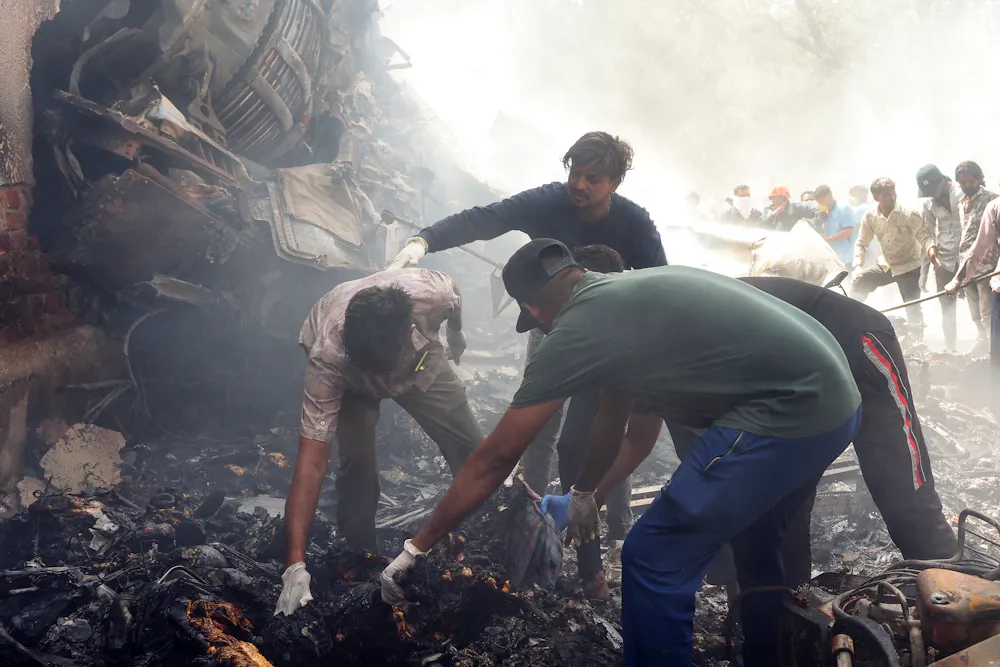
    MIL OSI Russia News –

    June 13, 2025
  • MIL-OSI Economics: Press Briefing Transcript: Julie Kozack, Director, Communications Department, June 12, 2025

    Source: International Monetary Fund

    June 12, 2025

    SPEAKER:  Ms. Julie Kozack, Director of the Communications Department, IMF

    MS. KOZACK: Good morning, everyone, and welcome to this IMF Press Briefing. My name is Julie Kozak. I’m the Director of Communications at the IMF.  As usual, this press briefing will be embargoed until 11:00 a.m. Eastern Time in the United States.  And as usual, I will start with a few announcements, and then I’ll take your questions in person on WebEx and via the Press Center.  And I have quite a few announcements today, so please do bear with me. 

    On June 18th, the Managing Director will travel to Brussels, where she will hold bilateral meetings with officials.  On June 19th, she will travel to Luxembourg to present the Euro Area Annual Consultation at the Eurogroup meeting.  On June 20th, the Managing Director will be in Rome to speak at the Mattei Plan for Africa and the Global Gateway event, a joint effort with the African Continent.  This event is co-chaired by Italian Prime Minister Giorgia Meloni and European Commission President Ursula von der Leyen.  And from there, the Managing Director will travel to Japan from June 22nd to 24th.  During her visit, she will hold meetings with Japanese officials, members of the private sector, and other stakeholders. 

    Turning to other management travel.  First Deputy Managing Director Gita Gopinath will travel to Sri Lanka, Singapore, and Indonesia.  On June 16th, she will participate in the Sri Lanka Road to Recovery Conference, where she will deliver opening remarks.  And in all three countries, our FDMD will meet with officials and various stakeholders during this trip. 

    From June 24th through 26th, our Deputy Managing Director Bo Li will attend the World Economic Forum Annual Meeting of the New Champions in Tianjin, China.  DMD Li will participate in sessions on safeguarding growth engines and the role of digital assets in Global payment systems. 

    On June 30th, Deputy Managing Director Nigel Clarke will participate in the Finance for Development Conference and in Sevilla, Spain. 

    And with that, I will now open the floor to your questions.  For those of you who are connecting virtually, please do turn on both your camera and microphone when speaking.  All right, let’s open the floor.   

    QUESTIONER: I have two questions on Ukraine.  After meetings in Kyiv last month, the IMF mission emphasized the importance of Ukraine’s upcoming budget declaration for 2026-2028, which will determine the course of the fiscal framework and policies.  What are the Fund’s expectations, and does the IMF have any specific requirements or policy guidelines for this document?  And secondly, if I may, do you have data of the IMF Board — IMF support meetings to approve the aides review for Ukraine?     

    MS. KOZACK: Any other questions on Ukraine?                                          

    QUESTIONER: So, Ukraine has recently defaulted on its GDP-linked securities and, before that, failed to reach an agreement with creditors to restructure its part of its sovereign debt.  How concerned is IMF with these developments, and do you see any risks for the EFF repayments from Ukraine?  Thank you. 

    QUESTIONER: Some follow-up to your question.  IMF sources indicate that Ukraine transferred $171 million repayment to the Fund on June 9th, the first repayment on loans received post-February 2022.  Can you confirm this payment was received?  And how does the IMF view Ukraine’s emerging shift towards repayment on wartime financing?  Thank you. 

    MS. KOZACK: Let me take these questions for a moment, and I’ll remind you where we are on Ukraine.

    On May 28th, IMF staff and the Ukrainian authorities reached Staff–Level Agreement.  And this was for the Eighth Review of the EFF program.  Subject to approval by our Executive Board, Ukraine will have access to about U.S. $500 million, and that would bring total disbursements under the program to U.S. $10.6 billion.  The Board is scheduled to take place in the coming weeks, and we’ll provide more details as they become available.  I can also add that Ukraine’s economy has remained resilient.  Performance under the EFF has continued to be strong despite very challenging circumstances.  The authorities met all of their quantitative performance criteria and indicative targets, and progress does continue on the structural agenda in Ukraine.

    Now, with respect to the specific questions on the budget declaration, what I can provide there is that our view is that the 2026-2028 budget declaration will provide a strategic framework for fiscal policy for the remainder of the program over that period of time.  It will help focus the debate on key expenditure priorities, including recovery, reconstruction, defense, and social spending.  And it will also form the basis for discussion of the 2026 budget, which, of course, will also be an important milestone for Ukraine. 

    On the question regarding the debt, what I can say there is that we encourage the Ukrainian authorities and their creditors to continue to make progress toward reaching an agreement in line with the debt sustainability targets under the IMF’s program and the authority’s announced strategy.  So that’s sort of our broad view on the debt.  On the implications for completion of the review, as in all cases where a member country may have arrears to private creditors, staff will assess whether the requirements under the Fund’s lending into arrears policy are met.  In light of this, again, we encourage the authorities to continue to make good-faith efforts toward reaching an agreement in light of the debt sustainability targets. 

    And on your question about Ukraine’s payment to the Fund, what I can say is that, in general, we don’t comment on specific transactions of individual members.  What I can guide you to is that we do provide on our website detailed information on members’ repayments.  And this is made available on a monthly basis.  So, at the end of each month, if you look at the Ukraine page, you can see the transactions that were made.  And on a daily basis, we provide detail on member countries outstanding obligations to the IMF.  So that can give you a sense of how the overall obligations of Ukraine have evolved on a daily basis. 

    QUESTIONER: Can you give us an update on the relationship between the IMF and Senegal?  Where do things currently stand with misreporting and a new program?  This is my first question.  And the second one I have is the Fifth Review under the Policy Coordination concerning Rwanda.  The IMF stated that “Rwanda continues to demonstrate leadership in integrating climate consideration into macroeconomic policy and leveraging institutional reforms to mobilize climate finance.”  Now my question is, can you please tell us concretely what kind of institutional reforms have been implemented by Rwanda? 

    MS. KOZACK: So, before I answer this, are there any other questions on Senegal or Rwanda? I see none in the room. Anyone online want to come in on Senegal?  Okay, I don’t see anyone coming in, so let’s start with Senegal, and then we’ll move to Rwanda. 

    What I can say on Senegal is that we, the IMF and our team in particular, remained actively engaged with the Senegalese authorities, including during a visit to Dakar over March and April and further discussions during the Spring Meetings, which were held here in Washington in April.  We do continue to work with the authorities to address the complex misreporting case that is ongoing.  And addressing this complex case does require a rigorous and time-intensive process.

    I also want to take the opportunity to add that the IMF supports our member countries in a variety of ways, and it goes beyond just providing financing.  So, for example, in the case of Senegal, we are continuing to provide the authorities with technical assistance, including, for example, on our debt sustainability analysis that is tailored to low-income countries.  We’re working closely with the authorities on compiling government financial statistics.  This is being led by our Statistics Department.  We’re providing technical assistance on energy sector reform, public investment management, and revenue mobilization, and that, of course, is with support from our fiscal experts. 

    With respect to a new program.  We don’t have currently a fixed timeline for a new program, and we are awaiting the final audit outcome. 

    Now, turning to your question on Rwanda here.  What I can say, and maybe just to step back and remind everyone of where we are in Rwanda.  On June 4th, so just a few days ago, our Executive Board concluded the Fifth Review of Rwanda’s policy Coordination Instrument.  Rwanda’s economic growth remains among the strongest in Sub-Saharan Africa, and that’s despite rising pressures both on the fiscal side and the external side.  Rwanda, of course, we’re encouraging Rwanda to continue with a credible fiscal consolidation, strong domestic revenue mobilization, and a strong monetary policy. 

    With respect to your specific question, Rwanda successfully completed its Resilience and Sustainability Fund program, the RSF program, in December of 2024, six months ahead of the initial timetable.  And under this RSF, Rwanda did carry out a number of institutional reforms that were focused on green public financial management, climate public investment management, climate-related risk management for financial institutions, and disaster risk reduction.  So, these are some of the institutional reforms that Rwanda completed, which led us to make that statement about their leadership in this area. 

    I can also add that these reforms, along with some of the other reforms they’re having, they’re undertaking, such as a green taxonomy and the adoption of best practices in climate risk reporting by financial institutions.  The idea is that this together will help to close information gaps, improve transparency, and that hopefully will allow for a boost to private sector engagement in advancing Rwanda’s ambitious climate goals and its broader goals toward economic development and strong and sustainable growth. 

    QUESTIONER: Two questions on Syria.  The Fund said this week that Syria needs substantial international assistance for its recovery efforts.  Firstly, can you give us an estimation of how much economic assistance Syria will need?  And secondly, could you just let us know if there were any discussions around if a potential Article IV was discussed? 

    MS. KOZACK: Thank you. Any other questions on Syria?                   

    QUESTIONER: Just to know if there was any demand from the Syrian government for any kind of technical assistance from the IMF to help them recover, economically speaking?

    MS. KOZACK: Does anyone online want to come in on Syria? I don’t see anyone coming in. So let me step back again and give a sense of where we are on Syria.

    I think, as many of you know, an IMF staff team visited Syria from June 1st through 5th.  This was the first IMF visit to Syria since 2009.  The goal of the visit was to assess the economic and financial conditions in Syria, as well as to discuss with the authorities their economic policy, and also to ascertain the authorities ‘ capacity-building priorities, ultimately to support the recovery of the Syrian economy.  I think, as we’ve discussed here before, Syria faces enormous challenges following years of conflict that have caused immense human suffering, and it’s reduced the Syrian economy to a fraction of its former size. 

    At the IMF, we’re committed to supporting Syria in its efforts.  Based on the findings of the mission, IMF staff, in coordination with other partners, are developing a detailed roadmap for policy and capacity development priorities for key economic institutions.  And within the IMF’s mandate, this covers the Finance Ministry, the Central Bank, and the Statistics Agency.  So those would be the areas where we will be focusing in terms of the detailed roadmap on priorities, economic and capacity building priorities. 

    Syria, as noted, will need substantial international assistance.  We don’t yet have a precise estimate of that assistance.  But what I can say is this will also — it will not only require concessional financial support, but also substantial capacity development support for the country.  And that’s basically where we have left it with the Syrian authorities.  And, of course, we will continue to engage closely with them, and we are committed to helping them, supporting them on their recovery journey. 

    QUESTIONER: Is the date of the IMF mission to Argentina already said?  And based on that definition, when would the First Review of the agreement could take place?  And another one, in the last few days, the Argentina government has launched different mechanisms to try to increase the level of foreign exchange reserves.  Is the IMF worried that Argentina will not reach the target set in the agreement?  And could the IMF give Argentina a waiver on this?  Thank you very much. 

    MS. KOZACK: Okay, any other questions in the room on Argentina? I know we have several online.

    QUESTIONER: Thanks for taking my questions.  I would like to know how does the IMF evaluate the listed economy measures, particularly the issue of the measure to use undeclared dollars.  Thank you.

    QUESTIONER: My first question is about the reserve target for the new program with Argentina.  Central Bank is about $4 billion below the target set for June.  Also, some operations are expected that could increase their reserve stock.  Officials said on Monday evening that local currency bonds can now be purchased with U.S. dollar and that the minimum time requirement for foreign investors to hold onto some Argentina bonds will be eliminated.  The IMF is concerned that the Central Bank is not accumulating reserves touch foreign trade and is only receiving income touch debt.  Is the consensus with the authorities to postpone the Frist Review and allow time for Argentina to activate credit operation in order to close — to get closer to the target set for June, or Argentina should resort to a waiver?  And what is your view on the recent measures? 

    And that second question is about the possibility of an IMF mission arriving in Argentina in the coming weeks.  Is that possible?  Would it be a technical staff mission, or could the Managing Director or Deputy Executive Director also come?  Thank you very much. 

    QUESTIONER: So, the question is the same as (connection issue) First Review of the agreement signed in April (connection issue)

    QUESTIONER: -Is the IMF considering granting a waiver and also if they build up. 

    MS. KOZACK: You’ve broken up quite a bit, and now we’re not able to hear you, so we’ll try to get you back, or I think what I understood from your question is it’s broadly along the same lines as some of the other questions. What we can do is if you want to connect via the Press Center, I can read the question out loud. But what I’m going to do is move on.                      

    QUESTIONER:  Basically, echoing my colleague’s questions on the timing of the mission and whether an extension was granted to meet the reserve’s target, well, for the First Review generally.  And separately, Argentina has July 9th dollar debt payments, which will obviously affect reserves.  How will that payment and timing affect your calculus of the reserves target within the First Review?  Thank you.

    QUESTIONER: Well, yes, also echoing my colleague’s question regarding whether the timeline for the First Review, the end date remains this Friday, which was what it said on the Staff Report.  And also, there was a ruling lately, these past few days, against former President Cristina Kirchner.  I was wondering if that raises any concerns in the IMF regarding any political conflict or any subsequent economic impact. 

    MS. KOZACK: I think we’ve covered all the questions on Argentina. Anyone else on Argentina? Okay, very good.  So, let me try to give a response that tries to cover as many of these questions as I can.  So again, I’m just going to step back and provide where we are with Argentina. 

    So, on April 11th, the IMF’s Executive Board approved a new four-year EFF arrangement worth $20 billion for Argentina.  The initial disbursement was $12 billion, and the goal of the program was to support is to support Argentina’s transition to the next phase of state stabilization and reform.  The Milei administration’s policies continue to evolve and to deliver impressive results, as we have previously noted. 

    In this regard, we welcome the recent measures announced this week by the Central Bank and the Ministry of Finance as they represent another important step in efforts to consolidate disinflation, support the government’s financing strategy and to rebuild reserves and, more specifically, steps to strengthen the monetary framework and to improve liquidity management.  These are important to further reduce inflation and inflation expectations.  The Treasury’s successful reentry into capital markets and other actions to mobilize financing for Argentina are also expected to boost reserves, and stability overall for the country continues to be supported by the implementation of strong fiscal anchor in the country. 

    Our team continues to engage frequently and constructively with the Argentine authorities as part of the program’s First Review.  I can add that a technical mission will visit Buenos Aires in late June to assess progress on program targets and objectives and to also discuss the authority’s forward-looking reform agenda.  More broadly and despite the more challenging environment, the authorities, as I said, have continued to make very notable and impressive progress.  So, I will leave it at that. 

    Let’s go online for a bit, and then we’ll come — no, let’s go right here in the back.  You haven’t had a question, and you’re in the room.                             

    QUESTIONER: Given the recent escalation in global trade tensions and the effect of the tariffs, what is the IMF’s assessment of how these developments are affecting emerging economies?  And what policy recommendation does the IMF have for countries facing increased external pressures? 

    MS. KOZACK: Okay, let me answer — let me turn to this question on emerging markets, a very important constituency and part of our membership here at the IMF. So, let me start with where we were and what our assessment was as of April.

    In April, when we launched our World Economic Outlook, we projected growth in emerging and developing countries to slow from 4.3 percent in 2024 to 3.7 percent in 2025 and then to come back a little bit to 3.9 percent in 2026.  We did have at that time also significant downgrades for countries most affected by the trade measures, and that includes China, for example.  We have seen since then that there have been some positive surprises to growth in the first quarter for this group of countries, including China.  We have also seen recent reductions in some tariffs, and that represents kind of an upside risk to our forecast.  And, of course, we will be updating our forecast, including for this group of emerging and developing countries, as part of our July WEO update, and that will be released toward the end of July. 

    In terms of our recommendations, we recommend what we would call a multi-pronged policy response.  So first, to carefully calibrate monetary policy and also macroprudential or prudential policies to maintain stability in countries.  We also recommend for this group of countries, but for all of our members, to rebuild fiscal buffers to restore policy space to respond to, of course, future shocks that may occur.  For countries that may face particular disruptive pressures in the foreign currency, foreign exchange market, we would say that they could pursue targeted interventions if those instances are disruptive.  We also are encouraging again all of our countries to undertake the necessary reforms to no longer delay reforms associated with boosting productivity and longer-term growth. 

    I think maybe stepping back, we’ve been talking for quite some time in the IMF about a low growth, high debt environment.  And this, of course, applies to this group of countries as well.  So, dealing with the debt side, of course, is important through fiscal consolidation, but also, very importantly, boosting growth and productivity growth.  So, countries can also have a more prosperous society and also deal with some of their debt issues through stronger growth is also very important. 

    All right, let me go online, and then I’ll come back to the room.  Let’s see.  Online, I see a few hands up.                             

    QUESTIONER: My question is on Japanese tour conducted by Managing Director.  Could you give more details on how Japanese tour played this month?  For example, is there any chance for giving speeches or press conference and so on? 

    MS. KOZACK: So, as I said, the Managing Director will visit Japan later this month. Her visit will mostly entail meetings with government officials and also the business community as well as other stakeholders. She will have an opportunity to also do some outreach, and we can provide further details to you as her agenda becomes more concrete.  But she is very much looking forward to the visit.  Japan, as I think we’ve said before, is an important partner for the IMF.  And the Managing Director is very much looking forward to meeting with Japanese officials and talking more broadly to other stakeholders in Japan about the important partnership that the IMF has with Japan. 

    I see some other hands up online.  Unfortunately, I can’t see.  So, I think if you’re online and you have your hand up, just jump in. 

    QUESTIONER: You already referred to your own economic outlooks when you talked about emerging markets.  But I was — I wanted to ask you, does the IMF anticipate a similar growth downgrade as we’ve just seen for the World Bank this week and its economic assessment?  Because, of course, back in April, the cutoff point for your last report was just as Donald Trump was announcing the Liberation Day tariffs. 

    MS. KOZACK: Okay, so thank you for that. Any other questions on the global outlook? Okay, so let me take this one, and then we’ll come back to some other questions. 

    So, what I can say in terms of the forward-looking, I mean, first, I want to start by reiterating that we will release a revised set of projections in July as part of our regular WEO update.  What I can add is that since we released our World Economic Outlook, what we call the WEO, in April, we have seen some, you know, some data come in and some other developments.  So first, we have seen some trade deals that have lowered tariffs, notably between the U.S. and China, but also the U.S. and the UK, and at the same time, the U.S. has raised further tariffs on steel and aluminum imports.  So taken together, such announcements, combined with the April 9th pause on the high level of tariffs, these could support activity relative to the forecast that we had in April.  But nonetheless, we do have an outlook for the global economy that remains subject to heightened uncertainty, especially as trade negotiations continue. 

    I can also add that recent activity indicators reflect a complex economic landscape.  So, this is recent high-frequency data.  We have some outturns in the first quarter, which indicated a front-loading of activity ahead of the tariff announcements that took place in April.  And some high-frequency indicators also show some trade diversion and unwinding of that earlier front loading.  So, this is kind of the more recent indicators.  So, all of this creates kind of a complicated picture for us with some upside risk, some other developments, and we’ll take all of these developments together into account as we update our forecast toward the end of July in our WEO. 

    QUESTIONER: When you say support activity, do you mean there’s a chance it could be an improved outlook? 

    MS. KOZACK: So yes, by support activity, what we mean is that it’s kind of positive, it’s a little bit of a positive sign for economic activity. So that’s related, though, I would say, to the specific announcements. So, so just going back to say, the announcements of the trade deals that have lowered tariffs, particularly the ones between the U.S. and China and the U.S. and the UK, those could be supportive or a bit more positive for economic activity going forward.  But the overall picture is both complicated for the reasons that I mentioned. 

    We have some front loading in the first quarter.  Some of that seems perhaps to be unwinding in more recent indicators.  And we also, of course, have to remember that we are in an environment of very high uncertainty, and uncertainty, in general, tends to dampen economic activity. 

    So, the overall picture is quite complex.  And so, we will take all of these factors into account as we move forward with our forecast in July.  And, of course, between now and when we release our forecast later in July, we would expect that there will be further data releases.  And also, there is the possibility that there can be further announcements that we would have to take into account or further developments that we would have to take into account as well. 

    Let me just stay online for another minute.  I think I have one more hand up online or two hands online. 

    QUESTIONER: My question is about Egypt.  I was hoping to ask you if the Egyptian authorities have requested a waiver from the Fund for any of the requirements related to the Fifth Review of the country’s ongoing loan program and specifically if a waiver has been requested related to targets for divestment from state-owned assets.  And if you have any update on the timing of the Fifth Review, that would also be very helpful.  I know there were some suggestions that the Fifth Review could be combined with the Sixth Review, in which case we wouldn’t see it until September rather than the June date that had previously been talked about.  Thank you.

    MS. KOZACK: Anyone else on Egypt?

    QUESTIONER: My question is related to the previous one by my colleague.  She asked about the state-owned companies to be listed for IPOs or for private sectors to be having a bigger stake in the economy.  How the IMF evaluate the progress achieved by the Egyptian authorities during that?  And also, when the Fifth Review to be finished after the physical meetings happened in past May?  And what are the most recent progress achieved until now during this?  And also, I’d like to ask about how IMF evaluated the latest step by Egyptian government to give the Minister of Finance the right to issue sukuk in the guarantee of place in Red Sea as published in the last two days. 

    MS. KOZACK: Okay, thank you. Anyone else have questions on Egypt? So, on Egypt, as I think many of you know, an IMF team visited Cairo.  From May 6th to May 18th, the team held productive discussions with the Egyptian authorities on their economic and financial policies.  Discussions are continuing virtually to finalize agreement on remaining policies and reforms that could support the completion of the Fifth Review under the EFF. So again, discussions around the Fifth Review are continuing virtually. 

    As we have said here before, Egypt has made clear progress on its macroeconomic reform program with notable improvements in inflation and in the level of international reserves.  As Egypt’s macroeconomic stabilization is taking hold, it’s now the time for efforts to focus on accelerating and deepening reforms, including reducing the footprint of the state, leveling the playing field, and improving the business environment in Egypt. 

    What I can add is that in order to deliver on these objectives, particularly with respect to reducing the footprint of the state, leveling the playing field, et cetera, it’s important to decisively reduce the role of the public sector in the economy.  The implementation of the state ownership policy, as well as the asset divestment program in sectors where the state has committed to reduce its footprint, will be playing a critical role in strengthening the ability of Egypt’s private sector to contribute to growth and activity in the Egyptian economy, which will ultimately support improvements in livelihoods of the Egyptian people.  We remain committed to supporting Egypt in building economic resilience and fostering stronger private sector-led growth. 

    On some of the more specific questions related to Sukuk, I don’t have a response here, but we’ll come back to you bilaterally. 

    QUESTIONER: It’s a quick overall question.  Could you remind us the condition for a country to come under IMF supervision?  Does it require specifically a program, or can it come from the IMF itself?  Thank you very much. 

    MS. KOZACK: Can you clarify what you mean by IMF supervision? Just so I understand.

    QUESTIONER: To be perfectly honest, in the past few days, we had comments from the French government about the fact that it could become under IMF supervision.  I’m not very interested in specifically about France, but just in general overall how IMF comes to work with governments.  What are the conditions for the IMF to step in and come to help the government?  Thank you very much. 

    MS. KOZACK: Very good. So, let me maybe take this opportunity to step back and explain kind of the three big pillars of the work of the IMF.

    So, the first is policy advice, and this is done mainly through the Article IV consultation process.  The reason it’s called Article IV is because it’s in Article IV of our Articles of Agreement, and every member country of the IMF — so, we have 191 member countries — every member country commits when they join the IMF to participate in the Article IV consultation process.  So that applies to every member.  And that is a process that I know you here are very familiar with, where the IMF sends a team, and we conduct an assessment of the economy, and we provide policy advice to the country.  That’s done for all members. 

    Another leg or another pillar of what we do at the IMF is capacity development.  And for capacity development, this is at the request of the member.  So, this could be, you know, very specific advice on a specific area where our technical expert would go and do sort of a deep dive analysis and provide detailed policy recommendations.  But it’s really meant at building state capacity.  So often, this is done in areas such as revenue mobilization or public financial management, statistics, monetary policy frameworks, and debt management.  These are some of the areas where we would provide technical assistance to countries.  That’s at the request of the member. 

    And the same is true for our financial support.  So, for financial support, this is done again at the request of the member country.  The member would request financial support from the Fund, and then the Fund would then send a team and ultimately develop a program that reflects the commitments of the authorities.  But that program would need to be aimed at getting the country back on its feet.  In our technical language, it’s restoring medium-term viability for the country.  And that financing program has a balance between financial resources that the Fund provides and also policy measures taken by the part of the authorities.  But that, again, is at the request of the member country. 

    QUESTIONER: So, my question is about cryptocurrency and digital assets.  What is the IMF’s view right now on the daily use transactions by people, by governments, in paying and accumulating Bitcoin and other digital currencies?  What risks and opportunities do you see on behalf of the IMF and what shall be done on the governmental level to implement any additional safeguards requirements to make this like a daily routine operations?  Thank you. 

    MS. KOZACK: Okay, so I think on the broad topic of kind of crypto assets, what we can say is that they have gained popularity as an asset class. And also, what we see is that the underlying technology, which is a digital ledger that is shared, trusted, and programmable, is broadly viewed as highly valuable. And that technology may have broader societal benefits.  So, we do see crypto assets as a speculative asset as an asset class.  At the IMF, we generally don’t recommend crypto assets as legal or cryptocurrencies as legal tender.  We also do see that there are some potential risks that could arise from crypto assets.  These include risks to financial stability, to consumer and investor protection, and also to market integrity. 

    So, in order to balance, in a sense, the opportunities based on the technology and a new asset class with some of these risks, what we advise countries to do is to establish a robust policy framework to effectively mitigate some of the risks while allowing society to take advantage of the benefits or the opportunities that arise from this new technology. 

    QUESTIONER:  The Bank of Russia recently cut its key interest rate from 21 percent to 20 percent, marking its first easing move since September 2022.  From the IMF perspective, what are the implications of this monetary policy shift?  Thank you. 

    MS. KOZACK: So, on Russia, let me just step back a minute, and I’ll provide our overall assessment of the economy, and then I’ll get to your specific question.

    So, what we see in Russia is that last year, we saw the economy overheating, and now what we observe in Russia is a, is sharp slowdown of the economy, with growth slowing but inflation still relatively elevated.  Growth in 2025 is expected to slow to 1.5 percent based on our forecast from April, and this was compared to 4.3 percent in 2024.  And this reflects policy tightening, cyclical factors, and also lower oil prices. 

    Now, with respect to the action by the Central Bank, as you noted, the Central Bank indeed reduced the key policy rate from 21 percent to 20 percent for the first time.  This was the first reduction since September of 2022.  And the action taken by the Central Bank was in response to slowing growth, which I just mentioned, and also some easing of inflation pressures. 

    So, as I noted, inflation still remains high.  It was just under 10 percent in May.  But our forecast has inflation declining going forward.  So, we expect inflation to ease to 8.2 percent by the end of this year.  And we anticipate that inflation will turn to the target of 4 percent in the first half of 2027.  So that’s the IMF forecast.  So, the inflation challenge for Russia remains, and it’s appropriate.  Therefore, that monetary policy remains tight, and even with this cut, monetary policy is still tight. 

    I am going to now take the opportunity to read one question or some questions on Ghana and some questions on Sri Lanka, and then we’ll bring the Press Briefing to a close.  So, on Ghana, I have three questions.  The first one is about an update on when Ghana’s program will be presented to the Board following Staff–Level Agreement. 

    The second question is about the amended Energy Sector Levy Act to add GH₵1 per liter on petroleum products to defray the cost of fuel purchases for thermal plants.  Has the IMF taken note of this, and what’s its position on using taxes versus passing these costs through tariffs? 

    The third question on Ghana is whether the IMF is looking at the possibility of revising Ghana’s IMF program targets as the cedi’s sharp appreciation against the dollar has affected many variables that influence these targets set by the Fund? 

    So let me take a moment to just respond on Ghana.  So again, stepping back to where we are on Ghana.  On April 15th, the IMF staff and the Ghanaian authorities reached Staff–Level Agreement on the Fourth Review of Ghana’s Extended Credit Facility.  Upon approval by our Executive Board, Ghana would be scheduled to receive about U.S. $370 million, bringing total support under the ECF to $2.4 billion since May of 2023.  We anticipate bringing the review to our Board in early July, so in just a few weeks. 

    What I can add about the question about the cedi’s sharp appreciation is that you know, of course, as we look at a program, we look at all of these developments, including, of course, developments in the exchange rate.  And so, future program reviews will provide an opportunity for the team to carefully assess all of the evolving macroeconomic and financial conditions, including exchange rate movements, and to ensure that the program’s targets and objectives remain appropriate and achievable. 

    And on the fuel levy, what I can say is that this is a new measure that will help generate additional resources to tackle the challenges in Ghana’s energy sector, and it’s also going to bolster Ghana’s ability to deliver on the fiscal objectives under the program. 

    And I’m going to read one last set of questions on Sri Lanka, and then we will bring the Press briefing to a close.  So, we have a number of journalists asking about Sri Lanka.  So there’s — we’re consolidating the questions here.  So, these journalists are asking for updates on the IMF’s view on Sri Lanka’s progress in implementing cost recovery, electricity prices, and the automatic price adjustment system.  They’re asking about the date for the Executive Board’s consideration of the Fourth Review under the program. 

    And another question, has the government raised the issue of recent global shocks and possible further pressure on the economy and its ability to meet its reform program targets?  How do we rate the new government’s approach to corruption? 

    QUESTIONER: My question is, recently Sri Lankan president announced that the existing IMF program is likely (inaudible) that it will be the final program for the country as it tries to achieve financial independence.  What is the IMF’s view on this?  Is it achievable given the current situation in Sri Lanka?  And what is the progress on the IMF Board approval for the next review?  Thank you. 

    MS. KOZACK: All right, so again, just stepping back and reminding where we are on Sri Lanka.

    So, on April 25th, IMF staff and the Sri Lankan authorities reached Staff–Level Agreement on their fourth review of Sri Lanka’s economic reform program.  The program and Sri Lanka’s ambitious reform agenda continue to deliver commendable outcomes.  Performance under the program remains strong overall, and the government remains committed to program objectives.  Completion of the review is pending approval of the IMF’s Executive Board, and it is contingent on the completion of prior actions. 

    What I can add is that our IMF team, of course, is closely engaged with the authorities to assess the measures that were recently announced by the regulator on June 11th.  And these include a 15 percent increase in in electricity tariffs and the publication of a revised bulk supply transaction account guidelines for this.  So, these were two prior actions.  Once the review is completed by our Executive Board, Sri Lanka would have access to about $344 million in financing, and we will announce the Board date for Sri Lanka in due course. 

    With respect to some of the more specific questions on governance, what I can add is that in end-February, the government published an updated government action plan on governance reforms.  And this action plan included important commitments such as enacting a public procurement law, an asset recovery law, and other actions that are aligned with the recommendations that were included in the IMF’s Governance Diagnostic Report. 

    On the question about kind of the global situation and the impact on Sri Lanka, what I can say there is that, like for all countries in an environment of high uncertainty around policy and in general, high global uncertainty, this poses, of course, risks to an economy like Sri Lanka’s, as it does to many others.  If some of the risks associated with high global uncertainty were to materialize, the way we will approach this will be to work very closely with the authorities first to assess the impact of any downside risk that materializes, and then we will also work with the authorities to consider what are the appropriate policy responses within the contours of the program. And more broadly, for all countries, including Sri Lanka, it’s really critical for each country to sustain its own reform momentum.  Sustaining reform momentum, both with macroeconomic policy reforms and, importantly, some of the growth-enhancing reforms that we were talking about earlier, is critical for all countries in our membership, including Sri Lanka. 

    And on the question regarding the president’s remarks, I think there, what I can simply say is to repeat that, you know, Sri Lanka has made commendable progress, you know, in implementing some very difficult but much-needed reforms.  The effects — these efforts are really starting to bear fruit.  We see a remarkable rebound in growth following Sri Lanka’s crisis.  Inflation is low, international reserves are continuing to grow, revenue collection on the fiscal side is improving, and the debt restructuring process is nearly complete.  So, I think it’s really important to recognize, you know, the significant efforts that Sri Lanka has taken and also the tremendous progress that has been made.  Right now, of course, we are very much focused on the current EFF, and therefore, as I mentioned, it’s going to be critical for Sri Lanka to sustain the reform momentum through the remainder of this EFF program. 

    And with that, I am going to bring this Press Briefing to a close.  Let me thank you all for your participation today.  As a reminder, as usual, this briefing is embargoed until 11:00 A.M. Eastern Time in the United States.  A transcript will be made available later on IMF.org, and should you have any clarifications or additional queries, please reach out to my colleagues media@imf.org. This concludes our Press Briefing for today.  I wish everyone a wonderful day, and I do look forward to seeing you all next time.  Thank you very much. 

    *  *  *  *  *

    IMF Communications Department
    MEDIA RELATIONS

    PRESS OFFICER: Brian Walker

    Phone: +1 202 623-7100Email: MEDIA@IMF.org

    @IMFSpokesperson

    MIL OSI Economics –

    June 13, 2025
  • MIL-OSI China: UK sends investigation team to India after deadly plane crash: PM

    Source: People’s Republic of China – State Council News

    British Prime Minister Keir Starmer announced on Thursday that an investigation team has been dispatched to India following the deadly crash of Air India flight AI171.

    In a video posted on social media platform X, Starmer said Foreign Secretary David Lammy is leading Britain’s response and that the government is working with Indian authorities to establish the facts.

    Describing the reports and images from the crash as “absolutely devastating,” Starmer assured that updates would be provided as soon as possible.

    Local media reported that Starmer is expected to chair a Cabinet Office Briefing Rooms (COBR) meeting Thursday evening to address the tragedy, a step typically taken during major national or international emergencies.

    Air India has confirmed that flight AI171, which crashed after departing from Ahmedabad Airport, was carrying 242 people. Among the passengers were 53 British nationals, 169 Indian nationals, seven Portuguese nationals, and one Canadian. One British national has been confirmed as a survivor. 

    MIL OSI China News –

    June 13, 2025
  • MIL-OSI Australia: Improvements to SuperStream standard and FVS

    Source: New places to play in Gungahlin

    Funds, and their service providers, need to review improvements to the SuperStream standard and Fund Validation Services (FVS) technical and business guidance documents.

    Drafts are available on the ATO Software Developers siteExternal Link. Consider changes that impact your software and be ready by 1 July 2026.

    Key changes include:

    • updates to FVS to give greater visibility and traceability on fund mergers, track closed Unique Superannuation Identifiers (USIs), and help employers and funds better resolve errors with SuperStream data and payments
    • improved SuperStream contributions processes to clarify error messages for employers, explaining why a fund rejected a contribution
    • faster payments on the New Payments Platform will no longer require bi-lateral agreement and will become an approved payment method
    • a new SuperStream message for employers to confirm an employee’s super fund will accept contributions.

    Be aware there may be further changes made to the documents, or new documents added, and you should regularly review the website for the most up-to-date version.

    If you have questions after reviewing the documents, please contact us.

    Looking for the latest news for Super funds? – You can stay up to date by visiting our Super funds newsroom and subscribingExternal Link to our monthly Super funds newsletter and CRT alerts.

    MIL OSI News –

    June 13, 2025
  • MIL-OSI USA: SPC MD 1265

    Source: US National Oceanic and Atmospheric Administration

    Mesoscale Discussion 1265

    Mesoscale Discussion 1265
    NWS Storm Prediction Center Norman OK
    0514 PM CDT Thu Jun 12 2025

    Areas affected…portions of southeast Colorado and eastern New
    Mexico

    Concerning…Severe potential…Watch unlikely

    Valid 122214Z – 130015Z

    Probability of Watch Issuance…5 percent

    SUMMARY…Occasional severe gusts and large hail may occur this
    afternoon across portions of southeast Colorado and eastern New
    Mexico. A watch is not anticipated.

    DISCUSSION…Convection has developed in weak upslope surface flow
    along the lee of the higher terrain across portions of central
    Colorado and New Mexico. Strong mixing on the High Plains has
    resulted in inverted-V thermodynamic profiles with approximately
    1000 J/kg MLCAPE per mesoanalysis and short-term RAP forecast
    profiles. Generally, low-level and deep-layer shear are marginal for
    supercells, particularly across northeast New Mexico and southeast
    Colorado, and some transient mid-level mesocyclones are apparent on
    WSR-88D radar. Some clustering of storms may occur with time given
    strong cold pools, and this may result in a risk for severe gusts.
    Additionally, given the weak low-level shear and low freezing
    levels, some marginally severe hail may be possible. Due to the
    expected sparse coverage of severe weather, a watch is not
    anticipated.

    ..Supinie/Smith.. 06/12/2025

    …Please see www.spc.noaa.gov for graphic product…

    ATTN…WFO…MAF…PUB…BOU…ABQ…EPZ…

    LAT…LON 37570523 38560477 38590381 38110350 36160348 34310369
    33160418 32870473 32990530 33860555 35790556 37570523

    MOST PROBABLE PEAK WIND GUST…55-70 MPH
    MOST PROBABLE PEAK HAIL SIZE…UP TO 1.25 IN

    Top/All Mesoscale Discussions/Forecast Products/Home

    MIL OSI USA News –

    June 13, 2025
  • MIL-OSI United Kingdom: The Foreign Secretary’s Mansion House Speech 2025

    Source: United Kingdom – Executive Government & Departments

    Speech

    The Foreign Secretary’s Mansion House Speech 2025

    The Foreign Secretary delivers his 2025 Mansion House Speech.

    My Lord Mayor, Your Excellencies, ladies and gentlemen…

    thank you for hosting me.

    My thoughts are with all those affected by the tragic plane crash in Ahmedabad this morning.

    I have been in touch with Minister Jaishankar to offer my condolences…

    and the Foreign Office has stood up a crisis team to support British nationals and their families.

    Tonight, I want to speak about power.

    This is an audience which will understand that…

    because the City’s financial power scales up every innovation…

    and powers up the world economy.

    Thank you for what you do.

    I became MP for Tottenham 25 years ago.

    I’ll be honest with you…

    I didn’t feel that powerful for many of those years.

    It was a long wait to become Foreign Secretary…

    though not nearly as long as the wait for Tottenham to win a European trophy.

    Politics and supporting Spurs…

    if you stick at them…

    pay off in the end.

    I also want to thank the tens of thousands of diplomats, intelligence officers and development specialists…

    that stand up for Britain in the world.

    Together…

    we’ve tackled wars, evacuations, hurricanes, …

    and thanks to your work…

    much of it classified…

    we are all safer…

    even if your Foreign Secretary is now a little greyer…

    a little thinner…

    and, I hope, a little wiser.

    We do our work in the shadow of history.

    Coming here tonight, I think of Anthony Eden, one of the first Foreign Secretaries to speak in this tradition.

    But I do not think this is the new 1930s.

    The more compelling reference point is 1925.

    A century ago, our world was experiencing what the great historian Adam Tooze called a deluge of modernity.

    New technologies…

    new industries…

    …shifted the balance of power. 

    There is a cheap reading of the 1920s… 

    that a Second World War was inevitable.

    However, I’m not sure it was. 

    With the Locarno Treaties in 1925…

    we almost got there.

    Ultimately though, democracy failed to keep the peace.

    I look back at 1925 today…

    because 2025 is also a molten moment…

    when the earth moves.

    What we are living through is in fact a Great Remaking…

    as modernity leaps forward and reshapes geopolitics.

    In 2025, technology is power.

    Nowhere do we see this more clearly than with China…

    a great civilisation with a long history…

    but today defined as much by their technological cutting edge as anything else.

    Take DeepSeek…

    revealing Chinese AI power.

    BYD’s export boom…

    revealing Chinese battery power.

    And the Chang’e-6 moon landing…

    revealing Chinese space power.

    We cannot ignore how the West and Russia are no longer alone on the technological frontier.

    Nor can we ignore the fact that China has installed more renewables capacity than the US, EU and India combined.

    Britain will be dealing with the threats and opportunities Chinese technology poses for generations to come.

    But it is the United States…

    Britain’s closest ally….

    that is the world’s leading technological power…

    number one when it comes to biotech, AI and quantum.

    But facing such a vast challenge, it is natural the Americans will focus more on the Indo-Pacific.

    And they’ve repeatedly told us, facing Russia, we in Europe need to rely more on ourselves.

    But to quote my friend Vice-President Vance:

    “It’s completely ridiculous to think you’re ever going to be able to drive a wedge between the US and Europe.”

    I agree with J.D. Vance…

    though maybe not when it comes to his love for Diet Mountain Dew…

    I prefer a full fat Coke.

    The United States and China are doing remarkable things with new technology.

    But this is the truth about power today…

    technology is making it more diffuse.

    Power is not just in the hands of the superstates…

    nor the super-spoiler, Putin’s Russia. 

    Many powers are shaping this multipolar age.

    Since 2000, Britain has more Nobel laureates for science than China, India and Russia combined.

    South Korea makes more advanced semiconductors than China.

    The UAE has reached Mars…

    whilst Russia hasn’t been since the collapse of the USSR.

    In 1997, when my party last came to power…

    the US held the majority of the world’s top supercomputers.

    Today, barely a third.

    The cast-list of players is growing.

    When the US talks to Russia, they both head to Riyadh…

    when they talk to China, they both come to London.

    This large group of states, together, are the new great powers.

    This is also our age.

    Your Excellencies, that’s why I want to work even more closely with even more of you…

    some as allies, some as partners…

    some of you on everything, some of you on single issues.

    We are not all the same.

    We do not agree on everything.

    But together, we can build new constellations and coalitions which give us all a seat at the table.

    This is at the heart of our offer to the Global South and our new Approach to the continent Africa.

    It is the core of what I mean by progressive realism.

    Cooperation, not condescension.

    Listening, not lectures.

    A realpolitik of progress.

    For Britain, progressive realism means listening…

    deepening…

    and toughening up.

    For years…

    friends from Africa to Eastern Europe have been saying Britain needs to do more to tackle dirty money.

    Kleptocrats and money launderers rob all our citizens of wealth and security.

    We don’t need to wait for superpowers…

    we can clamp down on blatant theft ourselves.

    And so I can announce today that London will host a Countering Illicit Finance Summit…

    …bringing together a broad coalition for action.

    I will never allow London mansions to be the bitcoin of kleptocrats.

    We will expose them.

    We will punish them.

    And drive them out of our city.

    In the Middle East, I personally find the horrific suffering of civilians in Gaza intolerable.

    We all want to see an immediate ceasefire…

    the release of all the hostages…

    the end of Hamas’ reign of terror.

    That’s why Britain is leading efforts to break the deadlock through new coalitions.

    I can hear others’ desire for peace.

    With France and Canada…

    we sent a clear warning in May that Israel must stop its assault on Gaza.

    With Australia, Canada, Norway and New Zealand…

    we’ve sanctioned those inciting violence against Palestinians in the West Bank…

    the territory that must form the heart of a future Palestinian state.

    We support the Gulf’s indispensable work on mediation and a plan for the day after.

    Because the two-state solution is the only path to a lasting peace.

    But progressive realism is not only about this…

    but deepening Britain’s alliances and partnerships.

    We actually delivered three deals in two weeks with three of the world’s greatest economies.

    And that’s not all we’ve achieved – we are injecting real momentum into so many of Britain’s partnerships.

    We’re delivering deals for climate…

    launching the Global Clean Power Alliance in Brazil…

    partnering with my friend Mia Mottley’s Bridgetown Initiative…

    securing a climate tech partnership with Qatar.

    Jobs in Cambridge, jobs in Southampton.

    We’re delivering deals for defence…

    the ITAR breakthrough with our AUKUS partners…

    progress in our new fighter jet programme with Italy and Japan.

    Jobs in Glasgow, jobs in Reading.

    We’re delivering deals for growth…

    massive investments from America’s Universal…

    Japan’s car giants…

    German manufacturers…

    and Saudi investors.

    Jobs in Bedford, jobs in north Wales, jobs in Northern Ireland.

    Crucially, we’re also delivering deals on irregular migration.

    Better cooperation with the Balkans…

    new returns agreements with Iraq and Moldova…

    the world’s first sanctions regime targeting smuggling gangs and their enablers.

    This is now a priority for the Foreign Office in a way it never was before.

    This is us playing our bit ensuring those with no right to be here piling pressure on our public services.

    When partners step up on irregular migration…

    this is transforming our wider relationship.

    But if they are unwilling to do so…

    then that has to have consequences for what we can offer them in return.

    And finally, progressive realism is about toughening up.

    I came into politics inspired by the generation who were tested by war in Bosnia and Kosovo.

    My generation here in Europe is the Kyiv generation…

    one that has toughened up.

    The view from that night train to visit President Zelenskyy is not simply out into darkness…

    …but into history in the making.

    You feel what a journey Europe has been on since 2022.

    Britain has toughened up.

    As Secretary of State for GCHQ and SIS…

    I am proud that we are investing £600 million in the UK intelligence community…

    so our spies can defend our way of life.

    As a result, I can confirm today that Britain will spend two point six per cent of GDP on defence from 2027.

    This is a generational uplift…

    keeping working people safe.

    Our soldiers and our intelligence staff are ready to compete with our adversaries.

    And with the new counter-hybrid taskforce I am announcing today…

    our diplomats too will be ready for this murky new age of sabotage and subterfuge…

    where technology is power.

    And I know…

    Europe has toughened up too…

    switching to Putin-free energy…

    as the EU goes further than ever before with common borrowing for military spending.

    Putin believes that we, as Europeans, are unable to stick it out for years to come.

    But just as Ukraine’s heroes have surprised the Kremlin with their endurance…

    so too has Europe been astounding the Kremlin with our dogged persistence in standing with Zelenskyy.

    Today, we had confirmation that Russian casualties in this senseless war have reached one million.

    Every one a reminder that this war is not only a crime against the Ukrainian people…

    but a waste of young Russian lives…

    yet more blood on the Kremlin’s hands.

    With grit, we will prove Putin wrong.

    Europe is not afraid to stand up and fight.

    Our Plan for Change…

    our international strategy…

    is delivering for working people.

    I can see Britain in the years to come…

    safer…

    greener…

    richer…

    happier…

    if we stick to the Plan.

    For me, patriotism has always been about realism…

    And, of course, football!

    Taking the world as it is, not as we wish it to be.

    Taking ourselves as we are, and being proud of it.

    Taking actions that are both astute and bold.

    This is our realpolitik.

    A realpolitik of progress.

    A realpolitik for Britain.

    Thank you.

    Updates to this page

    Published 13 June 2025

    MIL OSI United Kingdom –

    June 13, 2025
  • MIL-OSI USA: Golden votes ‘no’ on president’s recission package

    Source: United States House of Representatives – Congressman Jared Golden (ME-02)

    Trump proposal would eliminate funding for the Corporation for Public
    Broadcasting

    WASHINGTON —Congressman Jared Golden (ME-02) voted today against the Recissions Act of 2025, a proposal by President Donald Trump to claw back $9.4 billion in congressionally approved spending on foreign aid and the Corporations for Public Broadcasting (CPB). 

    “Zeroing out CPB funding would undermine or even shut down independent, nonpartisan rural public television and radio networks such as Maine Public, which provides educational programming for children and critical public services such as the life-saving emergency alert system,” Golden said. “This bill also would gut the President’s Emergency Plan for AIDS Relief (PEPFAR), a program founded by a Republican president with bipartisan support that has saved more than 25 million lives in an effort to stop the spread of AIDS.”

    The Recissions Act of 2025 proposed the elimination of $8.3 billion in funding from foreign aid programs within the U.S. State Department, primarily from the U.S. Agency on International Development (USAID), and $1.1 billion — the entire federal appropriation — for CPB. 

    The bill forced an up-or-down vote on the entire slate of clawbacks, preventing the ability of members to approve or reject individual recissions. It passed with only GOP support in a 214-212 vote.  

    “While I won’t support a proposal that cuts funding that supports PBS KIDS educational programming and worthwhile public health initiatives, there are undoubtedly initiatives in the State Department — including some included in this package — where cuts are justified,” Golden said. “While this bill selects some of the wrong targets, it is the correct way for the administration to seek these kinds of savings. I remain open to other, better-targeted recissions proposals.” 

    Background: The 1974 Impoundment Control Act establishes a formal procedure for Congress to consider rescissions requests submitted by the president. The law gives Congress 45 days to act on the request. During that 45-day window, the White House may withhold the covered funds. The measure can pass by a simple majority in the Senate and cannot be filibustered. 

    ###

    MIL OSI USA News –

    June 13, 2025
  • MIL-OSI USA: McClellan, New Democrat Coalition Leadership Slams House GOP Passage of President Trump’s Cuts to Foreign Assistance, Global Aids Prevention and Public Broadcasting

    Source: United States House of Representatives – Congresswoman Jennifer McClellan (Virginia 4th District)

    Washington, D.C. – Today, Congresswoman Jennifer McClellan (VA-04) joined New Democrat Coalition Leadership to issue a statement on the House passage of President Trump’s rescissions request, which would cancel $9.4 billion in congressionally appropriated funding for foreign assistance, including the President’s Emergency Plan for AIDS Relief, and the Corporation for Public Broadcasting. 
     
    “Instead of taking much-needed action to lower the cost of living, today House Republicans inexplicably took aim at global AIDS prevention and Sesame Street.
     
    “This effort to defund programs that help keep our country safe, healthy, and informed is yet another example of Congressional Republicans putting their extremist agenda first and hardworking Americans last. Look no further than the Republican tax scam bill, which would rip health care from 16 million Americans and food from millions of hungry kids, all to finance tax breaks for the billionaire donor class.
     
    “It’s abundantly clear that House Republicans have no answers to address the challenges facing everyday Americans – they only offer more devastation. 
     
    “New Dems remain laser-focused on fighting back against House Republicans’ attacks on working people, killing their dangerous tax scam bill, and delivering real solutions for our constituents.”

    ###

    MIL OSI USA News –

    June 13, 2025
  • MIL-OSI USA: June 12, 2025 Rep. Mullin’s Statement on the Rescissions Act of 2025 Today, House Republicans voted to rip away $9.4 billion in vital federal investments—slashing support for public broadcasting, gutting life-saving global AIDS prevention, and abandoning our commitments to international partners. At a time when families are struggling with the cost of… Read More

    Source: United States House of Representatives – Representative Kevin Mullin California (15th District)

    Today, House Republicans voted to rip away $9.4 billion in vital federal investments—slashing support for public broadcasting, gutting life-saving global AIDS prevention, and abandoning our commitments to international partners. At a time when families are struggling with the cost of living, House Republicans chose to go after Sesame Street instead of solving real problems.

    Let’s be clear: this isn’t about fiscal responsibility. This is about pushing a deeply unpopular, ideologically extreme agenda. From dismantling the bipartisan President’s Emergency Plan for AIDS Relief—a program that has saved millions of lives—to defunding local PBS and rural radio stations that keep Americans safe and informed, this package is cruel and short-sighted.

    President Trump and his Republican allies continue to target the very programs that support our national security, public health, and democratic values. Rather than standing up for working families, they are codifying the chaos unleashed by an unelected billionaire. These cuts make America more vulnerable, more isolated, and less informed.

    House Republicans have once again chosen political stunts over serious leadership. I will keep fighting back against these attacks and stay focused on delivering for the American people—lowering costs, protecting critical services, and standing up for facts, science, and compassion.

    MIL OSI USA News –

    June 13, 2025
  • MIL-OSI USA: Senate Committee Unanimously Advances Hawley, Durbin Bill Stopping Child Sex Abuse Materials

    US Senate News:

    Source: United States Senator Josh Hawley (R-Mo)

    Thursday, June 12, 2025

    Today, U.S. Senators Josh Hawley (R-Mo.) and Dick Durbin (D-Ill.) advanced their STOP CSAM Act unanimously through a Senate Judiciary Committee markup. The legislation would crack down on the proliferation of online child sexual abuse material (CSAM) by allowing victims to sue companies that host it. Senators Chuck Grassley (R-Iowa), Katie Britt (R-Ala.), Ashley Moody (R-Fla.,), Cindy Hyde-Smith (Miss.), Amy Klobuchar (D-Minn.), and Mark Kelly (D-Ariz.) have cosponsored the bill.

    “Almost two years ago, Mark Zuckerberg apologized to the victims of sexual exploitation on his platforms during a Senate Judiciary Committee hearing. But apologies aren’t enough; it’s time to hold Big Tech accountable. Protecting kids online means giving parents the right to sue companies that harbor predators and host their content. My bipartisan legislation would rightfully give CSAM victims their day in court,” said Senator Hawley.

    “This is a momentous step toward finally holding Big Tech accountable for harm it has caused kids and families. Big Tech’s pockets run deep, and social media companies are lobbying against any bill that would bolster accountability. Their influence is weakening. I’m proud to have worked with Democrats and Republicans alike to highlight the failures of Big Tech and draft commonsense proposals like ourSTOP CSAM Act to put kids’ safety first. This bill would finally pierce the broad immunity granted by Section 230 and open the courtroom to victims of online child sexual exploitation, as well as bolster protections and resources for survivors. Senator Hawley and I will continue pushing for Senate passage of this bill, and I look forward to the day it becomes law,” said Senator Durbin.

    The Senators originally introduced the legislation last Congress and garnered the votes to unanimously advance it through the Senate Judiciary Committee. 

    Senator Hawley has been a leading proponent of holding Big Tech accountable and protecting kids online. Last year, he questioned Meta CEO Mark Zuckerberg about the rampant child exploitation on his social media platforms, prompting him to stand up and apologize to the families of victims in the room.

    Read the full bill text here. 

    MIL OSI USA News –

    June 13, 2025
  • MIL-OSI USA: Congresswoman Torres Demands Accountability from ICE Following Unlawful Denial of Access and Use of Chemical Agents During Congressional Visit

    Source: United States House of Representatives – Congresswoman Norma Torres (35th District of California)

    June 12, 2025

    Calling for Immediate Investigation into ICE’s Actions at Roybal Federal Building and Urges Reform of Detainee Information Systems

    Washington, D.C. – Today, Congresswoman Norma Torres sent a formal letter to Director Todd Lyons of the U.S. Immigration and Customs Enforcement (ICE) raising serious concerns about the conduct of ICE personnel during a peaceful Congressional delegation oversight visit to the Roybal Federal Building in Los Angeles on June 7, 2025. The delegation, which included Members of Congress, legal counsel, staff, media, and immigrant rights advocates, was denied access to the facility despite legal protections guaranteeing such oversight.

    In her letter, Rep. Norma Torres highlights ICE’s false claim that over 1,000 protesters were present during the visit, a characterization she says was deliberately used to justify the unwarranted deployment of chemical agents against the peaceful delegation. The release of these agents caused harm to Congresswoman Torres, who required emergency medical attention and ongoing medication.

    Congresswoman Torres also condemns ICE’s unlawful obstruction of Congressional access, citing federal law (Section 527(a) of the Further Consolidated Appropriations Act, 2024) that prohibits denial of entry to federal detention facilities by Members of Congress. She calls the refusal a serious breach of transparency and accountability.

    Additionally, the Congresswoman points to ICE’s failure to maintain accurate and timely updates to its Online Detainee Locator database, which has led to widespread confusion and emotional distress among families searching for detained loved ones.

    “Every day we are denied access to critical information, and DHS violates the law, is a danger to our democracy. Today at 3:08 pm, DHS responded to my request to conduct oversight at the Roybal facility by denying oversight access for the second time. As a Member of Congress and part of the Appropriations Committee overseeing federal funding, I demand a full investigation into the use of chemical agents against myself and others present on June 7, 2025, a formal explanation for the unlawful denial of access, and a comprehensive review of ICE’s communication and detainee information systems,” said Congresswoman Torres. “These actions have not only endangered lives but have broken the public’s trust and violated the law.”

    Congresswoman Torres is urging ICE to promptly address these serious issues and provide a detailed response.

    Full letter text

    ###

    MIL OSI USA News –

    June 13, 2025
←Previous Page
1 … 292 293 294 295 296 … 423
Next Page→
NewzIntel.com

NewzIntel.com

MIL Open Source Intelligence

  • Blog
  • About
  • FAQs
  • Authors
  • Events
  • Shop
  • Patterns
  • Themes

Twenty Twenty-Five

Designed with WordPress