SUNNYVALE, Calif., June 02, 2025 (GLOBE NEWSWIRE) — Illumio Inc., the breach containment company, today announced a strategic integration with NVIDIA to help critical infrastructure organizations strengthen protections and advance their Zero Trust posture. The collaboration integrates the NVIDIA BlueField networking platform with Illumio’s breach containment platform, delivering robust security and operational efficiency across converged IT and Operational Technology (OT) environments.
Critical infrastructure organizations can now deploy Illumio directly on NVIDIA BlueField, providing security teams with a comprehensive view of network dependencies and precise security controls at both the host and network level. Organizations can gain deep visibility into traffic, protect critical assets, and use NVIDIA BlueField DPUs as effective Zero Trust enforcement points, dramatically simplifying the protection of critical systems and ensuring operational continuity while meeting stringent compliance requirements. In the future, they will also be able to use Illumio’s AI-driven insights to identify risks and attacker patterns, enabling rapid detection of threats in ICS and OT environments.
The collaboration comes amid rising threats and increased regulatory pressure globally to strengthen cyber resilience and reduce operational risk to OT infrastructure. Key benefits to organizations include:
Visibility and policy enforcement for traffic within and between IT and OT layers: Visualize all traffic to and from OT systems equipped with NVIDIA BlueField, using Illumio’s flexible labeling architecture to understand how systems communicate across the entire infrastructure.
Rapid deployment of Zero Trust for critical infrastructure: Easily extend Zero Trust segmentation to OT and ICS environments, reducing deployment complexity, accelerating time to value, and containing breaches by mitigating lateral movement risks.
Improved compliance and operational resilience: Identify assets and threats, monitor traffic, and enforce security policies across converged IT/OT environments with no impact to system performance or architectural overhauls. Organizations get consistent and reliable microsegmentation across diverse environments without compromising uptime or resiliency.
“The integration between Illumio and NVIDIA will significantly strengthen security for cyber-physical systems and bring us closer to achieving our vision of a world without cyber disasters,” says Todd Palmer, Senior Vice President of Global Partner Sales and Alliances, Illumio. “Critical infrastructure is under threat like never before. Together with NVIDIA, we’re making it easier for organizations to protect critical systems, ensure operational continuity, and meet stringent compliance requirements in an increasingly complex landscape.”
“Cyber risks against critical infrastructure are more sophisticated and disruptive than ever, and lateral movement remains a key factor in successful attacks,” says Ofir Arkin, Senior Distinguished Architect for Cybersecurity at NVIDIA. “Integrating the Illumio and NVIDIA BlueField platforms enables organizations to enhance visibility and control across IT and OT networks, reduce risk, contain attacks, and strengthen operational resilience.”
Recognized as a leader in The Forrester Wave™: Microsegmentation Solutions, Q3 2024, Illumio is a trusted, dedicated segmentation vendor in the NVIDIA partner ecosystem, delivering a robust cybersecurity platform dedicated to containing breaches. Built on an AI security graph, and comprising Illumio Insights (AI cloud detection and response) and Illumio Segmentation (Zero Trust Segmentation), the platform empowers organizations to identify risks, and contain threats instantly, enabling a Zero Trust strategy.
To witness the integration between Illumio and NVIDIA in action, visit the Illumio booth (E30) at Infosecurity Europe in London, happening from June 3–5. More information here: https://www.illumio.com/resources/events/infosec-2025
About Illumio Illumio is the leader in ransomware and breach containment, redefining how organizations contain cyberattacks and enable operational resilience. Powered by the Illumio AI Security Graph, our breach containment platform identifies and contains threats across hybrid multi-cloud environments – stopping the spread of attacks before they become disasters.
Recognized as a Leader in the Forrester Wave™ for Microsegmentation, Illumio enables Zero Trust, strengthening cyber resilience for the infrastructure, systems, and organizations that keep the world running.
Source: Saint Petersburg State University of Architecture and Civil Engineering – Saint Petersburg State University of Architecture and Civil Engineering –
Lidiya Nikitovna Kondratieva, Doctor of Technical Sciences, Professor of the Department of Geotechnics at SPbGASU, was elected as an Honorary Professor of Henan University of Urban Development (HUUC) in Pingdingshan, China, where she currently teaches.
Lidiya Nikitovna has been working at SPbGASU since 2004. From 2004 to 2006, she was the vice-rector for educational work, from 2008 to 2015 – the head of the department of structural mechanics, then she became a professor of the department of geotechnics. From 2006 to 2014, she served as the academic secretary of the University Academic Council.
She is a member of two dissertation councils: the first one is on structural mechanics, building structures, buildings and constructions; the second one is on foundations and bases, underground structures. She worked for a long time in the dissertation council on architecture. She was the scientific secretary of the first of the three named councils.
Published more than 70 scientific and educational works.
For her conscientious work, she has been repeatedly awarded university certificates. In 2005, she received gratitude from the Vice-Governor of St. Petersburg for many years of conscientious work and personal contribution to the development of the city’s construction industry, and was awarded the Certificate of Honor of the Ministry of Education and Science of the Russian Federation. In 2012, she was awarded the title of “Honorary Worker of Higher Professional Education of the Russian Federation”.
Henan University of Civil Engineering is one of the top 500 universities in China (according to the Shanghai Ranking). The university was founded in 1983. It is the only university in the field of civil engineering and urban development in Henan Province and one of two Chinese universities that train specialists in the field of urban engineering. In 2022, a cooperation agreement was signed between SPbGASU and Henan University of Civil Engineering.
We wish Lidiya Nikitovna further creative and pedagogical success!
Please note: This information is raw content directly from the source of the information. It is exactly what the source states and does not reflect the position of MIL-OSI or its clients.
ndia has emerged as one of the most dynamic fintech markets globally, driven by a potent combination of digital public infrastructure (UPI, Aadhaar, Account Aggregator), a mobile-first population, and regulatory clarity, a report showed on Monday.
Fintech-led digital lending grew at a 35 per cent CAGR in 2024, driven by rising credit demand, according to the report by QED Investors and Boston Consulting Group (BCG).
Tools like UPI have enabled a wave of fintech innovation — from digital lending to payments to wealth — particularly benefiting underserved and unbanked populations. These enablers have accelerated innovation and financial inclusion at scale, making India a key focus for both global investors and domestic fintech players, said the report.
India features among the top geographies poised for future fintech investment. Investors are encouraged to diversify capital into high-growth regions like India, with an emphasis on AI integration and disciplined scaling, it added.
India’s affluent middle class, currently 31 per cent of the population, is projected to grow to 40 per cent (nearly 600 million) by 2031. This demographic shift is fuelling a surge in consumer demand for credit across the retail, consumption, and SME sectors.
“India stands at a unique inflection point in the global fintech landscape. With a strong foundation in digital infrastructure like UPI, Aadhaar, Account Aggregator, and a tech-savvy, mobile-first population, the country has already shown how innovation can drive financial inclusion at scale,” said Sandeep Patil, Partner and Head of Asia at QED Investors.
To win the next chapter, fintechs must pair innovation with disciplined execution.
“That means building trust, demonstrating profitability, and navigating an evolving regulatory landscape with maturity. The Indian market is large, dynamic, and underpenetrated — well positioned to be one of the defining arenas for global fintech over the next decade,” Patil added.
Globally, in 2024, fintech revenues grew by 21 per cent — up from 13 per cent in 2023 — marking a threefold acceleration over the financial services industry at large.
“A class of scaled fintechs is coming of age. Investors are demanding greater maturity, and regulators want more accountability,” said Deepak Goyal, a Managing Director and Senior Partner at BCG.
“Meanwhile, emerging disruptors are harnessing next-generation technologies like agentic AI and pioneering new business models, pushing established players to continuously innovate,” he added.
Source: People’s Republic of China – State Council News
A student takes online course at home in Beijing, capital of China, Feb. 17, 2020. [Photo/Xinhua]
As intelligent digital transformation has dramatically reshaped higher education globally, universities must strengthen students’ competencies in critical thinking, creativity and ethical judgment to harness technological opportunities while addressing the risks, university presidents, professors and scholars said at a forum on Sunday.
They made the remarks at the Global University Presidents Forum held at Southwestern University of Finance and Economics in Chengdu, Sichuan province.
The forum, part of the university’s 100th anniversary celebrations, attracted presidents of over 100 universities from home and abroad. More than 30 experts delivered speeches on topics including intelligent digital transformation, innovation in global higher education and talent cultivation.
Philip H. Dybvig, a professor at Washington University in St. Louis and 2022 Nobel Laureate in Economic Sciences, said reacting to AI is a challenge for universities at the moment, and it is a good example why students need to acquire both knowledge and critical thinking.
Dybvig said, “Large language models such as ChatGPT and DeepSeek make a lot of tasks easier. However, to use LLMs most effectively, it will be essential to have knowledge of programming in general and knowledge of how they work in particular.”
He emphasized that it will also be essential to use critical thinking to anticipate, identify and correct problems. “LLMs lack a moral filter and this must be provided by our students,” he added.
Mary Gorman, vice-president for enrollment management and strategic academic initiatives at Baruch College, City University of New York, said that universities must prepare their students for a world that is not only rapidly changing but also increasingly reliant on AI-driven technologies.
“To truly prepare our students for the digital era, we must weave AI into the fabric of our academic programs,” Gorman said, adding that the integration of AI into higher education must be guided by a strong ethical foundation.
“We must teach students to critically evaluate when and how to use AI, and, crucially, when not to use it,” she said.
To prepare students for workplace expectations, Gorman suggested universities adopt a phased approach to AI integration.
“Early in their academic journey, students should focus on foundational skills — critical thinking, quantitative reasoning and ethical analysis,” she said. “Once these competencies are solidified, we can introduce AI as a tool for problem-solving and innovation.”
Li Yongqiang, president of Southwestern University of Finance and Economics, emphasized that universities must adapt to the rapid evolution of intelligent science and technology by optimizing academic discipline structures.
“We should place greater emphasis on cultivating AI literacy, deep learning capabilities, and future-oriented adaptability and creativity in students,” Li said, adding that universities should accelerate digital infrastructure development centered on data, computing power, disciplinary AI models and intelligent services.
Universities must also be ready for the impact of intelligent digital transformation in fields including knowledge innovation, social interactions and institutional governance, he said.
The Reserve Bank has launched the 2024-25 of its annual survey on Computer Software and Information Technology Enabled Services (ITES) Exports.
The survey collects data on various aspects of computer services exports as well as exports of information technology enabled services (ITES) and business process outsourcing (BPO). The survey results are disseminated in public domain besides being used in compilation of India’s external sector statistics.
The survey schedule for the 2024-25 round is required to be filled in by all software and ITES/BPO exporting entities. The format of the ITES survey schedule has been updated for the current round. The soft form of this survey schedule (both in Hindi and English) is available on the RBI’s website under the head ‘Regulatory Reporting’ → ‘List of Returns’ → ‘Return Name’ → ‘ITES – Survey Schedule’ [or under the head ‘Forms’ (available at the bottom of the home page) and sub-head ‘Survey’], which can be duly filled and submitted via email by July 15, 2025.
The instructions are provided in FAQs and, in case of any query or clarification, kindly contact us at itesquery@rbi.org.in or given below address.
The Director, International Investment Position Division, Department of Statistics and Information Management (DSIM), Reserve Bank of India, C-9, 5th floor, Bandra-Kurla Complex, Bandra (E), Mumbai – 400 051. Please click here to send email.
Ajit Prasad Deputy General Manager (Communications)
On the eve of peace talks, Ukraine and Russia sharply ramped up the war with one of the biggest drone battles of their conflict, a Russian highway bridge blown up over a passenger train and an ambitious attack on nuclear-capable bombers deep in Siberia.
After days of uncertainty over whether Ukraine would even attend, President Volodymyr Zelenskiy said Defence Minister Rustem Umerov would meet Russian officials at the second round of direct peace talks in Istanbul on Monday.
The first round of the talks more than a week ago yielded the biggest prisoner exchange of the war – but no sense of any consensus on how to halt the fighting.
Amid talk of peace, though, there was much war.
At least seven people were killed and 69 injured when a highway bridge in Russia’s Bryansk region, neighbouring Ukraine, was blown up over a passenger train heading to Moscow with 388 people on board. No one has claimed responsibility.
Ukraine attacked Russian nuclear-capable long-range bombers at a military base deep in Siberia on Sunday, a Ukrainian intelligence official said, the first such attack so far from the front lines more than 4,300 km (2,670 miles) away.
Ukraine’s domestic intelligence service, the SBU, acknowledged it carried out the attack, codenamed “Operation Spider’s Web,” planned for more than a year and a half.
The intelligence official said the operation involved hiding explosive-laden drones inside the roofs of wooden sheds and loading them onto trucks that were driven to the perimeter of the air bases.
A total of 41 Russian warplanes were hit, the official said. The SBU estimated the damage at $7 billion and said Russia had lost 34% of its strategic cruise missile carriers at its main airfields.
Zelenskiy expressed delight at the “absolutely brilliant outcome,” and noted 117 drones had been used in the attack.
“And an outcome produced by Ukraine independently,” he wrote. “This is our longest-range operation.”
RUSSIA SAYS AIRCRAFT FIRES PUT OUT
A Ukrainian government official told Reuters that Ukraine did not notify the United States of the attack in advance.
Russia’s Defence Ministry acknowledged on the Telegram messaging app that Ukraine had launched drone strikes against Russian military airfields across five regions on Sunday.
Air attacks were repelled in all but two regions — Murmansk in the far north and Irkutsk in Siberia – where “the launch of FPV drones from an area in close proximity to airfields resulted in several aircraft catching fire.”
The fires were extinguished without casualties. Some individuals involved in the attacks had been detained, the ministry said.
Russia launched 472 drones at Ukraine overnight, Ukraine’s air force said, the highest nightly total of the war. Russia had also launched seven missiles, the air force said.
Russia’s military reported new drone attacks into Sunday evening, listing 53 attacks intercepted in a period of less than two hours, including 34 over the border Kursk region. Debris from destroyed drones triggered residential fires.
Russia said it had advanced deeper into the Sumy region of Ukraine, and open source pro-Ukrainian maps showed Russia took 450 square km of Ukrainian land in May, its fastest monthly advance in at least six months.
U.S. President Donald Trump has demanded Russia and Ukraine make peace and he has threatened to walk away if they do not – potentially pushing responsibility for supporting Ukraine onto the shoulders of European powers – which have far less cash and much smaller stocks of weapons than the United States.
According to Trump envoy Keith Kellogg, the two sides will in Turkey present their respective documents outlining their ideas for peace terms, though it is clear that after three years of intense war, Moscow and Kyiv remain far apart.
Russia’s lead negotiator, presidential adviser Vladimir Medinsky, was quoted by TASS news agency as saying the Russian side had received a memorandum from Ukraine on a settlement.
Zelenskiy has complained for days that Russia had failed to provide a memorandum with its proposals.
Russian Foreign Minister Sergei Lavrov spoke to U.S. Secretary of State Marco Rubio on prospects for a settlement and the forthcoming talks in Turkey, Lavrov’s ministry said.
Putin ordered tens of thousands of troops to invade Ukraine in February 2022 after eight years of fighting in eastern Ukraine between Russian-backed separatists and Ukrainian troops. The United States says over 1.2 million people have been killed and injured in the war since 2022.
In June last year, Putin set out opening terms for an immediate end to the war: Ukraine must drop its NATO ambitions and withdraw its troops from the territory of four Ukrainian regions claimed and mostly controlled by Russia.
According to a copy of the Ukrainian document seen by Reuters with a proposed roadmap for a lasting peace, there will be no restrictions on Ukraine’s military strength after a deal is struck. Nor will there be international recognition of Russian sovereignty over parts of Ukraine taken by Moscow’s forces, and reparations for Ukraine.
The document also stated that the current front line will be the starting point for negotiations about territory.
Six people were injured on Sunday when a 45-year-old man yelled “Free Palestine” and threw incendiary devices into a crowd in Boulder, Colorado where a demonstration to remember the Israeli hostages who remain in Gaza was taking place, authorities said.
Six victims aged between 67 and 88 years old were transported to hospitals, the FBI special agent in charge of the Denver Field Office, Mark Michalek, said. At least one of them was in a critical condition, authorities said.
“As a result of these preliminary facts, it is clear that this is a targeted act of violence and the FBI is investigating this as an act of terrorism,” Michalek said.
Michalek named the suspect as Mohamed Soliman, who was hospitalized shortly after the attack.
FBI Director Kash Patel also described the incident as a “targeted terror attack,” and Colorado Attorney General Phil Weiser said it appeared to be “a hate crime given the group that was targeted.” Boulder Police Chief Stephen Redfearn said he did not believe anyone else was involved.
“We’re fairly confident we have the lone suspect in custody,” he said.
The attack took place on the Pearl Street Mall, a popular pedestrian shopping district in the shadow of the University of Colorado, during an event organized by Run for Their Lives, an organization devoted to drawing attention to the hostages seized in the aftermath of Hamas’s 2023 attack on Israel.
In a statement, the group said the walks have been held every week since then for the hostages, “without any violent incidents until today.”
The incident comes amid heightened tensions in the United States over Israel’s war in Gaza, which has spurred both an increase in antisemitic hate crime as well as moves by conservative supporters of Israel led by President Donald Trump to brand pro-Palestinian protests as antisemitic. His administration has detained protesters of the war without charge and cut off funding to elite U.S. universities that have permitted such demonstrations.
In a post to X, a social network, Trump’s deputy chief of staff Stephen Miller said Soliman had overstayed his visa and been allowed to work by the previous administration. He said it was further evidence of the need to “fully reverse” what he described as “suicidal migration.”
When asked about Soliman, the Department of Homeland Security said more information would be provided as it became available.
VICTIMS BURNED
Brooke Coffman, a 19-year-old at the University of Colorado who witnessed the Boulder incident, said she saw four women lying or sitting on the ground with burns on their legs. One of them appeared to have been badly burned on most of her body and had been wrapped in a flag by someone, she said.
She described seeing a man whom she presumed to be the attacker standing in the courtyard shirtless, holding a glass bottle of clear liquid and shouting.
“Everybody is yelling, ‘get water, get water,’” Coffman said.
Senate Minority Leader Chuck Schumer, a prominent Jewish Democrat, said it was an antisemitic attack.
“This is horrifying, and this cannot continue. We must stand up to antisemitism,” he said on X.
The attack follows last month’s arrest of a Chicago-born man in the fatal shooting of two Israeli embassy employees in Washington, D.C. Someone opened fire on a group of people leaving an event hosted by the American Jewish Committee, an advocacy group that fights antisemitism and supports Israel.
The shooting fueled polarization in the United States over the war in Gaza between supporters of Israel and pro-Palestinian demonstrators.
Colorado Governor Jared Polis posted on social media that it was “unfathomable that the Jewish community is facing another terror attack here in Boulder.”
The Indian stock market opened on a weak note on Monday, tracking negative cues from global markets. The benchmark BSE Sensex fell by 676.86 points or 0.83 per cent to 80,774.15 in early trade, while the NSE Nifty declined by 181.15 points or 0.74 per cent to 24,568.25.
Selling pressure was visible in broader market indices as well, with the Nifty Midcap 100 index down 104 points or 0.18 per cent at 57,315 and the Nifty Smallcap 100 index falling 69 points or 0.39 per cent to 17,813.
In the Sensex pack, HUL, Adani Ports, IndusInd Bank, Nestle, SBI, Eternal (Zomato), Asian Paints and Power Grid were among the few gainers. On the losing side were major players including HDFC Bank, HCL Tech, Reliance Industries, Bajaj Finance, Infosys, Tata Steel and Tech Mahindra.
Analysts suggest that the current market structure supports a continuation of the ongoing consolidation phase. VK Vijayakumar, Chief Investment Strategist at Geojit Financial Services, said that recent announcements by former US President Donald Trump, particularly the imposition of 50 per cent tariffs on steel and aluminium, point towards a turbulent global trade environment. He noted that such developments could weigh on investor sentiment in the near term.
Despite global uncertainties, domestic fundamentals remain strong. India’s GDP growth for the fourth quarter came in at 7.4 per cent, surpassing expectations and offering optimism for continued economic expansion. Analysts also highlighted positive trends in consumption and capital expenditure, along with low inflation and the likelihood of an accommodative monetary policy, as encouraging signs for FY26.
Sectorally, the market presented a mixed picture. IT, financial services, metal, media, services and commodities saw losses, while FMCG, PSU banks, real estate and energy stocks witnessed buying interest.
Asian markets traded mostly in the red, with Tokyo, Hong Kong, Jakarta and Seoul posting losses. The Shanghai market was shut for a public holiday. On Wall Street, the Dow Jones closed 0.31 per cent higher on Friday, while the Nasdaq dipped 0.32 per cent, reflecting mixed investor sentiment in the US.
Market experts believe that while the long-term outlook remains positive, a short-term phase of consolidation is currently underway as investors assess global developments and await further clarity on domestic policy trends.
Source: United States House of Representatives – Congressman Joe Morelle (NY-25)
Introduces resolution to reaffirm America’s commitment to continued investment in science and innovation in the fields of Optics and Photonics
(Rochester, N.Y.)—Today, Congressman Joe Morelle—Founder and Co-Chair of the bipartisan, bicameral Congressional Optics and Photonics Caucus—introduced a resolution officially marking May 16 as National Day of Light in the United States.
“I founded the Congressional Optics and Photonics Caucus nearly four years ago because I believe light-based technologies hold limitless potential—especially for communities like mine in Rochester, New York,” said Congressman Joe Morelle. “At a time when science and evidence-based research are under threat, it’s more important than ever that we invest in emerging technologies to drive innovation, improve lives, and secure America’s leadership on the global stage.”
International Day of Lightis celebrated every year on May 16 and is designed to serve as an appreciation of light and the role it plays in science, culture and art, education, and sustainable development, and in fields as diverse as medicine, communications, and energy. Congressman Morelle’s resolution would extend this celebration to the United States as well as create our own recognition: the National Day of Light.
This year, we also celebrate the 40th anniversary of chirped-pulse amplification (CPA), a Nobel Prize winning technique developed at the University of Rochester by Gérard Mourou, a former engineer and senior scientist at the University’s Laboratory for Laser Energetics, and Donna Strickland ’89 (PhD). CPA creates ultrashort, high-power laser pulses, and this technology has helped pave the way for numerous applications in science, engineering, and medicine. Congressman Morelle has been a vocal supporter of this technology, and he believes it has been a critical piece of securing our country’s leadership in light-based technologies.
Congressman Morelle is also a long-standing leader in advancing investments in science and light-based technology research. From his leadership on the NY SMART-I Corridor Regional Technology Hub applicationto his ongoing work to secure funding for science-based initiatives as Vice Ranking member of the House Appropriations Committee, he is always advancing discovery and innovation on regional, national, and global scales.
Source: United States House of Representatives – Congressman Mike Rogers (R-AL)
WASHINGTON –U.S. Rep. Mike Rogers (AL-03), Chairman of the House Armed Services Committee, joined the McCrary Institute’s “Cyber Focus” Podcast to discuss the future of national security and Alabama’s role in our nation’s defense.
The McCrary Institute for Cyber and Critical Infrastructure Security at Auburn University was founded in 2015 with the mission of making America safer from cyber-attacks through a team of national cyber experts in policy, applied research and services, and education. Since then, the McCrary Institute has emerged as a leader in the cybersecurity space and has further cemented Auburn’s Samuel Ginn College of Engineering as a preeminent engineering program.
Rep. Rogers works closely with the McCrary Institute and recently helped secure funding for the Southeast Region Cybersecurity Collaboration Center (SERC3) project.
Watch or listen to the full episode here.
Key Moments:
We are at the lowest level of defense spending as a percentage of GDP since before World War II. It is dangerously low, 2.9% of GDP. We really should be closer to 5%.
You can put a multi-million warehouse stockpile of drones together and we can upgrade them every week or every month without touching them. And those are the kind of changes that we need to make sure that we can move with the speed of relevance.
Guam has a big target on it. Number one target by China. If we get into a conflict… it will be target number one.
We’re going to be doing swarms [of underwater drones] just like we’re doing swarms in the air. You’re going to find the use of unmanned fighter jets is going to be very commonplace. We’re already doing some of that now, but it’s going to be a lot.
I really think scholarships are the best way to get younger people to think about [working in cyber] early when they’re looking at career choices.
[The Golden Dome] would create a significant space-based, low earth orbit sensor capacity that is much more sophisticated than what we have now. Along with some additional interceptors, and obviously this would be exactly in the wheelhouse of Huntsville.
I expect sometime in the month of April that Space Command will officially be assigned to build its headquarters in Huntsville… I’ve already talked with the contractor, and he is ready to turn dirt on the day they announce.
There will be a lot of battles fought where there’s not a gun fired. It’s going to be through cyber and through space.
We all, in our daily private lives, use space every day.
Source: United States House of Representatives – Congressman Gregory W Meeks (5th District of New York)
Washington, D.C. – Representatives Gregory W. Meeks, Ranking Member of the House Foreign Affairs Committee, and Zoe Lofgren, Ranking Member of the Committee on Science, Space, and Technology, sent a letter to Commerce Secretary Howard Lutnick raising concerns over reports that the Department of Commerce may withdraw from critical multilateral agreements aimed at restricting access to critical technologies, like semiconductors and semiconductor manufacturing equipment (SME). The Members warned Secretary Lutnick that abandoning coordinating efforts with partners would make it harder to prevent the People’s Republic of China (PRC) from accessing cutting-edge technology and undermine America’s national security.
The full text of the letter can be found below. A PDF copy of the letter can be found here.
Dear Secretary Lutnick,
We are concerned by recent reports indicating the Department of Commerce may seek to pull back from critical multilateral agreements and engagements with allies and partners that are designed to coordinate policies to restrict the People’s Republic of China (PRC) from accessing cutting-edge technologies. While it’s important to prevent U.S. technology from powering the PRC’s military, a coordinated approach with partners and allies is necessary in critical technology areas such as advanced semiconductors and semiconductor manufacturing equipment (SME), to prevent the PRC from developing critical capabilities that are detrimental to our national security.
To ensure the United States continues to outpace the PRC on semiconductors and SME, we have worked on a bipartisan basis to facilitate a domestic innovation and manufacturing ecosystem while controlling our adversary’s ability to access advanced technologies. We helped to pass the bipartisan CHIPS and Science Act of 2022, sweeping legislation that sought to reinvigorate U.S. leadership in science and technology and included an investment of $52.7 billion designed to help reshore U.S. semiconductor manufacturing capacity. We also recognize the need for a defensive strategy to protect our economic and national security. Both the Trump and Biden Administrations have placed restrictions on PRC entities from purchasing certain high-end semiconductor chips and SME technologies. We believe these export controls were necessary and remain so.
However, U.S. export controls alone are not sufficient because other countries also manufacture advanced semiconductors and associated equipment and tools that they can sell to the PRC. While the previous administration achieved some success with multilateral agreements with the Netherlands and Japan on certain SME controls, those controls would have been far more successful in constraining the PRC if they were coordinated from the start. To this day these trilateral controls remain misaligned in key ways, from a lack of end use controls to different approaches to the denial of licensing.
We recognize that organizing these coalitions can be challenging, but working with allies and partners achieves real results. The United States assembled a coalition of nearly 40 nations to coordinate controls against Russia after its invasion of Ukraine. We urge you to continue to engage with our partners and allies to build a similar coalition focused on the PRC. This can only be accomplished through direct and sustained diplomacy, which while not always as fast as we would like, is the only effective option in the long competition with the PRC.
The Commerce Department has an opportunity to demonstrate strength and support the U.S. manufacturing base by coordinating more plurilateral controls, not less. With Russia stalling progress in the four large multilateral regimes, we urge you to seek out small coalitions of countries that have market-share in particular critical technology sectors. In the case of semiconductors, for instance, we should be broadening coordination beyond Japan and the Netherlands to include South Korea, Taiwan, and others. Initiatives and fora, such as the Multilateral Action on Sensitive Technologies (MAST) and the U.S.-E.U. Trade and Technology Council (TTC), can help advance such coordination while furthering U.S. global leadership and interests on standards development, technology transfer, trade, and many other multinational issues.
We are worried that if the United States goes it alone or attempts to bully our partners, they will increasingly hedge to the PRC instead of working with the United States. Disengaging from multilateral dialogues and initiatives could provide an excuse for key governments not to cooperate with our controls. In response to President Trump’s tariffs, President Ursula von der Leyen of the European Commission has called for strengthening European-PRC relations. In March, the Dutch company ASML announced it would be building a facility in China—a decision that runs counter to U.S. interests and could only have been made with European government support. Last month, the PRC engaged in its first multilateral economic dialogue with Japan and South Korea in five years—seeking a regional partnership among the three nations to weather the trade policies of the United States.
Finally, we caution against a unilateral approach that overly relies upon the foreign direct product rule (FDPR) to extend U.S. jurisdiction to foreign-produced items. While the Department should continue to exercise this authority as a last resort, abuse of the rule may further weaken our standing with allies and partners and result in the removal of U.S. suppliers from major global supply chains in the long run, which would be disastrous for our economy and our ability to outcompete the PRC on critical technologies. A better path would be to coordinate controls with other partners and help them build enforcement capacity, so the Bureau of Industry and Security (BIS) does not have to monitor and police millions of transactions alone. We would be willing partners in ensuring that BIS has the tools and resources to make U.S. controls more effective.
We are deeply concerned about the harms that will occur to U.S. interests if the United States walks away from multilateral approaches. We urge the Department to continue multistakeholder dialogues to bring our allies along in aligning their export controls with ours, using appropriate leverage available to you. Given the critical importance of this matter to both domestic and foreign affairs, we request that you provide us answers to the following questions by June 5, 2025:
What is the Department’s current policy with regards to participation in multilateral councils and forums, including MAST, TTC, multilateral agreements, and plurilateral agreements such as the U.S.-Japan-South Korea trilateral agreement?
What steps is the Department taking to coordinate with our allies and partners on export controls on critical technologies, such as semiconductors and SME?
To what extent will the Department continue to take into account foreign availability as it designs and coordinates its controls?
What additional staffing, resources, or authorities does the Department need to more effectively coordinate with partners on controls on technology entering the PRC market?
We would appreciate a briefing from your staff to better understand how you are approaching these questions.
Source: United States House of Representatives – Congressman Gregory W Meeks (5th District of New York)
Washington, D.C. – Today, Representative Gregory W. Meeks (D-NY), Ranking Member of the U.S. House Foreign Affairs Committee, and U.S. Senator Jeanne Shaheen (D-NH), Ranking Member of the U.S. Senate Foreign Relations Committee, released the following statement on the State Department reorganization:
“The proposed changes to the State Department—and effectively USAID—we received this morning will be carefully weighed against the real costs to American security and leadership. As Russia and China open new embassies and recruit aggressively to increase their diplomatic presence, President Trump and Secretary Rubio are proposing significant cuts to an already strained and limited U.S. diplomatic corps. When America retreats – as it has under President Trump – China and Russia fill the void.
“We welcome reforms where needed, but they must be done with a scalpel, not a chainsaw. This proposal hands over Afghan allies who fought side-by-side with our military to the Taliban. It guts programs meant to protect brave democracy defenders living in fear. It haphazardly moves what is left of our once prominent foreign assistance programs to Department entities with no experience dealing with such programs and accounts. It proposes the firing of thousands of national security experts without cause. Taken together, these moves significantly undercut America’s role in the world and open the door for adversaries to threaten our safety and prosperity. And we cannot ignore that the gutting of foreign assistance earlier this year occurred without Congress, with utter disregard and in violation of federal law and the constitution.
“We will be scrutinizing these proposed reforms, and in no way believe one notification is enough.American jobs, lives, and national security are at stake. We look forward to Secretary Rubio coming before our Committees and engaging with Congress on the future of the State Department if he is serious about making the case for this proposal.”
Source: United States House of Representatives – Congressman Gregory W Meeks (5th District of New York)
Washington, D.C. – Representatives Gregory W. Meeks, Ranking Member of the House Foreign Affairs Committee, and Sara Jacobs, Ranking Member of the Africa Subcommittee, today sent a letter requesting the U.S. Government Accountability Office (GAO) conduct a comprehensive review of the financial costs and strategic consequences of the Trump administration’s unlawful effort to subsume USAID into the State Department, and terminate thousands of State and USAID contracts, grants, and cooperative agreements. This review is critical for Congress to understand the costs of the Trump administration’s reckless termination of foreign assistance to the American taxpayer and to understand how these actions, which were taken without Congressional approval, may impact U.S. interests.
Full text of the letter is below. A PDF is available here.
Dear Mr. Dodaro,
We are gravely concerned that the Trump Administration’s illegal dismantling of the United States Agency for International Development (USAID) and cancellation and termination of thousands of State and USAID contracts, grants, and cooperative agreements since January 20, 2025, has come at great direct and strategic cost to the U.S. Government (USG) in terms of U.S. global influence, money, and ability to conduct oversight of U.S. taxpayer-funded programs.
It is vital for Congress to understand the full cost of these actions, including whether any savings have been realized or are expected in the future. The Trump Administration has indicated it will imminently transfer some USAID authorities and programs to the State Department; however, it is not clear that the State Department will have the capacity – including staff with the necessary skills and expertise – to execute these authorities and oversee these programs. As such, we request that GAO examine:
The cost to the USG of canceling or terminating existing contracts, grants, or cooperative agreements at USAID and the State Department, both for overall department/agency operations and those associated with foreign aid programs, or litigation of the cancelations or terminations. What are the associated cost savings, both estimated and realized?
The extent to which the State Department retains the capacity (including the proper workforce) to oversee the contracts, grants, or agreements for remaining foreign aid programs. To what extent is State taking steps to ensure adequate staff, with the appropriate skills and expertise, are available to perform monitoring and evaluation of the remaining foreign aid programs?
The firing and hiring authorities and personnel process(es) the USG has used or will use to terminate USAID employees and what authorities and personnel process(es) are available to be used if USAID employees are rehired to perform similar functions at the State Department. What are the costs associated with terminating all USAID employees and possibly rehiring some of them at the State Department?
The scope and nature of the impact of canceling foreign aid programs on U.S. foreign policy. To what extent and how does canceling these programs affect the USG’s influence and soft power around the world?
The Committee would also like to understand the likely implications for the State Department’s facilities and operations from the termination of USAID employees and/or the cancelation of foreign assistance programs, including how the State Department is dealing with excess goods and materials and excess facilities around the world as a result of these terminations and cancelations. In particular, we would also like to know how the State Department plans to determine its staffing needs and strategically align its facilities to support new staffing patterns.
Given these interests, we request GAO address the following questions:
What is the process for dealing with excess property (goods and materials) as a result of canceled foreign aid programs? What costs are associated with moving, managing, or disposal of excess property? To what extent are goods and materials being sold, reused, or otherwise disposed of? What are estimated cost savings, if any? How much funding will this return to the U.S. Treasury?
How much office space will USAID vacate because of staffing reductions or program cancelations? What are the State Department’s plans to reuse or dispose of this space? What are the costs and estimated cost savings of these efforts?
How many overseas housing unit leases will the State Department terminate as a result of USAID or other staff reductions? How many will the State Department take over? What are the costs and potential cost savings associated with these terminations or assumption of leases?
What are the State Department’s plans for reusing, repurposing, or disposing of vacant or underutilized space at embassies and consulates that are to be downsized or closed as a result of the closure of USAID? What are the costs and estimated cost savings of these efforts?
Thank you for your prompt attention to this request.
Source: United States House of Representatives – Representative Darren Soto (D-FL)
The AIG program was created by the Infrastructure Law and provides $14.5 billion in funding over five years to be invested in runways, taxiways, safety and sustainability projects, as well as terminal, airport transit connections, and roadway projects
ORLANDO, FL — Today, Congressman Darren Soto (FL-09) announced that Orlando International Airport and Kissimmee Gateway Airport will receive over $33.5 million in FY25 Airport Infrastructure Grants. The AIG program was created by the Infrastructure Law and provides $14.5 billion in funding over five years to be invested in runways, taxiways, safety and sustainability projects, as well as terminal, airport transit connections, and roadway projects.
“Thanks to our Infrastructure Law, we’ve helped secure millions in federal investments to modernize our airports—supporting safer, more efficient travel while meeting the demands of one of the fastest-growing regions in the country,” said Rep. Soto. “From upgraded runways to improved terminal access, these projects aren’t just about infrastructure—they’re about future-proofing Central Florida’s economic engine. With tourism as one of our region’s biggest drivers, investing in airport infrastructure means investing in jobs, local businesses, and the millions of visitors who fuel our economy every year.”
Orlando International Airport will receive nearly $15 million to expand the existing Terminal C by over 203k square feet, over $12 million to expand an existing Terminal C apron by over 138k square yards to accommodate more aircraft operations, and $5 million to expand the existing Terminal C by over 203k square feet. This grant funds the Multi-Modal Connector Pedestrian Bridge.
“As an essential economic engine for the region, generating more than $41 billion in economic impact, Orlando International Airport appreciates Congressman Soto’s support to fund projects that will meet our near-term passenger demand,” said Greater Orlando Aviation Authority Chief Financial Officer Kathleen Sharman. “This and future funding will help the airport to elevate the passenger experience and enhance operations.”
Kissimmee Gateway Airport will receive $1.5 million to reconstruct the existing lighting on Taxiway A that has reached the end of its useful life.
“The Central Florida Airports are vital to our economy and ensuring infrastructure funding is critical to their efficiency and success,” said Kissimmee Gateway Airport Director of Aviation Shaun Germolus. “Congressman Soto recognizes this and has been a champion supporting very important projects at the Kissimmee Gateway Airport.”
Earlier today, Rep. Soto was joined by GOAA Chief Financial Officer Kathleen Sharman, Kissimmee Gateway Airport Director of Aviation Shaun Germolus, Orange County District 4 Commissioner Maribel Gomez Cordero, and City of Kissimmee Mayor Jackie Espinosa at a press conference to highlight this funding.
Source: United States House of Representatives – Congresswoman Mary Gay Scanlon(PA-5)
Chester, PA – Congresswoman Scanlon (PA-05) today announced the winners of the 2025 Congressional Art Competition following a reception on Sunday, April 27 to honor PA-05 high school art students.
Photos from this event are available here for media use.
The Congressional Art Competition is an annual art competition open to students in grades 9 to 12 who reside in Pennsylvania’s 5th Congressional District. Participating students are offered the opportunity to showcase their talent by submitting original artwork for a district-wide competition. The winning artwork hangs in the U.S. Capitol complex for a full year.
“Art is a powerful platform for self-expression and can be a moving source of hope and inspiration,” said Rep. Scanlon. “It reflects our personal, cultural and social perspectives as well as its impact on our well-being. This is why each year I look forward to having this opportunity to view our community through the eyes of our student constituents.”
A team of volunteer judges comprised of local artists and art educators scored submissions for originality, craftsmanship, use of elements of art, and use of principles of design in 9 categories: painting, black and white drawings, color drawings, collages, printmaking, mixed media, computer-generated art, black and white photography, and color photography.
This year’s best in show was awarded to Jayasri Prasad from Garnet Valley High School for her black and white drawing titled “Air Dry”.
Additional category winners are as follows:
Painting:
First place: Ziman Zou, Strath Haven High School
Second place (tie): Coco Conner, Radnor High School and Devon Ferkler, Springfield High School
Third place (tie): Eva Kahlert, Upper Darby High School and Ava Emery, Garnet Valley High School
Drawings, Black and White:
First place: Jayasri Prasad, Garnet Valley High School
Second place (tie): Dayton German, Sun Valley High School and Carolin Chen, Springfield High School
Third place: Chloe Lau, Radnor High School
Drawings, Color:
First place: Juliana Dreyer, Garnet Valley High School
Second place: Cindy Yang, Radnor High School
Third place: Abigail Kotch, Garnet Valley High School
Collages:
First place: Aashritha Sama, Garnet Valley High School
Second place: Grant Wessel, Sun Valley High School
Third place: Zakiyah Sanyeneh, Sun Valley High School
Prints:
First place: Theo Tempesta, Garnet Valley High School
Second place: Amvi Vyas, Garnet Valley High School
Third: Ella Barry, Garnet Valley High School
Mixed Media:
First place: Madeson Gilbert, Springfield High School
Second place: Ella DiBonaventura, Strath Haven High School
Third place: MacKenzie Cameron, Springfield High School
Computer Generated Art:
First place: Evan Brooks, Garnet Valley High School
Second place: Sarah Bagonis, Strath Haven High School
Third place: Mira Caplan, Radnor High School
Color Photography:
First place: Laila Roe, Strath Haven High School
Second place (tie): Ming Cerdan, Strath Haven High School and Mikayla Leary, Sun Valley High School
Third Place: Emma Ross, Strath Haven High School
Black and White Photography:
First place: Alyssa Iorio, Springfield High School
Second place: Dalina Thach, Sun Valley High School
Third place (tie): Orli Schoff, Strath Haven High School; Nolan Spivey, Springfield High School; and Isaac “Cheetah” Lothrop, Strath Haven High School
Source: United States House of Representatives – Congresswoman Mary Gay Scanlon(PA-5)
Washington, D.C. — Congresswoman Mary Gay Scanlon (PA-05), Ranking Member of the House Judiciary Subcommittee on the Constitution, today joined Reps. Jamie Raskin (MD-08), Ranking Member of the House Judiciary Committee, Pramila Jayapal (WA-07), Ranking Member of the Immigration Integrity, Security, and Enforcement Subcommittee, Jasmine Crockett (TX-30), Ranking Member of the Oversight Subcommittee, Jerrold Nadler (NY-10), Ranking Member of the Subcommittee on the Administrative State, Regulatory Reform, Hank Johnson (GA-04), Ranking Member of the Subcommittee on Courts, Intellectual Property, Artificial Intelligence, and the Internet, and Lucy McBath (GA-07), Ranking Member of the Subcommittee on Crime and Federal Government Surveillance, in releasing the following statement in response to Justice’s (DOJ) unfounded targeting of Representative LaMonica McIver (NJ-10):
“The targeting of Representative McIver is a blatant attempt to intimidate Members of Congress and to block our oversight of this administration’s actions, which have been enjoined more than 150 times by federal courts. We stand by Representative McIver’s exercise of her constitutional rights and duties. If you come for the legal rights of one of us, you come for the rights of all of us.
“Members of Congress have the right to conduct oversight, full stop — whether that’s holding Cabinet officials accountable or visiting Immigration and Customs Enforcement (ICE) facilities. Representative McIver was performing her proper oversight role, a role she was elected by the American people to do — and even participated in a one-hour tour after the incident occurred.
“Charging Members of Congress for doing our jobs is a dangerous precedent to set. It reveals the increasingly authoritarian nature of this Administration and its relentless, illegal attempts to suppress any dissent or oversight, including from judges, Members of Congress, and the American people, which check lawless executive power. Representative McIver has our full support, and we will do everything in our power to help fight this outrageous threat to our constitutional system.”
Background:
Section 527 of the Consolidated Appropriations Act, 2024 (Public Law 118-47) explicitly states that the Department of Homeland Security cannot prevent Members of Congress from “entering, for the purpose of conducting oversight, any facility operated by or for the Department of Homeland Security used to detain or otherwise house aliens […]. The law goes on to state that “Nothing in this section may be construed to require a Member of Congress to provide prior notice of the intent to enter a facility […] for the purpose of conducting oversight.”
ER Report: Here is a summary of significant articles published on EveningReport.nz on June 2, 2025.
Your smartphone is a parasite, according to evolution Source: The Conversation (Au and NZ) – By Rachael L. Brown, Director of the Centre for Philosophy of the Sciences and Associate Professor of Philosophy, Australian National University vchal/shutterstock, The Conversation Head lice, fleas and tapeworms have been humanity’s companions throughout our evolutionary history. Yet, the greatest parasite of the modern age is no blood-sucking
As the NRL edges into Darwin, does the AFL need to be more proactive in the NT? Source: The Conversation (Au and NZ) – By Tim Harcourt, Industry Professor and Chief Economist, University of Technology Sydney The Northern Territory government recently announced the Dolphins, the NRL’s newest team that entered the league in 2023, would play a home game at TIO Stadium in Darwin every year from 2026 to 2028. The Dolphins
What is populism? Source: The Conversation (Au and NZ) – By Benjamin Moffitt, Senior Lecturer in Politics and International Relations, Monash University In 2017, in the wake of Brexit and Donald Trump’s first election win, populism was named the “word of the year” by Cambridge University Press. Almost a decade later, we might have thought the term’s popularity
Bougainville wants independence. China’s support for a controversial mine could pave the way Source: The Conversation (Au and NZ) – By Anna-Karina Hermkens, Senior Lecturer and Researcher, Anthropology, Macquarie University Bougainville, an autonomous archipelago currently part of Papua New Guinea, is determined to become the world’s newest country. To support this process, it’s offering foreign investors access to a long-shuttered copper and gold mine. Formerly owned by the
Australia’s plan to protect its trade in war is flawed. We can’t do it with nuclear submarines Source: The Conversation (Au and NZ) – By Albert Palazzo, Adjunct Professor in the School of Humanities and Social Sciences at UNSW Canberra, UNSW Sydney If war breaks out someday between the United States and China, one of the major concerns for Australia is the impact on its trade. Our trade routes are long and
Three years after the Jenkins report, there is still work to be done on improving parliament culture Source: The Conversation (Au and NZ) – By Maria Maley, Senior Lecturer in Politics, School of Politics and International Relations, Australian National University Three and a half years ago, then-sex discrimination commissioner Kate Jenkins’ Set the Standard report was handed to federal parliament, commissioned after Brittany Higgins’ allegations of sexual assault in Parliament House, which
Police aren’t properly trained for mental health crises – but they’re often the first responders. Here’s what works better Source: The Conversation (Au and NZ) – By Panos Karanikolas, Research officer, Melbourne Social Equity Institute, The University of Melbourne Rosie Marinelli/Shutterstock In an emergency, police are often the first called to the scene. But they are rarely equipped to deal with complex mental health crises. Following recent parliamentary inquiries and royal commissions there has
These 5 roadblocks are standing in the way of energy-efficient homes Source: The Conversation (Au and NZ) – By Jaime Comber, Senior Research Consultant in Energy Futures, University of Technology Sydney Westend61, GettyImages We all want homes that keep us warm in winter and cool in summer, without breaking the bank. However, Australian homes built before 2003 have a low average energy rating of 1.8 stars
With interest rates on the way down, could house prices boom? Here’s what research suggests Source: The Conversation (Au and NZ) – By James Graham, Senior Lecturer in Economics, University of Sydney Jenny Evans/Stringer/Getty With the Reserve Bank of Australia easing monetary policy, interest rates are on the way down. Already this year, mortgage pre-approvals had begun to rise, suggesting many aspiring home buyers are excited by the prospect of
Scandalous mormons, dystopian Buenos Aires and Nicolas Cage down under: what to watch in June Source: The Conversation (Au and NZ) – By Claudia Sandberg, Senior Lecturer, Technology in Culture and Society, The University of Melbourne As we head into a new month of streaming, here’s a fresh wave of TV ready to challenge, transport and entertain you. This month’s picks span genre and geography, from an eerie dystopian Buenos
How Israel manufactured a looting crisis to cover up its Gaza famine By Muhammad Shehada Since the onset of its genocide, Israel has persistently pushed a narrative that the famine devastating Gaza is not of its own making, but the result of “Hamas looting aid”. This claim, repeated across mainstream media and parroted by officials, has been used to deflect responsibility for what many human rights experts
PNG faces deadline for fixing issues with money laundering and terrorist financing ANALYSIS: By Scott Waide, RNZ Pacific PNG correspondent Papua New Guinea has five months remaining to fix its anti-money laundering and counter-terrorist financing (AML/CTF) systems or face the severe repercussions of being placed on the Financial Action Task Force’s (FATF) “grey list”. The FATF has imposed an October 2025 deadline, and the government is scrambling
Phil Goff: Israel doesn’t care how many innocent people, children it’s killing COMMENTARY: By Phil Goff “What we are doing in Gaza now is a war of devastation: indiscriminate, limitless, cruel and criminal killing of civilians. It’s the result of government policy — knowingly, evilly, maliciously, irresponsibly dictated.” This statement was made not by a foreign or liberal critic of Israel but by the former Prime Minister
As we head into a new month of streaming, here’s a fresh wave of TV ready to challenge, transport and entertain you.
This month’s picks span genre and geography, from an eerie dystopian Buenos Aires, to a witty, awkward cyborg hero. Reality TV also gets a scandalous twist with the return of The Secret Lives of Mormon Wives. And Deaf President Now! delivers a powerful documentary on a historical milestone for Deaf rights.
There’s something for every kind of viewer — and every kind of mood.
The Eternaut
Netflix
Argentine sci-fi The Eternaut opens with a group of old friends in Buenos Aires meeting to play the card game truco on a hot summer night – when things suddenly get eerie.
The power goes out and a poisonous snowfall starts to blanket the city, killing thousands of people instantly. The survivors must get answers, quickly, as they start to grasp the true strength of their invisible enemy.
Based on Héctor Germán Oesterheld’s 1950s comic of the same name, The Eternaut portrays apocalypse through a deeply local and political lens – and in doing so has struck a chord in Argentina.
Directed by Bruno Stagnaro and led by Argentine film icon Ricardo Darín, as protagonist Juan Salvo, the series emphasises the power of collective heroism, and subtly critiques the current government’s uncompromising neoliberal approach.
It also pulses with national pride. Buenos Aires is not glamorized; real neighbourhoods are shown as classic Argentine tango, rock and folk plays in the background. Most importantly, Argentine identity is celebrated through themes of community spirit, grassroots resistance, and ingenuity in times of crisis.
The Eternaut feels both timely and timeless. Its slogan, “no one survives alone,” resonates for a country that has been long marked by both trauma and resistance efforts.
Its emotional weight is further deepened by Oesterheld’s legacy, including the tragic disappearance of him and his family members under the military rule of the 1970s.
With a second season on the way, this series is a powerful ode to Argentina.
Murderbot, Apple’s adaptation of Martha Wells’ science-fiction novella, All Systems Red (2017) is a satisfying combination of action, sci-fi and comedy. The show centres on a security unit (SecUnit) – an indentured private security cyborg – who secretly cracks the programming of its governing chip, granting itself autonomy.
Murderbot (Alexander Skarsgård), as it dubs itself, is both horrified and fascinated by humans. It’s far more afraid of eye contact, emotions and direct conversation than any physical danger. It’s also obsessed with mainlining media, particularly the ridiculous soap opera The Rise and Fall of Sanctuary Moon.
Murderbot is hired, reluctantly, by some hippy scientists from a group of “freehold” planets – ones that exist outside the Corporation Rim – to act as protection on a scientific expedition. It goes quickly awry.
Wells’ award-winning novella, the first in an equally good series, limits us to the first-person perspective of the sarcastic cyborg. The series expands this frame beautifully, building on the source material’s dry humour to create a world that is both goofy and grounded.
And while there are serious themes at play, such as the way SecUnits are effectively enslaved, and the violent capitalist dominance of the Corporation Rim, the show is not heavy. Skarsgård offers a pitch-perfect performance of the awkward, anxious robot – its eyes flickering in horror as the scientists try to befriend it.
The opening minutes of the first episode are clumsy and on-the-nose, but ignore them. This otherwise well-designed and well-directed show cracks along with brisk, highly-entertaining 22-minute episodes.
– Erin Harrington
The Secret Lives of Mormon Wives, season two
Disney+
Season one of The Secret Lives of Mormon Wives had us hooked at the end of 2024. Now, the women have returned for an explosive 10-episode second season.
The reality series follows a group of Mormon women living in Utah. While the title may have you anticipating stories of faith and motherhood, the show is more focused on the personal lives of Mormon mothers who rose to TikTok fame due to scandal and infamy.
Season one saw the women grapple with balancing traditional Mormon values with their online lives and subsequent businesses (along with the fallout from a “soft-swinging scandal”). Season two further highlights infidelity, jealously and money.
Old characters are brought back, with finger-pointing ex-husbands and former alienated friends adding to the fray. Police are called, insults are thrown and many of the women delve deeper into their pasts.
The show flips flops between difficult moments such as processing the death of loved ones and difficult pregnancies, with parties and poorly executed party games. At one point the women play pregnancy roulette (a game no one should recommend), and take pregnancy tests which are anonymously read out to the group. Chaos ensues.
And after watching, you can search for the TikTok accounts of the stars and watch new drama unfold in real-time – or watch them “correct” and expand on past situations based on their own perspectives – far removed from show’s editors.
– Edith Jennifer Hill
Deaf President Now!
Apple TV+
Deaf President Now! is a stirring documentary about an iconic student uprising at Gallaudet University, the world’s only Deaf university, in 1988. The film chronicles how Deaf students – tired of being led by hearing leadership – decided to take things in their own hands come the 1988 Gallaudet presidential election.
With two of the three candidates being Deaf, the appointment of Elisabeth Zinser, a hearing candidate unfamiliar with Deaf culture, sparked outrage. Fuelled by decades of marginalisation, the students barricaded campus gates, burned effigies of Zinser and marched to the Capitol, calling for Deaf leadership in Deaf spaces.
It worked. The protest forced Zinser’s resignation and ushered in Irving King Jordan, Gallaudet’s first Deaf president.
The film juxtaposes historic footage with present-day interviews with key leaders of the movement, allowing them to tell their stories their own way. These reflections, delivered in American Sign Language (ASL), underscore how storytelling itself can become an act of resistance for Deaf people.
At the same time, the documentary wrestles with a paradox. Co-directed by Deaf activist Nyle DiMarco and hearing filmmaker Davis Guggenheim, the film exemplifies how Deaf storytelling still often has hearing involvement, especially when the story is packaged for a mainstream audience.
Nevertheless, the release of Deaf President Now! couldn’t have been more timely. With disability rights in the United States threatened under Trump, the film is a call to action. It reminds us Deaf culture isn’t just about language: it’s about Pride, self-determination and visibility.
In Lorcan Finnegan’s The Surfer, our unnamed protagonist (Nicolas Cage) is returning to his former Australian home from the United States. He is newly divorced, and trying to buy a beachside property to win back his family.
He takes his teenage son (Finn Little) for a surf near the property, but they are run off by an unfriendly pack of locals.
Returning alone to the beachside car park to make some calls, he is besieged there by the same gang, and this continues over the next several days. The gang is led by a terrifying middle-aged Andrew Tate-esque influencer, Scally (Julian McMahon), who runs the beach like a combination of a frat bro party and wellness retreat.
It is impossible to think of an actor other than Cage who could make a character like this so enjoyable to watch. Cage’s distinctively American confidence has no resistance to the terrifying switches of Australian masculinity from friendly to teasing to violent.
The Surfer is an absolute blast. A lot of the fun is in anticipating each dreadful humiliation – and it somehow turning out worse than you could have expected.
The Surfer beautifully captures the natural surroundings, stunning views and shimmering heat of Australian coastal summer. At the same time, a confined, semi-urban feature like a beachside car park feels bleak and uninviting.
As a film setting, it is both a spectacular wide-open vista and stiflingly claustrophobic – a perfect mechanism for The Surfer’s psychological horror.
The story of serial killers, Fred and Rose West, has been highly narrativised since their shocking crimes were discovered in Gloucester in 1994. The horror of the Wests lies in the juxtaposition of their seemingly ordinary suburban family and what was hidden beneath the foundations of their home.
Fred and Rose West: A British Horror Story takes us back to the moment of that revelation via previously unheard interview tapes and recordings of the property search – and of Rose while she was kept in a safe house. Family home videos add to the disturbing sense of the couple’s duplicity.
Interviews with the family of some of the victims emphasise the ongoing pain caused by the Wests, who preyed on vulnerable young women. Meanwhile, Fred’s interviews reinforce his determination to protect his wife: “I trained Rose to do what I wanted. That is why our marriage worked out so well.”
Many details of the Wests’ true horror, however, are absent: the incredible torture suffered by the victims; Fred and Rose’s own childhoods of abuse and Fred’s earlier assault of young girls, including his own sister; and any reference to the couple’s surviving children and the extraordinary abuse they suffered.
The horror of this new documentary is present in the couple’s habitual lies, their casual attitude to violence and murder, and their refusal to take responsibility for their many crimes. Yet it only scratches the surface of the Wests’ true horror story.
– Jessica Gildersleeve
The Four Seasons
Netflix
The Four Seasons follows three 50-something affluent couples as they holiday together over the course of a year.
Friends since college, the group’s easy camaraderie is upended by Nick’s (Steve Carroll) bombshell decision to leave his seemingly unsuspecting wife, Anne (Kerri Kenney-Silver), after 25 years of marriage. The announcement sends shockwaves through the other couples, testing their own relationships.
Adapted from Alan Alda’s bittersweet 1981 comedy of the same name, the series preserves the film’s narrative conceit, unfolding over four seasonal mini trips. Episode one opens in full spring at Nick and Anne’s bucolic lake house.
Given the luxury on display, you’d be forgiven for mistaking The Four Seasons as another entry in the “rich-people-behaving-badly” genre. But while there’s plenty of quips and snarky humour, what unfolds is ultimately much kinder – less a scathing indictment of wealth and more a gentle exploration of the banalities of love and middle age.
The show’s creators make the most of the expanded running time to humanise the sextet. The open marriage between gregarious Italian Claude (Marco Calvini) and husband Danny (a marvellous Colman Domingo) updates the source material without sliding into tokenism or homonormativity.
The prickly Type-A Kate (Tina Fey) and peacekeeper Jack (Will Forte) provide the series’ beating heart, in a relationship that feels lived-in and familiar.
Despite its focus on ageing, loss, mortality and grief, The Four Seasons offers comfort viewing at its finest, best enjoyed with a cup of tea and a loved one who’s known you for decades.
– Rachel Williamson
Gemma King receives funding from the Australian Research Council.
Claudia Sandberg, Edith Jennifer Hill, Erin Harrington, Grace Russell, Jessica Gildersleeve, Rachel Williamson, Samuel Martin, and Sofya Gollan do not work for, consult, own shares in or receive funding from any company or organisation that would benefit from this article, and have disclosed no relevant affiliations beyond their academic appointment.
Source: The Conversation – Global Perspectives – By Rachael L. Brown, Director of the Centre for Philosophy of the Sciences and Associate Professor of Philosophy, Australian National University
vchal/shutterstock, The Conversation
Head lice, fleas and tapeworms have been humanity’s companions throughout our evolutionary history. Yet, the greatest parasite of the modern age is no blood-sucking invertebrate. It is sleek, glass-fronted and addictive by design. Its host? Every human on Earth with a wifi signal.
Far from being benign tools, smartphones parasitise our time, our attention and our personal information, all in the interests of technology companies and their advertisers.
In a new article in the Australasian Journal of Philosophy, we argue smartphones pose unique societal risks, which come into sharp focus when viewed through the lens of parasitism.
What, exactly, is a parasite?
Evolutionary biologists define a parasite as a species that benefits from a close relationship with another species – its host – while the host bears a cost.
The head louse, for example, is entirely dependent on our own species for its survival. They only eat human blood, and if they become dislodged from their host, they survive only briefly unless they are fortunate enough to fall onto another human scalp. In return for our blood, head lice give us nothing but a nasty itch; that’s the cost.
Smartphones have radically changed our lives. From navigating cities to managing chronic health diseases such as diabetes, these pocket-sized bits of tech make our lives easier. So much so that most of us are rarely without them.
Yet, despite their benefits, many of us are hostage to our phones and slaves to the endless scroll, unable to fully disconnect. Phone users are paying the price with a lack of sleep, weaker offline relationships and mood disorders.
From mutualism to parasitism
Not all close species relationships are parasitic. Many organisms that live on or inside us are beneficial.
Consider the bacteria in the digestive tracts of animals. They can only survive and reproduce in the gut of their host species, feeding on nutrients passing through. But they provide benefits to the host, including improved immunity and better digestion. These win-win associations are called mutualisms.
The human-smartphone association began as a mutualism. The technology proved useful to humans for staying in touch, navigating via maps and finding useful information.
Philosophers have spoken of this not in terms of mutualism, but rather as phones being an extension of the human mind, like notebooks, maps and other tools.
From these benign origins, however, we argue the relationship has become parasitic. Such a change is not uncommon in nature; a mutualist can evolve to become a parasite, or vice versa.
Smartphones as parasites
As smartphones have become near-indispensible, some of the most popular apps they offer have come to serve the interests of the app-making companies and their advertisers more faithfully than those of their human users.
These apps are designed to nudge our behaviour to keep us scrolling, clicking on advertising and simmering in perpetual outrage.
The data on our scrolling behaviour is used to further that exploitation. Your phone only cares about your personal fitness goals or desire to spend more quality time with your kids to the extent that it uses this information to tailor itself to better capture your attention.
So, it can be useful to think of users and their phones as akin to hosts and their parasites – at least some of the time.
While this realisation is interesting in and of itself, the benefit of viewing smartphones through the evolutionary lens of parasitism comes into its own when considering where the relationship might head next – and how we could thwart these high-tech parasites.
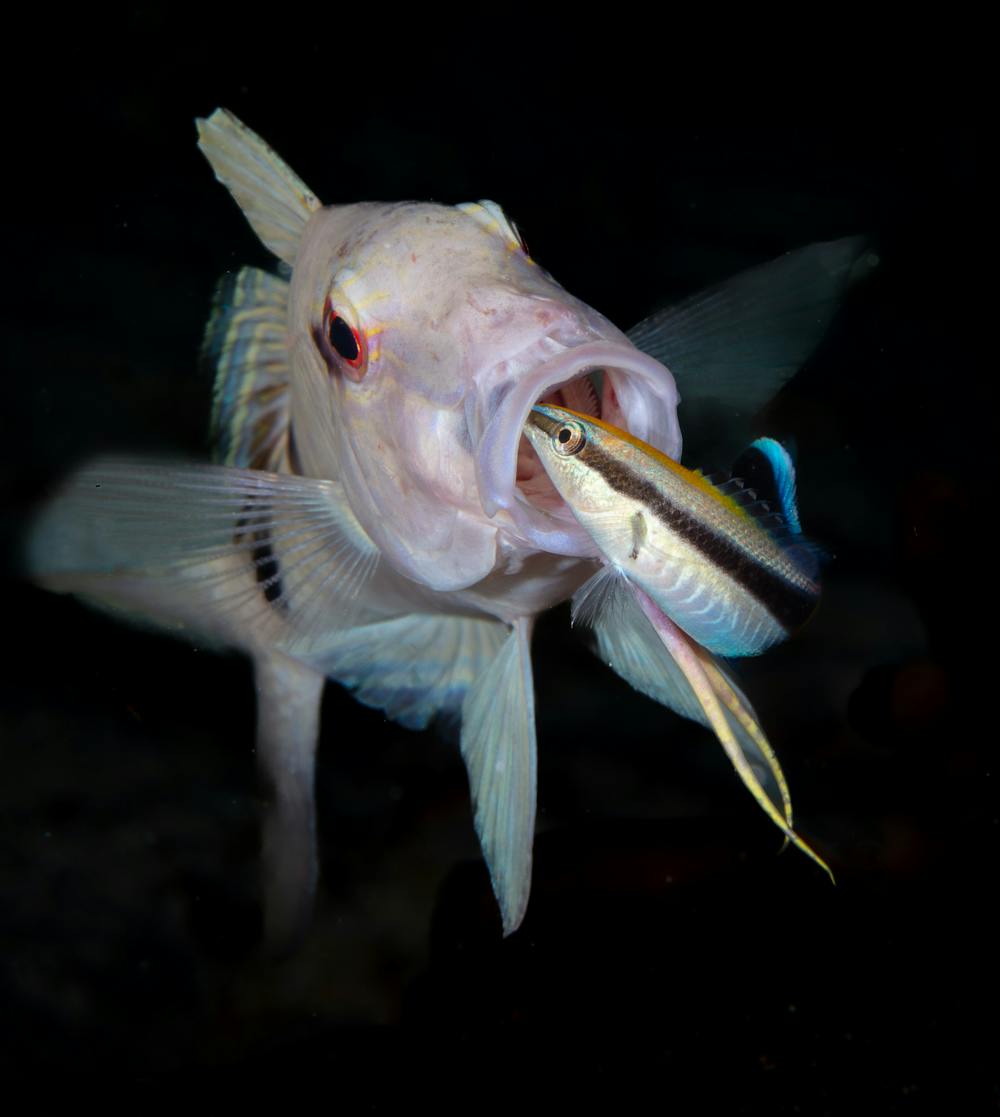
On the Great Barrier Reef, bluestreak cleaner wrasse establish “cleaning stations” where larger fish allow the wrasse to feed on dead skin, loose scales and invertebrate parasites living in their gills. This relationship is a classic mutualism – the larger fish lose costly parasites and the cleaner wrasse get fed.
Sometimes the cleaner wrasse “cheat” and nip their hosts, tipping the scale from mutualism to parasitism. The fish being cleaned may punish offenders by chasing them away or withholding further visits. In this, the reef fish exhibit something evolutionary biologists see as important to keeping mutualisms in balance: policing.
Could we adequately police our exploitation by smartphones and restore a net-beneficial relationship?
Evolution shows that two things are key: an ability to detect exploitation when it occurs, and the capacity to respond (typically by withdrawing service to the parasite).
A difficult battle
In the case of the smartphone, we can’t easily detect the exploitation. Tech companies that design the various features and algorithms to keep you picking up your phone aren’t advertising this behaviour.
But even if you’re aware of the exploitative nature of smartphone apps, responding is also more difficult than simply putting the phone down.
Many of us have become reliant on smartphones for everyday tasks. Rather than remembering facts, we offload the task to digital devices – for some people, this can change their cognition and memory.
Governments and companies have only further cemented our dependence on our phones, by moving their service delivery online via mobile apps. Once we pick up the phone to access our bank accounts or access government services, we’ve lost the battle.
How then can users redress the imbalanced relationship with their phones, turning the parasitic relationship back to a mutualistic one?
Our analysis suggests individual choice can’t reliably get users there. We are individually outgunned by the massive information advantage tech companies hold in the host-parasite arms race.
The Australian government’s under-age social media ban is an example of the kind of collective action required to limit what these parasites can legally do. To win the battle, we will also need restrictions on app features known to be addictive, and on the collection and sale of our personal data.
Rob Brooks receives funding from the Australian Research Council.
Rachael L. Brown does not work for, consult, own shares in or receive funding from any company or organisation that would benefit from this article, and has disclosed no relevant affiliations beyond their academic appointment.
Source: United States House of Representatives – Congressman Jeff Van Drew (NJ02)
Washington, DC –Today, Congressman Van Drew discussed the passage of H.R. 1, the budget reconciliation.
“This morning, House Republicans passed the budget reconciliation package,” said Congressman Van Drew. “I want to make it clear that in this bill there are NO cuts to Medicaid, Medicare, or Social Security for the people these programs were designed to serve. I have been deeply disturbed by the misinformation the left has been circulating surrounding this bill, so I wanted to take the opportunity to give you a breakdown of what is being said versus what is actually true.”
Medicaid-
FICTION: Millions of eligible Americans will lose their coverage.
FACT: Medicaid for eligible individuals remains fully funded and protected.
Children, seniors, the disabled, pregnant women, and working families remain fully protected.
The bill ends loopholes that allow illegal immigrants to access Medicaid.
The bill enacts work requirements for able-bodied adults without dependents—20 hours a week of work/volunteer requirements, including online courses.
The estimate of eligible Americans losing coverage comes from a Congressional Budget Office (CBO) projection which assumes no compliance with these work requirements over 10 years which is just not realistic.
Medicare-
FICTION: Medicare is being slashed by $500 billion.
FACT: Medicare remains untouched, unharmed, and fully funded.
The $500 billion figure comes from a technical scoring mechanism, not from any policy that is actually in the bill. There will be no cuts.
House Republicans are already preparing a waiver to the mechanism so no Medicare cuts will ever take effect under this bill.
Social Security-
FICTION: This bill cuts Social Security benefits.
FACT: There are no changes to eligibility, benefits, or payment schedules.
Not one line of the bill touches Social Security at all.
The bill even includes a $4,000 tax deduction for individuals over 65, offering relief to our seniors.
Some may be curious why ‘No Tax on Social Security’ was not included:
A Senate rule, the Byrd rule, prohibits non-budgetary items like Social Security changes from being included in a reconciliation bill to ensure that reconciliation legislation focuses strictly on budget-related changes.
In light of this, I recently introduced H.R. 904, the No Tax on Social Security Act, which would provide much-needed relief for our seniors. I will not give up on this fight to stop taxing Social Security benefits. We need to get this done.
Supplemental Nutrition Assistance Program (SNAP)-
FICTION: SNAP benefits are being slashed.
FACT: SNAP remains fully funded and intact under the legislation.
Vulnerable Americans, including children, the elderly, and individuals with disabilities, will not see a reduction in access to SNAP benefits.
The reforms apply only to able-bodied adults without dependents and are aimed at increasing accountability.
The reforms focus solely on reducing administrative costs, not cutting benefits.
The legislation rebalances the cost-sharing structure between the federal government and the states to improve oversight, reduce fraud, ensure benefits go only to eligible recipients, and protect the long-term sustainability of the program.
States with high payment error rates exceeding 10% will now have to share in the cost of those administrative errors, ensuring that the money is not wasted and that it is actually going to the people who deserve and need it.
“I do want to note the version the House voted on is not the final version of the bill. There will be changes as it now moves to the Senate before final passage and signature into law,” Congressman Van Drew continued. “I have been heavily involved in negotiations for the House version of this bill, and I will continue to closely monitor the bill as changes are made in the Senate to ensure there are no cuts to the programs our people rely on. I have said it before, and I will say it again: we owe it to hardworking American families to ensure these vital programs remain strong and funded.”
Other Key Provisions of the Bill Include:
Locking in the 2017 Trump tax cuts to prevent a 22% tax increase on working families
Eliminating federal taxes on tips, overtime pay, and car loan interest
Repealing Biden’s Green New Deal mandates, EV rules, and environmental slush funds
Resuming oil and gas leasing on federal lands and streamlining energy permitting
Investing over $140 billion in border security—the largest investment in U.S. history
Completing the border wall and enabling over 1 million deportations annually
Hiring 10,000 new ICE personnel and expanding detention capacity to 100,000 beds
Modernizing national defense with nearly $144 billion in military investments
Achieving over $1.5 trillion in net deficit reduction—the largest in nearly 30 years
Source: United States House of Representatives – Congresswoman Alexandria Ocasio-Cortez (D-NY)
Washington, D.C.– Representative Alexandria Ocasio-Cortez (NY-14)alongside Representative Laurel Lee (FL-15), Senator Richard J. Durbin (D-IL)and Senator Lindsey Graham (R-SC), reintroduced the Disrupt Explicit Forged Images and Non-Consensual Edits Act (DEFIANCE Act), bipartisan legislation that would grant survivors the right to take civil action against individuals who knowingly produce, distribute, solicit and receive or possess with the intent to distribute nonconsensual sexually-explicit digital forgeries, building on progress made by the passage of the TAKE IT DOWN Act signed into law earlier this week.
“We are reintroducing the DEFIANCE Act to grant survivors and victims of nonconsensual deepfake pornography the legal right to pursue justice,” said Representative Alexandria Ocasio-Cortez. “I am proud to lead this legislation with Representative Lee, and Senators Durbin and Graham to provide victims with the federal protections they deserve.”
“I am proud to co-lead the bipartisan DEFIANCE Act, which gives victims a civil right of action when predators attempt to use exploitative AI-generated intimate images—so-called deepfakes—to intimidate, shame, or harm them,” said Representative Laurel Lee.We’ve seen stories across the country of women and girls as young as 12 years old victimized by this new and growing form of sexual violence. The time for action is now. This legislation will complement the TAKE IT DOWN Act, which was recently signed into law. Together, they both create both accountability and recourse. I am grateful for my colleagues’ work on these issues, and look forward to moving this bill through Committee.”
“Sexually-explicit ‘deepfake’ content is often used to exploit and harass women and girls, and no one should have their privacy and autonomy violated by someone else generating explicit AI-generated content of them,” saidSenator Durbin. “Although the imagery may be fake, the harm to the victims is very real. Victims have lost their jobs, their reputations, and many have suffered from life-altering depression or anxiety. By introducing the DEFIANCE Act, we’re giving power back to the victims; cracking down on the production, receipt, distribution, and possession of ‘deepfake’ images; and holding those responsible for the images accountable.”
Last summer, the Senate unanimously passed the DEFIANCE Act of 2024 to give survivors of digital abuse and exploitation the tools they need to seek justice.
The full bill text is available here.
The DEFIANCE Actis led by U.S. Senate Democratic Whip Dick Durbin (D-IL), U.S. Senator Lindsey Graham (R-SC), and U.S. Senators Amy Klobuchar (D-MN), Angus King (I-ME), Mike Lee (R-UT), Martin Heinrich (D-NV), and Peter Welch (D-VT), In the House, the legislation is co-sponsored by Representatives by Kat Cammack (FL-03), Chris Deluzio (PA-17), Debbie Dingell (MI-12), Mike Lawler (NY-17), Ted Lieu (CA-36), Nancy Mace (SC-06), Max Miller (OH-07), Brittany Pettersen (CO-07), Jamie Raskin (MD-8), and Jeff Van Drew (NJ-02).
The legislation is endorsed by the National Women’s Law Center, National Center on Sexual Exploitation (NCOSE), Raven, Public Citizen, Sexual Violence Prevention Association, Democratic Women’s Caucus, UltraViolet, Joyful Heart Foundation, My Image My Choice, Reclaim Coalition, SIECUS: Sex Ed for Social Change, American Association of University Women (AAUW), End Rape on Campus, Foundation Ra, Explain the Asterisk, Protect America’s Daughters, Sexual Assault Response Coalition (SARC), Students Against Sexual Assault, What Were You Wearing, Rooting Movements, Recognize Violence, Change Culture (RVCC), and Street Grace.
“As a survivor of deepfake pornography, I know the trauma of having your body and identity manipulated and weaponized. It is a violation that leaves you feeling powerless. The DEFIANCE Act changes that. It empowers victims to seek justice through a civil right of action, finally giving us a path to hold perpetrators accountable. With the number of deepfakes doubling every six months—and over 98% of them being pornographic—we are in a crisis. This bipartisan bill addresses the creation, distribution, and solicitation of nonconsensual deepfake pornography. It’s not just necessary—it’s urgent. Survivors deserve justice. Congress must act swiftly to pass the DEFIANCE Act and take a meaningful stand against digital sexual violence.” – Omny Miranda Martone, Founder & CEO of the Sexual Violence Prevention Association (SVPA)
“Survivors of image-based sexual abuse deserve a clear path to civil justice,” said Stefan Turkheimer, VP of Public Policy at RAINN, the nation’s largest anti-sexual violence organization. “The DEFIANCE Act is the right solution — and now is the right time to build on the growing momentum to ensure survivors have real power to hold offenders accountable, including the ability to pursue civil remedies against those who use AI to create and spread sexually explicit images meant to cause harm.”
Source: People’s Republic of China – State Council News
Experts from Shanghai Ocean University provide training for Cambodian farmers in Takeo province, Cambodia on May 31, 2025. [Photo/Xinhua]
Cambodian farmer Min Chhon, 57, has experienced significant improvement in his family’s livelihoods after having received technical training and on-site guidance on rice-prawn farming from Shanghai Ocean University experts.
Chhon said he grew only rice on his land of nearly two hectares, which yielded about six tons per annum, before the launch of projects of “Rice-Fish Farming Technology Cooperation and Poverty Alleviation Through Aquaculture in Lancang-Mekong Countries” and “Cambodian Smart Fisheries PILOT Project” carried out by the Shanghai Ocean University and Foreign Economic Cooperation Center (FECC) of China’s Ministry of Agriculture and Rural Affairs.
“But since the launch of the projects, I have raised giant freshwater prawns in the rice fields, which yields around one ton of prawns in each harvest,” the father with three children told Xinhua on Saturday.
“Before the technique of prawn farming were introduced, we only planted rice and earned a very limited income, but after we did rice-prawns farming in rice fields, we got much wealthier,” he said. “The yields from the rice-prawn farming are highly satisfactory.”
Chhon is among dozens of farmers in southern Takeo province, who have been trained by Chinese experts from the Shanghai Ocean University and FECC in collaboration with the Fisheries Administration of Cambodia’s Ministry of Agriculture, Forestry and Fisheries.
Through the projects, the Chinese experts have provided Cambodian farmers with technical guidance and new technologies to boost prawn production in rice paddies and other aquaculture settings.
Farmers have also been taught to use drones to distribute feed in rice fields and aquaculture ponds effectively.
“Chinese experts have helped us, including juvenile nursery, donating feeds, juveniles, some equipment and technical manuals, delivering techniques, and others,” Chhon said.” These two projects have helped improve my family’s livelihoods significantly.”
Experts from Shanghai Ocean University provide training for Cambodian farmers to use drones to distribute feed in rice fields and aquaculture ponds in Takeo province, Cambodia on May 31, 2025. [Photo/Xinhua]
Launched in January 2024 and will last till 2027, the projects are part of the Cambodia-China “Fish and Rice Corridor” cooperation, which has been established to accelerate agricultural modernization, to ensure food and nutrition security, and to increase incomes for rural farmers in Cambodia.
Also, the projects will help more farmers get rid of poverty, and promote the sustainable development of Cambodian agriculture and rural areas.
On Saturday, a team of experts from the Shanghai Ocean University visited the project sites and provided technical guidance to farmers in Chrey Ngor village of Bourei Cholsar district in Takeo province.
Wu Xugan, a professor in aquaculture at Shanghai Ocean University, said the “rice-fish co-culture project” has provided technical and technological knowledge to farmers, helping them increase fish or prawn yields, which will not only boost their incomes, but also ensure nutrition and food security.
“The rice-fish co-culture project is very important because rice and fish are two major foods for the Cambodian people,” he told Xinhua during the visit to a rice-prawn farm.
“When we do the rice-fish co-culture, it has multiple benefits for both rice and fish. For example, we feed prawns, and the prawns will produce ammonia and manure, which are the fertilizers for rice,” he added.
Also, he said, prawns will eat the pests that are harmful to rice paddies.
Wu said the project has developed two rice-fish farming models, namely rice-giant freshwater prawn co-culture and rice-giant freshwater prawn rotation, and large-size prawn seedling cultivation technology.
Thay Somony, director of the Department of Aquaculture Development at the Fisheries Administration of Cambodia’s Ministry of Agriculture, Forestry and Fisheries, said that through the project, Chinese experts have trained Cambodian farmers on ecosystem service analysis, biodiversity conservation, climate adaptation strategies, and the digitalization of prawn nursing.
“By adopting innovative practices such as rice-fish co-culture and digital prawn nursery, farmers can increase productivity while minimizing environmental impacts, leading to improved food security and enhanced economic resilience,” he told Xinhua in a recent interview.
“The integration of diverse farming systems enables farmers to diversify their income sources, reducing their vulnerability to economic shocks and improving their overall livelihoods,” he added.
The Northern Territory government recently announced the Dolphins, the NRL’s newest team that entered the league in 2023, would play a home game at TIO Stadium in Darwin every year from 2026 to 2028.
The Dolphins deal replaces a 12-year partnership between the NT and the Parramatta Eels, which ran from 2014 to 2025.
The NRL announcement came soon after the AFL’s Gold Coast played two “home” games at TIO Stadium during Sir Doug Nicholls Round, which is dedicated to Indigenous players, cultures and communities.
Looking ahead, Darwin will be the only capital city in Australia without an AFL or NRL team when the Tasmania Devils join the AFL in 2028 as its 19th team. The NT is, however, pushing hard to join as the AFL’s 20th club.
So, as the NRL dips its toes into the NT, will the AFL look to defend its territory?
The case for an AFL team in the NT
The “footy case” for a standalone NT team is strong: the Territory has produced rich reservoirs of football talent from Alice Springs to the Arafura Sea, with stars such as Michael Long, the Rioli family (Maurice Snr, Cyril, Dean, Daniel, Willie and Maurice Jnr) and Andrew McLeod dominating games and delighting fans.
According to James Coventry’s book Footballistics, the NT shines in terms of participation rates. Only about 250,000 people live in the Top End, but more than 13% participate in Aussie rules programs compared to 8% in Western Australia, 6% in South Australia and 2% in Victoria. In terms of girls and women, the Territory boasts the highest Aussie rules participation rate in the country.
The NT has traditionally been a strong source of AFL draftees, producing more per capita than any other state or territory except for Victoria and South Australia. Around 10% of AFL players are Indigenous, with many emanating from the NT.
But in recent years, Indigenous numbers have declined. In 2024, 70 men and 21 women players identified as Aboriginal and/or Torres Strait Islander – a decrease of 17% since 2020.
An NT team would surely be a boon for Indigenous players who want to stay local.
In the NRL, about 12% of players identify as Indigenous, although only a handful come from the NT.
How would an AFL team look?
The Territory AFL Team Taskforce, in its strategic business case for the 20th licence, has examined a number of options.
These include current AFL clubs playing more matches in Darwin and Alice Springs, a relocated club, or a Darwin-based standalone NT team that also plays in Alice Springs.
The taskforce has also considered a northern Australia team (Darwin based but also playing in Cairns), although that is a less likely option at this stage given it would be hard to have two home grounds so far apart, along with the need to play some games in Alice Springs.
The NT plan also includes an AFLW team and possibly a reserves team in second tier competitions such as the Victorian Football League (VFL) or maybe even the South Australian National Football League (SANFL) or West Australian Football League (WAFL).
Of course, that’s the footy case. The economic case is much more complex.
Dollars and cents
A standalone NT team would need significant financial assistance from the AFL and governments to be successful.
Even with a significant AFL contribution of A$7.83 million per year, the taskforce forecasted an NT club would need the federal and NT government to fund an operation funding gap of $18.89 million annually.
This would include a new or upgraded stadium, which would “anchor the opportunity to bid for a 20th licence,” according to AFL NT chairman Sean Bowden.
The economic benefit to the NT could be as much as $559 million if the new club was provided with a new stadium. An AFL team would create 160 full-time jobs, bring game day activation of the economy and add $116 million a year in economic output to the Territory economy.
Other considerations
Hand in hand with the economic benefits come the social impacts.
The taskforce has committed to develop pathways for elite AFL and AFLW footballers and also create a safety net of social programs for all Territorians under the umbrella of the NT AFL team.
The taskforce stated having elite pro sports teams could inspire Indigenous children, particularly in remote communities.
A big decision to make
As the NRL continues to make its presence felt in the NT, the AFL faces a big decision as the Territory pushes for a standalone team.
The prospect of Australia’s only indigenous game boasting teams from Tasmania to the Top End, and from the east coast to the west coast in every capital city, would no doubt warm the hearts of all football supporters.
It might also be too much for the AFL, as custodians of the great Australian game, to resist.
Tim Harcourt does not work for, consult, own shares in or receive funding from any company or organisation that would benefit from this article, and has disclosed no relevant affiliations beyond their academic appointment.
Source: The Conversation (Au and NZ) – By Rachael L. Brown, Director of the Centre for Philosophy of the Sciences and Associate Professor of Philosophy, Australian National University
vchal/shutterstock, The Conversation
Head lice, fleas and tapeworms have been humanity’s companions throughout our evolutionary history. Yet, the greatest parasite of the modern age is no blood-sucking invertebrate. It is sleek, glass-fronted and addictive by design. Its host? Every human on Earth with a wifi signal.
Far from being benign tools, smartphones parasitise our time, our attention and our personal information, all in the interests of technology companies and their advertisers.
In a new article in the Australasian Journal of Philosophy, we argue smartphones pose unique societal risks, which come into sharp focus when viewed through the lens of parasitism.
What, exactly, is a parasite?
Evolutionary biologists define a parasite as a species that benefits from a close relationship with another species – its host – while the host bears a cost.
The head louse, for example, is entirely dependent on our own species for its survival. They only eat human blood, and if they become dislodged from their host, they survive only briefly unless they are fortunate enough to fall onto another human scalp. In return for our blood, head lice give us nothing but a nasty itch; that’s the cost.
Smartphones have radically changed our lives. From navigating cities to managing chronic health diseases such as diabetes, these pocket-sized bits of tech make our lives easier. So much so that most of us are rarely without them.
Yet, despite their benefits, many of us are hostage to our phones and slaves to the endless scroll, unable to fully disconnect. Phone users are paying the price with a lack of sleep, weaker offline relationships and mood disorders.
From mutualism to parasitism
Not all close species relationships are parasitic. Many organisms that live on or inside us are beneficial.
Consider the bacteria in the digestive tracts of animals. They can only survive and reproduce in the gut of their host species, feeding on nutrients passing through. But they provide benefits to the host, including improved immunity and better digestion. These win-win associations are called mutualisms.
The human-smartphone association began as a mutualism. The technology proved useful to humans for staying in touch, navigating via maps and finding useful information.
Philosophers have spoken of this not in terms of mutualism, but rather as phones being an extension of the human mind, like notebooks, maps and other tools.
From these benign origins, however, we argue the relationship has become parasitic. Such a change is not uncommon in nature; a mutualist can evolve to become a parasite, or vice versa.
Smartphones as parasites
As smartphones have become near-indispensible, some of the most popular apps they offer have come to serve the interests of the app-making companies and their advertisers more faithfully than those of their human users.
These apps are designed to nudge our behaviour to keep us scrolling, clicking on advertising and simmering in perpetual outrage.
The data on our scrolling behaviour is used to further that exploitation. Your phone only cares about your personal fitness goals or desire to spend more quality time with your kids to the extent that it uses this information to tailor itself to better capture your attention.
So, it can be useful to think of users and their phones as akin to hosts and their parasites – at least some of the time.
While this realisation is interesting in and of itself, the benefit of viewing smartphones through the evolutionary lens of parasitism comes into its own when considering where the relationship might head next – and how we could thwart these high-tech parasites.
On the Great Barrier Reef, bluestreak cleaner wrasse establish “cleaning stations” where larger fish allow the wrasse to feed on dead skin, loose scales and invertebrate parasites living in their gills. This relationship is a classic mutualism – the larger fish lose costly parasites and the cleaner wrasse get fed.
Sometimes the cleaner wrasse “cheat” and nip their hosts, tipping the scale from mutualism to parasitism. The fish being cleaned may punish offenders by chasing them away or withholding further visits. In this, the reef fish exhibit something evolutionary biologists see as important to keeping mutualisms in balance: policing.
Could we adequately police our exploitation by smartphones and restore a net-beneficial relationship?
Evolution shows that two things are key: an ability to detect exploitation when it occurs, and the capacity to respond (typically by withdrawing service to the parasite).
A difficult battle
In the case of the smartphone, we can’t easily detect the exploitation. Tech companies that design the various features and algorithms to keep you picking up your phone aren’t advertising this behaviour.
But even if you’re aware of the exploitative nature of smartphone apps, responding is also more difficult than simply putting the phone down.
Many of us have become reliant on smartphones for everyday tasks. Rather than remembering facts, we offload the task to digital devices – for some people, this can change their cognition and memory.
Governments and companies have only further cemented our dependence on our phones, by moving their service delivery online via mobile apps. Once we pick up the phone to access our bank accounts or access government services, we’ve lost the battle.
How then can users redress the imbalanced relationship with their phones, turning the parasitic relationship back to a mutualistic one?
Our analysis suggests individual choice can’t reliably get users there. We are individually outgunned by the massive information advantage tech companies hold in the host-parasite arms race.
The Australian government’s under-age social media ban is an example of the kind of collective action required to limit what these parasites can legally do. To win the battle, we will also need restrictions on app features known to be addictive, and on the collection and sale of our personal data.
Rob Brooks receives funding from the Australian Research Council.
Rachael L. Brown does not work for, consult, own shares in or receive funding from any company or organisation that would benefit from this article, and has disclosed no relevant affiliations beyond their academic appointment.
Source: Government of the Russian Federation – An important disclaimer is at the bottom of this article.
At the “Movement of the First” festival at VDNKh, Deputy Prime Minister Dmitry Chernyshenko congratulated the participants on Children’s Day, discussed their projects with schoolchildren, greeted the “Eaglets of Russia” and assessed the work of the sports zone.
A presentation of four socially significant projects by Russian high school students took place in the lecture hall of the Znanie Society. The discussion was also attended by the general director of the Znanie Society, Maxim Dreval.
“Friends, you have a huge number of paths, but even more opportunities, because President Vladimir Vladimirovich Putin gave us an order – this is a whole national goal: to create conditions for the realization of opportunities, the disclosure of your talents. Today we have gathered here to consider some of the projects that you are doing. All of them are very interesting and deserve that we listen to them together. We will definitely think about how to support the most successful projects,” said Dmitry Chernyshenko.
A student of Lyceum No. 1 of the Krasnoarmeysky District of Volgograd, finalist of the All-Russian competition “Knowledge. Lecturer” Alesya Zhuk presented the project “Made with Care in Russia”. Its mission is to promote the preservation and popularization of traditional folk crafts and trades. The idea is aimed at creating an all-Russian database of artisans and an interactive map of the origin of crafts.
Dmitry Chernyshenko said that it is important to decide within the framework of what large event to hold such a festival of traditional crafts, to think through the mechanics and program.
A student of Bauman Engineering School No. 1580 in Shatura, Alexandra Zhelnova, and a student of Moscow School No. 727, Margarita Starostina, presented the project “Pro podderzhki” – a service for supporting teenagers and their parents. The high school students want to create a tool that will distract children from the negative influence of the Internet, direct them to development and creativity, and help parents improve their relationships with their children.
The Deputy Prime Minister drew attention to the importance of ensuring the protection of personal data, the anonymity of users, and also recommended adding functionality with the ability to find activities to one’s liking.
Muscovite Daniil Makatrov, a student at the Classical Boarding School of Moscow State University named after M.V. Lomonosov, spoke about smart sensors for sports analytics using artificial intelligence – YouChip. The product significantly increases the efficiency of players and coaches, reduces the number of errors and speeds up decision-making by members of a sports club. The creator of the project is confident that the solution is applicable in any game sport, and the technology will be useful in industry, logistics, and other areas.
Dmitry Chernyshenko gave recommendations on the commercialization of the project and noted that he would instruct the Ministry of Sports to consider the possibility of subsidizing in order to make the technology accessible to schools.
Maria Aleksandrova, a student of the V. M. Komarov School with Advanced Study of English in Zvezdny Gorodok, Moscow Region, a finalist of the All-Russian competition “Knowledge. Lecturer”, presented the “Promkod” project. This is a new tourist platform for schoolchildren, parents and teachers, where enterprises from 13 industrial sectors will be presented, available for school excursions.
The Deputy Prime Minister spoke about the federal project “Professionality” and announced plans to give its partner companies the opportunity to become familiar with the “Promcode”.
The Deputy Prime Minister emphasized the depth and professional level of the projects’ preparation: “It turned out that you are helping to implement the President’s order, for which a separate national project “Youth and Children” was created. Thank you very much!”
In addition, at the “Movement of the First” festival, Dmitry Chernyshenko congratulated the “Orlyat Rossii” on Children’s Day and joining the “Movement of the First”:
“Now you will always be first! Thanks to our President, you have a huge number of opportunities to realize your talents. And we will try to make it happen for you.”
Together with the deputy chairman of the board of the “Movement of the First”, Olympic champion Nikita Nagorny, the deputy prime minister assessed the sports zone, including phygital. Thus, the festival hosts the sites of the “Healthy Fatherland” movement, the Spartak football club, the Rugby Sports Federation, the Drone Racing Federation, the Gymnastics Federation and the Boxing Federation.
Please note: This information is raw content directly from the source of the information. It is exactly what the source states and does not reflect the position of MIL-OSI or its clients.
Source: Government of the Russian Federation – An important disclaimer is at the bottom of this article.
Dmitry Chernyshenko held another meeting of the Presidium of the Commission for Scientific and Technological Development of Russia
May 31, 2025
Dmitry Chernyshenko held another meeting of the Presidium of the Commission for Scientific and Technological Development of Russia
May 31, 2025
Previous news Next news
Dmitry Chernyshenko held another meeting of the Presidium of the Commission for Scientific and Technological Development of Russia
Deputy Prime Minister Dmitry Chernyshenko held a regular meeting of the Presidium of the Commission for Scientific and Technological Development of Russia, at which confirmed the winners competitive selection for the provision of grants to world-class research centers (WRC).
The meeting was attended by the Minister of Science and Higher Education Valery Falkov, the President of the Russian Academy of Sciences Gennady Krasnikov, the First Deputy Minister of Economic Development Maxim Kolesnikov, the Deputy Minister of Finance Pavel Kadochnikov, and representatives of scientific and educational organizations.
“Based on the results of the competition, 10 NCMUs were selected. Their activities will be aimed at developing and introducing into the economy the most important science-intensive technologies defined by the decree of President Vladimir Putin. The size of the subsidy for each of the selected world-class scientific centers will be up to 320 million rubles annually,” Dmitry Chernyshenko emphasized.
The Deputy Prime Minister also noted that the commission’s scientific and technical council provided expertise for all applications received, and thanked its head Gennady Krasnikov for the work he had done.
The head of the Ministry of Education and Science, Valery Falkov, reported that applications were received for the competitive selection in all seven priority areas of scientific and technological development approved by the head of state.
“In the future, it is planned to assign selected scientific centers to industry federal executive bodies. This will ensure the closest possible interaction between the parties,” the minister noted.
“Last year, in accordance with the Decree of the President of the Russian Federation of June 18, 2024, seven priority areas of scientific and technological development of our country were approved. In this regard, when considering applications, the scientific and technical council of the commission and the Russian Academy of Sciences proceeded from the fact that each priority area should correspond to at least one world-class scientific center. In total, we considered 46 applications,” said RAS President Gennady Krasnikov.
Grants in the form of subsidies from the federal budget for the creation of the NCMU will be provided to 10 winning centers:
— World-class scientific center IT SB RAS “Thermophysics and Power Engineering” (S.S. Kutateladze Institute of Thermal Physics SB RAS),
— World-class scientific center “New materials for special purposes” (Tomsk State University),
— Center for Cybernetic Medicine and Neuroprosthetics (Federal Center for Brain and Neurotechnology FMBA),
— Center for Modern Breeding of Agricultural Plants (Federal Scientific Center for Vegetable Growing),
— World-class scientific center “Agroengineering of the Future” (Stavropol State Agrarian University),
— Center for Advanced Microelectronics (Moscow Institute of Physics and Technology),
— “Electronic and quantum technologies based on synthetic diamond” (NRNU MEPhI),
— “Intelligent unmanned aircraft systems” (Samara National Research University named after academician S.P. Korolev),
— Center for Rational Use of Rare Metal Raw Materials (A.N. Frumkin Institute of Physical Chemistry and Electrochemistry of the Russian Academy of Sciences),
— World-class scientific center “High-tech bioeconomics” (National Research Center “Kurchatov Institute”).
The size of the grants is determined by the development program of each center, which is formed for a period of at least six years.
Let us recall that the first world-class scientific centers were created in 2020 as part of the national project “Science and Universities”, the implementation of which was completed last year. On the instructions of President Vladimir Putin, a new stage of development of the centers will be implemented as part of the state program “Scientific and Technological Development of the Russian Federation”.
Please note: This information is raw content directly from the source of the information. It is exactly what the source states and does not reflect the position of MIL-OSI or its clients.
LOS ANGELES, June 01, 2025 (GLOBE NEWSWIRE) — As global temperatures continue to rise and daily comfort becomes a growing concern, TORRAS is making waves with its innovative Coolify series—a wearable air conditioner engineered to deliver rapid, personal cooling through cutting-edge semiconductor technology. But beyond its impressive specs and sleek aesthetics, Coolify is also gaining recognition for another powerful role: providing much-needed relief to women experiencing hot flashes and hormonal imbalances, especially during menopause.
TORRAS, a technology brand known for blending innovation with lifestyle-driven solutions, believes that technology should serve real human needs, and Coolify is a perfect reflection of that mission.
A Breakthrough in Personal Cooling Technology
Coolify isn’t just another neck fan—it’s a wearable air conditioning system designed for next-generation, body-centered comfort. At its core lies an advanced semiconductor cooling plate embedded within the collar, capable of dropping the skin temperature on the neck by up to 18°F (10°C) within just 3 seconds. Unlike traditional fans that simply circulate ambient air, Coolify creates a genuine cooling effect that users can feel immediately.
Engineered with ergonomics in mind, Coolify fits snugly around the neck and targets the sides and back of the neck—areas rich in arteries that play a crucial role in regulating core body temperature. By focusing cooling power on these critical zones, the device ensures rapid and efficient heat relief without compromising comfort.
Additional features include:
Three-speed smart temperature controls for customizable comfort 8-hour battery life for all-day usability Ultra-quiet operation for discreet use in workspaces, social settings, or while sleeping Lightweight and travel-friendly design with a stylish, minimalist look that complements any outfit
With its combination of advanced engineering and sleek design, Coolify has quickly become a favorite among tech-savvy consumers and outdoor enthusiasts alike. But some of its most impactful use cases come from a group that isn’t always the center of tech innovation: women in midlife.
Supporting Women’s Health: A Lifesaver for Hot Flashes and Hormonal Spikes
For women going through menopause, hot flashes are among the most common and disruptive symptoms. Sudden spikes in body temperature, facial flushing, sweating, and anxiety can make everyday life—whether at home, work, or out in public—uncomfortable and overwhelming. Traditional solutions like hormone therapy or cooling gels are either invasive or short-lived.
This is where Coolify is quietly changing lives.
Through direct customer feedback, TORRAS has discovered that a significant portion of Coolify users are women managing menopause-related symptoms. One user shared: “I was waking up drenched and exhausted every night. Coolify changed that. I wear it before bed, and I finally sleep through the night.”
Another wrote: “It’s discreet and stylish—I can wear it in the office or on walks without drawing attention. Most importantly, I feel like I have control over my body again.”
Because the neck houses multiple arteries that influence body temperature, cooling this area directly helps reduce hot flash intensity and duration. Unlike fans or ice packs, Coolify is hands-free, consistent, and wearable throughout the day or night.
By offering a non-invasive, drug-free, and dignified solution for a problem that affects millions of women, TORRAS is proud to be supporting a demographic often overlooked in the tech innovation space.
Everyday Comfort, Anywhere and Everywhere
While its impact on women’s wellness is significant, Coolify was also designed for a wide range of everyday scenarios, making it a multi-purpose companion for the modern lifestyle.
1. Daily Commutes & Urban Life Subways, buses, traffic-filled streets—urban environments can feel stifling in the summer. Coolify ensures personal climate control with a simple press of a button, making rush hour more bearable and sweat-free. 2. Travel & Theme Parks From family vacations to amusement parks like Disney, Coolify has been praised as the ultimate travel essential. A recent user blog even hailed it as the “best neck fan for Disney,” helping visitors beat the heat while enjoying outdoor attractions. 3. Outdoor Adventures Whether hiking, biking, or camping, Coolify is a powerful yet compact cooling device for those who love the outdoors. With no external fans to hold and no cords to manage, it allows full freedom of movement while keeping body temperature in check. 4. Office & Remote Work Environments In offices where thermostats can’t be adjusted or in shared workspaces, Coolify provides personalized cooling without disturbing colleagues. Its low-noise operation makes it perfect for Zoom calls, deep focus sessions, and quiet rooms. 5. Nighttime Use & Sleep Quality Some users incorporate Coolify into their nighttime routine, using it before sleep or even throughout the night to prevent heat spikes, leading to better rest and reduced sleep disturbances.
Tech with Purpose: TORRAS’s Vision for Human-Centered Innovation
More than a cooling gadget, Coolify represents a new frontier of wearable wellness tech. By marrying scientific design with empathy for daily challenges—like menopausal discomfort, urban heat stress, and the need for discreet comfort—TORRAS has crafted a product that is both technically advanced and emotionally intelligent.
“We didn’t just want to create a product that cools the skin,” says a spokesperson for TORRAS. “We wanted to create a product that elevates how people feel, improves their day-to-day lives, and empowers them to move freely, comfortably, and confidently—no matter the temperature or stage of life.”
As TORRAS continues to expand its innovation pipeline, the company remains committed to addressing real human needs with high-performance, beautifully designed solutions. Whether you’re managing hormonal transitions, chasing your kids through a summer park, or just trying to stay cool on the subway, Coolify is here to offer a smarter, kinder, cooler experience.
About TORRAS TORRAS is a global lifestyle technology brand dedicated to enhancing everyday life through smart, human-centric design. From award-winning smartphone accessories to cutting-edge wearable devices, TORRAS blends function and form to create thoughtful solutions for modern living.
Source: United Kingdom – Executive Government & Departments
A conference abstract presented at NUTRITION 2025 looks at the effect of nanoplastic consumption on metabolism and liver function in mice.
Prof Oliver Jones, Professor of Chemistry, RMIT University, said:
“While we only have the press release and abstract to go on, the keywords are ‘in mice’. Mice are not mini-humans; we can’t assume the result would automatically translate to humans.
“The methods are not clear, but it seems the mice were given 60 mg/kg per day of a solution that was 10% polystyrene (so 6 mg/kg of plastic per kg of body weight per day). It is equivalent to an 80 kg human eating half a gram of plastic per day. This is just not a realistic dose [see 1]. A recent independent review suggests that we ingest only 0.0000006 g of plastic per day [2]. Even then, they likely pass straight out again as the gut wall is relatively thick and well-regulated in humans.
“The mice were also force-fed this diet directly into the stomach for 6-7 weeks before the biochemical analysis was performed. If I were force-fed almost 0.5 grams of plastic a day for 6-7 weeks, I expect I would have some sort of metabolic response, but that would not necessarily be bad in itself, and in any case, this just isn’t what happens in real life.
“The researchers only used one plastic, polystyrene, which is far from the most common plastic found in the environment. However, it is readily available and is often used in such studies, even if it is not the best plastic to use.
“Another issue is that the type of mouse (C57/B6J) used may have problems with glucose metabolism under normal circumstances anyway [3]. Metabolic analyses also only give you an idea of what was happening at the single point in time the sample was taken. We don’t know if the metabolic changes were permanent or went back to normal later.
“The World Health Organisation (WHO) says there is no clear evidence that microplastics pose a threat to human health. Now, this is not the same as saying they are safe, it simply means they feel there is no proof they pose a risk, despite the numerous papers published on microplastics each year.
“I don’t think this study is helpful for human risk assessment. It uses unrealistically high amounts of a plastic, which is not the major type found in the environment, fed to a type of mouse prone to glucose issues, in an unrealistic manner.”
Mohamed Nor N.H., Kooi M., Diepens N.J. & Koelmans A.A. (2021) Lifetime Accumulation of Microplastic in Children and Adults. Environmental Science & Technology 55, 5084-96. https://pubs.acs.org/doi/10.1021/acs.est.0c07384
Freeman H.C., Hugill A., Dear N.T., Ashcroft F.M. & Cox R.D. (2006) Deletion of nicotinamide nucleotide transhydrogenase: a new quantitive trait locus accounting for glucose intolerance in C57BL/6J mice. Diabetes 55, 2153-6.https://diabetesjournals.org/diabetes/article/55/7/2153/14138/Deletion-of-Nicotinamide-Nucleotide”
‘Adverse Effects of Nanoplastics Administration on the Metabolic Profile and Glucose Control in Mice’ is a conference abstractwhich was presented by Amy Parkhurst at NUTRITION 2025. The embargo lifted at 21:45 UK Time, Sunday 1st June 2025.
Declared interests
Prof Oliver Jones: “I am a professor of chemistry at RMIT University in Melbourne. I don’t have any conflicts of interest to declare. However, I do conduct research into environmental pollution, such as microplastics. Sixteen years ago, I worked on a toxicology project funded by the UK Food Standards Agency.”
Source: United Kingdom – Executive Government & Departments
Press release
UK to expand submarine programme in response to Strategic Defence Review
The UK will build up to a dozen new attack submarines to keep Britain safe.
SSN-AUKUS concept image
UK to build up to 12 attack submarines as part of AUKUS programme in response to the rapidly increasing threats
Builds on £15 billion investment set out for the UK’s sovereign nuclear warhead programme, keeping the UK safe for generations to come and delivering on the Plan for Change
Nuclear investments will transform critical parts of the defence nuclear industry, directly supporting 30,000 highly skilled jobs up-and-down the country and the doubling of apprentice and graduate roles across the next ten years.
The Prime Minister will announce tomorrow that the UK’s conventionally armed, nuclear-powered submarine fleet will be significantly expanded, with up to 12 new SSN-AUKUS boats to be built.
The increase in submarines will transform the UK’s submarine building industry and, following the £15 billion investment in the warhead programme outlined, will deliver on this government’s Plan for Change, supporting 30,000 highly skilled jobs up-and-down the country well into the 2030s, as well as helping work to deliver 30,000 apprenticeships and 14,000 graduate roles across the next ten years.
The announcement comes as the government unveils its new Strategic Defence Review tomorrow. The externally-led review is expected to recommend that our Armed Forces move to warfighting readiness to deter the growing threats faced by the UK. The report makes 62 recommendations, which the government is expected to accept in full.
Responding to the report, the government will make significant commitments to its armed forces and deliver greater security for working people through the government’s Plan for Change.
That includes:
A landmark shift in our deterrence and defence: moving to warfighting readiness to deter threats and strengthen security in the Euro Atlantic area;
Increasing stockpiles of munitions and support equipment, ensuring that production capacities can rapidly scale up in response to crises or war;
The procurement of up to 7,000 UK-built long-range weapons for the UK Armed Forces, supporting around 800 defence jobs, and boosting our military capabilities
A new CyberEM Command to put the UK at the forefront of cyber operations, alongside £1bn investment in pioneering digital capability; and
Improving the lives of thousands of British military personnel and their families through more than £1.5 billion of additional funding to repair and renew armed forces housing.
The Prime Minister is expected to say:
From the supply lines to the front lines, this government is foursquare behind the men and women upholding our nation’s freedom and security.
National security is the foundation of my Plan for Change, and this plan will ensure Britain is secure at home and strong abroad, while delivering a defence dividend of well-paid jobs up and down the country.
This Strategic Defence Review will ensure the UK rises to the challenge and our Armed Forces have the equipment they need that keeps us safe at home while driving greater opportunity for our engineers, shipbuilders and technicians of the future.
Alongside the commitment to expand the UK’s conventionally armed attack submarine fleet, the government is securing the future of the Royal Navy’s Continuous At Sea Nuclear Deterrent, backed by a £15 billion investment into the sovereign warhead programme in this parliament and supporting more than 9,000 jobs.
It is the first time the UK has outlined the full scale of its investment plans in its warhead programmes and is further evidence of the Government’s triple lock commitment to the nuclear deterrent: to maintain our continuous at-sea deterrent; to build the new fleet of Dreadnought submarines; and to deliver all future upgrades necessary.
This will see significant modernisation of infrastructure at the Atomic Weapons Establishment (AWE) in Aldermaston and supporting more than 9,000 jobs at the Berkshire site, and thousands more across the UK supply chain – from Scotland to Somerset.
The nuclear warhead programme includes some of the most advanced and sensitive science, engineering and manufacturing facilities in the UK.
Both the UK’s sovereign warhead programme and the UK’s conventionally-armed submarine fleet will make Britain and NATO safe for decades to come.
Defence Secretary John Healey MP said:
Our outstanding submariners patrol 24/7 to keep us and our allies safe, but we know that threats are increasing and we must act decisively to face down Russian aggression.
With new state-of-the-art submarines patrolling international waters and our own nuclear warhead programme on British shores, we are making Britain secure at home and strong abroad, while delivering on our Plan for Change with 30,000 highly-skilled jobs across the country.
Already supporting more than 400,000 skilled British jobs, UK defence is a crucial engine for economic growth, delivering on the government’s Plan for Change – supported by the Government’s historic uplift in defence spending to 2.5% of GDP from 2027, and the ambition to hit 3% in the next parliament, when economic and fiscal conditionals allow.
Currently the UK is set to operate 7 Astute Class attack submarines, which will be replaced with an increased fleet of up to 12 SSN-AUKUS submarines from the late 2030s.
The boost to the SSN-AUKUS programme will see a major expansion of industrial capability at Barrow and Raynesway, Derby, with the build of a new submarine every 18 months in the future.
The increase in capacity at the two sites will allow the UK to increase its fleet to up to 12 attack boats, as part of the AUKUS partnership.
To ensure the demands of this expanded programme can be met, government is working closely with industry partners to rapidly expand training and development opportunities, aiming to double defence and civil nuclear apprentice and graduate intakes. This will result in 30,000 apprenticeships and 14,000 graduate roles over the next ten years.
The SDR calls for significant investment into the UK sovereign warhead programme this parliament, while maintaining the existing stockpile.
Source: United States House of Representatives – Congresswoman Betty McCollum (DFL-Minn)
SAINT PAUL, Minn. — Congresswoman Betty McCollum will host a Medicaid Town Hall on Saturday, May 31st at 11am. She will be joined by a panel of special guests to discuss the importance of Medicaid for Minnesota seniors, children, and working parents.
WHAT: Medicaid Matters to Minnesota Families Town Hall
WHEN: Saturday, May 31st, 2025 at 11am
WHO: Congresswoman Betty McCollum, Dean of the Minnesota Congressional Delegation; John Connolly, Minnesota Department of Human Services, Deputy Commissioner, State Medicaid Director; Barbara Joers, President and CEO Gillette Children’s Hospital; Ryan Hilmoe, Minnesota Nurses Association; Kate Weeks, Assistant Commissioner, Economic Opportunity and Youth Services, Minnesota Department of Children, Youth, and Families; Sumukha Terakanambi, Disability and Healthcare Advocate, Minnesota Governor’s Council on Developmental Disabilities; Jessica Francis, Executive Director, Open Cupboard.
WHERE: Stillwater; Credentialed media will receive location upon RSVP. Editors and Reporters may RSVP by emailing mccollumpress@mail.house.gov with the subject line “Town Hall.”
RSVP: Residents of Minnesota’s Fourth Congressional District can RSVP here.