Category: United States of America

  • MIL-Evening Report: Jet ski accidents are tragic but preventable. Here’s how to reduce the risk

    Source: The Conversation (Au and NZ) – By Milad Haghani, Associate Professor & Principal Fellow in Urban Risk & Resilience, The University of Melbourne

    Richard Hamilton Smith/Getty

    Two teenage boys were thrown from a jet ski during a ride on the Georges River in Sydney’s south this week. One died at the scene. The other lost an arm, and was rushed to hospital in a serious condition.

    The exact cause of the crash is being investigated and a report will be prepared for the coroner.

    Sadly, this tragic incident is not isolated. While fatal jet ski crashes are relatively rare, serious injuries are not.

    Here’s what we know about jet ski accidents, who’s at risk, and how to prevent them.

    Jet skis are now more common

    Jet skis have become a familiar sight on Australian waterways, with sales peaking during the early years of the COVID pandemic. There are now almost 100,000 registered jet skis nationwide.

    So what was once a niche summer thrill has become a more mainstream recreational activity, particularly for young Australians.

    As the number of jet skis on our waterways grows, so too will the risks.

    How often do accidents happen?

    Most jet ski crashes occur in daylight hours, are twice as likely on weekends, and tend to spike during warmer months. Injuries typically happen close to shore (often within 50 metres) where crowded conditions increase the risk of colliding with other vessels, swimmers or fixed obstacles.

    Fatal jet ski accidents in Australia have claimed the lives of riders, passengers, swimmers and kayakers.

    Across New South Wales, Queensland and Victoria, there are up to three deaths per 100,000 licence holders. There are an estimated 19–26 serious injuries per 100,000 licence holders, depending on the state.

    But these figures likely understate the true picture as many non-fatal injuries go unreported unless hospitalised.

    For example, data from research sponsored by the United States Coast Guard suggest that for every moderate injury captured in accident reports, more than 30 actually occur. For every severe injury, it’s likely 1.65 actually occur.

    Who is at risk?

    Global jet ski statistics indicate about 85% of jet ski injuries involve male riders.

    Risk-taking behaviour and being an inexperienced rider are also risk factors, with young adults dominating injury statistics.

    One review found about 60% of jet ski crashes involved the rider drinking alcohol.

    What types of injuries?

    Recreational riders often typically travel at 60–80 kilometres per hour. But these machines can reach speeds above 100km/h. This can generate immense force in the event of a collision.

    In a crash, riders are ejected from the jet ski or collide directly with water, the craft, another vessel or fixed objects. So the leading causes of death and serious injury on jet skis are from these traumatic impacts.

    A study from a US trauma centre looked at 127 people injured in jet ski incidents and found most injuries involved broken bones. The legs were most commonly affected, followed by arms, spine and hips.

    Hitting the handlebars was a major cause of open fractures (when a broken bone pierces the skin), some of which later became infected.

    Women and children face particular risks

    However, there is a distinct and concerning injury pattern for female passengers.

    Women riding on the back of a jet ski (as a passenger) are especially at risk of serious injuries to the genital and anal area. This can happen if they fall off backwards and land directly on the powerful stream of water coming from the jet nozzle.

    Case reports describe incidents of vaginal lacerations, rectal injuries and pelvic floor damage. Such injuries are rare but can be devastating and life-threatening. Sometimes there are permanent complications, such as the risk of infertility or incontinence.

    Children also face unique and often severe risks. A US study looked at 66 children hospitalised in jet ski accidents. It found most were boys with the average age of around 12 years old, and nearly three-quarters operated the jet ski themselves. About 70% of injuries involved collisions with another vessel or object. Four children died, all from head trauma after crashing into stationary objects. More than 40% were left with some degree of disability.

    What now?

    The risks from jet skis are real and too often underestimated. But many injuries can be prevented:

    • we need public education campaigns to remind riders of the risks and to promote better behaviour. This would remind riders to slow down in congested areas, avoid reckless turns, and be especially careful with passengers. As alcohol is a common factor in crashes, drinking in moderation before riding should also be stressed

    • women are recommended to wear neoprene protective shorts, or wetsuits, instead of ordinary swimwear. A growing number of medical professionals are now backing this as essential safety gear, not optional, to reduce the risk of perineal injuries from water jets

    • manufacturers can redesign handlebars to reduce the severity of impact injuries. They can also build in safeguards that reduce jet pressure when no one is seated at the rear (to safeguard the health of a passenger who falls off backwards)

    • states also need consistent rules on minimum rider age, training and licensing. The laws vary widely. These inconsistent regulations create confusion and loopholes, especially when riders cross borders.

    The authors do not work for, consult, own shares in or receive funding from any company or organisation that would benefit from this article, and have disclosed no relevant affiliations beyond their academic appointment.

    ref. Jet ski accidents are tragic but preventable. Here’s how to reduce the risk – https://theconversation.com/jet-ski-accidents-are-tragic-but-preventable-heres-how-to-reduce-the-risk-261746

    MIL OSI AnalysisEveningReport.nz

  • MIL-OSI Submissions: Why Texas Hill Country, where a devastating flood killed more than 135 people, is one of the deadliest places in the US for flash flooding

    Source: The Conversation – USA (2) – By Hatim Sharif, Professor of Civil and Environmental Engineering, The University of Texas at San Antonio

    A Kerrville, Texas, resident watches the flooded Guadalupe River on July 4, 2025. Eric Vryn/Getty Images

    Texas Hill Country is known for its landscapes, where shallow rivers wind among hills and through rugged valleys. That geography also makes it one of the deadliest places in the U.S. for flash flooding.

    In the early hours of July 4, 2025, a flash flood swept through an area of Hill Country dotted with summer camps and small towns about 70 miles northwest of San Antonio. More than 135 people died in the flooding. The majority of them were in Kerr County, including more than two dozen girls and counselors at one summer camp, Camp Mystic. Dozens more people were still unaccounted for a week later.

    The flooding began with a heavy downpour, with more than 10 inches of rain in some areas, that sent water sheeting off the hillsides and into creeks. The creeks poured into the Guadalupe River.

    A river gauge at Hunt, Texas, near Camp Mystic, showed how quickly the river flooded: Around 3 a.m. on July 4, the Guadalupe River was rising about 1 foot every 5 minutes at the gauge, National Weather Service data shows. By 4:30 a.m., it had risen more than 20 feet. As the water moved downstream, it reached Kerrville, where the river rose even faster.

    Flood expert Hatim Sharif, a hydrologist and civil engineer at the University of Texas at San Antonio, explains what makes this part of the country, known as Flash Flood Alley, so dangerous.

    What makes Hill Country so prone to flooding?

    Texas as a whole leads the nation in flood deaths, and by a wide margin. A colleague and I analyzed data from 1959 to 2019 and found 1,069 people had died in flooding in Texas over those six decades. The next highest total was in Louisiana, with 693.

    Many of those flood deaths have been in Hill County. It’s part of an area known as Flash Flood Alley, a crescent of land that curves from near Dallas down to San Antonio and then westward.

    The hills are steep, and the water moves quickly when it floods. This is a semi-arid area with soils that don’t soak up much water, so the water sheets off quickly and the shallow creeks can rise fast.

    When those creeks converge on a river, they can create a surge of water that wipes out homes and washes away cars and, unfortunately, anyone in its path.

    Hill Country has seen some devastating flash floods. In 1987, heavy rain in western Kerr County quickly flooded the Guadalupe River, triggering a flash flood similar to the one in 2025. Ten teenagers being evacuated from a camp died in the rushing water.

    San Antonio, at the eastern edge of Hill Country, was hit with a flash flood on June 12, 2025, that killed 13 people whose cars were swept away by high water from a fast-flooding creek near an interstate ramp in the early morning.

    Why does the region get such strong downpours?

    One reason Hill Country gets powerful downpours is the Balcones Escarpment.

    The escarpment is a line of cliffs and steep hills created by a geologic fault. When warm air from the Gulf rushes up the escarpment, it condenses and can dump a lot of moisture. That water flows down the hills quickly, from many different directions, filling streams and rivers below.

    As temperature rise, the warmer atmosphere can hold more moisture, increasing the downpour and flood risk.

    A tour of the Guadalupe River and its flood risk.

    The same effect can contribute to flash flooding in San Antonio, where the large amount of paved land and lack of updated drainage to control runoff adds to the risk.

    What can be done to improve flash flood safety?

    First, it’s important for people to understand why flash flooding happens and just how fast the water can rise and flow. In many arid areas, dry or shallow creeks can quickly fill up with fast-moving water and become deadly. So people should be aware of the risks and pay attention to the weather.

    Improving flood forecasting, with more detailed models of the physics and water velocity at different locations, can also help.

    Probabilistic forecasting, for example, can provide a range of rainfall scenarios, enabling authorities to prepare for worst-case scenarios. A scientific framework linking rainfall forecasts to the local impacts, such as streamflow, flood depth and water velocity, could also help decision-makers implement timely evacuations or road closures.

    Education is particularly essential for drivers. One to two feet of moving water can wash away a car. People may think their trucks and SUVs can go through anything, but fast-moving water can flip a truck and carry it away.

    Officials can also do more to barricade roads when the flood risk is high to prevent people from driving into harm’s way. We found that 58% of the flood deaths in Texas over the past six decades involved vehicles. The storm on June 12 in San Antonio was an example. It was early morning, and drivers had poor visibility. The cars were hit by fast-rising floodwater from an adjacent creek.

    This article, originally published July 5, 2025, has been updated with the death toll rising.

    Hatim Sharif does not work for, consult, own shares in or receive funding from any company or organization that would benefit from this article, and has disclosed no relevant affiliations beyond their academic appointment.

    ref. Why Texas Hill Country, where a devastating flood killed more than 135 people, is one of the deadliest places in the US for flash flooding – https://theconversation.com/why-texas-hill-country-where-a-devastating-flood-killed-more-than-135-people-is-one-of-the-deadliest-places-in-the-us-for-flash-flooding-260555

    MIL OSI

  • MIL-OSI USA: July 23rd, 2025 Heinrich Blasts Trump Administration for Raising Electricity Costs on American Families Amidst Growing Energy Demand

    US Senate News:

    Source: United States Senator for New Mexico Martin Heinrich

    WASHINGTON — In his opening statement during a U.S. Senate Energy and Natural Resources Committee hearing on rising energy demand, U.S. Senator Martin Heinrich (D-N.M.), Ranking Member of the Committee, raised the alarm on the energy affordability crisis facing working families and cited recent, irresponsible actions taken by the Trump Administration and Congressional Republicans that will raise energy costs on working families — including the passage of their Big, Bad Bill, their dismantling of our nation’s clean energy industry, and a recent directive from the Department of the Interior that will inevitably delay new generation additions to the grid and drive up costs further.

    VIDEO: Ranking Member Martin Heinrich (D-N.M.) blasts Trump Administration for raising electricity prices on working families during a hearing on the U.S. Senate Energy and Natural Resources Committee, July 23, 2025.

    “As Mr. Gramlich points out in his testimony, electricity bills are starting to become unaffordable for too many Americans,” said Heinrich. “And recent actions by President Trump and the Republican reconciliation bill will only make it worse.”

    “The reconciliation bill alone is estimated to increase annual energy costs more than $16 billion in 2030 and more than $33 billion by 2035,” continued Heinrich. “This is because, at a time when we need every electron we can get, the reconciliation bill is causing many clean energy projects to be canceled.”

    Heinrich additionally noted his concerns on how a new directive from the Department of the Interior that requires Secretary Doug Burgum to personally review and sign off on wind and solar projects on federal lands will risk delaying new generation additions to the grid, subsequently driving up families’ energy costs.

    A video of Heinrich’s opening remarks can be found here.

    A transcript of Heinrich’s remarks as delivered is below:

    Thank you, Chairman Lee. Welcome to our witnesses, Mr. Gramlich, Mr. Huntsman, and Mr. Tench.

    As we’ll discuss today, the scale and drivers of today’s rising electricity demand are relatively unprecedented.

    It’s not just that electricity demand is reaching record highs, it’s that we’re entering a new era of a sustained load growth.

    The structural forces underlying today’s load growth are converging: the growth of AI data centers; the electrification of vehicles, buildings, industry; as well as a resurgence in domestic manufacturing.

    And meeting this load growth will require structural changes to how we permit and build our energy infrastructure.

    In his testimony, Mr. Tench states that Vantage would prefer to “source power from the grid” but the “system is out of sync.”

    From interconnection timelines that are too long, transmission lines that take too long to build, and permitting that is too fragmented, the challenges that Mr. Tench articulates are the same ones that this Committee has been trying to address for some time.

    As Mr. Tench noted in his testimony, “No single business or technical workaround can substitute for a coordinated, modern, responsive grid.”

    Fortunately, we sit on the Committee that can help make that happen.

    The urgency isn’t just about maintaining our edge in AI innovation, it’s about affordability.

    As Mr. Gramlich points out in his testimony today, electricity bills are becoming unaffordable for too many Americans.

    And recent actions by President Trump and by the ‘Big, Bad Bill’ will make this worse.

    The reconciliation bill alone is estimated to increase annual energy costs more than $16 billion in 2030 and more than $33 billion by 2035.

    This is because, at a time when we need every single electron we can get, the reconciliation bill is causing many clean energy projects to be canceled.

    And the President’s tariffs are driving up equipment costs—raising the cost of all energy generation resources. All of them.

    This is leading directly to Americans spending more on their utility bills.

    And on top of this, an aging electrical grid is causing many energy projects to be stalled for years in interconnection queues.

    In June 2025, Grid Strategies released a study that found that investing in well-planned, high-capacity transmission could save U.S. households between $6.3 and $10.4 billion annually—and that’s even after accounting for the cost of actually building those transmission lines.

    The amount of energy currently in U.S. interconnection queues substantially exceeds the existing electricity demands—if only the grid could integrate it.

    According to the Energy Information Administration, in 2024, the U.S. installed nearly 49 gigawatts of new grid capacity, 95% of which was from renewable resources.

    This year, the EIA estimates that developers will build 63 GW of new capacity, including 32.5 GW of new utility-scale solar, 7.7 GW of wind power, 18.2 GW of energy storage, and just 4.4 GW of natural gas-fired generation.

    Clean energy is the most affordable and it’s the fastest type of energy generation to deploy—outpacing natural gas, which is facing years-long backlogs in turbine availability.

    If you order a gas, combine cycle natural gas turbine today, you’ll be lucky if it puts its first electron on the grid before 2032.

    Meanwhile, states like Texas and California are demonstrating that high levels of renewable energy do not compromise grid reliability—in fact, they improve it.

    After Texas added 9,600 MW of clean energy, including 5,400 MW of solar, 3,800 MW of energy storage, and 253 MW of wind, ERCOT CEO Pablo Vegas said that the risk of grid emergencies dropped to less than 1 percent, that’s down from 16 percent the previous year.

    NERC’s 2025 Summer Reliability Assessment confirmed this trend, showing that the risk of rolling blackouts in Texas fell from 15 percent to 3 percent as battery capacity came online.

    I’ll close by saying that I am deeply disturbed by the recent Department of Interior policy that requires Secretary Doug Burgum to personally review and sign off on wind and solar projects on federal lands.

    This nakedly political decision will risk delaying new generation additions to the grid when we need them the most.

    And consequently, will drive up costs.

    According to the Department of Energy, federal lands in the contiguous United States could support more than 7,700 GW of renewable energy capacity.

    And with that said, I look forward to discussing how we can meet the rise in electricity demand and lower energy costs for households by integrating the most affordable and rapidly deployable energy resources today, while also investing in long-term modernization.

    Thank you, Chairman.

    MIL OSI USA News

  • MIL-OSI USA: Cassidy Secures $49 Million for Louisiana in FY 2026 Appropriations

    US Senate News:

    Source: United States Senator for Louisiana Bill Cassidy

    WASHINGTON – U.S. Senator Bill Cassidy, M.D. (R-LA) announced that he successfully secured $49,102,00.00 in Congressionally Directed Spending (CDS) in the first Fiscal Year (FY) 2026 Appropriations bills advanced by the U.S. Senate Appropriations Committee. These projects will support critical Louisiana priorities, from military construction and public safety to university research.
    “Whether it’s almost $1.4 million for Jefferson Parish to support criminal investigations, $500 thousand to the Northshore to address substance abuse and mental health issues, or multiple grants across the state to support first responders, this money works for the safety, security, and economic growth of Louisiana,” said Dr. Cassidy. Since taking office, Cassidy has emerged as one of the most effective U.S. Senators at directing federal dollars home to Louisiana, despite not serving on the Appropriations Committee. In FY2024, Roll Call reported that Cassidy was one of the top 20 senators in total funding secured for his state, and one of only five in that group who does not sit on the Appropriations Committee. That year, he secured a record $1.3 billion for Louisiana—the highest of any member of the state’s congressional delegation.
    See below for a list of the funding secured by Senator Cassidy.

    Funding Amount
    Recipient
    Project Description

    $30,000,000.00
    Fort Polk
    This funding will support construction of the Rotational Unit Billeting Area, Phase 1.

    $5,000,000.00
    University of Louisiana at Lafayette
    This funding will support purchase of equipment for the Silicon Bayou Semiconductor Technology Center.

    $4,000,000.00
    St. Bernard Parish
    This funding will support construction of a new fire station.

    $2,500,000.00
    Louisiana State University
    This funding will support LSU’s Electronic Microscopy Sight Initiative.

    $1,500,000.00
    City of Ruston Police Department
    This funding will support development of a Real Time Intelligence Crime Center.

    $1,395,000.00
    Jefferson Parish Coroner’s Office
    This funding will support purchase of advanced forensic equipment.

    $1,350,000.00
    University of New Orleans
    This funding will support instrumentation upgrades in computing and chemical sciences.

    $1,250,000.00
    East Baton Rouge DA’s Office
    This funding will support the Gun Intelligence Center Program.

    $794,000.00
    West Monroe Police Department
    This funding will support purchase of safety equipment for officers.

    $500,000.00
    22nd Judicial District Court
    This funding will support specialty courts for mental health and substance abuse treatment.

    $300,000.00
    Grant Parish Sheriff’s Office
    This funding will support upgrades to local law enforcement services.

    $263,000.00
    Town of Farmerville
    This funding will support renovations to the fire department.

    $250,000.00
    Tensas Parish Police Jury
    This funding will support security equipment upgrades.

    MIL OSI USA News

  • MIL-OSI USA: Our Happy Place!: FSC Annual Poster Social Convened

    Source: US Geological Survey

    Once a year USGS Flagstaff Campus employees steal away to a place of science discovery in our own neighborhood. On May 29, folks from the five science centers hung posters or pictures and shared current research with each other, showcasing the work they are doing on the Flagstaff Campus. For many of us, being available to connect annually, has become our happy place.

    Researchers from the Astrogeology Science Center (ASC), Arizona Water Science Center (AzWSC), Geology, Minerals, Energy and Geophysics Science Center (GMEGSC), Southwest Biological Science Center (SBSC), and Western Geographic Science Center (WGSC) gather to share their ongoing research and recently published results. These gives us opportunities to develop new connections, exchange ideas and skillsets, and grow research areas in ways that we wouldn’t normally be provided access or exposure. Although we may work down the hall from each other, this annual event provides us the opportunity to cross-pollinate topics and build new collaborations.

    “It is a combination of in-reach (like out-reach but among five centers)  and social function (minus the adult beverages), said Dr. Tim Titus, Research Space Scientist, from the Astrogeology Science Center. 

    Dr. Titus, and Dr. Lori Pigue, Physical Scientist with ASC, ensured our happy place would be found again this year, helping to foster a sense of community on campus. 

    “There’s a bit of heavy lifting that goes into putting up the poster boards, making sure everyone knows that it’s happening and finding a poster or presentation from a past conference to recycle, but it’s worth it in the end.” Dr. Pigue shares.

    Another participant said, “Feeling that connection with our neighbors and our immediate surroundings in a relaxed environment, would be even greater if we had longer than a 2-hr visit.” 


    MIL OSI USA News

  • MIL-OSI USA: Peters, Slotkin Respond to Federal Disaster Declaration Following Catastrophic Northern Michigan Ice Storm

    US Senate News:

    Source: United States Senator for Michigan Gary Peters
    WASHINGTON, DC – U.S. Senators Gary Peters (D-MI) and Elissa Slotkin (D-MI) responded to the approval of Michigan’s request for a major disaster declaration following the catastrophic ice storm that impacted communities throughout Northern Michigan and the Eastern Upper Peninsula in late March. In May, Peters and Slotkin sent a letter to President Trump urging his swift approval of this declaration to support areas affected by the storm. With this declaration, critical assistance through the Federal Emergency Management Agency’s (FEMA) Public Assistance Program will be available to communities in Alcona, Alpena, Antrim, Charlevoix, Cheboygan, Crawford, Emmet, Montmorency, Oscoda, Otsego, Presque Isle, Kalkaska and Mackinac Counties, as well as the Little Traverse Bay Band of Odawa Indians.
    “I’m pleased that funding is coming to Northern Michigan to bolster the ongoing recovery efforts following the ice storm this March,” said Senator Peters. “The State of Michigan and local emergency managers continue to work hard because this job is not finished, and I’ll keep fighting to help our communities get the resources they need to bounce back stronger.”
    “This is welcome news and a big step for the many Michiganders who are still recovering from the once-in-a-generation ice storm in Northern Michigan and the UP in March,” said Senator Slotkin. “There is still more work ahead, but my office is here to help Michiganders navigate the federal disaster process to rebuild and recover.”
    The National Weather Service has ranked this as one of the most significant ice storms ever recorded in Northern Michigan. State and federal officials estimate the storms caused more than $137 million in immediate response costs, and inflicted severe damage to homes, businesses, and critical infrastructure, including leaving residents without power for weeks. The long-term impacts to local government, industries, and residents remain to be seen.
    FEMA’s Public Assistance Program provides assistance to eligible applicants, including local governments, to respond and recover from major disasters. In Michigan, the authorized funding can be used for debris removal and emergency protective measures such as eligible overtime work and permanent restoration of infrastructure. For additional information regarding the federal assistance, please contact the MSP Emergency Management and Homeland Security Division at 517-243-0149.
    Peters and Slotkin have fought to aid Northern Michigan’s impacted communities from the start. In the days following this devastating storm, the lawmakers wrote to Governor Whitmer expressing their willingness to support any federal support needed as part of the State of Michigan’s response. In June, Peters and Slotkin called on the Small Business Administration to approve the State of Michigan’s Rapid Administrative Disaster Declaration request for eligible counties, which was later approved by SBA Administrator Loeffler.

    MIL OSI USA News

  • MIL-OSI: MARA Holdings, Inc. Announces Pricing of Upsized $950 Million Offering of 0.00% Convertible Senior Notes due 2032

    Source: GlobeNewswire (MIL-OSI)

    Miami, FL, July 23, 2025 (GLOBE NEWSWIRE) — MARA Holdings, Inc. (NASDAQ: MARA) (“MARA” or the “Company”), a leading digital energy and infrastructure company, today announced the pricing of its upsized offering of $950 million aggregate principal amount of 0.00% convertible senior notes due 2032 (the “notes”). The notes will be sold in a private offering to persons reasonably believed to be qualified institutional buyers in reliance on Rule 144A under the Securities Act of 1933, as amended (the “Securities Act”). MARA also granted to the initial purchasers of the notes an option to purchase, within a 13-day period beginning on, and including, the date on which the notes are first issued, up to an additional $200 million aggregate principal amount of the notes. The offering is expected to close on July 25, 2025, subject to satisfaction of customary closing conditions.

    The notes will be unsecured, senior obligations of MARA. The notes will not bear regular interest, and the principal amount of the notes will not accrete. MARA may pay special interest, if any, at its election as the sole remedy for failure to comply with its reporting obligations and under certain other circumstances, each pursuant to the indenture. Special interest, if any, on the notes will be payable semi-annually in arrears on February 1 and August 1 of each year, beginning on February 1, 2026 (if and to the extent that special interest is then payable on the notes). The notes will mature on August 1, 2032, unless earlier repurchased, redeemed or converted in accordance with their terms. Subject to certain conditions, on or after January 15, 2030, MARA may redeem for cash all or any portion of the notes at a redemption price equal to 100% of the principal amount of the notes to be redeemed, plus accrued and unpaid special interest, if any, to, but excluding, the redemption date, if the last reported sale price of MARA common stock has been at least 130% of the conversion price then in effect for a specified period of time ending on, and including, the trading day immediately before the date MARA provides the notice of redemption. If MARA redeems fewer than all the outstanding notes, at least $75 million aggregate principal amount of notes must be outstanding and not subject to redemption as of the relevant redemption notice date.

    Holders of notes may require MARA to repurchase for cash all or any portion of their notes on January 4, 2030, if the last reported sale price of MARA’s common stock on the second trading day immediately preceding the repurchase date is less than the conversion price, or upon the occurrence of certain events that constitute a fundamental change under the indenture governing the notes at a repurchase price equal to 100% of the principal amount of the notes to be repurchased, plus accrued and unpaid special interest, if any, to, but excluding, the date of repurchase. In connection with certain corporate events or if MARA calls any note for redemption, it will, under certain circumstances, be required to increase the conversion rate for holders who elect to convert their notes in connection with such corporate event or notice of redemption.

    The notes will be convertible into cash, shares of MARA’s common stock, or a combination of cash and shares of MARA’s common stock, at MARA’s election. Prior to May 1, 2032, the notes will be convertible only upon the occurrence of certain events and during certain periods, and thereafter, at any time until the close of business on the second scheduled trading day immediately preceding the maturity date.

    The conversion rate for the notes will initially be 49.3619 shares of MARA common stock per $1,000 principal amount of notes. The conversion rate will be subject to adjustment upon the occurrence of certain events.

    MARA estimates that the net proceeds from the sale of the notes will be approximately $940.5 million (or approximately $1,138.5 million if the initial purchasers exercise in full their option to purchase additional notes), after deducting the initial purchasers’ discounts and commissions but before estimated offering expenses payable by MARA.

    MARA expects to use approximately $18.3 million of the net proceeds from the sale of the notes to repurchase approximately $19.4 million in aggregate principal amount of its existing 1.00% convertible senior notes due 2026 (the “1.00% 2026 convertible notes”) in privately negotiated transactions with the remainder of the net proceeds to be used to pay the approximately $36.9 million cost of the capped call transactions (as described below), to acquire additional bitcoin and for general corporate purposes, which may include working capital, strategic acquisitions, expansion of existing assets, and repayment of additional debt and other outstanding obligations.

    In connection with any repurchase of the 1.00% 2026 convertible notes, MARA expects that holders of the 1.00% 2026 convertible notes who agree to have their notes repurchased and who have hedged their equity price risk with respect to such notes (the “hedged holders”) will unwind all or part of their hedge positions by buying MARA’s common stock and/or entering into or unwinding various derivative transactions with respect to MARA’s common stock. The amount of MARA’s common stock to be purchased by the hedged holders or in connection with such derivative transactions may be substantial in relation to the historic average daily trading volume of MARA’s common stock. This activity by the hedged holders could increase (or reduce the size of any decrease in) the market price of MARA’s common stock, including concurrently with the pricing of the notes, resulting in a higher effective conversion price of the notes. MARA cannot predict the magnitude of such market activity or the overall effect it will have on the price of the notes or MARA’s common stock.

    In connection with the pricing of the notes, MARA entered into privately negotiated capped call transactions with certain of the initial purchasers or their respective affiliates and certain other financial institutions (the “option counterparties”). If the initial purchasers exercise their option to purchase additional notes, MARA expects to use a portion of the net proceeds from the sale of such additional notes to enter into additional capped call transactions with the option counterparties. The capped call transactions will cover, subject to anti-dilution adjustments, the number of shares of common stock underlying the notes sold in the offering. The capped call transactions are generally expected to reduce potential dilution to the common stock upon any conversion of notes and/or offset any cash payments MARA is required to make in excess of the principal amount of converted notes, as the case may be, with such reduction and/or offset subject to a cap.

    The cap price of the capped call transactions is initially approximately $24.14 per share, which represents a premium of approximately 40.0% over the U.S. composite volume weighted average price of MARA’s common stock from 2:00 p.m. through 4:00 p.m. Eastern Daylight Time on Wednesday, July 23, 2025, which was $17.2413, and is subject to certain adjustments under the terms of the capped call transactions.

    MARA has been advised that, in connection with establishing their initial hedges of the capped call transactions, the option counterparties or their respective affiliates expect to purchase shares of common stock and/or enter into various derivative transactions with respect to the common stock concurrently with or shortly after the pricing of the notes. This activity could increase (or reduce the size of any decrease in) the market price of the common stock or the notes at that time. In addition, the option counterparties or their respective affiliates may modify their hedge positions by entering into or unwinding various derivatives with respect to the common stock and/or purchasing or selling the common stock or other securities of MARA in secondary market transactions from time to time prior to the maturity of the notes (and are likely to do so during any observation period related to a conversion of the notes, in connection with any redemption of the notes, any fundamental change repurchase of the notes or any exercise of a holder’s optional repurchase right, and, to the extent MARA unwinds a corresponding portion of the capped call transactions, following any other repurchase of the notes). This activity could also cause or avoid an increase or a decrease in the market price of the common stock or the notes, which could affect the ability of noteholders to convert the notes and, to the extent the activity occurs during any observation period related to a conversion of notes, it could affect the number of shares of common stock, if any, and value of the consideration that noteholders will receive upon conversion of the notes.

    The notes are being offered and sold to persons reasonably believed to be qualified institutional buyers pursuant to Rule 144A under the Securities Act. The offer and sale of the notes and the shares of MARA’s common stock issuable upon conversion of the notes, if any, have not been and will not be registered under the Securities Act or the securities laws of any other jurisdiction, and the notes and any such shares may not be offered or sold in the United States absent registration or an applicable exemption from such registration requirements. The offering of the notes is being made only by means of a private offering memorandum.

    This press release shall not constitute an offer to sell, or a solicitation of an offer to buy, the notes, nor shall there be any sale of the notes in any state or jurisdiction in which such offer, solicitation or sale would be unlawful under the securities laws of any such state or jurisdiction. Nothing in this press release shall be deemed an offer to purchase MARA’s 1.00% 2026 convertible notes.

    About MARA 

    MARA (NASDAQ:MARA) deploys digital energy technologies to advance the world’s energy systems. Harnessing the power of compute, MARA transforms excess energy into digital capital, balancing the grid and accelerating the deployment of critical infrastructure. Building on its expertise to redefine the future of energy, MARA develops technologies that reduce the energy demands of high-performance computing applications, from AI to the edge.

    Forward-Looking Statements

    Statements in this press release about future expectations, plans, and prospects, as well as any other statements regarding matters that are not historical facts, may constitute “forward-looking statements” within the meaning of The Private Securities Litigation Reform Act of 1995. These statements include, but are not limited to, statements relating to the estimated net proceeds of the offering, the anticipated use of such net proceeds, including any repurchases of the Company’s existing convertible notes, the expected impact of the capped call transactions, and the anticipated closing of the offering. The words “anticipate,” “believe,” “continue,” “could,” “estimate,” “expect,” “intend,” “may,” “plan,” “potential,” “predict,” “project,” “should,” “target,” “will,” “would,” and similar expressions are intended to identify forward-looking statements, although not all forward-looking statements contain these identifying words. Actual results may differ materially from those indicated by such forward-looking statements as a result of various important factors, including uncertainties related to market conditions and the completion of the offering, uncertainties related to the satisfaction of closing conditions for the sale of the notes, the other factors discussed in the “Risk Factors” section of MARA’s Annual Report on Form 10-K filed with the U.S. Securities and Exchange Commission (the “SEC”) on March 3, 2025 and the risks described in other filings that MARA may make from time to time with the SEC. Any forward-looking statements contained in this press release speak only as of the date hereof, and MARA specifically disclaims any obligation to update any forward-looking statement, whether as a result of new information, future events, or otherwise, except to the extent required by applicable law.

    MARA Company Contact:
    Telephone: 800-804-1690
    Email: ir@mara.com

    MARA Media Contact:
    Email: mara@wachsman.com

    The MIL Network

  • MIL-OSI: Voice2Me.ai Launches Industry’s Fastest, Most Secure AI Voice Agents Across Salesforce, PEGA, and ServiceNow Platforms

    Source: GlobeNewswire (MIL-OSI)

    FAIRFAX, Va., July 23, 2025 (GLOBE NEWSWIRE) — Voice2Me.ai, the boutique firm driving innovation in enterprise AI voice intelligence, today announced major platform expansions that sets a new standard for AI voice automation with secure, production-grade agents now available across Salesforce, PEGA, and ServiceNow. Building on its success in the ServiceNow certified store, the company’s ultra-secured AI voice agents are now available across Salesforce and PEGA platforms, demonstrating how enterprises can deploy top AI voice agents that are ready to take your call across multiple enterprise ecosystems.

    Voice2Me.ai Customer Support

    Strategic Platform Expansion Beyond ServiceNow

    Voice2Me.ai’s expansion from its flagship ServiceNow integration to Salesforce and PEGA represents a significant milestone in making the best AI voice agents accessible across all major enterprise platforms. The company’s certified and approved ServiceNow apps in the ServiceNow store, has driven deeper trust and recognition in the industry, establishing Voice2Me.ai as the go-to provider for building AI voice agents for production-grade enterprise environments.

    “Our expansion beyond ServiceNow proves that organizations across all platforms are hungry for top AI voice agents that deliver both security and simplicity,” said Eva Karnaukh, CEO of Voice2Me.ai. “We’re not just building AI voice agents – we’re creating intelligent conversation platforms that transform how enterprises communicate across their entire technology stack.”

    Enterprise-Grade Security and Model-Agnostic Architecture

    Voice2Me.ai’s platform distinguishes itself through enterprise-grade security architecture combined with a large-model agnostic approach that delivers fast, secure, and scalable AI voice intelligence. This foundation ensures that AI voice agents are ready to take your call while maintaining the highest standards of data protection across all integrated platforms.

    “The question isn’t whether AI voice agents are ready to take your call – it’s whether your enterprise platform can deliver the conversational experiences your customers expect with military-grade security,” added Karnaukh. “Our model-agnostic approach ensures that regardless of your enterprise architecture, you can deploy the best AI voice agents that integrate seamlessly with your existing workflows.”

    Advanced Technical Innovation for Production Environments

    Voice2Me.ai goes beyond voice enabling multimodal resolution that lets midmarket – enterprise teams speak, see, and solve in real time. From voice to visual context, our agents understand inputs the way humans do. Built to scale across critical industries like healthcare, insurance, and government, the platform pairs advanced telephony with secure AI orchestration for end-to-end support.

    Key technical innovations include:

    • Enterprise-Grade Security Framework: Military-grade security with zero data persistence and comprehensive compliance readiness across all platforms
    • Large-Model Agnostic Architecture: Seamless integration with leading AI models for optimal performance and flexibility
    • Multi-Platform Native Integration: Direct deployment capabilities across ServiceNow, Salesforce, PEGA, with Appian and Workday integrations planned
    • Production-Ready Scalability: Fast, secure, and scalable infrastructure designed for enterprise-grade deployments
    • Advanced Telephony Integration: SIP integrations with major call center providers for enterprise-grade voice capabilities

    With zero data persistence, FedRAMP/HIPAA readiness, and human-in-the-loop controls, the platform is trusted by government, healthcare, and financial services alike.

    Future Roadmap and Platform Strategy

    Following successful deployments across ServiceNow, Salesforce, and PEGA, Voice2Me.ai is strategically planning its next integration with either Appian or Workday, depending on market priorities. This expansion strategy demonstrates the company’s commitment to making top AI voice agents available across all major enterprise platforms while maintaining the security and performance standards required for building AI voice agents for production.

    Global Operations and Professional Services Excellence

    With operations spanning the United States, Europe, and Asia, Voice2Me.ai has positioned itself as a global disruptor of enterprise platform capabilities. The company’s boutique professional services team ensures smooth and fast deployment, helping customers elevate their enterprise platform experience with modern development and AI-powered architecture.

    Voice2Me.ai’s approach focuses on three core principles:

    • Security-First Design: Enterprise-grade security architecture that enables building AI voice agents for production environments
    • Platform Enhancement: Enabling existing midmarket – enterprise platform capabilities with the best AI voice agents
    • Model Flexibility: Large-model agnostic architecture that adapts to evolving AI landscape

    Industry Impact and Market Leadership

    As enterprises increasingly seek solutions for building AI voice agents for production environments, Voice2Me.ai’s comprehensive approach addresses the full spectrum of conversational AI needs. From showing organizations how to deploy top AI voice agents that integrate natively with existing platforms to providing the infrastructure for AI voice agents that are ready to take your call with enterprise-grade security, the company has established itself as the definitive source for production-grade voice intelligence.

    The company’s commitment to ethical, secure, and responsible AI development ensures that all implementations maintain the highest standards of data protection and regulatory compliance while delivering the performance enterprises demand.

    Platform Availability and Enterprise Adoption

    Voice2Me.ai’s expanded platform integrations are available immediately, with enterprises able to deploy the best AI voice agents across ServiceNow (available in the certified store), Salesforce, and PEGA environments. The company’s model-agnostic architecture ensures that organizations can leverage the most advanced AI capabilities while maintaining the security and scalability required for production deployments.

    Organizations interested in learning more about building AI voice agents for production environments can access comprehensive resources and technical documentation through Voice2Me.ai’s platform. The company’s fast, secure, and scalable architecture enables rapid deployment of top AI voice agents that are ready to take your call across any enterprise platform.

    About Voice2Me.ai

    Voice2Me.ai is the leading boutique firm specializing in enterprise AI voice intelligence solutions. Founded in Fairfax, Virginia, the company delivers the best AI voice agents for production environments across major enterprise platforms including ServiceNow (certified store), Salesforce, PEGA, with planned expansions to Appian and Workday. With operations in the US, Europe, and Asia, Voice2Me.ai empowers organizations to build AI voice agents with enterprise-grade security and model-agnostic architecture, providing fast, secure, and scalable conversational AI solutions for enterprises worldwide.

    Media Contact: Eva Karnaukh, CEO Voice2Me.ai Email: press@voice2me.ai Website: voice2me.ai

    Learn More:

    A photo accompanying this announcement is available at https://www.globenewswire.com/NewsRoom/AttachmentNg/8214011f-b8b3-4d8d-9dbe-9ad08e50e7be

    The MIL Network

  • MIL-OSI Security: Muscatine Men Sentenced to Federal Prison Related to Events Surrounding Officer Involved Shooting

    Source: United States Bureau of Alcohol Tobacco Firearms and Explosives (ATF)

    DAVENPORT, Iowa – Two Muscatine men were sentenced on July 22, 2025, to federal prison for drug and gun crimes, related to an officer involved shooting in Muscatine on May 29, 2024.

    According to public court documents and evidence presented at sentencing, on May 29, 2024, Juan Aldo Beltran Delgado, 34, and Isidro Barajas, Jr., 30, drove to a residence in Muscatine, Iowa, to await the delivery of a package they expected to contain more than 4.5 pounds of methamphetamine. Law enforcement observed Beltran Delgado and Barajas pick up the package from the residence and attempted to stop their vehicle. Beltran Delgado was driving the vehicle and drove over 100 miles per hour through Muscatine, drove through multiple red lights, attempting to evade law enforcement. Ultimately, Beltran Delgado crashed into two other vehicles near Highway 61 and Cedar Street. After crashing, both Beltran Delgado and Barajas fled from the car on foot carrying firearms. Officers arrived in the area and Beltran Delgado shot at officers. Officers were able to take both Beltran and Delgado and Barajas into custody.

    Beltran Delgado was sentenced to 35 years in federal prison, followed by a five-year term of supervised release, following his plea to conspiracy to possess with intent to distribute methamphetamine, attempted possession with intent to distribute methamphetamine, and carrying and discharging a firearm during an in relation to his drug trafficking. Barajas was sentenced to 32 years in federal prison, followed by a ten-year term of supervised release, following his plea to conspiracy to possess with intent to distribute methamphetamine, attempted possession with intent to distribute methamphetamine, carrying and displaying a firearm during an in relation to his drug trafficking, and being a felon in possession of a firearm. There is no parole in the federal system.

    United States Attorney Richard D. Westphal of the Southern District of Iowa made the announcement. This case was investigated by the Muscatine County Sheriff’s Office, Iowa Department of Public Safety, Iowa Division of Criminal Investigations, Scott County Sheriff’s Office, Muscatine Police Department, Cedar County Sheriff’s Office, Muscatine County Drug Task Force, Johnson County Drug Taskforce, and the Bureau of Alcohol, Tobacco, Firearms, and Explosives.

    This case is part of Project Safe Neighborhoods (PSN), a program bringing together all levels of law enforcement and the communities they serve to reduce violent crime and gun violence, and to make our neighborhoods safer for everyone. On May 26, 2021, the department launched a violent crime reduction strategy strengthening PSN based on these core principles: fostering trust and legitimacy in our communities, supporting community-based organizations that help prevent violence from occurring in the first place, setting focused and strategic enforcement priorities, and measuring the results. For more information about Project Safe Neighborhoods, please visit Justice.gov/PSN.

    MIL Security OSI

  • MIL-OSI Security: TALLAHASSEE MAN RECEIVES 42 MONTHS FOR POSSESSION OF A MACHINEGUN

    Source: United States Bureau of Alcohol Tobacco Firearms and Explosives (ATF)

    TALLAHASSEE, FLORIDA – Artaviyon Cornel Williams, 24, of Tallahassee, Florida, was sentenced in federal court for illegal possession of a machinegun. The sentence was announced by John P. Heekin, United States Attorney for the Northern District of Florida.

    U.S. Attorney Heekin said: “Our brave law enforcement officers are increasingly encountering violent criminals and seizing firearms that have been illegally modified to fire as fully automatic machineguns. My office is committed to staunchly supporting law enforcement efforts to keep our communities safe from violent criminals.”

    Court documents reflect that law enforcement obtained an arrest warrant for Williams for an aggravated assault that had occurred on June 28, 2024, outside the Table Lounge in Tallahassee. Witnesses advised Williams broke up a fight involving his girlfriend by brandishing a firearm, firing a round into the air, and pointing the firearm at one woman and telling her “I’ll kill you.” Officers located Williams on July 6, 2024, outside the Table Lounge and arrested him on the outstanding warrant. When arrested, Williams had a stolen Glock pistol in his waistband which had been illegally modified to fire as a machinegun. Williams had a second, loaded, extended-round magazine in a pocket.

    Williams received a sentence of 42 months in prison, which will be followed by three years of supervised release.

    “The Tallahassee Police Department remains committed to removing illegal firearms from our streets,” said Tallahassee Police Chief Lawrence Revell. “Modifying a weapon to function as a machine gun is not only illegal, but also reckless and puts innocent lives at risk. We’re proud to work alongside our federal partners to ensure those who engage in this kind of violent behavior are held accountable.”

    The case involved an investigation by the Tallahassee Police Department and the Bureau of Alcohol, Tobacco, Firearms, and Explosives.  Assistant United States Attorney James A. McCain prosecuted the case.

    This case is part of Operation Take Back America (https://www.justice.gov/dag/media/1393746/dl?inline ) a nationwide initiative that marshals the full resources of the Department of Justice to repel the invasion of illegal immigration, achieve the total elimination of cartels and transnational criminal organizations (TCOs), and protect our communities from the perpetrators of violent crime. Operation Take Back America streamlines efforts and resources from the Department’s Organized Crime Drug Enforcement Task Forces (OCDETFs) and Project Safe Neighborhood (PSN).

    As part of its PSN strategy, the United States Attorney’s Office is encouraging everyone to lock their car doors, particularly at night. Burglaries from unlocked automobiles are a significant source of guns for criminals in the Northern District of Florida. Please do your part and protect yourself by locking your car doors.

    The United States Attorney’s Office for the Northern District of Florida is one of 94 offices that serve as the nation’s principal litigators under the direction of the Attorney General.  To access public court documents online, please visit the U.S. District Court for the Northern District of Florida website. For more information about the United States Attorney’s Office, Northern District of Florida, visit http://www.justice.gov/usao/fln/index.html.

    MIL Security OSI

  • MIL-OSI USA: Senators Marshall & Bennet Introduce Legislation To Strengthen Existing Protections Against Surprise Medical Bills

    US Senate News:

    Source: United States Senator for Kansas Roger Marshall

    Washington – On Wednesday, U.S. Senator Roger Marshall, M.D. (R-Kansas), led the re-introduction of the No Surprises Act Enforcement Act along with Senator Michael Bennet (D-Colorado). The No Surprises Act, originally passed in 2020, instills key patient protections and ensures an efficient resolution process for disputes between health insurers and providers. However, the resolution process is not being executed as Congress intended.
    Specifically, the No Surprises Act Enforcement Act will reinforce the original intent of the No Surprises Act by closing enforcement gaps through increasing penalties for parties who are non-compliant with payment deadlines. The bill also increases transparency in reporting requirements.
    “Surprise medical bills can have devastating economic impacts on families’ checkbooks. The idea that health insurers are breaking the law and unfairly punishing patients and providers is unbelievable,” said Senator Marshall. “Our legislation ensures that out-of-network medical bills are resolved promptly and fairly, with enhanced penalties for any failure by the health insurers to do so. We are keeping our promises to the American people, who often feel helpless battling the powerful insurers and the health care industry. This bill will double down to ensure this law is properly enforced.”
    “For too long, surprise medical bills left Coloradans on the hook for high, unexpected costs after a hospital visit. That’s why I introduced bipartisan legislation in 2019 to ban this harmful practice, and I was glad to see the No Surprises Act signed into law,” said Senator Bennet. “This legislation ensures that health care providers and insurance companies are upholding their obligations under that law.”
    The House companion bill was introduced by Reps. Greg Murphy (R-North Carolina-03), Raul Ruiz (D-California-25), John Joyce (R-Pennsylvania-13), Kim Schrier (D-Washington-8), Bob Onder (R-Missouri-3), and Jimmy Panetta (D-California-19).
    “Nearly five years ago, the bipartisan No Surprises Act was signed into law to eliminate surprise medical billing,” said Representative Murphy, M.D. “Although this historic legislation became law, big insurance companies have not been held accountable for paying what they owe. My bill cracks down on those that are willfully defying the law and doubles down on protecting patients. I am grateful for the continued bipartisan support to put patients first and prevent Americans from being crushed by medical debt from surprise billing.”
    “As an emergency physician, I’ve seen how delayed payments to providers hurt patients in underserved communities,” said Representative Ruiz. “The No Surprises Act Enforcement Act will ensure accountability for both insurers and providers, so health officials can enforce the law effectively and patients can receive timely, uninterrupted care.”
    “The No Surprises Act was the culmination of months of bipartisan work to ensure patients do not face surprise medical bills when receiving medical services outside of their network. Unfortunately, implementation of this law has been deeply flawed, often flagrantly ignoring Congressional intent,” said Representative Joyce, M.D. “By introducing the bipartisan No Surprises Act Enforcement Act, we can ensure balance in the way the No Surprises Act is being enforced by enacting necessary penalties for those not complying promptly with the law itself.”
    “In 2020, I was proud to join my colleagues in supporting the No Surprises Act, a bipartisan bill to protect patients from unexpected medical bills when emergency care is provided out of network,” said Representative Schrier, M.D. “The No Surprises Enforcement Act will hold insurers and providers equally responsible for upholding the guidelines set by the No Surprises Act and continue to protect patients.”
    “When Congress passed the No Surprises Act in 2020, it had one mission: protect patients from crippling, unexpected medical bills. But now, far too many insurance companies are skirting the law by refusing to pay providers on time, shifting costs back onto families, and even surprise billing patients. That’s unacceptable,” said Representative Onder. “The No Surprises Act Enforcement Act holds insurers accountable by applying the same penalties to insurers that already exist for providers. This bipartisan bill sends a clear message: our parents, our kids, and everyday Missourians deserve accountability, transparency, and fairness, no matter who’s at fault.”
    “Gaps in the enforcement of the No Surprises Act have allowed some providers and insurers to sidestep the law and leave patients vulnerable to unexpected medical bills,” said Representative Panetta. “Our bipartisan No Surprises Act Enforcement Act would increase penalties and close enforcement loopholes to give this law more teeth and dissuade bad actors.  We need to be doing all we can to shield working families from costly, surprise medical expenses and restore fairness and accountability across our health care system.”
    Click here to read the full bill text.

    MIL OSI USA News

  • MIL-OSI USA: Senators Marshall & Bennet Introduce Legislation To Strengthen Existing Protections Against Surprise Medical Bills

    US Senate News:

    Source: United States Senator for Kansas Roger Marshall

    Washington – On Wednesday, U.S. Senator Roger Marshall, M.D. (R-Kansas), led the re-introduction of the No Surprises Act Enforcement Act along with Senator Michael Bennet (D-Colorado). The No Surprises Act, originally passed in 2020, instills key patient protections and ensures an efficient resolution process for disputes between health insurers and providers. However, the resolution process is not being executed as Congress intended.
    Specifically, the No Surprises Act Enforcement Act will reinforce the original intent of the No Surprises Act by closing enforcement gaps through increasing penalties for parties who are non-compliant with payment deadlines. The bill also increases transparency in reporting requirements.
    “Surprise medical bills can have devastating economic impacts on families’ checkbooks. The idea that health insurers are breaking the law and unfairly punishing patients and providers is unbelievable,” said Senator Marshall. “Our legislation ensures that out-of-network medical bills are resolved promptly and fairly, with enhanced penalties for any failure by the health insurers to do so. We are keeping our promises to the American people, who often feel helpless battling the powerful insurers and the health care industry. This bill will double down to ensure this law is properly enforced.”
    “For too long, surprise medical bills left Coloradans on the hook for high, unexpected costs after a hospital visit. That’s why I introduced bipartisan legislation in 2019 to ban this harmful practice, and I was glad to see the No Surprises Act signed into law,” said Senator Bennet. “This legislation ensures that health care providers and insurance companies are upholding their obligations under that law.”
    The House companion bill was introduced by Reps. Greg Murphy (R-North Carolina-03), Raul Ruiz (D-California-25), John Joyce (R-Pennsylvania-13), Kim Schrier (D-Washington-8), Bob Onder (R-Missouri-3), and Jimmy Panetta (D-California-19).
    “Nearly five years ago, the bipartisan No Surprises Act was signed into law to eliminate surprise medical billing,” said Representative Murphy, M.D. “Although this historic legislation became law, big insurance companies have not been held accountable for paying what they owe. My bill cracks down on those that are willfully defying the law and doubles down on protecting patients. I am grateful for the continued bipartisan support to put patients first and prevent Americans from being crushed by medical debt from surprise billing.”
    “As an emergency physician, I’ve seen how delayed payments to providers hurt patients in underserved communities,” said Representative Ruiz. “The No Surprises Act Enforcement Act will ensure accountability for both insurers and providers, so health officials can enforce the law effectively and patients can receive timely, uninterrupted care.”
    “The No Surprises Act was the culmination of months of bipartisan work to ensure patients do not face surprise medical bills when receiving medical services outside of their network. Unfortunately, implementation of this law has been deeply flawed, often flagrantly ignoring Congressional intent,” said Representative Joyce, M.D. “By introducing the bipartisan No Surprises Act Enforcement Act, we can ensure balance in the way the No Surprises Act is being enforced by enacting necessary penalties for those not complying promptly with the law itself.”
    “In 2020, I was proud to join my colleagues in supporting the No Surprises Act, a bipartisan bill to protect patients from unexpected medical bills when emergency care is provided out of network,” said Representative Schrier, M.D. “The No Surprises Enforcement Act will hold insurers and providers equally responsible for upholding the guidelines set by the No Surprises Act and continue to protect patients.”
    “When Congress passed the No Surprises Act in 2020, it had one mission: protect patients from crippling, unexpected medical bills. But now, far too many insurance companies are skirting the law by refusing to pay providers on time, shifting costs back onto families, and even surprise billing patients. That’s unacceptable,” said Representative Onder. “The No Surprises Act Enforcement Act holds insurers accountable by applying the same penalties to insurers that already exist for providers. This bipartisan bill sends a clear message: our parents, our kids, and everyday Missourians deserve accountability, transparency, and fairness, no matter who’s at fault.”
    “Gaps in the enforcement of the No Surprises Act have allowed some providers and insurers to sidestep the law and leave patients vulnerable to unexpected medical bills,” said Representative Panetta. “Our bipartisan No Surprises Act Enforcement Act would increase penalties and close enforcement loopholes to give this law more teeth and dissuade bad actors.  We need to be doing all we can to shield working families from costly, surprise medical expenses and restore fairness and accountability across our health care system.”
    Click here to read the full bill text.

    MIL OSI USA News

  • MIL-OSI: Ferlita Nussel Dowell Financial Group Launches Personalized Financial Services to Support Investors During Market Turbulence

    Source: GlobeNewswire (MIL-OSI)

    Tampa, FL, July 23, 2025 (GLOBE NEWSWIRE) — Ferlita Nussel Dowell (FND) Financial Group, a member of Advisory Services Network, LLC, has launched a personalized financial services model to help investors navigate today’s volatile market environment. This personalized approach centers on creating fully customized financial plans based on each client’s unique goals, risk tolerance, and life stage, departing from prebuilt portfolio templates often used across the industry.

    The rollout comes as investors face heightened uncertainty around inflation, market swings, estate goals, and retirement timelines. With this model, FND Financial Group aims to meet the growing demand for responsive and tailored financial guidance, implementing a client-first process that adapts to changing circumstances. The firm’s leadership sees this as an opportunity to reshape how wealth planning is delivered, placing education, transparency, and collaboration at the center of client interactions.

    “We recognize that traditional wealth management services have often been perceived as exclusive, accessible only to those with substantial assets. This has been a longstanding industry norm. However, our firm is committed to breaking this mold by providing bespoke wealth management solutions to each client, regardless of their asset level. Our mission is to help ensure that all clients have access to personalized financial strategies tailored to their unique needs,” said Colton Nussel, Partner at FND Financial Group.

    What’s New in the Personalized Services Model

    The firm’s personalized financial services model incorporates a suite of financial services, including retirement planning, investment management, income strategies, estate planning coordination, and ongoing financial coaching within a unified, personalized framework. Rather than fitting clients into prebuilt investment portfolios, FND financial advisors co-create plans that adapt to both market conditions and life events.

    The model introduces the firm’s unique FND Financial Process, a three-step planning framework – Familiarize, Navigate, Deliver – that translates client conversations into customized, actionable strategies. This structured process ensures each plan reflects the client’s individual vision while remaining flexible enough to adjust to market shifts or life transitions.

    Partner Austin Ferlita explains the philosophy behind this shift, “Financial planning is no longer about fitting people into models. It’s about building models around people – their goals, their lives, and the transitions they face along the way.”

    This framework supports ongoing alignment between the client’s goals and their financial plan, particularly as personal circumstances or market conditions change. The approach offers an alternative to static, one-size-fits-all models by emphasizing flexibility in the planning process.

    Key Benefits of the Personalized Services Model

    The launch of FND Financial Group’s personalized financial services comes amid significant changes in the financial services industry. As technology and automation play an increasingly prominent role in asset management, clients are demanding more human-centered planning that accounts for nuance, emotions, and changing needs.

    The firm’s approach responds to this shift by offering:

    • Tailored, Goal-Based Strategies: Clients receive customized strategies designed to support income-generation goals throughout retirement, helping them better meet expenses, regardless of market fluctuations.
    • Full Transparency on Costs and Risk: Every portfolio is built with clear visibility into fees, risk levels, and asset performance, allowing clients to make informed decisions aligned with their comfort level.
    • Integrated and Comprehensive Planning: Clients benefit from a cohesive strategy that brings together income planning, investment management, tax efficiency, healthcare planning, and legacy considerations under one unified plan.
    • Flexible, Client-Led Strategy: Clients drive the conversation. Whether they’re concerned about market volatility, want to preserve wealth, or plan a charitable legacy, the strategy is built around their vision.
    • Lifelong Support and Communication: Financial planning doesn’t end with implementation. FND advisors provide continuous reviews and updates to adjust the plan as clients’ lives and market conditions change.

    Strategic Rollout and Impact

    FND Financial Group has already begun onboarding new and existing clients into the updated planning framework. Early feedback has been positive, with clients citing improved clarity around their financial objectives and greater confidence in the firm’s ability to adapt to their evolving needs.

    “Behind every portfolio is a real person with real goals and concerns. Our job is to make sure their financial plan reflects not just the numbers, but the life they’re working so hard to build,” adds Matthew Dowell, Partner at FND Financial Group.

    Internally, the model also brings greater consistency to the firm’s advisory operations, helping advisors streamline onboarding and maintain alignment across the planning process. While every client receives a fully personalized plan, the structured nature of the process helps prevent any critical component from being overlooked.

    To learn more about FND Financial Group’s personalized financial approach or to schedule a consultation, please visit https://www.fndfg.com/.

    About Ferlita Nussel Dowell Financial Group

    FND Financial Group focuses on crafting personalized financial strategies that reflect each client’s unique goals, life stage, and priorities. Their comprehensive approach addresses all aspects of financial well-being, including income planning, investments, tax strategies, healthcare, and legacy planning. As fiduciary advisors, the firm is dedicated to helping clients build, preserve, and transfer wealth with clarity and confidence. Through thoughtful guidance and long-term support, FND Financial Group empowers individuals and families to move forward with financial strategies tailored to their lives.

    Media Contact
    Company Name: Ferlita Nussel Dowell Financial Group
    Contact Number: 813-692-6202
    Email: info@fndfg.com  
    Country: United States
    Website: https://www.fndfg.com/
    Socials: @fndfinancial

    Disclaimer: This press release may contain forward-looking statements. Forward-looking statements describe future expectations, plans, results, or strategies (including product offerings, regulatory plans and business plans) and may change without notice. You are cautioned that such statements are subject to a multitude of risks and uncertainties that could cause future circumstances, events, or results to differ materially from those projected in the forward-looking statements, including the risks that actual results may differ materially from those projected in the forward-looking statements.

    Advisory services offered through FND Wealth Management, A Member of Advisory Services Network, LLC. Insurance products and services offered through Ferlita Nussel Dowell Financial Group. Advisory Services Network, LLC and Ferlita Nussel Dowell Financial Group are not affiliated.

    Ferlita Nussel Dowell Financial Group does not provide tax or legal advice. Consult with your tax or legal professional prior to making any financial decisions for your personal situation.

    The MIL Network

  • MIL-OSI: NEOGEN SHAREHOLDER ALERT: CLAIMSFILER REMINDS INVESTORS WITH LOSSES IN EXCESS OF $100,000 of Lead Plaintiff Deadline in Class Action Lawsuits Against Neogen Corporation – NEOG

    Source: GlobeNewswire (MIL-OSI)

    NEW ORLEANS, July 23, 2025 (GLOBE NEWSWIRE) — ClaimsFiler, a FREE shareholder information service, reminds investors that they have until September 16, 2025 to file lead plaintiff applications in a securities class action lawsuit against Neogen Corporation (NasdaqGS: NEOG), if they purchased the Company’s shares between January 5, 2023 through June 3, 2025, inclusive (the “Class Period”). This action is pending in the United States District Court for the Western District of Michigan.

    Get Help

    Neogen investors should visit us at https://claimsfiler.com/cases/nasdaq-neog/ or call toll-free (844) 367-9658. Lawyers at Kahn Swick & Foti, LLC are available to discuss your legal options.

    About the Lawsuit

    Neogen and certain of its executives are charged with failing to disclose material information during the Class Period, violating federal securities laws.

    On April 9, 2025, the Company disclosed a quarterly revenue decrease of 3.4% to $221 million due to integration issues and again cut its FY25 guidance and noted that capital expenditures were expected to be $100 million as a result of lowered adjusted EBITDA and a pull-forward of integration-related capital expenditures into FY25, as well as announcing the departure of its CEO. On this news, the price of Neogen’s shares plummeted 28% to close at $5.02 per share, on a volume of 47 million shares. Then, on June 4, 2025, the Company disclosed that it expected “EBITDA margin to probably be around the high-teens” which represented a considerable drop from the previous quarter’s profit margin of 22%. On this news, the price of Neogen’s shares fell an additional 17%, to close at $4.96 per share.

    The case is Operating Eng’rs Constr. Indus. & Misc. Pension Fund v. Neogen Corp., et al., No. 25-cv-00802.

    About ClaimsFiler

    ClaimsFiler has a single mission: to serve as the information source to help retail investors recover their share of billions of dollars from securities class action settlements. At ClaimsFiler.com, investors can: (1) register for free to gain access to information and settlement websites for various securities class action cases so they can timely submit their own claims; (2) upload their portfolio transactional data to be notified about relevant securities cases in which they may have a financial interest; and (3) submit inquiries to the Kahn Swick & Foti, LLC law firm for free case evaluations.

    To learn more about ClaimsFiler, visit www.claimsfiler.com.

    The MIL Network

  • MIL-OSI China: US opens investigation into Harvard’s participation in Exchange Visitor Program

    Source: People’s Republic of China – State Council News

    The U.S. State Department announced on Wednesday that it is opening an investigation into Harvard University’s continued eligibility as a sponsor for the Exchange Visitor Program, which allows foreign students and scholars to participate in exchange programs in the United States.

    The investigation marks the Trump administration’s renewed effort to restrict the admission of overseas students at the country’s oldest university.

    “To maintain their privilege to sponsor exchange visitors, sponsors must comply with all regulations, including conducting their programs in a manner that does not undermine the foreign policy objectives or compromise the national security interests of the United States,” U.S. State Secretary Marco Rubio said in a statement.

    “The investigation will ensure that State Department programs do not run contrary to our nation’s interests,” said Rubio.

    A spokesperson for Harvard University said in a statement that this investigation is “yet another retaliatory step taken by the Administration in violation of Harvard’s First Amendment rights,” while noting that Harvard is committed to continuing to comply with the applicable Exchange Visitor Program regulations.

    Earlier this week, Judge Allison Burroughs from the U.S. District Court for the District of Massachusetts held a hearing on the Trump administration’s cuts to Harvard’s federal funding — an estimated total of over 2.6 billion U.S. dollars.

    In a social media post, U.S. President Donald Trump called the judge “a total disaster,” pledging that his administration would file an immediate appeal should the ruling go against them. 

    MIL OSI China News

  • MIL-OSI Security: USS Carl Vinson receives Marjorie Sterrett Battleship Fund Award for US Pacific Fleet

    Source: United States INDO PACIFIC COMMAND

    PHILIPPINE SEA — On June 26, the Nimitz-class aircraft carrier USS Carl Vinson (CVN 70) received the 2024 Marjorie Sterrett Battleship Fund Award in recognition of the crew’s exceptional performance and battle readiness throughout the year. The Carl Vinson’s crew was cited for their indomitable spirit, superior performance, and consistently high standards of readiness in the U.S. Pacific Fleet.

    MIL Security OSI

  • MIL-OSI Security: Keris Strike 25: Trilateral Planning Enhances Interoperability

    Source: United States INDO PACIFIC COMMAND

    PERAK, Malaysia — In a dynamic display of multinational cooperation, Soldiers from the U.S. Army, Malaysian Army, and Australian Defence Force came together to conduct a joint planning session during Exercise Keris Strike 25. The session focused on aligning military planning processes, improving interoperability, and strengthening relationships among the three partner nations.

    MIL Security OSI

  • MIL-OSI Security: WADS, PADS Integrate with Royal Australian Air Force for Talisman Sabre 2025

    Source: United States INDO PACIFIC COMMAND

    AUSTRALIA — Operators from the Western Air Defense Sector (WADS) and Pacific Air Defense Sector (PADS) integrated with the Royal Australian Air Force’s No. 3 Control and Reporting Unit (3CRU) to deliver seamless command and control (C2) during Exercise Talisman Sabre 2025.

    MIL Security OSI

  • MIL-OSI Security: WADS, PADS Integrate with Royal Australian Air Force for Talisman Sabre 2025

    Source: United States INDO PACIFIC COMMAND

    AUSTRALIA — Operators from the Western Air Defense Sector (WADS) and Pacific Air Defense Sector (PADS) integrated with the Royal Australian Air Force’s No. 3 Control and Reporting Unit (3CRU) to deliver seamless command and control (C2) during Exercise Talisman Sabre 2025.

    MIL Security OSI

  • MIL-Evening Report: World’s highest court issues groundbreaking ruling for climate action. Here’s what it means for Australia

    Source: The Conversation (Au and NZ) – By Wesley Morgan, Research Associate, Institute for Climate Risk and Response, UNSW Sydney

    JOHN THYS/AFP via Getty Images

    The world’s highest court says countries are legally obliged to prevent harms caused by climate change, in a ruling that repudiates Australia’s claims it is not legally responsible for emissions from our fossil fuel exports.

    The landmark ruling overnight by the International Court of Justice (ICJ) will reverberate in courts, parliaments and boardrooms the world over.

    In a closely watched case at The Hague, the judges were asked to clarify the legal obligations countries have to protect the Earth’s climate system for current and future generations. They were also asked to clarify the legal consequences for nations that fail to do this.

    At issue was the scope of legal obligations. During the court’s deliberations, Australia sided with other fossil fuel exporters and major emitters – including Saudi Arabia, the United States and China – to argue state obligations on climate change are restricted to those set out in climate-specific treaties such as the Paris Agreement.

    But the court disagreed. It found countries have additional obligations to protect the climate and take action to prevent climate harm inside and outside their boundaries. These obligations arise in human rights law, the law of the sea, and general principles of international law.

    This clear statement will have groundbreaking consequences. It means Australia must set a 2035 emissions reduction target in line with the best available science, as required under the Paris Agreement. But it must also go further, by regulating the fossil fuel industry to prevent further harm.

    Australia’s arguments rejected

    The ICJ is the primary legal organ of the United Nations. Its key role is to settle disputes between countries and clarify international law as it applies to nation states.

    While weighing up the obligations of countries to address the climate crisis, the court heard legal arguments from almost 100 countries, making it the largest case ever heard by the ICJ.

    The case threatened major implications for fossil-fuel producers such as Australia, which is heavily reliant on coal and gas exports.

    In his oral presentation to the ICJ, Australian Solicitor-General Stephen Donaghue told the court only the Paris Agreement should apply when it comes to mitigating climate change. Under the Paris rules, countries must set targets to cut domestic emissions, but they are not required to report emissions created when their fossil fuel exports are burned overseas.

    Donaghue and the Australian delegation also suggested responsibility for harms caused by climate change could not be pinned on individual states. Australia also argued protecting human rights does not extend to obligations to tackle climate change.

    The ICJ largely rejected these arguments.

    The ICJ judges largely rejected Australia’s arguments. Pictured: ICJ President Yuji Iwasawa (third from right) and members issuing their advisory opinion.
    JOHN THYS/AFP via Getty Images

    Fossil fuel era is over

    The court found Australia, and other fossil fuel producers, are obliged under international law to prevent fossil fuel companies in their territory from causing significant climate harm.

    This will essentially require a managed phase out of fossil fuel production. As the ICJ ruling says:

    Failure of a State to take appropriate action to protect the climate system from [greenhouse gas] emissions – including through fossil fuel production, fossil fuel consumption, the granting of fossil fuel exploration licences or the provision of fossil fuel subsidies – may constitute an internationally wrongful act which is attributable to that State.

    Australia is one of the world’s largest exporters of coal and gas. When burned overseas, emissions from Australia’s fossil fuel exports are more than double those of its entire domestic economy.

    Australia has approved hundreds of oil, gas and coal projects in recent decades. Dozens more are in the approvals pipeline. Final federal approval is still pending for Woodside’s massive Northwest Shelf gas project – which is set to add millions of tonnes of greenhouse gas emissions every year, for decades.

    The Australian government must heed the message from the Hague. The days of impunity for the fossil fuel industry are coming to an end.

    Woodside’s massive Northwest Shelf gas project is set to add millions of tonnes of greenhouse gas emissions every year.
    GREG WOOD/AFP via Getty Images

    A spark of hope from the Pacific

    Today’s ruling is remarkable for where it originated.

    In 2019, 27 law students at the University of the South Pacific in Vanuatu were given a challenge: find the most ambitious legal pathways towards climate justice.

    Each year, Vanuatu faces the prospect of cyclones, earthquakes, tsunamis, volcanoes, flooding rain and drought. Climate change compounds the risk to island communities – people who have done the least to contribute to the problem.

    The students decided to file a case with the world court. And so began a legal campaign that travelled from Vanuatu’s capital, Port Vila, through the halls of the United Nations in New York and to the world court in the Hague.

    In 2023 Vanuatu and other island nations succeeded in passing a UN General Assembly resolution. It asked the ICJ to give an advisory opinion on countries’ obligations to protect the climate system and legal consequences for states causing “significant harm” to Earth’s climate.

    This week’s ruling delivers poetic justice to Vanuatu and other vulnerable island states.

    The ruling delivers poetic justice to Vanuatu and other vulnerable island states. Pictured: representatives of Pacific states outside the International Court of Justice in December 2024.
    Michel Porro/Getty Images

    A new era for climate justice

    The court’s findings are likely to influence a wave of climate litigation worldwide. It could shape legal reasoning in Australia, too.

    Last week, a Federal Court judge found the Australian government has no legal duty of care to protect Torres Strait Islanders from climate change. If that case is appealed, a superior court may revisit the government’s obligations – and have regard to the ICJ ruling in doing so.

    The ICJ decision will also be relevant for the Queensland Land Court, which this week began hearing a challenge to stop a greenfield mine proposed by Whitehaven Coal – citing environmental and human rights impacts of the project’s emissions.

    Clarified international law obligations should also guide policymakers in the Australian parliament. With a huge majority in the House of Representatives and a climate-friendly Senate crossbench, the Albanese government has a mandate to implement policy in line with Australia’s international law obligations.

    Wesley Morgan is a fellow with the Climate Council of Australia

    Gillian Moon is a regular donor to the Australian Conservation Foundation, which is a party in the Whitehaven Coal case.

    ref. World’s highest court issues groundbreaking ruling for climate action. Here’s what it means for Australia – https://theconversation.com/worlds-highest-court-issues-groundbreaking-ruling-for-climate-action-heres-what-it-means-for-australia-261842

    MIL OSI AnalysisEveningReport.nz

  • MIL-OSI USA: Senator Murray, British Columbia Premier Eby, WA Small Businesses Speak Out About How Trump’s Reckless Trade War with Canada is Creating Chaos, Hurting Business, and Raising Costs

    US Senate News:

    Source: United States Senator for Washington State Patty Murray

    ICYMI: Senator Murray Hears from Mayors and Business Leaders About How Trump’s Trade War is Hurting Border Communities in Northwest Washington

    AP: Trump’s 35% Canada tariff plan deepens a rift between the neighbors

    ***WATCH HERE; DOWNLOAD HERE***

    Washington, D.C. –  Today, U.S. Senator Patty Murray (D-WA), Vice Chair of the Senate Appropriations Committee, held a virtual press conference with British Columbia Premier David Eby and Washington state business leaders to sound the alarm on how President Trump’s trade war with Canada is driving down business and creating chaos for families, small businesses, and economies on both sides of the border.

    Canada is the second-largest export market for Washington state, exporting $7.9 billion in goods and $2.2 billion in services annually. Washington state imports $17.8 billion in goods from Canada each year, with energy imports accounting for 54 percent of that total. 608 Canadian-owned companies employ 25,050 workers in Washington state. Canada is also the largest source of international visitors to the U.S., accounting for 20.4 million visits and $20.5 billion in spending in 2024. The Bureau of Transportation Statistics reported a 35 percent drop in border crossings into the U.S. through the Peace Arch and Pacific Highway Crossings in Washington state this May, compared to the same month last year. Additional data on trade between Washington state and Canada is available HERE.  

    President Trump recently announced a plan to impose 35 percent tariffs across-the-board on imports from Canada beginning August 1st. This comes after Trump has already applied 50 percent tariffs on steel and aluminum—of which Canada is the largest exporter to the United States—and 25 percent duties on cars, excluding U.S. made parts. Yesterday, after a meeting with Canada’s political leaders—including Premier Eby—Prime Minister Mark Carney downplayed the chances of success in talks aimed at reaching a trade deal with President Trump.

    “Canada isn’t just a trading partner for us—it is our ally, and they are our neighbor. We have friends, and families that span that northern border. We have supply lines and businesses that depend on the open flow of trade, tourism, and goodwill between our countries,” Senator Murray said at the press conference today. “Canada is one of our largest trading partners—accounting for, every year, nearly $8 billion in exports including our seafood, apples, and airplane parts and more than $2 billion in cross-border tourism and business. Not to mention we actually import nearly $18 billion in goods from Canada each year. So, for us, having Trump throw a tantrum with these tariffs is really throwing a wrench into our businesses that have operated for decades, and throwing communities on both sides of the border into chaos, and really throwing our neighborly way of life into jeopardy.”

    “Here’s what Trump needs to understand: this is not reality TV. It is actual reality,” Senator Murray continued. “These aren’t people playing ‘businessman’—they are trying to run actual businesses, that employ actual Americans. Unlike him, they don’t thrive on outrage. And they do not want any drama, they need certainty, they need common sense. And they need policies that bring in customers, not drive them away, and bring prices down, not drive them up. So, I want you all to know I am going to keep fighting in Congress to put an end to these pointless tariffs that are making life harder for people on both sides of our border. And I will keep pushing for legislation to reassert Congress’s power over tariff policy. It is beyond clear we cannot entrust this responsibility to a President who is toggling economic policies on and off like a kid with a joystick.”

    “We have a long and happy relationship with the American people; they’re our friends, our family members and coworkers. President Trump’s actions have broken our trust with his government, but they’ll never shake our relationship with our closest neighbours. I am grateful for Senator Murray’s leadership at this time in calling out a President that ran on an affordability agenda and is now bringing in tariffs that are raising the price of everyday goods for hard working families,” said David Eby, Premier of British Columbia.  

    “President Trump seems to have created the 51st state that he was talking about, which is the great state of uncertainty. And this is affecting all of us and that we predict that in 2025 alone, that tariffs will cost SEL $100 million in unanticipated federal taxes. These $100 million, divided by our 7000 owners, is a hit of $14,000 per employee around the world. And I agree so much with Senator Murray that the best thing we can do is to support the efforts by Democrats and Republicans in both the House and the Senate to restore congressional control over tariffs and block this President and future ones from abusing executive orders, especially here in the case of free trade,” saidDr. Ed Schweitzer, founder of Schweitzer Engineering Laboratories in Pullman.

    “Maintaining good relations with our northern neighbors is paramount to our maritime industry. Along with being a key supplier for vital parts of the industry, our relations also impact negotiations, such as the Pacific Salmon Treaty being negotiated right now. These negotiations and trade rely on goodwill and good relations, and we cannot state enough how much we value our Canadian partners in all sectors of our maritime industry here in the United States,” said Dan Tucker, Executive Director of the Whatcom Working Waterfront Coalition.

    Washington state has one of the most trade-dependent economies of any state in the country, with 40 percent of jobs in the state tied to international commerce. Washington state is the top U.S. producer of apples, blueberries, hops, pears, spearmint oil, and sweet cherries—all of which risk losing vital export markets due to retaliatory tariffs from key trading partners including Canada. Additionally, more than 12,000 small and medium-sized companies in Washington state export goods and will struggle to absorb the impact of retaliatory tariffs. Trump’s tariffs during his first term were extremely costly for Washington state—for example, India imposed a 20 percent retaliatory tariff on U.S. apples, causing Washington apple shipments to India to fall by 99 percent and growers to lose hundreds of millions of dollars in exports.

    Senator Murray has been a vocal opponent of Trump’s chaotic trade war and has been constantly lifting up the voices of people in every corner of Washington state who are being harmed by this administration’s approach to trade. Senator Murray continues to call on Republicans to end Trump’s trade war—which Congress has the power to do—and take back Congress’ Constitutionally-granted power to impose tariffs. Earlier this year—among many other events—Senator Murray brought together leaders across Washington state to highlight how Trump’s ongoing trade war is already a devastating hit to Washington state’s economy, businesses, and our agriculture sector, and held a roundtable discussion in Blaine on how Trump’s chaotic trade war and senseless tariffs are specifically hurting Washington state’s border communities and local businesses. Senator Murray has also taken to the Senate floor to lay out how Trump’s chaotic trade war is seriously threatening our economy, American businesses, families’ retirement savings, and so much else.

    Senator Murray’s full remarks, as delivered, are below and video is HERE:

    “Thank you everyone for joining us today.

    “You know for a so-called businessman, President Trump doesn’t seem to know the first thing about running a business—then again, maybe that explains his six bankruptcies. But besides that, every time Trump opens his mouth, he is demonstrating that he doesn’t understand how tariffs work and doesn’t care if his absurd tax hikes are hurting our economy and our small businesses. The reality is plain as day. Especially in places like Washington state where we are on the front line of a trade war with our neighbors that nobody asked for.

    “Canada isn’t just a trading partner for us—it is our ally, and they are our neighbor. We have friends, and families that span that northern border. We have supply lines and businesses that depend on the open flow of trade, tourism, and goodwill between our countries.

    “Canada is one of our largest trading partners—accounting for, every year, nearly $8 billion in exports including our seafood, apples, and airplane parts and more than $2 billion in cross-border tourism and business. Not to mention we actually import nearly $18 billion in goods from Canada each year.  

    “So, for us, having Trump throw a tantrum with these tariffs is really throwing a wrench into our businesses that have operated for decades, and throwing communities on both sides of the border into chaos, and really throwing our neighborly way of life into jeopardy.

    “How are farmers supposed to stay afloat when Trump just jacked up the cost of the supplies they need, at the same time that he is driving some of their best customers away?

    “How are businesses and factories supposed to keep the lights on when their supply chains are being disrupted, and their inputs—like energy, and steel, and aluminum—keep getting more expensive?

    “How are hotels and towns that are fueled by tourism supposed to keep their doors open, when cancellations are going up, bookings are going down, and 75 percent of Canadian travelers who weregoing to visit the U.S. are deciding they’d now rather go somewhere the President doesn’t constantly attack?

    “So, let’s be clear, these aren’t hypothetical questions. They are the cold, hard realities Trump is forcing onto our communities. It doesn’t take much imagination to see how hard Trump’s trade war is making life for people—especially for our border communities.

    “All you have to do is listen. Talk to ferry operators, who are feeling the squeeze of reduced travel. Talk to community leaders in Bellingham and Whatcom County, where 12 percent of taxable retail sales came from Canadians. Talk to business owners in Point Roberts, which just completely depends on Canadian trade and tourism.

    “I have been telling this over and over to my colleagues and anyone who will listen. If you want to understand the real cost of what is happening, come to Washington state, talk to people on the front lines of this pointless, painful trade war.

    “And that’s exactly why we are having this call today. To put a spotlight on what we are seeing on both sides of the border; to make more of these voices heard; to raise the alarm; and maybe even offer a little economics lesson to Trump—since he appears to need it.

    “When you raise the costs for small businesses—which is exactly what tariffs do, when you drive away loyal customers, and trading partners—which is exactly what happens when you toss up barriers and toss out insults—you make life harder, and you raise costs for everyday Americans. It is very clear that President Trump wants to treat tariffs like a reality TV show, constantly playing up the outrage and the uncertainty of the ‘Will he? Won’t he?’ drama that he seems to like living in. But the questions that I am hearing when I talk to folks home in Washington state, are more like, ‘Why on Earth would he do this?’ and ‘What the heck is he thinking?’ and ‘How am I going to be able to afford this?’

    “Because here’s what Trump needs to understand: this is not reality TV. This is actual reality. These aren’t peopleplaying ‘businessman’—they are trying to run actual businesses, that employ actual Americans. Unlike him, they don’t thrive on outrage. And they do not want any drama, they need certainty, they need common sense. And they need policies that bring in customers, not drive them away, and bring prices down, not drive them up.

    “So, I want you all to know I am going to keep fighting in Congress to put an end to these pointless tariffs that are making life harder for people on both sides of our border. And I will keep pushing for legislation to reassert Congress’s power over tariff policy.

    “It is beyond clear we cannot entrust this responsibility to a President who is toggling economic policies on and off like a kid with a joystick.

    “We have got to keep talking about this, which is why we are having this call today, until more of my Republican colleagues get the message. And I thank everybody who’s participating in this today to talk about what you are seeing.

    “So, I’m joined on this call by British Columbia Premier David Eby, he will be speaking next. As I’ve told him in the past, I appreciate our relationship and thank you for working with us on this. It’s a joy to have you on this call.”
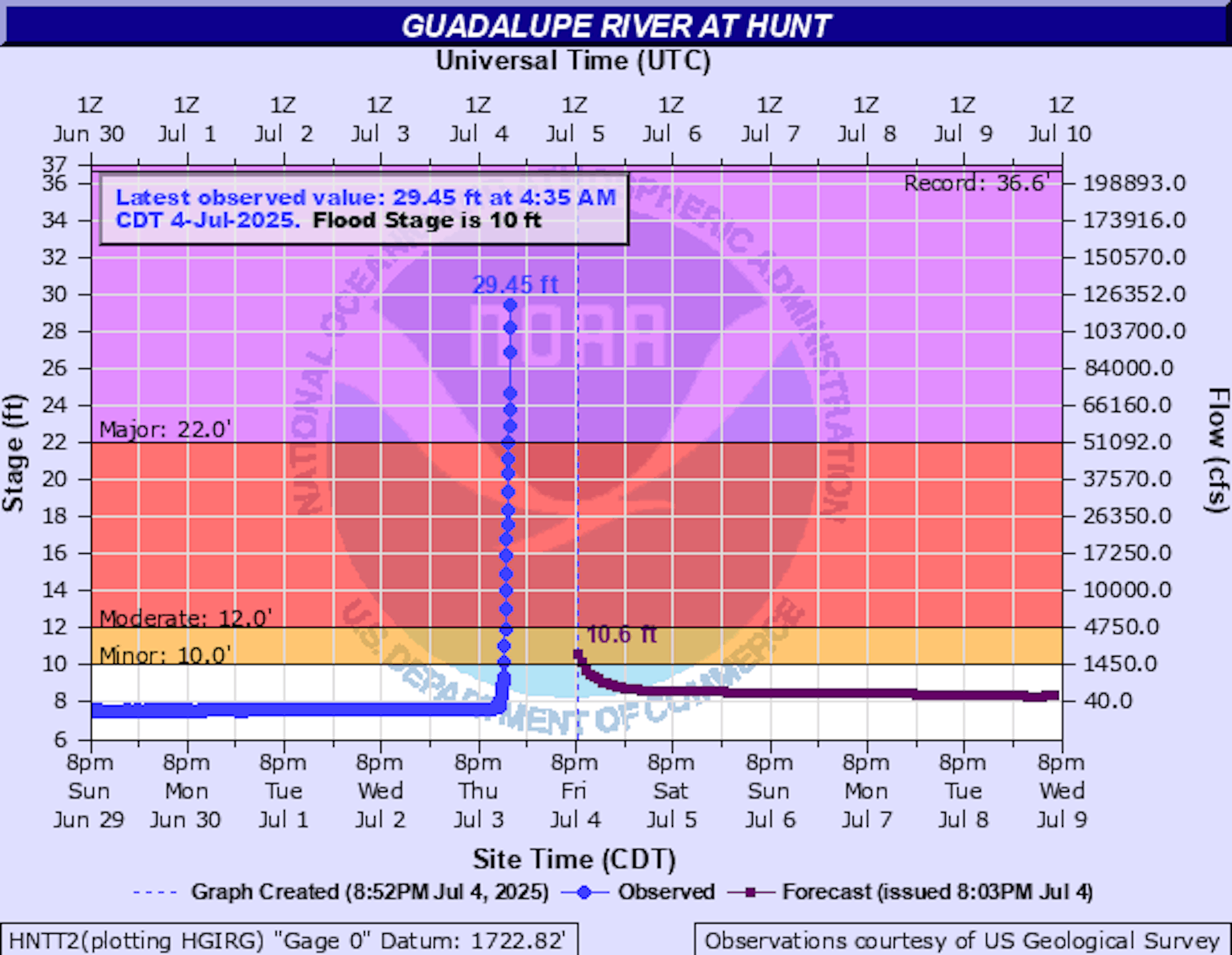
    MIL OSI USA News

  • MIL-OSI Security: U.S. Coast Guard conducts bilateral maritime law enforcement operations with Republic of Marshall Island

    Source: United States INDO PACIFIC COMMAND

    MAJURO, Republic of the Marshall Islands — The crew of national security cutter USCGC Stratton (WMSL 752) conducted at-sea boardings with the Republic of the Marshall Islands (RMI) Sea Patrol within RMI’s exclusive economic zone from July 9 to 13.

    MIL Security OSI

  • MIL-OSI USA: Sen. Markey, Rep. Khanna Introduce Legislation to Pause Sentinel Nuclear Missile Program

    US Senate News:

    Source: United States Senator for Massachusetts Ed Markey

    Bill Text (PDF)

    Washington (July 23, 2025) – Senator Edward J. Markey (D-Mass.) and Representative Ro Khanna (CA-17), along with Senators Bernie Sanders (I-Vt.), Jeff Merkley (D-Ore) and Chris Van Hollen (D-Md.), today introduced the Investing in Children Before Missiles (ICBM) Act of 2025, legislation that would redirect funding from the troubled Sentinel nuclear Intercontinental Ballistic Missile (ICBM) program to the U.S. Department of Education.

    The Trump administration is planning to replace the current fleet of nuclear-armed Minuteman III ICBMs with a new fleet of Sentinel ICBMs. However, the Sentinel program is so over budget and behind schedule that the Department of Defense (DoD) was forced to complete a Nunn–McCurdy review last year that found that the cost of the program had skyrocketed to $141 billion, an 81 percent increase. Moreover, the Air Force recently announced the Sentinel program will likely require digging new missile silos, a move that would cause further significant cost increases and schedule delays. In response to Sentinel’s setbacks, DoD is restructuring the program and considering extending the life of the Minuteman III by 11 years, from 2039 to 2050.

    In addition, the Air Force recently announced its plans to pay for upgrades to President Trump’s gift jet from Qatar using excess Sentinel funds. This is yet more evidence that Sentinel funding is “excess to need” and that the program should be paused for one year while it is being restructured. Nevertheless, the Trump administration is seeking to double the budget for the Sentinel missile to $4.1 billion for fiscal year 2026.

    “The United States should invest in education, not annihilation,” said Senator Markey. “The ICBM Act makes clear that we will not continue to waste billions on nuclear weapons we do not need—and that actually make us less safe—when there are more important things to fund, like public education. The Sentinel program is 81 percent overbudget—we are literally throwing taxpayer dollars down the deepest money pit ever created. When you are in a hole, stop digging. The ICBM Act signals we intend to make the world safe from nuclear weapons and prioritize spending that improves lives, rather than endangering them.”

    “The Trump administration’s Sentinel program is $60 billion over budget and years behind schedule. We need to invest into Americans, not further increase wasteful defense spending. I’m proud to join my colleagues in introducing the Investing in Children Before Missiles Act of 2025 that will pause the Sentinel program, commission an independent review of existing missile capacity, and redirect funds saved into K-12 programs in low-income communities,” said Rep. Khanna.

    “While the world has changed significantly since I was a nuclear weapons policy analyst at the Pentagon and Congressional Budget Office, the costs associated with nuclear weapons have steadily increased,” said Senator Merkley. “The United States is currently spending billions of dollars on nuclear weapons programs with limited oversight and accountability. As cost overruns continue to mount, Congress must rein in out-of-control nuclear weapons spending and instead responsibly invest these dollars in the success of America’s future leaders: our children.”

    “Instead of sinking tens of billions of taxpayer dollars into propping up a relic of our outdated Cold War-era nuclear strategy – and raising the risk of global mass destruction – we can invest more in fostering greater opportunity for our next generation. The Investing in Children Before Missiles Act does just that – diverting taxpayer funds away from an increasingly expensive boondoggle and instead directing them toward ensuring every child receives a quality education, without compromising our national security. If there ever was an opportunity for greater government efficiency, this is it,” said Senator Van Hollen.

    The ICBM Act is endorsed by the Federation of American Scientists, Council for a Livable World, Friends Committee on National Legislation, Union of Concerned Scientists, Win Without War and United Methodist Church – General Board of Church and Society.

    “Whether you think nuclear weapons make us more secure or put us at grave risk, everyone can agree that programs should run on time and on budget, or close to it. The Sentinel program is tens of billions over budget and years behind schedule. This is a classic white elephant program – rushed into production before key milestones were reached. The ICBM program should be sent back to the drawing board. We can do much better things that make America safer, stronger and more prosperous with $200 billion,” said Jon Wolfsthal, Director of Global Risk, Federation of American Scientists and former special assistant to the President.

    “The Sentinel ICBM is completely unnecessary, wildly expensive, and so far behind schedule the Pentagon has only a vague idea of when it will be deployed. Given that ICBMs are vulnerable to attack, and therefore kept on hair trigger alert, they create pointless risk. UCS has long called for eliminating them entirely. Sentinel should be cancelled and existing ICBMs retired,” said Stephen Young, Associate Director, Government Affairs, Global Security Program, Union of Concerned Scientists.

    “The Sentinel ICBM program is a case study in waste, risk, and misplaced priorities. There is no justification for pouring billions more into new land-based nuclear missiles that increase the risk of accidental war. Instead of deepening our dependence on Cold War-era thinking, we should invest in the future our children deserve: strong public schools, climate resilience, and real security rooted in equity and care. We applaud Senator Markey and Representative Khanna for their leadership in stopping the dangerous and costly Sentinel program and redirecting those resources to what truly keeps our communities safe,” said Sara Haghdoosti, Executive Director of Win Without War.

    “In 2021, Sen. Markey and Rep. Khanna first introduced the ICBM Act to pause funding and work on the already-troubled Sentinel program. Since then, the Sentinel program has continued to raise alarm bells, including in 2024 when it violated the Nunn-McCurdy Act by being more than 30% over budget. Now, the more we learn about this program, the more problems we uncover about its exceptional cost — it is now at least 80% over budget — and inability to meet deadlines. These additional concerns even led the Air Force to talk about a further life-extension of the Minuteman III missile, which the Sentinel is supposed to replace. Enough. It is past time for Congress to ask some serious questions about the necessity of this program and make some tough decisions to stop throwing good money after bad. Modernization of our nuclear forces should not be a blank check. At a time when it seems every government program is under a microscope and funding for critical programs that help every day Americans is being cut, pausing funding and work on this one program until Congress can get to the bottom of the cause of its issues seems like a no-brainer,” said John Tierney, Executive Director, Council for a Livable World.

    “As people of faith committed to peace, justice, and responsible stewardship of public resources, the Friends Committee on National Legislation strongly supports the Investing in Children Before Missiles (ICBM) Act. We oppose pouring billions into new nuclear weapon systems, especially one that’s so consistently over budget and behind schedule. It’s time to end the wasteful spending on the Sentinel program and invest instead in schools and communities,” said Allen Hester, Legislative Representative for Nuclear Disarmament & Pentagon Spending, Friends Committee on National Legislation.

    MIL OSI USA News

  • MIL-OSI Security: Sioux City Man Sentenced to More than Five Years for Illegal Possession of Firearms

    Source: United States Bureau of Alcohol Tobacco Firearms and Explosives (ATF)

    Pierre-Louis had recently been discharged from prison for carjacking.

    Romario Pierre-Louis, age 30, from Sioux City, was sentenced July 18, 2025, to more than 5 years in federal prison, after a March 6, 2025, guilty plea to possession of a firearm by a felon.

    Evidence in the case revealed just after midnight on October 15, 2024, law enforcement was called to a domestic assault disturbance.  Law enforcement was informed that Pierre-Louis was armed and was pointing a gun at people in the area.  When officers arrived on scene, a witness stated that after the dispute Pierre-Louis was seen carrying a rifle wrapped in a blanket along with a couple of pistols to a nearby residence.  The weapons were recovered from the neighbor’s house, where Pierre-Louis tried to hide them. Pierre-Louis admitted to law enforcement he knew he was not able to have firearms due to being a felon.  Pierre-Louis was convicted in 2019 of armed carjacking in Cook County, Illinois for which he served six years in state prison. He had recently been released from that sentence. 

    Pierre-Louis was sentenced in Sioux City by United States District Court Judge Leonard T. Strand to 63 months’ imprisonment.  He must also serve a 3-year term of supervised release after the prison term.  There is no parole in the federal system.

    This case was brought as part of Project Safe Neighborhoods (PSN).  PSN is the centerpiece of the Department of Justice’s violent crime reduction efforts.  PSN is an evidence-based program proven to be effective at reducing violent crime. Through PSN, a broad spectrum of stakeholders work together to identify the most pressing violent crime problems in the community and develop comprehensive solutions to address them. As part of this strategy, PSN focuses enforcement efforts on the most violent offenders and partners with locally based prevention and reentry programs for lasting reductions in crime.

    Pierre-Louis is being held in the United States Marshal’s custody until he can be transported to a federal prison.

    The case was investigated by Sioux City Police department and the United States Department of Justice’s Bureau of Alcohol Tabaco Firearms and Explosives (ATF), and was prosecuted by Assistant United States Attorney Forde Fairchild

    Court file information at https://ecf.iand.uscourts.gov/cgi-bin/login.pl.

    The case file number is 24-4085.

    Follow us on X @USAO_NDIA.

    MIL Security OSI

  • MIL-OSI China: China power into women’s basketball final at Universiade

    Source: People’s Republic of China – State Council News

    China defeated Poland 71-67 after overtime to reach the women’s basketball final at the Rhine-Ruhr World University Games on Wednesday.

    China will face the United States, who edged Hungary 73-71 in the other semifinal, for the championship on Friday.

    Chinese guard Tian Yuanyuan emerged as the hero, scoring all seven of her points in overtime after the two teams were tied 62-62 at the end of regulation.

    China’s small forward Chen Yujie shot nine of 14 for a game-high 24 points, including four of five from beyond the arc. Center Liu Yutong and power forward Tang Zhiting added 14 points apiece.

    Poland’s shooting guard Magdalena Szymkiewicz led her side with 13 points, while 2.01-meter center Kamila Borkowska contributed 12.

    China started strong, jumping out to a 15-7 lead after Liu, Chen and Tang hit back-to-back 3-pointers, prompting Poland’s coach to call a timeout with four minutes left in the first quarter.

    Poland responded with a 26-11 run to take a 33-26 halftime lead.

    China surged back in the third quarter with an 11-0 run to go ahead 37-33 midway through the period. Poland answered with a 10-0 run of its own, capped by two free throws and a layup from Anna Winkowska, to take a 48-45 lead into the fourth.

    Li Xingnuo opened the final quarter with a 3-pointer to level the game at 48-48. The teams traded baskets down the stretch, tying at 58-58 with 1:50 to play.

    Szymkiewicz gave Poland a 60-58 lead with two free throws, but China responded with four straight points on a pair of layups. Poland’s Julia Piestrzynska attacked the basket to tie it 62-62. After Li’s missed 3-pointer, the game went to overtime.

    Poland managed just three points in the extra period, falling behind 69-65 with 18 seconds remaining. A timeout and late foul strategy couldn’t prevent China from sealing the 71-67 win.

    “We have tired legs after yesterday’s hard-fought quarterfinal win against Japan, so you could see we only scored a few points in the second quarter,” said Chinese coach Zhao Xuetong.

    “In the halftime break, I told the players to play as we planned and don’t think much about the result. To tell the truth, we have already reached where we expect before the Games,” added Zhao. “Reaching the last four is OK for us, so everyone is relaxed mentally.”

    MIL OSI China News

  • MIL-OSI USA: Booker, Schumer, Duckworth, Murray, DeLauro Reintroduce Bicameral Legislation to Increase Access to Fertility Treatment

    US Senate News:

    Source: United States Senator for New Jersey Cory Booker

    WASHINGTON, D.C. – Today, U.S. Senators Cory Booker (D-NJ), Democratic Leader Chuck Schumer (D-NY), Tammy Duckworth (D-IL), and Patty Murray (D-WA), along with U.S. Representative Rosa DeLauro (D-CT) reintroduced the bicameral Access to Fertility Treatment and Care Act, legislation that would require more health insurers to provide coverage for infertility treatment, as well as fertilitypreservation services for individuals who undergo medically necessary procedures that may cause infertility, such as chemotherapy.

    “Everyone’s path to parenthood is different, and the decision to pursue fertility treatments is deeply personal,” said Senator Booker. “Nobody should have to choose between financial stability and the opportunity to have a family. On top of that, people who find themselves at the daunting intersection of a cancer diagnosis and fertility challenges should have access to affordable fertility services. This legislation would require more insurance plans to cover fertility treatments so that Americans no longer face barriers to care when deciding to start a family.”

    “While Republicans have tried to brand themselves as the pro-family party, Senate Democrats are putting forward actual solutions to help the millions of Americans grappling with the financial and medical realities of safely growing their families,” said Leader Schumer. “Infertility can – and does – affect so many in our communities, and while Republicans continue their relentless attacks on reproductive rights, I will keep fighting to protect access to affordable health care and am proud to support this legislation which offers hope and opportunity to many with this deeply personal decision.”

    “Millions of Americans depend on IVF to build a family—and yet, this treatment is too often out of reach for so many because of exorbitant, out-of-pocket costs,” said Senator Duckworth. “If Donald Trump really wants to deliver on his campaign promise to ensure IVF is covered for those who rely on it, he’d call on Republicans to support our bill that would expand coverage for so many more Americans. Otherwise, all the pro-IVF talking points are just more empty promises from people who have proven time and again they have no interest in actually taking any meaningful action to protect IVF access.”

    “Infertility is a painful struggle for millions of people in America, and the steep cost of infertility treatment like IVF prevents many of them from growing their families—that’s just wrong. The Access to Fertility Treatment and Services Act would require more insurance plans, including TRICARE and the VA coverage our veterans and their families rely on, to cover infertility treatment without raising insurance costs or copays. We should be doing everything we can to support families and make it easier to have and raise children in America, and our legislation is one important step in that direction,” said Senator Murray.

    “When people don’t have insurance coverage for fertility care, they are forced to make impossible choices between paying for treatment or affording essentials,” said Congresswoman DeLauro. “The emotional and physical toll of trying to build a family is already heavy. We should not add a crushing financial burden on top of it. This bill ensures that all families have the insurance coverage they deserve. Americans should have the opportunity to grow their families without sacrificing their basic needs.”

    “Every day providers encounter patients who need medical treatments like IVF to build their families, but have to forego, delay, or stop treatment because they cannot afford it,” said Sean Tipton, ASRM Chief Advocacy & Policy Officer. “While ASRM has championed progress on state-level IVF mandates, we firmly believe that access to health care should not depend on your zip code. For this reason, we remain grateful to Sen. Booker and Rep. DeLauro for their tireless leadership on the Access to Infertility Treatment and Care Act. It is well past time for Congress to pass this critical legislation and achieve access to family building care for all Americans.”

    “Every day, millions of Americans face heartbreaking and unnecessary barriers to building their families, simply because they can’t afford the out-of-pocket medical costs. Access to fertility treatment should not depend on your income, your zip code, or your employer. The ‘Access to Fertility Treatment and Care Act’ is a critical step toward ensuring that everyone has the opportunity to pursue their dream of having a family. On behalf of RESOLVE and the family-building community, I thank Senator Cory Booker and Congresswoman Rosa DeLauro for their steadfast leadership in championing equitable access to care,” said Danielle Melfi, President & CEO, RESOLVE: The National Infertility Association.

    Despite the prevalence of infertility – a reported one in six couples have challenges conceiving – coverage for treatment options is limited. In 2024, nearly half of large employers voluntarily offered fertility benefits and 97% of those offering benefits reported no significant increase in costs to their medical plans.

    Specifically, the Access to Fertility Treatment and Care Act would:

    1. Require most private health insurance plans, as well as plans offered by the Federal Employees Health Benefits Program, Medicaid, TRICARE, ERISA, and the VA, to provide coverage for treatment of infertility without raising insurance or copayment costs.
    2. Ensure these plans cover fertility preservation services for individuals who undergo a medically necessary procedure that may cause infertility.

    The bill is endorsed by the following organizations: Alliance for Fertility Preservation, Endocrine Society, Hadassah, The Women’s Zionist Organization of America, North American Society for Pediatric and Adolescent Gynecology, National Women’s Political Caucus, American Society for Reductive Medicine, Resolve, MomsRising, In Our Own Voice: National Black, Women’s Reproductive Justice Agenda, National partnership for Women and Families, Invisible Project, Human Rights Campaign, Families USA, National LGBTQ Task Force Action Fund, Service Women’s Action Network, Guttmacher, ACOG, and AllPaths Family Building.

    The bill is cosponsored by U.S. Senators Chris Coons (D-DE) and Amy Klobuchar (D-MN).

    The full text of the bill can be found here.

    MIL OSI USA News

  • MIL-OSI USA: Booker, Schumer, Duckworth, Murray, DeLauro Reintroduce Bicameral Legislation to Increase Access to Fertility Treatment

    US Senate News:

    Source: United States Senator for New Jersey Cory Booker

    WASHINGTON, D.C. – Today, U.S. Senators Cory Booker (D-NJ), Democratic Leader Chuck Schumer (D-NY), Tammy Duckworth (D-IL), and Patty Murray (D-WA), along with U.S. Representative Rosa DeLauro (D-CT) reintroduced the bicameral Access to Fertility Treatment and Care Act, legislation that would require more health insurers to provide coverage for infertility treatment, as well as fertilitypreservation services for individuals who undergo medically necessary procedures that may cause infertility, such as chemotherapy.

    “Everyone’s path to parenthood is different, and the decision to pursue fertility treatments is deeply personal,” said Senator Booker. “Nobody should have to choose between financial stability and the opportunity to have a family. On top of that, people who find themselves at the daunting intersection of a cancer diagnosis and fertility challenges should have access to affordable fertility services. This legislation would require more insurance plans to cover fertility treatments so that Americans no longer face barriers to care when deciding to start a family.”

    “While Republicans have tried to brand themselves as the pro-family party, Senate Democrats are putting forward actual solutions to help the millions of Americans grappling with the financial and medical realities of safely growing their families,” said Leader Schumer. “Infertility can – and does – affect so many in our communities, and while Republicans continue their relentless attacks on reproductive rights, I will keep fighting to protect access to affordable health care and am proud to support this legislation which offers hope and opportunity to many with this deeply personal decision.”

    “Millions of Americans depend on IVF to build a family—and yet, this treatment is too often out of reach for so many because of exorbitant, out-of-pocket costs,” said Senator Duckworth. “If Donald Trump really wants to deliver on his campaign promise to ensure IVF is covered for those who rely on it, he’d call on Republicans to support our bill that would expand coverage for so many more Americans. Otherwise, all the pro-IVF talking points are just more empty promises from people who have proven time and again they have no interest in actually taking any meaningful action to protect IVF access.”

    “Infertility is a painful struggle for millions of people in America, and the steep cost of infertility treatment like IVF prevents many of them from growing their families—that’s just wrong. The Access to Fertility Treatment and Services Act would require more insurance plans, including TRICARE and the VA coverage our veterans and their families rely on, to cover infertility treatment without raising insurance costs or copays. We should be doing everything we can to support families and make it easier to have and raise children in America, and our legislation is one important step in that direction,” said Senator Murray.

    “When people don’t have insurance coverage for fertility care, they are forced to make impossible choices between paying for treatment or affording essentials,” said Congresswoman DeLauro. “The emotional and physical toll of trying to build a family is already heavy. We should not add a crushing financial burden on top of it. This bill ensures that all families have the insurance coverage they deserve. Americans should have the opportunity to grow their families without sacrificing their basic needs.”

    “Every day providers encounter patients who need medical treatments like IVF to build their families, but have to forego, delay, or stop treatment because they cannot afford it,” said Sean Tipton, ASRM Chief Advocacy & Policy Officer. “While ASRM has championed progress on state-level IVF mandates, we firmly believe that access to health care should not depend on your zip code. For this reason, we remain grateful to Sen. Booker and Rep. DeLauro for their tireless leadership on the Access to Infertility Treatment and Care Act. It is well past time for Congress to pass this critical legislation and achieve access to family building care for all Americans.”

    “Every day, millions of Americans face heartbreaking and unnecessary barriers to building their families, simply because they can’t afford the out-of-pocket medical costs. Access to fertility treatment should not depend on your income, your zip code, or your employer. The ‘Access to Fertility Treatment and Care Act’ is a critical step toward ensuring that everyone has the opportunity to pursue their dream of having a family. On behalf of RESOLVE and the family-building community, I thank Senator Cory Booker and Congresswoman Rosa DeLauro for their steadfast leadership in championing equitable access to care,” said Danielle Melfi, President & CEO, RESOLVE: The National Infertility Association.

    Despite the prevalence of infertility – a reported one in six couples have challenges conceiving – coverage for treatment options is limited. In 2024, nearly half of large employers voluntarily offered fertility benefits and 97% of those offering benefits reported no significant increase in costs to their medical plans.

    Specifically, the Access to Fertility Treatment and Care Act would:

    1. Require most private health insurance plans, as well as plans offered by the Federal Employees Health Benefits Program, Medicaid, TRICARE, ERISA, and the VA, to provide coverage for treatment of infertility without raising insurance or copayment costs.
    2. Ensure these plans cover fertility preservation services for individuals who undergo a medically necessary procedure that may cause infertility.

    The bill is endorsed by the following organizations: Alliance for Fertility Preservation, Endocrine Society, Hadassah, The Women’s Zionist Organization of America, North American Society for Pediatric and Adolescent Gynecology, National Women’s Political Caucus, American Society for Reductive Medicine, Resolve, MomsRising, In Our Own Voice: National Black, Women’s Reproductive Justice Agenda, National partnership for Women and Families, Invisible Project, Human Rights Campaign, Families USA, National LGBTQ Task Force Action Fund, Service Women’s Action Network, Guttmacher, ACOG, and AllPaths Family Building.

    The bill is cosponsored by U.S. Senators Chris Coons (D-DE) and Amy Klobuchar (D-MN).

    The full text of the bill can be found here.

    MIL OSI USA News

  • MIL-OSI USA: Booker Reintroduces Scale-Up Manufacturing Investment Company Act

    US Senate News:

    Source: United States Senator for New Jersey Cory Booker
    WASHINGTON, D.C. – Today, U.S. Senator Cory Booker (D-NJ) reintroduced the Scale-Up Manufacturing Investment Company Act, legislation to nurture innovation in our entrepreneurs and help bring manufacturing jobs back home by increasing access to capital for small manufacturers seeking to scale up their operations.
    Lack of access to capital pushes emerging entrepreneurs to produce their advanced manufacturing technologies abroad in other nations that provide financing opportunities for scaling manufacturers. Not only does this migration drain the United States of innovative manufacturing capabilities, it also causes us to lose out on high-paying, high-skilled manufacturing jobs that accompany the commercialization of new ideas. We must do more to keep these jobs and opportunities for innovation here at home.
    “Decades of bad trade deals and offshoring have hollowed out domestic manufacturing, and we must start giving American businesses the tools they need to build, create jobs, scale, and stay competitive—at home,” said Senator Booker. “If we continue to fall short in this space, our competitors will fill the vacuum and America will lose out on these engines for innovation and job growth. This legislation will help our manufacturing sector thrive and bring good-paying jobs home by providing resources for manufacturers, entrepreneurs and small businesses to innovate on a larger scale.”
    Nearly half of the American workforce is employed by small businesses. As of 2024, small businesses employ 45.9% of the U.S. workforce, approximately 59 million people, and have long served as engines of job creation and innovation. To survive in today’s increasingly competitive economy, entrepreneurs often must expand quickly, growing on their own or in collaboration with larger firms to help scale-up their innovations into commercialized products which often require highly complex, advanced manufacturing capabilities that demand more time and capital to scale than nonproduction firms. However, our nation’s financing mechanisms have not kept up with this changing landscape and make it difficult for these companies to find the capital needed to demonstrate viability of their technology at a commercial scale.
    The Scale-Up Manufacturing Investment Company Act would:
    Establish a new federal investment program under the SBA to provide matching capital (leverage) to private investment funds supporting U.S.-based manufacturing scale-up projects.
    Create a licensing and selection process for “participating investment funds” with rigorous criteria including track record, capital raised, and experience in manufacturing.
    Authorize up to $1 billion per year in SBA leverage, capped at $500 million per fund, with a required minimum of $250 million in private capital per participating fund.
    Funds must invest in “qualifying manufacturing projects” that build first commercial production facilities or scale novel manufacturing technologies, with limitations on investment concentration and leverage use.
    Implement strong oversight through regular audits, reporting, independent valuations, and provisions for fund discipline and SBA enforcement.
    To read the full text of the bill, click here.

    MIL OSI USA News

  • MIL-OSI USA: Booker Statement Mourning Passing of Mrs. Lee Porter, New Jersey’s “Mother of Fair Housing”

    US Senate News:

    Source: United States Senator for New Jersey Cory Booker

    NEWARK, N.J. – Today, U.S. Senator Cory Booker (D-NJ) issued the following statement:

    “My heart is heavy with the news of Mrs. Lee Porter’s passing. She was a beloved pillar of our community and a true champion for all New Jerseyans. I was blessed to call her a friend, teacher, and mentor.

    “Mrs. Lee Porter was a visionary community organizer and a beacon of hope for countless families, including my own. Like most, I first got to know her as the ‘Mother of Fair Housing,’ when she changed the trajectory of my entire life.

    “Dedicating more than fifty years to nurturing our shared communities, Mrs. Lee Porter rightfully believed that we are at our best if––and only if––we uphold the principles of equality and justice. Mrs. Lee Porter’s legacy is one of deep compassion and conviction, and it is one that I will aspire to fulfill with the same zeal and care with which she lived her life. I extend my sincerest condolences to Mrs. Lee Porter’s family, friends, and all who had the privilege of knowing of her.”

    MIL OSI USA News

  • MIL-OSI USA: Variety Op-Ed: “Elizabeth Warren on Colbert ‘Late Show’ Cancellation: Is the Paramount Trump Payoff a Bribe?”

    US Senate News:

    Source: United States Senator for Massachusetts – Elizabeth Warren
    July 23, 2025
    “The Paramount payoff is part of a corrupt pattern of Trump exploiting the power of the presidency both to profit personally and to punish his perceived enemies.”
    “The moment we turn a blind eye to these deals is the moment we start to lose our democracy.”
    Washington, D.C. – Today, U.S. Senator Elizabeth Warren (D-Mass.) published an op-ed in Variety making the case that the Late Show with Stephen Colbert’s cancellation may be another one of Donald Trump’s attempts to get big corporations to buy his favor and bow down before him.
    Senator Warren has been leading the charge to determine if Paramount is bribing President Trump in exchange for approval of its multi-billion-dollar megamerger with Skydance, and has fought relentlessly across the board against President Trump’s corruption.
    Read the full op-ed here and below:
    Variety – Elizabeth Warren on Colbert’s ‘Late Show’ Cancellation: Is the Paramount Trump Payoff a Bribe?July 23, 2025
    President Donald Trump and CBS parent company Paramount want you to think that The Late Show with Stephen Colbert was canceled for “purely financial” reasons. Really?
    During the 2024 election, Donald Trump sued CBS, making claims CBS called “meritless.” Legal experts could see from a mile away that Trump’s claims were bogus. Paramount seemed ready to fight the allegations, and it looked like they’d win that fight handily. Then Trump took office in January 2025.
    From the first moments of his presidency, Trump quickly made it clear that he was happy to use his executive power to enrich himself. He was eager to hand out favors — for the right price — and threaten punishment for those who pushed back. There’s a reason that billionaire CEOs paid millions of dollars to get front-row access to his inauguration.
    This is where questions about a Paramount payout to Trump come in. Right now, Paramount is trying to merge with Skydance, another huge media company. This deal is worth $8 billion – and, by the way, it could raise prices for millions of viewers. But here’s the kicker: this merger can only go through if it’s approved by the Trump administration.
    Instead of fighting Trump on his “meritless” lawsuit, Paramount settled, handing $16 million to Trump’s presidential library. This looks like bribery in plain sight, and that’s exactly what Stephen Colbert said on his show: “This kind of complicated financial settlement with a sitting government official has a technical name in legal circles: it’s ‘big, fat bribe.’” Three days later, Paramount-owned CBS canceled Colbert’s show. And Trump didn’t waste a moment before celebrating the news.
    Was it a coincidence that CBS canceled Colbert just three days after he spoke out? Are we sure that this wasn’t part of a wink-wink deal between the president and a giant corporation that needed something from his administration? If CBS made this decision for “purely financial” reasons, why the timing? And why did Trump say “I hope I played a major part in” getting Colbert fired? These are fair questions, and ones that I have asked Paramount and Skydance.
    The Paramount payoff is part of a corrupt pattern of Trump exploiting the power of the presidency both to profit personally and to punish his perceived enemies.
    ABC News handed over $15 million to Trump’s presidential library in a settlement for another questionable defamation lawsuit. Trump was even more direct with Mark Zuckerberg, reportedly telling him that the price for being “brought in the tent” of the new Trump administration was to settle another doubtful lawsuit. Zuckerberg immediately bowed down, ending Meta’s fact-checking program and dumping $22 million into the Trump library. And Trump is running the same play again: immediately after Paramount folded, Trump sued the Wall Street Journal over an article that exposed details about his relationship with Jeffrey Epstein.
    As Trump works to dampen any criticism in the media, he has also launched attacks on other independent institutions. In his first few months in office, Trump has aggressively threatened both universities and law firms in an effort to force them to bend to his will. The pattern is the same: Trump threatens to bring down the weight of the federal government on a single institution, and, too often, the targets feel they have no option but to bow down to an all-powerful Trump.
    And for everyone in the free press, the academic world and the legal system, Trump has delivered his message with ruthless bluntness: If you criticize him, you could be forced to pay dearly.
    The wealthy and well-connected have long had outsized influence in Washington, but Donald Trump is the most corrupt president in American history. He is using that corruption to gain control over independent organizations and people who might hold him to account. Every threat, use of intimidation, and potential bribe undermines our democracy as it moves Trump closer to absolute control.
    I recently introduced my Presidential Library Anti-Corruption Act to close at least one bribery loophole. This bill would block anyone from dumping tens of millions of dollars into a president’s library slush fund while that president still sits in the Oval Office. It would mean Paramount couldn’t funnel nearly $16 million to Trump’s library while it seeks favors from his administration. It would mean Qatar couldn’t “gift” Trump a $400 million private jet destined for some future library. This is a basic, common-sense reform that would help ensure that the government works for the American public, not just for people willing to pay for presidential favors. But that’s just Step One.
    Trump and his billionaire friends may think they can turn the power of the federal government into a tool they can deploy to make themselves richer while the rest of us stand quietly by. But we understand that the moment we turn a blind eye to these deals is the moment we start to lose our democracy.
    In the coming weeks, months, and years, all of us must show Trump that we see his march toward authoritarianism and we will not be silenced. Democrats need to embrace the fight against corruption as a top priority. Republicans need to grow a spine and get behind common-sense anti-corruption measures. All Americans need to speak up. Because yes, it’s a shame that CBS canceled The Late Show with Stephen Colbert, but it is a threat to all of us that the top late-night show in the country may have been canceled in order to curry favor with a wannabe king.

    MIL OSI USA News