KABUL – The United Nations World Food Programme (WFP) welcomes a contribution of US$1.7 million from the United Nations Central Emergency Response Fund (CERF) for early action supporting communities in Afghanistan before the drought gets worse and families are pushed to the brink.
Thanks to this contribution, nearly 8,000 families in Faryab Province will receive cash to help them prepare for the worsening drought and avoid forcing them to resort to extreme coping mechanisms. All families will receive US$150 and women-headed households and others with a family member with disability will receive an additional US$30.
“Acting ahead of predicted hazards to prevent or reduce humanitarian impacts on communities is more important than ever, when humanitarian action globally and in Afghanistan is lacking funding and we need to make most out of every dollar,” said Isabelle Moussard Carlsen, Head of Office for OCHA Afghanistan. “The CERF has taken a leading role helping the humanitarian community act early.”
More than one third of the rural population of Faryab is already experiencing crisis or emergency levels of acute food insecurity while the region is faced with an escalating drought.
In Afghanistan erratic extreme weather patterns are becoming the norm. Last year, every province in Afghanistan experienced an environmental shock, notably devastating floods and recurring droughts.
“Every farming family in Faryab sees the drought is worsening and knows already that the next harvest will suffer. Our data shows the same. Acting early and supporting these vulnerable families now saves lives and saves money,” said John Aylieff, WFP’s Country Director in Afghanistan.
CERF has been an outstanding partner to WFP’s operations, supporting rapid, effective and principled humanitarian action in Afghanistan. From 2022 to 2024, CERF contributed more than US$33 million through WFP, saving lives across some of the country’s most vulnerable communities.
# # #
The United Nations World Food Programme is the world’s largest humanitarian organization, saving lives in emergencies and using food assistance to build a pathway to peace, stability and prosperity for people recovering from conflict, disasters, and the impact of climate change.
Once asbestos enters the lungs, it doesn’t leave. Its sharp, microscopic fibres scar tissues, trigger inflammation and can cause deadly diseases like mesothelioma, lung cancer and laryngeal cancer. That’s why over 60 countries have banned it – and why the US mostly phased it out.
In 2024, the Environmental Protection Agency (EPA) moved to ban all industrial uses. But on June 17, the agency said it would revisit the Biden‑era ban.
Asbestos is a naturally occurring silicate mineral made of thin, fibrous crystals. It is fire-resistant, durable, lightweight, flexible and insulating. This unique blend of properties resulted in its widespread use over millennia. Indeed, asbestos fibres have been found woven into pottery and textiles from 2500BC.
Its resistance to friction and electricity made it desirable during the Industrial Revolution for use in boilers and steam engines. In the 20th century, the useful mix of physical properties resulted in asbestos becoming ubiquitous in the construction and automotive industries, peaking in the 1970s.
Although the properties of asbestos at the macroscopic level are beneficial, at the microscopic level it’s anything but. When dust from asbestos (0.1 to tens of microns) is inhaled, it deposits throughout the respiratory system, causing inflammation and scarring of lung tissue.
While the adverse health effects associated with asbestos exposure were observed in ancient Rome, it wasn’t until the 20th century that the full extent of harm was realised. Specifically, asbestos exposure is linked to numerous respiratory diseases, including mesothelioma, lung cancer and asbestosis.
It took a long time for people to understand how dangerous asbestos really is. The main reason is that the illnesses it causes often don’t show up for decades. This long delay makes it very hard to link exposure to the disease it causes.
Making this connection is also made more difficult when those most familiar with it, including manufacturers such as Johns-Manville and industry groups such as the Asbestos Information Association (AIA) were actively denying the connection, and suppressing reports demonstrating the link.
By the 1970s, the volume of evidence showing the harms of asbestos had become overwhelming. The AIA evolved its argument, claiming that the practices in the industry had changed and that the risks were from a bygone era “when the dust control equipment in use was not as efficient or as sophisticated”. Although the association never explicitly admitted that asbestos caused harm.
Since it can take decades for the health effects of asbestos exposure to fully manifest, the full extent of the damage caused by asbestos exposure from the 1970s and onward, an era where the dust control equipment was claimed to be “efficient and sophisticated”.
The Asbestos Information Association, once a key industry group promoting the safe use of asbestos, quietly disbanded in the early 2000s as litigation and public health evidence mounted.
History of asbestos.
What type of asbestos is the US considering unbanning?
The EPA is considering unbanning chrysotile asbestos, also called white asbestos. This type of asbestos is often used in things like brake pads, gaskets and industrial equipment. In March 2024 the EPA banned it, stopping new uses and imports. The ban also included a gradual phase-out plan.
Who is pushing for the unbanning and why now?
From the outset, industry groups such as the American Chemistry Council (ACC) raised concerns about the EPA’s ban, warning that “a prohibition of an estimated 52% of annual production volume … that rapidly, could have substantial supply chain impacts”, particularly if manufacturers were bound by existing contracts or chose to cease production entirely.
According to former ACC employee and current senior official in EPA’s Office of Chemical Safety and Pollution Prevention Lynn Ann Dekleva, they want to consider if the ban “went beyond what is necessary to eliminate the unreasonable risk and whether alternative measures — such as requiring permanent workplace protection measures – would eliminate the unreasonable risk”.
What industries still want to use this type of asbestos?
Each year, around 40,000 deaths in the US and about 5,000 in the UK are attributed to asbestos exposure. If lifted, it’s possible that the number in the US could increase over the coming decades while those in the UK will continue to fall.
Does this mean asbestos could make a comeback elsewhere too?
Unlikely. While global consensus moves toward stricter regulation, the US now finds itself at a crossroads, between scientific evidence and pressure from industry.
Allen Haddrell does not work for, consult, own shares in or receive funding from any company or organisation that would benefit from this article, and has disclosed no relevant affiliations beyond their academic appointment.
Source: People’s Republic of China – State Council News
Iranian Foreign Minister Seyed Abbas Araghchi on Sunday called on the United Nations Security Council (UNSC) to recognize Israel and the United States as the initiators of the “aggression” against Iran.
In a letter addressed to UN Secretary-General Antonio Guterres and UNSC President Carolyn Rodrigues-Birkett, Araghchi urged the Council to fulfill its responsibility in maintaining international peace and security, according to the official IRNA news agency.
He accused Israel of deliberately targeting residential buildings, civilians, and civilian infrastructure, describing the attacks as a “flagrant breach” of the UN Charter and a “blatant violation” of international law.
Araghchi said Israel and the United States had also targeted Iran’s nuclear facilities — safeguarded by the International Atomic Energy Agency (IAEA) — in “grave violation of the UN Charter, the Non-Proliferation Treaty, as well as the IAEA’s instruments and resolutions.”
The Iranian foreign minister emphasized that the UNSC should hold the “aggressors” accountable and act to prevent the recurrence of such “crimes.”
On June 13, Israel launched major airstrikes on several areas in Iran, including nuclear and military sites, killing senior commanders, nuclear scientists, and numerous civilians. Iran responded with multiple waves of missile and drone attacks on Israel.
On June 22, U.S. forces bombed three Iranian nuclear facilities. In retaliation, Iran struck the U.S. Al Udeid Air Base in Qatar.
After 12 days of fighting, a ceasefire between Iran and Israel was reached on Tuesday.
You stayed up too late scrolling through your phone, answering emails or watching just one more episode. The next morning, you feel groggy and irritable. That sugary pastry or greasy breakfast sandwich suddenly looks more appealing than your usual yogurt and berries. By the afternoon, chips or candy from the break room call your name. This isn’t just about willpower. Your brain, short on rest, is nudging you toward quick, high-calorie fixes.
While anyone can suffer from sleep loss, essential workers and first responders, including nurses, firefighters and emergency personnel, are especially vulnerabledue to night shifts and rotating schedules. These patterns disrupt the body’s internal clock and are linked to increased cravings, poor eating habits and elevated risks for obesity and metabolic disease. Fortunately, even a few nights of consistent, high-quality sleep can help rebalance key systems and start to reverse some of these effects.
Ghrelin, produced primarily in the stomach, signals that you are hungry, while leptin, which is produced in the fat cells, tells your brain that you are full. Even one night of restricted sleep increases the release of ghrelin and decreases leptin, which leads to greater hunger and reduced satisfaction after eating. This shift is driven by changes in how the body regulates hunger and stress. Your brain becomes less responsive to fullness signals, while at the same time ramping up stress hormones that can increase cravings and appetite.
These changes are not subtle. In controlled lab studies, healthy adults reported increased hunger and stronger cravings for calorie-dense foods after sleeping only four to five hours. The effect worsens with ongoing sleep deficits, which can lead to a chronically elevated appetite.
Sleep is as important as diet and exercise in maintaining a healthy weight.
In simple terms, your brain becomes more tempted by junk food and less capable of resisting it. Participants in sleep deprivation studies not only rated high-calorie foods as more desirable but were also more likely to choose them, regardless of how hungry they actually felt.
Your metabolism slows, leading to increased fat storage
Sleep is also critical for blood sugar control.
When you’re well rested, your body efficiently uses insulin to move sugar out of your bloodstream and into your cells for energy. But even one night of partial sleep can reduce insulin sensitivity by up to 25%, leaving more sugar circulating in your blood.
If your body can’t process sugar effectively, it’s more likely to convert it into fat. This contributes to weight gain, especially around the abdomen. Over time, poor sleep is associated with higher risk for Type 2 diabetes and metabolic syndrome, a group of health issues such as high blood pressure, belly fat and high blood sugar that raise the risk for heart disease and diabetes.
On top of this, sleep loss raises cortisol, your body’s main stress hormone. Elevated cortisol encourages fat storage, especially in the abdominal region, and can further disrupt appetite regulation.
Sleep is your metabolic reset button
In a culture that glorifies hustle and late nights, sleep is often treated as optional. But your body doesn’t see it that way. Sleep is not downtime. It is active, essential repair. It is when your brain recalibrates hunger and reward signals, your hormones reset and your metabolism stabilizes.
So the next time you find yourself reaching for junk food after a short night, recognize that your biology is not failing you. It is reacting to stress and fatigue. The most effective way to restore balance isn’t a crash diet or caffeine. It’s sleep.
Sleep is not a luxury. It is your most powerful tool for appetite control, energy regulation and long-term health.
Joanna Fong-Isariyawongse does not work for, consult, own shares in or receive funding from any company or organization that would benefit from this article, and has disclosed no relevant affiliations beyond their academic appointment.
When you lose your health insurance or switch to a plan that skimps on preventive care, something critical breaks.
The connection to your primary care provider, usually a doctor, gets severed. You stop getting routine checkups. Warning signs get missed. Medical problems that could have been caught early become emergencies. And because emergencies are both dangerous and expensive, your health gets worse while your medical bills climb.
As gerontologyresearchers who study health and financial well-being in later life, we’ve analyzed how someone’s ties to the health care system strengthen or unravel depending on whether they have insurance coverage. What we’ve found is simple: Staying connected to a trusted doctor keeps you healthier and saves the system money. Breaking that link does just the opposite.
And that’s exactly what has us worried right now. Members of Congress are debating whether to make major cuts to Medicaid and other social safety net programs. If the Senate passes its own version of the tax-and-spending package that the House approved in May 2025, millions of Americans will soon face exactly this kind of disruption – with big consequences for their health and well-being.
And those who buy their own coverage may find that they can no longer afford the premiums. In 2024, average premiums on the individual market exceeded more than US$600 per month for many adults, even with subsidies.
Medicaid was established in the 1960s, explains a scholar of the program’s history.
Consequences of becoming uninsured
Health insurance is more than a way to pay medical bills; it’s a doorway into the health care system itself. It connects people to health care providers who come to know their medical history, their medications and their personal circumstances.
When that door closes, the effects are immediate. Uninsured people are much less likely to have a usual source of care – typically a doctor or another primary care provider or clinic you know and trust. That relationship acts as a foundation for managing chronic conditions, staying current with preventive screenings and getting guidance when new symptoms arise.
Researchers have found that adults who go uninsured for even six months become significantly more likely to postpone care or forgo it altogether to save money. In practical terms, this means they’re less likely to be examined by someone who knows their medical history and can spot red flags early.
Our research team analyzed how their experiences changed when they lost, and sometimes later regained, a regular source of care during those six years.
Many of the participants in this study had multiple chronic conditions like diabetes, hypertension and heart disease.
Those who didn’t see the same provider on a regular basis were far less likely to feel heard or respected by health care professionals. They had fewer medical appointments, filled fewer prescriptions and were less likely to follow through with recommended treatments.
Their health also deteriorated considerably over the six years. Their blood pressure and blood sugar levels rose, and they had more elevated indicators of kidney impairment compared with their counterparts who had regular care providers.
The longer they went without consistent health care, the worse these clinical markers became.
Warning signs
Preventive care is one of the best tools that both patients and their health care providers have to head off major health problems. This care includes screenings like cholesterol and blood pressure checks, mammograms, PAP smears and prostate exams, as well as routine vaccinations. But most people only get preventive care when they stay engaged with the health care system.
Our research team also examined what happened to preventive care based on whether the participants had a regular doctor. We found that those who kept seeing the same providers were almost three times more likely to get basic preventive services than those who did not.
Over time, these missed preventive care opportunities can add up to a big problem. They can turn what could have been a manageable issue into an emergency room visit or a long, expensive hospital stay.
For example, imagine a man in his 50s who no longer gets cholesterol screenings after losing insurance coverage. Over several years, his undiagnosed high cholesterol leads to a heart attack that could have been prevented with early medication. Or a woman who skips mammograms because of out-of-pocket costs, only to face a late-stage cancer diagnosis that might have been caught years earlier.
Waiting too long to deal with a health condition can mean you make a trip to the emergency room, increasing the cost of care for you and others. FS Productions/Tetra images via Getty Images
Shifting the costs
Patients whose conditions take too long to be diagnosed aren’t the only ones who pay the price.
We also studied how stable care relationships affect health care spending. To do this, we linked Medicare claims cost data to our original study and tracked the medical costs of the same adults age 50 and older from 2014 to 2020. One of our key findings is that people with regular care providers were 38% less likely to incur above-average health care costs.
These savings aren’t just for patients – they ripple through the entire health care system. Primary care stability lowers costs for both public and private health insurers and, ultimately, for taxpayers.
But when people lose their health care coverage, those savings disappear.
Emergency rooms see more uninsured patients seeking care that could have been handled earlier and more cheaply in a clinic or doctor’s office. While hospitals are legally required to provide emergency care regardless of a patient’s ability to pay, much of the resulting cost goes unreimbursed.
Hospitals foot the bill for about two-thirds of those losses. They pass the other third along to private insurance companies through higher hospital fees. Those insurers, in turn, raise their customers’ premiums. Larger taxpayer subsidies can then be required to keep hospitals open.
It contributes to the health care stability our research shows is critical for good health. Medicaid makes it possible for many Americans with serious medical conditions to have a regular doctor, get routine preventive services and have someone to turn to when symptoms arise – even when they have low incomes. It helps prevent health care from becoming purely crisis-driven.
As Congress considers cutting Medicaid funding by hundreds of billions of dollars, we believe that lawmakers should realize that scaling back coverage would break the fragile links between millions of patients and the providers who know them best.
Jane Tavares receives funding from the SCAN Foundation, the RRF Foundation for Aging, and Milbank Memorial Fund .
Marc Cohen receives funding from the SCAN Foundation, the RRF Foundation for Aging and Milbank Memorial Fund .
Source: The Conversation – USA – By Allissa V. Richardson, Associate Professor of Journalism, USC Annenberg School for Communication and Journalism
Smartphone witnessing helped spur the anti-ICE protests in Los Angeles.AP Photo/Ethan Swope
It has been five years since May 25, 2020, when George Floyd gasped for air beneath the knee of a Minneapolis police officer at the corner of 38th Street and Chicago Avenue. Five years since 17-year-old Darnella Frazier stood outside Cup Foods, raised her phone and bore witness to nine minutes and 29 seconds that would galvanize a global movement against racial injustice.
Frazier’s video didn’t just show what happened. It insisted the world stop and see.
Today, that legacy continues in the hands of a different community, facing different threats but wielding the same tools. Across the United States, Latino organizers are raising their phones, not to go viral but to go on record. They livestream Immigration and Customs Enforcement raids, film family separations and document protests outside detention centers. Their footage is not merely content. It is evidence, warning – and resistance.
Here in Los Angeles where I teach journalism, for example, several images have seared themselves into public memory. One viral video shows a shackled father stepping into a white, unmarked van as his daughter sobs behind the camera, pleading with him not to sign any official documents. He turns, gestures for her to calm down, and blows her a kiss. In another video, filmed across town, Los Angeles Police Department officers on horseback charge into crowds of peaceful protesters, swinging wooden batons with chilling precision.
In Spokane, Washington, residents form a spontaneous human chain around their neighbors mid-raid, their bodies and cameras erecting a barricade of defiance. In San Diego, a video shows white allies yelling “Shame!” as they chase a car full of National Guard troops from their neighborhood.
The impact of smartphone witnessing has been immediate and unmistakable – visceral at street level, seismic in statehouses. On the ground, the videos helped inspire a “No Kings” movement, which organized protests in all 50 states on June 14, 2025.
Lawmakers are intensifying their focus on immigration policy as well. As the Trump administration escalates enforcement, Democratic-led states are expanding laws that limit cooperation with federal agents. On June 12, the House Oversight Committee questioned Democratic governors about these measures, with Republican lawmakers citing public safety concerns. The hearing underscored deep divisions between federal and state approaches to immigration enforcement.
The legacy of Black witnessing
What’s unfolding now is not new – it is newly visible. As my research shows, Latino organizers are drawing from a playbook that was sharpened in 2020 and rooted in a much older lineage of Black media survival strategies that were forged under extreme oppression.
In my 2020 book “Bearing Witness While Black: African Americans, Smartphones and the New Protest Journalism,” I document how Black Americans have used media – slave narratives, pamphlets, newspapers, radio and now smartphones – to fight for justice. From Frederick Douglass to Ida B. Wells to Darnella Frazier, Black witnesses have long used journalism as a tool for survival and transformation.
Latino mobile journalists are building on that blueprint in 2025, filming state power in moments of overreach, archiving injustice in real time, and expanding the impact of this radical tradition.
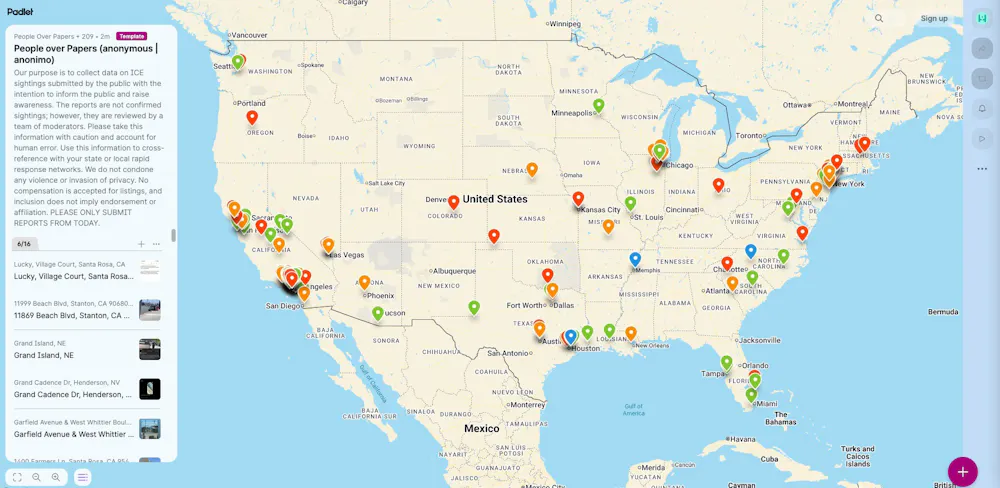
Their work also echoes the spatial tactics of Black resistance. Just as enslaved Black people once mapped escape routes during slavery and Jim Crow, Latino communities today are engaging in digital cartography to chart ICE-free zones, mutual aid hubs and sanctuary spaces. The People Over Papers map channels the logic of the Black maroons – communities of self-liberated Africans who escaped plantations to track patrols, share intelligence and build networks of survival. Now, the hideouts are digital. The maps are crowdsourced. The danger remains.
Likewise, the Stop ICE Raids Alerts Network revives a civil rights-era tactic. In the 1960s, organizers used wide area telephone service lines and radio to circulate safety updates. Black DJs cloaked dispatches in traffic and weather reports – “congestion on the south side” signaled police blockades; “storm warnings” meant violence ahead. Today, the medium is WhatsApp. The signal is encrypted. But the message – protect each other – has not changed.
Layered across both systems is the DNA of the “Negro Motorist Green Book,” the guide that once helped Black travelers navigate Jim Crow America by identifying safe towns, gas stations and lodging. People Over Papers and Stop ICE Raids are digital descendants of that legacy. Where the Green Book used printed pages, today’s tools use digital pins. But the mission remains: survival through shared knowledge, protection through mapped resistance.
Five years after George Floyd’s death, the power of visual evidence remains undeniable. Black witnessing laid the groundwork. In 2025, that tradition continues through the lens of Latino mobile journalists, who draw clear parallels between their own community’s experiences and those of Black Americans. Their footage exposes powerful echoes: ICE raids and overpolicing, border cages and city jails, a door kicked in at dawn and a knee on a neck.
Like Black Americans before them, Latino communities are using smartphones to protect, to document and to respond. In cities such as Chicago, Los Angeles and El Paso, whispers of “ICE is in the neighborhood” now flash across Telegram, WhatsApp and Instagram. For undocumented families, pressing record can mean risking retaliation or arrest. But many keep filming – because what goes unrecorded can be erased.
What they capture are not isolated incidents. They are part of a broader, shared struggle against state violence. And as long as the cameras keep rolling, the stories keep surfacing – illuminated by the glow of smartphone screens that refuse to look away.
Allissa V. Richardson receives funding from the Ford Foundation and the John D. and Catherine T. MacArthur Foundation.
Source: The Conversation – USA – By Katherine G. Hastings, PhD Candidate in Population and Public Health, University of British Columbia
Most households that own firearms have more than one − and owners often don’t secure all of them.StockPlanets/E+ via Getty Images
More than half of U.S. teens living in households with firearms believe they can access and load a firearm at home. Even when their parents report storing all firearms locked and unloaded, more than one-third of teens still believe they could access and load one. These are the main findings of our new study, published in the journal JAMA Network Open.
We are behavioral scientists investigating youth injury prevention and youth safety. In this study, we analyzed national survey data from nearly 500 parents who owned firearms and their teens. One survey asked the parents to report how many firearms they had in the home and how they stored each one. Another asked their teens to estimate how quickly they could access and load a firearm at home.
While the presence of unlocked and loaded firearms in the home was weakly linked to perceived access among teens, we found that parents’ storage practices alone were a poor predictor of whether teens believed they could access a firearm. What’s more, in households with more than one firearm, locking up more firearms was not at all linked to perceived access among teens if at least one remained unsecured.
In short, just one unlocked firearm can undo the protective benefit of securing all other firearms in the home, our results showed.
Our study focused on teens’ beliefs about firearm access, not their actual access. However, these perceptions may provide important clues around firearm access and use. Prior research shows that teens who believe they can access a firearm are more likely to access and carry one. This is particularly concerning for teens who already have a higher risk for dying by suicide.
Despite evidence that securely storing firearms saves lives, efforts to promote that messaging may be less effective when it is not universally applied to all firearms in the home or when teens still know how to access them.
Our study also points to the need for messaging and safety strategies that consider teen behavior amid household firearm dynamics. For example, teens may observe where firearms are stored or know where keys or combinations are kept and unlock firearms in moments of impulsivity or emotional distress. Beyond securely storing firearms, encouraging parents to treat every firearm in the household as a potential source of risk and talking with teens about how to address conflicts and promote mental and emotional well-being may also be protective.
Additionally, our study adds support for universal laws that require securely storing all firearms in homes in which children live and mandating routine assessments of teen firearm access by pediatricians.
What still isn’t known
It is still unclear how teens’ beliefs about their access to firearms affects whether they actually seek them out – or how the variability of parents’ practices on storing firearms affects teen access.
Another important question is how teens’ perceptions of their access to firearms at home may vary depending on cultural backgrounds, geography and different households’ attitudes and beliefs around firearm use.
Additionally, our study looked only at teens ages 14 to 18. Further research is needed to explore these associations among younger children in firearm-owning households.
The Research Brief is a short take on interesting academic work.
Rebeccah Sokol receives funding from the National Institutes of Health and Centers for Disease Control and Prevention.
Katherine G. Hastings does not work for, consult, own shares in or receive funding from any company or organization that would benefit from this article, and has disclosed no relevant affiliations beyond their academic appointment.
On June 11, 2025, Health Secretary Robert F. Kennedy Jr. announced a slate of eight new members to serve on the Advisory Committee on Immunization Practices, which advises the Centers for Disease Control and Prevention on national vaccine policy.
The announcement, made on the social media platform X, comes two days after Kennedy removed all 17 of the serving committee members. Kennedy called their replacements “a bold step in restoring public trust” rooted in “radical transparency and gold standard science.”
The Conversation U.S. asked Santosh Kumar Gautam, an expert in global health policy at the University of Notre Dame, to explain how the vaccine committee’s guidance has shaped vaccine recommendations for the public, and what the changes might mean for peoples’ ability to access vaccines in the future.
What is the Advisory Committee on Immunization Practices?
The Advisory Committee on Immunization Practices, or ACIP, is a panel of experts appointed to advise the CDC on how to use vaccines to protect the health of people in the U.S. The committee’s job is to review multiple strands of scientific evidence to recommend which vaccines should be used, who should get them and when they should be given. Its guidance affects vaccine schedules for both children and adults, insurance coverage and public health policy across the country.
The committee was formed in 1964 to establish national vaccine policy as federal immunization programs began to expand. It can have up to 19 voting members, who are appointed by the secretary of Health and Human Services. Members are experts in areas such as medicine, public health and immunology. Member usually serve overlapping four-year terms to ensure continuity. All 17 previous members were appointed at different times during the Biden administration. Removing all members of the committee at once is unprecedented.
The group also includes nonvoting members from government health agencies, including the Food and Drug Administration and the National Institutes of Health. There are also representatives from more than 30 medical and public health organizations, such as the American Academy of Pediatrics and the American College of Physicians.
These nonvoting members share useful information and real-world experience such as practical issues in administering vaccines in hospitals, management of vaccine side effects and insights into adverse events. Their input helps the committee make recommendations that reflect both science and practical needs.
The committee meets three times a year to review new data on vaccine safety and effectiveness. Its next meeting is scheduled for June 25-27 and is expected to include discussions on COVID-19 and HPV vaccines, with recommendation votes planned for COVID-19 boosters, human papilloma virus and influenza vaccines. The meeting is open to the public and will be telecast live online.
What is the committee’s role in vaccine policy?
The committee makes its recommendations to the CDC by reviewing scientific evidence about a vaccine’s safety and efficacy, as well as practical issues, such as how easy a vaccine is to use, how it affects different groups, its side-effects and how it fits into the health system. The recommendations don’t just consider whether a vaccine works, but how it can be most effectively deployed to protect the American public from disease outbreaks.
The committee looks at data from clinical trials and other research to examine the most recent data on a vaccine’s safety, efficacy and use in everyday settings. When new vaccines come out or a change occurs in the way a disease spreads or behaves, the committee often revises its advice. It also responds to public health emergencies such as recent measles outbreaks in the U.S.
What was the committee’s role during the COVID-19 pandemic?
The committee played a vital role in evaluating vaccine safety and effectiveness and authorizing the use of vaccines for different age groups by reviewing clinical trial data, from Pfizer-BioNTech, Moderna, Johnson & Johnson and other vaccine manufacturers.
The committee also developed step-by-step guidelines for who should get vaccinated first, based on how likely people were to catch the virus, their risk of serious disease, the type of work they did and whether they came from a population that was historically underserved or at higher risk. It also issued tailored guidance for pregnant and breastfeeding women, immunocompromised people and children and adolescents as more trial data became available.
Public health experts have expressed concern that Robert F. Kennedy Jr.’s decision to replace all 17 members of the vaccine advisory committee will erode its ability to provide evidence-based guidance.
Who are the new members that Kennedy appointed?
Although Kennedy promised more transparency, he handpicked the advisory committee’s new members without revealing how they were selected. Historically, the body’s members are selected after an extensive vetting process that can take two years.
The committee’s new makeup and Kennedy’s decades-long anti-vaccine stance threaten to erode the integrity of scientific decision-making and commitment to ethical standards in vaccine recommendations.
Kennedy’s overhaul of the Advisory Committee on Immunization Practices will likely affect how insurers, doctors and the public make decisions about vaccines – and vaccine policy generally. For example, the advisory committee’s decisions directly affect which vaccines are covered by health insurance. If a vaccine is not recommended by the committee, many insurance plans, including those under the Affordable Care Act, are not required to cover it. This means families could face out-of-pocket costs, making it harder for children to access routine immunizations.
The advisory committee also plays a key role in shaping the U.S. childhood vaccine schedule. Given Kennedy’s long-held skepticism about childhood vaccines — including those for measles and polio — some public health experts worry that the newly appointed members could push to revisit or revise vaccine recommendations, especially for newer and more debated vaccines like those for COVID-19 or HPV.
States usually base their school entry vaccine requirements on the committee’s guidelines, and insurers often use them to determine which vaccines are covered. As a result, shifts in policy to childhood vaccinations could influence both school vaccination mandates and access to vaccines for millions of children.
Santosh Kumar Gautam does not work for, consult, own shares in or receive funding from any company or organization that would benefit from this article, and has disclosed no relevant affiliations beyond their academic appointment.
Victims have been trafficked into criminality from more than 60 countries around the world
West Africa is emerging as a potential regional hub for online scam centres
LYON, France: Human trafficking-fueled scam centres have expanded their global footprint, according to a new crime trend update released by INTERPOL.
As of March 2025, victims from 66 countries were trafficked into online scam centres, with no continent left untouched.
Seventy-four percent of human trafficking victims were brought to centres in the original ‘hub’ region of Southeast Asia, according to analysis of the crime trend using data from relevant INTERPOL Notices issued in the past five years.
However, online scam centres have increasingly been observed in other regions, including the Middle East, West Africa – which could be developing into a new regional hub – and Central America.
While approximately 90 percent of human trafficking facilitators were from Asia, 11 per cent were from South America or Africa.
Eighty per cent of facilitators were men, and 61 per cent were aged between 20 and 39 years old.
Global crisis
Initially concentrated in a handful of Southeast Asian countries, the centres are estimated to have drawn in hundreds of thousands of human trafficking victims, typically through false job ads, detaining them in compounds and forcing them to carry out online social engineering scams.
While not every person committing fraud in a scam centre is a victim of human trafficking, those held against their will are often subject to extortion through debt bondage, as well as beatings, sexual exploitation, torture and rape.
Online scams engineered by the centres target a second set of globally-dispersed victims, who often suffer debilitating financial and emotional damage.
Since 2023, INTERPOL has documented how this double-edged crime trend has evolved from a regional threat in Southeast Asia to a global crisis, issuing an Orange Notice to signal its serious and imminent threat to public safety.
The INTERPOL update also highlights how emerging technologies and convergence with other major crime areas could transform human trafficking-fueled scam centres as the crime trend continues to evolve.
The use of artificial intelligence has been observed in a growing number of scamming cases.
AI has been used to develop convincing fake job ads that attract human trafficking victims as well as generate online photos or profiles through ‘deepfake’ technology for sextortion and romance scams, among other social engineering schemes.
Moreover, reports analysed by INTERPOL show that the same routes used to traffic victims to scam centres can be used to traffic drugs, firearms and protected wildlife species.
The areas where scam centres have emerged in Southeast Asia are also key hubs for the trafficking of endangered species such as tigers or pangolins, making criminal diversification likely.
Cyril Gout, Acting Executive Director of Police Services at INTERPOL, said:
“The reach of online scam centres spans the globe and represents a dynamic and persistent global challenge.”
“Tackling this rapidly globalizing threat requires a coordinated international response. We must increase the exchange of information between law enforcement in the growing number of countries affected and strengthen partnerships with NGOs that help victims and technology companies whose platforms are being exploited.”
Source: People’s Republic of China – State Council News
At least two firefighters were shot and killed Sunday by unidentified suspects while responding to a wildfire near Coeur d’Alene in the U.S. state of Idaho, local officials said.
Kootenai County Sheriff Robert Norris told a press briefing that both victims were fire personnel, saying the number of the injured remains unknown, and the firefighting operation is ongoing.
The incident occurred at approximately 1:30 p.m. local time (2030 GMT) on Sunday after a brush fire broke out on Canfield Mountain. As firefighters arrived at the scene about 30 minutes later, they came under gunfire from unknown individuals hiding in the woods, according to law enforcement sources.
The shooter or shooters are using “modern-day sporting rifles,” Norris said.
The search for suspects is ongoing. According to Norris, the situation remains active and authorities are currently taking fire from multiple directions on the mountain.
“We still have civilians who are coming off that mountain. We might have civilians that are stuck or in shock on that mountain, so this is a very, very fresh situation,” Norris said.
Authorities have not confirmed the number of shooters. Norris noted that if they aren’t stopped soon, “this is likely to be a multiday operation.”
Eucharistic Celebration on the Solemnity of the Saints Apostles Peter and Paul with the Blessing and Imposition of the Pallia, 29.06.2025
On the Solemnity of the Saints Apostles Peter and Paul, at 9.30 in the Vatican Basilica, the Holy Father Leo XIV imposed the Sacred Pallia, taken from the Confessio of the Apostle Peter and destined for the metropolitan archbishops appointed during the course of the year.
The Pope will preside over the Eucharistic Celebration with the cardinals, the metropolitan archbishops and the bishops.
During the Eucharistic Celebration, after the Gospel reading, the Holy Father delivered the following homily:
Homily of the Holy Father
Dear brothers and sisters,
Today we celebrate two brothers in faith, Peter and Paul, whom we honour as pillars of the Church and venerate as patrons of the diocese and city of Rome.
The story of these two Apostles has much to say to us, the community of the Lord’s disciples, as we make our pilgrim way in today’s world. Upon reflection, I would like to emphasize two specific aspects of their faith: ecclesial communion and the vitality of faith.
First, ecclesial communion. Today’s liturgy reminds us how Peter and Paul were called to share a single fate, that of martyrdom, which united them definitively to Christ. In the first reading, we see Peter in prison awaiting judgment (cf. Acts 12:1-11). In the second reading, the Apostle Paul, also in chains, tells us, in a kind of last will and testament, that his blood is about to be poured out and offered to God (cf. 2 Tim 4:6-8, 17-18). Peter and Paul were both ready to lay down their lives for the sake of the Gospel.
Yet this communion of the two Apostles in the one confession of faith was the conclusion of a long journey on which each embraced the faith and lived out his apostolate in his own particular way. Their brotherhood in the Spirit did not erase their different backgrounds. Simon was a fisherman from Galilee, while Saul was highly educated and a member of the party of the Pharisees. Peter immediately left everything to follow the Lord, while Paul persecuted Christians before his life-changing encounter with the risen Christ. Peter preached mainly to the Jews, whereas Paul was driven to bring the Good News to the gentiles.
As we know, the two were at odds over the proper way to deal with gentile converts, so much so that Paul tells us that, “when Cephas came to Antioch, I opposed him to his face, because he stood self-condemned” (Gal 2:11). At the Council of Jerusalem, the two Apostles would once more debate the issue.
Dear friends, the history of Peter and Paul shows us that the communion to which the Lord calls us is a unison of voices and personalities that does not eliminate anyone’s freedom. Our patron saints followed different paths, had different ideas and at times argued with one another with evangelical frankness. Yet this did not prevent them from living the concordia apostolorum, that is, a living communion in the Spirit, a fruitful harmony in diversity. As Saint Augustine remarks, “the feast of the two Apostles is celebrated on one day. They too were one. For although they were martyred on different days, they were one” (Serm. 295, 7.7).
All this invites us to reflect on the nature of ecclesial communion. Awakened by the inspiration of the Spirit, it unites differences and builds bridges of unity thanks to the rich variety of charisms, gifts and ministries. It is important that we learn to experience communion in this way — as unity within diversity — so that the various gifts, united in the one confession of faith, may advance the preaching of the Gospel. We are called to persevere along this path, following the example of Peter and Paul, since all of us need that kind of fraternity. The whole Church needs fraternity, which must be present in all of our relationships, whether between lay people and priests, priests and bishops, bishops and the Pope. Fraternity is also needed in pastoral care, ecumenical dialogue and the friendly relations that the Church desires to maintain with the world. Let us make an effort, then, to turn our differences into a workshop of unity and communion, of fraternity and reconciliation, so that everyone in the Church, each with his or her personal history, may learn to walk side by side.
Saints Peter and Paul also challenge us to think about the vitality of our faith. In our life as disciples, we can always risk falling into a rut, a routine, a tendency to follow the same old pastoral plans without experiencing interior renewal and a willingness to respond to new challenges. The two Apostles, however, can inspire us by the example of their openness to change, to new events, encounters and concrete situations in the life of their communities, and by their readiness to consider new approaches to evangelization in response to the problems and difficulties raised by our brothers and sisters in the faith.
At the heart of today’s Gospel lies the question that Jesus asked his disciples. Today he asks us that same question, challenging us to examine whether our faith life retains its energy and vitality, and whether the flame of our relationship with the Lord still burns bright: “Who do you say that I am?” (Mt 16:15).
Every day, at every moment in history, we must always take this question to heart. If we want to keep our identity as Christians from being reduced to a relic of the past, as Pope Francis often reminded us, it is important to move beyond a tired and stagnant faith. We need to ask ourselves: Who is Jesus Christ for us today? What place does he occupy in our lives and in the life of the Church? How can we bear witness to this hope in our daily lives and proclaim it to those whom we meet?
Brothers and sisters, the exercise of a discernment born of these questions can enable our faith and the faith of the Church to be constantly renewed and to find new paths and new approaches to preaching the Gospel. This, together with communion, must be our greatest desire. Today I would like to speak to the Church in Rome in particular, because it, above all, is called to be a sign of unity and communion, a Church on fire with vibrant faith, a community of disciples who testify to the joy and consolation of the Gospel wherever people find themselves.
In the joy of the communion that the lives of Saints Peter and Paul invite us to cultivate, I greet my brother Archbishops who today receive the Pallium. Dear brothers, this sign of the pastoral responsibility entrusted to you also expresses your communion with the Bishop of Rome, so that in the unity of the Catholic faith, each of you may build up that communion in your local Churches.
I would also like to greet the members of the Synod of the Ukrainian Greek Catholic Church. I you thank for your presence here and for your pastoral zeal. May the Lord grant peace to your people!
And with deep gratitude, I greet the Delegation of the Ecumenical Patriarchate, sent here by my dear brother, His Holiness Bartholomew.
Dear brothers and sisters, strengthened by the witness of the holy Apostles Peter and Paul, let us walk together in faith and communion and invoke their intercession upon ourselves, the city of Rome, the Church, and the whole world.
The enhancements include resurfacing of car parks in Ferry Road Car Parks and Rie-achan car parks in Pitlochry and Norie Miller and Back Wynd car parks in Perth, ensuring a smoother and safer experience for drivers.
In addition, improved street lighting has been installed to improve visibility and safety, particularly during the darker months. Back Wynd Car Park, has also undergone drainage improvements to better manage surface water and reduce the risk of flooding.
Pitlochry, a popular tourist destination, is expected to particularly benefit from these upgrades, which support the town’s infrastructure and enhances the visitor experience.
Councillor Eric Drysdale, Convenor of the Council’s Economy and Infrastructure, said: “This investment demonstrates our commitment to maintaining high-quality infrastructure that supports both our local communities and the tourism economy.
“By improving the condition and safety of our car parks, we’re making it easier and more welcoming for people to visit and enjoy what Pitlochry and Perth have to offer.”
“These works are part of a broader strategy to ensure public facilities across the region are well-maintained and fit for purpose, improving everyday facilities for residents and supporting the local economy.”
Source: People’s Republic of China in Russian – People’s Republic of China in Russian –
Source: People’s Republic of China – State Council News
SAN FRANCISCO, June 29 (Xinhua) — At least two firefighters were shot dead by unidentified gunmen on Sunday while battling a wildfire near Coeur d’Alene, Idaho, local authorities said.
Kootenai County Sheriff Robert Norris said at a news briefing that both victims were firefighters, noting that the number of injuries was unknown and that firefighting efforts were ongoing.
The incident occurred at about 1:30 p.m. Sunday local time after brush fires broke out on Mount Canfield. Firefighters arrived on the scene about 30 minutes later and were shot at by unknown assailants hiding in the woods, according to police.
The shooter or shooters are using “modern sporting rifles,” Norris said. The search for suspects continues.
“We still have civilians coming down the mountain. There may be civilians on the mountain who are trapped or in shock,” he said.
Authorities have not confirmed the number of shooters. R. Norris noted that if they are not stopped soon, “this will be a multi-day operation.” –0–
Heavy surf and intense rains hit Sydney beaches during a 2020 East Coast Low. Lee Hulsman/Getty
Right now, a severe storm likely to be the first significant east coast low in three years is developing off the coast of New South Wales. It’s expected to intensify today before approaching the coastline on Tuesday. Huge waves, sustained heavy rains and very strong winds are likely.
At this stage, it’s expected to linger offshore south of Coffs Harbour – the same area hit hard by unprecedented floods on the Mid-North Coast last month. Residents on the coast or in low-lying areas have been asked to prepare.
There’s nothing new about east coast lows, intense winter storms which can hit coastlines anywhere from southern Queensland to Tasmania. But what is new are the historically warm seas. Just like a tropical cyclone, east coast lows feed on ocean heat. And just like a tropical cyclone, they can intensify rapidly if the conditions are right.
The storm looming this week has been intensifying very fast, to the point it could be classified as a “weather bomb” – a storm undergoing explosive cyclogenesis.
If the storm shapes up as predicted, we can expect to see damage to houses and trees as well as significant beach erosion – especially in heavily populated areas exposed to the storm’s southern flank.
The Bureau of Meteorology is issuing warnings about the looming east coast low.
What to expect from this storm
It’s too early to say just how bad this storm will be. Much depends on how intense it becomes and how close it tracks to the coast.
Earlier storms have caused flooding of businesses and properties and significant disruptions to transport networks and electricity supplies.
The Bureau of Meteorology is forecasting strong to damaging winds and moderate to heavy rain for this deepening weather system from Tuesday onwards, and hazardous surf conditions for much of the week.
Sea surface temperatures are 1 to 2.5°C above average off most of the NSW coast. This ocean heat will act as fuel for the storm, boosting the chance of even stronger winds and heavy rain if the centre moves closer to the coast and slows down.
The NSW winter storm is intensifying and is expected to hit the Mid-North Coast on Tuesday 1 July. Bureau of Meteorology
East coast lows are distinct
Why do winter storms need their own title? East coast lows are quite distinct. They’re most common in autumn and winter, but they can occur any time.
These weather systems usually form after an upper atmosphere low or deep trough gets stronger over eastern Australia.
This triggers the development of a low pressure system at sea level near the coast to the east of the upper level system. These often intensify rapidly.
During summer, these weather systems can occasionally form in the aftermath of a Coral Sea tropical cyclone as it moves towards the central east coast. By the time the decaying cyclone reaches the cooler waters of the Tasman Sea, it has lost its characteristic warm core. It can now rapidly transition into an east coast low.
Two of Australia’s most populated areas, Sydney/Central Coast and Brisbane/Gold Coast are in the zone most likely to be affected by these intense storms.
What role is climate change playing?
About 90% of all extra heat trapped by greenhouse gases goes into the oceans. The world’s oceans are now at their warmest point on record.
Marine heatwaves are causing many unwelcome changes. Warmer waters made South Australia’s ongoing devastating algal bloom more likely. A huge marine heatwave hit Western Australia’s Ningaloo Reef before heading south. In southeast Australia, the warm East Australian Current is pushing further south, taking warm-water species into Tasmanian waters.
As climate change intensifies, researchers have found intense east coast lows will actually become less common in the future – but the storms which do form could be more dangerous. A similar trend is likely for tropical cyclones around Australia.
As the world gets hotter still, the intensity of rainfall extremes associated with these weather systems is expected to rise – especially short-duration rainfall.
That means a higher risk of river and flash flooding, more damage from high energy wind and waves along exposed coasts and significant erosion of beaches and cliffs. Damage to the coasts will be worsened by rising sea levels.
Bracing for more extremes
It’s been a terrible six months for extreme weather. The year started with severe flooding in northern Queensland in February, followed soon after by Tropical Cyclone Alfred which hit heavily populated parts of southeast Queensland and northern New South Wales.
A couple of weeks later, intense rains devastated western Queensland, causing huge livestock losses. But even as floods hit the east coast, farmers across the continent’s southern reaches are struggling with extreme drought.
As the Mid-North Coast braces for yet more extreme weather, residents should heed warnings from the Bureau of Meteorology, visit the NSW emergencies and natural disasters website and listen to information provided by the national broadcaster.
Steve Turton has received funding from the Australian government.
Source: The Conversation (Au and NZ) – By Heidi Norman, Professor of Australian and Aboriginal history, Faculty of Arts, Design and Architecture, Convenor: Indigenous Land & Justice Research Group, UNSW Sydney
Hay Local Aboriginal Land Council staff and members with researchers and actuaries from Finity Consulting.UNSW Indigenous Land and Justice Research Group
The shift to clean, renewable sources of energy presents a rare opportunity for First Nations people, not only as energy users but as landholders.
We wanted to explore the potential for First Nations land in the energy transition across New South Wales. The transition is well underway, but the pace must accelerate to meet state targets for 2030 and beyond.
Our new report found the state’s 121 Aboriginal Land Councils have an opportunity to partner with renewable developers and build solar, wind or transmission lines on their own land.
Such projects can offer jobs during construction and a smaller number of ongoing positions, as well as annual payments. This is why farmers and other landholders often look to renewable projects as a reliable source of income.
To date, the 447 square kilometres of the state owned by Aboriginal Land Councils has not been actively used in the energy transition. As a result, First Nations involvement in the transition has been limited and the renewables boom has not flowed to these communities.
Making this opportunity a reality will require collaboration with governments, electricity networks and industry, as well as policy support.
The role of land councils
In NSW, land councils have been operating since 1983, the year the state government passed laws recognising Aboriginal land rights. About a third of Australia’s First Nations people live in NSW.
Land councils have a statutory responsibility “to improve, protect and foster the best interests of all Aboriginal persons within the Council’s area and other persons who are members of the Council”. These councils manage their land to protect culture and heritage.
Generating wealth through the development of Aboriginal land is a key objective of Aboriginal land rights in NSW.
Aboriginal goals in the energy transition
Following analysis of the land potentially available to renewable energy projects, our research moved on to exploring what Aboriginal land councils want from the energy transition.
We ran workshops with three land councils: Tibooburra in the far northwest, Hay in the southwest and Brewarrina in the northwest of the state. Each had expressed interest in renewable developments and concern around exposure to extreme weather events.
In these workshops, land council members told us about their priorities for energy.
Reliable energy was a major concern for Tibooburra, far from the main electricity grid.
For Brewarrina on the Barwon River, energy security in the face of heatwaves and floods was front of mind. High energy bills in housing ill-equipped for extreme weather was another big issue.
Members of Hay land council told us they wanted ownership and equity share in renewable energy projects. Their goal was to create opportunities to live, work and care for Country.
The Hay Local Aboriginal Land Council (brown) is found in the South-West Renewable Energy Zone, while Tibooburra (green) and Brewarrina (orange) land councils are more remote. Norman, H., et al. (2025) APPI Policy Insights Paper, CC BY-NC-SA
Renewable energy, First Nations land
Aboriginal land councils own and manage about 450 square km of land in NSW. Resolving outstanding land claims would further expand the estate.
Our analysis reveals current land holdings could host up to 11 gigawatts of solar or 1.6 gigawatts of onshore wind energy projects.
But several barriers stand in the way. There are long delays in the processing of Aboriginal land claims and the return of vacant Crown Land. This limits options for land councils to contribute to renewable energy development.
Realising opportunities in the energy transition
Our case studies demonstrate the potential for Aboriginal land to support the state government’s renewable energy efforts. This can also bring economic and social benefits to Aboriginal communities. But the opportunities will vary from place to place.
In areas at the edge of the grid, such as Tibooburra and Brewarrina, Aboriginal land could help meet regional energy demand through small to mid-scale wind and solar projects, microgrids and batteries.
Hay Local Aboriginal Land Council, on the other hand, is in the South-West Renewable Energy Zone. This is an area where new renewable energy projects, storage facilities and high-voltage transmission lines are already being constructed. Land under claim here holds huge economic potential for both mid-scale renewable energy (solar installations feeding into the local electricity network) and large-scale renewable energy projects.
Unlocking the power of renewable energy zones (NSW EnergyCo)
How can authorities support land councils?
At present, local Aboriginal Land Councils need expertise and resources to turn this opportunity into reality.
Our report identified four broad areas for policy reform:
Build capacity for land councils to manage clean energy opportunities and risks on their landholdings. This could include establishing a dedicated government team to support interested land councils, and funding land councils to engage expertise and develop renewable energy projects.
Enable collaboration between electricity network distributors and land councils to set up microgrids. One case study, Tibooburra Local Aboriginal Land Council had land suitable for a microgrid and battery to support the energy provider. But early-stage support is needed to develop such projects.
Pilot programs to develop mid- and large-scale renewable energy projects on land council holdings. A partnership between lands councils and planning authorities could demonstrate a model for arranging approval processes. Programs by the Clean Energy Finance Corporation and the Australian Renewable Energy Agency have proven successful in the past. We recommend funding these organisations to run a program for land council-developer partnerships in large-scale renewables.
Strengthen recognition of Aboriginal rights to unlock the renewable energy potential of Aboriginal land. This could include expediting land claims and land transfers and providing incentives for cooperation between land councils and Traditional Owners.
The next five years will be crucial for NSW’s renewable energy transition. Getting the foundations right now could empower Aboriginal landholders and their regional communities to get the most out of this once-in-a-generation opportunity.
Heidi Norman receives funding from the Australian Research Council, Australian Public Policy Institute, Boundless and the NSW Government.
Saori Miyake receives funding from Australian Public Policy Institute and Boundless for this project.
Sarah Niklas receives funding from the Australian Public Policy Institute and Boundless for this project.
Therese Apolonio receives funding from Australian Public Policy Institute, Boundless and the NSW Government.
The pace of talks to resolve the war in Ukraine depends on Kyiv’s position, the effectiveness of U.S. mediation, and the situation on the ground, Kremlin spokesman Dmitry Peskov said in remarks televised on Sunday.
Five months into U.S. President Donald Trump’s term, there is no clear end to the war Russia launched in February 2022 against its smaller neighbour, despite his 2024 campaign vow to end it in one day.
Trump, who has pushed both sides towards ceasefire talks since his January inauguration, said on Friday he thinks “something will happen” about a settlement of the war.
“A lot depends, naturally, on the position of the Kyiv regime,” Peskov told Belarus 1 TV, the main state television channel in Russia’s neighbour.
“It depends on how effectively Washington’s mediating efforts continue,” he said, adding that the situation on the ground was another factor that could not be ignored.
Peskov did not elaborate on what Moscow expects from Washington or Kyiv. Moscow has been demanding that Ukraine cede more land and abandon Western military support, conditions Kyiv calls unacceptable.
While no date has been set for the next round of talks, Peskov said Russia hoped dates would become clear “in the near future.”
After a gap of more than three years, Russia and Ukraine held face-to-face talks in Istanbul on May 16 and June 2 that led to a series of prisoner exchanges and the return of their dead soldiers.
They have made no progress towards a ceasefire, however. Their blueprints for a peace deal shared at the June 2 talks were “absolutely contradictory memorandums”, Russian President Vladimir Putin said on Friday.
Russia, which already controls about a fifth of Ukraine, continues to advance gradually, gaining ground in recent weeks in Ukraine’s southeastern regions of Donetsk and Dnipropetrovsk, and ramping up air attacks nationwide.
Turkey, which hosted the previous round of talks, is ready to host them again, it said on Friday.
Source: People’s Republic of China in Russian – People’s Republic of China in Russian –
Source: People’s Republic of China – State Council News
TEHRAN, June 30 (Xinhua) — Iranian Foreign Minister Araghchi Abbas on Sunday called on the UN Security Council to recognize Israel and the United States as the initiators of “aggression” against Iran.
In a letter to UN Secretary-General Antonio Guterres and UN Security Council President Caroline Rodriguez-Birkett, A. Araghchi called on the Council to shoulder its responsibilities in maintaining international peace and security, the official IRNA news agency reported.
He accused Israel of deliberately targeting residential buildings, civilians and civilian infrastructure, calling the attacks a “flagrant violation” of the UN Charter and a “flagrant breach” of international law.
A. Araghchi said that Israel and the United States also struck Iran’s nuclear facilities protected by the International Atomic Energy Agency (IAEA), which is a “gross violation of the UN Charter, the Treaty on the Non-Proliferation of Nuclear Weapons, and IAEA documents and resolutions.”
Iran’s Foreign Minister stressed that the UN Security Council must hold the “aggressors” accountable and take measures to prevent the repetition of such “crimes.”
On June 13, Israel launched major airstrikes on several areas of Iran. Iran responded with several waves of missiles and drones targeting Israel.
On June 22, the United States bombed three Iranian nuclear facilities. In response, Iran struck the American Al Udeid Air Base in Qatar.
On June 24, after 12 days of fighting, a ceasefire was reached between Iran and Israel. –0–
Headline: Panasonic HD donated 400 solar lanterns to areas without electricity in Nepal through the United Nations Human Settlements Programme (UN-Habitat)
Osaka, Japan, June 30, 2025 – Panasonic Holdings Corporation Co., Ltd. (Panasonic HD), donated 400 solar lanterns in collaboration with the United Nations Human Settlements Programme (UN-Habitat) to vulnerable households living in areas without electricity in the municipality of Chandragiri and the rural municipality of Rajpur in Nepal.
On June 18, 2025, a donation ceremony was held in the municipality of Chandragiri in the district of Kathmandu. Local residents, Chandragiri municipal government officials, and representatives from the Embassy of Japan in Nepal, UN-Habitat, and Panasonic HD attended the ceremony.
The areas where the donations were made are home to many socially disadvantaged people, including those who live in precarious living conditions, as a result of the effects of the former caste system. In addition to an unreliable power supply, economic hardship prevents most households in this region from using electricity sufficiently, which hinders daily life.
As a result, they are forced to rely on traditional means of lighting such as kerosene lamps, firewood and candles, which creates a variety of challenges, including indoor air pollution, increased living costs, fire risks and even lost educational opportunities.
The following effects are expected from these donations:
Improvement of the indoor air environment by reducing kerosene use.
Reducing fuel costs and the economic burden.
Reducing fuel procurement time and costs.
Securing home study time for children.
Since 2013, Panasonic HD has been involved in activities to support areas lacking electricity, which makes it difficult for people to escape poverty. Since 2021, these activities have been conducted under the name “LIGHT UP THE FUTURE,” a project which aims to illuminate the future of these areas. To date, Panasonic HD has partnered with various organizations, including NGOs and NPOs, to deliver more than 120,000 solar lanterns to people in over 36 countries and regions.
Panasonic HD will continue collaborating with various partners on these initiatives to create opportunities in education, health, and increased income, working toward a sustainable, poverty-free society.
The United Nations Human Settlements Programme (UN-Habitat) is a United Nations agency established in 1978 with its headquarters in Nairobi, Kenya, to address issues related to urbanization and human settlements. With the mission of “A better quality of life for all in an urbanizing world,” UN-Habitat works globally through policy advice, technical assistance, and collaborative action with national governments, local governments, civil society organizations, and private sectors particularly towards achieving Sustainable Development Goal (SDG) 11: Make cities and human settlements inclusive, safe, resilient, and sustainable.
Established in 1997, the UN-Habitat Regional Office for Asia and the Pacific is in Fukuoka, as the regional headquarters overseeing 42 countries. The Fukuoka Office operates in 15 countries and implements 90 projects across 18 countries and regions, promoting extensive international cooperation throughout the region.
The donation of solar lanterns is part of the environmental technology cooperation projects implemented by UN-Habitat.
New Zealand Transport Agency Waka Kotahi (NZTA) is encouraging rugby fans to plan ahead for extra traffic and potential delays as thousands descend on Dunedin for the test match between the All Blacks and France this Saturday.
“A lot of people will be travelling to the city ahead of the big match, particularly on State Highway 1 from Christchurch, and with it also being school holidays, the roads are going to be busy. So, give yourself plenty of travel time,” says NZTA Otago journey manager Nicole Felts.
“If you are travelling from outside of Dunedin, be aware of the weather forecasts and check out our Journey Planner site so you know about any state highway closures or restrictions in place. It looks at this stage like there might be some rain about Dunedin leading into match day. And at this time of year, there’s always a chance of snow, ice, or flooding from heavy rain causing disruption on roads leading to Dunedin.”
“Remember in winter driving conditions to think about adjusting your speed and travelling distances, being visible and avoiding sudden braking or turning movements.”
The areas in and around Forsyth Barr Stadium and Dunedin’s Octagon and hospitality areas will also be busy in the lead-up to the test match.
“Parking restrictions will be in place around Forsyth Barr Stadium on Saturday, including the temporary closure of parts of Anzac Avenue, Frederick Street and Ward Street,” Miss Felts says.
“Remember the closer you park to the stadium, the longer it will take you to leave the area after the match.”
Otago Regional Council and Dunedin City Council are providing a variety of free buses and parking facilities for rugby fans on the day of the match.
Free buses for match ticket holders will be available on four Orbus services that stop near the stadium. Free buses from the Octagon will run in a loop from outside the Dunedin Public Art Gallery to the Forth Street Bus Hub starting at 4.30pm, and continuing until kick-off. Return trips to the Octagon will begin at 9.30pm from the Forth Street Bus Hub. Train, and Park and Ride services, will also be available.
If you’ve started running for the first time, started again after a break, or your workout is more intense, you might have felt it. A dull, nagging ache down your shins after you exercise.
Should you push through? Or could it be the sign of something more serious?
The good news is they can usually be treated effectively in a few weeks. But it’s important to recognise when to take a break. Knowing the simple ways to treat and prevent shin splints can prevent a more serious injury, and get you back on track faster.
What are shin splints?
Shin splints, medically known as medial tibial stress syndrome, are a common overuse injury.
They cause pain along the inner border of the tibia (shinbone), usually triggered by repetitive stress on the lower leg. Your leg may also feel tender or swell.
Shin splints are a type of periostitis, which means inflammation of the tissue lining the bone. The pain often fades with rest but quickly returns once activity resumes.
Shin splints can appear soon after sudden changes to your physical activity or exercise routine.
For example, you may have started exercising more often or for longer, or more intensely (such as running uphill or for longer distances).
A variety of factors can add fuel to the fire. They generally fall into two types:
activity-related (what you do with your body)
biomechanical (how your body moves or is built).
Aside from sudden spikes in training, activity-related risks include playing sport or running on hard surfaces or exercising in poorly designed shoes. For example, studies of soldiers have shown exercising in unsuitable or worn-out boots increases their risk of overuse injuries in the lower legs, including shin splints.
Diet may make a difference, too. There is evidence not eating enough calcium can make you more susceptible to shin splints. A vitamin D deficiency may also contribute, since it’s vital for calcium absorption.
Biomechanical risks can include a higher body mass index (BMI), having one leg longer than the other, tight calf muscles or flat feet (low or unusually inflexible arches).
While some studies suggest female athletes may experience shin splints more often than males, we need more research to fully understand why.
In short, shin splints aren’t just a bone issue. They reflect a complex mismatch between how much or hard you train and how your body tries (and sometimes fails) to adapt.
How can I tell if it’s something worse?
Shin splints are typically less severe than a stress fracture. This is a small crack in the bone caused by repeated impact or overuse, and usually requires a longer recovery period.
A stress fracture often causes sharp, localised pain that worsens with activity and may even hurt at rest or when touched.
A simple test can help you decide whether to seek additional advice: if you are unable to hop on one leg about ten times without sharp pain, it’s time to talk to a physio, sports doctor or podiatrist.
They can assess your symptoms and suggest treatment options. Imaging such as an x-ray or MRI may be used to rule out more serious conditions.
Treatment: rest, rehab, and return
The first and most important treatment is rest. Usually, shin splints resolve over three to four weeks. Continuing to train during the healing process will only prolong recovery and increase the risk of more serious injury.
use shock-absorbing insoles or orthotics if you experience ongoing pain, have flat feet, or your shoes wear out unevenly – it’s best to speak with a podiatrist or physiotherapist to find out what’s right for you
check your shoes — replace them when worn out or every 240 kilometres
Strengthening your lower leg muscles can prevent further injury.
The authors do not work for, consult, own shares in or receive funding from any company or organisation that would benefit from this article, and have disclosed no relevant affiliations beyond their academic appointment.
Covering period of Monday 30th June- Friday 4th July – It’s a settled start to the week for much of the country, with fine conditions expected across most regions, a great opportunity for some outdoor school holiday activities, making the most of the dry weather.
However, conditions are expected to deteriorate by midweek. A developing low in the Tasman Sea is set to bring widespread rain to Aotearoa. Stay informed and keep an eye on the latest forecasts as the system approaches.
Today (Monday), a cold front is currently sweeping across the South Island, bringing scattered showers and patchy frost. As the day progresses, this system will gradually shift northwards, delivering showers to parts of the North Island by the afternoon. The southerly flow behind the front will continue to drive precipitation across the south, along with keeping the overnight quite chilly.
Tuesday through to Thursday will bring more settled conditions as the cold front exits the country, making way for a dominant high-pressure system. However, a developing low-pressure system over the Tasman Sea is forecast to bring wet and unsettled weather to the North Island on Wednesday, with rain spreading into the South Island as the system intensifies on Thursday. Periods of heavy rain and strong winds are likely, particularly in northern parts of the North Island, including flood-prone and exposed areas, where thunderstorms are also possible.
MetService Meteorologist, Kgolofelo Dube adds “The possibility of a tornado associated with damaging winds should not be discounted, so make sure to keep an eye on MetService.com for updates.”
Heavy rain may also affect the upper South Island, potentially causing further impacts in already saturated areas such as Tasman and Nelson, where the risk of flooding and slips will be heightened.
Temperatures will continue to hover below 10°C in many areas, with overnight lows near or below freezing. This will lead to widespread frosty conditions and snowfall in several regions. Most mountains are already blanketed in thick layers of snow, and the upcoming falls will add to this, creating ideal conditions for ski enthusiasts. However, it may also pose challenges for travel, particularly on snow-affected roads.
The week is expected to end on a more settled note for much of the country, as the rain bands associated with the low shift off to the far east.
Please keep up to date with the most current information from MetService at metservice.com
Flooding in the top of the South Island, and the threat of more to come later this week, demonstrates the dangers of the Government pushing ahead with policy changes based on narrow ideological grounds and a ‘growth at any cost’ agenda, say freshwater campaigners.
“The Coalition Government has demonstrated across its resource management reform that they care more about the profits of commercial players than good governance for the health and stability of our communities. Their ‘growth at any cost’ agenda is not only thoughtless but downright dangerous.”
Kay, a strong advocate for the idea of Making Room for Rivers as a strategy to keep communities and infrastructure safe from flooding while restoring the health of our rivers, says while many communities, councils, and insurance companies are ready for action to avoid hazards and widen allowed floodplains, the Government must not put growth and development on par with community safety and environmental health if they want to meaningfully reduce the risk to communities.
“We’ve just seen yet another example of devastating flooding following back-to-back experiences in Otago in October, the West Coast in November, and Canterbury in May. The costs are incredibly serious, including people losing their lives.
“We know our rivers need more space to carry floodwater safely, especially with the more extreme weather we’re getting as the climate continues to warm. But the Government’s narrow focus on growth and private property rights through their resource management reform risks undermining progress towards this.”
Kay says international evidence and case studies show the best option for keeping communities and infrastructure safe from flooding is to avoid development in high-risk locations, and to incentivise and fund planned relocation from places already at high risk. This approach also provides the best opportunity for restoration of rivers and their floodplains, whilst increasing community wellbeing, amenity values, and resilience.
However, he says the Government’s focus on growth and property rights is inconsistent with this.
“Documents continue to highlight the Coalition Government’s obsession with growth, and the misplaced idea that somehow we can continue to grow anywhere, with few restrictions, and still somehow mitigate the consequences. We can’t.
“While we support the introduction of a National Policy Statement for Natural Hazards, for some reason it is less-developed now than it was last year, and drafted provisions that would have prioritised using nature-based solutions to reduce flood risk—such as making room for rivers, and to direct councils to avoid development in high risk locations, are gone.”
“The proposed provisions direct councils to “consider” risk and act “proportionately”, leaving plenty of room for vested commercial interests to push councils into continuing to allow development, including homes, in high-risk locations.
“Not to mention that the proposal doesn’t apply to the development of infrastructure, which is one of the main and most expensive assets hit during flooding; or to aquaculture, agricultural, pastoral, horticultural, mining, quarrying, or forestry activities and the land and buildings they use.”
Kay says proposed changes to weaken the National Policy Statement for Freshwater Management will also undermine the need to keep people out of harm’s way, and to maintain sufficient river health and width to safely carry floodwaters.
“We have a requirement to prioritise the health of water bodies and communities in the management of our freshwater under the idea of Te Mana o te Wai. Flood managers have supported this idea as a way to help communities reconsider how they live with rivers, including their associated risks and hazards, and to make changes that increase flood resilience and river health together.
“But the Coalition Government wants to get rid of this prioritisation.”
“We also have no idea what the Government wants to do with an existing provision in the policy that prevents the ‘loss of river extent’, and thereby maintains wider flood corridors, for example; or whether they want to remove a provision that requires water to be managed as part of an ‘integrated response to climate change’.”
“Our rivers and wider catchments need to be healthy and resilient if our communities are going to be safe from the worst harms of flooding. This Government needs to understand that private property rights and growth-at-all-costs won’t enable that. It will cost us all in the long-run.”
The Government’s consultation on freshwater and natural hazard policies, as well as related policies, is open for submissions until 27 July.
Note:
Following Cyclone Gabrielle, Tom Kay toured the country promoting the idea of Making Room for Rivers in his previous role as Freshwater Advocate for Forest & Bird. He has spoken to over 60 groups and was met with understanding and support from communities, councils, and insurance companies across New Zealand. Tom presented to Tasman District Councillors in May 2023.
Karl Dean (36) and Richard Dawkins (35) have been elected to the Federated Farmers board at the organisation’s AGM in Christchurch, replacing Richard McIntyre and Toby Williams.
“It’s really exciting to have two capable young leaders like Karl and Richard stepping up into these significant national leadership roles,” Federated Farmers president Wayne Langford says.
“While they may be new to our national team, they’re by no means new to Federated Farmers. They’ve held senior leadership roles within our organisation for some time now.
“Karl and Richard are both highly respected and experienced farmers within their regions, and have worked their way up from the grassroots.
“I have no doubt they’ll both make a huge contribution.”
Karl Dean, who sharemilks with his wife Amie near Leeston in Canterbury, has been elected as the organisation’s new national dairy chair.
He has previously held roles as Federated Farmers North Canterbury provincial president and vice-chair of the national dairy council.
“It’s a real privilege to be elected to the board, and I’m genuinely excited about the opportunity to help lead a constructive and future-focused dairy council,” Dean says.
“It’s also been a huge honour to work with Richard McIntyre over the past seven years on the dairy council, and his 12 years of service hasn’t gone unnoticed.
“His leadership has helped shape a strong, positive culture, and I’m committed to carrying that legacy forward.”
Richard Dawkins, who farms with his wife Jess in the Waihopai Valley near Blenheim, has been elected as the organisation’s new national meat & wool chair.
He has previously spent five years on Federated Farmers’ national meat & wool council and two years as Marlborough province’s vice-president.
“It’s a huge honour to be elected to this role and I’m really looking forward to leading a young and dynamic team of meat and wool farmers who are passionate about the future,” Dawkins says.
“The face fronting the ‘Save our Sheep’ campaign may have changed, but the team standing behind it remains the same. We’re ready to tackle the challenges sheep farmers face head on.”
Langford also acknowledges the role outgoing board members Richard McIntyre and Toby Williams have played in a significant revival at Federated Farmers over the last few years.
“Both Richard and Toby have been real heavyweights who were absolutely relentless in their advocacy for farmers and rural communities,” Langford says.
“Richard is probably best known for his work calling for an independent inquiry into rural banking, but his legacy within Federated Farmers is so much bigger than that.
“He also put in a huge amount of effort pushing for better immigration settings for farmers, and changes to KiwiSaver rules that will really help our next generation of young farmers.
“Toby’s impact has been enormous too. He’s the man who stepped up to put the final nails into the coffin of He Waka Eke Noa.
“He’s also led the charge in the fight against blanket carbon forestry on productive farmland, launching the iconic ‘Save Our Sheep’ campaign earlier this year.”
Langford says while goodbyes are always difficult, they also create an exciting opportunity for new leaders to step up, bring fresh thinking, and stamp their own mark on the future of farming.
“Nobody has a job for life at Federated Farmers. Our roles are up for re-election every year and there’s always somebody waiting in the wings ready to step up.
“That’s what keeps us on our toes and accountable to our members at the grassroots – but it’s also what keeps the fire burning in our bellies to keep delivering tangible results for farmers.
“As an organisation, we’re lucky to have passionate young guys like Karl and Richard putting their hands up for some pretty big leadership roles within the sector.
“I know they’re going to make a real impact for farmers, and will pick up the fight exactly where Richard and Toby left off. I’m looking forward to working with them.”
Wellington’s metropolitan councils have agreed to form a new jointly owned water services entity that will be more efficient, reliable, and deliver greater value for money.
Upper Hutt City Council was the final partner to vote in favour of the new entity today, following earlier support from Porirua, Lower Hutt and Wellington City Councils and Greater Wellington Regional Council.
The new entity will take over the ownership and management of drinking water, wastewater and stormwater infrastructure by 1 July 2026.
Unlike Wellington Water, the new entity will own the water infrastructure that is currently owned by councils. The entity will be able to generate its own income, manage its own debt, and will not be constrained by council funding.
Lower Hutt Mayor Campbell Barry welcomed today’s milestone saying the decision marks a reset for water services in the region.
“The new entity unlocks the financial tools needed to make smart investments in water infrastructure, without placing an unsustainable burden on ratepayers. “It will enable better decision-making across the entire network and ensure more consistent service delivery.”
Barry said it was significant that all five councils have come to the table with a shared vision.
“It shows we’re putting what’s best for our ratepayers and residents ahead of parochial politics.”
Barry said turning around historical underinvestment in water infrastructure will take time and water bills will still increase under the new entity to meet the needs of the region’s ageing network.
However, high-level modelling shows that any rise in water charges will be about 30% less than what households would face under the current model.
“Our main goal is to introduce a new way of delivering water services that allows for more investment in the network with an entity that is more efficient; while keeping costs more affordable and sustainable over the long-term,” Barry said.
The entity will be governed by a board of independent professional directors who will be appointed by a steering committee of council and iwi representatives.
The primary relationship of the entity will be with its customers (residents) not its shareholders (councils), giving the organisation the independence and accountability to deliver.
The decision comes as part of the Government’s ‘Local Water Done Well’ reform, which requires councils to decide on a long term water services model and submit delivery plans by September 2025.
Source: US National Oceanic and Atmospheric Administration
For best viewing experience, please enable browser JavaScript support.
Jun 30, 2025 0100 UTC Day 1 Convective Outlook
Updated: Mon Jun 30 00:56:57 UTC 2025 (Print Version | | )
Probabilistic to Categorical Outlook Conversion Table
Forecast Discussion
SPC AC 300056
Day 1 Convective Outlook NWS Storm Prediction Center Norman OK 0756 PM CDT Sun Jun 29 2025
Valid 300100Z – 301200Z
…THERE IS A SLIGHT RISK OF SEVERE THUNDERSTORMS FROM THE CENTRAL HIGH PLAINS TO THE OZARKS…
…SUMMARY… Scattered strong to severe thunderstorms remain possible this evening across the central/Southern Plains and Ozarks. More isolated severe storms are possible across the Great lakes and upper Midwest. Wind is the primary risk, though hail is expected across portions of the High Plains.
…Central High Plains… Several clusters of severe storms are ongoing from southern SD to eastern WY/CO and into western KS/NE. Moderate instability and elongated hodographs will continue to support supercells. Hail and damaging winds will remain likely this evening.
With time, upscale growth into one or more larger clusters appears likely across the eastern CO Plains and western NE/KS. Modest forcing for ascent and effective shear suggest the degree of organization of any clusters that form is somewhat uncertain. Confidence in greater storm organization is highest across parts of KS/NE along the sagging cold front. Here, large buoyancy and locally stronger forcing may allow for more efficient upscale growth. Should a more organized MCS develop, a conditional risk for gusts upward of 75 mph is possible across parts of the central Plains tonight.
…Ozarks to central KS… An ongoing complex of thunderstorms with an established cold pool is likely to persist into this evening amidst a very buoyant (4000 J/kg MUCAPE) but weakly sheared air mass across the Ozarks and southern Plains. Model guidance and observational trends suggest a gradual weakening of the entire complex is likely with southward extent this evening, related to the loss of diurnal heating and the lack of broader deep-layer ascent. Still, isolated damaging gusts remain possible across northern AR and southern MO.
To the west, new thunderstorm development across parts of south-central KS and northeastern OK will likely be the new focus for stronger storms on the flanks of the surging outflow tonight. Given the degree of buoyancy, isolated damaging gusts and some hail are possible. One or more clusters of strong to occasionally severe storms are likely, and may persist into northern OK and southern KS tonight.
…Great Lakes to the upper Midwest… Isolated storm development remains possible this evening along trailing outflow and a weak cold front from southern WI to IA. Vertical shear is not particularly strong, and overall convective organization is expected to be low. Still, remaining instability and moist surface conditions will promote occasional strong downdrafts this evening.
..Lyons.. 06/30/2025
CLICK TO GET WUUS01 PTSDY1 PRODUCT
.html”>Latest Day 2 Outlook/Today’s Outlooks/Forecast Products/Home
Source: US National Oceanic and Atmospheric Administration
For best viewing experience, please enable browser JavaScript support.
Jun 30, 2025 0100 UTC Day 1 Convective Outlook
Updated: Mon Jun 30 00:56:57 UTC 2025 (Print Version | | )
Probabilistic to Categorical Outlook Conversion Table
Forecast Discussion
SPC AC 300056
Day 1 Convective Outlook NWS Storm Prediction Center Norman OK 0756 PM CDT Sun Jun 29 2025
Valid 300100Z – 301200Z
…THERE IS A SLIGHT RISK OF SEVERE THUNDERSTORMS FROM THE CENTRAL HIGH PLAINS TO THE OZARKS…
…SUMMARY… Scattered strong to severe thunderstorms remain possible this evening across the central/Southern Plains and Ozarks. More isolated severe storms are possible across the Great lakes and upper Midwest. Wind is the primary risk, though hail is expected across portions of the High Plains.
…Central High Plains… Several clusters of severe storms are ongoing from southern SD to eastern WY/CO and into western KS/NE. Moderate instability and elongated hodographs will continue to support supercells. Hail and damaging winds will remain likely this evening.
With time, upscale growth into one or more larger clusters appears likely across the eastern CO Plains and western NE/KS. Modest forcing for ascent and effective shear suggest the degree of organization of any clusters that form is somewhat uncertain. Confidence in greater storm organization is highest across parts of KS/NE along the sagging cold front. Here, large buoyancy and locally stronger forcing may allow for more efficient upscale growth. Should a more organized MCS develop, a conditional risk for gusts upward of 75 mph is possible across parts of the central Plains tonight.
…Ozarks to central KS… An ongoing complex of thunderstorms with an established cold pool is likely to persist into this evening amidst a very buoyant (4000 J/kg MUCAPE) but weakly sheared air mass across the Ozarks and southern Plains. Model guidance and observational trends suggest a gradual weakening of the entire complex is likely with southward extent this evening, related to the loss of diurnal heating and the lack of broader deep-layer ascent. Still, isolated damaging gusts remain possible across northern AR and southern MO.
To the west, new thunderstorm development across parts of south-central KS and northeastern OK will likely be the new focus for stronger storms on the flanks of the surging outflow tonight. Given the degree of buoyancy, isolated damaging gusts and some hail are possible. One or more clusters of strong to occasionally severe storms are likely, and may persist into northern OK and southern KS tonight.
…Great Lakes to the upper Midwest… Isolated storm development remains possible this evening along trailing outflow and a weak cold front from southern WI to IA. Vertical shear is not particularly strong, and overall convective organization is expected to be low. Still, remaining instability and moist surface conditions will promote occasional strong downdrafts this evening.
..Lyons.. 06/30/2025
CLICK TO GET WUUS01 PTSDY1 PRODUCT
.html”>Latest Day 2 Outlook/Today’s Outlooks/Forecast Products/Home
Source: US National Oceanic and Atmospheric Administration
WW 480 SEVERE TSTM KS NE 300450Z – 301100Z
URGENT – IMMEDIATE BROADCAST REQUESTED Severe Thunderstorm Watch Number 480 NWS Storm Prediction Center Norman OK 1150 PM CDT Sun Jun 29 2025
The NWS Storm Prediction Center has issued a
* Severe Thunderstorm Watch for portions of Northern Kansas Western and Central Nebraska
* Effective this Sunday night and Monday morning from 1150 PM until 600 AM CDT.
* Primary threats include… Scattered damaging wind gusts to 70 mph possible Isolated very large hail events to 2 inches in diameter possible
SUMMARY…Various forecast guidance suggests that storms should intensify, expand, and linearly organize into the overnight as they progress southeastward, potentially into an MCS with wind damage/some hail possible.
The severe thunderstorm watch area is approximately along and 85 statute miles north and south of a line from 30 miles north northwest of Mccook NE to 30 miles southeast of Hastings NE. For a complete depiction of the watch see the associated watch outline update (WOUS64 KWNS WOU0).
PRECAUTIONARY/PREPAREDNESS ACTIONS…
REMEMBER…A Severe Thunderstorm Watch means conditions are favorable for severe thunderstorms in and close to the watch area. Persons in these areas should be on the lookout for threatening weather conditions and listen for later statements and possible warnings. Severe thunderstorms can and occasionally do produce tornadoes.
&&
AVIATION…A few severe thunderstorms with hail surface and aloft to 2 inches. Extreme turbulence and surface wind gusts to 60 knots. A few cumulonimbi with maximum tops to 550. Mean storm motion vector 30025.
Work will soon begin on the final stage of upgrades to Rotary Park Play Space, making the much-loved local park even more accessible, fun and family-friendly.
Last year, the City revitalised the park’s iconic fort play area and added wheelchair access to support inclusive, imaginative play for children of all ages and abilities.
The upcoming works will replace ageing play equipment, park furniture and lighting, while also improving safety with new drainage and flood control measures.
Visitors can look forward to new play zones with rubber soft-fall surfacing, inclusive features like mini-towns, climbing nets, swings, a toddler area and nature play elements.
New footpaths will connect key areas of the park, making it easier for families with prams and people using mobility aids to get around. All play areas will be covered by shade sails, and more trees will be planted to create a cooler, greener environment.
Mayor Linda Aitken said the upgrades would help Rotary Park remain a favourite local destination.
“Rotary Park has always been a well-loved place where families come together,” she said.
“These improvements will make it even easier for our community to meet, play and enjoy the outdoors.”
The concept design was guided by community feedback.
Construction is expected to start early next year.
Prime Minister Benjamin Netanyahu said on Sunday the 12-day war with Iran had created opportunities for Israel, and the first was the return of hostages held in Gaza by Palestinian militants who attacked Israel on October 7, 2023.
His remarks, coupled with the Jerusalem District Court’s postponement of his testimony this week in his long-running corruption trial, gave rise to speculation that progress may be made to end the Gaza conflict and secure the hostages’ release.
The court accepted on Sunday Netanyahu’s request for the delay, citing classified diplomatic and security grounds. U.S. President Donald Trump had suggested on Saturday the trial could interfere with the Israeli leader’s ability to negotiate.
Israel’s military Chief of Staff Lieutenant General Eyal Zamir said on Friday the war in Iran, which ended on June 24, could help advance Israeli objectives against the Iranian-backed Hamas group in the Gaza Strip.
Israeli public radio Kan said Israel’s security cabinet had met on Sunday evening and would meet again on Monday. Israel’s strategic affairs minister Ron Dermer, a confidant of Netanyahu’s, was expected on Monday at the White House for talks on Iran and Gaza, Israeli media said.
On a Sunday visit to a security facility of Israel’s Shin Bet domestic intelligence service, Netanyahu said: “I want to inform you that as you probably know, many opportunities have opened up now following this victory, many opportunities.”
“First of all, to rescue the hostages. Of course we will also have to solve the Gaza issue, to defeat Hamas, but I estimate that we will achieve both tasks,” he said, according to a statement issued by his office.
Israeli advocates for the 50 hostages remaining in Gaza, known as the Hostages and Missing Families Forum Headquarters, said his statement prioritizing the hostages was a first.
“The families of the hostages welcome the fact that after 20 months, the return of the hostages has finally been designated as the top priority by the prime minister,” they said.
“This is a very important statement that must translate into a single comprehensive deal to bring back all 50 hostages and end the fighting in Gaza,” their statement said. Of the 50 hostages, only 20 are believed to be alive.
Trump said on Saturday that Netanyahu was “right now” negotiating a deal with Hamas, though neither leader provided details, and officials on both sides have voiced scepticism over prospects for a ceasefire soon.
The U.S. has proposed a 60-day ceasefire and a release of half the hostages in exchange for Palestinian prisoners and the remains of other Palestinians. Hamas would release the remaining hostages once a permanent ceasefire was in place.
On Sunday, the Israeli military ordered Palestinians to evacuate areas in northern Gaza before intensified fighting against Hamas.
A Hamas official told Reuters the group had informed mediators it was ready to resume ceasefire talks, but reaffirmed the group’s outstanding demands that any deal must end the war and secure an Israeli withdrawal from the coastal territory.
Israel says it can only end the war if Hamas is disarmed and dismantled. Hamas refuses to lay down its arms.
Hamas fighters killed 1,200 people and took 251 captives back to Gaza in their attack on Israel, according to Israeli tallies.
Israel’s subsequent military assault has killed more than 56,000 Palestinians, according to the Gaza health ministry, displaced almost the entire 2.3 million population and plunged the enclave into a humanitarian crisis.
The Government today classified the flooding across the Nelson, Tasman, and Marlborough regions as a medium-scale adverse event unlocking extra support for flood-affected farmers and growers Agriculture Minister Todd McClay, and Rural Communities Minister Mark Patterson say.
“Last week’s deluge damaged infrastructure such as livestock fences, culverts, and tracks, and left pasture and orchards covered in silt and flood debris,” Mr McClay says.
“The Government is making up to $100,000 available to support and coordinate recovery efforts, including up to $20,000 for the Top of the South Rural Support Trust. The remainder of the funding will be made available to other organisations that work with farmers and growers on-the-ground.
“Today’s classification unlocks further support for farmers and growers, including tax relief. It also enables MSD to consider Rural Assistance Payments and activating Enhanced Taskforce Green.”
This funding is on top of $100,000 already contributed by the Government to the Mayoral Relief Fund.
Mr Patterson is encouraging flood-affected farmers and growers to seek support if they need it and to monitor the weather forecast.
“It’s important to help those farmers and growers and rural communities now facing a big clean-up effort, such as fixing damaged fences,” Mr Patterson says.
“The government, via Ministry for Primary Industries (MPI) On Farm Support will continue to work closely with sector groups and the Rural Support Trust to determine where the need is and how the funding will be allocated.
“Farmers and growers will face many months of work to get back on track. We will continue to assess what further support is needed to assist recovery efforts.
“There is a risk of further rain this week. We are encouraging farmers to stay informed through MetService forecasts and to take necessary precautions, such as moving livestock to higher ground.”
Farmers and growers who require support are encouraged to contact their local Rural Support Trust on 0800 787 254.