Category: Natural Disasters

  • Zelenskiy leaves G7 with no Trump meeting or fresh arms support from US

    Source: Government of India

    Source: Government of India (4)

    Ukrainian President Volodymyr Zelenskiy left the Group of Seven summit on Tuesday with new aid from host Canada for its war against Russia but said diplomacy is in “crisis” having missed the chance to press U.S. President Donald Trump for more weapons.

    The G7 wealthy nations struggled to find unity over the conflict in Ukraine after Trump expressed support for Russian President Vladimir Putin and left a day early to address the Israel-Iran conflict from Washington.

    A Canadian official initially said Ottawa had dropped plans for the G7 to issue a strong statement on the war in Ukraine after resistance from the United States.

    Emily Williams, director of media relations for Prime Minister Mark Carney, later said no proposed statement on Ukraine had ever been planned.

    Carney had started the day by announcing Ottawa would provide C$2 billion ($1.47 billion) in new military assistance for Kyiv as well as impose new financial sanctions.

    Zelenskiy said he had told the G7 leaders that “diplomacy is now in a state of crisis” and said they need to continue calling on Trump “to use his real influence” to force an end to the war, in a post on his Telegram account.

    Although Canada is one of Ukraine’s most vocal defenders, its ability to help it is far outweighed by the United States, the largest arms supplier to Kyiv. Zelenskiy had said he hoped to talk to Trump about acquiring more weapons.

    After the summit in the Rocky Mountain resort area of Kananaskis concluded, Carney issued a chair statement summarizing deliberations.

    “G7 leaders expressed support for President Trump’s efforts to achieve a just and lasting peace in Ukraine,” it said.

    “They recognized that Ukraine has committed to an unconditional ceasefire, and they agreed that Russia must do the same. G7 leaders are resolute in exploring all options to maximize pressure on Russia, including financial sanctions.”

    Canada holds the rotating G7 presidency this year. Other leaders do not need to sign off on G7 chair statements.

    Trump did agree to a group statement published on Monday calling for a resolution of the Israel-Iran conflict.

    “We had a declaration given the exceptional, fast moving situation in Iran,” Carney told a closing news conference.

    A European official said leaders had stressed to Trump their plans to be hard on Russia and Trump seemed impressed, though he does not like sanctions in principle.

    Three European diplomats said they had heard signals from Trump that he wanted to raise pressure on Putin and consider a U.S. Senate bill drafted by Senator Lindsey Graham, but that he had not committed to anything.

    “I am returning to Germany with cautious optimism that decisions will also be made in America in the coming days to impose further sanctions against Russia,” German Chancellor Friedrich Merz said.

    G7 leaders agreed on six other statements, about migrant smuggling, artificial intelligence, critical minerals, wildfires, transnational repression and quantum computing.

    KREMLIN SAYS G7 LOOKS ‘RATHER USELESS’

    Trump said on Monday he needed to be back in Washington as soon as possible due to the situation in the Middle East, where escalating attacks between Iran and Israel have raised risks of a broader regional conflict.

    A White House official on Tuesday said Trump explained that he returned to the U.S. because it is better to hold high-level National Security Council meetings in person, rather than over the phone.

    Upon arriving at the summit, Trump said that the then-Group of Eight had been wrong to expel Russia after Putin ordered the occupation of Crimea in 2014.

    The Kremlin said on Tuesday that Trump was right and said the G7 was no longer significant for Russia and looked “rather useless.”

    Many leaders had hoped to negotiate trade deals with Trump, but the only deal signed was the finalization of the U.S.-UK deal announced last month. Treasury Secretary Scott Bessent remained at the summit after Trump left.

    Carney also invited non-G7 members Mexico, India, Australia, South Africa, South Korea and Brazil, as he tries to shore up alliances elsewhere and diversify Canada’s exports away from the United States.

    Carney warmly welcomed Indian counterpart Narendra Modi on Tuesday, after two years of tense relations between Canada and India.

    (Reuters)

  • MIL-OSI China: Beyond blind boxes: What’s behind Labubu’s global craze?

    Source: People’s Republic of China – State Council News

    A resident takes photos of a Labubu toy at the Taipa exhibition area of “POP MART MACAO CITYWALK” in south China’s Macao, June 6, 2025. [Photo/Xinhua]

    In the pre-dawn chill outside a New York mall, young fans camped overnight, eager to get their hands on a Labubu doll. In Paris, shoppers carrying Labubu shopping bags posed for photos in front of the Louvre. In Seoul’s Myeongdong shopping area, long queues formed not for K-pop stars, but for Labubu. Its theme song echoed in Spanish streets.

    At the center of this global craze is a small, sharp-eared figure with jagged teeth and an ambiguous expression — Labubu, a curious creation from China that is capturing the imagination of global youth.

    The frenzy surrounding Labubu has sparked long queues, thriving secondary markets, and rental services, with some transactions standing out due to their scale. A one-of-a-kind mint-green, human-sized Labubu sold for 1.08 million yuan (about 150,531 U.S. dollars) at a Beijing auction last week, setting a new record for the blind box toy as it transitions from pop craze to coveted collectible.

    From “world factory” to “global creative center”

    This nine-toothed, punk-cute creature from Pop Mart is more than just a toy. It has become a cultural and commercial force. In 2024, Pop Mart’s “The Monsters” series swept through global markets, generating over 3 billion yuan in revenue, a 726.6 percent increase from the previous year and the company’s most successful IP to date.

    It is rare for a comic or toy IP to break the culture wall and be embraced by both Asian cultures as well as mainstream Western pop stars and sports stars, according to Jessie Xu, an analyst at Deutsche Bank, which significantly raised its target price for Pop Mart shares on the strength of Labubu’s performance.

    Labubu’s rise marks more than a viral toy trend: it signals a broader shift in China’s role on the global stage. No longer just a manufacturing hub, China is emerging as a source of original cultural exports. “Labubu’s success marks China’s transition from ‘world factory’ to ‘global creative center’,” noted a recent commentary on the website of China’s Qiushi Journal, the flagship magazine of the Communist Party of China Central Committee, reflecting on the nation’s economic evolution beyond low-cost production.

    What makes this spiky-toothed imp resonate from Seoul to Spain? Designed by Hong Kong artist Kasing Lung, Labubu defies the traditional traits that are associated with being cute. With large ears and a fixed grin featuring nine pointy teeth, its oddball charm resonates with a young generation that sees itself in its mischievous, soft-hearted persona.

    “Labubu’s image aligns closely with the way today’s consumers express themselves,” said Yu Yiqi, an associate researcher at Fudan University, adding that its blend of mild rebellion — defiant yet harmless — has made this unconventional IP more recognizable, accepted, and embraced by consumers.

    Pop Mart amplified Labubu’s appeal on a global scale. In Thailand, the furry doll was granted the title of “Amazing Thailand Experience Explorer” by tourism authority. In Singapore, a Merlion-themed edition sold out almost instantly. What began as a toy has evolved into a kind of cultural conduit, quietly connecting young people across borders.

    Toys themed on Labubu, a popular furry doll from Chinese toy company Pop Mart, are pictured during the opening ceremoy of a new offline store of Pop Mart in Bangkok, Thailand, July 5, 2024. [Photo/Xinhua]

    The long game of patience, precision 

    Labubu’s explosion wasn’t overnight.

    “In 2010, Beijing got its first Pop Mart store. I was 23,” 38-year-old Pop Mart’s CEO Wang Ning recalled. Early days were fraught. With little recognition, the startup struggled to secure collaborations with established IPs.

    Yet it developed a simple method to spot potential hits. At art fairs, artist booths with the longest lines were seen as a clear sign of consumer interest. By gathering strong creative talent early on, the little-known company quickly made a name for itself.

    As the youngest self-made founder on Forbes’ 2024 list of Best CEOs in China, Wang’s age has led many to view Pop Mart as a young company. In reality, it has been quietly building its presence in the designer toy space for 15 years. Since launching its international expansion in 2018, Pop Mart has steadily advanced its global strategy, with operations now spanning nearly 100 countries and regions.

    Labubu’s success would not have been possible without meticulous iteration. Pop Mart and Lung spent a considerable amount of time refining Labubu, from the initial “Forest Concert” series to the recently released “Big into Energy” series, gradually shaping its “punk-cute” identity into a distinct cultural symbol.

    The toymaker is not alone in embracing the long game. The animated blockbuster Ne Zha 2 took five and a half years to complete, with more than 4,000 people involved and nearly 2,000 visual effects shots. The hit video game Black Myth: Wukong was developed for over six years, with its creators pouring vast artistic resources into delivering high-end visuals and performance for players.

    Precision matters. Wang fixated on the smallest details, from store layouts designed to guide browsing flow, to display case placement intended to catch the eye, and maintenance schedules aimed at enhancing the customer experience. “Innovation is the fundamental guarantee for enterprises to withstand storms and achieve sustainable development,” the Qiushi website commentary noted, underscoring the relentless focus behind Labubu’s success.

    Made in China, designed for the world 

    Labubu’s rise to becoming a globally coveted product is rooted in China’s vast manufacturing ecosystem. “As a global manufacturing powerhouse, China has a complete industrial chain and a mature industrial environment, offering significant comparative advantages,” Wang said.

    More than 70 percent of Pop Mart’s production comes from factories in Dongguan, south China’s Guangdong Province, the heart of China’s toy manufacturing industry. The city is home to some 4,000 toy companies and 1,500 supporting suppliers. It is responsible for producing a quarter of the world’s animation merchandise and 85 percent of China’s designer toys.

    When Labubu introduced an innovative blend of vinyl and plush materials, factories in Dongguan delivered with remarkable precision. They even created separate molds for each individual component. “If you can make Pop Mart, you can make any designer toy in the world,” a manufacturing partner said.

    As a leading arts hub in Asia and a regular host of Art Basel, Hong Kong provided the artistic foundation. It was here that Wang discovered talented illustrators like Lung. This model of collaboration between art and manufacturing has propelled China’s designer toy industry from contract production to value creation.

    Customers purchase products at a POP MART store in London, Britain, on May 21, 2025. The trendy toys recently launched by Chinese pop culture brand POP MART have drawn fans worldwide, which stands as a prime example of a new wave of innovative Chinese products, revolutionizing global perspectives on “Made in China” within the toy industry. [Photo/Xinhua]

    China’s pro-consumption policies have provided strong tailwinds for the designer toy industry. A national action plan released in March calls for cultivating “trendy domestic goods,” while the Ministry of Commerce has been promoting “IP plus consumption” by developing creative retail spaces and cultural landmarks. The country’s designer toy market, valued at roughly 60 billion yuan in 2023, is projected to reach 110.1 billion yuan by 2026, with annual growth rate exceeding 20 percent.

    Greater openness is also fueling the cultural exchange crucial to IP growth. China has expanded its unilateral visa-free access program, allowing travelers from 47 countries to stay for up to 30 days. This has drawn a growing number of international visitors seeking firsthand experiences of Chinese culture. The immersive contact not only deepens global understanding of China’s lifestyle, but also fosters an environment where homegrown IPs like Labubu can flourish and succeed on the international stage.

    Yet, white-hot demand breeds challenges. Frenzied queues in London reportedly led to scuffles, forcing Pop Mart to briefly suspend UK Labubu sales. Similar safety concerns prompted a temporary halt in the Republic of Korea.

    Pop Mart has publicly distanced itself from speculative frenzy in the second-hand market, reiterating that the company has never — and will never — participate in any form of resale activities involving collectible toys. It also urged consumers to approach purchases with rational expectations.

    Though often attributed to psychological triggers like unpredictable rewards and fear of missing out, the fascination with blind boxes, according to Wang, stems from something deeper.

    “What really matters is the designer toy, the IP, and the story behind blind boxes,” he said, noting that Pop Mart is in the business of trendy designer toys, not just surprise packaging. “It’s not the blind box that hooks people — it’s the characters inside, which represent some of China’s most attractive consumer IPs.”

    “Not every IP will become a hit,” said Yu. “What matters is that Pop Mart takes a systematic approach to selecting, managing, and supporting IPs, grounded in its role as a trendsetter. Trends rise and fall, but a company needs a steady pipeline to consistently deliver value and meet consumer demand.”

    From scouting more than 350 artists worldwide to growing 13 IPs with each’s annual revenue exceeding 100 million yuan, Pop Mart has a clear goal: to keep its IPs alive and constantly evolving. Once aspiring to be “Disney of China,” the company is now working to become “Pop Mart of the world.”

    “Labubu isn’t Pop Mart’s first red-hot IP,” Yu said. “Nor will it be the last.”

    MIL OSI China News

  • MIL-OSI China: Ramos gives Inter a scare in Club World Cup stalemate

    Source: People’s Republic of China – State Council News

    UEFA Champions League runners-up Inter Milan were held to a 1-1 draw by Mexican champions Monterrey in Group E of the FIFA Club World Cup on Tuesday.

    Spanish defender Sergio Ramos gave Monterrey an early lead with a powerful header, before Lautaro Martinez leveled for Inter following a well-worked free-kick routine.

    The Nerazzurri controlled the tempo from the opening whistle, but Monterrey capitalized on their only real first-half chance. The 38-year-old Ramos rose high to meet Oliver Torres’ corner and sent a header into the bottom corner in the 25th minute, handing the Mexican side a surprise lead.

    Inter responded in the 42nd minute when Martinez finished easily from close range after Carlos Augusto squared the ball across the box, following a pinpoint overhead pass from Kristjan Asllani on a set piece.

    Both teams pushed for a winner after the break. Monterrey nearly regained the lead in the 64th minute, but Sergio Canales’ long-range strike hit the post. Martinez fired wide from distance in the 77th minute, and Nelson Deossa had one last chance in stoppage time, but his effort in the 93rd minute drifted just off target. 

    MIL OSI China News

  • Centre approves ₹2,006 crore for Himachal’s post-disaster recovery

    Source: Government of India

    Source: Government of India (4)

    The Centre has approved over ₹2,000 crore in financial assistance to Himachal Pradesh for recovery and reconstruction work after landslides and cloudbursts caused widespread damage across the state during the 2023 monsoon.

    The decision was taken by a high-level committee chaired by Union Home Minister Amit Shah. The committee, which includes the finance minister, agriculture minister and vice chairperson of NITI Aayog, cleared the proposal under the Recovery and Reconstruction funding window of the National Disaster Response Fund (NDRF).

    Out of the total assistance, ₹1,504.80 crore will be provided as the central share from the NDRF. This is in addition to the ₹633.73 crore that was approved earlier by the Ministry of Home Affairs on December 12, 2023, as part of the initial response to the disaster.

    “The Government of India, under Prime Minister Narendra Modi’s leadership, remains committed to supporting states in times of natural disasters,” the Home Ministry said in a statement.

    Besides Himachal Pradesh, the Centre has also cleared recovery packages for other states. Uttarakhand received ₹1,658.17 crore in the wake of the Joshimath land subsidence, while ₹555.27 crore was sanctioned for Sikkim after a glacial lake outburst flood (GLOF) last year.

    In addition to recovery funds, the Centre has approved mitigation projects worth ₹7,253.51 crore aimed at tackling a range of hazards. These include ₹3,075.65 crore for urban flood management, ₹1,000 crore for landslides, ₹150 crore for GLOFs, ₹818.92 crore for forest fires, ₹186.78 crore for lightning, and ₹2,022.16 crore for drought mitigation.

    According to government data, in the current financial year (2024–25), ₹20,264.40 crore has been released to 28 states under the State Disaster Response Fund (SDRF), and ₹5,160.76 crore has been disbursed to 19 states under the NDRF.

    Additionally, ₹4,984.25 crore from the State Disaster Mitigation Fund (SDMF) and ₹719.72 crore from the National Disaster Mitigation Fund (NDMF) have been released to various states.

  • Centre approves ₹2,006 crore for Himachal’s post-disaster recovery

    Source: Government of India

    Source: Government of India (4)

    The Centre has approved over ₹2,000 crore in financial assistance to Himachal Pradesh for recovery and reconstruction work after landslides and cloudbursts caused widespread damage across the state during the 2023 monsoon.

    The decision was taken by a high-level committee chaired by Union Home Minister Amit Shah. The committee, which includes the finance minister, agriculture minister and vice chairperson of NITI Aayog, cleared the proposal under the Recovery and Reconstruction funding window of the National Disaster Response Fund (NDRF).

    Out of the total assistance, ₹1,504.80 crore will be provided as the central share from the NDRF. This is in addition to the ₹633.73 crore that was approved earlier by the Ministry of Home Affairs on December 12, 2023, as part of the initial response to the disaster.

    “The Government of India, under Prime Minister Narendra Modi’s leadership, remains committed to supporting states in times of natural disasters,” the Home Ministry said in a statement.

    Besides Himachal Pradesh, the Centre has also cleared recovery packages for other states. Uttarakhand received ₹1,658.17 crore in the wake of the Joshimath land subsidence, while ₹555.27 crore was sanctioned for Sikkim after a glacial lake outburst flood (GLOF) last year.

    In addition to recovery funds, the Centre has approved mitigation projects worth ₹7,253.51 crore aimed at tackling a range of hazards. These include ₹3,075.65 crore for urban flood management, ₹1,000 crore for landslides, ₹150 crore for GLOFs, ₹818.92 crore for forest fires, ₹186.78 crore for lightning, and ₹2,022.16 crore for drought mitigation.

    According to government data, in the current financial year (2024–25), ₹20,264.40 crore has been released to 28 states under the State Disaster Response Fund (SDRF), and ₹5,160.76 crore has been disbursed to 19 states under the NDRF.

    Additionally, ₹4,984.25 crore from the State Disaster Mitigation Fund (SDMF) and ₹719.72 crore from the National Disaster Mitigation Fund (NDMF) have been released to various states.

  • MIL-OSI Russia: Heavy rain and thunderstorms expected in the capital

    Translation. Region: Russian Federal

    Source: Moscow Government – Government of Moscow –

    In the near future and until the end of June 18, Moscow is expected to see heavy rain and thunderstorms in some places. During thunderstorms, the wind will increase, its gusts can reach 15 meters per second.

    Residents are asked to be careful on the streets, not to be near billboards and shaky structures, not to take shelter under trees and not to park cars near them.

    In an emergency, you must call the emergency services at the single number: 112 or the single helpline of the Main Directorate of the Ministry of Emergency Situations of Russia for the city of Moscow: 7 495 637-31-01.

    Get the latest news quicklyofficial telegram channelthe city of Moscow.

    Please note: This information is raw content directly from the source of the information. It is exactly what the source states and does not reflect the position of MIL-OSI or its clients.

    Please Note; This Information is Raw Content Directly from the Information Source. It is access to What the Source Is Stating and Does Not Reflect

    https: //vv.mos.ru/nevs/ite/155402073/

    MIL OSI Russia News

  • MIL-OSI Russia: Contemporary Antiquity. Premiere of the play “Lysistrata” at the Shalom Theatre

    Translation. Region: Russian Federal

    Source: Moscow Government – Government of Moscow –

    “Lysistrata” is a story about women who spoke out against the situation of their time and backed up their words with deeds. A fantastic story for Ancient Greece, when women not only decided to intervene in state affairs, but also proposed a program of social transformation and achieved stunning success in this.

    After 75 years, the only professional Jewish theater in the country for all nationalities returned to the center of the capital, opening its second venue this winter at 23 Novoslobodskaya Street. As a basis for the first premiere in the new building, Shalom’s artistic director, director Oleg Lipovetsky, chose the ancient Greek comedy by Aristophanes, one of the most famous ancient authors whose works have survived to this day. We tell you what came of it.

    Antiquity is a synonym for eternity

    It is known that the ancient Greeks loved comedy and tragedy equally. Playwrights competed at the festivities in honor of Dionysus, showing the public the passions and twists of various plots. In comedies, buffoonery, obscenities and masks became the expression of acute social issues, allowing authors to express themselves in a satirical form, polemicizing with opponents – poets, politicians, philosophers. Aristophanes himself mercilessly ridiculed the public figure Cleon, whom his contemporaries suspected of corruption and theft, carrying out the feud with him through such works as “The Riders” and “The Babylonians”. And in “Clouds” the playwright mercilessly went over the teachings of the sophists, popular at that time. At the same time, comedy was supposed to entertain and distract the public from pressing problems, and therefore brought laughter and joy specific to its time. According to Oleg Lipovetsky, a person’s heart opens when he laughs, and if his heart is open, you can talk to him about serious things. This form of presentation remains relevant to this day.

    Aristophanes wrote Lysistrata during the protracted Peloponnesian War, when the Athenians were suffering from defeats in battle and misfortunes that had befallen the city. Ancient Greece was fragmented, the city-states formed coalitions and fought desperately among themselves. The peaceful inhabitants were struggling with hunger, their souls and bodies demanded circuses and bread. Then Aristophanes decided to invent a heroine who would change the course of history, at least in his imagination.

    Women’s revolt in ancient Greek

    Exhausted and enraged by the endless civil strife, Lysistrata gathers representatives of other cities for a women’s council to convince them of the need to take radical measures in the name of saving Greece: to refuse any intimacy with their chosen ones until they stop the bloodshed and return home in peace. Here one could reproach the comedy writer for manipulating basic instincts, but the ancient Greeks were not only not embarrassed by such details, but also encouraged them in every possible way, including detailed visual embodiments through props on the stage.

    Oleg Lipovetsky’s stage version culturally reworks Aristophanes’ plot, repeating and developing it. Here the beautiful Biotinians, Corinthians, Milesians and Thebans gather at the call of the Athenian Lysistrata, here they almost faint from her daring proposal, and here, following the mighty Spartan, they agree to support the uprising. Here it is necessary to note the brilliant performance of Yevgeny Ovchinnikov, who embodies the athlete Lampito, and the eloquent homage to the ancient Greek theater, where all roles, including female ones, were played by men.

    Then the comedy plays out like clockwork: in one corner of the ring there is a group of enraged and at the same time confused men in military uniform with a touch of Greek cyberpunk, in the other – gorgeous young ladies, stubbornly determined to hold the Acropolis at any cost. Their eclectic attire also refers to famous dystopias, eloquently hinting at the true timelessness of what is happening. Male and female collide like fire and water, and this battle of the elements shakes the rectangular space of the stage, supported by antique columns. The action, however, is not limited to these limits, boldly moving to the upper tiers of the hall, taking the heroes to the side benches and encouraging them to interact with the audience: at any moment the viewer can be asked about his health and asked for a glass of water for those in need. Thus, the director, as usual, gets rid of the fourth wall in the theatre, and this technique works without fail, involving the viewer even more in what is happening.

    “The Distaff of the Union” as a Powerful Symbol of Creation

    Aristophanes speaks of creation, and Elizaveta Potapova’s Lysistrata echoes him, calling for weaving a single canvas of peaceful coexistence from all the cities. Each character has individual traits, liveliness and depth thanks to the fine work of the actors, who create multi-layered images even in secondary roles, filigree playing out witty inserts-sketches that expand the action, but it is the main character who reveals her motivation most fully. Oleg Lipovetsky adds a detail to his version that makes the heart ache: at the peak of the farcical game, after an important scene at a meeting of politicians, where women have come to express their point of view, and the subsequent musical suffering for loved ones, there is suddenly silence. And in this silence appears little Lysistrata, together with her adult version, heartfeltly telling the backstory of the character. The reception against the background of the fast, energetic rhythm of the performance sounds deafening.

    There is no difference between the long past and the distant future, there is no greater thirst for man than the desire to live. In the play’s program, the compilers provide a brief historical background on other similar strikes, when women acted in a similar way to achieve social, political and cultural changes. The results are impressive!

    And who are the judges?

    There is an interesting character in the play, played by Sergei Shadrin. “Everything should work for the story, I work for it,” the actor emphasizes. The chorus, also a referee, also a mediator, also a celestial being in the literal and figurative sense, since it wears a gilded crown on its head, lives mainly on the upper tier of the hall and comes on stage only for short but bright performances (as was the case, for example, with the song “Call me, call” in the film “Carnival”). There are quite a few allusions from different areas of art here, which will be interesting for an attentive viewer. This helps to connect even more emotionally to the process through a cultural code that finds expression in recognizable references.

    The chorus does not simply direct the action, reworking the classical structure of the composition of ancient Greek comedy and intentionally preserving only certain parts of it so that modern audiences are more accustomed to watching. It asks important questions at the right time and supports the characters in the difficult task of finding a common language, becoming a meta-figure that does not condemn everyone else, but understands, accepts and reconciles. A higher power that gives meaning to what is happening.

    Oleg Lipovetsky said this about his play “My God!”: “There is a phrase there: “Believing is so painful that religion is like a pearl.” Do you know how a pearl is made? A grain of sand gets into a mollusk, and it envelops it because it hurts. It’s the same here: theater cannot exist without form, without the packaging in which we present these thoughts. Content is metal, and the form in which we forge the metal, the edge, is already form, it is theater.” In the play “Lysistrata,” the content is love, and its form only needs room for a step forward.

    You can buy tickets atMos.ru.

    Get the latest news quicklyofficial telegram channelthe city of Moscow.

    Please note: This information is raw content directly from the source of the information. It is exactly what the source states and does not reflect the position of MIL-OSI or its clients.

    Please Note; This Information is Raw Content Directly from the Information Source. It is access to What the Source Is Stating and Does Not Reflect

    https: //vv.mos.ru/nevs/ite/155384073/

    MIL OSI Russia News

  • MIL-OSI Russia: Egypt’s Foreign Minister Calls for Stopping Military Escalation Between Israel and Iran

    Translation. Region: Russian Federal

    Source: People’s Republic of China in Russian – People’s Republic of China in Russian –

    Source: People’s Republic of China – State Council News

    CAIRO, June 18 (Xinhua) — Egyptian Foreign Minister Badr Abdel Atty on Tuesday called for an end to the ongoing military escalation between Israel and Iran in two separate phone calls with U.S. Special Presidential Envoy for the Middle East Steven Witkoff and Iranian Foreign Minister Abbas Araghchi.

    During the telephone conversation, B. Abdel Aty stressed the need to work towards de-escalation in the region and to seek diplomatic and political solutions that help contain the escalation of the situation and prevent the risk of a large-scale conflict in the Middle East, the Egyptian Foreign Ministry said in a statement.

    He stressed the need for an immediate ceasefire and a return to negotiations as the only means of achieving a sustainable agreement on the Iranian nuclear program.

    B. Abdel Aty further reiterated the need to prevent the conflict from spreading and plunging the region into all-encompassing chaos that would harm all parties.

    The ongoing Israeli-Iranian conflict began on June 13, when Israel launched large-scale airstrikes on Iranian nuclear and military sites, killing several senior Iranian commanders and nuclear scientists. Iran then retaliated with missiles and drones into Israeli territory. The five-day conflict has left at least 244 people dead in Iran and 24 in Israel. –0–

    MIL OSI Russia News

  • MIL-OSI Russia: 35 new houses will receive convenient access roads under the renovation program

    Translation. Region: Russian Federal

    Source: Moscow Government – Government of Moscow –

    This year, specialists from the city services complex will build convenient access roads to 35 buildings under the renovation program. This was reported by the Deputy Mayor of Moscow for Housing and Public Utilities and Improvement Petr Biryukov.

    “Work is planned on local arrangement and expansion of access roads to 35 houses that were built as part of the renovation program. In the east, 10 such roads will appear, in the Southern, South-Eastern and North-Western administrative districts – five each, in the South-West and North – three each, two in the Western and one each in the North-Eastern district and Zelenograd. Work is already underway at 16 sites,” noted Pyotr Biryukov.

    The construction of residential buildings under the renovation program is taking place not only on starting sites in areas of existing development, but also on the site of demolition of previously vacated houses. Yard areas designed more than 60 years ago are often not suitable for the passage of construction and modern fire-fighting equipment. The arrangement of access roads helps to solve this issue, subsequently they are included in the transport system of the districts. All objects have their own configuration, they have different widths of the roadway and sidewalks.

    In total, about 10 kilometers of roads will be built, with a total area of almost 63 thousand square meters, with a roadway width of six meters. The width of the new sidewalks will be on average 1.2 meters, their total length will be about 23 kilometers, the area – about 27 thousand square meters.

    The head of the city economy complex emphasized that an important component of comfort and safety is good lighting. When arranging access roads to the renovation sites, almost 230 lanterns with energy-efficient lamps will be installed. Overhead lines will be transferred to cable ducts.

    The projects include laying out almost 60 thousand square meters of lawn and planting additional trees and shrubs.

    Renovation program approved in August 2017. It concerns about a million Muscovites and provides for the resettlement of 5,176 houses.

    Get the latest news quicklyofficial telegram channel the city of Moscow.

    Please note: This information is raw content directly from the source of the information. It is exactly what the source states and does not reflect the position of MIL-OSI or its clients.

    Please Note; This Information is Raw Content Directly from the Information Source. It is access to What the Source Is Stating and Does Not Reflect

    https: //vv.mos.ru/nevs/ite/155390073/

    MIL OSI Russia News

  • MIL-Evening Report: Iran’s long history of revolution, defiance and outside interference – and why its future so uncertain

    Source: The Conversation (Au and NZ) – By Amin Saikal, Emeritus Professor of Middle Eastern and Central Asian Studies, Australian National University; and Vice Chancellor’s Strategic Fellow, Victoria University

    Israeli Prime Minister Benjamin Netanyahu has gone beyond his initial aim of destroying Iran’s ability to produce nuclear weapons. He has called on the Iranian people to rise up against their dictatorial Islamic regime and ostensibly transform Iran along the lines of Israeli interests.

    United States President Donald Trump is now weighing possible military action in support of Netanyahu’s goal and asked for Iran’s total surrender.

    If the US does get involved, it wouldn’t be the first time it’s tried to instigate regime change by military means in the Middle East. The US invaded Iraq in 2003 and backed a NATO operation in Libya in 2011, toppling the regimes of Saddam Hussein and Muammar Gaddafi, respectively.

    In both cases, the interventions backfired, causing long-term instability in both countries and in the broader region.

    Could the same thing happen in Iran if the regime is overthrown?

    As I describe in my book, Iran Rising: The Survival and Future of the Islamic Republic, Iran is a pluralist society with a complex history of rival groups trying to assert their authority. A democratic transition would be difficult to achieve.

    The overthrow of the shah

    The Iranian Islamic regime assumed power in the wake of the pro-democracy popular uprising of 1978–79, which toppled Mohammad Reza Shah Pahlavi’s pro-Western monarchy.

    Until this moment, Iran had a long history of monarchical rule dating back 2,500 years. Mohammad Reza, the last shah, was the head of the Pahlavi dynasty, which came to power in 1925.

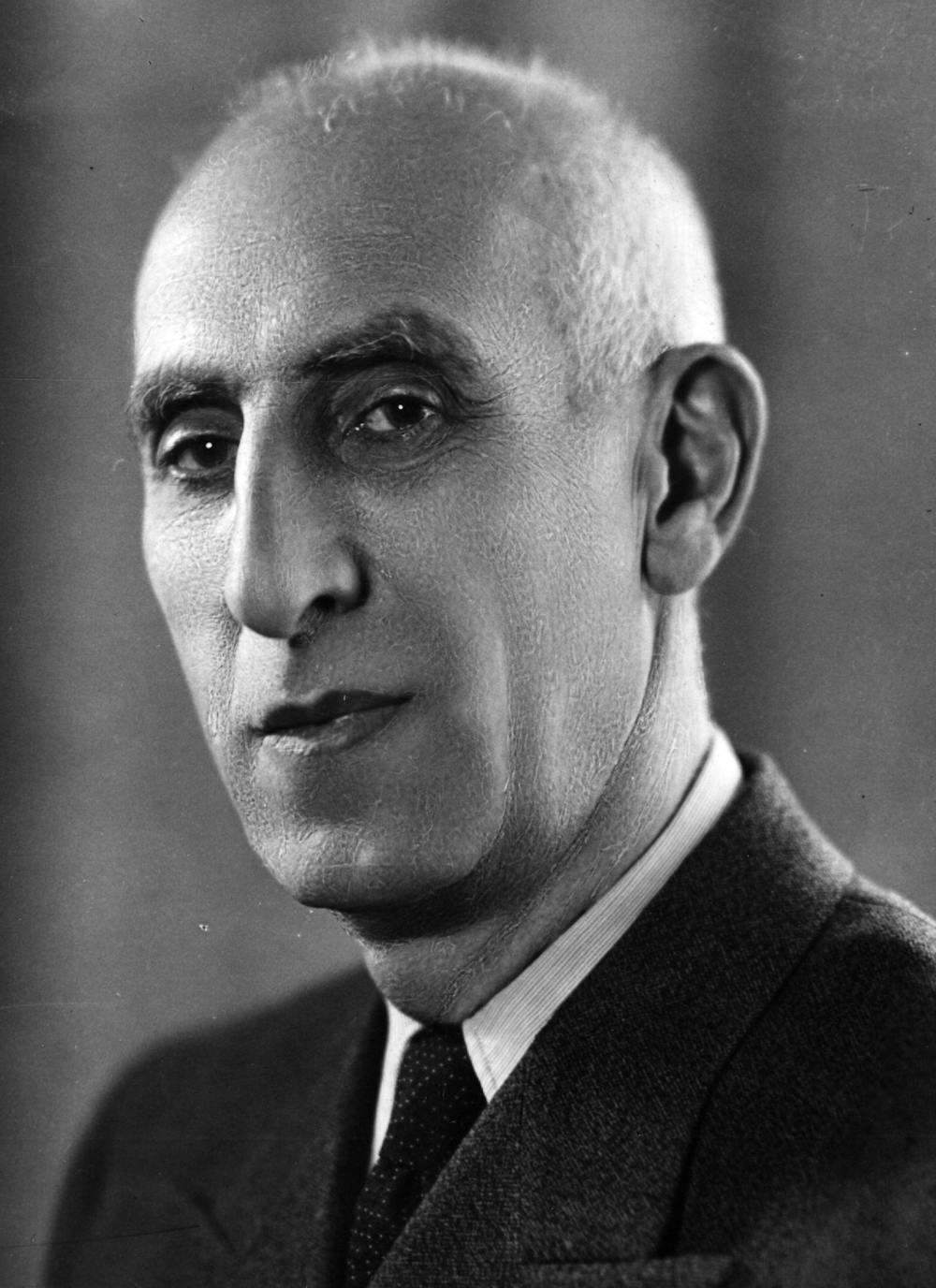
    In 1953, the shah was forced into exile under the radical nationalist and reformist impulse of the democratically elected Prime Minister Mohammad Mosaddegh. He was shortly returned to his throne through a CIA-orchestrated coup.

    Despite all his nationalist, pro-Western, modernising efforts, the shah could not shake off the indignity of having been re-throned with the help of a foreign power.

    The revolution against him 25 years later was spearheaded by pro-democracy elements. But it was made up of many groups, including liberalists, communists and Islamists, with no uniting leader.

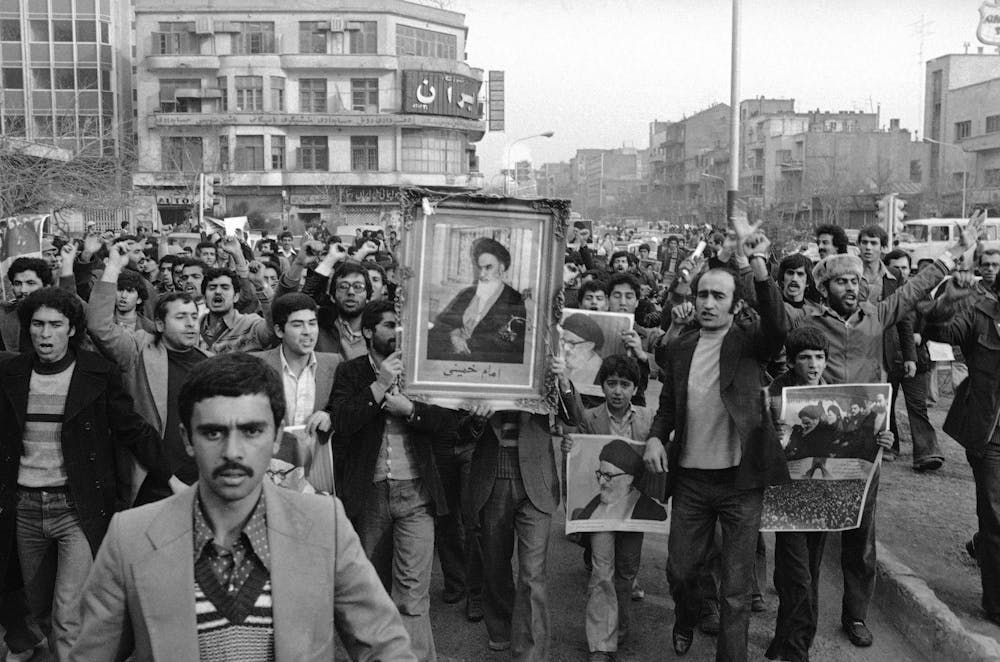
    The Shia clerical group (ruhaniyat), led by the Shah’s religious and political opponent, Ayatollah Ruhollah Khomeini, proved to be best organised and capable of providing leadership to the revolution. Khomeini had been in exile from the early 1960s (at first in Iraq and later in France), yet he and his followers held considerable sway over the population, especially in traditional rural areas.

    When US President Jimmy Carter’s administration found it could no longer support the shah, he left the country and went into exile in January 1979. This enabled Khomeini to return to Iran to a tumultuous welcome.

    Birth of the Islamic Republic

    In the wake of the uprising, Khomeini and his supporters, including the current supreme leader Ayatollah Ali Khamenei, abolished the monarchy and transformed Iran to a cleric-dominated Islamic Republic, with anti-US and anti-Israel postures. He ruled the country according to his unique vision of Islam.

    Khomeini denounced the US as a “Great Satan” and Israel as an illegal usurper of the Palestinian lands – Jerusalem, in particular. He also declared a foreign policy of “neither east, nor west” but pro-Islamic, and called for the spread of the Iranian revolution in the region.

    Khomeini not only changed Iran, but also challenged the US as the dominant force in shaping the regional order. And the US lost one of the most important pillars of its influence in the oil-rich and strategically important Persian Gulf region.

    Fear of hostile American or Israeli (or combined) actions against the Islamic Republic became the focus of Iran’s domestic and foreign policy behaviour.

    A new supreme leader takes power

    Khomeini died in 1989. His successor, Ayatollah Ali Khamenei, has ruled Iran largely in the same jihadi (combative) and ijtihadi (pragmatic) ways, steering the country through many domestic and foreign policy challenges.

    Khamenei fortified the regime with an emphasis on self-sufficiency, a stronger defence capability and a tilt towards the east – Russia and China – to counter the US and its allies. He has stood firm in opposition to the US and its allies – Israel, in particular. And he has shown flexibility when necessary to ensure the survival and continuity of the regime.

    Khamenei wields enormous constitutional power and spiritual authority.

    He has presided over the building of many rule-enforcing instruments of state power, including the expansion of the Islamic Revolutionary Guard Corps and its paramilitary wing, the Basij, revolutionary committees, and Shia religious networks.

    The Shia concept of martyrdom and loyalty to Iran as a continuous sovereign country for centuries goes to the heart of his actions, as well as his followers.

    Khamenei and his rule enforcers, along with an elected president and National Assembly, are fully cognisant that if the regime goes down, they will face the same fate. As such, they cannot be expected to hoist the white flag and surrender to Israel and the US easily.

    However, in the event of the regime falling under the weight of a combined internal uprising and external pressure, it raises the question: what is the alternative?

    The return of the shah?

    Many Iranians are discontented with the regime, but there is no organised opposition under a nationally unifying leader.

    The son of the former shah, the crown prince Reza Pahlavi, has been gaining some popularity. He has been speaking out on X in the last few days, telling his fellow Iranians:

    The end of the Islamic Republic is the end of its 46-year war against the Iranian nation. The regime’s apparatus of repression is falling apart. All it takes now is a nationwide uprising to put an end to this nightmare once and for all.

    Since the deposition of his father, he has lived in exile in the US. As such, he has been tainted by his close association with Washington and Jerusalem, especially Netanyahu.

    If he were to return to power – likely through the assistance of the US – he would face the same problem of political legitimacy as his father did.

    What does the future hold?

    Iran has never had a long tradition of democracy. It experienced brief instances of liberalism in the first half of the 20th century, but every attempt at making it durable resulted in disarray and a return to authoritarian rule.

    Also, the country has rarely been free of outside interventionism, given its vast hydrocarbon riches and strategic location. It’s also been prone to internal fragmentation, given its ethnic and religious mix.

    The Shia Persians make up more than half of the population, but the country has a number of Sunni ethnic minorities, such as Kurds, Azaris, Balochis and Arabs. They have all had separatist tendencies.

    Iran has historically been held together by centralisation rather than diffusion of power.

    Should the Islamic regime disintegrate in one form or another, it would be an mistake to expect a smooth transfer of power or transition to democratisation within a unified national framework.

    At the same time, the Iranian people are highly cultured and creative, with a very rich and proud history of achievements and civilisation.

    They are perfectly capable of charting their own destiny as long as there aren’t self-seeking foreign hands in the process – something they have rarely experienced.

    Amin Saikal does not work for, consult, own shares in or receive funding from any company or organisation that would benefit from this article, and has disclosed no relevant affiliations beyond their academic appointment.

    ref. Iran’s long history of revolution, defiance and outside interference – and why its future so uncertain – https://theconversation.com/irans-long-history-of-revolution-defiance-and-outside-interference-and-why-its-future-so-uncertain-259270

    MIL OSI AnalysisEveningReport.nz

  • MIL-OSI USA: Reps. Cleaver, Harshbarger Introduce Bipartisan Bill to Expand Paramedicine Services Nationwide

    Source: United States House of Representatives – Congressman Emanuel Cleaver II (5th District Missouri)

    (Washington, D.C.) – U.S. Representatives Emanuel Cleaver, II (D-MO) and Diana Harshbarger (R-TN) have introduced bipartisan legislation to strengthen and expand paramedicine services in rural communities across the country. The Community Paramedicine Act of 2025 (CPA) would expand the scope of rural health grants to include mobile integrated health and community paramedicine grantees, enabling Americans in rural communities to receive centralized, mobile, and preventative care through local paramedics, an increasingly popular initiative in healthcare known as Community Paramedicine.

    “Across Missouri, rural communities are struggling to access quality healthcare that is both affordable and convenient, with far too many Missourians having to travel long distances to get the care they need, which can often be as costly as it is frustrating for families,” said Congressman Cleaver. “This challenge requires innovative solutions that help bring physicians directly to the people—and that’s precisely what community paramedicine seeks to do. I’m proud to introduce the Community Paramedicine Act with Congresswoman Harshbarger to expand this popular and growing practice to more communities, so Missouri families can get the care they deserve at lower costs and right at their door.”

    “Mobile Integrated Healthcare-Community Paramedicine is a smart, innovative solution that delivers the right care at the right time — especially for patients with chronic conditions or in rural and underserved areas,” said Rep. Harshbarger. “As co-chair of the Congressional Bipartisan Rural Health Caucus, I’m proud to help introduce this budget-neutral bill, which will empower our emergency medical services professionals and firefighters to build these community programs for reducing unnecessary emergency room visits, improving health outcomes, and potentially saving billions in healthcare costs.”

    “Early medical intervention can save the health care system billions by addressing time-critical issues and preventing costly emergency care and hospitalizations,” said Chief Chris Way, President of the National Association of Emergency Medical Technicians. “Mobile Integrated Healthcare-Community Paramedicine (MIH-CP) is an innovative way for EMTs and Paramedics to provide patient-centered mobile care outside the hospital to lower health care costs and improve patient outcomes. MIH-CP helps to address the gaps in patient care and prevent acute exacerbations of illness, instead of waiting to provide medical care until patients need 911 response. NAEMT applauds Representative Diana Harshberger (R-TN) and Representative Emanuel Cleaver (D-MO) for introducing the Community Paramedicine Act, which would provide funding opportunities for EMS agencies across the nation to provide evidence-based, cost-saving, and innovative ways for EMTs and Paramedics to provide patient-centered care outside of the hospital and improve patients’ health status, in collaboration with other health care professionals and providers. We ask Congress to pass this bill and help create, maintain, and sustain MIH-CP programs across our country.”

    For some patients – including those who are uninsured, underinsured, homebound, medically fragile, or live in rural areas – their access to care relies primarily on 9-1-1, EMTs, and the hospital emergency room. Over 57 million Americans must travel a lengthy distance to reach their nearest physician, with rural Americans experiencing the most travel time, as only 11% of physicians work in rural settings. With a demand for physician services that outpaces available appointments, many residents are currently left medically underserved. 

    Community Paramedicine combats this by improving care accessibility for underserved communities and bringing health care to Americans’ doorsteps. Community Paramedicine programs can provide check-ups, health education, preventative care, and transportation. These services improve patient access to diagnostic testing, specialized service referrals, and transportation to medical appointments. 

    Moreover, studies have shown that Community Paramedicine programs can save thousands of dollars per year per patient by helping people lead healthier lives and decreasing healthcare emergencies. For example, Community Paramedicine visits can help a person living with heart failure, asthma, COPD, or diabetes avoid acute emergencies. A study in eastern Massachusetts showed that their Community Paramedicine model saved over $1,900 per case and nearly $6 million in a year.

    The Community Paramedicine Act of 2025 would expand the scope of rural health grants authorized under Sec. 330A of the Public Health Services Act to include mobile integrated health and community paramedicine grantees. As of now, Rural Health Care Services Outreach Grants, Rural Health Network Development Grants, and Small Health Care Provider Quality Improvement Grants share the authorization under Sec. 330A. None of these, however, address community paramedicine. The Community Paramedicine Act of 2025 would add a fourth grant program to the existing authorization. The legislation budget neutral and does not authorize any new spending.

    The Community Paramedicine Act of 2025 is endorsed by the American Ambulance Association (AAA), National Association of Emergency Medical Technicians (NAEMT), International Association of Fire Fighters (IAFF), International Association of Fire Chiefs, National Rural Health Association, Mid-America Regional Council Emergency Rescue (MERCER), Missouri Ambulance Association, Missouri Emergency Medical Services Association, Kansas Emergency Medical Services Association, Tennessee Association of EMS Providers.

    Official text of the Community Paramedicine Act of 2025 is available here.

    Emanuel Cleaver, II is the U.S. Representative for Missouri’s Fifth Congressional District, which includes Kansas City, Independence, Lee’s Summit, Raytown, Grandview, Sugar Creek, Greenwood, Blue Springs, North Kansas City, Gladstone, and Claycomo. He is a member of the exclusive House Financial Services Committee and Ranking Member of the House Subcommittee on Housing and Insurance.

    MIL OSI USA News

  • MIL-OSI Australia: ACT Budget 2025-26: Major Investment in ACT Policing and Community Safety

    Source: Northern Territory Police and Fire Services


    As part of ACT Government’s ‘One Government, One Voice’ program, we are transitioning this website across to our . You can access everything you need through this website while it’s happening.


    Released 18/06/2025

    The ACT Government is delivering through the 2025–26 ACT Budget to strengthen ACT Policing and support community safety.

    This investment supports the workforce and infrastructure needed to ensure ACT Policing can continue responding to the needs of a growing city and keep our community safe.

    The Budget includes $112 million over four years to fund the recently agreed Australian Federal Police Enterprise Agreement and support continued service delivery by ACT Policing. This investment will support salary increases, leave entitlements and allowances for ACT Policing staff, in addition to enabling services.

    Treasurer Chris Steel said the investments are part of a broader commitment to modernise and future-proof policing infrastructure and services.

    “This Budget supports a professional and modern ACT Police service, with investment in workforce, equipment and long-term planning,” Mr Steel said.

    “We’re ensuring ACT Policing is resourced to respond to community needs, support public safety, and deliver outcomes for all Canberrans.”

    The Budget provides more than $3.7 million in funding to plan and progress infrastructure upgrades across ACT Policing:

    • Detailed design for critical infrastructure upgrades to assets at Winchester and City Police Stations, including mechanical, electrical, fire and hydraulic systems
    • Detailed planning and analysis for future police accommodation in the Woden Patrol Zone and a Molonglo Police Station

    Minister for Police, Fire and Emergency Services, Dr Marisa Paterson said the investment recognises the critical role police officers play in keeping Canberrans safe and delivers key recommendations from the Sexual Assault (Police) Review.

    “This Budget delivers support our frontline police officers to ensure ACT Policing is a competitive, modern and well-resourced police force,” Dr Paterson said.

    “We’re also funding a new initiative which implements a priority recommendation of the Sexual Assault (Police) Review. Sexual Assault Advocates embedded within ACT Police will support victim survivors in their engagement with the justice system.

    “This is a critical step in improving our justice response to better support victim survivors.”

    The Government is investing $6.45 million over two years to implement the Sexual Assault Advocate Pilot Program, a key recommendation of the Sexual Assault (Police) Review. This includes:

    • Establishing a fourth Sexual Assault and Child Abuse Team within ACT Policing to manage high investigative caseloads
    • Funding for dedicated sexual assault advocates to support victim-survivors during police engagement
    • A new Witness Assistant Scheme officer in the Office of the Director of Public Prosecutions

    These reforms will improve support and outcomes for victim-survivors of sexual violence in Canberra.

    – Statement ends –

    Chris Steel, MLA | Marisa Paterson, MLA | Media Releases

    «ACT Government Media Releases | «Minister Media Releases

    MIL OSI News

  • MIL-OSI Australia: Celebrating a Decade of the NTPFES Cadet Program

    Source: Northern Territory Police and Fire Services

    The Northern Territory Police Force and the Northern Territory Fire and Emergency Services proudly celebrates the ten-year anniversary of its NT Police, Fire and Emergency Services (NTPFES) Cadet Program — a unique and impactful initiative that has provided over a decade of vocational training, personal growth, and career pathways for Territory students.

    Launched in 2015, the NTPFES Cadet Program has empowered students in Years 11 and 12 to gain firsthand experience in emergency services while achieving nationally recognised qualifications. The 18-month program includes the completion of the Certificate II in Community Engagement and the Certificate III in Business, delivered through the NTPFES College and Charles Darwin University.

    Over the past ten years, hundreds of young Territorians have graduated from the program across Darwin and Alice Springs, with the most recent squads graduating in Darwin this afternoon and in Alice Springs last Thursday 12 June. This program allows students to develop critical skills through outdoor leadership camps, cultural learning visits to Indigenous communities, community volunteering and immersive work placements within frontline services teams.

    Superintendent of Induction Division Christopher Board, reflected on the milestone, “The NTPFES Cadet Program is an outstanding initiative that has changed lives and strengthened our connection with the community. It gives young Territorians a rare opportunity to grow, learn and lead—while laying the groundwork for future careers in emergency services and beyond. Ten years on, we’re incredibly proud of what this program has achieved.

    “237 Cadets have graduated through this program from Darwin and Alice Springs since 2015, with at least 65 having progressed through civilian or uniformed employment within the NT Police Force and NT Fire and Emergency Services. 16 of these have become either Constables, Aboriginal Community Police Officers or Police Auxiliaries, and one has joined the NTES.”

    Acting Commissioner for NT Fire and Emergency Services Collene Bremner said the program gave the cadets a well-rounded understanding of the NT’s emergency services.

    “As part of the program, the cadets complete placements with the NT Fire and Rescue Service (NTFRS) and NT Emergency Service (NTES). With the NTFRS, they learn critical skills in road crash rescue and how to operate breathing apparatus (BA), and with NTES they complete necessary inductions, rescue foundations and gain boating experience to learn about vessels being used for evacuations, cargo transport and flood rescues.”

    Charles Darwin University (CDU) Vice-Chancellor and President, Professor Scott Bowman AO said, “CDU is incredibly proud to support the NTPFES Cadet Program, which has delivered real-world skills, confidence and career opportunities to young Territorians for a decade.

    “Together with NTPFES and the NT Department of Education and Training, CDU is helping to build a skilled, community-minded workforce ready to lead in emergency services and beyond.”

    NT Department of Education and Training Deputy Chief Executive for Skills, Pathways and Quality, Cathy White said the cadet program helped shape the lives of many young Territorians.

    “The Department congratulates the Northern Territory Police Force, the Northern Territory Fire and Emergency Services and Charles Darwin University for their collaboration through this important training opportunity,” she said.

    “This cadet program opens many opportunities for young people who are now utilising their knowledge to pursue diverse careers in the Territory.”

    The Cadet Program not only fosters civic responsibility and leadership in participants, but also serves as a pathway into government careers.

    As we celebrate this important milestone, the organisation extends heartfelt thanks to all past and present cadets, parents, staff, schools and community partners who have contributed to the success of the program.

    MIL OSI News

  • India never accepted mediation, does not accept it, will never accept it: PM Modi to Trump

    Source: Government of India

    Source: Government of India (4)

    Prime Minister Narendra Modi, in a strong message to Washington, told US President Donald Trump that India rejects any form of mediation on issues concerning Pakistan, Foreign Secretary Vikram Misri said in a statement on Wednesday.

    Reiterating India’s long-standing position, Misri said, “Prime Minister Modi stressed that India has never accepted mediation, does not accept it, and will never accept it. There is complete political unanimity in India on this issue.”

    According to the foreign secretary, the two leaders spoke over the phone for 35 minutes — their first conversation since the Pahalgam terror attack and India’s response through Operation Sindoo

    The call took place after a scheduled in-person meeting between the two leaders on the sidelines of the G7 Summit was cancelled due to Trump’s early return to the US.

    “The phone conversation was held at the request of President Trump,” said Misri, adding that PM Modi used the opportunity to detail India’s measured military response to the April 22 terror attack in Pahalgam, which killed 26 tourists.

    “Prime Minister Modi said that on the night of May 6-7, India had targeted only terrorist hideouts in Pakistan and Pakistan-occupied Kashmir. India’s actions were very measured, precise, and non-escalatory,” Misri said.

    “India had made it clear that it would respond to Pakistan’s ‘goli’ with ‘gola’ — a strong, proportionate military response,” he added.

    The foreign secretary also said that on the night of May 9, US Vice President Vance conveyed to PM Modi that Pakistan could launch a major retaliatory strike.

    “Prime Minister Modi told him clearly that if this happened, India would respond with even greater force. India’s strong counterattack on the night of May 9-10 May caused heavy damage to Pakistan’s military. Several of their airbases were rendered inoperable,” Misri said. He noted that, following India’s retaliation, Pakistan approached India with a ceasefire request.

    “Prime Minister Modi stated that the ceasefire was agreed to only at Pakistan’s request and that India does not want mediation. He made it clear that at no point during this episode were India-US trade talks or third-party mediation discussed,” Misri said.

    “The halt to military action was discussed directly between the two countries through existing military channels,” he added.

    President Trump, according to Misri, fully understood India’s position and expressed support for its fight against terrorism. The prime minister also informed Trump that India would consider any terror act emanating from Pakistan as an act of war, and that Operation Sindoor remains ongoing.

    Apart from regional security, the two leaders also discussed broader international developments, including the Iran-Israel conflict and the Russia-Ukraine war. Both leaders agreed on the need for direct dialogue between Moscow and Kyiv.

    “They also discussed the Indo-Pacific and the vital role of the QUAD. The PM invited President Trump to India for the next QUAD summit, and President Trump accepted the invitation,” Misri said.

    President Trump also invited PM Modi to visit Washington, but due to a pre-existing schedule, PM Modi was unable to accept the invitation. Both leaders agreed to meet in the near future, Misri said.

  • Trump calls for Iran’s ‘unconditional surrender’ as Israel-Iran air war enters sixth day

    Source: Government of India

    Source: Government of India (4)

    Iran and Israel launched new missile strikes at each other on Wednesday as the air war between the two longtime enemies entered a sixth day despite a call from U.S. President Donald Trump for Tehran’s unconditional surrender.

    The Israeli military said two barrages of Iranian missiles were launched toward Israel in the first two hours of Wednesday morning. Explosions were heard over Tel Aviv.

    Israel told residents in a southwestern area of Tehran to evacuate so its air force could strike Iranian military installations. Iranian news websites said Israel was attacking a university linked to Iran’s Revolutionary Guards in the east of the capital.

    Iranian news websites said Israel was also attacking a university linked to Iran’s Revolutionary Guards in the country’s east, and the Khojir ballistic missile facility near Tehran, which was also targeted by Israeli airstrikes last October.

    The U.S. Office of the Director of National Intelligence says Iran is armed with the largest number of ballistic missiles in the Middle East. Iran has said its ballistic missiles are an important deterrent and retaliatory force against the U.S., Israel and other potential regional targets.

    Trump warned on social media on Tuesday that U.S. patience was wearing thin. While he said there was no intention to kill Iran’s leader Ayatollah Ali Khamenei “for now,” his comments suggested a more aggressive stance toward Iran as he weighs whether to deepen U.S. involvement.

    “We know exactly where the so-called ‘Supreme Leader’ is hiding,” he wrote on Truth Social. “We are not going to take him out (kill!), at least not for now … Our patience is wearing thin.”

    Three minutes later Trump posted, “UNCONDITIONAL SURRENDER!”

    Trump’s sometimes contradictory and cryptic messaging about the conflict between close U.S. ally Israel and longtime foe Iran has deepened the uncertainty surrounding the crisis. His public comments have ranged from military threats to diplomatic overtures, not uncommon for a president known for an often erratic approach to foreign policy.

    A source familiar with internal discussions said Trump and his team are considering a number of options, including joining Israel on strikes against Iranian nuclear sites.

    A White House official said Trump spoke to Israeli Prime Minister Benjamin Netanyahu by phone on Tuesday.

    Trump also met for 90 minutes with his National Security Council on Tuesday afternoon to discuss the conflict, a White House official said. Details were not immediately available.

    The U.S. is deploying more fighter aircraft to the Middle East and extending the deployment of other warplanes, three U.S. officials told Reuters. The U.S. has so far only taken indirect actions in the current conflict with Iran, including helping to shoot down missiles fired toward Israel.

    A source with access to U.S. intelligence reports said Iran has moved some ballistic missile launchers, but it is difficult to determine if they were targeting U.S. forces or Israel.

    However, Britain’s leader Keir Starmer, speaking at the Group of Seven nations summit in Canada that Trump left early, said there was no indication the U.S. was about to enter the conflict.

    REGIONAL INFLUENCE WEAKENS

    Khamenei’s main military and security advisers have been killed by Israeli strikes, hollowing out his inner circle and raising the risk of strategic errors, according to five people familiar with his decision-making process.

    With Iranian leaders suffering their most dangerous security breach since the 1979 Islamic Revolution, the country’s cybersecurity command banned officials from using communications devices and mobile phones, Fars news agency reported.

    Israel launched a “massive cyber war” against Iran’s digital infrastructure, Iranian media reported.

    Ever since Iran-backed Hamas attacked Israel on October 7, 2023, and triggered the Gaza war, Khamenei’s regional influence has waned as Israel has pounded Iran’s proxies – from Hamas in Gaza to Hezbollah in Lebanon, the Houthis in Yemen and militias in Iraq. Iran’s close ally, Syria’s autocratic president Bashar al-Assad, has been ousted.

    Israel launched its air war, its largest ever on Iran, on Friday after saying it had concluded the Islamic Republic was on the verge of developing a nuclear weapon.

    Iran denies seeking nuclear weapons and has pointed to its right to nuclear technology for peaceful purposes, including enrichment, as a party to the international Non-Proliferation Treaty.

    Israel, which is not a party to the NPT, is the only country in the Middle East believed to have nuclear weapons. Israel does not deny or confirm that.

    Netanyahu has stressed that he will not back down until Iran’s nuclear development is disabled, while Trump says the Israeli assault could end if Iran agrees to strict curbs on enrichment.

    Before Israel’s attack began, the 35-nation board of governors of the U.N. nuclear watchdog, the International Atomic Energy Agency, declared Iran in breach of its non-proliferation obligations for the first time in almost 20 years.

    The IAEA said on Tuesday an Israeli strike directly hit the underground enrichment halls at the Natanz facility.

    Israel says it now has control of Iranian airspace and intends to escalate the campaign in coming days.

    But Israel will struggle to deal a knock-out blow to deeply buried nuclear sites like Fordow, which is dug beneath a mountain, without the U.S. joining the attack.

    Iranian officials have reported 224 deaths, mostly civilians, while Israel said 24 civilians had been killed. Residents of both countries have been evacuated or fled.

    Global oil markets are on high alert following strikes on sites including the world’s biggest gas field, South Pars, shared by Iran and Qatar.

    (Reuters)

  • Israeli tanks kill 59 people in Gaza crowd trying to get food aid, medics say

    Source: Government of India

    Source: Government of India (4)

    Israeli tanks fired into a crowd trying to get aid from trucks in Gaza on Tuesday, killing at least 59 people, according to medics, in one of the bloodiest incidents yet in mounting violence as desperate residents struggle for food.

    Video shared on social media showed around a dozen mangled bodies lying in a street in Khan Younis in the southern Gaza Strip. The Israeli military, at war with Hamas-led Palestinian militants in Gaza since October 2023, acknowledged firing in the area and said it was looking into the incident.

    Witnesses interviewed by Reuters said Israeli tanks had launched at least two shells at a crowd of thousands who had gathered on the main eastern road through Khan Younis in the hope of obtaining food from aid trucks that use the route.

    “All of a sudden, they let us move forward and made everyone gather, and then shells started falling, tank shells,” said Alaa, an eyewitness, interviewed by Reuters at Nasser Hospital, where wounded victims lay sprawled on the floor and in corridors due to the lack of space.

    “No one is looking at these people with mercy. The people are dying, they are being torn apart, to get food for their children. Look at these people, all these people are torn to get flour to feed their children.”

    Palestinian medics said at least 59 people were killed and 221 wounded in the incident, at least 20 of them in critical condition. Casualties were being rushed into the hospital in civilian cars, rickshaws and donkey carts. It was the worst death toll in a single day since aid resumed in Gaza in May.

    In a statement, the Israel Defense Forces said: “Earlier today, a gathering was identified adjacent to an aid distribution truck that got stuck in the area of Khan Younis, and in proximity to IDF troops operating in the area.

    “The IDF is aware of reports regarding a number of injured individuals from IDF fire following the crowd’s approach. The details of the incident are under review. The IDF regrets any harm to uninvolved individuals and operates to minimise harm as much as possible to them while maintaining the safety of our troops.”

    Medics said at least 14 other people were also killed by Israeli gunfire and airstrikes elsewhere in the densely populated enclave, taking Tuesday’s overall death toll to at least 73.

    The health ministry said 397 Palestinians, among those trying to get food aid, had been killed and more than 3,000 were wounded since late May.

    The incident was the latest in nearly daily large-scale killings of Palestinians seeking aid in the three weeks since Israel partially lifted a total blockade on the territory it had imposed for nearly three months.

    Israel has been channelling much of the aid it is now allowing into Gaza through a new U.S.- and Israeli-backed group, the Gaza Humanitarian Foundation, which operates a handful of distribution sites in areas guarded by Israeli forces.

    “The incident in question did not occur at a GHF site, but rather near a United Nations World Food Programme (WFP) location,” the foundation said of the incident on Tuesday.

    The United Nations rejects the GHF delivery system as inadequate, dangerous and a violation of humanitarian impartiality rules. Israel says it is needed to prevent Hamas fighters from diverting aid, which Hamas denies.

    Gaza authorities say hundreds of Palestinians have been killed trying to reach GHF sites.

    The GHF said in a press release late on Monday that it had distributed more than three million meals at its four distribution sites without incident.

    The Gaza war was triggered in October 2023, when Palestinian Hamas militants attacked Israel, killing 1,200 people and taking 251 hostages, according to Israeli allies. Israel’s subsequent military assault on Gaza has killed nearly 55,000 Palestinians, according to Gaza’s health ministry, while displacing nearly the entire population of 2.3 million and causing a hunger crisis.

    Since last week, Gaza Palestinians have kept an eye on the new air war between Israel and Iran, which has long been a major supporter of Hamas.

    Gaza residents have circulated images of buildings in Israel wrecked by Iranian missiles, some saying they are happy to see Israelis experiencing a measure of the fear of airstrikes that they have endured for 20 months.

    (Reuters)

  • MIL-OSI Asia-Pac: LCQ20: Carbon emission reduction

    Source: Hong Kong Government special administrative region

    Following is a question by the Hon Adrian Ho and a written reply by the Secretary for Environment and Ecology, Mr Tse Chin-wan, in the Legislative Council today (June 18):
      
    Question:
     
    In October 2021, the Government announced Hong Kong’s Climate Action Plan 2050, which aims to reduce Hong Kong’s carbon emissions by half from the 2005 level before 2035 and outlines four major decarbonisation strategies, namely net-zero electricity generation, energy saving and green buildings, green transport and waste reduction. In this connection, will the Government inform this Council:
     
    (1) whether it will duly adjust its green policies in response to Hong Kong’s actual carbon emissions in recent years to accelerate the overall pace of decarbonisation in Hong Kong and thus achieve its carbon reduction targets as scheduled;
     
    (2) of the respective performances of various government departments over the past five years in key carbon reduction measures, such as energy saving, emission reduction, consumption and carbon emission reduction, as well as green procurement; whether government departments have set carbon reduction targets and timetables for the series of policy measures implemented in recent years, including the establishment of the Green Technology and Finance Development Committee and the implementation of the Uncertificated Securities Market initiative;
     
    (3) as there are views that the broad participation of businesses in decarbonisation efforts is vital for Hong Kong to achieve carbon neutrality, how many businesses and organisations have, as of May this year, joined the “Green Hong Kong.Carbon Audit” campaign by signing the Carbon Reduction Charter and agreeing to undertake and implement activities in support of reducing greenhouse gas emissions; whether it has assessed the effectiveness of the participating businesses and organisations in formulating and implementing carbon reduction measures;
     
    (4) as it is learnt that the Hong Kong Exchanges and Clearing Limited established the Hong Kong International Carbon Market Council and subsequently launched an international carbon marketplace “Core Climate” in 2022, whether Government is aware of the current operational status of both the Council and Core Climate, as well as their respective effectiveness in promoting the implementation of decarbonisation measures among businesses in Hong Kong; and
     
    (5) given that green transport is one of the Government’s decarbonisation strategies, which includes achieving zero vehicular emissions and zero carbon emissions in the transport sector before 2050 through promoting the electrification of vehicles, and ceasing new registrations of fuel-propelled and hybrid private cars in or before 2035, whether the Government has assessed if the current progress of such efforts will enable the carbon reduction targets to be achieved on schedule?
     
    Reply:
     
    President,
     
    In consultation with the Financial Services and the Treasury Bureau, the reply to the question raised by the Hon Adrian Ho is as follows:
     
    (1) The Government has proposed four major decarbonisation strategies in the Hong Kong’s Climate Action Plan 2050, namely net-zero electricity generation, energy saving and green buildings, green transport and waste reduction, to lead Hong Kong to halve its carbon emissions from the 2005 level by 2035, with a view to achieving carbon neutrality before 2050. With our efforts in recent years in these four decarbonisation strategies, Hong Kong is making steady progress towards the carbon reduction target of 2035.
     
    Hong Kong’s total greenhouse gas (GHG) emissions have been on a downward trend after reaching its peak in 2014. With the gradual replacement of coal-fired power generation by natural gas and zero-carbon energy, the popularisation of electric vehicles, the reduction of municipal solid waste disposal, and the increased recovery and use of landfill gas for energy generation in Hong Kong, the total GHG emissions in 2023 were reduced by about 20 per cent from the 2005 level and about a quarter from the peak in 2014. The per capita GHG emissions in 2023 was 4.58 tonnes, which is a new low since 1990. It is nearly 30 per cent lower than those in 2005 and 2014, and is about a quarter of that of the United States and 60 per cent of that of the European Union.

    Combating climate change is a long-term task. In line with the spirit of the Paris Agreement, we will review the Hong Kong’s Climate Action Plan 2050 about every five years to update the strategies and targets for decarbonisation and other climate actions, and expect to release the review result in 2026.
     
    (2) To enhance the performance of government departments in energy conservation and carbon emissions, the Government has promulgated relevant internal circulars and guidelines to require departments to perform well in the area of environmental protection in their daily operations. Specific measures include energy conservation, adoption of renewable energy (RE), waste reduction and recycling, installation of electric vehicle charging facilities, water conservation and recycling, procurement of green products and services, etc. with a view to reducing carbon emissions. These government circulars and guidelines cover environmental targets for government buildings, carbon emission management, preparation of environmental reports by government departments, as well as green procurement, etc.
     
    The Government strives to improve the overall energy performance of government buildings and infrastructure by more than 6 per cent in 2024-25, compared to the 2018-19 baseline. To this end, the Electrical and Mechanical Services Department (EMSD) has requested all bureaux and departments (B/Ds) to provide information on the energy consumption and RE of government buildings and facilities annually, and organised briefing sessions to discuss energy performance, and provides technical advice on energy-saving measures and planning of RE projects. As at 2022-23, the Government’s overall energy performance has improved by about 5.3 per cent. While the data for 2023-24 is still being compiled, based on the recent trends in energy performance, the Government is confident that the target of over 6 per cent improvement can be achieved. The Environment and Ecology Bureau (EEB) will continue to encourage all B/Ds to take measures to enhance energy performance and explore means to leverage innovative technologies to promote cost-effective solutions for improving energy efficiency in government buildings. 
    (3) The Government launched the “Green Hong Kong.Carbon Audit” campaign with a view to encouraging organisations of various sectors to support greenhouse gas emission reduction activities. The participating organisations would, according to their respective situations, formulate and implement carbon reduction measures such as promoting carbon audits, establishing environmental management systems, and installing and replacing energy-efficient office equipment. Currently, over 140 organisations, including property management companies, universities, professional bodies, non-profit-making organisations and other business organisations, have joined the “Green Hong Kong.Carbon Audit” campaign. In addition to raising the awareness of participating organisations in carbon reduction and encouraging these organisations to conduct carbon audits and implement carbon reduction plans, the campaign also helps corporates prepare for addressing new climate-related disclosure requirements.
     
    The Government launched in December last year the Roadmap on Sustainability Disclosure in Hong Kong (Roadmap), injecting new impetus into the carbon management work of large publicly accountable entities (PAEs) (including large listed issuers and non-listed financial institutions carrying a significant weight). As the first step, Hong Kong Exchanges and Clearing Limited (HKEX) has introduced new climate-related disclosures requirements (New Climate Requirements) which have been developed based on International Financial Reporting Standards (IFRS) S2 Climate-related Disclosures. The New Climate Requirements, covering, among others, mandating all listed issuers to disclose scope 1 and scope 2 GHG emissions, have been implemented in phases starting from January 2025. 
    (4) HKEX launched the Hong Kong International Carbon Market Council (the Council) in July 2022, with members comprising Mainland, Hong Kong, and international corporates and financial institutions, to facilitate the development of an efficient and effective Hong Kong-based international carbon market with best-in-class market infrastructure, products and services, promoting the transition to a low-carbon economy in the region.
     
    Subsequently, HKEX launched the Core Climate, an international carbon marketplace, in October in the same year, facilitating effective and transparent trading of carbon credits and instruments to support the global transition to Net Zero. It offers quality carbon credits from internationally-certified projects in Asia, South America and Africa, covering forestry, solar, wind and biomass initiatives. Core Climate is currently the only carbon marketplace that offers HKD and RMB settlement for the trading of international voluntary carbon credits. The platform’s participant number reached 100 by end of 2024. Core Climate has facilitated carbon credit trading by various corporates through the provision of trustworthy settlement services, enhancing efficiency and mitigating risks, including Cathay Pacific Airways Limited’s settlement of 50 000 tonnes of voluntary carbon credits in December last year, fully demonstrating the important role of Core Climate in supporting corporates on their climate transition journey. 
    (5) The Government is committed to promoting the use of electric vehicles (EV). The Hong Kong Roadmap on Popularisation of Electric Vehicles announced in March 2021 covers policy directions and targets in various areas in promoting the adoption of new energy transport technologies, so as to guide Hong Kong towards zero vehicular emissions before 2050. In recent years, Hong Kong has achieved remarkable results in the popularisation of EV. The number of EV was eightfold from about 14 000 five years ago to about 110 000 at the end of last year. Currently, about seven out of every ten newly registered private cars are electric private cars (e-PC), and the proportion is among the highest in the world, with a good growth momentum.
     
    Charging network is critical to the popularisation of EV. As of March 2025, Hong Kong had nearly 100 000 parking spaces equipped with charging infrastructure. There are 11 180 public charging facilities, of which about 2 000 are quick or fast charging facilities. We will continue to adopt a multi-pronged approach to increase charging facilities, including (i) tightening the exemption measure for calculating the gross floor area of buildings to encourage parking spaces in new private buildings to be equipped with charging infrastructure; and (ii) launching the $3.5 billion “EV-charging at Home Subsidy Scheme” to assist existing private residential buildings and housing estate car parks to install EV charging infrastructure. It is estimated that by mid-2027, more than 200 000 parking spaces in private buildings will be equipped with charging infrastructure.

    MIL OSI Asia Pacific News

  • MIL-OSI China: Regular Press Briefing of the Ministry of National Defense on June 9, 2025 2025-06-18 On the afternoon of June 9, 2025, Senior Colonel Jiang Bin, Deputy Director-General of the Information Office of China’s Ministry of National Defense and Spokesperson for the MND, responded to recent media queries concerning the military.

    Source: People’s Republic of China – Ministry of National Defense

    On the afternoon of June 9, 2025, Senior Colonel Jiang Bin, Deputy Director-General of the Information Office of China’s Ministry of National Defense (MND) and Spokesperson for the MND, responded to recent media queries concerning the military.

    On the afternoon of June 9, 2025, Senior Colonel Jiang Bin, Deputy Director-General of the Information Office of China’s Ministry of National Defense (MND) and Spokesperson for the MND, answers recent media queries concerning the military. (Photo by Li Xiaowei)

    (The following English text is for reference. In case of any divergence of interpretation, the Chinese text shall prevail.)

    Jiang Bin: First, I would like to announce two pieces of information.

    First, at the invitation of the Ministry of Defense of Mongolia, PLA Army soldiers will go to Mongolia in mid-June to participate in the Khaan Quest-2025 multinational peacekeeping exercise.

    Secondly, the 20th meeting of the Experts’ Working Group on Peacekeeping Operations under the ASEAN Defence Ministers’ Meeting Plus (ADMM-Plus) will be held in Nanjing from June 11 to 14. The member states and observer states of the ADMM-Plus, as well as the United Nations and the ASEAN Secretariat will send representatives to the event. Themed on “Technology and Innovation: Enhancing Military Cooperation in Peacekeeping Operations”, the meeting aims to deepen military mutual trust and security cooperation among regional countries and enhance their capacities for peacekeeping operations.

    Journalist: President Xi Jinping, Chairman of the Central Military Commission, recently signed an order to release the Regulation on Awarding Military Scientific Research. Please provide more information about this.

    Jiang Bin: As the first military-wide document on awarding military scientific research, the Regulation features three characteristics. First, it incorporates the standard of combat effectiveness throughout the entire awarding process, takes the contribution to the generation of combat capabilities as the primary criterion for evaluation, and assigns it the greatest weight. Second, it categorizes awards as theoretical research, scientific and technological advancement, and technological innovation, and establishes different levels of rewards including special, first-class, second-class, and third-class awards, constituting a well-structured military research award system with sound classification and evaluation methods. Third, it adjusts the awarding process, sets limits on the total number of awards, and emphasizes discipline and conduct. This will let researchers stay focused on their work and pursue innovation through solid efforts. The Regulation is expected to enhance innovation in military research, accelerate breakthroughs in military theory and defense technology, and support the building of a strong military in the new era with high-quality technology.

    Journalist: It is reported that the British government recently released its Strategic Defense Review, claiming that China is leveraging its economic, technological, and military capabilities to establish dominance in the Indo-Pacific, posing a “sophisticated and persistent challenge.” What’s your comment on this?

    Jiang Bin: China stays committed to the path of peaceful development and a defense policy that is defensive in nature. China has worked all along to uphold, promote and contribute to security in the Asia Pacific region. China’s development brings opportunities, not challenges, to other countries, and contributes stability and positive energy to world peace. We hope that the UK side adopts a right perception of China, respect facts, take a rational view of China and its military development, stop hyping up the so-called “China threat”, and do more to facilitate the development of bilateral ties and military relations between the two countries.

    On the afternoon of June 9, 2025, Senior Colonel Jiang Bin, Deputy Director-General of the Information Office of China’s Ministry of National Defense (MND) and Spokesperson for the MND, answers recent media queries concerning the military. (Photo by Li Xiaowei)

    Journalist:It is reported that the US is transporting a new batch of M1A2 tanks to Taiwan and plans to increase its arms sales to Taiwan over the next four years. New arms sales may surpass that of the first Trump administration. In addition, a former official of the US military said that about 500 US military personnel are operating in Taiwan, which is over ten times of the number previously disclosed by the US Congress. What’s your comment on this?

    Jiang Bin: This is another solid piece of evidence that the US side and the “Taiwan independence” separatist forces are taking efforts to violate China’s core interests, change the status quo across the Taiwan Strait and escalate regional tensions. Who is making provocations despite strong opposition from the Chinese side? Who is undermining cross-Strait stability and repeatedly stirring up troubles? We believe we all know the answers. The Chinese side is strongly dissatisfied and firmly opposed to this act.

    The Taiwan question is at the very core of China’s core interests, and is the first red line that must not be crossed in China-US relations. We urge the US side to stop its military collusion with Taiwan in any form; otherwise it will get burnt for playing with fire and gain more harm than good. We warn the DPP authorities that US weapons cannot save them, and soliciting external support for “Taiwan independence” will only fail. The PLA will continue to strengthen military training and combat readiness and enhance its capability to fight and win. We will take resolute measures to thwart “Taiwan independence” separatist activities and external interference.

    MIL OSI China News

  • Tehran Command Hit, Shadmani Killed: Iran-Israel War Enters Sixth Day

    Source: Government of India

    Source: Government of India (4)

    Israel’s military has confirmed the killing of Ali Shadmani, Iran’s wartime Chief of Staff and a close adviser to Supreme Leader Ayatollah Ali Khamenei, in an airstrike on a command center in Tehran. Shadmani had recently assumed leadership of Iran’s Khatam-al Anbiya Central Headquarters following the death of his predecessor during Israel’s initial offensive on Friday.

    Iran’s Cyber Security Command has accused Israel of launching a widespread cyber war targeting its digital infrastructure, reportedly disrupting essential services, according to the state-run IRIB news agency.

    Israel’s air force has struck deep within Tehran, killing one of Iran’s top military officers, Ali Shadmani — a high-ranking adviser to Supreme Leader Ayatollah Khamenei.

    Continuous and intense explosions are being heard in west Tehran, according to Iranian state news agency IRNA, as the conflict enters its sixth day with no signs of abating.

    Iran’s newly appointed army chief has issued a stark warning, saying the strikes carried out against Israel so far were merely a deterrent message.

    In a televised address, the new army chief General Abdolrahim Mousavi declared that punitive action will be carried out soon, signaling further escalation.

    Meanwhile, United States President Donald Trump made a social media call for Iran to surrender unconditionally.

    As tensions rise, the Pentagon announced it is speeding up the deployment of the USS Nimitz and other naval hardware to the Middle East, the second carrier strike group to be deployed to the area.

    Calls for restraint are growing louder. Egypt has urged both Iran and Israel to pull back, warning that continued escalation could destabilize the entire region.

    Speaking in Brussels, Jordan’s King Abdullah II addressed the European Parliament, cautioning that Israeli strikes on Iran risk igniting a far wider war.

    The G7 summit in Canada issued a collective call for a de-escalation of hostilities across the Middle East, including a ceasefire in Gaza. However, the group stopped short of directly calling for a ceasefire between Israel and Iran.

    Egyptian Foreign Minister Badr Abdelatty urged an immediate cessation of hostilities in phone calls with Iranian Foreign Minister Abbas Araghchi and US Middle East envoy Steve Witkoff. Egypt warned the conflict risked igniting broader regional upheaval, a message echoed by Jordan’s King Abdullah II, who, in an address to the European Parliament, stressed the potential for wider instability triggered by continued Israeli strikes on Iran.

    French President Emmanuel Macron revealed that a US-backed ceasefire proposal is on the table, though its contents remain undisclosed. Tehran, however, has reportedly maintained a hardline stance on nuclear negotiations, with some sources indicating Iran may only consider compromise after retaliatory action against Israel is complete.

    Israeli Prime Minister Benjamin Netanyahu claimed that ongoing operations have dealt a major blow to Iran’s nuclear program, saying, “I estimate we are sending them back a very, very long time.” Israel has reportedly targeted multiple nuclear facilities and eliminated several senior Iranian military commanders in a tightly coordinated campaign.

  • MIL-OSI Russia: China’s State Council takes charge of investigation into explosion at fireworks factory in central China

    Translation. Region: Russian Federal

    Source: People’s Republic of China in Russian – People’s Republic of China in Russian –

    Source: People’s Republic of China – State Council News

    BEIJING, June 18 (Xinhua) — The Industrial Safety Commission of the State Council has decided to take charge of the investigation into the explosion at a fireworks factory in central China’s Hunan Province, the Ministry of Emergency Management told Xinhua.

    The blast occurred at 8:23 a.m. Monday in Linli County, killing nine people and injuring 26 others.

    The Committee ordered that an investigation into the explosion be promptly organized and conducted, that the causes of the explosion be determined as soon as possible, and that those responsible be held accountable in accordance with the law and regulations.

    On Tuesday, China’s Ministry of Emergency Management said a task force had been dispatched to Hunan Province to lead rescue efforts at the scene. The ministry called on local authorities to quickly verify information about the victims and make every effort to prevent such tragedies from happening again. -0-

    MIL OSI Russia News

  • MIL-Evening Report: ER Report: A Roundup of Significant Articles on EveningReport.nz for June 18, 2025

    ER Report: Here is a summary of significant articles published on EveningReport.nz on June 18, 2025.

    Saving species starts at home: how you can help Australia’s 1,000 threatened invertebrates
    Source: The Conversation (Au and NZ) – By Kate Umbers, Associate Professor in Zoology, Western Sydney University Atlas Moth (_Attacus wardi_) Garry Sankowsky/flickr, CC BY When we think about animals, we tend to think of furry four-legged mammals. But 95% of all animal species are invertebrates – bees, butterflies, beetles, snails, worms, octopuses, starfish, corals,

    Matariki and our diminishing night sky: light pollution from cities and satellites is making stars harder to see
    Source: The Conversation (Au and NZ) – By Shea Esterling, Senior Lecturer Above the Bar, University of Canterbury Zhang Jianyong/Xinhua via Getty Images This week, Aotearoa New Zealand officially celebrates Matariki for the fourth time, marked by the reappearance in the night sky of the star cluster also known as the Pleiades. Yet, ironically, the

    Why a US court allowed a dead man to deliver his own victim impact statement – via an AI avatar
    Source: The Conversation (Au and NZ) – By James D Metzger, Senior Lecturer in Law & Justice, UNSW Sydney Composite image: Arrington Watkins Architects / AI avatar: YouTube/StaceyWales, CC BY In November 2021, in the city of Chandler, Arizona, Chris Pelkey was shot and killed by Gabriel Horcasitas in a road rage altercation. Horcasitas was

    What’s the difference between food poisoning and gastro? A gut expert explains
    Source: The Conversation (Au and NZ) – By Vincent Ho, Associate Professor and Clinical Academic Gastroenterologist, Western Sydney University Andrey_Popov/Shutterstock If you’ve got a dodgy tummy, diarrhoea and have been vomiting, it’s easy to blame a “tummy bug” or “off food”. But which is it? Gastro or food poisoning? What’s the difference anyway? What’s gastroenteritis?

    Sharks come in many different shapes and sizes. But they all follow a centuries-old mathematical rule
    Source: The Conversation (Au and NZ) – By Jodie L. Rummer, Professor of Marine Biology, James Cook University Rachel Moore From hand-sized lantern sharks that glow in the deep sea to bus-sized whale sharks gliding through tropical waters, sharks come in all shapes and sizes. Despite these differences, they all face the same fundamental challenge:

    Iran war: from the Middle East to America, history shows you cannot assassinate your way to peace
    ANALYSIS: By Matt Fitzpatrick, Flinders University In the late 1960s, the prevailing opinion among Israeli Shin Bet intelligence officers was that the key to defeating the Palestinian Liberation Organisation was to assassinate its then-leader Yasser Arafat. The elimination of Arafat, the Shin Bet commander Yehuda Arbel wrote in his diary, was “a precondition to finding

    Solomon Islanders safe but unable to leave Israel amid war on Iran
    RNZ Pacific The Solomon Islands Foreign Ministry says five people who completed agriculture training in Israel are safe but unable to come home amid the ongoing war between Israel and Iran. The ministry said in a statement that the Solomon Islands Embassy in Abu Dhabi, United Arab Emirates, was closely monitoring the situation and maintaining

    We tracked Aussie teens’ mental health. The news isn’t good – and problems are worse for girls
    Source: The Conversation (Au and NZ) – By Scarlett Smout, Postdoctoral Research Fellow at The Matilda Centre for Research in Mental Health and Substance Use and Australia’s Mental Health Think Tank, University of Sydney skynesher/Getty Images We know young people in Australia and worldwide are experiencing growing mental health challenges. The most recent national survey

    Australia could become the world’s first net-zero exporter of fossil fuels – here’s how
    Source: The Conversation (Au and NZ) – By Frank Jotzo, Professor, Crawford School of Public Policy and Director, Centre for Climate and Energy Policy, Australian National University Photo by Jie Zhao/Corbis via Getty Images Australia is the world’s third largest exporter of gas and second largest exporter of coal. When burned overseas, these exports result

    Would a corporate tax cut boost productivity in Australia? So far, the evidence is unclear
    Source: The Conversation (Au and NZ) – By Isaac Gross, Lecturer in Economics, Monash University The Conversation, CC BY-NC The first term of the Albanese government was defined by its fight against inflation, but the second looks like it will be defined by a need to kick start Australia’s sluggish productivity growth. Productivity is essentially

    How high can US debt go before it triggers a financial crisis?
    Source: The Conversation (Au and NZ) – By Luke Hartigan, Lecturer in Economics, University of Sydney rarrarorro/Shutterstock The tax cuts bill currently being debated by the US Senate will add another US$3 trillion (A$4.6 trillion) to US debt. President Donald Trump calls it the “big, beautiful bill”; his erstwhile policy adviser Elon Musk called it

    Jaws at 50: how two musical notes terrified an entire generation
    Source: The Conversation (Au and NZ) – By Alison Cole, Composer and Lecturer in Screen Composition, Sydney Conservatorium of Music, University of Sydney Universal Pictures Our experience of the world often involves hearing our environment before seeing it. Whether it’s the sound of something moving through nearby water, or the rustling of vegetation, our fear

    As Luxon heads to China, his government’s pivot toward the US is a stumbling block
    Source: The Conversation (Au and NZ) – By Robert G. Patman, Professor of International Relations, University of Otago Ahead of his first visit to China, Prime Minister Christopher Luxon has been at pains to present meetings with Chinese premier Xi Jinping and other leaders as advancing New Zealand’s best interests. But there is arguably a

    The story of the journalist on the Rainbow Warrior’s last voyage, David Robie
    Report by Dr David Robie – Café Pacific. – In April 2025, several of the Greenpeace crew visited Matauri Bay, Northland, the final resting place of the original flagship, the Rainbow Warrior. This article was one of the reflections pieces written by an oceans communications crew member. COMMENTARY: By Emma Page I was on the

    As Israeli attacks draw tit-for-tat missile responses from Iran and shuts Haifa refinery, Gaza genocide continues
    Israeli media report that Iranian missile strikes on Haifa oil refinery yesterday killed 3 people and closed down the installation. The Israeli death toll has risen to 24, with 400 injured and more than 2700 people displaced. Israeli authorities report 370 missiles fired by Iran in total, 30 reaching their targets. Iranian military report they

    View from the Hill: Cancelled Albanese-Trump meeting a setback on tariffs, AUKUS
    Source: The Conversation (Au and NZ) – By Michelle Grattan, Professorial Fellow, University of Canberra Anthony Albanese’s failure to get his much-anticipated meeting with US President Donald Trump is not the prime minister’s fault, nor should it be characterised as a “snub” by the president. There was always a risk of derailment by outside events,

    Decoding PNG leader Marape’s talks with French President Macron
    ANALYSIS: By Scott Waide, RNZ Pacific PNG correspondent The recent series of high-level agreements between Papua New Guinea and France marks a significant development in PNG’s geopolitical relationships, driven by what appears to be a convergence of national interests. The “deepening relationship” is less about a single personality and more about a calculated alignment of

    There’s a new ban on vaping in childcare centres, but what else do we need to keep kids safe?
    Source: The Conversation (Au and NZ) – By Erin Harper, Lecturer, School of Education and Social Work, University of Sydney On Monday, the federal government announced new rules to boost safety in the early childhood sector. From September there will be mandatory reporting of any allegations or incidents of child physical or sexual abuse within

    Regime change wouldn’t likely bring democracy to Iran. A more threatening force could fill the vacuum
    Source: The Conversation (Au and NZ) – By Andrew Thomas, Lecturer in Middle East Studies, Deakin University The timing and targets of Israel’s attacks on Iran tell us that Prime Minister Benjamin Netanyahu’s short-term goal is to damage Iran’s nuclear facilities in order to severely diminish its weapons program. But Netanyahu has made clear another

    Why is there so much concern over Iran’s nuclear program? And where could it go from here?
    Source: The Conversation (Au and NZ) – By Benjamin Zala, Senior Lecturer, Politics & International Relations, Monash University Maxar satellite imagery overview of the Fordow enrichment facility located southwest of Tehran. Maxar/Contributor/Getty Images Conflict between Israel and Iran is intensifying, after Israeli airstrikes on key nuclear sites and targeted assassinations last week were followed by

    MIL OSI AnalysisEveningReport.nz

  • MIL-Evening Report: ER Report: A Roundup of Significant Articles on EveningReport.nz for June 18, 2025

    ER Report: Here is a summary of significant articles published on EveningReport.nz on June 18, 2025.

    Saving species starts at home: how you can help Australia’s 1,000 threatened invertebrates
    Source: The Conversation (Au and NZ) – By Kate Umbers, Associate Professor in Zoology, Western Sydney University Atlas Moth (_Attacus wardi_) Garry Sankowsky/flickr, CC BY When we think about animals, we tend to think of furry four-legged mammals. But 95% of all animal species are invertebrates – bees, butterflies, beetles, snails, worms, octopuses, starfish, corals,

    Matariki and our diminishing night sky: light pollution from cities and satellites is making stars harder to see
    Source: The Conversation (Au and NZ) – By Shea Esterling, Senior Lecturer Above the Bar, University of Canterbury Zhang Jianyong/Xinhua via Getty Images This week, Aotearoa New Zealand officially celebrates Matariki for the fourth time, marked by the reappearance in the night sky of the star cluster also known as the Pleiades. Yet, ironically, the

    Why a US court allowed a dead man to deliver his own victim impact statement – via an AI avatar
    Source: The Conversation (Au and NZ) – By James D Metzger, Senior Lecturer in Law & Justice, UNSW Sydney Composite image: Arrington Watkins Architects / AI avatar: YouTube/StaceyWales, CC BY In November 2021, in the city of Chandler, Arizona, Chris Pelkey was shot and killed by Gabriel Horcasitas in a road rage altercation. Horcasitas was

    What’s the difference between food poisoning and gastro? A gut expert explains
    Source: The Conversation (Au and NZ) – By Vincent Ho, Associate Professor and Clinical Academic Gastroenterologist, Western Sydney University Andrey_Popov/Shutterstock If you’ve got a dodgy tummy, diarrhoea and have been vomiting, it’s easy to blame a “tummy bug” or “off food”. But which is it? Gastro or food poisoning? What’s the difference anyway? What’s gastroenteritis?

    Sharks come in many different shapes and sizes. But they all follow a centuries-old mathematical rule
    Source: The Conversation (Au and NZ) – By Jodie L. Rummer, Professor of Marine Biology, James Cook University Rachel Moore From hand-sized lantern sharks that glow in the deep sea to bus-sized whale sharks gliding through tropical waters, sharks come in all shapes and sizes. Despite these differences, they all face the same fundamental challenge:

    Iran war: from the Middle East to America, history shows you cannot assassinate your way to peace
    ANALYSIS: By Matt Fitzpatrick, Flinders University In the late 1960s, the prevailing opinion among Israeli Shin Bet intelligence officers was that the key to defeating the Palestinian Liberation Organisation was to assassinate its then-leader Yasser Arafat. The elimination of Arafat, the Shin Bet commander Yehuda Arbel wrote in his diary, was “a precondition to finding

    Solomon Islanders safe but unable to leave Israel amid war on Iran
    RNZ Pacific The Solomon Islands Foreign Ministry says five people who completed agriculture training in Israel are safe but unable to come home amid the ongoing war between Israel and Iran. The ministry said in a statement that the Solomon Islands Embassy in Abu Dhabi, United Arab Emirates, was closely monitoring the situation and maintaining

    We tracked Aussie teens’ mental health. The news isn’t good – and problems are worse for girls
    Source: The Conversation (Au and NZ) – By Scarlett Smout, Postdoctoral Research Fellow at The Matilda Centre for Research in Mental Health and Substance Use and Australia’s Mental Health Think Tank, University of Sydney skynesher/Getty Images We know young people in Australia and worldwide are experiencing growing mental health challenges. The most recent national survey

    Australia could become the world’s first net-zero exporter of fossil fuels – here’s how
    Source: The Conversation (Au and NZ) – By Frank Jotzo, Professor, Crawford School of Public Policy and Director, Centre for Climate and Energy Policy, Australian National University Photo by Jie Zhao/Corbis via Getty Images Australia is the world’s third largest exporter of gas and second largest exporter of coal. When burned overseas, these exports result

    Would a corporate tax cut boost productivity in Australia? So far, the evidence is unclear
    Source: The Conversation (Au and NZ) – By Isaac Gross, Lecturer in Economics, Monash University The Conversation, CC BY-NC The first term of the Albanese government was defined by its fight against inflation, but the second looks like it will be defined by a need to kick start Australia’s sluggish productivity growth. Productivity is essentially

    How high can US debt go before it triggers a financial crisis?
    Source: The Conversation (Au and NZ) – By Luke Hartigan, Lecturer in Economics, University of Sydney rarrarorro/Shutterstock The tax cuts bill currently being debated by the US Senate will add another US$3 trillion (A$4.6 trillion) to US debt. President Donald Trump calls it the “big, beautiful bill”; his erstwhile policy adviser Elon Musk called it

    Jaws at 50: how two musical notes terrified an entire generation
    Source: The Conversation (Au and NZ) – By Alison Cole, Composer and Lecturer in Screen Composition, Sydney Conservatorium of Music, University of Sydney Universal Pictures Our experience of the world often involves hearing our environment before seeing it. Whether it’s the sound of something moving through nearby water, or the rustling of vegetation, our fear

    As Luxon heads to China, his government’s pivot toward the US is a stumbling block
    Source: The Conversation (Au and NZ) – By Robert G. Patman, Professor of International Relations, University of Otago Ahead of his first visit to China, Prime Minister Christopher Luxon has been at pains to present meetings with Chinese premier Xi Jinping and other leaders as advancing New Zealand’s best interests. But there is arguably a

    The story of the journalist on the Rainbow Warrior’s last voyage, David Robie
    Report by Dr David Robie – Café Pacific. – In April 2025, several of the Greenpeace crew visited Matauri Bay, Northland, the final resting place of the original flagship, the Rainbow Warrior. This article was one of the reflections pieces written by an oceans communications crew member. COMMENTARY: By Emma Page I was on the

    As Israeli attacks draw tit-for-tat missile responses from Iran and shuts Haifa refinery, Gaza genocide continues
    Israeli media report that Iranian missile strikes on Haifa oil refinery yesterday killed 3 people and closed down the installation. The Israeli death toll has risen to 24, with 400 injured and more than 2700 people displaced. Israeli authorities report 370 missiles fired by Iran in total, 30 reaching their targets. Iranian military report they

    View from the Hill: Cancelled Albanese-Trump meeting a setback on tariffs, AUKUS
    Source: The Conversation (Au and NZ) – By Michelle Grattan, Professorial Fellow, University of Canberra Anthony Albanese’s failure to get his much-anticipated meeting with US President Donald Trump is not the prime minister’s fault, nor should it be characterised as a “snub” by the president. There was always a risk of derailment by outside events,

    Decoding PNG leader Marape’s talks with French President Macron
    ANALYSIS: By Scott Waide, RNZ Pacific PNG correspondent The recent series of high-level agreements between Papua New Guinea and France marks a significant development in PNG’s geopolitical relationships, driven by what appears to be a convergence of national interests. The “deepening relationship” is less about a single personality and more about a calculated alignment of

    There’s a new ban on vaping in childcare centres, but what else do we need to keep kids safe?
    Source: The Conversation (Au and NZ) – By Erin Harper, Lecturer, School of Education and Social Work, University of Sydney On Monday, the federal government announced new rules to boost safety in the early childhood sector. From September there will be mandatory reporting of any allegations or incidents of child physical or sexual abuse within

    Regime change wouldn’t likely bring democracy to Iran. A more threatening force could fill the vacuum
    Source: The Conversation (Au and NZ) – By Andrew Thomas, Lecturer in Middle East Studies, Deakin University The timing and targets of Israel’s attacks on Iran tell us that Prime Minister Benjamin Netanyahu’s short-term goal is to damage Iran’s nuclear facilities in order to severely diminish its weapons program. But Netanyahu has made clear another

    Why is there so much concern over Iran’s nuclear program? And where could it go from here?
    Source: The Conversation (Au and NZ) – By Benjamin Zala, Senior Lecturer, Politics & International Relations, Monash University Maxar satellite imagery overview of the Fordow enrichment facility located southwest of Tehran. Maxar/Contributor/Getty Images Conflict between Israel and Iran is intensifying, after Israeli airstrikes on key nuclear sites and targeted assassinations last week were followed by

    MIL OSI AnalysisEveningReport.nz

  • MIL-OSI China: Full text of Xi’s keynote speech at second China-Central Asia Summit

    Source: People’s Republic of China – State Council News

    ASTANA, June 18 — Chinese President Xi Jinping delivered a keynote speech Tuesday at the second China-Central Asia Summit in Astana, Kazakhstan.

    The following is the full text of the speech:

    Championing the China-Central Asia Spirit For High-Quality Cooperation in the Region

    Keynote Speech by H.E. Xi Jinping

    President of the People’s Republic of China

    At the Second China-Central Asia Summit

    Astana, June 17, 2025

    Your Excellency President Kassym-Jomart Tokayev,

    Distinguished Colleagues,

    Friends,

    I am delighted to join you at the second China-Central Asia Summit in the beautiful city of Astana. I’d like to thank President Tokayev and the government of Kazakhstan for the gracious hospitality and thoughtful arrangement.

    During our meeting in Xi’an two years ago, we jointly outlined the Xi’an Vision for China-Central Asia cooperation. The six pomegranate trees we planted together are in full bloom today, auguring the vitality of the cooperation among the six nations.

    Two years on, China and Central Asian countries have further deepened and substantiated Belt and Road cooperation. Our trade has grown by 35 percent, and we have made important progress in industrial investment, green mining, technological innovation, and other fields of cooperation. The package of projects with Chinese financial support are well underway. While more and more Chinese new energy vehicles and photovoltaic products are entering Central Asian markets, Central Asian agricultural products, including honey, fruits, wheat and poultry, are diversifying the dinner tables of Chinese families.

    Two years on, the China-Kyrgyzstan-Uzbekistan railway project has been officially launched. We are making steady progress in planning for the third railway link between China and Kazakhstan, in phase-II restoration of the China-Tajikistan highway, and in China-Turkmenistan energy cooperation. Freight train services are connecting more and more Chinese cities to Central Asia. The Trans-Caspian International Transport Route has been upgraded and expanded. Green industries, digital economy, artificial intelligence, aviation and space are becoming new drivers of our cooperation. Cross-border e-commerce, online education, and other new business models are benefiting more and more people in China and Central Asia.

    Two years on, China and Central Asian countries have made progress in establishing cultural centers in each other as well as in opening branches of Chinese universities and Luban Workshops. China has made mutual visa-free arrangements with Kazakhstan and Uzbekistan, facilitating more than 1.2 million travels between China and Kazakhstan alone in 2024. Tourism and culture years and art festivals of Central Asian countries are very popular in China. Chinese films and TV dramas, such as Min-Ning Town and To the Wonder, have become great hits in Central Asia. The China-Central Asia train services for cultural tourism have been successfully inaugurated. And today, we will witness the number of sister cities between China and Central Asia reach the milestone of 100 pairs.

    Two years on, we have launched 13 ministerial cooperation platforms under the China-Central Asia mechanism. The Secretariat is fully functioning, and the core framework of the mechanism is largely in place.

    I am pleased to see that our consensus at the first Summit has been implemented across the board — from the millennium-old Xi’an to Astana “the pearl of the steppe,” from the coast of the Yellow Sea to the shores of the Caspian Sea, from the Tianshan Mountain Range to the Pamir Plateau. The path of our cooperation is steadily widening, and our friendship is blooming ever more brightly.

    Distinguished Colleagues,

    Friends,

    Our cooperation is rooted in more than 2,000 years of friendly exchanges, cemented by solidarity and mutual trust cultivated through more than three decades of diplomatic ties, and taken forward via openness and win-win cooperation of the new era. Building on our collective efforts over the years, we have forged a China-Central Asia Spirit of “mutual respect, mutual trust, mutual benefit, and mutual assistance for the joint pursuit of modernization through high-quality development.”

    — We practice mutual respect and treat each other as equals. All countries, big or small, are equal. We handle issues through consultation and make decisions by consensus.

    — We seek to deepen mutual trust and enhance mutual support. We firmly support each other in safeguarding independence, sovereignty, territorial integrity, and national dignity. We do not do anything harmful to the core interests of any party.

    — We pursue mutual benefit and win-win cooperation and strive for common development. We view each other as priority partners, and share development opportunities together. We accommodate each other’s interests, and work to build a win-win and symbiotic relationship.

    — We help each other in time of need and stand together through thick and thin. We support each other in choosing development paths suitable to our respective national conditions and in taking domestic matters into our own hands. We work together to address various risks and challenges, and uphold regional security and stability.

    This China-Central Asia Spirit is an important guideline for our endeavor to carry forward friendship and cooperation from generation to generation. We should always uphold it and let it shine forever.

    Distinguished Colleagues,

    Friends,

    Today, unprecedented changes are unfolding at a faster pace across the globe, thrusting the world into a new state of heightened turbulence and volatility. A strong belief in fairness and justice and an unyielding commitment to mutual benefit and win-win cooperation are the only way to maintain world peace and achieve common development. There is no winner in tariff wars or trade wars. Unilateralism, protectionism and hegemonism will surely backfire while hurting others.

    I always maintain that history should move forward, not backward; and the world should be united, not divided. Humanity must not regress to the law of the jungle. Instead, we should build a community with a shared future for mankind.

    Three years ago, we announced together that we would build a China-Central Asia community with a shared future, setting out the goal and direction of our six nations in building consensus, overcoming challenges and pursuing development. We should act on the China-Central Asia Spirit, enhance cooperation with renewed vigor and more practical measures, promote high-quality development of the Belt and Road Initiative, and forge ahead toward our goal of a community with a shared future for the region.

    First, we should stay committed to our fundamental goal of unity, and always trust and support each other. China consistently takes Central Asia as a priority in its neighborhood diplomacy. With a firm belief in an amicable, secure and prosperous neighborhood as well as a strong dedication to amity, sincerity, mutual benefit and inclusiveness, China interacts with Central Asian countries on the basis of equality and sincerity. We always wish our neighbors well.

    Today, we will sign together a treaty on eternal good-neighborliness, friendship and cooperation to enshrine the principle of everlasting friendship in the form of law. This is a new landmark in the history of the relations between our six countries and a pioneering initiative in China’s diplomatic engagement with its neighbors. It is a milestone for today and a foundation for tomorrow.

    Second, we should optimize our cooperation framework to make it more results-oriented, more efficient, and more deeply integrated. We have agreed to designate 2025 and 2026 as the Years of High-Quality Development of China-Central Asia Cooperation. We should focus our cooperation on smooth trade, industrial investment, connectivity, green mining, agricultural modernization and personnel exchanges, and roll out more projects on the ground. We should do our best to get early harvests as soon as possible.

    China is ready to share with Central Asian countries development experience and latest technological advances, promote connectivity in digital infrastructure, enhance cooperation on artificial intelligence, and foster new quality productive forces.

    In order to promote relevant cooperation, China has decided to establish three cooperation centers, i.e. on poverty reduction, on education exchange, and on desertification prevention and control, as well as a cooperation platform on smooth trade under the China-Central Asia cooperation framework. China will provide a grant of RMB 1.5 billion yuan to Central Asian countries this year to be used in livelihood and development projects high on their agenda. China will also provide 3,000 training opportunities to Central Asian countries in the next two years.

    Third, we should develop a security framework for peace, tranquility and solidarity. We should step up regional security governance, deepen law enforcement and security cooperation, jointly prevent and thwart extreme ideologies, and resolutely fight terrorism, separatism and extremism, so as to maintain peace and stability in our region.

    China supports Central Asian countries in modernizing their national defense, law enforcement and security capacities. We will do our best to help Central Asian countries combat terrorism and transnational organized crime and safeguard cybersecurity and biosecurity. We will launch more Safe City projects, and conduct more joint exercises and joint training cooperation.

    Afghanistan is our close neighbor. We should strengthen coordination to help the country boost its development capacity and achieve peace, stability, reconstruction and development at an early date.

    Fourth, we should cement the bonds of shared vision, mutual understanding and mutual affection between our peoples. China will enhance cooperation between legislatures, political parties, women, youth, media and think tanks with Central Asian countries, conduct in-depth exchange of governance experience, and share experience in green development, poverty reduction and anti-corruption.

    China is ready to set up more cultural centers, university branches and Luban Workshops in Central Asia, and launch new majors in Central Asian languages in Chinese universities. We will continue to carry out effectively the “China-Central Asia technology and skills improvement scheme” to train more high-caliber talent for Central Asian countries.

    China supports deepening subnational cooperation with Central Asia. We will make good use of sister-city relations and people-to-people exchanges to nurture heart-to-heart connections at central and subnational levels, between official and non-governmental actors, and from adjacent to broader areas.

    I hope that the travel-facilitation measures we adopt today will be implemented as soon as possible to help our people visit each other more conveniently, efficiently and frequently like relatives, and in the course help them become ever closer to each other.

    Fifth, we should uphold a fair and equitable international order and an equal and orderly world structure. China supports Central Asian countries in playing a bigger role in international affairs. We stand ready to work with all parties to defend international fairness and justice, oppose hegemonism and power politics, and promote an equal and orderly multipolar world and a universally beneficial and inclusive economic globalization.

    This year marks the 80th anniversary of the victory of the Chinese People’s War of Resistance Against Japanese Aggression and the World Anti-Fascist War, and the 80th anniversary of the founding of the United Nations. In the strenuous times of war, Chinese and Central Asian peoples supported each other through adversity, and jointly made important contributions to the cause of justice of humanity. We should promote the correct view of history, defend the fruits of the victory of World War II, uphold the UN-centered international system, and provide more stability and certainty for world peace and development.

    Distinguished Colleagues,

    Friends,

    China is building a great modern socialist country in all respects and advancing the great rejuvenation of the Chinese nation on all fronts through Chinese modernization. No matter how the international situation changes, China will remain unwavering in opening up to the outside world, and embrace higher-quality cooperation with Central Asian countries to deepen the integration of interests and achieve common development.

    Distinguished Colleagues,

    Friends,

    Ancient Chinese philosophy advocates “mutual care and mutual benefit.” Similarly, a Central Asian proverb compares harmony and unity to happiness and wealth. China is ready to work with all parties to carry forward the China-Central Asia Spirit, pursue the goal of a community with a shared future, and strive for new progress in China-Central Asia cooperation.

    Thank you.

    MIL OSI China News

  • MIL-Evening Report: Matariki and our diminishing night sky: light pollution from cities and satellites is making stars harder to see

    Source: The Conversation (Au and NZ) – By Shea Esterling, Senior Lecturer Above the Bar, University of Canterbury

    Zhang Jianyong/Xinhua via Getty Images

    This week, Aotearoa New Zealand officially celebrates Matariki for the fourth time, marked by the reappearance in the night sky of the star cluster also known as the Pleiades.

    Yet, ironically, the accompanying celebrations and the legislation that declares Matariki a public holiday miss the mark. They fail to promote and protect the country’s dark skies, which are crucial to seeing the stars in this small constellation.

    While the law recognises Matariki’s significance to Māori culture and heritage as the beginning of the Māori New Year, it does not acknowledge that it is predicated on the visual presence of the star cluster.

    Even where Matariki is not visible owing to weather conditions, the ability to see other celestial markers is important (for example Puanga/Puaka, also known as Rigel). Light pollution is a visual barrier to experiencing these important stars.

    Since the passage of the legislation, local councils across the country have marked the public holiday with various light displays. This year will be no different, with illuminated artworks, projections and lightboxes at Matariki festivals in several cities.

    Tirama Mai (bringing the light) will return to Ōtautahi Christchurch with brightly lit displays. Tāmaki Makaurau Auckland will see some of its most popular sites, including Queen Street, lit up as part of Tūrama, a series of large-scale, illuminated art installations.

    In Rotorua, Whakatū Nelson and Ōtepoti Dunedin, Matariki festivities include spectacular drone light shows which will light up the night sky.

    After initially ignoring Māori advice that fireworks are not appropriate to celebrate Matariki, many local councils have now abandoned them. But festivities will no doubt continue to contribute to light pollution and ignore the need to protect dark skies at night.

    These ill-conceived festivities are not surprising given the legislation fails to even mention dark skies. This is exacerbated by New Zealand emerging as a major player in the increasingly commercialised space sector which has developed rapidly since the first rocket lifted off from Mahia peninsula in 2017.

    Matariki light displays illuminate Wellington’s waterfront.
    Shutterstock/1124265605

    Fewer people can now see the Milky Way

    Much of Aotearoa’s landmass has some of the darkest skies on the planet. Based on land area, 74% of the North Island and 93% of the South Island rest beneath night skies that are either pristine or degraded only near the horizon. Indeed, the area affected by direct illumination is very low.

    Yet, intense urbanisation means only 3% of the population regularly experience such skies. About half of all New Zealanders can no longer see the Milky Way in winter.

    Globally, the visibility of stars (an indicator of the level of light pollution) decreased by 7-10% per year from 2011 to 2022. The visibility of the night sky in New Zealand appears to be following a similar trend. Between 2012 and 2021, the area affected by light pollution grew at a rate of 4.2% above the global average.

    Advertising and tourism campaigns reinforce the perception that Aotearoa has dark skies, but visible satellites could soon outnumber the stars people can see, from New Zealand and worldwide.

    No legal protection of dark skies

    At present, there is no explicit domestic law protecting dark skies, nor any international laws. The law declaring Matariki a public holiday missed an important opportunity to provide such protection.

    To address this issue, a petition was presented to parliament in January 2023 calling for national legislation to promote and protect dark skies. In March this year, parliament responded it would not take further actions “due to other priorities on the government’s resource management reform work programme”.

    This is not surprising. Nevertheless, we call on the government to develop legislation for the governance of dark skies in Aotearoa New Zealand that incorporates mātauranga Māori (Māori knowledge).

    While there are a variety of ways this could be achieved, controlling light pollution is the crux of the issue. Light pollution emanates both from unmitigated urban lighting as well as the expansion of satellite constellations, which is steadily forming a global net of moving points of light in space.

    An incremental approach could be a government-backed education programme to raise awareness of light pollution, followed by the development of a national policy for its control. An amendment to the Matariki public holiday law could then follow in recognition of the national interest.

    We are aware the challenges ahead are many. Yet, protecting dark skies is vital from a Māori perspective. Practically, such protections are crucial to the enjoyment and honouring of Matariki as we continue to risk disconnection from one of our most important natural features.

    Shea Esterling receives funding from the Borrin Foundation.

    William Grant does not work for, consult, own shares in or receive funding from any company or organisation that would benefit from this article, and has disclosed no relevant affiliations beyond their academic appointment.

    ref. Matariki and our diminishing night sky: light pollution from cities and satellites is making stars harder to see – https://theconversation.com/matariki-and-our-diminishing-night-sky-light-pollution-from-cities-and-satellites-is-making-stars-harder-to-see-258169

    MIL OSI AnalysisEveningReport.nz

  • MIL-OSI Global: US and Iran have a long, complicated history, spanning far beyond Israel’s strikes on Tehran

    Source: The Conversation – USA – By Jeffrey Fields, Professor of the Practice of International Relations, USC Dornsife College of Letters, Arts and Sciences

    People observe fire and smoke from an Israeli airstrike on an oil depot in Tehran, Iran, on June 15, 2025. Stringer/Getty Images

    Relations between the United States and Iran have been fraught for decades – at least since the U.S. helped overthrow a democracy-minded prime minister, Mohammed Mossadegh, in August 1953. The U.S. then supported the long, repressive reign of the Shah of Iran, whose security services brutalized Iranian citizens for decades.

    The two countries have been particularly hostile to each other since Iranian students took over the U.S. Embassy in Tehran in November 1979, resulting in economic sanctions and the severing of formal diplomatic relations between the nations.

    Since 1984, the U.S. State Department has listed Iran as a “state sponsor of terrorism,” alleging the Iranian government provides terrorists with training, money and weapons.

    Some of the major events in U.S.-Iran relations highlight the differences between the nations’ views, but others arguably presented real opportunities for reconciliation.

    1953: US overthrows Mossadegh

    Mohammed Mossadegh.
    Wikimedia Commons

    In 1951, the Iranian Parliament chose a new prime minister, Mossadegh, who then led lawmakers to vote in favor of taking over the Anglo-Iranian Oil Company, expelling the company’s British owners and saying they wanted to turn oil profits into investments in the Iranian people. The U.S. feared disruption in the global oil supply and worried about Iran falling prey to Soviet influence. The British feared the loss of cheap Iranian oil.

    President Dwight Eisenhower decided it was best for the U.S. and the U.K. to get rid of Mossadegh. Operation Ajax, a joint CIA-British operation, convinced the Shah of Iran, the country’s monarch, to dismiss Mossadegh and drive him from office by force. Mossadegh was replaced by a much more Western-friendly prime minister, handpicked by the CIA.

    Demonstrators in Tehran demand the establishment of an Islamic republic.
    AP Photo/Saris

    1979: Revolutionaries oust the shah, take hostages

    After more than 25 years of relative stability in U.S.-Iran relations, the Iranian public had grown unhappy with the social and economic conditions that developed under the dictatorial rule of Shah Mohammad Reza Pahlavi.

    Pahlavi enriched himself and used American aid to fund the military while many Iranians lived in poverty. Dissent was often violently quashed by SAVAK, the shah’s security service. In January 1979, the shah left Iran, ostensibly to seek cancer treatment. Two weeks later, Ayatollah Ruhollah Khomeini returned from exile in Iraq and led a drive to abolish the monarchy and proclaim an Islamic government.

    Iranian students at the U.S. Embassy in Tehran show a blindfolded American hostage to the crowd in November 1979.
    AP Photo

    In October 1979, President Jimmy Carter agreed to allow the shah to come to the U.S. to seek advanced medical treatment. Outraged Iranian students stormed the U.S. Embassy in Tehran on Nov. 4, taking 52 Americans hostage. That convinced Carter to sever U.S. diplomatic relations with Iran on April 7, 1980.

    Two weeks later, the U.S. military launched a mission to rescue the hostages, but it failed, with aircraft crashes killing eight U.S. servicemembers.

    The shah died in Egypt in July 1980, but the hostages weren’t released until Jan. 20, 1981, after 444 days of captivity.

    An Iranian cleric, left, and an Iranian soldier wear gas masks to protect themselves against Iraqi chemical-weapons attacks in May 1988.
    Kaveh Kazemi/Getty Images

    1980-1988: US tacitly sides with Iraq

    In September 1980, Iraq invaded Iran, an escalation of the two countries’ regional rivalry and religious differences: Iraq was governed by Sunni Muslims but had a Shia Muslim majority population; Iran was led and populated mostly by Shiites.

    The U.S. was concerned that the conflict would limit the flow of Middle Eastern oil and wanted to ensure the conflict didn’t affect its close ally, Saudi Arabia.

    The U.S. supported Iraqi leader Saddam Hussein in his fight against the anti-American Iranian regime. As a result, the U.S. mostly turned a blind eye toward Iraq’s use of chemical weapons against Iran.

    U.S. officials moderated their usual opposition to those illegal and inhumane weapons because the U.S. State Department did not “wish to play into Iran’s hands by fueling its propaganda against Iraq.” In 1988, the war ended in a stalemate. More than 500,000 military and 100,000 civilians died.

    1981-1986: US secretly sells weapons to Iran

    The U.S. imposed an arms embargo after Iran was designated a state sponsor of terrorism in 1984. That left the Iranian military, in the middle of its war with Iraq, desperate for weapons and aircraft and vehicle parts to keep fighting.

    The Reagan administration decided that the embargo would likely push Iran to seek support from the Soviet Union, the U.S.’s Cold War rival. Rather than formally end the embargo, U.S. officials agreed to secretly sell weapons to Iran starting in 1981.

    The last shipment, of anti-tank missiles, was in October 1986. In November 1986, a Lebanese magazine exposed the deal. That revelation sparked the Iran-Contra scandal in the U.S., with Reagan’s officials found to have collected money from Iran for the weapons and illegally sent those funds to anti-socialist rebels – the Contras – in Nicaragua.

    At a mass funeral for 76 of the 290 people killed in the shootdown of Iran Air 655, mourners hold up a sign depicting the incident.
    AP Photo/CP/Mohammad Sayyad

    1988: US Navy shoots down Iran Air flight 655

    On the morning of July 8, 1988, the USS Vincennes, a guided missile cruiser patrolling in the international waters of the Persian Gulf, entered Iranian territorial waters while in a skirmish with Iranian gunboats.

    Either during or just after that exchange of gunfire, the Vincennes crew mistook a passing civilian Airbus passenger jet for an Iranian F-14 fighter. They shot it down, killing all 290 people aboard.

    The U.S. called it a “tragic and regrettable accident,” but Iran believed the plane’s downing was intentional. In 1996, the U.S. agreed to pay US$131.8 million in compensation to Iran.

    1997-1998: The US seeks contact

    In August 1997, a moderate reformer, Mohammad Khatami, won Iran’s presidential election.

    U.S. President Bill Clinton sensed an opportunity. He sent a message to Tehran through the Swiss ambassador there, proposing direct government-to-government talks.

    Shortly thereafter, in early January 1998, Khatami gave an interview to CNN in which he expressed “respect for the great American people,” denounced terrorism and recommended an “exchange of professors, writers, scholars, artists, journalists and tourists” between the United States and Iran.

    However, Supreme Leader Ayatollah Ali Khamenei didn’t agree, so not much came of the mutual overtures as Clinton’s time in office came to an end.

    In his 2002 State of the Union address, President George W. Bush characterized Iran, Iraq and North Korea as constituting an “Axis of Evil” supporting terrorism and pursuing weapons of mass destruction, straining relations even further.

    Inside these buildings at the Natanz nuclear facility in Iran, technicians enrich uranium.
    AP Photo/Vahid Salemi

    2002: Iran’s nuclear program raises alarm

    In August 2002, an exiled rebel group announced that Iran had been secretly working on nuclear weapons at two installations that had not previously been publicly revealed.

    That was a violation of the terms of the Nuclear Nonproliferation Treaty, which Iran had signed, requiring countries to disclose their nuclear-related facilities to international inspectors.

    One of those formerly secret locations, Natanz, housed centrifuges for enriching uranium, which could be used in civilian nuclear reactors or enriched further for weapons.

    Starting in roughly 2005, U.S. and Israeli government cyberattackers together reportedly targeted the Natanz centrifuges with a custom-made piece of malicious software that became known as Stuxnet.

    That effort, which slowed down Iran’s nuclear program was one of many U.S. and international attempts – mostly unsuccessful – to curtail Iran’s progress toward building a nuclear bomb.

    2003: Iran writes to Bush administration

    An excerpt of the document sent from Iran, via the Swiss government, to the U.S. State Department in 2003, appears to seek talks between the U.S. and Iran.
    Washington Post via Scribd

    In May 2003, senior Iranian officials quietly contacted the State Department through the Swiss embassy in Iran, seeking “a dialogue ‘in mutual respect,’” addressing four big issues: nuclear weapons, terrorism, Palestinian resistance and stability in Iraq.

    Hardliners in the Bush administration weren’t interested in any major reconciliation, though Secretary of State Colin Powell favored dialogue and other officials had met with Iran about al-Qaida.

    When Iranian hardliner Mahmoud Ahmadinejad was elected president of Iran in 2005, the opportunity died. The following year, Ahmadinejad made his own overture to Washington in an 18-page letter to President Bush. The letter was widely dismissed; a senior State Department official told me in profane terms that it amounted to nothing.

    Representatives of several nations met in Vienna in July 2015 to finalize the Iran nuclear deal.
    Austrian Federal Ministry for Europe, Integration and Foreign Affairs/Flickr

    2015: Iran nuclear deal signed

    After a decade of unsuccessful attempts to rein in Iran’s nuclear ambitions, the Obama administration undertook a direct diplomatic approach beginning in 2013.

    Two years of secret, direct negotiations initially bilaterally between the U.S. and Iran and later with other nuclear powers culminated in the Joint Comprehensive Plan of Action, often called the Iran nuclear deal.

    Two years of secret, direct negotiations conducted bilaterally at first between the U.S. and Iran and later with other nuclear powers culminated in the Joint Comprehensive Plan of Action, often called the Iran nuclear deal.

    Iran, the U.S., China, France, Germany, Russia and the United Kingdom signed the deal in 2015. It severely limited Iran’s capacity to enrich uranium and mandated that international inspectors monitor and enforce Iran’s compliance with the agreement.

    In return, Iran was granted relief from international and U.S. economic sanctions. Though the inspectors regularly certified that Iran was abiding by the agreement’s terms, President Donald Trump withdrew from the agreement in May 2018.

    2020: US drones kill Iranian Maj. Gen. Qassem Soleimani

    An official photo from the Iranian government shows Maj. Gen. Qassem Soleimani, who was killed in a Jan. 3 drone strike ordered by President Donald Trump.
    Iranian Supreme Leader Press Office/Anadolu Agency via Getty Images

    On Jan. 3, 2020, an American drone fired a missile that killed Maj. Gen. Qassem Soleimani, the leader of Iran’s elite Quds Force. Analysts considered Soleimani the second most powerful man in Iran, after Supreme Leader Ayatollah Khamenei.

    At the time, the Trump administration asserted that Soleimani was directing an imminent attack against U.S. assets in the region, but officials have not provided clear evidence to support that claim.

    Iran responded by launching ballistic missiles that hit two American bases in Iraq.

    2023: The Oct. 7 attacks on Israel

    Hamas’ brazen attack on Israel on Oct. 7, 2023, provoked a fearsome militarized response from Israel that continues today and served to severely weaken Iran’s proxies in the region, especially Hamas – the perpetrator of the attacks – and Hezbollah in Lebanon.

    2025: Trump 2.0 and Iran

    Trump saw an opportunity to forge a new nuclear deal with Iran and to pursue other business deals with Tehran. Once inaugurated for his second term, Trump appointed Steve Witkoff, a real estate investor who is the president’s friend, to serve as special envoy for the Middle East and to lead negotiations.

    Negotiations for a nuclear deal between Washington and Tehran began in April, but the countries did not reach a deal. They were planning a new round of talks when Israel struck Iran with a series of airstrikes on June 13, forcing the White House to reconsider is position.

    Jeffrey Fields receives funding from the Carnegie Corporation of New York and Schmidt Futures.

    ref. US and Iran have a long, complicated history, spanning far beyond Israel’s strikes on Tehran – https://theconversation.com/us-and-iran-have-a-long-complicated-history-spanning-far-beyond-israels-strikes-on-tehran-259240

    MIL OSI – Global Reports

  • MIL-OSI New Zealand: First Responders – New World Victoria Park fire update #6

    Source: Fire and Emergency New Zealand

    Fire and Emergency New Zealand has handed back the Victoria Park New World to the building’s owners, following yesterday’s fire.
    Incident Controller Phil Larcombe says fire crews have left the site, more than 24 hours after the fire started.
    “This was a challenging fire, because it was initially too dangerous to fight the fire from inside the building,” he says.
    “I want to acknowledge all the firefighters, commanders, and operational support who worked so hard to battle the fire for many hours.
    “At the height of the fire there were 23 trucks and 80 firefighters, as well as support personnel.
    “We also appreciate the excellent support from New Zealand Police, Hato Hone St John, and Auckland Emergency Management, as well as the building’s owners.
    “We were very relieved that all people in the supermarket were able to get out quickly and safely yesterday.
    “This is a very good time for all businesses to check that their own fire evacuation schemes are in place and meet requirements.”
    The cause of the fire has not yet been determined.

    MIL OSI New Zealand News

  • MIL-OSI New Zealand: Weather News – Rain or shine, Matariki brings us together – MetService

    Source: MetService

    Covering period of Wednesday 18th – Monday 23rd June – After a week of crisp, cold days, MetService is forecasting a shift in the weather as rain moves over the country on Thursday, and showers lingering into Friday morning. While some spots start the day under cloud with a few showers about, the eastern South Island is shaping up as the best spot for viewing Matariki or Puanga— and others may get lucky with clearer skies too.

    Rain moves onto the western South Island late Wednesday continuing into Thursday with some places possibly seeing heavier rain and even thunderstorms. Meanwhile, eastern areas will notice increasing cloud, with patchy rain expected for Southland, inland Otago, and inland Canterbury.

    On Thursday, rain and wind spread across the North Island, with wetter weather expected out west. Eastern areas like Wairarapa, Tairāwhiti Gisborne, and Hawke’s Bay will also see some rain, though it should be brief as the weather system moves through.

    So, what does this mean for Friday morning’s Matariki and Puanga viewing?

    MetService meteorologist Mmathapelo Makgabutlane says, “Showers will still be hanging around, especially in western parts of both islands and the upper North Island, and with showers comes cloud. But there may be gaps – and some spots might be lucky enough to catch a glimpse. Check out MetService’s Cloud Forecast for the outlook for your spot.”

     “Eastern parts of the South Island look most promising – Canterbury near the coast, Marlborough, and maybe even Nelson,” Makgabutlane says.

    The rest of Friday will bring a similar mix of passing showers and dry spells.

    “But rain or shine, this year’s theme Matariki mā Puanga – Celebrating Together will still ring true, giving us a chance to gather indoors or out,” Makgabutlane says.

    The weekend looks to bring a classic Kiwi winter pattern: a few showers here and there, but also plenty of fine breaks.

    “The rain radar will be your friend this long weekend! There will be chances to enjoy some time outdoors,” Makgabutlane adds.

    Inland Otago and the Mackenzie Basin have been sitting under low cloud and cold conditions. While Saturday might bring a brief improvement, the cloud could return before the weekend’s out. Overnight temperatures will reflect that too – after a short-lived increase, Sunday morning looks to dip below zero again.

    MIL OSI New Zealand News

  • MIL-OSI Australia: CFA and community groups recognised at Good Friday Appeal celebration

    Source:

    On Tuesday 17 June, The Royal Children’s Hospital (RCH) and the Good Friday Appeal hosted a special event to thank community groups and fundraisers for their incredible efforts in raising a record-breaking $23,822,792 for the 2025 Appeal.

    The evening was hosted by Vascular Access Specialist Nurse Consultant Eloise Borello and Novalie Morris, a current RCH patient and rising star who captivated the audience with her warmth and charm.

    Chief Executive Officer of The Royal Children’s Hospital Dr Peter Steer addressed attendees to express his heartfelt gratitude to the community and supporters of the Appeal. He outlined how the funds will support life-changing advancements at the hospital, including a $3 million contribution towards regional health services.

    Representing CFA was Deputy Chief Officer Alen Slijepcevic and members from Bulla, Craigieburn, Pomonal, Werribee, and Epping brigades.

    CFA has proudly supported the Good Friday Appeal for 74 years, and in 2025, our volunteers — with the support of their generous local communities — raised an impressive $1,888,912. This brings CFA’s total contribution over the years to a remarkable $41 million.

    Across the state, CFA volunteers could be seen at traffic lights and in fire trucks collecting donations in their local communities, continuing a long-standing tradition of support for the RCH.

    Funds raised through the Good Friday Appeal help ensure the hospital remains at the forefront of paediatric care, offering world-class treatment, the latest medical equipment, and vital research to give sick children the best possible start in life.

    To learn more about the extraordinary impact of this support, we encourage you to read the latest Community Report, which highlights the many initiatives made possible through the funds raised and showcases the large number of volunteers, partners and donors who come from across Victoria to support the RCH.

    Submitted by Georgina Hill

    MIL OSI News

  • MIL-OSI New Zealand: Advocacy – Statement from the Palestine Forum of New Zealand

    Source: Palestine Forum of New Zealand

    The Palestine Forum of New Zealand notes with deep appreciation the public statement issued today by ninety‑five New Zealand lawyers urging the Government to adopt a stronger stance on Israel amid escalating tensions in the Middle East.

    We stand in solidarity with these respected members of the legal profession who, in highlighting international law, human rights, and the principles underpinning New Zealand’s foreign policy, are calling for moral and political leadership from our nation.

    Their call comes at a critical juncture: New Zealand’s vote at the UN in support of the resolution recommending Israel’s withdrawal from occupied territories was a step in the right direction. However, it must now be followed by coherent action—politically, diplomatically, and legally—consistent with our international obligations scoop.co.nz+12scoop.co.nz+12scoop.co.nz+12.

    We concur with the lawyers’ analysis:

    • That Israel’s occupation of Palestinian land violates international law.

    • That increasing violence and civilian suffering, particularly in Gaza and the West Bank, demand concrete responses.

    • That New Zealand’s standing as a principled actor in world affairs calls for both clear condemnation of abuses and active support for measures that uphold international law, including:

      • Support for ICC proceedings and arrest warrants for war crimes suspects;

      • The use of targeted sanctions;

      • Suspension of government contracts and investment ties with entities complicit in occupation;

      • Advocacy for an immediate ceasefire, unimpeded humanitarian access, and humanitarian visas for Palestinians fleeing conflict.

    As legal voices within our own legal fraternity have acknowledged, our Government holds not only a right but a duty to lead—ahead of electoral cycles—by placing human rights and international justice at the heart of its foreign policy.

    We call on the Government to honour these principles by engaging thoughtfully with the lawyers’ briefing, committing publicly to concrete measures, and joining the global community in holding violators of international law to account.

    Today’s call by our country’s legal community is both timely and courageous. We affirm their voices. And we renew our call for New Zealand to do the same.

    Maher Nazzal
    Palestine Forum of New Zealand

    MIL OSI New Zealand News

  • MIL-OSI China: Fluminense begin Club World Cup with goalless draw against Dortmund

    Source: People’s Republic of China – State Council News

    Fluminense and Borussia Dortmund drew their opening Group F match in the FIFA Club World Cup 0-0 in the MetLife Stadium in New Jersey.

    Brazilian side Fluminense had the better of the game, but a good performance from Borussia goalkeeper Gregor Kobel and some solid defending limited the clear chances they were able to create.

    The game was just two minutes old when Borussia defender Ramy Bensebaini saw the first yellow card and a minute later Fluminense striker Jhon Arias fired over after a swift exchange of passes.

    Fluminense had the best of the opening exchanges with Rene firing well over from a decent position as the Brazilian side looked sharper than a Borussia side that had not played a competitive game for a month.

    Karim Adeyemi created a decent chance for the Germans as he found space on the left and drilled a pass across the face of goal, with Serhou Guirassy colliding with Fluminense goalkeeper Fabio, as he stretched for the ball.

    Nonato and Arias (again) fired just wide from outside of the penalty area as Fluminense continued to threaten and yet another Arias shot needed to be pushed wide by Kobel.

    Borussia tried to keep hold of the ball at the start of the second half, but continued to struggle against the energy of a rival that was able to frustrate attempts to play out from defense, with Hercules going close before Kobel stayed down after a collision.

    The goalkeeper was able to continue after several minutes of treatment, with his side looking to interrupt Fluminense’s rhythm with a series of niggling fouls.

    Agustin Canobbio was guilty of a weak finish when he should have scored, before Everaldo and Nonato produced a double save from Kobel.

    Meanwhile, Jobe Bellingham made his Borussia debut as the German side continued striving to get some control, although the German side’s best players continued to be central defenders Niklas Sule and Waldemar Anton, with Sule almost winning the game at the end for Borussia with a shot from distance following a corner.

    MIL OSI China News