Category: Natural Disasters

  • MIL-OSI Analysis: How does Israel’s famous air defence work? It’s not just the ‘Iron Dome’

    Source: The Conversation – Global Perspectives – By James Dwyer, Lecturer, School of Social Sciences, University of Tasmania

    Israeli defence systems intercept Iranian missiles over the city of Haifa Ahmad Gharabli / AFP via Getty Images

    Late last week, Israel began a wave of attacks on Iran under the banner of Operation Rising Lion, with the stated goal of crippling the Islamic republic’s nuclear program and long-range strike capabilities. At the outset, Israel claimed Iran would soon be able to build nine nuclear weapons, a situation Israel regarded as completely unacceptable.

    Following Israeli strikes against Iranian nuclear facilities, and targeted assassinations of Iranian nuclear scientists and key members of the Iranian armed forces, Iran retaliated with a large barrage of ballistic missiles and drones against Tel Aviv and Jerusalem. The first wave consisted of some 200 ballistic missiles and 200 drones.

    The conflict continues to escalate, with population centres increasingly being targeted. Israel’s missile defence systems (including the vaunted Iron Dome) have so far staved off most of Iran’s attacks, but the future is uncertain.

    Ballistic missiles and how to stop them

    Iran possesses a large arsenal of ballistic missiles and long-range drones, alongside other long-range weapons such as cruise missiles. Ballistic missiles travel on a largely fixed path steered by gravity, while cruise missiles can adjust their course as they fly.

    Iran is approximately 1,000km from Israel, so the current strikes mostly involve what are classified as medium-range ballistic missiles, alongside long-range drones. It is not clear exactly what type of missile Iran has used in its latest strikes, but the country has several including the Fattah-1 and Emad.

    It is very difficult to defend against ballistic missiles. There is not much time between launch and impact, and they come down at very high speed. The longer the missile’s range, the faster and higher it flies.

    An incoming missile presents a small, fast-moving target – and defenders may have little time to react.

    Israel’s missile defence and the Iron Dome

    Israel possesses arguably one of the most effective, battle-tested air defence systems in service today. The system is often described in the media as the “Iron Dome”, but this is not quite correct.

    Israel’s defences have several layers, each designed to address threats coming from different ranges.

    Iron Dome is just one of these layers: a short range, anti-artillery defence system, designed to intercept short-range artillery shells and rockets.

    In essence, Iron Dome consists of a network of radar emitters, command and control facilities, and the interceptors (special surface-to-air missiles). The radar quickly detects incoming threats, the command and control elements decide which are most pressing, and the interceptors are sent to destroy the incoming shells or rockets.

    Ballistic defence systems

    The other layers of Israel’s defence system include David’s Sling, and the Arrow 2 and Arrow 3 interceptors. These are specifically designed to engage longer-range ballistic missiles, both within the atmosphere and at very high altitudes above it (known as exoatmospheric interception).

    Spectacular footage has been captured of what are likely exoatmospheric interceptions taking place during this latest conflict, demonstrating Israel’s capacity to engage longer-range missiles.

    The US military has comparable missile defence systems. The US Army has the Patriot PAC-3 (comparable to David’s Sling) and THAAD (comparable to Arrow 2), while the US Navy has the Aegis and the SM-3 (comparable to Arrow 3) and the SM-6 (comparable again to Arrow 2).

    The US deployed Aegis-equipped warships to support Israel’s defence against missile attacks in 2024, and appears to be preparing to do the same now.

    Iran possesses some air defence systems such as the Russian S300 which has some (very limited) ballistic missile defence capabilities, but only against shorter range (and thus slower) ballistic missiles. Further, Israel has been focusing on degrading Iran’s air defences, so it is not clear how many are still operational.

    Iran has been focusing on developing technology such as maneuverable warheads, which are harder to defend against. However, it is not clear whether these are yet operational and in Iranian service.

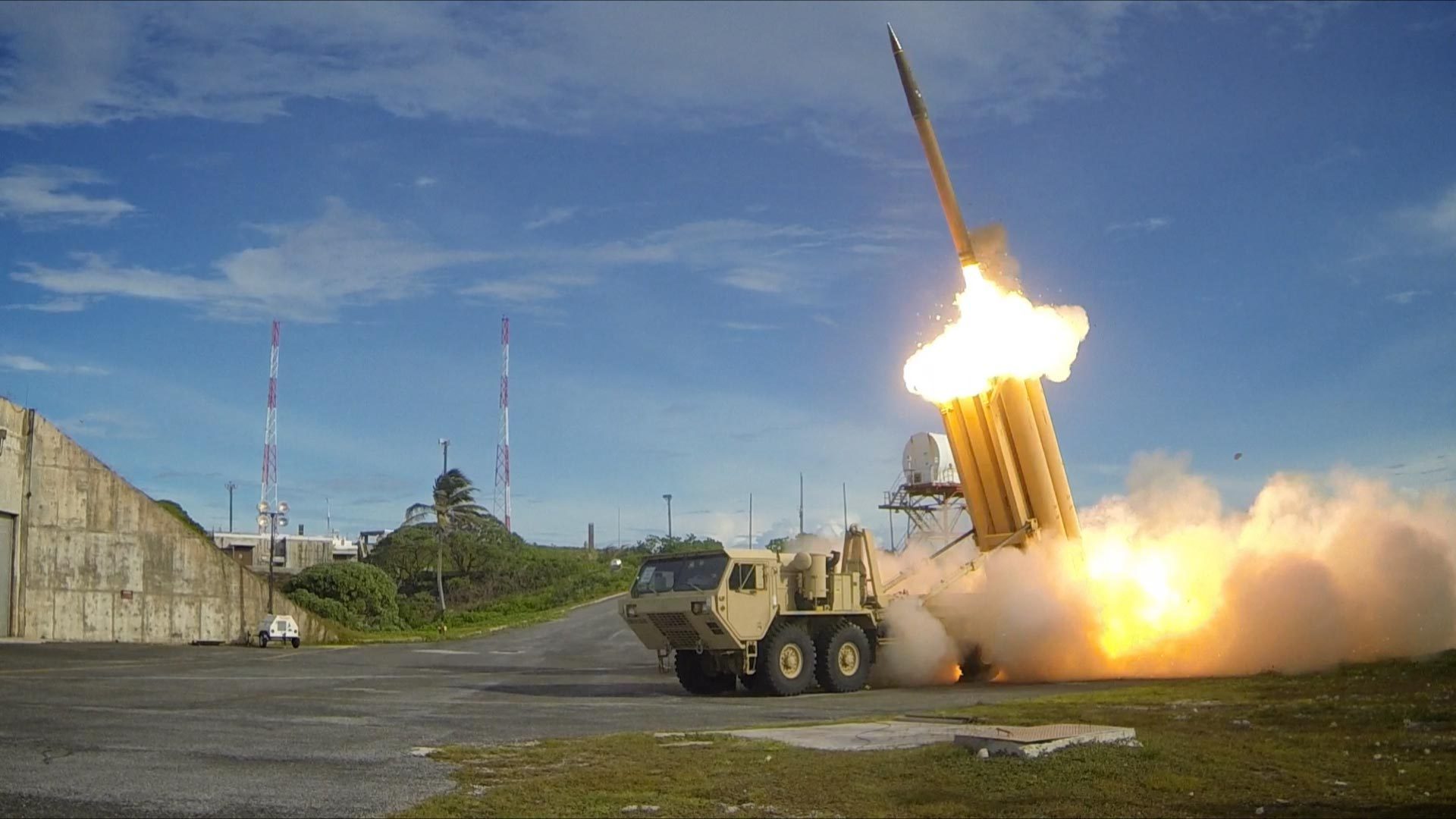
    A THAAD interceptor launched during a US Army test in 2013.
    The U.S. Army Ralph Scott/Missile Defense Agency/U.S. Department of Defense/Wikimedia Commons

    Can missile defences last forever?

    Missile defences are finite. The defender is always limited by the number of interceptors it possesses.

    The attacker is also limited by the number of missiles it possesses. However, the defender must often assign multiple interceptors to each attacking missile, in case the first misses or otherwise fails.

    The attacker will plan for some losses to interceptors (or mechanical failures) and send what it determines to be enough missiles for at least some to penetrate the defences.

    When it comes to ballistic missiles, the advantage lies with the attacker. Ballistic missiles can carry large explosive payloads (or even nuclear warheads), so even a handful of missiles “leaking” past defensive systems can still wreak significant damage.

    What now?

    Israel’s missile defences are unlikely to stop working completely. However, as attacks deplete its stocks of interceptors, the system may become less effective.

    As the conflict continues, it may become a race to see who runs out of weapons first. Will it be Iran’s stocks of ballistic missiles and drones, or the interceptors and anti-air munitions of Israel, the US and any other supporters?

    It is impossible to say who would prevail in such a race of stockpile attrition. Some reports suggest Iran has fired approximately 1,000 ballistic missiles of an estimated 3,000. However, this still leaves it with an enormous stockpile to use, and it is unclear how fast Iran can make new missiles to replenish its resources.

    But we should hope it doesn’t come to that. Beyond the tit-for-tat exchange of missiles, the latest conflict between Israel and Iran risks escalating. If it is not resolved soon, and if the US is drawn into the conflict more directly, we may see broader conflict in the Middle East.

    James Dwyer does not work for, consult, own shares in or receive funding from any company or organisation that would benefit from this article, and has disclosed no relevant affiliations beyond their academic appointment.

    ref. How does Israel’s famous air defence work? It’s not just the ‘Iron Dome’ – https://theconversation.com/how-does-israels-famous-air-defence-work-its-not-just-the-iron-dome-259029

    MIL OSI Analysis

  • MIL-OSI Analysis: How does Israel’s famous air defence work? It’s not just the ‘Iron Dome’

    Source: The Conversation – Global Perspectives – By James Dwyer, Lecturer, School of Social Sciences, University of Tasmania

    Israeli defence systems intercept Iranian missiles over the city of Haifa Ahmad Gharabli / AFP via Getty Images

    Late last week, Israel began a wave of attacks on Iran under the banner of Operation Rising Lion, with the stated goal of crippling the Islamic republic’s nuclear program and long-range strike capabilities. At the outset, Israel claimed Iran would soon be able to build nine nuclear weapons, a situation Israel regarded as completely unacceptable.

    Following Israeli strikes against Iranian nuclear facilities, and targeted assassinations of Iranian nuclear scientists and key members of the Iranian armed forces, Iran retaliated with a large barrage of ballistic missiles and drones against Tel Aviv and Jerusalem. The first wave consisted of some 200 ballistic missiles and 200 drones.

    The conflict continues to escalate, with population centres increasingly being targeted. Israel’s missile defence systems (including the vaunted Iron Dome) have so far staved off most of Iran’s attacks, but the future is uncertain.

    Ballistic missiles and how to stop them

    Iran possesses a large arsenal of ballistic missiles and long-range drones, alongside other long-range weapons such as cruise missiles. Ballistic missiles travel on a largely fixed path steered by gravity, while cruise missiles can adjust their course as they fly.

    Iran is approximately 1,000km from Israel, so the current strikes mostly involve what are classified as medium-range ballistic missiles, alongside long-range drones. It is not clear exactly what type of missile Iran has used in its latest strikes, but the country has several including the Fattah-1 and Emad.

    It is very difficult to defend against ballistic missiles. There is not much time between launch and impact, and they come down at very high speed. The longer the missile’s range, the faster and higher it flies.

    An incoming missile presents a small, fast-moving target – and defenders may have little time to react.

    Israel’s missile defence and the Iron Dome

    Israel possesses arguably one of the most effective, battle-tested air defence systems in service today. The system is often described in the media as the “Iron Dome”, but this is not quite correct.

    Israel’s defences have several layers, each designed to address threats coming from different ranges.

    Iron Dome is just one of these layers: a short range, anti-artillery defence system, designed to intercept short-range artillery shells and rockets.

    In essence, Iron Dome consists of a network of radar emitters, command and control facilities, and the interceptors (special surface-to-air missiles). The radar quickly detects incoming threats, the command and control elements decide which are most pressing, and the interceptors are sent to destroy the incoming shells or rockets.

    Ballistic defence systems

    The other layers of Israel’s defence system include David’s Sling, and the Arrow 2 and Arrow 3 interceptors. These are specifically designed to engage longer-range ballistic missiles, both within the atmosphere and at very high altitudes above it (known as exoatmospheric interception).

    Spectacular footage has been captured of what are likely exoatmospheric interceptions taking place during this latest conflict, demonstrating Israel’s capacity to engage longer-range missiles.

    The US military has comparable missile defence systems. The US Army has the Patriot PAC-3 (comparable to David’s Sling) and THAAD (comparable to Arrow 2), while the US Navy has the Aegis and the SM-3 (comparable to Arrow 3) and the SM-6 (comparable again to Arrow 2).

    The US deployed Aegis-equipped warships to support Israel’s defence against missile attacks in 2024, and appears to be preparing to do the same now.

    Iran possesses some air defence systems such as the Russian S300 which has some (very limited) ballistic missile defence capabilities, but only against shorter range (and thus slower) ballistic missiles. Further, Israel has been focusing on degrading Iran’s air defences, so it is not clear how many are still operational.

    Iran has been focusing on developing technology such as maneuverable warheads, which are harder to defend against. However, it is not clear whether these are yet operational and in Iranian service.

    A THAAD interceptor launched during a US Army test in 2013.
    The U.S. Army Ralph Scott/Missile Defense Agency/U.S. Department of Defense/Wikimedia Commons

    Can missile defences last forever?

    Missile defences are finite. The defender is always limited by the number of interceptors it possesses.

    The attacker is also limited by the number of missiles it possesses. However, the defender must often assign multiple interceptors to each attacking missile, in case the first misses or otherwise fails.

    The attacker will plan for some losses to interceptors (or mechanical failures) and send what it determines to be enough missiles for at least some to penetrate the defences.

    When it comes to ballistic missiles, the advantage lies with the attacker. Ballistic missiles can carry large explosive payloads (or even nuclear warheads), so even a handful of missiles “leaking” past defensive systems can still wreak significant damage.

    What now?

    Israel’s missile defences are unlikely to stop working completely. However, as attacks deplete its stocks of interceptors, the system may become less effective.

    As the conflict continues, it may become a race to see who runs out of weapons first. Will it be Iran’s stocks of ballistic missiles and drones, or the interceptors and anti-air munitions of Israel, the US and any other supporters?

    It is impossible to say who would prevail in such a race of stockpile attrition. Some reports suggest Iran has fired approximately 1,000 ballistic missiles of an estimated 3,000. However, this still leaves it with an enormous stockpile to use, and it is unclear how fast Iran can make new missiles to replenish its resources.

    But we should hope it doesn’t come to that. Beyond the tit-for-tat exchange of missiles, the latest conflict between Israel and Iran risks escalating. If it is not resolved soon, and if the US is drawn into the conflict more directly, we may see broader conflict in the Middle East.

    James Dwyer does not work for, consult, own shares in or receive funding from any company or organisation that would benefit from this article, and has disclosed no relevant affiliations beyond their academic appointment.

    ref. How does Israel’s famous air defence work? It’s not just the ‘Iron Dome’ – https://theconversation.com/how-does-israels-famous-air-defence-work-its-not-just-the-iron-dome-259029

    MIL OSI Analysis

  • MIL-OSI Analysis: Iran war: from the Middle East to America, history shows you cannot assassinate your way to peace

    Source: The Conversation – Global Perspectives – By Matt Fitzpatrick, Professor in International History, Flinders University

    In the late 1960s, the prevailing opinion among Israeli Shin Bet intelligence officers was that the key to defeating the Palestinian Liberation Organisation was to assassinate its then-leader Yasser Arafat.

    The elimination of Arafat, the Shin Bet commander Yehuda Arbel wrote in his diary, was “a precondition to finding a solution to the Palestinian problem.”

    For other, even more radical Israelis – such as the ultra-nationalist assassin Yigal Amir – the answer lay elsewhere. They sought the assassination of Israeli leaders such as Yitzak Rabin who wanted peace with the Palestinians.

    Despite Rabin’s long personal history as a famed and often ruthless military commander in the 1948 and 1967 Arab-Israeli Wars, Amir stalked and shot Rabin dead in 1995. He believed Rabin had betrayed Israel by signing the Oslo Accords peace deal with Arafat.

    It’s been 20 years since Arafat died as possibly the victim of polonium poisoning, and 30 years after the shooting of Rabin. Peace between Israelis and the Palestinians has never been further away.

    What Amnesty International and a United Nations Special Committee have called genocidal attacks on Palestinians in Gaza have spilled over into Israeli attacks on the prominent leaders of its enemies in Lebanon and, most recently, Iran.

    Since its attacks on Iran began on Friday, Israel has killed numerous military and intelligence leaders, including Iran’s intelligence chief, Mohammad Kazemi; the chief of the armed forces, Mohammad Bagheri; and the commander of the Islamic Revolutionary Guard Corps, Hossein Salami. At least nine Iranian nuclear scientists have also been killed.

    Israel’s Prime Minister Benjamin Netanyahu reportedly said:

    We got their chief intelligence officer and his deputy in Tehran.

    Iran, predictably, has responded with deadly missile attacks on Israel.

    Far from having solved the issue of Middle East peace, assassinations continue to pour oil on the flames.

    A long history of extra-judicial killings

    Israeli journalist Ronen Bergman’s book Rise and Kill First argues assassinations have long sat at the heart of Israeli politics.

    In the past 75 years, there have been more than 2,700 assassination operations undertaken by Israel. These have, in Bergman’s words, attempted to “stop history” and bypass “statesmanship and political discourse”.

    This normalisation of assassinations has been codified in the Israeli expression of “mowing the grass”. This is, as historian Nadim Rouhana has shown, a metaphor for a politics of constant assassination. Enemy “leadership and military facilities must regularly be hit in order to keep them weak.”

    The point is not to solve the underlying political questions at issue. Instead, this approach aims to sow fear, dissent and confusion among enemies.

    Thousands of assassination operations have not, however, proved sufficient to resolve the long-running conflict between Israel, its neighbours and the Palestinians. The tactic itself is surely overdue for retirement.

    Targeted assassinations elsewhere

    Israel has been far from alone in this strategy of assassination and killing.

    Former US President Barack Obama oversaw the extra-judicial killing of Osama Bin Laden, for instance.

    After what Amnesty International and Human Rights Watch denounced as a flawed trial, former US President George W. Bush welcomed the hanging of Iraqi leader Saddam Hussein as “an important milestone on Iraq’s course to becoming a democracy”.

    Current US President Donald Trump oversaw the assassination of Iran’s leader of clandestine military operations, Qassem Soleimani, in 2020.

    More recently, however, Trump appears to have baulked at granting Netanyahu permission to kill Iran’s Supreme Leader Ayatollah Ali Khamenei.

    And it’s worth noting the US Department of Justice last year brought charges against an Iranian man who said he’d been tasked with killing Trump.

    Elsewhere, in Vladimir Putin’s Russia, it’s common for senior political and media opponents to be shot in the streets. Frequently they also “fall” out of high windows, are killed in plane crashes or succumb to mystery “illnesses”.

    A poor record

    Extra-judicial killings, however, have a poor record as a mechanism for solving political problems.

    Cutting off the hydra’s head has generally led to its often immediate replacement by another equally or more ideologically committed person, as has already happened in Iran. Perhaps they too await the next round of “mowing the grass”.

    But as the latest Israeli strikes in Iran and elsewhere show, solving the underlying issue is rarely the point.

    In situations where finding a lasting negotiated settlement would mean painful concessions or strategic risks, assassinations prove simply too tempting. They circumvent the difficulties and complexities of diplomacy while avoiding the need to concede power or territory.

    As many have concluded, however, assassinations have never killed resistance. They have never killed the ideas and experiences that give birth to resistance in the first place.

    Nor have they offered lasting security to those who have ordered the lethal strike.

    Enduring security requires that, at some point, someone grasp the nettle and look to the underlying issues.

    The alternative is the continuation of the brutal pattern of strike and counter-strike for generations to come.

    Matt Fitzpatrick receives funding from the Australian Research Council.

    ref. Iran war: from the Middle East to America, history shows you cannot assassinate your way to peace – https://theconversation.com/iran-war-from-the-middle-east-to-america-history-shows-you-cannot-assassinate-your-way-to-peace-259038

    MIL OSI Analysis

  • MIL-OSI Analysis: The Middle East is a major flight hub. How do airlines keep passengers safe during conflict?

    Source: The Conversation – Global Perspectives – By Natasha Heap, Program Director for the Bachelor of Aviation, University of Southern Queensland

    Screenshot June 17 2025, Courtesy of Flightradar24

    The Middle East is a region of intense beauty and ancient kingdoms. It has also repeatedly endured periods of geopolitical instability over many centuries.

    Today, geopolitical, socio-political and religious tensions persist. The world is currently watching as longstanding regional tensions come to a head in the shocking and escalating conflict between Israel and Iran.

    The global airline industry takes a special interest in how such tensions play out. This airspace is a crucial corridor linking Europe, Asia and Africa.

    The Middle East is now home to several of the world’s largest international airlines: Emirates, Qatar Airways and Etihad Airways. These airlines’ home bases – Dubai, Doha and Abu Dhabi, respectively – have become pivotal hubs in international aviation.

    Keeping passengers safe will be all airlines’ highest priority. What could an escalating conflict mean for both the airlines and the travelling public?

    Safety first

    History shows that the civil airline industry and military conflict do not mix. On July 3 1988, the USS Vincennes, a US navy warship, fired two surface-to-air missiles and shot down Iran Air Flight 655, an international passenger service over the Persian Gulf.

    More recently, on July 17 2014, Malaysian Airlines Flight MH17 was shot down over eastern Ukraine as the battle between Ukrainian forces and pro-Russian separatists continued.

    Understandably, global airlines are very risk-averse when it comes to military conflict. The International Civil Aviation Organization requires airlines to implement and maintain a Safety Management System (SMS).

    One of the main concerns – known as “pillars” – of the SMS is “safety risk management”. This includes the processes to identify hazards, assess risks and implement risk mitigation strategies.

    The risk-management departments of airlines transiting the Middle East region will have been working hard on these strategies.

    Headquartered in Montreal, Canada, the International Civil Aviation Organization has strict requirements and protocols to keep passengers safe.
    meunierd/Shutterstock

    Route recalculation

    The most immediate and obvious evidence of such strategies being put in place are changes to aircraft routing, either by cancelling or suspending flights or making changes to the flight plans. This is to ensure aircraft avoid the airspace where military conflicts are flaring.

    At the time of writing, a quick look at flight tracking website Flightradar24 shows global aircraft traffic avoiding the airspace of Iran, Iraq, Syria, Israel, Jordan, Palestine and Lebanon. The airspace over Ukraine is also devoid of air traffic.

    Rerouting, however, creates its own challenges. Condensing the path of the traffic into smaller, more congested areas can push aircraft into and over areas that are not necessarily equipped to deal with such a large increase in traffic.

    Having more aircraft in a smaller amount of available safe airspace creates challenges for air traffic control services and the pilots operating the aircraft.

    More time and fuel

    Avoiding areas of conflict is one of the most visible forms of airline risk management. This may add time to the length of a planned flight, leading to higher fuel consumption and other logistical challenges. This will add to the airlines’ operating costs.

    There will be no impact on the cost of tickets already purchased. But if the instability in the region continues, we may see airline ticket prices increase.

    It is not just the avoidance of airspace in the region that could place upward pressure on the cost of flying. Airliners run on Jet-A1 fuel, produced from oil.

    If Iran closes the Strait of Hormuz, the “world’s most important oil transit chokepoint”, this could see the cost of oil, and in turn Jet-A1, significantly increase. Increasing fuel costs will be passed on the paying passenger. However, some experts believe such a move is unlikely.

    A major hub

    The major aviation hubs in the Middle East provide increased global connectivity, enabling passengers to travel seamlessly between continents.

    Increased regional instability has the potential to disrupt this global connectivity. In the event of a prolonged conflict, airlines operating in and around the region may find they have increased insurance costs. Such costs would eventually find their way passed on to consumers through higher ticket prices.

    The Middle East is a major connecting hub for global aviation.
    Art Konovalov/Shutterstock

    Passenger confidence

    Across the globe, airlines and governments are issuing travel advisories and warnings. The onus is on the travelling public to stay informed about changes to flight status, and potential delays.

    Such warnings and advisories can lead to a drop in passenger confidence, which may then lead to a drop in bookings both into and onwards from the region.

    Until the increase in instability in the Middle East, global airline passenger traffic numbers were larger than pre-pandemic figures. Strong growth had been predicted in the coming decades.

    Anything that results in falling passenger confidence could negatively impact these figures, leading to slowed growth and affecting airline profitability.

    Despite high-profile disasters, aviation remains the safest form of transport. As airlines deal with these challenges they will constantly work to keep flights safe and to win back passenger confidence in this unpredictable situation.

    Natasha Heap does not work for, consult, own shares in or receive funding from any company or organisation that would benefit from this article, and has disclosed no relevant affiliations beyond their academic appointment.

    ref. The Middle East is a major flight hub. How do airlines keep passengers safe during conflict? – https://theconversation.com/the-middle-east-is-a-major-flight-hub-how-do-airlines-keep-passengers-safe-during-conflict-259034

    MIL OSI Analysis

  • MIL-OSI USA: FAA Announces $1.9 Million for Projects at North Dakota Airports

    US Senate News:

    Source: United States Senator Kevin Cramer (R-ND)

    WASHINGTON, D.C. – The U.S. Department of Transportation (DOT) Federal Aviation Administration (FAA) announced an award of $1,906,102 through the Airport Infrastructure Grant (AIG) program for projects at several airports across North Dakota. The funding will be distributed as follows:

    • $1,000,000 to the City of Minot to reconstruct 1,500 feet of the existing airport firefighting, rescue building, and hangar access road.
    • $322,254 to the Washburn Municipal Airport Authority for a new 200-foot Taxilane midfield to provide airfield access to a nonexclusive hangar development area to bring the airport into conformity with current standards.
    • $250,000 to the Barnes County Municipal Airport Authority to fund the final reconstruction of an existing lighting vault building and equipment.
    • $225,000 to the Oakes Municipal Airport Authority to replace one existing airport rotating beacon.
    • $108,848 to the Cando Municipal Airport Authority to reseal 4,433 square yards of existing North Apron pavement and pavement joints, reseal 450 feet of existing Taxiway A pavement and pavement joints, and reseal 466 feet of existing Taxilane East pavement and pavement joints to extend its useful life.

    The AIG Program was established by the fully-paid-for Bipartisan Infrastructure Law to provide airports with funding for modernization and safety projects. Since its creation, airports in North Dakota have received over $49 million in program funding.

    MIL OSI USA News

  • MIL-OSI New Zealand: First Responders – Victoria Park New World Fire Update #5

    Source: Fire and Emergency New Zealand

    Two crews of firefighters remain at the Victoria Park New World supermarket in Auckland, following yesterday’s fire, and the section of Victoria St between College Hill and Franklin Rd is still closed.
    The fire was extinguished last night and the firefighters are monitoring hotspots, Incident Controller Phil Larcombe says. Further assessment and observations will be made after daybreak, using an aerial appliance.
    The property is extensively damaged, and fire investigators have returned today to continue working to establish the origin and cause of the fire.
    Phil Larcombe says that Fire and Emergency expects to maintain a presence at the scene for most of today.

    MIL OSI New Zealand News

  • MIL-OSI Canada: Prime Minister Carney concludes 2025 G7 Leaders’ Summit

    Source: Government of Canada – Prime Minister

    In an increasingly dangerous and divided world, co-operation with reliable partners is more important than ever. With G7 partners, Canada will build a new era of collaboration – one rooted in mutual support and resilient partnerships. Canada is ready to lead.

    Today, the Prime Minister, Mark Carney, concluded his participation in the 2025 G7 Leaders’ Summit in Kananaskis, Alberta. Under Canada’s Presidency, this G7 deepened co-operation with joint statements in the following areas: 

    Prime Minister Carney also announced the following measures in support of Ukraine:

    • Sanctions on individuals, entities, and vessels that continue to support Russia’s aggression in Ukraine.
    • An additional $2 billion in military assistance this year.
    • The disbursement of a $2.3 billion loan to Ukraine through the G7 Extraordinary Revenue Acceleration Loans mechanism.
    • The allocation of $57.4 million in security-related assistance.

    Canada will also be taking action to build stronger economies and international systems:

    • $391.3 million to catalyze private capital toward economic growth and development projects around the world.
    • Up to $185.6 million to accelerate the adoption and commercialization of artificial intelligence.
    • $120.4 million to global wildfire prevention, response, and recovery.
    • $80.3 million to build reliable critical minerals supply chains.
    • $22.5 million to accelerate the development and use of quantum technologies.
    • Up to $544 million in guarantees for new development financing in Latin America and the Caribbean.

    While our threats cross borders, so do our partnerships and opportunities. In these areas of common interest, Canada is leading G7 co-operation to deliver stability, security, and prosperity. 

    Quote

    “In Kananaskis, Canada’s Presidency showed that we’re ready to create new international partnerships, deepen alliances, and lead member nations into a new era of global co-operation. Canada has the resources the world wants and the values to which others aspire. Canada is meeting this moment with purpose and strength.”

    Related Products

    Associated Link

    MIL OSI Canada News

  • MIL-OSI USA: SBA Amends Disaster Declaration for Nebraska

    Source: United States Small Business Administration

    SACRAMENTO, Calif. – In response to an amended Presidential public assistance declaration, the U.S. Small Business Administration (SBA) announced the availability of low interest federal disaster loans to private nonprofit (PNP) organizations in Dakota County affected by the severe winter storm and straight-line winds occurring March 18-19.

    These low-interest federal disaster loans are available in the Nebraska counties of Boone, Burt, Butler, Cass, Clay, Colfax, Cuming, Dakota, Dodge, Douglas, Fillmore, Hamilton, Jefferson, Johnson, Lancaster, Nuckolls, Otoe, Platte, Polk, Saline, Sarpy, Saunders, Seward, Thayer, Thurston, Washington, Webster and York.

    Applicants may be eligible for a loan amount increase of up to 20% of their physical damages, as verified by the SBA, for mitigation purposes. Eligible mitigation improvements might include insulating pipes, walls and attics, weather stripping doors and windows, and installing storm windows to help protect property and occupants from future damage caused by any disaster. 

    “One distinct advantage of SBA’s disaster loan program is the opportunity to fund upgrades reducing the risk of future storm damage,” said Chris Stallings, associate administrator of the Office of Disaster Recovery and Resilience at the SBA. “I encourage businesses, private nonprofits and homeowners to work with contractors and mitigation professionals to improve their storm readiness while taking advantage of SBA’s mitigation loans.”

    PNPs are also eligible to apply for Economic Injury Disaster Loans (EIDLs) to help meet working capital needs. The loans may be used to pay fixed debts, payroll, accounts payable, and other bills not paid due to the disaster. EIDL assistance is available regardless of whether the PNP suffered any physical property damage. 

    The loan amount can be up to $2 million with interest rates are as low as 3.62% for PNPs, with terms up to 30 years. Interest does not begin to accrue, and payments are not due, until 12 months from the date of the first loan disbursement. The SBA will set loan amounts and terms based on each applicant’s financial condition.

    The SBA encourages applicants to submit their loan applications promptly. Applications will be prioritized in the order they are received, and the SBA remains committed to processing them as efficiently as possible.

    To apply online, visit sba.gov/disaster. Applicants may also call SBA’s Customer Service Center at (800) 659-2955 or email disastercustomerservice@sba.gov for more information on SBA disaster assistance. For people who are deaf, hard of hearing, or have a speech disability, please dial 7-1-1 to access telecommunications relay services.

    The deadline to return applications for physical property damage is July 22, 2025. The deadline to return economic injury applications is Feb. 23, 2026.

    ###

    About the U.S. Small Business Administration

    The U.S. Small Business Administration helps power the American dream of business ownership. As the only go-to resource and voice for small businesses backed by the strength of the federal government, the SBA empowers entrepreneurs and small business owners with the resources and support they need to start, grow, expand their businesses, or recover from a declared disaster. It delivers services through an extensive network of SBA field offices and partnerships with public and private organizations. To learn more, visit www.sba.gov.

    MIL OSI USA News

  • MIL-OSI USA: SBA Offers Relief to Missouri Private Nonprofits Affected by April Storms

    Source: United States Small Business Administration

    SACRAMENTO, Calif. – The U.S. Small Business Administration (SBA) announced the availability of low interest federal disaster loans to private nonprofit (PNP) organizations in Missouri affected by severe storms, straight-line winds, tornadoes and flooding beginning April 29.

    The disaster declaration covers the Missouri counties of Barry, Greene, Lawrence, McDonald, Newton and Washington.

    Under this declaration, PNPs providing non-critical services of a governmental nature impacted by physical damages or financial losses directly related to the disaster are eligible to apply for both business physical damage loans and Economic Injury Disaster Loans (EIDLs) from the SBA. Examples of eligible non-critical PNP organizations include, but are not limited to, food kitchens, homeless shelters, museums, libraries, community centers, schools, and colleges.

    PNPs may borrow up to $2 million to repair or replace damaged or destroyed real estate, machinery and equipment, inventory, and other business assets. Applicants may also be eligible for a loan increase of up to 20% of their physical damages, as verified by the SBA, for mitigation purposes.

    EIDLs are for working capital needs caused by the disaster and are available even if the PNP did not suffer any physical damage. The loans may be used to pay fixed debts, payroll, accounts payable, and other bills not paid due to the disaster.

    “SBA loans help eligible small businesses and private nonprofits cover operating expenses after a disaster, which is crucial for their recovery,” said Chris Stallings, associate administrator of the Office of Disaster Recovery and Resilience at the SBA. “These loans not only help business owners get back on their feet but also play a key role in sustaining local economies in the aftermath of a disaster.”

    Interest rates are as low 3.62% for PNPs, with terms up to 30 years. Interest does not begin to accrue, and payments are not due, until 12 months from the date of the first loan disbursement. The SBA will set loan amounts and terms based on each applicant’s financial condition.

    The SBA encourages applicants to submit their loan applications promptly. Applications will be prioritized in the order they are received, and the SBA remains committed to processing them as efficiently as possible.

    To apply online, visit sba.gov/disaster. Applicants may also call SBA’s Customer Service Center at (800) 659-2955 or email disastercustomerservice@sba.gov for more information on SBA disaster assistance. For people who are deaf, hard of hearing, or have a speech disability, please dial 7-1-1 to access telecommunications relay services.

    The deadline to return physical damage applications is Aug. 11, 2025. The deadline to return economic injury applications is March 9, 2026.

    ###

    About the U.S. Small Business Administration

    The U.S. Small Business Administration helps power the American dream of business ownership. As the only go-to resource and voice for small businesses backed by the strength of the federal government, the SBA empowers entrepreneurs and small business owners with the resources and support they need to start, grow, expand their businesses, or recover from a declared disaster. It delivers services through an extensive network of SBA field offices and partnerships with public and private organizations. To learn more, visit www.sba.gov.

    MIL OSI USA News

  • MIL-OSI China: Xi urges China, Central Asian countries to promote high-quality Belt and Road cooperation

    Source: People’s Republic of China – State Council News

    Xi urges China, Central Asian countries to promote high-quality Belt and Road cooperation

    Chinese President Xi Jinping delivers a keynote speech during the second China-Central Asia Summit in Astana, Kazakhstan, June 17, 2025. The second China-Central Asia Summit was held in Astana on Tuesday. Kazakh President Kassym-Jomart Tokayev chaired the summit. Xi, Kyrgyz President Sadyr Japarov, Tajik President Emomali Rahmon, Turkmen President Serdar Berdimuhamedov and Uzbek President Shavkat Mirziyoyev attended the summit. [Photo/Xinhua]

    ASTANA, June 17 — Chinese President Xi Jinping on Tuesday called on China and Central Asian countries to promote high-quality Belt and Road cooperation and forge ahead toward the goal of building a China-Central Asia community with a shared future under the guidance of the China-Central Asia Spirit.

    Xi made the remarks in his keynote speech at the second China-Central Asia Summit hosted by Kazakh President Kassym-Jomart Tokayev. Kyrgyz President Sadyr Japarov, Tajik President Emomali Rahmon, Turkmen President Serdar Berdimuhamedov and Uzbek President Shavkat Mirziyoyev also attended the summit.

    Xi pointed out that during their meeting in Xi’an two years ago, they jointly outlined the Xi’an Vision for China-Central Asia cooperation. Two years on, China and Central Asian countries have further deepened and substantiated Belt and Road cooperation, he said, recalling advanced cooperation in various fields.

    The core framework of the China-Central Asia mechanism is largely in place, and the consensus at the first Summit has been implemented across the board, Xi said, adding that the path of cooperation among the countries is steadily widening, and their friendship is blooming ever more brightly.

    Xi stressed that the cooperation between China and Central Asian countries is rooted in more than 2,000 years of friendly exchanges, cemented by solidarity and mutual trust cultivated through more than three decades of diplomatic ties, and taken forward via openness and win-win cooperation of the new era.

    Xi said building on their collective efforts over the years, the six countries have forged a China-Central Asia Spirit of “mutual respect, mutual trust, mutual benefit and mutual assistance for the joint pursuit of modernization through high-quality development.”

    The spirit connotes four aspects of practices. First, Xi said that China and Central Asian countries practice mutual respect and treat each other as equals, and all countries, big or small, are equal, adding that the six countries handle issues through consultation and make decisions by consensus.

    Second, he said that China and Central Asian countries seek to deepen mutual trust and enhance mutual support, firmly support each other in safeguarding independence, sovereignty, territorial integrity and national dignity, and do not do anything harmful to the core interests of any party.

    Third, Xi said China and Central Asian countries pursue mutual benefit and win-win cooperation and strive for common development, view each other as priority partners, and share development opportunities together, adding that they accommodate each other’s interests, and work to build a win-win and symbiotic relationship.

    Fourth, he said China and Central Asian countries help each other in time of need and stand together through thick and thin, supporting each other in choosing development paths suitable to respective national conditions and in taking domestic matters into their own hands, adding that the countries work together to address various risks and challenges, and uphold regional security and stability.

    This China-Central Asia Spirit is an important guideline for their endeavor to carry forward friendship and cooperation from generation to generation, and the six countries should always uphold it and let it shine forever, Xi noted.

    Today, unprecedented changes are unfolding at a faster pace across the globe, thrusting the world into a new state of heightened turbulence and volatility, Xi pointed out, noting that a strong belief in fairness and justice, and an unyielding commitment to mutual benefit and win-win cooperation are the only way to maintain world peace and achieve common development.

    There is no winner in tariff wars or trade wars, and unilateralism, protectionism and hegemonism will surely backfire while hurting others, he noted.

    Maintaining that history should move forward, not backward, and the world should be united, not divided, Xi said humanity must not regress to the law of the jungle, but should instead build a community with a shared future for mankind.

    Xi called on the six countries to act on the China-Central Asia Spirit, and enhance cooperation with renewed vigor and more practical measures.

    To achieve this, he made five points.

    First, China and Central Asian countries should stay committed to the fundamental goal of unity, and always trust and support each other, he said.

    China consistently takes Central Asia as a priority in its neighborhood diplomacy, Xi noted, adding that with a firm belief in an amicable, secure and prosperous neighborhood as well as a strong dedication to amity, sincerity, mutual benefit and inclusiveness, China interacts with Central Asian countries on the basis of equality and sincerity, and the six countries always wish their neighbors well.

    The six countries will sign together a treaty on eternal good-neighborliness, friendship and cooperation to enshrine the principle of everlasting friendship in the form of law, he said, deeming it as a new landmark in the history of the relations of the six countries and a pioneering initiative in China’s diplomatic engagement with its neighbors, which constitutes a milestone for today and a foundation for tomorrow.

    Second, China and Central Asian countries should optimize the cooperation framework to make it more results-oriented, more efficient and more deeply integrated, Xi said.

    Recalling that the six countries have agreed to designate 2025 and 2026 as the Years of High-Quality Development of China-Central Asia Cooperation, he said that all sides should focus the cooperation on smooth trade, industrial investment, connectivity, green mining, agricultural modernization and personnel exchanges, roll out more projects on the ground and foster new quality productive forces.

    He said China has decided to establish three cooperation centers, i.e. on poverty reduction, on education exchange, and on desertification prevention and control, as well as a cooperation platform on smooth trade under the China-Central Asia cooperation framework.

    China supports Central Asian countries in developing livelihood and development projects, Xi said, adding that China will provide 3,000 training opportunities to Central Asian countries in the next two years.

    Third, China and Central Asian countries should develop a security framework for peace, tranquility and solidarity, step up regional security governance, deepen law enforcement and security cooperation, jointly prevent and thwart extreme ideologies, and resolutely fight terrorism, separatism and extremism, so as to maintain peace and stability in the region, Xi said.

    China will do its best to help Central Asian countries combat terrorism and transnational organized crime and safeguard cybersecurity and biosecurity, he said.

    Fourth, China and Central Asian countries should cement the bonds of shared vision, mutual understanding and mutual affection between peoples, he noted, saying that China will enhance cooperation between legislatures, political parties, women, youth, media and think tanks with Central Asian countries, conduct in-depth exchange of governance experience, and is ready to set up more cultural centers, university branches and Luban Workshops in Central Asia to train more high-caliber talent for Central Asian countries.

    China supports deepening subnational cooperation with Central Asia, Xi said, adding that China and Central Asian countries should nurture heart-to-heart connections at central and subnational levels, between official and non-governmental actors, and from adjacent to broader areas.

    Fifth, China and Central Asian countries should uphold a fair and equitable international order and an equal and orderly world structure, stand ready to work with all parties to defend international fairness and justice, oppose hegemonism and power politics, and promote an equal and orderly multipolar world and a universally beneficial and inclusive economic globalization, Xi said.

    This year marks the 80th anniversary of the victory of the Chinese People’s War of Resistance Against Japanese Aggression and the World Anti-Fascist War, and the 80th anniversary of the founding of the United Nations, he said, recalling that in the strenuous times of war, Chinese and Central Asian peoples supported each other through adversity, and jointly made important contributions to the cause of justice of humanity.

    He also noted the need to promote the correct view of history, defend the fruits of the victory of World War II, uphold the UN-centered international system, and provide more stability and certainty for world peace and development.

    Xi pointed out that China is building a great modern socialist country in all respects and advancing the great rejuvenation of the Chinese nation on all fronts through Chinese modernization.

    No matter how the international situation changes, China will remain unwavering in opening up to the outside world, he said, noting that China is ready to embrace higher-quality cooperation and deepen the integration of interests with Central Asian countries, so as to achieve common development and strive for new progress in China-Central Asia cooperation.

    Tokayev and the other four Central Asian leaders unanimously stated that the China-Central Asia mechanism has become an important platform for promoting dialogue and cooperation, as well as for advancing the economic and social development of Central Asian countries.

    In a world full of uncertainties, the strategic significance of the mechanism has become increasingly prominent, and China’s growing prosperity and strength are benefiting its neighboring countries, they said, noting that China is a strategic partner and a true friend that Central Asian countries can always count on.

    The Central Asian countries highly value the model of cooperation with China based on mutual respect, equality and mutual benefit, and look forward to deepening all-round cooperation with China and expanding trade and investment, the five leaders added.

    They also expressed the hope to jointly pursue high-quality Belt and Road cooperation, promote cooperation in such fields as industry, agriculture, science and technology, infrastructure, new energy and connectivity, strengthen regional security collaboration, and enhance people-to-people and cultural exchanges in fields like culture, education and tourism.

    The leaders of the five Central Asian countries expressed their intention to build the China-Central Asia mechanism into a model of regional cooperation, share development and prosperity, jointly promote peace and stability, and build a closer community with a shared future.

    The five parties highly appreciate China’s constructive role in international and regional affairs, and actively support the concept of building a community with a shared future for mankind, as well as the three major global initiatives proposed by President Xi.

    They also expressed the willingness to closely coordinate and cooperate with China to firmly safeguard free trade and the multilateral trading system, and jointly defend international equity and justice.

    During the summit, Xi and the heads of state of the Central Asian nations signed the Astana Declaration of the second China-Central Asia Summit, and a treaty on eternal good-neighborliness, friendship and cooperation.

    The meeting also announced the signing of 12 cooperation agreements regarding the Belt and Road cooperation, facilitation of personnel exchanges, green mining, trade, connectivity, industry and customs.

    At the summit, China signed multiple sister city agreements with the five Central Asian countries, thus the pairs of sister cities between the two sides have exceeded 100.

    Xi and other leaders also witnessed the inauguration of three China-Central Asia cooperation centers and a trade platform, namely the China-Central Asia poverty reduction cooperation center, the China-Central Asia education exchange cooperation center, the China-Central Asia desertification prevention and control cooperation center, as well as the China-Central Asia smooth trade cooperation platform.

    All parties also agreed that China will host the third China-Central Asia Summit in 2027.

    Chinese President Xi Jinping, Kazakh President Kassym-Jomart Tokayev, Kyrgyz President Sadyr Japarov, Tajik President Emomali Rahmon, Turkmen President Serdar Berdimuhamedov and Uzbek President Shavkat Mirziyoyev pose for a group photo in Astana, Kazakhstan, June 17, 2025. The second China-Central Asia Summit was held in Astana on Tuesday. Tokayev chaired the summit. Xi, Japarov, Rahmon, Berdimuhamedov and Mirziyoyev attended the summit. [Photo/Xinhua]
    Chinese President Xi Jinping walks into the venue of the second China-Central Asia Summit in Astana, Kazakhstan, June 17, 2025. The second China-Central Asia Summit was held in Astana on Tuesday. Kazakh President Kassym-Jomart Tokayev chaired the summit. Xi, Kyrgyz President Sadyr Japarov, Tajik President Emomali Rahmon, Turkmen President Serdar Berdimuhamedov and Uzbek President Shavkat Mirziyoyev attended the summit. [Photo/Xinhua]
    Chinese President Xi Jinping shakes hands with Kazakh President Kassym-Jomart Tokayev in Astana, Kazakhstan, June 17, 2025. The second China-Central Asia Summit was held in Astana on Tuesday. Tokayev chaired the summit. Xi, Kyrgyz President Sadyr Japarov, Tajik President Emomali Rahmon, Turkmen President Serdar Berdimuhamedov and Uzbek President Shavkat Mirziyoyev attended the summit. [Photo/Xinhua]
    Chinese President Xi Jinping delivers a keynote speech during the second China-Central Asia Summit in Astana, Kazakhstan, June 17, 2025. The second China-Central Asia Summit was held in Astana on Tuesday. Kazakh President Kassym-Jomart Tokayev chaired the summit. Xi, Kyrgyz President Sadyr Japarov, Tajik President Emomali Rahmon, Turkmen President Serdar Berdimuhamedov and Uzbek President Shavkat Mirziyoyev attended the summit. [Photo/Xinhua]
    Chinese President Xi Jinping, Kazakh President Kassym-Jomart Tokayev, Kyrgyz President Sadyr Japarov, Tajik President Emomali Rahmon, Turkmen President Serdar Berdimuhamedov and Uzbek President Shavkat Mirziyoyev witness inauguration of the China-Central Asia poverty reduction cooperation center, the China-Central Asia education exchange cooperation center, the China-Central Asia desertification control cooperation center and the China-Central Asia trade facilitation cooperation platform in Astana, Kazakhstan, June 17, 2025. The second China-Central Asia Summit was held in Astana on Tuesday. Tokayev chaired the summit. Xi, Japarov, Rahmon, Berdimuhamedov and Mirziyoyev attended the summit. [Photo/Xinhua]

    MIL OSI China News

  • MIL-OSI China: State Council to oversee probe into central China fireworks factory explosion

    Source: People’s Republic of China – State Council News

    The State Council Work Safety Committee has decided to oversee the investigation into a recent explosion at a fireworks factory in central China’s Hunan Province, according to the Ministry of Emergency Management.

    The explosion, which occurred at 8:23 a.m. Monday in Linli County, killed nine people and injured 26 others.

    The committee has ordered that the explosion investigation be expedited, the cause of the explosion be identified as soon as possible, and accountability be enforced according to law and regulations.

    The ministry said earlier on Tuesday that it had dispatched a working team to the province to guide on-site rescue efforts. It has urged relevant authorities to promptly identify all individuals affected by the explosion and ensure that no secondary accidents occur.

    MIL OSI China News

  • MIL-OSI China: China welcomes joint statement by 21 Arab, Islamic countries on Israel-Iran conflict

    Source: People’s Republic of China – State Council News

    Palestinians carry aid boxes in Gaza City, on June 16, 2025. [Photo/Xinhua]

    China welcomes the joint statement on the Israel-Iran conflict issued by 21 Arab and Islamic countries and is ready to work with related parties to promote the easing of the situation, a Foreign Ministry spokesperson said in Beijing on Tuesday.

    The joint statement, issued by the foreign ministers of the 21 countries, called for respect of state sovereignty and territorial integrity, upholding good-neighborliness and resolving disputes peacefully.

    In response, spokesperson Guo Jiakun told a regular press briefing that Israel’s attack on Iran has triggered a sudden escalation of the regional situation, which has drawn high attention from the international community. He said the top priority is to cease fire and stop the war, take effective measures to prevent the escalation of the conflict, prevent the region from falling into greater turmoil, and return to the track of resolving problems through dialogue and negotiation.

    Guo said China welcomes the joint statement and appreciates the efforts made by the relevant countries to cool down the situation, adding that China is willing to maintain communication with all relevant parties and play a constructive role in promoting the easing of the situation.

    MIL OSI China News

  • MIL-OSI: Carbon Streaming Announces Corporate Update and Legend Removal Process for All U.S. Investors From the 2021 Financings

    Source: GlobeNewswire (MIL-OSI)

    TORONTO, June 17, 2025 (GLOBE NEWSWIRE) — Carbon Streaming Corporation (Cboe CA: NETZ) (OTCQB: OFSTF) (FSE: M2Q) (“Carbon Streaming” or the “Company”) today provides a corporate update and announces legend removal process for all U.S. investors from the 2021 Financings (as defined below).

    Highlights:

    • Restrictive Legend Removal: The Company has finalized the process to offer qualifying U.S. investors who participated in the 2021 Financings (as defined below) the opportunity to remove the restrictive legend on share certificates at no cost to the investor. This legend on the share certificates renders the securities “restricted securities” as defined in Rule 144 of the Securities Act of 1933 and restricts these investors from selling stock.
    • Cash Conservation Update: In February 2025, the Company converted US$18.0 million to Canadian dollars at an exchange rate of 1.42. Since then, the US dollar to Canadian dollar exchange rate has decreased to 1.36 as of June 16, 2025, resulting in a foreign exchange gain of approximately US$0.8 million on that portion of the cash. The Company currently holds US$37.0 million (C$50.3 million) in cash, remains debt-free, and has no outstanding legal payables.
    • Credit Portfolio Update: The Company currently holds 532,720 carbon credits from cookstove projects and 18,990 carbon credits from water purification projects under the Community Carbon Stream. A breakdown of credit vintage, project ID and registry information is provided below.
    • Notice of Arbitration: The Company has filed a Notice of Arbitration in Ontario against Will Solutions Inc.
    • AGM Reminder: The Company’s Annual General Meeting (the “AGM”) of holders of common shares of the Company (“Common Shares”) will be held on June 18th, 2025, at 9:30 a.m. (Vancouver time), at the offices of Farris LLP, 25th Floor, 700 W Georgia Street, Vancouver, British Columbia, Canada.

    Restrictive Legend Removal:

    The Company has finalized the process to offer qualifying U.S. investors who participated in the 2021 Financings (defined below) the opportunity to remove the restrictive legend from their share certificates—or from book-entry shares, as applicable—without the need for the shareholder to pay for a legal opinion, regardless of whether a particular shareholder intends to sell or actually sells the shares into the public market. This service is being provided at no cost to all qualifying investors. This legend on the share certificates renders the securities “restricted securities” as defined in Rule 144 of the Securities Act of 1933 and restricts these investors from selling stock.

    The blanket opinion provides that the removal of the restrictive legend is now permissible under Section 4(a)(1) of the Securities Act of 1933.

    While removing the legend is permissible, it is not required. Shareholders are not required to take any action if they prefer to keep the restrictive legend in place.

    Marin Katusa, CEO of the Company, stated “The vast majority of the capital raised for Carbon Streaming came from the financings throughout the 2021 calendar year. Since those financings in 2021, over 700 U.S. residents who invested in those financings have been unable to deposit their shares into a brokerage firm or freely sell those shares because of the restrictive legend that is applied to U.S. investors investing in private placements.

    The typical process to remove a restrictive legend is done on a one-off basis, meaning each U.S resident must complete the removal of the restrictive legend on their own. This is the first time a publicly listed Canadian company, such that we are aware, has offered the removal of the restrictive legend through a digitalized process applicable to a large group of U.S. investors (over 700 shareholders at the same time) to simplify and expediate the process of removing the restrictive U.S. legend.

    We approached DealMaker in early 2025 with the concept to digitalize the legend removal process for the U.S. investors. The Company worked with DealMaker on the 2021 Financings where all subscription forms were digitalized and the funding process was completed.

    I am especially proud of the innovation of this potential solution to U.S. legend removals, as it will ultimately cost less than 5% of the quotes the Company initially received to obtain a global opinion letter for the removal the U.S. restrictive legend through the traditional process. In addition, DealMaker has agreed to not charge for their services.”

    Eligibility for Blanket Removal

    Holders of Common Shares are eligible if they are US residents, non affiliates and acquired the Common Shares pursuant to:

    • that certain private placement of special warrants issued on July 20, 2021,
    • that certain private placement of Common Shares issued on March 11, 2021,
    • that certain private placement of Common Shares issued on May 12, 2021,
    • that certain private placement of Common Share issued on January 27, 2021,
    • that certain private placement of units, with each unit consisting of one Common Share and one share purchase warrant to purchase one Common Share, issued on December 22, 2020, and
    • that certain private placement of units, with each unit consisting of one Common Share and one share purchase warrant to purchase one Common Share, issued on December 16, 2020.

    (collectively, the “2021 Financings”)

    Timing and Process to Participate in Blanket Removal

    Holders who are eligible will receive an email from DealMaker on or about June 23, 2025 with instructions on how to participate.

    If you are a U.S. investor and do not want to register your shares into a brokerage account or sell your shares, then no action is required. This service is being offered by the Company to U.S. investors who acquired their shares in the 2021 Financings, are not affiliates and who have the restrictive legend on their share certificates—or book-entry shares, as applicable and wish to deposit them in a brokerage account or sell their shares in the public market.

    Marin Katusa, CEO, further added: “DealMaker handled the 2021 Financings for the Company which included the digitalizing subscription forms and managing the subscription wires from the investors in a professional, efficient and low-cost manner. We strongly believe that this innovative solution we have created with DealMaker to remove the U.S. restrictive legends will be equally successful. We are grateful for DealMaker’s innovative approach and commitment to excellence, which continues to streamline our investor communications and elevate the overall experience for our shareholders.”

    Cash Conservation

    As of June 16, 2025, the Company has US$37.0 million in cash (C$50.3 million), remains debt-free, and has no outstanding legal payables. With cash generated from the sale of carbon credits held by the Company, interest earned on the Company’s cash balance, and substantial reductions in operating expenses to date, the Company expects a significant improvement in operating cash flow in 2025 when compared to previous years. The Company currently has three full-time employees and a part-time CFO, with a combined annual base compensation of approximately US$0.5 million, while the CEO and Board of Directors are not collecting any salaries, fees, nor equity-based compensation of any kind.

    Carbon credits held by the Company as of June 16, 2025

               
    Project Registry Project ID Vintage Credits available for sale  
    Uganda cookstove project Gold Standard GS12119 2022 53,801  
        GS10967 2023 129,383  
        GS12119 2023 199,340  
        GS12120 2023 41,514  
        GS12120 2024 15,432  
            439,470  
    Uganda household safe water project Gold Standard GS10968 2022 38  
        GS10968 2023 14,373  
            14,411  
    Tanzania cookstove project Verra VCS2676 2022 27,492  
        VCS2676 2023 60,788  
            88,280  
    Mozambique cookstove project Gold Standard GS11211 2022 1,401  
      Gold Standard GS12638 2023 3  
      Gold Standard GS12638 2024 296  
      Gold Standard GS11211 2024 3,270  
            4,970  
    Malawi household safe water project Gold Standard GS11245 2022 988  
      Gold Standard GS11245 2023 3,310  
      Gold Standard GS11245 2024 281  
            4,579  
               

    The Company has been in discussions with several different parties regarding the sale of its existing carbon credits. While current market pricing for cookstoves remains weak, the Company continues to advance its marketing efforts. A new initiative by the Company leverages AI-driven analysis of public disclosures to identify active buyers of environmental attributes. This effort is helping the Company more effectively target potential buyers for its current credit inventory, without incurring additional cost.

    Notice of Arbitration – Will Solutions.

    On June 16, 2025, the Company delivered a written Notice of Arbitration in Ontario to Will Solutions Inc. and the ADR Chambers. As previously disclosed, in the third quarter of 2024, the Company exercised its contractual rights to terminate the purchase sale agreement dated June 20, 2022 with Will Solutions Inc. (the “Sustainable Community Stream”) as a result of, among other things, the failure of Will Solutions Inc. to meet its milestone related to the registration of its Ontario project and its failure to develop and implement the project in accordance with the project plan (including continued delays in project development activities and lower-than-expected project enrollments). The Company has advanced $4.0 million of the upfront deposit to Will Solutions Inc. under the Sustainable Community Stream. The Company will continue to pursue all of its rights and interests.

    2025 Annual General Meeting

    The Company’s AGM will be held on June 18th, 2025, at 9:30 a.m. (Vancouver time), at the offices of Farris LLP, 25th Floor, 700 W Georgia Street, Vancouver, British Columbia, Canada.

    About Carbon Streaming

    Carbon Streaming’s focus is on projects that generate high-quality carbon credits and have a positive impact on the environment, local communities, and biodiversity, in addition to their carbon reduction or removal potential.

    ON BEHALF OF THE COMPANY:
    Marin Katusa, Chief Executive Officer
    Tel: 365.607.6095
    info@carbonstreaming.com
    www.carbonstreaming.com

    Investor Relations
    investors@carbonstreaming.com

    Media
    media@carbonstreaming.com

    Cautionary Statement Regarding Forward-Looking Information
    This news release contains certain forward-looking statements and forward-looking information (collectively, “forward-looking information”) within the meaning of applicable securities laws. All statements, other than statements of historical fact, that address activities, events or developments that the Company believes, expects or anticipates will or may occur in the future, are forward-looking information, including, without limitation, the impact of the Company’s restructuring strategies, including evaluation of strategic alternatives; the ability of the Company to execute on expense reductions and savings from operating cost reduction measures; statements with respect to cash conservation; its sales strategy; supporting the Company’s carbon streaming and royalty partners; statements with respect to the eligibility, timing, process and completion of restrictive legend removal; statements with respect to the expected improvement in operating cash flow in 2025 when compared to previous years; statements with respect to the effectiveness and cost of AI-driven analysis of public disclosures to identify active buyers of environmental attributes; statements regarding the Company’s intention to pursue all of its rights and interests under the Sustainable Community Stream; and statements with respect to the timing of the Company’s AGM.

    When used in this news release, words such as “estimates”, “expects”, “plans”, “anticipates”, “will”, “believes”, “intends” “should”, “could”, “may” and other similar terminology are intended to identify such forward-looking information. This forward-looking information is based on the current expectations or beliefs of the Company based on information currently available to the Company. Forward-looking information is subject to a number of risks and uncertainties that may cause the actual results of the Company to differ materially from those discussed in the forward-looking information, and even if such actual results are realized or substantially realized, there can be no assurance that they will have the expected consequences to, or effects on, the Company. They should not be read as a guarantee of future performance or results and will not necessarily be an accurate indication of whether or not such results will be achieved. Factors that could cause actual results or events to differ materially from current expectations include, among other things: general economic, market and business conditions and global financial conditions, including fluctuations in interest rates, foreign exchange rates and stock market volatility; volatility in prices of carbon credits and demand for carbon credits; change in social or political views towards climate change, carbon credits and environmental, social and governance initiatives and subsequent changes in corporate or government policies or regulations and associated changes in demand for carbon credits; the Company’s expectations and plans with respect to current litigation, arbitration and regulatory proceedings; limited operating history for the Company’s current strategy; concentration risk; inaccurate estimates of project value, which may impact the ability of the Company to execute on its growth and diversification strategy; dependence upon key management; impact of corporate restructurings; the inability of the Company to optimize cash flows or sufficiently reduce operating expenses; reputational risk; risks arising from competition and future acquisition activities failure or timing delays for projects to be registered, validated and ultimately developed and for emission reductions or removals to be verified and carbon credits issued (and other risks associated with carbon credits standards and registries); foreign operations and political risks including actions by governmental authorities, including changes in or to government regulation, taxation and carbon pricing initiatives; uncertainties and ongoing market developments surrounding the validation and verification requirements of the voluntary and/or compliance markets; due diligence risks, including failure of third parties’ reviews, reports and projections to be accurate; dependence on project partners, operators and owners, including failure by such counterparties to make payments or perform their operational or other obligations to the Company in compliance with the terms of contractual arrangements between the Company and such counterparties; failure of projects to generate carbon credits, or natural disasters such as flood or fire which could have a material adverse effect on the ability of any project to generate carbon credits; volatility in the market price of the Company’s common shares or warrants; the effect that the issuance of additional securities by the Company could have on the market price of the Company’s common shares or warrants; global health crises, such as pandemics and epidemics; and the other risks disclosed under the heading “Risk Factors” and elsewhere in the Company’s Annual Information Form dated as of March 31, 2025 filed on SEDAR+ at www.sedarplus.ca.

    Any forward-looking information speaks only as of the date of this news release. Although the Company believes that the assumptions inherent in the forward-looking information are reasonable, forward-looking information is not a guarantee of future performance and accordingly undue reliance should not be put on such statements due to the inherent uncertainty therein. Except as may be required by applicable securities laws, the Company disclaims any intent or obligation to update any forward-looking information, whether as a result of new information, future events or results or otherwise.

    The MIL Network

  • MIL-OSI New Zealand: Release: Govt Bill strips vital job protections from workers

    Source: New Zealand Labour Party

    The Employer Relations Amendment Bill will make work even less secure for Kiwis.

    “At a time when New Zealanders are doing it tough, the Government wants to cut worker protections and make it easier to fire people,” Labour workplace relations and safety spokesperson Jan Tinetti said.

    “Christopher Luxon should be focused on creating well-paying jobs and strengthen worker protections. Instead, he’s cut women’s future pay and thinks what New Zealanders need is fewer sick days and less job security.

    “Yesterday, Christopher Luxon signalled he is open to halving sick leave days from 10 to five. Opening the door to cuts to sick leave is wrong and Labour will fight it.

    “Now, they’ve introduced a Bill that would effectively bypass union-negotiated protections for workers.

    “Their Bill repeals rules that provide benefits to new employees in collective bargaining agreements in their first 30 days. They are stripping away protections for new workers who aren’t yet union members.

    “It also makes it harder for workers who have been dismissed to seek remedies or reinstatement. Put another way, it’s about to get a lot easier for an employer to fire you.

    “Labour will stand up for fairness at work and protect workers’ rights,” Jan Tinetti said.


    Stay in the loop by signing up to our mailing list and following us on FacebookInstagram, and X

    MIL OSI New Zealand News

  • MIL-OSI NGOs: G7 leaders fail to stand up and propel climate action

    Source: Greenpeace Statement –

    Toronto, Canada, G7 leaders have failed to deliver outcomes that advance bold climate action, as the shadow of a stand-off with the US held back urgently needed progress.

    Tracy Carty, Climate Politics Expert, Greenpeace International said: “As G7 leaders grapple with how to de-escalate multiple conflicts they can ill afford to ignore another threat to global stability – the worsening climate emergency.” 

    “But even before the latest intensification in the Middle East, the climate had already been sidelined, as the G7 – under Canada’s leadership – tiptoed around Trump’s climate denialism. The leaders of these nations – among the most responsible for global emissions – cannot retreat and hide.”

    “The G7 must urgently work towards bold action to cut emissions, hold the fossil fuel industry accountable, and ensure big polluters pay their fair share for the climate damage already unfolding across the globe.”

    Keith Stewart, Senior Energy Strategist, Greenpeace Canada said: “Canada is literally a country on fire, but despite wanting to discuss an improved joint response to wildfires, it allowed the summit to end with a statement on the issue that included no mention of tackling the climate crisis fuelling the latest disaster.”

    “This was a wasted opportunity as Canada ducked away from a confrontation with Trump. But true leadership requires standing up to climate denialists and fostering cooperation instead of deepening climate culpability. The G7 cannot abdicate its responsibility to lead the charge for bold, urgent global action to cut emissions and the time to act is now.”

    ENDS

    Contacts:

    Aaron Gray-Block, Climate Politics Communications Manager, Greenpeace International, [email protected]

    Gaby Flores, Communications Coordinator, Greenpeace International, +1 214 454 3871, [email protected]

    Greenpeace International Press Desk, +31 (0)20 718 2470 (available 24 hours), [email protected]

    MIL OSI NGO

  • MIL-OSI Canada: Chair’s Summary

    Source: Government of Canada – Prime Minister

    The Leaders of the Group of Seven (G7) gathered in Kananaskis, Alberta, from June 15-17, 2025, with the objective of building stronger economies by making communities safer and the world more secure, promoting energy security and accelerating the digital transition, as well as fostering partnerships of the future.  

    Five decades after its founding in 1975, the G7 continues to demonstrate its value as a platform for advanced economies to coordinate financial and economic policy, address issues of peace and security, and cooperate with international partners in response to global challenges.  

    G7 Leaders focused on economic developments. In a context of rising market volatility and shocks to international trade, as well as longer-term trends toward fragmentation and global imbalances, they discussed the need for greater economic and financial stability, technological innovation, and an open and predictable trading regime to drive investment and growth. They considered ways to collaborate on global trade to boost productivity and grow their economies, emphasizing energy security and the digital transition. They acknowledged that both are underpinned by secure and responsible critical mineral supply chains and that more collaboration is required, within and beyond the G7. Leaders undertook to safeguard their economies from unfair non-market policies and practices that distort markets and drive overcapacity in ways that are harmful to workers and businesses. This includes de-risking through diversification and reduction of critical dependencies. Leaders welcomed the new Canada-led G7 initiative – the Critical Minerals Production Alliance – working with trusted international partners to guarantee supply for advanced manufacturing and defence.

    G7 Leaders expressed support for President Trump’s efforts to achieve a just and lasting peace in Ukraine. They recognized that Ukraine has committed to an unconditional ceasefire, and they agreed that Russia must do the same. G7 Leaders are resolute in exploring all options to maximize pressure on Russia, including financial sanctions. The G7 met with President of Ukraine, Volodymyr Zelenskyy, and Secretary General of the North Atlantic Treaty Organization, Mark Rutte to discuss their support for a strong and sovereign Ukraine, including budgetary defence and recovery and reconstruction support.

    G7 Leaders reiterated their commitment to peace and stability in the Middle East. They exchanged on the evolving situation, following Hamas’s terrorist attacks against Israel on October 7, 2023, and the active conflict between Israel and Iran. Leaders discussed the importance of unhindered humanitarian aid to Gaza, the release of all hostages and an immediate and permanent ceasefire. Leaders also talked about the need for a negotiated political solution to the Israeli-Palestinian conflict that achieves lasting peace. Leaders affirmed Israel’s right to defend itself, and were clear that Iran can never have a nuclear weapon. They underlined the importance of protecting civilians. They expressed their readiness to coordinate to safeguard the stability of international energy markets. They urged that the resolution of this crisis leads to a broader de-escalation of hostilities in the Middle East, including a ceasefire in Gaza. G7 Leaders released a statement on recent developments between Israel and Iran.

    Leaders highlighted the importance of a free, open, prosperous and secure Indo-Pacific, based on the rule of law, and discussed growing economic cooperation with the region. They stressed the importance of constructive and stable relations with China, while calling on China to refrain from market distortions and harmful overcapacity, tackle global challenges and promote international peace and security. Leaders discussed their ongoing serious concerns about China’s destabilizing activities in the East and South China Seas and the importance of maintaining peace and stability across the Taiwan Strait. They expressed concern about DPRK’s nuclear weapons and ballistic missile programs and the need to jointly address DPRK cryptocurrency thefts fueling these programs. The need to resolve the abductions issue was also raised. Leaders acknowledged the links between crisis theatres in Ukraine, the Middle East and Indo-Pacific. Leaders discussed other instances of crisis and conflict, including in Africa and Haiti. 

    The G7 Leaders underscored their resolve to ensure the safety and security of communities. They condemned foreign interference, underlining the unacceptable threat of transnational repression to rights and freedoms, national security and state sovereignty. Leaders highlighted the importance of ongoing collaboration to promote border security and counter migrant smuggling and illicit synthetic drug trafficking, noting recent successes. They stressed the need to work with countries of origin and transit countries. Leaders discussed the impacts of increasingly extreme weather events around the world. They highlighted the need for more international collaboration to prevent, fight and respond to wildfires, which are destroying homes and ecosystems, and driving pollution and emissions. 

    The G7 welcomed participation in the Summit by the President of South Africa, Matamela Cyril Ramaphosa, President of Brazil, Luiz Inácio Lula da Silva, President of Mexico, Claudia Sheinbaum, President of the Republic Korea, Lee Jae-myung, Prime Minister of India, Narendra Modi, and Prime Minister of Australia, Anthony Albanese, as well as UN Secretary General, António Guterres, and President of the World Bank, Ajaypal Singh Banga. Together, they identified ways to collaborate on energy security in a changing world, with a focus on advancing technology and innovation, diversifying and strengthening critical mineral supply chains, building infrastructure, and mobilizing investment. They discussed just energy transitions as well as sustainable and innovative solutions to boost energy access and affordability, while mitigating the impact on climate and the environment. They talked about the consequences of growing conflicts for shared prosperity, including energy security, and the need to work towards a shared peace. 

    Leaders and guests had a productive discussion on the importance of building coalitions with reliable partners – existing and new – that include the private sector, development finance institutions and multilateral development banks, to drive inclusive economic growth and advance sustainable development. The upcoming United Nations’ Fourth International Conference on Financing for Development was raised as an opportunity to continue these discussions, including on private capital mobilization. 

    G7 Leaders agreed to collaborate with partners on concrete outcomes that deliver for everyone. To this end, they agreed to six joint statements. Their commitments included: 

    • Securing high-standard critical mineral supply chains that power the economies of the future.
    • Driving secure, responsible and trustworthy AI adoption across public and private sectors, powering AI now and into the future, and closing digital divides.
    • Boosting cooperation to unlock the full potential of quantum technology to grow economies, solve global challenges and keep communities secure.
    • Mounting a multilateral effort to better prevent, fight and recover from wildfires, which are on the rise around the world.
    • Protecting the rights of everyone in society, and the fundamental principle of state sovereignty, by continuing to combat foreign interference, with a focus on transnational repression.
    • Countering migrant smuggling by dismantling transnational organized crime groups. 

    G7 Leaders welcomed the endorsement by many outreach partners of the Critical Minerals Action Plan and the Kananaskis Wildfire Charter. 

    Discussions at the Kananaskis Summit were informed by the recommendations of the G7 Gender Equality Advisory Council (GEAC), which stressed the social and economic benefits of gender equality, and of all G7 engagement groups. 

    The G7 remains committed to working with domestic and international stakeholders and partners, including local governments, Indigenous Peoples, civil society, industry and international organizations, to advance shared priorities. 

    The G7 will continue its work under Canada’s presidency throughout 2025, and looks forward to France’s leadership in 2026.

    MIL OSI Canada News

  • MIL-OSI: Concerned Stockholders Affirm Nomination of Director Candidates to Drive Change at Ionic

    Source: GlobeNewswire (MIL-OSI)

    Reiterate Commitment to Fight for Liquidity and Transparency Against Entrenched Incumbents

    Set Record Straight on Ionic’s Most Recent Misleading Statements

    Urge Their Fellow Stockholders to Learn More About Their Plan for Change at www.ionicvote.com

    SAN FRANCISCO, June 17, 2025 (GLOBE NEWSWIRE) — Tony Vejseli, Chris Villinger, and Brett Perry (the “Concerned Stockholders”), stockholders of Ionic Digital Inc. (“Ionic” or the “Company”), today issued a public letter to their fellow stockholders announcing that, pursuant to the ruling of the Delaware Court of Chancery that the Ionic board of directors breached its fiduciary duty and ordering the Company to reopen its nomination window for director candidates, the Concerned Stockholders have submitted a new nomination of their two highly qualified candidates, Mike Abbate and Oliver Wiener, for the two Class I Board seats up for election at the Company’s 2025 annual meeting of stockholders scheduled for July 2, 2025.

    The full text of the letter can be found on the Concerned Stockholder’s website at www.ionicvote.com and below:

    Fellow Ionic Digital Stockholders:

    Tony Vejseli, Chris Villinger, and Brett Perry (together, the “Concerned Stockholders,” “we,” or “us”) are stockholders of Ionic Digital Inc. (“Ionic” or the “Company”) and have long been committed to fighting for the rights of our fellow stockholders. We believe our recent victory in the Delaware Court of Chancery, in which the court found that the Ionic board of directors (the “Board”) breached its fiduciary duties in seeking to entrench itself by reducing the size of the Board as a defensive tactic in the midst of a proxy contest. This ruling against each of the current Board members vindicates many of our concerns regarding the disgraceful lack of oversight and disregard for stockholder rights at Ionic.

    Pursuant to the court’s order that the Company reopen its nomination window for director candidates for election to the two open Class I Board seats at the Company’s 2025 annual meeting of stockholders scheduled for July 2, 2025 (the “Annual Meeting”), we are pleased to announce that we have re-nominated Mike Abbate and Oliver Wiener, two highly-qualified candidates whom we have vetted thoroughly and are confident possess the background and experience in capital markets, corporate finance and the cryptocurrency space that we believe is necessary drive the much-needed change highlighted by the Delaware Court of Chancery’s decision and finally put stockholder value first at Ionic. The bios of our candidates are below, and interested stockholders can learn more at www.ionicvote.com.

    We also feel it is critical to set the record straight regarding certain misleading claims made by Ionic in its latest stockholder communication. While we are confident that no stockholder of Ionic would take the current Board’s statements at face value, given its long history of obfuscation and documented failure to focus on stockholder interests, we believe that stockholders deserve the whole truth, and that the election at the Annual Meeting should be made on a fully-informed basis and not be manipulated by misleading insinuations and distortions.

    For instance, the Board purports to believe that our interests conflict with those of our fellow stockholders. But nothing could be further from the truth – our only interests, and the only interests of our director candidates, are in creating stockholder value and generating liquidity after the long and undeserved drought spearheaded by the incumbent Board. Neither we nor any of our director candidates have any commitment to pursuing any particular liquidity pathway, and if elected, Messrs. Abbate and Wiener would consider all options for liquidity consistent with their fiduciary duties to stockholders – something the incumbent Board is clearly and demonstrably incapable of doing itself.

    Ionic also attempts to smear Mr. Wiener’s stellar reputation as a successful veteran of fintech and blockchain-based investments by focusing exclusively on his experience as a member of the advisory board of FTX, an advisory position of platitude, not fiduciary duty. Ionic refuses to acknowledge Mr. Wiener’s deep experience with and understanding of the cryptocurrency industry, a depth of expertise not possessed by a single member of the incumbent Board.

    Ionic falsely claims that Elizabeth LaPuma is the only nominee with decades of experience in capital markets, corporate finance and corporate transformation – but Mr. Wiener, not Ms. LaPuma, is the only candidate for election to the Board who served as senior leadership of an investment bank for two decades and founded a private equity firm, bringing more capital markets and finance experience to the table than the entire incumbent Board, including Ms. LaPuma. We further emphasize that among the many impressive and relevant items on Mr. Wiener’s resume, there is not a single judgment by a court that he ever breached a fiduciary duty to his stockholders, nor any period of failure in which he sat on a board for a year and a half collecting obscene board fees and juggling a rotating cast of executives, consultants, and auditors while failing to deliver on repeated promises of liquidity for long-suffering stockholders – which is more than can be said for any member of the Ionic Board.

    Finally, we note that Ionic’s most recent stockholder communication includes some limited scraps of operational data, and we applaud the Company for recognizing, if only belatedly and only as a result of our hard-fought engagement, that it needs to communicate with stockholders. But we emphasize that these communications remain sporadic, opportunistic, and incomplete. It should be highly concerning to all Ionic stockholders that the Company has failed to produce an annual report or any standard financial disclosures. Critically, over a year and a half of existence, Ionic has still never released a single data point regarding its costs and expenses. In fact, we understand the Company has engaged three separate investment banks, but has failed to disclose exactly how much it is paying these expensive advisors. Stockholders deserve to know how much of our money is being burned by a Board that has already demonstrated that it doesn’t care about its duties to its stockholders.

    The Concerned Stockholders believe that the incumbent Board has had more than adequate opportunity to prove itself, and it has failed. Over the last year and a half, the incumbent Board has proven only that it lacks the necessary experience to oversee the business of Ionic. As Scott Flanders himself testified in the Delaware Court of Chancery, regarding the operations of the Company:

    “…material safety issues, just gross negligent construction, not adhering to any kind of best practices, the performance, and lack of responsiveness from Hut 8.”

    Stockholders deserve real change – we urge you to throw away your WHITE proxy card and vote for Mike Abbate and Oliver Wiener on the GOLD Proxy Card today to cast a vote for restoring transparency, accountability, and liquidity to Ionic.

    Learn more at www.ionicvote.com

    Contact Information
    Investor Contact:
    Saratoga Proxy Consulting LLC
    John Ferguson / Ann Marie Mellone
    (888) 368-0379
    (212) 257-1311
    info@saratogaproxy.com

    Our Candidates:

    Michael Abbate, age 46, currently serves as an Advisor to Figure Markets Holdings, Inc. (“Figure Markets”), a decentralized custody and exchange for financial assets, since February 2025. Previously, Mr. Abbate served as Chief Investment Officer of Figure Markets, from January 2024 to January 2025. Prior to Figure Markets, Mr. Abbate served as Managing Partner of NovaWulf Digital Management, LP (“NovaWulf”), an investment manager focused on digital assets, from August 2021 to January 2024 and as a private investor from January 2021 to August 2021. Earlier in his career, Mr. Abbate worked for over 16 years at King Street Capital Management, L.P., a leading global alternative asset manager, most recently as a Member, from March 2004 to December 2020. Mr. Abbate started his career as an investment banker in global technology at Morgan Stanley and received a Bachelor of Computer Science and Engineering from Dartmouth College.

    Oliver Wiener, age 47, has served as Founder and Managing Partner of Kensington Merchant Partners, a merchant bank, investment management and corporate development advisory business focused on Financials, Fintech, Insurance, Insuretech and Blockchain verticals, since January 2023. Previously, he served as a Portfolio Manager at Standard Investments LLC, an investment platform focused on the intersection of industry and technology, from May 2021 to December 2022. Prior to that, Mr. Wiener served as Co-Founder and Partner at BTIG, LLC, a global financial services firm, from March 2003 to May 2021. Mr. Wiener currently serves as a member of the board of directors of Chain Bridge I, a special situations fund focused on convertible bonds, SPAC securities, PIPEs, warrants and public equities, since February 2024, and The National Security Group, Inc., an insurance holding company, since October 2024. He has also served as a board observer at Figment Inc., a leading provider of blockchain infrastructure, since 2022, an advisory board member at Extend, an AI enabled post purchase protection Insurtech since 2021 and an advisor at Figment Capital, a Web3 infrastructure investment fund, since July 2021, Hangar, a private equity sponsor focused on technology and public sector markets, since March 2023, and the Opportunity Network, a non-profit focused on providing access to college and professional mobility for underrepresented students, since January 2021. He is also an active member of the Economic Club of New York and the University of Wisconsin College of Letters and Science Board of Visitors, as well as the UW Technology Entrepreneurship Office Advisory Council. Previously, he served as a member of the board of directors of Interchecks Technologies, Inc., a payment technology company, from January 2022 to January 2023, and as an advisory board member at Anchor Labs Inc., a software developer, from the spring of 2020 to the winter of 2023. Mr. Wiener also served as a founding member and President of the board of the Association for Digital Asset Markets, a private, non-profit, industry-led, broad-based association of firms operating in the digital asset space, from November 2018 to May 2021, and was a member of Prince’s Trust US Finance Committee from January 2019 to December 2023. Mr. Wiener began his career as an equities analyst at CIBC Oppenheimer. He received a B.A. in Political Science and International Relations from the University of Wisconsin-Madison.

    The MIL Network

  • MIL-OSI USA: Senate Judiciary Democrats Call On Secretary Noem To Testify Before The Committee

    US Senate News:

    Source: United States Senator for Illinois Dick Durbin
    June 17, 2025
    Durbin, SJC Dems cite alarming conduct such as the unnecessary use of force by masked ICE agents, family separations, targeting of workers, unjustified invocation of wartime powers, defiance of court orders, ignoring congressional oversight, and deployment of National Guard to California
    WASHINGTON – U.S. Senate Democratic Whip Dick Durbin (D-IL), Ranking Member of the Senate Judiciary Committee, led all Senate Judiciary Committee Democrats in calling on Chairman Grassley to schedule Department of Homeland Security (DHS) Secretary Kristi Noem for testimony before the committee.
    In a letter to Chairman Chuck Grassley (R-IA), the Senators write: “We request that you immediately convene a Judiciary Committee oversight hearing with Homeland Security Secretary Kristi Noem to discuss the Department of Homeland Security’s escalating use of alarming immigration enforcement practices.”
    The Senators cited recent alarming conduct as part of the Trump Administration’s anti-immigrant agenda, writing: “Federal agents’ conduct during the incident last week with Senator Padilla has become all too common. We increasingly are seeing masked agents, acting with unnecessary force and failing to identify themselves, arresting noncitizens in raids that terrify communities and needlessly separate families. The treatment of Senator Padilla is the latest in a string of attacks on our constitutional order. Earlier this year, President Trump invoked the Alien Enemies Act, a wartime authority that was last used during World War II to detain Japanese, Italian, and German immigrants. He has sent nearly 300 people to a dangerous and brutal prison in El Salvador without due process. He has consistently failed to comply with court orders. In recent days, he deployed the National Guard to California in response to protests of his Administration’s mass deportations over the objections of state officials.”
    The Senators continued by criticizing the Trump Administration’s hypocrisy for abandoning its promise to hold violent criminals accountable, writing: “We must ensure violent criminals are held accountable. The Administration, however, has abandoned its commitment to arresting and deporting dangerous immigrants, sweeping up hardworking, longstanding members of our communities in disorganized and dangerous raids in a misguided effort to meet arrest quotas. One Administration official reports that White House Deputy Chief of Staff Stephen Miller admonished U.S. Immigration and Customs Enforcement officials not to focus deportation efforts on criminals.”
    The Senate Judiciary Committee has a constitutional responsibility to conduct oversight of Executive Branch agencies under its jurisdiction, regardless of the party in charge of the White House or Congress. During the Biden Administration, then-Chair Durbin held a DHS oversight hearing months into then-Homeland Security Secretary Mayorkas’ tenure.
    The Senators then admonished the Trump Administration for neglecting to comply with Congressional oversight, writing: “This Administration, however, has dismissed Congress’s critical role in ‘seek[ing] information to help inform Members as they perform their Constitutional duty to legislate and fix real problems for the American people.’ Ranking Member Durbin alone has eight outstanding letters and briefing requests that have gone unanswered by DHS. To quote you once more, Mr. Chairman, ‘oversight brings transparency, and transparency brings accountability. And, the opposite is true. Shutting down oversight requests doesn’t drain the swamp …. It floods the swamp.’”
    The Senators concluded by reiterating the necessity for a DHS oversight hearing, writing: “The President should not be allowed to bypass constitutional principles like due process, separation of powers, and federalism. Senator Padilla’s mistreatment by federal agents should be a warning to us all. We urge you to quickly schedule a hearing to ensure we have an opportunity to question Secretary Noem regarding Committee members’ many unanswered requests for information from DHS, and the cruel and un-American steps this Administration has taken to carry out its mass deportation agenda.”
    In addition to Durbin, the letter is signed by U.S. Senators Sheldon Whitehouse (D-RI), Amy Klobuchar (D-MN), Chris Coons (D-DE), Richard Blumenthal (D-CT), Mazie Hirono (D-HI), Cory Booker (D-NJ), Alex Padilla (D-CA), Peter Welch (D-VT), and Adam Schiff (D-CA).
    For a full PDF of the letter to Chairman Grassley, click here.
    -30-

    MIL OSI USA News

  • MIL-OSI New Zealand: Arrests, assets restraints following Police operation targeting Greazy Dogs MC

    Source: New Zealand Police

    NZ Police have this week dealt a significant blow to the manufacture and supply of methamphetamine by the Greazy Dogs MC in western Bay of Plenty this week, with the arrest of several members and associates of the gang, and the restraint of more than $1.5 million of assets.

    On 17 – 18 June, Police carried out 35 search warrants at properties across Tauranga, including the Greazy Dogs MC pad. Those arrested as a result of these warrants include senior members of the Greazy Dog MC, including the national vice president and the sergeant at arms.

    “The arrests and asset restraints this week mark the successful culmination of a National Organised Crime Group (NOCG) operation that began in late 2024,” says Detective Inspector Albie Alexander.

    “This operation – Operation Kingtide – identified the Greazy Dogs MC as controlling the methamphetamine supply across the western Bay of Plenty, through local manufacture.”

    Search warrants executed located firearms, ammunition, methamphetamine, chemicals and equipment used in the manufacture of methamphetamine, cannabis and approximately $25,000 in cash.

    In addition, Police’s Asset Recovery Unit has restrained more than $1.5 million of assets to date, including two residential properties, two cars and three motorcycles.

    Further search warrants are being carried out this week and more arrests and charges are likely.

    “With the arrest of these senior gang members and the seizure of their equipment and assets, I’m confident we have dealt a significant blow to the Greazy Dogs’ methamphetamine operation, and the supply of methamphetamine in the western Bay of Plenty,” says Detective Inspector Alexander.

    “Police will continue to focus on the enforcement and disruption of such criminal groups, who are dealing primarily in the sale and supply of methamphetamine into our most vulnerable communities.”

    Bay of Plenty District Commander, Superintendent Tim Anderson, has welcomed the arrests of the Greazy Dogs MC members and associates, saying he has seen first-hand the immense harm that methamphetamine causes in communities in Bay of Plenty and across New Zealand.

    “The Greazy Dogs MC, as with other gangs involved in the supply of methamphetamine in New Zealand, are in this for the money. They don’t care about the enormous damage the drug is doing to families in our communities, even though many of them are parents themselves. All they are interested in is how much money they can make for themselves and their associates.”

    Working alongside the officers undertaking enforcement action this week has been the team from the Resilience to Organised Crime in Communities (ROCC) programme, which takes a multi-agency approach to help address the social conditions that feed the emergence or growth of organised crime, and the harms that flow from it.  

    Op Manawaroa (Resilience) has run alongside Operation Kingtide and is led by Bay of Plenty ROCC, with assistance from other ROCC regions including Eastern, Southern and Porirua.

    “What this looks like in practice is officers and senior advisors from our ROCC team visiting homes after search warrants have been executed, looking to engage and support families and whānau of those arrested,” Superintendent Anderson.

    “Our local ROCC team, with the support of other Police harm prevention work groups, local agencies, iwi and community partners, will continue to work with families and whānau of those affected. This is a long-term approach to prevention and in response to mitigating and preventing further harm and offending.”

    Arrest and charge details to date:

    25-year-old Tauranga man – charged with participating in an organised criminal group, supplying methamphetamine, offering to supply methamphetamine, and possession of methamphetamine

    34-year-old Mt Maunganui man – charged with participating in an organised criminal group, supplying methamphetamine, offering to supply methamphetamine, and possession of methamphetamine for supply

    34-year-old Papamoa man – charged with participating in an organised criminal group, supplying methamphetamine, offering to supply methamphetamine, and possession for supply of methamphetamine

    33-year-old Mt Maunganui man – charged with participating in an organised criminal group, supplying methamphetamine, offering to supply methamphetamine, possession of methamphetamine, possession of methamphetamine for supply, and conspiring to supply cocaine

    37-year-old Tauranga man – charged with participating in an organised criminal group, supplying methamphetamine, offering to supply methamphetamine, and possession of methamphetamine for supply.

    MEDIA ADVISORY:

    Detective Inspector Albie Anderson and Superintendent Tim Anderson will be available to speak to media at Tauranga Police Station at 1pm today. 
    Media wishing to attend are asked to report to the front counter of the police station by 12.50pm.

    MIL OSI New Zealand News

  • MIL-OSI USA: 250th Anniversary of the Battle of Bunker Hill

    US Senate News:

    Source: US Whitehouse
    class=”has-text-align-center”>By the President of the United States of America
    A Proclamation
    On this day 250 years ago, a fearless band of American patriots stood their ground against the mightiest military power of the age at the Battle of Bunker Hill.  Outmanned, outgunned, and underestimated, these ordinary men exemplified extraordinary courage and sent a thundering message to Britain and the entire world that the American people would never waver in their fight for freedom.
    A new revolutionary spirit had been awakened in the American Colonies following the Battles of Lexington and Concord in April 1775.  In the weeks that followed, thousands of Colonial militiamen from Massachusetts, Connecticut, New Hampshire, and Rhode Island — exhausted and fed up with the escalating tyranny of the British Crown — left behind their homes, farms, and families to rally to the cause of independence.  By June, they had assembled around Boston — the center of British power in New England — to contain nearly 5,000 Redcoats, protect nearby towns, and prevent British forces from moving beyond the city.
    After learning of British plans to seize the Charlestown peninsula to the north of Boston, Colonial leaders acted swiftly.  On the night of June 16, 1775, over 1,000 American militiamen, led by Colonel William Prescott, marched to Charlestown and constructed fortifications atop Breed’s Hill — ready to defend their homeland at any cost necessary.  The next day, on June 17, nearly 2,200 Redcoats arrived, initiating a direct attack to drive the Americans off the hill.  Significantly outnumbered and low on ammunition, Colonel Prescott gave the famous order to his fellow soldiers:  “Don’t fire until you see the whites of their eyes!”  When the moment came and the British advanced, the Patriots held firm.  Wave after wave, the Redcoats charged, only to be driven back as the colonists inflicted massive casualties and held their ground with unshakable grit and resolve.
    After two failed assaults, the Redcoats launched a third charge up the hill.  The patriots, nearly out of ammunition, met the British in brutal hand-to-hand combat.  Though ultimately forced to retreat, the colonists inflicted staggering losses.  More than 1,000 British soldiers were killed or wounded, compared to 450 Americans.  Charlestown was left in ruins, but the American spirit stood taller than ever.  Though the British claimed the ground that history would remember as Bunker Hill, it was the patriots who claimed the victory of morale — etched not in territory but in valor — proving that the cause of freedom, once awakened, is an unstoppable force.
    Today, we celebrate the courage, determination, and selflessness of the patriots who fought at Bunker Hill.  They sent a message to Britain and the entire world that the Americans would not be ruled by fear and that a free people, united in purpose, is the most powerful force on Earth.  The spirit of Bunker Hill lives on in every soldier who defends this land, in every citizen who loves their country, and in every patriot who believes that America’s best days are still ahead.
    NOW, THEREFORE, I, DONALD J. TRUMP, President of the United States of America, by virtue of the authority vested in me by the Constitution and the laws of the United States, do hereby proclaim June 17, 2025, as a day in commemoration of the 250th anniversary of the Battle of Bunker Hill.
         IN WITNESS WHEREOF, I have hereunto set my hand this
    seventeenth day of June, in the year of our Lord two thousand twenty-five, and of the Independence of the United States of America the two hundred and forty-ninth.
                                   DONALD J. TRUMP

    MIL OSI USA News

  • MIL-OSI USA: Gobernador Newsom en Fox News: “Trump está intentando destruir nuestra democracia. No se lo permitan”

    Source: US State of California Governor

    Jun 17, 2025

    Sacramento, CaliforniaEl Gobernador Gavin Newsom escribió recientemente un artículo de opinión sobre los peligros del autoritarismo del Presidente Trump, así como la solución que reside en el poder de cada ciudadano de exigir a sus elegidos que rindan cuentas ante la Constitución que han jurado respetar.

    Mientras que el rechazo del estado a la federalización de la Guardia Nacional de California se debate en la corte, los californianos no necesitan que se les recuerde los peligros de la extralimitación de Trump. Los oficiales de la Guardia Nacional que aún se encuentran en Los Ángeles están entrenados para combate en el extranjero, no para la aplicación de la ley nacional. Las redadas intensificadas de ICE se dirigen indiscriminadamente a las comunidades inmigrantes de todo el estado, priorizando el interés en cumplir con cuotas arbitrarias de arrestos sobre el enfoque en arrestando a personas con antecedentes penales o condenas.

    Si cualquiera de nosotros puede ser secuestrado de las calles sin orden judicial, basándose únicamente en sospechas o el color de la piel, entonces ninguno de nosotros está a salvo.

    Governor Gavin Newsom

    Lea el artículo de opinión en espanol:

    La democracia en una encrucijada

    Por el Gobernador Gavin Newsom

    Durante las últimas dos semanas, agentes federales han realizado redadas grandes en lugares de trabajo en el sur de California. Saltando de camionetas sin identificación, deteniendo indiscriminadamente a personas en la calle y persiguiéndolas por los campos agrícolas. Una mujer, con nueve meses de embarazo, fue arrestada en Los Ángeles; tuvo que ser hospitalizada tras ser liberada. Una familia con tres hijos, incluyendo uno de tres años, estuvo detenida durante dos días en el sótano de una oficina sin suficiente comida ni agua.

    Varias personas detenidas en las redadas fueron deportadas el mismo día de su arresto, generando cuestionamientos sobre el debido proceso. Ciudadanos estadounidenses han sido acosados ​​y detenidos. Y sabemos que ICE está deteniendo cada vez más a miles de personas sin otros cargos o condenas penales: el número de arrestados sin otros cargos o condenas penales aumentó de aproximadamente 860 en enero a 7,800 este mes – un aumento de más del 800%. Mientras tanto, el número de arrestados y detenidos con cargos o condenas penales aumentó a una tasa mucho menor del 91%. Trump miente al decir que se centra en “lo peor de lo peor.”

    California no es ajena a la aplicación de la ley migratoria, pero lo que estamos viendo es una peligrosa estrategia ante los medios por parte de una administración que cree en la crueldad y la intimidación. En lugar de centrarse en los inmigrantes indocumentados con antecedentes penales graves y en la seguridad fronteriza —una estrategia que ambos partidos han apoyado desde hace tiempo— la administración de Trump está impulsando deportaciones masivas, dirigidas a familias inmigrantes trabajadoras, sin importar sus orígenes o el riesgo que corren, para cumplir con sus cuotas.

    En respuesta, los californianos salieron a las calles la semana pasada, decenas de miles solo el sábado pasado, para protestar contra las acciones de su gobierno: El ejercer su derecho constitucional a la libertad de expresión y de reunión.

    California, cuna del movimiento por la libertad de expresión, no es ajena a este tipo de manifestaciones. Nuestros cuerpos policiales están bien capacitados para brindar seguridad, garantizar el orden e intervenir cuando sea necesario. El fin de semana pasado, las autoridades estatales y locales desplegaron fuerzas policiales, incluyendo a la Patrulla de Carreteras de California, el Departamento de Policía de Los Ángeles y el departamento del sheriff. Aunque hubo incidentes de violencia y daños a la propiedad, los agentes del orden público estatales y locales restablecieron y mantuvieron el orden.

    Quienes se volvieron violentos y destructivos, vandalizando propiedad, intentando atacar a agentes de policía, fueron detenidos y serán procesados ​​con todo el rigor de la ley. No toleramos la conducta delictiva.

    Pero sabemos que el Presidente Trump no se opone a la anarquía ni a la violencia, siempre que le sirvan. Su supuesta preocupación por los hombres y las mujeres uniformados no se basa en su lealtad a este país y su gente, sino a él y a su causa. ¿Qué más pruebas necesitamos que el 6 de enero y sus perdones para los involucrados, incluyendo a quienes agredieron violentamente a agentes de policía ese día?

    Por lo tanto, no es de extrañar que, sin ninguna solicitud ni mi petición,  haya requisado ilegalmente a 4,000 miembros de la Guardia Nacional de nuestro estado para desplegarlos en nuestras calles. Hace tan solo cinco años, el propio Presidente Trump declaró: “Tenemos que seguir las leyes… no podemos llamar a la Guardia Nacional, a menos que nos lo solicite un gobernador.”

    Luego, en un momento oportuno que agravó aún más la situación, desplegó a más de 700 miembros de la Infantería de Marina estadounidense. Son hombres y mujeres entrenados en combate en el extranjero, no en la aplicación de la ley nacional. Honramos su servicio y su valentía. Pero no queremos que nuestras calles sean militarizadas por nuestras propias Fuerzas Armadas. Con este acto, el Presidente Trump ha traicionado a nuestros soldados, al pueblo estadounidense y a nuestras tradiciones fundamentales; se les ordena a los soldados que vigilen a las mismas comunidades estadounidenses que juraron proteger en guerras extranjeras.

    El despliegue de soldados federales en Los Ángeles no protege a nuestras comunidades, las traumatiza. Los jóvenes tienen miedo de asistir a sus propias graduaciones. La gente tiene miedo de ir a trabajar. Están arrestando a lavaplatos, jardineros y costureras. No son delincuentes, son familias; esto no es seguridad pública, es tiranía.

    California seguirá luchando por todas nuestras comunidades, incluyendo en las cortes. El Presidente lo sabe, por eso nos ataca con tanta agresividad. Hemos presentado 26 demandas contra la administración de Trump y ya hemos conseguido una orden judicial federal que denuncia la toma ilegal de la Guardia Nacional de California y la militarización de Los Ángeles por parte de Trump.

    Esto aún está lejos de terminar.

    Los regímenes autoritarios empiezan por atacar a los más vulnerables. Pero no se detienen ahí. Trump y sus leales se nutren de la división porque les permite consolidar el poder y ejercer un control aún mayor. Si cualquiera de nosotros puede ser secuestrado de las calles sin orden judicial, basándose únicamente en sospechas o el color de la piel, entonces ninguno de nosotros está a salvo.

    Nos encontramos en un momento peligroso. Tenemos a un actual Presidente que cree no estar sujeto a ninguna ley, ni siquiera a nuestra Constitución. En poco más de 140 días, ha despedido a los organismos de control del gobierno que podrían exigirle responsabilidades por corrupción y fraude. Ha declarado una guerra contra la cultura, la historia, la ciencia; contra el conocimiento mismo. Las bases de datos, literalmente desapareciendo, los archivos invadidos y a las universidades se les dice qué pueden enseñar. El poder judicial y el estado de derecho están bajo asalto. Los periodistas y las organizaciones de noticias son un blanco de ataques.

    Esto va mucho más allá de Los Ángeles. Va más allá de California. Se trata de todos nosotros, se trata de usted.

    Cuando Donald Trump ejerció su autoridad absoluta para comandar a la Guardia Nacional, hizo que esa orden se aplicara a todos los estados de esta nación. California puede ser la primera, pero no será la última. Otros estados son los siguientes. La democracia es lo que sigue.

    Su administración ha maltratado y esposado al Senador estadounidense Alex Padilla por hacerle una pregunta a la Secretaria de Seguridad Nacional. Por hacer su trabajo. El alcalde de Newark Ras Baraka fue arrestado mientras acompañaba a congresistas a inspeccionar un centro federal de detención migratoria. La representante LaMonica McIver ha sido acusada formalmente en relación con el mismo incidente.

    Nuestro sistema democrático se creó en oposición directa a la monarquía y se diseñó para fortalecer la libertad individual y la autonomía, para que nunca más estemos sometidos a un rey. Es esa idea, ese valor sagrado, lo que está siendo destruido.

    Pero nuestra mayor fortaleza siempre ha sido el pueblo. Es hora de que todos nos levantemos.

    El Juez Brandeis lo expresó mejor: “En una democracia, el cargo político más importante es el del ciudadano.” No el del presidente ni el del gobernador. Pero son ustedes, el pueblo, quienes son más importantes. Es su voz la que debe alzarse con más fuerza.

    Muchos de ustedes sienten profunda ansiedad, estrés y miedo. Pero ustedes son el antídoto contra ese miedo y esa ansiedad. Lo que más desea Donald Trump es su lealtad, su silencio.

    No se rindan ante él. No dejen que gane. Si nos mantenemos unidos, como vecinos, como comunidades, como estados, triunfaremos.

    Extracto y expandido del discurso del Gobernador Newsom “La democracia en una encrucijada” del 10 de junio.

    Read the Op-Ed in English here.

    Recent news

    News What you need to know: Governor Newsom announced that this year, the state recovered 113,245 stolen items worth nearly $6.5 million. In May alone, arrests were up almost 130%, stolen assets recovered were up 65%, and the value of the items recovered was up nearly…

    News SACRAMENTO – Ahead of today’s court hearing in the Ninth Circuit Court of Appeals to stop Trump’s unlawful militarization of Los Angeles, learn more about what Governor Gavin Newsom has done to protect Californians. I’m confident in the rule of law. I’m confident…

    News What you need to know: President Trump’s illegal militarization of Los Angeles is hamstringing firefighting resources in California just as peak fire season begins. SACRAMENTO – All 14 Joint Task Force Rattlesnake teams responded to the Los Angeles fires in…

    MIL OSI USA News

  • MIL-OSI Canada: Prime Minister Carney meets with President of Brazil Luiz Inácio Lula da Silva

    Source: Government of Canada – Prime Minister

    Today, the Prime Minister, Mark Carney, met with the President of Brazil, Luiz Inácio Lula da Silva, at the 2025 G7 Leaders’ Summit in Kananaskis, Alberta.

    With a growing strategic partnership, Prime Minister Carney emphasized the immense potential for increased co-operation. The leaders discussed opportunities for Canada to deepen trade, commerce, and investment with Brazil.

    Prime Minister Carney underscored the shared values between Canada and Brazil, including protecting the environment and building stronger economies in partnership with Indigenous Peoples.

    The leaders discussed shared priorities, such as fortifying critical mineral supply chains, combatting wildfires, resuming trade negotiations, and building clean growth, particularly with Canada hosting the 2025 G7 Presidency and Brazil hosting COP30 later this year.

    Prime Minister Carney and President Lula agreed to remain in close contact.

    Associated Link

    MIL OSI Canada News

  • MIL-OSI Canada: Update 5: Alberta wildfire update (June 17, 3 p.m.)

    Source: Government of Canada regional news (2)

    MIL OSI Canada News

  • MIL-OSI Europe: Meeting with the Secretary-General of the United Nations

    Source: Government of Italy (English)

    17 Giugno 2025

    The President of the Council of Ministers, Giorgia Meloni, met today with the Secretary-General of the United Nations, António Guterres, in the margins of the G7 Summit in Kananaskis. The meeting focused on the UN80 initiative to reform the United Nations system and enhance its efficiency, as well as on Italy’s role within the Organisation, with particular reference to the UNIFIL mission and Italy’s co-presidency, together with Ethiopia, of the next Food Systems Summit to be held in Addis Ababa on 28-29 July.

    President Meloni also shared with the Secretary-General the need to continue working to reach a ceasefire in Gaza, to stop the fighting and allow humanitarian aid to enter the Strip.

    MIL OSI Europe News

  • MIL-OSI Canada: Saskatchewan Fire Update June 17

    Source: Government of Canada regional news

    Released on June 17, 2025

    As of 11:00 a.m. on Tuesday, June 17, there are 13 active wildfires in Saskatchewan. Of those active fires, six are categorized as contained, three are not contained, two are ongoing assessment and two are listed as protecting values.

    This year, Saskatchewan has had 256 wildfires, which is well above the five-year average of 156 to date. 

    Due to favourable weather conditions, the provincial fire ban has been revoked. Provincial parks, municipalities and R.M.s may still have their own local fire ban, restriction or advisory in place. A list of fire restrictions in provincial parks and recreation sites can be found here. The Saskatchewan Public Safety Agency’s (SPSA) interactive fire ban map includes all active bans and can be found here.

    The public is reminded to stay diligent in preventing new wildfires while enjoying time spent outside. Anyone who spots a wildfire can call 1-800-667-9660, dial 9-1-1, or contact their closest SPSA Forest Protection Area office. 

    Five communities remain under an evacuation order: Creighton, Denare Beach, East Trout Lake, Whelan Bay and priority individuals in Cumberland House. 

    Evacuees who have not yet registered are encouraged to do so through the Sask Evac Web Application or by calling 1-855-559-5502 between 8 a.m. and 10 p.m. for assistance. 

    Evacuees supported by the Canadian Red Cross can call 1-800-863-6582 between 8 a.m. and 10 p.m. A full list of evacuated and repatriated communities can be found on the Information for Evacuees webpage. 

    The SPSA has confirmed more than 350 values have been lost due to wildfires province wide. This number is expected to increase to over 500 as damage continues to be assessed. Confirmation of values lost in Denare Beach is expected this week.

    The latest information, an interactive fire ban map, frequently asked questions, fire risk maps and fire prevention tips can be found at saskpublicsafety.ca.

    Established in 2017, the SPSA is a treasury board Crown corporation responsible for wildfire management, emergency management, Sask911, SaskAlert, the Civic Addressing Registry, the Provincial Disaster Assistance Program and fire safety. 

    -30-

    For more information, contact:

    SPSA Media Desk
    Saskatchewan Public Safety Agency
    Prince Albert
    Phone: 306-798-0094
    Email: media.spsa@gov.sk.ca

    MIL OSI Canada News

  • MIL-OSI Europe: Protecting the Northern Sea Route from Conflict and Overexploitation

    Source: France-Diplomatie – Ministry of Foreign Affairs and International Development

    Press conference by M. Emmanuel Macron, President of the Republic (excerpts)¹ (Nuuk, June 15, 2025)

    (Check against delivery)

    (…)

    GREENLAND

    THE PRESIDENT – Mr Prime Minister, ladies and gentlemen, let me first thank the Greenlandese authorities for their warm welcome. And let me thank you, Madam Prime Minister, for having organized this trip a few weeks after the State visit of your king and your queen to France. (…)

    In the current situation, Greenland has been put back at the centre of geopolitical challenges, and the Arctic’s peaceful, scientific calling is today under threat. Due to its strategic positioning within the Arctic region and its natural resources, the Kingdom of Denmark’s autonomous territory has become a coveted space and the focus of predatory ambitions. (…) I want to begin by sending a message of Europe’s solidarity and France’s support for Denmark, Greenland and the people of Greenland; a message of respect for your sovereignty and respect for your choices – choices on security, economic and social development and the sustainable management of natural resources; a message of support for your territorial integrity and for the inviolability of your borders, which are not negotiable.

    Together with its European Union partners, France will continue to uphold its principles according to the United Nations Charter. (…) In a few words, everybody thinks – in France, in the European Union – that Greenland is not to be sold, not to be taken. We had very fruitful exchanges with Mr Prime Minister and Madam Prime Minister about strategic issues in the Arctic, and obviously security and the posture of our great challengers, Russia and China, the increasing cooperation between these two powers in the region and elsewhere, and the fact that we want to clearly stand with you in order to face these challenges. And France is ready to increase its cooperation with the seven allies of the Arctic, especially in the framework of the Arctic Council and in the framework of the NB8, the eight Nordic and Baltic countries. And clearly NATO is a place where this coordination and interoperability is seriously organized. (…)

    I reminded your authorities that France is ready to do more with you in terms of security, the economy and education and to help develop concrete projects on the ground, be it hydroelectric power or other projects. I also told the two prime ministers of our proposal to open a consulate general here in Nuuk. (…) A few minutes ago we saw very clearly together the direct impact of climate change here as well. And let me tell you that, facing these challenges, we are ready as well to do much more together. The new maritime route in the new northern sea routes should be preserved, and the region should be preserved, as well, from any type of conflictuality and any type of over-exploitations by other powers. (…)

    Ten years after the Paris Agreement, we see here very clearly that we have to follow up our efforts and to do much more again, together. (…) France is indeed ready to strengthen its scientific and academic cooperation, particularly with regard to studying the long-term impact of global warming in the Arctic. (…)

    Finally, the European Union has also had a presence in Greenland for a long time. Europe is ready to support Greenland’s economic and social development, whether it concerns decarbonized energy, infrastructure, education, sustainable fisheries or critical raw materials. That’s the purpose of the strategic partnership signed in 2023 between the European Union and Greenland, which should enable us to develop sustainable value chains in the strategic raw materials sector; we’d now like to speed up the implementation of this project. (…)

    The situation in Greenland is clearly a wake-up call for all the Europeans. And let me tell you very directly that you are not alone. And when a strategic message is sent to you, I want just for you to know that it’s clearly perceived by the Europeans as targeting a European land. And this flag you have here is our common flag. And we know our common values, and we know our long-standing choices. And this is why it’s very important for French people and all the European people to convey very clearly this message of solidarity and the fact that we stand with you now, for today and for tomorrow. (…)

    Long live Greenland! Long live Denmark! Long live the friendship between Denmark and France, and long live Europe! (…)

    How will this visit to Greenland affect your conversation with Donald Trump at the G7?

    THE PRESIDENT – Look, I informed him about this trip, and I think it makes clear that the Europeans are ready to face the challenges we are and we have here, meaning climate change, economic development and strategic challenges, but at the same time it provides a message that we are ready, all of us, to take our responsibilities in a respectful and cooperative way. (…) And I’m optimistic, because I think there is a way forward in order to clearly build a better future in cooperation and not in provocation or confrontation. (…)

    G7/UKRAINE/MIDDLE EAST

    We were talking a moment ago about the G7, which gets under way in a few hours, in the middle of a war, in the middle of a conflict between Israel and Iran. What do you think the G7 countries can do? Donald Trump has said he’s open to President Putin mediating. What do you think?

    THE PRESIDENT – (…) We must talk about the two major conflicts, the Middle East and Ukraine. And for me, the G7 must aim to bring everyone back together, and therefore, for Ukraine, secure as soon as possible a ceasefire that allows a robust, lasting peace to be built. So I think it’s a question of whether President Trump is prepared to put forward much tougher sanctions against Russia if it refuses to respond to the proposal he made several months ago now and which President Zelenskyy responded to in March. So this is one of the points we’ll be discussing a few days before the NATO summit. And for me, that forum is also the one in which we Europeans must re-engage with the Americans and our other Canadian and Japanese allies, whose great steadfastness and great solidarity regarding the Ukraine conflict I want to highlight here.

    On the Middle East, I believe we’re all united on one position. No one wants to see Iran acquire nuclear weapons, but everyone would like the discussions and negotiations to resume. And here too, the United States of America has a genuine ability to get everyone back round the table, given that, along with the Europeans, it’s an important protagonist in any nuclear agreement, and above all, Israel’s dependence on American weapons and ammunition gives the US an ability to negotiate. I don’t believe that Russia, which is today engaged in a high-intensity conflict and has decided not to adhere to the United Nations Charter for several years now, can be a mediator in any way. I think it’s our collective responsibility to try and re-engage as soon as possible and, first of all, prevent any escalation and get all the protagonists back around the negotiating table. (…)

    ISRAEL/IRAN/GAZA

    On Friday you emphasized Israel’s right to defend itself; you even said that France was prepared to contribute to Israel’s defence. Can you tell us if France has helped Israel in any kind of way since Friday, and if it intends to do so in the coming days? And aren’t you afraid that by backing these Israeli strikes in Iran, France is helping to encourage a scenario similar to what we’ve experienced in Gaza, i.e. a very bloody escalation?

    THE PRESIDENT – I very clearly said on Friday that France was worried about nuclear proliferation, about the IAEA’s report and Iran’s ongoing nuclear activities, and that Iran constitutes a very clear, existential threat for Israel, given what the Iranian regime is saying every day, but [also] a threat for the whole region and even us, because Iran’s activity programme, its ballistic programme and its nuclear programme are threats. But that doesn’t mean I’ve backed anything, and I also said very clearly that France didn’t take part in the operations conducted on 13 June or the following days. And I repeated that France’s position was clear and consistent.

    We believe that these issues – i.e. ballistic and nuclear proliferation – must be resolved around a negotiating table in an international framework and must then lead to monitoring ensured by the relevant international agencies. So we’re calling for all parties involved to return to discussions as soon as possible and for no escalation to be carried out. We haven’t contributed to any defensive operation since then, because haven’t been asked to, and I was able to give my opinion and talk to Prime Minister Netanyahu and Iran’s President Pezeshkian yesterday, and President Trump, and convey exactly the same messages, i.e. urge a resumption of discussions as swiftly as possible on the nuclear and ballistic issue, call for all strikes to be stopped as soon as possible, wherever they come from, and resolve the issue of collective security as soon as possible.

    Finally, I repeated on both Friday and Saturday to all the protagonists how what is happening today, and is obviously worrying us all a great deal in the region, mustn’t make us forget the situation in Gaza. The ceasefire is an imperative. The humanitarian situation is unacceptable. So we’ve absolutely got to secure a ceasefire, get all the hostages released and resume humanitarian aid in Gaza. (…)./.

    ¹M. Macron spoke in French and English.

    MIL OSI Europe News

  • MIL-OSI Europe: Protecting the Northern Sea Route from Conflict and Overexploitation

    Source: France-Diplomatie – Ministry of Foreign Affairs and International Development

    Press conference by M. Emmanuel Macron, President of the Republic (excerpts)¹ (Nuuk, June 15, 2025)

    (Check against delivery)

    (…)

    GREENLAND

    THE PRESIDENT – Mr Prime Minister, ladies and gentlemen, let me first thank the Greenlandese authorities for their warm welcome. And let me thank you, Madam Prime Minister, for having organized this trip a few weeks after the State visit of your king and your queen to France. (…)

    In the current situation, Greenland has been put back at the centre of geopolitical challenges, and the Arctic’s peaceful, scientific calling is today under threat. Due to its strategic positioning within the Arctic region and its natural resources, the Kingdom of Denmark’s autonomous territory has become a coveted space and the focus of predatory ambitions. (…) I want to begin by sending a message of Europe’s solidarity and France’s support for Denmark, Greenland and the people of Greenland; a message of respect for your sovereignty and respect for your choices – choices on security, economic and social development and the sustainable management of natural resources; a message of support for your territorial integrity and for the inviolability of your borders, which are not negotiable.

    Together with its European Union partners, France will continue to uphold its principles according to the United Nations Charter. (…) In a few words, everybody thinks – in France, in the European Union – that Greenland is not to be sold, not to be taken. We had very fruitful exchanges with Mr Prime Minister and Madam Prime Minister about strategic issues in the Arctic, and obviously security and the posture of our great challengers, Russia and China, the increasing cooperation between these two powers in the region and elsewhere, and the fact that we want to clearly stand with you in order to face these challenges. And France is ready to increase its cooperation with the seven allies of the Arctic, especially in the framework of the Arctic Council and in the framework of the NB8, the eight Nordic and Baltic countries. And clearly NATO is a place where this coordination and interoperability is seriously organized. (…)

    I reminded your authorities that France is ready to do more with you in terms of security, the economy and education and to help develop concrete projects on the ground, be it hydroelectric power or other projects. I also told the two prime ministers of our proposal to open a consulate general here in Nuuk. (…) A few minutes ago we saw very clearly together the direct impact of climate change here as well. And let me tell you that, facing these challenges, we are ready as well to do much more together. The new maritime route in the new northern sea routes should be preserved, and the region should be preserved, as well, from any type of conflictuality and any type of over-exploitations by other powers. (…)

    Ten years after the Paris Agreement, we see here very clearly that we have to follow up our efforts and to do much more again, together. (…) France is indeed ready to strengthen its scientific and academic cooperation, particularly with regard to studying the long-term impact of global warming in the Arctic. (…)

    Finally, the European Union has also had a presence in Greenland for a long time. Europe is ready to support Greenland’s economic and social development, whether it concerns decarbonized energy, infrastructure, education, sustainable fisheries or critical raw materials. That’s the purpose of the strategic partnership signed in 2023 between the European Union and Greenland, which should enable us to develop sustainable value chains in the strategic raw materials sector; we’d now like to speed up the implementation of this project. (…)

    The situation in Greenland is clearly a wake-up call for all the Europeans. And let me tell you very directly that you are not alone. And when a strategic message is sent to you, I want just for you to know that it’s clearly perceived by the Europeans as targeting a European land. And this flag you have here is our common flag. And we know our common values, and we know our long-standing choices. And this is why it’s very important for French people and all the European people to convey very clearly this message of solidarity and the fact that we stand with you now, for today and for tomorrow. (…)

    Long live Greenland! Long live Denmark! Long live the friendship between Denmark and France, and long live Europe! (…)

    How will this visit to Greenland affect your conversation with Donald Trump at the G7?

    THE PRESIDENT – Look, I informed him about this trip, and I think it makes clear that the Europeans are ready to face the challenges we are and we have here, meaning climate change, economic development and strategic challenges, but at the same time it provides a message that we are ready, all of us, to take our responsibilities in a respectful and cooperative way. (…) And I’m optimistic, because I think there is a way forward in order to clearly build a better future in cooperation and not in provocation or confrontation. (…)

    G7/UKRAINE/MIDDLE EAST

    We were talking a moment ago about the G7, which gets under way in a few hours, in the middle of a war, in the middle of a conflict between Israel and Iran. What do you think the G7 countries can do? Donald Trump has said he’s open to President Putin mediating. What do you think?

    THE PRESIDENT – (…) We must talk about the two major conflicts, the Middle East and Ukraine. And for me, the G7 must aim to bring everyone back together, and therefore, for Ukraine, secure as soon as possible a ceasefire that allows a robust, lasting peace to be built. So I think it’s a question of whether President Trump is prepared to put forward much tougher sanctions against Russia if it refuses to respond to the proposal he made several months ago now and which President Zelenskyy responded to in March. So this is one of the points we’ll be discussing a few days before the NATO summit. And for me, that forum is also the one in which we Europeans must re-engage with the Americans and our other Canadian and Japanese allies, whose great steadfastness and great solidarity regarding the Ukraine conflict I want to highlight here.

    On the Middle East, I believe we’re all united on one position. No one wants to see Iran acquire nuclear weapons, but everyone would like the discussions and negotiations to resume. And here too, the United States of America has a genuine ability to get everyone back round the table, given that, along with the Europeans, it’s an important protagonist in any nuclear agreement, and above all, Israel’s dependence on American weapons and ammunition gives the US an ability to negotiate. I don’t believe that Russia, which is today engaged in a high-intensity conflict and has decided not to adhere to the United Nations Charter for several years now, can be a mediator in any way. I think it’s our collective responsibility to try and re-engage as soon as possible and, first of all, prevent any escalation and get all the protagonists back around the negotiating table. (…)

    ISRAEL/IRAN/GAZA

    On Friday you emphasized Israel’s right to defend itself; you even said that France was prepared to contribute to Israel’s defence. Can you tell us if France has helped Israel in any kind of way since Friday, and if it intends to do so in the coming days? And aren’t you afraid that by backing these Israeli strikes in Iran, France is helping to encourage a scenario similar to what we’ve experienced in Gaza, i.e. a very bloody escalation?

    THE PRESIDENT – I very clearly said on Friday that France was worried about nuclear proliferation, about the IAEA’s report and Iran’s ongoing nuclear activities, and that Iran constitutes a very clear, existential threat for Israel, given what the Iranian regime is saying every day, but [also] a threat for the whole region and even us, because Iran’s activity programme, its ballistic programme and its nuclear programme are threats. But that doesn’t mean I’ve backed anything, and I also said very clearly that France didn’t take part in the operations conducted on 13 June or the following days. And I repeated that France’s position was clear and consistent.

    We believe that these issues – i.e. ballistic and nuclear proliferation – must be resolved around a negotiating table in an international framework and must then lead to monitoring ensured by the relevant international agencies. So we’re calling for all parties involved to return to discussions as soon as possible and for no escalation to be carried out. We haven’t contributed to any defensive operation since then, because haven’t been asked to, and I was able to give my opinion and talk to Prime Minister Netanyahu and Iran’s President Pezeshkian yesterday, and President Trump, and convey exactly the same messages, i.e. urge a resumption of discussions as swiftly as possible on the nuclear and ballistic issue, call for all strikes to be stopped as soon as possible, wherever they come from, and resolve the issue of collective security as soon as possible.

    Finally, I repeated on both Friday and Saturday to all the protagonists how what is happening today, and is obviously worrying us all a great deal in the region, mustn’t make us forget the situation in Gaza. The ceasefire is an imperative. The humanitarian situation is unacceptable. So we’ve absolutely got to secure a ceasefire, get all the hostages released and resume humanitarian aid in Gaza. (…)./.

    ¹M. Macron spoke in French and English.

    MIL OSI Europe News

  • MIL-OSI New Zealand: Speech to the Wellington Chamber of Commerce: Saying yes to more housing

    Source: New Zealand Government

    Good morning and thanks to the Wellington Chamber of Commerce for hosting us.

    I have spent most of my life in either the Hutt or Wellington and I love this city and I love our region.

    Some people like to paint this city as only a public service town. The reality, as you all know, is that Wellington is much more than that.

    From innovative startups, world-leading creative industries, and high-tech manufacturing, Wellington has a huge role to play in New Zealand’s economic future.

    Wellington is so much more than the public service and we need to stop defining ourselves by the fact central government is based here.

    We also need to gently – or not so gently – push back at other people around the country who are only too willing to do the same thing.

    Like the rest of the country, Wellington faces difficult economic times. 

    The Government came to office with New Zealand in the midst of a prolonged cost of living crisis, with high inflation, high interest rates, and after years of profligate debt-fuelled government spending.

    Like all big parties, the morning after the night before hasn’t been pretty. The hangover kicked in hard, and we are now grappling with cleaning up the mess. 

    The good news is that we are making progress thanks to fiscal prudence from the government and orthodox economic policy that knows that salvation lies not in ever increasing debt, spending and taxation, but the opposite.

    The economic recovery is under way. 

    Inflation is down and is forecast to stay within the 1 to 3 per cent target band.

    Interest rates are down, and forecast to fall further. 

    The Budget forecasts GDP to rise to healthy rates of around 3 per cent in each of the next two years.

    Wages are forecast to grow faster than the inflation rate, making wage earners better off, on average, in real terms.

    The Budget also forecasts that 240,000 more people will be in work over the forecast period to mid-2029.

    Many New Zealanders may not be feeling better off now, but over time they will – provided we stay the course.

    The recovery remains fragile. Global uncertainty has caused Treasury to peg back its forecasts, especially in the near term.

    The recovery isn’t in danger, but it is likely to be slower than previously forecast.

    As a government, we’re talking straight with New Zealanders about the way ahead. 

    About getting public debt under control and nurturing the economic recovery now under way.

    About carefully managing the public purse. Making sure we’re using taxpayer dollars to pay for the must-haves, rather than the nice to haves.

    About making sure we don’t put the economic recovery at risk – because a growing economy is the route to higher living standards for everyone.

    It hasn’t been easy, but I’m proud of our work so far in government.

    This Government is taking on big challenges.

    We’re going for growth now and securing our economic recovery.

    But we’re also laying the foundations for sustained growth in the medium and long-term.

    We need to be honest with ourselves. 

    New Zealand has been slipping for years.

    Our challenge as a country isn’t just about the last few years, or even the last decade.

    We have low productivity growth, low capital intensity in our firms, low levels of competition in many sectors, challenges in attracting and retaining skills and talent, low uptake of innovation, and a growing tail of New Zealanders leaving school without basic skills.

    Stagnation and mediocrity are not our destiny.

    Not if we make the right choices and not if we have courage.

    Going for economic growth means saying “yes” to things when we’ve said “no” in the past.

    It means taking on some tough political debates that we’ve previously shied away from.

    It means bold decisions which may look difficult at the time but which in hindsight will be regarded incontrovertibly as the right thing to do.

    Managed decline is only inevitable if we let it be.

    HOUSING AND GROWTH

    Today I want to talk to you about housing as a driver of growth.

    One of the things I’ve been trying to emphasise since I became a Minister is that housing has a critical role to play in addressing our economic woes.

    Fixing our housing crisis will help grow the economy by directing investment away from property. It will help the cost of living by making renting or home ownership more affordable. It will help the government books by reducing the amount of money we spend on housing subsidies.

    Most importantly, letting our cities grow will help drive productivity growth, probably our greatest economic challenge.

    It is an irrefutable fact that cities are unparalleled engines of productivity, and the economic evidence shows bigger is better. 

    New Zealand can raise our chronically low productivity rates simply by allowing our towns and cities to grow up and out. We need bigger cities and, to facilitate that, we need more houses. 

    Ultimately, growing cities means growing opportunities – opportunities for jobs, for higher wages, and for a better future.

    Today I want to update you on the raft of reforms we have underway to tackle our housing crisis, and tell you about some additional steps we are taking. 

    OUR GOING FOR HOUSING GROWTH REFORMS

    Last year, I announced the Government’s Going for Housing Growth policy. 

    This is about getting the fundamentals of the housing market sorted.

    Going for Housing Growth consists of three pillars of work:

    Pillar 1 is about freeing up land for development and removing unnecessary planning barriers. Pillar 2 is focused on improving infrastructure funding and financing to support urban growth, and Pillar 3 provides incentives for communities and councils to support growth.

    Pillar 1 is very important. 

    Report after report and inquiry after inquiry has found that our planning system, particularly restrictions on the supply of urban land, are at the heart of our housing affordability challenge.

    We are not a small country by land mass, but our planning system has made it difficult for our cities to grow. As a result, we have excessively high land prices driven by market expectations of an ongoing shortage of developable urban land to meet demand.

    We have been working on the finer details of Pillar 1 since it was announced last year. This pillar includes our work on Housing Growth Targets requiring councils to “live-zone” for 30-years of housing demand, making it easier for cities to expand by abolishing rural-urban boundaries, strengthening the intensification rules, putting in new requirements on councils to enable more mixed-used development, and abolishing minimum floor areas and balcony requirements.

    But freeing up land is not enough on its own. We also need to ensure the timely provision of infrastructure. This is what Pillar 2 is all about, and includes replacing development contributions with a development levy system, increasing the flexibility of targeted rates, and strengthening the Infrastructure Funding and Financing Act. 

    These changes all lead to our ultimate ambition: growth paying for growth. They help create a flexible funding and financing system to match our soon-to-be flexible planning system.

    Today, however, I want to focus on Pillar 1, and the work we are doing to increase development capacity and let our cities and regions grow.

    A COMPLICATED STARTING POINT

    When we came into government, we inherited a complicated legal landscape.

    The last government introduced a thing called National Policy Statement on Urban Development – or NPS-UD – in mid-2020. This is the legal mechanism that required councils to allow greater density around rapid transit stops, in CBDs and in metro centres.

    The NPS-UD is a good tool and Phil Twyford in particular deserves great credit for getting it through. I supported its introduction at the time and I continue to support it. And we’ve committed to strengthen it.

    Then in 2021 Parliament legislated for the Medium Density Residential Standards, known as the MDRS. These are the rules that require councils to allow the development of three homes up to three storeys on each site, without the need for resource consent.

    National campaigned on making the MDRS optional for councils, rather than mandatory. We also campaigned on requiring councils to live-zone enough housing capacity for thirty years of growth at any one time through housing growth targets that would be set by government. The intent was to give councils more choice about where growth occurred, not to stop it.

    When we came to Government, Councils across the country were in the middle of implementing expensive, long-running plan changes to adopt both the NPS-UD and the MDRS.

    Almost all councils have now completed these plan changes, including here in Wellington. I signed off on the new Wellington District Plan last year, which significantly raises development capacity. There are already developers taking advantage of the new liberalised rules.

    I tip my hat to the progressive majority on the Wellington Council who wrestled with the economically perverse and wrong-headed conclusions of the Independent Hearings Panel and zoned for more housing.

    The Wellington City Council rightly gets a bad rap for many different reasons. But on housing they got it right.

    The three councils who have not yet completed their plan changes are Auckland, Christchurch and Waimakariri.

    As I say, our original policy was to let councils opt-out of the MDRS laws (but not the NPS-UD). But the practical reality is that would require councils to go through yet another round of plan changes – and all of this with more fundamental changes coming to the RMA in 2026 anyway. 

    In 2026 Parliament will legislate for completely new planning laws, due to take effect in 2027 to align with councils’ new Long Term Plans.

    It seemed ridiculous to make councils go through another round of plan changes in advance of a completely new system coming in 2027.

    We have therefore taken the pragmatic decision to remove the ability for councils to opt out of the MDRS and to work on bespoke legislative solutions for the two major cities – Auckland and Christchurch – who hadn’t yet finished their plan changes.

    SOLUTION FOR OUR BIGGEST CITIES 

    Auckland’s intensification plan change, PC78, has been underway since 2022. 

    Progress has been slow for many reasons, including the Auckland floods. The intensification plan change process does not allow Auckland to “downzone” certain areas due to natural hazard risk – only to “upzone” them – and the Council asked the government to fix this problem. 

    So we have agreed to allow Auckland to withdraw PC78. The legal mechanism for this is a RMA Amendment Bill currently before Parliament and recently reported back from the Environment Committee.

    We’ve taken two key steps to ensure development capacity is still improved in Auckland. 

    First, we directed Auckland Council to immediately bring forward decisions on the well-progressed parts of PC78 that related specially to the city centre. The Council met this requirement, finalising this part of their plan change on 22 May. 

    The Auckland CBD plan could go a lot further in my view. It is a real missed opportunity and in due course the council is going to have to have another look at it, particularly around the viewshafts which eviscerate hundreds of millions of dollars of economic value.

    Second, the law will require Auckland Council to progress a brand-new plan change urgently, notifying by 10 October this year.

    This new plan change lets Auckland Council address natural hazard risks and allows for more development capacity for housing and businesses. 

    Crucially, it directs that this plan change must enable the same or more capacity as PC78 did. We’re also requiring greater density around three key stations that will benefit from City Rail Link – Mount Eden, Kingsland, and Morningside.

    This ensures that housing capacity increases in Auckland, and that we make the most of a once-in-a-generation infrastructure investment. 

    Thankfully, Christchurch’s solution is far simpler (although all of this is relative): they are able to withdraw their plan change, provided they allow for 30 years of housing growth at the same time. 

    ENDING THE CULTURE OF NO

    With Auckland and Christchurch in the process of being sorted, and other councils – including Wellington – having completed their housing plan changes, the rules are now largely locked in until our new planning system takes over. 

    This is largely a good thing. Either the MDRS, or the capacity it unlocks, is in place across the country. That represents hundreds of thousands of additional potential homes for the coming years.

    The NPS-UD has now also been implemented nationwide, ensuring that growth will be clustered around public transit hubs and key urban centres. This means shaping our cities to reflect the way that Kiwis actually live.

    These are big, world-leading, reforms. They’re not perfect, but they are progress – and we shouldn’t take that lightly.

    I’m proud that these reforms are basically supported in a bipartisan way across Parliament. 

    National started the Auckland process with the Auckland Unitary Plan in 2016, following Auckland local government reform in 2010. The Unitary Plan has been closely studied internationally and the evidence is clear that rents are lower in Auckland because of the AUP.

    World-leading reform is exactly what we need to fix a world-leading housing crisis. We need to get as close to perfect as possible.

    That brings me to local government.

    It is an inarguable, and sometimes uncomfortable, fact that local government has been one of the largest barriers to housing growth in New Zealand.

    It took nearly five years for councils to implement the NPS-UD and MDRS. To say they dragged their feet is an understatement.

    In this time, Christchurch City Council just outright defied its legal obligations, voting to ignore the MDRS altogether. The last Government used RMA intervention powers just to make them do it. 

    The Council then spent years and a large amount of money arguing for special exemptions, ignoring clear directives from central government.

    Auckland Council wasn’t much better. Yes, the Auckland floods caused delays, and yes, the cancellation of Light Rail had an impact on their plan. But they used every excuse in the book to stall progress.

    I am convinced that if we had not come to an agreement on PC78, Auckland would still be dragging its heels — and many of these future homes would still be stuck on paper.

    Wellington isn’t perfect, either. It took the most high-profile district-plan lobbying campaign in New Zealand history, and some very committed councillors like Rebecca Matthews, to get a plan in place that actually supports and enables growth.

    Sadly, some council planning departments are basically a law unto themselves. I’ve lost count of the number of people who have told me awful stories about battles with council planners who try and micro-manage every little element of a housing development.

    Where the planter boxes on the driveway will be located. The architectural design of the new garage. Which way the living room is designed. Whether front doors should face the street in order to create “neighbourliness” or whether they should face away from the street in order to create “seclusion and privacy.” 

    We have had decades of local councils trying to make housing someone else’s problem, and we have a planning system that lets them get away with it.

    So, what do we do? We fix the system. 

    A streamlined planning system that requires housing growth – not just permits it – is the answer. Standardised zoning, housing growth targets, and less red tape solve this problem. 

    What they don’t solve, however, is the time it takes to reform our planning system. Councils won’t start work on their new plans under our new system until 2027. 

    And while we can’t legislate to fast-forward time, we can’t afford to wait either.

    That’s why today, I’m announcing that we will be adding a new tool to our growth toolkit.

    Cabinet has agreed to insert a new regulation making power into the RMA, allowing us to modify or remove provisions in local council plans if they negatively impact economic growth, development capacity, or employment.

    Prior to exercising this power, the Minister must carry out an investigation into the provision in question, consider its consistency with existing national direction under the RMA, and engage with the local authority.

    We believe this strikes the appropriate balance between the local and national interest.  

    This new regulation making power is only an interim measure, and is intended to only be in place until our new planning system comes into effect. We intend to add this as an amendment to the RMA Amendment Bill currently before Parliament, expected to pass into law in the next few weeks.

    We know that this is a significant step. But the RMA’s devolution of ultimate power to local authorities just has not worked. 

    New Zealanders elected us with a mandate to deliver economic growth and rebuild our economy, and that’s exactly what this new power will help do.

    We aren’t willing to let a single line in a district plan hold back millions or billions in economic potential. If local councillors don’t have the courage to make the tough decisions, we will do it for them.

    Let me be absolutely clear: the days of letting councils decide that growth shouldn’t happen at all are over.

    EMBEDDING A CULTURE OF YES

    That brings me back to Pillar One of our Going for Housing Growth plan, and our new planning system – designed to embed a culture of ‘yes’ in our country.

    Originally, we had intended to have these Pillar One reforms in place by now. As our plans for more fundamental, wider-reaching change to the RMA took shape, we started to realise that implementing Pillar One now would be, frankly, too difficult and too confusing. 

    So instead, we will be implementing Pillar One of Going for Housing Growth into the new planning system, where it will form the heart of our reforms to enable more housing.

    These will be crucial for creating a more flexible and responsive housing market. We will be establishing ambitious housing growth targets for councils, removing hard urban boundaries to provide more opportunities for development, and strengthening intensification provisions to make it easier to build new houses in the right places. 

    These reforms are bold and ambitious steps in solving our housing crisis. If done right, they will transform the New Zealand economy, and bring housing within reach of the next generation, like it was for ours. 

    However, the key here is doing this right. The devil is in the detail, and as I regularly say, the Government does not have a monopoly on good ideas. 

    Today I am announcing the release of our Going for Housing Growth discussion document, and the opening of consultation into these changes.

    This is the first time New Zealanders will be able to have their say on the Government’s new planning system and will help put flesh onto the bones of our plans to unlock more housing across the country. 

    I want to run through a few of the key proposals in this document, and the kind of questions we are keen to have answered.

    First, our housing growth targets will require councils to enable enough feasible and realistic development capacity to meet 30 years of demand.

    We propose that each relevant council will have its own target for its urban environment, therefore excluding rural areas. We are also asking whether councils be allowed to transfer a portion of the target between themselves by mutual agreement. 

    Unlike now, councils would be required to determine their target by using the same set of 30-year high-growth projections from Statistics NZ. Councils could choose to use a higher projection, but not lower. 

    We are also proposing a contingency margin of 20% on top of those projections. We would rather an oversupply of houses than an undersupply, and this margin protects against that. 

    This would see councils following a strictly controlled set of steps to calculate their own growth target, however, it would still leave the calculation up to them. We are especially keen to hear feedback on whether this is the right approach, or whether central government should determine each council’s growth target instead.

    Standardised zoning in the new planning system is one key mechanism we will use to strengthen and embed these Housing Growth Targets. 

    Standardised zoning essentially turns plan making into a ‘paint-by-numbers’ exercise for councils. We will have a range of pre-designed zones for councils to use – like CBD zones, medium density zones, or single house zones. We set the technical requirements of each zone, but councils chose where to apply them. 

    This approach poses huge opportunities for Housing Growth Targets, making them more impactful, easier to implement, and more transparent.

    Right now, councils spend many months and thousands of dollars modelling capacity in their plans. With standardised zones, there are opportunities to assign clear capacity assumptions for each zone. With standardised technical rules, we can standardise capacity modelling as well. We may set these capacity assumptions centrally, for example, by saying the standardised medium density zone allows for 65 homes per hectare. 

    This approach saves costs, makes plan changes faster and simpler, ensuring that the additional housing capacity they bring is in place as quickly as possible.

    Housing growth targets will ultimately mean that a lot more land is zoned for housing and businesses. The trick is going to be ensuring infrastructure and services are brought on to these areas over-time, and in a way that is truly responsive to demand. 

    We are considering agile land-release mechanisms to bring development areas online quickly, without requiring a full plan change. To achieve this, plans could be required to specify triggers for release such as infrastructure availability, developing and agreeing a detailed development plan, or land price indicators.

    Now a lot goes into this. What should these triggers be? Does the land get automatically released if they are met? How could the land price indicators be calculated in real-time? 

    We’re also considering whether we might need to provide strengthened requirements for councils to be responsive to unanticipated or out-of-sequence development proposals, with less discretion for councils about what constitutes ‘significant’ development capacity.

    Cabinet has agreed to remove councils’ ability to impose rural-urban boundary lines in their planning documents. We’re proposing that the new resource management system is clear that councils are not able to include a policy, objective or rule that sets an urban limit or a rural-urban boundary line in their planning documents for the purposes of urban containment.

    Creating efficient land markets requires creating responsive land markets. These proposals are all highly technical, but if done properly, will deliver development-ready land for housing exactly when the economics is right. 

    That’s what Pillar 1 is all about – letting the economics drive development, rather than council planners. 

    This discussion document contains a range of other questions and proposals, including how we strengthen our existing intensification requirements along public transport corridors, how we measure walkable catchments, what we do with ‘special character’, and how we enable greater mixed-use in our cities through standardised zoning. Consultation opens today and will run until 17 August.

    CONCLUSION

    This discussion document is a critical step in shaping a planning system that finally puts housing supply, economic growth, and common sense at its core. 

    It asks big questions, because the stakes are big: Can we build a system that responds to need, not NIMBYs? One that treats enabling land use as an economic necessity, not a nice to have?

    We are not interested in tinkering. We are building a planning system where housing growth is not just allowed – it’s expected. Where councils are accountable for delivering capacity, not blocking it. 

    I encourage every council, planner, business, and Kiwi who cares about housing affordability and economic prosperity to engage in this consultation. 

    We are open to ideas—but we are not open to delay. 

    The time for excuses is over. The culture of “yes” starts now. Thank you. I will now take your questions. 

    MIL OSI New Zealand News

  • MIL-OSI USA: SPC Tornado Watch 429

    Source: US National Oceanic and Atmospheric Administration

    Note:  The expiration time in the watch graphic is amended if the watch is replaced, cancelled or extended.Note: Click for Watch Status Reports.
    SEL9

    URGENT – IMMEDIATE BROADCAST REQUESTED
    Tornado Watch Number 429
    NWS Storm Prediction Center Norman OK
    340 PM CDT Tue Jun 17 2025

    The NWS Storm Prediction Center has issued a

    * Tornado Watch for portions of
    Southern Kansas
    Northern Oklahoma
    Northeast Texas Panhandle

    * Effective this Tuesday afternoon and evening from 340 PM until
    1000 PM CDT.

    * Primary threats include…
    A couple tornadoes possible
    Scattered damaging winds and isolated significant gusts to 75
    mph likely
    Scattered large hail and isolated very large hail events to 3
    inches in diameter likely

    SUMMARY…Thunderstorms are expected to rapidly develop this
    afternoon along an axis from the northeast Texas Panhandle into
    southeast Kansas. Supercell thunderstorms are expected with a risk
    of very large hail, damaging winds, and a few tornadoes.

    The tornado watch area is approximately along and 70 statute miles
    north and south of a line from 110 miles west southwest of Alva OK
    to 10 miles southeast of Chanute KS. For a complete depiction of the
    watch see the associated watch outline update (WOUS64 KWNS WOU9).

    PRECAUTIONARY/PREPAREDNESS ACTIONS…

    REMEMBER…A Tornado Watch means conditions are favorable for
    tornadoes and severe thunderstorms in and close to the watch
    area. Persons in these areas should be on the lookout for
    threatening weather conditions and listen for later statements
    and possible warnings.

    &&

    OTHER WATCH INFORMATION…CONTINUE…WW 428…

    AVIATION…Tornadoes and a few severe thunderstorms with hail
    surface and aloft to 3 inches. Extreme turbulence and surface wind
    gusts to 65 knots. A few cumulonimbi with maximum tops to 500. Mean
    storm motion vector 28030.

    …Hart

    SEL9

    URGENT – IMMEDIATE BROADCAST REQUESTED
    Tornado Watch Number 429
    NWS Storm Prediction Center Norman OK
    340 PM CDT Tue Jun 17 2025

    The NWS Storm Prediction Center has issued a

    * Tornado Watch for portions of
    Southern Kansas
    Northern Oklahoma
    Northeast Texas Panhandle

    * Effective this Tuesday afternoon and evening from 340 PM until
    1000 PM CDT.

    * Primary threats include…
    A couple tornadoes possible
    Scattered damaging winds and isolated significant gusts to 75
    mph likely
    Scattered large hail and isolated very large hail events to 3
    inches in diameter likely

    SUMMARY…Thunderstorms are expected to rapidly develop this
    afternoon along an axis from the northeast Texas Panhandle into
    southeast Kansas. Supercell thunderstorms are expected with a risk
    of very large hail, damaging winds, and a few tornadoes.

    The tornado watch area is approximately along and 70 statute miles
    north and south of a line from 110 miles west southwest of Alva OK
    to 10 miles southeast of Chanute KS. For a complete depiction of the
    watch see the associated watch outline update (WOUS64 KWNS WOU9).

    PRECAUTIONARY/PREPAREDNESS ACTIONS…

    REMEMBER…A Tornado Watch means conditions are favorable for
    tornadoes and severe thunderstorms in and close to the watch
    area. Persons in these areas should be on the lookout for
    threatening weather conditions and listen for later statements
    and possible warnings.

    &&

    OTHER WATCH INFORMATION…CONTINUE…WW 428…

    AVIATION…Tornadoes and a few severe thunderstorms with hail
    surface and aloft to 3 inches. Extreme turbulence and surface wind
    gusts to 65 knots. A few cumulonimbi with maximum tops to 500. Mean
    storm motion vector 28030.

    …Hart

    Note: The Aviation Watch (SAW) product is an approximation to the watch area. The actual watch is depicted by the shaded areas.
    SAW9
    WW 429 TORNADO KS OK TX 172040Z – 180300Z
    AXIS..70 STATUTE MILES NORTH AND SOUTH OF LINE..
    110WSW AVK/ALVA OK/ – 10SE CNU/CHANUTE KS/
    ..AVIATION COORDS.. 60NM N/S /32WSW MMB – 26NNW OSW/
    HAIL SURFACE AND ALOFT..3 INCHES. WIND GUSTS..65 KNOTS.
    MAX TOPS TO 500. MEAN STORM MOTION VECTOR 28030.

    LAT…LON 37160049 38589535 36559535 35130049

    THIS IS AN APPROXIMATION TO THE WATCH AREA. FOR A
    COMPLETE DEPICTION OF THE WATCH SEE WOUS64 KWNS
    FOR WOU9.

    Watch 429 Status Report Message has not been issued yet.

    Note:  Click for Complete Product Text.Tornadoes

    Probability of 2 or more tornadoes

    Mod (40%)

    Probability of 1 or more strong (EF2-EF5) tornadoes

    Low (20%)

    Wind

    Probability of 10 or more severe wind events

    High (70%)

    Probability of 1 or more wind events > 65 knots

    High (70%)

    Hail

    Probability of 10 or more severe hail events

    High (70%)

    Probability of 1 or more hailstones > 2 inches

    Mod (60%)

    Combined Severe Hail/Wind

    Probability of 6 or more combined severe hail/wind events

    High (>95%)

    For each watch, probabilities for particular events inside the watch (listed above in each table) are determined by the issuing forecaster. The “Low” category contains probability values ranging from less than 2% to 20% (EF2-EF5 tornadoes), less than 5% to 20% (all other probabilities), “Moderate” from 30% to 60%, and “High” from 70% to greater than 95%. High values are bolded and lighter in color to provide awareness of an increased threat for a particular event.

    MIL OSI USA News

  • MIL-OSI Canada: Kananaskis Wildfire Charter

    Source: Government of Canada – Prime Minister

    We, the Leaders of the G7, are deeply concerned that the world has experienced record-breaking wildfires across every forested continent over the past decade, often overwhelming available national resources and requiring governments to request assistance from other countries. These increasingly extreme wildfires are endangering lives, affecting human health, destroying homes and ecosystems, and costing governments and taxpayers billions of dollars each year.

    We resolve to boost global cooperation to prevent, fight and recover from wildfires by taking integrated action to reduce the incidence and negative impacts of wildfires and ensure our readiness to help each other, and partners, when needed.

    We will take steps to prevent and mitigate the occurrence of wildfires by:

    • Adopting a whole of society approach, including different levels of government, Indigenous Peoples, local communities, international and non-governmental organizations, academia, and the private sector, to share knowledge and drive research on reducing risks.
    • Implementing mitigation and adaptation actions, grounded in scientific research and local knowledge, that reduce the risk of extreme wildfires, such as sustainable forest management, nature-based solutions, Indigenous land management practices including cultural or controlled burning, and adopting fire risk reduction measures around communities, buildings, and infrastructure.
    • Raising awareness of the different causes of wildfires and measures to prevent them, including to reduce the number of wildfires started accidentally or maliciously.

    We will strengthen global capacity to prepare for and respond to wildfires when they happen by:

    • Leveraging research, tools and technology that forecast, identify, and monitor wildfires, such as fire danger rating systems, geospatial technologies, and systems to provide early warnings when wildfire moves towards inhabited areas or infrastructure.
    • Collaborating on data collection and information sharing to better understand and respond to wildfires and their impacts, including on different population groups.
    • Building our shared capacity to mitigate and respond to the impacts of wildfire exposure on human health and well-being.
    • Enhancing interoperability, through sharing best practices and where relevant, developing common protocols, capabilities, and procedures related to wildfire response, including on training.
    • Exploring ways to improve timely access to basic firefighting equipment and capabilities that help meet country-specific needs.

    We will rebuild for resilience to recover from wildfires by:

    • Identifying areas for active restoration efforts versus those where natural regeneration works best, taking actions that support biological diversity and restore nature and deploying nature-based solutions to strengthen resilience and reduce risks.
    • Rebuilding with wildfire-resilient infrastructure, including strengthening the wildland-urban interface through resilient urban design, landscape, and infrastructure planning.
    • Encouraging research to better understand local conditions to support and scale-up ecological restoration, finding best methods for sustainable forest management to help prevent and mitigate wildfires, including in rapidly shifting conditions, and using community-based, whole of society approaches that incorporate local and, where opportunities exist, Indigenous practices, and increased participation by women.

    We will seek synergies with work underway at the G20. Interested signatories will also work through forums like the United Nations Global Fire Management Hub. We will align with commitments to halt and reverse deforestation and forest and land degradation by 2030 globally.

    Together, we will achieve a stronger and more coordinated global approach to wildfire resilience.

    We welcome the endorsement of the Kananaskis Wildfire Charter by the Leaders of Australia, India, Mexico, the Republic of Korea, and South Africa.

    MIL OSI Canada News