Category: Natural Disasters

  • MIL-OSI USA: February 6th, 2025 Heinrich Sounds the Alarm on “DOGE” Risk to National Security & American Privacy

    US Senate News:

    Source: United States Senator for New Mexico Martin Heinrich

    WASHINGTON — Today, U.S. Senator Martin Heinrich (D-N.M.), a member of the Senate Select Committee on Intelligence, pressed the White House on the risks of allowing unvetted “Department of Government Efficiency” (DOGE) staff and representatives to access classified and sensitive government materials. In a letter to White House Chief of Staff Susie Wiles, Heinrich sounded the alarm on the risk DOGE poses to our national security and Americans’ privacy.

    In the letter, Heinrich, U.S. Senator Mark R. Warner (D-Va.), and several colleagues demanded that the administration provide details to Congress about how DOGE staff and representatives are being vetted, which systems, records and information are being shared, and what steps the Trump administration is taking to safeguard them from misuse or disclosure.

    “According to press reports, DOGE inspectors already have gained access to classified materials, including intelligence reports, at the United States Agency for International Development (USAID), sensitive government payment systems, including for Social Security and Medicare, at the Treasury Department, and federal personnel data from the Office of Personnel Management. Further, as of today the scope of DOGE’s access only seems to be expanding, as reports indicate DOGE has now entered the Department of Labor and other agencies,” Heinrich wrote. “No information has been provided to Congress or the public as to who has been formally hired under DOGE, under what authority or regulations DOGE is operating, or how DOGE is vetting and monitoring its staff and representatives before providing them seemingly unfettered access to classified materials and Americans’ personal information.”

    Heinrich added, “As you know, information is classified to protect the national security interests of the United States. Government employees and contractors only receive access to such information after they have undergone a rigorous background investigation and demonstrated a ‘need to know.’ Circumventing these requirements creates enormous counterintelligence and security risks. For example, improper access to facilities and systems containing security clearance files of Intelligence Community personnel puts at risk the safety of the men and women who serve this country. In addition, unauthorized access to classified information risks exposure of our operations and potentially compromises not only our own sources and methods, but also those of our allies and partners. If our sources, allies, and partners stop sharing intelligence because they cannot trust us to protect it, we will all be less safe.”

    Heinrich also raised alarms about the privacy implications of allowing an unknown number of DOGE staff to access unclassified systems containing information about individual American taxpayers and organizations.

    Heinrich continued, “Unclassified government systems also contain sensitive data, the unintended disclosure of which could result in significant harm to individuals or organizations, including financial loss, identity theft, and exposure of medical and other private personal information. The U.S. Treasury payment systems, in particular, are used to disburse trillions of dollars each year, and contain everyday Americans’ personal information, such as Social Security numbers, home addresses, and bank accounts. Allowing DOGE access to this information raises unprecedented risks to Americans’ private personal and financial information.”

    The letter also noted that there are strict cybersecurity controls in place for federal networks that DOGE does not seem to be following, including by reportedly connecting personal devices to sensitive government systems.

    “Such unregulated practices with our government’s most sensitive networks render Americans’ personal and financial information, and our classified national secrets, vulnerable to ransomware and cyber-attacks by criminals and foreign adversaries. The recent unprecedented Salt Typhoon and Change Healthcare attacks that affected tens of millions of Americans further underscore the importance of rigorously fortifying our government systems,” Heinrich stated.

    Alongside Heinrich and Warner, U.S. Senators Ron Wyden (D-Ore.), Angus King (I-Maine), Michael Bennet (D-Colo.), Kirsten Gillibrand (D-N.Y.), Jon Ossoff (D-Ga.), and Mark Kelly (D-Ariz.) joined the letter.

    The full text of the letter is here.

    MIL OSI USA News

  • MIL-OSI Security: St. Louis County Man Admits Drug Robbery, Carjacking

    Source: Federal Bureau of Investigation (FBI) State Crime Alerts (b)

    ST. LOUIS – A convicted felon from St. Louis County, Missouri on Tuesday admitted possessing a machine gun and committing a drug robbery and a carjacking.

    Walter C. Moore, 19, pleaded guilty in U.S. District Court in St. Louis Tuesday to charges of being a felon in possession of a firearm, possession of a machine gun, robbery, carjacking and brandishing a firearm in furtherance of a crime of violence.

    Moore admitted using Facebook to arrange for the purchase of $900 worth of the painkiller Oxycodone on April 25, 2024. The seller drove to Moore’s house and invited him to sit in her 2014 Mazda6 to complete the sale. Moore pulled out a handgun, grabbed the Oxycodone pills and ordered the seller out, threatening to shoot her. Moore then sped off in her car.

    St. Louis County police located the car near the 1800 block of Chambers Road. Moore ran as police approached, but he was quickly located and arrested. He had discarded a Glock handgun equipped with a “switch,” or machinegun conversion device, rendering it a fully automatic weapon. It also had an extended magazine and a laser sight. Moore’s phone contained pictures of him with that gun and others. As a convicted felon, he is barred from possessing firearms.

    Moore is scheduled to be sentenced May 6. Both the U.S. Attorney’s Office and Moore’s lawyer have agreed to recommend a sentence of 15 years in prison.

    The St. Louis County Police Department and the FBI investigated the case.  Assistant U.S. Attorney Zachary Bluestone is prosecuting the case.

    This case is part of Project Safe Neighborhoods (PSN), a program bringing together all levels of law enforcement and the communities they serve to reduce violent crime and gun violence, and to make our neighborhoods safer for everyone. On May 26, 2021, the Department launched a violent crime reduction strategy strengthening PSN based on these core principles: fostering trust and legitimacy in our communities, supporting community-based organizations that help prevent violence from occurring in the first place, setting focused and strategic enforcement priorities, and measuring the results.

    MIL Security OSI

  • MIL-Evening Report: Gaza: we analysed a year of satellite images to map the scale of agricultural destruction

    Source: The Conversation (Au and NZ) – By Lina Eklund, Associate Senior Lecturer, Lund University

    Part of North Gaza in November 2023, and again in July 2024.

    SkySat imagery © 2025/Planet Labs PBC

    The ceasefire agreed between Israel and Hamas makes provisions for the passage of food and humanitarian aid into Gaza. This support is much needed given that Gaza’s agricultural system has been severely damaged over the course of the war.

    Over the past 17 months we have analysed satellite images across the Gaza Strip to quantify the scale of agricultural destruction across the region. Our newly published research reveals not only the widespread extent of this destruction but also the potentially unprecedented pace at which it occurred. Our work covers the period until September 2024 but further data through to January 2025 is also available.

    Before the war, tomatoes, peppers, cucumbers and strawberries were grown in open fields and greenhouses, and olive and citrus trees lined rows across the Gazan landscape. The trees in particular are an important cultural heritage in the region, and agriculture was a vital part of Gaza’s economy. About half of the food eaten there was produced in the territory itself, and food made up a similar portion of its exports.

    By December 2023, only two months into the war, there were official warnings that the entire population of Gaza, more than 2 million people, was facing high levels of acute food insecurity. While that assessment was based on interviews and survey data, the level of agricultural damage across the whole landscape remained out of view.

    Most olive and citrus trees are gone

    To address this problem, we mapped the damage to tree crops – mostly olive and citrus trees – in Gaza each month over the course of the war up until September 2024. Together with our colleagues Dimah Habash and Mazin Qumsiyeh, we did this using very high-resolution satellite imagery, detailed enough to focus on individual trees.

    We first visually identified tree crops with and without damage to “train” our computer program, or model, so it knew what to look for. We then ran the model on all the satellite data. We also looked over a sample of results ourselves to confirm it was accurate.

    Our results showed that between 64% and 70% of all tree crop fields in Gaza had been damaged. That can either mean a few trees being destroyed, the whole field of trees completely removed, or anything in between. Most damage took place during the first few months of the war in autumn 2023. Exactly who destroyed these trees and why is beyond the scope of our research or expertise.

    In some areas, every greenhouse is gone

    As greenhouses look very different in satellite images, we used a separate method to map damage to them. We found over 4,000 had been damaged by September 2024, which is more than half of the total we had identified before the start of the war.

    Greenhouses and the date of initial damage between October 2023 and September 2024.
    Yin et al (2025)

    In the south of the territory, where most greenhouses were found, the destruction was fairly steady from December 2023 onwards.

    But in north Gaza and Gaza City, the two most northerly of the territory’s five governorates, most of the damage had already taken place by November and December 2023. By the end of our study period, all 578 greenhouses there had been destroyed.

    North Gaza and Gaza City have also seen the most damage to tree crop fields. By September 2024, over 90% of all tree crops in Gaza City had been destroyed, and 73% had been lost in north Gaza. In the three southern governorates, Khan Younis, Deir al-Balah and Rafah, around 50% of all tree crops had been destroyed.

    Agricultural damage is common in armed conflict, and has been documented with satellite analysis in Ukraine since the 2022 Russian invasion, in Syria and Iraq during the ISIS occupation in 2015, and in the Caucasus during the Chechen wars in the 1990s and 2000s.

    The exact impact can differ from conflict to conflict. War may directly damage lands, as we have seen in Gaza, or it may lead to more fallow areas as infrastructure is damaged and farmers are forced to flee. A conflict also increases the need for local agricultural production, especially when food imports are restricted.

    Our assessment shows a very high rate of direct and extensive damage to Gaza’s agricultural system, both compared to previous conflict escalations there in 2014 and 2021, and in other conflict settings. For example, during the July-August war in 2014, around 1,200 greenhouses were damaged in Gaza. This time round at least three times as many have been damaged.

    Agricultural attacks are unlawful

    Attacks on agricultural lands are prohibited under international law. The Rome Statute of the International Criminal Court from 1998 defines the intentional use of starvation of civilians through “depriving them of objects indispensable to their survival” as a war crime. The Geneva conventions further define such indispensable objects as “foodstuffs, agricultural areas for the production offoodstuffs, crops, livestock, drinking water installations and supplies and irrigation works”.

    Our study provides transparent statistics on the extent and timing of damage to Gaza’s agricultural system. As well as documenting the impacts of the war, we hope it can help the massive rebuilding efforts that will be required.

    Restoring Gaza’s agricultural system goes beyond clearing debris and rubble, and rebuilding greenhouses. The soils need to be cleaned from possible contamination. Sewage and irrigation infrastructure need to be rebuilt.

    Such efforts may take a generation or more to complete. After all, olive and citrus trees can take five or more years to become productive, and 15 years to reach full maturity. After previous attacks on Gaza the trees were mostly replanted, and perhaps the same will happen again this time. But it’s for good reason they say that only people with hope for the future plant trees.

    Lina Eklund receives funding from the Swedish National Space Agency and the Strategic Research Area: The Middle East in the Contemporary World (MECW) at the Centre for Advanced Middle Eastern Studies, Lund University, Sweden.

    He Yin receives funding from NASA.

    Jamon Van Den Hoek receives funding from NASA.

    ref. Gaza: we analysed a year of satellite images to map the scale of agricultural destruction – https://theconversation.com/gaza-we-analysed-a-year-of-satellite-images-to-map-the-scale-of-agricultural-destruction-248796

    MIL OSI AnalysisEveningReport.nz

  • MIL-OSI USA: Capito, Colleagues Call for Quick Implementation of the Social Security Fairness Act

    US Senate News:

    Source: United States Senator for West Virginia Shelley Moore Capito

    WASHINGTON, D.C. – Today, U.S. Senator Shelley Moore Capito (R-W.Va.) joined a bipartisan group of 27 Senate colleagues in letter—led by U.S. Senator Bill Cassidy M.D. (R-La.)—to Acting Social Security Administrator Michelle King calling for the immediate implementation of the Social Security Fairness Act to provide full Social Security benefits for millions of public servants impacted by Windfall Elimination Provision (WEP) and the Government Pension Offset (GPO). The Social Security Fairness Act, which fully repeals the two unfair Social Security provisions WEP and GPO, was signed into law on January 5, 2025. 

    “The Social Security Fairness Act restores full Social Security benefits for the millions of teachers, police officers, firefighters, and other public servants who are unfairly penalized by the Windfall Elimination Provision (WEP) and the Government Pension Offset (GPO),” the senators wrote. 

    “The Social Security Administration’s website currently states, ‘SSA expects that it could take more than one year to adjust benefits and pay all retroactive benefits’ owed under the Social Security Fairness Act. We call for the immediate implementation of this legislation to provide prompt relief to the millions of Americans impacted by WEP and GPO,” the senators continued. 

    BACKGROUND:

    The Social Security Fairness Act restores full Social Security benefits for law enforcement officers, firefighters, and other public servants by repealing two provisions of current law – the Windfall Elimination Provision (WEP) and the Government Pension Offset (GPO) – that unfairly reduce the Social Security benefits that public employees receive.

    The WEP, enacted in 1983, reduces the Social Security benefits of workers who receive pensions from a federal, state, or local government for employment not covered by Social Security. The GPO, enacted in 1977, reduces Social Security spousal benefits for spouses, widows, and widowers whose spouses receive pensions from a federal, state, or local government. Currently, nearly 7,000 West Virginians are affected by WEP and GPO.

    The Social Security Fairness Act repealed both of these laws, ensuring law enforcement, firefighters, park rangers, and other public sector workers and their families receive the full Social Security benefits they’ve earned.

    The full letter can be found here or below:

    Dear Acting Commissioner King,

    We write to you concerning the implementation of the Social Security Fairness Act (Public Law No: 118-273). This legislation passed Congress on an overwhelmingly bipartisan basis on December 21st, 2024 and was signed into law on January 5th, 2025. The Social Security Fairness Act restores full Social Security benefits for the millions of teachers, police officers, firefighters, and other public servants who are unfairly penalized by the Windfall Elimination Provision (WEP) and the Government Pension Offset (GPO).

    The Social Security Administration’s website currently states, “SSA expects that it could take more than one year to adjust benefits and pay all retroactive benefits” owed under the Social Security Fairness Act. We call for the immediate implementation of this legislation to provide prompt relief to the millions of Americans impacted by WEP and GPO. In the interim, we request monthly updates and briefings regarding the status of the Social Security Administration’s progress towards implementing the Social Security Fairness Act

    Thank you for your prompt attention to this important matter.  We look forward to your response.

    Sincerely,

    MIL OSI USA News

  • MIL-OSI USA: Disaster Causing You Stress? Free Crisis Counseling Available

    Source: US Federal Emergency Management Agency

    Headline: Disaster Causing You Stress? Free Crisis Counseling Available

    Disaster Causing You Stress? Free Crisis Counseling Available

    Disasters can take an emotional toll on your well-being. To ensure that survivors of Tropical Storm Helene have essential support in challenging times, the State of Tennessee and FEMA are offering free and confidential crisis counseling and mental health support.Survivors who live or work in Carter, Cocke, Greene, Hamblen, Hawkins, Johnson, Unicoi and Washington counties can get help regardless of their eligibility for FEMA disaster assistance. FEMA’s crisis counseling program offers mental health services and training activities to help disaster survivors manage stress, process trauma, cope with their experiences and losses, and connect with additional resources. The program does not provide full mental health or psychiatric services.Counselors are available to visit you at home, at a shelter, your temporary home or places of worship at no cost. Crisis counseling services and educational programs are also provided one-on-one and in group settings.For free and confidential crisis support in any language, call or text the Disaster Distress Helpline at 800-985-5990. For more information, you may also visit Substance Abuse and Mental Health Services Administration Help.FEMA encourages all survivors to take advantage of these resources as they navigate their recovery from the storm.
    kwei.nwaogu
    Thu, 02/06/2025 – 18:54

    MIL OSI USA News

  • MIL-OSI USA: NASA CubeSat Finds New Radiation Belts After May 2024 Solar Storm

    Source: NASA

    Key Points

    The May 2024 solar storm created two new temporary belts of high-energy particles surrounding Earth.
    Such belts have been seen before, but the new ones were particularly long lasting, especially the new proton belt. 
    The findings are particularly important for spacecraft launching into geostationary orbits, which can be damaged as they traverse the dangerous belts.

    The largest solar storm in two decades hit Earth in May 2024. For several days, wave after wave of high-energy charged particles from the Sun rocked the planet. Brilliant auroras engulfed the skies, and some GPS communications were temporarily disrupted.
    With the help of a serendipitously resurrected small NASA satellite, scientists have discovered that this storm also created two new temporary belts of energetic particles encircling Earth. The findings are important to understanding how future solar storms could impact our technology. 
    The new belts formed between two others that permanently surround Earth called the Van Allen Belts. Shaped like concentric rings high above Earth’s equator, these permanent belts are composed of a mix of high-energy electrons and protons that are trapped in place by Earth’s magnetic field. The energetic particles in these belts can damage spacecraft and imperil astronauts who pass through them, so understanding their dynamics is key to safe spaceflight. 

    The discovery of the new belts, made possible by NASA’s Colorado Inner Radiation Belt Experiment (CIRBE) satellite and published Feb. 6, 2025, in the Journal of Geophysical Research: Space Physics, is particularly important for protecting spacecraft launching into geostationary orbits, since they travel through the Van Allen Belts several times before reaching their final orbit.
    New Belts Amaze Scientists
    Temporary belts have been detected in the aftermath of large solar storms before. But while previous belts have been composed mostly of electrons, the innermost of the two new belts also included energetic protons. This unique composition is likely due to the strength and composition of the solar storm.
    “When we compared the data from before and after the storm, I said, ‘Wow, this is something really new,’” said the paper’s lead author Xinlin Li, a professor at the Laboratory for Atmospheric and Space Physics (LASP) and Department of Aerospace Engineering Sciences at the University of Colorado Boulder. “This is really stunning.”
    The new belts also seem to have lasted much longer than previous belts. Whereas previous temporary belts lasted around four weeks, the new belt composed primary of electrons lasted more than three months. The other belt, that also includes protons, has lasted much longer than the electron belt because it is in a more stable region and is less prone to the physical processes that can knock the particles out of orbit. It is likely still there today.
    “These are really high-energy electrons and protons that have found their way into Earth’s inner magnetic environment,” said David Sibeck, former mission scientist for NASA’s Van Allen Probes and research scientist at NASA’s Goddard Space Flight Center in Greenbelt, Maryland, who was not involved with the new study. “Some might stay in this place for a very long time.”
    How long such belts stick around depends on passing solar storms. Large storms can provide the energy to knock particles in these belts out of their orbits and send them spiraling off into space or down to Earth. One such storm at the end of June significantly decreased the size of the new electron belt and another in August nearly erased the remainder of that electron belt, though a small population of high-energy electrons endured.
    CubeSat Fortuitously Comes Back to Life to Make the Discovery
    The new discovery was made by NASA’s CIRBE satellite, a CubeSat about the size of a shoebox that circled the planet’s magnetic poles in a low Earth orbit from April 2023 to October 2024. CIRBE housed an instrument called the Relativistic Electron Proton Telescope integrated little experiment-2 (REPTile-2) — a miniaturized and upgraded version of an instrument that flew aboard NASA’s Van Allen Probes, which made the first discovery of a temporary electron belt in 2013.

    After a year in space, the CubeSat experienced an anomaly and unexpectedly went quiet on April 15, 2024. The scientists were disappointed to miss the solar storm in May but were able to rely on other spacecraft to provide some preliminary data on the electron belt. Luckily, on June 15, the spacecraft sprang back to life and resumed taking measurements. The data provided high-resolution information that couldn’t be gleaned by any other instrument and allowed the scientists to understand the magnitude of the new belts.
    “Once we resumed measurements, we were able to see the new electron belt, which wasn’t visible in the data from other spacecraft,” Li said.
    Having the CubeSat in orbit to measure the effect of the solar storm has been bittersweet, Li said. While it provided the opportunity to measure the effects of such a large event, the storm also increased atmospheric drag on the CubeSat, which caused its orbit to decrease prematurely. As a result, the CubeSat deorbited in October 2024. However, the spacecraft’s data makes it all worth it.
    “We are very proud that our very small CubeSat made such a discovery,” Li said.
    CIRBE was designed and built by LASP at the University of Colorado Boulder and was launched through NASA’s CubeSat Launch Initiative (CSLI). The mission is sponsored by NASA’s Heliophysics Flight Opportunities for Research & Technology (H-FORT) program.
    By Mara Johnson-GrohNASA’s Goddard Space Flight Center, Greenbelt, Md.

    MIL OSI USA News

  • MIL-OSI USA: Washington County Awarded $6.8 Million to Replace Corby Bridge

    Source: US Federal Emergency Management Agency 2

    Washington County Awarded $6.8 Million to Replace Corby Bridge

    The State of Tennessee and FEMA have approved $6.8 million to replace Washington County’s Corby Bridge, which spans the Nolichucky River and was destroyed when Tropical Storm Helene swept across Eastern Tennessee in late September.The 411-foot-long, two-lane concrete bridge was built in 1958 near Limestone. Washed away by Helene’s floodwaters, Corby Bridge will be restored with funding from FEMA’s Public Assistance program. Work to be completed includes architectural and engineering design services that use modern best construction practices and applicable codes and standards.FEMA’s share for this project is $5,135,506; the nonfederal share is $1,711,835.The cost estimate was generated using FEMA’s Rapid Assessment with Public Infrastructure Data, which uses geospatial and aerial imagery as well as available Federal Highway Administration and State Department of Transportation data. The scope of work will be updated when the surveys and assessments are completed and a method of repair is selected. Because Public Assistance is a cost-sharing program, FEMA reimburses state applicants 75% of eligible costs for repairs to existing structures. The federal share is paid directly to the state to disburse to agencies, local governments and certain private nonprofit organizations that incurred those costs. The remaining 25% represents nonfederal funds.The Public Assistance program is FEMA’s largest grant program, providing funding to help communities responding to and recovering from major presidentially declared disasters or emergencies. Tropical Storm Helene swept across Tennessee Sept. 26-30, and the president approved a major disaster declaration on Oct. 2.
    kwei.nwaogu
    Thu, 02/06/2025 – 16:46

    MIL OSI USA News

  • MIL-OSI USA: Governor Newsom announces suite of new wildfire community hardening measures

    Source: US State of California 2

    Feb 6, 2025

    What you need to know: Governor Gavin Newsom today announced he will issue an executive order to harden communities from wind-propelled wildfires that turn into urban firestorms. 

    Washington, D.C. — After meeting with key state and federal leaders on recovery efforts for Los Angeles firestorm survivors, Governor Gavin Newsom today will sign an executive order that directs his Administration to implement key initiatives to harden communities from urban firestorms.

    The devastation in the Pacific Palisades and Altadena aren’t new lessons. They are the latest lessons in urban firestorms that have devastated communities across the globe. To meet the needs of increasingly extreme weather, where decades-old buildings weren’t planned and designed for today’s realities, these proposals are part of a bigger state strategy to build wildfire and forest resilience from forest management, to huge investments in firefighting personnel and equipment, community hardening, and adopting state-of-the-art response technologies.

    Governor Gavin Newsom

    As the state continues updating its research and utilizing the latest science to understand the state’s ever-evolving climate-induced challenges, the Governor will direct the State Board of Forestry to advance implementation of regulations known as “Zone 0,” which will require an ember-resistant zone within 5 feet of structures located in the highest fire severity zone in the state’s Fire Hazard Severity Zone local maps and the State Responsibility Area, mitigating the risk of conflagration in urban areas like what occurred during the Palisades and Eaton firestorms. In addition, the Governor will direct the CAL FIRE – Office of the State Fire Marshal to release updated Fire Hazard Severity Zone maps, adding 1.4 million new acres of land into the two higher tiers of fire severity, which will update building and local planning requirements for these communities statewide.

    “These steps will spur proactive actions to defend the most vulnerable homes and eliminate combustible material within five feet of homes to reduce the risk of a home igniting in an ember-driven fire,” said California Natural Resources Secretary Wade Crowfoot. “These are important steps to limit wildland fires from becoming big urban fires.”

    Plus, building on the already comprehensive work the state has done to deploy firefighting assets statewide, the Governor will direct his state emergency management and firefighting departments to work with local, federal and tribal partners on reviewing and proposing improvements to the federal resources dispatching system for wildfire response to ensure it can fulfill its purpose of supporting the rapid fulfillment of mutual aid requests during large-scale incidents.

    Investing in wildfire prevention

    Overall, the state has more than doubled investments in wildfire prevention and landscape resilience efforts, providing more than $2.5 billion in wildfire resilience since 2020, with an additional $1.5 billion from the 2024 Climate Bond to be committed beginning this year for proactive projects that protect communities from wildfire and promote healthy natural landscapes. Of note, since 2021, the State has made strategic investments in at least 61 fuels reduction projects near the Palisades and Eaton fire perimeters through projects treated over 14,500 acres.

    The Newsom Administration has invested $2 billion to support CAL FIRE operations, a 47% increase since 2018, which has helped build CAL FIRE from 5,829 positions to 10,741 in that same period, and the Administration is now implementing shorter workweeks for state firefighters to prioritize firefighter well-being while adding 2,400 additional state firefighters to CAL FIRE’s ranks over the next five years.

    Augmenting technological advancements and pre-deployment opportunities

    The Newsom Administration has also overseen the expansion of California’s aerial firefighting fleet, including the addition of more than 16 helicopters with several equipped for night operations, expanded five helitack bases, and assumed ownership of seven C-130 air tankers, making it the largest fleet of its kind globally.

    California is also leveraging AI-powered tools to spot fires quicker, has deployed the Fire Integrated Real-Time Intelligence System (FIRIS) to provide real-time mapping of wildfires, and has partnered with the U.S. Department of Defense to use satellites for wildfire detection and invested in LiDAR technology to create detailed 3D maps of high-risk areas, helping firefighters better understand and navigate complex terrains.

    In anticipation of severe fire weather conditions in early January 2025, Cal OES approved the prepositioning of 65 fire engines, as well as more than 120 additional firefighting resources and personnel in Los Angeles, Orange, Santa Barbara, Ventura, Riverside, San Bernardino, and San Diego counties, and CAL FIRE moved firefighting resources to Southern California including 45 additional engines and six hand crews to the region.

    During the wildfires, California was able to mobilize more than 16,000 personnel including firefighters, National Guard servicemembers, California Highway Patrol officers and transportation teams to support the response to the Los Angeles firestorms, and more than 2,000 firefighting apparatus composed of engines, aircraft, dozers and water tenders to aid in putting out the fires.

    The Governor will sign the executive order upon his return from Washington, D.C. where he is advocating for federal aid for firestorm survivors.

    Recent news

    News What you need to know: Governor Gavin Newsom traveled to Washington, DC to meet with President Trump and members of Congress — focusing on securing critical disaster aid for the survivors of the Los Angeles fires and ensuring impacted families who lost their…

    News What you need to know: Governor Newsom has taken unprecedented action to cut red tape and remove regulatory barriers to help Los Angeles recover and rebuild quickly – including by suspending CEQA and Coastal Act permitting requirements. LOS ANGELES — In response…

    News What you need to know: People impacted by the recent fires in Los Angeles may be eligible for new food benefits. A family of four with a monthly income up to $3,529 per month may be eligible to receive $975. Los Angeles, California – As part of California’s…

    MIL OSI USA News

  • MIL-OSI NGOs: DR Congo: Summit must stop atrocities of war and hold criminals to account

    Source: Amnesty International –

    ‘Failure to seize this moment will only embolden the perpetrators and increase the likelihood of further atrocities’ – Agnès Callamard

    A joint summit on 7 and 8 February will be held for the heads of state and government of the East African Community and the Southern African Development Community on the escalation of fighting in the Democratic Republic of Congo.

    Agnès Callamard, Amnesty International’s Secretary General, said:

    “This special summit on the grave situation in the DRC is well overdue. The catastrophic human rights consequences of the country’s armed conflicts have gone on for far too long. Now hundreds of thousands of women, children and men have once again been forced to flee the fighting, enduring dire conditions and desperately trying to stay alive.

    “States and intergovernmental organisations including the East African Community, Southern African Development Community, African Union, United Nations and European Union should intensify their engagement at this watershed moment, expose enablers of the current attacks in Goma and beyond, and make it clear that all those suspected of criminal responsibility for the ongoing atrocities will be held to account in fair trials.

    “It is time to ensure accountability for nearly 30 years of crimes under international law committed in the DRC. Failure to seize this moment will only embolden the perpetrators and increase the likelihood of further atrocities.”

    Renewed onslaught of violence

    On 18 January, the M23 armed group, backed by Rwandan forces, launched a military operation to expand its territory, violating a ceasefire agreement between Rwanda and the DRC established through the Luanda Peace Process. Since then, the M23 and the Rwandan Defence Force have captured several towns and cities, including the North Kivu capital of Goma. 

    On 27 January, Amnesty called on the DRC’s regional and international partners to exert pressure on all warring parties in the east of the country – including the Rwandan-backed M23 fighters, the Rwandan and Congolese armies, and their allies – to prioritise the protection of civilians in the aftermath of the recent fighting in Goma.

    Amnesty report into explosive weapon use

    Between January and July 2024 in eastern Democratic Republic of Congo the Rwandan-backed M23 armed group and the Congolese army launched explosive weapons, with wide area effects, into densely populated areas more than 150 times over a seven-month period.

    The attacks, which killed more than 100 civilians and wounded hundreds, violated international humanitarian law and are likely constitute war crimes.

    Amnesty interviewed 60 people, visited several strike sites and analysed dozens of verified photos, videos and statements from the warring parties and others. They documented the M23 and Congolese army repeatedly using ground-launched unguided rockets, including 122mm Grad rockets. These weapons systems are inherently inaccurate and their use in populated areas poses an extremely high risk of civilian casualties.   

    The report can be found here.

    MIL OSI NGO

  • MIL-OSI Asia-Pac: Vande Bharat Sleeper Train Set: Ushering Soon a New Era of Comfortable Long Distance Travel

    Source: Government of India (2)

    Vande Bharat Sleeper Train Set: Ushering Soon a New Era of Comfortable Long Distance Travel

    First Train Set Completes Long Distance Trail; ICF to Deliver Nine more VB Sleeper Train Set By the End of this Year

    Posted On: 06 FEB 2025 7:03PM by PIB Delhi

    Indian Railways is set to revolutionize long-distance travel with the Vande Bharat Sleeper Train Set, a state-of-the-art addition to the country’s fastest-growing fleet. The dream of a world-class, high-speed sleeper train is now a reality as the first 16-car Vande Bharat Sleeper Train Set has successfully completed rigorous trials by the Research Designs & Standards Organisation (RDSO) on 15th January 2025 for five hundred forty kilometre distance in Mumbai- Ahmedabad section. Integral Coach Factory, Chennai completed manufacturing of India’s first Vande Bharat Sleeper Train set last year on December 17. Within a fortnight the train was brought to Kota division and was successfully tested for short distances of 30 to 40 kilometres for three days in a row in the first week of last month, where it achieved comfortable travel experience at a high speed of 180 km per hour.

    This achievement marks a significant leap in railway modernization, promising a seamless and luxurious travel experience for passengers. With a focus on comfort, speed, and cutting-edge technology, the Vande Bharat Sleeper trains are set to redefine the overnight journeys for masses in the days to come.

    Scaling Up Production: The Road Ahead

    After the successful trial of the prototype, the production of nine more Vande Bharat Sleeper Train Sets is scheduled between April and December 2025. These trains will set new benchmarks in efficiency and convenience for long-haul travelers.

    To power this ambitious rollout, Indian Railways has placed a major order for propulsion electrics for 50 rakes of the 24-car Vande Bharat Sleeper Train Sets on 17th December 2024. The order has been awarded to two leading Indian manufacturers, which is likely to be ready in 2 years time frame.

    • M/s Medha will supply propulsion systems for 33 rakes
    • M/s Alstom will supply propulsion systems for 17 rakes

    Looking ahead, full-scale production of the 24-car Vande Bharat Sleeper Train Sets will commence in 2026-27, further strengthening India’s self-reliance in railway technology.

    A New Chapter in Rail Travel with Speed and Luxury

    These Vande Bharat sleeper trains are designed with features like automatic doors, ultra comfortable berths, on board WiFi & an aircraft-like design. Passengers in India are already enjoying reclining seats & world class travel experience through 136 Vande Bharat trains running across the country on the medium & short distances. With the Vande Bharat Sleeper, passengers can expect a quieter, smoother, and more comfortable journey, equipped with world-class amenities and advanced safety features. Designed and built under the Make in India initiative, this train embodies India’s engineering excellence and commitment to transforming rail travel.

    As Indian Railways move forward with this transformative project, the Vande Bharat Sleeper Train Set stands as a testament to the nation’s vision of modern, efficient, and passenger-friendly transportation.

    Features of the train

    • The train has 16 coaches divided into three classes: AC 1st Class, AC 2-Tier, and AC 3-Tier.
    • The train has a total capacity of 1,128 passengers.
    • The train has crash buffers, deformation tubes, and a fire barrier wall.
    • The train has automatic doors, cushioned berths, and onboard WiFi.

    Before the operationalisation of India’s first Vande Bharat sleeper train, the Research Designs & Standards Organisation (RDSO) will issue a final certificate after analyzing the trial runs. The railway safety commissioner will evaluate the train at its maximum speed.

    *****

    Dharmendra Tewari/ Shatrunjay Kumar

    For more press releases & official information, follow PIB Railway’s Channel

    (Release ID: 2100409) Visitor Counter : 23

    MIL OSI Asia Pacific News

  • MIL-OSI Asia-Pac: Parliament Question: Awareness About Earthquake Safety Measures

    Source: Government of India (2)

    Posted On: 06 FEB 2025 5:17PM by PIB Delhi

    To enhance public awareness and education on earthquake safety, following measures are taken by the government:

    1. To address the community-based preparedness and raise awareness in earthquake prone regions, National Disaster Management Authority (NDMA) runs TV and radio campaigns focused on earthquake preparedness, highlighting critical do’s and don’ts during seismic events. Special programs like Aapda ka Samna, aired on Doordarshan, feature expert discussions on prevention and mitigation strategies, equipping the public with actionable knowledge to safeguard lives and property.
    2. (ii) NDMA, has also developed guidelines and formulates programs targeting earthquake risk mitigation to mitigate losses in a systematic and coordinated manner.

     These initiatives are: (I) Home Owner’s Guide for Earthquake & Cyclone Safety (2019): The guide will make homeowners aware of various considerations and minimum requirements which need to be taken care of while constructing and buying a house. It would also help them avoid the most common mistakes and ask the relevant questions to the engaged professionals or the seller in urban areas to ensure that the house is disaster-resilient. It outlines best practices for ensuring that masonry or reinforced concrete (RC) structures meet safety standards, empowering homeowners with knowledge to make informed decisions.

     (II) Simplified Guidelines for Earthquake Safety (2021): It provides details based on the National Building Code of India 2016 (released by the Bureau of Indian Standards, Government of India) to those who are constructing a house and who are buying a flat in multi-storey buildings, which are made of either masonry or reinforced concrete (RC). This Guide focuses to address this aspiration of potential home owners, and provides the basic information that they should have when constructing individual houses or buying flats in multi-storey buildings. (b) Research efforts are started in India for developing an Earthquake Early Warning (EEW) System for Himalayan region but these are still at a nascent stage, so the question of coordination with neighbouring countries doesn’t arise. However, National Centre for Seismology (NCS) under Ministry of Earth Sciences is capable of recording any earthquake of M:2.5 and above in and around Delhi, M:3.0 and above for NE region, M:3.5 and above in Peninsular and extra-peninsular region, M:4.0 and above in Andaman region, and M:4.5 and above in border regions lying between 0 – 40 degree; N: 60 – 100-degree East.

    The details of the earthquakes reported by NCS are available in public domain through social media and on the website of NCS (seismo.gov.in). (c) NDMA has undertaken the Earthquake Disaster Risk Indexing (EDRI) project to systematically address the challenges of rapid urbanization and ensuring earthquake resilience in growing cities; assess earthquake risk across Indian cities.

     The project aims to provide actionable insights into urban earthquake risk to aid in mitigation, preparedness, and response planning for future seismic events. In Phase I, completed in 2019, the EDRI covered 50 cities, while Phase II targets 16 additional cities. The primary objective of this initiative is to evaluate earthquake risk by combining three critical parameters: hazard, vulnerability, and exposure for each city.

    The risk index derived from these studies identifies regions within cities as low, medium, or high vulnerability and risk zones. These findings enable decision-makers to prioritize areas requiring immediate attention and implement targeted mitigation measures.

    NDMA has initiated a project to develop a comprehensive Methodology for Risk Assessment aimed at guiding States in conducting various levels of earthquake risk assessment. The methodology will provide step by-step guidance for conducting risk assessments at different scales, from city-level evaluations to state wise analyses. It will also incorporate best practices and lessons learned from past studies and international frameworks, ensuring a robust and reliable approach. By equipping States with a clear and actionable methodology, NDMA aims to foster uniformity in risk assessments across the country.

    The results of the EDRI and risk assessment have far-reaching implications, particularly in cities experiencing rapid urbanization. By integrating the risk index into urban planning frameworks, cities can adopt risk-informed decision-making, ensuring safer infrastructure development and community resilience. This initiative underscores NDMA’s commitment to developing for proactive disaster risk reduction in urban India.

    This information was provided byUnion Minister of State (Independent Charge) for Science and Technology; Earth Sciences and Minister of State for PMO, Department of Atomic Energy, Department of Space, Personnel, Public Grievances and Pensions, Dr. Jitendra Singh, in a written reply to a question in Rajya Sabha today.

    *****

    NKR/PSM

    (RS US Q NO. 355)

    (Release ID: 2100338) Visitor Counter : 8

    MIL OSI Asia Pacific News

  • MIL-OSI Asia-Pac: Aatmanirbhar Bharat: MoD inks contracts totalling Rs 10,147 crore with EEL, MIL & BEL for rockets of PINAKA Multiple Launch Rocket System to enhance Indian Army’s firepower

    Source: Government of India (2)

    Posted On: 06 FEB 2025 5:12PM by PIB Delhi

    Ministry of Defence has inked contracts with Economic Explosive Limited (EEL) and Munitions India Limited (MIL) for the procurement of Area Denial Munition (ADM) Type-1 (DPICM) and High Explosive Pre Fragmented (HEPF) Mk-1 (Enhanced) rockets respectively for PINAKA Multiple Launch Rocket System (MLRS) at a total cost of Rs 10,147 crore. In addition, a contract for upgrades in SHAKTI Software has also been signed with Bharat Electronics Limited (BEL). The contracts were signed in the presence of Defence Secretary Shri Rajesh Kumar Singh in New Delhi on February 06, 2025.

    ADM Type-1 of PINAKA MLRS has a specialised warhead to deliver a quantum of sub-munitions over a larger area targeting mechanised forces, vehicles and personnel, thereby denying specific areas to the enemy. HEPF Mk-1 (E) rockets are advance version of inservice HEPF rockets which have enhanced range to strike deep into enemy territory with precision and lethality.

    The procurement of ADM Type-1 (DPICM) and HEPF Mk-1 (E) rockets will mark a significant milestone in the modernisation of the Artillery Rocket Regiments. These advanced ADM (DPICM) and HEPF ammunition will play a crucial role in bolstering the Indian Army’s firepower by enabling precise and long-range strikes.

    Beyond enhancing national defence capabilities, these projects have immense potential of direct and indirect employment generation by encouraging the Indian MSME sector through components’ manufacturing. The procurement marks a pivotal step towards modernising India’s defence infrastructure and empowering indigenous industries, which will be a proud flag-bearer of ‘Aatmanirbhar Bharat’ vision of the Government.

    ****

    VK/SR/Savvy

    (Release ID: 2100335) Visitor Counter : 81

    MIL OSI Asia Pacific News

  • MIL-OSI USA: February is Earthquake and Tsunami Awareness Month in Oregon

    Source: US State of Oregon

    ALEM, OR – Governor Tina Kotek has proclaimed February Tsunami and Earthquake Awareness Month in Oregon.

    In the past, Oregon has suffered considerable damage from moderate earthquake events—such as the 1993 Scotts Mills and Klamath Falls earthquakes—and from a deadly tsunami that originated in Alaska in 1964.

    Scientific evidence indicates that the State of Oregon is at risk for a much larger event associated with the Cascadia Subduction Zone that is expected to generate strong ground shaking and a destructive tsunami, similar to the event that occurred in Northeastern Japan on March 11, 2011.

    Loss of life and property is minimized by natural hazard mitigation planning and grant funding at the state, Tribal, and local levels, which reduce the impact of disasters through risk assessment and mitigation actions—such as seismic strengthening of existing buildings and public education on local tsunami evacuation routes.

    As a result, the Oregon Department of Emergency Management (OEM), within its role as chair of the Interagency Hazard Mitigation Team (IHMT), will be working with IHMT member agencies, federal partners, local jurisdictions, and neighboring states to highlight jurisdictional earthquake and tsunami mitigation strategies and provide education and information about individual preparedness for Oregon residents and visitors throughout the month of February and beyond.

    Watch our social media channels and website for preparedness tips and upcoming dates for the Tsunami Preparedness Roadshow that will be traveling to numerous coastal communities February 27 through 28.

    Also, share the following resources with your community!

    RESOURCES

    MIL OSI USA News

  • MIL-OSI Security: Long Island-Based Bloods Gang Members Charged With Attempted Murders, Armed Robberies, Firearms Trafficking and Fraud in Second Superseding Indictment

    Source: Office of United States Attorneys

    Earlier today in federal court in Central Islip, three Bloods gang members, Dwayne Murray, Kendrick Seymore and Lavalle Wilson, were arraigned on new charges in a 46-count second superseding indictment before United States District Judge Joan M. Azrack.  That indictment also charges an additional defendant, high-ranking Bloods gang member Sheim Tevin Ramsey-Davis (Ramsey-Davis), with racketeering and racketeering conspiracy, violent crimes in-aid-of racketeering, brandishing and discharging a firearm during a crime of violence, robbery, fraud and narcotics trafficking. Ramsey-Davis was arrested on January 30, 2025, in Augusta, Georgia and will be arraigned in the Eastern District of New York at a later date. 

    The second superseding indictment includes the following new charges against Murray, Seymore and Wilson for crimes they allegedly committed in Suffolk County between 2016 and 2022:

    • Murray is charged with a September 26, 2016 attempted murder; a May 28, 2020 attempted murder; a May 2020 gunpoint robbery; and firearms trafficking. Murray was previously charged with the June 12, 2020 murder of Wayne Cherry and Seymore was previously charged with the July 23, 2021 execution-style murders of Nyasia Knox, Diamond Schick and Richard Castano.       
    • Seymore is charged with a May 2020 gunpoint robbery; an October 23, 2020 armed home invasion robbery; a September 25, 2021 armed home invasion robbery; and an October 1, 2021 attempted armed home invasion robbery.
    • Murray and Wilson are charged with conspiring with other members of the gang to defraud victims of significant amounts of money between 2020 and 2022. 

    John J. Durham, United States Attorney for the Eastern District of New York; Raymond A. Tierney, Suffolk County District Attorney; James E. Dennehy, Assistant Director in Charge, Federal Bureau of Investigation, New York Field Office (FBI); Bryan Miller, Special Agent in Charge, Bureau of Alcohol, Tobacco, Firearms and Explosives, New York Field Office (ATF NY); and Kevin Catalina, Commissioner, Suffolk County Police Department (SCPD), announced the arrest and charges.

    “With these new and very serious charges, law enforcement continues its objective of dismantling the Bloods on Long Island, and of prosecuting gang members who are drivers of gun violence and numerous other crimes in Suffolk County,” stated United States Attorney Durham.  “My Office and our federal and local partners will not relent in our efforts to remove this threat in order to make our communities safer.” 

    Mr. Durham expressed his appreciation to the U.S. Attorney’s Office for the Southern District of Georgia and FBI’s Resident Agency in Augusta, Georgia, for their assistance with the case.

    “The crimes alleged here strike at the very fabric of our community through violence, intimidation and corruption. Each count in this indictment, from murder to firearms trafficking, represents not just a crime, but a family traumatized, a neighborhood living in fear, or young people pulled into a cycle of violence,” stated Suffolk County District Attorney Tierney.  “My office will continue working alongside our federal and local partners to dismantle all such criminal enterprises and restore safety to the communities they have terrorized.”

    FBI Assistant Director in Charge Dennehy stated: “These three gang members allegedly engaged in an array of criminal activity –murders, armed robberies, and narcotics trafficking – designed to bolster their financial and internal social statuses as well as punish rival entities. This series of new charges emphasizes the various extreme measures the defendants will allegedly implement to support their gang’s operations. Alongside our law enforcement partners, the FBI remains steadfast in its mission to eradicate the gang violence and criminality polluting our communities.”

    “This indictment underscores the collective commitment with ATF NY and our law enforcement partners,” stated ATF NY Special Agent in Charge Miller. “Dismantling violent gangs that terrorize our communities and threaten public safety remain a top priority. It is our obligation to bring every resource to bear in the face of brazen acts of violence. We remain fully committed to enhancing public safety through identifying and eliminating the key drivers of violence. Thank you to the efforts of the men and women of ATF NY Long Island Joint Firearms Task Force, FBI, Suffolk County Police Department and EDNY.”

    “These defendants have terrorized the community for years, committing a spree of violent crimes,” stated SCPD Commissioner Catalina.  “It is through the diligent work of investigators from multiple agencies that we are able to levy new charges. The department along with our law enforcement partners remains committed to working together to fight the brutality of gang members.”

    As alleged in court filings, the defendants engaged in numerous acts of violence on behalf of the Bloods gang, including robberies, home invasions, numerous shootings and four murders.  The defendants are members of a Bloods set known as the Gorilla Stone Bloods (GSB), which have “kaves” located in various towns on Long Island.  Murray and Ramsey-Davis were the leaders of the “Money Gang Kave.”  The second superseding indictment adds charges stemming from the defendants’ years-long use of violence to target their rivals and armed robberies to enrich the members of the gang.

    Specifically, on September 26, 2016, Murray, who was the leader of a set of the Bloods, shot a victim multiple times to increase his own status within the Bloods.  On May 28, 2020, Ramsey-Davis, at Murray’s direction, fired numerous shots at two individuals believed to be associated with a rival gang who were seated in a parked car in front of a residence in Bellport. Murray, Seymore and Ramsey-Davis, along with other gang members, also routinely scouted lucrative robbery targets and committed several armed robberies and home invasions in Suffolk County in 2020 and 2021.  In addition, Ramsey-Davis and his co-conspirators sold large amounts of narcotics, including fentanyl. They also engaged in numerous fraud schemes, including identity theft, credit card and bank fraud and defrauding state unemployment systems. Ramsey-Davis also purchased and sold firearms, and supplied lower-level members of the gang with guns. 

    Previously, Murray and Seymore were charged with racketeering, murder, attempted murder, firearms offenses and narcotics trafficking, and Wilson was charged with attempted murder, firearms offenses and narcotics trafficking. 

    The charges in the second superseding indictment are allegations, and the defendants are presumed to be innocent unless and until proven guilty. 

    The government’s case is being handled by the Criminal Section of the Office’s Long Island Division.  Assistant United States Attorneys Mark E. Misorek and Andrew P. Wenzel and Special Assistant United States Attorneys Donald N. Barclay and Dena C. Rizopoulos are in charge of the prosecution, along with Paralegal Specialist Dejah Turla.

    The Defendants:

    DWAYNE MURRAY (also known as “Wayno”)
    Age:  33
    Residence: Coram, Long Island

    SHEIM TEVIN RAMSEY-DAVIS (also known as “KG”)
    Age:  26
    Residence: Augusta, Georgia

    KENDRICK SEYMORE (also known as “KR”)
    Age:  22
    Residence: Coram, Long Island   

    LAVALLE WILSON (also known as “Val,” Skip,” “Flip” and “Wes”)
    Age:  30
    Residence: Shirley, Long Island   

    E.D.N.Y. Docket No. 22-CR-401 (S-2) (JMA)

    MIL Security OSI

  • MIL-OSI USA: Video: Kaine Joins Senate Democrats in Holding Senate Floor to Protest Russell Vought’s Nomination to Lead OMB, Citing Chaos Unleashed on Federal Workers

    US Senate News:

    Source: United States Senator for Virginia Tim Kaine
    WASHINGTON, D.C. – Last night, U.S. Senator Tim Kaine (D-VA) joined his Democratic colleagues in holding the Senate floor to protest Russell Vought’s nomination to lead the Office of Management and Budget (OMB), citing stories he has collected from federal workers about the chaos the Trump Administration has unleashed on the federal workforce. Vought is one of the key authors of Project 2025 and has long been an architect of President Trump’s plans to villainize the federal workforce.

    Broadcast-quality video of Kaine’s speech is available here.
    “My colleagues have spoken on the floor about a particular statement of Mr. Vought’s that I examined him about fairly aggressively during the Budget Committee Hearing. In the course of a speech, he said, ‘I want federal employees to be traumatized. I want to put them in trauma. I want them to come to work—to not want to come to work—because they know that they are increasingly viewed as the villain. Now, who talks like that? I mean, who talks like that? Is there a single manager or leader or organizational chief that we admire who believes that their mission, their happiness, their glee, their purpose is to make their workforce feel traumatized? No we would never celebrate a leader of that kind,” said Kaine.
    “What I want to do in my time on the floor tonight is talk a little bit about these federal employees and what having a traumatized workforce means… What I’ve heard from Virginians is just in the week since the funding pause order went into place—something that was masterminded by Russell Vought—federal employees. Yesterday, I decided after hearing stories from federal employees, to launch a website, a resource where federal employees could share with anonymity guaranteed… I thought what I would do tonight is, I’ve just taken 18 of these stories, from the federal employees that have just once in in the last 24 hours, of the hundreds that have been submitted, and I just want to read some to you, to tell you about who these people are who Mr. Vought wants to be traumatized. Who these people are that Mr. Vought wants to personally make feel as if they are the villains,” Kaine continued.
    Then, Kaine shared various stories he has collected from federal workers about how the Trump Administration’s actions have harmed them and threatened their ability to deliver essential services for the American people, including:
    A federal employee working for the U.S. Agency for International Development (USAID) who wrote, “After two extremely painful miscarriages, I am now 34 weeks pregnant with my first child. Since my husband works as a lawyer for the EPA, what should have been a joyful time in our lives now feels like a dystopian hellscape and we are very afraid for our future and financial security. We are just hoping to have health insurance at this point for when I give birth but even that feels uncertain. I swore an oath and believe in the work that USAID does. I believe that it makes American stronger, safer, and more prosperous, as Secretary Rubio is calling for, and I will supporting the Agency until they boot me from the system. God help us all.”
    A federal employee working for the U.S. Department of Health and Human Services who explained, “I am married and pregnant. I am the breadwinner. A woman. I am a homeowner. I pay taxes. I took an oath and I love my job. The daily fear tactics and targeting of federal employees has uprooted my life. I no longer feel safe going on any kind of family vacation, making any big purchases or doing anything because everyday I wonder will I have a job.”
    A federal employee working for the National Science Foundation (NSF) who said, “The opportunity to give back and support the next generation of U.S. based scientists was a dream fulfilled, and I am terrified that I will be fired as soon as Friday with no protections or severance. The fair compensation and flexible schedule let’s my spouse work as a teacher, and she is so great at her job. But that will not pay the mortgage.”
    A federal employee working for USAID who warned, “The attack on USAID lacks intelligence and foresight. China and Russia are filling the vacuum, outspending the US and deepening partnerships with our allies, who feel abandoned. This is creating permanent damage, and undoing decades of progress in a few days. This does the opposite of making America stronger, safer, and more prosperous.”
    A federal employee working for the U.S. Department of Agriculture who explained, “These last few weeks have been hell for us federal workers. I come to work with a pit in my stomach. I am a probationary employee, so will probably be the first to go during a RIF. They have left us in the dark while constantly terrorizing us with threatening, passive aggressive messages, and half legal deals to resign. I fear for my job, but I fear more for my country.”
    A federal employee working for the U.S. Department of Transportation who wrote, “I am frightened about my position. I’m a single income household and am convinced no one has my back. Congress has been pretty much silent, and the news has gained very little traction nationwide.”
    A federal employee working for the U.S. Department of Defense who said, “As soon as this administration took office it felt like federal workers were under siege. They began with their flurry of executive orders and memos, they put Elon Musk (whom no one elected, whom is not a federal employee but yet has huge contracts for other areas with the government) in charge of “handling” the potential mass layoffs of federal workers.”
    A federal employee working at the General Services Administration who explained, “…the disregard for union contracts is deeply concerning and undermines the commitments made to the workforce. Many of my talented and hardworking colleagues have been living in fear for weeks, facing uncertainty they do not deserve. This unlawful mistreatment not only undermines their dedication but also creates an environment of instability and anxiety that no employee should have to endure.”
    A federal employee working at the Department of Homeland Security (DHS) who wrote, “My husband and I are both federal employees and we are both on probation. We also have student loan debts and under the public service loan forgiveness program. If we lose our jobs because we are on probation, we will lose the ability to have our payments to [Public Service Loan Forgiveness] counted, we will not be able to pay for childcare and we will lose our apartment.”
    A federal employee working at DHS who warned, “truly believe a strong, healthy workforce of civilian servants is vital for a strong, healthy America. Our government has a duty to protect its citizens. This – to me – includes making sure peoples basic needs are met, be it healthcare, food, housing, education, etc. The private sector is not taking on this obligation.”
    A federal employee who said, “I’ve served under different administrations, Republican and Democrat, and been proud to do so… The last 2 weeks have been a nightmare.”
    A federal employee who wrote, “Since inauguration, times have been hell for us because every day is loaded with uncertainty regarding the future state of our contract, work, and our federal counterparts we work daily with. To this day, every work day is filled with dread and anxiety.”
    A federal contractor working for USAID who explained, “In the past week, I have experienced near everyone in my company get placed on furlough. Beyond the fact that we were all working to make international development more impactful, and the fact that the US Company we have invested so much time in may never come back from this, we are all without salary and uncertain for the future.”
    A federal employee working for a small independent agency who wrote, “I am a probationary employee, meaning my name is on a short list to fire. I was hired under Schedule A — persons with disabilities, so my name is on a list. I feel like I am being threatened by the very institutions that were created to safeguard the principles of truth, compassion, respect…”
    A federal employee who wrote, “Today, I woke up to an email saying we had a restraining order, tied to Trump’s EOs, that would limit how we’d disburse our grants. Since the EOs were vaguely defined to begin with, this could be a witch hunt for all kinds of programs and grants we give out.”
    A federal employee who said, “I’m a senior human resource professional in the Department of the Interior. I’m on daily calls with Departmental HR leaders who receive direction from OPM. Today leadership mentioned that their coordination was with DOGE “employees” rather than with actual OPM employees. These DOGE employees have full access to our USA Staffing hiring system, which includes personally identifiable information for ALL applicants to any position in DOI. It is unclear what kind of clearance these individuals have, if any, and what authority they have to even access this system.”

    MIL OSI USA News

  • MIL-OSI USA: Kaine, Budd Introduce Bill to Incentivize Landowners to Participate in Military Land Use Program

    US Senate News:

    Source: United States Senator for Virginia Tim Kaine
    WASHINGTON, D.C. — U.S. Senators Tim Kaine (D-VA) and Ted Budd (R-NC) have introduced the bipartisan, bicameral Incentivizing REPI Sales Act of 2025, legislation which promotes military readiness by encouraging the land around military installations to be preserved for the military to train, test, and operate.
    The House companion is led by Reps. Greg Murphy (R-NC) and Jimmy Panetta (D-CA).
    “Our Armed Forces need resilient, modern bases so they can undergo the most realistic and high-quality training. I am a longtime supporter of the DOD’s Readiness and Environmental Protection Integration Program, which helps meet that goal while simultaneously conserving public lands,” said Kaine. “This legislation will incentivize participation in this program by creating a tax incentive for property owners who sell land or property for the military to use for training, resilience, and other important purposes. I am proud to work with Senator Budd on this legislation, and I will continue to do everything I can as a Senator representing one of the most military-connected states in the country to support our military installations.”
    “As the United States confronts new and dangerous global threats, our military must maintain its readiness and lethality through realistic training at home installations,” said Budd. “I’m proud to partner with Senator Kaine to encourage additional REPI participation in order to strengthen military readiness.”
    “The Department of Defense’s (DOD) Readiness and Environment Protection Integration (REPI) is essential to our national security and invaluable ecosystems. Avoiding land use conflicts in areas used by our military is imperative to their ability to conduct critical training and maintain readiness,” said Murphy. “The Incentivizing Readiness and Environmental Protection Integration Sales Act supports this successful initiative by incentivizing landowners to participate in this important program when considering the sale of property near military installations.”
    “Rising land costs are making it more difficult for the military and conservation partners to protect the land around bases. Our bipartisan bill would make it easier to preserve those critical buffers by waiving the capital gains tax for landowners who sell to conservation organizations for Readiness and Environmental Protection Integration (REPI) projects,” said Panetta. “By strengthening the REPI Program, we can ensure military installations remain mission-ready while safeguarding the surrounding environment.”
    Background:
    The Department of Defense’s (DOD) Readiness and Environmental Protection Integration (REPI) Program supports cost-sharing agreements between the Military Services, other federal agencies, state and local governments, and private conservation organizations to avoid land use conflicts near military installations, address environmental restrictions that limit military activities, and increase resilience to weather events and other environmental concerns.
    REPI is a key tool used by DOD and its partners to protect the military’s ability to train, test, and operate. Development of lands and loss of habitat near military installations, ranges, and airspace can lead to restrictions or costly and inadequate training and testing alternatives.
    Preserving natural areas is vital for keeping skies dark, which is necessary for night training, protecting habitats off-base for endangered species, and facilitating nature-based approaches to mitigate flooding and severe weather.
    REPI successfully protected 27,000 acres around Fort Liberty, NC in order to provide a flight corridor for Grey Eagle drone training and conduct Robin Sage, the final training exercise of Special Forces qualification. This action also helped recover the local population of red-cockaded woodpeckers.
    The Incentivizing REPI Sales Act excludes the appreciated land value from federal capital gains tax for landowners who sell land or easements near military installations specifically for REPI purposes.

    MIL OSI USA News

  • MIL-OSI USA: Cassidy Leads Colleagues in Calling for Quick Implementation of the Social Security Fairness Act

    US Senate News:

    Source: United States Senator for Louisiana Bill Cassidy
    WASHINGTON – U.S. Senator Bill Cassidy, M.D. (R-LA) led 27 colleagues in calling for the immediate implementation of the Social Security Fairness Act to provide full Social Security benefits for millions of public servants impacted by Windfall Elimination Provision (WEP) and the Government Pension Offset (GPO). The Social Security Fairness Act, which fully repeals the two unfair Social Security provisions WEP and GPO, was signed into law on January 5, 2024 after Cassidy successfully secured a vote on the Senate floor.  
    “The Social Security Fairness Act restores full Social Security benefits for the millions of teachers, police officers, firefighters, and other public servants who are unfairly penalized by the Windfall Elimination Provision (WEP) and the Government Pension Offset (GPO),” wrote the senators. 
    “The Social Security Administration’s website currently states, ‘SSA expects that it could take more than one year to adjust benefits and pay all retroactive benefits’ owed under the Social Security Fairness Act. We call for the immediate implementation of this legislation to provide prompt relief to the millions of Americans impacted by WEP and GPO,” continued the senators. 
    Cassidy was joined by U.S. Senators Dan Sullivan (R-AK), Lisa Murkowski (R-AK), Jerry Moran (R-KS), Shelley Moore Capito (R-WV), Deb Fischer (R-NE), Susan Collins (R-ME), Pete Ricketts (R-NE), John Fetterman (D-PA), Ben Ray Lujan (D-NM), Sheldon Whitehouse (D-RI), Alex Padilla (D-CA), John Hickenlooper (D-CO), Angus King (I-ME), Jon Ossoff (D-GA), Jack Reed (D-RI), Dick Durbin (D-IL), Jeff Merkley (D-OR), Jacky Rosen (D-NV), Kirsten Gillibrand (D-NY), Tim Kaine (D-VA), Cory Booker (D-NJ), Mark Warner (D-VA), Peter Welch (D-VT), Amy Klobuchar (D-MN), Richard Blumenthal (D-CT), Tammy Baldwin (D-WI), and Martin Heinrich (D-NM). 
    Read the full letter here or below:
    Dear Acting Commissioner King,
    We write to you concerning the implementation of the Social Security Fairness Act (Public Law No: 118-273). This legislation passed Congress on an overwhelmingly bipartisan basis on December 21st, 2024 and was signed into law on January 5th, 2025. The Social Security Fairness Act restores full Social Security benefits for the millions of teachers, police officers, firefighters, and other public servants who are unfairly penalized by the Windfall Elimination Provision (WEP) and the Government Pension Offset (GPO).
    The Social Security Administration’s website currently states, “SSA expects that it could take more than one year to adjust benefits and pay all retroactive benefits” owed under the Social Security Fairness Act. We call for the immediate implementation of this legislation to provide prompt relief to the millions of Americans impacted by WEP and GPO. In the interim, we request monthly updates and briefings regarding the status of the Social Security Administration’s progress towards implementing the Social Security Fairness Act. 
    Thank you for your prompt attention to this important matter.  We look forward to your response.
    Background
    Cassidy played a pivotal role in getting the Social Security Fairness Act signed into law on January 5, 2025. Cassidy successfully demanded a vote on the Social Security Fairness Act. In July and again in December, Cassidy spoke on the U.S. Senate floor urging Congress to repeal WEP and GPO as part of his “Big Idea” to save, strengthen, and secure America’s retirement system. In June, Cassidy entered a statement into the record urging the repeal of WEP and GPO ahead of the U.S. Senate Finance Subcommittee field hearing on Social Security. 
    Cassidy is a long-time cosponsor of the Social Security Fairness Act in the Senate, being an original cosponsor since he became a Member of Congress in 2009. He led the introduction of the legislation in the 117th and 116th Congress.
    Cassidy led a bipartisan working group to preserve and protect Social Security. He released the inaugural Bill on the Hill video where he asked Capitol Hill visitors from across the country their thoughts on the looming benefit cuts to Social Security and presented his “Big Idea.”
    Last March, Cassidy grilled U.S. Treasury Secretary Janet Yellen on President Biden’s plan to address Social Security, to which Secretary Yellen admitted “the president doesn’t have a plan,” to save Social Security.
    Cassidy has discussed the “Big Idea” at a public forum with AARP on the future of Social Security, outlined his Social Security plan in a fireside chat with the Bipartisan Policy Committee, and authored op-eds in the Washington Examiner in July, the Wall Street Journal in March, and State Affairs and Washington Post in May. 

    MIL OSI USA News

  • MIL-OSI Video: Urban Search and Rescue (US&R) team explains about USAR K9 operation in LA wildfires

    Source: United States of America – Federal Government Departments (video statements)

    Urban Search and Rescue (US&R) team explains about the use of trained K9 search dogs for primary house searches and other essential search tasks in LA wildfires.

    https://www.youtube.com/watch?v=W-HqxL1T900

    MIL OSI Video

  • MIL-OSI USA: HSI Los Angeles teaming with federal and local partners to form task force on combating crimes related to wildfires

    Source: US Immigration and Customs Enforcement

    LOS ANGELES — In the midst of an unprecedented natural disaster, Homeland Security Investigations (HSI) Los Angeles has teamed up with federal and local law enforcement agencies to create the Joint Regional Fire Crimes Task Force (JRFCTF) to investigate and prosecute fire-related crimes as Los Angeles County recovers from devastating wildfires. The JRFCTF will focus on investigating and prosecuting criminal actors seeking to exploit the wildfire crisis.

    The JRCTF includes representatives of HSI Los Angeles’ El Camino Real Financial Crimes Task Force, the United States Attorney’s Office, the Federal Bureau of Investigation, the Bureau of Alcohol, Tobacco, Firearms and Explosives, the Los Angeles County District Attorney’s Office; the Los Angeles City Attorney’s Office, the Los Angeles Police Department, and the Los Angeles County Sheriff’s Department.

    “Far too often, during tragic events like the Los Angeles-area wildfires, we have seen greedy individuals seek to line their pockets and divert critical funds from those most in need,” said HSI Los Angeles Special Agent in Charge Eddy Wang. “HSI Los Angeles and partner agencies will do our part to help the region recover and rebuild by ensuring that disaster-related funds will go to individuals and families that lost loved ones.”

    The JRCTF investigative focus will be on an assortment of crimes to include looting, burglary and impersonation offenses; crimes related to arson; illegal drone activity; and financial fraud targeting both disaster victims and those wishing to make charitable donations.

    Fire victims are vulnerable to being re-victimized by fraud and theft. Its efforts focus on ensuring that relief funds reach those in need and working to swiftly prosecutor those engaged in defrauding donors.

    While generous people around the world are making donations to assist victims, this creates opportunities for scams as criminals exploit disasters for their own gain by sending fraudulent solicitations or creating deceiving websites. Potential donors are urged to make donations only to known entities and to avoid giving donations in cash or via wire transfer.

    The JRCTF will also investigate the misuse of aid programs administered by government agencies, such as the Federal Emergency Management Agency and the Small Business Administration. As financial resources are being deployed to support homeowners, renters, nonprofits and businesses affected by the fires, any attempt to misuse these funds through fraud or identity theft will be vigorously investigated and prosecuted.

    Anyone with information on financial fraud crimes related to the Los Angeles Area Wildfires are encouraged to call the HSI Tip Line at 877-4-HSI-TIP.

    Learn more about HSI’s mission to increase public safety in your community on X, formerly known as Twitter, at @HSILosAngeles.

    MIL OSI USA News

  • MIL-OSI Europe: Italy: EIB provides €30 million to improve water service efficiency and resilience in Pescara

    Source: European Investment Bank

    • The first €20 million tranche of a green loan for Azienda Comprensoriale Acquedottistica S.p.A (ACA) has been signed.
    • The InvestEU-backed financing will help provide wider and more reliable access to water and optimise wastewater management.
    • The EIB is one of the world’s leading lenders to the water sector.

    The European Investment Bank (EIB) has announced a €30 million loan to Azienda Comprensoriale Acquedottistica S.p.A (ACA), the utility company providing integrated water services to around 450 000 people in the Italian provinces of Pescara, Chieti and Teramo. The first €20 million tranche was signed by the Head of the EIB Local Office in Italy, Milena Messori, and by the CEO of ACA, Giovanna Brandelli. This InvestEU-backed financing will support ACA’s water and wastewater investment programme for 2024-2026.

    This is the first EIB green loan to be granted to a business in Abruzzo. EIB green loans go to projects focusing on sustainability, climate action and environmental protection. Key initiatives set to receive financing include expanding the water network to provide wider and more reliable access to water, and introducing advanced technologies for better water quality and wastewater management. In parallel, solutions will be implemented to optimise operational processes, cutting costs and increasing the overall efficiency of the water system.

    The focus on improving the sector’s resilience to future extreme climate events will strengthen the region’s ability to face droughts and water crises like the one that hit Abruzzo in 2024. This project will have a positive impact not only on the management of water resources, but also on people’s quality of life.

    The agreement is part of the existing partnership between the EIB and the city of Pescara, which in March 2022 saw the signature of €35 million in financing for the renewal of waste sorting facilities, the purchase of low environmental impact vehicles and the improvement of energy efficiency in schools and public buildings.

    “This agreement reaffirms our commitment to Italian utility companies and to the improvement of water infrastructure in Italy. With InvestEU backing, we are helping ACA Pescara to cut water losses, improve efficiency and provide high-quality water services, even when confronted with climate change-related challenges, said the Head of the EIB Local Office in Italy, Milena Messori.”

    “This is the first EIB green loan to be granted to a business in Abruzzo, said the CEO of ACA, Giovanna Brandelli. This €30 million loan to ACA will hugely improve the region’s water network and provide a better service in the coming years. This is the first time that ACA has received such financing like this from a prestigious bank like the EIB. This shows that the path taken by the company is starting to bear fruit and is having a positive impact on the service provided. The focus on improving the sector’s resilience to future extreme climate events will strengthen the region’s ability to face droughts and water crises like the one that hit Abruzzo in 2024”.

    Italy receives more EIB resources for the water sector than any other country

    With over 1 640 projects and around €84 billion in financing provided since 1958, the EIB is one of the world’s leading lenders to the water sector. In the last ten years, Italy has received more EIB resources for the water sector than anywhere else, seeing operations financed totalling more than €4 billion. This is ACA Pescara’s first EIB loan, and comes in addition to recently announced financing for Iren (€200 million), Valle Umbra Servizi (€35 million), ETRA (€100 million), Acquedotto Pugliese (€270 million), Como Acqua (€50 million), Hera Group (€460 million), ACEA (€435 million), Acque (€130 million) and CIIP (€50 million).

    Background information

    The European Investment Bank (ElB) is the long-term lending institution of the European Union, owned by its Member States. Founded on eight key priorities, it finances investments that contribute to EU policy objectives, bolstering climate action, environmental protection, digitalisation and technological innovation, security and defence, agriculture and bioeconomy, social infrastructure, the capital markets union, and supports a stronger Europe in a more peaceful and prosperous world. All projects financed by the EIB Group are in line with the Paris Climate Agreement, as pledged in our Climate Bank Roadmap. Around 60% of the EIB Group’s annual financing supports projects directly contributing to climate change mitigation, adaptation, and a healthier environment.

    The EIB Group, which also includes the European Investment Fund (EIF), signed a total of around €89 billion in new financing for over 900 projects in 2024, which boosted Europe’s competitiveness and security. Promoting the integration of markets and mobilising investments, the funds unleashed by the EIB Group in 2024 attracted investment worth over €100 billion, fostering Europe’s energy security and unlocking €110 billion to support startups, scale-ups and pioneering firms in Europe. Around half of the EIB’s financing within the European Union goes to cohesion regions, where per capita income is lower than the EU average. The EIB Group signed 99 operations totalling €10.98 billion in Italy in 2024, helping to unlock almost €37 billion of investment in the real economy.

    The InvestEU programme provides the European Union with long-term funding by leveraging substantial private and public funds in support of a sustainable recovery. It also helps to crowd in private investment for the European Union’s strategic priorities such as the European Green Deal and the digital transition. InvestEU brings all EU financial instruments previously available for supporting investments within the European Union together under one roof, making funding for investment projects in Europe simpler, more efficient and more flexible. The programme consists of three components: the InvestEU Fund, the InvestEU Advisory Hub, and the InvestEU Portal. The InvestEU Fund is deployed through implementing partners that will invest in projects using the EU budget guarantee of €26.2 billion. The entire budget guarantee will back the investment projects of the implementing partners, increase their risk-bearing capacity and thus mobilise at least €372 billion in additional investment.

    MIL OSI Europe News

  • MIL-OSI Europe: Answer to a written question – Recovery and Resilience Facility and the DANA in Spain – E-002571/2024(ASW)

    Source: European Parliament

    With regards to the preparation and implementation of the recovery and resilience plans, the Commission encourages Member States to engage in a timely and meaningful way with local and regional authorities — which is of course of particular importance in Spain given the high level of administrative and political decentralisation, as well as in this particular instance given the regional dimension of the intended future addendum — , social partners, civil society organisations, youth organisations and other relevant stakeholders with regard to the amendment of recovery and resilience plans.

    The outcome of this consultation and how the input received from the stakeholders is reflected has to be explained in the amended plan.

    The Spanish authorities have communicated their intention to amend their plan in order to include measures to support the recovery of the regions affected by the DANA (Depresión Aislada en Niveles Altos — isolated depression at high levels).

    Article 21 of Regulation (EU) 2021/241 of the European Parliament and of the Council establishing the Recovery and Resilience Facility[1] provides that Member States may require an amendment of their recovery and resilience plans in light of objective circumstances making a measure no longer achievable.

    It has to be noted that only milestones and targets that have not been assessed by the Commission can be amended. The Commission is already actively engaging with the Spanish authorities to support the preparation and eventual official submission of such request in order to ensure that such request and the amended recovery and resilience plan remain in line with the requirements of the Recovery and Resilience Facility Regulation.

    The Commission takes this occasion to reiterate its solidarity with the people and businesses affected by these catastrophic floods, and to reiterate its sincere condolences for the loss of lives.

    • [1] https://eur-lex.europa.eu/legal-content/EN/TXT/?uri=CELEX%3A32021R0241
    Last updated: 6 February 2025

    MIL OSI Europe News

  • MIL-OSI Europe: Answer to a written question – Drought in Greece – E-002211/2024(ASW)

    Source: European Parliament

    The Common Agricultural Policy (CAP) Strategic Plan Regulation[1] already includes a number of interventions that may help farmers to perform preventive actions, especially to prevent crises and build on medium and long-term resilience.

    For mitigating short-term impacts, the available tools include direct payments to support farmers’ incomes, risk management tools helping farmers managing production risks due to adverse events, including severe drought, sectoral interventions supporting replanting or restocking, and investments in the restoration of production potential.

    Under the CAP Strategic Plan 2023-2027[2], Greece envisages also support for investments to restore agricultural and forestry potential following natural disasters, adverse climatic or catastrophic events.

    On 19 December 2024[3], the co-legislators adopted the Commission proposal to amend Regulation (EU) 2020/2220[4] to allow Member States to support with liquidity beneficiaries who were affected by a destruction of at least 30% of the relevant production potential.

    It is up to the Member States to decide if they will use this possibility. If justified, the Commission can also use resources from the agricultural reserve to provide some support.

    Greek authorities may also support farmers affected by adverse climatic conditions in line with EU State aid rules (without the need for prior notification to the Commission if based on provisions of the Agricultural Block Exemption Regulation[5] or, with prior notification, under the Agricultural Guidelines[6]).

    Limited support can also be granted under the Agricultural de minimis aid Regulation[7].

    • [1] https://eur-lex.europa.eu/legal-content/EN/TXT/?toc=OJ%3AL%3A2021%3A435%3ATOC&uri=uriserv%3AOJ.L_.2021.435.01.0001.01.ENG
    • [2] https://www.agrotikianaptixi.gr/category/sskap-2023-2027/sskap-egkrisi-tropopoiiseis/
    • [3] https://eur-lex.europa.eu/legal-content/en/TXT/?uri=CELEX%3A32024R3242
    • [4]  OJ L, 2020/2220, 28.12.2020.
    • [5]  OJ L 327, 21.12.2022, p. 1-81: https://eur-lex.europa.eu/legal-content/EN/TXT/?uri=CELEX%3A02022R2472-20231213
    • [6]  OJ C 485, 21.12.2022, p. 1-90: https://eur-lex.europa.eu/legal-content/EN/ALL/?uri=CELEX:02022XC1221(01)-20240305
    • [7] Regulation 1408/2013. OJ L 352, 24.12.2013, p. 9-17 (https://eur-lex.europa.eu/legal-content/EN/TXT/?uri=CELEX%3A32013R1408) amended by Regulation 2024/3118. OJ L, 2024/3118, 13.12.2024 (https://eur-lex.europa.eu/legal-content/EN/TXT/?uri=OJ:L_202403118).
    Last updated: 6 February 2025

    MIL OSI Europe News

  • MIL-OSI USA: Boozman-Backed Recycling Legislation Passes Senate Committee

    US Senate News:

    Source: United States Senator for Arkansas – John Boozman

    WASHINGTON––U.S. Senators John Boozman (R-AR), Chair of the Senate Recycling Caucus, Shelley Moore Capito (R-WV), Chairman of the Senate Committee on Environment and Public Works (EPW), and Sheldon Whitehouse (D-RI), Ranking Member of the Senate EPW Committee, applauded committee passage of the Strategies to Eliminate Waste and Accelerate Recycling Development (STEWARD) Act.

    The STEWARD Act, approved unanimously by Boozman’s EPW Committee colleagues, would improve our nation’s recycling and composting systems and establish a pilot recycling program at the Environmental Protection Agency (EPA) to award grants on a competitive basis to communities interested in improving their recycling accessibility. 

    “Strengthening our commitment to recycling in order to preserve the resources we are blessed with, as well as spur economic growth and encourage industry innovation, benefits all Americans,” said Boozman. “I am proud to see the STEWARD Act advance with bipartisan support as we continue our efforts to encourage sustainable recycling infrastructure systems and practices.”

    “For too many Americans, recycling remains out of reach – either because facilities don’t exist in their communities or because the infrastructure to make recycling economically viable is not in place. The STEWARD Act aims to close these gaps by ensuring that recycling services are accessible to all communities. The bill also recognizes that, to solve a problem, you need to measure and understand it first. The data provisions in the STEWARD Act will empower decision-makers to track progress, identify areas for improvement, and make informed decisions that will drive real change in our nation’s recycling systems,” Capito said.

    “I’m proud to join Chairman Capito and Senator Boozman to lead the STEWARD Act, which is an essential preliminary step in reducing the amount of plastics seeping into our bodies and environment,” said Whitehouse. “Recycling is a stopgap in the rising flood of plastic waste, and I look forward to working with my colleagues—on both sides of the aisle—to tackle this issue on all fronts.”

    Boozman, Capito and Whitehouse introduced the STEWARD Act last month. The measure combines Boozman-authored legislation from previous Congresses known as the Recycling and Composting Accountability Act and the Recycling Infrastructure and Accessibility Act that aim to enhance commercial and curbside recycling.

    As a leader of the Senate Recycling Caucus, Boozman has also hosted events bringing together industry leaders to promote sustainability and preservation of our natural resources.

    Find a one-pager explanation of the bill here.

    MIL OSI USA News

  • MIL-OSI Global: Gaza: we analysed a year of satellite images to map the scale of agricultural destruction

    Source: The Conversation – UK – By Lina Eklund, Associate Senior Lecturer, Lund University

    Part of North Gaza in November 2023, and again in July 2024.

    SkySat imagery © 2025/Planet Labs PBC

    The ceasefire agreed between Israel and Hamas makes provisions for the passage of food and humanitarian aid into Gaza. This support is much needed given that Gaza’s agricultural system has been severely damaged over the course of the war.

    Over the past 17 months we have analysed satellite images across the Gaza Strip to quantify the scale of agricultural destruction across the region. Our newly published research reveals not only the widespread extent of this destruction but also the potentially unprecedented pace at which it occurred. Our work covers the period until September 2024 but further data through to January 2025 is also available.

    Before the war, tomatoes, peppers, cucumbers and strawberries were grown in open fields and greenhouses, and olive and citrus trees lined rows across the Gazan landscape. The trees in particular are an important cultural heritage in the region, and agriculture was a vital part of Gaza’s economy. About half of the food eaten there was produced in the territory itself, and food made up a similar portion of its exports.

    By December 2023, only two months into the war, there were official warnings that the entire population of Gaza, more than 2 million people, was facing high levels of acute food insecurity. While that assessment was based on interviews and survey data, the level of agricultural damage across the whole landscape remained out of view.

    Most olive and citrus trees are gone

    To address this problem, we mapped the damage to tree crops – mostly olive and citrus trees – in Gaza each month over the course of the war up until September 2024. Together with our colleagues Dimah Habash and Mazin Qumsiyeh, we did this using very high-resolution satellite imagery, detailed enough to focus on individual trees.

    We first visually identified tree crops with and without damage to “train” our computer program, or model, so it knew what to look for. We then ran the model on all the satellite data. We also looked over a sample of results ourselves to confirm it was accurate.

    Our results showed that between 64% and 70% of all tree crop fields in Gaza had been damaged. That can either mean a few trees being destroyed, the whole field of trees completely removed, or anything in between. Most damage took place during the first few months of the war in autumn 2023. Exactly who destroyed these trees and why is beyond the scope of our research or expertise.

    In some areas, every greenhouse is gone

    As greenhouses look very different in satellite images, we used a separate method to map damage to them. We found over 4,000 had been damaged by September 2024, which is more than half of the total we had identified before the start of the war.

    Greenhouses and the date of initial damage between October 2023 and September 2024.
    Yin et al (2025)

    In the south of the territory, where most greenhouses were found, the destruction was fairly steady from December 2023 onwards.

    But in north Gaza and Gaza City, the two most northerly of the territory’s five governorates, most of the damage had already taken place by November and December 2023. By the end of our study period, all 578 greenhouses there had been destroyed.

    North Gaza and Gaza City have also seen the most damage to tree crop fields. By September 2024, over 90% of all tree crops in Gaza City had been destroyed, and 73% had been lost in north Gaza. In the three southern governorates, Khan Younis, Deir al-Balah and Rafah, around 50% of all tree crops had been destroyed.

    Agricultural damage is common in armed conflict, and has been documented with satellite analysis in Ukraine since the 2022 Russian invasion, in Syria and Iraq during the ISIS occupation in 2015, and in the Caucasus during the Chechen wars in the 1990s and 2000s.

    The exact impact can differ from conflict to conflict. War may directly damage lands, as we have seen in Gaza, or it may lead to more fallow areas as infrastructure is damaged and farmers are forced to flee. A conflict also increases the need for local agricultural production, especially when food imports are restricted.

    Our assessment shows a very high rate of direct and extensive damage to Gaza’s agricultural system, both compared to previous conflict escalations there in 2014 and 2021, and in other conflict settings. For example, during the July-August war in 2014, around 1,200 greenhouses were damaged in Gaza. This time round at least three times as many have been damaged.

    Agricultural attacks are unlawful

    Attacks on agricultural lands are prohibited under international law. The Rome Statute of the International Criminal Court from 1998 defines the intentional use of starvation of civilians through “depriving them of objects indispensable to their survival” as a war crime. The Geneva conventions further define such indispensable objects as “foodstuffs, agricultural areas for the production offoodstuffs, crops, livestock, drinking water installations and supplies and irrigation works”.

    Our study provides transparent statistics on the extent and timing of damage to Gaza’s agricultural system. As well as documenting the impacts of the war, we hope it can help the massive rebuilding efforts that will be required.

    Restoring Gaza’s agricultural system goes beyond clearing debris and rubble, and rebuilding greenhouses. The soils need to be cleaned from possible contamination. Sewage and irrigation infrastructure need to be rebuilt.

    Such efforts may take a generation or more to complete. After all, olive and citrus trees can take five or more years to become productive, and 15 years to reach full maturity. After previous attacks on Gaza the trees were mostly replanted, and perhaps the same will happen again this time. But it’s for good reason they say that only people with hope for the future plant trees.

    Lina Eklund receives funding from the Swedish National Space Agency and the Strategic Research Area: The Middle East in the Contemporary World (MECW) at the Centre for Advanced Middle Eastern Studies, Lund University, Sweden.

    He Yin receives funding from NASA.

    Jamon Van Den Hoek receives funding from NASA.

    ref. Gaza: we analysed a year of satellite images to map the scale of agricultural destruction – https://theconversation.com/gaza-we-analysed-a-year-of-satellite-images-to-map-the-scale-of-agricultural-destruction-248796

    MIL OSI – Global Reports

  • MIL-OSI Global: Trump’s Gaza and Ukraine plans come under the spotlight

    Source: The Conversation – UK – By Jonathan Este, Senior International Affairs Editor, Associate Editor

    Steve Bannon may no longer be in Donald Trump’s inner circle, but the newly reinstated US president appears to be adhering to a dictum the conservative disrupter-in-chief outlined back in 2018 as he reflected on his role in getting Trump elected the first time. “The Democrats don’t matter. The real opposition is the media. And the way to deal with them is to flood the zone with shit.”

    It’s fair to say that for the first two weeks of Trump’s second presidency the Democrats haven’t really mattered. But Trump and his advisers have got news organisations struggling to work out which way to look.

    In any normal news cycle, the appointment of vaccine-sceptic RFK Jnr. as health secretary would dominate the headlines, as would the successful installation of any of the more bizarre Trump cabinet picks. But at the same time the media has had to deal with a steady stream of other attention-grabbing announcements: the idea that the US could one way or the other acquire Greenland from Denmark, for instance, or the threats to use force to take control of the Panama Canal. We’ve had conflicting statements about how to end the war in Ukraine (more of which later) and the now you see them, now you don’t tariff threats against Mexico and Canada, not to mention the idea that the latter could be incorporated as the 51st state of the USA.

    The zone has been well and truly flooded. Meanwhile, the administration’s plan to take complete control of the civil service (which appears to be straight out of the Project 2025 playbook) has proceeded apace with career public servants being dismissed in their droves to make way for true Maga (Make America Great Again) believers in key roles. This, needless to say, has struggled for attention in light of all the eye-catching news stories.


    Sign up to receive our weekly World Affairs Briefing newsletter from The Conversation UK. Every Thursday we’ll bring you expert analysis of the big stories in international relations.


    This week’s big idea has to do with his vision for a post-conflict Gaza. Trump foreshadowed this plan last week when he announced he was talking with the leaders of Egypt and Jordan about resettling Gazans there – whether permanently or just for a period of reconstruction of Gaza was not clear, his statement was short on detail. But this week, hosting the Israeli prime minister in Washington (significantly the first foreign leader to visit since his inauguration), Trump expanded on his vision while Benjamin Netanyahu looked on approvingly.

    Initially, it appeared that Trump’s plan was for the permanent relocation of all 2.2 million Gazans to other countries while the Trump administration and its allies considered the considerable real estate investment opportunities presented by turning the 360km² Gaza Strip, with its 40km Mediterranean coastline into the “Middle East Riviera”. But as Simon Mabon notes here, administration officials were later quick to insist that the relocation would only last for as long as it takes to rebuild the stricken enclave.

    Mabon, professor of international relations at the University of Lancaster who specialises in Middle East politics, also notes that the proposal did what few other issues seem able to do: united the Arab nations in opposition. He also believes that while both Egypt and Jordan have signed peace deals with Israel, the relationship is often fractious and this latest announcement won’t have helped.

    Most importantly, perhaps, will be the reaction of Saudi Arabia. Israel (with Washington’s encouragement) has been pursuing normalisation of relations with Riyadh for some years. But the Saudi ruler, Crown Prince Mohammed bin Salman, has explicitly rejected “any attempts to displace the Palestinians from their land as well as affirming that relations with Israel would depend on the establishment of a Palestinian state.


    Read more:
    What Trump’s proposal to ‘take over’ Gaza could mean for Arab-Israeli relations


    It’s not the first time, by any means, that the idea of clearing Gaza of Palestinians has been mooted. It’s not even the first time that the real estate investment potential of such a plan has been discussed by a senior Trump official. Back in March last year, Jared Kushner, Trump’s son-in-law and former senior adviser who was the architect of Trump’s 2020 peace plan, talked up the idea of resettling Gazans in the Negev desert while noting that “Gaza’s waterfront property could be very valuable”.

    Israel’s far-right settler movement, meanwhile, has long yearned to empty out the strip. In December 2023 the leader of the Nachala Israeli settlement movement, Daniella Weiss, declared that Gaza City had always been “one of the cities of Israel. We’re just going back. There was a historical mistake and now we are fixing it.”

    The relocation of Palestinians outside Palestine was actually part of the founding mission of UN agency Unrwa – which, incidentally was banned by Israel last week and has been defunded by the US since allegations surfaced last year that a number of Unrwa employees had taken part in the Hamas attacks on October 2023.

    Anne Irfan of University College London, a specialist in refugees and displacement, and Jo Kelcey of the Lebanese American University, whose core research area covers the politics of education in marginalised communities such as Gaza, recount here that Unrwa was set up in 1949 following the Nakba (catastrophe) when more than 700,000 Palestinians were displaced in fighting before and after the foundation of the State of Israel.

    Unrwa was set up with the aim of resettling the displaced people and sponsoring projects that would create jobs and promote economic development in their new host countries: the “works” in the agency’s title.

    As Irfan and Kelcey note, the staunchest opponents of this plan were Palestinians themselves. They could read between the lines of this mission, that their exile was intended to be permanent. It was a non-starter and within five years of Unrwa’s establishment the resettlement policy was shelved in favour of a focus on education, which remains to this day.

    Not that Trump would be keen to associate any plan of his with Unrwa. In 2018 he fully defunded the agency, the first time a US president has done this. He has also more recently extended Joe Biden’s suspension of Unrwa funding after the allegations of Hamas infiltration and has made it clear he supports Netanyahu’s ban on the agency operating in Israel.


    Read more:
    Trump plans to ‘permanently resettle’ Palestinians outside Gaza – the very reason Unrwa was originally created


    Meanwhile, how would the Gaza plan sit in terms of Trump’s “America First” strategy? Mark Shanahan, of the University of Surrey, believes this is all part of what he refers to here as “Trumperialism”. It’s not so much America as the light on the hill, trying to find a way to fix global problems and seek peaceful solutions to dangerous and distressing conflicts. Rather, in this case at least, it sees Gaza as “an opportunity for American business to build wealth – the classic US economic hegemony of the populist America First political theory”.

    Rather than emulating the Marshall plan of what feels now like a more enlightened era, Trump’s plan for Gaza, at least as he laid it out after his meeting with Netanyahu, is more akin to the plan for the rebuilding of Iraq after the 2003 invasion, writes Shanahan. That is: US private funding for beachside condos and luxury developments while the countries to whom the displaced Palestinians are relocated would be expected to pay for the privilege.

    But Trump also hinted this might mean US boots on the ground in the Middle East, cautions Shanahan, adding that “delivering Mar-a-Lago on the Med may mean thousands of American combat troops deployed to Gaza for years at daily risk of death. How do main-street Americans benefit from that?”


    Read more:
    How Trump’s Gaza plan does – and doesn’t – fit in with his pledge to put America first


    And if you wondered whether – like so many of Trump’s big plans and executive orders issued since his second inauguration – the Gaza Riviera scheme might fall foul of the law, it would. As Tamer Morris –
    an expert in international law at the University of Sydney – explains, the US would require the consent of the Palestinian people to take control of Gaza. And this is not going to happen.

    Forced relocation is forbidden under the Geneva Conventions as is helping another state forcibly relocate people. It could also be interpreted as ethnic cleansing, as defined by the Commission of Experts report on the former state of Yugoslavia to the UN Security Council in 1994.


    Read more:
    Trump wants the US to ‘take over’ Gaza and relocate the people. Is this legal?


    Meanwhile in Ukraine

    Meanwhile, the US president has also been making noises about his ideas for bringing peace to Ukraine. The latest, aired this week, involved linking continuing US support with favourable concessions on Ukraine’s supply of rare earths and other strategic resources. Stefan Wolff, of the University of Birmingham, has been watching the diplomatic manoeuvrings around Trump, Putin, Xi and Ukraine since the war began nearly three years ago. In the past fortnight, he’s been looking at the prospect of a peace deal brokered by the US.

    Wolff thinks it unlikely that anything will be resolved in the foreseeable future beyond a ceasefire and freezing of the battle lines. And that’s not even much more than a distant possibility given that neither Kyiv nor the Kremlin seem to want this for reasons of their own.


    Read more:
    Trump’s vision of a peace deal for Ukraine is limited to a ceasefire – and it’s not even clear if Kyiv or Moscow are going to play ball


    The possibility of Europe bearing the burden of maintaining support to Ukraine without the US bearing the lion’s share of the burden also looks remote. Domestic politics in many EU member states is threatening the bloc’s unity – and, in any case, the ability of Europe to make up the shortfall caused by a possible US withdrawal of aid to Ukraine is distinctly doubtful. And unlikely improve any time soon.


    Read more:
    Ukraine: prospects for peace are slim unless Europe grips the reality of Trump’s world


    It appears, meanwhile, that Putin’s ally Kim Jong-un is poised to send another wave of North Koreans to help. Jennifer Mathers, of Aberystwyth University, takes a detailed look at what we know about how these troops have fared thus far. She concludes that, given the terribly heavy losses the North Korean units are reported to be suffering, it’s possible that their leader may be trading the high casualty rate for much-needed combat experience in case his army might want to fight in a conflict nearer to home.


    Read more:
    North Korea: Kim Jong-un is sending a second wave of soldiers to Ukraine – here’s why


    World Affairs Briefing from The Conversation UK is available as a weekly email newsletter. Click here to get our updates directly in your inbox.


    ref. Trump’s Gaza and Ukraine plans come under the spotlight – https://theconversation.com/trumps-gaza-and-ukraine-plans-come-under-the-spotlight-249311
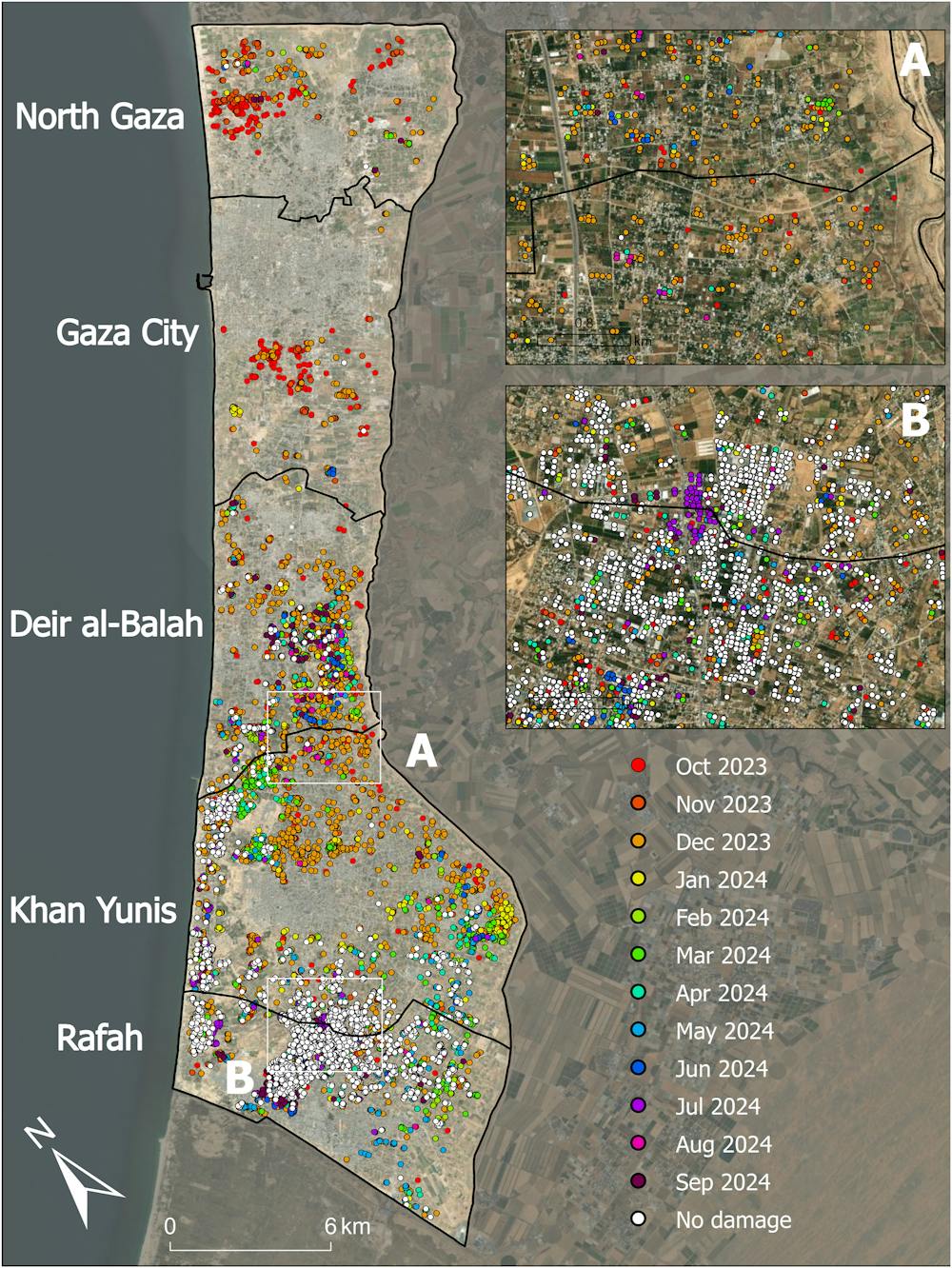
    MIL OSI – Global Reports

  • MIL-OSI Global: Reading Whistler’s Nocturne in Blue and Gold – Old Battersea Bridge as a piece of music

    Source: The Conversation – UK – By Frances Fowle, Personal Chair of Nineteenth-Century Art, History of Art, University of Edinburgh

    Nocturne in Blue and Gold – Old Battersea Bridge by James Abbott McNeill Whistler (1872-5). Tate/Canva, CC BY-SA

    In 1877 the American artist James McNeill Whistler (1834-1903) achieved notoriety when he exhibited his recent views of the river Thames at the Grosvenor Gallery in London. He gave his paintings musical titles: Nocturne in Black and Gold – The Falling Rocket (1875) and Nocturne in Blue and Gold – Old Battersea Bridge (circa 1872-5).

    The view of Battersea Bridge includes Chelsea Church and the then newly constructed Albert Bridge. The lights of Cremorne Pleasure Gardens twinkle in the distance, while fireworks explode in the pale sky above.

    The painting is remarkable for its intense, light blue tonality suggestive of evening, the time of day sometimes known as “the blue hour”. Painting from memory, Whistler thinned his paint with copal (a tree resin), turpentine and linseed oil. This created what he called a “sauce”, which he applied in thin, transparent layers, wiping it away until he was satisfied. He left areas of the dark preparatory layer unpainted to create the illusion of the bridge. Inspired by Japanese woodblock prints, he exaggerated its height.


    This article is part of Rethinking the Classics. The stories in this series offer insightful new ways to think about and interpret classic books, films and artworks. This is the canon – with a twist.


    All this was lost on the critics, however. The author Oscar Wilde reviewed the exhibition and wrote that the Battersea Bridge Nocturne was “worth looking at for about as long as one looks at a real rocket, that is, for somewhat less than a quarter of a minute”.

    A few years earlier Whistler had exhibited another view of the Thames, Nocturne: Blue and Silver – Chelsea (1871), at the Dudley Gallery in London. The critic for The Times summed up Whistler’s intention, observing that the painting was:

    So closely akin to music that the colours of the one may and should be used, like the ordered sounds of the other; that painting should not aim at expressing dramatic emotions, depicting incidents of history or recording facts of nature, but should be content with moulding our moods and stirring our imaginations, by subtle combinations of colour.

    Arrangement in Gray: Portrait of the Painter by Whistler (1872).
    Detroit Institute of Arts

    Whistler’s paintings were first compared to music as early as 1863 when the French critic Paul Manz described his haunting portrait, The White Girl (1872), as a “symphony in white”. Whistler adopted the title retrospectively, creating a series of three aesthetic mood paintings or “symphonies”, featuring young women in flowing white dresses.

    Press and public alike were puzzled by the artist’s insistence that his paintings lacked any specific narrative or moral message.

    When he witnessed the abstraction of Whistler’s latest Nocturnes at the Grosvenor Gallery, the leading English art critic John Ruskin published a venomous review. “I have seen, and heard much of Cockney impudence before now,” he wrote, “but never expected to hear a coxcomb ask 200 guineas for flinging a pot of paint in the public’s face.”

    Whistler’s retort

    Whistler sued Ruskin for libel and used the ensuing two-day trial to defend his views on art. He referred to his paintings throughout proceedings in musical terms, as “arrangements”, “symphonies” or “nocturnes”. When asked what the Battersea Bridge painting was intended to represent, he replied:

    I did not intend it to be a ‘correct’ portrait of the bridge. It is only a moonlight scene … As to what the picture represents, that depends upon who looks at it. To some persons it may represent all that is intended; to others it may represent nothing.

    Whistler won the court case, but was awarded only a farthing in damages, resulting in his bankruptcy. Undaunted, the following year (1878) he published The Red Rag, in which he articulated his aesthetic theory:

    Art should be independent of all clap-trap – should stand alone, and appeal to the artistic sense of eye or ear, without confounding this with emotions entirely foreign to it, as devotion, pity, love, patriotism, and the like. All these have no kind of concern with it, and that is why I insist on calling my works “arrangements” and “harmonies”.


    Looking for something good? Cut through the noise with a carefully curated selection of the latest releases, live events and exhibitions, straight to your inbox every fortnight, on Fridays. Sign up here.


    In 1885 he delivered his, now famous, 10 o’clock Lecture. In it reiterated his aesthetic theory. “Nature,” he wrote, “contains the elements, in colour and form, of all pictures, as the keyboard contains the notes of all music”. He urged artists not to copy nature slavishly, as Ruskin had recommended, but to approach it more like a musician, waiting for that moment when:

    The evening mist clothes the riverside with poetry, as with a veil, and the poor buildings lose themselves in the dim sky, and the tall chimneys become campanili and the warehouses are palaces in the night, and the whole city hangs in the heavens, and fairy-land is before us.

    It is then, he argued, that nature “sings her exquisite song to the artist alone”.

    Beyond the canon

    As part of the Rethinking the Classics series, we’re asking our experts to recommend a book or artwork that tackles similar themes to the canonical work in question, but isn’t (yet) considered a classic itself. Here is Frances Fowles’ suggestion:

    Whistler was not the only artist of this period to view his art as the equivalent of music. His work anticipated symbolism, a literary and artistic movement that rejected naturalistic representation in favour of more abstract concerns, such as the connections between words, colours and musical notes.

    Mikalojus Čiurlionis and his 1908 painting, Stellar Sonata.
    Wiki Commons

    The relationship between colour, rhythm and sound was central to the work of French artist Paul Signac (1863-1935), who worked in a pointillist technique (applying dots of colour), and assigned his paintings opus numbers and tempos. The Lithuanian painter and composer Mikalojus Čiurlionis (1875-1911), too, fused music and colour and gave his artworks musical titles.

    Frances Fowle does not work for, consult, own shares in or receive funding from any company or organisation that would benefit from this article, and has disclosed no relevant affiliations beyond their academic appointment.

    ref. Reading Whistler’s Nocturne in Blue and Gold – Old Battersea Bridge as a piece of music – https://theconversation.com/reading-whistlers-nocturne-in-blue-and-gold-old-battersea-bridge-as-a-piece-of-music-241075

    MIL OSI – Global Reports

  • MIL-OSI USA: Former Bosnian prison camp supervisor sentenced to over 5 years in prison for concealing participation in wartime persecution

    Source: US Immigration and Customs Enforcement

    BOSTON — A Swampscott man was sentenced Jan. 22 in federal court in Boston after Homeland Security Investigations (HSI) uncovered a 25-year scheme to conceal his persecution of ethnic Serbs during the Bosnian War as well as making false claims to come to the United States and ultimately become a United States citizen.

    Kemal Mrndzic, 52, was sentenced by U.S. District Court Judge Denise J. Casper to 65 months in prison to be followed by three years of supervised release. In October 2024, Mrndzic was convicted by a federal jury of engaging in a scheme to conceal his involvement in the persecution of Serb prisoners at the notorious Celebici prison camp in Bosnia in 1992; making a false statement to federal agents about his role at the camp; possessing a fraudulently obtained naturalization certificate and Social Security card; and using a fraudulently obtained passport and certificate of naturalization.

    “Through the brave testimony of the survivors of the Celebici prison camp, the persecution Mrndzic attempted to conceal was finally brought to light after over 30 years. Though we can never undo what the survivors endured, I hope this sentence brings some measure of justice, no matter how long delayed,” said HSI New England Special Agent in Charge Michael J. Krol. “HSI remains tireless in our effort to pursue war criminals and human rights violators who attempt to evade justice.”

    “For over two decades, Mr. Mrndzic evaded accountability for his participation in the persecution and torture of countless victims at the camp. By holding him accountable for his lies and fraudulent conduct, this sentence reinforces our resolve to ensure that those responsible for war crimes and human rights abuses are identified, exposed, and prosecuted. This case underscores that we will not allow our nation to be a refuge for those who seek to escape justice,” said United States Attorney Leah B. Foley. “The government will be working to ensure that his fraudulently obtained U.S. citizenship is revoked.”

    Mrndzic served as a supervisor of the guards at the notorious Celebici prison camp in Bosnia and Herzegovina during the sectarian war which fractured the country in the 1990s. Twenty-one former detainees described Mrndzic as one of the most notable guards at the camp, who was widely known for his particularly vicious treatment of prisoners and his close association with the camp deputy commander. Mrndzic participated in the systematic and pervasive brutal torture and deprivation of basic human needs of hundreds of captive victims — some of whom were elderly — at the Celebici prison camp. For seven months, victims were forcibly detained with starvation rations, at times forced into lightless, airless manholes that were sealed for hours at a time. Victims also endured daily and nightly beatings that were administered by the guards at the camp — with baseball bats, wooden poles and rifle butts.

    Camp survivors who testified at trial in October 2024 recounted murders, the burning of one detainee’s tongue with a heated knife blade, the wrapping of another detainee with a long explosive fuse cord and then lighting it on fire, sexual abuse and other harrowing acts committed over a period of many months. One survivor recounted the beating death of a 70-year-old detainee whom guards pinned a political party badge to his forehead while he was still dying. Survivors also testified about being starved and deprived of the most basic needs, including sleeping on the concrete floor of a sheet metal hangar for months on end while being fed only a slice of bread a day.

    A United Nations tribunal investigated the crimes committed at Celebici and in 1998 convicted the two top commanders of the camp and one particularly sadistic guard on numerous crimes including murder and torture. While Mrndzic was interviewed by investigators in connection with that case in 1996, he was not charged by international authorities. Mrndzic subsequently concocted a scheme to leave Bosnia by crossing the border into Croatia and applying to immigrate to the United States using a fabricated story. In his immigration application and interview, he falsely claimed to U.S. immigration authorities that he fled his home after he was captured, interrogated and abused by Serb forces, and could not return home for fear of future persecution. As the government argued at trial, Mrndzic used his own experience as a persecutor to press a false narrative that he had been persecuted. He was admitted to the U.S. in 1999, and ultimately became a naturalized U.S. citizen in 2009.

    Many Celebici survivors became refugees during and after the Bosnian War. Some came to the United States and have since become U.S. citizens. The survivors living in the United States played a central role in the investigation and prosecution of this case. They provided critical trial testimony and submitted moving victim impact statements.

    The investigation was led by HSI New England’s Document and Benefit Fraud Task Force and HSI’s Human Rights Violators & War Crimes Center (HRVWCC) with assistance from the Social Security Administration Office of Inspector General’s Boston Field Office; the U.S. Department of State’s Diplomatic Security Service, Boston Field Office; and U.S. Customs and Border Protection, Boston Field Office. Additional support was provided by the Justice Department’s Office of International Affairs, U.S. Citizen and Immigration Services, DOJ’s Criminal Division’s Human Rights and Special Prosecutions Section and the U.S. Embassies in Sarajevo, Belgrade and Helsinki. The United Nations International Residual Mechanism for Criminal Tribunals (IRMCT) in The Hague, Netherlands, the Australian Federal Police, Bosnian and Herzegovinian Ministry of Justice, Serbian Ministry of Justice, law enforcement authorities in Finland and the Royal Canadian Mounted Police all provided valuable assistance as did the Cook County Sheriff’s Office in Illinois and the Swampscott Police Department in Massachusetts.

    The HRVWCC is led by HSI and leverages the expertise of criminal investigators, attorneys, historians, intelligence analysts and federal partners to provide a whole of government approach to prevent the United States from becoming a safe haven for individuals who commit war crimes, genocide, torture and other human rights abuses around the globe. Currently, HSI has more than 180 active investigations into suspected human rights violators and is pursuing more than 1,945 leads and removals cases involving suspected human rights violators from 95 different countries. Since 2003, the HRVWCC has issued more than 79,000 lookouts for potential perpetrators of human rights abuses, and stopped over 390 human rights violators and war crimes suspects from entering the U.S.

    MIL OSI USA News

  • MIL-OSI USA: 176 New Troopers Join the Ranks of the NYSP

    Source: US State of New York

    Governor Kathy Hochul joined Superintendent Steven G. James in honoring 176 new State Troopers as they graduated today from the 216th session of the Basic School of the New York State Police Academy. The ceremony was held at the Empire State Plaza Convention Center in Albany. Today’s graduation increases the State Police ranks to 5,034 sworn members.

    “I commend these 176 new troopers for dedicating themselves to public service, and their commitment to protecting the people of New York State,” Governor Hochul said. “The members of the New York State Police put their lives on the line each day to keep the rest of us safe — in a world where their mission has grown more challenging and complex. On behalf of all New Yorkers, I want to thank the graduates for their hard work and perseverance — and welcome them to the long gray line.”

    New York State Police Superintendent Steven G. James said, “Today’s graduation is the culmination of six months of difficult classwork, physical training, and sacrifice, and we now welcome our newest members to one of the most prestigious and well-respected law enforcement agencies in the nation. I am confident they are equipped to carry out our mission to serve our communities with the same professionalism and pride the State Police have exhibited for the past 107 years.”

    In addition to honoring all graduates from the 216th Session of Basic School,

    Superintendent James presented the following awards:

    Academic Achievement Award

    As a special incentive for all students attending the State Police Academy Basic School, the Superintendent sponsors the awarding of a firearm for the attainment of the highest level of academic performance during Academy training.

    The recipient of the Academic Performance Award is Clayton D. Buff, age 24, who resides in Cohoes, New York. He attended the University at Albany where he studied Criminal Justice. Prior to joining the New York State Police, he served 4 years of active duty with the United States Army. Throughout the Academy training program, he achieved an outstanding overall academic average of 96.58 percent. He will be assigned to Troop G.

    Firearms Proficiency Award

    The New York State Trooper Foundation has sponsored the awarding of a firearm for the attainment of the highest level of performance in all phases of firearms training.

    The recipient of the Superintendent’s Firearms Proficiency Award is Hunter T. Argetsinger, age 24, who resides in Elmira, New York. He is a graduate of Corning Community College where he received an associate’s degree in criminal justice. Prior to joining the New York State Police, he was a police officer with the city of Elmira Police Department. During firearms training, he achieved an average score of 250 out of a possible 250. He will be assigned to Troop E.

    Investigator Joseph T. Aversa Physical Fitness Award

    The New York State Police Investigators Association has sponsored the awarding of a firearm for the attainment of the highest degree of physical fitness during the Physical Training Program at the Academy. This award will be presented in memory of deceased Investigator Joseph Aversa. Investigator Aversa made the ultimate sacrifice in New York City on March 5, 1990, during a narcotics investigation while serving as a member of the Joint Drug Enforcement Task Force. Investigator Aversa was a six-year State Police veteran who believed that physical conditioning was an integral part of being a Trooper.

    The recipient of the Joseph T. Aversa Physical Training Award is Oliver P. Valenti, age 21, who resides in Clarence, New York. Prior to joining the New York State Police, he attended Hilbert College where he studied Forensic Science while employed with Wegmans Marketplace as a front-end coordinator. During the physical agility testing, he achieved the highest score of all 176 Members of the 216th Session, a tribute to his superb physical conditioning. He will be assigned to Troop A.

    I commend these 176 new troopers for dedicating themselves to public service, and their commitment to protecting the people of New York State.”

    Governor Hochul

    Student Representative

    The New York State Troopers Police Benevolent Association has sponsored the awarding of a firearm to the member of the class who is selected by his or her peers to represent them during these exercises. The PBA presents the award in memory of Trooper John J. McKenna IV, who was killed in action in 2006, while serving his country as a Marine in Iraq.

    The recipient of the Class Representative Award is Antonio M. Vecchio, age 21, who resides in Levittown, New York. Prior to joining the New York State Police, he attended Binghamton University where he studied Economics. He will be assigned to Troop C.

    The new Troopers will report for field duty on February 7 or February 10, depending on their platoon. For the following 10 weeks, the new Troopers will be evaluated under a field-training program supervised by senior Field Training Officers.

    Below is a complete list of graduates listed alphabetically (Troop assignments are pending):

    Last Name First Name Hometown
    Aguilar Magali Wallkill, NY
    Akande-Bowen Jared Queens, NY
    Balbuena Kelly Newburgh, NY
    Akhmedov Kairat Brooklyn, NY
    Argetsinger Hunter Elmira, NY
    Arndt Mitchell Mohawk, NY
    Ashby Tristan Syracuse, NY
    Baines Evan Merrick, NY
    Bartholomew Zoe Lake Pleasant, NY
    Bassiouni Omar Staten Island, NY
    Bektic Nedim Utica, NY
    Beltran Antonio Amsterdam, NY
    Boudreau Luc Warwick, NY
    Boul Rang Syracuse, NY
    Brennan Lauren Selkirk, NY
    Briggs Cynthia Hawthorne, NY
    Brownell James Geneva, NY
    Buck Aaron Houghton, NY
    Buff Clayton Cohoes, NY
    Bull Lance Queensbury, NY
    Bullo Silvano Fairport, NY
    Burns Mason Rome, NY
    Cahill Edward Massapequa, NY
    Canale Connor Amsterdam, NY
    Carnero Tello Glenn Bogota, NY
    Carr Jason Cortland, NY
    Carrillo Evan Bronx, NY
    Carron Sean Delhi, NY
    Cervantes Manuel Port Chester, NY
    Clarke Hannah South Glens Falls, NY
    Clarke Jakob Plattsburgh, NY
    Combs Jenna Warrensburg, NY
    Cosbert Stefan Freeport, NY
    Cox Tyler Schenectady, NY
    Cregin Ethan Staten Island, NY
    Curtin James Hicksville, NY
    Daley Keri West Henrietta, NY
    Dalrymple Scott Brewster, NY
    Dalrymple Shane Brewster, NY
    Deebs Andrew Hornell, NY
    Delaney Austin Neversink, NY
    Delfini Louis Staten Island, NY
    Derick Gavin Lindley, NY
    Diana Joseph Holland Patent, NY
    Disalvo Natalie Johns Island, NY
    Diaz Israel East Fishkill, NY
    Dieng Ngagne Bronx, NY
    Difusco Frank Poughquag, NY
    Diorio David Deer Park, NY
    Eldred Rebecca Clifton Park, NY
    Ellsworth Logan Matamoras, NY
    Fallon Hayley Long Beach, NY
    Fallon Thomas Kings Park, NY
    Faso Emma Clarence Center, NY
    Favreau Parker Plattsburgh, NY
    Feirabend Michael West Seneca, NY
    Fernaays Ryan Williamson, NY
    Finn Richard Pleasant Valley, NY
    Fitzsimmons Cody Dryden, NY
    Flocco Sophia Bronx, NY
    Fontus Angelo Brooklyn, NY
    Galanti Jillian Webster, NY
    Garcia Castrejon Luis Pine Plains, NY
    Gates Seth Elbridge, NY
    Gehrke Matthew Centerport, NY
    Gould Erin Astoria, NY
    Grant Ariel Carle Place, NY
    Hahn Richard Kings Park, NY
    Harrington Carson Jacksonville, NY
    Haynes Dylan Baldwin, NY
    Healey Trevor Perry, NY
    Heegan Christina Oneonta, NY
    Heras Nelson Jamaica, NY
    Hidalgo Christopher Queens Village, NY
    Holloway William West Hempstead, NY
    Ibrahim Maryam Williston Park, NY
    Ibrahim Mohamed Levittown, NY
    Ilahi Haider Brooklyn, NY
    Jansen Connor Horseheads, NY
    Jolly Kaitlyn Waterloo, NY
    Kalletta George Manorville, NY
    Komenda Kiersten Springville, NY
    Karam Michael Gansevoort, NY
    Khork Brennan Hornell, NY
    Knoop Dennis Queensbury, NY
    Koprivica Marko Blasdell, NY
    Kraft Joel Waterloo, NY
    Lamouree Grant Queensbury, NY
    Lask Michael Buffalo, NY
    Lawson Lance Valley Stream, NY
    Lazo Franklin Pleasantville, NY
    Letourneau Casey Constable, NY
    Lillis Abigail Angola, NY
    Locurto Madeline New Windsor, NY
    Manley Charles Buffalo, NY
    Marroquinn Kevin Lindenhurst, NY
    Mcdermott Dylan West Babylon, NY
    Meegan Liam West Seneca, NY
    Messina Sebastian Levittown, NY
    Milazzo Matteo Briarcliff, NY
    Miller Eric Medina, NY
    Murphy Rebecca Monroe, NY
    Monnin Daniel Buffalo, NY
    Moore Hunter Castorland, NY
    Morales Nicholas Staten Island, NY
    Moses Avery Fayetteville, NY
    Motler Katherine Glenmont, NY
    Morales Nickolas Binghamton, NY
    Mustafa Kamal Mohamad Ayyas Utica, NY
    Naum Caleb Brewerton, NY
    Nell Abigail Verona, NY
    Newburg V Louis Coeymans, NY
    Obrien Cade Gansevoort, NY
    Oconnor James New Paltz, NY
    Page Joshua Verona, NY
    Parga Erick Island Park, NY
    Parkhurst Kevin Ilion, NY
    Patti Victoria Buffalo, NY
    Pekoff Jeremy Bellmore, NY
    Pelaez Matthew Old Bethpage, NY
    Peters Henry Callicoon, NY
    Petfield Jacob Hawthorne, NY
    Petry Henry Chemung, NY
    Phillips Anaya Medford, NY
    Pindulic Amber Centereach, NY
    Quintero Josue Brooklyn, NY
    Quirk Timothy Centereach, NY
    Ramirez Evelin Carmel, NY
    Roush Hailey Mayville, NY
    Rath Nathaniel Newport, NY
    Robinson Shane Binghamton, NY
    Romero Lainez Bryan West Babylon, NY
    Rowe Jake Pleasant Valley, NY
    Rutkowski Jack Pine Bush, NY
    Ryan Allison Syracuse, NY
    Salvadori David Massapequa Park, NY
    Sarpong Joel Columbus, NY
    Sasso Mario Nanuet, NY
    Savino Nicholas Bellmore, NY
    Scoma Anthony Lancaster, NY
    Scordo Alex Middletown, NY
    Simon Nicole Howard Beach, NY
    Smoulcey Ryan Rome, NY
    Stephany Krista Buffalo, NY
    Streety Maxwell Orchard Park, NY
    Streety Mitchell Thornwood, NY
    Sustache Samuel Syracuse, NY
    Svitak Brendan Marcy, NY
    Sweet Jeffrey Petersburg, NY
    Szlamcynski Adam Star Lake, NY
    Taylor Grace South Kortright, NY
    Tejeda Francheska Buffalo, NY
    Thaureaux Alejandro Webster, NY
    Thompson Adam St Albans, NY
    Tommasone Daniel Schenectady, NY
    Trzaska Noah West Seneca, NY
    Twoguns Kristine Perrysburg, NY
    Valenti Oliver Akron, NY
    Valladares Steven Woodside, NY
    Vargo Quinton West Falls, NY
    Vasile Hudson Mount Morris, NY
    Vata Halit New York City
    Vecchio Antonio Levittown, NY
    Velez Diana Campbell Hall, NY
    Vogel Tanner Ilion, NY
    Volk III Robert Mechanicville, NY
    Wallace Connor Manorville, NY
    Weist Brockton Port Crane, NY
    White Alexander Schenectady, NY
    Willenbrock Derek Amityville, NY
    Winslow Hunter Canastota, NY
    Workman Daniel Groton, NY
    Young Tanner Camden, NY
    Yudchits Julia Herkimer, NY
    Zahin Md Muhaiminul New York City, NY
    Zambardino Nicholas Monroe, NY

    MIL OSI USA News

  • MIL-OSI Security: Two Baltimore Men Indicted For Firearms Offenses

    Source: Office of United States Attorneys

    HARRISBURG – The United States Attorney’s Office for the Middle District of Pennsylvania announced that Dominic Wise, age 33, of Baltimore, Maryland, and Darius Gissentaner, age 33, of Baltimore, Maryland, were indicted on February 5, 2025, by a federal grand jury on firearms charges.

    According to Acting U.S. Attorney John Gurganus, the indictment alleges that on July 8, 2024, in York County, Pennsylvania, Wise possessed a Glock 9mm pistol, and Gissentaner possessed a 9mm SCCY pistol, when they were both felons prohibited from possessing a firearm. The indictment also alleges that the 9mm SCCY pistol that Gissentaner possessed had an obliterated serial number.

    The case was investigated by the U.S. Bureau of Alcohol, Tobacco, Firearms and Explosives, and the Pennsylvania State Police.  Special Assistant U.S. Attorney Mark Monroe is prosecuting the case.

    The maximum penalty for the charge of felon in possession is a period of 15 years imprisonment, 3 years of supervised release, and a $250,000 fine.  The maximum for the Possession of a Firearm with an obliterated serial number is a period of 5 years imprisonment and a $250,000 fine.

    Indictments and Criminal Informations are only allegations. All persons charged are presumed to be innocent unless and until found guilty in court.

    # # #

    MIL Security OSI

  • MIL-OSI Security: Fentanyl Trafficker Sentenced to 165 Months for Bringing Thousands of Counterfeit Oxycodone Pills into the District

    Source: Office of United States Attorneys

                WASHINGTON – Craig Eastman, 21, of Washington D.C., was sentenced today in U.S. District Court to 165 months in federal prison for participating in a massive fentanyl trafficking conspiracy that distributed hundreds of thousands of fentanyl-laced counterfeit oxycodone pills from Southern California to destinations throughout the United States, including the District. Eastman was one of more than two dozen co-defendants arrested over the course of 2023 in D.C., Virginia, Maryland, San Diego, and Los Angeles and charged in the conspiracy.

                The sentence was announced by U.S. Attorney Edward R. Martin, Jr., DEA Special Agent in Charge Ibrar A. Mian of the Washington Division, Inspector in Charge Damon E. Wood of the U.S. Postal Inspection Service Washington Division, and Chief Pamela Smith of the Metropolitan Police Department.

                Eastman pleaded guilty on July 25, 2024, to conspiring to distribute 400 grams or more of fentanyl. In addition to the 165-month prison term, U.S. District Judge Colleen Kollar-Kotelly ordered Eastman to serve five years of supervised release.

                The impetus for this investigation was the overdose death of Diamond Lynch, a young mother in Southeast D.C. In addition to investigating and prosecuting the death-resulting case,[1] law enforcement followed the evidence and uncovered a vast network of traffickers who transported fentanyl from Mexico to Los Angeles to the District of Columbia. Since then, investigators have seized more than 450,000 fentanyl pills, 1.5 kilograms of fentanyl powder, and 30 firearms.         

                According to court documents, Eastman entered into the conspiracy after he was introduced to a Los Angeles-based drug trafficker, who was a distributor of fentanyl-laced counterfeit oxycodone pills. Eastman traveled to Southern California to purchase the fake oxycodone from the L.A. supplier and returned to the District with the drugs. Eastman and his co-conspirators employed two primary methods to transport the pills to the District: they smuggled them in luggage or carry-on items on airline flights, or they shipped the pills utilizing the U.S. Postal Service and commercial mail carriers

                After transporting the fentanyl-laced pills back to the District of Columbia, Eastman redistributed them for profit, primarily in collaboration with a co-defendant. Two redistributors of the pills were his siblings, Larry and Justice Eastman, who later were convicted of conspiracy to distribute and possess with intent to distribute fentanyl. Ms. Lynch was a customer of Larry and Justice Eastman.

                Craig Eastman not only knew of Ms. Lynch’s overdose death, but proceeded to attempt to sell the batch of pills that included Ms. Lynch’s fatal dose at a discount rather than simply destroy them and incur the financial loss. Specifically, the month after Ms. Lynch’s overdose death, Craig Eastman marketed the same bulk supply of pills that included Ms. Lynch’s fatal dose. Craig Eastman informed a prospective customer that he “caught a bad batch of some 30s,” and asked the customer to “see if [he] got somebody to sell em to[,] I got endless.”

                Craig Eastman also had been found in residences containing firearms on multiple occasions. On September 1, 2021, law enforcement searched Craig Eastman’s residence in the 2300 block of Raynolds Place SE. Agents found him inside his bedroom, along with 204 fentanyl-laced counterfeit oxycodone pills, multiple firearms and accompanying magazines and ammunition, as well as several thousand dollars in cash. On December 4, 2021, officers searched Eastman’s residence and recovered four firearms, about $1,700 in cash, and distribution quantities of fentanyl-laced counterfeit oxycodone pills. In his bedroom specifically, officers found a Glock 17 equipped with a high-capacity magazine and a machine gun conversion device, along with fentanyl-laced counterfeit oxycodone pills. When Craig Eastman was arrested along with co-defendant Charles Taylor on March 22, 2023, in a stash house in the District, officers recovered seven firearms (including one machine gun), assorted ammunition, more than a dozen pounds of marijuana, and a pill bottle containing fentanyl-laced counterfeit oxycodone pills.

    DEFENDANT

    AGE

    LOCATION

    CHARGES/SENTENCE

    Hector David Valdez,

    aka “Curl”


    27

    Santa Fe Springs, California

    Conspiracy to distribute and possess with intent to distribute 400 grams or more of fentanyl;

    Conspiracy to commit international money laundering.

    Craig Eastman


    21

    Washington, D.C. Sentenced on February 6, 2025, to 165 months for conspiracy to distribute more than 400 grams of fentanyl.
    Charles Jeffrey Taylor

    21

    Washington, D.C. Conspiracy to distribute and possess with intent to distribute 400 grams or more of fentanyl.
    Raymond Nava, Jr.

    20

    Bell Gardens,

    California

    Sentenced September 17, 2024, to 14 years for conspiracy to distribute and possess with intent to distribute 400 grams or more of fentanyl.
    Ulises Aldaz

    28

    Bell Gardens,

    California

    Sentenced June 28, 2024, to 95 months in prison for conspiracy to distribute and possess with intent to distribute 400 grams or more of fentanyl.
    Max Alexander Carias Torres

    27

    Bell Gardens,

    California

    Conspiracy to distribute and possess with intent to distribute 400 grams or more of fentanyl;

    Conspiracy to commit international money laundering

    Teron Deandre McNeil, aka “Wild Boy”

    34

    Washington, D.C. Conspiracy to distribute and possess with intent to distribute 400 grams or more of fentanyl.

    Marvin Anthony Bussie,

    aka “Money Marr”

    22

    Washington, D.C. Sentenced June 28, 2024, to 120 months in prison for conspiracy to distribute and possess with intent to distribute 400 grams or more of fentanyl.
    Marcus Orlando Brown

    29

    Washington, D.C. Sentenced October 3, 2024, to 108 months in prison for conspiracy to distribute and possess with intent to distribute 40 grams or more of fentanyl.
    Columbian Thomas, aka “Cruddy Murda”

    27

    Washington, D.C. Sentenced October 22, 2024, to 160 months in prison for conspiracy to distribute and possess with intent to distribute 400 grams or more of fentanyl.
    Wayne Rodell Carr-Maiden

    30

    Washington, D.C. Sentenced April 29, 2024, to 45 months in prison for conspiracy to distribute and possess with intent to distribute 40 grams or more of fentanyl.

    Andre Malik Edmond,

    aka “Draco”

    23

    Temple Hills, Maryland Sentenced July 22, 2024, to 130 months in prison for conspiracy to distribute and possess with intent to distribute 400 grams or more of fentanyl.

    Treyveon James Johnson,

    aka “Treyski”

    20

    Alexandria, Virginia Sentenced September 5, 2024, to 108 months in prison for conspiracy to distribute and possess with intent to distribute 40 grams or more of fentanyl.

    Karon Olufemi Blalock,

    aka “Fat Bags”

    30

    Alexandria, Virginia Conspiracy to distribute and possess with intent to distribute 400 grams or more of fentanyl.

    Ronte Ricardo Greene,

    aka “Cardiddy”

    29

    Washington, D.C. Conspiracy to distribute and possess with intent to distribute 400 grams or more of fentanyl.
    Melvin Edward Allen, Jr., aka “21”

    39

    Washington, D.C. Pleaded guilty on December 18, 2024, to conspiracy to distribute and possess with intent to distribute 40 grams or more of fentanyl.

    Darius Quincy Hodges,

    aka “Brick”

    34

    Glen Allen, Virginia Conspiracy to distribute and possess with intent to distribute 400 grams or more of fentanyl.

    Lamin Sesay,

    aka “Rock Star”

    28

    Alexandria, Virginia Conspiracy to distribute and possess with intent to distribute 400 grams or more of fentanyl.
    Paul Alejandro Felix

    26

    Glendale,

    California

    Sentenced November 12, 2024, to 164 months in prison for conspiracy to distribute and possess with intent to distribute 400 grams or more of fentanyl.

    Omar Arana,

    aka “Frogs”

    27

    Cudahy,

    California

    Pleaded guilty January 3, 2025, to conspiracy to distribute and possess with intent to distribute 400 grams or more of fentanyl.
    Edgar Balderas, Jr., aka “Nano”

    27

    San Diego,

    California

    Pleaded guilty December 19, 2024, to conspiracy to distribute and possess with intent to distribute 400 grams or more of fentanyl.
    Raul Pacheco Ramirez

    30

    Long Beach,

    California

    Sentenced November 26, 2024, to 95 months for conspiracy to distribute and possess with intent to distribute 400 grams or more of fentanyl.
    Giovani Alejandro Briones

    30

    Victorville, California Pleaded guilty October 24, 2024, to conspiracy to distribute and possess with intent to distribute 400 grams or more of fentanyl.
    Alfredo Rodriguez Gonzalez

    26

    Rosarito, Mexico

    Conspiracy to distribute and possess with intent to distribute 400 grams or more of fentanyl;

    Conspiracy to commit international money laundering.

               These prosecutions followed a joint investigation by the DEA Washington Division and the U.S. Postal Inspection Service Washington Division, in partnership with the Metropolitan Police Department and the Bureau of Alcohol, Tobacco, Firearms and Explosives (ATF). The investigation had additional support from the DEA’s Los Angeles, San Diego, and Riverside Field Divisions, the FBI Washington Field Office, and the Charles County, Maryland, Sheriff’s Office. Valuable assistance was provided by the U.S. Attorney’s Offices in the Central and Southern Districts of California, the Eastern District of Virginia, and the District of Maryland.

                The case is being prosecuted by Assistant U.S. Attorneys Matthew W. Kinskey, Solomon S. Eppel, and Iris McCranie of the Violence Reduction and Trafficking Offenses (VRTO) Section. 

    MIL Security OSI