Category: Pandemic

  • MIL-OSI Asia-Pac: President Lai meets Czech national baseball team  

    Source: Republic of China Taiwan

    President Lai meets Czech national baseball team  
    2024-11-01

    On the afternoon of November 1, President Lai Ching-te met with the national baseball team of the Czech Republic. In remarks, President Lai thanked the Czech Republic for supporting Taiwan, and noted that the Czech national baseball team had come to Taiwan to take part in two exhibition games, not only for the sake of learning from one another, but also to further cultivate friendship between Taiwan and the Czech Republic. He also stated that the Czech Republic is an important democratic ally of Taiwan in Europe. He stated that the opening of the Czech Centre Taipei this past June shows that our two countries continue to enhance our partnership, and expressed confidence that even greater advances will be achieved in culture and many other fields moving forward.
    A translation of President Lai’s remarks follows:
    The World Baseball Softball Confederation Premier12 tournament is scheduled to start on November 10, with Group B opening round games to be played in Taiwan. I would like to thank Chinese Professional Baseball League Commissioner Tsai Chi-chang (蔡其昌) for inviting the Czech national baseball team to play two exhibition games in Taiwan, not only for the sake of learning from one another, but also to further cultivate friendship between Taiwan and the Czech Republic.
    As a long-time baseball fan, I am very pleased to meet with the Czech national baseball team here at the Presidential Office. Many team members are actually part-timers whose principal occupations are in such fields as firefighting, teaching, medicine, financial analysis, and real estate brokerage, to name just a few. Everyone’s passion for the sport has earned the team a ranking of number 15 in the world and placed them among the top three in Europe. Indeed, in last year’s World Baseball Classic (WBC), the team scored a come-from-behind win over China to take the Czech Republic’s first-ever victory in the WBC tournament. It was an admirable win and an exciting game, and Taiwanese fans were thrilled.
    The Czech Republic is an important democratic ally of Taiwan in Europe. Representative of the Czech Economic and Cultural Office David Steinke is here, so I would like to give special thanks to the Czech Republic for supporting Taiwan. Three years ago, in the midst of the COVID-19 pandemic, the Czech Republic generously donated 30,000 vaccine doses to Taiwan, and when Hualien was hit by a severe earthquake earlier this year, the Czech Republic donated US$150,000 to support reconstruction efforts. On behalf of the people of Taiwan, I want to express our deepest appreciation.
    The opening of the Czech Centre Taipei this past June signifies that our two countries continue to enhance our partnership, and I am confident that even greater advances will be achieved in culture and many other fields moving forward.
    Today is the Czech national baseball team’s second day in Taiwan, so I want to wish everyone a happy and fruitful visit, and I look forward to both teams playing their best in the exhibition games scheduled for tomorrow and the day after.
    Also in attendance was Czech Baseball Association President Petr Ditrich.

    MIL OSI Asia Pacific News

  • MIL-OSI United Nations: One month after the tragic school bus crash in Khu Khot, UN Secretary-General’s Special Envoy for Road Safety to promote and launch the UN-JCDecaux campaign for road safety in Thailand

    Source: United Nations Economic Commission for Europe

    The UN Secretary-General’s Special Envoy for Road Safety, Jean Todt, is visiting Bangkok from 30 October to 6 November 2024. During his visit, he will meet with the Prime Minister Paetongtarn Shinawatra, key government officials, representatives of the international community, private, and public sectors to promote road safety initiatives and advocate for enhanced measures, particularly on wearing quality helmets. His visit will be also the occasion to launch the UN-JCDecaux campaign #MakeASafetyStatement in the country.  The Special Envoy will also speak at the UNESCAP/Alliance française Road Safety Seminar on 4 November.  This aligns with the Global Plan for the Decade of Action for Road Safety 2021-2030, aiming to halve road fatalities by 2030.

    The visit of the Special envoy comes one month after the tragic bus road crash which caught fire while travelling on an outbound lane in Khu Khot in the Pathum Thani Province, resulting in 23 deaths of which were mainly school students.

    The silent pandemic

    Every year, the staggering toll of road-related fatalities claims the lives of 1.19 million people, leaving countless others with severe injuries. This silent pandemic overwhelmingly affects developing nations, where over 90% of the road traffic fatalities occur. Furthermore, road crashes are the leading cause of death for children and young adults aged 5–29 years.  

    According to the World Health Organization, road crashes kill 18,218 people in Thailand each year, representing a road traffic fatality rate of 25/100,000 population, while the rate is in 15.7/100,000 in South-East Asia and 6.5/100,000 in Europe (WHO 2021). Despite the recent efforts of the country, Thailand is still ranked on the top worst countries in term of road fatalities.  This is therefore urgent to act for increasing road safety in the country.

    “Every life lost to preventable road accidents is a tragedy that reverberates through our communities and our country. This recent tragedy has reminded us of the urgent need for effective and sustained action. Road safety is not merely a matter of law enforcement but a shared societal responsibility. We owe it to our citizens, especially our children, to make our roads safer“, stated the new Prime Minister, H.E. Prime Minister Paetongtarn Shinawatra.

    Road crashes have a significant social and economic burden, particularly in Thailand.  In addition to the human tragedy, road crashes trap countries into a vicious circle of poverty, costing till 6% of the GDP. Given their social and economic cost, road crashes are jeopardizing the entire sustainable development agenda. Now is the time for change, and I am looking forward to working with the Government of Thailand to stop the carnage on the roads.” stressed the UNSG’s Special Envoy Todt.

    Wearing a safe helmet

    If the causes of road crashes are multiple such as the non-reliability of the vehicles and of the road’s infrastructure and design, the lack of post-crashes services, weaknesses in the road safety management, a dangerous road user’s behavior is still one of the main reasons costing lives on the road. On the mitigation of the risk factors for the road users, wearing a helmet responding to the UN standards is definitively a game changer. Wearing a quality helmet can reduce the risk of injuries by 69%.

    Knowing that Thailand has the highest rate of motorcycle-related deaths in the world, representing more than 70% of the road traffic fatalities in the country, wearing a safe helmet is an absolute emergency.              

    #MakeASafetyStatement

    During his visit in Thailand, the Special Envoy will launch the UN Global Road Safety Campaign, which aims to raise awareness of life-saving road safety measures. Launched globally in cooperation with JCDecaux Global under the motto #MakeASafetyStatement, it will run through 2025 in over 80 countries in the world.   

    The campaign seeks to reduce risk factors, especially in urban areas, enabling people to walk, live, and enjoy their environment safely.  Sixteen global, and dozens of national, celebrities have joined forces to advocate for simple and effective road safety rules.  Key messages include wearing a seat belt, driving safely, wearing a helmet, not texting and driving, not driving under the influence or while tired, and respecting pedestrians.

    Participating celebrities in the campaign include Football Legend Mr. Didier Drogba, F1 Driver Mr. Charles Leclerc, Oscar-winning actress and UNDP Goodwill Ambassador Ms. Michelle Yeoh, Tennis Legend Mr. Novak Djokovic, Musician Ms. Kylie Minogue, Motorcycle racer Mr. Marc Marquez, Supermodel Ms. Naomi Campbell, Actor Mr. Patrick Dempsey, Musician and Inspirational leader Mr. Youssou N’Dour, Actress Ms. Julie Gayet, Actor Mr. Michael Fassbender, Football icon Mr. Ousmane Dembélé, Double Olympic Champion Ms. Faith Kipyegon, F1 Driver Mr. Mick Schumacher, Actor Jean Reno and Cyclist Champion Tadej Podacar.

    Risk factors that are too often neglected                                                                                                                 

    Only seven countries in the world (France, Greece, Hungary, Italy, Luxembourg, Portugal, Sweden) have laws that comply with WHO best practices for all the risk factors – speeding, drink driving, UN-standard motorbike helmet use, seatbelts and child restraint systems.

    Media representatives are cordially invited to cover the launch of the campaign, mission and Memorandum of Agreement on Road Safety Cooperation between the Ministry of Transport and the Ministry of Public Health at the press conference on 6 November 2024 at 1.30 PM at the Ministry of Transport (Ratcharotsamosorn Assembly Hall) in Bangkok, with:

    • Mr. Suriya Jungroongruangkit, Deputy Prime Minister and Minister of Transport
    • Mr. Somsak Thepsutin, Minister of Public Health
    • Mr. Jean Todt, UN Secretary General’s Special Envoy for road safety,   
    • Ms. Michaela Friberg-Storey, UN Resident Coordinator to Thailand, presents the work of the UN in road safety in Thailand.
    • Mr. Arnaud de Ruffray, President of JCDecaux Thailand presents the UN-JCDecaux campaign for road safety in Thailand.
    • Ms. Saisunee Jana, Paralympic gold Medalist


    About the Special Envoy

    The former United Nations Secretary-General, Ban Ki-moon, appointed in 2015 Jean Todt as his Special Envoy for Road Safety. He was reconfirmed in this role by United Nations Secretary-General António Guterres, in 2017 and in 2021. In 2018, together with 14 UN organizations, the Special Envoy launched the UN Road Safety Fund (UNRSF). The Special Envoy contributes, among other things, to mobilize sustained political commitment to make road safety a priority; to advocate and raise awareness of UN legal instruments on road safety; to share established good practices in this area; to strive to generate adequate funding through strategic partnerships between the public, private and non-governmental sectors. Special Envoy brochure and X account.

    MIL OSI United Nations News

  • MIL-OSI Europe: Briefing – Compulsory licensing of patents for crisis management – 04-11-2024

    Source: European Parliament

    The COVID-19 pandemic highlighted the need for a resilient healthcare system but also for quick access to inventions and technologies in challenging situations. To address this need, in April 2023 the Commission submitted a proposal for a regulation on compulsory licensing for crisis management. The aim is to secure the rapid deployment of patent-protected inventions in times of crisis or emergency, without eroding patent protection as an incentive to innovate. The proposal lays down rules and procedures for granting Union compulsory licences and supervising the law’s implementation. Views on the proposal diverge. Civil society organisations support broad application of the compulsory licensing scheme, whereas industry organisations advocate narrow application. Opinions differ on: (i) the need for legislative intervention; (ii) the events justifying the use of compulsory licences; (iii) whether compulsory licensing should be conditional on failed prior negotiations for voluntary licences; (iv) whether the disclosure of know-how or trade secrets is warranted under certain circumstances; (v) at what level remuneration and sanctions should be capped; vi) how advisory bodies should be composed; and vii) what role potential licensees should play in initiating and engaging in the compulsory licensing procedure. On 13 March 2024, Parliament voted its first-reading position ahead of future trilogue negotiations. Parliament insists on empowering the Commission to mandate the disclosure of relevant trade secrets and know-how, and on significantly strengthening the position of rights-holders. In its position of 26 June 2024, the Council recommends a more industry-oriented approach. Third edition. The ‘EU Legislation in Progress’ briefings are updated at key stages throughout the legislative procedure.

    MIL OSI Europe News

  • MIL-OSI Europe: Briefing – Performance-based delivery of the Recovery and Resilience Facility: Blueprint for future EU spending instruments? – 04-11-2024

    Source: European Parliament

    The European Union (EU) is committed to ensuring its budget delivers maximum value for citizens by focusing on results and performance. In 2018, as part of the shift towards performance-based budgeting, the EU revised the rules applicable to the general budget and introduced the possibility of financing that is not linked to cost (FNLC) in addition to the traditional ways of financing based on incurred costs (Article 125 of EU Regulation 2018/1046). Under this method, payments are based on results achieved, and are made if a beneficiary fulfils predefined conditions linked to progress in implementing or achieving the objectives of a project or programme. The Recovery and Resilience Facility (RRF) – the EU’s ground-breaking instrument created to support the Member States’ post-pandemic economic recovery – is a key example of how this delivery method is applied. For the first time, disbursements to the Member States depend on achieving pre-defined milestones and targets relating to the implementation of reform and investment measures. Since the creation of the RRF, the EU has set up similar instruments in other policy areas. The Ukraine Facility (UF) and the Reform and Growth Facility for the Western Balkans (WBF), both launched in 2024, share some key features with the RRF delivery method. Along with the application of the FNLC principle for payments, other common features include the prominent role of the reform measures, using scoreboards to monitor implementation, and setting up special forums, known as ‘dialogues’, for the exchange of information and views with the European Parliament. Examining in detail this innovative way of funding as it applies to the three facilities helps to shed light on an emerging, performance-based modus operandi that is already being discussed as a possible blueprint for other spending tools under the post-2027 EU budget.

    MIL OSI Europe News

  • MIL-OSI Asia-Pac: Asia-Pacific International Private Law Summit opens Hong Kong Legal Week 2024 (with photos)

    Source: Hong Kong Government special administrative region

         The Hong Kong Legal Week 2024, an annual flagship event of the legal sector and the Department of Justice (DoJ) to showcase Hong Kong as an international legal and dispute resolution services centre, was launched today (November 4).

         Themed “Hong Kong Common Law System: World-Class Springboard to China and Beyond”, the five-day event provides an opportunity for participants from all corners of the world to engage in a series of insightful discussions and fruitful exchanges with prominent experts, practitioners and government officials on a wide spectrum of topics, including international law, developments in alternative dispute resolution, opportunities in the Guangdong-Hong Kong-Macao Greater Bay Area (GBA), and the rule of law in the region and beyond.

         The Asia-Pacific International Private Law Summit 2024, themed “Springboard to Opportunities: Utilising International Private Law and Technology to Facilitate Access to Credit, Investment, and Sustainable Development in the Asia-Pacific Region”, was held as the opening event of this year’s Hong Kong Legal Week. Organised by the International Institute for the Unification of Private Law (UNIDROIT) and the DoJ, the biennial Summit brought together preeminent legal academics and renowned practitioners worldwide to discuss how the unification and co-ordination of various areas of international private law can support economic growth and facilitate smoother cross-border interactions. More than 1 100 registrations from 46 jurisdictions have been received for this event.

         In his welcome remarks, the Secretary for Justice, Mr Paul Lam, SC, said that today’s Summit gathered leading legal minds from across the Asia-Pacific region, which is home to enormous economic potential and encompasses a diverse array of legal systems, to explore how to unlock the region’s full economic potential and ensure long-term sustainable growth, harmonisation and modernisation of private law across the region, as well as how Hong Kong could contribute in this regard. Aside from the collaborative efforts of the DoJ and UNIDROIT in promoting the development, implementation, and deeper understanding of private international law and international commercial law across the Asia-Pacific region, the DoJ and UNIDROIT have also co-operated on other fronts. In particular, the Secretary for Justice expressed his gratitude for UNIDROIT’s support to the DoJ’s secondment programme, which offers opportunities to Hong Kong’s legal professionals to work at the UNIDROIT Secretariat. He further noted that the DoJ places great importance on nurturing legal talent and will continue to provide professional development opportunities to legal talent with a view to strengthening Hong Kong’s position as a leading international legal and dispute resolution centre. To further the DoJ’s capacity building initiatives, the Secretary for Justice announced that the Hong Kong International Legal Talents Training Academy will be set up, and he extended a warm invitation to all to join the launch ceremony of the Academy, which will take place on the final day of the Hong Kong Legal Week 2024.

         The Commissioner of the Ministry of Foreign Affairs in the Hong Kong Special Administrative Region (HKSAR), Mr Cui Jianchun, and the Secretary-General of UNIDROIT, Professor Ignacio Tirado, also delivered their welcome remarks at the event. The closing remarks were delivered by the Deputy Secretary for Justice, Mr Cheung Kwok-kwan.

         Mr Cui said that China has been consistently innovating its diplomatic ideas to make global governance and international law fairer and more equitable. He noted that the HKSAR has been proactively responding to national development strategies and committed to reforms that benefit the people of Hong Kong. He said he is confident that Hong Kong will make the best use of the strength of “one country” and the convenience of “two systems”, while leveraging its unique advantages, such as its systems, talent and location, to act as a “world-class springboard” for connecting China with the rest of the world.

         Professor Tirado said that he is glad to be back to Hong Kong again to join the Summit, which has become one of the legal world’s leading events in the international arena. He said he is also pleased to see Hong Kong back on its feet, stronger than ever, after getting through the pandemic, and has flourished back into its dynamic, efficient, cosmopolitan and multicultural self, an extraordinary and unique legal and financial hub that the entire world recognises.

         Other conferences and seminars of the Hong Kong Legal Week include the Second Legal Forum on Interconnectivity and Development organised by the Office of the Commissioner of the Ministry of Foreign Affairs in the HKSAR and the DoJ tomorrow (November 5); “Beyond Litigation: The Vibrant Landscape of Alternative Dispute Resolution of Hong Kong”, fireside chat on experience sharing of resolving sports disputes and the annual Hong Kong Mediation Lecture under the theme “Mediation and Sustainable Development along the Belt and Road” on Wednesday (November 6); and “Joint Contribution to the Construction of Rule of Law in the GBA” on Thursday (November 7). The Legal Week will end this Friday (November 8) with “Rule of Law: The Best Business Environment”, at which the Academy will be officially launched.

         In addition, an exhibition featuring the milestones and achievements in the construction of the rule of law by the country in the modern era, as well as the role played by Hong Kong in contributing to the developments, has been set up at the venue this year.

         For more details on the Hong Kong Legal Week 2024, please visit the dedicated website www.legalweek.hk. The event is broadcast live on the dedicated website and at webcast.info.gov.hk.                        

    MIL OSI Asia Pacific News

  • MIL-OSI USA: Working together for fire survivors, Governor Newsom welcomes President Trump to Los Angeles

    Source: US State of California 2

    Jan 24, 2025

    What you need to know: Governor Newsom welcomed President Trump to Los Angeles and pledged to work together to support survivors and secure federal assistance. 

    LOS ANGELES – Today, Governor Gavin Newsom met with President Trump on the tarmac at Los Angeles International Airport. The President is in Los Angeles to survey areas destroyed by firestorms earlier this month. 

    Next to Air Force One, the Governor welcomed the President to California and emphasized areas of collaboration and coordination with the federal government. Governor Newsom urged President Trump to support Los Angeles recovery and rebuilding efforts. 

    We welcome President Trump to California with an open hand. Just as President Trump supported California during the pandemic, we will work together again for firestorm survivors and communities across Los Angeles who deserve all the help they can get from federal, state and local governments. 

    While we work on recovery, we’re also deploying crews across the region to protect against potential mudslides from the rains expected this weekend. We’re not out of the woods but the people of Los Angeles should know we’re not leaving your side.

    Governor Gavin Newsom

    Yesterday, Governor Newsom was joined by legislative and local leaders as he signed a $2.5 billion disaster relief package for Los Angeles. Already, nearly $118 million of this funding has gone out the door to augment state agencies and departments supporting response and recovery efforts.

    Deploying crews to protect communities from potential mudslides

    The state began prepositioning flood resources and conducting educational outreach to local communities earlier this week. DWR has 10 flood fight material stockpiles located in Southern California with materials at the ready to deploy 5,650 super sacks, 271,000 burlap sandbags, 777 plastic sheeting rolls, 17,790 wood stakes, among other items.

    More than 400 members from the California Conservation Corps will be working on watershed protection at firestorm burn scar areas to place silt fencing, straw wattles, and compost socks to act as physical barriers to filter contaminants found in rainwater runoff. In addition, over 80 California National Guard service members from the 649th Engineering Company are working 24-hour operations at the Sierra Madre Villa debris basin to protect communities from potential mudslides. They are directly supporting LA County Department of Public Works and DWR.

    Supporting recovery, protecting survivors

    Governor Newsom has issued a number of executive orders in response to the Los Angeles firestorms to help aid in rebuilding and recovery, create more temporary housing, and protect survivors from exploitation and price gouging:

    • Providing tax relief to those impacted by the fires. California postponed the individual tax filing deadline to October 15 for Los Angeles County taxpayers. Additionally, the state extended the January 31, 2025, sales and use tax filing deadline for Los Angeles County taxpayers until April 30 — providing critical tax relief for businesses. Governor Newsom suspended penalties and interest on late property tax payments for a year, effectively extending the state property tax deadline.
    • Rebuilding Los Angeles faster and stronger. Governor Newsom issued an executive order to streamline the rebuilding of homes and businesses destroyed — suspending permitting and review requirements under the California Environmental Quality Act (CEQA) and the California Coastal Act.
    • Fast-tracking temporary housing and protecting tenants and homeowners. To help provide necessary shelter for those immediately impacted by the firestorms, the Governor issued an executive order to make it easier to streamline construction of accessory dwelling units, allow for more temporary trailers and other housing, and suspend fees for mobile home parks. Governor Newsom also issued an executive order that prohibits landlords in Los Angeles County from evicting tenants for sharing their rental with survivors displaced by the Los Angeles-area firestorms. For homeowners, California has worked with five major lenders, as well as 270 financial institutions, to provide mortgage relief to their customers.
    • Mobilizing debris removal and cleanup. With an eye toward recovery, the Governor directed fast action on debris removal work and mitigating the potential for mudslides and flooding in areas burned. He also signed an executive order to allow expert federal hazmat crews to start cleaning up properties as a key step in getting people back to their properties safely. The Governor also issued an executive order to help mitigate risk of mudslides and flooding and protect communities by hastening efforts to remove debris, bolster flood defenses, and stabilize hillsides in affected areas. 
    • Safeguarding survivors from price gouging. Governor Newsom expanded restrictions to protect survivors from illegal price hikes on rent, hotel and motel costs, and building materials or construction. Report violations to the Office of the Attorney General here.
    • Directing immediate state relief. The Governor signed legislation providing over $2.5 billion to immediately support ongoing emergency response efforts and to jumpstart recovery efforts for Los Angeles. California quickly launched CA.gov/LAfires as a single hub of information and resources to support those impacted and bolsters in-person Disaster Recovery Centers.  
    • Getting kids back in the classroom. Governor Newsom signed an executive order to quickly assist displaced students in the Los Angeles area and bolster schools affected by the firestorms.
    • Protecting victims from real estate speculators. The Governor issued an executive order to protect firestorm victims from predatory land speculators making aggressive and unsolicited cash offers to purchase their property.

    Get help today

    Californians can go to CA.gov/LAfires – a hub for information and resources from state, local and federal government.  

    Individuals and business owners who sustained losses from wildfires in Los Angeles County can apply for disaster assistance:

    • Online at DisasterAssistance.gov
    • By calling 800-621-3362
    • By using the FEMA smart phone application
    • Assistance is available in over 40 languages
    • If you use a relay service, such as video relay service (VRS), captioned telephone service or others, give FEMA the number for that service.

    Featured, Press Releases

    Recent news

    News What you need to know: Governor Gavin Newsom today met with firefighters who have been on the frontlines battling ongoing flames from the initial Los Angeles firestorm. Los Angeles, California – Taking a moment to reflect on the profound response effort to…

    News What you need to know: Alongside community, city, county, and legislative leaders, Governor Newsom signed special session legislation to provide over $2.5 billion for Los Angeles to bolster ongoing response efforts and jumpstart recovery and rebuilding. LOS…

    News Los Angeles, California – Governor Gavin Newsom today issued a proclamation declaring January 23, 2025, as Ed Roberts Day. The text of the proclamation and a copy can be found below: PROCLAMATIONKnown as the “Father of Independent Living,” Ed Roberts was a…

    MIL OSI USA News

  • MIL-OSI NGOs: Write for Rights: Amnesty launches annual letter-writing campaign to help people imprisoned for speaking truth to power

    Source: Amnesty International –

    Amnesty International launches flagship Write for Rights campaign to help people facing human rights abuses around the world

    Millions of letters and emails will be sent to support these individuals and urge authorities to end injustices

    ‘Sending a letter or email might seem like a small act, but when sent in their thousands they can change lives: those in power are forced to take notice’ – Sacha Deshmukh

    Amnesty International is calling on people across the UK to take part in its flagship letter writing campaign, Write for Rights, in support of individuals from around the world who have been persecuted, jailed, or face human rights abuses for standing up for their rights.

    This year, Write for Rights will support nine individuals who are suffering abuses, including:

    Ana da Silva Miguel, also known as Neth Nahara, was arrested in August last year after broadcasting a video on TikTok criticising President João Lourenço. The next day, Angola’s first stage court convicted her of an “outrage against the state, its symbols and bodies”. She was sentenced to six months in prison and fined one million kwanza (approximately $1,200). Last September, Angola’s second stage court extended Neth’s sentence to two years, following an appeal by the public prosecutor. During her imprisonment, authorities denied Neth her daily HIV medication for eight months, which severely impacted her health.

    Oqba Hashad, an Egyptian business student, has been arbitrarily detained for nearly five years without trial solely because of his brother’s human rights activism. Despite a court order for his release, he remains detained in horrific conditions, including being denied a proper prosthetic leg. Prison authorities have interrogated Oqba on multiple occasions about his brother’s activism and contact with his family. Egypt, as a state party to the Convention on the Rights of Persons with Disabilities, must ensure detainees with disabilities are provided reasonable accommodation and health services.

    Professor Şebnem Korur Fincancı, head of the Turkish Medical Association, faces more than seven years in prison because of her human rights work. Professor Fincancı is a prominent human rights defender, anti-torture advocate and forensic medicine expert. In October 2022, she was arrested and put in pre-trial detention. A criminal investigation was launched against her after she called for an independent investigation into allegations that Turkish armed forces might have used chemical weapons in Kurdistan Region of Iraq in comments during a live TV interview. Professor Fincancı was later convicted of trumped-up charges of “making propaganda for a terrorist organisation”. She is currently awaiting the result of an appeal, but also faces additional charges linked to her human rights work.

    Sacha Deshmukh, Chief Executive of Amnesty International UK, said:

    “The people we have focused on this year are all imprisoned because the governments of their countries value power over free speech. By joining this campaign, people in the UK – and indeed around the world – can help improve their chances of getting justice.

    “Sending a letter or email might seem like a small act, but when sent in their thousands they can change lives: those in power are forced to take notice. 

    “Amnesty’s Write for Rights campaign helps to protect the lives of persecuted people every year. We hope to see people across the country getting involved to make as much noise as possible about the injustices these human rights defenders are facing.”

    Amnesty International’s Write for Rights campaign goes back to the roots of the organisation, which was founded in 1961, with early campaigners writing letters of support to those affected by human rights abuses, as well as letters of concern to governments around the world.

    Successes from previous Write for Rights campaigns:

    Human rights defender Rita Karasartova was arrested in 2022 along with 26 others for opposing a new border agreement that gave control of a freshwater reservoir to Uzbekistan. She was initially detained for organising ‘mass disorder’ and later charged with attempting to ‘violently overthrow the Government’, which carries a potential 15-year sentence. Rita and at least 21 others were acquitted on 14 June this year: a significant victory for justice and human rights in Kyrgyzstan, even though the prosecutor has filed an appeal against the ruling.

    She subsequently expressed her gratitude for the countless letters she received from Amnesty supporters during the campaign, emphasising that each one gave her immense hope and strength, reinforcing her belief in the power of solidarity.

    In 2021, Amnesty campaigned for Egyptian human rights lawyer Mohamed Baker, who received a presidential pardon in July last year and was released from prison the following day. He is now safely reunited with his loved ones.

    Cecillia Chimbiri and Joanah Mamombe were acquitted by the Zimbabwean High Court in July 2023 of communicating falsehoods and obstructing the course of justice. The two – together with Netsai Marova, who did not face trial as she is out of the country – were arrested and abducted in May 2020 following a protest on the Government’s failure to provide social protection during the Covid 19 pandemic. Amnesty campaigned for them during the 2022 Write for Rights campaign.

    MIL OSI NGO

  • MIL-OSI Global: Maia Sandu’s victory in second round of Moldovan election show’s limits to Moscow’s meddling

    Source: The Conversation – UK – By Stefan Wolff, Professor of International Security, University of Birmingham

    Following a campaign marred by widespread and credible allegations of massive interference by Russia and pro-Russian proxies, Moldova’s incumbent president, Maia Sandu, has won another term in the second round of presidential elections.

    According to preliminary results published by the country’s central electoral commission on November 3, Sandu beat her second-round challenger, Alexandr Stoianoglo, with 55% of the vote and on a higher turnout than in the first round of elections on October 20.

    There were more than 180,000 votes between the incumbent and her challenger. In a country with an electorate of just over three million people, this is a significant margin, especially when compared with the razor-thin yes vote in the EU referendum that was on the same day as the first round of the presidential election two weeks ago. In that election, Sandu came first with 42%, compared to Staionoglo’s 26%, but in the EU poll, just 10,000 votes separated the yes and the no votes.

    Sandu, who campaigned on a strongly pro-European platform, prevailed despite pro-Russian interference and fearmongering and a campaign by Stoianoglo that emphasised the importance of good relations with both Moscow and Brussels.

    Moldova’s election result will certainly have come as a relief not only to Sandu and her supporters but also to Moldova’s western partners. It is the first time that a popularly elected president has won a second term in the tiny landlocked former Soviet satellite. The country borders Romania and Ukraine and has a small but significant Russian breakaway region, Transnistria, as a constant reminder of Moscow’s influence in the region.

    Moldova’s election presents a clear difference to the Georgian parliamentary election results on October 26, which saw an openly pro-Russian Georgian Dream party win an election considered as neither particularly free nor fair, in results that the Georgia’s opposition-aligned president and western pollsters allege have been rigged.

    Sandu’s win, by contrast, demonstrates both the appeal of the idea of a European future and the limits of Russian interference. Yet the understandable enthusiasm about the result in Moldova also needs to be tempered by a more careful analysis of some of the deeply entrenched societal cleavages that the elections have all but confirmed and the difficulties that lie ahead.

    Deep divisions

    Sandu’s win overall looks impressive. But she did not win the vote in Moldova itself, where Stoianoglo beat her by some 30,000 votes. What saved Sandu, like the EU referendum, was the strong support for her among voters in the diaspora, where she captured almost five times as many votes as Stoianoglo.

    Just over 270,000 votes (83%) of the votes cast by Moldovans living abroad, predominantly in western Europe and north America, saw her comfortably across the finishing line. There may be good reasons not to distinguish between votes from inside and outside Moldova – but the optics are not good.

    Nor can the overall margin of Sandu’s victory gloss over the fact that her supporters inside the country are predominantly concentrated in the capital and the centre of the country. In the capital Chisinau, in the centre of Moldova, Sandu won with 57%, representing almost one-third of her total vote inside the country. In the north and south of the country, Stoianoglo generally took the largest vote share.

    In the country’s second-largest city, Balti in the north, he won 70% of the vote, compared to Sandu’s 30%. In the southern autonomous region of Gagauzia, a hotbed of pro-Russian, anti-European activism, Sandu obtained less than 3%. In Transnistria, Sandu came away with just 20% of the vote.

    Map of Moldova showing the breakaway regions of Transnistria and Gaugazia.
    Institute for the Study of War

    These results are not surprising, given the outcome of the first round of the elections. But they represent fall in support for Sandu compared to in 2020, when she beat the then incumbent, socialist party leader Igor Dodon. Four years ago, Sandu obtained over 250,000 votes more than Dodon, winning almost 58% of the total vote. While she took the overwhelming share of the diaspora vote then as well, she also bested Dodon in most constituencies in the south.

    Dodon campaigned for Stoianoglo in this election, but much of the challenger’s support was very probably due to a massive pro-Russian interference campaign that capitalised on many Moldovans’ fears and frustrations. Pro-Moscow messages aimed to capitalise on fears about being dragged into Russia’s war against Ukraine.

    But there was also frustration with a government that has made little progress on much needed anti-corruption reforms and presided over a serious cost-of-living crisis in the aftermath of the Covid-19 pandemic and made worse by the war on Moldova’s eastern neighbour. Sandu’s party, the Party of Action and Solidarity (PAS) won a commanding majority in the 2021 elections – so failures of the government are seen as failures of Sandu and her agenda.

    Challenges ahead

    That Sandu won the presidency again, and against these odds, demonstrates her resilience. But it can’t be taken for granted that her party will similarly prevail in parliamentary elections due by the autumn of 2025. She may well be forced into a difficult cohabitation with a potentially socialist-led government next year. In a parliamentary democracy, in which the powers of the government by far exceed those of the president, this could significantly slow down Moldova’s EU accession negotiations.

    But there are also some silver linings on the horizon. That Sandu won clearly demonstrates the limits of Russian interference. There is a core part of the Moldovan electorate that cannot be swayed by Russian misinformation or vote buying. This is a basis on which Sandu and PAS can build.

    Perhaps more importantly, Sandu and Stoianoglo both sent conciliatory signals on election eve. Stoianoglo emphasised the importance of respecting the outcome of the democratic process and expressed the hope that Moldovans would now move beyond hatred and division. Sandu acknowledged the concerns of those who had not voted for her and promised to serve as the president of all Moldovans and to work for the country’s further development.

    If they both stay true to their word, Moldova may finally break with a past of repeated political crises and economic stagnation.

    Stefan Wolff is a past recipient of grant funding from the Natural Environment Research Council of the UK, the United States Institute of Peace, the Economic and Social Research Council of the UK, the British Academy, the NATO Science for Peace Programme, the EU Framework Programmes 6 and 7 and Horizon 2020, as well as the EU’s Jean Monnet Programme. He is a Trustee and Honorary Treasurer of the Political Studies Association of the UK and a Senior Research Fellow at the Foreign Policy Centre in London.

    ref. Maia Sandu’s victory in second round of Moldovan election show’s limits to Moscow’s meddling – https://theconversation.com/maia-sandus-victory-in-second-round-of-moldovan-election-shows-limits-to-moscows-meddling-242796

    MIL OSI – Global Reports

  • MIL-OSI USA: U.S. exports of ethane and ethane-based petrochemicals rose 135% from 2014 to 2023

    Source: US Energy Information Administration

    In-depth analysis

    November 4, 2024

    Data source: U.S. Energy Information Administration, Petroleum Supply Monthly; and the U.S. Census Bureau
    Note: Ethylene derivatives include high-density polyethylene (HDPE), low-density polyethylene (LDPE), ethylene vinyl acetate, polyvinyl chloride (PVC), and other polymers of ethylene not elsewhere specified or included.

    U.S. exports of ethane and ethane-based petrochemicals reached an all-time high of 21.6 million metric tons (MMmt) in 2023, up 135% since the United States began exporting ethane in 2014 and 17% more than in 2022, according to data from the U.S. Census Bureau. The rapid expansion of U.S. ethane and ethane-based petrochemical exports has been fueled by the growth in domestic ethane production, which has increased with the country’s natural gas production and the buildout of export and production infrastructure.

    Ethane is a natural gas liquid that’s primarily extracted from raw natural gas during processing. It’s mainly used as a feedstock for ethylene production, one of the most important building blocks in the petrochemical industry. Ethylene is a gas used to produce a wide range of products, including plastics, resins, and synthetic rubber.

    All elements of the ethane value chain are produced in, consumed in, and exported from the United States, including ethane, ethylene, polyethylene, and other ethylene derivatives. We publish data on U.S. ethane production, exports, and product supplied (deliveries to domestic consumers); the U.S. Census Bureau publishes export data for ethane and ethane-derived products.

    The volume of exports of U.S. ethane, ethylene, and various ethylene derivatives is affected by:

    • U.S. demand
    • U.S. production capacity and production costs
    • Importing countries’ downstream processing capacity
    • Availability of infrastructure necessary to move these products, which in some cases may require special handling such as cryogenic refrigeration

    U.S. ethane exports

    The United States started exporting ethane in 2014 via pipeline to petrochemical plants in Canada. In 2016, the United States began exporting ethane to countries in Europe from marine export terminals. U.S. ethane export capacity has increased since 2016 with the completion of two new pipelines and three more marine export terminals—Marcus Hook, Pennsylvania; Morgan’s Point, Texas; and Nederland, Texas. In addition, the number of destination countries continued to grow along with the fleet of specially built tankers.

    Data source: U.S. Census Bureau


    U.S. ethane exports increased to a record high of 3.0 MMmt in 2023, up 12% from 2022. In 2023, U.S. ethane was mostly exported to China, which accounted for 45% (1.4 MMmt) of U.S. ethane exports, followed by India (16%), Canada (14%), Norway (9%), and the United Kingdom (7%).

    U.S. ethane exports to China increased fastest between 2022 and 2023, rising 35% last year. China’s Satellite Petrochemical has begun ethylene production at two new ethane crackers since 2021, which has increased domestic ethane demand in China. Ethane exports to Norway rose the second fastest, rising 32% to 288,000 metric tons in 2023. Other importers of U.S. ethane include Belgium, Brazil, Canada, Mexico, and Sweden.

    Data source: Bloomberg L.P.
    Note: Ethylene feedstock margins account for coproduct credits, which mainly include propylene, butadiene, benzene, and xylene. Ethane feedstock advantage represents the relative profitability of ethane over naphtha.


    Ethane’s high ethylene yields and cost advantages over naphtha in ethylene production have driven export volumes of ethane higher since 2014. Most petrochemical crackers have some flexibility in switching between ethane and naphtha as a feedstock, depending on the relative profitability of each feedstock. In the United States, cracking ethane to produce ethylene has historically generated higher profit margins compared with the margins from cracking naphtha, the most common feedstock in Western Europe and East Asia. Global petrochemical manufacturers looking to secure low-cost ethane feedstock to produce ethylene are developing new petrochemical crackers and associated infrastructure.

    U.S. ethylene exports

    Data source: U.S. Census Bureau


    In the United States, ethane is heated in a steam cracker to break (crack) the ethane molecule to produce ethylene. Ethylene, like ethane, is exported in specialized tankers after being cryogenically cooled. The United States has two ethylene export terminals—Galena Park and Morgan’s Point—both located in Texas on the Houston Ship Channel.

    Ethylene export volumes fell 9% from 2022 to 2023 to 1.1 MMmt. In 2023, 36 nations imported U.S. ethylene. China was the largest importer of ethylene from the United States in 2023, accounting for 38% (419,000 metric tons) of all exports. Belgium (19%), Indonesia (16%), Taiwan (6%), and France (5%) rounded out the top five.

    As with ethane exports, China was also the fastest-growing destination for ethylene exports. In general, ethylene exports to Asia grew 77% from 2022 to 2023, while exports to Europe fell by more than 50% during the same period amid a weak macroeconomic environment.

    U.S. ethylene prices remain at a discount to international prices on average, providing U.S. ethylene producers with a long-term cost advantage and resulting in expanded manufacturing capacity along the U.S. Gulf Coast.

    U.S. ethylene-derivative exports

    After ethylene is processed by a polymerization reactor or another production unit, petrochemical manufacturers can develop intermediate products such as:

    • Low-density polyethylene (LDPE): a thermoplastic used for more flexible plastic products such as dispensing bottles, plastic bags, and trays
    • High-density polyethylene (HDPE): a thermoplastic used for more rigid plastic products such as piping, water gallon jugs, cutting boards, and motor oil jugs
    • Ethylene alpha olefins: used for products such as flexible packaging, molding, and car applications

    The United States exported ethylene derivatives to over 100 nations in 2023. Unlike ethane and ethylene, which require cryogenic cooling to turn them from a gas to a liquid, ethylene derivatives do not require special handling and can be exported or imported through any port or overland route capable of handling containerized traffic.

    Data source: U.S. Census Bureau


    Total U.S. ethylene-derivative exports grew 20% to 16.9 MMmt from 2022 to 2023, led by a 69% increase (2.2 MMmt) in exports to Asia. U.S. exports to Canada fell by 10% to 1.5 MMmt; exports to Mexico grew 3% to 2.4 MMmt in 2023. Until 2017, North American destinations, particularly Canada and Mexico, accounted for the largest share of U.S. polyethylene and other ethylene-derivative exports.

    Canada and Mexico do not impose tariffs on exports of U.S. ethane-derived chemicals because of reciprocal free-trade agreements. These countries also benefit from proximity and being able to import these products over land at lower cost compared with waterborne imports. However, exports to overseas destinations have also grown since 2017, with the exception of 2021 when the global pandemic led to lower demand.

    Principal contributors: Jordan Young, Josh Eiermann

    MIL OSI USA News

  • MIL-OSI: Willis Lease Finance Corporation Reports Strong Third Quarter Pre-Tax Income of $34.5 million; Pre-Tax Income Up 69% as Compared to that of the Third Quarter of the Prior Period; Board Declares Recurring Quarterly Dividend of $0.25 Per Share of Common Stock

    Source: GlobeNewswire (MIL-OSI)

    COCONUT CREEK, Fla., Nov. 04, 2024 (GLOBE NEWSWIRE) — Willis Lease Finance Corporation (NASDAQ: WLFC) (“WLFC” or the “Company”) today reported third quarter total revenues of $146.2 million and quarterly pre-tax income of $34.5 million. The Company also announced its quarterly dividend of $0.25 per share, expected to be paid on November 21, 2024, with a record holder date of November 12, 2024. For the three months ended September 30, 2024, core lease rent and maintenance reserve revenues were $114.7 million in the aggregate, up 26% as compared to $91.3 million for the same period in 2023. The growth was predominantly driven by core, recurring lease and maintenance revenues associated with the continued strength of the aviation marketplace, as airlines leverage the Company’s leasing, parts and maintenance capabilities to avoid protracted, expensive engine shop visits.

    “Scale through growth has proven to be an important factor in our profitability,” said Austin C. Willis, Chief Executive Officer. “Our platform of complementary services and assets is helping to fuel that growth.”

    “Our long-standing efforts to demonstrate the value of engine programs and our vertically integrated products and services continue to deliver for the Company and for our customers,” said Brian R. Hole, President. “The challenge for us now is to deliver that value and scale efficiently to meet existing demand.”

    Third Quarter 2024 Highlights

    • Lease rent revenue was $64.9 million in the third quarter of 2024, an increase of 21.2%, compared to $53.6 million in the third quarter of 2023. During the three months ended September 30, 2024, we purchased equipment (including capitalized costs) totaling $166.9 million, which consisted of three airframes, 19 engines, and other parts and equipment purchased for our lease portfolio. During the three months ended September 30, 2023, we purchased equipment (including capitalized costs) totaling $31.0 million, which consisted of five engines and other parts and equipment purchased for our lease portfolio.
    • Maintenance reserve revenue was $49.8 million in the third quarter of 2024, an increase of 32.0%, compared to $37.7 million in the same quarter of 2023, reflecting the high level of usage of our assets by our customer base. Engines on lease with “non-reimbursable” usage fees generated $48.5 million of short-term maintenance revenues in the first three quarters of 2024, compared to $34.4 million in the prior year period. There was $1.2 million long-term maintenance revenue recognized in the three months ended September 30, 2024, compared to $3.3 million long-term maintenance revenue recognized for the three months ended September 30, 2023. Long-term maintenance revenue is recognized at the end of a lease period as the related maintenance reserve liability is released from the balance sheet.
    • Spare parts and equipment sales increased to $10.9 million in the third quarter of 2024, compared to $3.4 million in the third quarter of 2023. The increase in spare parts sales for the three months ended September 30, 2024 reflects the demand for surplus material that we are seeing as operators extend the lives of their current generation engine portfolios. Equipment sales for the three months ended September 30, 2024 were $1.0 million for the sale of one engine. There were no equipment sales for the three months ended September 30, 2023.
    • Gain on sale of leased equipment was $9.5 million in the third quarter of 2024, reflecting the sale of 13 engines and other parts and equipment from the lease portfolio. During the three months ended September 30, 2023, we sold one engine, one airframe, and other parts and equipment for a net gain of $0.8 million.
    • The Company generated $34.5 million of pre-tax income in the third quarter of 2024, compared to pre-tax income of $20.3 million in the third quarter of 2023, an increase of 69.4%.
    • The book value of lease assets owned either directly or through our joint ventures, inclusive of our notes receivable, maintenance rights, and investments in sales-type leases was $3,039.8 million as of September 30, 2024. We continue to see the value of scale through increased profitability as well as our ability to offer bespoke solutions to our customers.
    • Diluted weighted average income per common share was $3.37 for the third quarter 2024, compared to diluted weighted average income per common share of $2.13 in the third quarter of 2023.
    • On September 27, 2024, the Company refinanced and expanded its $50.0 million of Series A-1 and Series A-2 Preferred Stock into one $65.0 million Series A series, which accrues quarterly dividends at a rate of 8.35% per annum, providing incremental growth equity to the business.
    • On October 31, 2024, the Company entered into a new, $1.0 billion, five-year, revolving credit facility with a consortium of lenders, refinancing its $500.0 million outstanding credit facility. This new facility will provide incremental capital to support the ongoing growth of the business.
    • The Company declared its quarterly dividend of $0.25 per share of common stock, expected to be paid on November 21, 2024, with a record holder date of November 12, 2024.

    Balance Sheet

    As of September 30, 2024, the Company’s lease portfolio was $2,665.7 million, consisting of $2,435.6 million of equipment held in its operating lease portfolio, $175.4 million of notes receivable, $31.5 million of maintenance rights, and $23.2 million of investments in sales-type leases, which represented 348 engines, 16 aircraft, one marine vessel and other leased parts and equipment. As of December 31, 2023, the Company’s lease portfolio was $2,223.4 million, consisting of $2,112.8 million of equipment held in our operating lease portfolio, $92.6 million of notes receivable, $9.2 million of maintenance rights, and $8.8 million of investments in sales-type leases, which represented 337 engines, 12 aircraft, one marine vessel and other leased parts and equipment.

    Conference Call

    WLFC will hold a conference call on Monday, November 4, 2024 at 10:00 a.m. Eastern Standard Time to discuss its third quarter results. Individuals wishing to participate in the conference call should dial: US and Canada (888) 632-5004, International +1 (646) 828-8082, wait for the conference operator and provide the operator with the Conference ID 512645. A digital replay will be available two hours after the completion of the conference. To access the replay, please visit our website at www.wlfc.global under the Investor Relations section for details.

    Willis Lease Finance Corporation

    Willis Lease Finance Corporation leases large and regional spare commercial aircraft engines, auxiliary power units and aircraft to airlines, aircraft engine manufacturers and maintenance, repair and overhaul providers worldwide. These leasing activities are integrated with engine and aircraft trading, engine lease pools and asset management services through Willis Asset Management Limited, as well as various end-of-life solutions for engines and aviation materials provided through Willis Aeronautical Services, Inc. Additionally, through Willis Engine Repair Center®, Jet Centre by Willis, and Willis Aviation Services Limited, the Company’s service offerings include Part 145 engine maintenance, aircraft line and base maintenance, aircraft disassembly, parking and storage, airport FBO and ground and cargo handling services.

    Forward-Looking Statements

    Except for historical information, the matters discussed in this press release contain forward-looking statements that involve risks and uncertainties. Generally, these statements can be identified by the use of words such as “aim,” “anticipate,” “believe,” “continue,” “could,” “estimate,” “expect,” “feel,” “forecast,” “intend,” “may,” “outlook,” “plan,” “potential,” “predict,” “project,” “seek,” “should,” “will,” “would,” and similar expressions intended to identify forward-looking statements, although not all forward-looking statements contain these identifying words. Do not unduly rely on forward-looking statements, which give only expectations about the future and are not guarantees. Any forward-looking statement made by the Company is based only on information currently available to the Company and speaks only as of the date on which it is made. We undertake no obligation to update them, except as may be required by law. Forward-looking statements are neither historical facts nor assurances of future performance. Instead, they are based only on our current beliefs, expectations and assumptions regarding the future of our business, future plans and strategies, projections, anticipated events and trends, the economy and other future conditions. Because forward-looking statements relate to the future, they are subject to inherent uncertainties, risks and changes in circumstances that are difficult to predict and many of which are outside of our control. Our actual results may differ materially from the results discussed in forward-looking statements. Factors that might cause such a difference include, but are not limited to: the effects on the airline industry and the global economy of events such as war, terrorist activity and pandemics; changes in oil prices, rising inflation and other disruptions to world markets; trends in the airline industry and our ability to capitalize on those trends, including growth rates of markets and other economic factors; risks associated with owning and leasing jet engines and aircraft; our ability to successfully negotiate equipment purchases, sales and leases, to collect outstanding amounts due and to control costs and expenses; changes in interest rates and availability of capital, both to us and our customers; our ability to continue to meet changing customer demands; regulatory changes affecting airline operations, aircraft maintenance, accounting standards and taxes; the market value of engines and other assets in our portfolio; and risks detailed in the Company’s Annual Report on Form 10-K and other continuing reports filed with the Securities and Exchange Commission.

    Unaudited Condensed Consolidated Statements of Income
    (In thousands, except per share data) 

      Three months ended
    September 30,
          Nine months ended
    September 30,
       
        2024     2023   % Change     2024     2023     % Change
    REVENUE                      
    Lease rent revenue $ 64,905   $ 53,573   21.2 %   $ 173,652   $ 161,209     7.7 %
    Maintenance reserve revenue   49,760     37,696   32.0 %     156,527     96,609     62.0 %
    Spare parts and equipment sales   10,863     3,359   223.4 %     20,337     12,961     56.9 %
    Interest revenue   3,412     2,106   62.0 %     7,965     6,409     24.3 %
    Gain on sale of leased equipment   9,519     773   1,131.4 %     33,148     5,101     549.8 %
    Maintenance services revenue   5,948     6,199   (4.0 )%     17,956     16,707     7.5 %
    Other revenue   1,816     2,039   (10.9 )%     6,841     5,279     29.6 %
    Total revenue   146,223     105,745   38.3 %     416,426     304,275     36.9 %
                           
    EXPENSES                      
    Depreciation and amortization expense   23,650     23,088   2.4 %     68,303     68,131     0.3 %
    Cost of spare parts and equipment sales   8,861     2,024   337.8 %     17,003     9,581     77.5 %
    Cost of maintenance services   6,402     5,580   14.7 %     17,647     14,351     23.0 %
    Write-down of equipment   605     719   (15.9 )%     866     2,390     (63.8 )%
    General and administrative   40,037     26,545   50.8 %     104,305     86,103     21.1 %
    Technical expense   5,151     8,739   (41.1 )%     17,924     19,755     (9.3 )%
    Net finance costs:                      
    Interest expense   27,813     19,052   46.0 %     75,378     56,526     33.4 %
    Total net finance costs   27,813     19,052   46.0 %     75,378     56,526     33.4 %
    Total expenses   112,519     85,747   31.2 %     301,426     256,837     17.4 %
                           
    Income from operations   33,704     19,998   68.5 %     115,000     47,438     142.4 %
    Income (loss) from joint ventures   756     346   118.5 %     7,255     (1,289 )   nm  
    Income before income taxes   34,460     20,344   69.4 %     122,255     46,149     164.9 %
    Income tax expense   10,364     5,726   81.0 %     34,704     13,321     160.5 %
    Net income   24,096     14,618   64.8 %     87,551     32,828     166.7 %
    Preferred stock dividends   948     819   15.8 %     2,758     2,431     13.5 %
    Accretion of preferred stock issuance costs   15     21   (28.6 )%     39     63     (38.1 )%
    Net income attributable to common shareholders $ 23,133   $ 13,778   67.9 %   $ 84,754   $ 30,334     179.4 %
                           
    Basic weighted average income per common share $ 3.51   $ 2.16       $ 13.01   $ 4.83      
    Diluted weighted average income per common share $ 3.37   $ 2.13       $ 12.57   $ 4.70      
                           
    Basic weighted average common shares outstanding   6,582     6,365         6,513     6,282      
    Diluted weighted average common shares outstanding   6,859     6,466         6,745     6,454      

    Unaudited Condensed Consolidated Balance Sheets
    (In thousands, except per share data)

        September 30, 2024   December 31, 2023
    ASSETS        
    Cash and cash equivalents   $ 5,791   $ 7,071
    Restricted cash     99,333     160,958
    Equipment held for operating lease, less accumulated depreciation     2,435,583     2,112,837
    Maintenance rights     31,506     9,180
    Equipment held for sale     4,286     805
    Receivables, net     37,069     58,485
    Spare parts inventory     74,089     40,954
    Investments     61,891     58,044
    Property, equipment & furnishings, less accumulated depreciation     36,119     37,160
    Intangible assets, net     4,177     1,040
    Notes receivable, net     175,358     92,621
    Investments in sales-type leases, net     23,204     8,759
    Other assets     55,187     64,430
    Total assets   $ 3,043,593   $ 2,652,344
             
    LIABILITIES, REDEEMABLE PREFERRED STOCK AND SHAREHOLDERS’ EQUITY        
    Liabilities:        
    Accounts payable and accrued expenses   $ 119,560   $ 52,937
    Deferred income taxes     178,177     147,779
    Debt obligations     1,990,455     1,802,881
    Maintenance reserves     108,090     92,497
    Security deposits     27,203     23,790
    Unearned revenue     39,294     43,533
    Total liabilities     2,462,779     2,163,417
             
    Redeemable preferred stock ($0.01 par value)     63,053     49,964
             
    Shareholders’ equity:        
    Common stock ($0.01 par value)     72     68
    Paid-in capital in excess of par     41,035     29,667
    Retained earnings     473,609     397,781
    Accumulated other comprehensive income, net of tax     3,045     11,447
    Total shareholders’ equity     517,761     438,963
    Total liabilities, redeemable preferred stock and shareholders’ equity   $ 3,043,593   $ 2,652,344
    CONTACT: Scott B. Flaherty
      Executive Vice President & Chief Financial Officer
      (561) 413-0112

    The MIL Network

  • MIL-OSI Europe: Frank Elderson: The first decade of European supervision: taking stock and looking ahead

    Source: European Central Bank

    Keynote speech by Frank Elderson, Member of the Executive Board of the ECB and Vice-Chair of the Supervisory Board of the ECB at the “10 Years of SSM – Looking back and looking forward” conference organised by the European Banking Institute and the Hessisches Ministerium für Wissenschaft und Kunst

    Frankfurt am Main, 4 November 2024

    Introduction

    Thank you for your kind invitation. It’s a pleasure to be with you this afternoon to reflect on the first decade of European banking supervision and, most importantly, to take a look at the path ahead of us.

    On this day ten years ago, the morning might have seemed just like a typical November morning in Frankfurt’s Bankenviertel: a rainy autumn day, with people heading to their offices armed with umbrellas, wearing heavy coats.

    But that day ten years ago was anything but typical.

    Because it was the first time European supervisory teams got together and started work on an important task: making sure the banking system is safe and sound on behalf of European citizens.

    At the time, some argued that integrating a fragmented system of supervision was either impossible or would take forever. Well, those pioneer European supervisors who came together on 4 November 2014 have certainly proven the sceptics wrong.

    We have come a long way since that day. The last ten years have been transformative both for the Single Supervisory Mechanism (SSM) and the banks we supervise. We have evolved from a start-up to a mature, risk-based and effective supervisor. Banks under our supervision have also evolved significantly, building up remarkable resilience. Unlike in the crises that predated the banking union, banks have now become part of the solution to economic shocks rather than the source. That’s good news.

    There is, however, no room for complacency.

    While past achievements provide a solid foundation, they are by no means a guarantee of future success. The macro-financial environment is changing profoundly. Unlike ten years ago, when the main risks emanated from banks themselves, today prudential risks are largely driven by an increasingly volatile and uncertain external environment.

    In my remarks, I will therefore focus on how supervisors and banks must adapt to this challenging environment. I will also address suggestions being put forward by some to relax banking regulation and supervision – suggestions which in my view are misguided. Compromising the resilience that has been carefully built up over the past ten years would undermine the objective of having a financial system that can support a competitive and sustainable economy.

    The first decade of European supervision: from start-up to maturity

    But before focusing on current challenges, I hope you’ll allow me to take a brief walk down memory lane. Where did we start from? What were the expectations a decade ago? And how did we go about meeting them?

    As Europe was looking into the abyss of the euro area sovereign debt crisis in 2012, legislators agreed on nothing less than a paradigm shift – the banking union, which represented the most significant leap forward in European integration since the introduction of the euro.

    The banking union encompasses three pillars, each with a straightforward task: first, European banking supervision to ensure that banks across Europe are subject to the same rules and high-quality supervisory standards. Second, European resolution to make sure that if banks fail, they can get resolved in an orderly manner instead of relying on the public purse. And third, European deposit insurance, to make sure that when push comes to shove, all depositors enjoy the same protection, no matter where in the euro area they are based.

    As far as the supervisory pillar is concerned, the ECB and the national competent authorities that make up the SSM were given a clear mission: ensuring the safety and soundness of banks. This is not just an end in itself – it is necessary so that banks remain at the service of people and businesses by funding innovation, productivity and sustainable growth.

    The destination was clear. But we had no roadmap to show us how to get there. There was no blueprint on how to transform a fragmented system of supervision into an integrated one. So it was by no means a given that the SSM would be a success.

    In the start-up phase of the SSM we were essentially crossing the bridge we were still building: we spent the mornings recruiting the best risk experts from across Europe, the afternoons supervising significant banks, and the evenings setting up our processes.

    When we started, there were plenty of ways in which supervisors across Europe looked at risks and how best to mitigate them. They all focused on different things: while some put the emphasis on credit file reviews, others focused on scrutinising banks’ internal risk management through the lens of the internal capital adequacy assessment process. Some supervisors chose to shine the spotlight more closely on governance or on-site culture.

    Thanks to the unwavering commitment and tireless energy of supervisors from the national competent authorities and the ECB, we consolidated the best practices from this wealth of supervisory experience into a common supervisory approach. What followed was a race to the top rather than to the bottom, resulting in high-quality supervision and a level playing field.

    On our path to becoming a mature organisation, we have adapted our processes along the way. Our supervision has evolved from being predominantly rule-based and heavily codified, to having a more flexible, agile and risk-focused approach.

    And banks under our supervision have also evolved significantly over the past ten years. Today, European banks are in much better shape than a decade ago.

    For instance, the financial resilience of SSM banks has notably improved. The aggregate Common Equity Tier 1 (CET1) ratio has increased from 12.7% in 2015 to 15.8% today, the liquidity coverage ratio has increased from 138% in 2016 to 159% today and the non-performing loan ratio of significant banks has declined from 7.5% in 2015 to 1.9% today.[1]

    Moreover, risk management, the effectiveness of internal control functions and governance arrangements in SSM banks have all improved.

    Over the past ten years, banks under European supervision have shown remarkable resilience even under the most challenging circumstances. They have evolved from shock propagators to shock absorbers, stabilising rather than de-stabilising the economy as it experienced significant shocks such as the pandemic, Russia’s unjustified war against Ukraine and the rapid changes to the interest rate environment. This resilience is also a testament to the crucial role played by European supervision, confirming that the SSM has lived up to the expectations that were placed on it a decade ago.[2]

    Highly complex, volatile and challenging risk landscape

    But there is no room for complacency. We can’t assume that the achievements of the past ten years will automatically pave the way for another successful decade of resilient banks under European supervision.

    We can’t ignore the fact that the world around us is changing. The macro-financial environment is characterised by unprecedented shocks, giving rise to new risk drivers. In the words of President Lagarde, in the last three years alone we have “faced the worst pandemic since the 1920s, the worst conflict in Europe since the 1940s and the worst energy shock since the 1970s”.[3]

    And as former US Treasury secretary Larry Summers put it, “this is the most complex, disparate and cross-cutting set of challenges that I can remember in the 40 years that I have been paying attention to such things’’.[4]

    In fact, the current combination of risks, challenges and uncertainties is staggering.

    A widening geopolitical divide and a global economy that is fragmenting into competing, increasingly protectionist blocs, give rise to new geopolitical risks.

    Heightened operational headwinds such as ever-more sophisticated cyberattacks and technology disruptions are challenging banks’ operational resilience.

    And last, but, alas, not least, we see the climate and nature crises unfolding, as evidenced by the horrific events last week in Paiporta and other villages and towns in the Spanish region of Valencia. On top of the human tragedy and physical destruction, the climate and nature crises are increasingly leading to material risks for banks.

    What makes this period so unprecedented is that these challenges are not happening one after the other – they are all happening at the same time. And there is no clear sign of them going away any time soon, rather the contrary.

    So how can supervisors and banks adjust to this era of polycrises?

    Ensuring bank resilience in the era of polycrises

    First and foremost, banks’ management bodies are the ones holding the steering wheel and must ensure that banks remain resilient and prepared for this new risk landscape. This involves making sure that banks have sound risk management that is commensurate to new risk drivers, that they maintain sufficient capital headroom to cushion against credible adverse scenarios, and that banks’ management bodies are effective in their steering and oversight function.

    While acknowledging that banks’ management bodies are in the driving seat, as supervisors we keep a close eye to ensure that no material risks are left unaddressed.[5] This means that we must be able to identify the risks and then ensure that banks are resilient to these risks.

    To ensure that our risk identification can keep up with the changing risk landscape, we have made our supervisory processes more agile. We simply cannot look at every risk with the same intensity, every year, in every bank we supervise. We have therefore started to implement a supervisory risk tolerance framework aiming at freeing up the desks and minds of supervisors. This allows our supervisors to focus on those risks that are most pertinent and the supervisory actions that are most impactful. In the same vein, we have also reformed our Supervisory Review and Evaluation Process (SREP) to make it more targeted and risk-based. Moreover, we are increasingly using supervisory technology tools – also known as suptech – to detect risks early on and move closer to real-time supervision.[6]

    These improvements to our processes give our supervisory teams more time to focus on the most relevant risks. By detecting vulnerabilities that would otherwise only surface later, we help banks to be better prepared and build up resilience proactively.

    Let me illustrate this with an example. Threats from cyberattacks are on the increase and are challenging banks’ operational resilience. In 2022, 50% of our supervised entities were subject to at least one successful attack – that number rose to 68% in just one year.[7] In order to help banks better identify their vulnerabilities to cyber risks and bolster their operational resilience, earlier this year we conducted a cyber resilience stress test[8] to gauge how well banks would be able to respond to and recover from a successful cyberattack while maintaining their critical functions and services. The cyber resilience stress test was an important learning exercise for banks; it helped them pinpoint areas where they need to build greater operational resilience to cyberattacks, which are unlikely to fade away in the current geopolitical risk environment.

    Let’s shift our focus from risk identification to remediation. As supervisors we must ensure that the risks we identify in our risk assessments are adequately managed. This also means that if we find deficiencies in the way banks are managing their risks, they must be remediated fully and in a timely manner, not at some unspecified point in the distant future. This is why we are putting more emphasis on impact and effectiveness.[9]

    To ensure full and timely remediation of our supervisory findings, we set out a time-bound remediation path. If a bank is not remedying the deficiency at a speed that will ensure full and timely remediation by the pre-established timeline, we will step up our supervisory action by deploying more intrusive measures from our ample supervisory toolkit. This is what we call the “escalation ladder”.

    The use of supervisory powers to compel banks to make concrete improvements is not just something we do within the SSM; it is international best practice.[10] The disorderly events of the March 2023 banking turmoil were a clear reminder of what can happen when banks leave material shortcomings unaddressed for too long.

    Banks and supervisors need to have the capacity to focus on emerging challenges. That’s why it is important to declutter our desks by tackling supervisory findings that have been with us for too long. While this is always an imperative, it is especially pertinent in the current challenging risk landscape.

    Let me illustrate this with the example of risk data aggregation and reporting. It is very hard to imagine any bank being able to appropriately manage its risks without strong risk data reporting. A bank’s ability to manage and aggregate risk-related data effectively is a pre-requisite for sound decision-making and robust risk governance. In fact, the Capital Requirements Directive, as transposed into national law, requires banks to put processes in place to identify all material risks. Worryingly, risk data aggregation and reporting was the lowest-scoring sub-category of internal governance in the 2023 SREP. In other words, despite the work done by supervisors over the years, too many banks still don’t have adequate risk data aggregation and reporting capabilities.

    It should not be a surprise that ECB Banking Supervision is stepping up the escalation ladder, using more intrusive supervisory tools to ensure that banks have adequate risk data aggregation capabilities. It’s not about forcing banks to do something that is merely an added perk; it’s about making sure they are able to manage material risks adequately and in good time. In a rapidly changing risk environment where prompt availability of reliable data has become essential, timely remediation of our supervisory findings on risk data aggregation is more important than ever.

    Deregulation and lenient supervision would compromise resilience

    After a decade of European supervision, it is not only the external risk environment that has changed. The current debate suggests that the perception by some of the role of financial regulation and supervision is also changing.

    Ten years ago, with the gloomy memories of the global financial crisis lingering in people’s minds, there was a strong consensus across society on the need for strong financial regulation and supervision in order to safeguard the public good of financial stability.

    Today, it appears that the pendulum is slowly swinging in the opposite direction. Some have raised the question as to whether regulation and supervision have become too conservative, to the point that they may constrain growth.

    Let me be clear: the argument being put forward in favour of relaxing banking regulation and supervision in order to promote growth is misguided.[11]

    We can’t allow the memory of the global financial crisis to fade. Its lessons are as relevant today as they were back in 2012, when the banking union was created. As deputy governor of the Bank of England, Sam Woods, correctly said, the great financial crisis was “the biggest growth-destroying event in recent economic history”.[12] The crisis was a stark reminder of the economic, social and fiscal hardship that weakly regulated and supervised banks can cause for people. The last thing we should do is ignore the lessons of the financial crisis and allow a regulatory race to the bottom, which would compromise the resilience that has been carefully built up over the last decade.

    It is a fundamental misconception to frame safety and competitiveness as opposing forces.

    It is essential to remember that resilient and well-capitalised banks are a pre-condition for competitiveness and sustainable growth.

    Strong and resilient banks are best equipped to lend to the real economy, funding innovation, investment and growth, even during economic downturns.[13] Banking deregulation or more lenient supervision would weaken the foundations of growth.

    It is true that European growth has been sluggish when compared with other regions, and addressing it is rightly a top priority. That is why we need policies to tackle the root causes of low productivity, promote innovation and bolster the single European market.

    For instance, the EU will need an additional €5.4 trillion between 2025 and 2031 to advance our green transformation, accelerate the digitalisation of our economy and bolster our defence capabilities.[14] Faced with this mammoth task, deepening the capital markets union to help guide the required financing flows should be our highest priority. This will help channel private investments towards supporting innovation and the twin green and digital transition – ultimately fostering EU competitiveness.

    To speed up the integration of a single banking market in Europe, we should now move forward and complete the banking union.

    As a first step, we must enhance the crisis management and deposit insurance framework so that the failures of small and medium-sized banks can be dealt with more effectively.

    Second, we would welcome if Member States were to resume discussions on setting-up a European-level public backstop to provide temporary liquidity funding to banks following resolution. The credibility of the resolution framework in Europe would be significantly enhanced by setting up a framework for liquidity in resolution.

    Moreover, building on the strong foundations of the SSM and the Single Resolution Mechanism, we must pave the way for a common European deposit insurance scheme (EDIS). In the first decade of the SSM, risks have been significantly reduced and common supervisory standards have been established. These preconditions for EDIS have now been met, and moving it forward will be important for severing any remaining feedback loops between banks and sovereigns, given that these proved so harmful during the sovereign debt crisis.

    Conclusion

    Let me conclude.

    Ten years ago today, when European supervisory teams started to come together for the first time, it was not at all certain that the SSM would be a success.

    We have since built a strong and effective supervisory framework in Europe, perceptive to evolving risks and – whenever necessary and appropriate – insistent in making sure that material risks are addressed. European banks have notably improved, proving resilient to shocks that we couldn’t have imagined a decade ago. This resilience is also a result of the strengthened supervisory and regulatory framework put in place after the global financial crisis, including the creation of the banking union.

    Ten years ago, the first Vice-Chair of the SSM, Sabine Lautenschläger, invoked the parallel of an athlete at the beginning of a career, who trained extremely hard and achieved an excellent result in a first major tournament.[15] To turn this promising start into a track record of sustained high performance, the athlete clearly cannot afford to rest on her laurels. Instead, she needs to go right back to the routine of constant training, to keep developing her skills and thus continue to build the foundation for future success on a day-to-day basis.

    This conclusion is as relevant today as it was ten year ago, especially considering the challenges along the path ahead.

    Considering the macro-financial environment and volatile risk landscape, it is safe to say that there is a high likelihood of unprecedented shocks continuing to emerge over the next decade. To make sure banks continue to serve European households and businesses under these challenging circumstances, we must ensure they remain resilient. Because a stable banking system forms the bedrock of long-term competitiveness and sustainable growth.

    European supervisors will continue to work tirelessly to make sure banks are well capitalised and adequately manage their risks. In this way, in ten years’ time we can celebrate another successful decade of resilient banks under European supervision.
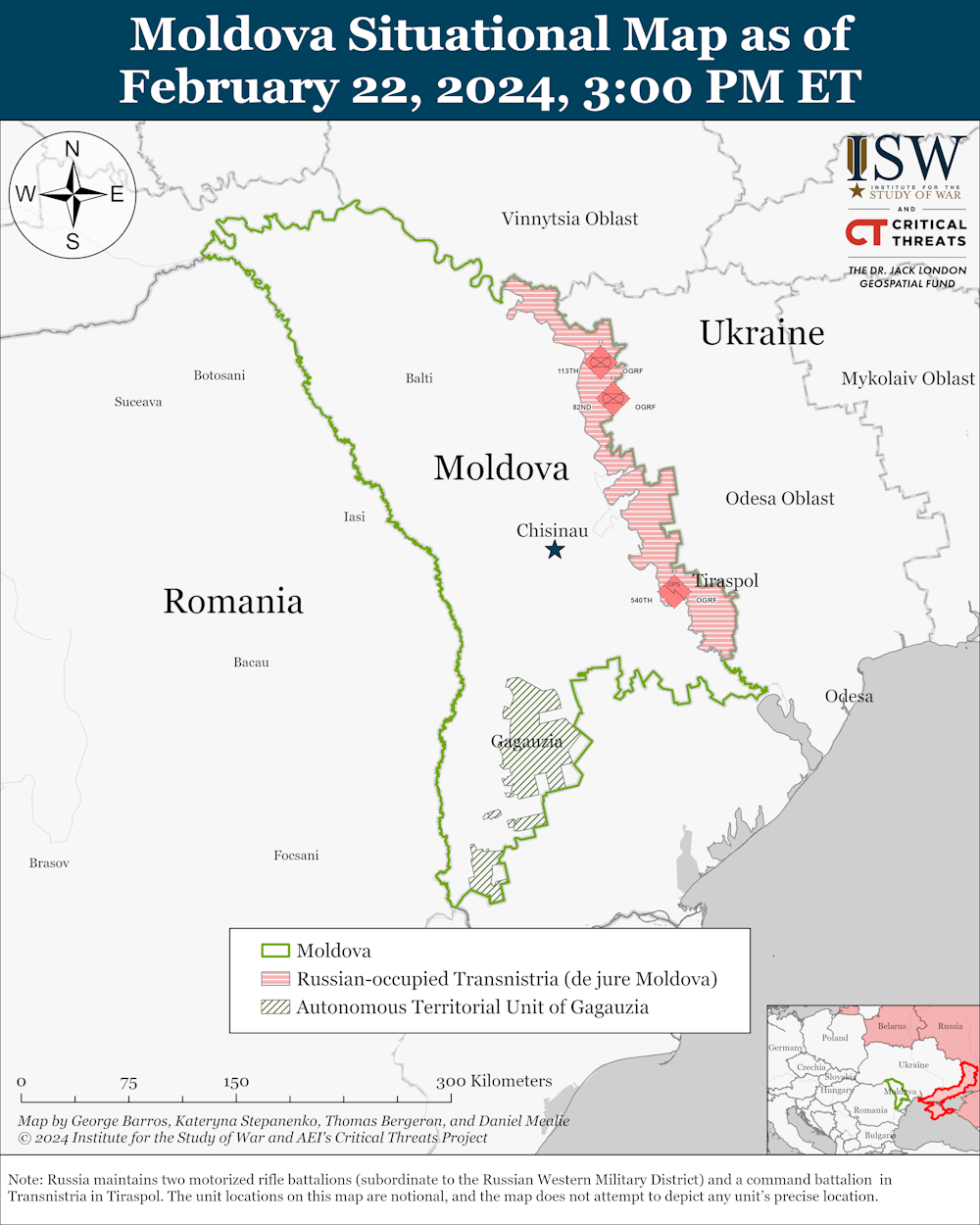
    MIL OSI Europe News

  • MIL-OSI: Parker Completes Divestiture of North America Composites & Fuel Containment Division

    Source: GlobeNewswire (MIL-OSI)

    CLEVELAND, Nov. 04, 2024 (GLOBE NEWSWIRE) — Parker Hannifin Corporation (NYSE: PH), the global leader in motion and control technologies, today announced it has completed the previously announced divestiture of its North America Composites and Fuel Containment (CFC) Division to private investment firm SK Capital Partners. 

    “We are pleased to have completed this sale for the North America Composites and Fuel Containment Division,” said Jenny Parmentier, Chairman and Chief Executive Officer. “One element of our strategy is assessing whether we are the best owner for certain businesses or whether they could be more successful as part of another organization. We wish the CFC team continued success under the ownership of SK Capital Partners, whom we are confident has the expertise to help this already strong business achieve its full potential.”

    Parker’s CFC Division has six manufacturing locations across the U.S. and Mexico and generates annual sales of approximately $350 million. It became part of Parker’s North America businesses within the Diversified Industrial Segment following the acquisition of Meggitt plc in 2022. CFC is a leading manufacturer of engineered carbon fiber composites and fuel containment solutions. 

    About Parker Hannifin
    Parker Hannifin is a Fortune 250 global leader in motion and control technologies. For more than a century the company has been enabling engineering breakthroughs that lead to a better tomorrow. Learn more at www.parker.com or @parkerhannifin.

    Advisors
    Lazard acted as exclusive financial advisor for Parker. Jones Day acted as legal advisor in this transaction. 

    Forward-Looking Statements
    Forward-looking statements contained in this and other written and oral reports are made based on known events and circumstances at the time of release, and as such, are subject in the future to unforeseen uncertainties and risks. Often but not always, these statements may be identified from the use of forward-looking terminology such as “anticipates,” “believes,” “may,” “should,” “could,” “expects,” “targets,” “is likely,” “will,” or the negative of these terms and similar expressions, and may also include statements regarding future performance, orders, earnings projections, events or developments. Parker cautions readers not to place undue reliance on these statements. It is possible that the future performance may differ materially from expectations, including those based on past performance.

    Among other factors that may affect future performance are: changes in business relationships with and orders by or from major customers, suppliers or distributors, including delays or cancellations in shipments; disputes regarding contract terms, changes in contract costs and revenue estimates for new development programs; changes in product mix; ability to identify acceptable strategic acquisition targets; uncertainties surrounding timing, successful completion or integration of acquisitions and similar transactions; ability to successfully divest businesses planned for divestiture and realize the anticipated benefits of such divestitures; the determination and ability to successfully undertake business realignment activities and the expected costs, including cost savings, thereof; ability to implement successfully business and operating initiatives, including the timing, price and execution of share repurchases and other capital initiatives; availability, cost increases of or other limitations on our access to raw materials, component products and/or commodities if associated costs cannot be recovered in product pricing; ability to manage costs related to insurance and employee retirement and health care benefits; legal and regulatory developments and other government actions, including related to environmental protection, and associated compliance costs; supply chain and labor disruptions, including as a result of labor shortages; threats associated with international conflicts and cybersecurity risks and risks associated with protecting our intellectual property; uncertainties surrounding the ultimate resolution of outstanding legal proceedings, including the outcome of any appeals; effects on market conditions, including sales and pricing, resulting from global reactions to U.S. trade policies; manufacturing activity, air travel trends, currency exchange rates, difficulties entering new markets and economic conditions such as inflation, deflation, interest rates and credit availability; inability to obtain, or meet conditions imposed for, required governmental and regulatory approvals; changes in the tax laws in the United States and foreign jurisdictions and judicial or regulatory interpretations thereof; and large scale disasters, such as floods, earthquakes, hurricanes, industrial accidents and pandemics. Readers should also consider forward-looking statements in light of risk factors discussed in Parker’s Annual Report on Form 10-K for the fiscal year ended June 30, 2024 and other periodic filings made with the SEC.

    ###

    The MIL Network

  • MIL-OSI USA: This Week in NJ – November 1st, 2024

    Source: US State of New Jersey

    Governor Phil Murphy, Lieutenant Governor Tahesha Way, and Congresswoman Bonnie Watson Coleman Launch New Jersey’s Commemoration of America’s 250th Anniversary Celebration

    At Monmouth Battlefield State Park, Governor Phil Murphy, Lieutenant Governor Tahesha Way, and Congresswoman Bonnie Watson Coleman launched New Jersey’s celebration of the nation’s 250th anniversary, kicking off a multi-year schedule of events and projects that will take place through the nation’s semiquincentennial. As a leader in education, technology, AI, film, science, and more, New Jersey will celebrate its revolutionary legacy and its critical role in American history.

    “New Jersey is not just home to revolutionary history—we are, to this day, the birthplace for revolutionary possibilities,” said Governor Murphy. “From our eclectic culinary landscape, to our leadership in emerging industries like clean-energy and generative Artificial Intelligence, to our steadfast reputation as one of the most diverse states in the nation, New Jersey is where the future is being built. As we launch New Jersey’s official Commemoration of America’s 250th Anniversary Celebration—and prepare to welcome in visitors from across the globe—we are going to unite together around our core, American values every step of the way.” 

    “Our nation’s rich and diverse history has unfolded over the last 250 years,” said Lieutenant Governor Tahesha Way. “In my role as Secretary of State, I oversee the New Jersey Historical Commission, and I am thrilled to celebrate our country’s layered history—much of which has roots here in New Jersey. This shared legacy reflects our resilience and strength as united Americans, standing together through generations.” 

    “The Battle of Monmouth was a vital turning point to winning our nation’s independence nearly 250 years ago. So much of the story of our nation’s founding took place right here in New Jersey,” said Congresswoman Bonnie Watson Coleman. “As a member of the Semiquincentennial Commission, I’m so excited to help New Jersey show the rest of the country why we’re known as the ‘Crossroads of the American Revolution.’”

    The launch event included musical accompaniments by the Washington Crossing Fifes and Drums; a posting and retirement of the colors by reenactors of the Continental Army; the Pledge of Allegiance led by Ava Porta, a fifth grade student from Taylor Mills Elementary School in Manalapan; the National Anthem performed by Melissa Walker, an acclaimed jazz vocalist and recording artist from Montclair; and an essay read by Malay Gupta, an eighth grade student and first-place winner in America’s Field Trip scholastic contest at John Adams Middle School in Edison.

    READ MORE

    Governor Murphy Joins NJ TRANSIT to Showcase Brand New Multilevel Rail Cars

    Governor Phil Murphy and NJ TRANSIT President & CEO Kevin S. Corbett previewed the next generation of multilevel rail cars, modernizing the fleet which will significantly improve reliability, capacity and customer comfort. The latest generation of multilevel rail cars was unveiled at an event at NJ TRANSIT’s Meadows Maintenance Complex (MMC) in Kearny.

    “Providing modern, reliable equipment is a critical component to improving New Jersey’s infrastructure, particularly with regard to public transit,” said Governor Phil Murphy. “These multilevel rail cars are equipped with innovative features that meet the everyday needs of our commuters. Upon their completion, these upgraded rail cars will expand access to reliable and comfortable transportation for NJ TRANSIT riders.”

    “NJ TRANSIT is committed to improving every aspect of the customer journey, and the 174 new multilevel rail cars will help achieve that by significantly improving reliability, increasing capacity and enhancing the onboard experience,” said NJ TRANSIT President & CEO Kevin S. Corbett. “NJ TRANSIT is grateful to Governor Murphy, the New jersey legislators and our partners at the Federal Transit Administration (FTA) for delivering the necessary funding to ensure our system continues to meet the growing demands of our region, and the expectations of our customers.” 

    Governor Murphy and Corbett previewed the first of 174 Multilevel III cars during an event at the agency’s MMC in Kearny. They highlighted many of the new car’s amenities, including USB charging ports and onboard information displays. The new cars, manufactured by Alstom Transportation in Plattsburgh, NY, will offer a range of benefits over the older, 40+ year-old single level cars they will replace, including dramatic improvement in mechanical reliability. The vehicle maximum speed will increase to 110 miles per hour. The cars, which will begin entering service mid-next year, will be compliant with the latest federal regulations, including Positive Train Control.

    READ MORE

    Governor Murphy Holds Roundtable Discussion on Expanding Access to Public Contracting Opportunities for Historically Marginalized Businesses

    Governor Phil Murphy held a roundtable discussion where he met with legislators and stakeholders to gather input on potential legislative remedies and ongoing administrative initiatives to eliminate disparities in the public procurement process and create a more equitable business environment for Minority and Women-Owned Business Enterprises (MWBEs) in New Jersey.

    The discussion follows the release of a comprehensive statewide disparity study earlier this year – the first since 2005 – which reviewed statewide procurement data relating to goods and services, professional services, and construction between 2015 and 2020, and found statistically significant disparities in the awarding of public contracts to MWBEs. The study was necessary so that the State had a legal basis for addressing these gaps. This discussion also follows a series of meetings over the past months led by the Governor’s Office and the Department of Treasury with community partners, faith leaders, labor, and diverse business chambers across the state.

    “One of New Jersey’s best attributes has always been its vast diversity. Our state is home to people of so many different backgrounds, who all deserve the opportunity to succeed in their chosen field; however, lingering inequities continue to create barriers to entry for our minority and women-owned businesses that want to contract with our state government. This is unacceptable and, with the help of our lawmakers and business community, we will take action,” said Governor Murphy. “Today’s meeting underscores our steadfast commitment to building a stronger, fairer, more equitable, and more inclusive New Jersey. I look forward to continuing this conversation and working with our partners in the Legislature and our state’s business community to create a system where all businesses can thrive.”

    READ MORE

    Governor Murphy Announces Creation of Economic Council

    Governor Murphy signed an Executive Order establishing a new Economic Council, which will be supported by a newly established Development Coordination Committee. Under the executive order, the Economic Council will provide a regular forum for the business community and state government to discuss, collaborate, and solve issues important to the public and private sectors, and stimulate economic growth and prosperity. The new Development Coordination Committee will support the Council’s work in advancing development projects that require multiple state, county and local government approvals. 

    “The Economic Council will ensure that we continue to have a healthy collaboration between the business community and the state government,” said Governor Murphy. “Deepening our Administration’s strong relationship with various sectors across our state will stimulate growth within our economy. I look forward to the forum for ongoing dialogue, collaboration, and problem-solving to advance our shared economic goals.” 

    Since the beginning of the Murphy Administration, state officials have worked with legislative partners and industry stakeholders on policies to improve the role and function of the government in facilitating economic development. Since 2018, New Jersey has seen small businesses increase by over 40,000 or 19%, despite the effects of the global COVID-19 pandemic.

    The Economic Council’s co-chairs will be Deputy Chief of Staff for Economic Growth Eric Brophy and Chief Executive Officer of the New Jersey Economic Development Authority Tim Sullivan. The co-chairs will designate representatives from industry to participate in working group discussions with the Council. Along with the co-chairs, the Council will also consist of the Governor’s Chief of Staff, Chief Counsel, Chief Policy Advisor, the State Treasurer; and the Executive Director of the Business Action Center, or their respective designees.

    READ MORE

    Governors of New Jersey, Pennsylvania, Illinois, Maryland, and Delaware Issue Joint Letter to Grid Operator PJM

    Governor Phil Murphy joined Pennsylvania Governor Josh Shapiro, Illinois Governor JB Pritzker, Maryland Governor Wes Moore, and Delaware Governor John Carney in issuing a letter to PJM Interconnection, the grid operator for New Jersey and the aforementioned states. The governors have called on PJM to take urgent action to address the increasing cost of electricity bills after the record-high prices coming out of the region’s capacity auction.

    The letter addresses issues that impact the path to renewable energy goals, including market structure and the efficacy of the generator interconnection process. In the recent PJM capacity auction for the 2025/2026 Delivery Year, clearing prices surged to almost 10 times higher than the previous year, leaving residents and businesses with much higher bills. Serious flaws with the rules this auction contributed significantly to these unnecessarily high prices. 


    “PJM must take action now to address record high prices,” said Governor Murphy. “In New Jersey, we’re doing our part by bringing new resources to the market and making electricity more affordable for families and businesses as we look to a clean and resilient energy future. However, our grid operator must work in lockstep with the states and recognize that the market isn’t responding quickly enough due to current conditions of slow interconnection. I’m looking forward to working together to stop customers from facing unnecessarily high utility bills, along with facilitating the development of increased capacity and reliability, which will stimulate economic growth and limit the effects of climate change.”

    READ MORE

    MIL OSI USA News

  • MIL-OSI Global: Svalbard Global Seed Vault evokes epic imagery and controversy because of the symbolic value of seeds

    Source: The Conversation – USA – By Adriana Craciun, Professor of English and Emma MacLachlan Metcalf Chair of Humanities, Boston University

    The entrance to the Svalbard Global Seed Vault. Martin Zwick/REDA&CO/Universal Images Group via Getty Images

    Two-thirds of the world’s food comes today from just nine plants: sugar cane, maize (corn), rice, wheat, potatoes, soybeans, oil-palm fruit, sugar beet and cassava. In the past, farmers grew tens of thousands of crop varieties around the world. This biodiversity protected agriculture from crop losses caused by plant diseases and climate change.

    Today, seed banks around the world are doing much of the work of saving crop varieties that could be essential resources under future growing conditions. The Svalbard Global Seed Vault in Norway supports them all. It is the world’s most famous backup site for seeds that are more precious than data.

    Tens of thousands of new seeds from around the world arrived at the seed vault on Svalbard, a Norwegian archipelago in the Arctic Ocean, in mid-October 2024. This was one of the largest deposits in the vault’s 16-year history.

    And on Oct. 31, crop scientists Cary Fowler and Geoffrey Hawtin, who played key roles in creating the Global Seed Vault, received the US$500,000 World Food Prize, which recognizes work that has helped increase the supply, quality or accessibility of food worldwide.

    The Global Seed Vault has been politically controversial since it opened in 2008. It is the most visible site in a global agricultural research network associated with the United Nations and funders such as the World Bank.

    These organizations supported the Green Revolution – a concerted effort to introduce high-yielding seeds to developing nations in the mid-20th century. This effort saved millions of people from starvation, but it shifted agriculture in a technology-intensive direction. The Global Seed Vault has become a lightning rod for critiques of that effort and its long-term impacts.

    I have visited the vault and am completing a book about connections between scientific research on seeds and ideas about immortality over centuries. My research shows that the Global Seed Vault’s controversies are in part inspired by religious associations that predate it. But these cultural beliefs also remain essential for the vault’s support and influence and thus for its goal of protecting biodiversity.

    The Global Seed Vault gives scientists the tools they may need to breed crops that can cope with a changing climate.

    Backup for a global network

    Several hundred million seeds from thousands of species of agricultural plants live inside the Global Seed Vault. They come from 80 nations and are tucked away in special metallic pouches that keep them dry.

    The vault is designed to prolong their dormancy at zero degrees Fahrenheit (-18 degrees Celsius) in three ice-covered caverns inside a sandstone mountain. The air is so cold inside that when I entered the vault, my eyelashes and the inside of my nose froze.

    The Global Seed Vault is owned by Norway and run by the Nordic Genetic Resources Centre. It was created under a U.N. treaty governing over 1,700 seed banks, where seeds are stored away from farms, to serve as what the U.N. calls “the ultimate insurance policy for the world’s food supply.”

    This network enables nations, nongovernmental organizations, scientists and farmers to save and exchange seeds for research, breeding and replanting. The vault is the backup collection for all of these seed banks, storing their duplicate seeds at no charge to them.

    The seed vault’s cultural meaning

    The vault’s Arctic location and striking appearance contribute to both its public appeal and its controversies.

    Svalbard is often described as a remote, frozen wasteland. For conspiracy theorists, early visits to the Global Seed Vault by billionaires such as Bill Gates and George Soros, and representatives from Google and Monsanto, signaled that the vault had a secret purpose or benefited global elites.

    In fact, however, the archipelago of Svalbard has daily flights to other Norwegian cities. Its cosmopolitan capital, Longyearbyen, is home to 2,700 people from 50 countries, drawn by ecotourism and scientific research – hardly a well-hidden site for covert activities.

    The vault’s entrance features a striking installation by Norwegian artist Dyveke Sanne. An illuminated kaleidoscope of mirrors, this iconic artwork glows in the long Arctic night and draws many tourists.

    Because of its mission to preserve seeds through potential disasters, media regularly describe the Global Seed Vault as the “doomsday vault,” or a “modern Noah’s Ark.” Singled out based on its location, appearance and associations with Biblical myths such as the Flood, the Garden of Eden and the apocalypse, the vault has acquired a public meaning unlike that of any other seed bank.

    The politics of seed conservation

    One consequence is that the vault often serves as a lightning rod for critics who view seed conservation as the latest stage in a long history of Europeans removing natural resources from developing nations. But these critiques don’t really reflect how the Global Seed Vault works.

    The vault and its sister seed banks don’t diminish cultivation of seeds grown by farmers in fields. The two methods complement one another, and seed depositors retain ownership of their seeds.

    Another misleading criticism argues that storing seeds at Svalbard prevents these plants from adapting to climate change and could render them useless in a warmer future. But storing seeds in a dormant state actually mirrors plants’ own survival strategy.

    Dormancy is the mysterious plant behavior that “protects against an unpredictable future,” according to biologist Anthony Trewavas. Plants are experts in coping with climate unpredictability by essentially hibernating.

    Seed dormancy allows plants to hedge their bets on the future; the Global Seed Vault extends this state for decades or longer. While varieties in the field may become extinct, their banked seeds live to fight another day.

    Storing more than seeds

    In 2017, a delegation of Quechua farmers from the Peruvian Andes traveled to Svalbard to deposit seeds of their sacred potato varieties in the vault. In songs and prayers, they said goodbye to the seeds as their “loved ones” and “endangered children.” “We’re not just leaving genes, but also a family,” one farmer told Svalbard officials.

    The farmers said the vault would protect what they called their “Indigenous biocultural heritage” – an interweaving of scientific and cultural value, and of plants and people, that for the farmers evoked the sacred.

    People from around the world have sought to attach their art to the Global Seed Vault for a similar reason. In 2018, the Svalbard Seed Cultures Ark began depositing artworks that attach stories to seeds in a nearby mine.

    Pope Francis sent an envoy with a handmade copy of a book reflecting on the pope’s message of hope to the world during the COVID-19 pandemic. Japanese sculptor Mitsuaki Tanabe created a 9-meter-long steel grain of rice for the vault’s opening and was permitted to place a miniature version inside.

    Seeds sleeping in Svalbard are far from their home soil, but each one is enveloped in an invisible web of the microbes and fungi that traveled with it. These microbiomes are still interacting with each seed in ways scientists are just beginning to understand.

    I see the Global Seed Vault as a lively and fragile place, powered not by money or technology but by the strange power of seeds. The World Food Prize once again highlights their vital promise.

    Adriana Craciun does not work for, consult, own shares in or receive funding from any company or organization that would benefit from this article, and has disclosed no relevant affiliations beyond their academic appointment.

    ref. Svalbard Global Seed Vault evokes epic imagery and controversy because of the symbolic value of seeds – https://theconversation.com/svalbard-global-seed-vault-evokes-epic-imagery-and-controversy-because-of-the-symbolic-value-of-seeds-240086

    MIL OSI – Global Reports

  • MIL-OSI United Nations: One month after the tragic school bus crash in Khu Khot, UN Special Envoy for Road Safety to promote and launch the UN-JCDecaux campaign for road safety in Thailand

    Source: United Nations Economic Commission for Europe

    The UN Secretary-General’s Special Envoy for Road Safety, Jean Todt, is visiting Bangkok from 30 October to 6 November 2024. During his visit, he will meet with the Prime Minister Paetongtarn Shinawatra, key government officials, representatives of the international community, private, and public sectors to promote road safety initiatives and advocate for enhanced measures, particularly on wearing quality helmets. His visit will be also the occasion to launch the UN-JCDecaux campaign #MakeASafetyStatement in the country.  The Special Envoy will also speak at the UNESCAP/Alliance française Road Safety Seminar on 4 November.  This aligns with the Global Plan for the Decade of Action for Road Safety 2021-2030, aiming to halve road fatalities by 2030.

    The visit of the Special Envoy comes one month after the tragic bus road crash which caught fire while travelling on an outbound lane in Khu Khot in the Pathum Thani Province, resulting in 23 deaths of which were mainly school students.

    The silent pandemic

    Every year, the staggering toll of road-related fatalities claims the lives of 1.19 million people, leaving countless others with severe injuries. This silent pandemic overwhelmingly affects developing nations, where over 90% of the road traffic fatalities occur. Furthermore, road crashes are the leading cause of death for children and young adults aged 5–29 years.  

    According to the World Health Organization, road crashes kill 18,218 people in Thailand each year, representing a road traffic fatality rate of 25/100,000 population, while the rate is in 15.7/100,000 in South-East Asia and 6.5/100,000 in Europe (WHO 2021). Despite the recent efforts of the country, Thailand is still ranked on the top worst countries in term of road fatalities.  This is therefore urgent to act for increasing road safety in the country.

    “Every life lost to preventable road accidents is a tragedy that reverberates through our communities and our country. This recent tragedy has reminded us of the urgent need for effective and sustained action. Road safety is not merely a matter of law enforcement but a shared societal responsibility. We owe it to our citizens, especially our children, to make our roads safer”, stated the new Prime Minister, H.E. Prime Minister Paetongtarn Shinawatra.

    Road crashes have a significant social and economic burden, particularly in Thailand.  In addition to the human tragedy, road crashes trap countries into a vicious circle of poverty, costing till 6% of the GDP. Given their social and economic cost, road crashes are jeopardizing the entire sustainable development agenda. Now is the time for change, and I am looking forward to working with the Government of Thailand to stop the carnage on the roads.” stressed the UNSG’s Special Envoy Todt.

    Wearing a safe helmet

    If the causes of road crashes are multiple such as the non-reliability of the vehicles and of the road’s infrastructure and design, the lack of post-crashes services, weaknesses in the road safety management, a dangerous road user’s behavior is still one of the main reasons costing lives on the road. On the mitigation of the risk factors for the road users, wearing a helmet responding to the UN standards is definitively a game changer. Wearing a quality helmet can reduce the risk of injuries by 69%.

    Knowing that Thailand has the highest rate of motorcycle-related deaths in the world, representing more than 70% of the road traffic fatalities in the country, wearing a safe helmet is an absolute emergency.              

    #MakeASafetyStatement

    During his visit in Thailand, the Special Envoy will launch the UN Global Road Safety Campaign, which aims to raise awareness of life-saving road safety measures. Launched globally in cooperation with JCDecaux Global under the motto #MakeASafetyStatement, it will run through 2025 in over 80 countries in the world.   

    The campaign seeks to reduce risk factors, especially in urban areas, enabling people to walk, live, and enjoy their environment safely.  Sixteen global, and dozens of national, celebrities have joined forces to advocate for simple and effective road safety rules.  Key messages include wearing a seat belt, driving safely, wearing a helmet, not texting and driving, not driving under the influence or while tired, and respecting pedestrians.

    Participating celebrities in the campaign include Football Legend Mr. Didier Drogba, F1 Driver Mr. Charles Leclerc, Oscar-winning actress and UNDP Goodwill Ambassador Ms. Michelle Yeoh, Tennis Legend Mr. Novak Djokovic, Musician Ms. Kylie Minogue, Motorcycle racer Mr. Marc Marquez, Supermodel Ms. Naomi Campbell, Actor Mr. Patrick Dempsey, Musician and Inspirational leader Mr. Youssou N’Dour, Actress Ms. Julie Gayet, Actor Mr. Michael Fassbender, Football icon Mr. Ousmane Dembélé, Double Olympic Champion Ms. Faith Kipyegon, F1 Driver Mr. Mick Schumacher, Actor Jean Reno and Cyclist Champion Tadej Podacar.

    Risk factors that are too often neglected                                                                                                                 

    Only seven countries in the world (France, Greece, Hungary, Italy, Luxembourg, Portugal, Sweden) have laws that comply with WHO best practices for all the risk factors – speeding, drink driving, UN-standard motorbike helmet use, seatbelts and child restraint systems.

    Media representatives are cordially invited to cover the launch of the campaign, mission and Memorandum of Agreement on Road Safety Cooperation between the Ministry of Transport and the Ministry of Public Health at the press conference on 6 November 2024 at 1.30 PM at the Ministry of Transport (Ratcharotsamosorn Assembly Hall) in Bangkok, with:

    • Mr. Suriya Jungroongruangkit, Deputy Prime Minister and Minister of Transport
    • Mr. Somsak Thepsutin, Minister of Public Health
    • Mr. Jean Todt, UN Secretary General’s Special Envoy for road safety,   
    • Ms. Michaela Friberg-Storey, UN Resident Coordinator to Thailand, presents the work of the UN in road safety in Thailand.
    • Mr. Arnaud de Ruffray, President of JCDecaux Thailand presents the UN-JCDecaux campaign for road safety in Thailand.
    • Ms. Saisunee Jana, Paralympic gold Medalist


    About the Special Envoy

    The former United Nations Secretary-General, Ban Ki-moon, appointed in 2015 Jean Todt as his Special Envoy for Road Safety. He was reconfirmed in this role by United Nations Secretary-General António Guterres, in 2017 and in 2021. In 2018, together with 14 UN organizations, the Special Envoy launched the UN Road Safety Fund (UNRSF). The Special Envoy contributes, among other things, to mobilize sustained political commitment to make road safety a priority; to advocate and raise awareness of UN legal instruments on road safety; to share established good practices in this area; to strive to generate adequate funding through strategic partnerships between the public, private and non-governmental sectors. Special Envoy brochure and X account.

    MIL OSI United Nations News

  • MIL-OSI USA: Brics Summit: Which countries recently joined the bloc? Which want to and why? – FirstPost (India)

    Source: United States Institute of Peace

    Brics is expanding.

    The grouping which originally began with Brazil, Russia, India, China – was coined in 2001 by then Goldman Sachs chief economist Jim O’Neill – expanded to include South Africa in 2010.

    The bloc was founded as an informal club in 2009 to provide a platform for its members to challenge a world order dominated by the United States and its Western allies.

    Its creation was initiated by Russia.

    [embedded content]

    The group is not a formal multilateral organisation like the United Nations, World Bank or the Organisation of the Petroleum Exporting Countries (OPEC).

    Advertisement

    The heads of state and government of the member nations convene annually with each nation taking up a one-year rotating chairmanship of the group.

    It now represents around 3.5 billion people – 45 per cent of the world’s population.

    Its combined economies are valued at over $28.5 trillion – nearly a third of the global economy.

    But which countries have recently joined? Which want to join now and why? And what does the expansion mean for the West?

    With Prime Minister Narendra Modi attending the 16th Brics Summit in Kazan, let’s take a closer look at how Brics is expanding.

    Which countries joined recently?

    Brics in 2023 invited six countries – Argentina, Egypt, Iran, Ethiopia, Saudi Arabia and the United Arab Emirates – to become new members of the bloc.

    Editor’s Picks

    The formal invitation was made during a summit in August in Johannesburg.

    While all BRICS members had publicly expressed support for growing the bloc, there were divisions among the leaders over how much and how quickly.

    Members at the time said the move would help reshuffle a world order they view as outdated.

    Advertisement

    In January, five of these nations – Egypt, Ethiopia, Iran, Saudi Arabia and the United Arab Emirates – said they were joining the BRICS bloc.

    Argentina declined the invitation to join.

    As per Al Jazeera, this came after President Javier Milei took office.

    Milei has vowed to increase ties with the West.

    However, Saudi Arabia later said it is not yet joining the group and that the matter is being considered by its leadership.

    Ultimately, Egypt, Iran, Ethiopia, and UAE joined the bloc.

    Which want to join now and why?

    Dozens of countries have voiced interest in joining the grouping.

    Algeria, Bolivia, Cuba, Democratic Republic of Congo, Turkiye, Comoros, Gabon, Kazakhstan, Vietnam, Thailand and Malaysia have all expressed interest in joining the forum.

    Advertisement

    Turkiye, a Nato member, formally requested to join BRICS in September.

    As p_er Bloomberg,_ Turkiye is looking to become part of the bloc as it eyes increasing its global influence.

    President Recep Tayyip Erdogan’s administration is looking further than its time-tested allies in the West, people familiar with the development told the outlet.

    Erdogan’s government believes the centre of geopolitics is moving away from the developed economies.

    Turkiye is also eyeing improving its economic relationship with Russia and China.

    Turkiye under President Tayyip Erdogan is looking to join Brics. Reuters

    This is a departure for the NATO member nation which has historically been suspicious of Moscow and been a US ally.

    Turkiye is also thought to be upset over the lack of forward movement in its decades-long attempt to join the European Union.

    Advertisement

    According to Al Jazeera, Thailand said it was interested in joining the grouping during the BRICS Dialogue with Developing Countries held in Russia in June.

    Malaysia too expressed interest in becoming a member ahead of a visit from Chinese Premier Li Qiang.

    The bloc “can help Malaysia’s digital economy grow faster by allowing it to integrate with countries that have strong digital markets and also take advantage of best practices from other members,” Rahul Mishra, associate professor at the Center for Indo-Pacific Studies at Jawaharlal Nehru University in New Delhi, told DW.

    “Thailand would also be able to draw investments in important industries including services, manufacturing, and agriculture,” Mishra added.

    Advertisement

    Bolivia’s President Luis Arce has expressed interest in BRICS membership.

    His government has said it is determined to curb dependence on the US dollar for foreign trade, instead turning to the Chinese yuan, in line with BRICS leaders’ stated aim to reduce dependence on the US currency.

    Algeria last July it has applied for BRICS membership and to become a shareholder in the New Development Bank, the so-called BRICS Bank.

    The North African nation is rich in oil and gas resources and is seeking to diversify its economy and strengthen partnership with China and other countries.

    The countries hope the bloc can level the global playing field. Most nations view BRICS as an alternative to global bodies viewed as dominated by the traditional Western powers and hope membership will unlock benefits including development finance, and increased trade and investment.

    Dissatisfaction with the global order among developing nations was exacerbated by the COVID-19 pandemic when life-saving vaccines were hoarded by the rich countries.

    “That so many countries are willing to go to Russia, deemed a pariah state not so long ago for having violated international law by invading Ukraine, confirms a trend followed by an increasing number of countries in the world: They don’t want to have to choose between partners,” Tara Varma, a visiting fellow at the Brookings Institute, told Al Jazeera.

    Adam Gallagher, writing for USIP.org, noting the size of the bloc, said there are clear economic benefits to joining the grouping.

    “Intra-BRICS trade is one area that the group has found its footing,” Gallagher said. He noted how the June 2024 BRICS foreign minister’s meeting encouraged “enhanced use of local currencies in trade and financial transactions” by Brics members.

    Gallagher said that countries like Malaysia, who want to join the grouping, are looking to form alliances across the globe and preserve their strategic autonomy.

    “For these countries, it’s not about taking sides. Some countries also believe BRICS membership will give them a greater voice and representation in international politics. It’s not all about anti-Western ideology,” Gallagher wrote.

    James Chin, a professor of Asian Studies at the University of Tasmania told DW “both Thailand and Malaysia are seen as middle powers.”

    “It’s better for them to join groups like BRICS so that they will have a larger voice in the international arena. But the major benefit will be trade,” Chin added.

    What does the expansion mean for the West?

    Experts say that these growing number of nations who want to join Brics shows that they want their financial independence – and that the established world order may be vulnerable.

    “In the aftermath of the war in Gaza, Russia and China have more effectively harnessed this anti-Western sentiment, capitalising on frustrations over Western double standards as well as the use of sanctions and economic coercion by the West,” Asli Aydintasbas, a Turkish foreign policy expert, was quoted as telling the Brookings Institute as per Al Jazeera.

    “It doesn’t mean that middle powers want to trade US dominance for Chinese, but it means they are open to aligning with Russia and China for a more fragmented and autonomous world.”

    As per Al Jazeera, Brics members and their associates clearly want to decrease their reliance on the US dollar and Europe’s Society for Worldwide Interbank Financial Telecommunication (SWIFT) network.

    Malaysian Prime Minister Anwar Ibrahim walks with Indian Prime Minister Narendra Modi during Anwar’s ceremonial reception at India’s Presidential Palace Rashtrapati Bhavan in New Delhi, India, August 20, 2024. REUTERS

    This comes after Russia was cut-off from the system in the aftermath of the invasion of Ukraine in 2022.

    “China now has an alternative to the SWIFT payment system, though limited in use, and countries like Turkiye and Brazil increasingly restructure their dollar reserves into gold,” Aydintasbas added. “Currency swaps for energy deals are also a popular idea – all suggesting a desire for greater financial independence from the West.”

    As per CFR.org, Western nations until now have talked down the bloc as a threat.

    White House National Security Advisor Jake Sullivan has said Brics isn’t a geopolitical rival, while Treasury Secretary Janet Yellen has downplayed the de-dollarisation strategy of Russia and China.

    But some argue that the West needs to do some serious introspection.

    “The accusation that the West is arrogant toward the needs of the Global South is serious. It cannot be answered by offering ‘value-based partnerships’ and a ‘rules-based’ multilateralism when the interest of the BRICS is focused on changing those rules in global finance, trade, and other standard-setting procedures,” Günther Maihold, senior fellow at the German Institute for International and Security Affairs, was quoted as saying by CFR.org.

    “Ignoring BRICS as a major policy force—something the U.S. has been prone to do in the past—is no longer an option,” Tufts University scholars wrote in 2023.

    It remains to be seen how the US-led West will react.

    With inputs from agencies

    MIL OSI USA News

  • MIL-OSI Canada: Canada releases draft regulations to cap pollution, drive innovation, and create jobs in the oil and gas industry

    Source: Government of Canada News

    After years of steady progress, Canada’s climate plan is working to deliver greenhouse gas pollution reductions for Canadians

    November 4, 2024 – Ottawa, Ontario

    After years of steady progress, Canada’s climate plan is working to deliver greenhouse gas pollution reductions for Canadians. Across the economy, Canadian workers and businesses are innovating to reduce greenhouse gas pollution while creating good jobs and cleaner air.

    Canadians and their communities bear the brunt and pay the costs from increased extreme weather events due to climate change—costs that are reflected in the price of groceries, insurance, and local taxes. They understand that all sectors must do their fair share to decrease pollution and address climate change. The oil and gas sector is Canada’s largest source of greenhouse gas pollution, and emissions from part of the sector continue to grow. As an important part of the Canadian economy supporting 400,000 jobs, the oil and gas sector is well positioned to reinvest record profits into projects that drive cleaner production that will help create and sustain good jobs for generations.

    Today, the Government of Canada introduced draft regulations to put a clear limit on greenhouse gas pollution from oil and gas production. The proposed regulations work by setting a cap on greenhouse gas pollution within the sector, equivalent to 35 percent below 2019 levels. They would create a cap-and-trade system designed to recognize better-performing companies and incentivize those that are higher polluting to invest in making their production processes cleaner.

    The proposed regulations put a limit on pollution, not production, and have been informed by extensive engagement with industry, Indigenous groups, provinces and territories, and other stakeholders. The proposed regulations are carefully designed around what is technically achievable within the sector, while allowing continued production growth. Many oil and gas producers share our commitment to a strong, low-carbon economy, and some have already committed to significant methane emissions reductions and the implementation of carbon capture technology to reduce greenhouse gases.

    Canada is the world’s fourth-largest producer of oil and the fifth-largest producer of gas. As demand for oil and gas peaks in the coming decade and begins to decline, the fuels extracted with the least amount of pollution will be in highest demand. The oil and gas greenhouse gas pollution cap will help the sector remain competitive as the global economy continues to decarbonize and allow Canada to quickly and effectively respond to shifting global demand.

    The oil and gas greenhouse gas pollution cap is part of a suite of measures to cut pollution, including significant financial supports for carbon capture and storage and other clean technologies that also support workers, namely through the federal Canada Growth Fund and new investment tax credits.

    The climate decisions we make today will help contribute directly to a cleaner, safer environment and good jobs for future generations. The oil and gas greenhouse gas pollution cap will stimulate the investment needed to innovate and build a thriving economy that works for everyone. Canada has a historic opportunity to act to combat the climate crisis and create a strong 21st century economy where we continue to be an energy supplier for the world.

    The Government will continue to consult to inform the final regulations, which will be published in 2025.

    • The Government of Canada will continue to consult to inform the final regulations, which it plans to publish next year. Written comments in response to the proposed regulations can be submitted during the formal consultation period from November 9, 2024, to January 8, 2025.  

    • According to Statistics Canada’s latest figures, operating profits in the oil and gas sector increased tenfold after the pandemic, from $6.6 billion in 2019 to $66.6 billion in 2022. Profits have remained strong with consecutive record years, and capital expenditures have been targeting new production rather than decarbonization. The draft regulation will encourage the sector to redirect these record profits into decarbonization.

    • The Canadian Climate Institute estimates that by 2025, Canada will experience annual losses in economic growth of $25 billion as a result of climate change, underlining the need to take urgent action for the sake of our economy, our environment, and our future.

    • According to the most recent National Inventory Report, Canada’s oil and gas sector accounted for 31 percent of national emissions in 2022, making it the largest contributor to Canada’s emissions.

    • Capping the greenhouse gas pollution from the oil and gas sector is one of the key measures outlined in Canada’s 2030 Emissions Reduction Plan, a sector-by-sector roadmap to reduce Canada’s overall emissions to 40–45 percent below our 2005 pollution levels in the most cost-effective way possible while building a stronger economy for the 21st century.

    • The Government of Canada has supported carbon capture projects such as Strathcona Resources, an oil sands company that has a $2 billion project with agreements to store up to two million tonnes of carbon dioxide per year. The federal government also recently supported Entropy, an Alberta-based company, to scale up its carbon capture and sequestration technology at a natural gas facility, which will reduce emissions by 2.8 million tonnes over 15 years and support more than 1,200 good jobs for Albertans.

    • Early estimates from the Canadian Climate Institute show that Canada’s emissions have started to decline in 2023, the first year since the pandemic when the economy was back in full operation.

    • Environment and Climate Change Canada analysis shows that, with the oil and gas greenhouse gas pollution cap, oil and gas production is projected to grow by 16 percent by 2030–2032 from 2019 levels, provided the sector implements technically achievable decarbonization measures.

    • The oil and gas greenhouse gas pollution cap would regulate upstream oil and gas facilities, including offshore facilities, and would also apply to liquefied natural gas production facilities. These subsectors represent the majority of emissions from the oil and gas sector, with the upstream subsector representing about 85 percent of sector emissions in 2022. The emissions cap will cover activities such as oil sands extraction and upgrading, conventional oil production, natural gas production and processing, and production of liquified natural gas.

    • The latest analysis from the International Energy Agency shows that global demand for fossil fuels, including oil, will peak by 2030 without any more policy action to reduce emissions. With further policy action, oil demand would peak even sooner.

    Hermine Landry
    Press Secretary
    Office of the Minister of Environment and Climate Change
    873-455-3714
    Hermine.Landry@ec.gc.ca

    Media Relations
    Environment and Climate Change Canada
    819-938-3338 or 1-844-836-7799 (toll-free)
    media@ec.gc.ca

    MIL OSI Canada News

  • MIL-Evening Report: Bird flu has been detected in a pig in the US. Why does that matter?

    Source: The Conversation (Au and NZ) – By C Raina MacIntyre, Professor of Global Biosecurity, NHMRC L3 Research Fellow, Head, Biosecurity Program, Kirby Institute, UNSW Sydney

    David MG/Shutterstock

    The United States Department of Agriculture last week reported that a pig on a backyard farm in Oregon was infected with bird flu.

    As the bird flu situation has evolved, we’ve heard about the A/H5N1 strain of the virus infecting a range of animals, including a variety of birds, wild animals and dairy cattle.

    Fortunately, we haven’t seen any sustained spread between humans at this stage. But the detection of the virus in a pig marks a worrying development in the trajectory of this virus.

    How did we get here?

    The most concerning type of bird flu currently circulating is clade 2.3.4.4b of A/H5N1, a strain of influenza A.

    Since 2020, A/H5N1 2.3.4.4b has spread to a vast range of birds, wild animals and farm animals that have never been infected with bird flu before.

    While Europe is a hotspot for A/H5N1, attention is currently focused on the US. Dairy cattle were infected for the first time in 2024, with more than 400 herds affected across at least 14 US states.


    Bird flu has enormous impacts on farming and commercial food production, because infected poultry flocks have to be culled, and infected cows can result in contaminated diary products. That said, pasteurisation should make milk safe to drink.

    While farmers have suffered major losses due to H5N1 bird flu, it also has the potential to mutate to cause a human pandemic.

    Birds and humans have different types of receptors in their respiratory tract that flu viruses attach to, like a lock (receptors) and key (virus). The attachment of the virus allows it to invade a cell and the body and cause illness. Avian flu viruses are adapted to birds, and spread easily among birds, but not in humans.

    So far, human cases have mainly occurred in people who have been in close contact with infected farm animals or birds. In the US, most have been farm workers.

    The concern is that the virus will mutate and adapt to humans. One of the key steps for this to happen would be a shift in the virus’ affinity from the bird receptors to those found in the human respiratory tract. In other words, if the virus’ “key” mutated to better fit with the human “lock”.

    A recent study of a sample of A/H5N1 2.3.4.4b from an infected human had worrying findings, identifying mutations in the virus with the potential to increase transmission between human hosts.

    Why are pigs a problem?

    A human pandemic strain of influenza can arise in several ways. One involves close contact between humans and animals infected with their own specific flu viruses, creating opportunities for genetic mixing between avian and human viruses.

    Pigs are the ideal genetic mixing vessel to generate a human pandemic influenza strain, because they have receptors in their respiratory tracts which both avian and human flu viruses can bind to.

    This means pigs can be infected with a bird flu virus and a human flu virus at the same time. These viruses can exchange genetic material to mutate and become easily transmissible in humans.


    The Conversation, CC BY-SA

    Interestingly, in the past pigs were less susceptible to A/H5N1 viruses. However, the virus has recently mutated to infect pigs more readily.

    In the recent case in Oregon, A/H5N1 was detected in a pig on a non-commercial farm after an outbreak occurred among the poultry housed on the same farm. This strain of A/H5N1 was from wild birds, not the one that is widespread in US dairy cows.

    The infection of a pig is a warning. If the virus enters commercial piggeries, it would create a far greater level of risk of a pandemic, especially as the US goes into winter, when human seasonal flu starts to rise.


    How can we mitigate the risk?

    Surveillance is key to early detection of a possible pandemic. This includes comprehensive testing and reporting of infections in birds and animals, alongside financial compensation and support measures for farmers to encourage timely reporting.

    Strengthening global influenza surveillance is crucial, as unusual spikes in pneumonia and severe respiratory illnesses could signal a human pandemic. Our EPIWATCH system looks for early warnings of such activity, which can speed up vaccine development.

    If a cluster of human cases occurs, and influenza A is detected, further testing (called subtyping) is essential to ascertain whether it’s a seasonal strain, an avian strain from a spillover event, or a novel pandemic strain.

    Early identification can prevent a pandemic. Any delay in identifying an emerging pandemic strain enables the virus to spread widely across international borders.

    Australia’s first human case of A/H5N1 occurred in a child who acquired the infection while travelling in India, and was hospitalised with illness in March 2024. At the time, testing revealed Influenza A (which could be seasonal flu or avian flu), but subtyping to identify A/H5N1 was delayed.

    This kind of delay can be costly if a human-transmissible A/H5N1 arises and is assumed to be seasonal flu because the test is positive for influenza A. Only about 5% of tests positive for influenza A are subtyped further in Australia and most countries.

    In light of the current situation, there should be a low threshold for subtyping influenza A strains in humans. Rapid tests which can distinguish between seasonal and H5 influenza A are emerging, and should form part of governments’ pandemic preparedness.

    A higher risk than ever before

    The US Centers for Disease Control and Prevention states that the current risk posed by H5N1 to the general public remains low.

    But with H5N1 now able to infect pigs, and showing worrying mutations for human adaptation, the level of risk has increased. Given the virus is so widespread in animals and birds, the statistical probability of a pandemic arising is higher than ever before.

    The good news is, we are better prepared for an influenza pandemic than other pandemics, because vaccines can be made in the same way as seasonal flu vaccines. As soon as the genome of a pandemic influenza virus is known, the vaccines can be updated to match it.

    Partially matched vaccines are already available, and some countries such as Finland are vaccinating high-risk farm workers.

    C Raina MacIntyre receives funding from NHMRC (L3 Investigator grant and Centre for Research Excellence) and MRFF (Aerosol transmission of SARS-CoV-2 experimentally and in an intensive care setting) currently. She currently receives funding from Sanofi for research on influenza and pertussis. She is the director of EPIWATCH®️, which is a UNSW, Kirby Institute initiative. She has been an invited speaker at the 2024 Options for The Control of Influenza at four symposia organised by Moderna, Pfizer, Sanofi and Seqirus respectively.

    Haley Stone receives funding from The Balvi Filantropic Fund. Haley Stone would like to acknowledge the support through a University International Postgraduate Award from the University of New South Wales.

    ref. Bird flu has been detected in a pig in the US. Why does that matter? – https://theconversation.com/bird-flu-has-been-detected-in-a-pig-in-the-us-why-does-that-matter-242688

    MIL OSI AnalysisEveningReport.nz

  • MIL-OSI USA: Grassley, Cardin Lead Call for POTUS to Engage on Stalled U.S.-China Adoptions

    US Senate News:

    Source: United States Senator for Iowa Chuck Grassley

    WASHINGTON – Longtime adoption advocate Sen. Chuck Grassley (R-Iowa) and Senate Foreign Relations Committee Chairman Ben Cardin (D-Md.) today urged President Biden to stand up for families navigating the People’s Republic of China’s (PRC) decision to end intercountry adoptions for those without Chinese familial ties. Reps. Erin Houchin (R-Ind.) and Val Hoyle (D-Ore.) are co-leading the bipartisan effort, which garnered a total of 103 bicameral signatories, in the House of Representatives.

    “We request that you act in the best interest of these children and families by urging the PRC to fulfill and uphold the commitment the country has made,” the lawmakers wrote, noting approximately 300 children in the PRC – some with various health conditions – are already paired with families in the United States. 

    “The American families that have been matched with their adoptive children are prepared to meet their long-term medical and emotional needs, and to give them the love and nurturing they need,” they continued. “Many of these children know that they have a home, which in many cases have been prepared for their arrival since the families were notified that they were matched and moving forward with the adoption process.” 

    Grassley and his colleagues also acknowledged the PRC may complete adoptions for families in some countries, per a State Department notice last week. They called on President Biden to ensure such an action would pertain to the United States, too.

    Read the full letter HERE. Cosigners include Senate Republican Leader Mitch McConnell (R-Ky.) and chairs of the Congressional Coalition on Adoption.

    Background:

    The PRC terminated its intercountry adoption program on August 28, 2024. Shortly after, Grassley wrote the State Department and the Chinese Ambassador for information. He emphasized the uncertainty the PRC’s announcement cast on Chinese children and American parents, including parents in Iowa. Some families have been stuck in the final stages of the adoption process for years.

    When China suspended its intercountry adoption program following the COVID-19 pandemic, despite opening its borders for business and other activities, Grassley shined light on the inconsistency. He pushed for stalled adoptions to resume, so children and families could finally unite.

    -30-

    MIL OSI USA News

  • MIL-OSI USA: Press Gaggle by Press Secretary Karine Jean-Pierre and Acting Labor Secretary Julie Su En Route Philadelphia,  PA

    US Senate News:

    Source: The White House
    Aboard Air Force OneEn Route Philadelphia, Pennsylvania
    2:43 P.M. EDT
    MS. JEAN-PIERRE:  All right, everybody.  Hey, everyone.
    Q    Hi.
    MS. JEAN-PIERRE:  Hi, hi, hi.  Okay.  I know this is a short flight, but I do have a couple things at the top that’s important.
    So, to start, I wanted to mention that open enrollment in the Federal Care Act marketplace, where more than 20 million Americans get health insurance, starts today.  More than a decade after passage of the law, Americans’ health care remains under threat.  Just this week, Speaker Johnson promised massive reform to the ACA.  The Republican Study Committee budget cuts a staggering $4.5 trillion from the ACA, Medicaid, and the Children’s Health Insurance Program, consistent with every budget proposed by the former president.
    Senator J.D. Vance has taken aim at the very idea of the risk pooling between healthy and sick which lies at the heart of the ACA.  And Republicans in Congress have made clear that one of their first orders of business would be raising premiums in ACA health insurance by an average of 800 bucks per person per year.
    President Biden and Vice President Harris have done the po- — the opposite, bringing health insurance to more than ev- — more than ever — mor- — more people than ever before, lowering ACA premiums by 800 bucks per year, getting rid of red tape that the prior administration used to try to keep people from enrolling and expanding enrollment support.
    The president and vice president will keep standing up for the affordable health insurance, and they will block any attempt to rip it away. 
    Shifting gears just a second, I wanted to quickly discuss a recent ProPublica series highlighting reports of women in states like Texas and Georgia who have died after being denied the lifesaving care they need because of extreme abortion bans.  The stories are heartbreaking, scary, and sickening a- — sickening.  It’s hard to believe or accept as reality, and it’s completely unacceptable. 
    This should never happen in America, but, sadly, it is, and tho- — and these abortion bans that are denying women lifesaving care are only possible because the former president appointed three Supreme Court justices who overturned Roe v. Wade.  The devastating and gut-wrenching consequences of these bans put in place are — enforced by Republican elected officials are very clear. 
    President Biden and Vice President Harris believe that women in every state must have the right to make deeply personal decisions about their health.  They also believe that no woman should ever be denied the care she needs.  They will continue to fight back against these extreme bans and call on Congress to restore the protections of Roe v. Wade into federal law.
    And finally, we’re en route, as you all know, to Philadelphia, where the president will announce new actions to further his administration’s historic support for unions.  While in Philadelphia, he’ll announce that his administration has protected 1.2 million pensions because of the American Rescue M- — Rescue Plan’s Butch Lewis Act.  During the visit, President Biden will announce new funding to prevent cuts to the earned pensions benefits of 29,000 UFCW workers and retirees.
    As you can see to my right, I’m joined by acting secretary — Labor Se- — Labor — Labor, Julia Su, who will share more about today’s action and the historic work the President Biden — the president and the vice president have done to support unions.
    ACTING SECRETARY SU:  Thank you so much, Karine.  Thank you all for being here.  And so, Karine mentioned this.  We are headed to Philadelphia to announce the restoration of the UFCW Tri-State Pension Fund.  This is part of the president’s commitment, which he has had from day one, to do right by working people.  We know that when jobs are good, when working people are protected, our economy is stronger; our nation is stronger. 
    This is the third event that I’m doing like this.  The — the first one was with the carpenters in Detroit.  The second was with the Teamsters in Centralia, Illinois.  Again, you know, a situation where working people who had worked a lifetime and were expecting to be able to retire with dignity because of their pensions were seeing the end of those pensions and were going to see their — their benefits slashed dramatically.
    Because of the Butch Lewis Act, because of the actions of President Biden and Vice President Harris — noting that Vice President Harris cast the deciding vote to pass the American Rescue Plan, of which the Butch Lewis Act is a part — because of that, these individuals are now going to be able to retire, to be able to live with dignity, to be able to take care of themselves and their families as they expected.
    This announcement also comes, obviously, on the same day that we’ve had a jobs day, and, you know, it’s always a time to talk about good jobs, because this administration now, you know, has presided over more jobs being created than any other administration in the same time period.  It’s now over 16 million jobs.  GDP remains strong.  Inflation is still falling.  Wages are still increasing.  Wages have grown faster than inflation for now 17 months straight.  And the unemployment rate remains at 4.1 percent, so it’s been around 4 percent for the longest stretch since the 1960s.
    So, labor market remains very strong, and this shows what happens when you have a president and a vice president who are fighting for workers every single day.
    MS. JEAN-PIERRE:  All right.  Thank you.   Go ahead.
    Q    Thank you, Secretary.  On the jobs report, should Americans be concerned of — that the economy is cooling in this moment, and what is the administration doing at the moment to ensure that jobs continue to be generated going forward?
    ACTING SECRETARY SU:  Great.  So, two questions and two answers.  No, we should not be concerned about cooling.  There were some anomalies last month that led to a much lower jobs number.  One was, of course, the devastating hurricanes — back-to-back hurricanes that hit the southeast part of the country.  You know, we saw people who lost their lives, lost their homes, lost their businesses.  The federal government was on the ground immediately, working with state and local authorities to do everything from search and rescue to clearing roads to making sure that people had water and power back.
    But in terms of the jobs numbers, it meant that there were employers who, you know, would have been hiring or may have been even ramping up because of the holiday season coming up who just simply couldn’t do that.  So, the hurricanes had a really big effect.
    And then, of course, there were workers on strike — over 30,000 of them.  And the — when they’re on strike, their numbers also, you know, show up as a decrease in the jobs.  Just the — the nature of the — of the numbers.
    But what do we need to do to continue the incredible economy that we have had is to keep on making the investments that the Biden-Harris administration has had, you know, the — where we’ve got over 60,000 infrastructure projects going on around the country.  I’ve visited many of them.  We have apprenticeship programs bursting at the seams.  People being able to look for jobs and get jobs in communities that were shuttered, where factories were closed in the last administration, now opening up again.  And we just need to keep up that work.
    Q    Can I ask about the Boeing strike situation?  It sounds like there’s a vote set for Monday, if memory serves.  Can you speak to what your view is — is on the latest on that and whe- — whether membership will accept?  Will you expect that this will pass —
    ACTING SECRETARY SU:  Yes.
    Q    — as opposed to the previous time when it (inaudible)?
    ACTING SECRETARY SU:  Yes.  So, I was in Seattle from Monday to Wednesday.  I brought the parties together at the — at my office in Seattle.  They, you know, deserve a lot of credit.  I want to acknowledge the leadership of both the machinists and Boeing for coming to the table and doing the hard work of negotiating. 
    You know, the president says this all the time; the vice president acknowledges this all the time: Collective bargaining works.  It doesn’t always look pretty from the outside, but when workers have a voice, when unions are strong and workers are able to help determine the conditions of their work, their wages, the future of their industry, it’s better for everybody. 
    And so, now they have a — an unprecedented offer on the table that many people thought was impossible.  And — and they’re — they’re going to vote on it on Monday. 
    Q    Sounds like you think it’ll pass. 
    ACTING SECRETARY SU:  I don’t know.  You know, I — you know, we believe as — that — that it’s up to the members, of course.  You know, but these workers have not seen a wage increase like this in a very, very long time. 
    In fact, the first-year wage increase is more than what they’ve had in — in the last many years combined.  So, it’s a — it’s really a sign of collective bargaining working. 
    And, you know, workers exercise their right.  They — you know, i- — that they’re part of what we’re seeing in a Biden-Harris America of — of a new era of worker power, and it is resulting in not just the tremendous job growth we keep talking about but really more equity and more — more powerful working people. 
    Q    You touched on this.  But just to be specific, because the president said in his statement that job growth is expected to rebound in November as the hurricane recovery and rebuilding efforts continue, can you give us a sense of what you would project that that could look like?  What could the November picture be?
    ACTING SECRETARY SU:  So, obviously, the — the devastating weather-related phenomena that we have been facing, you know, has an impact — right? — has a devastating, direct, personal impact on communities that are affected.  It also has an impact on the economy. 
    And so, barring something else like that, you know, that was not a sign of weakness in the economy.  That was really a — you know, a weather-related phenomena.  And so, barring that, we expect, you know, those communities to recover. 
    We’re obviously not just watching it happen or hoping it happens.  We’re in there helping it to happen. 
    And so, you know, again, the investments that we’re making is really the key here, right?  We would not have seen the kind of economy — the 16 million jobs created — without that.  This is not an administration that has just, you know, hoped for the best.  It’s one that inherited the economy that was still reeling from a global pandemic that the last administration had no idea how to address. 
    And what we have done is, you know, really, you know, exceeded all expectations on the recovery.  We need to keep on doing that work.  We need to make sure that those infrastructure projects keep breaking ground; that the fabs that are being built, you know, are completed.  And having union workers do that is a part of that too. 
    And so, you know, there’s no reason to expect that the resilient economy that we’ve seen so far will not bounce back from the anomalies of October. 
    Q    Was President Biden’s transcript altered — 
    MS. JEAN-PIERRE:  Hold on — hold on a second.  Wait a minute. 
    Q    Yeah.  (Laughs.)
    MS. JEAN-PIERRE:  Wait a minute.  Is — any other for the secretary?  Can I have her sit down if — if we’re done?
    Q    Keep it tight, because we’re going to land soon.
    MS. JEAN-PIERRE:  Oh, okay.  All right.
    Q    Thank you so much.
    MS. JEAN-PIERRE:  Be careful.
    ACTING SECRETARY SU:  Thank you all.
    MS. JEAN-PIERRE:  Be careful.  Hold on.  I’m going to let AP go first. 
    Go ahead, AP.
    Q    Thank you, Karine.  On AP’s reporting from last night about the potential doctored co-  — about the doctored comments in the recent transcript.  Were you aware that the Press Office — White House Press Office had done this before the stenographer had taken an approval?
    MS. JEAN-PIERRE:  So, look, I was asked this question — multiple versions of this question on Wednesday.  I don’t have anything else more to share.  What I can say is — and the president put out a statement that was tweeted out — that’s on X, obviously — ver- — being very clear what he meant, understanding that his words could have been taken out of context. 
    He was talking about the comedian.  He was talking about the hateful rhetoric coming out of — from the comedian at the Sunday rally in Madison Square Garden. 
    And I said this on Wednesday, and I’m going to keep saying this is that the president is always going to continue to call out hateful rhetoric. 
    But of course — of course — and you see this today with the pensions announcement; you saw it this week when he went to Baltimore to an- — to announce some ports infrastructure investment, $147 million that went to Baltimore — to Maryland, specifically; 27 states, 11 of those states are red states.  I mean, these are things that the president wants to continue about, and he always will be a president for everyone, even if you did not vote for him. 
    I don’t have anything else to share beyond that.  What I — what we want to make sure — we think what the most important thing for Americans to know is that this is a president that went back and wanted to clarify what he said, because he didn’t want to take it out of context.  I think that says a lot about this president.
    And we’ve been pretty consistent about him wanting to be a president and continuing to be a president for all Americans.  And that’s what you’re going to see.  I don’t have anything else to add beyond that.
    Q    What does the — have you all received reports about Iran potentially having a re- — a strike against — a retaliatory strike from its proxies?
    MS. JEAN-PIERRE:  So, as you said, there are reports that Israeli in- — intelligence suggests Iran is preparing to attack Israel from Iraqi territory in the coming days, possibly before the U.S. presidential election.  Is — is that the U.S. view as well?  You know, I’m not — I’m going to be really careful.  I’m not going to — to your question, I’m not going to speculate or discuss intelligence assessments on this from here.
    So — but we’ve been very clear that Iran should not respond.  I said this on Wednesday.  We will continue to support Israel.  Our support for Israel’s security is ironclad.  And — and if they choose this to do so, obviously we will continue to support Israel as they continue to protect themselves and their security. 
    So, I don’t have anything to share.  I’m not going to read into that.
    Q    Is the president aware of former President Trump’s comments about Liz Cheney that he made last night?  And does he have a reaction to that?
    MS. JEAN-PIERRE:  So, he’s aware.  Obviously, you all have done — have covered — covered those remarks.  Here’s what I would say to that.  It is — it is unacceptable; it is dangerous to — to — to s- — to speak to political violence, to talk about political vi- — violence, to lift up political violence. 
    And what we are doing and we will continue to do is denounce that, condemn that.  There is no place, anywhere, for any type of violence, no place for political violence. 
    And it — and this is a time we shouldn’t be using inflammatory language.  We should be specifically focusing on bringing the country together, and that’s what this president wants to see, and that’s what he’s going to continue to speak to. 
    Q    Do you think those comments put Liz Cheney at risk?
    MS. JEAN-PIERRE:  I mean, look, I can’t speak to that.  I can’t get into hypotheticals.  What we know is that those type of comments tend to be dangerous, right?  They can be dangerous. 
    That’s — we’re hearing violent rhetoric, and we’re going to continue to condemn that.  It is inappropriate in the political space, and — and it is inflammatory language that should not be said by anyone, certainly by — not when someone has a — a leadership — national leadership.
    Q    Has there been any discussion about heightening the security preparations this week in response to what we’ve seen?  Whether it’s, you know, ahead of the election, after the election for certain members of Congress, what does that look like at this point?
    MS. JEAN-PIERRE:  For certain members of Congress specifically?
    Q    Well, just for that and then broader security preparations.
    MS. JEAN-PIERRE:  Well, look, I — I would have to — as it relates to Congress, obviously, that’s the — something for — the Capitol Police can speak to.  I can’t speak to that.
    Look, I think that what you’ll see from this — from this president is that, you know, free and fair elections and especially peaceful election are the cornerstone of our democracy.  And election officials and poll workers are dedicated to public servants who make our democracy work, and they deserve to do their job — their job safely and freely without harassment, without threat of violence. 
    So, we strongly condemn anyone who threatens or harasses them.  And so — but I also believe and we also believe that people should trust in our institutions and trust that this will be a free and fair election.
    Q    What about Lebanon?  Can you give us a status report?  Are those talks dead?
    MS. JEAN-PIERRE:  So, a couple of things.  As you know, Brett and —
    AIR FORCE ONE CREW MEMBER:  Going to need everyone to take their seats, please.
    MS. JEAN-PIERRE:  All right.  Well, we got to go.
    AIR FORCE ONE CREW MEMBER:  There’s going to be some turbulence.
    MS. JEAN-PIERRE:  We’ll — we’ll have more fo- — we can share — I would reach out to the NSC team, and they’ll share more about things.  But we have to sit down.
    Thanks, everybody. 
    Q    Thanks, Karine.
    MS. JEAN-PIERRE:  Be careful.  It’s really bumpy.
    2:59 P.M. EDT

    MIL OSI USA News

  • MIL-OSI Global: Is Donald Trump preying on his supporters’ death fears? What terror management theory offers us

    Source: The Conversation – Canada – By Sarah Elizabeth Wolfe, Professor, School of Environment and Sustainability, Royal Roads University

    Death and destruction from climate crisesflooding, fires, hurricanes and heat.

    Then there’s the multimedia firehose of tragic accidents, gruesome images from devastating wars, seemingly random local street violence, warnings of a Third World War and grim distress signals about the dangers of rising authoritarianism on the eve of the United States presidential election and the possible return to power of climate-change skeptic Donald Trump.


    Read more:
    ‘Each bears his own ghosts’: How the classics speak to these days of fear, anger and presidential candidates stalking the land


    Combine these stressors with our own personal mortality reminders: that new grey hair, an unexpected medical diagnosis, the COVID-19 related deaths of our friends or colleagues, and we’re left grappling with surprising and unwelcome fear.

    But trying to get through our days as mostly functional, civilized adults while paralyzed with fear about our unavoidable death isn’t optimal or sustainable. Thankfully, our brains have a hardwired, helpful strategy that’s explained by “terror management theory.”

    Defence mechanisms

    Terror management researchers have shown that we all have predictable defences aimed at repressing our death awareness. Unfortunately, those defences can also contribute to destructive social forces.

    Recognizing and understanding how these defences work is essential to making them less dangerous. These defences depend a lot on our pre-existing identities and whether death awareness operates within our conscious or subconscious mind.

    When death fears are conscious, our defences include denial, rationalization, distraction and self-esteem-building , often via consumption or consumerism. We build ourselves up by gathering or protecting our resources — think negotiating higher incomes or trying to avoid paying taxes — and shopping for necessities to keep our families safe.


    Read more:
    Joe Biden’s refusal to step aside illustrates the political dangers of ‘death denial’


    Death fears also trigger conspicuous consumption to signal our social status and bolster our self-esteem. In terror management theory, money is valued because money buys safety, and safety means the avoidance of death, at least for a little while longer.

    When death fears are unconscious or just “background noise,” the situation gets more complex and problematic. Some of us will harden our identities and ideas about what we believe is right or just, what we are entitled to and with whom we’ll share resources, opportunities and power.

    Sometimes we’ll show greater antagonism towards groups who are unlike us in looks or practice: immigrants, religious minorities or even international students. As these defences emerge and coalesce, we’ll blame “others” for both the big and small troubles we experience or perceive.

    The result is increased social fragmentation and polarization rather than capitalizing on people’s diverse ideas, perspectives and experiences.

    Authoritarian playbook

    When mortality awareness is infused throughout a society — say, during a deadly pandemic or climate disasters — manipulating people’s death fears becomes a seductive route to power for authoritarians or would-be authoritarians like Trump.

    Some people will become receptive to a charismatic figure’s promises of safety, rules, and a return to a better time.

    German psychology professor Immo Fritsche and colleagues have identified clear evidence that climate change has increased authoritarian attitudes and support for authoritarian leadership styles.


    Read more:
    Time to freak out? How the existential terror of hurricanes can fuel climate change denial


    Other researchers found that individuals who did not have prior authoritarian tendencies — after controlling for their political affiliation and ideology — expressed greater support for authoritarian leadership when they experienced mortality awareness.

    In a subsequent study, Fritsche’s results were more dire: death awareness defences created “prejudice, stereotyping, aggression, and racism, which, in turn, can lead to the escalation of violent intergroup conflict and, thus, the escalation of war.”

    While this trajectory isn’t guaranteed, ignoring the influence of mortality defences on social dynamics seems both short-sighted and foolish.

    Be a hero

    So, what can we do to avoid the worst outcomes of polarization, antagonism against marginalized and racialized communities, authoritarianism and potential violence?

    Some good news: first, positive world views and identities can be strengthened even when we feel threatened by death. People who see the world as a collective, are willing to welcome others and work to maintain civil society may intensify their efforts when their mortality is salient. These people need to be supported and celebrated.

    Second, a final defence against mortality fears is to build up our self-esteem through positive “hero projects.” Through these activities — philanthropy, raising children, works of art or literature, teaching, protest or activism for social change — we commit to an action that may not be in our immediate self-interest but we persist despite difficulties, discomfort and often daunting odds.


    Read more:
    How the altruistic response to far right riots reveals the innate goodness in human beings


    In our hero projects, we may take less but give more, and direct our energy to outcomes that will, hopefully, benefit our communities long after we’re gone.

    The authoritarians among us are already adept at manipulating our mortality fears for their own benefit. We can accept their preferred power trajectory, or we can recognize the influence of mortality fears and create alternatives in the days, weeks, months and years to come.

    Sarah Elizabeth Wolfe gratefully acknowledges two decades of funding from Canada’s Social Sciences and Humanities Research Council. The author does not work for, consult, own shares in or receive funding from any company or organization that would benefit from this article, and has disclosed no relevant affiliations beyond her academic appointment.

    ref. Is Donald Trump preying on his supporters’ death fears? What terror management theory offers us – https://theconversation.com/is-donald-trump-preying-on-his-supporters-death-fears-what-terror-management-theory-offers-us-242568

    MIL OSI – Global Reports

  • MIL-OSI Global: Without a One Health plan, Canada is vulnerable to future pandemics

    Source: The Conversation – Canada – By Dominique Charron, Visiting Scholar in One Health, University of Guelph

    One Health is based on an understanding that our health and that of animals, plants and ecosystems are interdependent.
    (Shutterstock)

    November 3 is World One Health Day. One Health brings all parts of society and governments together to tackle joint problems of human, animal, plant and ecosystem health.

    Canada needs a One Health plan now to better face worsening climate change, accelerating biodiversity loss, pandemic threats, and threats from superbugs resistant to antibiotics. Canada’s actions on these issues are reactive rather than preventive, and aren’t well co-ordinated or funded. This undermines our readiness and response.

    One Health is based on an understanding that our health and that of animals, plants and ecosystems are interdependent. It presents a way to promote the health of all and to navigate the inevitable trade-offs.

    The current avian flu threat

    A look to our southern border highlights the urgency for action. On March 25, a strain of Avian Influenza A:H5N1 virus that had caused outbreaks in wild birds and poultry in Canada and the United States since 2021, suddenly infected dairy cows in Texas.

    The virus had never been reported in cows before. Its detection was slow and too little was done to stop the spread. As of Nov. 1, H5N1 had spread quickly to 404 dairy farms across 14 states, costing millions in lost milk production and spilling back into poultry and wildlife, killing millions more birds.

    It is concerning that H5N1 has also infected at least 39 people, primarily farm workers, fortunately causing only mild symptoms.

    Canada’s response to the outbreak ramped up after H5N1 reports in U.S. dairy cows. No cases of H5N1 have yet been detected in Canadian cows, but there is need for vigilance because of ongoing H5N1 outbreaks across North America. Authorities in both countries have confirmed that pasteurized milk products are safe.


    Read more:
    U.S. has found H5N1 flu virus in milk — here’s why the risk to humans is likely low


    H5N1 is a growing threat because it infects many species, including seals, mink, bears, foxes, coyotes, dogs and cats. Influenza viruses that jump species pose a greater pandemic threat because of the mixing that may occur when different influenza viruses infect the same animal or person. This can produce new, more severe strains of human flu.

    No one wants to face another pandemic. Canada’s actions to keep ahead of this threat would be enhanced by national One Health planning and co-ordination.

    One Health around the world

    National One Health plans of other countries, like Rwanda, Thailand and Bangladesh, have been shown to help prevent human and animal disease outbreaks. Global Affairs Canada and the International Development Research Centre have invested $40 million since 2021 to support One Health internationally, including in hotspots of disease emergence.

    The U.S. has a One Health Act and recently launched its national co-ordination platform. However, Canada has just begun this work at home. Canada created a high level steering committee to oversee the Pan-Canadian Action Plan on Antimicrobial Resistance (AMR). Time and effort were taken to involve federal, provincial and territorial agencies, Indigenous people, civil society and researchers to arrive at an inclusive framework with the right objectives, responsibilities and outputs. It’s an ideal model for a new Canadian One Health action plan.

    Canada has a mixed track record of working across sectors, whether to fight past outbreaks of Mad Cow Disease, avian or swine flu, or co-ordinating actions by people from different departments and agencies on H5N1 or COVID-19 today. There are problems: nationally, collaboration is informal and focused on single issues, more reactive than preventive, and not supported by any overarching plan, decision-making structure or resources to ensure consistent, ongoing co-operation across threats and issues.

    The risks of not putting these measures in place include information not reaching decision-makers, resources and expertise not being used optimally, trade-offs being misread by other agencies or partners, duplication and gaps, and too little getting done to prevent health threats.

    Implementing One Health

    Without a national One Health plan, Canada risks being vulnerable to new threats, including pandemics.
    (Shutterstock)

    There is guidance. In 2021, the World Health Organization, the UN Food and Agriculture Organization, UN Environment, and the World Organisation for Animal Health agreed to work together on a One Health Joint Plan of Action and implementation guidance.

    With gender equality, inclusiveness and equity, and the importance of local and traditional knowledge at the fore, countries should start implementing One Health by assessing capacities and programs already in place, setting up and funding national co-ordination, setting priorities for action, then producing and putting into action their national plan.

    Canada should mirror what it has done to manage antibiotic-resistant microbes by developing and governing our own national One Health action plan, similar to the Pan-Canadian Action Plan on Antimicrobial Resistance.

    It needs to engage Indigenous perspectives and knowledge to strengthen One Health prevention, readiness and response capabilities. A national One Health action plan, and the co-ordination and resources to go with it, could help Canada achieve other goals — such as the National Climate Adaptation Strategy, biodiversity commitments under the Kunming-Montreal Protocol, and the Pan-Canadian Action Plan on Anti-Microbial Resistance — and to collaborate more effectively with other countries on shared issues.

    Without a national One Health plan, Canada risks being vulnerable to new threats (including pandemics), investing too little in prevention and having a suboptimal response. It’s time for Canada’s One Health action plan.

    This article was co-authored by Andrea Ellis, DVM, MSc., a consultant currently supporting One Health work with the World Organisation for Animal Health. She is the former Senior Veterinary Advisor to the Chief Veterinary Officer and World Organisation for Animal Health Delegate for Canada.

    Dominique Charron is affiliated with the McEachran Institute and START.org. She is a member of the One Health High Level Expert Panel that advises the World Health Organization, UN Food and Agriculture Organization, UN Environment, and World Organisation for Animal Health. She is a former Vice-President, Programs and Partnerships, of the International Development Research Centre.

    Cate Dewey is currently working on a community One Health project in Rwanda. The project is managed by Veterinarians without Borders, North America and is funded by Global Affairs Canada

    ref. Without a One Health plan, Canada is vulnerable to future pandemics – https://theconversation.com/without-a-one-health-plan-canada-is-vulnerable-to-future-pandemics-242378

    MIL OSI – Global Reports

  • MIL-Evening Report: Exploring the extraordinary potential (and avoiding the pitfalls) of your local Buy Nothing group

    Source: The Conversation (Au and NZ) – By Madeline Taylor, Lecturer, School of Design, Queensland University of Technology

    Spaskov/Shutterstock

    You might have heard about your local Buy Nothing Project group on Facebook. If not, you probably know someone who’s a member. We estimate at least one million Australians are involved as members or live in households with a member (probably their mum).

    Buy Nothing groups enable people to ask for and give away unneeded stuff in their neighbourhood. Whether it’s gifting excess garden produce or an outgrown toy, or asking for winter clothes or to borrow a power tool, the groups help people help others.

    Australia has more than 500 of these groups, each with 500–3,000 members. While ordinary in operation and humble in commitment to neighbourhood generosity, these groups have extraordinary potential to reduce consumption and waste. Our research also suggests they improve community wellbeing.

    Homes and neighbourhoods have a big role to play in the transition to a circular economy. This kind of economy shares, reuses, repairs, repurposes and recycles materials and products for as long as possible. This circularity is crucial, because getting to net zero is a difficult ask without public buy-in on reducing consumption.

    However, our research also finds Buy Nothing groups are not immune to older gendered scripts of household labour. Most group members are women, many of them mothers. It is they who are taking, or expected to take, responsibility for finding or disposing of the stuff that fills their family’s homes and lives. This has troubling implications for how we think about action and responsibility for household waste.

    How do Buy Nothing groups work?

    Since its founding in the United States in 2013, the Buy Nothing Project has grown quickly. There are 128,000 Buy Nothing communities around the world today.

    Other online platforms also help people redistribute used goods. But several membership rules make the project unique. The two strictest rules are:

    • “give where you live” by joining only one hyper-localised Facebook group

    • all products must be given or asked for, for free, with “no strings attached”.

    Each local group covers just a few suburbs. Volunteer admins run these groups and enforce the project’s rules and values.

    Buy Nothing Project co-founder Rebecca Rockefeller talks about its origins.

    Why do people join?

    In our study, members cited various reasons for joining and continuing to be involved. The “free stuff” was an obvious motivation. Yet they more often mentioned wanting to help others and sustainability and environmental concerns.

    The minimal barriers to participation helped to reduce any perceived financial or logistical challenges associated with sustainable consumption.

    Interviewees also said their involvement helped them connect with their community. People found much joy and satisfaction in building social networks and helping others.

    People are even gifting items with substantial resale value, such as laptops or bikes. This suggests they value the community connection more than the money they might have been able to get from a sale.

    The data we gathered show these groups have more “gifts” than “asks”. This indicates we have many unused items in our homes. It also highlights a common hesitancy to rely on others, which the Buy Nothing Project seeks to overcome.

    Operating online offers people a high degree of control over when and how they take part. Buy Nothing participation varied based on life circumstances. Parenthood, natural disasters, pandemics, evolving personal values and educational experiences all influenced people’s engagement.

    Participants appreciate the platform’s user information, such as names and profile images. This fostered feelings of familiarity, reciprocity and community.

    But the online environment also allows some anonymity and a relaxed or blended approach to the “buy nothing” ethos. People still feel free to buy things when they need to.

    Many participants engage regularly with the group via a quick daily scroll through Facebook. Using the for-profit platform caused some concerns for the founders, who felt it conflicted with the movement’s values. But attempts to move away from Facebook to an app were largely unsuccessful.

    The cost-of-living crisis has spurred on the global growth of Buy Nothing groups.

    What are the broader benefits of Buy Nothing?

    Buy Nothing membership can be very educational. Via a “drip feed” of materials in their social media feed, members see others like them engage in environmentally conscious behaviours. As one member said:

    The more I have been in [the group], the more I am appreciating the concept.

    Such exposure normalises circular gifting and asking behaviours, encouraging members to adopt them too.

    Within households, group membership fosters discussions and behaviours related to sustainability. Many members talk with their children about product reuse, charity and awareness of others’ needs.

    Households can play a crucial role in adopting environmental innovations. This is because they serve as hubs for social interactions and the spread of knowledge.

    But conflicts over sustainable practices also arise within households. Members reported “pulling their families along”. One recalled her struggle to convince her husband to reduce household waste. She was “dragging him kicking and screaming along” but now he was “starting to appreciate some value” in her efforts to reduce their waste.

    Our participants’ domestic frustrations mirrored broader anxieties about climate change and the environmental impacts of too many belongings and waste. They linked personal anxiety about clutter with global issues such as exporting waste to poor countries and low-quality donations overwhelming charities.

    Women still bear most of the burden of managing household waste.
    Elena Babanova/Shutterstock

    But gendered roles are troubling

    Group admins told us 75-80% of group members are women, as were most admins themselves. This leads us to an uncomfortable tension: a desire to recognise overlooked economic practices while resisting the perpetuation of gender stereotypes. Just as household consumption and its excesses is positioned as women’s responsibility, managing household waste has historically disproportionately consumed women’s time.

    Members said they managed both their belongings and those of others, including parents and children. One said:

    I feel like I’m the only person who ever takes anything out of our house.

    While celebrating this sustainable activity, we should recognise women are doing most of this work.

    I am a member of my local Buy Nothing group – both for personal and research purposes.

    ref. Exploring the extraordinary potential (and avoiding the pitfalls) of your local Buy Nothing group – https://theconversation.com/exploring-the-extraordinary-potential-and-avoiding-the-pitfalls-of-your-local-buy-nothing-group-221986

    MIL OSI AnalysisEveningReport.nz

  • MIL-Evening Report: In the US, political division can take a significant toll on people’s health. Australia should pay attention

    Source: The Conversation (Au and NZ) – By Lesley Russell, Adjunct Associate Professor, Menzies Centre for Health Policy and Economics, University of Sydney

    MSPhotographic/Shutterstock

    Stark health disparities exist across the United States. Life expectancy is lower than in other wealthy countries – and declining. The richest American men live 15 years longer than their poorest counterparts. The richest American women live ten years longer.

    Political differences are an interesting and provocative way of looking at these disparities.

    Differences are frequently analysed by race, a proxy for other factors that influence health, such as housing, environmental pollution, nutrition and affordable access to health care.

    But there are other ways to cut the data. This includes by state – whether it is “red” (governed by the Republican party) or “blue” (by the Democrats). We can also look at individual political affiliation.

    One new study from the US looks at political polarisation as a risk factor for individual and collective wellbeing. It finds polarisation – where opinions and beliefs become concentrated at opposing extremes – has a major impact on health.

    The paper explores the health risks of polarisation using the COVID pandemic as a case study. COVID saw Americans die at far higher rates than people in other wealthy nations.

    Australia escaped the high death toll. But there are still significant lessons we can learn – about how increasing polarisation affects our health and wellbeing, and for the effective management of pandemics and other health crises.

    Political orientation and health

    The relationship between important health measures, political loyalties and voting patterns in US counties and states is significant. At the state level, policy-making has become increasingly linked to political ideology. With this, differences in lifespan and health status across states have grown.

    Political division in the United States intensified during the COVID pandemic.
    Ron Adar/Shutterstock

    On average, life expectancy for residents in Democratic-voting states is more than two years longer than in Republican states. Political orientation is also a strong predictor of obesity rates and chronic illnesses linked to obesity, such as heart disease and diabetes.

    Red states have higher gun death rates than blue states.

    The chronic use of prescription opioid drugs has also been linked to socio-economic disadvantage, health behaviours and the lack of mental health and substance abuse services in red states.

    Much of this is due to differences in social policies, such as Medicaid. All of the ten states yet to take up the Obamacare expansion of Medicaid – which provides health insurance for poor people – are run by Republicans.

    The scale of welfare programs and firearm regulations in these states also play a role.

    Stress of a polarised political climate

    Large numbers of Americans also report that politics takes a significant toll on their health. This is caused by stress, loss of sleep, suicidal thoughts, an inability to stop thinking about politics and engagement with social media, for example, making posts they later regret.

    A study from 2021 showed people who are more ideologically extreme than their state’s average voter have worse physical and mental health.

    This political partisanship has been greatly aggravated by Donald Trump’s arrival on the American political scene. The former Republican president has stoked social division and undermined trust in government, scientific expertise and public health organisations. Disinformation and misinformation continue to spread.

    All of this was on show in how the Trump administration handled the COVID pandemic. Trump and other political leaders made the situation worse by linking health behaviours (such as mask-wearing and vaccination) to partisan identity.

    There was a clear impact on the rates of COVID infection and death. Red states implemented fewer political decisions to mitigate COVID than blue states. And after vaccines became available, residents of pro-Trump counties – less likely to be vaccinated – were more than twice as likely to die from COVID as those in areas that supported Biden.

    It is also interesting to look at the role of education here. Low education levels were found to be a strong and independent predictor of whether you were more likely to die from COVID in the United States. This might be explained by the relationship between education and both collective culture and individual literacy.

    There is also a strong link between education and political affiliation.

    College graduates are more likely to vote Democratic, while those without a degree, especially white Americans, are more likely to vote Republican. This was not explored in the new US study about health and polarisation.

    Erosion of trust is dangerous for health

    Trust in government is another key factor not addressed in that research. But in Australia, this is top of mind following the release of the COVID-19 Response Inquiry Report, which found the federal government must work to rebuild trust after lockdowns and other mandates.

    Greater trust in government is linked to increased political participation, social cohesion and collaboration in tackling societal challenges. In both Europe and the United States, social cohesion and public trust in politicians and experts have been linked to lower excess mortality from COVID.

    In Australia, the Australian Cohesion Index shows the pandemic and cost-of-living crisis have eroded trust in government and affected health and well-being. At the same time, Australians see the nation as increasingly polarised.


    Read more:
    Inquiry warns distrustful public wouldn’t accept COVID measures in future pandemic


    The presidential election this week will decide much about the future of the United States as a polarised and divided nation. In Australia, the lessons and recommendations from the COVID report provide an opportunity to avert the choices facing the United States.

    Lesley Russell has worked as a policy advisor for the Democrats in the US House of Representatives, for the Obama Administration and for the Australian Labor Party in the Australian Parliament.

    ref. In the US, political division can take a significant toll on people’s health. Australia should pay attention – https://theconversation.com/in-the-us-political-division-can-take-a-significant-toll-on-peoples-health-australia-should-pay-attention-242381

    MIL OSI AnalysisEveningReport.nz

  • MIL-OSI New Zealand: Opening of the Christchurch Youth Hub

    Source: New Zealand Governor General

    E nga mana, e nga reo, e nga iwi o te motu e huihui nei, tēnei aku mihi nui ki a koutou. Kia ora tātou katoa.

    I specifically acknowledge: Hon Megan Woods, Member of Parliament; His Worship Phil Mauger, Mayor of Christchurch; and Dame Sue Bagshaw, Chair of Youth Hub Trust. Kia ora koutou.

    I am pleased to be here in Ōtautahi to open the first stage of Youth Hub Christchurch – what I’m sure will be a welcome and hugely important asset for this city.

    As a former Children’s Commissioner, and in my time as an academic, I have dedicated much of my career supporting the wellbeing of children. I am keenly aware of the challenges faced by our young people, and that mental health is the area of greatest need.

    I know that events such as the COVID-19 pandemic, the March 15th terrorist attacks, and the Christchurch Earthquakes make providing such support to our young people all the more important.

    Research such as the Dunedin Study shows us that our formative years are critical in shaping who we become as adults. Ensuring the wellbeing of young people ultimately has a huge bearing on all areas of our society. 

    We must ensure that every child has the love, care and support they need to fulfil their potential in life – whatever that might be.

    I am delighted to see the first stage of Youth Hub Christchurch come to fruition, ready to welcome and support all who need it. This facility – the first of its kind in New Zealand – will elevate the way care is delivered to our young people, and I hope it will be the first of many such facilities around the country.

    As Governor-General, I am always energised and inspired when I meet young people: the energy and passion of the next generation who are the kaitiaki of our planet, and of our future – bringing new perspectives, ideas, and a sense of hope that we can solve the greatest issues of our time.

    I am confident Youth Hub will become a place where rangatahi are given the tools and support they need to build healthy, happy lives: to help them discover their strengths and passions, to celebrate what makes them who they are, and to guide them on their way to making a positive difference in the world.

    To that end, I would like to offer my sincere thanks to Dame Sue, your team, and everyone involved in bringing Youth Hub to life. Your commitment to ensuring this will be a place of inclusive, sensitive, and meaningful care is to be commended.

    The work you will do and the good you will achieve here brings to mind the whakataukī: ‘Poipoia te kakano kia puāwai. Nurture the seed and it will blossom.’

    I once again thank you for inviting me here today to open Stage One. I have every confidence that all who walk through these doors will feel welcomed and supported, and the very real sense of a place where they belong. I wish you all the very best for the future, as you move into the next stages of completing this wonderful facility.

    No reira, tēnā koutou, tēnā koutou, tēnā koutou katoa.

    MIL OSI New Zealand News

  • MIL-OSI Australia: Take off for extra tourism and trade capacity

    Source: Australian Executive Government Ministers

    The Albanese Government is boosting aviation competition, trade and tourism opportunities for Australians, securing new or updated air services arrangements with seven international markets following months of negotiations.

    These arrangements will allow Australian airlines to expand their international networks and international airlines to increase operations into Australia, a boost for Australian travellers and diaspora communities.

    This includes unrestricted capacity with Canada and Malaysia – the first arrangements of this type since a deal struck with India in 2018.

    Along with Canada and Malaysia, arrangements have landed with Hong Kong, Chile, Mongolia, Latvia, and Rwanda.

    Australia now has more than 110 bilateral air services arrangements in place with other countries or economies, with today’s announcement following recent enhanced arrangements secured in the past 12 months with Türkiye, Vietnam and Sri Lanka. 

    Each arrangement is negotiated to serve Australia’s national interest, with the Australian Government signing with some of our larger tourism markets, including:

    • Immediate increase in available capacity for airlines to 50,000 weekly passenger seats with Malaysia, and unrestricted capacity for passenger services from 2026
    • Immediate increase in available capacity for airlines to 50 weekly passenger services with Canada, and unrestricted capacity for passenger services from 2026
    • Immediate increase in available capacity for airlines to 84 passenger services per week, and unlimited cargo services with Hong Kong 
    • A doubling of available capacity for airlines to and from Chile by 2025

    Inaugural arrangements were signed between the Australian Government and the governments of Latvia, Mongolia and Rwanda, each allowing 14 passenger services per week to and from Australia along with unrestricted dedicated cargo services. 

    These arrangements deliver on our commitment in the Aviation White Paper to expand capacity under our bilateral air services arrangements ahead of demand, ensuring airlines have adequate time to plan for additional future services and add new routes to their schedules. It also aligns with our commitments to prioritise negotiations within our region.

    These arrangements have already resulted in significant additional capacity being added into the Australian market, supporting growth in visitor numbers. For example, ABS data for the 12 months to August shows arrivals from Vietnam were 49 per cent higher than pre-pandemic, making it Australia’s fastest growing inbound visitor market.

    Quotes attributable to Minister for Infrastructure, Transport, Regional Development and Local Government Catherine King:

    “We’re expanding our international aviation network to increase competition and deliver a better experience for Australian travellers. 

    “Whether travelling to these countries or using them as stepping stones to the rest of the world, each of these arrangements represents a stronger connection with our global market – for travel, trade and tourism. 

    “We committed to this in our Aviation White Paper and today we are delivering on that commitment – landing additional capacity in the international sector.” 

    Quotes attributable to Senator Don Farrell, Minister for Trade and Tourism:

    “Increased flights means we can welcome more visitors to Australia, boosting our tourism industry and supporting jobs and local economies, particularly in regional Australia.

    “It also means we can get more cargo in the bellies of outbound flights, giving our exporters more opportunities for growth and to expand into new markets.”

    MIL OSI News

  • MIL-Evening Report: How the US election may affect Pacific Island nations

    By Eleisha Foon, RNZ Pacific senior journalist

    As the US election unfolds, American territories such as the Northern Marianas, American Samoa, and Guam, along with the broader Pacific region, will be watching the developments.

    As the question hangs in the balance of whether the White House remains blue with Kamala Harris or turns red under Donald Trump, academics, New Zealand’s US ambassador, and Guam’s Congressman have weighed in on what the election means for the Pacific.

    Massey University’s Centre for Defence and Security Studies senior lecturer Dr Anna Powles said it would no doubt have an impact on small island nations facing climate change and intensified geopolitics, including the rapid expansion of military presence on its territory Guam, following the launch of an interballistic missile by China.

    Pacific leaders lament the very real security threat of climate-induced natural disasters has been overshadowed by the tug-of-war between China and the US in what academics say is “control and influence” for the contested region.

    Dr Powles said it came as “no surprise” that countries such as New Zealand and Australia had increasingly aligned with the US, as the Biden administration had been leveraging strategic partnerships with Australia, New Zealand, and Japan since 2018.

    Despite China being New Zealand’s largest trading partner, New Zealand is in the US camp and must pay attention, she said.

    “We are not seeing enough in the public domain or discussion by government with the New Zealand public about what this means for New Zealand going forward.”

    Pacific leaders welcome US engagement but are concerned about geopolitical rivalry.

    Earlier this month, Pacific Islands Forum Secretary-General Baron Waqa attended the South Pacific Defence Ministers meeting in Auckland.

    He said it was important that “peace and stability in the region” was “prioritised”.

    Referencing the arms race between China and the US, he said, “The geopolitics occurring in our region is not welcomed by any of us in the Pacific Islands Forum.”

    While a Pacific Zone of Peace has been a talking point by Fiji and the PIF leadership to reinforce the region’s “nuclear-free stance”, the US is working with Australia on obtaining nuclear-submarines through the AUKUS security pact.

    Dr Powles said the potential for increased tensions “could happen under either president in areas such as Taiwan, East China Sea — irrespective of who is in Washington”.

    South Pacific defence ministers told RNZ Pacific the best way to respond to threats of conflict and the potential threat of a nuclear attack in the region is to focus on defence and building stronger ties with its allies.

    New Zealand’s Defence Minister said NZ was “very good friends with the United States”, with that friendship looking more friendly under the Biden Administration. But will this strengthening of ties and partnerships continue if Trump becomes President?

    US President Joe Biden (center) stands for a group photo with Pacific Islands Forum leaders following the Pacific Islands Forum Summit at the South Portico of the White House in Washington on September 25, 2023. Image: Jim Watson/RNZ

    US President Joe Biden, center, stands for a group photo with Pacific Islands Forum leaders following the Pacific Islands Forum Summit, at the South Portico of the White House in Washington on September 25, 2023. Photo: Jim Watson

    US wants a slice of Pacific
    Regardless of who is elected, US Ambassador to New Zealand Tom Udall said history showed the past three presidents “have pushed to re-engage with the Pacific”.

    While both Trump and Harris may differ on critical issues for the Pacific such as the climate crisis and multilateralism, both see China as the primary external threat to US interests.

    The US has made a concerted effort to step up its engagement with the Pacific in light of Chinese interest, including by reopening its embassies in the Solomon Islands, Vanuatu, and Tonga.

    On 12 July 2022, the Biden administration showed just how keen it was to have a seat at the table by US Vice-President Kamala Harris dialing in to the Pacific Islands Forum meeting in Fiji at the invitation of the then chair former prime minister Voreqe Bainimarama. The US was the only PIF “dialogue partner” allowed to speak at this Forum.

    However, most of the promises made to the Pacific have been “forward-looking” and leaders have told RNZ Pacific they want to see less talk and more real action.

    Defence diplomacy has been booming since the 2022 Solomon Islands-China security deal. It tripled the amount of money requested from Congress for economic development and ocean resilience — up to US$60 million a year for 10 years — as well as a return of Peace Corps volunteers to Fiji, Tonga, Samoa and Vanuatu.

    Health security was another critical area highlighted in 2024 the Pacific Islands Forum Leaders’ Declaration.

    The Democratic Party’s commitment to the World Health Organisation (WHO) bodes well, in contrast to the previous Trump administration’s withdrawal from the WHO during the covid-19 pandemic.

    It continued a long-running programme called ‘The Academy for Women Entrepreneurs’ which gives enterprising women from more than 100 countries with the knowledge, networks and access they need to launch and scale successful businesses.

    While both Trump and Harris may differ on critical issues for the Pacific such as the climate crisis and multilateralism, both see China as the primary external threat to US interests. Image: 123RF/RNZ

    Guam’s take
    Known as the tip of the spear for the United States, Guam is the first strike community under constant threat of a nuclear missile attack.

    In September, China launched an intercontinental ballistic test missile in the Pacific for first time in 44 years, landing near French Polynesian waters.

    It was seen as a signal of China’s missile capabilities which had the US and South Pacific Defence Ministers on edge and deeply “concerned”.

    China’s Defence Ministry said in a statement the launch was part of routine training by the People’s Liberation Army’s Rocket Force, which oversees conventional and nuclear missile operations and was not aimed at any country or target.

    The US has invested billions to build a 360-degree missile defence system on Guam with plans for missile tests twice a year over the next decade, as it looks to bolster its weaponry in competition with China.

    Despite the arms race and increased military presence and weaponry on Guam, China is known to have fewer missiles than the US.

    The US considers Guam a key strategic military base to help it stop any potential attacks. Image: RNZ Pacific/Eleisha Foon

    However, Guamanians are among the four million disenfranchised Americans living in US territories whose vote does not count due to an anomaly in US law.

    “While territorial delegates can introduce bills and advocate for their territory in the US Congress, they have no voice on the floor. While Guam is exempted from paying the US federal income tax, many argue that such a waiver does not make up for what the tiny island brings to the table,” according to a BenarNews report.

    US Congressman for Guam James Moylan has spent his time making friends and “educating and informing” other states about Guam’s existence in hopes to get increased funding and support for legislative bills.

    Moylan said he would prefer a Trump presidency but noted he has “proved he can also work with Democrats”.

    Under Trump, Moylan said Guam would have “stronger security”, raising his concerns over the need to stop Chinese fishing boats from coming onto the island.

    Moylan also defended the military expansion: “We are not the aggressor. If we put our guard down, we need to be able to show we can maintain our land.”

    Moylan defended the US military expansion, which his predecessor, former US Congressman Robert Underwood, was concerned about, saying the rate of expansion had not been seen since World War II.

    “We are the closest there is to the Indo-Pacific threat,” Moylan said.

    “We need to make sure our pathways, waterways and economy is growing, and we have a strong defence against our aggressors.”

    “All likeminded democracies are concerned about the current leadership of China. We are working together…to work on security issues and prosperity issues,” US Ambassador to New Zealand Tom Udall said.

    When asked about the military capabilities of the US and Guam, Moylan said: “We are not going to war; we are prepared to protect the homeland.”

    Moylan said that discussions for compensation involving nuclear radiation survivors in Guam would happen regardless of who was elected.

    The 23-year battle has been spearheaded by atomic veteran Robert Celestial, who is advocating for recognition for Chamorro and Guamanians under the RECA Act.

    Celestial said that the Biden administration had thrown their support behind them, but progress was being stalled in Congress, which is predominantly controlled by the Republican party.

    But Moylan insisted that the fight for compensation was not over. He said that discussions would continue after the election irrespective of who was in power.

    “It’s been tabled. It’s happening. I had a discussion with Speaker Mike Johnson. We are working to pass this through,” he said.

    US Marine Force Base Camp Blaz. Image: RNZ Pacific/Eleisha Foon

    If Trump wins
    Dr Powles said a return to Trump’s leadership could derail ongoing efforts to build security architecture in the Pacific.

    There are also views Trump would pull back from the Pacific and focus on internal matters, directly impacting his nation.

    For Trump, there is no mention of the climate crisis in his platform or Agenda47.

    This is in line with the former president’s past actions, such as withdrawing from the Paris Climate Agreement in 2019, citing “unfair economic burdens” placed on American workers and businesses.

    Trump has maintained his position that the climate crisis is “one of the great scams of all time”.

    The America First agenda is clear, with “countering China” at the top of the list. Further, “strengthening alliances,” Trump’s version of multilateralism, reads as what allies can do for the US rather than the other way around.

    “There are concerns for Donald Trump’s admiration for more dictatorial leaders in North Korea, Russia, China and what that could mean in a time of crisis,” Dr Powles said.

    A Trump administration could mean uncertainty for the Pacific, she added.

    While Trump was president in 2017, he warned North Korea “not to mess” with the United States.

    “North Korea [is] best not make any more threats to the United States. They will be met by fire and fury like the world has never seen.”

    North Korea responded deriding his warning as a “load of nonsense”.

    Although there is growing concern among academics and some Pacific leaders that Trump would bring “fire and fury” to the Indo-Pacific if re-elected, the former president seemed to turn cold at the thought of conflict.

    In 2023, Trump remarked that “Guam isn’t America” in response to warning that the US territory could be vulnerable to a North Korean nuclear strike — a move which seemed to distance the US from conflict.

    If Harris wins
    Dr Powles said that if Harris wins, it was important to move past “announcements” and follow-through on all pledges.

    A potential win for Harris could be the fulfilment of the many “promises” made to the Pacific for climate financing, uplifting economies of the Pacific and bolstering defence security, she said.

    Pacific leaders want Harris to deliver on the Pacific Partnership Strategy, the outcomes of the two Pacific Islands-US summits in 2022 and 2023, and the many diplomatic visits undertaken during President Biden’s presidency.

    The Biden administration recognised Cook Islands and Niue as sovereign and independent states and established diplomatic relationships with them.

    Harris has pledged to boost funding to the Green Climate Fund by US$3 billion. She also promised to “tackle the climate crisis with bold action, build a clean energy economy, advance environmental justice, and increase resilience to climate disasters”.

    Dr Powles said that delivery needed to be the focus.

    “What we need to be focused on is delivery [and that] Pacific Island partners are engaged from the very beginning — from the outset to any programme right through to the final phase of it.”

    This article is republished under a community partnership agreement with RNZ.

    MIL OSI AnalysisEveningReport.nz

  • MIL-OSI Australia: Speech – Address to the National Prayer Breakfast

    Source: Australian Ministers 1

    Good morning, everyone. 

    I begin by acknowledging the traditional owners and pay my respects to Elders past, present and emerging, and to all First Nations people joining us here today. 

    Friends, I am delighted to be representing the Prime Minister at this event again this year, as I did last year. 

    Thank you, Max, for enlightening us in such an articulate and authentic way. I’m sure that everyone here, like me, will think about grace differently today and in future days.

    This event brings people together across beliefs, party lines and civil society. It demonstrates that there’s more that unites us than divides us. 

    As the Member for Greenway in North West Sydney, I represent one of Australia’s fastest growing, multi-faith, multi-lingual, multi-cultural electorates – a place where people of all faiths and cultures live side by side, enriching our local communities and our country. 

    But some of you might ask: what is the connection between communications and faith? Why is the Communications Minister here? 

    Well, to faith, communication is fundamental. The early Christians were always writing letters – for example, of the 27 books in the New Testament, 21 are epistles, or letters, many of which were written by Paul. 

    Some letters were addressed to individuals, while others were sent to churches in various cities. Letters to the Romans, the Corinthians, the Ephesians, the Thessalonians, and the list goes on.

    Now, Paul was the great communicator. In fact, he shares the same Feast Day as Peter. But to my mind, while Peter may have been the CEO, the rock, the first Pope, Paul was the COO. And, as we know, the Chief Operating Officer is the one who does the hard yards.

    He was travelling around the Mediterranean being imprisoned, rejected, but he was always communicating. And without a formal postal service, many of these letters were delivered by hand by the travellers and couriers of the day. And it was international mail – not par avion, by aeroplane, but by donkey, camel and boat.

    And that brings me to faith.

    Faith has long been about communicating with people and connecting to share wisdom and teachings. 

    Fast forward to the 21st century and during the COVID-19 pandemic, there were congregations, be they Muslim, Hindu, Jewish and Christian, utilising the National Broadband Network to bring people together in faith with video conferencing and streaming services of church and other supports. 

    Australia Post has never been busier, as people showed one another their care by sending cards and packages. 

    For me, it was sending my best Jewish friends in Melbourne who were locked down for significant holidays, gifts of honey and bagels, which I ordered online. 

    But personally, what was most important to me, was observing my devout Catholic father, Frank, attend mass virtually every day. He would tune into different masses around Australia, and, for a man in his 90s who had always been close to God, he had never been closer. 

    And he was calling me and telling me about his daily mass. And, for the record, his favourite exotic location was from the Darwin Cathedral, with a homily he said brought him to tears and genuinely in God’s presence.

    At a time when we were particularly concerned about the elderly, protecting them from the virus, as well as the isolation, and creating and keeping safe, the power of broadcasting medium in televising religious gatherings as well as keeping us informed of world events really came to the fore.

    Recent events demonstrate the extremely difficult times that people are experiencing around the world. 

    Almost three years since Russia invaded Ukraine and more than a year on from the horrific attacks in Israel, we have seen such devastation and despair, including today in Lebanon, my husband’s homeland. 

    It is the job of the media over television, radio, print and digital to communicate these harrowing, confronting images and stories – stories that test people’s faith, test their faith in humanity, but which must be told. 

    And it is the role of faith leaders to help their communities draw upon their faith, to make sense of the world, and to reach people using all available platforms to spread love, understanding, peace, hope and grace in this world of conflict and complexity.

    Now, technology and digital media has changed the way we worship, connect and learn about faith. 

    But the online environment can also test our values and expose people, particularly children, to online harms.

    And when it comes to spreading messages, the unfortunate reality is that the internet can, and is, used to spread fear, intolerance, hate and violence. Generative AI and algorithms mean that harmful or false messages can now instantaneously spread and take hold in a matter of hours. 

    This is why the Government- why I’m sure the Parliament- is working to assert our Australian values with laws in the online environment to make platforms more accountable for their actions. 

    While the challenge of online regulation is great, it’s imperative that our resolve is greater. And I have the utmost faith in Australia’s democratic institutions, in our public service, our Parliament, the judiciary, the media and the Australian people to ensure Australia’s will is done online.

    In closing, friends, last year you might remember this event coincided with my 25th wedding anniversary and I reflected on how love and sacrifice are the same thing. 

    This year, I’ve reflected on how there’s so much that challenges our faith, but how it is actually faith that gets us through. 

    Let’s keep coming together in prayer, let’s keep communicating, and let’s strive towards the central call in all of Saint Paul’s letters, which is to keep the faith. 

    Thank you.

    MIL OSI News

  • MIL-Evening Report: Apart from Chris Martin’s fall, here are 10 other examples of onstage accidents. Can we keep performers safe?

    Source: The Conversation (Au and NZ) – By Milad Haghani, Senior Lecturer of Urban Analytics & Resilience, UNSW Sydney

    In recent months, Australian concertgoers have witnessed plenty of unexpected onstage drama.

    The latest example came from Coldplay’s sold-out Sunday show in Melbourne. Lead singer Chris Martin took a sudden plunge through a trapdoor, catching fans off guard, before reemerging with a laugh and reassuring wave.

    Just weeks prior, also in Melbourne, singer Olivia Rodrigo abruptly fell into an unexpected opening mid-performance.

    While such slips may seem like isolated moments of bad luck, they signal at one aspect of live shows that often goes unnoticed: performer safety.

    As stages become increasingly elaborate – with intricate set designs and high-tech moving parts – the line between awe-inspiring production and potential hazard grows thin.

    A thin line between spectacle and risk

    Performer safety mishaps aren’t isolated accidents. They are part of a recurring pattern in live music in both Australia and overseas, with falls and slips being one of the most common setbacks. For instance,

    Beyond losing one’s footing, audience aggression and inappropriate behaviour towards artists have also been on the rise in recent years:

    • in October, The Weeknd was grabbed by a Melbourne concertgoer who evaded security and rushed onto the stage and towards the artist, stunning him momentarily
    • last year, Bebe Rexha was struck in the face by a phone thrown from the audience during a concert in New York City. This resulted in a laceration that required stitches

    • Harry Styles was hit by various objects during his 2023 world tour. In one show in Los Angeles, a skittle struck his eye

    What’s behind this trend?

    From falls, to fans rushing onstage, to objects flying from the crowd, it’s clear artists are facing a unique set of safety challenges. These challenges are driven by two factors: audience behaviour and increasingly complex stage designs.

    While audience misbehaviour poses a significant risk, it seemed to have peaked post-pandemic. This may have reflected a collective frustration – or perhaps it was audiences failing to remember proper concert etiquette after spending so much time in lockdowns.

    Social media also arguably played a role, by turning disruptive actions into “viral moments” and potentially inspiring copycats. Fortunately, these incidents seem to be declining as live music crowds settle back into pre-pandemic norms.


    Read more:
    Chaotic scenes at Travis Scott’s Melbourne concert: what is the role of artists in crowd behaviour?


    Stage-related mishaps, however, appear to be on the opposite trajectory. As artists strive to create unforgettable experiences, they’re confronted with stages that are riskier than ever before.

    Delivering the “wow factor” has led to stages becoming multi-layered landscapes with high-tech trapdoors, platforms, dazzling lights and immersive visuals that may be difficult for the performer to navigate.

    This raises a significant but often overlooked element in safety discussions: the human factors. Even the most seasoned performers can only process so much sensory input at once. As stage productions grow more complex, the cognitive load on artists also intensifies.

    We’re seeing similar phenomenons in other high-stakes settings, such as with pilots who manage complex flight instruments, or drivers who must respond to multiple road cues. Mistakes happen when there’s too much information to process.

    Artists already spend much of their mental energy on trying to engage their audience, leaving fewer resources to safely navigate a maze of lighting rigs, trapdoors and moving platforms. In this context, stage mishaps aren’t accidents; they’re byproducts of an environment where human attention is stretched to its limits.

    As the demand for spectacle increases, so too does the risk of artists facing disorientation or injury.

    Why does it matter? And what should be done?

    Major artists are humans, too. Their safety is just as important as that of the audience – and is also an occupational safety matter.

    But even beyond artists’ wellbeing, the effects of an onstage mishap can be felt by the entire audience. An accident can pause or even cut a show short, leaving fans frustrated.

    While recent incidents have been limited to minor injuries or brief disruptions, these recurring patterns point to a growing issue that shoudn’t be ignored.

    It’s time to bring performer safety into the spotlight – and there are a few ways we can do this. For instance:

    • tour operators and production teams have a responsibility to conduct thorough safety audits to identify every possible risk element an artist may encounter on stage

    • venues should prioritise security and make sure major events are adequately staffed

    • fans should be reminded that a stage is a performer’s workplace – and not an interactive free-for-all.

    At the end of the day, ensuring a performer’s safety is a responsibility that falls on everyone, from the tour operator, to venue staff – and yes, even to the fans.

    Milad Haghani does not work for, consult, own shares in or receive funding from any company or organisation that would benefit from this article, and has disclosed no relevant affiliations beyond their academic appointment.

    ref. Apart from Chris Martin’s fall, here are 10 other examples of onstage accidents. Can we keep performers safe? – https://theconversation.com/apart-from-chris-martins-fall-here-are-10-other-examples-of-onstage-accidents-can-we-keep-performers-safe-242757

    MIL OSI AnalysisEveningReport.nz

  • MIL-OSI USA: Scott Statement on the October Jobs Report

    Source: United States House of Representatives – Congressman Bobby Scott (3rd District of Virginia)

    Headline: Scott Statement on the October Jobs Report

    As originally released by the Committee on Education and the Workforce, Democrats

    WASHINGTON –Ranking Member Robert C. “Bobby” Scott (VA-03) released the following statement after the Bureau of Labor Statistics announced that the economy added 12,000 jobs in October, and the unemployment rate remained unchanged at 4.1 percent. To date, President Biden is the first President on record without a month of job loss in the seasonally adjusted data. Every other administration has seen at least one month of job loss.

    “Without question, Americans are better off today, then they were four years ago. Since President Biden took office, the economy has added 16.1 million jobs, inflation has fallen to 2.4 percent over the year, and wages continue to grow, particularly among low-wage workers. Four years ago, the economy was in freefall, Americans were hoarding toilet paper and standing in line at foodbanks. President Trump was on track to achieve the worst job performance in modern history, and the unemployment rate was 6.8 percent, compared to today’s rate of 4.1 percent.

    “The contrast between the records of this administration and the prior administration could not be starker. For example, President Trump is the first president in nearly 100 years to have lost more jobs than he created during his time in office. During President Trump’s tenure, ten months of which he spent mismanaging the COVID-19 pandemic, the economy lost 2.7 million jobs. During President Biden’s time in office, nearly two years of which were spent recovering from the COVID-19 pandemic, the economy has added 16.1 million jobs. That is more jobs than any President has created in four years.

    “The Biden-Harris Administration’s responsible stewardship of the economy and investment in workers has paid off. In the past four years, Democrats ensured working people were not left behind during this country’s economic recovery. But the work is not over. Despite the resilience of the economy, there is more that can be done to lower costs, whether at the grocery store, the pharmacy counter, or when buying a home. Democrats are offering proposals to end price gouging, lower prescription drug costs, expand homeownership, increase the Pell Grant, and lower the cost of childcare, among many other priorities. Moreover, to help families make ends meet, Democrats are proposing to expand the Child Tax Credit, which would provide as much as $300 per month per child.

    “As we look ahead, we remain steadfast in our commitment to safeguarding the rights of workers and fostering an economy that works for everyone. Together with the Biden-Harris Administration and my colleagues in Congress, we will continue to champion policies that empower working families and drive sustainable growth. The path forward is one of opportunity, equity, and shared success for all.”

    MIL OSI USA News