Category: Pandemic

  • MIL-OSI Banking: Christopher J Waller: Thoughts on the economy and policy rules at the Federal Open Market Committee

    Source: Bank for International Settlements

    Thank you, Athanasios, and thank you for the opportunity to be part of this very worthy celebration.1 In support of the theme of this conference, I do have some thoughts on the Shadow Open Market Committee’s contributions to the policy debate, in particular its advocacy for policy rules. But before I get to that, I am going to exercise the keynote speaker’s freedom to talk about whatever I want. To that end, I want to take a few minutes to offer my views on the economic outlook and its implications for monetary policy. So let me start there, and afterward I will discuss the role that policy rules play in my decision making and in the deliberations of the Federal Open Market Committee (FOMC).

    In the three weeks or so since the most recent FOMC meeting, data we have received has been uneven, as it sometimes has been over the past year. I continue to judge that the U.S. economy is on a solid footing, with employment near the FOMC’s maximum employment objective and inflation in the vicinity of our target, even though the latest inflation data was disappointing.

    Real gross domestic product (GDP) grew at a 2.2 percent annual rate in the first half of 2024, and I expect it to grow a bit faster in the third quarter. The Blue Chip consensus of private sector forecasters predicts 2.3 percent, while the Atlanta Fed’s GDPNow model, based on up-to-the moment data, is predicting real growth of 3.2 percent.

    Earlier, there were concerns that GDP in the first half of this year was overstating the strength of the economy, since gross domestic income (GDI) was estimated to have grown a mere 1.3 percent in the first half of this year, suggesting a big downward revision to GDP was coming. But revisions received after our most recent FOMC meeting showed the opposite-GDI growth was revised up substantially to 3.2 percent. This change in turn led to an upward revision in the personal saving rate of about 2 percentage points in the second quarter, leaving it at 5.2 percent in June. This revision suggests that household resources for future consumption are actually in good shape, although data and anecdotal evidence suggests lower-income groups are struggling. These revisions suggest that the economy is much stronger than previously thought, with little indication of a major slowdown in economic activity.

    That outlook is supported by consumer spending that has been and continues to be strong. Though the growth in personal consumption expenditures (PCE) has moderated since the second half of 2023, it has continued at an average pace of close to 2.5 percent so far this year. Also, my business contacts believe that there is considerable pent-up demand for durable goods, home improvements, and other big-ticket items, demand that built up due to high interest rates for credit cards and home equity loans. Now that rates have started to come down and are expected to come down more, consumers will be eager to make those purchases. For business spending, purchasing managers for manufacturers describe ongoing weakness in that sector, but those for the large majority of businesses outside of manufacturing continue to report a solid expansion of activity.

    Now let’s talk about the labor market. Only a couple months ago, it appeared that the labor market was cooling too quickly. Low numbers for job creation and a jump in the unemployment rate from 4.1 percent in June to 4.3 percent in July raised risks that the labor market was deteriorating. To remind you of how bad the markets viewed the July data, some Fed watchers were calling for an emergency FOMC meeting to discuss a rate cut. While the unemployment rate ticked down in August, job growth was once again well below expectations. Many were arguing that the labor market was on the verge of a serious deterioration and that the Fed was behind the curve even after a 50 basis point cut in the policy rate at the September FOMC meeting.

    Then we got the September employment report. Job creation in September was unexpectedly strong at 254,000 and the unemployment rate fell back down to 4.1 percent, which is where it was in June. The report also showed big upward revisions to payroll gains for the previous two months. Together, the message was loud and clear: While job creation has moderated and the unemployment rate has risen over the past year, the labor market remains quite healthy.

    Along with other new data on the labor market, the evidence is that labor supply and demand have come into balance. The number of job vacancies, a sign of strength in the labor market, has fallen gradually since the beginning of the year. The ratio of vacancies to unemployed is at 1.2, about the level in 2019, which was a pretty strong labor market. To put this number into perspective, recent research has shown that this ratio has been above 1 only three times since 1960.2 The quits rate, another sign of labor market strength, has fallen lower than it was in 2019, a decrease which partly reflects that the hiring rate has fallen as labor supply and demand have come into better balance.

    In sum, based on payrolls, the unemployment rate and job revisions, there has been a very gradual moderation in labor demand relative to supply, but not a deterioration. The stability of the labor market, as reflected in these two measures as well as the other metrics I mentioned, bolsters my confidence that we can achieve further progress toward the FOMC’s inflation goal while supporting a healthy labor market that adds jobs and boosts wages and living standards for workers.

    I will be looking for more evidence to support this outlook in the weeks and months to come. But, unfortunately, it won’t be easy to interpret the October jobs report to be released just before the next FOMC meeting. This report will most likely show a significant but temporary loss of jobs from the two recent hurricanes and the strike at Boeing. I expect these factors may reduce employment growth by more than 100,000 this month, and there may be a small effect on the unemployment rate, but I’m not sure it will be that visible. Since the jobs report will come during the usual blackout period for policymakers commenting on the economy, you won’t have any of us trying to put this low reading into perspective, though I hope others will.

    Looking ahead, I expect payroll gains to moderate from their current pace but continue at a solid rate. The unemployment rate may drift a bit higher but is likely to remain quite low in historical terms. While I believe the labor market is on a solid footing, I will continue to watch the full range of data for signs of weakness.

    Meanwhile, inflation, after showing considerable progress for several months toward the FOMC’s 2 percent target, likely moved up in September. The consumer price index grew 0.2 percent over the past month, 2.1 percent over the past three months, 1.6 percent over six months and 2.4 percent in the past year. Oil prices fell over most of the summer but then more recently have surged. Excluding energy and also food prices that likewise tend to be volatile, and just as it did in August, core CPI inflation printed at 0.3 percent in September and 3.3 percent over the past year.

    Private-sector forecasts are predicting that PCE inflation, the FOMC’s preferred measure, will also move up in September. Core PCE prices are expected to have risen around 0.25 percent last month. While not a welcome development, if the monthly core PCE inflation number comes in around this level, over the last 5 months it is still running very close to 2 percent on an annualized basis. We have made a lot of progress on inflation over the course of the last year and half, but that progress has clearly been uneven-at times it feels like being on a rollercoaster. Whether or not this month’s inflation reading is just noise or if it signals ongoing increases, is yet to be seen. I will be watching the data carefully to see how persistent this recent uptick is.

    The FOMC’s inflation goal is an average of 2 percent over the longer run and there are some good reasons to think that price increases will be modest going forward. I am hearing reports from firms that their pricing power seems to have waned as consumers have become more sensitive to price changes. There has also been a steady slowing in the growth of labor compensation. It is true that average hourly earnings growth in September ticked up to 4 percent over the past year. And though it might seem like wage increases of 4 percent a year would put upward pressure on inflation that is near 2 percent, that might not be true if one considers productivity, which has grown at an average annual rate of 2.9 percent for the past five quarters. Some of this strength was making up for productivity that shrank due to the pandemic, but the longer it continues-up 2.5 percent for the second quarter-the better productivity supports wage growth of 4 percent, or even higher, without driving up inflation. All that said, I will be watching all the data related to inflation closely.

    With the labor market in rough balance, employment near its maximum level, and inflation generally running close to our target over the past several months, I want to do what I can as a policymaker to keep the economy on this path. For me, the central question is how much and how fast to reduce the target for the federal funds rate, which I believe is currently set at a restrictive level. To help answer questions like this, I often look at various monetary policy rules to assess the appropriate setting of policy. Policy rules have long been of serious interest to the Shadow Open Market Committee. So before I turn to my views on the future path of policy, I thought I would talk about monetary policy rules versus discretion and begin with some background about the use of rules at the FOMC.

    For a brief overview of the history of the advent of rules at the Board, I have been directed to the second chapter of The Taylor Rule and the Transformation of Monetary Policy written by George Kahn, and I have also consulted the memories of longtime members of the Board staff.3 Rules came along in the 1990s as the Fed was moving away from monetary targeting, focusing more on interest-rate policy, and taking its first major steps toward increased transparency. There was immediate interest in Taylor-type rules among Fed staff, and even some contributions of research.4 There was a presentation to the FOMC on rules in 1995, and that was the same year that John Taylor’s Bay Area colleague, Janet Yellen, was apparently the first policymaker to mention the Taylor rule at an FOMC meeting. While FOMC decisions mimicked a Taylor rule much of the time under Chairman Alan Greenspan, he was famously an advocate of “constructive ambiguity” in communication, and he and other central bankers since have resisted the suggestion that decisions could be handed over to strict rules. Today, of course, a number of rules-based analyses are included in the material submitted to policymakers ahead of every FOMC meeting, and we publish the policy prescriptions of different rules as part of the Board’s semi-annual Monetary Policy Report. Rules have become part of the furniture in modern policymaking.

    As everyone here knows, but for the benefit of other listeners, Taylor rules relate the level of the policy interest rate to a limited number of other economic variables, most often including the deviation of inflation from a target value and a measure of resource use in the economy relative to some long-run trend.5 There are numerous forms of the Taylor rule, but they generally fall into two categories.

    The first of these, an inertial rule, has the property that the policy rate changes only slowly over time. I tend to think of it as an approach that captures the reaction function of a policymaker in a stable economy where the forces that would tend to change the economy and policy build over time. When change does occur, a gradual response may give policymakers time to assess the true state of the economy and the possible effects of their decision. One example I can use is the steadfastness of policymakers in the latter part of 2023, when inflation fell more rapidly than was widely expected, and again in early 2024, when it briefly escalated. The FOMC did not change course either time, an approach validated by inertial rules.

    A non-inertial rule, on the other hand, allows and in fact calls for relatively quick adjustments to policy. The guidance from these rules is more useful when there is a turning point in the economy, and policymakers need to stay ahead of events. One saw these non-inertial rules prescribe a sharper rise in the policy rate above the effective lower bound starting in 2021 as inflation began climbing above the FOMC’s 2 percent target. Non-inertial rules are also more useful in the face of major shocks to the economy such as the 2008 financial crisis and the start of the pandemic.

    The great promise of rules is that they provide a simple and reliable guide to policy, but what should one do when different rules recommend different policy actions given the same economic conditions? Right now, inertial rules tell us to move slowly in reducing policy rates toward a neutral stance that neither restricts nor stimulates the economy. On the other hand, non-inertial rules tell us to cut the policy rate more aggressively, subject to the caveat that one is certain of the values of all the ‘star’ variables: U*, Y* and r*. I think the answer is that while rules are valuable in helping analyze policy options, they have limitations. Among these are the limits of the data considered, which is typically narrower than the range of data that policymakers use to make decisions, and also the fact that simple policy rules do not take into account risk management, which is often a critical consideration in policy decisions. So, while policy rules serve as a good check on discretionary policy, there are times when discretion is needed. As a result, I prefer to think of them as “policy rules of thumb”.

    Turning to my view for the path for policy, let me discuss three scenarios that I have had in mind to manage the risks of upcoming decisions in the medium term.

    The first scenario is one where the overall strong economic developments that I have described today continue, with inflation nearing the FOMC’s target and the unemployment rate moving up only slightly. This scenario implies to me that we can proceed with moving policy toward a neutral stance at a deliberate pace. This path would be based on the judgment that the risks to both sides of our dual mandate are balanced. In this circumstance, our job is to keep inflation near 2 percent and not slow the economy unnecessarily.

    Another scenario, less likely in light of recent data, is that inflation falls materially below 2 percent for some time, and/or the labor market significantly deteriorates. The message here is that demand is falling, the FOMC may suddenly be behind the curve, and that message would argue for moving to neutral more quickly by front-loading cuts to the policy rate.

    The third scenario applies if inflation unexpectedly escalates either because of stronger-than-expected consumer demand or wage pressure, or because of some shock to supply that pushes up inflation. As we learned in the recovery from the pandemic recession, when demand was stronger and supply weaker than initially expected, such surprises do occur. In this circumstance, as long as the labor market isn’t deteriorating, we can pause rate cuts until progress resumes and uncertainty diminishes.

    Most recently, we have seen upward revisions to GDI, an increase in job vacancies, high GDP growth forecasts, a strong jobs report and a hotter than expected CPI report. This data is signaling that the economy may not be slowing as much as desired. While we do not want to overreact to this data or look through it, I view the totality of the data as saying monetary policy should proceed with more caution on the pace of rate cuts than was needed at the September meeting. I will be watching to see whether data, due out before our next meeting, on inflation, the labor market and economic activity confirms or undercuts my inclination to be more cautious about loosening monetary policy.

    Whatever happens in the near term, my baseline still calls for reducing the policy rate gradually over the next year. The median rate for FOMC participants at the end of 2025 is 3.4 percent, so most of my colleagues likewise expect to reduce policy over the next year. There is less certainty about the final destination. The median estimated longer-run level of the federal funds rate in the Committee’s Summary of Economic Projections (SEP) is 2.9 percent, but with quite a wide dispersion, ranging from 2.4 percent to 3.8 percent. While much attention is given to the size of cuts over the next meeting or two, I think the larger message of the SEP is that there is a considerable extent of policy restrictiveness to remove, and if the economy continues in its current sweet spot, this will happen gradually.

    Thank you again, for the opportunity to be part of today’s conference, and for allowing me to share some thoughts, relevant to monetary policy rules and my day job back in Washington. The Shadow Committee has elevated the public debate about monetary policy. May you continue to play that role for many years to come.


    i. Note: On October 14, 2024, a sentence on page 10 was corrected to say “restrictiveness”: “I think the larger message of the SEP is that there is a considerable extent of policy restrictiveness to remove, and if the economy continues in its current sweet spot, this will happen gradually.”

    MIL OSI Global Banks

  • MIL-OSI Asia-Pac: Prime Minister Shri Narendra Modi inaugurates ITU World Telecommunication Standardization Assembly 2024 in New Delhi

    Source: Government of India (2)

    Prime Minister Shri Narendra Modi inaugurates ITU World Telecommunication Standardization Assembly 2024 in New Delhi

    PM inaugurates 8th edition of India Mobile Congress

    In India, we have made telecom not just a medium of connectivity, but also a medium of equity and opportunity: PM

    We identified four pillars of Digital India and started working on all four pillars simultaneously and we got results: PM

    We are working towards giving the world a complete Made in India phone, from chip to finished product: PM

    The length of optical fiber that India has laid in just 10 years is eight times the distance between the Earth and the Moon: PM

    India democratized digital technology: PM

    Today India has such a digital bouquet which can take welfare schemes to new heights in the world: PM

    India is working towards the goal of making technology sector inclusive, empowering women through technology platforms: PM

    The time has come for global institutions to accept importance of Global framework for digital technology, global guidelines for global governance: PM

    We have to ensure that our future is both technically strong and ethically sound, Our future should have innovation as well as inclusion: PM

    Posted On: 15 OCT 2024 1:07PM by PIB Delhi

    The Prime Minister, Shri Narendra Modi inaugurated the International Telecommunication Union – World Telecommunication Standardization Assembly (WTSA) 2024 at Bharat Mandapam in New Delhi today. Shri Modi also inaugurated the 8th edition of India Mobile Congress during the programme. He took a walkthrough of the exhibition showcased on the occasion.

    Addressing the gathering, the Prime Minister welcomed the Union Minister for Communication Shri Jyotiradiya Scindia, Minister of State for Communication Shri Chandrasekhar  Pemmasani, Secretary General of  ITU Ms. Doreen Bogdan-Martin, Ministers & dignitaries of various foreign countries, industry leaders, telecom experts, youths from the Startup world and ladies and gentlemen to the WTSA and India Mobile Congress (IMC). Welcoming the dignitaries of ITU, Shri Modi thanked and appreciated them for choosing India as the destination for the first WTSA meeting. “India is one among the most happening countries when it comes to telecom and its related technologies”, exclaimed Shri Modi. Listing the achievements of India, Shri Modi said that India had a mobile phone user base of 120 crores or 1200 million, 95 crore or 950 million internet users and digital transactions of more than 40% of the entire world in real-time. He further added that India had showcased how digital connectivity had become an effective tool for the last mile delivery. He congratulated everyone for choosing India as the destination for discussing the global telecommunication standard and discussion on the future for telecom as a global good. 

    Highlighting the significance of the combined organization of WTSA and India Mobile Congress, the Prime Minister said that WTSA’s objective is to work on global standards while the role of India Mobile Congress is associated with services. He said that today’s event brings global standards and services on a single platform. Emphasizing India’s focus on quality service and standards, the Prime Minister said that WTSA’s experience would provide new energy to India. 

    The Prime Minister underlined that WTSA empowers the world via consensus and while India Mobile Congress strengthens the world through connectivity. Therefore, Shri Modi said, consensus and connectivity are conjoined in this event. He stressed the need for the combination in today’s world which is marred by conflict and said that India has been living through the immortal message of Vasudhaiva Kutumbakam. He mentioned the G20 Summit presided by India and spoke about relaying the message of ‘One Earth One Family One Future’. The Prime Minister emphasized that India is engaged in bringing the world out of conflict and connecting it. “Be it the ancient silk route or today’s technology route, India’s only mission is to connect the world and open new doors of progress”, the Prime Minister remarked. In such a situation, said the Prime Minister, this partnership of WTSA and IMC is a great message where local and global combine to bring the benefits not to just one country but the entire world.

    “India’s mobile and telecom journey in the 21st century is a subject of study for the whole world”, exclaimed Shri Modi. He added that while mobile and telecom were seen as a facility across the world, however, telecom was not just a medium of connectivity, but a medium of equity and opportunity in India. The Prime Minister remarked that telecom as a medium was helping in bridging the gap between villages and cities, rich and poor today. Reminiscing his presentation, a decade ago, on vision of Digital India, Shri Modi remarked that he had stated that India had to move forward with a holistic approach as against a piece-meal approach. Shri Modi listed out the four pillars of Digital India – Low-priced devices, extensive reach of digital connectivity to every nook and corner of the country, easily accessible data and goal of ‘Digital First’, which were identified and worked upon simultaneously, leading to good results.

    The Prime Minister highlighted India’s transformative achievements in connectivity and telecom reforms and emphasized how the country has built a robust network of thousands of mobile towers across remote tribal, hilly, and border areas, ensuring connectivity for every household. He said that the government has created a strong network of mobile towers across the country. The Prime Minister underscored the remarkable advancements in infrastructure, including the rapid installation of Wi-Fi facilities at public places like railway stations and the connection of islands like Andaman-Nicobar and Lakshadweep through undersea cables. “In just 10 years, India has laid optical fiber which is eight times the distance between Earth and the Moon”, he added. Shri Modi also pointed out India’s rapid adoption of 5G technology and said that 5G technology was launched two years ago and today nearly every district is connected, making India the world’s second-largest 5G market. He further mentioned that India is already progressing towards 6G technology, ensuring a future-ready infrastructure.

    Discussing telecom sector reforms, the Prime Minister noted India’s efforts in lowering data costs. He said that the cost of internet data in India is now as low as 12 cents per GB compared to many countries in the world where one GB of data is 10 to 20 times more expensive. “Today, every Indian consumes about 30 GB of data on an average every month”, he said.

    Shri Modi noted that all such efforts have been taken to a new scale by the fourth pillar i.e. the spirit of digital first. He underlined that India democratized digital technology and created digital platforms  where innovations on these platforms created millions of new opportunities. Shri Modi highlighted the transformative power of the JAM Trinity—Jan Dhan, Aadhaar, and Mobile—saying it has laid the foundation for countless innovations. He mentioned Unified Payments Interface (UPI) which has provided new opportunities for many companies and also spoke about ONDC which will revolutionize digital commerce. The Prime Minister pointed out the role of digital platforms during the COVID-19 pandemic ensuring seamless processes such as financial transfers to those in need, real-time communication of guidelines, vaccination drive  and handing out digital vaccine certificates. Reflecting on India’s success, the Prime Minister expressed the nation’s willingness to share its digital public infrastructure experience globally. The Prime Minister said India’s digital bouquet can elevate welfare schemes worldwide highlighting India’s emphasis on  Digital Public Infrastructure during G20 Presidency. He underlined that the nation is happy to share its DPI knowledge with all countries.

    Emphasizing the importance of Network of women initiative during the WTSA, Shri Modi highlighted that India was working very seriously on women led development. He added that the commitment was taken forward during India’s presidency of G-20. The Prime Minister underlined that India was working towards the goal of making the technology sector inclusive by empowering the women through technology platforms. He highlighted the crucial role of women scientists in India’s Space missions, rising number of women co-founders in India’s start-ups. The Prime minister also noted that there was a 40 percent share of women students in India’s STEM education and India was creating umpteen opportunities for women in technology leadership. Shri Modi also highlighted the Namo Drone Didi program of the Government, to promote drone revolution in agriculture, was being led by women from villages in India. He added that India also started the Bank Sakhi program to take digital banking and digital payments to every home which had led to digital awareness. Highlighting the critical role of Asha and Anganwadi workers in India’s primary healthcare, maternity and child care, Shri Modi remarked that today these workers were tracking all the work through tabs and apps. He added that India was also running the Mahila E-Haat program, an online marketing platform for women entrepreneurs. He further added that it was unimaginable that today women of India in every village were working on such technology. Shri Modi expressed hope that in the times to come, India will expand its scope further where every daughter of India would be a tech leader.

    The Prime Minister reiterated the importance of establishing a global framework for digital technology. He emphasized that this topic was raised by India during its G-20 Presidency and urged global institutions to recognize its significance for global governance. “The time has come for global institutions to accept the importance of global governance”, PM Modi stated. Stressing the need to create a ‘Do’s and Don’ts’ for technology on the global level, the Prime Minister highlighted the borderless nature of digital tools and applications and urged for international collaboration in combating cyber threats and collective action by global institutions. He drew parallels with the aviation sector which already has well-established frameworks. PM Modi called upon the WTSA to take a proactive role in creating a secure digital ecosystem and safe channel for telecommunication. “In an interconnected world, security cannot be an afterthought. India’s Data Protection Act and National Cyber Security Strategy reflect our commitment to building a safe digital environment”, he noted. The Prime Minister urged the members of the assembly to create standards that are inclusive, secure, and adaptable to future challenges, including ethical AI and data privacy standards that respect the diversity of nations.

    The Prime Minister emphasized the need for a human-centric dimension to the ongoing technological revolution, calling for responsible and sustainable innovation. He said that the standards set today will determine the direction of the future, stressing that principles of security, dignity and equity should be at the center of our discussions. He said our goal should be that no country, no region and no community is left behind in this digital transformation and underscored the need for innovation balanced with inclusion. He urged to ensure that the future is technically strong as well as ethically sound with innovation as well as inclusion. Concluding the address, the Prime Minister conveyed his best wishes for the success of WTSA and also extended his support.

    Union Minister for Communication, Shri Jyotiraditya Scindia and Union Minister of State for Communication, Shri Chandrasekhar  Pemmasani were present on the occasion along with various industry leaders.

    Background

    World Telecommunication Standardization Assembly or WTSA is the governing conference for the standardization work of International Telecommunication Union, the United Nations Agency for Digital Technologies, organized every four years. It is for the first time that the ITU-WTSA will be hosted in India and the Asia-Pacific. It is a pivotal global event that will bring together more than 3,000 industry leaders, policy-makers and tech experts from over 190 countries, representing telecom, digital and ICT sectors.

    WTSA 2024 will provide a platform for countries to discuss and decide the future of standards of next-generation critical technologies like 6G, AI, IoT, Big Data, cybersecurity, etc. Hosting this event in India will provide the country an opportunity to play a key role in shaping the global telecom agenda and to set the course for future technologies. Indian startups and research institutions are set to gain critical insights into developing Intellectual Property Rights and Standard Essential Patents.

    India Mobile Congress will showcase India’s innovation ecosystem, where leading telecom companies and innovators will highlight advancements in  Quantum technology and Circular Economy along with spotlight on 6G, 5G use-case showcase, cloud & edge computing, IoT, semiconductors, cybersecurity, green tech, satcom and electronics manufacturing.

    India Mobile Congress, Asia’s largest digital technology forum, has become a well-known platform across the globe for showcasing innovative solutions, services and state-of-the-art use cases for industry, government, academics, startups and other key stakeholders in the technology and telecom ecosystem. The India Mobile Congress will showcase over 400 exhibitors, about 900 startups, and participation from over 120 countries. The event also aims to showcase more than 900 technology use case scenarios, host more than 100 sessions and discussion with over 600 global and Indian speakers.


    ***

    MJPS/SR/TS

    (Release ID: 2064936) Visitor Counter : 116

    MIL OSI Asia Pacific News

  • MIL-OSI Global: 2024 US presidential election: can we believe the polls?

    Source: The Conversation – France – By Jérôme Viala-Gaudefroy, Spécialiste de la politique américaine, Auteurs historiques The Conversation France

    Nationwide polls are often of limited relevance, considering the unique structure of the US electoral system. To gain a better understanding of the upcoming presidential election, we need to focus on surveys conducted in the pivotal battlegrounds – the so-called swing states. After the missteps in previous elections, it’s hard to place too much confidence in these polls, as many rely on unrepresentative samples.


    As we head toward the 2024 US presidential election, media large and small frequently fall into the trap of “horse race” journalism. Policy questions are rarely treated in depth, and the emphasis is often on the latest polls. One week they announce Kamala Harris as moving ahead, and the next, Donald Trump still has an edge. But how reliable are these polls?

    In the United States, rather than being elected by direct popular vote, the president is chosen indirectly through the Electoral College, an institution inscribed in the country’s constitution. Each state is assigned a number of electors based in part on its population, but also on its number of senators. As a result, smaller states get a larger voice than their population would indicate.

    One of the implications is that national election polls can be deceiving. In most states with established partisan majorities, the outcomes are predictable due to the winner-takes-all approach. This system awards all of a state’s electoral votes to the candidate who wins the popular vote in that state (with the exception of Maine and Nebraska, which use a proportional system). As a result, the most relevant polls are those conducted in “swing states”, where neither party holds a consistent advantage.

    According to recent analyses, around ten states are expected to be in play for 2024. Based on recent trends, there are seven swing states to watch: Nevada, Arizona, Wisconsin, Michigan, Pennsylvania, North Carolina, and Georgia. In the 2016 and 2020 elections, victory margins in these states were razor-thin, often less than 1%.

    With both Harris and Trump within striking distance of the 270 Electoral College votes needed to win the presidency, these swing states, with a combined 91 votes, will determine the outcome.

    Map published on 18 August 2024 by CNN. The number of electors for each state are show. The colors indicate the states that appear to be strongly (dark blue) or probably (light blue) leaning toward Kamala Harris, and strongly (red) or probably (pink) leaning toward Donald Trump. In yellow are the seven pivotal states where victory is likely to come down to a small number of votes. Click to zoom.

    The 2016 and 2020 polling failures: flukes or systemic issues?

    When the margins are so tight in these key states, accurately measuring voter intentions is an enormous challenge. In 2016, national polls correctly predicted Hillary Clinton’s popular-vote win – she had nearly 3 million more than Trump. However, they failed to foresee Trump’s Electorial College victories in critical states, which ultimately put him over the top.

    The American Association for Public Opinion Research (AAPOR) pointed out several reasons for these errors, including underrepresentation of Republican voters, over-representation of college-educated voters (who tend to lean Democratic), and an underestimation of undecided voters who eventually voted for Trump or third-party candidates.

    Despite efforts to fix these problems, other biases showed up in 2020. While graduate voters were not over-represented and undecideds were evenly split between Biden and Trump, the Covid-19 pandemic had made the pollsters’ task more complicated. AAPOR points out that the states with a higher proportion of Covid-19 cases were the ones with the highest polling errors. As a result, pollsters underestimated Trump’s vote share in key swing states and also overestimated Biden’s national lead, making the 2020 polls the least accurate in 40 years.

    Proportion of polling errors in presidential elections since 1936. Click to zoom.
    Pew Reseach Center

    Despite these errors, Biden still triumphed, winning 4 percent more of the popular vote and taking home 306 electoral votes to Trump’s 232. Biden’s victories in the swing states of Arizona, Georgia, Michigan, Nevada, Pennsylvania, and Wisconsin make all the difference.

    Polling errors and public distrust

    Errors of this magnitude naturally increase the public’s scepticism of polling, especially among Republicans, who are already wary of establishment institutions. Contrary to initial assumptions, Trump voters didn’t hesitate to express their preferences in 2016 and 2020. However, they were less likely to participate in polls due in part to their distrust of mainstream institutions. As a result, working-class white voters – and their opinions – were underrepresented in many polls.

    Pollsters also face technical challenges. Getting a respondent on the phone now requires calling hundreds of people, thanks to caller ID and call screening. Polls with smaller samples (fewer than 1,000 respondents) are less reliable. To deal with these hurdles, many pollsters are now using a mix of methods, including e-mail, online surveys, and robocalls.

    Though cheaper, online surveys often draw voluntary participants who are compensated, which leads to issues of accuracy and representation. This growing reliance on online polling has contributed to a doubling of polling companies from 2000 to 2022, according to Pew Research Center.

    Margin of error and identifying “likely” voters

    The margin of error is a critical component of polling that is often misunderstood by the public and media. It typically falls between 3 and 4 percentage points, but for smaller demographic groups (for example, young people, white men, or Hispanics), it can be even higher. Media headlines, however, frequently imply a candidate is leading, even when the difference is within the margin of error. University of California, Berkeley researchers suggest that to ensure 95% accuracy, the margin of error should be closer to 6%.

    However, the media sometimes amplify results, particularly in headlines, by implying that a candidate is ahead, even when the difference is within the margin of error. Moreover, researchers at the University of Berkeley have shown that to guarantee 95% accuracy, this margin should be increased to at least 6%. This means a candidate projected to receive 54% of the vote is likely, in reality, to secure anywhere between 48% and 60%, reflecting an actual margin of error of 12 percentage points.

    Another significant challenge for pollsters is identifying likely voters. Only around two-thirds of citizens eligible to vote actually go to the polls. In 2016, turnout on the Democratic side was overestimated, giving the false impression that Clinton was a lock for victory. This likely caused some of her supporters to stay home, while Trump’s base showed up in force when polls suggested he was behind. Accurately predicting who will turn out to vote is crucial to polling accuracy.

    Lessons from the 2022 midterms: A glimmer of hope for 2024?

    Polling showed notable improvements during the 2022 midterm elections, with the results being the most accurate since 1998. Importantly, there was no significant bias toward either party. However, midterm elections operate differently than presidential elections, and the dynamics for 2024 may be very different. That said, many polling institutions have adapted since 2016: as of 2022, 61% of polling firms had changed their methods, such as refining sampling techniques and improving question wording. More than a third have changed their methods after 2020.

    While these changes are positive, challenges remain, especially in predicting turnout and combating low response rates.

    What good are polls, then?

    At the end of the day, election polls offer snapshots – often imprecise – and can only provide general trends. Polling methods vary across firms, introducing biases that make it difficult to compare results.

    Survey aggregators offer averages that might be more reliable than individual polls, but they still come with a degree of uncertainty. This is true for FiveThirtyEight, the well-known website founded by statistics guru Nate Silver. After ABC took over in 2023, Silver left, taking his forecasting model with him to his new platform, Silver Bulletin, which continues to attract significant media attention.

    With the unpredictability of polls, political betting markets have become popular as polling alternatives. Platforms like Polymarket, which recently hired Silver, have multiplied rapidly. Some people, like Elon Musk, argue that markets provide better forecasts than traditional polls, though this claim is unproven. There are also concerns that these markets could be manipulated to sway public opinion.

    While opinion polls aren’t the best tools for predicting elections – as this could be one of the closest in recent history – their value lies in gauging public opinion on key issues. However, even in this role, polls can still be biased, often influenced by how questions are phrased.

    For example, in 2019 USA Today ran the headline “Poll: Half of Americans say Trump is victim of a ‘witch hunt’ as trust in Mueller erodes”. This was in reference to Special Counsel Robert Mueller’s investigation into Russian interference in the 2016 election. The question asked by the poll was:

    “President Trump has called the special counsel’s investigation a ‘witch hunt’ and said he has been investigated more than previous presidents for political reasons. Do you agree?”

    The problem with this wording is that it combined two different ideas: whether the investigation was a “witch hunt” and whether Trump had been unfairly targeted for political reasons. On top of that, the question lacked neutrality, presenting only his perspective.

    Naturally, Trump used the result to his advantage, even though other polls from sources such as The Washington Post, CBS News, and NPR-PBS told a different story.

    To use polling data wisely during this election, it’s crucial to recognize these limitations and pay attention to the fine print – details like the sample size, polling date, margin of error, and methodology. Additionally, consider the poll’s sponsors, who may only release results that align with their particular agenda.

    Ultimately, the best way to interpret polling data is with caution, focusing on general trends rather than any single poll. And always remember, election outcomes can be full of surprises.

    Jérôme Viala-Gaudefroy ne travaille pas, ne conseille pas, ne possède pas de parts, ne reçoit pas de fonds d’une organisation qui pourrait tirer profit de cet article, et n’a déclaré aucune autre affiliation que son organisme de recherche.

    ref. 2024 US presidential election: can we believe the polls? – https://theconversation.com/2024-us-presidential-election-can-we-believe-the-polls-240834

    MIL OSI – Global Reports

  • MIL-OSI Australia: Train timetable adjustments are coming on October 20

    Source: New South Wales Premiere

    These adjustments to the timetable are being made so that train services are more reliable and so that passengers have shorter wait times, faster journeys and so the network can quickly recover when disruption occurs.

    The Sydney Trains Review found that since 2017 timetable was introduced, the resilience of the train network significantly deteriorated. These adjustments are designed to make the system more resilient and to implement the lessons learned since the introduction of the 2017 timetable.

    Commuter travel patterns have changed significantly following the COVID pandemic and the opening of the Sydney Metro, and while in some instances, services to particular train stations will shift from peak times to inter-peak times, this is to accommodate for changing travel patterns at these stations.

    Sydney is a global city and requires a reliable fit for purpose timetable.

    The upcoming timetable adjustments will also support the new T6 Lidcombe & Bankstown Line to make sure there are train services from Bankstown to Lidcombe and so passengers get the best and most efficient service to take them where they need to go.

    Making timetable adjustments will also help prepare the rest of the train network for the introduction of the Mariyung Fleet and help connect the new Sydney City Metro with the rest of Sydney’s public transport network.

    It is especially important for year 12 students and parents to plan their trips as soon as possible on the Trip Planner at transportnsw.info and allow for extra travel time.

    Most of the adjustments to the timetable will occur on the following lines:

    T1 Western Line

    Stopping patterns on the T1 Western Line will be simplified to improve reliability and increase train services for some stations west of Parramatta. Some services for some stations west of Parramatta have been moved from the earlier AM peak to operate between 9am and 10am to provide passengers with more travel options outside the busiest time. Rooty Hill and Doonside will receive additional services during the busiest morning peak hour.

    Services on the T1 Western Line will continue to operate frequently during peak periods.

    T1 North Shore Line

    With the new M1 North West & Bankstown Line services operating every 4 minutes in the peak between Chatswood and Sydenham, there is reduced demand for passengers interchanging at Chatswood. Train services are being adjusted to rebalance service levels in the morning and off-peak periods.

    Passengers on the T1 North Shore Line will still receive a train every 3 to 5 minutes .

    Stopping patterns on the line will also be adjusted to deliver more reliable train services for passengers.

    T2 Leppington & Inner West Line

    The T2 Leppington & Inner West Line (formerly T2 Inner West & Leppington) will continue to connect passengers from Leppington and Parramatta to the Sydney CBD.

    The Inner West corridor will be expanded to include the new T3 Liverpool & Inner West Line services, connecting Inner West passengers, between Redfern and Lidcombe, to Liverpool via Regents Park and to the Sydney CBD.

    Leppington and Edmondson Park passengers who interchange for T8 Airport & South services at Glenfield, will benefit from additional trains in the AM peak hour on both the T5 Cumberland Line and T8 Airport & South Line.

    T5 Cumberland Line

    Passengers travelling between Leppington and Parramatta on the T5 Cumberland Line in the busiest morning peak hour will benefit from a 15-minute service frequency.

    T8 Airport & South Line

    The T8 Airport & South Line will see an overall increase in services during the morning peak, increasing from 14 trains per hour to 16 trains per hour benefitting Revesby and stations between Holsworthy and Macarthur.

    To ensure passengers at St Peters and Erskineville continue to get the train services they need, more T8 train services will operate via Sydenham, while during the busiest morning peak hour, two fewer services will operate via the Airport Tunnel.

    Other lines

    There will be some minor timing changes across other lines on the train network to support the adjusted timetable.

    Blue Mountains Line passengers will benefit from an increase in services across the week for stations between Medlow Bath and Lithgow.

    A reminder that some Sydney Trains changes have already come into effect for passengers west of Bankstown, these include:

    • New T3 Liverpool & Inner West Line services operating between Liverpool and the Sydney CBD via Regents Park and Lidcombe
    • New T6 Lidcombe & Bankstown Line services will be coming soon, currently you can hop on a rail replacement service operating between Lidcombe and Bankstown.

    For more information on your route visit 2024 train timetable changes | transportnsw.info Regional rail passengers can find more information on the changes impacting them here.

    We encourage passengers to plan their trip via Transport’s Trip Planner at transportnsw.info/trip.

    Quotes attributable to Transport Minister Jo Haylen:

    “These adjustments to the timetable are focused on making our trains more reliable and resilient so passengers have shorter wait times, faster journeys and so our train network will be able to recover sooner when there’s a critical incident.”

    “We know that when there’s an incident on one part of the train network it can often affect other train services too. Making our timetable simpler means there’s less chance of that happening.”

    “Since 2017, the way that people travel on our transport network has changed a lot. The work commute has changed and there’s greater demand for trains outside the traditional peak hour. That’s why we are making sure there are more trains running at the times when passengers need them most, particularly in the mornings between nine and ten AM.”

    Quotes attributable to Sydney Trains A/Chief Executive Hayden Donoghue:

    “A simpler timetable makes the network more reliable allowing it to recover from incidents faster. We’ll be monitoring the new timetable closely and identifying where we can make further improvements.

    “As with any change, we know it takes time to adjust to new ways of travelling, so we’re asking passengers to please jump online and plan their trip.

    “This is especially important for students and parents, as your trip may have changed slightly over the school holidays.

    “Our staff will be ready at stations to provide our customers with assistance as they navigate these changes.

    MIL OSI News

  • MIL-OSI Australia: Airservices Australia Releases September Australian Aviation Network Overview 

    Source: Airservices Australia

    Airservices Australia has released its Australian Aviation Network Overview report for September 2024.

    Highlights include:

    • In September 2024, the Australian aviation network experienced a slight increase (0.3 per cent) in daily average flights, coinciding with the school holidays and Melbourne AFL Grand Final. On Friday 27 September, Melbourne Airport recorded its busiest day for passenger traffic since the pandemic began, with 749 movements.
    • Industry’s social licence for growth continues to be a priority, with initiatives like the Noise Action Plan, cross-boundary User Preferred Routes, and Continuous Descent Operations underway to improve noise and flight outcomes through proactive community engagement.
    • Industry on-time performance (OTP) has improved in August by two percentage points due to better first-rotation performance which is a focus area for airlines. Lead indicators suggest industry OTP will continue to improve in the next OTP reporting cycle by the Bureau of Infrastructure and Transport Research Economics (BITRE).
    • We are seeing steady improvement in Airservices’ operating performance. Only 0.1 per cent of total network flight delays were attributed to Airservices with 0.2 per cent of flights impacted by capacity constraints. Ground delay hours were at the lowest level in more than a year, with no Airservices’-attributable ground delay at major East Coast airports in September. This reflects ongoing service performance enhancements and a focus on resilience leading into the September school holidays.
    • Overall, air traffic service variations were limited to fewer airspace groups and air traffic control towers. At control towers, service variations reduced by 61 per cent primarily due to Avalon tower returning to published hours. Ensuring the consistency of service remains our key priority through measures such as active recruitment, tighter leave management practices, improved training pass rates and recruitment strategies, and building resilient rosters.

    About Airservices
    Airservices Australia is the Federal Government-owned organisation responsible for the safety of 11 per cent of the world’s airspace and the provision of aviation rescue fire fighting services at Australia’s busiest airports. We work closely with our customers and industry to support the long-term growth of the aviation industry and are investing in technologies to position Australia at the forefront of innovation in the global aviation industry.

    MIL OSI News

  • MIL-OSI USA: Rhode Island Gets $1.6 Million Small Businesses Opportunity Grant

    Source: United States House of Representatives – Representative Seth Magaziner (RI-02)

    Federal grant will support the state-administered RI Rebounds Technical Assistance Program

    PROVIDENCE, RI – U.S. Senators Jack Reed and Sheldon Whitehouse and Congressmen Seth Magaziner and Gabe Amo announced $1,600,000 in competitive grant funding for the Rhode Island Commerce Corporation to better support small businesses in the construction, transportation, and renewable energy industries through the RI Rebounds Technical Assistance Program. Administered through the State Small Business Credit Initiative (SSBCI) Investing in America Small Business Opportunity Program (SBOP) that was reauthorized and expanded by the American Rescue Plan Act, this award will assist underserved and very small businesses in Rhode Island. 

    Rhode Island’s application for this $1.6 million SSBCI grant was chosen from a share of $75 million in federal funding nationwide to provide critical technical assistance to small businesses and entrepreneurs – helping these small companies access financing opportunities.

    This latest grant comes on top of the $61.7 million in federal SSBCI funding Reed and Whitehouse secured last year to promote small business growth and entrepreneurship across the Ocean State.

    “I helped pass the American Rescue Plan Act to deliver pandemic relief to help small businesses stay afloat, recover and grow, and position themselves for long-term success.  This latest round of federal funding will help connect more small businesses with access to capital and other tools to compete, grow, and strengthen Main Street businesses in communities across the state,” said Senator Jack Reed.

    “Our delegation is dedicated to helping Rhode Island’s entrepreneurs create well-paying jobs,” said Senator Sheldon Whitehouse. “This federal investment – made possible by the American Rescue Plan – will provide technical support to small businesses with the goal of growing the local economy.”

    “Behind every small business is an entrepreneur who had the courage to turn their dreams into reality, and we need to keep that spirit alive in Rhode Island,” said Representative Seth Magaziner. “This federal funding will help small businesses receive the technical assistance they need to create good jobs and opportunities for working Rhode Islanders.”

    “After working to help implement President Joe Biden’s American Rescue Plan and its critical provisions that support small businesses, I’m glad to build upon this effort as a member of the Rhode Island’s congressional delegation,” said Congressman Gabe Amo. “Growing a business is never easy, but with this federal funding for Rhode Island Commerce, we’re helping to bring down barriers so that every entrepreneur with a vision and a dream can compete on a level playing field.” 

    “This funding will provide critical technical assistance services to ensure even our state’s smallest entrepreneurs have the resources they need to grow and thrive” said Rhode Island Secretary of Commerce Liz Tanner. “I thank our state’s Congressional delegation and the Biden Administration for their continued support of our small businesses.”

    BACKGROUND

    Signed into law in 2021, the American Rescue Plan Act reauthorized and expanded SSBCI, which provides nearly $10 billion to support small businesses and help them the access the capital they need to invest in job-creating opportunities. SSBCI provides funds to states, the District of Columbia, territories, and Tribal governments to promote entrepreneurship, support small business ownership, and democratize access to capital across the country, including in underserved communities.

    Earlier this year, the Department of Treasury announced that Rhode Island was approved to use $773,624 in SSBCI allocation formula-based technical assistance grant funding to support RI Commerce in providing legal, accounting, and financial advisory services to underserved and very small businesses preparing to apply for support from state and/or federal small business programs, including connecting companies directly with the state’s SSBCI-supported capital programs.

    A fact sheet summarizing the funding that Rhode Island and 13 other states received can be found HERE. 

    MIL OSI USA News

  • MIL-OSI Asia-Pac: English Translation of Opening Remarks by Prime Minister Shri Narendra Modi at 21st ASEAN-India Summit in Vientiane, Lao PDR

    Source: Government of India (2)

    Posted On: 10 OCT 2024 7:14PM by PIB Delhi

    Your Excellency, Prime Minister Sonexay Siphandone,

    Your Majesty,

    Excellencies,

    Namaskar।

    Today, I am honored to participate in this meeting for the eleventh time alongside the ASEAN family.

    Ten years ago, I announced India’s ‘Act East’ policy. Over the past decade, this initiative has revitalized the historic ties between India and ASEAN countries, infusing them with renewed energy, direction, and momentum.

    Giving importance to ASEAN centrality, we launched the Indo-Pacific Oceans Initiative in 2019. This initiative complements the “ASEAN Outlook on the Indo-Pacific.”

    Last year, we initiated maritime exercises to enhance regional security and stability.

    Over the last 10 years, our trade with the ASEAN region has nearly doubled, surpassing USD 130 billion.

    Today, India has direct flight connectivity with seven ASEAN countries, and soon, direct flights to Brunei will also commence.

    Additionally, we have opened a new embassy in Timor-Leste.

    In the ASEAN region, Singapore was the first country with which we established FinTech connectivity, and this success is now being emulated in other nations.

    Our development partnership is founded on a people-centric approach. Over 300 ASEAN students have benefited from scholarships at Nalanda University. A Network of Universities has been launched.

    We have also worked to preserve our shared heritage and legacy in Laos, Cambodia, Vietnam, Myanmar, and Indonesia.

    Whether during the COVID pandemic or in response to natural disasters, we have provided mutual assistance and fulfilled our humanitarian responsibilities.

    Funds for collaboration in various sectors, including the Science and Technology Fund, Digital Fund, and Green Fund, have been established. India has contributed over USD 30 million to these initiatives. As a result, our cooperation now spans from underwater projects to space exploration. In other words, our partnership has significantly broadened in every aspect over the past decade.

    And, it is a matter of great satisfaction that in 2022, we elevated it to the status of a ‘Comprehensive Strategic Partnership.’

    Friends,

    We are neighbors, partners in the Global South, and a rapidly growing region in the world. We are peace-loving nations, that respect each other’s national integrity and sovereignty, and we are committed to ensuring a bright future for our youth.

    I believe that the 21st century is the “Asian Century,” a century for India and ASEAN countries. Today, when there is conflict and tension in many parts of the world, the friendship, coordination, dialogue and cooperation between India and ASEAN are of utmost importance.

    I would like to extend my heartfelt congratulations to Prime Minister Sonexay Siphandone of the Lao P.D.R. for successful chairmanship of ASEAN.

    I am confident that today’s meeting will bring new dimensions to the India-ASEAN partnership.

    Thank you very much.

    DISCLAIMER – This is the approximate translation of Prime Minister’s remarks. Original remarks were delivered

    MIL OSI Asia Pacific News

  • MIL-OSI: Targa Resources Corp. Announces Quarterly Dividend and Timing of Third Quarter 2024 Earnings Webcast

    Source: GlobeNewswire (MIL-OSI)

    HOUSTON, Oct. 10, 2024 (GLOBE NEWSWIRE) — Targa Resources Corp. (NYSE: TRGP) (“Targa” or the “Company”) announced its quarterly dividend on common shares with respect to the third quarter of 2024.

    Targa announced today that its board of directors has declared a quarterly cash dividend of $0.75 per common share, or $3.00 per common share on an annualized basis, for the third quarter of 2024. This cash dividend will be paid November 15, 2024 on all outstanding common shares to holders of record as of the close of business on October 31, 2024.

    The Company will report its third quarter 2024 financial results before the market opens for trading on Tuesday, November 5, 2024 and will host a live webcast over the internet at 11:00 a.m. Eastern Time (10:00 a.m. Central Time) to discuss its 2024 third quarter financial results.

    Event Information
    Event: Targa Resources Corp. Third Quarter 2024 Earnings Webcast and Presentation
    Date: Tuesday, November 5, 2024
    Time: 11:00 a.m. Eastern Time
    Webcast: www.targaresources.com under “Events and Presentations” or directly at https://edge.media-server.com/mmc/p/yf8cw4hf

    Replay Information 
    A webcast replay will be available at the link above approximately two hours after the conclusion of the event. A quarterly earnings supplement presentation and updated investor presentation will also be available under Events and Presentations in the Investors section of the Company’s website prior to the start of the conference call, or directly at https://www.targaresources.com/investors/events.

    About Targa Resources Corp.

    Targa Resources Corp. is a leading provider of midstream services and is one of the largest independent midstream infrastructure companies in North America. The Company owns, operates, acquires and develops a diversified portfolio of complementary domestic midstream infrastructure assets and its operations are critical to the efficient, safe and reliable delivery of energy across the United States and increasingly to the world. The Company’s assets connect natural gas and NGLs to domestic and international markets with growing demand for cleaner fuels and feedstocks. The Company is primarily engaged in the business of: gathering, compressing, treating, processing, transporting, and purchasing and selling natural gas; transporting, storing, fractionating, treating, and purchasing and selling NGLs and NGL products, including services to LPG exporters; and gathering, storing, terminaling, and purchasing and selling crude oil.

    Targa is a FORTUNE 500 company and is included in the S&P 500.

    For more information, please visit the Company’s website at http://www.targaresources.com.

    Forward-Looking Statements

    Certain statements in this release are “forward-looking statements” within the meaning of Section 27A of the Securities Act of 1933, as amended, and Section 21E of the Securities Exchange Act of 1934, as amended. All statements, other than statements of historical facts, included in this release that address activities, events or developments that the Company expects, believes or anticipates will or may occur in the future, are forward-looking statements, including statements regarding our projected financial performance and capital spending. These forward-looking statements rely on a number of assumptions concerning future events and are subject to a number of uncertainties, factors and risks, many of which are outside the Company’s control, which could cause results to differ materially from those expected by management of the Company. Such risks and uncertainties include, but are not limited to, weather, political, economic and market conditions, including a decline in the price and market demand for natural gas, natural gas liquids and crude oil, the impact of pandemics or any other public health crises, commodity price volatility due to ongoing or new global conflicts, actions by the Organization of the Petroleum Exporting Countries (“OPEC”) and non-OPEC oil producing countries, the impact of disruptions in the bank and capital markets, including those resulting from lack of access to liquidity for banking and financial services firms, the timing and success of business development efforts and other uncertainties. These and other applicable uncertainties, factors and risks are described more fully in the Company’s filings with the Securities and Exchange Commission, including its most recent Annual Report on Form 10-K, and any subsequently filed Quarterly Reports on Form 10-Q and Current Reports on Form 8-K. The Company does not undertake an obligation to update or revise any forward-looking statement, whether as a result of new information, future events or otherwise.

    Contact the Company’s investor relations department by email at
    InvestorRelations@targaresources.com or by phone at (713) 584-1133.

    Sanjay Lad
    Vice President, Finance & Investor Relations

    William Byers
    Chief Financial Officer

    Jennifer Kneale
    President – Finance and Administration

    The MIL Network

  • MIL-OSI United Nations: Experts of the Committee on the Elimination of Discrimination against Women Commend New Zealand’s Promotion of Gender Equality, Ask about Initiatives to Address Violence against Women and Discrimination against Māori Women and Girls

    Source: United Nations – Geneva

    The Committee on the Elimination of Discrimination against Women today considered the ninth periodic report of New Zealand, with Committee Experts praising the State’s achievements in promoting gender equality and raising questions about initiatives to address high levels of violence against women and discrimination against Māori women and girls, and reports of reduced funding for those initiatives.

    In the dialogue, several Committee Experts commended New Zealand’s efforts promoting gender equality.  One Expert welcomed that the State party had achieved gender parity in Parliament recently, while another Expert congratulated the State party on ranking fourth in the Global Gender Gap Index.

    Natasha Stott Despoja, Committee Expert and Rapporteur for New Zealand, said the rates of violence against women and girls in New Zealand were alarming. She also expressed concern about reports of reduced funding for initiatives to prevent violence against women.

    Another Committee Expert said Māori women and girls continued to face disproportionate levels of discrimination.  The Committee was alarmed by austerity measures which weakened efforts to fight discrimination in many Government bodies, including the disestablishment of the Māori Health Authority.  How would the State party promote the rights of indigenous peoples?

    Saunoamaali’i Dr Karanina Sumeo, Acting Chief Human Rights Commissioner of New Zealand, said that although Māori women and girls continued to experience various inequalities, the Government was reviewing the role of the Māori Tribunal and had stopped all efforts to implement the United Nations Declaration on the Rights of Indigenous Peoples.  The Government needed to implement the Declaration, she said.

    Introducing the report, Kellie Coombes, Secretary for Women and Chief Executive of the Ministry for Women of New Zealand and head of the delegation, said New Zealand’s women leaders had held the role of Prime Minister for 16 out of the last 27 years.  In October 2022, women Members of Parliament gained an equal share of seats in the New Zealand House of Representatives, making the State one of only six countries in the world to have achieved gender equality in Parliament.

    The delegation added that the Government had implemented temporary special measures to improve women’s representation in political bodies and the defence force.  A woman had been appointed as the leader of the New Zealand Army in September 2024. New Zealand also held back funding from sporting bodies that did not have a certain level of female representation on their boards.

    Emma Powell, Chief Executive of the Interdepartmental Executive Board for the Elimination of Family Violence and Sexual Violence of New Zealand, said the National Strategy for the Elimination of Family Violence and Sexual Violence guided efforts to address the underlying social conditions and norms that led to family violence and sexual violence.  The State party aimed to reduce the number of annual crimes against women by 11,000 in the next two years.  For 2024, ministers had agreed not to cut the budget devoted to combatting family and sexual violence.

    Paula Rawiri, Deputy Secretary of Policy at Te Puni Kōkiri (Ministry for Māori Development) of New Zealand, said New Zealand was working to ensure that it was a nation where Māori women and girls could thrive.  The Ministry for Māori Development would soon publish reports on disparities in justice, health, education, employment and socio-economic wellbeing.  This body of work would yield valuable insights on legislative and policy levers to combat intersecting forms of discrimination against Māori women and girls.

    In closing remarks, Ms. Coombes said New Zealand had made good progress toward gender equality and the empowerment of women and girls, underpinned by its commitment to the Convention.  There was more work to be done, and the Committee’s concluding observations would help the State party to achieve its goals.

    Ana Peláez Narváez, Committee Chair, in concluding remarks, thanked the delegation for the constructive dialogue, which had allowed the Committee to better understand the situation of women and girls in the State party.  The Committee called on the State party to implement its recommendations for the benefit of all women and girls in New Zealand.

    The delegation of New Zealand consisted of representatives from the Executive Board for the Elimination of Family Violence and Sexual Violence; Te Puni Kōkiri (Ministry of Māori Development); Ministry for Women; and the Permanent Mission of New Zealand to the United Nations Office at Geneva.

    The Committee will issue the concluding observations on the report of New Zealand at the end of its eighty-ninth session on 25 October.  All documents relating to the Committee’s work, including reports submitted by States parties, can be found on the session’s webpage.  Meeting summary releases can be found here.  The webcast of the Committee’s public meetings can be accessed via the UN Web TV webpage.

    The Committee will next meet in public at 3 p.m. on Monday, 14 October to hold a meeting with non-governmental organizations and national human rights institutes from Chile, Canada, Japan and Cuba, whose reports will be reviewed next week.


    Report


    The Committee has before it the ninth periodic report of New Zealand (CEDAW/C/NZL/9).

    Presentation of Report

    KELLIE COOMBES, Secretary for Women and Chief Executive of the Ministry for Women of New Zealand and head of the delegation, said New Zealand strongly valued diversity and took pride in promoting human rights and equal treatment for all people.  It was the first country where women gained the right to vote and had a strong record of women’s political leadership.  In September, the State marked the one hundred and thirty-first anniversary of women’s suffrage.  Women leaders had held the role of Prime Minister for 16 out of the last 27 years. In October 2022, women Members of Parliament gained an equal share of seats in the New Zealand House of Representatives, making the State one of only six countries in the world to have achieved gender equality in Parliament.  New Zealand ranked fourth out of 146 nations on the World Economic Forum Global Gender Gap Index.

    Since the last report was submitted, New Zealand had had a change of Government.  The new Government’s key focus areas included rebuilding the economy, restoring law and order, and delivering better public services.  It was committed to the protection of the human rights of all women and girls in New Zealand, the promotion of gender equality, upholding women’s safety and wellbeing, protecting women and girls from all forms of violence, and reducing gender inequities in health.  Through deliberate action, the public service gender pay gap had fallen from 12.2 per cent in 2018 to 7.1 per cent in 2023, its lowest level. Work was now progressing alongside New Zealand businesses to develop a gender pay gap calculation tool.

    Work towards improving health outcomes for women and girls included the extension of free breast cancer screening for women aged 70-74, which would mean around 120,000 more women would be eligible for screening every two years.  The introduction last year of a world-leading self-test for cervical screening had seen more than 80 per cent of women being tested take up this option.  In 2023, for the fourth consecutive year, women’s representation on public sector boards reached 50 per cent or above, with women now holding 53.9 per cent of these roles.  Women were also better represented in board chair roles, reaching 46.2 per cent – a significant increase from 41.9 per cent in 2022. 

    Māori and ethnic diversity of public sector boards had also continued to increase since data collection for ethnicity began in 2019. The Global Women and the Champions for Change Group had achieved at least 40 per cent representation of women at board level.  Women’s representation on councils was the highest it had ever been, at nearly 46 per cent at the 2022 elections.  The online safety organization “Netsafe” was developing an online toolkit for workplaces to protect women in leadership positions from harassment and abuse.

    Women’s participation in the New Zealand labour force had steadily increased, from 54.3 per cent in 1991 to 67.4 per cent in June 2024. The women’s employment rate was currently at 64.5 per cent, remaining the fifth highest since measurement began in 1986.  Families in New Zealand had been negatively impacted by rising living costs.  Recent initiatives to support working parents included a six per cent increase in paid parental leave, and the introduction of the “FamilyBoost” payment to help families meet the cost of early childhood education.  The Government had also committed to prioritising a bill to allow parents to share parental leave as they see fit and introduce a three-day stay policy to ensure mothers and babies were entitled by law to 72 hours post-partum care.

    Health outcomes were improving overall for women in New Zealand and women had a longer life expectancy than men.  However, women spent more years in poor health than men with more medical interventions for conditions experienced across their lifetime. Health challenges were bigger for many groups of women and girls, including wāhine Māori (Māori women), Pacific women, rural women and disabled women.

    The State party was committed to gender equality in New Zealand for all women and girls.  Despite significant progress, challenges remained, and the Government needed to continue to build on the progress it had made to improve outcomes for all women and girls.

    EMMA POWELL, Chief Executive of the Interdepartmental Executive Board for the Elimination of Family Violence and Sexual Violence of New Zealand, said New Zealand had high and concerning rates of family violence and sexual violence.  Women were three times as likely as men to experience intimate partner violence. One in three women experienced sexual assault in their lifetime. In December 2021, the National Strategy for the Elimination of Family Violence and Sexual Violence was launched. It guided the efforts of the Government, indigenous peoples, communities and specialist sectors to address the underlying social conditions and norms that led to family violence and sexual violence. 

    The first action plan to implement the strategy, spanning 2021-2023, was now complete, and from its 40 actions progress had been made across a range of areas, including the development and implementation of new family violence workforce capability frameworks and training, and expanded community-led responses to violence.  The next action plan would be published by the end of the year.  It would prioritise improving multi-agency responses, and strengthening the evaluation of what worked to support investment, further equipping workforces to respond to victims of violence.

    PAULA RAWIRI, Deputy Secretary of Policy at Te Puni Kōkiri (Ministry for Māori Development) of New Zealand, said that after a period of nationwide mourning of the recent passing of Kingi Tuheitia Pōtatau Te Wherowhero IIV, a beacon of implicit reverence for indigenous women had appeared through the anointment of a young Māori queen.  New Zealand was driving a transformational journey of advancement for Māori women and girls, working to ensure that New Zealand was a nation where Māori women and girls could thrive.  The Ministry for Māori Development had implemented research arising from the Mana Wāhine Kaupapa Inquiry on systemic discrimination, deprivation and inequities experienced by Māori women as a result of Treaty of Waitangi breaches by the Crown.  An initial tranche of reports would shortly be published on the representation of Māori women in public sector decision-making roles and disparities in justice, health, education, employment and socio-economic wellbeing.  This body of work would yield valuable insights on legislative and policy levers to combat intersecting forms of discrimination against Māori women and girls. 

    The Ministry had also developed a series of national strategies, which were driving better outcomes and equality for Māori women and girls across fields such as justice, child protection, living with disabilities, access to technology, housing and education.  It was working to ensure greater representation of Māori women in public sector decision-making roles and within Māori communities. Māori women, girls and families continued to carry the burden of socio-economic inequity.  There was much more to do but when Māori society thrived, New Zealand society also thrived.

    SAUNOAMAALI’I DR KARANINA SUMEO, Acting Chief Human Rights Commissioner of New Zealand, said the Human Rights Commission had “A” status accreditation under the Paris Principles.  Māori women and girls continued to experience various inequalities. The Government was reviewing the role of the Māori Tribunal and had stopped all efforts to implement the United Nations Declaration on the Rights of Indigenous Peoples.  The Government needed to implement the Declaration and provide mental health support for Māori women and girls.  There had been a recent reduction in funding for responses to gender-based violence. 

    This year, a report from a Royal Commission of Inquiry revealed cases of torture of women and girls in New Zealand institutions. The State party needed to implement the Inquiry’s recommendations and develop legislation to reduce online harm against women.  The social security system disadvantaged women and could lead to their financial entrapment.  In 2023, one in eight children lived in poverty in New Zealand and gender and ethnic pay gaps persisted.  For every one dollar a New Zealand man earned, Māori and Pacific women earned less than 70 cents.  The Government lacked urgency to address this issue.  Workplace harassment was also affecting women.  The Government needed to reinstate the Fair Payment Agreement Act and ensure the right to equal work for all genders and persons with disabilities.

    Questions by a Committee Expert 

    NATASHA STOTT DESPOJA, Committee Expert and Rapporteur for New Zealand, said that New Zealand had long been a global leader in national development, both with regard to its labour force, being the first country to introduce minimum wage, and with regard to gender equality, being the first country in the world to afford women with the right to vote.  She commended the progress that had been made toward ensuring women in rural communities had access to abortion through the national establishment of the abortion telehealth service.  However, there were concerns around the Government’s reinterpretation of the Treaty of Waitangi and the removal of several equity measures, including the Māori health authority, and removal of State support for the United Nations Declaration on the Rights of Indigenous Peoples.  Māori women and girls had reported feeling unhoused, unnoticed and unsafe.  What progress had been made in protecting their rights, and in implementing the recommendations issued by the Royal Commission of Inquiry into abuse of Māori women and girls in institutions?

    The Committee noted recent steps taken to address family and sexual violence, including the 2018 passing of the Family Violence Act, the Sexual Violence Legislation Act in 2021, and the launch of the National Strategy and Action Plan to Eliminate Family Violence and Sexual Violence in 2022.  However, the rates of violence against women and girls in New Zealand were alarming.  Women were disproportionately at risk of facing violence.  Ms. Stott Despoja expressed concern about reports of reduced funding for initiatives to prevent violence against women, and the cessation of a safety-focused regulatory review of online services and platforms before it was completed.  What had been the impact of the 2019 Christchurch mosque shooting on women and girls?  Were women and girls of Muslim faith facing increased social hostility in the public space?

    It was welcome that the Convention and New Zealand’s reports had been published on the Ministry for Women’s website.  Did the State party plan to publish these in Pacific languages? There was a concerning lack of specific mentions of gender within New Zealand’s Human Rights Act.  What steps had been taken to amend the Act to include specific prohibitions of discrimination on the grounds of gender identity, gender expression, and sex characteristics?  It was also concerning that legal aid funding for cultural reports had been removed.  Around 67 per cent of women in prison in New Zealand were Māori.  Did the State party have a replacement strategy for these reports? How many times had gender-discrimination cases been brought before the courts in the last five years, and how many times had the Convention been invoked?

    Responses by the Delegation

    The delegation said the New Zealand Law Commission was reviewing whether the Human Rights Act adequately protected transgender people and people with diverse sexual characteristics.  The Government would consider any recommendations made when the review was completed in 2025.  In September this year, the Government launched a Human Rights Monitor, which recorded and tracked recommendations from the United Nations treaty bodies. The Government would consider the recommendation to publish information related to the Convention in Pacific languages. 

    Recently, New Zealand had changed the threshold for persons who could receive legal aid, increasing access for marginalised women and girls, including Māori and Pacific women and girls.  There had been six court cases since 2018 that had referred to the Convention.

    The Ministry for Women had developed a working relationship with the New Zealand Islamic Council since the Christchurch shooting and was working to support Muslim women and girls in the community, including to reach leadership positions.  The Government had launched an impactful campaign that sought to challenge perceptions of this group.

    New Zealand was committed to the United Nations Declaration on the Rights of Indigenous Peoples and the Treaty of Waitangi, and the positive outcomes that both sought for the Māori community.  The Government had decided to focus on meeting targets in nine key areas, aiming to support families at community level, so as to implement the Declaration.  Recent policy changes had affected the Māori community.  The Government would work together with Māori organizations to address concerns related to these changes.

    Questions by Committee Experts 

    One Committee Expert congratulated New Zealand for ratifying all nine of the United Nations human rights treaties.  New Zealand’s first national action plan on women, peace and security concluded in 2019.  The Committee hoped that the next iteration of the plan would include measures addressing security both internally and externally.  Could more information on New Zealand’s feminist diplomacy be provided? The omission of language as grounds for discrimination in State legislation needed to be revisited.  It was welcome that the 2023 budget included a gender lens.  Did the budget address intersectional discrimination against women with disabilities?

    It was welcome that there were six Supreme Court judgements on the Convention. Did the Māori Tribunal apply the Convention in its decision making?  Data was part of the Māori knowledge system, and the way that the digital domain was governed had implications in this regard.  The Government had reportedly failed to protect Māori from online risks, including related to the protection of their data.  How would the Government protect and support access to data for Māori women?

    Another Committee Expert said that New Zealand had made history in the nineteenth century by being the first country to allow women to vote.  It was welcome that the State party had achieved gender parity in Parliament recently.  Māori women and girls continued to face disproportionate levels of discrimination. The current Government had disestablished the Māori Health Authority.  The Committee was also alarmed by austerity measures which weakened efforts to fight discrimination in many Government bodies.  What temporary special measures was the State party planning to achieve full gender parity in political representation?  How would the State party address gaps created by budget cuts in the protection of the rights of women and girls?  How would the State party increase Māori representation in local governments and promote the rights of indigenous peoples domestically and internationally?

    Responses by the Delegation

    The delegation said New Zealand continued to progress work aligned to its national action plan on women, peace and security.  It was developing a second national action plan, but no decisions had been made yet.  The State had co-hosted a women, peace and security summit in Samoa in 2019, which had launched a gender defence network that included defence forces from countries in the region.  New Zealand had also supported gender mainstreaming in Fiji and the development of the State’s first women, peace and security action plan.  There was also a gender focal point network within the defence force.  The New Zealand police provided support in eight Pacific nations to strengthen the frontline response to gender-based violence.

    New Zealand supported women’s leadership, and equitable access to health and education in the Pacific.  In 2021, it launched a gender action plan to ensure that its official development assistance incorporated a gender lens.  At least 60 per cent of official development assistance focused on promoting gender equality.  The State party published an annual report of official development assistance, which outlined spending on policies promoting gender equality.

    The State party had ministries supporting Pacific peoples and persons with disabilities.  It had developed databases of women in leadership positions.  The Ministry for Women had developed a tool that supported Government bodies to implement a gender perspective.

    The State party ensured the independence of the judiciary.  Judges and members of the judiciary received training that encouraged them to operate in a gender responsive manner.

    The Government had implemented temporary special measures to improve women’s representation in political bodies and the defence force.  A woman had been appointed as the leader of the New Zealand Army in September 2024.  New Zealand held back funding from sporting bodies that did not have a certain level of female representation on their boards.  Women currently held 31 per cent of board-level roles in private companies. The Government was considering policies to accelerate progress in this area.  New Zealand was encouraging women and girls to pursue careers in science, technology, engineering and maths fields, and was working to address online harassment of women in leadership through its “Netsafe” programme.

    New Zealand was advocating for issues, including reproductive health and rights, equal pay for equal work, and women’s participation within the United Nations human rights mechanisms.  The State had also worked to strengthen language on gender equality and women’s empowerment in General Assembly resolutions.

    Funding for the Ministry for Women had recently been reduced by around seven per cent. It continued to work to fulfil its mandate with this budget.  The Ministry worked collaboratively with other Government bodies to achieve results for the communities they represented.

    Questions by Committee Experts 

    NATASHA STOTT DESPOJA, Committee Expert and Rapporteur for New Zealand, asked whether the 2024 budget had gender budgeting.  Was the Government planning a national action plan on the rights of women and girls?

    A Committee Expert congratulated the State party on ranking fourth in the Global Gender Gap Index and for its efforts to reduce harmful gender stereotyping.  However, some stereotypes against women remained prevalent.  What measures were in place to address these?  The high level of violence against women and girls was alarming.  Domestic violence rates had increased over the last five years.  How was the Government responding to this?  How did it protect women who left violent partners? Two-thirds of family violence incidents were not reported to the police.  Was the Government considering restorative justice models to address family and sexual violence, and raising awareness on economic harm as a form of family violence?

    There had been an increase in gender-based abuse on online platforms, yet funding for reducing online harm had been reduced.  Would the State party review laws to increase accountability and transparency for online companies?  The Committee welcomed a new bill that would make stalking a crime.  What was the timeline for its implementation?

    The Crimes Act of 1961 was amended in 2016 to address trafficking in persons for various purposes, including forced labour.  How many traffickers had been penalised for sex trafficking over the reporting period?  The Government had implemented legislation to address modern slavery, but had this year disbanded the modern slavery leadership group.  How was the Government addressing modern slavery?  The State party fully decriminalised prostitution in 2003.  What had been the positive and negative implications of this legal measure?

    The Government had also rolled back protections for migrant workers in work visa and seasonal employment schemes.  Employers were now allowed to increase accommodation costs, and visa applications for migrants’ spouses and children were no longer supported.  Did the State party intend to ratify the International Labour Organization Convention 190 on workplace violence?

    Responses by the Delegation

    The delegation said gender budgeting was not included in the 2024 budget due to time constraints after the formation of the new Government.  However, agencies reported on the implications of budgeting for women.  The Ministry for Women was not currently prioritising the development of a national action plan on the rights of women and girls.

    Sport played an important role in countering gender stereotypes.  The 2023 Women’s World Cup, which was co-hosted by New Zealand, had increased the profile of women’s sports and athletes. The Broadcasting Standards Authority monitored portrayals of women and girls in the media and had issued guidance on their representation.

    New Zealand’s Crime and Victims Survey showed that there had been an increase in family violence and sexual assault in the last two years.  The State party aimed to further strengthen data collection on these crimes and reduce the number of annual crimes against women by 11,000 in the next two years.  The National Strategy on Family and Sexual Violence had been renewed and the Government was developing a new set of actions under the strategy.  For 2024, ministers had agreed not to cut the budget devoted to combatting family and sexual violence.  Judicial and police training programmes had clear curricula addressing family and sexual violence and capacity building efforts were ongoing.

    Work was underway to recognise stalking as a crime and the bill on stalking was expected to pass by the end of this year.  Economic harm against women and girls was pervasive in New Zealand. The Government would strengthen awareness raising campaigns on this issue, targeting vulnerable groups.

    New Zealand’s policy was to not ratify international conventions until domestic law aligned with them.  The State party would consider aligning domestic legislation with International Labour Organization Convention 190 before ratifying it.  Employers were allowed to recruit seasonal migrant workers in sectors where there were staff shortages.  They were required to pay for half of workers’ airfares, provide quality accommodation for employees, and respect their rights.

    Work on addressing trafficking in persons was ongoing.  In the last 12 months, there had been 17 certified instances of trafficking identified, but there had been no convictions secured related to people trafficking over the reporting period.  The action plan against forced labour, people trafficking and slavery was in place until 2025.  There had been various policies and laws implemented to prevent trafficking and exploitation of migrants under the action plan.  Training in trafficking in persons had been provided for 400 frontline border officials, and fora on combatting trafficking in persons were held annually.

    The Prostitution Reform Act of 2003 decriminalised prostitution, aiming to protect sex workers’ rights.  There was an issue with section 19 of the Act, which prohibited foreign nationals from engaging in sex work.  This section aimed to protect migrants from exploitation but could have a negative impact on migrant workers.  Changes to this legislation would require careful consultation with stakeholders. On balance, the Act was a positive advancement for sex workers’ rights in New Zealand, but the State party would continue to assess how it was implemented.

    Questions by Committee Experts

    A Committee Expert asked about the causes of the recent rise in gender-based violence.  The Expect welcomed the State’s efforts to prevent underage marriage.  What these made any achievements?  Was the Government working to identify underage and forced marriages that went under the radar?

    Another Committee Expert welcomed efforts by the State party to promote women’s participation in sports and address sexual and family violence.  What work was the State party doing with perpetrators of sexual violence?  How many complaints were reported of discrimination against intersex persons each year?

    Responses by the Delegation

    The delegation said the cost-of-living crisis had exacerbated the situation of vulnerable families, potentially leading to an increase in rates of violence. There was also a high rate of revictimisation, indicating that some State responses lacked effectiveness. The State party was working with civil society to address this issue.

    Coerced marriage was illegal in New Zealand.  A Family Court judge needed to provide permission for young people aged 16 or 17 to marry.  The police’s policy on forced and underaged marriages had been updated to address a wider range of coerced unions.  Sexual offenders were required to participate in 50 hours of counselling sessions.  The Government was changing the design of rehabilitation programmes to counter reoffending and implementing awareness raising programmes promoting positive masculinity.  The Ministry of Māori Development was involved in community-led efforts to address sexual and family violence against Māori women.


    Questions by Committee Experts

    One Committee Expert said New Zealand had made remarkable steps in promoting gender balance.  The Inter-Parliamentary Union ranked New Zealand at fifteenth worldwide in women’s representation in political bodies.  However, the representation of women in Parliament had recently decreased from the 2022 peak.  Some political parties had implemented quotas of 50 per cent female representation, but not all had.  Only 29 per cent of the managerial positions of private companies were held by women. Did the State party plan to introduce gender quotas for all political parties?  What initiatives were in place to support women politicians and women in the foreign service?  What was the representation of women in the judiciary?

    Another Committee Expert said that since 2006, persons born in New Zealand were not automatically entitled to New Zealand nationality; at least one parent needed to now be a New Zealand or Australian citizen for the child to receive nationality.  What was the status of the bill to repeal this legislation and were there measures to address the harm it had caused, including for Western Samoan persons? The process for granting citizenship for stateless persons was too long and did not have a deadline.  Would the State party consider ratifying the 1954 Convention relating to the status of stateless persons?

    Responses by the Delegation

    The delegation said that in 2022, the Government announced funding for intersex healthcare, including peer support and training for practitioners.  The Government promoted a human rights-based approach to intersex health.  There was a lack of data on intersex healthcare, but work was underway to collect such data by 2027.

    New Zealand had a Harmful Digital Communications Act that addressed online stalking and posting images without consent.  Complaints related to online abuse could be sent to the Online Safety Authority “NetSafe”, which could bring cases to courts as necessary.  The Authority was pushing back strongly against online abuse.

    The issue of gender quotas within political parties was a matter for the parties themselves.  There was a push to make Parliament more family friendly.  Parliamentary recess periods were being aligned with school holidays and there was a play area on Parliament grounds.  Several women parliamentarians were balancing work and childcare.  The share of women in the judiciary was 53 per cent.

    Questions by Committee Experts 

    NATASHA STOTT DESPOJA, Committee Expert and Rapporteur for New Zealand, asked if there would be further legal amendments to ensure intersex persons had the same protection as males and females.

    Another Committee Expert commended New Zealand’s progress in women’s education, including its endorsement and implementation of the Safe Schools Declaration, and provision of educational support to pregnant teenagers and Māori girls. Around 34 per cent of women with disabilities had received no education and there was a lack of teaching aides for children with disabilities.  How would the State party address these issues? 

    Indigenous and poor children lacked access to internet services.  How would the State party facilitate online learning for poor and indigenous women?  There continued to be high levels of bullying of marginalised children in schools.  How would the State party address impunity for bullying in schools?  The Government had recently cut funding for the school lunches programme by over 100 million United States dollars.  Did the State party intend to revive this funding?  How was the State party facilitating the teaching of indigenous and Pacific languages in schools?

    One Committee Expert said New Zealand had progressive traditions that had been reflected in its achievements in women’s employment and representation in managerial positions.  What measures were being developed to support migrant women and Pacific Islander women to access employment, particularly in the private sector?  Was the State party using new technologies to analyse the employment market and barriers to it? 

    There was reportedly a high level of workplace violence; 38 per cent of women had suffered such violence.  The State party had not ratified International Labour Organization conventions related to workplace violence.  How many complaints had been submitted to the Human Rights Commission on workplace harassment?  What progress had been made in the plan to combat workplace harassment?  Had the State party considered measures to support working mothers, such as a four-day working week?  Were women able to access employment in fast-growing technology sectors?

    Responses by the Delegation

    The delegation said the Law Commission had published an issues paper on legislation on intersex persons.  Consideration of this paper would address increased protection for intersex persons.

    New Zealand was committed to ensuring that education was accessible and inclusive for all students, including women and girls.  School boards needed to ensure that schools were safe, inclusive places for all students and staff and that students could receive the highest standard of education.  There were measures in place to strengthen the learning support system for children with disabilities, including measures to increase teachers’ ability to meet the needs of all learners. 

    The Ministry of Education’s digital technologies programme aimed to increase students’ access to digital technology for learning and their digital literacy. The rural broadband initiative had significantly increased access to the internet in rural areas.  When the programme was completed in 2025, more than 99 per cent of rural areas would have access to the internet.  More than 650 Māori communities had gained access to the internet through the programme. 

    Data on bullying indicated that students with disabilities, poor students and lesbian, gay, bisexual, transgender and intersex students were disproportionately affected by it.  Bullying prevention and response work by the Bullying Prevention Advisory Group aimed to foster safe and inclusive environments in schools.  The Department of Internal Affairs had developed resources that helped children and parents to stay safe online.  The school lunches programme was still in place, though its funding had been reduced.

    Education legislation included provisions that called on the Crown to respect Māori persons’ education rights.  The Government had committed to a Māori education action plan that promoted their identity, culture, language and rights as indigenous peoples, and fostered educational environments free from racism.  Barriers to implementing this plan included the lack of teachers in rural areas.

    In August 2024, the employment action plan was launched, which aimed to promote access to employment for marginalised groups, including women.  The State party was developing a voluntary calculation tool for the gender wage gap.  It would consider whether to make the tool mandatory in the future.  Over 100 businesses had already published their gender pay gaps online as part of the initiative.

    In 2023, changes were made to the legal system to help women to seek justice when they experienced workplace harassment.  The deadline for filing a complaint was extended from 90 days to one year.  Grievances related to workplace harassment could be raised with mediation bodies, the Employment Relations Authority, or courts if required.  The Government provided 26 weeks of paid parental leave for workers of either gender.  Pay was equal to workers’ normal pay up to a threshold of 700 New Zealand dollars, and leave could be shared between both parents.

    Questions by Committee Experts 

    A Committee Expert said it was remarkable that the Government provided free period products to students.  Was the State party considering making education in indigenous languages compulsory in all schools across the State?

    Another Committee Expert said New Zealand had a shortage of nurses due to the aging of society and the demands of the profession.  There was also a shortage of midwives.  The wages of these professions were not following inflation. What measures were in place to increase the number of nurses and midwives, particularly in rural areas? What measures were in place to protect persons with disabilities from sterilisation procedures being implemented on them without their free, prior and informed consent?

    Abortion services had been made legal and available for most women, but there was a lack of training on abortion for rural health workers, limiting access in rural areas.  How was the State party ensuring access to abortion services in rural areas and preventing stigmatisation of persons who sought abortions?  What measures were in place to speed up the diagnosis of endometriosis? How would the State party prevent cervical and uterus cancer in Māori women and implement the Committee’s general recommendation 39 on indigenous health?

    NATASHA STOTT DESPOJA, Committee Expert and Rapporteur for New Zealand, said women made up 90 per cent of COVID-19 pandemic-related redundancies in 2020. Marginalised women had disproportionately high levels of poverty and women obtained an average of 25 per cent less superannuation than their male counterparts.  How was the State party addressing this?  The 2023 budget had included funds for free early childcare for two-year-old children.  Had these funds been invested as planned in 2024?

    Responses by the Delegation

    The delegation said education providers were required to provide Māori language education to all students who wished to receive it.  Making such education compulsory would require extensive consultations with stakeholders.

    The health workforce plan for 2023 and 2024 aimed to address challenges in the workforce and attract more healthcare staff.  Support funding was provided to former midwives to encourage them to return to the profession.  Support was also being provided to nursing and midwifery students to help them to access work, with additional support being provided to Māori and Pacific students. The State party had exceeded its targets for recruiting Māori and Pacific nurses.

    It was illegal for sterilisations to be performed without consent.  Persons with disabilities had the right to informed consent regarding such procedures and the right to refuse medical treatment. The Health and Disability Commissioner received and worked to resolve complaints related to health services. In 2024, the Ministry of Health had implemented a programme to respond to the needs of persons with disabilities and promote supported decision making.

    Medical practitioners were provided with training on abortion care and contraception.  Self-screening technologies were being implemented to increase cancer screenings. The Māori Health Authority’s role had been brought within the Health New Zealand agency.  The Authority had provided health services tailored to Māori, including Māori women.  Health New Zealand would continue with this mandate, aiming to provide faster and higher quality health services, including cancer screening, for Māori women.

    The 2024 budget included a partial refund for early childhood education fees. The first allotment of these funds had recently been distributed to families.  Families could access 20 free hours of early childhood education per week once their children turned three.

    New Zealand had a high level of occupational segregation, which led to the COVID-19 pandemic disproportionately impacting women in the tourism and hospitality sector.  Support payments were provided to persons impacted by the pandemic.

    Questions by Committee Experts 

    ANA PELÁEZ NARVÁEZ, Committee Chair, said that the 1979 law on sterilisation allowed parents and guardians to make a decision on sterilisation on behalf of persons with disabilities in their care.  Was this law still being applied?

    A Committee Expert asked how women could lead data governance.  What mental health services would be made available to rural women farmers, who were disproportionately affected by climate change? Was the State party implementing relevant international conventions on climate change?

    Would the State party follow the Bangkok Rules in its treatment of women prisoners?  What legal services were available for migrant women who were victims of harmful practices?  Forty per cent of women with disabilities experienced intimate partner violence. How was the State party addressing this?

    Another Committee Expert asked about measures implemented to address issues in the family court system, including measures with a gender lens.  There was a shortage of family law legal aid providers, especially in rural areas.  How was this being addressed?  What child support payments had been ordered for fathers in the past 10 years?  Had payments decreased?  How did the State party train family court mediators on parental alienation?  How were family members protected from violent fathers?  Was the State party investigating discriminatory inheritance practices?

    Responses by the Delegation

    The delegation said the Ministry of Health was focused on delivering better outcomes for women living in rural communities.  It was working to increase awareness of telehealth services and improve transport and accommodation assistance for rural people seeking healthcare.

    The State party had implemented measures to increase access to healthcare, including maternal healthcare, for women in prisons and had invested in employment, re-education and training programmes for those women.  The Bangkok Rules were reflected in the State’s 2004 and 2005 legislation on correctional facilities.

    New Zealand had victims support services and legal aid services that were available for migrants.  In 2025, the Government planned to conduct a review of its legal aid services. Migrants, including temporary migrants, who were victims of family violence could apply for a special residency visa that fast-tracked access to New Zealand citizenship.  The State party would engage with stakeholders to assess how harmful practices were affecting migrant women.

    The State party would continue to increase the reach of training for family court staff.  Resources had been updated to increase the accessibility of family courts for children and young people.  There were bills before parliament that aimed to protect women from abuse in courts and that removed the mandatory two-year period for resolving family disputes. Judges were compelled to take note of family violence when considering guardianship of children, and to incorporate child witness statements when assessing family violence.  The Government continued to pursue improvements in legislation related to family courts.

    Concluding Remarks 

    KELLIE COOMBES, Secretary for Women and Chief Executive of the Ministry for Women of New Zealand and head of the delegation, said the Committee’s questions and reflections showed the time and energy it had invested into analysing the situation of women and girls in New Zealand.  New Zealand had made good progress toward gender equality and the empowerment of women and girls, underpinned by its commitment to the Convention.  There was more work to be done, and the Committee’s concluding observations would help the State party to achieve its goals.  The dialogue with the Committee had been positive, constructive and engaging.

    ANA PELÁEZ NARVÁEZ, Committee Chair, thanked the delegation for the constructive dialogue, which had allowed the Committee to better understand the situation of women and girls in the State party.  The Committee called on the State party to implement its recommendations for the benefit of all women and girls in New Zealand.

    Produced by the United Nations Information Service in Geneva for use of the media; 
    not an official record. English and French versions of our releases are different as they are the product of two separate coverage teams that work independently.


    CEDAW24.026E

    MIL OSI United Nations News

  • MIL-OSI New Zealand: Stats NZ information release: International travel: August 2024

    Source: Statistics New Zealand

    International travel: August 2024 11 October 2024 – International travel covers the number and characteristics of overseas visitors and New Zealand resident travellers (short-term movements) entering or leaving New Zealand.

    Key facts
    Monthly arrivals – overseas visitors

    Overseas visitor arrivals were 214,300 in August 2024, an increase of 7,500 from August 2023. The biggest changes were in arrivals from:

    • Australia (up 13,800)
    • China (up 3,200)
    • United States (down 6,500).

    The total number of overseas visitor arrivals in August 2024 was 85 percent of the 251,100 in August 2019 (before the COVID-19 pandemic).

    Visit our website to read this information release:

    MIL OSI New Zealand News

  • MIL-OSI Submissions: Stats NZ information release: International travel: August 2024

    Source: Statistics New Zealand

    International travel: August 202411 October 2024 – International travel covers the number and characteristics of overseas visitors and New Zealand resident travellers (short-term movements) entering or leaving New Zealand.

    Key facts
    Monthly arrivals – overseas visitors

    Overseas visitor arrivals were 214,300 in August 2024, an increase of 7,500 from August 2023. The biggest changes were in arrivals from:

    • Australia (up 13,800)
    • China (up 3,200)
    • United States (down 6,500).

    The total number of overseas visitor arrivals in August 2024 was 85 percent of the 251,100 in August 2019 (before the COVID-19 pandemic).

    Visit Statistics NZ’s website to read this information release:

    MIL OSI

  • MIL-OSI China: China, ASEAN issue joint statement on conclusion of FTA upgrade negotiations

    Source: People’s Republic of China – State Council News

    BEIJING, Oct. 10 — Leaders from China and the Association of Southeast Asian Nations (ASEAN) on Thursday announced the substantial conclusion of Version 3.0 China-ASEAN Free Trade Area (FTA) upgrade negotiations and issued a joint statement, according to China’s Ministry of Commerce.

    The statement covers existing areas of the China-ASEAN FTA agreement as well as emerging areas that have great cooperation potential, including the digital economy, the green economy and supply chain interconnectivity, the ministry said.

    It said that the conclusion of the negotiations demonstrates the unswerving commitment of both sides to protecting a rules-based trading environment, deepening economic integration and pragmatic cooperation in a complex global environment, and accelerating post-pandemic economic recovery.

    Both China and ASEAN have confirmed that they will accelerate work involving legal reviews and domestic procedures to promote the signature of the 3.0 upgrade protocol in 2025, the ministry said.

    The construction of the China-ASEAN Free Trade Area was completed in 2010, and Version 3.0 China-ASEAN FTA negotiations began in November 2022.

    MIL OSI China News

  • MIL-OSI Australia: Address to Maurice Blackburn Lawyers, Melbourne

    Source: Australian Treasurer

    Introduction

    I would like to acknowledge the Wurundjeri people of the Kulin Nation as the traditional custodians of the land on which we gather today.

    I pay my respects to their Elders past and present, and I acknowledge any First Nations Australians in attendance.

    Thank you to our hosts today at Maurice Blackburn and to all of you for being here in attendance.

    No one here needs to be convinced of the devastating impact of scams on Australians.

    And I believe you want to be part of the solution of protecting Australians to help keep their money safe.

    Four weeks ago, we took a significant step forward in that goal.

    The Scams Prevention Framework –

    The legislation that establishes a consumer‑focused defence against scams –

    Will make Australia one of the toughest targets for scammers.

    Many of you have been working constructively with our Treasury colleagues over the last few weeks.

    I thank you for your input on this vital piece of economic reform.

    I have personally engaged representatives from consumer groups, the Telecommunications sector, the Digital Platforms sector, the Banking sector, and potential future sectors.

    These conversations have provided valuable insight into how the proposed framework will integrate into the ecosystem.

    And I want to express my thanks to the Treasury team that are right now poring over your written submissions and processing your feedback.

    Your feedback will help ensure this is a strong framework that actively prevents scams reaching potential victims.

    And your engagement reflects the fact that we all bear the cost of scams.

    Because while the digitisation of the economy has brought significant benefits –

    The threat of scams can bring that all undone.

    The digital economy has opened new markets.

    Generated productivity gains.

    And changed the way we work and live.

    We can expect the pace of change to accelerate.

    Now this change can be good.

    And we want to encourage, unlock and spread the benefits of the digital economy.

    But there are vulnerabilities.

    And that means there is a premium on the role of government and business to keep Australians safe.

    Because if Australians lose trust and confidence in the digital economy, we all lose.

    This is why the government has a significant program of work underway to keep consumers safe.

    The review of the Privacy Act seeks to bring it into the digital age.

    It will impose higher standards on business to ensure they are keeping customers’ data safe.

    We are looking at the way businesses store data –

    What data they collect.

    Why they collect it.

    How they store it.

    And how long they need it.

    Our Digital ID System establishes a simple and secure means for consumers to verify their identity online.

    And reduces the quantity of identity information that businesses and government need to collect and store.

    Our National Cyber Security Strategy is helping to strengthen our resilience across the economy.

    And improving our defence against cybercriminals.

    Rejecting the status quo

    All of these initiatives – and others – are designed to ensure that there is trust in our digital infrastructure.

    But this unravels without a strong and coherent defence against scams.

    This is critical and core economic policy.

    This attitude alone differentiates us from our predecessors.

    Scams exploded under them.

    Losses in 2021 were double the losses in 2020.

    Losses in 2022 were double the losses in 2021.

    Doubling and doubling again.

    In their final year in office, scam losses had reached $3 billion.

    This was not just bad luck.

    It was the product of a government that was asleep at the wheel.

    And consumers paid the price.

    We wholeheartedly reject this approach.

    When the perpetrators are off‑shore

    When thinking about the right approach to take, it has been often suggested to me that the answer is beefing up our law enforcement –

    More police out there arresting the bad guys.

    And it is true that law enforcement is part of the solution.

    But it has its limitations.

    Particularly when we know that the majority of these criminals are operating offshore –

    Often in places where traditional law enforcement can’t reach.

    And we are working with our international partners to improve cooperation and efforts in this area.

    But more needs to be done at home.

    So what to do.

    Doing nothing is not an option.

    And traditional approaches are severely limited.

    Protecting consumers through prevention

    Well, we can start with the principle that prevention has to be the goal.

    As with other harms, prevention is better than cure.

    We can’t wait until a victim is scammed.

    The emotional and financial cost is too much to let that happen.

    So we need to bring all of our capabilities to bear on having a wall of separation between scammers and their targets.

    We also need to recognise that scammers will target the weakest link.

    Many scams involve players across the economy.

    A text message.

    A social media ad.

    A bank transfer.

    We can put all our efforts into plugging one hole.

    And the scammers will just find another way to their victim.

    So we need to work together with urgency.

    This is why our first actions were to build the infrastructure to take the fight to scammers.

    Building government capacity – 3 key measures

    Last year, we established the National Anti‑Scam Centre, which provides a necessary layer of defence for Australians.

    It enables better reporting of scams for earlier intervention.

    Near real‑time sharing of intelligence with banks, telcos, social media, and regulators.

    It brings together the expertise and capability of government agencies, law enforcement and the private sector.

    So that we can detect, disrupt and prevent scams.

    We’re also cutting off the avenues for scammers directly.

    Over half of reported scams originate from a phone call or a text message.

    We have all been the recipient of the millions of scam messages bombarding Australians.

    So we have also invested in an SMS ID Registry, and established a blacklist of phone numbers being used by scammers.

    We are blocking an average of 1 million scam calls and 1 million texts per day.

    We’re also beefing up the capabilities of our regulators.

    We’ve built new functions for ASIC and the NASC to take down scam websites.

    ASIC alone have already taken down over 7,300 phishing and investment scam websites through the last year, saving Australians millions of dollars. This is the government’s scams prevention infrastructure.

    Information sharing.

    Blocking the contact between scammers and their targets.

    And getting on top of scam websites quickly.

    And while it is way too early to claim victory, the initial results show the tide is turning in the favour of Australians.

    Because of the first phase of our plan, annual scam losses declined in 2023 for the first time since 2016.

    But there was still $2.74 billion lost.

    So there is more to do.

    With the infrastructure in place, we can take the next step –

    Significantly raising the bar of obligations and expectations on business to keep their customers safe.

    The Scams Prevention Framework legislation does this.

    The Scams Prevention Framework

    The Scams Prevention Framework is a whole‑of‑economy reform which will protect Australians from scams.

    It will drive a significant uplift across the digital ecosystem.

    The legislation creates new principles‑based obligations on industry to take reasonable steps to prevent, detect, report, disrupt, and respond to scams as well as implement strong governance frameworks.

    These obligations are activated when the Minister, under the Act, designates a sector.

    They are backed by strong regulator powers, penalties and remedies when businesses in a sector breach their obligations.

    Beyond these general principles, the legislation also empowers the Minister to create sector‑specific codes which will set out specific obligations and deliverables.

    These will be strong, legally binding measures which must be implemented by businesses within the sector to prevent, detect, report, disrupt, and respond to scams.

    Protecting Australians from scams must be the shared goal.

    And that protection will need to be tailored for each sector.

    Because each sector has unique vulnerabilities that scammers seek to expose.

    Sectors interact at different points in the scams chain.

    So we’re not taking a one‑size‑fits all approach.

    The codes will enforce specific obligations for each sector that lifts the standard.

    Same goal.

    Same high standards.

    Specific, legally enforceable requirements for each sector that protect Australians across the ecosystem.

    Initially, I will designate banks, telecommunication service providers, and a range of digital platform services, including social media.

    This means they will need to meet obligations around talking preventative actions.

    Examples of these obligations will include requirements on the banks to strengthen controls around transfers.

    The banks will need to have in place mandatory confirmation of payee.

    Digital platforms will need to implement verification measures for all new advertisers and taking down scam pages.

    Telecommunication companies will be required to block known scam numbers.

    This combines with the next phase of our investment in an SMS ID register.

    In addition to blocking known scam numbers, telcos will need to check whether messages being sent under a brand name correspond with the registered sender.

    If it doesn’t match, the number will either be blocked or the recipient will receive a warning.

    This is good for businesses that want to legitimately communicate with customers.

    And it’s good for Australians – taking our protections even further.

    Cutting off the threat of scams early is paramount.

    And so designated sectors will need to take steps to detect scams proactively.

    Examples of this would include sharing information between sectors to identify threats.

    And setting in place internal mechanisms to alert to the threat of high‑risk transactions.

    Industry will also be required to report actionable intelligence to the ACCC.

    Such as phone numbers, bank accounts, advertisements and other relevant information which can enable action.

    Better and earlier information is crucial to stopping the scammers from harming Australians.

    Taken together, the framework will provide the toughest safety obligations owed to a customer by a business anywhere in the world.

    The pathways for redress within the framework

    The Scams Prevention Framework will be a landmark reform for consumer protection.

    We only need to consider what currently exists to see how big a shift this framework is.

    Take a victim who was scammed through a social media platform.

    There is no clear prevention standard to which the platform can be held accountable.

    There is no mandatory internal dispute resolution procedure to raise the complaint.

    There is no external dispute resolution process.

    There may be access to court proceedings, but the lack of clear obligations under current laws means the cause of action is limited or not existent.

    Victims who seek to raise a complaint against a telco are in a slightly better position, but only just.

    This sector is required to have an internal dispute resolution process.

    If they fail to resolve the matter there, they have access to the Telecommunications Industry Ombudsman.

    Yet there is limited obligation to report or communicate scams to consumers.

    It’s a similar story for someone bringing a complaint against a bank.

    Bank clients have access to internal dispute resolution process.

    If that does not resolve the issue, they can apply to AFCA.

    If the payment was not authorised, AFCA may award compensation.

    Where the payment has been authorised, but through the deception of a scammer there is little in the way of obligations to support the claim.

    AFCA can apply the principle of fairness and efficiency as required by the corporations law, but this is of limited utility.

    In fact, the general law supports the principle that a customer may direct their bank to make payments on their behalf and the bank must follow those directions.

    There are many problems here:

    The obligations on the businesses to protect customers from scam activity are at best uncertain but at worst non‑existent.

    The avenues for redress are at best uncertain but at worst non‑existent.

    The ability of a regulator to enforce a higher standard of safety is at best uncertain but at worst non‑existent.

    Our redress pathway addresses each of these shortcomings.

    The new law will require businesses to have an internal dispute resolution process.

    It sets new standards of what businesses are required to do to keep their customers information and money safe.

    It provides a mandated IDR and EDR process – including in sectors where none currently exist.

    This is what it means to respond –

    To have accessible and transparent dispute resolution processes.

    It also establishes clear obligations and regulatory responsibility –

    The ACCC as the system‑wide and digital platform regulator.

    ACMA as the telecommunications regulator.

    ASIC as the banking regulator.

    It also provides consumers and regulators with judicial remedies – which for the most part do not currently exist for the scam activity that the framework will tackle.

    In short this is a significant uplift in both obligation and remediation available to consumers and regulators.

    When legislated it will provide the most comprehensive set of mandatory obligations in any country in the world.

    Automatic reimbursement model

    Some people also think we should put this all on the banks to pay compensation.

    No fault, no questions.

    I understand the motive behind this call.

    But I worry that a significant beneficiary of this approach would be criminal scammers.

    So let me just step through the government’s concerns with this approach.

    The first problem is that it does not require proactive steps to prevent the scam from occurring in the first place.

    The second problem is that it detaches liability from fault.

    Throughout our legal system, we operate on the basis that compensation is preceded by establishing fault –

    That a person who could and should have taken steps to prevent a harm did not.

    Our legislation will set the standard for fault – a standard which does not exist today.

    If an institution does not meet the standard at law, they absolutely should be held responsible for the financial loss of a victim.

    So we actually need this legislation to provide pathways for compensation.

    I’m also cautious when someone says that a ‘bank’ should just pay compensation.

    What that often translates to is the customers of the bank paying higher costs.

    We at least need to be honest about this flow‑through impact.

    But what is perhaps the most concerning weakness of this approach is that it does not reflect the threat of scams.

    Scams usually don’t originate at a bank.

    They originate somewhere else in the economy – a telecommunications network or a social media platform.

    If we are to be serious about prevention, then we must look upstream.

    Our solution needs to be multi‑sector.

    If we put this all on one sector, the scams won’t stop.

    Scammers are sophisticated and will expose the weaknesses in the system if we only plug one hole.

    Everyone needs skin in the game.

    If there is fault that has occurred on a digital platform and a bank, they both should be held responsible.

    In fact, I find it unconscionable that there would be liability on one business for a scam that another business profits from.

    Take the very common example of the puppy scam that exploded during the pandemic.

    These ads are commonly placed on a platform like Facebook Marketplace.

    Scammers have stolen tens of thousands of dollars from victims of these scams.

    But Meta has also received a revenue stream from the advertising revenue.

    How is it fair that a bank – perhaps a very small bank – is held liable, while Meta – one of the largest companies in the world – gets off scot‑free?

    How is this going to reduce scams?

    This is a model advocated by businesses who want to avoid responsibility.

    We disagree and think it’s quite simple.

    Prevention must be the goal.

    We need to lift the standard of the whole of industry, not just one sector.

    And if industry does not meet the standard, then they absolutely need to provide redress for a victim.

    This is fair for the consumer.

    So the framework enables the government to set strong obligations that make prevention a realistic goal –

    It sets a clear standard for industry to meet with clear financial penalties for failing –

    And it protects Australians.

    This will drive meaningful action.

    The Scams Prevention Framework legislation will give us another strong asset in the fight against scammers.

    We will start with the banks, telcos and social media companies.

    But the design of the framework is intended to enable expansion into future sectors, where we see greater scam activity.

    And I want to put all sectors on notice.

    Don’t wait to be told to do more.

    You owe it to Australians to do more.

    And if that isn’t enough, then it is in your interests to do more too.

    Conclusion

    And it is the government’s commitment to make Australia one of the hardest targets in the world for scammers.

    Our plan involves strong obligations.

    Clear consequences for failures to prevent scams.

    And putting consumers first.

    This is how we work together individually and collectively to keep Australians’ money safe.

    MIL OSI News

  • MIL-OSI New Zealand: Save the Children – A girl marries every 30 seconds in countries ranked fragile and child marriage hotspots – New Report

    Source: Save the Children

    A girl is married every 30 seconds in countries ranked as fragile states and with high child marriage rates, with about 32 million adolescent girls living in these emergency hotspots, according to new analysis released today by Save the Children [1].
    Save the Children’s latest Global Girlhood Report 2024: Fragile Futures set out to analyse if there was a link between fragility and child marriage and found some 32 million girls are living in countries rated ‘extremely fragile’ or ‘fragile’ and with high child marriage rates – so called “fragility-child marriage hotspots”.
    Eight of 10 of the worst fragility-child marriage hotspots are located in Africa with the Central African Republic, Chad and South Sudan the worst affected, followed by Somalia and Eritrea [2].
    The report, released on International Day of the Girl, also found that the 36 million girls living in 15 countries ranked ‘extremely fragile’ by the OECD were twice as likely to marry under the age of 17 than girls in more stable countries. One in 10 children marriages occurs in these states [3].
    In extremely fragile countries, almost 558,000 girls – or one-in-four – give birth before their 18th birthday. Many of those girls will not have access to skilled birth attendants to support them through the heightened risks associated with adolescent pregnancy.
    The number of countries ranked as fragile has increased in recent years with the OECD listing 60 countries as fragile in its 2022 States of Fragility report. Of these 15 countries were ranked as ‘extremely fragile’ and 45 countries as ‘fragile’, with 170 million adolescent girls living in these countries. This was an increase from a total of 57 fragile countries in 2020 and 58 in 2018.
    Fragile countries are those where the government does not have enough control over responsibilities like law-making, law enforcement, managing the economy and the services that people need to be safe and healthy. They are also countries more often affected by crises like wars and climate disasters, which contribute to fragility and its consequences. Extremely fragile countries are those where these factors are the most extreme.
    Child marriage has devastating consequences for a girl’s life by depriving them of their rights to health, education, safety and participation. Girls married young are far less likely to stay in school, impacting their economic independence and decision-making, at higher risk of physical and sexual violence, and face more complications in pregnancy and child birth and infection with HIV/AIDS.
    Inger Ashing, CEO of Save the Children International, said:
    “Our latest report reveals a devastating link between child marriage and fragile states, with girls living in extremely fragile countries twice as likely to marry than girls in countries experiencing periods of greater stability. The picture is bleak for these children; right now, no fragile country is on track to achieve the Sustainable Development Goals on ending hunger, ensure education and health for all, or gender equality.
    “Fragility has also increased since the COVID-19 pandemic and is linked to many of the new crises we see today, eroding the systems communities rely on for healthcare, safety, education and income.
    “Persistent and unaddressed inequalities, the climate crisis and the erosion of children’s and human rights mean that girls’ lives continue to be shaped by a cycle of crisis and recovery. And this will continue unless urgent action is taken.
    “Governments are ultimately responsible for guaranteeing the rights of all people within their borders. For governments in fragile settings this is more difficult as they face the dual challenge of needing to do more to protect girls rights at a time when they are less able to deliver that support. More resources are needed to support the governments, civil society organisations and communities – including girls – in fragile settings to ensure they can respond to the needs. The governments of the fragile countries, UN agencies, civil society organisations, and donors must work together to ensure girls’ rights are protected.”
    To uphold girls’ rights and address child marriage in fragile settings, Save the Children is calling on governments, UN Agencies, civil society organisations and donors focused on development and humanitarian settings to collaborate across development and humanitarian contexts for girls’ rights. In doing so they must develop policy guidance to address child marriage and support girls’ rights in fragile settings, and must invest more in research and trialing new responses.
    As a child rights organisation dedicated to ensuring all children have an equal opportunity to survive, learn, and live free from violence, Save the Children works around the world to prevent and respond to child, early, forced marriage and unions around the world.
    Our key strategies include supporting girls’ empowerment, including through meaningful participation in decision-making; mobilising families and communities as allies for gender equality; providing improved and inclusive gender-responsive access to services; conducting research and budget analysis to inform technical guidance on good practice programming, laws and policies; and advocating to ensure governments and other decision-makers are accountable to girls.
    [1] The figures are calculations done by Save the Children UK’s research and data hub using publicly available demographic and health statistics. We use the latest available data points on child marriage (%) from UNICEF, skilled birth attendance for ages 15 to 19 (%) and birth under 18 (%) from UNICEF Data, and data on out of school girls from UNESCO UIS. Data on fragility is taken from OECD States of Fragility index 2022 which categorised countries as “Extremely fragile”, “Other Fragile”, and “Rest of the World”. Projections of female population by age groups in 2024 is taken from World Population Prospects – Population Division – United Nations. Adolescent girls refer to girl population from age 10 to 17 years of age. To find the absolute number of child marriages in fragile contexts, child marriage numbers are calculated using weighted average of girl population in the age group of 20-24 by country before aggregating the countries into the respective fragility context. Similarly, the same is done for maternal health statistics by the appropriate age groups.
    [2] Eight of 10 of the worst fragility-child marriage hotspots are located in Africa with the Central African Republic, Chad and South Sudan the worst affected, followed by Somalia and Eritrea. The other hotspots listed were Sudan, Yemen, Equatorial Guinea, the Democratic Republic of Congo, and Afghanistan.
    [3] From OECD’s Fragile States Index – 36 million girls live in “extremely” fragile countries; 134 million girls live in ‘other’ fragile’ countries – meaning those that aren’t fragile enough to be ranked ‘extreme’; and a total of 170 million girls live in countries consider fragile in total (extremely + other fragile).

    MIL OSI New Zealand News

  • MIL-OSI Russia: Heading for your own business: how the MBM Business School helps aspiring entrepreneurs

    MILES AXLE Translation. Region: Russian Federation –

    Source: Moscow Government – Government of Moscow –

    Find an idea for a business, register your business, learn the basics of marketing and develop a strategy for promoting your personal brand – these and other important knowledge for entrepreneurs can be obtained in“MBM Business School”Any Muscovite who wants to open their own business and run it successfully can become a participant in free classes.

    In October, the MBM Business School celebrated its seventh anniversary. During this time, more than 16 thousand people have completed their studies there. Every second graduate opens your own business. Read about how experts help aspiring entrepreneurs to identify their target audience, study the market and modern trends, and work through legal and accounting issues in the mos.ru article.

    Come up with an idea and create your own brand

    Many people dream of switching from a paid job to their own business in order to freely manage their time, gain financial independence, set goals and achieve results. But starting a business and achieving success is not so easy: it requires not only courage and organizational skills, but also certain knowledge and skills. During the five-day free course at the MBM Business School, students will be helped to find an entrepreneurial idea, taught how to prepare effective presentations, “package” a product or service, analyze the market and promote a brand on social networks.

    “Every day, different speakers address the participants of the classes with specific topics. I talk about the importance of social networks for expanding the audience, attracting customers and increasing brand awareness. At the same time, it is better to limit yourself to two or three social networks at first, because you may not have enough time and energy for more. The next important point is to choose a social network that is used more often by the target audience. For example, Odnoklassniki is preferred by older people than users of the social network VKontakte. In addition, during the class, we have time to create a Telegram channel, come up with a name for it and invite the first subscribers,” says Alexandra Lynova, an expert in visual communication in digital and social media at the MBM Business School.

    To register for the school, you don’t necessarily have to have a ready-made entrepreneurial idea: anyone who wants to start their own business can join. For the convenience of participants, classes are held in person or online.

    “Everyone has entrepreneurial skills, and it’s never too late to change your life. For example, a man over 60 years old became a participant in the last cohort of the MBM Business School. He had worked in journalism all his life, and now he is thinking about his own publishing business. We also had a mother of many children who was inspired by the idea of creating a network of fitness clubs for women with small children. Experts help aspiring entrepreneurs in all matters,” continues Alexandra Lynova.

    Sobyanin: Entrepreneurs can receive educational support from the cityThe country’s first youth entrepreneurship hub has been created in Moscow — Sobyanin

    Set goals and find mentors

    The training at the MBM Business School is structured in such a way that students not only receive theoretical knowledge, but also complete practical tasks and adopt the experience of experts. Thus, the founder and director of the online educational center Diana Ipkeeva came to the MBM Business School a year ago with an already working project, but without a specific understanding of where to move next. Experts helped her refine the concept, formulate the mission and values.

    “I always wanted to work for myself, and after moving to Moscow, my husband and I started tutoring Russian and mathematics. As a result, there were so many students that we decided to open our own educational center and attract other teachers. But I didn’t know where to get them, how to train them and employ them. At the MBM Business School, I became convinced that people needed my idea, received tremendous support from teachers and other entrepreneurs, mastered accounting and legal aspects, and learned the rules of marketing,” says Diana Ipkeeva.

    After training, the entrepreneur added English to the list of subjects at her educational center, tripled the number of teachers, and the number of students increased several times.

    “On this course I found two mentors who still support me. New plans appeared, an understanding of where to grow further, we already have goals planned for two years in advance. I recommend the MBM Business School to anyone who wants to start their own business. These five days are enough to understand whether a person is ready to become an entrepreneur or if it is better for them to work for hire. For those who are not ready, this will help to avoid mistakes and disappointments, and if after the classes a person is strengthened in their desire, they will be informed enough to boldly follow this path,” the mos.ru interlocutor believes.

    From maternity leave to entrepreneurship

    Participants of the MBM Business School take various industry streams: courses for the self-employed, social business, education, restaurant business, beauty industry, marketplace business and women’s entrepreneurship. The latter is in demand among young mothers.

    “My target audience is aspiring female entrepreneurs who dream of being successful in their favorite business. And most of them are mothers who have two, three or even four children. It is important for me to show how a woman can achieve success at a comfortable pace and attract grateful clients, relying on her personal qualities,” says Oksana Sharaya, entrepreneur, coach and women’s trainer at the MBM Business School.

    One of her students, working as a marketer at a bank, decided to start her own jewelry business during the coronavirus pandemic. After completing the course, the aspiring entrepreneur created a business project, registered as self-employed, and today is the owner of a successful jewelry brand.

    “The main thing in training is the search for meaning. A female entrepreneur must understand what she can bring to this world and who will benefit from it. In classical business, it is absolutely unimportant for an entrepreneur and his target audience to have similar values, but for women’s self-realization it is important. In addition, women, as a rule, have good organizational skills and can be unobtrusive leaders, and they implement these qualities in business, inspiring and supporting their employees,” Oksana Sharaya is sure.

    Women entrepreneurs are invited to take part in the MBM mini-intensive

    Overcome the crisis and expand your business

    Participation in the MBM Business School helps aspiring entrepreneurs to work out an idea, form a concept for their brand, and strengthen their business and personal qualities. Offline stream participants prepare projects that they present at the end of the program — a business plan or strategy for developing their company. For example, fashion designer and head of a shoe fashion house Daria Detkina, studying at the business school in 2018 helped her get out of the crisis and find a new direction in her favorite business.

    “Working in one company, I grew from a designer to a creative director. At the same time, private orders began to come in, and I became more and more immersed in the world of entrepreneurship. And after 2014, I finally decided to go into my own business. Fortunately, I quickly found clients, and then a business partner. However, three years later, I realized that I needed to change somehow. Then I learned about the MBM Business School,” says Daria Detkina.

    After participating in the program, the fashion designer decided to create not only custom-made shoes, but also limited collections, and provide services to entrepreneurs who want to produce shoes under their own brand. Darya Detkina has a workshop, a production facility with 3D equipment, and a photo studio, and she recently rented another space, where she is currently renovating.

    “At business school, they told us how to analyze the target audience, create unique offers, explained accounting and legal subtleties. I save all these lectures and often review them. But the most valuable thing for me in my studies was networking. When you communicate with similarly charged, motivated people, it is very inspiring,” says the mos.ru interlocutor.

    The next stream of the MBM Business School will begin offline classes on October 14. You can register for participation by link.

    State Budgetary Institution “Small Business of Moscow” also holds free forums, seminars, trainings, conferences for entrepreneurs, which help to improve professional competencies and find like-minded people. You can get advice on opening and running your own business and learn more about measures to support entrepreneurs on the website “Small Business of Moscow”, in person at business service centers and by phone: 7 495 225-14-14.

    Support for entrepreneurs is provided within the framework of the national project “Small and medium entrepreneurship and support for individual entrepreneurial initiatives”. More information about this and other national projects implemented in Moscow can be found on a special page.

    Starting with coffee: entrepreneurs are invited to join the new MBM training projectInvent, produce and sell: what entrepreneurs are taught in the courses of the State Budgetary Institution “Small Business of Moscow”The number of small and medium entrepreneurs in the education sector has grown by 27 percent in three years

    Please note: This information is raw content directly from the source of the information. It is exactly what the source states and does not reflect the position of MIL-OSI or its clients.

    Please note; This information is raw content directly from the information source. It is accurate to what the source is stating and does not reflect the position of MIL-OSI or its clients.

    https://vvv.mos.ru/nevs/item/144990073/

    MIL OSI Russia News

  • MIL-OSI Russia: Over two million tourists from the regions visited Moscow’s cafes and restaurants in six months

    MILES AXLE Translation. Region: Russian Federation –

    Source: Moscow Government – Government of Moscow –

    Over two million guests from Russian regions visited Moscow cafes and restaurants in the first half of 2024. Most often, these were residents of St. Petersburg, Krasnodar Krai and Tyumen Oblast, reported Natalia Sergunina, Deputy Mayor of Moscow.

    “There are more than 22 thousand establishments in the capital – these are fine dining restaurants, coffee shops, bakeries, family cafes. Many of them use farm products, the menu offers both signature versions of traditional treats and modern dishes,” said Natalia Sergunina.

    Over the past few years, demand for domestic products in Moscow has grown significantly. Now their share in the total consumption in the capital makes up 84 percent. Vegetables, cheeses, meat and fish are brought from more than 80 regions of the country.

    Festivals and culinary competitions

    Festivals, in particular “Tastes of Russia” and “Moscow — on the Wave. Fish Week”, as well as the projects “Moscow Breakfast” and “Moscow Tea Party”, introduce the variety of farm products and gastronomic concepts. The city is currently hosting festival “Golden Autumn”, where more than 150 large and small farms from all over the country presented their products.

    During the recent large-scale forum-festival “Territory of the Future. Moscow 2030” a competition “Dessert of the Future” was held. It involved 30 cafes, bakeries, restaurants and hotels of the capital. Over three weeks, city residents and tourists tried 2.5 thousand portions of cakes, pastries and pastries. Among the treats were varenets with condensed milk, ice cream and lingonberries, chocolate millefeuille and sweet sushi. The results were announced in September, the winner was a team from a large hotel chain. According to its representative, festivals give chefs the opportunity to experiment with traditional and modern cooking techniques and also attract new guests.

    Another iconic gastronomic project has united regional chefs at the forum-festival “Territory of the Future. Moscow 2030”. They prepared dishes worth up to 300 rubles from domestic products. You could try them on Manezhnaya Square. The main prize was contested by perepechi with farmer’s cheese and green onions, Far Eastern fisherman’s slice with crab salad, sugudai from nelma with baked potatoes, the dessert “Kalinnik” and other delicacies. The winner was mini-chebureki with crab and shrimp – visitors bought them most often.

    Center of gastronomic tourism

    Thanks to such events, interest in restaurants of regional and national cuisine is growing. For example, a representative of a Baikal and Buryat-Mongolian establishment noted that residents and tourists, who a couple of years ago cautiously ordered dishes with specific names, now come for them from all over the capital and even from other cities.

    Moscow is becoming a Russian and international center of gastronomic tourism. If you had breakfast, lunch and dinner in different establishments of the city every day, it would take 20 years to visit them all. Many restaurants and cafes are also targeting visitors from specific countries, such as China or India. They undergo certification for compliance with the culinary traditions of the country, over time they become more famous and open new places.

    Development of the tourism industry – resultcomprehensive support for the industry and close cooperation between the city and business. The volume of tourist and excursion consumption in the first half of 2024 amounted to 650 billion rubles, of which revenues to the capital’s budget are estimated at 89 billion rubles. Both figures are a third higher than in the record pre-pandemic year of 2019.

    Please note: This information is raw content directly from the source of the information. It is exactly what the source states and does not reflect the position of MIL-OSI or its clients.

    Please note; This information is raw content directly from the information source. It is accurate to what the source is stating and does not reflect the position of MIL-OSI or its clients.

    http://vvv.mos.ru/nevs/item/145091073/

    MIL OSI Russia News

  • MIL-OSI United Kingdom: VDEC Pre-clinical team helps to develop organ-on-a-chip to protect human health

    Source: United Kingdom – Executive Government & Departments

    Scientists at VDEC use ‘organ-on-a-chip’ models to study infections and immune responses, aiming to improve vaccine testing and reduce reliance on animal research.

    Executive summary

    Scientists are constantly trying to improve the use and efficiency of models in research. As such, they are exploring a move away from traditional tissue or whole-body models. This move is proving to be a successful route to protecting human health against a variety of pathogens.

    Target

    The Pre-clinical team at UKHSA’s Vaccine Development and Evaluation Centre (VDEC) has developed an expanding capability in the use of microphysiological systems (MPS), an example of this are the ‘organ-on-a-chip’ models.

    Essentially, we can grow a range of different cell types in 3D structures that represent tissues and mimic human organs in miniature chambers supplied with very small volumes of growth medium (a substitute for human blood). Although we started out simply by infecting these systems with various strains of pathogens, we are now developing the ability to introduce parts of the human immune system as well so that we can model and understand how our bodies fight infectious disease and how we can enhance or supplement that protection.

    Aims

    Understanding the correlates of protection for new and emerging coronaviruses is at the forefront of science strategy around the world. The pandemic potential of coronaviruses such as Severe Acute Respiratory Syndrome Coronavirus 2 (SARS-CoV-2) and Middle Eastern Respiratory Syndrome (MERS-CoV) has been proven in recent years. Understanding how they evolve, and impact humans is of utmost importance. Once we can understand how this works, we are then able to (or we then have another method to) test the efficacy of vaccines against evolving variants.

    One model that highlights the importance of developing such systems is the adaptation of human alveolus MPS. The SARS-CoV-2 infection model described here (1) replicates the breathing-like stretch observed in lung epithelial cells and other biochemical characteristics of SARS-CoV-2 infection, allowing this to be used as a successful model of infection in live human tissue.

    Options

    An additional future benefit of this cutting-edge research is that it should help to reduce our reliance on animal research. Although that is a long-term view, it may also be possible that by increasing the complexity of the MPS models and analytical tools we use to interrogate them, we may one day be able to replace some aspects of animal research in medical research.

    Outcome

    Working alongside the teams that are developing and testing the MPS technology are teams using established challenge models, allowing direct comparison of human tissue replicating a whole organ system. The team at VDEC currently have 2 human lung-on-chip models. The first, a human bronchial airway and the second, human alveolus. Both models have been infected with SARS-CoV-2 in order to investigate the effect of this virus against various lung tissue types. A ‘non-breathing’ lung-on-chip alveolus model has also successfully been infected with SARS-CoV-2 and SARS-CoV, allowing characterisation of the differences between severe coronavirus infections.

    Future work

    Leading on from the success of the SARS-CoV-2 MPS, further work to develop a MPS model that can rival the current ‘gold standard’ MERS model is currently being carried out by the team at VDEC. This could provide clear evidence that MPS models are equally as effective as current models, refining the process of challenge studies across the board. We are working to extend the range of tissue types available for testing, for example working with brain and gut (2), as well as lung tissue to investigate movement of virus from organ to organ or to study difficult-to-study syndromes like long COVID or premature ageing.

    The team is also pivoting transcriptomics, whole genome sequencing as well as sophisticated histopathological techniques to analyse these tiny samples. This means we will be able to detect small changes in the biochemistry, microbiology, and immunology of infected human cells very early on in the infection process to help us test new ways to protect humans. We have begun countermeasure testing antiviral drugs but intend to include vaccines testing as well using MPS technology, with a view to provide an alternate approach to certain aspects of human clinical trials. MPS-based technologies could allow detection of uniquely human issues with vaccine or therapeutic candidates ahead of human clinical trials, which could add an early ‘go’ or ‘no-go’ step as well as saving money downstream.

    The use of MPS technology also allows our scientists to study infections from a new standpoint, as various environmental or immunological elements can be added or removed to investigate their impact. An example of this is that lung tissue can be infected with SARS-CoV-2 in the presence of individual immune cell populations to help us reveal and understand the significance of their roles in disease and recovery.

    At VDEC we are at the forefront of this exciting technology, pushing its potential to the limits of human disease research and therapeutics for the benefit of public health.

    References

    1. Šuligoj, Tanja and Coombes, Naomi S and Booth, Catherine and Savva, George M and Bewley, Kevin R and Funnell, Simon GP and Juge, Nathalie. ‘Modelling SARS-CoV-2 infection in a human alveolus microphysiological system’. Access Microbiology (2024). 6:9.

    2. Jones EJ, Skinner BM, Parker A, Baldwin LR, Greenman J, Carding SR and Funnell SGP. ‘An in vitro multi-organ microphysiological system (MPS) to investigate the gut-to-brain translocation of neurotoxins’. Biomicrofluidics (2024). Sep 13;18(5):054105. doi: 10.1063/5.0200459. PMID: 39280192; PMCID: PMC11401645.

    Updates to this page

    Published 11 October 2024

    MIL OSI United Kingdom

  • MIL-OSI Security: U.S. Naval Hospital Okinawa Welcomes the New Mayor of Ginowan

    Source: United States Navy (Medical)

    In a display of continuity and stability, Capt. Kathleen Cooperman, Commanding Officer (CO) of U.S. Naval Hospital Okinawa, welcomed the returning City of Ginowan Mayor, Mr. Atsushi Sakima. Mayor Sakima, who previously held the position from 2012 to 2018, stepped back into the role following the sudden passing of Mayor Masanori Matsugawa in July.

    Mayor Sakima and Capt. Cooperman met in a spirit of unity and collaboration. The CO expressed her condolences and fondly recalled the strong relationship she shared with former Mayor Matsugawa. Mayor Sakima, in turn, thanked the CO for her presence at the former Mayor’s funeral and expressed his commitment to continuing the successful relationship.

    The two spoke about the upcoming opening of the new University of the Ryukyus Hospital and the positive economic growth it will bring to the city. The new hospital shares a fence line with the Naval hospital, and the two healthcare organizations have a robust relationship. Capt. Cooperman spoke about the recent opening of the hospital gate with 24/7 access, allowing the hospital sailors to walk off base and frequent the shops and restaurants just outside the entrance. The CO spoke about how she and the hospital leadership talk about being good ambassadors to our neighbors on the other side of the fence. Mayor Sakima expressed his desire to continue building on several current volunteer efforts in which the hospital staff participates and forging new opportunities in the future.

    There is no doubt that the relationships formed between the U.S. forces here in Japan are crucial to the ability to prosper and win during potential threats from natural disasters, pandemics, or potential hostile contingencies. The two leaders discussed upcoming strategic meetings and opportunities to bring children in need to the hospital trunk or treat, and the Mayor was invited to the annual tree lighting in December. The meeting went very well, and there is no doubt that the Naval Hospital personnel and the staff of the Mayor of Ginowan will continue to work together to make their neighborhood better any chance they get!

    The U.S. Navy Medicine Readiness and Training Command Okinawa (USNMRTCO) supports the Defense Health Agency’s U.S. Naval Hospital, Okinawa (USNHO) as the largest OCONUS Navy Medicine medical treatment facility and stands at the ready to respond to contingency operations to support the INDOPACOM region. It is a critical regional asset for direct care delivery, regional referrals, and medical contingency operations. The staff of USNHO understands their vital role as pre-positioned, forward-deployed naval forces within the first island chain, aligned and in support of the joint military commands and operations.

    Trey Savitz, Public Affairs Officer
    U.S. Naval Hospital Okinawa, Japan
    Comm: 011-81-971-7024
    DSN: (315) 646-7024
    isaac.s.savitz.civ@health.mil

    MIL Security OSI

  • MIL-OSI Europe: Sweden’s development assistance for health 2023

    Source: Government of Sweden

    Sweden’s development assistance for health 2023 – Government.se

    Please enable javascript in your browser

    Published

    In 2023,Sweden’s development assistance for health totalled approximately SEK 5.7 billion. Support to health care in Ukraine, access to SRHR, and fundamental health and vaccination campaigns are important focus areas.

    Download:

    Sweden’s development assistance for health amounted to approximately
    SEK 5.7 billion in 2023, accounting for 10.4 per cent of Sweden’s total
    development assistance, excluding deductions for asylum costs. Approximately SEK 3.4 billion (equivalent to 61 per cent) of this was channelled via the Ministry for Foreign Affairs. The remaining funds, just over SEK 2.2 billion (corresponding to 39 per cent), were channelled via Sida’s bilateral, regional and global strategies.

    The total amount of development assistance for health has varied over the years. In 2020–2021, it was record high in response to the COVID-19 pandemic. Percentage-wise, total development assistance for health in 2023 decreased slightly compared to pre-pandemic levels. During the period 2019–2023, the Ministry for Foreign Affairs managed a larger financial share of Sweden’s development assistance for health than Sida.

    MIL OSI Europe News

  • MIL-OSI Russia: IMF Staff Concludes Visit to The Gambia

    Source: IMF – News in Russian

    October 11, 2024

    End-of-Mission press releases include statements of IMF staff teams that convey preliminary findings after a visit to a country. The views expressed in this statement are those of the IMF staff and do not necessarily represent the views of the IMF’s Executive Board. Based on the preliminary findings of this mission, staff will prepare a report that, subject to management approval, will be presented to the IMF’s Executive Board for discussion and decision.

    • IMF staff and the Gambian authorities conducted productive discussions on economic policies to conclude the second review of the program under the Extended Credit Facility (ECF) arrangement.
    • Economic recovery is strengthening while inflation has decelerated to single digits.
    • The Gambia’s reform agenda is advancing despite challenges to fiscal policy.
    • The IMF remains committed to supporting The Gambia and discussions will continue remotely and in Washington D.C. over the coming weeks to finalize agreement.

    Washington, DC: An International Monetary Fund (IMF) team, led by Ms. Eva Jenkner, conducted productive discussions with the Gambian authorities in Banjul from September 30 to October 11, 2024, on the second review of the program supported under the 36-month Extended Credit Facility (ECF) arrangement, which was approved in January 2024 for total access of SDR 74.64 million (about US$99.5 million). Discussions will continue remotely and in Washington D.C. over the coming weeks to finalize agreement. Subject to later approval by the IMF’s Executive Board, the completion of the review will enable a disbursement of SDR 8.29 million (about US$11.05 million), bringing the total disbursement under the arrangement to about US$33.2 million.

    At the conclusion of the discussions, Ms. Jenkner issued the following statement:

    “The authorities remain committed to their reform agenda and program objectives. Despite significant revenue collection efforts, fiscal outturns of the first half of 2004 were weaker than expected, mainly reflecting strong spending pressures stemming from the OIC Summit, accelerated infrastructure projects and emergency support to the national utility NAWEC. Regardless, ten out of eleven quantitative performance criteria and indicative targets under the ECF-supported program were met. Also, progress was made on significant structural benchmarks, such as audits of large taxpayers and improvements in public financial management, and the public debt-to-GDP ratio remains on a downward trajectory.

    “Economic activity is strengthening. Economic growth is estimated at 5.8 percent for 2024, supported by agriculture, services, telecom, and construction sectors. Tourist arrivals continued to recover, reaching a level closer to the pre-pandemic peak levels. Remittance inflows also strengthened. Inflation declined to 9.8 percent at end-August 2024, from a peak of 18.5 percent at end-2022.

    “Policy discussions focused on the implementation of the National Development Strategy for 2023-27 and further support for the structural transformation of the economy.

    “The Central Bank of The Gambia is committed to maintaining a monetary policy stance consistent with a convergence of the inflation rate towards its medium-term objective of 5 percent. It will also remain vigilant to ensure a market-determined exchange rate, a smooth functioning of the foreign exchange market, as well as a strong financial position.

    “While fiscal policy in 2024 remains largely anchored on the parameters of the budget approved by the National Assembly, the strong spending pressures from the OIC Summit and emergency support to NAWEC entailed major reallocations across budget lines, putting pressure on social spending. Staff advised the authorities to maintain fiscal responsibility and vigorously pursue their domestic resource mobilization and reform of state-owned enterprises (SOEs) to increase the room for responding to large social and developmental needs and protecting the most vulnerable. Structural reforms under the program cover domestic revenue mobilization, public financial management, governance and transparency, management of SOEs, the business environment, and addressing climate-related risks and vulnerabilities. The medium-term fiscal framework aims to further reduce debt vulnerabilities.

    “We reaffirm our commitment to supporting The Gambia and the IMF team and the Gambian authorities will continue their constructive dialogue to conclude the second review of the ECF in time for the expected Board approval at end-December.

    “The mission would like to thank the Gambian authorities for their kind hospitality and candid discussions.”

    The mission met with His Excellency President of the Republic Barrow; His Excellency Vice-President Jallow; Minister of Finance and Economic Affairs, Seedy Keita; Minister of Public Service, Administrative Reforms and Policy, Baboucarr Bouy; Governor of the Central Bank of The Gambia, Buah Saidy; Commissioner General of the Gambia Revenue Authority, Yankuba Darboe; National Auditor General, Modou Ceesay; and senior government and central bank officials. The mission team also had fruitful discussions with representatives of the private sector, civil society, and development partners.

    IMF Communications Department
    MEDIA RELATIONS

    PRESS OFFICER: Julie Ziegler

    Phone: +1 202 623-7100Email: MEDIA@IMF.org

    @IMFSpokesperson

    https://www.imf.org/en/News/Articles/2024/10/11/pr-24367-the-gambia-imf-staff-concludes-visit-to-the-gambia

    MIL OSI

    MIL OSI Russia News

  • MIL-OSI Europe: Meeting of 11-12 September 2024

    Source: European Central Bank

    Account of the monetary policy meeting of the Governing Council of the European Central Bank held in Frankfurt am Main on Wednesday and Thursday, 11-12 September 2024

    10 October 2024

    1. Review of financial, economic and monetary developments and policy options

    Financial market developments

    Ms Schnabel noted that since the Governing Council’s previous monetary policy meeting on 17-18 July 2024 there had been repeated periods of elevated market volatility, as growth concerns had become the dominant market theme. The volatility in risk asset markets had left a more persistent imprint on broader financial markets associated with shifting expectations for the policy path of the Federal Reserve System.

    The reappraisal of expectations for US monetary policy had spilled over into euro area rate expectations, supported by somewhat weaker economic data and a notable decline in headline inflation in the euro area. Overnight index swap (OIS) markets were currently pricing in a steeper and more frontloaded rate-cutting cycle than had been anticipated at the time of the Governing Council’s previous monetary policy meeting. At the same time, survey expectations had hardly changed relative to July.

    Volatility in US equity markets had shot up to levels last seen in October 2020, following the August US non-farm payroll employment report and the unwinding of yen carry trades. Similarly, both the implied volatility in the euro area stock market and the Composite Indicator of Systemic Stress had spiked. However, the turbulence had proved short-lived, and indicators of volatility and systemic stress had come down quickly.

    The sharp swings in risk aversion among global investors had been mirrored in equity prices, with the weaker growth outlook having also been reflected in the sectoral performance of global equity markets. In both the euro area and the United States, defensive sectors had recently outperformed cyclical ones, suggesting that equity investors were positioning themselves for weaker economic growth.

    Two factors could have amplified stock market dynamics. One was that the sensitivity of US equity prices to US macroeconomic shocks can depend on prevailing valuations. Another was the greater role of speculative market instruments, including short volatility equity funds.

    The pronounced reappraisal of the expected path of US monetary policy had spilled over into rate expectations across major advanced economies, including the euro area. The euro area OIS forward curve had shifted noticeably lower compared with expectations prevailing at the time of the Governing Council’s July meeting. In contrast to market expectations, surveys had proven much more stable. The expectations reported in the most recent Survey of Monetary Analysts (SMA) had been unchanged versus the previous round and pointed towards a more gradual rate path.

    The dynamics of market-based and survey-based policy rate expectations over the year – as illustrated by the total rate cuts expected by the end of 2024 and the end of 2025 in the markets and in the SMA – showed that the higher volatility in market expectations relative to surveys had been a pervasive feature. Since the start of 2024 market-based expectations had oscillated around stable SMA expectations. The dominant drivers of interest rate markets in the inter-meeting period and for most of 2024 had in fact been US rather than domestic euro area factors, which could partly explain the more muted sensitivity of analysts’ expectations to recent incoming data.

    At the same time, the expected policy divergence between the euro area and the United States had changed signs, with markets currently expecting a steeper easing cycle for the Federal Reserve.

    The decline in US nominal rates across maturities since the Governing Council’s last meeting could be explained mainly by a decline in expected real rates, as shown by a breakdown of OIS rates across different maturities into inflation compensation and real rates. By contrast, the decline in euro area nominal rates had largely related to a decline in inflation compensation.

    The market’s reassessment of the outlook for inflation in the euro area and the United States had led to the one-year inflation-linked swap (ILS) rates one year ahead declining broadly in tandem on both sides of the Atlantic. The global shift in investor focus from inflation to growth concerns may have lowered investors’ required compensation for upside inflation risks. A second driver of inflation compensation had been the marked decline in energy prices since the Governing Council’s July meeting. Over the past few years the market’s near-term inflation outlook had been closely correlated with energy prices.

    Market-based inflation expectations had again been oscillating around broadly stable survey-based expectations, as shown by a comparison of the year-to-date developments in SMA expectations and market pricing for inflation rates at the 2024 and 2025 year-ends.

    The dominance of US factors in recent financial market developments and the divergence in policy rate expectations between the euro area and the United States had also been reflected in exchange rate developments. The euro had been pushed higher against the US dollar owing to the repricing of US monetary policy expectations and the deterioration in the US macroeconomic outlook. In nominal effective terms, however, the euro exchange rate had depreciated mildly, as the appreciation against the US dollar and other currencies had been more than offset by a weakening against the Swiss franc and the Japanese yen.

    Sovereign bond markets had once again proven resilient to the volatility in riskier asset market segments. Ten-year sovereign spreads over German Bunds had widened modestly after the turbulence but had retreated shortly afterwards. As regards corporate borrowing, the costs of rolling over euro area and US corporate debt had eased measurably across rating buckets relative to their peak.

    Finally, there had been muted take-up in the first three-month lending operation extending into the period of the new pricing for the main refinancing operations. As announced in March, the spread to the deposit facility rate would be reduced from 50 to 15 basis points as of 18 September 2024. Moreover, markets currently expected only a slow increase in take-up and no money market reaction to this adjustment.

    The global environment and economic and monetary developments in the euro area

    Mr Lane started by reviewing inflation developments in the euro area. Headline inflation had decreased to 2.2% in August (flash release), which was 0.4 percentage points lower than in July. This mainly reflected a sharp decline in energy inflation, from 1.2% in July to -3.0% in August, on account of downward base effects. Food inflation had been 2.4% in August, marginally up from 2.3% in July. Core inflation – as measured by the Harmonised Index of Consumer Prices (HICP) excluding energy and food – had decreased by 0.1 percentage points to 2.8% in August, as the decline in goods inflation to 0.4% had outweighed the rise in services inflation to 4.2%.

    Most measures of underlying inflation had been broadly unchanged in July. However, domestic inflation remained high, as wages were still rising at an elevated pace. But labour cost pressures were moderating, and lower profits were partially buffering the impact of higher wages on inflation. Growth in compensation per employee had fallen further, to 4.3%, in the second quarter of 2024. And despite weak productivity unit labour costs had grown less strongly, by 4.6%, after 5.2% in the first quarter. Annual growth in unit profits had continued to fall, coming in at -0.6%, after -0.2% in the first quarter and +2.5% in the last quarter of 2023. Negotiated wage growth would remain high and volatile over the remainder of the year, given the significant role of one-off payments in some countries and the staggered nature of wage adjustments. The forward-looking wage tracker also signalled that wage growth would be strong in the near term but moderate in 2025.

    Headline inflation was expected to rise again in the latter part of this year, partly because previous falls in energy prices would drop out of the annual rates. According to the latest ECB staff projections, headline inflation was expected to average 2.5% in 2024, 2.2% in 2025 and 1.9% in 2026, notably reaching 2.0% during the second half of next year. Compared with the June projections, the profile for headline inflation was unchanged. Inflation projections including owner-occupied housing costs were a helpful cross-check. However, in the September projections these did not imply any substantial difference, as inflation both in rents and in the owner-occupied housing cost index had shown a very similar profile to the overall HICP inflation projection. For core inflation, the projections for 2024 and 2025 had been revised up slightly, as services inflation had been higher than expected. Staff continued to expect a rapid decline in core inflation, from 2.9% this year to 2.3% in 2025 and 2.0% in 2026. Owing to a weaker economy and lower wage pressures, the projections now saw faster disinflation in the course of 2025, resulting in the projection for core inflation in the fourth quarter of that year being marked down from 2.2% to 2.1%.

    Turning to the global economy, Mr Lane stressed that global activity excluding the euro area remained resilient and that global trade had strengthened in the second quarter of 2024, as companies frontloaded their orders in anticipation of shipping delays ahead of the Christmas season. At the same time downside risks were rising, with indicators signalling a slowdown in manufacturing. The frontloading of trade in the first half of the year meant that trade performance in the second half could be weaker.

    The euro had been appreciating against the US dollar (+1.0%) since the July Governing Council meeting but had been broadly stable in effective terms. As for the energy markets, Brent crude oil prices had decreased by 14%, to around USD 75 per barrel, since the July meeting. European natural gas prices had increased by 16%, to stand at around €37 per megawatt-hour amid ongoing geopolitical concerns.

    Euro area real GDP had expanded by 0.2% in the second quarter of this year, after being revised down. This followed 0.3% in the first quarter and fell short of the latest staff projections for real GDP. It was important not to exaggerate the slowdown in the second quarter of 2024. This was less pronounced when excluding a small euro area economy with a large and volatile contribution from intangible investment. However, while the euro area economy was continuing to grow, the expansion was being driven not by private domestic demand, but mainly by net exports and government spending. Private domestic demand had weakened, as households were consuming less, firms had cut business investment and housing investment had dropped sharply. The euro area flash composite output Purchasing Managers’ Index (PMI) had risen to 51.2 in August from 50.2 in July. While the services sector continued to expand, the more interest-sensitive manufacturing sector continued to contract, as it had done for most of the past two years. The flash PMI for services business activity for August had risen to 53.3, while the manufacturing output PMI remained deeply in contractionary territory at 45.7. The overall picture raised concerns: as developments were very similar for both activity and new orders, there was no indication that the manufacturing sector would recover anytime soon. Consumer confidence remained subdued and industrial production continued to face strong headwinds, with the highly interconnected industrial sector in the euro area’s largest economy suffering from a prolonged slump. On trade, it was also a concern that the improvements in the PMIs for new export orders for both services and manufacturing had again slipped in the last month or two.

    After expanding by 3.5% in 2023, global real GDP was expected to grow by 3.4% in 2024 and 2025, and 3.3% in 2026, according to the September ECB staff macroeconomic projections. Compared to the June projections, global real GDP growth had been revised up by 0.1 percentage points in each year of the projection horizon. Even though the outlook for the world economy had been upgraded slightly, there had been a downgrade in terms of the export prices of the euro area’s competitors, which was expected to fuel disinflationary pressures in the euro area, particularly in 2025.

    The euro area labour market remained resilient. The unemployment rate had been broadly unchanged in July, at 6.4%. Employment had grown by 0.2% in the second quarter. At the same time, the growth in the labour force had slowed. Recent survey indicators pointed to a further moderation in the demand for labour, with the job vacancy rate falling from 2.9% in the first quarter to 2.6% in the second quarter, close to its pre-pandemic peak of 2.4%. Early indicators of labour market dynamics suggested a further deceleration of labour market momentum in the third quarter. The employment PMI had stood at the broadly neutral level of 49.9 in August.

    In the staff projections output growth was expected to be 0.8% in 2024 and to strengthen to 1.3% in 2025 and 1.5% in 2026. Compared with the June projections, the outlook for growth had been revised down by 0.1 percentage points in each year of the projection horizon. For 2024, the downward revision reflected lower than expected GDP data and subdued short-term activity indicators. For 2025 and 2026 the downward revisions to the average annual growth rates were the result of slightly weaker contributions from net trade and domestic demand.

    Concerning fiscal policies, the euro area budget balance was projected to improve progressively, though less strongly than in the previous projection round, from -3.6% in 2023 to -3.3% in 2024, -3.2% in 2025 and -3.0% in 2026.

    Turning to monetary and financial analysis, risk-free market interest rates had decreased markedly since the last monetary policy meeting, mostly owing to a weaker outlook for global growth and reduced concerns about inflation pressures. Tensions in global markets over the summer had led to a temporary tightening of financial conditions in the riskier market segments. But in the euro area and elsewhere forward rates had fallen across maturities. Financing conditions for firms and households remained restrictive, as the past policy rate increases continued to work their way through the transmission chain. The average interest rates on new loans to firms and on new mortgages had stayed high in July, at 5.1% and 3.8% respectively. Monetary dynamics were broadly stable amid marked volatility in monthly flows, with net external assets remaining the main driver of money creation. The annual growth rate of M3 had stood at 2.3% in July, unchanged from June but up from 1.5% in May. Credit growth remained sluggish amid weak demand.

    Monetary policy considerations and policy options

    Regarding the assessment of the inflation outlook, the dynamics of underlying inflation and the strength of monetary policy transmission, Mr Lane concluded that confidence in a timely return of inflation to target was supported by both declining uncertainty around the projections, including their stability across projection rounds, and also by inflation expectations across a range of indicators that remained aligned with a timely convergence to target. The incoming data on wages and profits had been in line with expectations. The baseline scenario foresaw a demand-led economic recovery that boosted labour productivity, allowing firms to absorb the expected growth in labour costs without denting their profitability too much. This should buffer the cost pressures stemming from higher wages, dampening price increases. Most measures of underlying inflation, including those with a high predictive content for future inflation, were stable at levels consistent with inflation returning to target in a sufficiently timely manner. While domestic inflation was still being kept elevated by pay rises, the projected slowdown in wage growth next year was expected to make a major contribution to the final phase of disinflation towards the target.

    Based on this assessment, it was now appropriate to take another step in moderating the degree of monetary policy restriction. Accordingly, Mr Lane proposed lowering the deposit facility rate – the rate through which the Governing Council steered the monetary policy stance – by 25 basis points. This decision was robust across a wide range of scenarios. At a still clearly restrictive level of 3.50% for the deposit facility rate, upside shocks to inflation calling into question the timely return of inflation to target could be addressed with a slower pace of rate reductions in the coming quarters compared with the baseline rate path embedded in the projections. At the same time, compared with holding the deposit facility rate at 3.75%, this level also offered greater protection against downside risks that could lead to an undershooting of the target further out in the projection horizon, including the risks associated with an excessively slow unwinding of the rate tightening cycle.

    Looking ahead, a gradual approach to dialling back restrictiveness would be appropriate if the incoming data were in line with the baseline projection. At the same time, optionality should be retained as regards the speed of adjustment. In one direction, if the incoming data indicated a sustained acceleration in the speed of disinflation or a material shortfall in the speed of economic recovery (with its implications for medium-term inflation), a faster pace of rate adjustment could be warranted; in the other direction, if the incoming data indicated slower than expected disinflation or a faster pace of economic recovery, a slower pace of rate adjustment could be warranted. These considerations reinforced the value of a meeting-by-meeting and data-dependent approach that maintained two-way optionality and flexibility for future rate decisions. This implied reiterating (i) the commitment to keep policy rates sufficiently restrictive for as long as necessary to achieve a timely return of inflation to target; (ii) the emphasis on a data-dependent and meeting-by-meeting approach in setting policy; and (iii) the retention of the three-pronged reaction function, based on the Governing Council’s assessment of the inflation outlook, the dynamics of underlying inflation and the strength of monetary policy transmission.

    As announced in March, some changes to the operational framework for implementing monetary policy were to come into effect at the start of the next maintenance period on 18 September. The spread between the rate on the main refinancing operations and the deposit facility rate would be reduced to 15 basis points. The spread between the rate on the marginal lending facility and the rate on the main refinancing operations would remain unchanged at 25 basis points. These technical adjustments implied that the main refinancing operations and marginal lending facility rates would be reduced by 60 basis points the following week, to 3.65% and 3.90% respectively. In view of these changes, the Governing Council should emphasise in its communication that it steered the monetary policy stance by adjusting the deposit facility rate.

    2. Governing Council’s discussion and monetary policy decisions

    Economic, monetary and financial analyses

    Looking at the external environment, members took note of the assessment provided by Mr Lane. Incoming data confirmed growth in global activity had been resilient, although recent negative surprises in PMI manufacturing output indicated potential headwinds to the near-term outlook. While the services sector was growing robustly, the manufacturing sector was contracting. Goods inflation was declining sharply, in contrast to persistent services inflation. Global trade had surprised on the upside in the second quarter, likely owing to frontloaded restocking. However, it was set to decelerate again in the third quarter and then projected to recover and grow in line with global activity over the rest of the projection horizon. Euro area foreign demand followed a path similar to global trade and had been revised up for 2024 (owing mainly to strong data). Net exports had been the main demand component supporting euro area activity in the past two quarters. Looking ahead, though, foreign demand was showing signs of weakness, with falling export orders and PMIs.

    Overall, the September projections had shown a slightly improved growth outlook relative to the June projections, both globally and for the major economies, which suggested that fears of a major global slowdown might be exaggerated. US activity remained robust, despite signs of rebalancing in the labour market. The recent rise in unemployment was due primarily to an increasing labour force, driven by higher participation rates and strong immigration, rather than to weakening labour demand or increased slack. China’s growth had slowed significantly in the second quarter as the persistent downturn in the property market continued to dampen household demand. Exports remained the primary driver of growth. Falling Chinese export prices highlighted the persisting overcapacity in the construction and high-tech manufacturing sectors.

    Turning to commodities, oil prices had fallen significantly since the Governing Council’s previous monetary policy meeting. The decline reflected positive supply news, dampened risk sentiment and the slowdown in economic activity, especially in China. The futures curve suggested a downward trend for oil prices. In contrast, European gas prices had increased in the wake of geopolitical concerns and localised supply disruptions. International prices for both metal and food commodities had declined slightly. Food prices had fallen owing to favourable wheat crop conditions in Canada and the United States. In this context, it was argued that the decline in commodity prices could be interpreted as a barometer of sentiment on the strength of global activity.

    With regard to economic activity in the euro area, members concurred with the assessment presented by Mr Lane and acknowledged the weaker than expected growth outcome in the second quarter. While broad agreement was expressed with the latest macroeconomic projections, it was emphasised that incoming data implied a downward revision to the growth outlook relative to the previous projection round. Moreover, the remark was made that the private domestic economy had contributed negatively to GDP growth for the second quarter in a row and had been broadly stagnating since the middle of 2022.

    It was noted that, since the cut-off for the projections, Eurostat had revised data for the latest quarters, with notable changes to the composition of growth. Moreover, in earlier national account releases, there had already been sizeable revisions to backdata, with upward revisions to the level of activity, which had been broadly taken into account in the September projections. With respect to the latest release, the demand components for the second quarter pointed to an even less favourable contribution from consumption and investment and therefore presented a more pessimistic picture than in the September staff projections. The euro area current account surplus also suggested that domestic demand remained weak. Reference was made to potential adverse non-linear dynamics resulting from the current economic weakness, for example from weaker balance sheets of households and firms, or originating in the labour market, as in some countries large firms had recently moved to lay off staff.

    It was underlined that the long-anticipated consumption-led recovery in the euro area had so far not materialised. This raised the question of whether the projections relied too much on consumption driving the recovery. The latest data showed that households had continued to be very cautious in their spending. The saving rate was elevated and had rebounded in recent quarters in spite of already high accumulated savings, albeit from a lower level following the national accounts revisions to the backdata. This might suggest that consumers were worried about their economic prospects and had little confidence in a robust recovery, even if this was not fully in line with the observed trend increase in consumer confidence. In this context, several factors that could be behind households’ increased caution were mentioned. These included uncertainty about the geopolitical situation, fiscal policy, the economic impact of climate change and transition policies, demographic developments as well as the outcome of elections. In such an uncertain environment, businesses and households could be more cautious and wait to see how the situation would evolve.

    At the same time, it was argued that an important factor boosting the saving ratio was the high interest rate environment. While the elasticity of savings to interest rates was typically relatively low in models, the increase in interest rates since early 2022 had been very significant, coming after a long period of low or negative rates. Against this background, even a small elasticity implied a significant impact on consumption and savings. Reference was also made to the European Commission’s consumer sentiment indicators. They had been showing a gradual recovery in consumer confidence for some time (in step with lower inflation), while perceived consumer uncertainty had been retreating. Therefore, the high saving rate was unlikely to be explained by mainly precautionary motives. It rather reflected ongoing monetary policy transmission, which could, however, be expected to gradually weaken over time, with deposit and loan rates starting to fall. Surveys were already pointing to an increase in household spending. In this context, the lags in monetary policy transmission were recalled. For example, households that had not yet seen any increase in their mortgage payments would be confronted with a higher mortgage rate if their rate fixation period expired. This might be an additional factor encouraging a build-up of savings.

    Reference was also made to the concept of permanent income as an important determinant of consumer spending. If households feared that their permanent income had not increased by as much as their current disposable income, owing to structural developments in the economy, then it was not surprising that they were limiting their spending.

    Overall, it was generally considered that a recession in the euro area remained unlikely. The projected recovery relied on a pick-up in consumption and investment, which remained plausible and in line with standard economics, as the fundamentals for that dynamic to set in were largely in place. Sluggish spending was reflecting a lagged response to higher real incomes materialising over time. In addition, the rise in household savings implied a buffer that might support higher spending later, as had been the case in the United States, although consumption and savings behaviour clearly differed on opposite sides of the Atlantic.

    Particular concerns were expressed about the weakness in investment this year and in 2025, given the importance of investment for both the demand and the supply side of the economy. It was observed that the economic recovery was not expected to receive much support from capital accumulation, in part owing to the continued tightness of financial conditions, as well as to high uncertainty and structural weaknesses. Moreover, it was underlined that one of the main economic drivers of investment was profits, which had weakened in recent quarters, with firms’ liquidity buffers dissipating at the same time. In addition, in the staff projections, the investment outlook had been revised down and remained subdued. This was atypical for an economic recovery and contrasted strongly with the very significant investment needs that had been highlighted in Mario Draghi’s report on the future of European competitiveness.

    Turning to the labour market, its resilience was still remarkable. The unemployment rate remained at a historical low amid continued robust – albeit slowing – employment growth. At the same time, productivity growth had remained low and had surprised to the downside, implying that the increase in labour productivity might not materialise as projected. However, a declining vacancy rate was seen as reflecting weakening labour demand, although it remained above its pre-pandemic peak. It was noted that a decline in vacancies usually coincided with higher job destruction and therefore constituted a downside risk to employment and activity more generally. The decline in vacancies also coincided with a decline in the growth of compensation per employee, which was perceived as a sign that the labour market was cooling.

    Members underlined that it was still unclear to what extent low productivity was cyclical or might reflect structural changes with an impact on growth potential. If labour productivity was low owing to cyclical factors, it was argued that the projected increase in labour productivity did not require a change in European firms’ assumed rate of innovation or in total factor productivity. The projected increase in labour productivity could simply come from higher capacity utilisation (in the presence of remaining slack) in response to higher demand. From a cyclical perspective, in a scenario where aggregate demand did not pick up, this would sooner or later affect the labour market. Finally, even if demand were eventually to recover, there could still be a structural problem and labour productivity growth could remain subdued over the medium term. On the one hand, it was contended that in such a case potential output growth would be lower, with higher unit labour costs and price pressures. Such structural problems could not be solved by lower interest rates and had to be addressed by other policy domains. On the other hand, the view was taken that structural weakness could be amplified by high interest rates. Such structural challenges could therefore be a concern for monetary policy in the future if they lowered the natural rate of interest, potentially making recourse to unconventional policies more frequent.

    Reference was also made to the disparities in the growth outlook for different countries, which were perceived as an additional challenge for monetary policy. Since the share of manufacturing in gross value added (as well as trade openness) differed across economies, some countries in the euro area were suffering more than others from the slowdown in industrial activity. Weak growth in the largest euro area economy, in particular, was dragging down euro area growth. While part of the weakness was likely to be cyclical, this economy was facing significant structural challenges. By contrast, many other euro area countries had shown robust growth, including strong contributions from domestic demand. It was also highlighted that the course of national fiscal policies remained very uncertain, as national budgetary plans would have to be negotiated during a transition at the European Commission. In this context, the gradual improvement in the aggregated fiscal position of the euro area embedded in the projections was masking considerable differences across countries. Implementing the EU’s revised economic governance framework fully, transparently and without delay would help governments bring down budget deficits and debt ratios on a sustained basis. The effect of an expansionary fiscal policy on the economy was perceived as particularly uncertain in the current environment, possibly contributing to higher savings rather than higher spending by households (exerting “Ricardian” rather than “Keynesian” effects).

    Against this background, members called for fiscal and structural policies aimed at making the economy more productive and competitive, which would help to raise potential growth and reduce price pressures in the medium term. Mario Draghi’s report on the future of European competitiveness and Enrico Letta’s report on empowering the Single Market stressed the urgent need for reform and provided concrete proposals on how to make this happen. Governments should now make a strong start in this direction in their medium-term plans for fiscal and structural policies.

    In particular, it was argued that Mario Draghi’s report had very clearly identified the structural factors explaining Europe’s growth and industrial competitiveness gap with the United States. The report was seen as taking a long-term view on the challenges facing Europe, with the basic underlying question of how Europeans could remain in control of their own destiny. If Europe did not heed the call to invest more, the European economy would increasingly fall behind the United States and China.

    Against this background, members assessed that the risks to economic growth remained tilted to the downside. Lower demand for euro area exports, owing for instance to a weaker world economy or an escalation in trade tensions between major economies, would weigh on euro area growth. Russia’s unjustified war against Ukraine and the tragic conflict in the Middle East were major sources of geopolitical risk. This could result in firms and households becoming less confident about the future and global trade being disrupted. Growth could also be lower if the lagged effects of monetary policy tightening turned out stronger than expected. Growth could be higher if inflation came down more quickly than expected and rising confidence and real incomes meant that spending increased by more than anticipated, or if the world economy grew more strongly than expected.

    With regard to price developments, members concurred with the assessment presented by Mr Lane in his introduction and underlined the fact that the recent declines in inflation had delivered good news. The incoming data had bolstered confidence that inflation would return to target by the end of 2025. Falling inflation, slowing wage growth and unit labour costs, as well as higher costs being increasingly absorbed by profits, suggested that the disinflationary process was on track. The unchanged baseline path for headline inflation in the staff projections gave reassurance that inflation would be back to target by the end of 2025.

    However, it was emphasised that core inflation was very persistent. In particular, services inflation had continued to come in stronger than projected and had moved sideways since November of last year. Recent declines in headline inflation had been strongly influenced by lower energy prices, which were known to be very volatile. Moreover, the baseline path to 2% depended critically on lower wage growth as well as on an acceleration of productivity growth towards rates not seen for many years and above historical averages.

    Conversely, it was stressed that inflation had recently been declining somewhat faster than expected, and the risk of undershooting the target was now becoming non-negligible. With Eurostat’s August HICP flash release, the projections were already too pessimistic on the pace of disinflation in the near term. Moreover, commodity prices had declined further since the cut-off date, adding downward pressure to inflation. Prices for raw materials, energy costs and competitors’ export prices had all fallen, while the euro had been appreciating against the US dollar. In addition, lower international prices not only had a short-term impact on headline euro area inflation but would ultimately also have an indirect effect on core inflation, through the price of services such as transportation (e.g. airfares). However, in that particular case, the size of the downward effect depended on how persistent the drop in energy prices was expected to be. From a longer perspective, it was underlined that for a number of consecutive rounds the projections had pointed to inflation reaching the 2% target by the end of 2025.

    At the same time, it was pointed out that the current level of headline inflation understated the challenges that monetary policy was still facing, which called for caution. Given the current high volatility in energy prices, headline inflation numbers were not very informative about medium-term price pressures. Overall, it was felt that core inflation required continued attention. Upward revisions to projected quarterly core inflation until the third quarter of 2025, which for some quarters amounted to as much as 0.3 percentage points, showed that the battle against inflation was not yet won. Moreover, domestic inflation remained high, at 4.4%. It reflected persistent price pressures in the services sector, where progress with disinflation had effectively stalled since last November. Services inflation had risen to 4.2% in August, above the levels of the previous nine months.

    The outlook for services inflation called for caution, as its stickiness might be driven by several structural factors. First, in some services sectors there was a global shortage of labour, which might be structural. Second, leisure services might also be confronted with a structural change in preferences, which warranted further monitoring. It was remarked that the projection for industrial goods inflation indicated that the sectoral rate would essentially settle at 1%, where it had been during the period of strong globalisation before the pandemic. However, in a world of fragmentation, deglobalisation and negative supply shocks, it was legitimate to expect higher price increases for non-energy industrial goods. Even if inflation was currently low in this category, this was not necessarily set to last.

    Members stressed that wage pressures were an important driver of the persistence of services inflation. While wage growth appeared to be easing gradually, it remained high and bumpy. The forward-looking wage tracker was still on an upward trajectory, and it was argued that stronger than expected wage pressures remained one of the major upside risks to inflation, in particular through services inflation. This supported the view that focus should be on a risk scenario where wage growth did not slow down as expected, productivity growth remained low and profits absorbed higher costs to a lesser degree than anticipated. Therefore, while incoming data had supported the baseline scenario, there were upside risks to inflation over the medium term, as the path back to price stability hinged on a number of critical assumptions that still needed to materialise.

    However, it was also pointed out that the trend in overall wage growth was mostly downwards, especially when focusing on growth in compensation per employee. Nominal wage growth for the first half of the year had been below the June projections. While negotiated wage growth might be more volatile, in part owing to one-off payments, the difference between it and compensation per employee – the wage drift – was more sensitive to the currently weak state of the economy. Moreover, despite the ongoing catching-up of real wages, the currently observed faster than expected disinflation could ultimately also be expected to put further downward pressure on wage claims – with second-round effects having remained contained during the latest inflation surge – and no sign of wage-price spirals taking root.

    As regards longer-term inflation expectations, market-based measures had come down notably and remained broadly anchored at 2%, reflecting the market view that inflation would fall rapidly. A sharp decline in oil prices, driven mainly by benign supply conditions and lower risk sentiment, had pushed down inflation expectations in the United States and the euro area to levels not seen for a long time. In this context it was mentioned that, owing to the weakness in economic activity and faster and broader than anticipated disinflation, risks of a downward unanchoring of inflation expectations had increased. Reference was made, in particular, to the prices of inflation fixings (swap contracts linked to specific monthly releases for euro area year-on-year HICP inflation excluding tobacco), which pointed to inflation well below 2% in the very near term – and falling below 2% much earlier than foreseen in the September projections. The view was expressed that, even if such prices were not entirely comparable with measured HICP inflation and were partly contaminated by negative inflation risk premia, their low readings suggested that the risks surrounding inflation were at least balanced or might even be on the downside, at least in the short term. However, it was pointed out that inflation fixings were highly correlated with oil prices and had limited forecasting power beyond short horizons.

    Against this background, members assessed that inflation could turn out higher than anticipated if wages or profits increased by more than expected. Upside risks to inflation also stemmed from the heightened geopolitical tensions, which could push energy prices and freight costs higher in the near term and disrupt global trade. Moreover, extreme weather events, and the unfolding climate crisis more broadly, could drive up food prices. By contrast, inflation might surprise on the downside if monetary policy dampened demand more than expected or if the economic environment in the rest of the world worsened unexpectedly.

    Turning to the monetary and financial analysis, members largely concurred with the assessment provided by Ms Schnabel and Mr Lane in their introductions. Market interest rates had declined significantly since the Governing Council’s previous monetary policy meeting in July. Market participants were now fully pricing in a 25 basis point cut in the deposit facility rate for the September meeting and attached a 35% probability to a further rate cut in October. In total, between two and three rate cuts were now priced in by the end of the year, up from two cuts immediately after the June meeting. The two-year OIS rate had also decreased by over 40 basis points since the July meeting. More generally it was noted that, because financial markets were anticipating the full easing cycle, this had already implied an additional and immediate easing of the monetary policy stance, which was reflected in looser financial conditions.

    The decline in market interest rates in the euro area and globally was mostly attributable to a weaker outlook for global growth and the anticipation of monetary policy easing due to reduced concerns about inflation pressures. Spillovers from the United States had played a significant role in the development of euro area market rates, while changes in euro area data – notably the domestic inflation outlook – had been limited, as could be seen from the staff projections. In addition, it was noted that, while a lower interest rate path in the United States reflected the Federal Reserve’s assessment of prospects for inflation and employment under its dual mandate, lower rates would normally be expected to stimulate the world economy, including in the euro area. However, the concurrent major decline in global oil prices suggested that this spillover effect could be counteracted by concerns about a weaker global economy, which would naturally reverberate in the euro area.

    Tensions in global markets in August had led to a temporary tightening of conditions in some riskier market segments, which had mostly and swiftly been reversed. Compared with earlier in the year, market participants had generally now switched from being concerned about inflation remaining higher for longer in a context of robust growth to being concerned about too little growth, which could be a prelude to a hard landing, amid receding inflation pressures. While there were as yet no indications of a hard landing in either the United States or the euro area, it was argued that the events of early August had shown that financial markets were highly sensitive to disappointing growth readings in major economies. This was seen to represent a source of instability and downside risks, although market developments at that time indicated that investors were still willing to take on risk. However, the view was also expressed that the high volatility and market turbulence in August partly reflected the unwinding of carry trades in wake of Bank of Japan’s policy tightening following an extended period of monetary policy accommodation. Moreover, the correction had been short-lived amid continued high valuations in equity markets and low risk premia across a range of assets.

    Financing costs in the euro area, measured by the interest rates on market debt instruments and bank loans, had remained restrictive as past policy rate increases continued to work their way through the transmission chain. The average interest rates on new loans to firms and on new mortgages had stayed high in July, at 5.1 and 3.8% respectively. It was suggested that other elements of broader financing conditions were not as tight as the level of the lending rates or broader indicators of financial conditions might suggest. Equity financing, for example, had been abundant during the entire period of disinflation and credit spreads had been very compressed. At the same time, it was argued that this could simply reflect weak investment demand, whereby firms did not need or want to borrow and so were not prepared to issue debt securities at high rates.

    Against this background, credit growth had remained sluggish amid weak demand. The growth of bank lending to firms and households had remained at levels not far from zero in July, with the former slightly down from June and the latter slightly up. The annual growth in broad money – as measured by M3 – had in July remained relatively subdued at 2.3%, the same rate as in June.

    It was suggested that the weakness in credit dynamics also reflected the still restrictive financing conditions, which were likely to keep credit growth weak through 2025. It was also argued that banks faced challenges, with their price-to-book ratios, while being higher than in earlier years, remaining generally below one. Moreover, it was argued that higher credit risk, with deteriorating loan books, had the potential to constrain credit supply. At the same time, the June rate cut and the anticipation of future cuts had already slightly lowered bank funding costs. In addition, banks remained highly profitable, with robust valuations. It was also not unusual for price-to-book ratios to be below one and banks had no difficulty raising capital. Credit demand was considered the main factor holding back loan growth, since investment remained especially weak. On the household side, it was suggested that the demand for mortgages was likely to increase with the pick-up in housing markets.

    Monetary policy stance and policy considerations

    Turning to the monetary policy stance, members assessed the data that had become available since the last monetary policy meeting in accordance with the three main elements of the Governing Council’s reaction function.

    Starting with the inflation outlook, the latest ECB staff projections had confirmed the inflation outlook from the June projections. Inflation was expected to rise again in the latter part of this year, partly because previous sharp falls in energy prices would drop out of the annual rates. It was then expected to decline towards the target over the second half of next year, with the disinflation process supported by receding labour cost pressures and the past monetary policy tightening gradually feeding through to consumer prices. Inflation was subsequently expected to remain close to the target on a sustained basis. Most measures of longer-term inflation expectations stood at around 2%, and the market-based measures had fallen closer to that level since the Governing Council’s previous monetary policy meeting.

    Members agreed that recent economic developments had broadly confirmed the baseline outlook, as reflected in the unchanged staff projections for headline inflation, and indicated that the disinflationary path was progressing well and becoming more robust. Inflation was on the right trajectory and broadly on track to return to the target of 2% by the end of 2025, even if headline inflation was expected to remain volatile for the remainder of 2024. But this bumpy inflation profile also meant that the final phase of disinflation back to 2% was only expected to start in 2025 and rested on a number of assumptions. It therefore needed to be carefully monitored whether inflation would settle sustainably at the target in a timely manner. The risk of delays in reaching the ECB’s target was seen to warrant some caution to avoid dialling back policy restriction prematurely. At the same time, it was also argued that monetary policy had to remain oriented to the medium term even in the presence of shocks and that the risk of the target being undershot further out in the projection horizon was becoming more significant.

    Turning to underlying inflation, members noted that most measures had been broadly unchanged in July. Domestic inflation had remained high, with strong price pressures coming especially from wages. Core inflation was still relatively high, had been sticky since the beginning of the year and was continuing to surprise to the upside. Moreover, the projections for core inflation in 2024 and 2025 had been revised up slightly, as services inflation had been higher than expected. Labour cost dynamics would continue to be a central concern, with the projected decline in core and services inflation next year reliant on key assumptions for wages, productivity and profits, for which the actual data remained patchy. In particular, productivity was low and had not yet picked up, while wage growth, despite gradual easing, remained high and bumpy. A disappointment in productivity growth could be a concern, as the capacity of profits to absorb increases in unit labour costs might be reaching its limits. Wage growth would then have to decline even further for inflation to return sustainably to the target. These factors could mean that core inflation and services inflation might be stickier and not decline as much as currently expected.

    These risks notwithstanding, comfort could be drawn from the gradual decline in the momentum of services inflation, albeit from high levels, and the expectation that it would fall further, partly as a result of significant base effects. The catching-up process for wages was advanced, with wage growth already slowing down by more than had previously been projected and expected to weaken even faster next year, with no signs of a wage-price spiral. If lower energy prices or other factors reduced the cost of living now, this should put downward pressure on wage claims next year.

    Finally, members generally agreed that monetary policy transmission from the past tightening continued to dampen economic activity, even if it had likely passed its peak. Financing conditions remained restrictive. This was reflected in weak credit dynamics, which had dampened consumption and investment, and thereby economic activity more broadly. The past monetary policy tightening had gradually been feeding through to consumer prices, thereby supporting the disinflation process. There were many other reasons why monetary policy was still working its way through the economy, with research suggesting that there could be years of lagged effects before the full impact dissipated completely. For example, as firms’ and households’ liquidity buffers had diminished, they were now more exposed to higher interest rates than previously, and banks could, in turn, also be facing more credit risk. At the same time, with the last interest rate hike already a year in the past, the transmission of monetary policy was expected to weaken progressively from its peak, also as loan and deposit rates had been falling, albeit very moderately, for almost a year. The gradually fading effects of restrictive monetary policy were thus expected to support consumption and investment in the future. Nonetheless, ongoing uncertainty about the transmission mechanism, in terms of both efficacy and timing, underscored the continuing importance of monitoring the strength of monetary policy transmission.

    Monetary policy decisions and communication

    Against this background, members considered the proposal by Mr Lane to lower the deposit facility rate – the rate through which the Governing Council steered the monetary policy stance – by 25 basis points. As had been previously announced on 13 March 2024, some changes to the operational framework for implementing monetary policy would also take effect from 18 September. In particular, the spread between the interest rate on the main refinancing operations and the deposit facility rate would be set at 15 basis points. The spread between the rate on the marginal lending facility and the rate on the main refinancing operations would remain unchanged at 25 basis points. Accordingly, the deposit facility rate would be decreased to 3.50% and the interest rates on the main refinancing operations and the marginal lending facility would be decreased to 3.65% and 3.90% respectively.

    Based on the updated assessment of the inflation outlook, the dynamics of underlying inflation and the strength of monetary policy transmission, it was now appropriate to take another step in moderating the degree of monetary policy restriction. The recent incoming data and the virtually unchanged staff projections had increased members’ confidence that disinflation was proceeding steadily and inflation was on track to return towards the 2% target in a sustainable and timely manner. Headline inflation had fallen in August to levels previously seen in the summer of 2021 before the inflation surge, and there were signs of easing pressures in the labour market, with wage growth and unit labour costs both slowing. Despite some bumpy data expected in the coming months, the big picture remained one of a continuing disinflationary trend progressing at a firm pace and more or less to plan. In particular, the Governing Council’s expectation that significant wage growth would be buffered by lower profits had been confirmed in the recent data. Both survey and market-based measures of inflation expectations remained well anchored, and longer-term expectations had remained close to 2% for a long period which included times of heightened uncertainty. Confidence in the staff projections had been bolstered by their recent stability and increased accuracy, and the projections had shown inflation to be on track to reach the target by the end of 2025 for at least the last three rounds.

    It was also noted that the overall economic outlook for the euro area was more concerning and the projected recovery was fragile. Economic activity remained subdued, with risks to economic growth tilted to the downside and near-term risks to growth on the rise. These concerns were also reflected in the lower growth projections for 2024 and 2025 compared with June. A remark was made that, with inflation increasingly close to the target, real economic activity should become more relevant for calibrating monetary policy.

    Against this background, all members supported the proposal by Mr Lane to reduce the degree of monetary policy restriction through a second 25 basis point rate cut, which was seen as robust across a wide range of scenarios in offering two-sided optionality for the future.

    Looking ahead, members emphasised that they remained determined to ensure that inflation would return to the 2% medium-term target in a timely manner and that they would keep policy rates sufficiently restrictive for as long as necessary to achieve this aim. They would also continue to follow a data-dependent and meeting-by-meeting approach to determining the appropriate level and duration of restriction. There should be no pre-commitment to a particular rate path. Accordingly, it was better to maintain full optionality for the period ahead to be free to respond to all of the incoming data.

    It was underlined that the speed at which the degree of restrictiveness should be reduced depended on the evolution of incoming data, with the three elements of the stated reaction function as a solid anchor for the monitoring and decision-making process. However, such data-dependence did not amount to data point-dependence, and no mechanical weights could be attached to near-term developments in headline inflation or core inflation or any other single statistic. Rather, it was necessary to assess the implications of the totality of data for the medium-term inflation outlook. For example, it would sometimes be appropriate to ignore volatility in oil prices, but at other times, if oil price moves were likely to create material spillovers across the economy, it would be important to respond.

    Members broadly concurred that a gradual approach to dialling back restrictiveness would be appropriate if future data were in line with the baseline projections. This was also seen to be consistent with the anticipation that a gradual easing of financial conditions would support economic activity, including much-needed investment to boost labour productivity and total factor productivity.

    It was mentioned that a gradual and cautious approach currently seemed appropriate because it was not fully certain that the inflation problem was solved. It was therefore too early to declare victory, also given the upward revisions in the quarterly projections for core inflation and the recent upside surprises to services inflation. Although uncertainty had declined, it remained high, and some of the key factors and assumptions underlying the baseline outlook, including those related to wages, productivity, profits and core and services inflation, still needed to materialise and would move only slowly. These factors warranted close monitoring. The real test would come in 2025, when it would become clearer whether wage growth had come down, productivity growth had picked up as projected and the pass-through of higher labour costs had been moderate enough to keep price pressures contained.

    At the same time, it was argued that continuing uncertainty meant that there were two-sided risks to the baseline outlook. As well as emphasising the value of maintaining a data-dependent approach, this also highlighted important risk management considerations. In particular, it was underlined that there were alternative scenarios on either side. For example, a faster pace of rate cuts would likely be appropriate if the downside risks to domestic demand and the growth outlook materialised or if, for example, lower than expected services inflation increased the risk of the target being undershot. It was therefore important to maintain a meeting-by-meeting approach.

    Conversely, there were scenarios in which it might be necessary to suspend the cutting cycle for a while, perhaps because of a structural decline in activity or other factors leading to higher than expected core inflation.

    Turning to communication, members agreed that it was important to convey that recent inflation data had come in broadly as expected, and that the latest ECB staff projections had confirmed the previous inflation outlook. At the same time, to reduce the risk of near-term inflation data being misinterpreted, it should be explained that inflation was expected to rise again in the latter part of this year, partly as a result of base effects, before declining towards the target over the second half of next year. It should be reiterated that the Governing Council would continue to follow a data-dependent and meeting-by-meeting approach, would not pre-commit to a particular rate path and would continue to set policy based on the established elements of the reaction function. In view of the previously announced change to the spread between the interest rate on the main refinancing operations and the deposit facility rate, it was also important to make clear at the beginning of the communication that the Governing Council steered the monetary policy stance through the deposit facility rate.

    Members also agreed with the Executive Board proposal to continue applying flexibility in the partial reinvestment of redemptions falling due in the pandemic emergency purchase programme portfolio.

    Taking into account the foregoing discussion among the members, upon a proposal by the President, the Governing Council took the monetary policy decisions as set out in the monetary policy press release. The members of the Governing Council subsequently finalised the monetary policy statement, which the President and the Vice-President would, as usual, deliver at the press conference following the Governing Council meeting.

    Monetary policy statement

    Monetary policy statement for the press conference of 12 September 2024

    Press release

    Monetary policy decisions

    Meeting of the ECB’s Governing Council, 11-12 September 2024

    Members

    • Ms Lagarde, President
    • Mr de Guindos, Vice-President
    • Mr Centeno*
    • Mr Cipollone
    • Mr Demarco, temporarily replacing Mr Scicluna*
    • Mr Elderson
    • Mr Escrivá
    • Mr Holzmann*
    • Mr Kazāks
    • Mr Kažimír
    • Mr Knot
    • Mr Lane
    • Mr Makhlouf
    • Mr Müller
    • Mr Nagel
    • Mr Panetta
    • Mr Patsalides
    • Mr Rehn
    • Mr Reinesch
    • Ms Schnabel
    • Mr Šimkus
    • Mr Stournaras
    • Mr Vasle*
    • Mr Villeroy de Galhau*
    • Mr Vujčić
    • Mr Wunsch

    * Members not holding a voting right in September 2024 under Article 10.2 of the ESCB Statute.

    Other attendees

    • Mr Dombrovskis, Commission Executive Vice-President**
    • Ms Senkovic, Secretary, Director General Secretariat
    • Mr Rostagno, Secretary for monetary policy, Director General Monetary Policy
    • Mr Winkler, Deputy Secretary for monetary policy, Senior Adviser, DG Economics

    ** In accordance with Article 284 of the Treaty on the Functioning of the European Union.

    Accompanying persons

    • Ms Bénassy-Quéré
    • Mr Gavilán
    • Mr Haber
    • Mr Horváth
    • Mr Kroes
    • Mr Luikmel
    • Mr Lünnemann
    • Mr Madouros
    • Mr Nicoletti Altimari
    • Mr Novo
    • Ms Papageorghiou
    • Mr Rutkaste
    • Ms Schembri
    • Mr Šiaudinis
    • Mr Šošić
    • Mr Tavlas
    • Mr Ulbrich
    • Mr Välimäki
    • Mr Vanackere
    • Ms Žumer Šujica

    Other ECB staff

    • Mr Proissl, Director General Communications
    • Mr Straub, Counsellor to the President
    • Ms Rahmouni-Rousseau, Director General Market Operations
    • Mr Arce, Director General Economics
    • Mr Sousa, Deputy Director General Economics

    Release of the next monetary policy account foreseen on 14 November 2024.
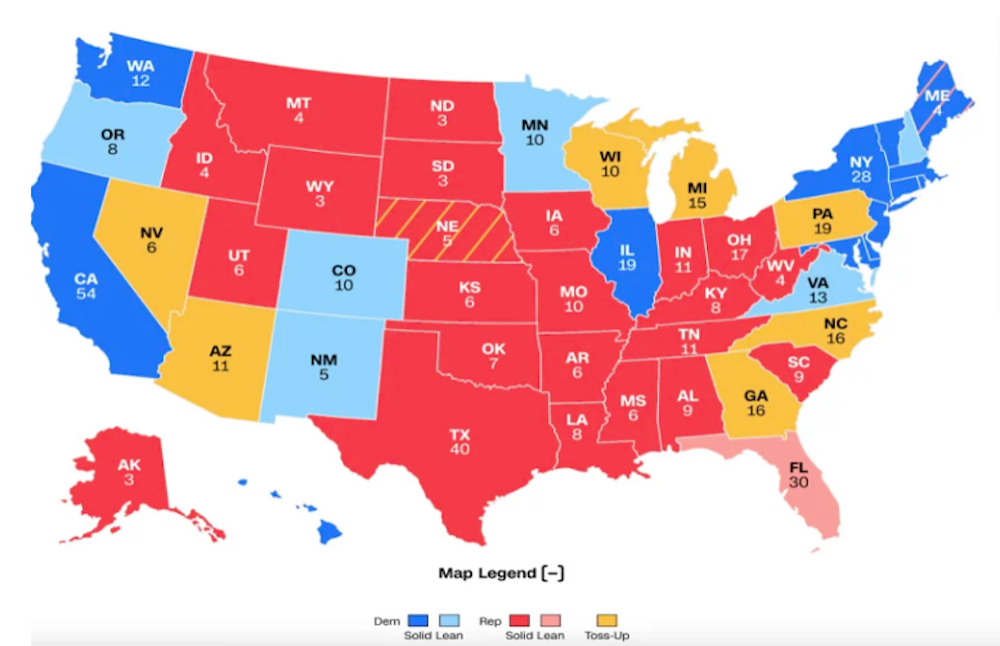
    MIL OSI Europe News

  • MIL-OSI USA News: Statement from National Economic Advisor Lael Brainard on the September 2024 Consumer Price  Index

    Source: The White House

    Today’s report shows inflation has fallen back down to 2.4%, the same rate as right before the pandemic. We keep making progress, with inflation returning to pre-pandemic levels, 16 million jobs created, lower interest rates, and low unemployment. Our economy has grown 3.2% per year under the Biden Harris Administration—stronger than during the previous administration. Incomes are up almost $4,000, after adjusting for inflation. We are working around the clock to help the families affected by Hurricane Milton and Hurricane Helene recover and rebuild, supported by our strong and resilient recovery.

    President Biden and Vice President Harris will keep fighting to lower costs—by building new homes to lower rents, capping prescription drug costs and reducing health insurance premiums, and lowering taxes for middle-class families—as Congressional Republicans keep pushing trickle-down economics that would raise costs by nearly $4,000 per family while cutting taxes for billionaires and big corporations.

    ###

    MIL OSI USA News

  • MIL-OSI Global: Caitlin Clark, Christine Brennan and how racial stereotypes persist in the media’s WNBA coverage

    Source: The Conversation – USA – By Molly Yanity, Professor and Director of Sports media and Communication, University of Rhode Island

    Indiana Fever guard Caitlin Clark, right, scrambles for a loose ball against Connecticut Sun guard DiJonai Carrington during a game on Aug. 28, 2024. Brian Spurlock/Icon Sportswire via Getty Images

    The “Caitlin Clark effect,” or the impact on women’s basketball from a ponytailed rookie phenomenon from America’s heartland, is real: The 2024 WNBA season shattered viewership, attendance and merchandise sales records.

    Clark, however, didn’t get a chance to compete for a league title.

    The Connecticut Sun eliminated Clark’s team, the Indiana Fever, in the first round of the playoffs with a two-game sweep, ending her record rookie-of-the-year campaign.

    And it may be just the latest chapter in a complicated saga steeped in race.

    During the first game of the series, the fingers of Sun guard DiJonai Carrington hit Clark in the eye as Carrington followed through on a block attempt of a Clark shot.

    During the next day’s media availability, USA Today columnist Christine Brennan recorded and posted an exchange between herself and Carrington.

    In the brief clip, the veteran sports writer asks Carrington, who is Black, if she purposely hit Clark in the eye during the previous night’s game. Though Carrington insisted she didn’t intentionally hit Clark, Brennan persisted, asking the guard if she and a teammate had laughed about the incident. The questions sparked social media outrage, statements from the players union and the league, media personalities weighing in and more.

    Hit the pause button here.

    As a longtime sports writer who has covered the WNBA – and as a journalism scholar who studies women’s sports and fandom – I’ll concede that Brennan’s line of questioning seems, on its face, like business as usual in sports journalism.

    After all, haven’t most baseball fans seen a scribe ask a pitcher if he intentionally beaned a batter?

    But Brennan’s questions were not asked in a vacuum. The emergence of a young, white superstar from the heartland has caused many new WNBA fans to pick sides that fall along racial lines. Brennan’s critics claim she was pushing a line of questioning that has dogged Black athletes for decades: that they are aggressive and undisciplined.

    Because of that, her defense of her questions – and her unwillingness to acknowledge the complexities – has left this professor disappointed in one of her journalistic heroes.

    Brennan and much of the mainstream sports media, particularly those who cover professional women’s basketball, still seem to have a racial blind spot.

    The emergence of a Black, queer league

    When the WNBA launched in 1997 in the wake of the success of the 1996 Olympic gold-medal-winning U.S. women’s basketball team, it did so under the watch of the NBA.

    The NBA set out to market its new product, in part, to a white, heterosexual fan base.

    The plan didn’t take hold.

    While the league experienced fits and starts in attendance and TV ratings over its lifetime, the demographic makeup of its players is undeniable: The WNBA is, by and large, a Black, queer league.

    In 2020, the Women’s National Basketball Players Association reported that 83% of its members were people of color, with 67% self-reporting as “Black/African-American.” While gender and sexual identity hasn’t been officially reported, a “substantial proportion,” the WNBPA reported, identify as LBGTQ+.

    In 2020, the league’s diversity was celebrated as players competed in a “bubble” in Bradenton, Florida, due to the COVID-19 pandemic. They protested racial injustice, helped unseat a U.S. senator who also owned Atlanta’s WNBA franchise, and urged voters to oust former President Donald Trump from the White House.

    Racial tensions bubble to the surface

    In the middle of it all, the WNBA has more eyeballs on it than ever before. And, without mincing words, the fan base has “gotten whiter” since Clark’s debut this past summer, as The Wall Street Journal pointed out in July. Those white viewers of college women’s basketball have emphatically turned their attention to the pro game, in large part due to Clark’s popularity at the University of Iowa.

    Money is also pouring into the league through a lucrative media rights deal and new sponsorship partners.

    While the rising tide following Clark’s transition to the WNBA is certainly lifting all boats, it is also bringing detritus to the surface in the form of racist jeers from the stands and on social media.

    After the Sun dispatched the Fever, All-WNBA forward Alyssa Thomas, who seldom speaks beyond soundbites, said in a postgame news conference: “I think in my 11-year career I’ve never experienced the racial comments from the Indiana Fever fan base. … I’ve never been called the things that I’ve been called on social media, and there’s no place for it.”

    Echoes of Bird and Magic

    In “Manufacturing Consent,” a seminal work about the U.S. news business, Edward Herman and Noam Chomsky argued that media in capitalist environments do not exist to impartially report the news, but to reinforce dominant narratives of the time, even if they are false. Most journalists, they theorized, work to support the status quo.

    In sports, you sometimes see that come to light through what media scholars call “the stereotypical narrative” – a style of reporting and writing that relies on old tropes.

    Scholars who study sports media have found that reporters routinely fall back on racial stereotypes. For example, coverage of Black quarterbacks in the NFL as less intelligent and more innately gifted would go on to hinder the progress of Black quarterbacks.

    Magic Johnson defends a shot by Larry Bird during the 1985 NBA Finals.
    Bob Riha, Jr./Getty Images

    In Brennan’s coverage of the Carrington-Clark incident, there appear to be echoes of the way the media covered Los Angeles Lakers point guard Magic Johnson and Boston Celtics forward Larry Bird in the 1980s.

    The battles between two of the sport’s greatest players – one Black, the other white – was a windfall for the NBA, lifting the league into financial sustainability.

    But to many reporters who leaned on the dominant narrative of the time, the two stars also served as stand-ins for the racial tensions of the post-civil rights era. During the 1980s, Bird and Magic didn’t simply hoop; they were the “embodiments of their races and living symbols of how blacks and whites lived in America,” as scholars Patrick Ferrucci and Earnest Perry wrote.

    The media gatekeepers of the Magic-Bird era often relied on racial stereotypes that ultimately distorted both athletes.

    For example, early in their careers, Bird and Johnson received different journalistic treatment. In Ferrucci and Perry’s article, they explain how coverage of Bird “fit the dominant narrative of the time perfectly … exhibiting a hardworking and intelligent game that succeeded despite a lack of athletic prowess.” When the “flashy” Lakers and Johnson won, they wrote, it was because of “superior skill.”

    When they lost to Bird’s Celtics, they were “outworked.”

    Framing matters

    Let’s go back to Brennan.

    Few have done more for young women in the sports media industry than Brennan. In time, energy and money, she has mentored and supported young women trying to break into the field. She has used her platform to expand the coverage of women’s sports.

    Brennan defended herself in a lengthy interview on the podcast “Good Game with Sarah Spain”:

    “I think [critics are] missing the fact of what I’m trying to do, what I am doing, what I understand clearly as a journalist, asking questions and putting things out there so that athletes can then have an opportunity to answer issues that are being discussed or out there.”

    I don’t think Brennan asking Carrington about the foul was problematic. Persisting with the narrative was.

    Leaning into racial stereotypes is not simply about the language used anymore. Brennan’s video of her persistent line of questioning pitted Carrington against Clark. It could be argued that it used the stereotype of the overly physical, aggressive Black athlete, as well.

    At best, Brennan has a blind spot to the strain racism is putting on Black athletes today – particularly in the WNBA. At worst, she is digging in on that tired trope.

    A blind spot can be addressed and seen. An unacknowledged racist narrative, however, will persist.

    Molly Yanity does not work for, consult, own shares in or receive funding from any company or organization that would benefit from this article, and has disclosed no relevant affiliations beyond their academic appointment.

    ref. Caitlin Clark, Christine Brennan and how racial stereotypes persist in the media’s WNBA coverage – https://theconversation.com/caitlin-clark-christine-brennan-and-how-racial-stereotypes-persist-in-the-medias-wnba-coverage-240272

    MIL OSI – Global Reports

  • MIL-OSI USA: Cook, Entrepreneurs, Innovation, and Participation

    Source: US State of New York Federal Reserve

    Thank you for the kind introduction, Jennet.1 Let me start by saying my thoughts are with all the people in Florida, Georgia, North Carolina, South Carolina, Tennessee and Virginia who have felt the force of Helene’s and Milton’s impact. I am saddened by the tragic loss of life and widespread disruption in this region. The Federal Reserve Board and other federal and state financial regulatory agencies are working with banks and credit unions in the affected area. As we normally do in these unfortunate situations, we are encouraging institutions operating in the affected areas to meet the needs of their communities.2
    It is an honor to stand before you and speak to this group of audacious, innovative women. I am also very happy to be back in Charleston. I grew up in Milledgeville, Georgia, just about 250 miles down the road. Some of my fondest childhood memories of traveling in the South, especially as a Girl Scout, include South Carolina.
    Today I would like to talk with you about the important role startups, new businesses, and entrepreneurship play in our economy from the perspective of a Federal Reserve policymaker. I also want to share a bit of my story. Just like many of you—including those who have started a business or those who dream of doing that someday—I have faced and overcome hurdles along a winding path.
    My StoryI was born and raised in Milledgeville, where my mother, Professor Mary Murray Cook, was a faculty member in the Nursing Department of Georgia College and State University. She was the first tenured African American faculty member at that university. My father, Rev. Payton B. Cook, was a chaplain and then in senior leadership at the hospital there. My family lived through the events that brought Milledgeville out of a deeply segregated South. My sisters and I were among the first African American students to desegregate the schools we attended. I drew strength from the example set by my family, others in the Civil Rights Movement, and the village that raised me and from their conviction in the hope and promise of a world that could and would continually improve.
    While I had an interest in economics even before I entered high school, that was not the initial field of study I pursued. I entered Spelman College in Atlanta as a physics and philosophy major. After graduation, I had the honor of studying at the University of Oxford as a Marshall Scholar.
    After Oxford, I continued my education at the University of Dakar in Senegal in West Africa. However, at the end of my year in Africa, it was the chance to climb Mount Kilimanjaro in Tanzania in East Africa where I discovered my love of economics. I hiked alongside a British economist, and, by the end of the trek, he convinced me that studying economics would provide me with the tools to address some big and important questions I had pondered for a long time.
    I went on to earn my Ph.D. in economics from the University of California, Berkeley. Entering the economics profession came with its usual challenges, and, for women, a few more challenges existed. To this day, women are still underrepresented in economics. Women earned just 34 percent of bachelor’s degrees in economics and 36 percent of Ph.D.’s in economics in 2022, the most recent available data from the U.S. Department of Education. The share of women earning those degrees rose only modestly from 1999, when women earned about 32 percent of economics bachelor’s degrees and 27 percent of Ph.D.’s. The data stand in sharp contrast to all science and engineering degrees, including in social science fields, where women earned roughly half of degrees granted in 2022.3
    Education was paramount in my family and was construed as a means of realizing the promise of the Civil Rights Movement and continual improvement of our society and economy. Of course, economics, like physics, is a field where math skills are vitally important. Between my mother, my aunts, and my extended family, I had essentially understood STEM (science, technology, engineering, and mathematics)-related jobs to be women’s work. I was grateful to have these role models in my orbit to give me the confidence to undertake study in a STEM field.
    Access and encouragement for girls to pursue study in math and science are a significant concern. Economist Dania V. Francis’s research shows that Black girls are disproportionately under-recommended for Advanced Placement calculus.4 The course is often a gateway for economics, for STEM classes, and for college preparation, in general.5
    My mentors and role models encouraged careful study, teaching, and scholarship and helped me block out the voices saying I did not belong at each juncture. They encouraged my work and have been champions for me. As a result, I have been committed to serving as a mentor, as well. For several years, I was the director of and taught in the American Economic Association’s Summer Program, an important training ground for disadvantaged students considering economics careers. Each year, the share of students who are women oscillated between 41 percent and 67 percent, much higher than the enrollment in undergraduate economics courses nationally.6 I told those students—and continue to tell them as they make their way through graduate programs in economics and through the economics profession—”You belong here. Your insights are unique, and the profession will benefit from them.”
    In my career as an economist, I studied, researched, and taught in roles at universities and worked in the private sector and in government before I was nominated by the President and confirmed by the Senate to become a member of the Board of Governors of the Federal Reserve System in 2022. I am honored and humbled to serve in this role and proud to be the first African American woman and first woman of color to serve on the Board of Governors. As Fed policymakers, we make decisions affecting the entire economy and the well-being of every American by focusing on the dual mandate given to us by Congress: maximum employment and stable prices.
    Entrepreneurs’ Vital Role in the EconomyIn my years of conducting research and while at the Board, I have met many inventors, innovators, and entrepreneurs who made important contributions to the economy. Many of them happened to be women who were very knowledgeable, creative, and inspiring. So I want to discuss the vital role entrepreneurship and new business creation play in our economy.
    You might ask what interest I have in this subject, as a monetary policymaker focused closely on the dual mandate of maximum employment and stable prices. Well, this topic has interested me for a long time, and I conducted a fair amount of research on entrepreneurship and innovation before joining the Board. But the topic is also important precisely because of our dual mandate. To convince you of this, I will explain a few of the ways in which economists think about entrepreneurship, and how they relate to the dual mandate.
    The first is the most basic: For many people—many millions, in fact—entrepreneurship or self-employment is a career choice.7 It is their preferred way of participating in the labor market and obtaining income for themselves and their families. They prefer to be their own bosses, with all the benefits and risks that entails.8 But whether they end up hiring others or not, self-employed individuals support the labor market by providing a job for themselves.
    A second way economists think about entrepreneurship is a little broader: New business creation is a large contributor to overall job growth. In fact, new businesses punch above their weight. For example, during the handful of years before the pandemic, in a typical year only about 8 percent of all employer firms were new entrants, but these new entrants accounted for about 15 percent of annual gross job creation.9 And research has found that this job creation effect is long lasting. Even though many new firms do not survive, those that do survive tend to grow rapidly over 5 to 10 years, largely offsetting the job losses from those firms that shut down.10
    A third way economists think about entrepreneurship, which I have explored in my own research, is that a small but critical subset of new firms are innovators—they introduce new products or business processes that change how we consume or produce.11 As such, they make large contributions to overall productivity growth over time. That is, innovative entrepreneurs help enable us to do more with less—and even more so if access to innovation participation is equitable.12 It is important that everyone, including women, historically underrepresented groups, people from certain geographic regions, and other diverse representative groups, can participate in the entrepreneurship and innovation economy. In my research, I have found that investors underrate the prospects of Black-founded, or simply outsider-founded, startups in early funding stages. Better assessment of the early stages of invention and innovation could broaden the range of new entrants and the ideas they contribute to their local communities and the broader economy.
    Consider the Dual MandateSo let’s return to the dual mandate. You can now understand that self-employment and entrepreneurial job creation are relevant for our employment mandate. Indeed, one could argue that entrepreneurs are critical to Fed policymakers’ efforts to promote maximum employment. And the productivity gains we reap from entrepreneurship are like productivity growth from any other source. When the pace of productivity growth increases, it allows for economic activity and wage growth to be robust while also being consistent with price stability.
    The importance of business startups to our dual mandate objectives is why I have watched closely as various measures of new business formation have surged since the onset of the COVID-19 pandemic.
    Applications for new businesses jumped to a record pace shortly after the pandemic struck the U.S.13 The pace of applications has remained elevated above pre-pandemic norms all the way from the summer of 2020 to the most recent data, even though the pace appears to be cooling some this year.14 At first, it might have seemed like these business applications were mainly being submitted by people who lost their jobs, or perhaps by an increase in “gig economy” work. There was doubtless some of that going on, but research and data since then have painted a more optimistic picture.
    When researchers look across areas of the country, the pandemic business applications had only a weak connection with layoffs. The surge in applications persisted long after overall layoffs fell to the subdued pace we have seen since early 2021. The applications did have a strong relationship with workers voluntarily leaving their jobs. Some quitting workers may have chosen to join these new businesses as founders or early employees. And surging business applications were soon followed by new businesses hiring workers and expanding. Over the last two years of available data, new firms created 1.9 million jobs per year, a pace not seen since the eve of the Global Financial Crisis.15
    The industry patterns of this surge reflect shifts in consumer and business needs resulting from the pandemic and its aftermath. For example, in large metro areas, new business creation shifted from city centers to the suburbs, perhaps because of the increase in remote work. Suddenly, people wanted to eat lunch or go to the gym closer to their home, rather than close to their downtown office. Likewise, consumer and business tastes for more online purchases, with the shipping requirements that entails, are evident in the surge of business entry in the online retail and transportation sectors. But this is not only about moving restaurants closer to workers or changing patterns of goods consumption. There was also a particularly strong entry into high-tech industries, such as data processing and hosting, as well as research and development services.16 That may have more to do with developments like artificial intelligence than with the pandemic specifically, as I discussed in a speech in Atlanta last week.17
    Economists will spend years debating the various causes of the surge in business creation during and soon after the pandemic. Perhaps strong monetary and fiscal policy backstopping aggregate demand played some role, or pandemic social safety net policies, or simply the accommodative financial conditions of 2020 and 2021.18 Indeed, more research is needed and will be the subject of many dissertations in the near future.
    I do think a large part of the story is ultimately a case of resourceful and determined American entrepreneurs, perhaps including some of you, responding to the tumultuous shocks of the pandemic. They, like some of you, stepped in to meet the rapidly changing needs of households and businesses. This points to a fourth way economists like to think about entrepreneurship, which is that entrepreneurship plays a big role in helping the economy adapt to change. Research suggests that entrepreneurs and the businesses they create are highly responsive to big economic shocks, and the COVID-19 pandemic was certainly a seismic shock.19 To be sure, the future is uncertain. It is unclear what the productivity effects of the pandemic surge of new businesses, particularly in high tech, will be.20 And whether that surge will continue is an open question; after all, the pre-pandemic period was a period of declining rates of new business creation, and the pandemic surge itself does appear to be cooling off recently.21
    ConclusionFor now, let me say that I am grateful that entrepreneurs continue to give us a hand in meeting our employment mandate, and whatever productivity gains we may reap in coming years as a result may help ease tradeoffs with inflation as well.
    Finally, I will share one last story about why South Carolina will always hold a special place in my and my sisters’ hearts. Every summer and at Thanksgiving, we would travel through the Palmetto State to our grandparents’ house in Winston-Salem. Sitting in the back seat of the station wagon, we were entranced by the many colorful signs along Interstate 95 advertising what I, as a child, viewed as South Carolina’s number one attraction: the South of the Border roadside amusement park. We begged our parents to stop every time. It was an epic struggle that went on for more than a decade. Once or twice they did relent, a sweet childhood victory! And here is the funny thing about travels—paths can cross. The timing is such that my sisters and I may have even been helped by a waiter named Ben, a young man from Dillon, South Carolina, who would go on to be Federal Reserve Chairman Ben Bernanke! 22 Perhaps it was the world’s way of foreshadowing.
    Thank you for having me here in Charleston. It is inspiring to meet this group of bold, entrepreneurial women in South Carolina, and I look forward to continuing our conversation.

    1. The views expressed here are my own and not necessarily those of my colleagues on the Federal Open Market Committee. Return to text
    2. See Federal Deposit Insurance Corporation, Federal Reserve Board, National Credit Union Administration, Office of the Comptroller of the Currency, and State Financial Regulators (2024), “Federal and State Financial Regulatory Agencies Issue Interagency Statement on Supervisory Practices regarding Financial Institutions Affected by Hurricane Helene,” joint press release, October 2. Return to text
    3. See U.S. Department of Education, National Center for Education Statistics (NCES), Integrated Postsecondary Education Data System, Completions Survey, available on the NCES website at https://nces.ed.gov/ipeds/survey-components/7. Return to text
    4. See Dania V. Francis, Angela C.M. de Oliveira, and Carey Dimmitt (2019), “Do School Counselors Exhibit Bias in Recommending Students for Advanced Coursework?” B.E. Journal of Economic Analysis & Policy, vol. 19 (July), pp. 1–17. Return to text
    5. See Lisa D. Cook and Anna Gifty Opoku-Agyeman (2019), “‘It Was a Mistake for Me to Choose This Field,’” New York Times, September 30. Return to text
    6. See Lisa D. Cook and Christine Moser (2024), “Lessons for Expanding the Share of Disadvantaged Students in Economics from the AEA Summer Program at Michigan State University,” Journal of Economic Perspectives, vol. 38 (Summer), pp. 191–208. Return to text
    7. There is no single way to measure the number of self-employed individuals and related businesses, but it certainly numbers in the millions. The latest Bureau of Labor Statistics Current Population Survey indicates there are roughly 10 million unincorporated and 7 million incorporated self-employed individuals. Separate data on businesses from the U.S. Census Bureau indicate that, as of 2021, there were about 25 million nonemployer and 800,000 employer sole proprietorships (Nonemployer Statistics; Statistics of U.S. Businesses).
    For analysis of inconsistencies between self-employment data sources, see Katharine G. Abraham, John C. Haltiwanger, Claire Hou, Kristin Sandusky, and James R. Spletzer (2021), “Reconciling Survey and Administrative Measures of Self-Employment,” Journal of Labor Economics, vol. 39 (October), pp. 825–60. Return to text
    8. See Erik Hurst and Benjamin Wild Pugsley (2011), “What Do Small Businesses Do? (PDF)” Brookings Papers on Economic Activity, Fall, pp. 73–142; and Erik G. Hurst and Benjamin W. Pugsley (2017), “Wealth, Tastes, and Entrepreneurial Choice,” in John Haltiwanger, Erik Hurst, Javier Miranda, and Antoinette Schoar, eds., Measuring Entrepreneurial Businesses: Current Knowledge and Challenges (Chicago: University of Chicago Press). Return to text
    9. Gross job creation refers to all jobs created by entering and expanding establishments. Data are from the Census Bureau Business Dynamics Statistics, averaged for 2015–19. New firms’ share of net job creation is much higher, but this is partly an artifact of measurement practices: Firms with an age less than one measured in annual data cannot contribute negatively to net job creation. Return to text
    10. See John Haltiwanger, Ron S. Jarmin, and Javier Miranda (2013), “Who Creates Jobs? Small versus Large versus Young,” Review of Economics and Statistics, vol. 95 (May), pp. 347–61; and Ryan Decker, John Haltiwanger, Ron Jarmin, and Javier Miranda (2014), “The Role of Entrepreneurship in US Job Creation and Economic Dynamism,” Journal of Economic Perspectives, vol. 28 (Summer), pp. 3–24. Return to text
    11. For evidence on the importance of innovating young and small firms, see Daron Acemoglu, Ufuk Akcigit, Harun Alp, Nicholas Bloom, and William Kerr (2018), “Innovation, Reallocation, and Growth,” American Economic Review, vol. 108 (November), pp. 3450–91. For recent trends in technology diffusion of relevance to business entry, see Ufuk Akcigit and Sina T. Ates (2023), “What Happened to US Business Dynamism?” Journal of Political Economy, vol. 131 (August), pp. 2059–2124. Return to text
    12. See Lisa D. Cook (2011), “Inventing Social Capital: Evidence from African American Inventors, 1843–1930,” Explorations in Economic History, vol. 48 (December), pp. 507–18; Lisa D. Cook (2014), “Violence and Economic Activity: Evidence from African American Patents, 1870–1940,” Journal of Economic Growth, vol. 19 (June), pp. 221–57; and Lisa D. Cook (2020), “Policies to Broaden Participation in the Innovation Process (PDF),” Hamilton Project Policy Proposal 2020-11 (Washington: Brookings Institution, August). Return to text
    13. “Business applications” refers to applications for new Employer Identification Numbers submitted to the Internal Revenue Service. These are reported by the U.S. Census Bureau in the Business Formation Statistics. An application does not necessarily mean an actual firm with employees, revenue, or both will result. Return to text
    14. Unless otherwise noted, the facts described in this section are documented in Ryan A. Decker and John Haltiwanger (2024), “Surging Business Formation in the Pandemic: A Brief Update,” working paper, September; and Ryan A. Decker and John Haltiwanger (2023), “Surging Business Formation in the Pandemic: Causes and Consequences? (PDF)” Brookings Papers on Economic Activity, Fall, pp. 249–302. Return to text
    15. Data from the Bureau of Labor Statistics Business Employment Dynamics (BED) report new firm job creation of 1.9 million, on average, in 2022 and 2023, the highest pace since 2007. Alternative data on firm births from the Census Bureau Business Dynamics Statistics, which lag the BED by one year, report 2.5 million jobs created by new firms in 2022, also the highest pace since 2007. Return to text
    16. See Ryan Decker and John Haltiwanger (2024), “High Tech Business Entry in the Pandemic Era,” FEDS Notes (Washington: Board of Governors of the Federal Reserve System, April 19). Return to text
    17. See Lisa D. Cook (2024), “Artificial Intelligence, Big Data, and the Path Ahead for Productivity,” speech delivered at “Technology-Enabled Disruption: Implications of AI, Big Data, and Remote Work,” a conference organized by the Federal Reserve Banks of Atlanta, Boston, and Richmond, Atlanta, October 1. Return to text
    18. For a potential role of fiscal policy, see Catherine E. Fazio, Jorge Guzman, Yupeng Liu, and Scott Stern (2021), “How Is COVID Changing the Geography of Entrepreneurship? Evidence from the Startup Cartography Project,” NBER Working Paper Series 28787 (Cambridge, Mass.: National Bureau of Economic Research, May). For safety net programs (specifically expanded unemployment insurance), see Joonkyu Choi, Samuel Messer, Michael Navarrete, and Veronika Penciakova (2024), “Unemployment Benefits Expansion and Business Formation,” working paper, April. For the importance of financial conditions for entrepreneurship in past business cycles, see Michael Siemer (2019), “Employment Effects of Financial Constraints during the Great Recession,” Review of Economics and Statistics, vol. 101 (March), pp. 16–29; and Teresa C. Fort, John Haltiwanger, Ron S. Jarmin, and Javier Miranda (2013), “How Firms Respond to Business Cycles: The Role of Firm Age and Firm Size,” IMF Economic Review, vol. 61 (3), pp. 520–59. Return to text
    19. Examples of research finding a large role for business entry in responding to aggregate shocks include Manuel Adelino, Song Ma, and David Robinson (2017), “Firm Age, Investment Opportunities, and Job Creation,” Journal of Finance, vol. 72 (June), pp. 999–1038; Ryan A. Decker, Meagan McCollum, and Gregory B. Upton, Jr. (2024), “Boom Town Business Dynamics,” Journal of Human Resources, vol. 59 (March), pp. 627–51; and Fatih Karahan, Benjamin Pugsley, and Ayşegűl Şahin (2024), “Demographic Origins of the Startup Deficit,” American Economic Review, vol. 114 (July), pp. 1986–2023. Return to text
    20. The last period of robust productivity growth in the U.S., the late 1990s and early 2000s, was preceded by several years by strong business creation in high-tech industries; see Lucia Foster, Cheryl Grim, John C. Haltiwanger, and Zoltan Wolf (2021), “Innovation, Productivity Dispersion, and Productivity Growth,” in Carol Corrado, Jonathan Haskel, Javier Miranda, and Daniel Sichel, eds., Measuring and Accounting for Innovation in the Twenty-First Century (Chicago: University of Chicago Press). Return to text
    21. The number of annual new firms as a share of all firms declined from around 12 percent in the 1980s, on average, to around 9 percent in the period of 2010–19. New firms’ share of gross job creation declined from nearly 20 percent to less than 15 percent over the same period. Data are from Census Bureau Business Dynamics Statistics. The pre-pandemic trend decline in entry rates was documented by Ryan Decker, John Haltiwanger, Ron Jarmin, and Javier Miranda (2014), “The Role of Entrepreneurship in US Job Creation and Economic Dynamism,” Journal of Economic Perspectives, vol. 28 (Summer), pp. 3–24. Return to text
    22. See Ben S. Bernanke (2009), “Brief Remarks,” speech delivered at the Interstate Interchange Dedication Ceremony, Dillon, S.C., March 7. Return to text

    MIL OSI USA News

  • MIL-OSI Economics: Kuwait: Staff Concluding Statement of the 2024 Article IV Mission

    Source: International Monetary Fund

    October 10, 2024

    A Concluding Statement describes the preliminary findings of IMF staff at the end of an official staff visit (or ‘mission’), in most cases to a member country. Missions are undertaken as part of regular (usually annual) consultations under Article IV of the IMF’s Articles of Agreement, in the context of a request to use IMF resources (borrow from the IMF), as part of discussions of staff monitored programs, or as part of other staff monitoring of economic developments.

    The authorities have consented to the publication of this statement. The views expressed in this statement are those of the IMF staff and do not necessarily represent the views of the IMF’s Executive Board. Based on the preliminary findings of this mission, staff will prepare a report that, subject to management approval, will be presented to the IMF Executive Board for discussion and decision.

    Washington, DC: Kuwait has a window of opportunity to implement needed fiscal and structural reforms to boost private sector-led inclusive growth and diversify its economy away from oil:

    • Gradual fiscal consolidation of about 12 percent of GDP is needed to reinforce intergenerational equity.
    • Structural reforms should focus on improving the business environment, attracting FDI, and unifying the labor market.
    • These reforms should be underpinned by continued prudent monetary and financial sector policies.
    • Economic statistics should be strengthened to support well-informed policymaking.

    Recent Developments, Outlook, and Risks

    1. Kuwait has a window of opportunity to implement needed fiscal and structural reforms. Political turmoil has gripped Kuwait in recent years, stalling reforms. The political gridlock was broken in May 2024, when H.H. the Amir Sheikh Meshaal al‑Ahmad al‑Jaber al‑Sabah dissolved the Parliament and suspended parts of the Constitution for up to 4 years, allowing reforms to be expedited.
    2. The economic recovery was disrupted in 2023, and inflation is moderating. Real GDP contracted by 3.6 percent in 2023. This economic downturn was concentrated in the oil sector, which contracted by 4.3 percent in 2023 due to an OPEC+ oil production cut. In addition, the non-oil sector is estimated to have contracted by 1.0 percent in 2023, primarily reflecting lower manufacturing activity in oil refining. Headline CPI inflation declined to 3.6 percent in 2023 reflecting lower core and food inflation. More recently, headline inflation moderated further to 2.9 percent (y-o-y) in August 2024, given lower housing and transport inflation.
    3. The external position remained strong in 2023. The current account surplus moderated to 31.4 percent of GDP in 2023, with a 10.3 percent of GDP reduction in the trade surplus from lower oil prices and production largely offset by a 7.4 percent of GDP increase in the income surplus. Official reserve assets amounted to a comfortable 9.0 months of projected imports at end-2023. However, the external position was substantially weaker than the level implied by fundamentals and desirable policies in 2023, partly reflecting inadequate public saving of oil revenue.
    4. The fiscal balance weakened in FY2023/24. The fiscal balance of the budgetary central government swung from a surplus of 11.7 percent of GDP in FY2022/23 to a deficit of 3.1 percent of GDP in FY2023/24. This mainly reflected a 5.8 percent of GDP reduction in oil revenue given lower oil prices and production, and a 9.7 percent of GDP increase in current spending, of which 5.7 percent of GDP went to the public sector wage bill while 3.4 percent of GDP went to subsidies. Nonetheless, the fiscal balance of the general government (which includes the income from SWF investments) was an estimated 26.0 percent of GDP in FY2023/24.
    5. Financial stability has been maintained. Banks have sustained strong capital and liquidity buffers to satisfy the CBK’s prudent regulatory requirements, while NPLs remain low given judicious lending practices and are well provisioned for.
    6. Under the baseline assuming current policies, the economy is projected to remain in recession in 2024, then to recover over the medium term:
    • Real GDP will contract by a further 3.2 percent in 2024 due to an additional OPEC+ oil production cut, then will expand by 2.8 percent in 2025 as the cuts get unwound, and will grow broadly in line with potential thereafter.
    • The incipient recovery of the non-oil sector will continue in 2024, with non-oil GDP expanding by 1.3 percent despite fiscal consolidation, after which it will gradually converge to its potential of 2.5 percent.
    • Headline CPI inflation will continue to moderate to 3.0 percent in 2024 as excess demand pressure dissipates and imported food prices fall, then will gradually converge to 2.0 percent as the non-oil output gap closes.
    • The current account surplus will moderate further to 28.4 percent of GDP in 2024 as lower oil prices and production reduce the trade surplus, then will gradually decline over the medium term alongside oil prices.
    • The fiscal deficit of the budgetary central government will increase to 5.1 percent of GDP in FY2024/25 as lower oil revenue more than offsets expenditure rationalization, then will steadily rise by about 1 percent of GDP per year over the medium term under current policies.
    1. The risks surrounding these baseline economic projections are skewed to the downside. The economy is highly exposed to a variety of global risks through its oil dependence, in particular to commodity price volatility, a global growth slowdown or acceleration, and the further intensification of regional conflicts. The materialization of these risks would be transmitted to Kuwait mainly via their impacts on oil prices and production. Domestic risks are primarily associated with the implementation of fiscal and structural reforms, which could get further delayed or accelerated. These reforms are needed to diversify the economy away from oil, which would enhance its resilience and stimulate private investment.

    Economic Reforms—Transitioning to a Dynamic and Diversified Economy

    1. The authorities aspire to implement reforms to support the transition to a dynamic and diversified economy. To achieve this goal, a well-sequenced package of fiscal and structural reforms is needed. Structural reforms to improve the business environment and attract foreign investment are needed to boost private sector-led inclusive growth. Meanwhile, fiscal reforms should be implemented to reinforce intergenerational equity while incentivizing Kuwaitis to pursue newly created job opportunities in the private sector, in particular gradual fiscal consolidation.

    Fiscal Policy—Reinforcing Intergenerational Equity

    1. The contractionary stance of fiscal policy is appropriate. Fiscal policy was strongly procyclical in FY2023/24, with a fiscal expansion of 6.9 percent of non-oil GDP contributing to excess demand pressure. Under the FY2024/25 Budget, the non-oil fiscal balance of the budgetary central government should increase by 4.7 percent of non-oil GDP relative to FY2023/24. This large fiscal consolidation will help close the non-oil output gap while reinforcing intergenerational equity. It is mainly driven by current expenditure rationalization, concentrated in planned subsidy cuts worth 4.3 percent of non-oil GDP.
    2. Substantial further fiscal consolidation is needed to ensure intergenerational equity. Under the baseline, the projected fiscal balance of the general government is far below the level needed to maintain the living standards of Kuwaitis for generations to come. A prudent approach calls for gradual fiscal consolidation of about 12 percent of GDP to reinforce intergenerational equity, alongside structural reforms to diversify the economy away from oil. These reforms would also reinforce external sustainability.
    3. Expenditure and tax policy reforms would be needed to support the transition to a dynamic and diversified economy:
    • Fiscal consolidation should be implemented at a pace of 1 to 2 percent of GDP per year until the PIH fiscal balance target is achieved. This would offset or reverse the projected roughly 1 percent of GDP per year increase in the fiscal deficit of the budgetary central government over the medium term, without reducing growth much.
    • Compensation of government employees surged over the past decade, to the top of the GCC. A public sector wage setting mechanism should be introduced to gradually reduce the 41 percent premium over the private sector, while a hiring cap should be used to steadily lower the public sector employment share, both towards high-income country levels.
    • Hydrocarbon consumption subsidies are the highest in the GCC. They should be phased out by gradually raising retail fuel and electricity prices to their cost-recovery levels while providing targeted transfers to vulnerable groups.
    • On-budget public investment plummeted over the past decade, to near the bottom of the GCC. It should be raised to build up the quantity and quality of infrastructure towards high-income country levels.
    • The hydrocarbon share of government revenue remains the highest in the GCC. In the context of the global minimum corporate tax agreement, the government’s plan to extend the CIT to all large domestic companies is welcome. To boost non-oil revenue mobilization, Kuwait should introduce the GCC-wide VAT and excise tax.
    1. The conduct of fiscal policy should be strengthened with Public Financial Management reforms. To align budget planning and execution with fiscal policy objectives, the Ministry of Finance should introduce a medium-term fiscal framework—including a fiscal rules framework with a public debt ceiling and non-oil fiscal balance target—underpinned by a medium-term macroeconomic framework. To inform fiscal policymaking and assess reform proposals, the capacity of the Macro-Fiscal Unit should be strengthened. To facilitate orderly fiscal financing, the Liquidity and Financing Law should be enacted expeditiously.

    Monetary and Financial Sector Policies—Maintaining Macrofinancial Stability

    1. The exchange rate peg to an undisclosed basket of currencies remains an appropriate nominal anchor for monetary policy. It has supported low and stable inflation for many years. Sustaining this successful monetary policy track record requires preserving the independence of the CBK. The monetary transmission mechanism should be strengthened by deepening the interbank and domestic sovereign debt markets, establishing an efficient capital market, and phasing out interest rate caps.
    2. The restrictive stance of monetary policy is appropriate. The exchange rate regime gives the CBK relative flexibility to conduct monetary policy. The policy rate is currently in line with controlling inflation and stabilizing non-oil output while supporting the exchange rate peg, and is above neutral. Under the baseline, monetary normalization is warranted, as inflation further moderates and the non-oil output gap closes.
    3. Systemic risk remains contained and prudently managed. The credit cycle downturn triggered by the pandemic has been gradually unwinding, with the credit gap estimated to be nearly closed. Under the CBK’s latest stress tests, the capitalization and liquidity of the banking system generally exceeded Basel III minimum requirements, while individual bank shortcomings were limited. The stance of macroprudential policy is appropriate given contained systemic risk and subdued credit growth. Given that capital requirements exceed Basel III minimum requirements, the CBK could consider reclassifying part of its country specific capital buffer as a positive neutral countercyclical capital buffer. It should also continue its practice of regularly reviewing the adequacy of its financial regulatory perimeter and macroprudential toolkit. Finally, the CBK should continue its risk-based supervisory approach to assessing banks and effectively addressing any vulnerabilities.
    4. Structural financial sector reforms are needed to enhance financial intermediation efficiency. The unlimited guarantee on bank deposits should be gradually replaced with a limited deposit insurance framework to address moral hazard, while the interest rate caps on loans should be phased out to support efficient risk pricing.

    Structural Reforms—Boosting Private Sector-Led Inclusive Growth

    1. A comprehensive and well-sequenced structural reform package is needed to increase non-oil potential growth. The initial priorities are to improve the business environment by enhancing transparency, raising efficiency, and further opening up the economy. Meanwhile, labor market reforms should be gradually phased in to incentivize private sector-led inclusive growth.
    2. The business environment should be further improved to raise economic competitiveness and promote private investment. To boost transparency, data disclosure on secondary market real estate transactions should be enhanced, while universal auditing standards for corporate balance sheets should be adopted. To raise efficiency, the government should improve public infrastructure, conduct regulatory impact assessments with public consultations, integrate digital public service delivery across ministries, and further streamline business establishment processes. To attract FDI, full foreign ownership of businesses should be permitted, while foreign ownership restrictions on land should be relaxed. Finally, public land sales for residential and commercial development should be scaled up.
    3. Major labor market reforms are needed to promote economic diversification. To incentivize Kuwaitis to seek employment in the private sector, compensation and working conditions should be better harmonized across the public and private sectors. Enhancing the quality of education and aligning it with private sector needs would raise productivity and support economic diversification. Employment of highly-skilled expatriate workers should be supported by introducing targeted visa programs and reforming job sponsorship frameworks, promoting knowledge transfer. Higher female labor force participation should be encouraged by further improving the working environment for women, including by fully implementing the legal requirements for childcare in the private sector.
    4. Reforms are needed to strengthen AML/CFT effectiveness. The AML/CFT framework should be strengthened expeditiously following a risk-based approach to protect its effectiveness.
    5. Progress with climate change adaptation and mitigation should be accelerated. The government has made progress with implementing the 2019 National Adaptation Plan, but is delayed in developing its mitigation plan.
    6. Data provision has some shortcomings that somewhat hamper surveillance, which the authorities should address within their legal constraints. An expenditure-side National Accounts decomposition remains unavailable for 2023, while multi-year delays in the publication of GDP data after the pandemic confounded surveillance and policymaking. The CSB urgently needs additional funding to boost its capacity and resume its annual Establishment Survey, which has not been conducted since 2019. The exclusion of government investment income and SOE profit transfers from the Government Finance statistics hampers fiscal policy analysis, while the omission of government foreign assets from the IIP statistics generates stock-flow inconsistencies with the BOP statistics.

    The mission thanks the authorities for their warm hospitality and constructive engagement.

    IMF Communications Department
    MEDIA RELATIONS

    PRESS OFFICER: Angham Al Shami

    Phone: +1 202 623-7100Email: MEDIA@IMF.org

    @IMFSpokesperson

    MIL OSI Economics

  • MIL-OSI Russia: Kuwait: Staff Concluding Statement of the 2024 Article IV Mission

    Source: IMF – News in Russian

    October 10, 2024

    A Concluding Statement describes the preliminary findings of IMF staff at the end of an official staff visit (or ‘mission’), in most cases to a member country. Missions are undertaken as part of regular (usually annual) consultations under Article IV of the IMF’s Articles of Agreement, in the context of a request to use IMF resources (borrow from the IMF), as part of discussions of staff monitored programs, or as part of other staff monitoring of economic developments.

    The authorities have consented to the publication of this statement. The views expressed in this statement are those of the IMF staff and do not necessarily represent the views of the IMF’s Executive Board. Based on the preliminary findings of this mission, staff will prepare a report that, subject to management approval, will be presented to the IMF Executive Board for discussion and decision.

    Washington, DC: Kuwait has a window of opportunity to implement needed fiscal and structural reforms to boost private sector-led inclusive growth and diversify its economy away from oil:

    • Gradual fiscal consolidation of about 12 percent of GDP is needed to reinforce intergenerational equity.
    • Structural reforms should focus on improving the business environment, attracting FDI, and unifying the labor market.
    • These reforms should be underpinned by continued prudent monetary and financial sector policies.
    • Economic statistics should be strengthened to support well-informed policymaking.

    Recent Developments, Outlook, and Risks

    1. Kuwait has a window of opportunity to implement needed fiscal and structural reforms. Political turmoil has gripped Kuwait in recent years, stalling reforms. The political gridlock was broken in May 2024, when H.H. the Amir Sheikh Meshaal al‑Ahmad al‑Jaber al‑Sabah dissolved the Parliament and suspended parts of the Constitution for up to 4 years, allowing reforms to be expedited.
    2. The economic recovery was disrupted in 2023, and inflation is moderating. Real GDP contracted by 3.6 percent in 2023. This economic downturn was concentrated in the oil sector, which contracted by 4.3 percent in 2023 due to an OPEC+ oil production cut. In addition, the non-oil sector is estimated to have contracted by 1.0 percent in 2023, primarily reflecting lower manufacturing activity in oil refining. Headline CPI inflation declined to 3.6 percent in 2023 reflecting lower core and food inflation. More recently, headline inflation moderated further to 2.9 percent (y-o-y) in August 2024, given lower housing and transport inflation.
    3. The external position remained strong in 2023. The current account surplus moderated to 31.4 percent of GDP in 2023, with a 10.3 percent of GDP reduction in the trade surplus from lower oil prices and production largely offset by a 7.4 percent of GDP increase in the income surplus. Official reserve assets amounted to a comfortable 9.0 months of projected imports at end-2023. However, the external position was substantially weaker than the level implied by fundamentals and desirable policies in 2023, partly reflecting inadequate public saving of oil revenue.
    4. The fiscal balance weakened in FY2023/24. The fiscal balance of the budgetary central government swung from a surplus of 11.7 percent of GDP in FY2022/23 to a deficit of 3.1 percent of GDP in FY2023/24. This mainly reflected a 5.8 percent of GDP reduction in oil revenue given lower oil prices and production, and a 9.7 percent of GDP increase in current spending, of which 5.7 percent of GDP went to the public sector wage bill while 3.4 percent of GDP went to subsidies. Nonetheless, the fiscal balance of the general government (which includes the income from SWF investments) was an estimated 26.0 percent of GDP in FY2023/24.
    5. Financial stability has been maintained. Banks have sustained strong capital and liquidity buffers to satisfy the CBK’s prudent regulatory requirements, while NPLs remain low given judicious lending practices and are well provisioned for.
    6. Under the baseline assuming current policies, the economy is projected to remain in recession in 2024, then to recover over the medium term:
    • Real GDP will contract by a further 3.2 percent in 2024 due to an additional OPEC+ oil production cut, then will expand by 2.8 percent in 2025 as the cuts get unwound, and will grow broadly in line with potential thereafter.
    • The incipient recovery of the non-oil sector will continue in 2024, with non-oil GDP expanding by 1.3 percent despite fiscal consolidation, after which it will gradually converge to its potential of 2.5 percent.
    • Headline CPI inflation will continue to moderate to 3.0 percent in 2024 as excess demand pressure dissipates and imported food prices fall, then will gradually converge to 2.0 percent as the non-oil output gap closes.
    • The current account surplus will moderate further to 28.4 percent of GDP in 2024 as lower oil prices and production reduce the trade surplus, then will gradually decline over the medium term alongside oil prices.
    • The fiscal deficit of the budgetary central government will increase to 5.1 percent of GDP in FY2024/25 as lower oil revenue more than offsets expenditure rationalization, then will steadily rise by about 1 percent of GDP per year over the medium term under current policies.
    1. The risks surrounding these baseline economic projections are skewed to the downside. The economy is highly exposed to a variety of global risks through its oil dependence, in particular to commodity price volatility, a global growth slowdown or acceleration, and the further intensification of regional conflicts. The materialization of these risks would be transmitted to Kuwait mainly via their impacts on oil prices and production. Domestic risks are primarily associated with the implementation of fiscal and structural reforms, which could get further delayed or accelerated. These reforms are needed to diversify the economy away from oil, which would enhance its resilience and stimulate private investment.

    Economic Reforms—Transitioning to a Dynamic and Diversified Economy

    1. The authorities aspire to implement reforms to support the transition to a dynamic and diversified economy. To achieve this goal, a well-sequenced package of fiscal and structural reforms is needed. Structural reforms to improve the business environment and attract foreign investment are needed to boost private sector-led inclusive growth. Meanwhile, fiscal reforms should be implemented to reinforce intergenerational equity while incentivizing Kuwaitis to pursue newly created job opportunities in the private sector, in particular gradual fiscal consolidation.

    Fiscal Policy—Reinforcing Intergenerational Equity

    1. The contractionary stance of fiscal policy is appropriate. Fiscal policy was strongly procyclical in FY2023/24, with a fiscal expansion of 6.9 percent of non-oil GDP contributing to excess demand pressure. Under the FY2024/25 Budget, the non-oil fiscal balance of the budgetary central government should increase by 4.7 percent of non-oil GDP relative to FY2023/24. This large fiscal consolidation will help close the non-oil output gap while reinforcing intergenerational equity. It is mainly driven by current expenditure rationalization, concentrated in planned subsidy cuts worth 4.3 percent of non-oil GDP.
    2. Substantial further fiscal consolidation is needed to ensure intergenerational equity. Under the baseline, the projected fiscal balance of the general government is far below the level needed to maintain the living standards of Kuwaitis for generations to come. A prudent approach calls for gradual fiscal consolidation of about 12 percent of GDP to reinforce intergenerational equity, alongside structural reforms to diversify the economy away from oil. These reforms would also reinforce external sustainability.
    3. Expenditure and tax policy reforms would be needed to support the transition to a dynamic and diversified economy:
    • Fiscal consolidation should be implemented at a pace of 1 to 2 percent of GDP per year until the PIH fiscal balance target is achieved. This would offset or reverse the projected roughly 1 percent of GDP per year increase in the fiscal deficit of the budgetary central government over the medium term, without reducing growth much.
    • Compensation of government employees surged over the past decade, to the top of the GCC. A public sector wage setting mechanism should be introduced to gradually reduce the 41 percent premium over the private sector, while a hiring cap should be used to steadily lower the public sector employment share, both towards high-income country levels.
    • Hydrocarbon consumption subsidies are the highest in the GCC. They should be phased out by gradually raising retail fuel and electricity prices to their cost-recovery levels while providing targeted transfers to vulnerable groups.
    • On-budget public investment plummeted over the past decade, to near the bottom of the GCC. It should be raised to build up the quantity and quality of infrastructure towards high-income country levels.
    • The hydrocarbon share of government revenue remains the highest in the GCC. In the context of the global minimum corporate tax agreement, the government’s plan to extend the CIT to all large domestic companies is welcome. To boost non-oil revenue mobilization, Kuwait should introduce the GCC-wide VAT and excise tax.
    1. The conduct of fiscal policy should be strengthened with Public Financial Management reforms. To align budget planning and execution with fiscal policy objectives, the Ministry of Finance should introduce a medium-term fiscal framework—including a fiscal rules framework with a public debt ceiling and non-oil fiscal balance target—underpinned by a medium-term macroeconomic framework. To inform fiscal policymaking and assess reform proposals, the capacity of the Macro-Fiscal Unit should be strengthened. To facilitate orderly fiscal financing, the Liquidity and Financing Law should be enacted expeditiously.

    Monetary and Financial Sector Policies—Maintaining Macrofinancial Stability

    1. The exchange rate peg to an undisclosed basket of currencies remains an appropriate nominal anchor for monetary policy. It has supported low and stable inflation for many years. Sustaining this successful monetary policy track record requires preserving the independence of the CBK. The monetary transmission mechanism should be strengthened by deepening the interbank and domestic sovereign debt markets, establishing an efficient capital market, and phasing out interest rate caps.
    2. The restrictive stance of monetary policy is appropriate. The exchange rate regime gives the CBK relative flexibility to conduct monetary policy. The policy rate is currently in line with controlling inflation and stabilizing non-oil output while supporting the exchange rate peg, and is above neutral. Under the baseline, monetary normalization is warranted, as inflation further moderates and the non-oil output gap closes.
    3. Systemic risk remains contained and prudently managed. The credit cycle downturn triggered by the pandemic has been gradually unwinding, with the credit gap estimated to be nearly closed. Under the CBK’s latest stress tests, the capitalization and liquidity of the banking system generally exceeded Basel III minimum requirements, while individual bank shortcomings were limited. The stance of macroprudential policy is appropriate given contained systemic risk and subdued credit growth. Given that capital requirements exceed Basel III minimum requirements, the CBK could consider reclassifying part of its country specific capital buffer as a positive neutral countercyclical capital buffer. It should also continue its practice of regularly reviewing the adequacy of its financial regulatory perimeter and macroprudential toolkit. Finally, the CBK should continue its risk-based supervisory approach to assessing banks and effectively addressing any vulnerabilities.
    4. Structural financial sector reforms are needed to enhance financial intermediation efficiency. The unlimited guarantee on bank deposits should be gradually replaced with a limited deposit insurance framework to address moral hazard, while the interest rate caps on loans should be phased out to support efficient risk pricing.

    Structural Reforms—Boosting Private Sector-Led Inclusive Growth

    1. A comprehensive and well-sequenced structural reform package is needed to increase non-oil potential growth. The initial priorities are to improve the business environment by enhancing transparency, raising efficiency, and further opening up the economy. Meanwhile, labor market reforms should be gradually phased in to incentivize private sector-led inclusive growth.
    2. The business environment should be further improved to raise economic competitiveness and promote private investment. To boost transparency, data disclosure on secondary market real estate transactions should be enhanced, while universal auditing standards for corporate balance sheets should be adopted. To raise efficiency, the government should improve public infrastructure, conduct regulatory impact assessments with public consultations, integrate digital public service delivery across ministries, and further streamline business establishment processes. To attract FDI, full foreign ownership of businesses should be permitted, while foreign ownership restrictions on land should be relaxed. Finally, public land sales for residential and commercial development should be scaled up.
    3. Major labor market reforms are needed to promote economic diversification. To incentivize Kuwaitis to seek employment in the private sector, compensation and working conditions should be better harmonized across the public and private sectors. Enhancing the quality of education and aligning it with private sector needs would raise productivity and support economic diversification. Employment of highly-skilled expatriate workers should be supported by introducing targeted visa programs and reforming job sponsorship frameworks, promoting knowledge transfer. Higher female labor force participation should be encouraged by further improving the working environment for women, including by fully implementing the legal requirements for childcare in the private sector.
    4. Reforms are needed to strengthen AML/CFT effectiveness. The AML/CFT framework should be strengthened expeditiously following a risk-based approach to protect its effectiveness.
    5. Progress with climate change adaptation and mitigation should be accelerated. The government has made progress with implementing the 2019 National Adaptation Plan, but is delayed in developing its mitigation plan.
    6. Data provision has some shortcomings that somewhat hamper surveillance, which the authorities should address within their legal constraints. An expenditure-side National Accounts decomposition remains unavailable for 2023, while multi-year delays in the publication of GDP data after the pandemic confounded surveillance and policymaking. The CSB urgently needs additional funding to boost its capacity and resume its annual Establishment Survey, which has not been conducted since 2019. The exclusion of government investment income and SOE profit transfers from the Government Finance statistics hampers fiscal policy analysis, while the omission of government foreign assets from the IIP statistics generates stock-flow inconsistencies with the BOP statistics.

    The mission thanks the authorities for their warm hospitality and constructive engagement.

    IMF Communications Department
    MEDIA RELATIONS

    PRESS OFFICER: Angham Al Shami

    Phone: +1 202 623-7100Email: MEDIA@IMF.org

    @IMFSpokesperson

    https://www.imf.org/en/News/Articles/2024/10/10/mcs-101024-kuwait-staff-concluding-statement-of-the-2024-aiv-mission

    MIL OSI

    MIL OSI Russia News

  • MIL-OSI United Kingdom: Thousands of pupils receive support to boost school attendance

    Source: United Kingdom – Executive Government & Departments

    Government makes significant expansion to size of attendance mentoring to get thousands more persistently absent pupils back in school

    Thousands more pupils will benefit from the support of a specialist attendance mentor as the government ramps up work to tackle the epidemic of school absence. 

    Persistent absence across the country has increased since the pandemic, with around one in five pupils across the country currently missing 10% or more of school.

    Backed by £15 million, the government will expand the investment and reach of attendance mentoring to reach 10,000 more children and cover an additional 10 areas with some of the worst attendance rates across the country. Nottingham, Ipswich and Blackpool are among the new areas that will benefit from the expansion.

    The original programme, which has been running since 2022 in five pilot areas, sees attendance mentors provide one to one support to persistently absent pupils including those with SEND or mental ill health to break down the barriers to attendance, getting them back in the classroom, learning and thriving.

    The new mentoring programme builds on the government’s plan to deliver free breakfast clubs in every primary school, with delivery starting in up to 750 schools from as early as April 2025. This is one of many programmes that will make sure children start the day ready to learn to ensure they leave school with the best life chances.

    Education Secretary, Bridget Phillipson said:

    Tackling the national epidemic of school absence is non-negotiable if we are to break down the barriers to opportunity so many young people face.

    For too long persistent absence has held back young people across the country and denied them the life chances that they deserve: this government is gripping this generational challenge facing our schools.

    This significant new investment will help thousands of children back into the classroom and marks an important step towards truly turning the tide on persistent absence, helping us drive high and rising standards in every school.

    Pupils on the programme will be supported over a 12 to 20 week period and will have a specific plan to help them, developed by the mentor.

    This might include helping pupils to manage anxious feelings, developing their confidence and self-esteem, establishing more consistent routines at home and supporting pupils to access support from wider services.

    The programme will be run by delivery partners, Etio, a specialist consultancy that is already running a number of successful education projects in England, including the National Centre for Excellence in the Teaching of Mathematics.

    UK Managing Director at Etio, Dr. Gordon Carver said:

    Etio has been awarded the Attendance Mentoring Pilot Expansion (AMPE) project by the DfE, which aims to improve attendance and produce a robust evidence base for what works. The project is expected to yield important sector insights for tackling one of the most pressing issues in education. Headed up by Etio Project Director, Laura Bell, and a brilliant team behind her, we are keen to begin this important work. 

    The pilot programme has already successfully supported pupils with a wide range of challenges including low-level anxiety, special educational needs, poor attitude to learning and complex family circumstances. The pilot evaluation showed improvements in individual pupils’ attendance, wellbeing, home routines, and engagement at school.

    To make sure the new contract also provides the opportunity to build a more robust evidence base around what works, the department has appointed the Youth Endowment Fund (YEF) to oversee a full external evaluation of the programme.

    Children’s Commissioner, Dame Rachel de Souza said:

    As Children’s Commissioner, children tell me all the time that they want to be in school, so this investment is a welcome step in addressing some of the barriers to attendance. These barriers are varied and complex: unmet mental health or SEND needs, family commitments such as being a young carer, or a disengagement from school that needs special care to resolve. 

    I remain deeply concerned by the rate of severe and persistent absences, which have not yet returned to pre-pandemic levels. Attendance mentors can be an important part of the solution, by being a trusted person working closely with children and their families. 

    I have seen through my role as Chair of Greater Manchester Local Attendance Action Alliance how shared objectives, learning from what works and focusing on meeting every child’s needs means we can see real progress. Attendance must be a shared and top priority. Only when we ensure every child can engage with education, will we truly break down the barriers to opportunity. 

    The programme builds on the government’s statutory Working together to improve school attendance guidance which takes a ‘support first’ approach to managing school absence, by working with children and their families to address their specific barriers to regular school attendance.

    The government is committed to tackling the root causes of absence including by providing access to specialist mental health professionals in every secondary school, introducing free breakfast clubs in every primary and ensuring earlier intervention in mainstream schools for pupils with special needs.

    Updates to this page

    Published 10 October 2024

    MIL OSI United Kingdom

  • MIL-OSI USA: Kamalanomics Continues To Crush Americans

    Source: US House of Representatives Republicans

    The following text contains opinion that is not, or not necessarily, that of MIL-OSI –

    Kamalanomics Continues To Crush Americans

    Washington, October 10, 2024

    American families are having to choose between filling up their gas tanks, heating their homes, or putting food on the table because of failed Kamalanomics. In September, the Consumer Price Index (CPI) showed Kamalaflation remains a tax on all Americans, and it isn’t going away anytime soon. Since Joe Biden and Kamala Harris took office, inflation has risen by 20.5%. The failed economic policies of Kamala Harris and Joe Biden continue to put Americans last. 
     
    MAKE NO MISTAKE: We cannot afford another four years of failed Far Left Democrat policies. We must return to the successful economic agenda Republicans implemented under President Trump which created the strongest economy in history and put Americans first. 
     
    KAMALANOMICS BY THE NUMBERS:

    • Inflation is a tax on ALL Americans. 
    • When Joe Biden and Kamala Harris took office, inflation was at just 1.4%.
    • Since Joe Biden and Kamala Harris took office, inflation has risen by 20.5%.
    • Americans are paying more for just about everything because of inflation. Since Biden and Harris took office: 
      • Food at elementary and secondary schools 69.7%. 
      • Eggs are UP 69.2%. 
      • Motor vehicle insurance is UP 56.5%. 
      • Admission to sporting events is UP 46.4%.
      • Lodging away from home including hotels and motels is UP 42.4%.  
      • Gasoline (all types) is UP 38.4%.  
      • Baby food and formula are UP 31.0%. 
      • Veterinarian services are UP 29.9%. 
      • Cookies are UP 29.1%. 
      • Uncooked ground beef is UP 28.2%. 
      • Bakery products are UP 27.2%. 
      • Chicken is UP 25.0%. 
      • Airline fares are UP 24.5%. 
      • Bread is UP 23.9%. 
      • Pork chops are UP 23.0%. 
      • Lunchmeats are UP 22.3%.  
      • Milk is UP 16.2%.  
    • Americans are spending $13,300 more annually to buy the basics because of Kamalaflation, compared to three years ago.
    • Real wages remain lower than when Biden-Harris first took office.
    • Inflation-adjusted average weekly earnings were $397.90 when Biden-Harris took office and are now $384.29 – the Bureau of Labor Statistics adjusts to 1982-1984 dollars – meaning Americans have seen a 3.4% decrease under Biden-Harris.
    • Kamalaflation outpaced wages for a majority of Biden’s presidency – both year-over-year real average hourly earnings and real average weekly earnings were negative for 25 months.
    • Interest rates have remained at a 23-year high.   
    • Nearly half of Americans consider themselves “broke.” 
    • Two-thirds of Americans report living paycheck-to-paycheck.
    • Americans need a six-figure salary to afford a typical home in nearly half of U.S. states
    • In September, the unemployment rate remained high, at 4.1%.
    • Over the past 12 months, 825,000 native-born Americans lost employment, while 1.2 million foreign-born workers found jobs.
    • There are over 6.8 million Americans who are unemployed which is up from a year ago at 6.3 million.
      • The labor force participation rate remains well below pre-pandemic levels. 
    • In September, the labor force participation rates decreased for the following demographics:
      • Women, 16 years and over.
      • White women, 20 years and over.
      • Black or African American women, 20 years and over.
      • Asian Americans. 
      • Hispanic or Latino Americans.
      • Hispanic or Latino men, 20 years and over.
      • Hispanic or Latino women, 20 years and over.
    • Since July of 2023 versus July of 2024, there has been a net zero job growth. 
    • In August, it was announced that 818,000 jobs that the Harris-Biden Administration claimed to have created aren’t there.
      • The BLS revised down its total tally of jobs created from March 2023 through March 2024 by 818,000.
      • This included 115,000 manufacturing jobs. 
      • The revision is the largest in 15 years. 
      • In addition to these revisions, the August jobs report revealed the employment in June and July combined is 86,000 lower than previously reported.
    • The Biden-Harris Administration deserves no credit for economic growth. 
      • Republican-led states are leading the way creating jobs and leading economic growth.
      • The latest state jobs report shows that 16 of the top 20 states for  jobs recovered since the coronavirus pandemic began are led by Republican governors, and 16 of the states have Republican-controlled legislatures.  

    MIL OSI USA News

  • MIL-OSI USA: First wave of COVID-19 increased risk of heart attack, stroke up to three years later

    Source: US Department of Health and Human Services – 2

    News Release

    Thursday, October 10, 2024

    NIH-funded study focused on original virus strain, unvaccinated participants during pandemic.

    Infection from COVID-19 appeared to significantly increase the risk of heart attack, stroke, and death for up to three years among unvaccinated people early in the pandemic when the original SARS-CoV-2 virus strain emerged, according to a National Institutes of Health (NIH)-supported study. The findings, among people with or without heart disease, confirm previous research showing an associated higher risk of cardiovascular events after a COVID-19 infection but are the first to suggest the heightened risk might last up to three years following initial infection, at least among people infected in the first wave of the pandemic.

    Compared to people with no COVID-19 history, the study found those who developed COVID-19 early in the pandemic had double the risk for cardiovascular events, while those with severe cases had nearly four times the risk. The findings were published in the journal Arteriosclerosis, Thrombosis, and Vascular Biology.

    “This study sheds new light on the potential long-term cardiovascular effects of COVID-19, a still-looming public health threat,” said David Goff, M.D., Ph.D., director for the Division of Cardiovascular Sciences at NIH’s National Heart, Lung, and Blood Institute (NHLBI), which largely funded the study. “These results, especially if confirmed by longer term follow-up, support efforts to identify effective heart disease prevention strategies for patients who’ve had severe COVID-19. But more studies are needed to demonstrate effectiveness.”

    The study is also the first to show that increased risk of heart attack and stroke in patients with severe COVID-19 may have a genetic component involving blood type. Researchers found that hospitalization for COVID-19 more than doubled the risk of heart attack or stroke among patients with A, B, or AB blood types, but not in patients with O types, which seemed to be associated with a lower risk of severe COVID-19.

    Scientists studied data from 10,000 people enrolled in the UK Biobank, a large biomedical database of European patients. Patients were ages 40 to 69 at the time of enrollment and included 8,000 who had tested positive for the COVID-19 virus and 2,000 who were hospitalized with severe COVID-19 between Feb. 1, 2020, and Dec. 31, 2020. None of the patients had been vaccinated, as vaccines were not available during that period.

    The researchers compared the two COVID-19 subgroups to a group of nearly 218,000 people who did not have the condition. They then tracked the patients from the time of their COVID-19 diagnosis until the development of either heart attack, stroke, or death, up to nearly three years.

    Accounting for patients who had pre-existing heart disease – about 11% in both groups – the researchers found that the risk of heart attack, stroke, and death was twice as high among all the COVID-19 patients and four times as high among those who had severe cases that required hospitalization, compared to those who had never been infected. The data further show that, within each of the three follow-up years, the risk of having a major cardiovascular event was still significantly elevated compared to the controls – in some cases, the researchers said, almost as high or even higher than having a known cardiovascular risk factor, such as Type 2 diabetes.

    “Given that more than 1 billion people worldwide have already experienced COVID-19 infection, the implications for global heart health are significant,” said study leader Hooman Allayee, Ph.D., a professor of population and public health sciences at the University of Southern California Keck School of Medicine in Los Angeles. “The question now is whether or not severe COVID-19 should be considered another risk factor for cardiovascular disease, much like type 2 diabetes or peripheral artery disease, where treatment focused on cardiovascular disease prevention may be valuable.”

    Allayee notes that the findings apply mainly to people who were infected early in the pandemic. It is unclear whether the risk of cardiovascular disease is persistent or may be persistent for people who have had severe COVID-19 more recently (from 2021 to the present).

    Scientists state that the study was limited due to inclusion of patients from only the UK Biobank, a group that is mostly white. Whether the results will differ in a population with more racial and ethnic diversity is unclear and awaits further study. As the study participants were unvaccinated, future studies will be needed to determine whether vaccines influence cardiovascular risk. Studies on the connection between blood type and COVID-19 infection are also needed as the mechanism for the gene-virus interaction remains unclear.

    This study was supported by NIH grants R01HL148110, R01HL168493, U54HL170326, R01DK132735, P01HL147823, R01HL147883, and P30ES007048.

    About the National Heart, Lung, and Blood Institute (NHLBI): NHLBI is the global leader in conducting and supporting research in heart, lung, and blood diseases and sleep disorders that advances scientific knowledge, improves public health, and saves lives. For more information, visit http://www.nhlbi.nih.gov.

    About the National Institutes of Health (NIH): NIH, the nation’s medical research agency, includes 27 Institutes and Centers and is a component of the U.S. Department of Health and Human Services. NIH is the primary federal agency conducting and supporting basic, clinical, and translational medical research, and is investigating the causes, treatments, and cures for both common and rare diseases. For more information about NIH and its programs, visit http://www.nih.gov.

    NIH…Turning Discovery Into Health®

    ###

    MIL OSI USA News

  • MIL-OSI USA: Warren Releases Report Highlighting Senate Record of Plans Passed Into Laws, Fights Won for Massachusetts

    US Senate News:

    Source: United States Senator for Massachusetts – Elizabeth Warren
    October 10, 2024
    Senator Warren has beaten special interests, fought for workers and consumers, and worked across the aisle to lift up the middle class in Massachusetts and beyond
    Senator Warren has passed 44 bills into law; 60% of passed bills are bipartisan
    Text of Report (PDF)
    Washington, D.C. – Today, U.S. Senator Elizabeth Warren (D-Mass.) released a new report detailing her record of fighting — and winning — for consumers and working families in Massachusetts and across the country. The report, titled “From Plans to Law: Senator Elizabeth Warren’s Record of Accomplishments from 2013 – 2024,” provides a comprehensive overview of Senator Warren’s record of success in the Senate, from taking on special interests, to fighting for workers and consumers, to working across the aisle to lift up the middle class. 
    Senator Warren has passed 44 bills into law by both Democratic and Republican administrations. Over 60% of these bills passed into law were bipartisan. In addition to standalone legislation, Senator Warren secured 110 provisions in the annual National Defense Authorization Acts (NDAAs) signed into law by Presidents Obama, Trump, and Biden. Senator Warren has also secured more than $50 billion in federal investments for Massachusetts, including more than $20 billion during the Biden-Harris Administration.
    Senator Warren has attended hundreds of hearings and served as the chair of three subcommittees: the Senate Banking, Housing, and Urban Affairs Committee’s Economic Policy subcommittee, the Senate Armed Services Committee’s Personnel subcommittee, and the Senate Finance Committee’s Fiscal Responsibility and Economic Growth subcommittee. She has chaired 28 subcommittee hearings over the last three and a half years — including three held in Massachusetts.
    Senator Warren has also aggressively used the power of congressional oversight to fight for working families, writing thousands of oversight letters to government officials and private sector CEOs, and using the information she obtains to effect change by the private sector and by the executive branch, and to inform her legislative work. She has released over 40 investigative reports exposing issues from broken policies in U.S. trade agreements to the failure of big banks to rein in scams to the failure of the pharmaceutical industry to meet its promises to provide lower-cost insulin for patients.
    Key accomplishments include:
    Senator Warren made corporations pay a fairer share — and used the revenue to combat the climate crisis. Senator Warren introduced legislative proposals to make big corporations pay their fair share, and published a report showing how multi-billion-dollar corporations exploit loopholes to pay pennies on the dollar of what they should owe. Congress enacted Senator Warren’s 15 percent corporate alternative minimum tax (CAMT) as part of the Inflation Reduction Act, meaning the CAMT helped pay for the largest climate package in U.S. history. It was the first corporate tax increase in three decades.
    This year, Senator Warren worked across the aisle to guarantee automatic cash refunds for canceled flights. Senator Warren worked with Senator Josh Hawley (R-MO) to pass a bipartisan amendment to the Federal Aviation Administration (FAA) Reauthorization Act, requiring airlines to guarantee automatic cash refunds for canceled or significantly delayed flights — defeating airline lobbyists’ efforts to block the provision.
    Senator Warren pushed to get rid of junk pharma patents, paving the way for more generics to come to market. In response to Big Pharma’s abuse of the patent system, which keeps generic competitors from entering the market and lowering costs for consumers, Senator Warren pushed the U.S. Patent and Trademark Office and FDA to strengthen their oversight of pharmaceutical companies and close regulatory loopholes that these companies exploit to limit competition. She also pushed the FTC to crack down on junk patents. The FTC’s subsequent enforcement caused multiple companies to remove junk patents from the FDA’s Orange Book and contributed to the overwhelming public pressure on inhaler manufacturers that led them to slash costs for patients from hundreds of dollars to just $35.
    Read the full report here.
    Senator Warren has used her legislative power to score major wins for working people, including:
    Securing $50 billion in federal investment for Massachusetts through the American Rescue Plan Act, Infrastructure Investment and Jobs Act, Chips and Science Act, and Inflation Reduction Act.
    Preventing a collapse in child care infrastructure during the COVID-19 pandemic by rapidly developing a plan to inject $50 billion in emergency funding into the child care system and leading the Child Care is Essential Act.
    Breaking the hearing aid monopoly in partnership with Senator Chuck Grassley (R-Iowa), lowering costs for people with hearing loss.
    Securing $100 million to fight the opioid crisis and passing her slate of five bipartisan bills, as part of the SUPPORT Act.
    Safeguarding abortion care for military veterans and servicemembers.
    Protecting servicemembers from blast overpressure with a bipartisan bill (co-led with Senator Joni Ernst (R-Iowa)), many elements of which the Department of Defense later incorporated into its updated blast overpressure policies.
    Defending servicemembers’ rights by requiring the Department of Defense to create the first-ever military housing complaint database and investigate sexual assault and harassment of students in the Junior Reserve Officers’ Training Corp (JROTC).
    Securing investments in scientific research and development, and passed her bipartisan proposal to increase the inclusion of women participants in medical research, which was adopted as part of the 21st Century Cures Act.
    Passing a bipartisan bill (co-led with Senator Steve Daines (R-Mont.)) to help workers and retirees keep track of their retirement accounts across jobs.
    Cracking down on wealthy tax cheats by introducing a bill to increase funding for the IRS — a priority which was later included in the Inflation Reduction Act, which appropriated a historic $80 billion increase in IRS funding over ten years.
    Lowering prescription drug costs by championing key provisions in the Inflation Reduction Act that directly reduced the cost of insulin, limited out-of-pocket costs for prescription drugs for seniors, and allowed Medicare to negotiate drug prices with manufacturers for the first time.
    Senator Warren’s oversight work has reined in corporate abuse, including:
    Pressuring Wells Fargo CEOs John Stumpf and Tim Sloan, as well as members of the Wells Fargo Board of Directors, to resign after cheating consumers..
    Pressuring Zelle to reimburse defrauded customers and change policies to protect consumers.
    Helping to block powerful mergers that would have raised costs, including Jet Blue / Spirit, Choice Hotels / Wyndham Hotels, Aetna / Humana, and Lockheed Martin / Aerojet.
    Securing relief for victims of Corinthian College and other predatory for-profit schools.
    Holding student loan servicers accountable, leading to Navient exiting the federal student loan system.
    Protecting renters by opening an investigation into RealPage, a software that helped corporate landlords engage in apparent price fixing.
    Prompting the delisting of key sham patents in FDA’s Orange Book, paving the way for more generic competition for critical drugs.
    Helping return $16.1 million of taxpayer money to the Department of Defense from military contractor TransDigm.
    Securing ethics commitments from high-level nominees to avoid conflicts of interest and shut the revolving door.
    Senator Warren has influenced executive actions and policy-making to advance key priorities, including:
    Laying the groundwork for regulators to put money back in Americans’ pockets by curbing overdraft fees and credit card late fees.
    Successfully encouraging the FDA to follow the science and reduce barriers to accessing mifepristone, one of two drugs used in medication abortion, including by allowing the medication to be dispensed at certified pharmacies and by mail.
    Helping to ban non-competes, making wages and benefits more competitive for workers.
    Helping establish a program for millions of Americans to file their taxes directly with the IRS, for free.
    Protecting seniors by securing a minimum staffing requirement for nursing homes, which will save over 13,000 lives each year.
    Protecting retirees from bad advice from investment brokers by leading an investigation into conflicts of interest.
    Fighting against the FDA’s discriminatory blood donation ban for men who have sex with men, leading FDA to replace the policy with one that better reflects the most up-to-date science.
    Working to stop Big Tech’s attempt to sneak unfair practices into digital trade agreements.
    Leading the charge to cancel student loan debt for almost 5 million Americans.
    Sounding the alarm about bank consolidation for years, contributing to President Biden’s action to strengthen DOJ bank merger guidelines.
    Read the full report here.

    MIL OSI USA News