Category: Pandemic

  • MIL-OSI Global: Cambodia’s haunted present: 50 years after Khmer Rouge’s rise, murderous legacy looms large

    Source: The Conversation – Global Perspectives – By Sophal Ear, Associate Professor in the Thunderbird School of Global Management, Arizona State University

    Khmer Rouge forces collect weapons left behind by retreating soldiers as they enter Phnom Penh on April 17, 1975. Roland Neveu/LightRocket via Getty Images

    On April 17, 1975, tanks rolled into the Cambodian capital, Phnom Penh, to cheering crowds who believed that the country’s long civil war might finally be over.

    But what followed was one of the worst genocides of the 20th century. During a brutal four-year rule, the communist-nationalist ideologues of the Khmer Rouge killed between 1.6 million and 3 million people through executions, forced labor and starvation. It represented a quarter of the country’s population at the time.

    Fifty years on, the Khmer Rouge’s legacy continues to shape Cambodia – politically, socially, economically and emotionally. It’s etched into every Cambodian’s bones – including mine.

    Photo of author’s parents in Cambodia, taken in late 1960s.
    Sophal Ear, CC BY

    I write this not just as an academic or observer but as a survivor. My father died under the Khmer Rouge, succumbing to dysentery and malnutrition after being forced to work in a labor camp. My mother pretended to be Vietnamese to save our family. She escaped Cambodia with five children in 1976, crossing through Vietnam before reaching France in 1978 and finally the United States in 1985. We were among the lucky ones.

    Today, Cambodia is physically unrecognizable from the bombed-out fields and empty cities of the 1970s. Phnom Penh gleams with high-rises and luxury malls. And yet beneath the glitter, the past endures – often in silence, sometimes in cynical exploitation.

    Legacy of fear and control

    The Khmer Rouge came to power on a wave of disillusionment, corruption, civil war and rural resentment. Years of American bombing, the 1970 U.S.-backed coup that ousted Prince Norodom Sihanouk, and the subsequent deeply unpopular U.S.-aligned military regime set the stage for the Khmer Rouge’s rise.

    A convoy of vehicles commandeered by the victorious Khmer Rouge drives through Phnom Penh on April 17, 1975.
    Roland Neveu/LightRocket via Getty Images

    Many Cambodians, particularly in the countryside, welcomed the Khmer Rouge, with its mix of hard-line communist ideology and extreme Cambodian nationalism, as liberators who promised to restore order and dignity. But for the next four years, the Khmer Rouge, under feared leader Pol Pot, brought terror to the nation through ideological purges, forced labor, racial genocide of minority groups and policies that brought widespread famine.

    People digging a water canal under the guard of an armed Khmer Rouge soldier in 1976.
    AFP via Getty Images

    The regime fell in 1979, when Vietnamese forces invaded Cambodia and toppled the Khmer Rouge leadership, installing a new, pro-Hanoi government. But its shadows remain.

    The now ruling Cambodian People’s Party, in power for over four decades, has justified its grip on the country through the trauma of the genocide.

    Peace and stability” have become mantras used to squash dissent.

    Every sham election becomes a referendum not just on policy but on avoiding a return to war. Critics of Cambodia’s rulers are framed as threats to peace and unity. Opposition parties have been dissolved, activists jailed, media muzzled.

    This political culture of fear draws directly from the Khmer Rouge playbook – minus the overt violence. The trauma inflicted by that regime taught people to distrust one another, to keep quiet, to survive by keeping their heads down. That impulse still shapes public life.

    Justice delayed, and still incomplete

    The Khmer Rouge tribunal – officially the Extraordinary Chambers in the Courts of Cambodia – was supposed to bring closure. It has brought some.

    But it took decades to begin, cost over US$300 million and convicted only three senior Khmer Rouge leaders over the 1975–79 genocide. Many mid- and lower-level perpetrators walk free, some are still in government positions, some neighbors to survivors.

    For a nation where the majority of the population was born after 1979, there remains a glaring gap in education and public reckoning over the Khmer Rouge’s atrocities.

    Cambodia’s school curriculum still struggles to teach this period adequately. For many young people, it’s something their parents don’t talk about and the state prefers to frame selectively.

    Economic growth − uneven and fragile

    In raw numbers, Cambodia’s economic progress over the past two decades has been impressive.

    GDP growth averaged around 7% annually before the COVID-19 pandemic. Cities have expanded, and investment – especially from China – has flooded in.

    One of Phnom Penh’s high-end malls.
    Tang Chhin Sothy/AFP via Getty Images.

    But much of this growth is precarious. Cambodia’s economy remains dependent on garment exports, tourism and construction. This leaves it vulnerable to external shocks, such as the Trump administration’s imposition of 49% tariffs on Cambodian goods, now temporarily paused.

    Instead of building a resilient, diversified economy, Cambodia has relied on relationships – with China for investment, with the U.S. for markets – without investing enough in its own human capital. That, too, I believe, is a legacy of the Khmer Rouge, which destroyed the country’s intellectual and professional classes.

    Trauma passed down

    The psychological toll of genocide doesn’t disappear with time. Survivors carry the scars in their bodies and minds.

    But so do their children and grandchildren. Studies in postgenocide Cambodia have shown elevated rates of post-traumatic stress disorder and depression among survivors and their descendants, resulting in intergenerational trauma.

    There are not nearly enough mental health services in the country. Trauma is often dealt with privately, through silence or resilience rather than therapy. Buddhism, the country’s dominant religion, offers rituals for healing, reincarnation and forgiveness. But this isn’t a substitute for systemic mental health infrastructure.

    Worse, in recent years, even the memory of the genocide has been politicized.

    Some leaders use it as a tool to silence dissent. Others co-opt it for nationalist narratives. There’s little room for honest, critical reflection. Some independent initiatives, such as intergenerational dialogue programs and digital archives, have tried to fill the gap but face limited support.

    This is, I believe, a second tragedy. A country cannot truly move forward if it cannot speak freely about its past.

    A tourist looks at portraits of victims of the Khmer Rouge at the Tuol Sleng genocide museum in Phnom Penh, formerly a Khmer Rouge torture center known as S-21.
    Tang Chhin Southy/AFP via Getty Images)

    The danger of forgetting

    April 17 is not a national holiday in Cambodia. There are no official commemorations. The government doesn’t encourage remembrance of the day Phnom Penh fell to the Khmer Rouge. But to my mind, it should. Not to reopen wounds, but to remind Cambodians why justice, democracy and dignity matter.

    The danger isn’t that Cambodia will return to the days of the Khmer Rouge. The danger is that it becomes a place where history is manipulated, where authoritarianism is justified as stability and where development is allowed to paper over injustice.

    As the world marks the 50th anniversary of the Khmer Rouge’s rise, Cambodia must, I believe, reckon with this uncomfortable truth: The regime may be long gone, but its legacy lives on in the institutions, behaviors and fears that continue to shape Cambodia today.

    A personal reckoning

    When I look back, I think of my father – whom I never knew. I think of my mother, who risked everything to save us. And I think of the millions of Cambodians who live with memories they cannot forget, and the young Cambodians who deserve to know the full truth.

    My life has been shaped by what happened on April 17, 1975. But that story isn’t mine alone. It belongs to Cambodia – and it’s still being written.

    Sophal Ear does not work for, consult, own shares in or receive funding from any company or organization that would benefit from this article, and has disclosed no relevant affiliations beyond their academic appointment.

    ref. Cambodia’s haunted present: 50 years after Khmer Rouge’s rise, murderous legacy looms large – https://theconversation.com/cambodias-haunted-present-50-years-after-khmer-rouges-rise-murderous-legacy-looms-large-254125

    MIL OSI – Global Reports

  • MIL-OSI: Malaga Financial Corporation Reports Strong First Quarter Earnings

    Source: GlobeNewswire (MIL-OSI)

    PALOS VERDES ESTATES, Calif., April 15, 2025 (GLOBE NEWSWIRE) — Malaga Financial Corporation “Company” (OTCPink:MLGF), the parent company of Malaga Bank FSB, today reported that net income for the quarter ended March 31, 2025 was $5,404,000 ($0.57 basic and fully diluted earnings per share), a decrease of $608,000 or 10% from net income of $6,012,000 ($0.64 basic and fully diluted earnings per share, as adjusted for the stock dividend declared on November 15, 2024) for the quarter ended March 31, 2024. For the first quarter of 2025, the Company’s annualized return on average equity was 10.16% and the annualized return on average assets was 1.55%, as compared to 12.06% and 1.64%, respectively, for the same period in 2024.

    The Company did not have any delinquent loans or foreclosed real estate owned at March 31, 2025. The Company’s allowance for credit losses was $3,730,000, or 0.30% of total loans, at March 31, 2025.

    Net interest income totaled $11,129,000 in the first quarter of 2025, a decrease of $44,000 or 0.39% from the first quarter of 2024. This decrease is due to an overall decrease in average-interest earning assets of $76.4 million offset by an increase of 0.12% in the interest spread to 2.98%. The increase in interest spread is primarily attributable to a 0.12% increase in yield on average interest-earning assets as the average cost of funds was unchanged.

    In the first quarter of 2025, the Company recorded $13,000 in expenses (net of tax) related to the Employment Retention Credit (ERC) versus $494,000 in income (net of tax) in the first quarter of 2024. The ERC is a credit against certain employment taxes for eligible employers based on certain wages paid after March 12, 2020, through September 30, 2021. The Company qualified for the ERC based on the partial suspension of our business due to government orders related to Covid-19 pandemic.

    In the first quarter of 2025, operating expenses increased 3% to $3,692,000 from $3,581,000 in the first quarter of 2024. The increase is primarily attributed to increases in compensation of $55,000, and general and administrative expenses of $53,000.

    Randy C. Bowers, Chairman, President and CEO, commented, “First quarter 2025 presented continued volatility with increasing uncertainty in both economic markets and the political environment. We are generally pleased with our results for the period and note the year-over-year impact of the 2024 ERC credit. Credit quality remains excellent, net interest spread has improved and expenses are well controlled. We anticipate the rest of the year to be challenging and are preparing to address changes as they become apparent. We appreciate the efforts of our colleagues and loyalty of our shareholders as we continue to adapt in this difficult environment.”

    Malaga’s total assets decreased to $1.381 billion at March 31, 2025, compared to $1.456 billion at March 31, 2024. The loan portfolio at March 31, 2025, was $1.226 billion, a decrease of $37 million or 3% from March 31, 2024. Malaga originates loans principally for its own portfolio and not for sale.

    Malaga funds its assets with a mix of retail deposits, wholesale deposits and FHLB borrowings. Retail deposits totaled $714 million as of March 31, 2025, a $36 million decrease from $750 million at March 31, 2024. Much of this outflow was a result of depositors seeking higher returns in alternative investments. Wholesale deposits, comprised mainly of State of California certificates of deposit and longer-term brokered deposits, totaled $226 million as of March 31, 2025, a $57 million increase from $169 million at March 31, 2024. FHLB borrowings decreased $110 million or 35% from $310 million at March 31, 2024, to $200 million at March 31, 2025. Malaga Bank utilizes FHLB borrowings and longer-term wholesale deposits as a tool to manage interest rate risk associated with growth of the loan portfolio.

    As of March 31, 2025, Malaga Bank was in compliance with all applicable regulatory capital requirements and was deemed “well-capitalized” under applicable regulations. Core capital and risk-based capital ratios were 16.21% and 28.63%, respectively, at March 31, 2025, significantly exceeding the minimum “well-capitalized” requirements of 5% and 10%, respectively.

    Malaga Bank, a subsidiary of Malaga Financial Corporation, is a full-service community bank headquartered on the Palos Verdes Peninsula with six offices located in the South Bay area of Los Angeles. For over fifteen years Malaga Bank has been consistently recommended by one of the nation’s leading independent bank rating and research firms, Bauer Financial Inc. Malaga Bank was awarded Bauer’s premier Top 5-Star rating for the 69th consecutive quarter as of December 2024. Since 1985, Malaga Bank has been delivering competitive banking services to residents and businesses of the South Bay, including real estate loan products custom-tailored to consumers and investors. As the largest community bank in the South Bay, Malaga is proud of its continuing tradition of relationship-based banking and legendary customer service. The Bank’s web site is located at www.malagabank.com.

    Contact: Randy Bowers
      Chairman, President and Chief Executive Officer               
      Malaga Financial Corporation
      310-375-9000
      rbowers@malagabank.com 

    The MIL Network

  • MIL-OSI Global: Des Moines food pantries face spiking demand as the Iowa region’s SNAP enrollment declines

    Source: The Conversation – USA – By Lendie R. Follett, Associate Professor of Business Analytics, Drake University

    A volunteer loads food into a bag at the Des Moines Area Religious Council food pantry in 2020. AP Photo/Charlie Neibergall

    As part of its drive to cut federal spending, the Trump administration has paused over US$500 million of funds that had previously flowed annually to food banks across the U.S. It’s not the only policy change that could make it harder than it already is for many Americans to get enough to eat.

    I’m a professor of statistics who finds hidden patterns in data related to food insecurity in Iowa. I also serve on the board of directors of Iowa’s largest network of food pantries.

    Food pantries in Iowa have seen demand for their assistance soar in recent years. At the same time, fewer Iowans have been enrolled in the Supplemental Nutrition Assistance Program, through which low-income Americans get money from the government to buy groceries.

    Hunger in the breadbasket of the world

    It may seem illogical that anyone in Iowa would need help obtaining food.

    Known as the “breadbasket of the world,” my state plays a crucial role in food production as a top supplier of grain, meats and eggs to both domestic and international markets.

    For example, in 2023, Iowa led the nation in corn production, harvesting over 2.5 billion bushels. It’s also the top producer of eggs, supplying more than 13 billion eggs per year.

    Despite this agricultural abundance, food insecurity – not being able to maintain an adequate diet – is a pressing issue. In 2022, an estimated 1 in 9 Iowans were hungry. This rate was even higher among children: 1 in 6.

    Des Moines Area Religious Council Food Pantry worker Patrick Minor looks over a cooler full of ground pork packages during a pantry stop in Des Moines, Iowa, in 2020.
    AP Photo/Charlie Neibergall

    Food pantries struggle to keep up

    Many food-insecure families turn to food pantries to fill their refrigerators and cupboards.

    The Des Moines Area Religious Council operates 14 food pantries in the Polk County area. This network of food pantries has been seeing record-breaking demand. It provided food to more than 70,000 people in 2024, up from 59,000 a year earlier.

    About 35% of the people it supports are children. This rate has been increasing since government phased out COVID-19 pandemic-era programs, such as the Child Tax Credit expansion and summer EBT, a federal nutrition program that helped low-income families feed their kids when schools were closed.

    Some 19% of food pantry clients in the Des Moines region are unemployed adults, only 8% are people who are 65 and up, and 38% are adults who are either working or have disabilities.

    Scaling back benefits in 2022

    Early in the pandemic, Congress temporarily expanded SNAP by providing everyone enrolled in the program with the maximum amount of benefits for which they were eligible based on the number of people in their family, regardless of their income. Normally, only 37% of the people who get SNAP benefits get the maximum amount. For 2025, for example, a family of three can get up to $768 a month through the program.

    In March 2022, Iowa became one of the first states to end this policy, creating a natural experiment of sorts at a time when food prices were rising quickly.

    As you might expect, the number of clients visiting food pantries surged once that policy changed. This trend continued throughout 2024, with many months of record-breaking demand at the state’s food pantries.

    Hunger is up, SNAP enrollment is down

    While most food pantry visitors in Polk County qualify for at least some SNAP benefits, only around 1 in 3 are enrolled in the program today, down from 44% in 2020.

    This decline in SNAP enrollment is placing more pressure on the food pantries trying to make up the difference.

    Low SNAP enrollment rates can be partly explained by low benefit amounts, which is all that some eligible individuals and families qualify for.

    Recent laws have made it more difficult for families to be eligible to receive benefits. In 2023, Iowa introduced a state-specific asset test, which limits the total assets of all members of a family to $15,000 in order to maintain eligibility. This test includes the value of boats, vacation homes and savings accounts. It also includes a second vehicle used for household transportation purposes, but not a family’s primary residence.

    Another consideration is time management, especially in light of the additional administrative hurdles.

    “The time it is taking these working households to get and maintain their SNAP benefits is significantly more time and effort than simply visiting a local food pantry,” said Matt Unger, Des Moines Area Religious Council’s CEO. “Here in Iowa, we are facing nearly a 17-year low in SNAP enrollment while food banks and food pantries across the state are breaking records every month. Something just doesn’t add up.”

    Congress is currently deciding whether to cut SNAP spending. If lawmakers do that, benefits will decline, increasing the strain on food pantries in Iowa and everywhere else across the country.

    Lendie R. Follett is affiliated with the Des Moines Area Religious Council. She currently serves on the board of directors.

    ref. Des Moines food pantries face spiking demand as the Iowa region’s SNAP enrollment declines – https://theconversation.com/des-moines-food-pantries-face-spiking-demand-as-the-iowa-regions-snap-enrollment-declines-252351

    MIL OSI – Global Reports

  • MIL-OSI Canada: Genomics research will advance treatment for B.C. patients

    Source: Government of Canada regional news

    The Province is accelerating the future of patient care and advancing testing for cancer, heart disease, transplants and infections with eight new genomics research projects, in partnership with Genome BC and Genome Alberta.

    Genomics is the study of an organism’s genetic material and how genes work together. In medicine, genomics is used to develop personalized treatments based on a person’s genetic makeup. Researchers from B.C.’s health authorities and the University of British Columbia are involved in all eight genomic research projects.

    “Genomics is transforming health care, offering new ways to diagnose, treat and prevent diseases,” said Josie Osborne, Minister of Health. “By supporting Genome BC, we are helping to advance research to improve patient outcomes and make precision medicine more accessible to people across British Columbia. These efforts will contribute to faster diagnoses, more precise treatments and improved health-care outcomes for patients.”

    The eight research projects are part of Genome BC’s and Genome Alberta’s Healthy Outcomes through Genomic Innovations program, which aims to help new innovations in genetic testing and precision medicine reach hospitals and clinics faster.

    “This initiative is designed to drive the adoption of genomics-based technologies into clinical practice, focusing on projects that deliver tangible patient benefits in the near future,” said Suzanne Gill, president and CEO, Genome BC. “Whether it’s detecting cancer earlier, improving transplant success or tailoring medications to an individual’s genetic makeup, these projects are about making health care work better for everyone.”

    These projects, valued at almost $6 million, of which $1.7 million came from the Province via Genome BC, will allow care providers to get new tools to enhance diagnosis, treatment and patient care sooner. The projects focus on:

    • safer chemotherapy for children;
    • improving kidney transplant monitoring;
    • more precise cancer testing;
    • heart-failure detection;
    • at-home lung cancer screening;
    • faster diagnosis of blood-stream infections;
    • combating drug-resistant infections in hospitals; and
    • standardizing formats for genetic drug sensitivity test results.

    “Genomic research is advancing our understanding of the genetic underpinnings of disease, driving precision medicine and transforming health care,” said Dr. Paul Keown, lead researcher on one of the projects and professor in the faculty of medicine at the University of British Columbia, speaking on behalf of fellow researchers Dr. James Lan and Karen Sherwood. “We are working on innovations that are close to adoption by the health-care system. These projects will deliver meaningful results that directly improve patient care.”

    The research projects are part of B.C.’s Life Sciences and Biomanufacturing Strategy and the broader StrongerBC Economic Plan, which seeks to foster innovation, create high-paying jobs and enhance health and pandemic preparedness domestically and internationally.

    Genome BC is a not-for-profit organization that has advanced genomics research and innovation since 2000, growing a world-class life-sciences sector in B.C. The organization strives to enhance health care and address environmental and natural-resource challenges, improving the lives of British Columbians. Genome BC supports responsible research and innovation, fostering an understanding and appreciation of the life sciences among educators, students and the public.

    Learn More:

    For details about the eight genomic research projects, visit: https://www.genomebc.ca/wp-content/uploads/2024/03/BACKGROUNDER-Healthy-Outcomes-Through-Genomic-Innovations-Announcement.pdf

    For information about Genome BC, visit: https://www.genomebc.ca/

    To read the Life Sciences and Biomanufacturing Strategy, visit: https://www2.gov.bc.ca/assets/gov/british-columbians-our-governments/initiatives-plans-strategies/technology-industry/life-sciences-biomanufacturing/bc_life_sciences_biomanufacturing_strategy_final_april_2023.pdf

    MIL OSI Canada News

  • MIL-OSI Global: Canada’s federal election doesn’t seem like it’s about climate change, but it actually is

    Source: The Conversation – Canada – By Mark Winfield, Professor, Environmental and Urban Change, York University, Canada

    A defining feature of the ongoing federal election campaign has been the apparent marginalization of the environment and climate change as top-of-mind issues due to threats by the United States against Canadian sovereignty, security and trade.

    But how Canada responds to U.S. President Donald Trump’s actions will also have profound implications for its future greenhouse gas emissions and its economy.

    The current federal election is very different from those held in 2015, 2019 and 2021. In those elections, the environment and climate were central issues. Each time, more than 60 per cent of Canadian voters chose parties (Liberal, NDP, Bloc Québécois and Green) that advocated for strong climate action, including some form of carbon pricing.


    Read more:
    Canada’s federal election made big strides for climate and the environment


    The increasing evidence of the consequences of a changing climate had placed the environment and climate change among the leading issues in the minds of Canadians for nearly two decades. The political landscape has shifted dramatically since then.

    The role of inflation

    Although Trump’s second presidency is often cited as the trigger point for a decline of the environment as a top-of-mind concern for Canadians, the slide actually began a year earlier, in the fall of 2023.

    Despite the record wildfire season that summer, the impact of inflation, triggered in large part by the COVID-19 pandemic and Russia’s invasion of Ukraine, moved economic concerns to the forefront of the public’s mind. Government stimulus programs needed to counter the impacts of the pandemic contributed to inflationary pressures, prompting the Bank of Canada to hike interest rates in response, adding to Canadians’ economic distress.

    Amid high inflation and high interest rates, the Liberal government’s climate strategies — especially consumer carbon pricing — became an easy political target, particularly for a Conservative opposition with little apparent concern for the climate challenge.

    But even though climate change is no longer top of mind for Canadians, it remains a significant embedded concern, with as many as 70 per cent of Canadians believing climate change is real and caused by human activity. And perhaps surprisingly, despite the criticism levelled at the consumer carbon tax, between 60 and 70 per cent of non-Conservative leaning voters (those intending to cast their ballots for Liberal, NDP, Bloc and Green candidates) continue to support the concept of carbon pricing.

    Focus on fossil fuels

    Despite this, many political and business leaders have responded to Trump’s actions by focusing on natural resource exports, especially fossil fuels and critical minerals, to bolster the Canadian economy.

    This has been accompanied by calls to further streamline environmental review and approval processes for resource extraction and export projects like pipelines, and to expand their subsidization by taxpayers.

    Discussions about the climate implications of these initiatives have been noticeably absent. So have conversations about the long-term economic viability and desirability of expanding Canada’s dependency on resource commodity exports to increasingly uncertain global markets.

    On fossil fuels, the International Energy Agency and others are predicting that global consumption will peak within the next decade. This will reflect the falling costs of renewable energy, improving energy productivity and the imperative of reaching net zero greenhouse gas emissions by mid-century.

    The peak will likely happen before any new major export infrastructure can be built in Canada, regardless of what review and approval requirements they might be subjected to.

    In a world of declining fossil fuel consumption, Canada — increasingly reliant on high-cost and high-carbon production like oilsands crude and fracked and liquified natural gas — seems more likely to be among the earliest producers to fall than among the last standing. Public investments in new export infrastructure look like dubious propositions in this scenario.


    Read more:
    Coal in Alberta: Neither public outrage nor waning global demand seem to matter to Danielle Smith


    International markets for critical minerals are likely to remain in deep flux as the pace of technological development in renewable energy and energy storage accelerates to reduce or avoid dependency on costly and difficult-to-access materials.

    Mining operations also continue to have substantial environmental impacts with significant implications for reconciliation with Indigenous Peoples in Canada.

    Backwards approach

    All of this means there must be continued meaningful scrutiny of projects in terms of their implications for climate change, environmental sustainability and reconciliation, as well as their economic viability and potential legacy costs for taxpayers — not a further streamlining of review processes.

    Falling back on fossil fuels in response to Trump is a fundamentally backwards approach. It ignores the implications of the climate challenge. As recently noted by at least one Canadian business leader, it also overlooks the need to not just diversify Canada’s markets, but to diversify Canadian products as well.

    Canada must design and implement strategies that transform its industries from producers of low-value raw materials into producers of higher-value products and services for a world that must decarbonize and advance sustainability.

    As a coalition of Canadian mayors recently pointed out, climate change remains a real threat to Canadians and their communities. It’s not going away regardless of what Trump’s executive orders might say.

    As they campaign to lead the country, the situation requires more substantive responses from Canada’s would-be prime ministers than Canadians are getting right now.

    Mark Winfield receives funding from the Social Sciences and Humanities Research Council of Canada.

    ref. Canada’s federal election doesn’t seem like it’s about climate change, but it actually is – https://theconversation.com/canadas-federal-election-doesnt-seem-like-its-about-climate-change-but-it-actually-is-254458

    MIL OSI – Global Reports

  • MIL-OSI USA: Governor Hochul Talks Budget & Other Issues on ‘Inside City Hall’

    Source: US State of New York

    arlier today, Governor Kathy Hochul was a guest on “Inside City Hall” with Errol Louis to discuss the State budget and other issues facing New York.

    AUDIO: The Governor’s remarks are available in audio form here.

    A rush transcript of the Governor’s remarks is available below:

    Errol Louis, NY1: Governor Hochul, thank you for joining me tonight. We have an open door policy, so we’re always glad to see you.

    Governor Hochul: Thank you.

    Errol Louis, NY1: But, when we spoke last time, it was after the Budget was passed. Are you taking a victory lap in advance? Is this positive thinking?

    Governor Hochul: No, well, I spoke to you when I first introduced the Budget in January, so I decided I’d give you a progress report.

    Errol Louis, NY1: Okay.

    Governor Hochul: And, you know, there’s no reason we can’t wrap it up in the near term, but people know what I’m holding out for — just like I had to do this with bail and significant housing reforms so you could build more housing because we have an affordability crisis — so, everyone knows what I’m standing for. And I’m not wavering on my belief that we need to make some significant reforms before we can say this Budget process is over.

    I’ll keep up the fight and I don’t think a lot of people are worried about the time clock — maybe some reporters are, but most people aren’t even aware there’s a late Budget because we’re continuing to fund government; it’s not like Washington when the government literally shuts down. So, all services are being provided and I have to use the leverage I have to say there’s policies that are important that I don’t believe will get done by the Legislature because this is who I’m fighting for, the people of this State, and they know it.

    Errol Louis, NY1: You know, I want to get into the substance of why this delay and why you’re standing fast on this — but, I wanted to play something for you. George Pataki, the former governor, Republican. The last time there was a Republican governor, it was George Pataki. Um, and he actually praised you for holding up the Budget. I wanted to play a little bit of what he said on ABC yesterday and get your reaction.

    […]

    Errol Louis, NY1: Okay, what do you make of that?

    Governor Hochul: That’s quite a compliment. I mean, I always am willing to stand up and take the heat to do what’s right, and I have done so many events with victims of crimes whose cases were thrown out of court on technicalities that had nothing to do with anything that would’ve been exculpatory for a defendant, anything that would’ve been important in that case — stuff that doesn’t matter: duplicate body cams or a piece of paper that you already have a record of and the cases are being thrown out; especially, 94 percent of domestic violence cases are being thrown out of court and those victims walk out, and they know their abuser can lie and wait and attack them again, or harm their families; 100 have been killed in the last year.

    We have records for it, two years ago — 100 New Yorkers died at the hands of someone who had been an intimate partner. I’m trying to stop that. I don’t want people cycling back out in the streets because of technicalities. But I support the original concept behind the changes in 2019 because I don’t want people languishing in court — I am sorry, in jail waiting to go to trial. There should be a timeframe on that. That’s not fair to the defendants. They’re not even guilty of a crime when they’re sitting in jail. And also, just the way it was skewed that prosecutors had the upper hand because they could wait till the last minute to give information to the defense.

    That was all wrong and I’d say that; I’m not changing that. I’m simply saying that it swung the other way, so we’re having judges believe under the law, they must dismiss these cases on technicalities. Serious dismissals? Yes. Someone hides important information? Yes, there has to be consequences, but it should be proportional to what the material is that you left behind.

    Errol Louis, NY1: Well, yeah. In fact, let me explain for my viewers. In criminal cases under the current law, and these were changed in 2019, everybody has to see all of the evidence — the defense and the prosecution — all of the evidence has to be presented. If, for some reason, important evidence is not presented in time, within a certain period of time, generally about 60 days or so, the judge is legally supposed to dismiss the case, and certainly, if there was no due diligence — if the prosecution, for example, didn’t even really try and go out and get all of the information that was relevant, then the case gets dismissed.

    And so, the thinking now is that that has gone too far, that there are cases where, say there were five cops at a crime scene and you forgot to get the records from the fifth cop — which would’ve duplicated the other four cops — should the case be dismissed? And, so, the judges are, in some cases, making that decision.

    What specific change would stop that from happening? Because, again, this is always a judgment call.

    Governor Hochul: Right, of course it is. But you said if it’s “important evidence.” We’re not talking about “important evidence.” I’m talking about something, as you gave that example, a recording on someone’s — a body cam of someone who came two hours after the crime and they didn’t think to get that because it’s not relevant.

    So the question right now is, is it relevant or is it related? Okay. Is it just related to the — yeah, that’s related to the case. Sure, that guy showed up later, he has a record, but is it really relevant to the guilt or innocence of that individual — and that’s what’s hanging a lot of this up. But also, the judges should be able to look at the severity of what has been neglected to be turned over and deal with it proportionally.

    If it’s really bad that they should have known and they should have turned it over, and it seems like there’s something sinister, they’re trying to hide it from the defense, I would definitely want those dismissed, right? You have the power to do that. But if it turns out that they worked all the way up until — you know, there’s a short timeframe to turn this over, they did everything they could; they exercised the due diligence, they tried to find everything and some record was missing that was not important to the disposition of the case. That one, they should say, you don’t dismiss, you let it go forward, and there should be a proportional response to what was the weight of that evidence, the proportional —

    Errol Louis, NY1: You know what I think may be happening, Governor? I saw something called — it’s an organization called scrutinize.org, and they went through hundreds and hundreds of unreported decisions; these are not ones you’re going to find online, but they went through a lot of judicial decisions — 300 of them, they said, when there were dismissals of this kind — and what you find over and over again is not malicious behavior by prosecutors, but kind of lazy behavior, you know? What I’ve heard from a number of sources is that sometimes the sticking point is not even with the prosecutor, but with the NYPD because they’re supposed to turn over disciplinary records of any cop that’s involved in the case and the NYPD can be somewhat reluctant and somewhat slow — maybe their systems are not up to speed.

    What do you want to do to fix that problem?

    Governor Hochul: I want to say this: New York’s discovery laws are by far the most progressive in the nation in terms of being, I would say, skewed toward more positive outcomes for the defense. The prosecutors, since 2019, now have to go through 21 categories of materials that must be turned over. No other state has that. What I’m trying to do is make sure that the judge will actually look at what was missing, how much weight that should have against the importance of the case. Is it important? Is it relevant? Is it just related?

    Let them make that decision. Let a judge be involved in that. Look at those factors from the 21 categories — I’m not saying get rid of those — but even if every one of the reforms I want changed is enacted, we will still, by far, have the most progressive discovery laws in the nation.

    We’re not rolling things back, and people who are mischaracterizing my motivation here — I’m just looking out for the public safety of everyday New Yorkers who are saying, “I want to be safe in my streets.” And this is not the only dynamic. People know that I fought hard to get the bail laws changed so we don’t have people cycling in and out of the system who committed crimes, who never should have been let out — they should have been held on bail. We know those stories, and now I just want to stop this insanity of a huge spike in dismissals in New York City and in the rest of the State resulting from these changes. Something has gone wrong where people who otherwise would’ve been held and gone to trial to determine guilt or innocence are now walking the streets without us ever knowing, and they’ll be back again if they’ve done it before.

    Errrol Louis, NY1: Okay. I mean, one last point. When I spoke with an advocate for domestic violence rights not long ago, one thing she pointed out was that there’s not always, in these cases, a clear line between victim and perpetrator as far as the law is concerned, meaning if there are cross complaints of domestic violence, it’s not clear who you’re protecting when a case is dismissed or kept in the court.

    Governor Hochul: Of course there’s always exceptions, and what I said, I never want to do it — I think the Legislature does a lot — we legislate to the exception and forget the vast number of people who are victims, who are turned on by someone they thought would love and take care of them. A lot of women, my mother was in a home where there was domestic violence and she grew up to be a champion and advocate. She changed laws in Albany when I was in high school. I watched my mom fight for them. We opened a home for victims of domestic violence, my family did, because I saw how this devastates people and it’s so hard for them to recover.

    My mom used to take women into court and sit with them, and if a case came up when they weren’t able to keep the defendant held and get an order of protection, and the woman had to go home and know that person is out there still stalking her and her children — I mean, this is what I’m fighting for and I just want more people to understand why I am doing this, why this is so important. But it’s not just domestic violence, it’s all crimes. People need to be held accountable for what they did, and you should not have a case where the police have arrested someone, brought forth evidence, making the case with the prosecutor.

    And, by the way, the prosecutor is an officer of the court; they’re not supposed to be pro-defendant, pro-victim — they have to be objective, right? And they’re not going to do something or they should not do something because there are consequences if they do something wrong in the first place. They can be disbarred, they can be brought up on disciplinary charges —

    Errol Louis, NY1: Sure.

    Governor Hochul: They can go through —

    Errol Louis, NY1: They can also be voted out of office.

    Governor Hochul: There’s a lot of things that can happen. I know there’s a mistrust of the system, I understand that —

    Errol Louis, NY1: This sounds personal for you and it doesn’t sound like the kind of thing that’s going to get bargained away the way so many things get sort of traded up in Albany.

    Governor Hochul: I held firm on bail as well. Anything that has to do with the safety of New Yorkers who are feeling this sense that we don’t care about them, we’re not looking out for them; they’re afraid to walk the streets, take our subways, have their kids walk home from school. I’m a mom, it is personal to me; the safety of every New Yorker is always going to be personal to me.

    Errol Louis, NY1: Let me ask you about some of the other things that are happening. In the wake of last week’s fatal helicopter crash in the Hudson River, Senator Schumer yesterday said he’d like to end helicopter tourism in New York City. The Mayor doesn’t sound like he’s inclined to go in that direction. I was wondering what your view of that is.

    Governor Hochul: Yeah. I have not had a chance to process. I mean, that is a horrible tragedy. When you see those children’s faces, and they’re so happy and excited to be in New York, and to know that they’re forever gone — it just makes your heart sink. I will look at the answers. I know there’s some bills introduced in the Legislature, and again, there’ll be many debates about this, but I think we need to, right now, process the sadness of that tragedy and the loss of life.

    Errol Louis, NY1: Do you take the State helicopter a lot? How do you feel about it? Is it a safe form of travel?

    Governor Hochul: I feel it is, but also I have the most experienced pilots probably in the nation. These people are battle-tested and they’re constantly, constantly inspecting helicopters for their safety and taking this one out of commission because it’s time for repairs. So, I do feel very secure.

    Errol Louis, NY1: Upstate, over the weekend, a family of six perished in the crash of a small airplane. Do you have any updates on that? Do we know if there was a safety —

    Governor Hochul: No. I have to say this. I want to know what’s going on. In this new administration in Washington where there have been cuts, where there has been this sense that we really don’t need government to be there to protect us or work for us anymore, this whole rethinking of the federal government’s responsibility — one of their responsibilities is to keep our skies safe, and that has not been happening. You look at what happened in Washington, my son could hear it from his house, the crash in the Potomac.

    What’s happened in New York? There’s been so many airplane crashes and near misses, so air traffic controllers run by the FAA, we should be looking to Washington asking questions of them. “What is going on here under your watch, Mr. Secretary of Transportation,” who’s more concerned about safety in the subways then he has safety in the skies — and that’s his job to make sure our skies are safe.

    I’m continuing to focus on safety with the Mayor in the subways. And guess what? They’re dramatically improved since they had been before the pandemic. Our numbers are still — no crime is acceptable. We’re going to keep working. We’re not done, but dramatically better. So I wish he’d focus on his job as well.

    Errol Louis, NY1: I was going to say, those concerns that you’re raising about the administration, when’s the last time you spoke to President Trump?

    Governor Hochul: The day he did the tariffs, I got a phone call from him. Was that two weeks ago now, the first wave of crisis? Unforced destruction of our economy? I cannot exaggerate the impact. I have Wall Street —

    Errol Louis, NY1: What did he do? He called to tell you to duck? Or “Wall Street might be a little busy today?”

    Governor Hochul: No, Wall Street. I have Main Street, I have farms, I have everything. But no, he actually actually talked to me about Amtrak, because we talked about this, I talked about Penn Station when I was in his office, right. We had a long meeting and I was talking about getting federal support for infrastructure projects. And I said, “We can work together. I’m trying to find some areas we can work together.”

    And I said, “I’ve got to fight. I’m going to fight you on everything else. You know that I don’t mind standing up and taking on the fights. But an area we can get some collaboration,” because I’ll need federal dollars, something like Penn Station, which I was letting him know that Amtrak was a barrier to why it’s taking so long. And maybe we can work together to do something about that. So he just called to let me talk about that. It was a very quick call. He goes, “I’m working on Amtrak.”

    Errol Louis, NY1: There is this reputation that the President has that either you’re with him and you’re kissing his ring or you’re a sworn enemy and he’ll try and destroy you. You seem to be steering a middle course.

    Governor Hochul: We’ll see how long it lasts. My job is to protect New York at all costs, and if that means standing up to someone who I think has been very destructive, who has now hurt our economy; and whether it’s the North Country where the commerce with Canada is now destroyed, visitors are way down in Buffalo — those local economies count on them shopping in stores, going to our sporting events and even just that snapshot of what’s happened to our State, and driving costs up.

    Errol, you heard me talk about this when I was here talking about my affordability agenda. I have a plan to put $5,000 back in the pockets of families with little kids: the child tax credit, the middle class tax cut, the inflation rebate. You name it, we’re finding a way to put it in your pocket. And at the same time, these tariffs are going to suck that money right out of your other pocket — anywhere from $3,000 to $6,000 more.

    It’s unconscionable, what he is doing. The President promised on Inauguration Day that prices would go down, and guess what? They’ve gone way up. And heaven help anybody who’s going to use real eggs on Easter. I have an Easter egg roll at the Governor’s Residence, inviting kids from the neighborhood over, but we can’t use, I have to use —

    Errol Louis, NY1: Yeah, don’t use real eggs.

    Governor Hochul: I can’t, I can’t afford them.

    Errol Louis, NY1: Lumps of tofu or something. What’s your reaction to the administration threatening to pull federal funding from Columbia University? That appears to be expanding, and now it includes the other New York Ivy, which is Cornell, which is partly a State school, as a matter of fact.

    Governor Hochul: It’s despicable. It is absolutely despicable. Threatening our educational institutions because they don’t teach the way you want them to — now, people who criticize the antisemitism on our campuses are not wrong. It is rampant in ways that are shocking to me, especially after October 7 and I stand with the Jewish community.

    I went to Cornell after the threats and right afterward I came back from my father’s funeral who passed away when I was in Israel after the attacks, and I went right to Cornell and sat with the kids in the Center for Jewish Life. And they were terrified because it was someone who was posting social media content that you should kill all the Jewish students.

    Errol Louis, NY1: Sure.

    Governor Hochul: And how are these kids supposed to learn and just socialize and have a normal college life when they’re being threatened like that? So we have to continue focusing on that right to speech, right to protest, yes. I was a protester. You were probably a protester on campus. We all did that. But it wasn’t against other students. I protested apartheid in South Africa. My parents protested the Vietnam War. But it was never hurtful to other students.

    Errol Louis, NY1: Right.

    Governor Hochul: And that’s what we’re seeing too much of. But that being said, to take away and threaten schools’ funding, which is used for research in vaccinations and cures for cancer — these institutions are also laboratories of ideas and especially in the health care space. So it’s a real crisis for New York to have that money gone from our institutions. And the problem is the State can’t make it up.

    We have $93 billion that we get from the federal government in our Budget. I can’t make up the loss of money if that goes, or with private institutions —

    Errol Louis, NY1: $93 billion with a “B”?

    Governor Hochul: Out of a $252 billion Budget, $93 billion covers — it’s Medicaid, it’s education money, it is child care money, it is nutrition money. We rely on the federal government. It’s why we pay federal taxes.

    Errol Louis, NY1: Well your proposed Budget increases spending by about $10 billion. Under the circumstances, the kind of turbulence that you’re talking about coming out of Washington, are you going to go to the rainy day fund or maybe make some adjustments?

    Governor Hochul: So much of it is mandated. Medicaid is one of the biggest drivers. Medicaid and education, the biggest, by far the largest part of our Budget. And Medicaid costs go up, I can’t stop that increase. I think it was an 11 percent or 14 percent increase this year without adding anything. That’s just how it happened.

    So, I’ve got to continue providing services. But I have been very financially smart about these budgets. When I first became Governor, we had 4 percent in reserves. We now have about 15 percent for that rainy day, which —

    Errol Louis, NY1: That was your target, yes.

    Governor Hochul: Could be a recession, we’re at $21 billion, but I can’t use it to backfill recurring expenses. What does that mean? I can do one time shot of something. I can do something to help put money in peoples’ pockets, which I’m going to do with our inflation rebate, but I can’t say that I’m going to invest more in a program that I need to have that money year after year, after year, after year. That’s called recurring expenses. We cannot do that. It’s going to be one shot only.

    Errol Louis, NY1: Before I let you go, there was something that just happened today. We just heard from the attorney for a Palestinian student, believe at Columbia, a 10 year green card holder was taken into custody by DHS today. Does DHS coordinate with the State? Do you hear about any of this in advance?

    Governor Hochul: No. No. And I have said this to Tom Homan, I said, “Our laws say we will work with you, State Police will work with you if you have a warrant, someone has committed crimes here, crimes in their own country, they’re on a terrorism watch list. We’ll cooperate with you in those circumstances easily.” We did that under Joe Biden. We did this, we’ve always done this.

    But what you’re trying to do is take — when you split up families like they did up in Sackets Harbor, if you’re familiar with this case, Tom Homan’s hometown, they had masks and people walking in with guns. The ICE agents at 6:00 a.m. roused this family of a couple teenage boys, their mom and a third grader, and took them for 11 days to a detention center in Texas and I said, “They’ve got to come back. You’ve got to bring them back. They didn’t do anything wrong.”

    I talked to the farmer and everybody else. This community was an uproar. And this is probably a pretty red area of our State, right? And politics didn’t matter. You just separated a family. And when they do that, I called and said they’ve got to come back. I talked to Homan a couple times. They did come back. But my God, if we hadn’t put on so much pressure. And the school, my God, the principal of that school fought so hard to get this family back united again.

    This is America for God’s sakes. Why should we have to worry about kids getting scooped off a campus or out of their beds in Sackets Harbor? I’m the Governor, I will fight for my State, but this has gone too far.

    Errol Louis, NY1: Okay. We’re going to leave it there for now. I’m going to guess that because it’s Holy Week and it’s Passover and Easter’s coming up that we may not see a Budget this week. Is that a safe bet?

    Governor Hochul: I would say April gets tough because we had Eid, we had Passover, we have Easter, so this would be a tough week to get it done. But I have been driving this with a sense of urgency even a month before the Budget process started, meeting with the leaders saying, “We can get this done. There’s a path. There’s a path we can get on down.”

    So I’m going to be pushing hard to get this done, but when we head into April, I’ll be able to get a lot more of the things that I think are important for New Yorkers, that they’re grateful I get in and the Legislature has the rest of Session to press their priorities.

    They have something that I don’t have, they introduce bills and pass them. So this is the time that I have an opportunity to talk about what I think, and I know what New Yorkers are looking for from us, and that’s public safety and affordability.

    Errol Louis, NY1: Okay. We’ll leave it there for now. Thanks so much for coming by. Great talking with you.

    Governor Hochul: Good to see you, thank you.

    MIL OSI USA News

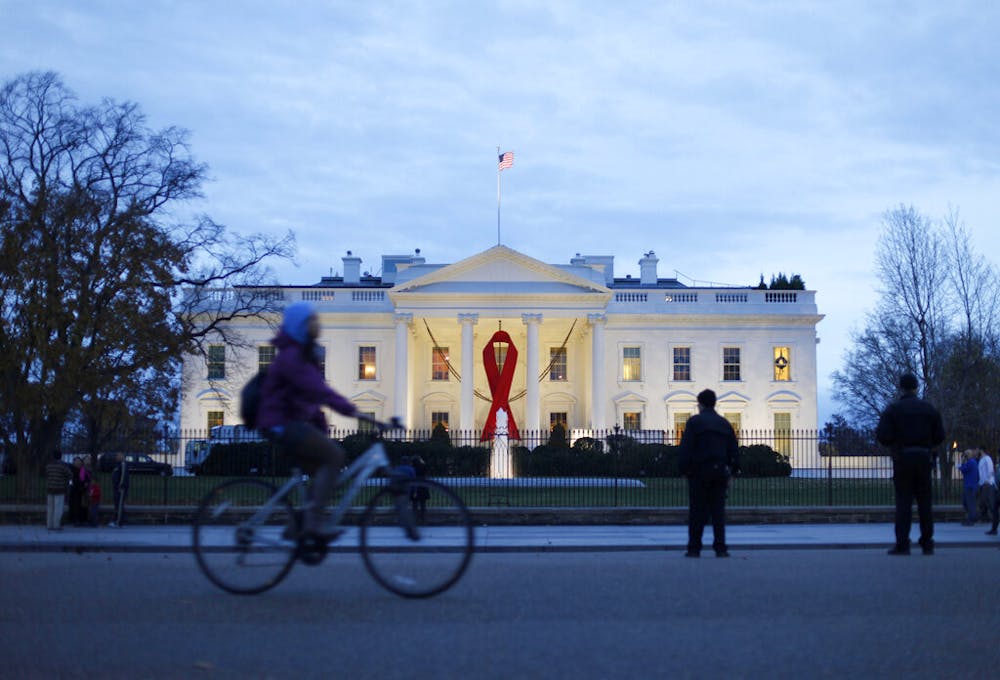
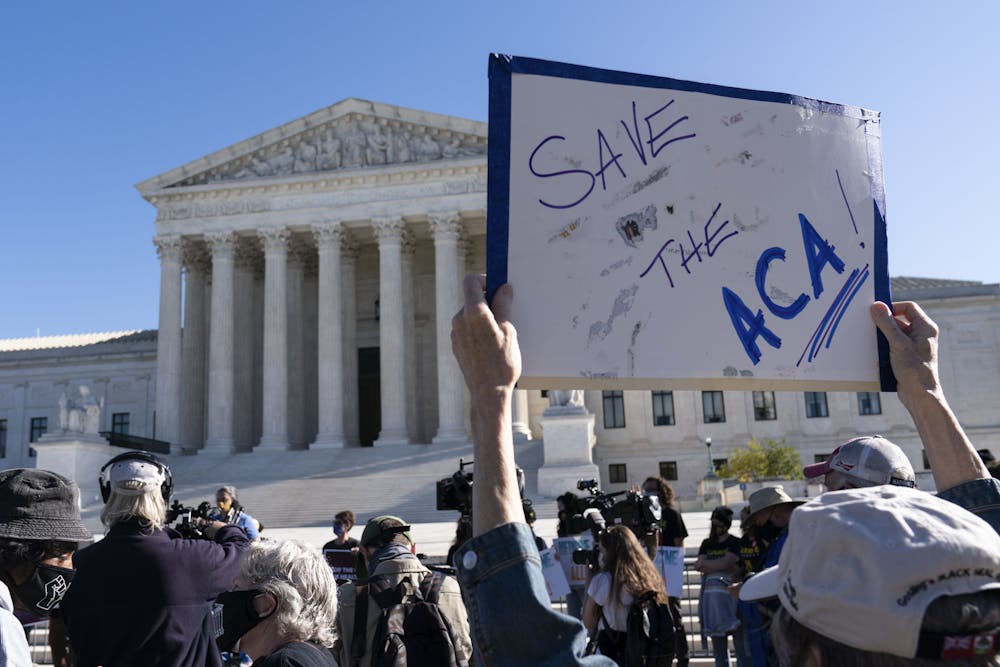
  • MIL-OSI Global: Preventive care may no longer be free in 2026 because of HIV stigma − unless the Trump administration successfully defends the ACA

    Source: The Conversation – USA – By Kristefer Stojanovski, Assistant Professor of Social, Behavioral and Population Sciences, Tulane University

    Americans may lose free coverage for cancer and blood pressure screenings, HIV prevention medication and other essential services. Halfpoint Images/Moment via Getty Images

    Many Americans were relieved when the Supreme Court left the Affordable Care Act in place following the law’s third major legal challenge in June 2021. This decision permitted widely supported policies to continue, such as ensuring health coverage regardless of preexisting conditions, allowing coverage for dependents up to age 26 on their parents’ plan, and removing annual and lifetime benefit limits.

    But millions are still at risk of losing access to lifesaving medicine and preventive services, following the Supreme Court’s decision to hear another case – Robert F. Kennedy, Jr. v. Braidwood – that has been working its way through lower courts for several years.

    Interestingly, the Trump administration has chosen to build upon the same argument the Biden administration used to defend the law.

    HIV stigma and preventive care

    The case the Supreme Court is scheduled to hear in April 2025 was filed by Braidwood Management, a Christian for-profit corporation owned by Steven Hotze, a Texas physician and Republican activist who has previously filed multiple lawsuits against the Affordable Care Act.

    Braidwood and its co-plaintiffs, a group of conservative Christian employers, objected to providing their 70 employees free access to preexposure prophylaxis, or PrEP, a medicine that prevents HIV infection. Hotze claimed that PrEP “facilitates and encourages homosexual behavior, intravenous drug use and sexual activity outside of marriage between one man and one woman,” without citing scientific evidence to support this. He and his plaintiffs argue that religious beliefs prevent them from providing PrEP under their insurance plans.

    The AIDS epidemic has been claiming lives for decades.

    Since the HIV/AIDS epidemic began in the 1980s, the disease has been politicized and stigmatized. Because it had predominantly affected men who had sex with men, AIDS was initially called gay-related immune deficiency, making people reluctant to be associated with the disease. It was only after a teenage boy from Indiana named Ryan White contracted HIV from a blood transfusion to treat his hemophilia, along with public statements from high-profile celebrities such as Arthur Ashe and Magic Johnson about their HIV status, that social attitudes began to shift with more education about AIDS.

    Yet, the same stigma is still at play in the Braidwood case and other recent policy decisions. In 2023, for example, Tennessee officials declined US$9 million in federal funding for HIV prevention. Those federal funds focused on groups most affected by HIV, including men who have sex with men, heterosexual Black women and people who inject drugs.

    Tennessee has since transitioned to using state dollars for HIV prevention, with a focus on first responders, pregnant women and sex trafficking survivors, groups that aren’t major at-risk populations. Researchers have found that this pivot will be a less efficient use of funds, costing $1 million per life-year saved versus $68,600 when focusing on the most at-risk populations.

    Preventive care and the Affordable Care Act

    The ongoing stigma and politicization of HIV/AIDS may not only hamper the national goal of ending the HIV epidemic but also lead to less or no preventive care for many people.

    Section 2713 of the Affordable Care Act requires insurers to offer full coverage of preventive services endorsed by one of three federal groups: the U.S. Preventive Services Task Force, the Advisory Committee on Immunization Practices or the Health Resources and Services Administration. For example, the CARES Act, which allocated emergency funding in response to the COVID-19 pandemic, used this provision to ensure COVID-19 vaccines would be free for many Americans.

    For a preventive service to be covered by this provision, it requires an A or B rating from the Preventive Services Task Force, an independent body of experts trained in research methods, statistics and medicine that evaluates the rigor and quality of available scientific evidence, with support from the Agency for Healthcare Research and Quality. Vaccinations require a recommendation from the Advisory Committee on Immunization Practices of the Centers for Disease Control and Prevention, while women’s health services require approval from the Health Resources and Services Administration.

    PrEP received an A rating in June 2019, given its near 100% effectiveness. This paved the way for it to be covered at no cost for millions of people.

    PrEP is a key tool to helping the U.S. reach its goal of substantially reducing new HIV infections by 2030.
    AP Photo/Pablo Martinez Monsivais

    Over 150 million Americans with private health insurance are able to benefit from free preventive care through the Affordable Care Act, with around 60% using at least one free preventive service each year.

    The consequences of losing these benefits would likely be an increase in the number of people getting and dying from preventable diseases. Raising the cost barrier for PrEP, for example, would disproportionately harm younger patients, people of color and those with lower incomes. It will also increase the cost of HIV prevention.

    As public health researchers who study sexual health and health insurance, we believe that prevention and health equity in the U.S. stand to take a big step backward, depending on the outcome of the Braidwood case.

    Future of preventive care lies with Supreme Court

    The most recent ruling in Braidwood – made by a lower court in 2023 – focuses on the appointments clause of the U.S. Constitution, which specifies that certain governmental positions require presidential appointment and Senate confirmation, while other positions have a lower bar.

    District Judge Reed O’Connor ruled that because the Preventive Services Task Force is an independent volunteer panel and not made up of officers of the U.S. government, it does not have appropriate authority to make decisions about what preventive care should be free, unlike the Advisory Committee on Immunization Practices or Health Resources and Services Administration. O’Connor also ruled that being forced to cover PrEP violated the religious freedom of the plaintiffs.

    O’Connor invalidated all of the task force’s recommendations since the Affordable Care Act was passed in March 2010, returning the power to insurers and employers to decide which, if any, preventive care would remain free to their patients. A few of the recommendations affected by his ruling besides PrEP include blood pressure, diabetes, lung and skin cancer screenings, along with medications to lower cholesterol and reduce breast cancer risk.

    The Trump administration filed a brief continuing the argument from the Biden administration that because the Preventive Services Task Force is overseen by the secretary of Health and Human Services, there is appropriate oversight of the task force and its decision-making by a Senate-confirmed officer. Oral arguments in the case are scheduled for April 21, 2025.

    The Affordable Care Act has faced many legal challenges over the years.
    AP Photo/Alex Brandon

    Insurance contracts are typically defined by calendar year, so if the Supreme Court rules against the government, people would likely see changes starting in 2026. Importantly, these services will likely still need to be covered by health insurance plans as essential health benefits through a separate provision of the ACA − they just won’t be free anymore.

    There were concerns that the Supreme Court could take the ruling even further, endangering the free coverage of contraception and other preventive care that wasn’t covered by the lower court ruling. The Trump administration’s support for the case may make this less likely by leaning into the authority of Robert F. Kennedy Jr. as secretary to support or override recommendations made by the Preventive Services Task Force and the other bodies.

    However, this could also mean the secretary of HHS can more directly control the task force’s recommendations, potentially determining whether PrEP, contraception and other services are available at no cost to patients. Building more political authority into the process − as well as partisan differences in support for LGBTQ+ health − belies the original intent of having nonpartisan medical experts make decisions about preventive care coverage. Legal experts we have spoken to caution that this approach may be more about preserving powers for the executive branch rather than actually protecting preventive care.

    All of this is happening in the context of massive layoffs at HHS. The Agency for Healthcare Research and Quality, which supports the Preventive Services Task Force, was not spared from the recent cuts. It is unclear how all of this will affect the task force’s ability to continue its work, separate from the outcome of Braidwood.

    One way or another, the end to this yearslong case is nearing, with important implications for America’s ability to reach its goals in fighting cancer, diabetes and the HIV epidemic.

    Portions of this article originally appeared in previous articles published on Sept. 7, 2021, Dec. 1, 2021, Sept. 13, 2022, and April 7, 2023.

    Paul Shafer receives research funding from the National Institutes of Health, Agency for Healthcare Research and Quality, and Department of Veterans Affairs. The views expressed in this article are those of the authors and do not necessarily reflect the position or policy of these agencies or the United States government.

    Kristefer Stojanovski does not work for, consult, own shares in or receive funding from any company or organization that would benefit from this article, and has disclosed no relevant affiliations beyond their academic appointment.

    ref. Preventive care may no longer be free in 2026 because of HIV stigma − unless the Trump administration successfully defends the ACA – https://theconversation.com/preventive-care-may-no-longer-be-free-in-2026-because-of-hiv-stigma-unless-the-trump-administration-successfully-defends-the-aca-250011

    MIL OSI – Global Reports

  • MIL-OSI Global: How bird flu differs from seasonal flu − an infectious disease researcher explains

    Source: The Conversation – USA – By Hanna D. Paton, PhD Candidate in Immunology, University of Iowa

    There is currently no bird flu vaccine for people. Digicomphoto/ Science Photo Library via Getty Images

    The flu sickens millions of people in the U.S. every year, and the past year has been particularly tough. Although infections are trending downward, the Centers for Disease Control and Prevention has called the winter of 2024-2025 a “high severity” season with the highest hospitalization rate in 15 years.

    Since early 2024, a different kind of flu called bird flu, formally known as avian influenza, has been spreading in birds as well as in cattle. The current bird flu outbreak has infected 70 Americans and caused two deaths as of April 8, 2025. Public health and infectious disease experts say the risk to people is currently low, but they have expressed concern that this strain of the bird flu virus may mutate to spread between people.

    As a doctoral candidate in immunology, I study how pathogens that make us sick interact with our immune system. The viruses that cause seasonal flu and bird flu are distinct but still closely related. Understanding their similarities and differences can help people protect themselves and their loved ones.

    What is influenza?

    The flu has long been a threat to public health. The first recorded influenza pandemic occurred in 1518, but references to illnesses possibly caused by influenza stretch back as as early as 412 B.C., to a treatise called Of the Epidemics by the Greek physician Hippocrates.

    Today, the World Health Organization estimates that the flu infects 1 billion people every year. Of these, 3 million to 5 million infections cause severe illness, and hundreds of thousands are fatal.

    Influenza is part of a large family of viruses called orthomyxoviruses. This family contains several subtypes of influenza, referred to as A, B, C and D, which differ in their genetic makeup and in the types of infections they cause. Influenza A and B pose the largest threat to humans and can cause severe disease. Influenza C causes mild disease, and influenza D is not known to infect people. Since the turn of the 20th century, influenza A has caused four pandemics. Influenza B has never caused a pandemic.

    A notice from Oct. 18, 1918, during the Spanish flu pandemic, about protecting yourself from infection.
    Illustrated Current News/National Library of Medicine, CC BY

    An influenza A strain called H1N1 caused the famous 1918 Spanish flu pandemic, which killed about 50 million people worldwide. A related H1N1 virus was responsible for the most recent influenza A pandemic in 2009, commonly referred to as the swine flu pandemic. In that case, scientists believe multiple different types of influenza A virus mixed their genetic information to produce a new and especially virulent strain of the virus that infected more than 60 million people in the U.S. from April 12, 2009, to April 10, 2010, and caused huge losses to the agriculture and travel industries.

    Both swine and avian influenza are strains of influenza A. Just as swine flu strains tend to infect pigs, avian flu strains tend to infect birds. But the potential for influenza A viruses that typically infect animals to cause pandemics in humans like the swine flu pandemic is why experts are concerned about the current avian influenza outbreak.

    Seasonal flu versus bird flu

    Different strains of influenza A and influenza B emerge each year from about October to May as seasonal flu. The CDC collects and analyzes data from public health and clinical labs to determine which strains are circulating through the population and in what proportions. For example, recent data shows that H1N1 and H3N2, both influenza A viruses, were responsible for the vast majority of cases this season. Standard tests for influenza generally determine whether illness is caused by an A or B strain, but not which strain specifically.

    Officials at the Food and Drug Administration use this information to make strain recommendations for the following season’s influenza vaccine. Although the meeting at which FDA advisers were to decide the makeup of the 2026 flu vaccine was unexpectedly canceled in late February, the FDA still released its strain recommendations to manufacturers.

    The recommendations do not include H5N1, the influenza A strain that causes avian flu. The number of strains that can be added into seasonal influenza vaccines is limited. Because cases of people infected with H5N1 are minimal, population-level vaccination is not currently necessary. As such, seasonal flu vaccines are not designed to protect against avian influenza. No commercially available human vaccines currently exist for avian influenza viruses.

    How do people get bird flu?

    Although H5N1 mainly infects birds, it occasionally infects people, too. Human cases, first reported in 1997 in Hong Kong, have primarily occurred in poultry farm workers or others who have interacted closely with infected birds.

    Initially identified in China in 1996, the first major outbreak of H5 family avian flu occurred in North America in 2014-2015. This 2014 outbreak was caused by the H5N8 strain, a close relative of H5N1. The first H5N1 outbreak in North America began in 2021 when infected birds carried the virus across the ocean. It then ripped through poultry farms across the continent.

    The H5N1 strain of influenza A generally infects birds but has infected people, too.
    NIAID and CDC/flickr, CC BY

    In March 2024, epidemiologists identified H5N1 infections in cows on dairy farms. This is the first time that bird flu was reported to infect cows. Then, on April 1, 2024, health officials in Texas reported the first case of a person catching bird flu from infected cattle. This was the first time transmission of bird flu between mammals was documented.

    As of March 21, 2025, there have been 988 human cases of H5N1 worldwide since 1997, about half of which resulted in death. The current outbreak in the U.S. accounts for 70 of those infections and one death. Importantly, there have been no reports of H5N1 spreading directly from one person to another.

    Since avian flu is an influenza A strain, it would show up as positive on a standard rapid flu test. However, there is no evidence so far that avian flu is significantly contributing to current influenza cases. Specific testing is required to confirm that a person has avian flu. This testing is not done unless there is reason to believe the person was exposed to sick birds or other sources of infection.

    How might avian flu become more dangerous?

    As viruses replicate within the cells of their host, their genetic information can get copied incorrectly. Some of these genetic mutations cause no immediate differences, while others alter some key viral characteristics.

    Influenza viruses mutate in a special way called reassortment, which occurs when multiple strains infect the same cell and trade pieces of their genome with one another, potentially creating new, unique strains. This process prolongs the time the virus can inhabit a host before an infection is cleared. Even a slight change in a strain of influenza can result in the immune system’s inability to recognize the virus. As a result, this process forces our immune systems to build new defenses instead of using immunity from previous infections.

    Reassortment can also change how harmful strains are to their host and can even enable a strain to infect a different species of host. For example, strains that typically infect pigs or birds may acquire the ability to infect people. Influenza A can infect many different types of animals, including cattle, birds, pigs and horses. This means there are many strains that can intermingle to create novel strains that people’s immune systems have not encountered before – and are therefore not primed to fight.

    It is possible for this type of transformation to also occur in H5N1. The CDC monitors which strains of flu are circulating in order prepare for that possibility. Additionally, the U.S. Department of Agriculture has a surveillance system for monitoring potential threats for spillover from birds and other animals, although this capacity may be at risk due to staff cuts in the department.

    These systems are critical to ensure that public health officials have the most up-to-date information on the threat that H5N1 poses to public health and can take action as early as possible when a threat is evident.

    Hanna D. Paton does not work for, consult, own shares in or receive funding from any company or organization that would benefit from this article, and has disclosed no relevant affiliations beyond their academic appointment.

    ref. How bird flu differs from seasonal flu − an infectious disease researcher explains – https://theconversation.com/how-bird-flu-differs-from-seasonal-flu-an-infectious-disease-researcher-explains-248407

    MIL OSI – Global Reports

  • MIL-OSI: Ingersoll Rand Further Enhances Air Treatment Capabilities with Two Acquisitions

    Source: GlobeNewswire (MIL-OSI)

    • Execution of bolt-on acquisition strategy continues to enhance company’s durable financial profile by adding highly complementary products and capabilities focused on high-growth, sustainable end markets
    • Acquisitions will expand Ingersoll Rand’s product and technology portfolio with additional chiller and onsite gas generation offerings and support the company’s in-region for the region strategy
    • Acquisitions have a combined pre-synergy Adjusted EBITDA purchase multiple of high-single digits

    DAVIDSON, N.C., April 15, 2025 (GLOBE NEWSWIRE) — Ingersoll Rand Inc., (NYSE: IR) a global provider of mission-critical flow creation and life science and industrial solutions, has acquired G & D Chillers, Inc. (“G & D”) and Advanced Gas Technologies Inc. (“AGT”) for a combined purchase price of approximately $27 million to further grow the company’s air treatment portfolio.

    G & D, headquartered in the United States, builds premium glycol chillers to cool liquids, especially in applications requiring temperatures below freezing, like in breweries, wineries, and food processing. G & D expands Ingersoll Rand’s manufacturing, engineering, and Engineer to Order (ETO) capabilities for chillers in the North American market.

    AGT, headquartered in Ontario, Canada, is a custom designer and supplier of onsite gas generation systems serving industrial customers primarily in Canada. This acquisition adds new packaging capabilities and an established channel presence.

    G & D and AGT will both join the Industrial Technologies and Services segment (IT&S).

    “I would like to extend a warm welcome to the employees of G & D and AGT,” said Vicente Reynal, chairman and chief executive officer of Ingersoll Rand. “Both are solid businesses with strong performance and growth potential backed by great teams. Their offerings in the air treatment space will be beneficial as we continually look for ways to better serve our customers.”

    About Ingersoll Rand Inc.

    Ingersoll Rand Inc. (NYSE: IR), driven by an entrepreneurial spirit and ownership mindset, is dedicated to Making Life Better for our employees, customers, shareholders, and planet. Customers lean on us for exceptional performance and durability in mission-critical flow creation and life science and industrial solutions. Supported by over 80+ respected brands, our products and services excel in the most complex and harsh conditions. Our employees develop customers for life through their daily commitment to expertise, productivity, and efficiency. For more information, visit www.IRCO.com.

    Forward-Looking Statements
    This news release contains “forward-looking statements” within the meaning of the Private Securities Litigation Reform Act of 1995, including statements related to Ingersoll Rand Inc.’s (the “Company” or “Ingersoll Rand”) expectations regarding the performance of its business, its financial results, its liquidity and capital resources and other non-historical statements. These forward-looking statements generally are identified by the words “believe,” “project,” “expect,” “anticipate,” “estimate,” “forecast,” “outlook,” “target,” “endeavor,” “seek,” “predict,” “intend,” “strategy,” “plan,” “may,” “could,” “should,” “will,” “would,” “will be,” “on track to” “will continue,” “will likely result,” “guidance” or the negative thereof or variations thereon or similar terminology generally intended to identify forward-looking statements. All statements other than historical facts are forward-looking statements.

    These forward-looking statements are based on Ingersoll Rand’s current expectations and are subject to risks and uncertainties, which may cause actual results to differ materially from these current expectations. Should one or more of these risks or uncertainties materialize, or should underlying assumptions prove incorrect, actual results may vary materially from those indicated or anticipated by such forward-looking statements. The inclusion of such statements should not be regarded as a representation that such plans, estimates or expectations will be achieved. Important factors that could cause actual results to differ materially from such plans, estimates or expectations include, among others, (1) adverse impact on our operations and financial performance due to natural disaster, catastrophe, global pandemics (including COVID-19), geopolitical tensions, cyber events or other events outside of our control; (2) unexpected costs, charges or expenses resulting from completed and proposed business combinations; (3) uncertainty of the expected financial performance of the Company; (4) failure to realize the anticipated benefits of completed and proposed business combinations; (5) the ability of the Company to implement its business strategy; (6) difficulties and delays in achieving revenue and cost synergies; (7) inability of the Company to retain and hire key personnel; (8) evolving legal, regulatory and tax regimes; (9) changes in general economic and/or industry specific conditions; (10) actions by third parties, including government agencies; and (11) other risk factors detailed in Ingersoll Rand’s most recent Annual Report on Form 10-K filed with the Securities and Exchange Commission (the “SEC”), as such factors may be updated from time to time in its periodic filings with the SEC, which are available on the SEC’s website at http://www.sec.gov. The foregoing list of important factors is not exclusive.

    Any forward-looking statements speak only as of the date of this release. Ingersoll Rand undertakes no obligation to update any forward-looking statements, whether as a result of new information or development, future events or otherwise, except as required by law. Readers are cautioned not to place undue reliance on any of these forward-looking statements.

    Contacts:
    Investor Relations:
    Matthew.Fort@irco.com

    Media:
    Sara.Hassell@irco.com 

    The MIL Network

  • MIL-OSI: Duck Creek Technologies Appoints General Daniel Hokanson, USA, Ret. to Board of Directors

    Source: GlobeNewswire (MIL-OSI)

    BOSTON, April 15, 2025 (GLOBE NEWSWIRE) — Duck Creek Technologies, the global intelligent solutions provider defining the future of property and casualty (P&C) and general insurance, has announced the appointment of General Daniel Hokanson, USA, Ret. to the company’s board of directors. He brings deep expertise and experience in leading organizations through the development and implementation of detailed strategic policy to Duck Creek’s board.

    Hokanson is a retired 4-Star General who served as a member of the Joint Chiefs of Staff and the 29th Chief of the National Guard Bureau. In this role, he was a military advisor to the President, Secretary of Defense, and National Security Council. He also served as the Department of Defense’s channel of communications to the Governors and State Adjutants General.

    “Dan is an accomplished and decorated leader, and we are excited to have him join the Duck Creek Board of Directors,” said Michael Jackowski, Chief Executive Officer, Duck Creek Technologies. “As we continue to expand globally and help insurance companies tackle tough challenges resulting from climate change and increasingly complex regulatory environments, his unique skill set will be instrumental in guiding Duck Creek.”

    As Chief of the National Guard Bureau, Hokanson oversaw the Guard’s historic response to the COVID-19 pandemic, civil disturbances, and numerous natural disasters, while simultaneously meeting every global military operations requirement. He also led the National Guard and Department of Defense’s State Partnership Program, which includes over 100 member countries, regularly conducting senior government and military leader engagements worldwide.

    A graduate of the United States Military Academy at West Point with a degree in aerospace engineering, Hokanson also earned master’s degrees in international security and civil-military relations from the Naval Postgraduate School in Monterey, California, and national security and strategic studies from the Naval War College in Newport, Rhode Island. He also completed the Department of Defense year-long National Security Fellowship at Harvard University.

    “I am honored to join Duck Creek Technologies’ board of directors. The company’s dedication to innovation and excellence in the insurance industry strongly aligns with my values and experience,” said Hokanson. “I look forward to supporting Duck Creek’s mission to shape the future of property and casualty insurance while helping the industry navigate its evolving challenges.”

    Hokanson’s role was sourced through the external board program operated by Vista Equity Partners, a global technology investor that specializes in enterprise software and a majority investor in Duck Creek. Launched in 2017, the board program leverages Vista’s ecosystem and additional resources to identify, train, and appoint qualified board candidates for its portfolio companies. The program works to create a pipeline of highly talented board candidates through programs and partnerships that will drive results for the corporate world at large.

    About Duck Creek Technologies   
    Duck Creek Technologies is the global intelligent solutions provider defining the future of the property and casualty (P&C) and general insurance industry. We are the platform upon which modern insurance systems are built, enabling the industry to capitalize on the power of the cloud to run agile, intelligent, and evergreen operations. Authenticity, purpose, and transparency are core to Duck Creek, and we believe insurance should be there for individuals and businesses when, where, and how they need it most. Our market-leading solutions are available on a standalone basis or as a full suite, and all are available via Duck Creek OnDemand. Visit www.duckcreek.com to learn more. Follow Duck Creek on our social channels for the latest information – LinkedIn and X.

    Media Contacts:   
    Marianne Dempsey/Tara Stred   
    duckcreek@threeringsinc.com

    The MIL Network

  • MIL-OSI: Franklin Electric Schedules Its First Quarter 2025 Earnings Release and Conference Call

    Source: GlobeNewswire (MIL-OSI)

    FORT WAYNE, Ind., April 15, 2025 (GLOBE NEWSWIRE) — Franklin Electric Co., Inc. (NASDAQ: FELE) will release its first quarter 2025 earnings at 8:00 am ET on Tuesday, April 29, 2025. A conference call to review earnings and other developments in the business will commence at 9:00 am ET. The first quarter 2025 earnings call will be available via a live webcast. The webcast will be available in a listen only mode by going to:

    https://edge.media-server.com/mmc/p/yzximy3p

    For those interested in participating in the question-and-answer portion of the call, please register for the call at the link below.

    https://register-conf.media-server.com/register/BI5cb1cdcef9da4de38184396c5211b443

    All registrants will receive dial-in information and a PIN allowing them to access the live call. It is recommended that you join 10 minutes prior to the event start (although you may register and dial in at any time during the call).

    A replay of the conference call will be available from Tuesday, April 29, 2025, through 9:00 am ET on Tuesday, May 6, 2025, by visiting the listen-only webcast link above.

    About Franklin Electric
    Franklin Electric is a global leader in the production and marketing of systems and components for the movement of water and energy. Recognized as a technical leader in its products and services, Franklin Electric serves customers around the world in residential, commercial, agricultural, industrial, municipal, and fueling applications. Franklin Electric is proud to be named in Newsweek’s lists of America’s Most Responsible Companies and Most Trustworthy Companies for 2024 and America’s Climate Leaders 2024 by USA Today.

    “Safe Harbor” Statement under the Private Securities Litigation Reform Act of 1995. Any forward-looking statements contained herein, including those relating to market conditions or the Company’s financial results, costs, expenses or expense reductions, profit margins, inventory levels, foreign currency translation rates, liquidity expectations, business goals and sales growth, involve risks and uncertainties, including but not limited to, risks and uncertainties with respect to general economic and currency conditions, various conditions specific to the Company’s business and industry, weather conditions, new housing starts, market demand, competitive factors, changes in distribution channels, supply constraints, effect of price increases,  raw material costs, technology factors, integration of acquisitions, litigation, government and regulatory actions, the Company’s accounting policies, future trends, epidemics and pandemics, and other risks which are detailed in the Company’s Securities and Exchange Commission filings, included in Item 1A of Part I of the Company’s Annual Report on Form 10-K for the fiscal year ending December 31, 2024, Exhibit 99.1 attached thereto and in Item 1A of Part II of the Company’s Quarterly Reports on Form 10-Q. These risks and uncertainties may cause actual results to differ materially from those indicated by the forward-looking statements. All forward-looking statements made herein are based on information currently available, and the Company assumes no obligation to update any forward-looking statements.

    CONTACT:   Russ Fleeger
        Franklin Electric Co., Inc.
        260.824.2900

    The MIL Network

  • MIL-OSI Economics: US card payments market growth to slow in 2025 amid tariffs and inflationary pressures, forecasts GlobalData

    Source: GlobalData

    US card payments market growth to slow in 2025 amid tariffs and inflationary pressures, forecasts GlobalData

    Posted in Banking

    The US card payments market is projected to grow by a modest 2.4% in 2025, reaching $10.8 trillion, as economic uncertainty and rising tariffs weigh on consumer spending. While strong foundations like high card penetration and contactless adoption persist, inflationary pressures and trade disruptions are expected to challenge the market’s resilience and slow its previously robust growth trajectory, according to GlobalData, a leading data and analytics company.

    GlobalData’s report, “United States (US) Cards and Payments: Opportunities and Risks to 2028,” reveals that the card payment value in the US registered a growth of 6% in 2023, driven by the rise in consumer spending. The value registered an estimated growth of 5% in 2024 to reach $10.6 trillion. However, the latest tariffs can pose a challenge for the overall economic growth, while rising inflation is expected to curb consumer spending, resulting in a slowdown in the overall card payments value.

    The US card payments market is highly mature, and arguably even over-served by its financial institutions with high card penetration and usage. Ready access to formal financial services has resulted in a population that is very comfortable using debit, credit, and charge cards for payments.

    Ongoing investments in payment infrastructure, increasing contactless payment adoption, and e-commerce growth have accelerated expansion in the US card payment market. Contactless cards have driven low-value daily transactions, further bolstered by the COVID-19 pandemic. However, economic uncertainty fueled by Trump’s tariffs now threatens to slow this momentum, creating headwinds for sustained growth in the sector.

    Ravi Sharma, Lead Banking and Payments Analyst at GlobalData, comments: “Economic forecasts for many markets, including the US, were seen as positive until the beginning of the year due to expected economic recovery and reduced inflation. However, the current situation is now considered uncertain once again. The trade wars have already disrupted financial markets and caused businesses to face uncertainty, potentially leading to weakened economic growth.”

    While tariffs pose challenges for all players in the economy, the main impact on the card payments will be via inflation, and depressing retail activity. As a result, both payment volumes and average transaction values will see slowdown, ultimately hurting the revenues of card issuers, payment processors, networks, and acquirers, including any business segments involved in the value chain.

    Furthermore, tariffs on imports and supply chain disruptions from China and other markets may also increase costs of payment terminals and hardware components, which may impact small businesses accepting card payments.

    Sharma concludes: “Looking ahead, the transition to electronic payments is expected to continue over the next five years due to the growing number of electronic payments. However, ongoing economic uncertainty will continue to present challenges for the industry. The card payments value is expected to register a compound annual growth rate (CAGR) of 4.1% between 2024 and 2029 to reach $12.9 trillion.”

    MIL OSI Economics

  • MIL-OSI USA: Groundbreaking Work Reaffirms UConn’s Excellence in Laser Research

    Source: US State of Connecticut

    From studying the mysterious fabric of our universe to advancing quantum computing to enabling communication over vast distances, ultrafast laser technologies drive advancements across many fields and applications. New research is taking lasers – and UConn – further.

    UConn Department of Physics researchers – including lead author and Ph.D. student Kevin Watson, research faculty Tobias Saule, Professor Carlos Trallero, Professor and member of the National Academy of Science Nora Berrah, Professor and Department Head George Gibson, and their co-authors – have broken new ground by achieving higher peak power and average power in optical pulses than ever before with a novel class of lasers. Their findings are published in Optica.

    Trallero says this research studies how lasers with high peak power and high average power interact with molecular gas. The high peak and average powers mean each laser pulse, though quick, is very intense.

    “As a laser propagates, it interacts non-linearly with the molecules, and in doing so, it creates new frequency components,” he says.

    Trallero explains these newly created components allow researchers to alter other qualities of the laser pulse, such as making the pulses shorter in duration.

    “Before this paper was published, the established knowledge was that for very intense lasers, the repetition of the laser pulses could not be too high, because what happens is they would heat up the molecules too much, and in doing so, the laser would stop targeting the molecules in such a way that would allow it to add more frequencies,” says Trallero.

    The world record for using nitrogen molecular gas to broaden these pulses was around 20 watts of average power. However, with this research, Trallero and his collaborators were able to break new ground and increase the pulses by more than a factor of ten to 250 watts.

    “We prove that not only can we increase this, but that we are not limited by how many pulses in time we have, but that the limitation is really the structure of the molecule,” says Trallero. “As long as the pulses have a certain pulse duration, we can propagate these very intense pulses through any gas. The limitation is not the power of the laser but the relationship between the short pulses and the structure of the molecules we are propagating through, in particular, the role of the rotational and vibrational structure. This is kind of a big deal.”

    This research could help advance the use of high-power lasers in applications ranging from defense to long-range communication, and the authors believe it will inform future directed energy research.

    “All of these lasers carry what we call directed energy. For example, if you want to direct energy for communication, say from here to Mars, you have to go through Earth’s atmosphere, then Mars’s atmosphere,” says Trallero. “That’s a lot of molecular gases, and you don’t want those lasers to change too much. Knowing how these powerful lasers can propagate is relevant knowledge for a lot of things.”

    This project has been in the making for many years, and the purchase of the state-of-the-art laser was made possible with money from a grant from the CLAS Research Equipment Funding Program and a collaboration between UConn, Few-cycle,  Amphos, and the TRUMPF Group. Though progress was initially stalled by the pandemic and the challenges of working across three countries, the collaboration has been making great strides since. In January, Trallero and collaborators met with the TRUMPF Americas group, to demonstrate this new research and explore a formal joint research agreement with UConn. This collaboration links UConn researchers and students with TRUMPF, which is one of the largest lasers companies in the world.

    “I think it shows that we can do great things with these world-class lasers, and here at UConn, we have people who are extremely well recognized in this field, which helps put UConn on the map for sure,” says Trallero.

    The partnership solidifies UConn’s position as a world-class laser research institution and helps ensure UConn students are well-connected to industry opportunities both before and after they graduate. Trallero points out that there are many other UConn researchers who are prominent in the optics field, including Berrah and Dean of the College of Engineering Ji-Cheng ‘JC’ Zhao.

    As a pioneer in the field, Trallero and his research group are busy putting the technology to the test for both applied and fundamental research. One project funded by the Department of Energy is at the most fundamental level, where the researchers are attempting to capture three-dimensional movies of electron motion in molecules in real-time.

    Trallero’s group is also utilizing a technique called attosecond interferometry in which very short laser pulses can interfere with one another. This interference allows for very precise measurements between molecules in each wave taken at the attosecond time scale.

    “The laser pulses are extremely short,” says Trallero. “I like to use the comparison used for the 2023 Nobel Prize in physics. If you think about a second, and you think about the entire life of the universe, of roughly 13 and a half billion years, there have been as many seconds in the entire history of the universe as there are attoseconds in one second. In my lab we have not just one attosecond pulse, we have two. We can interfere them, and that interference gives us access to the zeptosecond time scale which is 10 to the minus 21 seconds. With this new laser, we are hopeful that we can break the 10 to the minus 24 seconds, or yactoseconds.”

    Trallero says it can be hard to wrap one’s mind around these incredibly tiny timeframes. However, this fundamental knowledge, coupled with strong ties to industry giants, has massive potential to push the boundaries of innovation.

    Gibson is very enthusiastic about this research and says,

    “When I first came to UConn in 1993, I designed and built the first high-repetition rate femtosecond laser in Connecticut, as they were not yet commercially available. It is very gratifying to see how UConn has continued to lead in this field with the arrival of Professor Berrah and then Professor. Trallero. They have each broken new ground in ultrafast physics and technology, making UConn an internationally recognized center for ultrafast science.”

    This work was made possible with funding from the Air Force Office of Scientific Research (FA9550-21-1-0387); Office of Naval Research (N00014-18-1-2872, N00014-19-1-2339); Basic Energy Sciences (DE-SC0024508), US Department of Energy, Office of Science, Chemical Sciences, Geosciences, & Biosciences Division, the Directed Energy Professional Society, and the College of Liberal Arts and Sciences of the University of Connecticut.

    MIL OSI USA News

  • MIL-OSI USA: Governor Newsom and Visit California launch international tourism campaign welcoming Canadians to experience the warmth and love of the Golden State

    Source: US State of California 2

    Apr 14, 2025

    What you need to know: California is launching a new campaign to further strengthen tourism between California and Canada — reminding its international partners that the Golden State remains a welcoming, inclusive, and unparalleled travel destination.

    SACRAMENTO –  In response to recent declines in tourism created by President Trump’s policies, Governor Newsom and Visit California today announced the state will be launching a new international campaign to help maintain the strong tourism partnership between California and Canada, reminding Canadians that California is a grateful partner and remains one of the best — and most welcoming — destinations in the United States, and the world.

    “Sure, you-know-who is trying to stir things up back in D.C., but don’t let that ruin your beach plans. California is the ultimate playground — over 2,000 miles from Washington and a world away in mindset, from our iconic beaches and national parks to world-class wine, food, and outdoor adventure — there’s something here for everyone. Canada, come experience our California Love.”

    Governor Gavin Newsom

    President Trump’s economic and immigration policies are hurting nearly every economic sector, including the tourism industry. Since President Trump took office, tourism from Canada has dramatically declined, dropping 12% in February compared to the previous year. This is the first decrease in Canadian tourism to California since the COVID-19 pandemic. Last year, 1.8 million Canadians traveled to California, spending $3.72 billion in the Golden State. 

    California is taking decisive, strategic action — not only to stem this tide, but to send a clear message: California is open, welcoming, and deeply values its international visitors, especially Canadians. The upcoming campaign will extend Visit California’s $5.2 million annual marketing investment in Canada. 

    “California is committed to rolling out the red carpet for our Canadian visitors, whenever you’re ready to visit,” Visit California President & CEO Caroline Beteta said. “California and Canada share so much in common. Our inclusive values, love of natural beauty and passion for innovation bind us, and we look forward to welcoming you back with the same community spirit you’ve always shown us.”’
     

    Visit California is a nonprofit corporation funded by private travel, tourism and hospitality businesses in the state. No tax dollars will be used to fund this campaign.

    California Love

    All dreams are welcome in California. From the warmth of its people to its unmatched diversity of landscapes and activities, California is the ultimate playground — and a far cry from Washington, D.C. California will continue to be a welcome destination for its international neighbors to the north.

    For more about your next California adventure, see VisitCalifornia.com.

    Canada: A World of Opportunity 

    Canada is a top travel destination for California’s 40 million residents — pulling intrepid spirits to its friendly urban playgrounds, wide expanses of nature, and legendary outdoor sports locations. The campaign will help ensure that Canada remains a bright North Star for California travelers. 


    Expanding partnerships 

    This follows the Governor’s recent announcement of California’s goal to create new strategic trade relationships with international partners aimed at strengthening shared economic resilience and protecting California’s manufacturers, workers, farmers, businesses, and supply chains. As part of that effort, Governor Newsom today met with British Columbia Premier David Eby to discuss opportunities for expanding California’s partnership with Canada and shared priorities, including the lumber industry, national transportation corridors, and opportunities to expedite major projects and affordable housing.

    Meeting with British Columbia Premier David Eby. Photo may be credited to Governor Newsom’s Press Office

    California leads the nation in tourism 

    California is the nation’s #1 tourism destination. Travelers spent more than $150 billion in the state in 2023, generating $12.7 billion in state and local tax revenue. Nearly 1.2 million California workers depend on jobs in tourism and hospitality.

    Recent news

    News What you need to know: California will receive 32 new rangers and lifeguards serving across 13 state parks – protecting and informing more visitors ahead of the high travel season. PARADISE — While the federal government cuts staffing for national parks, Governor…

    News SACRAMENTO – Governor Gavin Newsom today issued a proclamation declaring a special election for Assembly District 63 on August 26, 2025. The text of the proclamation and a copy can be found below: SPECIAL ELECTION PROCLAMATIONBY THE GOVERNOR OF THE STATE OF…

    News What you need to know: California is investing an additional $170 million to support forest and vegetation management projects critical to protecting communities from wildfire. SACRAMENTO – Protecting communities ahead of peak fire season, Governor Gavin Newsom…

    MIL OSI USA News

  • MIL-OSI Europe: Written question – Clarification on the Commission’s position regarding the COVID-19 lab leak theory – E-001403/2025

    Source: European Parliament

    Question for written answer  E-001403/2025
    to the Commission
    Rule 144
    Christine Anderson (ESN)

    Multiple Western intelligence sources and legislative bodies have revived the theory that COVID-19 may have originated from a laboratory incident in China.

    – The US Central Intelligence Agency now considers a lab leak to be a plausible origin, though with low confidence.

    – In 2020, Germany’s Federal Intelligence Service reportedly assessed that there was an 80–90 % likelihood of an accidental lab leak.

    – A 2024 US Congressional report concluded that the virus ‘likely emerged due to a laboratory or research-related mishap’, further revealing that gain-of-function research funded by the National Institute of Health was conducted at the Wuhan Institute of Virology prior to the outbreak.

    Although no scientific consensus has emerged so far, these developments raise serious questions about biosafety, research funding oversight and international accountability.

    In this context, I seek clarification on the following points:

    • 1.Has the Commission reviewed or reassessed its position on the origins of COVID-19 in light of recent intelligence findings by US and German authorities?
    • 2.Has any EU-funded research directly or indirectly supported the Wuhan Institute of Virology or other institutions engaged in high-risk virological work prior to the pandemic?
    • 3.What measures is the Commission taking to ensure greater transparency, traceability and safety in EU-funded research involving gain-of-function or dual-use biological experiments, both within the EU and internationally?

    Submitted: 7.4.2025

    Last updated: 15 April 2025

    MIL OSI Europe News

  • MIL-OSI United Kingdom: Sussex cafe owner took £150,000 in Covid funds for dormant companies

    Source: United Kingdom – Executive Government & Departments

    Press release

    Sussex cafe owner took £150,000 in Covid funds for dormant companies

    He also attempted to strike-off one of the companies to avoid repaying the loan

    • Mehmet Akyuz fraudulently applied for three Bounce Back Loans for his organic food shop and cafe and leather import business 

    • Akyuz secured £150,000 in funds when both companies were dormant and not trading 

    • He was sentenced for fraud by false representation following Insolvency Service investigations

    A Sussex cafe owner who took £150,000 in Covid support funds for two companies which were not trading at the start of the pandemic has been sentenced. 

    Mehmet Akyuz, 36, fraudulently obtained three maximum-value Bounce Back Loans worth £50,000 each in 2020 for his Green and Hove Limited and Leathers Wear Limited companies. 

    Both Green and Hove, trading as Organic Earth Cafe, and Leathers Wear, were dormant at the time of Akyuz’s applications. 

    Akyuz, of Conway Street, Brighton and Hove, was sentenced to 20 months in prison, suspended for two years, when he appeared at Hove Crown Court on Monday 14 April. 

    He was also disqualified as a company director for five years and ordered to complete 300 hours of unpaid work.

    David Snasdell, Chief Investigator at the Insolvency Service, said:

    Mehmet Akyuz’s actions in fraudulently applying for three Bounce Back Loans he was not entitled to were completely unacceptable. 

    This was taxpayers’ money designed to support small businesses through the pandemic and should not have been exploited in such a cynical manner. 

    The Insolvency Service remains committed to investigating these cases and bringing fraudsters such as Akyuz to justice.

    Green and Hove and Leathers Wear were incorporated in February and March 2019 with Akyuz as the sole director. The former was a retail food and grocery store with a cafe attached while the latter was described by Akyuz as an importer of leather goods such as bags and belts. 

    However, neither was trading at the time Akyuz made the fraudulent applications to the banks in the summer and autumn of 2020. 

    Akyuz fraudulently applied for the £50,000 loan on behalf of Green and Hove in August 2020, claiming the company’s turnover was £270,000. 

    This declaration was untrue, as Insolvency Service investigations found that the company filed dormant accounts in 2020, 2021 and 2022. 

    Between September 2020 and January 2021, more than £36,000 of the loan was transferred directly to Akyuz. The remainder of the money was paid out in miscellaneous, one-off payments. 

    Akyuz committed further fraudulent offences in October 2020, when he applied to two separate banks for £50,000 Bounce Back Loans on behalf of Leathers Wear. 

    In the applications, Akyuz falsely declared that the company had a turnover of £215,000 and £225,000. 

    However, Leathers Wear also filed dormant accounts in 2020, 2021 and 2022 and was not trading when the application was made. 

    The funds were again transferred into Akyuz’s personal account and not used for business purposes. 

    Akyuz unsuccessfully applied to have Leathers Wear struck-off the Companies House register in June 2022 in an attempt to avoid repaying the loan. 

    The Insolvency Service is seeking to recover the fraudulently obtained funds under the Proceeds of Crime Act 2002.

    Further information

    Updates to this page

    Published 15 April 2025

    MIL OSI United Kingdom

  • MIL-OSI USA: The NPR, PBS Grift Has Ripped Us Off for Too Long

    US Senate News:

    Source: The White House
    For years, American taxpayers have been on the hook for subsidizing National Public Radio (NPR) and the Public Broadcasting Service (PBS), which spread radical, woke propaganda disguised as “news.”
    As President Trump has stated, taxpayer funding of NPR’s and PBS’s biased content is a waste.
    Here are some examples of the trash that passes for “news” at NPR and PBS:
    In 2024, NPR ran a Valentine’s Day feature around “queer animals,” in which it suggested the make-believe clownfish in Finding Nemo would’ve been better off as a female, that “banana slugs are hermaphrodites,” and that “some deer are nonbinary.”
    In 2024, PBS produced a documentary making the case for reparations.
    In 2023, PBS’s Washington Week roundtable covered up Joe Biden’s clear mental decline, with far-left “journalist” Jeff Goldberg claiming Biden is actually “quite acute.”
    In 2022, NPR educated the nation on the “whole community of genderqueer dinosaur enthusiasts” and “trans-ceratops.”
    In 2021, a PBS station aired a “children’s program” that featured a drag queen named “Lil’ Miss Hot Mess.”
    In 2021, NPR reported on the “cousin of diet culture” known as “healthism, which is the idea that we have to be healthy” — as if that was a bad thing.
    In 2021, NPR suggested doorway sizes are based on “latent fatphobia.”
    In 2021, NPR lamented that “animals deserve pronouns, too.”
    In 2022, NPR ran a feature titled “What ‘Queer Ducks’ can teach teenagers about sexuality in the animal kingdom.”
    In 2020, PBS show Sesame Street partnered with CNN for a town hall aimed presenting children with a one-sided narrative to “address racism” amid the Black Lives Matter riots.
    In 2020, NPR explored “the racial origins of fat phobia.”
    In 2017, NPR ran a story titled “Cannibalism: It’s ‘Perfectly Natural,’” in which an author describes eating another human’s placenta: “It was really the prep that made it taste good. Granted, the [husband] was a chef and so he knew how to prepare it osso bucco style and used a really nice wine I had brought. It smelled great. It didn’t taste bad.”
    In 2017, PBS aired a panel devoted to what it “mean[s] to be woke” and “white privilege.”
    In 2017, PBS produced an entire movie celebrating a transgender teenager’s so-called “changing gender identity.”
    In 2015, NPR dedicated an entire segment to the “population of anthropomorphic animal enthusiasts known as ‘furries.’” 
    NPR and PBS have zero tolerance for non-leftist viewpoints:
    In 2020, NPR refused to cover the explosive Hunter Biden laptop scandal in the runup to the election, baselessly claiming there were “many, many red flags” and its “assertions don’t amount to much.”
    NPR wrote: “We don’t want to waste our time on stories that are not really stories, and we don’t want to waste the listeners’ and readers’ time on stories that are just pure distractions.”

    When a 25-year veteran NPR reporter and editor spoke out about the network’s refusal to report on the Hunter Biden laptop — and their obsession with liberal causes — they suspended him.
    The editor found that registered Democrats outnumbered Republicans 87 to zero in their newsroom.
    NPR prolifically reported on the Russian collusion hoax, with the editor describing “[Adam] Schiff talking points” as “the drumbeat of NPR news reports.”
    NPR management asked its editors to avoid the term “biological sex” when discussing transgender issues.

    NPR CEO Katherine Maher once called President Trump “racist,” shared a photo of herself wearing a “Biden for President” campaign hat, serves on the board of a Soros-funded activist group, and described the “reverence for the truth” as a “distraction.”
    In 2023, a study found that congressional Republicans saw 85% negative coverage while congressional Democrats saw 54% positive coverage on PBS’s flagship news program.
    According to a 2024 study, PBS news staff used 162 variations of the term “far-right,” but only six variations of “far-left.”
    Media bias rating agency AllBias — which surveyed nearly 24,000 readers — found NPR’s bias aligns with “liberal, progressive or left-wing thought and/or policy agendas.”
    In 2010, NPR terminated journalist Juan Williams, who said it was because he was not a “predictable, black liberal.”
    NPR repeatedly dismissed the theory that COVID-19 originated in a lab — a conclusion now deemed likely by the FBI, CIA, and Department of Energy.
    April 2020: “Scientists Debunk Lab Accident Theory Of Pandemic Emergence”
    May 2020: “As Trump Pushes Theory Of Virus Origins, Some See Parallels In Lead-Up To Iraq War”
    May 2021: “Many Scientists Still Think The Coronavirus Came From Nature”
    March 2023: “Virologist says COVID origin report could make it harder to study dangerous diseases”
    September 2024: “New research points to raccoon dogs in Wuhan market as pandemic trigger. It’s controversial”

    A 2024 Media Research Center study found that PBS’s coverage of the Republican National Convention was 72% negative, while coverage of the Democratic National Convention was 88% positive.

    MIL OSI USA News

  • MIL-OSI: Carbon Streaming Announces Filing of Claim Against Former Executives and Consultants

    Source: GlobeNewswire (MIL-OSI)

    TORONTO, April 14, 2025 (GLOBE NEWSWIRE) — Carbon Streaming Corporation (Cboe CA: NETZ) (OTCQB: OFSTF) (FSE: M2Q) (“Carbon Streaming” or the “Company”) today announces that it has started a lawsuit in the Ontario Superior Court of Justice against several former executives, directors, consultants, and associated entities. As outlined in the lawsuit, Carbon Streaming is trying to hold the defendants to account for their breaches of fiduciary duty, fraudulent misrepresentation, and unjust enrichment that have caused financial harm to the Company.

    The defendants named in the claim include Justin Cochrane, Conor Kearns, Anthony Milewski, Michael Beck, Maurice Swan, Andrew Scott Tester, Jeanne Usonis, The Oregon Group LLC, Regent Advisors LLC, Black Vulcan Resources LLC, Carbon Advisors LLC, and Angstrom Capital Limited.

    Key Allegations:

    • Breach of Fiduciary Duty: The lawsuit alleges that the defendants who were serving as Carbon Streaming’s executives and directors did not act in the Company’s best interests, including approving and allowing payments for advisory and consulting fees to entities that provided little to no real services to the Company.
    • Fraudulent Misrepresentation: The lawsuit alleges that certain defendants made false representations and omissions that misled the Company, resulting in financial losses.
    • Unjust Enrichment: The lawsuit also seeks to recover funds that were improperly diverted to some of the defendants and their associated entities, who were unjustly enriched at the expense of Carbon Streaming.

    Financial Impact:

    Carbon Streaming seeks damages against the defendants, including:

    • A minimum of USD $30.1 Million against Justin Cochrane.
    • A minimum of USD $4.1 Million against Conor Kearns.
    • A minimum of USD $1.4 Million against Anthony Milewski and The Oregon Group LLC.
    • A minimum of USD $4.1 Million against Anthony Milewski and Black Vulcan Resources LLC.
    • A minimum of USD $850,000 against Michael Beck and Regent Advisors LLC.
    • A minimum of USD $400,000 against Michael Beck, Anthony Milewski, and Carbon Advisors LLC.
    • A minimum of USD $4.1 Million against each of Maurice Swan, Andrew Scott Tester and Jeanne Usonis.

    A copy of the issued Statement of Claim can be found here.

    About Carbon Streaming

    Carbon Streaming’s focus is on projects that generate high-quality carbon credits and have a positive impact on the environment, local communities, and biodiversity, in addition to their carbon reduction or removal potential.

    ON BEHALF OF THE COMPANY:
    Marin Katusa, Chief Executive Officer
    Tel: 365.607.6095
    info@carbonstreaming.com
    www.carbonstreaming.com

    Investor Relations
    investors@carbonstreaming.com

    Media
    media@carbonstreaming.com

    Cautionary Statement Regarding Forward-Looking Information

    This news release contains certain forward-looking statements and forward-looking information (collectively, “forward-looking information”) within the meaning of applicable securities laws. All statements, other than statements of historical fact, that address activities, events or developments that the Company believes, expects or anticipates will or may occur in the future, are forward-looking information, including, without limitation, statements regarding the Company holding the defendants to account.

    When used in this news release, words such as “estimates”, “expects”, “plans”, “anticipates”, “will”, “believes”, “intends” “should”, “could”, “may” and other similar terminology are intended to identify such forward-looking information. This forward-looking information is based on the current expectations or beliefs of the Company based on information currently available to the Company. Forward-looking information is subject to a number of risks and uncertainties that may cause the actual results of the Company to differ materially from those discussed in the forward-looking information, and even if such actual results are realized or substantially realized, there can be no assurance that they will have the expected consequences to, or effects on, the Company. They should not be read as a guarantee of future performance or results, and will not necessarily be an accurate indication of whether or not such results will be achieved. Factors that could cause actual results or events to differ materially from current expectations include, among other things: general economic, market and business conditions and global financial conditions, including fluctuations in interest rates, foreign exchange rates and stock market volatility; volatility in prices of carbon credits and demand for carbon credits; change in social or political views towards climate change, carbon credits and environmental, social and governance initiatives and subsequent changes in corporate or government policies or regulations and associated changes in demand for carbon credits; the Company’s expectations and plans with respect to current litigation, arbitration and regulatory proceedings; limited operating history for the Company’s current strategy; concentration risk; inaccurate estimates of project value, which may impact the ability of the Company to execute on its growth and diversification strategy; dependence upon key management; impact of corporate restructurings; the inability of the Company to optimize cash flows or sufficiently reduce operating expenses; reputational risk; risks arising from competition and future acquisition activities failure or timing delays for projects to be registered, validated and ultimately developed and for emission reductions or removals to be verified and carbon credits issued (and other risks associated with carbon credits standards and registries); foreign operations and political risks including actions by governmental authorities, including changes in or to government regulation, taxation and carbon pricing initiatives; uncertainties and ongoing market developments surrounding the validation and verification requirements of the voluntary and/or compliance markets; due diligence risks, including failure of third parties’ reviews, reports and projections to be accurate; dependence on project partners, operators and owners, including failure by such counterparties to make payments or perform their operational or other obligations to the Company in compliance with the terms of contractual arrangements between the Company and such counterparties; failure of projects to generate carbon credits, or natural disasters such as flood or fire which could have a material adverse effect on the ability of any project to generate carbon credits; volatility in the market price of the Company’s common shares or warrants; the effect that the issuance of additional securities by the Company could have on the market price of the Company’s common shares or warrants; global health crises, such as pandemics and epidemics; and the other risks disclosed under the heading “Risk Factors” and elsewhere in the Company’s Annual Information Form dated as of March 31, 2025 filed on SEDAR+ at www.sedarplus.ca.

    Any forward-looking information speaks only as of the date of this news release. Although the Company believes that the assumptions inherent in the forward-looking information are reasonable, forward-looking information is not a guarantee of future performance and accordingly undue reliance should not be put on such statements due to the inherent uncertainty therein. Except as may be required by applicable securities laws, the Company disclaims any intent or obligation to update any forward-looking information, whether as a result of new information, future events or results or otherwise.

    The MIL Network

  • MIL-OSI USA: Congressman Goldman, Congresswoman Meng, Assemblymember Lee Host Press Conference Condemning Trump’s Disastrous Tariff War, Highlighting Devastating Impact on AAPI New Yorkers and Small Businesses

    Source: US Congressman Dan Goldman (NY-10)

    China Imposes 125% Tariffs on U.S. Goods in Response to 145% U.S. Tariffs on Chinese Imports 

    Trump Trade War Disproportionately Impacting Asian American Communities and Families  


    NYC, Home of Many Historic Asian American Communities, Pays Price For Trump’s Recklessness 


    View Pictures and Video of Press Conference Here 


    New York, NY – Today, Congressman Dan Goldman (NY-10), Congresswoman Grace Meng (NY-06), Chair of Congressional Asian Pacific American Caucus (CAPAC), Assembly Member Grace Lee, Chair of the New York State Assembly Asian Pacific American Task Force (APA Task Force), Council Member Susan Zhuang, and other elected officials and local advocates, hosted a press conference to demand President Trump stop his ongoing trade war which will harm Asian American families and businesses in New York. 


    The President’s tariffs are pushing many Asian American-owned small businesses in New York City toward financial ruin, especially those dependent on foreign imports. The trade war, driven by the White House, threatens to devastate historic Asian American neighborhoods. These reckless policies are creating economic volatility and disproportionately affecting businesses reliant on international trade. As a result, many small businesses are uncertain about their future, placing a significant financial strain on Asian American families and entrepreneurs across the city.


    “From Manhattan’s Chinatown to Sunset Park and beyond, Donald Trump’s reckless and destructive trade war is crippling New York’s AAPI small businesses and pushing entire communities to the brink of financial ruin,” Congressman Dan Goldman said. “Mom-and-pop shops are struggling to make ends meet. Livelihoods are on the line. If Trump doesn’t reverse these tariffs immediately, his dangerous brinkmanship will shutter AAPI small businesses not only in New York City but across the country.” 


    Congresswoman Meng said, “As the new Chair of CAPAC, I’m proud to partner with New York State APA Task Force Chair Grace Lee, and my colleague Congressman Goldman to shine a light on the harm that this trade war will have on the Asian American community, in particular Asian-owned small businesses. These tariffs will deliver devastating blows to everybody from our local entrepreneurs to owners of mom-and-pop establishments, with many being forced to pass higher costs onto their customers or suffer financial hits to their livelihoods. Those working to fully recover from the COVID-19 pandemic will be hit especially hard. It will also impact jobs and investments in our neighborhoods. We will continue pushing for these tariffs to be rescinded.”


    Assemblymember Grace Lee said, “Trump’s reckless tariff policies are driving up costs for small businesses and raising prices for everyday people. In Chinatown, family-run shops that have been part of the community for generations are struggling to survive. And when hostility toward China drives policy, it too often leads to racism against the Asian American community. These policies aren’t just bad economics — they’re bad for Asian Americans.”


    NY State Senator John Liu said, “Trump’s punitive tariff charade is causing irreparable harm to immigrant communities and small businesses throughout the country, and especially here in New York City. In their pursuit of the American Dream, Asian American small businesses have revitalized our economy and strengthened our communities, but now their livelihoods are on the line as they’re forced to either absorb skyrocketing costs or pass them onto their customers, who are already struggling. It’s time to end this zero sum trade war that is threatening to stall so many economic engines for our city, state and country.” 


    Council Member Susan Zhuang said, “As the Councilmember for Brooklyn’s District 43, a majority Asian-American district, I see the direct impact of all federal changes on my constituents.I regularly say immigrant business owners provide essential services for New Yorkers. These tariffs hinder these business owners from doing their work which will put a burden on every single working class New Yorker.” 


    Council Member Sandra Ung said, “Just recently hit hard by COVID-19, a rise in anti-Asian hate crimes, inflation, and rising rents, the economic recovery remains fragile. Many immigrant-owned small businesses that rely heavily on international trade are still struggling to get back on their feet. Moreover, many budget grocery stores provide a vital lifeline for working-class families. The potential shocks to the market these tariffs will cause follow on the heels of recent cuts by Washington Republicans to the SNAP program that prevent stolen funds from being replaced. We need clear and compassionate federal guidance and targeted local support to protect these businesses from further setbacks and to ensure the economic recovery in our Asian American communities stays on track.”


    Council Member Julie Won said, “Federal tariffs threaten the livelihoods of Asian-owned small businesses in District 26. High import fees will force Bangladeshi, Filipino, and Chinese business owners to pay more to purchase goods. Tariffs also hurt working-class New Yorkers who already struggle to pay for rent, groceries, and other necessities. I join my colleagues in Congress and the Assembly to urge Trump to reverse these harmful tariffs.”


    Karen Liu, second generation owner of Grand Tea and Imports said, “Almost every business in Chinatown is an import business in some way. These tariffs threaten our ability to restock—and for many of our neighbors, their ability to stay open. As we move through this uncertain time, I hope policymakers remember Chinatown. We shouldn’t have to face this alone.”


    All have made protecting and supporting small businesses, as well as the Asian American community, a priority of their time in office.


    In March, Congressman Goldman and Senators Schumer and Gillibrand secured $50 million in IRS Employee Retention Tax Credits for 585 small businesses. This release was fought for by Congressman Goldman, Senator Chuck Schumer, and nine of their New York congressional colleagues in the winter of 2024, urging the agency to expedite the processing and resolution of legitimate Employee Retention Credit (ERC) claims.


    In February, Congressman Goldman joined Senator Smith, and Congresswoman Underwood in introducing the ‘Job Protection Act,’ which would expand the Family and Medical Leave Act (FMLA) to millions of workers who are currently unable to take time off to care for themselves or their families. Nearly 2.6 million workers every year decline to take family or medical leave out of fear that they will lose their jobs due to gaps in FMLA coverage.  


    In Spring of 2023,  Congressman Goldman joined Congresswoman Meng in introducing the ‘Teaching Asian Pacific American History Act’ which would require Presidential and Congressional Academies’ grant applicants and recipients to include Asian Pacific American history in American history and civics curricula. 


    Congressman Goldman is an Executive Board Member of the Congressional Asian Pacific American Caucus.

    ###

    MIL OSI USA News

  • MIL-OSI USA: Murray, Colleagues Introduce Legislation to Expand Child Care Relief to Families

    US Senate News:

    Source: United States Senator for Washington State Patty Murray
    To alleviate childcare costs for working families, Murray, Smith, Shaheen, Warnock, and Wyden introduce Child and Dependent Care Tax Credit Enhancement Act to permanently expand child care tax credits
    Washington, D.C. — Today, Senator Patty Murray (D-WA), a senior member and former Chair of the Senate Health, Education, Labor and Pensions (HELP) Committee, joined Senator Tina Smith (D-MN), and Senate Democratic colleagues to introduce the Child and Dependent Care Tax Credit Enhancement Act, legislation to help more working families cover a greater share of the high cost of child care.
    The Child and Dependent Care Tax Credit Enhancement Act would permanently expand the Child and Dependent Care Tax Credit (CDCTC). This bill would help ease the burden of high childcare costs on working families by increasing the maximum tax credit to $4,000 per child, allowing families to receive up to $8,000 in tax credits to offset up to $16,000 in expenses. It would also make the credit refundable to ensure low-income working families can benefit. The credit would also be indexed to inflation to retain its value over time.
    “Instead of addressing the growing child care crisis, Trump is indiscriminately firing the very workers who help child care and Head Start centers keep their doors open—making child care more expensive and harder to get for working parents,” said Senator Murray. “While Trump raises families costs by nearly $4000 a year and pushes child care even farther out of reach, my Democratic colleagues and I are continuing to fight to lower families’ costs in every possible way, and I am proud to reintroduce the Child and Dependent Care Tax Credit Enhancement Act as one additional way to help get families some additional relief to afford the child care they need.”
    “I constantly hear from families in Minnesota who are struggling with the high cost of childcare. For some, it rivals mortgages and is even higher than tuition at the University of Minnesota. Families need real relief and this bill will lower costs and put more money back into the pockets of parents,” said Senator Smith. “When childcare works, everything else does, too—families thrive, the economy grows, and our communities get stronger. That’s why I’m committed to fighting to lower costs and improve access to childcare.”
    “No matter where I go in New Hampshire, families tell me about how much they struggle to access affordable child care,” said Senator Shaheen. “The Child and Dependent Care Tax Credit is a proven and effective tool for bringing quality, affordable child care within reach for more families. Expanding this credit to keep up with the rising cost of child care is the right thing to do for workers, families and our nation’s economy.”
    “American families have to deal with hefty expenses when raising a child or caring for a loved one. That’s why the Child and Dependent Care Tax Credit Enhancement Act is so crucial, especially right now,” said Senator Reverend Warnock. “It will help parents and caregivers afford caretaking costs in a time when margins are tight for many families across the country. Tax cuts should go to hardworking Americans, not the wealthiest people in the nation.”
    “The cost of raising a family in this country is already way too high, and it’s getting even more expensive as Trump’s global tariffs jack up the cost of food, cars and products families use every day,” said SenatorWyden. “This proposal is a commonsense, pro-family policy aimed at helping parents and people caring for loved ones, and it’s striking that this kind of bill is nowhere to be found in the Republican tax agenda that costs a staggering $7 trillion. Trump and Republicans are locked in on giving trillions in new handouts to corporations and the wealthy and sticking everybody else with the bill, but pro-family proposals like this one prove that there’s a better way forward.”
    The Child and Dependent Care Tax Credit Enhancement Act would:
    Increase the maximum credit amount to $4,000 per child, allowing families to receive up to $8,000 in tax credits to offset up to $16,000 in expenses;
    Automatically adjust it to keep pace with inflation;
    Save money by phasing out the credit for families making more than $400,000; and
    Ensure low-income families can benefit from the tax credit by making it refundable.
    Senator Murray has led the fight to tackle the child care crisis in Congress. She was instrumental in ensuring Congress took action when the COVID pandemic forced the child care sector to the brink of collapse. She authored the stabilization provisions in the American Rescue Plan alongside Congresswoman Rosa DeLauro (D-CT-03) and helped secure a historic $24 billion in stabilization funds and an additional $15 billion for CCDBG in the legislation. One third of child care providers who received a stabilization grant said their child care program would have closed permanently without the grants. She introduced legislation and pushed to extend the stabilization grants—and has continued to push to deliver supplemental funding to address the child care crisis, particularly given the tight fiscal constraints the Fiscal Responsibility Act has imposed on annual appropriations. Critically, Senator Murray has introduced and continues working to build the support needed to pass her Child Care for Working Families Act, comprehensive legislation to tackle the child care crisis and ensure families across America can find and afford the high-quality child care they need.
    In addition to Senators Murray, Smith, Shaheen, Warnock, and Wyden, the Child and Dependent Care Tax Credit Enhancement Act is cosponsored by Senators John Fetterman (D-PA), Brian Schatz (D-HI), Tammy Duckworth (D-IL), Mazie Hirono (D-HI), Chris Van Hollen (D-MD), Dick Durbin (D-IL), Amy Klobuchar (D-MN), Martin Heinrich (D-NM), Maria Cantwell (D-WA), Angus King (I-ME), Jeff Merkley (D-OR), Richard Blumenthal (D-CT), Cory Booker (D-NJ), Elissa Slotkin (D-MI), Jack Reed (D-RI), Michael Bennet (D-CO), Chris Murphy (D-CT), Peter Welch (D-VT), Ruben Gallego (D-AZ), Chuck Schumer (D-NY), Adam Schiff (D-CA), Tammy Baldwin (D-WI), Kirsten Gillibrand (D-NY), Sheldon Whitehouse (D-RI).
    The bill is also endorsed by the National Women’s Law Center Action Fund, Child Care Aware of America, Save the Children, First Focus Campaign for Children, First Five Years Fund, Center for Law and Social Policy (CLASP), Moms Rising, National Association for the Education of Young Children (NAEYC), Zero to Three, Society for Human Resource Management (SHRM) and the Early Care and Education Consortium (ECEC).
    Read more about the Child and Dependent Care Tax Credit Enhancement Act HERE.

    MIL OSI USA News

  • MIL-OSI USA: Luján Introduces Resolution to Highlight National Public Health Week Amid Drastic Cuts to Public Health Agencies

    US Senate News:

    Source: United States Senator Ben Ray Luján (D-New Mexico)
    Washington D.C. – U.S. Senator Ben Ray Luján (D-N.M.) introduced a resolution highlighting National Public Health Week, celebrated this year from April 7th – April 13th. This resolution is meant to raise awareness about the importance of public health amid the firing of nearly 25% of the workforce at the Department of Health and Human Services (HHS) and the elimination of critical subagencies at HHS that keep Americans healthy by the Trump administration.
    Senator Luján’s resolution also outlines issues facing the U.S. including pandemic preparedness, access to behavioral health services, addressing the maternal mortality crisis, improving child welfare, addressing health disparities among racial and ethnic groups, and recognizing the impact of climate change on health.
    “Amid a nationwide measles outbreak, with bird flu spreading worldwide, and as a significant number of Americans face substance use or mental health conditions, public health must be a top priority,” said Senator Luján. “National Public Health Week provides the opportunity to raise awareness about the current attacks on public health by the Trump administration and address longstanding disparities that have harmed countless New Mexicans and Americans across the country. As we recognize this year’s theme, It Starts Here, let us be clear that public health matters to every single American. These attacks we’re seeing right now won’t make us healthier. We must all work together to build healthier communities and I am committed to standing up to any attacks that jeopardize our public health.”
    “Recognizing the contributions of public health workers and the need for a well-resourced public health infrastructure is something that we prioritize and celebrate every year during National Public Health Week. Now more than ever, we must protect and strengthen the agencies, programs and workers that keep our communities healthy and defend against attempts to dismantle the public health system our nation relies on,” said Georges C. Benjamin, M.D. Executive Director of American Public Health Association. “We thank Senator Luján for introducing this resolution recognizing National Public Health Week and the important role public health plays in keeping our nation healthy and safe. Committed public health champions like the Senator are essential to our goal of optimal, equitable health and well-being for all.”
    This resolution is endorsed by the American Public Health Association (APHA).
    As the Measles outbreak continues to spread across the country and impact our public health, Senator Luján has repeatedly demanded action from HHS Secretary Robert F. Kennedy, Jr. to contain the measles outbreak. Secretary Kennedy has failed to respond.

    MIL OSI USA News

  • MIL-OSI Europe: Written question – Collapse of the ruined Armenian Monastery in the occupied part of Cyprus – E-001179/2025

    Source: European Parliament

    Question for written answer  E-001179/2025/rev.1
    to the Commission
    Rule 144
    Costas Mavrides (S&D)

    Further to question E-001888/2021[1] on the desecration of the only remaining Armenian monastery located in the Turkish-occupied Pentadaktylos, the Commission stated in its concluding statement that ‘the Technical Committee on Cultural Heritage will start the conservation works as soon as they can be safely implemented’. However, the Armenian community in Cyprus has called for immediate action, warning of a cultural tragedy, as the Armenian Monastery, exposed to the weather and vandals, has been reduced to ruins.

    In the past, the Technical Committee on Cultural Heritage in Cyprus carried out a feasibility study for the monastery complex and its partial restoration, funded by the UNDP-PFF. The conservation works started in early 2020, but were interrupted a month later due to the pandemic and since then there has been no update on the Committee’s activities.

    In light of the above:

    • 1.Council Regulation (EC) No 389/2006 requires reporting on financial support implemented under the financial assistance programme for the Turkish Cypriot community. Can the Commission explain why the Armenian Monastery is missing from these reports[2]?
    • 2.Given the situation, what immediate actions could the Commission take to support the conservation and protection of the Monastery?

    Submitted: 19.3.2025

    • [1] https://www.europarl.europa.eu/doceo/document/E-9-2021-001888_EN.html
    • [2] E.g. https://eur-lex.europa.eu/legal-content/EN/TXT/?uri=CELEX:52024DC0268.
    Last updated: 14 April 2025

    MIL OSI Europe News

  • MIL-OSI USA: Latta Votes to Support Budget Reconciliation, Enact Trump’s Agenda

    Source: United States House of Representatives – Congressman Bob Latta (R-Bowling Green Ohio)

    On April 10, 2025, Congressman Bob Latta (OH-5) voted to continue the process of budget reconciliation to provide tax cuts to families and businesses, address the national debt, and secure the border, and safeguard our nation. Congressman Latta released the following statement:   

    “I’m pleased to have joined my colleagues in voting to move forward with budget reconciliation. Now that the budget resolution has been adopted, committees can work to prepare their respective parts of the reconciliation bill. It is important to note that the budget framework does not, will not, and cannot include any cuts to Social Security or Medicare. The House budget resolution instructs the Committee on Energy and Commerce, of which I am a member to save $880 billion across its vast jurisdiction, which includes energy, environment, telecommunications, and health care. 

    “In our Communications and Technology Subcommittee, I believe we will be able to raise a significant amount of money through our spectrum auctions. We have not held any in two years. We will also focus on routing out waste, fraud, and abuse that is in our jurisdiction. Further, we will look at rolling back pandemic rules that permitted persons ineligible for Medicaid to stay on the rolls and removing illegal immigrants from receiving benefits. We also want individuals to rejoin the workforce and relish in the dignity of work. I look forward to working with my colleagues and President Trump to use American taxpayer dollars effectively while making life easier, safer, and more affordable in Ohio and across the nation. The American people are counting on us, and we will deliver the results.”   

    NOTE: Reconciliation allows for expedited consideration of certain tax, spending, and debt limit legislation—nowhere in the resolution does it mention cuts to Social Security or Medicare, meaning such claims are misleading and misrepresent the actual intent of the process. In fact, according to the Congressional Budget Act of 1974, under the Byrd Rule, social security cannot be changed through reconciliation.  

    ### 

    MIL OSI USA News

  • MIL-OSI Security: Restaurant And Owner Agree To Pay Over $1.5 Million To Settle Allegations Of Pandemic Relief Fund Misuse

    Source: Office of United States Attorneys

    CHARLOTTE, N.C. – U.S. Attorney Russ Ferguson announced today that Bobby Gerald Duncan (“Duncan”) and DE & E Foods, Inc. d/b/a Hillbilly’s Barbeque and Steaks (“Hillbilly’s BBQ”) have agreed to pay $1,530,682.26 to resolve allegations that they violated the False Claims Act by knowingly obtaining $762,903 in pandemic relief funds, and then misusing those funds for Duncan’s own personal gain. The settlement further resolves allegations that Duncan and Hillbilly’s BBQ knowingly made false statements to obtain the relief funds, as well as obtain loan forgiveness of the Paycheck Protection Program (“PPP”) portion of the funds.

    The United States civil complaint alleged that Duncan, through his restaurant Hillbilly’s BBQ, obtained the relief funds through an Economic Injury Disaster Loan (“EIDL”) and two PPP loans. Rather than using the funds for authorized purposes, including for payroll and other business-related expenses, Duncan misappropriated the funds for his own benefit, specifically to purchase a separate FedEx business with Duncan’s longtime friend.

    Duncan did so by first transferring $100,000 of the relief funds from a Hillbilly’s BBQ corporate account to a personal account entitled “Vacation Account,” and then adding his friend as an account holder to artificially boost the friend’s credit score for a separate SBA loan intended for the FedEx business purchase. When that failed, Duncan used the pandemic relief funds to buy the FedEx business outright for $750,000, by writing two large checks for its purchase directly from the Hillbilly’s BBQ business account (one for $400,000 and another for $350,000).

    “Pandemic relief funds were meant to provide a financial lifeline to small businesses struggling to stay afloat during the unprecedented COVID crisis,” said U.S. Attorney Ferguson. “Where those funds were misused, we will pursue their return as part of our ongoing effort to curb waste, fraud, and abuse of taxpayer money.”

    Assistant U.S. Attorney Seth Johnson of the U.S. Attorney’s Office in Charlotte is in charge of this case.

    The claims resolved by the settlement are allegations only. There has been no determination of liability. 

    MIL Security OSI

  • MIL-OSI Global: Africa’s healthcare funding crisis: 3 strategies to manage deadly diseases

    Source: The Conversation – Africa – By Francisca Mutapi, Professor in Global Health Infection and Immunity. and co-Director of the Global Health Academy, University of Edinburgh

    The increasing trend of reducing foreign aid to Africa is forcing the continent to reassess its approach to healthcare delivery.

    African countries face a major challenge of dealing with high rates of communicable diseases, such as malaria and HIV/Aids, and rising levels of non-communicable diseases. But the continent’s health systems don’t have the resources to provide accessible and affordable healthcare to address these challenges.

    Historically, aid has played a critical role in supporting African health systems. It has funded key areas, including medical research, treatment programmes, healthcare infrastructure and workforce salaries. In 2021, half of sub-Saharan Africa’s countries relied on external financing for more than one-third of their health expenditures.

    As aid dwindles, a stark reality emerges: many African governments are unable to achieve universal health coverage or address rising healthcare costs.

    The reduction in aid restricts healthcare services and threatens to reverse decades of health progress on the continent. A fundamental shift in healthcare strategy is necessary to address this crisis.

    The well-known maxim that “prevention is better than cure” holds not just for health outcomes but also for economic efficiency. It’s much more affordable to prevent diseases than it is to treat them.

    As an infectious diseases specialist, I have seen how preventable diseases can put a financial burden on health systems and households.

    For instance, each year, there are global economic losses of over US$33 billion due to neglected tropical diseases. Many conditions, such as lymphatic filariasis, often require lifelong care. This places a heavy burden on families and stretches national healthcare systems to their limits.

    African nations can cut healthcare costs through disease prevention. This often requires fewer specialist health workers and less expensive interventions.

    To navigate financial constraints, African nations must rethink and redesign their healthcare systems.

    Three key areas where cost-effective, preventive strategies can work are: improving water, sanitation, and hygiene; expanding vaccination programmes; and making non-communicable disease prevention part of community health services.

    A shift in healthcare delivery

    Improving water, sanitation, and hygiene infrastructure

    Many diseases prevalent in Africa are transmitted through contact with contaminated water and soil. Investing in safe water, sanitation, and hygiene (WASH) infrastructure is an opportunity. This alone can prevent a host of illnesses such as parasitic worms and diarrhoeal diseases. It can also improve infection control and strengthen epidemic and pandemic disease control.

    Currently, WASH coverage in Africa remains inadequate. Millions are vulnerable to preventable illnesses. According to the World Health Organization (WHO), in 2020 alone, about 510,000 deaths in Africa could have been prevented with improved water and sanitation. Of these, 377,000 deaths were caused by diarrhoeal diseases.

    Unsafe WASH conditions also contribute to secondary health issues, such as under-nutrition and parasitic infections. Around 14% of acute respiratory infections and 10% of the undernutrition disease burden – such as stunting – are linked to unsafe WASH conditions.

    By investing in functional WASH infrastructure, African governments can significantly reduce the incidence of these diseases. This will lead to lower healthcare costs and improved public health outcomes.

    Local production of relevant vaccines

    Vaccination is one of the most cost-effective health interventions available for preventing infection. Immunisation efforts save over four million lives every year across the continent.

    There is an urgent need for vaccines against diseases prevalent in Africa whose current control is heavily reliant on aid. Neglected tropical diseases are among them.

    Vaccines can also prevent some non-communicable diseases. A prime example is the human papillomavirus (HPV) vaccine, which can prevent up to 85% of cervical cancer cases in Africa.

    HPV vaccination is also more cost-effective than treating cervical cancer. In some African countries, the cost per vaccine dose averages just under US$20. Treatment costs can reach up to US$2,500 per patient, as seen in Tanzania.

    It is vital to invest in a comprehensive vaccine ecosystem. This includes strengthening local research and building innovation hubs. Regulatory bodies across the continent must also be harmonised and markets created to attract vaccine investment.

    Integrating disease prevention into community healthcare services

    Historically, African healthcare systems were designed to address communicable diseases, such as tuberculosis and HIV. This left them ill-equipped to handle the rising burden of non-communicable diseases, such as type 2 diabetes and cardiovascular diseases. One cost-effective approach is to integrate the prevention and management of these diseases into existing community health programmes.

    Community health workers currently provide low-cost interventions for health issues such as pneumonia and malaria. They can be trained to address non-communicable diseases as well.

    In some countries, community health workers are already filling the service gap. Getting them more involved in prevention strategies will strengthen primary healthcare services in Africa. This investment will ultimately reduce the long-term financial burden of treating chronic diseases.

    A treatment-over-prevention approach will not be affordable

    Current estimates suggest that by 2030, an additional US$371 billion per year – roughly US$58 per person – will be required to provide basic primary healthcare services across Africa.

    Adding to the challenge is the rising global cost of healthcare, projected to increase by 10.4% this year alone. This marks the third consecutive year of escalating costs. For Africa, costs also come from population growth and the rising burden of non-communicable diseases.

    By shifting focus from treatment to prevention, African nations can make healthcare accessible, equitable and financially sustainable despite the decline in foreign aid.

    Francisca Mutapi is affiliated with Uniting to Combat NTDs

    ref. Africa’s healthcare funding crisis: 3 strategies to manage deadly diseases – https://theconversation.com/africas-healthcare-funding-crisis-3-strategies-to-manage-deadly-diseases-253644

    MIL OSI – Global Reports

  • MIL-OSI Africa: Africa’s healthcare funding crisis: 3 strategies to manage deadly diseases

    Source: The Conversation – Africa – By Francisca Mutapi, Professor in Global Health Infection and Immunity. and co-Director of the Global Health Academy, University of Edinburgh

    The increasing trend of reducing foreign aid to Africa is forcing the continent to reassess its approach to healthcare delivery.

    African countries face a major challenge of dealing with high rates of communicable diseases, such as malaria and HIV/Aids, and rising levels of non-communicable diseases. But the continent’s health systems don’t have the resources to provide accessible and affordable healthcare to address these challenges.

    Historically, aid has played a critical role in supporting African health systems. It has funded key areas, including medical research, treatment programmes, healthcare infrastructure and workforce salaries. In 2021, half of sub-Saharan Africa’s countries relied on external financing for more than one-third of their health expenditures.

    As aid dwindles, a stark reality emerges: many African governments are unable to achieve universal health coverage or address rising healthcare costs.

    The reduction in aid restricts healthcare services and threatens to reverse decades of health progress on the continent. A fundamental shift in healthcare strategy is necessary to address this crisis.

    The well-known maxim that “prevention is better than cure” holds not just for health outcomes but also for economic efficiency. It’s much more affordable to prevent diseases than it is to treat them.

    As an infectious diseases specialist, I have seen how preventable diseases can put a financial burden on health systems and households.

    For instance, each year, there are global economic losses of over US$33 billion due to neglected tropical diseases. Many conditions, such as lymphatic filariasis, often require lifelong care. This places a heavy burden on families and stretches national healthcare systems to their limits.

    African nations can cut healthcare costs through disease prevention. This often requires fewer specialist health workers and less expensive interventions.

    To navigate financial constraints, African nations must rethink and redesign their healthcare systems.

    Three key areas where cost-effective, preventive strategies can work are: improving water, sanitation, and hygiene; expanding vaccination programmes; and making non-communicable disease prevention part of community health services.

    A shift in healthcare delivery

    Improving water, sanitation, and hygiene infrastructure

    Many diseases prevalent in Africa are transmitted through contact with contaminated water and soil. Investing in safe water, sanitation, and hygiene (WASH) infrastructure is an opportunity. This alone can prevent a host of illnesses such as parasitic worms and diarrhoeal diseases. It can also improve infection control and strengthen epidemic and pandemic disease control.

    Currently, WASH coverage in Africa remains inadequate. Millions are vulnerable to preventable illnesses. According to the World Health Organization (WHO), in 2020 alone, about 510,000 deaths in Africa could have been prevented with improved water and sanitation. Of these, 377,000 deaths were caused by diarrhoeal diseases.

    Unsafe WASH conditions also contribute to secondary health issues, such as under-nutrition and parasitic infections. Around 14% of acute respiratory infections and 10% of the undernutrition disease burden – such as stunting – are linked to unsafe WASH conditions.

    By investing in functional WASH infrastructure, African governments can significantly reduce the incidence of these diseases. This will lead to lower healthcare costs and improved public health outcomes.

    Local production of relevant vaccines

    Vaccination is one of the most cost-effective health interventions available for preventing infection. Immunisation efforts save over four million lives every year across the continent.

    There is an urgent need for vaccines against diseases prevalent in Africa whose current control is heavily reliant on aid. Neglected tropical diseases are among them.

    Vaccines can also prevent some non-communicable diseases. A prime example is the human papillomavirus (HPV) vaccine, which can prevent up to 85% of cervical cancer cases in Africa.

    HPV vaccination is also more cost-effective than treating cervical cancer. In some African countries, the cost per vaccine dose averages just under US$20. Treatment costs can reach up to US$2,500 per patient, as seen in Tanzania.

    It is vital to invest in a comprehensive vaccine ecosystem. This includes strengthening local research and building innovation hubs. Regulatory bodies across the continent must also be harmonised and markets created to attract vaccine investment.

    Integrating disease prevention into community healthcare services

    Historically, African healthcare systems were designed to address communicable diseases, such as tuberculosis and HIV. This left them ill-equipped to handle the rising burden of non-communicable diseases, such as type 2 diabetes and cardiovascular diseases. One cost-effective approach is to integrate the prevention and management of these diseases into existing community health programmes.

    Community health workers currently provide low-cost interventions for health issues such as pneumonia and malaria. They can be trained to address non-communicable diseases as well.

    In some countries, community health workers are already filling the service gap. Getting them more involved in prevention strategies will strengthen primary healthcare services in Africa. This investment will ultimately reduce the long-term financial burden of treating chronic diseases.

    A treatment-over-prevention approach will not be affordable

    Current estimates suggest that by 2030, an additional US$371 billion per year – roughly US$58 per person – will be required to provide basic primary healthcare services across Africa.

    Adding to the challenge is the rising global cost of healthcare, projected to increase by 10.4% this year alone. This marks the third consecutive year of escalating costs. For Africa, costs also come from population growth and the rising burden of non-communicable diseases.

    By shifting focus from treatment to prevention, African nations can make healthcare accessible, equitable and financially sustainable despite the decline in foreign aid.

    – Africa’s healthcare funding crisis: 3 strategies to manage deadly diseases
    – https://theconversation.com/africas-healthcare-funding-crisis-3-strategies-to-manage-deadly-diseases-253644

    MIL OSI Africa

  • MIL-OSI Global: Are Britons really poorer than they were 20 years ago, or does it just feel that way?

    Source: The Conversation – UK – By Marcel Lukas, Senior Lecturer in Banking and Finance and Director of Executive Education, University of St Andrews

    pxl.store/Shutterstock

    Millions of UK households are facing what’s been dubbed “awful April” after rising council tax, water bills and broadband costs coincided with the new tax year. It could all start to hurt quite quickly. And it has led many people to ponder whether they’re genuinely worse off than previous generations – or simply experiencing a temporary pinch.

    Council tax has risen by an average of 5% across England (some rises in Scotland and Wales are even greater). Water bills are up by £10 per month on average, while many broadband and mobile providers have imposed rises several percentage points above the rate of inflation.

    This comes after years of economic volatility, from the 2008 financial crisis through Brexit, the COVID pandemic and the subsequent inflation surge.

    But beyond the immediate pain of these April increases, there’s a deeper question. Has there been a fundamental shift in British prosperity over the past two decades?

    Data from the UK’s Office for National Statistics (ONS) reveals a complex picture around real household disposable income (RHDI). This is the amount of money from all income that households have available for spending or saving after taxes and benefits, adjusted for inflation. As such, it’s a reliable way to see how much money people have to spend right now, compared to previous years or decades.

    Between 2000 and 2008, RHDI grew steadily at approximately 3% per year. The financial crisis brought this growth to an abrupt halt, with the period between 2008 and 2023 characterised by unprecedented stagnation.

    While there have been periods of modest recovery in 2023 and 2024, the overall trajectory shows sustained minimal growth in disposable income ever since the 2008 financial crisis.

    When broken down by income groups, the data tell a more nuanced story. The bottom 20% of households have experienced virtually no growth in real disposable income since 2008, while the top 20% recovered more quickly after initial setbacks. Income inequality, which narrowed slightly during the early 2010s, has widened again in recent years.

    Underlying the income stagnation is Britain’s productivity problem. Labour productivity growth, which averaged around 2% annually in the five decades before 2008, has grown at less than 1% per year since. This has directly impacted wage growth.

    Several factors contribute to this productivity puzzle – under-investment in infrastructure and skills, a shift toward service-sector jobs with traditionally lower productivity growth, and economic uncertainty discouraging business investment.

    Housing – the great divider

    Perhaps the most significant factor in understanding why people might feel poorer is housing costs. The ratio of average house prices to average earnings has nearly doubled over the past 20 years. In 2002, a typical house cost around five times the average salary. But by 2023, this had risen to approximately nine times.

    For renters, the situation is also very challenging. Private rental costs increased faster than wages in the year to January 2025 in most regions, particularly in London. The proportion of income spent on rent increased from roughly 25% to more than 30%) for the average renter between 2022 and 2024.

    This housing cost burden creates a stark divide between generations. Those who bought property before the mid-2000s housing boom have generally seen their housing costs decline as a proportion of income as their mortgages were paid down. Meanwhile, younger generations face significantly higher barriers to home-ownership and higher ongoing costs.

    Housing costs are a big determiner of whether you feel wealthy in the UK.
    Alex Segre/Shutterstock

    Another important part of the overall picture is the consumer experience – and how the quality and variety of goods and services have changed. Technology has made many products more affordable and accessible. Smartphones, computers and TVs were significantly more expensive (or didn’t even exist in current forms) 20 years ago.

    But essential services such as childcare have seen costs rise faster than general inflation. The same is true for grocery costs, which have seen a substantial increase since the onset of the COVID-19 pandemic. This has created a confusing dual experience where discretionary purchases may feel more affordable while essential costs consume a greater proportion of income.

    So are Britons actually poorer? The facts suggest that while the average Briton isn’t necessarily worse off in absolute terms than 20 years ago, many are certainly no better off. This in itself is a stark contrast to the expectation of continual improvement that characterised previous generations.

    When accounting for housing costs, younger generations are demonstrably worse off than their predecessors at the same life stage. For many, the combination of stagnant incomes and rising costs for essentials has created a genuine decline in living standards and financial security.

    “Awful April” isn’t just a seasonal discomfort. It is a manifestation of long-term economic trends that have fundamentally altered Britain’s prosperity trajectory. The coming local and mayoral elections in England will no doubt see these issues take centre stage. There will likely be a thorny debate around the expectation that each generation should be better off than the last.

    Marcel Lukas receives funding from The British Academy.

    ref. Are Britons really poorer than they were 20 years ago, or does it just feel that way? – https://theconversation.com/are-britons-really-poorer-than-they-were-20-years-ago-or-does-it-just-feel-that-way-254097

    MIL OSI – Global Reports

  • MIL-OSI Economics: Ásgeir Jónsson: Speech – 64th Annual Meeting of the Central Bank of Iceland

    Source: Bank for International Settlements

    Madame Prime Minister, other Ministers, Chair of the Supervisory Board, honoured guests:

    An hour before noon on Friday 15 April 1904, all stores in Reykjavík were closed, and children were given the day off school. At noon, city merchants gathered at the square in Lækjartorg and “marched” to the tune of band music to the cemetery on Suðurgata. The weather was delightful, and the Icelandic flag, which was then blue and white, and the Danish flag were held aloft as the parade moved along. When it reached the cemetery, a garland was placed on the grave of Jón Sigurdsson, speeches were given, those gathered sang “Ó Guð vors lands [O God of our Land]”, and the group returned to midtown.

    That parade marked the fifty-year anniversary of free trade and the end of the Danish trade monopoly, the last vestiges of which had been lifted on 15 April 1854. The celebrations continued through the evening with gatherings all over town. Freedom was eulogised with a nineteen verse “ode to trade freedom” written by editor and Alaska explorer Jón Ólafsson. The last verse translates loosely as follows:

    Let freedom to trade be the beacon that guides us

    and helps us change boulders to bread.

    Let freedom to trade be the bedrock beneath us,

    the bulwark of freedoms ahead.

    Independence leader Jón Sigurdsson had certainly prioritised free trade. In 1843, he wrote an article for the magazine Ný félagsrit [New Association Writings] entitled “On Trade in Iceland”, in which he explored Icelandic history through the lens of classical economics in the spirit of Adam Smith and David Ricardo. He attributed Iceland’s poverty to the Danish trade monopoly, thereby staking out a new political policy: Free trade would be a cornerstone of Iceland’s sovereignty. The 1904 event was therefore a victory celebration, as much had been gained over the preceding half-century. Iceland had home rule and a new bank registered in Copenhagen. Motorised boats and urbanisation were just over the horizon. Perhaps more importantly, the Icelandic nation had gained the confidence to stand on its own feet.

    Honoured guests:

    The period from 1860 until 1914 is often referred to as the First Globalisation – when trade in goods and capital was unrestricted and countries were interlinked by railroads, steamships, and the telegraph. The British were in the vanguard of global trade at that time, harnessing their industrial power, their might as a colonial empire, and the strength of the gold-pegged pound sterling.

    This openness came to an end with the outbreak of World War I in 1914. The US took the helm from Britain as the twentieth century’s leading industrialised country but did not take the lead in world trade. This became obvious after the stock market crash of October 1929. In June 1930, the US responded by levying protective tariffs of 20% on the rest of the world. Other countries immediately responded in kind and world trade shrank by 60-70% over the ensuing two years, undeniably deepening the Great Depression.

    Iceland’s fight for independence was grounded not least in its having unrestricted access to foreign markets. It was in the shelter of this certainty that the nation chose to separate from Denmark and become a sovereign state on 19 October 1918. A mere 23 days later, on 11 November 1918, World War I ended with the signing of an armistice agreement on the Western Front, and soon afterwards, Europe stopped buying Icelandic herring. Iceland was close to insolvent by October 1920, and consumer goods had to be rationed in Reykjavík over the ensuing winter. The situation was only remedied after the króna had been devalued by 30% and a loan from Britain obtained – on onerous terms.

    Only two years after having gained sovereignty, Iceland had been battered by the fragility of international trade. Numerous shocks have shaken the country since then, and we have usually been poorly prepared for the headwinds. Perhaps it is not in Icelanders’ nature to make hay while the sun shines, as we are advised in to do in the Book of Proverbs. I believe the COVID pandemic in 2020 was the first and only severe shock we have weathered without staring down the barrel of a balance of payments crisis, a currency implosion, the imposition of capital controls, or goods rationing. But our relative strength in 2020 did not materialise out of nowhere.

    Honoured guests:

    Ever since the financial crisis struck in October 2008, we as a nation have given top priority to shoring up the economy’s resilience to external shocks. Of course, this is not the work of any single individual but a joint effort involving many, many people. With the passage of the new Central Bank Act in 2019 and the merger between the Bank and the Financial Supervisory Authority in 2020, Iceland endeavoured to integrate monetary policy, macroprudential policy, and financial supervision into a comprehensive strategy. Five years after the merger, the boundaries between the two institutions have vanished, but the improvement is plain to see.

    Anyone who doubts the efficacy of macroprudential tools should read the Bank’s most recent Financial Stability report, issued this March. According to the analysis in that report, households’ and businesses’ balance sheets have seldom been healthier than they are right now, owing to moderate debt levels and ample equity. There are few signs of increased arrears as yet. Iceland’s balance of payments is broadly satisfactory, and the króna has been relatively stable. In short, we are very well prepared to face headwinds.

    The application of macroprudential tools has also supported monetary policy effectively by restricting both debt levels in the real estate market and derivatives contracts in the foreign exchange market. It has enabled us both to prevent bubble formation amidst rising house prices and to limit opportunities for speculation and carry trade in the wake of a significant tightening of the monetary stance. It is also clear that capital requirements on credit institutions strengthen the transmission of the monetary stance along the credit channel by limiting the multiplier effects on deposits and lending, or the money creation associated with increased leverage.

    The Central Bank has now lowered its key interest rates four times since last autumn, and inflation has been on a more or less constant downward path for well over a year. Although inflation is still too high, it is moving steadily towards the 2½% inflation target. Monetary policy works. As long as private sector balance sheets remain strong and resilience is sufficient, it is quite likely that the economy will achieve a soft landing after a period of very buoyant GDP growth. This is the scriptural lesson that truly matters.

    Honoured guests:

    The voices insisting that we as a nation cannot afford the macroprudential buffers we have accumulated in recent years have grown ever louder. Icelandic banks, they say, are fenced in and their competitive position weakened by excessive capital requirements. Resolving this would involve either bank mergers or a relaxation of capital requirements. In this context, I want to ask everyone to pause for a minute and look back over the past five years, and to recognise that it is indeed possible to strengthen operations without increasing leverage and indebtedness in the system.

    In 2019, the three systemically important banks’ net interest income totalled 100 b.kr. or so. By 2024, it had grown to 150 b.kr. This is an increase of 16% in real terms. Over the same period, the banks’ operating expenses rose by 7 b.kr., which is equivalent to a decrease of 19% in real terms. Their expense ratios in terms of regular income fell from 57% in 2019 to 43% as of 2024. Their interest rate spreads have held broadly unchanged. Simply put, this is a revolution in Icelandic banking operations! And no wonder that the three banks’ returns were twice as strong over the past four years as over the four-year period immediately preceding. In 2017-2020, the banks’ average returns were 5.7%, but in 2021-2024 they were 11.7%. Strong returns and strong macroprudential policy therefore go hand-in-hand!

    I cannot resist quoting the closing line in Voltaire’s Candide: “We must cultivate our garden.” It seems crystal-clear to me that the three large banks have made astonishing progress in cultivating their gardens over the past five years – and that a host of opportunities still await them.

    I want to emphasise here that the best foundation for sound long-term returns in the financial system is economic policy that ensures stability. This should be obvious – and it is a lesson we ought to have learned many times over. The heart of the matter is this: Strong macroprudential policy and robust financial supervision create more stable revenues for the financial system and reduce the likelihood of loan losses and collapse. Macroprudential tools lay the groundwork for preventing competition in the lending market from devolving into a game of leapfrog where participants vie with each other to see who can make the most lenient requirements, as was the case during the years preceding the collapse of 2008. Being a systemically important bank in a small system brings with it both responsibilities and benefits, which must inevitably be reflected in higher capital requirements. But I want to mention that just this winter the Central Bank lowered capital buffers on Icelandic financial institutions not designated as systemically important. This is a reflection of the Bank’s assessment that systemic risk has subsided with the application of macroprudential tools.

    I also want to emphasise the importance of financial supervision for the credibility of the financial system, where transparency is a key to trust. It is vital to monitor risks within individual institutions because temptation within one entity can so easily become another’s problem. In this context, it is important that we be able to investigate such cases and conclude them appropriately without giving rise to doubts about the financial system or the market as a whole. It is also important that we increase the efficacy of supervision to the extent possible, given the international commitments we have undertaken under the EEA Agreement. I would like to point out that the capital requirements imposed on Icelandic credit institutions due to specific credit risk have declined in recent years, partly because the banks’ loan books are far better diversified and carry less concentration risk now that the share of real estate-backed loans has increased. The outlook is also for capital requirements due to mortgages with relatively low loan-to-value ratios to decline even further with the implementation of the third Capital Requirements Regulation (CRR III) in coming months.

    Not only have real estate-backed loans generated secure interest income for the banks and reduced capital requirements, they have also created new, favourable possibilities for foreign funding. I am convinced that, once the dust settles after the period of rapid price rises and supply shortages in the housing market, we will see continued growth in the banks’ mortgage lending, similar to that seen in neighbouring countries, and Icelandic households will then be able to borrow on the best possible terms. It is very important for the Government to support this loan form – one that is funded with deposits, on the one hand, and covered bonds, on the other – instead of launching a new system and/or sponsoring large-scale State-guaranteed lending. In this context, we should be chastened by the past, for the Housing Financing Fund’s remaining assets are hopefully being settled virtually as I speak, and at a large loss to the Treasury.

    Honoured guests:

    From the beginning of Iceland’s sovereignty in 1918 until November 2008, the country’s international reserves were too small to enable us to weather large external shocks. We changed course with loans taken in cooperation with the IMF in the wake of the financial crisis. But it was not until the Central Bank embarked on large-scale foreign currency purchases in the domestic interbank market in 2014-2017 that we acquired sizeable reserves financed in Icelandic krónur. These purchases created a glut of liquidity in the monetary system. Subsequently, the Central Bank’s key interest rate became its deposit rate rather than the rate on collateralised loans. Instead of receiving interest income from its collateralised loans to the banks, as it had previously, the Central Bank paid interest on banks’ deposits. If foreign interest income on the reserves were enough to cover these payments of deposit interest, the Central Bank’s finances would be broadly in balance. As things stand, however, interest rates on deposits with the Central Bank have far exceeded returns on the reserves, owing to Iceland’s interest rate differential with abroad. Furthermore, because of their prudential role, the reserves are invested in high-quality liquid assets, which generally yield lower returns than higher-risk assets would. This, in turn, entails a negative interest rate differential for the Central Bank and has eroded its capital in recent years. In 2024, the Bank took measures to curb this trend, as I explained in my speech at the Bank’s annual meeting a year ago.

    The shift was of direct benefit to the commercial banks. The foreign currency purchases of previous years expanded the stock of deposits and liquid assets in the system. Thus the banks’ gross interest income is higher than it would be otherwise, which should reduce their average expenses. Furthermore, financial institutions enjoy risk-free returns on their accounts with the Central Bank. The benefits of this stem from the difference between the deposit interest the banks pay to their customers and the deposit interest they receive from the Central Bank. Here it is worth noting that liquid assets such as the banks’ deposits with the Central Bank are not subject to reserve requirements. In view of all this, it should be beyond doubt that the commercial banks derive a net benefit from the past few years’ glut of liquidity in the Icelandic monetary system – not to mention the international reserves themselves.

    The advantages of large reserves should also be patently obvious. The reserves confer benefits such as improved credit ratings, easier access to foreign credit markets, and better interest rate terms, and moreover, they are available to ensure liquidity in the foreign exchange market when needed. The commercial banks benefit in particular, as they are the only domestic entities apart from the Treasury and State-owned companies that have issued bonds in foreign credit markets. The direct advantage to the three banks can be seen, among other things, in last year’s credit rating upgrades and in more favourable interest terms abroad, which ultimately deliver benefits to the banks’ customers.

    The international reserves currently total 865 b.kr., or 19% of GDP. They are held jointly by the Central Bank and the Treasury, although of course, the Icelandic nation is ultimately the owner. The 300 b.kr. worth of reserves owned by the Treasury are actually borrowed, as they are financed with foreign bond issues. The Central Bank’s share in the reserves, which are financed primarily in krónur, comes to 565 b.kr. At present, the Bank and the Treasury bear the cost of the reserves jointly, together with deposit institutions via the 3% reserve requirement.

    The Bank bases its assessment of the optimum size of the international reserves on the IMF’s reserve adequacy metric, or RAM. The Bank’s current assessment is that the reserves should not be below 120% of that metric. The reserves have shrunk in recent years, and their funding has changed markedly, owing in particular to the Bank’s programme of foreign currency sales during the pandemic and the Treasury’s foreign currency need. In 2024, the reserves were equivalent to 118% of the RAM. The outlook is for the reserves to shrink marginally in the coming term, all else being equal, owing to foreign payments made by the Bank on the Treasury’s behalf. The Central Bank is therefore of the opinion that the reserves need to be strengthened. As a result, and as a step in that direction, the Bank will initiate a new programme of regular foreign currency purchases in the domestic interbank market on 15 April 2025, the 171st anniversary of free trade in Iceland. The Bank plans to buy a total of 6 million euros, the equivalent of 870 b.kr., each week. The programme will be explained in more detail in a press release posted on the Bank’s website.

    Honoured guests:

    The foundations for the post-war renaissance of free global trade were laid at a conference of 44 nations in the small US town of Bretton Woods, New Hampshire, in July 1944. Iceland was among them. At the Bretton Woods conference, the groundwork was laid for the establishment of the International Monetary Fund, the World Bank, and the so-called Bretton Woods fixed exchange rate system. Three years later, groundrules were created for the cancellation of tariffs and quotas in world trade with the signing in 1947 of the General Agreement on Tariffs and Trade, or GATT Treaty. In a total of eight rounds of negotiations, the world was opened up again, and GATT led to the establishment of the World Trade Organization in 1995, a year after the North American Free Trade Agreement (NAFTA) came into being.

    The political capital for the endeavour came from the US, as did the political conviction that trade liberalisation was the only way to guarantee world peace and that big countries should not strong-arm smaller ones by levying tariffs on them. This perspective on the link between peace and free trade has been a leitmotif in US foreign policy for over 80 years – until 2025, that is.

    It is unclear what short- and long-term impact the tariffs introduced by the current US administration this April will have on the global economy or on the future of liberalised world trade. It is obvious, though, that the side-effects will be felt not least by the American people, who have benefited enormously from free international trade.

    I firmly believe in common sense: World trade will adjust to a new reality and will continue to grow. That does not change the fact that we Icelanders must always be prepared to respond to shocks and changed circumstances – to ensure the resilience of our economy. There is no question that strong macroprudential policy enabled us to weather the COVID storm without significant problems. And we have recouped our previous output capacity with 20% accumulated GDP growth since 2020. With this in mind, I want to encourage stakeholders and elected officials alike to avoid short-sightedness. Solid macroprudential policy is a good investment for the Icelandic nation.

    It would be highly appropriate for us to gather at Lækjartorg next Tuesday, the 15th of April, walk together to Jón Sigurdsson’s grave in the cemetery, and celebrate the abolition of the Danish trade monopoly. Jón’s political policy – that free trade is a cornerstone of sovereignty and prosperity – is still valid.

    MIL OSI Economics

  • MIL-OSI Global: Utilities choosing coal, solar, nuclear or other power sources have a lot to consider, beyond just cost

    Source: The Conversation – USA – By Erin Baker, Distinguished Professor of Industrial Engineering and Faculty Director of The Energy Transition Institute, UMass Amherst

    A turbine from the Roth Rock wind farm spins on the spine of Backbone Mountain behind the Mettiki Coal processing plant in Oakland, Md. Chip Somodevilla/Getty Images

    The Trump administration is working to lift regulations on coal-fired power plants in the hopes of making its energy less expensive. But while cost is one important aspect, utilities have a lot more to consider when they choose their power sources.

    Different technologies play different roles in the power system. Some sources, like nuclear energy, are reliable but inflexible. Other sources, like oil, are flexible but expensive and polluting.

    How utilities choose which power source to invest in depends in large part on two key aspects: price and reliability.

    Power prices

    One way to compare power sources is by their levelized cost of electricity. This shows how much it costs to produce one unit of electricity on average over the life of the generator.

    The asset management firm Lazard has produced levelized cost of electricity calculations for the major U.S. electricity sources annually for years, and it has tracked a sharp decline in solar power costs in particular.

    Coal is one of the more expensive technologies for utilities today, making it less competitive compared with solar, wind and natural gas, by Lazard’s calculations. Only nuclear, offshore wind and “peaker” plants, which are used only during periods of high electricity demand, are more expensive.

    Land-based wind and solar power have the lowest estimated costs, far below what consumers are paying for electricity today. The National Renewable Energy Lab has found similar levelized costs for renewable energy, though its estimates for nuclear are lower than Lazard’s.

    Upfront costs are also important and can make the difference for whether new power projects can be built, as the East Coast has seen lately.

    Several offshore wind farms planned along the Northeast were canceled in recent years as costs rose due to inflation and supply chain problems during the pandemic. Construction costs for the two newest nuclear generators built in the U.S. also rose considerably as the projects, both in the Southeast, faced delays.

    Reliability and flexibility matter

    But cost is not the whole story. Utilities must balance a number of criteria when investing in power sources.

    Most important is matching supply and demand at every moment of the day. Due to the technical characteristics of electricity and how it flows, if the supply of electricity is even a little bit lower than the demand, that can trigger a blackout. This means power companies and consumers need generation that can ramp down when demand is low and ramp up when demand is high.

    Since wind and solar generation depend on the wind blowing and the sun shining, these sources must be combined with other types of generation or with storage, such as batteries, to ensure the power grid has exactly as much power as it needs at all times.

    Combining renewable energy and battery storage or both wind and solar can smooth out power supply dips and spikes. The Pine Tree Wind Farm and Solar Power Plant in the Tehachapi Mountains north of Los Angeles do both.
    Irfan Khan / Los Angeles Times via Getty Images

    Nuclear and coal are predictable and run reliably, but they are inflexible – they take time to ramp up and down, and doing so is expensive. Steam turbines are simply not built for flexibility. The multiple days it took to shut down Japan’s Fukushima Daiichi Nuclear Power Plant after an earthquake and tsunami damaged its backup power sources in 2011 illustrated the challenges and safety issues related to ramping down nuclear plants.

    That means coal and nuclear aren’t as helpful on those hot summer days when utilities need a quick power increase to keep air conditioners running. These peaks may only happen a few days a year, but keeping the power on is crucial for human health and the economy.

    In today’s energy system, the most flexible generation sources are natural gas and hydro. They can quickly adjust to meet changing electricity demand without the safety and cost concerns of coal and nuclear. Hydro can ramp in minutes but can only be built where large dams are feasible. The most cost-effective natural gas technology can ramp up within hours.

    The big picture, by power source

    Over the past two decades, natural gas use has risen quickly to overtake coal as the most common fuel for generating electricity in the U.S. The boom was largely driven by the growing use of fracking technology, which allowed producers to extract gas from rock and lowered the price.

    Natural gas’s low price and high flexibility make it an attractive choice. Its rise is a large part of the reason coal use has plummeted.

    But natural gas has its challenges. Natural gas requires pipelines to carry it across the country, leading to disruptive construction. As Texas saw during its February 2021 blackouts, natural gas equipment can also fail in extreme cold. And like coal, natural gas is a fossil fuel that releases greenhouse gases during combustion, so it is also helping to cause climate change and contributes to air pollution that can harm human health.

    Nuclear power has been gaining interest recently since it does not contribute to climate change or local air pollution. It also provides a steady baseload of power, which is useful for computing centers as their demand does not fluctuate as much as households.

    Of course, nuclear has ongoing challenges around the storage of radioactive waste and security concerns, and construction of large nuclear plants takes many years.

    Coal is more flexible than nuclear, but far less so than natural gas or hydropower. Most concerning, coal is extremely dirty, emitting more climate-change-causing gases, and far more air pollution than natural gas.

    Solar and wind have grown rapidly in recent years due to their falling costs and environmental benefits. According to Lazard, the cost of solar combined with batteries, which would be as flexible as hydropower, is well below the cost of coal with its limited flexibility.

    However, wind and solar tend to take up a lot of space, which has led to challenges in local approvals for new sites and transmission lines. In addition, the sheer number of new projects is overwhelming power system operators’ ability to evaluate them, leading to increasing wait times for new generation to come online.

    What’s ahead?

    Utilities have another consideration: Federal, state and local governments can also influence and sometimes limit utilities’ choices. Tariffs, for example, can increase the cost of critical components for new construction. Permitting and regulations can slow down development. Subsidies can artificially lower costs.

    In our view, policies that are done right can help utilities move toward more reliable and cost-effective choices which are also cleaner. Done wrong, they can be costly to the economy and the environment.

    Erin Baker receives funding from NSF, DOE, and Sloan Foundation

    Paola Pimentel Furlanetto receives funding from NSF and Sloan Foundation

    ref. Utilities choosing coal, solar, nuclear or other power sources have a lot to consider, beyond just cost – https://theconversation.com/utilities-choosing-coal-solar-nuclear-or-other-power-sources-have-a-lot-to-consider-beyond-just-cost-254337

    MIL OSI – Global Reports

  • MIL-OSI Global: Pennsylvania may be short 20,000 nurses by 2026

    Source: The Conversation – USA – By Kymberlee Montgomery, Senior Associate Dean of Nursing, Drexel University

    Education bottlenecks, burnout and an aging workforce are straining the system. Marcus Brandt/picture alliance via Getty Images

    Imagine nearly every seat in Philadelphia’s Wells Fargo Center − over 20,000 seats − are empty. That’s the scale of Pennsylvania’s projected shortfall of registered nurses by 2026, according to the Hospital and Healthsystem Association of Pennsylvania.

    Hospitals in the state report an average 14% vacancy rate for registered nurses. In rural areas it is much higher.

    This shortage, of course, is not just in hospitals. It also affects long-term care facilities, outpatient clinics and home health agencies, which compete with hospitals for a limited pool of registered nurses, licensed nursing professionals and nursing support staff.

    We are a senior associate dean of nursing and clinical professor of nursing at Drexel University’s College of Nursing and Health Professions in Philadelphia, and a dean and professor of nursing at Duquesne University’s School of Nursing in Pittsburgh.

    We know that the nursing shortage in Pennsylvania, while not the worst in the U.S., is severe and jeopardizes the health care that patients receive.

    What caused the shortage?

    Pennsylvania’s nursing shortage is the result of long-standing issues in education, workforce retention and health care delivery.

    Education bottlenecks: Nursing schools in Pennsylvania and nationwide turn away thousands of qualified applicants each year due to faculty shortages, limited classroom space and scarce clinical placements. More than 65,000 qualified applications were turned away from U.S. nursing programs in 2023 alone, according to a report from the American Association of Colleges of Nursing.

    A key issue is the lack of preceptors. Preceptors are experienced nurses who teach students in real-world settings. A shortage of preceptors directly limits how many students can complete their education.

    Aging workforce: More than a third of Pennsylvania’s registered nurses are 55 or older. This demographic reality means many are nearing retirement.

    Burnout and attrition: The COVID-19 pandemic worsened already high levels of stress, burnout and mental health strain for nurses. Many left the profession early due to emotional exhaustion, family and personal health concerns, unsafe staffing ratios, moral injury and lack of institutional support.

    Uneven distribution: While Pennsylvania may have a sufficient number of licensed nurses on paper, those nurses don’t all still work in the profession. And among those that do, they are not evenly spread across roles or locations. Rural hospitals, long-term care centers, behavioral health settings and maternal-child health units are experiencing acute shortages.

    One issue is the shortage of preceptors who train nursing students in real-world settings.
    Naville J. Oubre III/Southern University and A&M College via Getty Images

    Cost to patients

    For patients and their families, the consequences of the nursing shortage are delayed care, fewer interactions with providers and less time for compassionate, personalized support. Overextended nurses face increased workloads, raising the likelihood of delayed interventions, medication errors and inadequate patient education. These factors undermine quality of care.

    Limited access to nursing care can increase hospital deaths, infections and readmissions, reduce early detection of health issues, and slow the response to life-threatening conditions such as stroke, sepsis and cardiac arrest.

    In Pennsylvania, patients may experience longer emergency room wait times, delayed discharges or transfers to nursing homes or rehabilitation centers, and service disruptions in rural and underserved areas.

    Effect on nurses

    Over 600,000 registered nurses across the U.S. plan to leave the workforce by 2027, according to a 2023 analysis by the National Council of State Boards of Nursing.

    Many cite stress as their reason for leaving the profession. New graduates often leave within their first two years, feeling unprepared for the emotional and operational realities of practice.

    In Pennsylvania, the shortage has created a feedback loop. Understaffing increases pressure on those who remain. A 2023 National Council of State Boards of Nursing survey found that 41% of nurses under age 35 reported feeling emotionally drained.

    Meanwhile, some experienced nurses choose to retire early or shift into nonclinical roles for better schedules, slower pace and improved quality of life.

    This turnover erodes institutional knowledge, increases costs for onboarding and overtime, and limits the capacity to mentor incoming staff.

    What’s being done

    To help address the problem, Pennsylvania Gov. Josh Shapiro in March 2025 proposed a US$5 million Nurse Shortage Assistance Program. If approved by the General Assembly, the program would cover tuition costs for nursing students who commit to working in Pennsylvania hospitals for three years after graduation.

    HB 390 is also currently under review in the Pennsylvania General Assembly. It aims to establish a $1,000 tax deduction for licensed nurses who serve as clinical preceptors.

    To meet the growing demand for nurses, Pennsylvania hospitals are partnering with colleges and universities to expand clinical training capacity, streamline pathways into nursing and develop innovative education models such as hybrid and accelerated programs.

    Hospitals statewide are also offering substantial sign-on bonuses, loan forgiveness programs, housing stipends and flexible scheduling to attract nurses.

    To improve nurse retention, health care organizations have introduced structured residency programs, mentorship networks and clear career advancement pathways designed to reduce burnout and enhance professional satisfaction.

    They are also increasingly using virtual nursing, telehealth services and AI-driven administrative tools to reduce nurses’ workloads, enhance patient interactions and address staffing gaps.

    And some Philadelphia and Pennsylvania colleges offer refresher and license reactivation programs for retired or inactive nurses who want to rejoin the workforce. Duquesne offers a nurse faculty residency to increase the number of high-quality nursing faculty.

    What more could be done?

    Continuing Title VIII Nursing Workforce Development Programs are another solution. These federal grants, reauthorized under the March 2020 CARES Act, help fund nursing pathways and the availability of high-quality nursing care for patients nationwide.

    On April 1, 2025, the Trump administration announced plans to restructure the U.S. Department of Health and Human Services, and the future status of these programs is not yet known.

    Research consistently demonstrates that care provided by nurses who have earned a bachelor’s degree or higher directly leads to better patient outcomes, improved safety and overall health. A commitment to shoring up the nurse pipeline in Pennsylvania is a commitment to improving the well-being of individuals and communities across the state.

    Board Member for the American Association of Colleges of Nursing. The views, analyses, and conclusions expressed in this article are those of the authors and do not necessarily reflect the official policy or positions of the American Association of Colleges of Nursing.

    Kymberlee Montgomery does not work for, consult, own shares in or receive funding from any company or organization that would benefit from this article, and has disclosed no relevant affiliations beyond their academic appointment.

    ref. Pennsylvania may be short 20,000 nurses by 2026 – https://theconversation.com/pennsylvania-may-be-short-20-000-nurses-by-2026-252274

    MIL OSI – Global Reports