Source: People’s Republic of China – State Council News
TBILISI, May 8 (Xinhua) — The NATO-Georgia 2025 multinational command post exercise concluded on Thursday at the NATO-Georgia Joint Training and Evaluation Centre (JTEC) near Tbilisi.
According to the Georgian Defense Ministry, Georgia, Bulgaria, France, Germany, Greece, Hungary, Italy, Lithuania, Poland, Slovakia, Turkey, Great Britain, the United States, Azerbaijan, Moldova, Armenia and Tunisia participated in the headquarters and field parts of the exercises.
NATO-Georgia 2025 is a brigade-level, computer-assisted command post exercise designed to prepare Georgian-led multinational forces to plan and conduct crisis operations.
The current NATO-Georgia exercises began on April 28 and are the fourth such exercises. They are held in Georgia every three years. –0–
Source: People’s Republic of China in Russian – People’s Republic of China in Russian –
Source: People’s Republic of China – State Council News
Xinhua | 09. 05. 2025
Keywords:
Source: Xinhua
Lightning: No force can stop China and Russia from pursuing development and rise as long as they maintain strategic determination and coordination – Xi Jinping Lightning: No force can stop China and Russia from pursuing development and rise as long as they maintain strategic determination and coordination – Xi Jinping
Source: State University of Management – Official website of the State –
On May 8, 2025, students and staff of the State University of Management, together with colleagues from the Russian Technological University MIREA, opened a memorial to Soviet soldiers in the village of Selizharovo in the Tver Region.
The opening ceremony, timed to coincide with the 80th anniversary of the Victory in the Great Patriotic War, was attended by Rector Vladimir Stroyev and students of the university expeditionary corps led by Vladimir Linnik on behalf of the State University of Management. RTU MIREA was represented by Vice-Rector Igor Tarasov and members of the Student Expeditionary Corps “Arctic Team”.
Two years ago, students from RTU MIREA discovered a reinforced concrete firing point during search operations, and while clearing it, they found a trench and the remains of a Red Army soldier. The remains were raised, and a memorial was subsequently founded on this site, arranged by students from GUU and MIREA. The construction of the memorial began on April 30. During the shift, the students also visited the Nilov-Stolobenskaya Hermitage, the source of the Volga River, and a livestock farm on an excursion.
Having greeted those gathered, the rector of the State University of Management Vladimir Stroyev noted that universities are engaged not only in education, but also in upbringing. Students are at an age when they are being formed as individuals and citizens. Search work on battlefields helps them to learn more about history and find themselves.
“We are a non-war generation, we grew up in peacetime thanks to our ancestors, who at the cost of incredible efforts achieved victory over the aggressor. Now there are almost no living veterans left, and we have no right to forget the contribution of each of them to the common Great Victory.
It so happened that today, on the fields of a special military operation, a new military generation is being formed, a generation of successors to the victors of fascism, who continue the fight against this inhuman ideology. This continuity is extremely important, because it is the peers of our students and they themselves who, many, many years from now, will tell their children and grandchildren about the current events.
I want to congratulate everyone on the upcoming Victory Day, the 80th anniversary of the Victory. And I am sure that another such day will definitely come when we will have a big holiday – our next big common victory,” Vladimir Stroyev wished.
Acting head of the Selizharovsky municipal district Dmitry Markuzov:
“80 years ago, the final page of the bloodiest war in history was turned. Every year we pay tribute to those who allowed us to live in a free country, to raise children and grandchildren. The opening of this memorial shows that in every corner of our country, there were stubborn battles for the Motherland.”
The Chairman of the Ostashkov District Public Organization of Veterans, Anatoly Lukashov, who helped raise the remains of many soldiers lying in the Tver soil and participated in the creation of the memorial exhibition in Selizharovo, reminded those gathered about the events of the Great Patriotic War that took place in the Tver Region.
After the fall of Smolensk, a decision was made to build three defensive lines around Moscow. The outer, third line of defense ran right through the territory of the Rzhevsky, Selizharsky and Ostashkovsky districts. The fortifications were built day and night, mostly by women and children. The production standard was considered to be 7 cubic meters per day. As a result, on August 27, 1941, the colonel who accepted the work wrote in a report, “The line was accepted with a good, almost excellent rating.”
“As is known, despite stubborn resistance, in November 1941 the village of Selizharovo was captured by the enemy. But not for long, in January the Red Army returned to these places and at the cost of great losses liberated the surrounding area. Yes, many guys died, about 4,000 people, but there are no unnecessary losses in the defense of the Motherland. The enemy was thrown back from our land, and later finally routed in his lair,” said Anatoly Lukashov.
Subscribe to the TG channel “Our GUU” Date of publication: 05/08/2025
Please note: This information is raw content directly from the source of the information. It is exactly what the source states and does not reflect the position of MIL-OSI or its clients.
Political conflicts and global tensions always affect people on the ground and across borders. Unable to influence events such as the ongoing war against Ukraine or proposed sweeping US tariffs, people turn to whatever resources are available for defending their livelihoods, institutions and communities.
This explains the recent surge of boycotts and “buycotts” where consumers swerve a brand or actively support it for political reasons. For example, shoppers across the world are replacing US goods with local alternatives to protect national pride and economies.
In the early days of Russia’s 2022 full-scale invasion of Ukraine, shoppers were making similar public commitments to boycott Russian products.
But there are many other ways in which brands and consumers responded to the start of the invasion in 2014. Global and local reactions from brands included donations, divestment, the creation of new products or product names and advertising and social media content linked to the invasion. In turn, consumer responses to these brand initiatives are a form of civic action.
In a study we undertook (along with our colleagues Carlo Mari, Verónica Martín Ruiz and Lizette Vorster), we analysed how marketing professionals and ordinary consumers create and interpret products and brands explicitly or implicitly acknowledging the war in Ukraine. To do this, we conducted in-depth interviews with marketing managers and consumers and analyses of brand and product imagery.
Our findings highlight three ways that marketing resources and consumer responses support psycho-social and cultural resilience in war-affected communities.
1. Using satire to ease symbolic threat
Humour and satire have long been used for addressing pressing societal issues, and many brands in Ukraine have embraced them in response to the invasion. For example, mayonnaise brand Ukrop Style, marketed by Ukrainian firm Olkom, leant on satire to boost consumer morale.
The term “Ukrop” (meaning “dill” in Ukrainian) has been used by Russia as a slur against Ukrainians since the beginning of the war. Several “ukrop”-themed products and services then sprang up to reclaim the word and its imagery. It was used in new product names and packaging, as Olkom did.
Several participants in our study discussed engagement with brands like this to mobilise the public spirit of defiance. For them, the use of humour helped lessen the insult directed at their nation.
2. National symbols for societal cohesion
When people perceive that their society and way of life is under threat, they often turn to cultural symbols. These can help to assert connections with others.
Several brands have incorporated symbolic references to Ukraine in their communication messages, with national flags and designs depicting vyshyvanka
embroidery (which is specific to traditional Ukrainian shirts).
A Samsung advert using vyshyvanka, traditional Ukrainian garments and the phrase “Evolution is beautiful” evokes Ukraine’s 2014 Revolution of Dignity and the shared Ukrainian identity built on dignity, freedom and togetherness.
Samsung taps into Ukrainian national pride.
3. Promoting the origin of products
Between 2014 and 2022, Ukraine and Russia continued to trade in consumer goods. During this time, several major retail chains in Ukraine used flags to mark the origin of products.
These marketing signals kept consumers informed, but potentially also supported boycotts and buycotts. Since 2022, Ukraine’s trade in consumer goods with Russia has ceased. But the labelling of Ukraine-made goods has grown. The Ukrainian ministry of economy has launched a “Made in Ukraine” trademark, encouraging people to support local manufacturers.
Even when brand boycotts are no longer needed – as is the case with Ukraine and Russia, since the two countries no longer trade – consumers still use their collective power to support their local economy.
The response of consumers
Participants in our study shared the view that brand activism and marketing related to political shocks can offer people an outlet for a civic response. It also opens up conversations about the distressing events affecting them and their country.
Some described these marketing activities as grassroot initiatives by fellow citizens – owners and managers of brands engaging in activism. Others stressed that their willingness to support brand activism is dependent on whether they perceive it as sincere or mere profit-seeking. Few interviewees separated private consumption from political views and actions.
Brand activism and marketing related to conflict and political shocks could well be a trend that will grow in scale and scope. After all, consumption remains one domain where people have collective power.
Boy/buycotting movements responding to the US tariffs are gaining momentum, while the #buyforukraine and #shopukrainian initiatives have stood the test of time.
Brands and governments may be tempted to leverage this social sentiment, but here our research tells a cautionary tale. The consumers we interviewed were savvy in their assessment of the sincerity of brand activism. And they held different views about its appropriateness as a form of civic action.
Brand activism merely seeking to encourage sales may backfire, evoking consumer cynicism rather than support. For example, brands like Unilever and Pepsiwere criticised for appearing to be insincere in their announced suspension of sales and production in Russia.
At the same time, brand activism increasingly requires careful, nuanced consideration. More widely, consumers are not united on whether companies should take positions on political and social issues. Whether brand activism proves to be this century’s “Keep Calm and Carry On” remains to be seen.
The authors do not work for, consult, own shares in or receive funding from any company or organisation that would benefit from this article, and have disclosed no relevant affiliations beyond their academic appointment.
Source: People’s Republic of China in Russian – People’s Republic of China in Russian –
Source: People’s Republic of China – State Council News
BRUSSELS, May 8 (Xinhua) — The European Commission has launched a public consultation on a list of imported U.S. goods worth 95 billion euros (107.2 billion U.S. dollars), warning that they could be the target of retaliatory measures if ongoing talks with the United States fail to produce an agreement, it said in a statement on Thursday.
The consultations cover a wide range of U.S. industrial and agricultural products, including wine, frozen meats, aircraft, automobiles and auto parts, chemicals, medical products, electrical equipment and machinery.
In parallel, the European Union is considering the possibility of introducing new restrictions on the export of goods such as scrap steel and chemical products to the United States, worth 4.4 billion euros.
The U.S. currently imposes 25 percent tariffs on steel, aluminum and cars on the EU, as well as basic 10 percent tariffs on most other goods. The EU is bracing for a possible end to a 90-day “tariff truce” that expires on July 8. If no agreement is reached, the U.S. universal tariffs could rise to 20 percent.
The European Commission said consultations on retaliatory measures were underway on both the US universal tariffs and the US tariffs on cars and auto parts.
In the case of a WTO dispute, after the EU formally requests consultations, the parties will have up to two months to reach a mutually acceptable solution. If no agreement is reached, the EU may request the creation of a dispute resolution panel to issue a ruling. –0–
Source: People’s Republic of China in Russian – People’s Republic of China in Russian –
Source: People’s Republic of China – State Council News
Yerevan, May 8 (Xinhua) — The Armenian government approved a bill at a meeting on Thursday on the country’s accession to the Ashgabat Agreement on the establishment of an international transport and transit corridor between Iran, Oman, Qatar, Turkmenistan and Uzbekistan.
The rationale for the decision states that Armenia’s accession to the Ashgabat Agreement will create new opportunities for integration into the transport corridor between the Central Asian countries, the ports of the Persian Gulf and the Sea of Oman. This step will contribute to the creation of reliable conditions for the transportation and transit of goods and passengers through the territories of the above-mentioned states, facilitating multimodal transportation, optimizing transportation costs, strengthening Armenia’s transit role and increasing transportation safety.
It is noted that the agreement will ensure Armenia’s access to international markets, harmonization of transit documents required for international transportation, simplification of customs procedures and unimpeded use of the transport infrastructure of the respective countries.
In addition, the agreement will promote the development of mutually beneficial economic and business ties and the expansion of cooperation.
The Armenian government will send the draft law to the Constitutional Court for review and, after receiving a positive response, will submit it to the National Assembly /parliament/ for ratification. –0–
Source: The Conversation – UK – By Scott Lucas, Professor of International Politics, Clinton Institute, University College Dublin
The Israeli prime minister, Benjamin Netanyahu, has announced that the Israeli military will launch a new “intensified” offensive in Gaza. In a video posted on X, he said Israel’s security cabinet had approved a plan for “conquering” the Gaza Strip and establishing a “sustained presence” there.
This announcement was well-received by far-right ministers in the Netanyahu government. Finance minister, Bezalel Smotrich, has since declared that an Israeli victory in Gaza would see the territory “entirely destroyed” and its residents “concentrated” in the south. From there, they would “start to leave in great numbers to third countries”.
The plan, which Palestinian militant group Hamas says represents “an explicit decision to sacrifice” Israeli hostages, far exceeds the aims Israel has been pursuing in the war so far. It has drawn widespread criticism, including from the UK, France, EU and UN, as well as from within Israel.
Middle East expert, Scott Lucas, answered our questions as to what the plan involves and what it means for neighbouring Egypt and Jordan.
What is Netanyahu’s ultimate plan for Gaza?
Since March, Netanyahu has been clear that his government’s ultimate plan for Gaza is the “voluntary” emigration of its population.
It looks like he is using US president Donald Trump’s narcissist thought bubble of Gaza, ethnically cleansed of Gazans in a “Riviera of the Middle East”, as political cover for his ambition and those of his hard-right ministers.
In January 2024, three months into the military response to Hamas’s cross-border attack on southern Israel, Netanyahu said: “Israel has no intention of permanently occupying Gaza or displacing its civilian population.”
But by September, unable to “destroy” Hamas despite the killing of almost 35,000 Gazans and the displacement of 1.9 million of the territory’s 2.1 million inhabitants, the government was considering occupation with the removal of all those in northern Gaza.
Political pressure from inside Israel, as well as from the Biden administration in the US, forced Netanyahu to back away. And in January 2025, pushed hard by Trump, he accepted a six-week phase one ceasefire. This involved Hamas returning some of the hostages in return for Israel releasing many Palestinians detained in its jails.
However, Netanyahu had no intention of moving to phase two, which would have paved the way for a more permanent end to the war. The hard-right ministers in his government made clear they would leave and withdraw support in the Knesset (parliament) if the war ended before Hamas had been completely destroyed.
Netanyahu could face early elections and his trial on bribery charges should his government collapse. This left only one possible resolution to the “open-ended” war on Gaza: occupation.
So at the start of March, Israel renewed its airstrikes and cut off humanitarian aid. It began expanding ground operations, initially with the declaration of a “buffer strip” and then claiming northern Gaza.
Netanyahu has now announced a “forceful operation” in which Gaza’s population “will be moved, to protect it”. Israeli ground forces will be in the Strip indefinitely. “They will not enter and come out,” he said.
Will Egypt and Jordan accept displaced Palestinians from the Gaza Strip?
When Trump first proposed displacing Palestinians from Gaza, the leaders of Egypt and Jordan said they would refuse to allow an exodus of refugees on their territory. Egypt’s president, Abdel Fattah El-Sisi, said at the end of January: “The deportation and displacement of the Palestinian people from their land is an injustice that we cannot take part in.”
That position has not changed. Egypt and Qatar reiterated on May 7 that they will persist with mediation to alleviate suffering and promote de-escalation within Gaza. Egypt affirmed that it will not be drawn into any agendas that “do not serve the interests of the Palestinian people”.
Any Arab government that takes in Gazans, even amid a humanitarian crisis, would be tacitly burying the idea of a Palestinian state. That would break a 77-year-old principle and resurrect the Nakba, the forced displacement and ethnic cleansing of Palestinians in 1948.
It would also risk unrest from disaffected populations. The Gazans are added to the 5.9 million Palestinians who are refugees in countries such as Egypt, Jordan, Lebanon and Syria.
How might Egypt and Jordan respond to increased pressure to house Gazan refugees?
But such pressure does not look likely at present. The Trump administration is a chaotic mess. Bent on destroying US agencies, it has gutted the State Department, threatened the military, and undermined intelligence services.
Trump’s envoy to the Middle East, the real estate developer Steve Witkoff, is now preoccupied with photo opportunities in the Kremlin and informal talks over Iran’s nuclear programme.
The US government has walked away, leaving Israel to resume the mass killing but abjuring any role beyond that. The UN is not going to back ethnic cleansing. Nor will the EU, China, Russia or the Gulf States.
Does the depopulation of Gaza now look inevitable?
Far from it, at least in the sense of Palestinians being relocated from Gaza. In recent weeks, Israel has finally eased its near-total block on exiting Gaza and has allowed hundreds of people to leave.
But this is not forced removal. It was the Israeli government relenting on urgent cases of those who were trapped in the Strip – dual nationals or their dependents, Gazas needing medical treatment, students, and some people with visas for third countries.
The depopulation is instead occurring within Gaza. Depopulation through killing, starvation, destruction of healthcare, displacement from housing, and lack of clean water.
It is depopulation through the reduction of Gazans to nothing more than irritants in the way of Hamas’s quest for survival and the Netanyahu government’s quest for perpetual dominance.
Scott Lucas does not work for, consult, own shares in or receive funding from any company or organisation that would benefit from this article, and has disclosed no relevant affiliations beyond their academic appointment.
Source: United Kingdom – Executive Government & Departments 3
Speech
World Press Freedom Day 2025: Joint Statement to the OSCE
UK and others call for action to safeguard media freedom across the OSCE.
Madam Chair,
I am delivering this statement on behalf of the following participating States that are members of the informal Group of Friends on Safety of Journalists: Austria, Canada, Denmark, Estonia, Finland, Germany, Greece, Latvia, Lithuania, Montenegro, the Netherlands, Norway, Sweden, and the United Kingdom and my own country France.
Last week, on 3 May, we marked the World Press Freedom Day. This day serves as a reminder for States to respect their commitments and obligations regarding press freedom. It is also an opportunity for us all to show our support for media that are affected by restrictions of press freedom, and a day of remembrance of journalists and media actors who lost their lives in the line of duty.
As the OSCE Representative on Freedom of the Media has consistently highlighted: there is no security without media freedom. There can be no media freedom if journalists and other media actors cannot work safely and freely. Despite ample commitments and obligations in the field of human rights, media freedom and the safety of journalists, the challenges in the OSCE area are manifold. Journalists and media actors are being harassed, threatened, imprisoned or even killed. Legislation seeking to restrict the space for civil society, journalists and media actors is being implemented in several participating States. Challenges in the digital sphere, such as disinformation, information manipulation and smear campaigns, adverse impacts of AI, and online violence and harassment spurring physical attacks, all pose additional pressure on the safety of journalists and media freedom in the OSCE area. As highlighted by the RFoM, female journalists face a double burden as they are being attacked as journalists and as women.
More than three years into Russia’s unprovoked and unjustifiable war of aggression against Ukraine, with the complicity of Belarus, media freedom and the safety of journalists continue to be severely affected. According to Reporters Without Borders, 13 journalists have been killed by Russian forces, at least 47 Ukrainian and foreign journalists have been injured while reporting due to attacks by Russian armed forces. According to the International Press Institute, at least 20 Ukrainian journalists are currently in Russian captivity. The Moscow Mechanism report of April 2024 also found that journalists are among the thousands of Ukrainian civilians arbitrarily detained by Russia. We continue to be deeply concerned about the treatment of Ukrainian journalist Viktoriia Roshchyna. Russia continues attacking media facilities in Ukraine. On 13 April 2025, several media offices in Sumy were damaged as a result of a Russian strike. On the night of 6 April 2025, an office building in Kyiv used by Inomovlennya, Ukraine’s state service for foreign broadcasting, was damaged as a result of Russian strikes on the city.
In Russia, the systematic, state-sponsored repression is intensifying, including through the silencing of dissenting voices, civil society and independent media. Also in Belarus, the systematic and widespread repression continues unabated and intensifies. At least 38 journalists and media actors are currently detained in Russia, and 45 in Belarus. We call on Russia and Belarus to immediately and unconditionally release all those arbitrarily detained and imprisoned, including journalists and media actors.
We are following with deep concern the developments regarding media freedom and how it is affected by the spread of so-called “foreign agents” laws and other legislation restricting the possibilities for journalists and media actors to operate. In Georgia, the rushed adoption of repressive legislation is fundamentally incompatible with core democratic principles. We repeat our call on Georgia to immediately and unconditionally release all journalists and media actors arbitrarily detained or arrested, and to engage in genuine dialogue with the RFoM and ODIHR. In Azerbaijan, there has been a concerning increase in cases against independent journalists and free media outlets. We call on Azerbaijan to honour its OSCE commitments and ensure all its citizens due legal process and access to free and independent media. All those detained for exercising their fundamental rights should be released. Regarding Türkiye, we echo the statement by the RFoM calling for the swift release of journalists arrested while covering recent demonstrations.
Madam Chair,
Let us take the opportunity of the World Press Freedom Day to honor those journalists and media actors that risk their lives and safety to keep us informed, and to reiterate our commitment to implementing our joint commitments and international obligations in the field of human rights and media freedom.
I thank you and request that you attach a copy of this statement to the Journal of the Day.
Source: People’s Republic of China in Russian – People’s Republic of China in Russian –
Source: People’s Republic of China – State Council News
BEIJING, May 8 (Xinhua) — Chinese Defense Ministry spokesman Zhang Xiaogang on Thursday issued a stern warning to the Philippines against infringing on China’s core interests in any form.
Zhang Xiaogang made the remarks at a press conference, commenting on the recent appearance of the Chinese aircraft carrier Shandong in waters north of the Philippines during joint Philippine-US military exercises, as well as the words of a Philippine navy spokesman about possible joint maneuvers with Taiwanese troops.
According to the official representative of the PRC Ministry of Defense, the group of ships led by the aircraft carrier Shandong carried out annual training missions in the relevant waters in order to test and improve the comprehensive combat potential of the aircraft carrier group.
“This is in line with international law and generally accepted international practice and is not directed against any specific country or target,” Zhang Xiaogang stressed.
He noted that some Filipino figures are colluding with external forces such as the United States, “muddying the waters” for selfish purposes, undermining peace and stability in the South China Sea, and even trying to “play with fire” on the Taiwan issue.
“We strongly warn the Philippine side to stop violations and provocations, and stop encroaching on China’s core interests in any form,” Zhang Xiaogang said, adding that the Chinese side will continue to take resolute and effective measures to protect China’s territorial sovereignty, maritime rights and interests. -0-
Source: The Conversation – Africa – By Martin Bekker, Computational Social Scientist, University of the Witwatersrand
The problem is simple: it’s hard to know whether a photo’s real or not anymore. Photo manipulation tools are so good, so common and easy to use, that a picture’s truthfulness is no longer guaranteed.
The situation got trickier with the uptake of generative artificial intelligence. Anyone with an internet connection can cook up just about any image, plausible or fantasy, with photorealistic quality, and present it as real. This affects our ability to discern truth in a world increasingly influenced by images.
I teach and research the ethics of artificial intelligence (AI), including how we use and understand digital images.
Many people ask how we can tell if an image has been changed, but that’s fast becoming too difficult. Instead, here I suggest a system where creators and users of images openly state what changes they’ve made. Any similar system will do, but new rules are needed if AI images are to be deployed ethically – at least among those who want to be trusted, especially media.
Doing nothing isn’t an option, because what we believe about media affects how much we trust each other and our institutions. There are several ways forward. Clear labelling of photos is one of them.
Deepfakes and fake news
Photo manipulation was once the preserve of government propaganda teams, and later, expert users of Photoshop, the popular software for editing, altering or creating digital images.
Today, digital photos are automatically subjected to colour-correcting filters on phones and cameras. Some social media tools automatically “prettify” users’ pictures of faces. Is a photo taken of oneself by oneself even real anymore?
The basis of shared social understanding and consensus – trust regarding what one sees – is being eroded. This is accompanied by the apparent rise of untrustworthy (and often malicious) news reporting. We have new language for the situation: fake news (false reporting in general) and deepfakes (deliberately manipulated images, whether for waging war or garnering more social media followers).
Misinformation campaigns using manipulated images can sway elections, deepen divisions, even incite violence. Scepticism towards trustworthy media has untethered ordinary people from fact-based accounting of events, and has fuelled conspiracy theories and fringe groups.
Ethical questions
A further problem for producers of images (personal or professional) is the difficulty of knowing what’s permissable. In a world of doctored images, is it acceptable to prettify yourself? How about editing an ex-partner out of a picture and posting it online?
Would it matter if a well-respected western newspaper published a photo of Russian president Vladimir Putin pulling his face in disgust (an expression that he surely has made at some point, but of which no actual image has been captured, say) using AI?
The ethical boundaries blur further in highly charged contexts. Does it matter if opposition political ads against then-presidential candidate Barack Obama in the US deliberately darkened his skin?
Would generated images of dead bodies in Gaza be more palatable, perhaps more moral, than actual photographs of dead humans? Is a magazine cover showing a model digitally altered to unattainable beauty standards, while not declaring the level of photo manipulation, unethical?
A fix
Part of the solution to this social problem demands two simple and clear actions. First, declare that photo manipulation has taken place. Second, disclose what kind of photo manipulation was carried out.
The first step is straightforward: in the same way pictures are published with author credits, a clear and unobtrusive “enhancement acknowledgement” or EA should be added to caption lines.
The second is about how an image has been altered. Here I call for five “categories of manipulation” (not unlike a film rating). Accountability and clarity create an ethical foundation.
The five categories could be:
C – Corrected
Edits that preserve the essence of the original photo while refining its overall clarity or aesthetic appeal – like colour balance (such as contrast) or lens distortion. Such corrections are often automated (for instance by smartphone cameras) but can be performed manually.
E – Enhanced
Alterations that are mainly about colour or tone adjustments. This extends to slight cosmetic retouching, like the removal of minor blemishes (such as acne) or the artificial addition of makeup, provided the edits don’t reshape physical features or objects. This includes all filters involving colour changes.
B – Body manipulated
This is flagged when a physical feature is altered. Changes in body shape, like slimming arms or enlarging shoulders, or the altering of skin or hair colour, fall under this category.
O – Object manipulated
This declares that the physical position of an object has been changed. A finger or limb moved, a vase added, a person edited out, a background element added or removed.
G – Generated
Entirely fabricated yet photorealistic depictions, such as a scene that never existed, must be flagged here. So, all images created digitally, including by generative AI, but limited to photographic depictions. (An AI-generated cartoon of the pope would be excluded, but a photo-like picture of the pontiff in a puffer jacket is rated G.)
Degrees of photo manipulation.Martin Bekker
The suggested categories are value-blind: they are (or ought to be) triggered simply by the occurrence of any manipulation. So, colour filters applied to an image of a politician trigger an E category, whether the alteration makes the person appear friendlier or scarier. A critical feature for accepting a rating system like this is that it is transparent and unbiased.
The CEBOG categories above aren’t fixed, there may be overlap: B (Body manipulated) might often imply E (Enhanced), for example.
Feasibility
Responsible photo manipulation software may automatically indicate to users the class of photo manipulation carried out. If needed it could watermark it, or it could simply capture it in the picture’s metadata (as with data about the source, owner or photographer). Automation could very well ensure ease of use, and perhaps reduce human error, encouraging consistent application across platforms.
Of course, displaying the rating will ultimately be an editorial decision, and good users, like good editors, will do this responsibly, hopefully maintaining or improving the reputation of their images and publications. While one would hope that social media would buy into this kind of editorial ideal and encourage labelled images, much room for ambiguity and deception remains.
The success of an initiative like this hinges on technology developers, media organisations and policymakers collaborating to create a shared commitment to transparency in digital media.
– How to tell if a photo’s fake? You probably can’t. That’s why new rules are needed – https://theconversation.com/how-to-tell-if-a-photos-fake-you-probably-cant-thats-why-new-rules-are-needed-252645
The problem is simple: it’s hard to know whether a photo’s real or not anymore. Photo manipulation tools are so good, so common and easy to use, that a picture’s truthfulness is no longer guaranteed.
The situation got trickier with the uptake of generative artificial intelligence. Anyone with an internet connection can cook up just about any image, plausible or fantasy, with photorealistic quality, and present it as real. This affects our ability to discern truth in a world increasingly influenced by images.
I teach and research the ethics of artificial intelligence (AI), including how we use and understand digital images.
Many people ask how we can tell if an image has been changed, but that’s fast becoming too difficult. Instead, here I suggest a system where creators and users of images openly state what changes they’ve made. Any similar system will do, but new rules are needed if AI images are to be deployed ethically – at least among those who want to be trusted, especially media.
Doing nothing isn’t an option, because what we believe about media affects how much we trust each other and our institutions. There are several ways forward. Clear labelling of photos is one of them.
Deepfakes and fake news
Photo manipulation was once the preserve of government propaganda teams, and later, expert users of Photoshop, the popular software for editing, altering or creating digital images.
Today, digital photos are automatically subjected to colour-correcting filters on phones and cameras. Some social media tools automatically “prettify” users’ pictures of faces. Is a photo taken of oneself by oneself even real anymore?
The basis of shared social understanding and consensus – trust regarding what one sees – is being eroded. This is accompanied by the apparent rise of untrustworthy (and often malicious) news reporting. We have new language for the situation: fake news (false reporting in general) and deepfakes (deliberately manipulated images, whether for waging war or garnering more social media followers).
Misinformation campaigns using manipulated images can sway elections, deepen divisions, even incite violence. Scepticism towards trustworthy media has untethered ordinary people from fact-based accounting of events, and has fuelled conspiracy theories and fringe groups.
Ethical questions
A further problem for producers of images (personal or professional) is the difficulty of knowing what’s permissable. In a world of doctored images, is it acceptable to prettify yourself? How about editing an ex-partner out of a picture and posting it online?
Would it matter if a well-respected western newspaper published a photo of Russian president Vladimir Putin pulling his face in disgust (an expression that he surely has made at some point, but of which no actual image has been captured, say) using AI?
The ethical boundaries blur further in highly charged contexts. Does it matter if opposition political ads against then-presidential candidate Barack Obama in the US deliberately darkened his skin?
Would generated images of dead bodies in Gaza be more palatable, perhaps more moral, than actual photographs of dead humans? Is a magazine cover showing a model digitally altered to unattainable beauty standards, while not declaring the level of photo manipulation, unethical?
A fix
Part of the solution to this social problem demands two simple and clear actions. First, declare that photo manipulation has taken place. Second, disclose what kind of photo manipulation was carried out.
The first step is straightforward: in the same way pictures are published with author credits, a clear and unobtrusive “enhancement acknowledgement” or EA should be added to caption lines.
The second is about how an image has been altered. Here I call for five “categories of manipulation” (not unlike a film rating). Accountability and clarity create an ethical foundation.
The five categories could be:
C – Corrected
Edits that preserve the essence of the original photo while refining its overall clarity or aesthetic appeal – like colour balance (such as contrast) or lens distortion. Such corrections are often automated (for instance by smartphone cameras) but can be performed manually.
E – Enhanced
Alterations that are mainly about colour or tone adjustments. This extends to slight cosmetic retouching, like the removal of minor blemishes (such as acne) or the artificial addition of makeup, provided the edits don’t reshape physical features or objects. This includes all filters involving colour changes.
B – Body manipulated
This is flagged when a physical feature is altered. Changes in body shape, like slimming arms or enlarging shoulders, or the altering of skin or hair colour, fall under this category.
O – Object manipulated
This declares that the physical position of an object has been changed. A finger or limb moved, a vase added, a person edited out, a background element added or removed.
G – Generated
Entirely fabricated yet photorealistic depictions, such as a scene that never existed, must be flagged here. So, all images created digitally, including by generative AI, but limited to photographic depictions. (An AI-generated cartoon of the pope would be excluded, but a photo-like picture of the pontiff in a puffer jacket is rated G.)
The suggested categories are value-blind: they are (or ought to be) triggered simply by the occurrence of any manipulation. So, colour filters applied to an image of a politician trigger an E category, whether the alteration makes the person appear friendlier or scarier. A critical feature for accepting a rating system like this is that it is transparent and unbiased.
The CEBOG categories above aren’t fixed, there may be overlap: B (Body manipulated) might often imply E (Enhanced), for example.
Feasibility
Responsible photo manipulation software may automatically indicate to users the class of photo manipulation carried out. If needed it could watermark it, or it could simply capture it in the picture’s metadata (as with data about the source, owner or photographer). Automation could very well ensure ease of use, and perhaps reduce human error, encouraging consistent application across platforms.
Of course, displaying the rating will ultimately be an editorial decision, and good users, like good editors, will do this responsibly, hopefully maintaining or improving the reputation of their images and publications. While one would hope that social media would buy into this kind of editorial ideal and encourage labelled images, much room for ambiguity and deception remains.
The success of an initiative like this hinges on technology developers, media organisations and policymakers collaborating to create a shared commitment to transparency in digital media.
Martin Bekker receives funding from the National Research Foundation in South Africa.
Source: People’s Republic of China in Russian – People’s Republic of China in Russian –
Source: People’s Republic of China – State Council News
BEIJING, May 8 (Xinhua) — Chinese Vice Premier Ding Xuexiang met with Saudi Aramco Chairman Yasser Al-Rumayyan in Beijing on Thursday.
Ding Xuexiang, also a member of the Standing Committee of the Political Bureau of the CPC Central Committee, said the China-Saudi Arabia comprehensive strategic partnership is developing rapidly, with cooperation in various fields deepening.
Noting that Saudi Aramco has long been actively involved in China’s reform, opening-up and modernization, the vice premier expressed hope that the two sides will continue to deepen cooperation in traditional fields such as energy and chemical industry, actively develop cooperation in scientific and technological innovation and green transformation, jointly maintain the stability of global industrial and supply chains and the multilateral trading system, so as to make greater contributions to China-Saudi Arabia relations and the world economy.
Y. Al-Rumayyan, in turn, stated that Saudi Aramco is always optimistic about China’s development prospects and is ready to expand investment and trade cooperation with China in order to contribute to trade and economic cooperation between the two countries. –0–
Source: People’s Republic of China – State Council News
Xinhua | 08. 05. 2025
Keywords: wto,us duties,eu intends,urgent,trial,european union will appeal,thursday declared,dispute resolution,consultations,us measures,duties,usa,request,organization,violate,opinion
BRUSSELS, May 8 (Xinhua) — The European Union will ask the World Trade Organization (WTO) for consultations to resolve disputes with the United States over U.S. “mirror tariffs” and duties on cars and auto parts, the European Commission said Thursday, saying the U.S. tariffs violate fundamental WTO rules. -0-
Source: Xinhua
Breaking News: EU to initiate WTO case over US tariffs Breaking News: EU to initiate WTO case over US tariffs
Source: People’s Republic of China in Russian – People’s Republic of China in Russian –
Source: People’s Republic of China – State Council News
BISHKEK, May 8 (Xinhua) — A ceremonial military parade dedicated to the 80th anniversary of the Victory of the Soviet people in the Great Patriotic War was held in the central Ala-Too Square in the capital of Kyrgyzstan, Bishkek, on May 8.
The parade was observed by the President and Commander-in-Chief of the Armed Forces of Kyrgyzstan Sadyr Japarov, members of the Cabinet of Ministers, veterans and servicemen of the armed forces, representatives of other security agencies of the country, representatives of the diplomatic and military-diplomatic corps accredited in the republic, as well as the public, youth and guests of the capital.
S. Japarov delivered a congratulatory speech in which he noted the historical significance of the Victory, the courage and heroism of the generations that defended peace. “So that future generations never forget the invaluable contribution of our fathers and the consequences of the devastating war that took tens of millions of innocent lives, we must teach young people to value peace and tranquility, to live with an awareness of their true value,” the head of state emphasized.
As noted by the press service of the country’s Ministry of Defense, the military parade in honor of the 80th anniversary of the Victory was the largest in the history of independent Kyrgyzstan both in terms of the number of personnel and the quantity and quality of equipment involved in the parade. In total, about 3 thousand servicemen and more than 120 units of military and special equipment, including heavy armored vehicles, artillery, air defense systems and aviation, took part in the parade. –0–
Source: People’s Republic of China – State Council News
Chinese President Xi Jinping and Russian President Vladimir Putin jointly meet the press after their talks at the Kremlin in Moscow, Russia, May 8, 2025. Xi held talks here on Thursday with Putin. [Photo/Xinhua]
MOSCOW, May 8 — Chinese President Xi Jinping and Russian President Vladimir Putin jointly met the press here on Thursday.
Xi arrived on Wednesday to pay a state visit to Russia and attend the celebrations marking the 80th anniversary of the victory in the Soviet Union’s Great Patriotic War.
Source: People’s Republic of China – State Council News
Xi, Putin sign joint statement on further deepening China-Russia comprehensive strategic partnership of coordination for a new era
MOSCOW, May 8 — Chinese President Xi Jinping and Russian President Vladimir Putin on Thursday signed a joint statement on further deepening the China-Russia comprehensive strategic partnership of coordination for a new era.
Source: People’s Republic of China – State Council News
Xi says China-Russia coordination injects stability, positive energy into turbulent world
Chinese President Xi Jinping enters the St. George’s Hall at the Kremlin in Moscow, Russia, May 8, 2025. Xi held talks here on Thursday with Russian President Vladimir Putin. [Photo/Xinhua]
MOSCOW, May 8 — Chinese President Xi Jinping said here Thursday that in face of unprecedented global changes, China and Russia have continuously deepened political mutual trust and strategic coordination, maintained close coordination and cooperation in international affairs, and injected valuable stability and positive energy into the changing and turbulent world.
Xi made the remarks while holding talks with Russian President Vladimir Putin during his state visit to Russia.
China-Russia ties have enjoyed stable, healthy and high-level development thanks to joint efforts from both sides, Xi said, hailing long-term good-neighborly friendship and mutually beneficial cooperation as distinct features of bilateral ties.
Noting that China has for years been a main contributor to and stabilizer of global economic growth, Xi said China stands ready to work with Russia to safeguard the global multilateral trading system and keep the industrial and supply chains stable and unimpeded.
Chinese President Xi Jinping shakes hands with Russian President Vladimir Putin at the Kremlin in Moscow, Russia, May 8, 2025. Xi held talks here on Thursday with Putin. Putin held a welcome ceremony for Xi at the St. George’s Hall. [Photo/Xinhua]Russian President Vladimir Putin holds a welcome ceremony for Chinese President Xi Jinping at the St. George’s Hall at the Kremlin in Moscow, Russia, May 8, 2025. Xi held talks here on Thursday with Putin. [Photo/Xinhua]Chinese President Xi Jinping and Russian President Vladimir Putin enter the venue of their talks at the Kremlin in Moscow, Russia, May 8, 2025. Xi held talks here on Thursday with Putin. [Photo/Xinhua]Chinese President Xi Jinping and Russian President Vladimir Putin hold small-group talks at the Kremlin in Moscow, Russia, May 8, 2025. Xi held talks here on Thursday with Putin. [Photo/Xinhua]Chinese President Xi Jinping and Russian President Vladimir Putin hold large-group talks at the Kremlin in Moscow, Russia, May 8, 2025. Xi held talks here on Thursday with Putin. [Photo/Xinhua]
Report by the Head of the OSCE Mission to Moldova: UK statement, May 2025
Ambassador Holland welcomes the work of the OSCE Mission towards preventing escalation and finding practical solutions to issues, amid the challenging backdrop of energy shortages during the reporting period.
Thank you, Mr Chair.
I would like to offer a warm welcome to Ambassador Keiderling for the final time at the Permanent Council as Head of the OSCE Mission to Moldova. Thank you to you and your team for the Mission’s work over the last six months, and for the comprehensive presentation this morning.
The United Kingdom fully supports the work of the Mission towards preventing escalation, mitigating a deterioration of relations between Chisinau and Tiraspol and finding practical solutions to the challenges of everyday life for all citizens on both banks of the Nistru. We regret Russia’s continued instrumentalisation of the Mission’s mandate and reiterate our call for a return to a full 12-month directive to ensure the Mission has the stability and predictability it needs to fulfil its vital role.
The UK commends the Mission’s efforts across its three lines of action during the reporting period, amid the challenging backdrop of energy shortages on both banks. We appreciate the constructive engagement between Chisinau and Tiraspol and the Mission’s role in facilitating dialogue through the Chief Negotiators and Working Groups. We also welcome the engagement of Special Representative Thomas Lenk during this period.
The UK again notes the lack of progress Russia has made in withdrawing its illegally stationed troops from Moldovan sovereign territory, which runs in direct contradiction to other efforts. Russia must remove its forces without delay and present a considered proposal to resume the process of removal and destruction of ammunition from the Cobasna site.
As our Foreign Secretary stated during his visit to Moldova in November, the UK will not stand by as the Kremlin attempts to undermine democracy, stability and security across Europe. As shown by the signing last year of the UK-Moldova Defence and Security Partnership, the UK is strengthening its commitment to Moldova’s security. At the UK-Moldova Strategic Dialogue yesterday, our officials were proud to reaffirm UK support on cyber, counter-disinformation and judicial cooperation to help Moldova to defend its democratic institutions from malign interference.
To conclude, Ambassador Keiderling, the UK highly appreciates the energy and dedication that you have brought to the role and towards advancing a peaceful resolution. As we look ahead to parliamentary elections in September, the United Kingdom will continue to support the OSCE Mission in fulfilling its mandate, and to support peace and stability for the people of Moldova.
San Marino:Mr. Kenji Okamura, Deputy Managing Director of the International Monetary Fund (IMF), issued the following statement today in San Marino at the end of his visit:
“I am delighted to be in San Marino. This is my first visit, and I would like to thank Captains Regent Bronzetti and Righi, Finance Minister Gatti, Minister of Foreign Affairs Beccari, Central Bank President Tomasetti, Central Bank Managing Director Vivoli, as well as other ministers and senior officials for their warm hospitality and for the productive discussions.”
“In the last decade, San Marino’s economy has transformed from overreliance on the financial sector serving non-residents and moved towards a diversified growth model, driven by the manufacturing and non-financial services. The economy is in a much stronger position today, thanks to the authorities’ stewardship. Prudent fiscal policies, moderate wage growth, and access to international capital markets have allowed the country to weather the pandemic and the energy crises. Despite the regional slowdown and high global interest rates, San Marino’s economy continues to be resilient, with employment levels at record highs.”
“I commended the authorities for their ongoing efforts to reduce public debt. Pension reform and prudent wage growth policy have strengthened the fiscal position. We discussed plans to continue building fiscal buffers by containing spending, advancing income tax reforms and introducing VAT. We also discussed the challenges of fiscal policy in the current context of trade tensions and heightened uncertainty.”
“In addition, we discussed the authorities’ efforts to reduce financial sector vulnerabilities, including resolving banking sector legacy issues and addressing nonperforming loans, via securitization and strengthened bank regulations. While banks’ liquidity, capitalization, and profitability have improved, banks will need to improve their cost efficiency to ensure long-term viability. I welcomed the progress in implementing the Anti-Money Laundering / Countering the Financing of Terrorism framework.”
“The conclusion of the EU association agreement negotiations is another milestone for San Marino. The agreement will help local businesses access the EU market and will enhance the quality of San Marino’s public administration as it adopts the EU regulatory framework.”
“I very much appreciate the excellent, long-standing relations between San Marino and the IMF. I look forward to strengthening our continued partnership through regular policy dialogue and technical assistance.”
Source: People’s Republic of China in Russian – People’s Republic of China in Russian –
Source: People’s Republic of China – State Council News
BEIJING, May 8 (Xinhua) — The U.S.’s vile attempts to attack and discredit China-Caribbean relations and cooperation are doomed to failure, Chinese Foreign Ministry spokesperson Lin Jian said Thursday.
Lin Jian made this comment on recent statements by US Secretary of State Marco Rubio regarding the selection of suppliers and contractors by Caribbean countries for the implementation of important infrastructure projects.
Speaking at a regular departmental press conference, Lin Jian said such statements constitute a malicious attack on China and are aimed at denigrating and undermining relations between China and relevant countries, revealing ideological bias and disregard for basic norms governing international relations.
“China expresses strong dissatisfaction and categorical protest,” the Chinese diplomat noted.
Lin Jian stressed that Caribbean countries have the right to independently choose friendly cooperation partners and do not need to be lectured by any country.
China’s relations with the Caribbean countries serve the fundamental and long-term interests of both sides, Lin Jian said, noting that the US’s cowardly attempts to attack and discredit China-Caribbean relations and cooperation are doomed to failure. -0-
Source: People’s Republic of China in Russian – People’s Republic of China in Russian –
Source: People’s Republic of China – State Council News
BEIJING, May 8 (Xinhua) — China’s new energy passenger vehicle market continued to grow at a solid pace in April, with retail sales of the new energy vehicles reaching about 922,000 units, data from the China Passenger Car Association (CPCA) showed Thursday.
According to the organization, this figure increased by 37 percent year-on-year, but decreased by 7 percent compared to the previous month.
The penetration rate of new energy vehicles, a measure of their popularity, rose to 52.3 percent in the domestic market last month.
According to CPCA data, total retail sales of new energy passenger vehicles in the first four months of this year were 3.34 million units, up 37 percent from the same period a year earlier.
Retail sales of passenger cars in the Chinese market in April amounted to 1.79 million units, up 17 percent from April last year, but down 8 percent from the previous month.
In the first four months of this year, total retail sales of passenger cars reached 6.92 million units, up 9 percent year-on-year. -0-
Source: People’s Republic of China in Russian – People’s Republic of China in Russian –
Source: People’s Republic of China – State Council News
BEIJING, May 8 (Xinhua) — China will pursue high-level opening up to the outside world, win-win cooperation and become an engine of global economic growth, Foreign Ministry spokesperson Lin Jian said Thursday.
Lin Jian made the remarks while commenting at the request of the media on the opinion that the resilience of the Chinese economy allows it to withstand various external shocks, and the viability of the Chinese economy during the May Day holiday seemed to have completely dispelled concerns about the country’s economic prospects.
“The rapid growth in consumption during the holiday reflects the vitality and potential of the Chinese economy,” Lin Jian said, adding that the average daily number of foreign nationals entering and leaving the country during the five-day May Day holiday was about 1.1 million, up 43.1 percent year-on-year, while sales of travel packages to China increased by about 90 percent during the period.
“Measures to increase institutional openness are being translated into practical attractiveness for foreign tourists,” he added.
Lin Jian noted that indicators such as foreign buyer attendance and record pre-export transactions at the recently concluded Guangzhou Fair demonstrate the international business community’s continued optimism about the long-term development of China’s economy.
“Temporary fluctuations will neither sink the giant ship of the Chinese economy nor stop the Chinese people’s aspiration for a better life,” Lin Jian stressed, adding that China has always been committed to a policy of high-level opening up, win-win cooperation, and is striving to become the engine of global economic growth. -0-
Source: People’s Republic of China in Russian – People’s Republic of China in Russian –
Source: People’s Republic of China – State Council News
URUMQI, May 8 (Xinhua) — A wooden arch bridge, which has become one of the “calling cards” of Xinjiang’s red tourism, is still carefully preserved on the Baiyang River in Urumqi, capital of northwest China’s Xinjiang Uygur Autonomous Region. The 85-year-old structure stands as a silent witness to the desperate story of how Chinese communists organized and protected a vital supply route for the Chinese nation from the Soviet Union through the northwest territory during the War of Resistance Against Japanese Aggression.
After the Chinese people’s all-out anti-Japanese war began in 1937, Japanese militarists quickly captured China’s coastal regions, thereby cutting off communications linking the country to the outside world. At such a critical moment for the existence of the Chinese nation, the authorities were forced to organize a new route for the import of ammunition from friendly countries in the country’s northwestern inland region, the Xinjiang Uyghur Autonomous Region.
The first state to assist China in the all-out anti-Japanese war was the USSR, which supplied strategic cargo through Xinjiang by both air and road transport. In particular, cargo was sent by land from Almaty, after crossing the Khorgos border crossing, it passed through Ili, Dihua (present-day Urumqi), Turpan, Hami and other places in Xinjiang, and after leaving Xinjiang, it was delivered to the city of Lanzhou in Gansu Province.
The length of this transport route exceeded 1,500 km in the section within Xinjiang, and the above-mentioned arch bridge, called “Dabancheng”, became an essential passage on the way between Dihua and Turpan. The bridge was built and opened to traffic in 1940. Its length is 28.5 m, and the width of the deck made of wooden slabs soaked in special oil is 7 m.
According to published data, during the period 1937-1941, the USSR, with the help of this international corridor, delivered to the Chinese front more than 1,200 aircraft of various types, 82 tanks, over 2,000 vehicles, more than 4,300 artillery units and 14 thousand machine guns, as well as a large quantity of other ammunition.
According to Mai Yuhua, deputy director of the Research Institute of History at the Xinjiang Academy of Social Sciences, of all the international aid and weapons received by China during the anti-Japanese war, 80 percent came from the USSR, and 90 percent of them were delivered to the front lines through Xinjiang. “Therefore, helping the local authorities of Xinjiang to protect and guarantee the continuity of this communication artery was one of the important tasks for the Chinese communists who were in Xinjiang at that time,” he noted.
Now, a tourist zone has been created around the Dabancheng Arch Bridge, which is included in the list of cultural relics protected at the level of the Xinjiang Uygur Autonomous Region. Here, visitors can view the arch bridge, learn about historical episodes of the Anti-Japanese War, and participate in various interactive activities, including a test of manually transporting strategic cargo in the absence of motor vehicles.
In recent years, the area has attracted more and more visitors, thanks to efforts by Xinjiang authorities to effectively utilize and promote red tourism resources. Such efforts have also resulted in the improvement and increased visitor numbers of other military and revolutionary memorial sites, including a museum dedicated to the Xinjiang Mission of the Chinese Communist-controlled 8th Army, which was once tasked, among other things, with the extraordinary task of organizing and protecting the “red” logistics route between Yan’an (Shaanxi Province, Northwest China) and Moscow, via Xinjiang.
Summing up the situation of Xinjiang’s tourism market during the recently concluded International Labor Day holiday (May 1-5), many online platforms reported a significant increase in the number of searches for museums, memorial sites, cemeteries of martyrs, and other red tourism sites.
According to data from the Urumqi City Museum, which also functions as the Urumqi Revolutionary Historical Memorial Sites Management Center, over 12,000 people visited various museums and memorial sites throughout the city every day from May 1 to 5 as part of the red tourism. -0-
Source: People’s Republic of China in Russian – People’s Republic of China in Russian –
Source: People’s Republic of China – State Council News
MOSCOW, May 8 (Xinhua) — China will work with Russia to shoulder special responsibilities as major countries in the world and permanent members of the United Nations Security Council, Chinese President Xi Jinping said here on Thursday during talks with Russian President Vladimir Putin as part of his state visit to Russia.
At present, in the face of unilateralism, power politics and bullying in the world, the two sides should take a clear stance to jointly advance the correct view of the history of World War II, safeguard the authority and status of the UN, firmly safeguard the rights and interests of China and Russia as well as a wide range of developing countries, and promote the building of an equal and orderly multipolar world and an all-round beneficial and inclusive economic globalization, Xi said.
Noting that he is very glad to visit Russia again at the invitation of President Vladimir Putin and take part in the celebrations of the 80th anniversary of the Victory of the Soviet Union in the Great Patriotic War, Xi Jinping said that history and reality fully demonstrate that the continuous development and deepening of Chinese-Russian relations are necessary for passing on the friendship between the two peoples from generation to generation.
It is also an inevitable choice for the two sides to achieve mutual achievements and promote their development and rejuvenation, the Chinese leader noted, adding that it is the call of the times to uphold international justice and promote the reform of the global governance system.
Recalling that this year marks the 80th anniversary of the Chinese People’s Victory in the War of Resistance Against Japanese Aggression, the Soviet Union’s Victory in the Great Patriotic War and the Victory in the World Anti-Fascist War, Xi Jinping pointed out that 80 years ago, the peoples of China and Russia, at the cost of enormous losses, won a great victory and made significant historical contributions to maintaining world peace and the cause of human progress. –0–
DETROIT – A St. Clair Shores man was convicted by a federal jury this week on charges of illegally importing, possessing, and transferring machineguns, as well as failing to keep proper records as a Federal Firearms Licensee (FFL), United States Attorney Jerome F. Gorgon, Jr., announced today.
Gorgon was joined in the announcement by ATF Detroit Special Agent in Charge James Deir.
Chase Farmer, 26, was convicted following a week-long jury trial before United States District Judge Gershwin Drain.
Evidence presented at trial established that in 2020, Chase Farmer applied for and received a license to deal in firearms. His business was called Shall Not Be Infringed LLC. Farmer did not have a license to import firearms, including machineguns. Yet from 2020 to 2021, he made four orders on a now-defunct Russian website called Silencer Sales for machinegun conversion devices, including Glock switches and drop in auto sears. Farmer paid for the devices in Rubles and used an alias to avoid detection by law enforcement. Although Farmer purchased and received approximately 30 machinegun conversion devices from Silencer Sales, when the ATF searched Farmer’s home and business in 2022, he only had two drop in auto sears in his possession. Farmer was unable to account for the 28 missing machinegun conversion devices. After deliberating for approximately an hour, the jury returned a verdict of guilty on all counts.
U.S. Attorney Gorgon stated, “Machinegun conversion devices gravely endanger our community by turning semi-automatic weapons into fully automatic machineguns. Chase Farmer sought out the ability to deal and manufacture firearms, but he flagrantly ignored his responsibility to follow the law. Farmer is responsible for putting 28 machinegun conversion devices on the street and potentially in the hands of criminals.”
“This wasn’t negligence – it was pure greed at its core,” said ATF Detroit Field Division Special Agent in Charge James Deir. “Chase Farmer abused the trust the government placed in him as a federal firearms licensee to nefariously acquire and distribute illegal conversion devices, using fake identities and foreign currency to avoid detection by law enforcement. This is what illegal firearms trafficking looks like: An individual putting personal greed before our community’s safety. This case is representative of ATF’s core mission to protect the public. Mr. Farmer’s actions were a clear and present danger to our overall safety by knowingly putting 28 machine gun conversion devices on our streets.”
Farmer will be sentenced by Judge Drain in the summer of 2025. He faces a maximum sentence of up to 10 years’ incarceration.
This case was investigated by the ATF and was prosecuted by Assistant U.S. Attorneys Diane Princ and Sarah Alsaden.
A Concluding Statement describes the preliminary findings of IMF staff at the end of an official staff visit (or ‘mission’), in most cases to a member country. Missions are undertaken as part of regular (usually annual) consultations under Article IV of the IMF’s Articles of Agreement, in the context of a request to use IMF resources (borrow from the IMF), as part of discussions of staff monitored programs, or as part of other staff monitoring of economic developments.
The authorities have consented to the publication of this statement. The views expressed in this statement are those of the IMF staff and do not necessarily represent the views of the IMF’s Executive Board. Based on the preliminary findings of this mission, staff will prepare a report that, subject to management approval, will be presented to the IMF Executive Board for discussion and decision.
Kingston, Jamaica: An International Monetary Fund (IMF) team led by Mr. Mauricio Villafuerte held meetings in Kingston (and virtually) with Jamaica government counterparts, private sector, civil society, and development partners during April 30-May 7 to conduct the 2025 Article IV consultation. At the conclusion of the mission, Mr. Villafuerte issued the following statement:
“Over the last decade, Jamaica has successfully reduced its public debt, firmly anchored inflation and inflation expectations, and strengthened its external position. It has built an enviable track record of investing in institutions and prioritizing macroeconomic stability. Jamaica has met recent global shocks and natural disasters in a manner that is agile, prudent, and supportive of growth.
GDP declined in FY2024/25 due to hurricane Beryl and tropical storm Raphael which damaged agriculture and infrastructure and undermined tourism. Nonetheless, economic activity is projected to normalize as these effects wane. Unemployment has fallen to all-time low levels (3.7 percent in January 2025) and inflation has converged to the Bank of Jamaica (BOJ)’s target band of 4-6 percent. The current account has been in a modest surplus for the last two fiscal years with strong tourism revenues and high remittances. The international reserves’ position has continued to improve.
“The outlook points to growth settling at its potential rate once the FY2025/26 recovery is complete and with inflation stabilizing at the BOJ’s target range. Nonetheless, global developments require continued close monitoring. Global downside risks emanating from tighter global financial conditions, lower growth in key source markets for tourism, and trade policy disruptions remain high. Finally, extreme weather events—such as floods, hurricanes, or earthquakes—could negatively affect economic activity.
“The Jamaican authorities continue to implement sound macroeconomic policies, aided by robust policy frameworks. A primary surplus is expected for FY2025/26 leading public debt to fall towards 65 percent of GDP by the end of the fiscal year, the lowest level in 25 years and well below pre-pandemic levels. The Bank of Jamaica’s approach to monetary policy has anchored inflation around the mid-point of the inflation target band and inflation expectations have declined close to the upper band of the BOJ’s target range. The lowering of the policy rate in 2024 was justified in view of the temporary nature of the weather-related shocks and the expected convergence of inflation to the BOJ’s target. The current fiscal-monetary policy mix places Jamaica in a good position to respond to the various downside global risks, should they be realized.
“The policy frameworks are benefitting from ongoing improvements. A Fiscal Commission became operational in 2025 and is providing assessments of the macroeconomic and fiscal forecasts as well as the budget’s consistency with Jamaica’s fiscal rules. The wage bill reform has reduced distortions in public sector compensation, increasing both transparency and competitiveness of civil service salaries. Tax and customs administration improvements are increasing compliance. Progress continues with adopting the Basel III framework, introducing a “twin peaks” supervisory regime, expanding the BOJ’s supervisory perimeter, and enhancing consolidated supervision.
“Going forward the wage bill needs to be carefully managed to avoid crowding out other fiscal priorities. At the same time, there is room to improve the efficiency of public spending per recommendations of an Agile Public Expenditure and Financial Accountability assessment completed in June 2024. The fiscal responsibility law could benefit from the adoption of an explicit operational debt anchor below the current debt limit to help guide policies over the medium term, ensure that debt is kept at moderate levels, and build fiscal buffers. Implementing reforms to deepen foreign exchange market and allow greater exchange rate flexibility would strengthen the transmission mechanism of monetary policy. Financial stability should be further bolstered by passing the Special Resolution Regime law and making further improvements to the AML/CFT framework.
“The authorities are implementing policies to foster potential growth and tackle supply side constraints that inhibit growth. Low productivity has been worsened by structural impediments including high crime, barriers to competition, poor educational outcomes, inadequate infrastructure, and barriers to trade. The authorities are addressing these issues by increasing investments in policing and security (which has led to a sustained decline in major crimes). Efforts are also underway to establish an unemployment insurance and strengthen employment services (including job counseling and job matching). The authorities continue to introduce measures to reduce pollution and incentivize the adoption of low carbon technologies. Finally, a comprehensive action plan is being developed to improve statistics.
“The IMF team is grateful to the Jamaican authorities and other counterparts for their hospitality and very productive discussions.”
President Franklin D. Roosevelt, left, popularized the term ‘liberal’; President Lyndon Johnson may have caused its demise.FDR: AFP/Getty; LBJ: Bettmann/Getty
This accords with recent scholarship showing that American political parties don’t have much ideological coherence around concepts such as “freedom” or “equality” but instead are more like social groups with strong communal bonds such as common sympathies and common enemies.
It turns out that political parties are mostly just people rooting for their side, the way you might support a sports team. It doesn’t matter whether your team changes tactics. You still root for them.
People do switch allegiances, but it often takes a traumatic event to stop seeing fellow partisans as good, reasonable people.
The Democrats have nothing. No leader, no banner to march under, no signs and no symbols.
They used to.
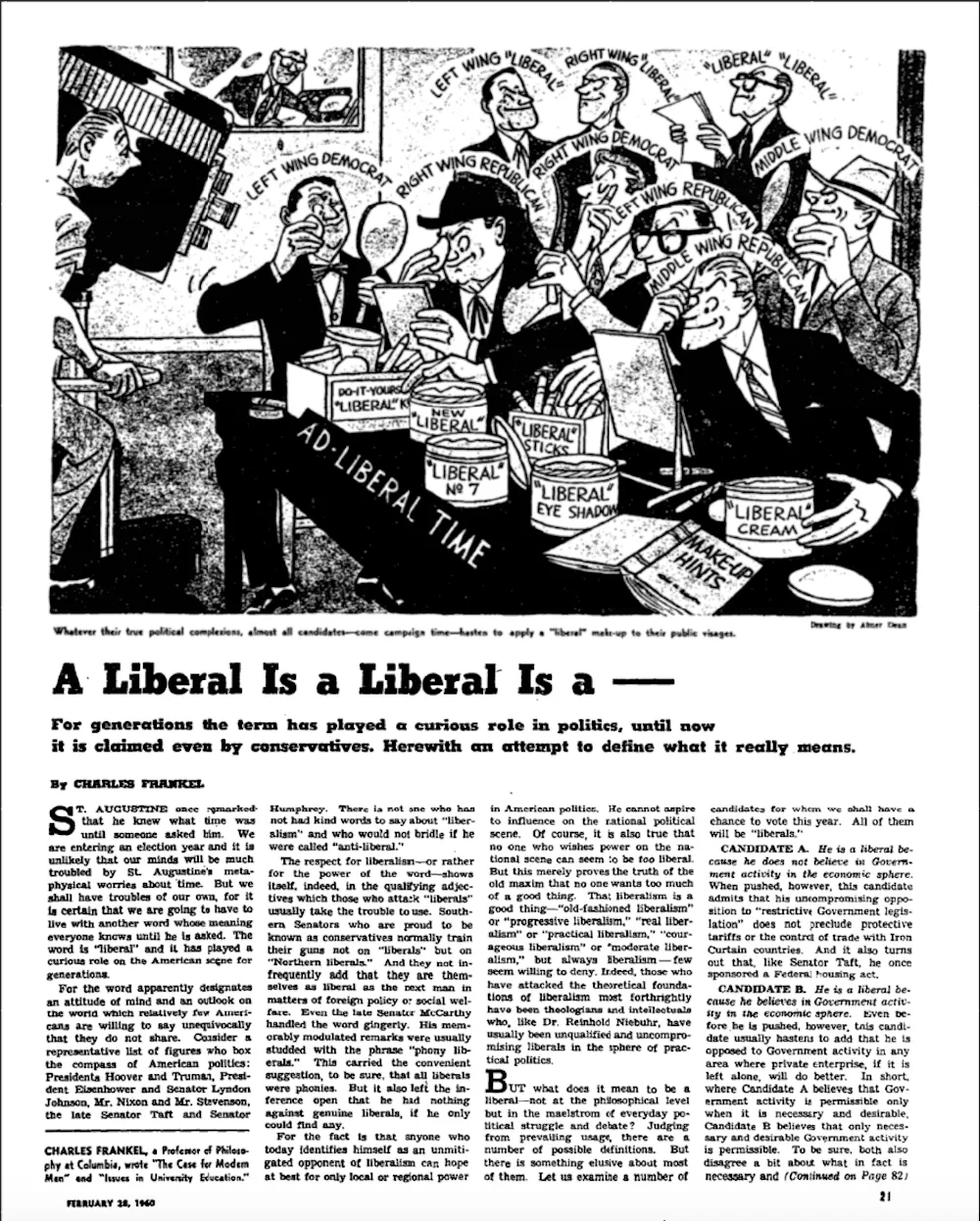
In 1960, scholar Charles Frankel dived into the meaning of the politically important word ‘liberal’ in a commentary for The New York Times. New York Times archive
The liberal past
In the past, Democrats had a word to describe their sensibility: “liberal.” But now: RIP, liberal. No one, it seems, wants to be a liberal anymore.
That year, presidential candidate Franklin D. Roosevelt was searching for a way to fend off Republican accusations that his New Deal was “socialism,” a word with radical connotations.
Liberalism as a word predates FDR’s usage, but he redefined it to signify the government regulation of capitalism and the use of the state to provide citizens with basic economic security.
When in 1932 FDR accepted the nomination for president, he declared the Democratic Party “the bearer of liberalism,” by which he meant undertaking “planned action” while fighting for “the greatest good to the greatest number of our citizens.”
FDR pitted his liberalism against his opponents, whom he labeled “conservatives.” The U.S. has had the liberal-conservative divide ever since.
FDR’s successor, Democrat Harry Truman, recognized the power of the term, extravagantly claiming, “The liberal faith is the political faith of the great majority of Americans.”
President John F. Kennedy gloried in the word, too, defining a liberal as “someone who welcomes new ideas without rigid reactions, someone who cares about the welfare of the people.”
In 1960, philosopher Charles Frankel argued that liberalism as defined by FDR was a banner under which every Democrat marched, concluding that “anyone who today identifies himself as an unmitigated opponent of liberalism … cannot aspire to influence on the national political scene.”
Shifting meanings
Not for long.
For one thing, in the 1950s the word shifted meaning to better accord with the times, as it had done several times in the past. During the post-World War II economic expansion, “a large part of the New Deal public,” historian Richard Hofstadter wrote in 1954, “have become home-owners, suburbanites and solid citizens.”
Liberals therefore shifted liberalism. No longer were liberals solely about providing jobs and Social Security. They also demanded increased access to higher education, medical care and civil rights, and the elevation of popular culture.
In 1956, future presidential adviser Arthur Schlesinger Jr. called this shift one from “quantitative” to “qualitative liberalism.”
“We are a great and liberal and progressive democracy,” Johnson declared in 1966.
But Johnson’s qualitative liberalism came with costs. The programs expanded the federal bureaucracy, which by the late 1960s became noted for being ineffective and overly regulatory.
First, right-wing thinkers had already begun to portray liberals as little more than quasi-communists pushing for civil rights beyond most Americans’ desires.
Then leftist thinkers took their shot, imagining liberals as little more than beards for capitalism and foreign policy hawks.
Left-wing novelist Norman Mailer summed up this sentiment in 1962, writing, “I don’t care if people call me a radical, a rebel, a red, a revolutionary, an outsider, an outlaw, a Bolshevik, an anarchist, a nihilist or even a left conservative, but please don’t ever call me a liberal.”
Left-wing author Norman Mailer said in 1962 that people could call him a Bolshevik, an anarchist, a nihilist, ‘but please don’t ever call me a liberal.’ Fred Stein Archive/Archive Photos/Getty Images
Civil rights advocates took their turn, seeing liberals as halfway friends, unwilling to fully embrace equality. Historian Lerone Bennett Jr. wished liberals “a fond farewell” in 1964. In that same year, writer James Baldwin called white liberals an “affliction.”
With attacks coming from multiple sides, by the 1970s Democrats ran from the label. And without defenders, enemies redefined liberals, first as out-of-touch elitists, then as allies of corporations ignoring the demands of working people, and eventually, today, as woke snowflakes.
In 2009, political scientists examining a hundred years of polling data found that, starting in the mid-1960s, decreasing numbers of Americans referred to themselves as liberal. And because partisanship is a social dynamic, when the club began to shrink, the researchers wrote, it turned into “a spiral in which ‘liberal’ not only is unpopular, but becomes ever more so.”
The researchers also found that most Americans still supported “‘liberal’ public policies” such as “redistribution, intervention in the economy, and aggressive governmental action to solve social problems.” Americans, apparently, just hated the label.
“Owning the libs” has been the glue keeping together the Republican Party ever since.
From ‘abundance’ to ‘Waymo’
Democrats are now searching for a new label. What can replace liberalism?
New York Times columnist Ezra Klein and Derek Thompson, who writes for The Atlantic, have proposed “abundance liberalism.” Other New York Times writers have also been busy envisioning this future. Reporter and editor David Leonhardt suggested “democratic capitalism.” Columnist Thomas Friedman improbably went with “Waymo Democrat,” referring to self-driving Waymo cars as a placeholder for an embrace of technological innovation.
More realistically, political analyst E.J. Dionne and historian James Kloppenberg are writing a history of “social democracy” as a potential rallying cry for Democrats, pointing to its use by the most popular politician in America, Bernie Sanders.
Whatever emerges, it’s helpful to remember that before 1932, hardly anyone in the U.S. used the word “liberal” to describe any kind of politics. Now, without finding a new emblem to rally behind, Democrats may be doing little more than battling that other neologism: MAGA.
Kevin M. Schultz does not work for, consult, own shares in or receive funding from any company or organization that would benefit from this article, and has disclosed no relevant affiliations beyond their academic appointment.
Source: State University Higher School of Economics – State University Higher School of Economics –
On May 8, 2025, in Moscow, in the presence of Russian President Vladimir Putin and Chairman of the People’s Republic of China Xi Jinping, strategic agreements were signed between the National Research University Higher School of Economics and two of China’s largest universities, Peking University and Tsinghua University. The ceremony was attended by HSE Rector Nikita Anisimov, Tsinghua University Party Committee Secretary Qiu Yong, and Peking University President Gong Qihuang. The signing took place as part of the official visit of the Chinese delegation to Russia, timed to coincide with the celebration of the 80th anniversary of the Victory.
The agreements will be an important step in the development of a strategic partnership between Russia and China aimed at creating a unified scientific space and institutional strengthening of the BRICS association. Particular emphasis is placed on fundamental disciplines, reflecting the desire of both countries to support advanced research that lays the foundation for technological breakthroughs.
HSE and Peking University also signed an agreement to create a BRICS Research Platform. This is a joint scientific space within which Russian and Chinese researchers will analyze key areas of scientific work, the activities of multilateral institutions, global governance processes, and interactions between Russia and China in the field of international relations.
The Higher School of Economics signed a cooperation agreement with Tsinghua University aimed at developing academic, cultural and educational ties. This will create a basis for implementing joint programs, including scientific, student exchange, etc.
HSE University is one of the leading Russian universities today, focused on developing a comprehensive Russian-Chinese partnership. The Higher School of Economics cooperates with more than 40 leading educational and scientific organizations in China. The university offers many bachelor’s, master’s and professional retraining programs focused on studying and working with China. About 1,300 HSE students study Chinese, more than 300 students from China study at HSE, including on exchange programs.
HSE plans to expand cooperation formats and launch new initiatives with universities and research centers in China, focusing on the development of fundamental sciences and strengthening international scientific dialogue.
Nikita Anisimov, Rector of the National Research University Higher School of Economics
“The Higher School of Economics and Chinese universities are already linked by successful joint work, and recently, during the visit of the HSE delegation to China, we reached an agreement on further expansion of this partnership. We are confident that our new agreements with Peking University and Tsinghua University will not only help expand bilateral ties and enrich science in its advanced areas, but will also give an additional impetus to further deepening Russian-Chinese cooperation in general. It is noteworthy that the BRICS dimension is now added to our scientific interaction with Chinese partners: the countries of the association play a key role in the formation of a new multipolar global architecture, and their interaction and influence on the international situation require comprehensive, deep expert understanding.”
Please note: This information is raw content directly from the source of the information. It is exactly what the source states and does not reflect the position of MIL-OSI or its clients.
Source: The Conversation – UK – By Jennifer Mathers, Senior Lecturer in International Politics, Aberystwyth University
Russia celebrates the 80th anniversary of the Soviet victory in the second world war on May 9. But while the cameras will focus on the assembled ranks of elderly war survivors watching the military parade in Red Square, Moscow, the focus of senior officials is on Russia’s children and young people.
Patriotism in Vladimir Putin’s Russia is built on exaggerated respect for key moments in the country’s history. These moments have been chosen to create a specific story about Russia. This is a story about Russia’s military might, the ability of its citizens to endure almost unimaginable suffering for the motherland, and the inevitability of victory over its enemies.
Victory Day gives the Kremlin a chance to retell that story. It also allows the state to assure Russians that they, like their ancestors, will be victorious in the so-called “special military operation” in Ukraine. Moscow describes this war as the modern-day equivalent of the fight against Nazi Germany.
With fewer witnesses to that historic victory still alive, the Kremlin’s ability to manipulate society by drawing on this important memory depends on the willingness of the next generation to embrace the state’s official history. And Russian political figures are worried that young people nowadays are disconnected from their heritage.
A poll conducted in December 2022 by the Russian Public Opinion Research Centre found that 76% of Russians aged 14 to 24 believe they have a good understanding of the history of their country. But the results of an alternative poll from June 2023 show that 70% of Russia’s young people do not know enough about their nation’s history.
Vladimir Medinsky, the chairman of the Interdepartmental Commission of Historical Education of Russia, reflected on the issue at a forum on how to interest young people in Russian history in 2023. He said: “What needs to be done to make our children interested in history? To make interesting historical performances, to make historical films.”
Russia’s leaders seek to address this perceived disconnect through military patriotic education. This is a system of surrounding children and young people with state-approved messages about Russia’s historic military victories and the role of its armed forces in making their country respected – and feared – around the world.
These messages are conveyed through textbooks and in lessons at school. But one of the challenges for the Russian state is finding ways of making this material attractive enough for young people to want to engage with it.
Putin himself has indicated that he understands this challenge. At a meeting with the Russian non-profit society Znaniye (Knowledge) on April 30, the Russian president argued that “it is crucial to have both an opportunity and skills to communicate the truth about past years and decades: sincerely, compellingly and – if I may say so – in a way that truly resonates”.
Patriotic youth groups are an important vehicle for delivering military patriotic education in fun and exciting ways. These groups organise activities including games and competitions, as well as more immersive activities such as role-playing and re-enactments. These activities are designed to create a deeper engagement with the events of the past.
One group, Victory Volunteers, emphasises collecting personal accounts from war veterans to add to the historical record. It also actively brings young people and war veterans together so that the heroes of future wars can be inspired by real-life stories of wartime heroism.
Listening to these first-hand testimonials is intended to enable young people to deepen their understanding of the experience of war, including its hardships and tragedies.
Yunarmiya (Young Army) is probably Russia’s best-known military patriotic youth group. It works with young people to develop their appreciation of history. But its focus on dressing its members in uniforms and training them in practical military skills has captured the attention of the world’s media.
These skills include military-style activities such as marching in formation, learning how to assemble and disassemble weapons, and how to fire them.
The Russian state also supports military patriotic education through the presidential grants fund. Hundreds of charities, youth groups and local societies apply to the fund twice a year, with the winners reportedly chosen by Putin himself.
Many of the successful applications involve activities to raise young people’s awareness of historical memory, especially the memory of war.
In 2022, for example, the historical reconstruction club Volnitsa received funding to organise a memorial march “in the footsteps of the winners” to mark the 80th anniversary of the liberation of the Bogucharsky region of Russia (near the border with Ukraine) from Nazi occupation.
The successful application emphasised the emotional intensity of the reenactment and its educational effects on young participants.
Events like the 80th anniversary of Victory Day have a significance for the Kremlin that goes beyond the speeches, parades and pageantry of the day itself. They are part of an effort by the Russian state to shape the expectations and behaviour of the next generation of its citizens.
By encouraging young people to feel a personal connection to Russia’s history of war, Moscow hopes to ensure that society will regard war as an inevitable part of life. The scale of this effort suggests that Putin and other senior officials anticipate the need for a society willing to make sacrifices so that Russia can achieve victories in future wars.
The authors do not work for, consult, own shares in or receive funding from any company or organisation that would benefit from this article, and have disclosed no relevant affiliations beyond their academic appointment.
Source: Government of the Russian Federation – An important disclaimer is at the bottom of this article.
In the reunited regions, for the anniversary of the Victory, road workers are tidying up the areas near memorial sites along the roads that are under repair. For example, the state company Avtodor alone has improved about 20 such spaces, Deputy Prime Minister Marat Khusnullin reported.
“From the very beginning of the Great Patriotic War, the capture of Donbass was one of the goals of Nazi Germany. Despite the fierce resistance of the Red Army, the Nazi occupation of the cities and villages of the mining region began in October 1941, and lasted until the end of September 1943. In memory of these and other events, many memorials have been created in the territory of all four new regions. Road workers are also involved in their improvement. In the DPR, the area around six monuments has been tidied up, in the LPR – around nine. In the Zaporizhia region, work was carried out along the Tokmak-Chernigovka highway,” the Deputy Prime Minister said.
In Mariupol, the villages of Vasilyevka and Razdolnoye, as well as other settlements of the DPR, sidewalks were paved. In Chervona Polyana of the LPR, the territory was cleared, concrete surfaces were repaired and painted, damaged reinforced concrete slabs were replaced near the monument to Soviet soldiers near the village of Verkhnyaya Pokrovka, and parking areas were arranged.
“For us, this is not just landscaping work. The roads that we repair in the reunited regions are a connecting thread that preserves an important part of the historical memory of our country. We remember, are proud and cherish the feat of those who built the roads leading to Victory. Now it is our turn to build a peaceful future for the country. For residents of the regions and those wishing to honor the memory of the soldiers, we have arranged sidewalks and parking pockets, and also carried out landscaping of the territory near the memorials,” added Vyacheslav Petushenko, Chairman of the Board of the State Company Avtodor.
Please note: This information is raw content directly from the source of the information. It is exactly what the source states and does not reflect the position of MIL-OSI or its clients.