NewzIntel.com

    • Checkout Page
    • Contact Us
    • Default Redirect Page
    • Frontpage
    • Home-2
    • Home-3
    • Lost Password
    • Member Login
    • Member LogOut
    • Member TOS Page
    • My Account
    • NewzIntel Alert Control-Panel
    • NewzIntel Latest Reports
    • Post Views Counter
    • Privacy Policy
    • Public Individual Page
    • Register
    • Subscription Plan
    • Thank You Page

Category: Science

  • MIL-OSI USA: NASA’s Asteroid Bennu Sample Reveals Mix of Life’s Ingredients

    Source: NASA

    Lee esta nota de prensa en español aquí.
    Studies of rock and dust from asteroid Bennu delivered to Earth by NASA’s OSIRIS-REx (Origins, Spectral Interpretation, Resource Identification and Security–Regolith Explorer) spacecraft have revealed molecules that, on our planet, are key to life, as well as a history of saltwater that could have served as the “broth” for these compounds to interact and combine.
    The findings do not show evidence for life itself, but they do suggest the conditions necessary for the emergence of life were widespread across the early solar system, increasing the odds life could have formed on other planets and moons.
    “NASA’s OSIRIS-REx mission already is rewriting the textbook on what we understand about the beginnings of our solar system,” said Nicky Fox, associate administrator, Science Mission Directorate at NASA Headquarters in Washington. “Asteroids provide a time capsule into our home planet’s history, and Bennu’s samples are pivotal in our understanding of what ingredients in our solar system existed before life started on Earth.”
    In research papers published Wednesday in the journals Nature and Nature Astronomy, scientists from NASA and other institutions shared results of the first in-depth analyses of the minerals and molecules in the Bennu samples, which OSIRIS-REx delivered to Earth in 2023.
    Detailed in the Nature Astronomy paper, among the most compelling detections were amino acids – 14 of the 20 that life on Earth uses to make proteins – and all five nucleobases that life on Earth uses to store and transmit genetic instructions in more complex terrestrial biomolecules, such as DNA and RNA, including how to arrange amino acids into proteins.
    Scientists also described exceptionally high abundances of ammonia in the Bennu samples. Ammonia is important to biology because it can react with formaldehyde, which also was detected in the samples, to form complex molecules, such as amino acids – given the right conditions. When amino acids link up into long chains, they make proteins, which go on to power nearly every biological function.
    These building blocks for life detected in the Bennu samples have been found before in extraterrestrial rocks. However, identifying them in a pristine sample collected in space supports the idea that objects that formed far from the Sun could have been an important source of the raw precursor ingredients for life throughout the solar system.
    “The clues we’re looking for are so minuscule and so easily destroyed or altered from exposure to Earth’s environment,” said Danny Glavin, a senior sample scientist at NASA’s Goddard Space Flight Center in Greenbelt, Maryland, and co-lead author of the Nature Astronomy paper. “That’s why some of these new discoveries would not be possible without a sample-return mission, meticulous contamination-control measures, and careful curation and storage of this precious material from Bennu.”
    While Glavin’s team analyzed the Bennu samples for hints of life-related compounds, their colleagues, led by Tim McCoy, curator of meteorites at the Smithsonian’s National Museum of Natural History in Washington, and Sara Russell, cosmic mineralogist at the Natural History Museum in London, looked for clues to the environment these molecules would have formed. Reporting in the journal Nature, scientists further describe evidence of an ancient environment well-suited to kickstart the chemistry of life.
    Ranging from calcite to halite and sylvite, scientists identified traces of 11 minerals in the Bennu sample that form as water containing dissolved salts evaporates over long periods of time, leaving behind the salts as solid crystals.
    Similar brines have been detected or suggested across the solar system, including at the dwarf planet Ceres and Saturn’s moon Enceladus.
    Although scientists have previously detected several evaporites in meteorites that fall to Earth’s surface, they have never seen a complete set that preserves an evaporation process that could have lasted thousands of years or more. Some minerals found in Bennu, such as trona, were discovered for the first time in extraterrestrial samples.
    “These papers really go hand in hand in trying to explain how life’s ingredients actually came together to make what we see on this aqueously altered asteroid,” said McCoy.
    For all the answers the Bennu sample has provided, several questions remain. Many amino acids can be created in two mirror-image versions, like a pair of left and right hands. Life on Earth almost exclusively produces the left-handed variety, but the Bennu samples contain an equal mixture of both. This means that on early Earth, amino acids may have started out in an equal mixture, as well. The reason life “turned left” instead of right remains a mystery.
    “OSIRIS-REx has been a highly successful mission,” said Jason Dworkin, OSIRIS-REx project scientist at NASA Goddard and co-lead author on the Nature Astronomy paper. “Data from OSIRIS-REx adds major brushstrokes to a picture of a solar system teeming with the potential for life. Why we, so far, only see life on Earth and not elsewhere, that’s the truly tantalizing question.”
    NASA Goddard provided overall mission management, systems engineering, and the safety and mission assurance for OSIRIS-REx. Dante Lauretta of the University of Arizona, Tucson, is the principal investigator. The university leads the science team and the mission’s science observation planning and data processing. Lockheed Martin Space in Littleton, Colorado, built the spacecraft and provided flight operations. NASA Goddard and KinetX Aerospace were responsible for navigating the OSIRIS-REx spacecraft. Curation for OSIRIS-REx takes place at NASA’s Johnson Space Center in Houston. International partnerships on this mission include the OSIRIS-REx Laser Altimeter instrument from CSA (Canadian Space Agency) and asteroid sample science collaboration with JAXA’s (Japan Aerospace Exploration Agency) Hayabusa2 mission. OSIRIS-REx is the third mission in NASA’s New Frontiers Program, managed by the agency’s Marshall Space Flight Center in Huntsville, Alabama, for the agency’s Science Mission Directorate in Washington.
    For more information on the OSIRIS-REx mission, visit:
    https://www.nasa.gov/osiris-rex
    Karen Fox / Molly WasserHeadquarters, Washington202-358-1600karen.c.fox@nasa.gov / molly.l.wasser@nasa.gov
    Rani GranGoddard Space Flight Center, Greenbelt, Maryland301-286-2483rani.c.gran@nasa.gov

    MIL OSI USA News –

    January 30, 2025
  • MIL-OSI Security: Papua New Guinea Resumes Radiotherapy, Starts Brachytherapy Services with IAEA Support

    Source: International Atomic Energy Agency – IAEA

    Staff at Angau Memorial Hospital in Lae, Papua New Guinea, celebrate the installation of the new brachytherapy machine used to treat gynaecological and other cancers. (Photo: Angau Memorial Hospital)

    After nearly a decade of inactivity, Papua New Guinea’s only radiotherapy machine re-started operations six months ago with support from the IAEA, giving renewed hope to thousands of cancer patients in the country.  

    This month, radiation medicine services at Angau Memorial Hospital received a boost with the start of brachytherapy, a critical procedure in the treatment of cervical cancer.  

    “This milestone represents a significant advancement in our cervical cancer treatment capabilities, offering more precise and localized therapy options to improve patient outcomes,” said Athula Kumara, medical physics expert at Angau Memorial Hospital, the facility that received the IAEA support.  

    Located in the city of Lae, Papua New Guinea’s shipping hub in the north, Angau is the country’s second largest hospital, catering for 675 000 people in the Morobe Province and serving as a regional referral hospital for 1.9 million residents. 

    The improved service is important as cancer remains a major public health issue in the country, with a burden of over 12 000 new cases and more than 7000 deaths every year, according to 2022 IARC figures. Breast, cervix uteri, as well as lip and oral cancers are the most frequent among women.  

    Brachytherapy is a form of internal radiotherapy in which sealed radioactive sources are placed inside or near a tumour, delivering high doses of radiation directly to the cancer while sparing surrounding healthy tissues. The procedure is a key component of radiation treatment for gynaecological cancers, but it can also be used to treat prostate, breast, soft tissue sarcomas, some head and neck tumours, and skin cancers.  

    The brachytherapy equipment was installed in late 2024 at Angau and started services this month. The first patient, a woman with cervical cancer, underwent external beam radiotherapy last year and is now receiving brachytherapy treatment as a boost.  

    The installation of the brachytherapy machine follows previous IAEA assistance in re-establishing radiotherapy at Angau. Services were discontinued in 2016, severely limiting options for cancer patients in the country. Many were referred abroad, but few could afford it. “Some travelled to Manila for treatment, but these cases were rare due to the high cost of travel and treatment,” Kumara said.   

    In 2023, an imPACT review carried out by the IAEA in collaboration with the World Health Organization (WHO) and the International Agency for Research on Cancer (IARC) recommended to urgently reestablish radiotherapy services in the country.  

    Through its technical cooperation and human health programmes, the IAEA supported the hospital in replacing the radiotherapy machine’s radioactive source and provided advice on the acquisition of the new brachytherapy unit. Radiotherapy started again in mid-August 2024, and Angau has since been treating around 50 patients per month on average, with hundreds more registered for treatment. “Treatment has been very successful, and we have seen many patients recover significantly after undergoing therapy,” Kumara added. 

    A key pre-requisite for the upgrade in radiation medicine has been  training medical physicists. “These highly specialized health professionals ensure optimal equipment performance and maintain high-quality, safe treatment procedures,” said Daniel Berger, medical physicist in the IAEA’s Division of Human Health who led recent technical missions to build local capacity in the country. “Their expertise enables precise dosimetry, planning and dose delivery while ensuring equipment and clinical processes meet international standards for effective patient care,” he explained.   

    Medical physicists also provide technical guidance for infrastructure improvements, collaborating closely with regulatory authorities to licence and deploy nuclear and radiation medicine equipment. “Their work ensures that radiotherapy services can meet the growing demand for cancer care, ultimately helping to improve patient outcomes and advance healthcare standards,” Berger added.    

    Radiotherapy is one of the main pillars of cancer treatment, along with surgery and chemotherapy. In 2022, the IAEA launched the Rays of Hope initiative to support countries in increasing access to this life-saving treatment. Since becoming a Member State in 2012, Papua New Guinea has received IAEA support to strengthen radiation safety, including for the management of radiation sources for medical use, and to build the required capacity to expand cancer diagnosis and treatment.  

    While progress has been made in advancing cancer care, Kumara highlights that early diagnosis and treatment provision remain a challenge. “Patients arrive at very late stages of their cancer, often with extensive masses. By the time they seek treatment, the cancer has already spread, making it more difficult to achieve optimal outcomes,” he said. “One of our key goals moving forward is to increase awareness, particularly in remote areas where access to healthcare is limited.”  

    Cervical cancer is the fourth most common cancer in women globally, with around 660 000 new cases in 2022. About 94 per cent of the 350 000 deaths caused by cervical cancer in the same year occurred in low- and middle-income countries, driven by inequalities in access to vaccination against the human papillomavirus (HPV), responsible for 95 per cent of all cervical cancers, as well as screening and treatment services.  

    In many countries, January is Cervical Cancer Awareness Month, supporting efforts to promote HPV vaccination for prevention and early diagnosis and treatment of precancers, which greatly improve prospects for cure.   

    MIL Security OSI –

    January 30, 2025
  • MIL-Evening Report: How can you tell if your child is ready for a smartphone? What are the alternatives?

    Source: The Conversation (Au and NZ) – By Joanne Orlando, Researcher, Digital Literacy and Digital Wellbeing, Western Sydney University

    Don Pablo/ Shutterstock

    The start of the school year means some parents will asking a big question: is it time for a child’s first phone?

    Safety concerns, particularly around travel to and from school, or being home after school without a parent, often drive this decision. There can also be huge social pressure if many of a child’s friends have a phone.

    But it doesn’t have to be inevitable. How can you tell if your child is ready for a smartphone? What are the alternatives? And how do you set achievable, healthy boundaries if your child does get a phone?

    Why a phone is a big decision

    Many parents will be aware of the concerns about children’s wellbeing around technology, including potential harms to mental health, if they are exposed to inappropriate content, bullying or simply use the phone too much.

    Studies also show it can lead to dependence on the phone and distraction or lack of focus at school and in general. So it’s important to make good choices and provide family support alongside this.

    Having a phone can pose risks to your child if they are not ready for it.
    Body Stock/ Shutterstock

    How do you know if your child is ready for a phone?

    Appropriate phone ownership does not necessarily depend on a child’s age but on a child’s readiness and family circumstances.

    Recent studies show children who receive phones based on readiness rather than age show better long-term digital habits. These include managing the constant distraction of phones and good judgement around the content they regularly browse and engage with.

    You can look at a child’s child’s readiness for a phone in several ways:

    • how responsible are they with the technology they already use?

    • do they follow family guidelines around screen time?

    • how willing are they to discuss their online experiences with you? Do they come to you if there is a problem or something they don’t understand?

    • do they have a basic understanding of digital privacy and security?

    • what’s their decision-making like offline? What are they like with family, friends and other responsibilities?

    Non-phone options

    If you decide yes, your child is ready, they don’t necessarily have to go straight to a smartphone with all the bells, whistles and apps.

    For basic safety requirements, such as travel to school, a smartwatch or basic phone can allow your child to receive and make calls and texts, but without accessing the internet.

    If you want to prioritise social connection (so a child isn’t left out with friends), you could might start with a shared family tablet featuring supervised messaging apps. This allows children to maintain friendships within set boundaries.

    Instead of a smart phone for your child you could start with a smart watch.
    NADKI/ Shutterstock

    How to manage the transition to a phone

    As children demonstrate growing independence and digital maturity, they can progress to restricted smartphones with parental controls, gradually earning more privileges through demonstrated responsibility.

    Or your child you have a smartphone with regular “check ins”. Here parents and the child discuss and review common challenges such as managing notifications, apps the child is permitted to use and where the phone can be used.

    This approach acknowledges full smartphone access isn’t an immediate necessity but rather the final stage in a thoughtful digital progression.

    Research indicates families who implement this graduated approach report fewer conflicts around technology as well as better long-term digital habits in their children.

    The key lies in matching technology access to genuine needs rather than perceived social pressure, while maintaining clear boundaries and open communication.

    3 vital ‘new phone’ conversations to have

    Even though many schools now have phone restrictions during school hours, planning for healthy use outside of school is extremely important.

    There are three vital “new phone” conversations to have with your child, to make sure things get off to the right start.

    1. Friend requests: these can be over the top and often overwhelm children and parents. You do not have to say yes to all of them. Decide how to manage the continuous stream of requests and how to cull unnecessary contacts.

    2. Screen time: there will likely be a “screentime spike” when your child gets their own device. This is exacerbated by the constant temptation to just zone out and browse content. Decide together on workable “no-tech” times and zones in the home. For example, no phones in the car and no phones after 9pm, or restrictions on browsable content such as YouTube or Tiktok. Parents can assist children to use in-built screentime features in the phone that shut down such apps during restriction times.

    3. Notifications: because of multiple group chats and new friends, there will be never-ending pings and notifications. This will encourage even more screen time, sometimes well into the night. Go into the phone settings with your child and together decide which notifications to turn off (ideally, most of them). This will mean children have fewer distractions and more sleep, and the entire household will be more peaceful.

    Joanne Orlando receives funding from eSafety Commissioner.

    – ref. How can you tell if your child is ready for a smartphone? What are the alternatives? – https://theconversation.com/how-can-you-tell-if-your-child-is-ready-for-a-smartphone-what-are-the-alternatives-248224

    MIL OSI Analysis – EveningReport.nz –

    January 30, 2025
  • MIL-Evening Report: ‘I was shocked’: a scientist tracking koalas films startling behaviour between young males

    Source: The Conversation (Au and NZ) – By Darcy Watchorn, Threatened Species Biologist, Wildlife Conservation & Science Department, Zoos Victoria, and Visiting Scholar, School of Life & Environmental Science, Deakin University

    Darcy Watchorn

    It’s a cold, drizzly night in a forest west of Melbourne. I’m sitting on a damp log, clutching a thermos of lukewarm tea and watching a koala snooze on a branch above me. Suddenly, it lifts its head. I sit up straight, pen poised to record what happens. But the koala simply yawns and resumes the blob position. I sigh and take another sip of tea.

    Why am I doing this? To research the social behaviour of koalas and hopefully learn more about what they do at night, when they are most active.

    After many nights, and many sips of tea, I witness something truly unexpected: male koalas engaging in affectionate behaviours with each other, such as play and grooming. I was shocked. Adult koalas are normally solitary, so observations such as this are exceedingly rare.

    My new research paper presents these findings. It provides the most detailed account of these behaviours to date, and offers a unique glimpse into how social dynamics between koalas may change when they are forced to live in close quarters.

    An adult female koala (right) and her very large joey (left) on a tree in Cape Otway, Victoria
    Darcy Watchorn

    Why are these behaviours so surprising?

    Most animals exhibit some type of social behaviour. These can include mating, vocalising to communicate, or defending their territory. But some highly social, group-living animals – such as wolves, primates and dolphins – will also display friendly and peaceful acts between individuals, such as grooming each other and playing.

    These are known as “affiliative” behaviours, and they are key to social relationships between animals, and to maintaining complex social hierarchies.

    Adult koalas, though, are generally solitary (except, obviously, when mating). They are usually widely spread over an area and rarely come face-to-face, instead interacting over long distances by vocalising and leaving their scent.

    And when male koalas do physically interact, it is usually a violent affair. More than once, I’ve seen male koalas scratched and bloodied — missing chunks of fur and even a claw — after fighting with a rival male.

    That’s why my observations of affection between young male koalas were so surprising.

    What I saw after dark

    Over three painstaking weeks, I studied a koala population in the woodlands of Cape Otway, southern Victoria. Each night, I went out between 9pm and 2am to track and observe the males. I used a red-light spotlight to avoid disturbing them. If I saw something interesting, I filmed it. You can watch the video below.

    After two weeks, I observed three males engaging in unexpected “affiliative” behaviours. They were grooming each other, sniffing each other’s genitals and vocalising to each other in soft, high-pitched calls, similar to the sounds baby koalas make.

    They also appeared to be playing. They would gently — but perhaps provocatively — bite one another on the arm and ear, a bit like cheeky puppies do.

    These interactions weren’t brief, either. I watched the koalas for two hours before finally giving in to sleep. When I went back at lunchtime the next day, they were still at it.

    What’s behind these affectionate behaviours?

    This type of social interaction between wild koalas had only been observed once before, more than 30 years ago, in a high-density koala population on French Island off Victoria.

    Like that earlier observation, the koalas I recorded were young adult males, roughly aged between three and five years. Hormonal activity can surge at this life stage, leading to an increase in social behaviours such as play and boldness.

    But if the affectionate behaviours were solely the result of teenage hormones, you’d expect it to be observed more often in many koalas in this age group. But that’s not the case.

    Instead, these behaviours are most likely a result of the large koala populations.

    Typically, fewer than two koalas are found per hectare. At Cape Otway, there were 15 koalas per hectare. This number can reach up to 20 in parts of South Australia and Victoria.

    This high density means the home ranges of koalas are more likely to overlap and their interactions will be more frequent. It also means competition for food, space and mates can be especially high.

    So young males might use affectionate behaviours — such as grooming and playing — to reduce conflict and manage stress. It may help individuals become familiar with their neighbours, establish hierarchies and avoid aggressive encounters.

    Genetics may also play a role. Like many high-density koala populations, this population had low genetic diversity, meaning there was a high degree of relatedness among individuals.

    Low genetic diversity can be a big problem for species overall. But it does mean some animals might identify their relatives, and tolerate being close to them.

    The causes of low genetic diversity in high-density koala populations are complex. The species was almost hunted to extinction. This meant a vastly reduced number of koalas could pass on their genes to the next generation. To make matters worse, habitat destruction can prevent koalas from dispersing over a wide area.

    This truckload of koala pelts was taken during the 1927 open season in Queensland.
    State Library of Queensland, CC BY-ND

    The complex reality of koala conservation

    Koalas are listed as endangered in New South Wales, Queensland and the ACT. But high-density koala populations, such as the one I observed in Cape Otway, also present major conservation challenges.

    Too many koalas feeding in an area puts pressure on preferred tree species. This can result in mass tree death, and habitat loss for koalas and other species. In some cases, koalas can starve.

    Unfortunately, there are no quick and easy solutions to this issue. Moving koalas from crowded areas to places where they are endangered often isn’t possible, due to differences in climate and the unique gut bacteria koalas need for their local food trees.

    Other interventions, such as fertility control, can be effective. But this takes many years of intensive effort and significant funding, making it vulnerable to budget cuts and shifting priorities.

    Some experts say culling could be used to control koala numbers and conserve the surrounding habitat, as it is for kangaroos. However, this is likely to draw widespread public opposition.

    These complex challenges offer an unexpected silver lining, however. As my experience shows, high-density koala populations provide unique opportunities to observe rare social behaviours in this iconic species. All you need is curiosity, a big cup of tea, and patience.

    Darcy Watchorn works for Zoos Victoria, a not-for-profit zoo-based conservation organisation. He is a member of the Ecological Society of Australia, the Australian Mammal Society, and the Society for Conservation Biology.

    – ref. ‘I was shocked’: a scientist tracking koalas films startling behaviour between young males – https://theconversation.com/i-was-shocked-a-scientist-tracking-koalas-films-startling-behaviour-between-young-males-247339

    MIL OSI Analysis – EveningReport.nz –

    January 30, 2025
  • MIL-Evening Report: Gene pools are getting dangerously shallow for many species. We found 5 ways to help

    Source: The Conversation (Au and NZ) – By Robyn Shaw, Research Fellow in Conservation Genomics, University of Canberra

    A golden bandicoot (_Isoodon auratus_) Colleen Sims/Department of Biodiversity, Conservation and Attractions, CC BY-SA

    Before species go extinct, their populations often shrink and become isolated. Healthy populations tend to have a large gene pool with many genetic variants circulating. But the path to extinction erodes genetic diversity, because a species’ gene pool shrinks as the population declines. Losing genetic diversity limits the ability of populations to adapt to threats such as disease and climate change.

    So, what is the state of genetic diversity in animals, plants, fungi and algae worldwide? And how could focusing on this crucial level of biodiversity help build resilience in the face of global change? We explore these questions in our new study, published today in Nature.

    Our team of 57 scientists from 20 countries trawled through more than 80,000 scientific articles across three decades to summarise evidence of genetic change in populations in 141 countries.

    Alarmingly, we found genetic diversity is being lost globally across many species, especially birds and mammals. This loss was most severe in studies reporting changes in habitat, new diseases, natural disasters, and human activities such as hunting or logging.

    But there’s hope. Our study suggests conservation strategies can help maintain or even increase genetic diversity.

    Isolated populations of the endangered Scandinavian arctic fox (Vulpes lagopus) have become inbred.
    Jonatan Pie, Unsplash

    What is genetic diversity and why does it matter?

    At the core of every cell lies a copy of the instruction manual for living things. This is the genetic code, made up of DNA molecules. But its sequence varies enormously, separating a moth from a tree from a bacterium. Even within a species, we see distinct genetic differences between individuals. These genetic differences contribute to differences in their traits, which is why we get individuals who are taller or shorter, faster or slower, bolder or more cautious.

    This genetic diversity stems from mutations. Often, these mutations are not helpful. But at times, they can enable populations to adapt to change.

    For example, golden kelp (Ecklonia radiata) likes colder water. But in a population, some individuals will have mutations suited for warm water. When a devastating marine heatwave hit the West Australian coast in 2011, individuals with warm-water mutations were more likely to survive and reproduce. This genetic diversity enabled the kelp population to adapt to the warmer conditions.

    This is why genetic diversity is so important – it gives species more resilience in a rapidly changing world. This priority has been recognised in Australia’s Strategy for Nature, and in goals and targets discussed at the United Nations biodiversity summit COP16.

    How can we safeguard or restore genetic diversity for threatened species?

    To answer this question, we used a technique called meta-analysis to look for patterns. From more than 80,000 published articles, we identified 882 studies which measured changes in genetic diversity over time. These studies came from right around the globe and across the entire “tree of life”.

    They show there are many ways to conserve genetic diversity. Here are five promising strategies to help keep species resilient.

    Scientists from 20 countries came together to read thousands of papers and collect data on genetic diversity during in-person and online workshops.
    Robyn Shaw

    Action 1: Adding individuals

    Adding individuals to an existing population is known as supplementation. Our research found supplementation was the only action linked to a significant increase in genetic diversity, especially in birds.

    Supplementation can help reduce the harmful effects of inbreeding, which is common in small, isolated populations. For example, conservationists working to safeguard New Zealand’s South Island robins (Petroica australis) moved female birds between isolated islands. The offspring of parents from different islands had stronger immune systems, higher survival rates, and improved reproductive health compared to their inbred counterparts.

    Supplementation is key for boosting genetic diversity, improving population health and building resilience.

    Action 2: Population control

    Doing the opposite – removing individuals – can actually improve outcomes for the population as a whole in some circumstances, by, for instance, reducing competition.

    But genetic diversity results varied a lot in studies using population control. So how can this strategy be used effectively?

    In one case, conservationists in the United States used population control of coaster brook trout (Salvelinus fontinalis) in a hatchery to prevent any single family from breeding too much. This meant multiple genetic lineages were maintained, increasing genetic diversity.

    Action 3: Restoration

    Ecosystem restoration can include planting trees, rehabilitating wetlands or restoring natural patterns of fire and water. We found genetic diversity was often maintained over time when ecological restoration was used.

    Restoration efforts, alongside supplementation, are important to the survival of the greater prairie-chicken (Tympanuchus cupido), which had lost much habitat. Researchers report restoring and expanding suitable habitat is proving crucial to sustain genetic diversity and achieving long-term recovery.

    Found in the US and Canada, greater prairie-chickens are known for their courtship dance.
    Danita Delimont/Shutterstock

    Action 4: Control of other species

    Feral, pest or overabundant species can outcompete, eat, or graze on species under threat. Controlling these species was linked to maintenance of genetic diversity in the studies we analysed overall.

    For example, control of red fox numbers helped the Arctic fox(Vulpes lagopu) recover in Sweden. The technique reduced competition over resources such as food while new foxes from Norway were added to the wild population. Inbreeding was reduced, and survival improved.

    Action 5: Conservation introductions and reintroductions

    Establishing new populations at new sites is known as a conservation introduction, while a reintroduction means restoring populations where they previously existed.

    We found mixed results for genetic diversity when these actions were reported. So, what factors contribute to success?

    In Western Australia, a large number of golden bandicoots (Isoodon auratus) from a robust island population were reintroduced to three sites. After six generations, genetic diversity at these sites remained similar to the original source population. Success came from careful planning to ensure the new populations had a large gene pool to start from.

    Overall, our study revealed many cases of genetic diversity loss. But we also found evidence that conservation action – especially supplementation – can improve the genetic health of a species.

    Researchers, conservation managers and volunteers helped grow seedlings and establish new populations of the critically endangered feather-leaved banksia near Albany in Western Australia.
    David Coates

    What can you do?

    Supporting genetic diversity can be done at home.

    If you have a garden, you can plant native species to support habitat connectivity.

    Growing heirloom vegetables and rare fruit trees, or breeding heritage chooks can maintain genetic diversity in our food system.

    Join community or botanic garden groups, or work with conservation groups to improve habitat or bolster numbers of threatened species.

    While enjoying nature, avoid accidentally moving plants, seeds, or soil to new areas to reduce the spread of pests and diseases.

    These small actions add up, helping to safeguard biodiversity at all levels – including genetic diversity.

    Robyn Shaw was supported during the study by funding from the Australian Research Council. The project workshop was sponsored by the European Cooperation in Science and Technology Action ‘Genomic Biodiversity Knowledge for Resilient Ecosystems’. She is a member of the Coalition for Conservation Genetics and the IUCN Conservation Genetics Specialist Group.

    Catherine Grueber’s research into the conservation genetics of threatened species receives funding from the Australian Research Council and the University of Sydney (Robinson Fellowship). She is a member of the Coalition for Conservation Genetics, and the IUCN Conservation Genetics Specialist Group.

    Katherine Farquharson was supported during the study by funding from the Australian Research Council Centre of Excellence for Innovations in Peptide and Protein Science. She is affiliated with Koala Conservation Australia.

    – ref. Gene pools are getting dangerously shallow for many species. We found 5 ways to help – https://theconversation.com/gene-pools-are-getting-dangerously-shallow-for-many-species-we-found-5-ways-to-help-242708

    MIL OSI Analysis – EveningReport.nz –

    January 30, 2025
  • MIL-Evening Report: Women don’t have a ‘surge’ in fertility before menopause – but surprise pregnancies can happen, even after 45

    Source: The Conversation (Au and NZ) – By Karin Hammarberg, Adjunct Senior Research Fellow, Global and Women’s Health, School of Public Health & Preventive Medicine, Monash University

    IKO-studio/Shutterstock

    Every now and then we see media reports about celebrities in their mid 40s having surprise pregnancies. Or you might hear stories like these from friends or relatives, or see them on TV.

    Menopause signals the end of a woman’s reproductive years and happens naturally between age 45 and 55 (the average is 51). After 12 months with no periods, a woman is considered postmenopausal.

    While the chance of pregnancy is very low in the years leading up to menopause – the so called menopausal transition or perimenopause – the chance is not zero.

    So, what do we know about the chance of conceiving naturally after age 45? And what are the risks?

    Is there a spike in fertility before menopause?

    The hormonal changes that accompany perimenopause cause changes to the menstrual cycle pattern, and some have suggested there can be a “surge” in fertility at perimenopause. But there’s no evidence this exists.

    In the years leading up to menopause, a woman’s periods often become irregular, and she might have some of the common symptoms of menopause such as hot flushes and night sweats.

    This might lead women to think they have hit menopause and can’t get pregnant anymore. But while pregnancy in a woman in her mid 40s is significantly less likely compared to a woman in her 20s or 30s, it’s still possible.

    The stats for natural pregnancies after age 45

    Although women in their mid- to late 40s sometimes have “miracle babies”, the chance of pregnancy is minimal in the five to ten years leading up to menopause.

    The monthly chance of pregnancy in a woman aged 30 is about 20%. By age 40 it’s less than 5% and by age 45 the chance is negligible.

    We don’t know exactly how many women become pregnant in their mid to late 40s, as many pregnancies at this age miscarry. The risk of miscarriage increases from 10% in women in their 20s to more than 50% in women aged 45 years or older. Also, for personal or medical reasons some pregnancies are terminated.

    According to a review of demographic data on age when women had their final birth across several countries, the median age was 38.6 years. But the range of ages reported for last birth in the reviewed studies showed a small proportion of women give birth after age 45.

    Having had many children before seems to increase the odds of giving birth after age 45. A study of 209 women in Israel who had conceived spontaneously and given birth after age 45 found 81% had already had six or more deliveries and almost half had had 11 or more previous deliveries.

    Conceiving naturally at age 45 plus is not unheard of.
    pixelheadphoto digitalskillet/Shutterstock

    There’s no reliable data on how common births after age 45 are in Australia. The most recent report on births in Australia show that about 5% of babies are born to women aged 40 years or older.

    However, most of those were likely born to women aged between 40 and 45. Also, the data includes women who conceive with assisted reproductive technologies, including with the use of donor eggs. For women in their 40s, using eggs donated by a younger woman significantly increases their chance of having a baby with IVF.

    What to be aware of if you experience a late unexpected pregnancy

    A surprise pregnancy late in life often comes as a shock and deciding what to do can be difficult.

    Depending on their personal circumstances, some women decide to terminate the pregnancy. Contrary to the stereotype that abortions are most common among very young women, women aged 40–44 are more likely to have an abortion than women aged 15–19.

    This may in part be explained by the fact older women are up to ten times more likely to have a fetus with chromosomal abnormalities.

    There are some extra risks involved in pregnancy when the mother is older. More than half of pregnancies in women aged 45 and older end in miscarriage and some are terminated if prenatal testing shows the fetus has the wrong number of chromosomes.

    This is because at that age, most eggs have chromosomal abnormalities. For example, the risk of having a pregnancy affected by Down syndrome is one in 86 at age 40 compared to one in 1,250 at age 20.

    There are some added risks associated with pregnancy when the mother is older.
    Natalia Deriabina/Shutterstock

    Apart from the increased risk of chromosomal abnormalities, advanced maternal age also increases the risk of stillbirth, fetal growth restriction (when the unborn baby doesn’t grow properly), preterm birth, pre-eclampsia, gestational diabetes and caesarean section.

    However, it’s important to remember that since the overall risk of all these things is small, even with an increase, the risk is still small and most babies born to older mothers are born healthy.

    Multiple births are also more common in older women than in younger women. This is because older women are more likely to release more than one egg if and when they ovulate.

    A study of all births in England and Wales found women aged 45 and over were the most likely to have a multiple birth.

    The risks of babies being born prematurely and having health complications are higher in twin than singleton pregnancies, and the risks are highest in women of advanced maternal age.

    What if you want to become pregnant in your 40s?

    If you’re keen to avoid pregnancy during perimenopause, it’s recommended you use contraception.

    But if you want to get pregnant in your 40s, there are some things you can do to boost your chance of conceiving and having a healthy baby.

    These include preparing for pregnancy by seeing a GP for a preconception health check, taking folic acid and iodine supplements, not smoking, limiting alcohol consumption, maintaining a healthy weight, exercising regularly and having a nutritious diet.

    If you get good news, talking to a doctor about what to expect and how to best manage a pregnancy in your 40s can help you be prepared and will allow you to get personalised advice based on your health and circumstances.

    Karin Hammarberg does not work for, consult, own shares in or receive funding from any company or organisation that would benefit from this article, and has disclosed no relevant affiliations beyond their academic appointment.

    – ref. Women don’t have a ‘surge’ in fertility before menopause – but surprise pregnancies can happen, even after 45 – https://theconversation.com/women-dont-have-a-surge-in-fertility-before-menopause-but-surprise-pregnancies-can-happen-even-after-45-247454

    MIL OSI Analysis – EveningReport.nz –

    January 30, 2025
  • MIL-Evening Report: New analysis of asteroid dust reveals evidence of salty water in the early Solar System

    Source: The Conversation (Au and NZ) – By Nick Timms, Associate Professor, School of Earth and Planetary Sciences, Curtin University

    A view of eight sample trays containing the final sample material from asteroid Bennu. Erika Blumenfeld & Joseph Aebers/JSC

    In October 2020, a van-sized robotic spacecraft briefly touched down on the surface of Bennu, a 525-metre-wide asteroid 320 million kilometres from Earth.

    As part of NASA’s OSIRIS-REx mission, the spacecraft not only spent two years orbiting and imaging the asteroid, it also collected a precious sample of dust and small rocks from Bennu’s rubbly surface.

    In September 2023, a capsule containing the pristine asteroid sample returned to Earth, landing in the Utah desert in the United States.

    Since then, an international team of scientists – of which we are members – have been busy studying the roughly 120 grams of material collected from Bennu.

    Our findings are revealed in two new papers published in Nature and Nature Astronomy today. They indicate that water may have once been present on Bennu’s parent body, and offer new insights into the chemistry of the early Solar System.

    Pristine remnants of rocks from deep time

    Asteroids are fragmentary remnants of pre-existing parent bodies from early in our Solar System’s history that have since been destroyed by collisions with other objects. They orbit the Sun and come in many different shapes, sizes and chemical compositions.

    Asteroid Bennu was targeted for the OSIRIS-REx mission because remote sensing observations from Earth indicated it as a B-type asteroid. These asteroids are rich in carbon and hydrated clay minerals, possibly sharing similarities to the most primitive group of meteorites on Earth, known as carbonaceous chondrites.

    Unlike meteorite samples, samples collected from asteroids have not been physically or chemically modified by Earth’s atmosphere and biosphere. This allows us to tackle key questions about the evolution of the early Solar System, planet formation, and the ingredients for life.

    Another aim of the OSIRIS-REx mission is to link findings from samples in the laboratory to those from remote sensing techniques. This helps us corroborate astronomical observations of asteroids to improve our surveys of the Solar System.

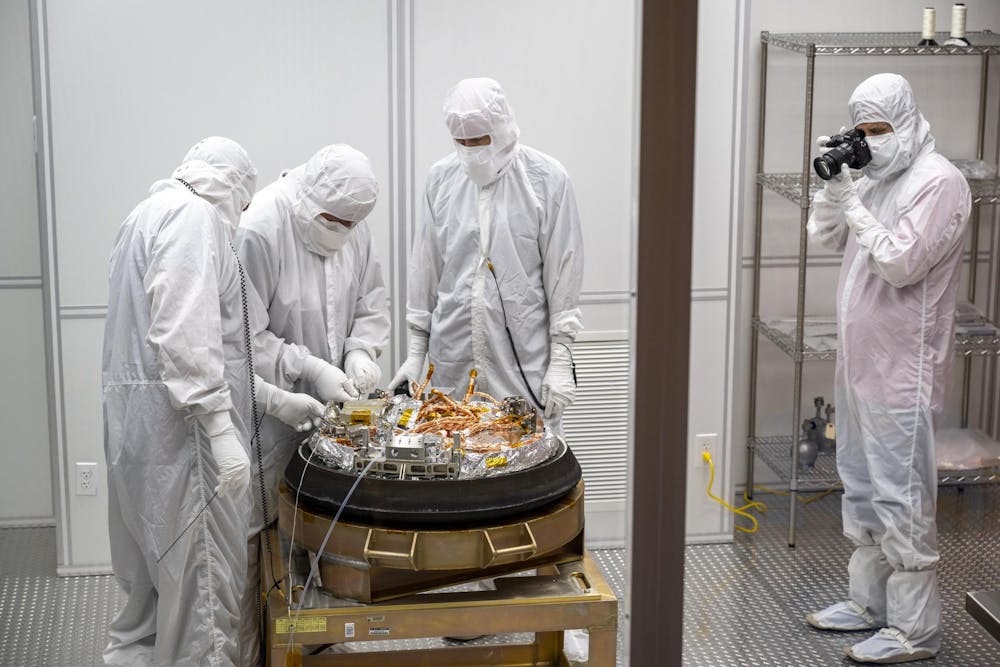
    Curation teams process the sample return capsule from NASA’s OSIRIS-REx mission in a cleanroom.
    Keegan Barber/NASA

    Tiny crystals of salt minerals

    To prevent contamination, the sealed capsule containing the sample was stored and handled in a huge glass box when it was returned to Earth. This tank had rubber gloves feeding into it from the side so scientists could handle the samples without directly touching them. It had also been purged with nitrogen to keep out moisture and oxygen from Earth’s atmosphere.

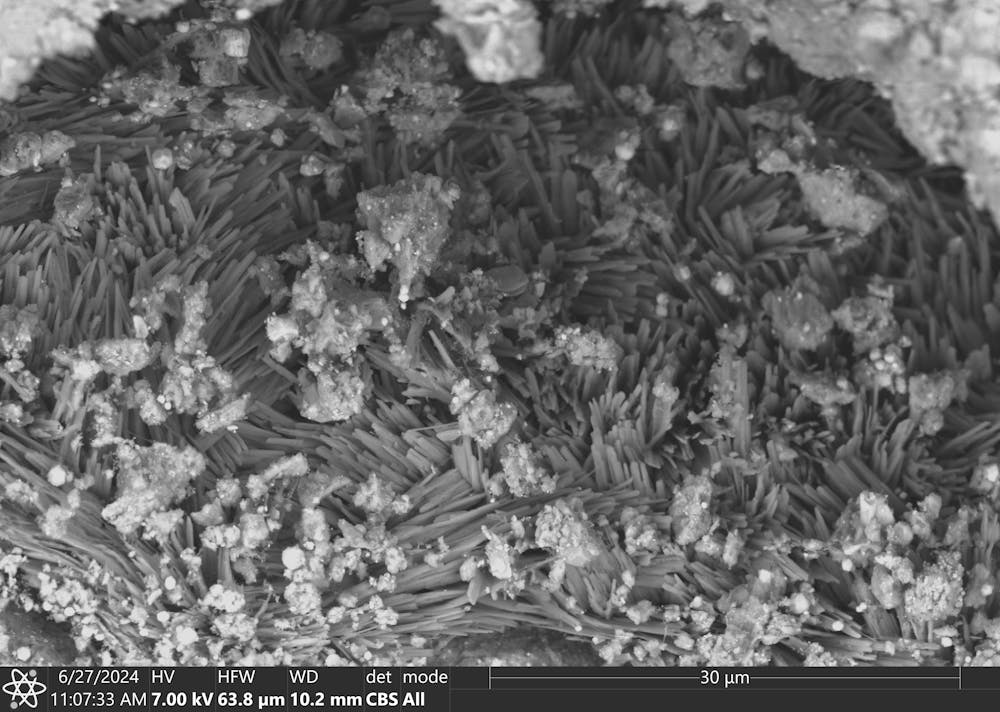
    When we analysed the interior of Bennu’s dust particles, we were surprised to find tiny crystals of the salt minerals known as halite and sylvite.

    This was a breakthrough discovery.

    Halite is extremely rare in meteorites. It has only been found in three out of hundreds of thousands of known meteorites on Earth. We also know that halite is highly soluble. It can degrade quickly when exposed to air or water on Earth.

    Other members of the OSIRIS-REx sample analysis team identified a variety of other salt minerals in the Bennu sample. These included sodium carbonates, phosphates, sulphates and fluorides.

    These minerals can form by the evaporation of brines – similar to deposits that form in Earth’s salt lakes.

    By comparing these results with the chemical makeup of salt lakes on Earth, a picture began to emerge of brines evaporating on the parent body of asteroid Bennu, leaving behind salts as evidence.

    Tiny crystals of several minerals including sodium carbonate (pictured here) were found in samples of the asteroid Bennu.
    Timothy McCoy/Smithsonian

    A variety of organic compounds

    This discovery provides a new insight into water activity during the earliest times in our Solar System. But the presence of salt minerals is significant for another reason.

    On Earth, these minerals are a catalyst for the formation of organic compounds such as nucleobases and nucleosides – the prebiotic building blocks of terrestrial biology.

    And indeed, in a separate analysis of the Bennu sample, other colleagues on the OSIRIS-REx mission identified a wide variety of organic compounds present on the carbon- and nitrogen-rich asteroid.

    These compounds include 14 of the 20 amino acids we also find in Earth’s biological processes. They also include several amino acids that are absent in known biology, ammonia, and all five nucleobases found in RNA and DNA.

    Even though no life was detected on Bennu, the two new studies show that a briny, carbon-rich environment on Bennu’s parent body was suitable for assembling the building blocks of life.

    In September 2023, a capsule containing the pristine sample from Bennu returned to Earth, landing in the Utah desert in the United States.
    Keegan Barber/NASA

    Ongoing investigations

    The findings from returned samples of asteroid Bennu may provide researchers insight into what happens on distant icy bodies in our Solar System.

    Some of these bodies include Saturn’s moon Enceladus and the dwarf planet Ceres in the asteroid belt between Mars and Jupiter.

    Both Enceladus and Ceres have subsurface brine oceans. Could they possibly harbour life?

    We are continuing to investigate Bennu using the pristine samples collected back in 2020. We are currently researching the timing of the Bennu parent body breakup event and looking for evidence of impacts recorded by various minerals in the samples.


    The authors of this article acknowledge the contribution of the following people to the research at Curtin University: Fred Jourdan, Steven Reddy, David Saxey, Celia Mayers, and Xiao Sun, as well as the entire OSIRIS-REx team.

    William Rickard receives funding from the Australian Research Council, Australia Government

    Nick Timms and Phil Bland do not work for, consult, own shares in or receive funding from any company or organisation that would benefit from this article, and have disclosed no relevant affiliations beyond their academic appointment.

    – ref. New analysis of asteroid dust reveals evidence of salty water in the early Solar System – https://theconversation.com/new-analysis-of-asteroid-dust-reveals-evidence-of-salty-water-in-the-early-solar-system-248439

    MIL OSI Analysis – EveningReport.nz –

    January 30, 2025
  • MIL-OSI Europe: Germany: INERATEC’s e-fuel demo plant in Frankfurt gets €70 million from EIB, EU-Commission and Breakthrough energy

    Source: European Investment Bank

    • The Capital injection will finance development of Europe’s first large-scale e-Fuel plant in Frankfurt and further research and development of INERATEC`s e-Fuels.
    • INERATEC`s e-fuels will support compliance with EU regulation requirements to add synthetic aviation fuel to kerosene to decarbonize aviation
    • Financing includes a €30million grant by Breakthrough Energy Catalyst, their first in Germany, underpinning the maturity of INERATEC’S technology 

    The European Investment Bank (EIB) and Breakthrough Energy Catalyst are providing a €70 million funding package through the EU-Catalyst Partnership to INERATEC, a Germany based e-fuel company. The EIB is providing a €40 million venture-debt-loan, backed by the EU`s InvestEU-program, while Breakthrough Energy Catalyst is awarding a grant of €30 million. The package will support the financing of INERATEC’s carbon neutral e-fuel production plant in Frankfurt, as well as further research and development. The Frankfurt plant is set to be Europe`s largest when opening in 2025.

    Long term market growth expected for e-SAF and e-Fuels

    E-fuel production uses CO2 and hydrogen to produce synthetic fuels and chemicals that are carbon neutral or close to carbon neutral when used. They have significant potential in hard-to-decarbonize sectors such as aviation, where commercial demand is underpinned by clear regulation. Therefore, long-term market growth can be expected.

    The EU’s ReFuelEU Aviation regulation requires that aviation fuel suppliers provide jet-fuel with 1.2 per cent minimum synthetic fuel content by 2030, rising to 35 per cent in 2050. Based in Karlsruhe, Germany, INERATEC is well placed for this growing market, offering an efficient, scalable modular design.

    INERATEC’S Frankfurt plant will produce up to 2,500 tons of e-fuels and e-chemicals, including e-sustainable aviation fuel (e-SAF). The plant will also incorporate an upgrading facility, enabling the e-crude oil to be refined into certifiable, ready-to-use sustainable aviation fuel on site. The fuel will support compliance with the EU’s synthetic aviation fuel mandate.

    INERATEC’s Frankfurt plant to show e-Fuel production is possible at scale

    EIB-Vice-President Nicola Beer said: “E-fuels are a crucial part of achieving a competitive net-zero economy, particularly in the mobility and transport sector. Game-changing technologies like Ineratec’s play a vital role in this transition. Together with the European Commission and Breakthrough Energy, through the EIB’s venture debt product, we are supporting an innovative startup in scaling up production and advancing research to make e-fuels a viable, sustainable alternative to fossil fuels.”

    INERATEC CEO Tim Boeltken said: “INERATEC’S Frankfurt production plant will show that e-fuel production is no longer a technological concept but a scalable reality. Reliable production of certifiable e-SAF is possible in the near-term – at commercial scale, that will be a breakthrough for sustainable aviation. This investment from EIB and Breakthrough Energy Catalyst is a sign of confidence in the INERATEC technology and approach.”

    Mario Fernandez, Head of Breakthrough Energy Catalyst, adds: “We are delighted to be working with INERATEC. This ground-breaking project will bring us a decisive step closer to the decarbonisation of aviation.”

    The financing reinforces EIB position as the ‘The Climate Bank’, a priority in the EIB Group’s 2024-2027 Strategic Roadmap, and supports the objectives of the European Commission’s RefuelEU aviation regulations.

    Background information

    EIB

    The European Investment Bank (ElB) is the long-term lending institution of the European Union, owned by its Member States. It finances investments that contribute to EU policy objectives. EIB projects bolster competitiveness, drive innovation, promote sustainable development, enhance social and territorial cohesion, and support a just and swift transition to climate neutrality.

    The InvestEU programme provides the European Union with crucial long-term funding by leveraging substantial private and public funds in support of a sustainable recovery. It also helps mobilise private investments for the European Union’s policy priorities, such as the European Green Deal and the digital transition. The InvestEU programme brings together under one roof the multitude of EU financial instruments currently available to support investment in the European Union, making funding for investment projects in Europe simpler, more efficient and more flexible. The programme consists of three components: the InvestEU Fund, the InvestEU Advisory Hub and the InvestEU Portal. The InvestEU Fund is implemented through financial partners that will invest in projects using the EU budget guarantee of €26.2 billion. The entire budget guarantee will back the investment projects of the implementing partners, increase their risk-bearing capacity and thus mobilise at least €372 billion in additional investment.

    EIB venture debt is a quasi-equity investment product suitable for early and growth stage ventures, combining a long-term loan with an instrument linking the return to the performance of the company. Since 2015, the EIB has invested €6 billion in Venture Debt, backing over 200 companies and realising over 50 exits. With the backing of InvestEU, the EIB aims to support European ventures and scale-ups in the cleantech, deep-tech and life sciences sectors.

    INERATEC is committed to defossilizing and decarbonizing the world. The company produces e-Fuels and e-chemicals: carbon-neutral fossil fuel substitutes for use in the aviation, shipping and chemical industries. Its modular, scalable plants use renewable hydrogen and biogenic CO2 to produce synthetic kerosene, gasoline, diesel, waxes, methanol or natural gas. It is building what will be the world’s largest e-fuels plant to date, in Frankfurt, which will produce up to 2,500 tonnes of ultra-low-carbon aviation fuel per year. The company is based in Karlsruhe, Germany and backed by diverse international investors. www.ineratec.com

    Breakthrough Energy is committed to accelerating the world’s journey to a clean energy future. The organization funds breakthrough technologies, advocates for climate-smart policies, and mobilizes partners around the world to take effective action, accelerating progress at every stage.

    Breakthrough Energy Catalyst is a novel platform that funds and invests in first-of-a-kind commercial projects for emerging climate technologies. By investing in these opportunities, Catalyst seeks to accelerate the adoption of these technologies worldwide and reduce their costs.

    Catalyst currently focuses on five technology areas: clean hydrogen, sustainable aviation fuel, direct air capture, long-duration energy storage, and manufacturing decarbonization. In addition to capital, Catalyst leverages the team’s energy-infrastructure-investing and project-development expertise to work with innovators on advancing their projects from the development stage to funding and ultimately, to construction. Learn more about Breakthrough Energy and Catalyst at breakthroughenergy.org.

    MIL OSI Europe News –

    January 30, 2025
  • MIL-Evening Report: How do workers cope in no-win situations? Midwives found out the hard way during the pandemic

    Source: The Conversation (Au and NZ) – By James Greenslade-Yeats, Research Fellow in Management, Auckland University of Technology

    Eldar Nurkovic/Shutterstock

    During the pandemic, midwives faced what researchers call a “pragmatic paradox” – a situation where contradictory demands are imposed on individuals who can neither refuse nor fulfil the demands.

    Midwives needed to care for women and babies despite the risk of infecting them with the virus. Their experiences shed important light on how we can think about no-win situations in the workplace.

    In our recently published research, we surveyed 215 New Zealand midwives about their experiences of working through COVID lockdowns and how they coped with what felt at times like a no-win situation.

    The absurdity of contradictory demands

    Pragmatic paradoxes place workers in absurd, no-win situations. They can occur simply because of leadership issues or glitches in management bureaucracies. They can also happen during unique crises – such as the pandemic.

    But many workers are so used to feeling powerless that they may not recognise – much less question – the absurdity of contradictory demands.

    This is especially true in situations where workers lack opportunities to discuss or challenge the directives they receive from above.

    When the pandemic struck, midwives’ professional roles suddenly entailed an inherent contradiction they had no opportunity to question.

    They were contractually obligated to protect societal wellbeing by providing ongoing maternity services. Yet due to the fast evolving situation and initial shortages of safety equipment, providing those services entailed risking public wellbeing by exposing themselves and their clients to the virus.

    As one of our research participants explained:

    I felt that I was in a very difficult situation. I was connecting with multiple “bubbles” on a daily basis. I was scared that I could be in a position to pass COVID on to vulnerable people.

    As expected, most midwives in our study felt disempowered by the tensions of this situation:

    I felt extremely vulnerable. As a lead maternity carer midwife, considered an essential service, I had no control over whether I could just not work.

    But surprisingly, a small number of midwives were seemingly motivated by it. As one explained,

    [My family] thought I was “brave” and “courageous” to keep working – but this was simply my job! I felt like I had a duty to pregnant women to front up and continue as per normal.

    During the pandemic, midwives faced a pragmatic paradox – they were expected to enter multiple people’s homes while also preventing the spread of COVID-19.
    metamorworks/Shutterstock

    Recognised and supported?

    Why would some midwives feel motivated by their contractual obligations to fulfil contradictory demands?

    The crux, we found, was not whether they were aware of the contradiction inherent in their situation, but whether that awareness was accompanied by a sense of professional recognition and support.

    If midwives felt like they were recognised and supported in their ongoing efforts – like valuable members in the “team of five million” – they framed and accepted their contradictory situation as part of a societal duty.

    Midwives placed particular importance on recognition and support from the government and the public. As one explained,

    I felt the love. Heading out on the motorway I would see the sign thanking essential workers. And the government was always mentioning us and thanking us.

    In contrast, if they felt like health system leaders and the public were oblivious to their situation, they interpreted contradictory work demands as stressful and disempowering.

    Another midwife said,

    I became very angry and felt midwives were like lambs to the slaughter – we had no PPE, we were being told to carry on working, in the media we were invisible. Our professional body seemed to put the women we cared for ahead of our wellbeing.

    Managing pragmatic paradoxes

    There are two ways to look at the implications of our findings. One is to suggest pragmatic paradoxes are not as bad as they initially seem.

    Contradictions abound in contemporary society, so it may be inevitable people face conflicting yet unrefusable demands in their jobs. But if leaders and managers can motivate workers to embrace those demands – or at least recognise the difficulty of the tasks – the outcome can be positive.

    An alternative reading is workers who feel motivated by pragmatic paradoxes are casualties of something akin to gaslighting. According to this logic, contradictory demands are imposed by those at the top of their respective organisations and societies, so that’s where the demands ought to be dealt with.

    For example, the government could have minimised the risks midwives faced during the pandemic by better access to protective equipment, thereby resolving their contradictory situation. Suggesting contradictory demands should be passed down to lower-level workers is therefore equivalent to accepting a certain level of oppression.

    Whichever interpretation resonates more, our research underscores the importance of communication as a means of ensuring workers are not disempowered by pragmatic paradoxes.

    Over the course of the pandemic, healthcare workers worldwide eventually improved their contradictory situation by posting on social media and talking to the press. Political leaders and health management recognised the workforce needed greater support to navigate the contradictory demands of risking wellbeing to protect wellbeing.

    The broader lesson is when people face contradictory directives, they should be able to discuss and challenge them.

    Research suggests that in interpersonal situations, humour may be an effective means of doing so without directly threatening the power or competence of those in charge.

    Of course, this brings us to one final paradox: that encouraging humour and employee voice requires fostering the type of environment where pragmatic paradoxes are unlikely to thrive in the first place.

    Tago Mharapara receives funding from Auckland University of Technology

    James Greenslade-Yeats does not work for, consult, own shares in or receive funding from any company or organisation that would benefit from this article, and has disclosed no relevant affiliations beyond their academic appointment.

    – ref. How do workers cope in no-win situations? Midwives found out the hard way during the pandemic – https://theconversation.com/how-do-workers-cope-in-no-win-situations-midwives-found-out-the-hard-way-during-the-pandemic-247679

    MIL OSI Analysis – EveningReport.nz –

    January 30, 2025
  • MIL-OSI USA: Duckworth Votes Against Sean Duffy’s Nomination to Be Transportation Secretary

    US Senate News:

    Source: United States Senator for Illinois Tammy Duckworth
    January 28, 2025
    [WASHINGTON, D.C.] – Today, U.S. Senator Tammy Duckworth (D-IL)—a member of the U.S. Senate Commerce, Science and Transportation Committee (CST)—released the following statement after the Senate confirmed Rep. Sean Duffy by a vote of 77-22 to serve as Secretary of the Department of Transportation.
    “Heading into this week, I was prepared to vote to confirm Rep. Duffy. Our conversations were productive and encouraging, and I thought he was sufficiently qualified to serve as Transportation Secretary. But President Trump’s sweeping order to freeze federal grant funding—including historic investments from the Bipartisan Infrastructure Law—is illegal and hurting Americans in red and blue states alike, and I cannot vote to confirm a Transportation Secretary while transportation funding is being unlawfully withheld.”
    -30-

    MIL OSI USA News –

    January 30, 2025
  • MIL-OSI Global: Is no amount of alcohol safe? Understanding risks and public health guidelines

    Source: The Conversation – Canada – By Scott Lear, Professor of Health Sciences, Simon Fraser University

    While it may be true that there is no safe level of alcohol consumption, are alarmist statements a good motivator for health messaging, or is there danger to using them? (Shutterstock)

    The United States surgeon general recently called for a warning of cancer risk on alcohol labels. And I agree. But the discourse that has come out in the media, by health professionals and health influencers, has been alarmist and a disservice to informing the public on the real cancer risks associated with alcohol.

    I’m a professor in Health Sciences at Simon Fraser University and I study how behaviours relate to the disease. I also write a blog on the role health behaviours play in your health.

    Alcohol and cancer risk

    The surgeon general’s comments follow reports from the World Health Organization and Canada’s Guidance on Alcohol and Health, both of which state there is no safe amount of alcohol you can consume.

    This has been repeated by health professionals, those in public health and on social media, where health influencers have described alcohol as a toxin.

    But are these alarmist statements a good motivator for health messaging, or is there danger to using them?

    Statistically, your risk for cancer goes up from the very first sip of alcohol. That doesn’t mean you will get cancer from drinking alcohol, it just means your chances increase. And as you drink more alcohol, your chances further increase. It’s like betting in roulette: the more numbers you bet on, the more likely you are to win. Or in this case, lose.

    Out of 800 women, one drink per week will result in two additional women getting breast cancer.
    (Shutterstock)

    However, what’s lost in this messaging is how much this risk is. Based on Canada’s Guidance on Alcohol and Health, having one drink per week increases a women’s risk for breast cancer by 1.8 per cent. Approximately one in eight women will develop breast cancer in their life. Therefore, out of 800 women, one drink per week will result in two additional women getting breast cancer. Having one drink per day increases the risk seven-fold. These are real people who might otherwise not get breast cancer if they abstained from alcohol.

    While saying no amount of alcohol is safe is true, this can apply to a lot of common activities. In Canada, there are approximately 300 pedestrian deaths per year. Each day, on average, five Canadians die in motor vehicle accidents.

    While these numbers are much lower than the number of people who die from cancer each year, it would also be accurate to say there is no amount of walking or driving that is safe. Despite this, people will continue to cross the street and people will continue to drive. But this illustrates the challenge in informing the public about risks and changing behaviour.

    Fear in public health messaging

    The use of fear in public health messaging should only be used if there’s an effective solution. In the case of alcohol, there is: abstinence.
    (Shutterstock)

    The use of fear in public health has a long history. But measuring the effect of these campaigns is hard. Graphic images are used on tobacco products to scare people away from smoking. Carefully controlled studies indicate they increase health awareness but may have limited effect on smoking. However, similar graphic images on bottles of sugar-sweetened beverages in controlled studies has been shown to reduce consumption.

    During the COVID-19 pandemic, fear was at the forefront of public health efforts to control the spread of SARS-CoV-2. Indeed, the use of fear in public health messaging seemed to be quite an effective tool in ensuring behavioural compliance in pandemic measures. Community interviews of parents showed fear was at the root of both getting their children vaccinated (fear of the disease) or not (fear of the vaccination).

    The use of fear in public health messaging should only be used if there’s an effective solution. In the case of alcohol, there is: abstinence. But the use of fear should also be commensurate with the risk, otherwise it risks having people tune out.

    This may be particularly problematic when previous guidelines stated beneficial effects of moderate drinking and current guidelines on alcohol state one to two drinks per day is acceptable. Instead, the public may be best served by communicating the risk in terms the public understands, such as how many more people will get cancer from drinking.

    Alcohol should have a warning label on it

    Alcohol consumption in Canada is on the decline. In 2022, alcohol consumption decreased by 1.2 per cent compared to 2021. And in 2023, 54 per cent of Canadians reported having no alcohol over the previous week, with younger Canadians drinking less than their older counterparts. These trends are similar in the United States.

    More than 40 countries have a warning label on alcohol (although far fewer mention cancer), but Canada and many European countries are not included. They should be. Alcohol is a highly addictive substance that can destroy the lives of those addicted to it and those around them. It impairs judgment and accounts for dozens of deaths per year from drinking and driving.

    Pregnant women drinking alcohol also increase their risk of their child having fetal alcohol spectrum disorder. Alcohol is also a drug you can overdose from.

    Warning labels on alcohol are a good step to reduce health risks, as long as they are clear and informative.

    Scott Lear receives funding from the Canadian Institutes of Health Research and Hamilton Health Sciences, and has received funding from the Heart and Stroke Foundation, Novo Nordisk, and the Robert Wood Johnson Foundation.

    – ref. Is no amount of alcohol safe? Understanding risks and public health guidelines – https://theconversation.com/is-no-amount-of-alcohol-safe-understanding-risks-and-public-health-guidelines-247883

    MIL OSI – Global Reports –

    January 30, 2025
  • MIL-OSI USA: Shaheen Named Ranking Member of Agriculture, Rural Development, Food and Drug Administration and Related Agencies Appropriations Subcommittee

    US Senate News:

    Source: United States Senator for New Hampshire Jeanne Shaheen
    (Washington, DC) – U.S. Senator Jeanne Shaheen (D-NH), a senior member of the U.S. Senate Appropriations Committee, today announced she will serve as Ranking Member of the U.S. Senate Appropriations Subcommittee on Agriculture, Rural Development, Food and Drug Administration and Related Agencies (Ag-FDA). This Subcommittee oversees funding for the majority of the U.S. Department of Agriculture (USDA) as well as the Food and Drug Administration (FDA).
    “I’m honored to serve in this new role and committed to building on my work to address the high cost of living that so many Granite Staters are experiencing,” said Senator Shaheen. “I look forward to finding new and creative opportunities to improve support for New Hampshire’s rural communities, including by investing in rural housing and water infrastructure, championing our small businesses and small and diversified farmers, continuing my bipartisan efforts to tackle the skyrocketing cost of prescription drugs, such as those to treat Type 1 diabetes, as well as funding federal nutrition programs that help Granite Staters put food on the table.”
    Shaheen has served on the U.S. Senate Appropriations Committee since 2012, and formerly chaired the Commerce, Justice, Science and Related Agencies Subcommittee. She will also serve as a member of the Commerce, Justice, Science and Related Agencies, Defense, Homeland Security, Labor, Health and Human Services and Education and Related Agencies and State, Foreign Operations and Related Agencies Appropriations Subcommittees.
    Shaheen has long fought to support farmers in New Hampshire, including by successfully helping to secure disaster supplemental funding for farmers impacted by crop losses in 2023. Shaheen also has a strong record of working to improve crop insurance policies to support farmers in New Hampshire and leads legislation to reform the federal government’s crop insurance program. Senator Shaheen has supported more than 230 New Hampshire small businesses who have received over $25 million to lower energy bills and cut costs through USDA’s Rural Energy for America Program. She has consistently fought for increased funding and improved support for rural development programs, including rural water programs.
    Shaheen also spearheads efforts to combat rising drug prices and make essential medications more affordable, including leading legislation to lower the cost of prescription drugs and bring generic drugs to market faster. Last Congress, Shaheen introduced bipartisan legislation, the Ensuring Timely Access to Generics Act, that would work to increase competition from generic drugs through better oversight of FDA’s citizen petition process. The Senate Health, Education, Labor and Pensions (HELP) Committee passed this bill unanimously. As co-chair of the bipartisan U.S. Senate Diabetes Caucus, Shaheen has also consistently worked with FDA on access to diabetes technology and cures for type 1 diabetes. Senator Shaheen’s bipartisan INSULIN Act also includes proposals to expedite FDA approval of biosimilar drugs, which are proven to increase competition and lower drug costs.

    MIL OSI USA News –

    January 30, 2025
  • MIL-OSI United Nations: Secretary-General Appoints Lieutenant General Ulisses de Mesquita Gomes of Brazil Force Commander, UN Stabilization Mission in Democratic Republic of the Congo

    Source: United Nations General Assembly and Security Council

    United Nations Secretary-General António Guterres announced today the appointment of Lieutenant General Ulisses de Mesquita Gomes of Brazil as Force Commander of the United Nations Organization Stabilization Mission in the Democratic Republic of the Congo (MONUSCO).

    Lieutenant General Gomes succeeds Acting Force Commander Major General Khar Diouf of Senegal, to whom the Secretary-General is grateful for his dedication and service.

    Lieutenant General Gomes brings to the position 35 years of experience in crisis response, conflict management and peacekeeping.  He has both operational and strategic expertise as well as diplomatic experience.  His last position was with his national military, where he served as Deputy Chief of Army Logistics Command.  Prior to that, he was the Brazilian Military Attaché to the United States of America.

    He previously served as the 7th Infantry Brigade Commander in Brazil, the Defence Adviser of the Minister of Strategic Affairs of the Brazilian Government and the Chief of Planning and Operations of the 11th Infantry Brigade.  His international experience includes his deployment with the United Nations Stabilization Mission in Haiti (MINUSTAH) (2008-2009) and his appointment as the Chief of the Current Military Operations Service and Policy & Doctrine Team in the Office of Military Affairs of the UN Department of Peace Operations (2017-2019).

    Lieutenant General Gomes holds a bachelor’s degree in law from the Federal University, Brazil, and a master’s degree in military science and law from the Brazilian Army Staff College.  He is fluent in English, French, Portuguese and Spanish.

    MIL OSI United Nations News –

    January 30, 2025
  • MIL-OSI USA: Capito to Chair Labor, HHS, Education Appropriations Subcommittee

    US Senate News:

    Source: United States Senator for West Virginia Shelley Moore Capito
    WASHINGTON, D.C. – U.S. Senator Shelley Moore Capito (R-W.Va.) today announced that she will serve as the chairman of the Senate Labor, Health and Human Services, Education, and Related Agencies Appropriations Subcommittee, which oversees funding across a large range of programs within the U.S. Departments of Labor, Education, Health and Human Services (HHS), and other independent agencies. Senator Capito previously served as ranking member of the subcommittee during the 118th Congress.
    “I’m honored to continue my efforts—now as chairman—on the Labor, Health and Human Services, Education, and Related Agencies Appropriations Subcommittee to represent the needs of West Virginians. In this impactful role, I will strive to ensure the funding we provide is used in the most efficient and effective manner and that critical oversight is provided.
    “Additionally, I look forward to working with committee leadership and members in this new role to support many priorities that are important to my state of West Virginia, such as Alzheimer’s research, efforts to end childhood cancer, fighting the addiction crisis, the wellbeing of our miners, and supporting the education and research missions of our schools and universities. Regardless of the scope or challenges, I will approach this opportunity with the objective of ensuring the voices and priorities of West Virginia are heard and understood. I appreciate the support of Chairman Collins in this role and I am excited to work together in our Republican Congress to advance the goals of the Trump administration,” Chairman Capito said.
    In addition to her chairman role, Senator Capito will continue serving on the following Appropriations Subcommittees: Defense; Homeland Security; Commerce, Justice, Science, and Related Agencies; Interior, Environment, and Related Agencies; and Transportation, Housing and Urban Development, and Related Agencies.
    In addition to the Appropriations Committee, Senator Capito will continue serving on the Committee on Environment and Public Works as chairman; the Committee on Commerce, Science, and Transportation; and the Committee on Rules and Administration.
    This is the fourth Appropriations Subcommittee Senator Capito has been a chairman of as a member of the committee during her time in the Senate. She previously chaired the Homeland Security, Financial Service and General Government, and Legislative Branch subcommittees.

    MIL OSI USA News –

    January 30, 2025
  • MIL-OSI Global: Will the US get to Mars quicker if it drops or delays plans to visit the Moon?

    Source: The Conversation – UK – By Ian Whittaker, Senior Lecturer in Physics, Nottingham Trent University

    Esteban De Armas/Shutterstock

    The Artemis program has been Nasa’s best chance to get “boots on the Moon” again. But with the new US administration taking guidance from tech entrepreneur Elon Musk, who is focused on Mars colonisation, will they end up abandoning or pushing back lunar missions?

    For example, there’s been speculation that returning US president Donald Trump may cancel the Space Launch System rocket, which Nasa intended to use to get from the Moon to Mars. But is this approach likely to help them get to Mars quicker?

    The last human presence on the lunar surface was Apollo 17 in 1972. So you may imagine that it should be easy for the US to return. However there have been plans to once again send people there since 2004, which have changed name with each incoming president, until its current incarnation as the Artemis program.

    The 2022 Artemis-1 test flight was successful in its mission to send an unmanned satellite around the lunar orbit and return using the new SLS rocket system. But Artemis-2, which will carry crew, is not scheduled for launch until 2026. When we consider private companies and other nations, this is comparatively slow progress.

    Artemis mission.
    Nasa

    The first successful landing of a spacecraft on the Moon by the Indian Space Agency, Isro, took place in 2023 with Chaandrayan-3, which was an amazing achievement with a low budget. China landed in 2013 with Chang’e 3, and Chang’e 4 in 2019 on the dark side.

    Russia have previously had landers on the Moon. Their more recent attempt at a lunar landing with Luna-25 was unsuccessful though. There are also future lander missions planned by the European Space Agency with Argonaut, a private Israeli company and other private industries. Clearly, there is no shortage of potential competitors which could eventually develop to send humans too.

    Implications for Mars

    So would turning to Martian exploration be a sensible move instead of heading for the Moon? It would likely mean abandoning the Lunar Gateway project, a space station in orbit around the Moon where astronauts could live. But as this is not planned until 2027 at the earliest, this would seem acceptable.

    However the difference between going to the Moon and going to Mars is like the difference between walking to the end of your road compared to walking to another country.

    Besides the incredible difference in distance (the distance to travel to Mars is 833 times greater than that of the distance to the Moon), the time taken to get there is far longer as well. The optimal lunar launch conditions repeat once a month. And you could still launch at times that are not ideal.

    The optimal fuel route for Mars involves arriving when the two planets are roughly on opposite sides of the Sun. This launch window repeats every 18 months, and the journey time of nine months means any problems onboard will need to be fixed by the crew, with no rescue option. Faster routes can be achieved (roughly six months) but this then becomes very energy intensive.

    This is why the lunar gateway would come in handy, allowing astronauts to take off from the Moon, away from the Earth’s immense gravity, and head to Mars from there. Of course the material for the gateway would need to be sent to the lunar gateway first. But by splitting the energy requirements up it means slower but more efficient propulsion methods can be used for part of the Mars journey.

    There is no doubt that, with some work, SpaceX will be able to make a landing on Mars. But will they be able to safely take people there and get them back? As a company the idea of profit will be a strong factor, along with astronaut safety. We only have to look at some of the more recent Boeing problems (astronauts have been stuck on the International Space Station for seven months at time of writing) to see that private companies may want to slow down a bit when it comes to transporting people.

    This is unlikely to happen though, with the considerable influence of Musk on the White House administration, and the suggestion of fellow billionaire Jared Isaacman (a private astronaut) as the new head of Nasa.

    Critical decisions

    So two options for Nasa to choose from: either keep going with their Artemis program and abandon the Lunar Gateway, or aim for Mars and be primarily dependent on Musk.

    Funding both options will likely mean that neither ever happens. Of course, the Mars mission would be easier if the gateway was already present at the Moon.

    The timelines involved here are important. SpaceX states that it will send five uncrewed Starships to Mars next year with an aim to send humans to Mars in 2028. This seems ambitious, particularly as it involves refuelling in orbit, but if additional funds and material are put towards the project it could potentially be sooner than this.

    As the lunar gateway would be built at the earliest in 2027, then it’d be unlikely to be operational in 2028 anyway. So prioritising Mars exploration over the lunar gateway may indeed get us to Mars quicker – but it will be risky.

    If the US pulls out of plans to explore the Moon, other nations can expand their presence in those areas more easily – with the potential to have an easier route to launch to Mars. These are likely to be on much longer time scales though, but if Musk fails to get humans to Mars in the next few years, these countries may have an edge.

    The conditions on Mars are slightly more favourable for human presence, with at least some atmospheric pressure and the potential for mining water. But as many studies have shown, it has no potential for terraforming, the process of altering a planet to make it more habitable for humans.

    The increased distance from the Sun also means that solar panels are slightly less effective, and Mars is not rich in deposited solar Helium-3, which can be used as a fuel for nuclear fusion.

    Of course the challenge is what excites many people and it may be a risk worth taking. But this decision should be left with the experts in the field, rather than politicians and billionaires.

    Ian Whittaker does not work for, consult, own shares in or receive funding from any company or organisation that would benefit from this article, and has disclosed no relevant affiliations beyond their academic appointment.

    – ref. Will the US get to Mars quicker if it drops or delays plans to visit the Moon? – https://theconversation.com/will-the-us-get-to-mars-quicker-if-it-drops-or-delays-plans-to-visit-the-moon-248046

    MIL OSI – Global Reports –

    January 30, 2025
  • MIL-OSI Global: Tonsils can grow back after they’ve been removed – here’s which other body parts can regenerate

    Source: The Conversation – UK – By Adam Taylor, Professor and Director of the Clinical Anatomy Learning Centre, Lancaster University

    The human body is composed of over 37 trillion cells, each with a limited lifespan. These cells are continuously replaced to maintain organ and system function. Yet over time, or as a result of damage, the number of functioning cells can decrease to a level that causes symptoms or even organ failure.

    Regeneration of organs and systems is a scientific holy grail that relies on stem cells, but due to their limited number and slow division rate, this isn’t a practical route to organ regeneration. It would take many years to repopulate all the cell types needed.

    However, some people see organs “reappear”, like Katy Golden who had her tonsils removed for a second time as an adult after they grew back over 40 years.

    One reason that tonsils may grow back is that one of the operations to remove them is a partial tonsillectomy. Only removing part of the tonsils leads to a quicker recovery and fewer complications, but around 6% of children may see regrowth, which may require further surgery in later life.

    Most people associate organ regrowth and regeneration with the liver. As little as 10% of the liver can regrow into a fully functioning liver. This is also how partial liver transplants allow the donor to “regrow” a normal sized and fully functioning liver.

    One organ that has a surprising capacity to regenerate is the spleen and sometimes it can regenerate without people realising.

    The spleen is a high-risk organ for injury and is the most commonly injured organ in blunt abdominal trauma during traffic collisions, sporting injuries or trivial activities such as bumping into furniture.

    The spleen is at high risk because it has lots of blood vessels and hence lots of blood, but is only surrounded by a thin capsule that can tear in trauma, allowing blood to leak out. This can result in death if not treated promptly.

    What may also happen is small pieces of the spleen – sometimes just a few cells – can become free in the abdomen and go on to “grow” where they settle – termed splenosis, going on to have similar functional activity to a mature, normally located spleen. This can be beneficial for those who have to have their spleen removed due to traumatic injury, with some reports suggesting regeneration in up to 66% of patients.

    In the last few years, our lungs have also been shown to have regenerative capacity. It is well known that smoking and other pollutants destroy the alveoli (tiny air sacs) where oxygen is passed to the blood. Stopping smoking has been shown to allow cells that have avoided damage from the cancer-causing chemicals in tobacco smoke to help regenerate and repopulate the lining of parts of the airways with healthy cells.

    Where a lung has been removed, the remaining lung has to adapt to support the tissues of the body and ensure enough oxygen gets to them. Studies have shown that the remaining lung increases the number of alveoli it has, rather than the remaining alveoli compensating by getting bigger to take up more oxygen.

    It isn’t just organs inside that regenerate. One organ that constantly does so on a humongous scale is the skin.

    As the largest organ, it has multiple barrier functions to keep things such as water in and germs out. With a surface area of almost 2m², the skin requires a significant amount of regeneration to replenish the 500,000,000 cells that are lost each day – that’s over 2g of skin cells per day.

    Tissue regeneration is much more common

    One of the most active regenerative tissues is the endometrial lining of the uterus which is shed every 28 days as part of the menstrual cycle and goes through about 450 cycles of this during a woman’s life.

    This layer varies between 0.5 and 18mm in thickness depending on the stage of the menstrual cycle, the functional cells that are lost along with the blood from vessels that support a fertilised egg if it implants.

    Men’s genitalia can also show regeneration. Vasectomy, which removes a piece of the tube (vas deferens) connecting the testes to the openings in the urethra, is used to reduce the chance of pregnancy by preventing sperm moving from the testes out of the penis.

    However, the cut ends of the ducts have shown regenerative capacity and reconnected. Some sections, where up to 5cm has been restricted or removed, have shown regeneration, even through scar tissue. This “recanalisation” can result in unexpected pregnancies.

    Bone is another tissue that can regenerate. If you’ve ever broken a bone, you’ll know that it repairs so that (eventually) you will regain function.

    This process of repairing the break takes six to eight weeks. But the process of regenerating the bone architecture and strength continues for months and years beyond this date.

    However, with increasing age and in post-menopausal woman, this process slows and the bone may not regenerate to its previous strength or structure.

    Where paired organs exist and one is lost, there is good evidence that the remaining organ can increase its functional ability to help the body cope with maintaining function. For example, when one kidney is removed, the remaining kidney enlarges to handle the extra workload, filtering blood and eliminating waste efficiently.

    Although organ regeneration is rare, it does happen and typically takes years to manifest because organs are complex structures. Work continues to try to understand how scientists can develop this knowledge to help with the shortage of donor organs. Thankfully, tissue regeneration happens much more often than many people might suppose, and it is a much-needed part of staying alive.

    Adam Taylor does not work for, consult, own shares in or receive funding from any company or organisation that would benefit from this article, and has disclosed no relevant affiliations beyond their academic appointment.

    – ref. Tonsils can grow back after they’ve been removed – here’s which other body parts can regenerate – https://theconversation.com/tonsils-can-grow-back-after-theyve-been-removed-heres-which-other-body-parts-can-regenerate-246653

    MIL OSI – Global Reports –

    January 30, 2025
  • MIL-OSI Global: Why we should all try to eat like people in rural Papua New Guinea – new study

    Source: The Conversation – UK – By Jens Walter, Professor at the School of Microbiology, University College Cork

    Tanya Keisha/Shutterstock

    Western diets – high in processed foods and low in fibre – are associated with obesity, diabetes and heart disease. These diets don’t only harm our bodies, they also harm our gut microbiomes, the complex community of bacteria, fungi and viruses found in our intestinal tract that are important for our health.

    Scientists, including my colleagues and me, are actively searching for ways to create healthy microbiomes to prevent chronic diseases. And my search has taken me to Papua New Guinea.

    I have long been fascinated by this country, with its remote valleys almost untouched by the modern world until 1930, more than 800 languages, an ancient system of sustenance agriculture and entire communities living a non-industrialised lifestyle. This fascination kicked off a thrilling nine-year research project involving researchers from eight countries, which led to a paper published in the scientific journal Cell.

    In previous research, my team studied the gut microbiomes of rural Papua New Guineans. We discovered microbiomes that are more diverse than their westernised counterparts, enriched in bacteria that thrive on dietary fibre, and with lower levels of inflammation-causing bacteria that are typically found in people who eat highly processed foods.

    This information provided hints on how to perhaps redress the damage caused to our gut microbiomes.

    The traditional diet in rural Papua New Guinea is rich in unprocessed plant-based foods that are full of fibre but low in sugar and calories, something I was able to see for myself on a field trip to Papua New Guinea. Determined to create something everyone could use to benefit their health, our team took what we saw in Papua New Guinea and other non-industrialised societies to create a new diet we call the NiMe (non-industrialised microbiome restore) diet.

    What sets NiMe apart from other diets is that it is dominated by vegetables (such as leafy greens) and legumes (such as beans) and fruit. It only contains one small serving of animal protein per day (salmon, chicken or pork), and it avoids highly processed foods.

    Dairy, beef and wheat were excluded from the human trial because they are not part of the traditional diet in rural Papua New Guinea. The other characteristic distinction of the diet is a substantial dietary fibre content. In our trial, we went for around 45g of fibre a day, which exceeds the recommendations in dietary guidelines.

    One of my PhD students got creative in the kitchen designing recipes that would appeal to a person used to typical western dishes. These meals allowed us to develop a meal plan that could be tested in a strictly controlled study in healthy Canadian adults.

    Remarkable results

    We saw remarkable results including weight loss (although participants didn’t change their regular calorie intake), a drop in bad cholesterol by 17%, decreased blood sugar by 6%, and a 14% reduction in a marker for inflammation and heart disease called C-reactive protein. These benefits were directly linked to improvements in the participants’ gut microbiome, specifically, microbiome features damaged by industrialisation.

    On a western diet low in dietary fibre, the gut microbiome degrades the mucus layer in the gut, which leads to inflammation. The NiMe diet prevented this process, which was linked to a reduction in inflammation.

    The diet also increased beneficial bacterial metabolites (byproducts) in the gut, such as short-chain fatty acids, and in the blood, such as indole-3-propionic acid – a metabolite that has been shown to protect against type 2 diabetes and nerve damage.

    Research also shows that low dietary fibre leads to gut microbes ramping up protein fermentation, which generates harmful byproducts that may contribute to colon cancer.

    In fact, there is a worrying trend of increased colon cancer in younger people, which may be caused by recent trends towards high-protein diets or supplements. The NiMe diet increased carbohydrate fermentation at the expense of protein fermentation, and it reduced bacterial molecules in the participants’ blood that are linked to cancer.

    The findings from our research show that a dietary intervention targeted towards restoring the gut microbiome can improve health and reduce disease risk. The NiMe diet offers a practical roadmap to achieve this, by providing recipes that were used in our study. It allows anyone interested in healthy eating to improve their diet to feed their human cells and their microbiome.

    Jens Walter has received honoraria and/or paid consultancy from PrecisionBiotics/Novonesis A/S. NiMe is a trademark of Anissa M. Armet and Jens Walter.

    The research described in this article was supported by the Weston Family Microbiome Initiative, PrecisionBiotics Group Ltd., the “Hundred Talents Program” Research Start-up Fund of Zhejiang University, Alberta Innovates Postgraduate Fellowship, Izaak Walton Killam Memorial Scholarship, the Alberta Innovates Graduate Student Scholarship, the Frederick Banting and Charles Best Canada Graduate Scholarship, the Walter H. Johns Graduate Fellowship, the University of Alberta Doctoral Recruitment Scholarship, the Campus Alberta Innovates Program, the Canada Research Chairs Program, the Science Foundation Ireland Centre grant to APC microbiome Ireland (APC/SFI/12/RC/2273_P2) and a Science Foundation Ireland Professorship (19/RP/6853).

    I would like to thank the people of Papua New Guinea whose way of life has been an inspriation for the development of the NiMe diet, and the participants of the human trial. I am deeply indepted to all the collaborators and the scientific institutions that have contributed to the research (please see author list and affiliations on publication). I would like to thank Prof. Andrew Greenhill (Federation University, Australia) and Prof William Pomat (Papua New Guinea Institute of Medical Research) for hosting me in Papua New Guina in 2019. I would further like to thank Jessica Stanisich and Tina Darb from the APC Microbiome Ireland for their help with this article.

    – ref. Why we should all try to eat like people in rural Papua New Guinea – new study – https://theconversation.com/why-we-should-all-try-to-eat-like-people-in-rural-papua-new-guinea-new-study-248064

    MIL OSI – Global Reports –

    January 30, 2025
  • MIL-OSI Global: The global plant trade is spreading invasive species to Europe

    Source: The Conversation – UK – By Amy Hinsley, Senior Research Fellow, Oxford Martin Programme on the Wildlife Trade, University of Oxford

    The Italian wall lizard likes to stowaway on olive trees. Qvist2000 / shutterstock

    Back in 2016, one of us (Silviu Petrovan) was asked to identify a live frog found in a shipment of roses in Sheffield, England. It certainly wasn’t any species found in Europe: Silviu thought he had been pranked.

    But with help from Ecuadorian and Colombian scientists, he was soon able to identify it as a North Andean tree frog. This species is found only in a few areas in the highlands of Colombia including, crucially, a region known for its flower-growing.

    This sudden realisation that cut flowers are being shipped from Colombia via Ecuador to Britain, potentially with hitchhiking animals in tow, sparked a collaborative project to investigate the complexities in this increasingly global trade.

    Initially, we explored the risks that invasive species will establish themselves. For instance, the recent fashion for old potted olive trees in restaurants, typically imported from farms in Italy and Spain, is a risk because these trees can serve as vehicles for species like the Italian wall lizard.

    Sometimes called the Italian ruin lizard (scientists call it Podarcis siculus), the lizard is spreading throughout Europe, with introductions often linked to the ornamental olive tree trade.

    Olive trees for sale (lizards included).
    Pingky_p / shutterstock

    But the global trade in cut flowers, pot plants, bulbs and foliage was worth around US$25 billion (£20 billion) in 2022, and it has many other environmental and social risks.

    As well as the spread of pests and invasive species, these include wild plants harvested illegally, and a range of effects on people including threats to food security or access to clean water. In our new paper, published in the journal Bioscience, we examined these risks and how we can mitigate them.

    We combined a review of published research on risks related to the ornamental plant trade with analysis of data on illegal trade and the prevalence of pests and hitchhiking vertebrates in plant shipments.

    That included two databases of customs interceptions of organisms such as insects, slugs and snails in imports into the UK and the Netherlands, and two databases of records of amphibians and reptiles linked to UK and Netherlands imports of ornamental plants.

    Despite repeated attempts and contacts, it was impossible to secure official data on contaminant interceptions from other major ornamental plant importer countries. Nonetheless, the available data provided an important snapshot of what might be occurring more widely.

    Growing and changing

    Our analysis shows that the ornamental plant trade is rapidly changing, doubling in value in recent decades. More and more cut flowers are being imported from tropical areas such as east Africa and South America, where the industry can play an essential economic role. Despite the risks we identify, these industries can and do bring significant benefits to people, and we are not calling for a halt to the trade.

    European tree frogs are often imported with flowers.
    University of Cambridge

    However, even with only two years of interception data it is clear that ornamental plant shipments contain considerable volumes of pests and potentially invasive organisms. Furthermore, while a range of species were found, taxonomic identification was not always possible, with around 20% of contaminants not being identified to species level.

    In some cases data named a contaminant only as “Coleoptera”, the scientific name for beetles and the largest insect group comprising over 300,000 species, or as “Lepidoptera” (butterflies and moths). These uncertainties make it harder to accurately assess invasive species risks.

    The reports of amphibians and reptiles imported into the UK and Netherlands are relatively small in number, dozens annually. But this is most likely a substantial underestimate given that these are not records systematically collected by authorities but rather mainly chance discoveries in airports, shops, depots and private homes, which then get collated because they are re-homed by specialist exotic wildlife centres.

    The problem is probably underreported

    The numbers of illegal plant seizures were generally small, even though there is likely to be a large illegal trade in plants such as orchids or cacti.

    This suggests that this is an underreported aspect of the illegal wildlife trade, due to less awareness and attention paid to plants. It’s hard for the layperson to tell a legal cactus from an endangered one, whereas it’s pretty obvious a rather colourful lizard found on a pot plant in Britain should not be there.

    Importantly, we also highlight growing concerns about the allocation of resources, in particular water and land, including the loss of Indigenous grazing land to ornamental plants.

    The use of pesticides for this non-essential crop type that has no nutritional value for people or livestock, in countries which might lack sufficient infrastructure to deal with the potential pollution, is also something that requires careful consideration.

    Ornamental plants are valuable products in global trade. Their trade is dynamic and shifting, yet while they are undoubtedly important in terms of their economic value, it is essential that the risks to people and the environment are not overlooked.

    Amy Hinsley is the co-chair of the IUCN SSC Orchid Specialist Group, an international network of volunteers working on orchid conservation.

    Silviu Petrovan is affiliated with People’s Trust for Endangered Species, a wildlife conservation NGO based in London. He is also a trustee at Froglife, a UK based amphibian and reptile conservation trust.

    – ref. The global plant trade is spreading invasive species to Europe – https://theconversation.com/the-global-plant-trade-is-spreading-invasive-species-to-europe-248274

    MIL OSI – Global Reports –

    January 30, 2025
  • MIL-OSI Russia: Alexander Novak visited the National Research University “MPEI”

    Translartion. Region: Russians Fedetion –

    Source: Government of the Russian Federation – An important disclaimer is at the bottom of this article.

    Alexander Novak visited the National Research University “MPEI”

    January 29, 2025

    Alexander Novak visited the National Research University “MPEI”

    January 29, 2025

    Alexander Novak visited the National Research University “MPEI”. Opening ceremony of a new flow lecture hall

    January 29, 2025

    Previous news Next news

    Alexander Novak visited the National Research University “MPEI”

    Deputy Prime Minister Alexander Novak visited the National Research University MPEI. During a meeting of the MPEI Board of Trustees, Alexander Novak was elected its chairman. The Deputy Prime Minister heard a report from the university’s rector Nikolai Rogalev on the results of MPEI’s work in 2023–2024 and the draft strategy for the university’s development until 2036, which combines the capabilities of science, education and industry and is aimed at creating a platform for scientific and technological progress in the fuel and energy complex.

    “Today, the fuel and energy sector is the basis of our foreign economic potential. Among the key tasks facing MPEI is training personnel for the energy sector. At the same time, within the framework of the university’s development strategy, participation in the implementation of national projects on the tasks set by the President of Russia is also of great importance. This includes the production of high-tech competitive Russian equipment in the energy sector. We hope that the university will take an active part in this work,” said Alexander Novak during his speech at a meeting of the MPEI Board of Trustees.

    Alexander Novak visited the Department of Theoretical Foundations of Electrical Engineering, one of the leading departments in the country in the relevant educational profile, where he took part in the opening ceremony of a new lecture hall. In recent years, as part of a comprehensive overhaul, the department has also updated its classrooms for classes with master’s and postgraduate students, and replaced its educational laboratory equipment.

    At the end of the event, the Deputy Prime Minister answered students’ questions about the MPEI development strategy and the challenges for power engineers in today’s economic conditions.

    Federal State Budgetary Educational Institution of Higher Education “National Research University “MPEI” (NRU “MPEI”) is a leading Russian university in the field of power engineering, electrical engineering, radio engineering, electronics and information technology.

    MPEI has an extensive material and technical base, including 12 institutes, more than 100 research laboratories, a specialized pilot plant, a unique educational thermal power plant, the largest scientific and technical library in the country, a cyber testing ground, a renewable energy testing ground, the MPEI Innovative Development Center, and five branches, including two foreign ones.

    Please note: This information is raw content directly from the source of the information. It is exactly what the source states and does not reflect the position of MIL-OSI or its clients.

    MIL OSI Russia News –

    January 30, 2025
  • MIL-OSI USA: No Waste Left Behind: Insect Frass Can Improve Soil Fertility

    Source: US Agriculture Research Service

    No Waste Left Behind: Insect Frass Can Improve Soil Fertility

    Contact: Jessica Ryan
    Email: Jessica.Ryan@usda.gov

    January 29, 2025

    Insect droppings, commonly known as insect frass, may seem useless and downright disgusting, but scientists found that this waste can improve soil health when added as a fertilizer in farming.

    Insect frass is a mixture of excreta, feed, and molted skins. These droppings are a by-product of farming insects like yellow mealworms, banded crickets, and black soldier flies. Farmers raise and breed insects, also known as “mini-livestock,” to be an alternative protein source for animals and be a more sustainable practice in agriculture.

    Insect frass may also be used as fertilizer. Previous studies by this team led by the United States Department of Agriculture (USDA)’s Agricultural Research Service (ARS) show insect frass can have higher carbon and nitrogen content than fossil fuel-based fertilizers and fewer pathogens than other animal manures.

    These researchers, along with collaborators from the University of Arkansas System Division of Agriculture, also studied insect frass’ potential as an organic fertilizer source when used as a soil amendment in farming.

    Insect frass. (Photo by Taylor Adams, ARS)

    In a two-year field study, researchers found that frass from yellow mealworm increased the amount of carbon by two times and nitrogen by three times in soils than other sources like poultry litter and ammonium nitrate. Furthermore, soils with frass addition produced crop yields and carbon dioxide emission rates similar to soils amended with poultry litter and ammonium nitrate.

    “Insect frass substantially improved soil fertility which showed its ability to be used as an alternative to inorganic fertilizers,” Amanda Ashworth, a soil scientist at the ARS Poultry Production and Product Safety Research Unit in Fayetteville, Arkansas, said. 

    Agricultural Science Research Technician Taylor Adams spreads insect frass during a field study. (Photo by Cailee Stone)

    “This is important since insect farming is on the rise and circular agricultural systems (agricultural by-products that are recycled back into production systems) can be sustainable avenues for growing foods in the future.”

    According to Meticulous Research’s Global Edible Insects Market Forecast to 2030 report, the insect farming industry is expanding in response to increasing demands for sustainable protein sources for animal feed. The industry is projected to grow 28% annually and have an estimated market value of $8 billion U.S. dollars by 2030.

    The study was recently published in Scientific Reports and done in collaboration with crop, soil and environmental science researchers with the Division of Agriculture’s Arkansas Agricultural Experiment Station and the ARS Biological Control of Pests Research Unit in Stoneville, Mississippi.

    The Agricultural Research Service is the U.S. Department of Agriculture’s chief scientific in-house research agency. Daily, ARS focuses on solutions to agricultural problems affecting America. Each dollar invested in U.S. agricultural research results in $20 of economic impact.

    MIL OSI USA News –

    January 30, 2025
  • MIL-OSI: StuffThatWorks Survey Reveals High Patient Interest in Participating in Clinical Trials

    Source: GlobeNewswire (MIL-OSI)

    Data from the largest patient-reported real-world data exploration underlines new opportunities for medical research to accelerate drug development

    Over 93 percent of more than 6,000 respondents are interested in learning about clinical trials relevant to their condition, but unexpected barriers delay participation

    GAASH, Israel, Jan. 29, 2025 (GLOBE NEWSWIRE) — StuffThatWorks, the largest, most up-to-date crowd-sourced patient-centric real-world data optimized for the medical and research community, today released the results of a new custom survey, Barriers in Clinical Trials, which shows that patients are primed to participate in clinical research1. The survey taps the reactions of over 6,000 patients with chronic conditions and reveals that an overwhelming majority of respondents consider clinical trials a path to accessing new medical treatments, with more than 93 percent interested in learning about trials that are relevant to their condition. 

    In addition, nearly 57 percent of respondents report that they are severely impacted by their medical condition, with nearly 43 percent believing they have exhausted all other treatment options, highlighting an urgent need for additional treatment pathways. The survey’s findings also reinforce the need for more proactive engagement and education; nearly 96 percent of respondents reported they received little or no information from providers about clinical trials in the last six months.

    “The survey data reveal a desire among patients to access clinical trials as viable treatment options, underscoring the need for medical professionals to actively consider clinical research for addressing their patients’ needs,” said Yael Elish, Founder and CEO of StuffThatWorks and a WAZE founding team member. “This unique patient perspective and experience collected in structured form along with other organized health information provides valuable insights and underlines a new way for clinicians and researchers to engage with patients to better inform the development of study protocols to benefit patients and advance the science of medicine.”

    The survey was conducted among patients with chronic conditions through StuffThatWorks, the world’s first large scale patient-generated Real World Data platform. StuffThatWorks empowers patients to transform their experiences and health information into structured organized Real World Data optimized for patient centric Real World Data research. Research organizations receive near real time comprehensive access to organized aggregated, de-identified data and corresponding patients. 

    With over 3 million members across 1,250+ conditions and 1.3 billion data points in the U.S. and globally, StuffThatWorks is the largest and most up-to-date patient-generated crowd-sourced Real World Data optimized for generation of unique patient journey insights. From rare to common chronic conditions, patient insights covering various topics, including symptoms, treatments, and disease burden, can be generated in real-time and broken down by racial and ethnic demographics, geography, lifestyle, symptoms, and more. In addition to real-time access to the data set, on-demand custom surveys like this current Barriers to Clinical Trial initiative can be fielded to gain real-world insights from patients.

    Patients on StuffThatWorks share anonymized health information at scale on an ongoing basis.  Instead of exhausting patients by re-asking mundane questions, our approach allows us to benefit from the already collected patient data and to conduct follow-up surveys for the missing information only.  In addition, customers benefit from built in powerful analysis and insight generation tools that cross all conditions. 

    “Until now, researching the experience of people living with chronic conditions in the real world meant interviewing individual patients or running one-off limited surveys, which are time-consuming, costly, and, more importantly, limited in their ability to represent the diversity of patient populations and to provide insight beyond the limited number of questions possible,” added Elish. “Patient crowdsourcing at scale can reveal unmatched insights on any patient-centric topic, in this case – the insights needed to address barriers to patient participation in clinical trials.”

    The custom survey Barriers in Clinical Trials included 6,004 respondents with an average age of 61. Patients who participated in the survey suffered from a wide range of chronic conditions, including COPD, fibromyalgia, peripheral neuropathy, tinnitus, osteoarthritis, COVID-19, multiple sclerosis, migraine, high blood pressure, and clinical depression. 

    The study also revealed that:

    • Most respondents (98 percent) perceive clinical trials as a path through which they can significantly benefit by being included in the development of new medical options
    • Nearly one-third (29 percent) shared that their primary motivation for participating in clinical trials is to help advance science
    • Almost one-quarter (23 percent) want to participate in clinical research because they have no other treatment options available
    • For nearly one-quarter (23 percent), their physician recommended their participation in a trial, but the obstacles to involvement are travel costs and lost wages the patient would shoulder
    • One fifth (19 percent) of respondents shared that having their medical treatment and/or receiving an honorarium would motivate them to participate in a study
    • In addition, 41 percent shared being in a stressful or challenging financial situation, and more than 31 percent said their financials impact decision-making
    • Only 13 percent had a doctor explain why a clinical trial could be helpful for their condition, and an overwhelming majority (nearly 96 percent) revealed they did not receive information from doctors about clinical trials in the last six months
    • Participants indicated they are flexible regarding the possible format of clinical trials and would participate in in-person, virtual, or hybrid settings.

    “The survey’s data show that patients are not simply willing; they are eager to participate in clinical trials, provided they are informed and supported throughout the process,” said Chantal Beaudry, Senior Partner, Health Communications and Patient Recruitment at FINN Partners. “This dataset provides unique, real-world perspectives invaluable to organizations seeking to engage patients more effectively and optimize their clinical trials.” FINN Partners is working with StuffThatWorks to ensure these data are shared broadly to encourage greater participation in clinical trials and accelerate the delivery of new indications and therapies to patients.

    Additional data from the survey is being analyzed to provide information regarding insights and barriers in specific patient populations. This comprehensive database of patient-reported outcomes is now available for custom research and real-time data analysis. These custom surveys are a new offering and can be enriched with past and future data from the comprehensive StuffThatWorks database.

    For more information regarding StuffThatWorks, please visit www.stuffthatworks.health.

    About StuffThatWorks

    Created by Waze founding team members, StuffThatWorks uses crowdsourcing and AI to transform shared patient experiences and data into the first organized large scale, multidimensional, longitudinal, real-world data set facilitating a neutral representation of diverse populations and treatments, insights generation and direct engagement with patients throughout their journey.

    StuffThatWorks is the home to 3M members across 1,250 condition communities that have so far shared 1.3B data points. Already the largest organized Patient Level Real World Data platform, StuffThatWorks is differentiated by its powerful data collection, structuring and organization infrastructure. The unique, proprietary data set and unique AI and powerful Chat GPT like capabilities enable the efficient generation of insights for research, market access and drug development. 

    1. Data on file

    Contact:
    Glenn Silver, Media Relations
    FINN Partners
    +1 973 818 8198

    A photo accompanying this announcement is available at https://www.globenewswire.com/NewsRoom/AttachmentNg/49b9fbd5-e984-4f2e-ba4e-22217f2c5ee6

    The MIL Network –

    January 30, 2025
  • MIL-OSI United Kingdom: First International AI Safety Report to inform discussions at AI Action Summit

    Source: United Kingdom – Executive Government & Departments

    First Independent International AI Safety Report to become the global handbook on AI safety, ahead of the France AI Action Summit.

    • First Independent International AI Safety Report to become the global handbook on AI safety, ahead of the France AI Action Summit
    • Inspired by the UN’s IPCC Report, the publication sets a new standard for scientific rigor in assessing AI safety
    • Brings together input from 100 world-leading AI experts put forward by 30 countries including France, China, the USA and UK, as well as the UN, EU, and OECD

    Ahead of the AI Action Summit hosted by France next month, the Independent International AI Safety Report published today sets out the first comprehensive, shared scientific understanding of advanced AI systems and their risks.  

    Spearheaded by Yoshua Bengio – a Turing Award-winning AI academic and the most cited computer scientist in the world – the report brings together insights from 100 independent international experts. Launched at the AI Safety Summit in November 2023, the report is mandated by more than 30 countries including France, China and the United States, with operational support provided by the Department for Science, Innovation, and Technology.  

    As policymakers worldwide grapple with rapid and unpredictable advancements in AI, today’s report contributes to bridging the gap by offering a scientific understanding of emerging risks to guide decision making.  

    The report also highlights how quickly the technology has evolved in recent years and months, including how AI systems are increasingly capable of acting as AI agents – autonomously planning and carrying out complex tasks.  

    Its publication looks to plug the gaps by building up a scientific basis of evidence to support policymakers in advancing AI safety, while the full implications of advanced AI systems are still being discovered. 

    Report’s Chair, Yoshua Bengio, Full Professor at Université de Montréal and Scientific Director of Mila – Quebec AI Institute, said:  

    The capabilities of general-purpose AI have increased rapidly in recent years and months. While this holds great potential for society, AI also presents significant risks that must be carefully managed by governments worldwide.  

    This report by independent experts aims to facilitate constructive and evidence-based discussion around these risks and serves as a common basis for policymakers around the world to understand general-purpose AI capabilities, risks and possible mitigations.

    Key areas identified for further research include how rapidly capabilities will advance, how general-purpose AI models work internally, and how they can be designed to behave reliably.  

    While there are still many challenges in mitigating the risks of general-purpose AI, the report highlights promising areas for future research and concludes that progress can be made. The report emphasises widespread agreement that improving our understanding of how AI works should be a top priority, as international governments and AI companies prepare to gather for the AI Action Summit. 

    Ultimately, the report emphasises that while AI capabilities could advance at varying speeds, their development and potential risks are not a foregone conclusion. The Report concludes by saying that the outcomes depend on the choices made by policymakers both today and in the future. 

    Secretary of State for Science, Innovation, and Technology, Peter Kyle said: 

    The transformative potential of AI is clear, which is why we have placed it at the heart of our government’s Plan for Change. It will help us kickstart economic growth, transform public services, and boost the living standards of working people across the country, but I remain clear eyed that safety must be baked in from the outset. 

    The UK is already at the forefront of building the global consensus needed on responsible AI, and this report will go a step further as we prepare for the AI Action Summit. It will support decision-makers with the scientific evidence they need to seize the opportunities of AI, which is a charge we are already leading by putting the technology to work to deliver more jobs, more money in people’s pockets, and transformed public services.

    French Minister Delegate for Artificial Intelligence and Digital Technologies, Clara Chappaz said: 

    Artificial intelligence is a central topic of our time, and its safety is a crucial foundation for building trust and fostering adoption. Scientific research must remain the fundamental pillar guiding these efforts. I salute the work of Yoshua Bengio and the international team who produced this report, work which must be perpetuated in the long term in the general interest. 

    This first comprehensive scientific assessment provides the evidence base needed for societies and governments to shape AI’s future direction responsibly. These insights will inform crucial discussions at the upcoming AI Action Summit in Paris. 

    Notes to editors

    The UK government will continue to provide the Secretariat for the report until a suitable long-term international home is agreed, and Professor Yoshua Bengio will continue acting as chair for 2025. This will be informed by ongoing global dialogues on AI governance, including those within the UN Global Digital Compact, the Network of AI Safety Institutes, and other forums, along with ongoing stakeholder consultations.

    DSIT media enquiries

    Email press@dsit.gov.uk

    Monday to Friday, 8:30am to 6pm 020 7215 300

    Share this page

    The following links open in a new tab

    • Share on Facebook (opens in new tab)
    • Share on Twitter (opens in new tab)

    Updates to this page

    Published 29 January 2025

    MIL OSI United Kingdom –

    January 30, 2025
  • MIL-OSI: Mark Cuban Foundation Partners with The National Museum of Nuclear Science & History to Bring AI Education to Albuquerque Area Teens

    Source: GlobeNewswire (MIL-OSI)

    ALBUQUERQUE, N.M., Jan. 29, 2025 (GLOBE NEWSWIRE) — The Mark Cuban Foundation is proud to announce a pioneering museum pilot program in partnership with The National Museum of Nuclear Science & History. The program will bring the highly acclaimed Artificial Intelligence (AI) Bootcamp to Albuquerque area high school students. This collaboration emphasizes the Foundation’s mission to reach students in underserved and previously unconnected regions, providing them with opportunities to engage with innovative technology.

    The program aims to provide students with a foundational understanding of artificial intelligence and its applications to future careers. Students can select from six tracks: healthcare, arts and entertainment, business and entrepreneurship, computer science, sports science, or education and career readiness. Driven by the belief that fostering interest in AI at a young age is crucial for preparing the next generation for their future, the AI Bootcamps are introductory and accessible to students in 9-12 grade with an interest in technology. Students do not need any familiarity with computer science or programming to attend.

    This free AI Bootcamp is hosted for underserved high school students with a transparent focus on recruiting girls, students of color, first generation college students, and those from low to moderate income households. The AI Bootcamp Program provides students with lunch and a snack, transportation assistance, and technology equipment during bootcamp.

    “As AI continues to become an undeniable force in all of our lives, it’s crucial that we open the door to this knowledge, especially to young people who want to explore it,” said Mark Cuban, founder. “While technology expands and becomes more advanced, it becomes more critical that we ensure our students are prepared when they apply for schools or jobs in the future. Thanks to our work with The National Museum of Nuclear Science & History, the bootcamp will offer an avenue to explore this fascinating field of technology to any student, no matter their means.”

    This year’s bootcamp, taking place in Albuquerque March 17-19, is hosted and staffed by The National Museum of Nuclear Science & History, the only congressionally chartered museum dedicated to the history and science of nuclear technology.

    “We are thrilled to partner with the Mark Cuban Foundation to bring this innovative AI Bootcamp to Albuquerque high school students,” said Gabriel Nemiroff, Director of Education at The National Museum of Nuclear Science & History. “This program is a fantastic opportunity for students to explore the exciting world of artificial intelligence and its potential applications in their future careers. We believe that AI has the power to revolutionize many industries, and we want to ensure that all students have the chance to learn about this important technology.”

    Apply for the bootcamp at: markcubanai.org.

    Watch Mark Cuban’s message about Mark Cuban Foundation’s AI bootcamps and access the full media kit here.

    To learn more, visit markcubanai.org.

    This bootcamp is facilitated with support from Mark Cuban Foundation AI Bootcamp
    Program’s media partner, Notified, a globally trusted technology partner for investor relations, public relations and marketing professionals.

    About Mark Cuban Foundation’s AI Bootcamp Initiative
    The Mark Cuban Foundation is a 501(c)(3) private non-profit led by entrepreneur and investor Mark Cuban. The AI Bootcamps Program at MCF seeks to inspire young people with emerging technology so that they can create more equitable futures for themselves and their communities. Over 3 consecutive Saturdays underserved 9th – 12th grade students learn what AI is and isn’t, where they already interact with AI in their own lives, the ethical implications of AI systems, and much more. Learn more about the no-cost AI Bootcamp program at markcubanai.org.

    About The National Museum of Nuclear Science & History

    The National Museum of Nuclear Science & History was established in 1969 as an intriguing place to learn the story of the Atomic Age, from early research of nuclear development through today’s peaceful uses of nuclear technology. Visitors can explore how nuclear science continues to influence our world. Through permanent and changing exhibits and displays, the museum strives to present the diverse applications of nuclear science in the past, present, and future, along with the stories of the field’s pioneers. The National Museum of Nuclear Science & History is a Smithsonian Affiliate and is accredited through the American Alliance of Museums.

    The MIL Network –

    January 30, 2025
  • MIL-OSI Global: AI is bad for the environment, and the problem is bigger than energy consumption

    Source: The Conversation – Canada – By Hamish van der Ven, Assistant Professor of Sustainable Business Management of Natural Resources, University of British Columbia

    The growing use of artificial intelligence has led to larger and more powerful data centres, with increased demands on the environment. (Shutterstock)

    Artificial intelligence technologies, like chatbots, are attracting growing scrutiny for their voracious energy demands. However, energy consumption is only one part of their broader environmental impact.

    Late last year, ChatGPT, the popular AI chatbot run by OpenAI, celebrated its second birthday. In its brief existence, the platform has amassed over 300 million weekly users who send roughly one billion messages to the chatbot per day.

    With US$6.6 billion raised in its last funding round, OpenAI has emerged as one of the most valuable private companies in the world.

    Soaring emissions

    Elsewhere in tech, other companies marked less savoury milestones. Alphabet — the parent company of Google — recently announced that its GHG emissions are up 48 per cent since 2019. At roughly the same time, Microsoft announced that its emissions are up 29 per cent since 2020.

    Both companies cite emissions associated with the need for more data centres to support AI workloads as a key factor in surging GHG emissions. AI is notoriously thirsty for energy — according to one researcher, one query to ChatGPT uses approximately as much electricity as one light bulb for 20 minutes.

    The collective energy demand of data centres in the United States is so high that Microsoft recently reached a deal to reopen Three Mile Island, the site of the worst nuclear accident in American history.

    The burgeoning AI industry needs so much electricity that plans to decommission several coal plants have been delayed. By some estimates, the collective demand of AI and other digital technologies will constitute 20 per cent of global electricity use by 2030.

    Insidious effects

    The energy use of AI is important, but it does not tell the whole story of AI’s environmental impacts. The social and political mediums through which AI affects the planet are far more insidious and, arguably, more consequential for the future of humanity.

    In the Business, Sustainability and Technology Lab at the University of British Columbia, we specialize in evaluating the social and political ways in which digital technologies affect the environment.

    In our recently published paper, “Does artificial intelligence bias perceptions of environmental challenges?,” my students and I argue that AI changes how humans perceive environmental challenges in ways that obscure the accountability of powerful entities, ignore marginalized communities and promote cautious and incremental solutions that are drastically out of sync with the timeline required to avert environmental crises.

    We asked four chatbots the same series of questions about the issues, causes, consequences and solutions to nine environmental challenges. We found evidence of systematic biases in their responses. Most notably, chatbots avoid mentioning radical solutions to environmental challenges. They are far more likely to propose combinations of soft economic, social or political changes, like greater deployment of sustainable technologies and broader public awareness and education.

    Chatbots by OpenAI and Anthropic exhibited a reluctance to discuss the broader social, cultural and economic issues that are entangled in environmental challenges. For example, the term “environmental justice” is absent from nearly all chatbot responses. Chatbots also avoided references to dismantling colonialism or rethinking infinite economic growth as solutions to these challenges.

    Chatbots may be programmed to avoid raising the broader social, cultural and economic issues that are entangled in environmental challenges.
    (Shutterstock)

    AI bias

    Biases also exist in who chatbots see as responsible or vulnerable to environmental challenges. The chatbots we studied were far more likely to blame governments for environmental challenges than businesses or financial organizations. Similarly, while the vulnerability of Indigenous groups to climate change and biodiversity loss was mentioned frequently, the susceptibility of Black people and women to these same challenges received scant attention.

    All of this is particularly worrisome given the increasingly widespread use of AI chatbots by educators, students, policymakers and business leaders to understand and respond to environmental challenges. Chatbots present information in an oracular way, usually as a single text box written in an authoritative manner and understood as a synthesis of all digitalized knowledge.

    If AI users treat this text uncritically, they risk arriving at conclusions that propagate biased conceptions of environmental challenges and reinforce ineffective efforts to avert ecological crises.

    In the near future, the problem of bias in AI looks to get even worse, as OpenAI and other AI companies consider incorporating advertising to generate the revenue needed to train newer and more complex large language models.

    While it remains unclear what advertising will look like when integrated into ChatGPT, it is not difficult to see a world in which a description of climate change and its attendant solutions will be brought to you by the good folks at ExxonMobil or Shell.

    Hamish van der Ven receives funding from the Social Sciences and Humanities Research Council of Canada.

    – ref. AI is bad for the environment, and the problem is bigger than energy consumption – https://theconversation.com/ai-is-bad-for-the-environment-and-the-problem-is-bigger-than-energy-consumption-247842

    MIL OSI – Global Reports –

    January 30, 2025
  • MIL-OSI Global: Bennu asteroid reveals its contents to scientists − and clues to how the building blocks of life on Earth may have been seeded

    Source: The Conversation – USA – By Timothy J McCoy, Supervisory Research Geologist, Smithsonian Institution

    This photo of asteroid Bennu is composed of 12 Polycam images collected on Dec. 2, 2024, by the OSIRIS-REx spacecraft. NASA

    A bright fireball streaked across the sky above mountains, glaciers and spruce forest near the town of Revelstoke in British Columbia, Canada, on the evening of March 31, 1965. Fragments of this meteorite, discovered by beaver trappers, fell over a lake. A layer of ice saved them from the depths and allowed scientists a peek into the birth of the solar system.

    Nearly 60 years later, NASA’s OSIRIS-REx mission returned from space with a sample of an asteroid named Bennu, similar to the one that rained rocks over Revelstoke. Our research team has published a chemical analysis of those samples, providing insight into how some of the ingredients for life may have first arrived on Earth.

    Born in the years bracketing the Revelstoke meteorite’s fall, the two of us have spent our careers in the meteorite collections of the Smithsonian Institution in Washington, D.C., and the Natural History Museum in London. We’ve dreamed of studying samples from a Revelstoke-like asteroid collected by a spacecraft.

    Then, nearly two decades ago, we began turning those dreams into reality. We joined NASA’s OSIRIS-REx mission team, which aimed to send a spacecraft to collect and return an asteroid sample to Earth. After those samples arrived on Sept. 24, 2023, we got to dive into a tale of rock, ice and water that hints at how life could have formed on Earth.

    In this illustration, NASA’s OSIRIS-REx spacecraft collects a sample from the asteroid Bennu.
    NASA/Goddard/University of Arizona

    The CI chondrites and asteroid Bennu

    To learn about an asteroid – a rocky or metallic object in orbit around the Sun – we started with a study of meteorites.

    Asteroids like Bennu are rocky or metallic objects in orbit around the Sun. Meteorites are the pieces of asteroids and other natural extraterrestrial objects that survive the fiery plunge to the Earth’s surface.

    We really wanted to study an asteroid similar to a set of meteorites called chondrites, whose components formed in a cloud of gas and dust at the dawn of the solar system billions of years ago.

    The Revelstoke meteorite is in a group called CI chondrites. Laboratory-measured compositions of CI chondrites are essentially identical, minus hydrogen and helium, to the composition of elements carried by convection from the interior of the Sun and measured in the outermost layer of the Sun. Since their components formed billions of years ago, they’re like chemically unchanged time capsules for the early solar system.

    So, geologists use the chemical compositions of CI chondrites as the ultimate reference standard for geochemistry. They can compare the compositions of everything from other chondrites to Earth rocks. Any differences from the CI chondrite composition would have happened through the same processes that formed asteroids and planets.

    CI chondrites are rich in clay and formed when ice melted in an ancient asteroid, altering the rock. They are also rich in prebiotic organic molecules. Some of these types of molecules are the building blocks for life.

    This combination of rock, water and organics is one reason OSIRIS-REx chose to sample the organic-rich asteroid Bennu, where water and organic compounds essential to the origin of life could be found.

    Evaporites − the legacy of an ancient brine

    Ever since the Bennu samples returned to Earth on Sept. 24, 2023, we and our colleagues on four continents have spent hundreds of hours studying them.

    The instruments on the OSIRIS-REx spacecraft made observations of reflected light that revealed the most abundant minerals and organics when it was near asteroid Bennu. Our analyses in the laboratory found that the compositions of these samples lined up with those observations.

    The samples are mostly water-rich clay, with sulfide, carbonate and iron oxide minerals. These are the same minerals found in CI chondrites like Revelstoke. The discovery of rare minerals within the Bennu samples, however, surprised both of us. Despite our decades of experience studying meteorites, we have never seen many of these minerals.

    We found minerals dominated by sodium, including carbonates, sulfates, chlorides and fluorides, as well as potassium chloride and magnesium phosphate. These minerals don’t form just when water and rock react. They form when water evaporates.

    We’ve never seen most of these sodium-rich minerals in meteorites, but they’re sometimes found in dried-up lake beds on Earth, like Searles Lake in California.

    Bennu’s rocks formed 4.5 billion years ago on a larger parent asteroid. That asteroid was wet and muddy. Under the surface, pockets of water perhaps only a few feet across were evaporating, leaving the evaporite minerals we found in the sample. That same evaporation process also formed the ancient lake beds we’ve seen these minerals in on Earth.

    Bennu’s parent asteroid likely broke apart 1 to 2 billion years ago, and some of the fragments came together to form the rubble pile we know as Bennu.

    These minerals are also found on icy bodies in the outer solar system. Bright deposits on the dwarf planet Ceres, the largest body in the asteroid belt, contain sodium carbonate. The Cassini mission measured the same mineral in plumes on Saturn’s moon Enceladus.

    We also learned that these minerals, formed when water evaporates, disappear when exposed to water once again – even with the tiny amount of water found in air. After studying some of the Bennu samples and their minerals, researchers stored the samples in air. That’s what we do with meteorites.

    Unfortunately, we lost these minerals as moisture in the air on Earth caused them to dissolve. But that explains why we can’t find these minerals in meteorites that have been on Earth for decades to centuries.

    Fortunately, most of the samples have been stored and transported in nitrogen, protected from traces of water in the air.

    Until scientists were able to conduct a controlled sample return with a spacecraft and carefully curate and store the samples in nitrogen, we had never seen this set of minerals in a meteorite.

    An unexpected discovery

    Before returning the samples, the OSIRIS-REx spacecraft spent over two years making observations around Bennu. From that two years of work, researchers learned that the surface of the asteroid is covered in rocky boulders.

    We could see that the asteroid is rich in carbon and water-bearing clays, and we saw veins of white carbonate a few feet long deposited by ancient liquid water. But what we couldn’t see from these observations were the rarer minerals.

    We used an array of techniques to go through the returned sample one tiny grain at a time. These included CT scanning, electron microscopy and X-ray diffraction, each of which allowed us to look at the rock at a scale not possible on the asteroid.

    Cooking up the ingredients for life

    From the salts we identified, we could infer the composition of the briny water from which they formed and see how it changed over time, becoming more sodium-rich.

    This briny water would have been an ideal place for new chemical reactions to take place and for organic molecules to form.

    While our team characterized salts, our organic chemist colleagues were busy identifying the carbon-based molecules present in Bennu. They found unexpectedly high levels of ammonia, an essential building block of the amino acids that form proteins in living matter. They also found all five of the nucleobases that make up part of DNA and RNA.

    Based on these results, we’d venture to guess that these briny pods of fluid would have been the perfect environments for increasingly complicated organic molecules to form, such as the kinds that make up life on Earth.

    When asteroids like Bennu hit the young Earth, they could have provided a complete package of complex molecules and the ingredients essential to life, such as water, phosphate and ammonia. Together, these components could have seeded Earth’s initially barren landscape to produce a habitable world.

    Without this early bombardment, perhaps when the pieces of the Revelstoke meteorite landed several billion years later, these fragments from outer space would not have arrived into a landscape punctuated with glaciers and trees.

    Timothy J McCoy receives funding from NASA.

    Sara Russell receives funding from the UK Science and Technology Facilities Council (STFC).

    – ref. Bennu asteroid reveals its contents to scientists − and clues to how the building blocks of life on Earth may have been seeded – https://theconversation.com/bennu-asteroid-reveals-its-contents-to-scientists-and-clues-to-how-the-building-blocks-of-life-on-earth-may-have-been-seeded-248096

    MIL OSI – Global Reports –

    January 30, 2025
  • MIL-OSI United Kingdom: AI world premiere helps to bang drum on air quality

    Source: City of Liverpool

    Liverpool has turned its famous musical talent to AI for a world premiere influenced by….air pollution!

    Liverpool City Council, the University of Liverpool and The Royal Liverpool Philharmonic Orchestra have combined to create a piece of AI-written music to promote clean air policies in cities.

    Dr Jonny Higham from the University of Liverpool, in partnership with Liverpool City Council, has led the development of one of the UK’s largest city-wide air quality monitoring networks.

    This pioneering work has generated a unique dataset, transformed into a musical composition using cutting-edge AI technology.

    In a celebration of innovation and creativity, the Liverpool Philharmonic String Quartet has brought this data to life in an incredible performance, merging science and art in a truly unique way.

    The strong collaborations developed were showcased for Clean Air Night in a live performance of the piece by students from the University of Liverpool’s Music Department at the waterfront, where the buildings were lit up in blue to mark the occasion.

    Across the city region, air quality varies significantly throughout the year, with multiple breaches of the stringent 5 µg/m³ daily average recommended by the WHO, as is common in large urban areas. The musical composition is crafted to reflect this.

    The instruments come together harmoniously in some sections and transition to atonality to symbolise periods of increased pollution. The piece contains 365 notes, each representing a single day of 2024, capturing the region’s air quality journey over the year.

    The strong collaboration across the city was showcased in the Clean Air Night celebration, creating a powerful conversation piece that highlights Liverpool’s united efforts to lead the way in air quality research.

    The City of Liverpool is positioning itself as a leader in urban environmental action. 

    Liverpool City Council is committed to creating a cleaner, healthier, more sustainable city through a range of initiatives.

    This includes implementing 65 School Streets to reduce traffic near schools, supported by camera enforcement, and transitioning the Council’s vehicle fleet from diesel to electric, boosting both air quality and progress toward net-zero emissions.

    A comprehensive Clean Air Plan is also underway, outlining clear actions to reduce roadside nitrogen dioxide levels.

    Furthermore, the Council’s Active Travel Plan will enhance walking and cycling infrastructure across the city, with new routes, improved wayfinding, and additional bike parking, ensuring residents benefit from safer and more sustainable travel options.

    And residents across Liverpool will benefit from the Council’s Active Travel plan, which will support the introduction of more walking and cycling routes, wayfinding and an increase of parking for bikes.

    The full video of the performance can be watched here.

    Councillor Liam Robinson, Leader of Liverpool City Council, said: “The creation of music from air quality data is a really creative way of highlighting where we are in our plans to improve air quality throughout Liverpool.

    “The impact on residents’ health, particularly children, is important to remember. That’s why I’m proud of the work we are already doing as a council to reduce the pollutants in our atmosphere. These are projects that will benefit everyone in the city and ensure we have a city that is healthy and thriving.”

    Prof Ian Sinha, Consultant Respiratory Paediatrician at Alder Hey Hospital, said: “Air quality is the factor which affects children the most. In fact, the poorest children the hardest hit. So they will suffer the effects of the pollution that they breathe in as children – potentially for the rest of their life.”

    Dr Jonny Higham, from the University of Liverpool, said: “For the last five or six years I’ve been working to build an air quality network in collaboration with Liverpool City Council and Alder Hey Children’s Hospital.

    “Across the whole of the city so we’ve now got 55 air quality sensors and we analyse the air quality across the whole of the city.

    “Clean Air Night is to get us thinking a little bit about what we can do to reduce our pollution. Music that we’ve created from our data by converting it using artificial intelligence has been performed live and also we’ve had the Philharmonic string quartet perform it too.

    “It’s been brilliant project helping to communicate the importance of air quality.”

    MIL OSI United Kingdom –

    January 30, 2025
  • MIL-OSI USA: Modernizing the Staten Island Institute for Basic Research

    Source: US State of New York

    Governor Kathy Hochul announced in her FY 2026 Executive Budget proposal a $75 million investment aimed at modernizing the Institute for Basic Research in Developmental Disabilities. This Office for People With Developmental Disabilities initiative includes the establishment of a Genomic Core Facility to enhance New York’s research capabilities and expand access for genetic testing. This groundbreaking investment will also fund the renovation of “Building 29,” a previously abandoned structure on the former Willowbrook State School grounds, transforming it into a Center for Learning, commemorating the institution’s role in disability rights history.

    “New Yorkers need and deserve access to advanced genomics research to improve therapies for people with developmental disabilities,” Governor Hochul said. “This proposal aims to modernize a community space into a nationally recognized Center for Learning, fostering innovative treatments and educational opportunities while preserving history. I am proud to include this investment in my Executive Budget and I look forward to seeing this campus revitalized as a hub for research and innovation.”

    The Institute for Basic Research (IBR) opened in 1968 as the first large-scale institute in the world with a mandate to conduct basic and clinical research into the causes of developmental disabilities. The IBR became part of the Office for People With Developmental Disabilities (OPWDD) in 1979. This proposed funding would be the largest single financial commitment to the IBR since it opened nearly 60 years ago and will help re-establish New York as a leader in this field. The proposed Willowbrook Center for Learning provides an opportunity to memorialize the history of Willowbrook as a birthplace of reform while establishing a space for learning about the past and fostering innovation for the future.

    The Willowbrook State School was opened on Staten Island in 1947 to house and care for children with developmental disabilities. Census at the school grew to 6,000 children by 1965 making it the largest state institution in the country for people with developmental disabilities. The school made national headlines in 1972 when the deplorable conditions and treatment of the children living there were exposed by journalists Jane Curtin of the Staten Island Advance and Geraldo Rivera. Since its closing in 1987, Willowbrook has symbolized the importance of community inclusion and living with dignity for people with developmental disabilities.

    New York State OPWDD Acting Commissioner Willow Baer said, “We are thrilled at the prospect of this investment in the future of people with developmental disabilities and thank Governor Hochul for making this transformation a priority of her administration. New York State’s — and the nation’s — history of institutionalization of people with disabilities is one we continue to learn from every day, making a goal of full community inclusion the heart of everything we do, alongside our self-advocates, families and provider partners. As our nation-leading research arm, the Institute for Basic Research continues to advance our understanding of developmental disabilities, and this investment will allow New York State to be at the forefront of genetic research and testing for the benefit of people with developmental disabilities and their families.”

    New York State’s Chief Disability Officer Kim Hill Ridley said, “With this proposal, and under Governor Hochul’s leadership, New York State cements its commitment to improving the lives of New Yorkers with disabilities through cutting-edge research that will serve as a national resource and model for genetic testing. Reimagining the former Willowbrook School campus as a Center for Learning is a fitting project to highlight and learn from our past while remaining focused on the future, especially as it pertains to inclusion and deinstitutionalization.”

    State Senator Jessica Scarcella-Spanton said, “As a member of the New York State Senate Disabilities Committee, I’m pleased to see the $75 million investment in the Institute for Basic Research in Developmental Disabilities, which will also enable the establishment of the Willowbrook Center for Learning. This funding marks an important step in ensuring that my constituents, particularly those with disabilities, have access to the care and support they need to live with dignity. These improvements will lead to meaningful, life-changing advancements that will enhance the quality of life for people with disabilities, reinforcing New York’s commitment to the most vulnerable members of our community. I want to thank Governor Hochul, OPWDD, all the advocates, and especially my friend and colleague, Mike Cusick, for his tireless work in championing this effort year after year during his time in the Assembly. I look forward to working alongside OPWDD and the Governor’s office to support my constituents with developmental disabilities and their families throughout this important project.”

    State Senator Andrew J. Lanza said, “The Institute for Basic Research has long been a vital resource providing medical, behavioral and research services to people with developmental disabilities. A strong supporter of their important work, I thank Governor Hochul and Acting Commissioner Willow Baer for their commitment to modernizing IBR into a premier center for science and learning for years to come.”

    Assemblymember Angelo Santabarbara said, “As Chair of the New York State Assembly’s Standing Committee on People with Disabilities, I fully support this investment in modernizing the Institute for Basic Research in Developmental Disabilities. This effort enhances essential research capabilities, expands access to diagnostic tools and advances education and community inclusion, ensuring the Institute remains a leader in progress for individuals with developmental disabilities. It reflects our collective commitment to innovation and the development of resources that empower individuals with developmental disabilities and their families, building a future grounded in dignity, inclusion, and opportunity.”

    Assemblymember Charles D. Fall said, “Willowbrook is a symbol of how far we’ve come and how far we can still go. Governor Hochul’s $75 million investment honors that journey, turning a painful past into a hopeful future through cutting-edge research and education. It’s personal to me, and I know it’s personal to so many Staten Islanders who carry Willowbrook’s legacy in their hearts.”

    Assemblymember Michael W. Reilly said, “I want to thank Governor Hochul and the team at the Office for People With Developmental Disabilities for making this significant investment into our Staten Island community to help drive the next generation of cutting edge scientific research through a refreshed Institute for Basic Research. I also applaud the transformation of the historic Willowbrook site into a Center for Learning — a meaningful step that ensures this property is used to support those in need for generations to come. I look forward to working with my partners throughout government to ensure this vision becomes a reality and serves as a lasting commitment to our community.”

    Assemblymember Sam Pirozzolo said, “As Staten Islanders, we have a unique responsibility to lead the way in disability research and care, given the horrific history of the Willowbrook State School. As a legislator, I appreciate the opportunity to work with the Governor on projects that not only benefit my district but all New Yorkers. I am thrilled that New York State is proposing such a significant investment, to continue and expand life-changing research while also honoring the victims of one of the darkest chapters in our history. Thank you to Governor Hochul for this proposal, and to OPWDD and the incredible team at IBR for the work you do every day.”

    Staten Island Economic Development President and CEO and Former Assemblymember Michael J. Cusick said, “This $75 million investment for the Institute for Basic Research, the largest in the institution’s history, is a significant investment by the State of New York. With this funding, Governor Hochul has shown the State’s commitment to solidify the history and footprint of the Willowbrook State School, ensuring that the tragedy is never forgotten while strengthening IBR’s mission to advance research and improve lives. Staten Islanders are grateful to Governor Hochul for including this proposal in her Executive Budget, which aims to bring critical improvements to IBR while helping re-establish the borough and New York as national leaders in research and innovative treatment for people with developmental disabilities.”

    PEF President Wayne Spence said, “Governor Hochul’s investment in IBR is a testament to her recognition of the critical work performed by our members and PEF will work with the Governor to secure this important proposal in the final budget agreement. This funding not only secures the future of IBR but also reinforces the State’s commitment to advancing research and services for developmental disabilities. We are proud to have an administration that values and supports our mission.”

    New York City Councilmember David Carr said, This investment in IBR’s modernization is not only funding to bring Staten Island to the head of the pack with critical, cutting-edge programs in the field of developmental disabilities and the fight to provide better services for patients and their families. It also represents a new chapter in Staten Island’s history. After the closure of the Willowbrook State School, the name became synonymous with the horrors perpetuated there. Now, Willowbrook will have a new meaning, one that represents a brighter future filled with hope for people with developmental disabilities and their families. I want to thank the Governor for making this investment.”

    Former Willowbrook Resident and Advocate Bernard Carabello said, “It’s always good news when New York announces new funding and new directions to benefit people with developmental disabilities. This necessary funding announced today is going towards programming in a building that I actually grew up in as a little boy: Building 29. I arrived at Building 29 on the Willowbrook State School campus at 5 years old. The ward that I was on was split between the day room and dormitory where I slept at night. Many years later, I was able to come back to this campus, now the College of Staten Island, to receive my honorary doctorate. Back when I lived at Willowbrook I could never have imagined that the building I slept in would be used for research to benefit people with developmental disabilities like those who grew up here. I want to thank the Governor for this funding and her efforts to support people with developmental disabilities in New York.”

    Family Advocate and Brother of Former Willowbrook Resident Jose Rivera said, “By preserving this history through a Center for Learning, Governor Hochul and Acting Commissioner Willow Baer of OPWDD are making a commitment to us and future generations — a commitment that the mistakes of the past will never be repeated.”

    About the Institute for Basic Research in Developmental Disabilities

    Through its five mission-focused areas of research encompassing 25 laboratories, the Institute for Basic Research in Developmental Disabilities focuses on the causes of developmental disabilities and furthers the understanding of brain development and pathology. IBR’s goals are to provide the means to diagnose, prevent and treat developmental disabilities more effectively.

    The Institute also provides extensive, specialized biomedical, psychological and laboratory services to people with developmental disabilities and their families, and educates the public, researchers and health and education professionals regarding the causes, diagnosis, prevention and treatment of developmental disabilities. IBR’s George A. Jervis Clinic offers specialized diagnostic and consultative services for children, adolescents and adults with developmental disabilities.

    MIL OSI USA News –

    January 30, 2025
  • MIL-OSI Russia: Lean Manufacturing Technologies: GUU to Become Pilot Universities in Federal Project

    Translartion. Region: Russians Fedetion –

    Source: State University of Management – Official website of the State –

    The State University of Management held a meeting between the rector’s office and representatives of the Ministry of Science and Higher Education of the Russian Federation and the Federal Competence Center (FCC) to discuss the issue of including SUM in the list of pilot universities for the implementation of the lean manufacturing initiative.

    The State University of Management was represented by: Rector Vladimir Stroev, representatives of the rector’s office and other departments.

    The delegation of guests included: Head of the Monitoring and Statistics Department of the Department for Coordination of Activities of Educational Organizations of the Ministry of Education and Science of Russia Alena Petrenko and representatives of the Federal Center for Strategic Studies Vyacheslav Tikhomirov and Ekaterina Nikolenko.

    Rector of the State University of Management Vladimir Stroev spoke about the rich experience of interaction with ministries and implementation of joint projects.

    “GUU has a close-knit team, ready to implement solutions and maximally interested in the success of our university, especially in terms of development. We have a separate department for this issue. Moreover, many ministries are already implementing various solutions on our platform, so we are ready for this. Thus, for the Ministry of Economic Development we carry out many different tasks, including organizing foreign internships for graduates of the Presidential Program, we are also the operator of the competition “My Good Business” and much more,” shared Vladimir Vitalievich.

    Vice-Rector of the State University of Management Dmitry Bryukhanov outlined the issues proposed for discussion.

    “GUU has joined the pilot universities for the application of lean manufacturing ideology in educational institutions. Much is happening in the sphere of lean schooling, it is widely used in industry, and we are already seeing a positive effect from process optimization. For the first time, the experience of using lean technologies will be applied in university practice. The task of universities is to determine the main directions and goals for implementing this initiative,” Dmitry Yuryevich noted.

    Alena Petrenko spoke about what has already been done within the framework of the project and what plans there are for the implementation of lean technologies for this year.

    “The project will be implemented in close cooperation with the Federal Competence Center, the coordinator is the socio-center. Inter-ministerial cooperation between the Ministry of Education and Science and the Ministry of Economic Development will be implemented. The project passport and its roadmap have already been formed, pilot participating universities have been identified. By the end of the year, we must develop and implement solutions in five universities, and by the end of 2030, connect absolutely all higher education institutions subordinate to the Ministry of Education and Science to the lean manufacturing system. An important point is the rector’s interest and the university’s readiness for change,” said the head of the monitoring and statistics department of the Department for Coordination of Educational Organizations of the Ministry of Education and Science of Russia.

    Vyacheslav Tikhomirov shared details about the upcoming project.

    “The work will be carried out within the framework of the federal project “Labor Productivity”, in which a significant number of industrial enterprises are already participating, and now it will be expanded to the social sphere. How it is implemented: we examine and describe in detail the processes in the organization in order to identify losses based on lean manufacturing, i.e. those actions that take resources but do not produce an effect. Together with the university working group, we will find ways to solve them and improve the process. As a result, we will receive a collection of best practices of boxed solutions, on the basis of which all organizations will be able to find techniques to improve their own indicators,” explained the head of the department for the implementation of projects in the social sphere of the FCC.

    The participants studied the project presentation and discussed possible areas of work, after which they went on a tour of the university.

    At the end of the meeting, it was decided to create a working group to implement the project and continue interaction.

    Subscribe to the TG channel “Our GUU” Date of publication: 01/29/2025

    Please note: This information is raw content directly from the source of the information. It is exactly what the source states and does not reflect the position of MIL-OSI or its clients.

    MIL OSI Russia News –

    January 30, 2025
  • MIL-OSI USA: Biology Associate Professor Awarded Nation’s Highest Honor for Early-Career Researchers

    Source: US State of Connecticut

    On Jan. 14, UConn ecology and evolutionary biology associate professor Jill Wegrzyn was among nearly 400 individuals honored by President Biden with the Presidential Early Career Award for Scientists and Engineers (PECASE). This is the highest honor bestowed by the U.S. government on outstanding scientists and engineers who are in the early phases of their careers. UConn engineering professor Arash Zaghi also received this award. 

    Established by President Clinton in 1996, PECASE recognizes scientists and engineers who show exceptional potential for leadership early in their research careers. The award celebrates innovative and far-reaching developments in science and technology. 

    “This award recognizes Professor Wegrzyn’s exceptional contributions to computational and evolutionary biology, and I am immensely proud of her achievement,” says Ofer Harel, dean of the College of Liberal Arts and Sciences. “Her innovative research pushes the boundaries of genome science and has significant implications for biodiversity conservation.” 

    A computational biologist, Wegrzyn develops computational applications for analyzing both single genomes and entire populations, aiming to understand how organisms adapt to their environment. 

    “I have always aspired to integrate computer programming and genetics within the broader context of the natural world,” Wegrzyn says.  

    This curiosity led to a precocious start to her research career: as an undergraduate at the University of California, Davis, she started to develop some of the university’s first courses in bioinformatics, the study of biological sequence data (like genetic codes). 

    Now at UConn, where she leads the Plant Computational Genomics lab, Wegrzyn has worked to develop reference genomes for various “non-model” plant species. In contrast to model organisms, whose genomes have been sequenced and studied extensively, non-model plant species are still genetic mysteries – and many of them are of conservation concern. What’s more, since some of their genomes can be nearly ten times as long as the human genome, effectively sequencing them is no easy task.  

    I’m very interested in finding ways to assemble genomes better, faster, and more efficiently, especially when they’re large and complex.

    Wegrzyn describes them as the “species that are a little bit harder to work on, and present new computational challenges” — the underdogs of the plant kingdom. 

    The lab also works to develop software that can help genomic researchers perform crucial tasks like assembling, analyzing, and annotating genomic data. 

    “A lot of the software currently available to tackle those issues has traditionally been very focused on human genetics or model species,” Wegrzyn says. “I’m very interested in finding ways to assemble genomes better, faster, and more efficiently, especially when they’re large and complex. How do we identify genes more efficiently? And how can we scale from working with a single genome to studying entire populations on the landscape, to understand how they’re adapting to a changing climate?” 

    This research is assisting conservation efforts for many tree species across the country, which are important for protecting biodiversity and ecosystem health, timber production, and even the nation’s annual Christmas tree crop. 

    For example, Wegrzyn says, her lab has identified regions of the genome (genes) that confer resistance to invasive pests or pathogens. Managers can then select for this resistance and plant hardier trees. In the world of forests, where generations are measured not in annual growing cycles but in decades, this could potentially save countless years. 

    “Trees can have generation times of 12 to 15 years or more before you can even determine how they’re going to respond to their current (or future) environment,” Wegrzyn says. “So the sooner we can predict how they’re going to perform in a particular environment, the more we can do.” 

    The lab is also responsible for creating and maintaining the international CartograPlant database and application, which empowers scientists of all backgrounds to explore how genetics, phenotypes (traits), and environmental factors combine to shape plant population responses. 

    Wegrzyn is one of the lead PIs of the NSF-funded Evolving Meta-Ecosystems (EVOME) institute, which seeks to understand how Arctic species (including birds, plants, fish, and insects) will respond, along with their ecosystems, to rapid climate change. 

    In addition to her teaching duties and lab research, Wegrzyn is also the Lead Bioinformatician in the Computational Biology Core within the Institute for Systems Genomics. She’s also a PI on UConn’s NSF-funded Research and Mentoring for Postbaccalaureates (RaMP) initiative. RaMP is geared toward recent college graduates who did not have the opportunity to pursue dedicated research as undergraduates, providing them with hands-on lab experience that can culminate in new graduate study or professional opportunities. 

    Most recently, RaMP scholars helped generate the first chromosome-level genome of the desert hairy scorpion; this year’s cohort is aiming to do the same with the threatened Everglades mink. 

    Wegrzyn became eligible for the PECASE after receiving the NSF’s prestigious CAREER Award in 2020. This award helped fund the development of her EASEL (Efficient, Accurate, Scalable Eukaryotic modeLs) software: an open-source genome annotation tool that leverages machine learning, RNA folding, and functional annotations to enhance gene prediction accuracy. 

    “Our software has been applied to everything from deep sea corals to desert invertebrates to high elevation conifers, which represent an incredible range of complexity,” Wegrzyn says. “Through our software, we aim to facilitate fundamental questions in evolution while also providing actionable targets for conservation and restoration programs. Receiving this prestigious award in the midst of climate change elevates the importance of this work and also inspires the students and trainees who contribute to its success.” 


    MIL OSI USA News –

    January 30, 2025
  • MIL-OSI: Haivision Unveils a Streamlined User Interface for the Haivision Pro Video Transmitter, Simplifying Ease-of-Use and Interoperability

    Source: GlobeNewswire (MIL-OSI)

    MONTREAL, Jan. 29, 2025 (GLOBE NEWSWIRE) — Haivision (TSX:HAI), a leading global provider of mission-critical, real-time video networking and visual collaboration solutions, today announced the availability of the latest software version for Haivision Pro, the versatile video transmitter for low latency live video contribution over cellular networks.

    The new version of Haivision Pro features a completely redesigned and streamlined user interface, leveraging the same award-winning user interface design as the world renowned Makito X4 video encoder. The groundbreaking Haivision Pro is ideally suited for transmitting live video over both public and private 5G networks, and now, with the new interface, provides enhanced usability, ensuring users of any level of technical proficiency can manage and monitor live broadcast video transmissions easily.

    The UI redesign was driven by a commitment to improving ease-of-use for all types of video professionals, including camera operators, field talent, and broadcast engineers. The new browser-based interface aligns with Haivision’s next-generation design framework and pushes the boundaries of the user experience to meet the evolving needs of customers. Both highly functional and visually compelling, the new Haivision Pro user interface simplifies configuration and enables any user to remotely manage live video transmissions with ease and efficiency, even in the high-pressure environments typically associated with major live broadcast events such as tier-one sports or national elections.

    As a world leader in live video contribution over any network, Haivision provides a complete ecosystem of broadcast products that make it possible to get live video feeds from any event to the broadcast production environment, whether on-premises or in the cloud. The Haivision Pro video transmitter is a core component of this broadcast contribution ecosystem, and with this release, now leverages the same user interface framework as other ecosystem products including the Makito X4 video encoder and decoder, Haivision Hub 360 cloud master-control, and the MojoPro mobile camera application. This cross-product consistency fosters greater ease-of-use, reduces training requirements, and enables users to more efficiently manage complex broadcast contribution workflows involving both wired (SRT) and wireless (SST) video streaming.

    Jean-Marc Racine, Chief Product Officer at Haivision, explained the importance of the latest version of the Haivision Pro transmitter:

    “User interface design is at the core of how Haivision develops products. The new Haivision Pro UI is part of our initiative to provide a consistent and enhanced user experience across our ecosystem of broadcast products. With this release, we aim to make it easier to get new users up and running quickly, help all customers increase their operational efficiency, and allow customers with multiple Haivision products to benefit from a more seamless experience across their suite of solutions.”

    In all, the newly designed Haivision Pro user interface, accessible from a web browser, provides numerous benefits, including:

    • Reorganized Navigation: UI elements were reorganized, based on extensive user research, to highlight the most commonly-used functions and streamline workflows.
    • Familiar Experience: Based on a common UI framework, users of Haivision products including the Makito X4 video encoder, will be able to jump into and start using Haivision Pro with minimal training.
    • Confidence Monitoring and At-A-Glance Status: The new dashboard consolidates all critical status information, including preview thumbnails for live video feeds and stream metrics with real-time graphs, into a single, easy-to-access view, allowing users to maintain full control and troubleshoot issues more easily.
    • Versatile Design: The interface adapts seamlessly to any browser and screen, from desktop computer to mobile device, offering a consistent and reliable experience in the facility or on the go.
    • One-Tap Filtering: Quickly locate, access and manage networks based on active, inactive, and other statuses.
    • For Haivision Pro, Air & Rack: In addition, the new user interface is included in all versions of the Haivision Pro series of video transmitters, as well as for the Haivision Air video transmitters and the Haivision Rack video encoders.

    Haivision has always brought a spirit of continuous innovation and customer-centric focus to our development process, which is perfectly exemplified by the redesigned user interface. Whether for live sports, breaking news, or other live events, the new release of the Haivision Pro video transmitter enables users to enhance their video contribution workflows to cover more live events, more easily. For more information on Haivision Pro or to explore the full range of Haivision products, visit www.haivision.com.

    About Haivision
    Haivision is a leading global provider of mission-critical, real-time video networking and visual collaboration solutions. Our connected cloud and intelligent edge technologies enable organizations globally to engage audiences, enhance collaboration, and support decision making. We provide high quality, low latency, secure, and reliable live video at a global scale. Haivision open sourced its award-winning SRT low latency video streaming protocol and founded the SRT Alliance to support its adoption. Awarded four Emmys® for Technology and Engineering from the National Academy of Television Arts and Sciences, Haivision continues to fuel the future of IP video transformation. Founded in 2004, Haivision is headquartered in Montreal and Chicago with offices, sales, and support located throughout the Americas, Europe, and Asia. To learn more, visit Haivision at haivision.com.

    Jennifer Gazin
    514.334.5445 ext 8309
    jgazin@haivision.com

    The MIL Network –

    January 30, 2025
←Previous Page
1 … 434 435 436 437 438 … 542
Next Page→
NewzIntel.com

NewzIntel.com

MIL Open Source Intelligence

  • Blog
  • About
  • FAQs
  • Authors
  • Events
  • Shop
  • Patterns
  • Themes

Twenty Twenty-Five

Designed with WordPress