NewzIntel.com

    • Checkout Page
    • Contact Us
    • Default Redirect Page
    • Frontpage
    • Home-2
    • Home-3
    • Lost Password
    • Member Login
    • Member LogOut
    • Member TOS Page
    • My Account
    • NewzIntel Alert Control-Panel
    • NewzIntel Latest Reports
    • Post Views Counter
    • Privacy Policy
    • Public Individual Page
    • Register
    • Subscription Plan
    • Thank You Page

Category: Science

  • MIL-OSI: Celona and HCLTech Announce Strategic Global Partnership to Deliver Advanced Private 5G Solutions

    Source: GlobeNewswire (MIL-OSI)

    CUPERTNO, Calif., Oct. 08, 2024 (GLOBE NEWSWIRE) — Celona, a pioneer in private 5G networks, and HCLTech, a leading global technology company, announced a strategic partnership to jointly deliver advanced private 5G network solutions to enterprises worldwide. This collaboration leverages Celona’s innovative private 5G LAN offering and HCLTech’s extensive experience in digital transformation to accelerate Industry 4.0 initiatives across industries. The joint offering is designed to drive digital innovation and operational efficiencies across multiple sectors.

    This partnership will focus on providing a comprehensive private network solution that combines Celona’s cutting-edge private 5G technology with HCLTech’s extensive digital portfolio which helps enterprises unlock the power of data and AI to build a digital culture and modernize all aspects of the business. HCLTech was among the first global system integrators to recognize that successful digital transformation programs need to be built on a foundation of robust and secure wireless connectivity, and have partnered with Celona to provide turnkey private 5G solutions.

    “We are thrilled to partner with HCLTech to accelerate the deployment of private 5G networks across the industries that need it most,” said Sanjeet Pandit, Vice President of Global Sales, Celona. “This collaboration will enable us to offer tailored solutions that meet the unique connectivity needs for each target industry, driving innovation through automation and enhancing productivity on a global scale.”

    “We look forward to offering best-in-class private network solutions together with Celona,” said Gurpreet Singh Kohli, Senior Vice President, HCLTech. “This partnership aligns with our commitment to delivering next-generation digital transformation solutions to our clients. By combining our expertise with Celona’s advanced private 5G technology, we are poised to redefine connectivity and drive significant value for businesses worldwide.”

    The partnership between HCLTech and Celona marks a significant milestone in the advancement of private 5G, promising to revolutionize how industries leverage the latest in wireless connectivity to achieve their Industry 4.0 goals.

    About HCLTech 
    HCLTech is a global technology company, home to more than 219,000 people across 60 countries, delivering industry-leading capabilities centered around digital, engineering, cloud and AI, powered by a broad portfolio of technology services and products. We work with clients across all major verticals, providing industry solutions for Financial Services, Manufacturing, Life Sciences and Healthcare, Technology and Services, Telecom and Media, Retail and CPG and Public Services. Consolidated revenues as of 12 months ending June 2024 totaled $13.4 billion. To learn how we can supercharge progress for you, visit hcltech.com.

    About Celona
    Based in Silicon Valley, Celona is a pioneer and leading innovator of enterprise private wireless solutions. The company developed the industry’s first 5G LAN system, a turnkey private 5G solution that enables enterprises to address their growing needs for secure and reliable wireless connectivity for critical business applications. Celona 5G LAN has been deployed by a wide range of global customers across industries. To date, the company has raised over $135 million in venture funding from Lightspeed Venture Partners, Norwest Venture Partners, NTT Ventures, Cervin Ventures, DigitalBridge and Qualcomm Ventures. For more information, please visit celona.io.

    Media contact:
    Janet Brumfield
    Mindshare PR for Celona
    janet@mindsharepr.com
    614-582-9636

    The MIL Network –

    January 23, 2025
  • MIL-OSI United Kingdom: Social Security Advisory Committee reappointments

    Source: United Kingdom – Executive Government & Departments

    The Social Security Advisory Committee have reappointed Carl Emmerson and Phil Jones.

    The Secretary of State for Work and Pensions has confirmed the reappointment of Carl Emmerson and Phil Jones as Members of the Social Security Advisory Committee (SSAC). The reappointments extend Carl and Phil’s membership to 31 July 2026.

    Appointments and reappointments to the Committee are made by the Secretary of State for Work and Pensions and are regulated by the Commissioner for Public Appointments. The reappointment has been made in line with the Governance Code on Public Appointments.

    Carl Emmerson

    Carl Emmerson is Deputy Director of the Institute for Fiscal Studies (IFS), a Fellow of the Academy of Social Sciences, an editor of the annual IFS Green Budget and a Director of the Pensions Review. His research includes issues around the UK’s public finances, and household retirement saving decisions. He is also a member of the advisory panel of the Office for Budget Responsibility, and the UK Statistics Authority’s Methodological Assurance Review Panel.

    Phil Jones

    Since October 2021 Phil Jones has been Chief Executive of the Welsh Social Enterprise, Business in Focus, which provides a suite of business support services across Wales, including the delivery of the Welsh Government’s flagship ‘Business Wales’ service.

    Phil was previously the Director of Prince’s Trust Cymru for 5 years and, before that, the Wales Area Manager for The Royal British Legion.  Phil also served in the Armed Forces for over 25 years as an officer in The Royal Welsh.
    About the Committee

    The Social Security Advisory Committee is an independent advisory body of the Department for Work and Pensions. Its statutory remit is to:

    • to provide advice and assistance to the Secretary of State, whether in response to a specific request or on its own initiative
    • to scrutinise secondary legislation relating to social security for the benefit of the Secretaries of State for Work and Pensions or the Department for Social Development in Northern Ireland, and Parliament

    The Committee Membership comprises:

    • Dr Stephen Brien (Chair)
    • Les Allamby
    • Bruce Calderwood
    • Rachel Chiu
    • Carl Emmerson
    • Daphne Hall
    • Professor Stephen Hardy
    • Jacob Meagher
    • Philip Jones
    • Dr Suzy Walton

    Contact SSAC

    Further enquiries should be directed to the Committee Secretary:

    Social Security Advisory Committee
    7th Floor Caxton House
    Tothill Street
    London
    SW1H 9NA

    Email: ssac@ssac.gov.uk

    Tel: 0300 046 0323

    Share this page

    The following links open in a new tab

    • Share on Facebook (opens in new tab)
    • Share on Twitter (opens in new tab)

    Updates to this page

    Published 8 October 2024

    MIL OSI United Kingdom –

    January 23, 2025
  • MIL-OSI United Kingdom: Has war increased online risks for Ukrainian children?

    Source: Anglia Ruskin University

    Published: 8 October 2024 at 13:00

    Initial analysis finds an almost three-fold rise in mentions on dark web since invasion

    Researchers at Anglia Ruskin University (ARU) believe that Ukrainian children could be facing an increased risk of being exploited or sexually abused online because of the war with Russia and the opportunities the conflict has created for offenders.

    Initial analysis of the dark web by ARU researchers indicates that Ukrainian children are being discussed by offenders in online forums almost 300% more frequently than before the invasion in 2022. 

    Now ARU’s International Policing and Public Protection Research Institute (IPPPRI) has been awarded $250,000 of funding from US-based Safe Online to extend this work, which will be the first major European study to investigate the impact of war on the online safety of children. 

    Thanks to the funding, ARU is launching the Dity Online project – ‘dity’ is Ukrainian for ‘children’ – to survey and collect data from 1,500 Ukrainian children and their parents. 

    Around half of all Ukrainian children have been displaced from their homes and for these children, much of their education and socialising has moved online. The project aims to understand the nature and extent of online child sexual abuse in Ukraine, and the impact of conflict on children’s online behaviour and safety. 

    ARU will be working with partners including the Psychological Services department at the National Academy of Educational Sciences of Ukraine, whilst also analysing dark web forums to understand how offenders are seeking to exploit opportunities created by the conflict to target children online.

    Professor Sam Lundrigan, the Director of the International Policing and Public Protection Research Institute (IPPPRI) at ARU, said:

    “Since the beginning of the Russian war in Ukraine, it is estimated that more than half of Ukraine’s 7.5 million children have been displaced, potentially increasing the risk of them being sexually abused or exploited online.

    “This is because the conflict has caused Ukrainian children to spend more time online to connect with their peers and to access education. Despite this, there is currently little understanding of the impact of living in a conflict situation on children’s risks of harm in the digital world.  

    “What’s more, our initial analysis of the dark web has shown that Ukrainian children are being discussed by offenders in online forums more frequently than before the conflict. Our initial research showed almost a three-fold increase.”

    Dr Anna Markovska, Deputy Director of the International Policing and Public Protection Research Institute (IPPPRI) at ARU and the lead for the project, said:

    “All our research must lead to tangible, positive, real-world outcomes, so the final phase of the project will be the development of an education programme for schools to help raise awareness of the risks posed to children online and how to stay safe. 

    “We’re incredibly grateful to Safe Online for providing this funding, which will be instrumental in helping us protect more vulnerable children living through conflict.”

    Safe Online is the only global investment vehicle dedicated to keeping children safe in the digital world. For more information about Safe Online, visit https://safeonline.global

    More information about ARU’s International Policing and Public Protection Research Institute (IPPPRI) is available at https://www.aru.ac.uk/international-policing-and-public-protection-research-institute

    MIL OSI United Kingdom –

    January 23, 2025
  • MIL-OSI: US Technology Leaders Tap NVIDIA AI Software to Transform World’s Industries

    Source: GlobeNewswire (MIL-OSI)

    • AT&T, Lowe’s, University of Florida Among First Organizations Using NVIDIA NeMo
    • Accenture, Deloitte, Quantiphi, SoftServe Tap NVIDIA NeMo, NIM Microservices and NIM Agent Blueprints to Create Custom Generative AI Agents for Clients
    • Cloudera, DataStax, Google Cloud, NetApp, SAP, ServiceNow, Teradata Advance Data and AI Platforms With NIM

    WASHINGTON, Oct. 08, 2024 (GLOBE NEWSWIRE) — NVIDIA AI Summit — NVIDIA today announced it is teaming with U.S. technology leaders to help organizations create custom AI applications and transform the world’s industries using the latest NVIDIA NIM™ Agent Blueprints and NVIDIA NeMo™ and NVIDIA NIM microservices.

    Across industries, organizations like AT&T, Lowe’s and the University of Florida are using the microservices to create their own data-driven AI flywheels to power custom generative AI applications.

    U.S. technology consulting leaders Accenture, Deloitte, Quantiphi and SoftServe are adopting NVIDIA NIM Agent Blueprints and NVIDIA NeMo and NIM microservices to help clients in healthcare, manufacturing, telecommunications, financial services and retail create custom generative AI agents and copilots.

    Data and AI platform leaders Cadence, Cloudera, DataStax, Google Cloud, NetApp, SAP, ServiceNow and Teradata are advancing their data and AI platforms with NVIDIA NIM.

    “AI is driving transformation and shaping the future of global industries,” said Jensen Huang, founder and CEO of NVIDIA. “In collaboration with U.S. companies, universities and government agencies, NVIDIA will help advance AI adoption to boost productivity and drive economic growth.”

    NVIDIA NeMo Microservices for Precision-Tailored Generative AI
    NVIDIA NeMo microservices support end-to-end model customization workflows and the development of AI agents to help enterprises bring custom generative AI applications to market faster, reducing development costs.

    New NeMo microservices — NeMo Customizer, NeMo Evaluator and NeMo Guardrails — can be paired with NIM microservices to help developers easily curate data at scale, customize and evaluate models, and manage responses to align with business objectives. Developers can then seamlessly deploy a custom NIM microservice across any GPU-accelerated cloud, data center or workstation.

    New NVIDIA NIM Agent Blueprint for Software Security Now Available
    To provide a jump-start for developers, NVIDIA offers NIM Agent Blueprints — reference workflows that provide a guide for developing applications built with NVIDIA NeMo and NIM microservices.

    NIM Agent Blueprints help accelerate AI deployments for key enterprise use cases, including drug discovery, customer service and data extraction. A new blueprint for software container security is available today.

    Developers can experiment with NeMo and NIM microservices, as well as NVIDIA NIM Agent Blueprints, at no charge. Enterprises can deploy applications in production with enterprise-grade security, support and stability through the NVIDIA AI Enterprise software platform.

    NVIDIA Microservices Build Custom AI Agents for Industries
    Leaders across industries are using NVIDIA AI to improve telecommunications, education and security.

    • AT&T is working with Quantiphi to build a conversational platform, using NVIDIA NIM, that can support employees with software development, network engineering and financial services tasks.
    • The University of Florida has adopted NVIDIA NIM and NeMo to advance its learning management system, based on retrieval-augmented generation, that helps teaching assistants improve student success and retention.
    • Lowe’s, a FORTUNE 50 home improvement company, is exploring the use of NVIDIA NIM and NeMo microservices to improve experiences for associates and customers and enhance productivity of their store associates. For example, the retailer is leveraging NVIDIA NeMo Guardrails to enhance the safety and security of its generative AI solution platform.

    Global Consulting Giants Accelerate AI Adoption With NeMo
    NVIDIA global service provider and service delivery partners are helping companies across industries use NVIDIA NeMo and NIM microservices and NIM Agent Blueprints to build custom AI applications that tap into business data.

    • Accenture is helping clients build domain-specific AI agents using NVIDIA NeMo and NIM microservices through its AI Refinery™ and the Accenture NVIDIA Business Group.
    • Deloitte is integrating the latest NVIDIA NIM Agent Blueprint into its cybersecurity solutions, which will help enterprises accelerate software vulnerability analysis and mitigation at scale.
    • SoftServe’s generative AI Industrial Assistant, which uses NeMo and NIM microservices, improves safety and efficiency in industrial manufacturing by making equipment manuals more accessible and providing factory workers real-time guidance on troubleshooting and maintenance.

    Data and AI Platforms Advance Insight With NeMo and NIM Microservices
    NVIDIA AI ecosystem partners Cadence, Cloudera, DataStax, Google Cloud, NetApp, SAP, ServiceNow and Teradata are using NeMo and NIM microservices to build customized generative AI applications with optimized inference.

    • Cloudera today unveiled an AI Inference Service with embedded NIM that will allow developers to build, customize and deploy enterprise-grade large language models with up to 36x faster inference performance.
    • Google Cloud is integrating NIM into Google Kubernetes Engine to provide enterprise customers with a simplified path for deploying optimized models directly from the Google Cloud Marketplace.
    • SAP will use NIM microservices to deploy custom generative AI applications for its clients.
    • ServiceNow is one of the first to adopt NeMo and NIM microservices, and recently announced its plans to also adopt NVIDIA NIM Agent Blueprints to power generative AI use cases for several U.S. government agencies. ServiceNow’s technology also enables organizations to create custom generative AI agents that can reinvent work across the entire enterprise.
    • Teradata is integrating NVIDIA AI Enterprise into its Vantage platform to enable more efficient development and deployment of trusted generative AI applications.

    Availability
    Developers can access NVIDIA AI software, including NIM microservices, through the NVIDIA API catalog, as well as experiment with the microservices for free using an NVIDIA Developer license.

    About NVIDIA
    NVIDIA (NASDAQ: NVDA) is the world leader in accelerated computing.

    For further information, contact:
    Anna Kiachian
    NVIDIA Corporation
    +1-650-224-9820
    akiachian@nvidia.com

    Certain statements in this press release including, but not limited to, statements as to: the benefits, impact, performance, features, and availability of NVIDIA’s products and technologies, including NVIDIA NeMo and NIM microservices, NeMo Customizer, NeMo Evaluator, NeMo Guardrails, NIM Agent Blueprints, and NVIDIA AI Enterprise software platform; third parties using or adopting NVIDIA products, technologies and platforms, and the benefits and impacts thereof; our collaboration with third parties and the benefits and impacts thereof; NVIDIA global service provider and service delivery partners helping companies across industries use NVIDIA NeMo and NIM microservices and NIM Agent Blueprints to build custom AI applications that tap into business data; artificial intelligence driving transformations and shaping the future of industries; and working with our U.S. technology partners, NVIDIA helping the world build custom AI applications that serve unique industry needs and reflect local languages and cultures, as well as our core values of ethics and innovation that preserve American leadership in AI are forward-looking statements that are subject to risks and uncertainties that could cause results to be materially different than expectations. Important factors that could cause actual results to differ materially include: global economic conditions; our reliance on third parties to manufacture, assemble, package and test our products; the impact of technological development and competition; development of new products and technologies or enhancements to our existing product and technologies; market acceptance of our products or our partners’ products; design, manufacturing or software defects; changes in consumer preferences or demands; changes in industry standards and interfaces; unexpected loss of performance of our products or technologies when integrated into systems; as well as other factors detailed from time to time in the most recent reports NVIDIA files with the Securities and Exchange Commission, or SEC, including, but not limited to, its annual report on Form 10-K and quarterly reports on Form 10-Q. Copies of reports filed with the SEC are posted on the company’s website and are available from NVIDIA without charge. These forward-looking statements are not guarantees of future performance and speak only as of the date hereof, and, except as required by law, NVIDIA disclaims any obligation to update these forward-looking statements to reflect future events or circumstances.

    © 2024 NVIDIA Corporation. All rights reserved. NVIDIA, the NVIDIA logo, NVIDIA NeMo and NVIDIA NIM are trademarks and/or registered trademarks of NVIDIA Corporation in the U.S. and other countries. Other company and product names may be trademarks of the respective companies with which they are associated. Features, pricing, availability and specifications are subject to change without notice.

    A photo accompanying this announcement is available at https://www.globenewswire.com/NewsRoom/AttachmentNg/ce44ce3e-d1a7-4109-a54e-6b7f66a31267

    The MIL Network –

    January 23, 2025
  • MIL-OSI United Kingdom: Oxford’s communities bring bright ideas to Christmas Light Festival

    Source: City of Oxford

    Published: Tuesday, 8 October 2024

    Oxford’s Christmas Light Festival 2024 is taking place from 15th to 17th November with a multitude of events, installations, interactive sessions and entertainment for the whole family.

    Themes for the programme have been inspired by Oxford’s communities and feature a broad range of ideas and creativity that spark the imagination and delight the eye.  

    Highlights include:

    • an interactive projection in the city centre from the Cultural Programme at University of Oxford, ‘Sagacity, Periodic Table of Emotions’ by Aidan Moesby, where people can log how they’re feeling, and reveal the emotional wellbeing of the city.
    • Chandeliers created with a ceramic artist, Wendy Wilbraham, installed in Blackbird Leys, in Blackwell Hall at the Bodleian Libraries and in the new Store hotel, are influenced by the iconic lamppost from the classic tales of Narnia by C.S. Lewis.
    • The Museum of Oxford’s free Museum Late event, ‘Park Life’, celebrates Oxford’s green spaces and waterways.
    • Pegasus theatre hosts a day of free activities, including a walking tour with intrepid explorers from Whatnot Theatre, shadow puppetry workshops with Wild Boor Ideas, the ‘Glow Gallery’ with IF-Oxford Festival of Science and Ideas, open-mic night ‘Queer Voices’ with T(ART), and an exhibition of art and poetry.
    • At Barton, Dancin’ Oxford Dancer in Residence Jane Castree, leads ‘Creation Avatar’ where young people explore movement, costume, art, lights and sound to create their own avatar, plus interactive sound performances with OCM musicians.
    • Our youngest residents will need to be up early on Saturday to be sure to catch Santa who is paying a special visit to the historic Covered Market.

    Light parades are always a key feature of the festival and a point of congregation and celebration for communities. The West Oxford Light Festival (WOLF) will feature lanterns of creatures that move slowly, as well as illuminated trees and fire juggling plus a specially composed song ‘Sweet Botley Road’. The OVADA gallery combines the Christmas Lights with Diwali for ‘Diwali Glow’ using diya lights in a parade as well as decoration and ceremony at the gallery. At Rose Hill, Film Oxford, with the Rose Hill Junior Youth Club and Low Carbon Oxford, are going big with elephant lanterns and a parade that is forest themed plus fun workshops including green-screen filming of riding the elephants. 

    “Oxford’s Christmas Light Festival is a brilliant reflection of what makes our city so special—creativity, community, and collaboration. From the large-scale art installations to a child’s hand-made lantern, everything adds to create a spirit of being together and sharing special moments. There’s so much to try out, to see and to explore. Well done to everyone involved and I encourage everyone to join in the festivities and celebrate with us.” 

     Councillor Alex Hollingsworth, Oxford City Council Cabinet Member for Business, Culture and Inclusive Economy

    In the weeks before the festival opens there are opportunities to get involved through workshops in lantern and light display making. Starting from 9th October, Film Oxford are hosting lantern making sessions in Rose Hill and IF Oxford Festival of Science and Ideas present their online Glow Your Own LED display coding sessions. 

    There’s still time to be part of the festival programme – if your group wish to offer activities over the festival weekend, please register your interest via the ‘contact us’ link on the festival website by 28 October 2024.  

    In fact, anyone can be part of the festival. Decorate your home with lights or window displays, get together with neighbours and be part of a local light trail. You can register your street on the festival website to appear on the map of events and trails taking place over the weekend.  

    Events, workshops, trails and activities are being added to the programme during the next few weeks.  

    MIL OSI United Kingdom –

    January 23, 2025
  • MIL-OSI USA: Booker Names Kaitlin McGuinness as Deputy State Director

    US Senate News:

    Source: United States Senator for New Jersey Cory Booker

    NEWARK, N.J. –  Today, U.S. Senator Cory Booker (D-NJ) announced that Kaitlin McGuinness is being promoted to Deputy State Director in his office. McGuinness has served in Booker’s office since he was first elected to the Senate in 2013, most recently serving as Senior Projects Specialist.

    “Kaitlin has been a driving force in our office since her first day in 2013,” said Senator Booker. “I’ve witnessed her dedication, passion, and unwavering commitment to serving New Jersey over the past decade, and I have no doubt that she’s the right person to help lead our team. I am excited to see her bring her wealth of experience into her new role as Deputy State Director, and I know she will continue to be the advocate and champion our constituents need.”

    Most recently, McGuinness served as a Senior Projects Specialist, working on a range of issues including agriculture, housing, labor, poverty, and addressing gender discrimination, as well as Congressionally Directed Spending. She started in Senator Booker’s Newark office as a Staff Assistant before serving as a Constituent Advocate and then Projects Specialist. Prior to her time in the Senate office, she was a Press Assistant for then-Mayor Booker at the City of Newark. She graduated from the Ramapo College of New Jersey with a B.A. in Political Science. She is originally from the Jersey Shore and currently lives in Newark.  

    MIL OSI USA News –

    January 23, 2025
  • MIL-OSI USA: Congressional 4-H Caucus Leaders Introduce National 4-H Week Resolution

    Source: United States House of Representatives – Congressman Glenn Thompson (5th District Pennsylvania)

    WASHINGTON, D.C. – Reps. Glenn “GT” Thompson (R-PA-15), David Scott (D-GA-13), Cathy McMorris Rodgers (R-WA-05), Henry Cuellar (D-TX-28), co-chairs of the bipartisan 4-H Caucus, today introduced a resolution to designate the week of October 7 through October 12 as “National 4-H Week.”  

    4-H, the youth development program of the Cooperative Extension System of Land-Grant Universities, is the largest youth development organization in the nation, supporting nearly six million young people across the country. The organization provides experiences for young people to learn through hands-on projects in the important areas of health, science, agriculture, and civic engagement.

    The resolution recognizes the important role of 4-H in youth development and education, and it encourages all citizens to recognize 4-H for the significant impact the organization and its members have in their local communities.

    “4-H inspires the next generation of agricultural leaders and gives students an invaluable hands-on experience in the field,” Rep. Thompson said. “It’s much more than just learning how to farm—it’s about understanding the science, technology, and business behind agriculture. I am confident that 4-H is empowering young leaders in communities nationwide, and I am proud to introduce this bipartisan resolution to recognize their important work.”

    “4–H has provided support, mentorship, education, and training to America’s next generation of agricultural leaders for over 120 years,” Rep. Scott said. “Today, 4–H continues to foster the development of our nation’s youth, encouraging them to embrace their potential as leaders and innovators in their communities. I am proud to support the declaration of National 4-H Week to mark this remarkable program and all it does to uplift young people nationwide.”

    “As a young girl growing up in rural Eastern Washington, 4-H taught me some of the most important life and leadership skills that I lean on today,” Rep. Rodgers said. “This program has inspired generations of unique and dynamic leaders from all walks of life. I’m proud to help lead this resolution to celebrate National 4-H Week and ensure that work continues to encourage young people across the country to be bold, shoot for the stars, and chase their dreams.”

    “4-H provides extraordinary opportunities for kids across the United States to develop critical life skills and empower themselves to become the next leaders in agriculture, healthy living, and citizenship,” Rep. Cuellar said. “It is critical that we support our youth who are driven to develop the skills needed to succeed in a changing world. I will continue to support youth development programs in rural American communities. I would like to thank my fellow co-chairs of the Congressional 4-H Caucus, Representatives Thompson, Scott, and Rodgers, for being strong advocates for 4-H.”
     

    ###

    MIL OSI USA News –

    January 23, 2025
  • MIL-OSI USA: Public Participation in Machine Learning Bolsters Extraterrestrial Research

    Source: NASA

    When NASA conducts research beyond our world, scientists on Earth prepare as much as possible before sending instruments on extraterrestrial journeys. One way to prepare for these exploration missions is by using machine learning techniques to develop algorithms with data from commercial instruments or from flight instruments on planetary missions.
    For example, NASA uses mass spectrometer instruments on Mars missions to analyze surface samples and identify organic molecules. Developing machine learning algorithms before missions can help make the process of analyzing planetary data faster and more efficient during time-limited space operations.
    In 2022, Victoria Da Poian, a data scientist supporting machine learning research at NASA’s Goddard Space Flight Center in Greenbelt, Maryland, collaborated with NASA’s Center of Excellence for Collaborative Innovation to run two machine learning-based open science challenges, which sought ideas and solutions from the public. Solvers worldwide were invited to analyze chemical data sampled from commercial instruments located at NASA centers and data from the Sample Analysis at Mars (SAM) testbed, which is a replica of the instrument suite onboard the Curiosity rover. The challenges encouraged participants to be creative in their approaches and to provide detailed descriptions of their method and code.
    Da Poian said her team decided to use public competitions for this project to gain new perspectives: “We were really interested in hearing from people who aren’t in our field and weren’t biased by the data’s meaning or our scientific rules.”
    As a result, more than 1150 unique participants from all over the world participated in the competitions, and more than 600 solutions contributing models to analyze rock and soil samples relevant to planetary science were submitted. The challenges served as proof-of-concept projects to analyze the feasibility of combining data from multiple sources in a single machine learning application.
    In addition to benefitting from the variety of perspectives offered by challenge participants, Da Poian says the challenges were both time- and cost-efficient methods for discovering solutions. At the same time, the challenges invited the global community to participate in NASA research in support of future space exploration missions, and winners received $60,000 in total prizes across the two opportunities.
    Da Poian used lessons learned to develop a new challenge with Frontier Development Lab , an international research collaboration that brings together researchers and domain experts to tackle complex problems using machine learning technologies.
    The competition, titled “Stay Curious: Leveraging Machine Learning to Analyze & Interpret the Measurements of Mars Planetary Instruments,” ran from June to August 2024. Results included cleaning SAM data collected on Mars, processing data for a consistent, machine learning-ready dataset combining commercial and flight instrument data, investigating data augmentation techniques to increase the limited data volume available for the challenge, and exploring machine learning techniques to help predict the chemical composition of Martian terrain.
    “The machine learning challenges opened the door to how we can use laboratory data to train algorithms and then use that to train flight data,” said Da Poian. “Being able to use laboratory data that we’ve collected for many years is a huge opportunity for us, and the results so far are extremely encouraging.”
    Find more opportunities: https://www.nasa.gov/get-involved/

    MIL OSI USA News –

    January 23, 2025
  • MIL-OSI USA: Dingell Applauds Final Lead and Copper Rule Improvements

    Source: United States House of Representatives – Congresswoman Debbie Dingell (12th District of Michigan)

    Congresswoman Debbie Dingell (MI-06) today applauded the Biden Administration’s final Lead and Copper Rule Improvements (LCRI).

    “Clean and safe drinking water is a basic human right, and the science is clear – no amount of lead in drinking water is safe. There are millions of people across the country that don’t even know if they are drinking lead, and I’ve had parents come up to me with tears in their eyes, worried for the wellbeing of their children because of the lead in school water,” Dingell said. “I thank the Biden-Harris Administration for their continued commitment to replacing every lead service line in our country to guarantee access to safe water for every community and finally give peace of mind to families.”

    The final rule requires drinking water systems across the country to identify and replace lead pipes within 10 years. The Lead and Copper Rule Improvements also require more rigorous testing of drinking water and a lower threshold for communities to take action on lead in drinking water to protect people from lead exposure. In addition, the final rule improves communication within communities so that families are better informed about the risk of lead in drinking water, the location of lead pipes, and plans for replacing them. This final rule delivers on President Biden’s clear vision to replace every lead pipe in the country within a decade, making sure that all communities can turn on the tap and drink clean water.  

    Earlier this year, Dingell joined colleagues in writing to the Biden-Harris Administration urging them to strengthen their initial Lead and Copper Rule proposal, and to promptly issue a final rule. Dingell championed the inclusion of $15 billion in the Bipartisan Infrastructure Law for the Drinking Water State Revolving Fund to replace lead service lines and provide cleaner drinking water. She also led the Water Access Act that would direct $500 million to the Low-Income Household Water Assistance Program (LIHWAP) for Fiscal Year 2024. LIHWAP provides critical funding for low-income households with their water and wastewater bills. 

    Alongside the Lead and Copper Rule Improvements, EPA is announcing $2.6 billion in newly available drinking water infrastructure funding through the Bipartisan Infrastructure Law. This funding will flow through the drinking water state revolving funds (SRFs) and is available to support lead-related activities, including lead pipe replacement projects. Additionally, 49% of the funding must be provided to disadvantaged communities as grants or other investments that do not have to be repaid. EPA is also announcing the availability of $35 million in competitive grant funding for reducing lead in drinking water. Communities are invited to apply directly for grant funding through this program.

    Lead in drinking water irreparably harms the health of children and adults and disproportionately impacts lower-income communities and communities of color. Legacy lead pipes, which have delivered drinking water to homes for decades, have exposed generations of Americans to toxic lead and will continue to do so until they are removed. The Bipartisan Infrastructure Law and funding programs like the Drinking Water State Revolving fund (DWSRF) and Water Infrastructure Finance and Innovation Act (WIFIA) have made historic federal investment available to remove lead pipes. To complement this historic opportunity, EPA’s technical assistance programs are helping disadvantaged communities access funding.

    MIL OSI USA News –

    January 23, 2025
  • MIL-OSI USA: DeLauro Leads Letters to Boar’s Head, USDA Questioning Listeria Outbreak

    Source: United States House of Representatives – Congresswoman Rosa DeLauro (CT-03)

    Today, U.S. Representative Rosa DeLauro led her colleagues in sending two bicameral letters to Boar’s Head and the United States Department of Agriculture’s Food Safety and Inspection Service (USDA FSIS) questioning how the Boar’s Head plant at the center of a nationwide Listeria outbreak was allowed to keep operating despite over 60 citations for noncompliance and U.S. inspectors warning “that conditions at [the] Boar’s Head plant posed an ‘imminent threat’ to public health” two years prior to the outbreak.  

    In the letter to Boar’s Head, DeLauro and lawmakers demanded answers to better understand how the outbreak was allowed to occur and how the company has committed to preventing outbreaks in the future.

    “These conditions show a complete disregard for food safety and for the public health of the American people,” the lawmakers wrote. “As a company that operates within the United States and sells to American consumers, you have an obligation to protect public health and prepare and sell food that meets safety standards. With the science we have available, there is no excuse for the tragic loss of life that has occurred as a result of this outbreak.”

    In the letter to USDA’s FSIS, the lawmakers slammed the agency’s lax oversight that led to the outbreak and subsequent plant closure. They demanded answers as to how the plant was allowed to continue operations despite repeated infractions that created ripe conditions that led to product contamination and the outbreak of dangerous pathogens like Listeria. 

    “This outbreak could have and should have been prevented,” the lawmakers wrote. “What is especially troubling is how egregious sanitation problems occurred despite supposed regular oversight; oversight which typically includes at least one inspection per shift… It is appalling that seemingly no enforcement actions have been taken against Boar’s Head despite the reported repeated records of major noncompliance” 

    You can read the full letter to Boar’s Head here. You can read the full letter to USDA here.

    MIL OSI USA News –

    January 23, 2025
  • MIL-OSI Russia: Dmitry Patrushev opened the new exhibition complex “Timiryazev Center”

    MILES AXLE Translation. Region: Russian Federation –

    Source: Government of the Russian Federation – An important disclaimer is at the bottom of this article.

    Dmitry Patrushev opened the new exhibition complex “Timiryazev Center”. With Moscow Mayor Sergei Sobyanin

    October 8, 2024

    New exhibition complex “Timiryazev Center”

    October 8, 2024

    Dmitry Patrushev opened the new exhibition complex “Timiryazev Center”

    October 8, 2024

    Dmitry Patrushev opened the new exhibition complex “Timiryazev Center”. With Moscow Mayor Sergei Sobyanin

    October 8, 2024

    Previous news Next news

    Dmitry Patrushev opened the new exhibition complex “Timiryazev Center”. With Moscow Mayor Sergei Sobyanin

    Deputy Prime Minister Dmitry Patrushev, together with Moscow Mayor Sergei Sobyanin, opened the new Timiryazev Center exhibition complex at the Russian State Agrarian University – Moscow Timiryazev Agricultural Academy.

    As Dmitry Patrushev noted, the Timiryazev Center is not only a modern equipped space that will unite all the best in agricultural education and science, but also an excellent platform for popularizing the agricultural sector, demonstrating its achievements and high level of development.

    One of the main tasks that the agro-industrial complex currently faces is staffing, including attracting young specialists with the necessary knowledge and competencies. For this purpose, the personnel training system is actively developing, approaches to educational activities are changing, and the infrastructure of universities is being comprehensively updated.

    “The training and exhibition center allows both to hold exhibitions and, most importantly, to gain practical skills in work. This has never happened before within the Timiryazev Academy, it was possible to do so thanks to the support of Moscow and the company “PhosAgro”. I hope that the guys will be comfortable studying here, they will undergo practical training and gain important experience that they will need in working in agriculture,” said the Deputy Prime Minister.

    Dmitry Patrushev and Sergei Sobyanin inspected the educational and exhibition complex, equipped with modern specialized equipment.

    Please note: This information is raw content directly from the source of the information. It is exactly what the source states and does not reflect the position of MIL-OSI or its clients.

    Please note; This information is raw content directly from the information source. It is accurate to what the source is stating and does not reflect the position of MIL-OSI or its clients.

    http://government.ru/nevs/52940/

    EDITOR’S NOTE: This article is a translation. Apologies should the grammar and or sentence structure not be perfect.

    MIL OSI Russia News –

    January 23, 2025
  • MIL-OSI Canada: Government of Canada invests in Giatec® Scientific Inc. and its AI-driven concrete demonstration plant

    Source: Government of Canada News (2)

    News release

    The federal government is committed to a carbon-neutral future and has set the ambitious target of achieving a net-zero economy by 2050 while creating good-paying jobs. As part of that commitment, we are supporting the transition to clean technology innovations that will help Canadian businesses reduce carbon emissions and lessen their impact on the environment.

    This investment in Giatec Scientific Inc. will create an estimated 160 well-paying jobs and help reduce the Canadian carbon footprint for concrete

    October 8, 2024 – Ottawa, Ontario

    The federal government is committed to a carbon-neutral future and has set the ambitious target of achieving a net-zero economy by 2050 while creating good-paying jobs. As part of that commitment, we are supporting the transition to clean technology innovations that will help Canadian businesses reduce carbon emissions and lessen their impact on the environment.

    Today, the Honourable François-Philippe Champagne, Minister of Innovation, Science and Industry, is pleased to announce a $17.5 million investment in Giatec Scientific Inc. This investment will support the company’s $65.8 million project to develop sensor technologies using artificial intelligence (AI) to optimize concrete mixtures, resulting in a reduced carbon footprint, while improving the quality of building materials used for Canadian infrastructure.

    With this investment, Giatec Scientific Inc. will develop a smart concrete demonstration plant, which will operate using its new SmartMix™ technological innovation, for companies and universities to advance innovation in the construction ecosystem. This plant will be based in Ottawa is estimated to create 160 good-paying jobs.

    Canada is a global leader in tackling climate change, and this announcement will not only help Giatec Scientific Inc. lower its own greenhouse gas emissions but also provide an opportunity for all industry stakeholders in Canada to do the same. 

    Quotes

    “Our government is committed to a net-zero future for Canada, and this project is precisely the investment we need. By leveraging technological innovation to reduce greenhouse gas emissions and improving building materials quality, we can drive efficiencies that lower construction costs, making projects more affordable and profitable for our construction industry. It is a win for our planet, our infrastructure and our industry.”
    – The Honourable François-Philippe Champagne, Minister of Innovation, Science and Industry

    “Securing the Strategic Innovation Fund funding is a significant step forward for Giatec as we embark on our three-year, $65.8 million research and development project to build the world’s first AI-enabled digital platform for the concrete industry. This groundbreaking platform will deliver tremendous value to various stakeholders across the industry, including cement, aggregate and admixture producers, ready-mix suppliers, construction companies and infrastructure owners. Our vision is to revolutionize the concrete industry and help build more sustainable, efficient and durable infrastructure, while positioning Canada as a global leader in clean, innovative technologies.”
    – Pouria Ghods, CEO and Co-founder of Giatec Scientific Inc.

    Quick facts

    • The Strategic Innovation Fund (SIF) provides major investments in innovative projects that will help grow Canada’s economy for the benefit of all Canadians. SIF covers all sectors of the economy and is available to for-profit and not-for-profit organizations, with the goal of supporting the Canadian innovation network.

    • Giatec Scientific Inc. was founded in 2011 with a mission to bring disruptive, knowledge-based and sustainable technologies to the concrete industry. Its products allow concrete producers, contractors and business owners to increase the profitability of their projects by improving efficiencies, while reducing the environmental impact of the concrete industry.

    • SmartMix™ platform is an innovation that will allow Giatec Scientific Inc. to design cost-optimized concrete mixes. The project will lead to the development, deployment and commercialization of sensory/software technologies that can be used to monitor concrete throughout its life cycle, from variabilities in raw material to in-transit properties to characteristics of the completed concrete over its lifetime.

    • The technology developed through this project will contribute to reducing the greenhouse gas emissions of concrete manufacturing by up to 20% by optimizing concrete mixtures to use less cement.

    • Through the Roadmap to Net-Zero Carbon Concrete by 2050, the Government of Canada, in partnership with the Canadian cement and concrete industry, has charted the course to a net-zero carbon cement and concrete industry by 2050, committing to reduce more than 15 megatonnes (Mt) of greenhouse gas emissions cumulatively by 2030, and more than 4 Mt annually thereafter.

    Associated links

    Contacts

    Audrey Milette
    Press Secretary
    Office of the Minister of Innovation, Science and Industry
    audrey.milette@ised-isde.gc.ca

    Media Relations
    Innovation, Science and Economic Development Canada
    media@ised-isde.gc.ca

    Stay connected

    Find more services and information on the Innovation, Science and Economic Development Canada website.

    Follow Innovation, Science and Economic Development Canada on social media.
    X (Twitter): @ISED_CA | Facebook: Canadian Innovation | Instagram: @cdninnovation | LinkedIn: Innovation, Science and Economic Development Canada

    MIL OSI Canada News –

    January 23, 2025
  • MIL-OSI USA: October ScienceBase Data Release Training for USGS Authors and Data Managers

    Source: US Geological Survey

    Breadcrumb

    1. News

    October ScienceBase Data Release Training for USGS Authors and Data Managers

    The USGS Science Data Management Branch will be hosting two upcoming training events for USGS authors and data managers. The first will be our general ScienceBase data release training and the second will be training on how to revise a data release in ScienceBase. Please share this email with other researchers at your science center.

    The USGS Science Data Management Branch will be hosting two upcoming training events for USGS authors and data managers. The first will be our general ScienceBase data release training and the second will be training on how to revise a data release in ScienceBase. Please share this email with other researchers at your science center.

    ScienceBase Data Release Training 

    Wednesday, October 30, 2024, at 12:00pm ET / 10:00am MT

    Presented by: Tamar Norkin & Amanda Liford, Science Data Management

    Do you need to create a data release but don’t know how to get started? Has it been a while since you’ve released data through ScienceBase and need a refresher? The USGS Science Analytics and Synthesis’ ScienceBase Data Release Team will be hosting a virtual training event that will provide an overview of the data release requirements and how to get started with releasing data through ScienceBase. A separate training for revising data releases in ScienceBase will take place on October 31, 2024. Please email the ScienceBase Data Release Team (sciencebase_datarelease@usgs.gov) to receive the calendar invitation for either training.

    ScienceBase Data Release Revision Training 

    Thursday, October 31, 2024, at 12:00pm ET / 10:00am MT

    Presented by: Madison Langseth & Ricardo McClees-Funinan, Science Data Management

    Are you planning a data release that may require revisions in the future? Do you have a current data release that you need to revise? Do you have a need for a dynamic data release? The USGS Science Analytics and Synthesis’ ScienceBase Data Release Team will be hosting a virtual training event that will provide an overview of the Fundamental Science Practices data release revision guidance, how to revise a data release in ScienceBase, and the process of completing a dynamic data release. If you are new to the ScienceBase data release process, please consider attending the general ScienceBase data release training in addition to this revision training. Please email the ScienceBase Data Release Team (sciencebase_datarelease@usgs.gov) to receive the calendar invitation for either training.

    MIL OSI USA News –

    January 23, 2025
  • MIL-OSI Global: Opt-out laws designed to make organ donation easier may have actually made it harder, says research

    Source: The Conversation – UK – By Leah McLaughlin, Research Officer in School of Health Sciences, Bangor University

    In 2020, England introduced an opt-out system for organ donation with the aim of making it easier for organs to be donated after a person’s death. The Organ Donation (Deemed Consent) Act 2019 assumed that unless someone explicitly opted out, they consented to organ donation.

    This change was expected to boost the number of organ donations and, ultimately, save more lives. But research by my colleagues and I reveals a different story. Rather than simplifying organ donation, the law has created more confusion and complications. This may help explain why organ donation rates haven’t recovered from the drop seen during the pandemic.

    Before the change in the law, organ donation in England required people to opt in to the system by registering their consent. With the new system, unless adults over the age of 18 opt out, their consent is presumed. The law is however “soft”. Families are supposed to support the decision, but can still override it, if they disagree, without consequence.

    The law, introduced during the height of the COVID-19 pandemic, was meant to increase donation rates by shifting the burden from individuals needing to sign up to individuals needing to declare they didn’t want to donate organs or tissue. Similar laws had already been implemented in Wales in 2015 and later in Scotland in 2021.

    But the results haven’t lived up to expectations. Consent rates for organ donation in England have dropped since the law came into effect, from 67% in 2019 to 61% in 2023. The same has happened in Wales where donation rates have reduced from 63% to 60.5%, and in Scotland where rates have dropped from 63.6% to 56.3%.

    This drop coincided with the spread of COVID-19, and it’s difficult to untangle the consequences of the change in the law with the lasting effects of the pandemic on how people interact with health services. But it does mean that potential organ donors don’t necessarily leave explicit instructions that they wish to donate, which may affect how their families, and the healthcare staff responsible for implementing the law, feel.

    Our research involved interviewing the families of potential organ donors and healthcare professionals involved in the process. We found that many families still said they wanted to be the final decision-makers, even though the law presumed their loved one’s consent. This reflects the potential for confusion and stress at an already difficult time.

    What went wrong?

    An important issue is that the deemed consent law challenges the longstanding norm in healthcare that emphasises explicit consent, and particularly the role of familial consent. This divergence from established ethical practices has placed healthcare professionals in a difficult position. They now face a dilemma – they want to respect the law and increase organ donations, but they also risk being perceived as overstepping ethical boundaries by “taking organs” without clear family consent.

    This fear of being seen as disregarding the emotions and rights of bereaved families has led to a high level of risk aversion among those responsible for implementing the law. Consequently, the processes involved in obtaining consent have become increasingly complex and cautious. This has undermined the law’s original purpose.

    A sympathetic understanding of this situation is crucial, however. The risk-averse stance adopted by official bodies is not a failure of intention but a reflection of the ethical and emotional complexities surrounding organ donation.

    Well-meaning legal changes, while theoretically sound, have encountered practical challenges that stem from the need to balance the law with respect for the sensitivities of grieving families.

    The anticipated increase in organ donation has not materialised. Although the pandemic may have played a role in this, our research suggests that legislative changes alone are insufficient without addressing the underlying ethical tensions and the need for clear, compassionate communication with families during such difficult times.

    Many families we spoke with didn’t fully understand the concept of deemed consent. This is where a decision to donate is assumed unless a person has actively opted out. In some cases, families struggled with the idea of their loved one undergoing surgery, losing sight of the potential lives saved through organ donation.

    The process was also overwhelming. Families were faced with complex consent paperwork and lengthy procedures, adding to the emotional burden of losing a loved one.

    shutterstock.
    Kmpzzz/Shutterstock

    What needs to change?

    Our research suggests several possible ways to improve the system. Better public understanding is vital. Clearer public education campaigns are needed to explain to people how the opt-out system works and to healthcare providers the importance of discussing organ donation decisions with family members. Many people still don’t understand that if they don’t opt out, they are presumed to have given consent.

    The process needs to be simplified too. Reducing the steps involved in “consenting” to organ donation would help ease the burden on grieving families.

    Strengthening donor decisions may also help the situation. Giving more legal weight to decisions made in life, such as registration on the Organ Donor Register, could prevent families from overturning their loved ones’ wishes.

    It’s important that healthcare professionals are trained appropriately. Nurses and doctors need better training to navigate the complexities of the law so they can help families during organ donation discussions.

    And regular prompts encouraging people to update their organ donation preferences may help to ensure that families are aware of their loved ones’ wishes, reducing confusion at critical moments. Only then can we hope to increase organ donation rates and fulfil the goal of saving more lives.

    Leah McLaughlin receives funding from National Institute Health Research (NIHR) and Health and Care Research Wales (HCRW).

    – ref. Opt-out laws designed to make organ donation easier may have actually made it harder, says research – https://theconversation.com/opt-out-laws-designed-to-make-organ-donation-easier-may-have-actually-made-it-harder-says-research-228708

    MIL OSI – Global Reports –

    January 23, 2025
  • MIL-OSI Global: As an ethical hacker, I can’t believe the risks people routinely take when they access the internet in public

    Source: The Conversation – UK – By Christopher Patrick Hawkins, Lecturer in Cyber Security and Computer Science, University of Staffordshire

    In the modern world we are all constantly connected, but this comes with risks. As most cybersecurity specialists will tell you, the biggest vulnerability in any system is the user – whether at home or work.

    The most common ways in which hackers break into systems are via attacks on users such as phishing, rather than by breaching technical infrastructure. As much as 94% of all malware is delivered via email, while phishing is the primary means of attack in 41% of all incidents. This risk is also increasing, with 75% of security experts reporting an overall rise in cyberattacks year on year in 2023.

    Many corporate IT teams have been spending heavily on training users to be more wary of such attacks. However, this has tended to focus on best practice in the workplace. In public areas, where people’s guards might be lowered, it’s quite a different story.

    I’ve recently seen several examples of this for myself. As a certified ethical hacker with years of experience in cybersecurity and contributing to cybercriminal investigations, I can’t tell you how easy it is for these kinds of situations to be exploited by bad actors.

    In the first incident, I was in a shop buying some household items. While I queued, staff were asking customers for email addresses to send them e-receipts for their items.

    This might sound innocent, and it’s surely better for the environment than paper receipts, but it could easily be exploited by a savvy hacker who might be listening. Combined with contextual information such as location, item and cost, they could craft a phishing email that would probably fool most people. It could be an invite to complete a feedback survey, for instance, or a discount code for their next visit to the same store.

    On another occasion I was at a live concert. While we waited for the show to begin, an individual in front of me was browsing his phone. From observing for just a short time, I ascertained his name, job, address, vehicle, phone number and even bank balance. Again, this could have been used by a hacker in a number of malicious ways, including posing as the individual to steal their identity or even coercing them to act against their employer, say by threatening to reveal sensitive information.

    We therefore all need to be mindful of the information that we are exposing to strangers when we are in public. Equally, we need to think about what devices we are using, and what we are connecting them to.

    Unsecured network risks

    While at the same concert, I saw numerous people connecting to the stadium wifi, which was totally unprotected and required no authentication. When you log in to an unsecured network, it exposes your device to risks such as evil twin attacks.

    Evil twin attacks involve the attacker creating a wifi hotspot, which can be set to any name they choose, such as “stadium wifi 2” or whatever. When an unprotected device connects to this network, the attacker can potentially steal the data they are transmitting.

    It can also be used for other nefarious purposes such as snooping on confidential networks, injecting malware into downloads or “man-in-the-middle” attacks in which the hacker poses as the other person in a communication, again usually to steal information.

    People can be exposed to similar threats on unsecured networks through another hacking ruse known as packet sniffing. This is where a hacker uses a program to monitor the data moving over the network and steal information.

    Connecting now …
    Alexander Supertramp

    You can avoid these risks by logging in from a virtual private network (VPN), not that I saw anyone doing that at the concert. More generally, people can protect themselves from identity theft by, for instance, having anti-phishing systems in their inboxes.

    However, the easiest defence of all is to be alert to the risks and take sensible precautions in public. By protecting your data and devices, no matter where you are, you can avoid becoming one of the victims.

    Christopher Patrick Hawkins does not work for, consult, own shares in or receive funding from any company or organisation that would benefit from this article, and has disclosed no relevant affiliations beyond their academic appointment.

    – ref. As an ethical hacker, I can’t believe the risks people routinely take when they access the internet in public – https://theconversation.com/as-an-ethical-hacker-i-cant-believe-the-risks-people-routinely-take-when-they-access-the-internet-in-public-240599

    MIL OSI – Global Reports –

    January 23, 2025
  • MIL-OSI USA: Systems Engineer Noosha Haghani Prepped PACE for Space

    Source: NASA

    Throughout the life cycles of missions, Goddard engineer Noosha Haghani has championed problem-solving and decision-making to get to flight-ready projects.
    Name: Noosha HaghaniTitle: Plankton Aerosol Clouds and Ecosystem (PACE) Deputy Mission Systems EngineerFormal Job Classification: Electrical engineerOrganization: Engineering and Technology Directorate, Mission Systems Engineering Branch (Code 599)

    What do you do and what is most interesting about your role here at Goddard?
    As the PACE deputy mission systems engineer, we solve problems every day, all day long. An advantage I have is that I have been on this project from the beginning.
    Why did you become an engineer? What is your educational background?
    I was always very good at math and science. Both of my parents are engineers. I loved building with Legos and solving puzzles. Becoming an engineer was a natural progression for me.
    I have a BS in electrical engineering and a master’s in reliability engineering from the University of Maryland, College Park. I had completed all my course work for my Ph.D. as well but never finished due to family obligations.
    How did you come to Goddard?
    As a freshman in college, I interned at Goddard. After graduation, I worked in industry for a few years. In 2002, I returned to Goddard because I realized that what we do at Goddard is so much more unique and exciting to me.
    My mother also works at Goddard as a software engineer, so I am a second-generation Goddard employee. Early on in my career, my mother and I met for lunch occasionally. Now I am just too busy to even schedule lunch.
    Describe the advantages you have in understanding a system which you have worked on from the original design through build and testing?
    I came to the PACE project as the architect of an avionics system called MUSTANG, a set of hardware electronics that performs the function of the avionics of the mission including command and data handling, power, attitude control, and more. As the MUSTANG lead, I proposed an architecture for the PACE spacecraft which the PACE manager accepted, so MUSTANG is the core architecture for the PACE spacecraft. I led the team in building the initial hardware and then moved into my current systems engineering role.
    Knowing the history of a project is an advantage in that it teaches me how the system works. Understanding the rationale of the decision making we made over the years helps me to better appreciate why we built the system way we did.
    How would you describe your problem-solving techniques?
    A problem always manifests as some incorrect reading or some failure in a test, which I refer to as evidence of the problem. Problem solving is basically looking at the evidence and figuring out what is causing the problem. You go through certain paths to determine if your theory matches the evidence. It requires a certain level of understanding of the system we have built. There are many components to the observatory including hardware and software that could be implicated. We compartmentalize the problem and try to figure out the root cause systematically. Sometimes we must do more testing to get the problem to recreate itself and provide more evidence.
    As a team lead, how do you create and assign an investigation plan?
    As a leader, I divide up the responsibilities of the troubleshooting investigation. We are a very large team. Each individual has different roles and responsibilities. I am the second-highest ranking technical authority for the mission, so I can be leading several groups of people on any given day, depending on the issue.
    The evidence presented to us for the problem will usually implicate a few subsystems. We pull in the leads for these subsystems and associated personnel and we discuss the problem. We brainstorm. We decide on investigation and mitigation strategies. We then ask the Integration and Test team to help carry out our investigation plan.
    As a systems engineer, how do you lead individuals who do not report to you or through your chain of command?
    I am responsible for the technical integrity of the mission. As a systems engineer, these individuals do not work for me. They themselves answer to a line manager who is not in my chain of command. I lead them through influencing them.
    I use leadership personality and mutual respect to guide the team and convince them that the method we have chosen to solve the problem is the best method. Because I have a long history with the project, and was with this system from the drawing board, I generally understand how the system works. This helps me guide the team to finding the root cause of any problem.
    How do you lead your team to reach consensus?
    Everything is a team effort. We would be no where without the team. I want to give full credit to all the teams.
    You must respect members of your team, and each team member must respect you as a leader. I first try to gather and learn as much as possible about the work, what it takes to do the work, understanding the technical aspects of the work and basically understanding the technical requirements of the hardware. I know a little about all the subsystems, but I rely on my subsystem team leads who are the subject matter experts.
    The decision on how to build the system falls on the Systems Team. The subject matter experts provide several options and define risks associated with each.  We then make a decision based on the best technical solution for the project that falls within the cost/schedule and risk posture.
    If my subject matter experts and I do not agree, we go back and forth and work together as a team to come to a consensus on how to proceed. Often we all ask many questions to help guide out path. The team is built on mutual respect and good communication. When we finally reach a decision, almost everyone agrees because of our collaboration, negotiation and sometimes compromise.
    What is your favorite saying?
    Better is the enemy of good enough. You must balance perfectionism with reality.
    How do you balance perfectionism with reality to make a decision?
    Goddard has a lot of perfectionists. I am not a perfectionist, but I have high expectations. Goddard has a lot of conservatism, but conservatism alone will not bring a project to fruition.
    There is a level of idealism in design that says that you can always improve on a design. Perfection is idealistic. You can analyze something on paper forever. Ultimately, even though I am responsible for the technical aspects only, we still as a mission must maintain cost and schedule. We could improve a design forever but that would take time and money away from other projects. We need to know when we have built something that is good enough, although maybe not perfect.
    In the end, something on paper is great, but building and testing hardware is fundamental in order to proceed. Occasionally the decisions we make take some calculated risk. We do not always have all the facts and furthermore we do not always have the time to wait for all the facts. We must at some point make a decision based on the data we have.
    Ultimately a team lead has to make a judgement call. The answer is not in doing bare minimum or cutting corners to get the job done, but rather realizing what level of effort is the right amount to move forward.
    Why is the ability to make a decision one of your best leadership qualities?
    There is a certain level of skill in being able to make a decision. If you do not make a decision, at some point that inability to make a decision becomes a decision. You have lost time and nothing gets built.
    My team knows that if they come to me, I will give them a path forward to execute. No one likes to be stuck in limbo, running in circles. A lot of people in a project want direction so that they can go forward and implement that decision. The systems team must be able to make decisions so that the team can end up with a finished, launchable project.
    One of my main jobs is to access risk. Is it risky to move on? Or do I need to investigate further? We have a day-by-day risk assessment decision making process which decides whether or not we will move on with the activities of that day.
    As an informal mentor, what is the most important advice you give?
    Do not give up. Everything will eventually all click together.
    What do you like most about your job?
    I love problem solving. I thrive in organized chaos. Every day we push forward, complete tasks. Every day is a reward because we are progressing towards our launch date.
    Who inspires you?
    The team inspires me. They make me want to come to work every day and do a little bit better. My job is very stressful. I work a lot of hours. What motivates me to continue is that there are other people doing the same thing, they are amazing. I respect each of them so much.
    What do you do for fun?
    I like to go to the gym and I love watching my son play sports. I enjoy travel and I love getting immersed in a city of a different country.
    By Elizabeth M. JarrellNASA’s Goddard Space Flight Center, Greenbelt, Md.

    Conversations With Goddard is a collection of Q&A profiles highlighting the breadth and depth of NASA’s Goddard Space Flight Center’s talented and diverse workforce. The Conversations have been published twice a month on average since May 2011. Read past editions on Goddard’s “Our People” webpage.

    MIL OSI USA News –

    January 23, 2025
  • MIL-OSI USA: Connected Learning Ecosystems: Educators Learning and Growing Together

    Source: NASA

    3 min read

    On August 19-20, 53 educators from a diverse set of learning contexts (libraries, K-12 classrooms, 4-H afterschool clubs, outdoor education centers, and more) gathered in Orono, Maine for the Learning Ecosystems Northeast (LENE) biannual Connect, Reflect, & Plan Connected Learning Ecosystems (CLEs) Gathering. These gatherings are meant to foster meaningful connections and collaborations and shared knowledge and confidence building amongst educators within the LENE network.

    NASA Science Activation’s Learning Ecosystems Northeast (LENE) is a network of education partners across the Northeastern United States, led by the Gulf of Maine Research Institute. These partners are dedicated to creating and linking communities of in and out of school educators, Connected Learning Ecosystems (CLEs), who are committed to empowering the next generation of climate stewards.

    The focus of this gathering was to provide educators the time, experiences, connections, and space to explore ways they can prepare the youth and communities they work with to build resilience in the face of climate change. Educators participated in sessions around local asset mapping, climate mental health, positive youth development, building STEM skills through games and fieldwork, and planning forward around coastal flooding and sea level rise. Each session was followed by time to debrief, reflect, and plan both in their regional CLEs as well as with statewide partners. The value of NASA assets and connection to local issues was woven throughout many experiences during this gathering. LENE’s CLE Resource Drive has a growing list of phenomena-based NASA assets that has been curated based on the interests of their network over time. The Global Learning and Observations to Benefit the Environment (GLOBE) program’s GLOBE Observer tree height app was part of the Ash Protection community science protocol and many NASA assets enhance the educator-guided planning forward experience guide that youth practice the difficult, real-life conversations about theconsequences of sea level rise as they think about ways they can plan for a resilient future in the face of rising seas and coastal flooding.

    Sara King from the Rural Aspirations Project (Hancock/Midcoast CLE) had this to say: “Before I first joined the CLE, I viewed STEM professionals to be separate from myself for the most part because I did not feel very confident in my abilities in all parts of STEM. I feel more comfortable with data and technology, engineering, and science practices now.”

    One educator said that their highlight from the gathering was, “[o]pportunities to meet with other teachers and educators and librarians to share ideas about how we can pool our resources and reach more students.” These educators left with draft learning projects ready for refinement and review, renewed dedication and motivation for the school year, and new perspectives to lead them into continued conversations and partnership with their CLE peers as they meet throughout the year.

    Learn more about Learning Ecosystem Northeast’s efforts to empower the next generation of environmental stewards at https://www.learningecosystemsnortheast.org. The Learning Ecosystems Northeast project is supported by NASA under cooperative agreement award number NNX16AB94A and is part of NASA’s Science Activation Portfolio. Learn more about how Science Activation connects NASA science experts, real content, and experiences with community leaders to do science in ways that activate minds and promote deeper understanding of our world and beyond: https://science.nasa.gov/learn

    The August 2024 Connect, Reflect & Plan Connected Learning Ecosystem Gathering crew (educators and project partners from across Maine and even one California partner).

    MIL OSI USA News –

    January 23, 2025
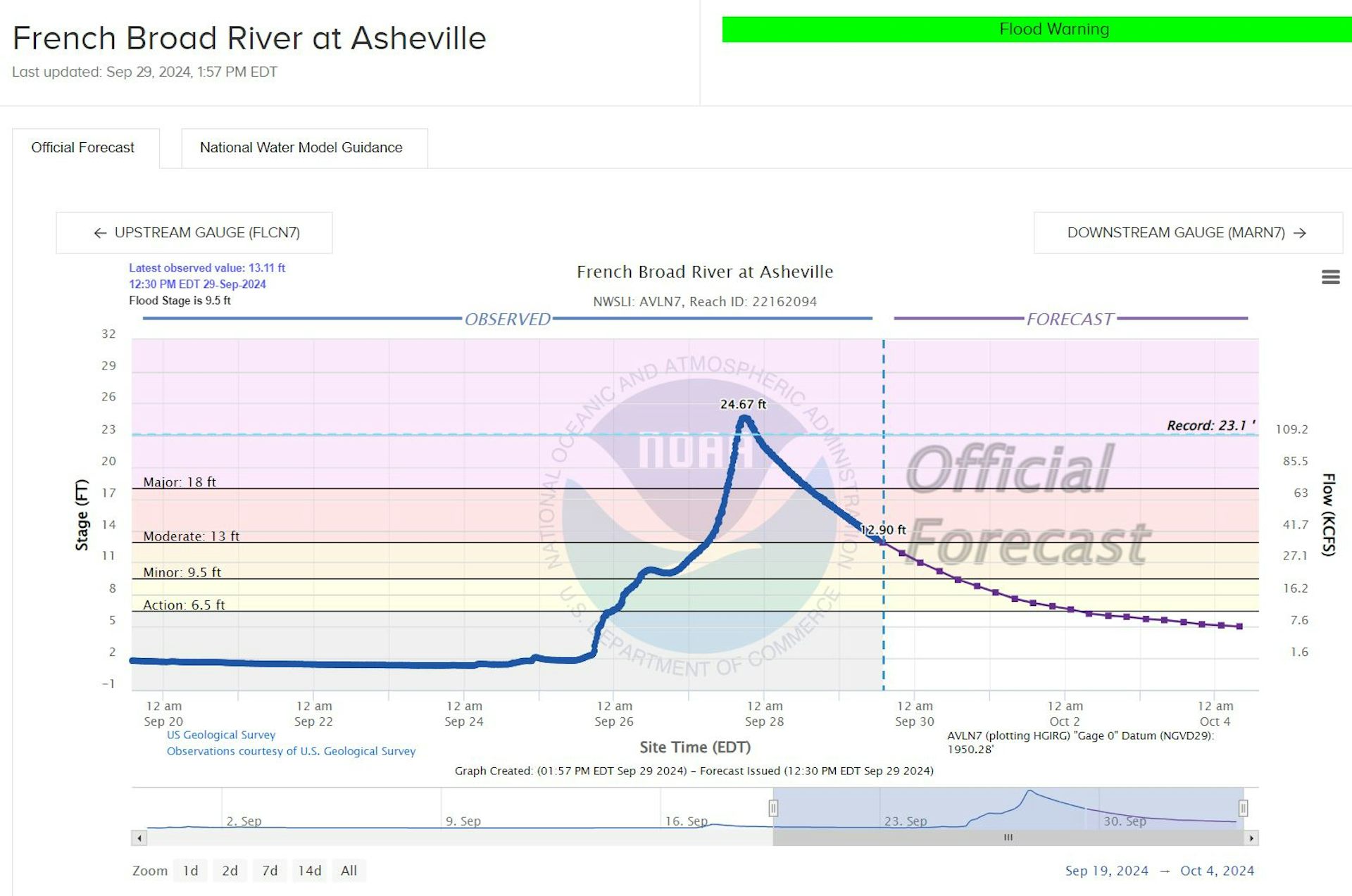
  • MIL-OSI Global: Flooded industrial sites and toxic chemical releases are a silent, growing threat in hurricanes like Milton and Helene

    Source: The Conversation – USA – By James R. Elliott, Professor of Sociology, Rice University

    An industrial storage tank overturned by Hurricane Helene in Asheville, N.C., shows the power of fast-moving floodwater. Sean Rayford/Getty Images

    Hundreds of industrial facilities with toxic pollutants are in Hurricane Milton’s path as it heads toward Florida, less than two weeks after Hurricane Helene flooded communities across the Southeast.

    Milton, expected to make landfall as a major hurricane late on Oct. 9, is bearing down on boat and spa factories along Florida’s west-central coast, along with the rubber, plastics and fiberglass manufacturers that supply them. Many of these facilities use tens of thousands of registered contaminants each year, including toluene, styrene and other chemicals known to have adverse effects on the central nervous system with prolonged exposure.

    Farther inland, hundreds more manufacturers that use and house hazardous chemicals onsite lie along the Interstate 4 and Interstate 75 corridors and their feeder roads. And many are in the path of the storm’s intense winds and heavy rainfall.

    Black dots indicate facilities in EPA’s 2022 Toxic Release Inventory within Hurricane Milton’s projected impact zone.
    Rice University Center for Coastal Futures and Adaptive Resilience, CC BY-ND

    Helene’s heavy rainfall in late September 2024 flooded industrial sites across the Southeast. A retired nuclear power plant just south of Cedar Key, Florida, was flooded by Helene’s storm surge.

    In disasters like these, the industrial damage can unfold over days, and residents may not hear about releases of toxic chemicals into water or the air until days or weeks later, if they find out at all.

    Yet pollution releases are common.

    After Hurricane Ian broadsided Florida’s western coast in 2022, runoff that included hazardous materials from damaged storage tanks and local fertilizer mining facilities, in addition to millions of gallons of wastewater, was visible from space, spilling across the coastal wetlands into the Gulf of Mexico. A year earlier, Hurricane Ida triggered more than 2,000 reported chemical spills.

    During Hurricane Harvey in 2017, floodwater surrounded chemical facilities near Houston. Some caught fire as cooling systems failed, releasing huge volumes or pollutants into the air. Emergency responders and residents, who didn’t know what risks they might face, blamed the chemicals for causing respiratory illnesses.

    Many types of toxic material can spread, settle and change the long-term health and environmental safety of surrounding communities – often with little notice to residents. Our team of environmental sociologists and anthropologists has mapped hazardous industrial sites across the country and paired them with hurricanes’ projected impact maps to help communities hold nearby facilities accountable.

    Major polluters on Gulf Coast at high risk”

    The risks from industrial facilities are most obvious along the U.S. Gulf Coast, where many major petrochemical complexes are clustered in harm’s way. These refineries, factories and storage facilities are often built along rivers or bays for easy shipping access.

    But those rivers can also bring storm surge flooding that can raise the ocean by several feet during hurricanes. The storm surge from Helene was over 10 feet above ground level in Florida’s Big Bend and over 6 feet in Tampa Bay. With Milton, forecasters warning of a 10- to 15-foot storm surge at Tampa Bay.

    A boom surrounds flooded railcars to try to contain leaks at a chemical plant in Braithwaite, La., after Hurricane Isaac in 2012.
    AP Photo/David J. Phillip

    A recent study found evidence of two to three times more pollution releases during hurricanes in the Gulf of Mexico than during normal weather from 2005 to 2020.

    The effects of these pollution releases fall disproportionately on low-income communities and people of color, further exacerbating environmental health risks.

    Why residents may not hear about toxic releases

    The statistics are disconcerting, yet they get little attention. That is because hazardous releases remain largely invisible due to limited disclosure requirements and scant public information. Even emergency responders often don’t know exactly which hazardous chemicals they are facing in emergency situations.

    The U.S. Environmental Protection Agency requires major polluters to file only very general information about chemicals and on-site risks in their risk management plans. Some large-scale fuel storage facilities, such as those holding liquefied natural gas, are not even required to do that.

    These risk management plans outline “worst-case” scenarios and are supposed to be publicly accessible. But, in reality, we and others have found them difficult to access, heavily redacted and housed in federal reading rooms with limited access. The reason local officials and national scientific review panels often give for the secrecy is to protect the facilities from terrorist attack.

    Oil storage tanks and industrial facilities line the Houston Ship Channel, which is vulnerable to storm surge from Gulf of Mexico hurricanes.
    AP Photo/David J. Phillip

    Adding to this opacity is the fact that many states – including those along the Gulf – suspend restrictions on pollution releases during emergency declarations. Meanwhile, real-time incident notifications from the National Response Center – the federal government’s repository for all chemical discharges into the environment – typically lag by a week or more,

    We believe this limited public information on rising chemical threats from our changing climate should be front-page news every hurricane season. Communities should be aware of the risks of hosting vulnerable industrial infrastructure, particularly as rising global temperatures increase the risk of extreme downpours and powerful hurricanes.

    Mapping the risks nationwide to raise awareness

    To help communities understand their risks, our team at Rice University’s new Center for Coastal Futures and Adaptive Resilience investigates how industrial communities in flood-prone areas nationwide can better adapt to such threats, socially as well as technologically.

    Our interactive map shows where elevated future flood risks threaten to inundate major polluters that we identify using the EPA’s Toxic Release Inventory.

    The U.S. has several hot spots with clusters of flood-prone polluters. Houston’s Ship Channel, Chicago’s waterfront steel industries and the harbors at Los Angeles and New York/New Jersey are among the biggest.

    Three of the biggest hot spots, where large numbers of industrial facilities with toxic materials face elevated future flood risks, are in the Northeast, the northwestern Gulf Coast and the southern end of the Great Lakes.
    Rice University Center for Coastal Futures and Adaptive Resilience, CC BY-ND

    But, as Helene revealed, there can also be great concern in less obvious spots. Inland, particularly in the mountains, runoff can quickly turn normally tame rivers into fast-rising torrents. The French Broad River at Asheville, North Carolina, rose about 12 feet in 12 hours during Helene and set a new flood stage record.

    When hurricanes and tropical storms are headed for the U.S., our interactive maps show where major polluters are located in the storm’s projected cone of impact. The maps identify hazardous flood-prone facilities down to the address, anywhere in the country.

    Knowledge is the first step

    Knowing where these sites are located is only the first step. Often, it’s up to communities themselves, many of them already overexposed and historically underserved, to raise concerns and demand strategies for mitigating the health, economic and environmental risks that industrial sites at risk of flooding and other damage can pose.

    These discussions can’t wait until a disaster is on the way. By knowing where these risks may be, communities can take steps now to build a safer future.

    This article, originally published Sept. 30, has been updated with Hurricane Milton.

    James R. Elliott receives funding from the National Science Foundation and the National Renewable Energy Lab.

    Dominic Boyer receives funding from the National Science Foundation, NOAA and Texas Sea Grant.

    Phylicia Lee Brown has nothing to disclose.

    – ref. Flooded industrial sites and toxic chemical releases are a silent, growing threat in hurricanes like Milton and Helene – https://theconversation.com/flooded-industrial-sites-and-toxic-chemical-releases-are-a-silent-growing-threat-in-hurricanes-like-milton-and-helene-239977

    MIL OSI – Global Reports –

    January 23, 2025
  • MIL-Evening Report: Will the Earth warm by 2°C or 5.5°C? Either way it’s bad, and trying to narrow it down may be a distraction

    Source: The Conversation (Au and NZ) – By Jonny Williams, Climate Scientist, University of Reading

    Getty Images

    Climate change is usually discussed in terms of rising temperatures.

    But scientists often use a different measure, known as “equilibrium climate sensitivity”. This is defined as the global mean warming caused by a doubling of pre-industrial carbon dioxide (CO₂) levels in the atmosphere.

    We use this measure to describe the range of potential temperature increases on longer timescales, and to compare how well climate models reproduce observed warming.

    But the predicted range of rising temperature has remained stubbornly wide, somewhere between 2°C and 5.5°C of warming, as assessed in several generations of reports issued by the Intergovernmental Panel on Climate Change. This is despite concerted efforts to narrow it down.


    The Intergovernmental Panel on Climate Change has assessed Earth’s climate sensitivity in each of its reports.
    IPCC, CC BY-SA

    Measuring long-term climate sensitivity is central to future predictions, but we are already seeing the effects of warming across the world with extremes in weather, even at the low end of the range. We argue efforts to boil down Earth’s response to climate change to one number may be unhelpful.

    The continued uncertainty could be seen as a failure of climate models to converge on the correct value. Using equilibrium climate sensitivity as a metric for “precisely” predicting the amount of warming expected from a given amount of greenhouse gases is, at best, ambiguous.

    History of climate sensitivity

    About a century before the first computational estimates of Earth’s climate sensitivity were published in 1967, the Swedish physicist and 1903 Nobel laureate Svante August Arrhenius was the first to estimate values at 4-6°C.

    Since the early efforts to model Earth systems, computer simulations have steadily increased in complexity. The first models only simulated the atmosphere, but they have evolved to include vegetation, processes in the ocean and sea ice.

    While undoubtedly beneficial to the understanding of fundamental science, each of these added processes has introduced uncertainties in the models’ warming response.

    Indeed, given the level of complexity (which differs between models) and resolution of some current models, it is not surprising the estimates of climate sensitivity differ so much.

    Self-enforcing feedbacks

    Climate feedbacks are central to our argument that equilibrium climate sensitivity is poorly defined. An example of this is the relationship between ice volume and reflectivity.

    As highly reflective ice melts on land or sea, the underlying surface is exposed and less sunlight reflected back into space. This increases the amount of warming for a given amount of greenhouse gases. It’s what scientists refer to as a positive feedback loop.

    Another such self-enforcing feedback concerns potentially large climate impacts from the release of methane from tropical wetlands and permafrost melt.

    Atmosphere models can’t account for this alone, and when they are coupled with an ice-sheet or sea-ice model, the estimate of climate sensitivity changes.

    Melting permafrost, such as seen here on Svalbard, represents a climate feedback loop, increasing the amount of warming for a given amount of greenhouse gases.
    Getty Images

    Overheated arguments

    It quickly became apparent when studying some recent climate model results that some simulations are producing equilibrium climate sensitivity ranges noticeably higher than before.

    In some models, this has been linked to larger self-enhancing cloud feedbacks and how aerosols are represented.

    There has been some hesitancy to trust the results produced by these models. They are considered “too hot”.

    But we feel these high equilibrium simulations still have value. While we are not arguing they are correct, they force us to consider the what-if situation of very high climate sensitivity, where a doubling of CO₂ would result in warming of 5°C or higher. We know the impact on our environment would be devastating.

    Some view high equilibrium climate sensitivity as more consistent with warmer climates in the past, but others have questioned this.

    There are several reasons why past climate sensitivity may differ from modern conditions. We may be in a different phase of Earth’s orbital cycles or the balance between volcanism and weathering.

    Of course, we should treat all scientific results with caution, but the potential insights gained for uncertain futures are of particular importance when climate change is already being felt across the globe.

    Where to from here?

    We are continually improving our understanding of the climate – how it has changed in the past and how we think it may change in the future. Equilibrium climate sensitivity has consequently become the single solution we are seeking from climate models, even though the precise value will arguably never be known.

    Equilibrium climate sensitivity is undoubtedly a convenient way of distilling future projections. However, it is important not to over-rely on an idealised quantity, because its utility as a useful comparative measure of climate models can give the false impression of a lack of progress in understanding.

    There is similarity with the common misconception of a 50% probability of rainfall in a weather forecast, which is often misinterpreted as forecasters not knowing whether it will rain or not.

    Communicating uncertainty in projections of future climate conditions is a “wicked” problem. But we risk losing perspective of Earth’s system response by focusing on the effort to make climate models agree on one measure. This is not the answer future generations need.

    Jonny Williams receives funding from the Deep South National Science Challenge.

    Georgia Rose Grant receives funding from MBIE Strategic Science Investment Fund.

    – ref. Will the Earth warm by 2°C or 5.5°C? Either way it’s bad, and trying to narrow it down may be a distraction – https://theconversation.com/will-the-earth-warm-by-2-c-or-5-5-c-either-way-its-bad-and-trying-to-narrow-it-down-may-be-a-distraction-229497

    MIL OSI Analysis – EveningReport.nz –

    January 23, 2025
  • MIL-Evening Report: Republicans once championed immigration in the US. Now, under Trump, an ugly nativism has been normalised

    Source: The Conversation (Au and NZ) – By Prudence Flowers, Senior Lecturer in US History, College of Humanities, Arts, and Social Sciences, Flinders University

    It might seem surprising today in the era of Donald Trump, but Republicans in the United States once championed immigration and supported pathways to citizenship for undocumented Americans.

    In January 1989, Ronald Reagan’s final speech as president was an impassioned ode to the immigrants who made America “a nation forever young, forever bursting with energy and new ideas”.

    Contrast this with Trump, who has normalised dehumanising rhetoric and policies against immigrants. In this year’s presidential campaign, for instance, he has referred to undocumented immigrants as “animals” who are “poisoning the blood of our country”.

    Both Trump and his vice presidential running mate, JD Vance, also repeated a false story about Haitian “illegal aliens” eating pets in Springfield, Ohio.

    Perhaps most troubling, Trump has pledged to launch “the largest deportation operation in the history of our country”, if he’s elected.

    Immigration policies throughout history

    Nativism, or anti-immigrant sentiment, has a long history in American politics.

    In 1924, a highly restrictive immigration quota system based on racial and national origins was introduced. This law envisaged America as a white, Anglo-Saxon, Protestant nation.

    However, there was no restriction on immigrants from the Western Hemisphere. The agricultural and railroad sectors relied heavily on workers from Mexico.

    In 1965, the quota system was replaced by visa preference categories for family and employment-based migrants, along with refugee and asylum slots.

    Then, as violence and economic instability spread across Central America in the 1970s, there was a surge in undocumented immigration to the US.

    Scholar Leo Chavez argues that in the late 1980s and early 1990s, an alarmist “Latino threat narrative” became the dominant motif in media discussions of immigration.

    This narrative was frequently driven by Republican politicians in states on the US-Mexico border, who derived electoral advantage from amplifying voter anxieties.

    The growing popularity of this negative discourse coincided with a significant increase in income inequality – a byproduct of neo-liberal policies championed by Reagan and other Republicans.


    Read more:
    Before Trump, there was a long history of race-baiting, fear-mongering and building walls on the US-Mexico border


    A dramatic shift in Republican rhetoric

    In the early-to-mid 20th century, Democrats were often the party that supported restrictive immigration and border policies.

    However, most Republicans at the national level – strongly supported by business – tended to endorse policies that encouraged the easy flow of workers across the border and increased levels of legal immigration.

    Prominent conservative Republicans also rejected vilifying rhetoric towards undocumented Americans. They presented all immigrants as pursuing opportunities for their families, a framing that emphasised a shared vision of the American dream. In this telling, their labour contributed to the economy and America’s growth and prosperity.

    George H. W. Bush And Ronald Reagan debate immigration in a Republican primary debate in 1980.

    Reagan, the most influential conservative of the late 20th century, opposed erecting a border wall and supported amnesty over deportation.

    Reagan also strongly supported bipartisan immigration reform. In 1986, Congress passed an immigration act that increased border security funding, but also ensured 2.7 million undocumented immigrants, primarily of Latino background, were able to gain legal status.

    Twenty years later, President George W. Bush and Republican Senator John McCain lobbied for a bipartisan bill that would have tightened border enforcement while simultaneously “legalising” an estimated 12 million undocumented immigrants. It was narrowly defeated.

    This vocal support for immigrants by leading Republicans was striking because for much of the period between the late 1980s and the early 2000s, a majority of Americans actually wanted immigration levels reduced.

    Then, around 2009, a dramatic shift in political rhetoric took place. The Tea Party movement brought border security and “racial resentment” towards immigrants centre stage, challenging conservative Republicans from the populist right.

    As a result, more and more Republicans began to voice restrictionist and xenophobic rhetoric and support legislation aimed at cracking down on illegal immigration.

    What’s surprising, though, is the number of undocumented immigrants in the US was actually declining at this time, from 12.2 million in 2007 to 10.7 million in 2016.

    Donald Trump and the new nativism

    In this worsening anti-immigrant climate, Trump descended a golden escalator in mid-2015 to launch his presidential campaign.

    In his speech that day, immigration was front and centre. Trump vowed to “build a great wall” and accused Mexico of sending “rapists” and “criminals” to America.

    His speeches during the presidential campaign were marked by frequent anti-Mexican assertions and calls for Islamophobic visa policies. This hostile stance on immigration was central to his victory in both the Republican primaries and the general election against Hillary Clinton.

    Once in office, Trump then adopted a “zero tolerance” stance towards undocumented immigration. His administration pursued a heartrending family separation policy that split children and their undocumented parents at the border. This approach was celebrated on conservative media outlets such as Fox News.

    During his presidency, he also reduced legal immigration by almost half, drastically cut America’s refugee intake, and introduced bans on people from Muslim-majority countries.

    Policy expert David Bier concluded the goal of Republican lawmakers had shifted:

    It really looks like the entire debate about illegality is not the main issue anymore for Republicans in both chambers of Congress. The main goal seems to be to reduce the number of foreigners in the United States to the greatest extent possible.

    Indeed, Trump’s vision of the nation had overtly racial overtones.

    In one 2018 meeting, he asked why America should accept immigrants from “shithole countries” like Haiti, El Salvador or the African continent. His preference was for Norwegian migrants.

    Immigration as a major election theme

    From 2021–2023, undocumented US-Mexico border crossings surged due to natural disasters, economic downturns and violence in many Latin American and Caribbean nations. Many of the recent arrivals are asylum seekers.

    Though the numbers have fallen sharply in 2024, immigration and the border are still one of the top issues for voters across the political spectrum. The issue is particularly important in the key swing state of Arizona.

    In 2024, Trump’s central immigration promise was encapsulated by the beaming delegates waving signs calling for “Mass Deportations Now” at the Republican National Convention.

    The Trump-Vance ticket has blamed undocumented immigrants for almost every economic and social problem imaginable. The two candidates present them as a dangerous and subversive “other” that cannot be assimilated into mainstream American culture.

    Yet Trump, as both president and candidate, has worked to prevent the passage of border security legislation. Turmoil on the border benefits him.

    And his nativism now encompasses all forms of immigration – he has pledged to curb legal channels for people to enter the country, as well.

    All of this rhetoric has had a dramatic impact on public opinion. Between 2016 and 2024, the number of people supporting the deportation of undocumented immigrants jumped from 32% to 47%.

    In July 2024, 55% of Americans also said they wanted to see immigration levels decrease, a 14-point increase in one year.

    Many Americans do not perceive immigration as a source of vitality and renewal as they had in the past. Instead, reflecting Trump’s language, they are viewing immigrants as an existential threat to the country’s future.

    Prudence Flowers does not work for, consult, own shares in or receive funding from any company or organisation that would benefit from this article, and has disclosed no relevant affiliations beyond their academic appointment.

    – ref. Republicans once championed immigration in the US. Now, under Trump, an ugly nativism has been normalised – https://theconversation.com/republicans-once-championed-immigration-in-the-us-now-under-trump-an-ugly-nativism-has-been-normalised-239836

    MIL OSI Analysis – EveningReport.nz –

    January 23, 2025
  • MIL-OSI USA: Rep. Lee & Congressional Lead Safety Leaders Applaud Finalization of New Lead and Copper Rule Improvements, Announcement of $2.6 Billion in New Funding to Help Remove Lead Pipes Across America

    Source: United States House of Representatives – Congresswoman Barbara Lee 13th District of California

    October 08, 2024

    WASHINGTON, D.C. –  Congresswoman Barbara Lee (D-CA-12) along with co-chairs of the U.S. House Get the Lead Out Caucus Lisa Blunt Rochester (D-DE-AL), Rashida Tlaib (D-MI-12) and Debbie Dingell (D-MI-06), and Co-founders of the U.S. Senate Lead Task Force Tammy Duckworth (D-IL) and Cory Booker (D-NJ)  today lauded the Environmental Protection Agency’s (EPA) decision to finalize the Biden Administration’s proposed Lead and Copper Rule Improvements (LCRI), which would lower the lead action level to better protect human health and require water systems to replace old and deteriorating lead pipes within a decade. In addition to the LCRI, the EPA also announced $2.6 billion in newly available drinking water infrastructure funding through the Bipartisan Infrastructure Law (BIL) to support lead-related activities, including lead pipe replacement projects. The finalized rule comes ahead of the October 16th finalization deadline to not only help ensure these important improvements are implemented as quickly as possible, but also prevent water systems from being forced to temporarily comply with the prior rule proposed by the Trump Administration—also known as the Lead and Copper Rule Revisions (LCRR)—which would put public health at risk.

    “Today, EPA estimates that nearly 9 million homes are served through lead pipes across the country – and disproportionally, many of these homes are located in low-income communities and communities of color,” said Rep. Barbara Lee. “Clean and safe drinking water is a human right, and we must treat it that way. I am proud of the work of my colleagues and I in Congress to achieve our goal of removing every lead pipe in the United States over the next ten years and thank the Biden-Harris Administration for their work in fighting to ensure that communities across our country have access to lead-free water.”

    “Today’s announcement from the Biden-Harris Administration is a win-win for our communities because it delivers on our shared commitment to replace all lead pipes across the country within 10 years and protect public health,” said Rep. Lisa Blunt Rochester, co-lead of the congressional Get the Lead Out Caucus. “I am proud to have helped push for the swift finalization of the Lead and Copper Rule Improvements with my colleagues in Congress. Thanks to our advocacy, and with the leadership of President Biden and Vice President Harris, we are closer than ever to actualizing a 100% lead-free future.”

    “As the founder of the Get the Lead Out Caucus, I know that clean drinking water is a human right,” said  Rep. Tlaib. “We must move urgently to replace all lead pipes in our country within the next 10 years, and I’m glad to see the EPA announce the final Lead and Copper Rule Improvements to continue the critical work toward this objective. Congress must continue to work to appropriate the funding necessary to help all of our communities identify, remove, and replace every lead pipe over this next decade.”

    “Clean and safe drinking water is a basic human right, and the science is clear – no amount of lead is safe. There are millions of people across the country who don’t even know if they are drinking lead, and I’ve had parents come up to me with tears in their eyes, worried for the wellbeing of their children because of lead in the water at school,” Rep. Dingell said. “I thank the Biden-Harris Administration for their continued commitment to replacing every lead service line in our country to guarantee access to safe water for every community and finally give peace of mind to families.”

    ” Every American, no matter their zip-code, deserves access to safe drinking water,” said Senator Duckworth, “We’ve been working hard in Congressto achieve our goal of removing every elad pip in America over the next decade, and this historic rule from the Biden Administration and billions in new funding will help us make it a reality whilve preventing Trump-era policies that would harm human health from going into effect, This is a win-win for all Americans.”

    “The EPA’s bold leadership in finalizing this critical rule will help us eliminate lead pipes within a decade and put a stop to lead exposure that continues to threaten the health of far too many families and children in our nation today,” said Senator Booker. “Every American deserves access to clean and safe drinking water, and by modernizing our aging water infrastructure we are investing in a future where every family can turn on the tap and know their water is clean. I am proud to have helped lead the call in Congress for a strong final rule, and I thank the Biden-Harris administration for their commitment to environmental justice and public health.”

    The finalized rule also improves communication within communities so that families are better informed about the risk of lead in drinking water, the location of lead pipes and plans for replacing them. Exposure to lead is harmful to health, especially for young children. In children, low levels of exposure have been linked to damage to the nervous system, learning disabilities, shorter stature, impaired hearing and impaired formation and function of blood cells. 

    MIL OSI USA News –

    January 23, 2025
  • MIL-Evening Report: Unprecedented peril: disaster lies ahead as we track towards 2.7°C of warming this century

    Source: The Conversation (Au and NZ) – By Thomas Newsome, Associate Professor in Global Ecology, University of Sydney

    You don’t have to look far to see what climate change is doing to the planet. The word “unprecedented” is everywhere this year.

    We are seeing unprecedented rapidly intensifying tropical storms such as Hurricane Helene in the eastern United States and Super Typhoon Yagi in Vietnam. Unprecedented fires in Canada have destroyed towns. Unprecedented drought in Brazil has dried out enormous rivers and left swathes of empty river beds. At least 1,300 pilgrims died during this year’s Hajj in Mecca as temperatures passed 50°C.

    Unfortunately, we are headed for far worse. The new 2024 State of the Climate report, produced by our team of international scientists, is yet another stark warning about the intensifying climate crisis. Even if governments meet their emissions goals, the world may hit 2.7°C of warming – nearly double the Paris Agreement goal of holding climate change to 1.5°C. Each year, we track 35 of the Earth’s vital signs, from sea ice extent to forests. This year, 25 are now at record levels, all trending in the wrong directions.

    Humans are not used to these conditions. Human civilisation emerged over the last 10,000 years under benign conditions – not too hot, not too cold. But this liveable climate is now at risk. In your grandchild’s lifetime, climatic conditions will be more threatening than anything our prehistoric relatives would have faced.

    Our report shows a continued rise in fossil fuel emissions, which remain at an all-time high. Despite years of warnings from scientists, fossil fuel consumption has actually increased, pushing the planet toward dangerous levels of warming. While wind and solar have grown rapidly, fossil fuel use is 14 times greater.

    This year is also tracking for the hottest year on record, with global daily mean temperatures at record levels for nearly half of 2023 and much of 2024.

    Next month, world leaders and diplomats will gather in Azerbaijan for the annual United Nations climate talks, COP 29. Leaders will have to redouble their efforts. Without much stronger policies, climate change will keep worsening, bringing with it more frequent and more extreme weather.


    Bad news after bad news

    We have still not solved the central problem: the routine burning of fossil fuels. Atmospheric concentrations of greenhouse gases – particularly methane and carbon dioxide – are still rising. Last September, carbon dioxide levels in the atmosphere hit 418 parts per million (ppm). This September, they crossed 422 ppm. Methane, a highly potent greenhouse gas, has been increasing at an alarming rate despite global pledges to tackle it.

    Compounding the problem is the recent decline in atmospheric aerosols from efforts to cut pollution. These small particles suspended in the air come from both natural and human processes, and have helped cool the planet. Without this cooling effect, the pace of global warming may accelerate. We don’t know for sure because aerosol properties are not yet measured well enough.

    Other environmental issues are now feeding into climate change. Deforestation in critical areas such as the Amazon is reducing the planet’s capacity to absorb carbon naturally, driving additional warming. This creates a feedback loop, where warming causes trees to die which in turn amplifies global temperatures.

    Loss of sea ice is another. As sea ice melts or fails to form, dark seawater is exposed. Ice reflects sunlight but seawater absorbs it. Scaled up, this changes the Earth’s albedo (how reflective the surface is) and accelerates warming further.

    In coming decades, sea level rise will pose a growing threat to coastal communities, putting millions of people at risk of displacement.

    Accelerate the solutions

    Our report stresses the need for an immediate and comprehensive end to the routine use of fossil fuels.

    It calls for a global carbon price, set high enough to drive down emissions, particularly from high-emitting wealthy countries.

    Introducing effective policies to slash methane emissions is crucial, given methane’s high potency but short atmospheric lifetime. Rapidly cutting methane could slow the rate of warming in the short term.

    Natural climate solutions such as reforestation and soil restoration should be rolled out to increase how much carbon is stored in wood and soil. These efforts must be accompanied by protective measures in wildfire and drought prone areas. There’s no point planting forests if they will burn.

    Governments should introduce stricter land-use policies to slow down rates of land clearing and increase investment in forest management to cut the risk of large, devastating fires and encourage sustainable land use.

    We cannot overlook climate justice. Less wealthy nations contribute least to global emissions but are often the worst affected by climate disasters.

    Wealthier nations must provide financial and technical support to help these countries adapt to climate change while cutting emissions. This could include investing in renewable energy, improving infrastructure and funding disaster preparedness programs.

    Internationally, our report urges stronger commitments from world leaders. Current global policies are insufficient to limit warming to 1.5°C above pre-industrial levels.

    Without drastic changes, the world is on track for approximately 2.7°C of warming this century. To avoid catastrophic tipping points, nations must strengthen their climate pledges, reduce dependence on fossil fuels, and accelerate the transition to renewable energy.

    Immediate, transformative policy changes are now necessary if we are to avoid the worst effects of climate change.

    Climate change is already here. But it could get much, much worse. By slashing emissions, boosting natural climate solutions and working towards climate justice, the global community can still fend off the worst version of our future.

    Thomas Newsome receives funding from the Australian Research Council. He is immediate past-president of the Australasian Wildlife Management Society and President of the Royal Zoological Society of New South Wales.

    William Ripple receives funding from the CO2 Foundation and University of Oregon donor Roger Worthington.

    – ref. Unprecedented peril: disaster lies ahead as we track towards 2.7°C of warming this century – https://theconversation.com/unprecedented-peril-disaster-lies-ahead-as-we-track-towards-2-7-c-of-warming-this-century-240549

    MIL OSI Analysis – EveningReport.nz –

    January 23, 2025
  • MIL-OSI USA: NASA’s Earth Information Center at the Smithsonian

    Source: NASA

    NASA Administrator Bill Nelson and Kirk Johnson, Sant Director of the Smithsonian’s National Museum of Natural History in Washington, preview the agency’s new Earth Information Center exhibit on Monday, Oct. 8, 2024. This new exhibit is the Earth Information Center’s second physical location.
    The exhibit at the Smithsonian includes a 32-foot-long, 12-foot-high video wall displaying Earth science data visualizations and videos, interpretive panels showing Earth’s connected systems, information on our changing world, and an overview of how NASA and the Smithsonian study our home planet. It opens to the public Tuesday, Oct. 8, and will remain on display through 2028.
    Image Credit: NASA/Bill Ingalls

    MIL OSI USA News –

    January 23, 2025
  • MIL-OSI USA: NSF congratulates laureates of the 2024 Nobel Prize in physics

    Source: US Government research organizations

    Two researchers used fundamental knowledge of the physical properties of materials to create key innovations that make artificial intelligence work

    The U.S. National Science Foundation congratulates John J. Hopfield and Geoffrey E. Hinton for their Nobel Prize in physics. Their research and innovations helped make possible “machines that learn” — artificial neural networks with the ability to store and reconstruct information and recognize complex patterns within data.

    NSF supported their pioneering work in the 1980s, which helped create the foundation for the AI revolution of today, including Hopfield’s seminal 1982 paper “Neural networks and physical systems with emergent collective computational abilities.” Hopfield and Hinton’s multiple breakthroughs, achieved independently, used fundamental concepts and methods from physics to develop new computer technologies that mimic an organic brain’s ability to process information through memory and learning. 

    For example, Hopfield created a computer model of a neural network of interconnected nodes that could influence one another, akin to the physical interactions between atoms in magnetic materials. Hinton expanded on Hopfield’s network by using statistical methods traditionally used to determine the properties of systems with many elements — like the temperature of a gas made of many molecules. Named after 1800s physicist Ludwig Boltzmann, who studied statistical and probabilistic properties of such systems, Hinton’s “Boltzmann machine” was an early example of a computer model that can generate probability-based solutions and be trained to recognize new information and how it is similar or different from existing information.

    “The laureates brought their understanding of the fundamental physical workings of nature into a new realm and created an entirely new foundation that has led to what we now call AI — perhaps the greatest innovation of our generation,” says NSF Director Sethuraman Panchanathan. “Beyond their scientific breakthroughs, they have also provided invaluable training for many students, who now carry on their legacy as innovators and leaders in the U.S. scientific enterprise.”

    Select NSF awards supporting Hopfield or Hinton

    MIL OSI USA News –

    January 23, 2025
  • MIL-OSI USA: NSF Growing Convergence Research awards advance innovation across disciplines

    Source: US Government research organizations

    The U.S. National Science Foundation Growing Convergence Research (NSF GCR) awards are fostering deep integration across disciplines and pushing the boundaries of current research paradigms. The awards bring together experts from multiple science, technology, engineering and mathematics fields to tackle complex challenges across various topics, including national security, energy and STEM education.  

    “These awards require that researchers work across traditional disciplinary boundaries and leverage the expertise of different fields to drive innovation and discovery,” said Alicia J. Knoedler, head of the NSF Office of Integrative Activities. “Learning and practicing collaboration between and among disciplines are critical skills that investigators and teams need to develop. NSF’s investments through these awards reinforce the importance of capacity building to perform convergence in research and training.”  

    The NSF GCR program supports high-risk, cutting-edge research and helps to cultivate a new generation of interdisciplinary scientists. Projects are inspired by a societal grand challenge or a fundamental research question at the forefront of STEM. By growing novel collaborations and cross-disciplinary training, these awards will empower researchers to think outside the box and develop innovative approaches to scientific inquiry. This advances the frontiers of knowledge and paves the way for breakthroughs that can benefit society. 

    The awardees and short descriptions are listed below:  

    • Rooted in Nature: Bioinspired Design of Sustainable Seeding Methods to Improve Forest Regeneration – University of California, Berkeley, Cornell University, Syracuse University and The Pennsylvania State University 

      Forest regeneration is essential for combating climate change. Challenges like limited seed availability and time-consuming seedling cultivation hinder forest restoration efforts. This project will integrate expertise in material science, engineering, ecology and other areas to create biodegradable, self-burying seed carriers for efficient, lower-cost aerial seeding. The researchers will investigate seed carrier designs applicable to different ecosystems. The team will also develop new ways of evaluating and improving the effectiveness of the seeding techniques. This research will boost forest restoration, providing economic advantages and enhancing ecological resilience. 
       

    • Non-Equilibrium Electrochemical Plasma Catalysis for Distributed Electrified Ammonia Synthesis – Princeton University, Duke University and Rutgers University–Newark 

      Ammonia is a fuel for green power generation and a medium for energy storage and transport. It is also vital to food production as a key agricultural fertilizer. Traditional ammonia synthesis is energy-intensive and produces carbon dioxide. It also relies on fossil fuels and high-pressure catalysis. This project aims to advance the development of new electrified reactors that produce green ammonia with renewable electricity from atmospheric nitrogen and water. These reactors can help decarbonize chemical plants and address challenges in renewable energy storage. The project team will use novel integration across disciplines to create a nonequilibrium electrochemical plasma catalysis system for ammonia synthesis from water, nitrogen and electricity. Its success will be an innovation in nonequilibrium green chemical manufacturing. 
       

    • Engineering, SocioEconomic and Environmental Convergence of Ocean Wave Energy Research for Remote Coastal Communities – University of Michigan – Ann Arbor, Virginia Tech, East Carolina University and University of North Carolina at Chapel Hill 

      In some rural coastal and island areas, electricity must be transported over long distances, and the supply is less robust, creating a challenge that hinders socioeconomic growth. Ocean waves along U.S. coastlines offer abundant energy resources, and over 200 concepts have been proposed for generating electricity from wave energy. Researchers from this project will examine which of the proposed concepts are most practical for island and coastal communities from engineering and socioeconomic perspectives. They will validate the most promising concepts through community engagement and ocean tests. The project integrates engineering, environmental and social sciences experts and an external advisory board with community end users and commercial developers to implement a convergent, community-engaged approach to this research challenge. 
       

    • Mineral Detection of Dark Matter – Virginia Tech, University of Michigan – Ann Arbor and University of North Florida 

      Dark matter plays an important role in the formation of galaxies and the universe’s evolution, but it has proven very difficult to detect directly. This project will integrate engineering, physics, geoscience and materials science to establish whether evidence of interactions between dark matter and ordinary matter can be found through “mineral detection.” Researchers will explore whether crystals in rocks can be used to look for evidence of interactions with dark matter over geological timescales. The team aims to develop a new path for advancing understanding of what dark matter is. 
       

    • Towards a Physics-Inspired Approach to Computation on Encrypted Data – Boston University, University of Central Florida and Cornell University 

      Harnessing the wealth of electronically stored data for applications with societal value raises security and privacy concerns that are likely to hinder progress and return on investment in an artificial intelligence-powered economy. This project will combine ideas and tools from physics, mathematics and computer science to explore a new paradigm for circuit obfuscation in cryptography and establish the security and efficiency of encrypted operator computing. The research team aims to accelerate the development of trusted, low-overhead tools that enable computation directly on encrypted data so that, for example, confidential data can be shared with an untrusted party who can extract insights from the data without having access to the unencrypted data. 
       

    • The Other Plastic Problem: Quantifying and Predicting Impacts of Plastic Additives Across Levels of Biological and Social Organization – Duke University and The Pennsylvania State University 

      Plastic pollution is widespread and harms various species. One major gap in knowledge is the combined biological impact of the many chemicals added to plastics to tailor their properties. Plastic additives are chemicals that are included within plastic polymers to enhance function. These additives include over ~10,000 chemicals and include known endocrine disruptors, pro-inflammatory agents and mutagens. Addressing this research challenge requires integrating expertise across molecular and cell biology, environmental chemistry and toxicology, materials science, policy and other fields. This project will allow an integrated research team to develop and employ novel approaches for analyzing the effects of plastic additives on cells, organisms and ecological communities; ground-truth product use and additive exposures; and evaluate mitigation strategies. The project also aims to engage stakeholders to reduce plastic pollution and empower underrepresented students in STEM to take action. 
       

    • GCR: Towards a Convergent Understanding of the Dynamics of Uncertainty in Individuals and Groups with a Focus on STEM Education – Tufts University 

      Developing a systematic understanding of how people manage ambiguity, uncertainty and confusion (AU&C) is a complex challenge. This project integrates social sciences, data sciences and engineering to build new capabilities for studying AU&C management in the context of STEM learning. This will allow researchers to understand how to enable students to productively engage with AU&C in STEM. The research team will develop novel methods for collecting and analyzing student data using a multimodal approach, including behavioral, linguistic and physiological sensing. Using these methods, researchers will investigate the individual and group dynamics of AC&U within STEM learning environments, with the long-term goal of producing new educational practices that embrace complexity and uncertainty. In this, the project aims to bridge the disconnect between how science is taught and the practice of STEM professionals. 

    MIL OSI USA News –

    January 23, 2025
  • MIL-Evening Report: Oral vaccines could provide relief for people who suffer regular UTIs. Here’s how they work

    Source: The Conversation (Au and NZ) – By Iris Lim, Assistant Professor in Biomedical Science, Bond University

    9nong/Shutterstock

    In a recent TikTok video, Australian media personality Abbie Chatfield shared she was starting a vaccine to protect against urinary tract infections (UTIs).

    Huge news for the UTI girlies. I am starting a UTI vaccine tonight for the first time.

    Chatfield suffers from recurrent UTIs and has turned to the Uromune vaccine, an emerging option for those seeking relief beyond antibiotics.

    But Uromune is not a traditional vaccine injected to your arm. So what is it and how does it work?

    First, what are UTIs?

    UTIs are caused by bacteria entering the urinary system. This system includes the kidneys, bladder, ureters (thin tubes connecting the kidneys to the bladder), and the urethra (the tube through which urine leaves the body).

    The most common culprit is Escherichia coli (E. coli), a type of bacteria normally found in the intestines.

    While most types of E. coli are harmless in the gut, it can cause infection if it enters the urinary tract. UTIs are particularly prevalent in women due to their shorter urethras, which make it easier for bacteria to reach the bladder.

    Roughly 50% of women will experience at least one UTI in their lifetime, and up to half of those will have a recurrence within six months.

    UTIs are caused by bacteria enterning the urinary system.
    oxo7051/Shutterstock

    The symptoms of a UTI typically include a burning sensation when you wee, frequent urges to go even when the bladder is empty, cloudy or strong-smelling urine, and pain or discomfort in the lower abdomen or back. If left untreated, a UTI can escalate into a kidney infection, which can require more intensive treatment.

    While antibiotics are the go-to treatment for UTIs, the rise of antibiotic resistance and the fact many people experience frequent reinfections has sparked more interest in preventive options, including vaccines.

    What is Uromune?

    Uromune is a bit different to traditional vaccines that are injected into the muscle. It’s a sublingual spray, which means you spray it under your tongue. Uromune is generally used daily for three months.

    It contains inactivated forms of four bacteria that are responsible for most UTIs, including E. coli. By introducing these bacteria in a controlled way, it helps your immune system learn to recognise and fight them off before they cause an infection. It can be classified as an immunotherapy.

    A recent study involving 1,104 women found the Uromune vaccine was 91.7% effective at reducing recurrent UTIs after three months, with effectiveness dropping to 57.6% after 12 months.

    These results suggest Uromune could provide significant (though time-limited) relief for women dealing with frequent UTIs, however peer-reviewed research remains limited.

    Any side effects of Uromune are usually mild and may include dry mouth, slight stomach discomfort, and nausea. These side effects typically go away on their own and very few people stop treatment because of them. In rare cases, some people may experience an allergic reaction.

    How can I access it?

    In Australia, Uromune has not received full approval from the Therapeutic Goods Administration (TGA), and so it’s not something you can just go and pick up from the pharmacy.

    However, Uromune can be accessed via the TGA’s Special Access Scheme or the Authorised Prescriber pathway. This means a GP or specialist can apply for approval to prescribe Uromune for patients with recurrent UTIs. Once the patient has a form from their doctor documenting this approval, they can order the vaccine directly from the manufacturer.

    Antibiotics are the go-to treatment for UTIs – but scientists are looking at options to prevent them in the first place.
    Photoroyalty/Shutterstock

    Uromune is not covered under the Pharmaceutical Benefits Scheme, meaning patients must cover the full cost out-of-pocket. The cost of a treatment program is around A$320.

    Uromune is similarly available through special access programs in places like the United Kingdom and Europe.

    Other options in the pipeline

    In addition to Uromune, scientists are exploring other promising UTI vaccines.

    Uro-Vaxom is an established immunomodulator, a substance that helps regulate or modify the immune system’s response to bacteria. It’s derived from E. coli proteins and has shown success in reducing UTI recurrences in several studies. Uro-Vaxom is typically prescribed as a daily oral capsule taken for 90 days.

    FimCH, another vaccine in development, targets something called the adhesin protein that helps E. coli attach to urinary tract cells. FimCH is typically administered through an injection and early clinical trials have shown promising results.

    Meanwhile, StroVac, which is already approved in Germany, contains inactivated strains of bacteria such as E. coli and provides protection for up to 12 months, requiring a booster dose after that. This injection works by stimulating the immune system in the bladder, offering temporary protection against recurrent infections.

    These vaccines show promise, but challenges like achieving long-term immunity remain. Research is ongoing to improve these options.

    No magic bullet, but there’s reason for optimism

    While vaccines such as Uromune may not be an accessible or perfect solution for everyone, they offer real hope for people tired of recurring UTIs and endless rounds of antibiotics.

    Although the road to long-term relief might still be a bit bumpy, it’s exciting to see innovative treatments like these giving people more options to take control of their health.

    Iris Lim does not work for, consult, own shares in or receive funding from any company or organisation that would benefit from this article, and has disclosed no relevant affiliations beyond their academic appointment.

    – ref. Oral vaccines could provide relief for people who suffer regular UTIs. Here’s how they work – https://theconversation.com/oral-vaccines-could-provide-relief-for-people-who-suffer-regular-utis-heres-how-they-work-240437

    MIL OSI Analysis – EveningReport.nz –

    January 23, 2025
  • MIL-OSI Economics: African Development Bank appoints Nnenna Nwabufo as Vice President for Regional Development, Integration and Business Delivery

    Source: African Development Bank Group

    The African Development Bank Group has appointed Nnenna Lily Nwabufo as Vice President for Regional Development, Integration and Business Delivery, effective 04 October.

    Nwabufo, a Nigerian national and seasoned executive, brings over 33 years of expertise in financial management, budget planning, human resource management, corporate services, and regional operations.

    Since joining the Bank in 1991, she has held various managerial roles, including Acting Vice President for Corporate Services in May 2015.  In January 2021, she was appointed Director General for East Africa, where she led the Bank Group’s strategic objective of achieving developmental impact in the region’s 13 countries, ensuring the growth of sovereign and non-sovereign operations.

    Nwabufo holds a Bachelor of Science degree in Economics from the University of Lagos, Nigeria, and an MBA from Henley Management College in the United Kingdom.

    Commenting on her new role, Nwabufo stated, “I look forward to working closely with the president, the Boards of Directors, fellow senior managers, and our talented staff to continue advancing the Bank’s development mission. Together, we will strengthen partnerships, ensure operational efficiency, and drive sustainable, inclusive growth across Africa.”

    The President of the African Development Bank Group, Dr. Akinwumi A. Adesina said: “I am delighted to appoint Mrs. Nnenna Lily Nwabufo as Vice President for the Regional Development, Integration and Business Delivery. Nnenna brings deep knowledge of the Bank, vast senior management experience in different parts of the Bank, from finance to human resources, corporate services, budget management, and operations, which will be highly valuable in her new role in charge of country and regional operations and offices. I am confident that Nnenna’s managerial and leadership skills and deep operational experience will support all the Bank’s sector Vice Presidents to deliver and manage their operations and portfolios more effectively on the ground and deepen policy dialogues across countries and regions.”

    MIL OSI Economics –

    January 23, 2025
  • MIL-OSI United Nations: Experts of the Committee on the Elimination of Discrimination against Women Commend the Lao People’s Democratic Republic for Elevating Gender Equality to the National Level, Raise Questions on the Treatment of Women Human Rights Defenders and on Human Tra

    Source: United Nations – Geneva

    The Committee on the Elimination of Discrimination against Women today concluded its consideration of the tenth periodic report of the Lao People’s Democratic Republic, with Committee Experts commending the State for elevating the issue of gender equality to the national level, while raising questions on its treatment of women human rights defenders, and how it was combatting human trafficking.

    Jie Xia, Committee Expert and Country Rapporteur, said the Committee commended the Lao People’s Democratic Republic for elevating the issue of gender equality to the national level through domesticating the Convention, developing a law on gender equality, and developing a national action plan and strategy on gender equality, among other measures. 

    A Committee Expert said the Committee had received several names of female human rights defenders who had been poorly treated by the Government and the judiciary.  Could the State party outline recent efforts to review and amend any existing laws, regulations, or decrees that may unduly restrict freedom of expression to ensure that these legal frameworks complied with international human rights standards, including the Convention? What measures was the State taking to investigate the disappearance, maltreatment and deaths of female human rights activists? 

    Another Expert said the Lao People’s Democratic Republic continued to be a renowned source of origin for migrant workers as well as increasingly becoming a country of transit and destination for sexual exploitation and human trafficking.  What were some of the key policies that the National Steering Committee on Anti-Human Trafficking had introduced and implemented in terms of effective anti-trafficking measures?  How was the implementation of the national plan on anti-trafficking carried out?  How did the State ensure that the security forces were working effectively to address the prevalence of trafficking within the Golden Triangle Special Economic Zone? 


    The delegation said the Committee operated on reports from non-governmental organizations, which were often exaggerated.  It was important to look at the reality in the country, rather than organizations that operated reports, which sometimes fit the category of disinformation.  For example, regarding the cases of the so-called female human rights defenders, they were not human rights defenders. They had organised propaganda against the State and had violated criminal law, and were therefore prosecuted and imprisoned. 

    The delegation said a national commission on human trafficking had been established at the provincial, district and national levels.  Focus was directed to the protection of victims.  Trainings were conducted for law enforcement staff on how to identify victims of trafficking, how to refer their cases, and how to further protect them.  The Women’s Union had expanded the shelter services to six provinces in the country. There was a police headquarters located within the Golden Triangle to prevent violations of human rights. Companies operating in this area were encouraged to ensure their staff received medical examinations. 

    Introducing the report, Chansoda Phonethip, Vice President of the Lao People’s Democratic Republic Women’s Union and Vice President of the National Commission for the Advancement of Women, Mothers and Children, and head of delegation, said the promotion and protection of women’s rights were at the core of the Government policy of the Lao People’s Democratic Republic.  In 2019, the National Assembly adopted the law on gender equality, which introduced a wide range of measures to address gender disparities across various sectors.  Under this law, gender-based discrimination was classified as a criminal offense. The Lao People’s Democratic Republic was dedicated to eliminating child marriage through strengthening legal and administrative frameworks, investing in education, and encouraging communities to collectively address the challenges posed by harmful practices such as early marriage and pregnancy. 

    In closing remarks, Ms. Phonethip thanked the Committee for the dialogue, which helped the Lao People’s Democratic Republic fulfil its obligations under the Convention. The Committee’s insights were instrumental to advancing the rights of women and girls in the country.  The State welcomed any support from the international community to help in meeting its obligations under the Convention. 

    Esther Eghobamien-Mshelia, Committee Vice Chair, thanked the delegation for the constructive dialogue with the Committee, which helped it to better understand the situation of women and girls in the Lao People’s Democratic Republic.

    The delegation of the Lao People’s Democratic Republic was comprised of representatives from the National Commission for the Advancement of Women, Mothers and Children; the Ministry of Foreign Affairs; the Lao Women’s Union; and the Permanent Mission of the Lao People’s Democratic Republic to the United Nations Office at Geneva.

    The Committee on the Elimination of Discrimination against Women’s eighty-ninth session is being held from 7 October to 25 October.  All documents relating to the Committee’s work, including reports submitted by States parties, can be found on the session’s webpage.  Meeting summary releases can be found here.  The webcast of the Committee’s public meetings can be accessed via the UN Web TV webpage.

    The Committee will next meet in public at 10 a.m. on Wednesday, 9 October to consider the fifth periodic report of Saudi Arabia (CEDAW/C/SAU/5).

    Report

    The Committee has before it the tenth periodic report of the Lao People’s Democratic Republic (CEDAW/C/LAO/10).

    Presentation of Report

    CHANSODA PHONETHIP, Vice President of the Lao People’s Democratic Republic Women’s Union and Vice President of the National Commission for the Advancement of Women, Mothers and Children, and head of delegation, said the promotion and protection of women’s rights were at the core of the Government policy of the Lao People’s Democratic Republic.  All citizens, regardless of sex, had equal rights in political, economic, social and family life, in compliance with the principles and norms of the Convention. The Government had implemented supportive measures in response to the COVID-19 pandemic, which was a key challenge for the country.  These included financial subsidies which particularly targeted unemployed individuals and women factory workers, with a total of 61,511 people benefitting from these initiatives.  The Government also introduced two national agendas, one focusing on addressing economic and financial difficulties, and the other on combatting drug trafficking. 

    In 2019, the National Assembly adopted the law on gender equality, which introduced a wide range of measures to address gender disparities across various sectors. Under this law, gender-based discrimination was classified as a criminal offense.  Over 50 laws had been revised and newly adopted over the past five years, including those aimed at improving women’s rights and ensuring gender equality. The Government had made great efforts to provide legal aid free of charge for disadvantaged people, as outlined in the law on lawyers, and the decree on legal aid.  The Lao People’s Democratic Republic actively maintained three national mechanisms for promoting gender equality and empowering women. These included the Government, represented by the National Commission for the Advancement of Women, Mothers and Children; the mass organization, represented by the Lao People’s Democratic Republic Women’s Union; and the legislature, represented by the National Assembly’s Women’s Caucus. 

    The Government remained committed to reviewing and strengthening its legal frameworks to further enhance protection from violence, particularly through the law on the protection and development of women and the law on the protection of the rights and interests of children.  The State had strengthened its national mechanisms for assisting women and girls who were victims of violence by adopting the “No Wrong Door” approach, ensuring that victims could access essential services, including healthcare, legal aid, and coordinated case management.  Counselling and protection centres had also been extended to five provinces.

    Awareness raising on gender-based violence was conducted and legal information and resources, such as handouts, posters and brochures on violence were widely distributed. 

    The Lao People’s Democratic Republic was dedicated to eliminating child marriage through strengthening legal and administrative frameworks, investing in education, and encouraging communities to collectively address the challenges posed by harmful practices such as early marriage and pregnancy.  The Government undertook a national study on early marriage and pregnancy, which would guide the formulation of policies and action plans to effectively tackle these issues.  The Government was also committed to protecting and supporting children affected by early marriage, ensuring their successful reintegration into society.  The State was dedicated to preventing human trafficking, with a strong focus on vulnerable groups, particularly women in border regions and high-risk communities. 

    Despite advancements made, the representation of female members in the Ninth National Assembly did not meet the set target of 30 per cent.  In response, the Government was actively undertaking a comprehensive review to identify the underlying factors contributing to this decline, particularly focusing on the various barriers that women faced in attaining high-ranking positions.  The outcomes of this study would serve to address these challenges and promote the participation of women in the upcoming elections for the Tenth National Assembly in 2026.  On the other hand, the number of female members of Provincial People’s Assemblies was higher than the set target.  Most recently, three women were promoted to the rank of Brigadier General, a historical moment in the Lao People’s Democratic Republic army. 

    The Government was actively promoting healthier lifestyles by raising awareness about sanitation, nutrition, and comprehensive pre- and post-natal care for women. Recent data reflected a significant decrease in the maternal mortality rate, now at 36.6 per 100,000 live births.  Ms. Phonethip said in 2026, the Lao People’s Democratic Republic would celebrate the forty-fifth anniversary of its ratification of the Convention. While significant achievements had been made in more than four decades, there were still challenges to overcome. It was hoped that the constructive dialogue with the Committee would produce meaningful outcomes. 

    Questions by Committee Experts

    JIE XIA, Committee Expert and Country Rapporteur, thanked the State party for sending a high-level delegation.  The Committee welcomed positive measures taken by the State party since 2018 to advance the status of women, promote gender equality, and eliminate discrimination against women.  The Committee commended the Lao People’s Democratic Republic for elevating the issue of gender equality to the national level through domesticating the Convention, developing a law on gender equality, and developing a national action plan and strategy on gender equality, among other measures. 

    It was noted that the Criminal Code penalised discriminatory acts based on gender.  Had there been any actions taken to directly penalise gender-based discrimination?  How many cases had been brought under article 204?  The Committee commended the Lao People’s Democratic Republic for domesticating the Convention; what measures had been taken to advance this process?  Could the judiciary apply the relevant laws in its rulings?  How many trainings had covered the Convention?  Could up to date information be provided on efforts made to implement the law on gender equality and the third national strategy on gender equality?  Did the State party encourage mediation through legal means?  How was it ensured that people did not escape legal sanctions by taking advantage of mediation? 

    A Committee Expert said the State party had repeatedly declared it was not able to establish a human rights institution in line with the Paris Principles.  What obstacles did the State party face in this regard?  If a female leader wished to establish a federal liberal party for the upcoming elections, would this be allowed?  If not, why not? 

    There were reports that the Government severely restricted non-governmental organizations. Women rights groups were confined to working through the Lao People’s Democratic Republic Women’s Union, which was a State body.  The Penal Code was also used to prosecute activists and restrict freedom of assembly. The Committee had received several names of female human rights defenders who had been poorly treated by the Government and the judiciary?  Could the State party outline recent efforts to review and amend any existing laws, regulations, or decrees that may unduly restrict freedom of expression to ensure that these legal frameworks complied with international human rights standards, including the Convention?  What measures was the State taking to investigate the disappearance, maltreatment and deaths of female human rights activists?  Was there a public site where detailed statistics related to sex and gender were published annually? 

    Another Expert commended the State party for its initiatives, including training programmes for women in leadership roles.  However, the Committee was concerned that the State party had not instituted temporary special measures to improve specific situations for women and girls.  What was the State party’s concerns regarding the use of temporary special measures?  What steps had been taken to demonstrate the values of temporary special measures and to provide explanations to the general public on the failure to employ these measures?  Would the State party consider the adoption of temporary special measures to fulfil the rights of disadvantaged women and ensure their participation in all areas of life?  What steps was the State party taking to collaborate with stakeholders, including civil society, to implement temporary special measures? 

    Responses by the Delegation

    The delegation said the Penal Code provided for the criminalisation of discrimination against women, and stated that anyone who discriminated against women due to gender would be punished, including by deprivation of liberty and fines.  There had been no cases enacted in the courts so far. The Government paid attention to the functioning of the mediation unit.  It was important to prioritise this mechanism to help avoid people going to the courts, which took time.  Harmony and non-confrontation were important in the Lao People’s Democratic Republic. This was why the Government placed significant importance on the functioning of the village mediation unit. Anyone dissatisfied with the outcome of the mediation unit could escalate it to the courts. 

    The Lao People’s Democratic Republic was preparing for the fourth cycle of the Universal Periodic Review early next year, and was working hard in this regard.  Several recommendations pertained to the Convention, which was a key focus of the Government.  The State was also preparing for the forthcoming visit of the Special Rapporteur on cultural rights in November this year.  Law dissemination campaigns were conducted to people in the provinces.  The budget reflected the implementation of the law on gender equality. 

    The delegation said the Government recognised the importance of national human rights institutions.  The Paris Principles had been studied carefully and research had been conducted on examples of such institutions in different countries.  Workshops had been organised, including with Commissioners from India, Indonesia and Myanmar, to learn how their national human rights institutions worked.  The State had different mechanisms in place and a new commission would involve increased resources.  There were established human rights focal points in each sector and issues could be conveyed through them.  Sometimes, taskforces were established to investigate particular human rights issues. The Lao People’s Democratic Republic was trying to strengthen the current mandates of what they had now. Only 118 Member States of the United Nations had established human rights commissions; in Asia, this number was only 15. 

    The Committee operated on reports from non-governmental organizations, which were often exaggerated.  It was important to look at the reality in the country, rather than organizations that operated reports, which sometimes fit the category of disinformation.  For example, regarding the cases of the so-called female human rights defenders, they were not human rights defenders. They had organised propaganda against the State and had violated criminal law, and were therefore prosecuted and imprisoned.  They used the pretext of freedom of expression to violate the law.  Freedom of expression had limits; it was not absolute. 

    The Lao People’s Democratic Republic planned to conduct an economic survey.  From 2017, the State had made efforts to improve existing databases throughout the sectors.  The Government had made efforts to mobilise women to take part in elections. Capacity training was provided to women. An action plan was in place to empower women to hold leadership positions in the commerce sector.  Women were present in all branches of the economy. 

    Questions by Committee Experts

    A Committee Expert was pleased to hear that the Lao People’s Democratic Republic was considering establishing a human rights institution; how long would this process take? How many cases related to gender-based discrimination were conducted in the State party before the courts in the last five years, and how did they end?  It was sad to hear about the State’s general position regarding human rights defenders.  However, it was pleasing to hear the Criminal Code was being reviewed to enhance freedom of expression; how long would this review process take? 

    Another Expert asked what were the concerns and challenges the State faced in regard to using temporary special measures to advance the rights of women in the country? Could these measures be used to reallocate resources to women? 

    Responses by the Delegation 

    The delegation said it was not practical for the State to provide a timeline on establishing a national human rights institution, as they were learning from other countries and strengthening existing mechanisms.  In some cases, people misused and abused human rights treaties, using freedom of expression as a pretext.  In the case of one woman in prison, she had used propaganda to distort information and criticise the Government.  Every 10 years, the Government amended the Constitution and focused on articles which were relevant.  Next year, the Government would organise a population Census which would be gender disaggregated.  This would be used to prepare the next five-year development plan. 

    There were plans to increase the number of women in Government by 2026.  A survey would be conducted to determine why there were decreasing numbers of female parliamentarians.  Regarding temporary special measures, there were challenges in human and financial resources, as well as changing the mindsets of some people who still discriminated against women.  There were few cases of gender discrimination in the courts due to the use of the peaceful mediation resolution, which prevented cases from going to the courts. 

    Questions by Committee Experts

    A Committee Expert said the Lao People’s Democratic Republic had yet to promulgate a national action plan for women, peace and security, in accordance with the Committee’s recommendations.  Would the State consider including the rise of artificial intelligence and its impact on women’s security in the plan?  Would the impact of militarisation be addressed?  What was being done to address harmful stereotypes of women and girls, particularly in rural areas?  Would the law on domestic violence be revised to address cybercrime against women and scams against impoverished women?  It was concerning that there was no specific law against spousal rape.  Would affirmative consent be included as an essential component of rape?  Economic turmoil had led to an increase in domestic violence and child marriage. How would economic policies take the most vulnerable into account?  What steps had been taken to assess the impact of the economic crisis on women? 

    Another Expert commended the State’s efforts to address trafficking in persons, including through the enactment of the 2016 anti-trafficking law and the inclusion of article 215 in the 2018 Penal Code, which criminalised both sex and labour trafficking.  The national plan on anti-trafficking in persons combatting and prevention phase III (2021-2025) and the establishment of the National Steering Committee on Anti-Human Trafficking were positive steps.  However, the Lao People’s Democratic Republic continued to be a renowned source of origin for migrant workers as well as increasingly becoming a country of transit and destination for sexual exploitation and human trafficking. What were some of the key policies that the Committee had introduced and implemented in terms of effective anti-trafficking measures?  How was the implementation of the national plan on anti-trafficking carried out? 

    Concerns persisted around the prevalence of trafficking within the Golden Triangle Special Economic Zone.  Sources reported the sale and trafficking of girls as young as 13 and 14 to China increasingly happening unrestricted through flourishing internet trade.  How did the State ensure that the security forces were working effectively to address such challenges?  What specific actions were being taken to combat the impunity in the Special Economic Zone?  How did the Government plan to strengthen the capacity of law enforcement and judiciary personnel to investigate, prosecute, and secure convictions in trafficking cases? 

    It was positively noted that under the national plan of action on anti-trafficking in persons, a temporary shelter for victims of trafficking in persons was established. Did the State party have any plans to strengthen survivor services and increase resources as well as expand the capacity of shelters, legal aid services, and vocational training programmes, particularly in provinces with higher trafficking risks and women and girls from rural and ethnic minority communities?  Given that many trafficking cases involved border crossings, how was work done with cross-border countries to strengthen the approach against trafficking?  Did the State’s COVID-19 response plan address the heightened risk of trafficking? 

    Responses by the Delegation

    The delegation said that the Lao People’s Democratic Republic was translating the Association of Southeast Asian Nations’ women, peace and security plan and would disseminate this.  The State’s national plan of action for 2026 to 2030 was being drafted, and women, peace and security would be integrated into this.  Workshop seminars were organised to look at the traditional practice. To ensure gender equality, the Lao People’s Democratic Republic Women’s Union had made efforts to develop guidelines for domestic violence and promote the reproductive health of women. Projects had been piloted in six provinces in the country. 

    A national commission on human trafficking had been established at the provincial, district and national levels.  Focus was directed to the protection of victims.  The Government focused on preventing trafficking in persons, particularly for women working in factories and those living in remote villages.  The Government also organised anti-human trafficking days in July each year, at the central and local levels.  Trainings were conducted for law enforcement staff on how to identify victims of trafficking, how to refer their cases, and how to further protect them. 

    The Women’s Union had expanded the shelter services to six provinces in the country.  After being rescued, victims were referred to the Union and were provided with shelter and mental and physical support, and they were then reintegrated back into society.  Work was done with the Ministry of Justice to ensure victims could receive justice and the traffickers could be prosecuted.  From June 2024, professional training had been provided for more than 600 people in the area of human trafficking.  There was a police headquarters located within the Golden Triangle to prevent violations of human rights.  Companies operating in this area were encouraged to ensure their staff received medical examinations.  The Government of the Lao People’s Democratic Republic had developed a legal framework on human trafficking.

    Rape was clarified within the Penal Code; however, the element of affirmative consent was not present. The State needed to explore this option and conduct studies in this regard.  The Lao People’s Democratic Republic had made efforts to cooperate within the multilateral framework and on bilateral mechanisms with neighbouring countries. 

    In the Lao People’s Democratic Republic, more than 200,000 people had been infected by COVID-19. More than 60,000 had died of the virus. The country still faced the continuing impact of COVID-19, and was in the process of recovering.  The country had been faced with economic and financial difficulties, as well as natural disasters and climate change.  The Government had taken concrete measures to address this situation, including for women, to ensure no one was left behind. 

    Questions by Committee Experts

    A Committee Expert commended the Lao People’s Democratic Republic for making equality a driver towards peace.  The number of women in parliament had improved to 22 per cent, and there was a parliamentary commission, which was positive.  However, parity meant 50/50; it needed to be seen as a relevant solution to poverty.  In the absence of political pluralism, how could the electoral base be expanded to ensure women had access to political parties and leadership?  How could it be ensured that there was a large-scale effort to ensure women had access to voting and being candidates?  How could these developments be accelerated?  What initiatives could be undertaken to ensure real parity for women in the life of the party and the central congress?  What role could the Women’s Union play to train candidates and create momentum?  What could be done to support civil society?  What initiatives could be taken to help women participate in a more effective way?  How was it ensured that ethnic minorities could participate in local development? 

    Another Expert underscored the importance of documentation as proof of nationality. The guide to birth registration and other measures were well noted.  Was information on birth registration from provinces gathered on an annual basis?  What had the percentage increase in registration been?  What target had been reached as of today?  What were the key challenges and what incentives were being considered for the still unregistered 30 per cent?  Was disaggregated data on registrations available?  What measures and incentives were taken to improve birth registration and encourage ethnic minority groups and rural women to register births?  How was the documentation system used to track the State party’s migrant women population?  Could stateless children or children born to immigrant women obtain the nationality of the Lao People’s Democratic Republic?  How many had been granted nationality so far? 

    Responses by the Delegation

    The delegation said female diplomats in the Lao People’s Democratic Republic played an impressive role in the country’s foreign affairs work.  In 2024, out of 914 diplomats working in the Ministry, 322 were female diplomats, representing 32.5 per cent.  Of 27 ambassador posts, five were women, which was equivalent to 19 per cent.  Of three minister posts, one was a woman.  When there were opportunities such as scholarships, the policy now stated these should be offered to female diplomats first.  This month, the Lao People’s Democratic Republic Women’s Union had successfully completed hosting the Association of Southeast Asian Nations’ Women Entrepreneurs’ Conference 2024.   

    The Ministry of Home Affairs had carried out many activities to raise awareness of birth registration, including printing, publishing and distributing information. If a child was born to stateless parents who had fully integrated into the Lao People’s Democratic Republic culture, the child could obtain nationality on request.  There were several conditions, including speaking the language and respecting the Constitution.  These laws aimed to reduce statelessness.  There were not many stateless people in the Lao People’s Democratic Republic.

    Questions by Committee Experts

    A Committee Expert said the Committee welcomed that the State party was making efforts to increase the enrolment of girls and women in education.  However, there was a significant gender gap in non-traditional fields, including science, technology, engineering and mathematics. What concrete measures had been taken to ensure parents understood the importance of sending girls to schools? How was the effectiveness of gender-sensitive curricula ensured in order to change gender stereotypes from an early age?  What were the specific measures to increase the access of girls to education? 

    What were the plans to provide necessary education in native languages?  What steps were being taken to improve the infrastructure and resources in schools in remote areas?  What steps were being taken to ensure quality access to education for all women and girls with disabilities?  How would the State party sustain the school lunch programme in rural and remote areas?  How was the issue of child marriage monitored and addressed?  Parents needed to understand that education was important for girls; maybe training and awareness raising was needed for the parents. 

    Another Expert said that since the 1990s, the State party had made efforts to increase women’s participation in the labour market.  Yet despite this, women’s participation had steadily declined since 2012. The gender pay gap in the capital showed that 52 per cent of women employed took home only 77 per cent of men’s average wages.  What were the legislative measures for ensuring equal pay and equal and just working conditions?  What was the State’s assessment of the sharp decrease in women’s participation in the labour market, and what was being done to combat this?  How would these plans target women in vulnerable groups?  What policies were in place to protect migrant women workers?  What were the measures provided under the sexual harassment law? 

    A Committee Expert said the Lao People’s Democratic Republic had approved a decree to establish health insurance which was positive.  One of the key issues recognised by the Government was HIV/AIDS. What were the main results of efforts taken to prevent HIV/AIDS?  What steps had been taken to adopt HIV/AID legislation to expand access to services and combat discrimination?  Could updated information on rural women be provided, including access to services? What was the main reason for the criminalisation of abortion?  What were the main barriers which women and girls in poverty faced when accessing health services?  What access did women in detention have to reproductive health services?

    Responses by the Delegation

    The delegation said a group of parents had been created in primary schools to enable them to understand the importance of education.  Lunch boxes had been created for poor students and those who lived in rural areas, which had seen an increase in school enrolment.  A new curriculum had been developed for the schools and teachers had been trained on this.  Scholarships were provided to poor students and job training was provided to give students access to the labour market.  The law on disability aimed to protect the rights of those with disabilities. Within this law, children with disabilities could access educational facilities, the same as anyone else. Special equipment was provided to help these children receive an education.  The Lao People’s Democratic Republic provided tools for developing skills in the labour market. 

    The delegation said a national action plan had been implemented to combat HIV/AIDS and sexually transmitted diseases.  In addition to reducing the stigma, the 161 HIV/AIDS centres provided counselling services, with 11 centres providing treatment.  Testing kits for HIV detection were distributed within the communities.  Poor women could give birth in public hospitals free of charge.  In each detention centre, there were medical staff on hand to provide healthcare to detainees.  Other statistics would be provided in writing. 

    Questions by Committee Experts

    A Committee Expert commended the State party’s efforts to expand social protection coverage. Despite institutional efforts, feminised poverty persisted, and women continued to face great difficulties in gaining access to economic, social and cultural activities.  Could comprehensive data be provided on how women had benefitted from the small and medium enterprise law?  What targeted policies and measures existed to increase access to finances for women?  What gender-specific outcomes existed to demonstrate effectiveness and uptake in the banking sector? 

    What steps were being taken to adopt specific legislation on women’s rights to land? How could women’s roles at village and community levels be increased?  Could updated information be provided on measures taken to allow women in the informal sector to access benefits?  What was the impact of national and international cooperation programmes?  What plans existed to develop opportunities for women in sports?  How strong was the country’s economic, social and cultural framework on gender commitment? 

    Another Expert noted the different actions taken by the Lao People’s Democratic Republic to integrate gender equality into different sectors, including in agriculture and fisheries, to benefit rural women and other marginalised groups. However, there were clear gender gaps in the implementation of Government policies.  What concrete actions would the State party consider taking to ensure the effective implementation of Government initiatives to benefit vulnerable women?  How was gender-responsive climate financing integrated in the national budget?  What concrete steps had been taken to increase rural and other vulnerable women’s access to quality social services? 

    The Committee had received reports of indigenous people evicted from their ancestral land. What steps was the Lao People’s Democratic Republic taking to preserve ancestral land and mitigate the gendered impact of the climate crisis?  What concrete steps were being taken to protect the Hmong people from forceful evictions from their land?  What concrete steps were being taken to provide compensation to women evicted from their land? 

    A Committee Expert said the Constitution of the Lao People’s Democratic Republic called for the independence of the judiciary.  How was the Supreme Court trained on the rule of law and the independence of the judiciary? Did women human rights defenders have access to free legal counsel?  How were the village chiefs who were trained to implement the laws monitored?  It was understood that customary laws were part of a traditional system, but these might be outdated in 2024 and could create a stigma for women.  Women were often abandoned with their children in a time of profound economic crisis. Would the State consider social security and childcare arrangements? 

    Responses by the Delegation 

    The delegation said a law existed in the Lao People’s Democratic Republic which defined the right for individual or legal entities to use land, without any discrimination on the grounds of gender.  These were part of the efforts to promote women’s access to land.  The Lao People’s Democratic Republic was in the process of transforming the economy to make it digitalised.  The State had joined the international community in the Global Digital Compact.  Social protection efforts gave women in vulnerable situations top priority. Women were covered as a target group under the Government policy under the Sustainable Development Goals.  The issue of land was very important as many women were engaged in agriculture.  For this reason, the Government aimed to ensure women had access to land.  The Government had a legislative framework on the law of land. 

    Within the legal system of the Lao People’s Democratic Republic, a foreigner could not own land, but had the right to use the land.  The country prioritised the need for foreign investors to protect the environment.  Foreign entities did not own 50 per cent of land in the Lao People’s Democratic Republic. 

    A committee had been appointed to implement the climate action plan.  Human resources were allocated to implement this plan. Trainings on national disasters were provided in the provinces.  The national disaster preparedness plan had been piloted. Gender equality was mainstreamed across policies in all sectors.  A vaccination campaign was conducted to help prevent communicable disease.  Guidelines were developed to help increase the quality of health coverage. 

    The Lao People’s Democratic Republic Women’s Union was in the process of revising the law on the protection of women.  Specific rights had been added, including for the labour market.  The Government issued a decree on lifelong learning in 2020 to develop a policy for rural women and girls to have access to education. 

    Agriculture was the basis of the economy of the Lao People’s Democratic Republic.  A group of female farmers had been established which provided benefits, including generating income for their families. Currently, the Lao People’s Democratic Republic did not have a specific law on anti-discrimination.  However, the Government had adopted the law on gender equality.  Civil and criminal proceedings were required to be conducted on the basis that all civilians were equal before the law. 

    Campaigns were organised around land ownership to ensure all women understood their rights when it came to inheriting land, as well as the importance of putting their name on the land title.  The Lao People’s Democratic Republic categorically rejected the allegations of forced evictions.  Before being relocated, people were extensively consulted. 

    Closing Remarks

    CHANSODA PHONETHIP, Vice President of the Lao People’s Democratic Republic Women’s Union and Vice President of the National Commission for the Advancement of Women, Mothers and Children and head of delegation, thanked the Committee for the dialogue, which helped the Lao People’s Democratic Republic fulfil its obligations under the Convention.  The Committee’s insights were instrumental to advancing the rights of women and girls in the country.  The Lao People’s Democratic Republic would address the challenges highlighted by the Committee.  The State welcomed any support from the international community to help in meeting its obligations under the Convention. 

    ESTHER EGHOBAMIEN-MSHELIA, Committee Vice Chair, thanked the delegation for the constructive dialogue with the Committee, which helped it to better understand the situation of women and girls in the Lao People’s Democratic Republic.


    Produced by the United Nations Information Service in Geneva for use of the media; 
    not an official record. English and French versions of our releases are different as they are the product of two separate coverage teams that work independently.


    CEDAW24.024E

    MIL OSI United Nations News –

    January 23, 2025
  • MIL-OSI Asia-Pac: The Second Hanle Dark Sky Reserve Star Party observed in Ladakh

    Source: Government of India

    Posted On: 08 OCT 2024 8:33PM by PIB Delhi

    Expert astro-photographers and amateur astronomers came together at the Hanle Dark Sky Reserve between 29 September to 4 October 2024, for the second Star Party.

    The unique event was organised by the Indian Institute of Astrophysics (IIA) an autonomous institute of the Department of Science and Technology (DST) in collaboration with Department of Wildlife Protection of UT Ladakh, and Bhabha Atomic Research Centre (BARC) and was attended by more than 45 astronomy enthusiasts from across the country.

    Hanle and the surrounding region are host to some of the darkest night skies in India. Hence, the Hanle Dark Sky Reserve (HDSR), centred around the Indian Astronomical Observatory, was notified by the Govt. of Ladakh in December 2022, and since then, it has been a major attraction for astro-tourism from across the country.

    “The Indian Astronomical Observatory operated by IIA hosts professional telescopes from our institute as well as those from other organisations, and many more are expected to be built in the future, since this is the best available astronomical site in the country”, said Annapurni Subramaniam, Director of IIA. “We are specially delighted that, through the HDSR project, the Observatory has been connecting with the local communities in a substantial and meaningful fashion. This Star Party, which has attracted so many passionate amateur astronomers, is yet another way in which HDSR brings together the cosmos and the people who love the night sky”, she added.

    HDSR is a science based socio-economic development project, which aims to preserve the darkness of the night sky through various measures to curb light pollution, coupled with an astro-tourism program wherein local villagers have been provided telescopes and trained to be astro-tourism guides or HDSR Astronomy Ambassadors, thereby earning revenue for the local community.

    Hanle holds a special place among the amateur astronomy community in India. The extremely dark sky, along with the exceptionally clear and transparent atmosphere, allows serious astronomy enthusiasts to visually see, as well as photograph, faint celestial objects which cannot be done from other locations. The participants of the Star Party, chosen from more than 200 people who had registered based on their experience and expertise, came from across India, including Bengaluru, Pune, Mumbai, Delhi, Goa, Coimbatore, Ahmedabad, Hyderabad, etc. They brought their telescopes and cameras with them all the way to the Indian Astronomical Observatory in Hanle, and carried out their meticulously planned observations in the biting cold of Hanle throughout the four nights.

    To capture the uniqueness of Hanle Dark Sky Reserve for visual observations, a list of 7 visually detectable objects, all of which can be seen best at Hanle, was compiled by Ajay and Neelam Talwar, renowned astro-photographers from Delhi and frequent visitors to Hanle. This “Seven Wonders of the Hanle Dark Sky Reserve Night Sky” was released by IIA on 29 September, during a day long workshop on amateur astronomy at its Raman Science Centre in Leh. Said Ajay Talwar, “We compiled this list based on our observations from Hanle over many years. The fact that all of these can be seen with the unaided eye, and also require the spectacular skies of Hanle to see them all, will inspire other astronomy enthusiasts who visit here in the future”.

    Many enthusiasts from established associations like Jyotirvidya Parisanstha in Pune, Khagol Mandal in Mumbai, and the Association of Amateur Astronomers of Delhi were also participants in the event. Many lectures were also organised, including a master class on star trails by Vikas Chander, a demonstration on planetary photography by Sona Shukla, and a talk on astronomy inspired art by Rohini Devasher.

    “We decided to have an Open Night on 2 October, so that tourists can take advantage of the numerous amateur telescopes available at the party. We received more than 450 tourists during the Party, who were shown various celestial events by our HDSR Astronomy Ambassadors”, said Niruj Mohan Ramanujam, one of the organisers of the event from IIA.

    Many of these Ambassadors were also participants of the Star Party, which presented an excellent learning opportunity for them in the company of expert astro-photographers.

    “The uniqueness of the Hanle Dark Sky Reserve cannot be overstated. The participation of so many amateur astronomers from various parts of India at this Star Party, who came here at substantial personal expense, is a testament to the importance of preserving the night sky in this region,” Dorje Angchuk, Engineer-in-charge of the Indian Astronomical Observatory pointed out.  


    The Star Party participants at the Hanle Dark Sky Reserve, with two HAGAR telescopes in the background.


    The Milky Way overlooking the Star Party participants working at their telescopes.


    Release of the “Seven Wonders of the Hanle Dark Sky Reserve Night Sky”, by (left to right) Neelam Talwar, Dorje Angchuk (IIA), and Ajay Talwar.


    The Hanle night sky captured by a fish eye lens.


    The comet C/2023 A3 (Tsuchinshan–ATLAS) photographed at the Star Party rising from behind the eastern hills of Hanle in the early morning.  


    ****

    NKR/DK

    (Release ID: 2063296) Visitor Counter : 27

    MIL OSI Asia Pacific News –

    January 23, 2025
  • MIL-OSI Asia-Pac: Combination nanotherapeutic clotting implant reduces localized tumor recurrence post-surgery

    Source: Government of India

    Posted On: 08 OCT 2024 8:34PM by PIB Delhi

    A combination therapeutic implant consisting of metal-based nanomedicine reinforced with patient derived blood clotting components reduces localised tumour recurrence post-surgery.

    The technology can be used to fabricate a therapeutic kit that can generate this autologous hybrid implant by using simple equipment such as handheld homogenizer and a centrifuge which might be beneficial to marginalised cancer patients.

    Surgery and chemotherapy are inevitable in managing solid tumors. However, local recurrence due to residual tumor and systemic toxicity due to drug non-specificity confer these vital modalities inefficient. Nanotechnological tools show promise in reducing toxicity and improving solubility of chemodrugs, but due to their poor tumor bioavailability (<0.7% of injected dose) and rapid clearance by reticulo endothelial system, their progress is deescalated. A key obstacle is also the adsorption of host serum proteins over the surface of nanoparticles termed as ‘protein corona’.

    Protein corona has been recently established as a molecular fingerprint of a patient and has been realized to be integrated into the basic design of nanoparticles for a futuristic personalized treatment strategy. Considering serum proteins being the first line of interaction for a drug molecule soon after its systemic administration, scientists are trying to devise ways in positively channelizing corona proteins towards generation of precision nanomedicines and diagnostic tools.

    Scientists at Institute of Nano Science and Technology (INST), Mohali, an autonomous institute of Department of Science and Technology in collaboration with researchers from IIT Ropar, AIIMS Bilaspur and PGIMER Chandigarh have developed and tested an indigenous intra-operative combination treatment consisting of drug and metal-based nanomedicine stabilized by patient derived serum protein corona termed as Nano-Micro-Sera (NMS) and reinforced them into autologous fibrin to aid in the post-surgical management of locally recurrent tumors.

    The hybrid fibrin implant quickly bonds with damaged tissue in the residual tumor bed. After closure of the surgical site, localized chemo-phototherapy impeded tumor recurrence through immunogenic cell death (ICD) mediated dendritic cell maturation and T-cell activation.

    Although fibrin sealants are commercially available, autologously derived fibrin glue is also utilized favourably during mastectomy, maxillofacial and ophthalmological surgery. Due to its wide acceptance for such clinical procedures, strengthening it further with therapeutic functionality by incorporating NMS is highly warranted.

    The autologous hybrid fibrin glue developed by the researchers exhibited remarkable synergy and superior outcomes in suppressing recurrent breast tumors. This host-specific approach published in the journal Nanoscale was meticulously crafted for bedside fabrication using minimal resources, addressing the limitations of conventional therapies and ensuring accessibility for patients across different economic conditions.

    Considering the large number of patients suffering from solid tumors in India, an affordable methodology for localized post-surgical management will have significant impact in controlling recurrence of primary tumor and thereby affecting the probability for local as well as distant metastasis.

    Publication link: DOI: 10.1039/d4nr01076k

    Figure shows work flow for preparation of Nano Micro Sera (NMS) and its application at the tumor bed with hybrid fibrin glue that initiates concurrent chemo-photo thermal attack on residual cancer cells and further activation of immune cells. The combination nanotherapeutic fibrin implant (iv-NMS) effectively decreased post-surgical tumor regrowth in comparison to Control groups (i-autologous implant, ii-combination of chemotherapeutic drug and photothermal agent loaded fibrin implant and iii-immunoadjuvant loaded fibrin implant), thus improving overall survival.

    ***

    NKR/DK

    (Release ID: 2063297) Visitor Counter : 24

    MIL OSI Asia Pacific News –

    January 23, 2025
←Previous Page
1 … 508 509 510 511 512 … 542
Next Page→
NewzIntel.com

NewzIntel.com

MIL Open Source Intelligence

  • Blog
  • About
  • FAQs
  • Authors
  • Events
  • Shop
  • Patterns
  • Themes

Twenty Twenty-Five

Designed with WordPress