Category: Science

  • MIL-OSI Submissions: From glass and steel to rare earth metals, new materials have changed society throughout history

    Source: The Conversation – USA – By Peter Mullner, Distinguished Professor in Materials Science and Engineering, Boise State University

    Steel played a large role in the Industrial Revolution. Monty Rakusen/DigitalVision via Getty Images

    Many modern devices – from cellphones and computers to electric vehicles and wind turbines – rely on strong magnets made from a type of minerals called rare earths. As the systems and infrastructure used in daily life have turned digital and the United States has moved toward renewable energy, accessing these minerals has become critical – and the markets for these elements have grown rapidly.

    Modern society now uses rare earth magnets in everything from national defense, where magnet-based systems are integral to missile guidance and aircraft, to the clean energy transition, which depends on wind turbines and electric vehicles.

    The rapid growth of the rare earth metal trade and its effects on society isn’t the only case study of its kind. Throughout history, materials have quietly shaped the trajectory of human civilization. They form the tools people use, the buildings they inhabit, the devices that mediate their relationships and the systems that structure economies. Newly discovered materials can set off ripple effects that shape industries, shift geopolitical balances and transform people’s daily habits.

    Materials science is the study of the atomic structure, properties, processing and performance of materials. In many ways, materials science is a discipline of immense social consequence.

    As a materials scientist, I’m interested in what can happen when new materials become available. Glass, steel and rare earth magnets are all examples of how innovation in materials science has driven technological change and, as a result, shaped global economies, politics and the environment.

    How innovation shapes society: Pressures from societal and political interests (orange arrows) drive the creation of new materials and the technologies that such materials enable (center). The ripple effects resulting from people using these technologies change the entire fabric of society (blue arrows).
    Peter Mullner

    Glass lenses and the scientific revolution

    In the early 13th century, after the sacking of Constantinople, some excellent Byzantine glassmakers left their homes to settle in Venice – at the time a powerful economic and political center. The local nobility welcomed the glassmakers’ beautiful wares. However, to prevent the glass furnaces from causing fires, the nobles exiled the glassmakers – under penalty of death – to the island of Murano.

    Murano became a center for glass craftsmanship. In the 15th century, the glassmaker Angelo Barovier experimented with adding the ash from burned plants, which contained a chemical substance called potash, to the glass.

    The potash reduced the melting temperature and made liquid glass more fluid. It also eliminated bubbles in the glass and improved optical clarity. This transparent glass was later used in magnifying lenses and spectacles.

    Johannes Gutenberg’s printing press, completed in 1455, made reading more accessible to people across Europe. With it came a need for reading glasses, which grew popular among scholars, merchants and clergy – enough that spectacle-making became an established profession.

    By the early 17th century, glass lenses evolved into compound optical devices. Galileo Galilei pointed a telescope toward celestial bodies, while Antonie van Leeuwenhoek discovered microbial life with a microscope.
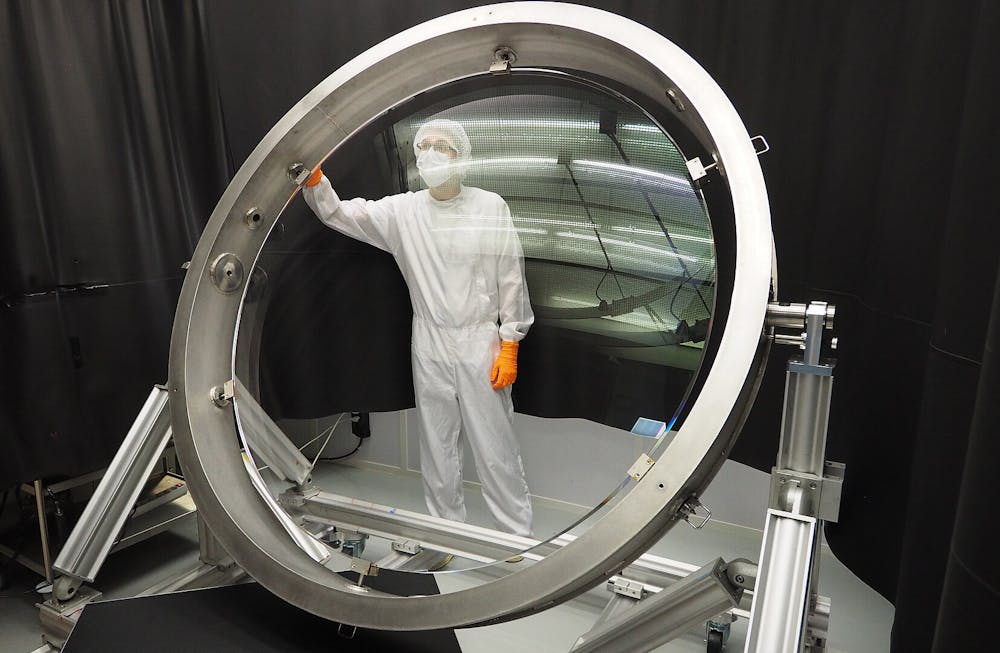
    The glass lens of the Vera Rubin Observatory, which surveys the night sky.
    Large Synoptic Survey Telescope/Vera Rubin Observatory, CC BY

    Lens-based instruments have been transformative. Telescopes have redefined long-standing cosmological views. Microscopes have opened entirely new fields in biology and medicine.

    These changes marked the dawn of empirical science, where observation and measurement drove the creation of knowledge. Today, the James Webb Space Telescope and the Vera C. Rubin Observatory continue those early telescopes’ legacies of knowledge creation.

    Steel and empires

    In the late 18th and 19th centuries, the Industrial Revolution created demand for stronger, more reliable materials for machines, railroads, ships and infrastructure. The material that emerged was steel, which is strong, durable and cheap. Steel is a mixture of mostly iron, with small amounts of carbon and other elements added.

    Countries with large-scale steel manufacturing once had outsized economic and political power and influence over geopolitical decisions. For example, the British Parliament intended to prevent the colonies from exporting finished steel with the iron act of 1750. They wanted the colonies’ raw iron as supply for their steel industry in England.

    Benjamin Huntsman invented a smelting process using 3-foot tall ceramic vessels, called crucibles, in 18th-century Sheffield. Huntsman’s crucible process produced higher-quality steel for tools and weapons.

    One hundred years later, Henry Bessemer developed the oxygen-blowing steelmaking process, which drastically increased production speed and lowered costs. In the United States, figures such as Andrew Carnegie created a vast industry based on Bessemer’s process.

    The widespread availability of steel transformed how societies built, traveled and defended themselves. Skyscrapers and transit systems made of steel allowed cities to grow, steel-built battleships and tanks empowered militaries, and cars containing steel became staples in consumer life.
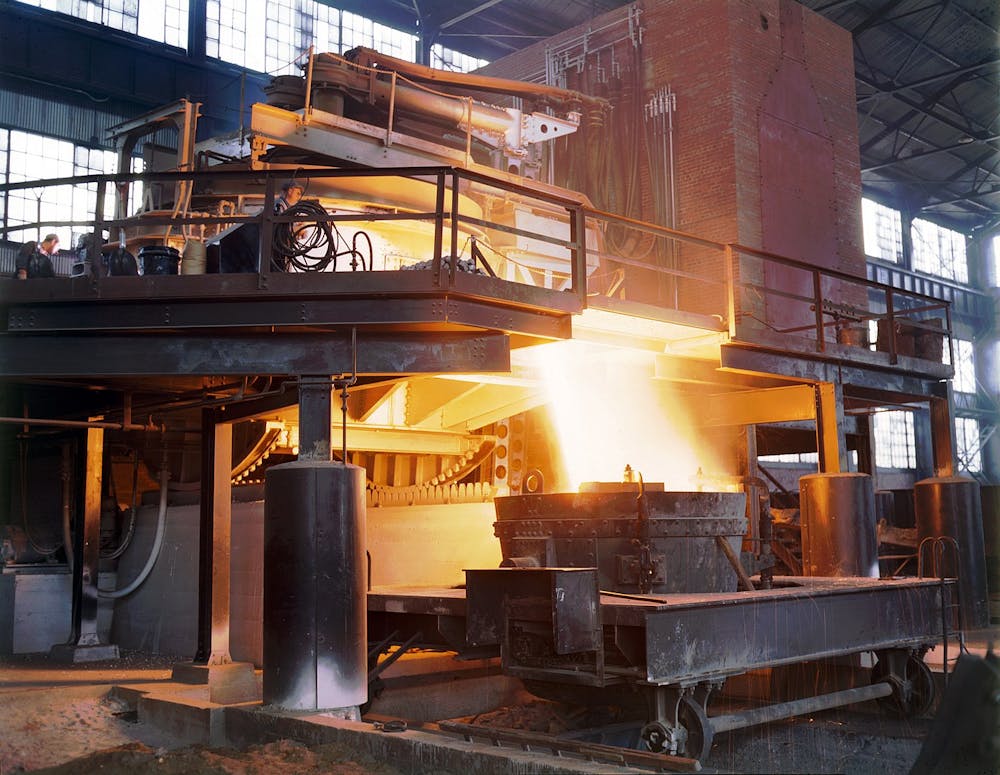
    White-hot steel pouring out of an electric arc furnace in Brackenridge, Penn.
    Alfred T. Palmer/U.S. Library of Congress

    Control over steel resources and infrastructure made steel a foundation of national power. China’s 21st-century rise to steel dominance is a continuation of this pattern. From 1995 to 2015, China’s contribution to the world steel production increased from about 10% to more than 50%. The White House responded in 2018 with massive tariffs on Chinese steel.

    Rare earth metals and global trade

    Early in the 21st century, the advance of digital technologies and the transition to an economy based on renewable energies created a demand for rare earth elements.

    Offshore turbines use several tons of rare earth magnets to transform wind into electricity.
    Hans Hillewaert/Wikimedia Commons, CC BY-SA

    Rare earth elements are 17 chemically very similar elements, including neodymium, dysprosium, samarium and others. They occur in nature in bundles and are the ingredients that make magnets super strong and useful. They are necessary for highly efficient electric motors, wind turbines and electronic devices.

    Because of their chemical similarity, separating and purifying rare earth elements involves complex and expensive processes.

    China controls the majority of global rare earth processing capacity. Political tensions between countries, especially around trade tariffs and strategic competition, can risk shortages or disruptions in the supply chain.

    The rare earth metals case illustrates how a single category of materials can shape trade policy, industrial planning and even diplomatic alliances.

    Mining rare earth elements has allowed for the widespread adoption of many modern technologies.
    Peggy Greb, USDA

    Technological transformation begins with societal pressure. New materials create opportunities for scientific and engineering breakthroughs. Once a material proves useful, it quickly becomes woven into the fabric of daily life and broader systems. With each innovation, the material world subtly reorganizes the social world — redefining what is possible, desirable and normal.

    Understanding how societies respond to new innovations in materials science can help today’s engineers and scientists solve crises in sustainability and security. Every technical decision is, in some ways, a cultural one, and every material has a story that extends far beyond its molecular structure.

    The National Science Foundation, the Department of Energy, NASA, and other national and regional agencies have funded former research of Peter Mullner.

    ref. From glass and steel to rare earth metals, new materials have changed society throughout history – https://theconversation.com/from-glass-and-steel-to-rare-earth-metals-new-materials-have-changed-society-throughout-history-258244

    MIL OSI

  • MIL-OSI Submissions: Elon Musk says he may launch his own party: but US history tells us that’s not a recipe for success

    Source: The Conversation – UK – By Matthew Mokhefi-Ashton, Lecturer in Politics and International Relations, Nottingham Trent University

    To paraphrase a very old joke, how do you make a small fortune in America? Start with a large fortune and fund a third political party. American political history is littered with the wrecks of challengers who thought they could break the two-party system and failed.

    This makes Elon Musk’s tease that he may launch his own new political party as an act of defiance following his falling out with Donald Trump even more intriguing.

    What do we mean by a two-party system though? Since the 1860s, the Democrats and Republicans have dominated the US political landscape, holding the presidency, Congress and the vast majority of elected positions. Attempts at third parties have usually floundered at the ballot box.


    Get your news from actual experts, straight to your inbox. Sign up to our daily newsletter to receive all The Conversation UK’s latest coverage of news and research, from politics and business to the arts and sciences.


    Some have lasted only for a few electoral cycles, including the Progressive Party in the 1910s and the Citizens Party of the 1980s, while others like the Libertarian Party and Green Party have lasted decades and, in some cases, managed some electoral success at the local level.

    But this is where an important distinction has to be made between third parties and third-party candidates. Because the US system is so personality-driven rather than party focused compared to Europe, quite often third parties have been built around a single person.

    A good example is the previously mentioned Progressive Party. It was founded in 1912 by former president Theodore Roosevelt after he split from the Republicans. Without him it quickly faded away.

    The Reform Party was created by billionaire Ross Perot in 1995 after he managed to get 18.9% of the vote in the 1992 presidential election. While it continued without him for some years, it was a shell of its former self. Other parties like the Socialist, Libertarian and Green parties have sprung from more organic movements and thus have been more successful at a local or state level.

    When you look at recent polling though, it seems strange that the two parties continue to dominate. Public dissatisfaction with politics as usual seems at an all-time high. In a recent Pew Research poll when asked whether “I often wish there were more political parties to choose from” describes their views, 37% of respondents answered: “Very well” and 31% answered: “Somewhat well”.

    In another poll, 25% of respondents said that neither of the two main parties represented their interests.

    So if there is an appetite for some sort of change, why have so few challengers succeeded? The two main parties seem entrenched to the point where it resembles a cartel.

    Odds stacked against third-party insurgency

    The first and arguably most important reason is the electoral system. First past the post does not guarantee a two-party system (look at Britain, for instance). But political scientist Maurice Duverger argued that it does mean that the two main parties have a significant advantage. There are prizes for coming first and second, nothing for third place.

    Equally, many of the big prizes in American politics such as the presidency and state governorships are indivisible and cannot be shared. So it has become received wisdom that voting for anyone other than Democrats or Republicans is a wasted vote.

    In these cases, people either vote for what they perceive to be the lesser of two evils or stay at home, rather than voting for a candidate with no chance or that they may not support.

    The other multi-billion dollar elephant in the room is money. The sheer cost of running for elections in recent years means that any third party is unlikely to be able to raise the funds to be truly competitive. At the last election, the Democrats and Republicans spent hundreds of millions of dollars (which isn’t even counting all of the super-PAC money spent on their behalf).

    Whenever billionaires like Perot have attempted to self-fund a party, they have left themselves open to the accusation that it’s a vanity project, or lacks true mass appeal.

    There is also the fact that to run successfully you must have media coverage. The media tends to focus almost exclusively on the two main parties. This creates a “chicken and egg” situation where you need success to help raise money and media coverage, but it’s difficult to be successful without first having money and media coverage.

    The final reasons are that of the open primary and ideological flexibility of the main parties. Donald Trump briefly considered running as president for the Reform Party back in 2000. In 2016, the open primary system that both main parties use meant that he could impose himself on the Republican Party despite most of the party elite despising him.

    Why bother starting your own party when you can run for one that already exists? It could now be argued that the Republicans have effectively become the Trump or Maga party, although whether this will survive his presidency is open to debate.

    Money, money, money

    Elon Musk has, for the moment, money to burn. Whether he’s willing to invest in the long term to turn this into more than a vanity project remains to be seen.

    He also has charisma and a national platform to amplify his voice like few others. But, having been born outside America, he can’t run for president.

    If he’s serious about electoral success, he’d have to find someone to run, and that would mean, effectively, they’d lead his party. Musk’s public persona suggests that he does not play well with others.

    Founding a third party isn’t impossible, but unless there is a political earthquake it seems difficult to see how one could succeed.

    Matthew Mokhefi-Ashton does not work for, consult, own shares in or receive funding from any company or organisation that would benefit from this article, and has disclosed no relevant affiliations beyond their academic appointment.

    ref. Elon Musk says he may launch his own party: but US history tells us that’s not a recipe for success – https://theconversation.com/elon-musk-says-he-may-launch-his-own-party-but-us-history-tells-us-thats-not-a-recipe-for-success-260480

    MIL OSI

  • MIL-OSI Submissions: War, politics and religion shape wildlife evolution in cities

    Source: The Conversation – USA – By Elizabeth Carlen, Living Earth Collaborative Postdoctoral Fellow, Washington University in St. Louis

    A Buddhist monk in Hong Kong releases fish and chants prayers during a ceremony to free the spirits of tsunami victims. Samantha Sin/AFP via Getty Images

    People often consider evolution to be a process that occurs in nature in the background of human society. But evolution is not separate from human beings. In fact, human cultural practices can influence evolution in wildlife. This influence is highly pronounced in cities, where people drastically alter landscapes to meet their own needs.

    Human actions can affect wildlife evolution in a number of ways. If people fragment habitat, separated wildlife populations can evolve to be more and more different from each other. If people change certain local conditions, it can pressure organisms in new ways that mean different genes are favored by natural selection and passed on to offspring – another form of evolution that can be driven by what people do.

    In a recent review, evolutionary biologists Marta Szulkin, Colin Garroway and I, in collaboration with scientists spread across five continents, explored how cultural processes – including religion, politics and war – shape urban evolution. We reviewed dozens of empirical studies about urban wildlife around the globe. Our work highlights which human cultural practices have and continue to shape the evolutionary trajectory of wild animals and plants.

    Religious practices

    If you’ve traveled internationally, you may have noticed the menu at any one McDonald’s restaurant is shaped by the local culture of its location. In the United Arab Emirates, McDonald’s serves an entirely halal menu. Vegetarian items are common and no beef is served in Indian McDonald’s. And in the United States, McDonald’s Filet-O-Fish is especially popular during Lent when observant Catholics don’t consume meat on Fridays.

    Similarly, ecosystems of cities are shaped by local cultural practices. Because all wildlife are connected to the environment, cultural practices that alter the landscape shape the evolution of urban organisms.

    Populations of fire salamanders have different genes depending on which side of city walls in Oviedo, Spain, they live on.
    Patrice Skrzynski via Getty Images

    For example, in Oviedo, Spain, people constructed walls around religious buildings between the 12th and 16th centuries. This division of the city led to different populations of fire salamanders inside and outside the walls. Because salamanders can’t scale these walls, those on opposite sides became isolated from each other and unable to pass genes back and forth. In a process that scientists call genetic drift, over time salamanders on the two sides became genetically distinct − evidence of the two populations evolving independently.

    Imagine dumping out a handful of M&Ms. Just by chance, some colors might be overrepresented and others might be missing. In the same way, genes that are overrepresented on one side of the wall can be in low numbers or missing on the other side. That’s genetic drift.

    Introducing non-native wildlife is another way people can alter urban ecosystems and evolutionary processes. For example, prayer animal release is a practice that started in the fifth or sixth century in some sects of Buddhism. Practitioners who strive to cause no harm to any living creature release captive animals, which benefits the animal and is meant to improve the karma of the person who released it.

    However, these animals are often captured from the wild or come from the pet trade, thereby introducing non-native wildlife into the urban ecosystem. Non-natives may compete with local species and contribute to the local extinction of native wildlife. Capturing animals nearby has downsides, too. It can diminish local populations, since many die traveling to the release ceremony. The genetic diversity of these local populations in turn decreases, reducing the population’s ability to survive.

    More than a thousand sparrows killed by peasants in 1958 are displayed on a cart near Beijing, China.
    Sovphoto/Universal Images Group via Getty Images

    Influence of politics

    Politically motivated campaigns have shaped wildlife in various ways.

    Starting in 1958, for instance, the Chinese Communist Party led a movement to eliminate four species that were considered pests: rats, flies, mosquitoes and sparrows. While the first three are commonly considered pests around the world, sparrows made the list because they were “public animals of capitalism” due to their fondness for grain. The extermination campaign ended up decimating the sparrow population and damaging the entire ecosystem. With sparrows no longer hunting and eating insects, crop pests such as locusts thrived, leading to crop destruction and famine.

    In the United States, racial politics may be shaping evolutionary processes in wildlife.
    For instance, American highways traverse cities according to political agendas and have often dismantled poor neighborhoods of color to make way for multilane thoroughfares. These highways can change how animals are able to disperse and commingle. For example, they prevent bobcats and coyotes from traveling throughout Los Angeles, leading to similar patterns of population differentiation as seen in fire salamanders in Spain.

    Wildlife during and after war

    Human religious and political agendas often lead to armed conflict. Wars are known to dramatically alter the environment, as seen in current conflicts in Gaza and Ukraine.

    The Russia-Ukraine war affected migration of greater spotted eagles.
    Nimit Virdi via Getty Images

    While documenting evolutionary changes to urban wildlife is secondary to keeping people safe during wartime, a handful of studies on wildlife have come out of active war zones. For example, the current Russia-Ukraine war affected the migration of greater spotted eagles. They made large diversions around the active war zone, arriving later than usual at their breeding grounds. The longer route increased the energy the eagles used during migration and likely influenced their fitness during breeding.

    Wars limit access to resources for people living in active war zones. The lack of energy to heat homes in Ukraine during the winter has led urban residents to harvest wood from nearby forests. This harvesting will have long-term consequences on forest dynamics, likely altering future evolutionary potential.

    A similar example is famine that occurred during the Democratic Republic of Congo’s civil wars (1996-1997, 1998-2003) and led to an increase in bushmeat consumption. This wildlife hunting is known to reduce primate population sizes, making them more susceptible to local extinction.

    Even after war, landscapes experience consequences.

    For example, the demilitarized zone between North Korea and South Korea is a 160-mile (250-kilometer) barrier, established in 1953, separating the two countries. Heavily fortified with razor wire and landmines, the demilitarized zone has become a de facto nature sanctuary supporting thousands of species, including dozens of endangered species.

    The collapse of the Soviet Union and the end of the Cold War led to the establishment of the European Green Belt, which runs along the same path as the Iron Curtain. This protected ecological network is over 7,800 miles (12,500 kilometers) long, allowing wildlife to move freely across 24 countries in Europe. Like the Korean DMZ, the European Green Belt allows for wildlife to move, breed and exchange genes, despite political boundaries. Politics has removed human influence from these spaces, allowing them to be a safe haven for wildlife.

    While researchers have documented a number of examples of wildlife evolving in response to human history and cultural practices, there’s plenty more to uncover. Cultures differ around the world, meaning each city has its own set of variables that shape the evolutionary processes of wildlife. Understanding how these human cultural practices shape evolutionary patterns will allow people to better design cities that support both humans and the wildlife that call these places home.

    Ideas for this article were developed as part of a NSF funded Research Coordination Network (DEB 1840663). Elizabeth Carlen was funded by the Living Earth Collaborative.

    ref. War, politics and religion shape wildlife evolution in cities – https://theconversation.com/war-politics-and-religion-shape-wildlife-evolution-in-cities-260184

    MIL OSI

  • MIL-OSI Submissions: Astronomers have discovered another puzzling interstellar object − this third one is big, bright and fast

    Source: The Conversation – USA – By Darryl Z. Seligman, Assistant Professor, Michigan State University

    The Haleakala Observatory, left, houses one telescope for the ATLAS system. That system first spotted the object 3I/ATLAS, which isn’t visible in this image. AP Photo/Lindsey Wasson

    Astronomers manning an asteroid warning system caught a glimpse of a large, bright object zipping through the solar system late on July 1, 2025. The object’s potentially interstellar origins excited scientists across the globe, and the next morning, the European Space Agency confirmed that this object, first named A11pl3Z and then designated 3I/ATLAS, is the third ever found from outside our solar system.

    Current measurements estimate that 3I/ATLAS is about 12 miles (20 kilometers) wide, and while its path won’t take it close to Earth, it could hold clues about the nature of a previous interstellar object and about planet formation in solar systems beyond ours.

    On July 2 at 3 p.m. EDT, Mary Magnuson, an associate science editor at The Conversation U.S., spoke to Darryl Z. Seligman, an astrophysicist at Michigan State University who has been studying 3I/ATLAS since its discovery.

    What makes 3I/ATLAS different from its predecessors?

    We have discovered two interstellar objects so far, ’Oumuamua and Comet 2I/Borisov. ’Oumuamua had no dust tail and a significant nongravitational acceleration, which led to a wide variety of hypotheses regarding its origin. 2I/Borisov was very clearly a comet, though it has a somewhat unique composition compared to comets in our solar system.

    All of our preparation for the next interstellar object was preparing for something that looked like a ’Oumuamua, or something that looked like Borisov. And this thing doesn’t look like either of them, which is crazy and exciting.

    This object is shockingly bright, and it’s very far away from the Earth. It is significantly bigger than both of the interstellar objects we’ve seen – it is orders of magnitude larger than ’Oumuamua.

    For some context, ’Oumuamua was discovered when it was very close to the Earth, but this new object is so large and bright that our telescopes can see it, even though it is still much farther away. This means observatories and telescopes will be able to observe it for much longer than we could for the two previous objects.

    It’s huge and it’s much farther away, but it is also much faster.

    When I went to bed last night, I saw an alert about this object, but nobody knew what was going on yet. I have a few collaborators who figure out the orbits of things in the solar system, and I expected to wake up to them saying something like “yeah, this isn’t actually interstellar.” Because a lot of times you think you may have found something interesting, but as more data comes in, it becomes less interesting.

    Then, when I woke up at 1 a.m., my colleagues who are experts on orbits were saying things like “no, this is definitely interstellar. This is for real.”

    How can astronomers tell if something is an interstellar object?

    The eccentricity of the object’s orbit is how you know that it’s interstellar. The eccentricity refers to how noncircular an orbit is. So an eccentricity of zero is a pure circle, and as the eccentricity increases, it becomes what’s known as an ellipse – a stretched out circle.

    A hyperbolic orbit isn’t a closed loop, as this rendering of ‘Oumuamua’s trajectory shows. All the planets have oval-shaped elliptical orbits, which close in a loop. The interstellar object instead passes through but doesn’t come back around.
    Tomruen/Wikimedia Commons, CC BY-SA

    And then once you get past an eccentricity of one, you go from an ellipse to a hyperbolic orbit, and that is unbound. So while an elliptical orbit is stretched out, it still orbits and comes back around. An object with a hyperbolic orbit comes through and it leaves, but it never comes back. That type of orbit tells you that it didn’t come from this solar system.

    When researchers are collecting data, they’re getting points of light on the sky, and they don’t know how far away they are. It’s not like they see them and can just tell, “oh, that’s eccentric.” What they’re seeing is how far away the object is compared with other stars in the background, what its position is and how fast it’s moving. And then from that data, they try to fit the orbit.

    This object is moving fast for how far away it is, and that’s what’s telling us that it could be hyperbolic. If something is moving fast enough, it’ll escape from the solar system. So a hyperbolic, unbound object inherently has to be moving faster.

    This is a real-time process. My collaborators have preexisting software, which will, every night, get new observations of all the small bodies and objects in the solar system. It will figure out and update what the orbits are in real time. We’re getting data points, and with more data we can refine which orbit fits the points best.

    What can scientists learn from an interstellar object?

    Objects like this are pristine, primordial remnants from the planet formation process in other planetary systems. The small bodies in our solar system have taught us quite a lot about how the planets in the solar system formed and evolved. This could be a new window into understanding planet formation throughout the galaxy.

    As we’re looking through the incoming data, we’re trying to figure out whether it’s a comet. In the next couple of weeks, there will likely be way more information available to say if it has a cometary tail like Borisov, or if it has an acceleration that’s not due to a gravitational pull, like ’Oumuamua.

    If it is a comet, researchers really want to figure out whether it’s icy. If it contains ices, that tells you a ton about it. The chemistry of these small bodies is the most important aspect when it comes to understanding planet formation, because the chemical composition tells you about the conditions the object’s solar system was in when the object formed.

    For example, if the object has a lot of ices in it, you would know that wherever it came from, it didn’t spend much time near a star, because those ices would have melted. If it has a lot of ice in it, that could tell you that it formed really far away from a star and then got ejected by something massive, such as a planet the size of Jupiter or Neptune.

    Fundamentally, this object could tell astronomers more about a population of objects that we don’t fully understand, or about the conditions in another solar system.

    We’ve had a couple of hours to get some preliminary observations. I suspect that practically every telescope is going to be looking at this object for the next couple of nights, so we’ll get much more information about it very soon.

    Darryl Z. Seligman is supported by an NSF Astronomy and Astrophysics Postdoctoral Fellowship under award AST-2303553. This research award is partially funded by a generous gift of Charles Simonyi to the NSF Division of Astronomical Sciences. The award is made in recognition of significant contributions to Rubin Observatory’s Legacy Survey of Space and Time.

    ref. Astronomers have discovered another puzzling interstellar object − this third one is big, bright and fast – https://theconversation.com/astronomers-have-discovered-another-puzzling-interstellar-object-this-third-one-is-big-bright-and-fast-260391

    MIL OSI

  • MIL-OSI Russia: Dmitry Chernyshenko: More than 65 thousand people took part in the main stages of the V International Financial Security Olympiad

    Translation. Region: Russian Federal

    Source: Government of the Russian Federation – An important disclaimer is at the bottom of this article.

    Previous news Next news

    Meeting of the organizing committee of the V International Financial Security Olympiad chaired by Dmitry Chernyshenko

    In Krasnoyarsk, a meeting of the organizing committee of the V International Financial Security Olympiad was held under the chairmanship of Deputy Prime Minister of the Russian Federation Dmitry Chernyshenko. The final will be held in Krasnoyarsk from September 28 to October 4, 2025.

    The meeting was attended by the Director of the Federal Service for Financial Monitoring Yuri Chikhanchin, the Governor of Krasnoyarsk Krai Mikhail Kotyukov, the Deputy Minister of Science and Higher Education of the Russian Federation Dmitry Afanasyev, and the Deputy Chairman of the Federation Council Nikolai Zhuravlev.

    Dmitry Chernyshenko emphasized the importance of holding the Olympiad and noted the significant interest in it among young people.

    “The main stages of the Olympiad have already been completed, with over 65,000 people taking part. Since then, a lot of work has been done: schoolchildren and students from new regions have been involved in inter-Olympiad events, a thematic lesson on “Financial Security” has been held, a “road map” for organizing and holding the finals in Krasnoyarsk has been approved, and a plan for information support for the Olympiad itself and the international movement on financial security has been formed,” the Deputy Prime Minister said.

    Yuri Chikhanchin spoke about the preparations for the Olympiad and the events that will take place during the final week.

    “About 600 schoolchildren and students will take part in the finals – representatives of about 40 countries. More than 80 events are planned for the children in four main areas: educational, professional, cultural and moral, and sports. The program will traditionally include panel discussions, master classes, interactive workshops, and educational activities,” said the head of Rosfinmonitoring.

    Among the new events is the festival “Olympics in Colors”, where children will demonstrate national costumes, as well as a photo exhibition and various sports activities. In addition, the Olympiad will include an international forum “Risks of New Technologies: Dialogue of Generations in the Sphere of Financial Security” and a number of expert meetings.

    The head of Rosfinmonitoring announced the results of a lesson on financial security, which was held this year in the regions of Russia and foreign countries. The lesson was organized jointly with the Ministry of Education of the Russian Federation, the Ministry of Foreign Affairs of the Russian Federation, and Rossotrudnichestvo.

    “I would like to note the wide scope of the lesson on financial security – about 3.5 million Russian schoolchildren attended the lessons this year. The lessons were also held in several dozen foreign countries. The materials have been translated into six languages. In addition, as part of the activities of the International Movement for Financial Security, together with representatives of the Ministry of Labor of Russia, training was organized for the first time in more than 250 Russian social protection institutions,” the head of Rosfinmonitoring stated.

    Governor of Krasnoyarsk Krai Mikhail Kotyukov reported that the region’s preparations for the final stage are going according to plan: “We are certainly very responsible and honored that the city of Krasnoyarsk has been chosen as the venue – a city in the very center of the Russian Federation, the easternmost city with a population of over a million in our country. A city that is preparing for its four-hundredth anniversary. I confirm once again that we are definitely ready to host the final stage of the Olympiad. For us, this is an opportunity to check how well we are changing the city infrastructure and ensuring a high level, including hospitality. We recently checked our watches – all the plans are being fulfilled. I have no doubt that by the start of the final stage of the Olympiad, we will be ready at the highest level.”

    The meeting participants discussed a number of other issues related to the preparation and holding of the Olympiad.

    Please note: This information is raw content directly from the source of the information. It is exactly what the source states and does not reflect the position of MIL-OSI or its clients.

    MIL OSI Russia News

  • MIL-OSI Russia: Dmitry Chernyshenko: 540 thousand applicants have already submitted about 4 million applications as part of the admission campaign for the 2025/2026 academic year

    Translation. Region: Russian Federal

    Source: Government of the Russian Federation – An important disclaimer is at the bottom of this article.

    Previous news Next news

    Dmitry Chernyshenko during a visit to the Siberian Federal University. Left: Governor of Krasnoyarsk Krai Mikhail Kotyukov, Acting Rector of SFU Maxim Rumyantsev and Deputy Minister of Education and Science Dmitry Afanasyev

    During a visit to the Siberian Federal University (SFU), Deputy Prime Minister of Russia Dmitry Chernyshenko discussed the progress of the admissions campaign at SFU and other Russian universities. The event took place as part of the Deputy Prime Minister’s working visit to Krasnoyarsk Krai.

    To ensure continuous monitoring and control of the admissions campaign, a dashboard has been deployed on the platform of the Coordination Center of the Government of the Russian Federation. It can be used to track the progress of the admissions campaign in each subject, educational organization, including in individual areas of training and specialties. The panel allows you to identify deviations in the processing of applicants’ applications and promptly respond to them.

    “The admissions campaign is an important and responsible period not only for applicants, but for the entire country. The achievement of technological leadership, a national goal set by President Vladimir Putin, depends on the choice of applicants and the quality of their preparation. In total, almost 620 thousand budget places are available for higher education programs this academic year. About 540 thousand applicants have already submitted almost 4 million applications within the framework of competitive groups, of which more than 3 million – through the super service “Online University Admission”, – said Dmitry Chernyshenko.

    About 73% of the total number of budget places are allocated to regional universities.

    Among the most popular areas are computer science and computing, education and pedagogical sciences, and clinical medicine.

    In Krasnoyarsk Krai, applicants have already submitted almost 70 thousand applications to universities within the framework of competitive groups, including more than 61.2 thousand using the super service “Online University Admission”.

    The Deputy Prime Minister noted the active participation of the Siberian Federal University in government support measures, including those implemented under the national project “Youth and Children”.

    Governor of Krasnoyarsk Krai Mikhail Kotyukov noted that SFU is one of the leading universities in Russia: “Siberian Federal University is developing quite dynamically today. The university is of interest to applicants not only from Krasnoyarsk Krai, but also from neighboring regions. Quite a lot of foreigners come. We carefully preserve the legacy of the Universiade, all the facilities are working, all the facilities are involved. Moreover, we are already forming the next development plans.”

    Currently, SFU has about 27 thousand students, 83.4% of whom are full-time students. For the 2025/2026 academic year, Siberian Federal University has allocated more than 5.5 thousand budget places for higher education programs. As part of the current admissions campaign at SFU, applicants have already submitted over 30 thousand applications within competitive groups, including almost 25.5 thousand using the super service “Online University Admission”. Among the most popular areas of training among applicants are computer science and computer engineering; applied geology, mining, oil and gas engineering and geodesy; education and pedagogical sciences; mechanical engineering.

    The event was also attended by the Governor of Krasnoyarsk Krai Mikhail Kotyukov, Deputy Minister of Science and Higher Education of the Russian Federation Dmitry Afanasyev, and Acting Rector of the Siberian Federal University Maxim Rumyantsev.

    Dmitry Chernyshenko also assessed the infrastructure of SFU, in particular the classrooms and the urban farming laboratory of the Institute of Gastronomy. This is one of 20 educational institutes that are part of the university structure; it was founded as a joint project of the Siberian Federal University and the Krasnoyarsk restaurant group. The Institute of Gastronomy trains specialists in the restaurant business and hospitality industry.

    Please note: This information is raw content directly from the source of the information. It is exactly what the source states and does not reflect the position of MIL-OSI or its clients.

    MIL OSI Russia News

  • MIL-OSI Canada: Detections of MSX and Dermo in oysters in Quebec

    Source: Government of Canada News

    The Canadian Food Inspection Agency (CFIA) has confirmed the presence of the aquatic animal diseases multinucleate sphere unknown (MSX) and Dermo (also known as Perkinsosis) in oyster samples collected in Chaleur Bay, Québec.

    MSX and Dermo do not pose risks to human health or food safety, but they can cause increased oyster mortality and decreased growth rates. These are the first confirmed cases of MSX and Dermo in Quebec.

    To limit the spread of the diseases, the CFIA, Fisheries and Oceans Canada (DFO) and the province of Quebec are working together with partners to monitor the situation and take necessary action. These actions are part of the Government of Canada’s One Health approach to prepare for, detect, and manage animal diseases.

    In addition to existing robust protective measures and increased animal surveillance, the CFIA, in collaboration with DFO and the province of Quebec, continues to conduct tracing activities and testing of oysters to gain insight into the presence of MSX and Dermo in the area.

    Response measures include:

    • applying movement controls to oysters,
    • further investigating the potential source of the detections,
    • engaging scientists, producers and harvesters to continue to monitor mollusc health, including notifying CFIA or the province of sick oysters or when decreased rates of growth or increased mortalities are observed, and
    • ensuring that information regarding detection and movement control information is available to producers.


    Quick Facts

    • MSX and Dermo pose no risk to human health and are not food safety concerns.
    • Haplosporidium nelsoni causes multinucleate sphere unknown (MSX) in cultured and wild American oysters (Crassostrea virginica).
    • Perkinsus marinus causes Perkinsosis (also known as Dermo) in cultured and wild American oysters (Crassostrea virginica).
    • These diseases do not affect other bivalves in this area, including mussels, scallops, or clams; however, they can cause increased oyster mortality and decreased growth rates.
    • With MSX, it is presumed there is an unknown intermediary host which makes it harder to determine how it is spread. Dermo can be transmitted from oyster to oyster, or from water contaminated with the parasite.
    • Canada’s National Aquatic Animal Health Program (NAAHP), co-delivered by the CFIA and Fisheries and Oceans Canada (DFO), is responsible for preventing the introduction and/or spread of significant aquatic animal diseases of finfish, molluscs and crustaceans.

    Related links

    MIL OSI Canada News

  • MIL-OSI Canada: Detection of Dermo in oysters in Prince Edward Island

    Source: Government of Canada News

    The Canadian Food Inspection Agency (CFIA) has confirmed the presence of the aquatic animal disease Dermo (also known as Perkinsosis) in oyster samples collected in Egmont Bay, Prince Edward Island (PEI). Dermo does not pose a risk to human health or food safety, but it can cause increased oyster mortality and decreased growth rates. This is the first confirmed case of Dermo in PEI.

    To limit the spread of the disease, the CFIA, Fisheries and Oceans Canada (DFO) and the Province of PEI are working together with partners to monitor the situation and take necessary action. These actions are part of the Government of Canada’s One Health approach to prepare for, detect, and manage animal diseases.

    In addition to existing robust protective measures and increased animal surveillance, the CFIA, DFO and the Province of PEI continue to conduct activities to gain insight into the presence of Dermo in the area. At this time, these response measures include:

    • applying movement controls to oysters in the area;
    • further investigating the potential source of the detection;
    • engaging scientists, producers and harvesters to continue to monitor mollusc health, including notifying CFIA or the Province of sick oysters or when decreased rates of growth or increased mortalities are observed; and
    • ensuring that information regarding detection and movement control information is available.


    Quick Facts

    • Perkinsus marinus causes Dermo in cultured and wild American oysters (Crassostrea virginica).
    • It does not affect other bivalves in this area, including mussels, scallops, or clams; however, it can cause increased oyster mortality and decreased growth rates.
    • Dermo can be transmitted from oyster to oyster, or from water contaminated with the parasite.
    • Dermo poses no risks to human health and is not a food safety concern.
    • Canada’s National Aquatic Animal Health Program (NAAHP), co-delivered by the CFIA and DFO, is responsible for preventing the introduction and/or spread of significant aquatic animal diseases of finfish, molluscs and crustaceans.


    Related links

    MIL OSI Canada News

  • MIL-OSI USA: Neguse, Bennet Joint Statement on NOAA Budget Cuts 

    Source: United States House of Representatives – Congressman Joe Neguse (D-Co 2)

    Washington, DC — Following the release of the White House’s Fiscal Year 2026 budget proposal, Congressman Joe Neguse and Senator Michael Bennet issued the following joint statement condemning the proposed cuts to the National Oceanic and Atmospheric Administration (NOAA) and its Cooperative Institutes (CIs).

    “Our Cooperative Institutes here in Colorado are vital to not only our state, but our country. These institutes — the Cooperative Institute for Research in Environmental Sciences (CIRES) and the Cooperative Institute for Research in the Atmosphere (CIRA) —employ hundreds of people in Colorado and protect millions across the nation through research on weather, drought, and fire events. These senseless proposed funding cuts would have devastating impacts felt nationwide and undermine the science our research communities rely on for generations to come.”

    “The critical work that researchers are doing everyday at NOAA and its Cooperative Institutes cannot be overstated. Their work is imperative to the personal safety and daily lives of all Americans. To eliminate funding for NOAA and its CI’s would be reckless and short-sighted. We urge the Department of Commerce to reverse any plans to eliminate funding for these critical institutions that diminish the strength of our national labs, and we will strongly oppose these dangerous proposals in the House and Senate.” 

    ###

    MIL OSI USA News

  • MIL-OSI Russia: “A GUU diploma is your victory”: 1886 specialists are ready to work

    Translation. Region: Russian Federal

    Source: State University of Management – Official website of the State –

    On July 4, 2025, the State University of Management triumphantly held a graduation ceremony dedicated to the 80th anniversary of the Victory in the Great Patriotic War.

    The negative weather forecast, fortunately, did not come true, and the clouds that flew in only made the day not too stuffy. Free water and drinks also contributed to the comfort of the graduates. It was not even necessary to stand on the square, this time there were many seats. The usual photo booths were working, as well as an innovation – 3D photos for the GUU graduates’ museum.

    At the special awards ceremony, the graduates were greeted by the rector of the State University of Management, Vladimir Stroyev.

    “Our dear students, their parents, friends, welcome to our not quite ordinary graduation, dedicated to the 80th anniversary of the Great Victory. Victories are not only the deeds of days gone by, but also your triumphant mood today. The student years you spent at GUU will be some of the best years of your life. Yes, the sessions were different, but I am sure that you will remember this time with pleasure. For better or for worse, but now you are not GUU students, but graduates. I am sure that we will be proud of you for many years to come,” the rector congratulated.

    Special awards were presented by outstanding graduates and honorary guests of the university.

    Senator of the Russian Federation from the Legislative Assembly of the Rostov Region Vasily Golubev recalled that he entered the Moscow Engineering and Economics Institute under the rector Olimpiada Kozlova and lived in a newly built dormitory, and recently organized a meeting of graduates at the State University of Management and felt like a student again. The senator also advised graduates to periodically return to the university to recharge with its energy. “Do not forget the rule of mountain climbers – they do not climb quickly, but confidently. It is you who will have to ensure that Russia achieves technological leadership in the world, it is you who will have to manage the authorities and the country as a whole. It is no coincidence that the main topic today is victory. We need it,” Vasily Golubev urged and presented awards for significant achievements for the benefit of the university Primus inter pares, of which this time there were not 7, according to the number of institutes, but 8, which corresponded to the 80th anniversary of the Victory.

    Awards were given to: Victoria Igorevna Kostikova – IEF; Yupatova Varvara Ilyinichna – ISUiP; Sereda Irina Leonidovna – IOM; Babich Alina Maksimovna – IUPSiBK; Olga Vadimovna Plesskaya – IIS; Kuimova Maria Leonidovna – IM; Shubina Sofya Kirillovna – Fine Arts;

    Primus inter pares “Infinity” – Burlakova Valeria – IM.

    State Duma Deputy Biysultan Khamzaev noted the beauty, brightness and intelligence of the graduates. “You have a powerful name for your university – the State University of Management. Find the character in yourself to be useful to your family and country. Return to your native university, help and support, this is the tradition of our education – the best education in the world,” said Biysultan Khamzaev and presented awards for academic success.

    Awards were given to: Langeman Irina Igorevna – IEF; Gubchak Milena Vladislavovna – ISUiP; Pavelev Ilya Dmitrievich – IOM; Minazhetdinova Dilyara Ilyasovna – IUPSiBK; Neretina Oksana Andreevna – IIS.

    Deputy Head of the Federal Service for Supervision in Education and Science Svetlana Kochetova called the graduates colleagues and suggested that all those who lived in the dormitory will definitely not forget this fun time. The honorary guest separately wished health to the teachers and asked the graduates not to forget them. Svetlana Kochetova presented awards for achievements in career guidance.

    Awards were given to: Stefania Dmitrievna Dukhnovskaya – IEF; Kuzmina Ksenia Dmitrievna – ISUiP; Nikita Konstantinovich Rasskazov – IOM; IUPSiBK Morozova Sofya Aleksandrovna – IUPSiBK; Musina Alfiya Farkhitdinovna – IIS.

    Deputy Head of the Federal Service for Supervision in Education and Science Evgeny Semchenko congratulated the graduates of 1999 on one of the most important days of their lives. “At one time, living with my wife in the dormitory of the State University of Management, we often heard calls for freebies in the windows. Now I will tell you: after graduation, there will be no more freebies. I wish you to continue your education in a master’s degree, postgraduate study, get a second higher education in order to benefit the country,” Evgeny Semchenko addressed the graduates of 2025 and presented awards for scientific achievements.

    Awards were given to: Popova Yulia Alekseevna – IEF; Zhuk Alexandra Petrovna – ISUiP; Grishkina Anna Vyacheslavovna – IOM; Lanenkina Elizaveta Aleksandrovna – IUPSiBK; Potalainen Ilya Sergeevich – IIS; Petrova Anna Dmitrievna – IM.

    The Executive Secretary of the Parliamentary Assembly of the Collective Security Treaty Organization Sergey Pospelov reported that he graduated from the State University of Management 23 years ago, thanked the parents of the graduates for their patience and endurance, telling the heroes of the occasion that now it is their turn to help their parents. “The University is with you forever. And your merits will always be the merits of the University, so stay in touch with it.” Sergey Pospelov presented awards for sports achievements.

    Awards were given to: Vladimir Alekseevich Simonenko – IEF; Elizarov Artyom Denisovich – IGUiP; Novikov Makar Konstantinovich – IOM; Larin Andrey Evgenievich – IUPSiBK; Karpov Danila Sergeevich – IIS.

    Vice President of the Novard Group of Companies Sergey Sarkisov noted that on such a day, graduates are happy and a little sad at the same time. “No matter how life and career turn out, you must remember that your success in the future is a fusion of your experience and new knowledge. I wish you always to be accompanied by a desire for something new. Success to everyone!”, wished Sergey Sarkisov and presented awards for active social life.

    Awards were given to: Daria Aleksandrovna Kudryavtseva – IEF; Lavrova Ekaterina Igorevna – ISUiP; Arbuzova Polina Alekseevna – IOM; Blbulyan David Spartakovich – IUPSiBK; Kalugin Mikhail Dmitrievich – IIS; Sokolova Larisa Pavlovna – IM.

    Deputy Head of the Federal Treasury Department for Moscow Elena Egorushkova thanked GUU for the opportunity to congratulate the graduates, wished them all the best and emphasized that the most important things are yet to come. The honorary guest presented awards for achievements in cultural life.

    Awards were given to: Kristina Romanovna Danilenko – IEF; Naydenova Daria Aleksandrovna – ISUiP; Yavorskaya Polina Igorevna – IOM; Bchemyan Maria Karenovna – IUPSiBK; Volkova Alexandra Ilyinichna – IIS; Aklieva Natalya Sergeevna – IM.

    General Director of FKK GROUP LLC Vladislav Fadeev recalled that 23 years ago he stood in the same crowd of graduates and asked them not to forget the reckless student life. “Hold on to each other, don’t lose this thread. Year after year you will meet less and less often, families and concerns will appear, but try to do it anyway. Bon voyage!” Vladislav Fadeev said and presented awards for covering public life.

    Awards were given to: Ksenia Andreevna Pavlenko – IEF; Fedun Anastasia Stepanovna – IUPSiBK; Fomenko Victoria Sergeevna – IM; Bandorin Alexander Sergeevich – Fine Arts; Yakovlev Danila Sergeevich – IOM.

    It is interesting that Danila Yakovlev, as the winner of the All-Russian competition of final qualifying works in the format “Startup as a Diploma” with the project “Innovative Glass Pebbles”

    Later, 9 masters of State University of Management also received special awards: Ivan Alekseevich Ignatov – ISUiP; Levshov Ivan Vadimovich – IOM; Nikitina Anna Sergeevna – ISUiP; Rudskaya Irina Aleksandrovna – IIS; Ambaryan Lika Alikovna – IEF; Volkova Elizaveta Alekseevna – IUPSiBK; Kotenko Marina Igorevna – IOM; Yashkov Ivan Dmitrievich – IUPSiBK; Pridanov Egor Dmitrievich – IIS.

    In total, 1886 people graduated from the State University of Management in the completed academic year, 785 of whom graduated with honors! 1886 graduates. Symbolic, considering that this is the year of birth of Sergo Ordzhonikidze, whose name our university bore for many years.

    Congratulations to all graduates on this important life victory! Remember the inspiration you are feeling now, and remember today in moments of trial. You have already endured at least 4 years of exams, project work, lectures, lack of sleep – now you are capable of everything! And now just enjoy, be inspired by today’s victory. And as almost all the honored guests asked, do not forget your native university, now you are not students of GUU, from now on you are friends of GUU. Congratulations!

    Please note: This information is raw content directly from the source of the information. It is exactly what the source states and does not reflect the position of MIL-OSI or its clients.

    MIL OSI Russia News

  • MIL-OSI Russia: Azerbaijan hosted the 17th ECO summit

    Translation. Region: Russian Federal

    Source: People’s Republic of China in Russian – People’s Republic of China in Russian –

    Source: People’s Republic of China – State Council News

    Baku, July 4 (Xinhua) — Azerbaijan hosted the 17th summit of the Economic Cooperation Organization (ECO), which was held in the city of Khankendi on Friday under the chairmanship of President Ilham Aliyev, the organization’s secretariat said.

    The motto of the event is “A New Vision for a Sustainable and Climate-Resilient Future”.

    The summit was attended by representatives of all 10 ECO member states: Azerbaijan, Turkey, Iran, Pakistan, Kazakhstan, Uzbekistan, Tajikistan, Kyrgyzstan, Turkmenistan and Afghanistan.

    The summit agenda covered issues such as trade expansion, sustainable development, climate change, development of transport corridors and institutional strengthening. The summit participants reaffirmed their commitment to deepening cooperation in energy, science, education, tourism and inclusive growth.

    Participants welcomed the ceasefire between Iran and Israel as a step toward de-escalation and stressed the need for diplomatic solutions. There was a call for the expansion of nuclear-weapon-free zones.

    It was announced that the next ECO summit will be held in Iran in 2027. –0–

    MIL OSI Russia News

  • MIL-OSI Europe: EIB Global steps up support for Montenegro’s economic development

    Source: European Investment Bank

    EIB

    • EIB has signed a Host Country Agreement with the government of Montenegro  
    • EIB will provide a loan of €18 million loan and a grant of €2.3 million for the Montenegro’s education system  
    • Montenegro will use the loan for nationwide school renovations, while UNOPS will deploy the grant to provide technical assistance

    Today at the European Investment Bank (EIB Global)’s Headquarters in Luxembourg, EIB Vice-President Robert de Groot and Montenegro’s Minister of Finance Novica Vukovic signed a Host Country Agreement between the EIB and Montenegro. This milestone reaffirms EIB Global’s commitment to supporting Montenegro on its path towards convergence with the EU, while paving the way for an EIB Representative to be based in the country for closer collaboration in the future.

    In the presence of Montenegro’s Minister of Education Andjela Jaksic-Stojanovic and UNOPS Assistant Secretary-General and Deputy Executive Director for Delivery and Partnerships Kirstine Damkjaer, EIB Global signed a €20.3 million for the Montenegrin education sector. These funds comprise of an €18 million loan to the Montenegrin government and a grant to the United Nations Office for Project Services (UNOPS) for €2.3 million for technical assistance ensuring that the funds are used a strategically and impactfully.

    The loan will go towards the renovation and digitalisation of pre-primary, primary and secondary schools in Montenegro, as well as to energy-efficiency improvements and the installation of new equipment for vocational training. Provided under the EIB’s Economic Resilience Initiative, the grant will be used by UNOPS to deliver technical support to the Montenegrin Ministry of Education in assessing existing school infrastructure and preparing key investment projects, while ensuring a strategic and impactful deployment of funds

    “The Host Country Agreement signed today formalises the strong EIB support to Montenegro and marks a new chapter in our longstanding cooperation. This, alongside today’s new financing for Montenegro’s education sector, is set to bolster the country’s economic resilience. By creating a cutting-edge learning environment, we will deliver immediate and lasting benefits for students and teachers across Montenegro, while fostering youth employability and economic sustainability in response to evolving market demands.,” EIB Vice-President Robert de Groot said.

    “Today’s signing of the loan agreement to improve education infrastructure, along with a Host Country Agreement establishing the EIB’s presence in Montenegro, strongly reaffirms the strategic partnership and mutual trust we have built over the years. These investments are not just about renovating schools – they are about investing in people, in knowledge, and in Montenegro’s future. The EIB’s physical presence in our country will further strengthen cooperation and ensure more effective implementation of development projects that serve our citizens and accelerate our path toward EU integration.”, said Finance Minister Novica Vuković.

    The new accords bring total EIB Global support for education in Montenegro to €55 million since 2019, including an EU grant for €11 million provided under the Western Balkans Investment Framework. One result of previous financing in this area is the opening of Vladimir Nazor primary school in Podgorica

    “The project entitled “Enhancing the Montenegrin Education System,” implemented by the Ministry of Education, Science and Innovation in cooperation with the Ministry of Finance and the European Investment Bank, is already producing tangible results. We are building new schools, renovating existing facilities, modernizing vocational schools, and investing in advanced equipment and infrastructure. This represents the most comprehensive investment in education infrastructure in the history of our country. My special thanks go to the EIB and UNOPS for their continued trust, support, and commitment to our shared vision for the future of education in Montenegro,” said Education Minister Andjela Jakšić-Stojanović.

    UNOPS has years of experience working with the Montenegrin government to advance a range of areas including education.        

    “This agreement marks a milestone in UNOPS’ partnership with the EIB and the Government of Montenegro. UNOPS is proud to play a role in driving a transformative shift in Montenegro’s education system to ensure that appropriate infrastructure addresses the needs of people and becomes the enabler of key reforms in the country,” said Kirstine Damkjaer, UNOPS Deputy Executive Director for Delivery and Partnerships Kirstine Damkjaer.

    “With this new investment, the European Union is helping Montenegro improve everyday conditions of pupils and teachers across the country. Renovated classrooms, energy-efficient buildings, and modern equipment are not only vital for quality education — they also support long-term economic development and social cohesion. This is a strategic investment in Montenegro’s future, and a clear sign of our continued partnership on the path to EU membership.”, said EU Ambassador to Montenegro Johan Sattler.

    Background information

    About the EIB and EIB Global

    The EIB is the long-term financing institution of the European Union, owned by its Member States. It makes long-term finance available for sound investment in order to contribute towards EU policy goals. The EIB supports projects in four priority areas: infrastructure, innovation, climate and environment, and small and medium-sized enterprises (SMEs). EIB Global is the EIB Group’s specialised arm devoted to increasing the impact of international partnerships and development finance, and a key partner of Global Gateway. It aims to support €100 billion of investment by the end of 2027 – around one-third of the overall target of this EU initiative. Within Team Europe, EIB Global fosters strong, focused partnerships alongside fellow development finance institutions and civil society. EIB Global brings the EIB Group closer to local people, companies and institutions through its offices around the world.

    About the EIB in Montenegro

    The EU bank has been an active partner of Montenegro, providing almost €1.1 billion in loans to the country, mostly in support of SMEs, education and transport infrastructure. For more information on EIB projects in Montenegro, visit https://www.eib.org/en/projects/regions/enlargement/the-western-balkans/montenegro/index.htm. 

    About the Economic Resilience Initiative (ERI)

    The Economic Resilience Initiative, which backs the grant awareded, was established by the EIB in 2016 to channel donors’ resources to impactful projects in the Southern Neighbourhood and Western Balkans to help meet the challenges posed by forced displacement and migration. ERI has measurable economic, social and environmental outcomes that contribute to sustainable development goals relating to clean water and sanitation, affordable and clean energy, decent work and economic growth, industry, innovation and infrastructure, and sustainable cities and communities.

    About UNOPS

    UNOPS offers practical solutions across peace and security, humanitarian and development operations. We help the United Nations, governments and other partners, such as the European Union, its Member States and financial institutions like the European Investment Bank, to manage projects, and deliver sustainable infrastructure and procurement across the world.

    MIL OSI Europe News

  • MIL-OSI Africa: Mauritius: South West Indian Ocean Fisheries Commission (SWIOFC) Member States strengthened regional cooperation for sustainable Tuna fisheries management

    Source: APO – Report:

    The Working Party on Collaboration and Cooperation in Tuna Fisheries (WPCCTF) from the South West Indian Ocean Fisheries Commission (SWIOFC), met in Mauritius to continue its work on strengthening regional cooperation for the effective management of tuna fisheries and other highly migratory fish in the region.

    The 13th Session of the WPCCTF brought together during two days (17-18 June 2025) 11 from the 12 SWIOFC countries – Comoros, France, Kenya, Madagascar, Maldives, Mauritius, Mozambique, Seychelles, Somalia, South Africa and Tanzania. Partner organizations, namely the World Bank, the Indian Ocean Commission (IOC), the World Wide Fund for Nature (WWF), the Nairobi Convention – UNEP, the Southern African Development Community (SADC), and the South West Indian Ocean Tuna Forum (SWIOTUNA) attended the meeting as SWIOFC Observers. Other Regional Fishery Bodies – the Southern Indian Ocean Fisheries Agreement (SIOFA) and the Indian Ocean Tuna Commission (IOTC)- actively participated in the discussion with members, specifically regarding SWIOFC compliance and reporting requirements.

    Patrice Talla, FAO Subregional Coordinator for Southern Africa, welcomed the participants and emphasized the importance of the WPCCTF as a platform for dialogue and collective action, underscoring the need for coastal states to manage tuna stocks responsibly within their Exclusive Economic Zones (EEZs) and to collaborate regionally to rebuild overexploited stocks, particularly yellowfin tuna. Talla stressed the importance of strengthening national capacities to comply with Conservation and Management Measures (CMMs) and to implement effective Monitoring, Control and Surveillance (MCS) systems.

    Mbuli Charles Boliko, FAO Representative in Madagascar, Comoros, Mauritius and Seychelles, highlighted the significance of the Indian Ocean as the second-largest tuna-producing region globally, playing a vital role in supporting national economies and livelihoods. Boliko stressed that challenges such as Illegal, Unreported and Unregulated (IUU) fishing, climate-induced migratory shifts, and external competition require a unified regional response grounded in science, cooperation, and shared commitment.

    The Working Party members acknowledged the progress made in the region, including the adoption and progressive implementation of the SWIOFC-led instrument, the MTC Guidelines, and the regional effort for jointly regulating and managing foreign fishing access for the best interest of the region. The MTC Guidelines (the Guidelines for Minimum Terms and Conditions for foreign fishing access) were officially adopted by all SWIOFC member countries in February 2019. WWF, a long-standing partner of the WPCCTF, presented recent work conducted on this subject, which was led by the Minimum Terms and Conditions Task Force (MTCTF) of the SWIOFC. This work received technical support from NFDS and focused on the joint and concerted actions required for the implementation of the priority provisions of the SWIOFC instrument, such as the provisions regulating licensing requirements, the use of Vessel Monitoring Systems (VMS), transshipments and compensations and access fees.

    Other subject thoroughly discussed was the cooperation between SWIOFC, SADC and IOC on regional Monitoring, Control and Surveillance (MCS) initiatives. The new workplan for 2025–2026 was adopted, and the WP formulated joint recommendations for the upcoming plenary session of the SWIOFC, scheduled to take place in November 2025.

    The event was supported by the SWIOFish5 TRANSFORM project, funded by the World Bank and implemented by IOC with technical assistance from FAO. The project, ending in 2030, has the objective of strengthening regional, evidence-based fisheries management in the region.

    – on behalf of Food and Agriculture Organization of the United Nations (FAO): Regional Office for Africa.

    Media files

    .

    MIL OSI Africa

  • MIL-OSI Asia-Pac: EDB’s first Digital Education Week launches International Summit on Use of AI in Learning and Teaching Languages and Other Subjects (with photos)

    Source: Hong Kong Government special administrative region – 4

    ​Digital Education Week 2025 (DEW) is a landmark event promoting the development of digital education by the Education Bureau (EDB). A flagship event of the first DEW, the International Summit on the Use of AI in Learning and Teaching Languages and Other Subjects (AIinLT), was officially launched today (July 4). The AIinLT is co-organised by the EDB, the Standing Committee on Language Education and Research (SCOLAR), the Hong Kong Polytechnic University (PolyU) Department of English and Communication and the Hong Kong Education City (EdCity), providing a valuable and practical platform for teachers, researchers, and others in the education sector to learn and share insights regarding the use of AI in their respective fields of education.

    Officiating at the opening ceremony, the Secretary for Education, Dr Choi Yuk-lin, said that the country placed great importance on advancing digital education. The EDB also implements digital education through four major focus areas, namely:

    1. enhancing students’ digital literacy and skills to prepare them as responsible citizens and lifelong learners;
    2. strengthening professional training in digital education for teachers and encouraging schools to leverage innovative technologies;
    3. optimising digital education infrastructure and fostering personalized learning; and
    4. expanding cross-border and international collaboration to enhance synergy and promote high-quality digital education development.

    Dr Choi also called for collaboration among all stakeholders – including the Government, educational institutions, educators, and the community – to optimise resources, share best practices, and maximise the impact of digital education. She also emphasised the irreplaceable role of human connections in learning, encouraging attendees to harness AI wisely to empower individuals, strengthen communities and build a smarter, more connected world of learning.

    At the ceremony, the Chairperson of SCOLAR, Dr Anissa Chan, said that SCOLAR is committed to embracing technological advancements in language education. She noted that this commitment was what inspired SCOLAR to organise, finance and host the AIinLT, which is one of the first international events in Hong Kong focusing on the use of AI in education. The AIinLT serves as a collaborative platform for innovation and exploration.

    Dr Chan also spoke on the transformative potential of AI in personalising learning and enhancing language acquisition. She stressed the importance of guiding technological development through effective strategies, ethical considerations, and a learner-centred approach. She encouraged participants to shape the future of smart language learning, ensuring that AI serves as an enabler in education rather than a replacement for human interaction.

    In his welcome remarks, the President of PolyU, Professor Teng Jinguang, echoed Dr Choi and said that the city of Hong Kong is uniquely positioned to be a global leader in AI-powered education and technology-driven learning, given its world-class education system, renowned universities, and its development into an international innovation and technology centre and international hub for post-secondary education.  

    He added that PolyU has been promoting the development of AI in education. PolyU was a forerunner university to introduce compulsory AI education for undergraduates back in 2022, and established this year the Faculty of Computer and Mathematical Sciences, the PolyU Academy for Artificial Intelligence as well as the Language Education Institute. All these efforts underscore PolyU’s far-sightedness and leadership in AI-empowered education and research. He expects that this event will spark meaningful ideas and collaborations that will help reshape AI in education in Hong Kong.

    In his address, the Chairman of the Board of Directors of Hong Kong Education City, Mr Armstrong Lee, emphasised EdCity’s unwavering commitment to fostering cross-sector collaboration aimed at establishing a robust AI education ecosystem that propels the advancement of digital education. To expedite the digital transformation of educational practices, EdCity is developing the “EdMarket,” an innovative super-shelf for electronic teaching tools. This platform will feature a diverse array of high-quality global educational resources, including pioneering AI teaching tools designed to enrich and inspire transformative teaching and learning methodologies.

    The AIinLT is taking place at PolyU for four consecutive days starting from today. The AIinLT on the first two days feature keynote speeches, a panel discussion, paper presentations, and teaching demonstrations. The following two days will include a post-summit workshop series covering a wide range of topics, along with a technology showcase where leading EdTech providers will demonstrate the latest AI hardware and software solutions, offering educators firsthand exposure to cutting edge-innovations. For details of the AIinLT, please visit the event website (events.polyu.edu.hk/aiinlt/home).

    MIL OSI Asia Pacific News

  • MIL-OSI NGOs: BRICS: Greenpeace calls for strong global leadership in pushing climate action and nature protection

    Source: Greenpeace Statement –

    Rio de Janeiro, Brazil – Leaders at the BRICS Summit have a responsibility to reinforce multilateralism and deliver an urgent signal they are prepared to act on the global challenges of climate change and nature protection.

    Less than two weeks after the Bonn Climate Change Conference was marred by a lack of urgency and as G7 leaders tiptoed around the need for climate action, BRICS leaders have an obligation to move ahead with urgent climate action on the road to COP30 in Brazil – including accelerating the COP28 decision to transition away from fossil fuels to align their climate action plans with the 1.5°C goal. 

    Anna Carcamo, Climate Politics Specialist, Greenpeace Brazil said: “All eyes are on Brazil this year as the BRICS and COP30 host. This is a seismic opportunity to drive bold, collaborative Global South leadership. BRICS nations, several of which are among the most climate vulnerable, must seize this moment and take a decisive stand for people and the planet.

    “The BRICs can lead climate action with strong 2035 climate action plans and Brazil has a responsibility to steer them to higher ambition, ensuring an accelerated transition away from fossil fuels and pushing forward to end deforestation through a transformative forest outcome at COP30 in the Amazon.”

    Yao Zhe, Global Policy Adviser, Greenpeace East Asia said: “The BRICS agenda has always placed global development at its core. However, amid major economic and geopolitical challenges, ecological degradation is threatening the foundations of future prosperity and undermining development potential.

    “It is crucial therefore that the BRICS evolves into a positive force for strengthening global environmental and climate governance by offering joint leadership and innovative solutions. As a founding member of BRICS, China plays a particularly important role in this endeavour.”

    Koaile Monaheng, Pan African Political Strategist, Greenpeace Africa said: “In a year as the G20 host, South Africa also needs to live up to its global responsibilities and a good place to start is ratifying the global oceans treaty and pushing other BRICS members to do the same. But responsible leadership also starts at home and South Africa must push ahead with an ambitious 2035 climate action plan to set the scene for climate finance talks at COP30.”

    Rayhan Dudayev, Forest Solution Political Lead, Greenpeace Southeast Asia said: “The world is watching for Global South leadership that strengthens multilateralism, centres climate justice and puts community-based solutions at the heart of climate action and finance. Indigenous Peoples and Local Communities protect over one-third of the world’s forests, but receive only 1 % of global climate finance. The Brazilian-led Tropical Forests Forever Facility is an opportunity to strengthen forest protection and halt deforestation if it ensures robust monitoring and full participation of frontline communities.”

    Abigail Aguilar, Global Plastics Campaign Manager, Greenpeace USA said: “A strong Global Plastics Treaty that cuts plastic production and provides a pathway for sustainable development in the Global South could provide a defining signal that BRICS nations are listening to the most affected in the developing countries and are ready to step up where others have faltered.

    “With the Global Plastics Treaty negotiations on the horizon in Geneva, BRICS nations must commit to an ambitious agreement that will cut plastic production, secure finance and technology needed for a just transition and protect our people, climate and the planet.”

    Mariana Andrade, Ocean Campaigner, Greenpeace Brazil said: “The High Seas Treaty’s ratification is within touching distance and Global South leadership has helped drive forward this crucial agreement. But ahead of the next International Seabed Authority meeting, we are watching whether that leadership extends to defending the ocean from unilateral deep sea mining.

    “Reckless exploitation of the deep sea would betray the principles of multilateralism that BRICS countries must champion. This is a moment where they must commit to international law, science-based decision-making and the common heritage of humankind.”

    ENDS

    Contacts:

    Aaron Gray-Block, Climate Politics Communications Manager, Greenpeace International, [email protected]

    Lais Modelli, Media Coordinator, Greenpeace Brasil +55 14 981279058, [email protected]

    Greenpeace International Press Desk, +31 (0)20 718 2470 (available 24 hours), [email protected] 

    MIL OSI NGO

  • MIL-OSI Russia: China to support experiments to enhance institutional opening in pilot free trade zones — Ministry of Commerce

    Translation. Region: Russian Federal

    Source: People’s Republic of China in Russian – People’s Republic of China in Russian –

    Source: People’s Republic of China – State Council News

    BEIJING, July 4 (Xinhua) — China will support pilot free trade zones (FTZs) to further align with international high-standard trade and economic rules and conduct experiments to enhance institutional openness, Assistant Minister of Commerce Tang Wenhong said Friday.

    As Tang Wenhong noted at the press conference, the state will support the FTZ in developing negative lists for data exports in more areas and introducing more support measures to promote efficient, convenient and secure cross-border data circulation.

    At the same time, these zones will also implement institutional innovation in cutting-edge areas such as artificial intelligence and science and technology financing to create a model high-quality development ecosystem.

    To promote a higher level of trade and investment liberalization and facilitation in the pilot FTZs, China will strengthen market access stress tests and expand opening-up in an orderly manner in areas such as telecommunications, the internet and health care, Tang Wenhong said.

    To date, a total of 379 institutional innovation results from pilot FTZs have been replicated and disseminated across the country, creating a favorable situation of sharing the dividends of reforms and equal access to the fruits of openness, the official added. –0–

    MIL OSI Russia News

  • MIL-OSI Canada: Government of Canada to bring high-speed Internet access to Saskatchewan communities

    Source: Government of Canada News

    Backgrounder

    On July 4, 2025, the Honourable Buckley Belanger, Secretary of State (Rural Development), announced up to $105 million in federal funding for Saskatchewan Telecommunications (SaskTel) to bring high-speed Internet access to communities in central and northern Saskatchewan.

    The communities that will benefit from improved Internet speeds are as follows:
    Internet service provider Federal funding only Number of households to be served Communities to benefit Technology Estimated Completion Date
    SKCIC-00001 Saskatchewan Telecommunications $36,242,768 2,199 (1,728 Indigenous households) Hall Lake (Lac La Ronge), Chitek Lake, One Arrow 95 (One Arrow First Nation), Montreal Lake 106B (Montreal Lake), Mistawasis 103 (Mistawasis Nêhiyawak), Sturgeon Lake 101 (Sturgeon Lake First Nation), Black Lake (Black Lake), Stony Rapids, Wollaston Lake, Fond du Lac 227 (Fond du Lac), Chitek Lake 191 (Pelican Lake), Lac La Hache 220 (Hatchet Lake) Fibre; Fixed wireless 2027-03-31
    SKCIC-00002 Saskatchewan Telecommunications $34,451,627 2,316 (1,563 Indigenous households) Red Earth 29 (Red Earth), Red Earth, Cote First Nation 366, Denare Beach, Shoal Lake Cree Nation, Pelican Narrows 184B (Peter Ballantyne Cree Nation), Sandy Bay, Sturgeon Weir 205 (Peter Ballantyne Cree Nation), James Smith, Amiskosakahikan 210 (Peter Ballantyne Cree Nation), Pelican Narrows, Wapaskokimaw 202 (Peter Ballantyne Cree Nation) Fibre; Fixed wireless 2027-03-31
    SKCIC-00003 Saskatchewan Telecommunications $34,242,945 2,007 (1,512 Indigenous households) Green Lake, Sweetgrass, Big Island Lake Cree Nation, Stanley Mission, Stanley 157 (Lac La Ronge), Thunderchild First Nation 115B (Thunderchild First Nation), Southend 200 (Peter Ballantyne Cree Nation), Grandmother’s Bay 219 (Lac La Ronge), Sled Lake, Dore Lake, Kinistin Saulteaux Nation Fibre; Fixed wireless 2027-03-31

    Related Product

    News Release: Government of Canada expanding high-speed Internet access in Saskatchewan

    MIL OSI Canada News

  • MIL-OSI Canada: Government of Canada expanding high-speed Internet access in Saskatchewan

    Source: Government of Canada News

    Federal investment of up to $105 million will connect more than 6,500 homes

    July 4, 2025 – Prince Albert, Saskatchewan 

    Reliable and affordable high-speed Internet is essential for all Canadians. It enables access to important online resources, connects friends and families, and drives economic growth and innovation.

    Today, the Honourable Buckley Belanger, Secretary of State (Rural Development), announced up to $105 million in federal funding for three high-speed Internet projects being delivered by Saskatchewan Telecommunications (SaskTel). These projects will bring high-speed Internet access to 6,522 households in 35 rural and remote communities across central and northern Saskatchewan, including over 4,800 Indigenous households.

    The Government of Canada’s investment is provided through the Universal Broadband Fund, a program designed to ensure that Canadians in rural, remote and Indigenous communities have access to reliable high-speed Internet.

    The government remains on track to meet its goal of providing high-speed Internet to 98% of Canadian households by 2026, and 100% by 2030. With these investments, the government is helping to create new opportunities for rural and remote communities—ensuring that all Canadians, no matter where they live, can fully participate in the digital economy and benefit from everything Canada has to offer.

    MIL OSI Canada News

  • MIL-OSI Russia: Rosneft Oil Company Shareholders Meeting Adopts Resolutions on All Matters on the Agenda

    Source: Rosneft – An important disclaimer is at the bottom of this article.

    The shareholders approved the payment of dividends for 2024 in the amount of 14.68 roubles per share. July 20, 2025 was set as the dividend record date.

    The shareholders have also elected a new Board of Directors consisting of 11 members:

    • Andrey I. Akimov – Chairman of the Management Board, Gazprombank (Joint-Stock Company);
    • Pedro A. Aquino, Jr. – Chief Executive Officer of OIL & PETROLEUM HOLDINGS INTERNATIONAL RESOURCES LIMITED, Independent Director (Republic of the Philippines);
    • Faizal Alsuwaidi – Representative of Qatar Investment Authority (the State of Qatar);
    • Hamad Rashid Al-Mohannadi – Representative of Qatar Investment Authority (the State of Qatar);
    • Mohammed Bin Saleh Al-Sada – Chairman of the Board of Trustees of Doha University of Science and Technology, Vice-Chairman of the Board of Directors of Nesma Infrastructure & Technology, Member of the Advisory Committee of the Governing Body of the Gulf Cooperation Council, Independent Director (the State of Qatar);
    • Viktor G. Martynov – Rector of Gubkin Russian State University of Oil and Gas (National Research University), Independent Director;
    • Alexander D. Nekipelov – Director of Moscow School of Economics at the Lomonosov Moscow State University,  Independent Director;
    • Alexander V. Novak – Deputy Prime Minister of the Russian Federation;
    • Maxim S. Oreshkin – Deputy Head of the Administration of the President of the Russian Federation;
    • Govind Kottis Satish – Managing Director of VALUE PROLIFIC CONSULTING SERVICES PRIVATE LIMITED, Independent Director (Republic of India);
    • Igor I. Sechin – Chief Executive Officer, Chairman of the Management Board of Rosneft Oil Company.

    The Meeting of Shareholders has also approved the Annual Report and Financial Statements, and decided to elect an Audit Commission consisting of five members.

    Department of Information and Advertising
    Rosneft Oil Company
    July 4, 2025

    These materials contain statements regarding future events and expectations that are forward-looking estimates. Any statement in these materials that is not historical information is a forward-looking statement that involves known and unknown risks, uncertainties and other factors which may cause actual results, performance or achievements to be materially different from the expected results, performance or achievements expressed or implied by these forward-looking statements. We assume no obligation to adjust the data contained herein to reflect actual results, changes in underlying assumptions or factors affecting the forward-looking statements.

    Please note; this information is the raw content received directly from the information source. This is exactly what the source claims and does not necessarily reflect the position of MIL-OSI or its clients.

    MIL OSI Russia News

  • MIL-OSI Africa: Eritrea: Training on Social Science in Gash Barka

    Source: APO – Report:

    .

    The office of the PFDJ in the Gash Barka Region has provided training on social science to youth workers in the region. The training was conducted from 23 June to 2 July in Barentu.

    The objective of the training was to enhance the productivity and overall awareness of the youth working in PFDJ and Government institutions. The training was attended by 139 participants, including 68 females, composed of youth Government workers and PFDJ organizations.

    Mr. Ahmed Tahir, Head of Political Affairs of the PFDJ in the region, stated that the training covered the basic concepts of politics, the significance and necessity of organization, the history of the Eritrean people from ancient times to independence, the National Charter, organizational framework and transitional law, nation and nationalism, religious radicalism and its consequences, as well as the role of youth in resilience and development.

    Indicating that this was the first training of its kind organized at the regional level, Ambassador Mahmud Ali Jabra, Secretary of the PFDJ in the region, said that it would make a significant contribution to strengthening political and organizational activities.

    At the event, Brig. Gen. Eyob Fesehaye (Halibai), Commander of the Eastern Command of the Eritrean Defense Forces, delivered a seminar focusing on the role of cadres in the political and armed struggle of the Eritrean people, as well as on the current situation in the homeland. Brig. Gen. Eyob also called on the youth to develop their overall understanding and awareness and to strengthen their contribution and participation in national affairs.

    During the event, participants voluntarily donated blood to help enrich the blood supply of health facilities.

    – on behalf of Ministry of Information, Eritrea.

    MIL OSI Africa

  • MIL-OSI NGOs: Greenpeace Africa calls for strong global leadership from BRICS in pushing climate action and nature protection

    Source: Greenpeace Statement –

    Johannesburg, South Africa – As BRICS leaders gather in Brazil, African civil society voices—led by Greenpeace Africa—are urging the bloc to move beyond symbolism and deliver bold, people-centered action for climate justice, ecological protection, and equitable development. In a world marked by growing inequality and climate instability, BRICS must become a genuine platform for Global South leadership that places African priorities and civil society demands at its core.

    Africa’s Urgent Call: from symbolism to action

    The summit comes in the wake of yet another disappointing outcome at the Bonn Climate Conference, where wealthy nations once again failed to meet the urgency of the moment. With COP30 on the horizon and climate impacts accelerating across the African continent, civil society is calling on BRICS to use this pivotal moment to help shift global power structures and address the systems that continue to marginalize African communities and ecosystems.

    Fred Njehu, Global Political Lead, Fair Share Campaign, Greenpeace Africa, said:

    “African civil society is not giving up on our demands for real change. We’re demanding that BRICS leaders step up and deliver real change for the planet and people. South Africa, as both a BRICS founding member and G20 host, has a moral and political obligation to push for equity and accountability. That starts with leading efforts on reforming the global financial architecture, tax rules and leading a pan African push for ambitious, people-first 2035 climate actions. We need action that puts African lives and livelihoods before billionaires’ greed and profits. Frontline communities across this continent are already paying the price for climate inaction. It’s time for BRICS to prioritize climate finance that reaches grassroots solutions, not just boardrooms.”

    Civil Society priorities for BRICS action

    African civil society is united in calling for:

    • A just energy transition that centers workers, youth, women, and communities—not fossil fuel interests. 
    • Climate finance justice, with transparent, accessible funding for community-led adaptation and resilience. 
    • Full ratification of the High Seas Treaty, to protect African marine ecosystems from exploitation. 
    • Protection of the Congo Basin forest and Indigenous people’s rights, including meaningful participation in global forest initiatives. 
    • A Global Plastics Treaty that cuts production at the source and stops the waste colonialism harming African communities.

    Koaile Monaheng, Pan-African Political Strategist, Greenpeace Africa, added:

    “In a year as the G20 host, South Africa also needs to live up to its global responsibilities and a good place to start is ratifying the global oceans treaty and pushing other BRICS members to do the same. But responsible leadership also starts at home and South Africa must push ahead with an ambitious 2035 climate action plan to set the scene for climate finance talks at COP30.”

    A moment to demonstrate Global South leadership

    The BRICS Summit offers a critical opportunity to demonstrate the rising influence of the Global South in shaping a more just and sustainable global order. With Brazil hosting COP30 next year, the bloc is uniquely positioned to send a clear and united message: BRICS nations are ready to lead with purpose on the most urgent environmental challenges of our time.

    From intensified droughts and flooding to threats to food and water security, climate impacts are already being felt deeply across the Global South. BRICS countries—many of them directly affected—can help craft practical, cooperative solutions that reflect both the urgency and diversity of local contexts.

    Climate Action, Forest Protection, and the Plastics Treaty

    As discussions progress, there is a clear opportunity for BRICS to advance bold 2035 climate action plans that support an inclusive energy transition. These plans must be anchored in national realities but also promote cross-regional solidarity and resilience.

    Initiatives like Brazil’s Tropical Forests Forever Facility could serve as important models—if they prioritize participation, transparency, and the rights of Indigenous Peoples and Local Communities who are already at the forefront of forest protection across the Amazon, Congo Basin, and Southeast Asia.

    On plastics, BRICS leaders have the opportunity to influence the upcoming Global Plastics Treaty negotiations in Geneva by pushing for a treaty that addresses production at the source, promotes a just transition for waste workers, and ensures Global South realities are embedded in the solutions.

    Protecting the Ocean Commons

    Momentum is also building around the High Seas Treaty, a landmark effort to protect ocean biodiversity beyond national jurisdiction. BRICS countries have contributed to its progress, and continued leadership will be vital to uphold multilateralism, science-based decision-making, and long-term ocean stewardship.

    Charting a path forward

    Greenpeace Africa believes that BRICS has a vital role to play in strengthening environmental and climate governance, both regionally and globally. Rooted in the shared principles of equity, development, and cooperation, the bloc has the potential to help reshape how the world responds to the intersecting crises of climate, nature, and inequality.

    The world is watching with anticipation. The decisions made in Rio can lay the foundation for a renewed collective ambition at COP30 and beyond—showing that a more inclusive, justice-centered form of leadership is not only necessary, but already within reach.

    Contacts:

    Aaron Gray-Block, Climate Politics Communications Manager, Greenpeace International, aaron.gray-block@admin

    Ibrahima Ka NDOYE, Greenpeace Africa, +221 77 843 71 72, [email protected] 

    Greenpeace International Press Desk, +31 (0)20 718 2470 (available 24 hours), [email protected]

    MIL OSI NGO

  • MIL-OSI Russia: Young HSE scientist receives RAS gold medal

    Translation. Region: Russian Federal

    Source: State University Higher School of Economics – State University Higher School of Economics –

    The Russian Academy of Sciences (RAS) has summed up the results of the annual competition for young scientists. Gold medals are awarded to research and inventions that are of great importance for the development of science. One of the winners of the award was Denis Bodrov, a postgraduate student at the International Laboratory of Condensed Matter Physics and a research fellow International Laboratory of Elementary Particle Physics MIEM HSE University. Denis Bodrov told Vyshka.Glavnoe about his work, the competition, and his victory.

    About the project

    – Our work is devoted to the study of the properties of weak interaction, in particular, responsible for violation of symmetry, which was necessary for the appearance of an excess of matter, which allowed us to appear with you. The most thoroughly the structure of weak interaction has been studied in the decay of Muon. According to the existing generally accepted theory, the standard model (cm), this particle is identical to the electron, but it is harder and decays. Muon and Electron have an even heavier counterpart-Tau-Rlepton. In our work, we conduct a study of its collapse into Muon to obtain new information about the structure of weak interaction. In cm, this structure should be the same in the decays of Muon and Tau-Reton, and our task was to check if this was really so. To do this, we have developed a method that allows you to measure the polarization of the subsidiary of Muon. In specialized installations on the study of the decay of Muon, this was done before us, but the methods used there do not work in accelerating experiments on electron-poster colliders, where information about the polarization of Muon allows you to study other particles that decay on it, such as Tau-Rettleon. According to our estimates, in the already working experiment Belle II and in the experiments of the future it will be possible to achieve a high accuracy comparable to the work received in the work of studying the decay of Muon. In addition, we have applied the developed method for analyzing the data of the already completed Belle experiment and first measured one of the parameters of interest to us, albeit with the still insufficient accuracy, which is associated with the technical restrictions on the experiment of the past.

    The target audience of our work is primarily the scientific community, as is usually the case in studies of fundamental issues of the structure of the universe. The goal of all elementary particle physics in recent decades is to search for new physics (NP), which will be beyond the Standard Model. One can search for its obvious manifestation by detecting new particles, or one can accurately measure the parameters of the SM, where any deviation from the predicted values serves as an indication of NP. The second option is the general goal of our work.

    About the RAS competition and victory

    — A work or a series of works is nominated for participation in this competition; this can be done by members of the Russian Academy of Sciences, scientific organizations, councils, etc. In our case, the work was nominated by the National Research University Higher School of Economics. I believe that the merit of our victory is primarily due to my scientific supervisor Pavel Nikolaevich Pakhlov. I am generally lucky to work under his supervision. Participation in the competition was his initiative.

    We submitted a series of works to the competition that took more than five years to complete and included the development of a new method, an assessment of its sensitivity for several present and future experiments, and its implementation on already selected experimental data. This is a very large amount of work, and it was quite difficult to win.

    About HSE postgraduate studies

    — When I was still a master’s student at MIPT, our research team at HSE opened the International Laboratory of Elementary Particle Physics, so it was logical to go here for graduate school. Fortunately, before that, the Higher School of Economics had opened Faculty of Physics, many of whose teachers also lecture or lectured at the Phystech, so there were no questions about the quality of education. An additional motivation was the “Academic Postgraduate Studies” program. Unfortunately, at the time of my admission, our laboratory did not have its own postgraduate program, and the Physics Department did not have our direction, so I had to go to theoretical physics as the closest direction. Yes, I had to study subjects that were, to put it mildly, distant from the main topic of my research. Nevertheless, many of them turned out to be interesting and expanded my horizons in other areas of physics. In general, my studies in the HSE postgraduate program are going quite smoothly. Now our laboratory already has several HSE postgraduate students, and recently our own postgraduate program was opened, so in the future everything should get even better.

    Please note: This information is raw content directly from the source of the information. It is exactly what the source states and does not reflect the position of MIL-OSI or its clients.

    MIL OSI Russia News

  • MIL-OSI Africa: Merck Foundation Chief Executive Officer (CEO) meets Mauritius President to share the Impact of their 100 Scholarships for Mauritian Doctors in partnership with Ministry of Health

    Source: APO

    Senator, Dr. Rasha Kelej, CEO of Merck Foundation (www.Merck-Foundation.com), the philanthropic arm of Merck KGaA Germany met HIS EXCELLENCY MR. DHARAMBEER GOKHOOL, The President of Republic of Mauritius, during a high-level meeting, to share the impact of their programs and underscore their long-term commitment to transform public healthcare in Mauritius.  

    Senator, Dr. Rasha Kelej, CEO of Merck Foundation and President of “More Than a Mother” Campaign emphasized, “It was a great honor to meet H.E. MR. DHARAMBEER GOKHOOL, The President of Mauritius and share with him the impact of our partnership and programs since 2017 that aim to transform patient care, build healthcare and media capacity, to empower women in STEM, support girl education and raise awareness about social and health issues in Mauritius and the rest of Africa. 

    I am proud to share that we have provided 100 scholarships for Mauritian doctors in 42 critical and under-served specialties. During our meeting, we also discussed the possibility of providing specialized training for Mauritian doctors in innovative and emerging fields such as Stem Cell Therapy in pathology, CAR T-cell treatment, AI in Radiology, Radiotherapy and Medical Oncology, Robotic Surgical Oncology, Neurology, Nephrology, Urology, and Neurosurgery.” 

    She further added, “We are strongly committed to work closely with Ministry of Health to improve access to innovative and equitable healthcare solutions.” 

    The 100 scholarships for local Mauritian Doctors have been provided for One-Year PG Diploma and Two-year Master Degrees in many critical specialties including Fertility, Embryology, Sexual & Reproductive Care, Oncology, Preventative Cardiovascular, Diabetes, Endocrinology, Acute Medicine, Respiratory, Gastroenterology, Dermatology, Neuroimaging for Research, Sexual & Reproductive Care, Clinical Microbiology and infectious diseases, Internal Medicine, Pediatric Emergency Medicine, Ophthalmology, Laparoscopic Surgical Skills, Critical Care, Neonatal Medicine, Psychiatry, Family Medicine, Advanced Cytopathology and many more.

    Merck Foundation has so far provided more than 2280 scholarships for young doctors from 52 countries in 44 critical and underserved specialties, with many of them becoming the first specialists in their countries.

    During her visit, Merck Foundation CEO also met the Hon’ble Ms. Marie Arianne Navarre-Marie, Minister of Gender Equality and Family Welfare,  and senior officials from the Office of Hon’ble Minister of Health, Mauritius. 

    Merck Foundation also conducted the 4th Edition of their Health Media Training for the Mauritian Media Representatives in partnership with Ministry of Gender Equality and Family Welfare, Mauritius. The training session was conducted to emphasize on the important role that media plays to influence society to create a cultural shift with the aim to address wide range of social and health issues such as: Breaking Infertility Stigma, Supporting Girl Education, Women Empowerment, Ending Child Marriage, Ending FGM, Stopping GBV, Diabetes and Hypertension awareness. It was co-chaired by Merck Foundation CEO and Minister of Gender Equality and Family Welfare, Mauritius.  

    During the training session, the Call for Application for 8 important Merck Foundation Awards were announced for Media, Musicians, Fashion Designers, Filmmakers, students, and new potential talents in these fields.  

    The award announced are: 

    1. Merck Foundation Africa Media Recognition Awards “More Than a Mother” 2025, in partnership with Media Trust Board, Mauritius: Media representatives and media students are invited to showcase their work to raise awareness about one or more of the following social issues such as: Breaking Infertility Stigma, Supporting Girl Education, Women Empowerment, Ending Child Marriage, Ending FGM, and/ or Stopping GBV at all levels. 

    Submission deadline: 30th September 2025.  

    2. Merck Foundation Fashion Awards “More Than a Mother” 2025, in partnership with Academy of Design and Innovation, Mauritius: All African Fashion Students and Designers are invited to create and share designs to deliver strong and influential messages to raise awareness about one or more of the following social issues such as: Breaking Infertility Stigma, Supporting Girl Education, Women Empowerment, Ending Child Marriage, Ending FGM, and/ or Stopping GBV at all levels. 

    Submission deadline: 30th September 2025.  

    3. Merck Foundation Film Awards “More Than a Mother” 2025: All African Filmmakers, Students of Film Making Training Institutions, or Young Talents of Africa are invited to create and share a long or short FILMS, either drama, documentary, or docudrama to deliver strong and influential messages to address one or more of the following social issues such as: Breaking Infertility Stigma, Supporting Girl Education, Women Empowerment, Ending Child Marriage, Ending FGM, and/ or Stopping GBV at all levels. 

    Submission deadline: 30th September 2025.  

    4. Merck Foundation Song Awards “More Than a Mother” 2025: All African Singers and Musical Artists are invited to create and share a SONG with the aim to address one or more of the following social issues such as: Breaking Infertility Stigma, Supporting Girl Education, Women Empowerment, Ending Child Marriage, Ending FGM, and/ or Stopping GBV at all levels. 

    Submission deadline: 30th September 2025.  

    5. Merck Foundation Media Recognition Awards 2025 “Diabetes & Hypertension”, in partnership with Media Trust Board, Mauritius: Media representatives are invited to showcase their work through strong and influential messages to promote a healthy lifestyle and raise awareness about the prevention and early detection of Diabetes and Hypertension. 

    Submission deadline: 30th October 2025.  

    6. Merck Foundation Fashion Awards 2025 “Diabetes & Hypertension”, in partnership with Academy of Design and Innovation, Mauritius: All African Fashion Students and Designers are invited to create and share designs to deliver strong and influential messages to promote a healthy lifestyle and raise awareness about the prevention and early detection of Diabetes and Hypertension. 

    Submission deadline: 30th October 2025.  

    7. Merck Foundation Film Awards 2025 “Diabetes & Hypertension: All African Filmmakers, Students of Film Making Training Institutions, or Young Talents of Africa are invited to create and share a long or short FILMS, either drama, documentary, or docudrama to deliver strong and influential messages to promote a healthy lifestyle raise awareness about prevention and early detection of Diabetes and Hypertension. 

    Submission deadline: 30th October 2025.  

    8. Merck Foundation Song Awards 2025 “Diabetes & Hypertension”: All African Singers and Musical Artists are invited to create and share a SONG with the aim to promote a healthy lifestyle and raise awareness about the prevention and early detection of Diabetes and Hypertension. 

    Submission deadline: 30th October 2025.  

    Entries for the above awards can be submitted to us at: submit@merck-foundation.com 

    For information on the above awards, please visit our website: www.Merck-Foundation.com 

    Distributed by APO Group on behalf of Merck Foundation.

    Contact:
    Mehak Handa
    Community Awareness Program Manager
    +91 9310087613
    +91 9319606669
    mehak.handa@external.merckgroup.com

    Join the conversation on our social media platforms below and let your voice be heard!
    Facebook: https://apo-opa.co/45OYtFD
    X: https://apo-opa.co/4la7sWx
    YouTube: https://apo-opa.co/3Ib03rE
    Instagram: https://apo-opa.co/4nxsBM9
    Flickr: https://apo-opa.co/45VKr5e
    Website: www.Merck-Foundation.com

    About Merck Foundation:  
    The Merck Foundation, established in 2017, is the philanthropic arm of Merck KGaA Germany, aims to improve the health and wellbeing of people and advance their lives through science and technology. Our efforts are primarily focused on improving access to quality & equitable healthcare solutions in underserved communities, building healthcare & scientific research capacity, empowering girls in education and empowering people in STEM (Science, Technology, Engineering, and Mathematics) with a special focus on women and youth. All Merck Foundation press releases are distributed by e-mail at the same time they become available on the Merck Foundation Website.  Please visit www.Merck-Foundation.com to read more. Follow the social media of Merck Foundation: Facebook (https://apo-opa.co/45OYtFD), X (https://apo-opa.co/4la7sWx), Instagram (https://apo-opa.co/4nxsBM9), YouTube (https://apo-opa.co/3Ib03rE), Threads (https://apo-opa.co/44tqLDg) and Flickr (https://apo-opa.co/45VKr5e). 

    The Merck Foundation is dedicated to improving social and health outcomes for communities in need. While it collaborates with various partners, including governments to achieve its humanitarian goals, the foundation remains strictly neutral in political matters. It does not engage in or support any political activities, elections, or regimes, focusing solely on its mission to elevate humanity and enhance well-being while maintaining a strict non-political stance in all of its endeavors. 

    Media files

    .

    MIL OSI Africa

  • PM Modi to visit Buenos Aires, marking first bilateral trip by an Indian PM to Argentina in 57 years

    Source: Government of India

    Source: Government of India (4)

    Prime Minister Narendra Modi’s visit to Buenos Aires, Argentina, on July 4 and 5 will mark the first bilateral trip by an Indian Prime Minister to the South American nation in nearly six decades.

    PM Modi has been to Argentina before, having attended the G20 Summit there in 2018. This upcoming visit, however, is his first bilateral trip, underlining both countries’ commitment to deepen their strategic ties.

    The visit will begin with the Prime Minister paying homage at the statue of General José de San Martín, Argentina’s revered freedom fighter and national hero. He will be accorded a ceremonial welcome and will hold delegation-level talks with President Javier Milei. The discussions will be followed by a lunch hosted by the Argentine President in honour of the Prime Minister.

    India and Argentina share a strategic partnership since 2019 and celebrated 75 years of diplomatic ties last year. This visit comes at a pivotal moment for Argentina, which is undertaking significant economic reforms that echo India’s own transformative economic journey. Both leaders are expected to hold extensive talks on expanding economic and trade ties.

    Key areas on the agenda include India’s advancements in defence manufacturing, the space sector, information technology, and digital public infrastructure (DPI). India is also looking to share its expertise in telemedicine and digital healthcare solutions, which could help Argentina improve access to medical services and ensure cost-effective healthcare delivery.

    Argentina’s vast natural resources present further opportunities for cooperation. The country holds the world’s second-largest shale gas reserves and the fourth-largest shale oil reserves, alongside substantial conventional oil and gas deposits—making it a potentially important energy partner for India. Argentina’s significant reserves of critical minerals such as lithium, copper, and other rare earth elements are vital for India’s clean energy transition and industrial growth. India’s public sector enterprise, KABIL, has already secured concessions in Argentina since 2024, and further discussions are expected during the visit.

    The bilateral talks are likely to pave the way for enhanced cooperation in trade and investment, healthcare and pharmaceuticals, defence and security, infrastructure, mining and mineral resources, agriculture and food security, green energy, ICT, digital innovation, disaster management, science and technology, education, and people-to-people ties.

    Prime Minister Modi’s historic visit is expected to lay the foundation for stronger strategic engagement and open new avenues of collaboration between India and Argentina in the years ahead.

  • MIL-OSI Canada: Artificial Intelligence sparks growth for innovative companies

    Source: Government of Canada News

    Government of Canada investments support jobs, productivity and product development
     

    July 4, 2025 · Halifax, Nova Scotia · Atlantic Canada Opportunities Agency (ACOA)

    To ensure Canada remains a global leader in innovation, the Government of Canada is making strategic investments in businesses, organizations, entrepreneurs and leaders that are accelerating AI adoption and spurring economic growth.

    Today, the Honourable Lena Metlege Diab, Minister of Immigration, Refugees and Citizenship and Member of Parliament for Halifax West, on behalf of the Honourable Sean Fraser, Minister of Justice and Attorney General of Canada and the Minister responsible for the Atlantic Canada Opportunities Agency, announced $2,506,250 to support artificial intelligence-related (AI) projects at three Halifax businesses.

    They include:

    •  Liveable Cities, a division of LED Roadway Lighting Ltd., is receiving $2 million (repayable) over two years to develop an AI-powered streetlight controller and camera. The system will reduce energy use by up to 30 percent and provide real-time data to improve public safety. The project will create skilled jobs, support international growth, and position the company as a leader in smart city technology.
    • Oberland Agriscience Inc., is receiving $250,000 (repayable) to install AI-driven software and equipment that will boost production, improve efficiency, and reduce waste. The technology will enhance product quality, support new product development, and optimize formulations —reducing environmental impact and easing pressure on supply chains.
    • Kindred AI Inc. is receiving $206,250 (repayable) and $50,000 (non-repayable) to advance its real-time emotional intelligence software. The funding will support product development, engineering, and commercialization, creating high-quality jobs. The company’s tools help users track and grow emotional intelligence and can be embedded into other products. Kindred will expand key features, target new markets—including education and healthcare—and launch a marketing strategy to reach more clients and industries.

    The Government of Canada is making strategic investments to support AI adoption to foster real solutions, improve lives, reshape industries and reimagine what is possible.

    MIL OSI Canada News

  • MIL-OSI Russia: Pride of the University: The Polytechnic University awarded its best graduates

    Translation. Region: Russian Federal

    Source: Peter the Great St Petersburg Polytechnic University – Peter the Great St Petersburg Polytechnic University –

    At the beginning of July, the atmosphere at the Polytechnic University is especially enthusiastic, happy and at the same time a little sad. Graduates walk around the campus in their robes, celebrate the end of exams and defenses, say goodbye to their beloved university and teachers, proudly receive their diplomas and prepare for a new wonderful life. One of the most solemn events in the series of graduation ceremonies is the honoring of gold medalists, those who have studied only excellently all these years and have distinguished themselves in scientific and social activities.

    This year, the award ceremony for the best graduates of the Master’s and Specialist’s programs of 2025 was held in the meeting room of the Academic Council. The medals “Peter the Great St. Petersburg Polytechnic University” were presented to the students by the rector of SPbPU, academician of the Russian Academy of Sciences Andrey Rudskoy and the president and chairman of the board of directors of the RBI Group, a graduate of the Faculty of Economics in 1994, Honorary Professor of SPbPU Eduard Tiktinsky.

    Before the ceremony, Andrey Rudskoy thanked the directors of the institutes and the parents of the graduates and said a few parting words: Dear guys! I sincerely wish that you honorably bear the high title of the engineering special forces of our university. You cannot waste a second now, you need to continue to study, deepen your knowledge. This will be repaid a hundredfold later. I want all future great achievements to bear your names. Of course, you are entering graduate school without competition, this happens once in a lifetime, you cannot lose the pace of learning. It is very important for each of you to make the right settings in your head now. An internal trigger must be triggered – the desire to study and achieve something in this life. Stay with us, we will be happy to see you with your graduate student certificates. Honor, dignity, pride in the fact that you studied here, for the fact that you are members of the Polytechnic family, you must carry throughout your life and prove every day your right to be a member of this great family.

    Eduard Tiktinsky thanked for the honor of speaking at the award ceremony for the golden graduates and supported the words of the SPbPU rector in his parting words: The education that the Polytechnic University provides is not just knowledge of scientific principles, it is the development of the convolutions of the brain. The world is changing rapidly, and you will have to constantly learn. And the fact that you were able to pass the most difficult course of the Polytechnic University at the highest level gives you great opportunities. Communication, outlook, and various experiences that you received at the university will give you a lot in life. Follow your dream, you have talent and opportunities. Do not be afraid to try, the main thing is not to stand still. There is really a huge demand for you. The country needs technological startups, it needs innovative activity. You are engineers, on the one hand, and on the other hand, people with great potential and energy, capable of achieving results. I believe that you will remember this day for the rest of your life, and our wishes will become the foundation for the next breakthrough. I believe that each of you has the opportunity to succeed and I urge you not to miss your chance.

    And here is the culmination of the ceremony — the presentation of medals, commemorative plaques, gifts and flowers. Based on the results of successful defenses of final qualification works in June 2025, in accordance with the recommendations of the directorates of the institutes and based on the decision of the Academic Council of SPbPU, 23 graduates — straight A students are nominated for awards, including eight people from the Institute of Industrial Management, Economics and Trade, four from the Institute of Power Engineering, three from the Civil Engineering Institute, two from the Institute of Biomedical Systems and Biotechnology and the Institute of Electronics and Telecommunications, one from the Institute of Mechanical Engineering, Materials and Transport, the Humanitarian Institute, the Institute of Computer Science and Cybersecurity, the Physics and Mechanical Engineering Institute.

    Among the 23 best graduates of 2025, 20 people completed their master’s degree and three completed their specialist’s degree; three graduates entered the 1st year of the bachelor’s degree at SPbPU in 2019 after graduating from the Natural Science Lyceum of the Polytechnic University (Svyatoslav Drozdov, PhysMech, Andrey Klinovitsky, IMMiT and Kristina Rodionova, IBSiB); 16 people graduated from high school or gymnasium with a medal, receiving a certificate of secondary education “with honors”.

    The first award was presented to a graduate of the Institute of Energy Alexander Abubakirov, which represented Polytechnic on June 25 in the Peter and Paul Fortress at the XXIII ceremonial honoring the best graduates of St. Petersburg universities. It was Alexander who was given the honorary right to fire the midday shot from the cannon of the Naryshkin Bastion.

    Also at the Institute of Energy, Pavel Volkov was awarded gold medals, Mikhail Chuprynenko and Andrey Florinsky.

    The best graduate of IMMiT was Andrey Klinovitsky, who came to the Polytechnic in 2019 after successfully graduating from the Natural Sciences Lyceum. Andrey shared that he chose the Lyceum at the time because he considered it one of the strongest schools in St. Petersburg with in-depth training in technical disciplines, and also closely connected with the Polytechnic University, which helped him immerse himself in the university environment in advance.

    “After graduating from the Lyceum, choosing the Polytechnic was easy — I already knew what to prepare for at the university and saw further opportunities for development,” Andrey said. “At ENL, we had electives in engineering creativity, where we designed and assembled robots, so I enrolled in the Mechatronics and Robotics program. It was not easy to study excellently for all six years, but the main thing for this is discipline and meeting deadlines. It is important to distribute the workload and not put off tasks until the last minute. At the same time, I had time for student activities and hobbies. For example, my friends and I founded a student association in robotics, participated in and won more than ten all-Russian competitions and competitions in robotics.”

    Yes, Andrey is well known to our readerspublications about the activities of the student association he leads “PolyRoboTech” and about the successes of his team in competitions. In addition, in 2023, he, like Alexander Abubakirov, was gold medalist of the “I am a professional” Olympiad.

    The best graduate of IBSiB Kristina Rodionova also came to the Polytechnic after the Natural Science Lyceum. In 2019, she graduated with a gold medal and, having now received a gold medal from SPbPU, confirmed the high quality of training of ENL graduates.

    “Most of all, in the natural-scientific lyceum, I was attracted to the fact that the training format there is not at all school, but student: instead of lessons-couples, at the end of each semester, oral exams in physics and mathematics are passed, there is even a division into lecture and practical classes, just like at a university,” Christina shared her memories. – Many of my classmates after the end of the Lyceum went to Polytech. I entered the direction of “Biotechnical Systems and Technologies” by the Institute of Biomedical Systems and Biotechnology. And my expectations were justified: I was lucky to study in the direction that brings pleasure. Although studying was very hard, especially in the first semester: in addition to the basic physics, higher mathematics and chemistry for all students, we also had medical subjects – anatomy, physiology, and histology. All this was very difficult to combine. How many tears were spilled over a textbook on anatomy! But after the second year it became much easier. Then in summer practice I began research work in the scientific laboratory. From that moment I have been in love with science: for four years, students managed to work in three laboratories, take part in writing articles, in conferences, in grants. My involvement in scientific life, as well as the mentoring of colleagues, in many ways helped to easily master academic disciplines. I am still very grateful to my first scientific mentor Anton Sergeyevich Shabunin, also once a graduate of the Polytechnic, for help in taking the first steps in a scientific career and transferred invaluable experience. Now I work in my specialty simultaneously in two laboratories, since I have not yet decided what is more interesting to me: tissue engineering or virology and immunology. ”

    We have already talked about the second best graduate of IBSiB, Daria Melentyeva we talked about this in detail in our special project “Persona”By the way, it was Dasha who gave a speech and took the oath on behalf of all the first-year students six years ago. at the ceremonial assembly in honor of SPbPU Knowledge Day.

    The best graduate of the IKNK, Alexander Khrustalev, in 2019 was also one of those first-year students who scored the highest number of points for the entrance exams.

    “Then I was glad that I managed to enter the university, now I am glad that I managed to graduate,” Alexander shared. “The first years were difficult, then grades stopped worrying me so much, and studying in specialized subjects became much easier. The patience and professionalism of our teachers helped me in my studies. Fortunately, all our teachers taught their courses wonderfully, thank you very much to them.”

    PhysMech graduate Svyatoslav Drozdov successfully graduated from the Polytechnic University’s Natural Sciences Lyceum in 2019 and says that his studies at ENL left him with “exceptionally positive impressions.”

    “And since I had a very good opinion of the Lyceum, I chose the Polytechnic as an organization associated with it,” Svyatoslav explained the reason for entering SPbPU. When asked whether it was difficult to study for six years with excellent grades, he answered scientifically: “The main difficulty in studying for 5.0 is precisely that you need to pay attention to everything, maximizing the probability of a specific outcome of the session (all A’s). With the same expenditure of resources, it would be much easier to count on an average score of 4.9. Therefore, sometimes there was a feeling of playing roulette, when you understand that any exam and an unsuccessful question on it can ruin a series of previously received grades. In my studies, the desire to understand what I do not understand, interest and sports excitement helped – will I be able to pass everything with excellent marks?”

    The Civil Engineering Institute was represented at the award ceremony by Daria Denisenko, Yulia Matveeva and Lyudmila Morshchakova.

    IPMEiT has been producing the most gold medalists for several years now. In 2025, these are Eldar Asadullaev, Anastasia Maykova, Marina Malashenko, Vadim Savekin, Daniil Tyurin, Ekaterina Fedorakhina, Nikita Sharikov, Maria Odesskaya.

    Adelina Borozdina became the best graduate at the Humanitarian Institute.

    At the Institute of Electronics and Telecommunications, Nikita Ivanov and The Manh Do from Vietnam received gold medals.

    From 2003 to 2025, 970 best graduates of the Polytechnic University were awarded SPbPU gold medals based on the results of winter and summer defenses of their final qualifying works. The largest number of gold medalists graduated from SPbPU in 2013 — 68 graduates. The smallest number — 19 graduates — in 2016 and 2023.

    Please note: This information is raw content directly from the source of the information. It is exactly what the source states and does not reflect the position of MIL-OSI or its clients.

    MIL OSI Russia News

  • MIL-OSI Russia: World’s Largest Solar-Powered Ro-Ro Ship Completes First Voyage

    Translation. Region: Russian Federal

    Source: People’s Republic of China in Russian –

    Source: People’s Republic of China – State Council News

    BEIJING, July 4 (Xinhua) — The world’s largest photovoltaic-powered ro-ro ship Yuan Hai Kou has successfully completed its maiden voyage, arriving at the Greek port of Piraeus with 4,000 Chinese-made cars on board, China COSCO Shipping Corporation Limited said.

    The vessel is equipped with an onboard photovoltaic system with a peak power of 302.8 kW, the largest of its kind. Its annual power output reaches 410,000 kWh, and its carbon intensity over its life is about 35 percent lower than that of ships using traditional fuel, China’s Science and Technology Daily reported on Friday.

    “The successful maiden voyage of the car carrier Yuan Hai Kou is a practical step forward in COSCO’s global strategy to develop maritime transportation, connect ports and logistics, and set a new benchmark for low-carbon transformation in the global shipping industry,” said Zhang Wei, Chairman of COSCO Shipping Specialized Carriers Co., Ltd.

    The 199.9-metre-long, 68,252-tonne gross tonnage, 39,069-tonne deadweight ro-ro has 12 transport decks, including eight fixed and four movable. Its deck capacity is said to be equivalent to 7,000 parking spaces, and it can carry passenger cars, engineering trucks and buses.

    Equipping a ro-ro with a dual-fuel engine running on liquefied natural gas /LNG/ and fuel oil saves 20 percent of the energy consumed and reduces carbon dioxide emissions by more than 24 percent compared to vessels running on fuel oil alone. For example, when performing a round trip from China to Europe, carbon dioxide emissions are reduced by 2,100 tons on a one-way voyage.

    The vessel uses the first domestic software for loading cars and trucks, independently developed by COSCO Shipping, and also implements real-time vehicle positioning and a fire warning system, which improves the safety of transporting vehicles using new energy sources.

    Zhang Wei said that from January to May this year, the ro-ro fleet of leading global specialized shipping company COSCO Shipping Specialized Carriers transported more than 100,000 vehicles to countries participating in the Belt and Road Initiative, up 173 percent year-on-year. -0-

    MIL OSI Russia News

  • MIL-OSI Russia: World’s Largest Solar-Powered Ro-Ro Ship Completes First Voyage

    Translation. Region: Russian Federal

    Source: People’s Republic of China in Russian – People’s Republic of China in Russian –

    Source: People’s Republic of China – State Council News

    BEIJING, July 4 (Xinhua) — The world’s largest photovoltaic-powered ro-ro ship Yuan Hai Kou has successfully completed its maiden voyage, arriving at the Greek port of Piraeus with 4,000 Chinese-made cars on board, China COSCO Shipping Corporation Limited said.

    The vessel is equipped with an onboard photovoltaic system with a peak power of 302.8 kW, the largest of its kind. Its annual power output reaches 410,000 kWh, and its carbon intensity over its life is about 35 percent lower than that of ships using traditional fuel, China’s Science and Technology Daily reported on Friday.

    “The successful maiden voyage of the car carrier Yuan Hai Kou is a practical step forward in COSCO’s global strategy to develop maritime transportation, connect ports and logistics, and set a new benchmark for low-carbon transformation in the global shipping industry,” said Zhang Wei, Chairman of COSCO Shipping Specialized Carriers Co., Ltd.

    The 199.9-metre-long, 68,252-tonne gross tonnage, 39,069-tonne deadweight ro-ro has 12 transport decks, including eight fixed and four movable. Its deck capacity is said to be equivalent to 7,000 parking spaces, and it can carry passenger cars, engineering trucks and buses.

    Equipping a ro-ro with a dual-fuel engine running on liquefied natural gas /LNG/ and fuel oil saves 20 percent of the energy consumed and reduces carbon dioxide emissions by more than 24 percent compared to vessels running on fuel oil alone. For example, when performing a round trip from China to Europe, carbon dioxide emissions are reduced by 2,100 tons on a one-way voyage.

    The vessel uses the first domestic software for loading cars and trucks, independently developed by COSCO Shipping, and also implements real-time vehicle positioning and a fire warning system, which improves the safety of transporting vehicles using new energy sources.

    Zhang Wei said that from January to May this year, the ro-ro fleet of leading global specialized shipping company COSCO Shipping Specialized Carriers transported more than 100,000 vehicles to countries participating in the Belt and Road Initiative, up 173 percent year-on-year. -0-

    MIL OSI Russia News

  • MIL-OSI Russia: World’s Largest Solar-Powered Ro-Ro Ship Completes First Voyage

    Translation. Region: Russian Federal

    Source: People’s Republic of China in Russian – People’s Republic of China in Russian –

    Source: People’s Republic of China – State Council News

    BEIJING, July 4 (Xinhua) — The world’s largest photovoltaic-powered ro-ro ship Yuan Hai Kou has successfully completed its maiden voyage, arriving at the Greek port of Piraeus with 4,000 Chinese-made cars on board, China COSCO Shipping Corporation Limited said.

    The vessel is equipped with an onboard photovoltaic system with a peak power of 302.8 kW, the largest of its kind. Its annual power output reaches 410,000 kWh, and its carbon intensity over its life is about 35 percent lower than that of ships using traditional fuel, China’s Science and Technology Daily reported on Friday.

    “The successful maiden voyage of the car carrier Yuan Hai Kou is a practical step forward in COSCO’s global strategy to develop maritime transportation, connect ports and logistics, and set a new benchmark for low-carbon transformation in the global shipping industry,” said Zhang Wei, Chairman of COSCO Shipping Specialized Carriers Co., Ltd.

    The 199.9-metre-long, 68,252-tonne gross tonnage, 39,069-tonne deadweight ro-ro has 12 transport decks, including eight fixed and four movable. Its deck capacity is said to be equivalent to 7,000 parking spaces, and it can carry passenger cars, engineering trucks and buses.

    Equipping a ro-ro with a dual-fuel engine running on liquefied natural gas /LNG/ and fuel oil saves 20 percent of the energy consumed and reduces carbon dioxide emissions by more than 24 percent compared to vessels running on fuel oil alone. For example, when performing a round trip from China to Europe, carbon dioxide emissions are reduced by 2,100 tons on a one-way voyage.

    The vessel uses the first domestic software for loading cars and trucks, independently developed by COSCO Shipping, and also implements real-time vehicle positioning and a fire warning system, which improves the safety of transporting vehicles using new energy sources.

    Zhang Wei said that from January to May this year, the ro-ro fleet of leading global specialized shipping company COSCO Shipping Specialized Carriers transported more than 100,000 vehicles to countries participating in the Belt and Road Initiative, up 173 percent year-on-year. -0-

    MIL OSI Russia News

  • Indian scientists develop pocket-sized sensor to detect toxic sulfur dioxide at trace levels

    Source: Government of India

    Source: Government of India (4)

    In a breakthrough that could significantly improve air quality monitoring, scientists at the Centre for Nano and Soft Matter Sciences (CeNS), Bengaluru, have developed a portable, low-cost sensor capable of detecting toxic sulfur dioxide (SO₂) gas at extremely low concentrations. The innovation promises safer environments in both industrial and urban settings where exposure to harmful gases is a growing concern.

    Sulfur dioxide, a pollutant commonly emitted from vehicle exhausts and industrial processes, poses serious health risks even in minute quantities. Known to trigger respiratory irritation, asthma attacks, and long-term lung damage, SO₂ is difficult to detect before it begins to impact health. Current monitoring systems are often costly, bulky, or lack the sensitivity required to identify the gas at trace levels.

    To address these challenges, researchers at CeNS — an autonomous institute under the Department of Science and Technology (DST) — have designed a compact sensor by combining two metal oxides: nickel oxide (NiO) and neodymium nickelate (NdNiO₃). In this setup, NiO functions as the receptor that detects the gas, while NdNiO₃ acts as the transducer, amplifying the signal. This synergy enables the sensor to detect SO₂ concentrations as low as 320 parts per billion (ppb), far exceeding the sensitivity of many commercially available sensors.

    Led by Dr. S. Angappane, the research team has also developed a portable prototype device that incorporates the sensor and offers real-time air quality feedback. The device includes a color-coded alert system to indicate exposure levels: green for safe, yellow for warning, and red for danger. Its intuitive design makes it user-friendly, even for individuals without technical training.

    Designed to be compact and lightweight, the sensor system is ideal for deployment in industrial zones, densely populated urban areas, and enclosed spaces where continuous air quality monitoring is essential. The technology offers a practical and accessible solution for early detection and response to SO₂ pollution, ultimately supporting public health and environmental protection efforts.